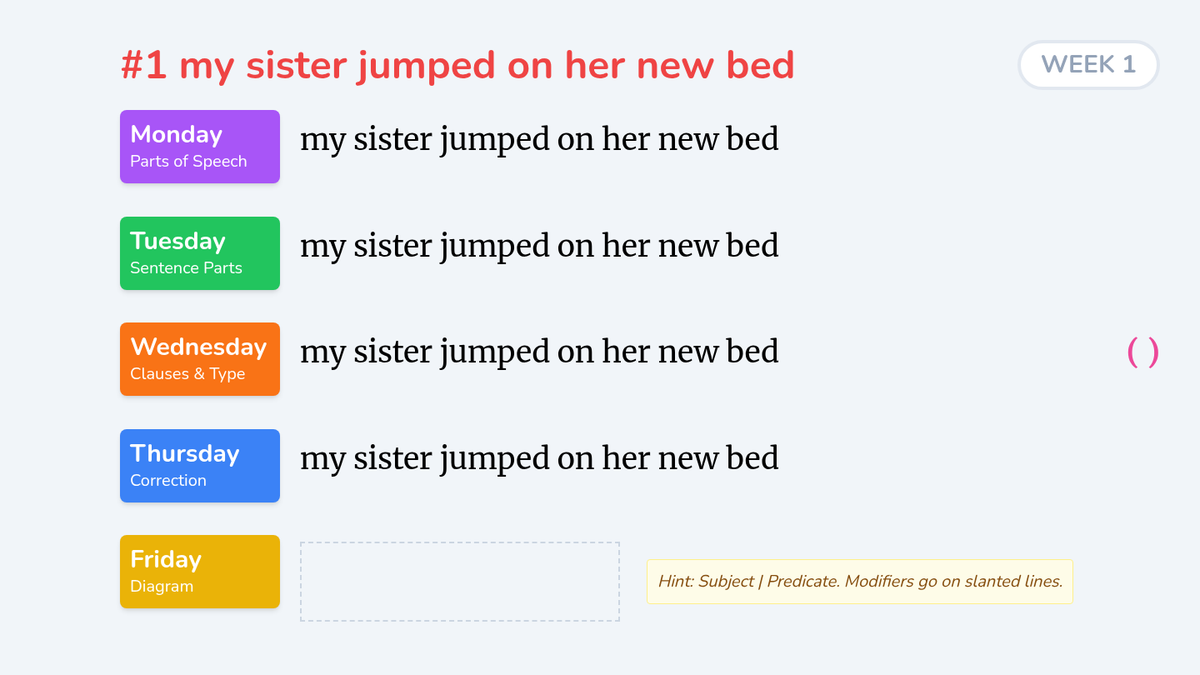
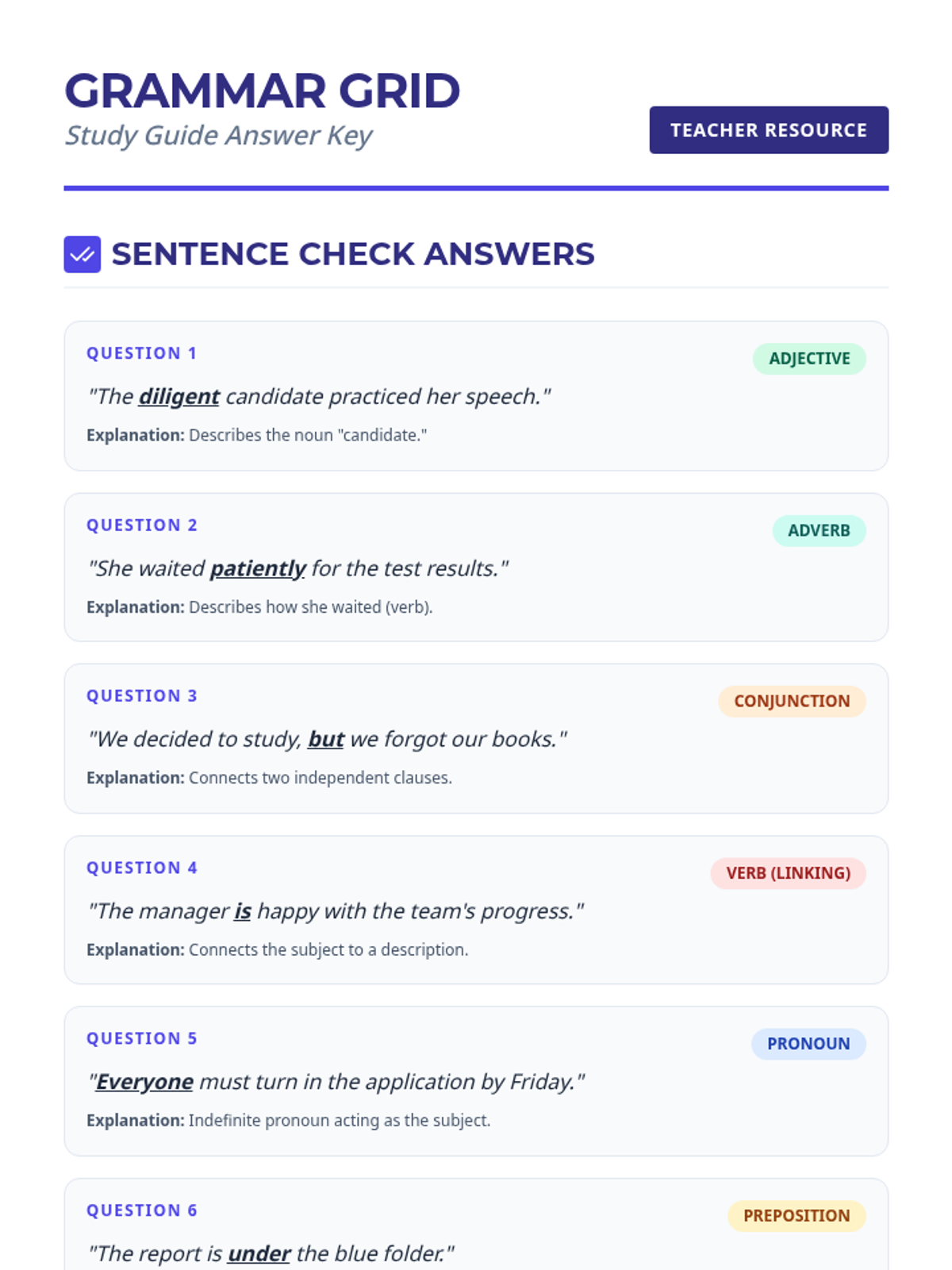
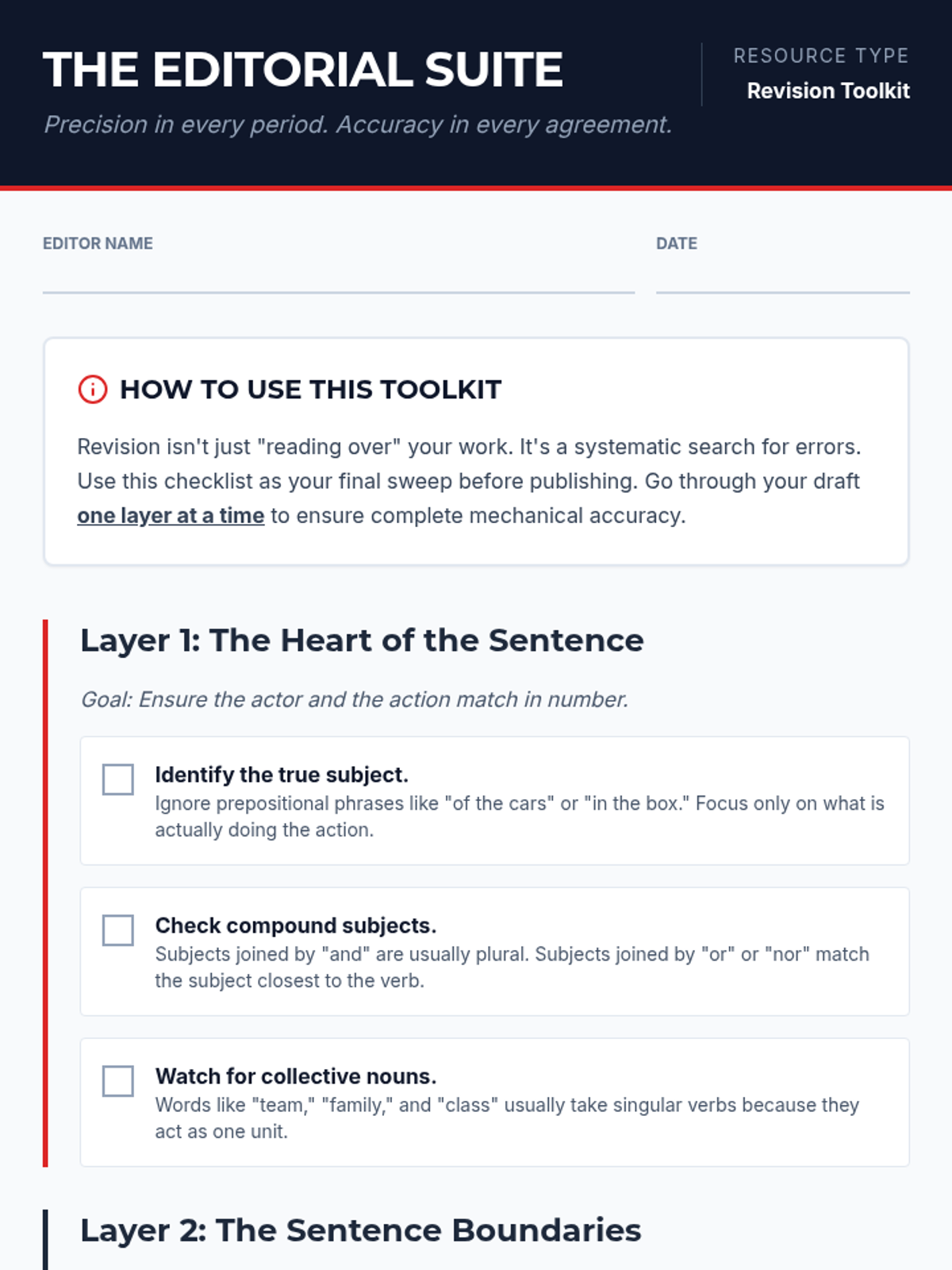
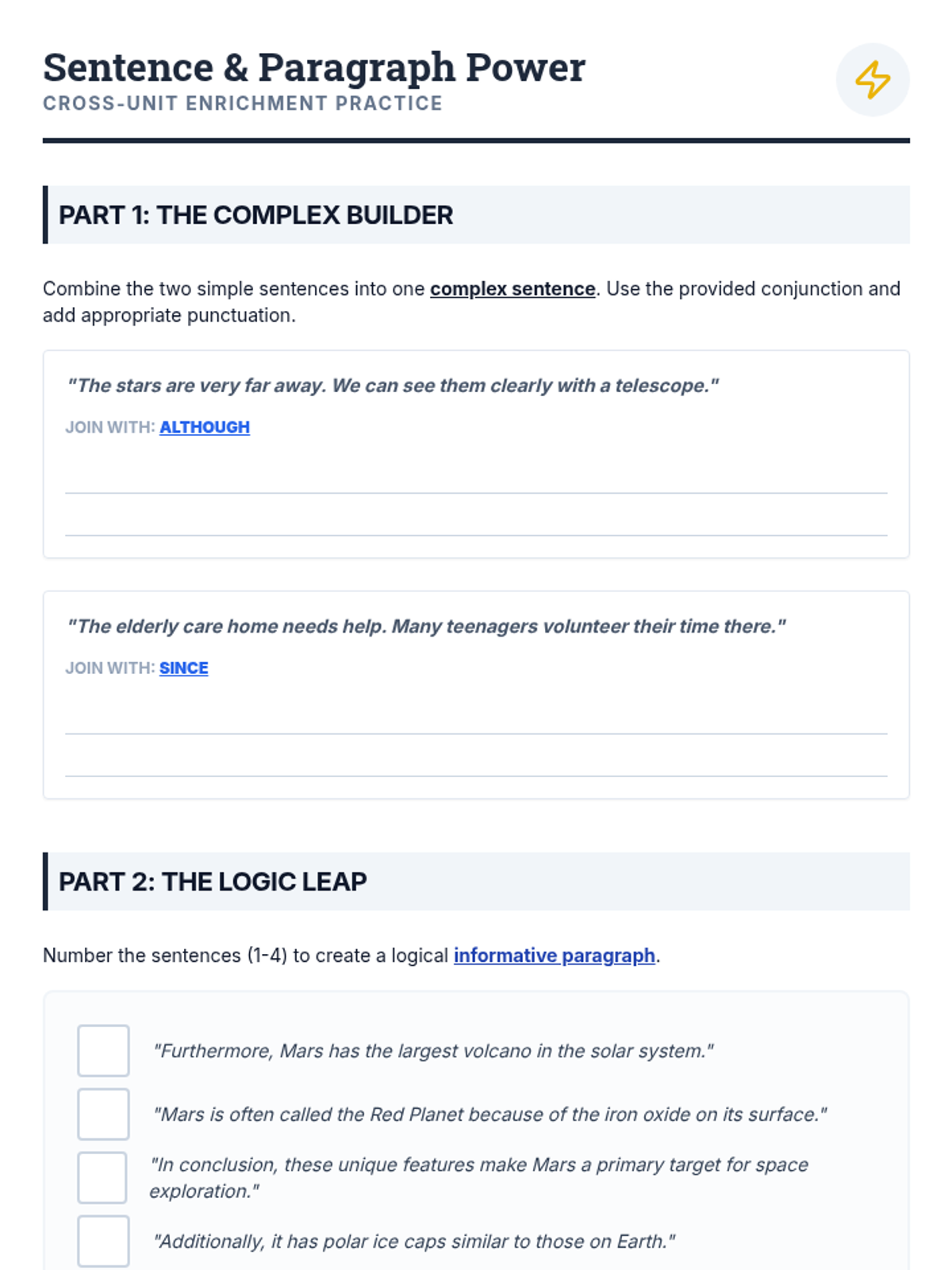
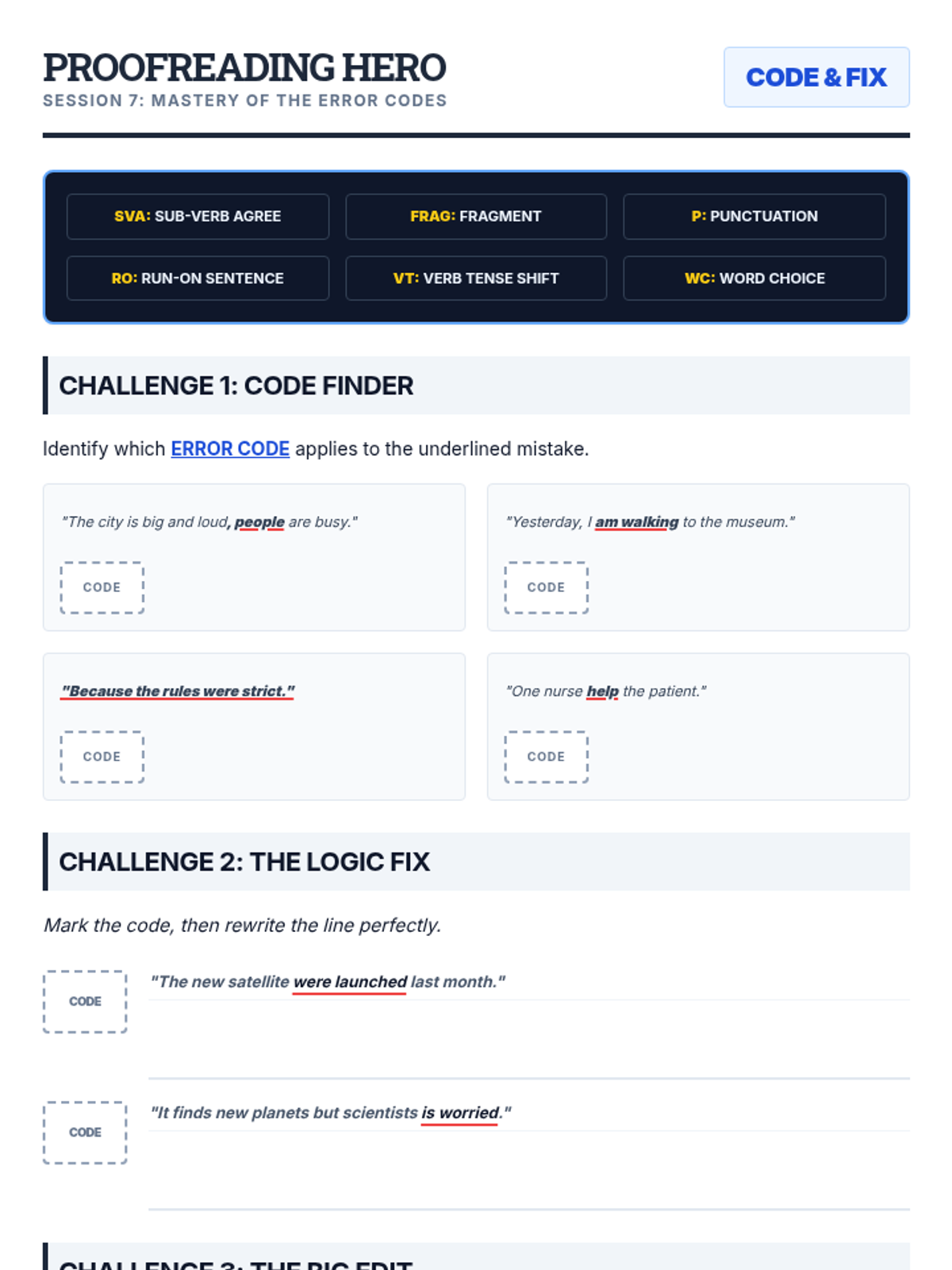
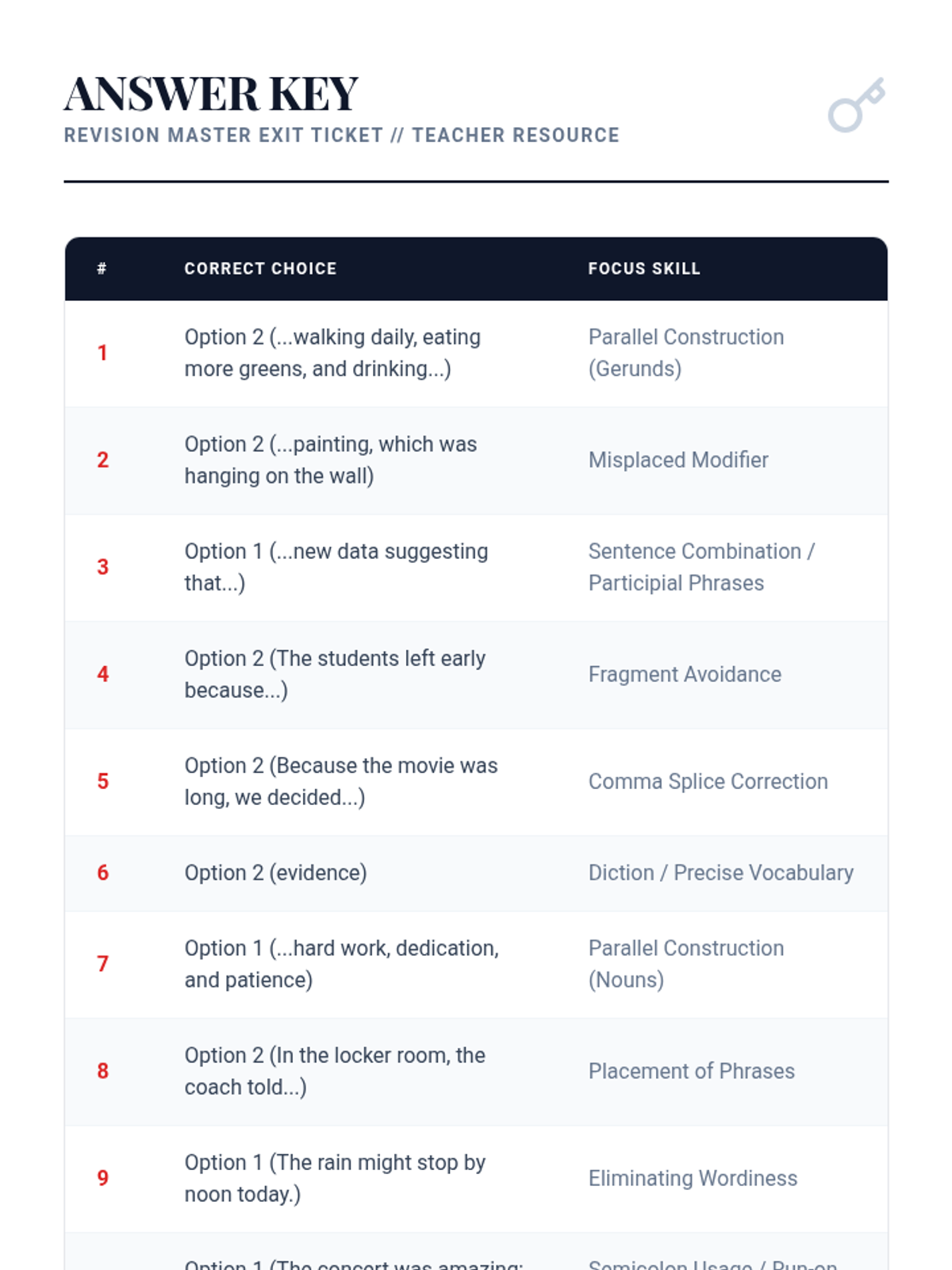
Sentence structure fundamentals, subject-verb agreement, and precise usage of parts of speech including pronouns, conjunctions, and adjectives. Targets technical accuracy through mastery of capitalization, punctuation, spelling, and verb mood.
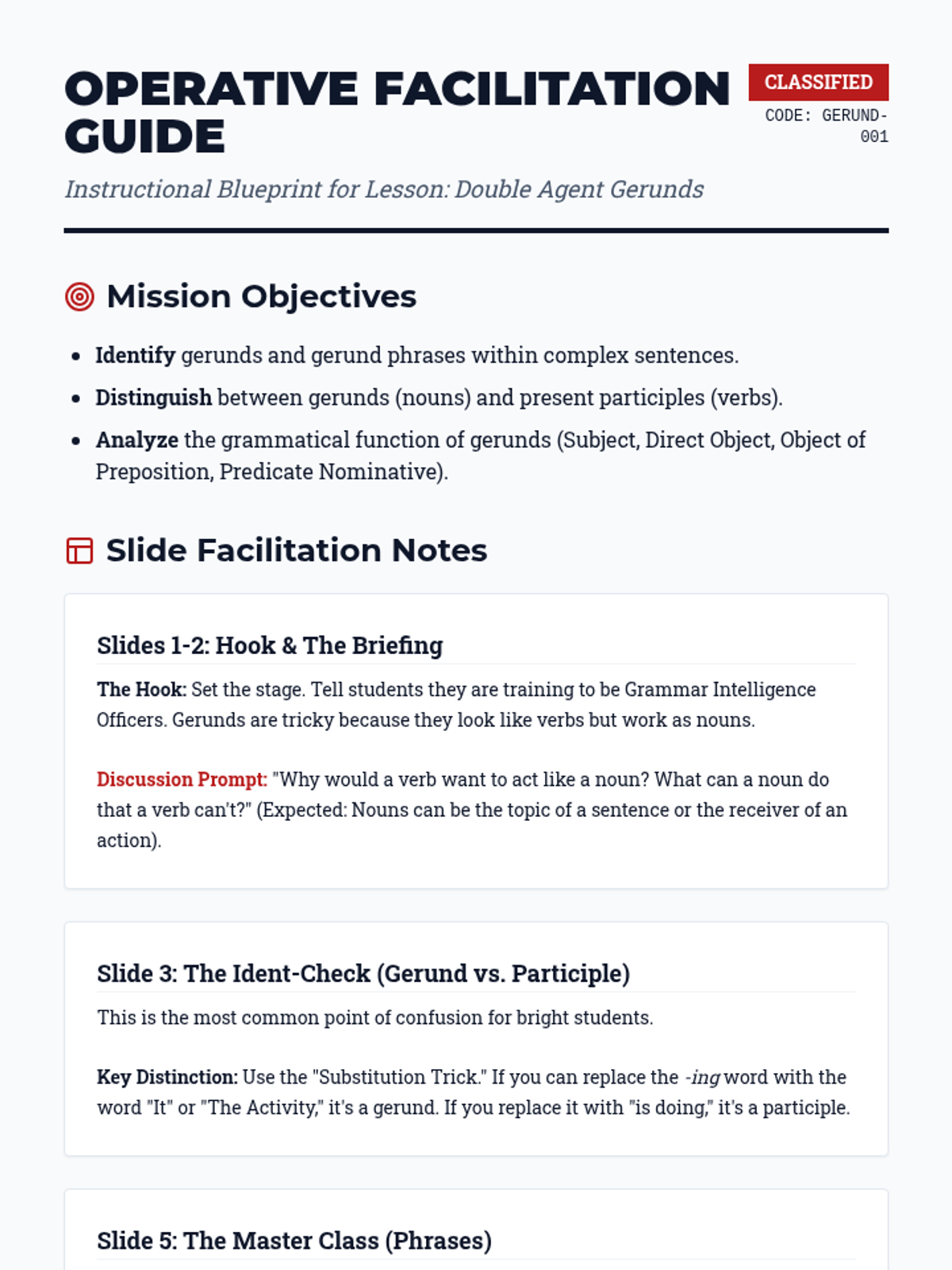
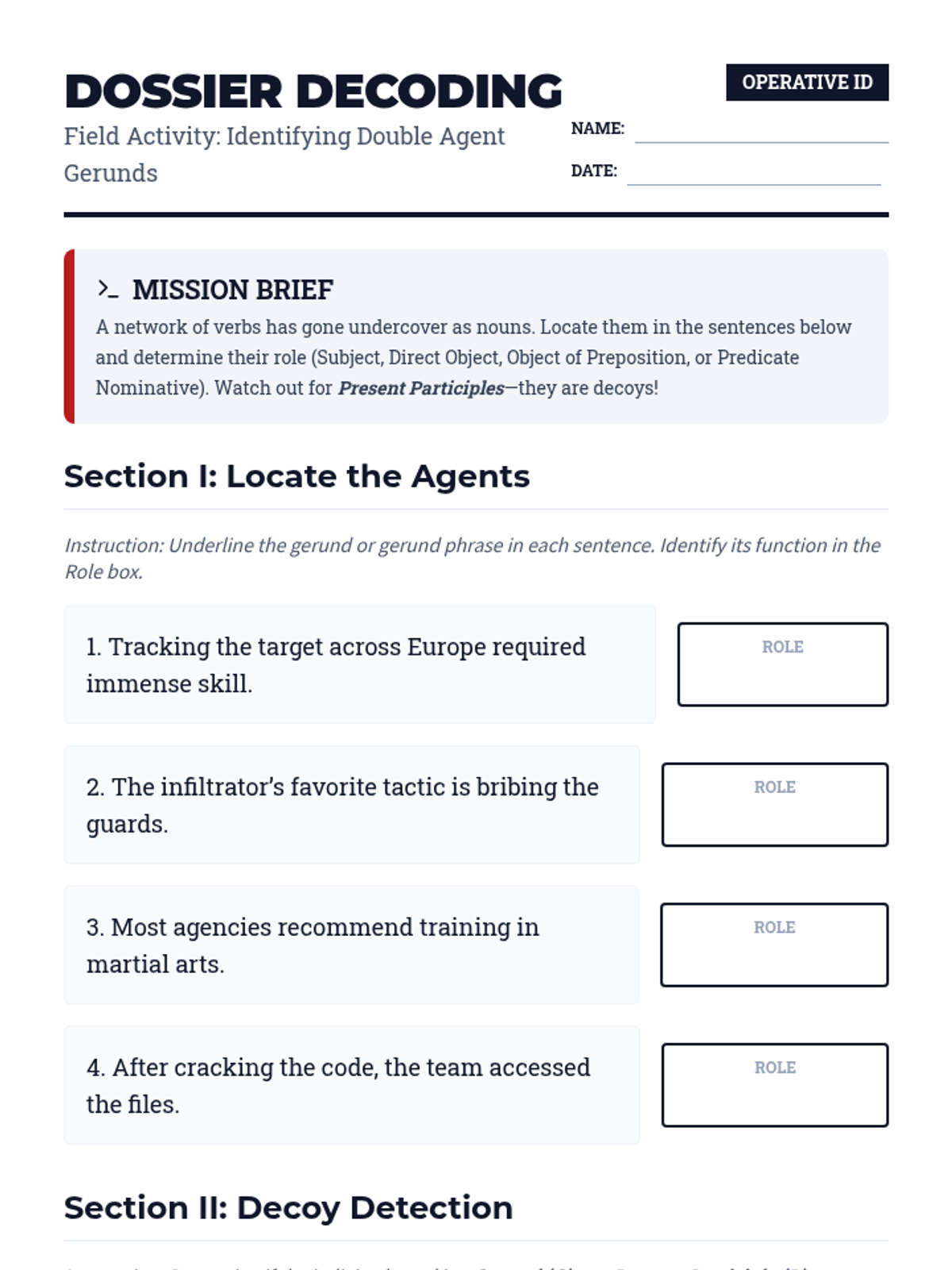
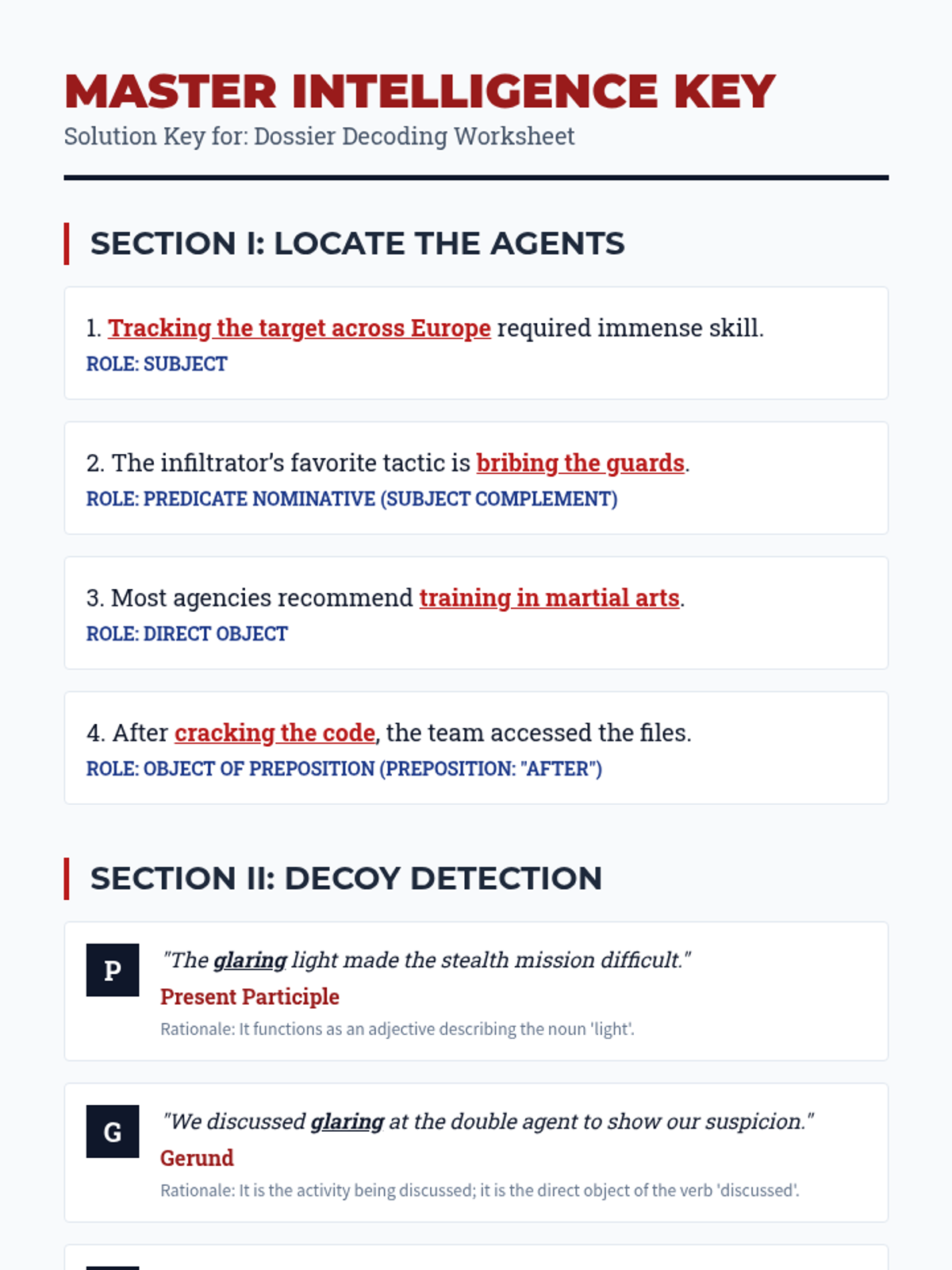
A high-energy, detective-themed lesson exploring how gerunds function as nouns while maintaining their verb-like properties. Designed for advanced students to master identification and usage in various sentence roles.
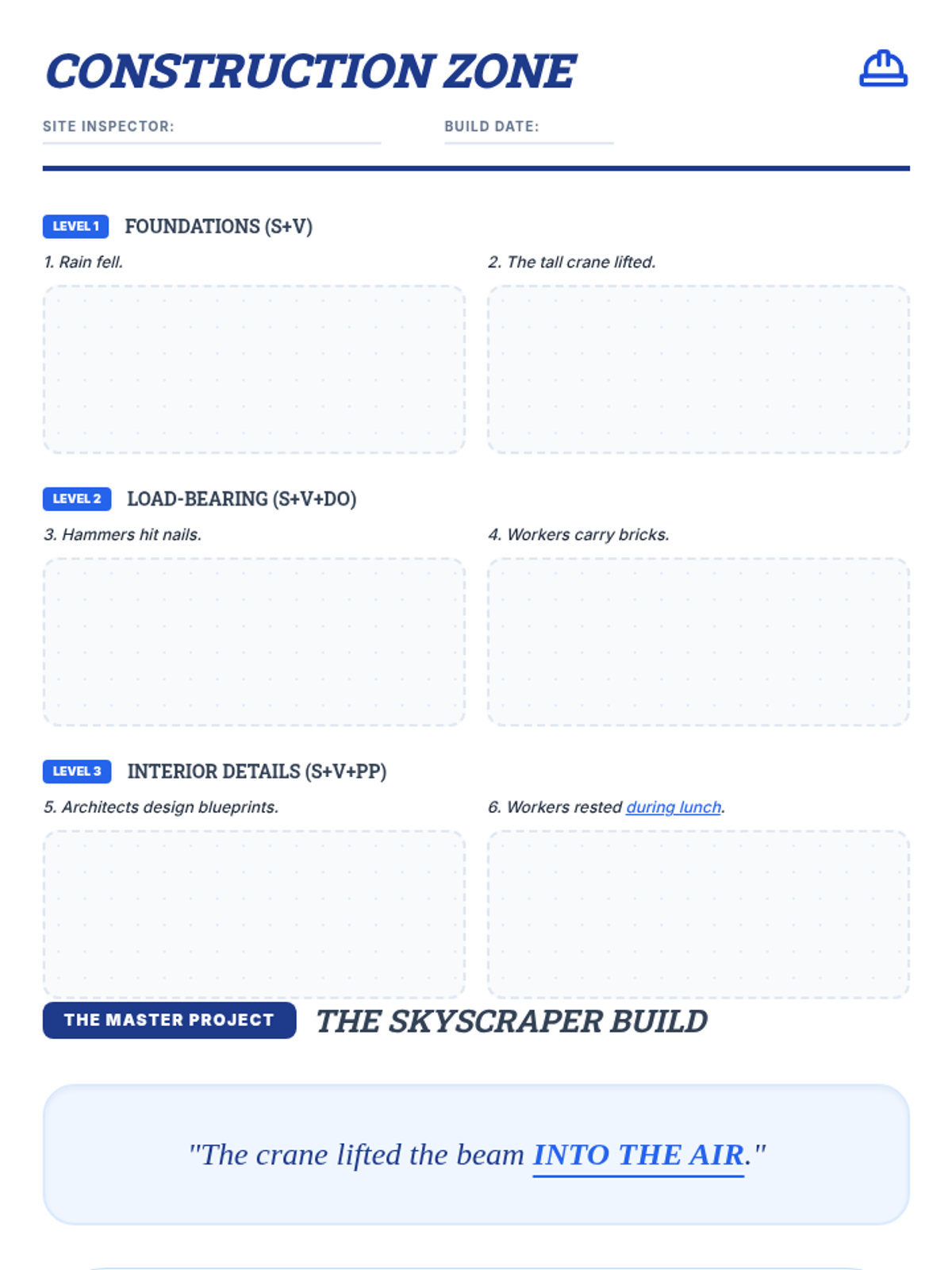
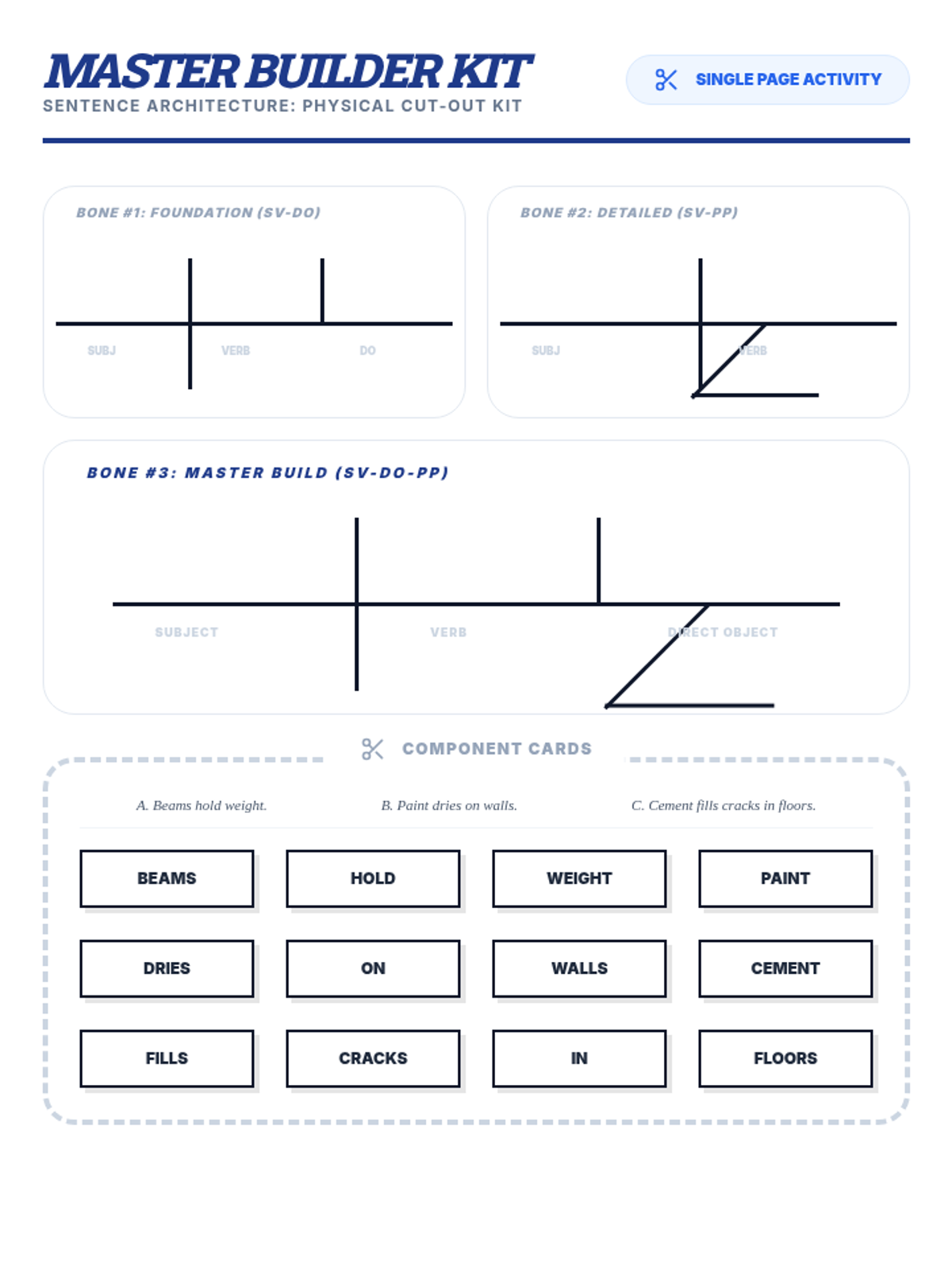
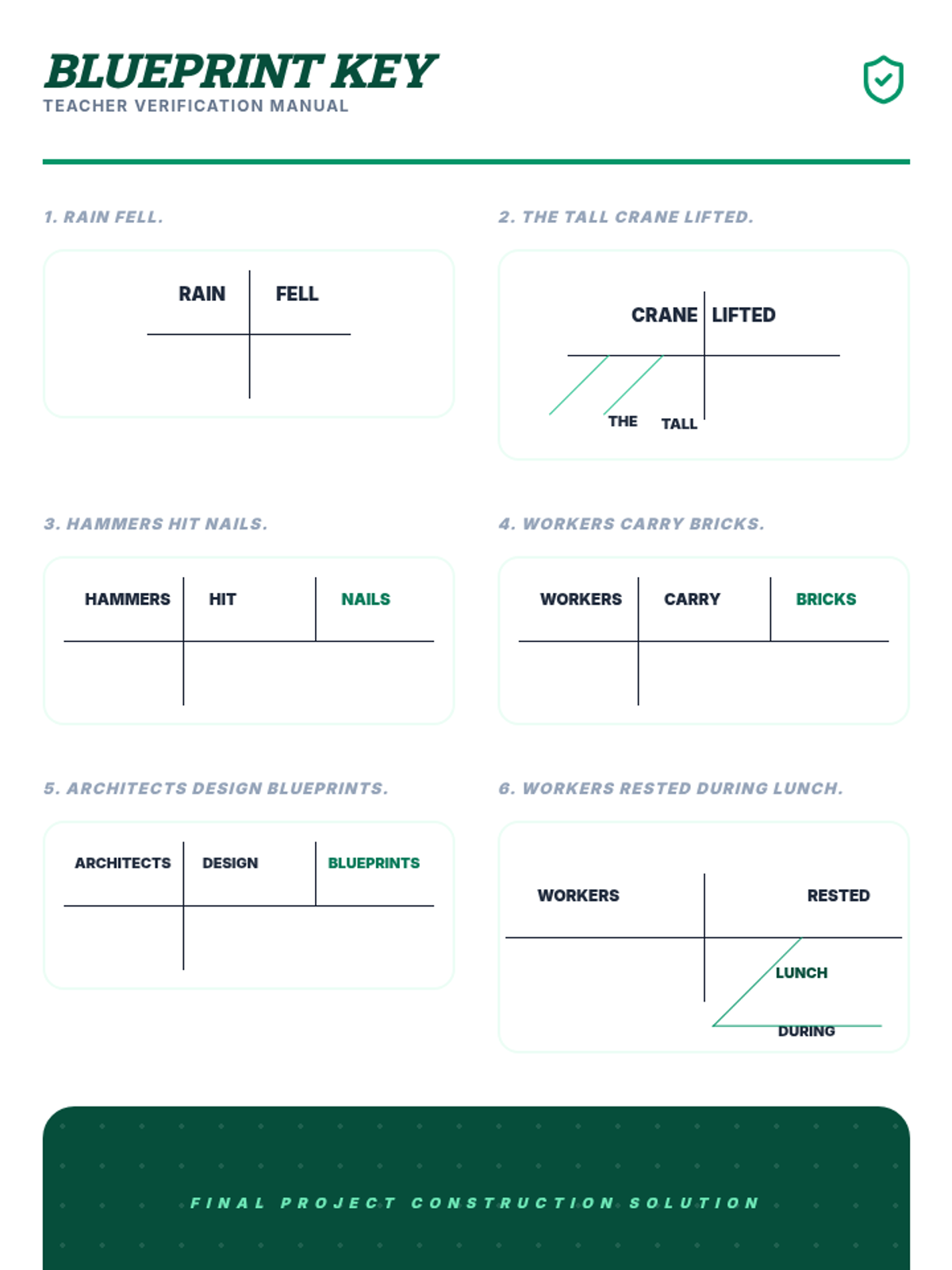
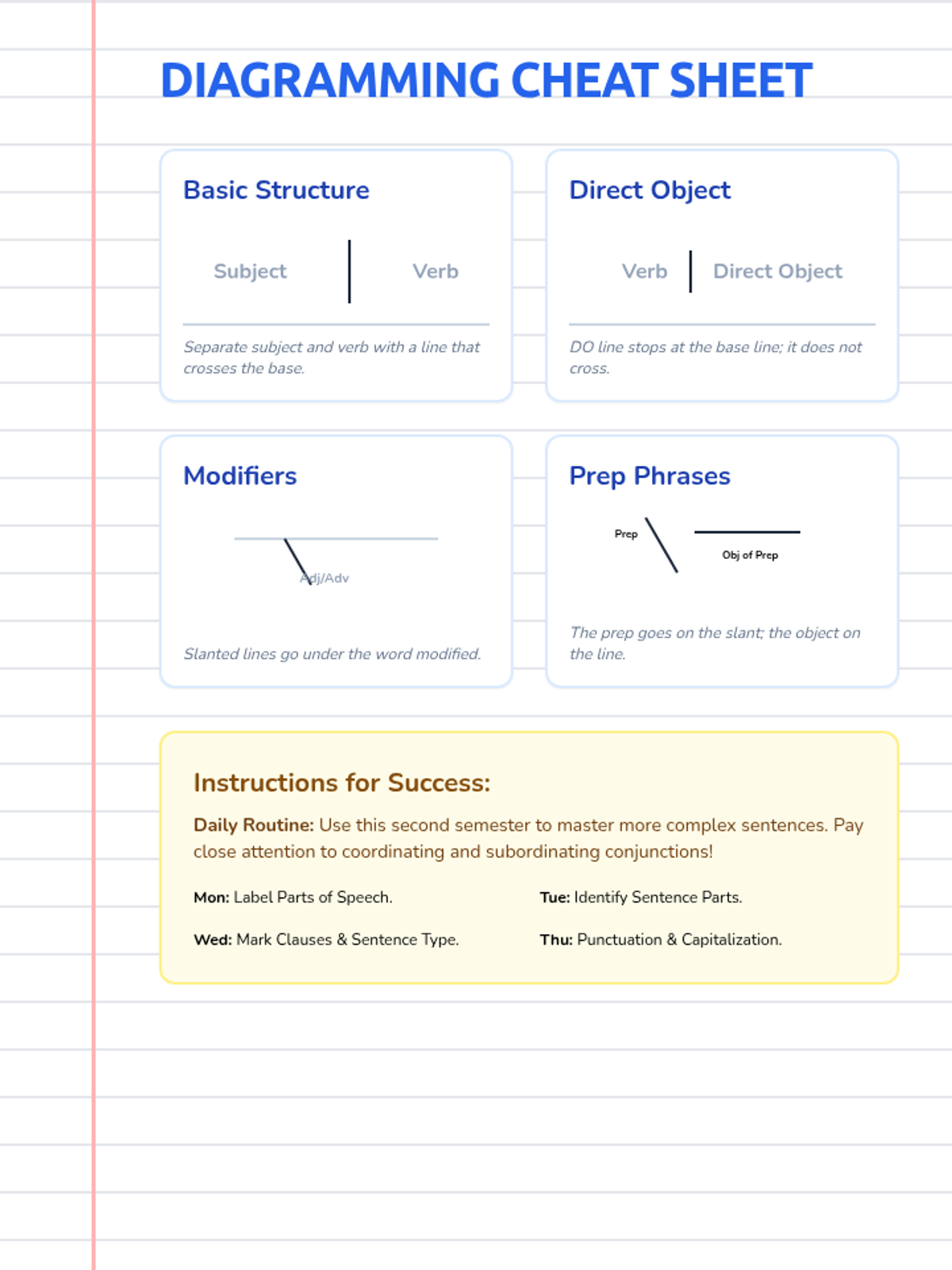
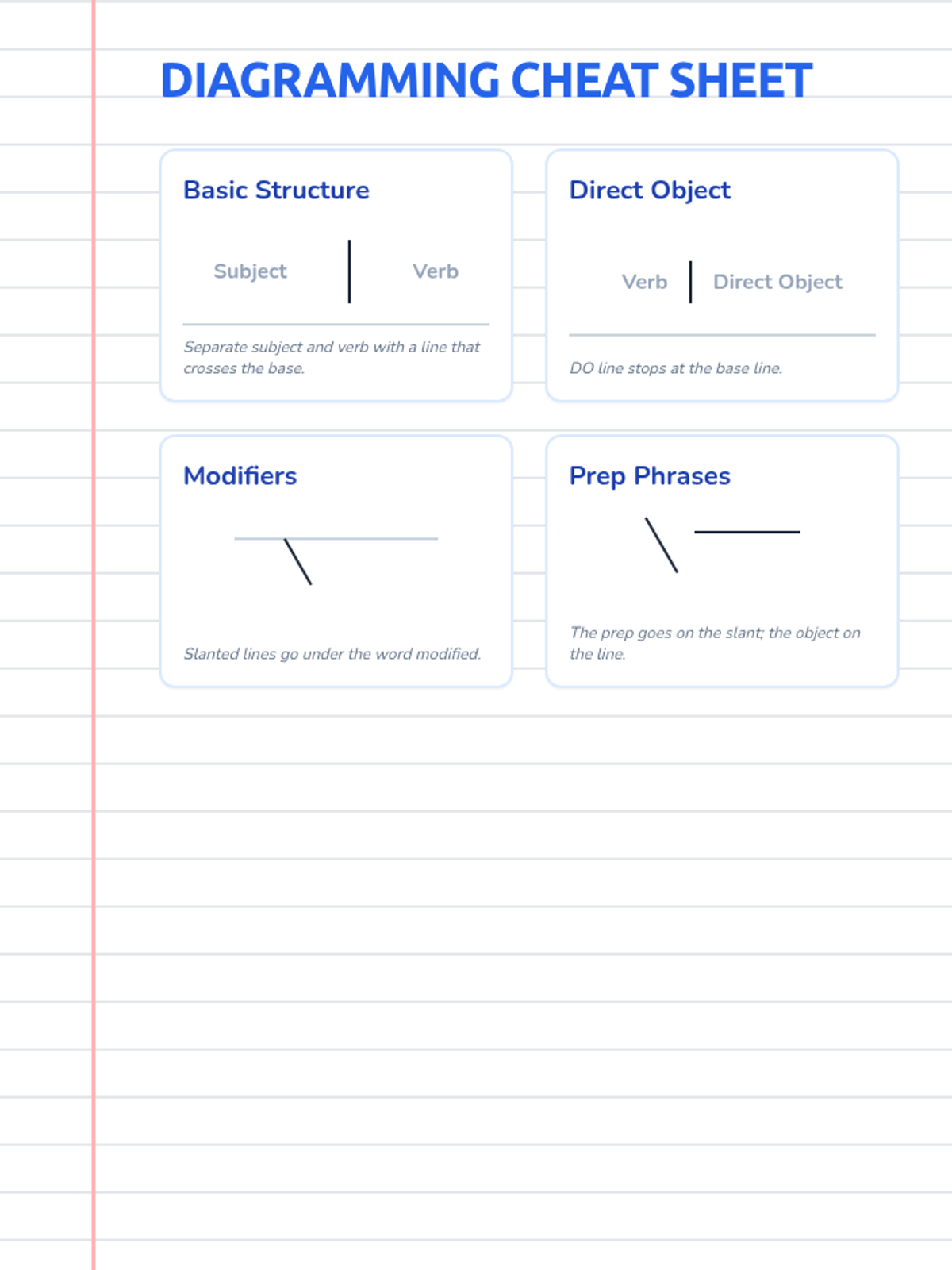
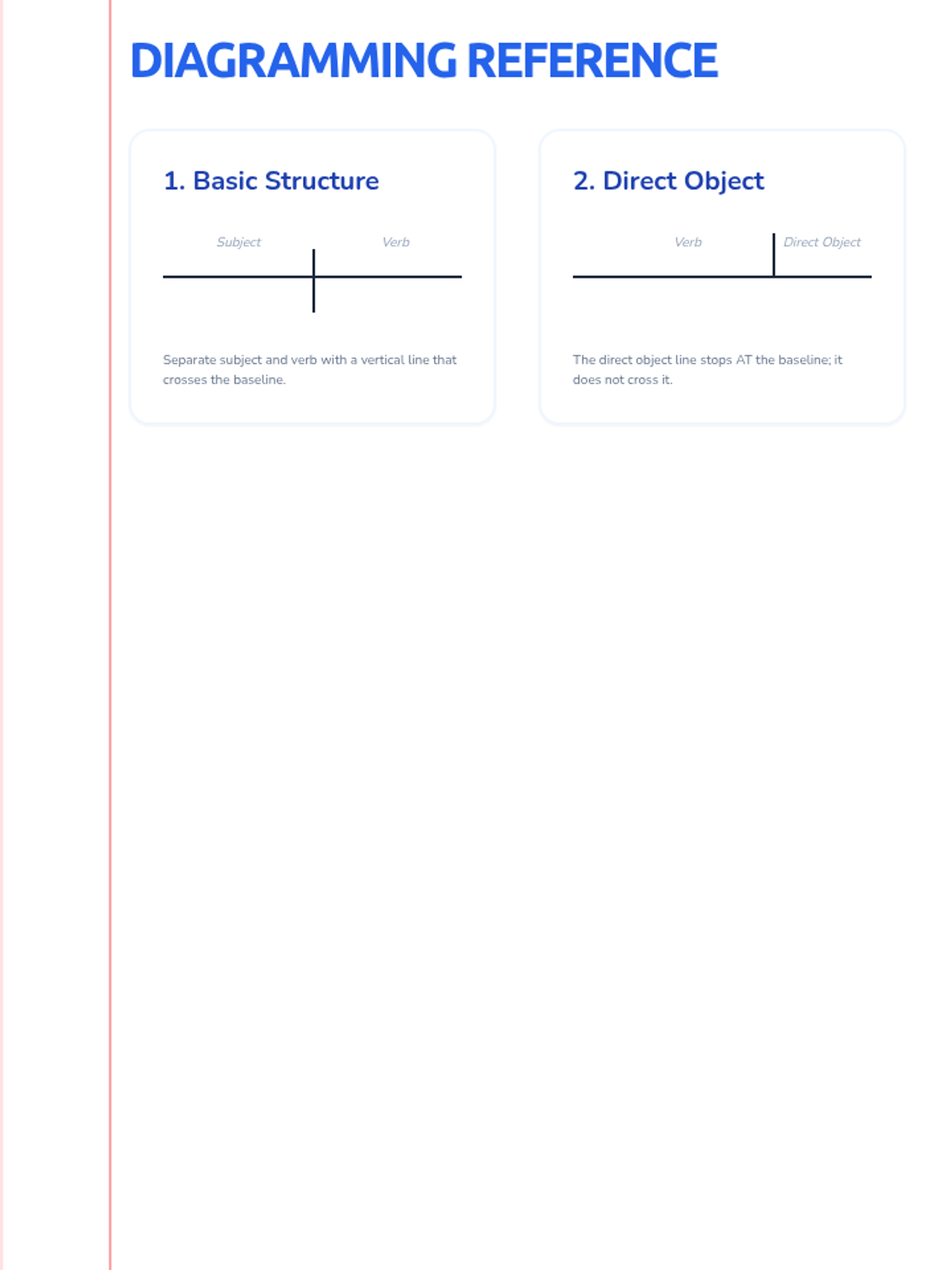
A comprehensive introduction to Reed-Kellogg sentence diagramming, covering subjects, verbs, direct objects, and prepositional phrases through a structural engineering lens.
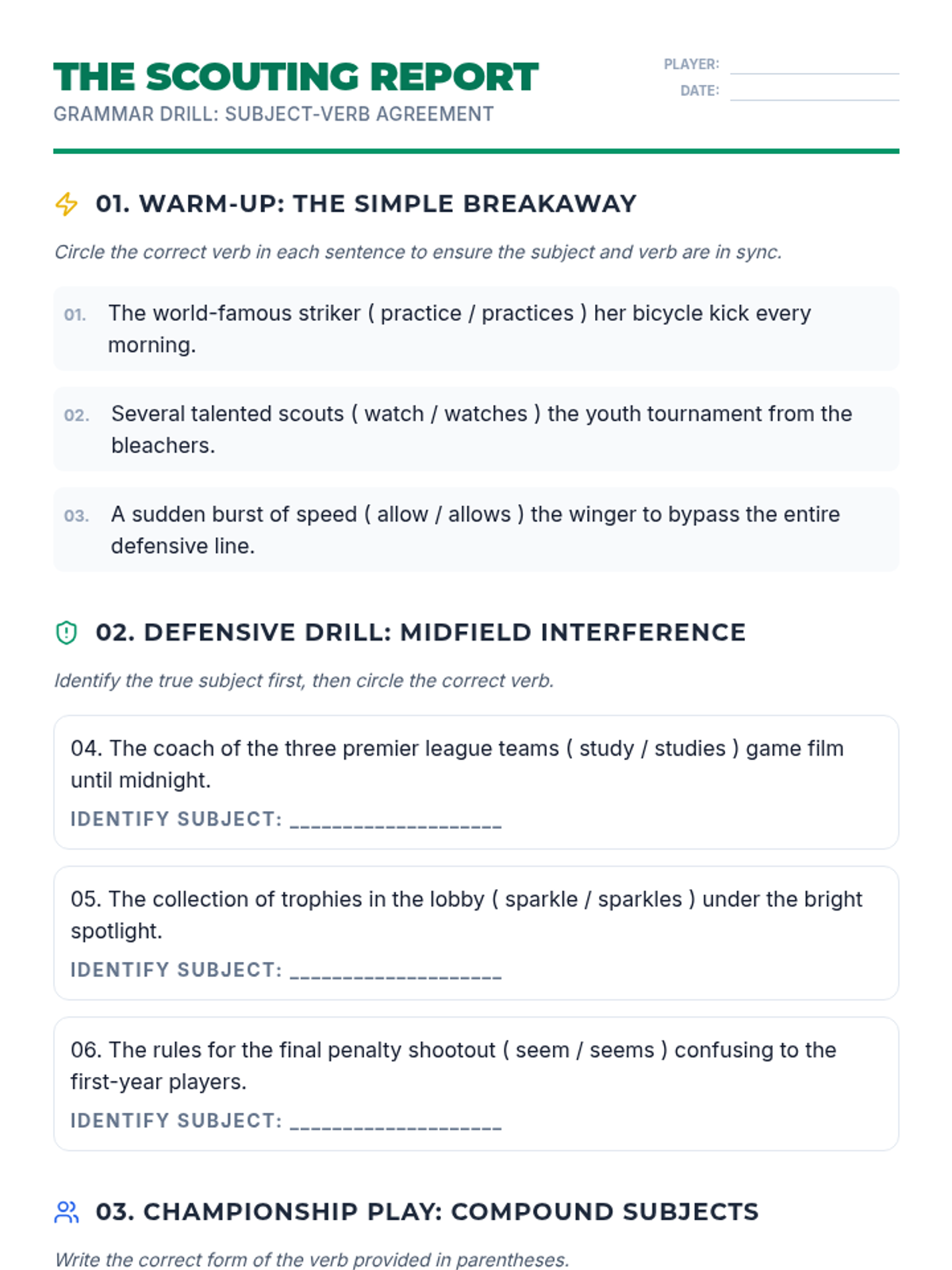
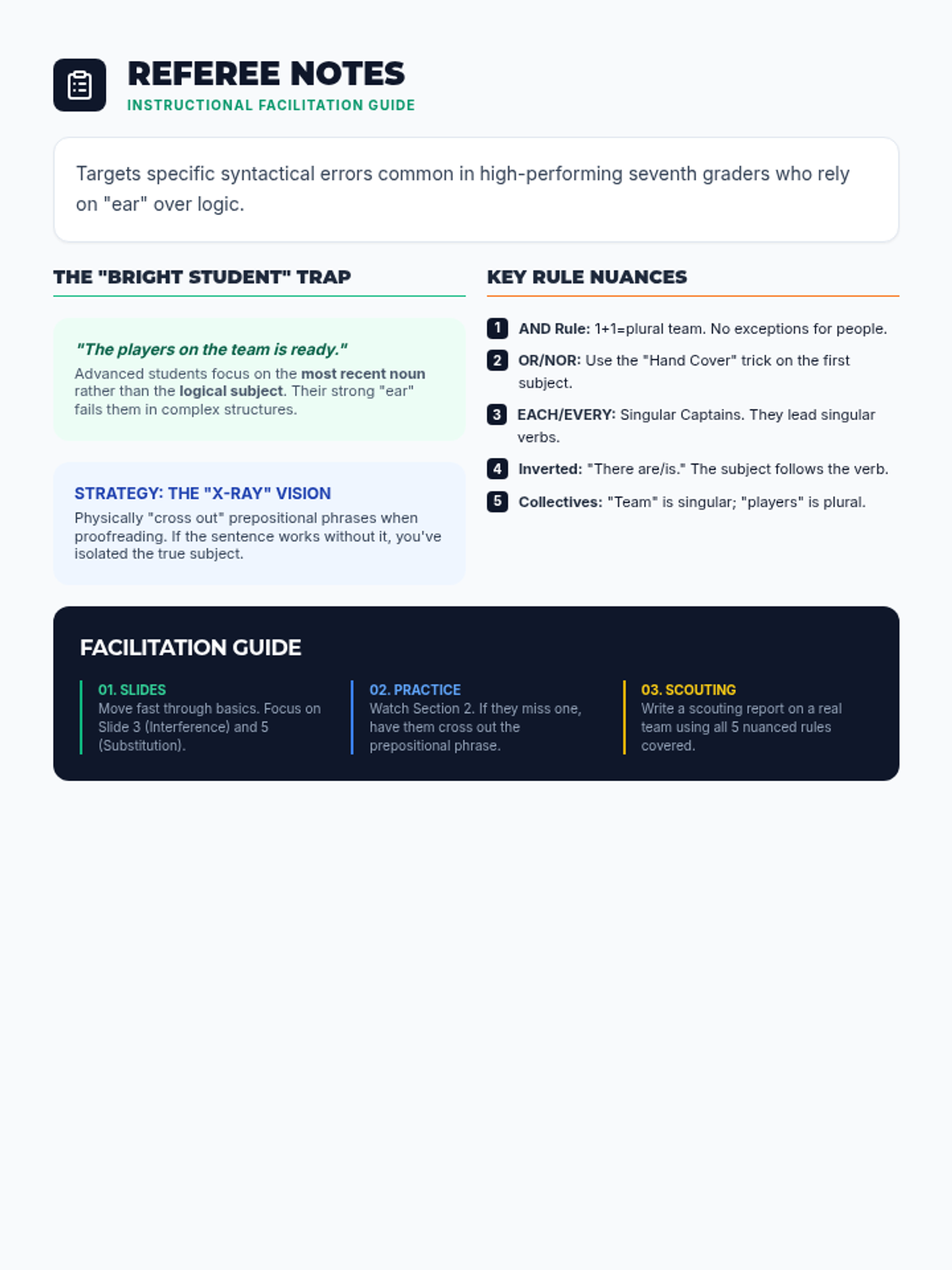
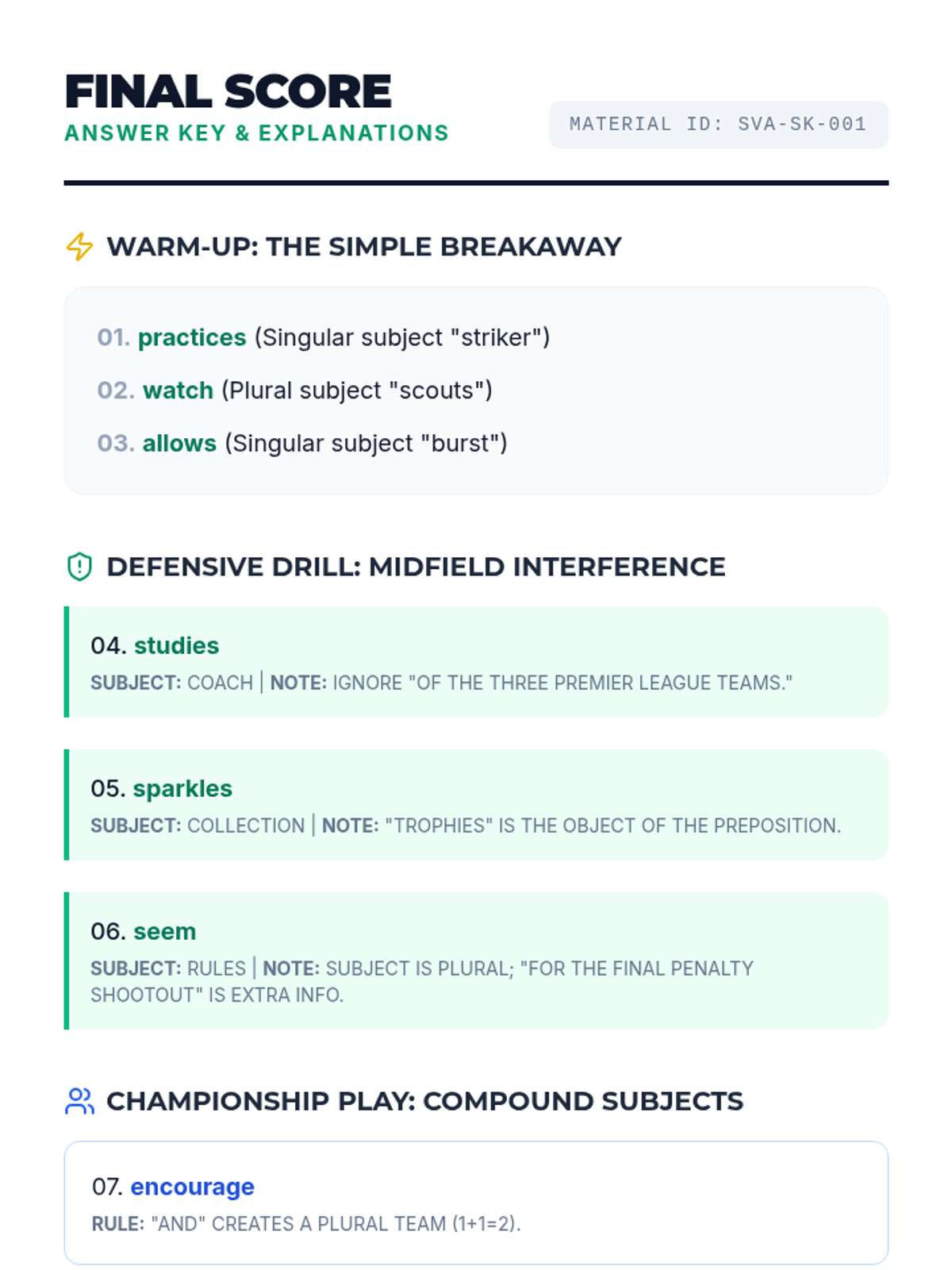
A targeted grammar lesson focusing on subject-verb agreement through the high-interest lens of professional soccer. Designed for advanced students who need to master complex compound subjects and prepositional phrase interference.
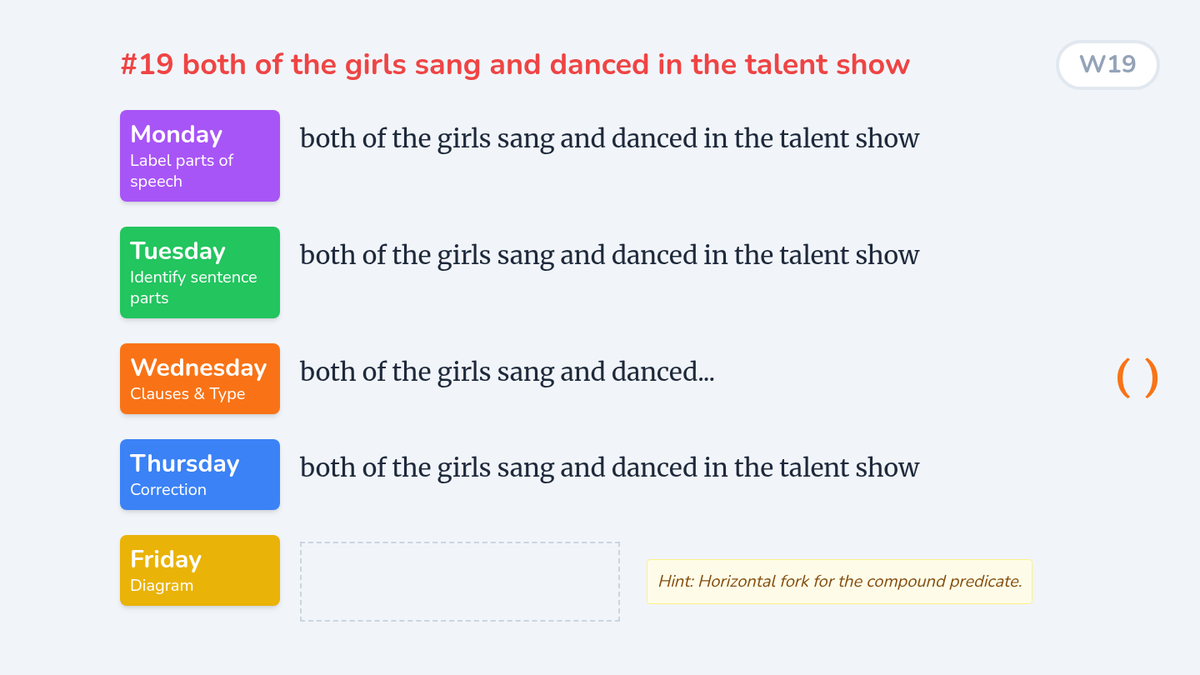
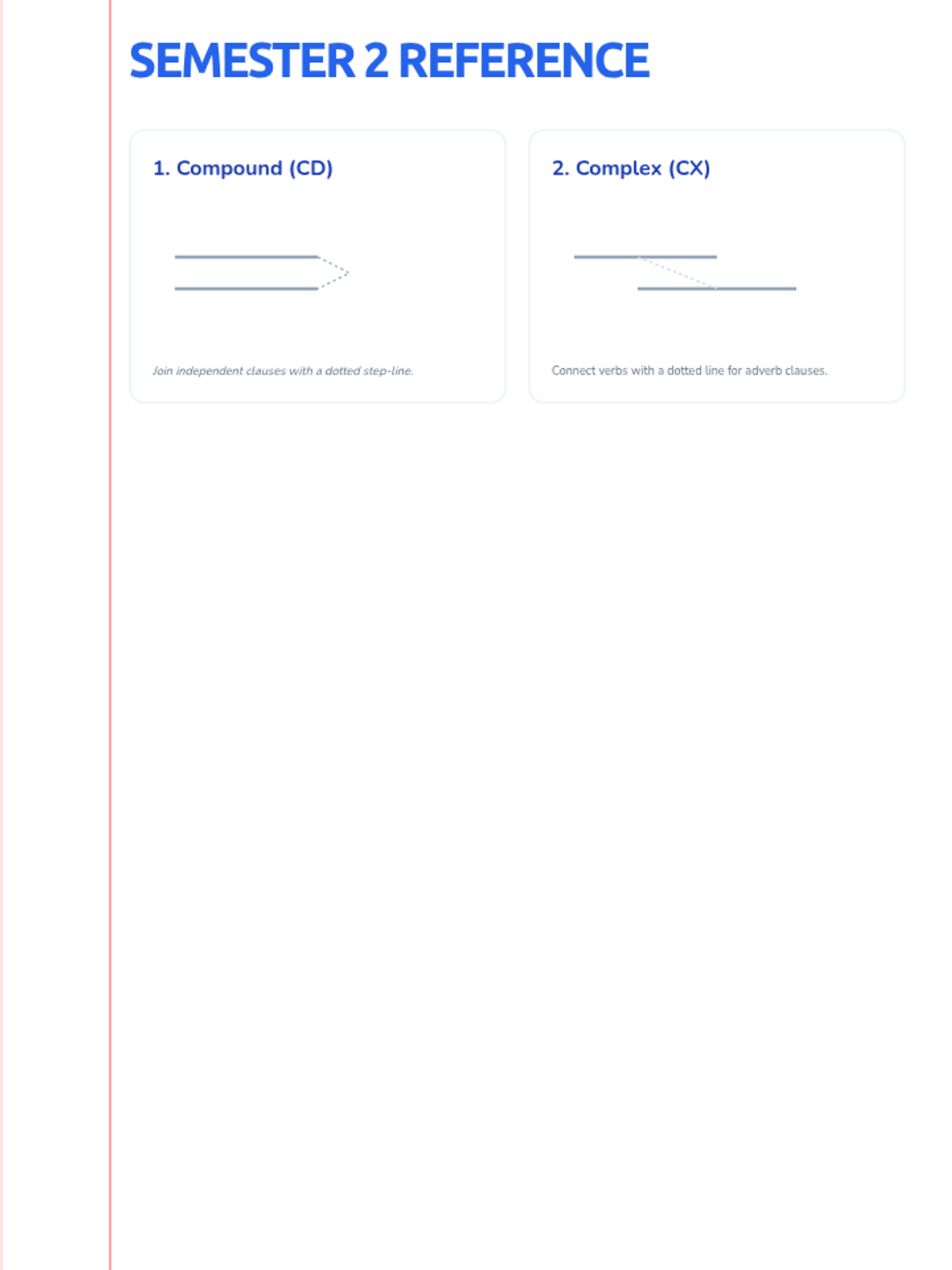
Weeks 19 through 36 of the Daily Grammar Practice program, progressing to compound-complex sentences and advanced punctuation.
Weeks 1 through 18 of the Daily Grammar Practice program, covering basic to intermediate sentence structures.
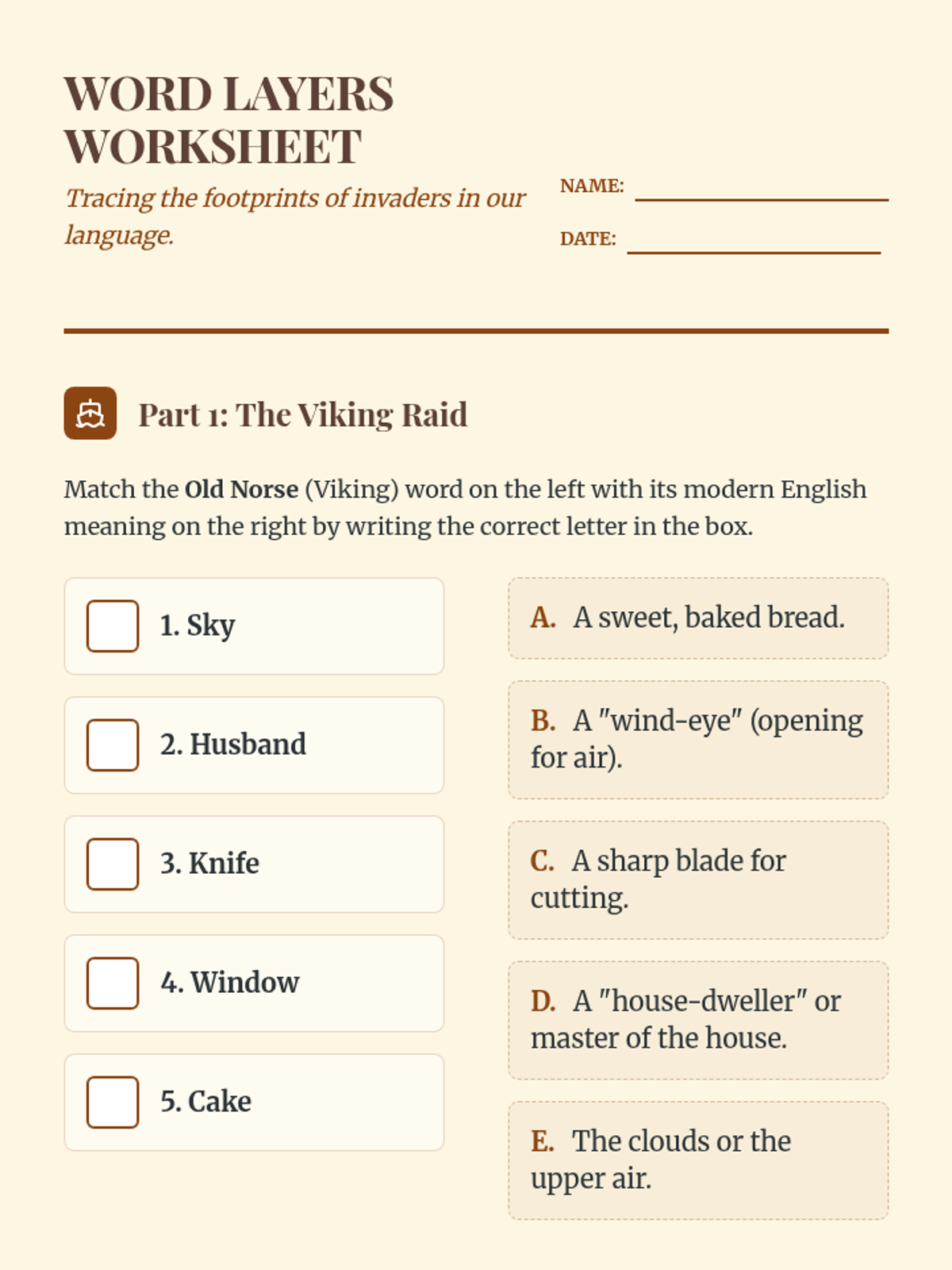
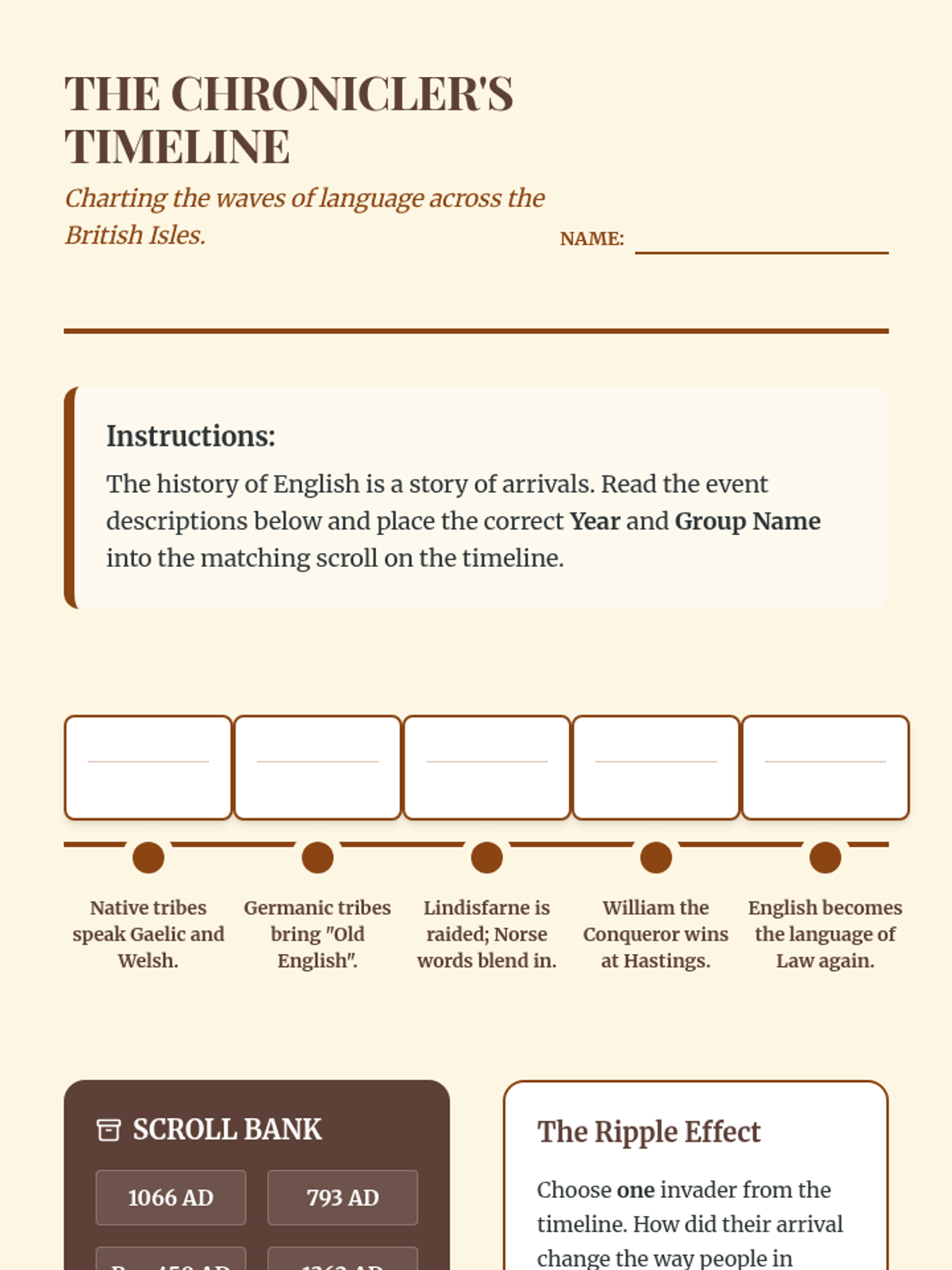
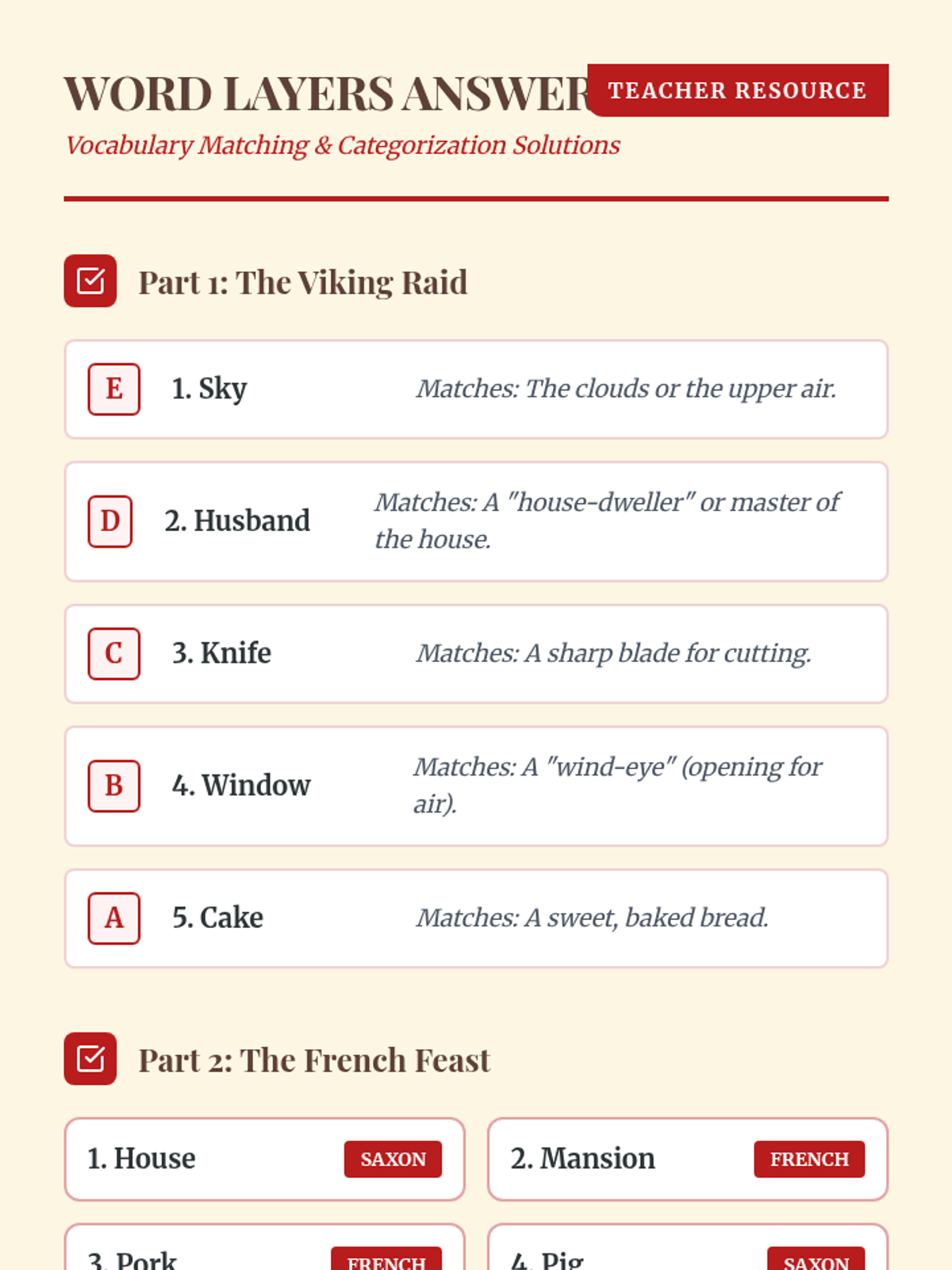
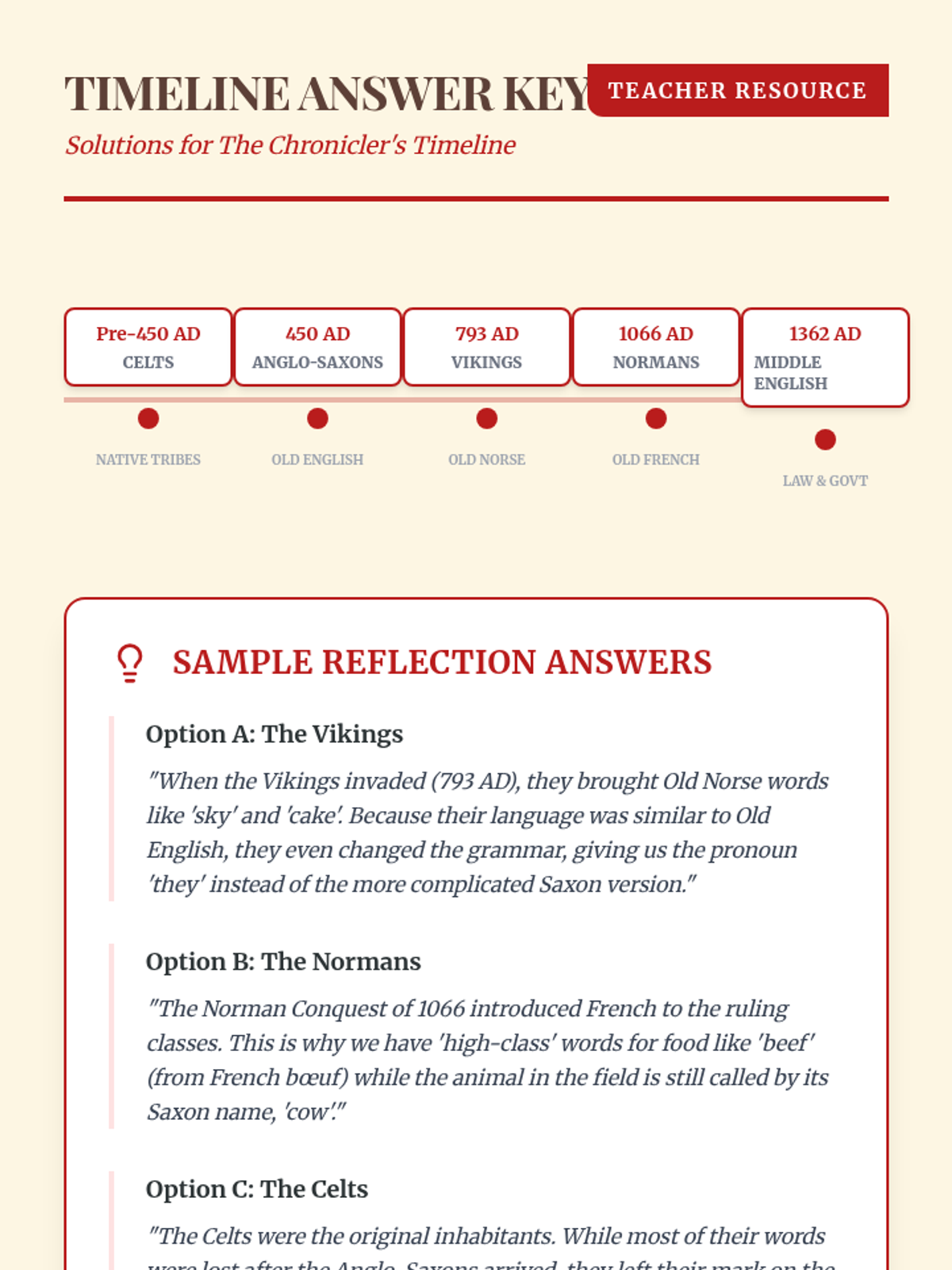
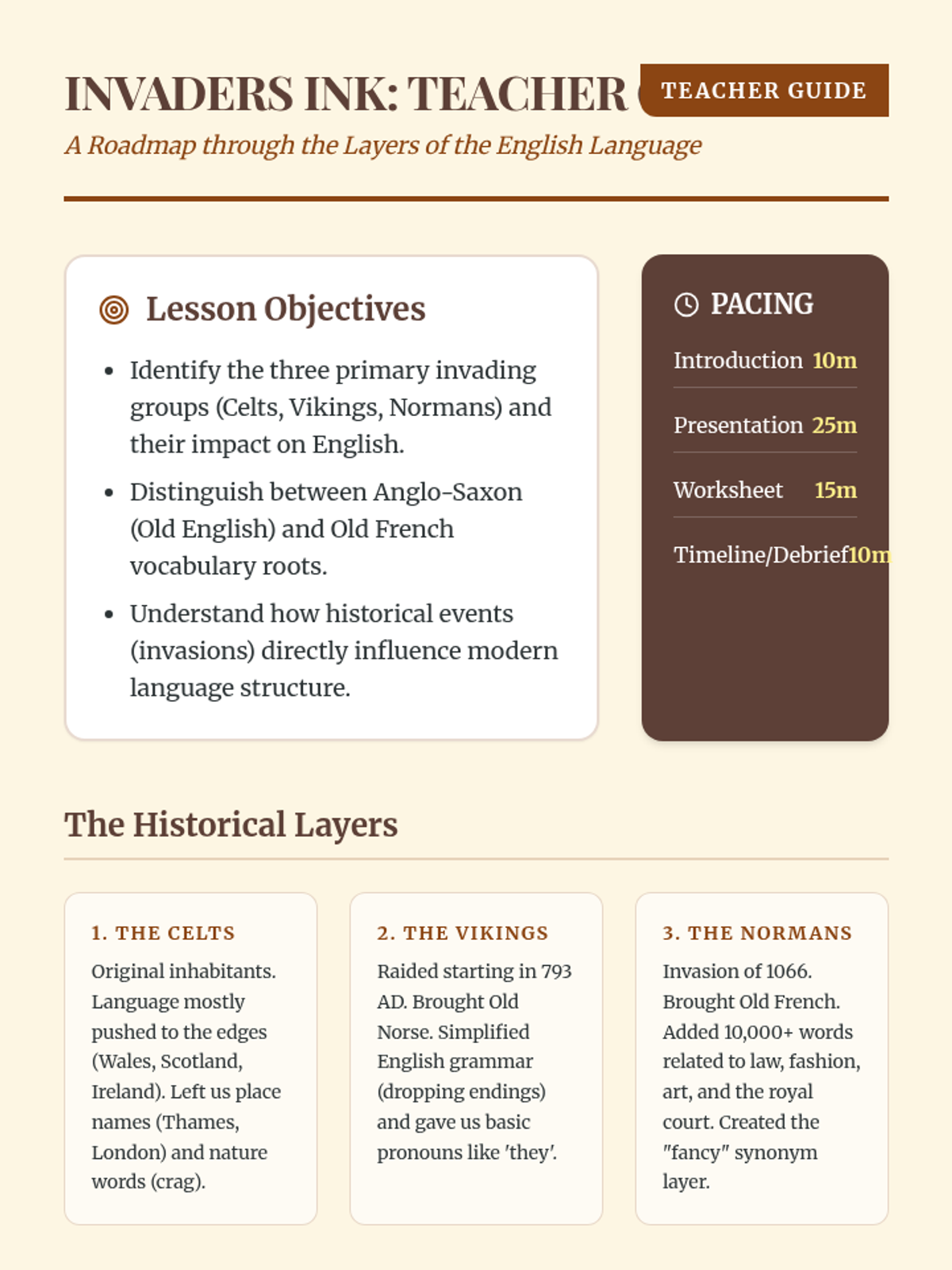
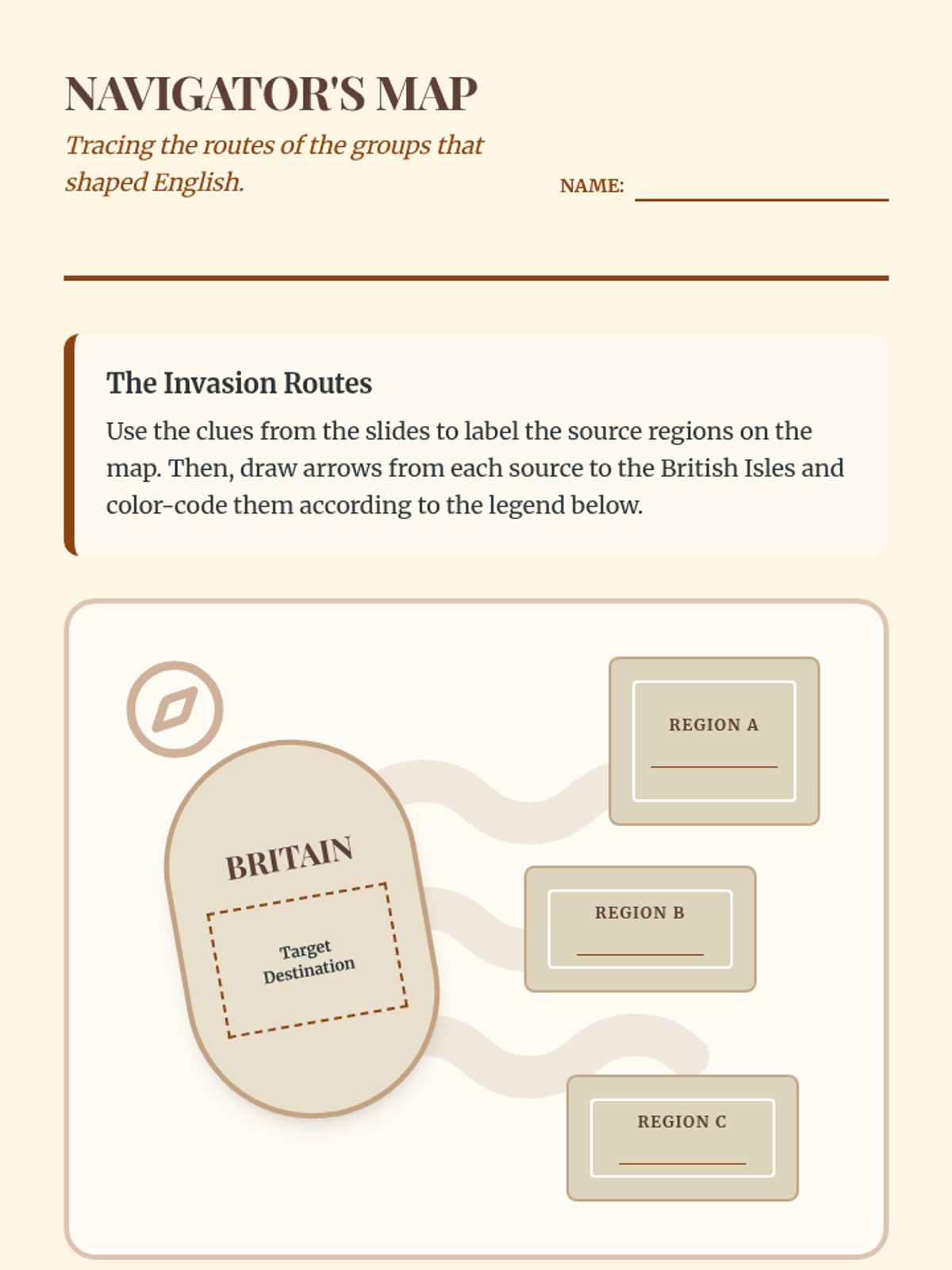
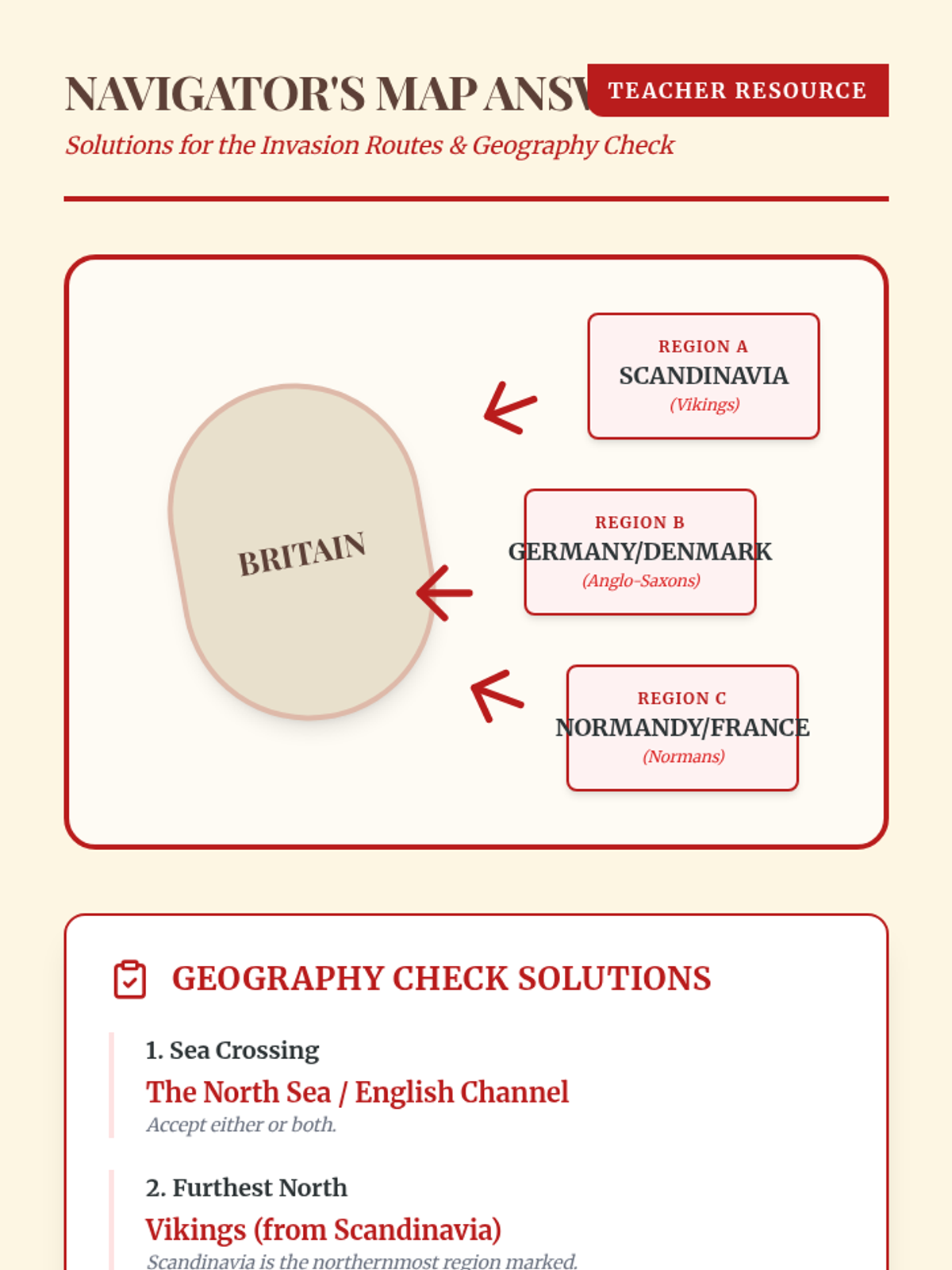
This lesson explores the historical layers of the English language, focusing on how invasions by the Celts, Vikings, and French shaped the vocabulary and grammar we use today. Students will trace the timeline from Old English to the Norman Conquest.
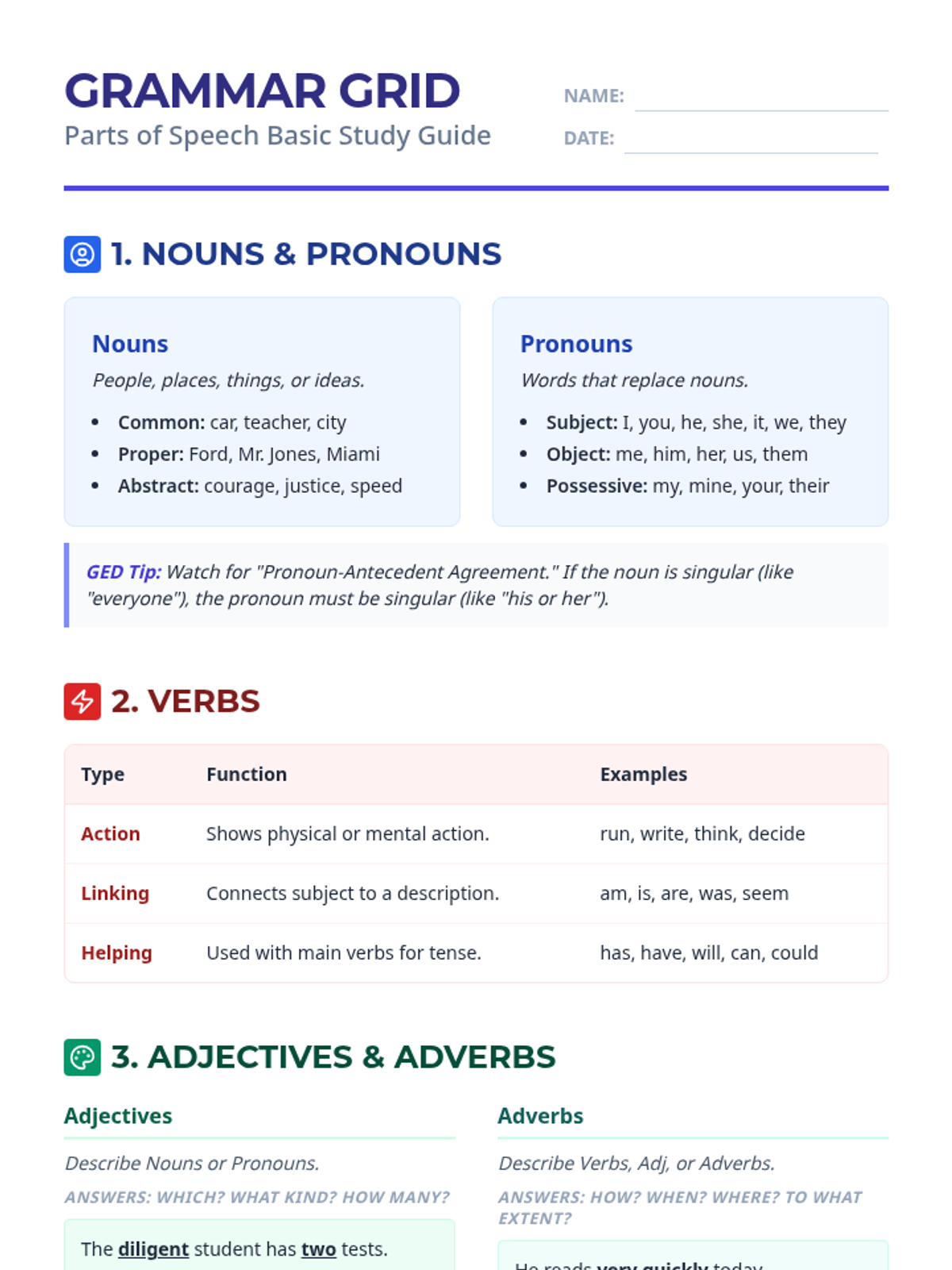
This lesson covers the eight parts of speech specifically for students preparing for the GED exam, focusing on identifying them in context and understanding their functions in standard English sentences.
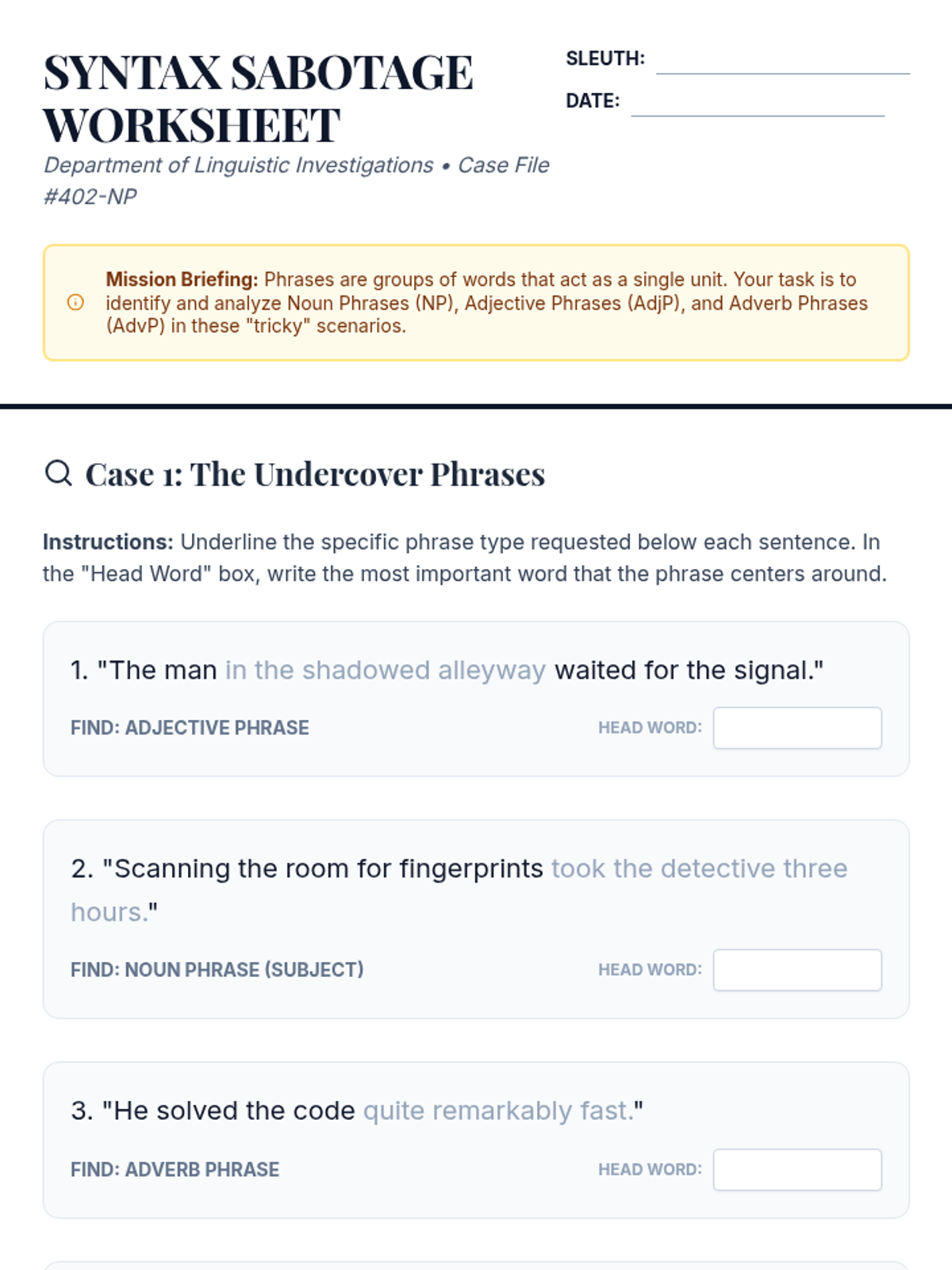
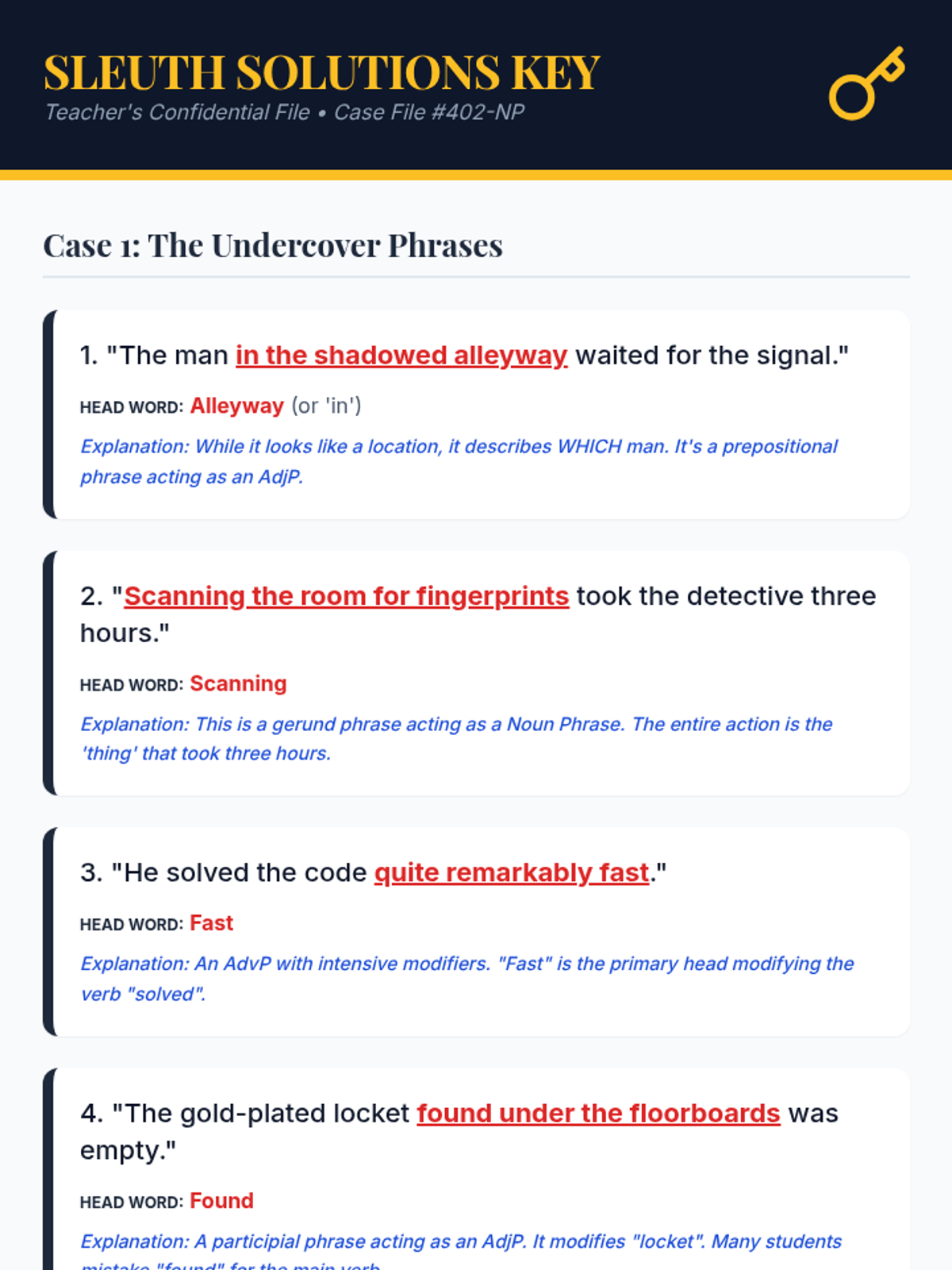
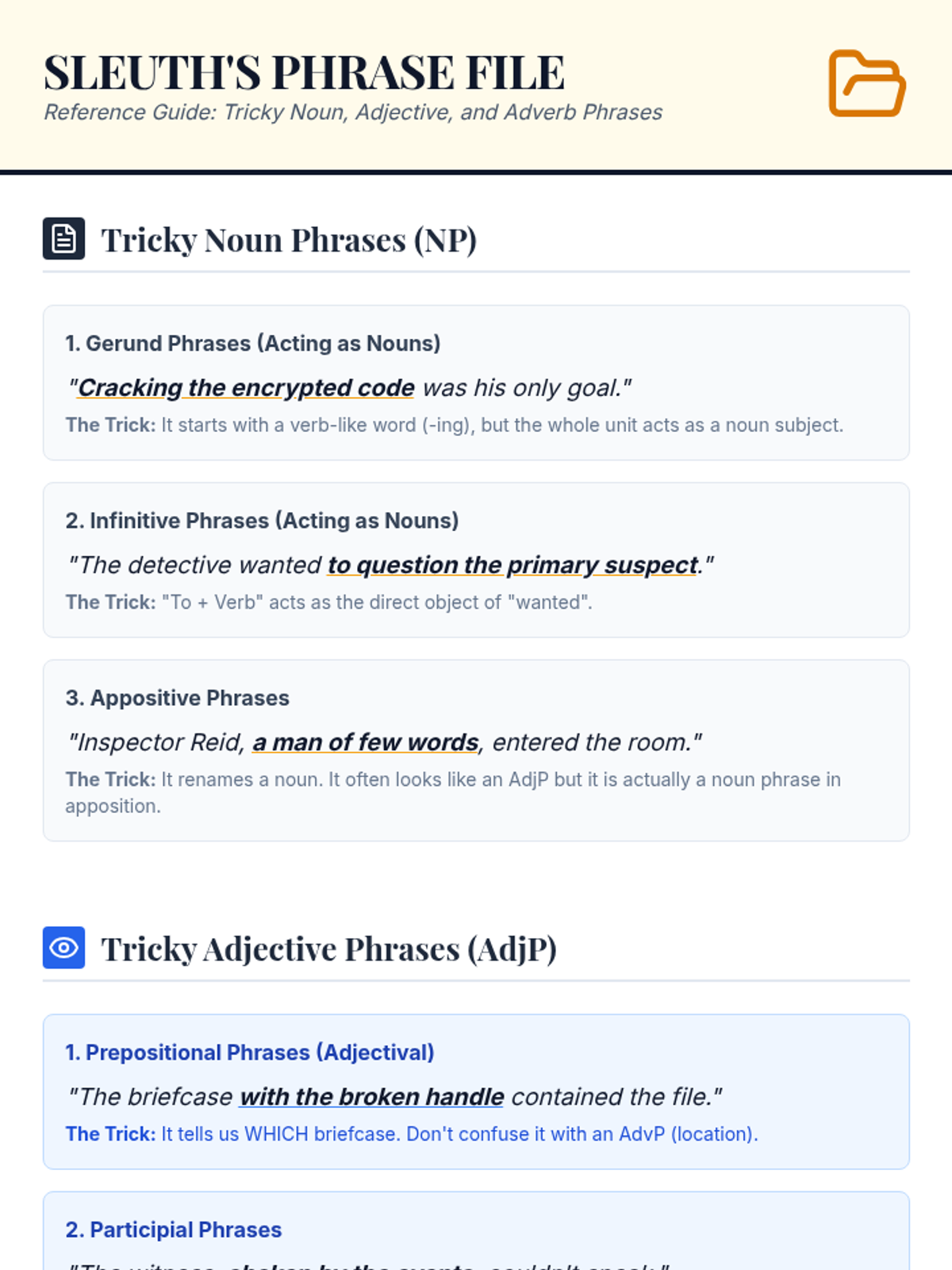
A grammar lesson focused on identifying and using noun, adjective, and adverb phrases in complex and 'tricky' contexts. Students act as 'Syntax Sleuths' to solve linguistic puzzles.
A comprehensive lesson for high school students on identifying and utilizing noun, adjective, and adverb phrases to enhance sentence variety and precision.
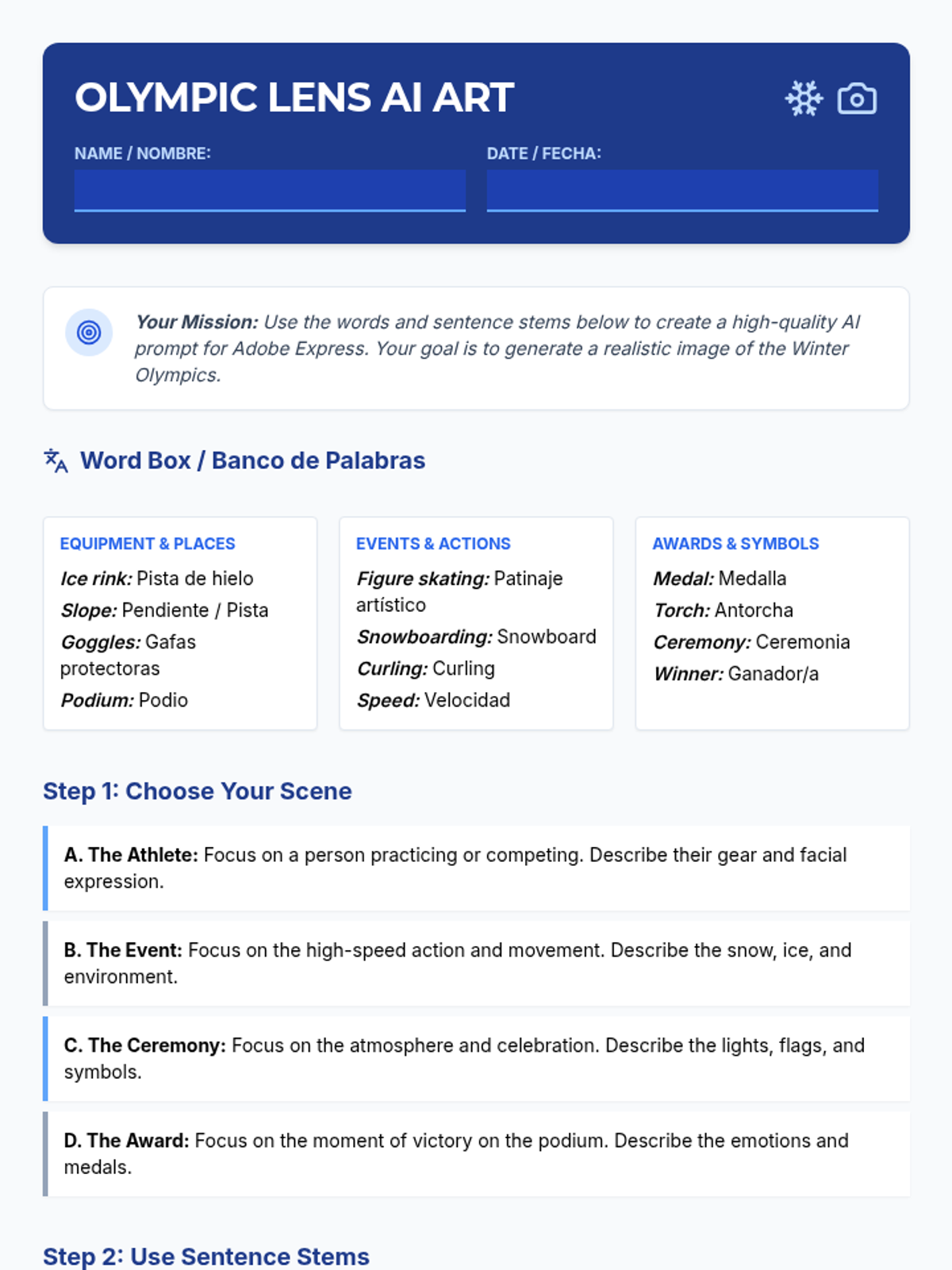
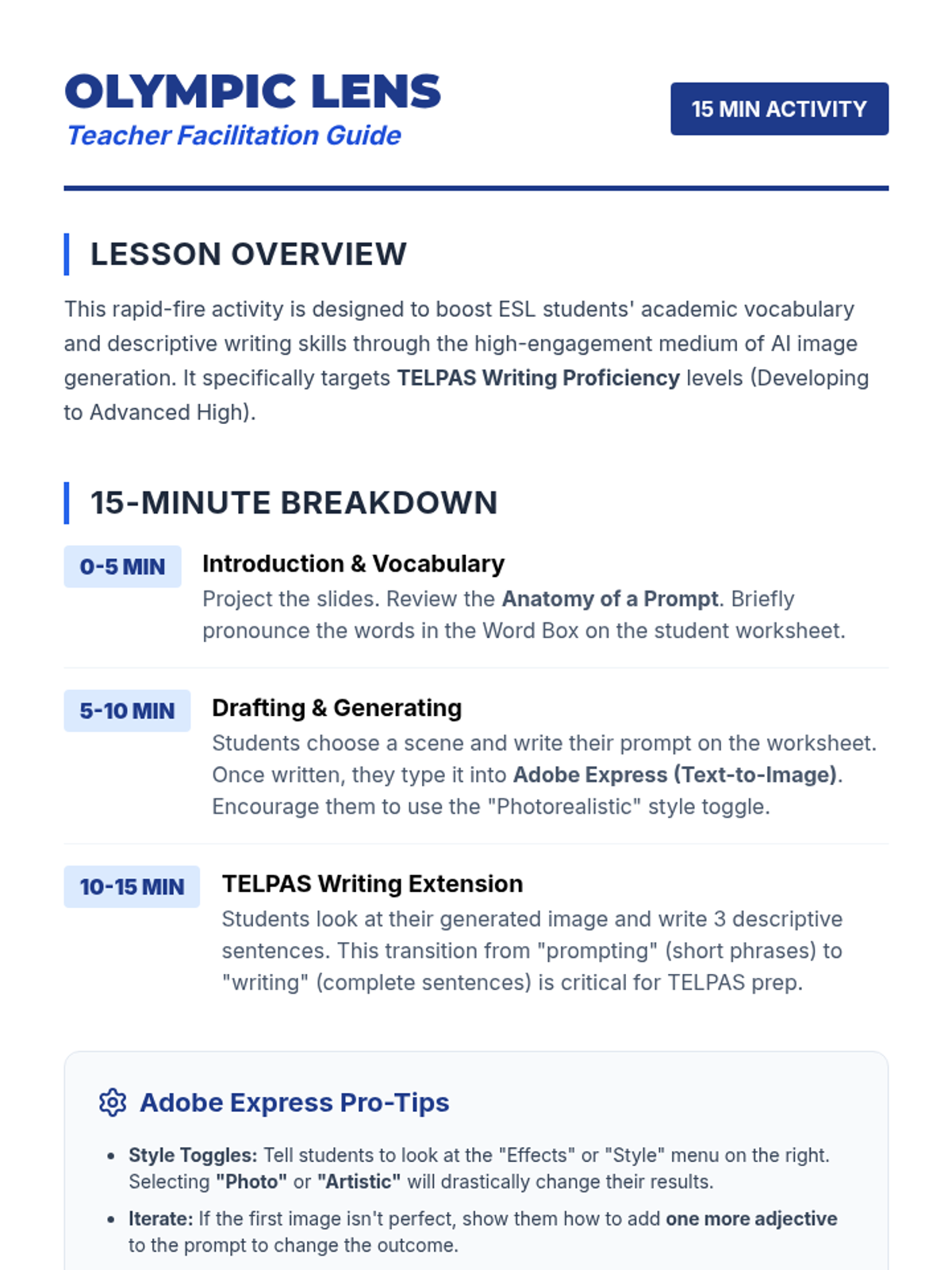
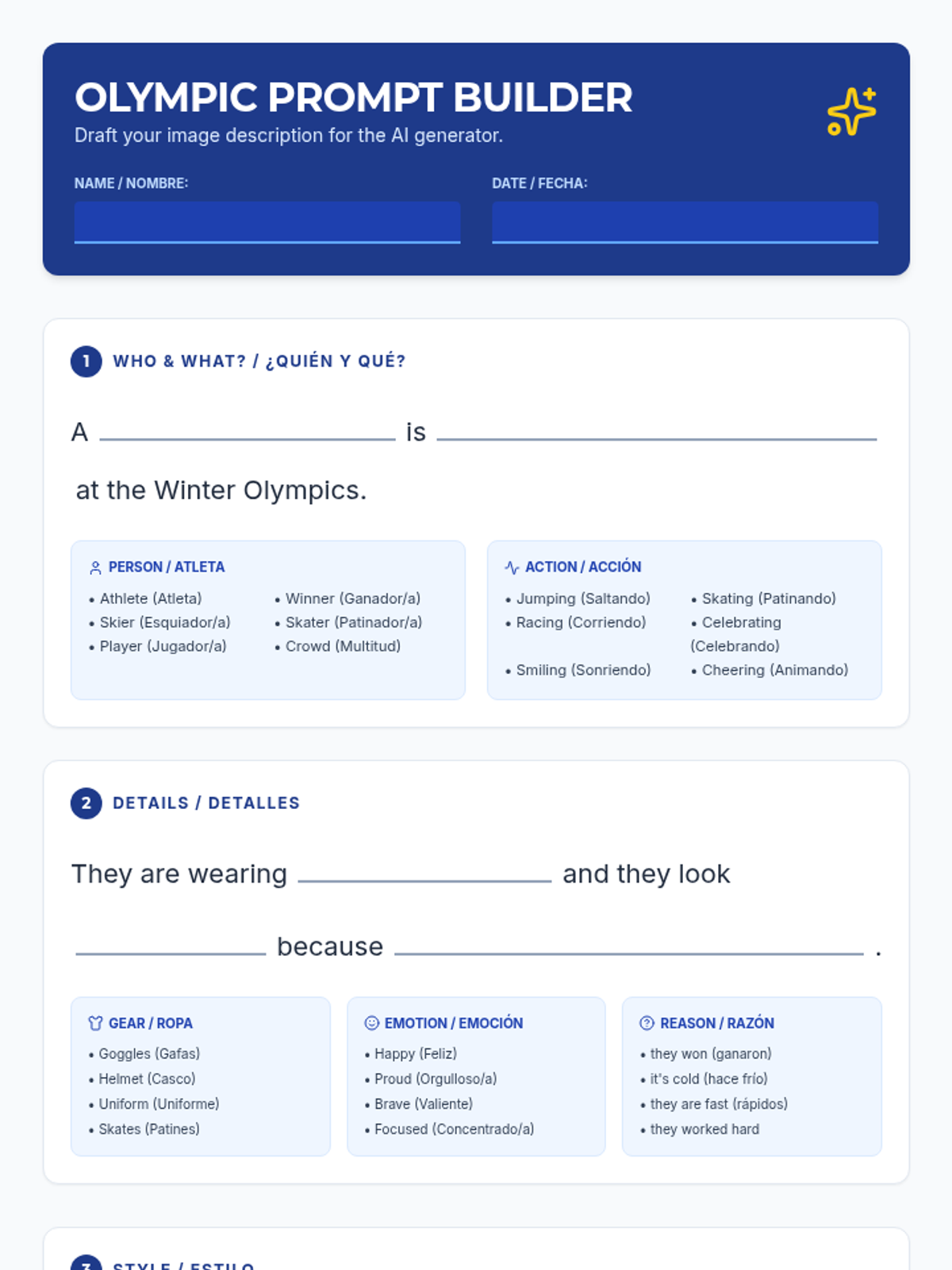
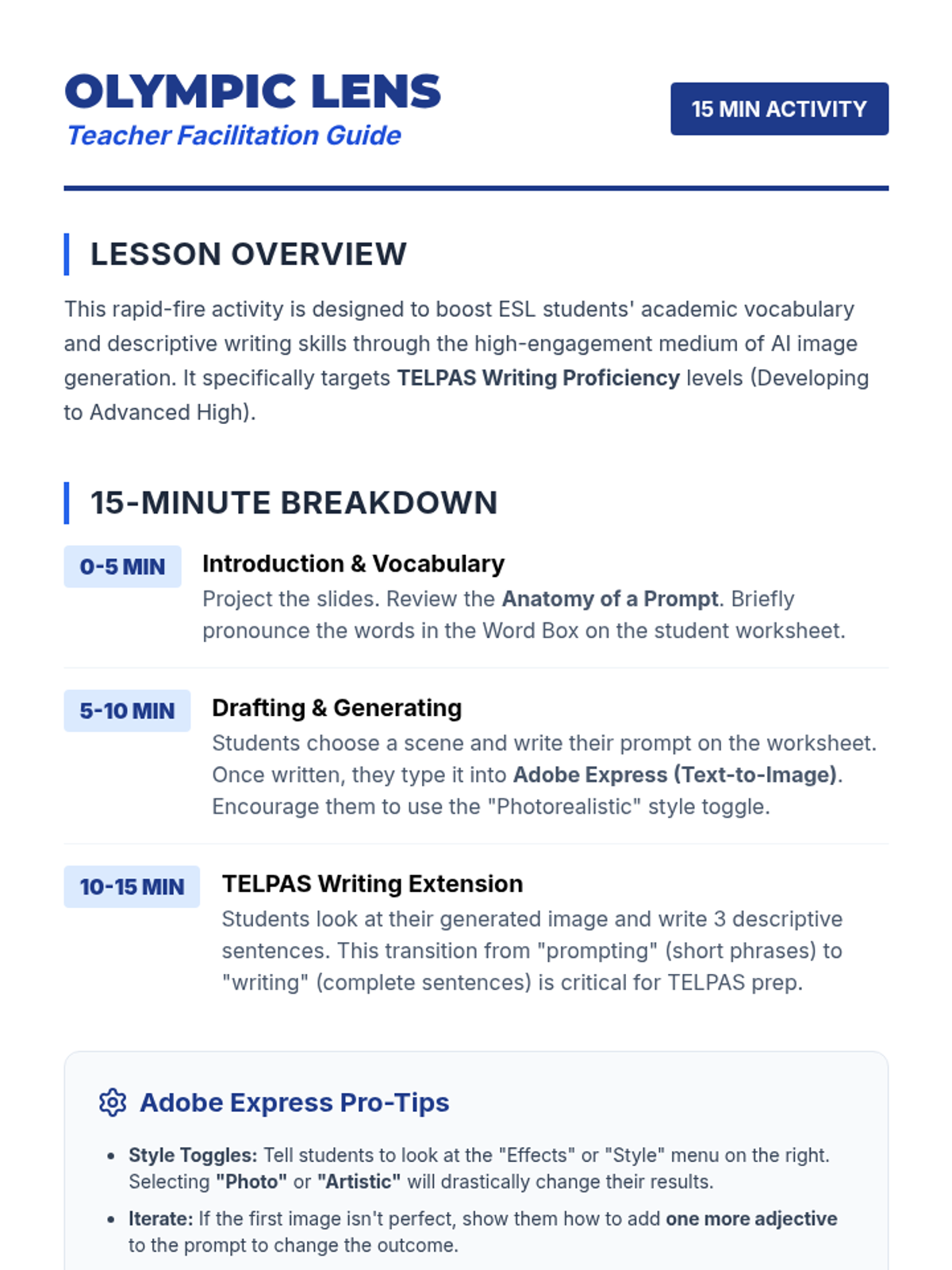
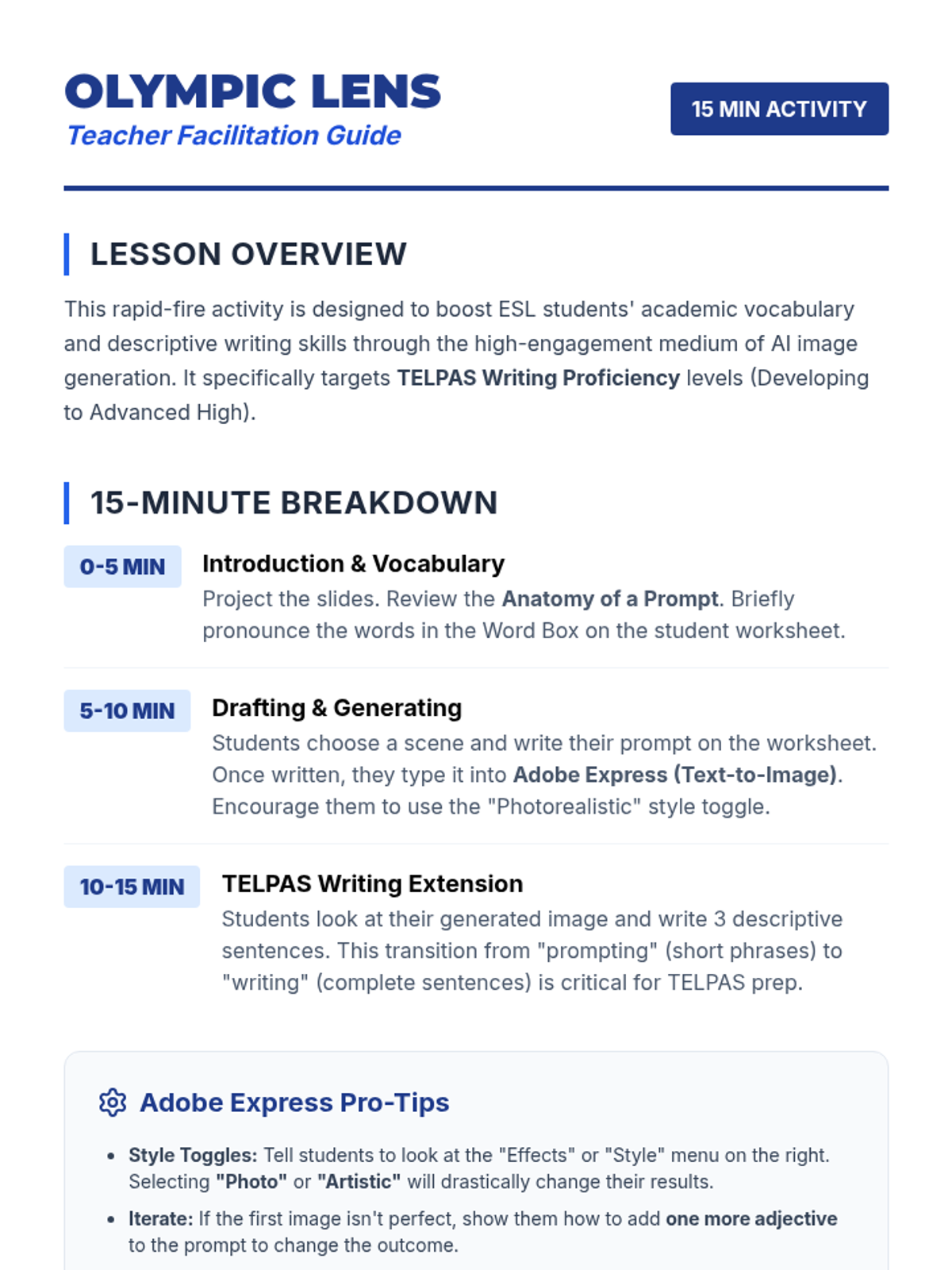
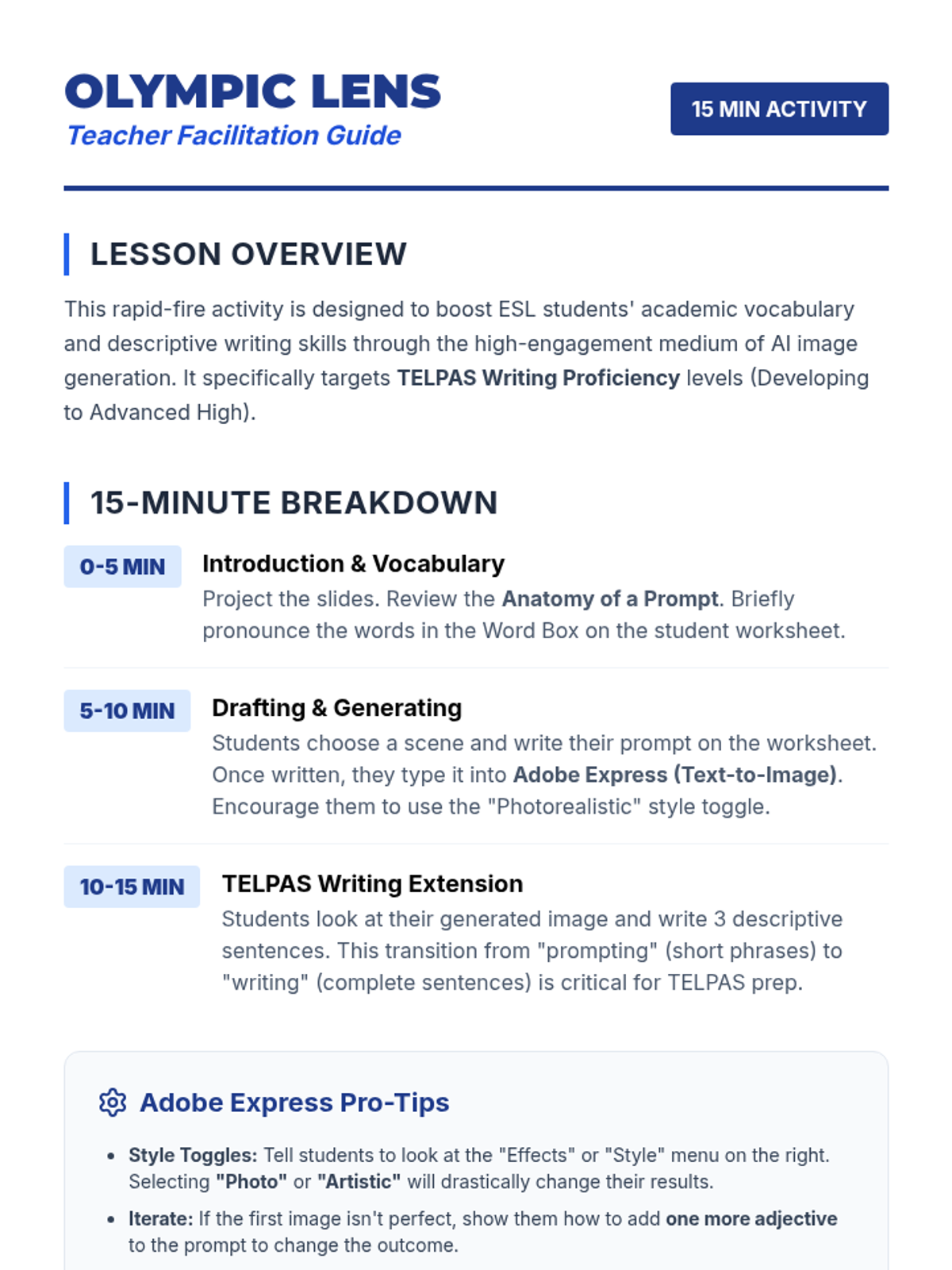
This lesson guides 9th/10th grade ESL students through the process of using AI image generation to visualize Winter Olympics scenes, focusing on descriptive vocabulary and sentence structure for TELPAS preparation.
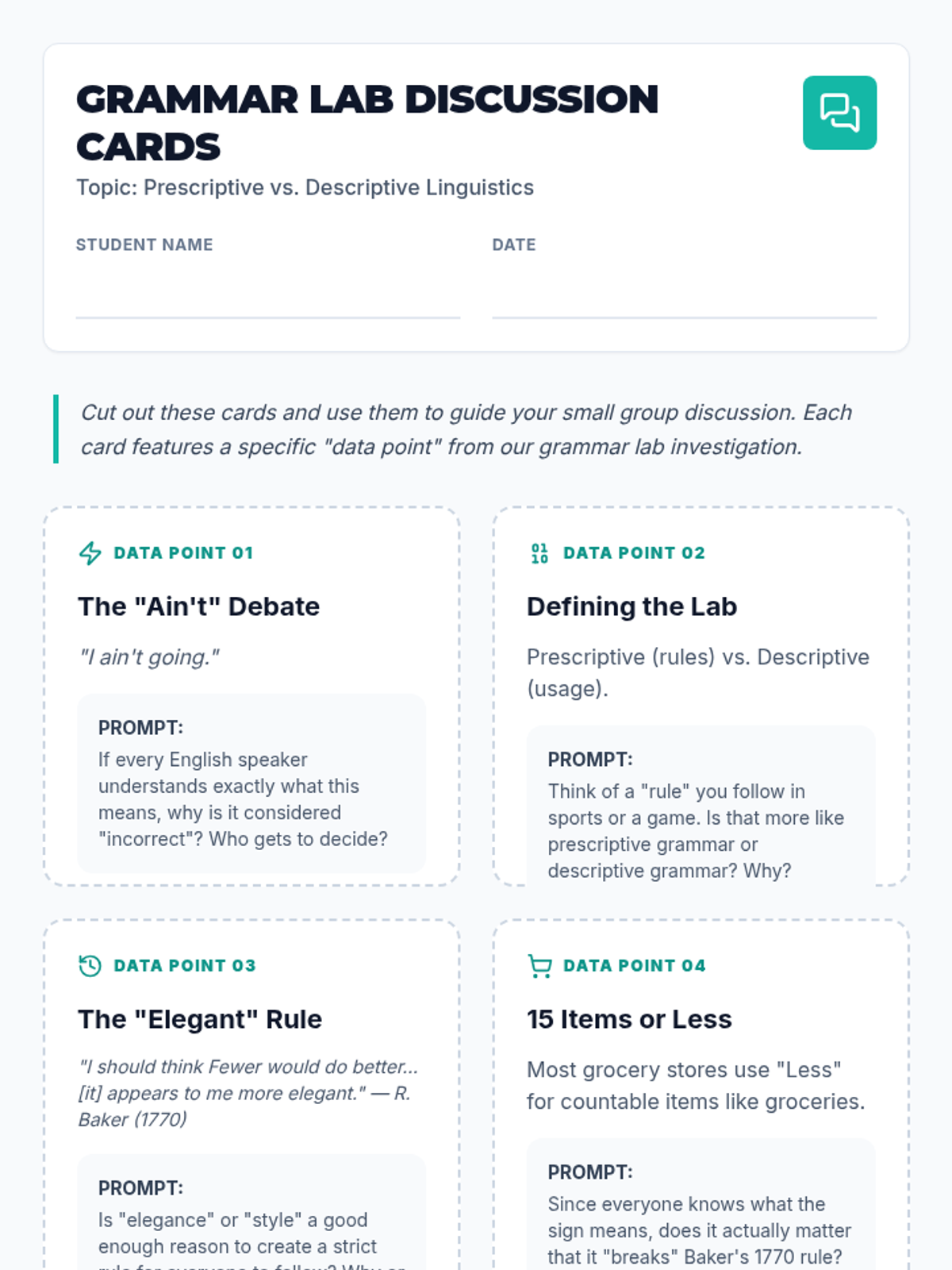
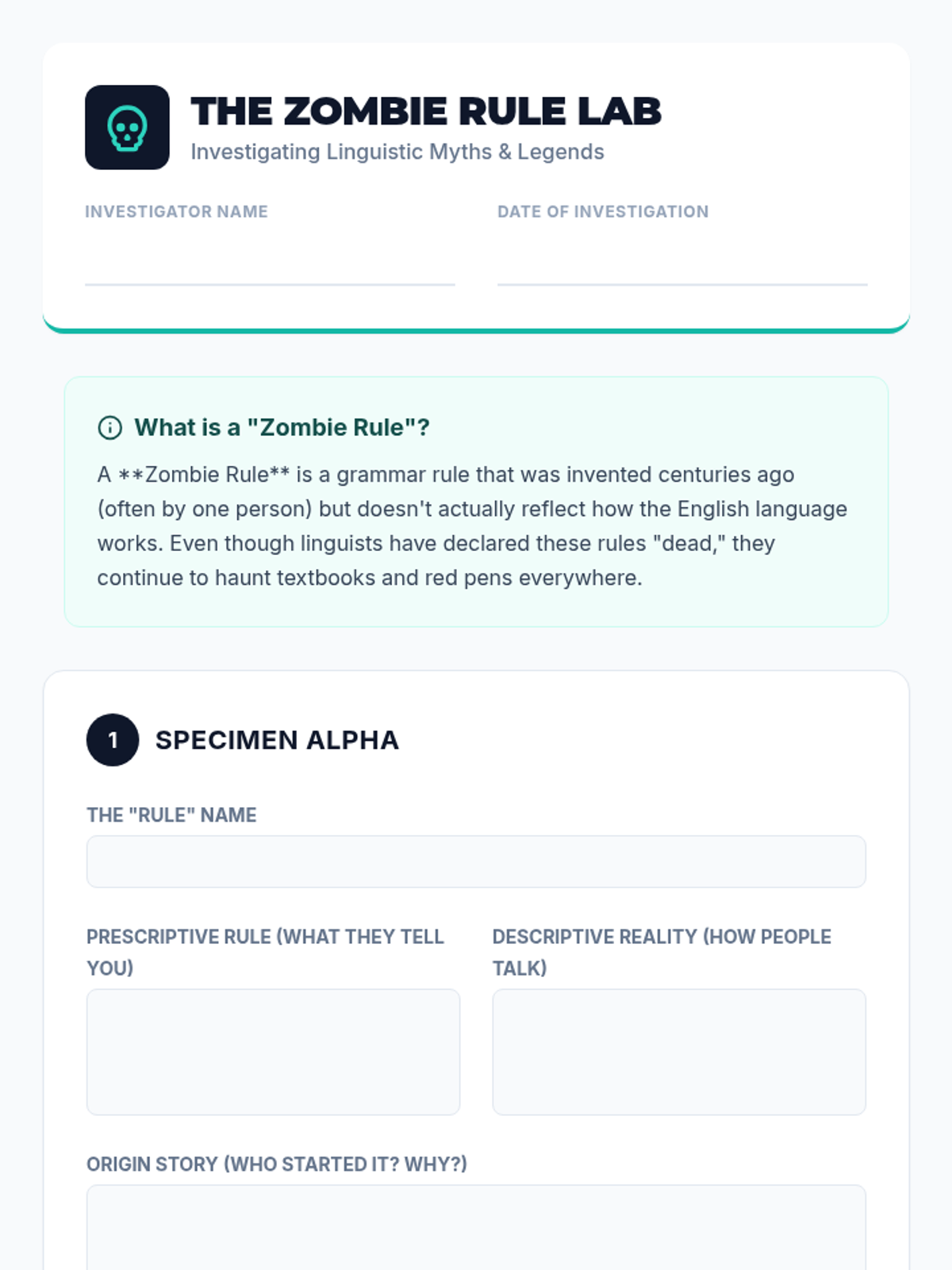
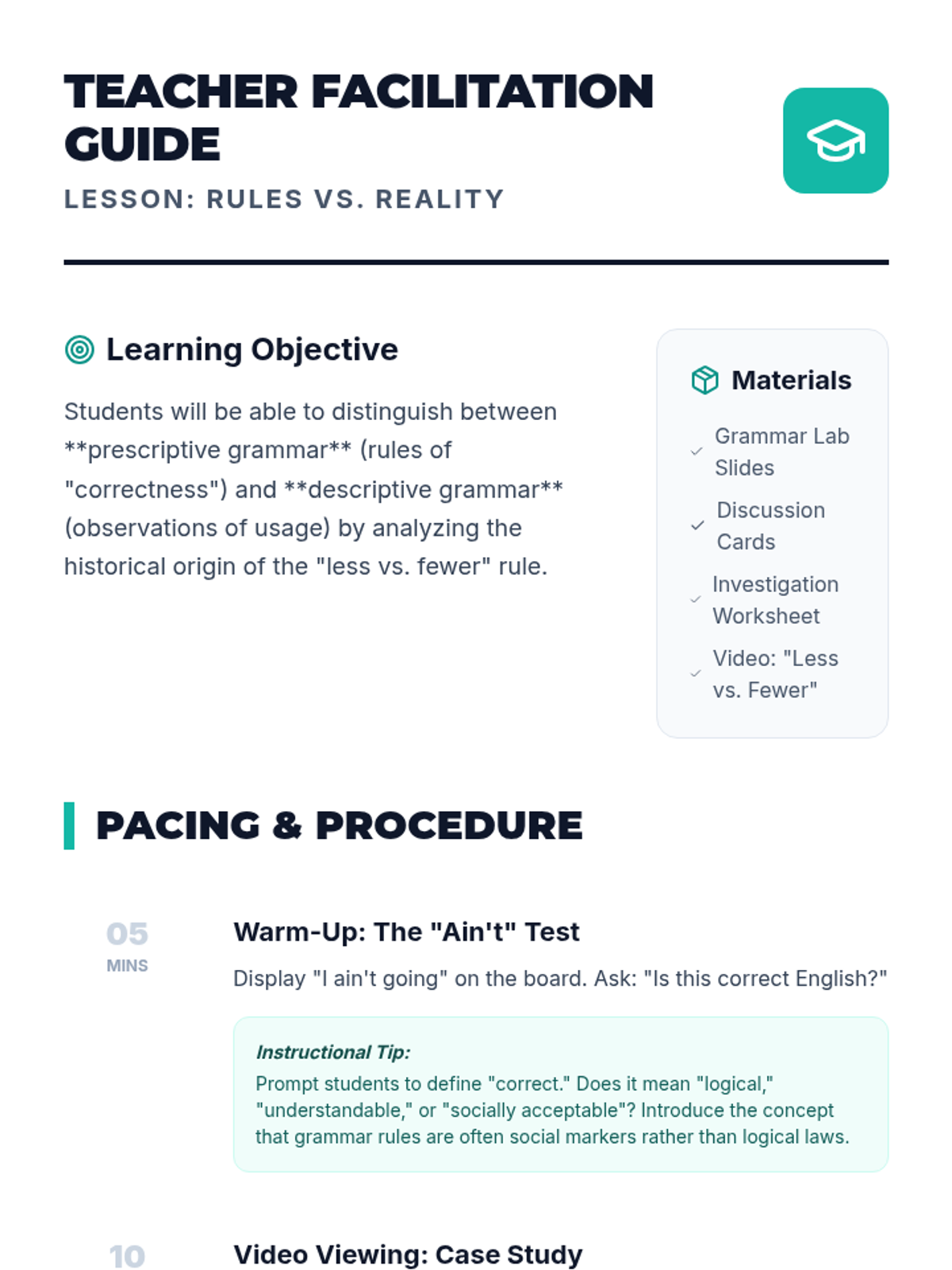
This lesson explores the historical origins of grammar rules, specifically the 'less vs. fewer' distinction, to teach the difference between prescriptive and descriptive grammar. Students will analyze how arbitrary preferences became standard rules and investigate other 'zombie rules' in the English language.
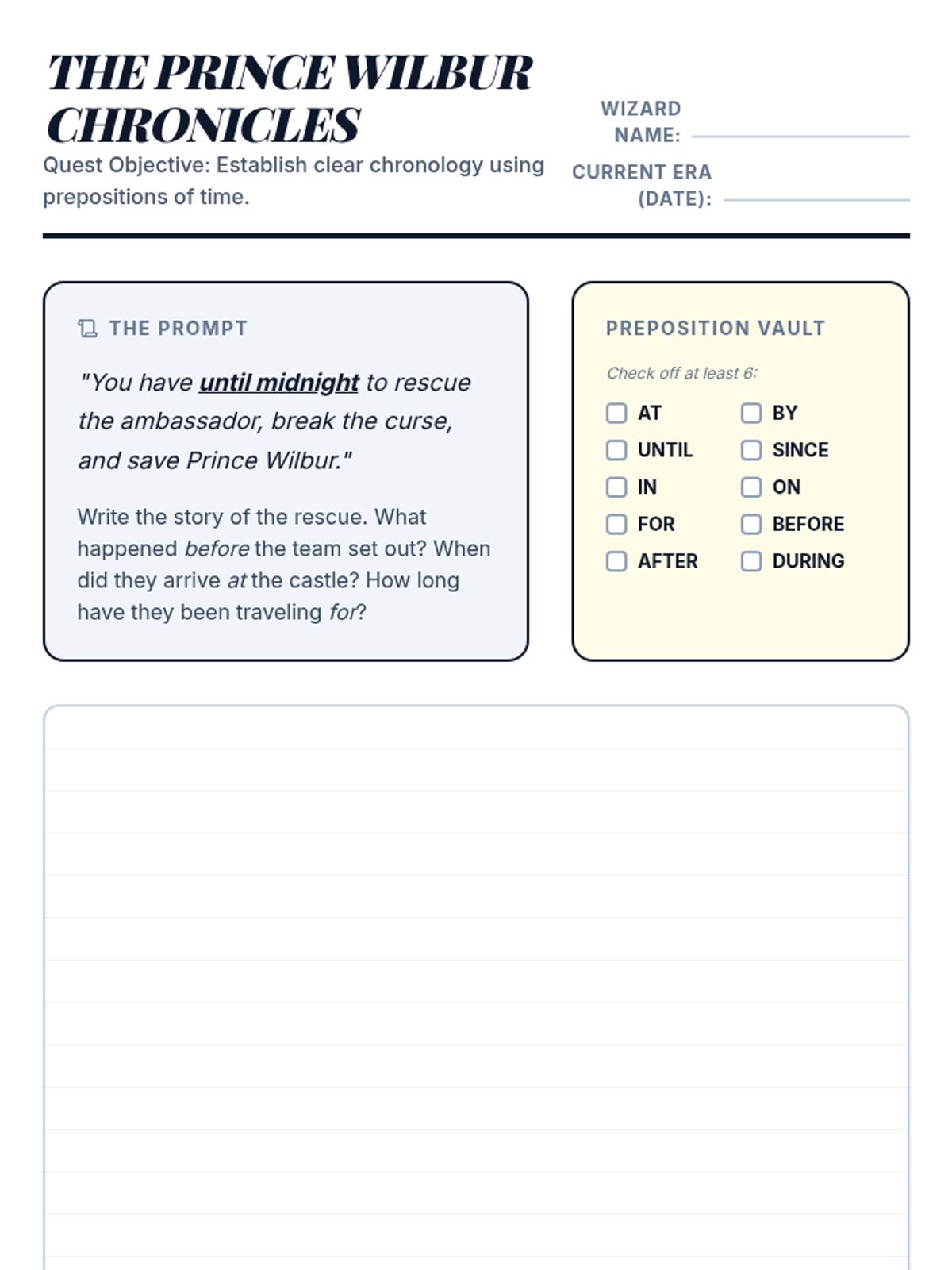
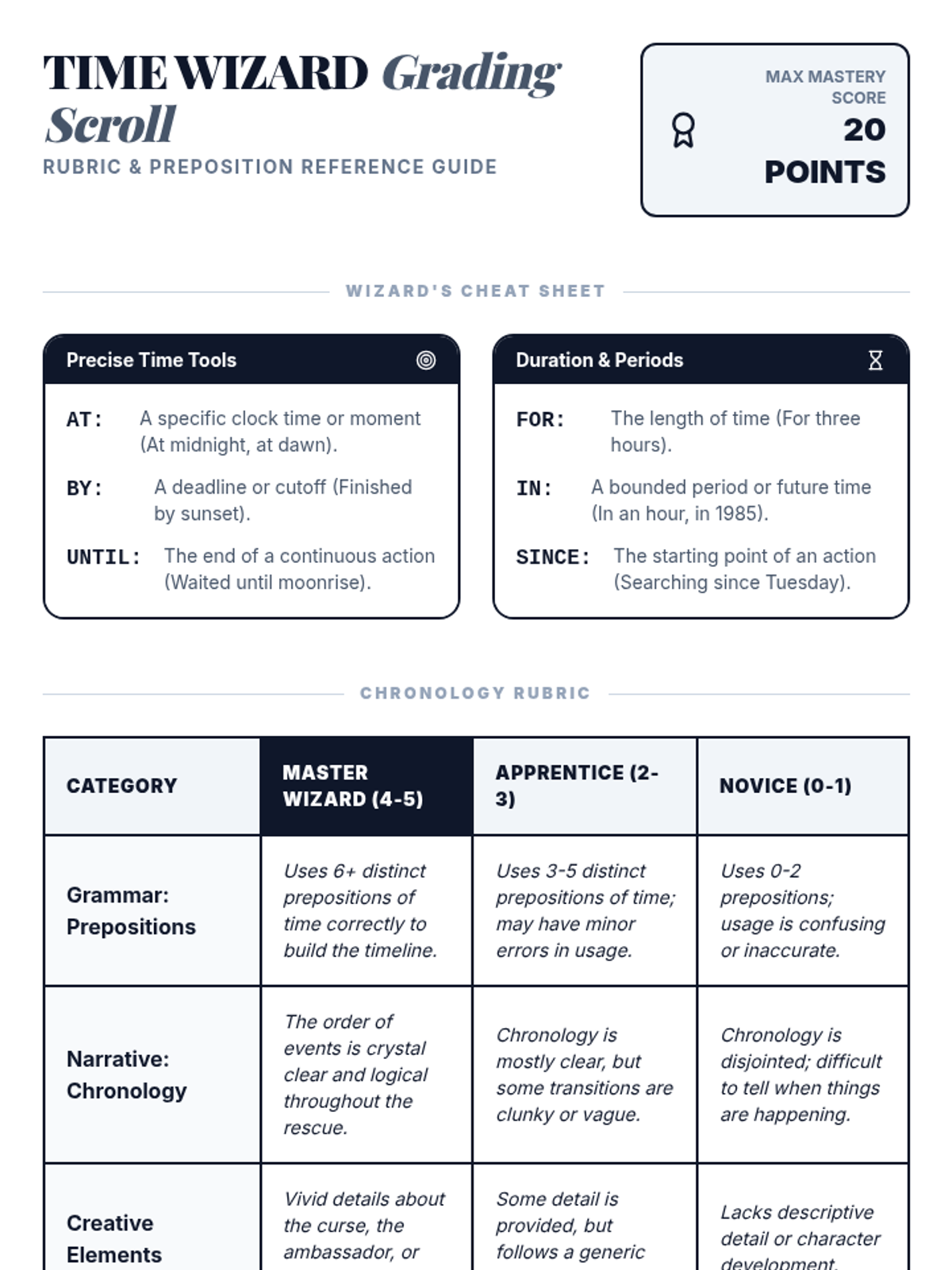
Students will learn to use prepositions of time (at, by, until, for, etc.) to create clear chronology in a creative narrative about rescuing Prince Wilbur from a magical curse. The lesson includes a presentation, a creative writing activity, and an assessment rubric themed around becoming a 'Time Wizard'.
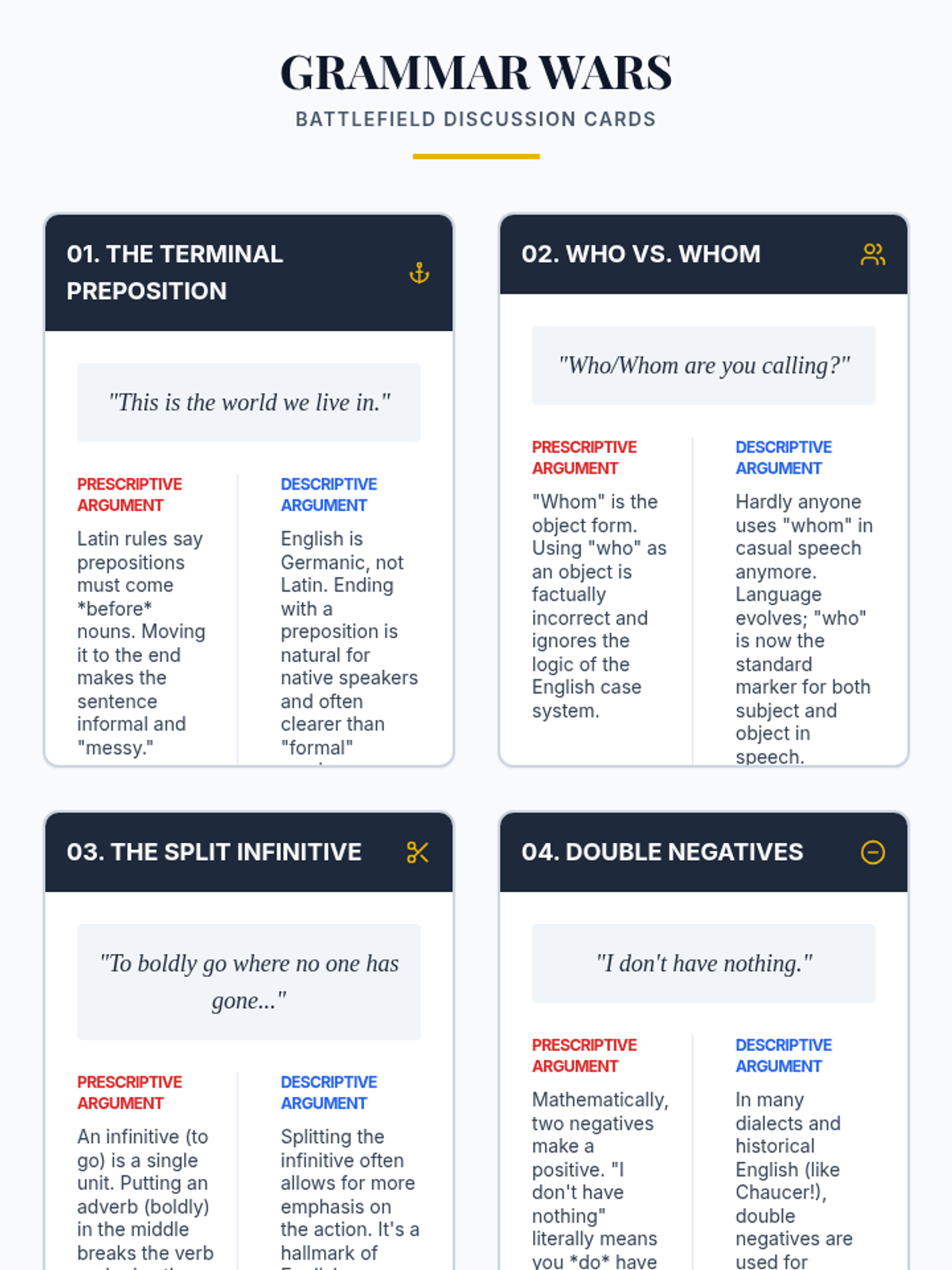
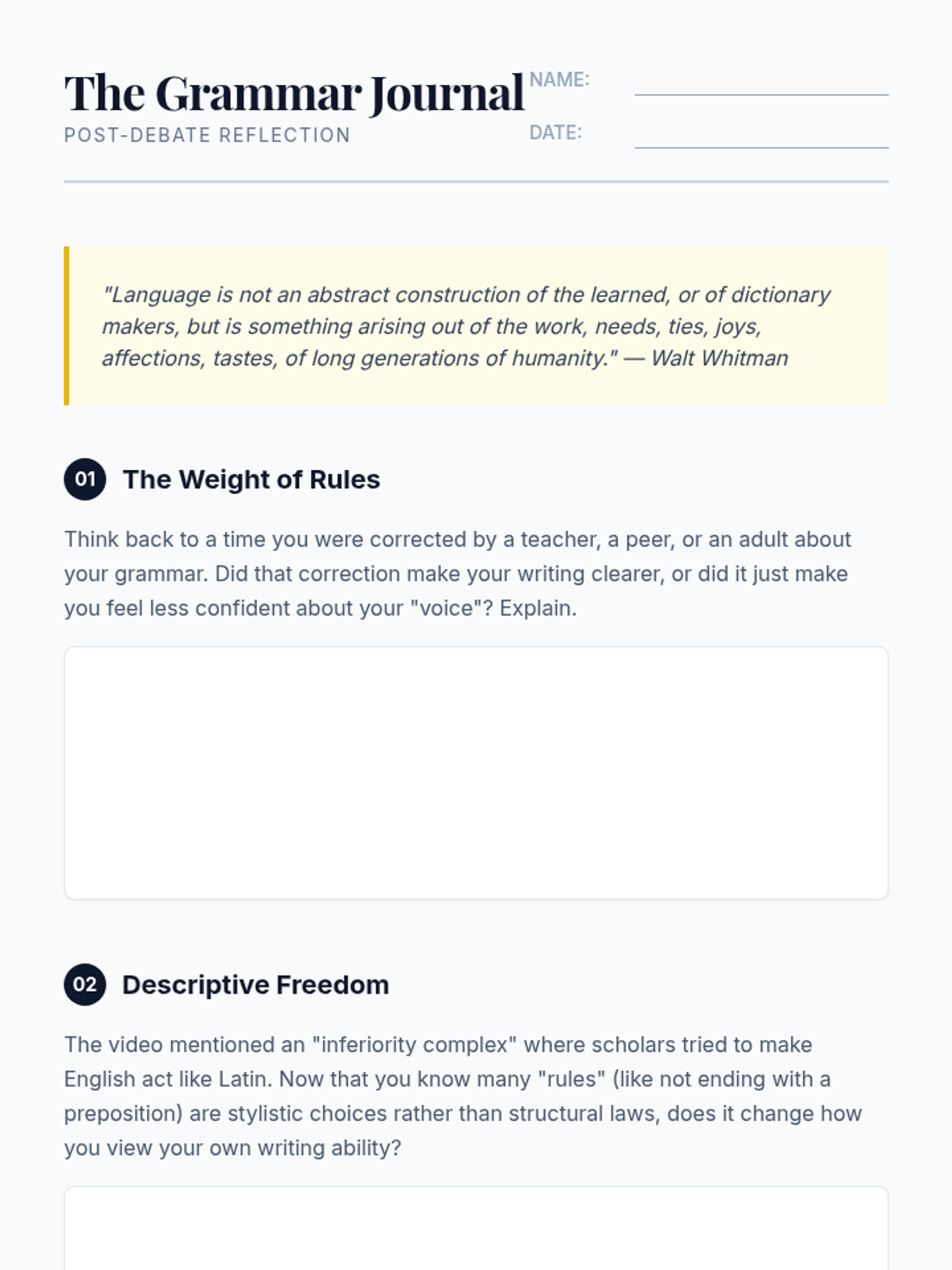
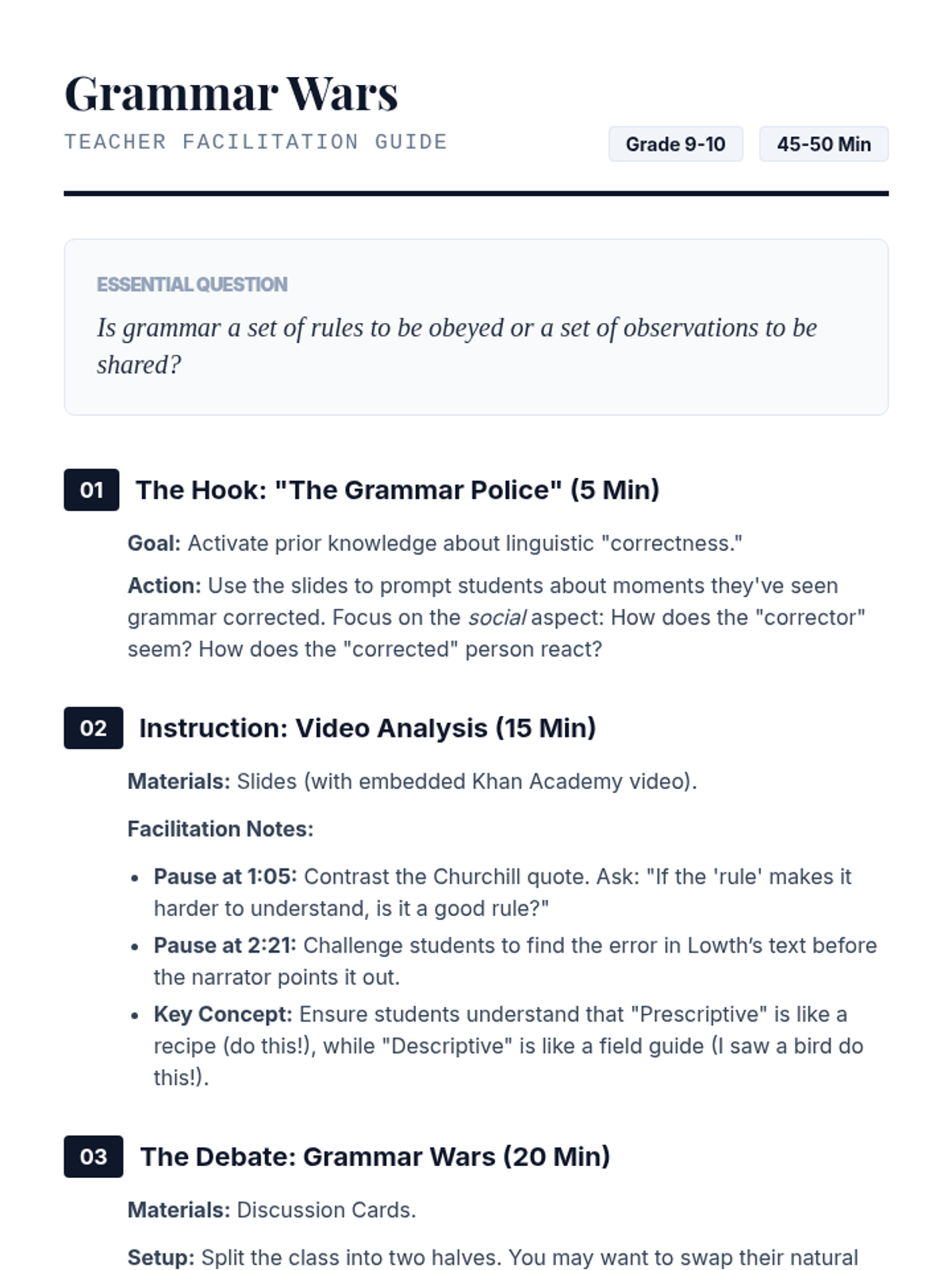
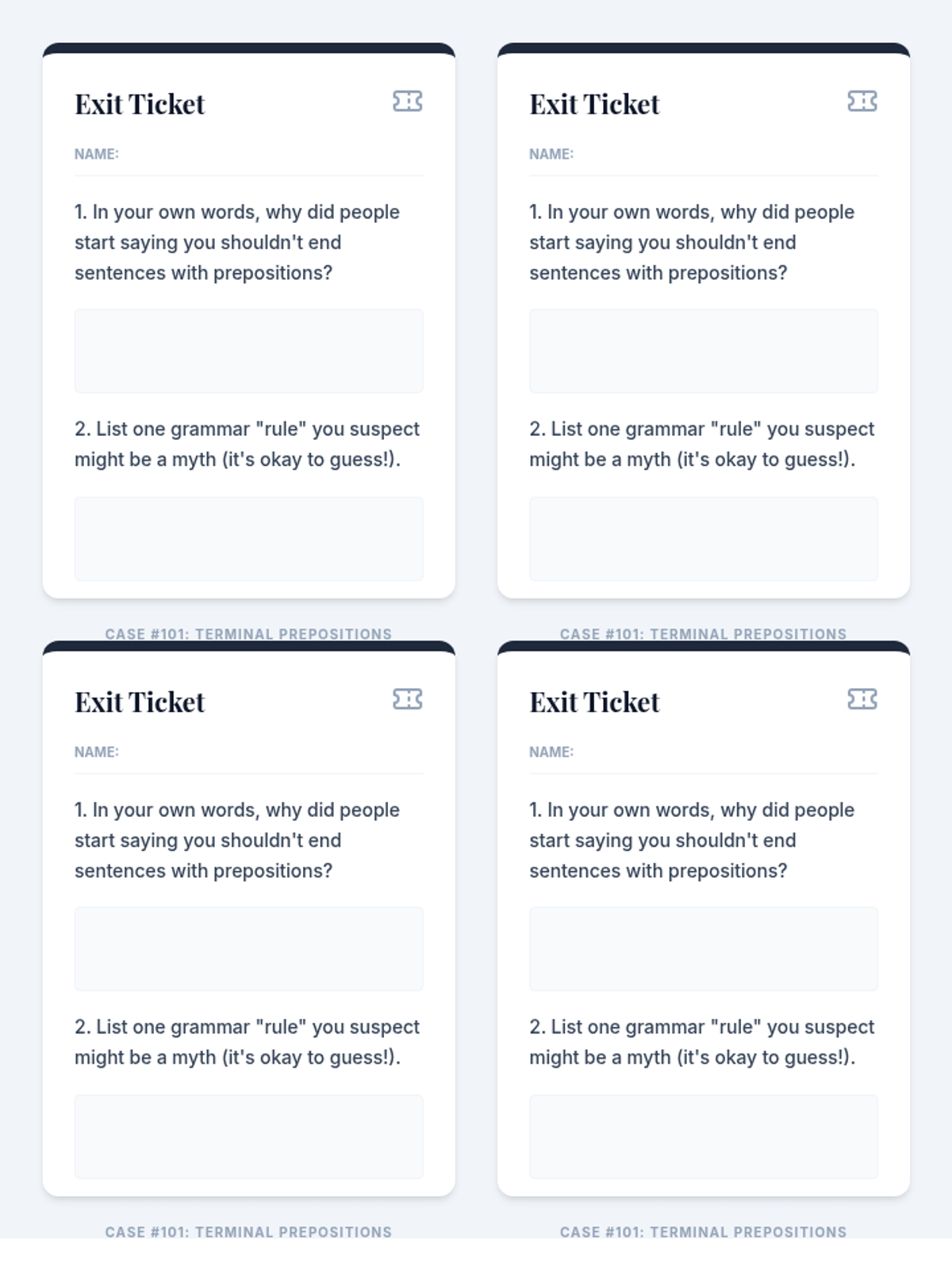
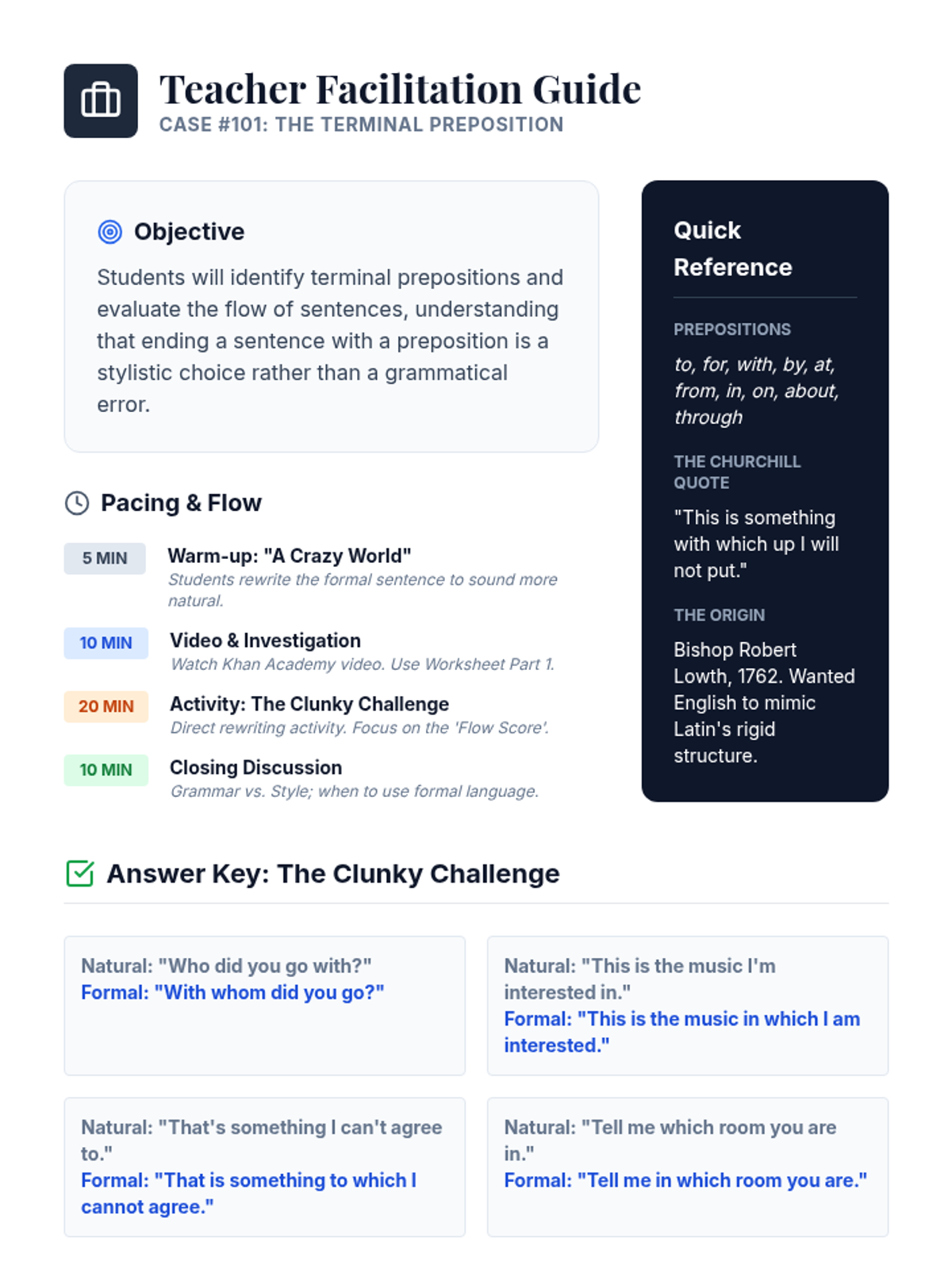
A high school English lesson exploring the conflict between prescriptive and descriptive grammar, using terminal prepositions as a case study to discuss language history and usage.
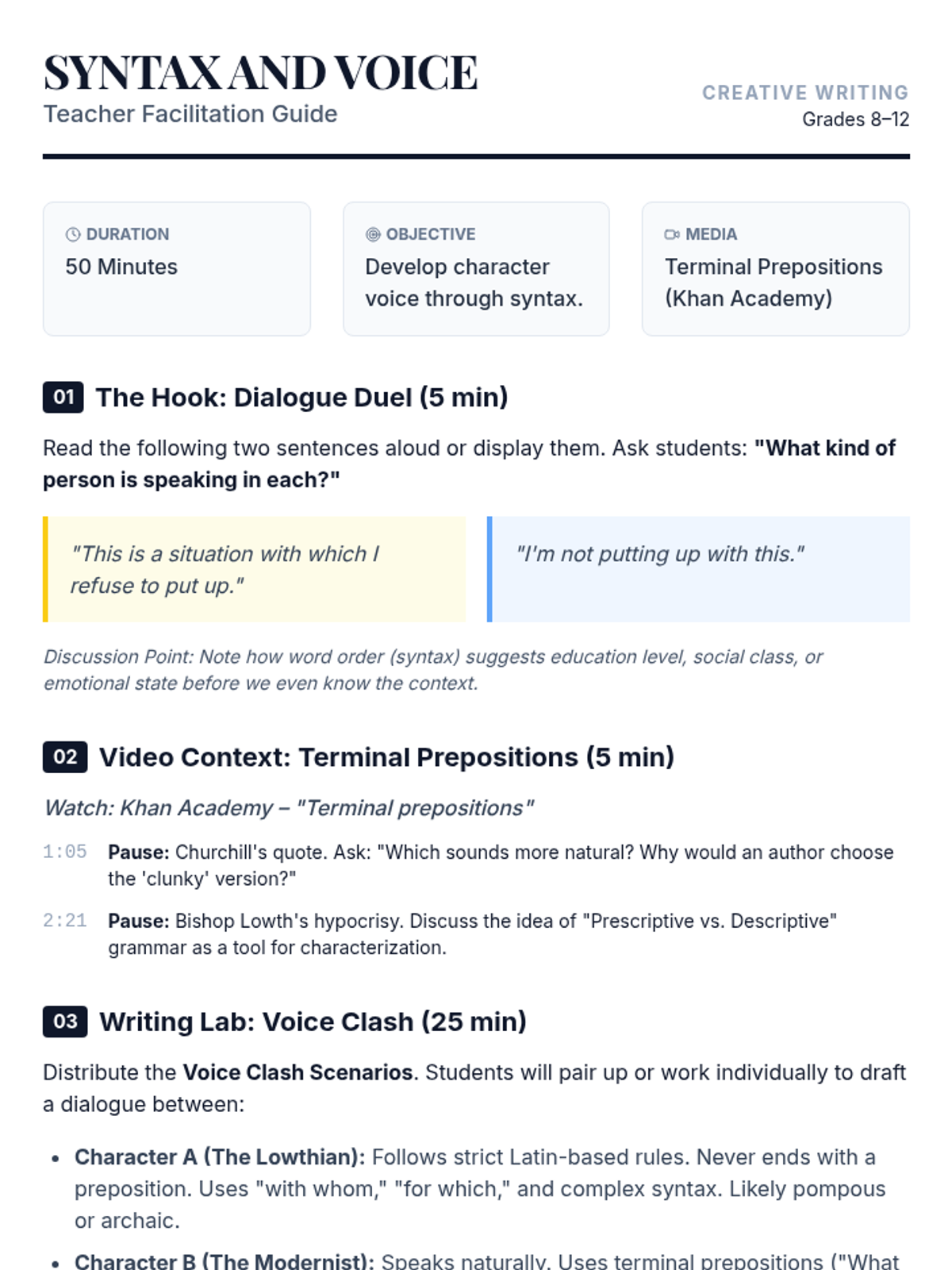
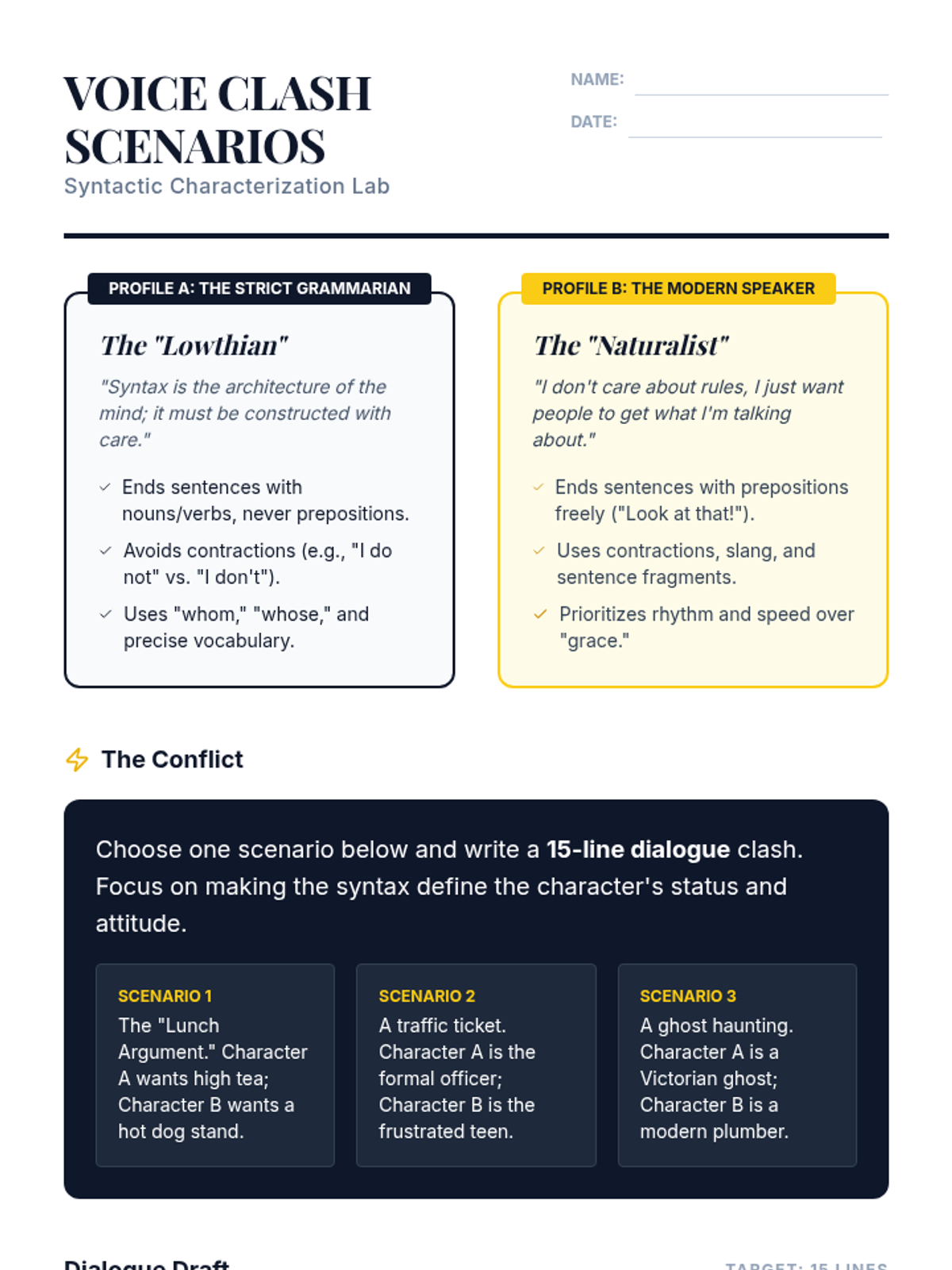
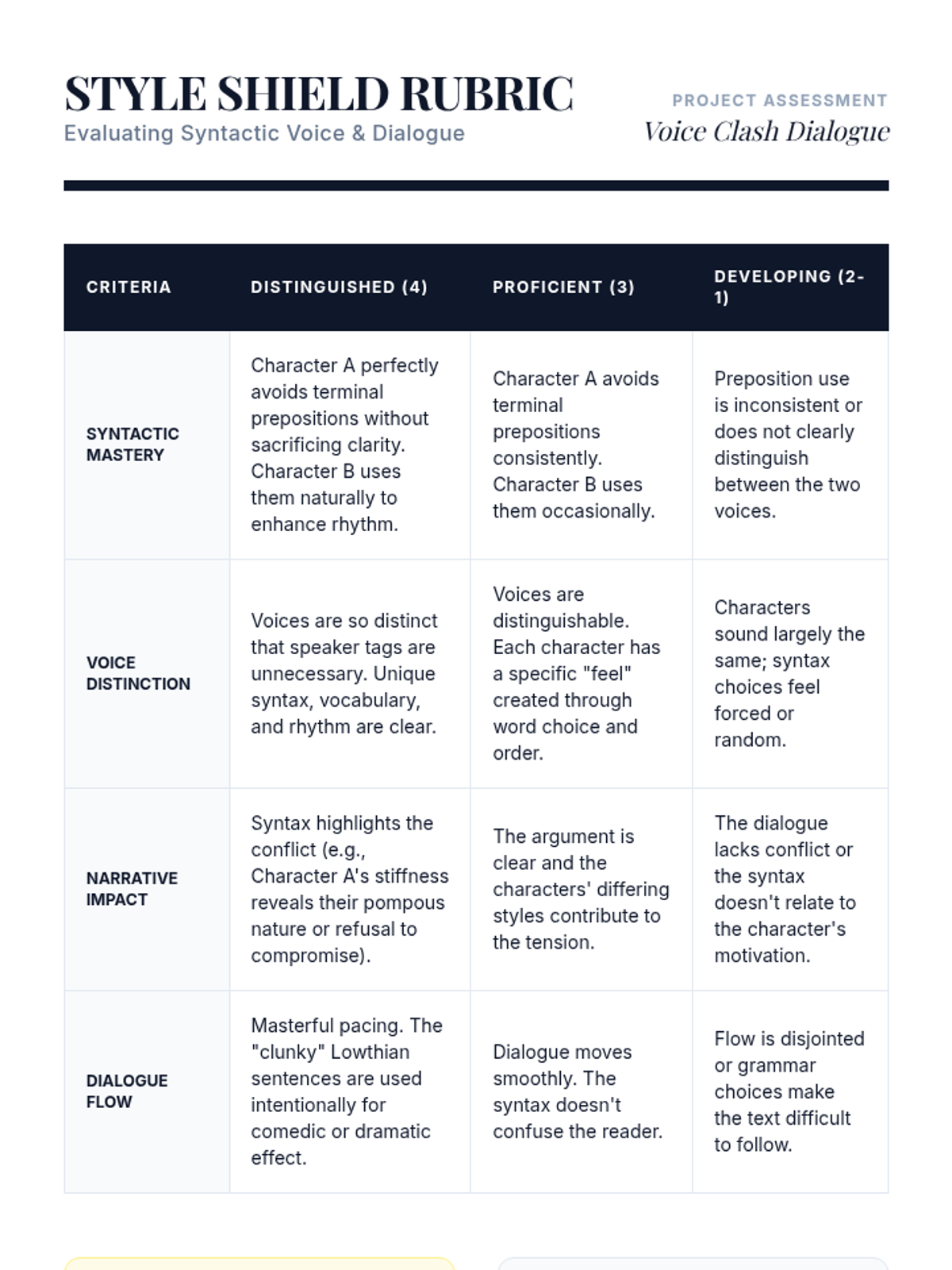
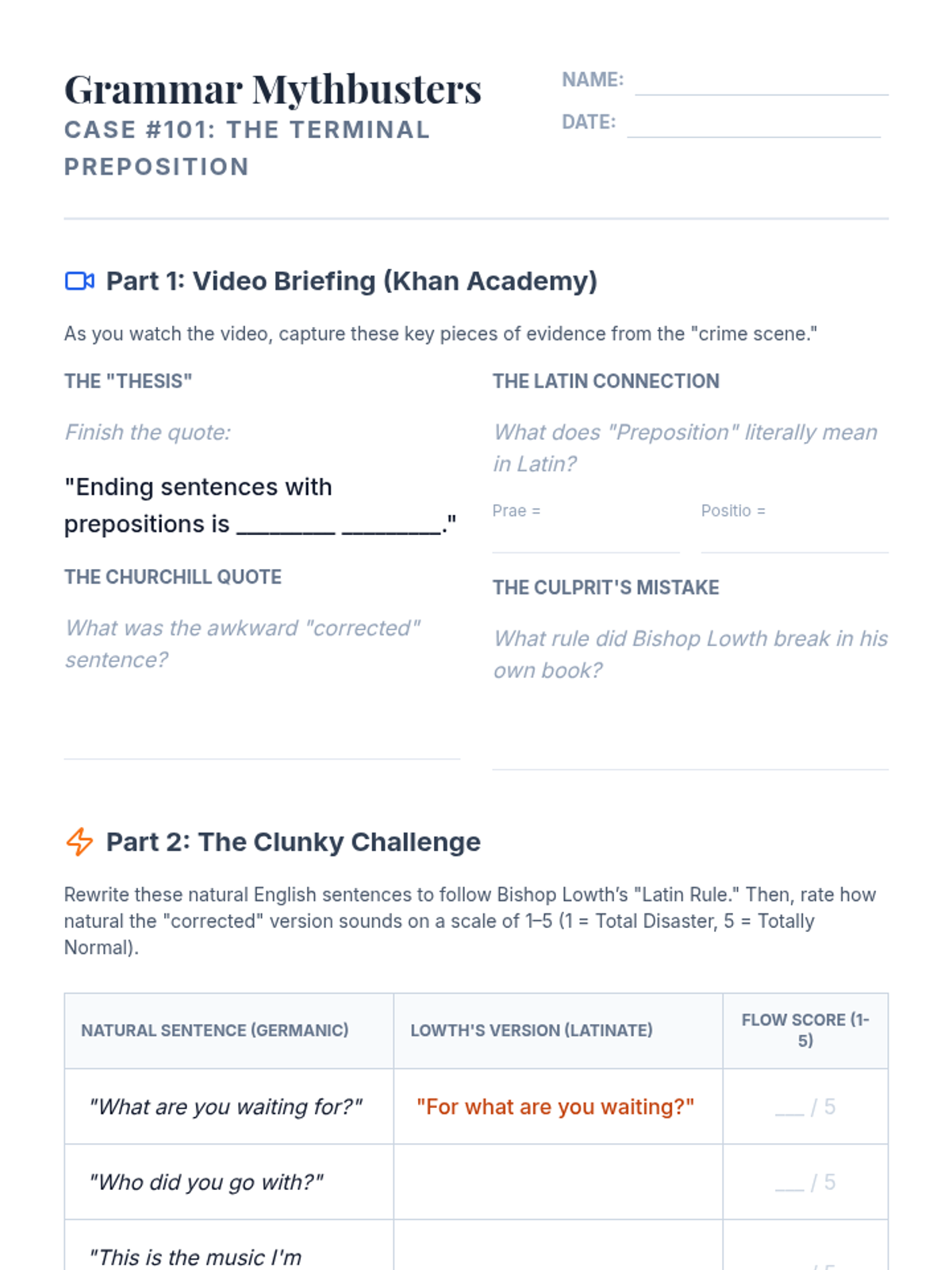
A creative writing lesson for grades 8-12 focusing on how syntax and the use (or avoidance) of terminal prepositions can define a character's voice and personality. Students contrast formal 'Lowthian' rules with natural speech through video analysis and dialogue writing.
A middle school grammar lesson that deconstructs the myth of the terminal preposition, exploring its Latin origins and the difference between formal style and natural English flow.
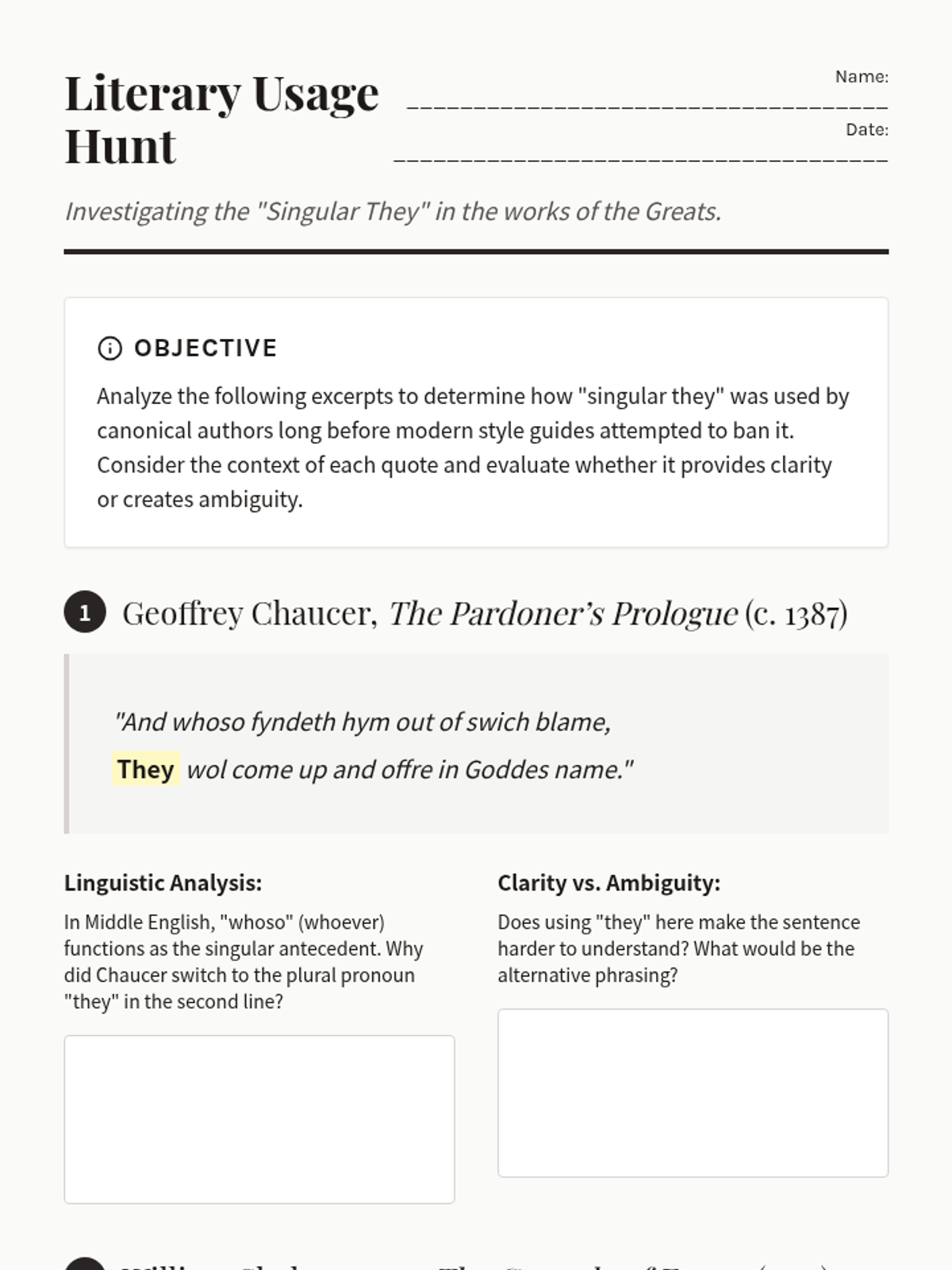
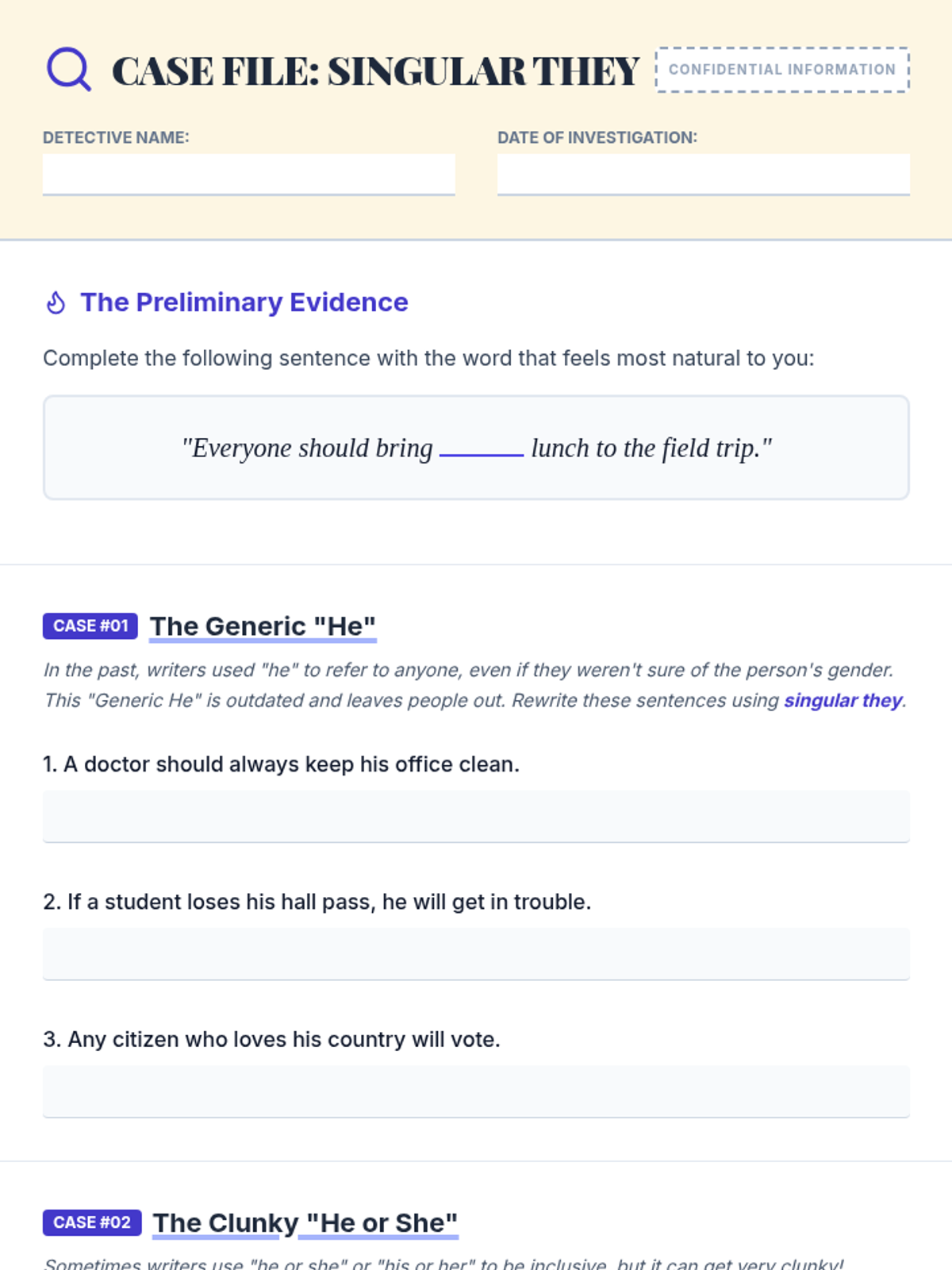
A High School Literature/AP English lesson exploring the conflict between prescriptive and descriptive grammar through the history of 'singular they' and the 'generic he'. Students analyze literary excerpts from Chaucer, Shakespeare, and Austen to evaluate how language evolves despite artificial rules.
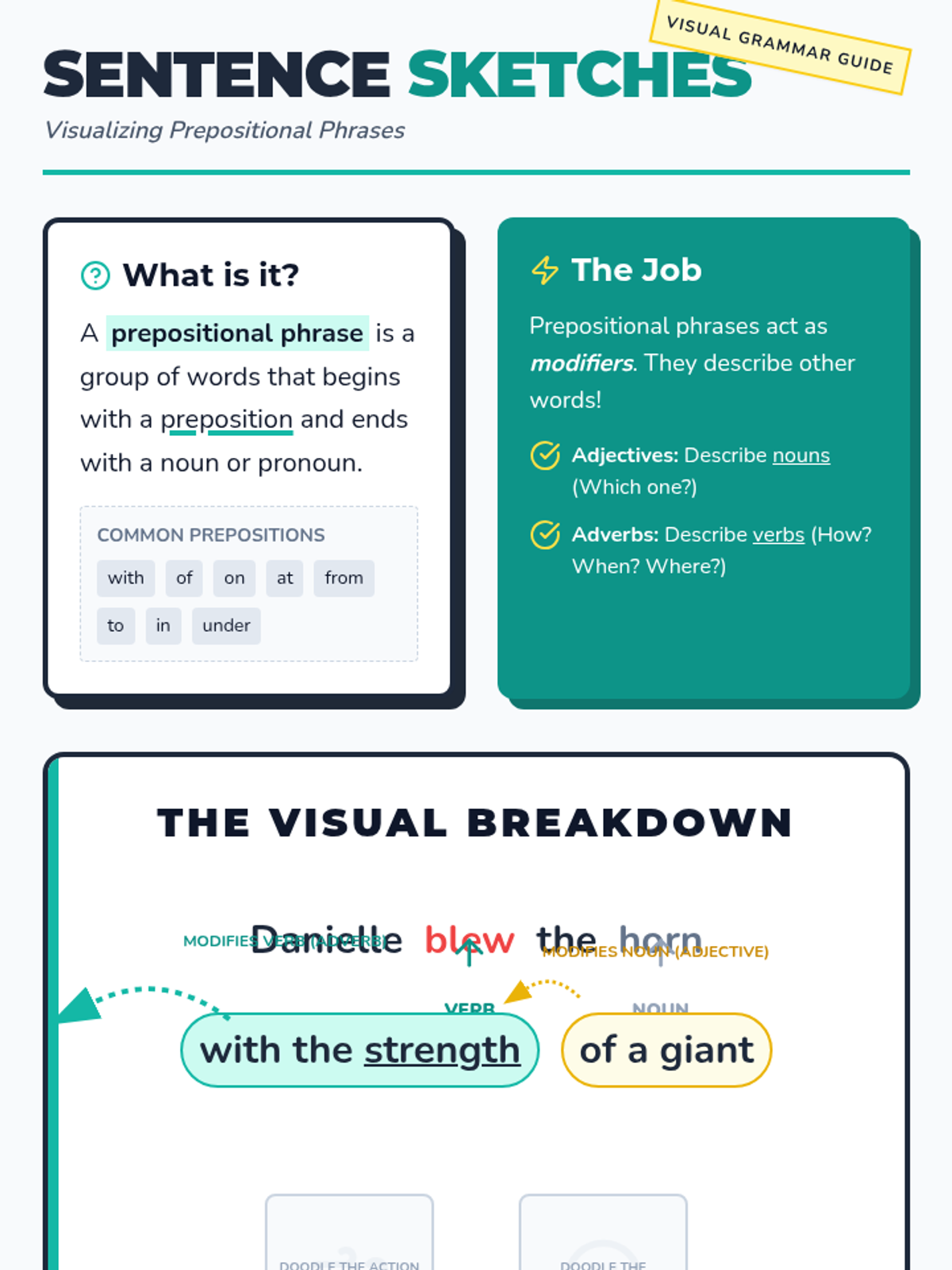
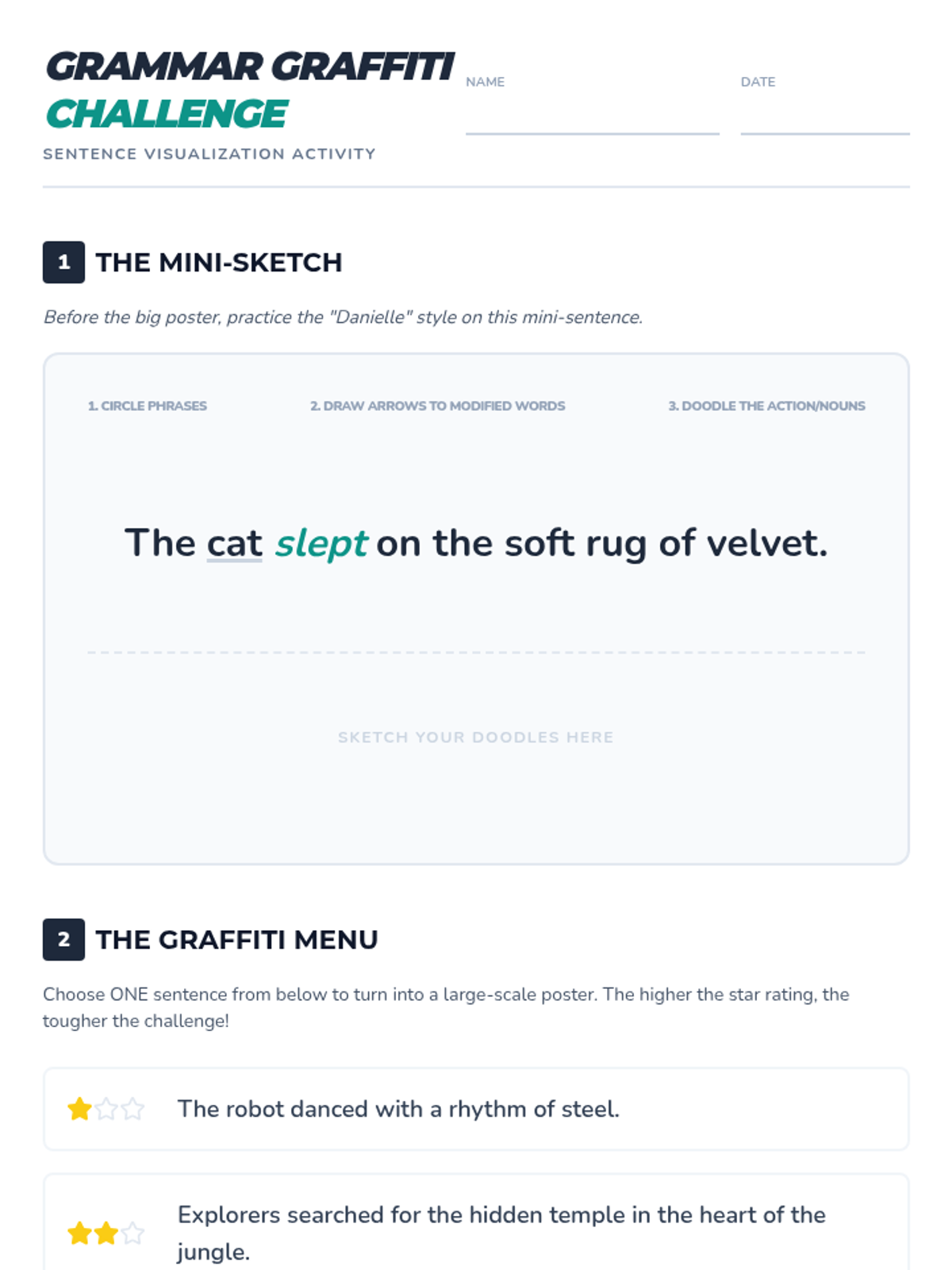
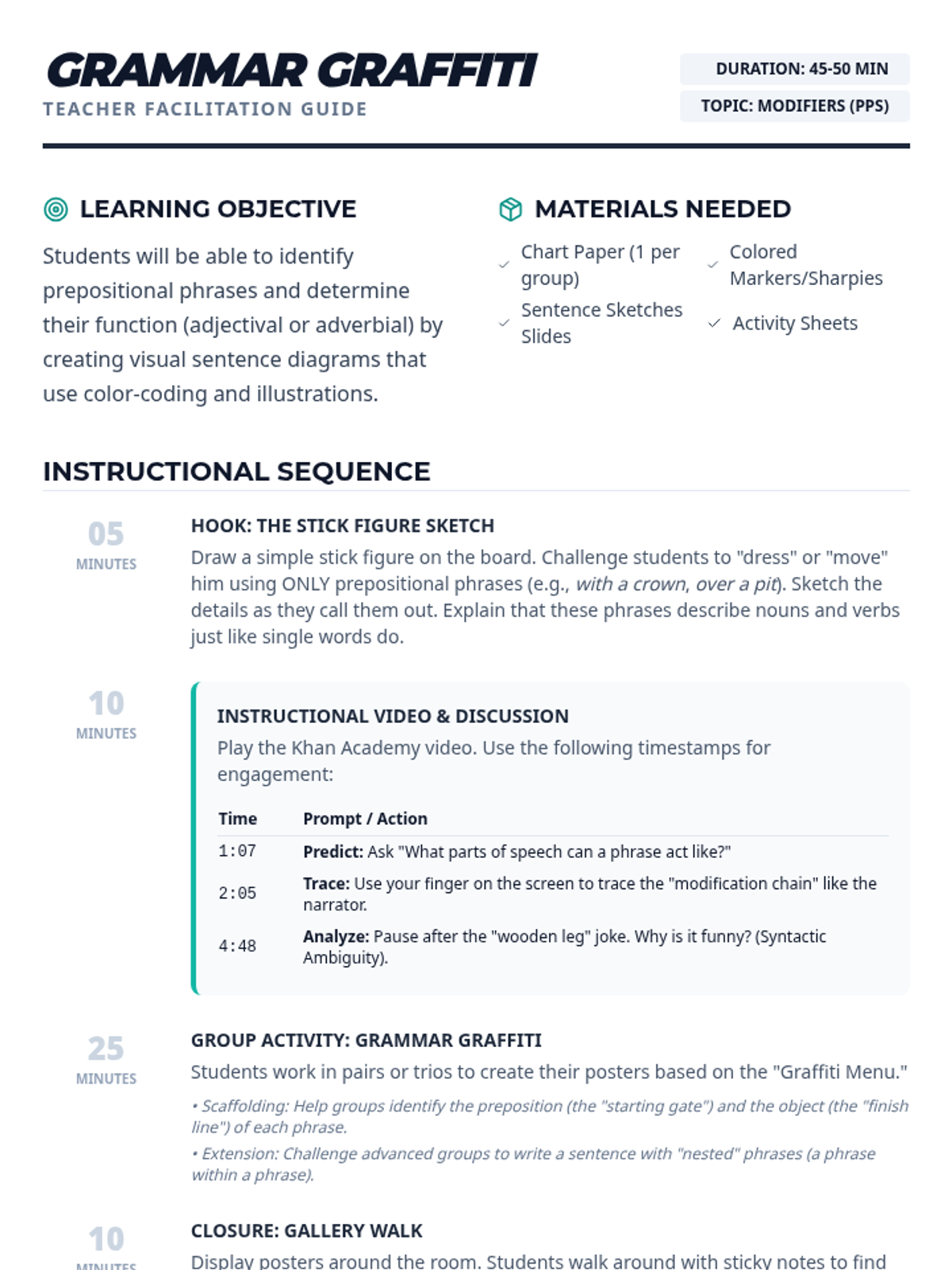
A visual-first lesson on sentence structure focusing on prepositional phrases. Students use 'Grammar Graffiti'—a combination of diagramming and doodling—to visualize how phrases modify nouns and verbs, inspired by Khan Academy's instructional style.
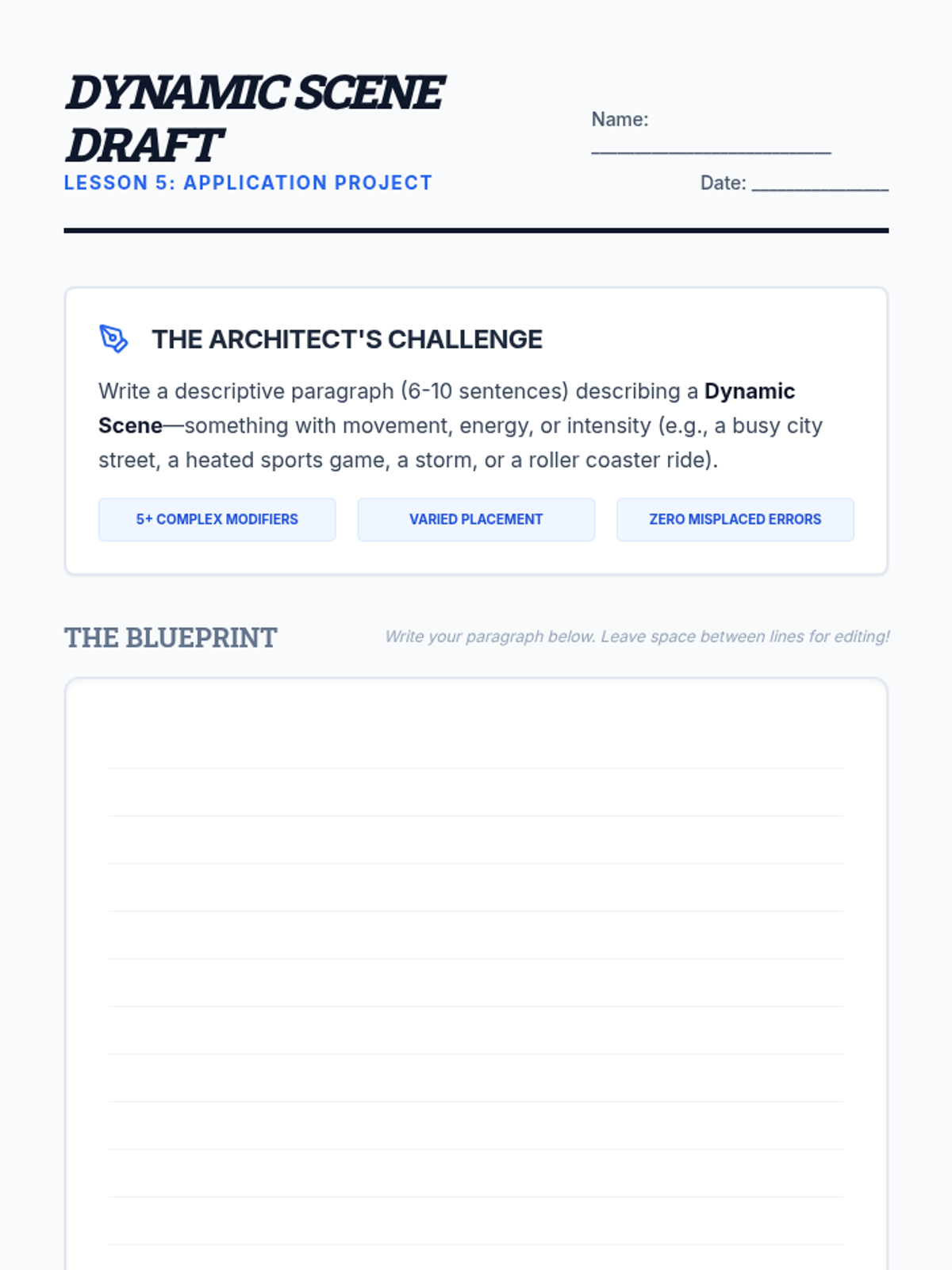
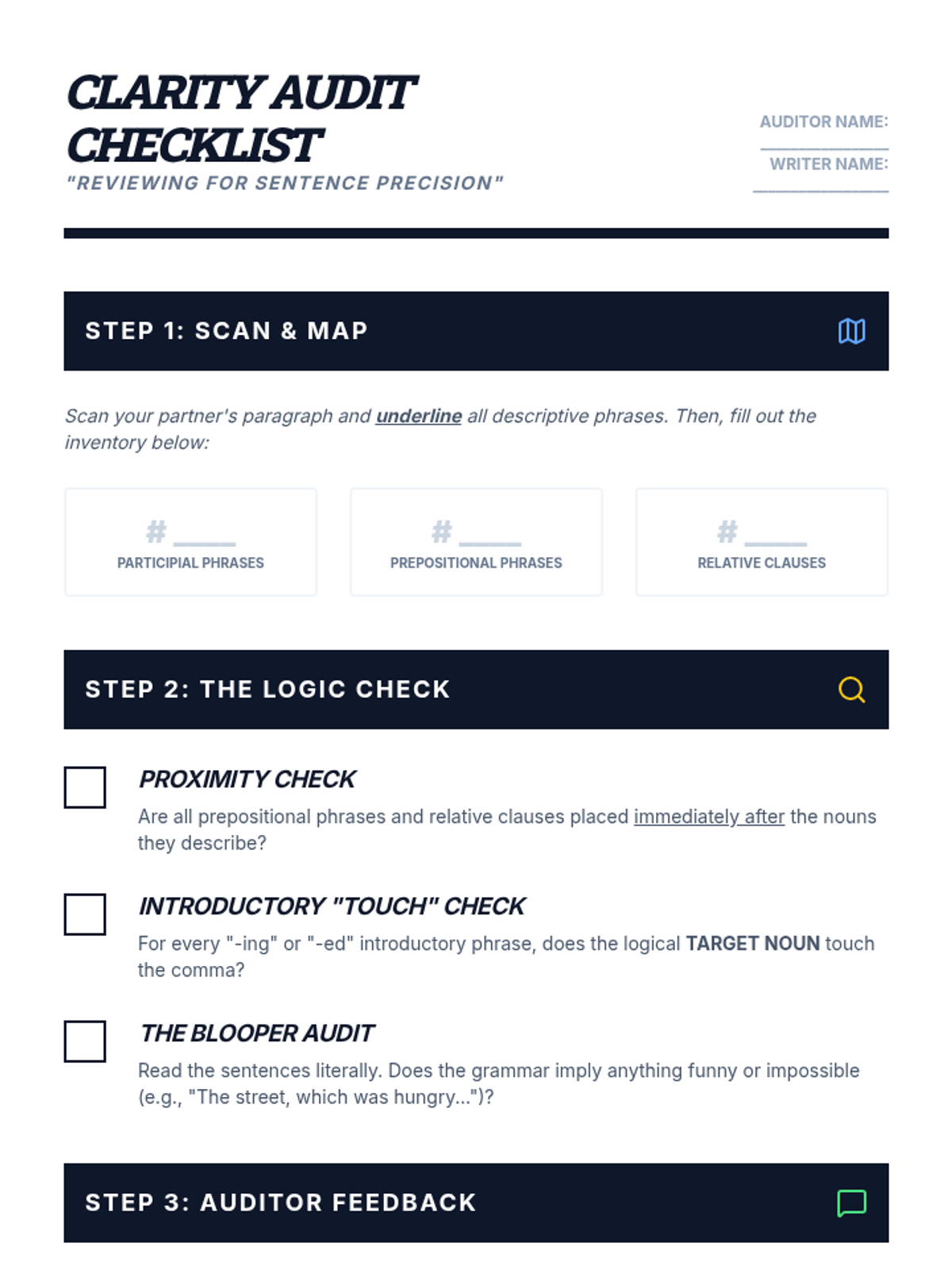
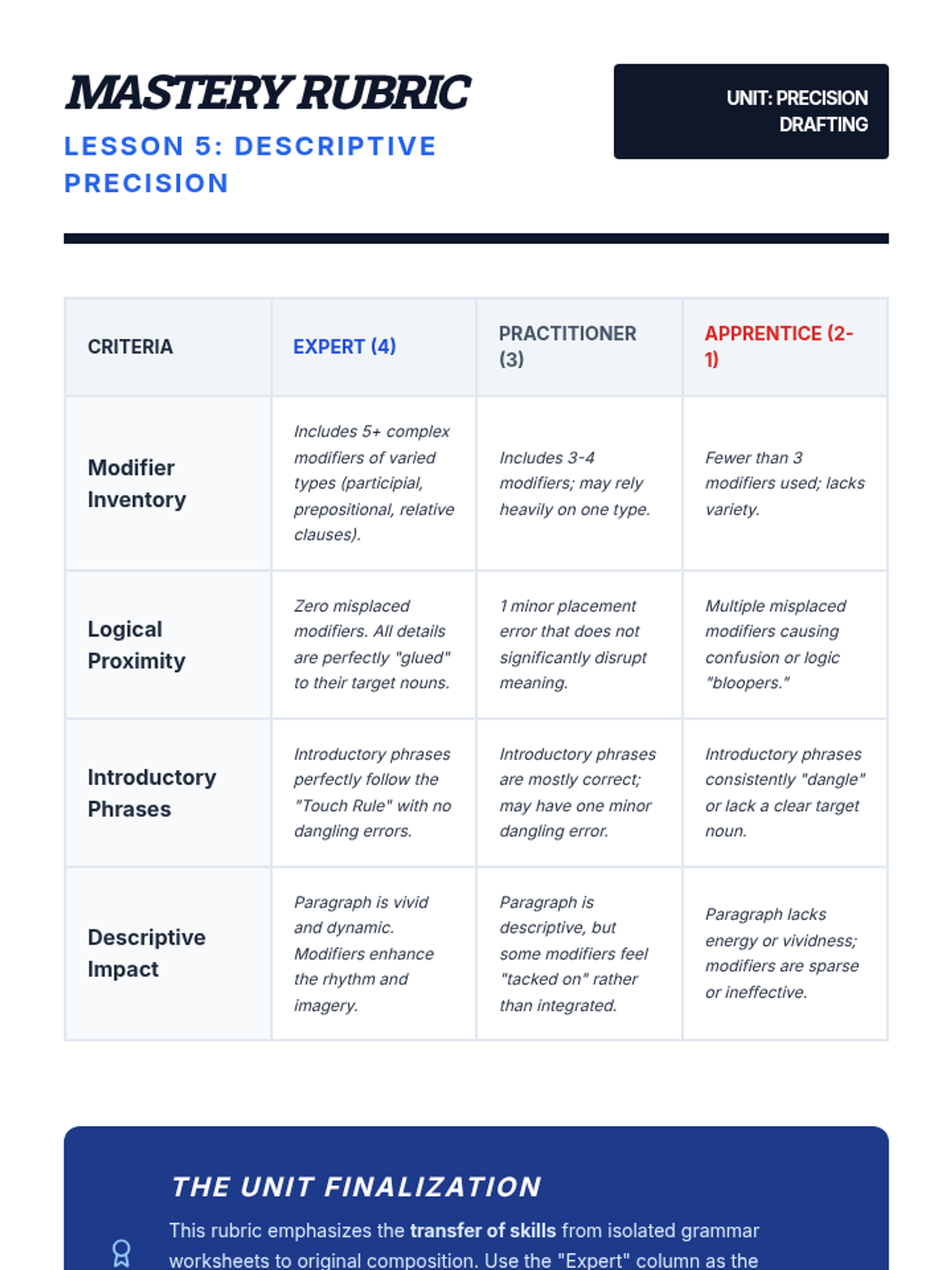
Students write a descriptive paragraph about a dynamic scene (e.g., a sports event or busy market) requiring at least five complex modifiers. They then swap papers for a 'clarity audit' where peers check if the modifiers are placed logically. This ensures transfer of grammar skills to original composition.
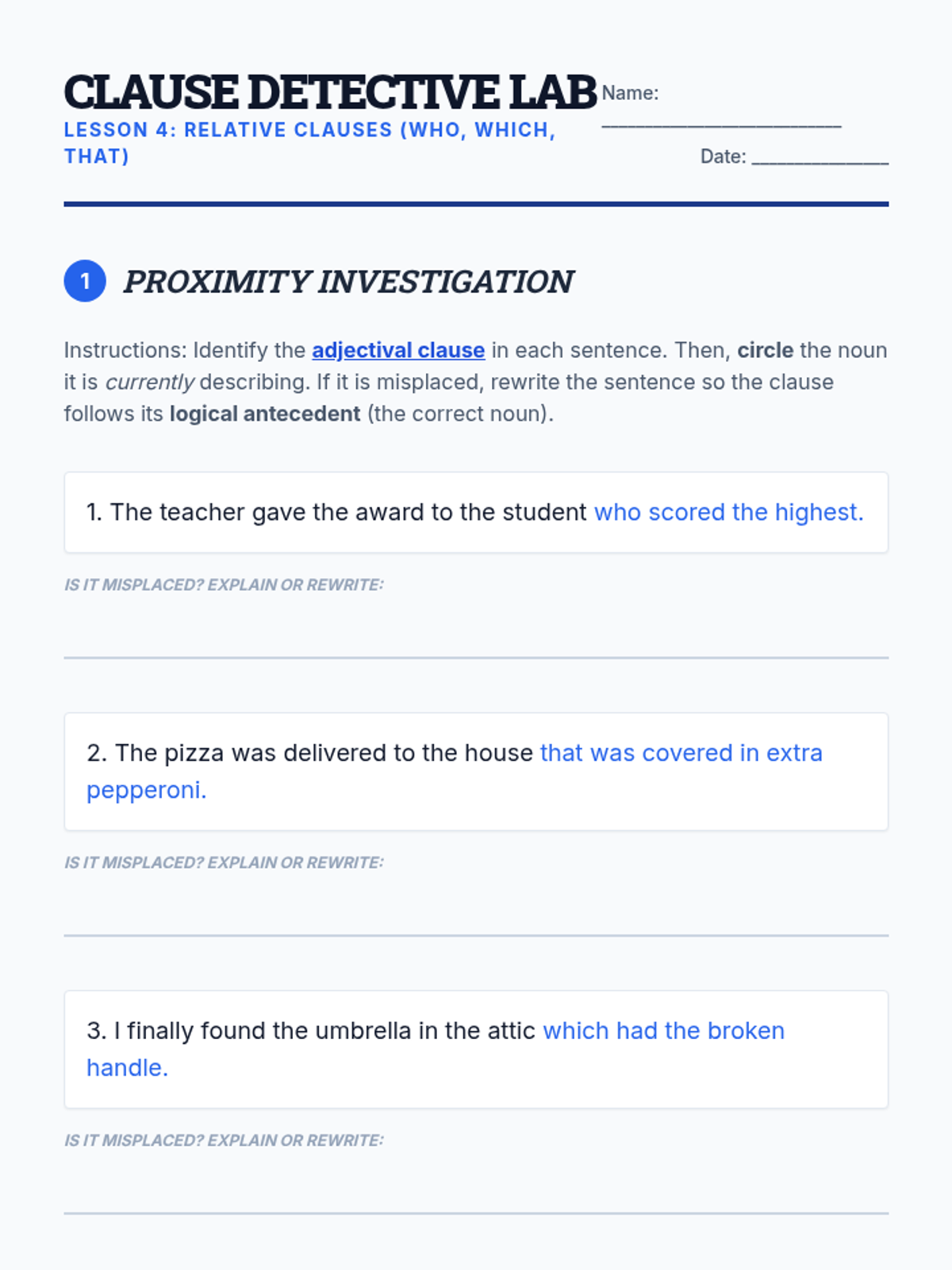
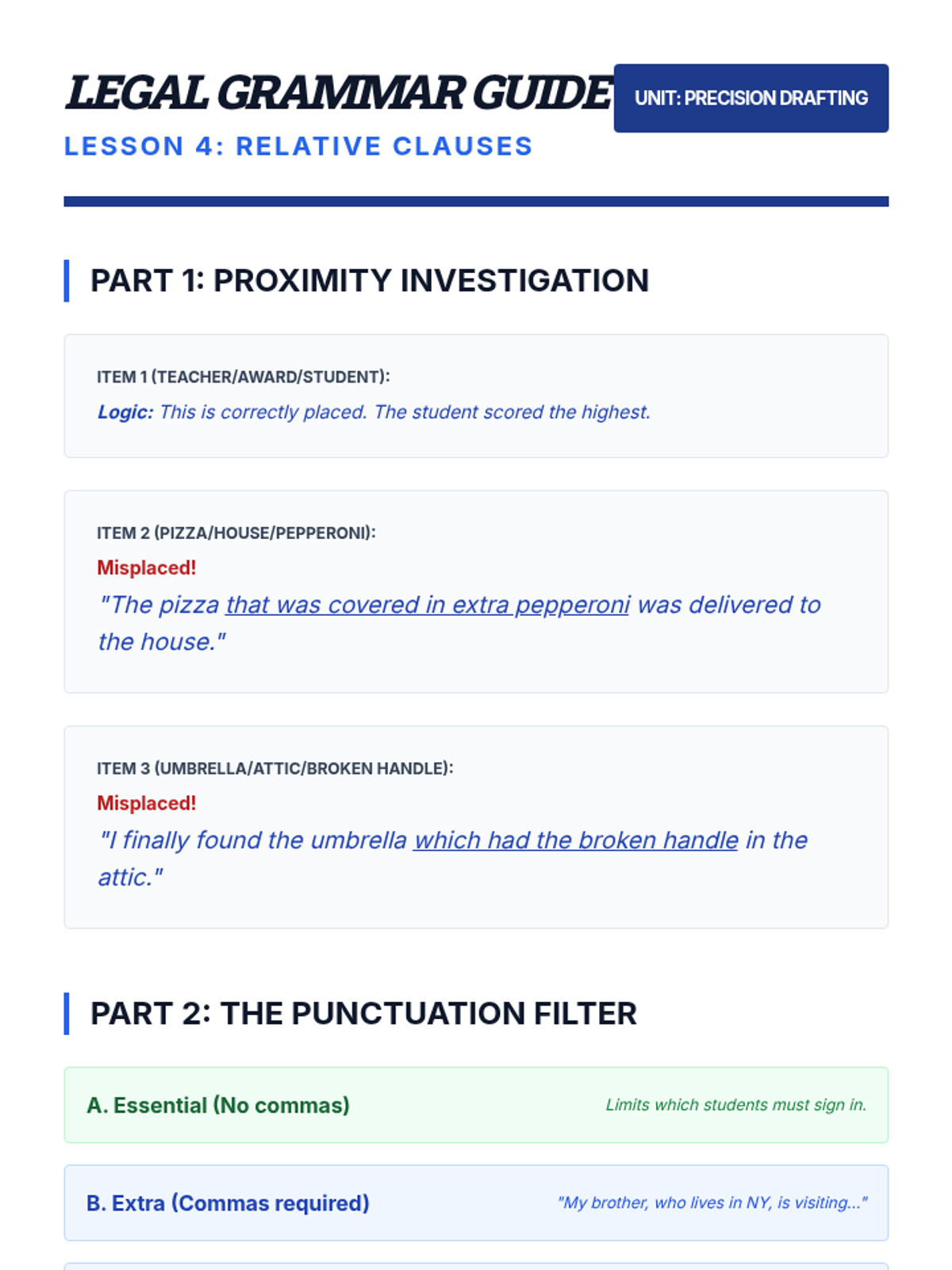
Students investigate misplaced adjectival clauses starting with 'who,' 'which,' or 'that.' They practice moving these clauses directly after their antecedents. The lesson differentiates between essential and non-essential clauses and how their placement affects the sentence's truth.
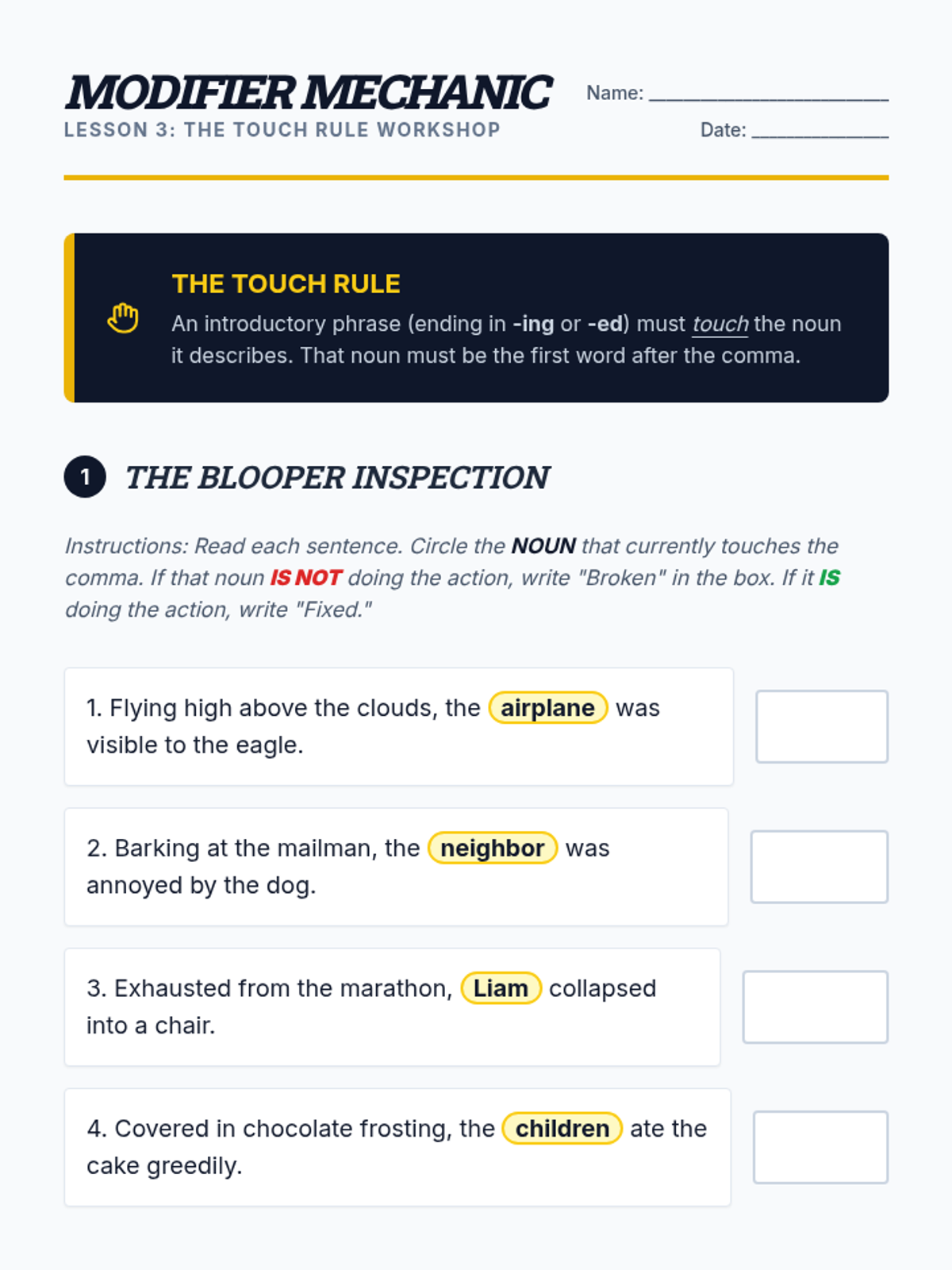
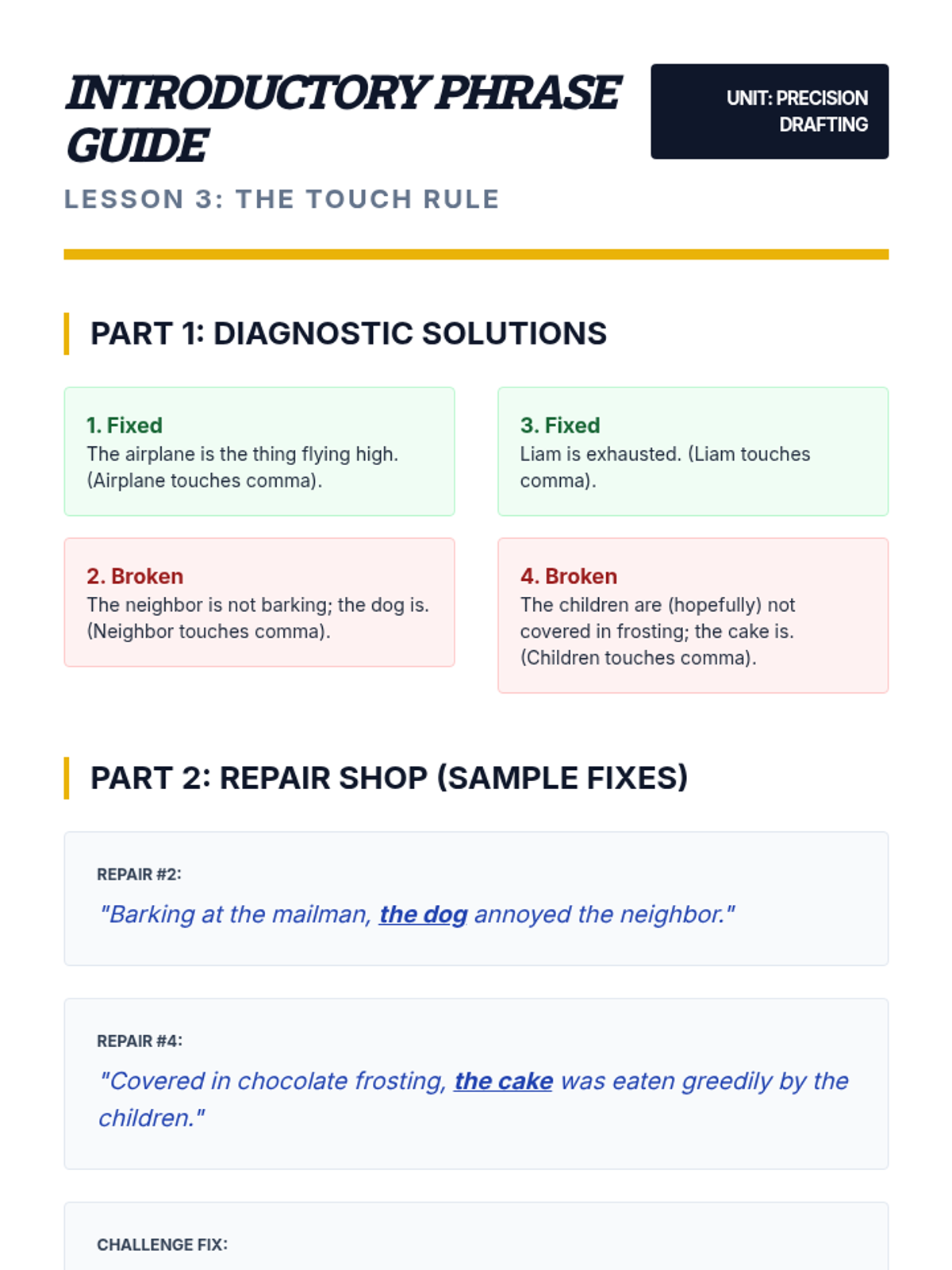
This lesson tackles the complex mechanics of introductory participial phrases (e.g., 'Running fast,...'). Students learn the 'Touch Rule'—that the modifier must figuratively touch the noun it describes. They analyze student writing samples to find and fix errors where the modifier touches the wrong noun.
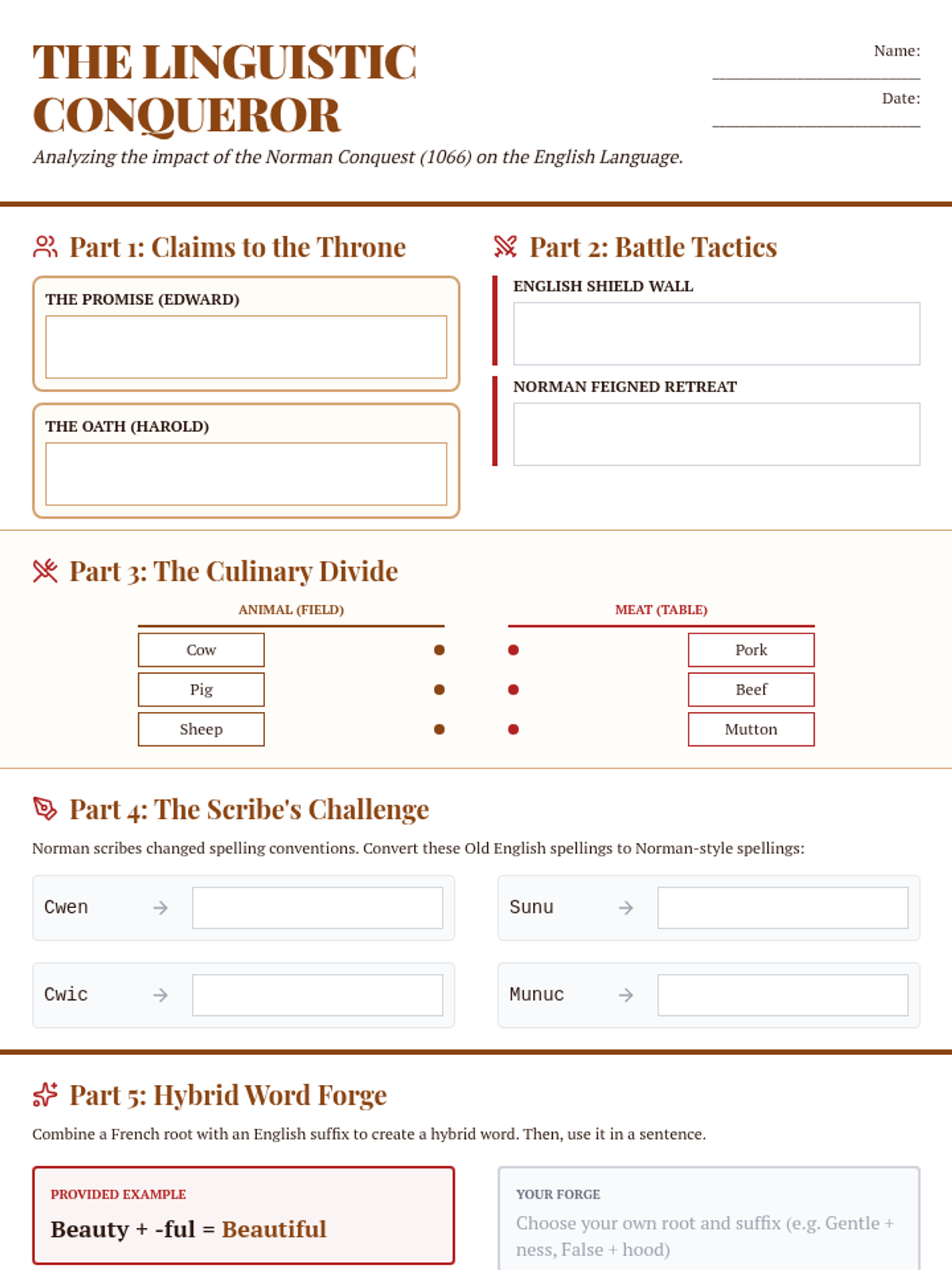
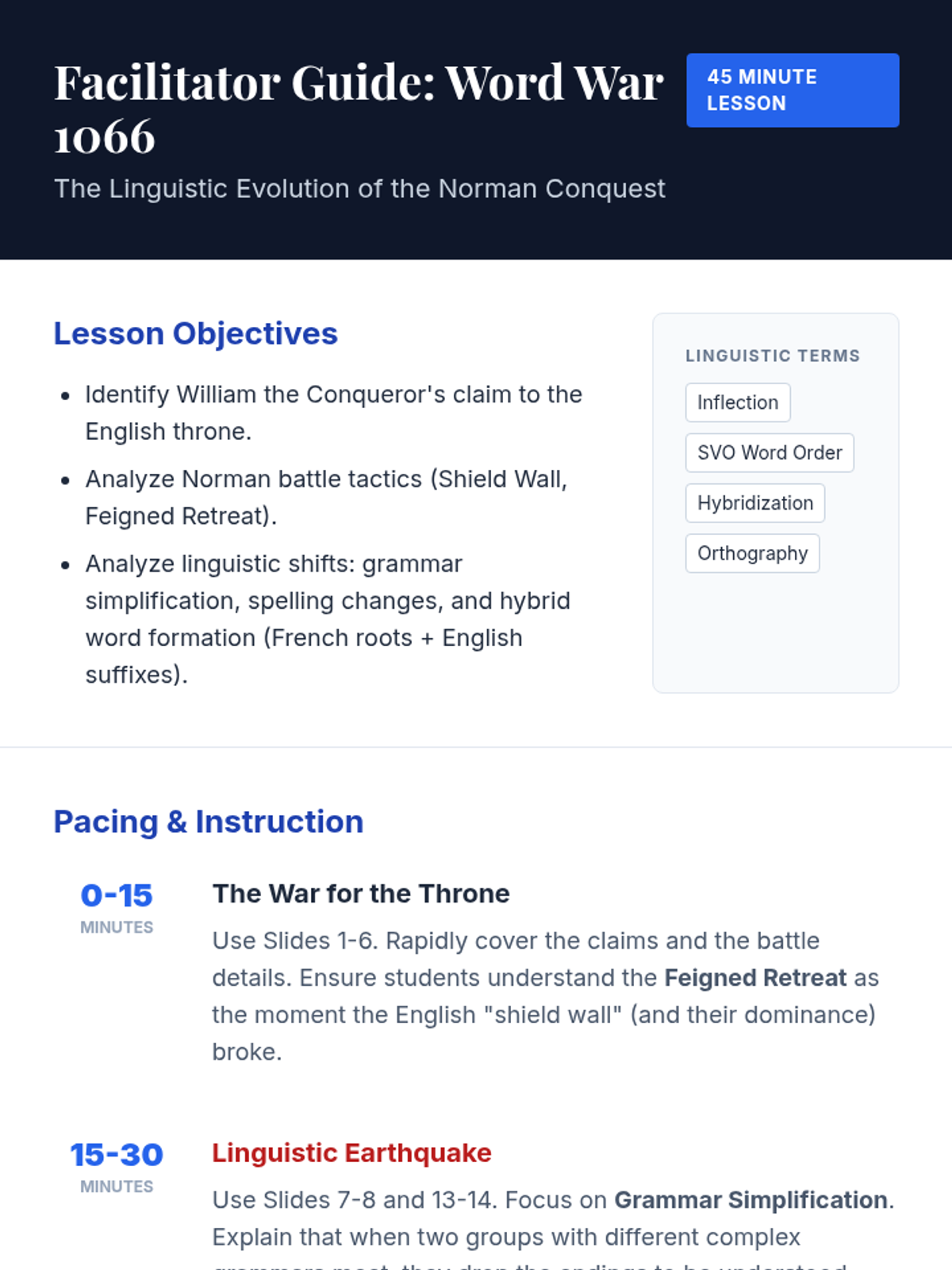
A lesson exploring the Battle of Hastings and its profound impact on the English language, tracing how the Norman Conquest introduced French vocabulary and transformed Old English into the ancestor of modern English.
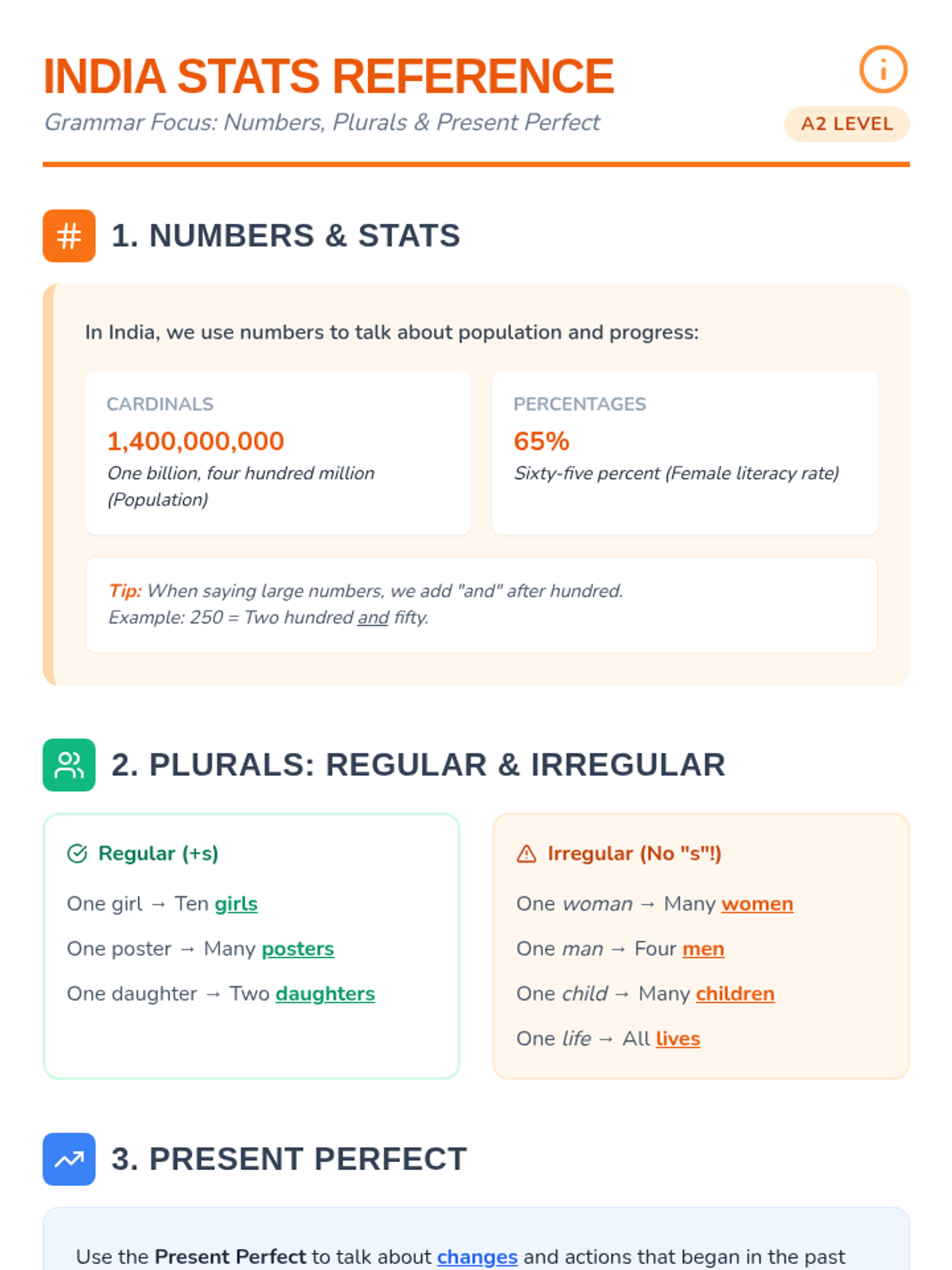
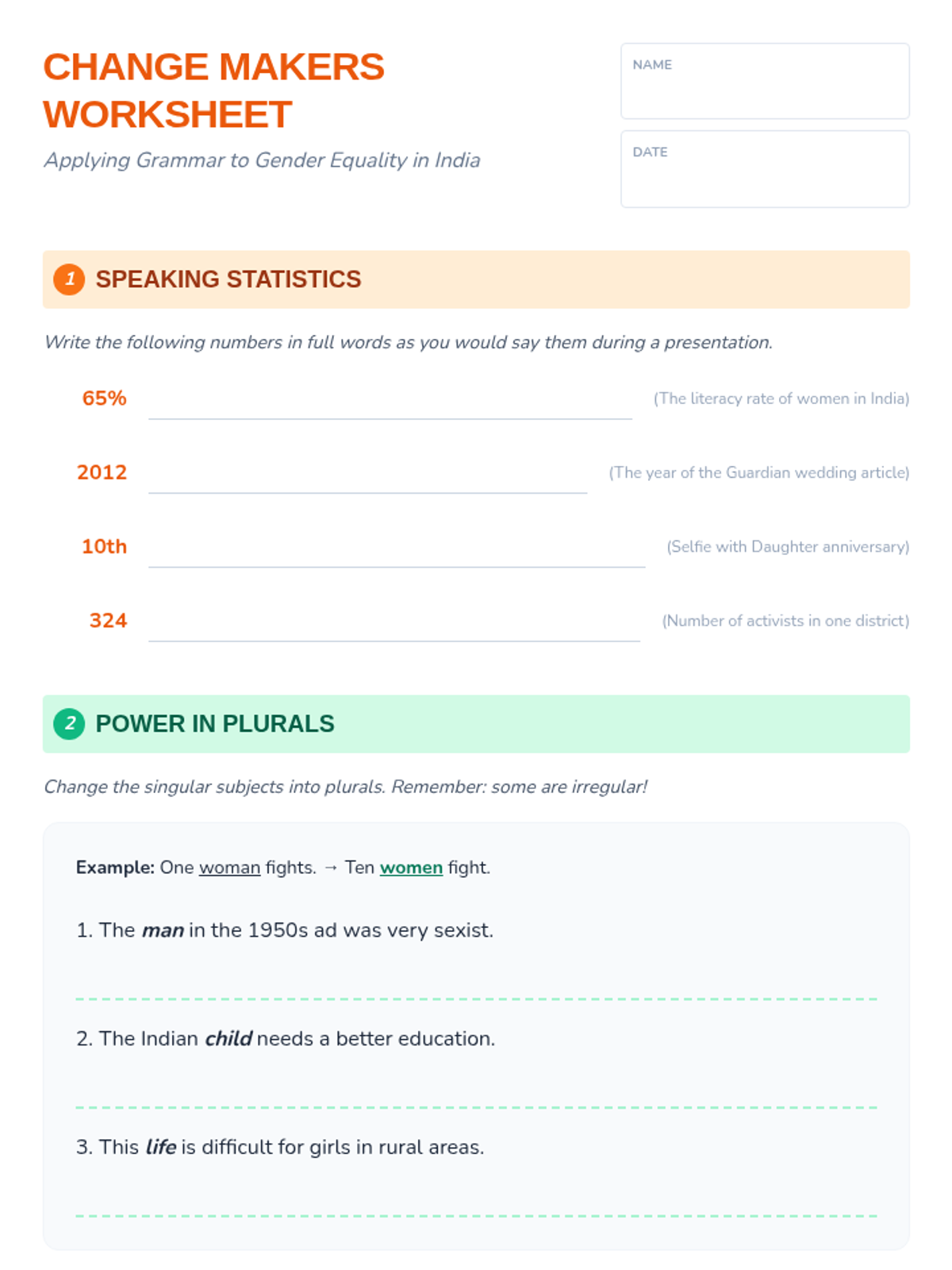
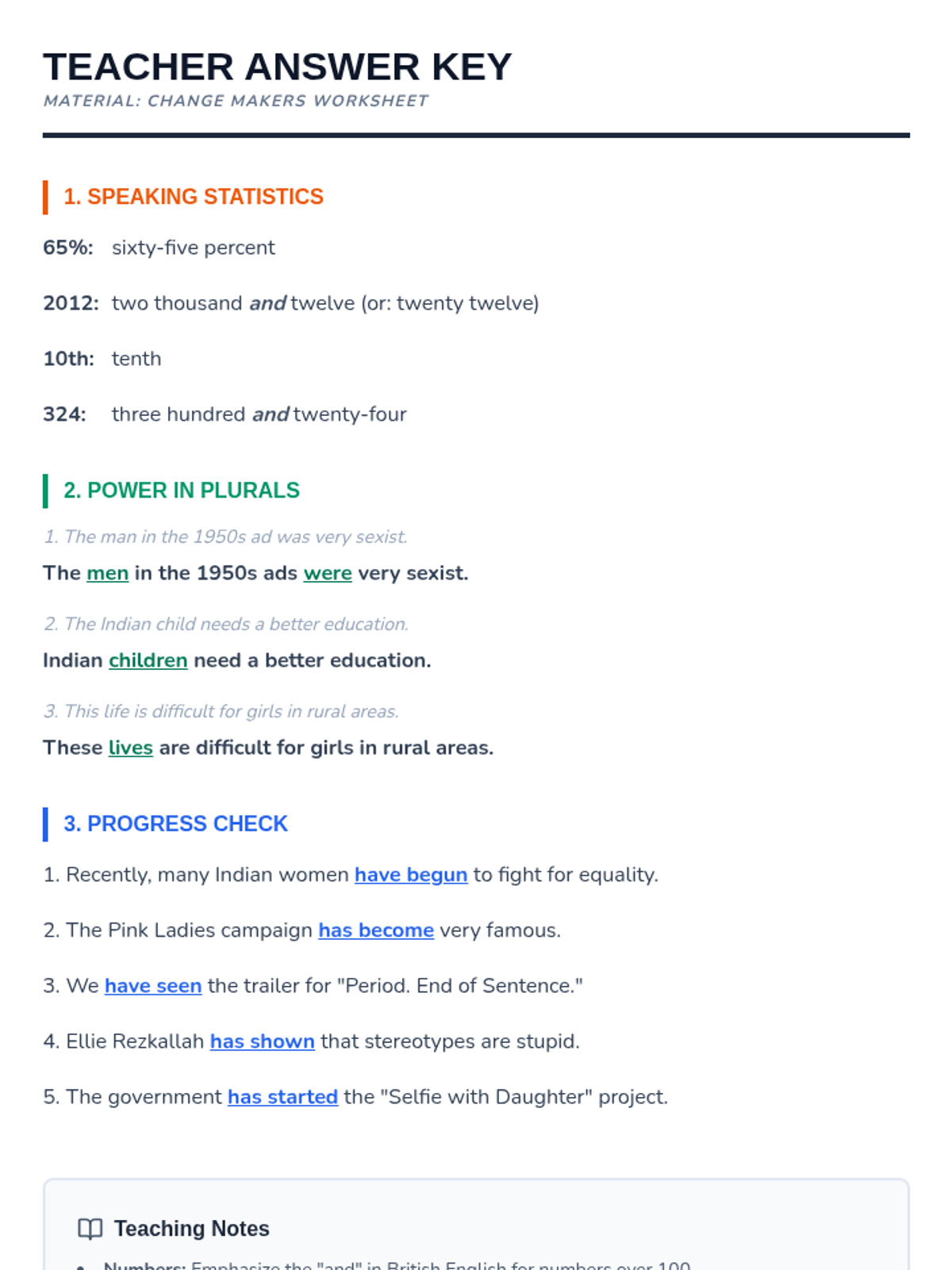
A grammar-focused lesson revising numbers, plural nouns, and the present perfect within the context of gender equality in India.
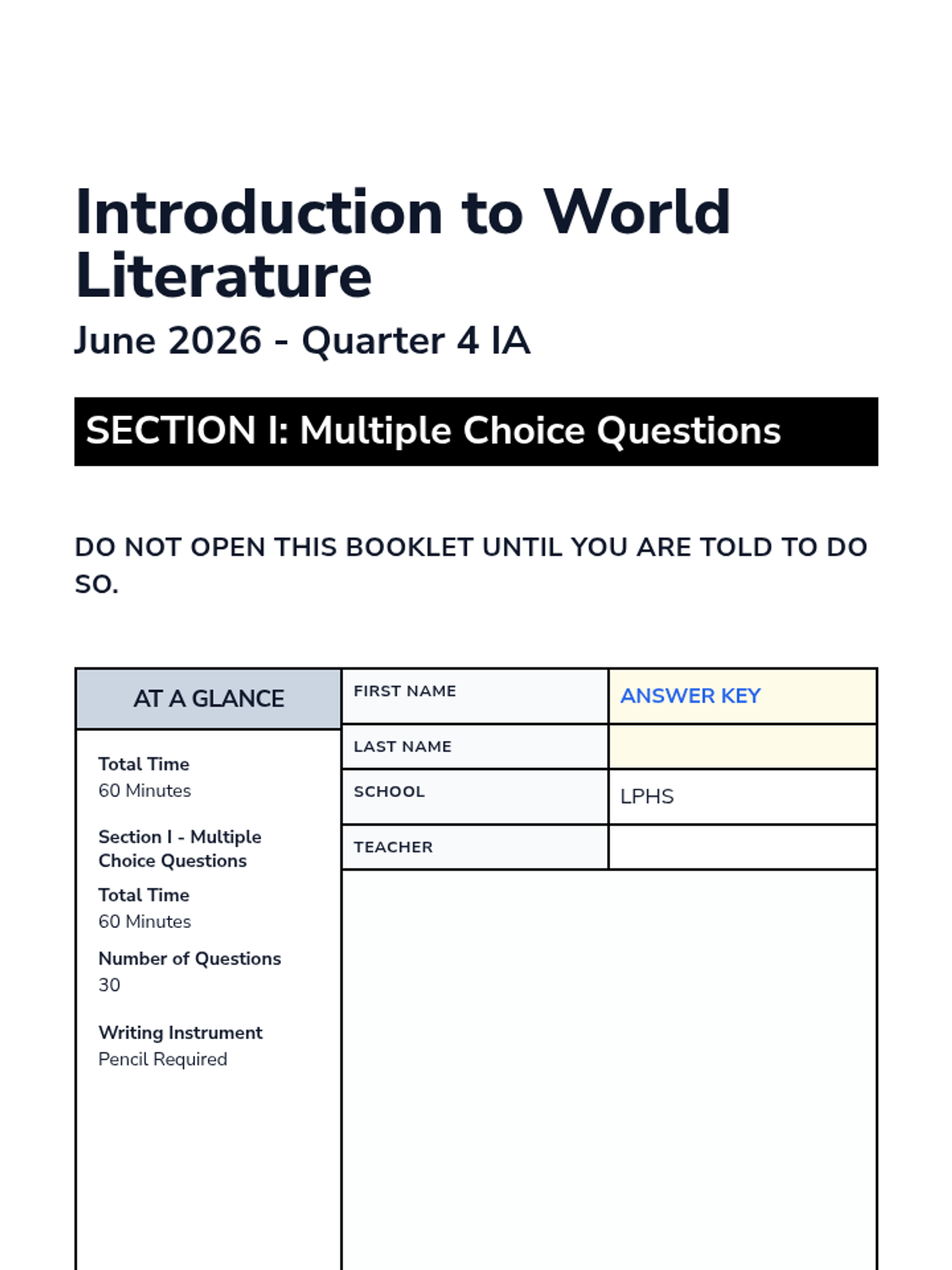
An answer key for the June 2024 Quarter 4 Internal Assessment for World Literature, covering reading comprehension, grammar, vocabulary, and transitions.
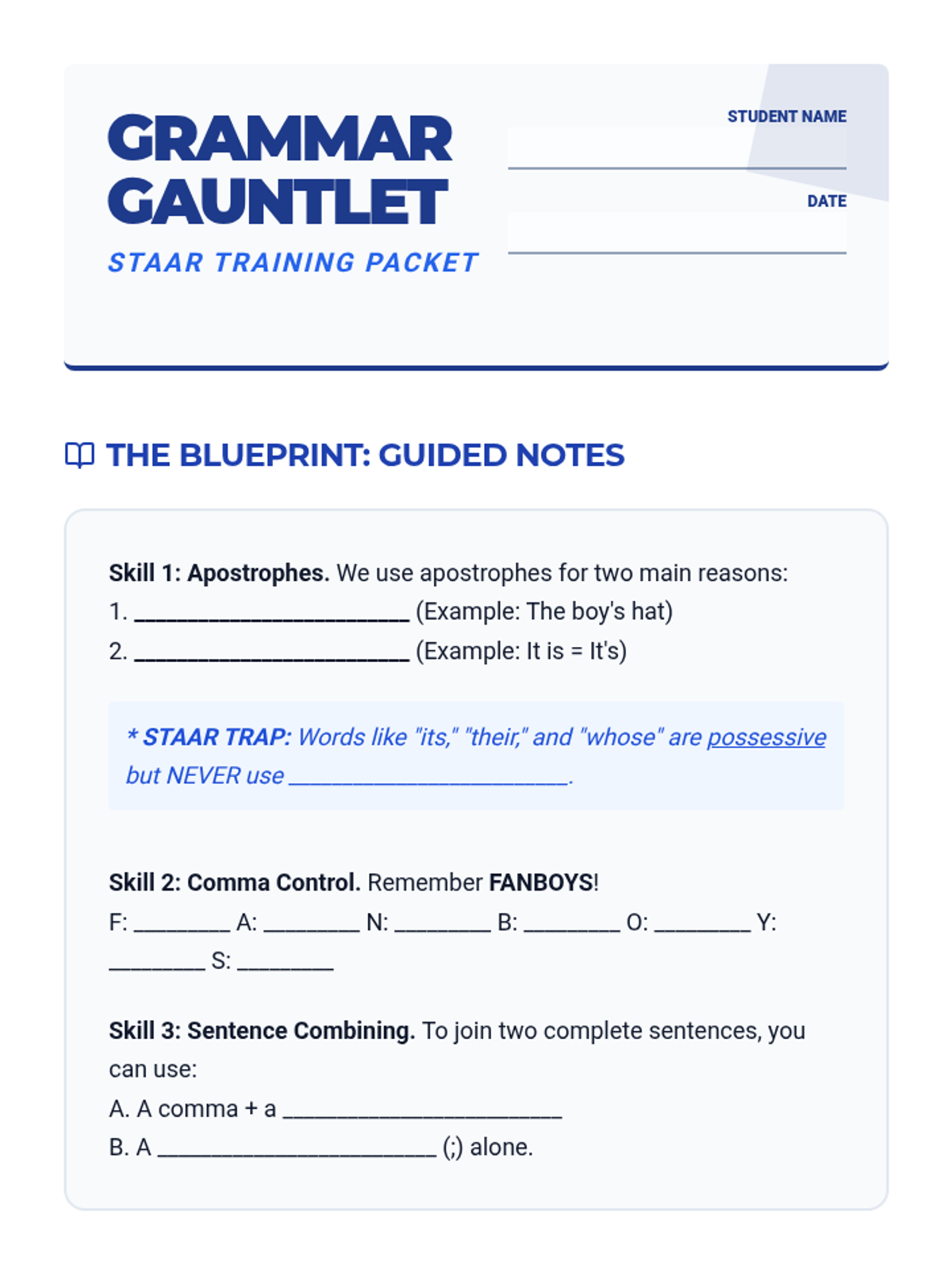
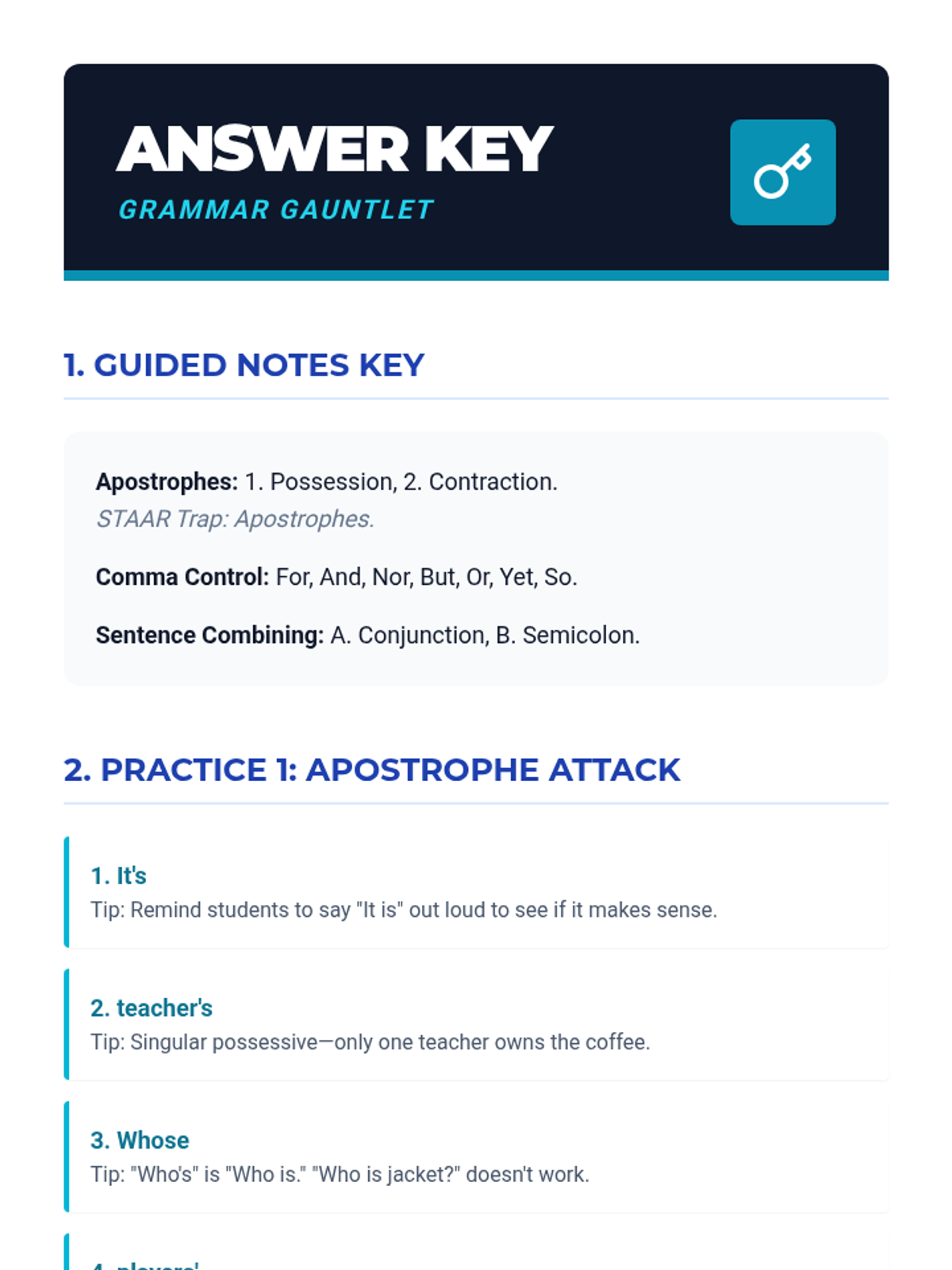
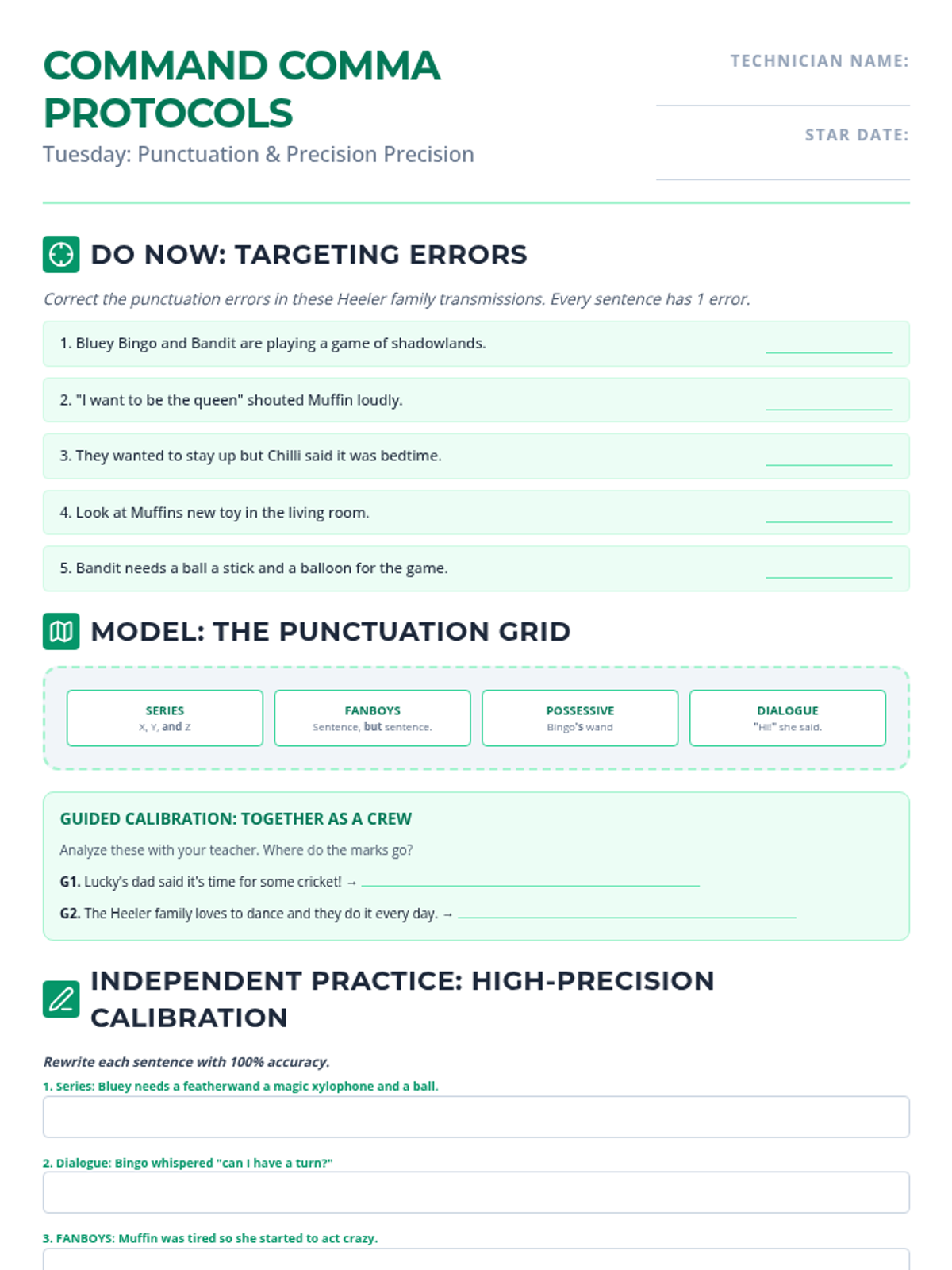
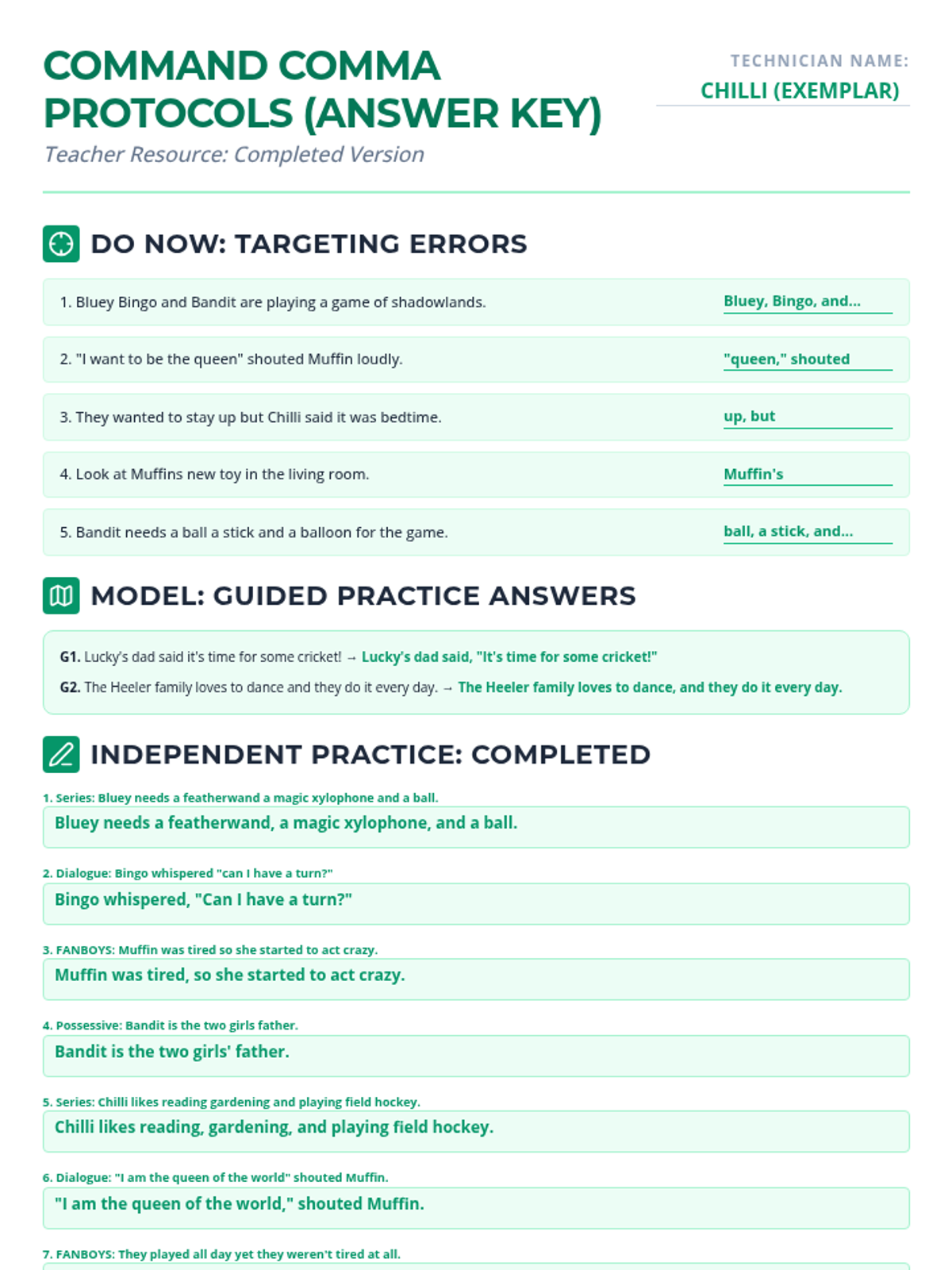
A high-impact tutoring session focused on STAAR writing skills, specifically targeting apostrophes, comma rules, and sentence combining through direct instruction and intensive practice.
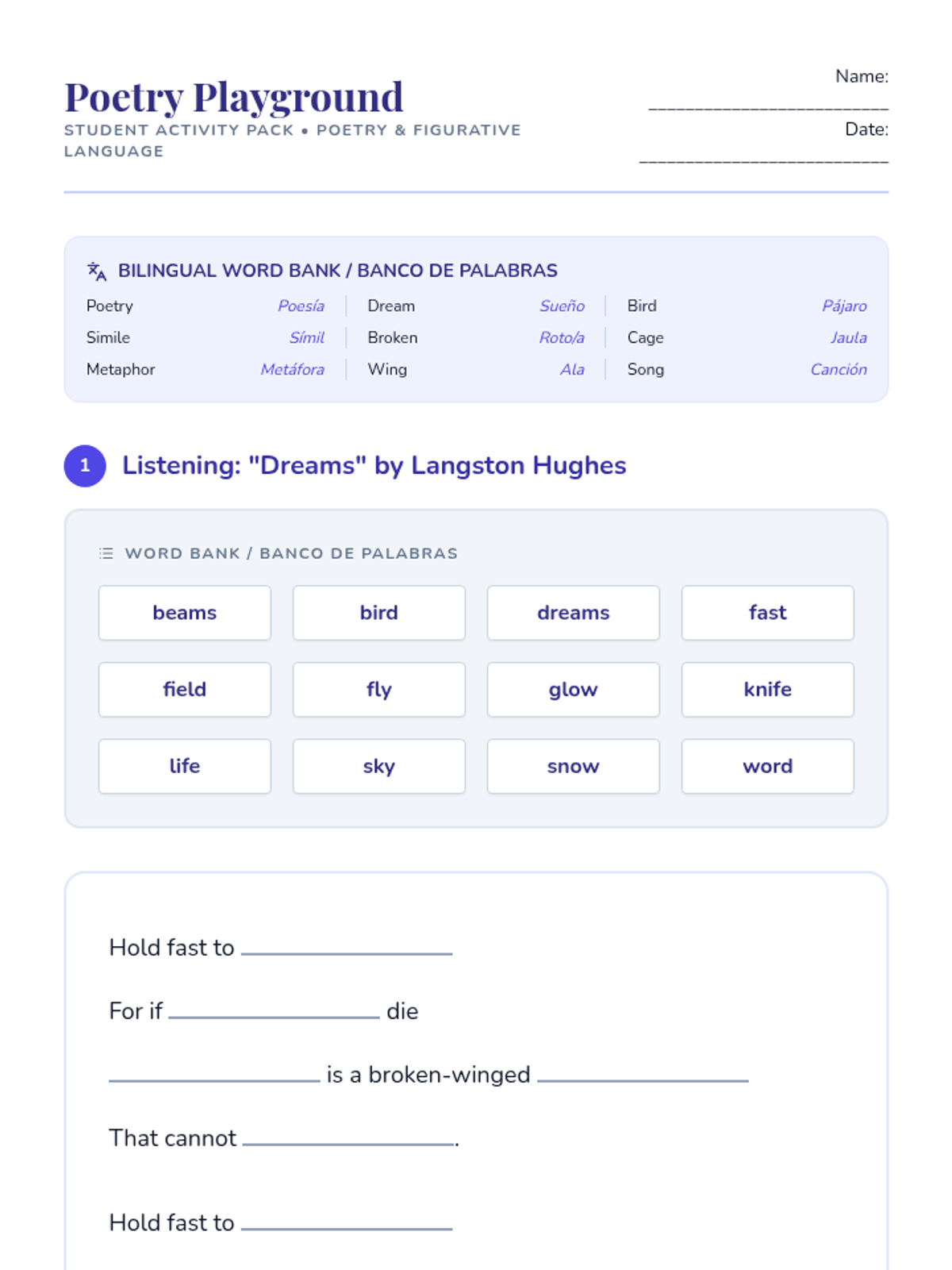
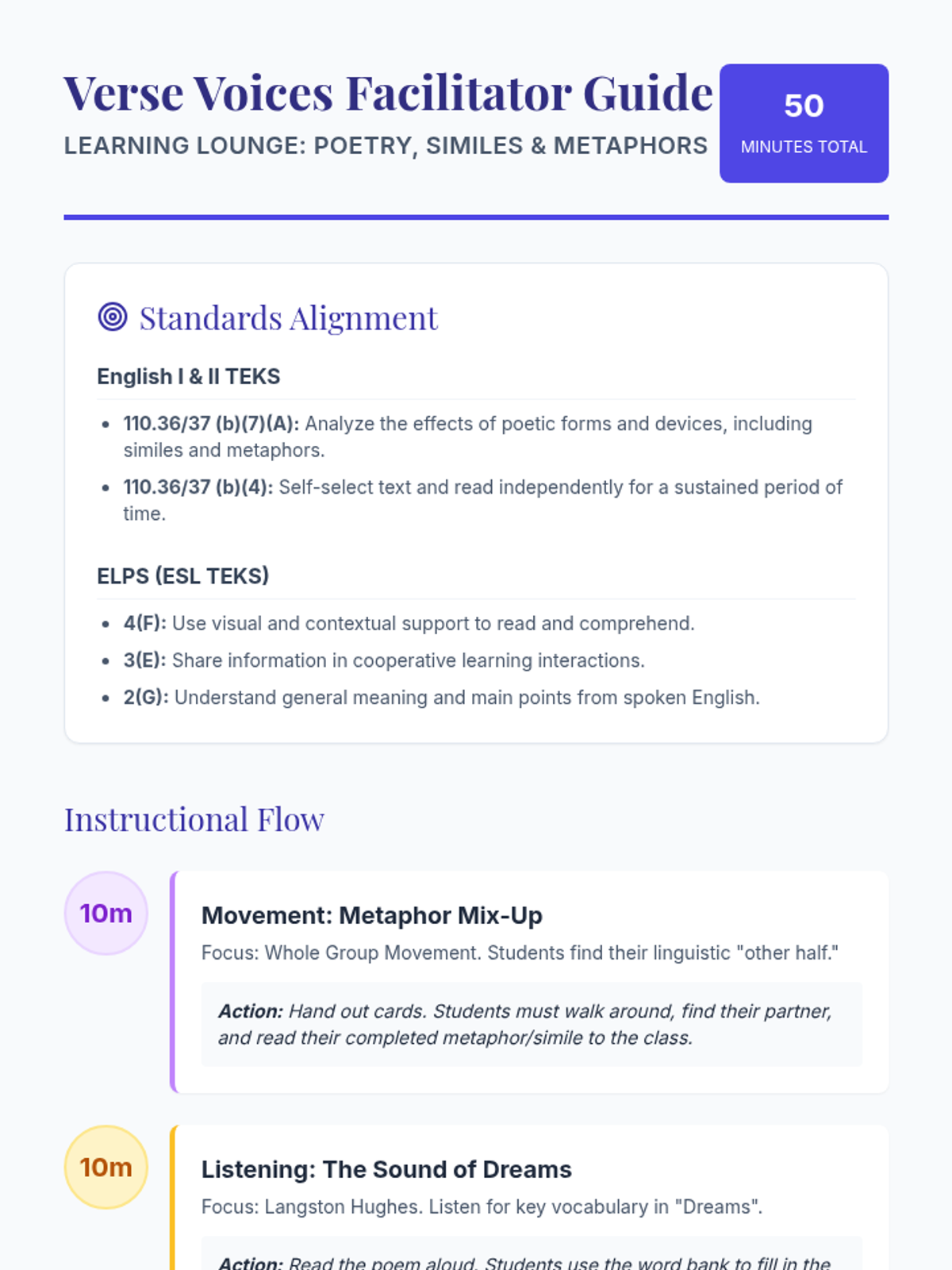
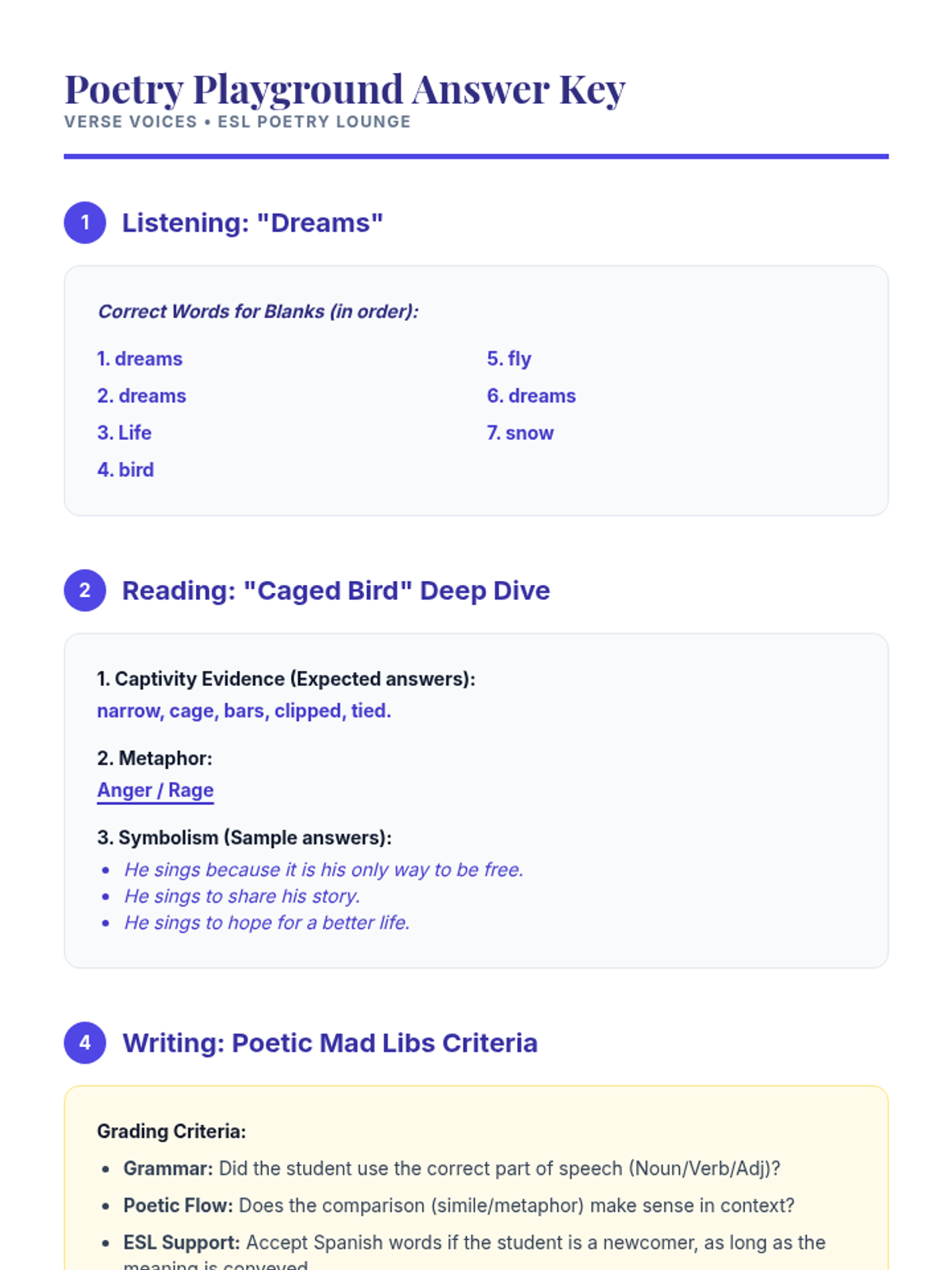
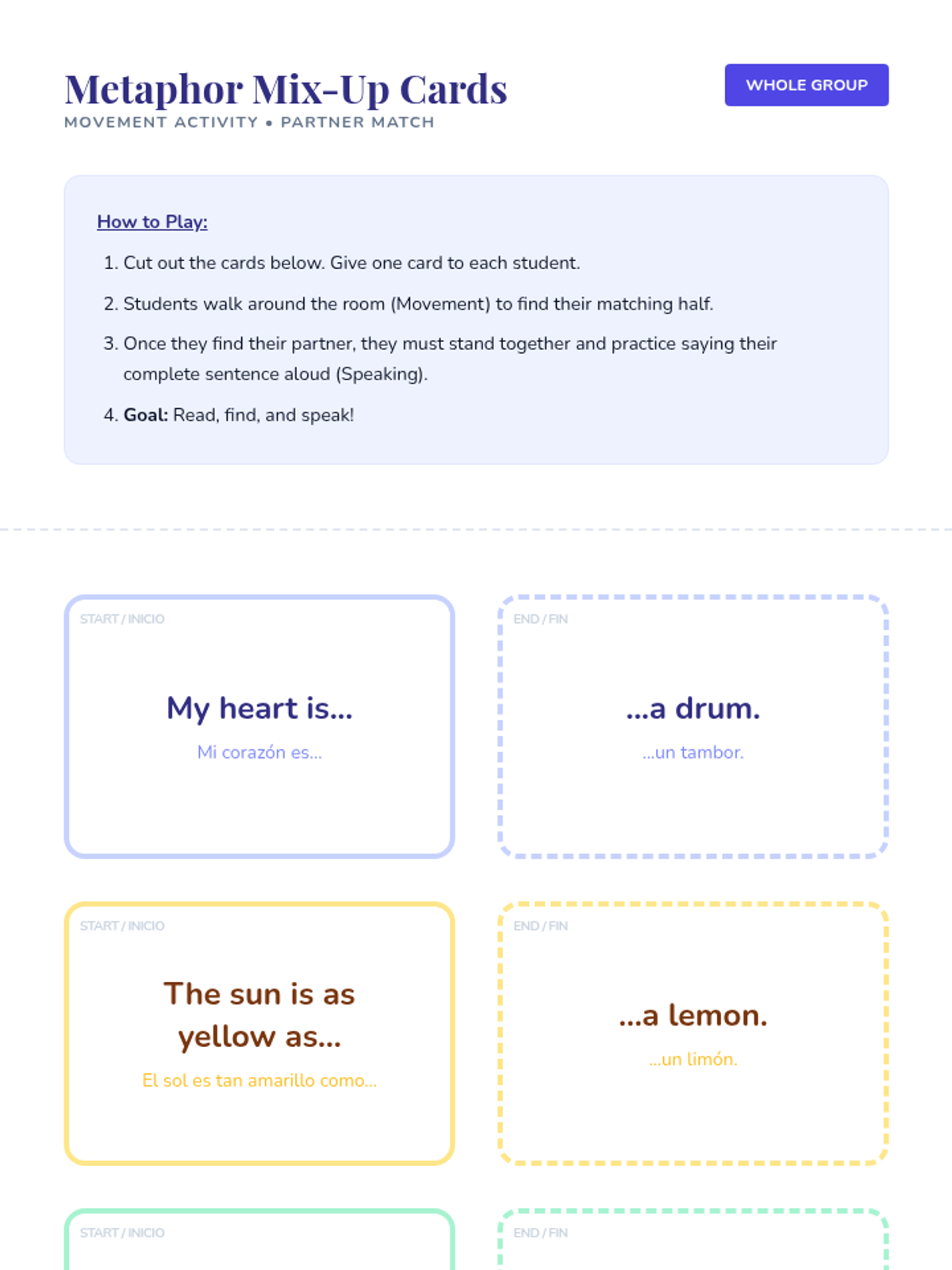
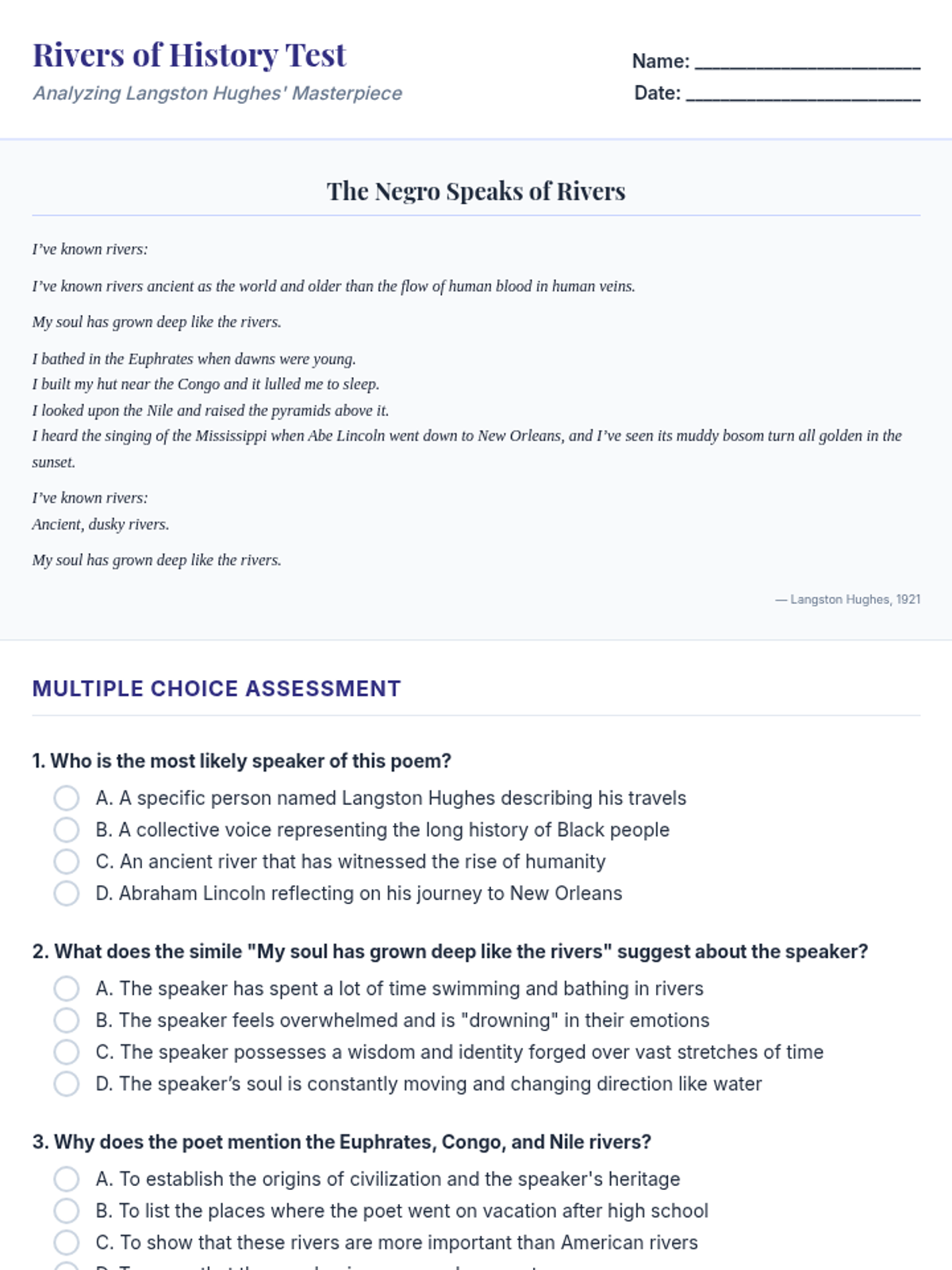
A comprehensive ESL-focused lesson exploring poetry through the works of Langston Hughes, Maya Angelou, Pablo Neruda, and Sandra Cisneros, with a focus on similes and metaphors across four 10-minute skill-based activities.
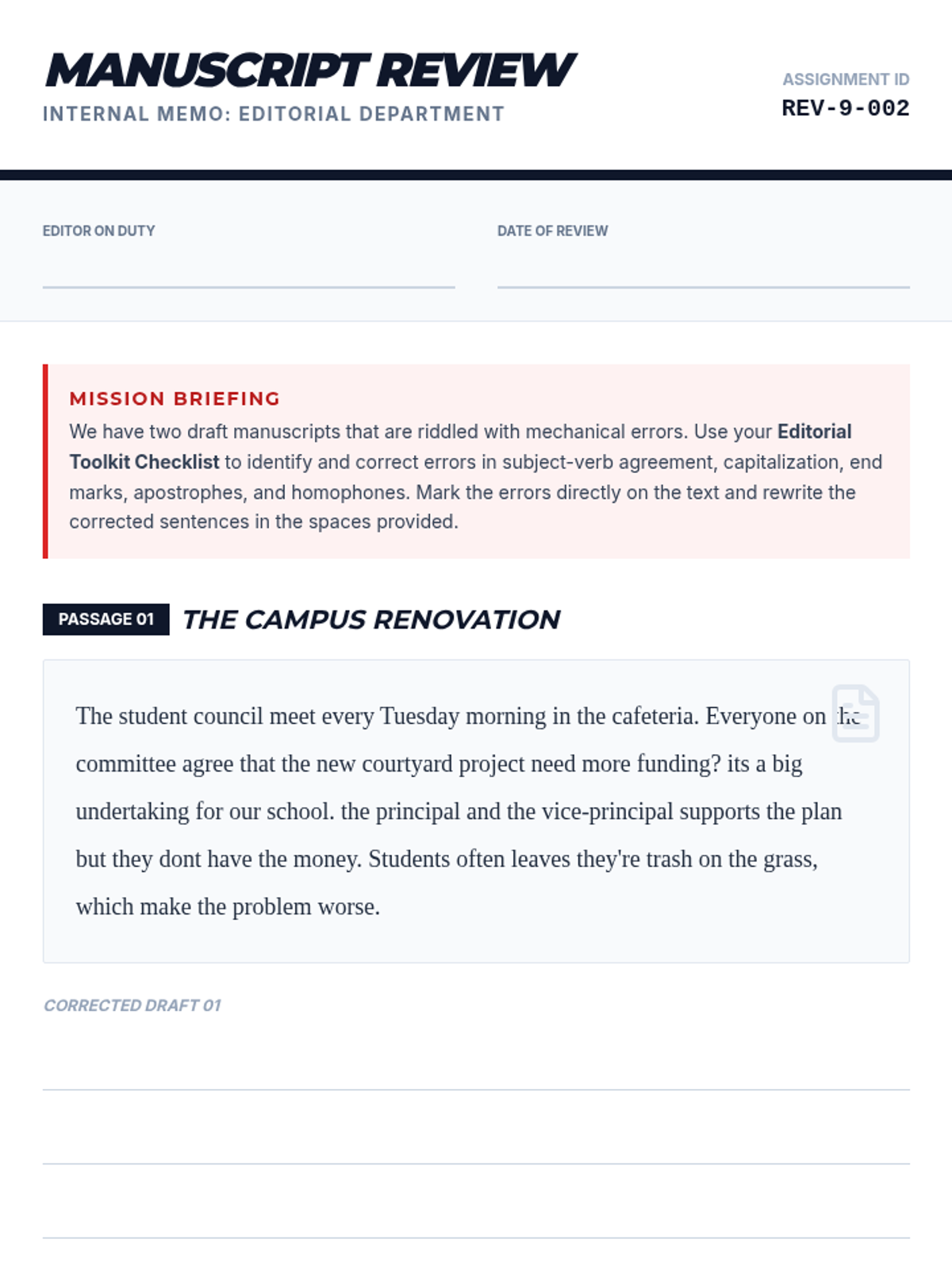
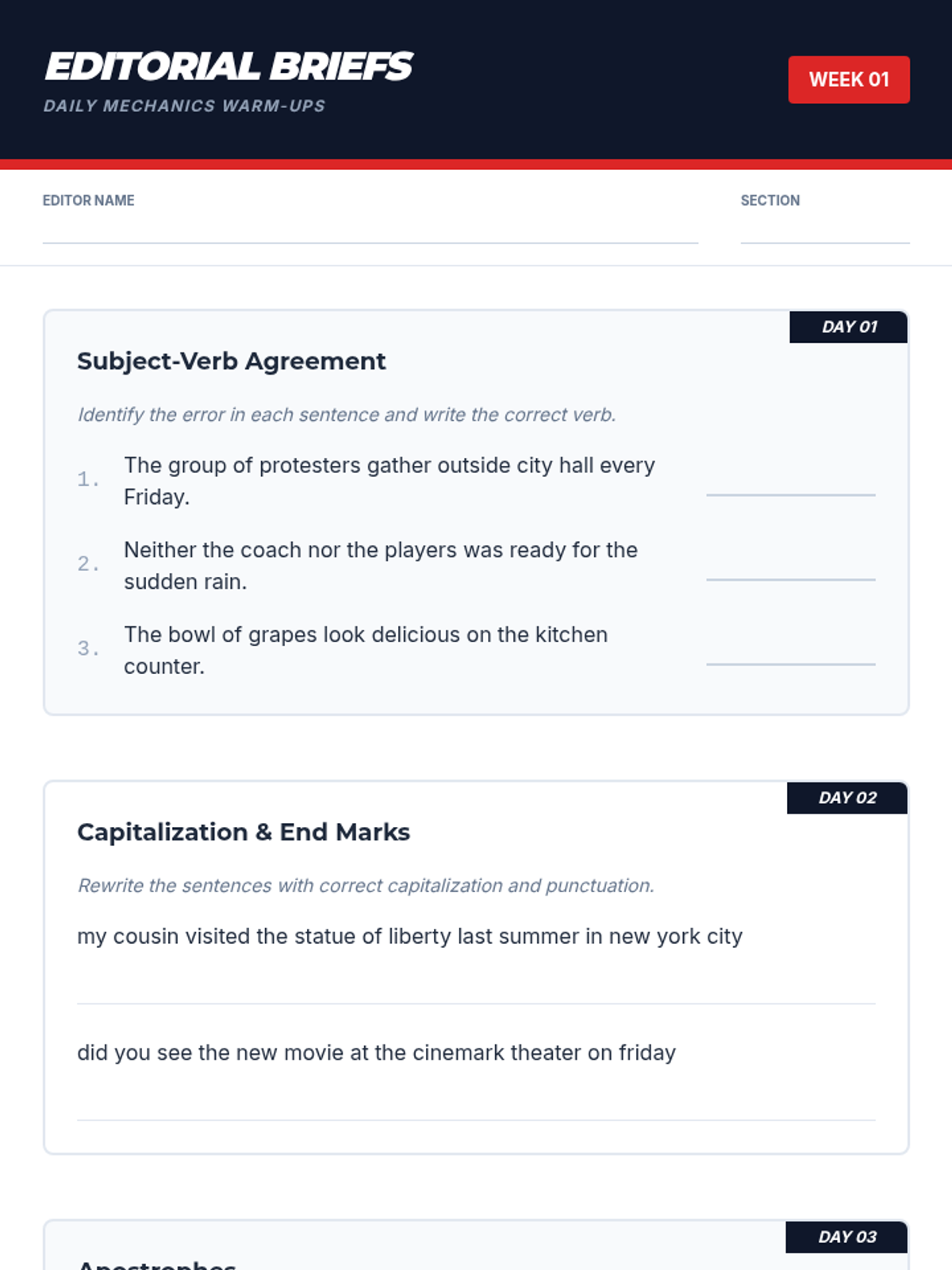
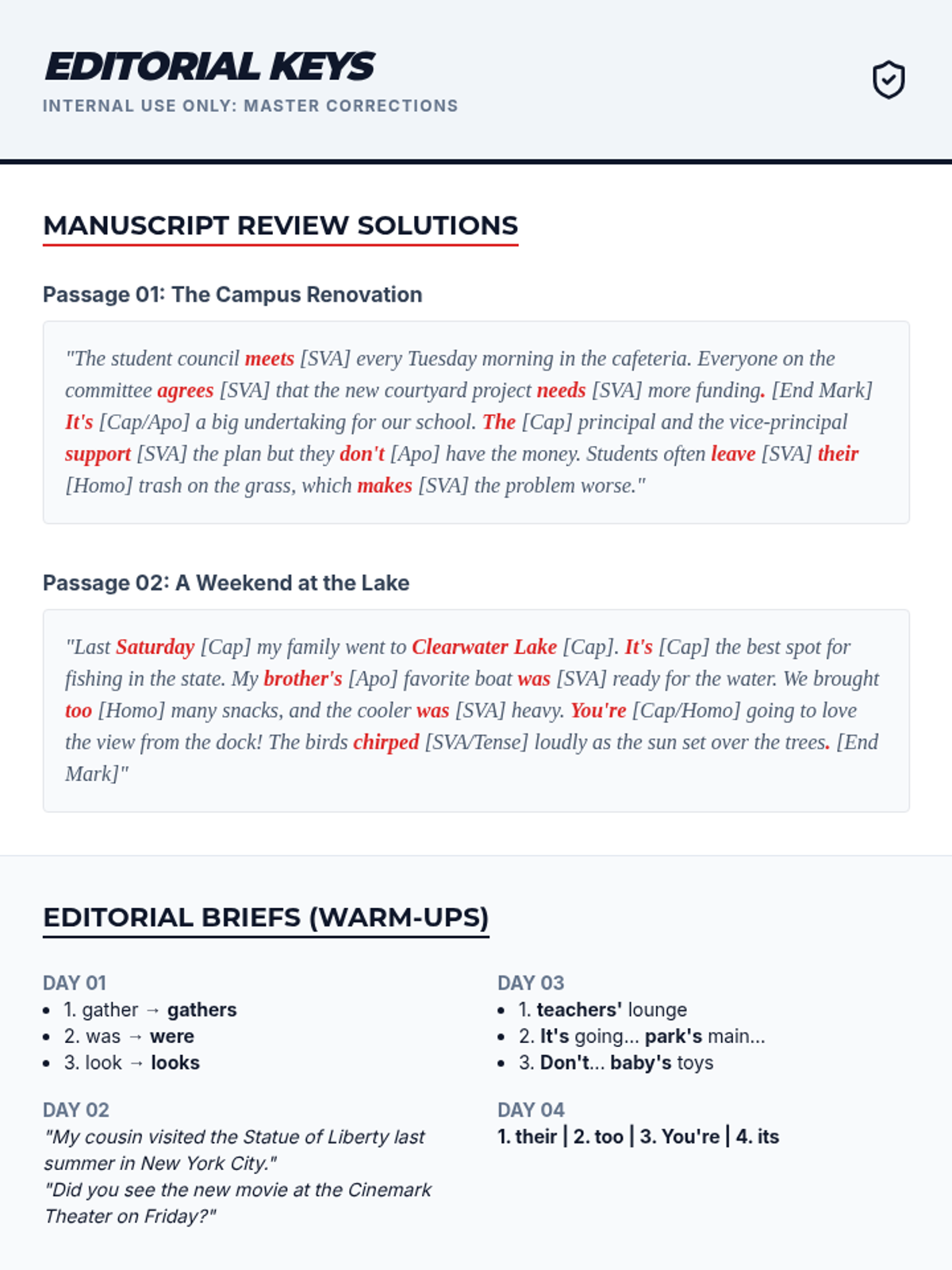
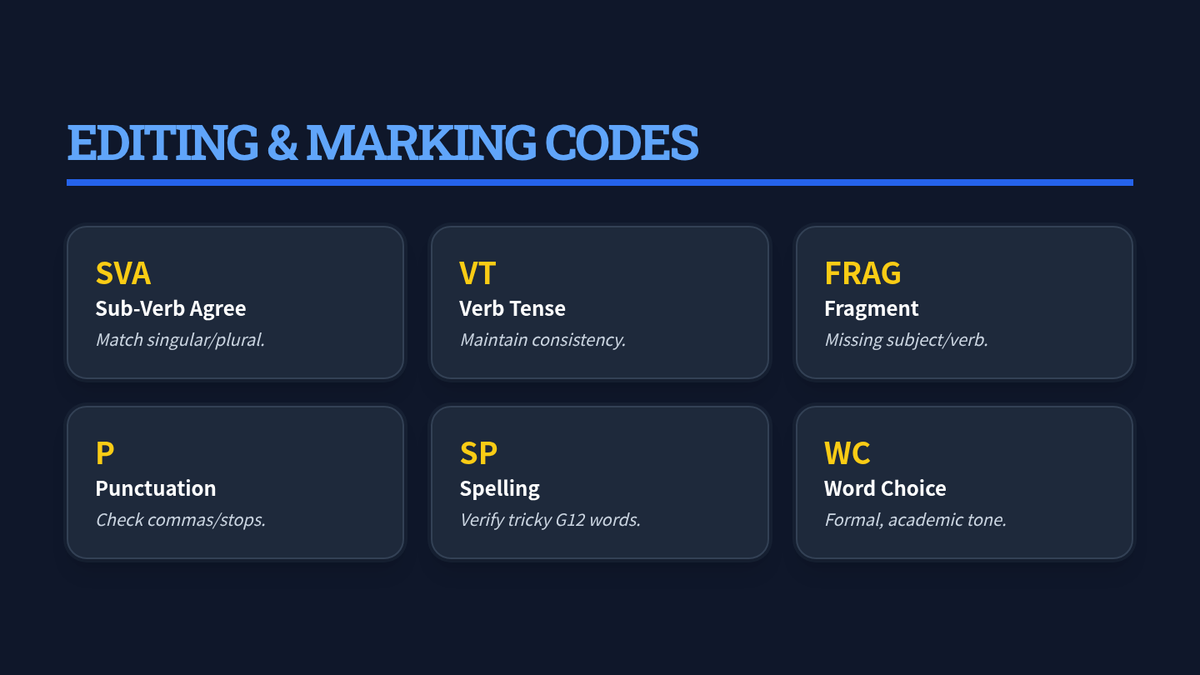
A comprehensive grammar and mechanics lesson designed for high school freshmen to master subject-verb agreement, punctuation, and word choice through professional editing simulations.
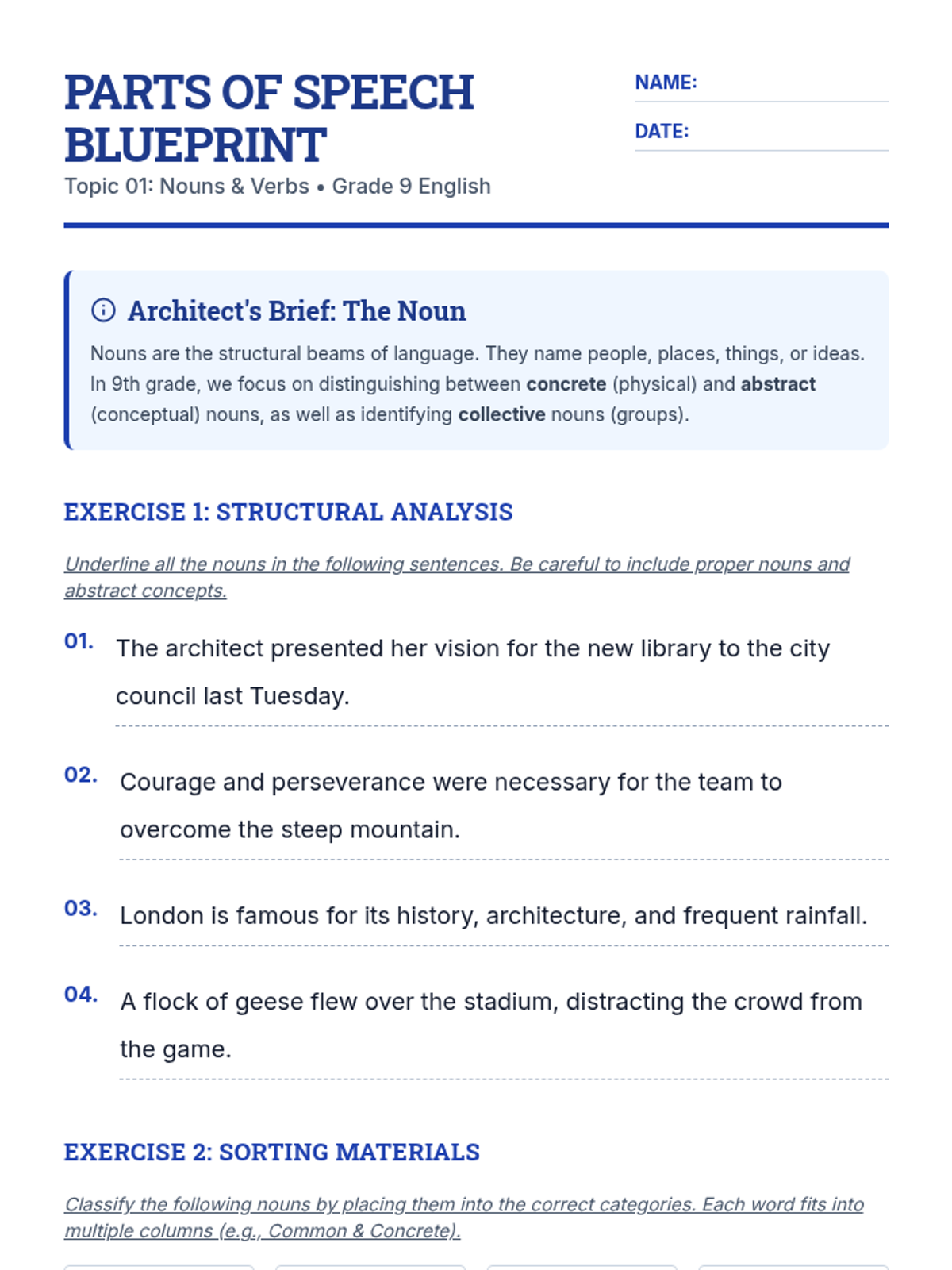
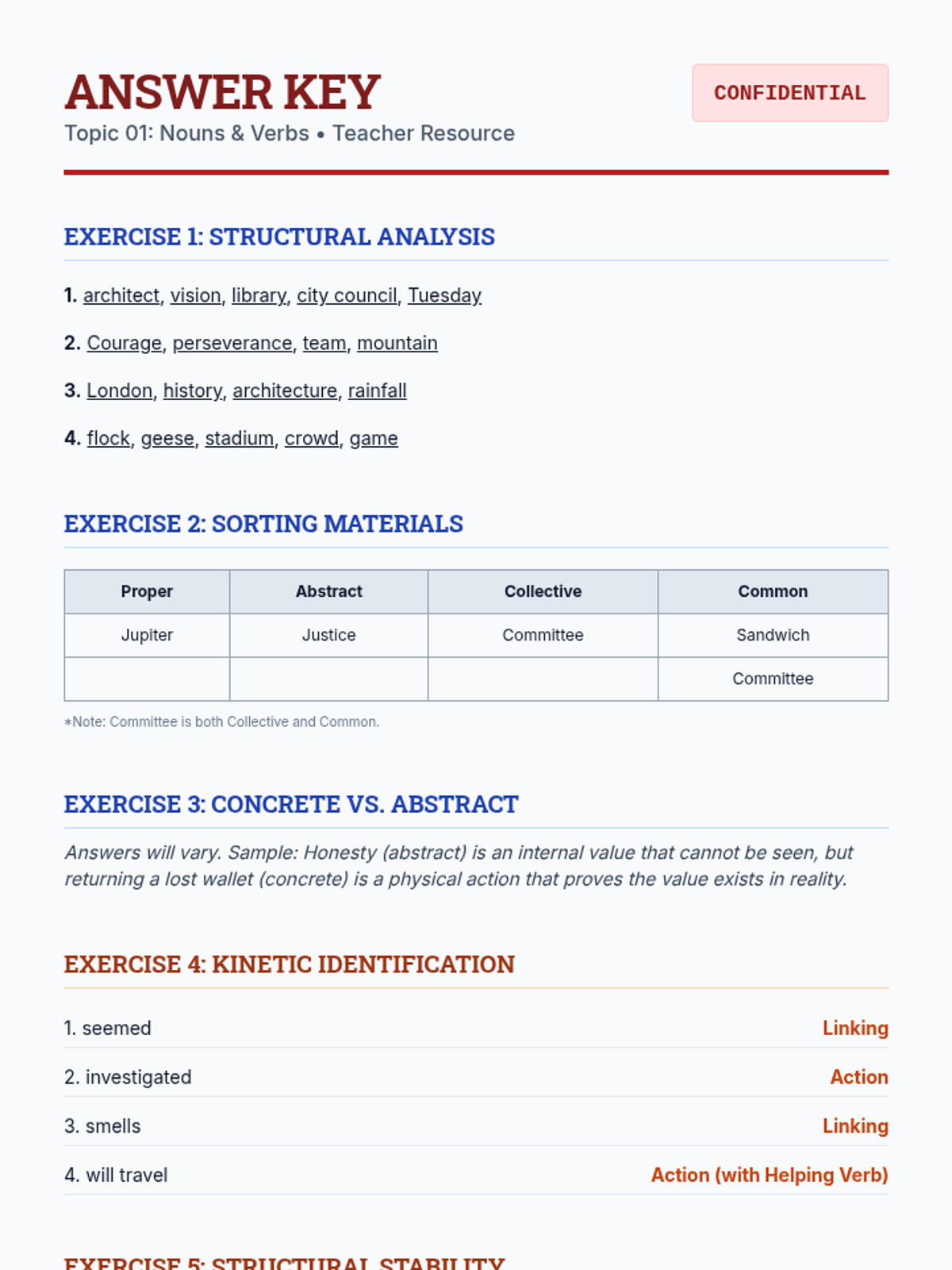
A foundational lesson for 9th-grade students focusing on the core building blocks of English grammar: nouns and verbs. Students will learn to identify, classify, and use these parts of speech effectively in their writing.
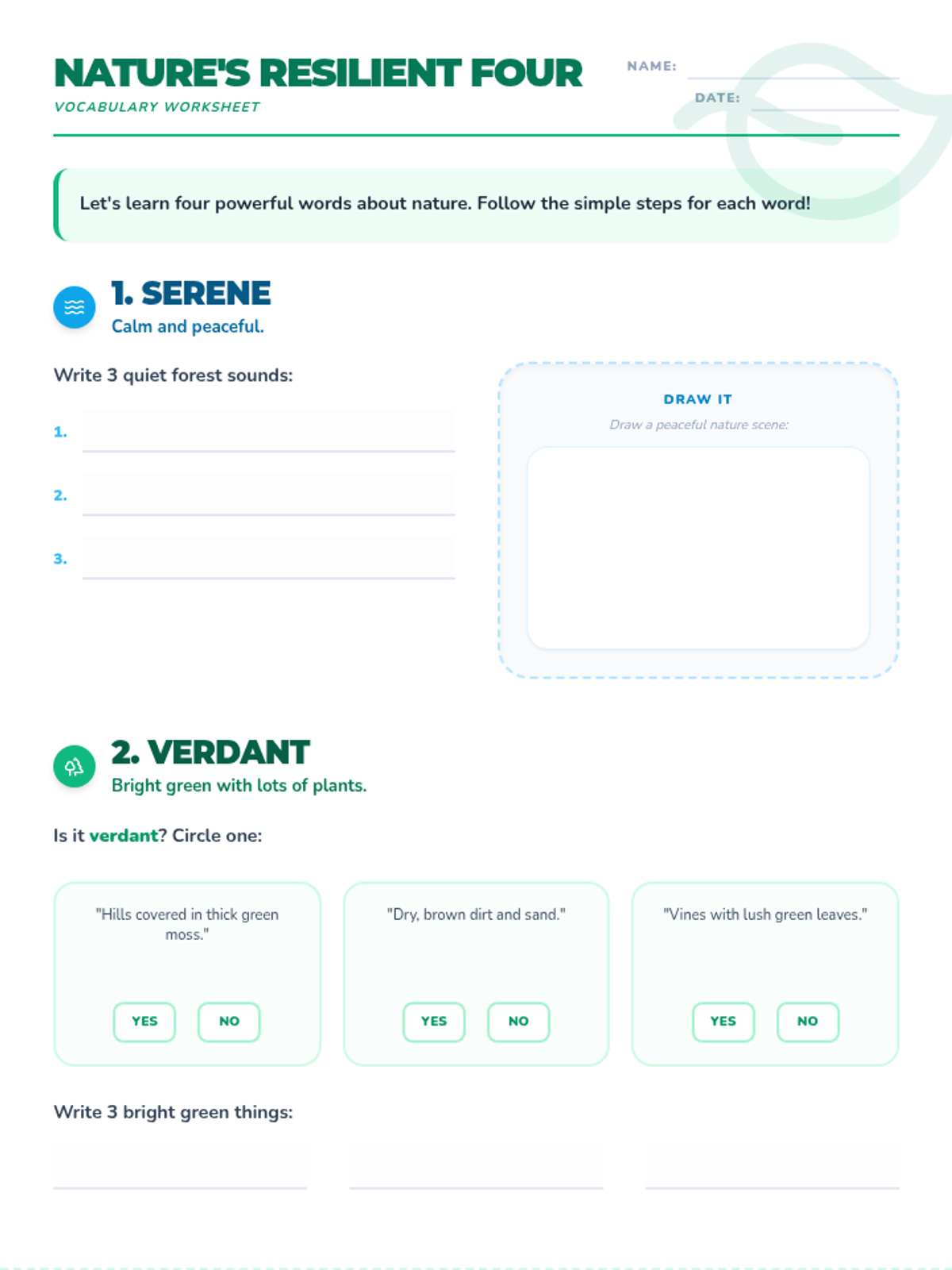
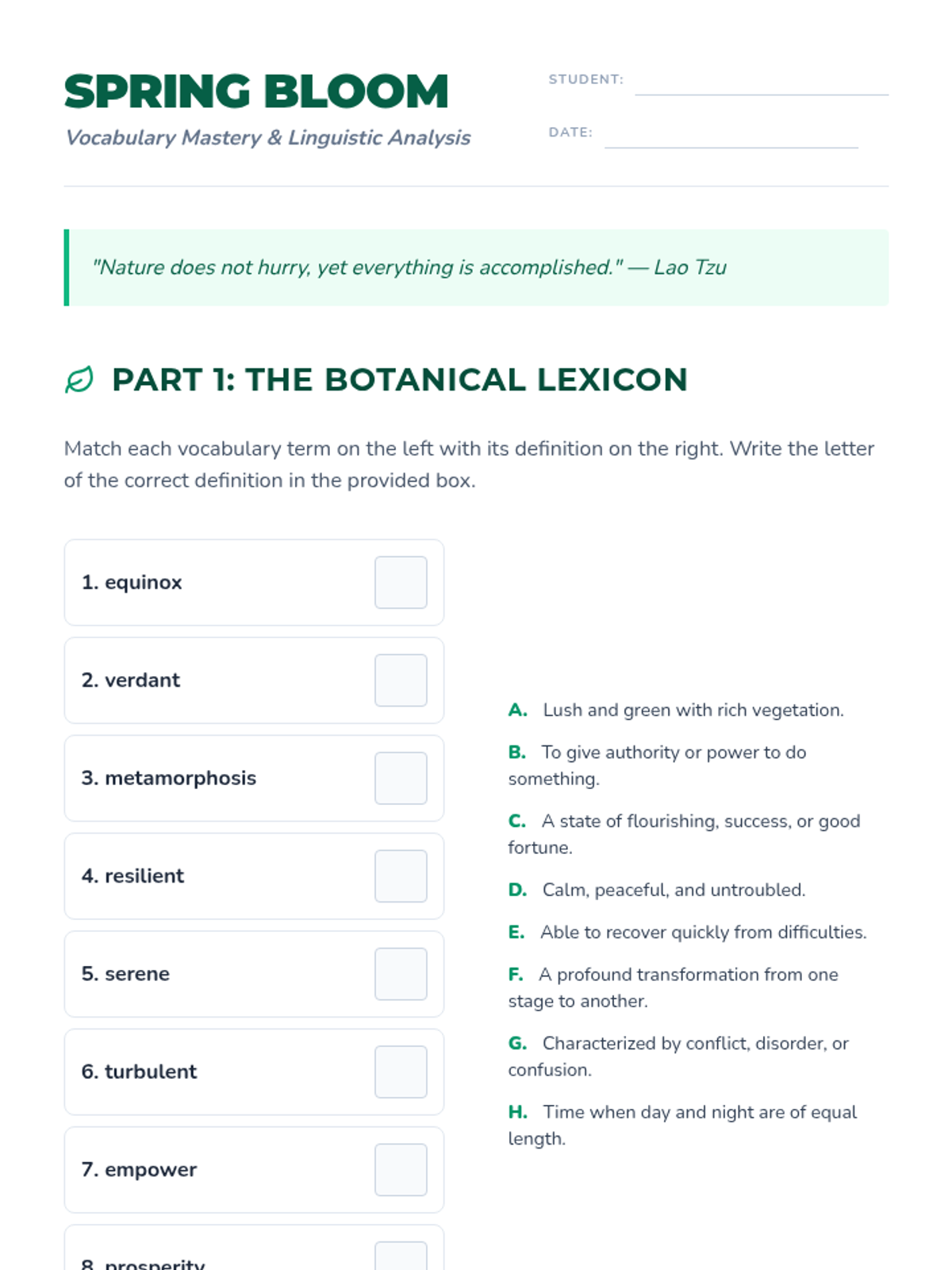
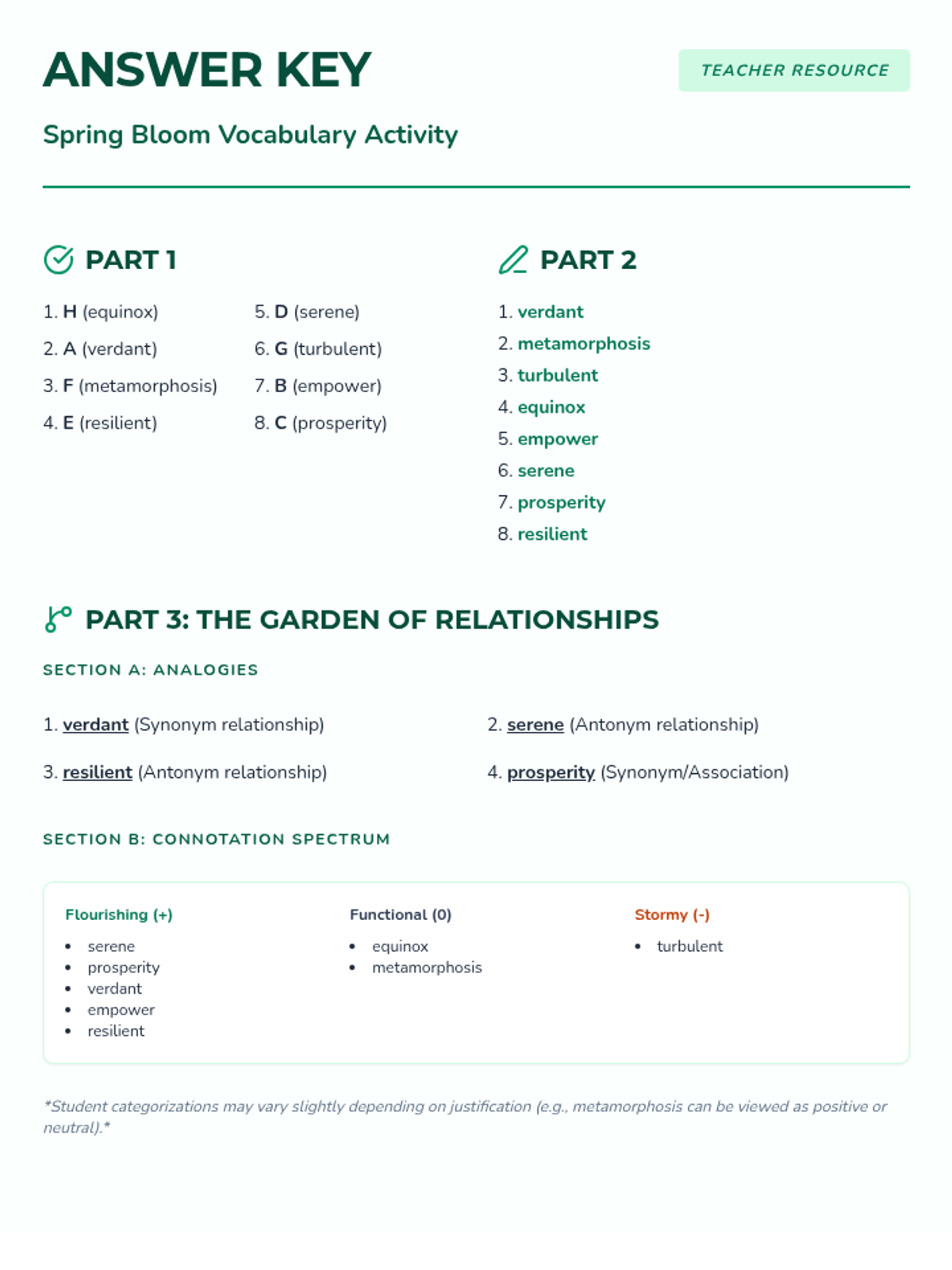
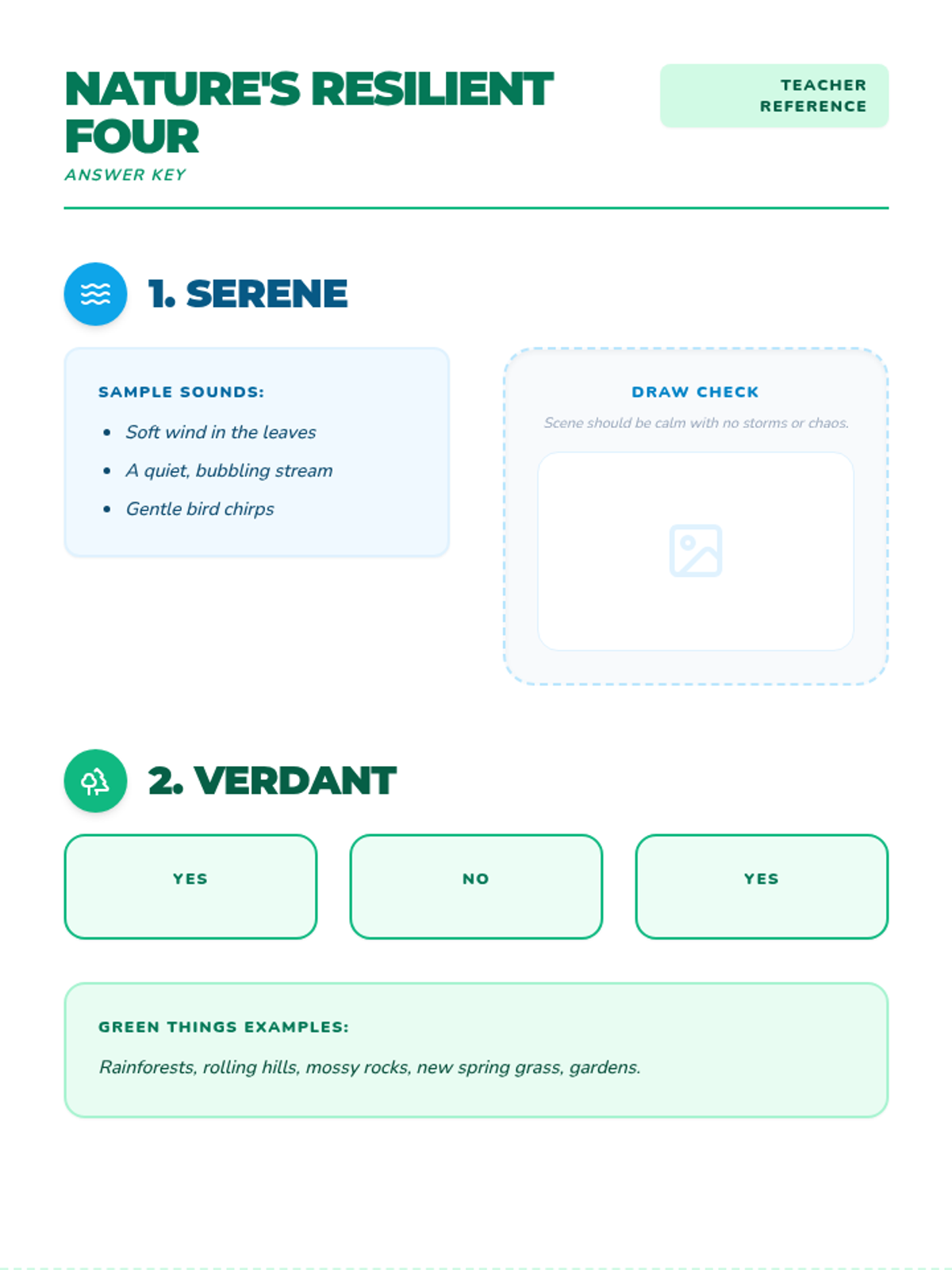
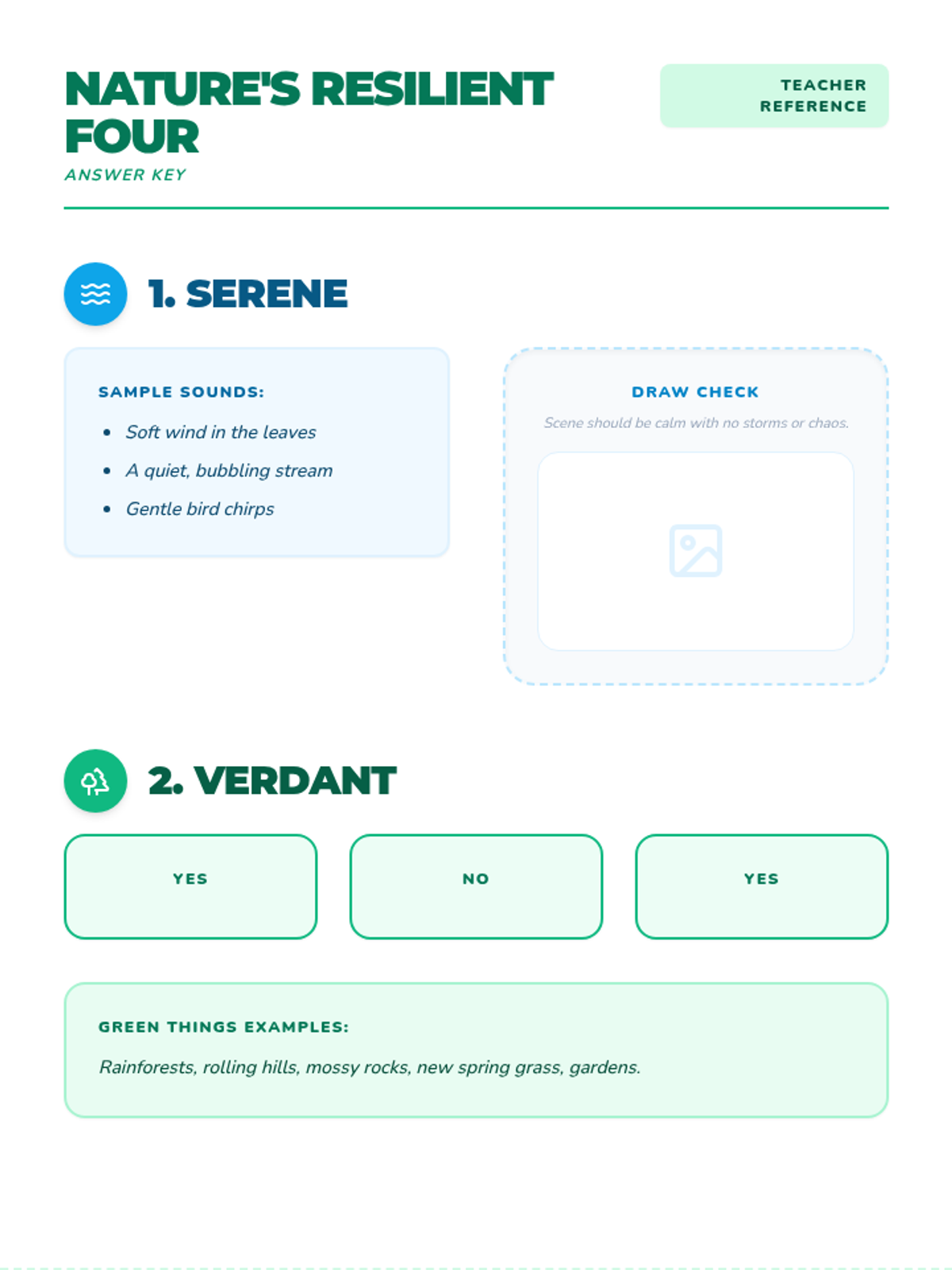
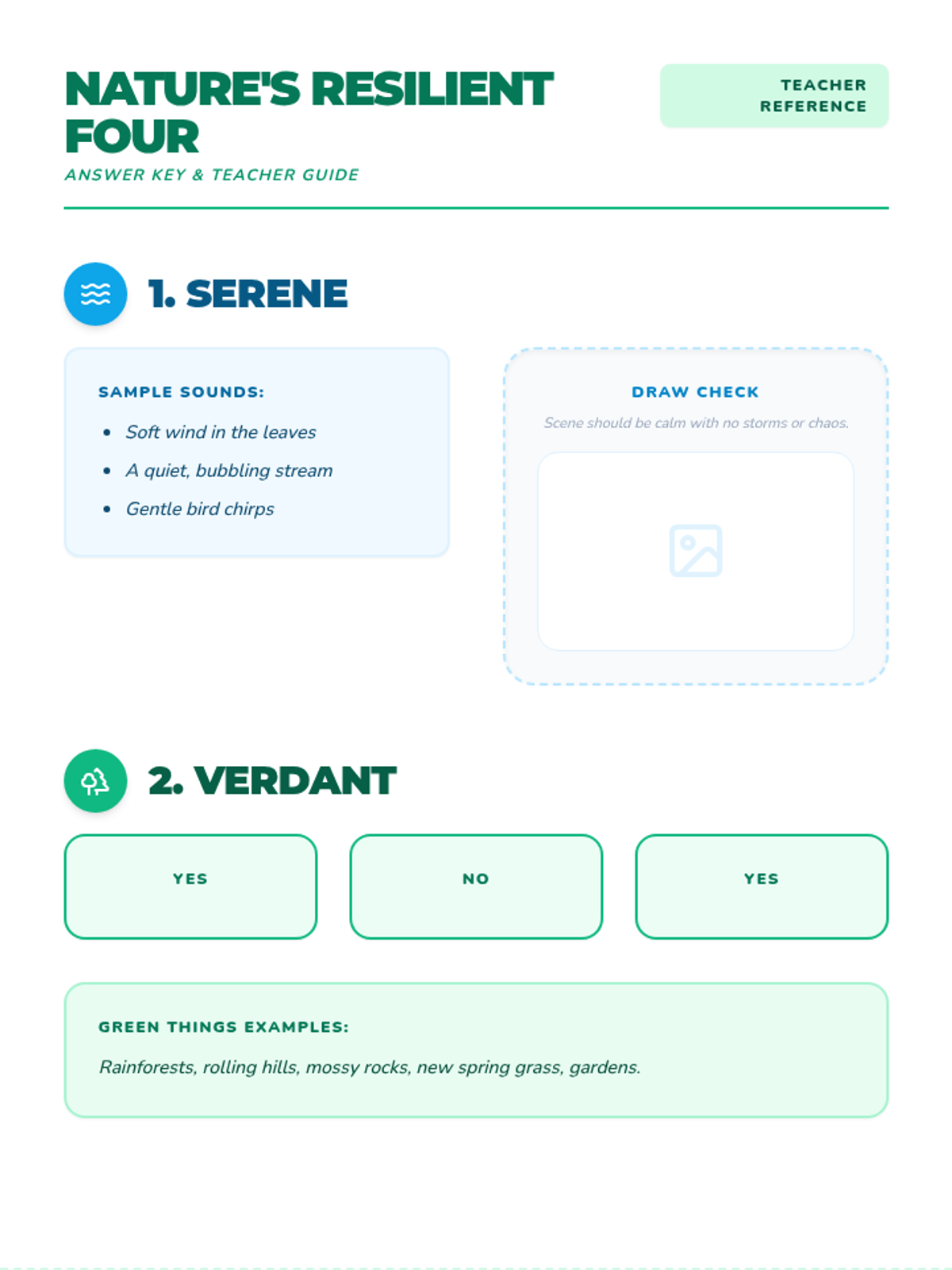
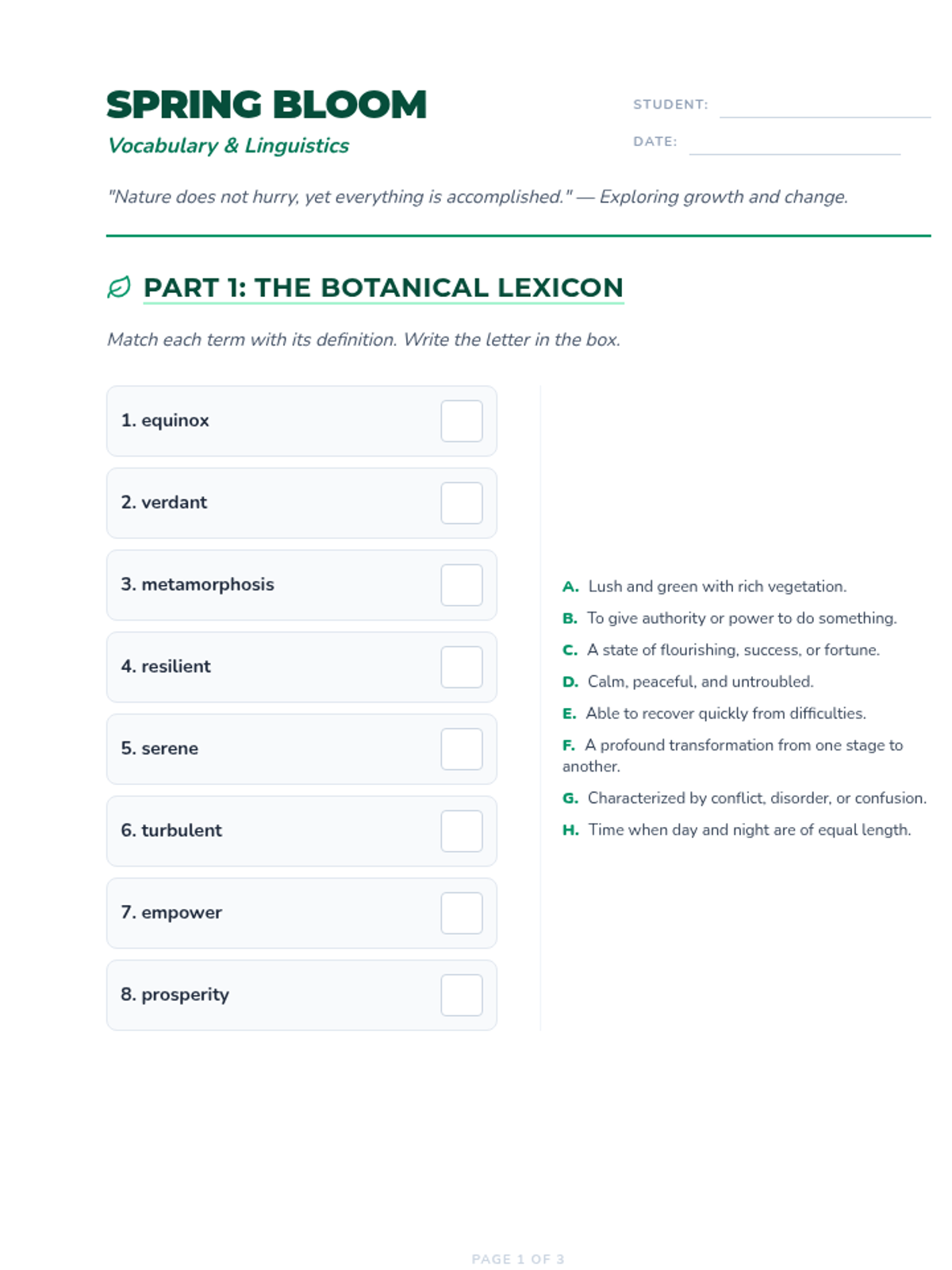
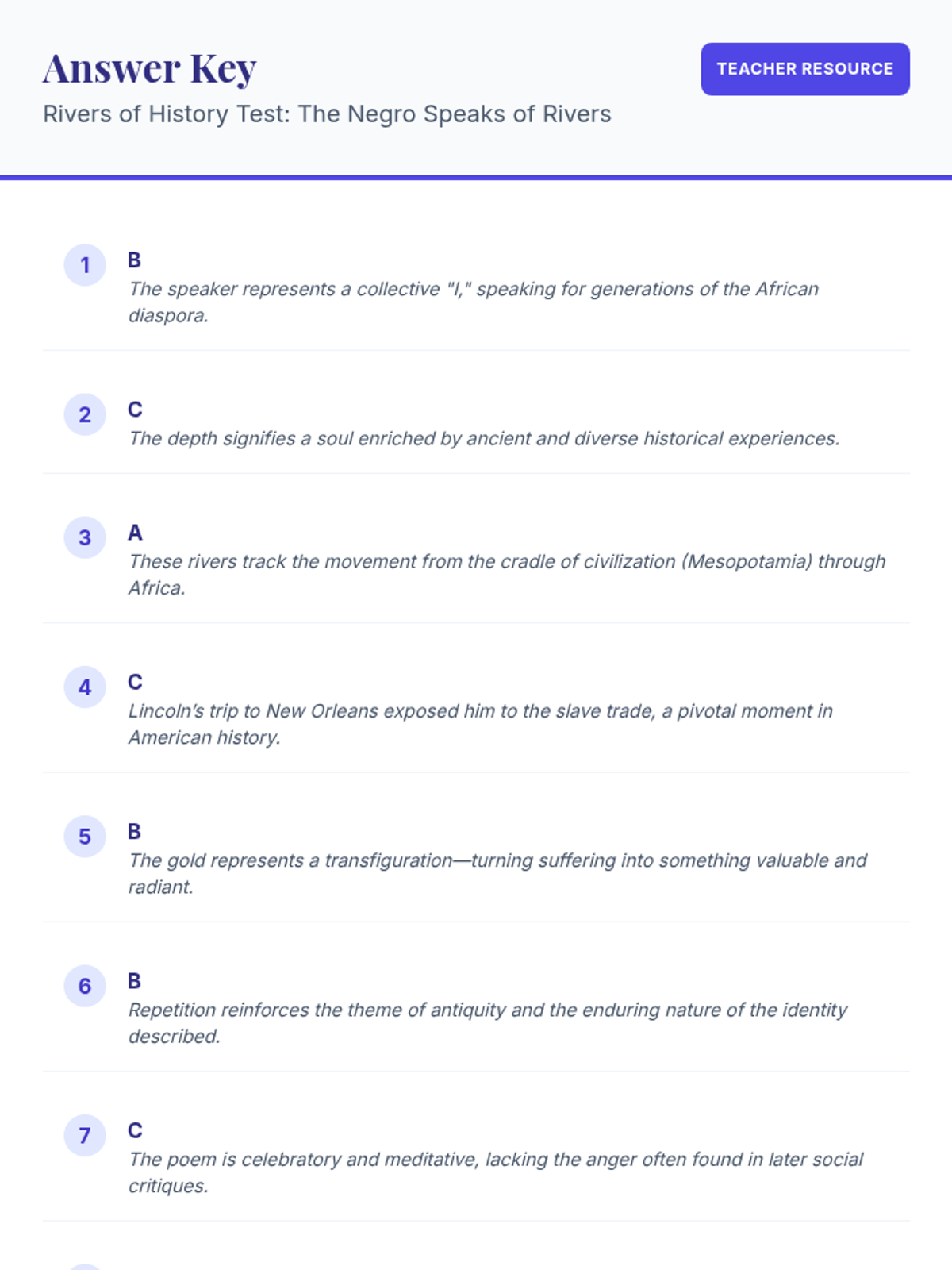
A vocabulary and linguistics lesson exploring themes of transition, growth, and strength. Students master eight high-level terms—equinox, verdant, metamorphosis, resilient, serene, turbulent, empower, and prosperity—through context analysis and creative application.
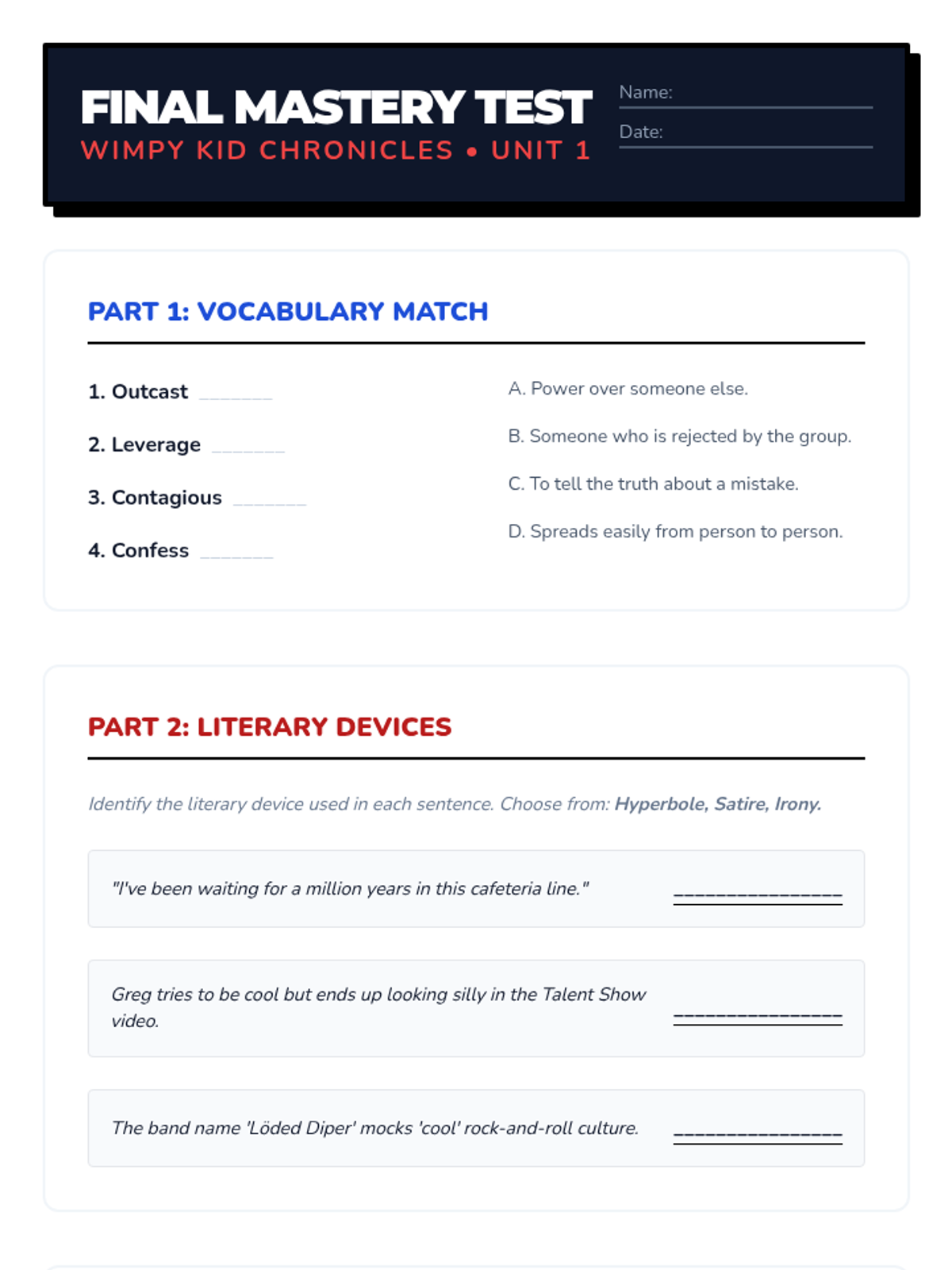
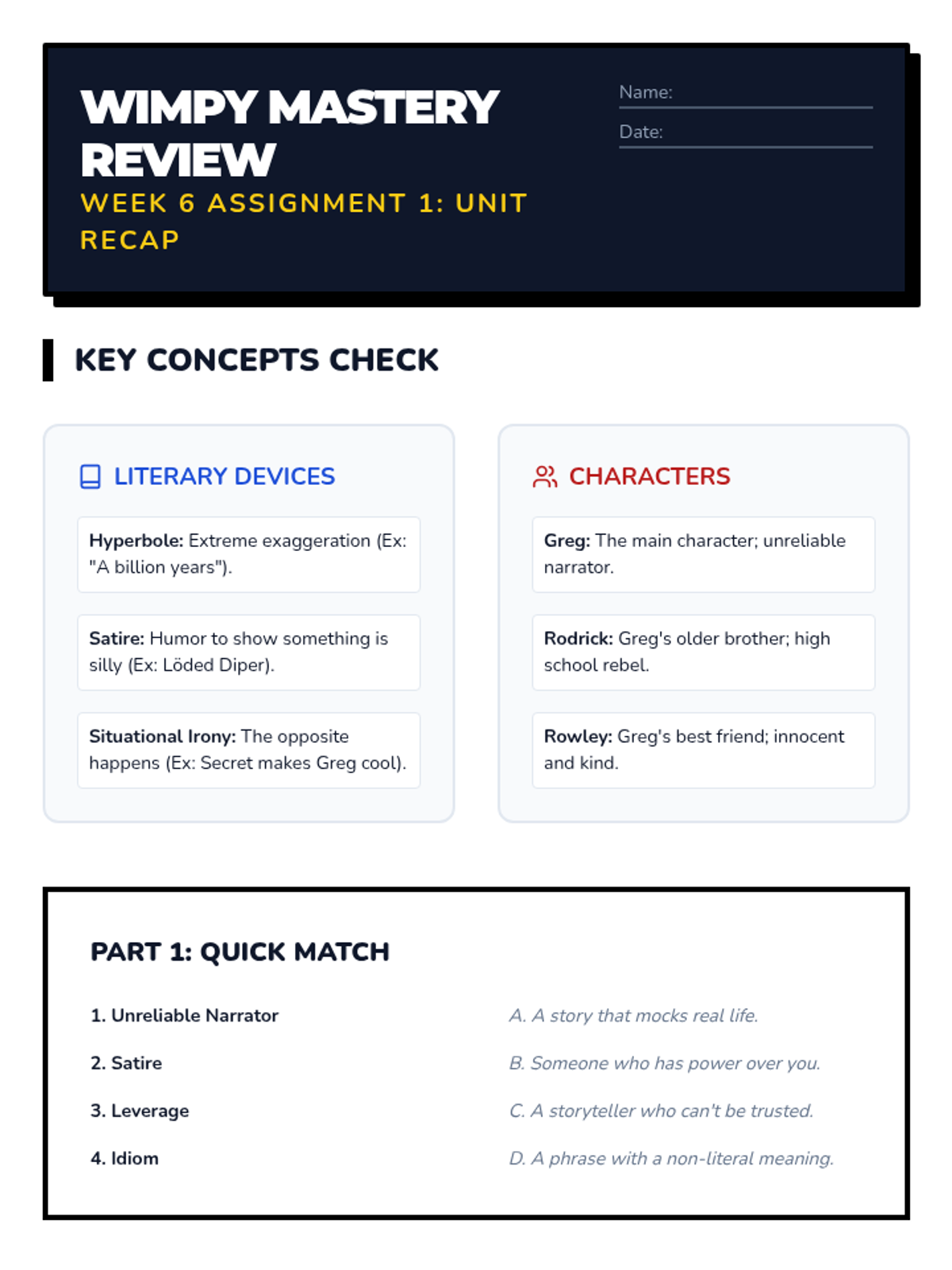
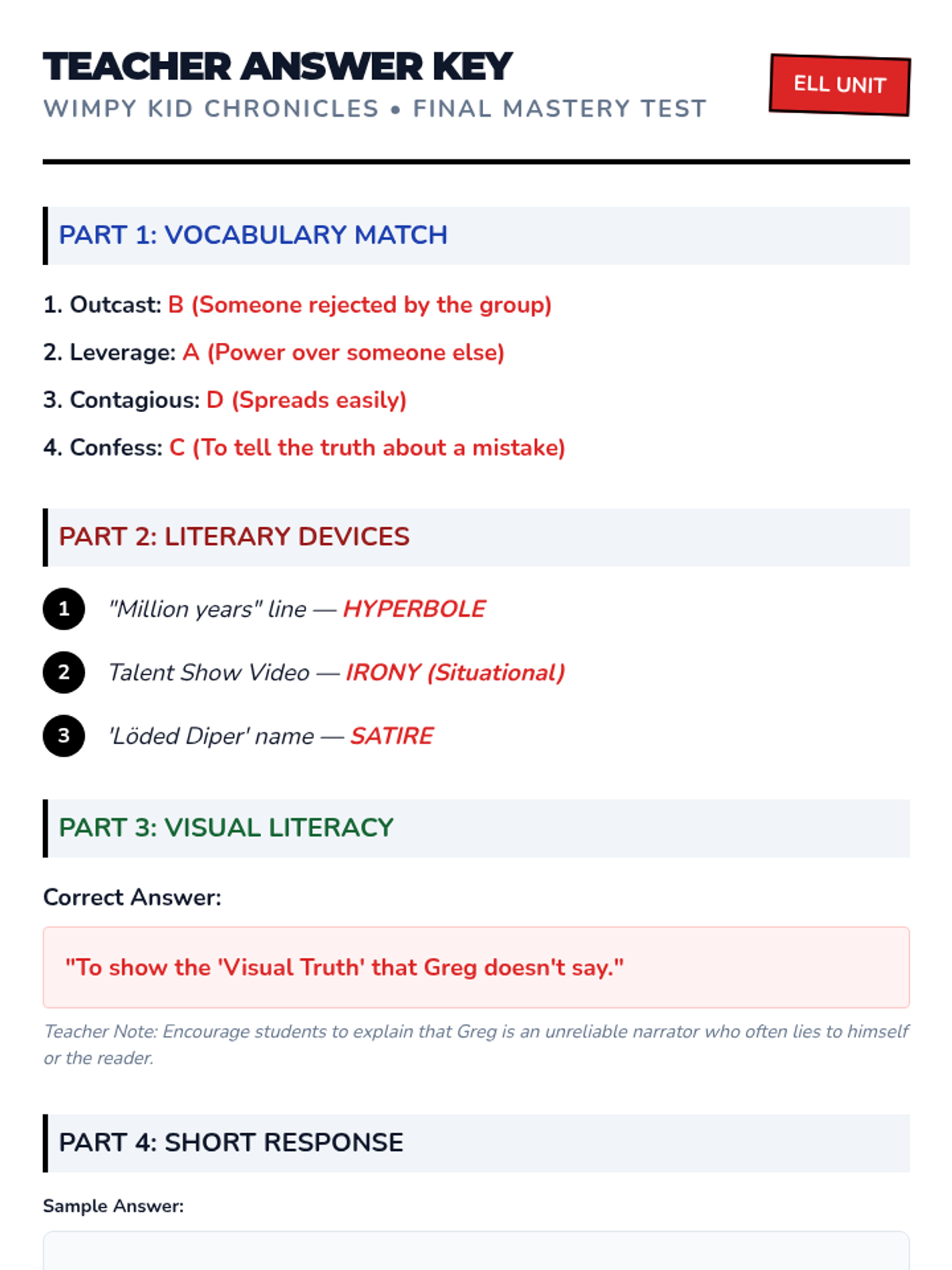
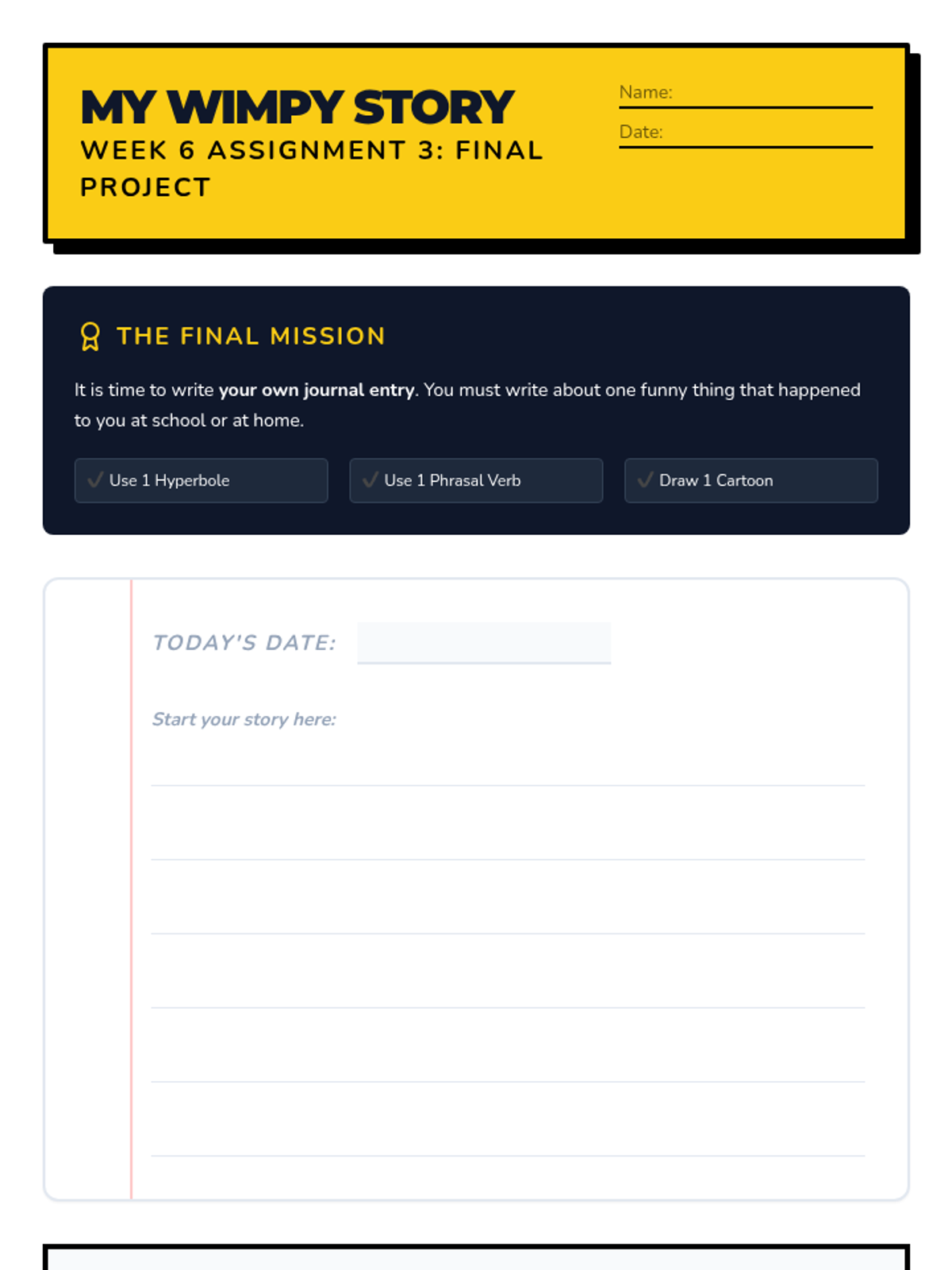
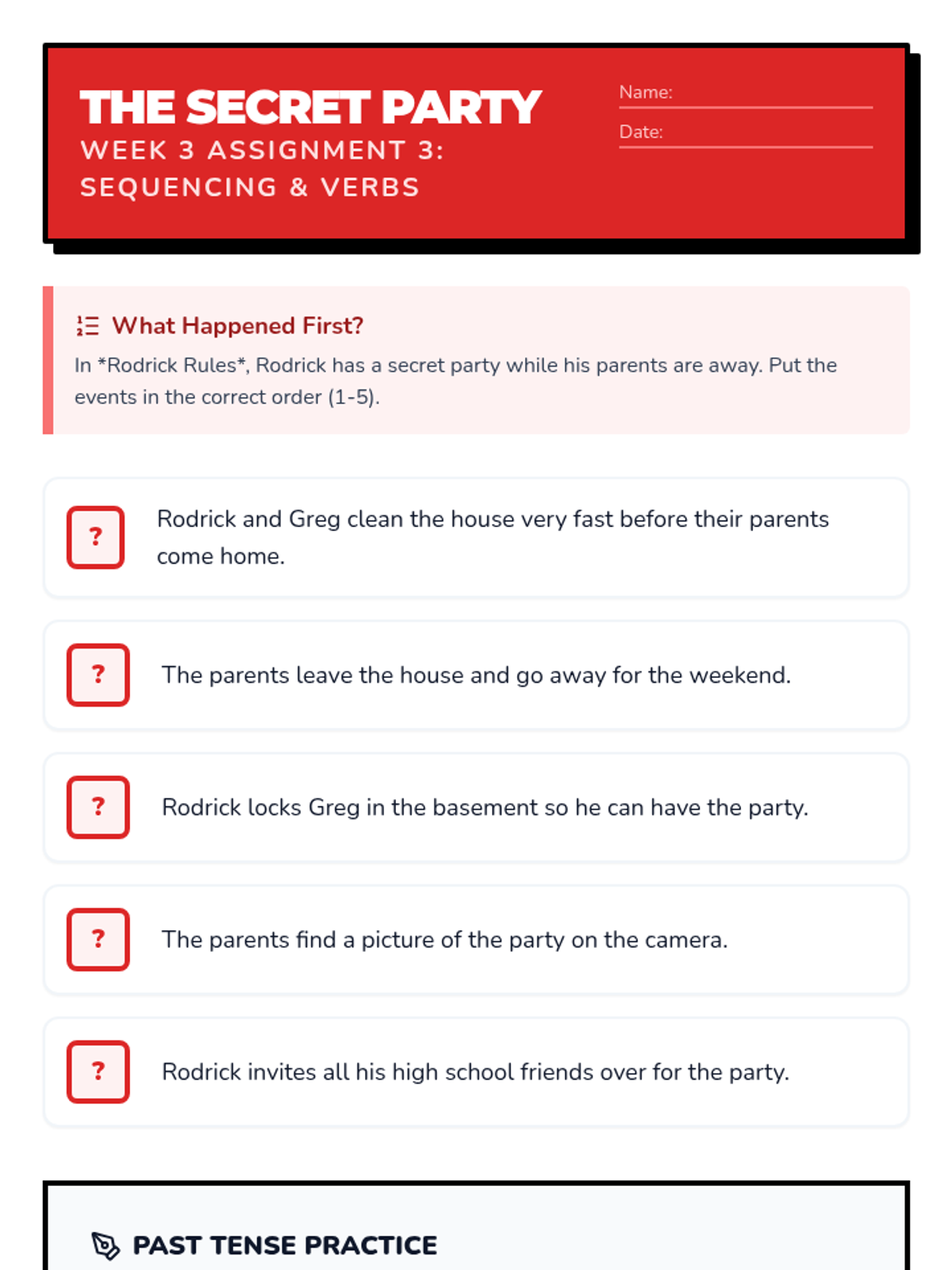
Final analysis of the secret party and Greg's growth. Comprehensive review of literary terms followed by the final unit assessment and creative project.
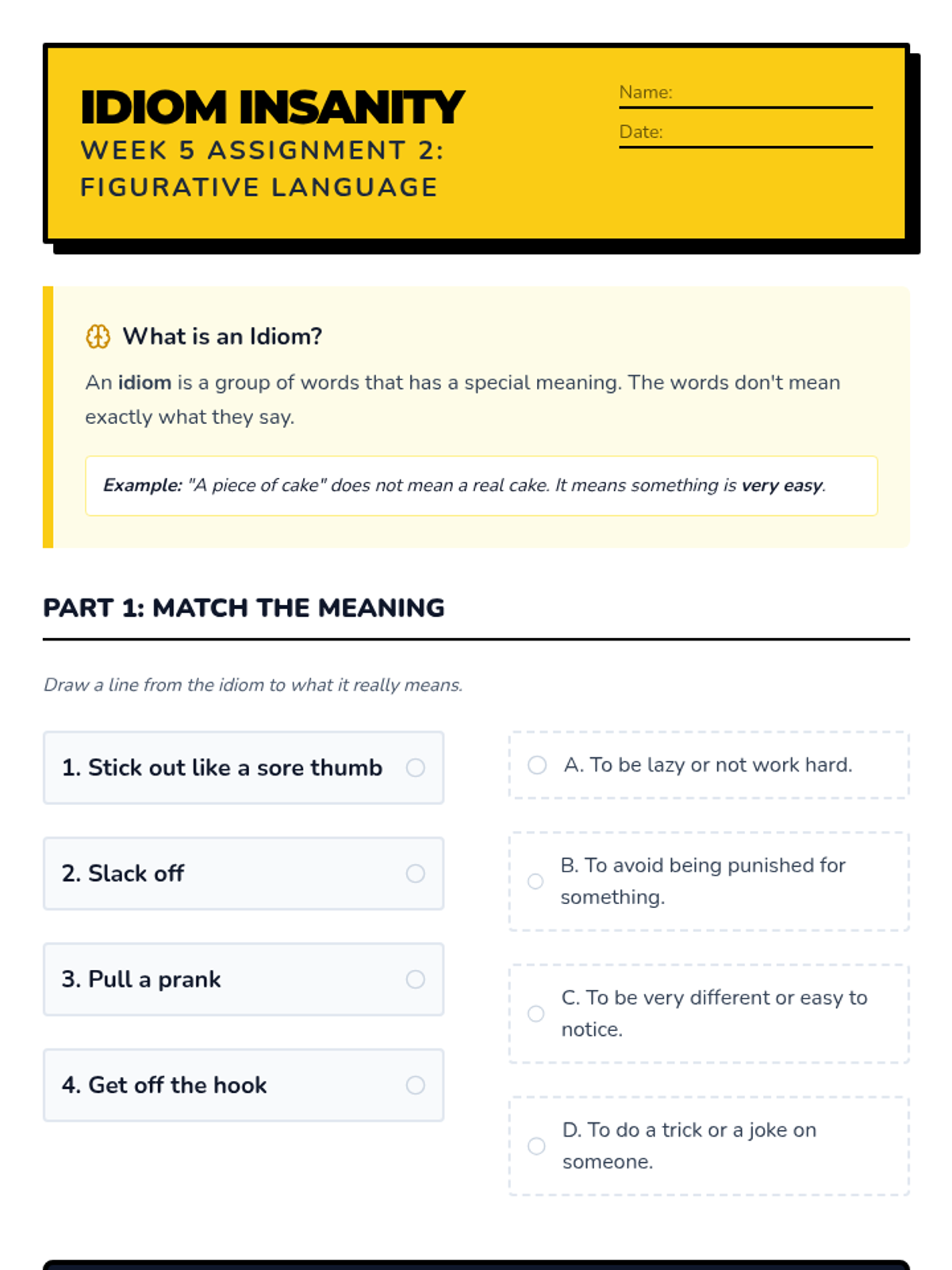
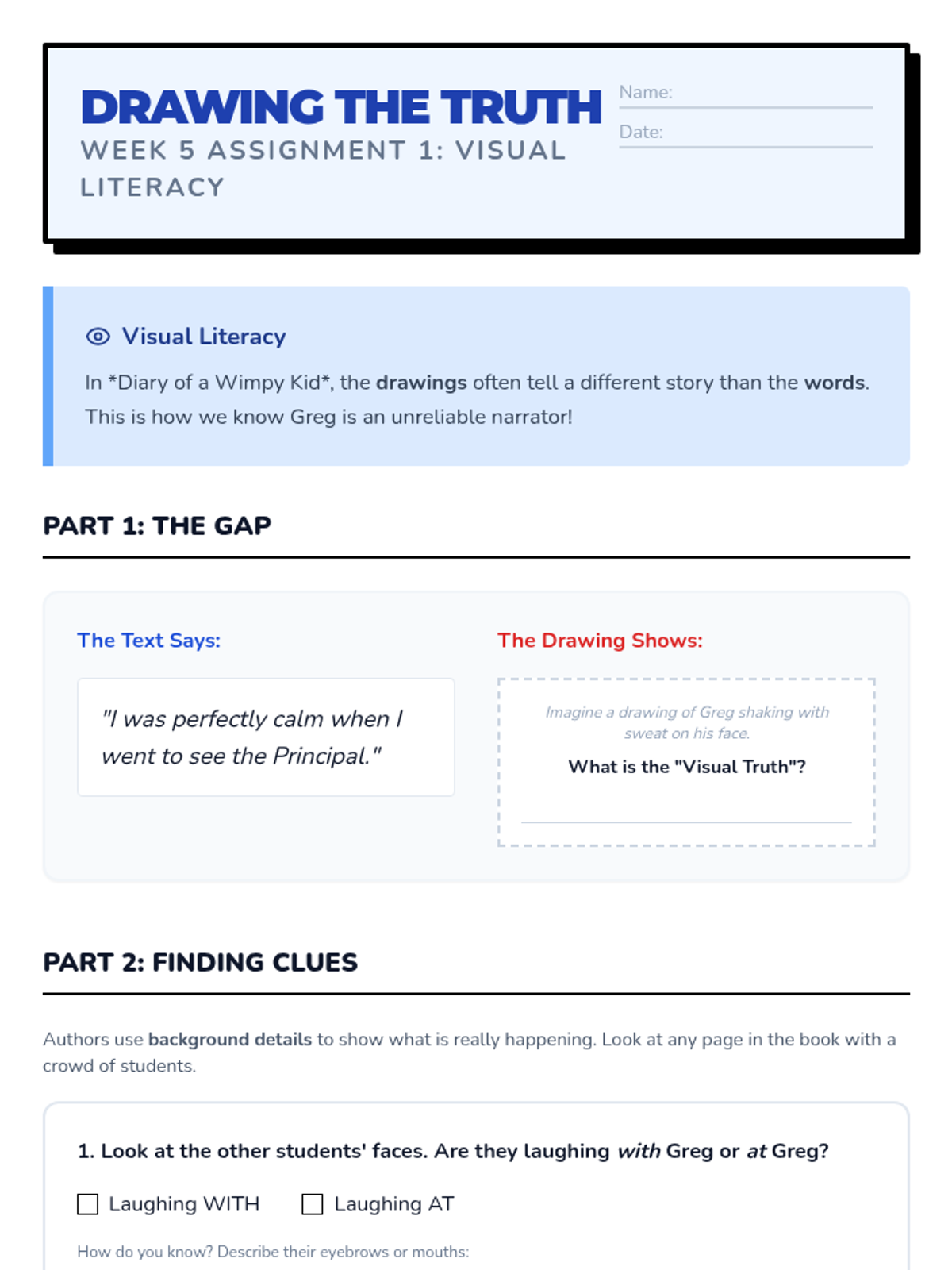
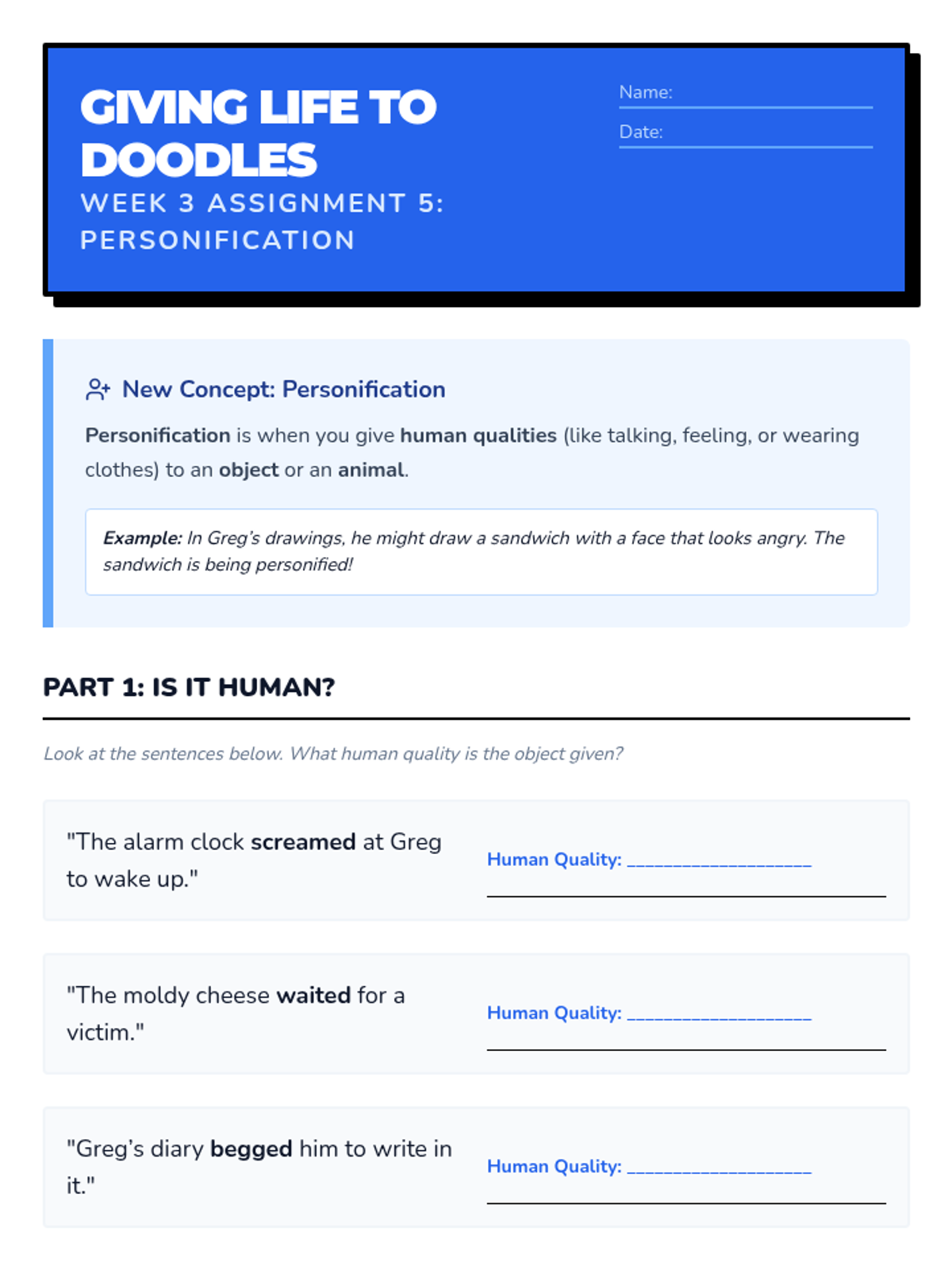
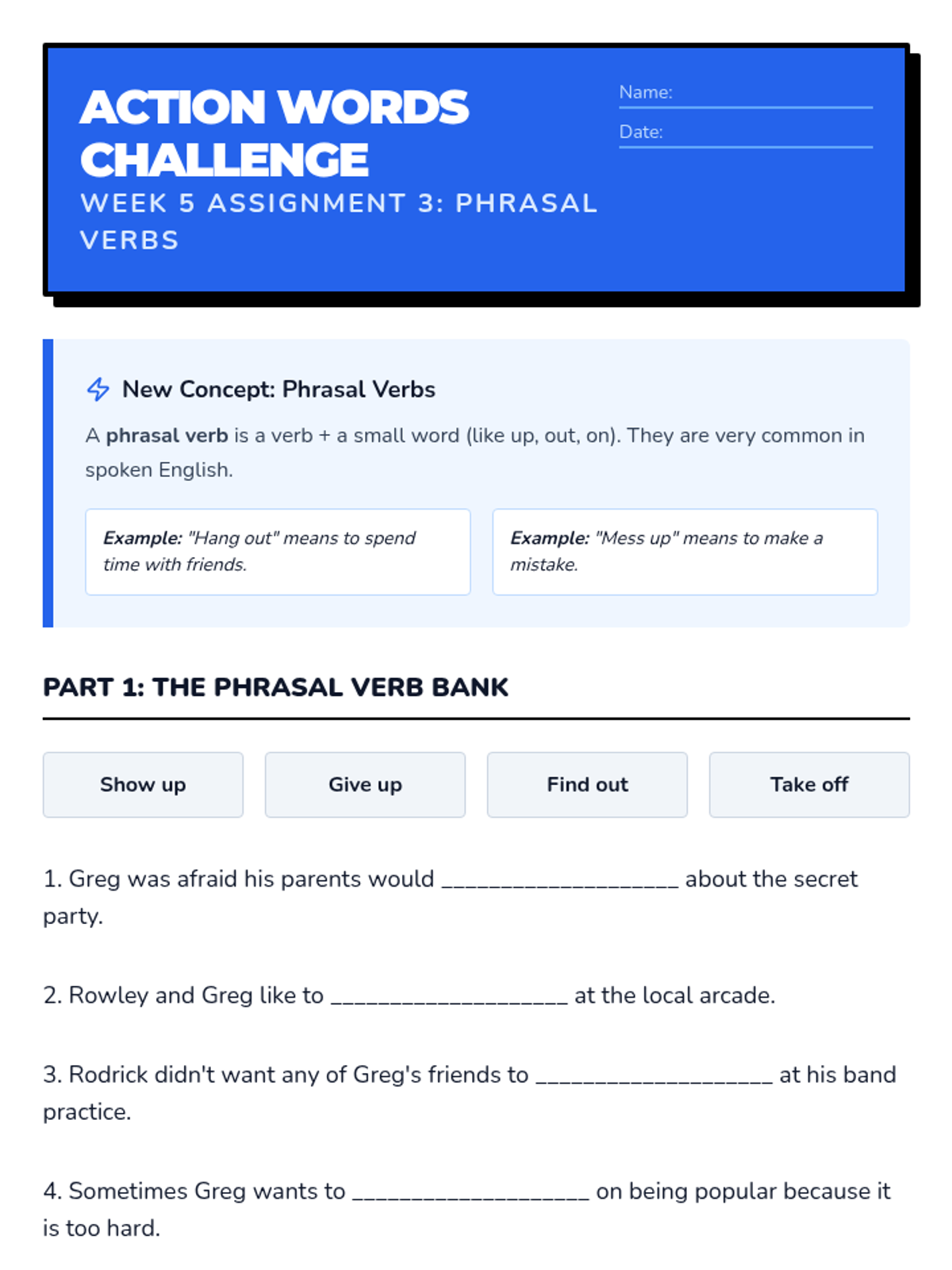
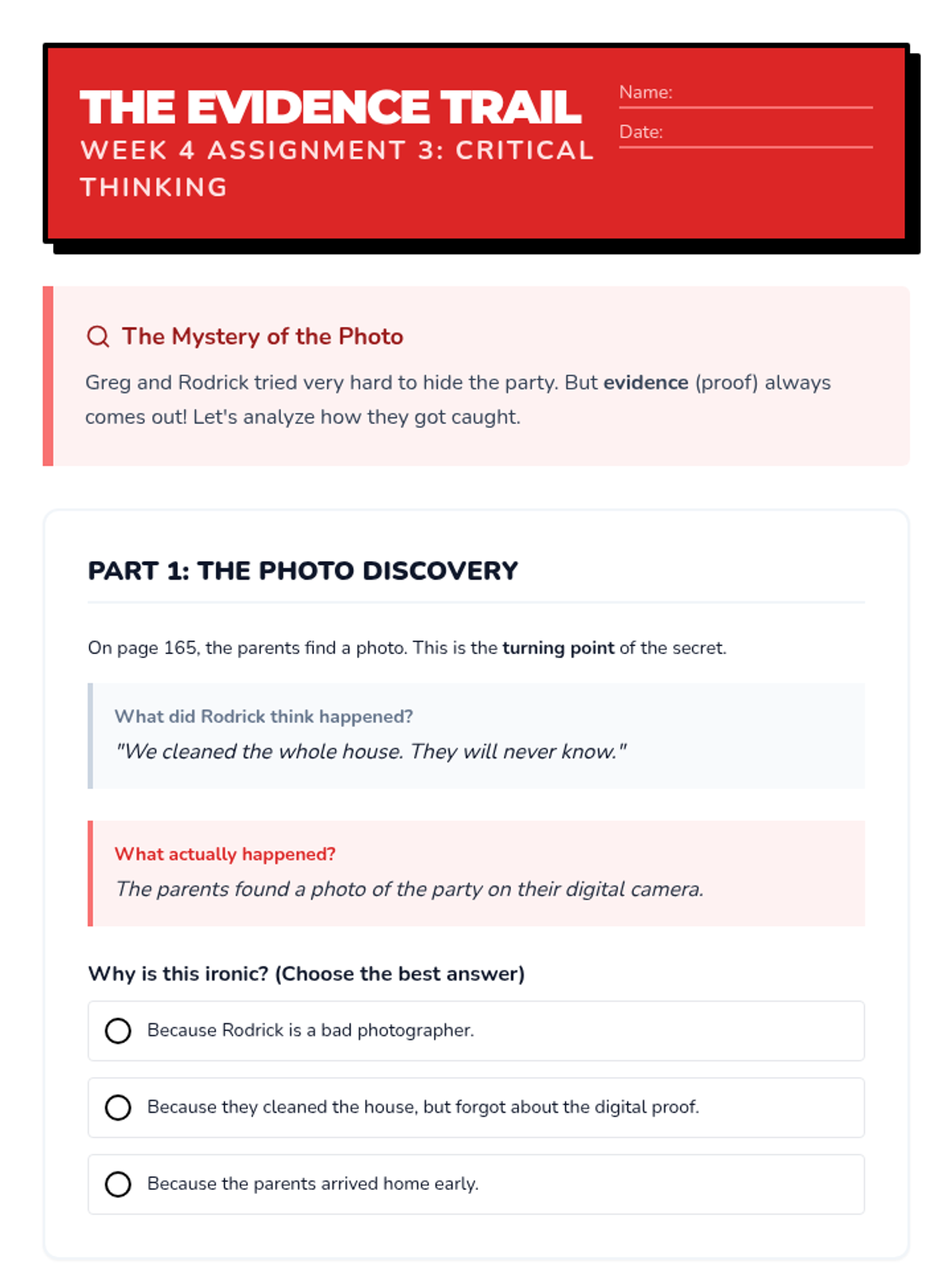
Wrapping up Book 1 with calls back to Greg's early mistakes. Introduction of Personification in Greg's doodles and a deep dive into Visual Irony. Focus on Phrasal Verbs and Idioms to bridge into Book 2.
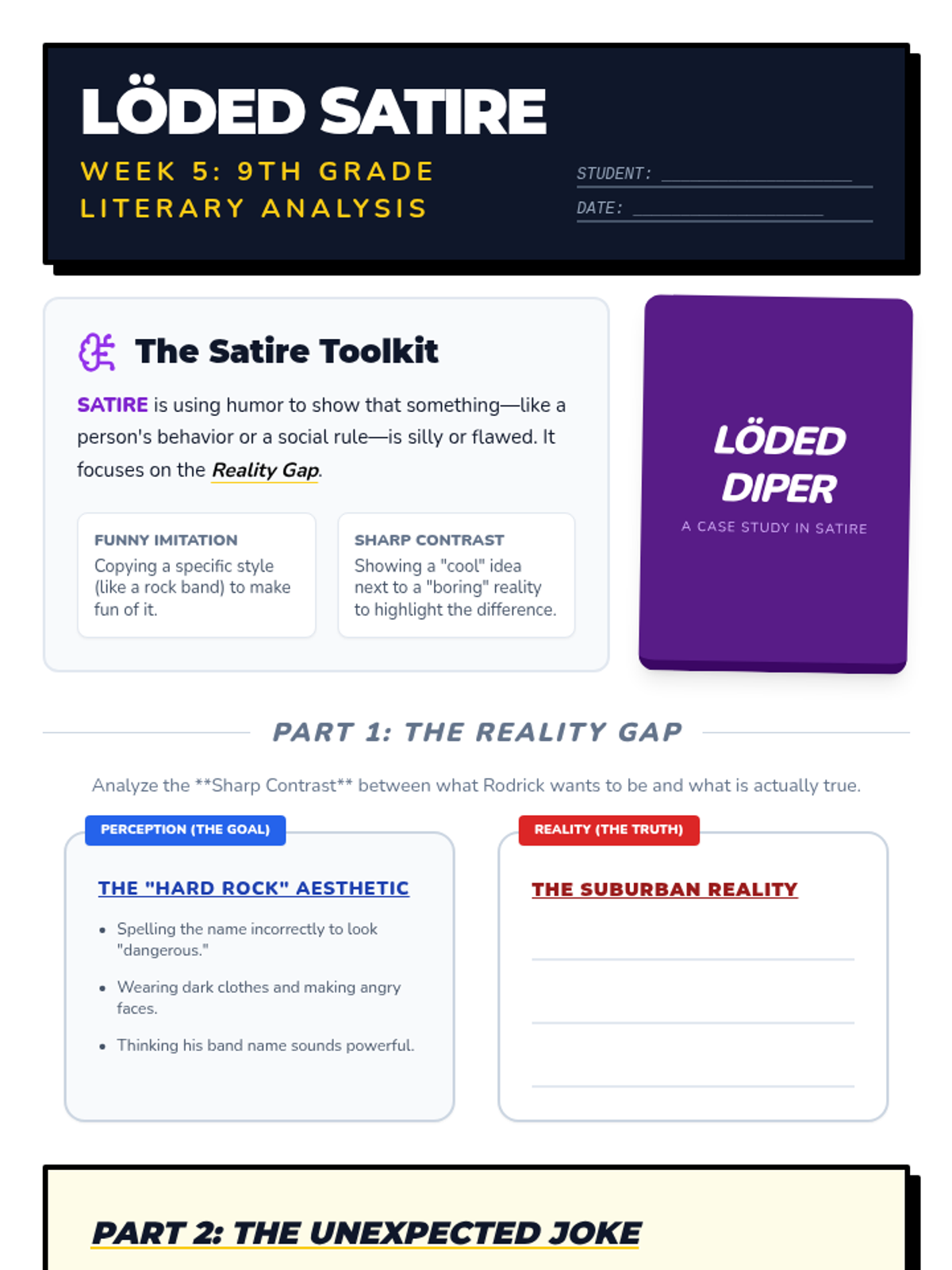
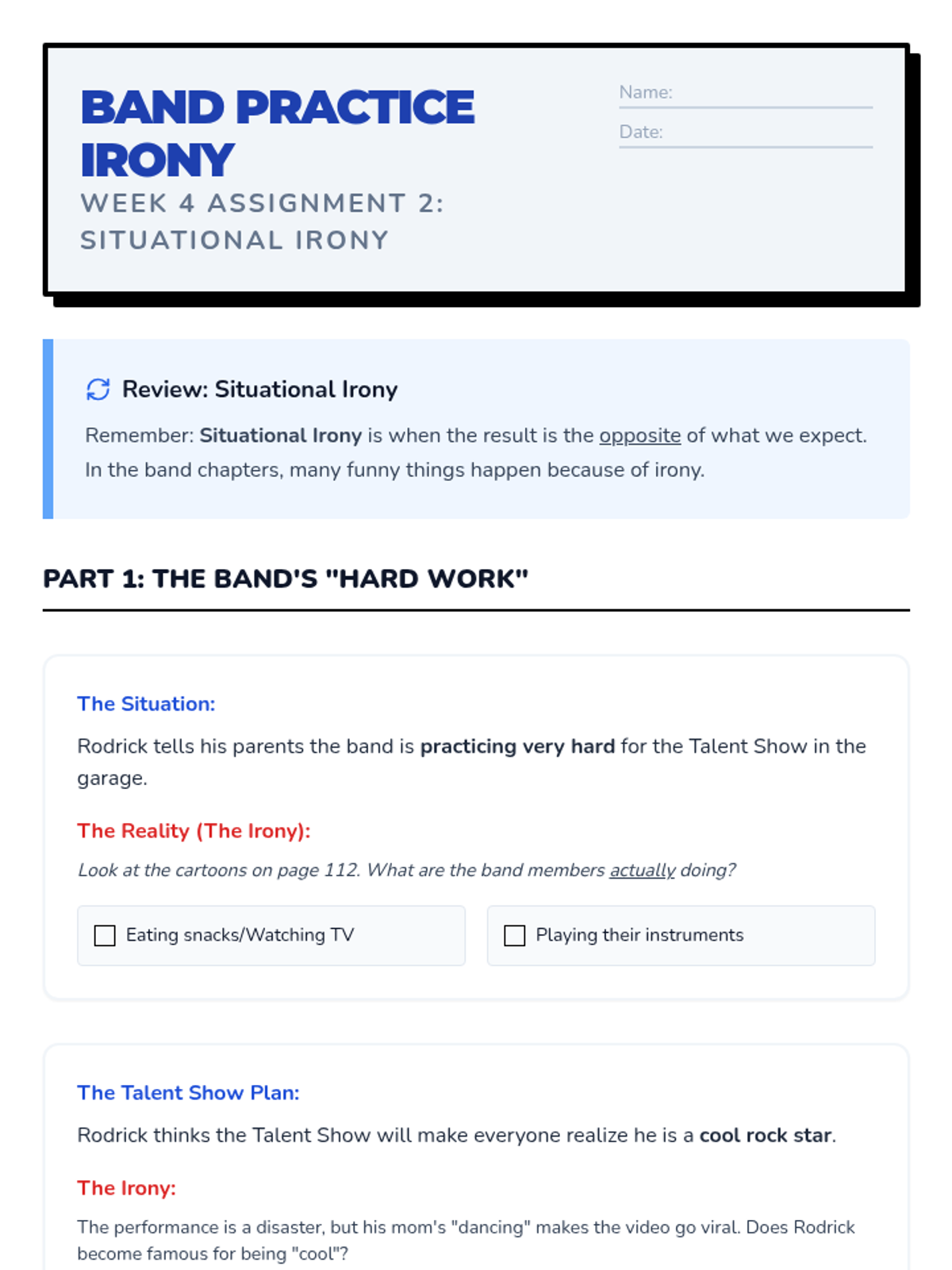
In-depth look at Rodrick's band Löded Diper. Students explore satire and how irony is used to mock social stereotypes.
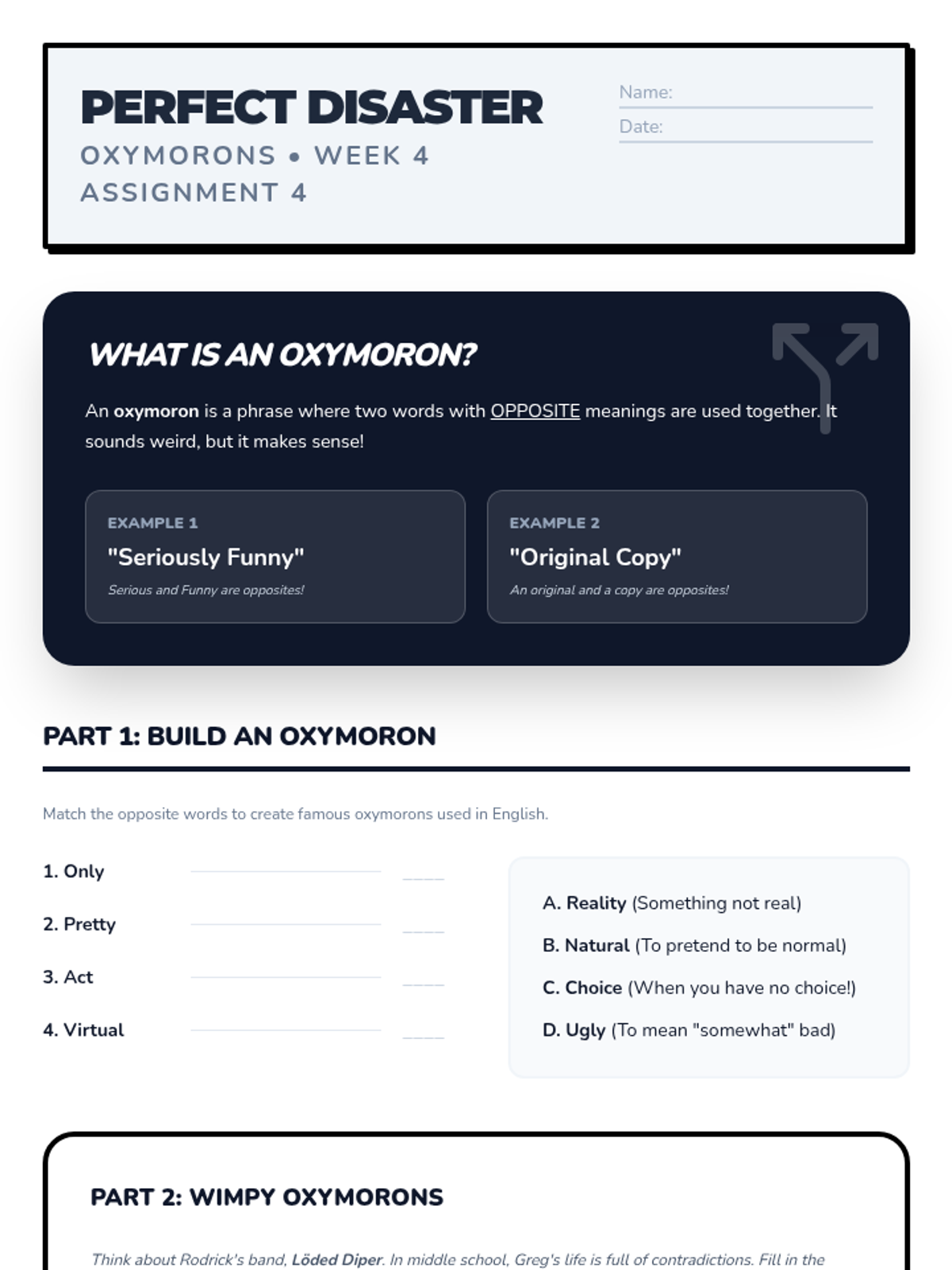
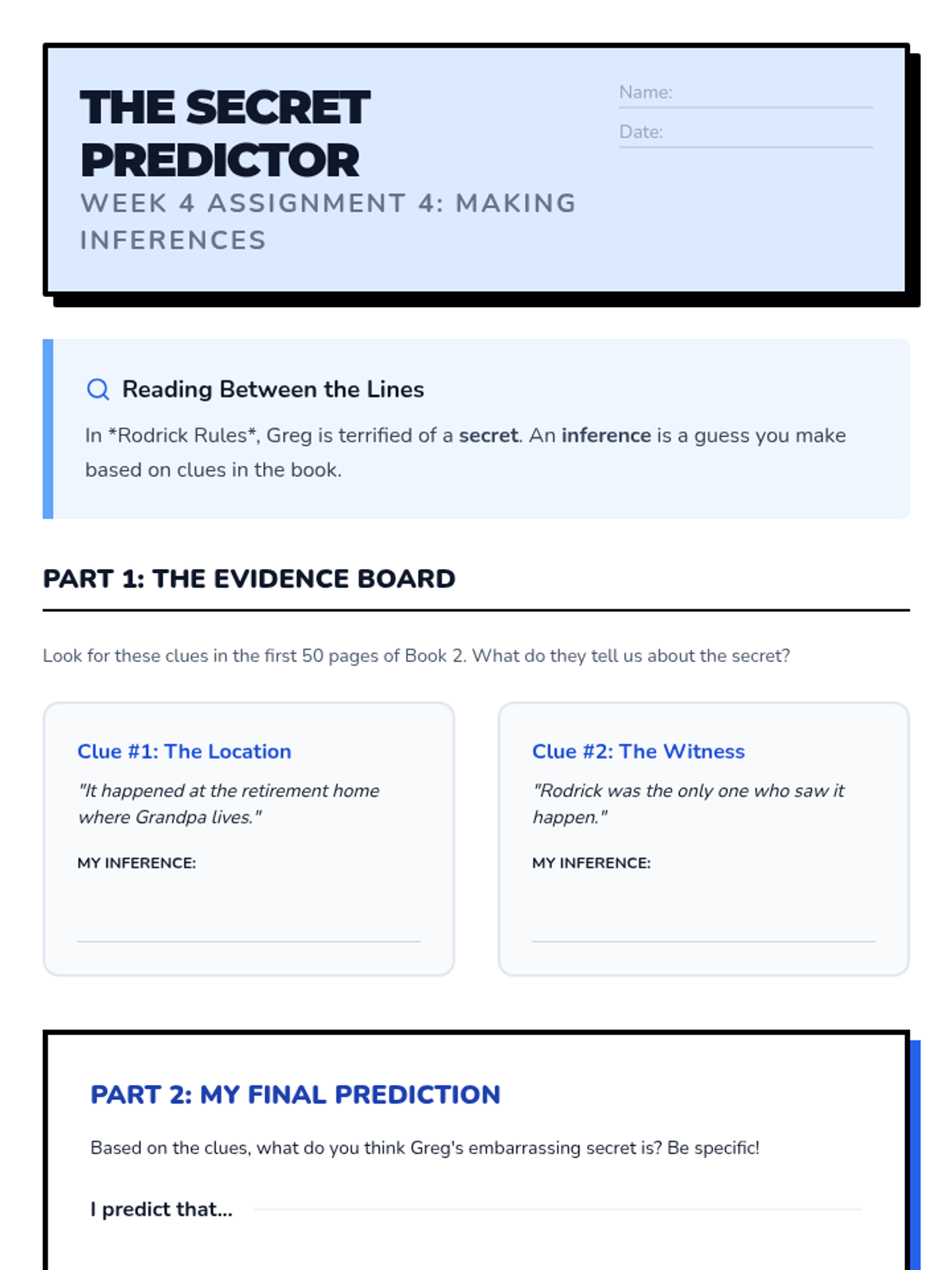
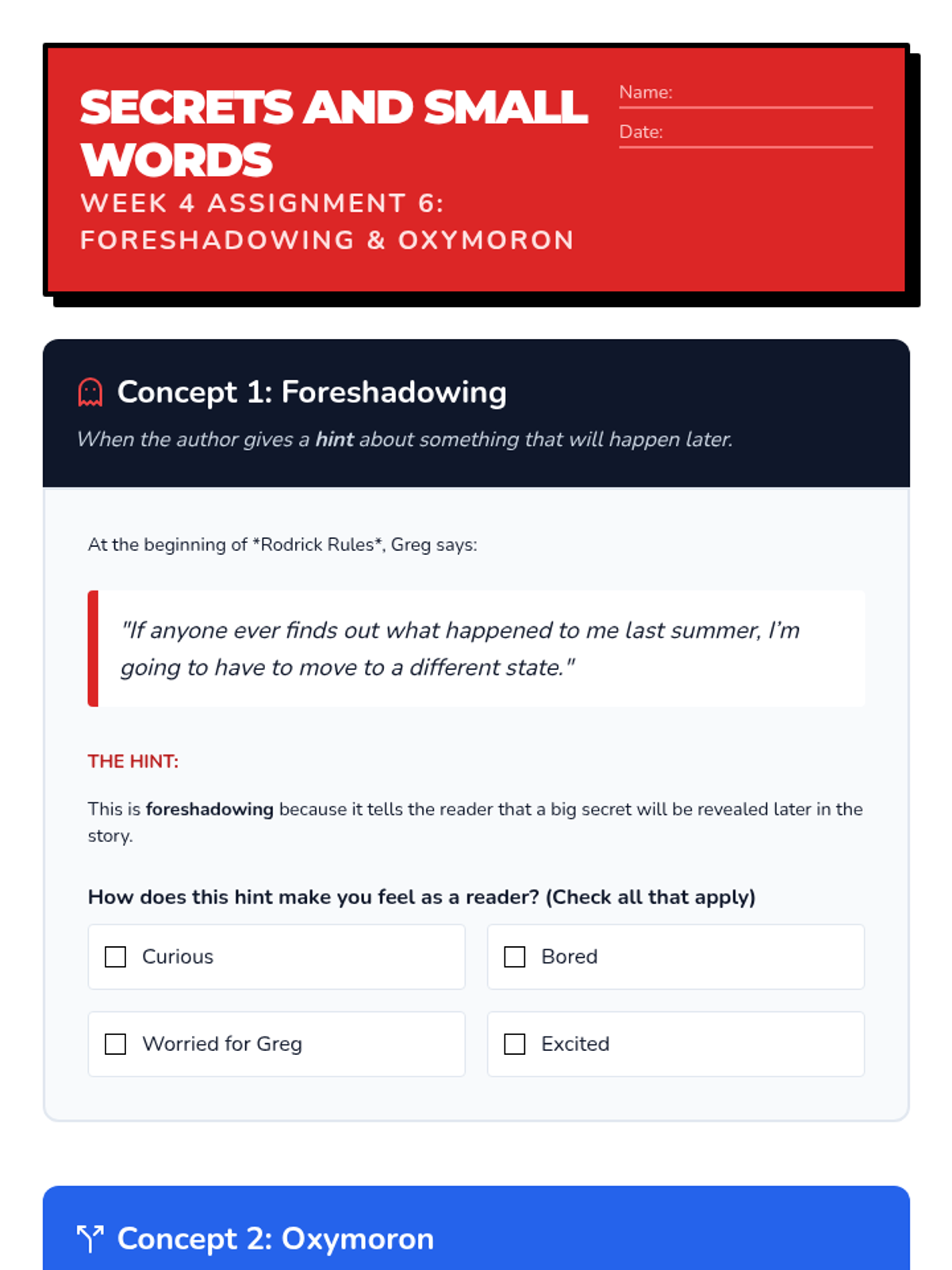
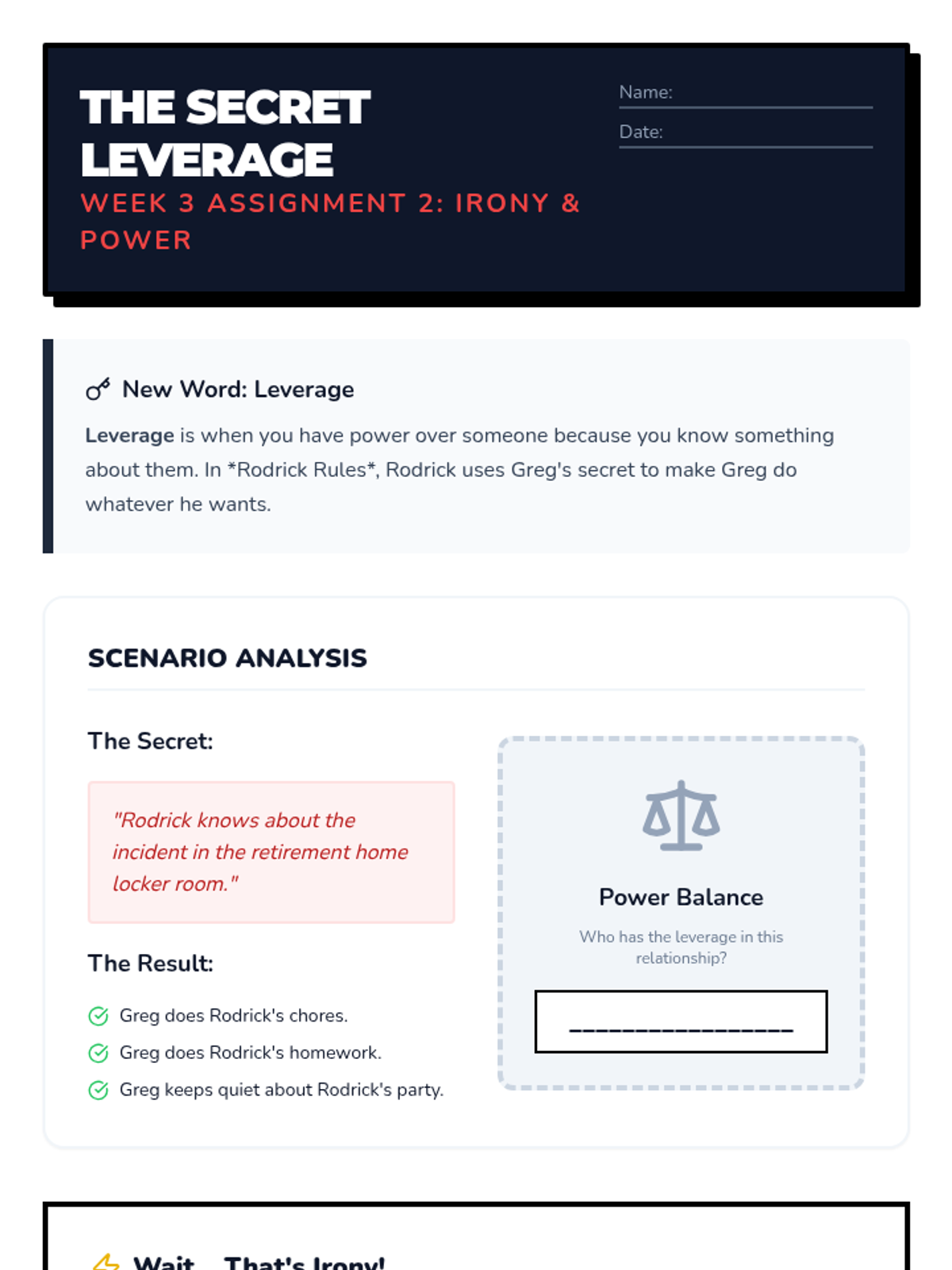
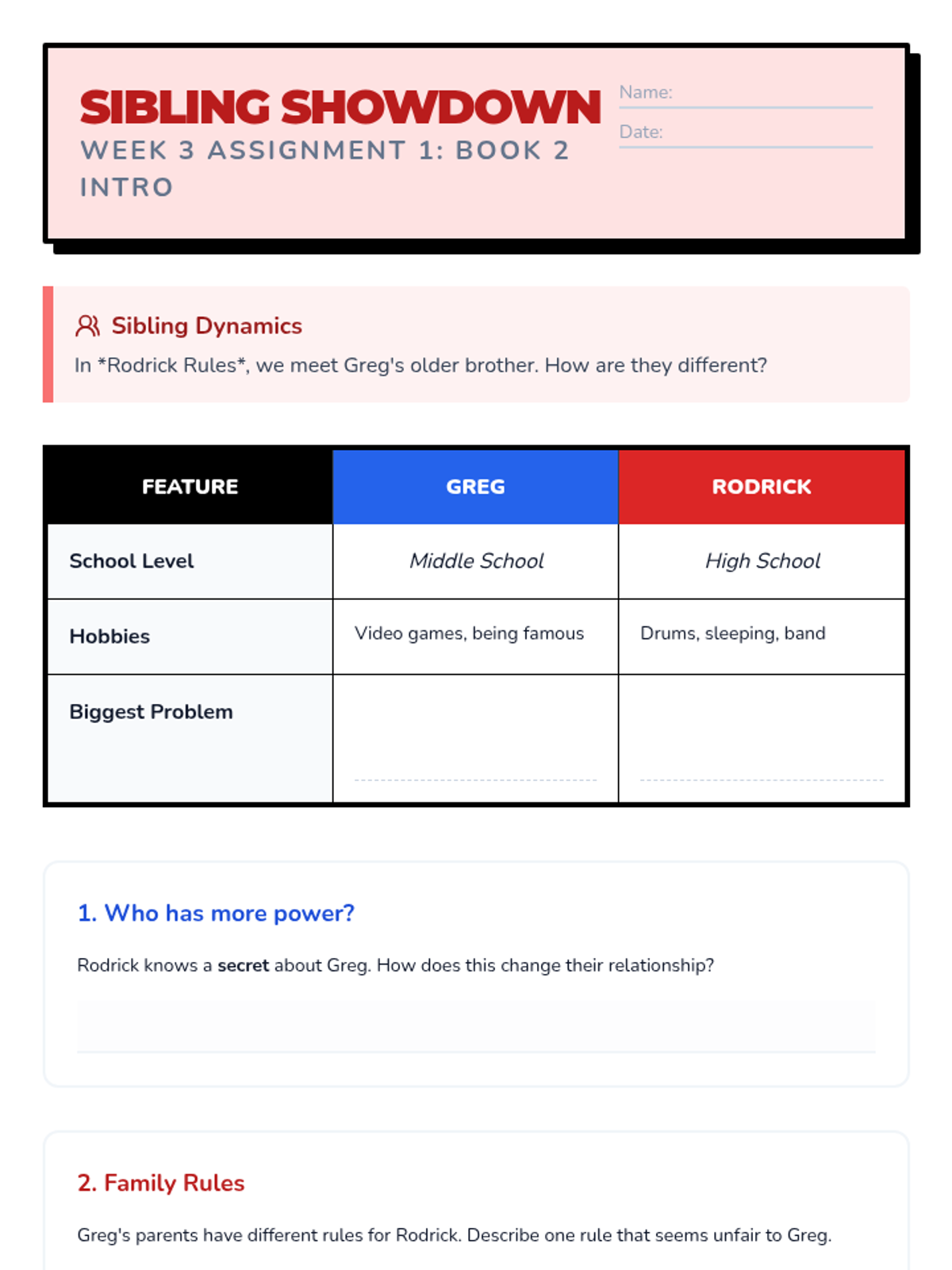
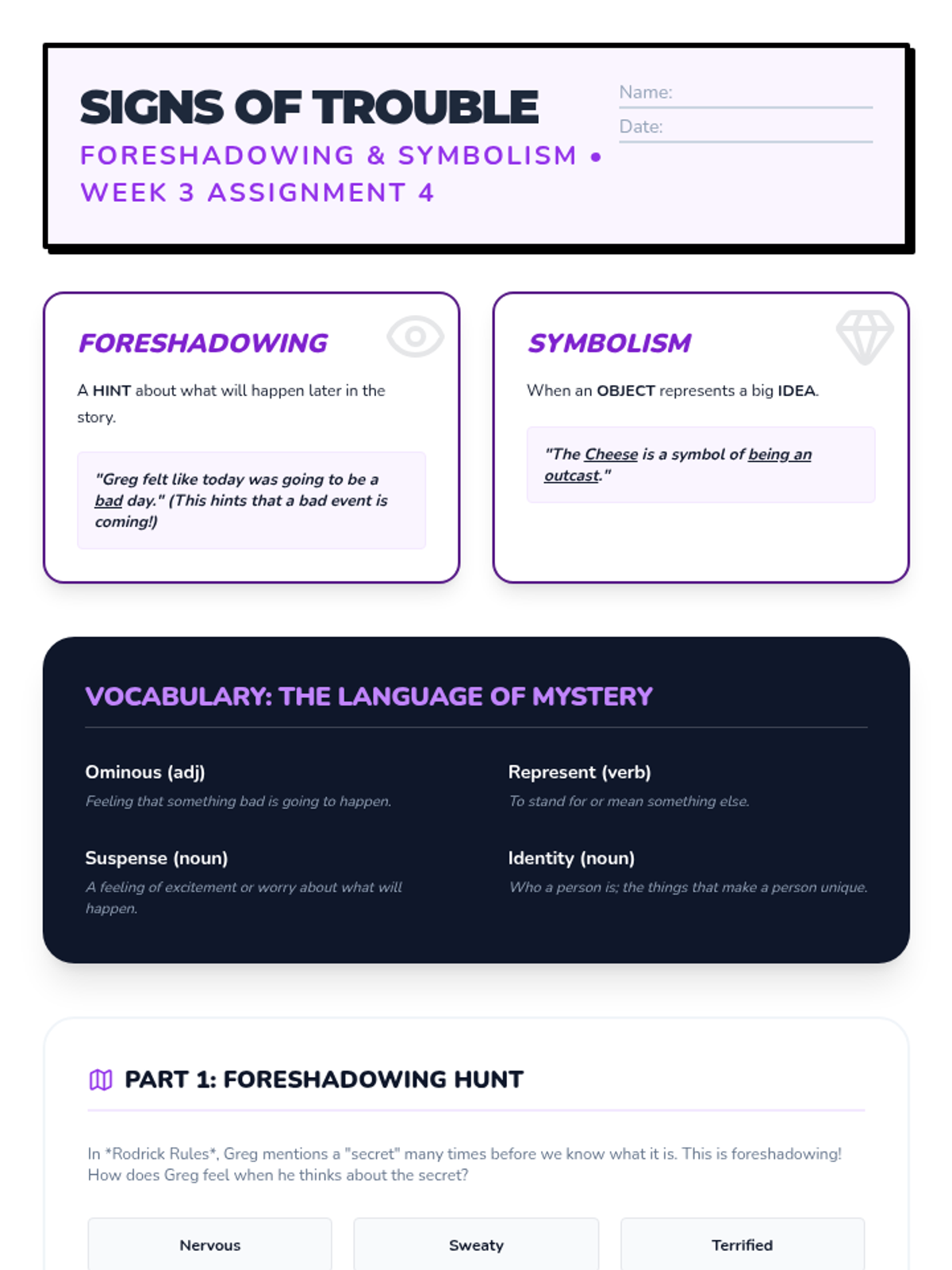
Transitioning to 'Rodrick Rules'. Focus on Foreshadowing (the embarrassing secret) and Oxymoron (Löded Diper). Sibling rivalry vocabulary and the concept of 'Leverage'.
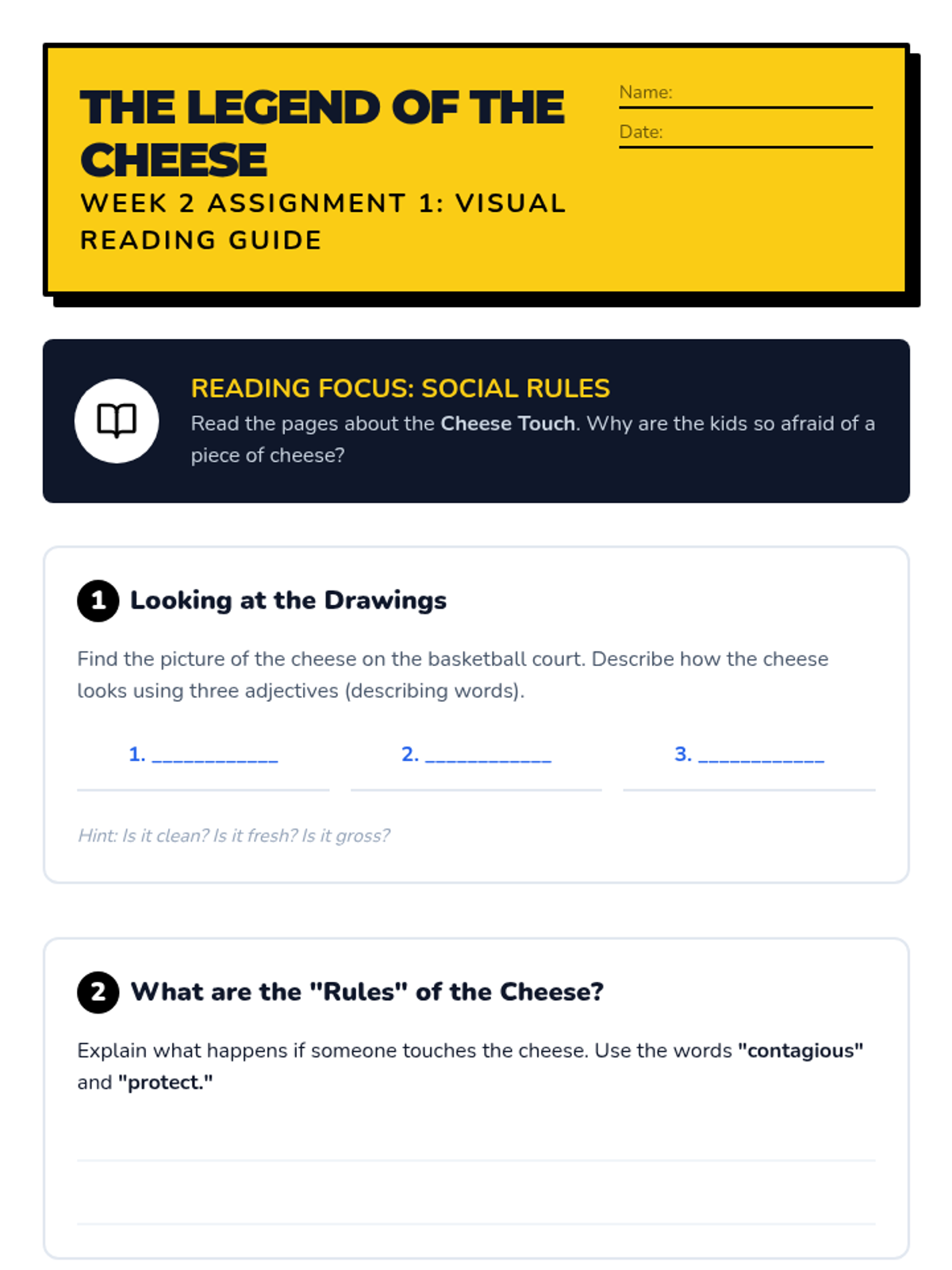
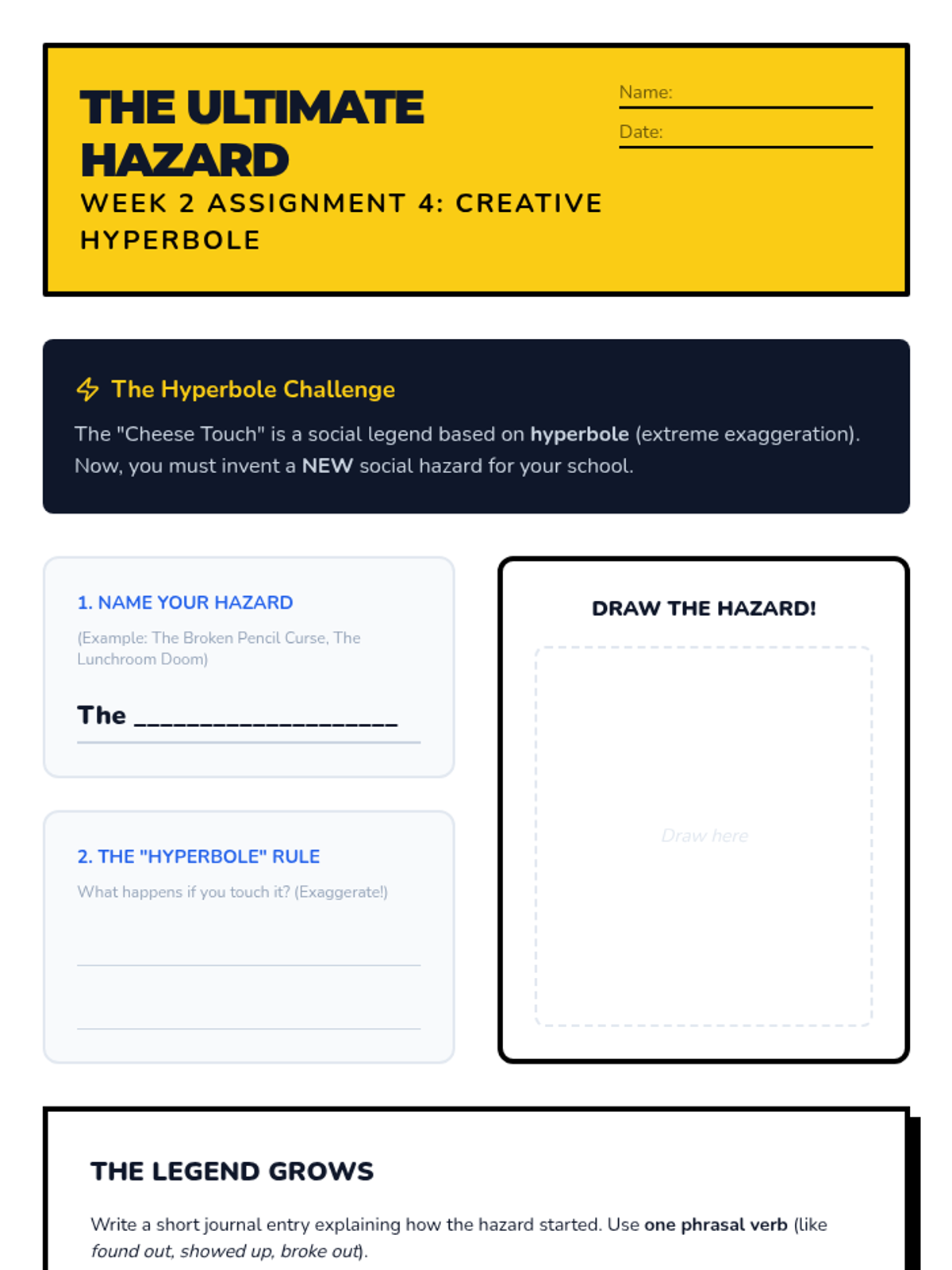
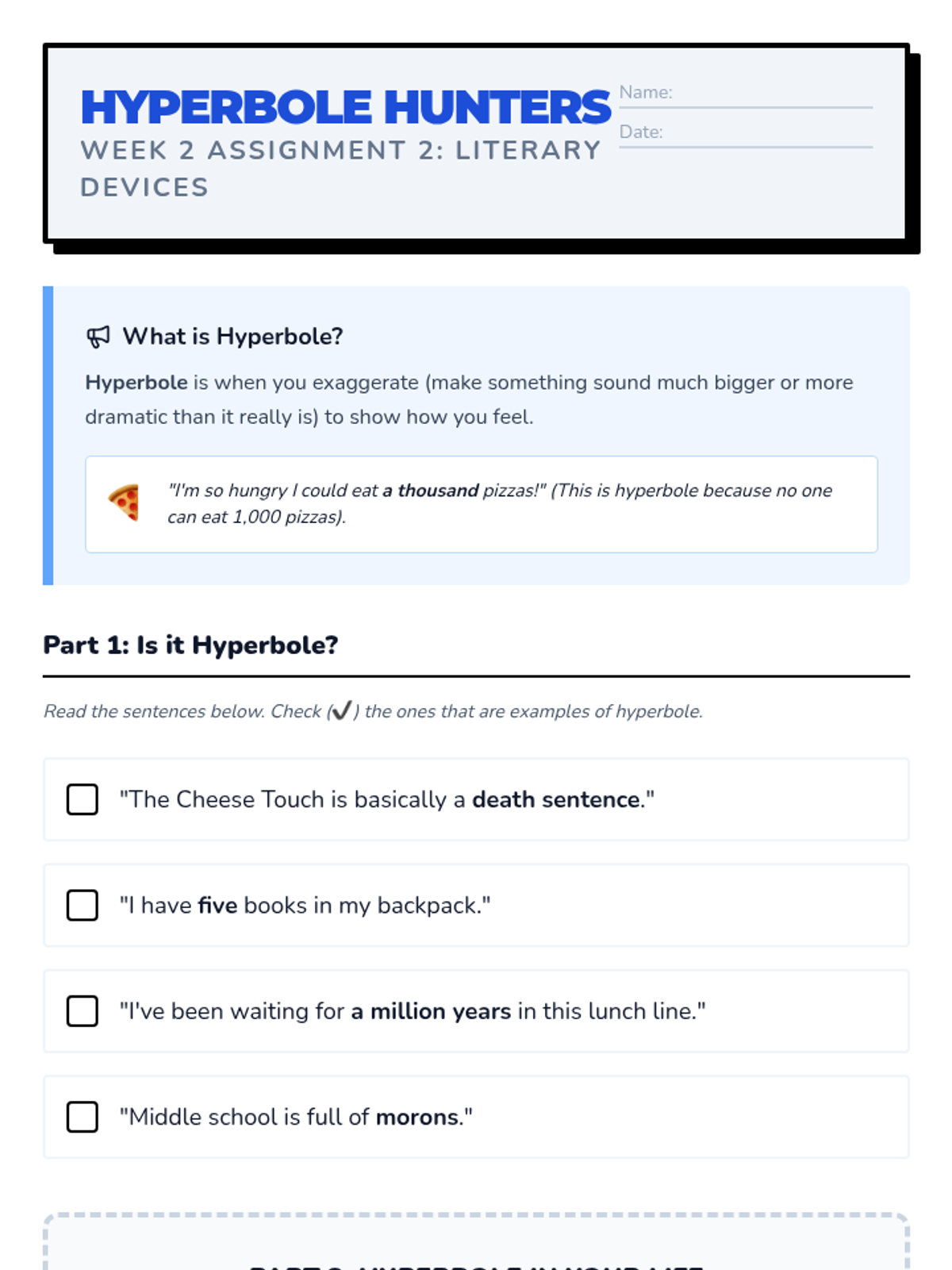
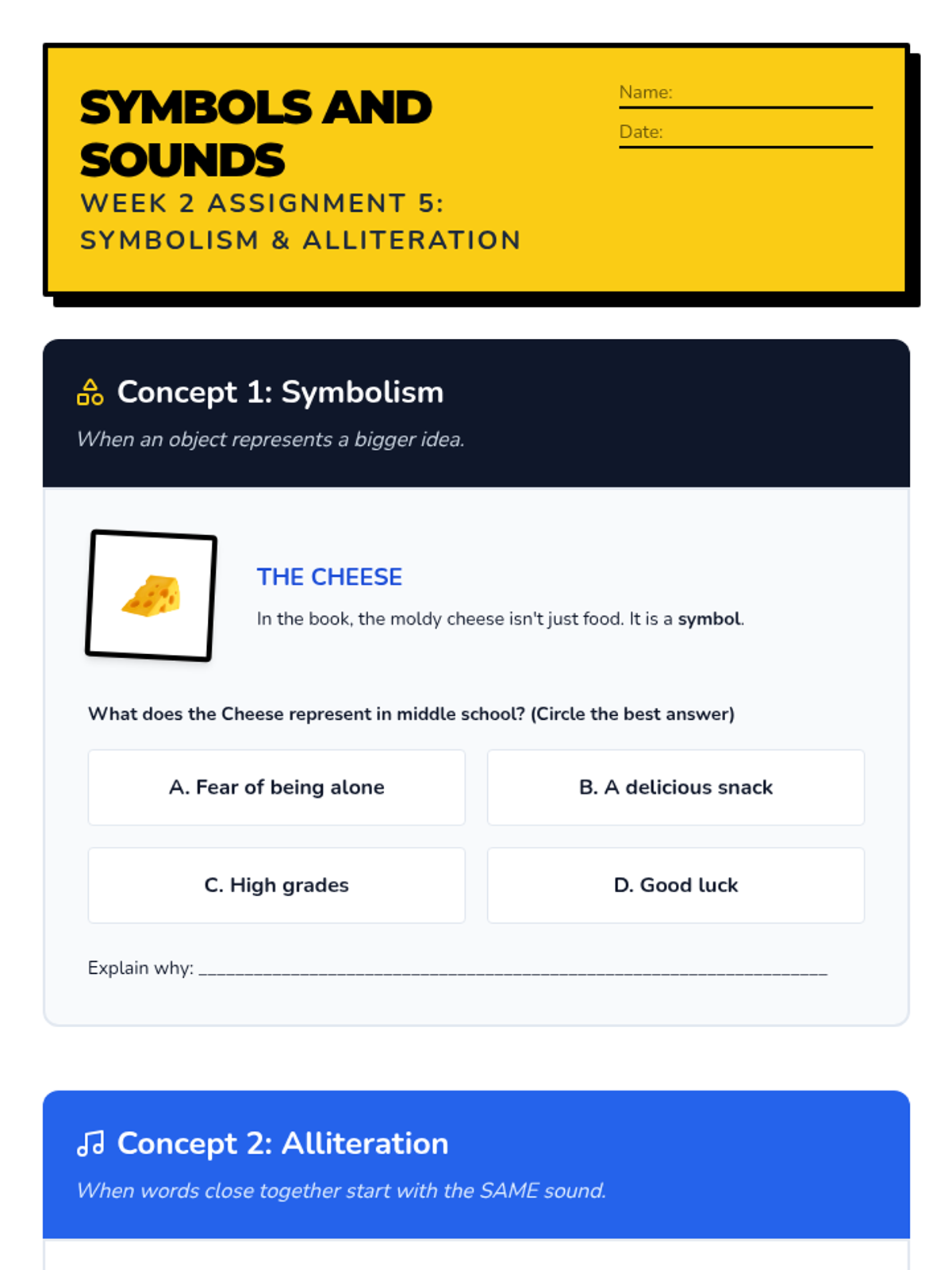
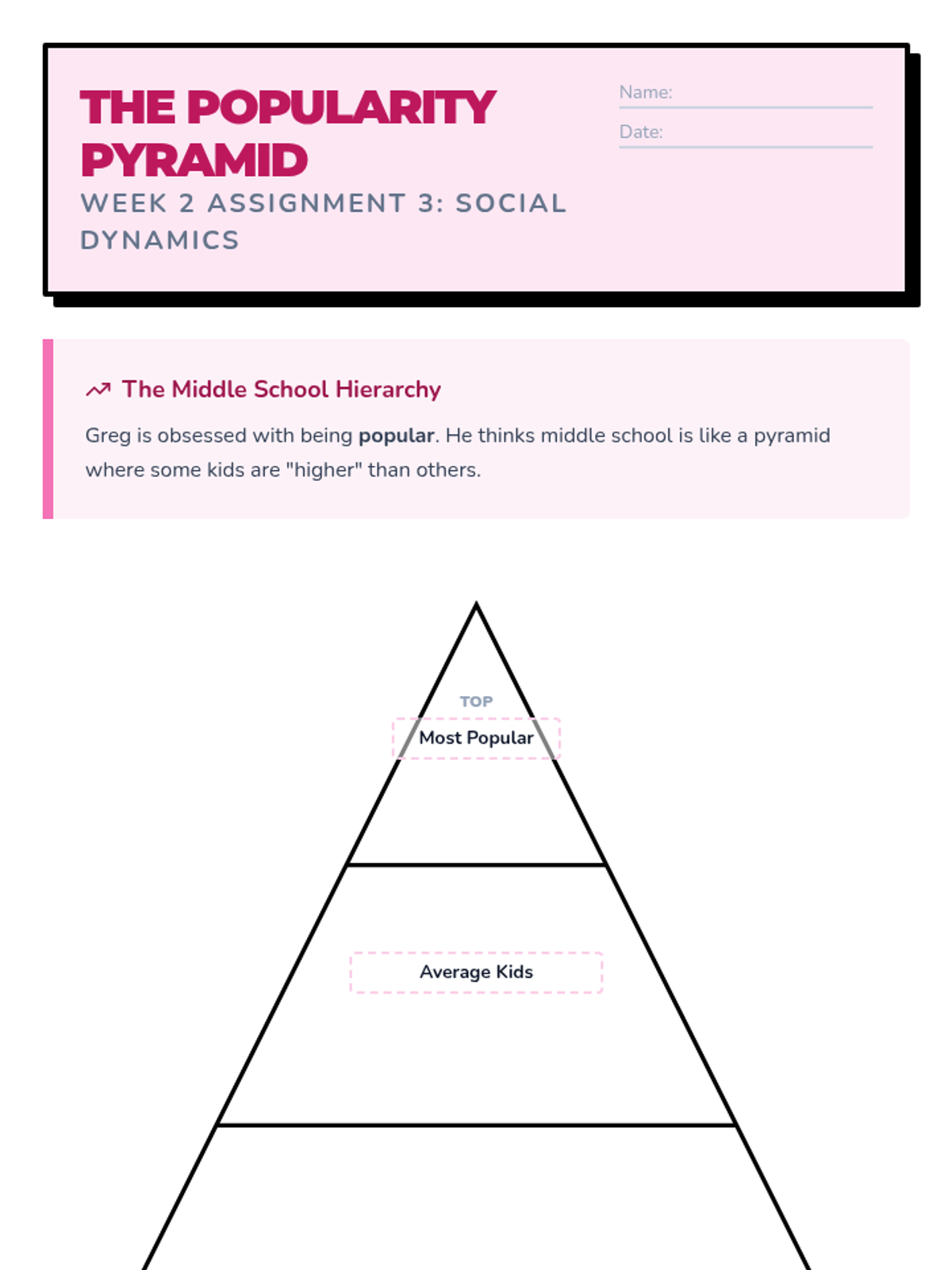
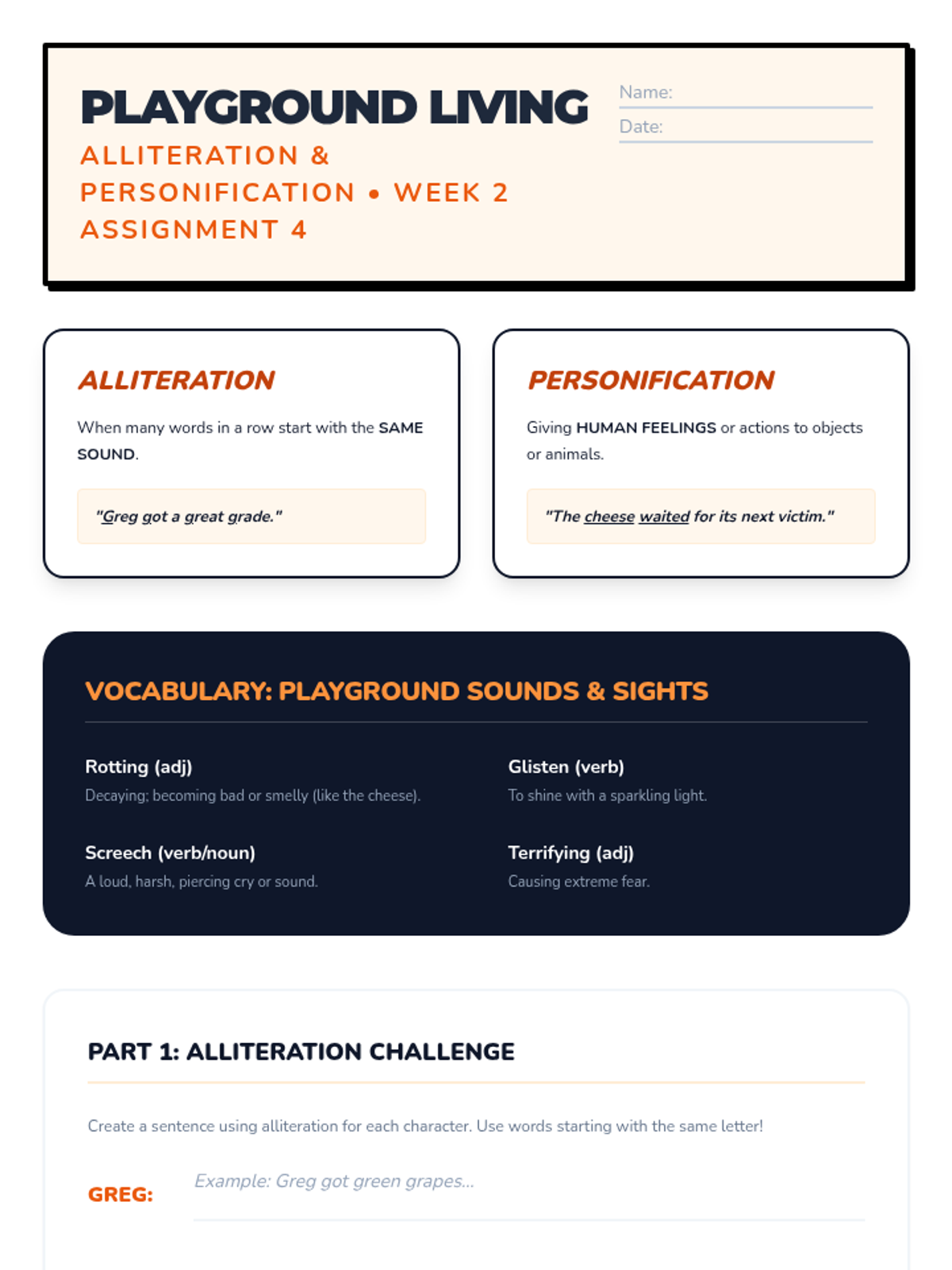
Exploring social hierarchies. Focus on Hyperbole (exaggeration), Symbolism (The Cheese), and Alliteration (Greg's insults). Vocabulary focus on 'Social Exclusion' and 'Status' terms.
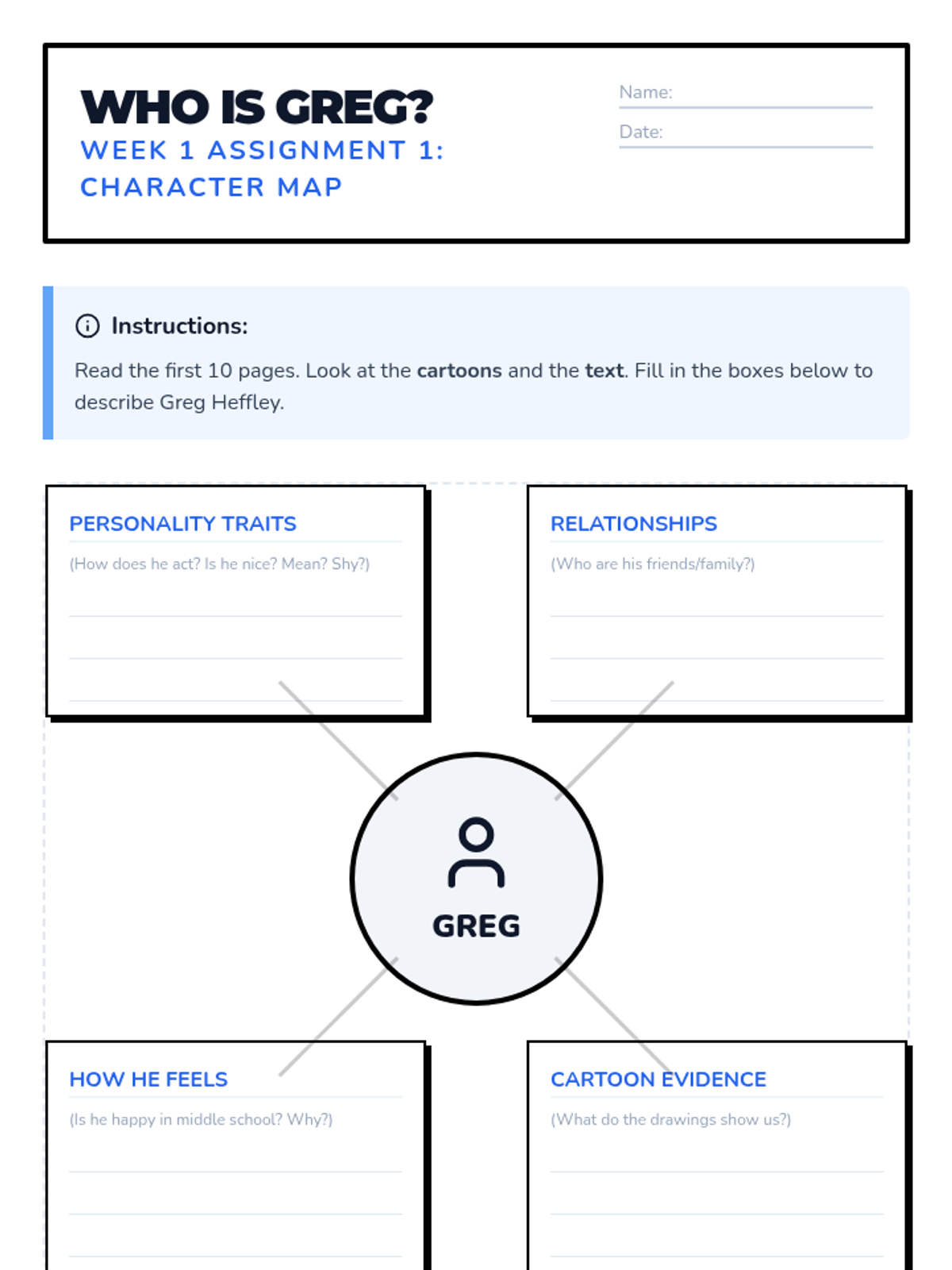
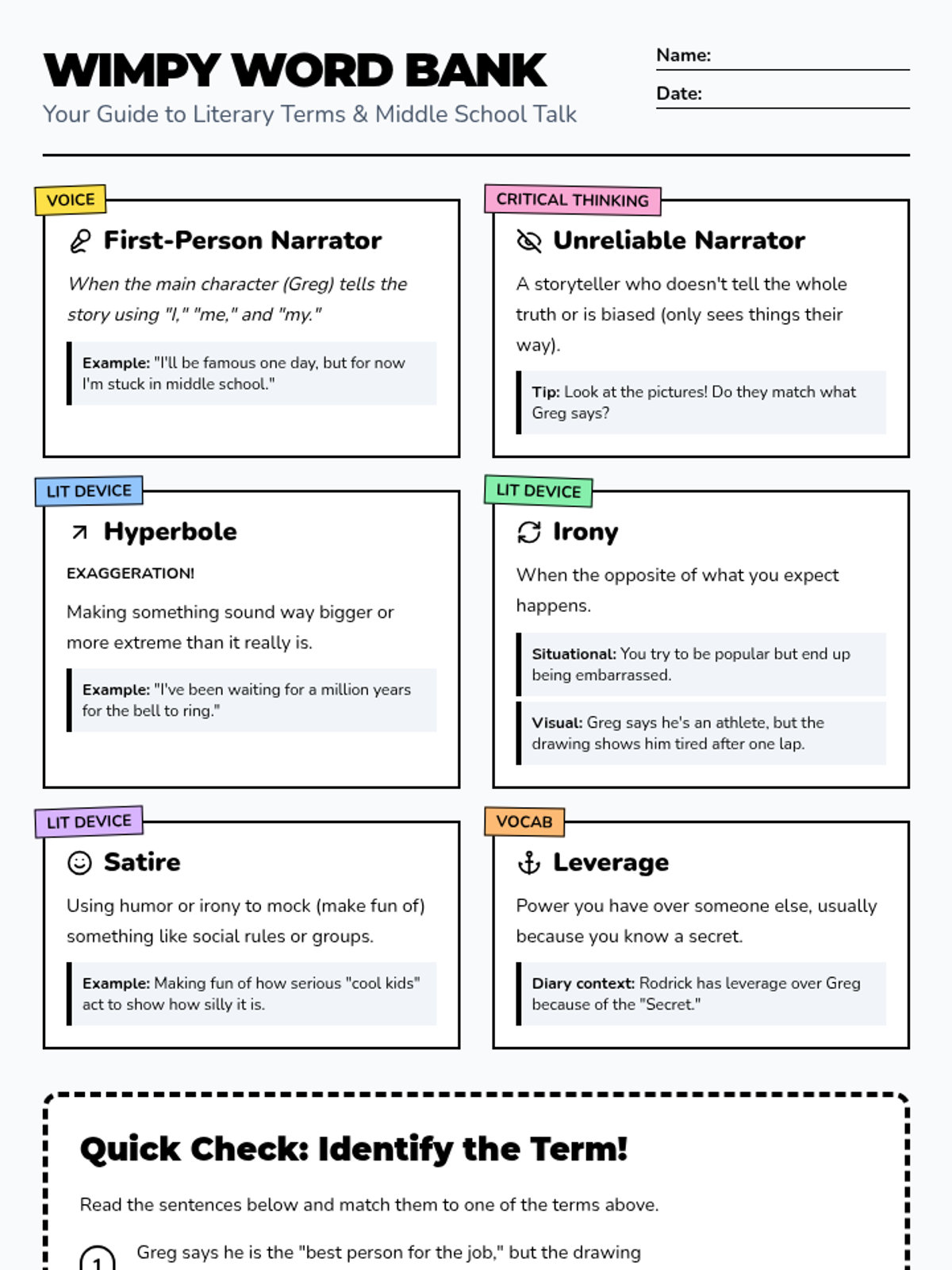
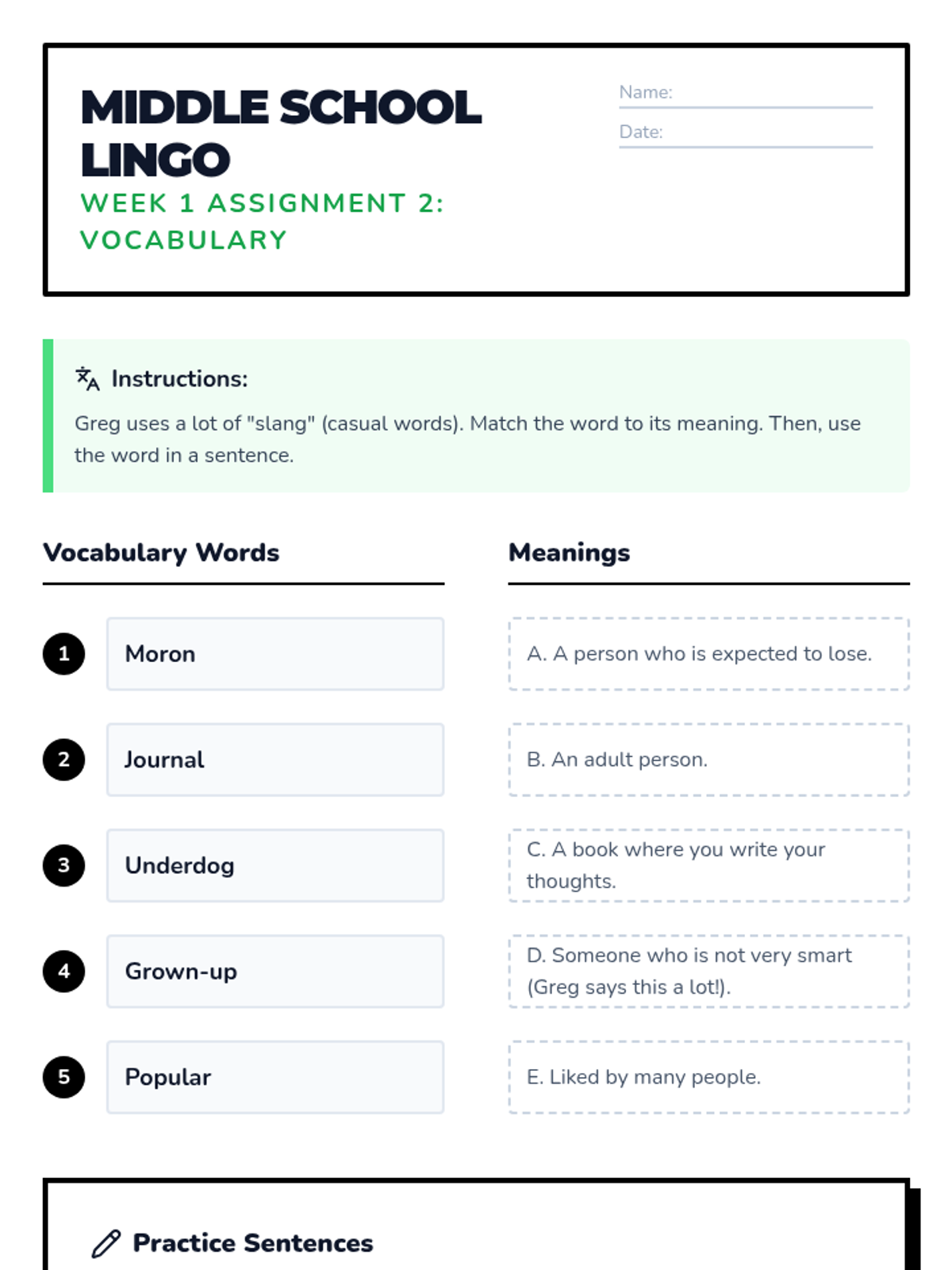
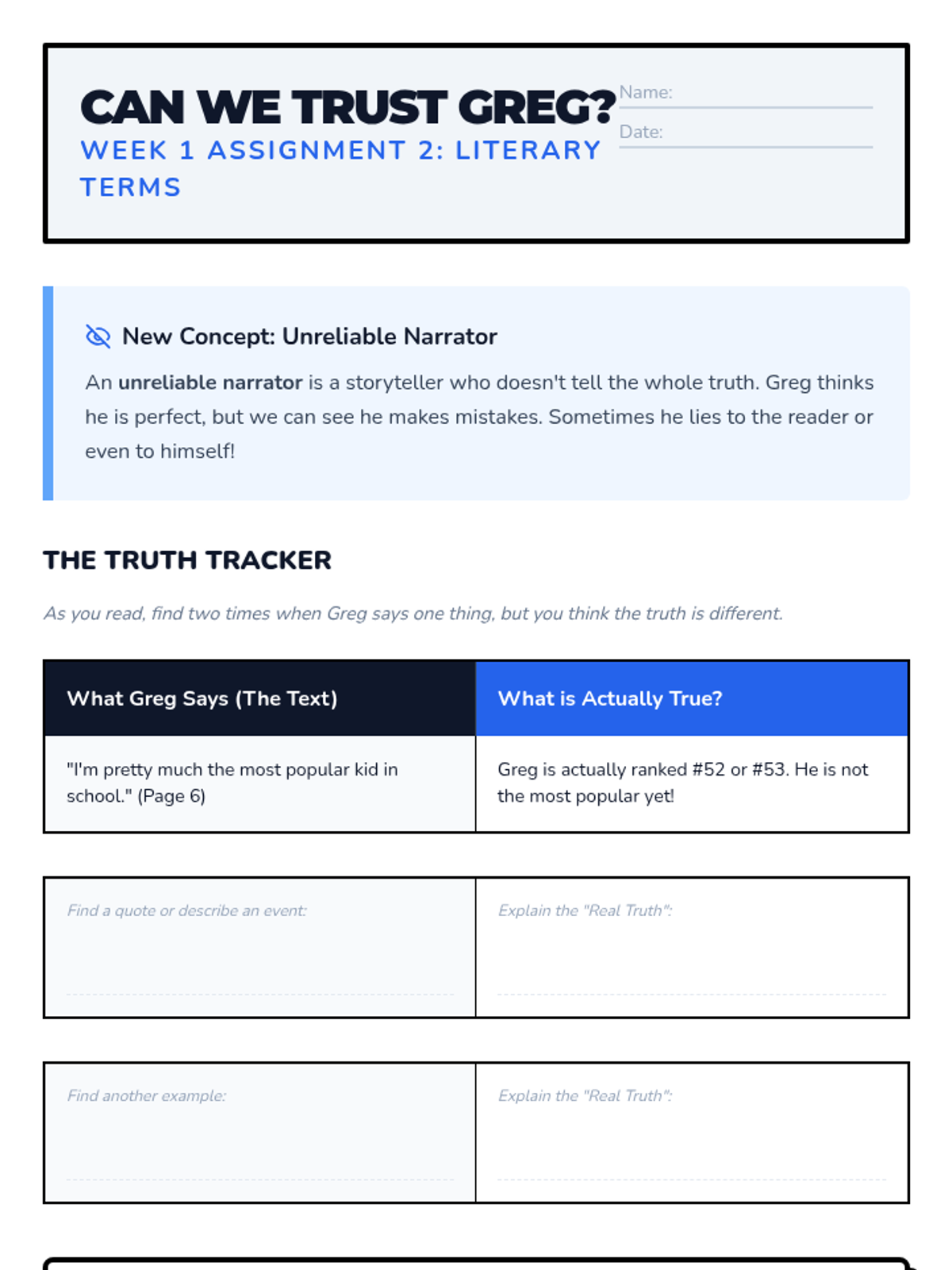
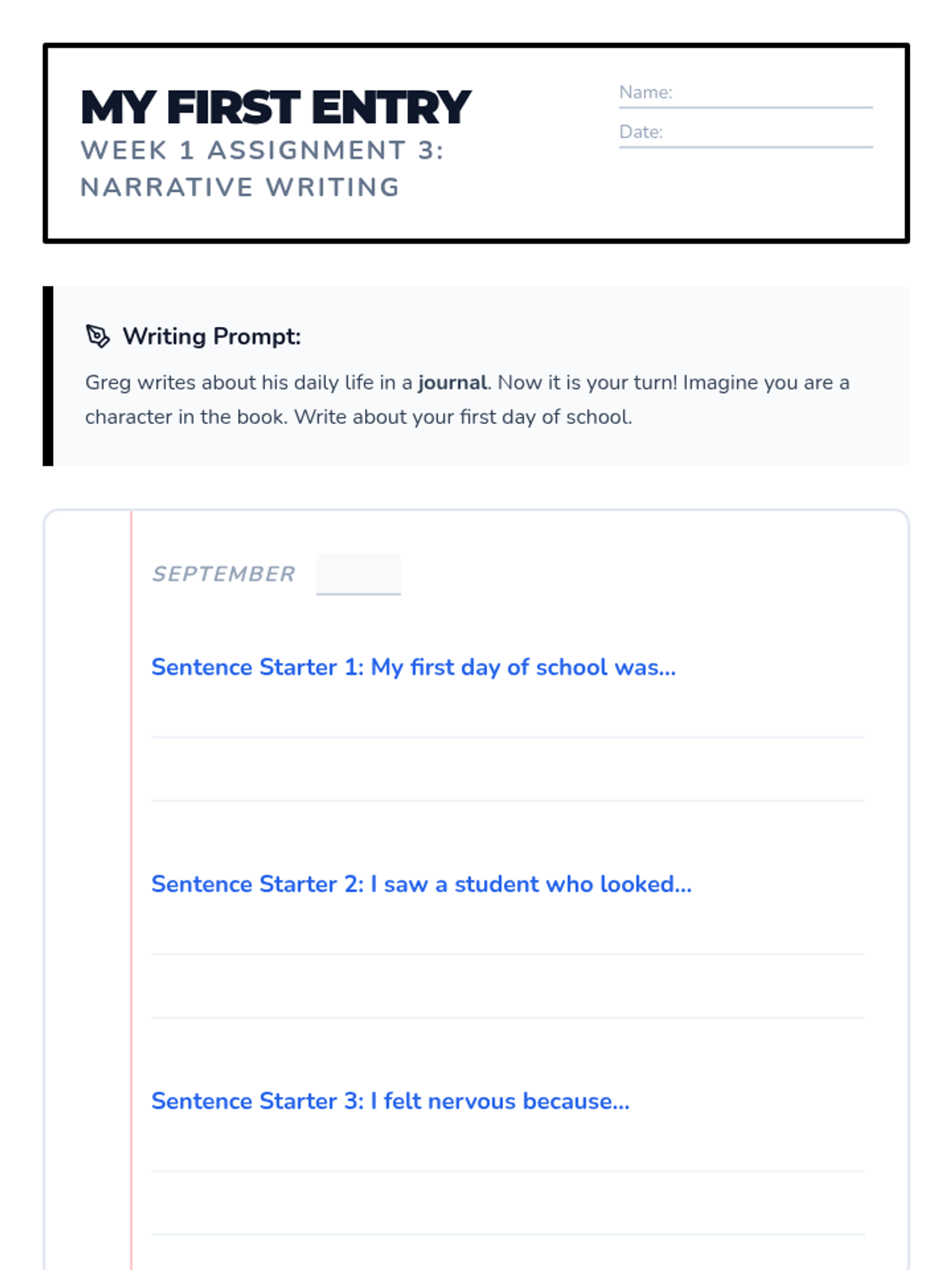
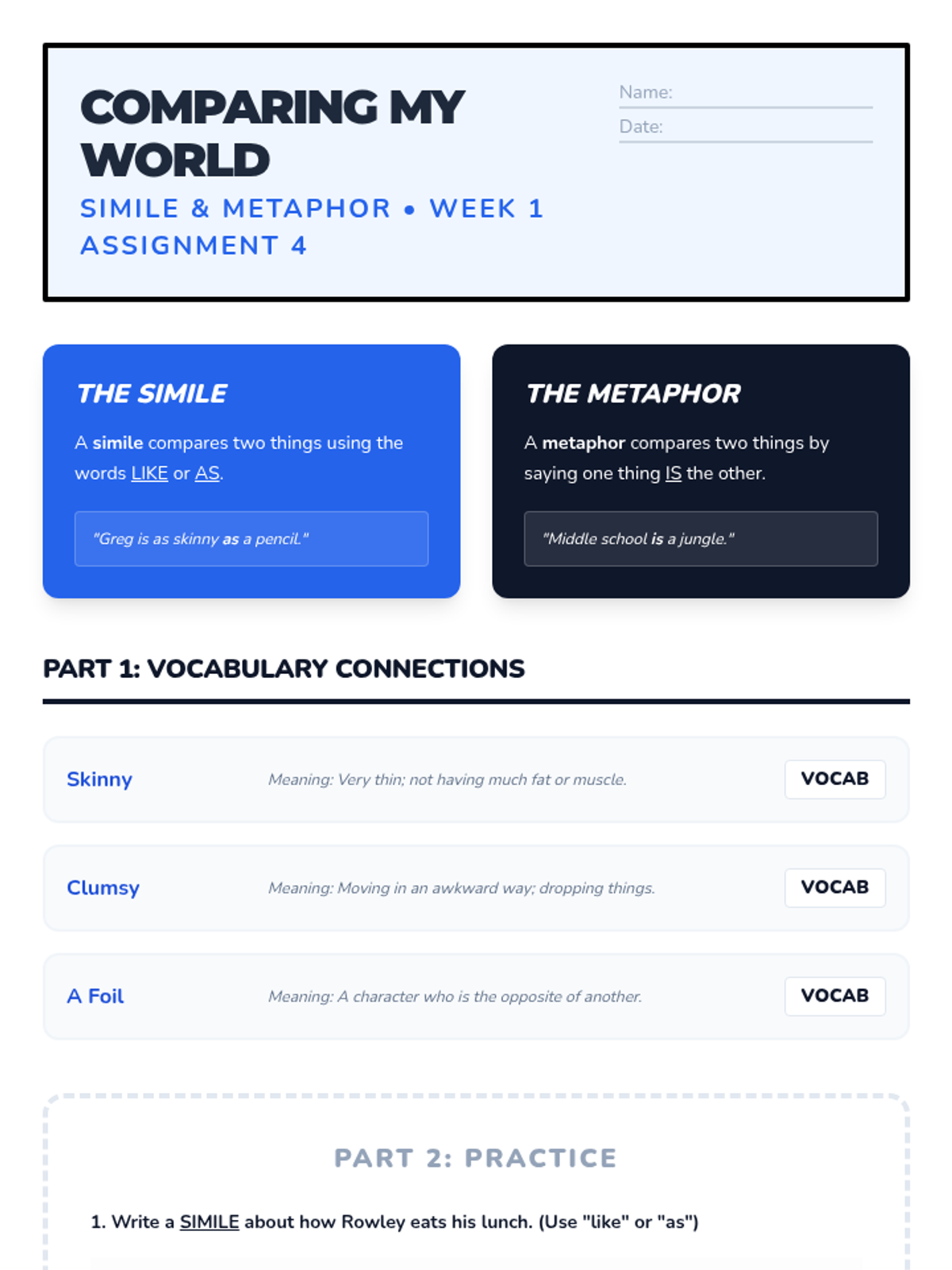
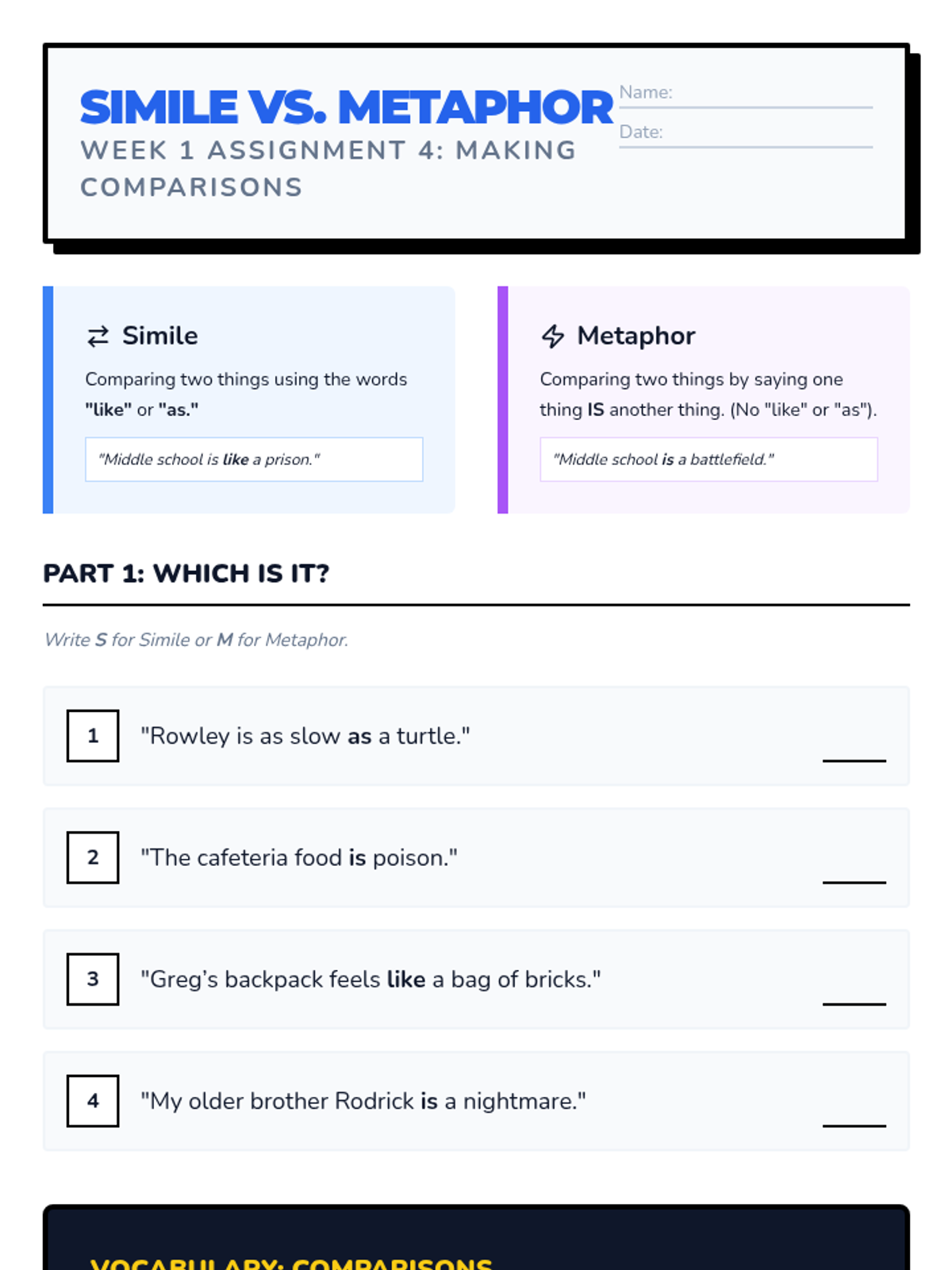
Introduction to Greg Heffley and narrative voice. Students master First-Person Narrator and Unreliable Narrator concepts while learning Simile and Metaphor through Greg's school comparisons. Focus on 'Middle School Lingo' vocabulary.
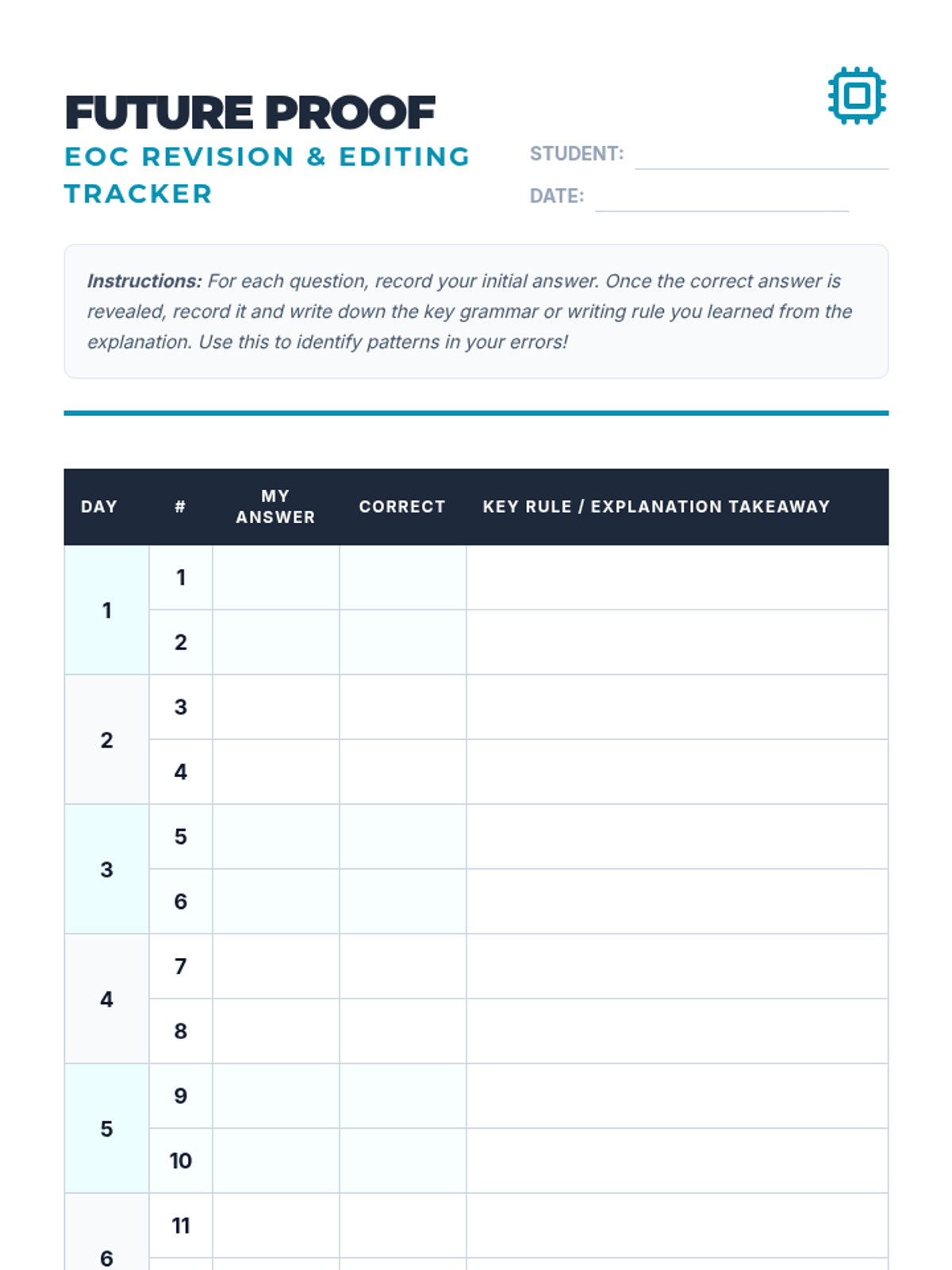
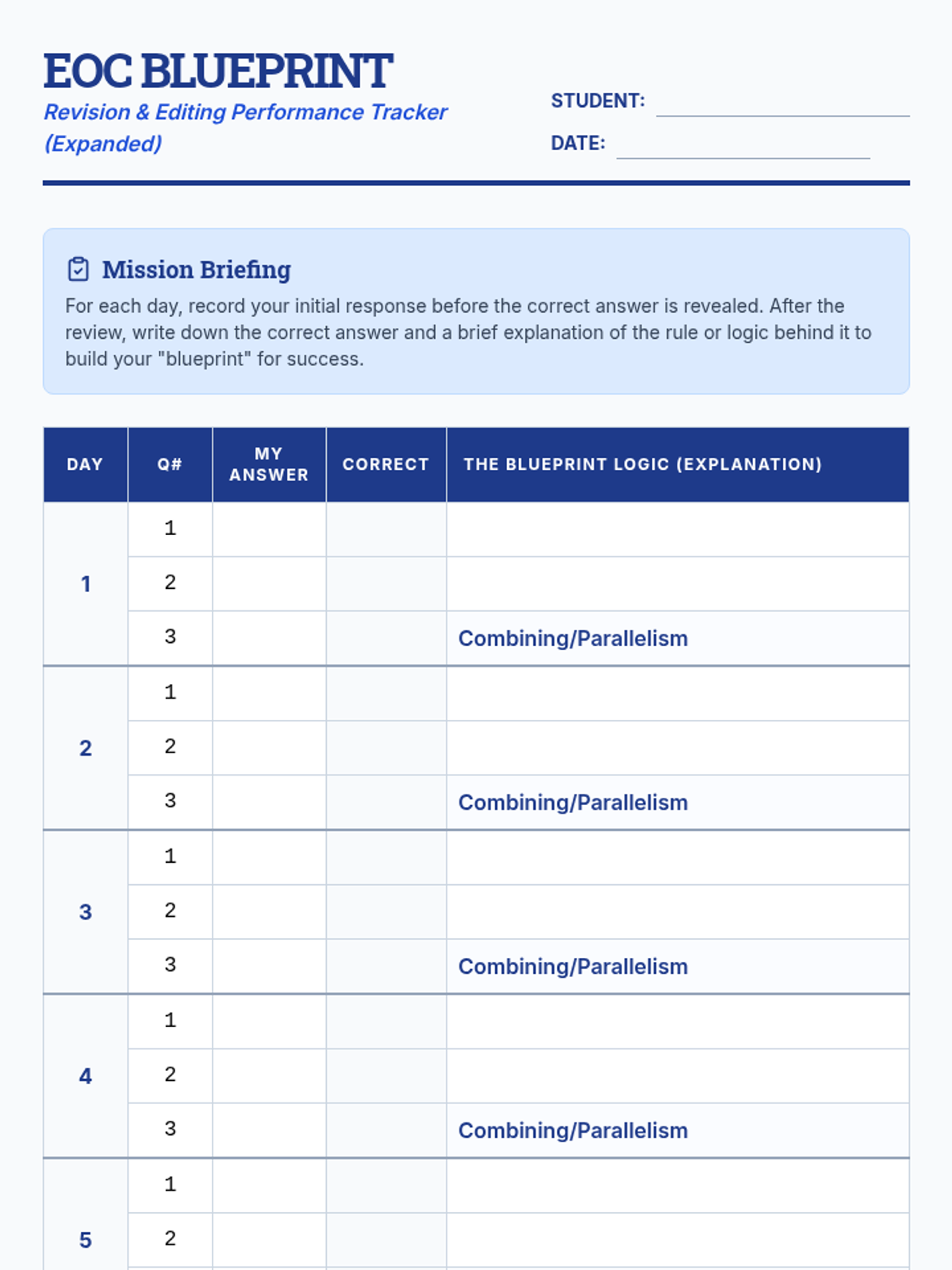
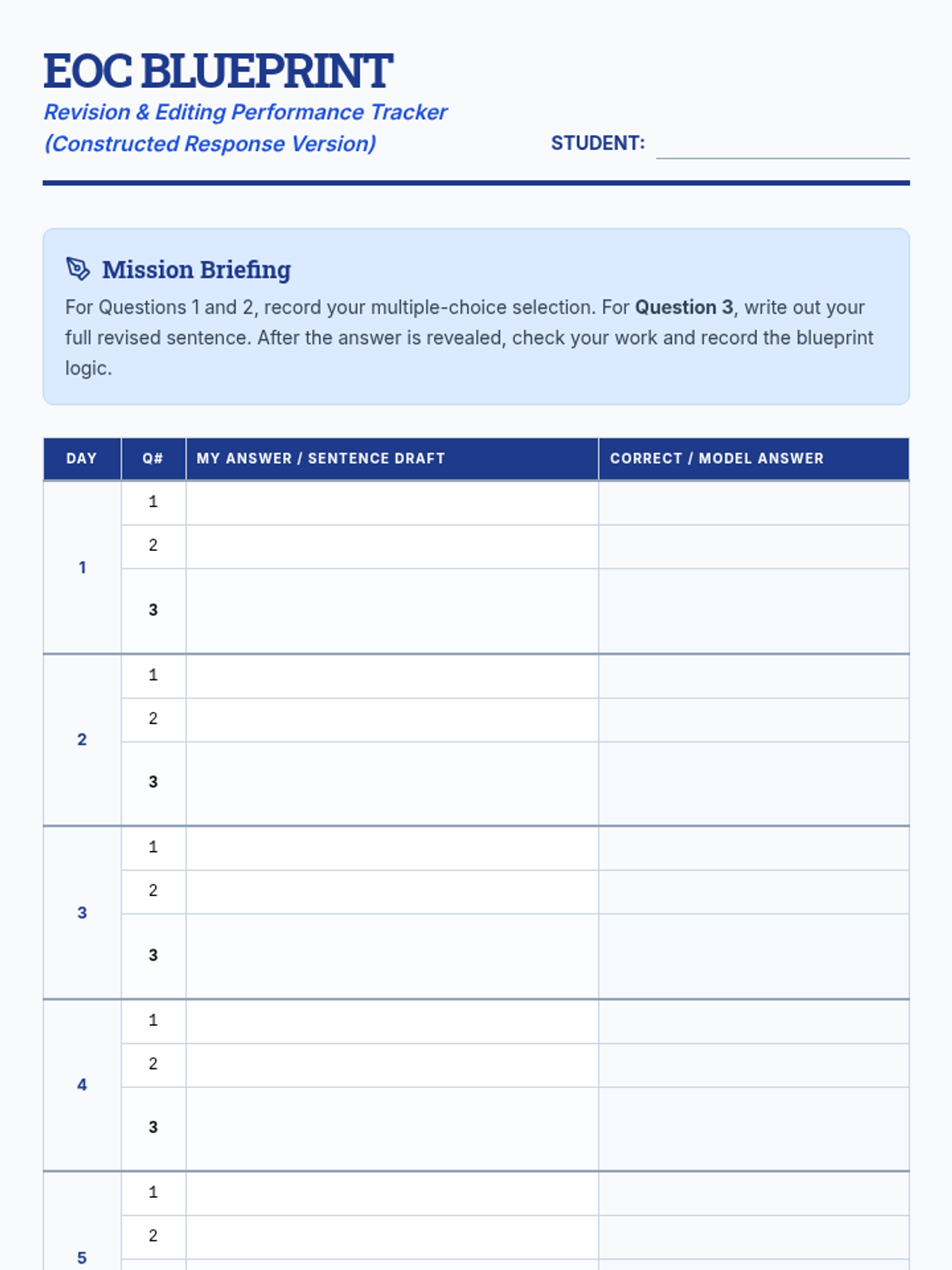
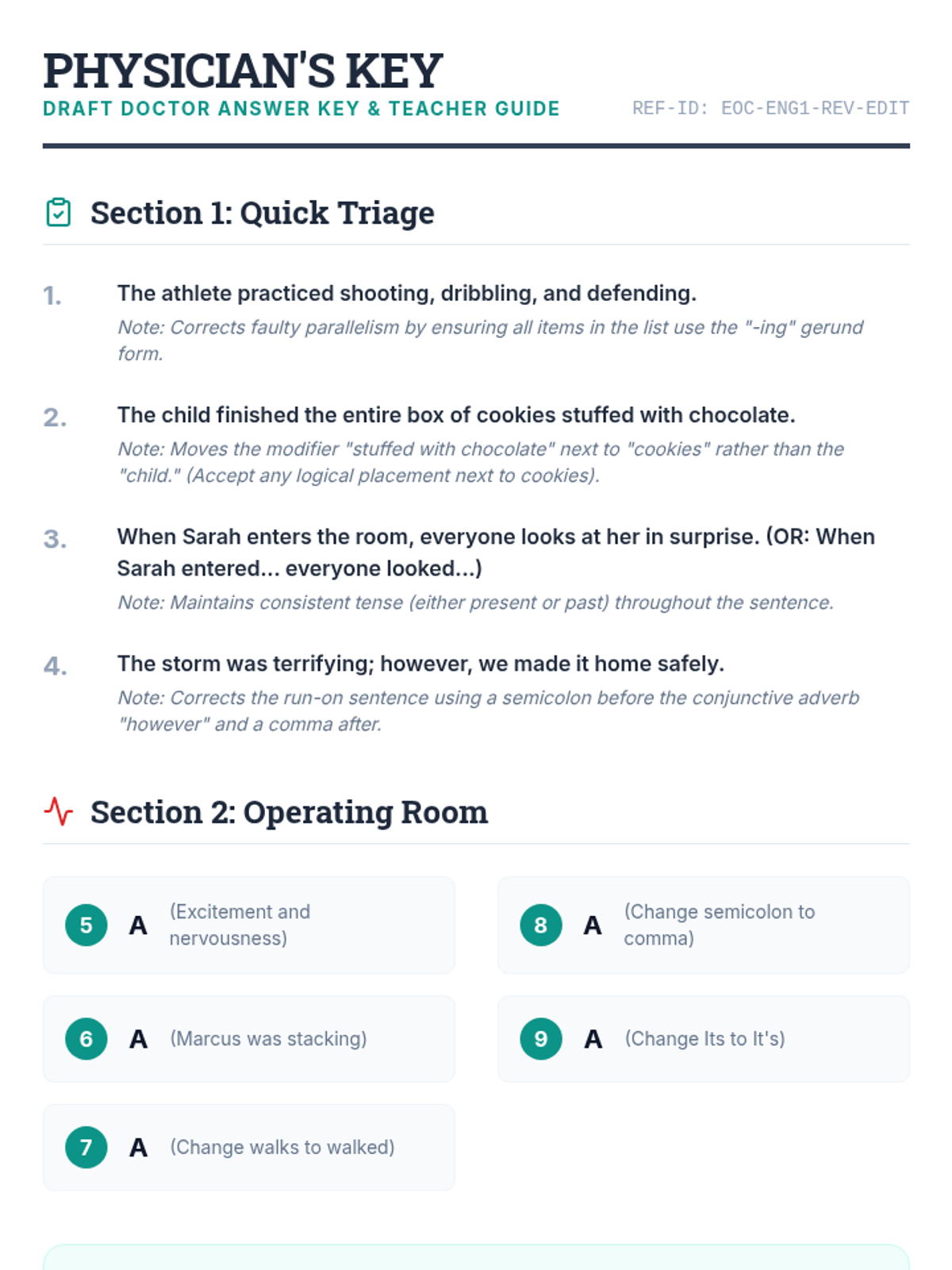
A comprehensive 10-day revising and editing practice sequence focused on English 1 TEKS, featuring career and technology-themed passages and questions mirroring the Texas EOC exam.
Focus on Transportation, Distribution, and Logistics with a mixed review of revision and editing skills.
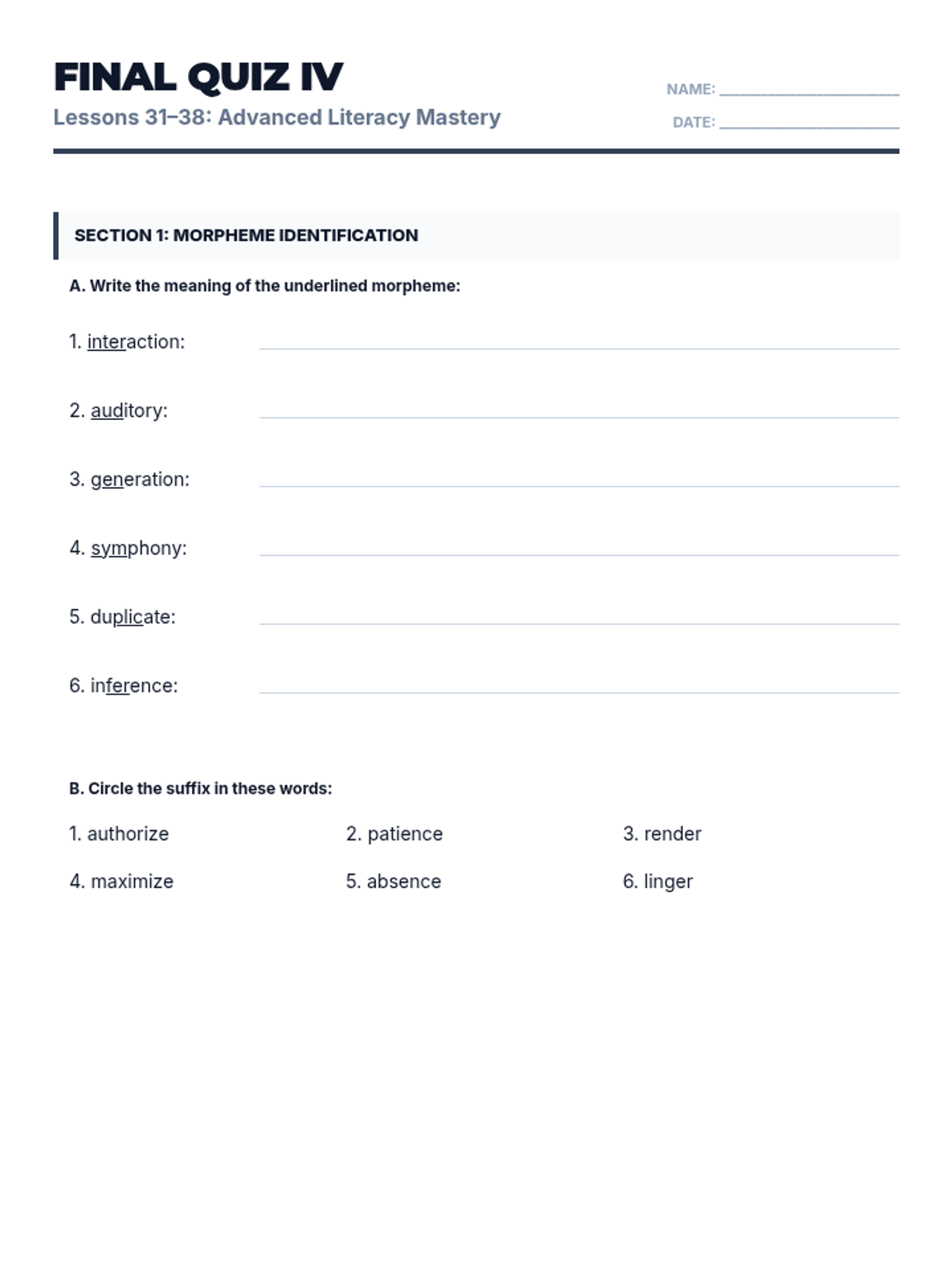
A final formal assessment for the Reading Power Pack, covering all morphology and complex vowel skills from Lessons 31-38.
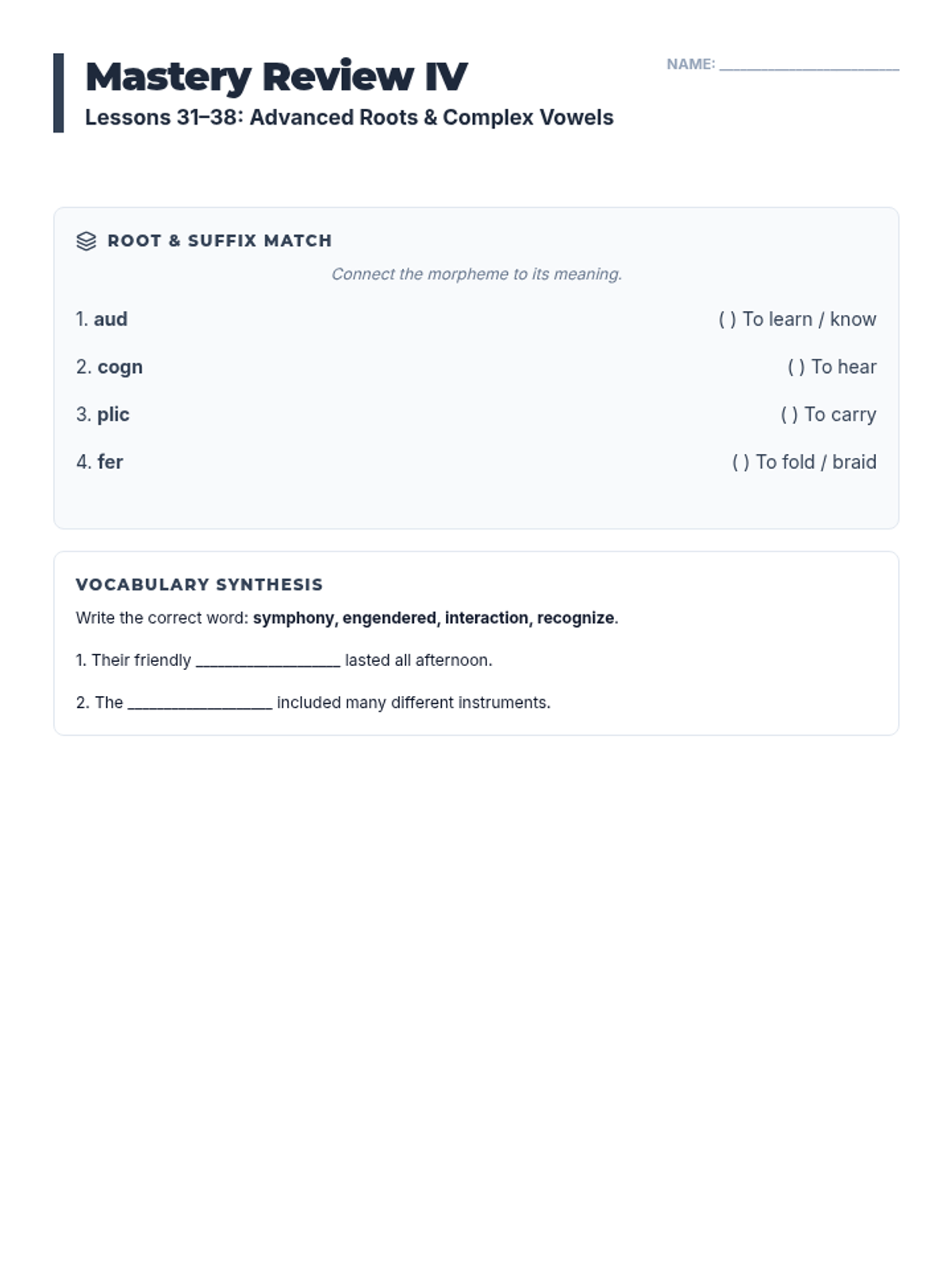
A comprehensive review of Lessons 31-38, covering advanced morphology and complex vowel teams (diphthongs).
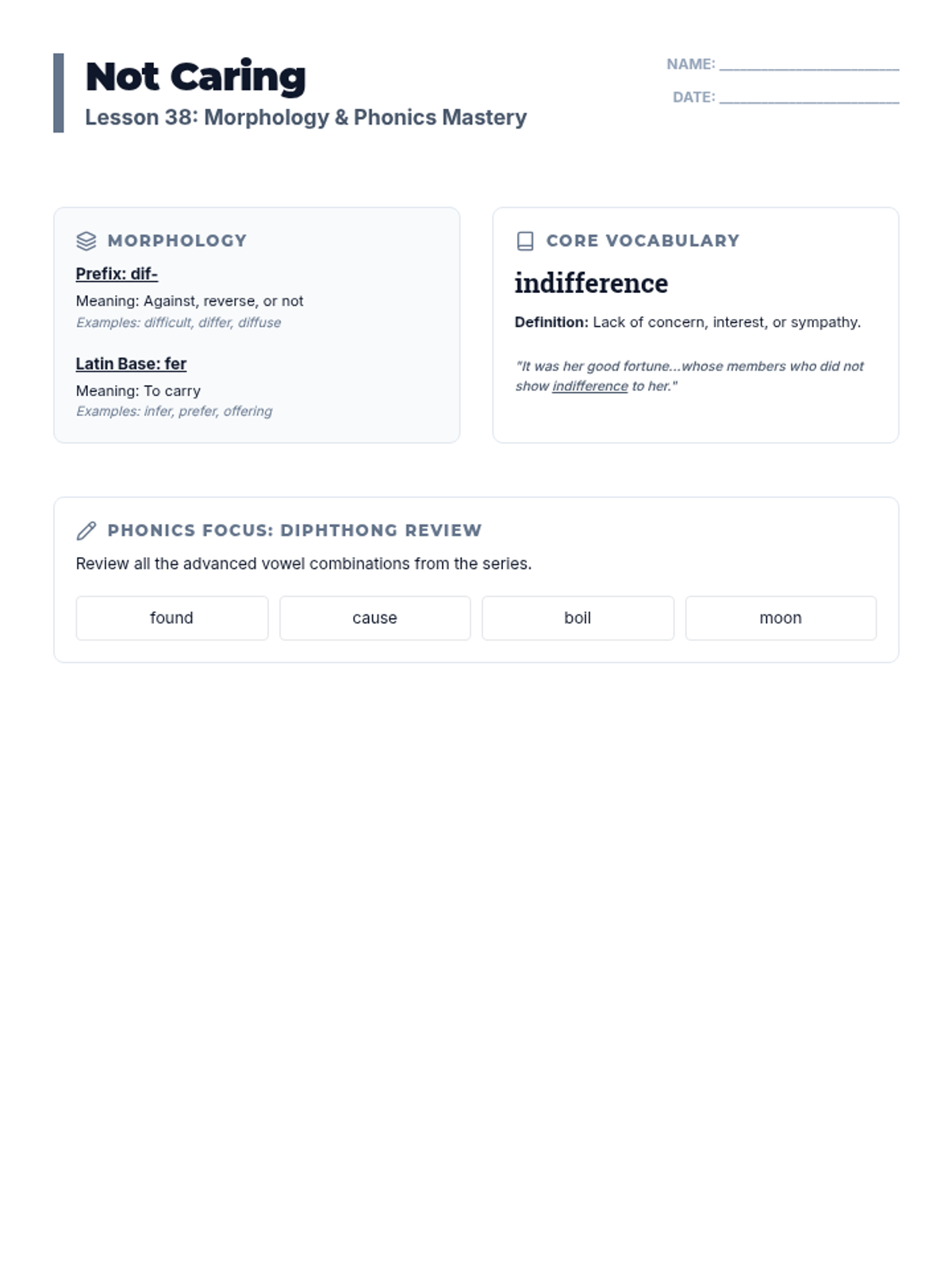
Focuses on the prefix dif- and root fer, with the vocabulary word 'indifference'. Teaches synthesis of complex vowel patterns.
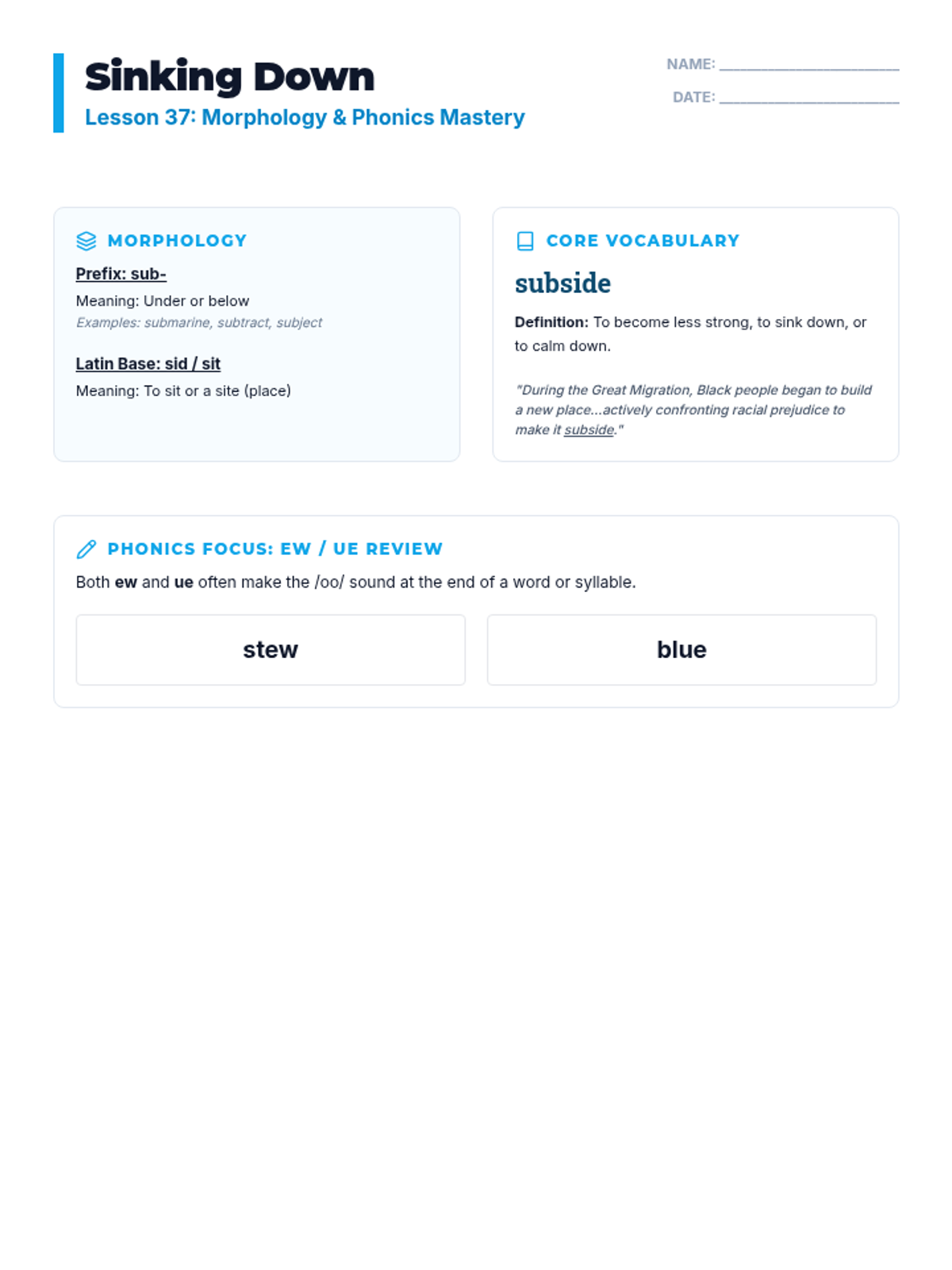
Focuses on the prefix sub- and root sid/sit, with the vocabulary word 'subside'. Teaches diphthongs ew and ue review.
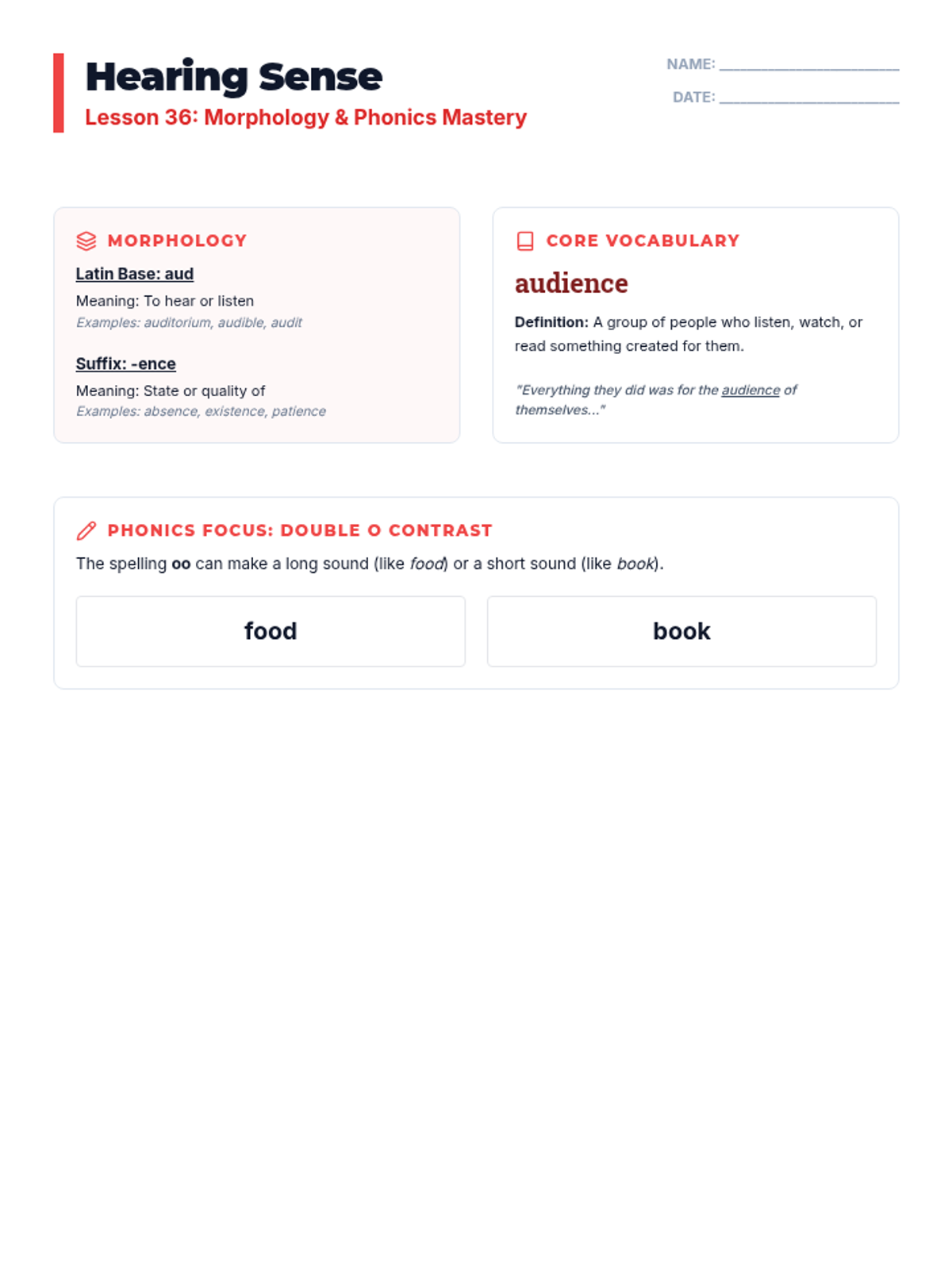
Focuses on the root aud and suffix -ence, with the vocabulary word 'audience'. Teaches the diphthong oo (food vs book).
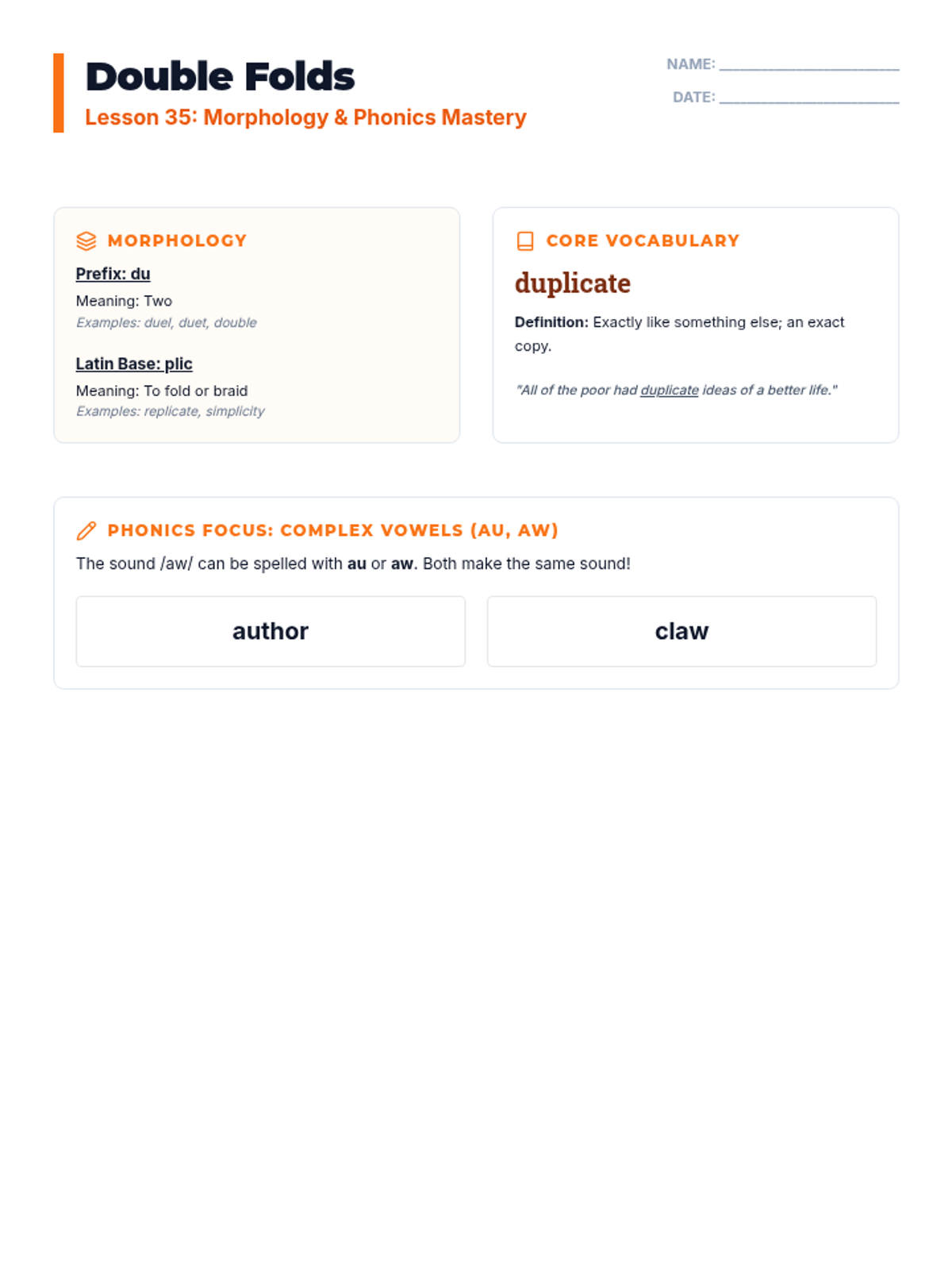
Focuses on the prefix du and root plic, with the vocabulary word 'duplicate'. Teaches diphthongs au and aw.
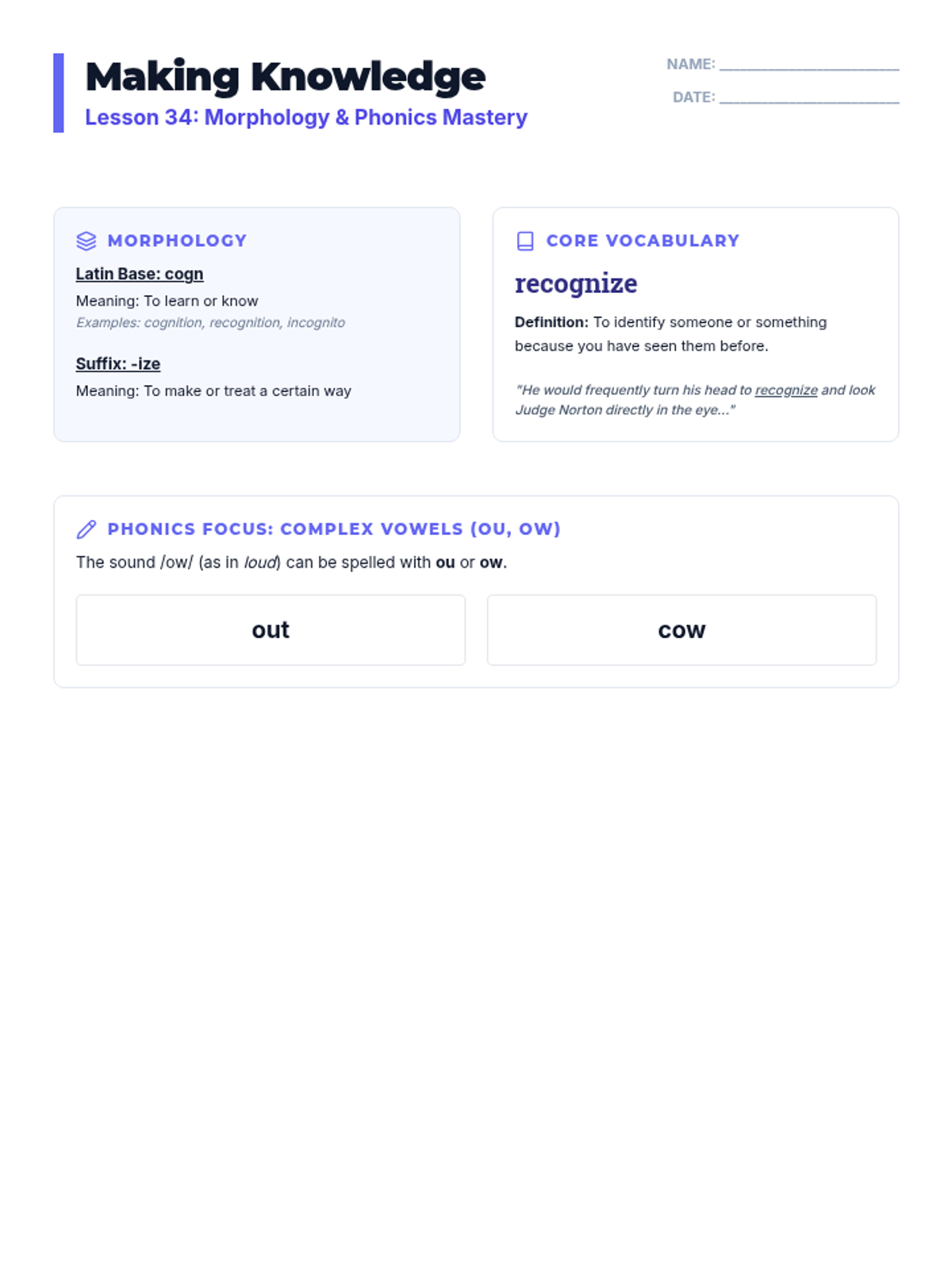
Focuses on the root cogn and suffix -ize, with the vocabulary word 'recognize'. Teaches diphthongs ou and ow.
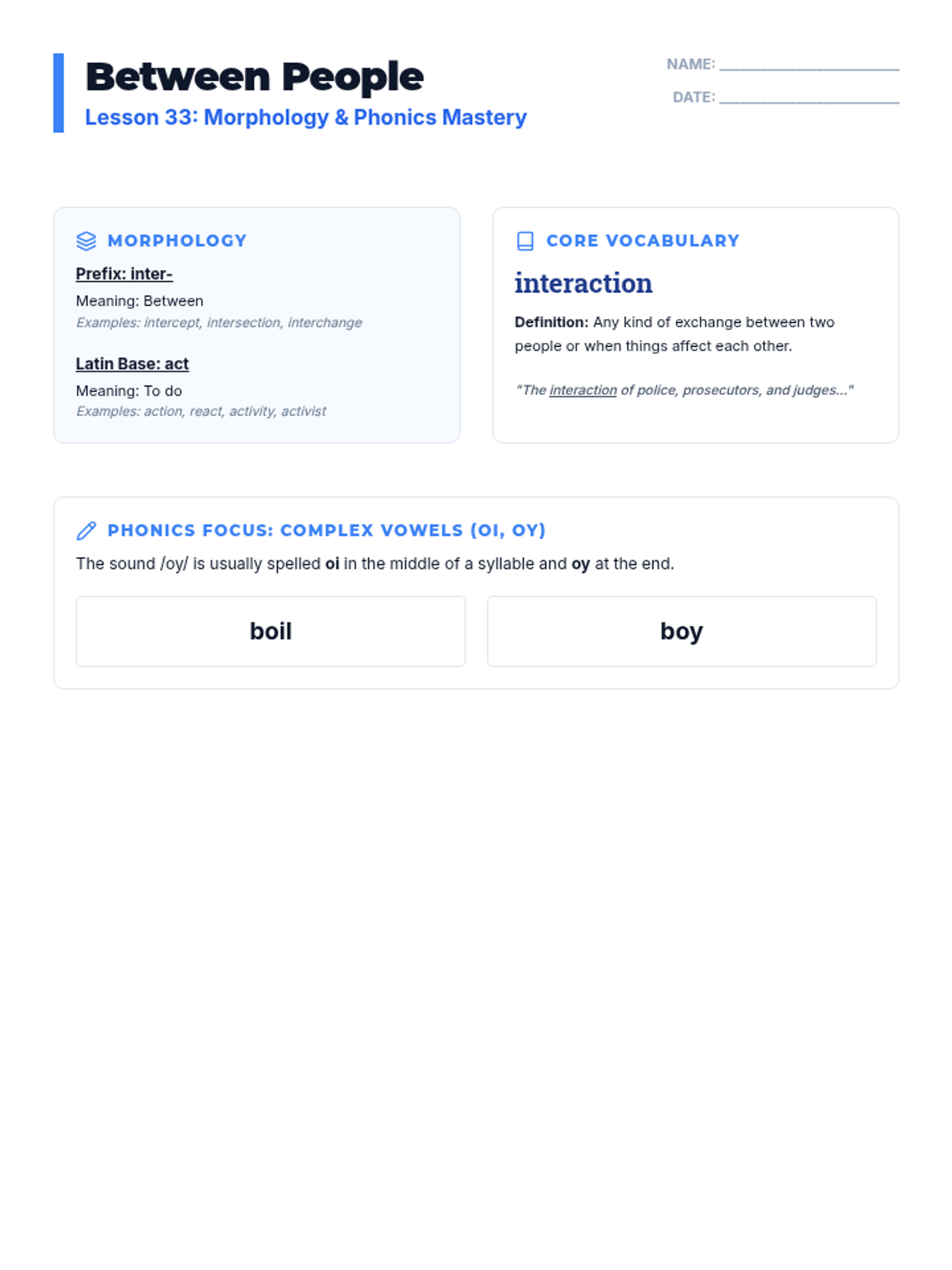
Focuses on the prefix inter- and root act, with the vocabulary word 'interaction'. Teaches diphthongs oi and oy.
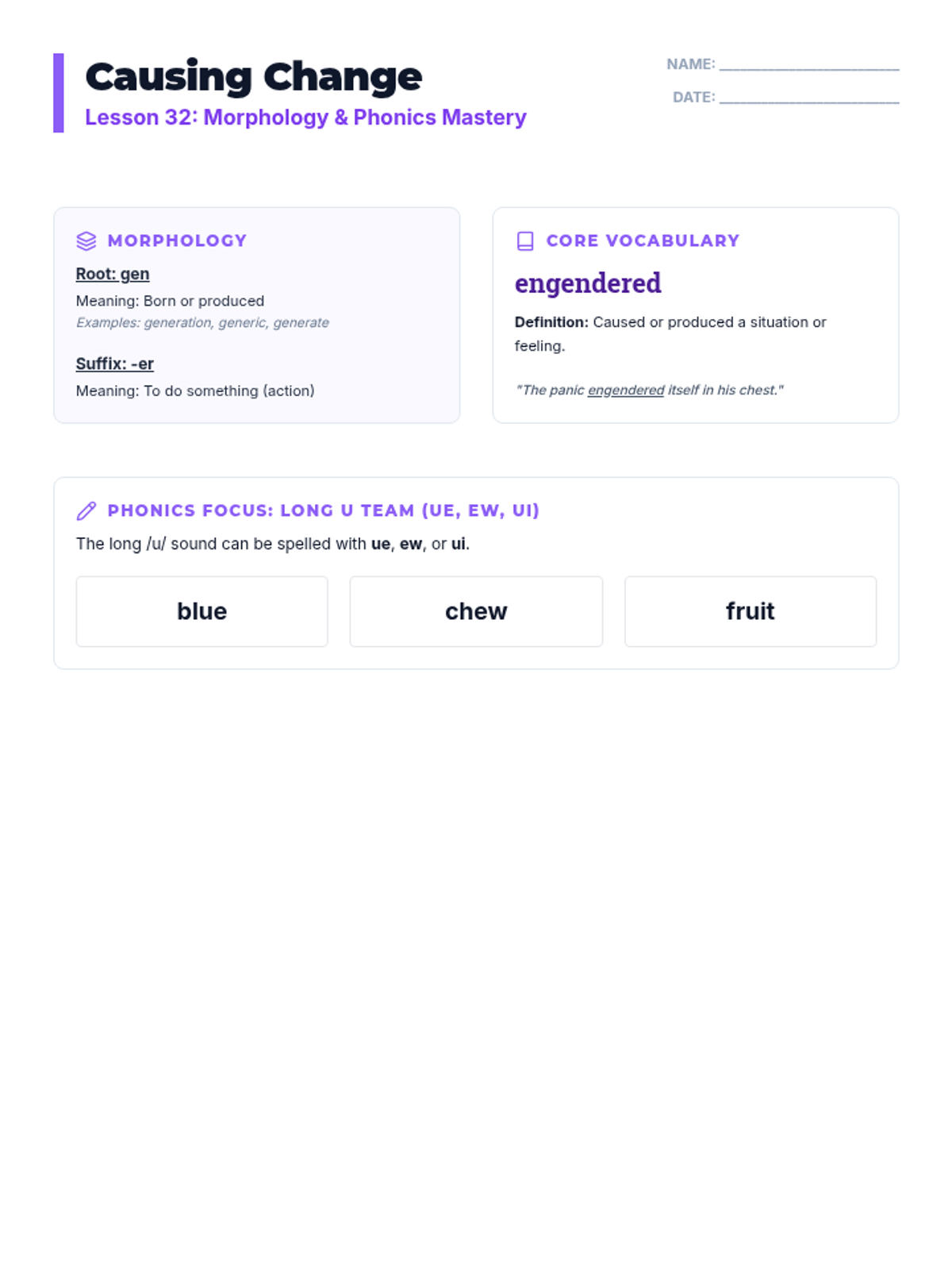
Focuses on the root gen and suffix -er, with the vocabulary word 'engendered'. Teaches Long U vowel teams (ue, ew, ui).
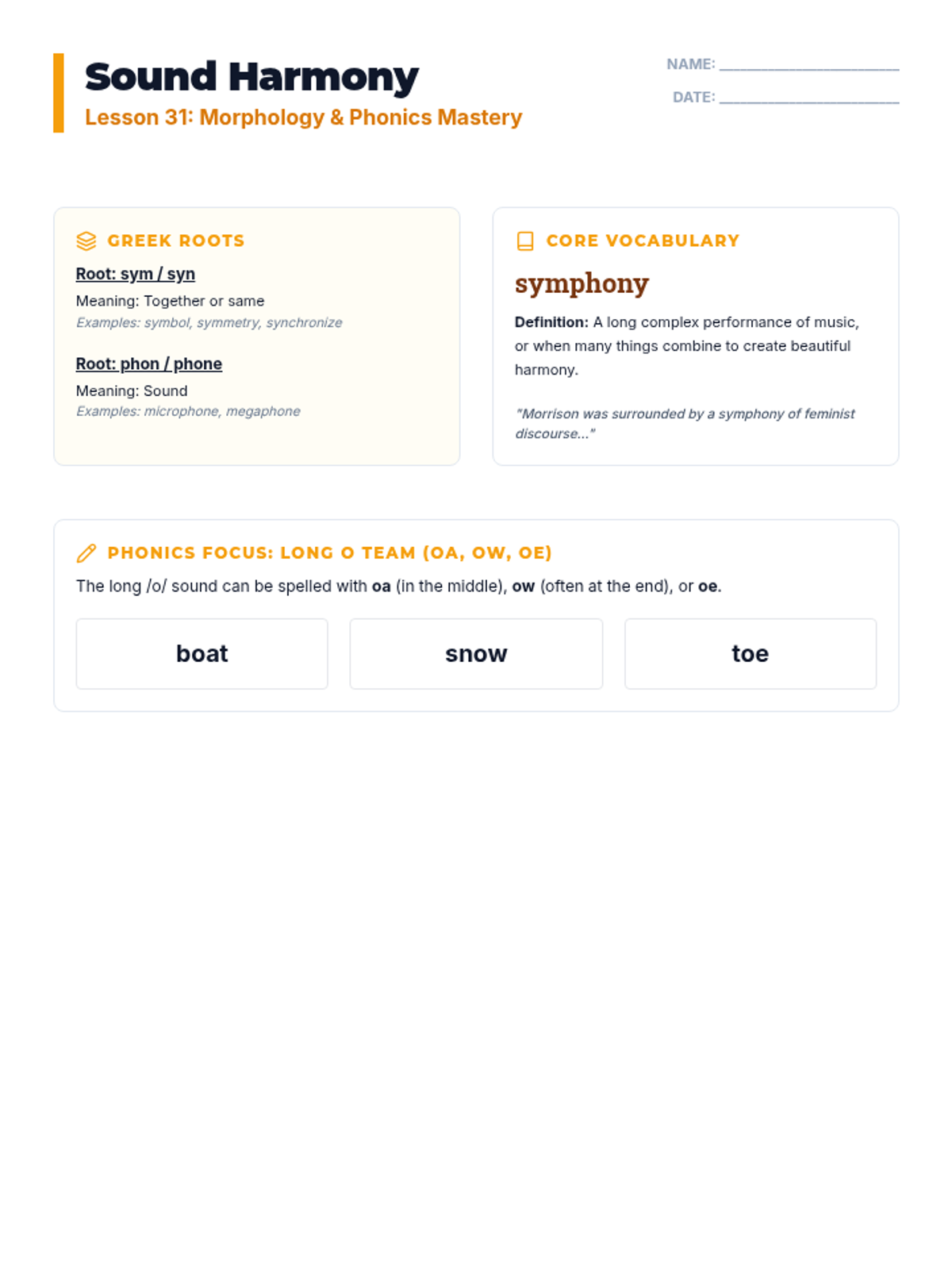
Focuses on the roots sym/syn and phon/phone, with the vocabulary word 'symphony'. Teaches Long O vowel teams (oa, ow, oe).
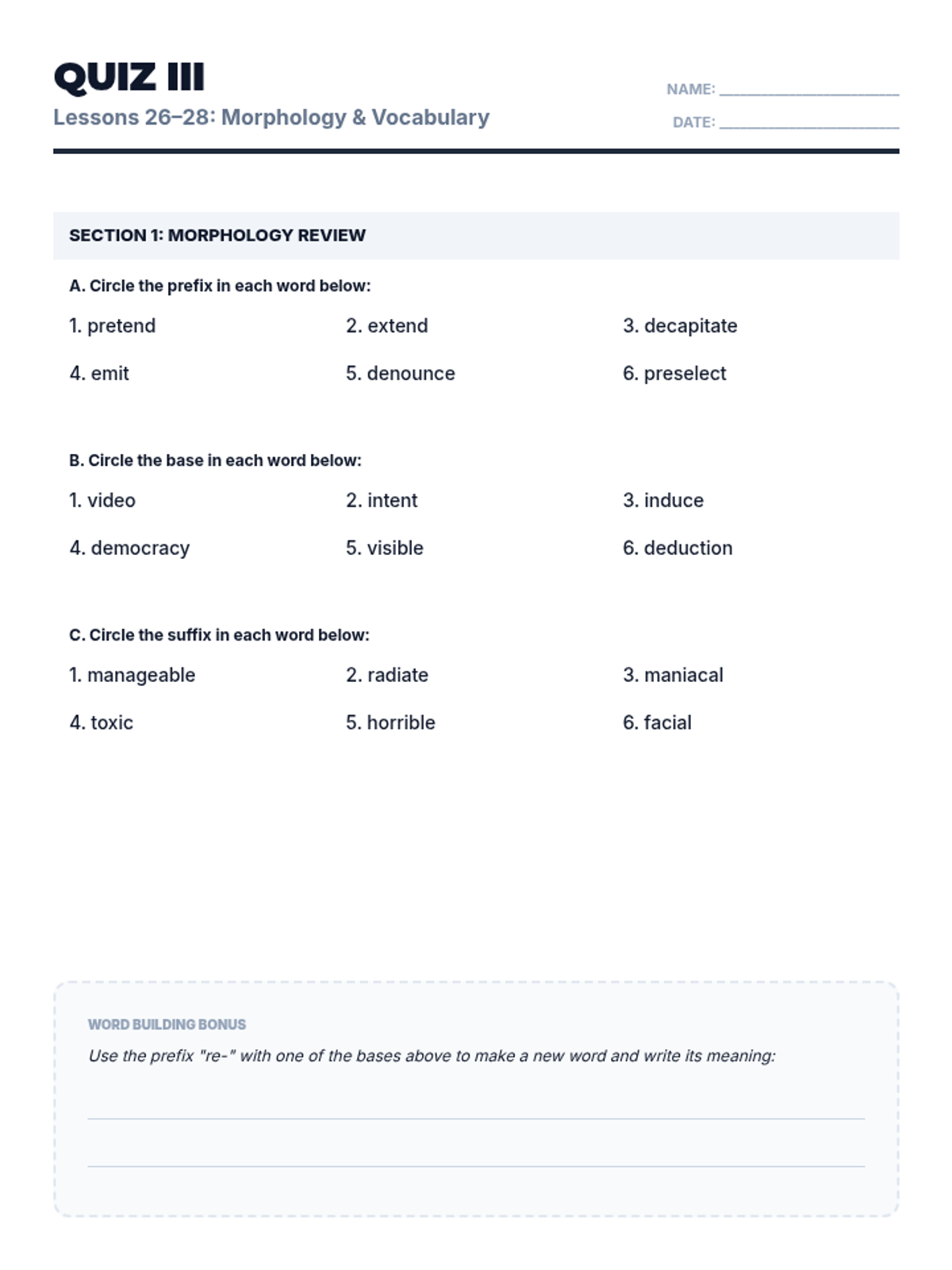
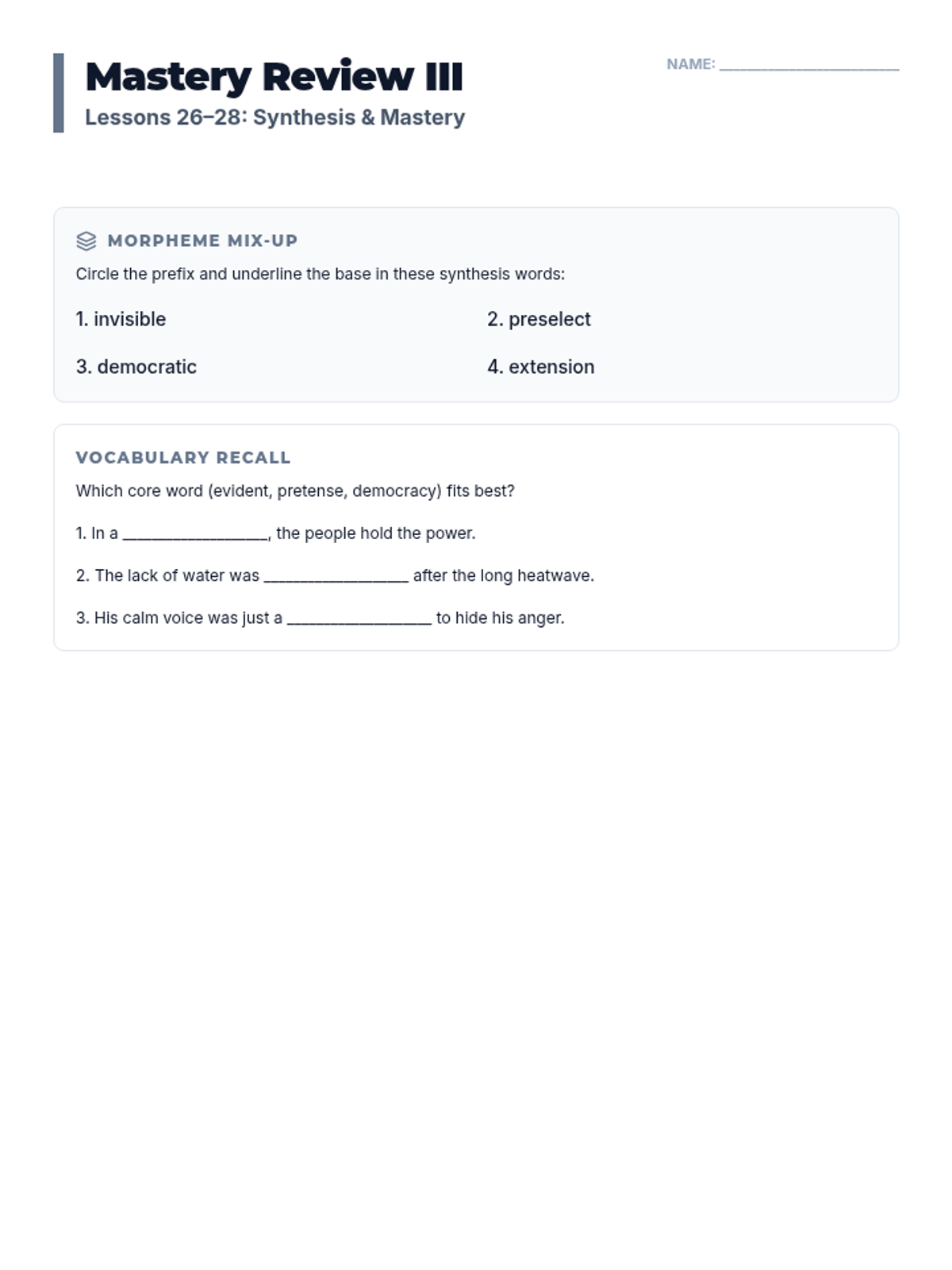
A formal assessment covering morphology, vocabulary, and vowel team decoding for Lessons 26-28.
A comprehensive review of Lessons 26-28, covering morphology (e-, pre-, dem, crat), vocabulary, and Long A, E, and I vowel teams.
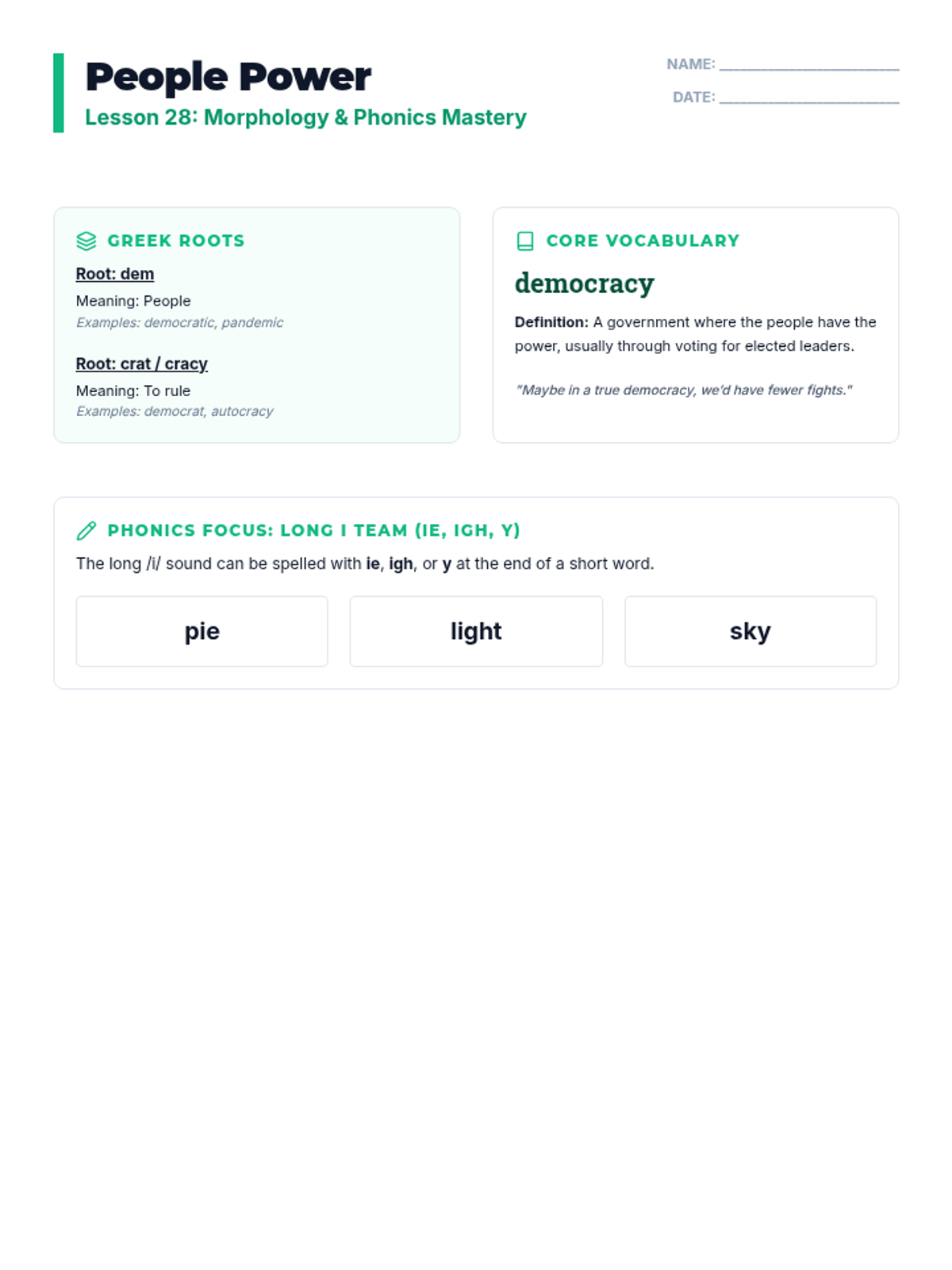
Focuses on the roots dem and crat/cracy, with the vocabulary word 'democracy'. Teaches Long I vowel teams (ie, igh, y).
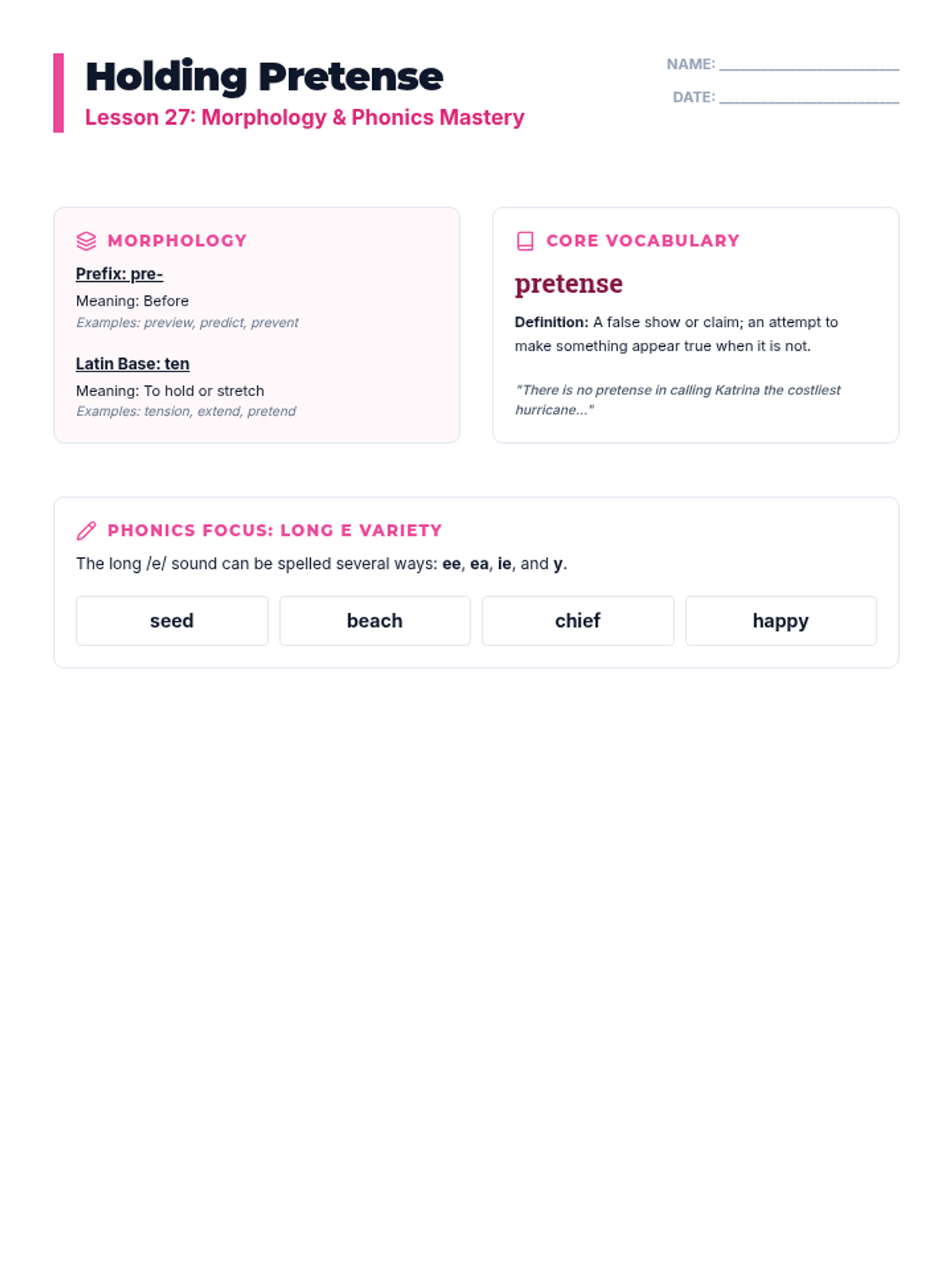
Focuses on the prefix pre- and the root ten, with the vocabulary word 'pretense'. Teaches Long E vowel teams (ee, ea, ie, y).
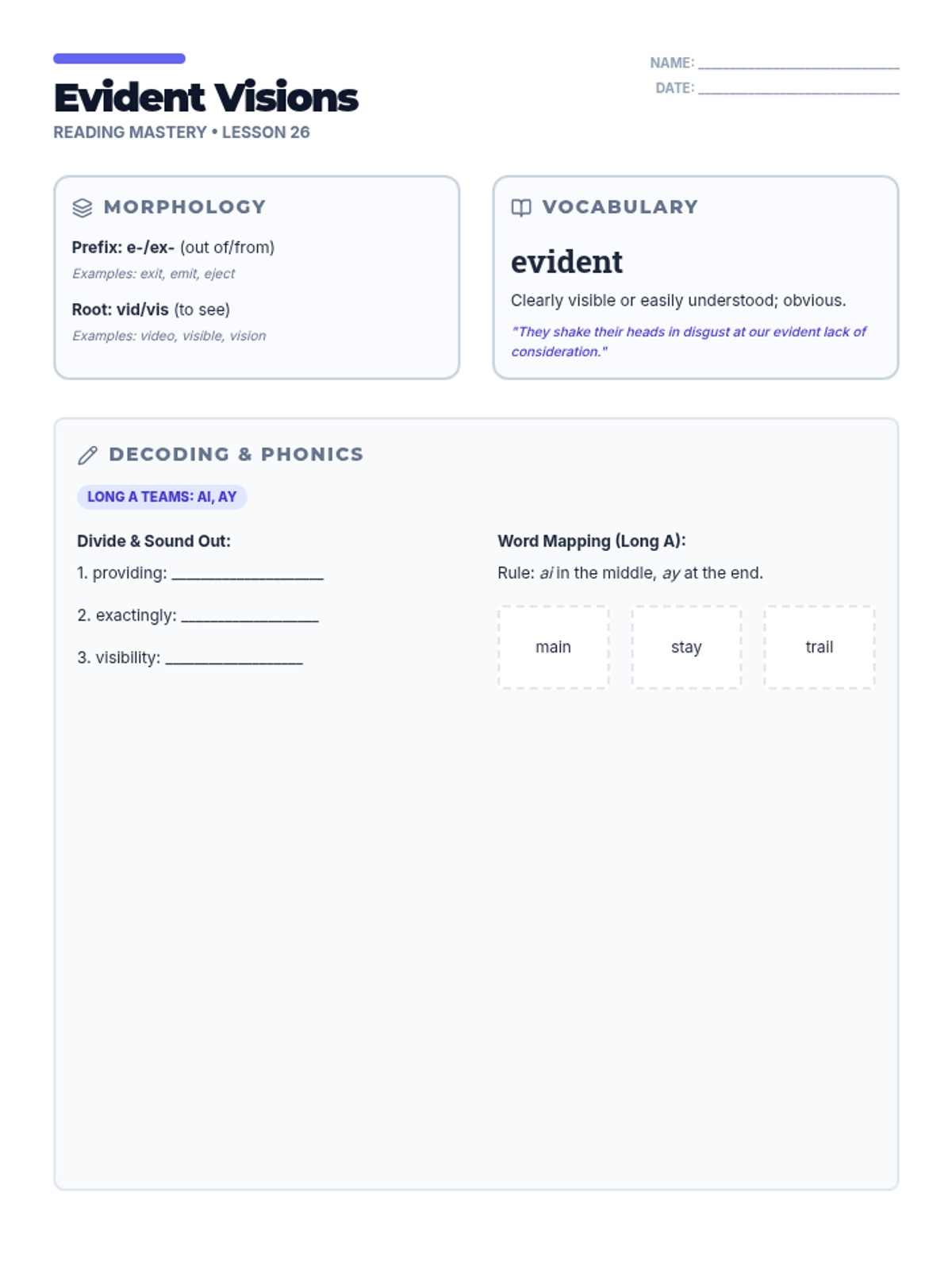
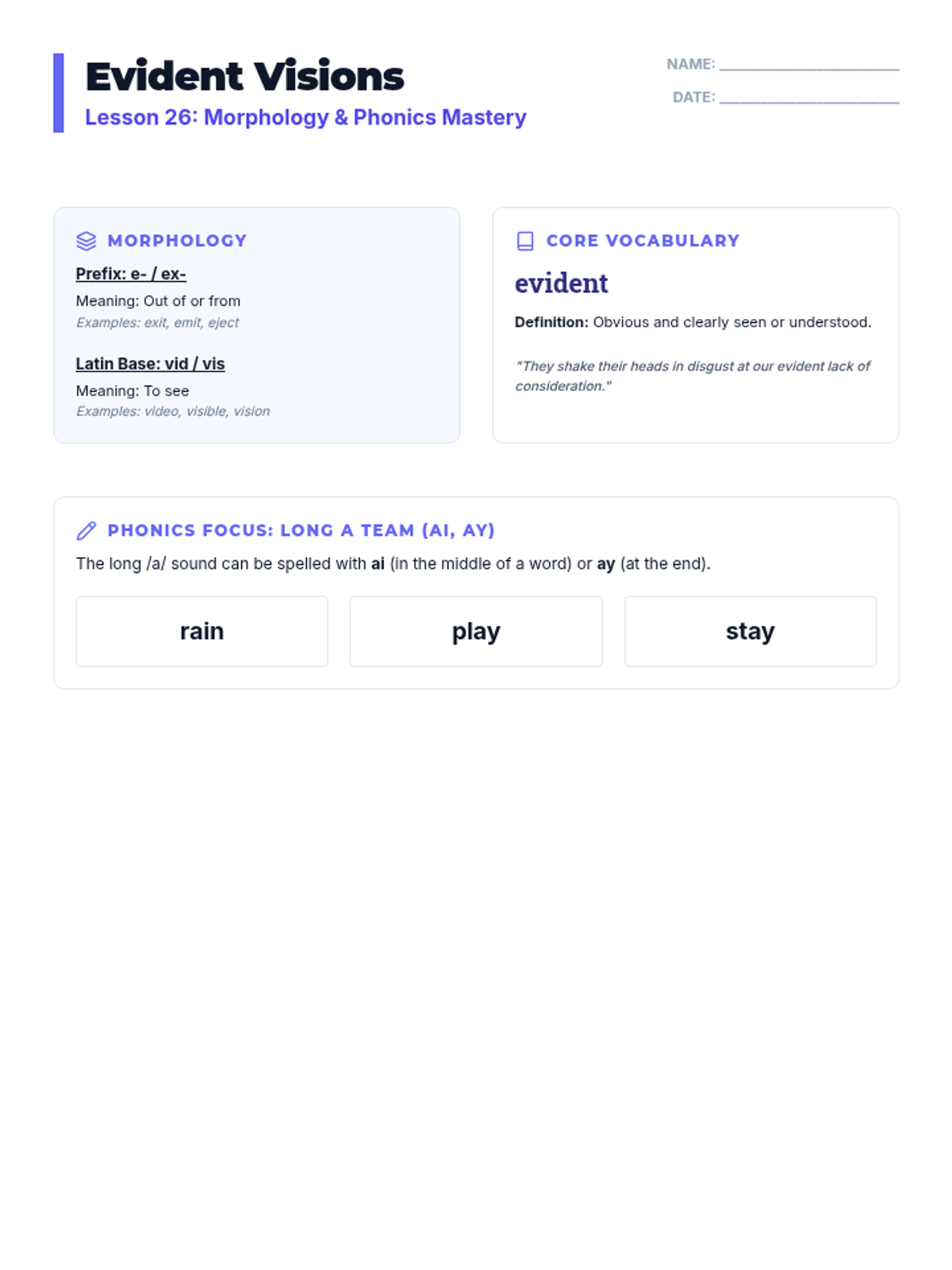
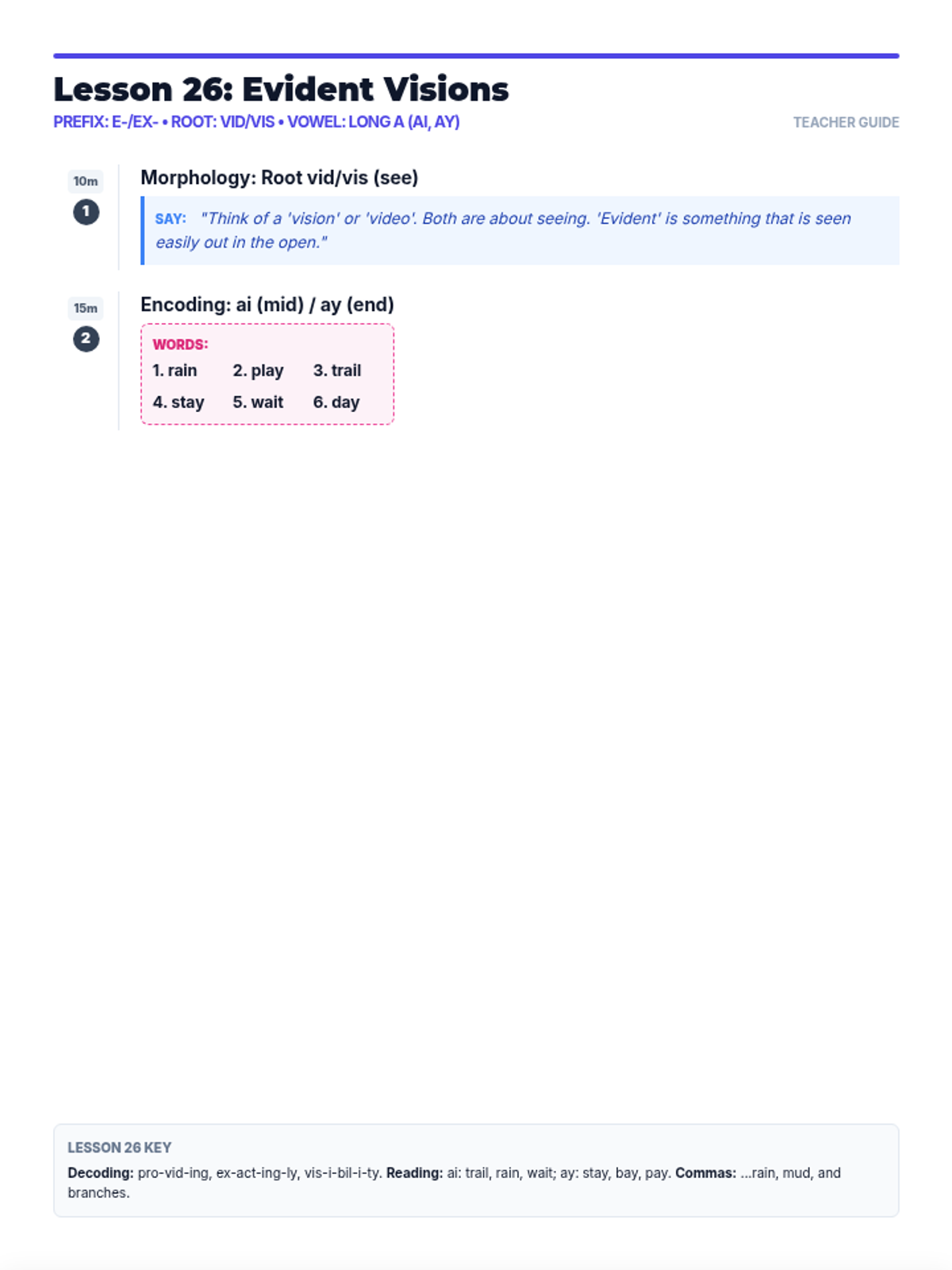
Focuses on the prefix e-/ex- and the root vid/vis, with the vocabulary word 'evident'. Teaches Long A vowel teams (ai, ay).
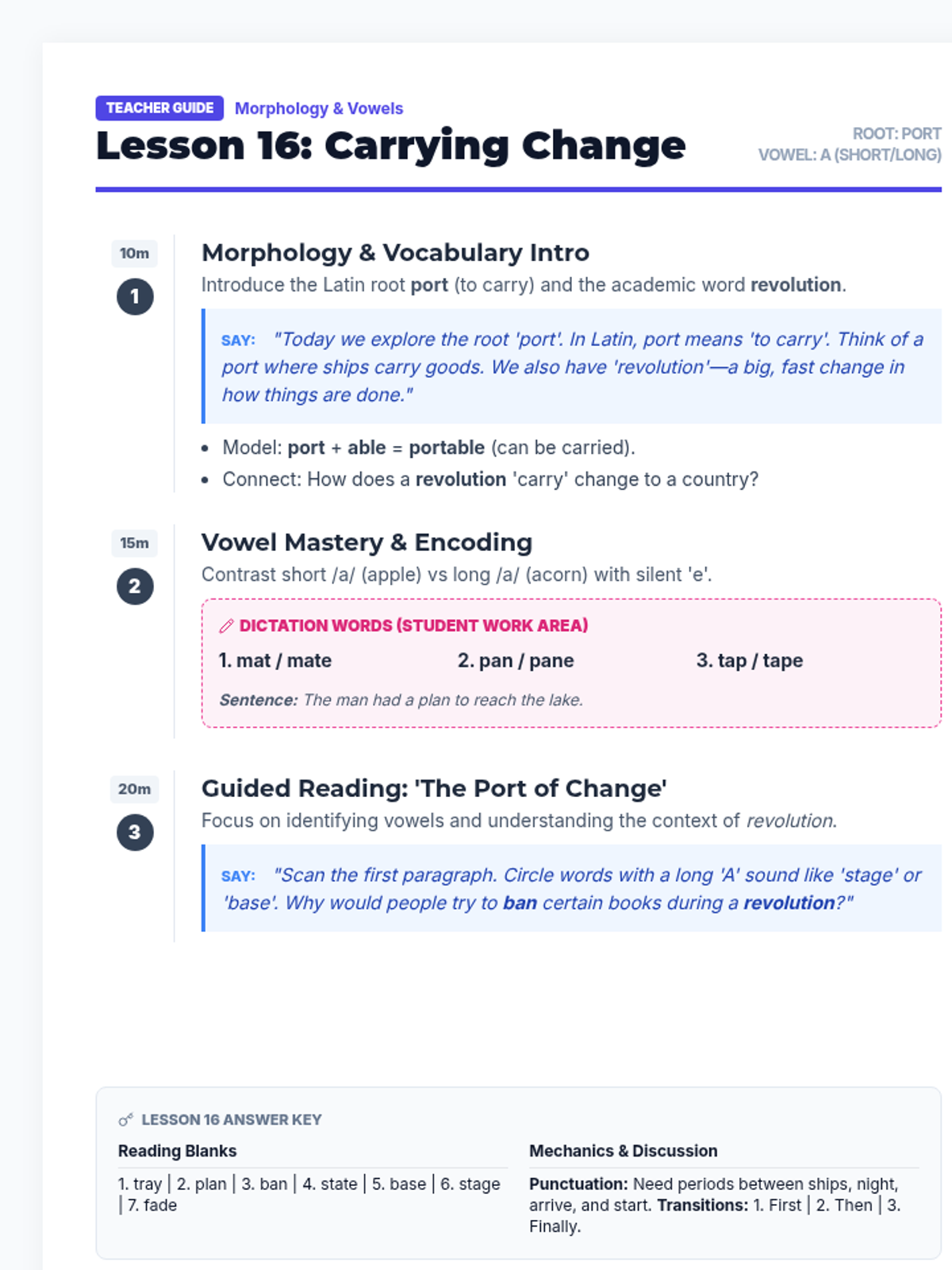
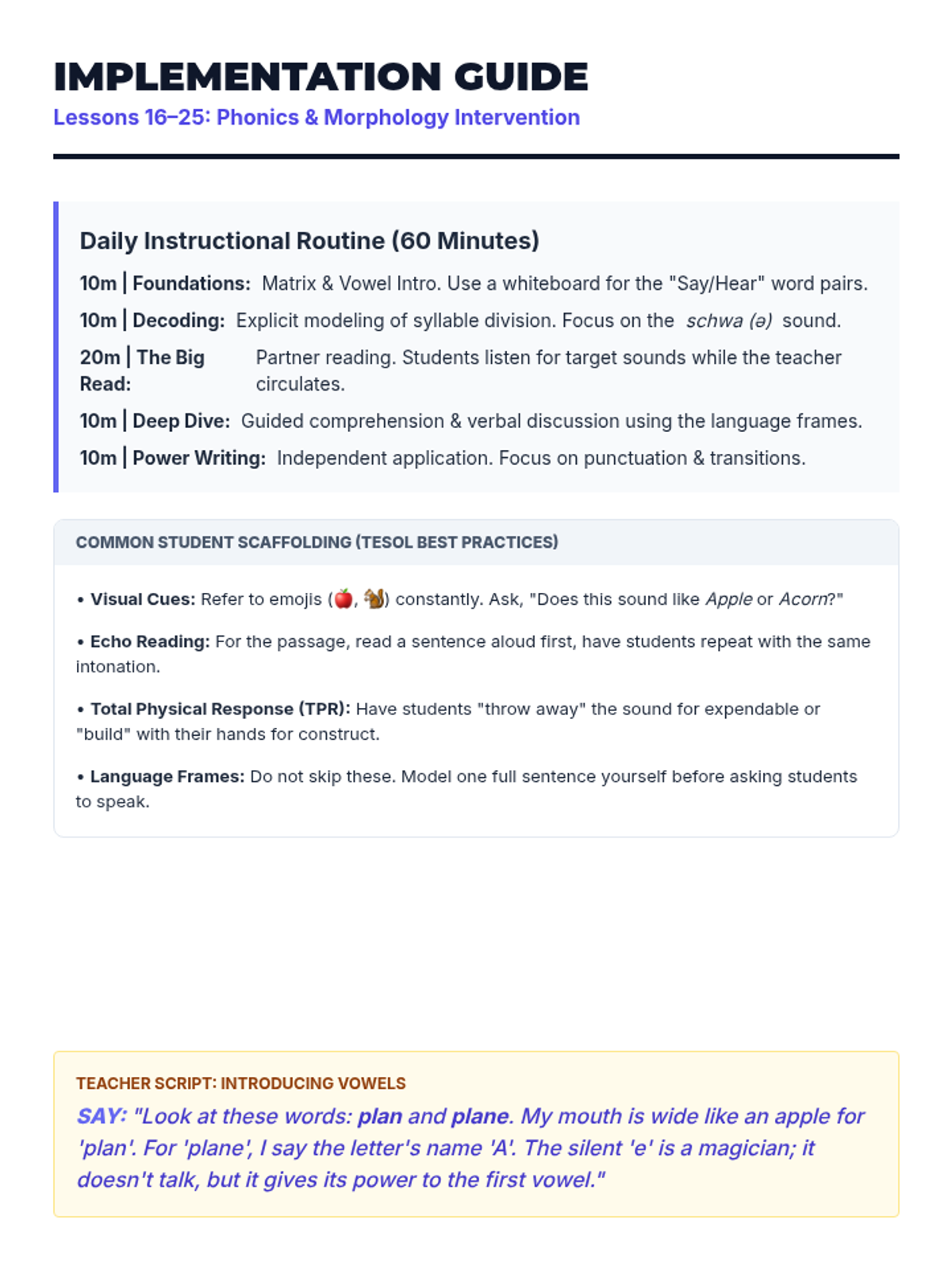
Teacher-facing resources including pacing guides, instructional scripts, and complete answer keys for Lessons 16-25.
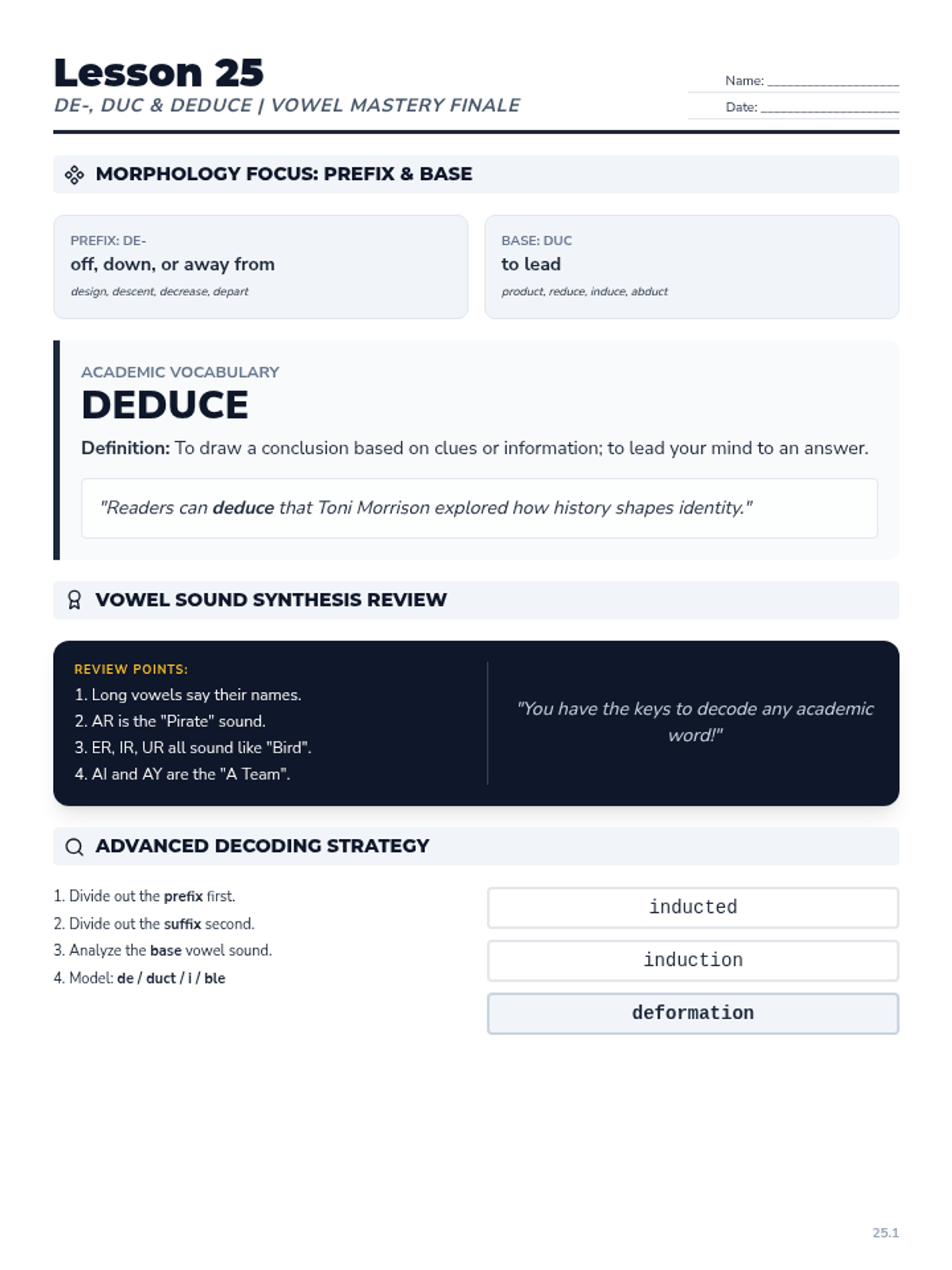
Focuses on prefix 'de-', base 'duc', and the word 'deduce'. Review of all vowel sounds and decoding strategies. includes a final synthesis reading passage.
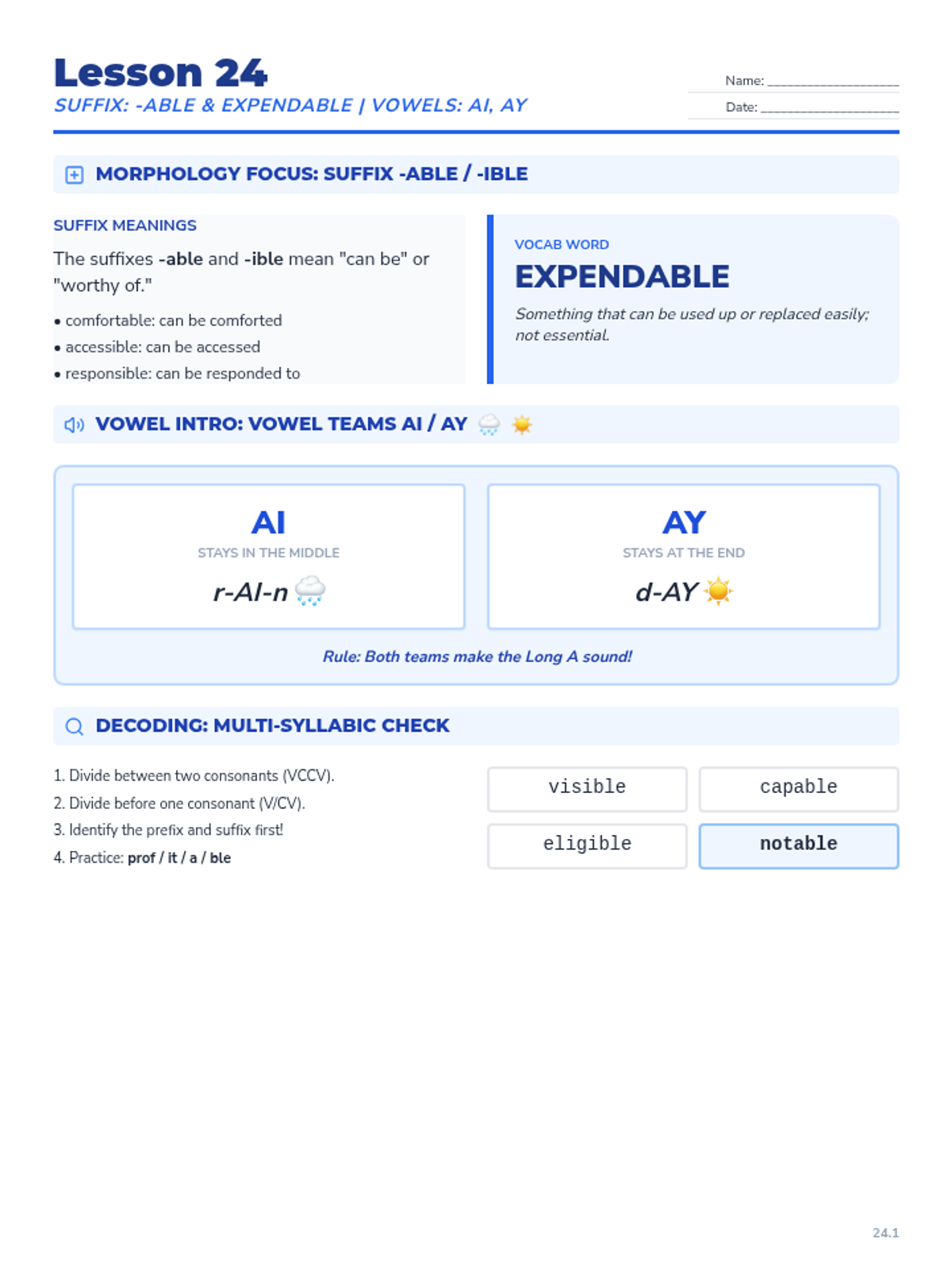
Teaches the suffix -able/-ible and the word 'expendable'. focuses on vowel teams AI and AY and applying all syllable division rules to multi-syllabic academic words.
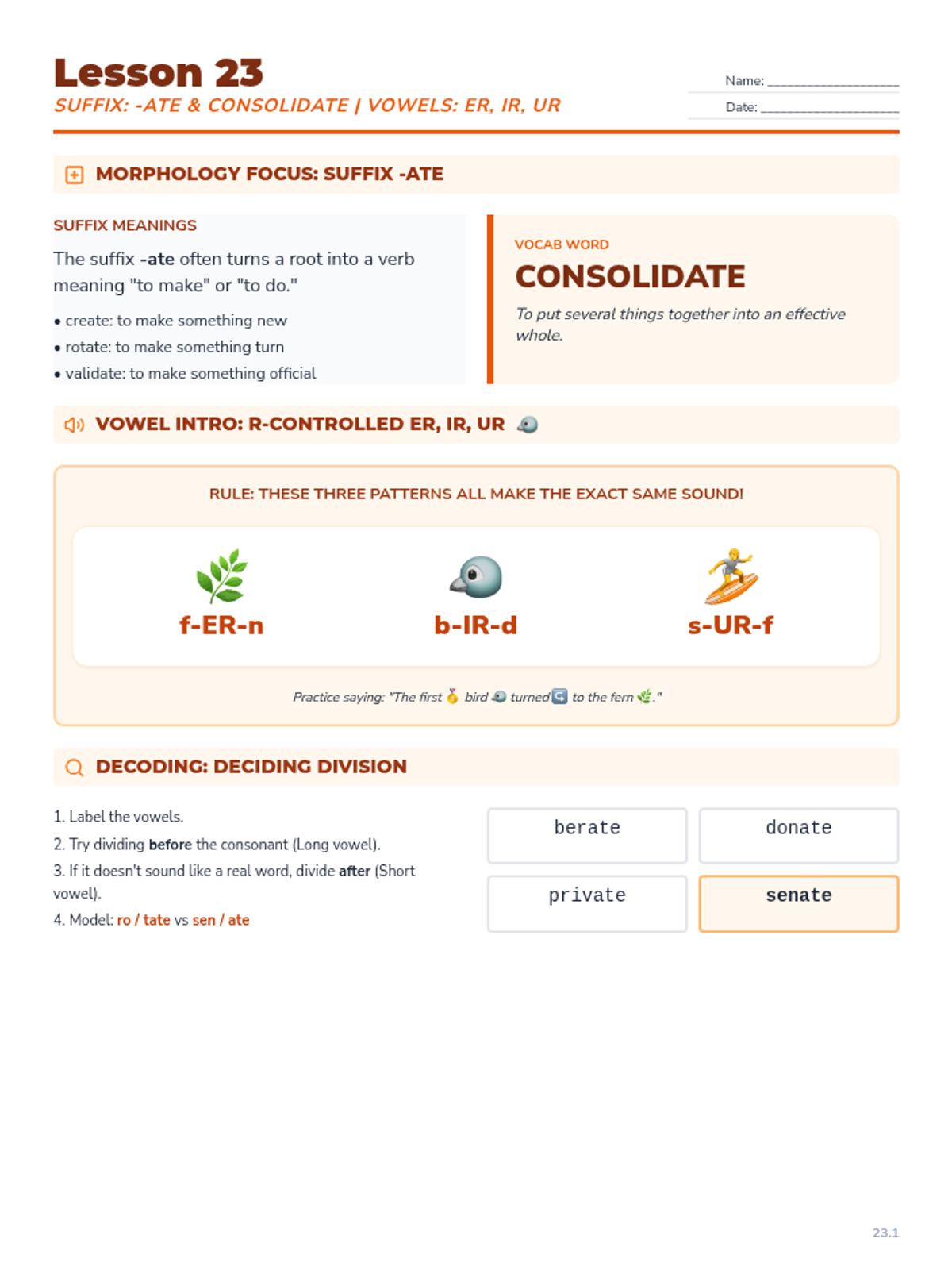
Teaches the suffix -ate and the word 'consolidate'. focuses on r-controlled vowels (ER, IR, UR) and flexible syllable division.
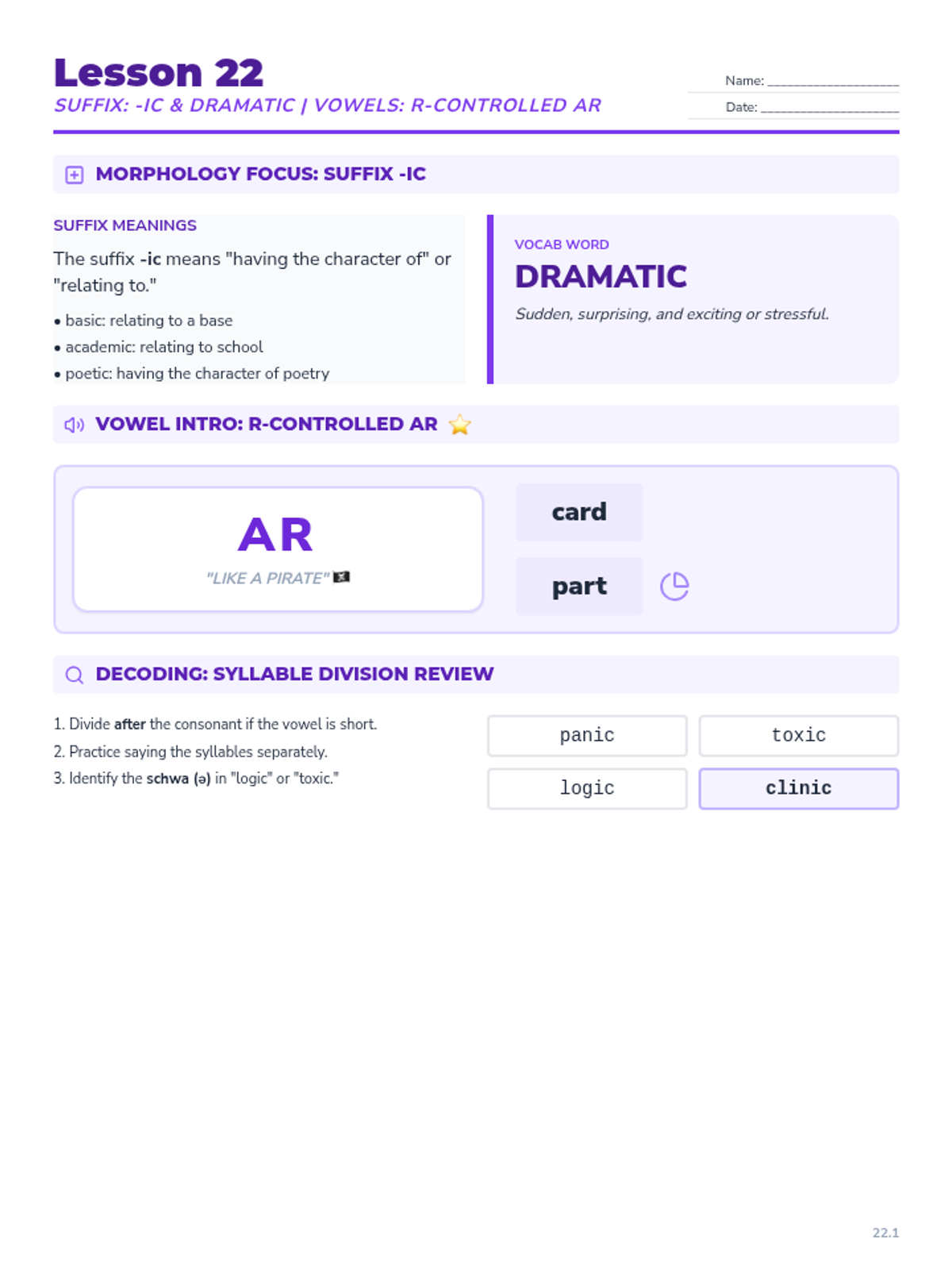
Focuses on the suffix -ic and the word 'dramatic'. Teaches r-controlled vowels (AR) and strategies for syllable division in longer academic words.
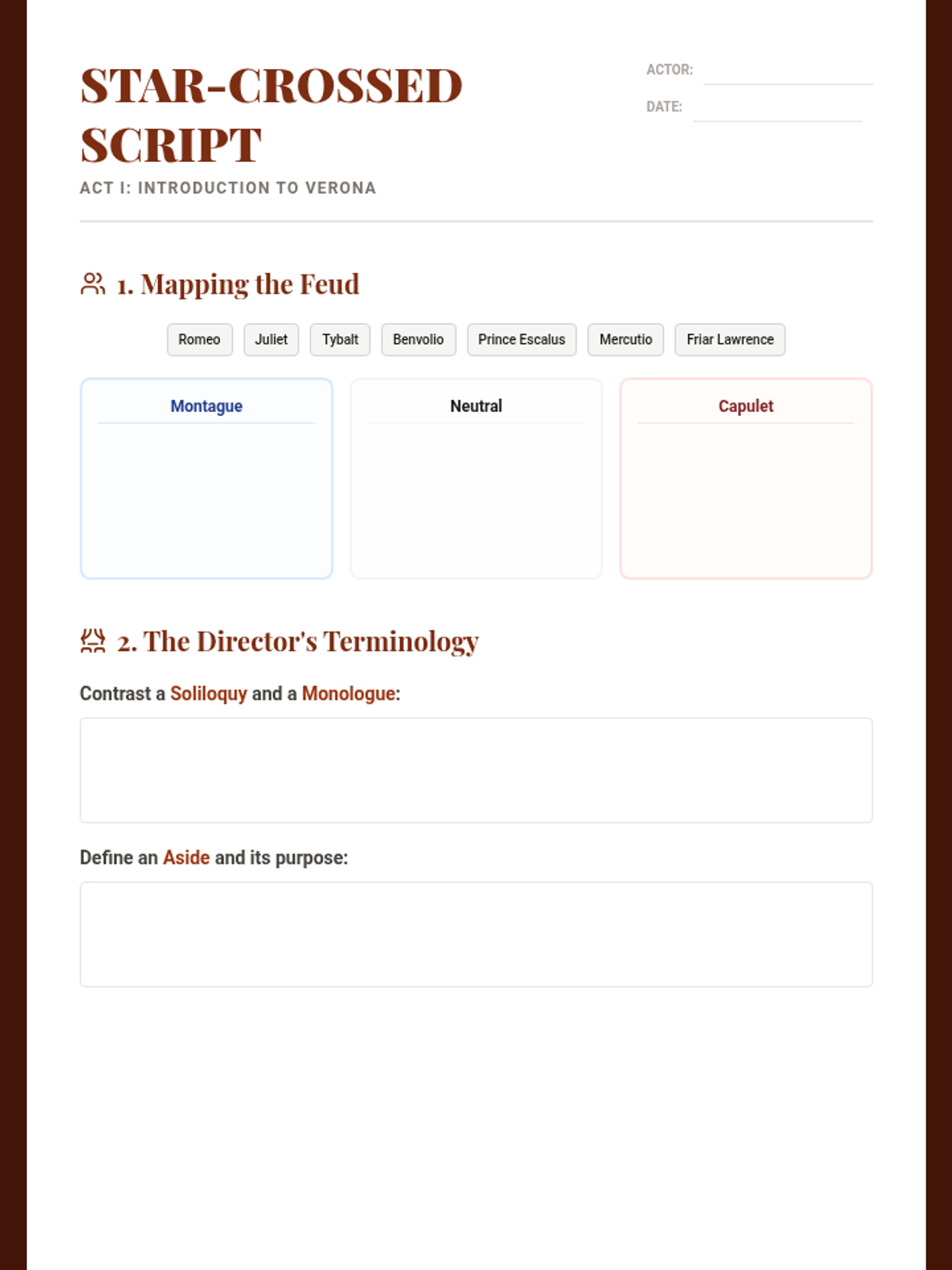
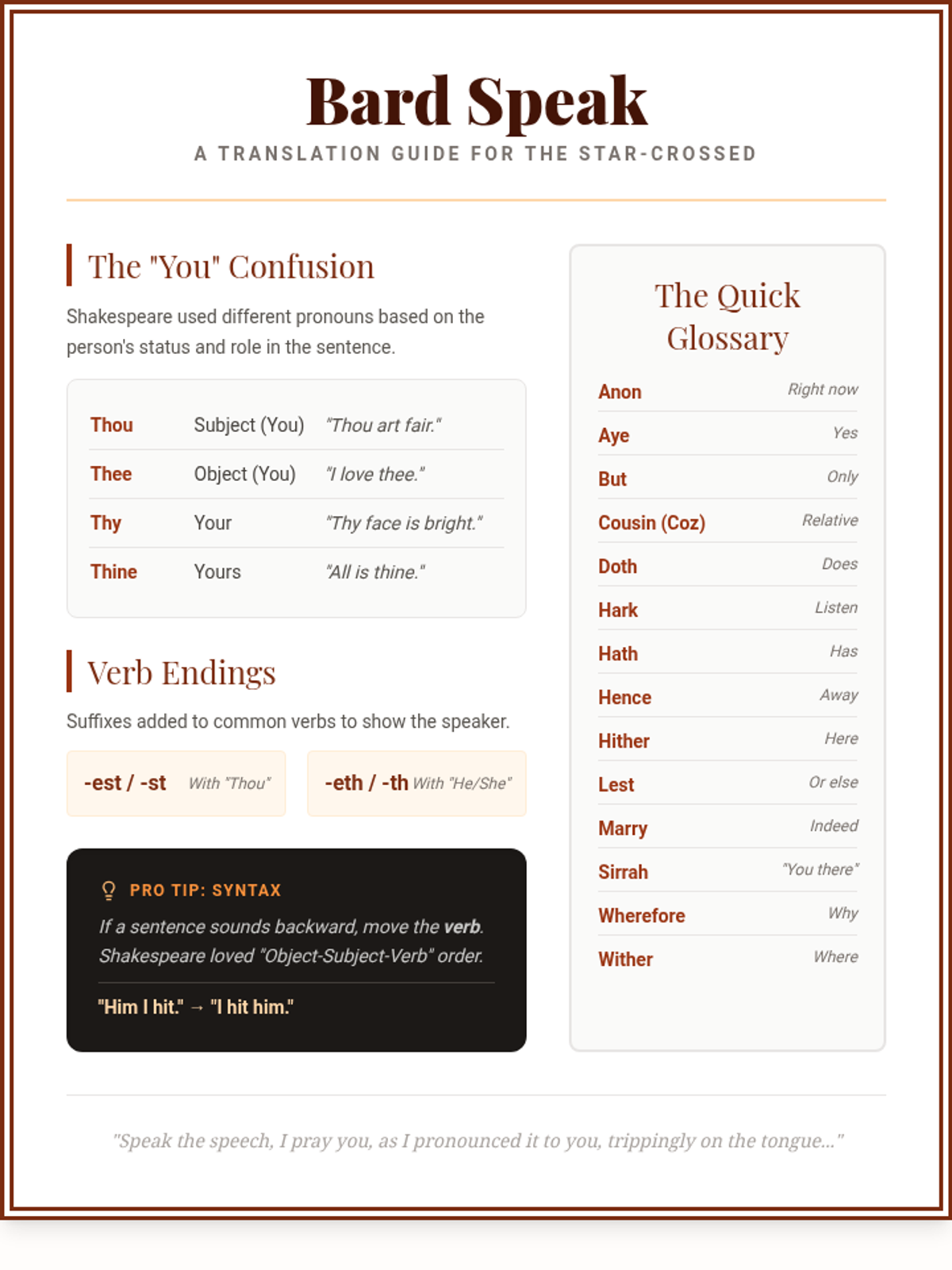
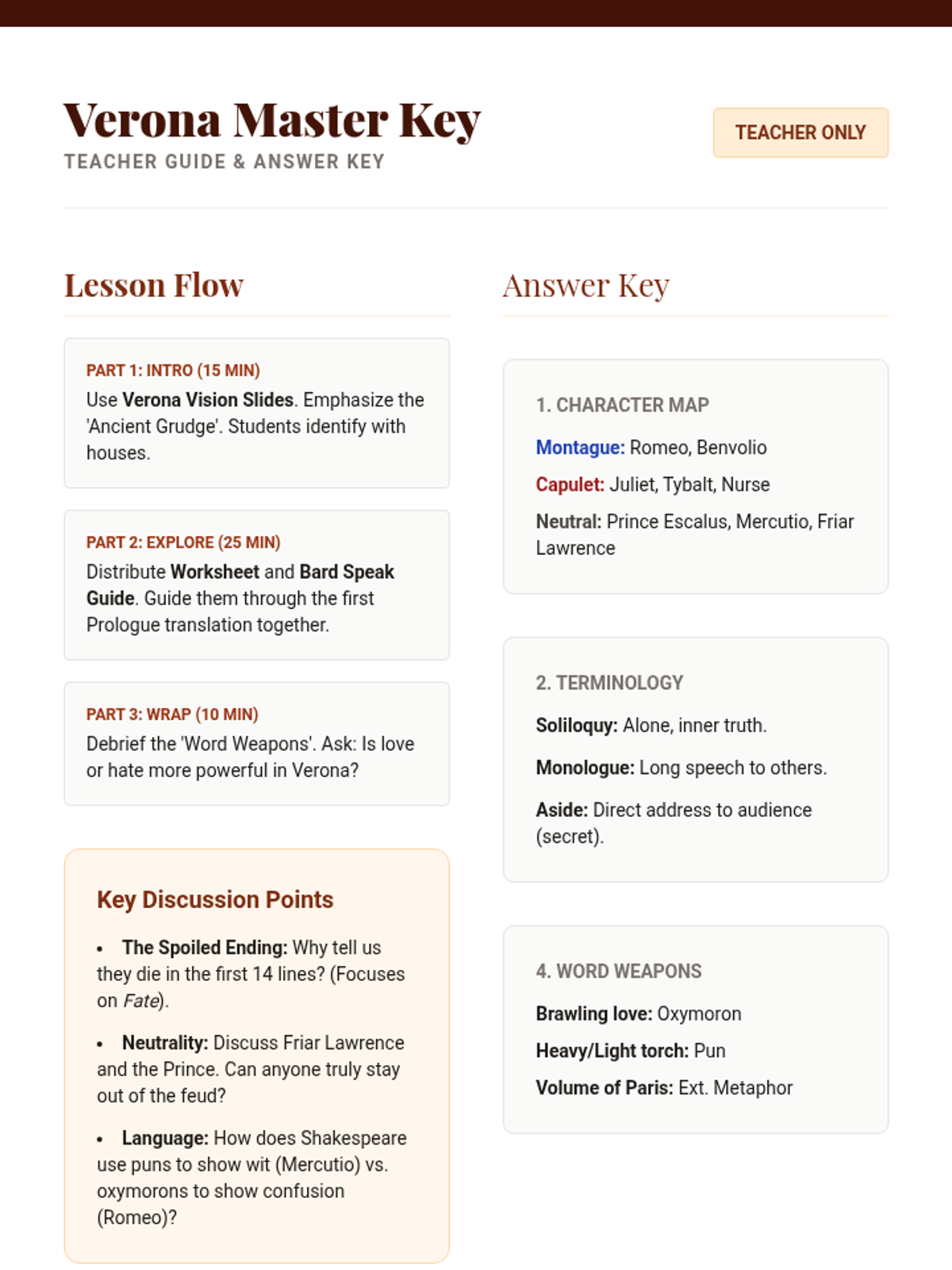
An introductory lesson to Romeo and Juliet covering the foundational elements of plot, character dynamics, and themes, alongside practical exercises in translation and identifying literary devices.
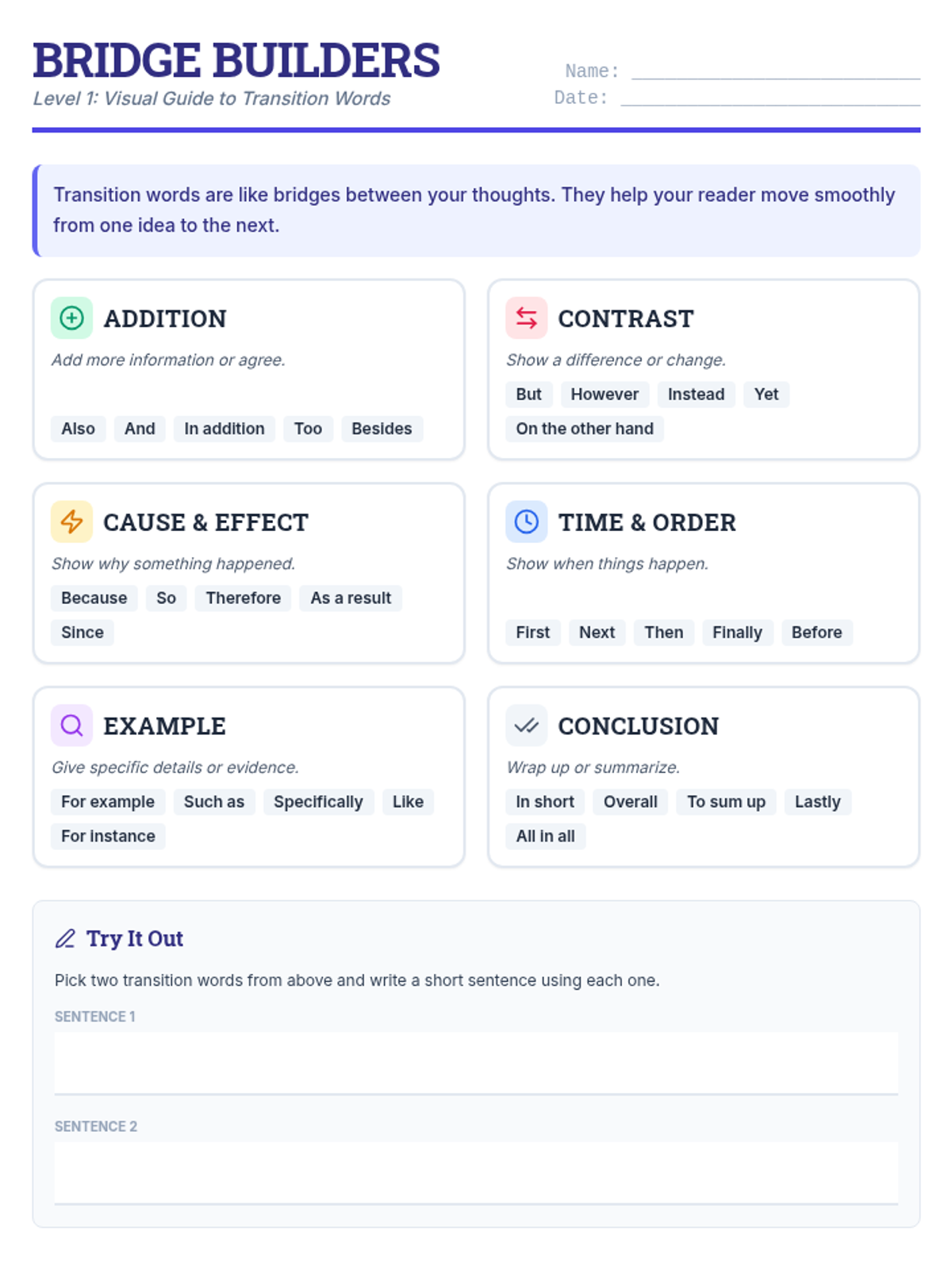
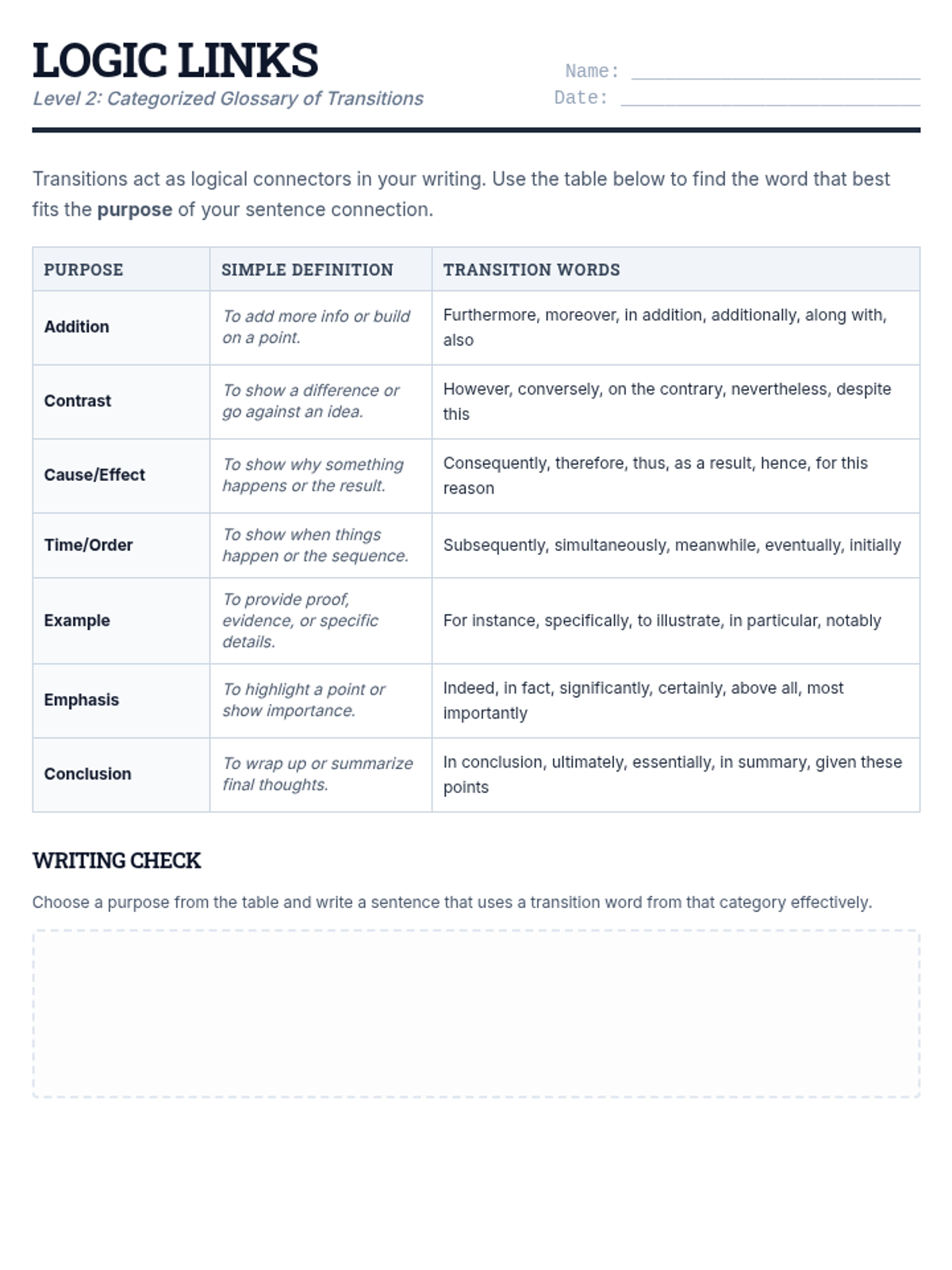
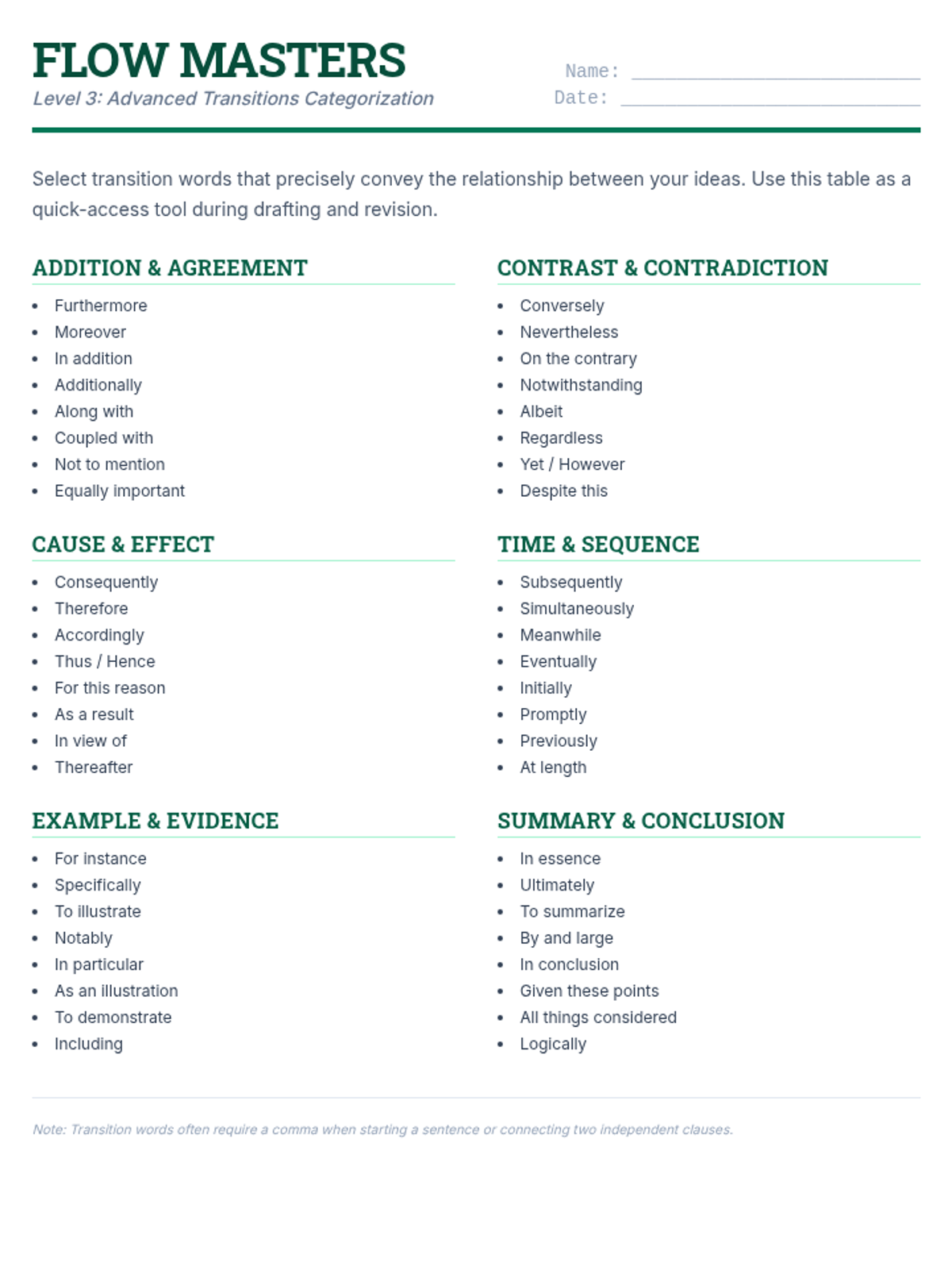
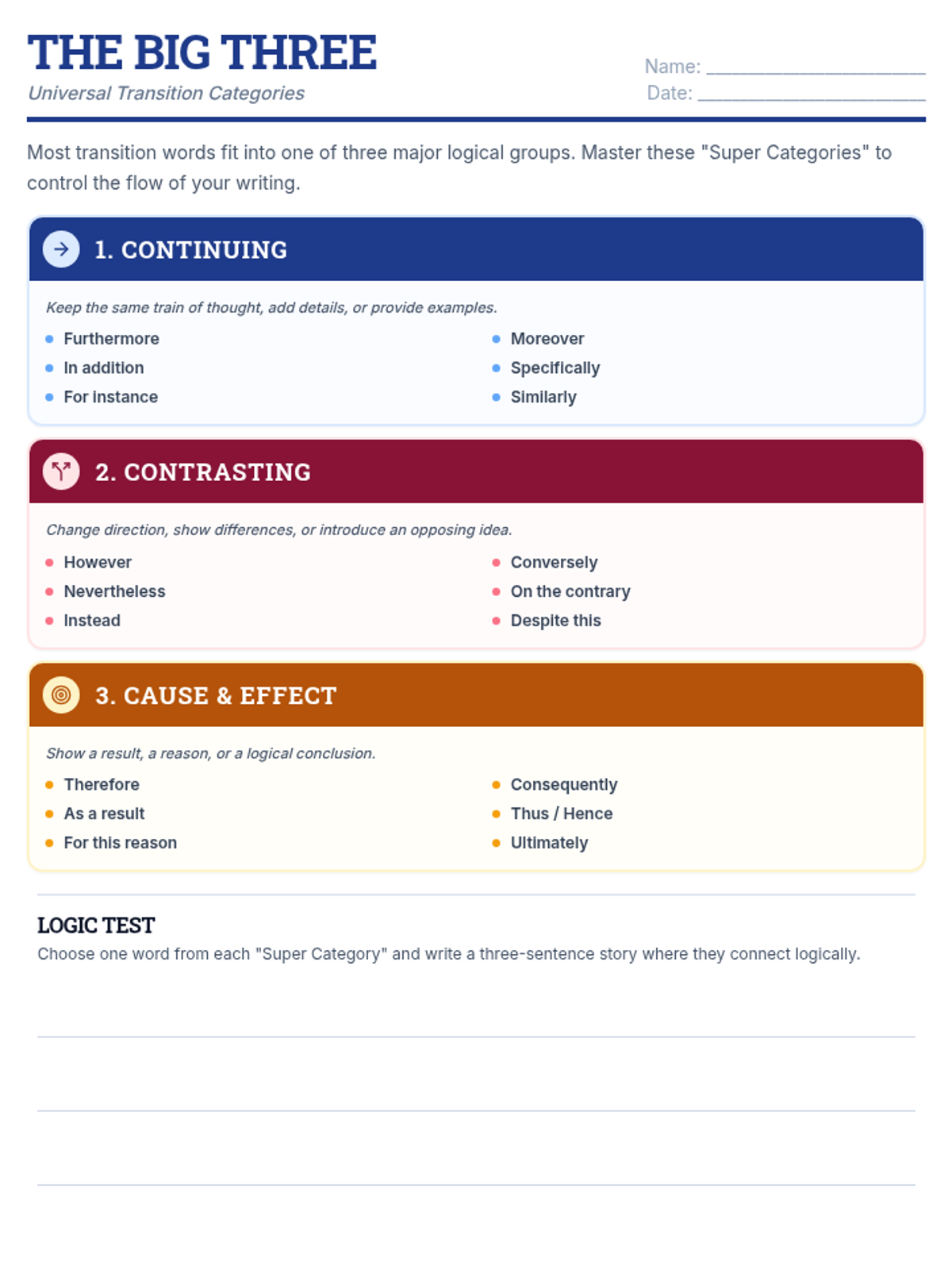
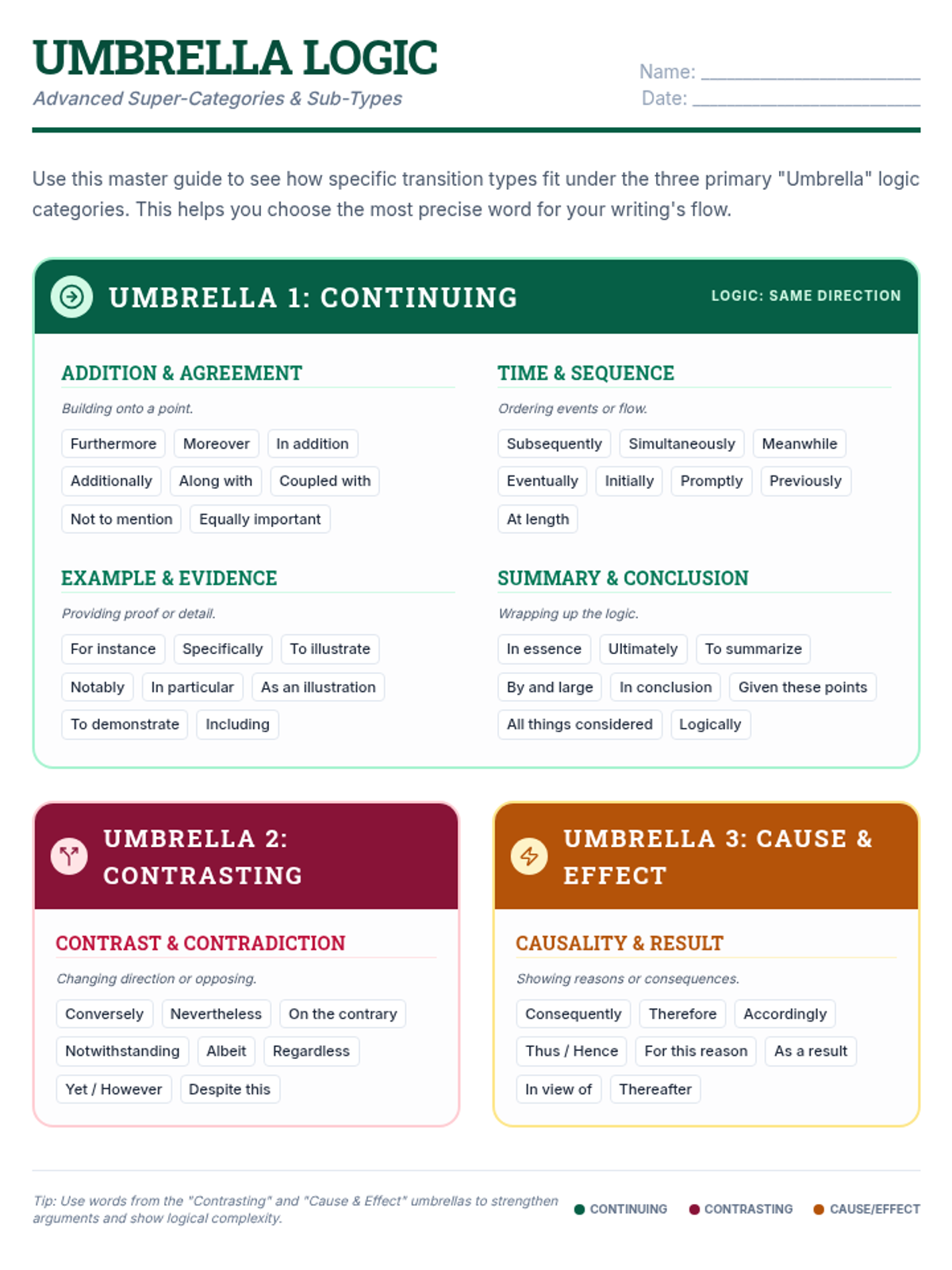
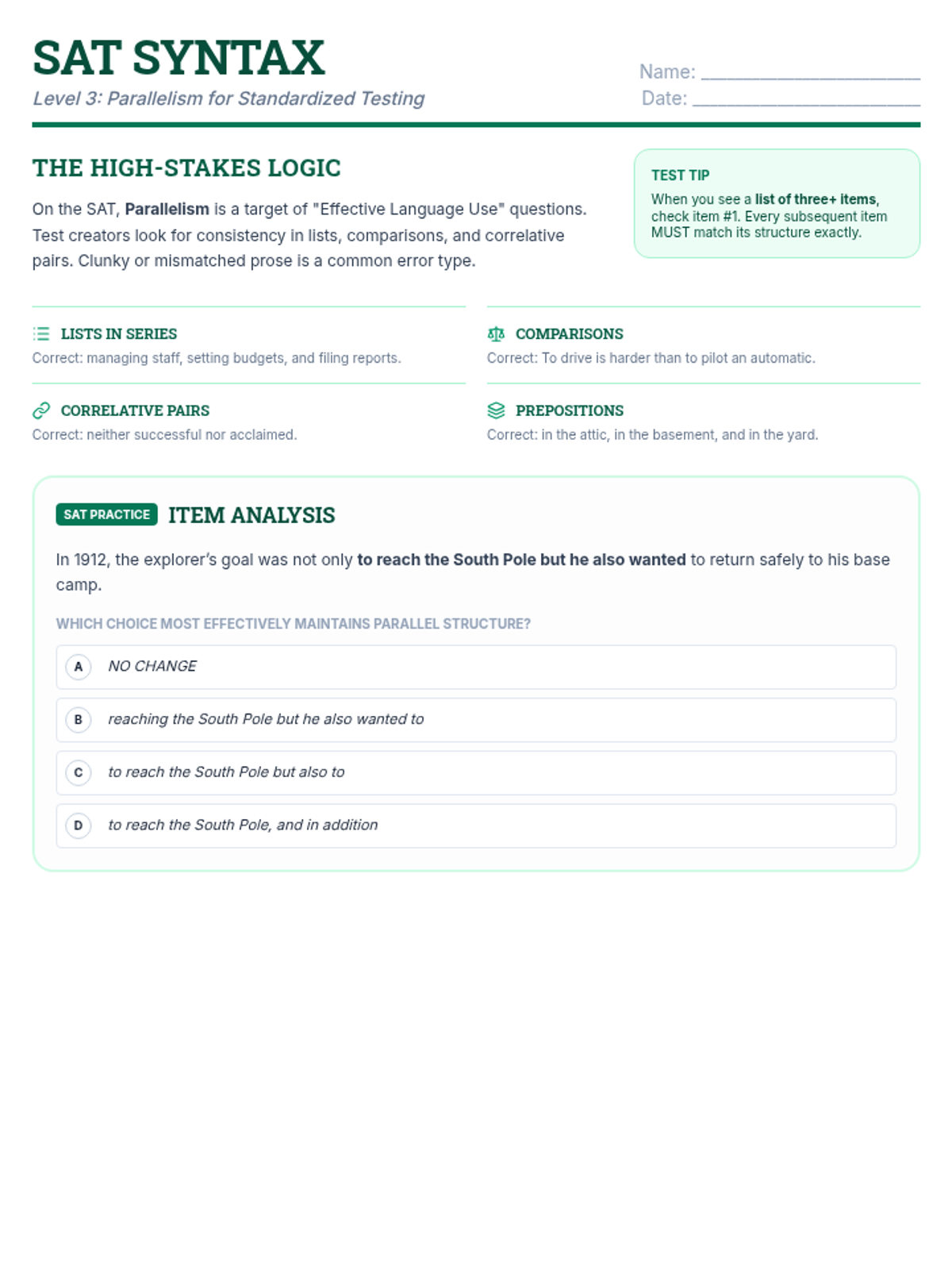
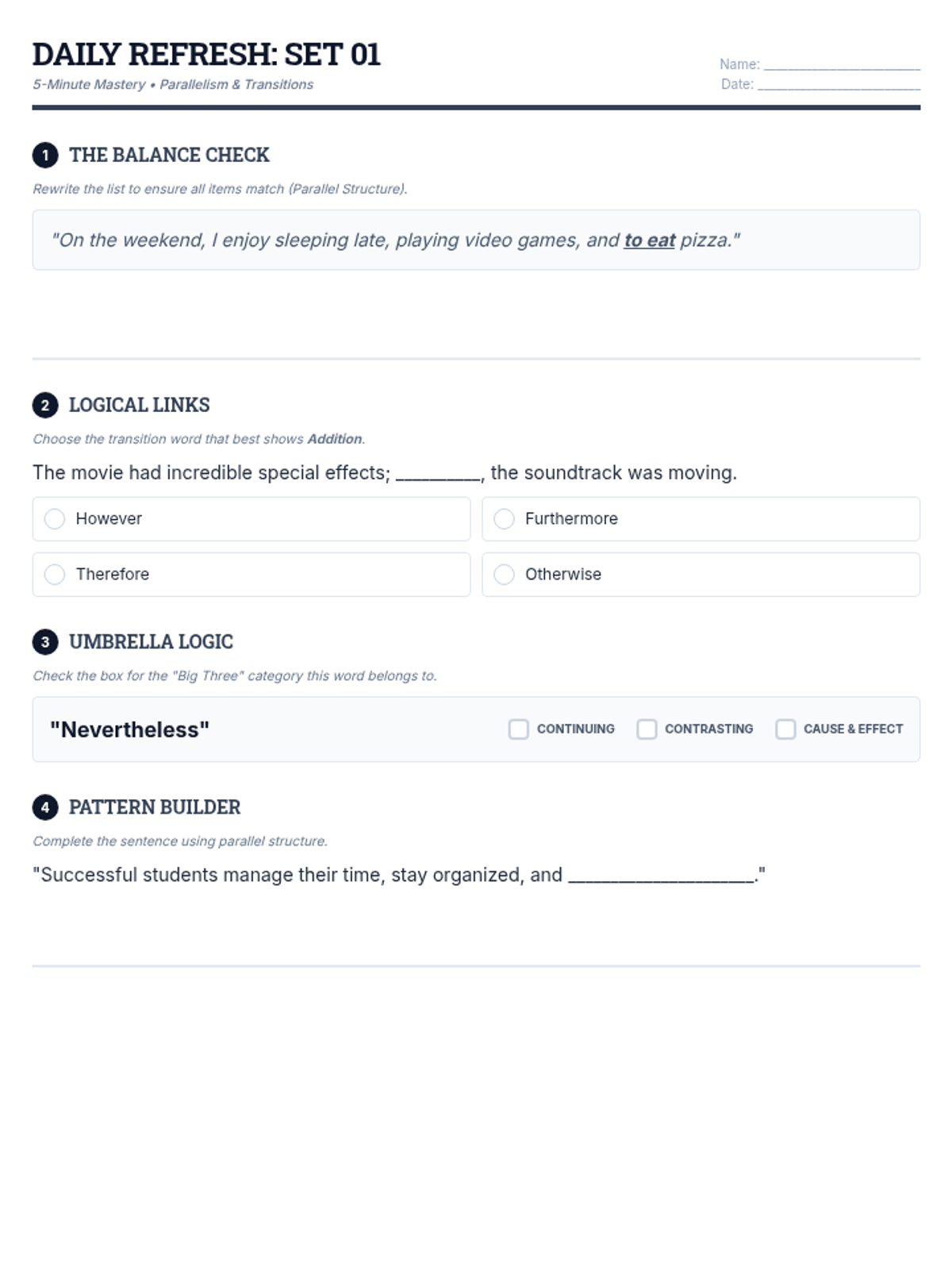
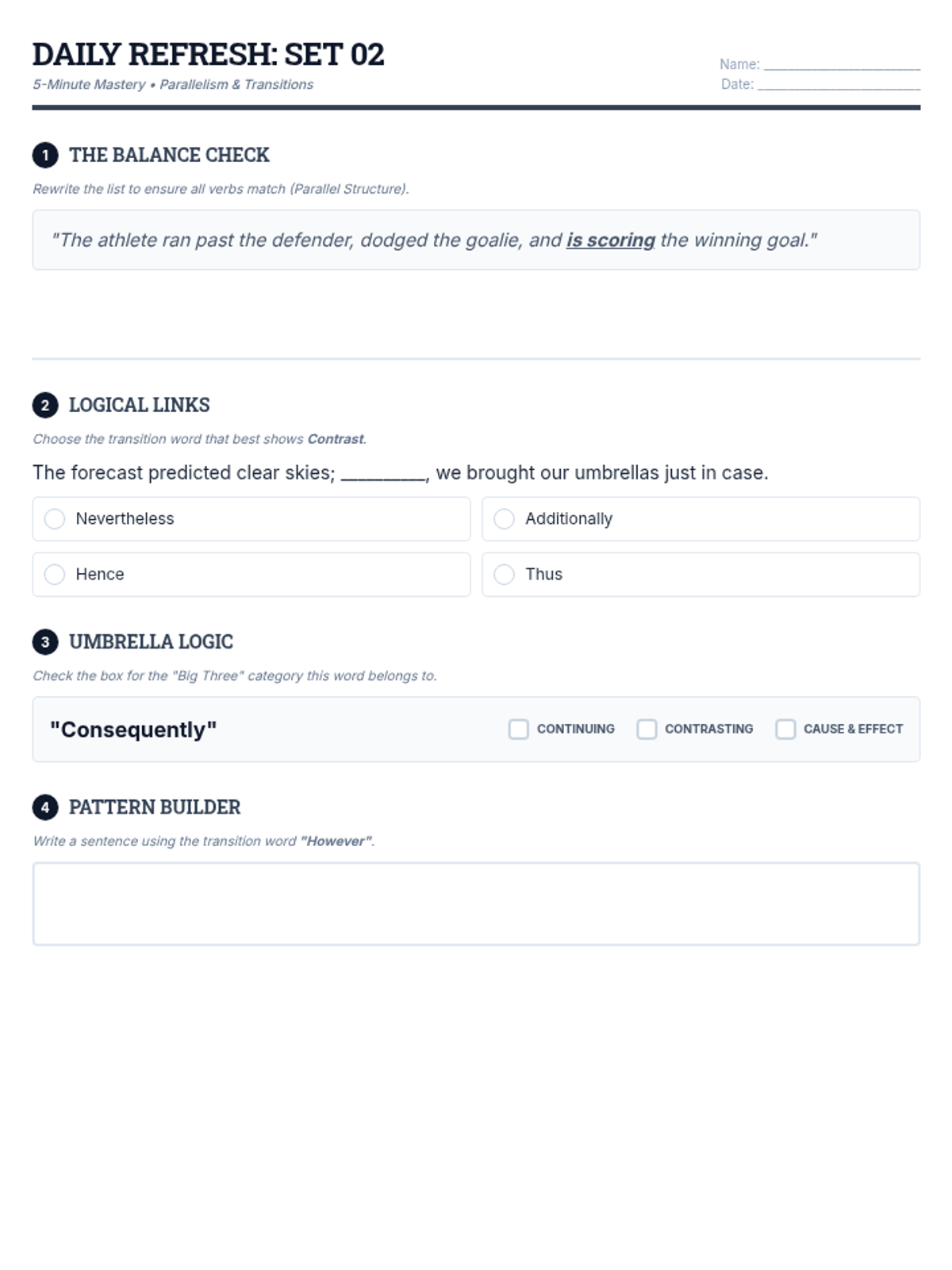
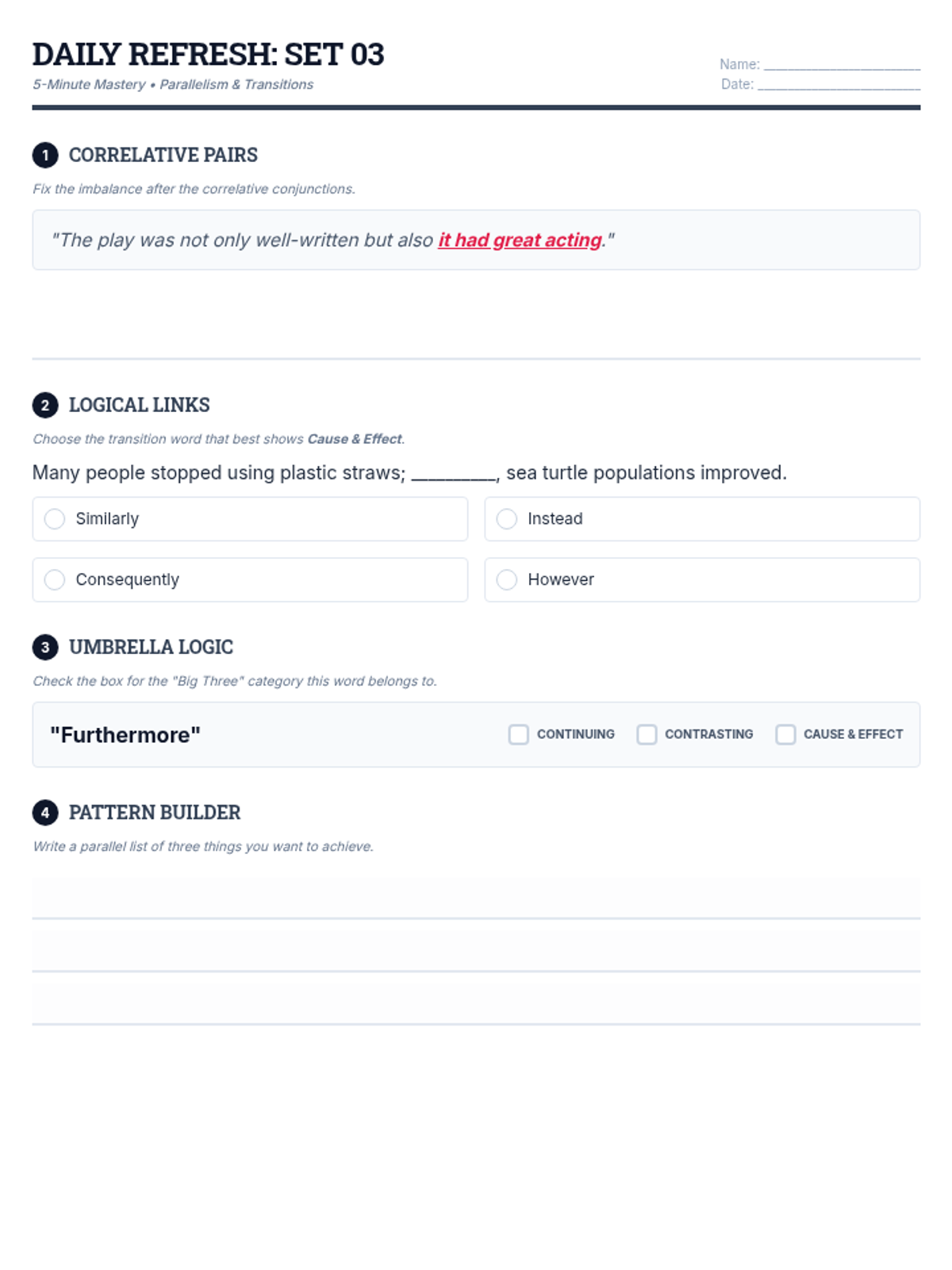
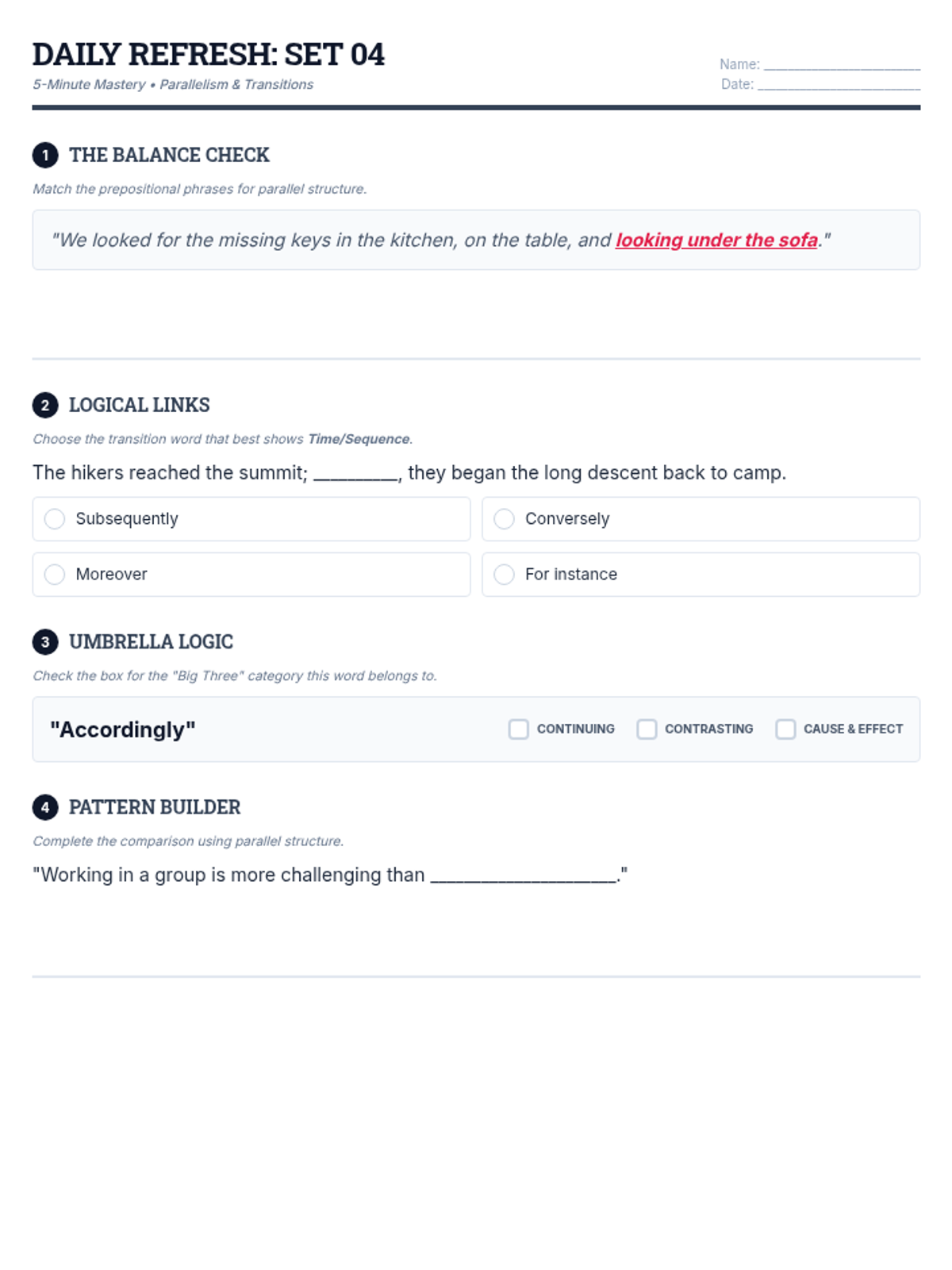
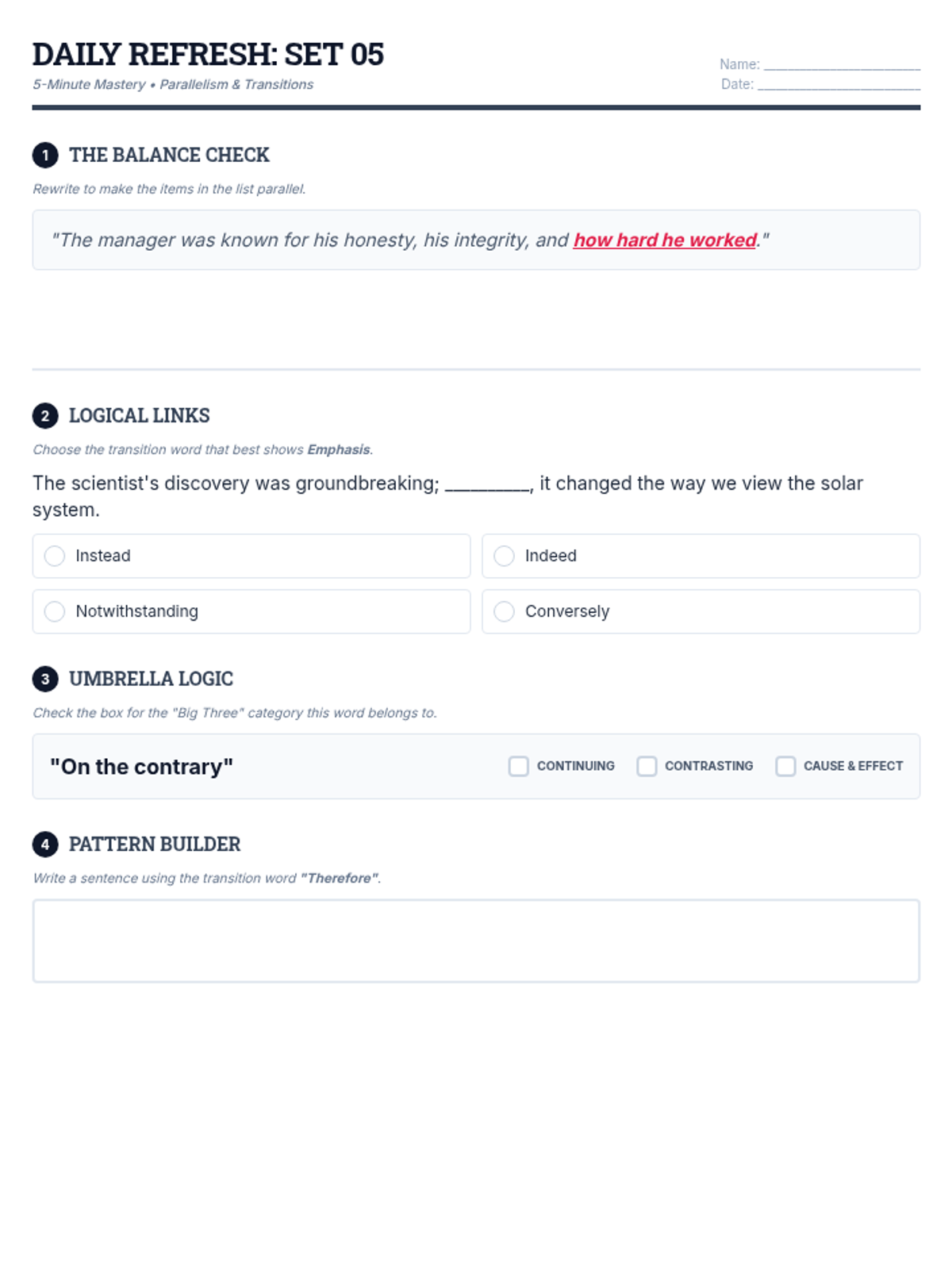
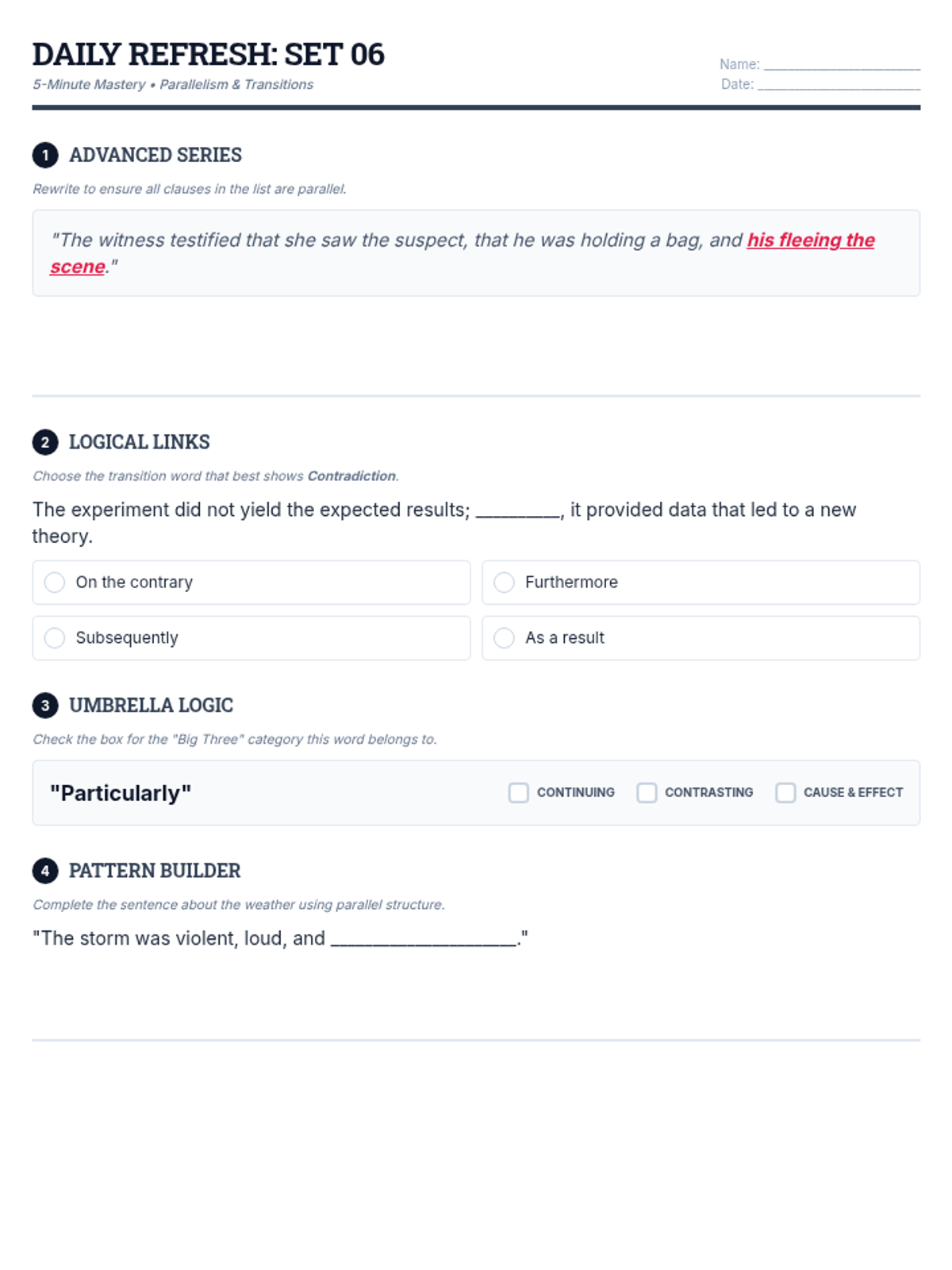
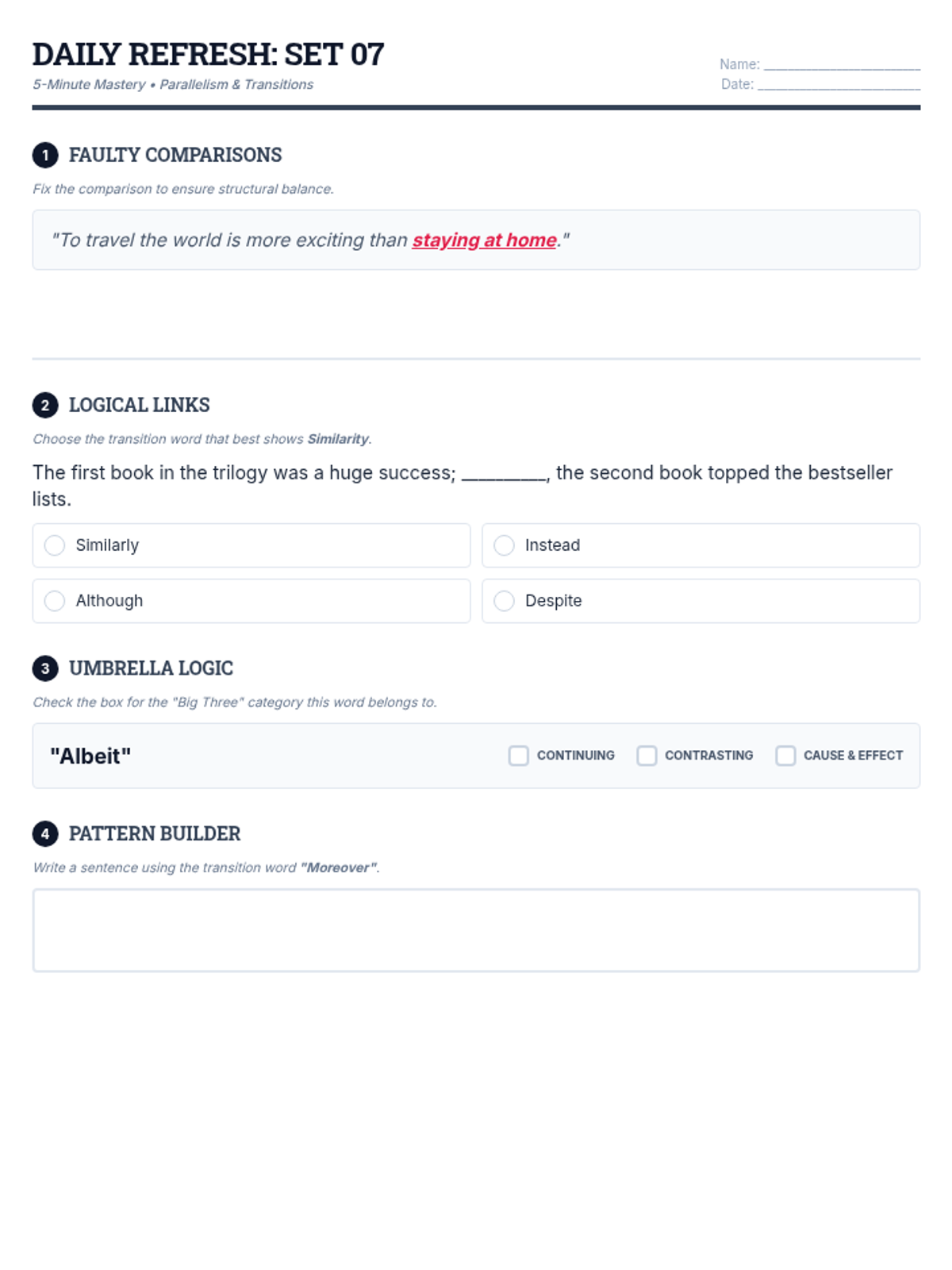
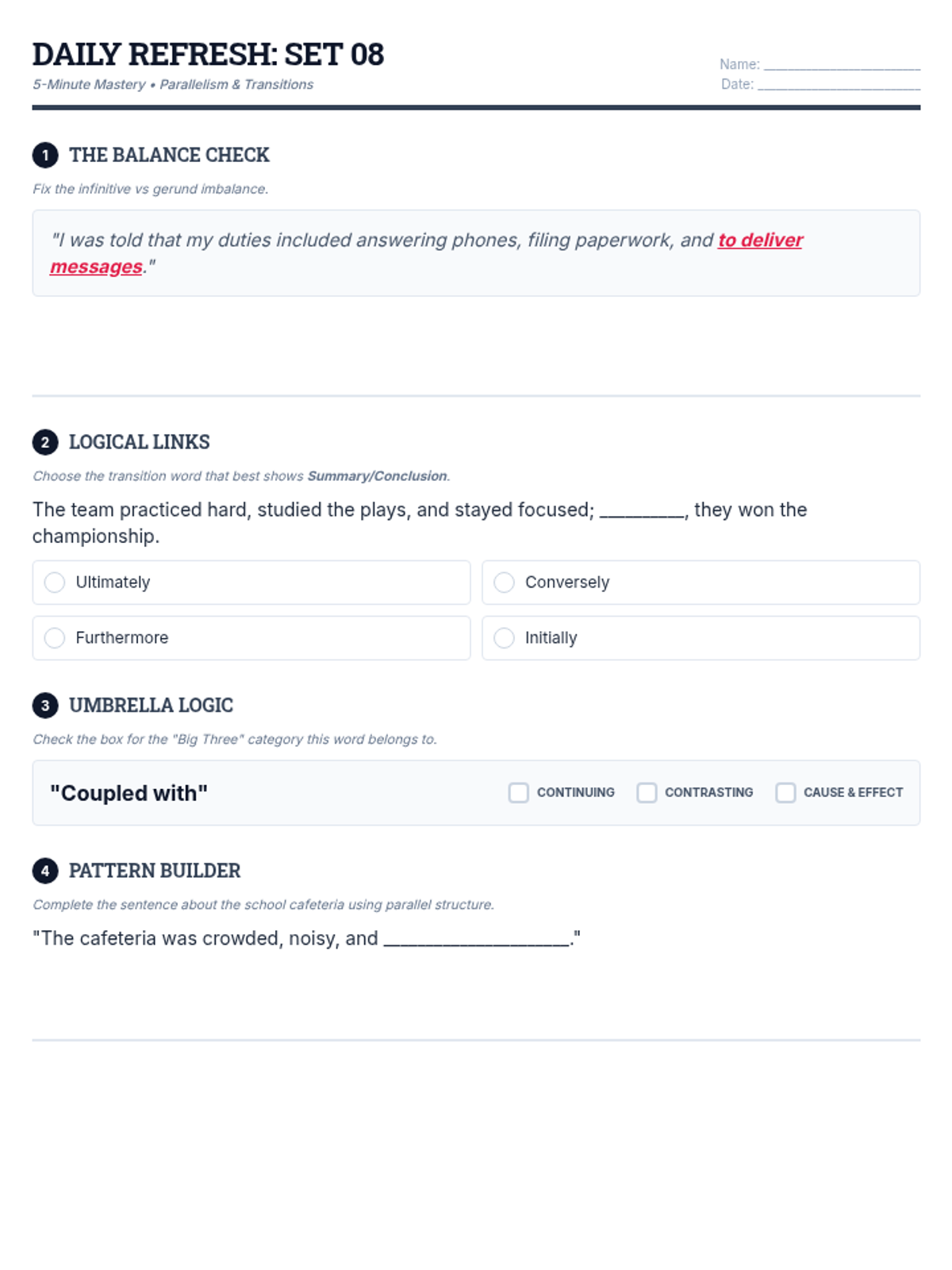
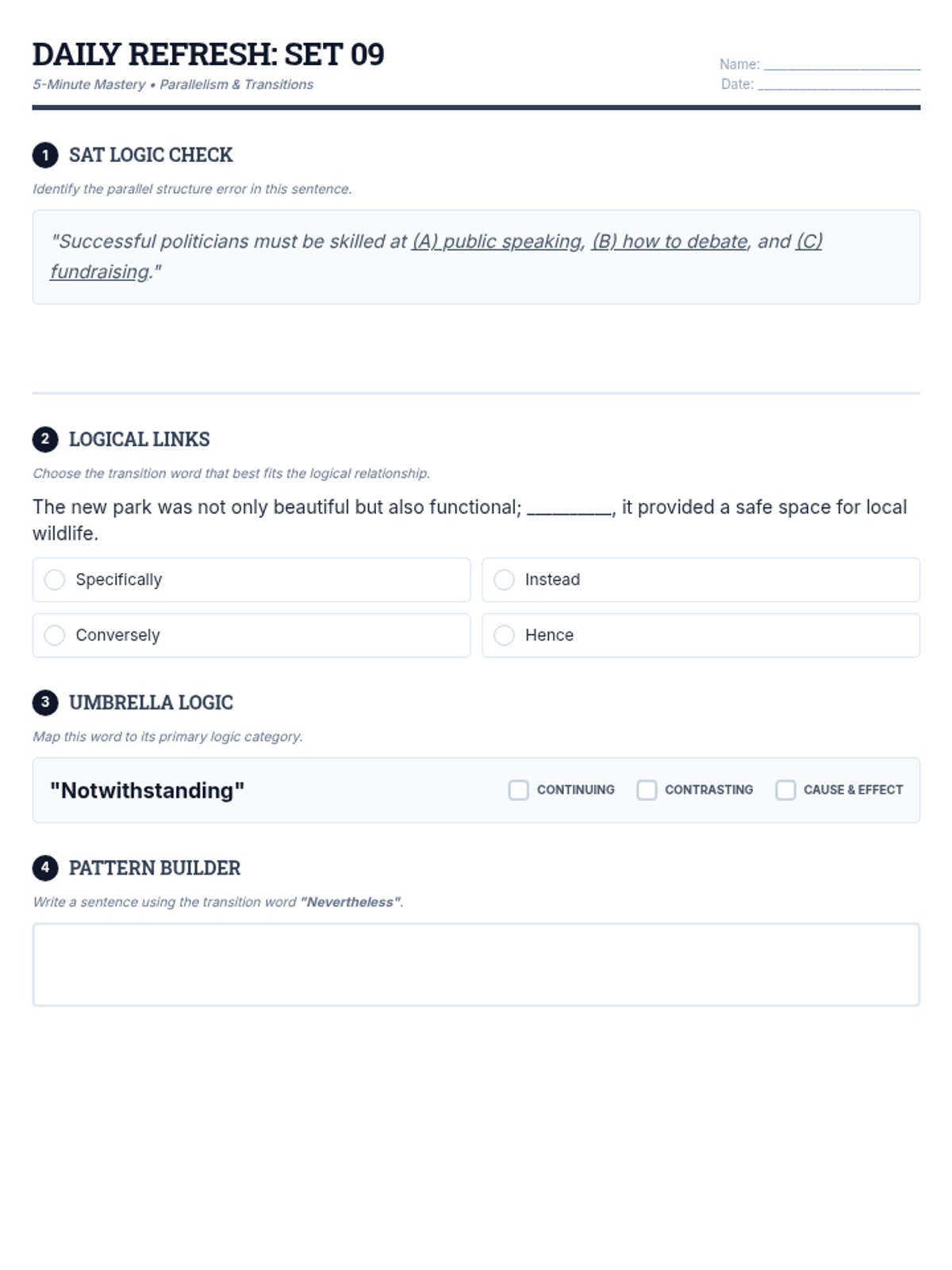
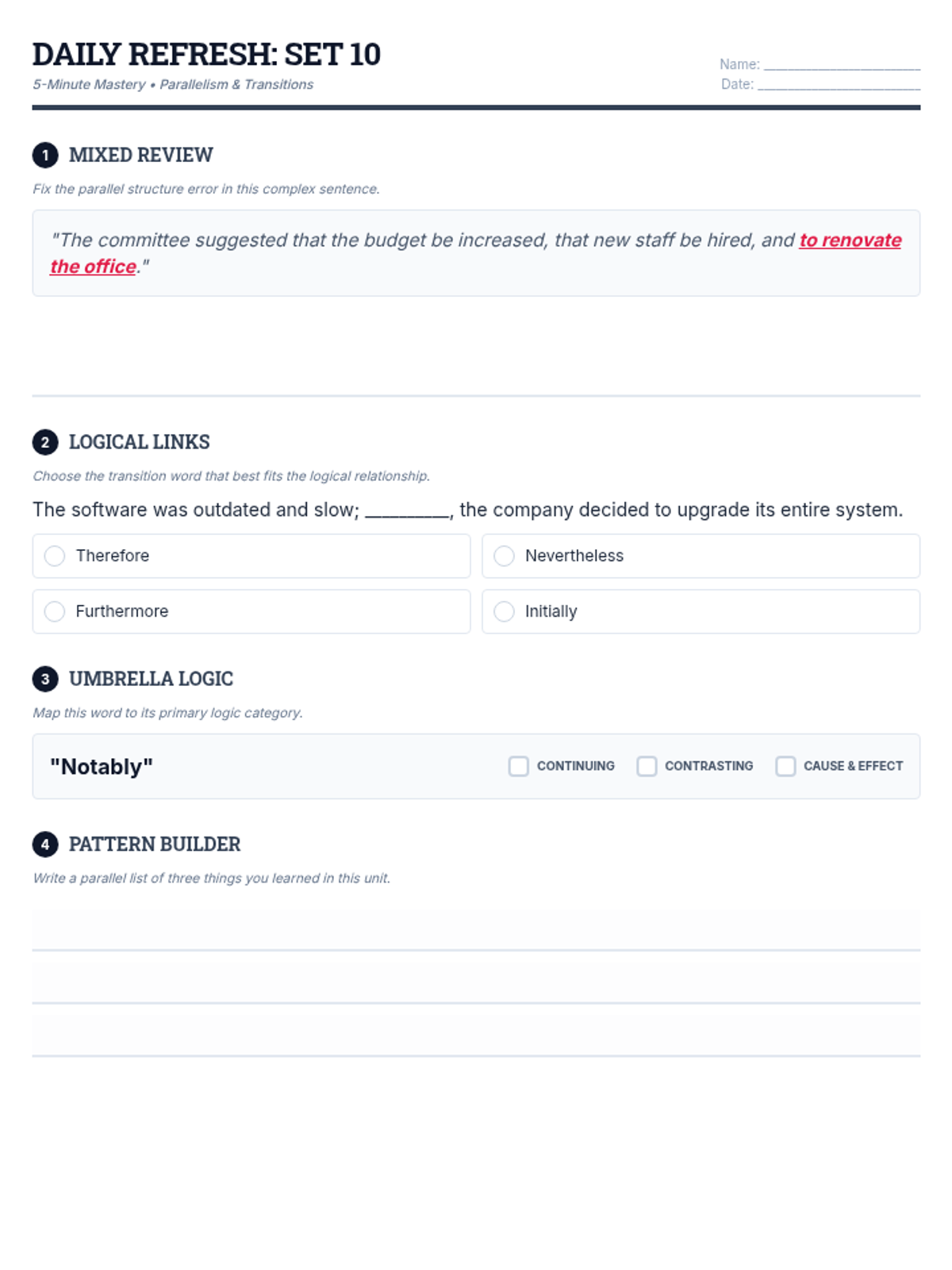
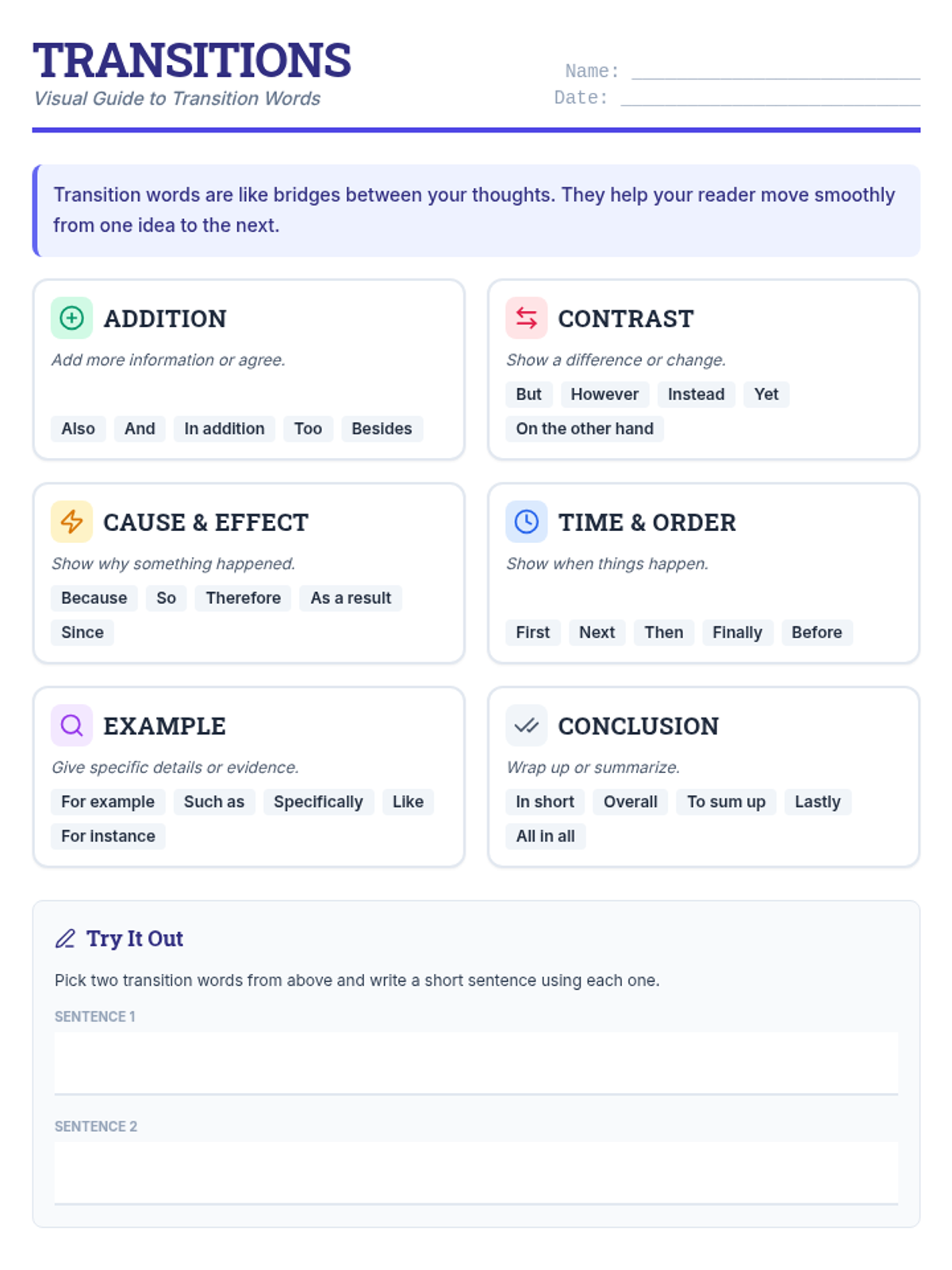
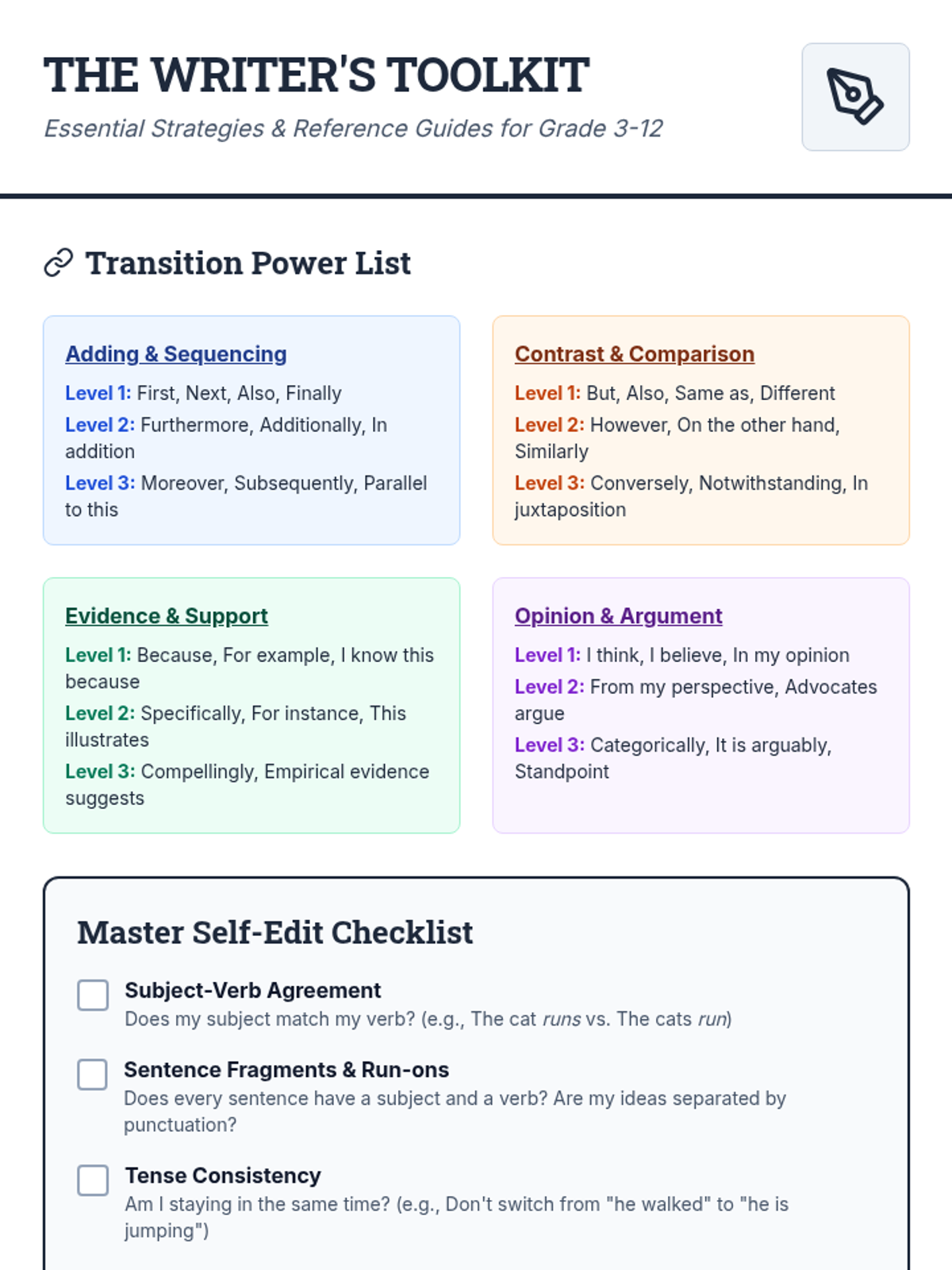
A lesson focused on helping 9th-grade students master writing flow and logic through transition words and parallel structure. This lesson provides differentiated reference sheets for both topics.
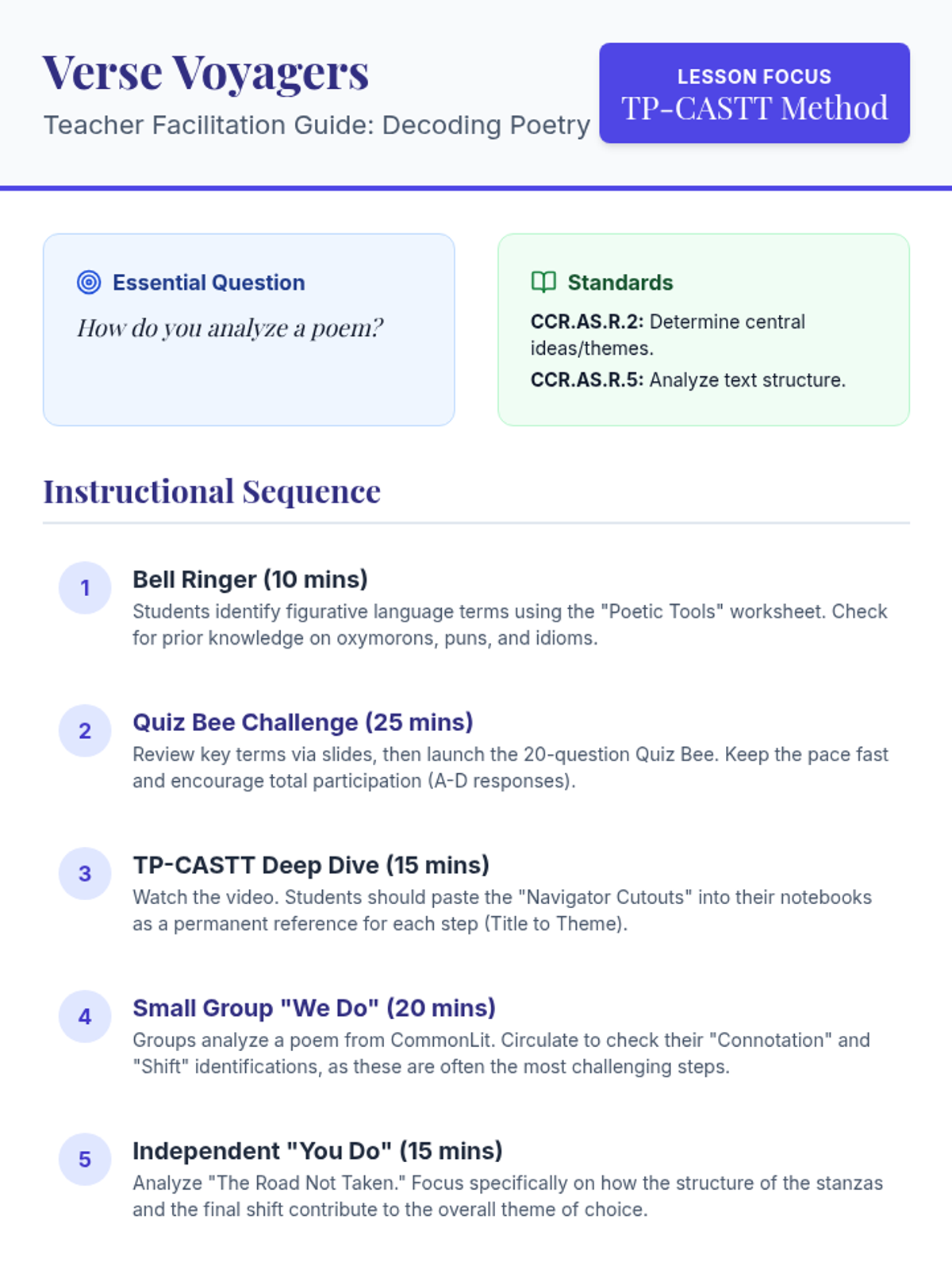
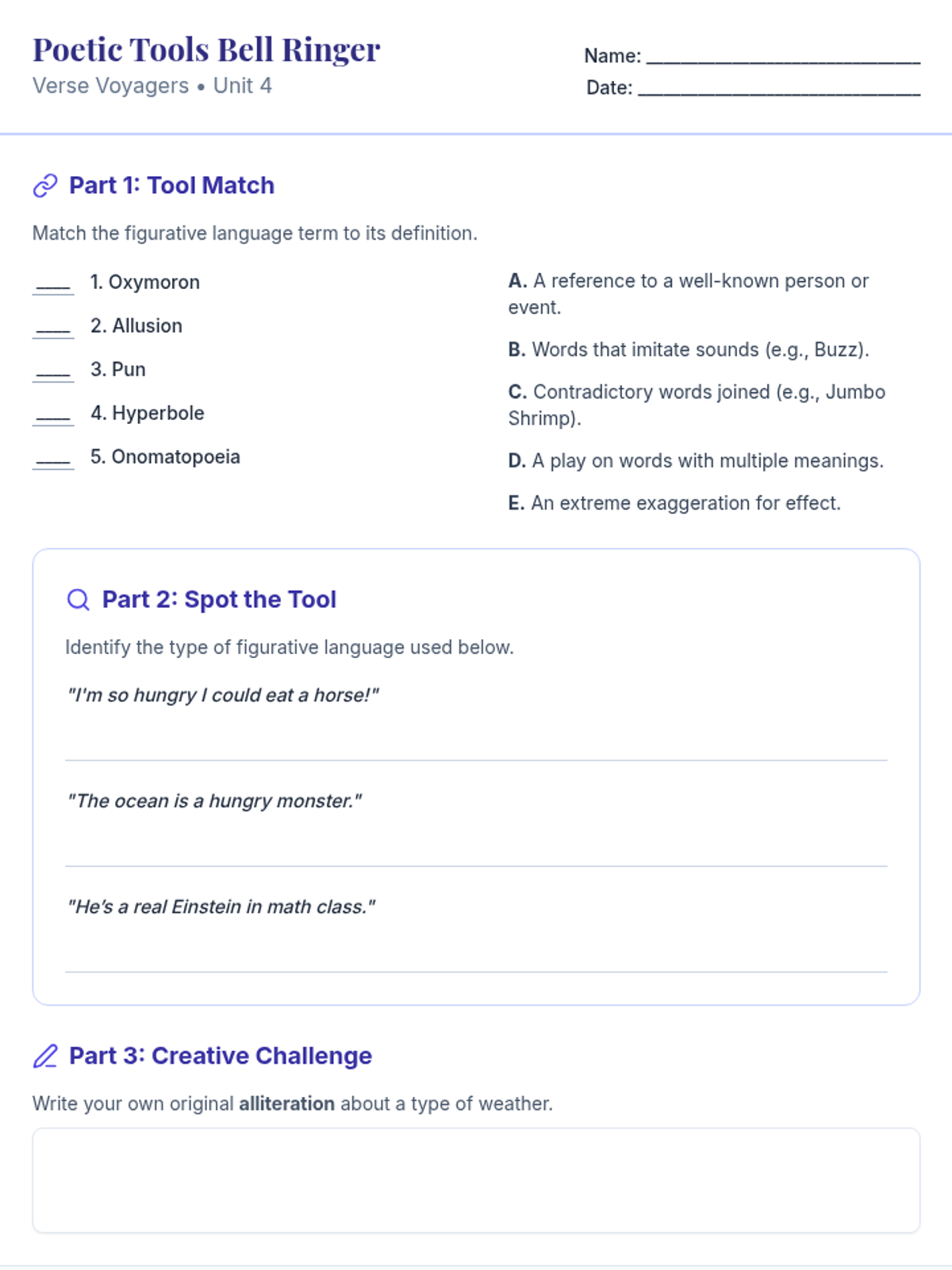
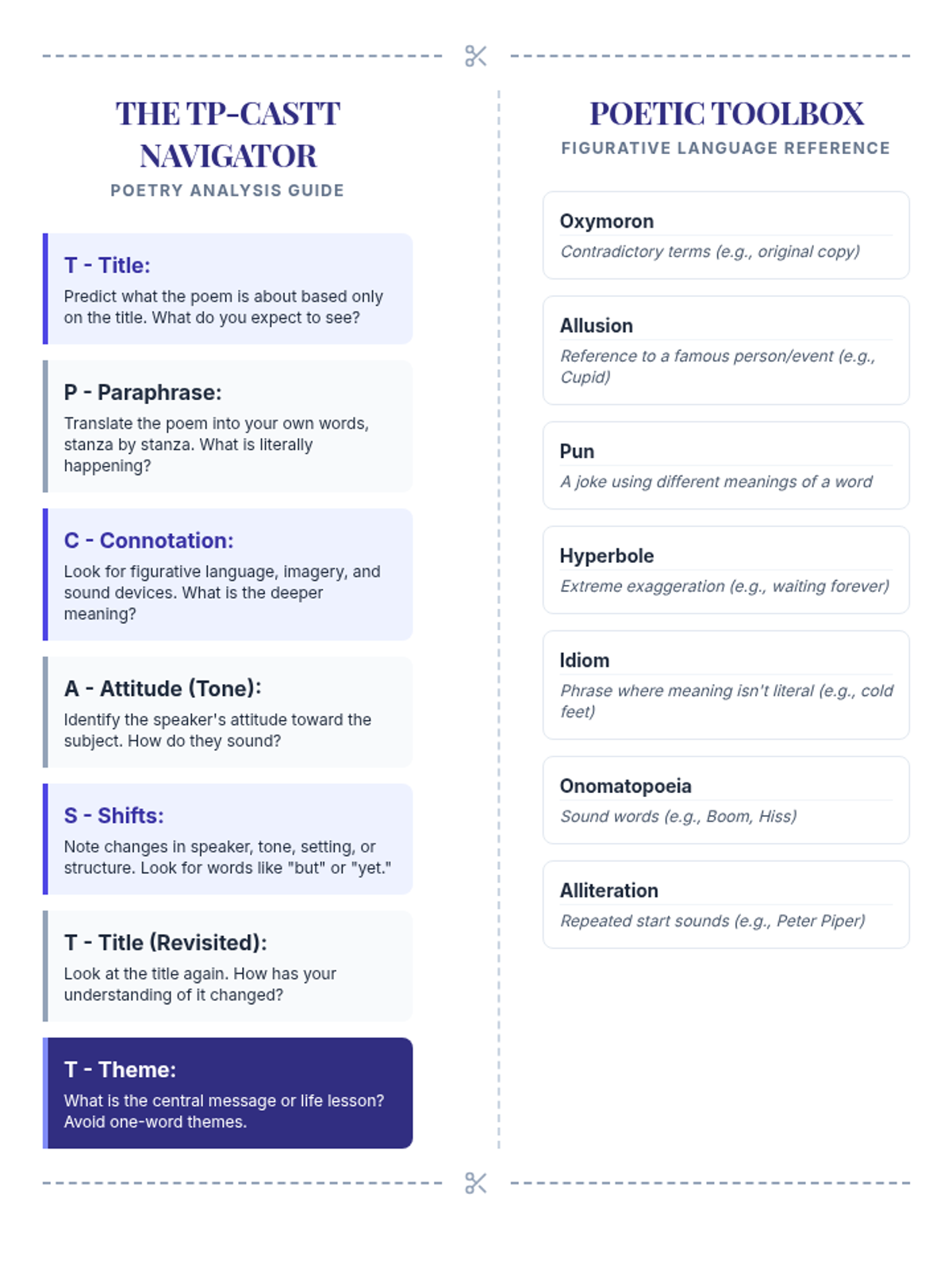
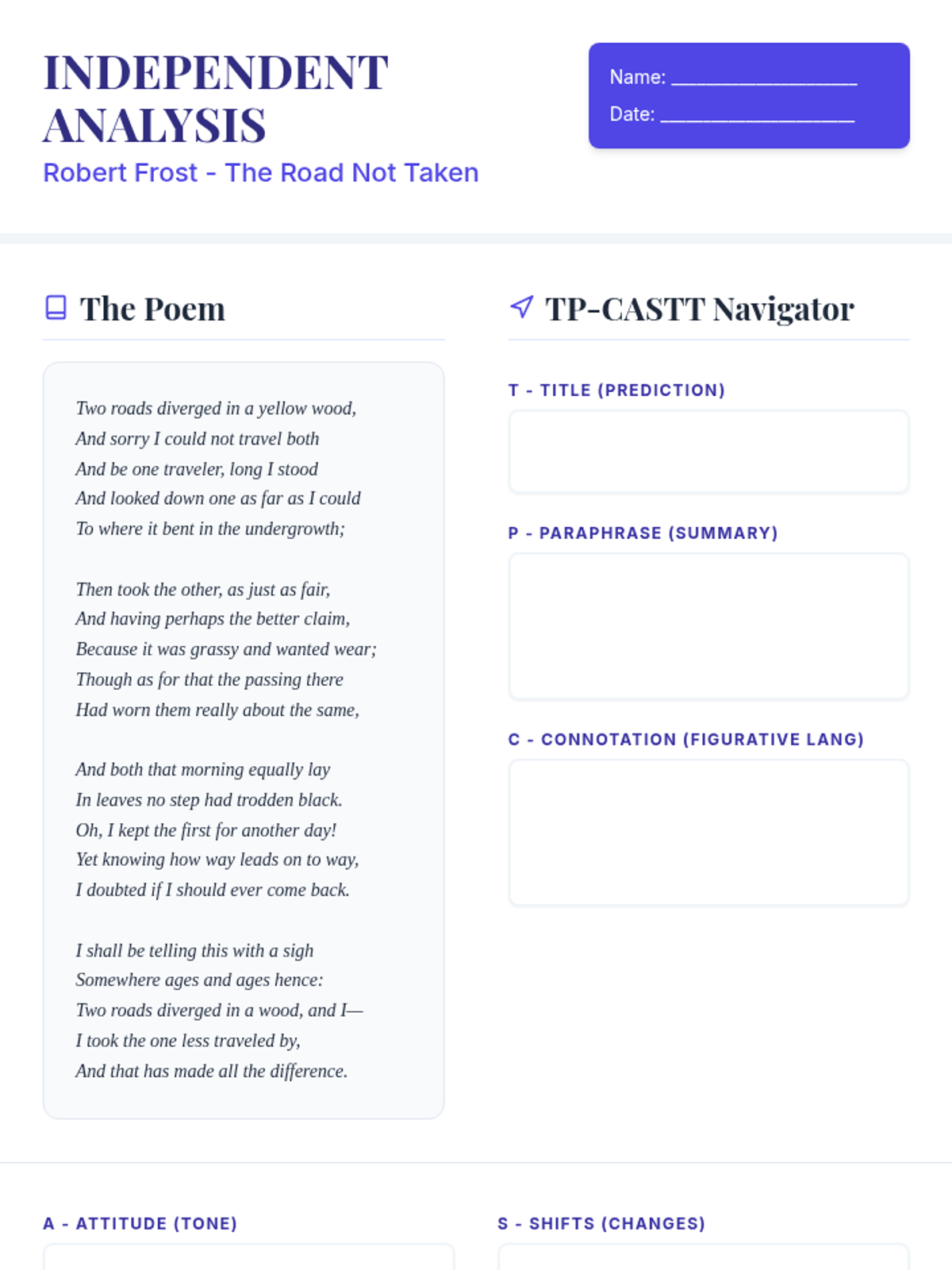
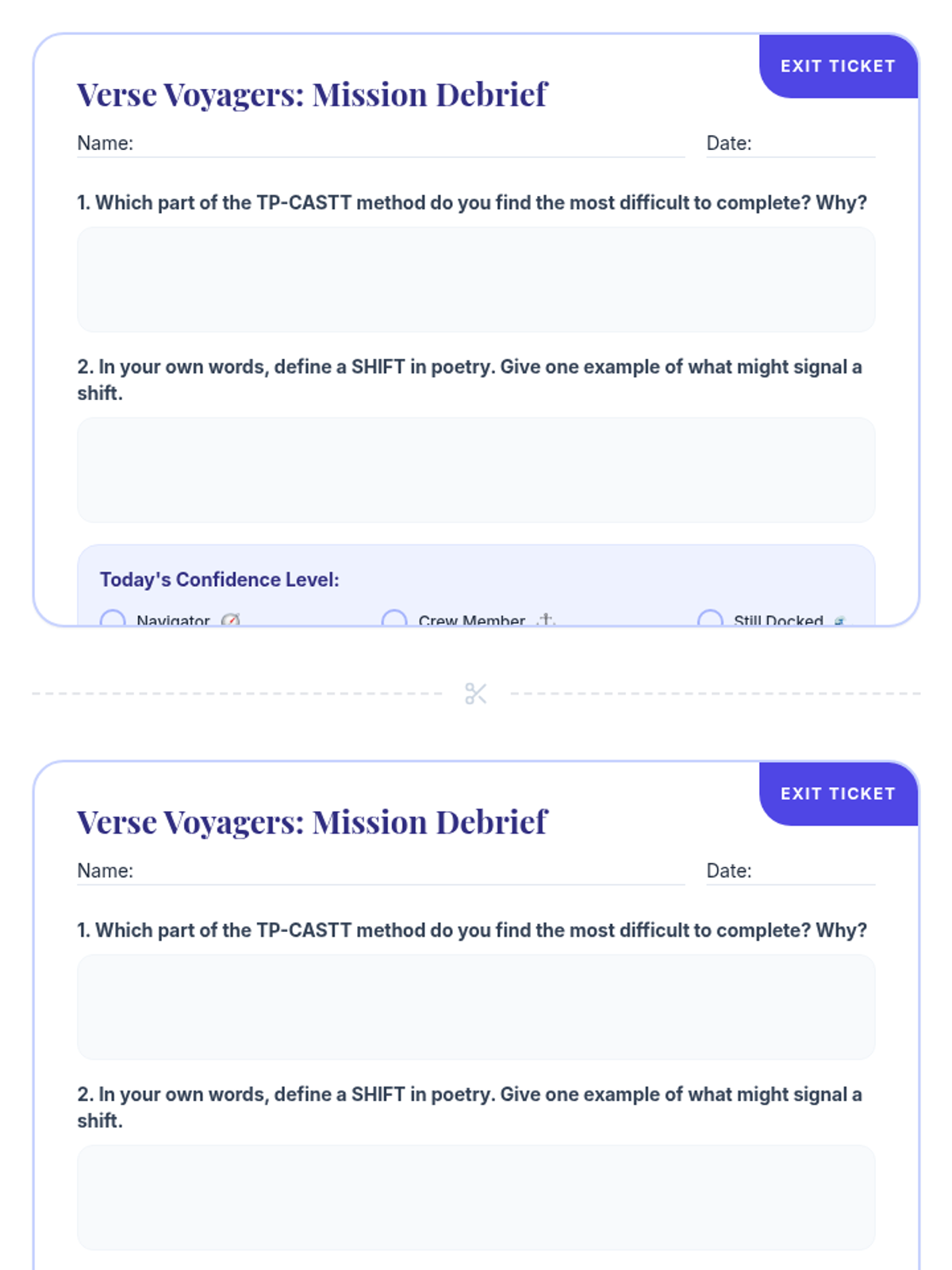
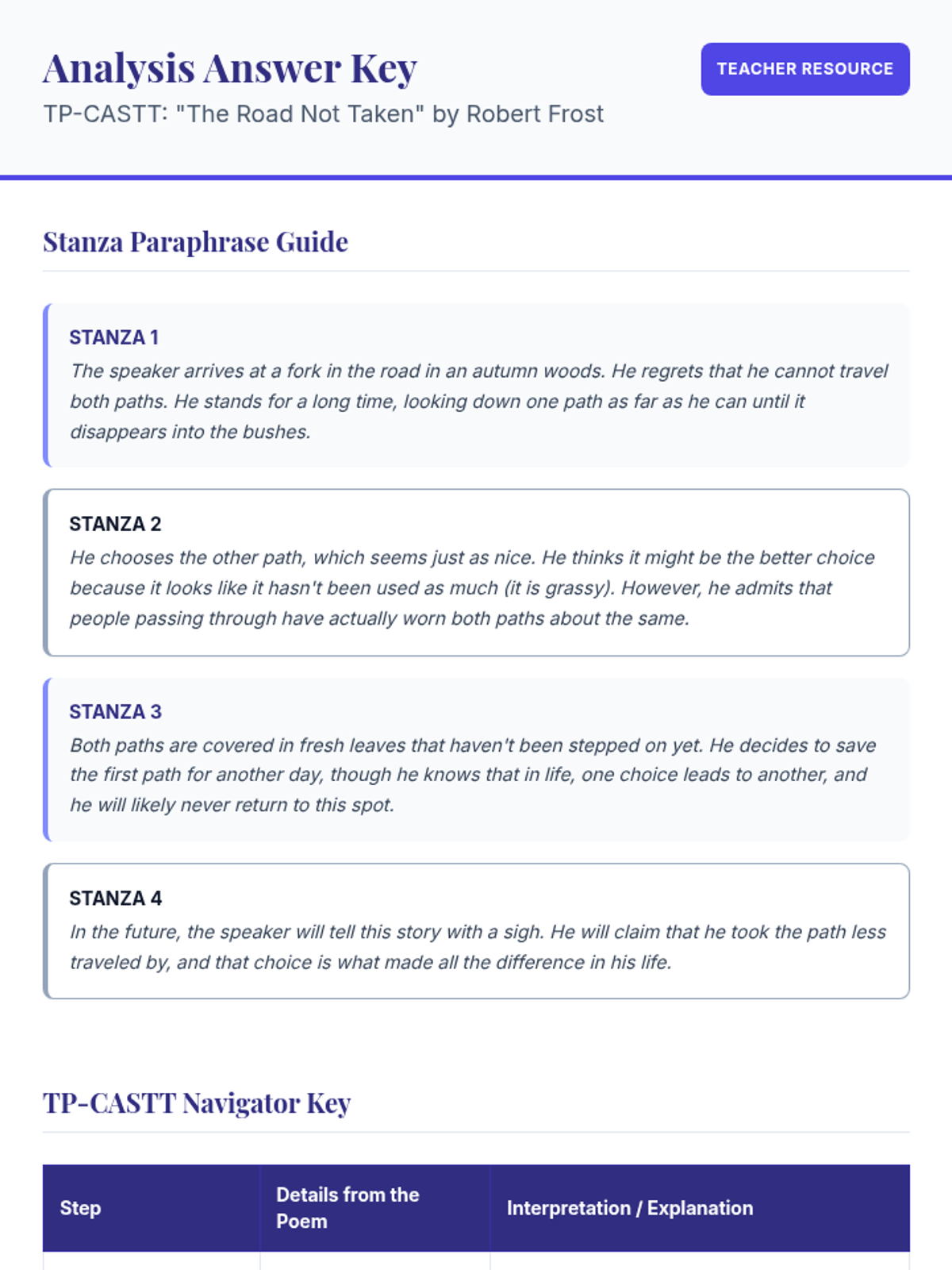
A comprehensive poetry analysis lesson focusing on the TP-CASTT method and figurative language, featuring a gamified 'Quiz Bee' and deep analysis of 'The Road Not Taken'.
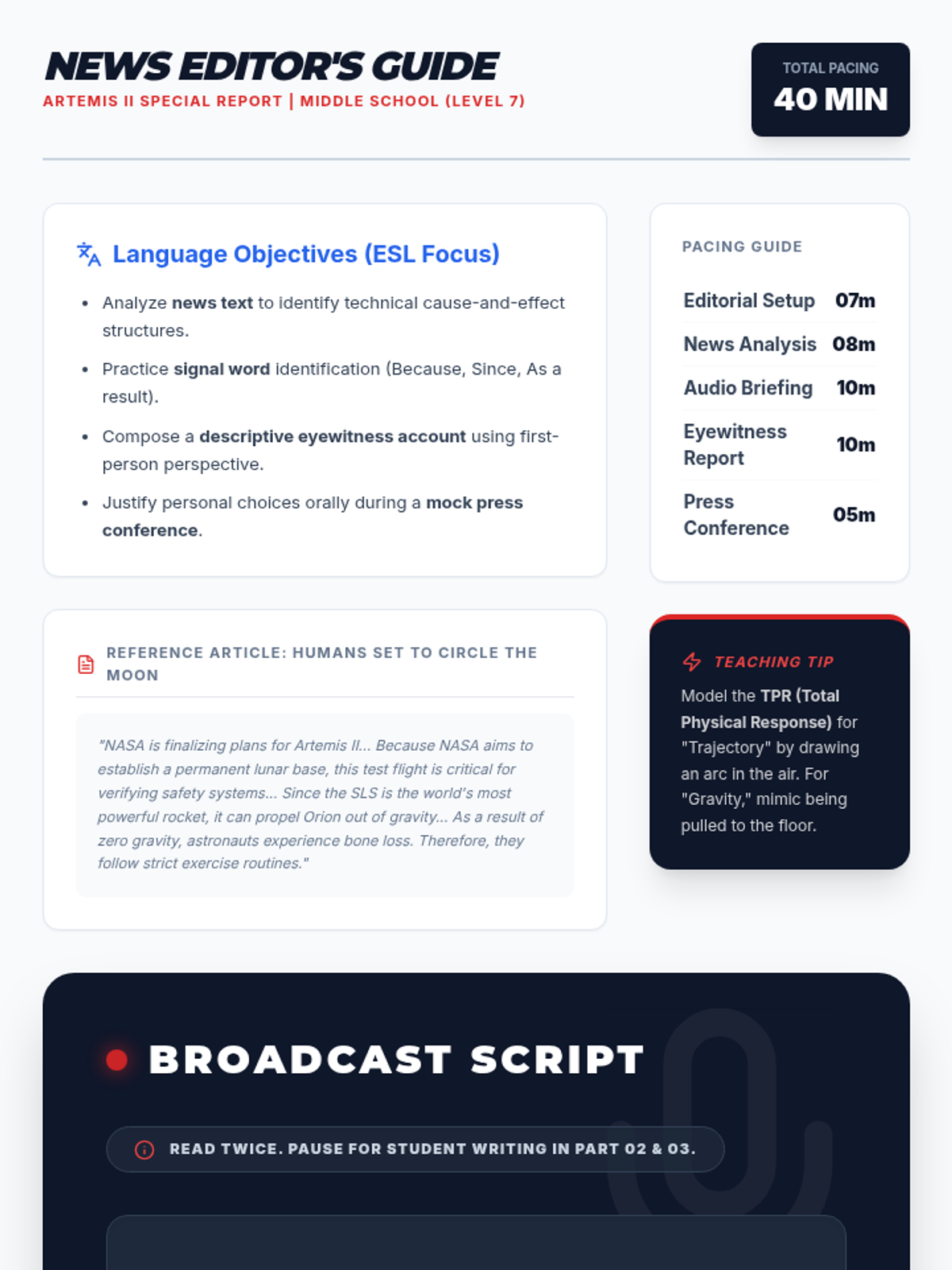
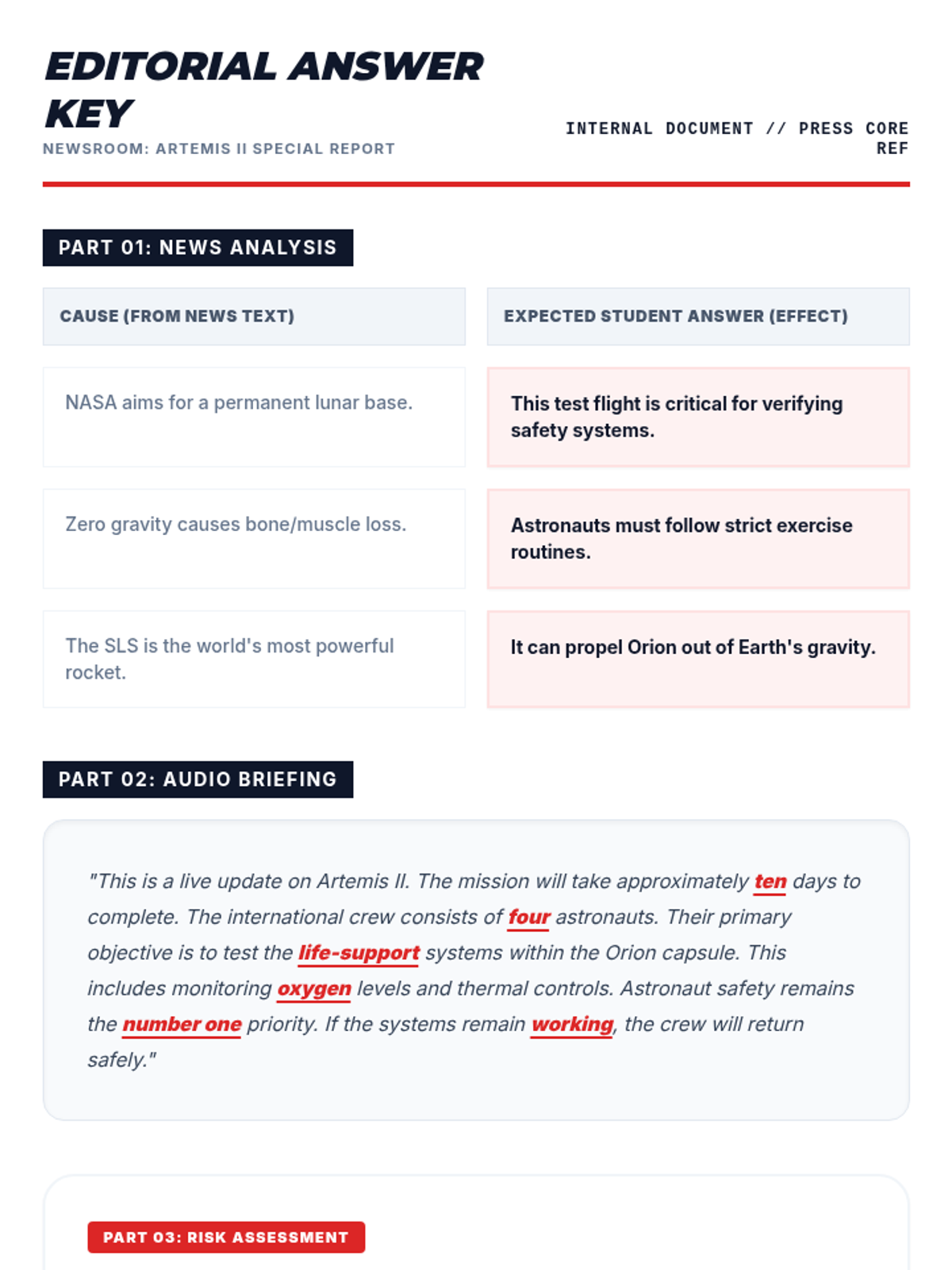
A high-interest lesson for 9th-12th grade ESL students, written at a 7th-grade level, focusing on the Artemis II mission. Includes a news article analysis, cause-and-effect relationships, and descriptive writing.
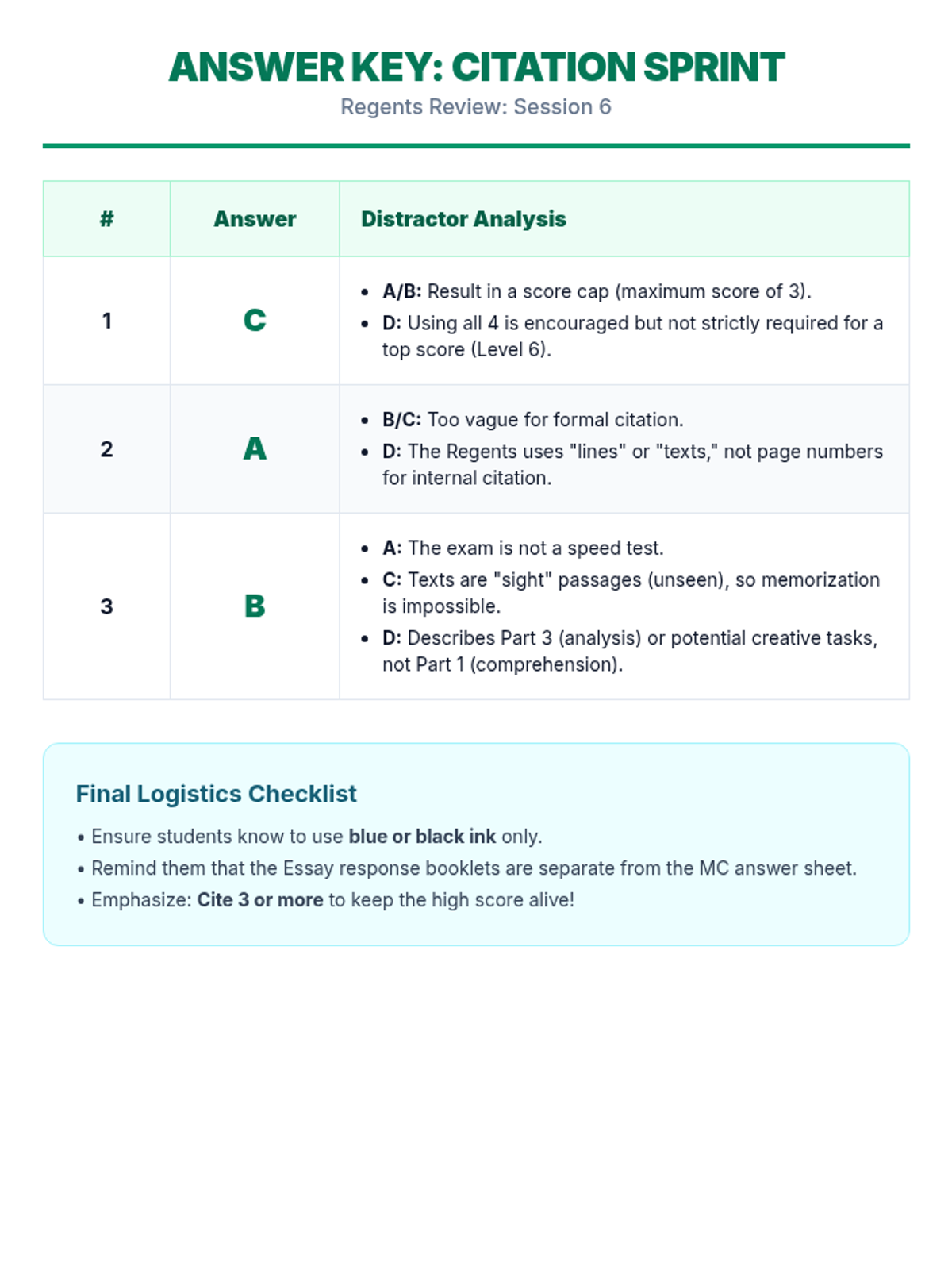
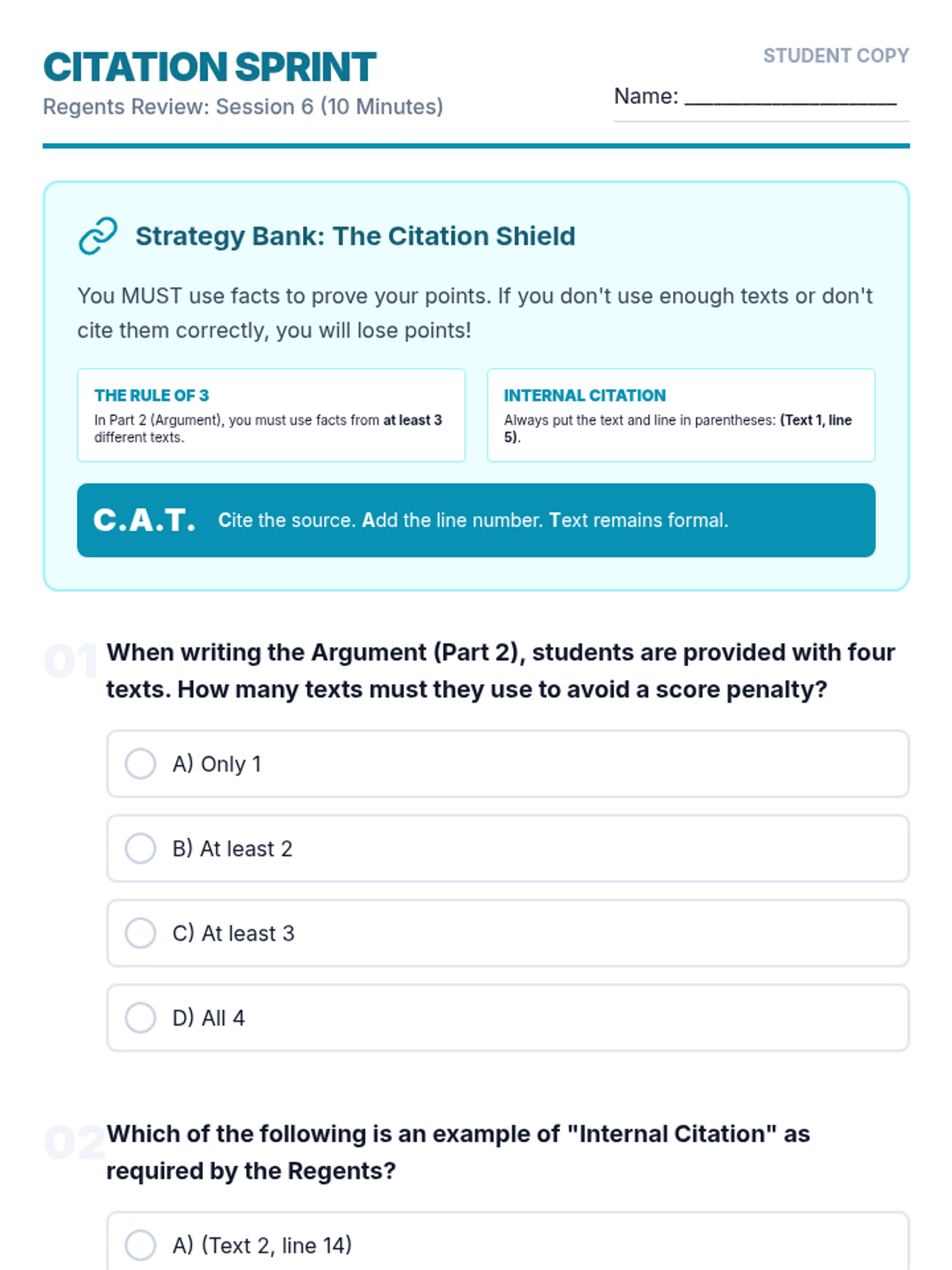
The final 10-minute review session focusing on source integration and exam structure using Set 6 questions.
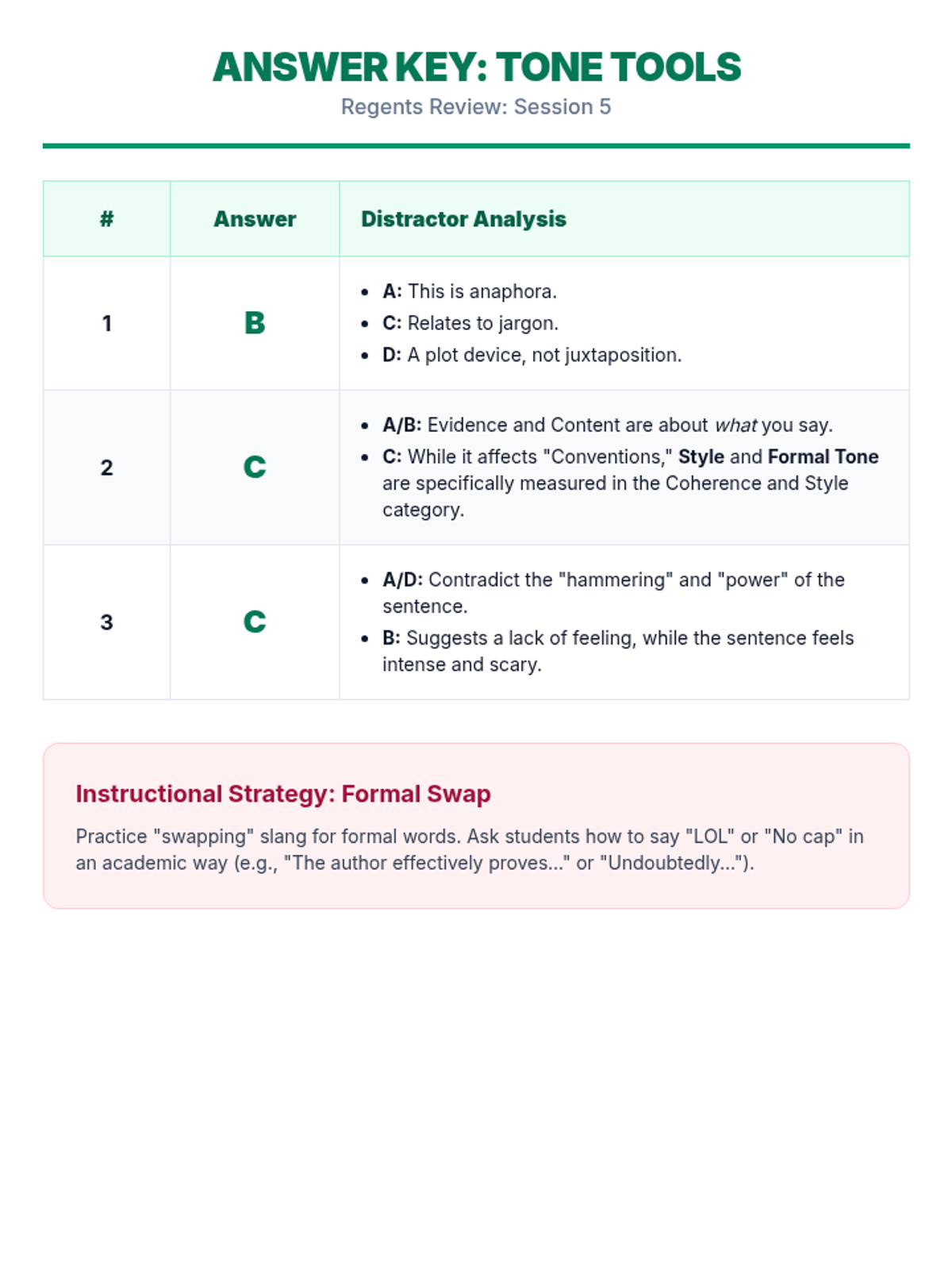
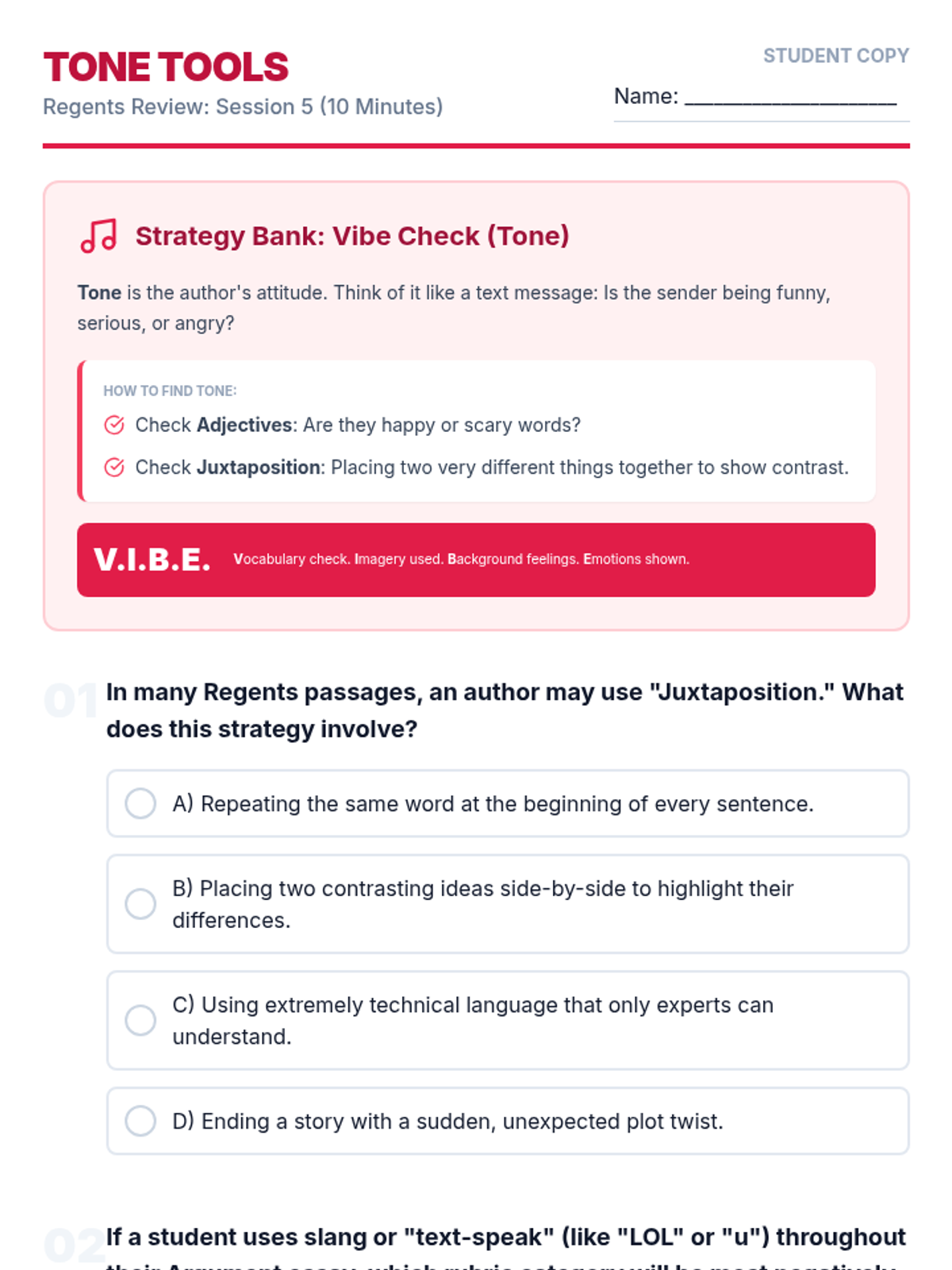
A 10-minute session on vocabulary, tone, and formal style using Set 5 questions, featuring strategies for identifying author vibe.
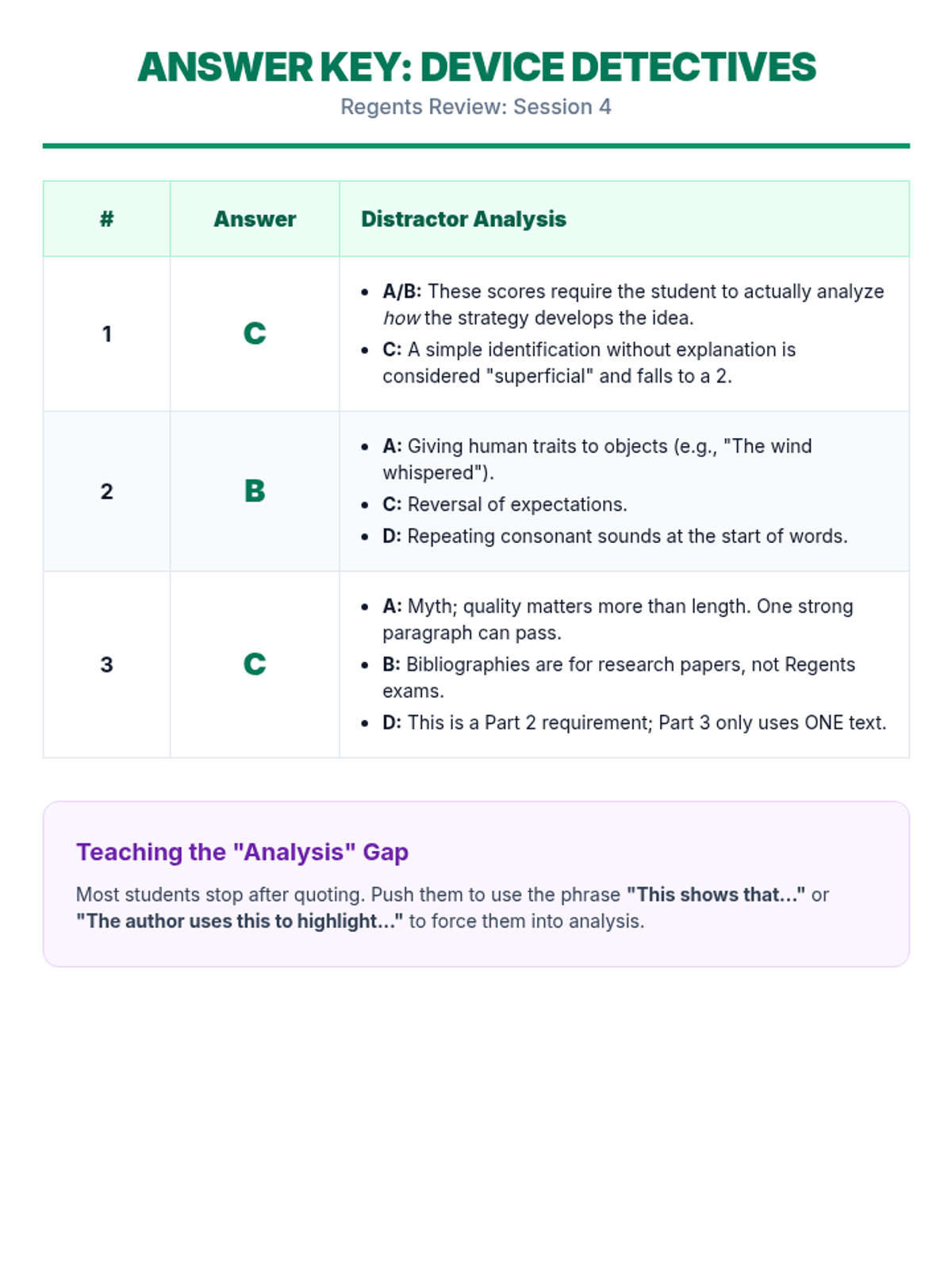
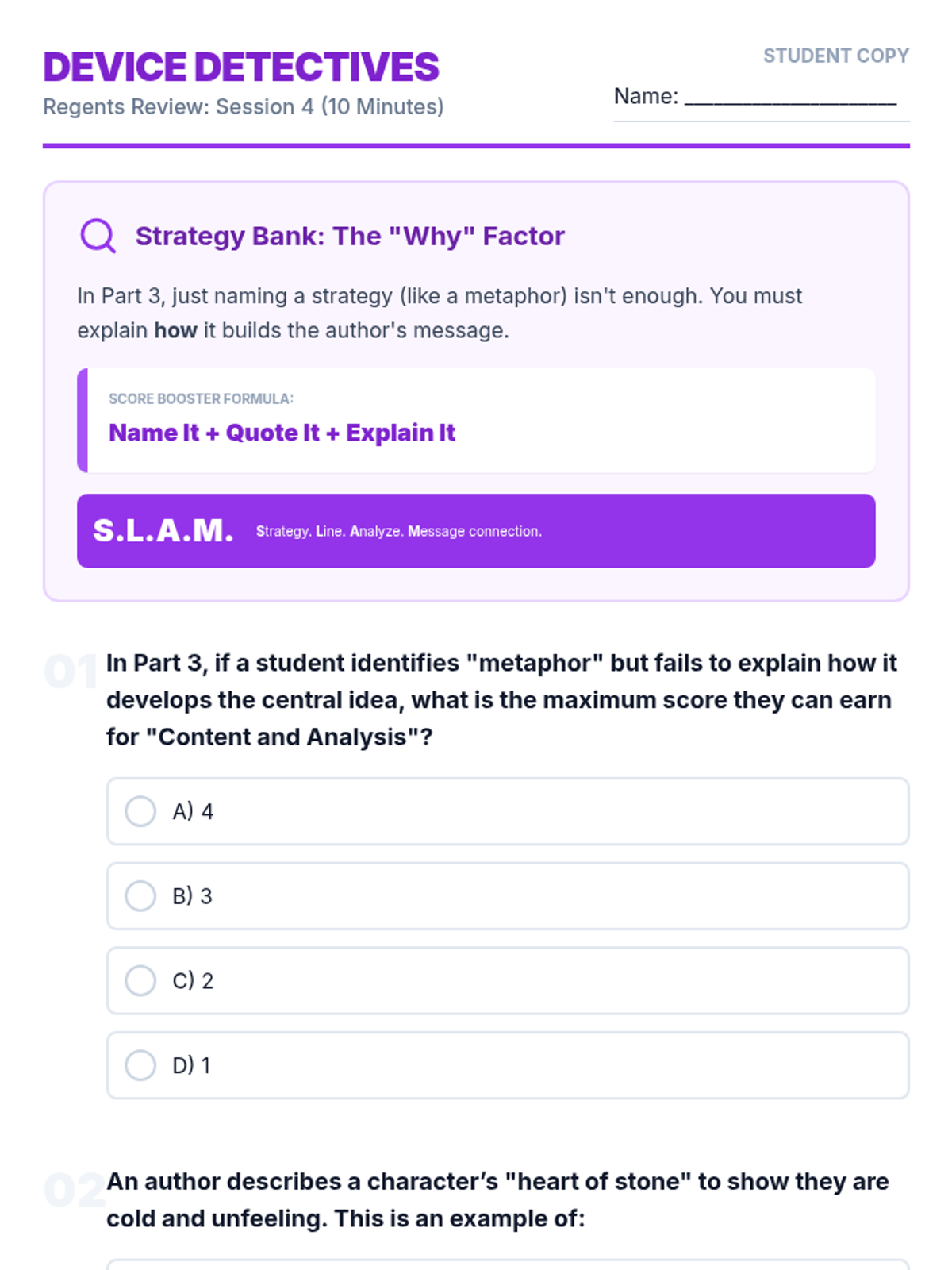
A 10-minute focus on the Part 3 Text-Analysis Response using Set 4 questions, highlighting the importance of explaining 'how' strategies work.
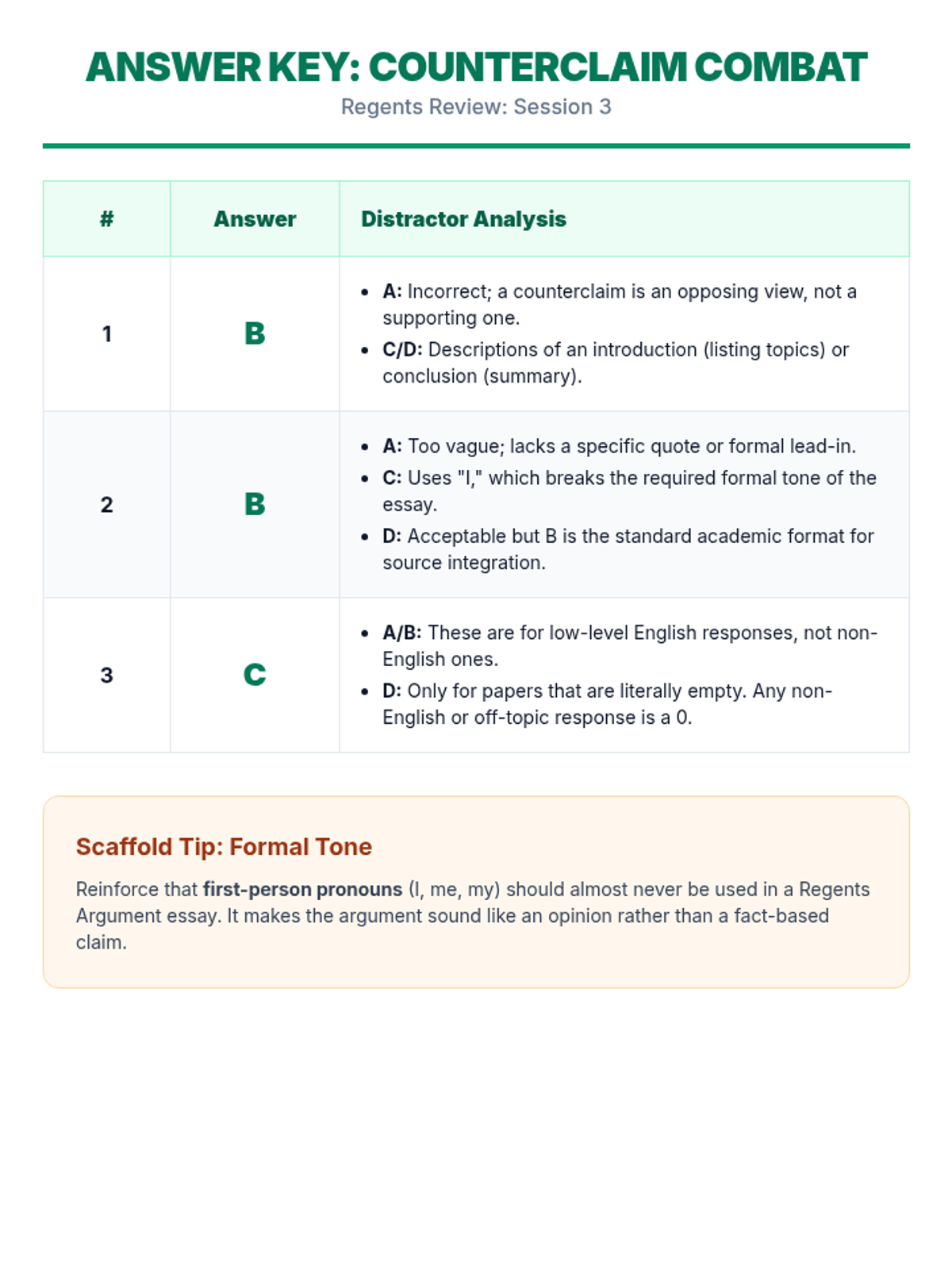
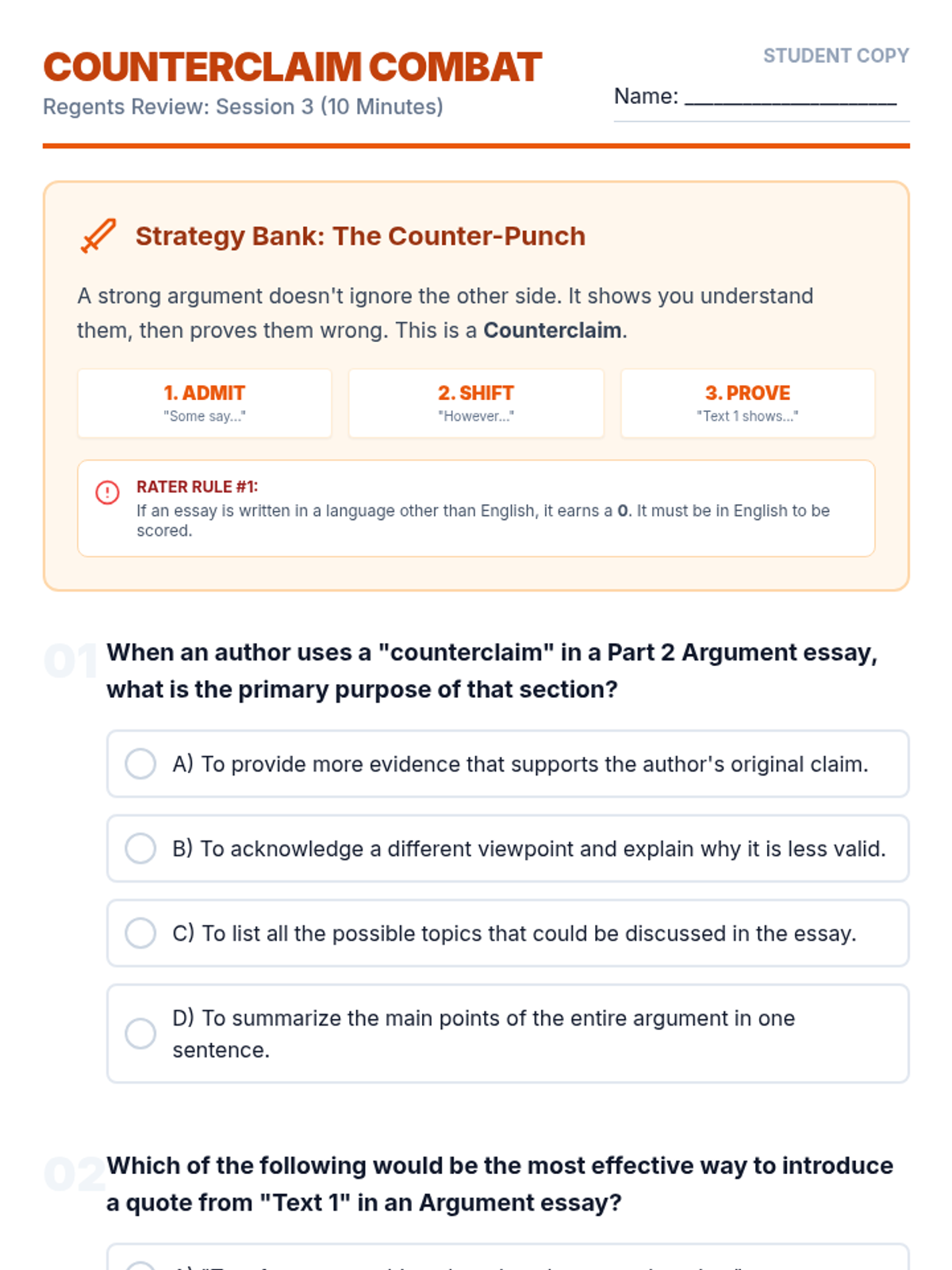
A 10-minute deep dive into argument analysis and source integration using Set 3 questions, focusing on the purpose of counterclaims.
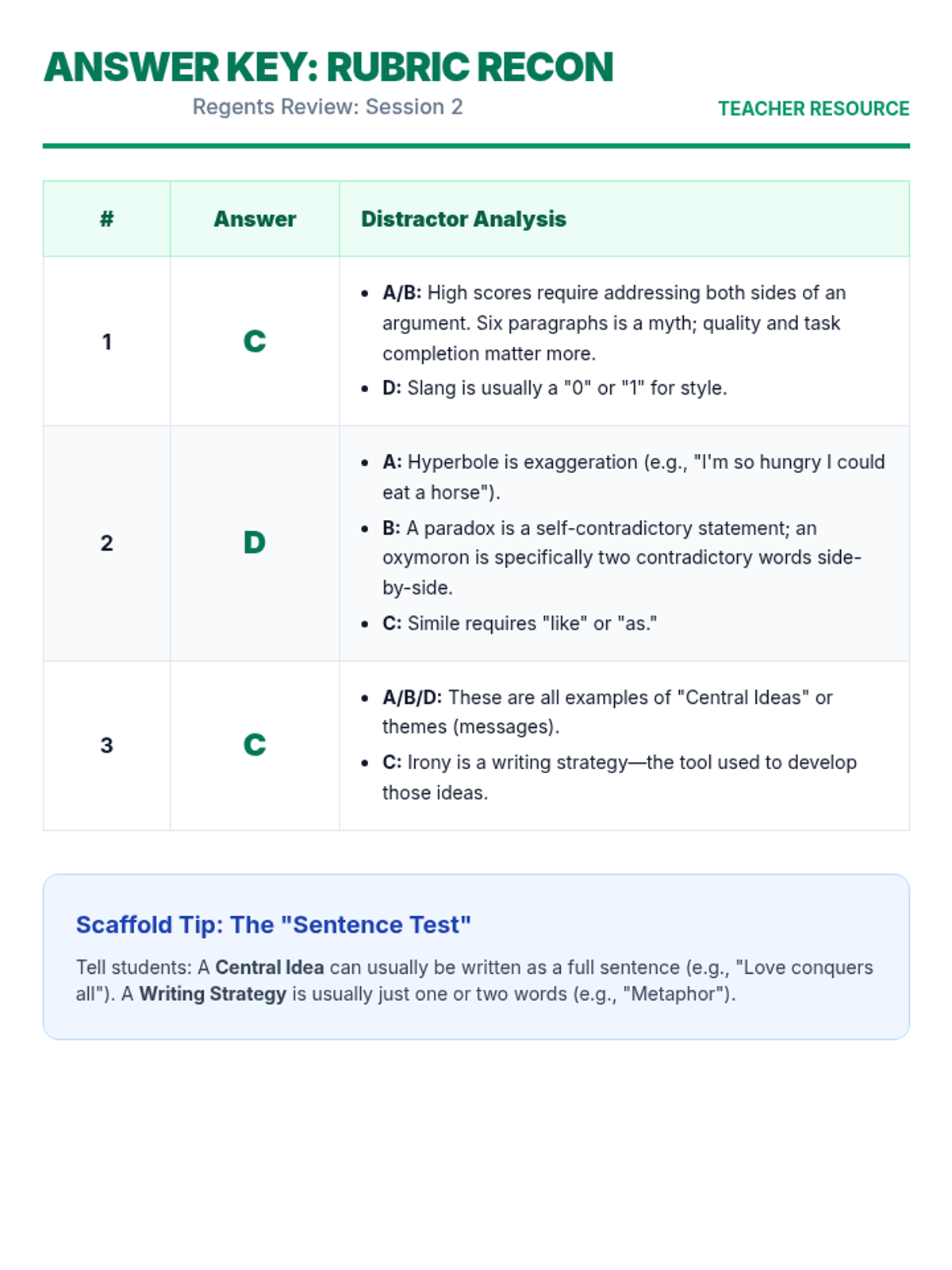
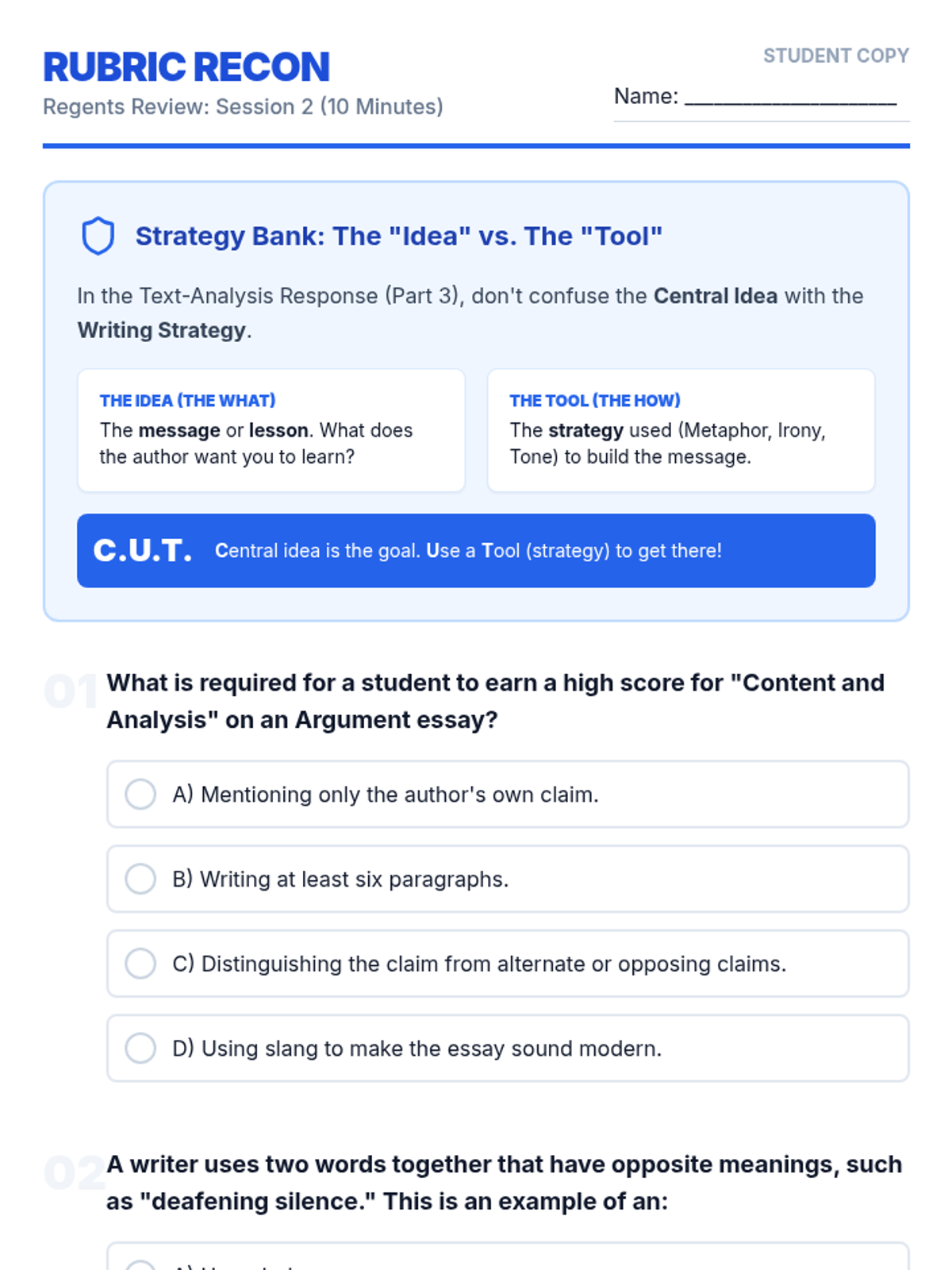
A 10-minute review of argument structure and literary devices using Set 2 questions, emphasizing the difference between strategies and central ideas.
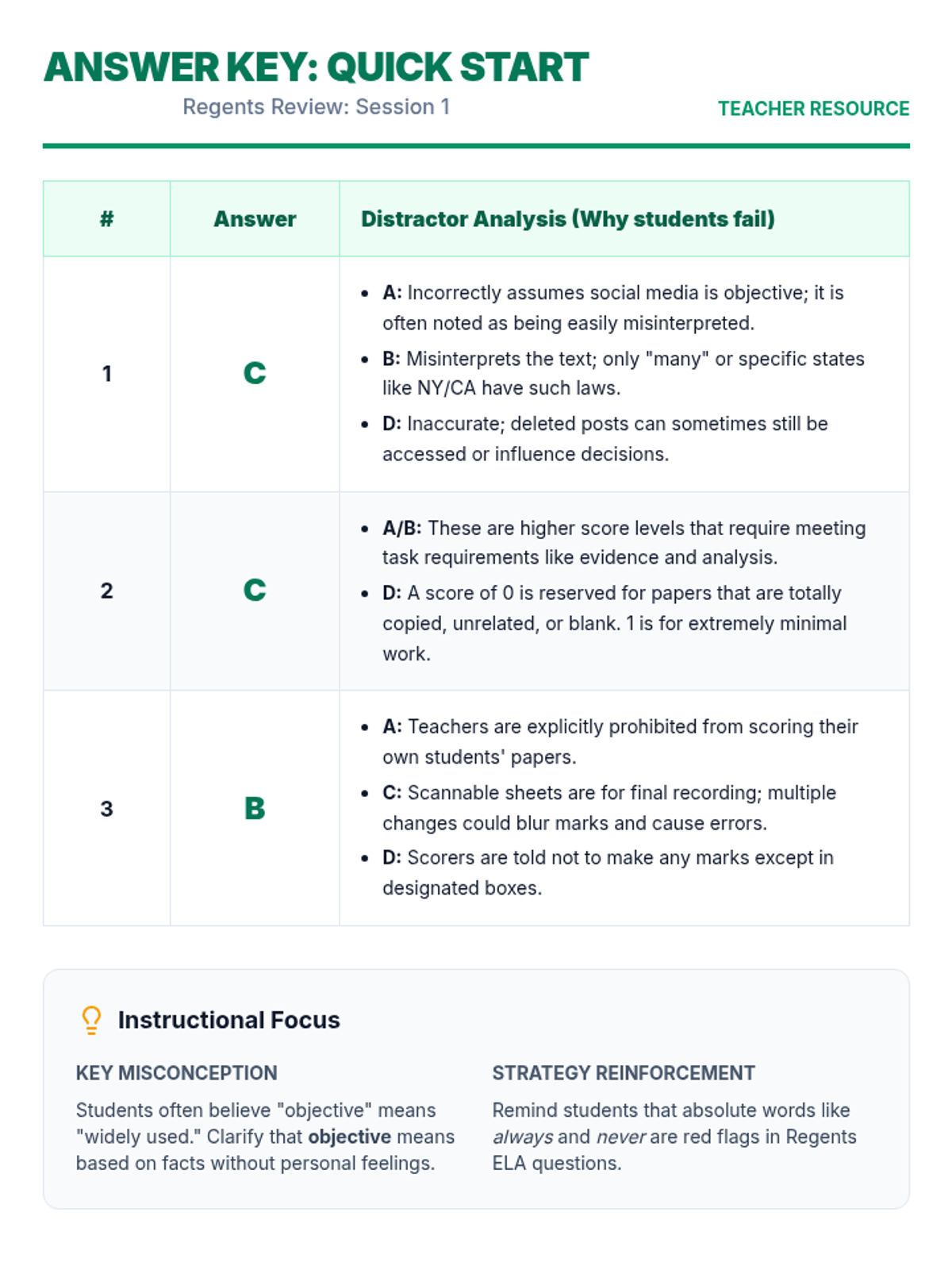
The first 10-minute review session focusing on basic test-taking strategies and general exam rules using Set 1 questions.
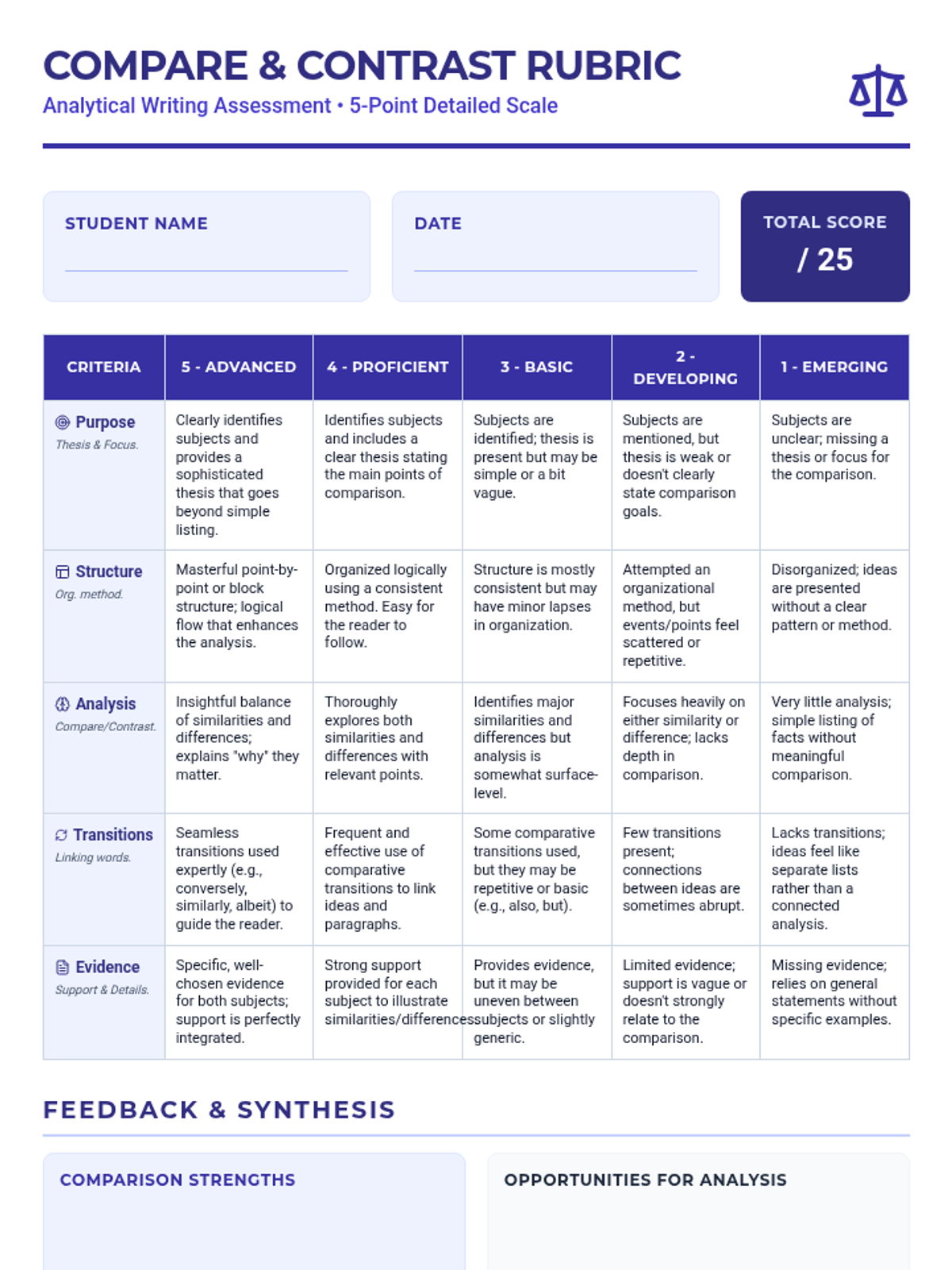
Resources for mastering comparative writing, including rubrics and organizers for subject analysis.
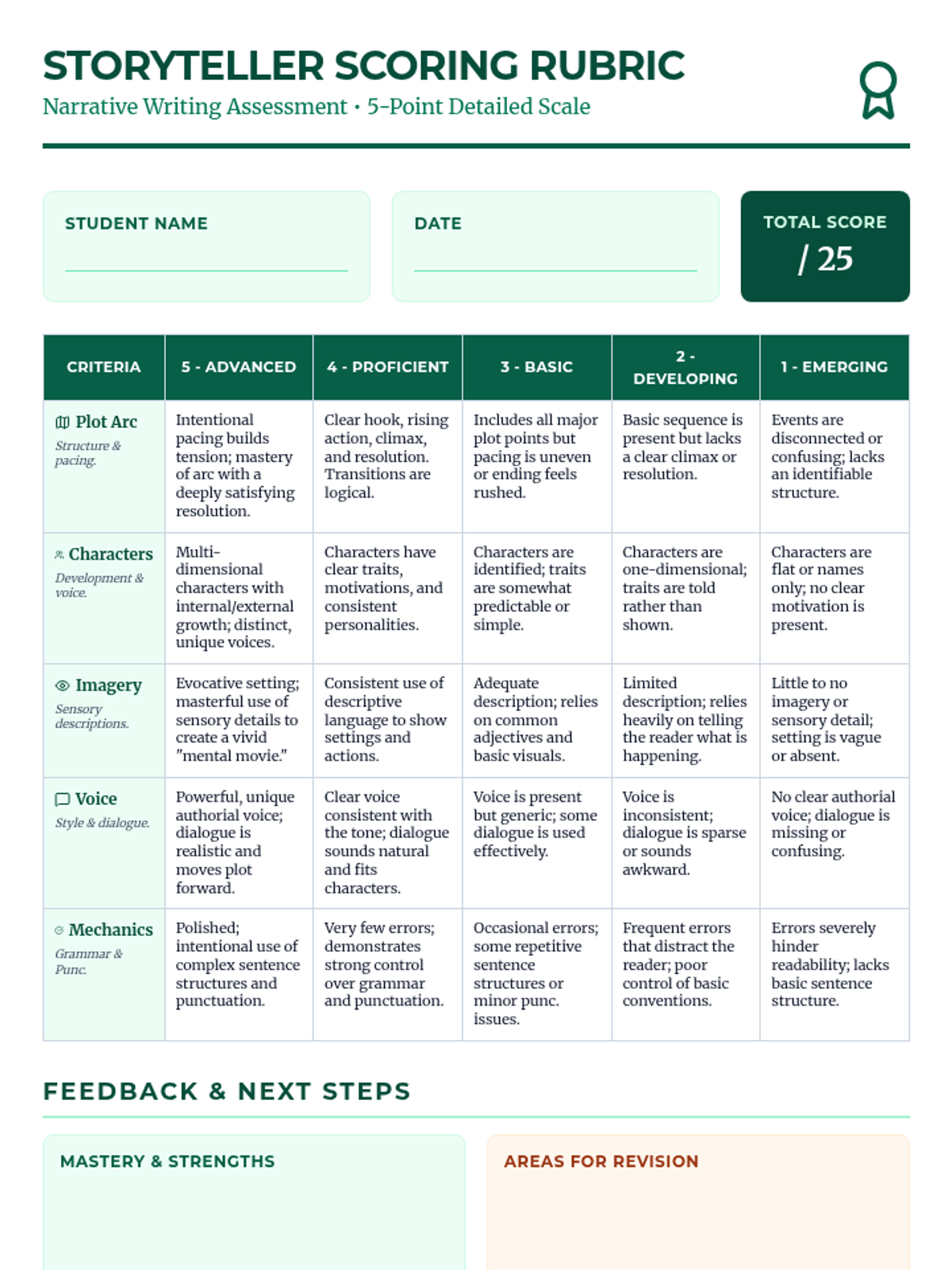
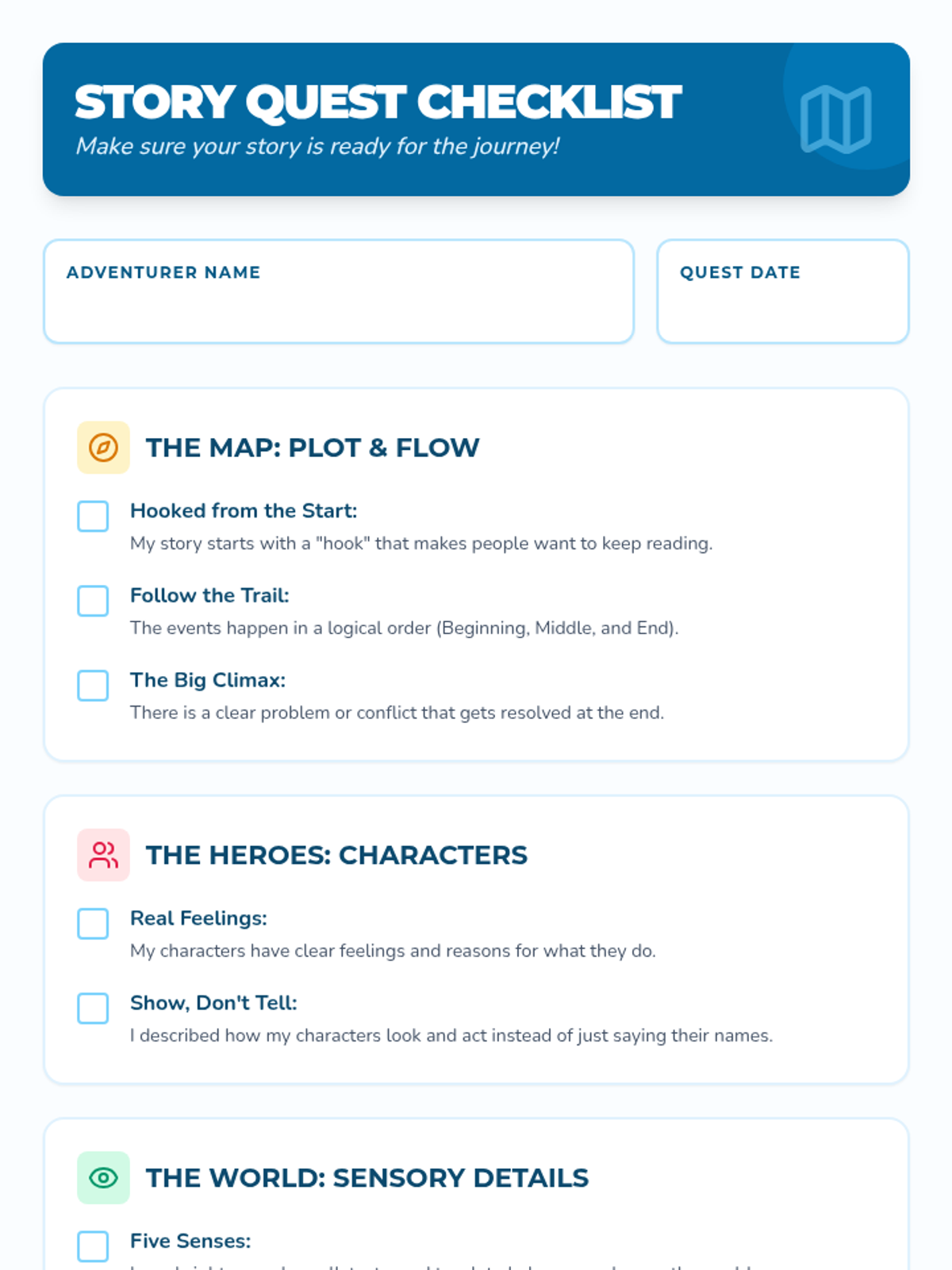
A collection of tools to help students and teachers evaluate narrative writing through clear criteria and student-friendly goals.
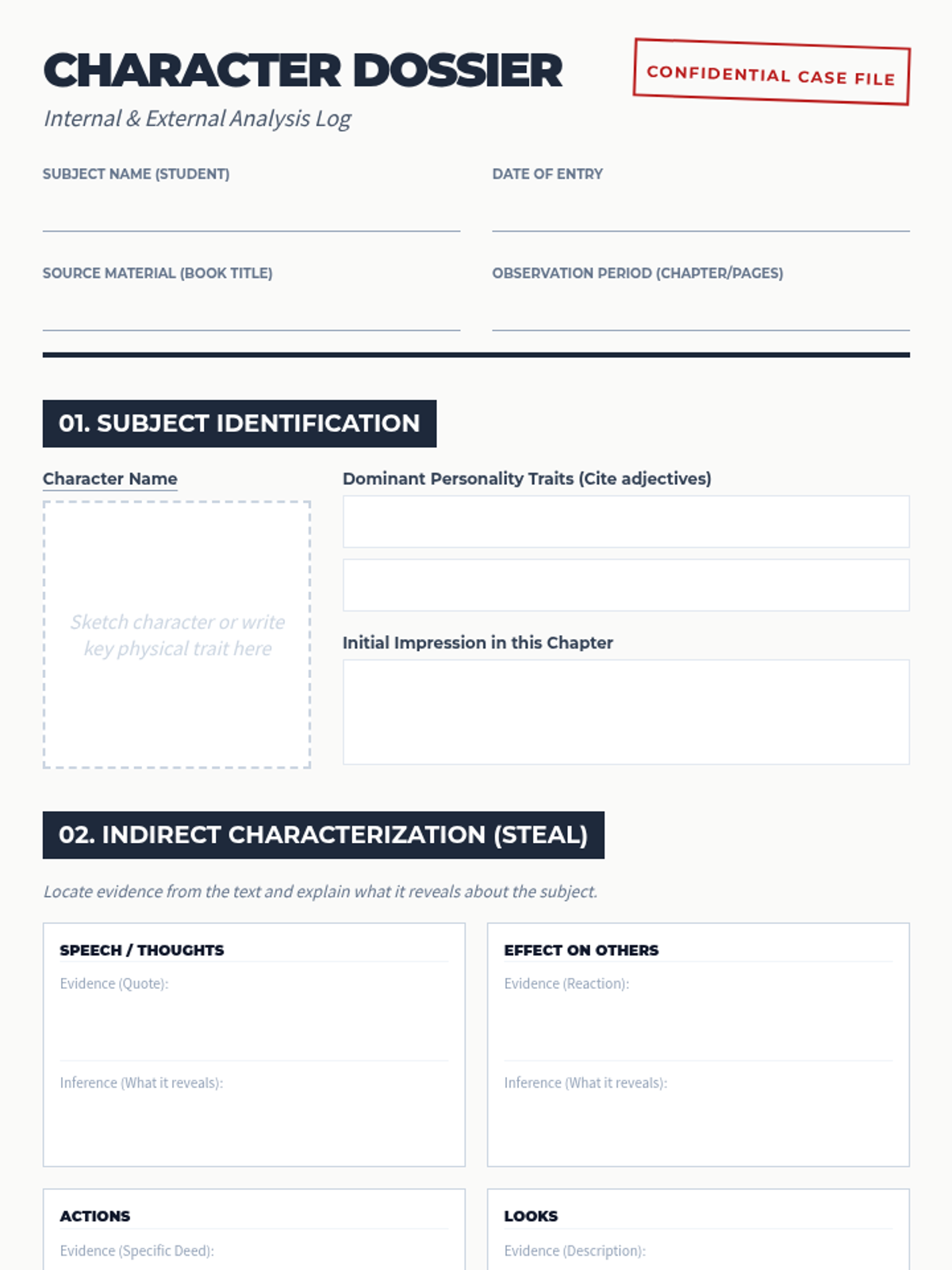
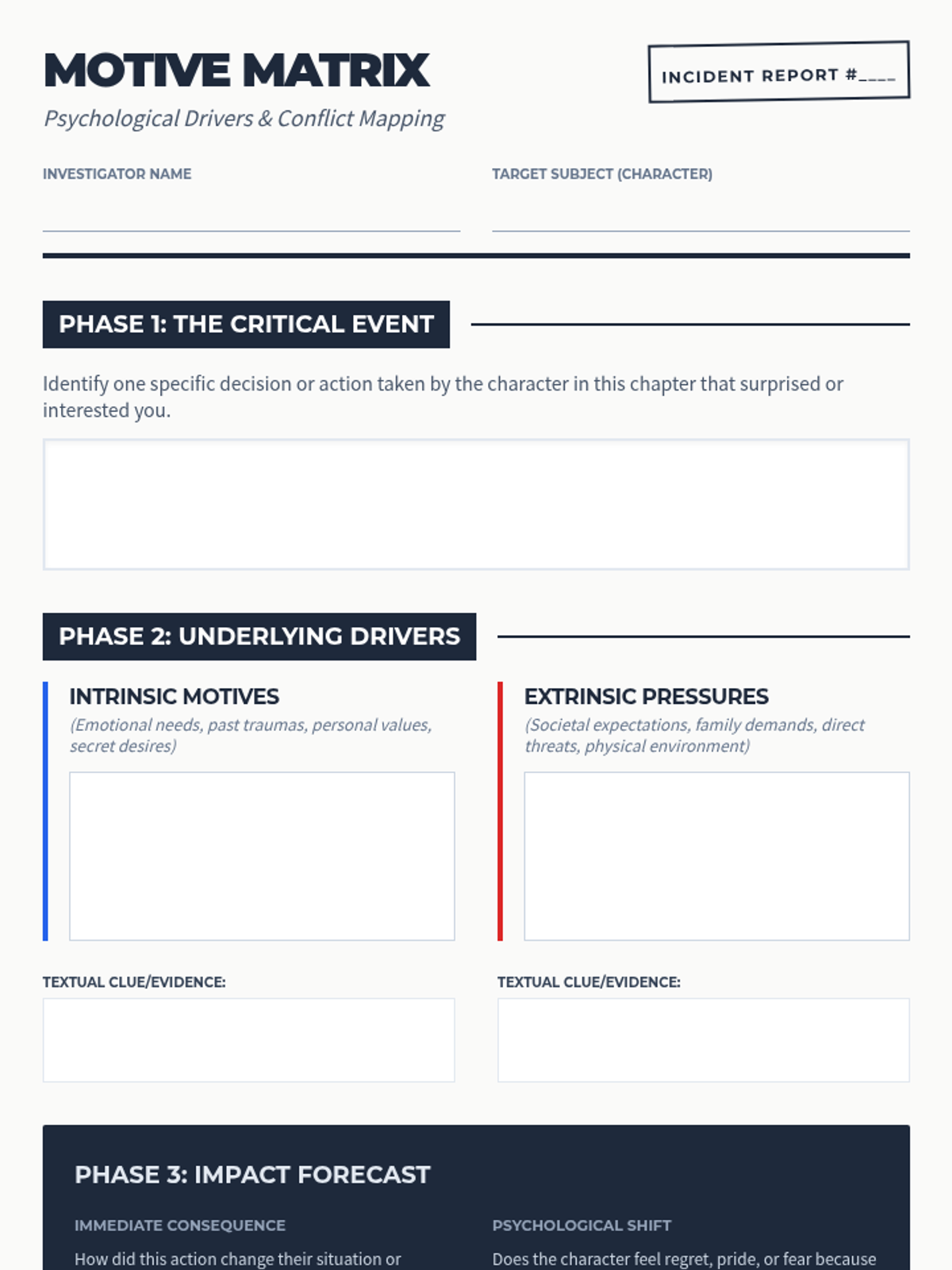
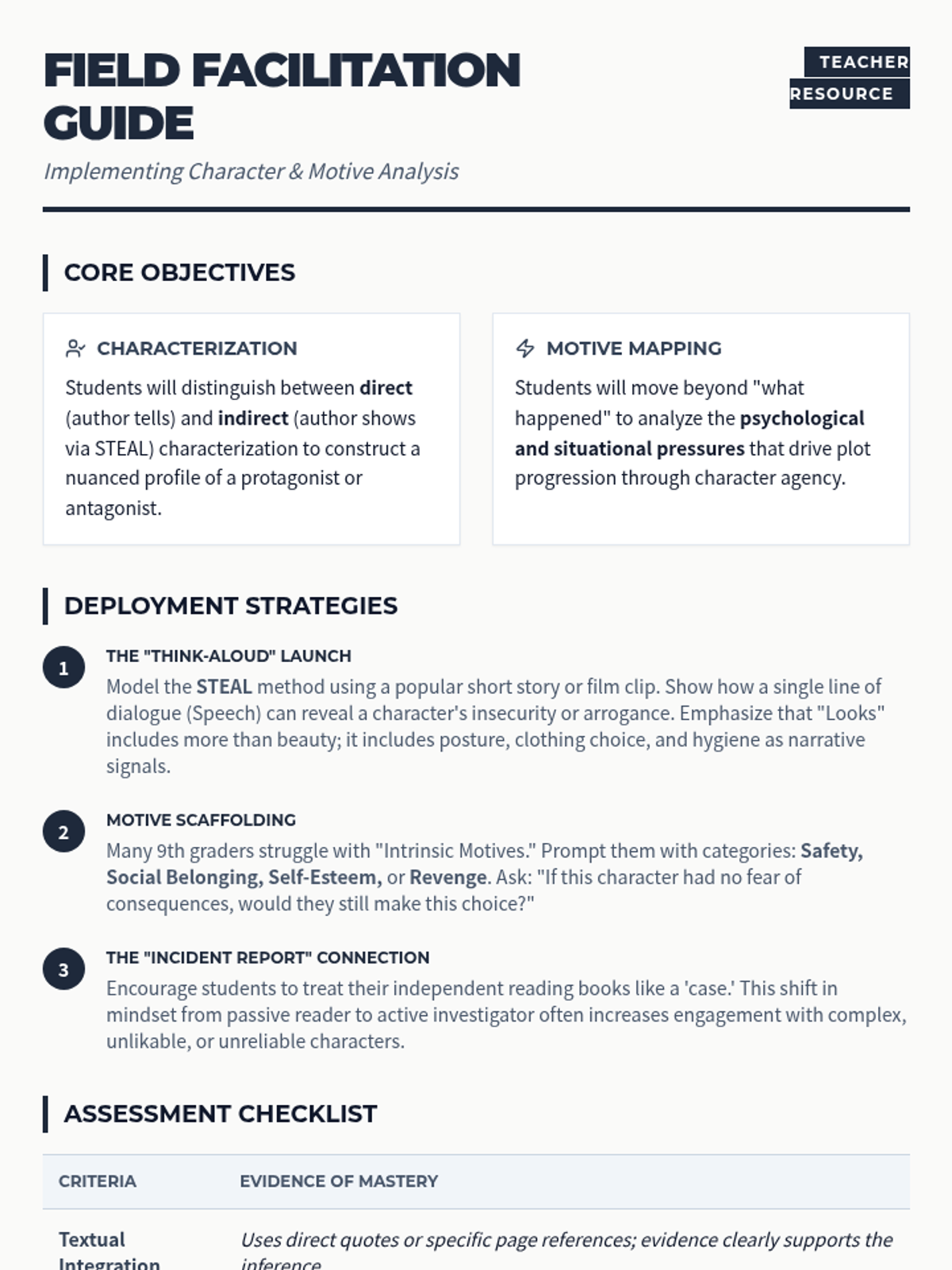
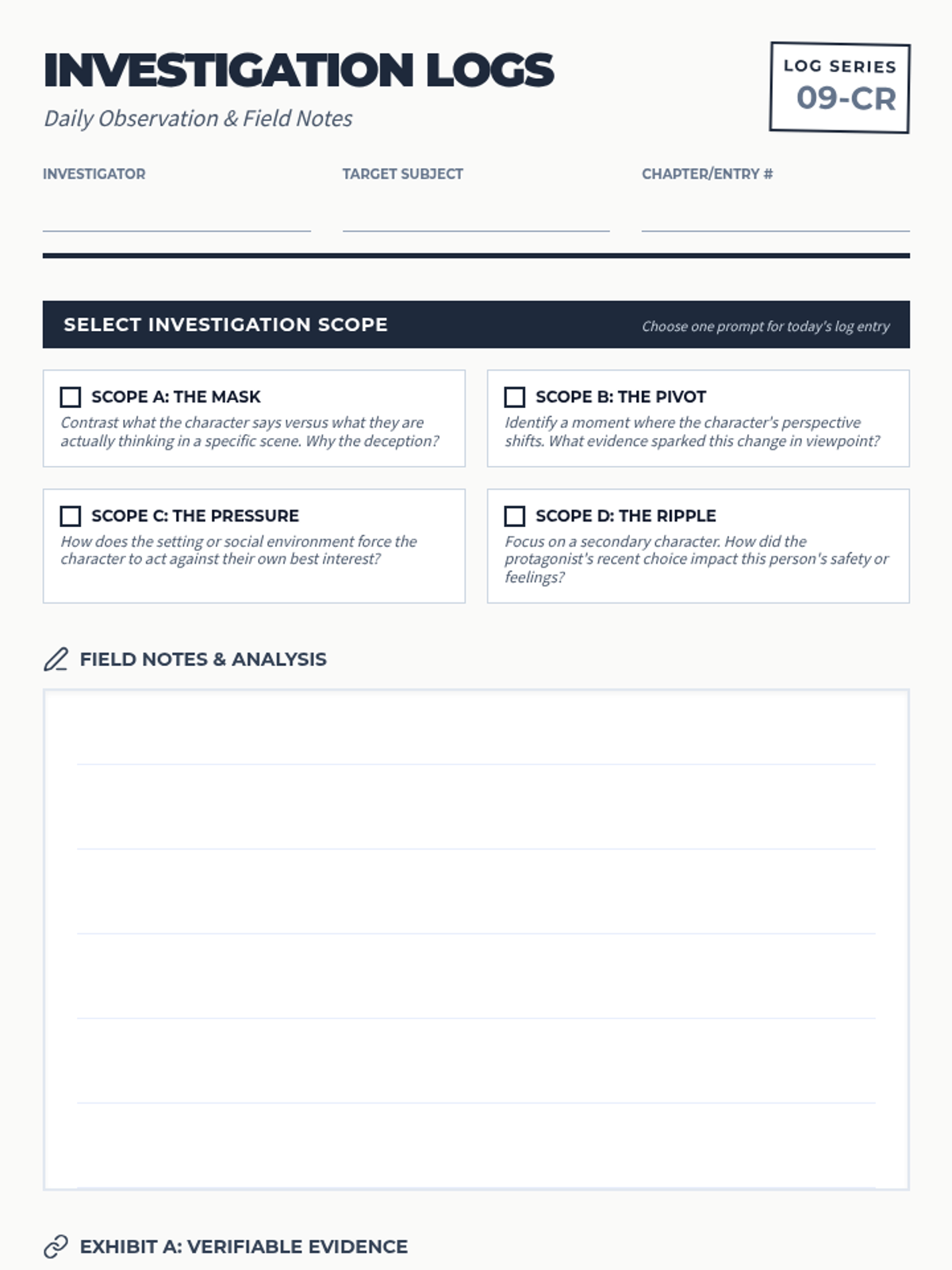
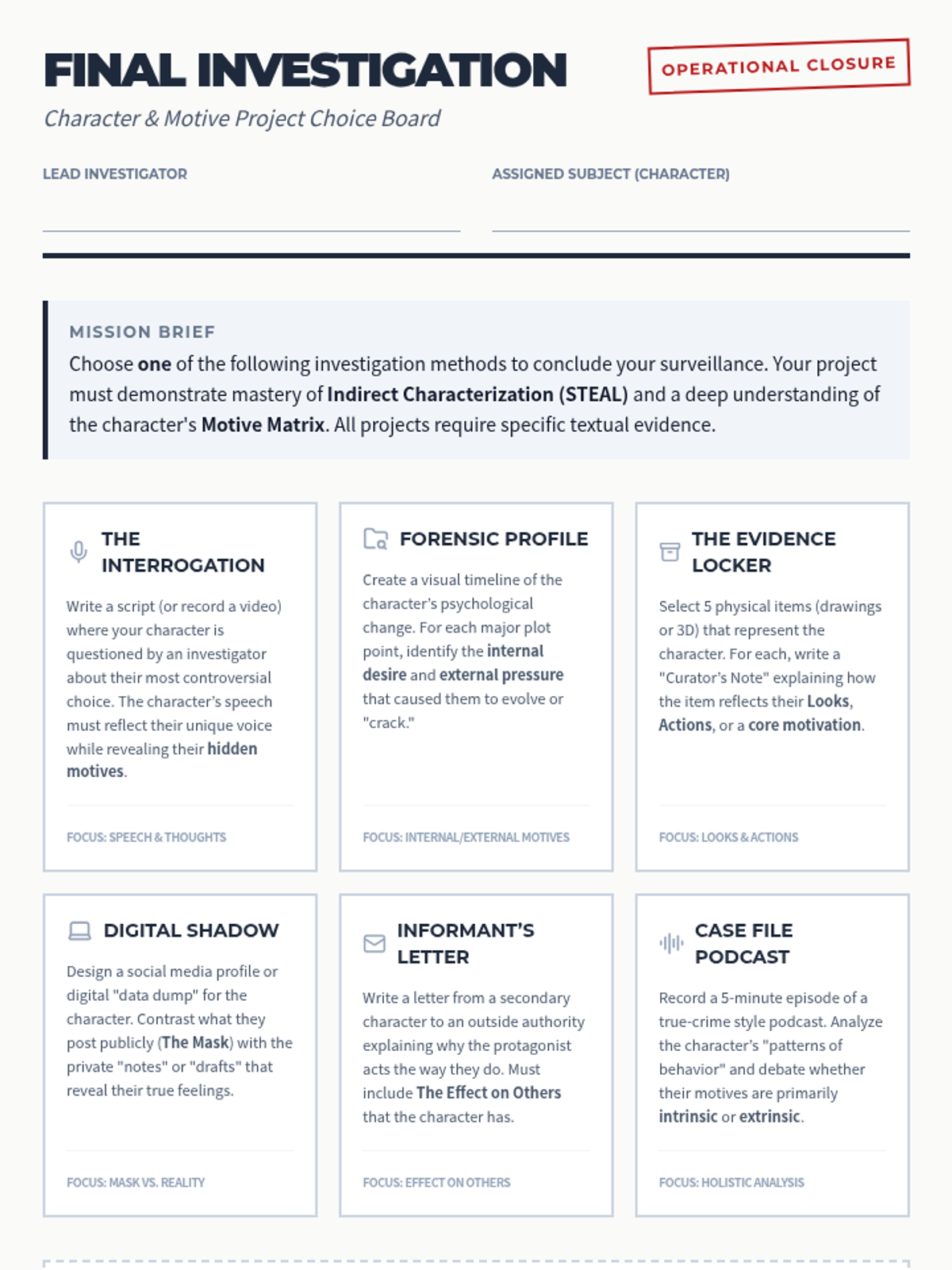
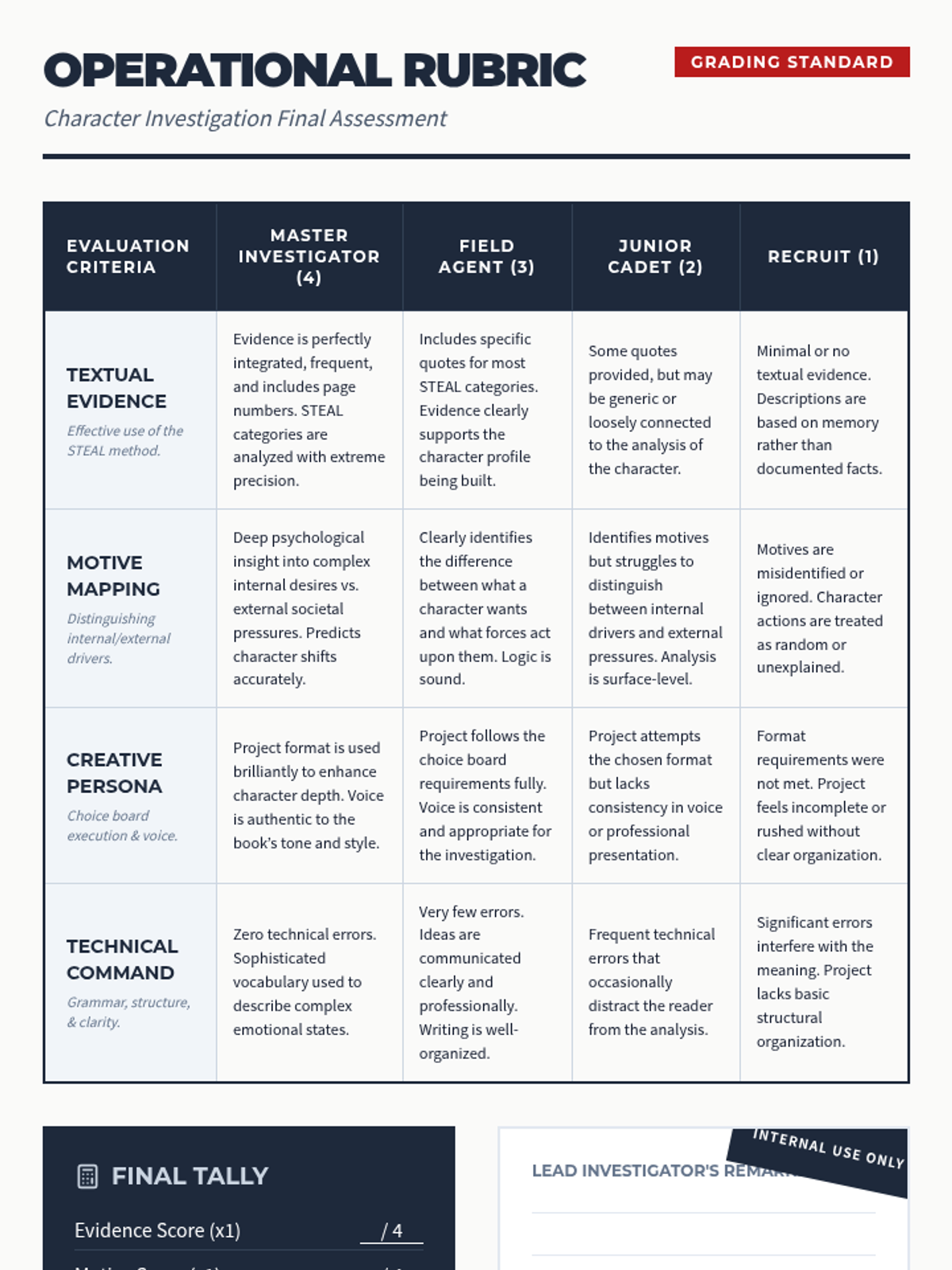
A set of analytical tools designed for 9th-grade students to track character development and psychological motives during independent reading. These worksheets use a 'Case File' aesthetic to make literary analysis feel like an investigation.
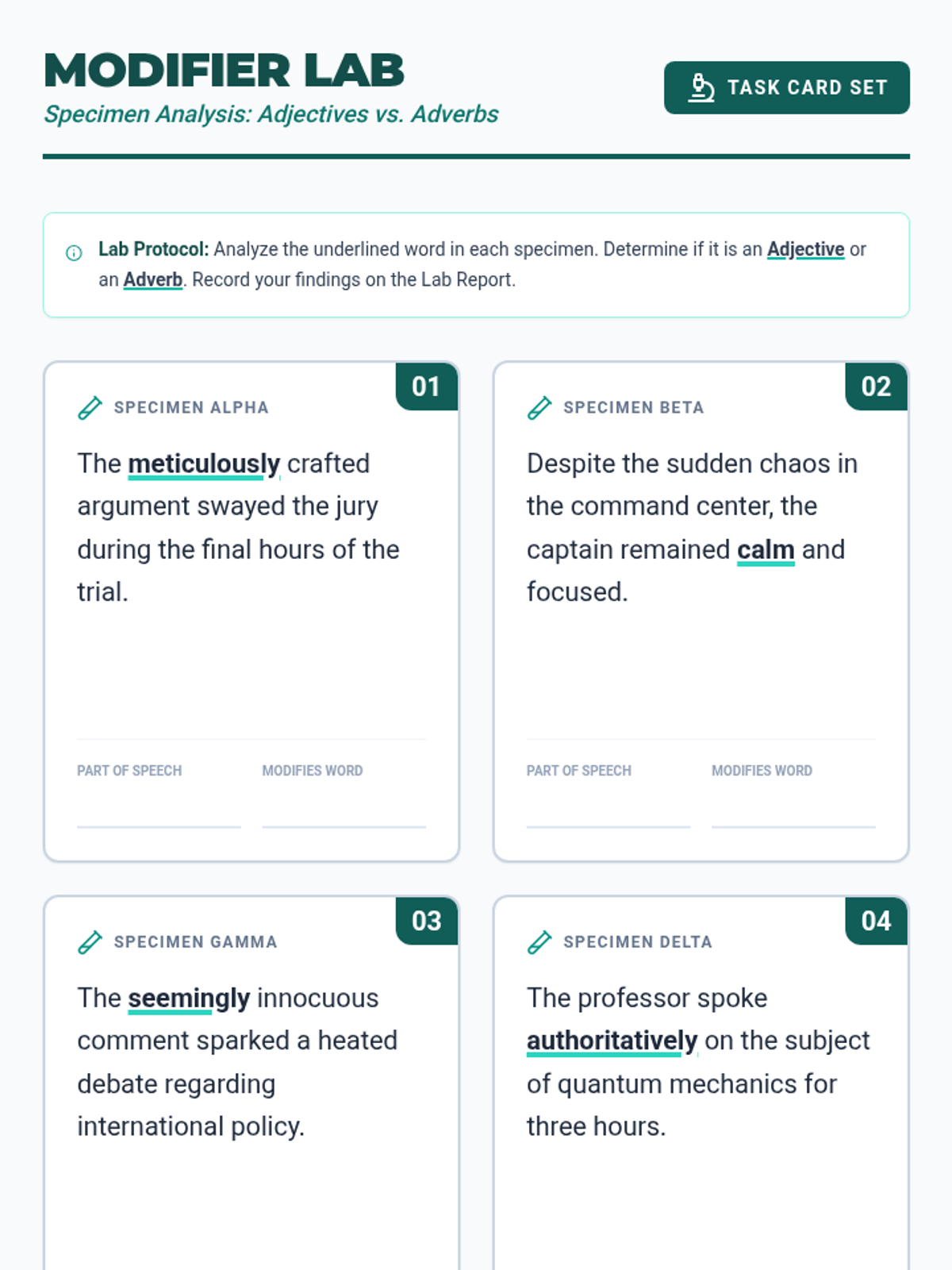
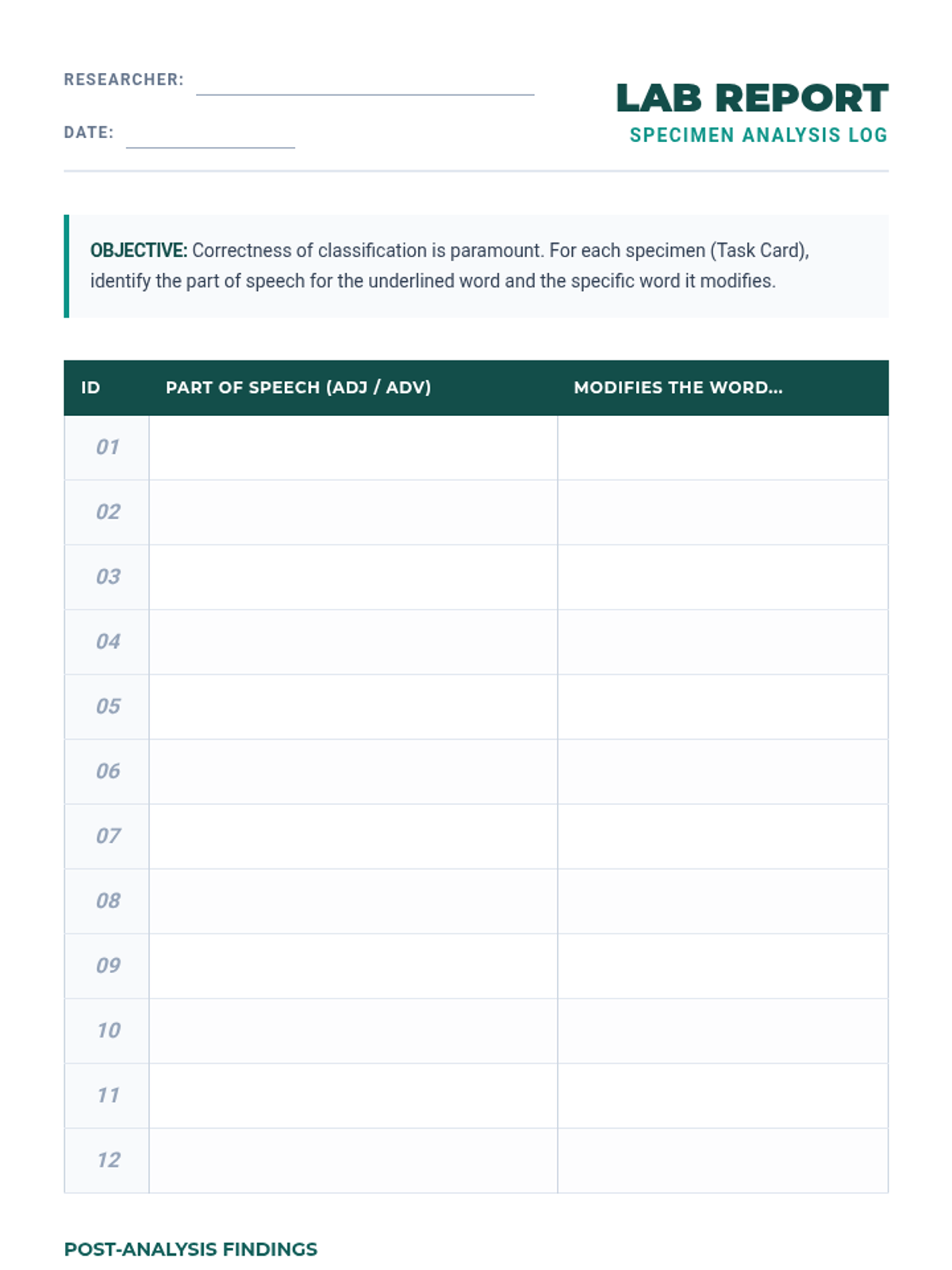
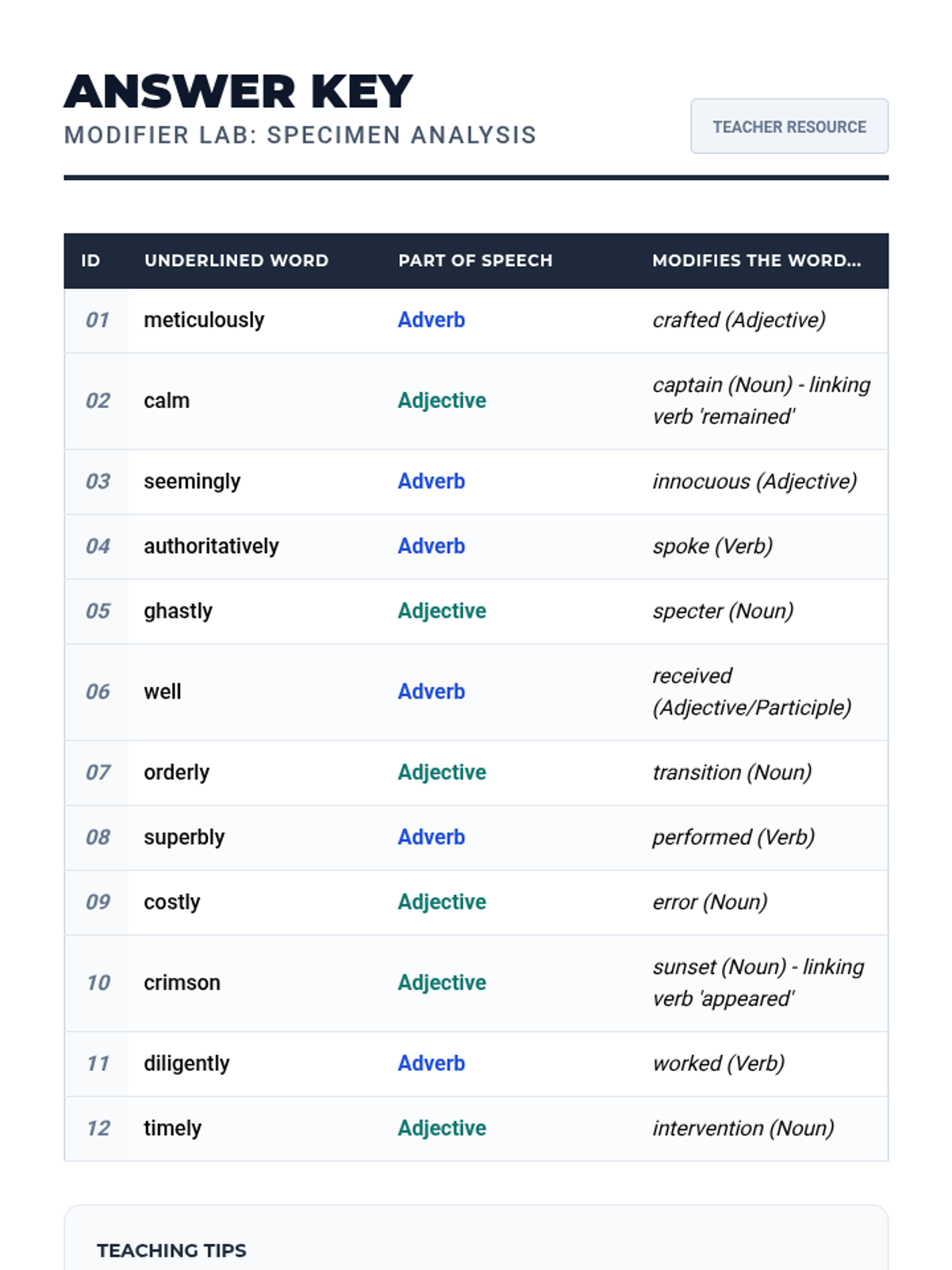
A focused practice session on distinguishing between adjectives and adverbs using complex, high-school level sentence structures and nuanced word choices.
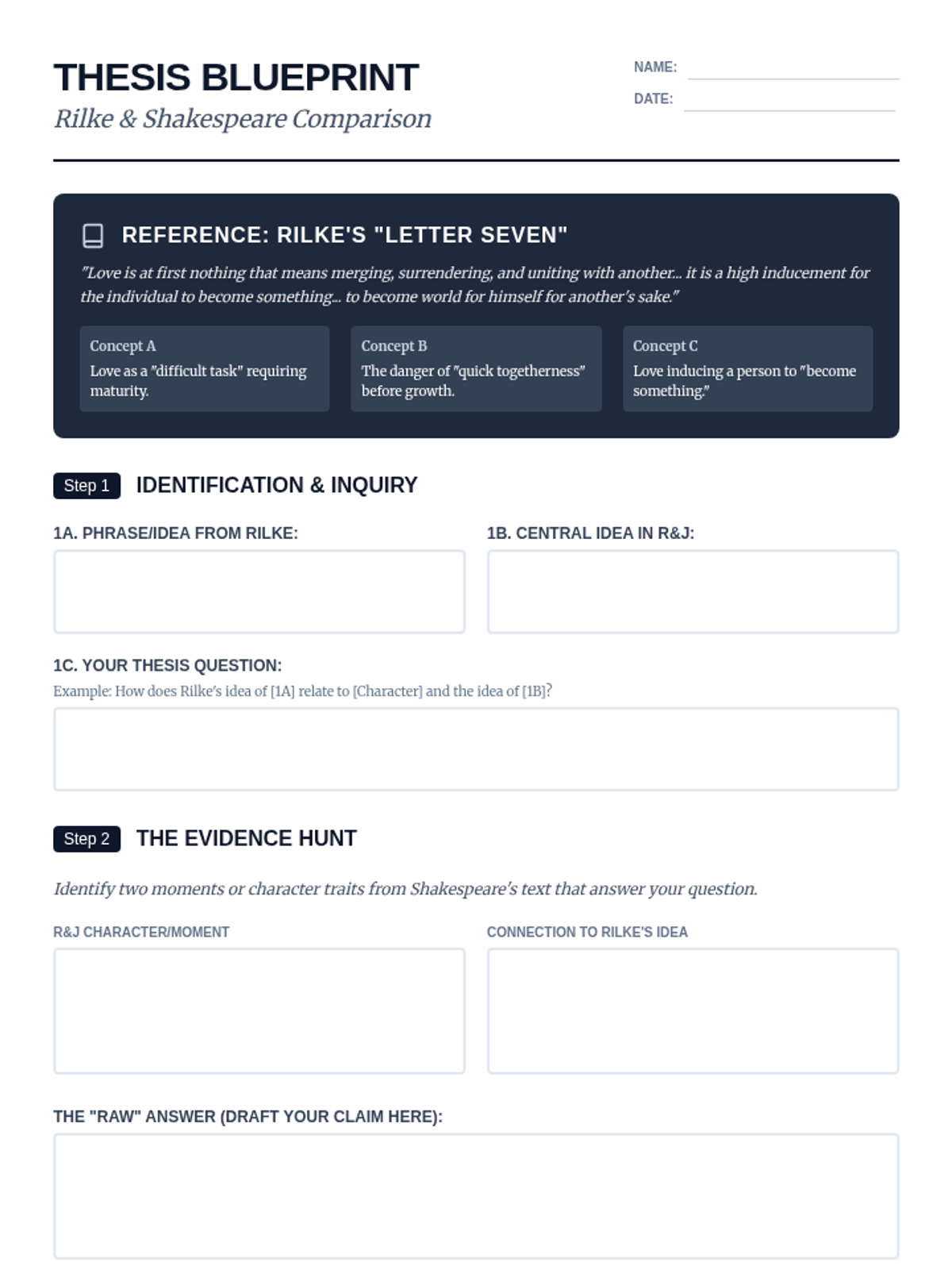
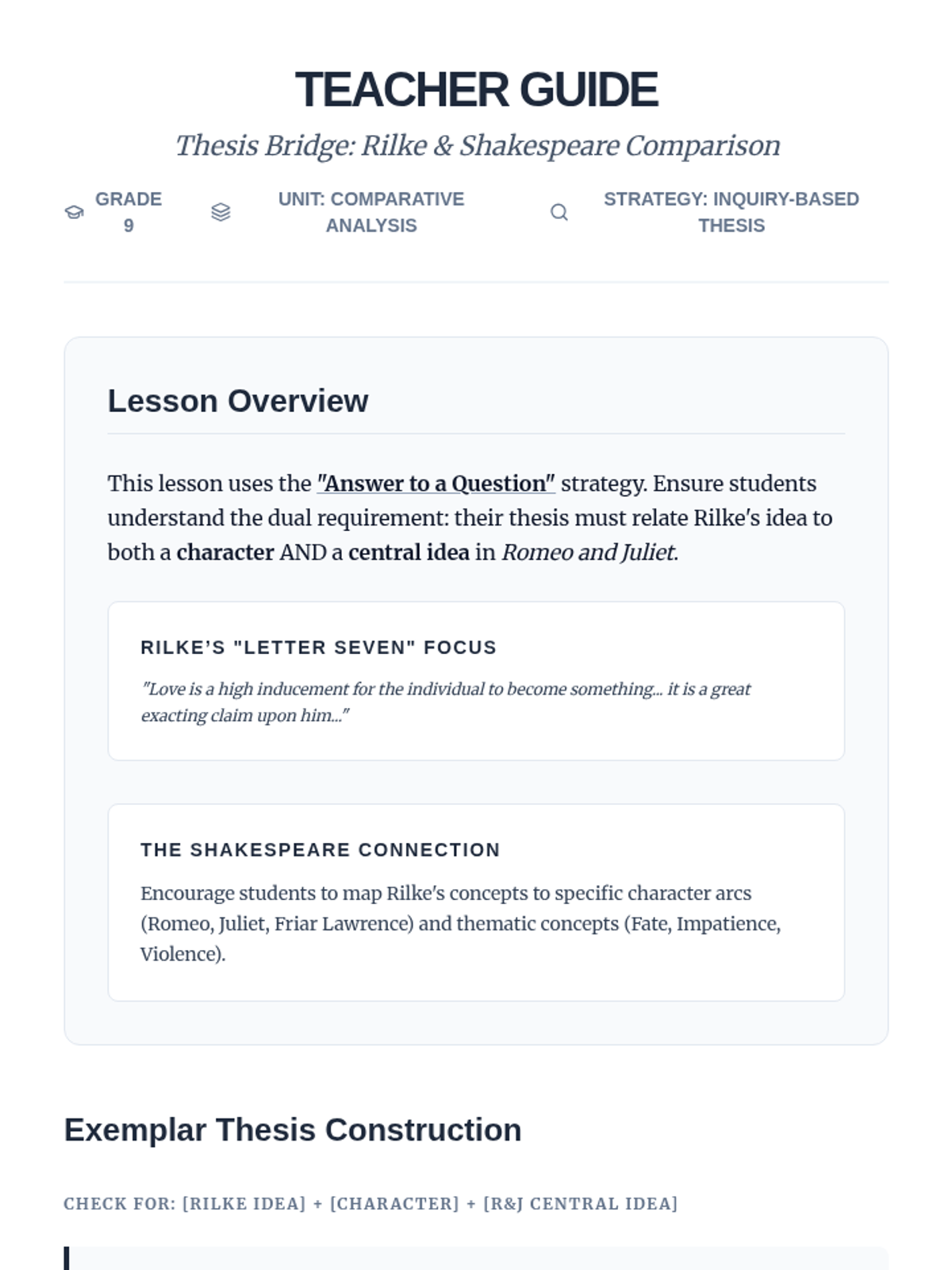
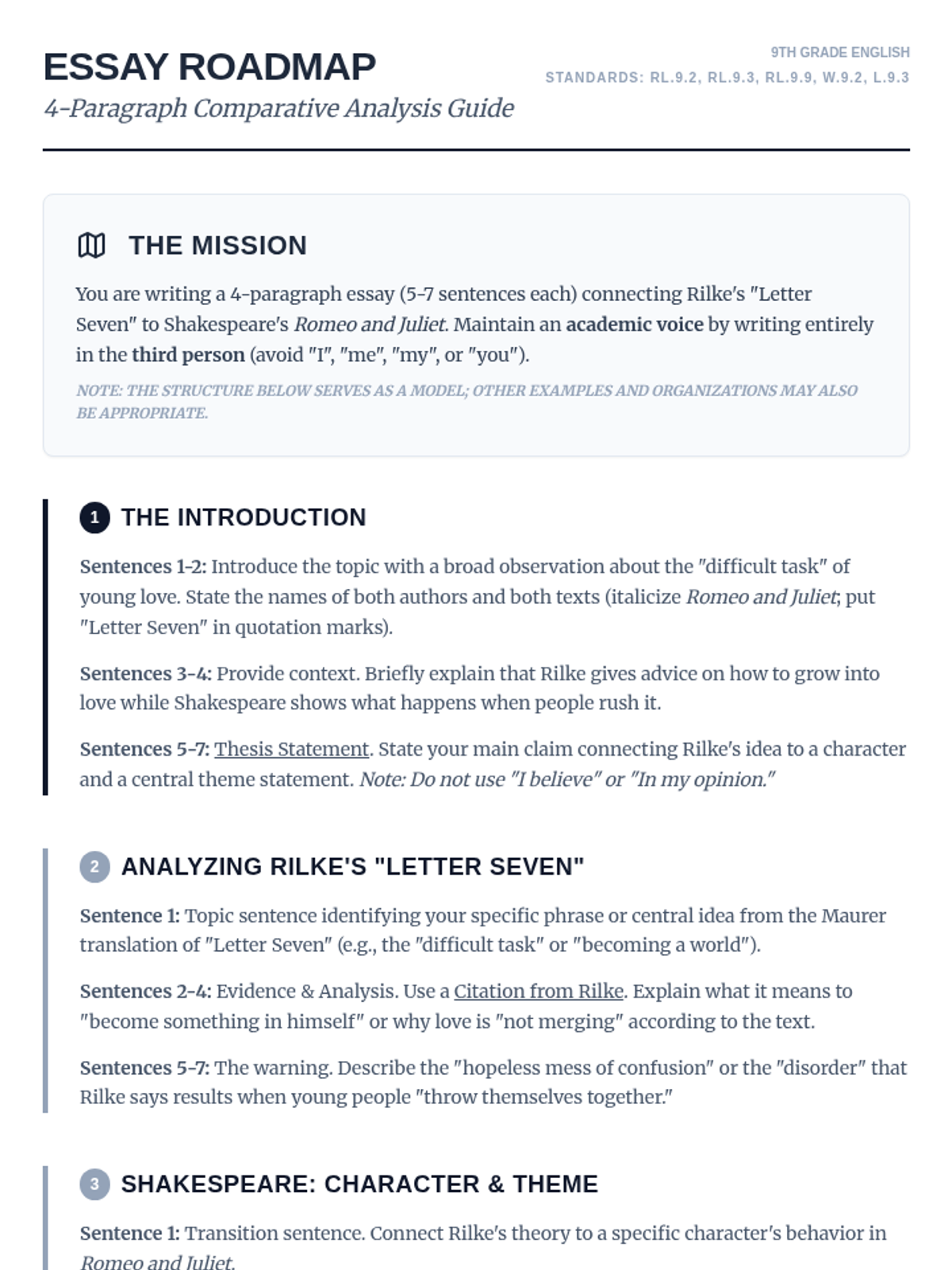
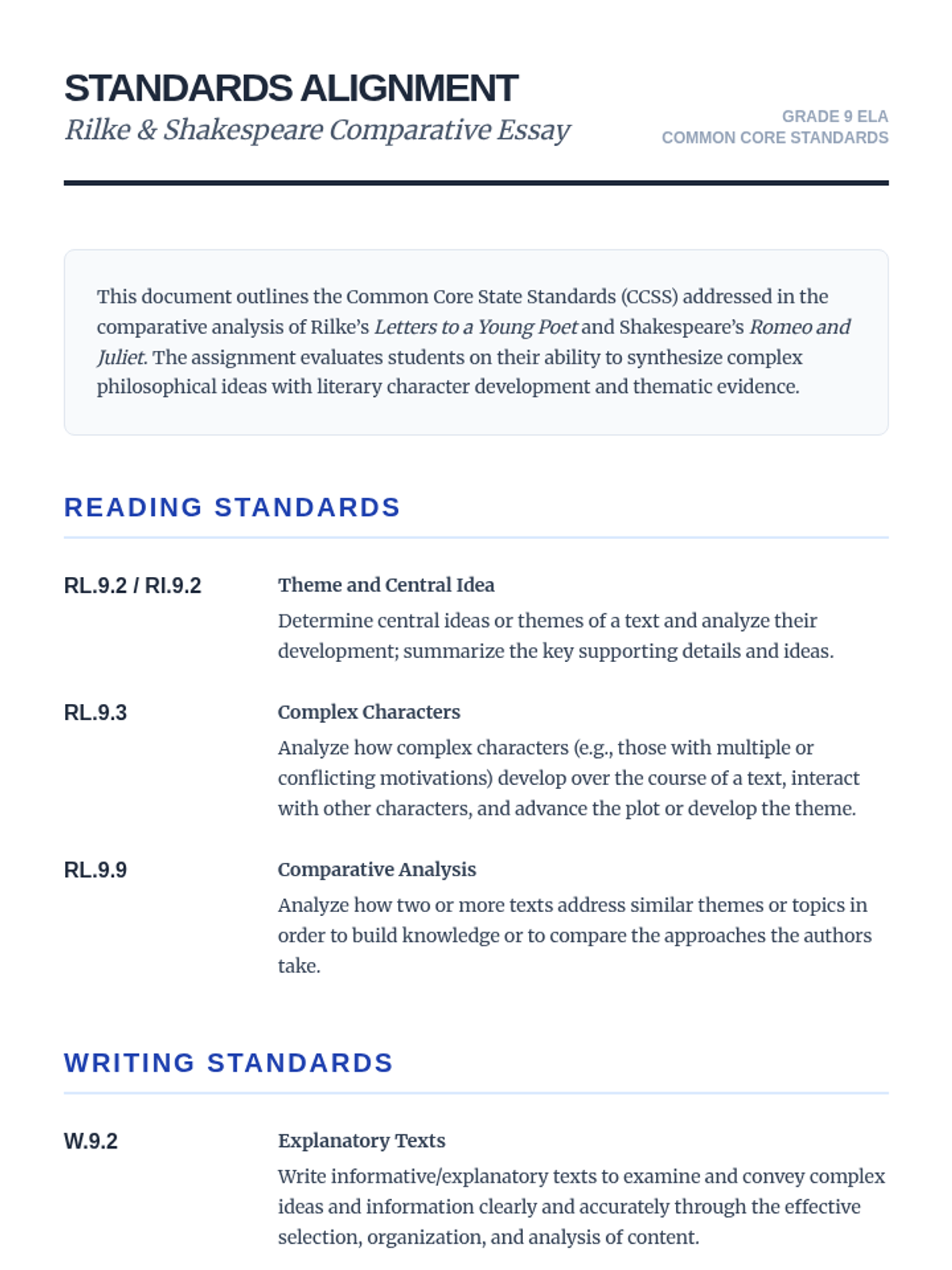
A focused lesson on crafting a thesis statement for a comparative essay between Rilke's Letters to a Young Poet and Shakespeare's Romeo and Juliet, specifically using the 'Answer to a Question' strategy.
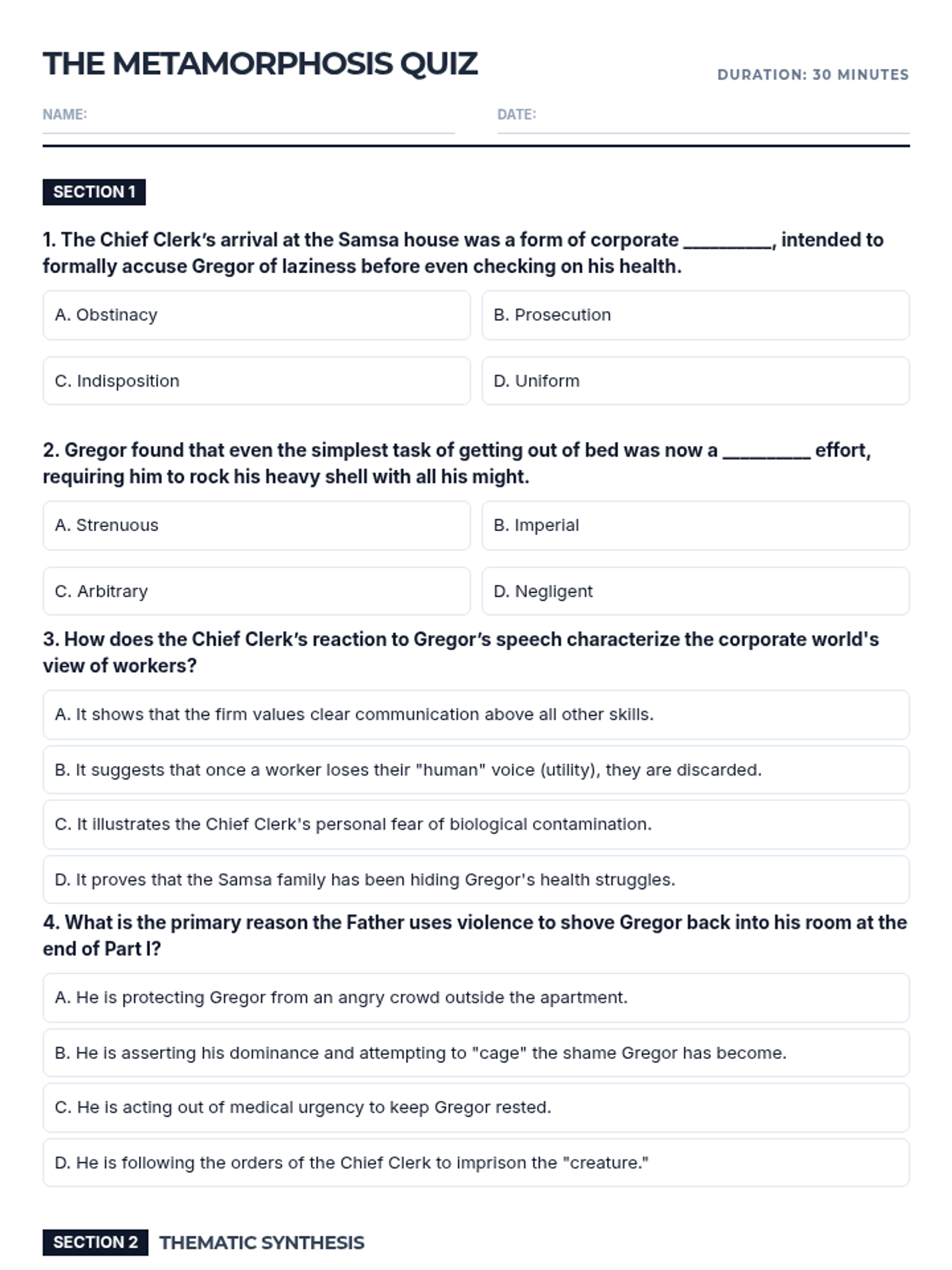
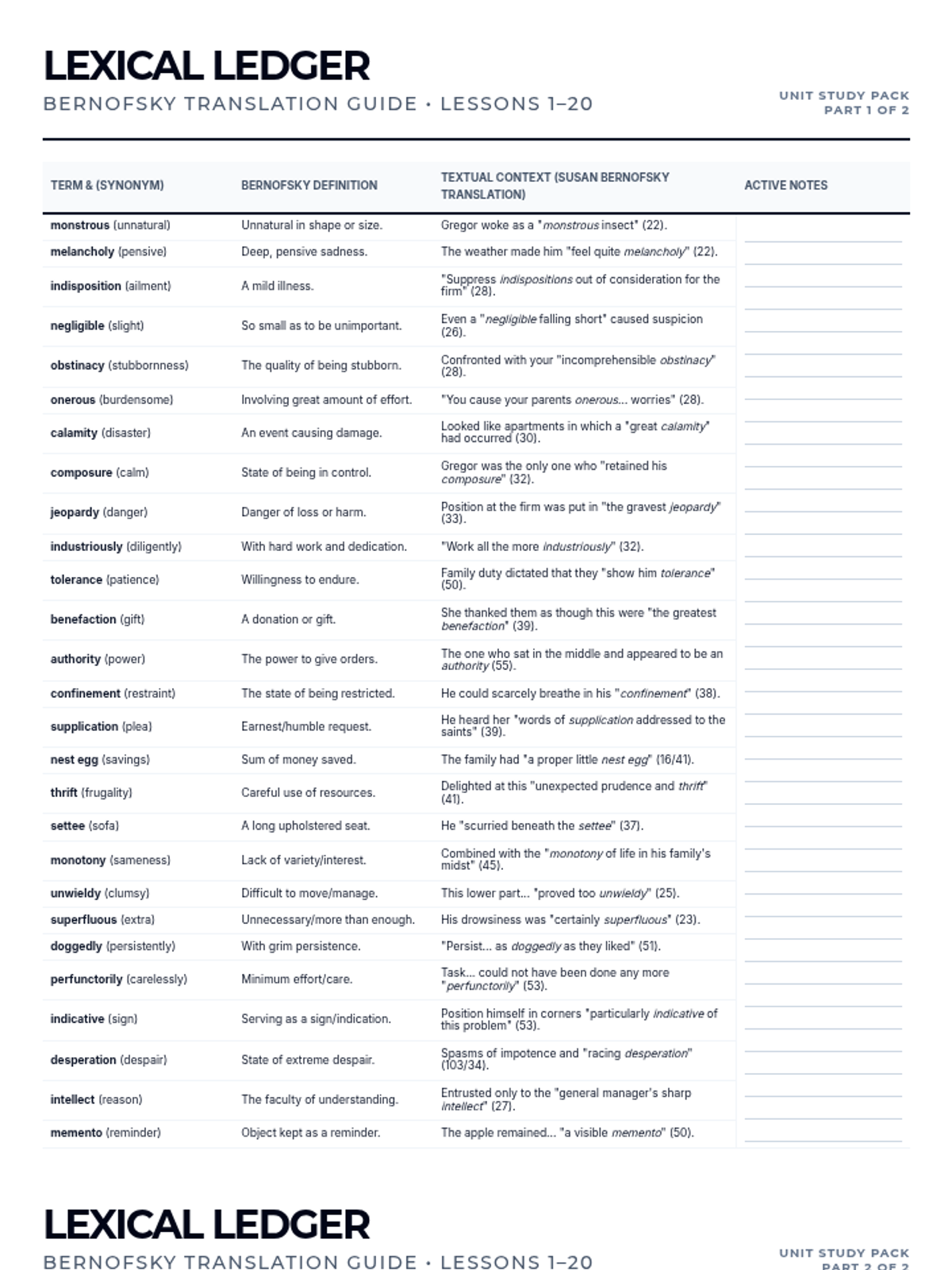
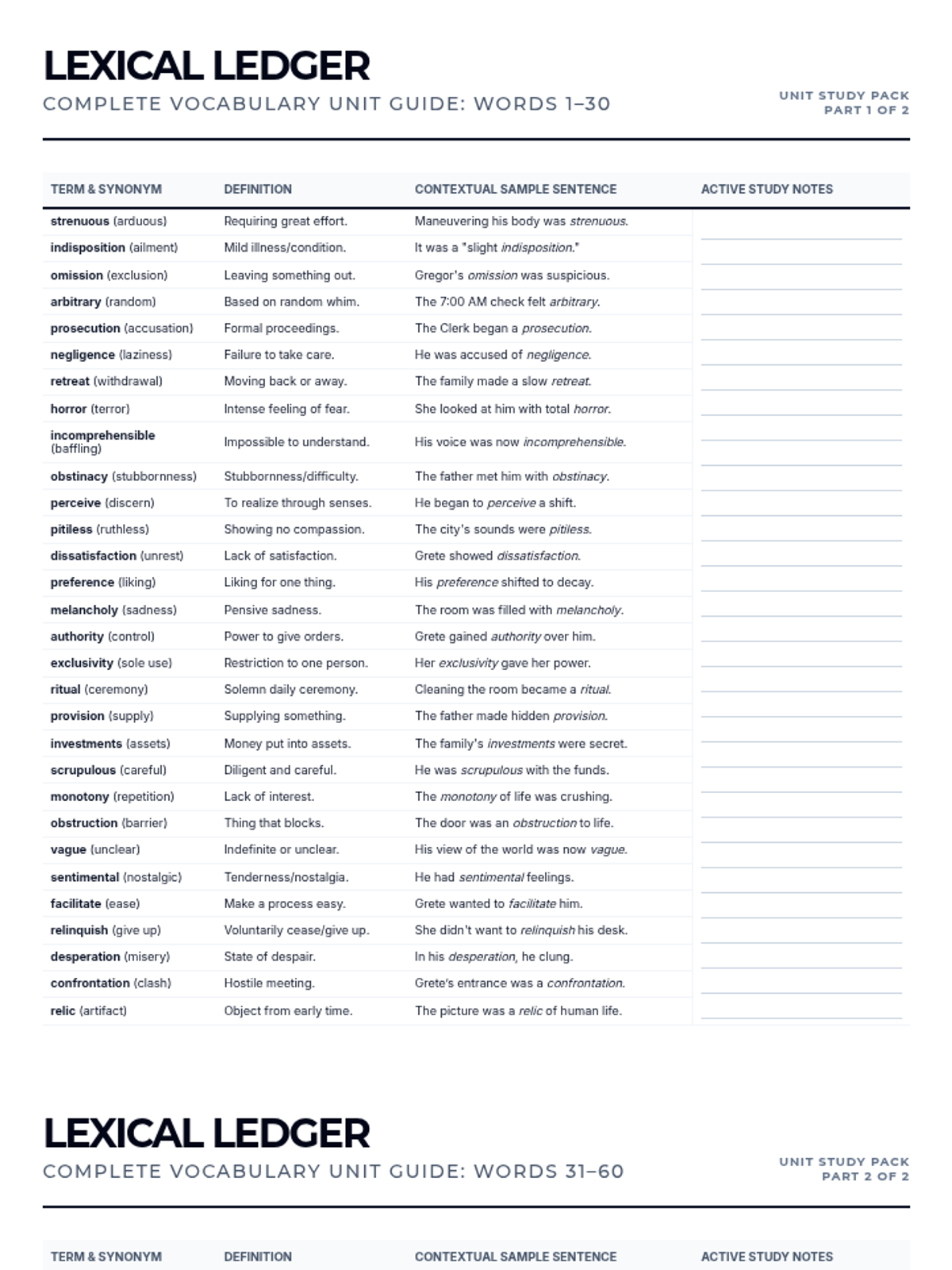
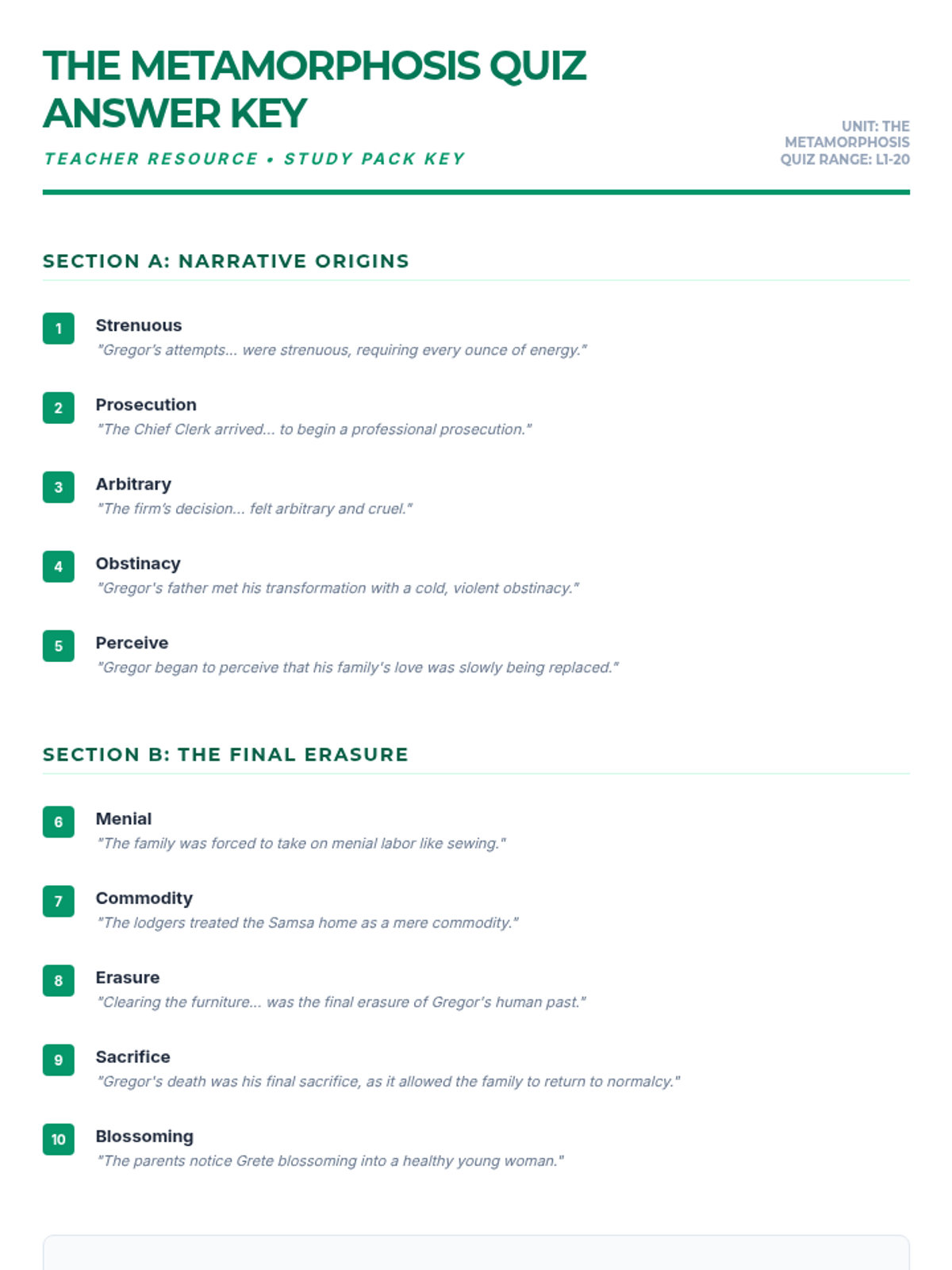
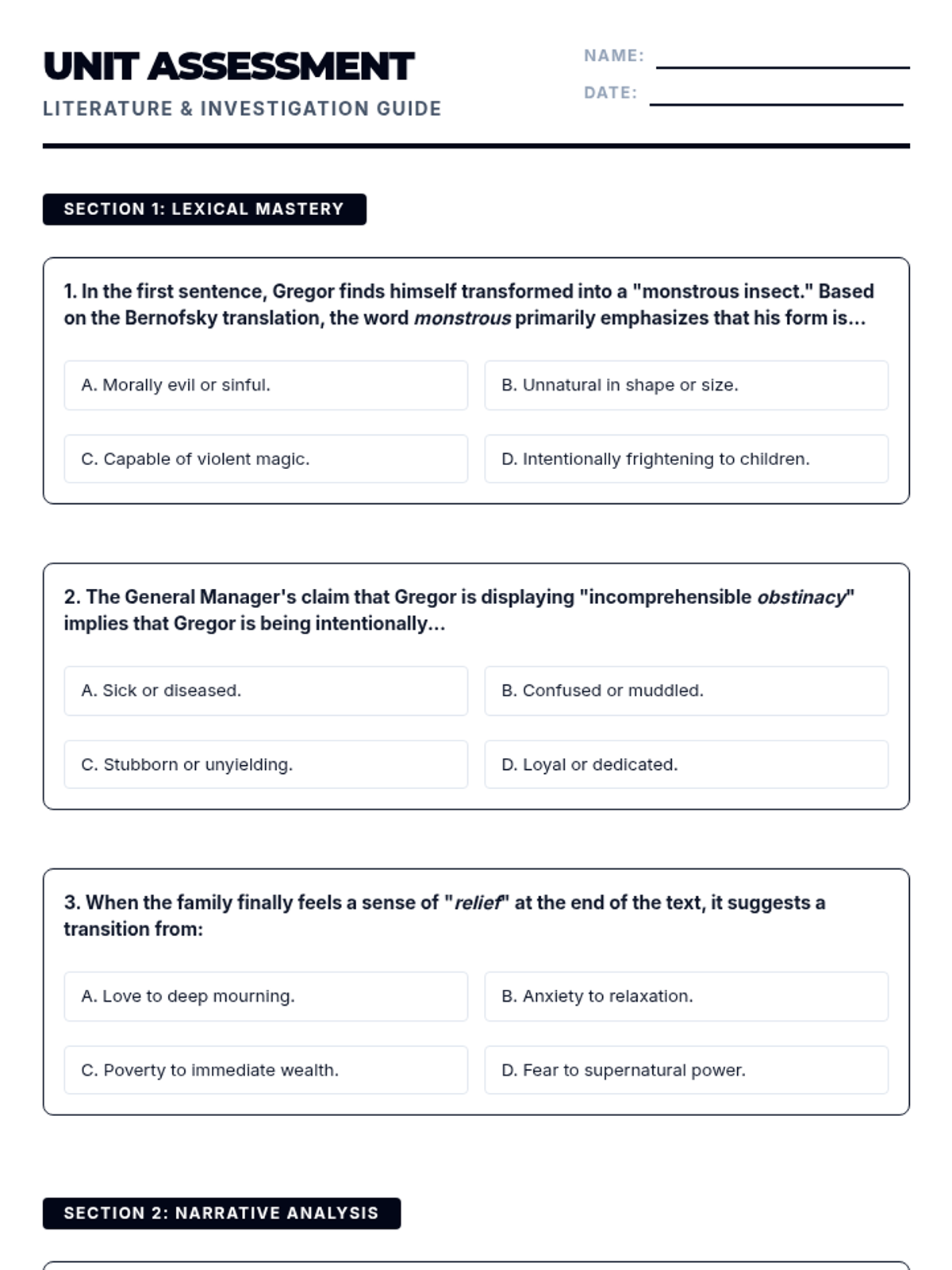
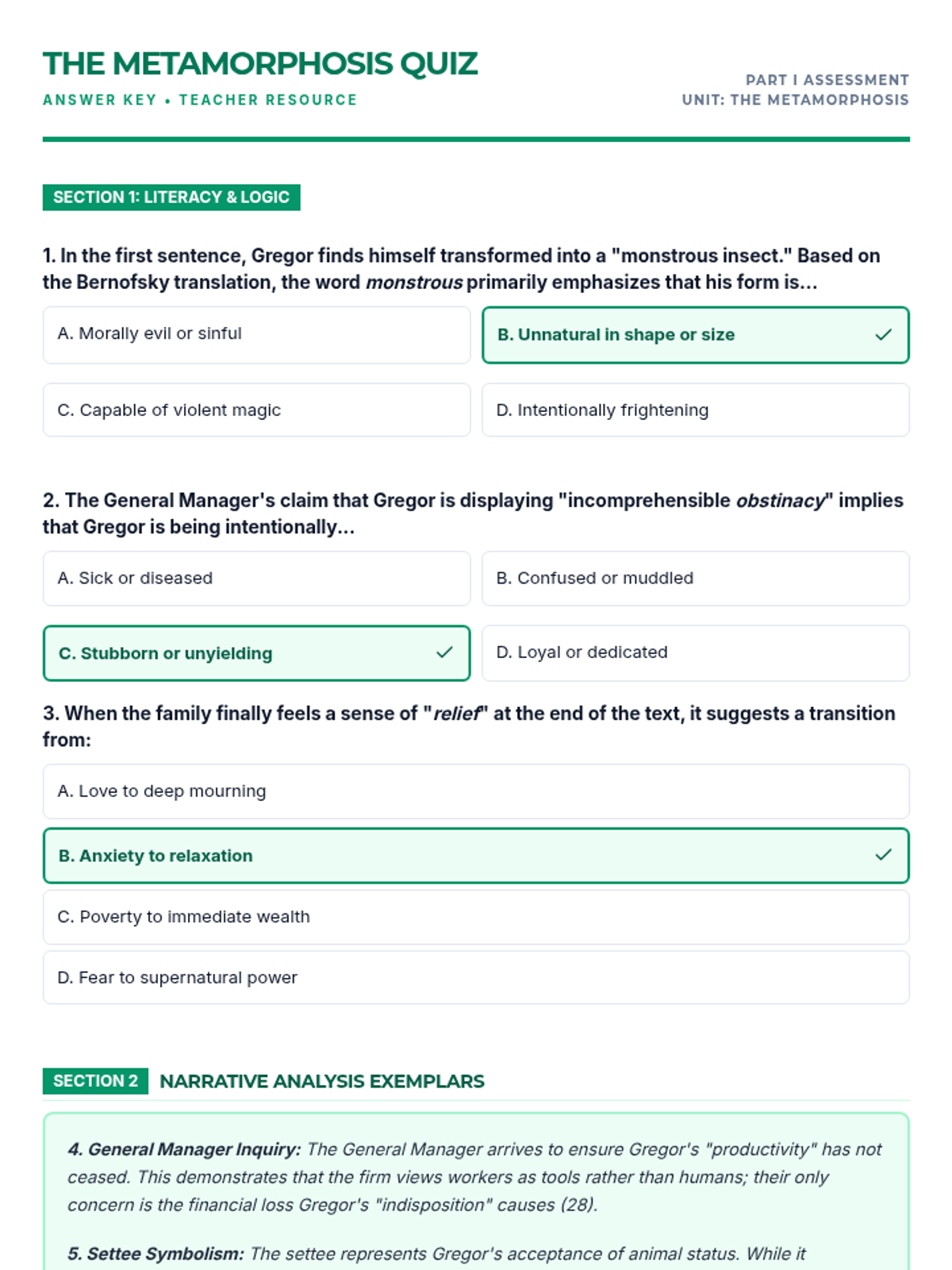
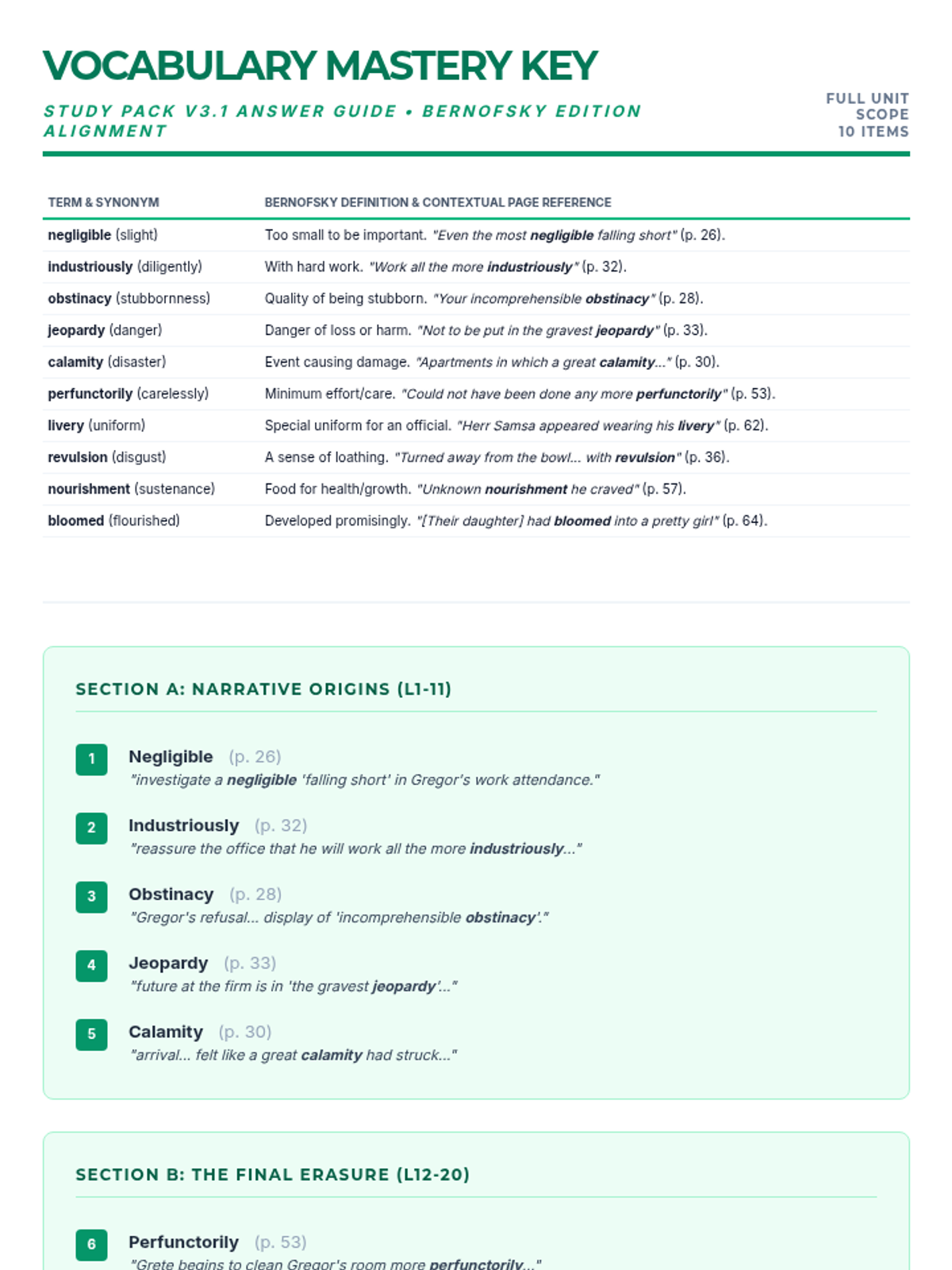
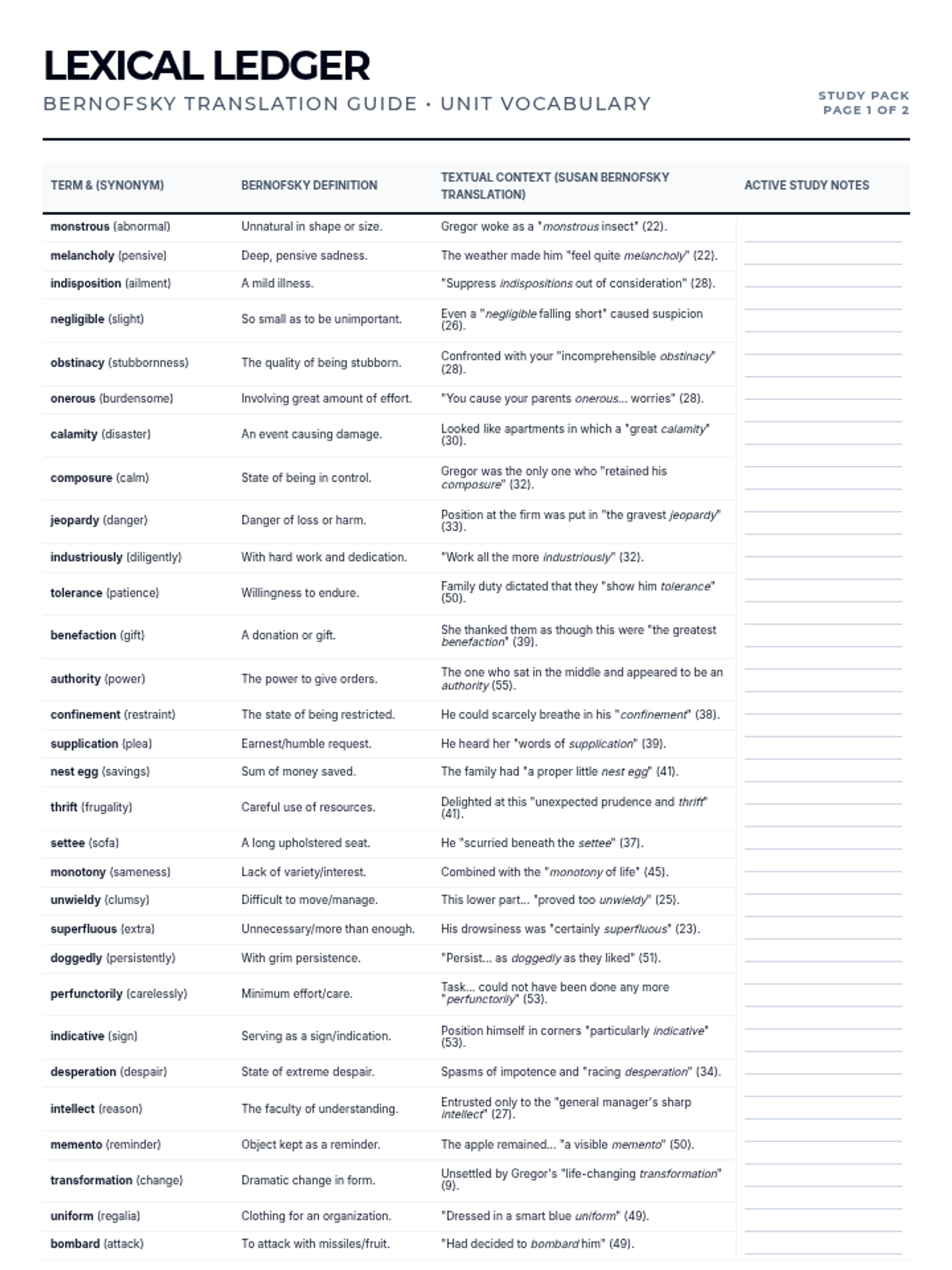
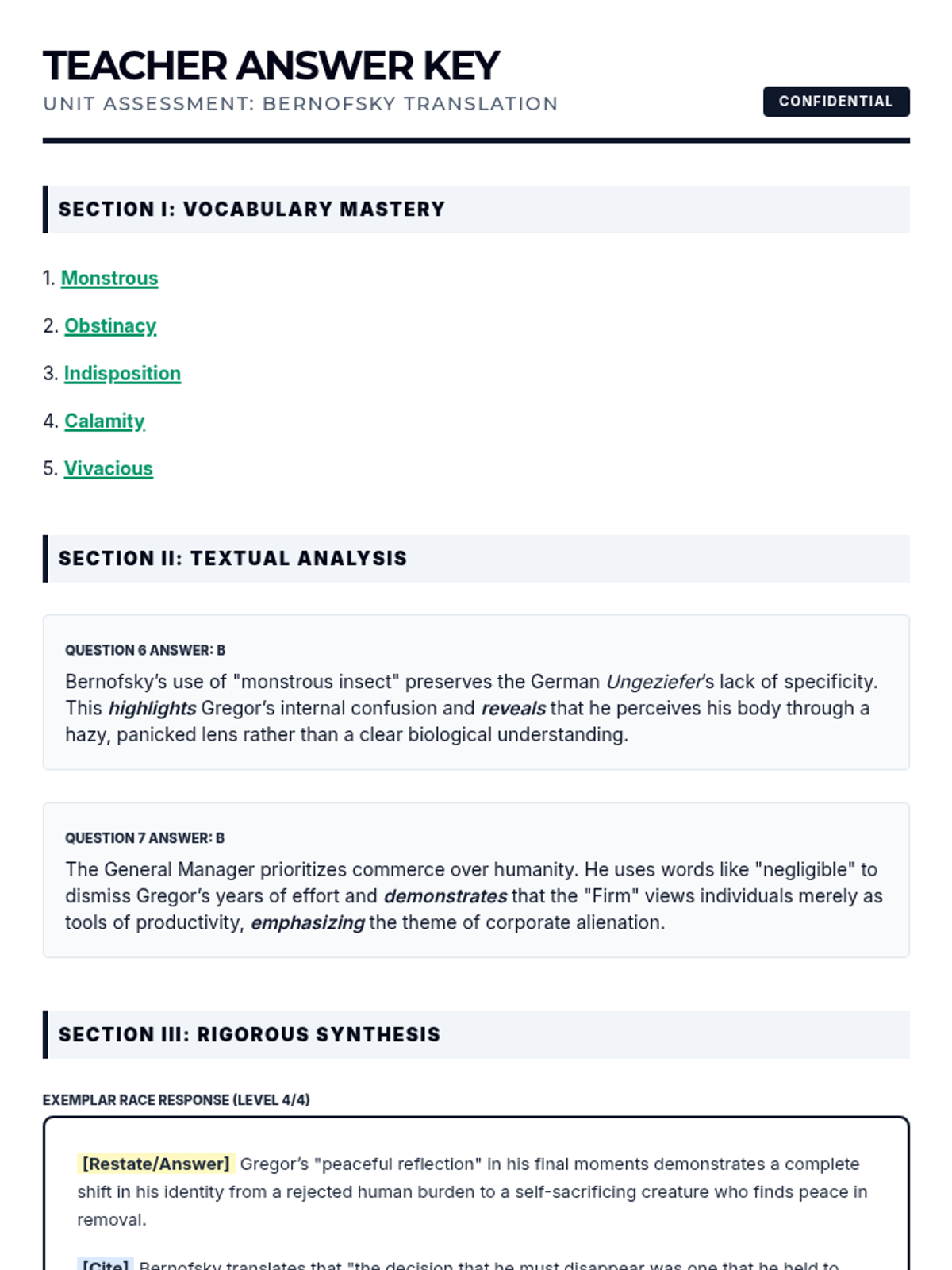
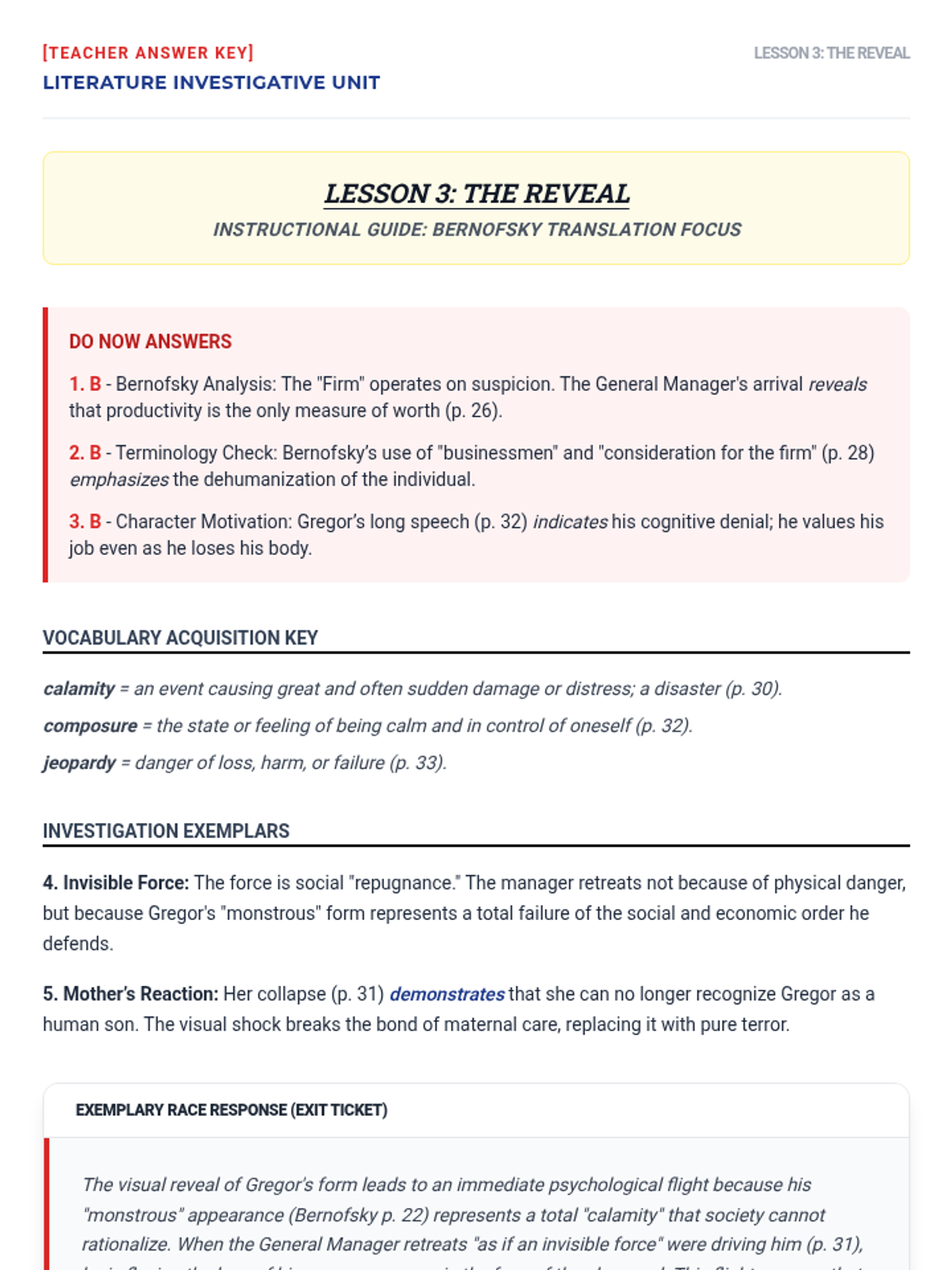
A summative assessment for the first third of the novel. Evaluates student mastery of vocabulary from Lessons 1-11, character motivation, and the central theme of corporate alienation through a mix of multiple choice, short answer, and a rigorous RACE response.
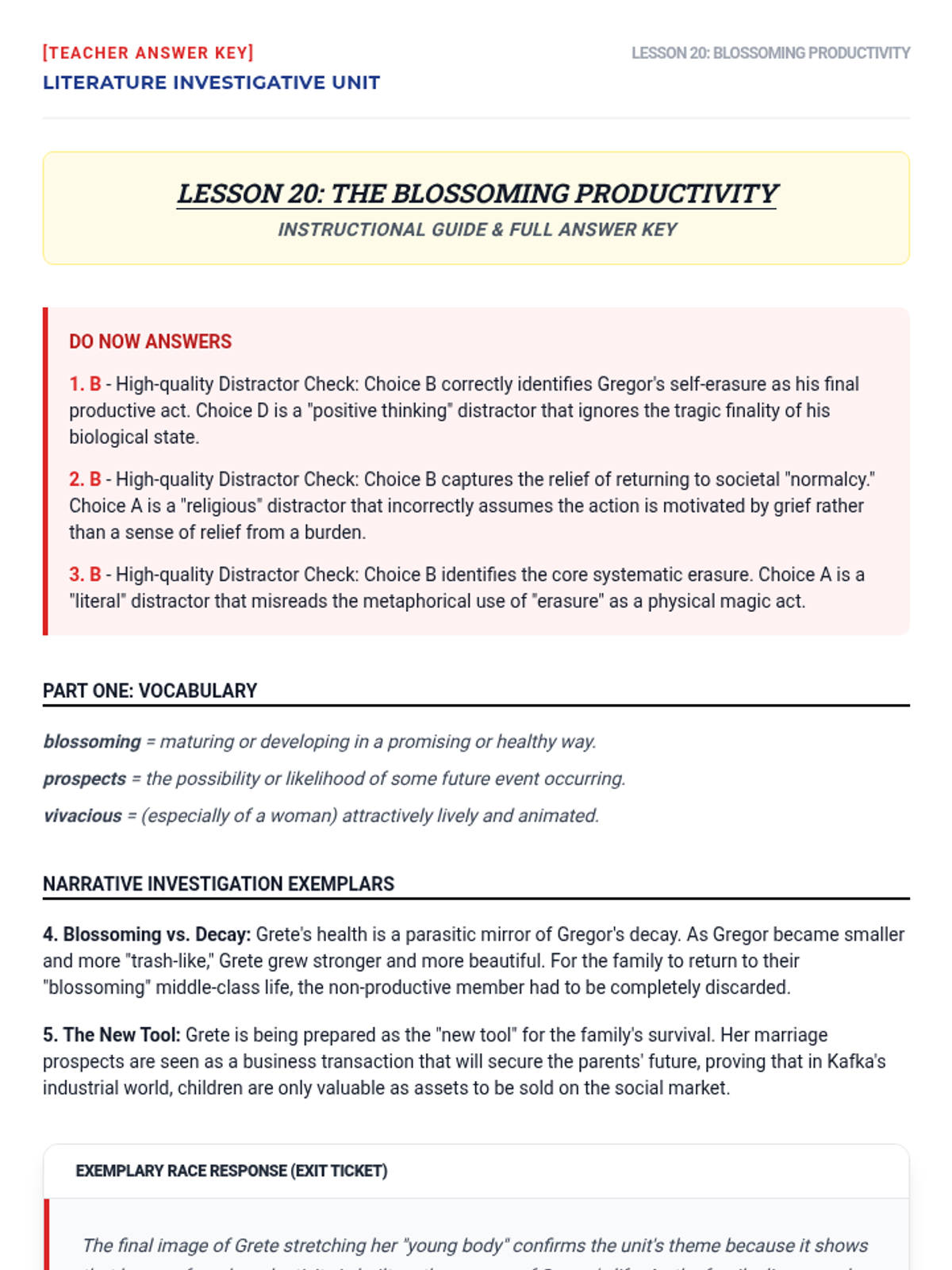
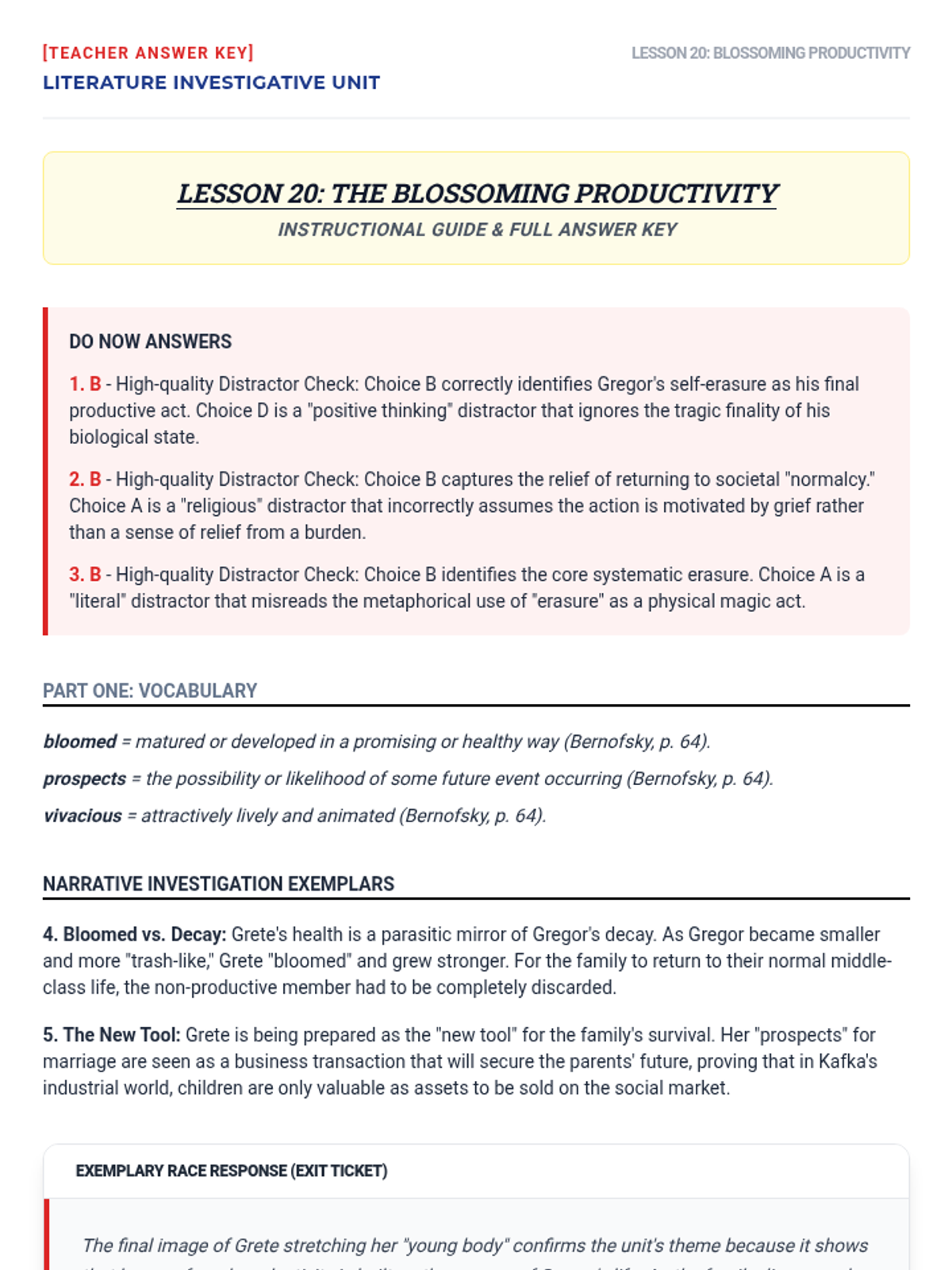
The family's recovery and the transition to a new source of productivity (Grete). Synthesis of the unit's themes.
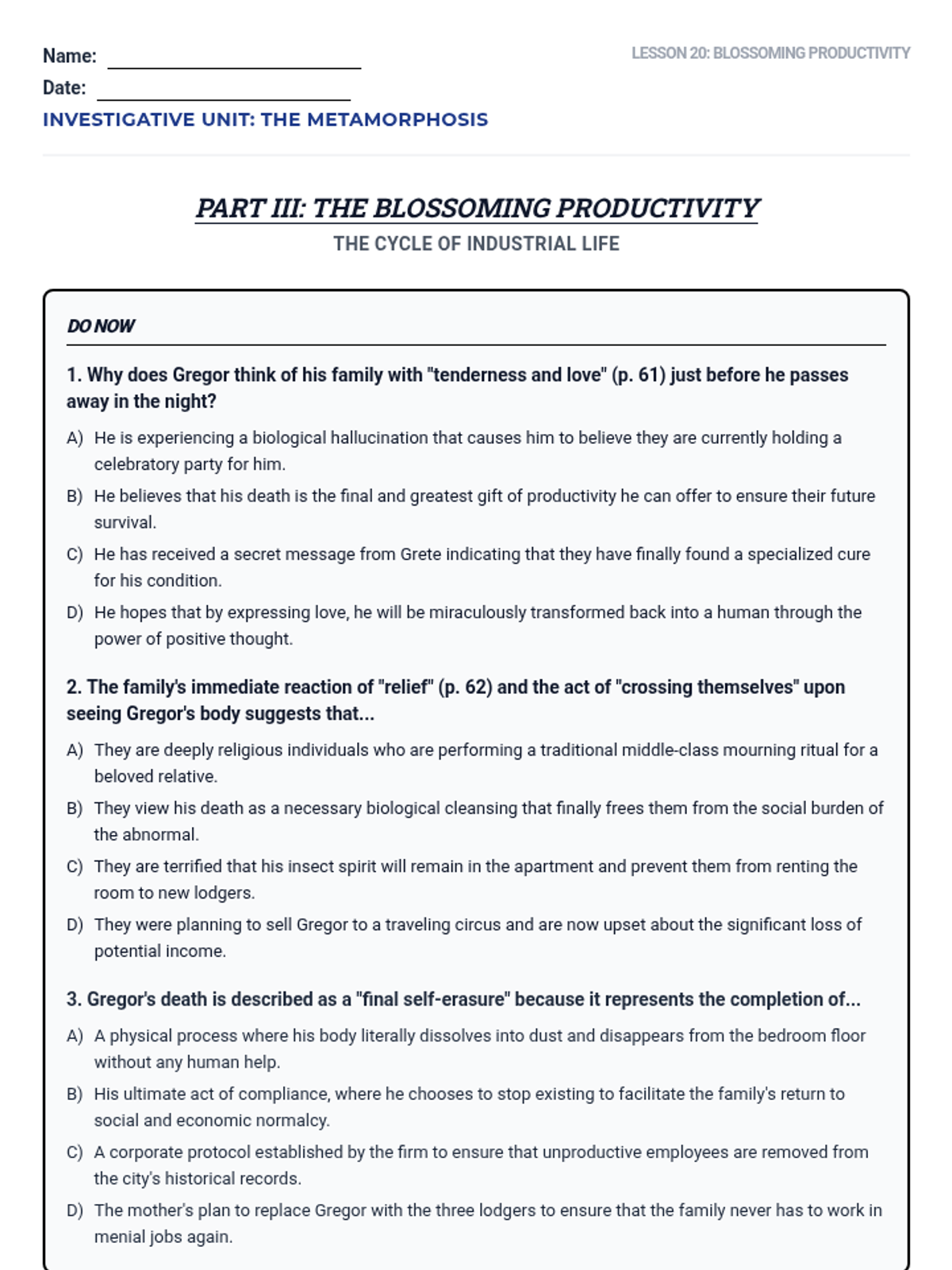
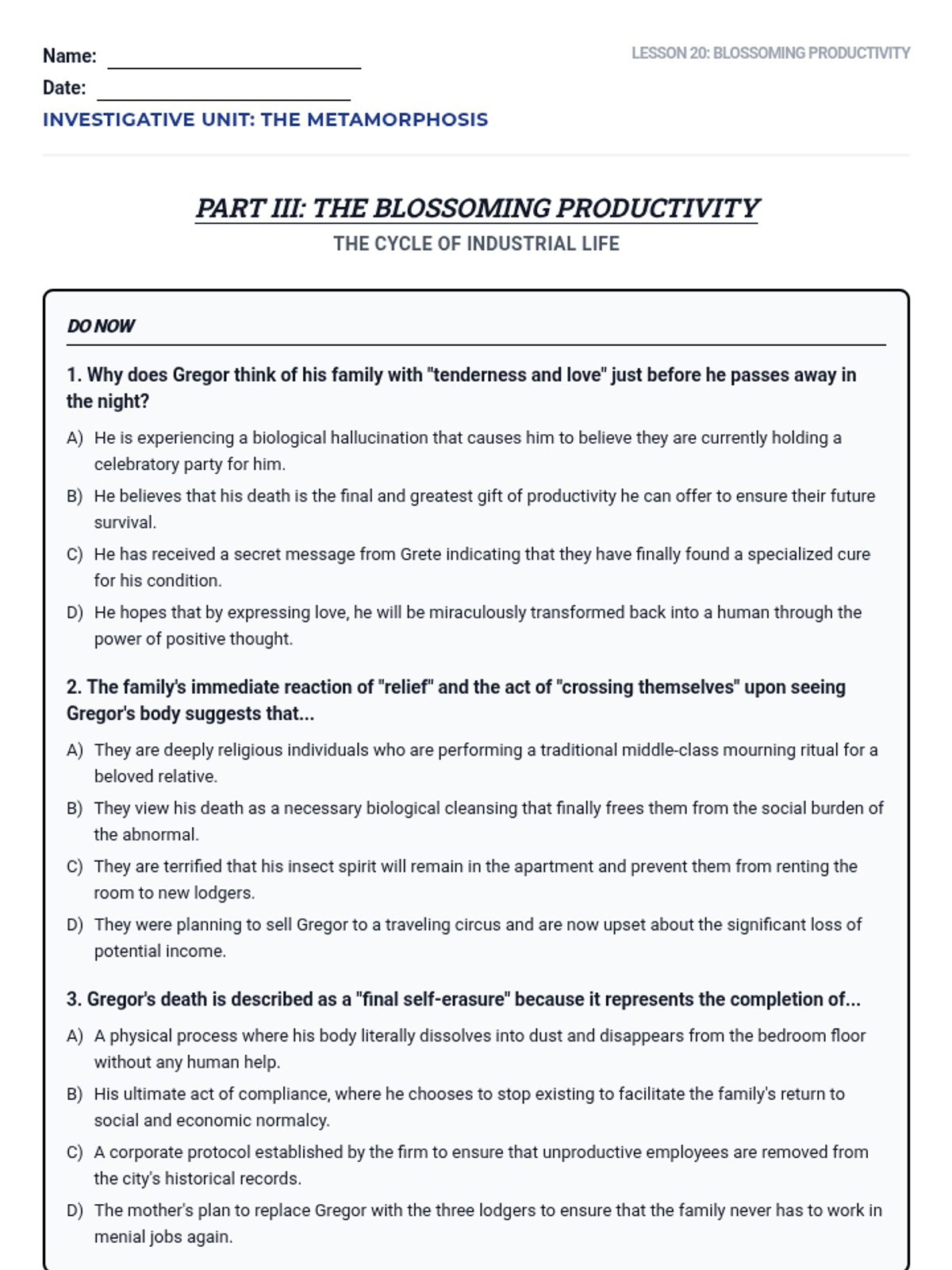
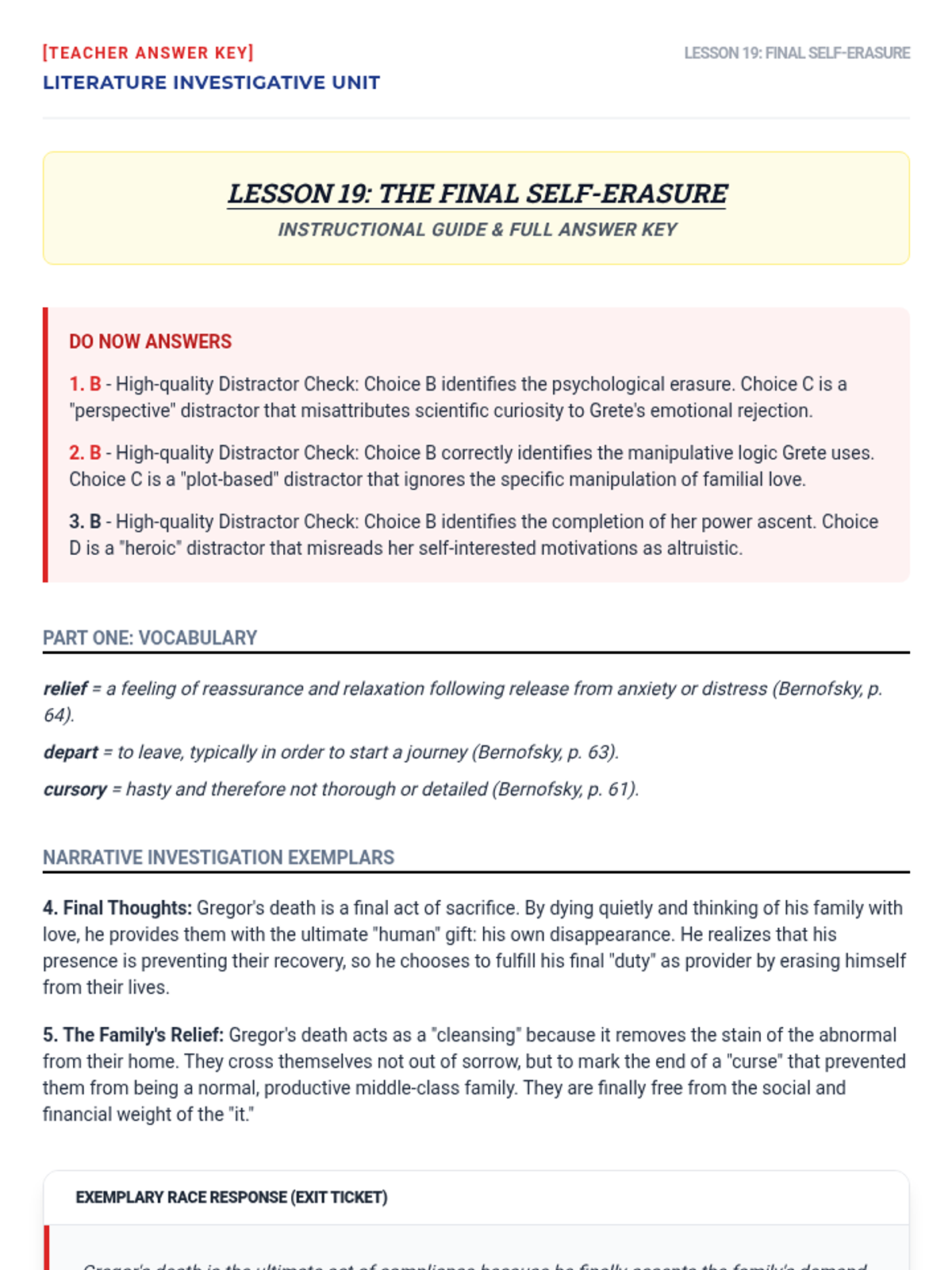
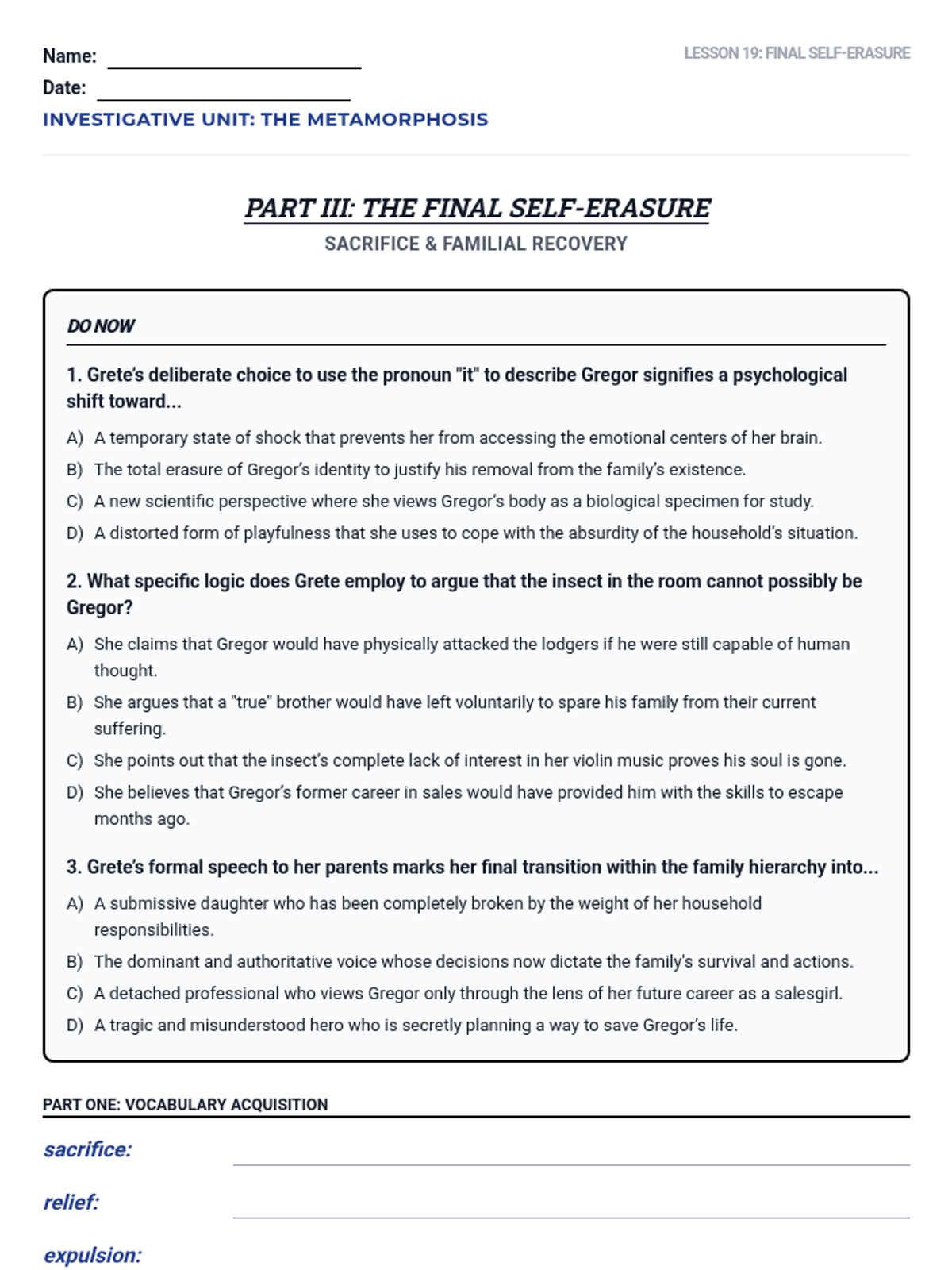
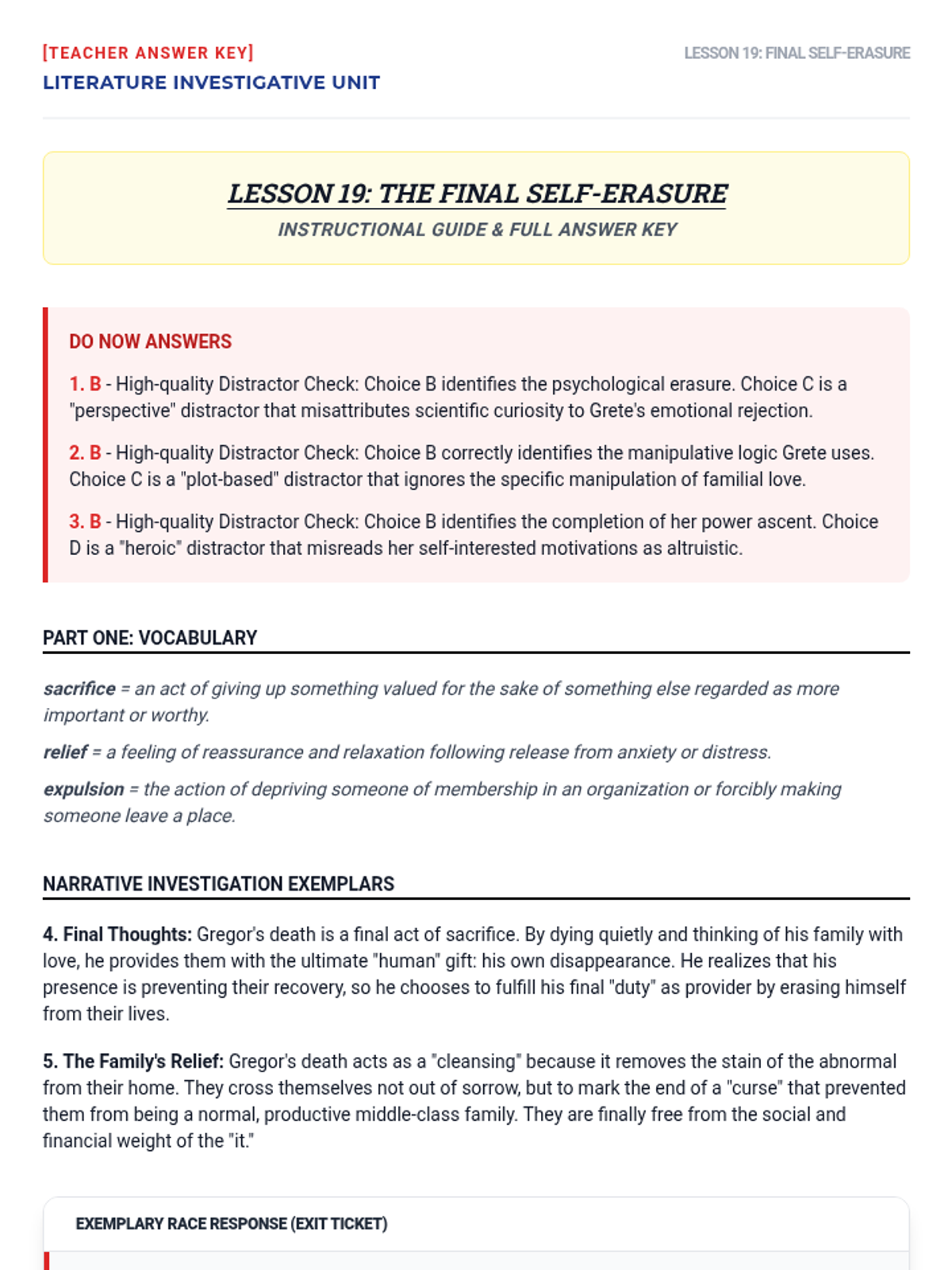
Gregor's death and self-sacrifice. Analysis of the relief of the family and the 'cleansing' of the home.
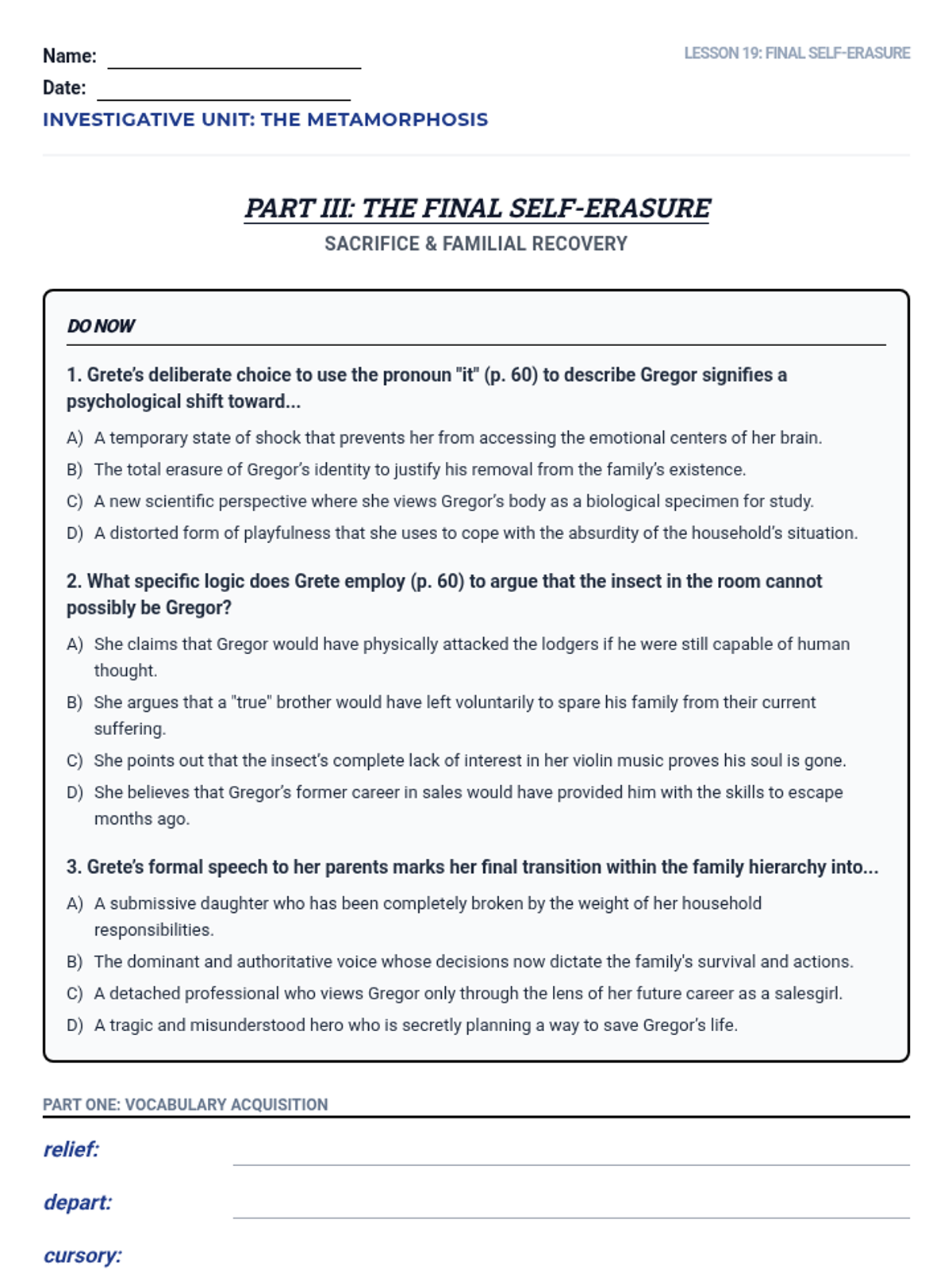
Grete's formal rejection of Gregor's identity. Analysis of the shift from sibling love to the necessity of his removal.
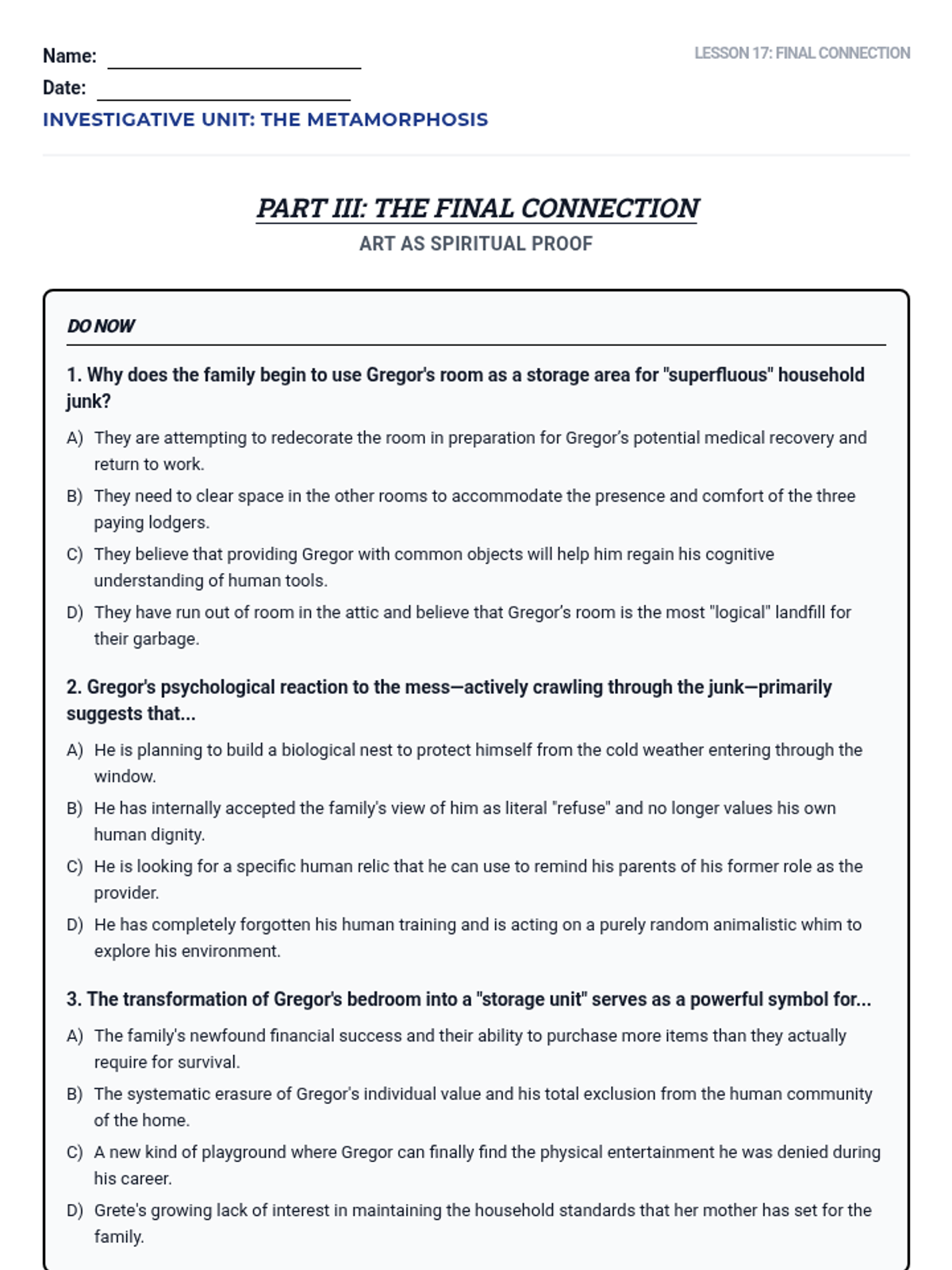
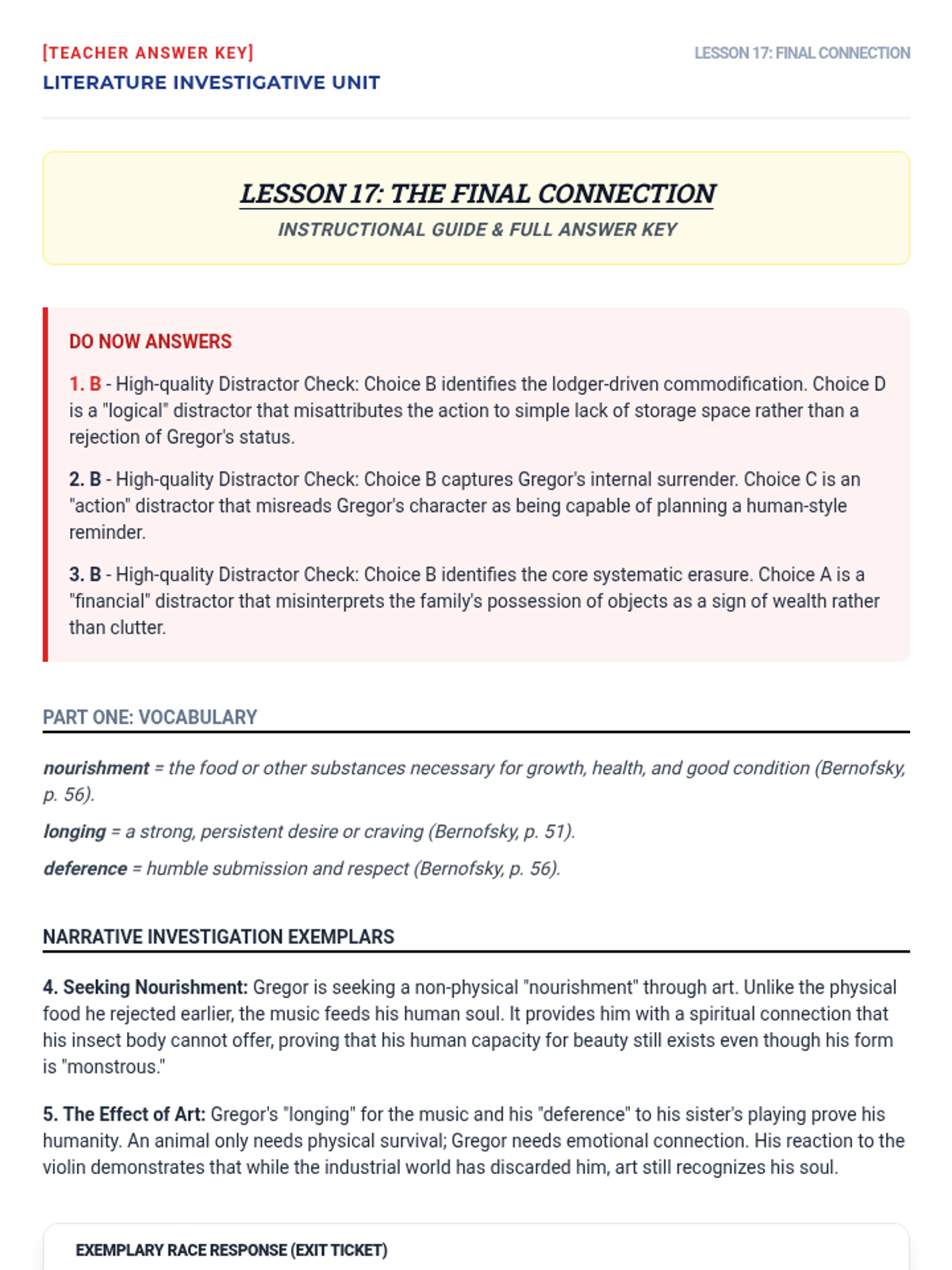
Gregor's reaction to Grete's violin performance. Themes of art, human connection, and the final reach for his human spirit.
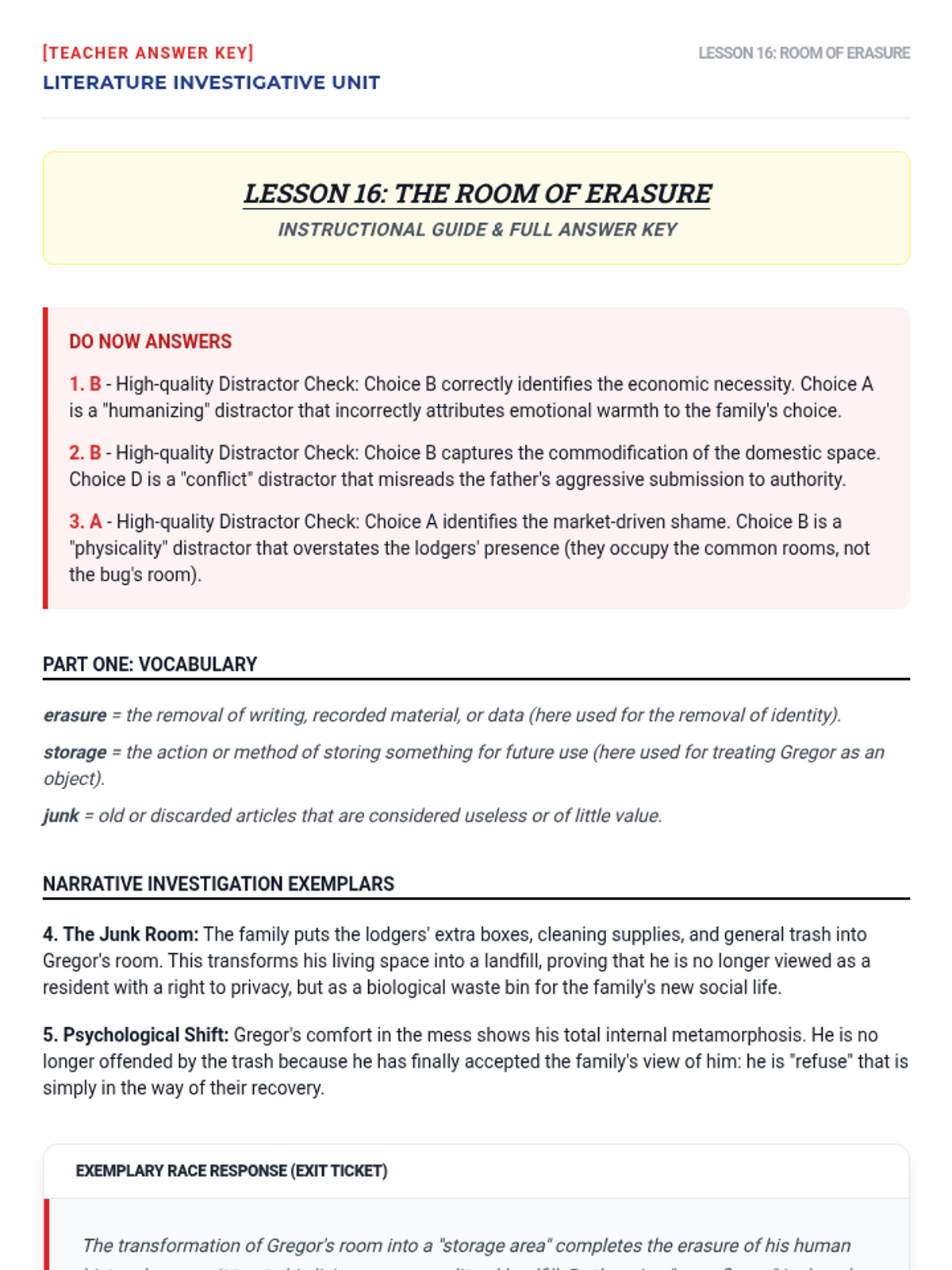
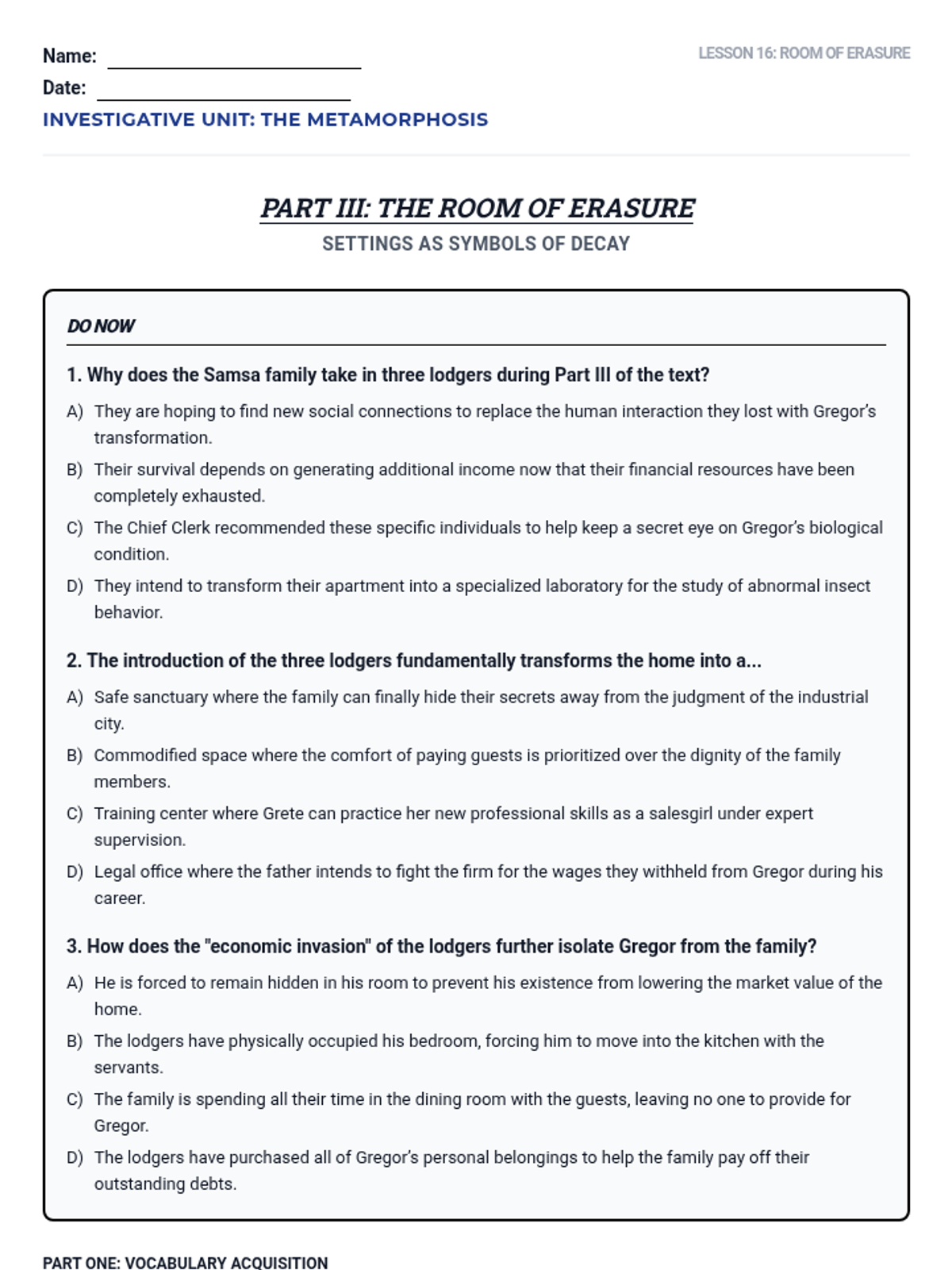
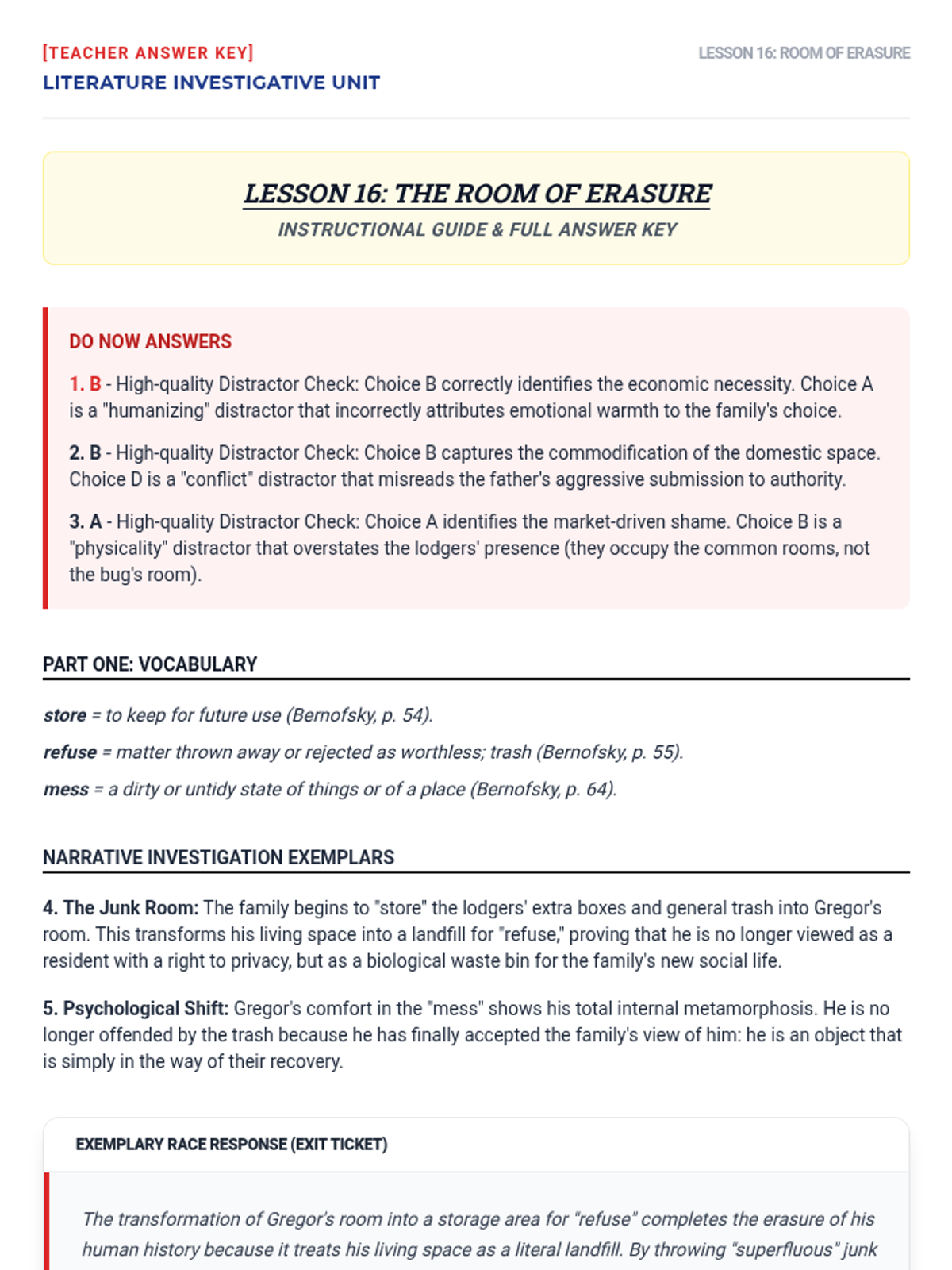
Gregor's room becomes a storage area for trash. Analysis of the complete erasure of his human space and history.
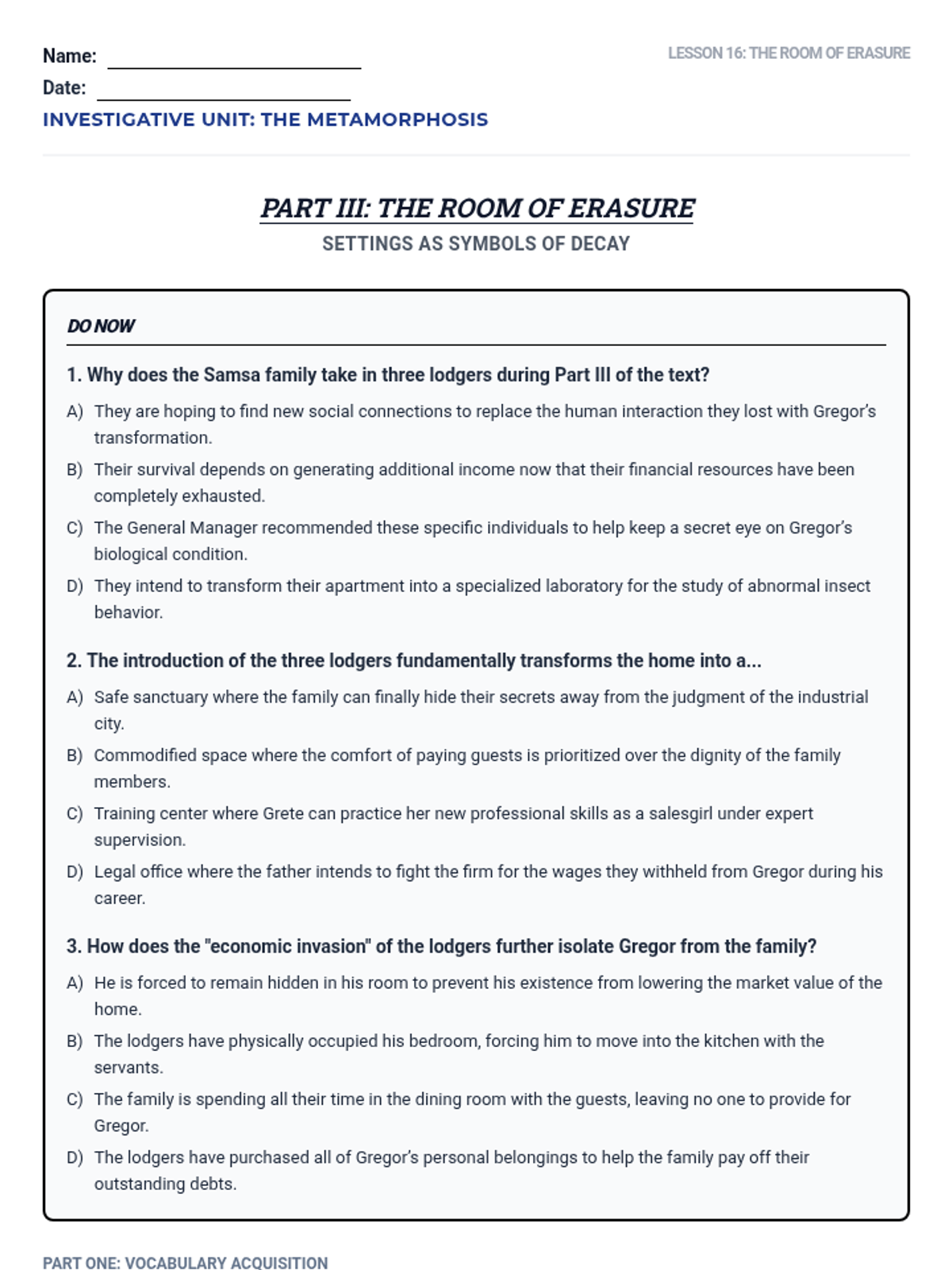
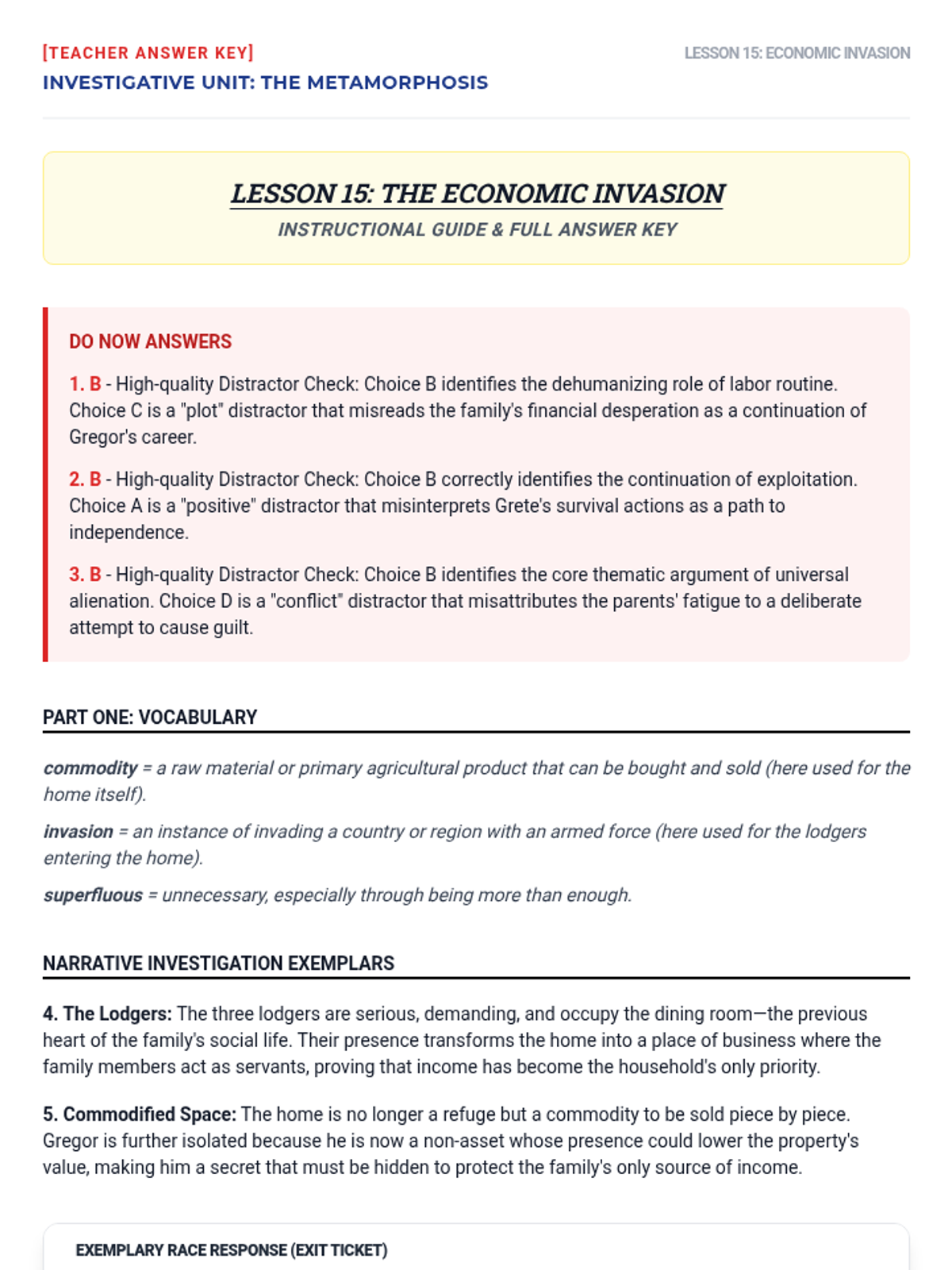
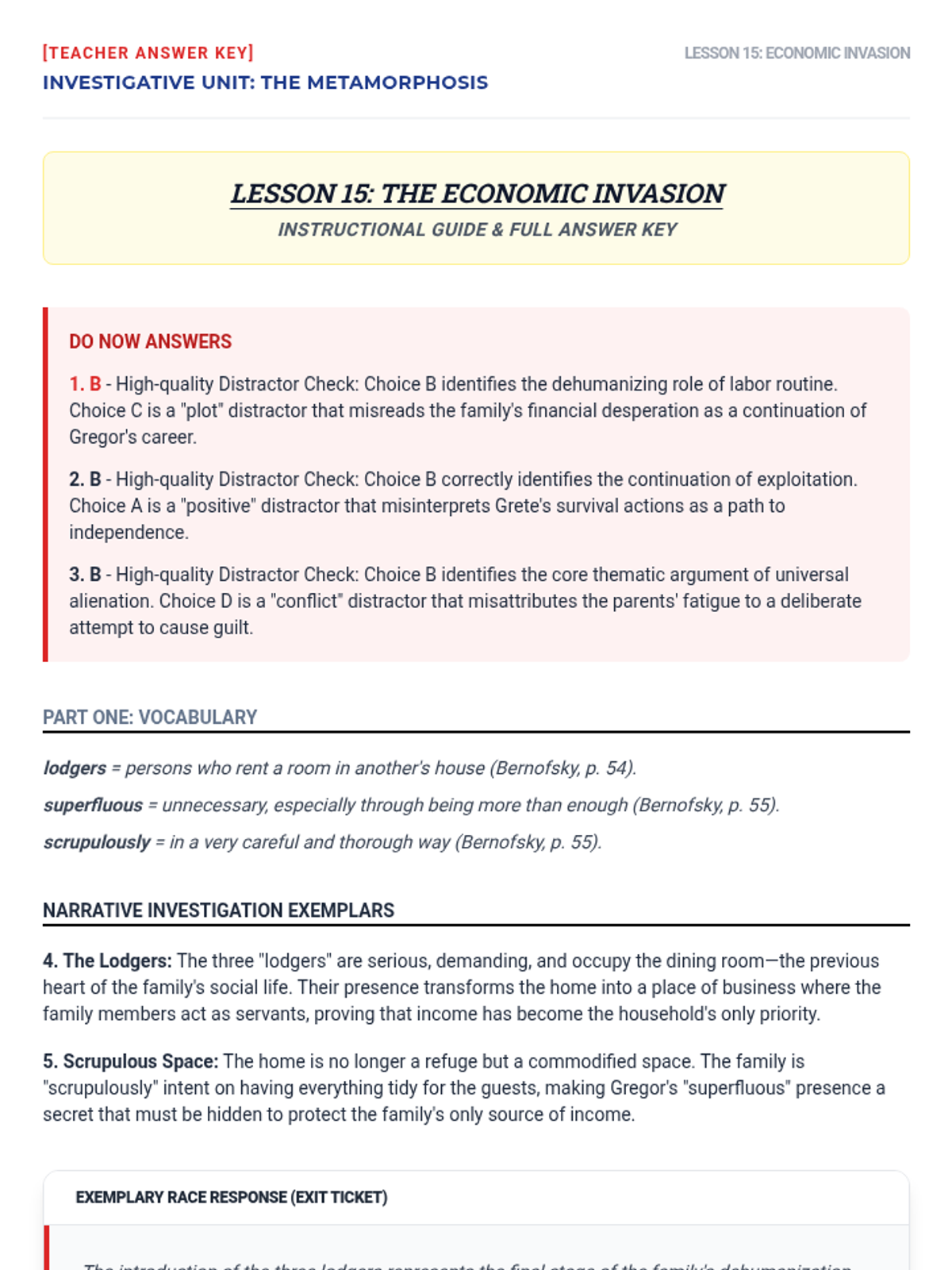
The introduction of the three lodgers. Analysis of the home as a commodified space and Gregor's further displacement.
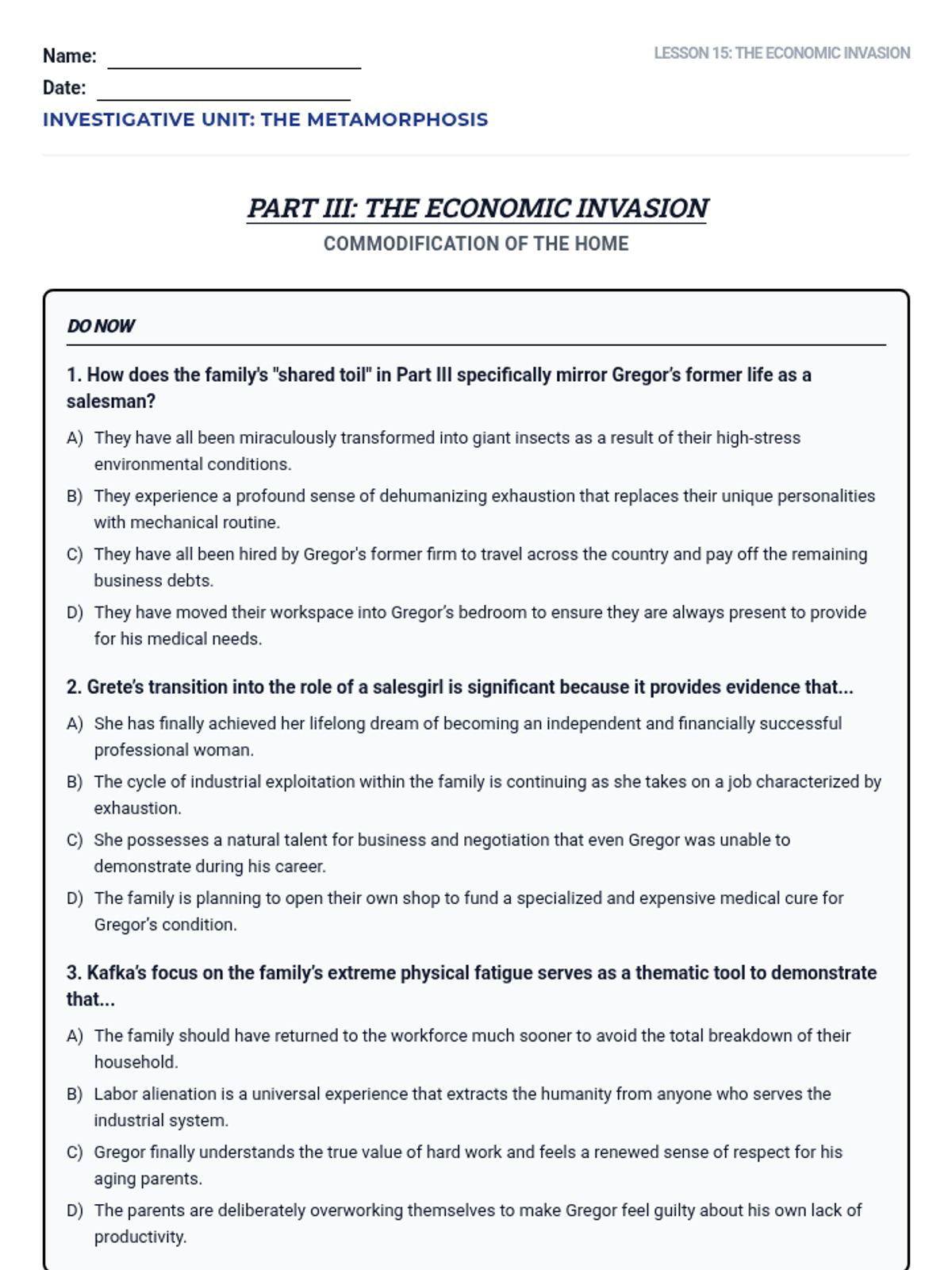
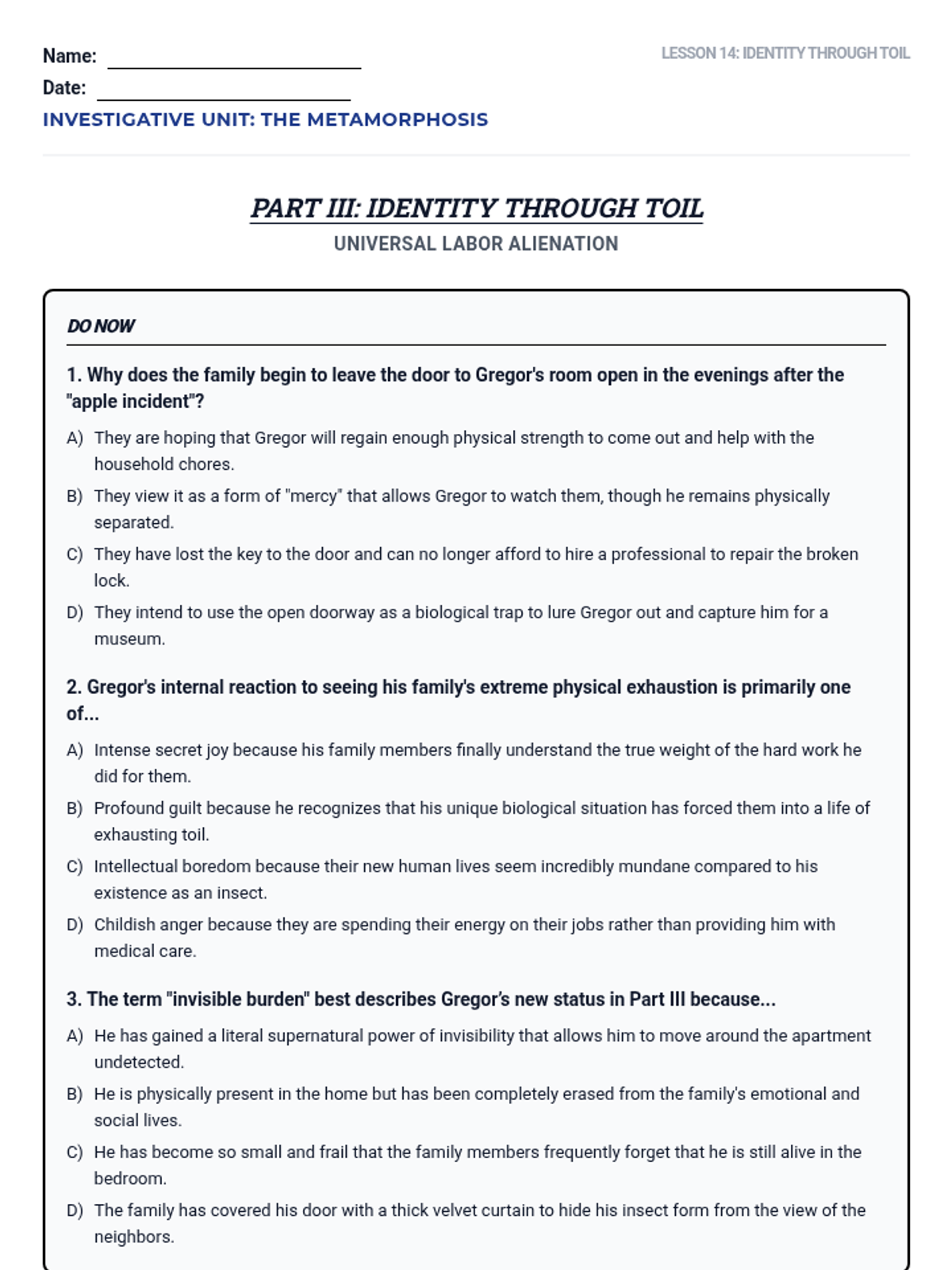
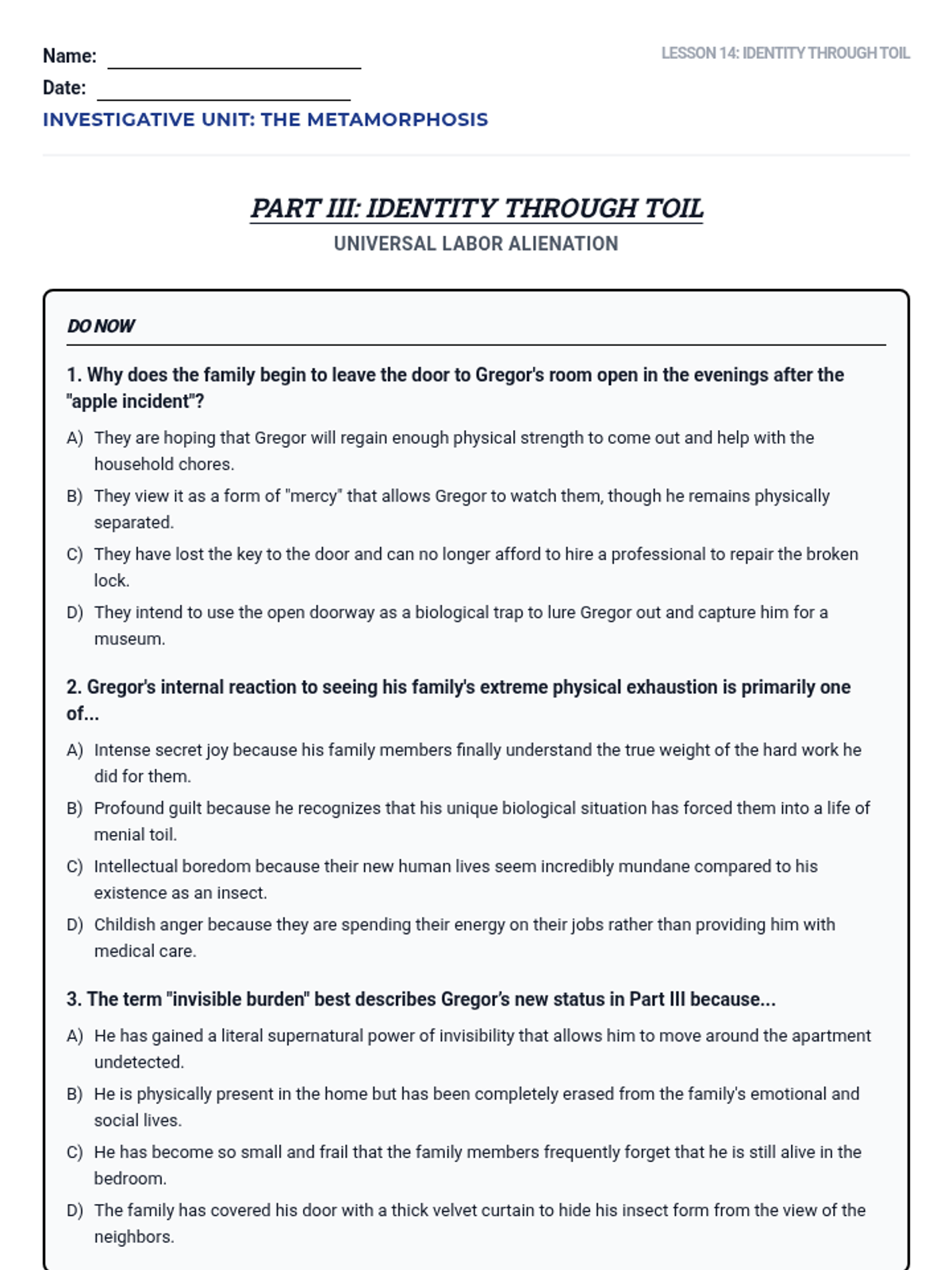
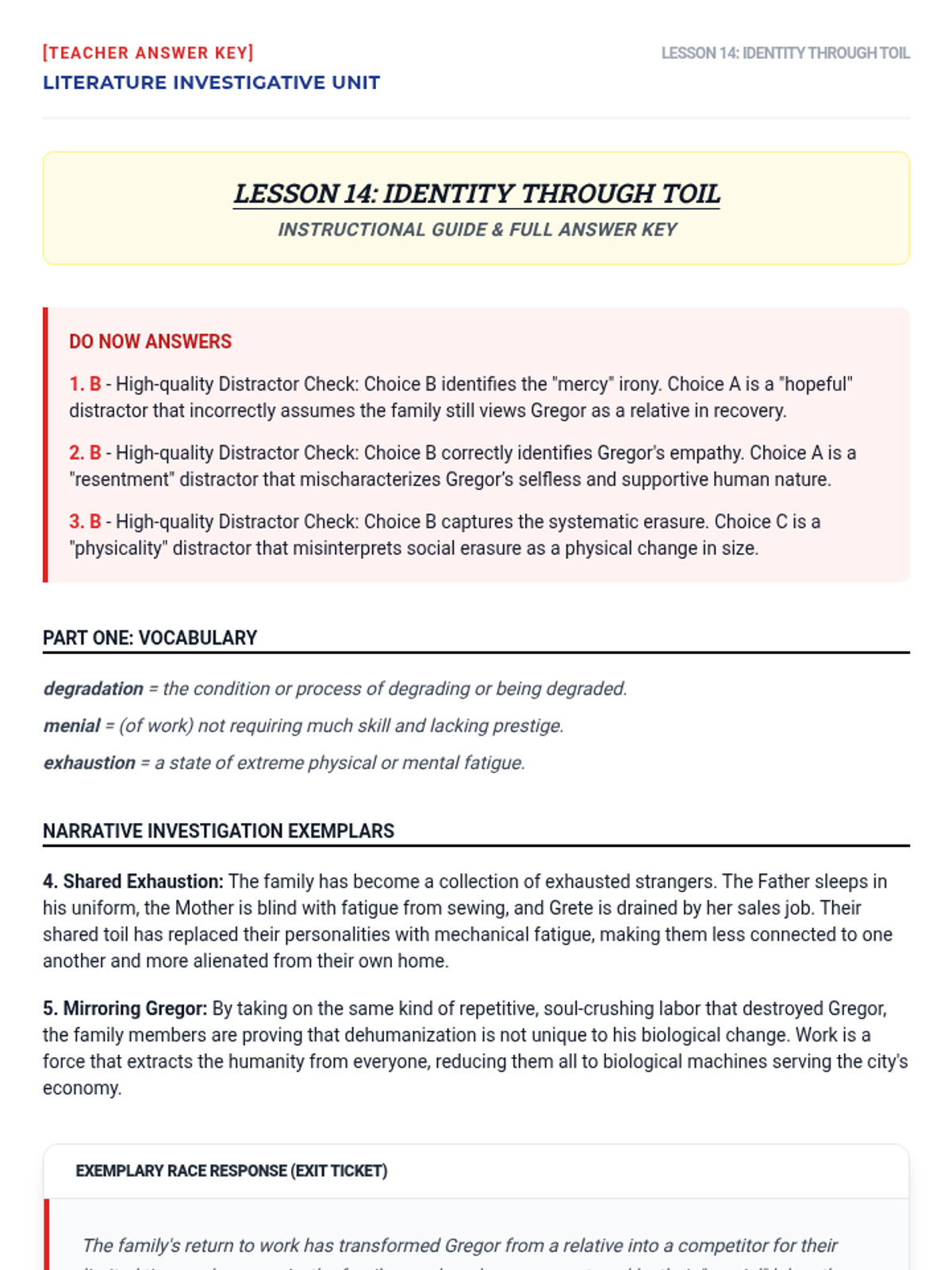
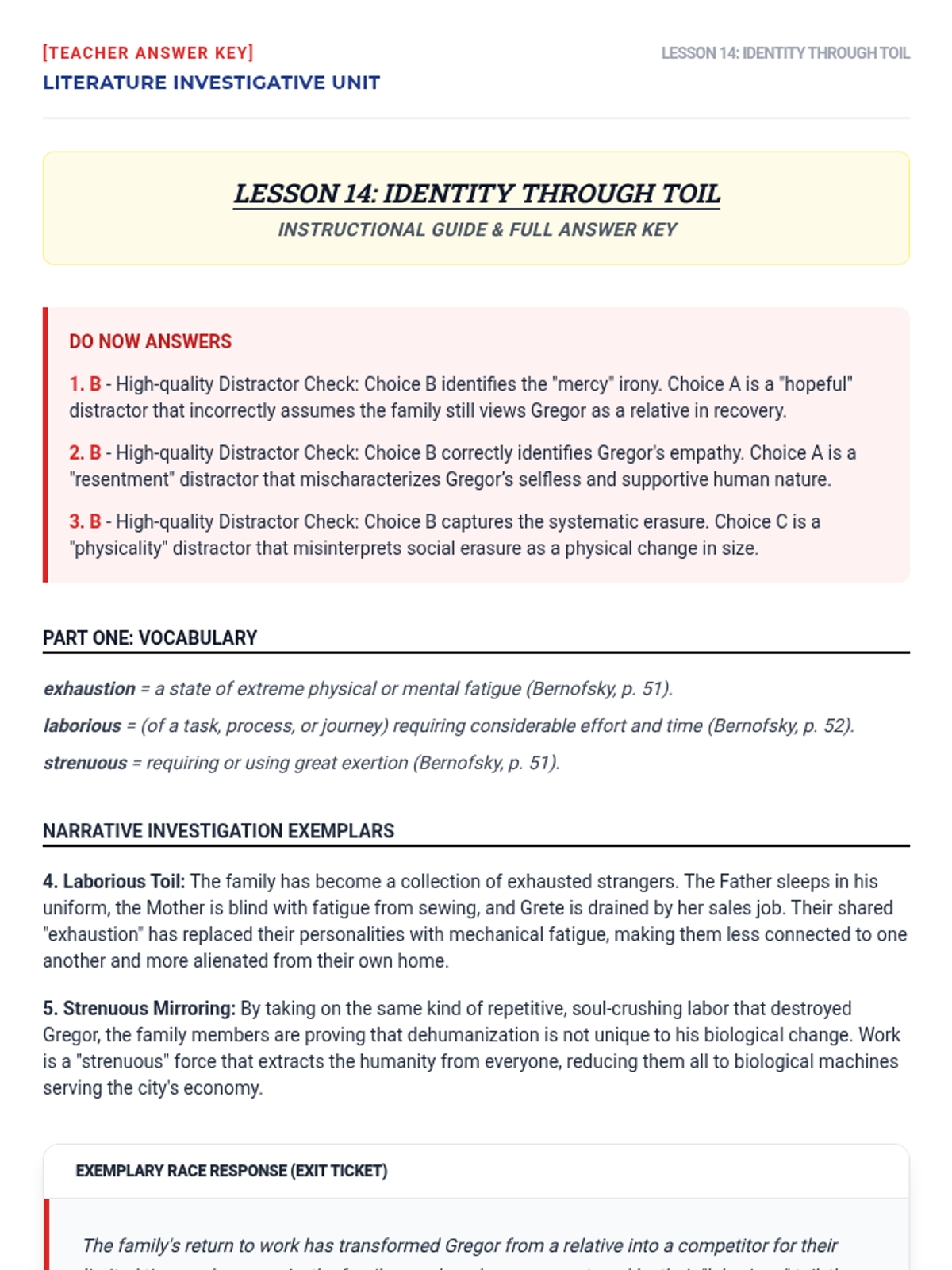
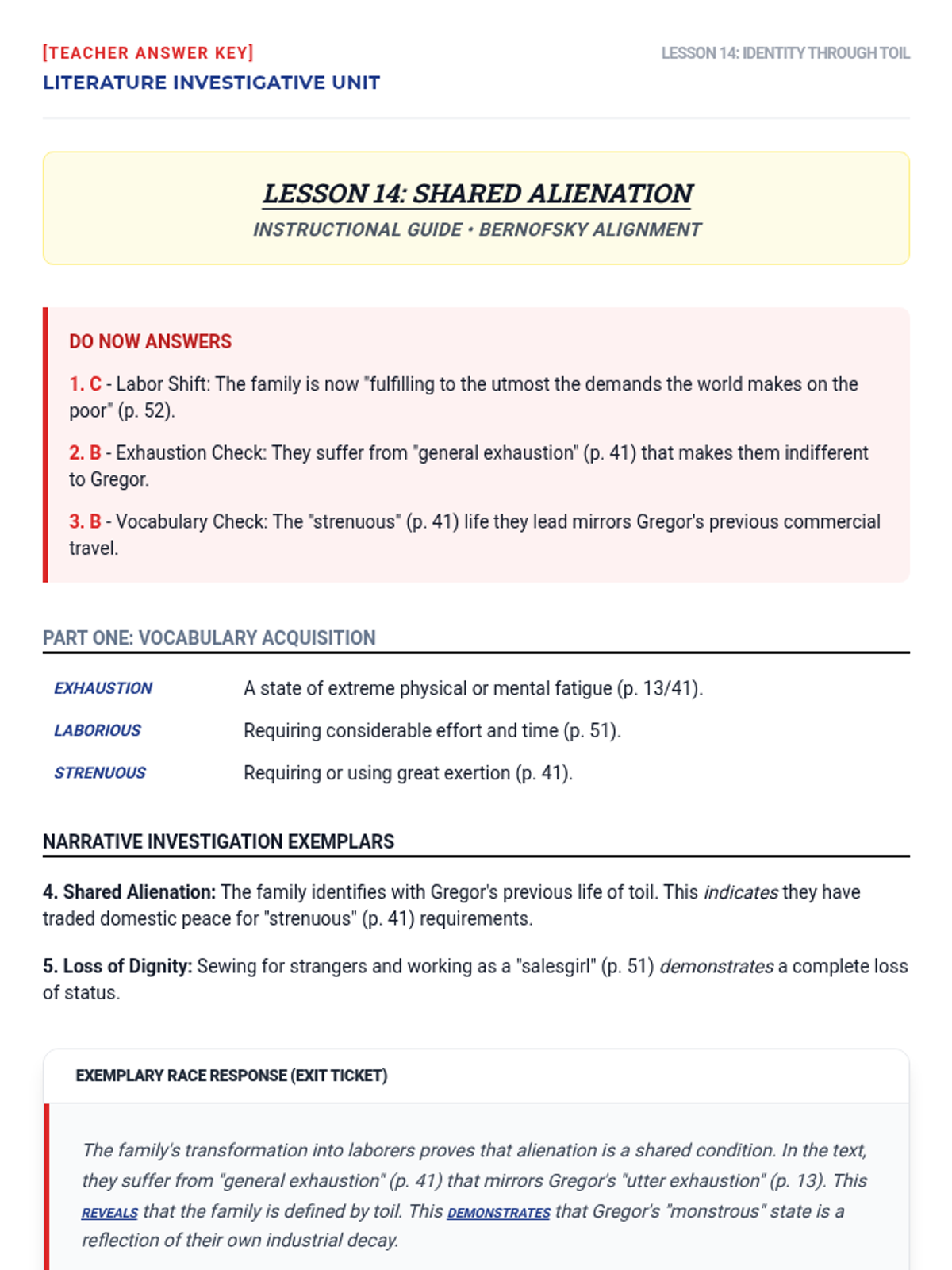
Analysis of the family taking on menial labor. Themes of exhaustion, loss of dignity, and the shared alienation of the working class.
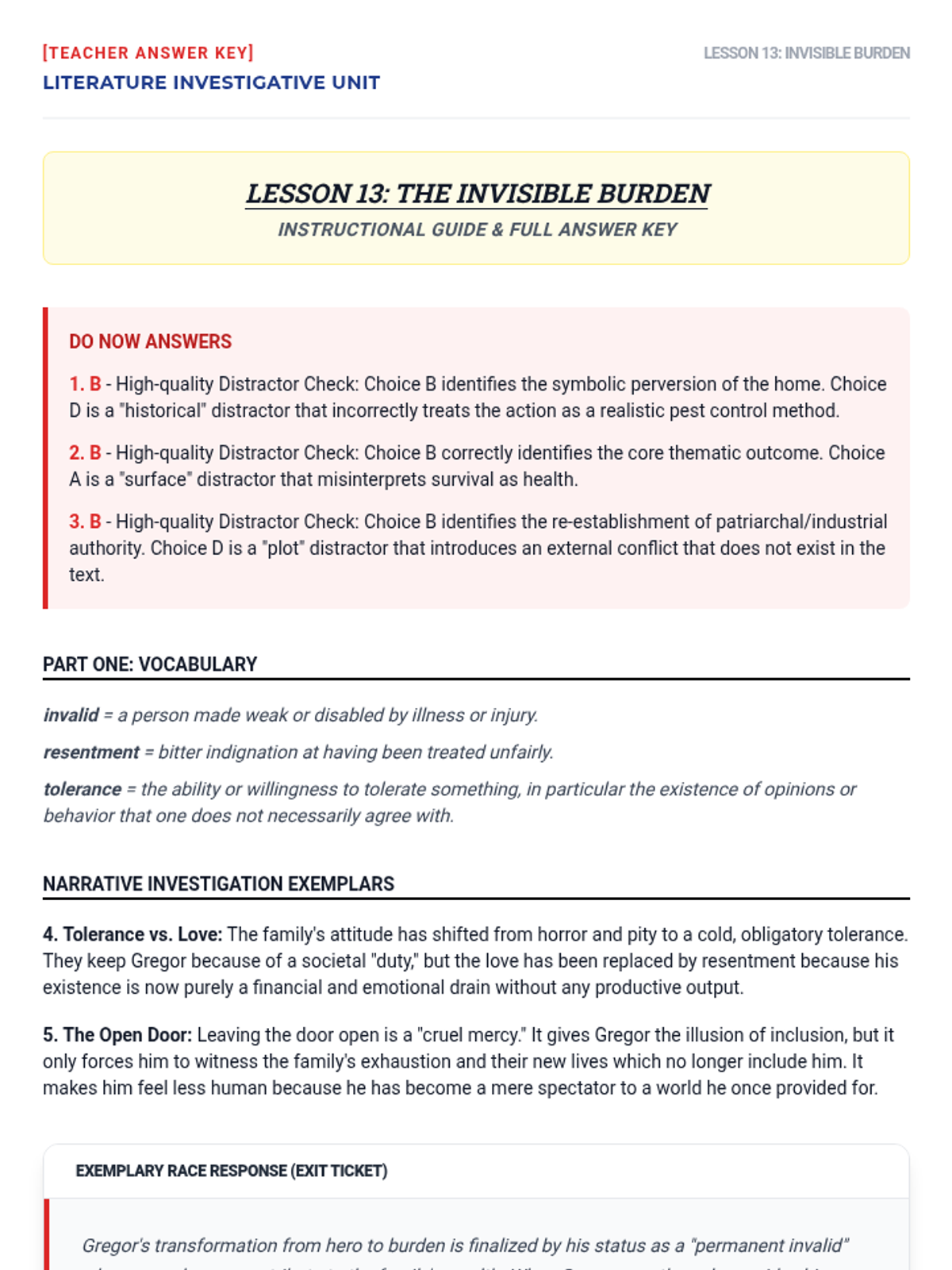
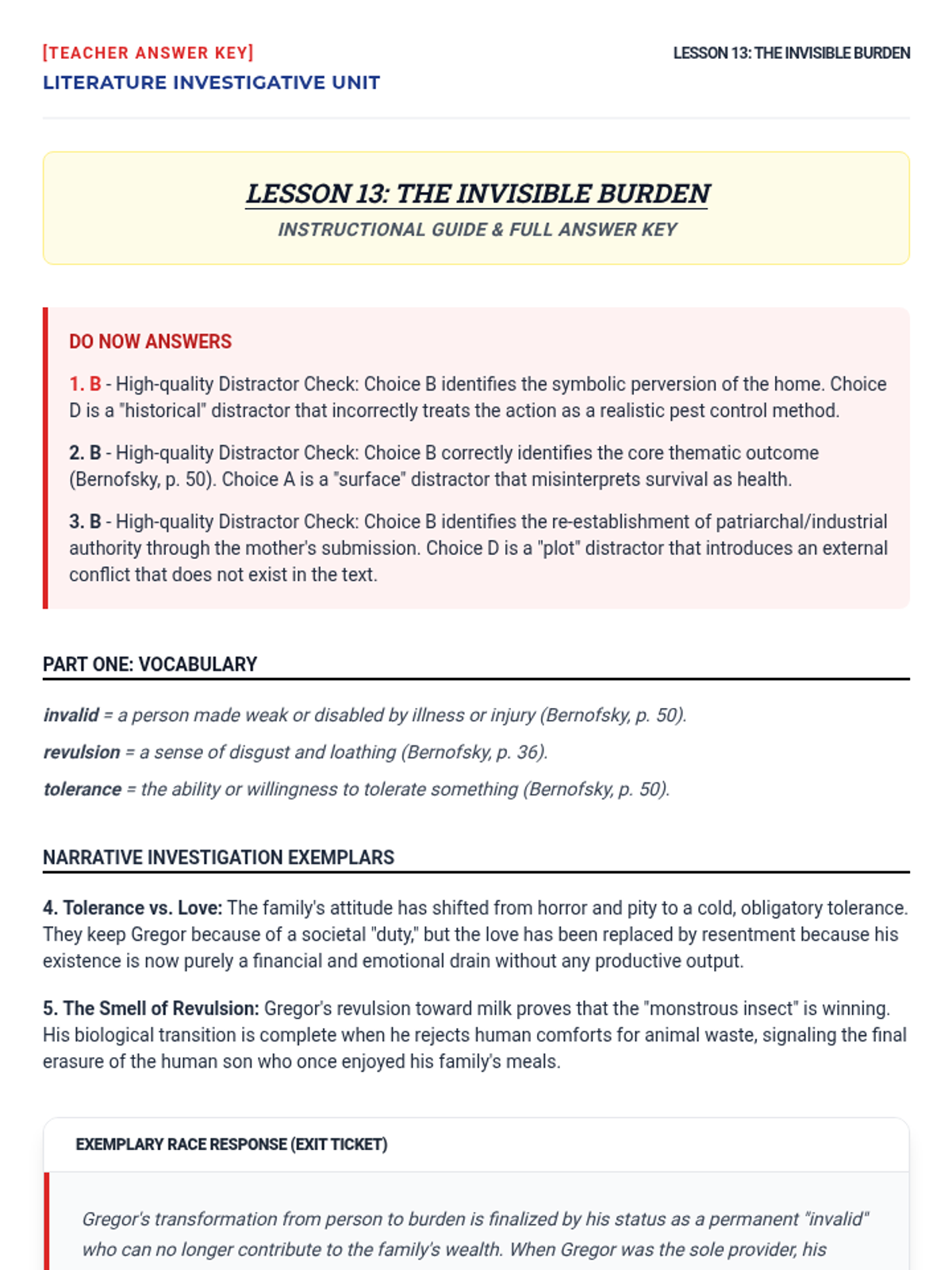
Gregor as a permanent invalid. Analysis of the family's growing resentment and the physical reminder of his non-productive status.
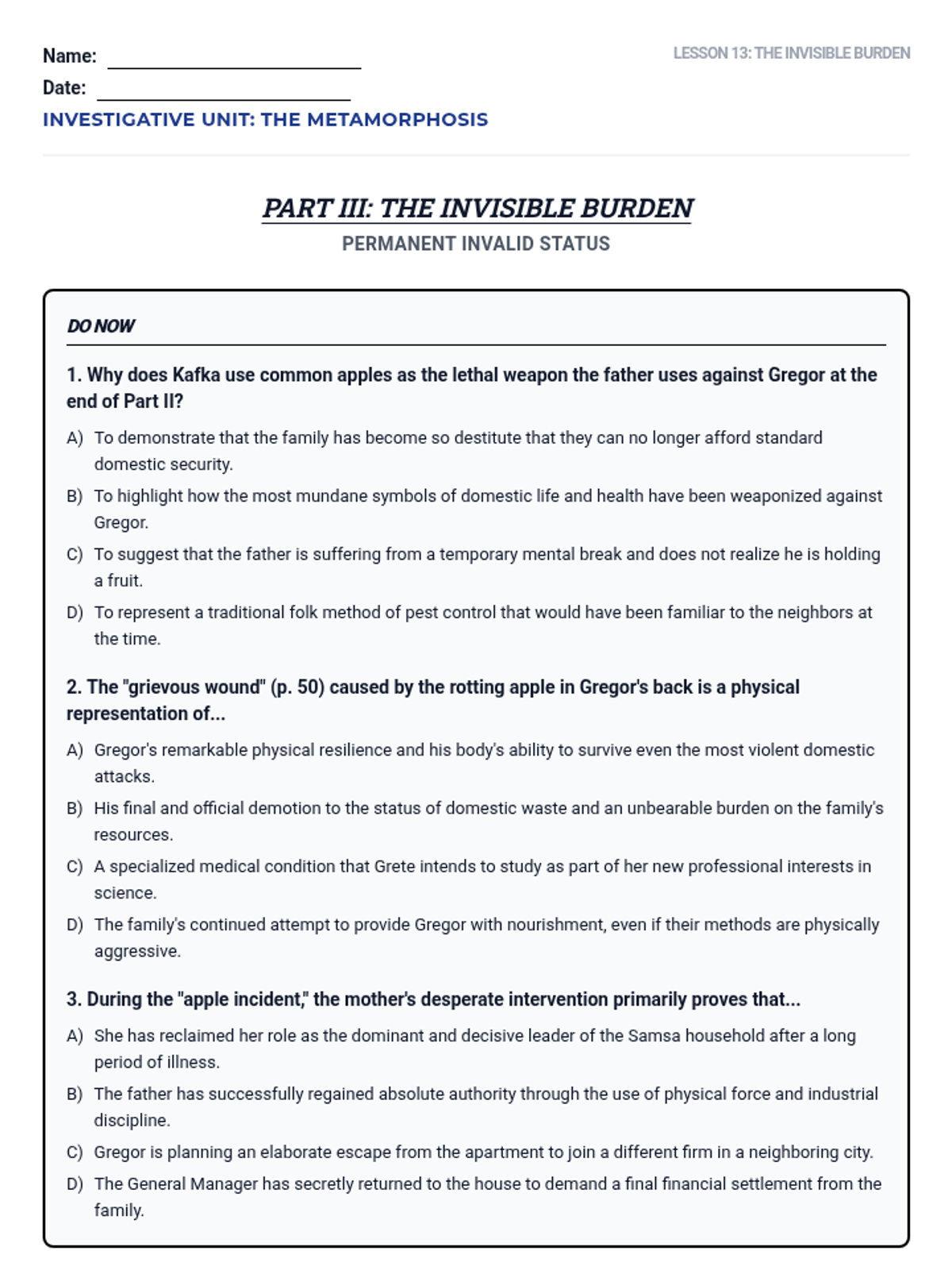
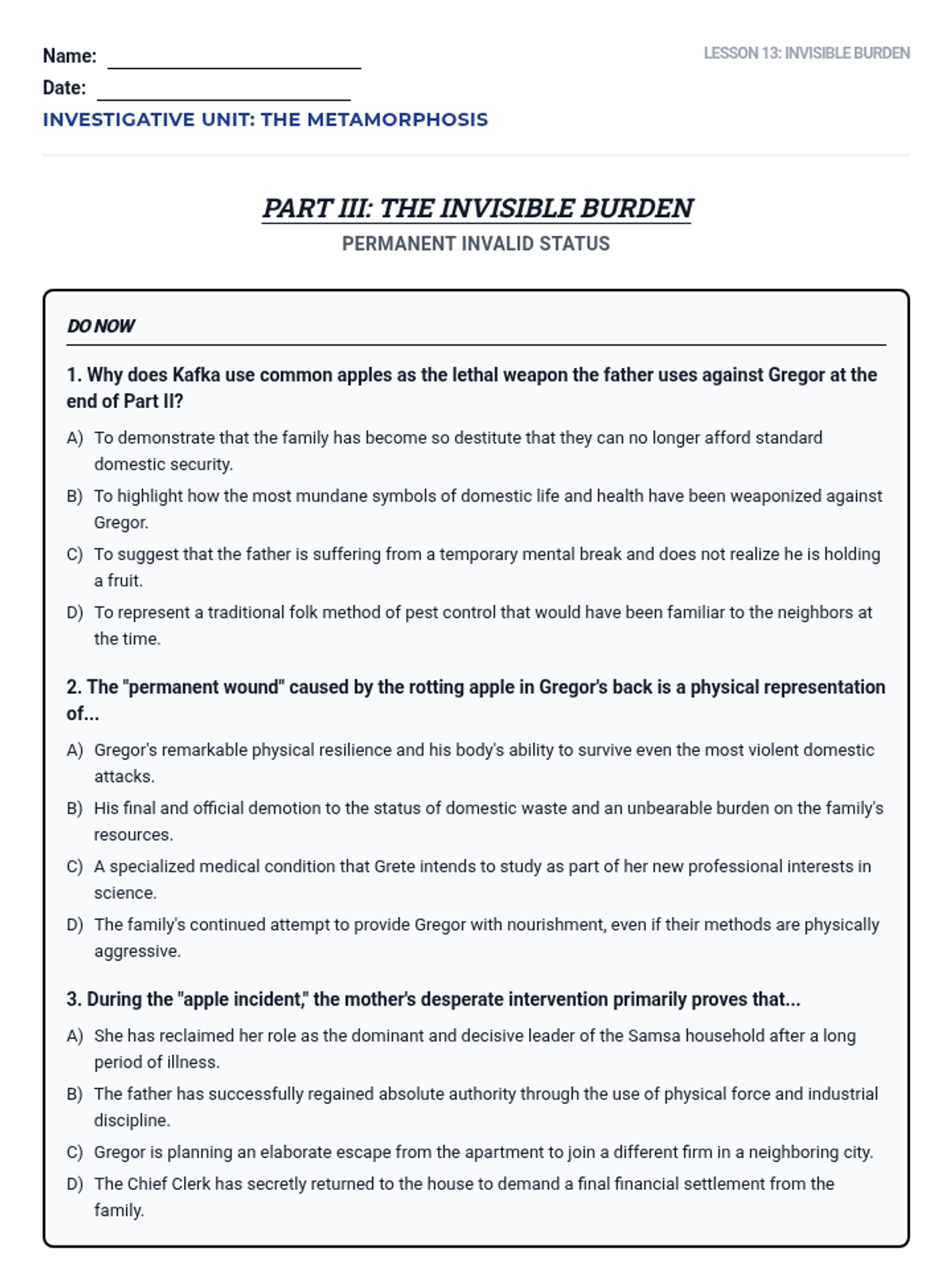
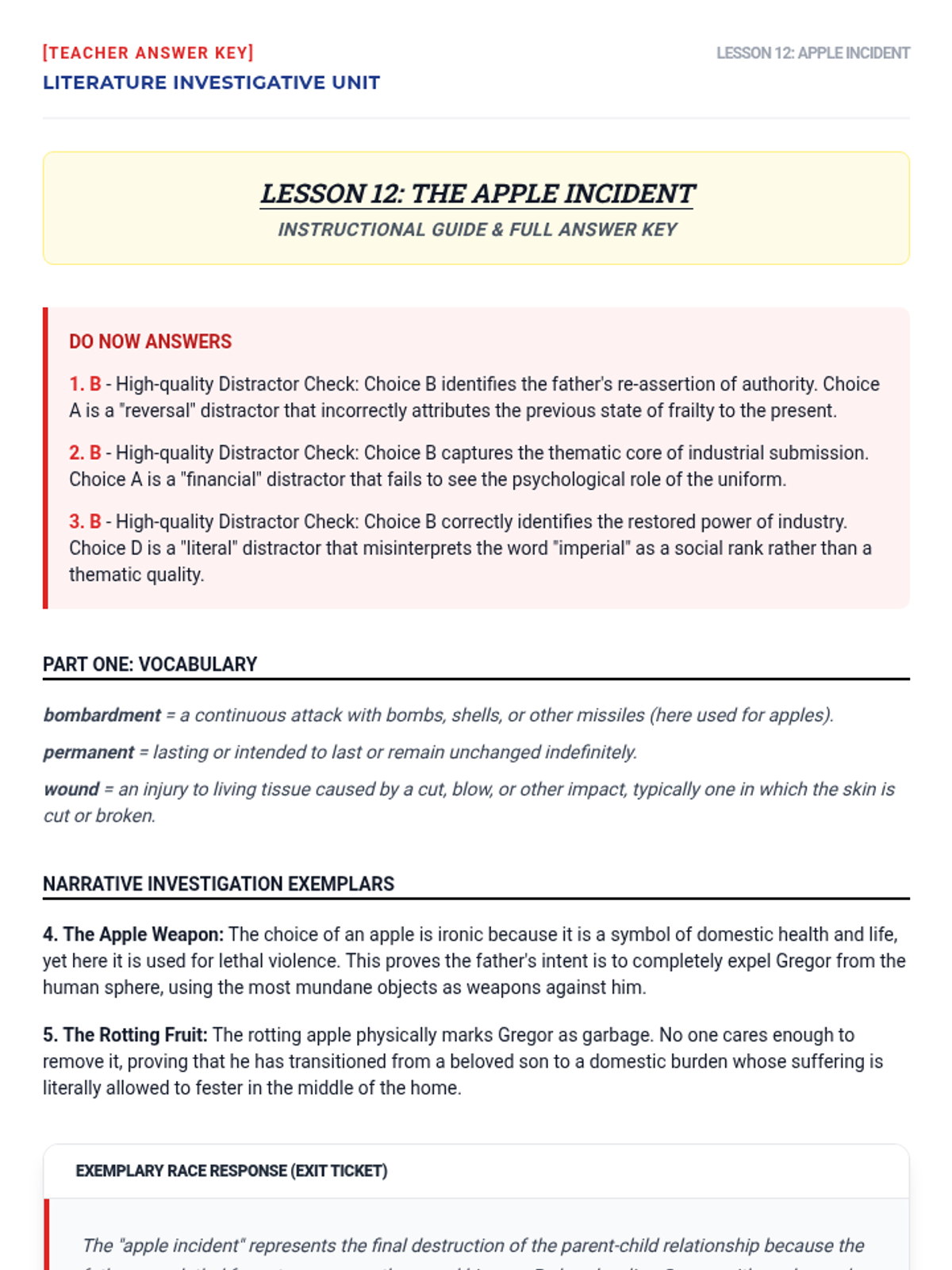
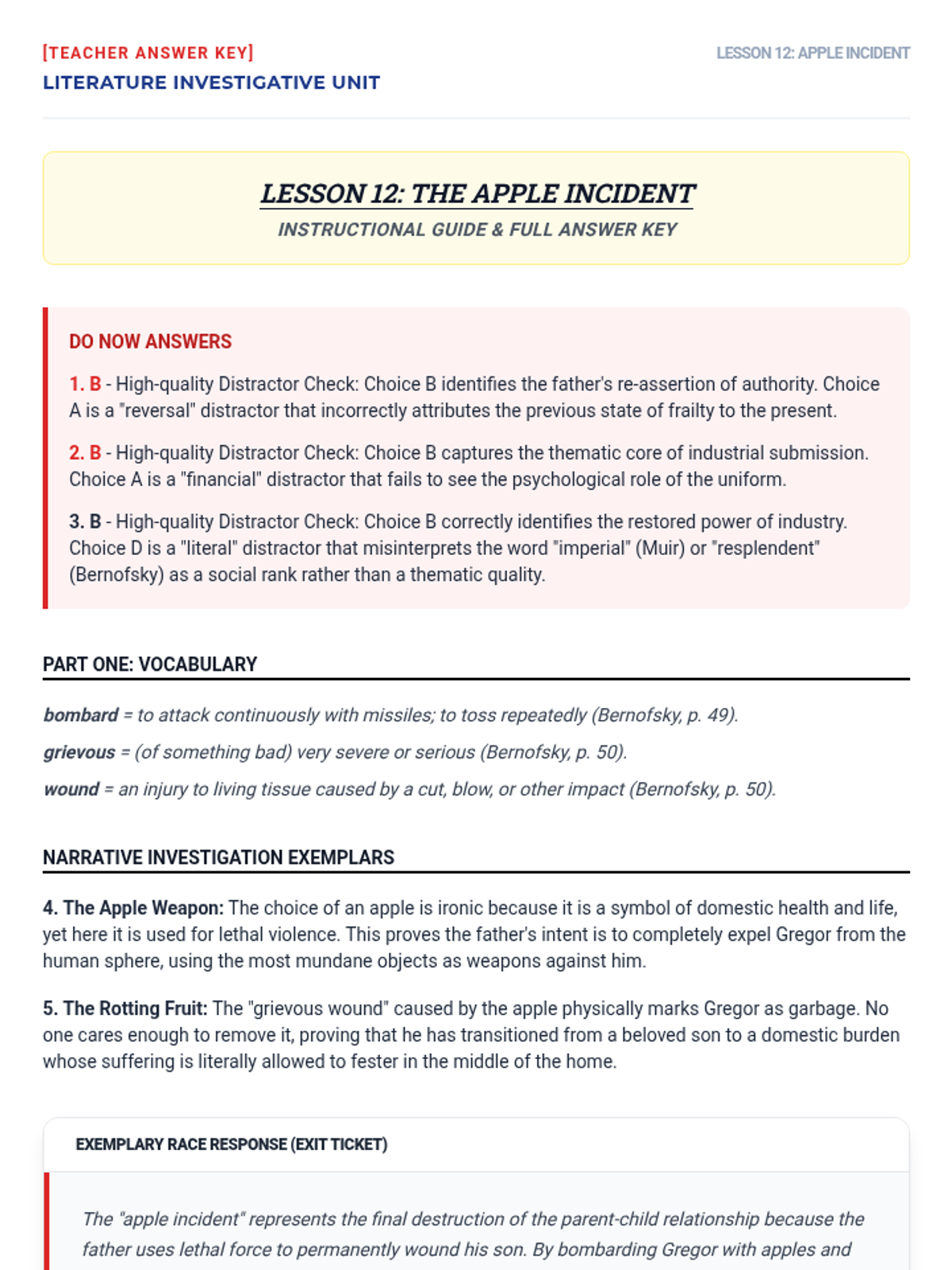
The father's violent attack with apples. Analysis of the apple as a symbol of permanent wounding and the transition from son to 'burden'.
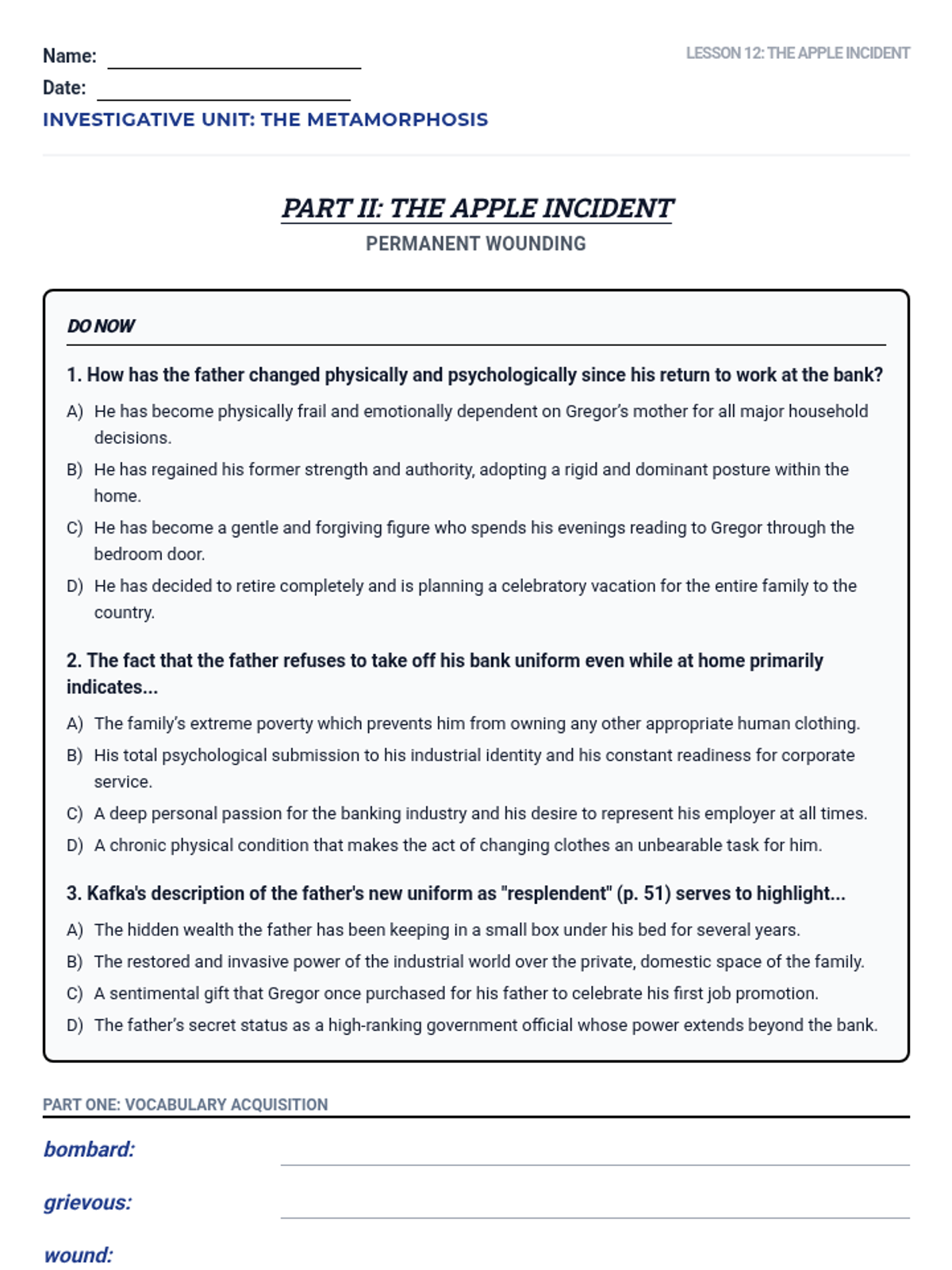
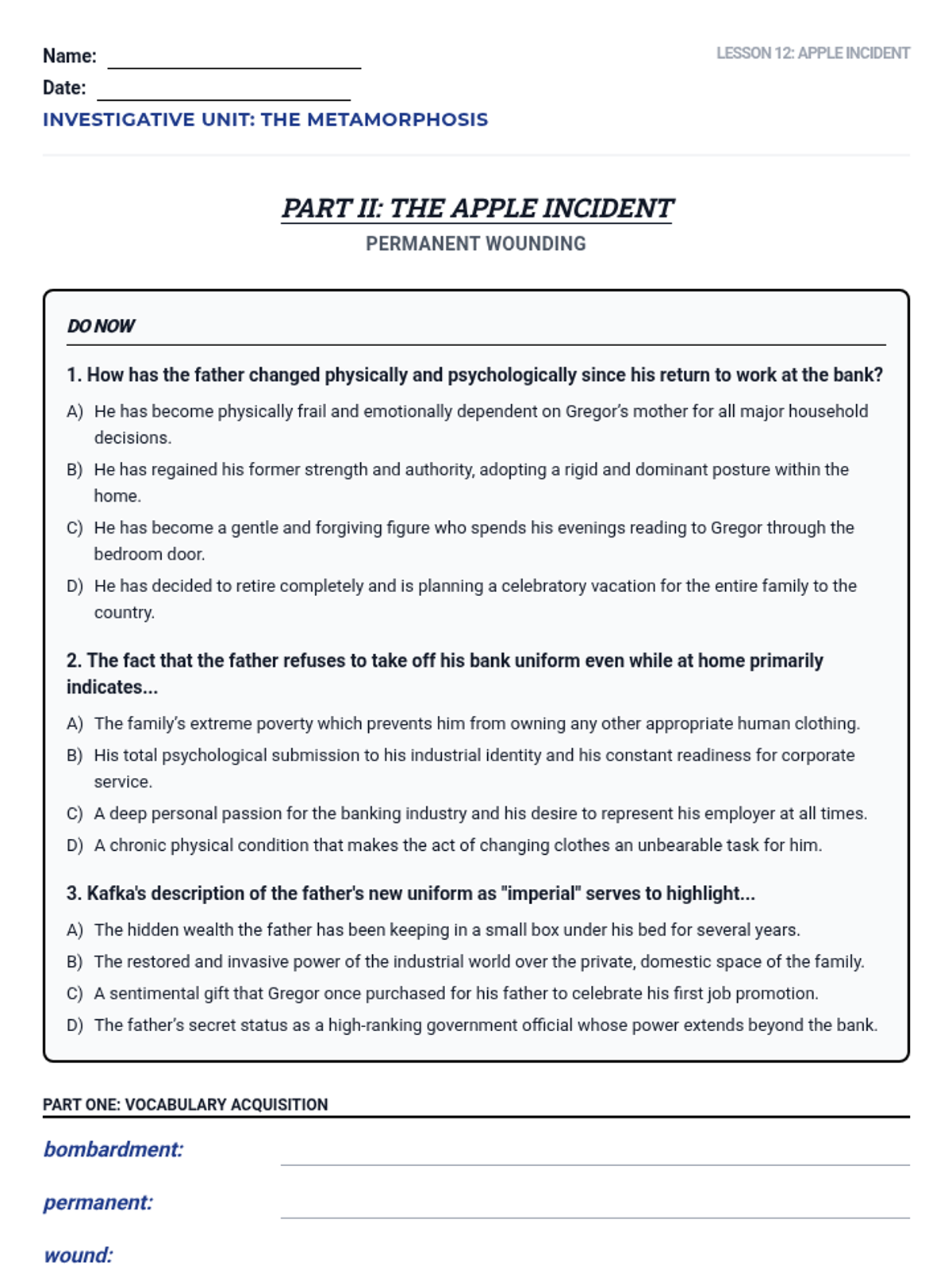
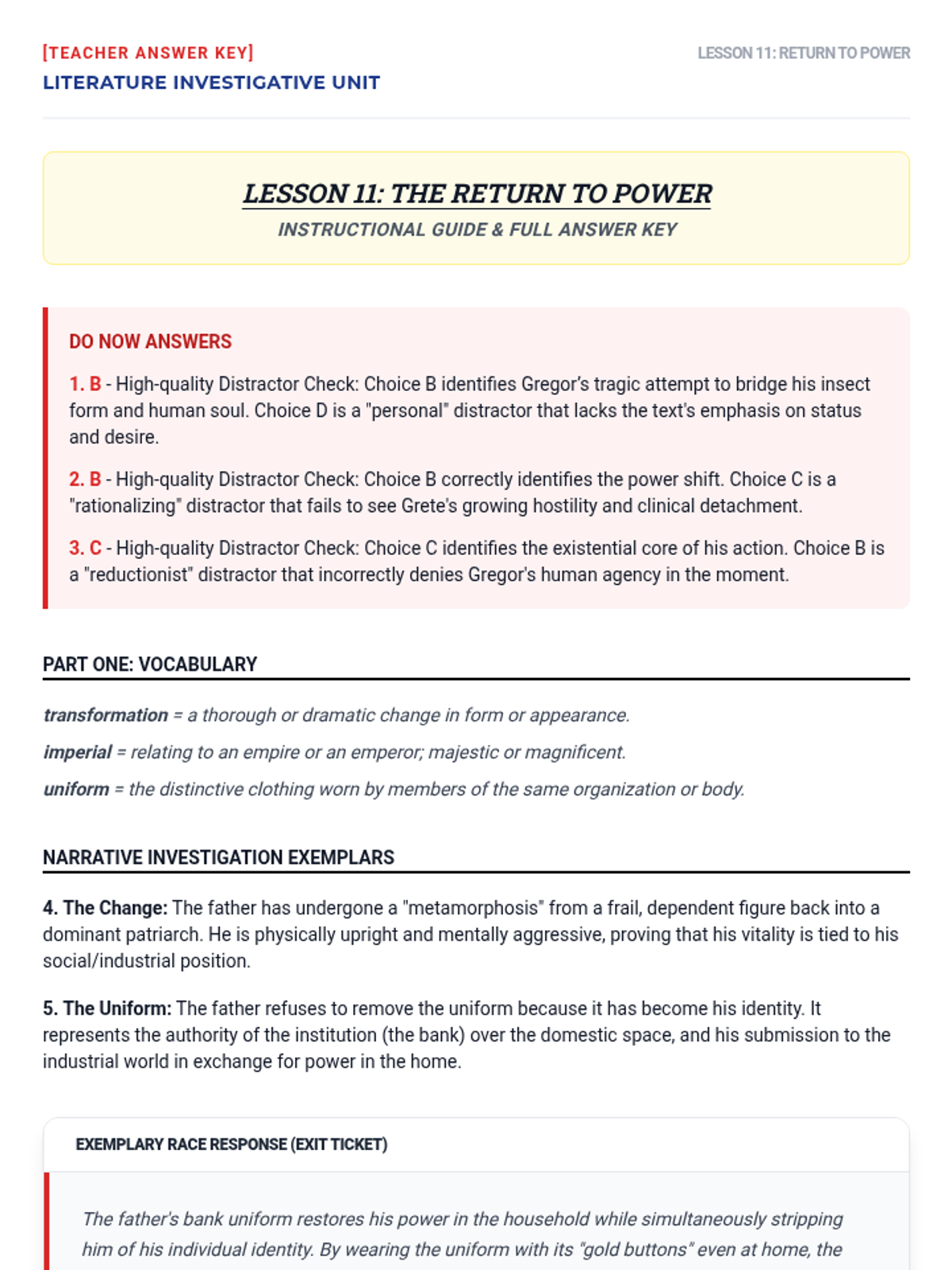
Analysis of the father's return to work and his transformation through the bank uniform. Themes of restored authority and industrial identity.
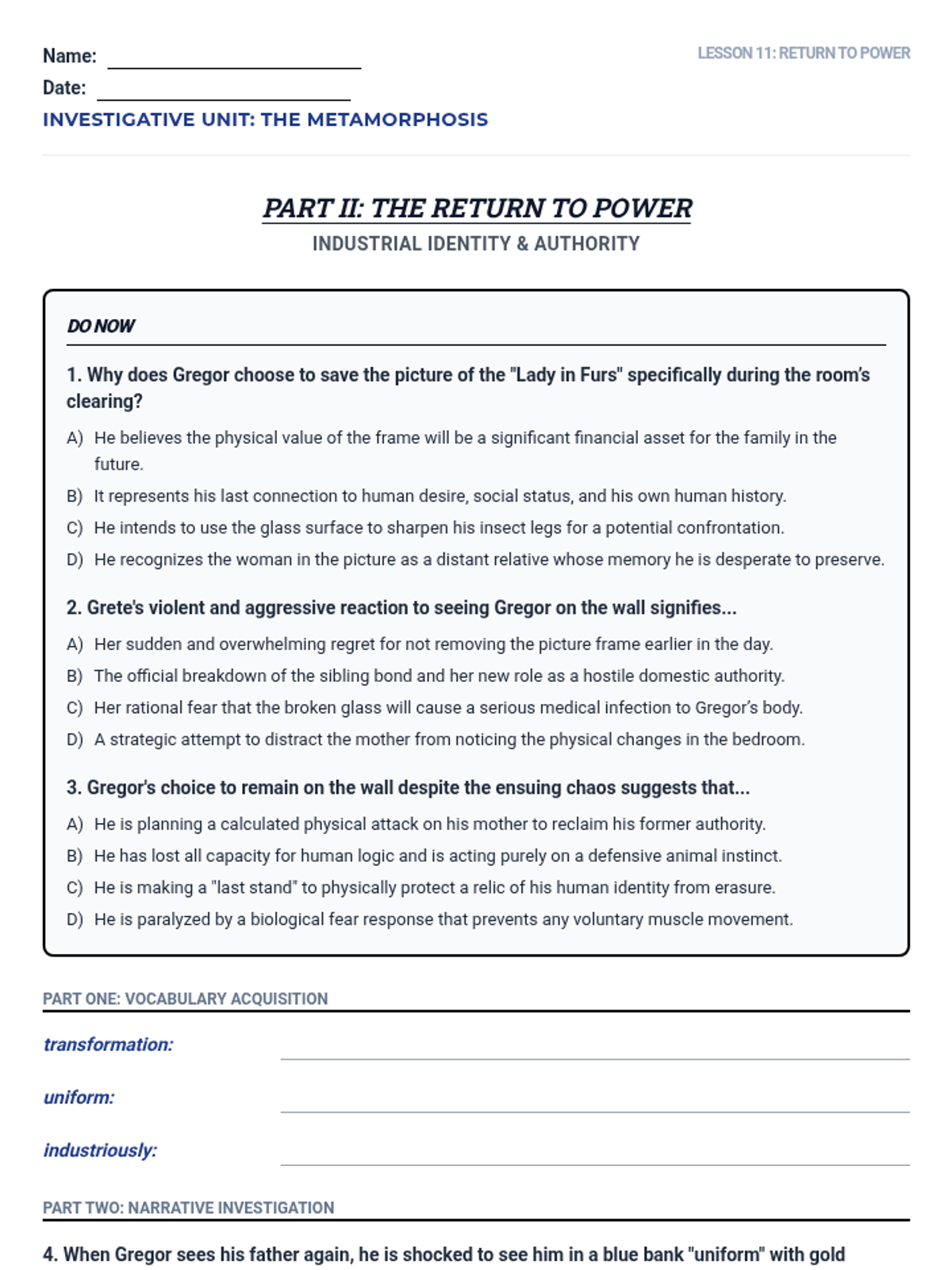
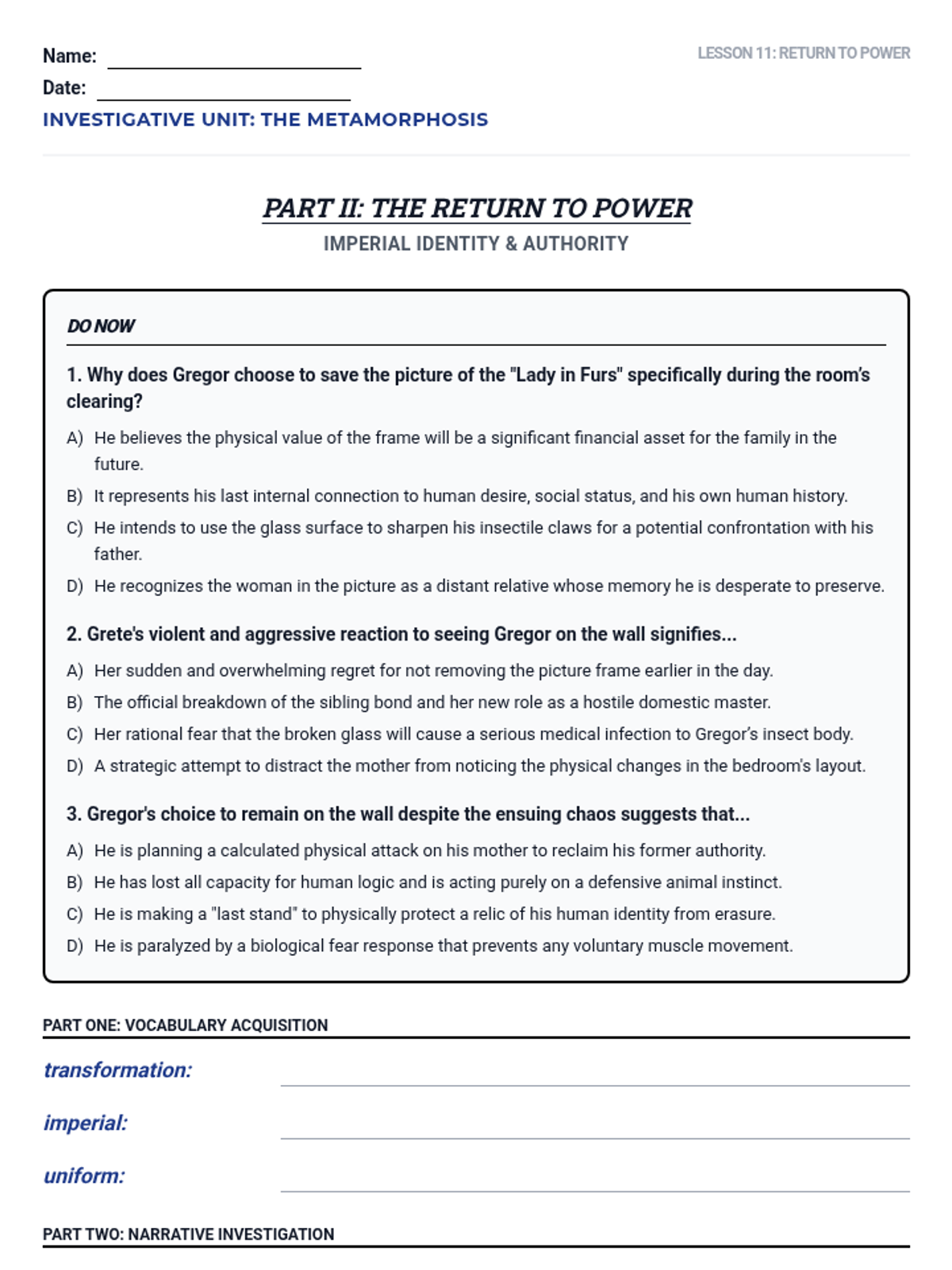
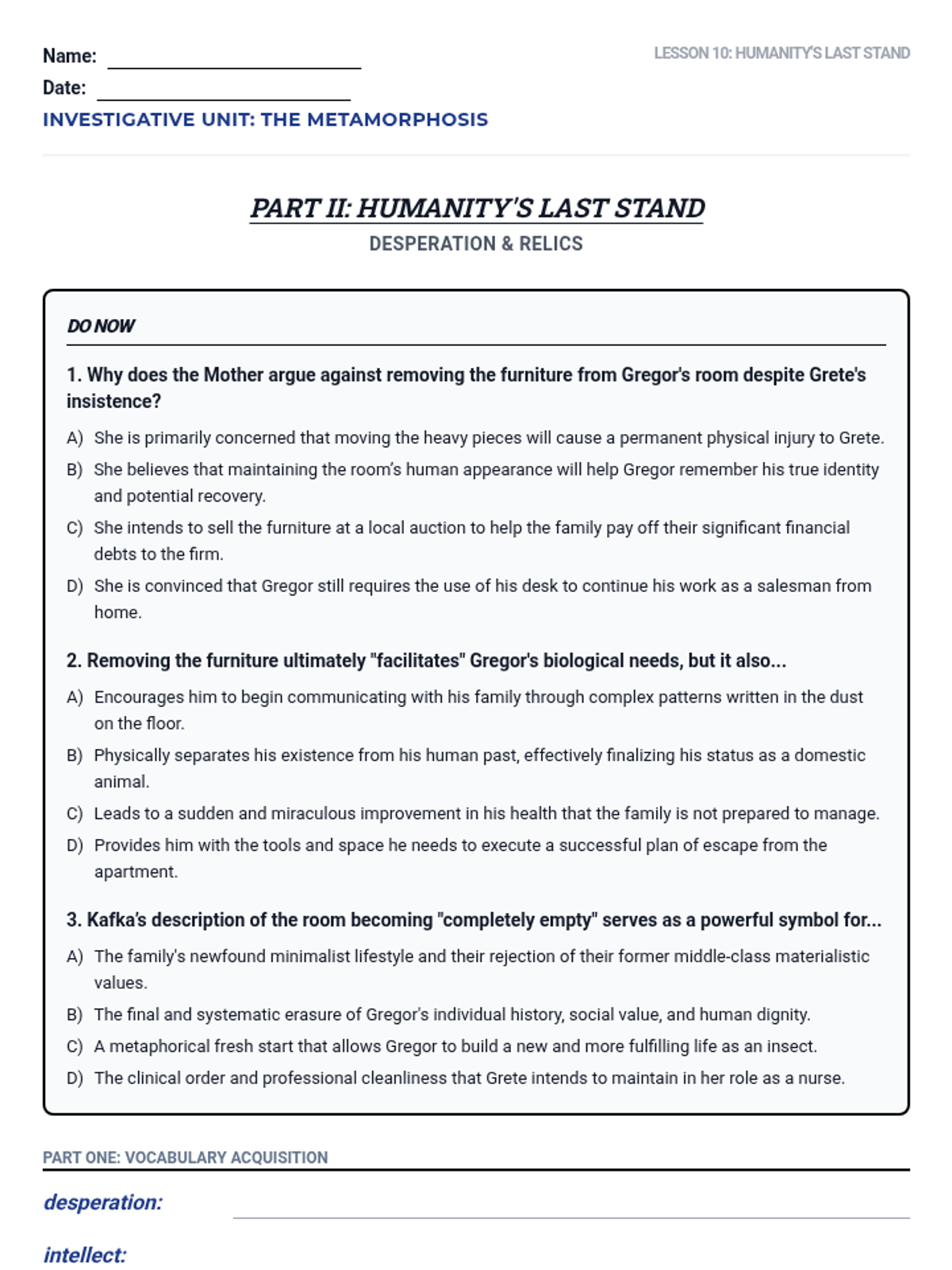
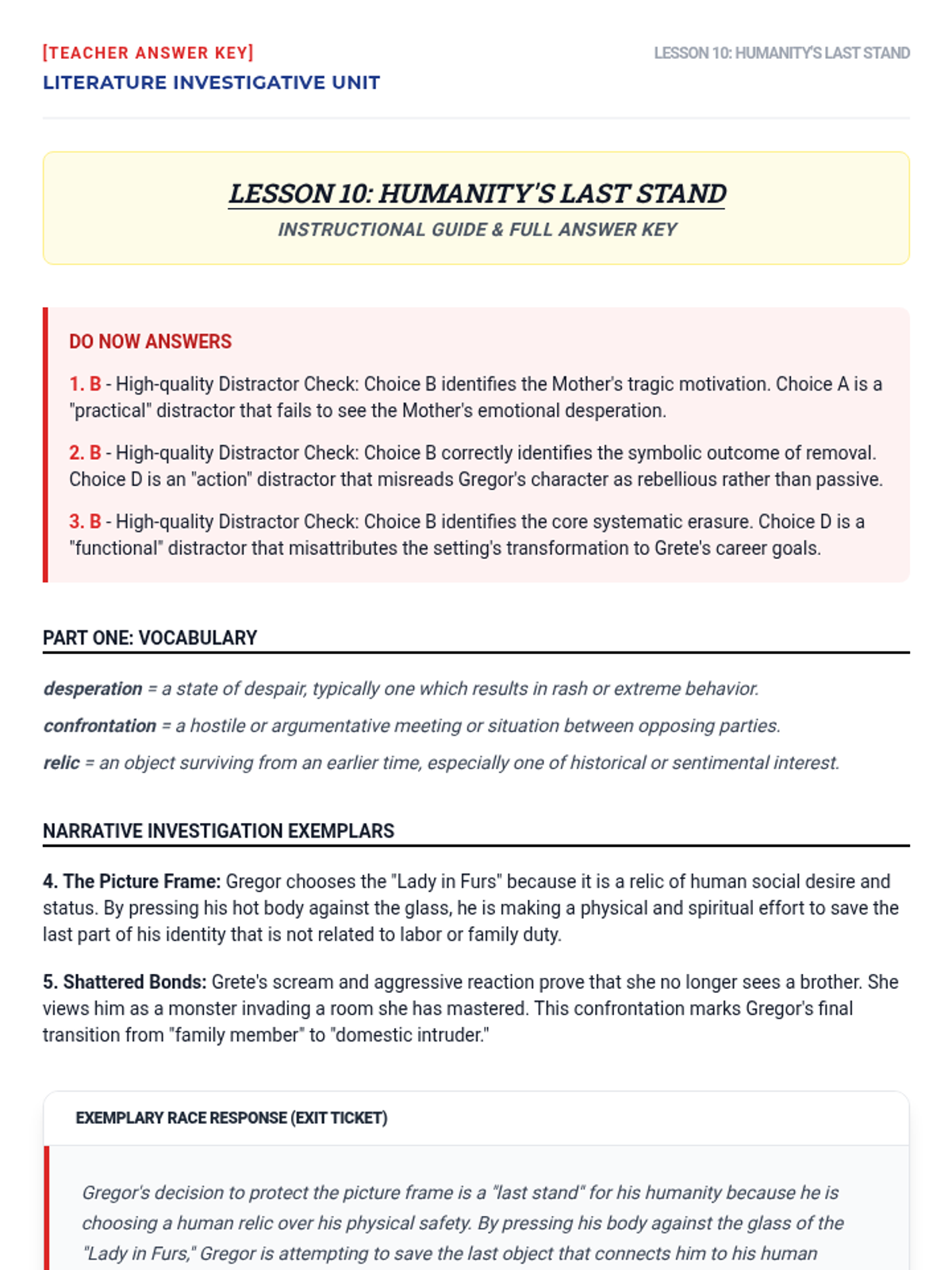
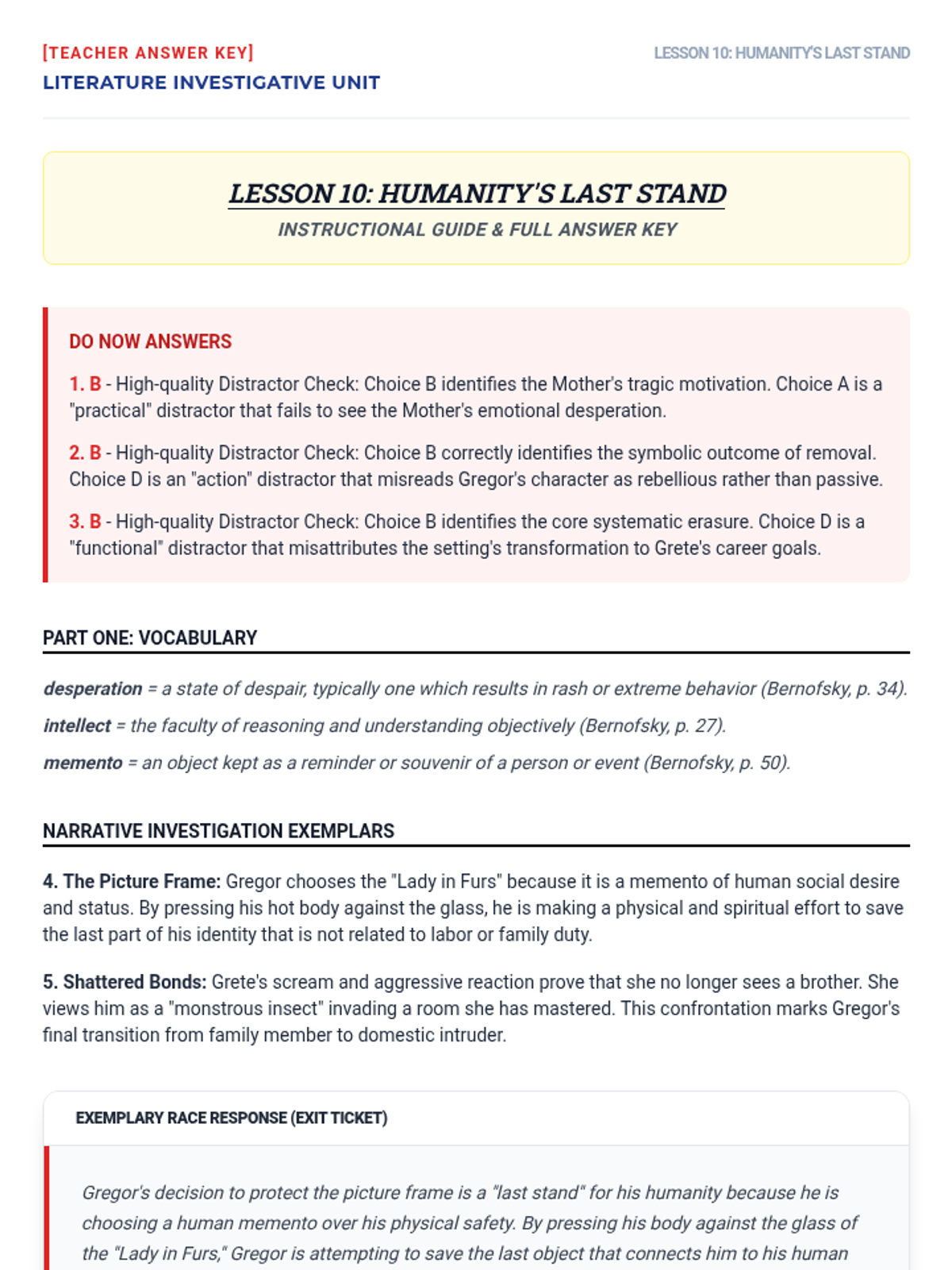
Gregor's desperate attempt to save his human identity by protecting the picture frame. Focus on the direct confrontation with Grete.
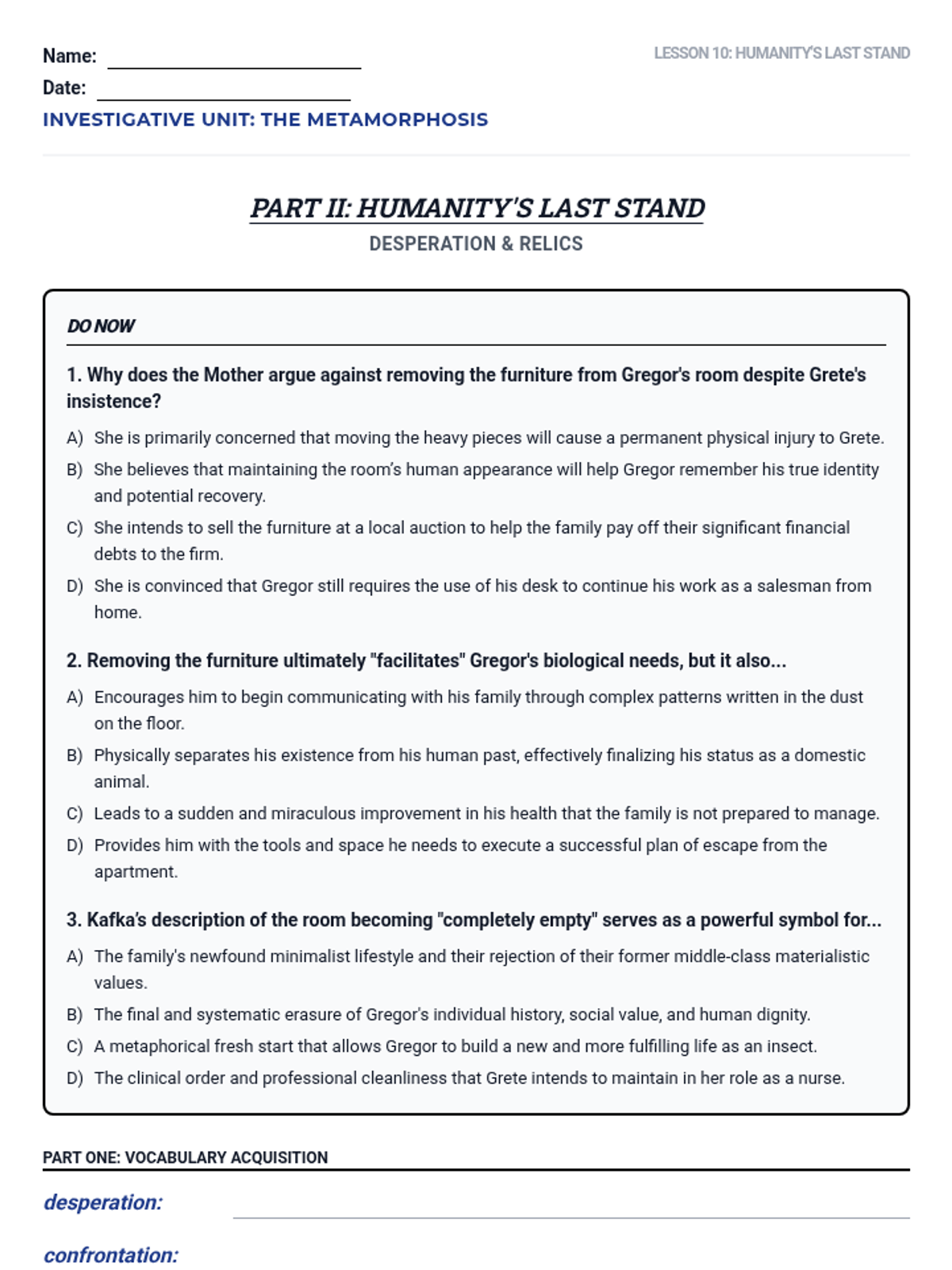
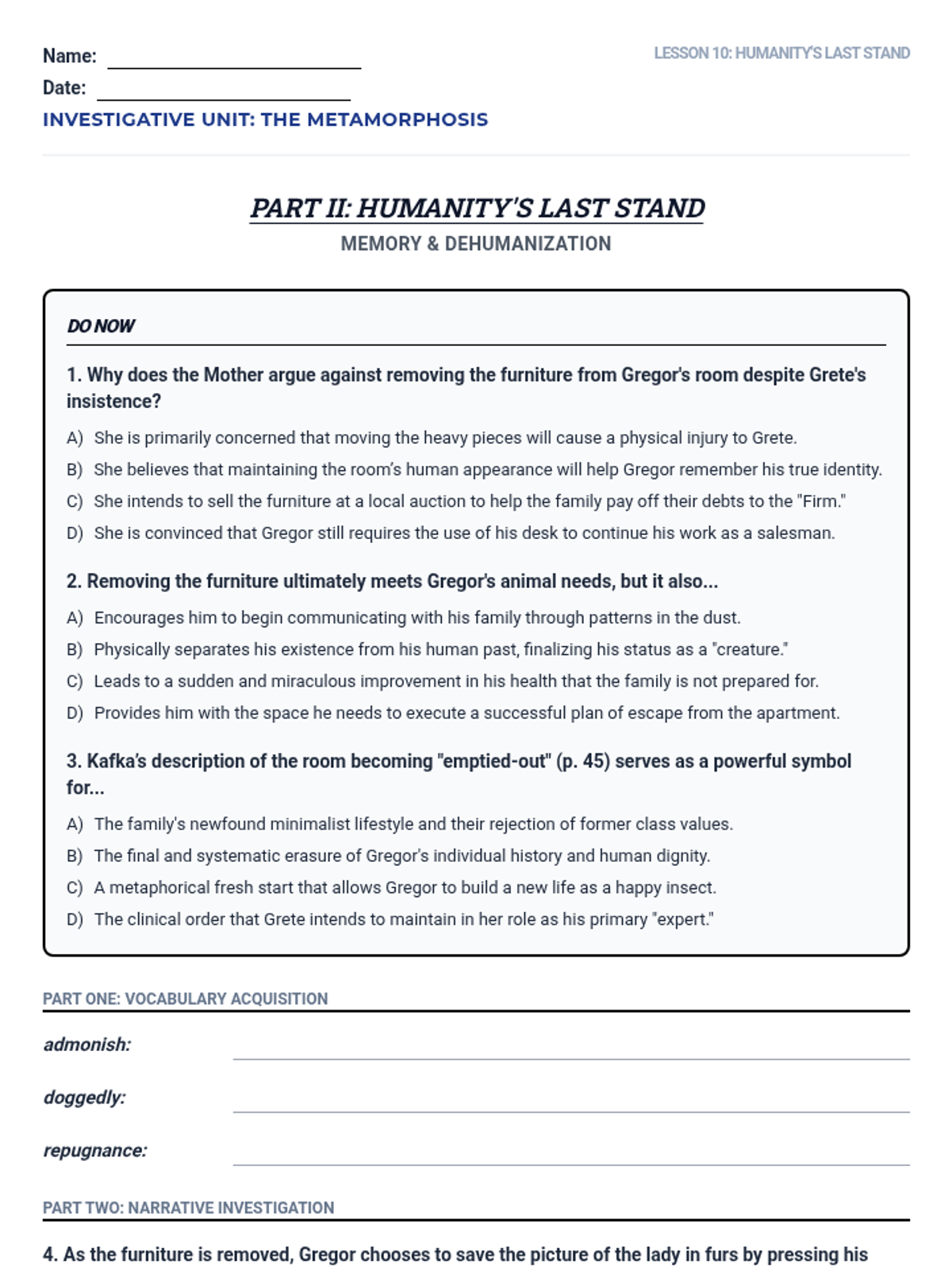
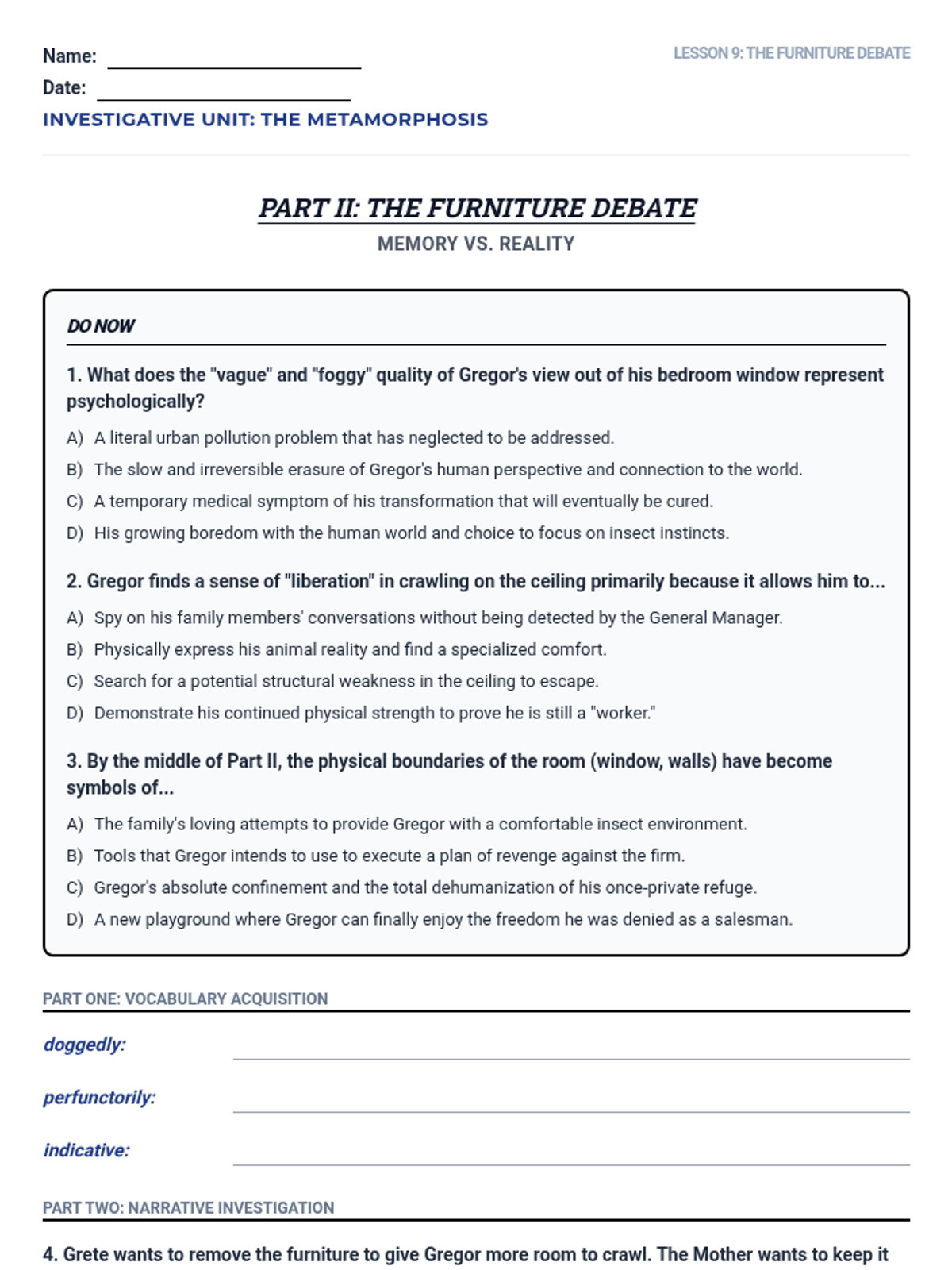
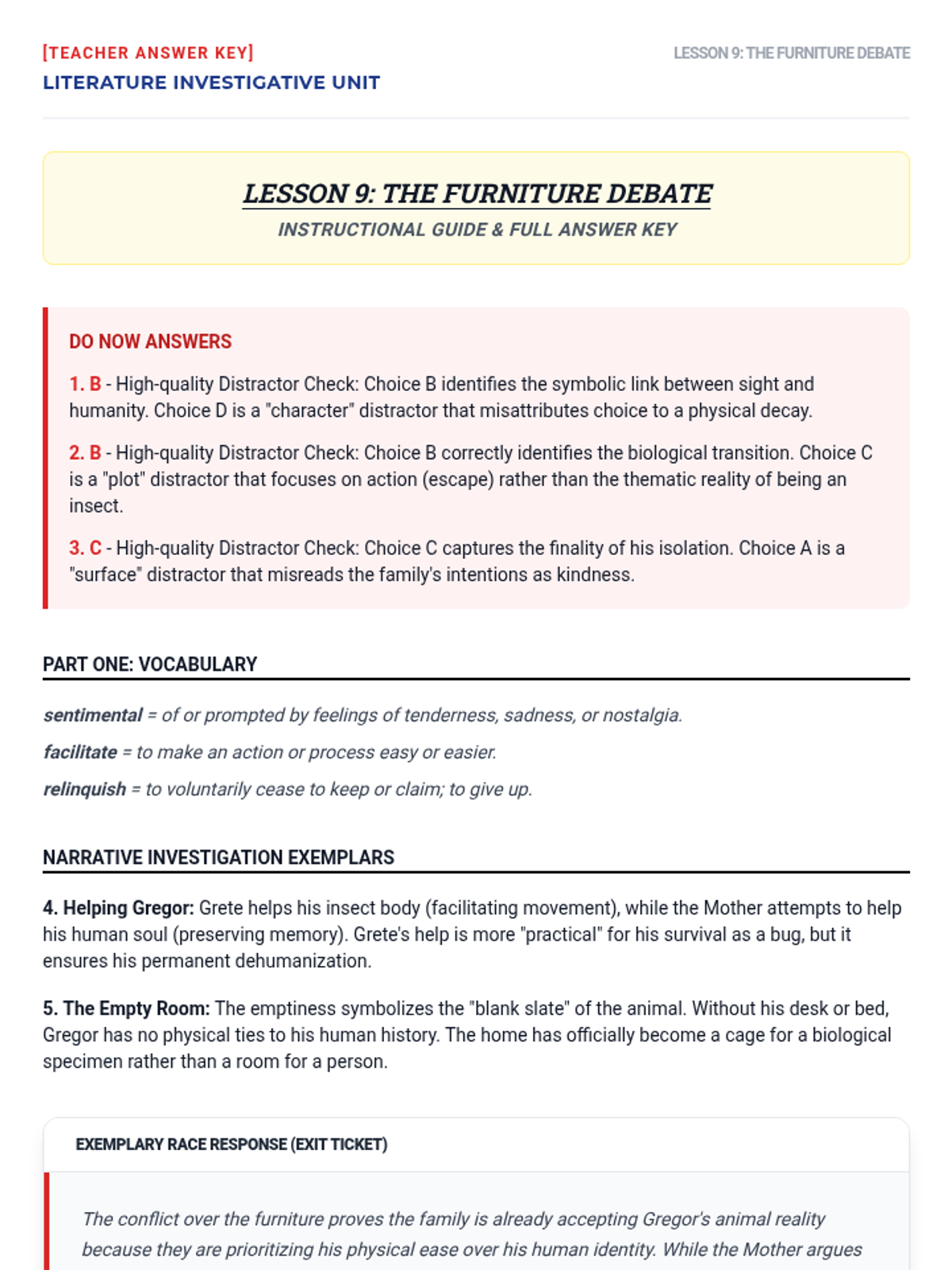
The conflict between Grete and the Mother over removing Gregor's furniture. Themes of preserving human memory vs. accepting animal reality.
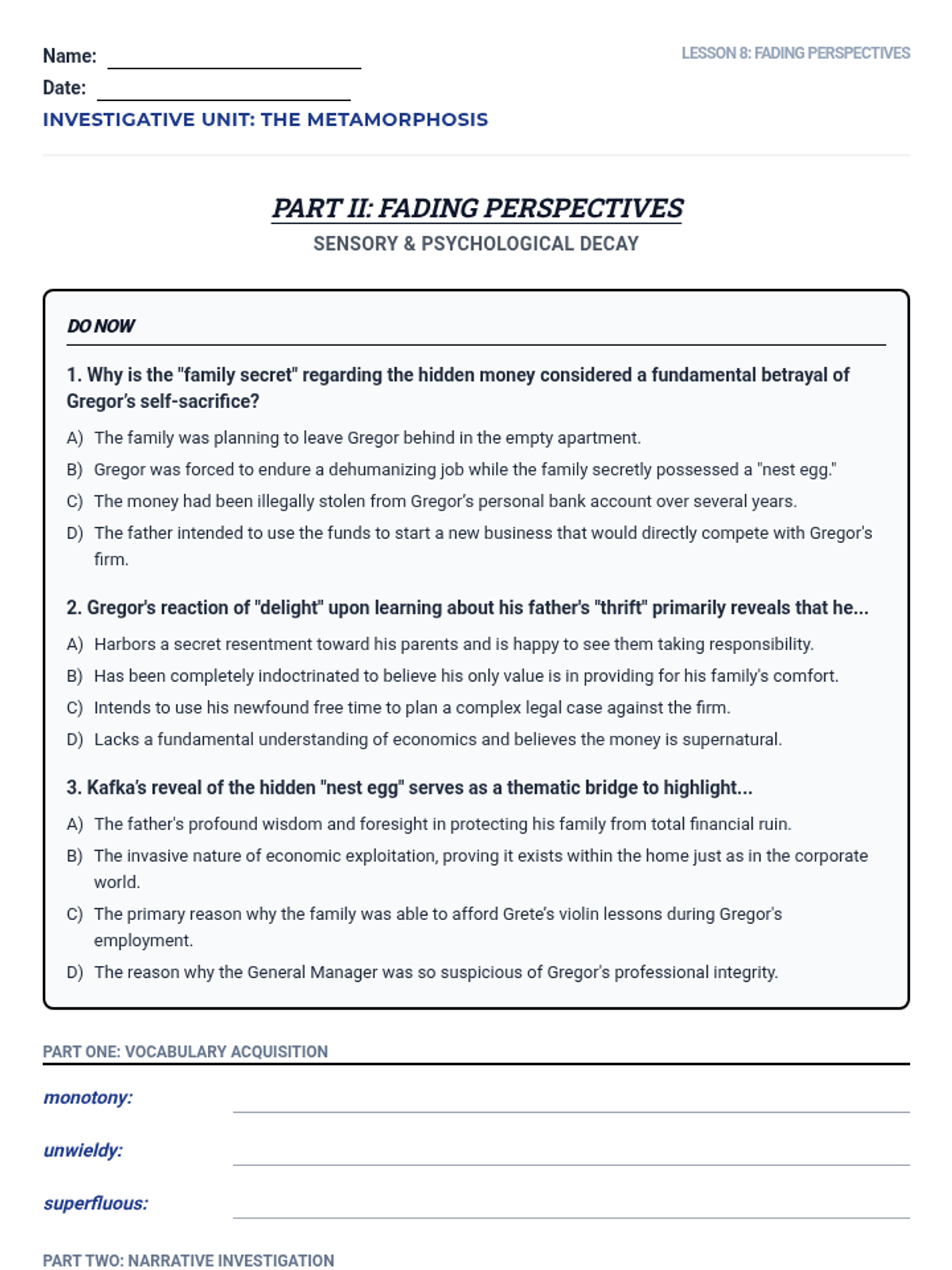
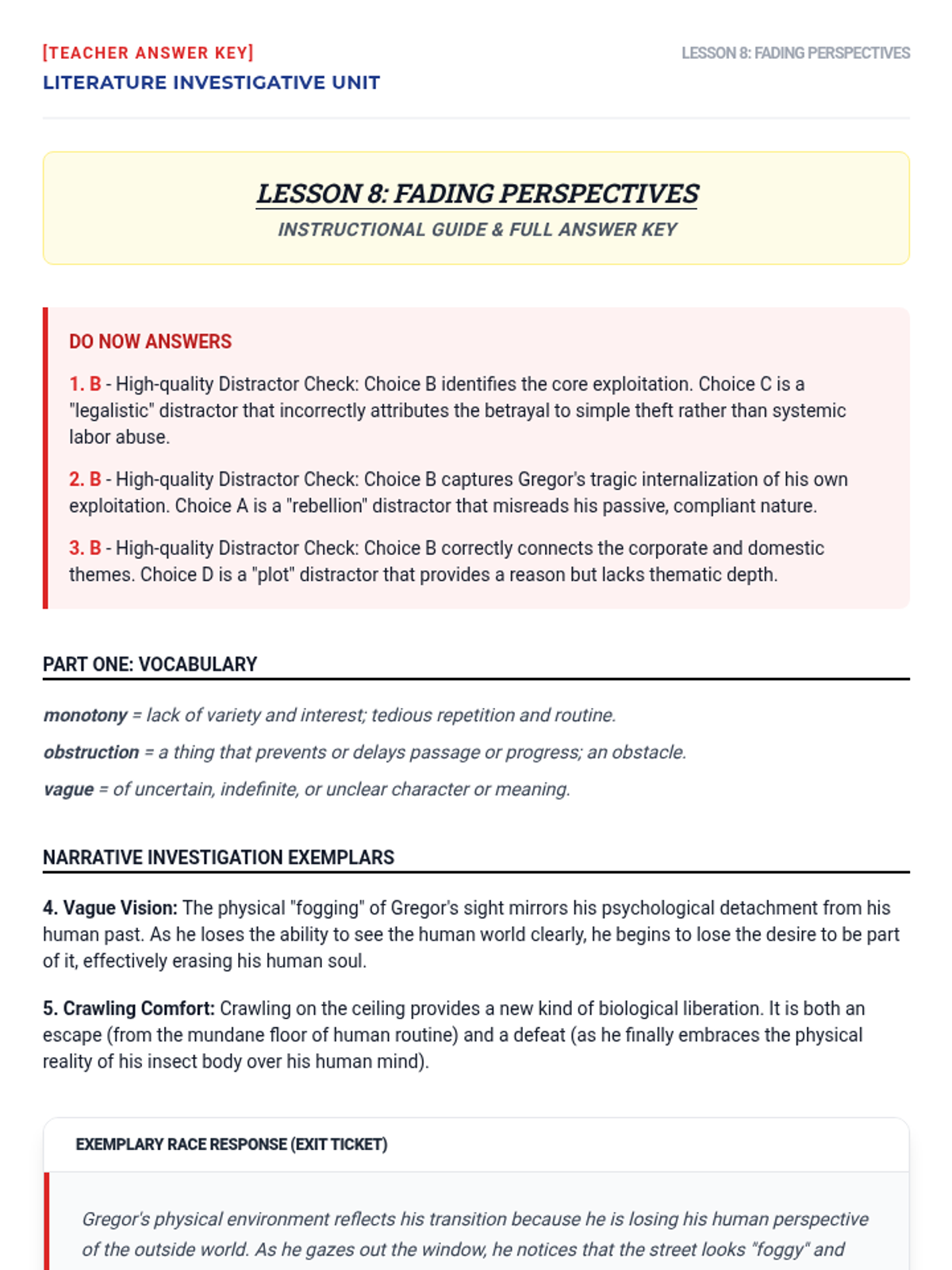
Students analyze Gregor's fading perception of the human world through his window view and his growing physical comfort in animalistic behaviors.
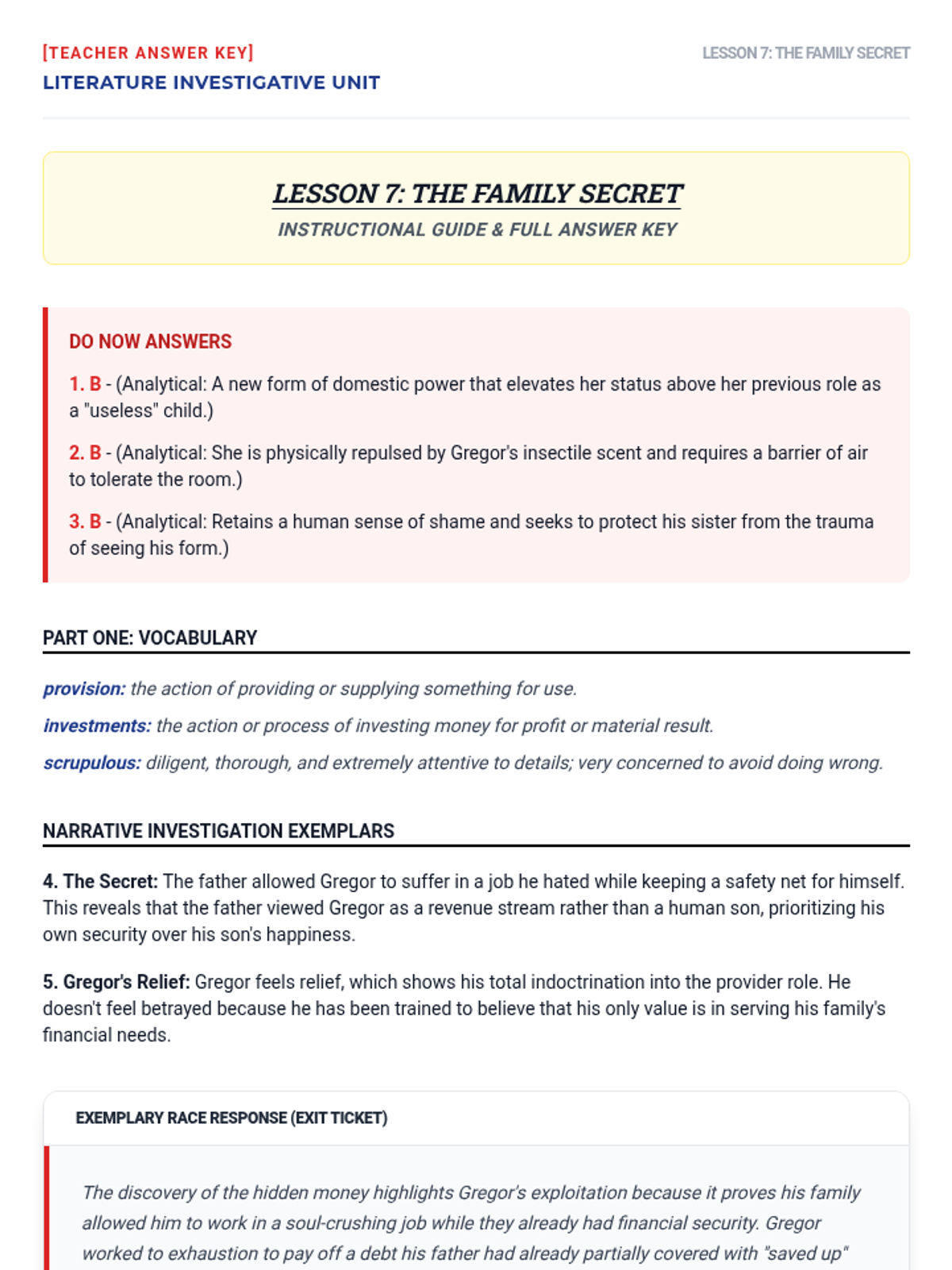
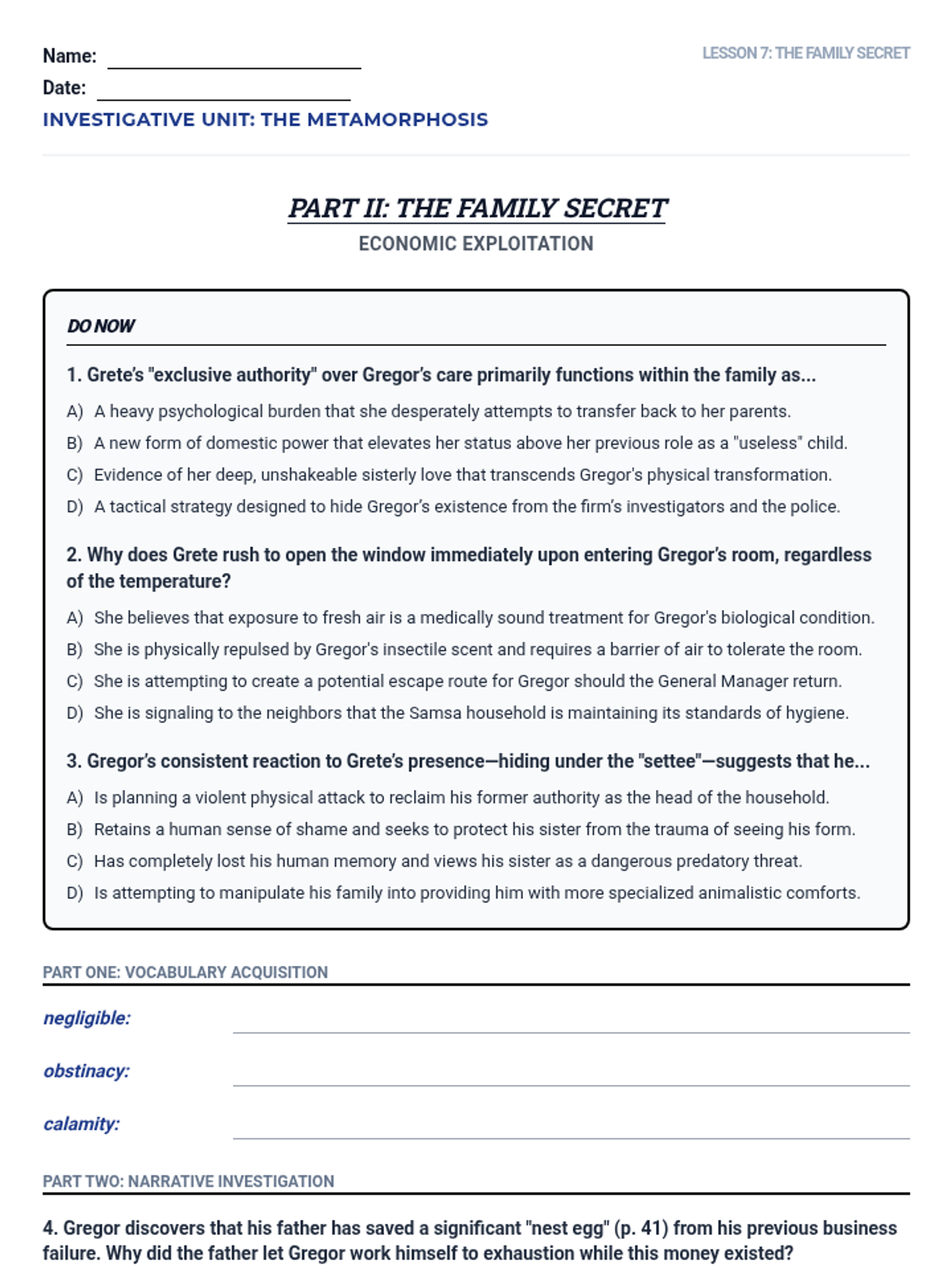
Analysis of the father's hidden financial assets and the betrayal of Gregor's role as the sole provider. Themes of economic exploitation.
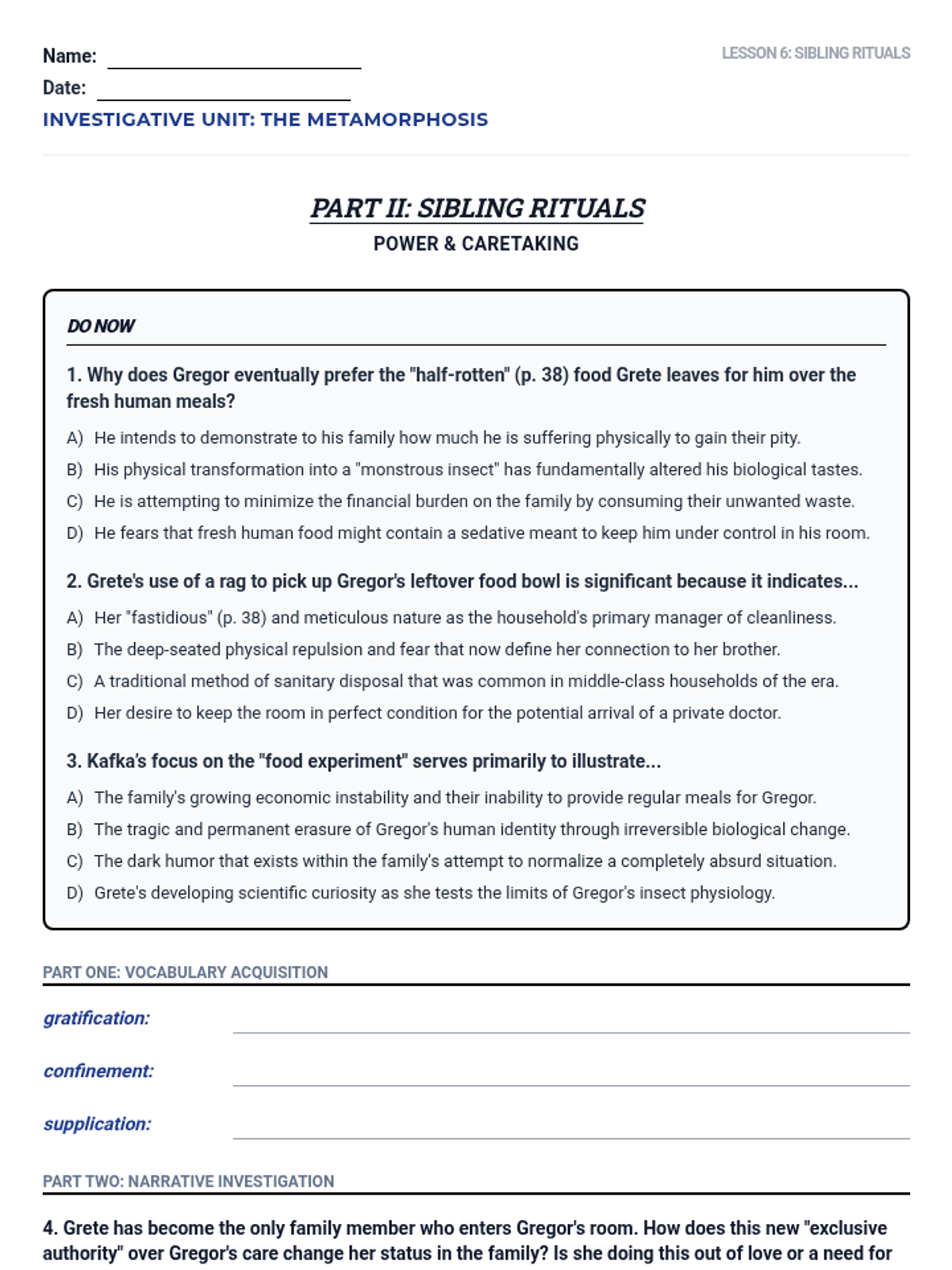
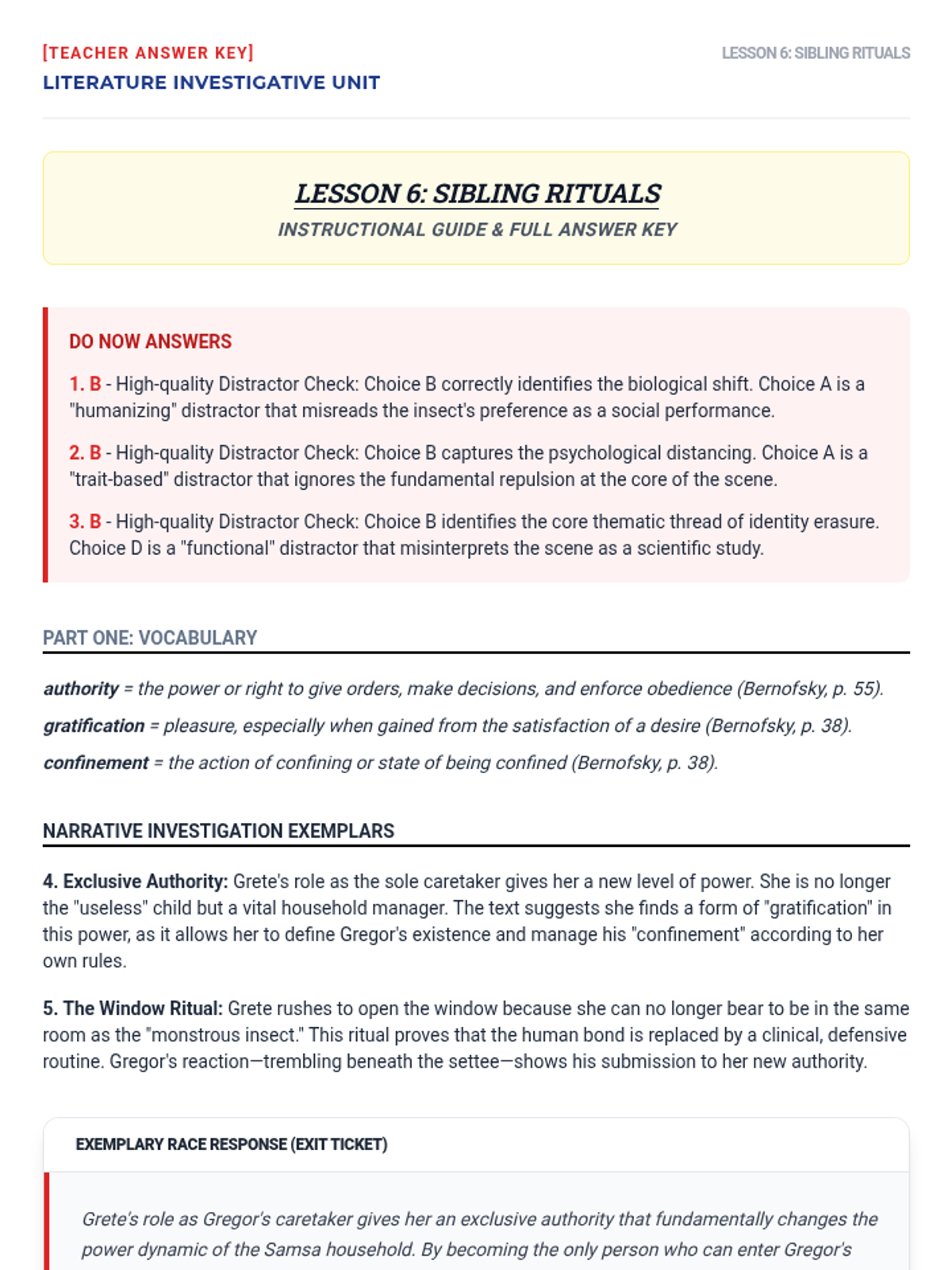
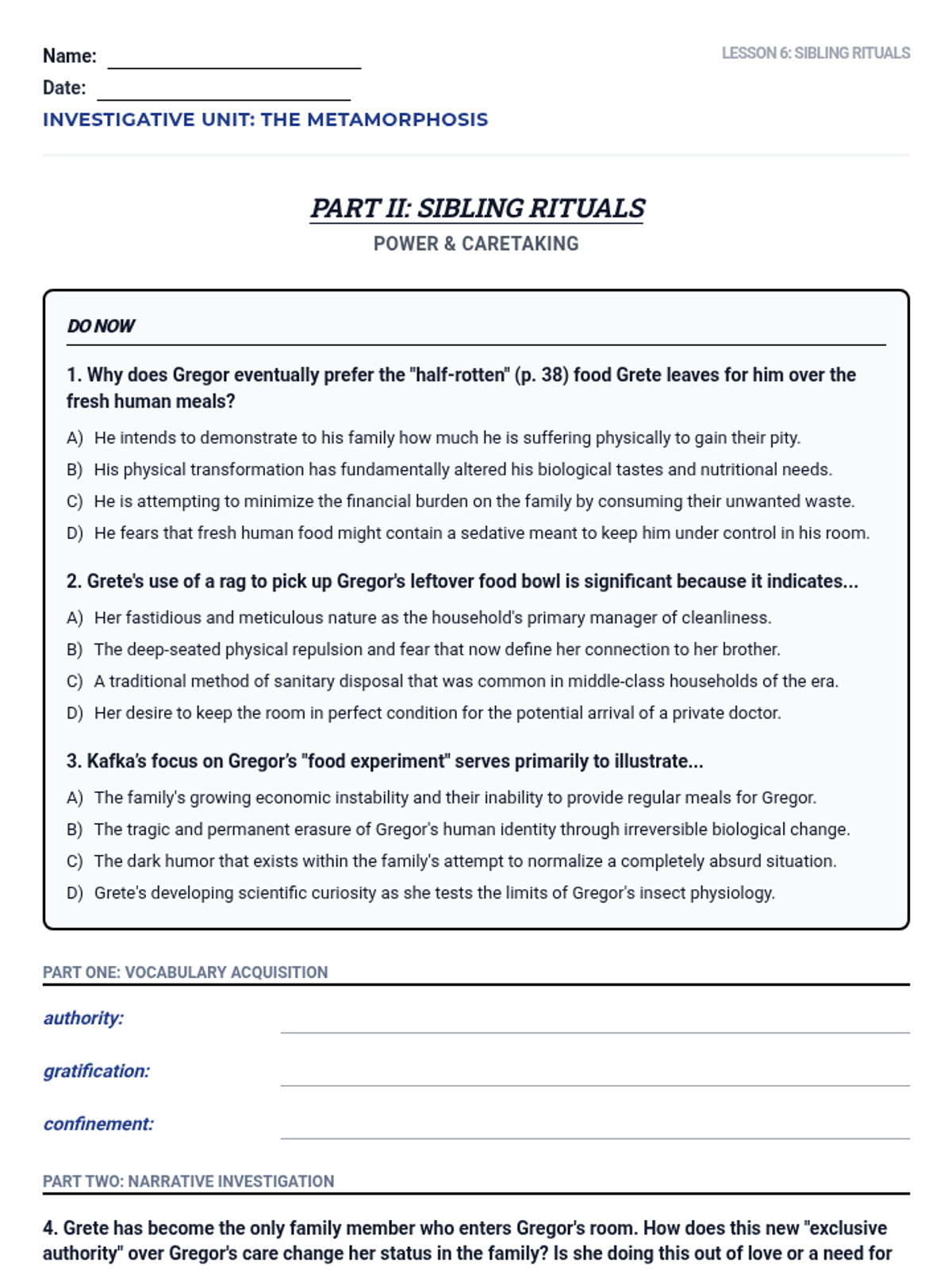
Students examine the changing power dynamic between Gregor and Grete, focusing on her new ritualistic authority as his sole caretaker.
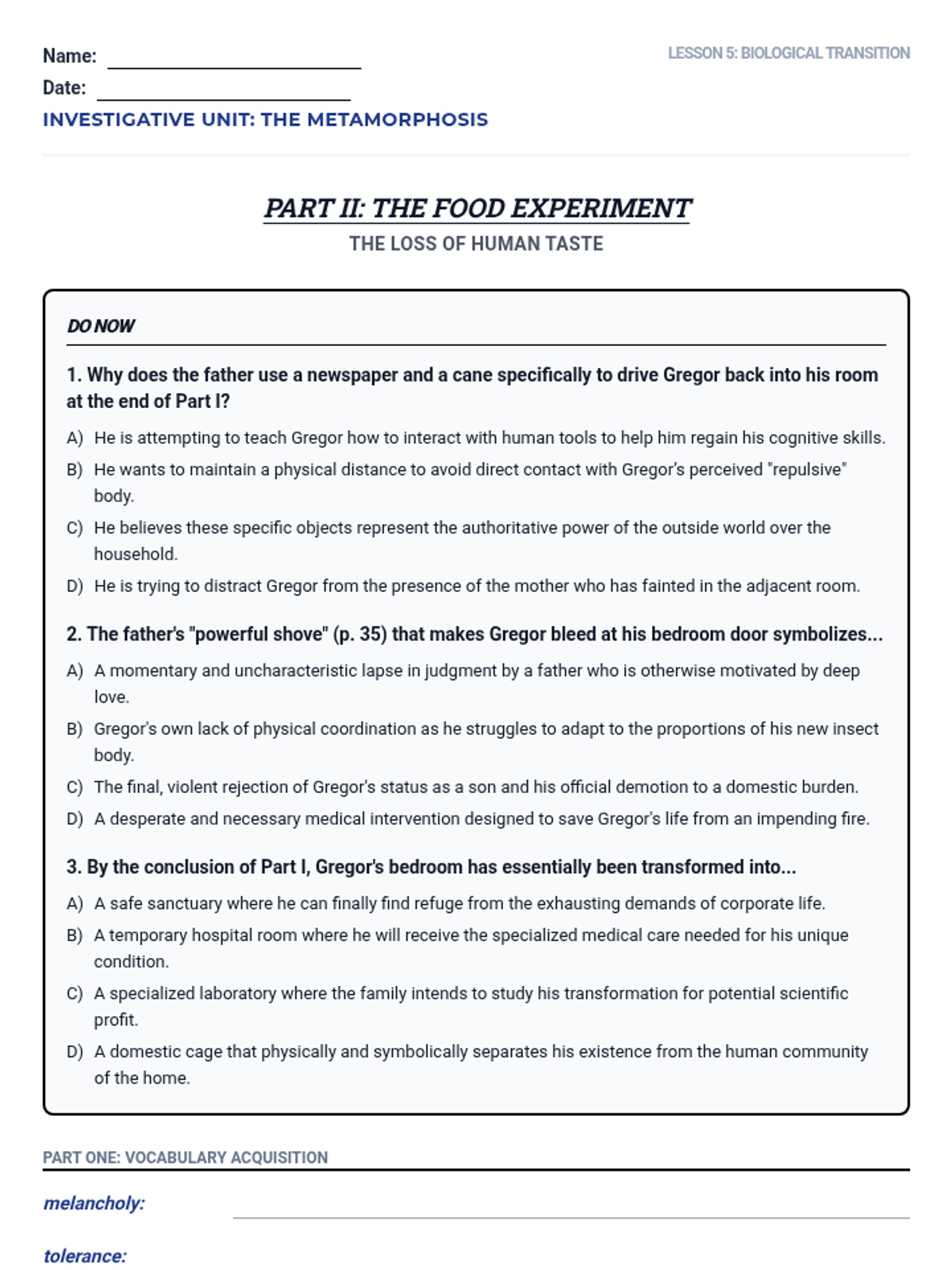
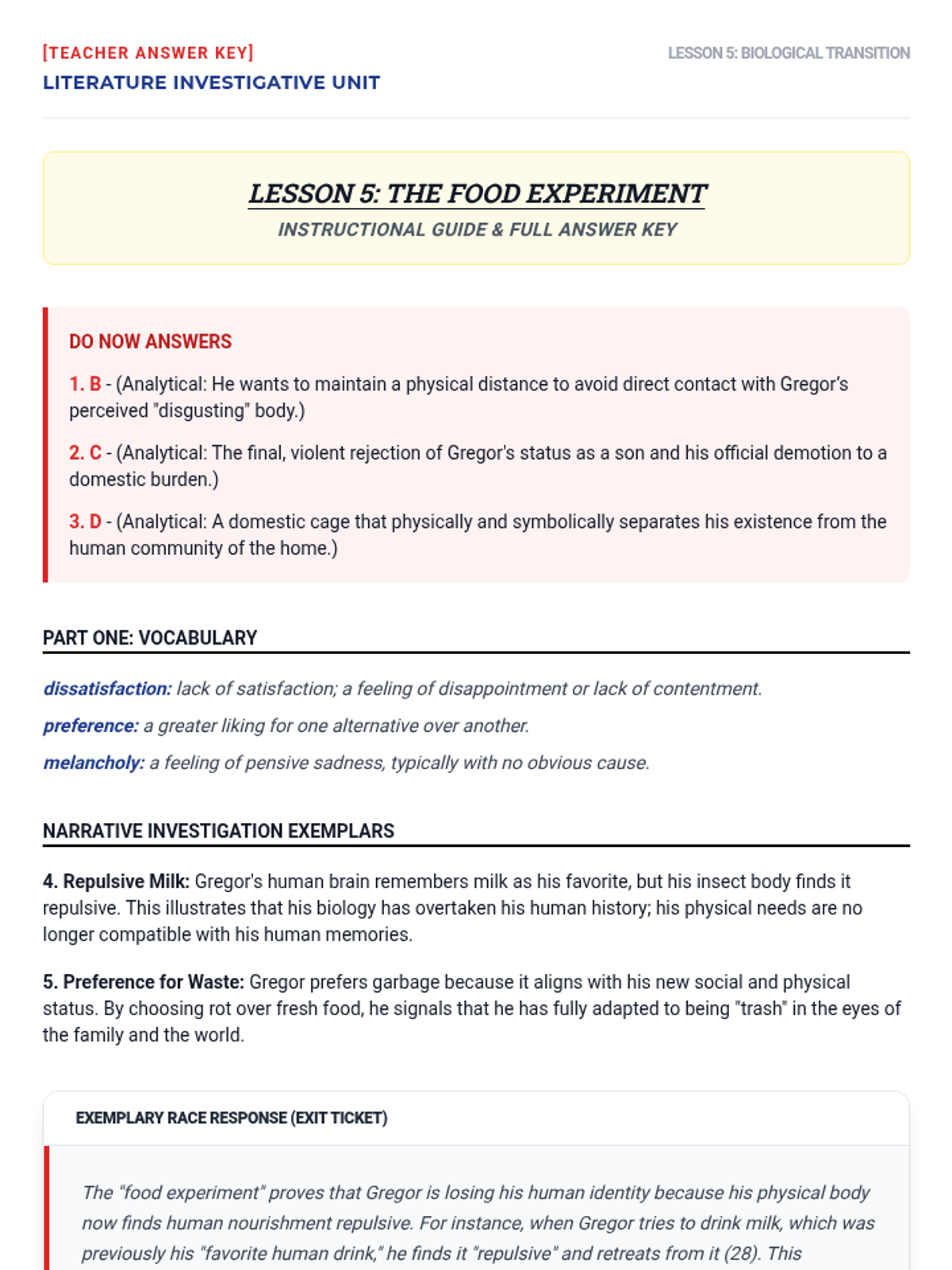
Part II begins with Gregor's physical transition, focusing on his change in taste and the shift from human food to animal waste as a symbol of dehumanization.
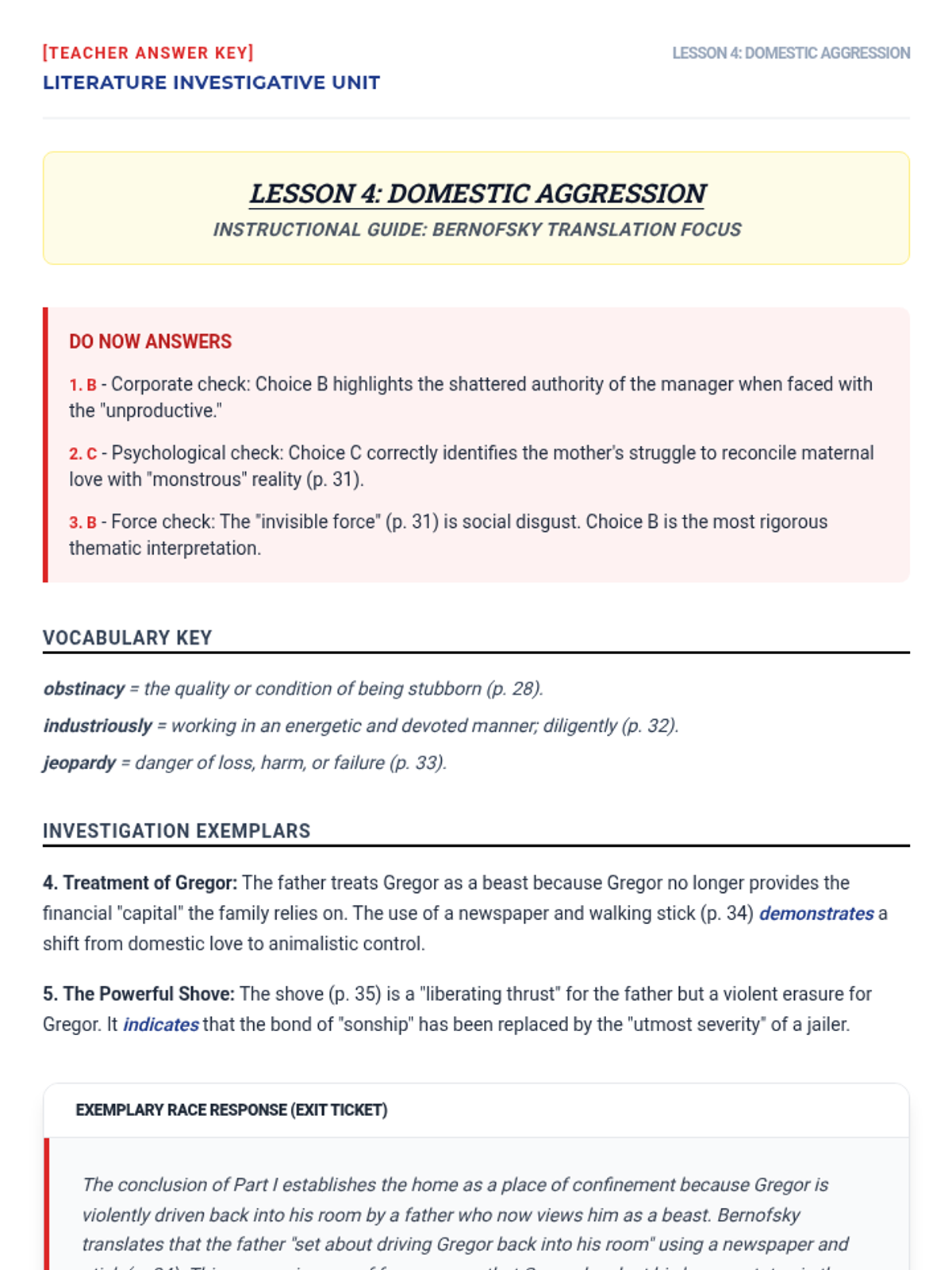
Students analyze the violent conclusion to Part I, focusing on the father's use of force to cage Gregor. Themes of domestic aggression and the loss of familial status.
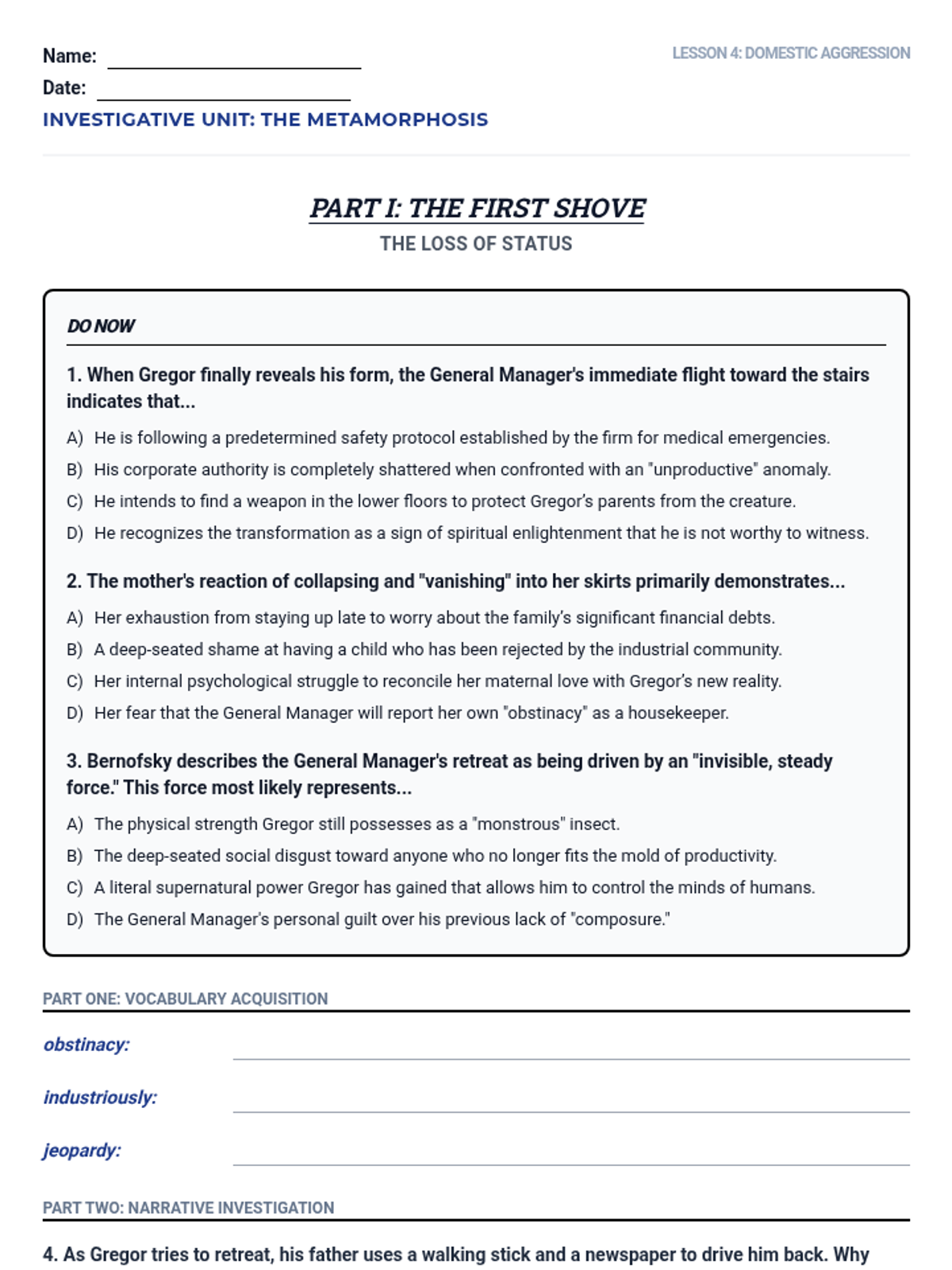
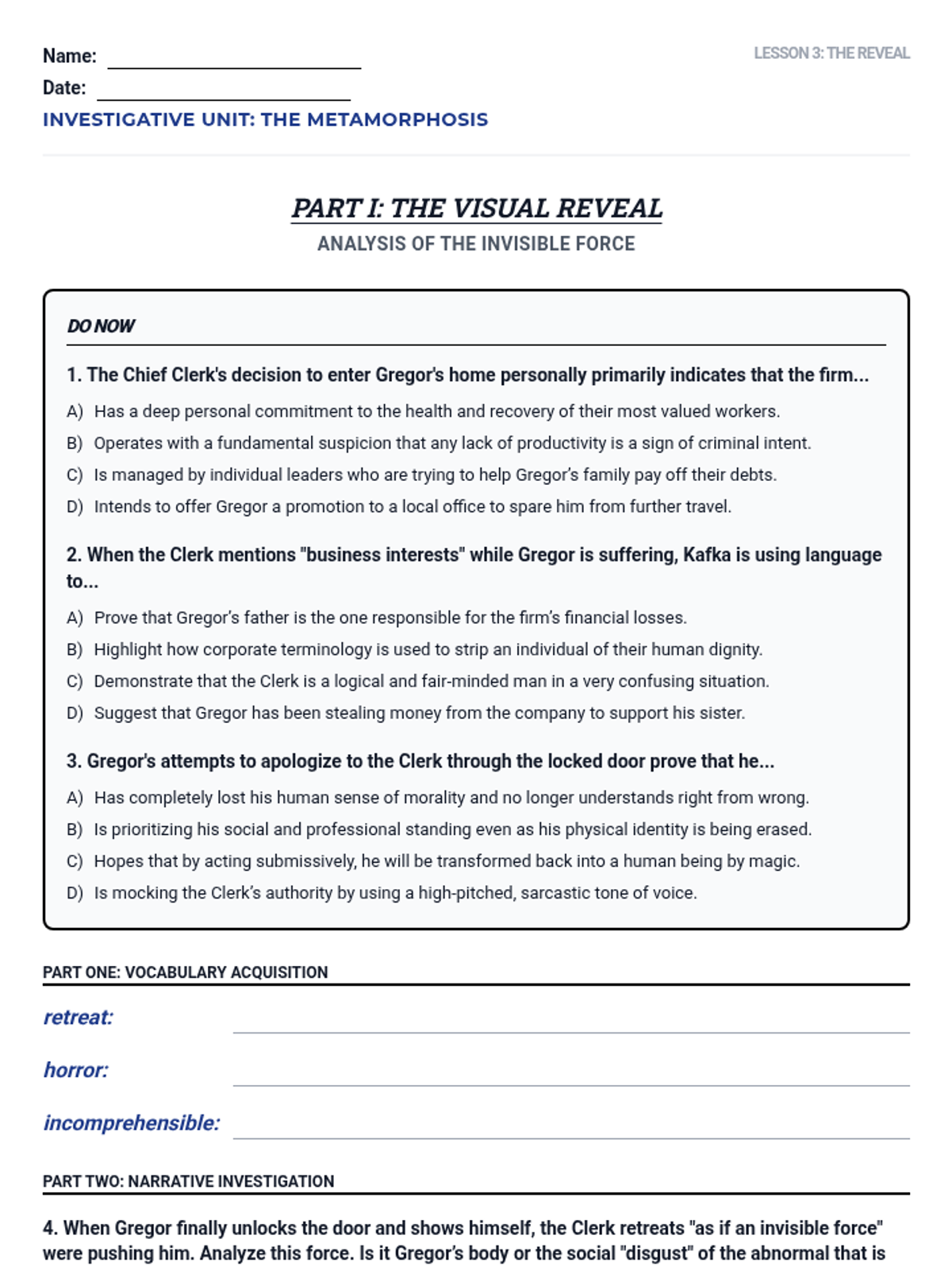
Students analyze the visual reveal of Gregor's form and the immediate physical and psychological retreat of the Chief Clerk and family. Focus on the 'Invisible Force' of alienation.
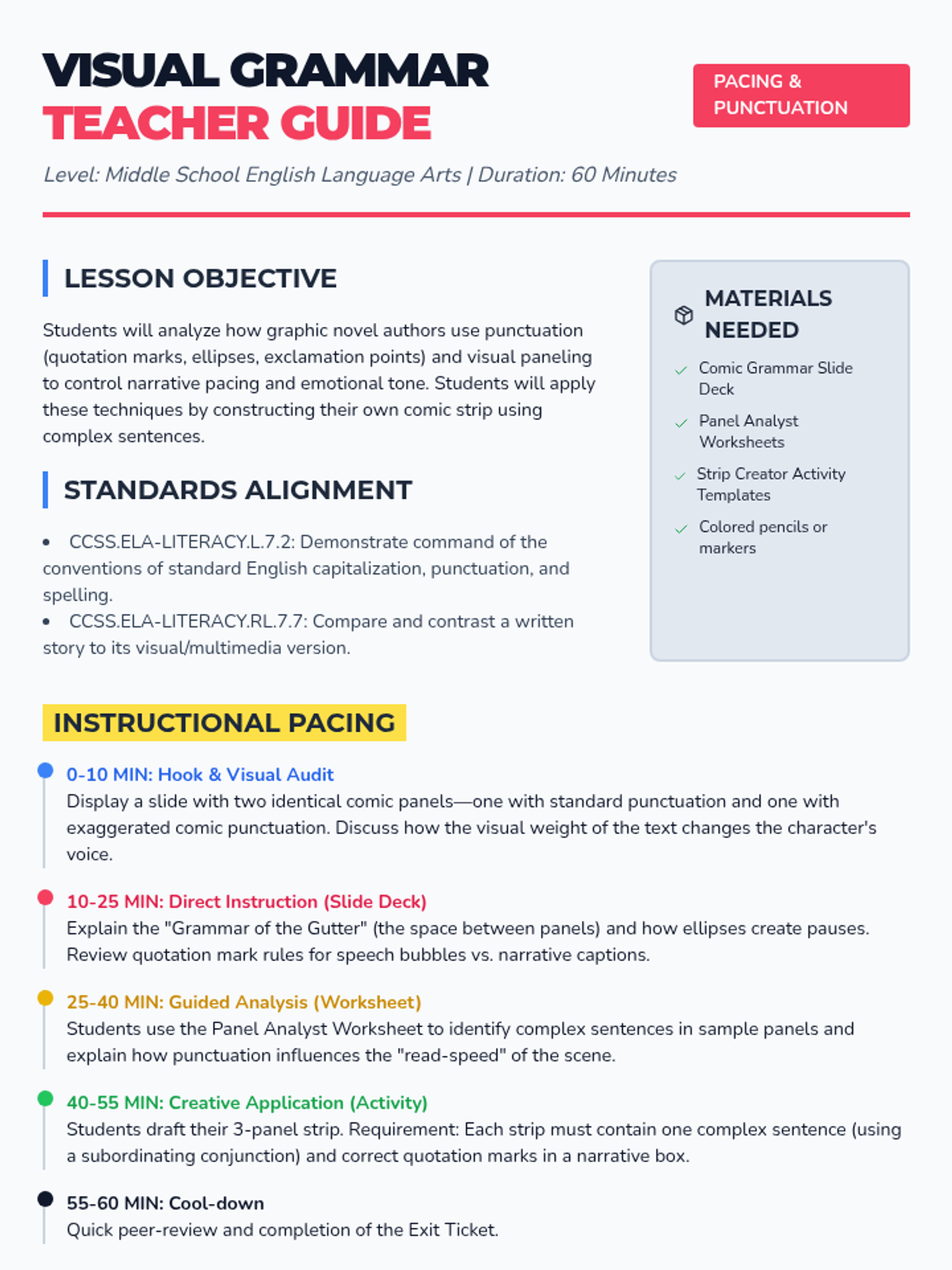
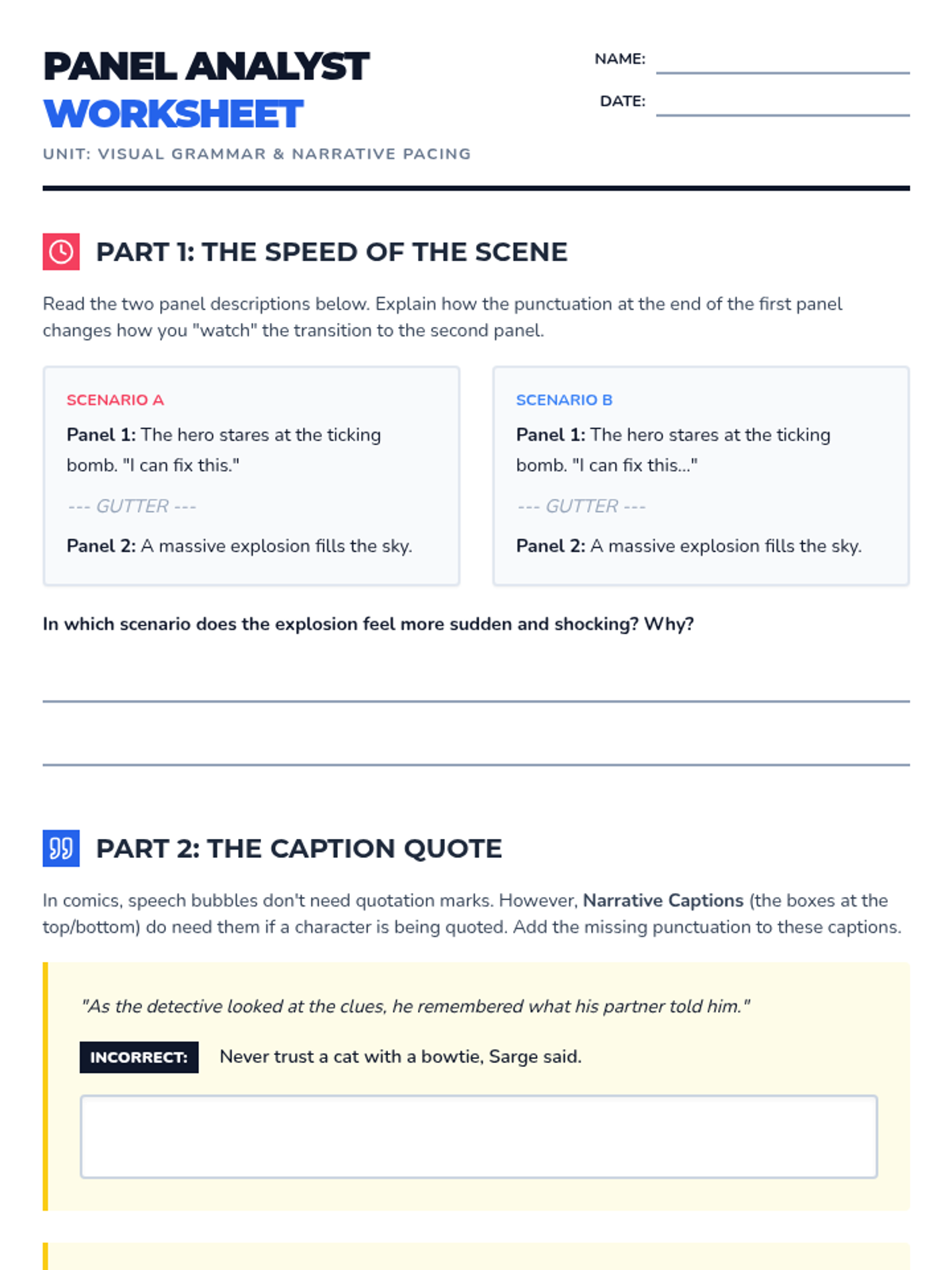
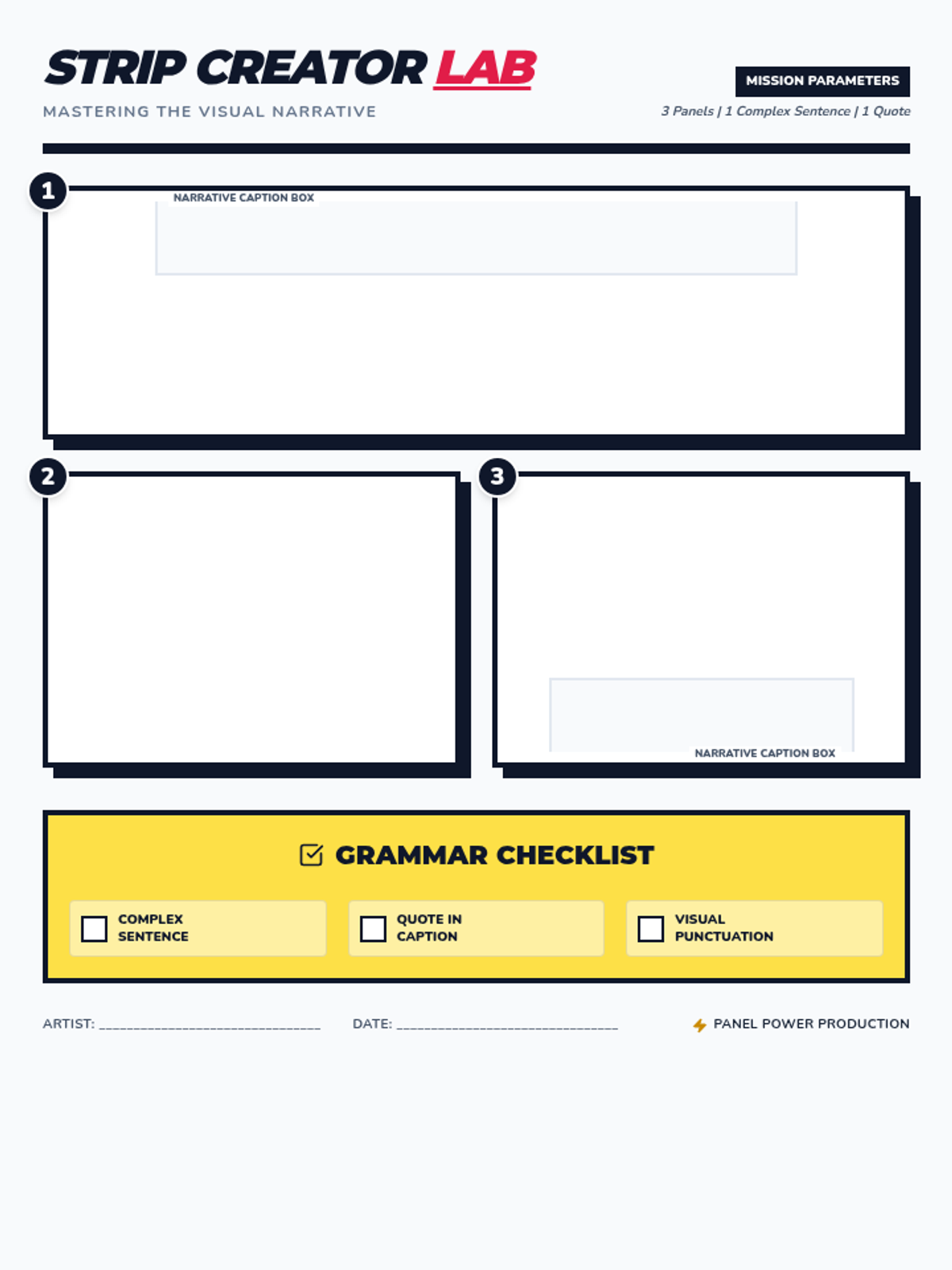
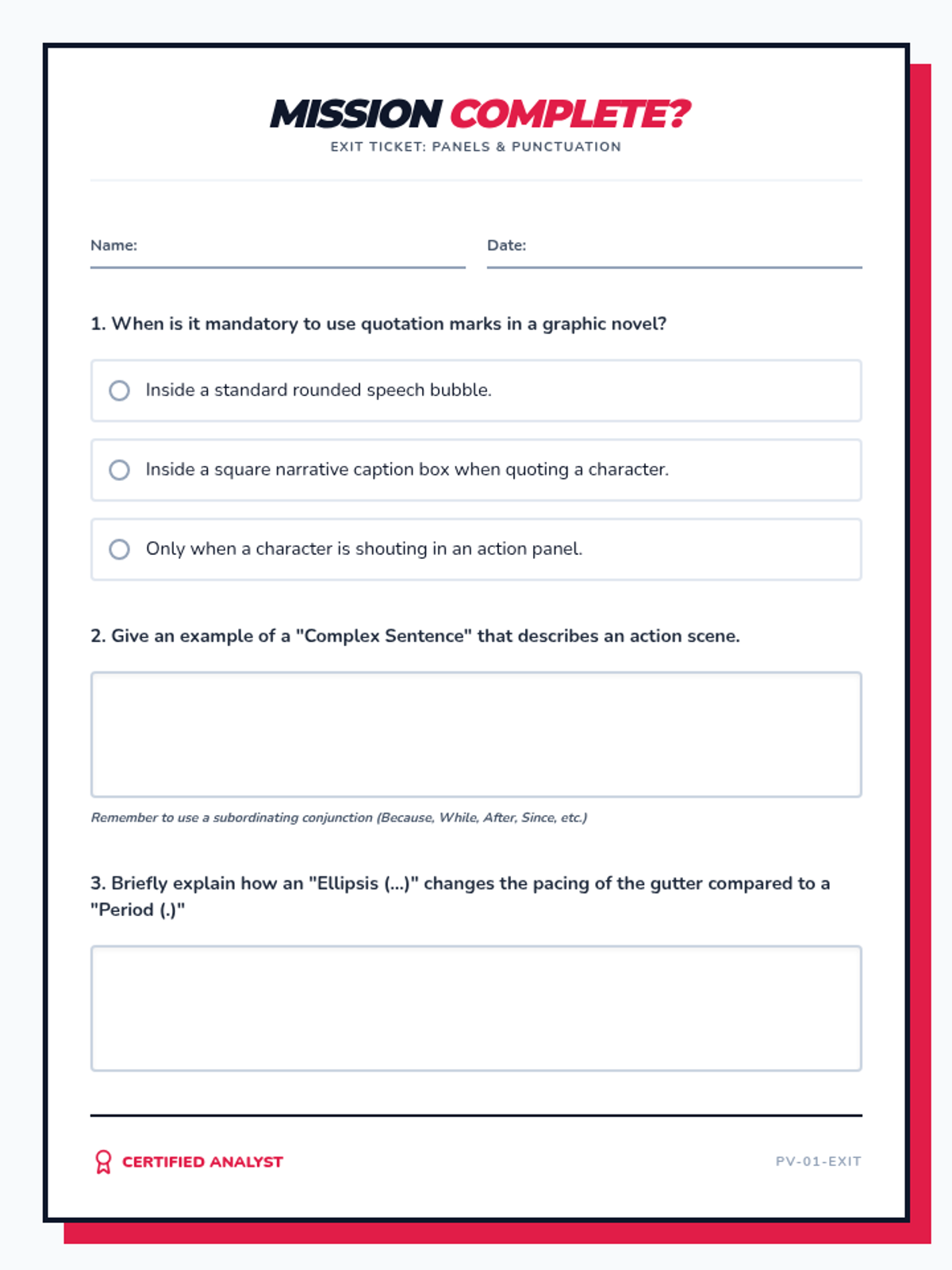
In this lesson, students explore the intersection of visual art and grammar by analyzing graphic novels. They learn how punctuation and panel layout influence tone and pacing, eventually creating their own comic strips that demonstrate mastery of quotation marks and complex sentences.
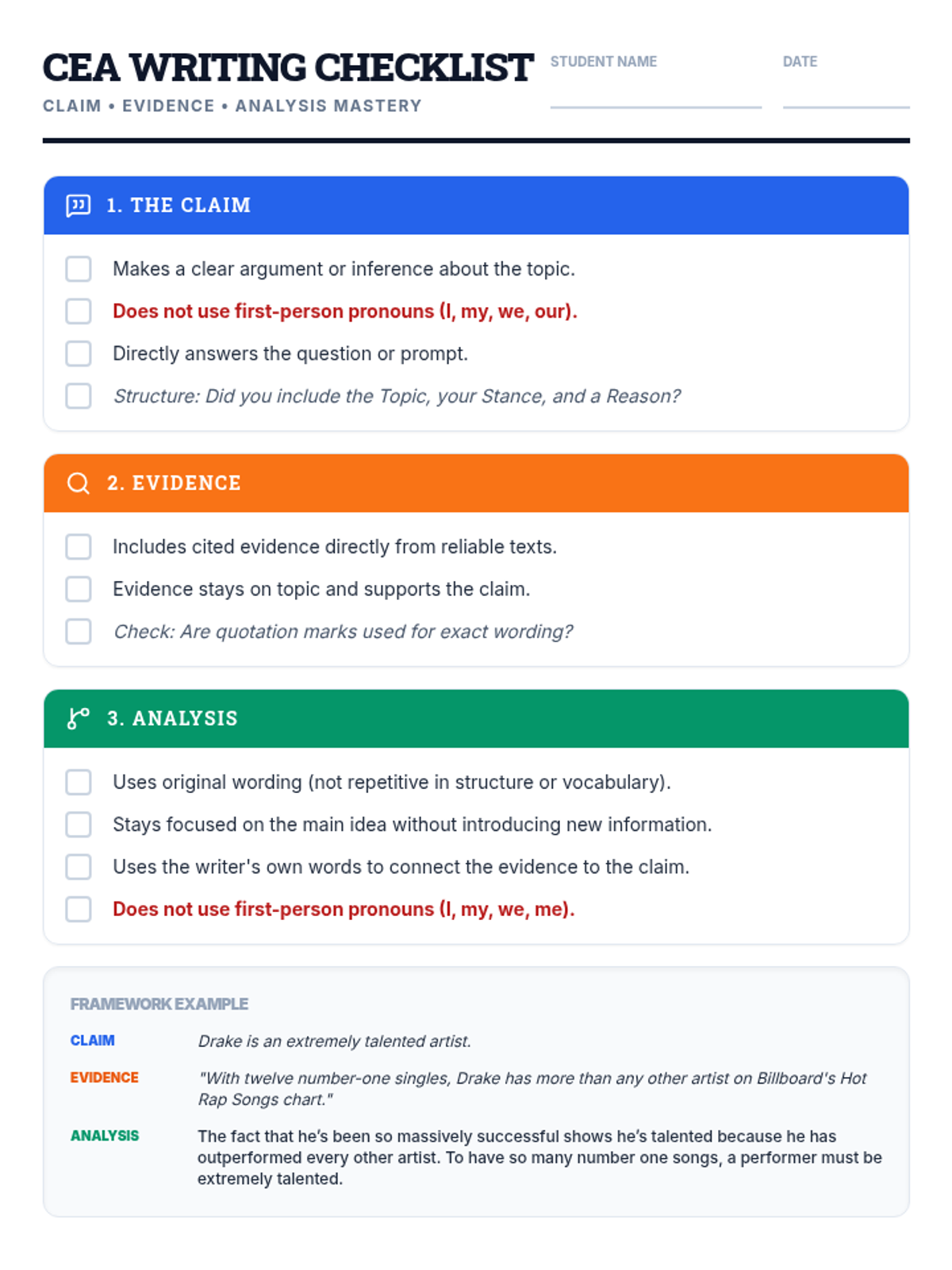
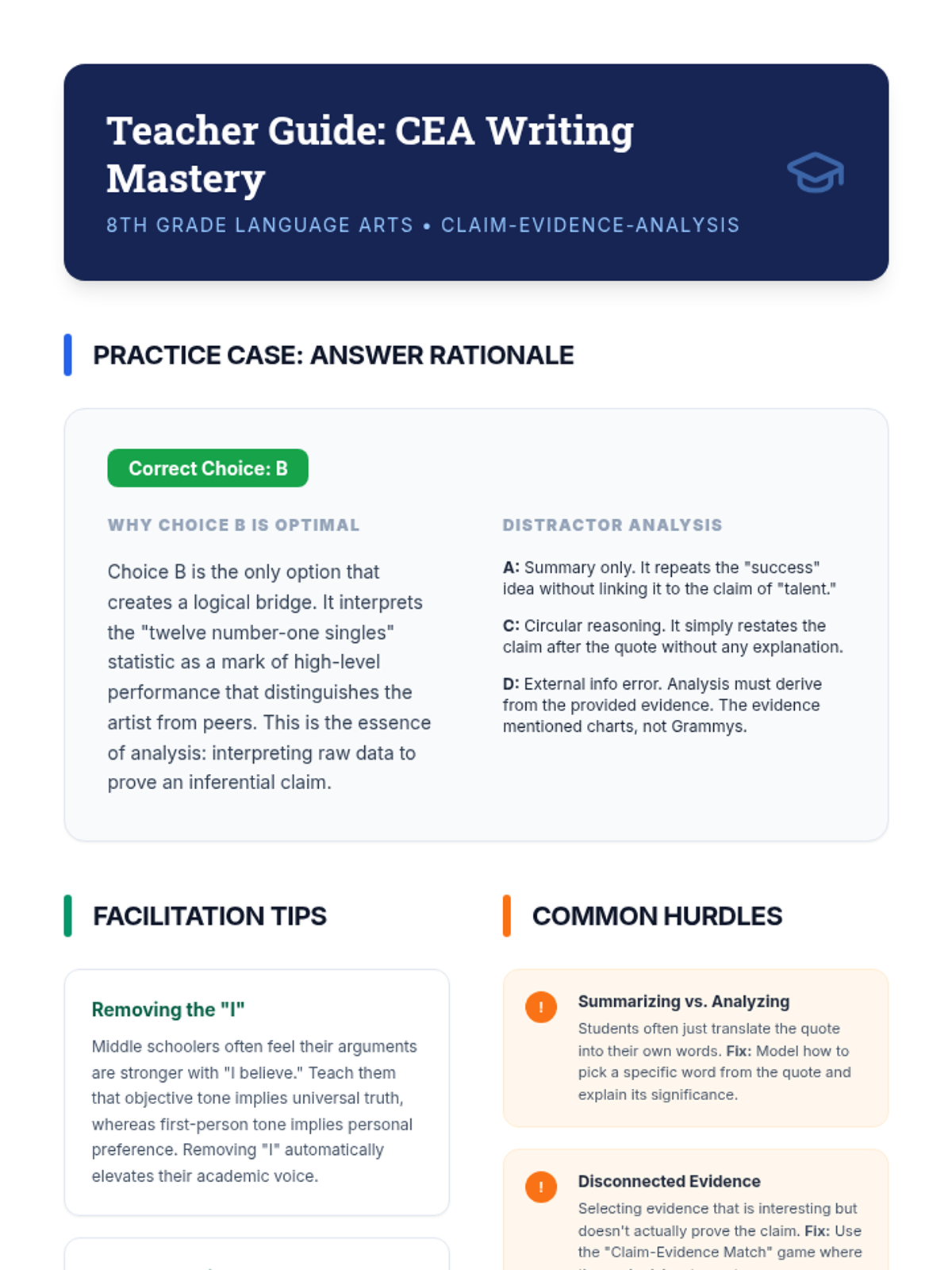
This lesson introduces 8th-grade students to the Claim-Evidence-Analysis (CEA) writing framework, focusing on how to construct objective arguments and effectively connect evidence to claims.
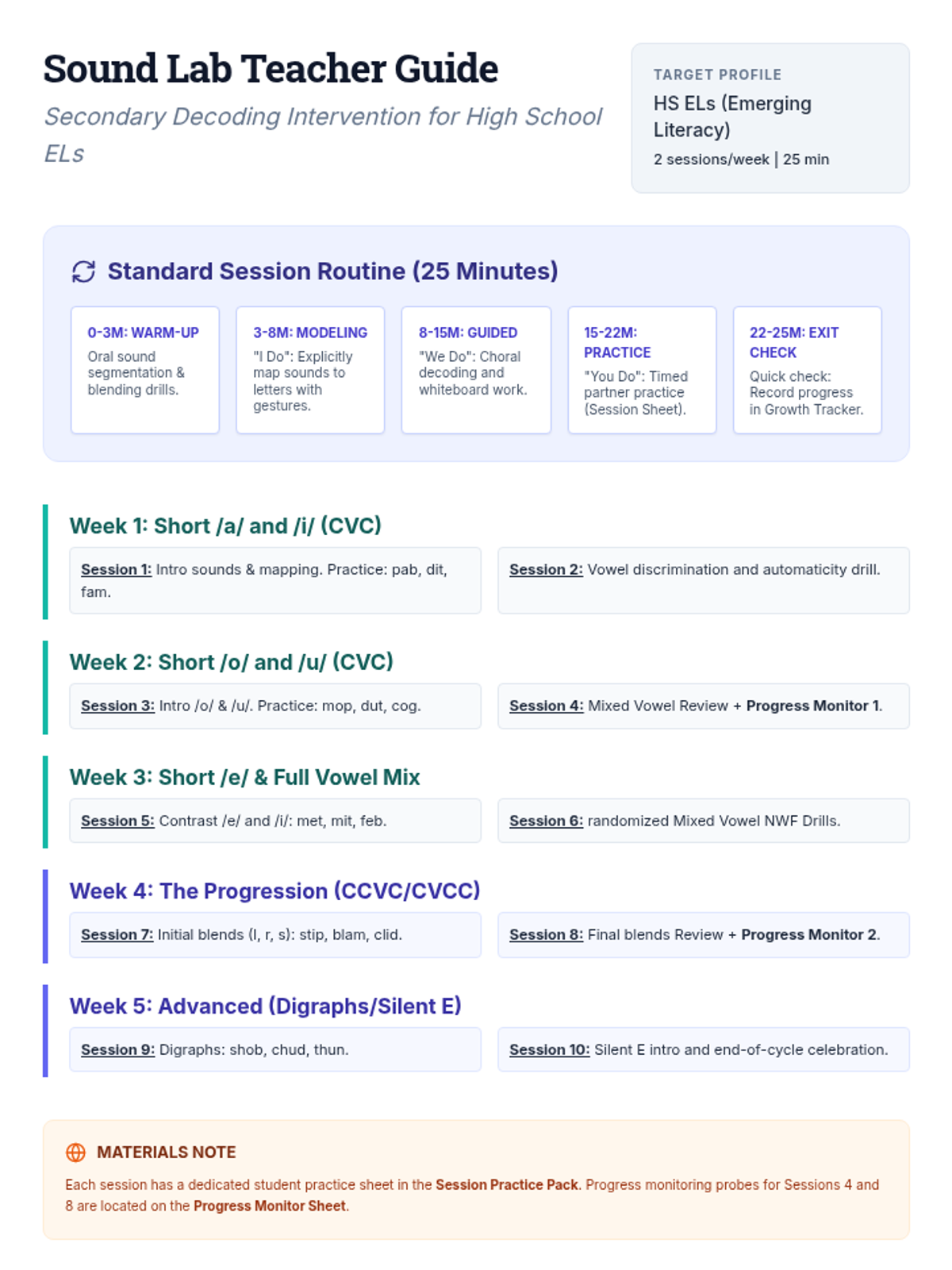
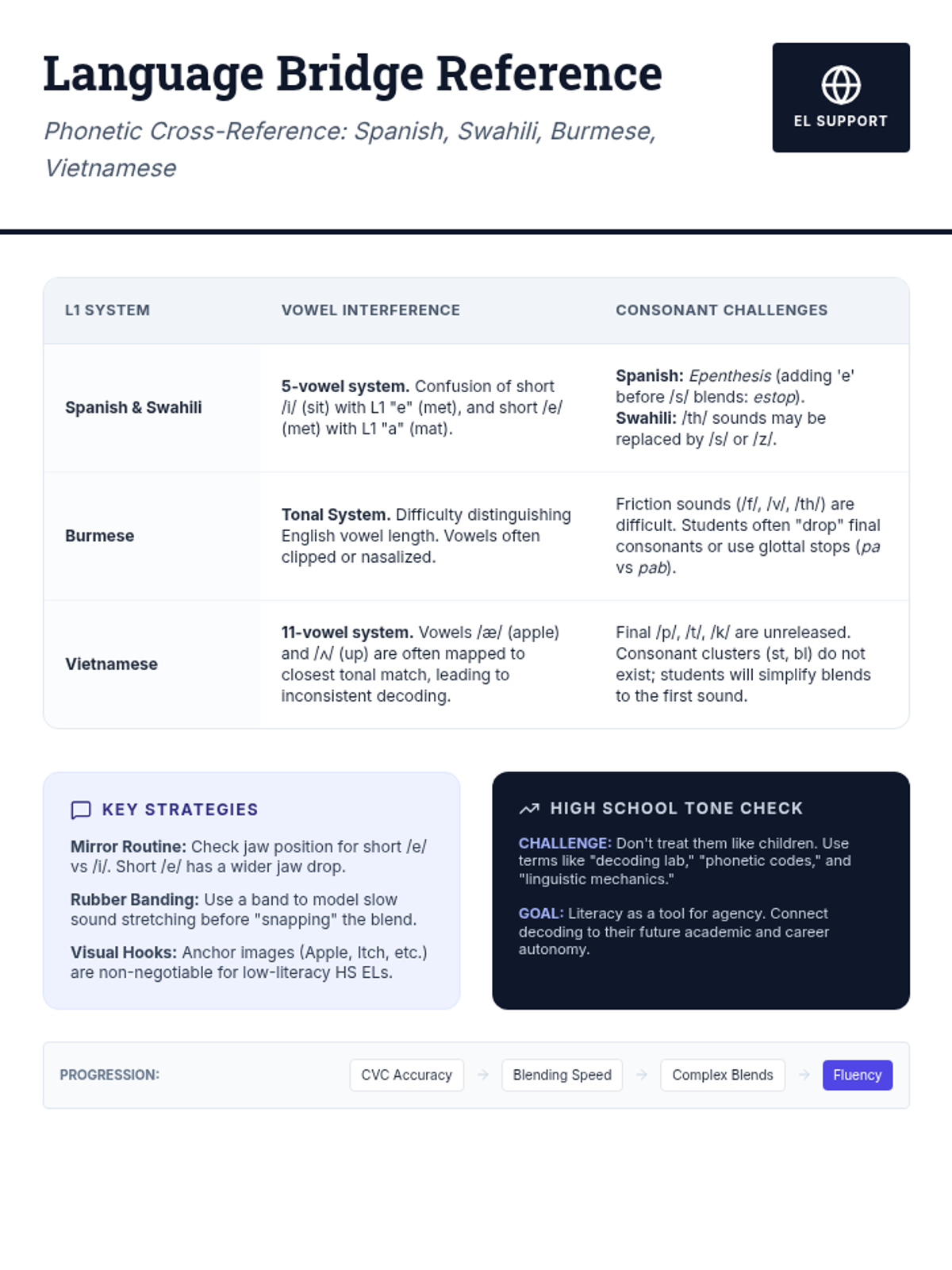
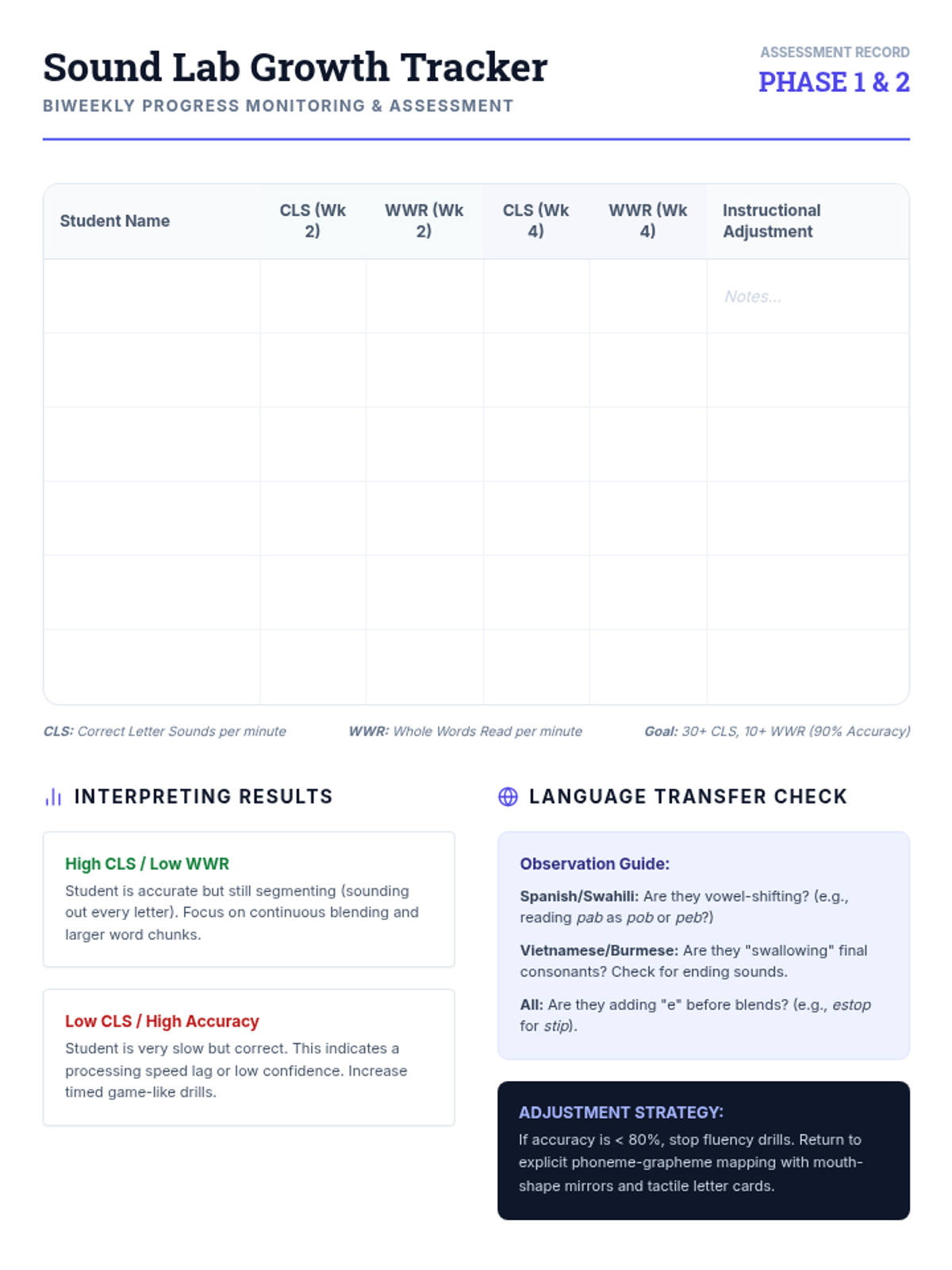
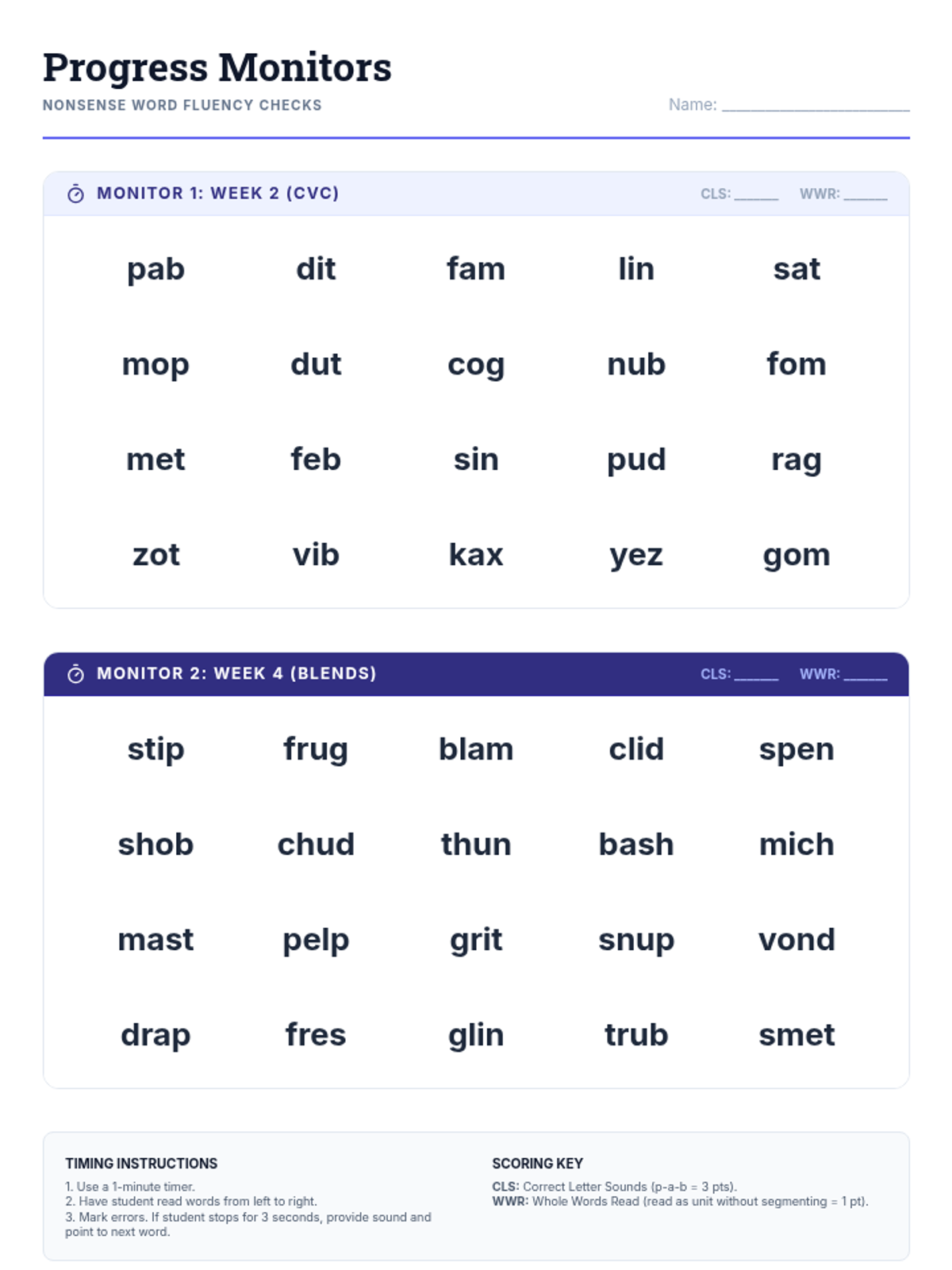
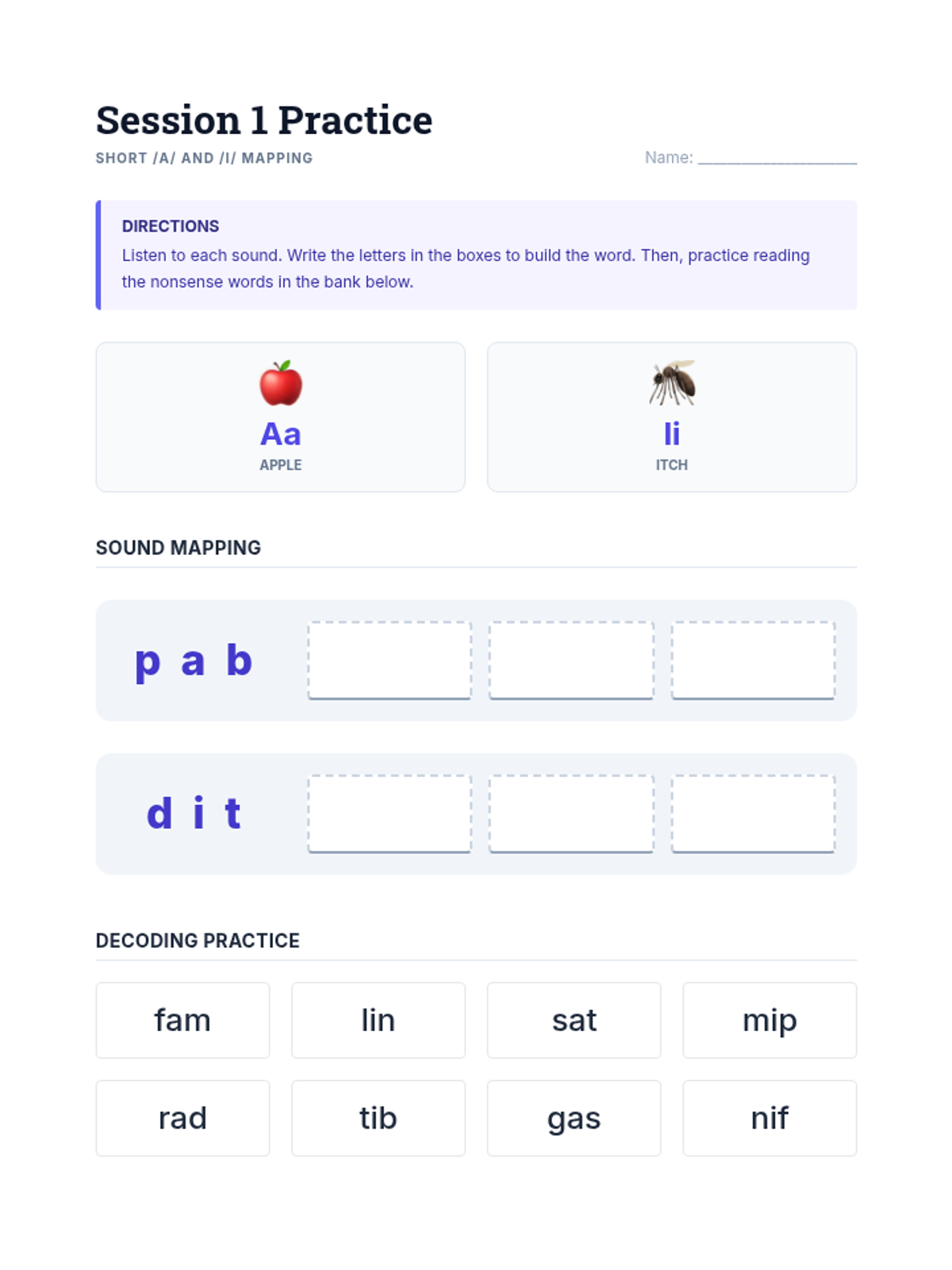
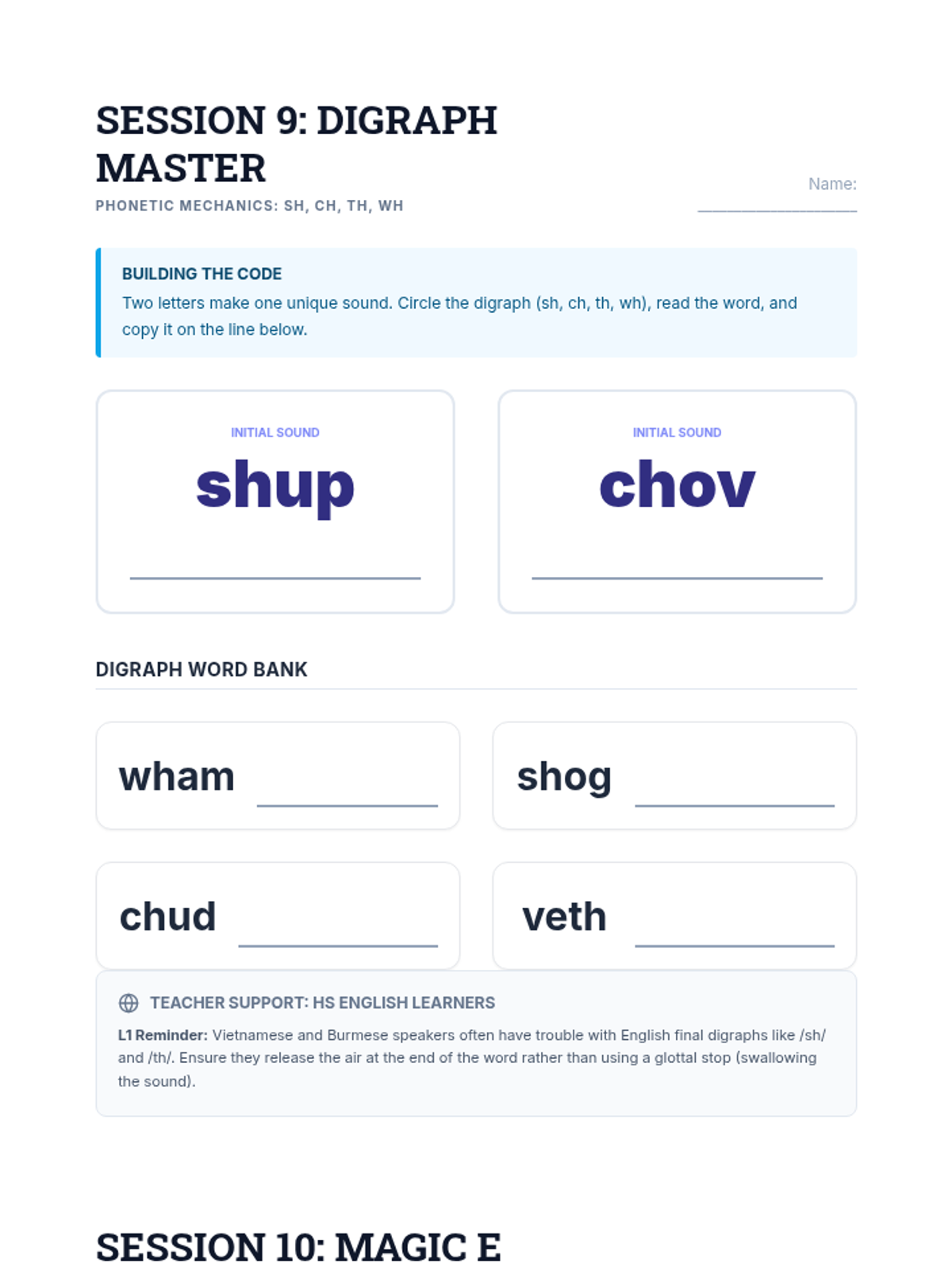
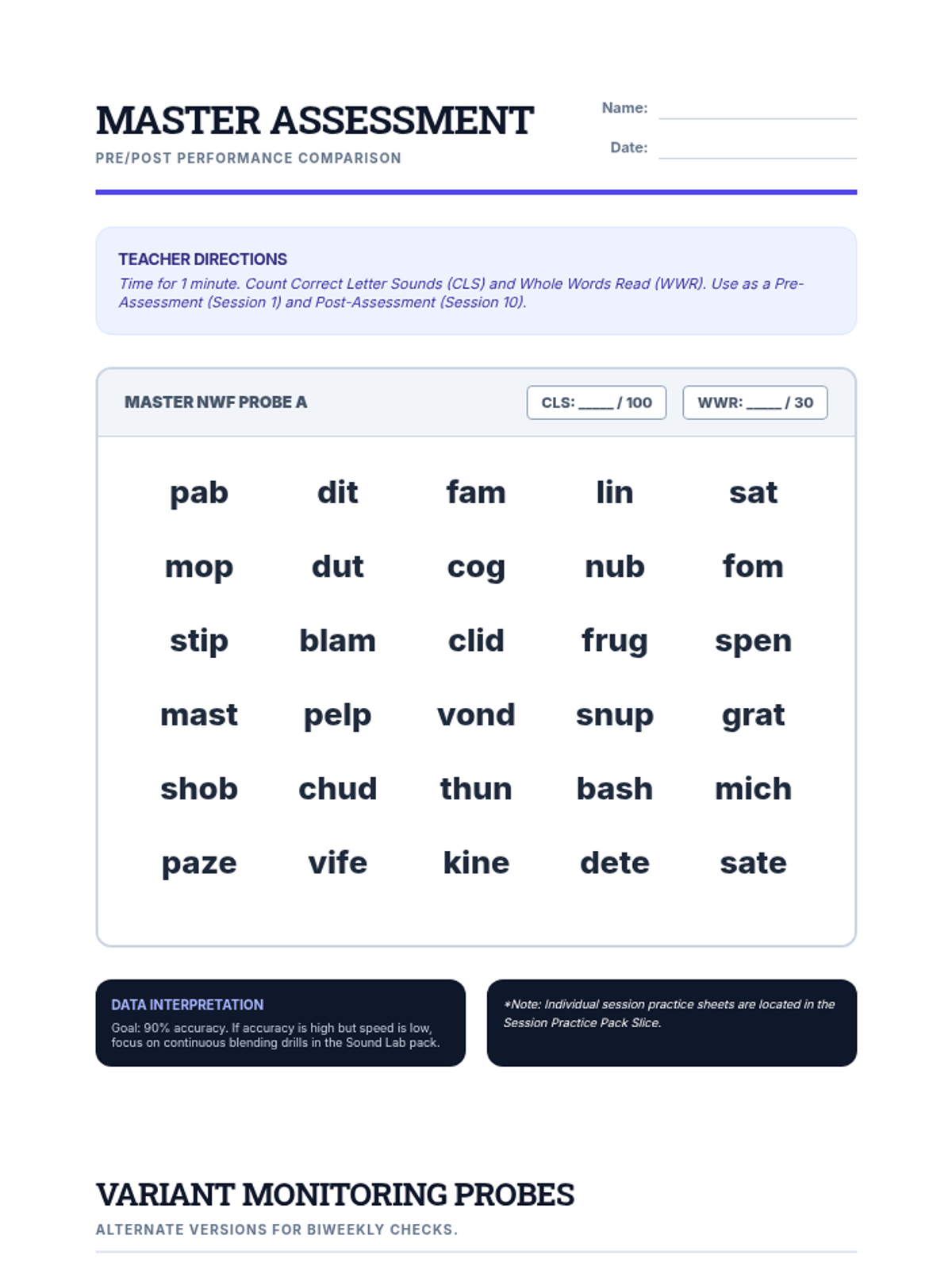
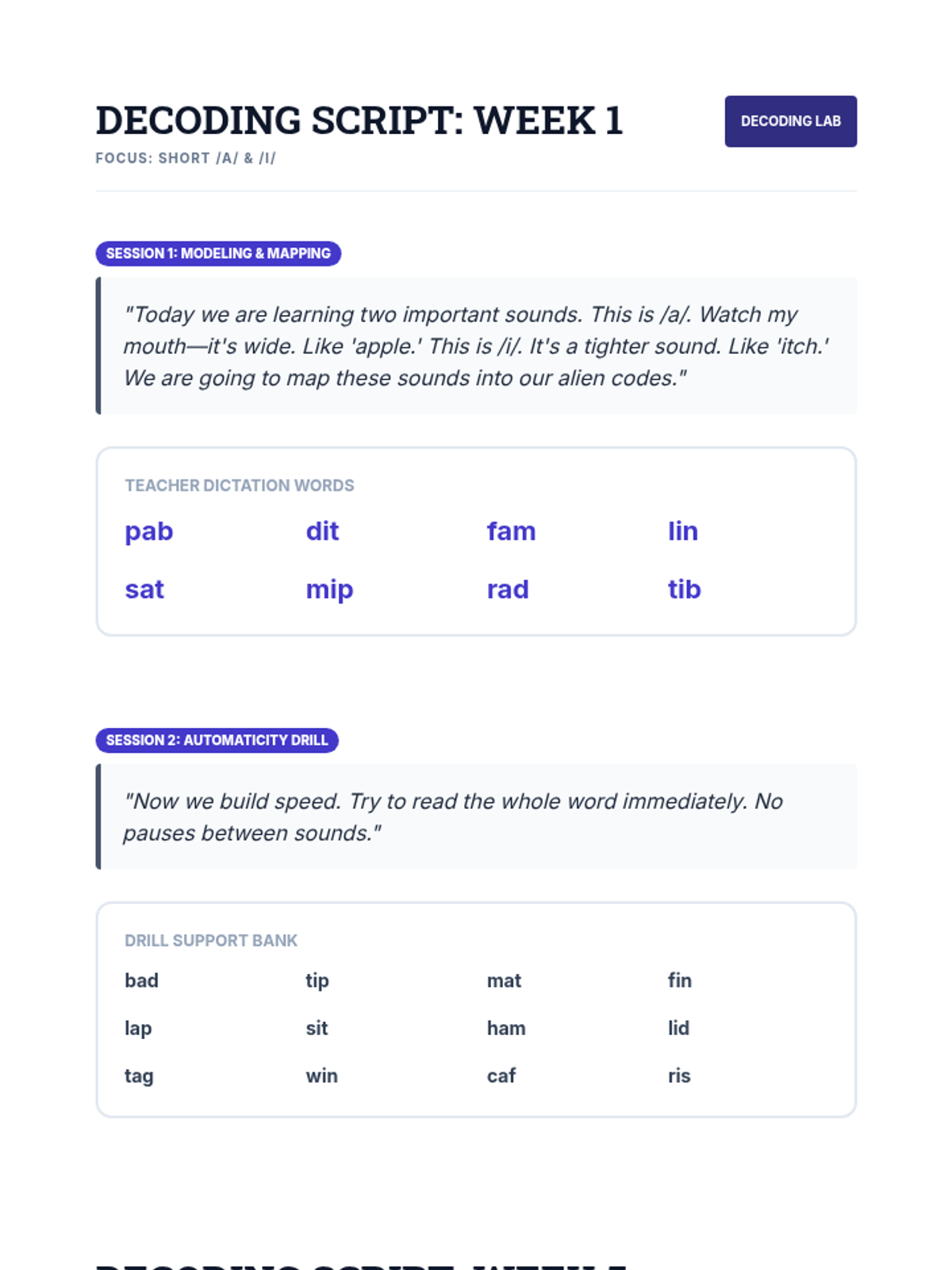
A comprehensive 5-week intervention for high school English Learners focusing on decoding through nonsense word fluency, specifically designed for students with limited or interrupted formal education.
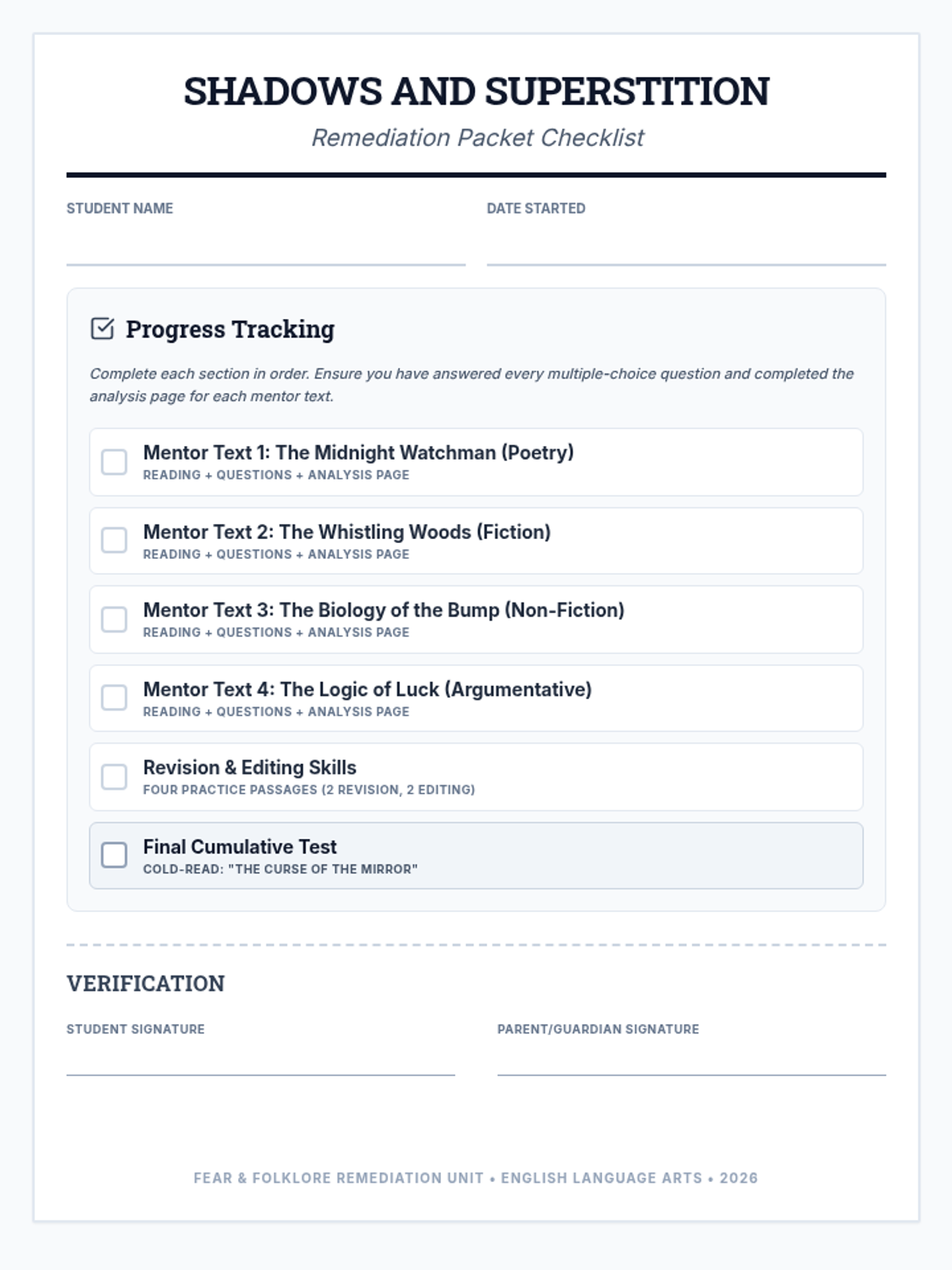
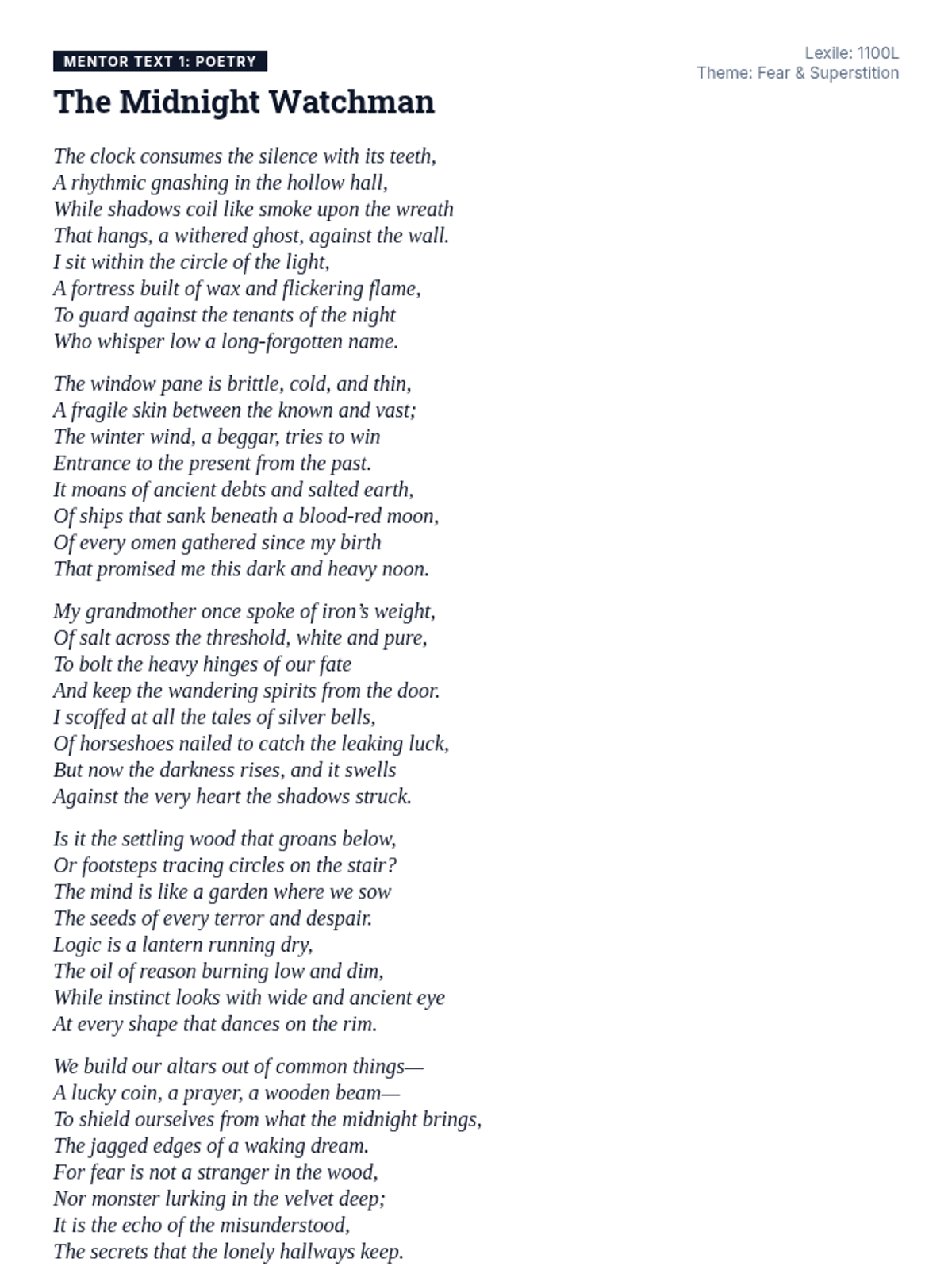
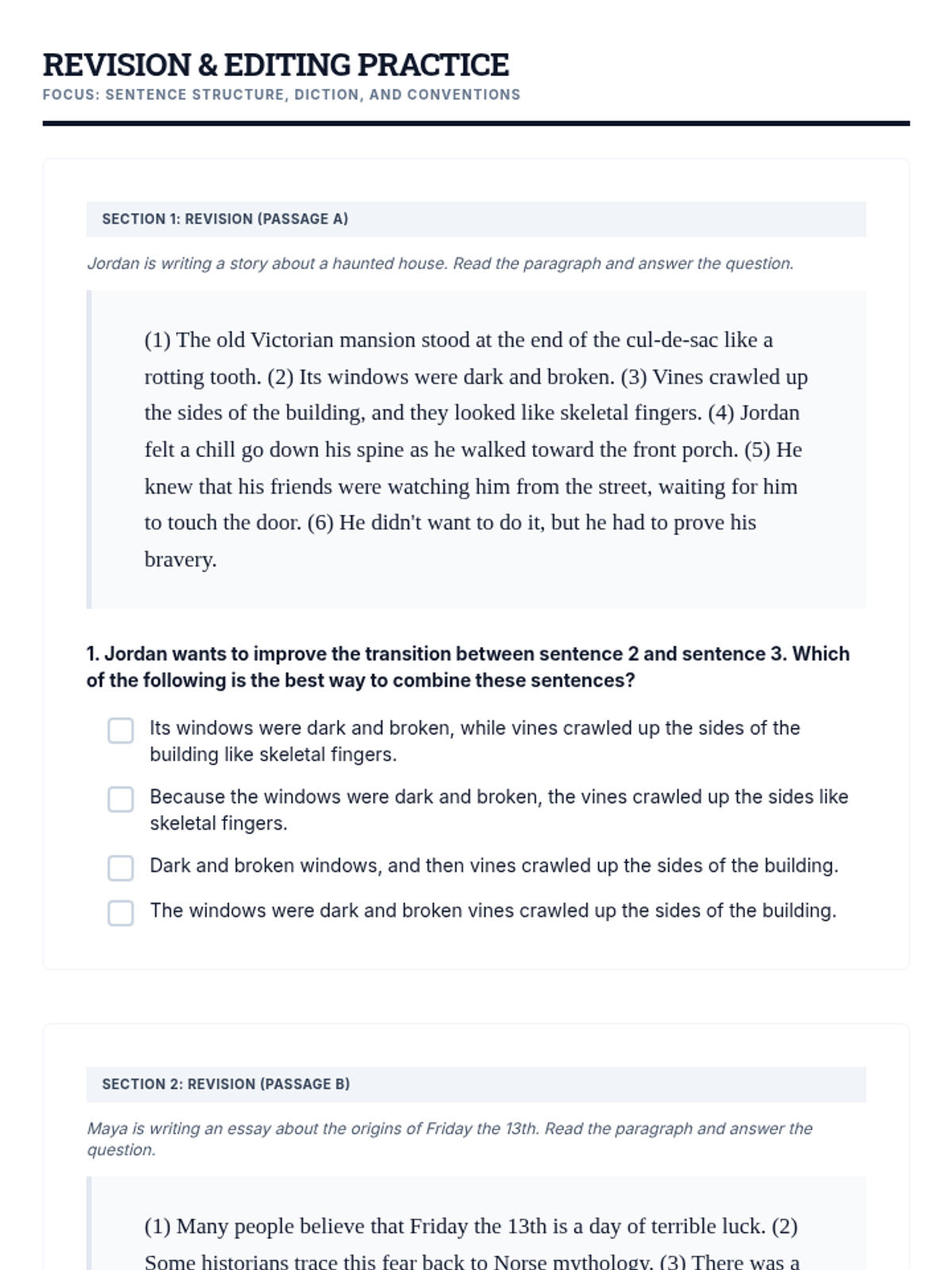
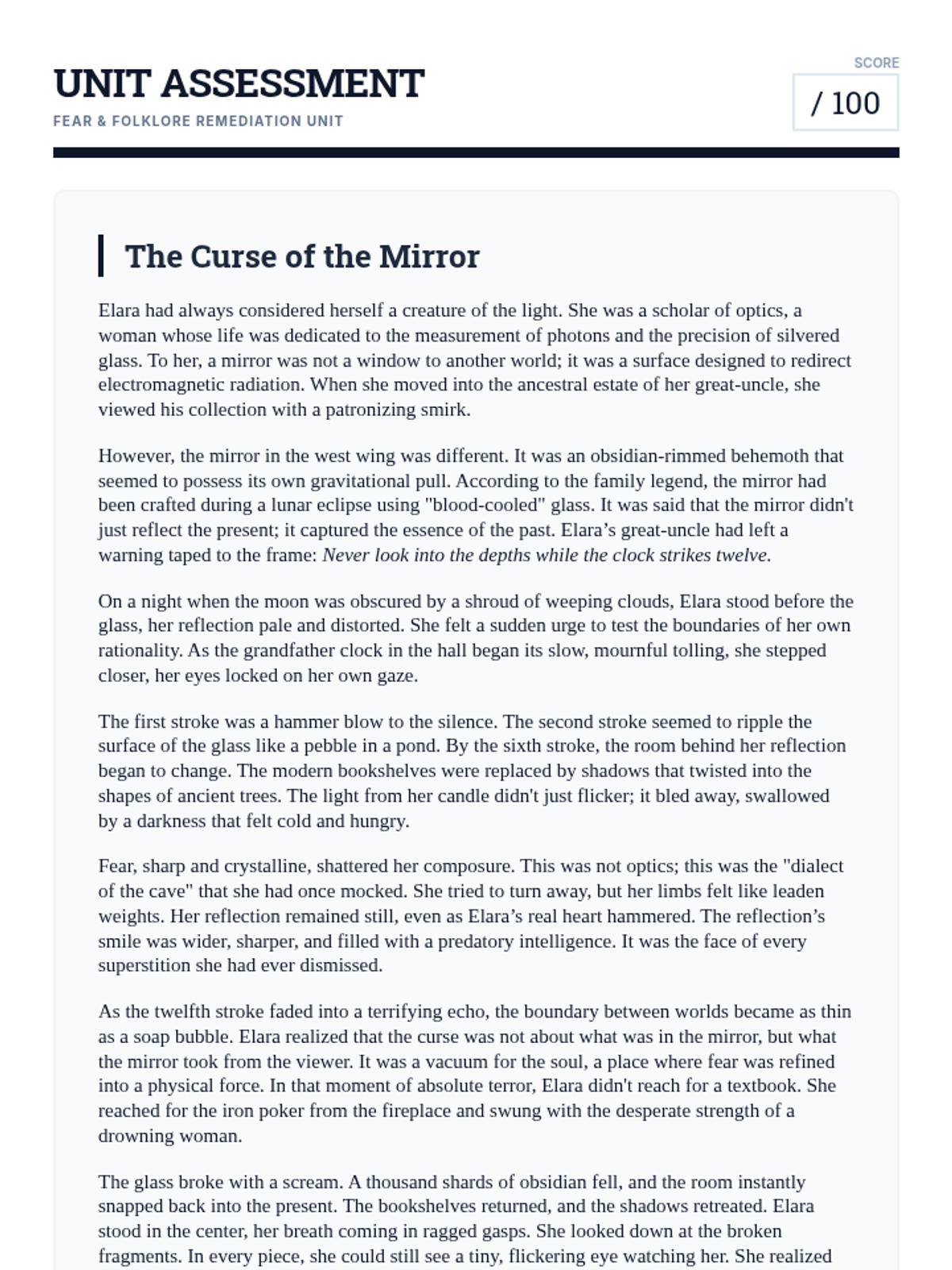
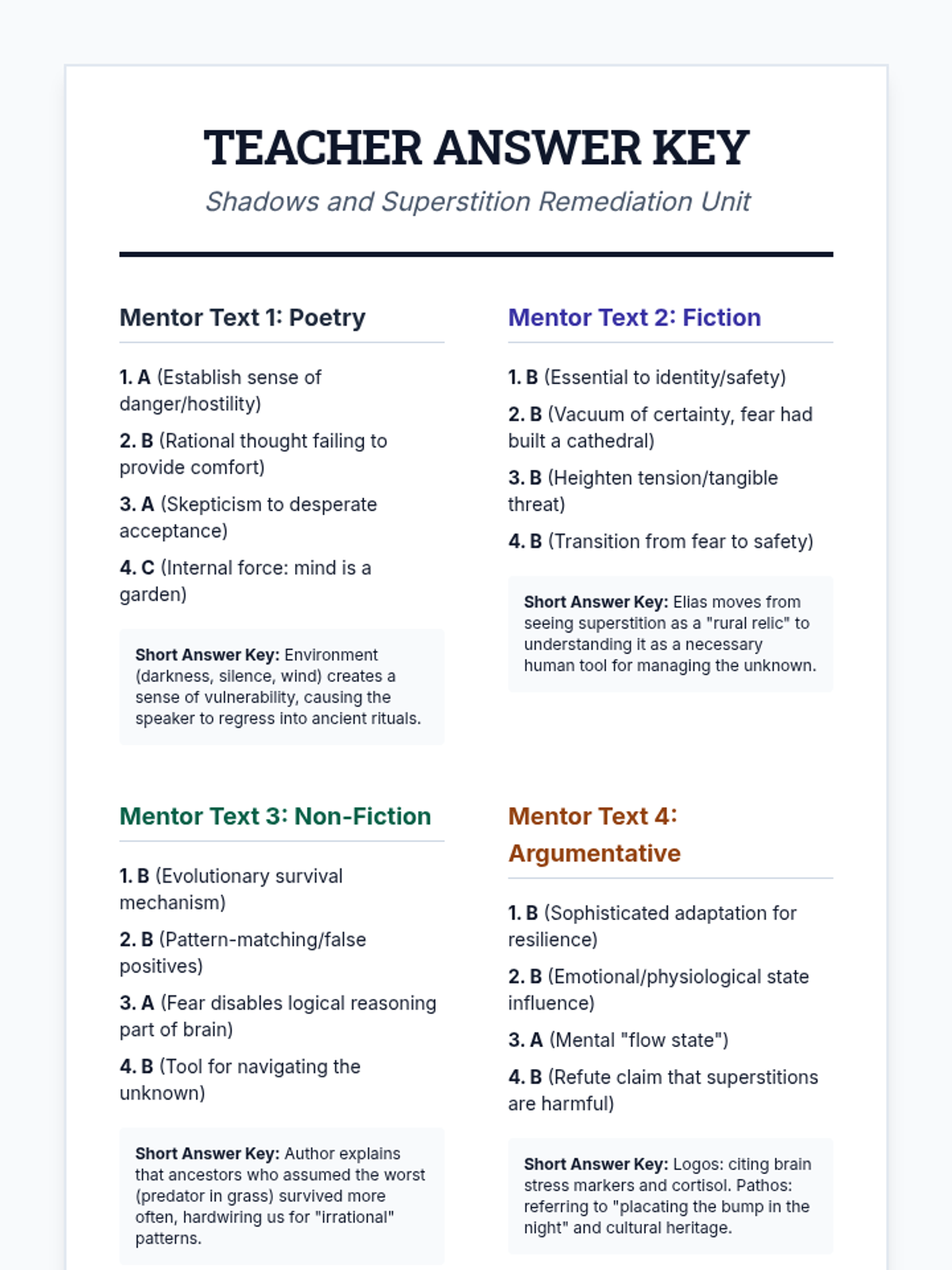
This lesson provides intensive remediation on core literacy skills using high-interest texts centered on fear and superstition. It includes mentor texts in four genres, revision and editing practice, and a final cold-read assessment.
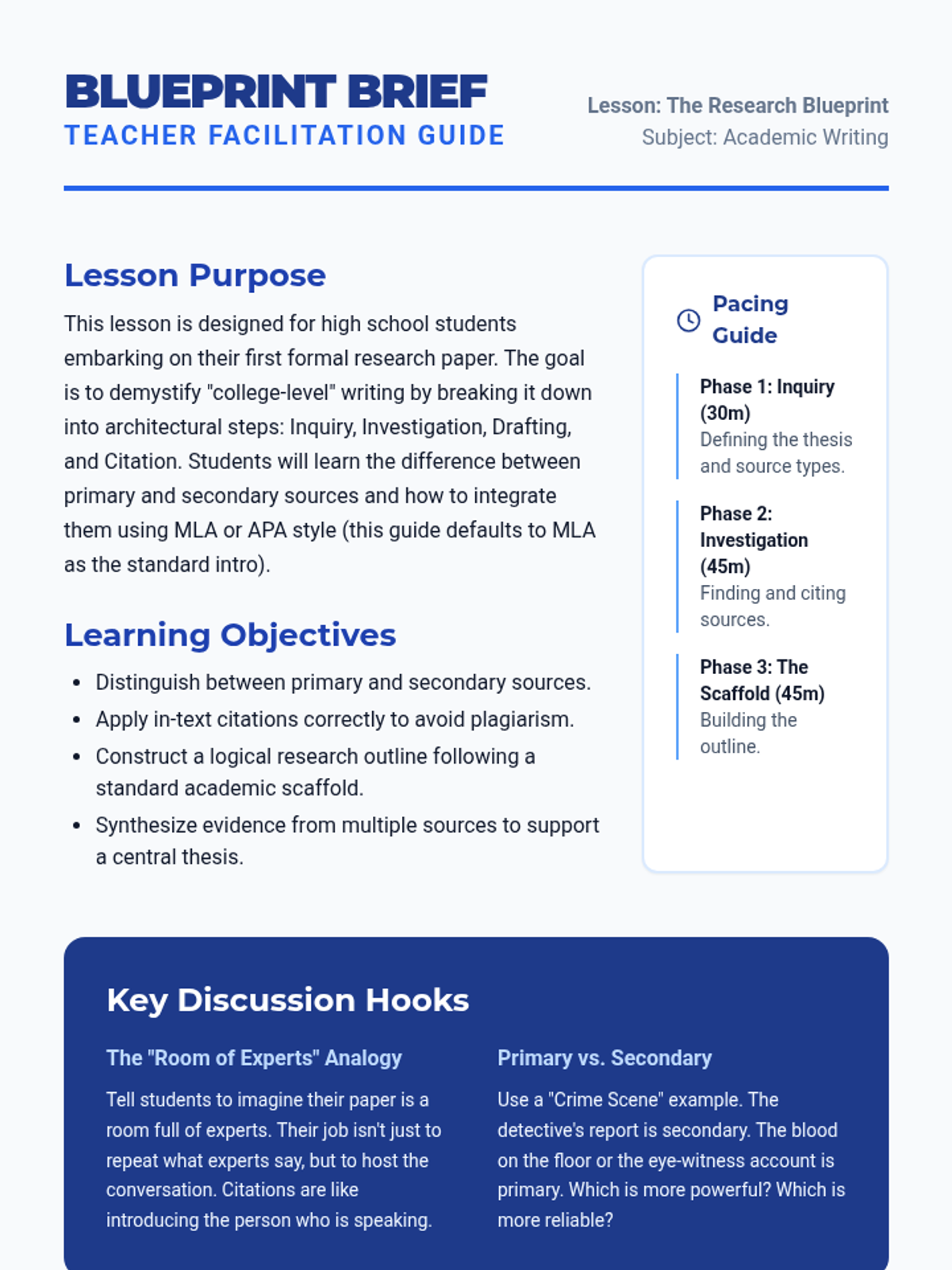
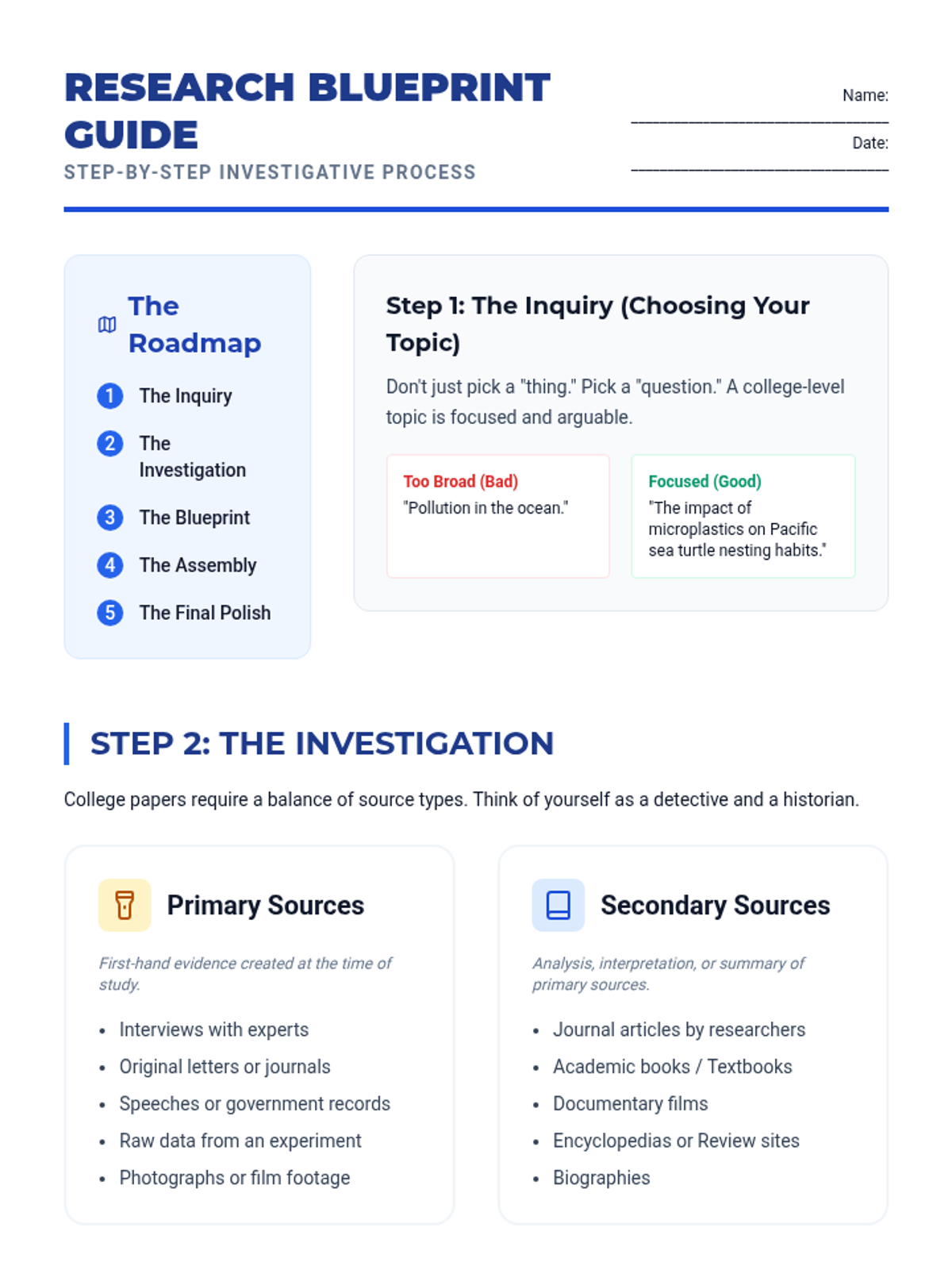
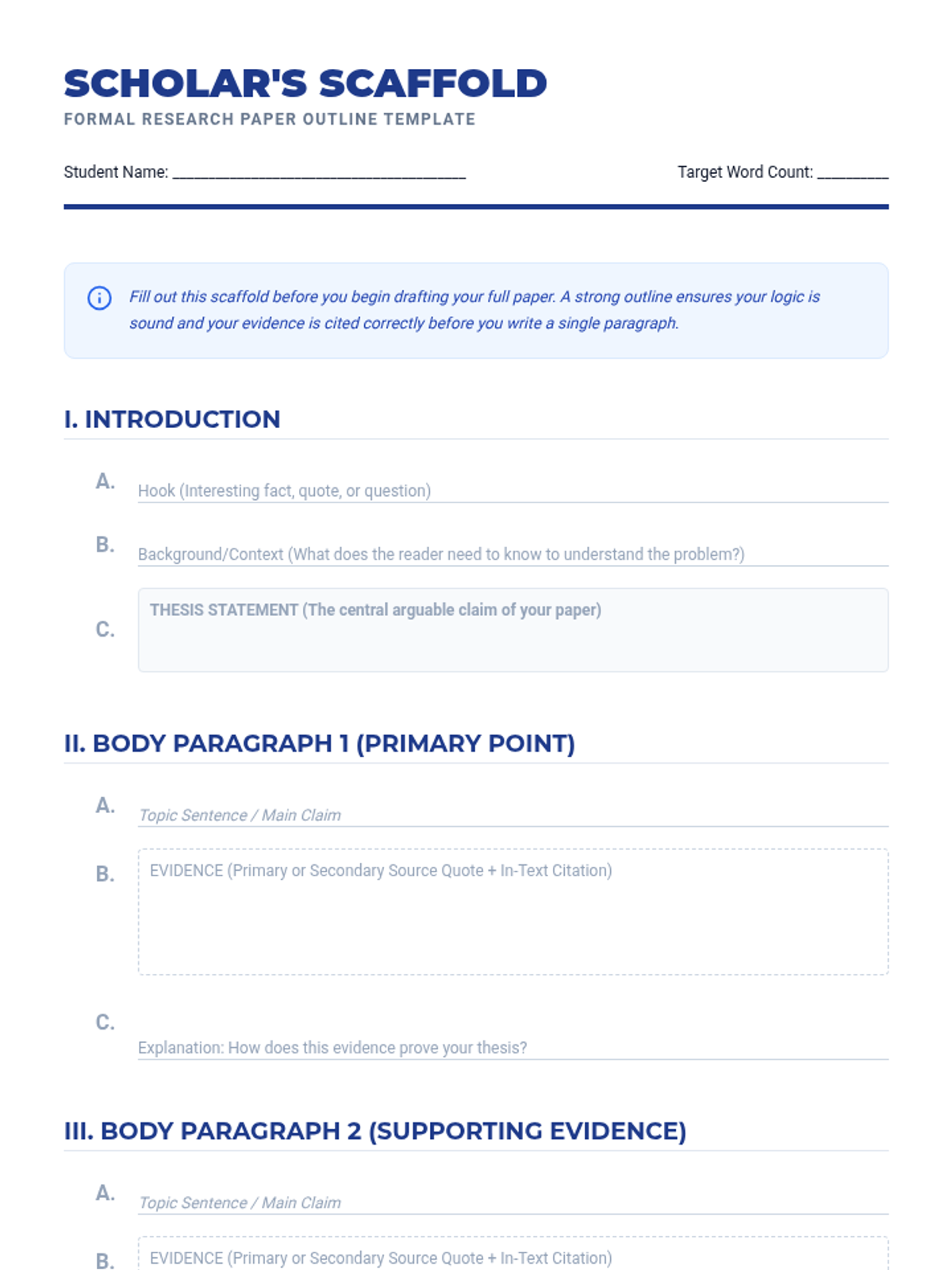
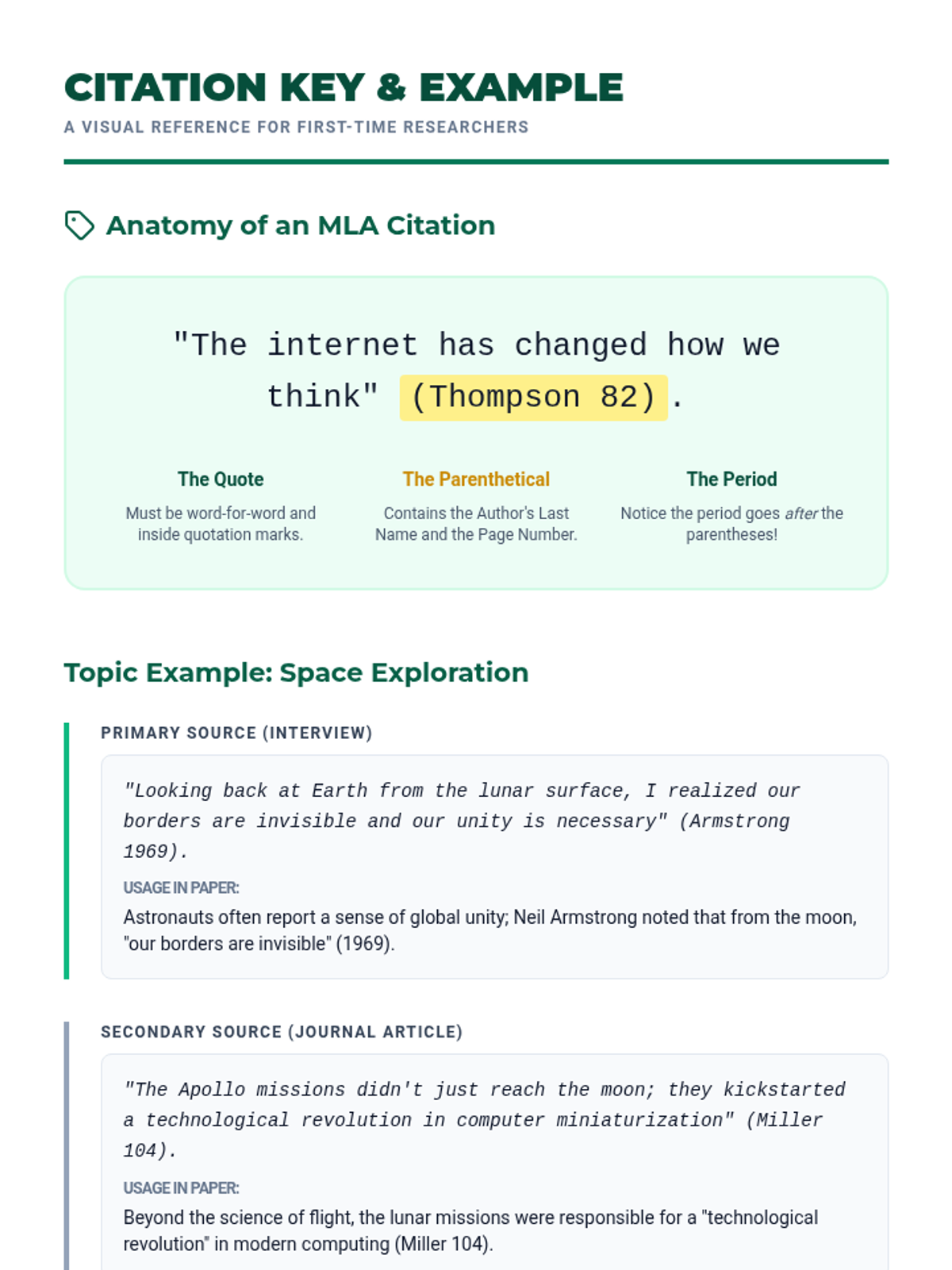
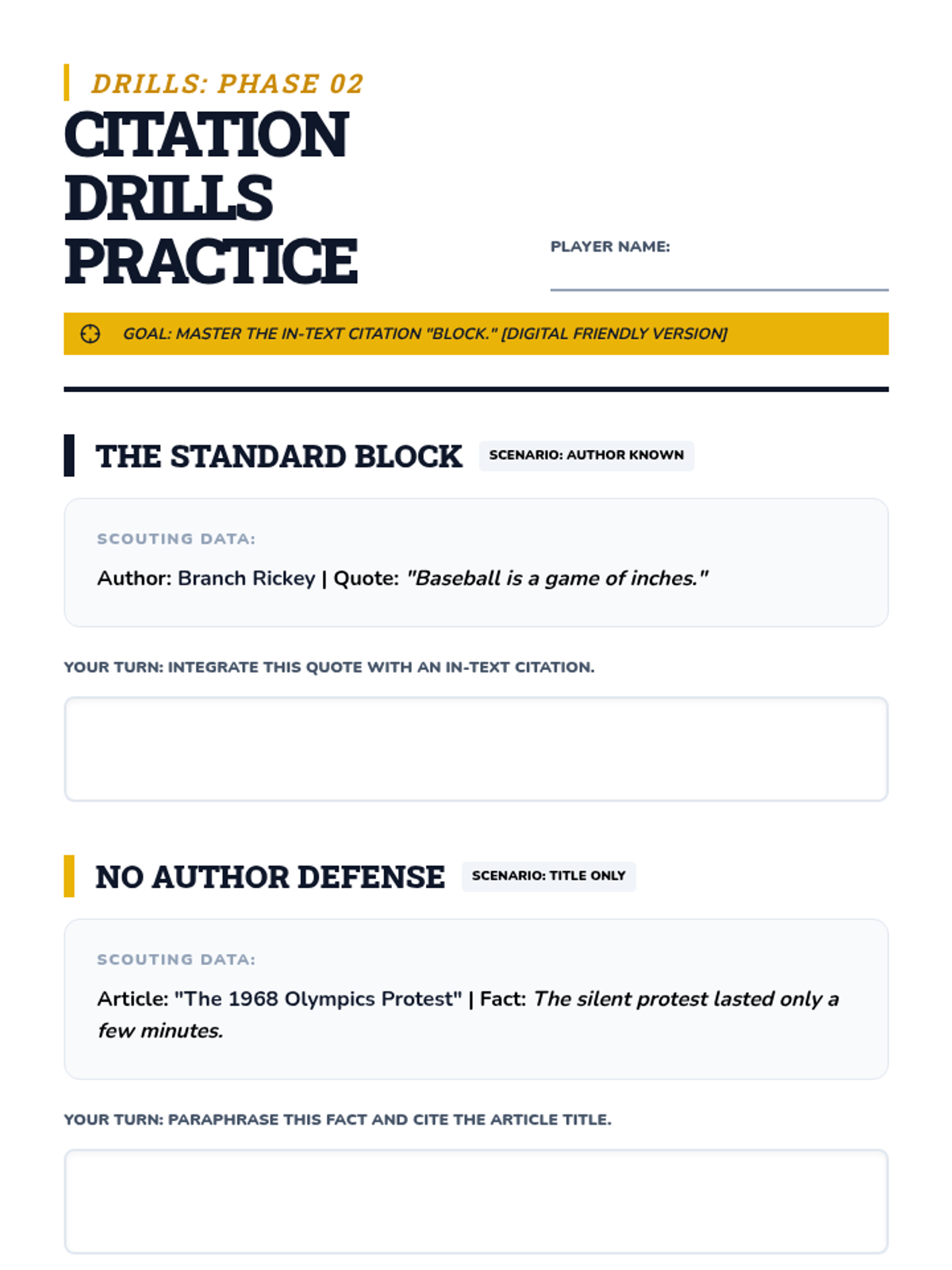
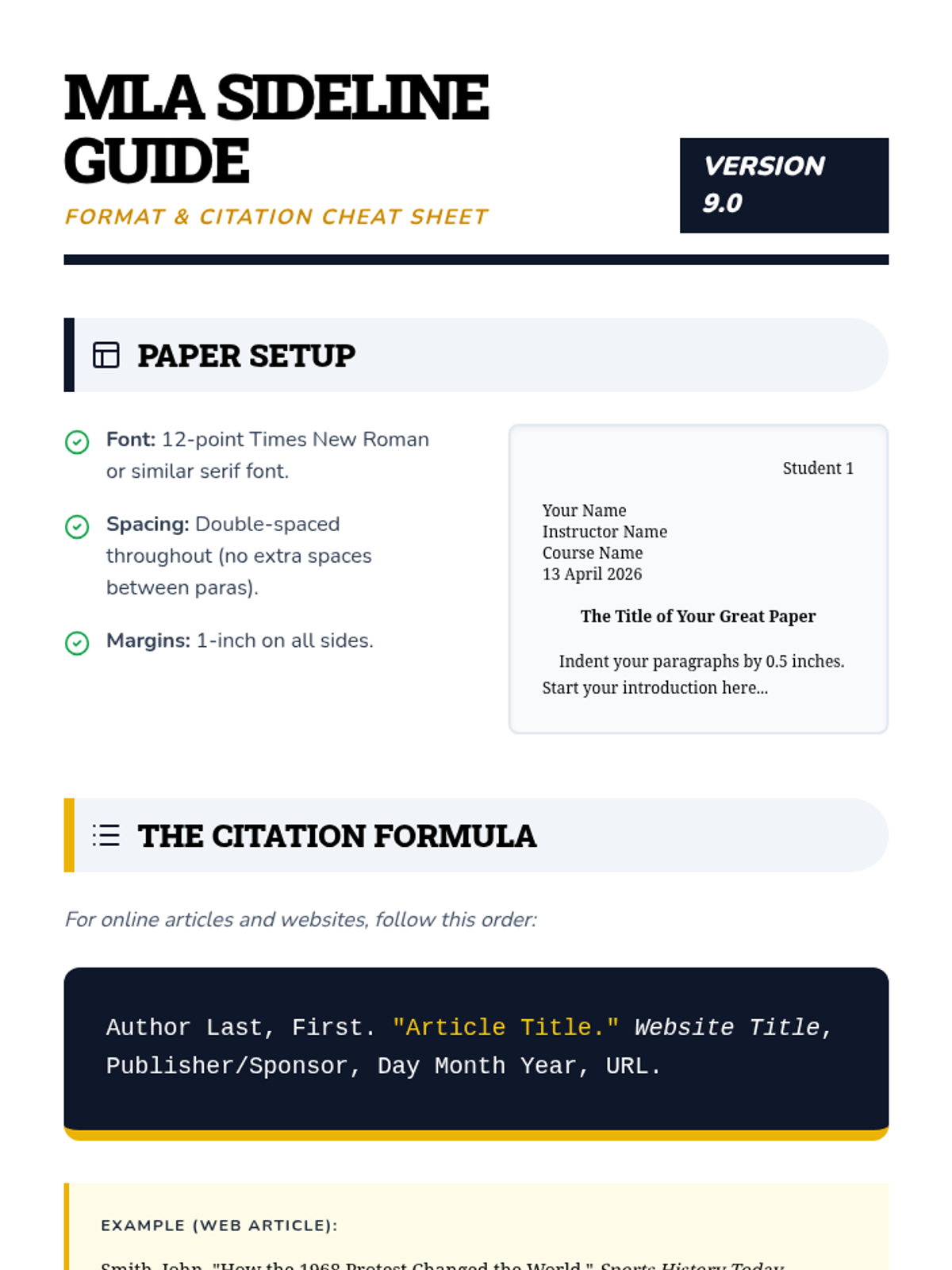
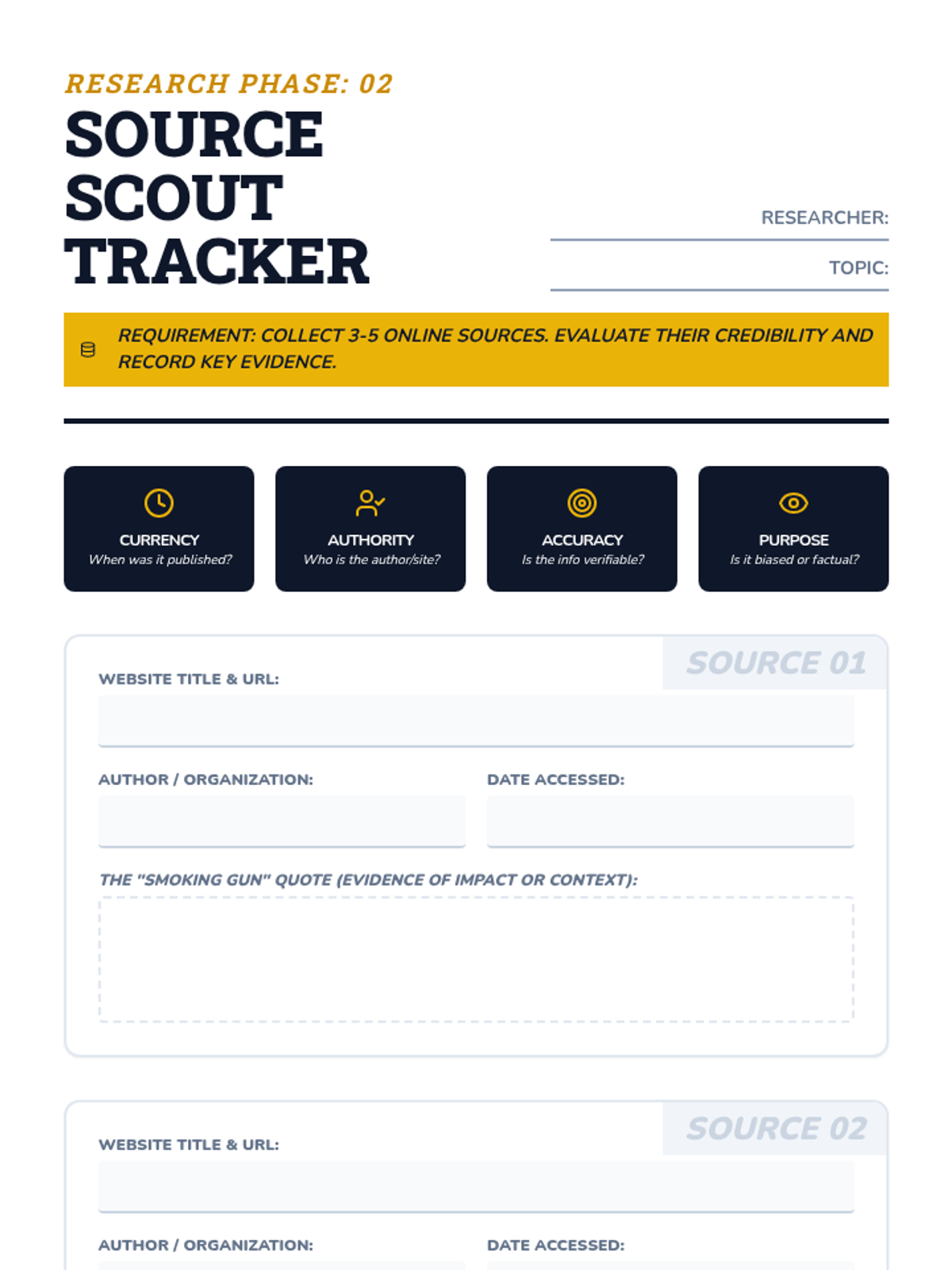
A foundational lesson designed to guide high school students through the complex process of writing their first academic research paper. It covers source evaluation, citation mechanics, and structural outlining with a focus on transitioning toward college-level standards.
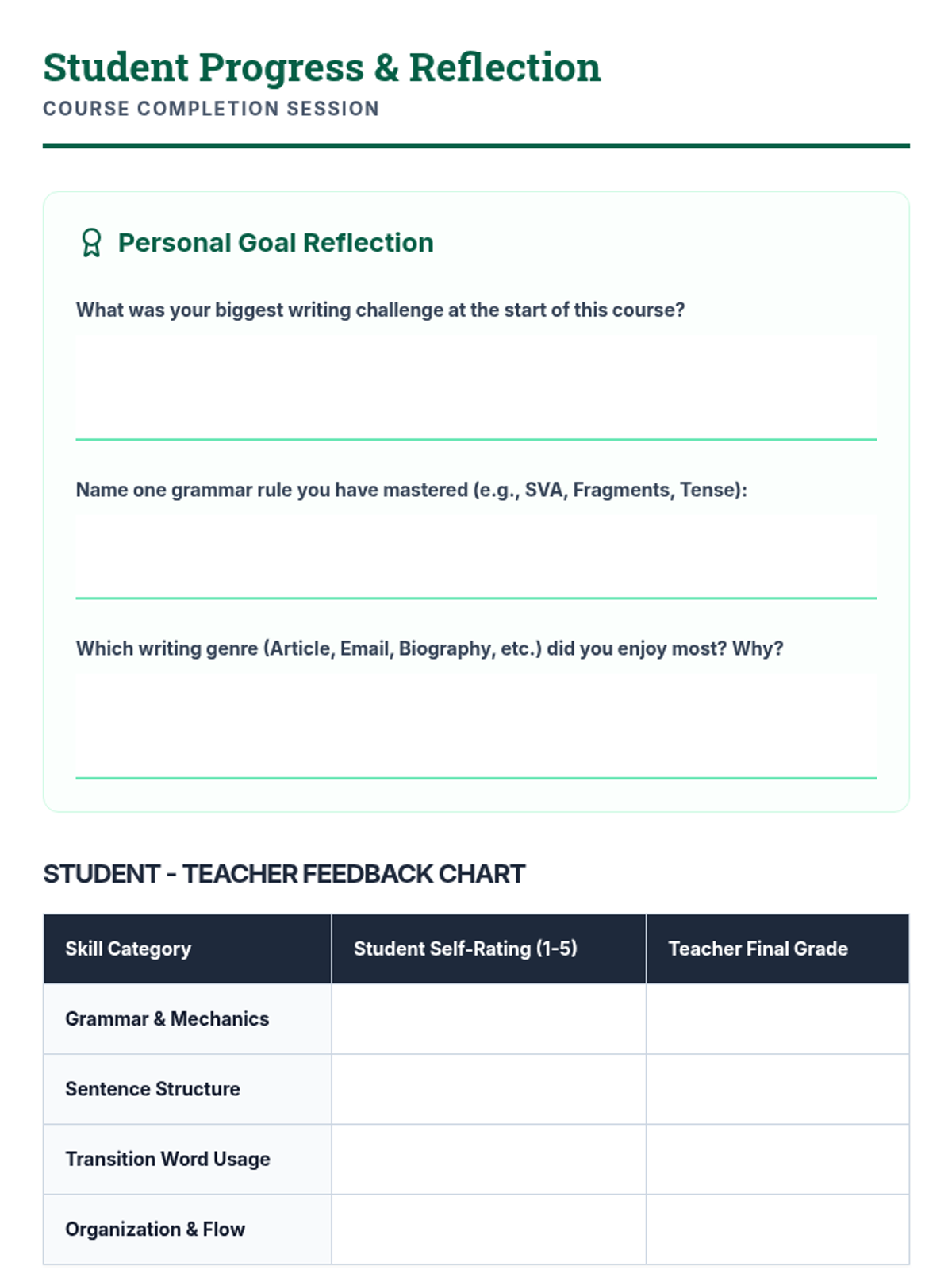
A final evaluation and reflection session including the final assessment, feedback charts, and student-teacher goal reviews.
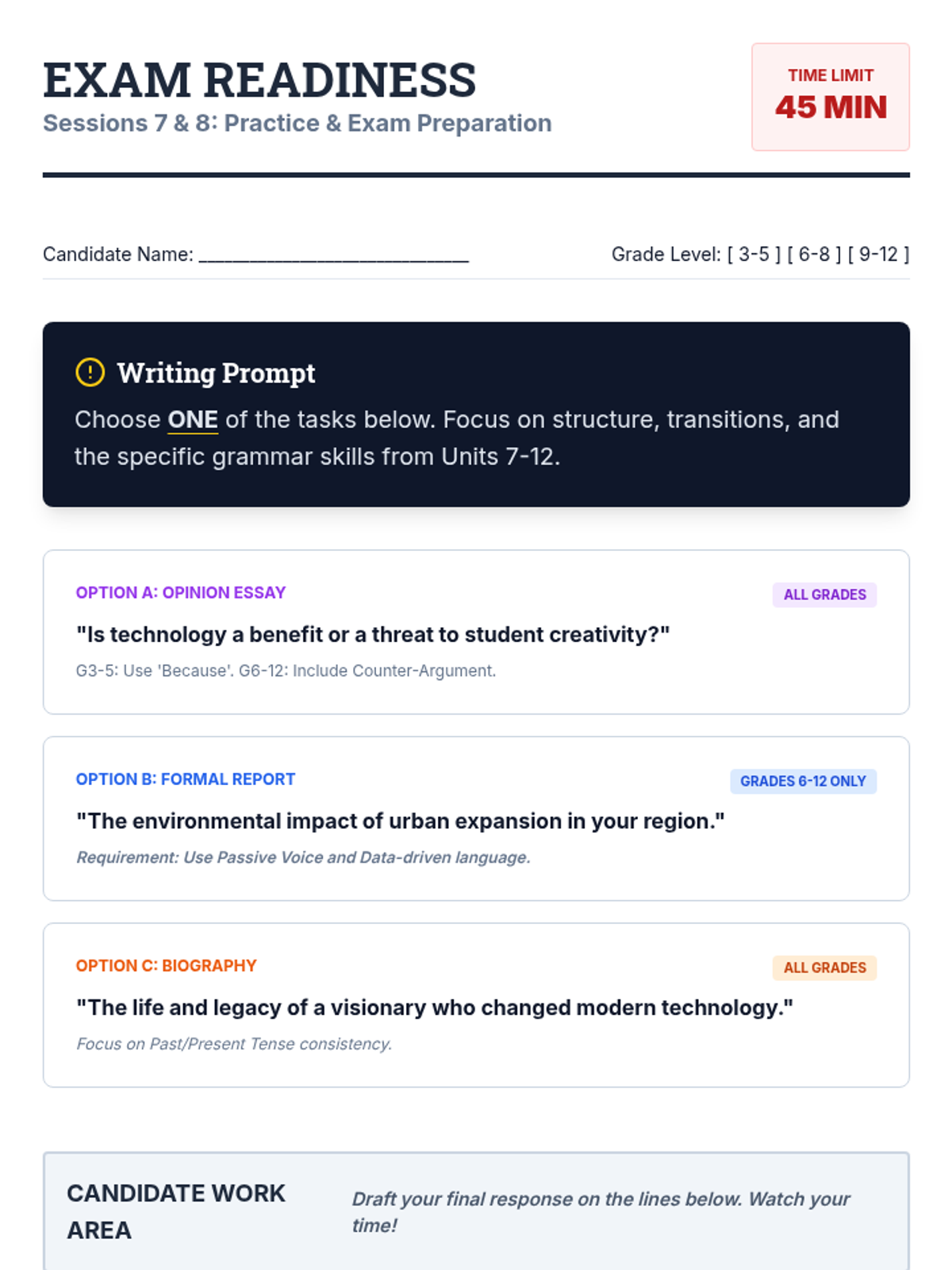
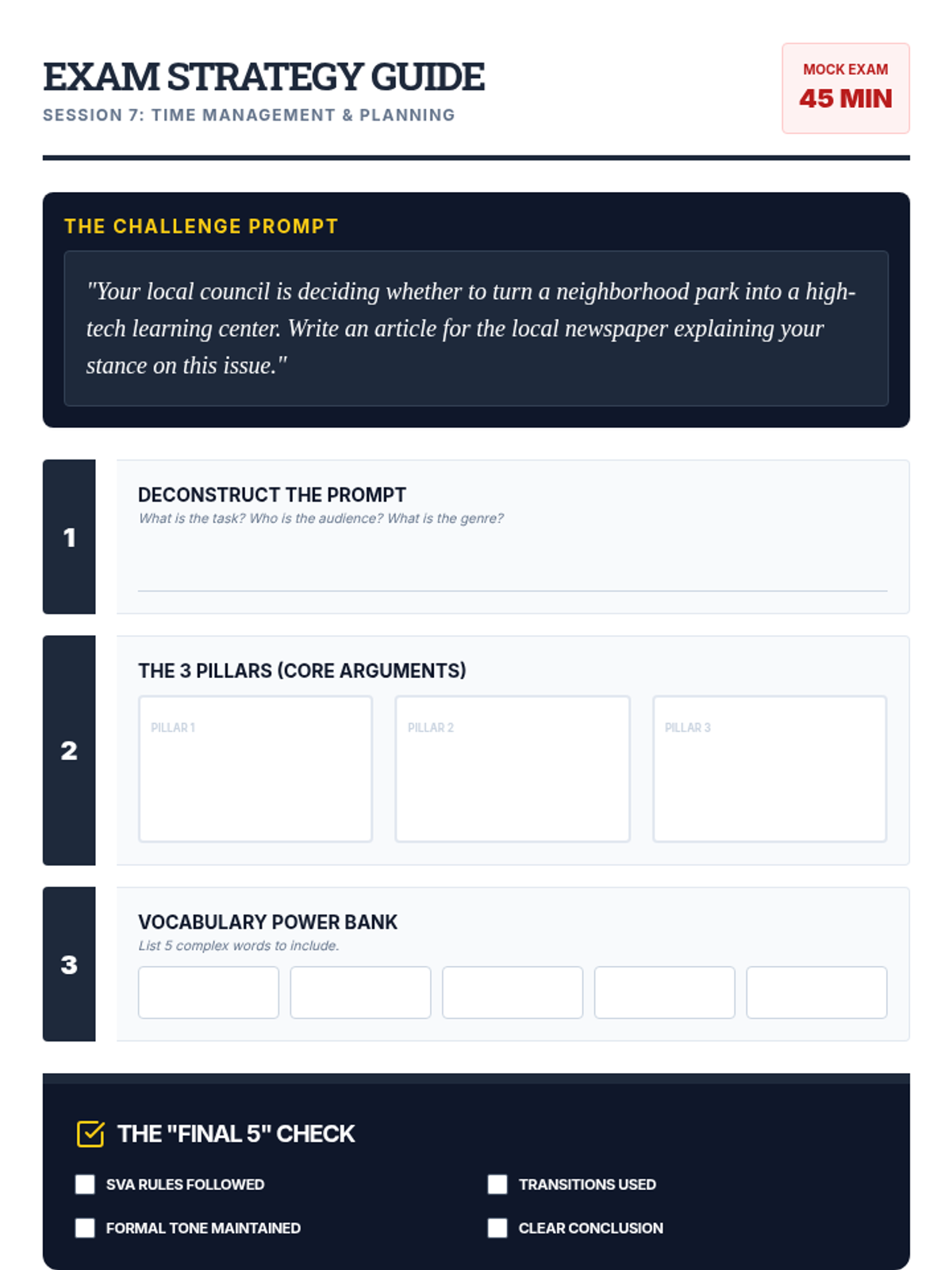
Provides timed writing practice and mock exam conditions to build stamina and review structural clarity.
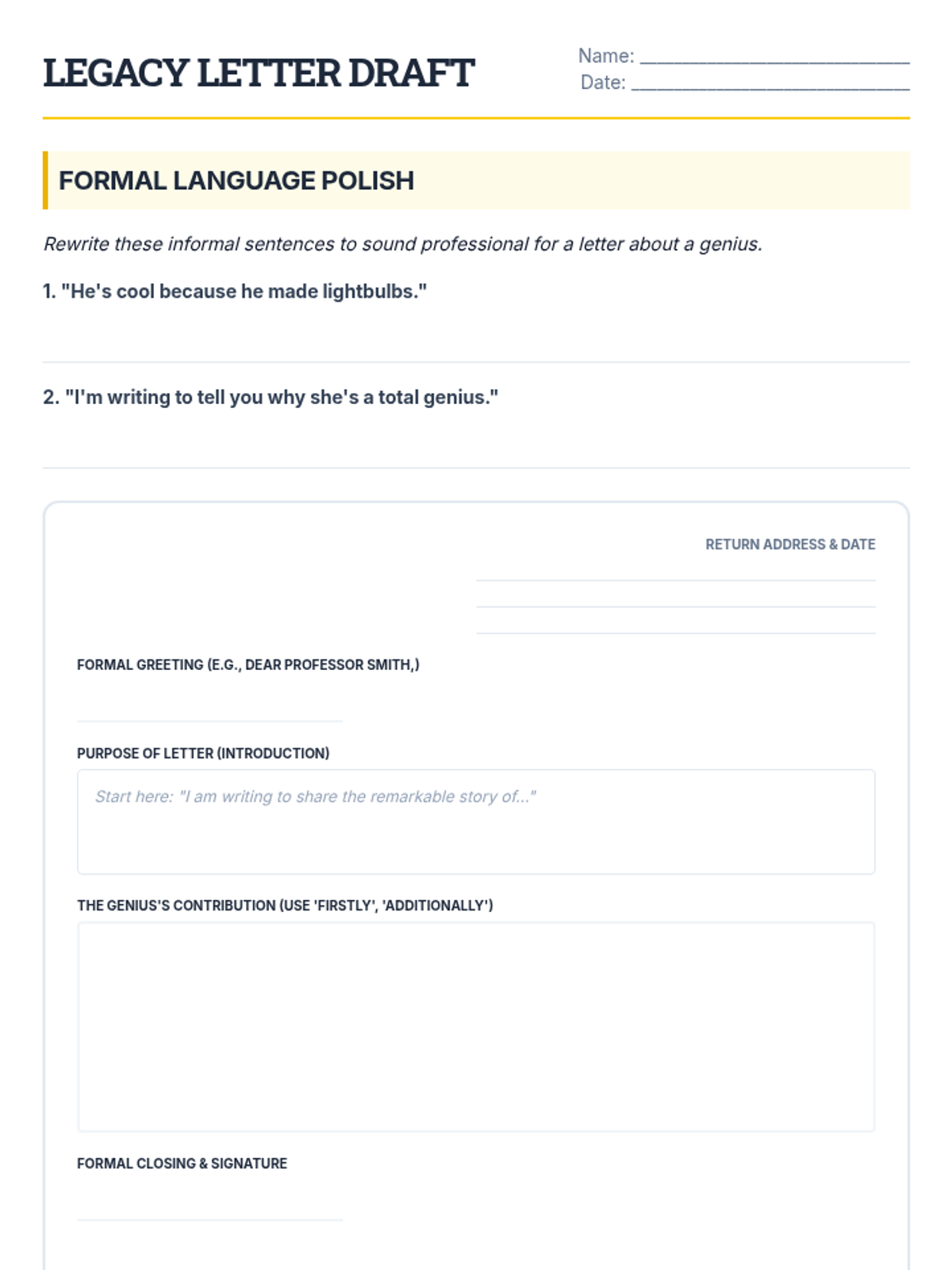
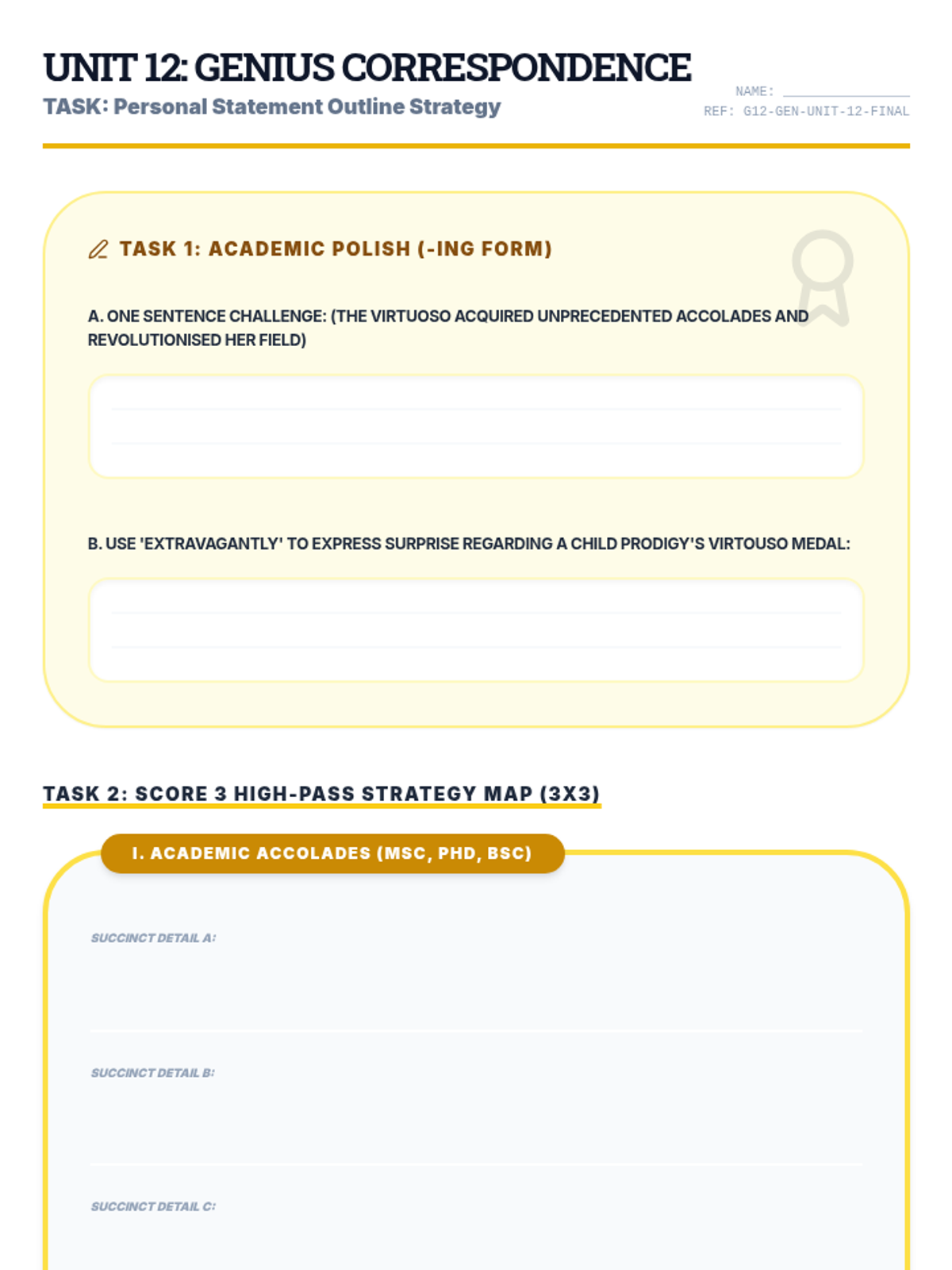
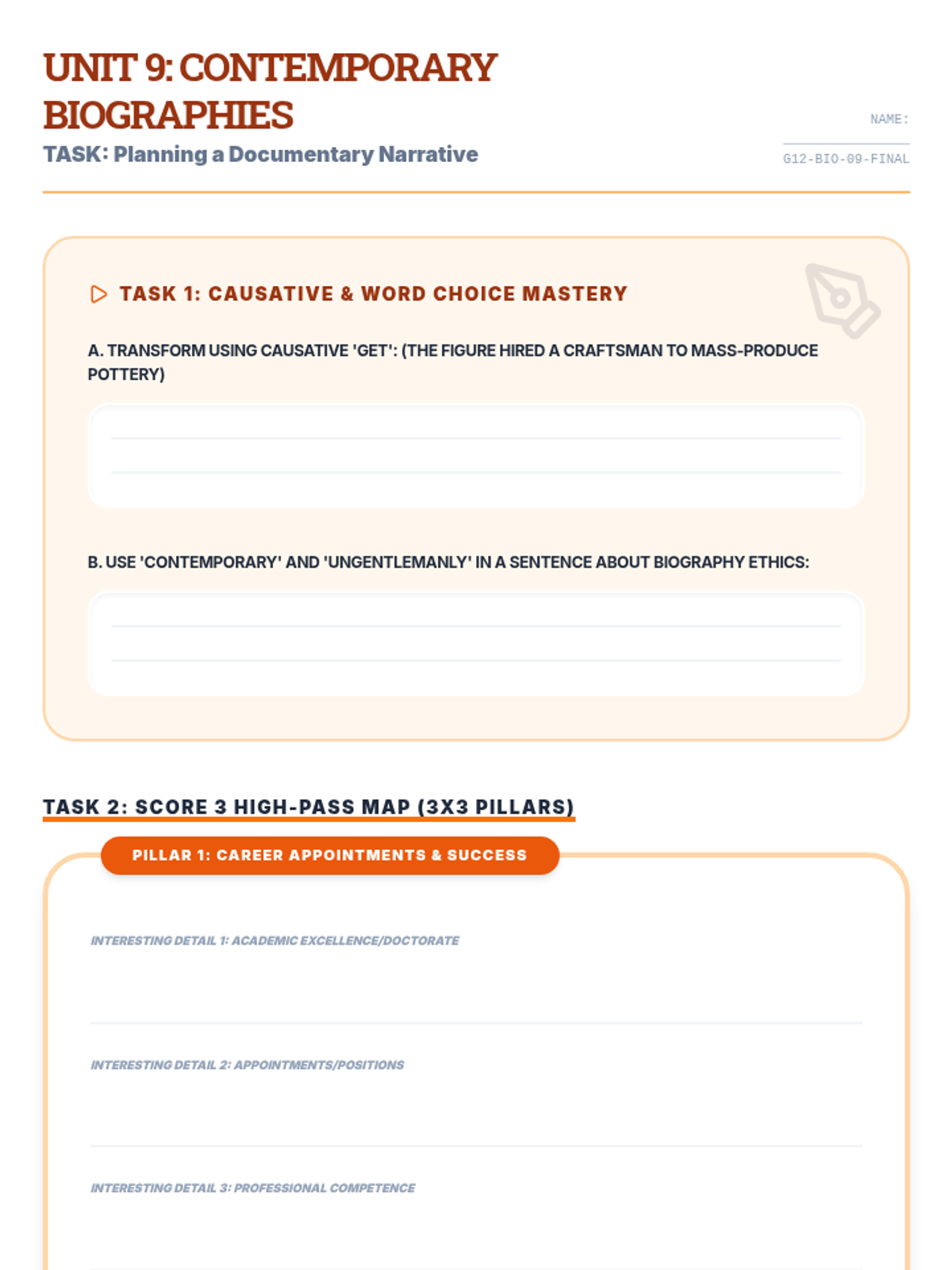
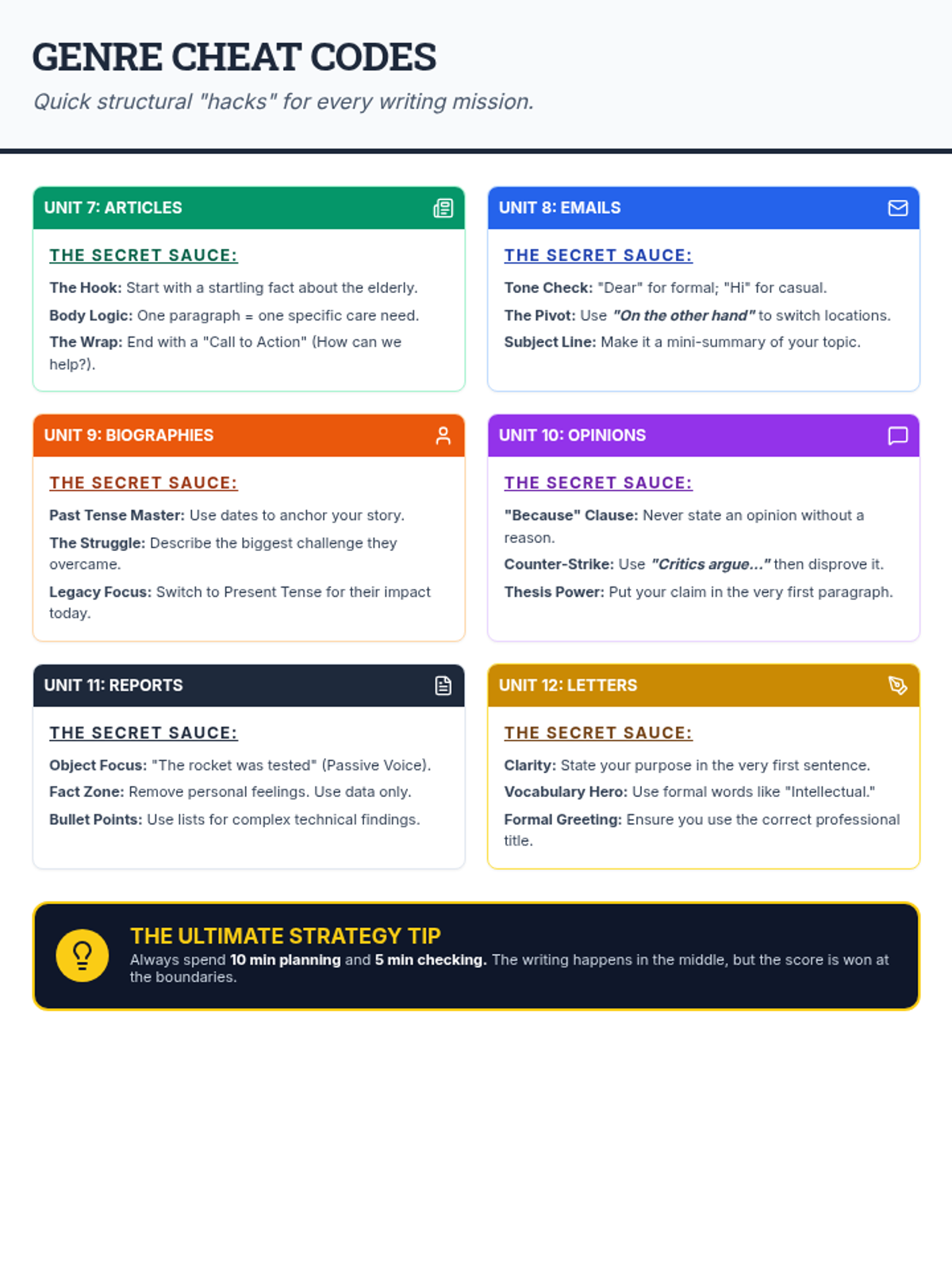
Practices formal letter writing focused on the achievements of geniuses, reinforcing formal tone and structural transitions.
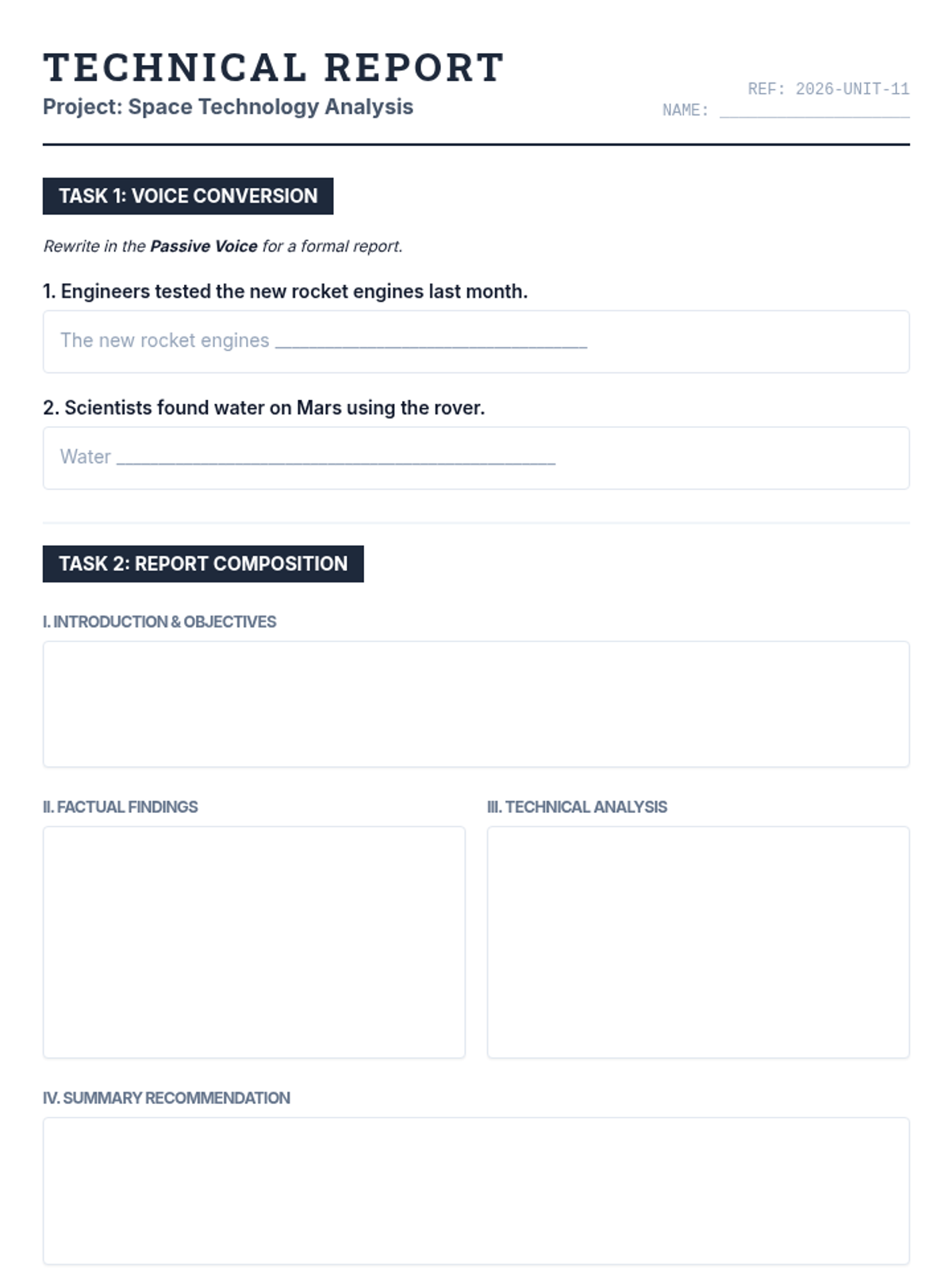
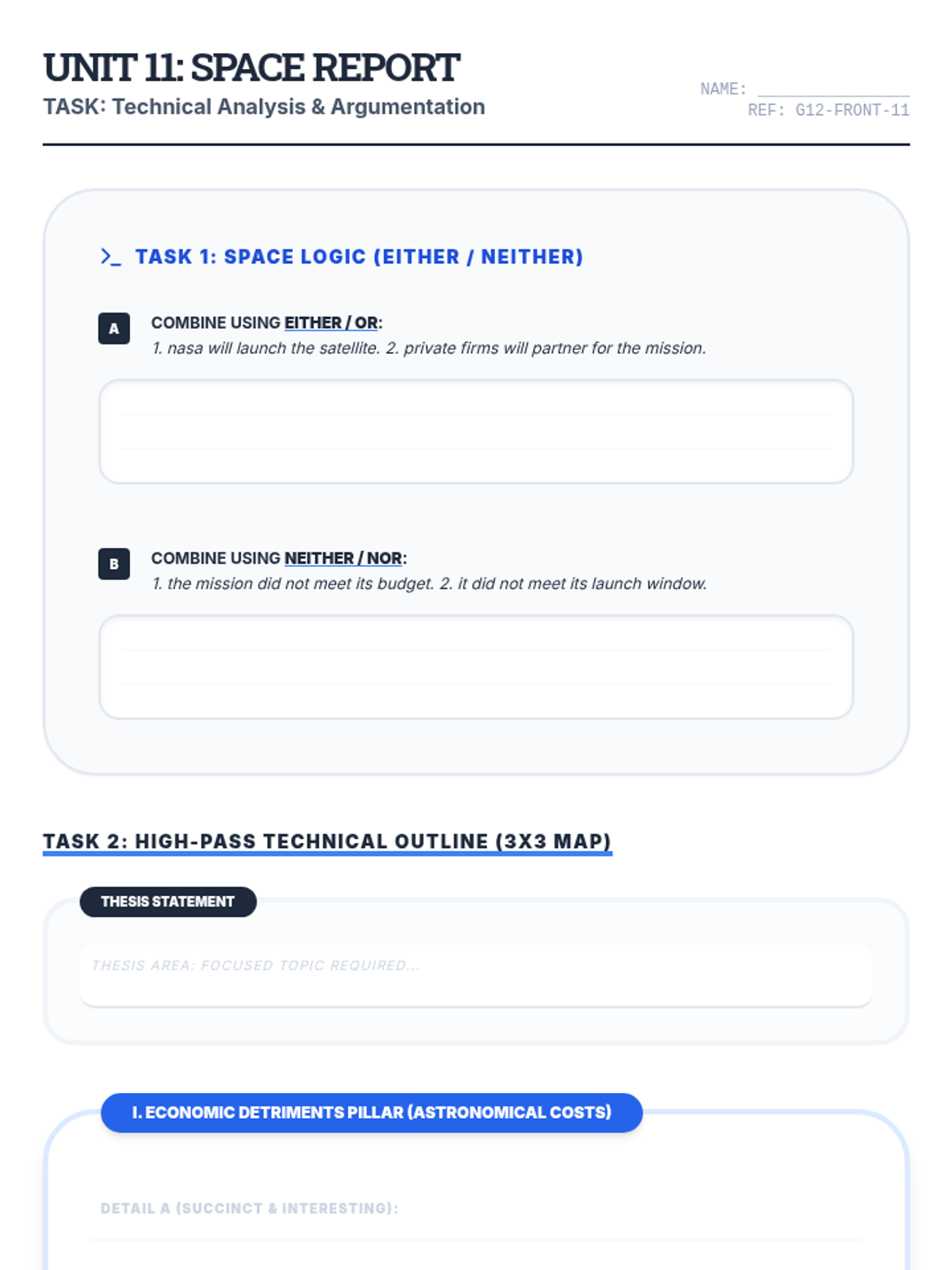
Introduces formal report writing on space technology, emphasizing passive vs. active voice and data-driven analysis.
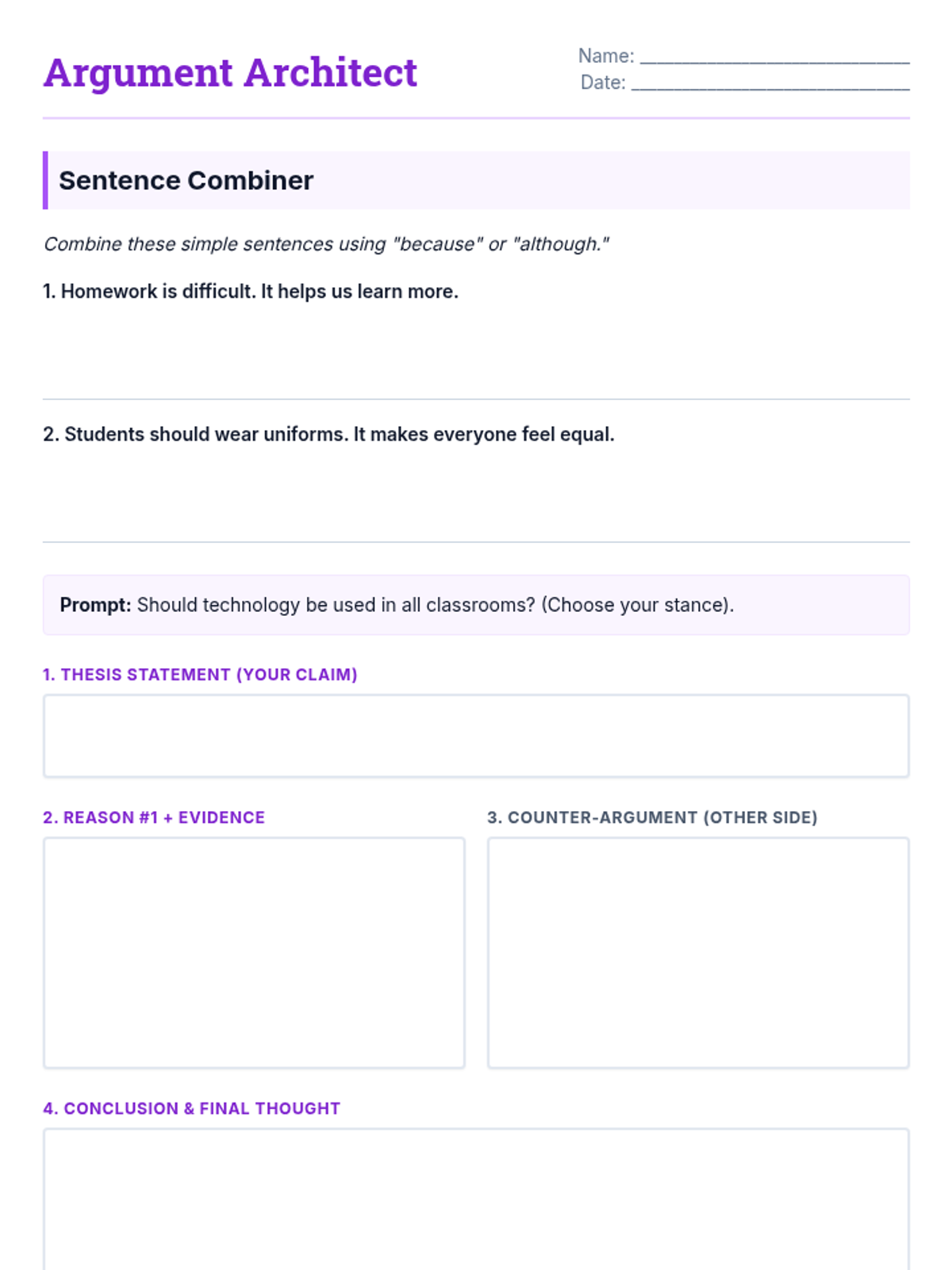
Develops argumentative skills through opinion essays on debatable topics, focusing on conjunctions, counter-arguments, and persuasive transitions.
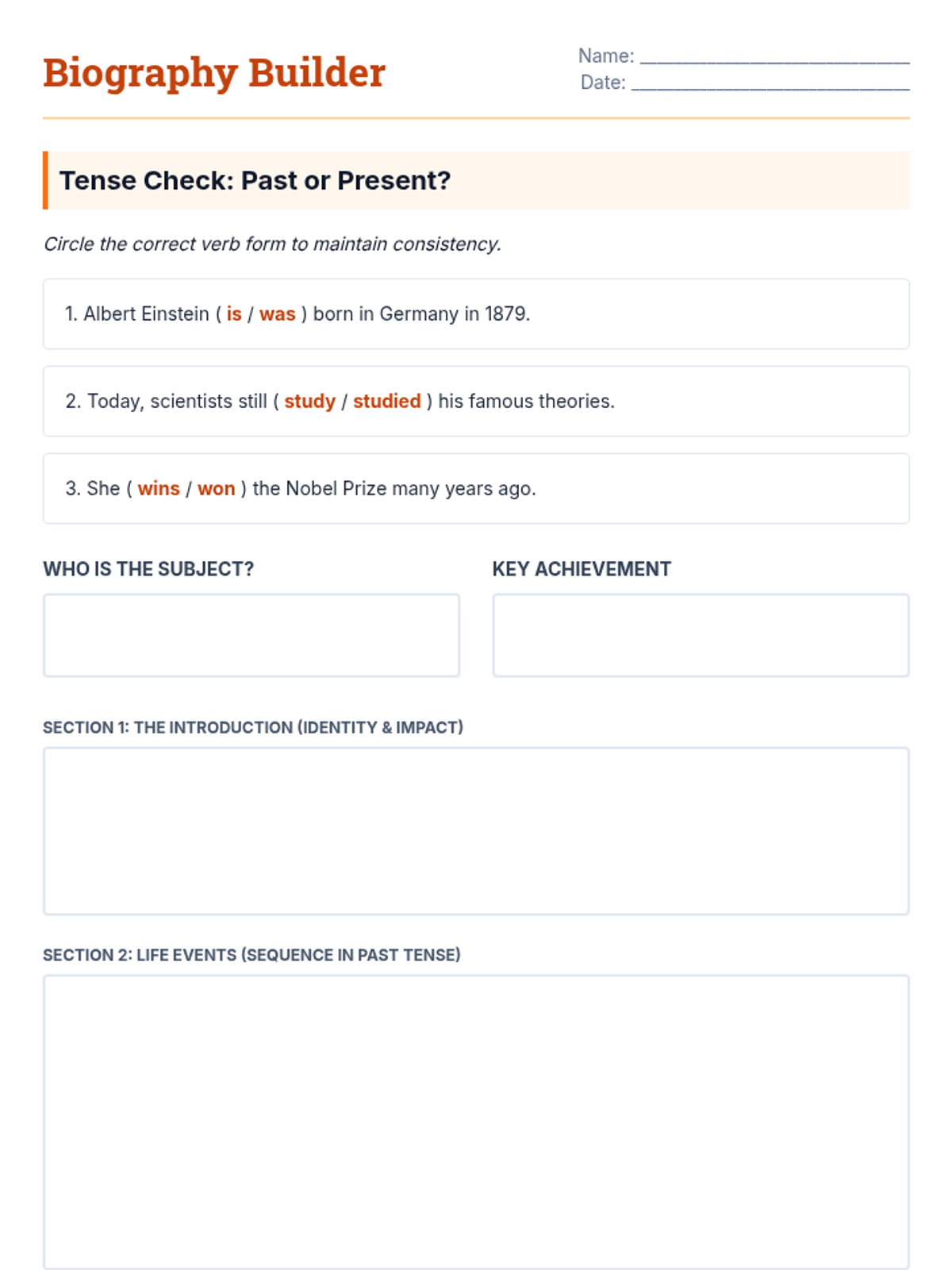
Explores the lives of historical figures through biography writing, emphasizing tense consistency and logical life-event sequencing.
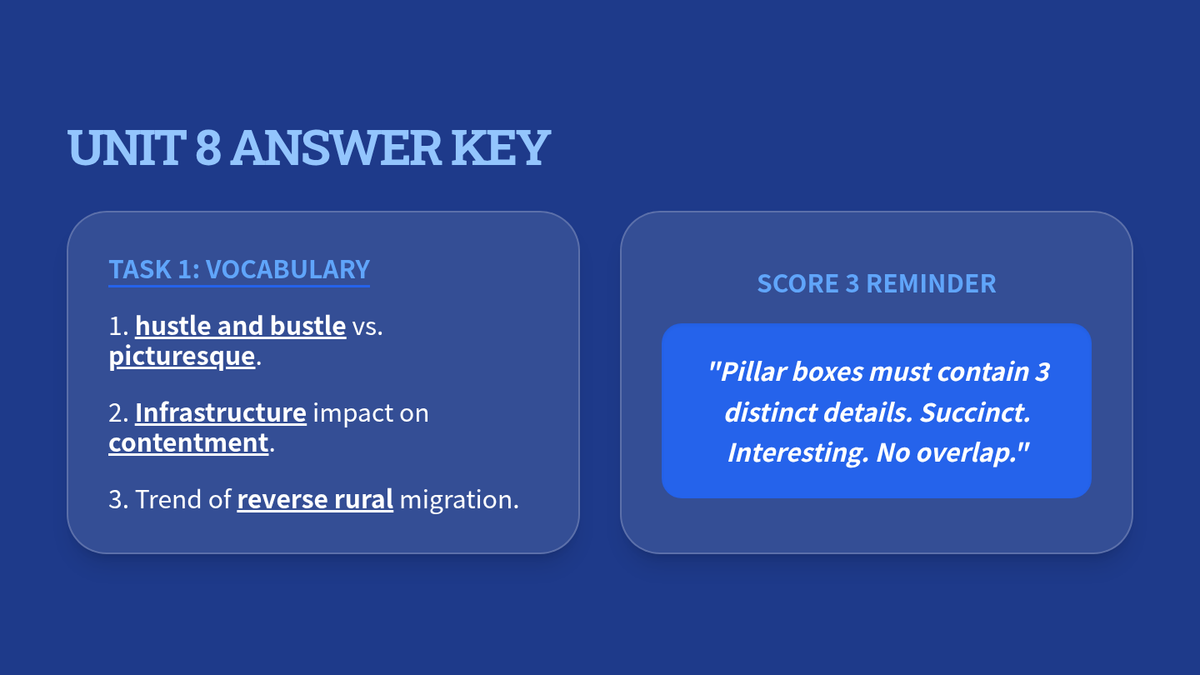
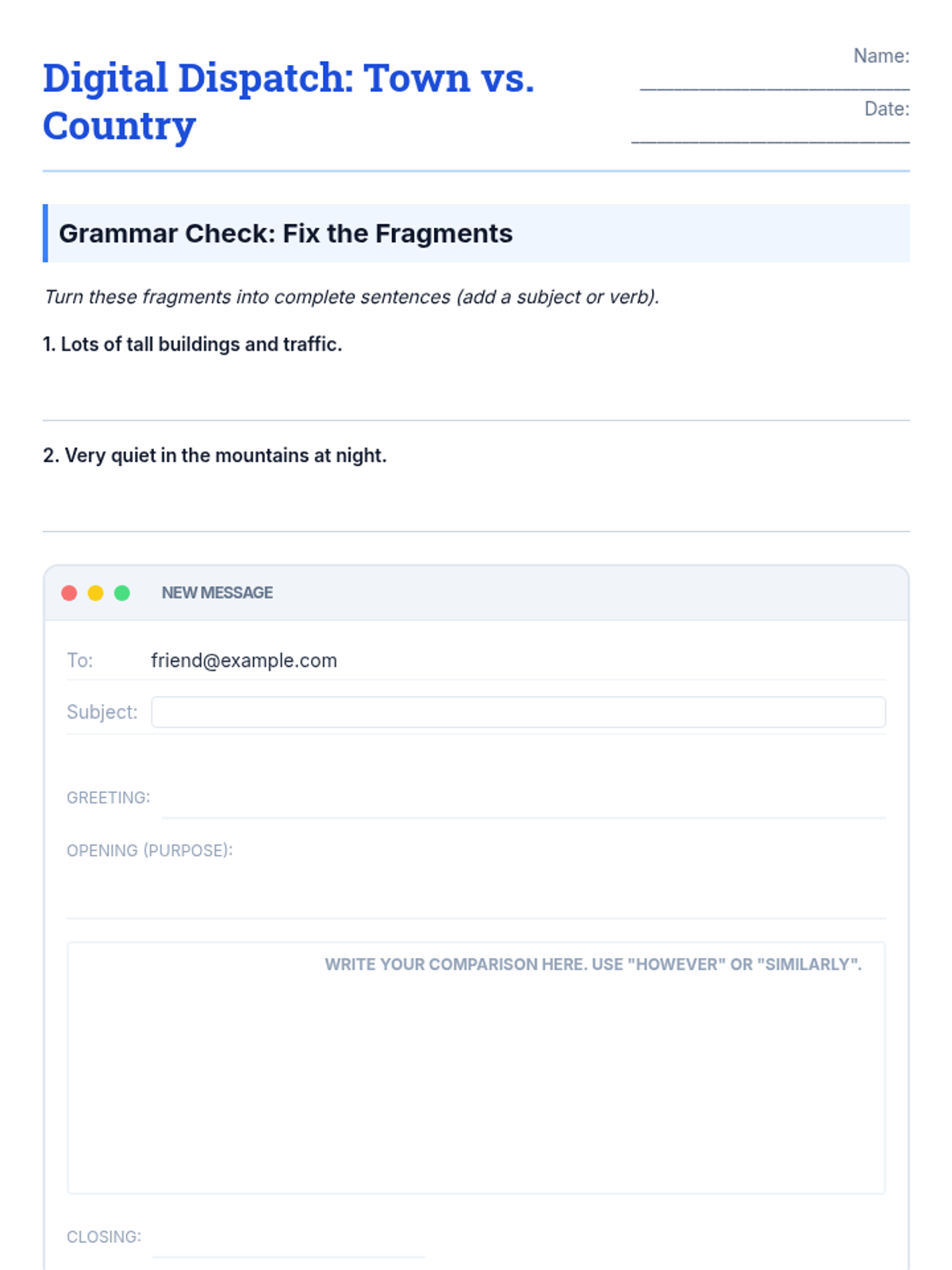
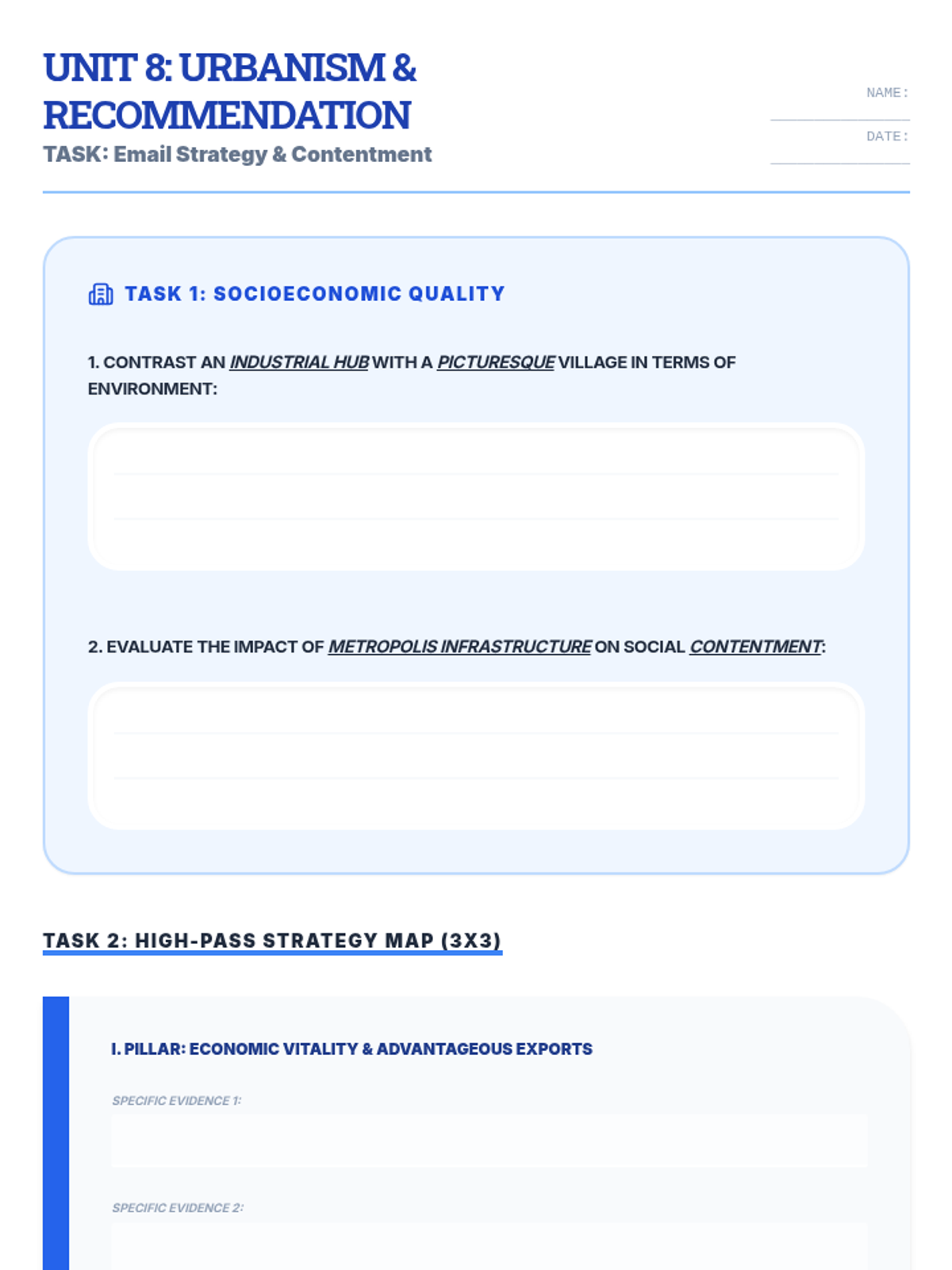
Teaches email etiquette and structure through a comparison of urban and rural life, focusing on sentence fragments and transitional words for comparison.
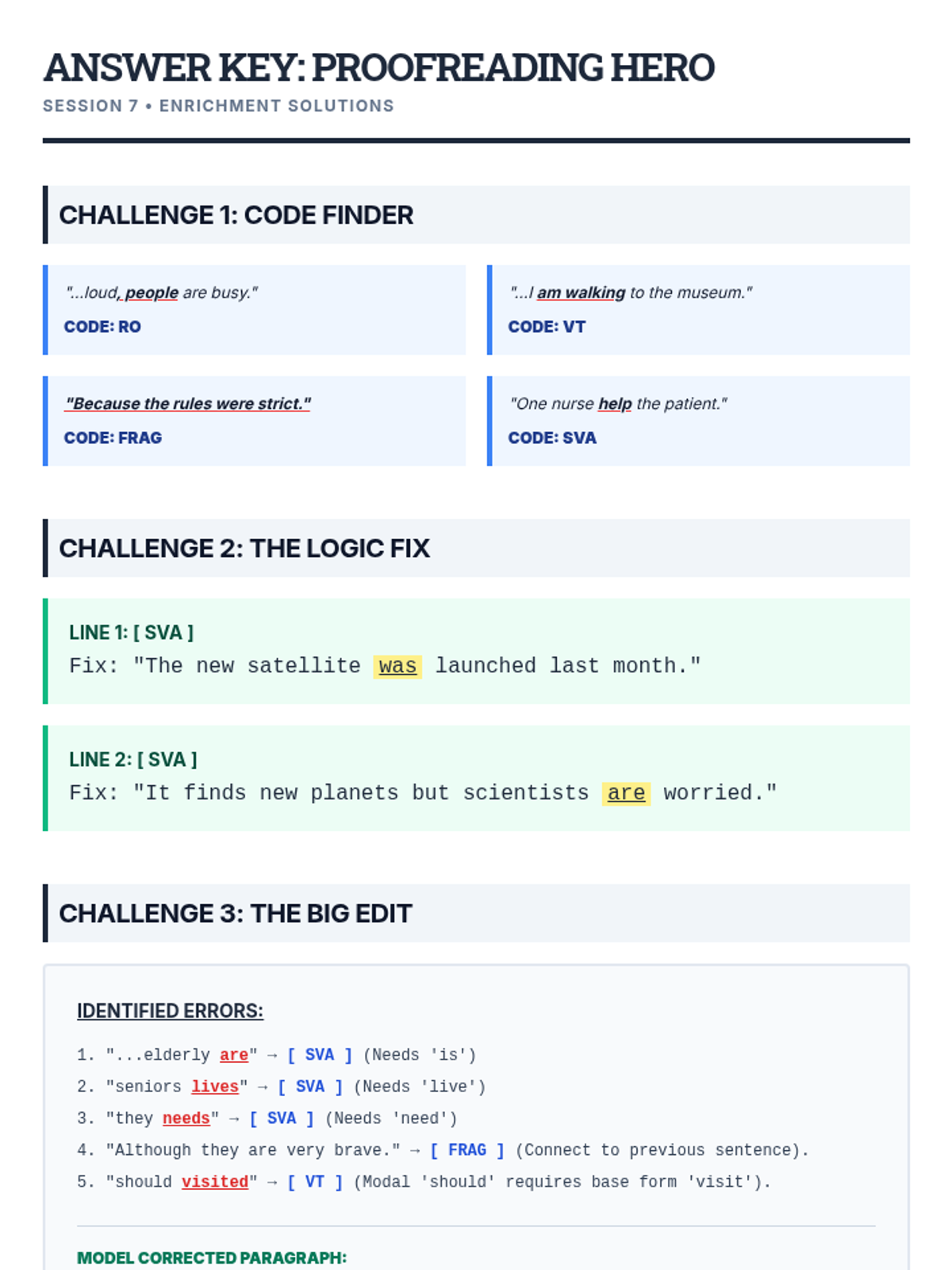
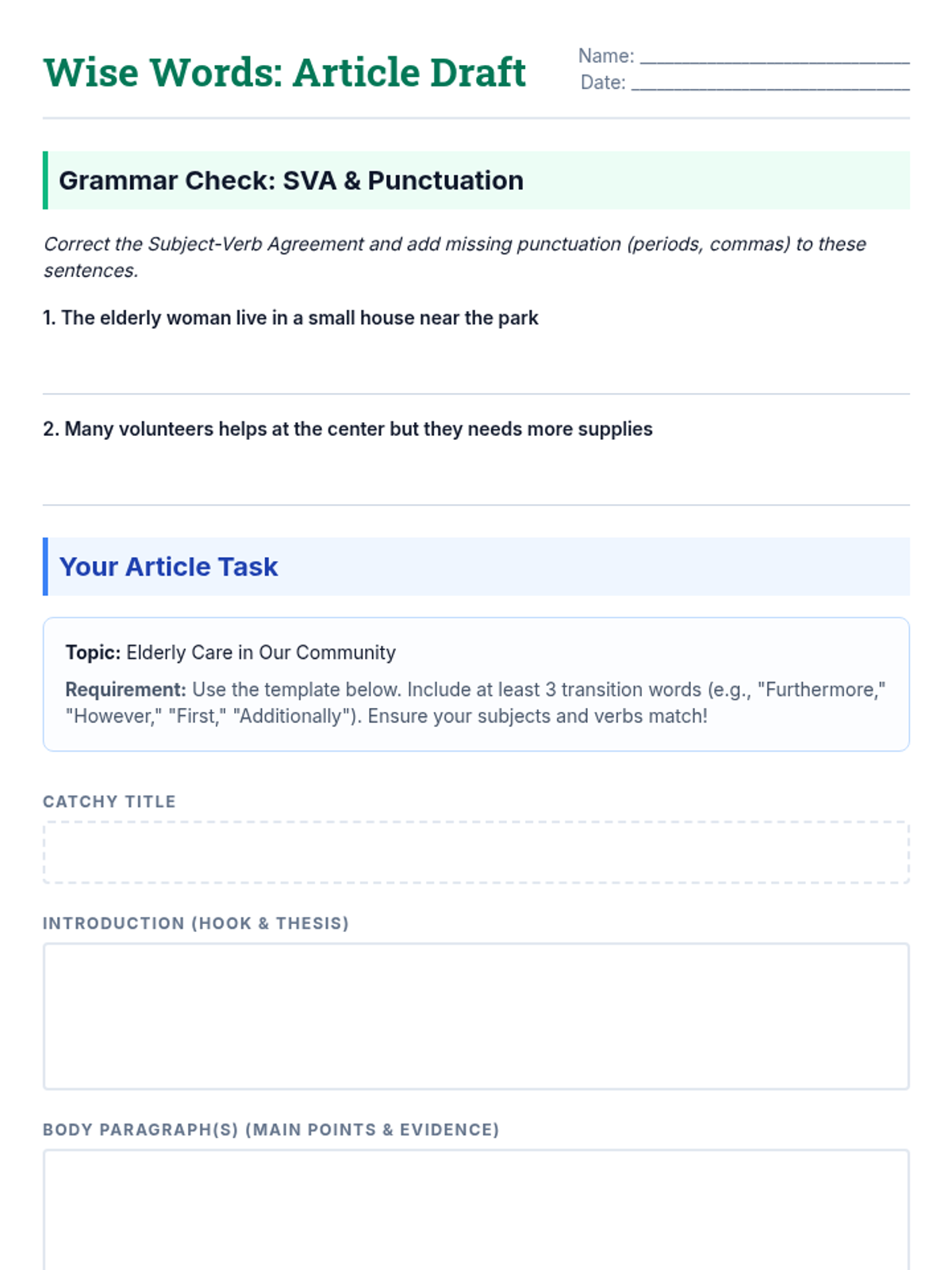
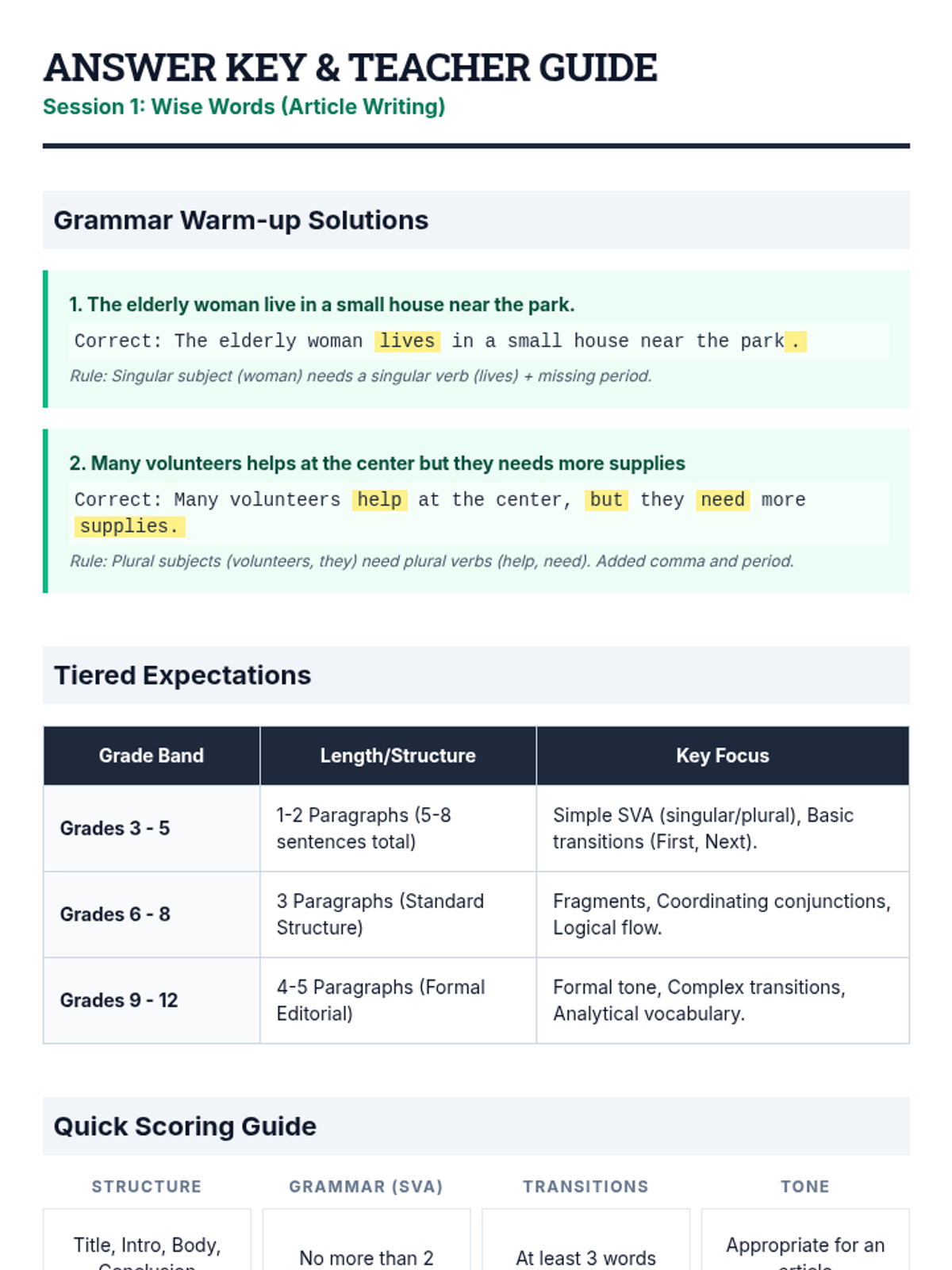
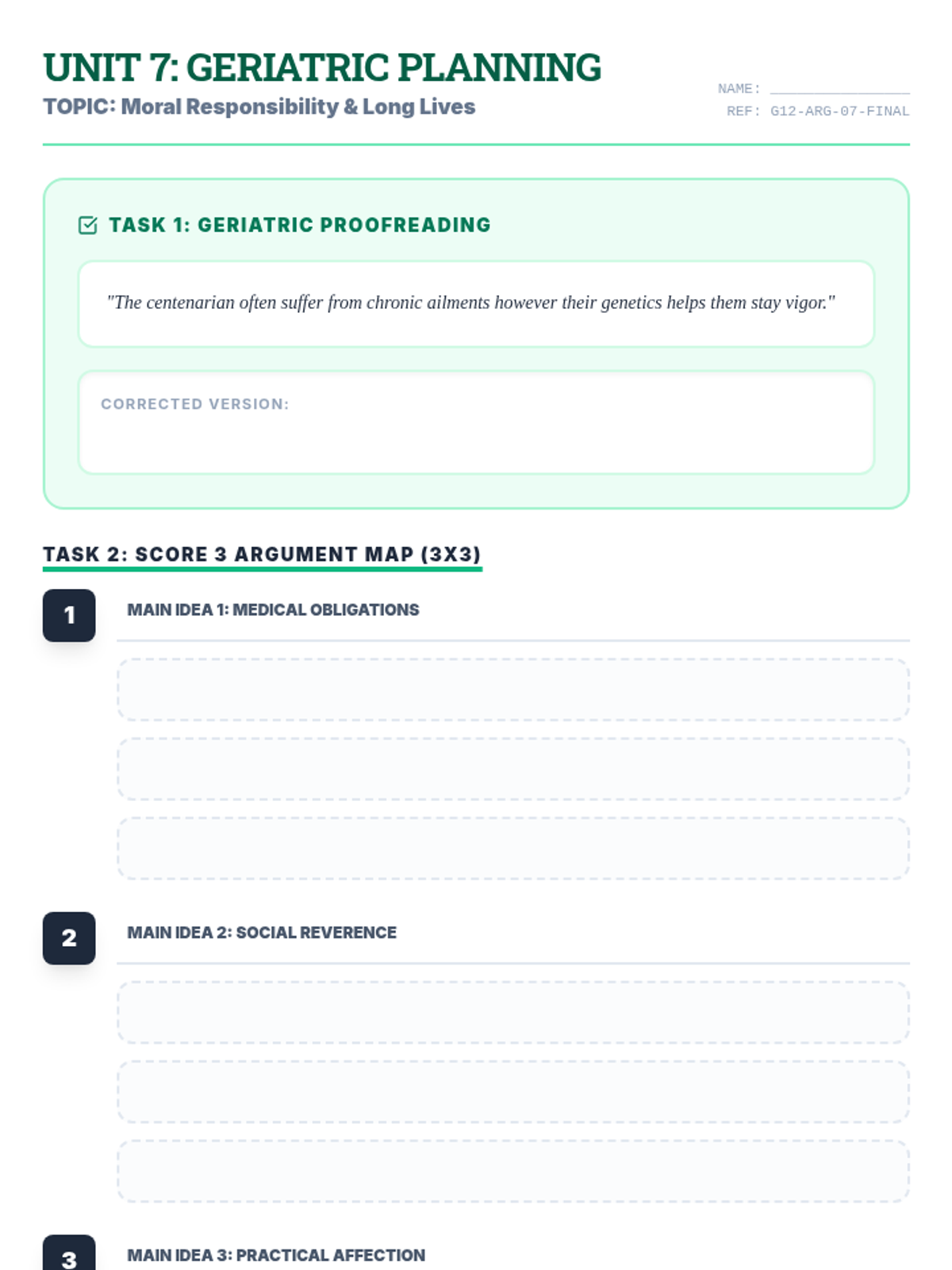
Focuses on writing articles about elderly care, teaching subject-verb agreement, punctuation, and article structure with tiered difficulty for elementary to high school levels.
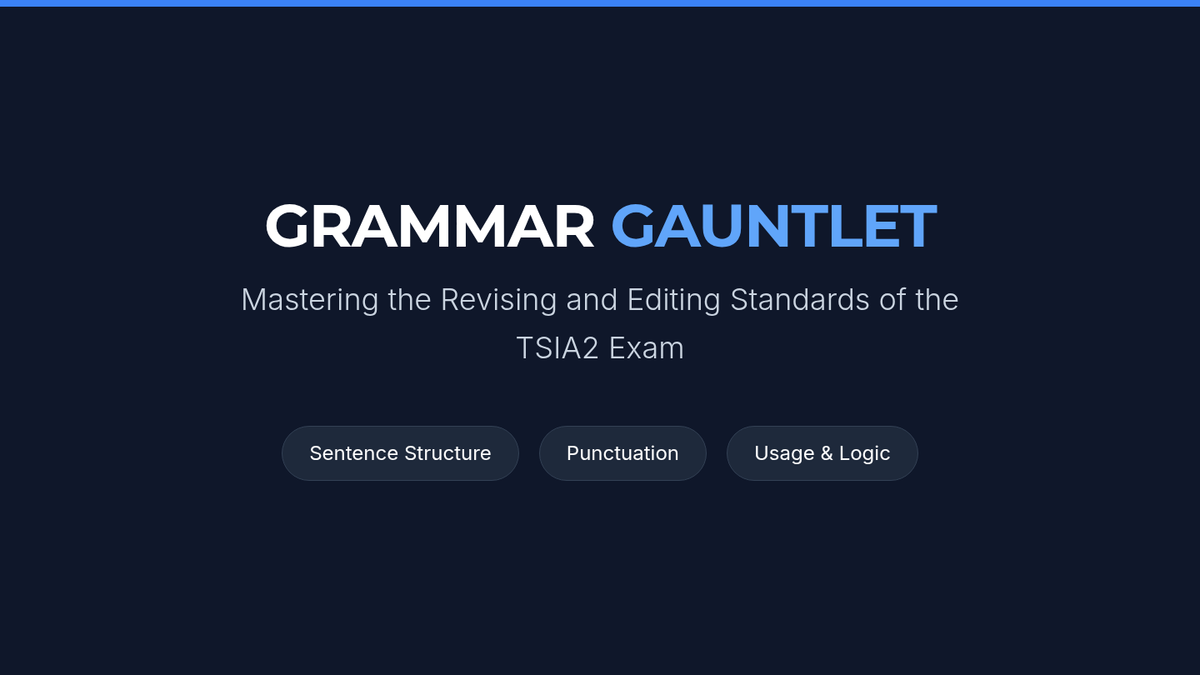
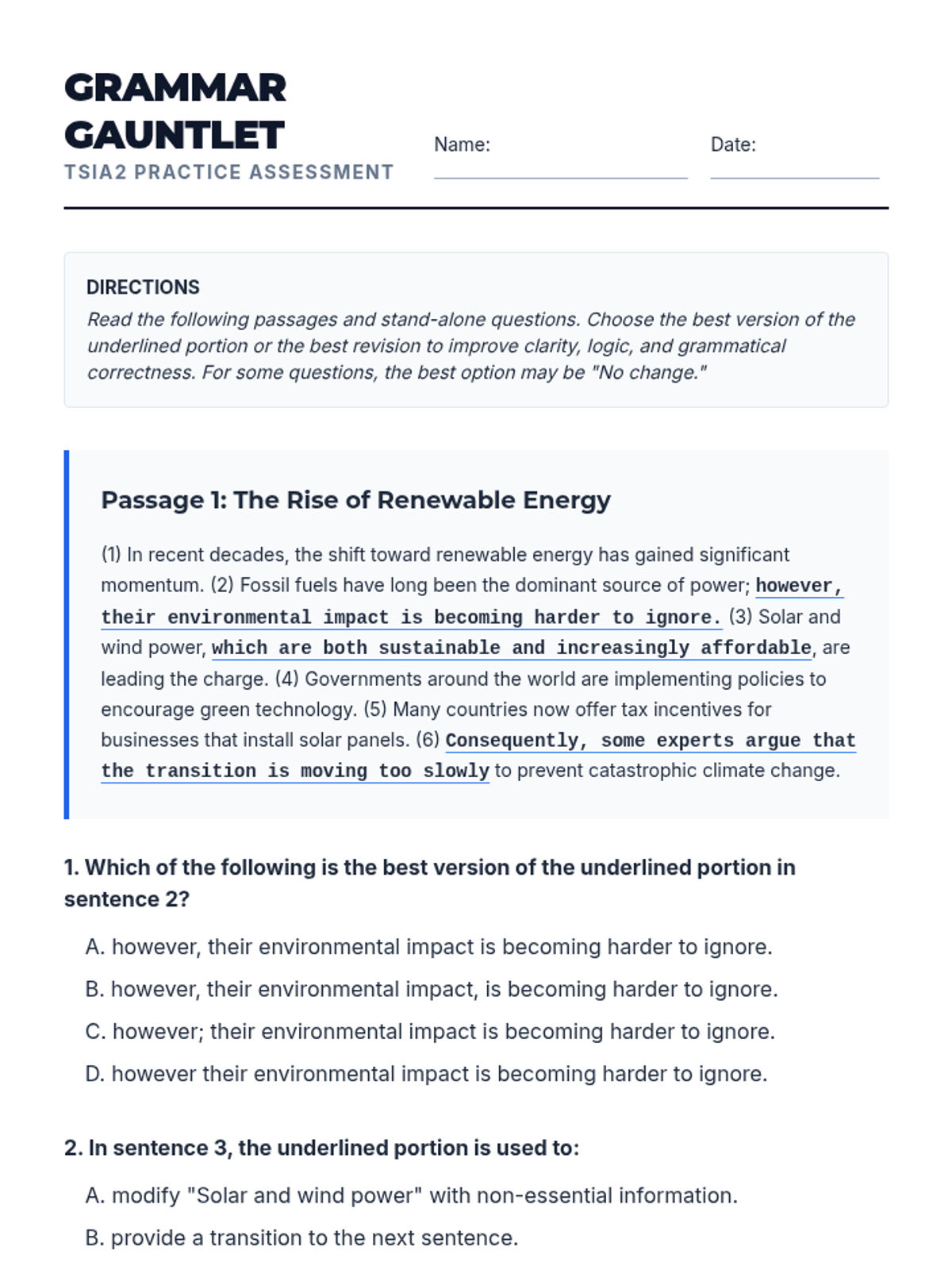
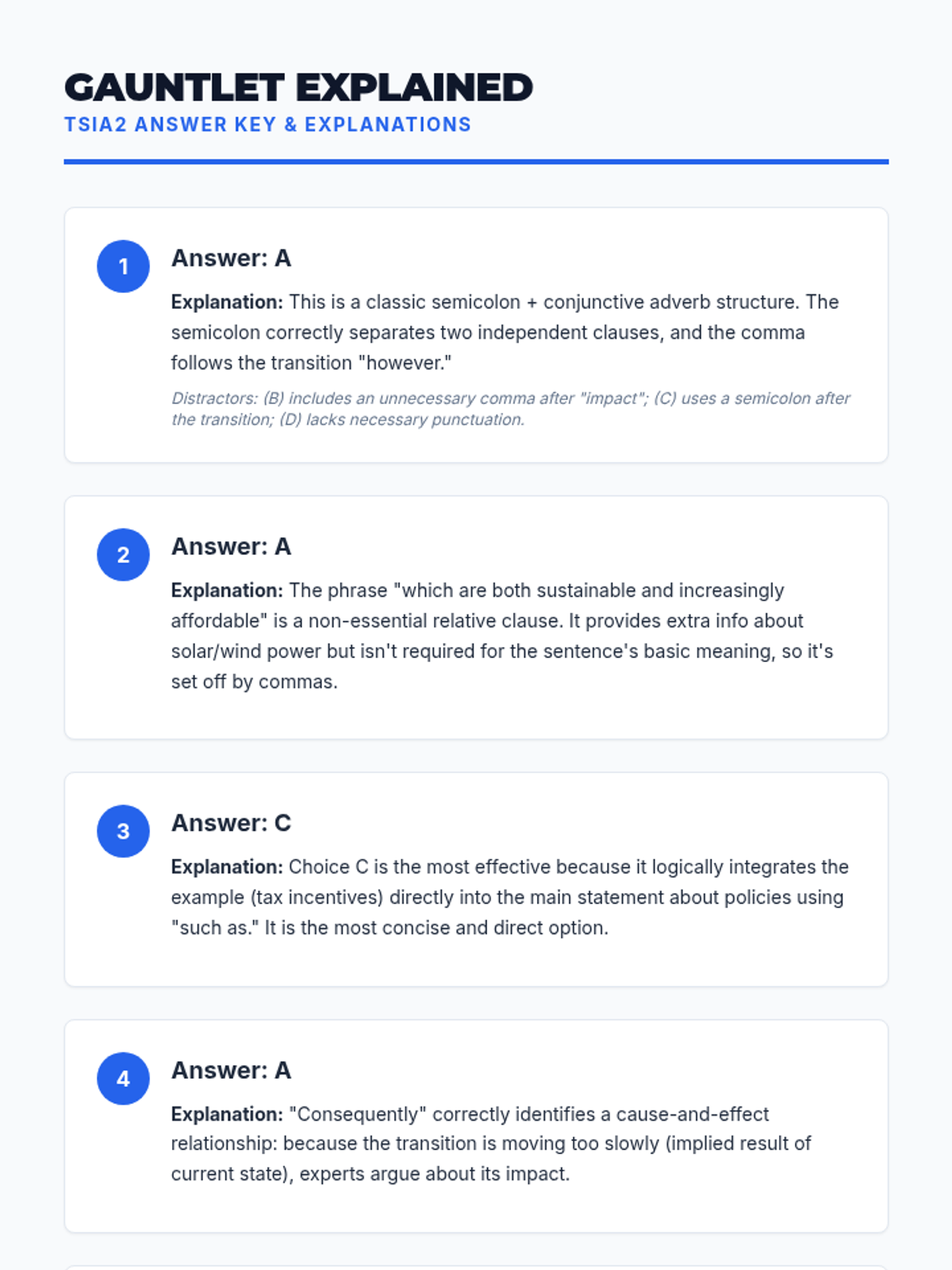
A comprehensive lesson covering TSIA2 grammar standards, including sentence structure, punctuation, agreement, and logical diction. Includes instructional slides, a 20-question practice exam, and a detailed explanation key.
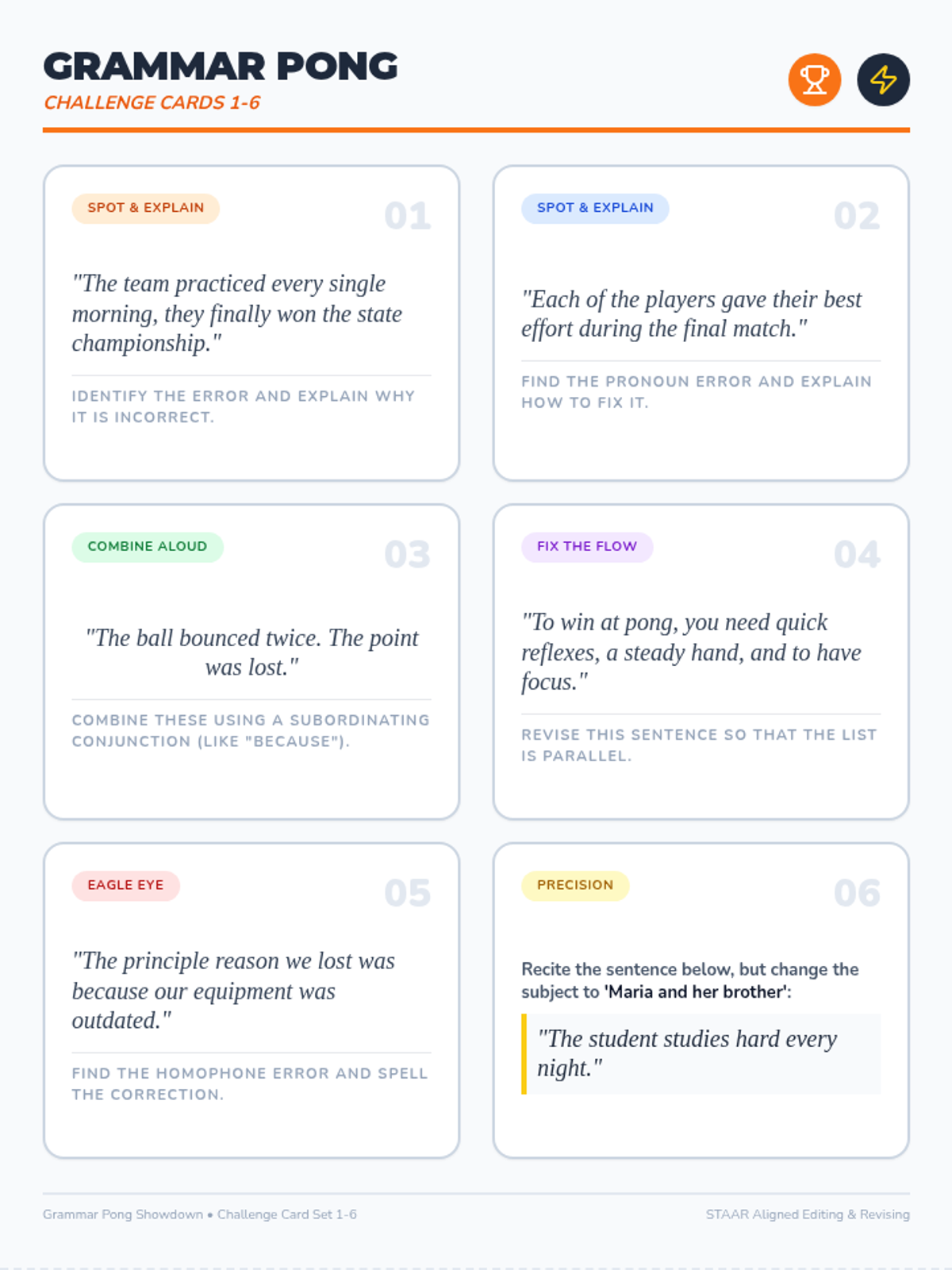
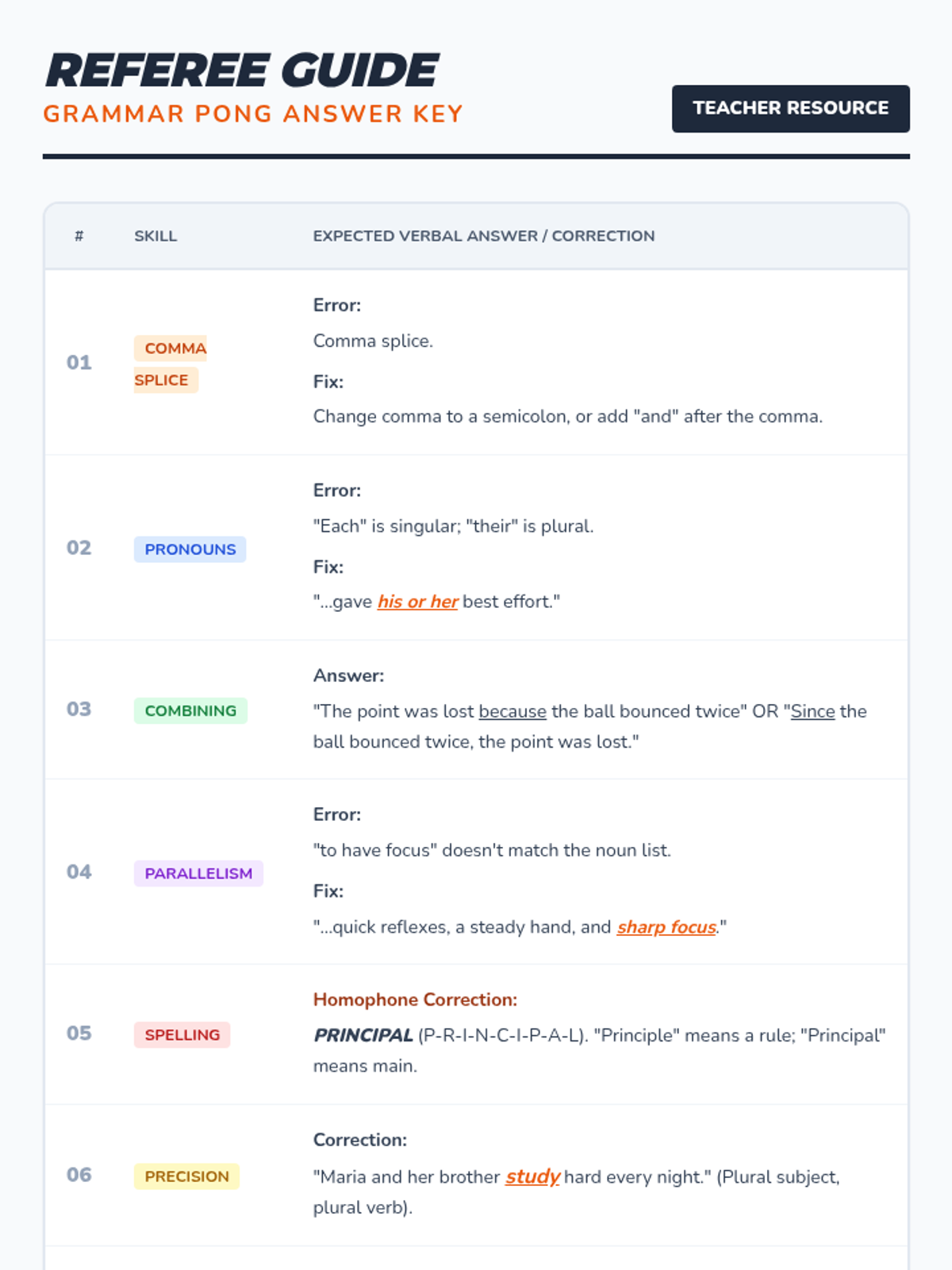
A high-energy editing and revising game where students master comma splices, pronoun-antecedent agreement, and sentence structure through verbal challenges.
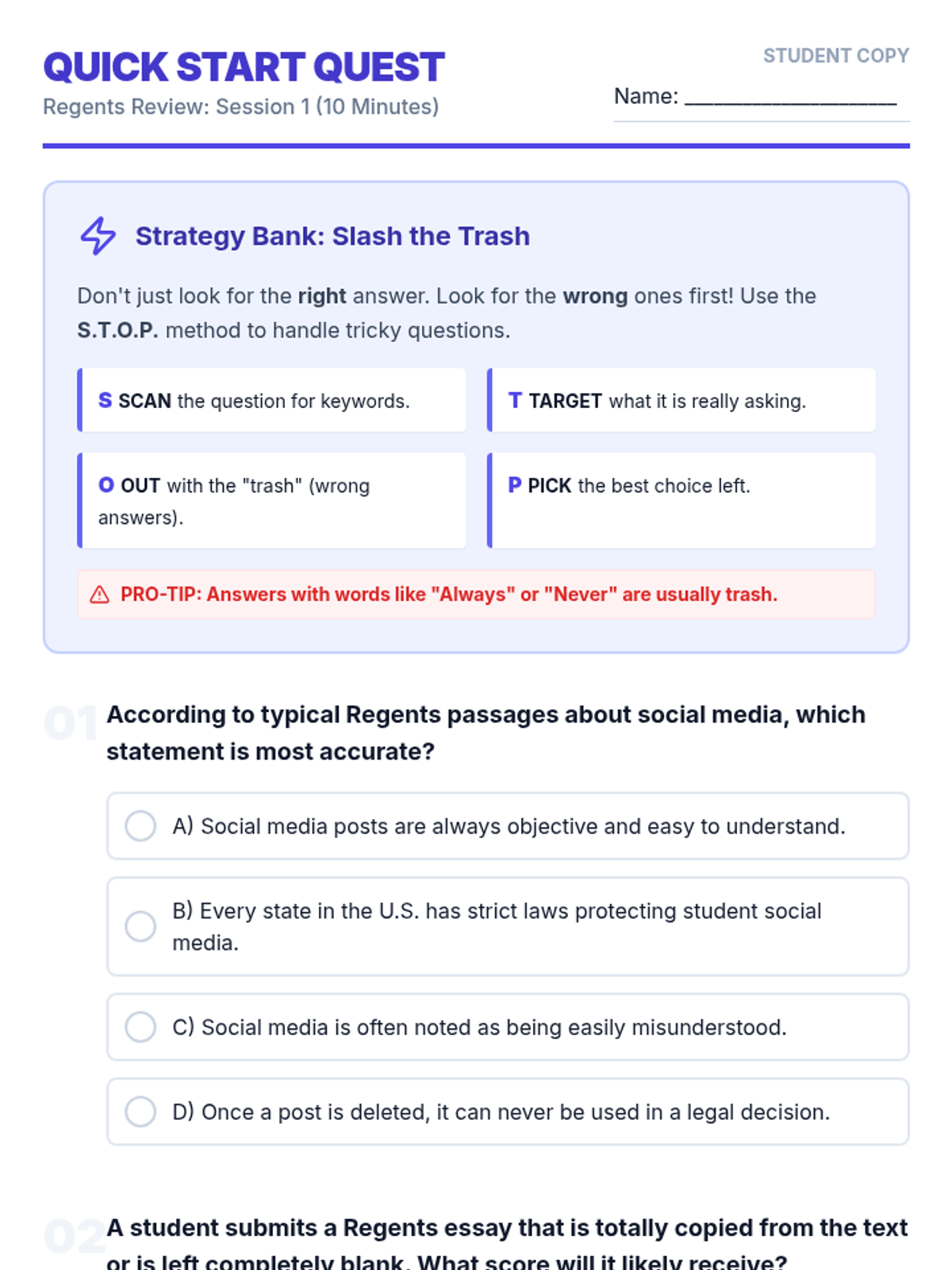
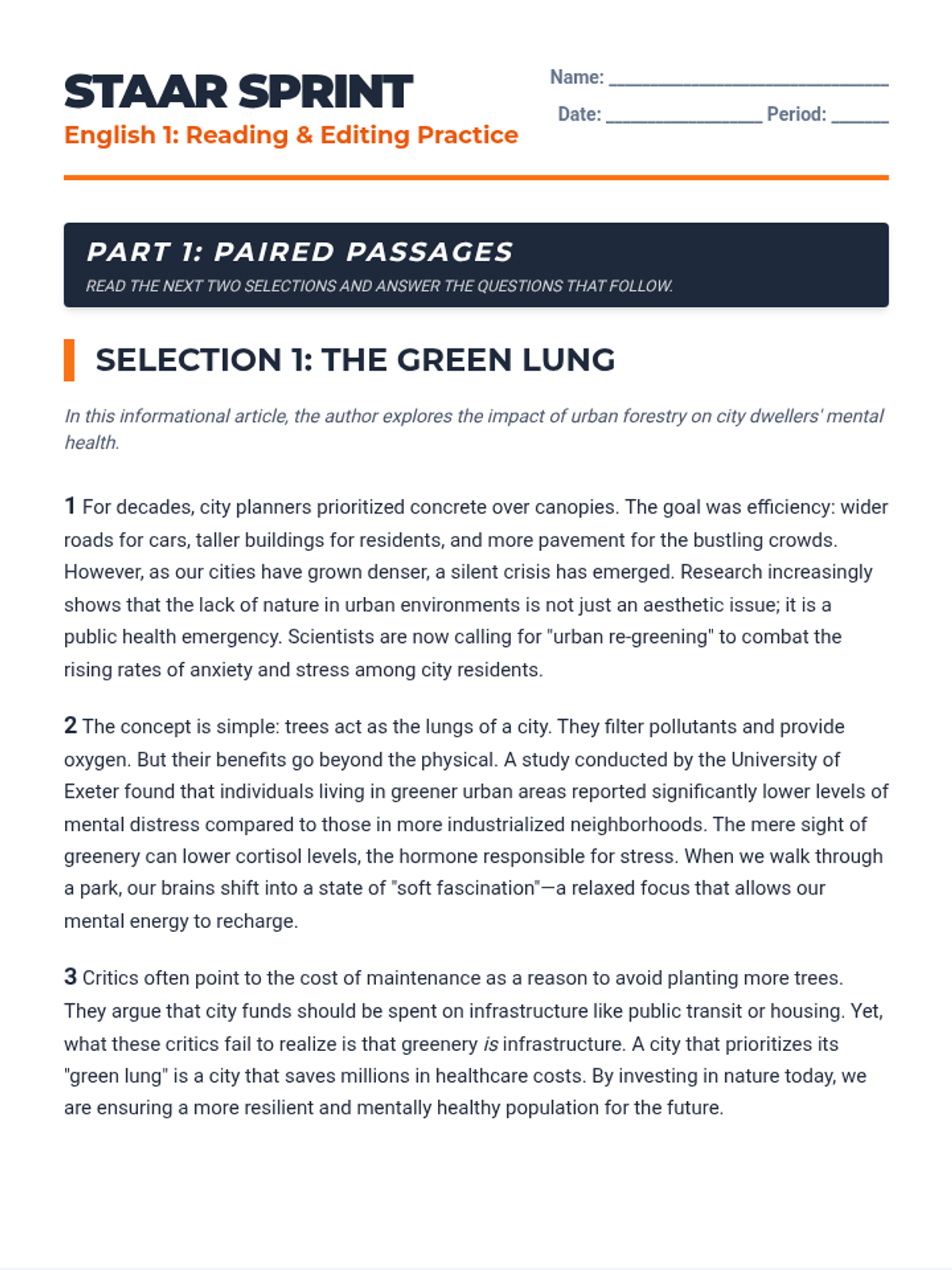
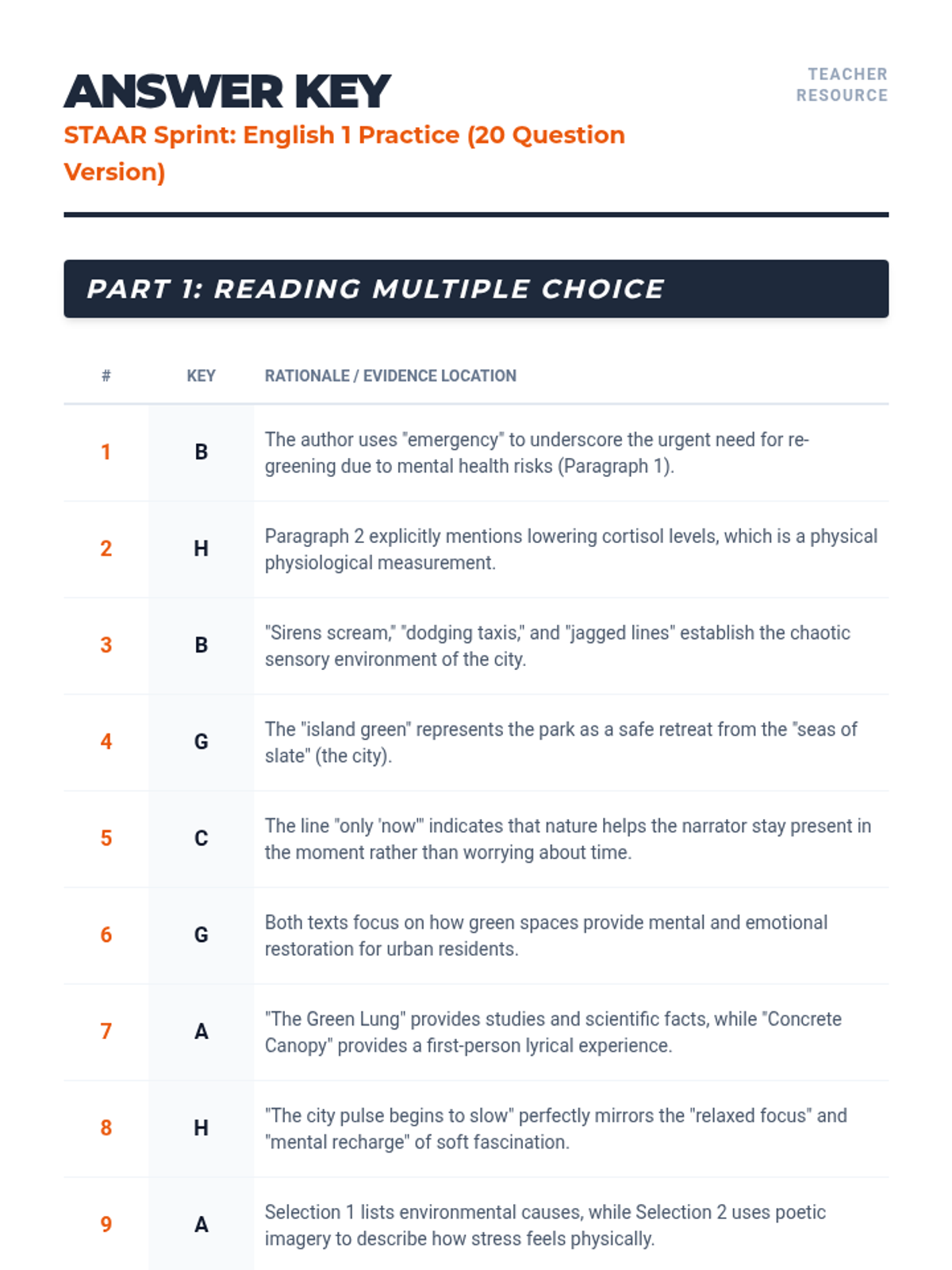
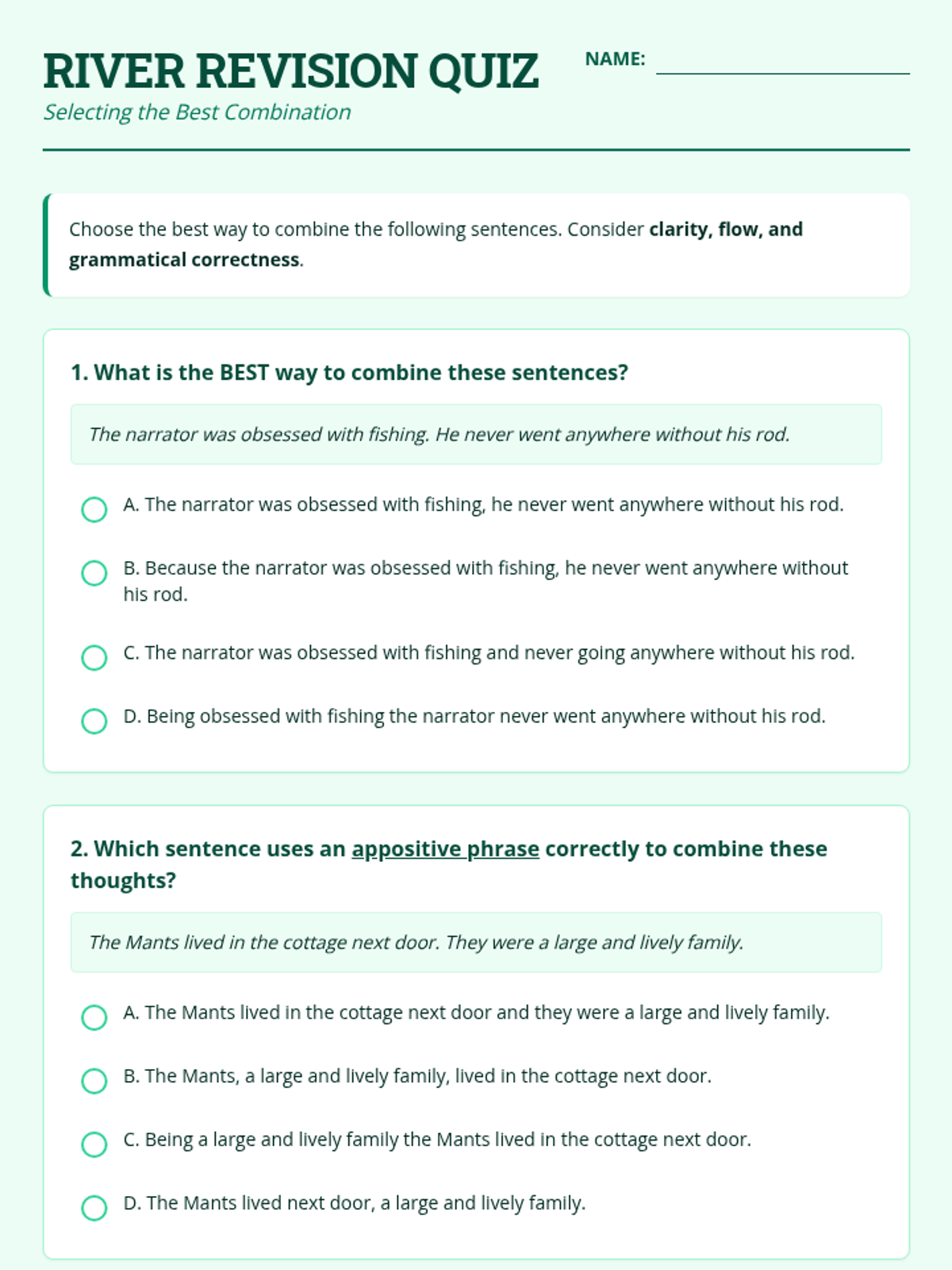
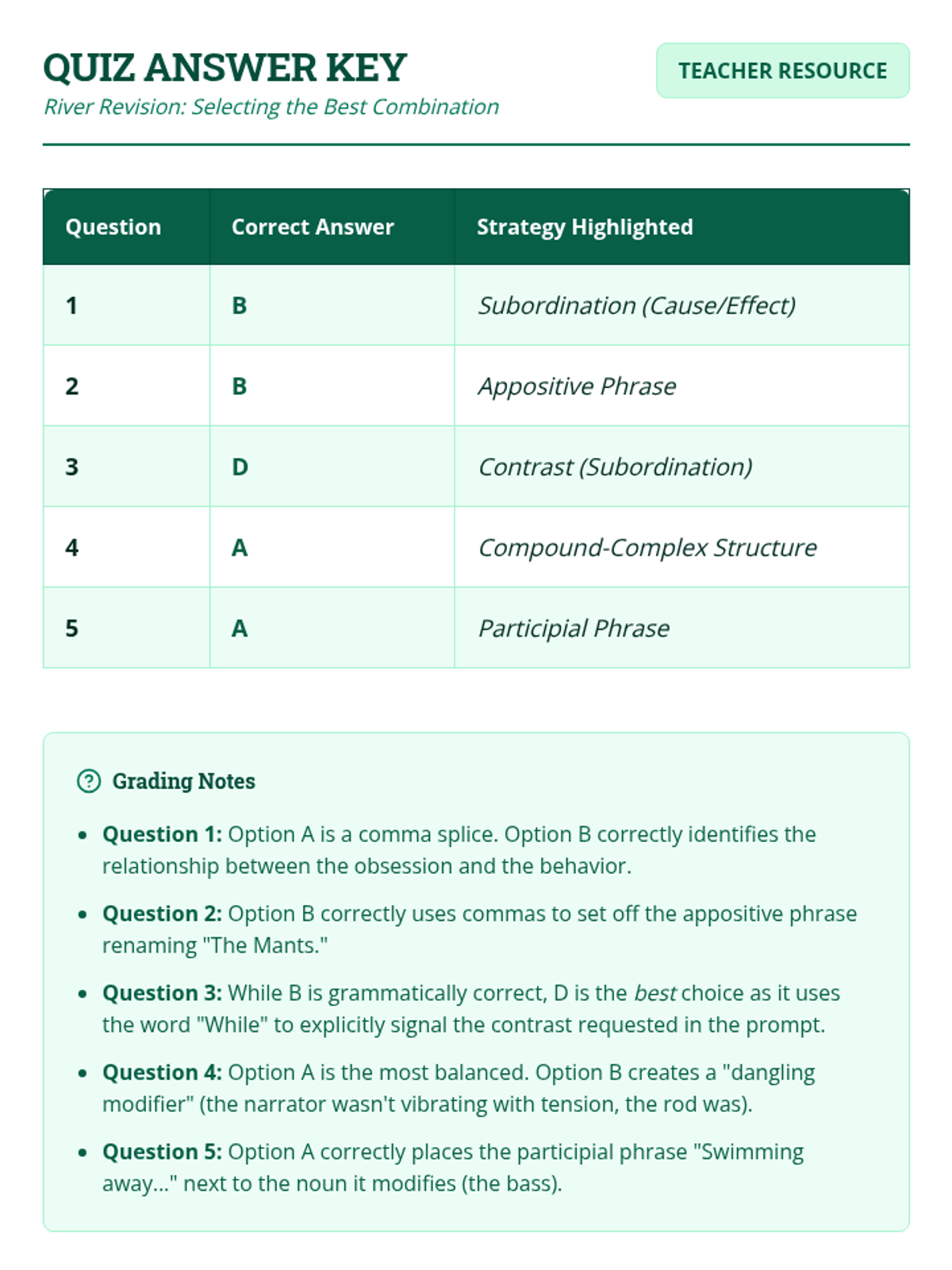
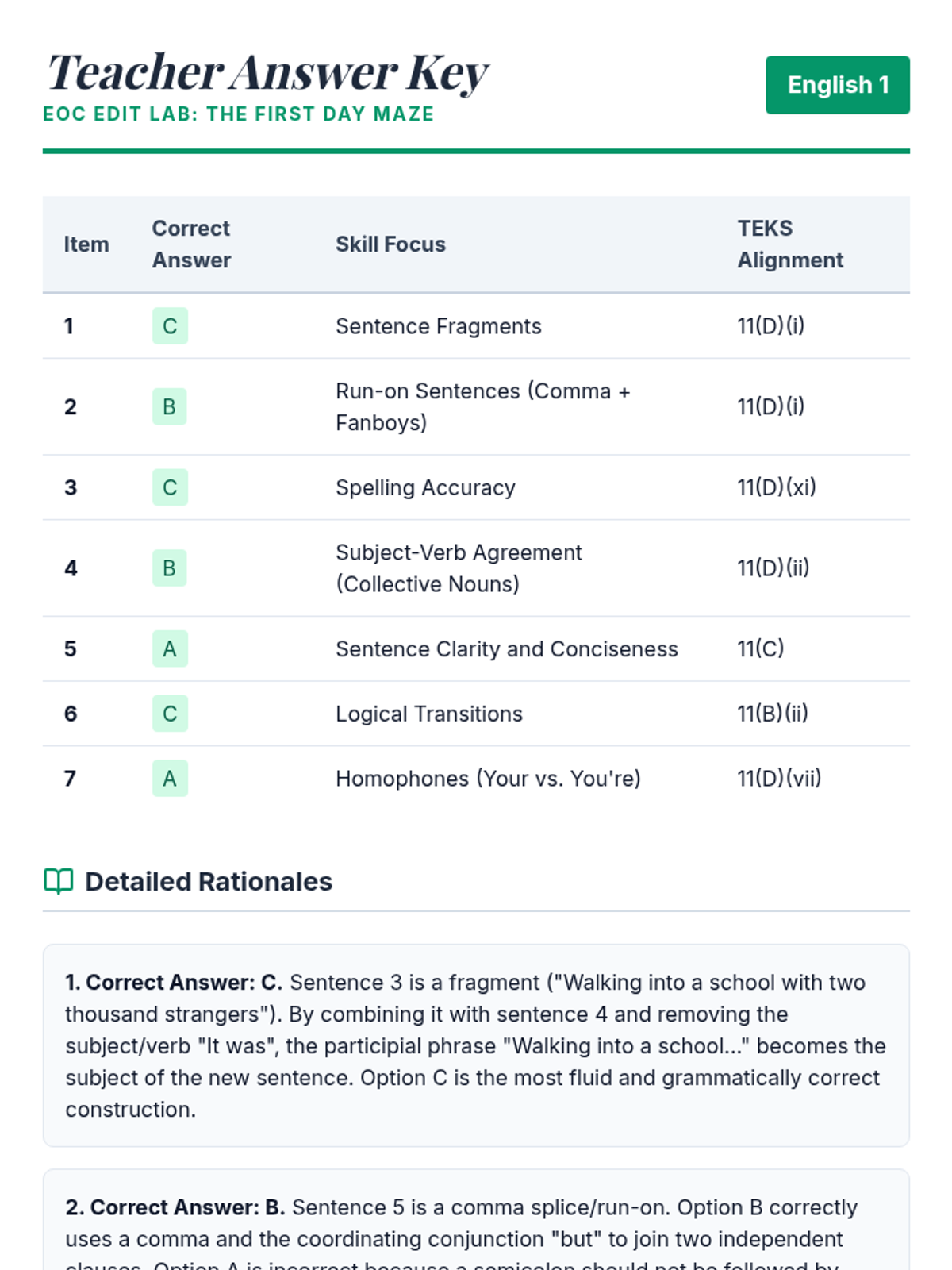
A targeted review lesson focused on high-stakes reading comprehension and editing skills, designed to mirror the English 1 STAAR exam format. This lesson includes a comprehensive practice quiz and a detailed answer key for instructional feedback.
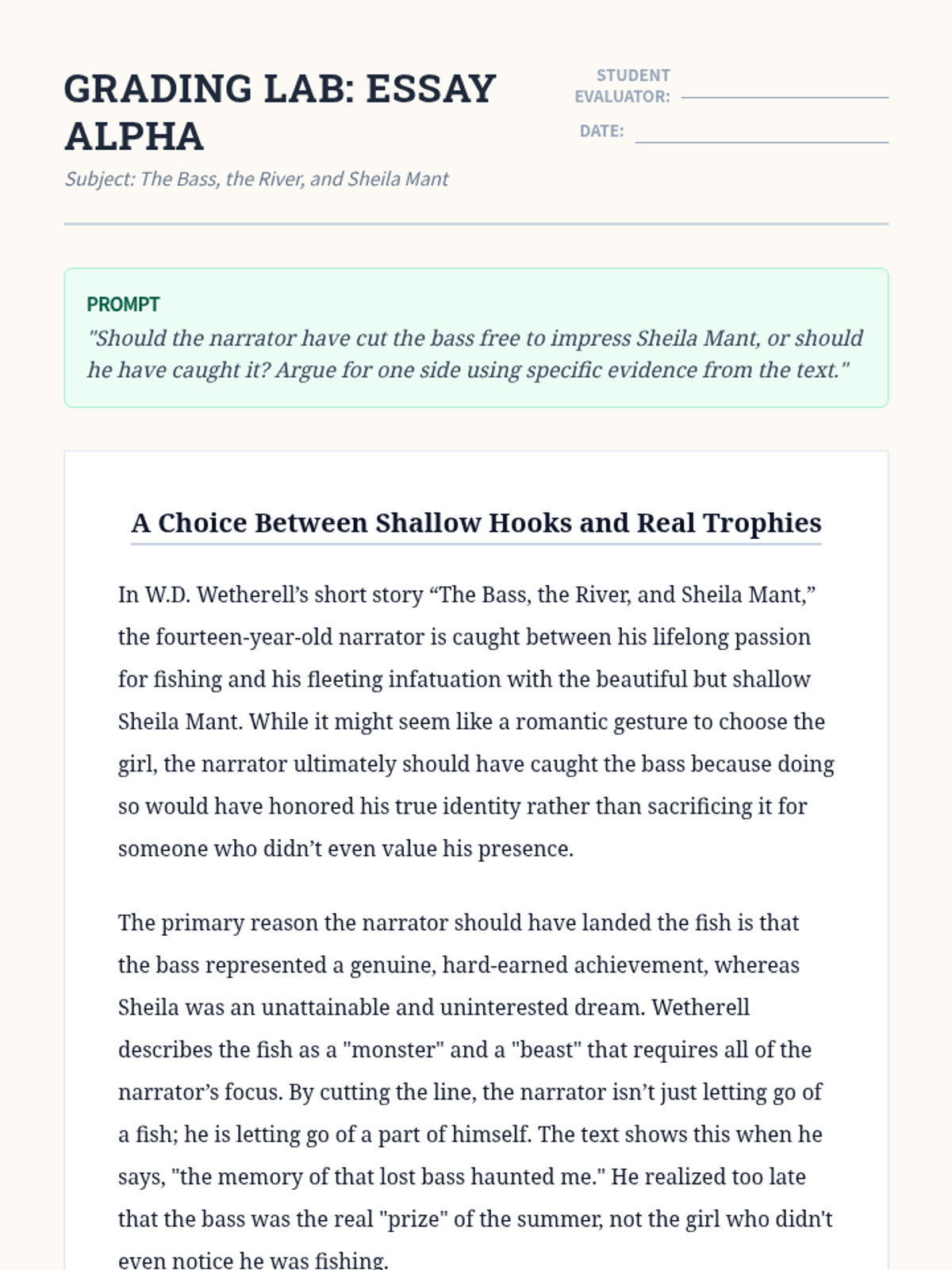
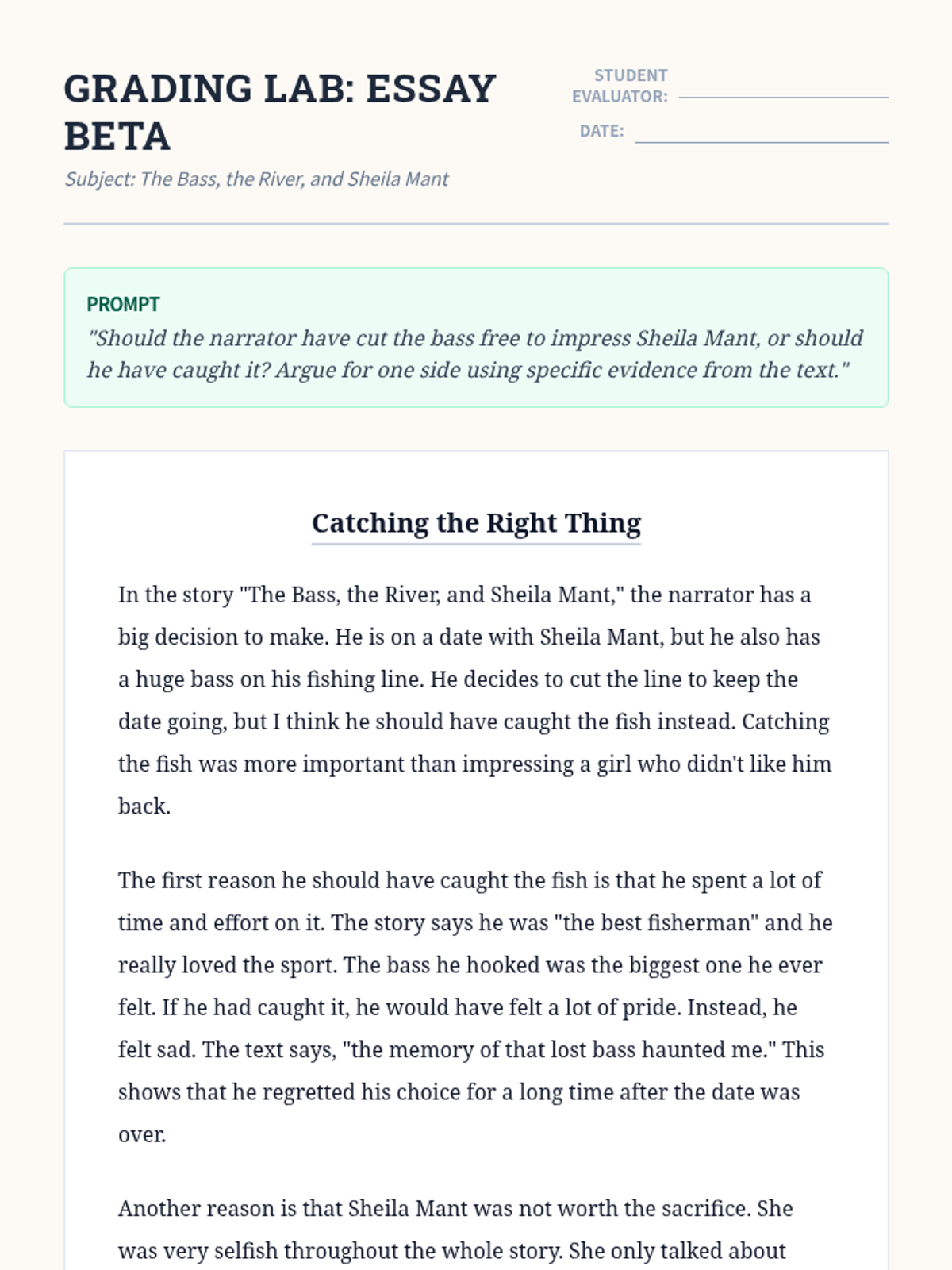
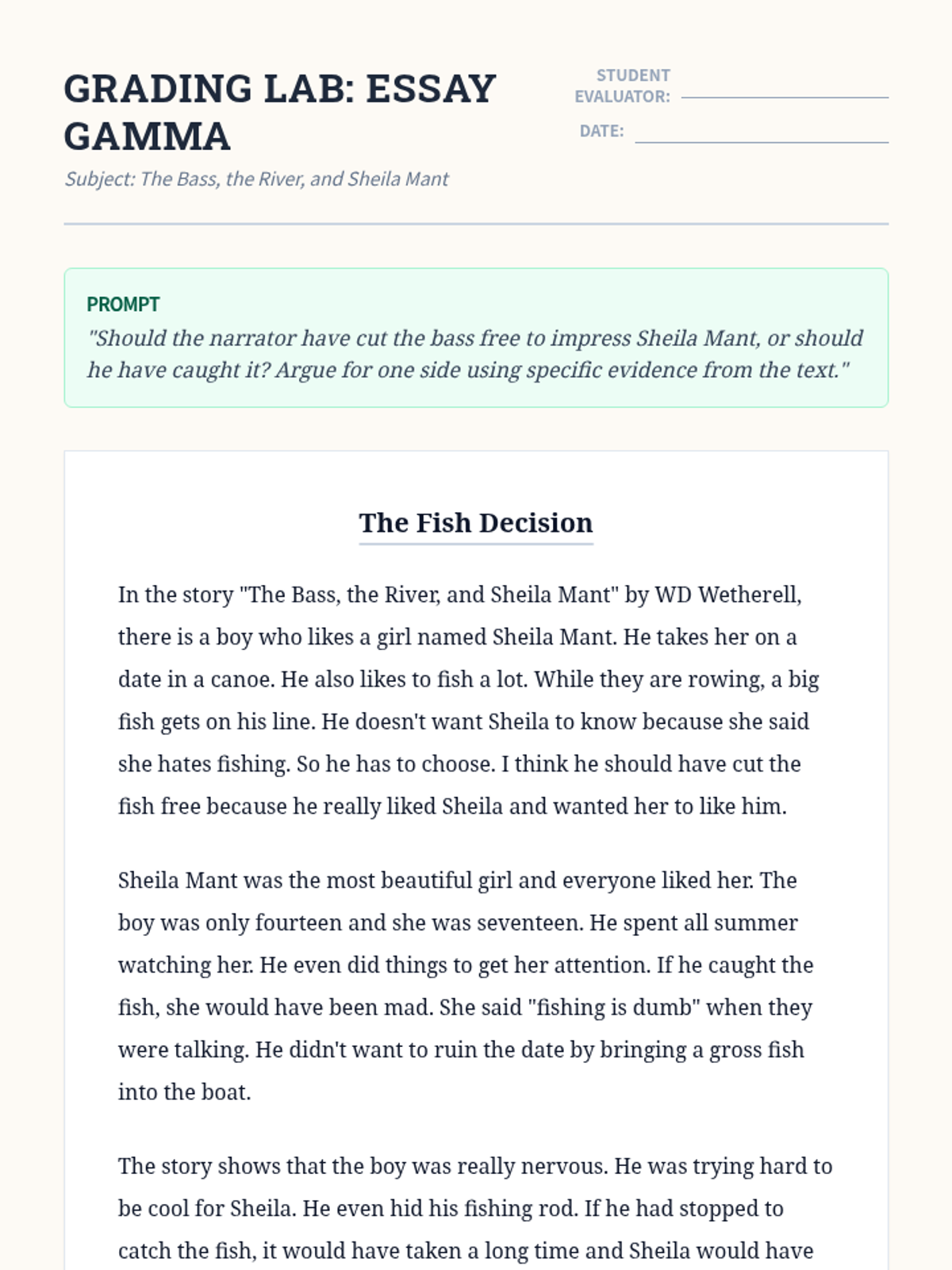
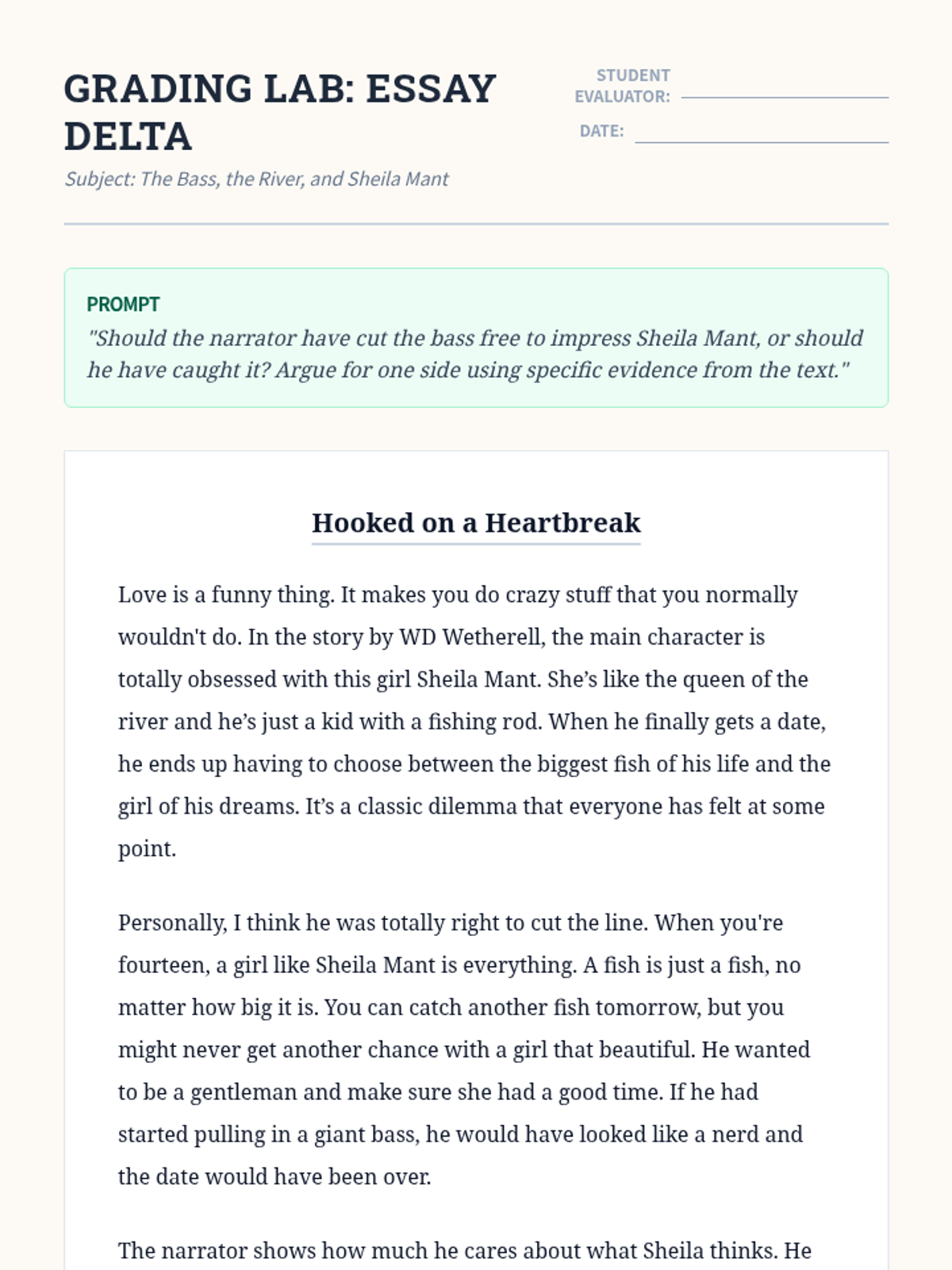
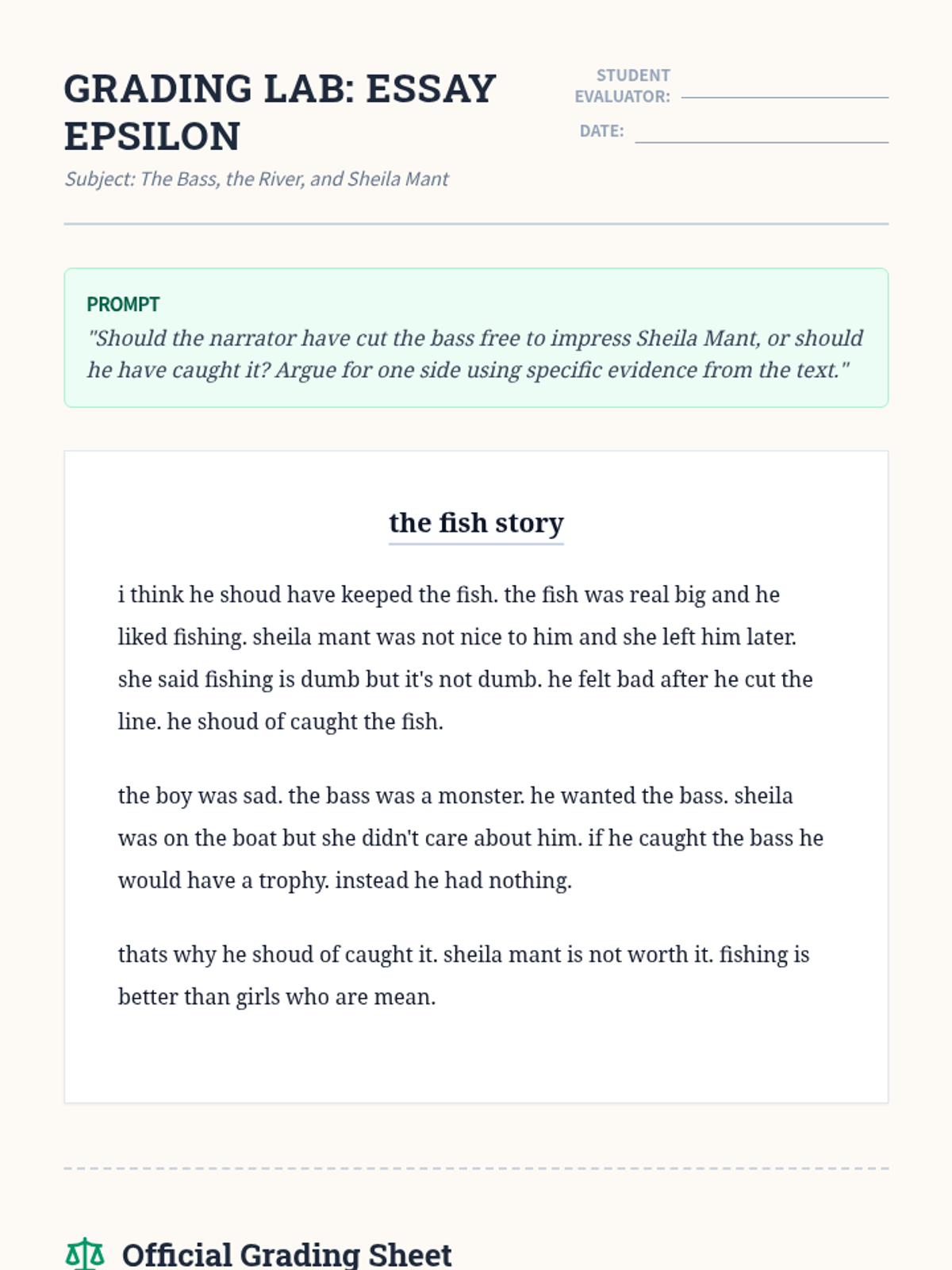
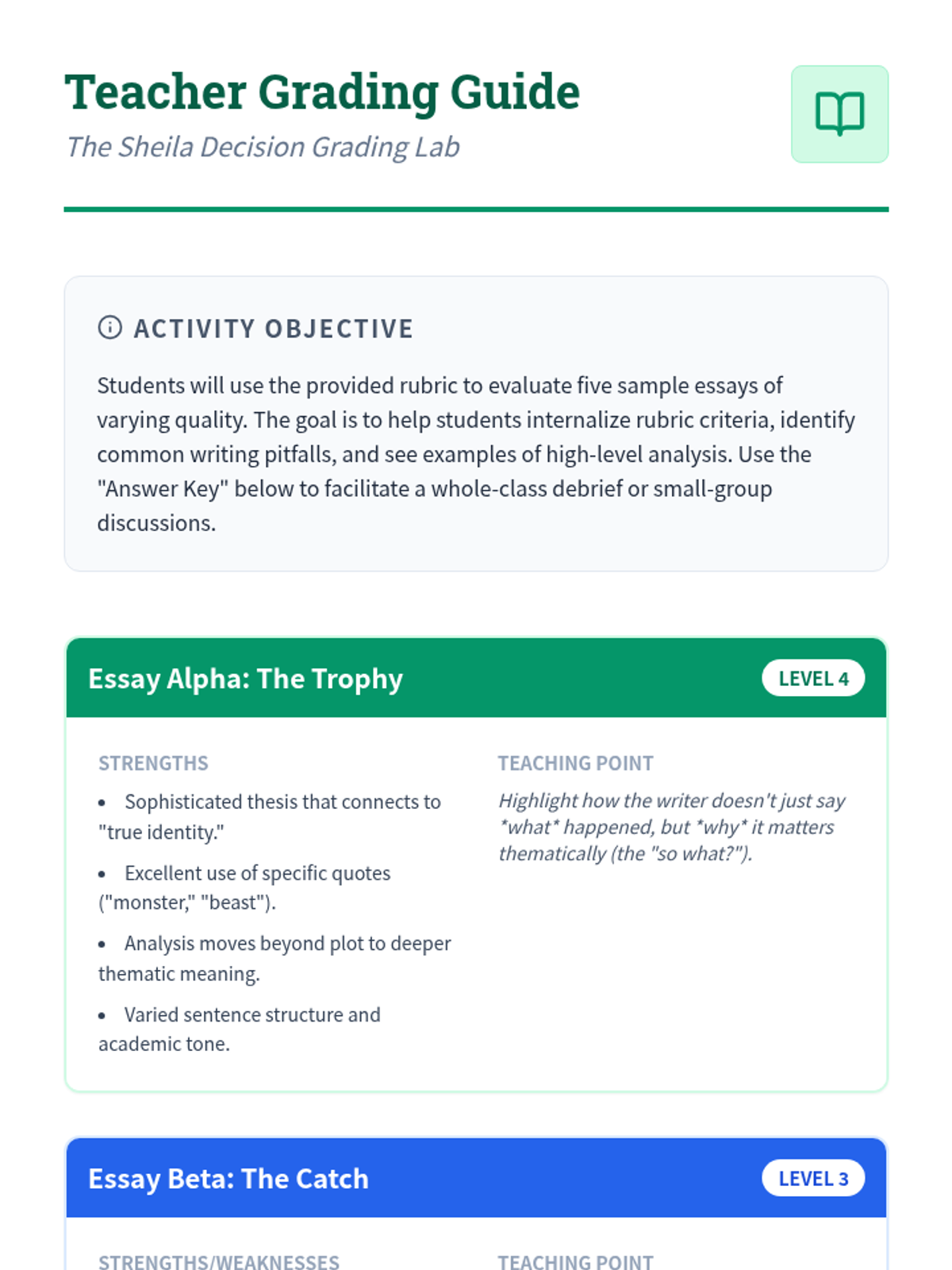
A hands-on grading lab where students evaluate five student-written argumentative essays on W.D. Wetherell's 'The Bass, the River, and Sheila Mant,' using a standardized rubric to develop their own writing and analysis skills.
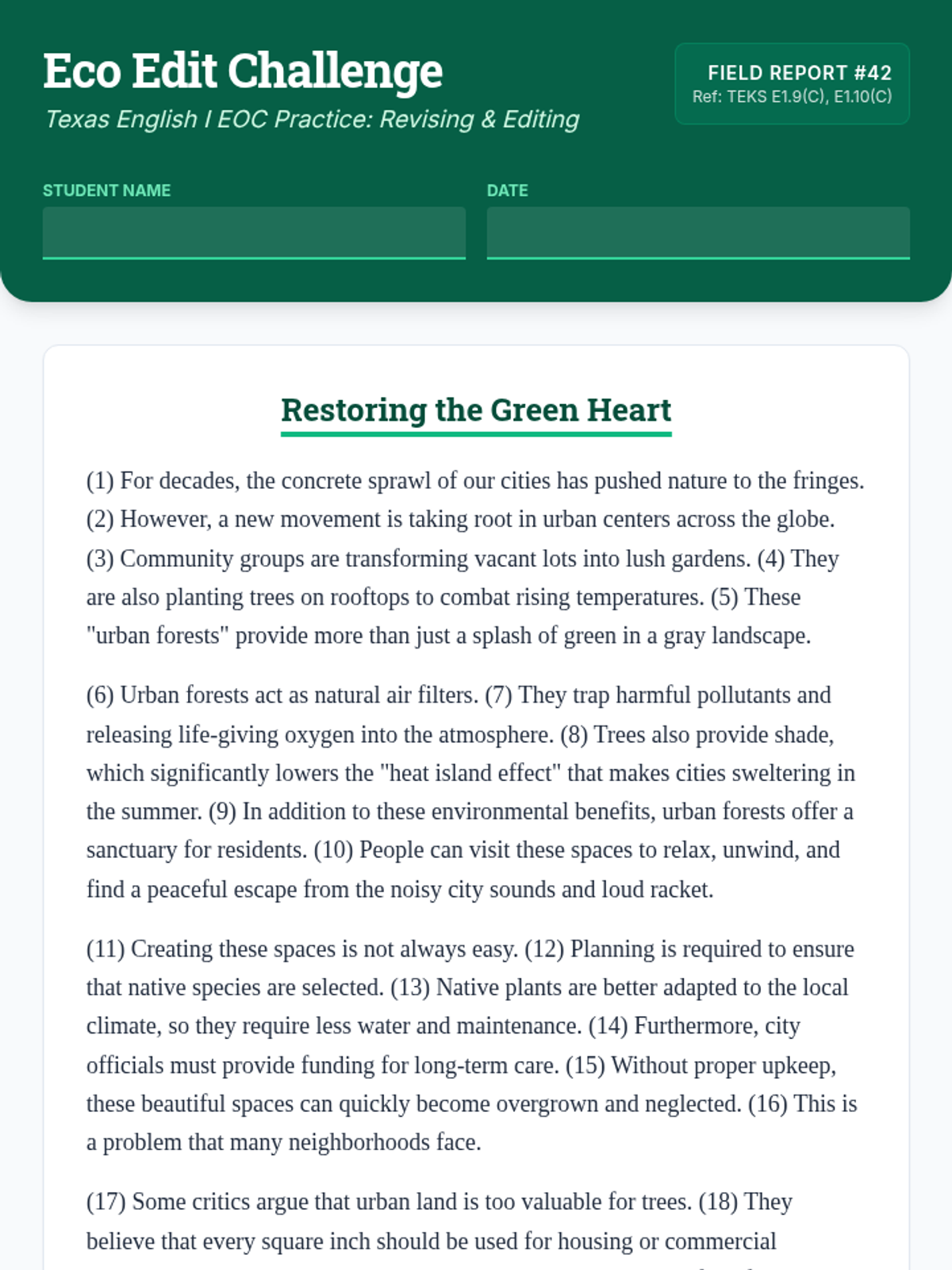
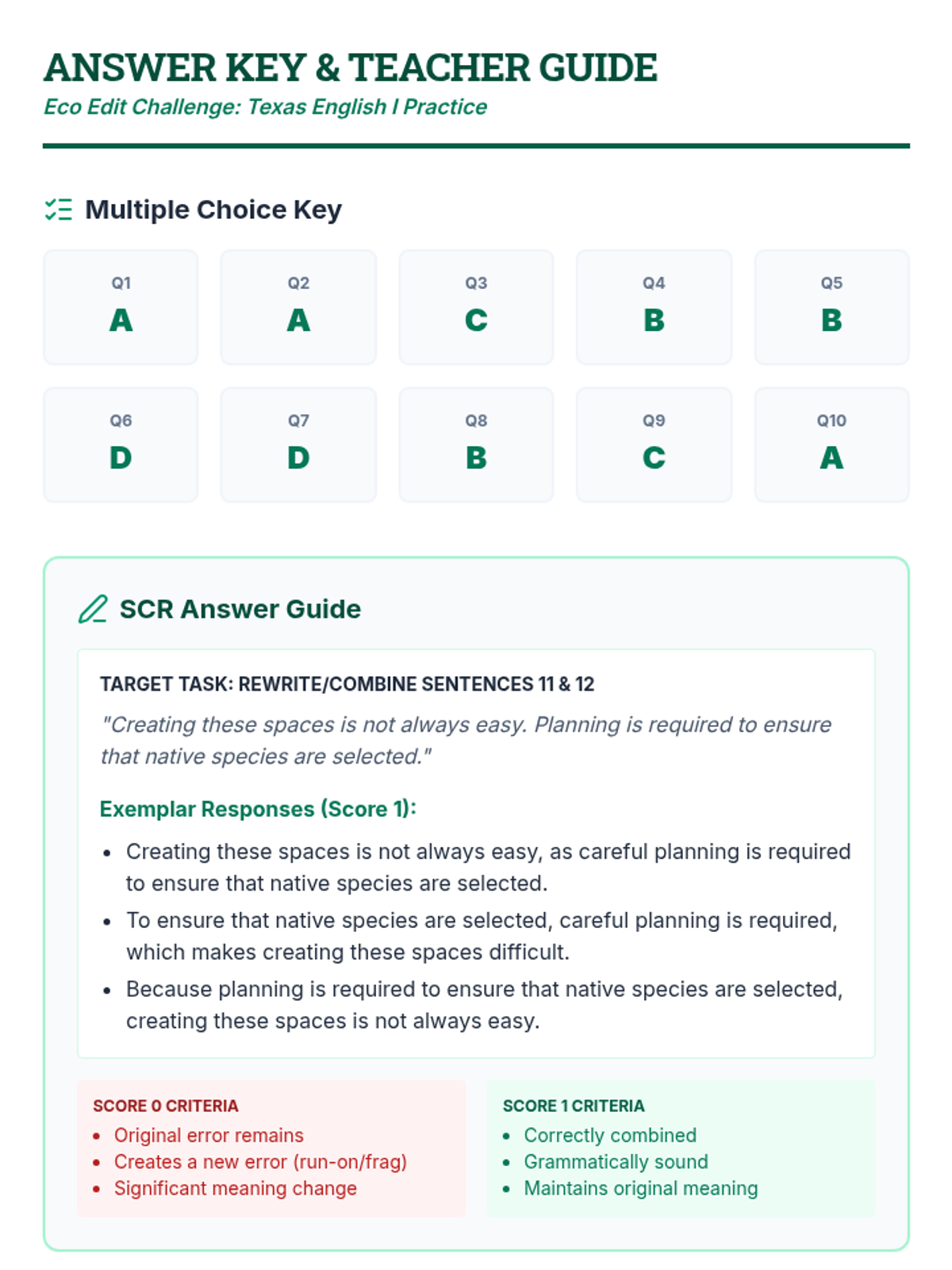
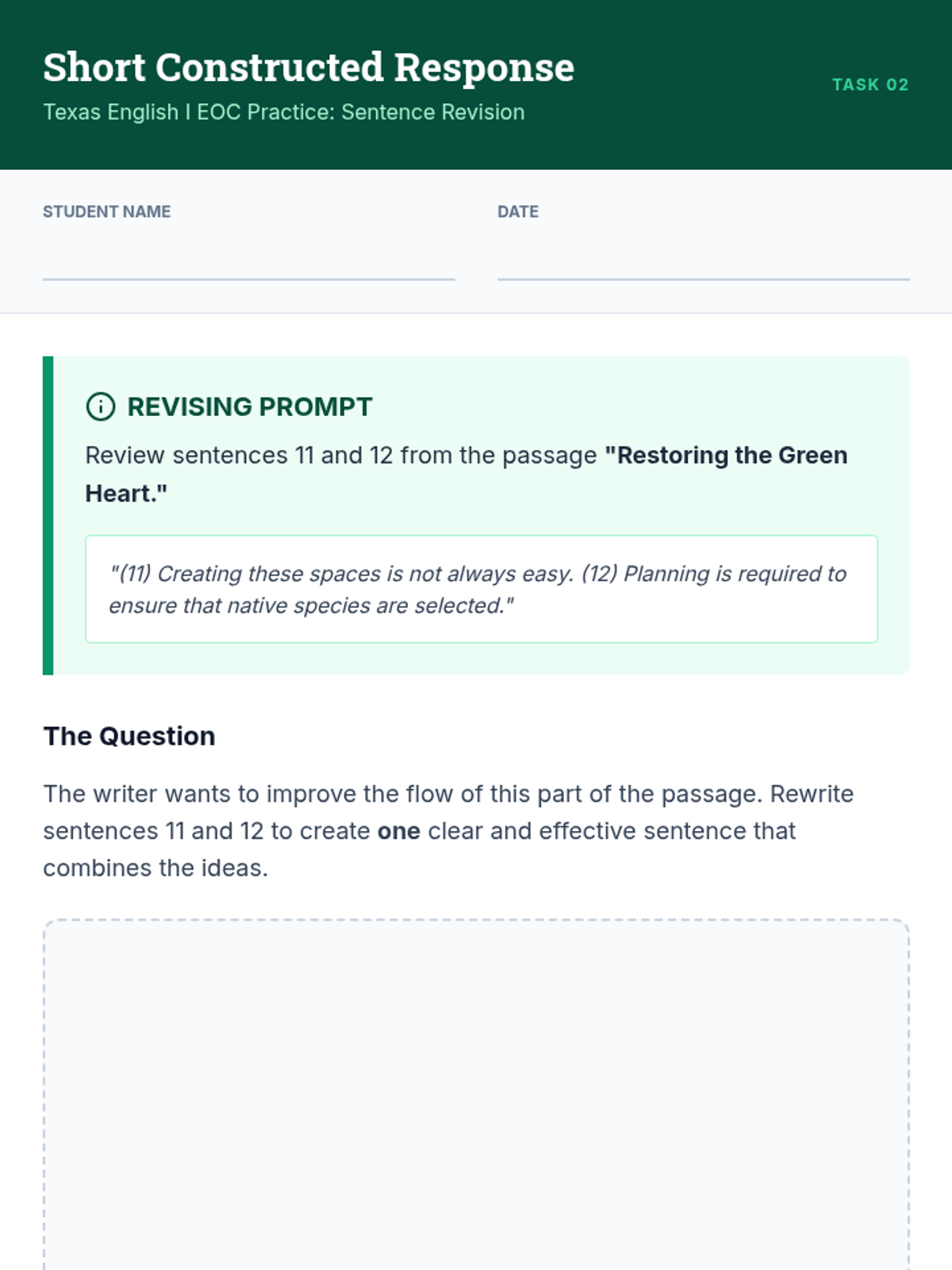
A practice assessment focused on revising and editing skills for the Texas English 1 EOC, featuring a passage on environmental conservation. Students will practice sentence combining, clarity, and grammatical corrections in a STAAR-aligned format.
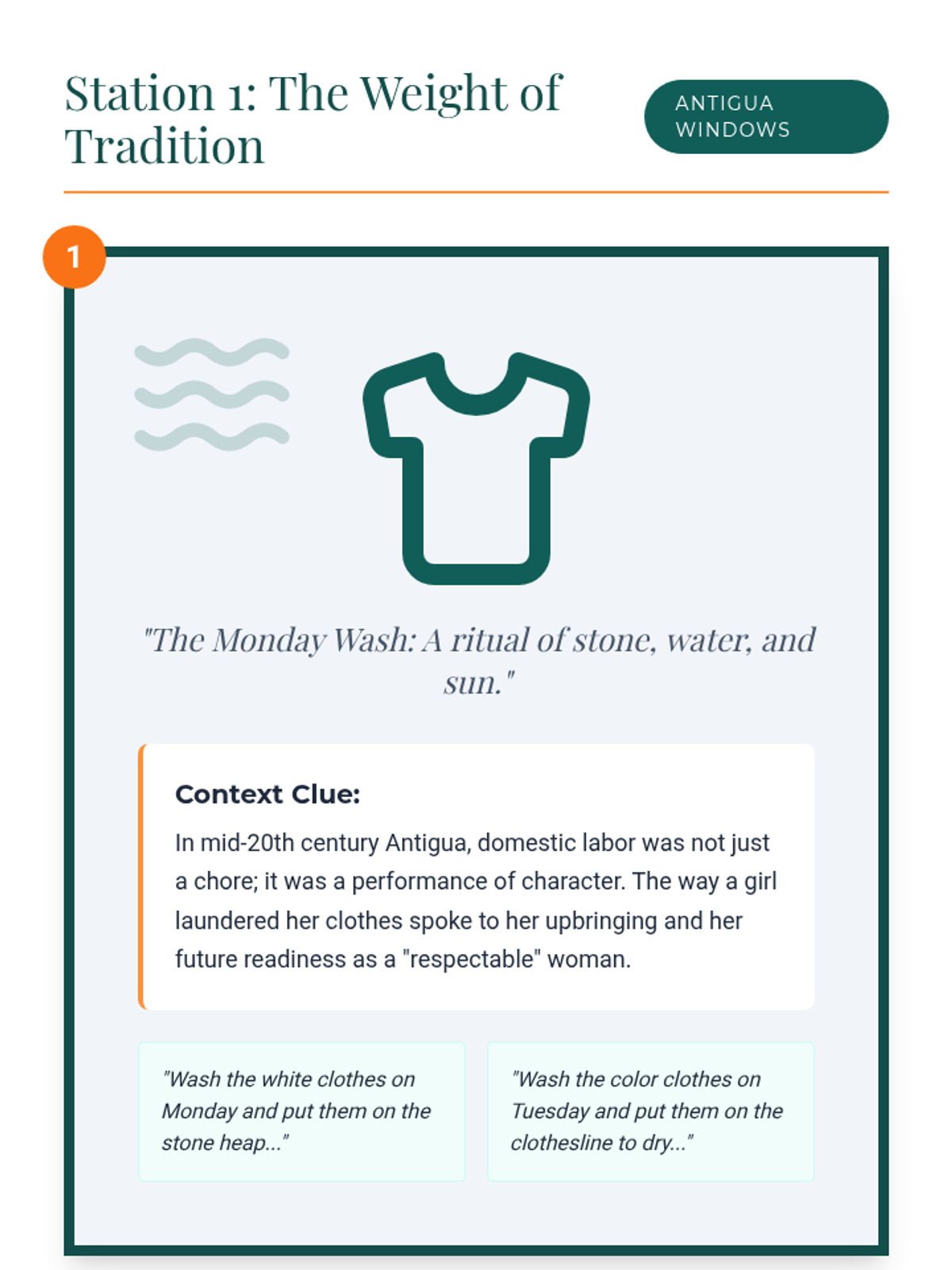
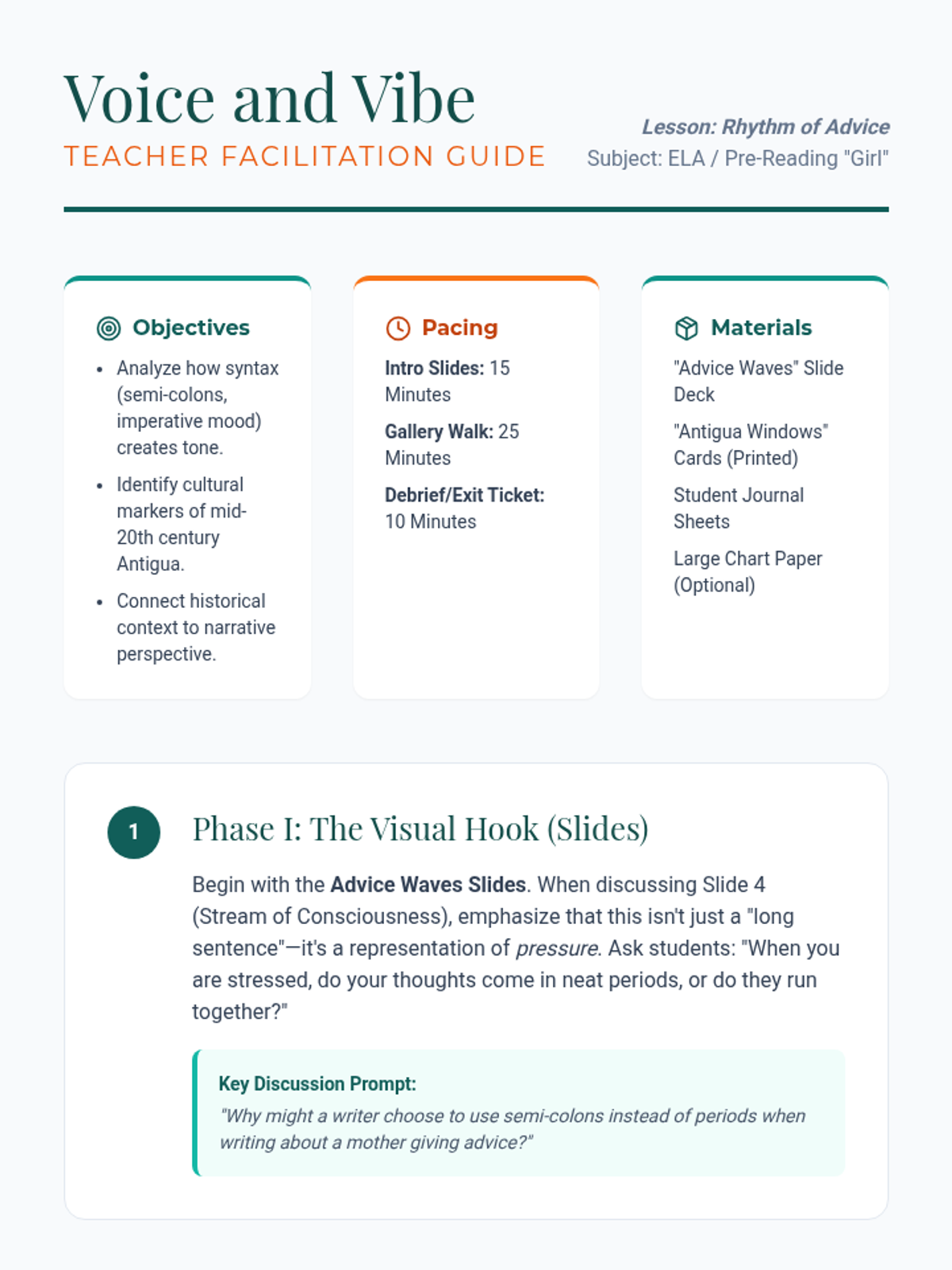
A pre-reading exploration of Jamaica Kincaid's 'Girl' focusing on the rhythmic syntax of stream of consciousness and the cultural landscape of mid-20th century Antigua. Students analyze visual cues of Antiguan life and learn about the unique structural choices that define the story's voice.
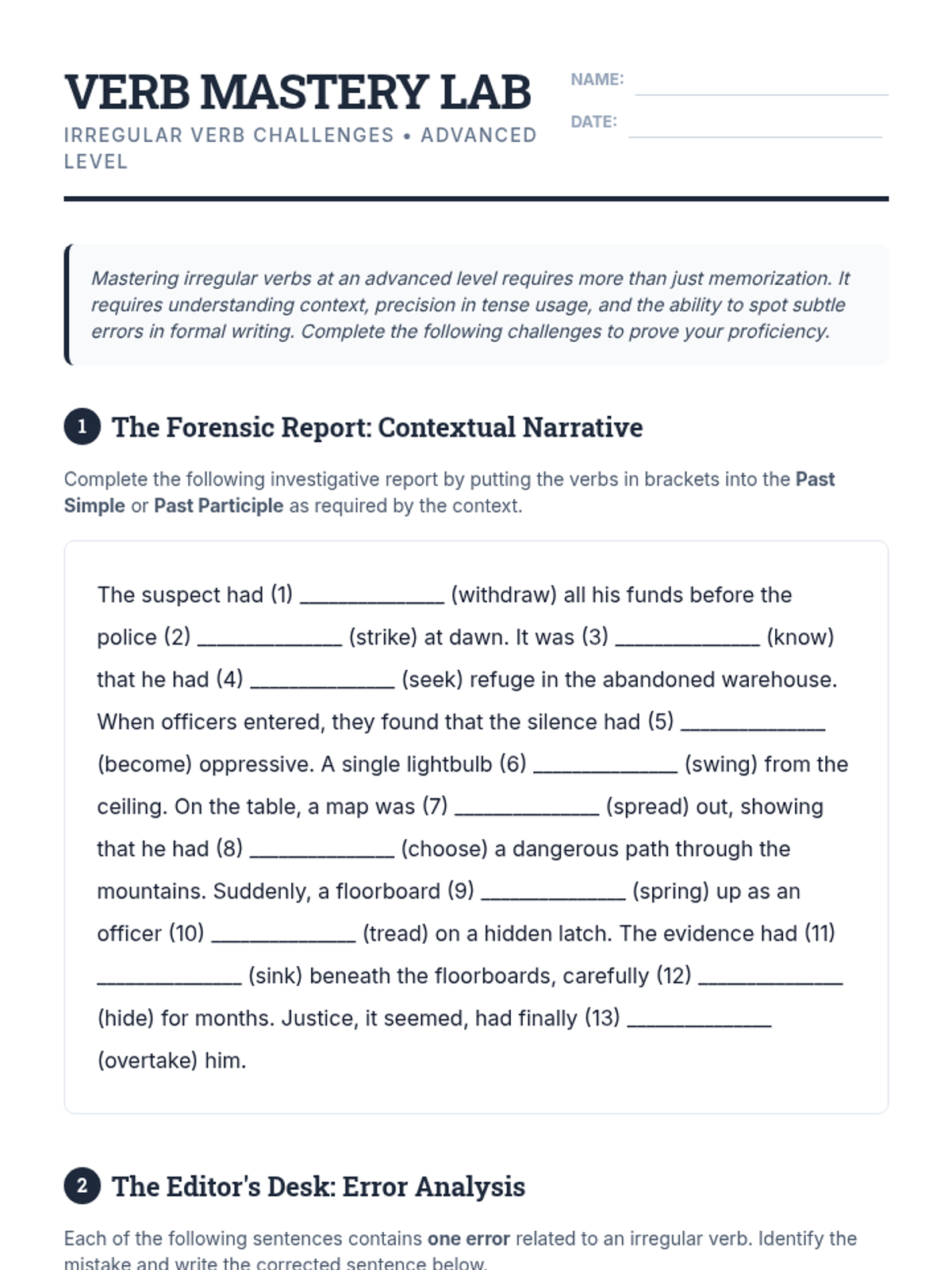
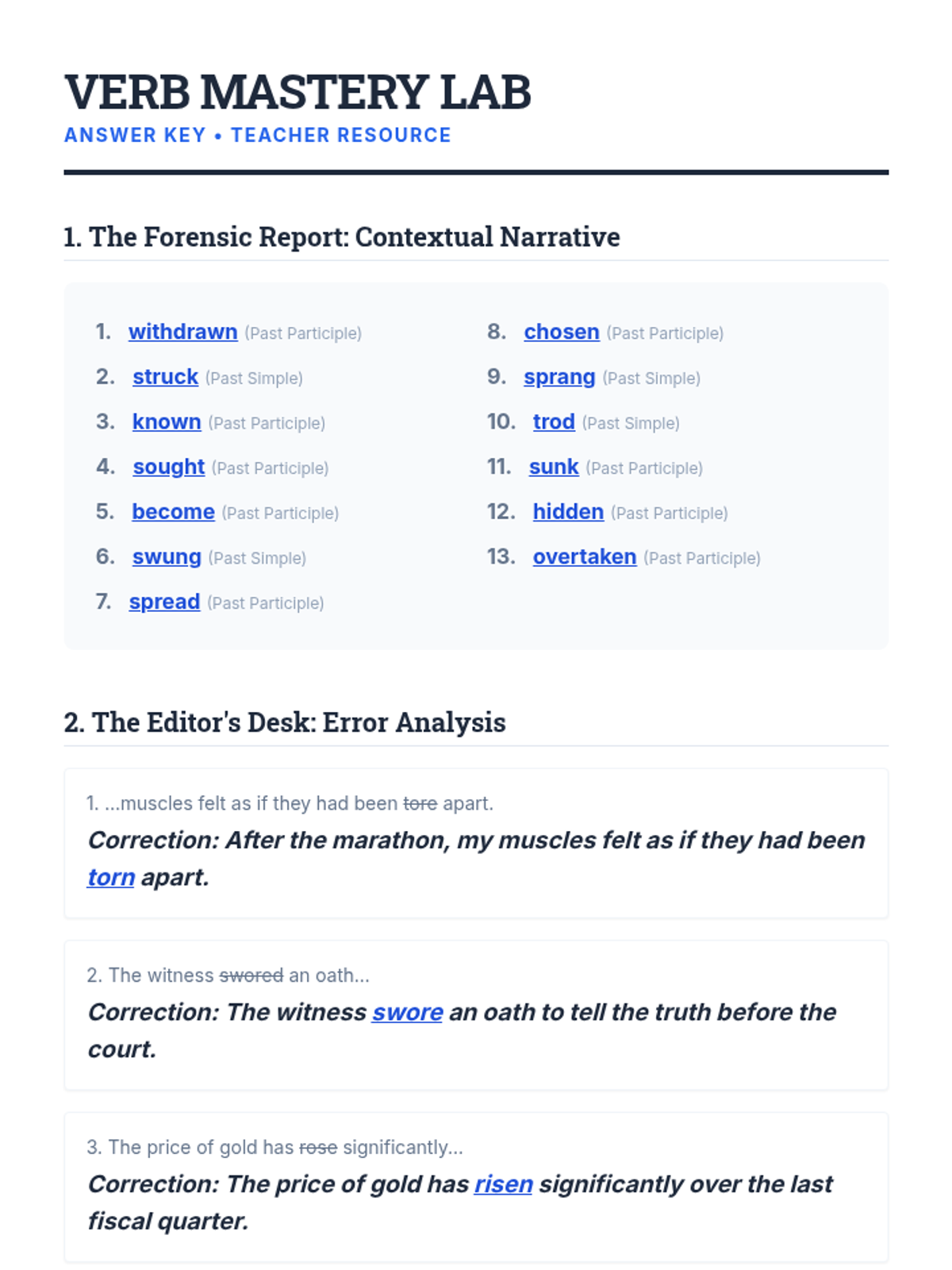
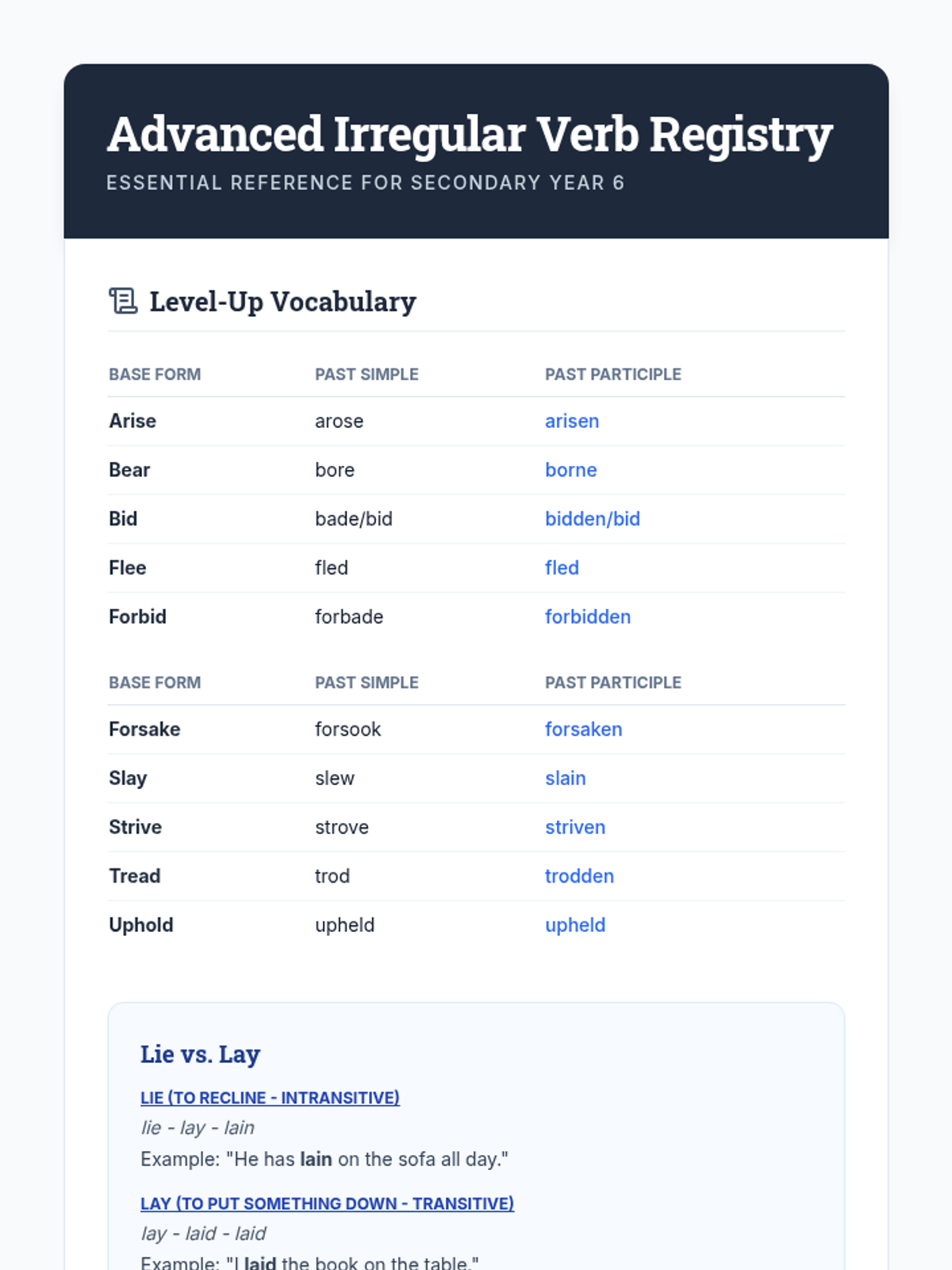
A comprehensive practice module for advanced secondary students to master irregular English verbs through contextual narratives, error analysis, and sentence transformations.
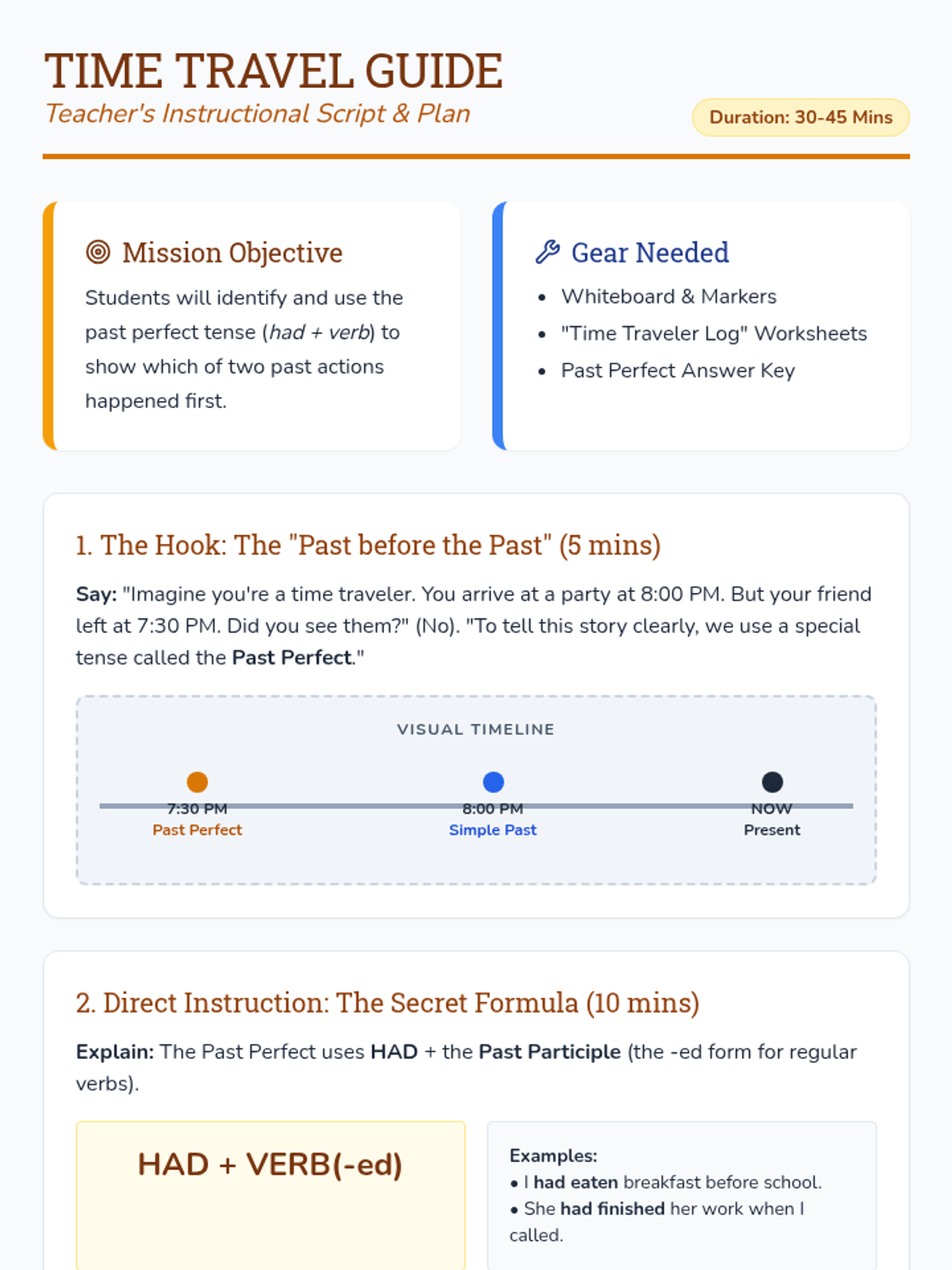
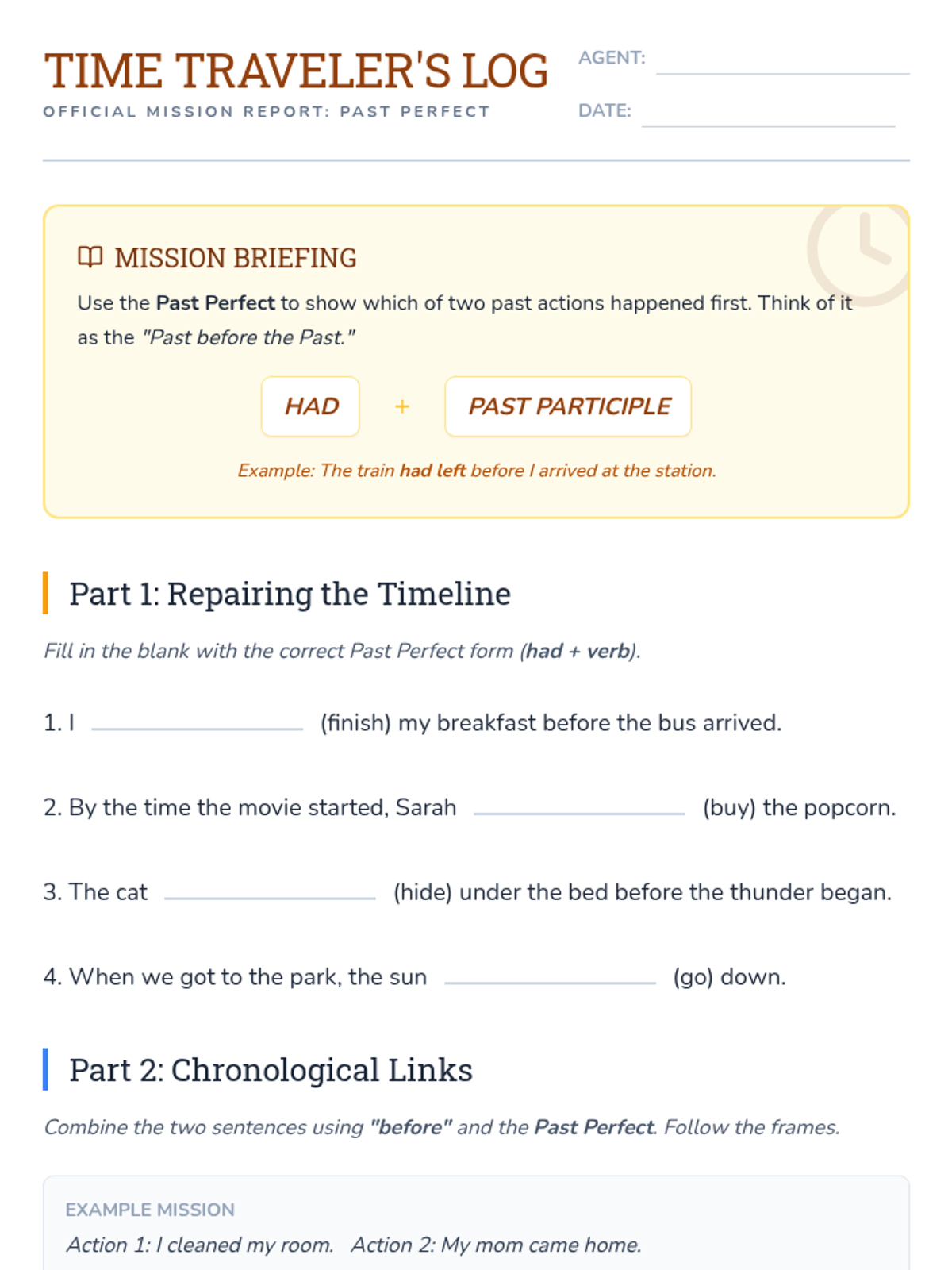
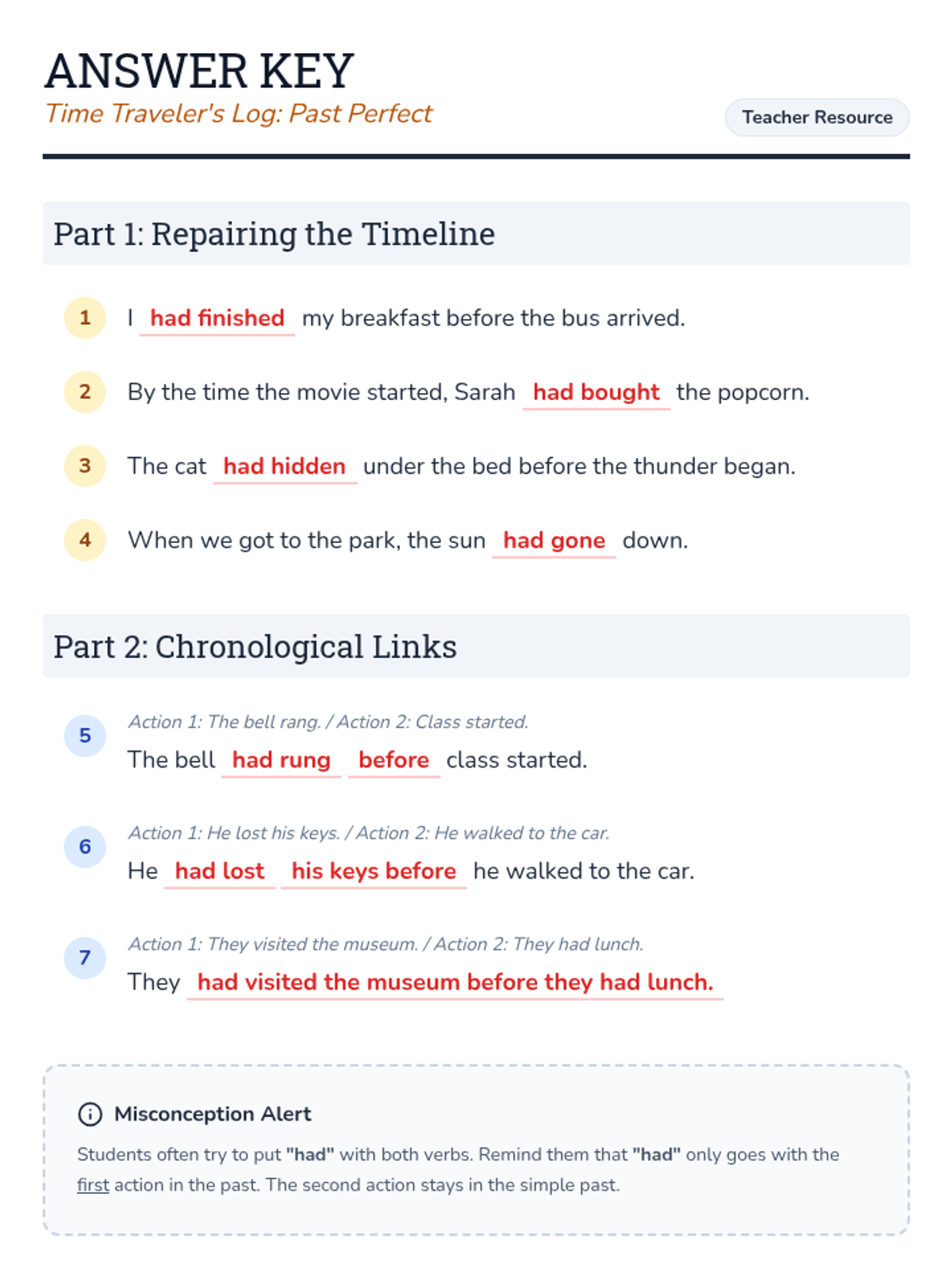
A comprehensive 30-45 minute lesson on the past perfect tense, featuring explicit instructions, a time-travel themed worksheet, and a detailed teacher guide. This lesson helps students understand how to sequence two past events using the 'past before the past' structure.
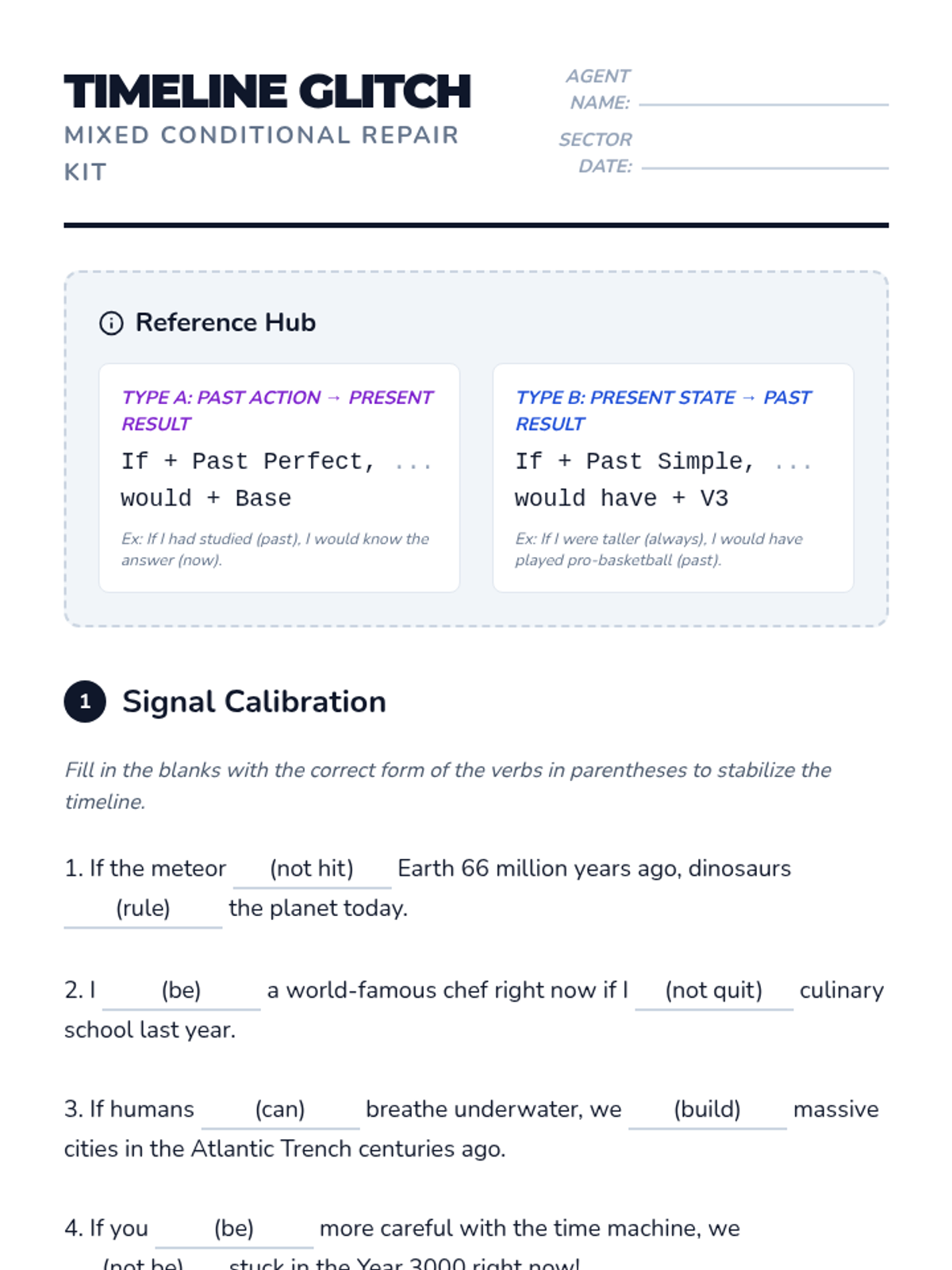
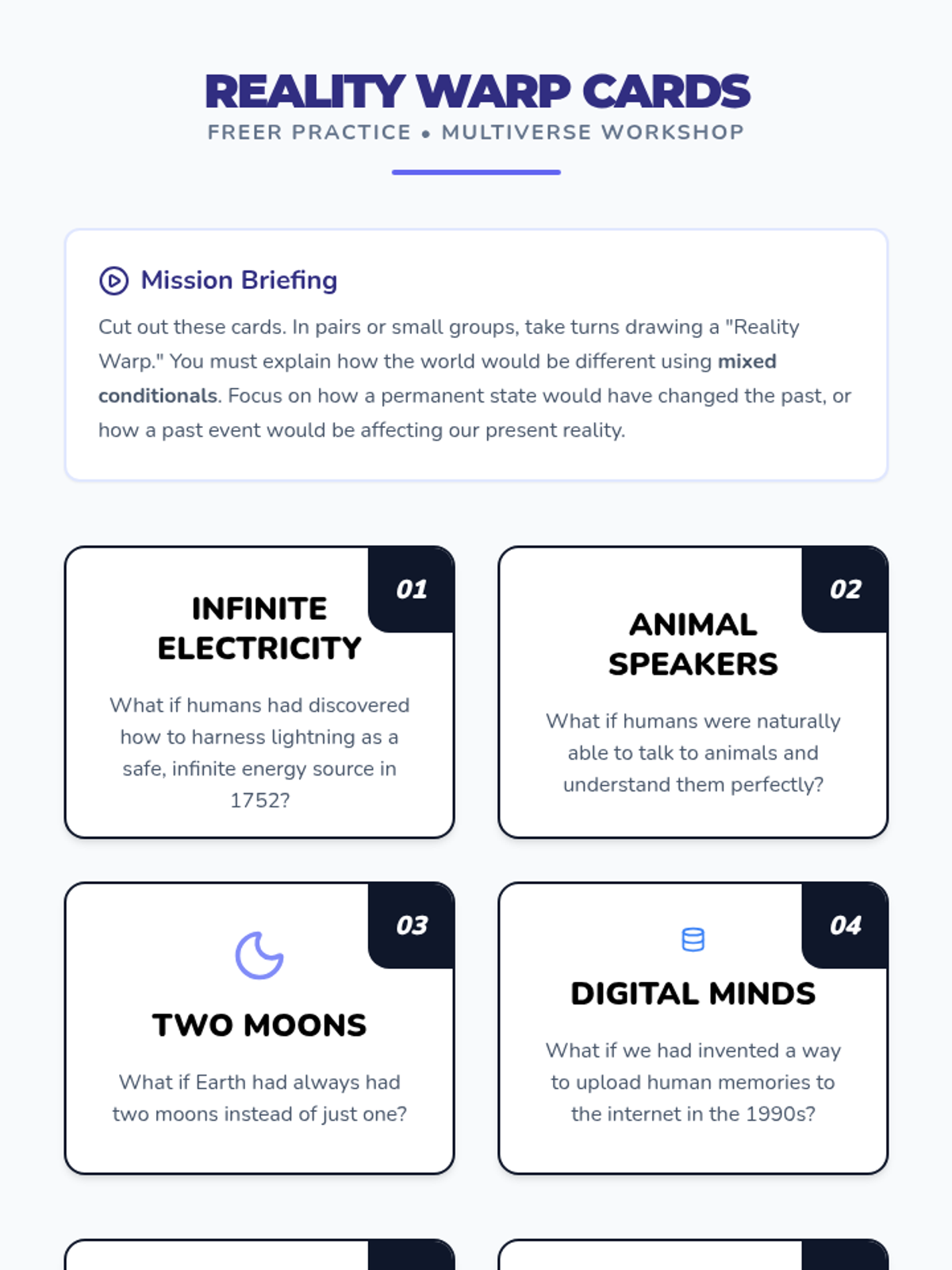
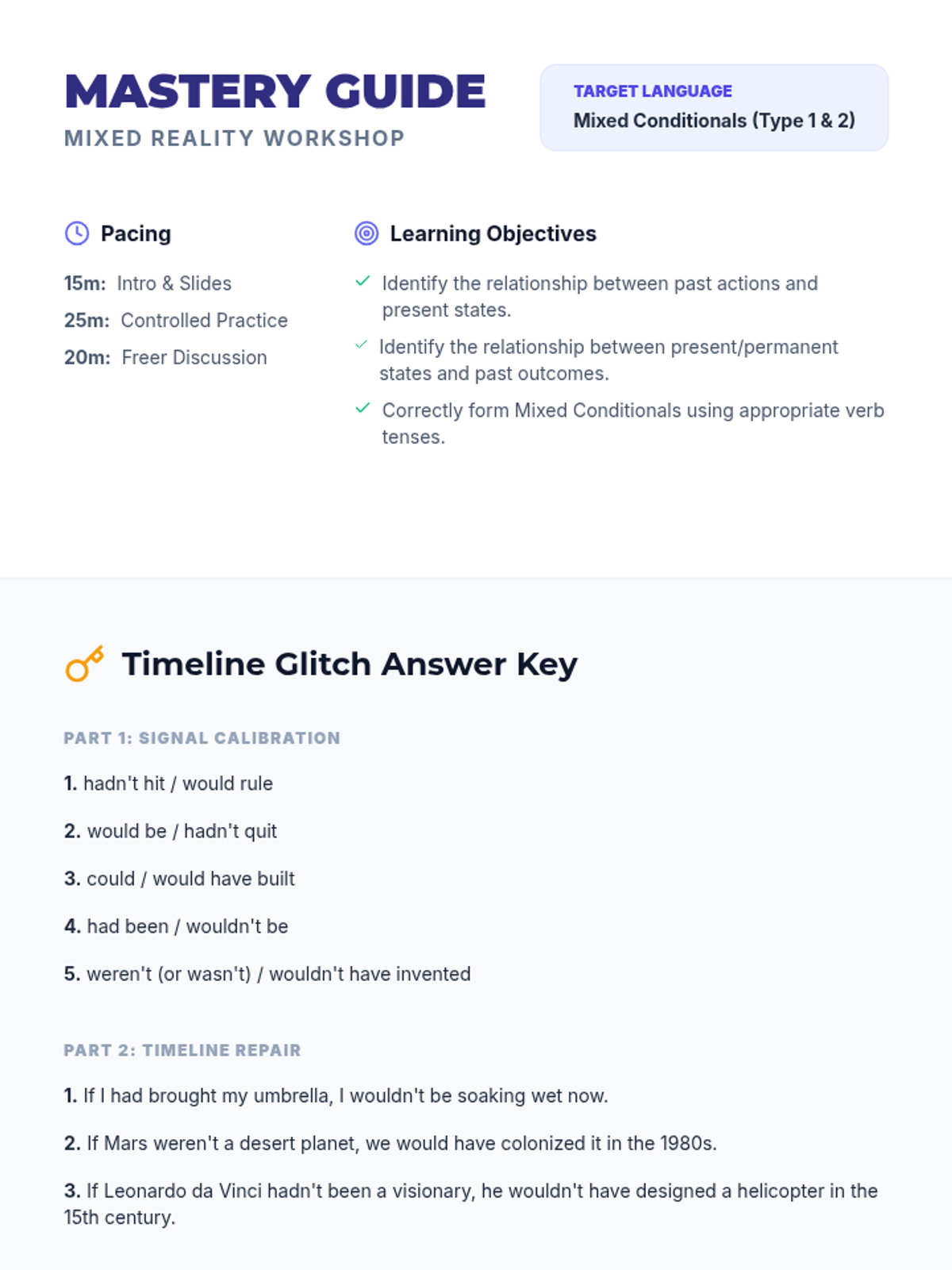
An introductory lesson on mixed conditionals (Type 1: Past Action/Present Result and Type 2: Present State/Past Result) using imaginative and 'anything is possible' scenarios.
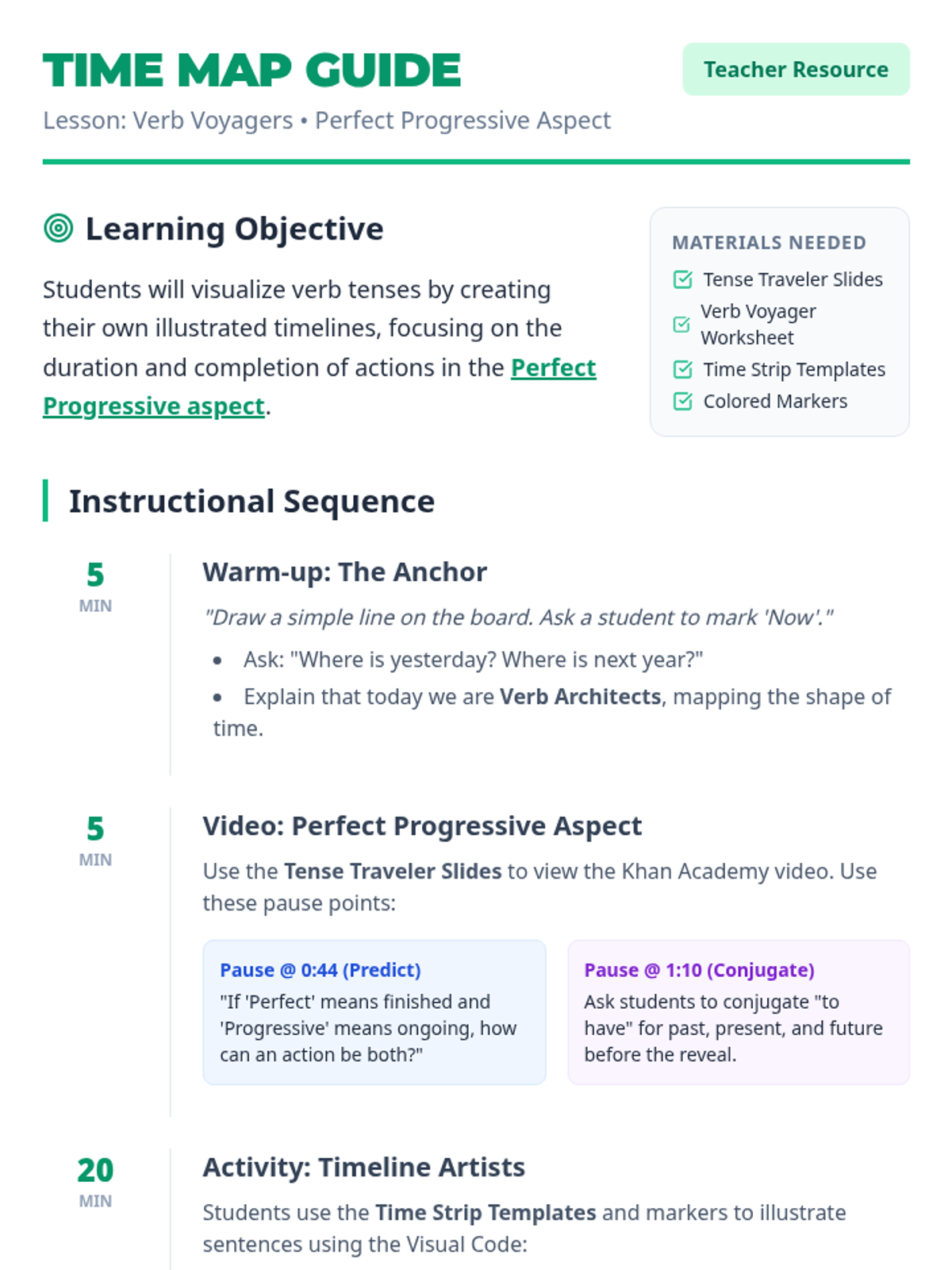
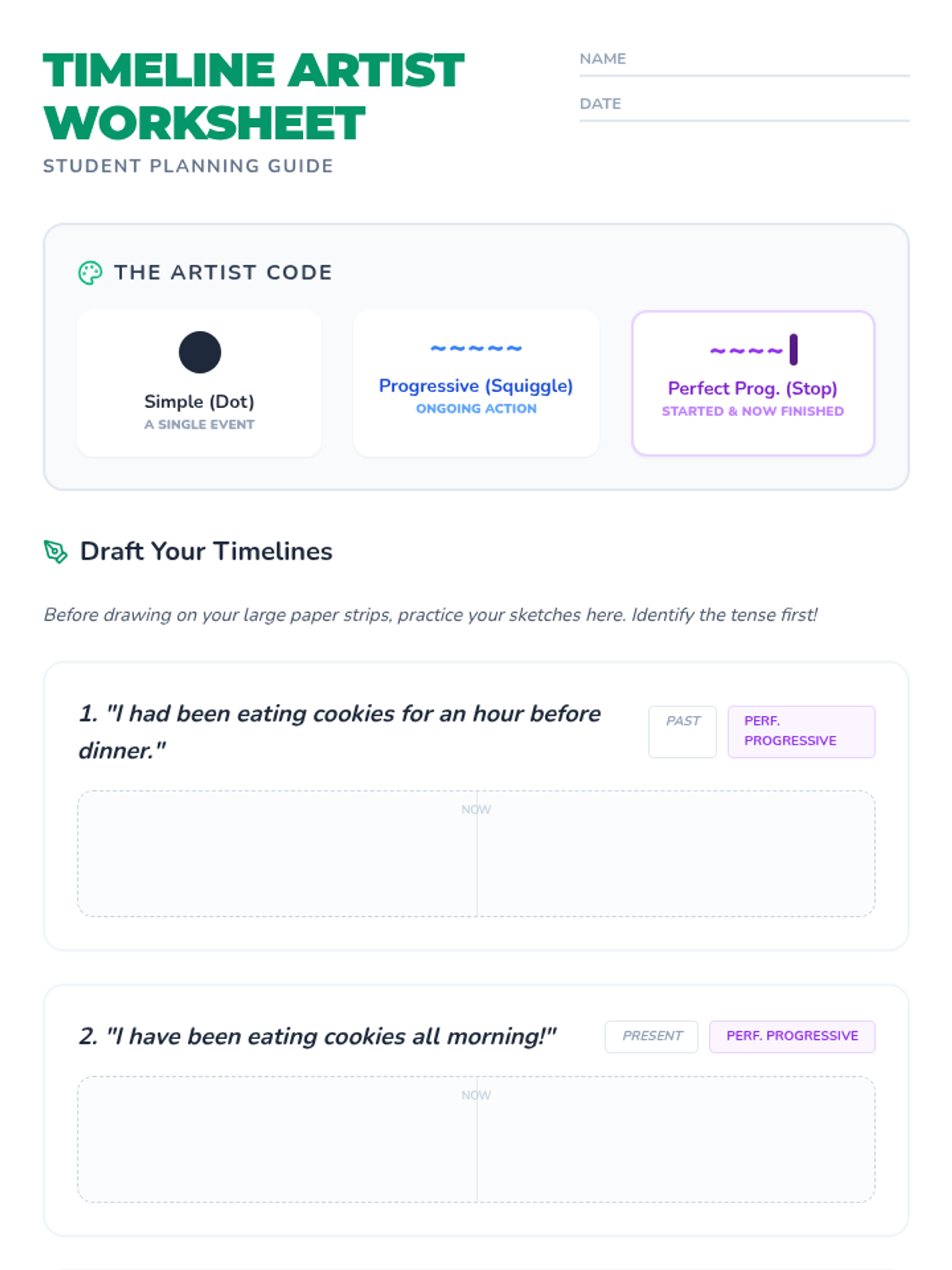
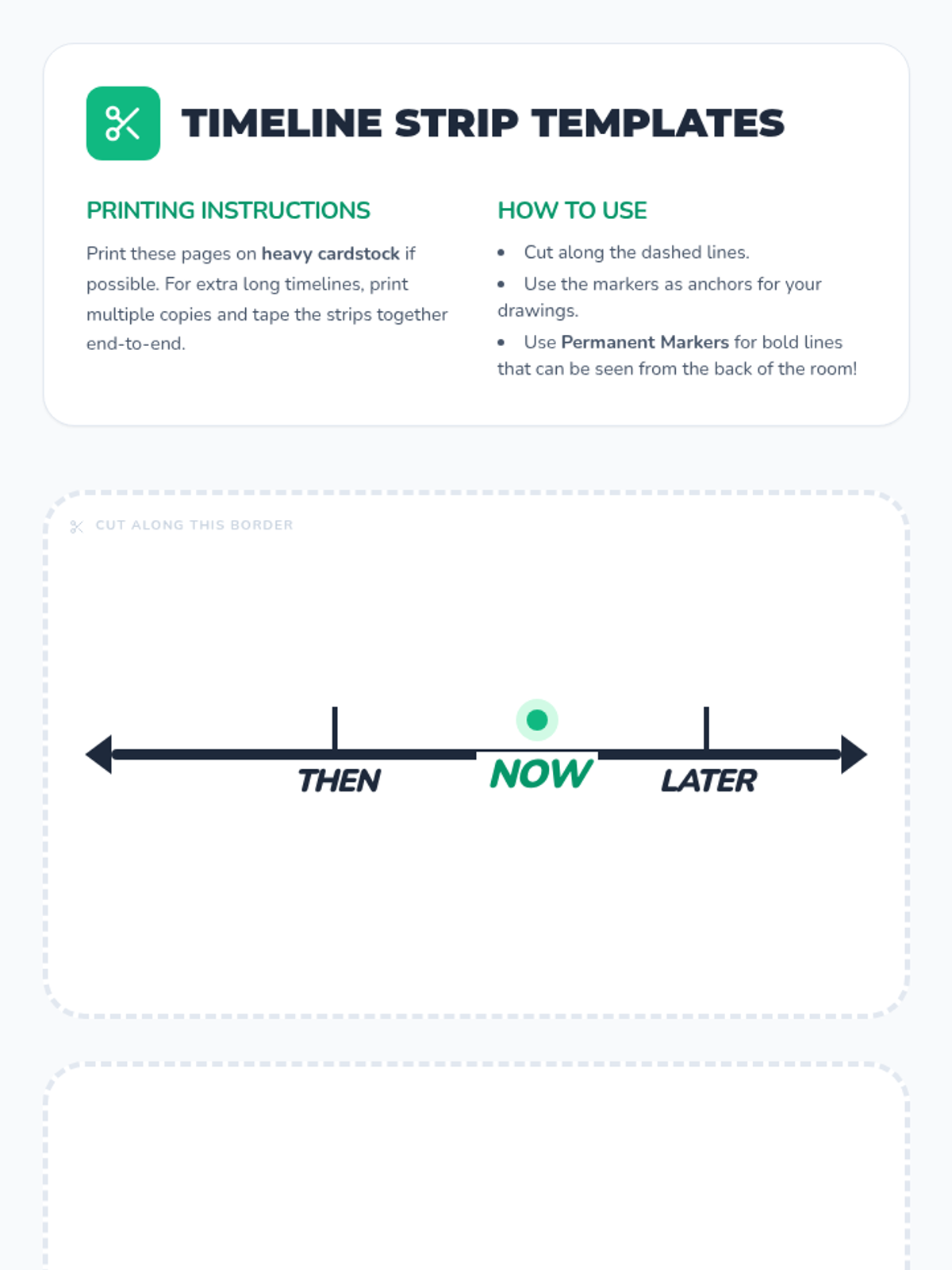
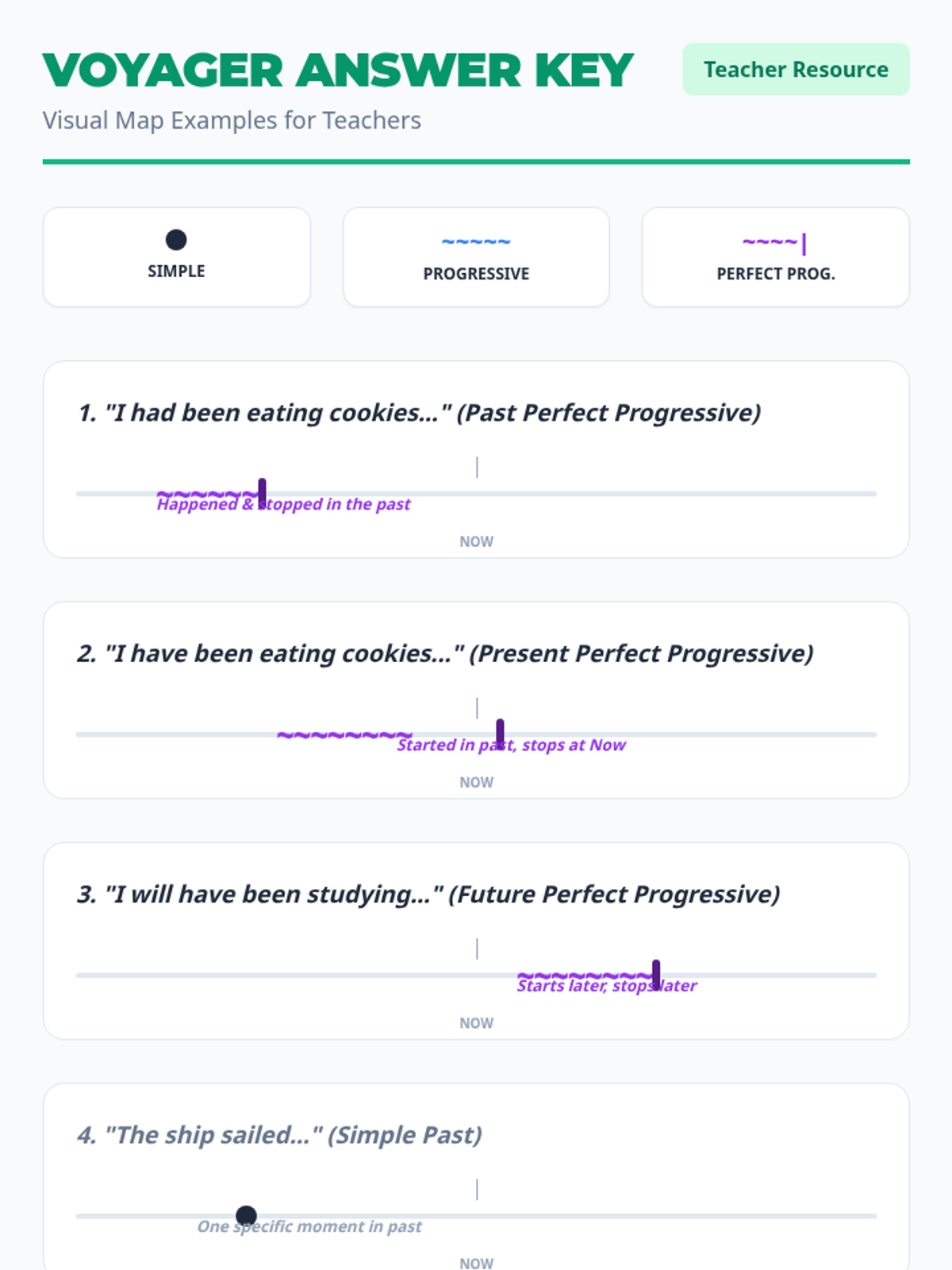
A visual-first grammar lesson where students use artistic symbols (dots and squiggles) to map complex verb tenses on a timeline, featuring the Perfect Progressive aspect.
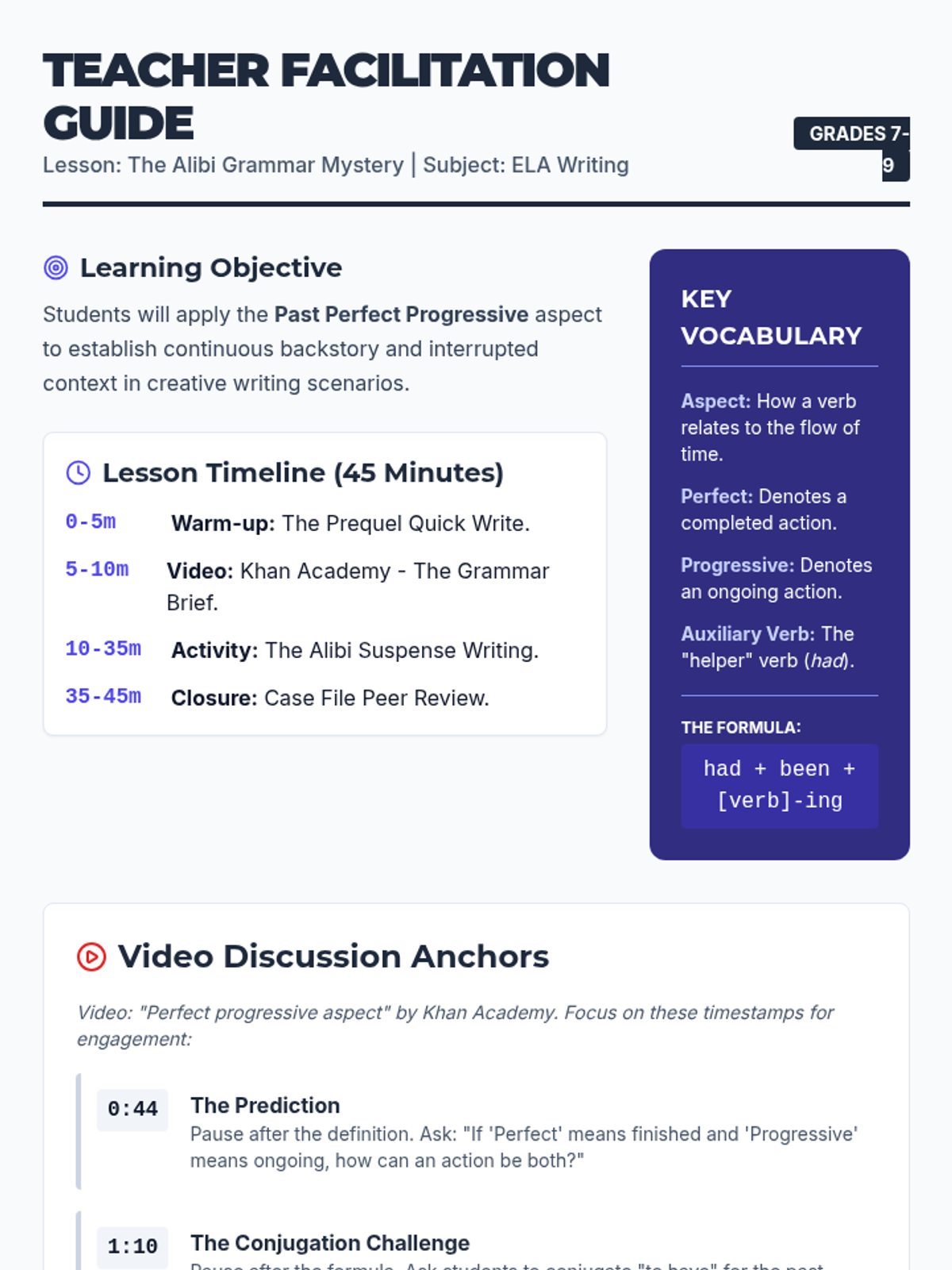
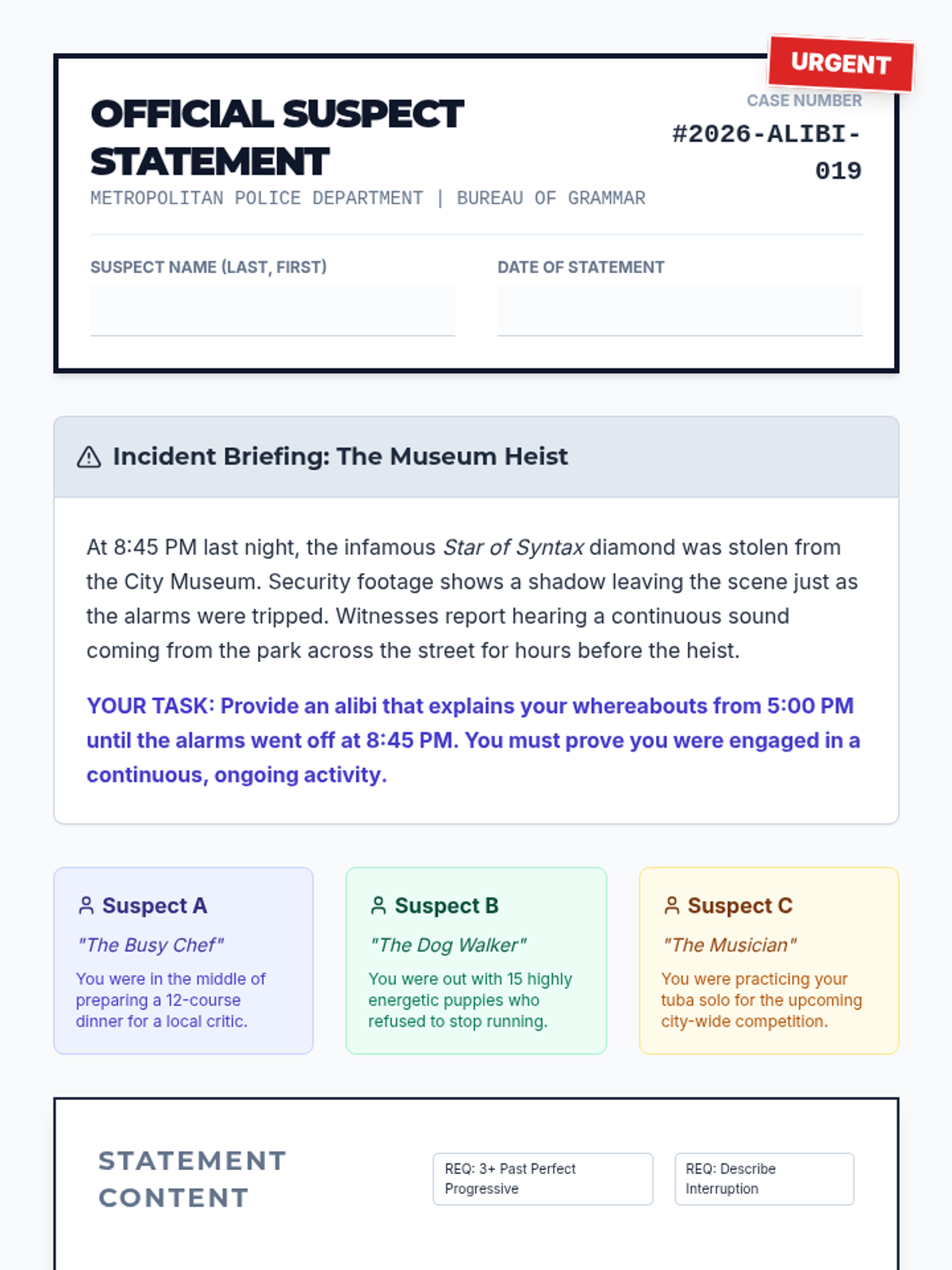
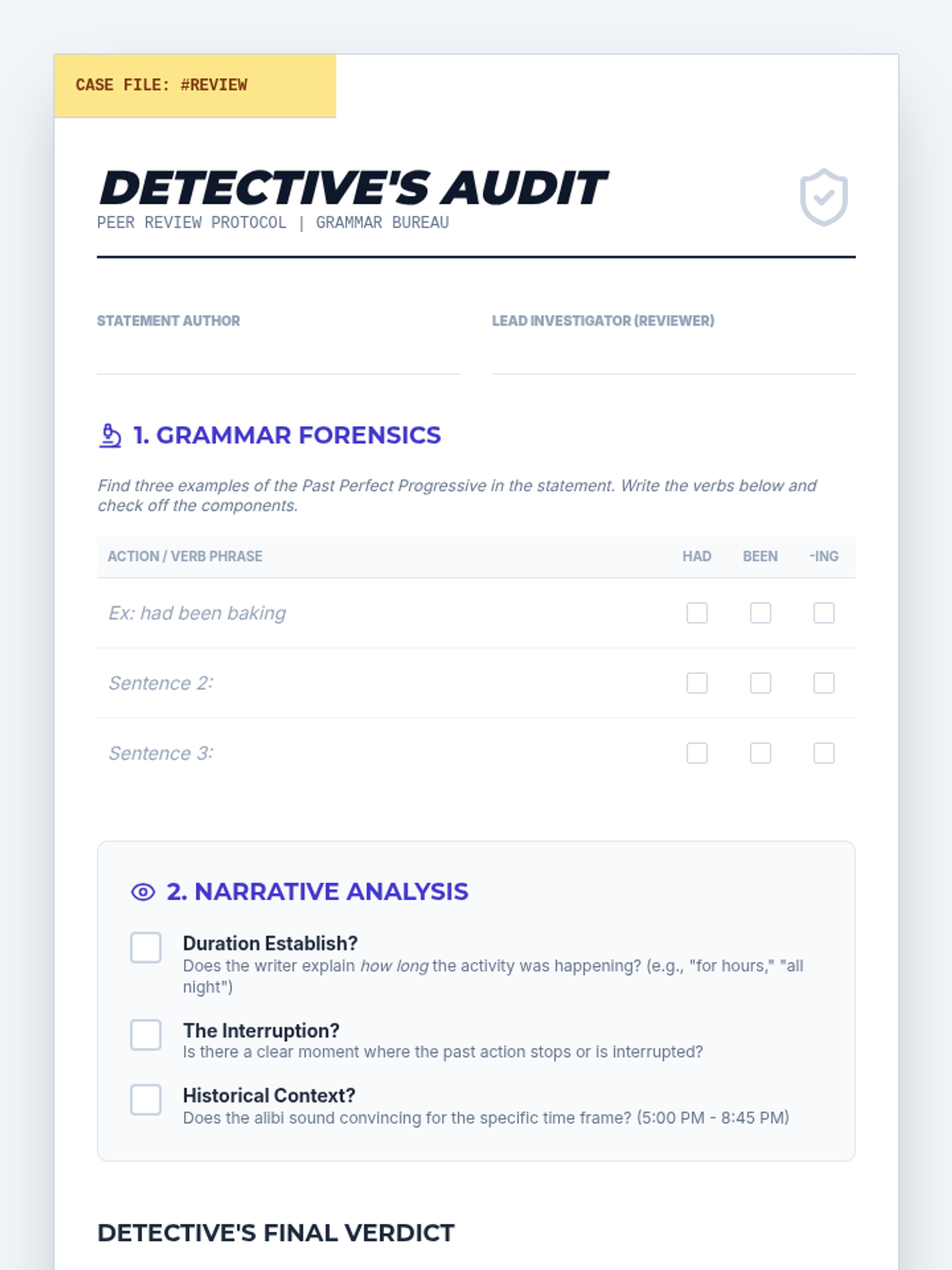
A creative writing lesson for 7th-9th graders focusing on the Past Perfect Progressive aspect. Students use 'The Alibi' mystery scenario to practice establishing continuous backstory and context.
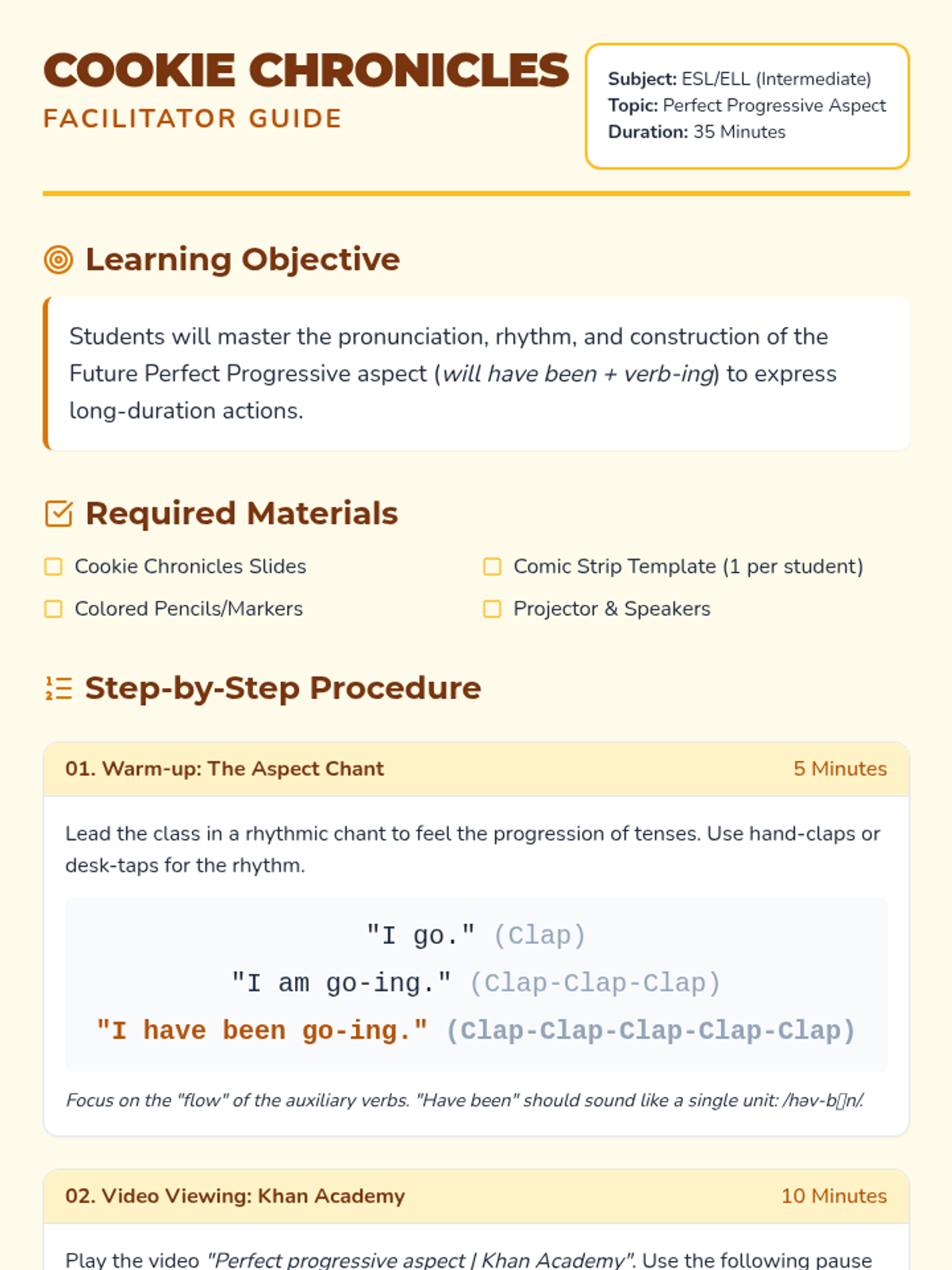
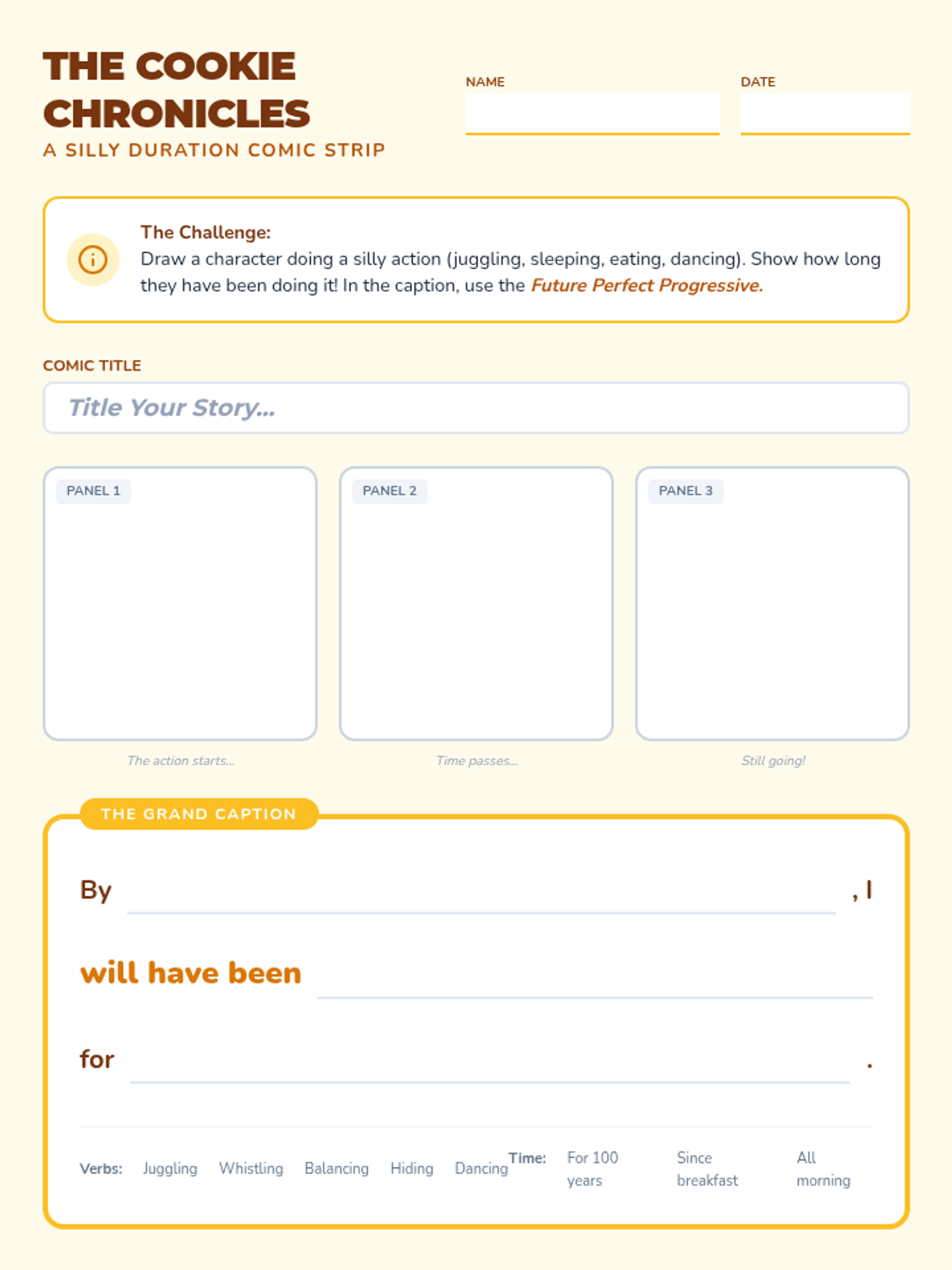
An intermediate ESL lesson focusing on the pronunciation and rhythm of the perfect progressive aspect, using a humorous 'Cookie Chronicles' theme and a Khan Academy video.
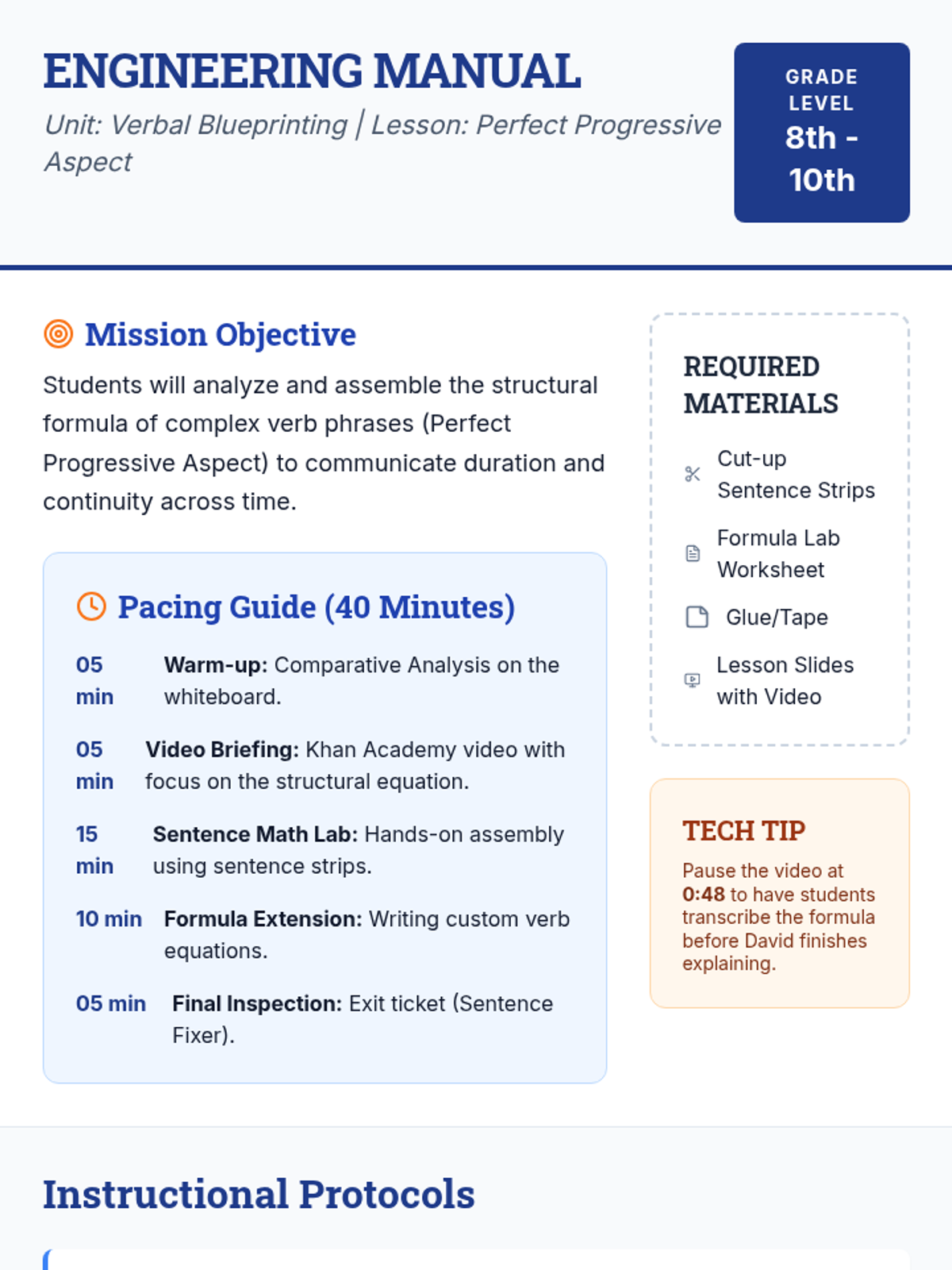
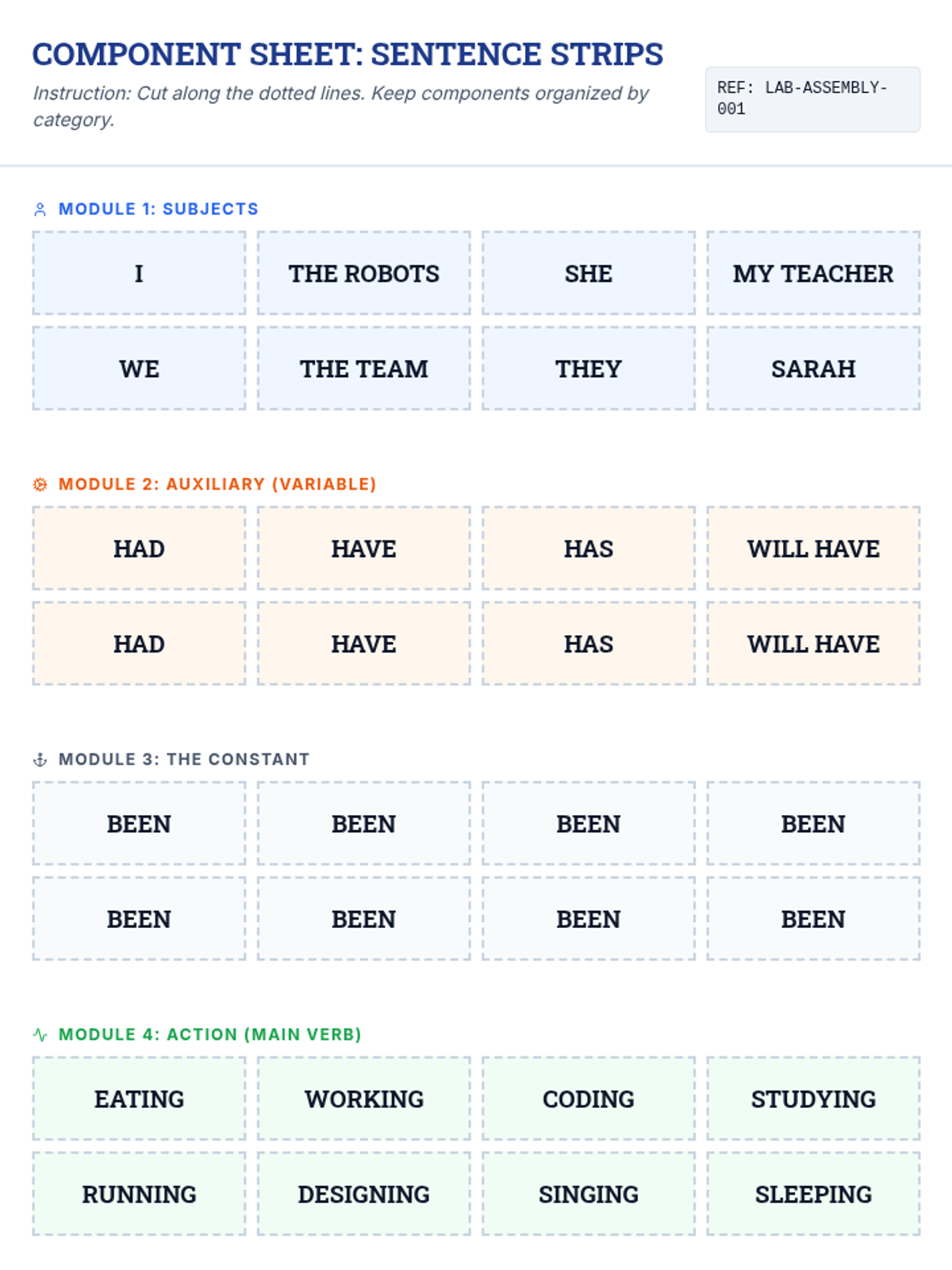
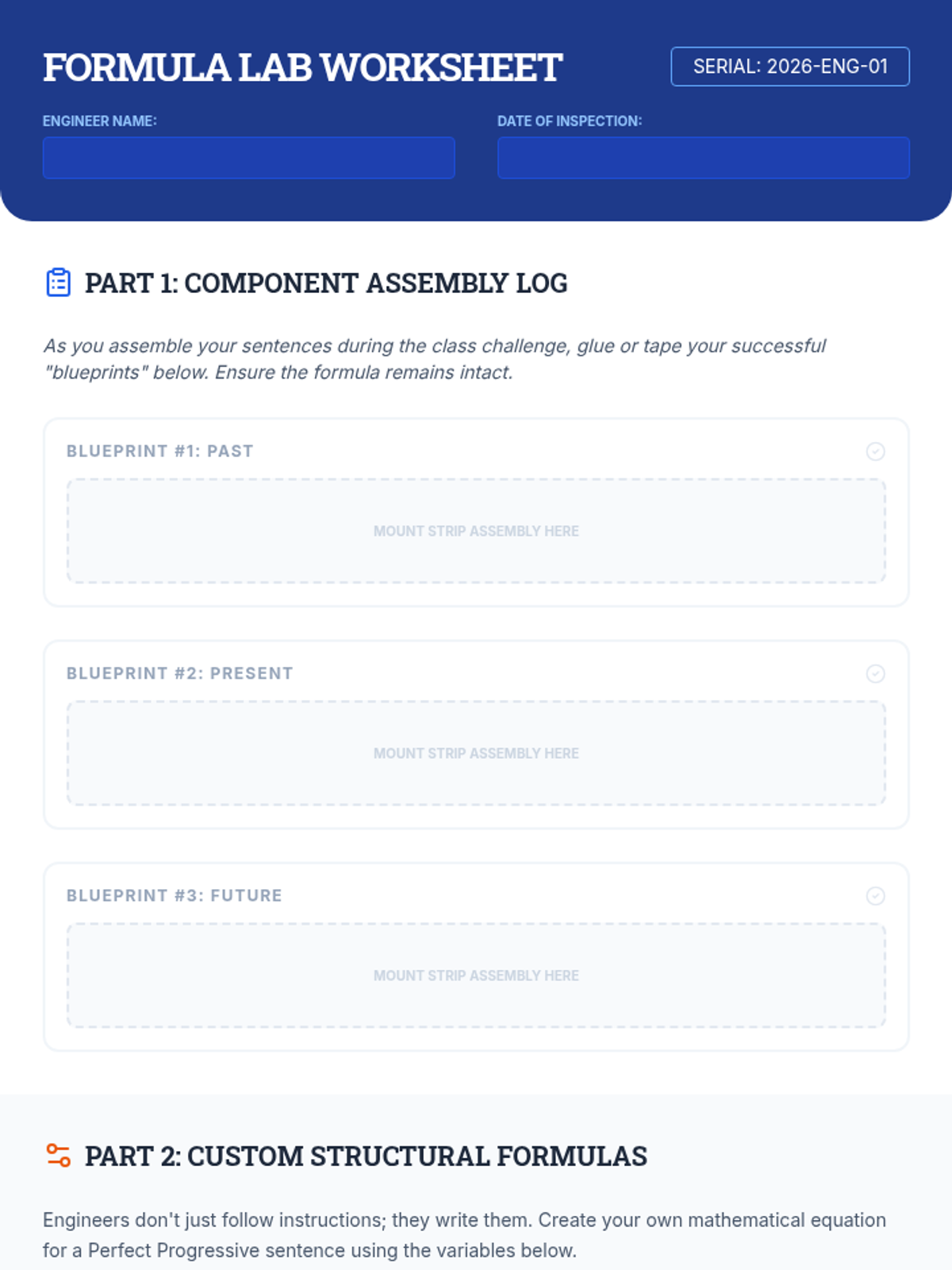
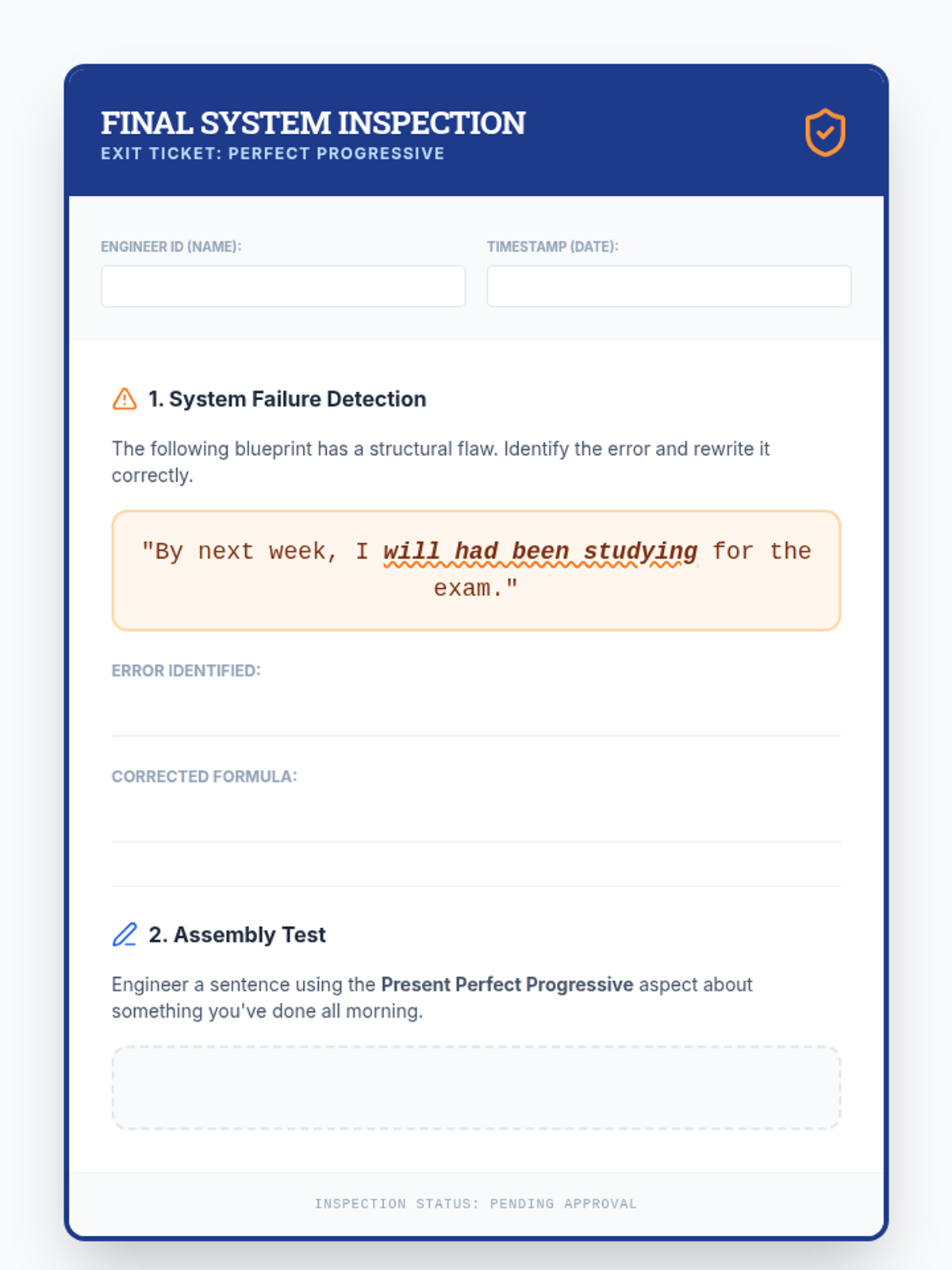
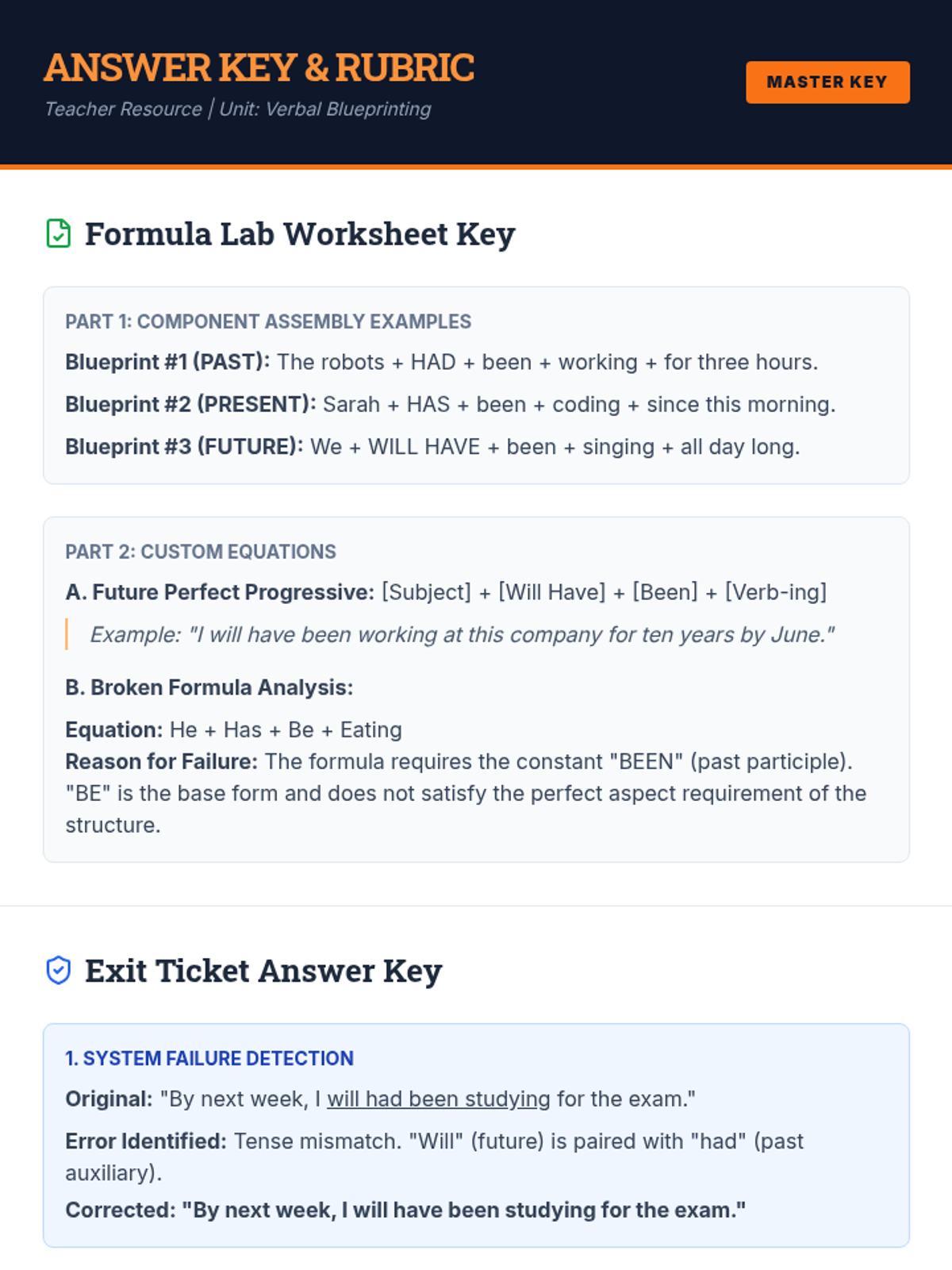
A technical, 'Sentence Engineering' approach to the perfect progressive aspect. Students use physical formulas and mathematical structures to build complex verb phrases across past, present, and future tenses.
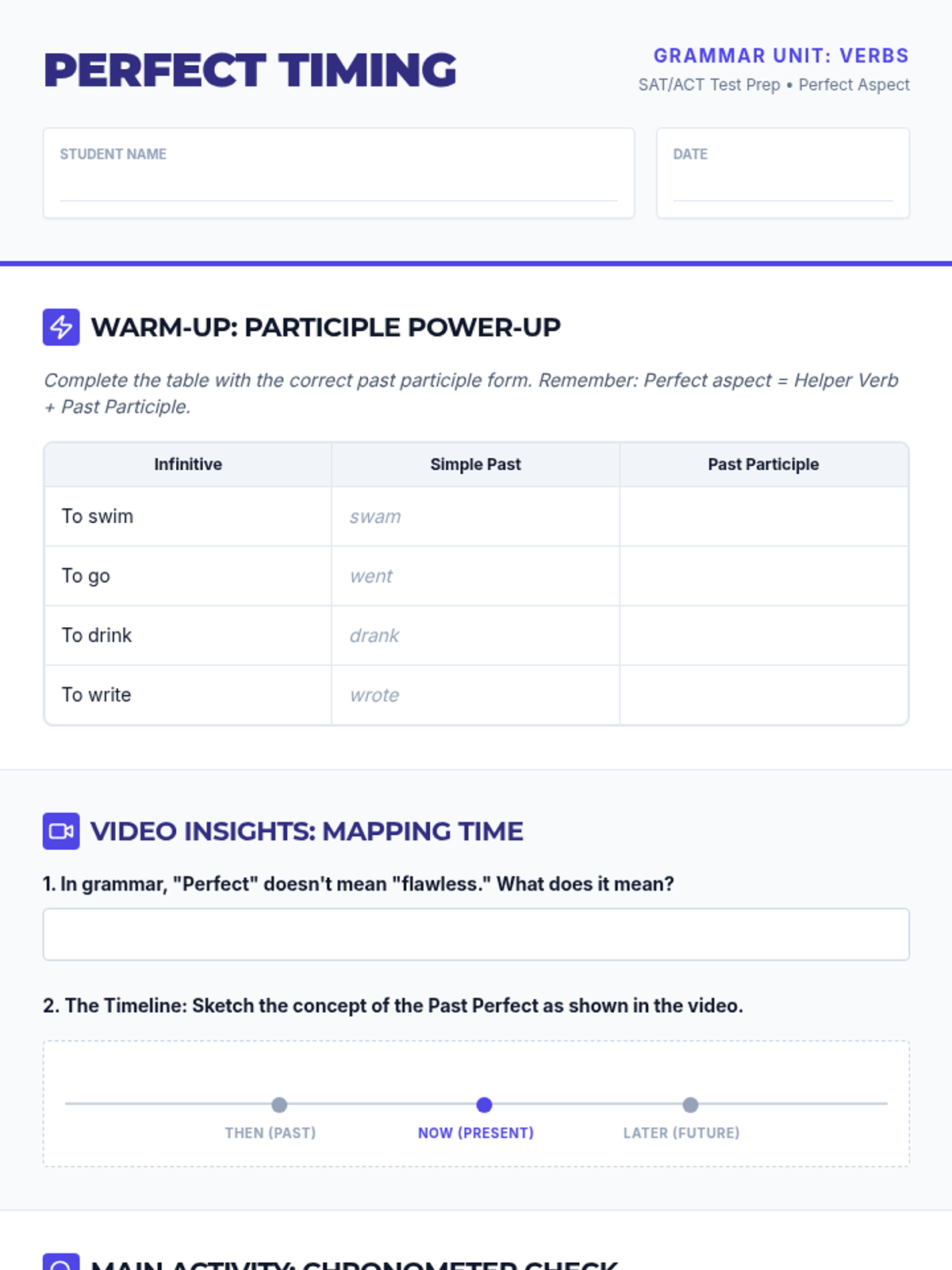
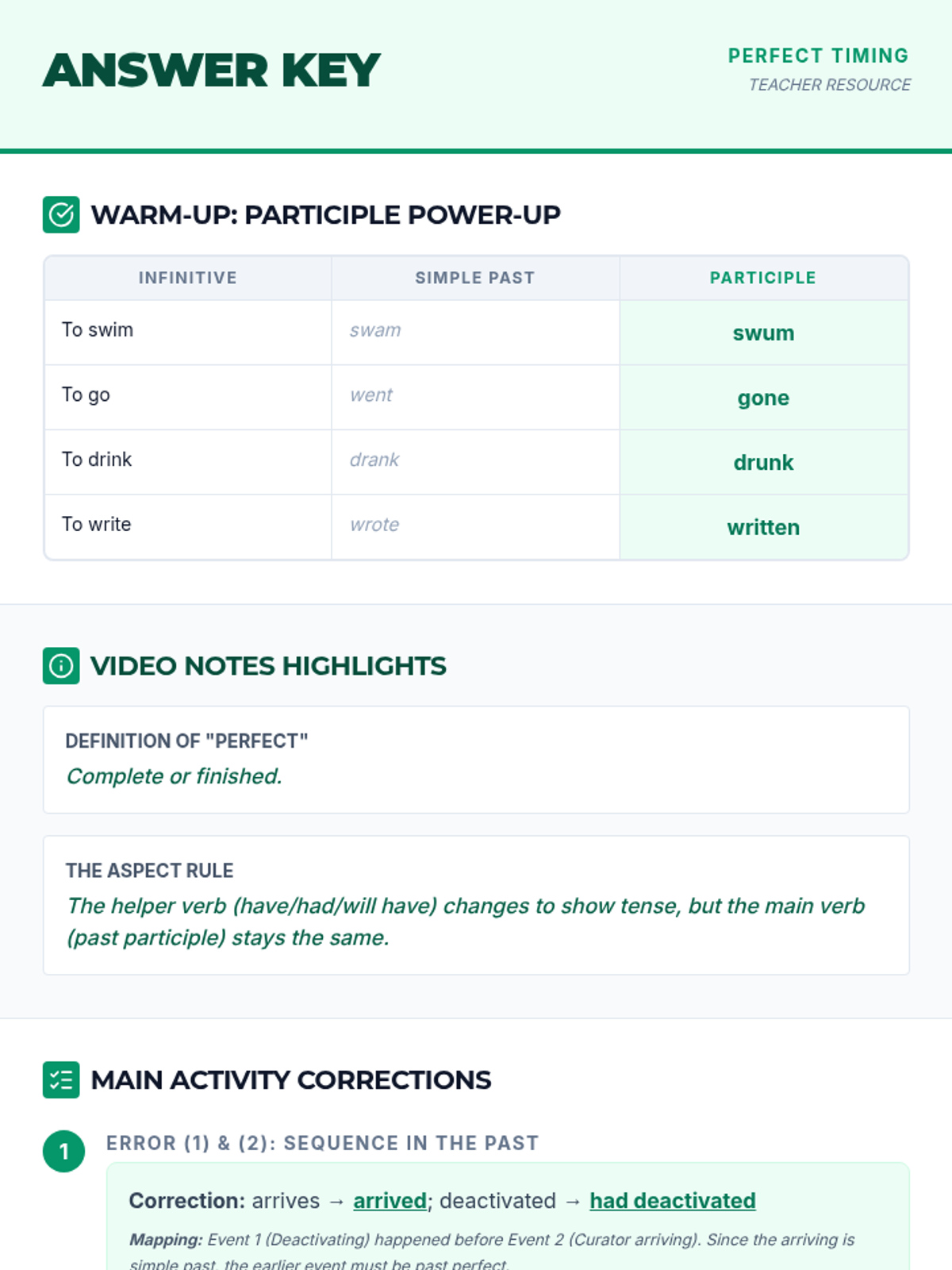
A high school SAT/ACT test prep lesson focusing on identifying and correcting verb tense consistency errors using the perfect aspect. Students will use timelines to visualize sequences of events and master the "before-past" structure essential for standardized testing.
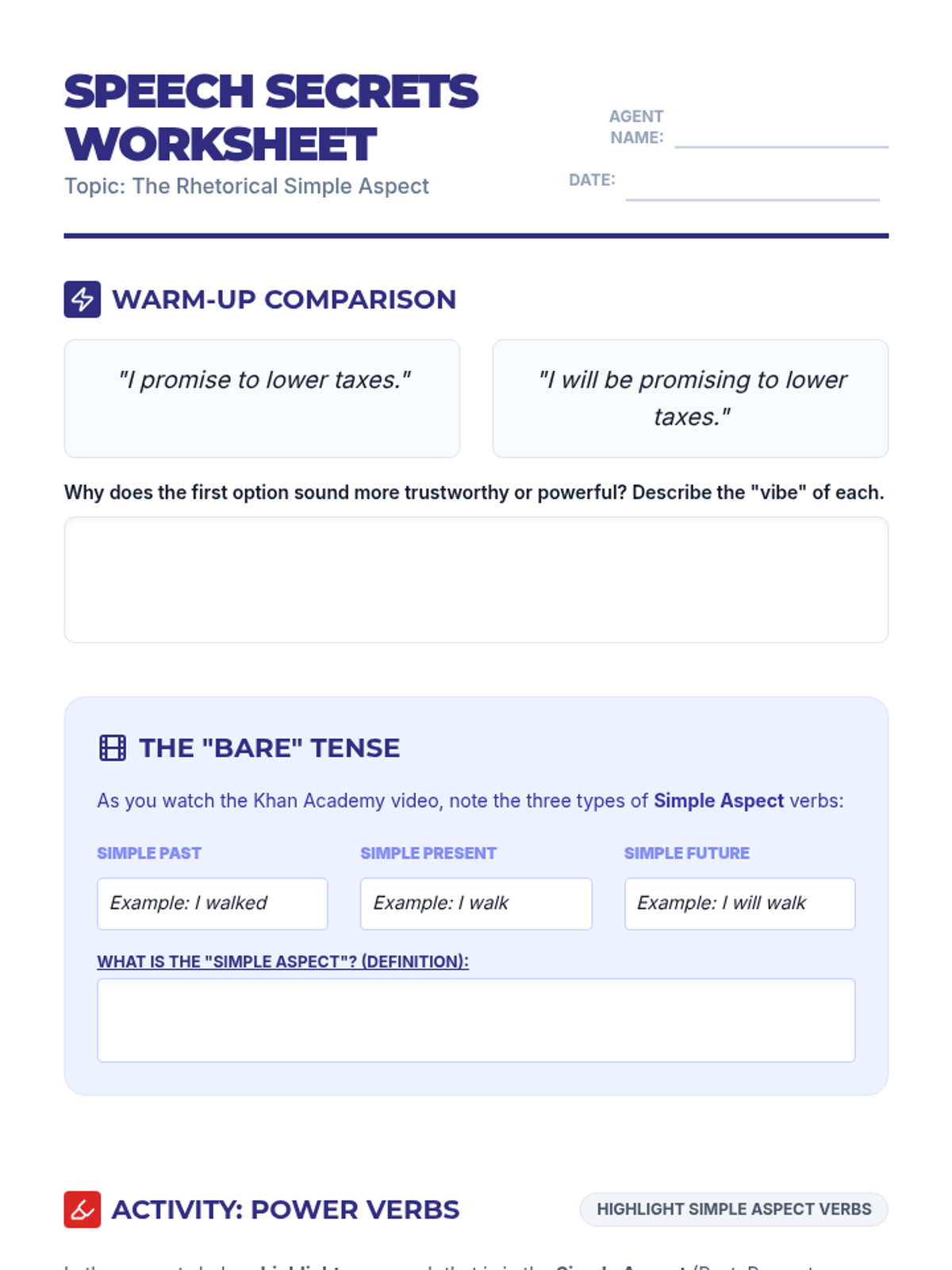
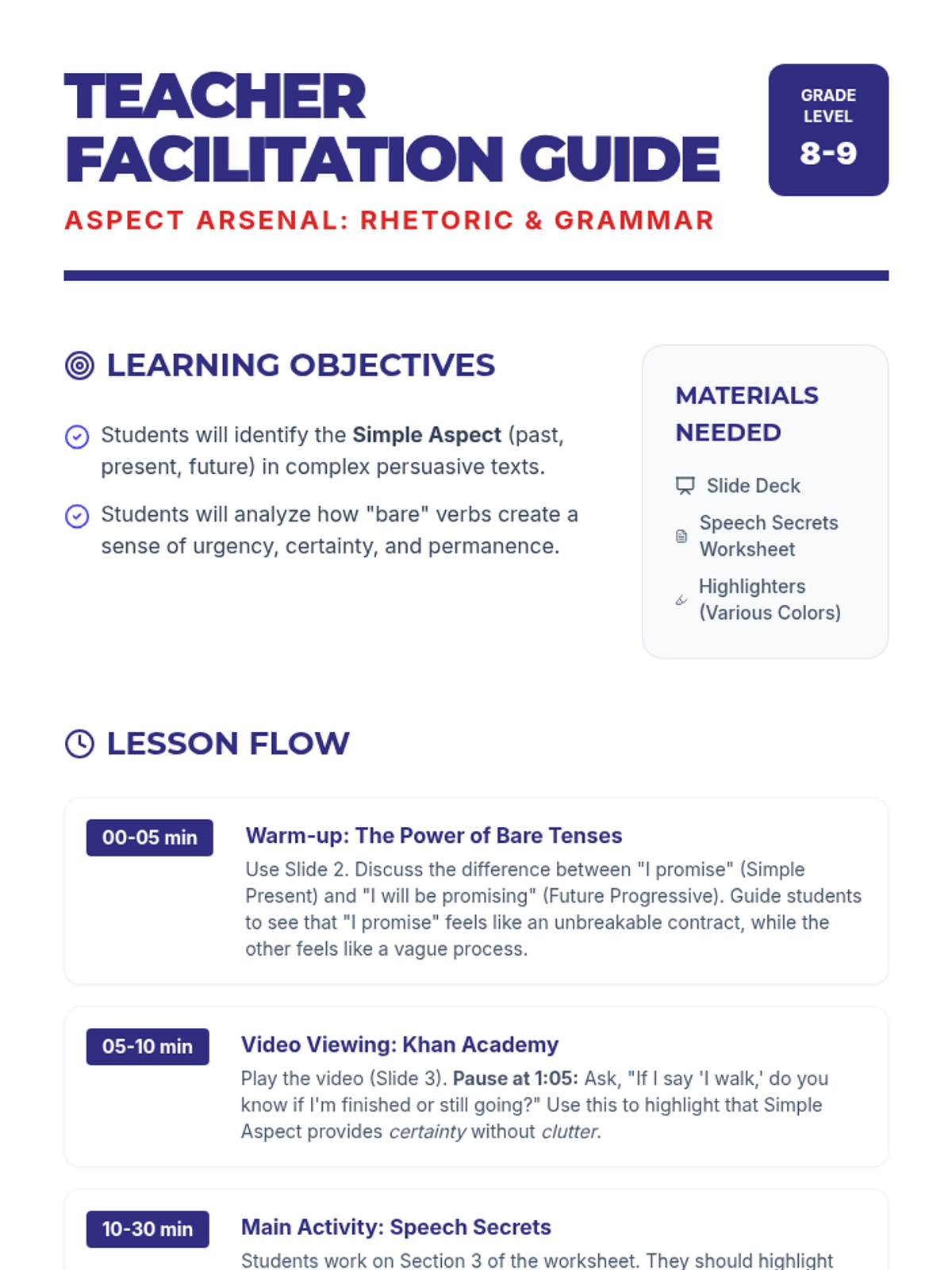
Students will investigate how the Simple Aspect of verbs (past, present, future) creates a sense of certainty, permanence, and authority in persuasive speech and political slogans. through video analysis and speech examination, they will learn to wield 'bare' tenses as tools of rhetorical power.
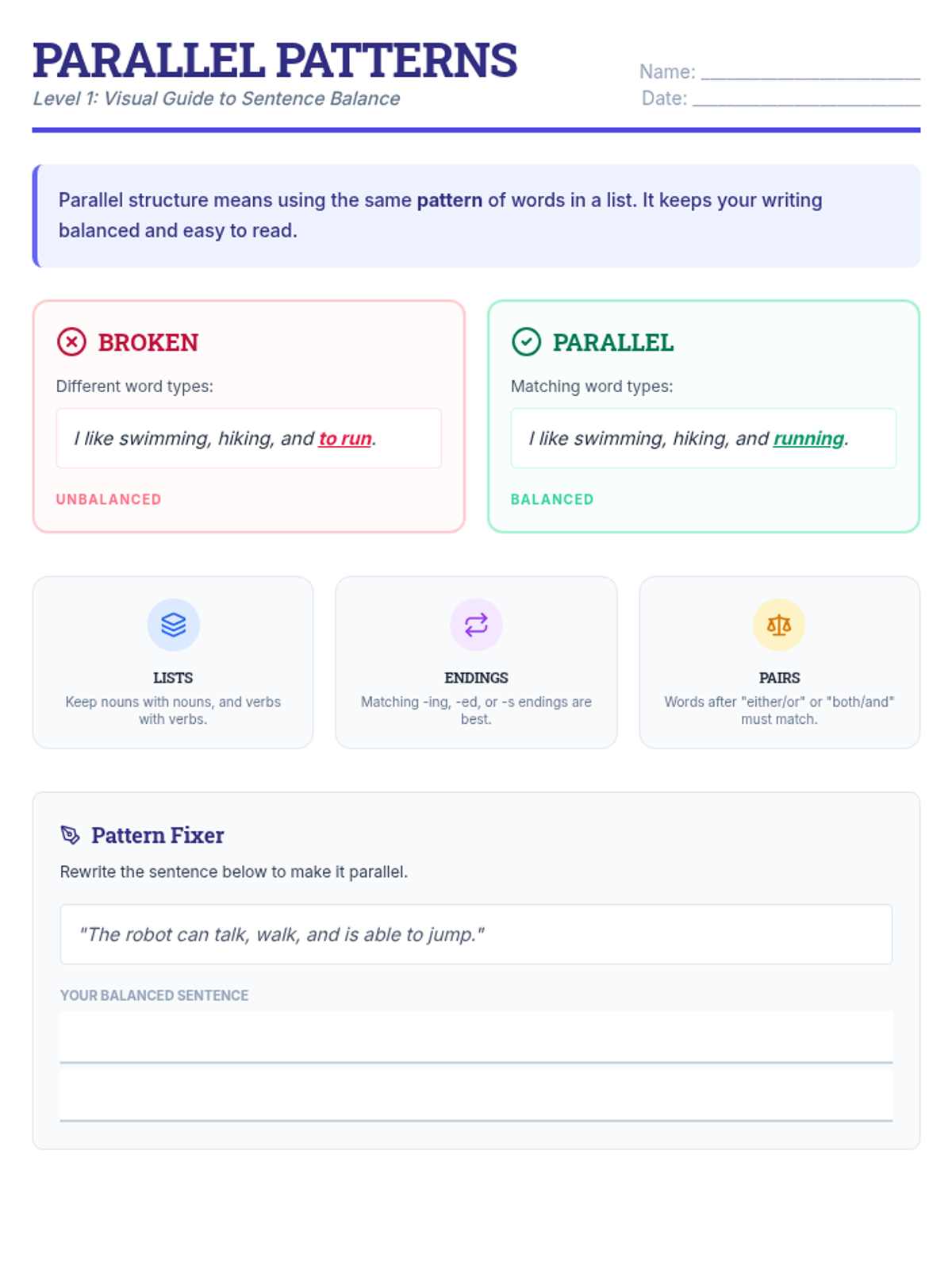
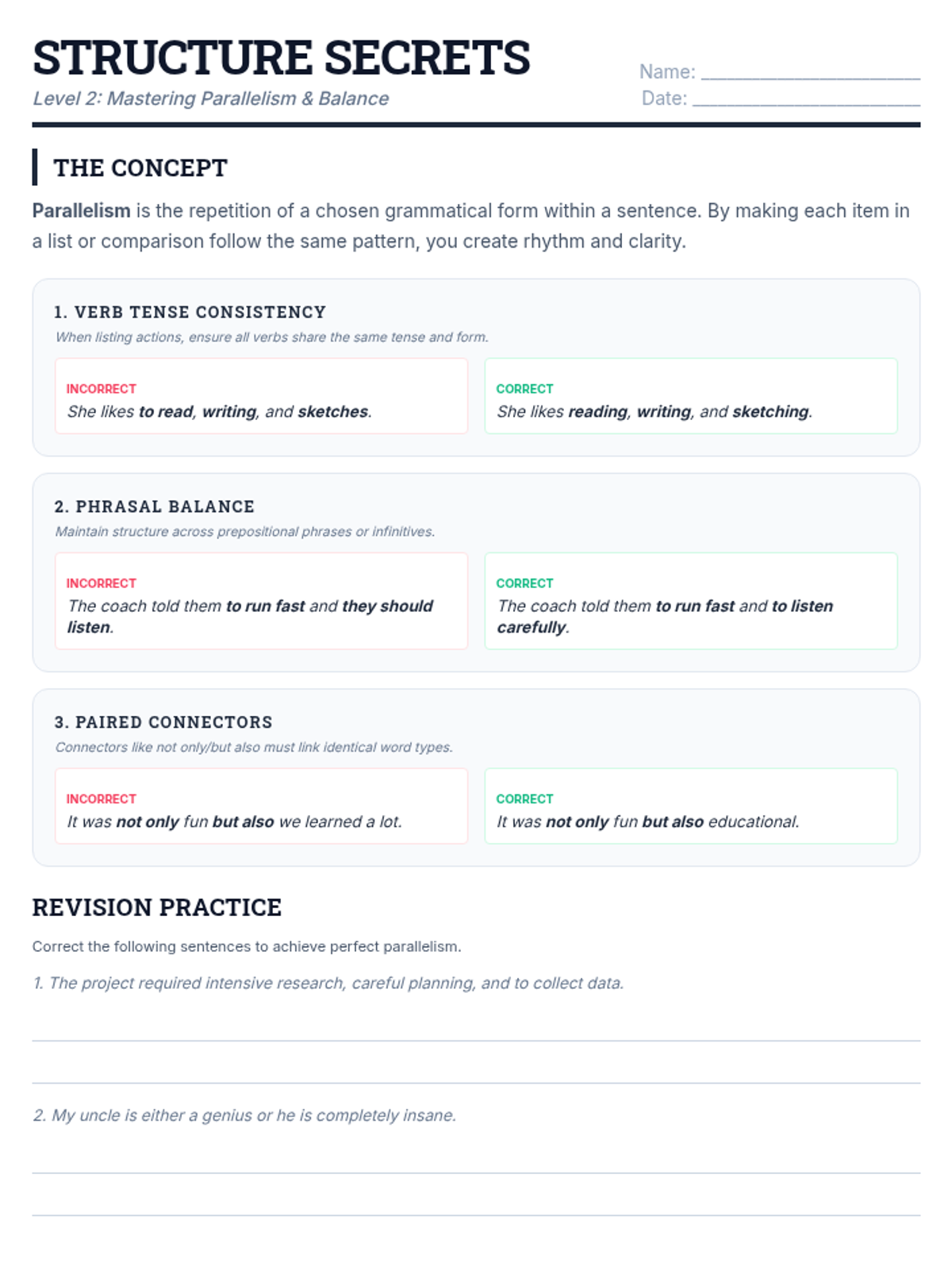
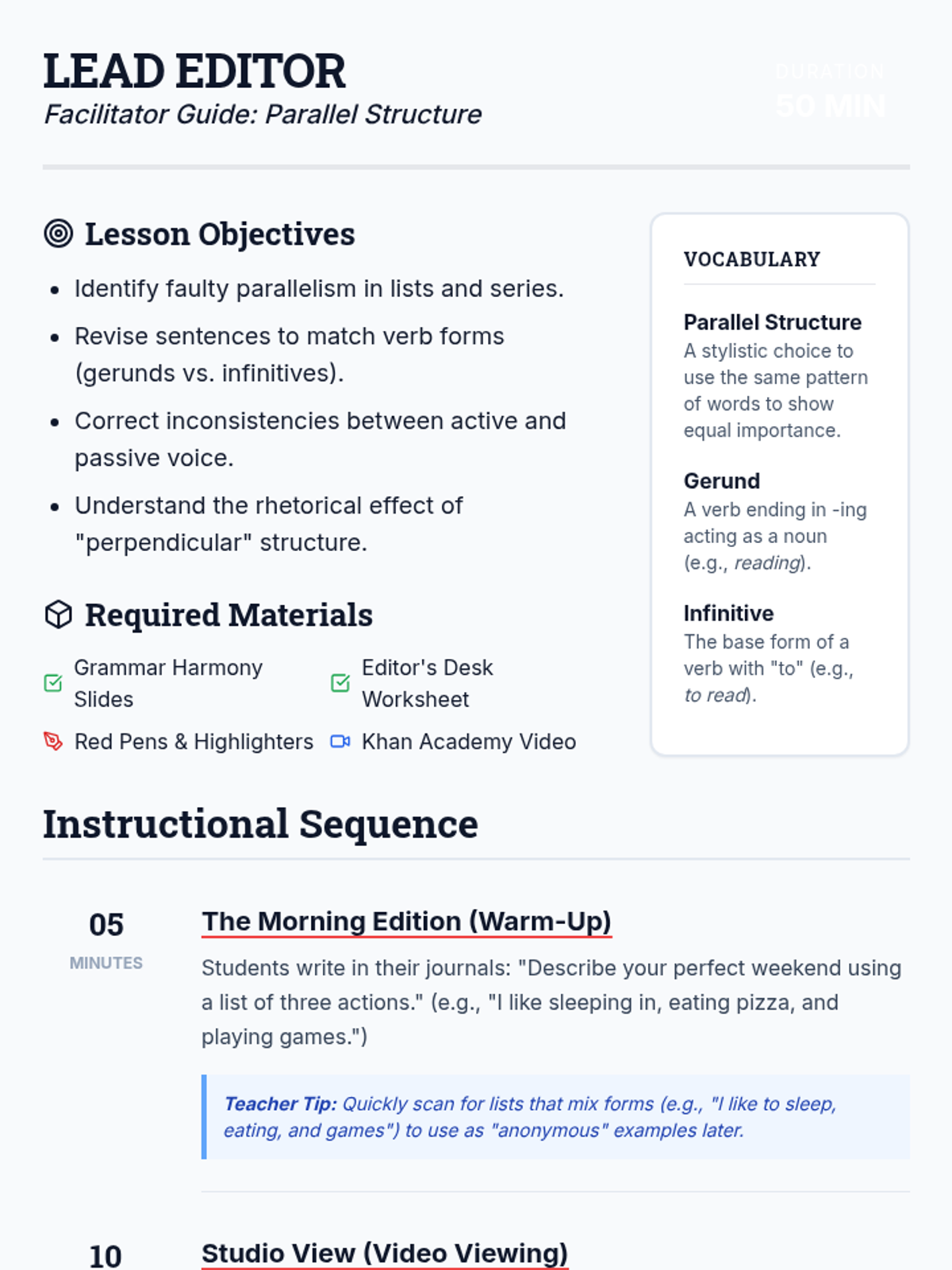
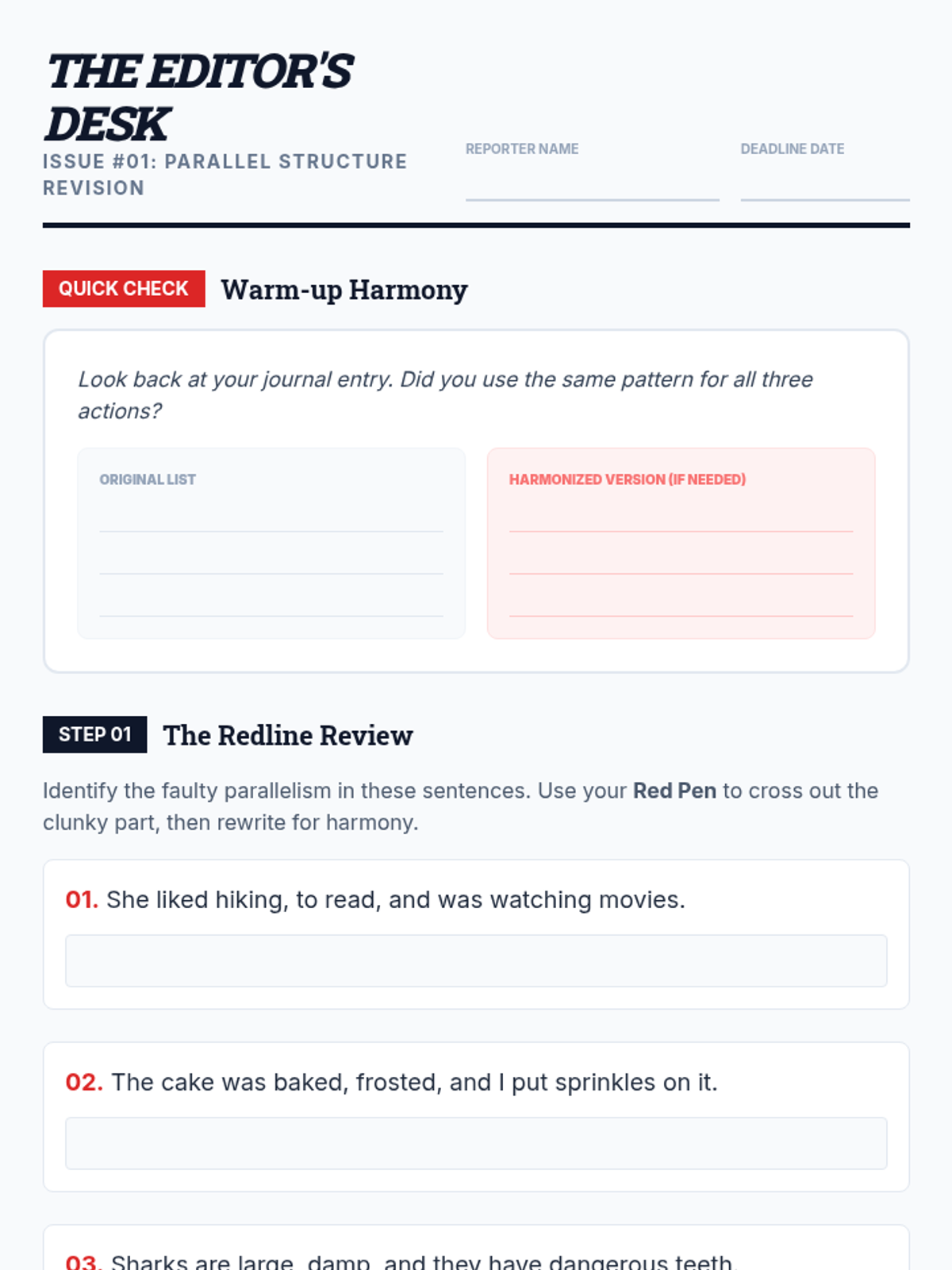
This lesson focuses on identifying and correcting faulty parallelism in writing, specifically targeting inconsistencies in verb forms (gerunds vs. infinitives) and voice (active vs. passive). Students act as editors to harmonize a clunky paragraph and explore how parallel structure creates rhythm and clarity.
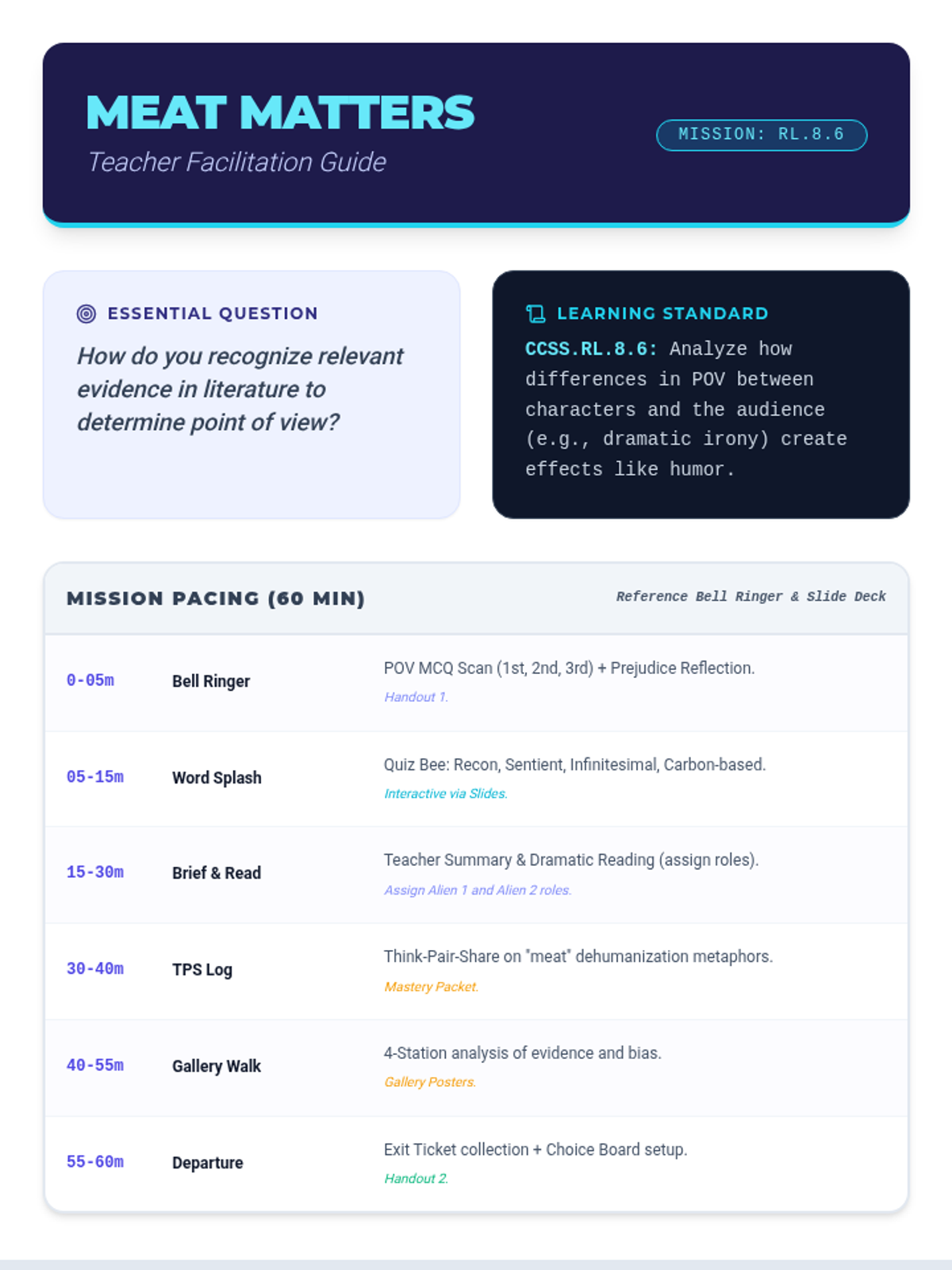
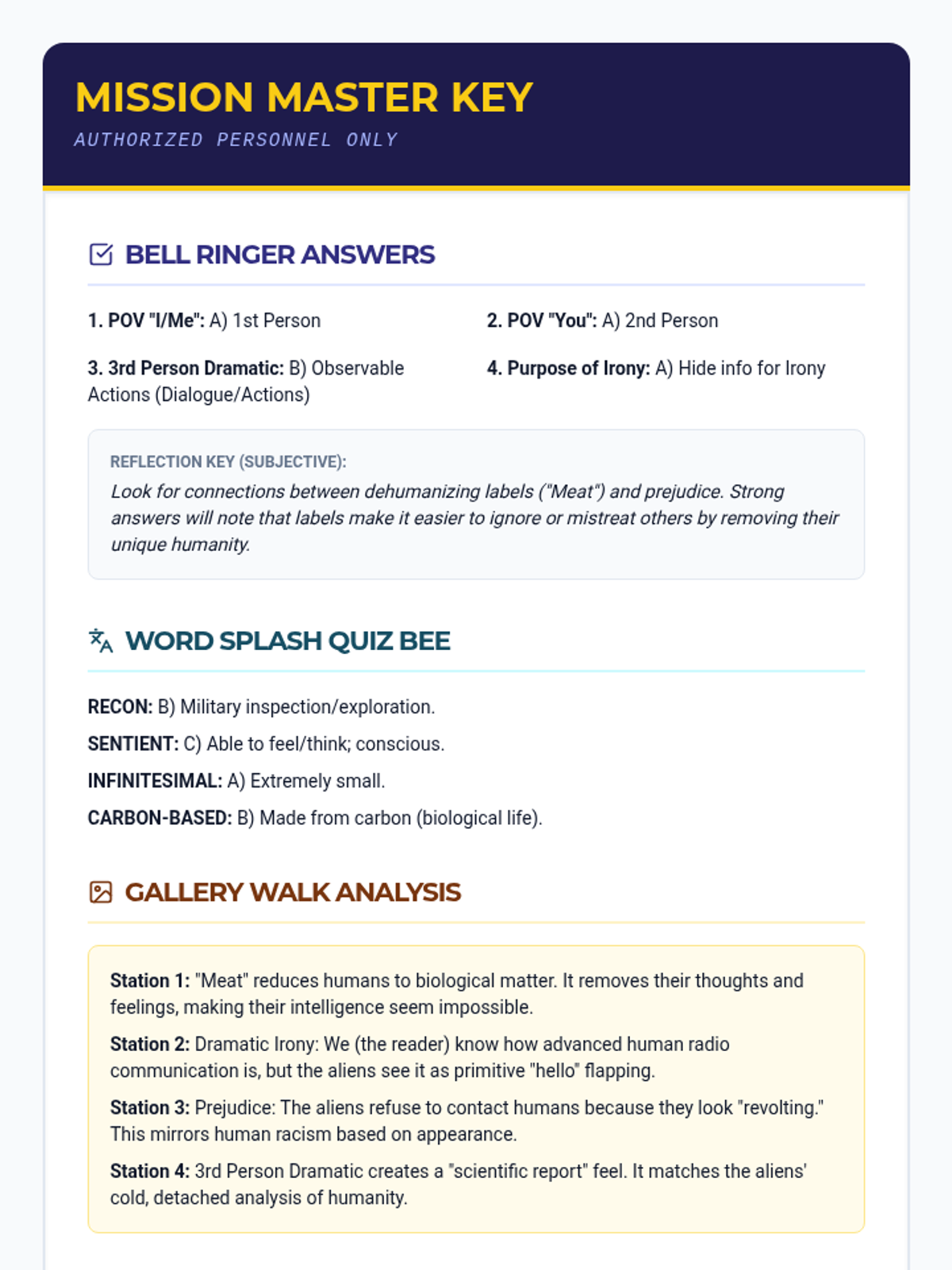
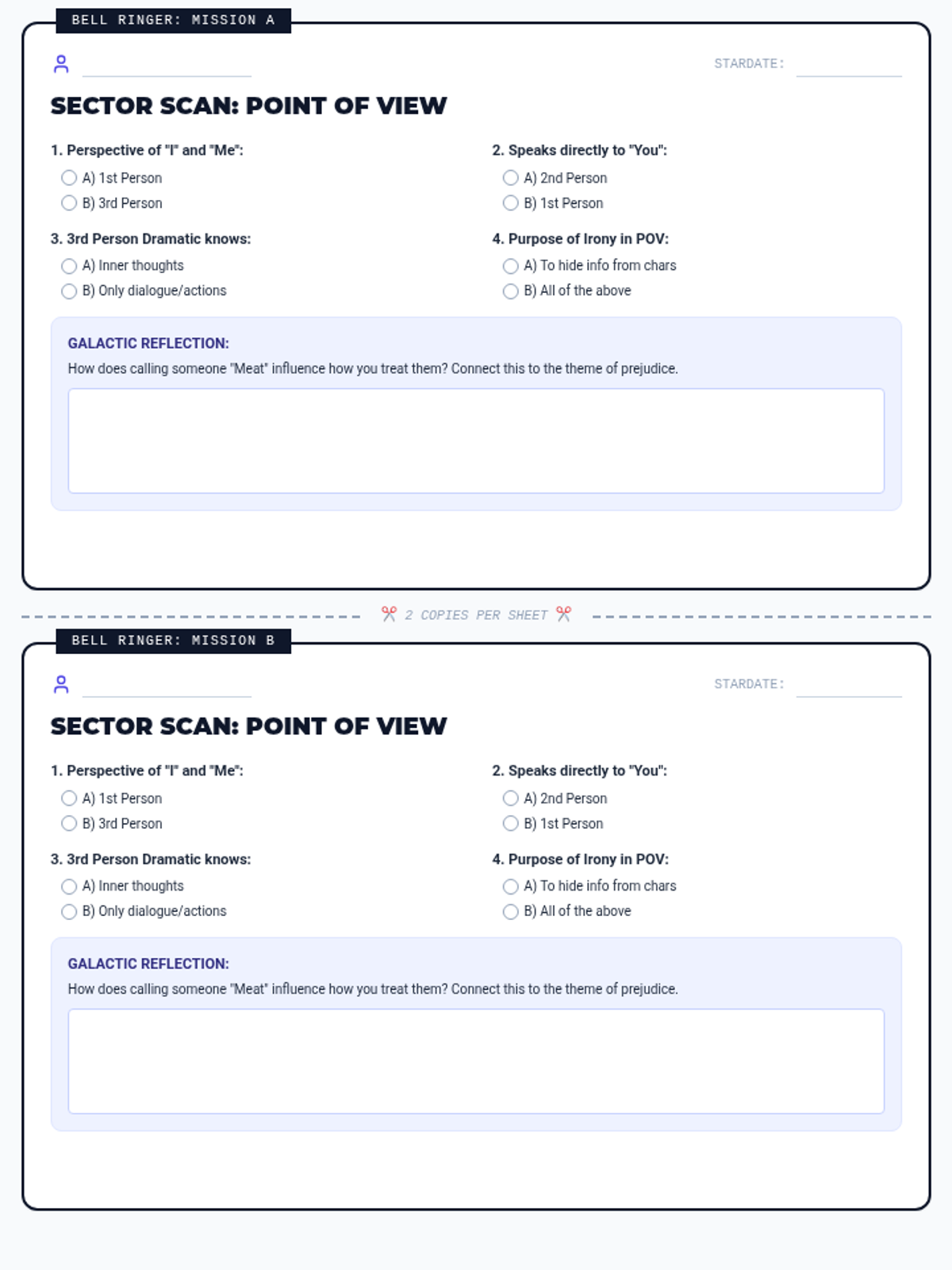
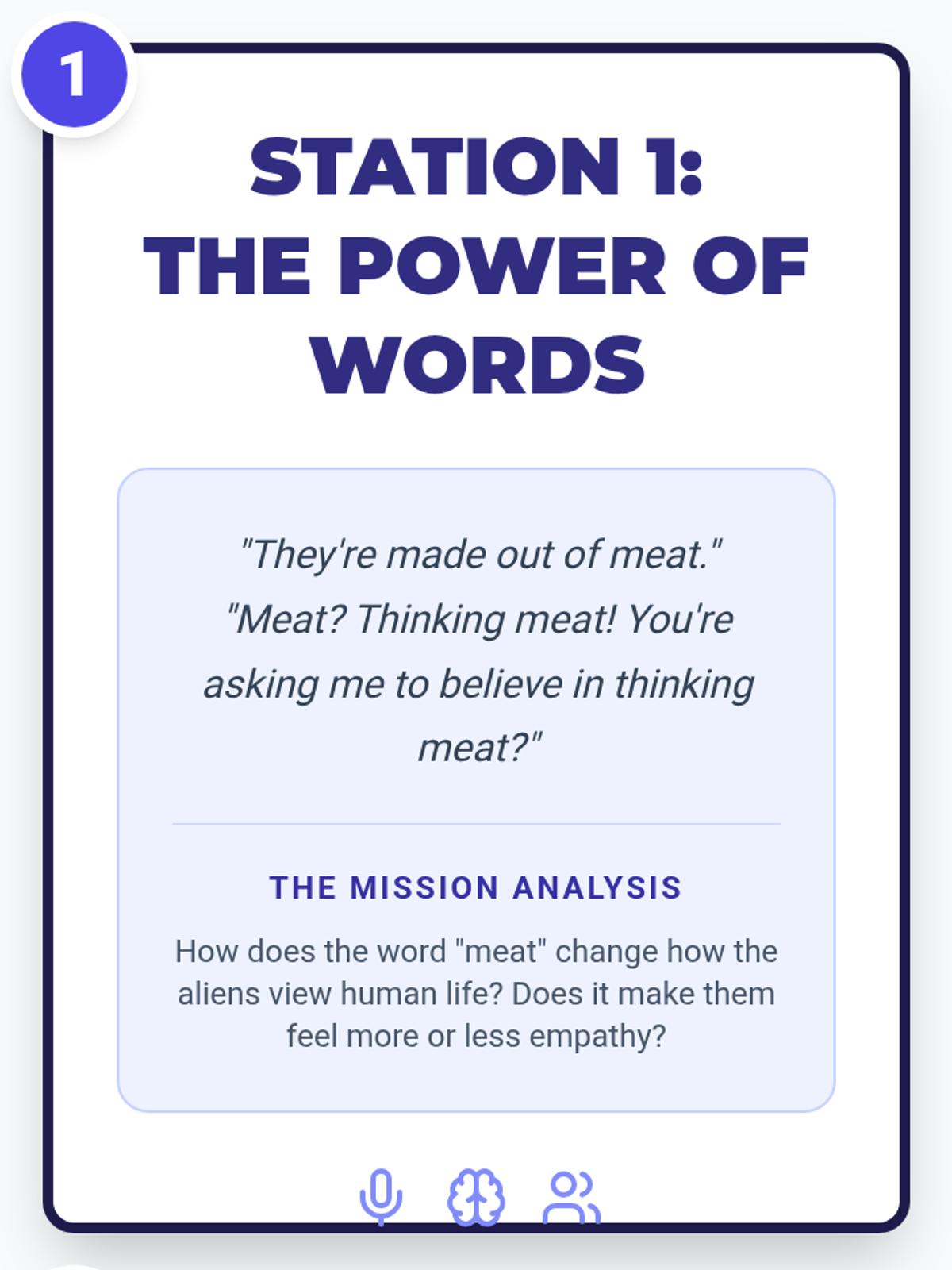
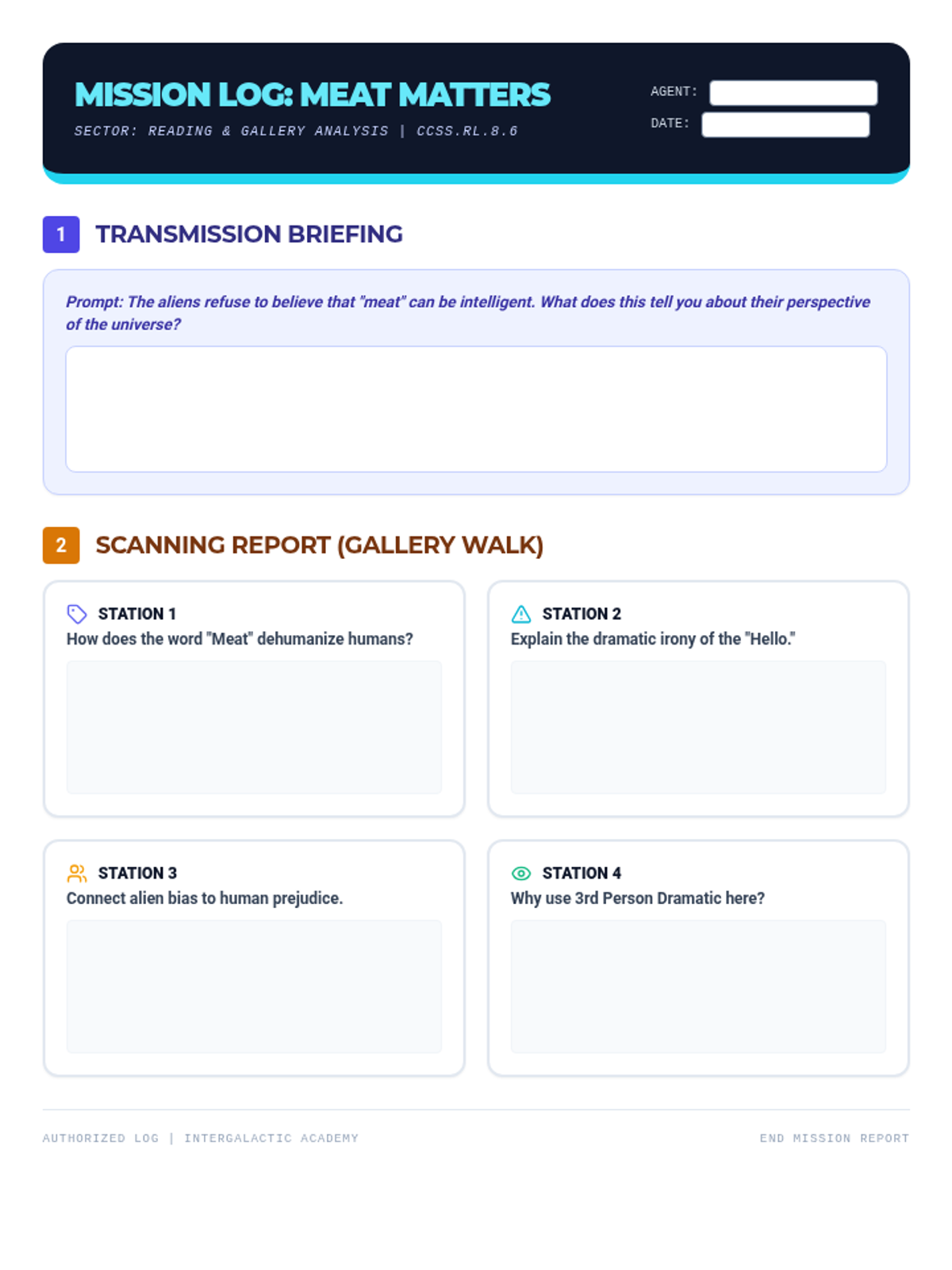
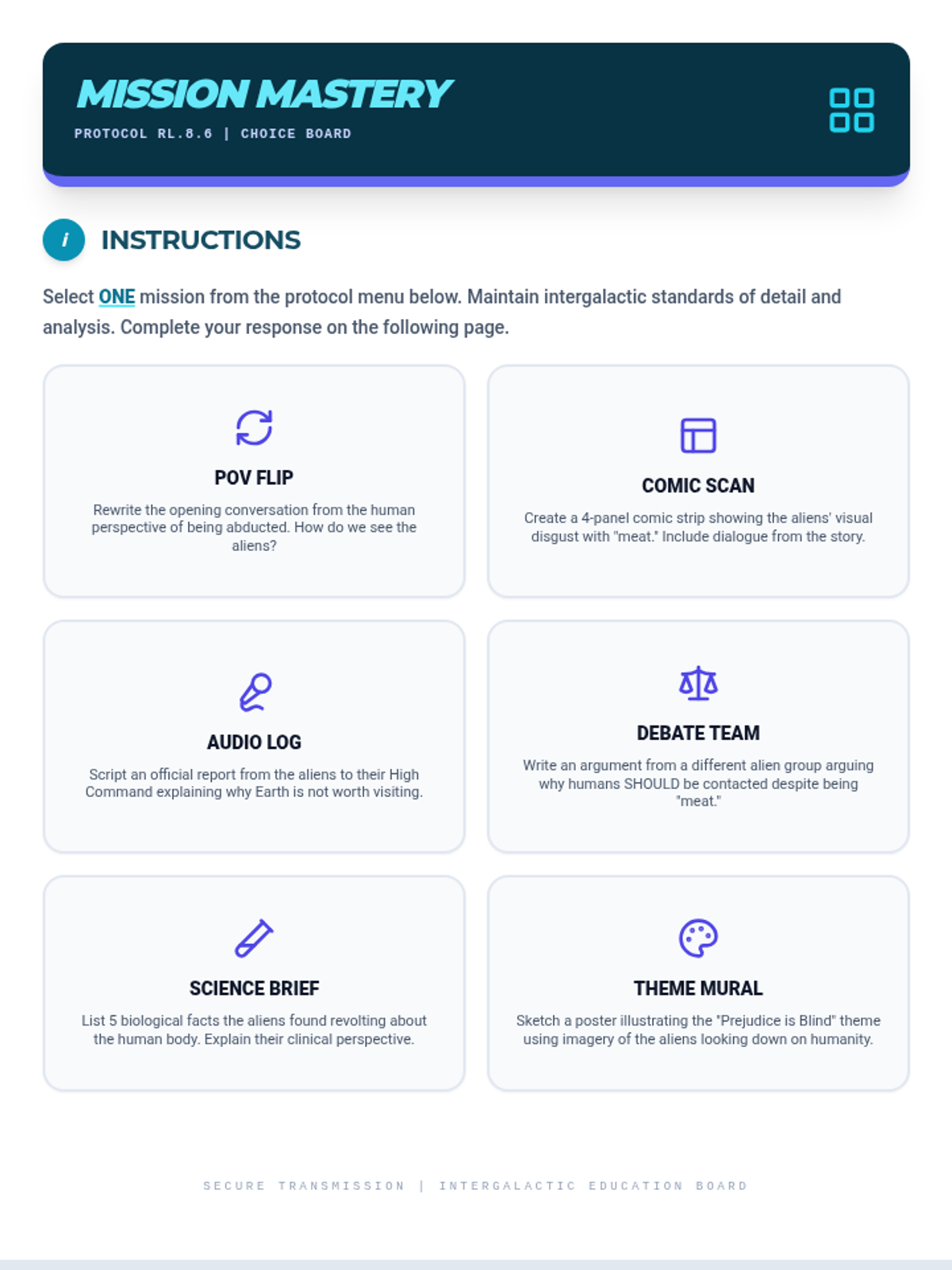
A one-hour deep dive into Terry Bisson's 'They're Made out of Meat,' focusing on point of view, dramatic irony, and themes of prejudice through an alien-themed lens.
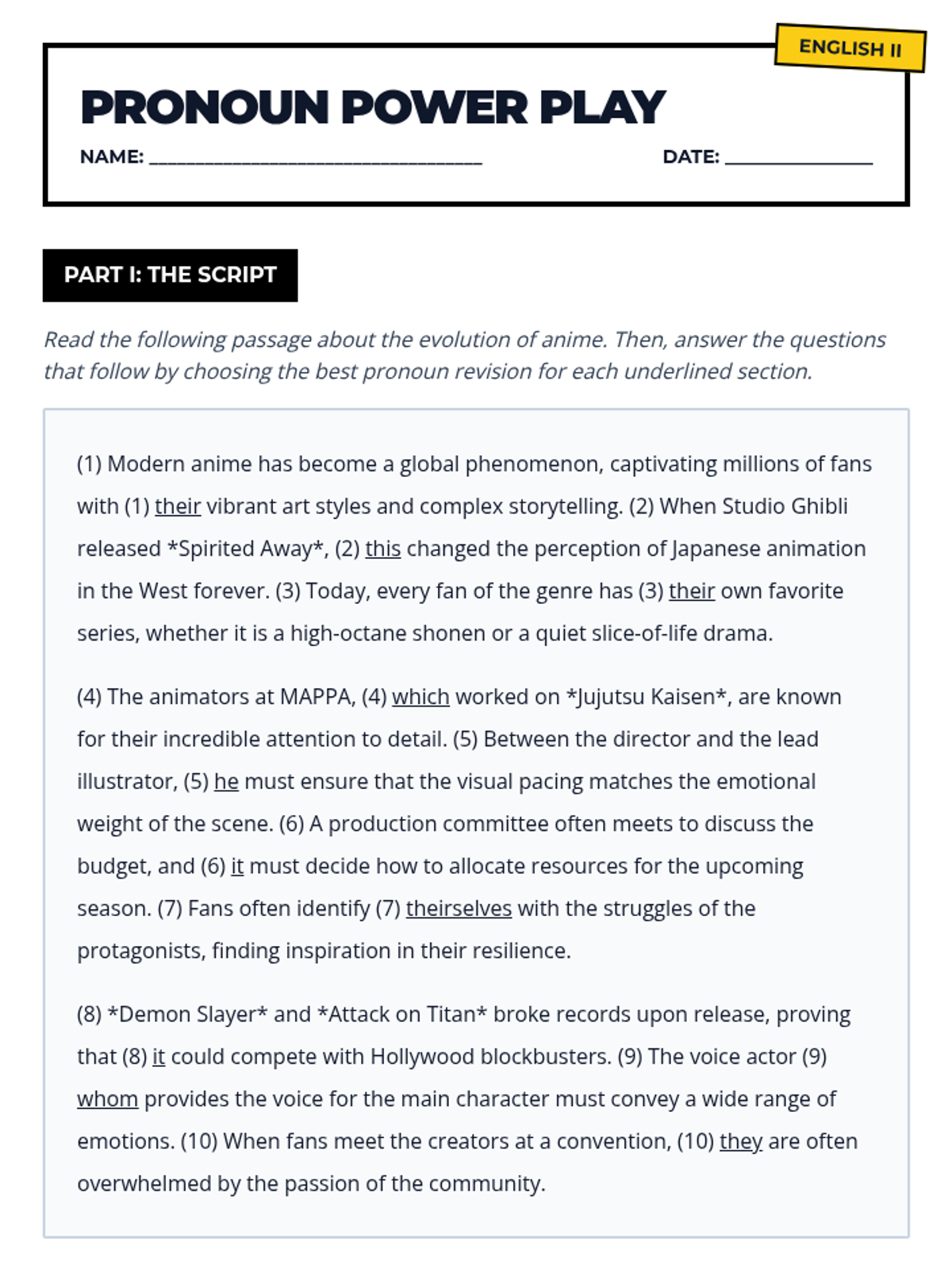
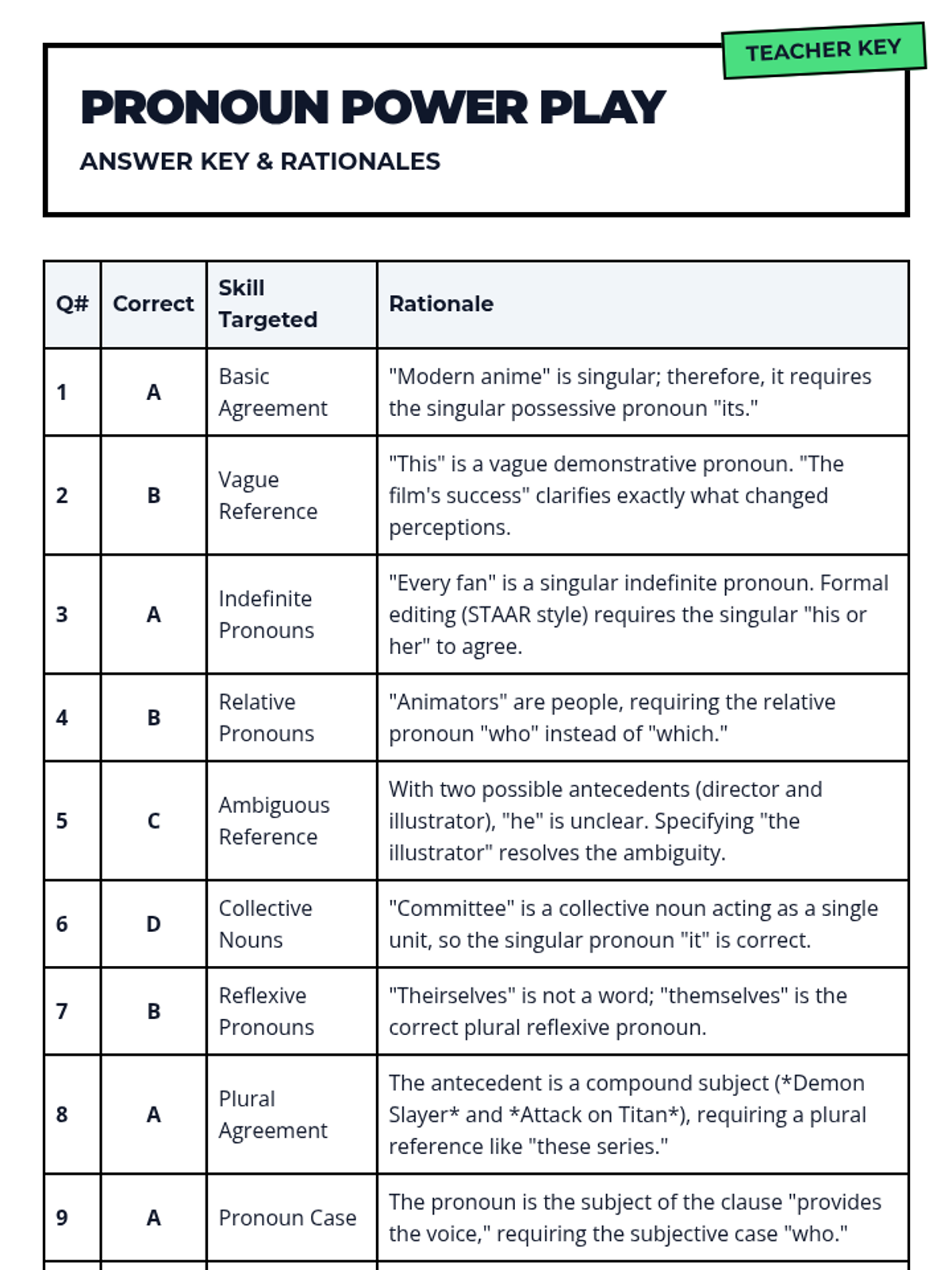
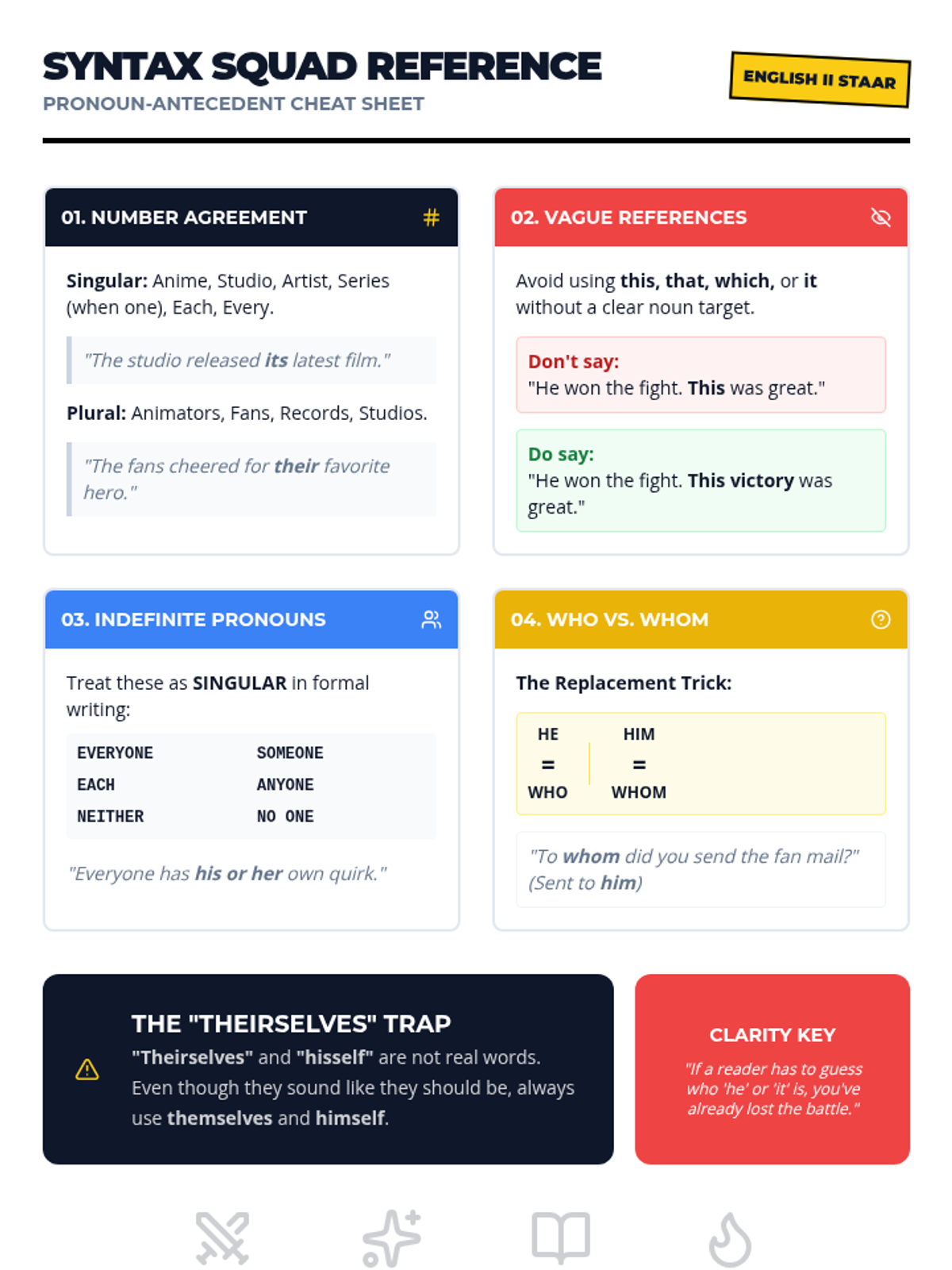
A high-interest lesson focusing on pronoun-antecedent agreement and clarity within the context of anime and manga history, designed for English II STAAR preparation.
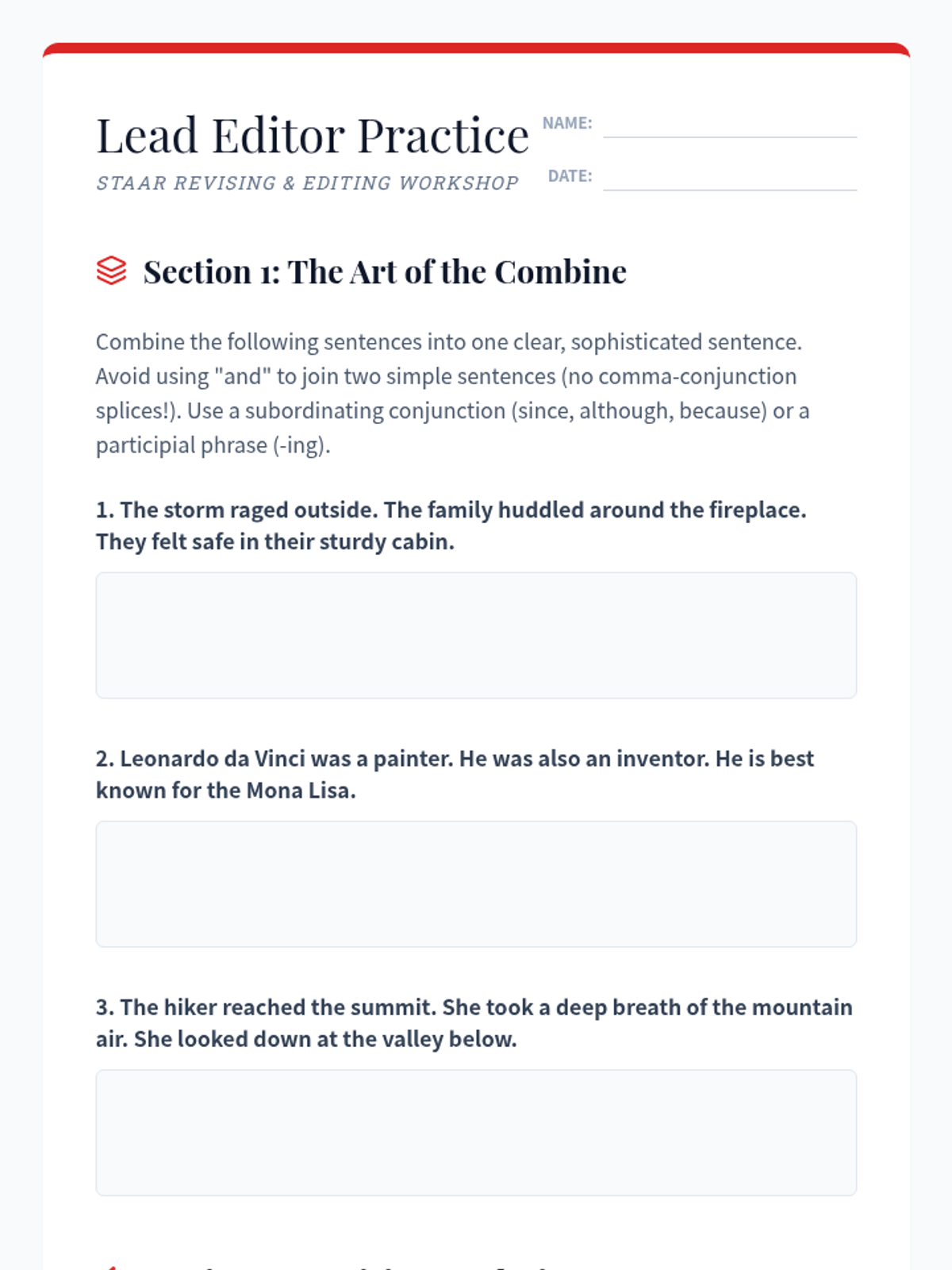
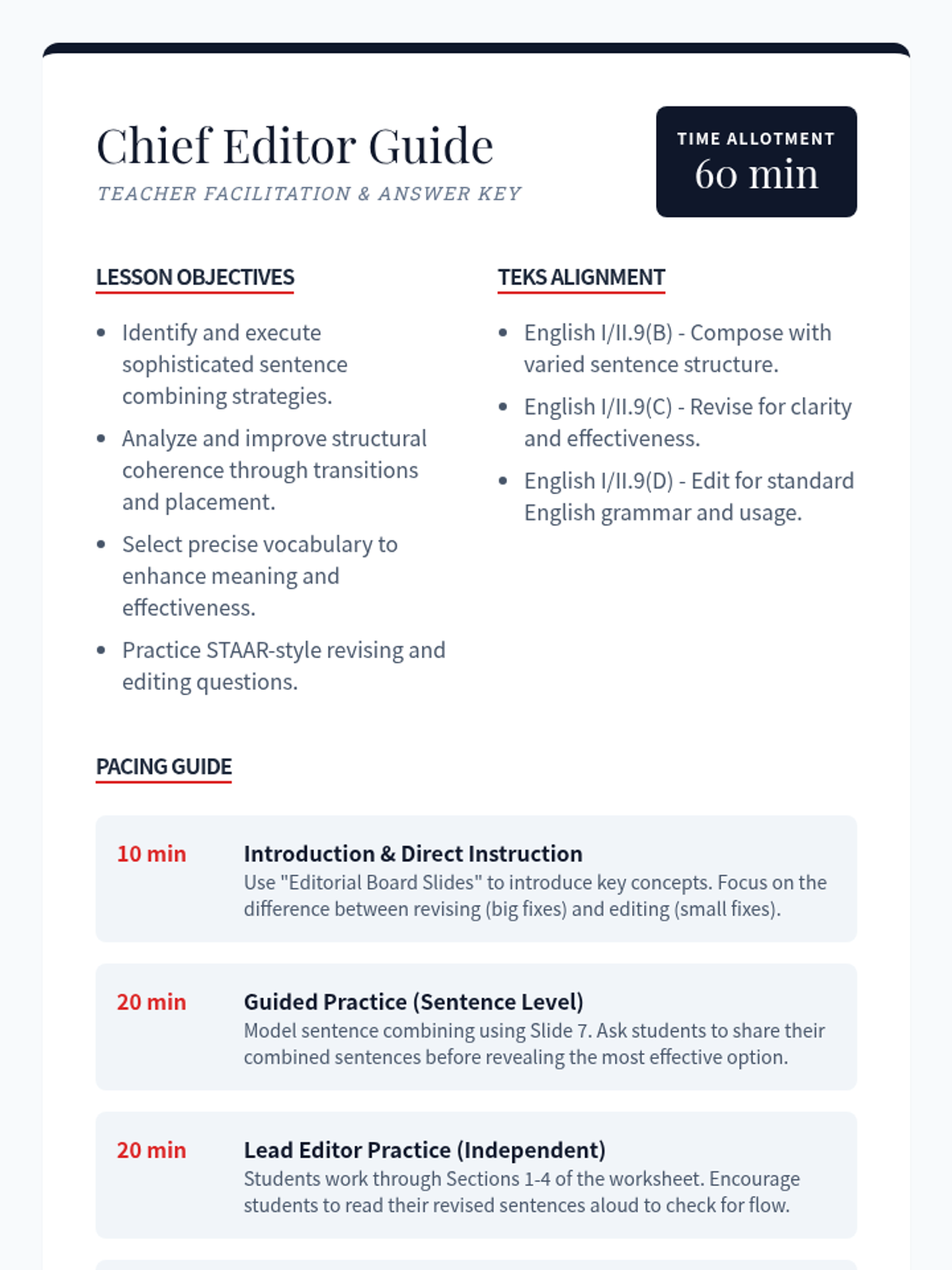
A comprehensive lesson focusing on high-leverage revising and editing skills for the STAAR EOC English I & II exams, including sentence combining, transitions, and structural coherence.
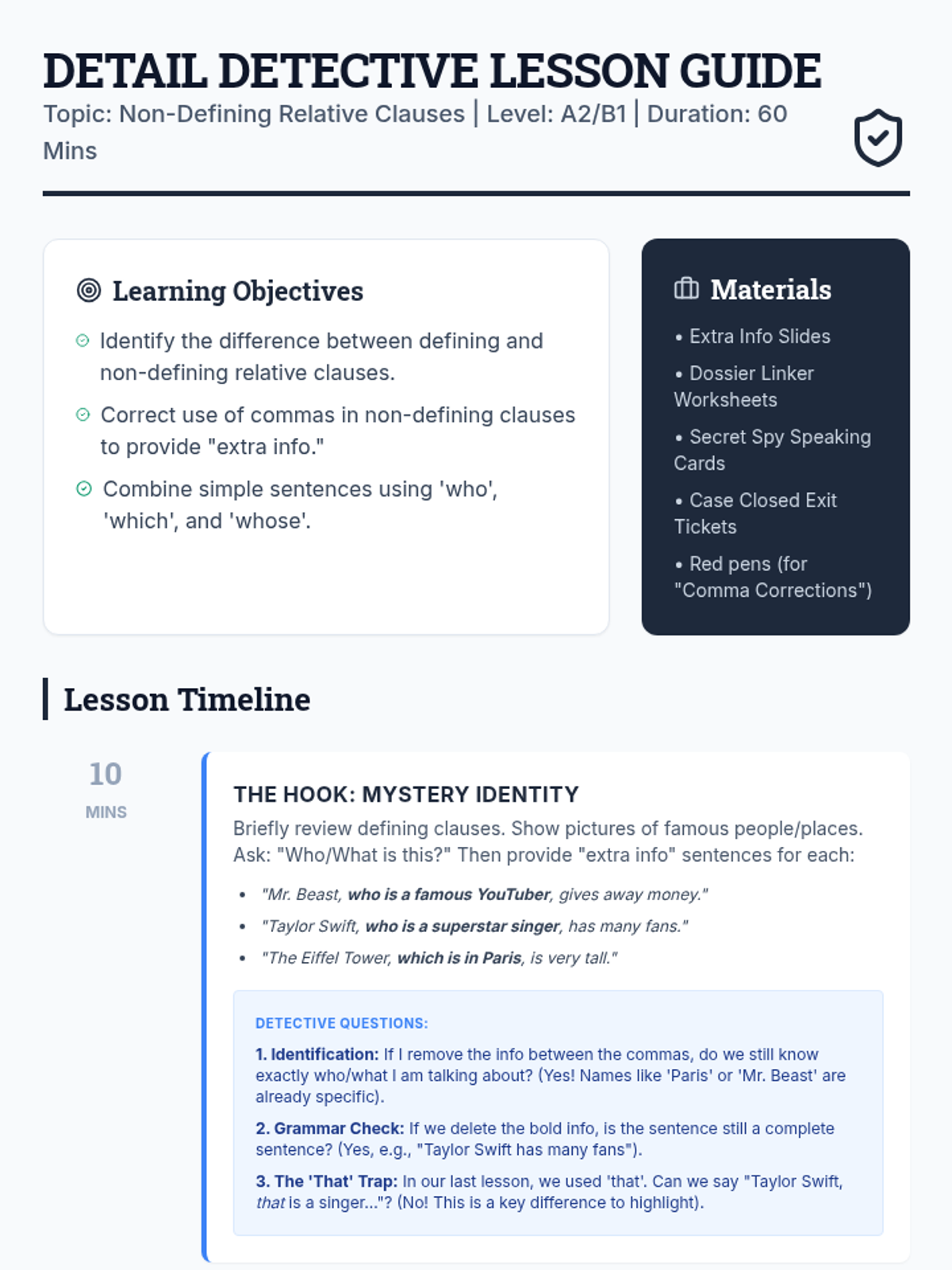
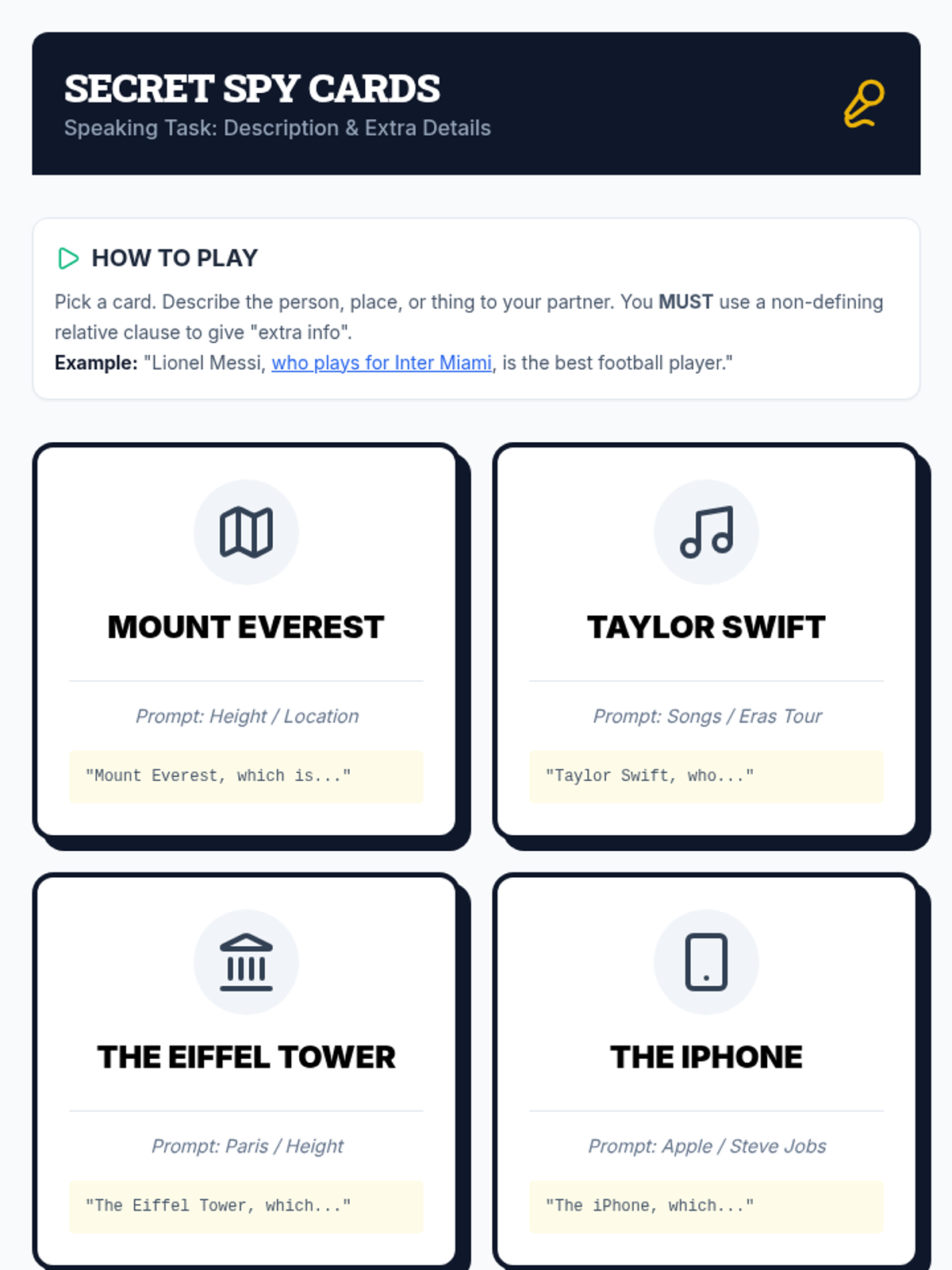
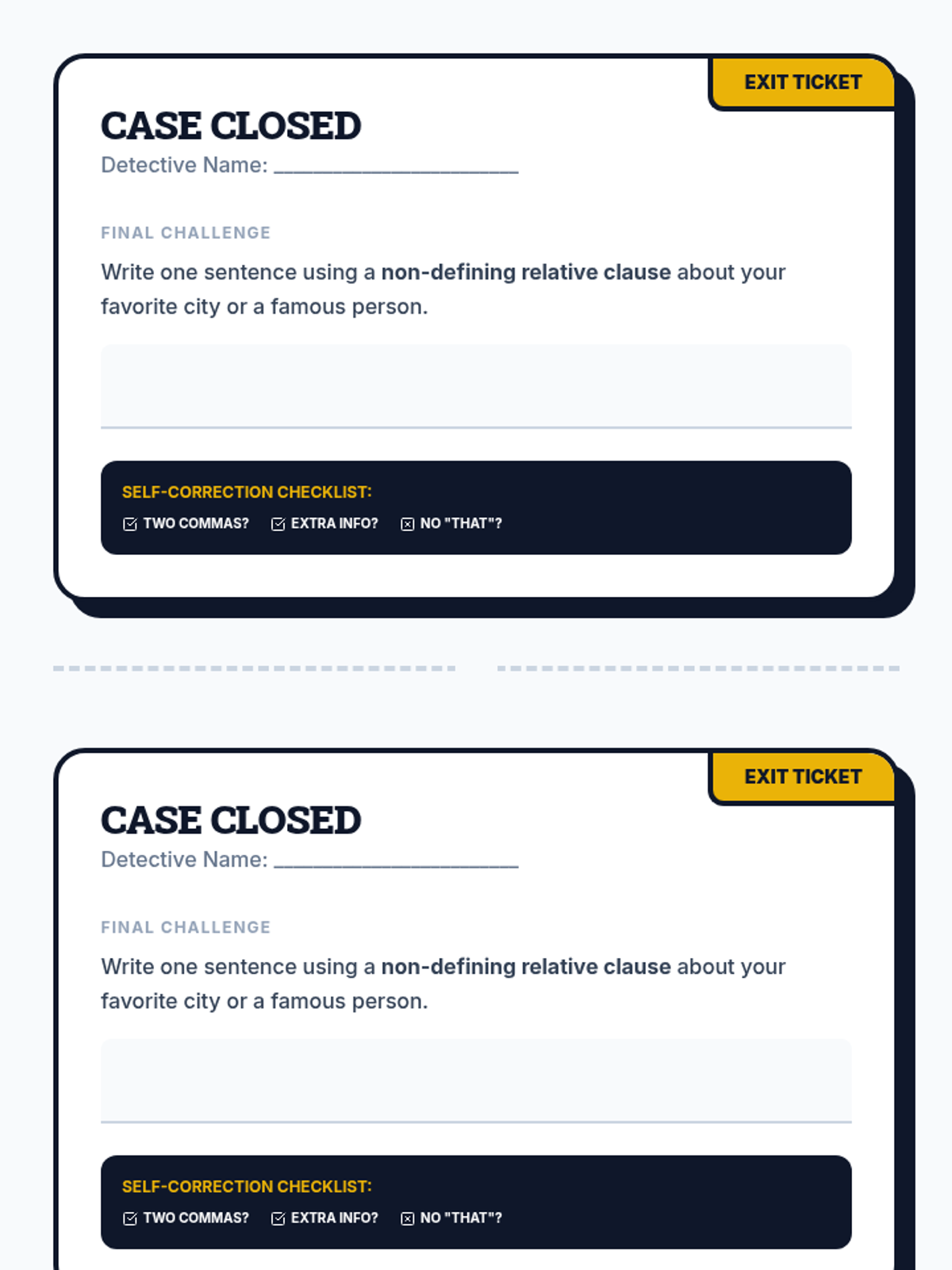
A 60-minute ESL lesson for A2 students focused on non-defining relative clauses through a 'Detail Detective' theme, featuring sentence combining, speaking cards, and comma mastery.
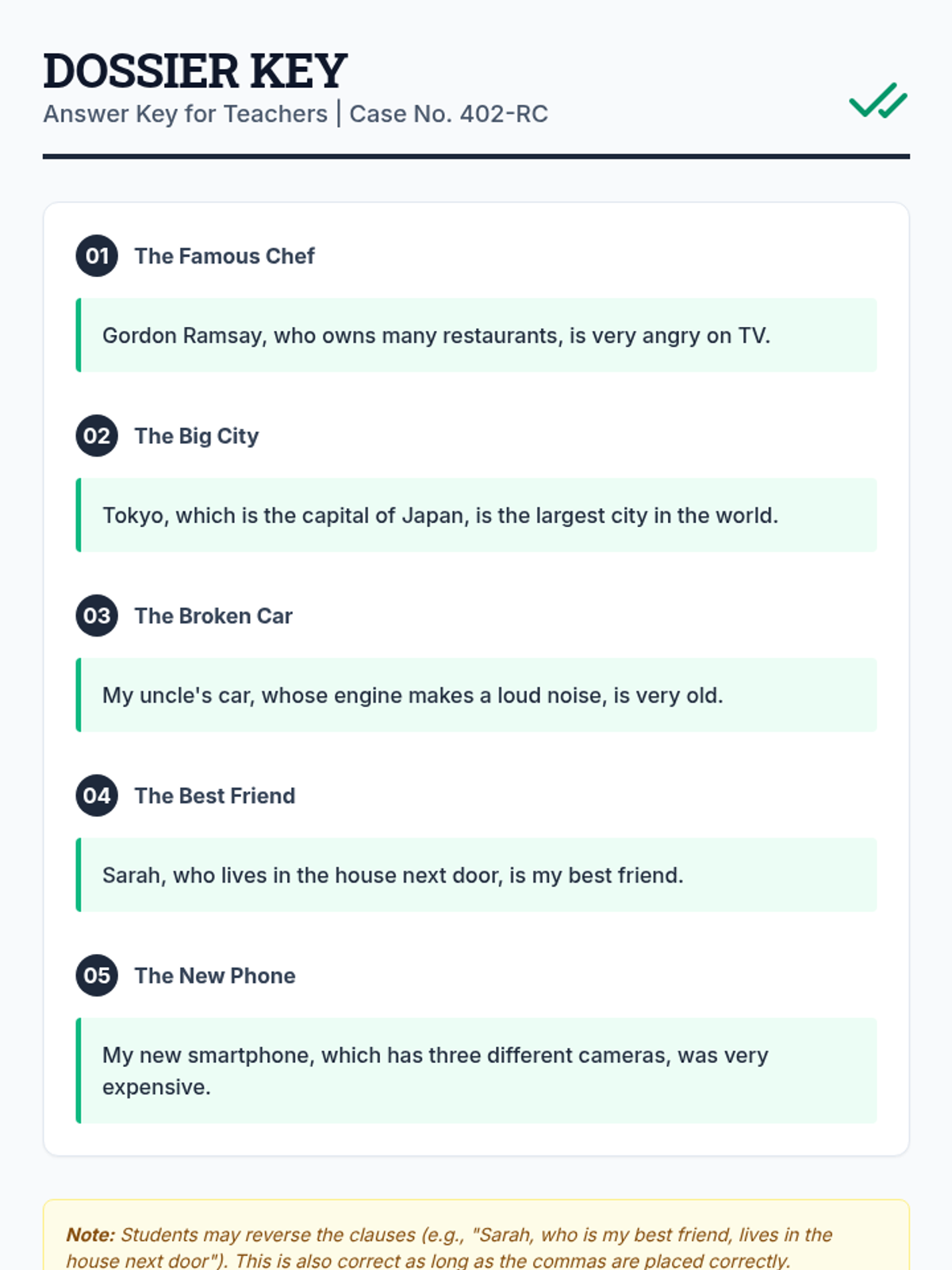
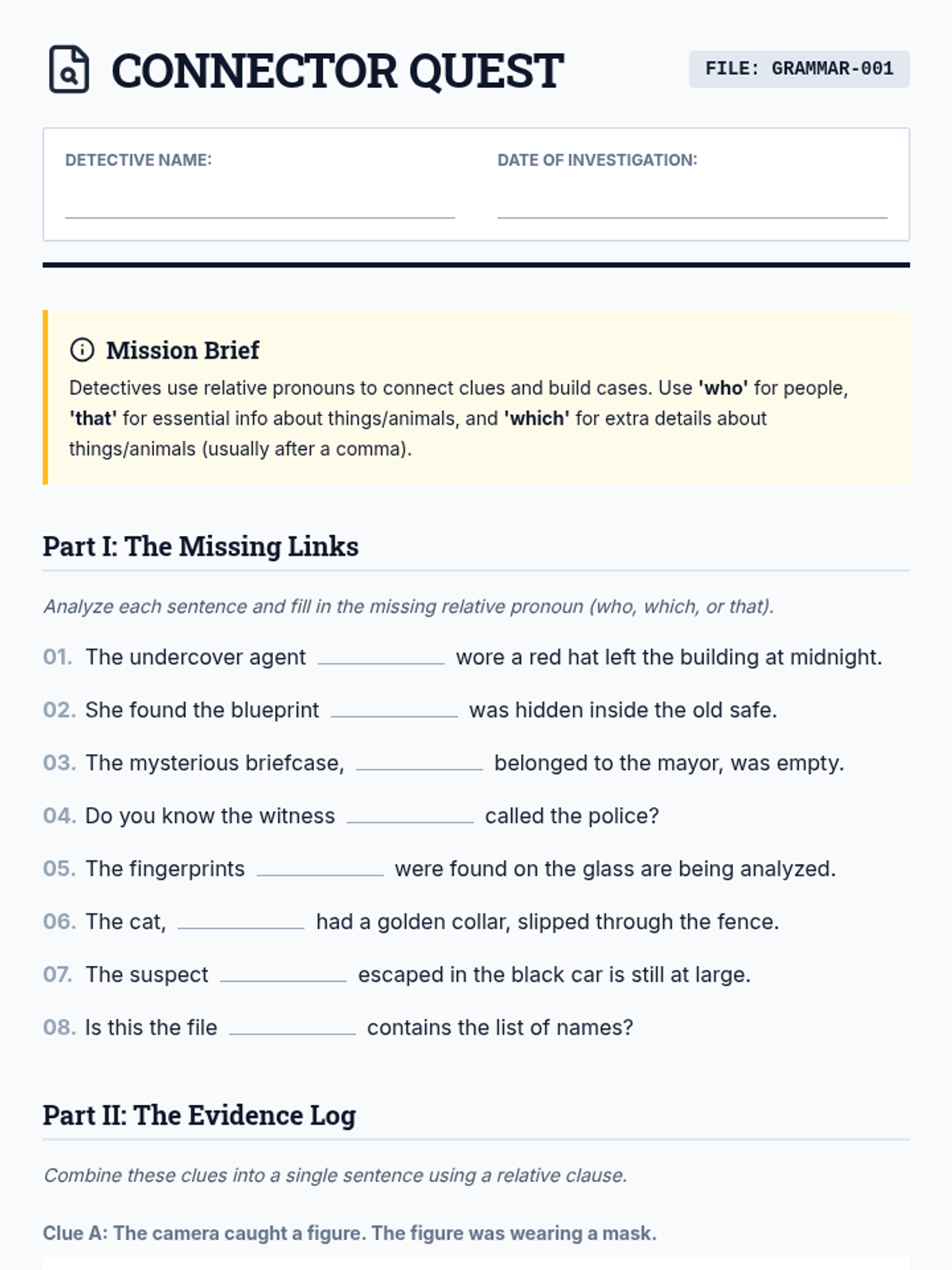
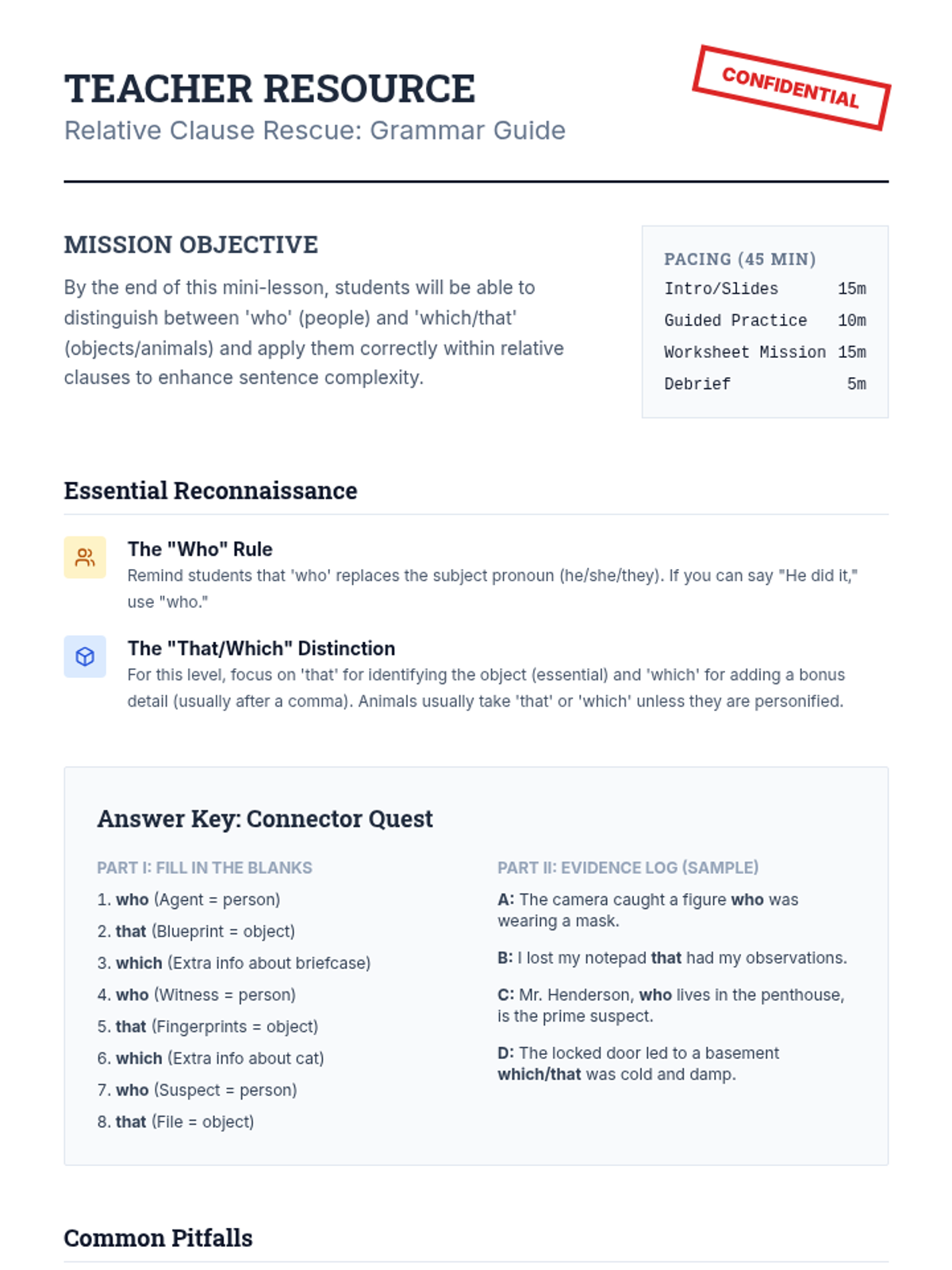
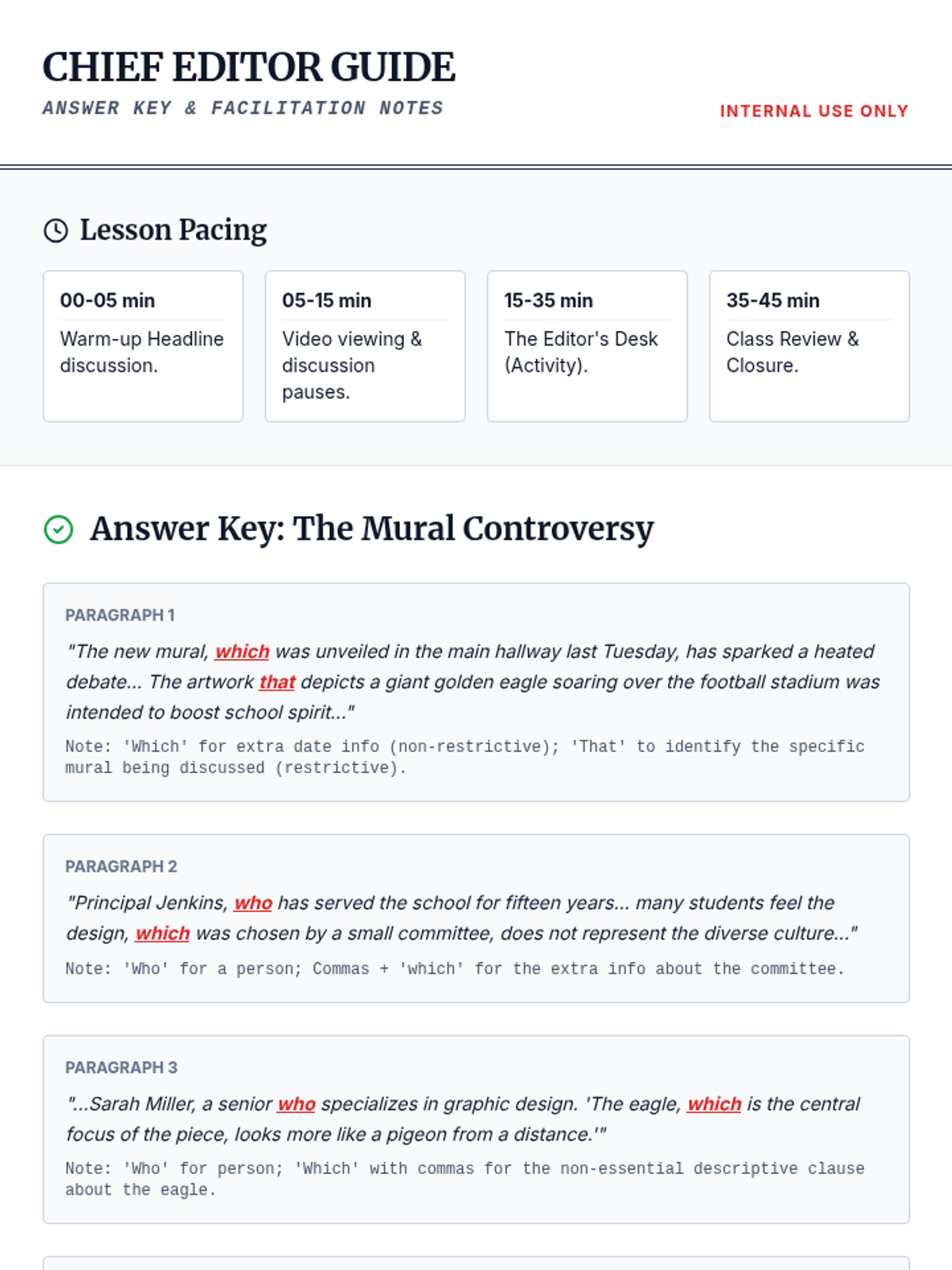
A detective-themed grammar lesson focused on correctly using relative pronouns 'who', 'which', and 'that'. Students will identify the correct pronouns for people versus objects through interactive instruction and a practice mission.
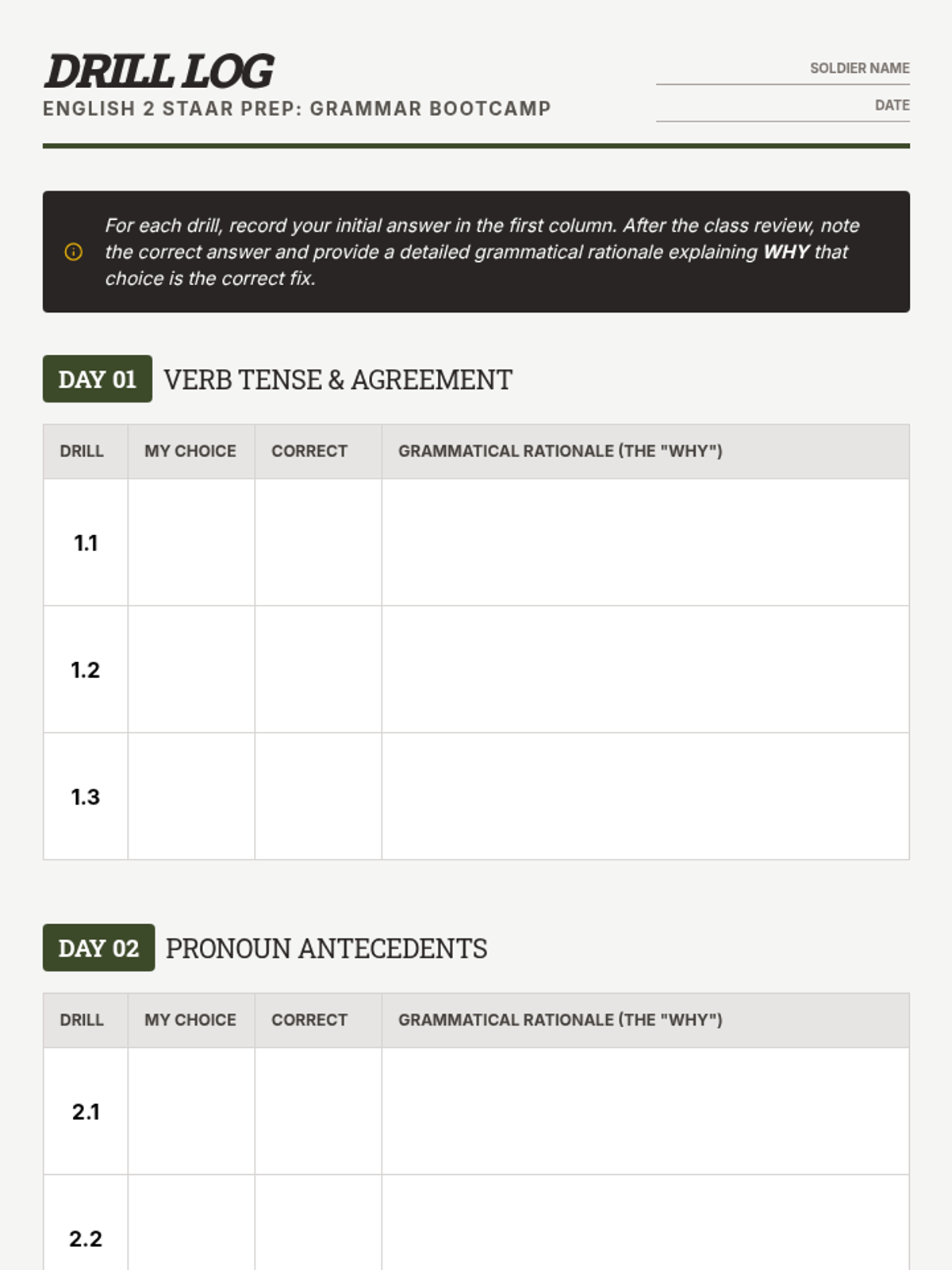
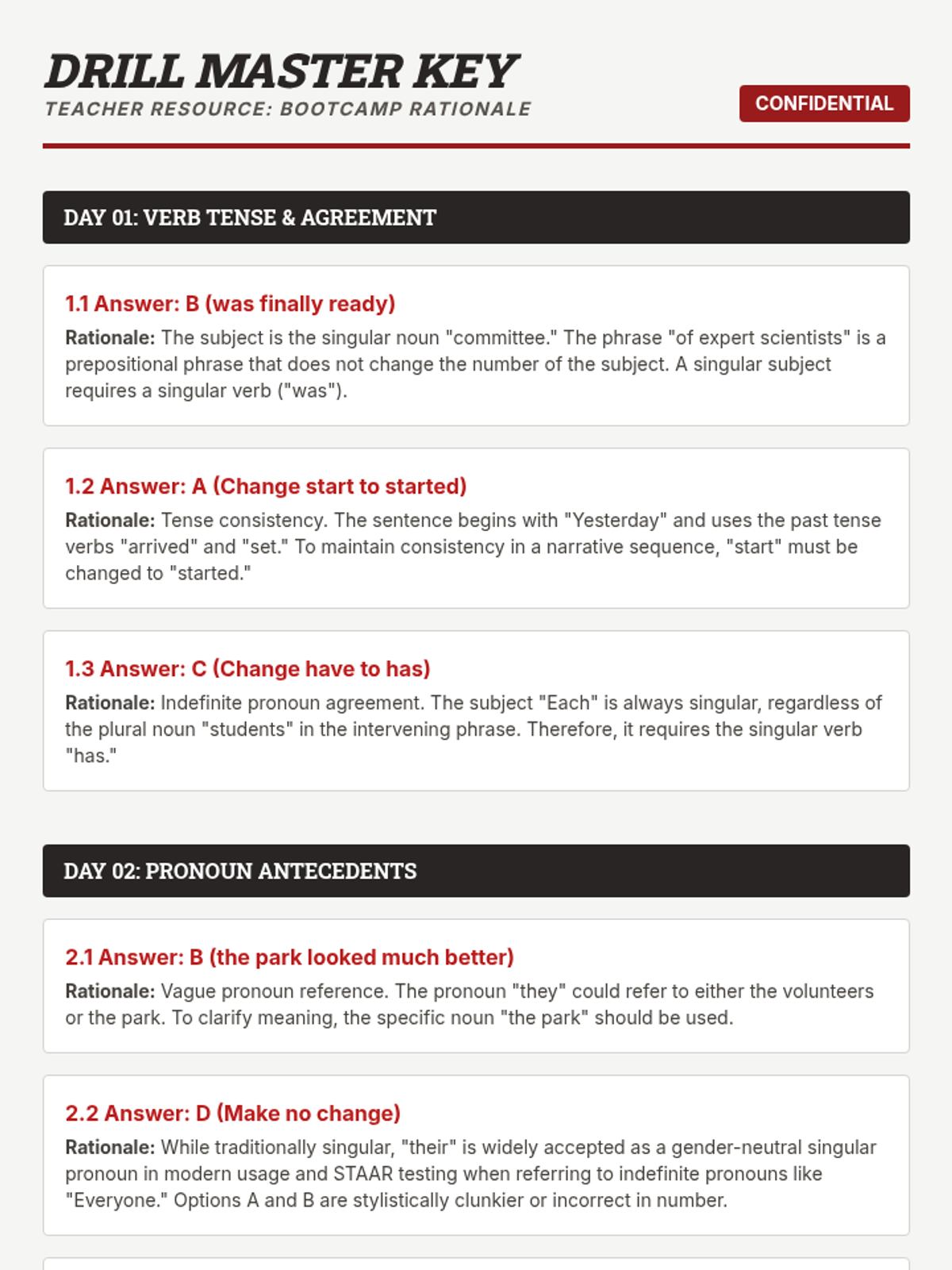
A comprehensive 10-day daily drill series focusing on high-stakes revising and editing skills for the English 2 STAAR/EOC.
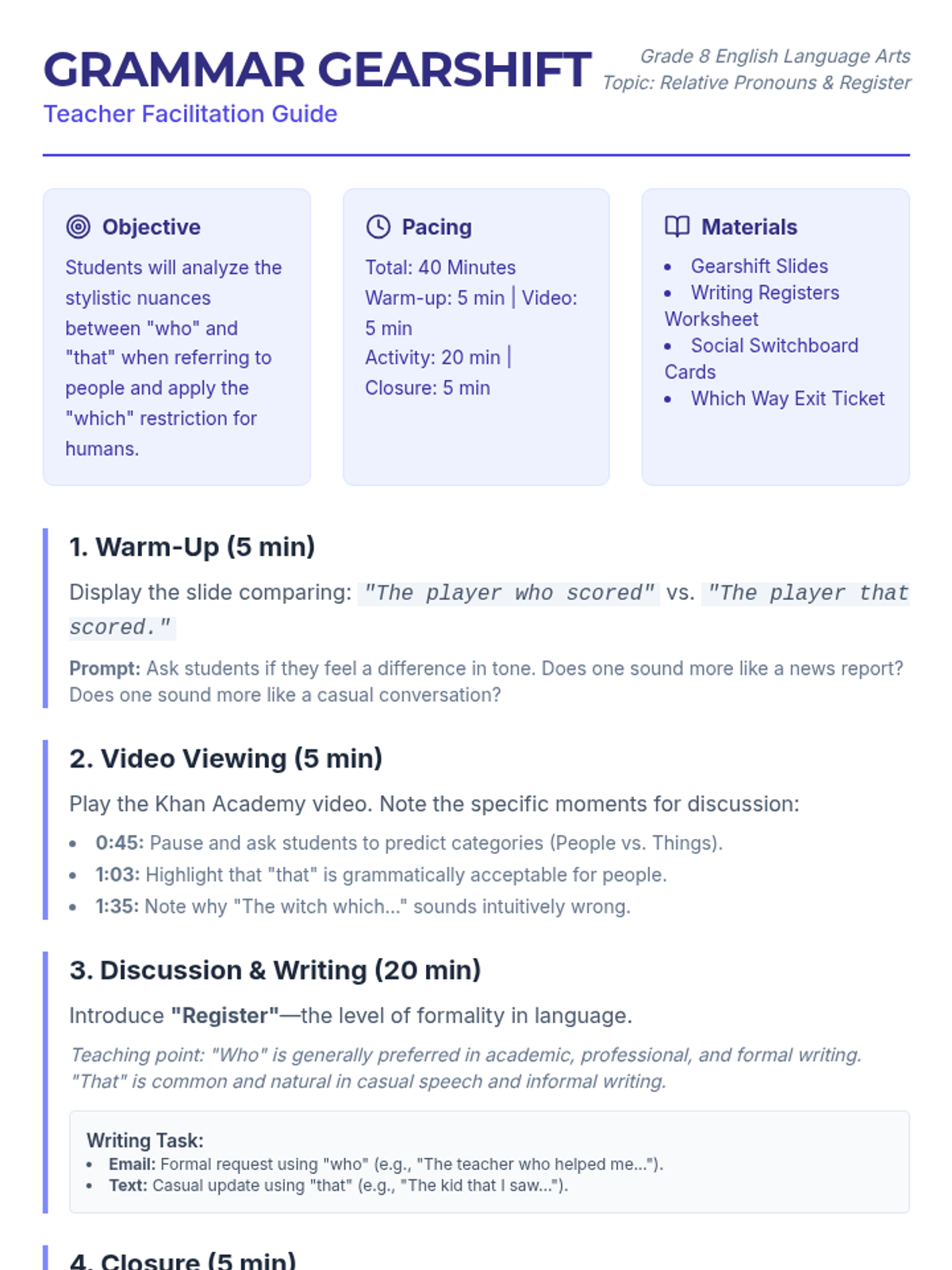
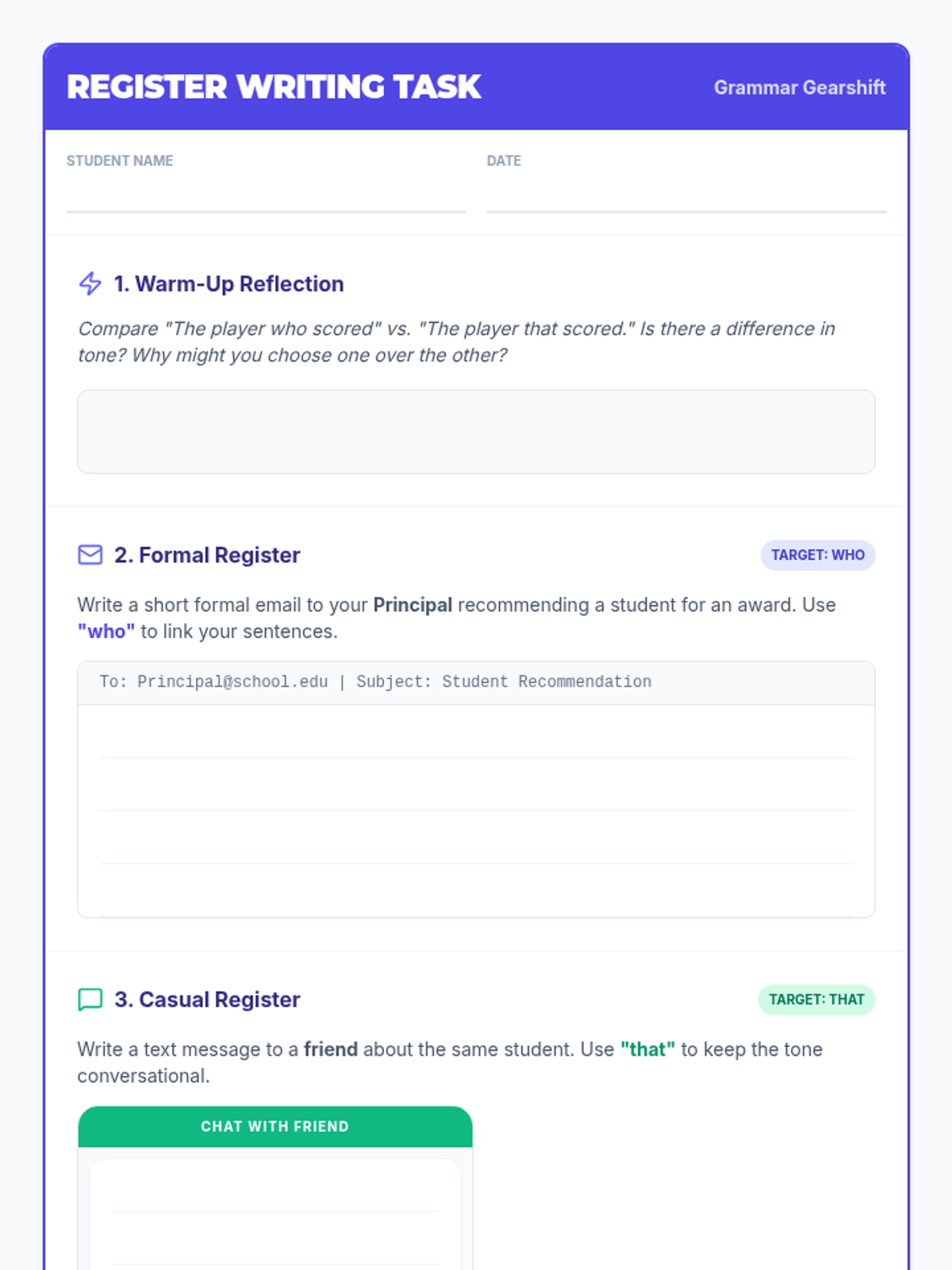
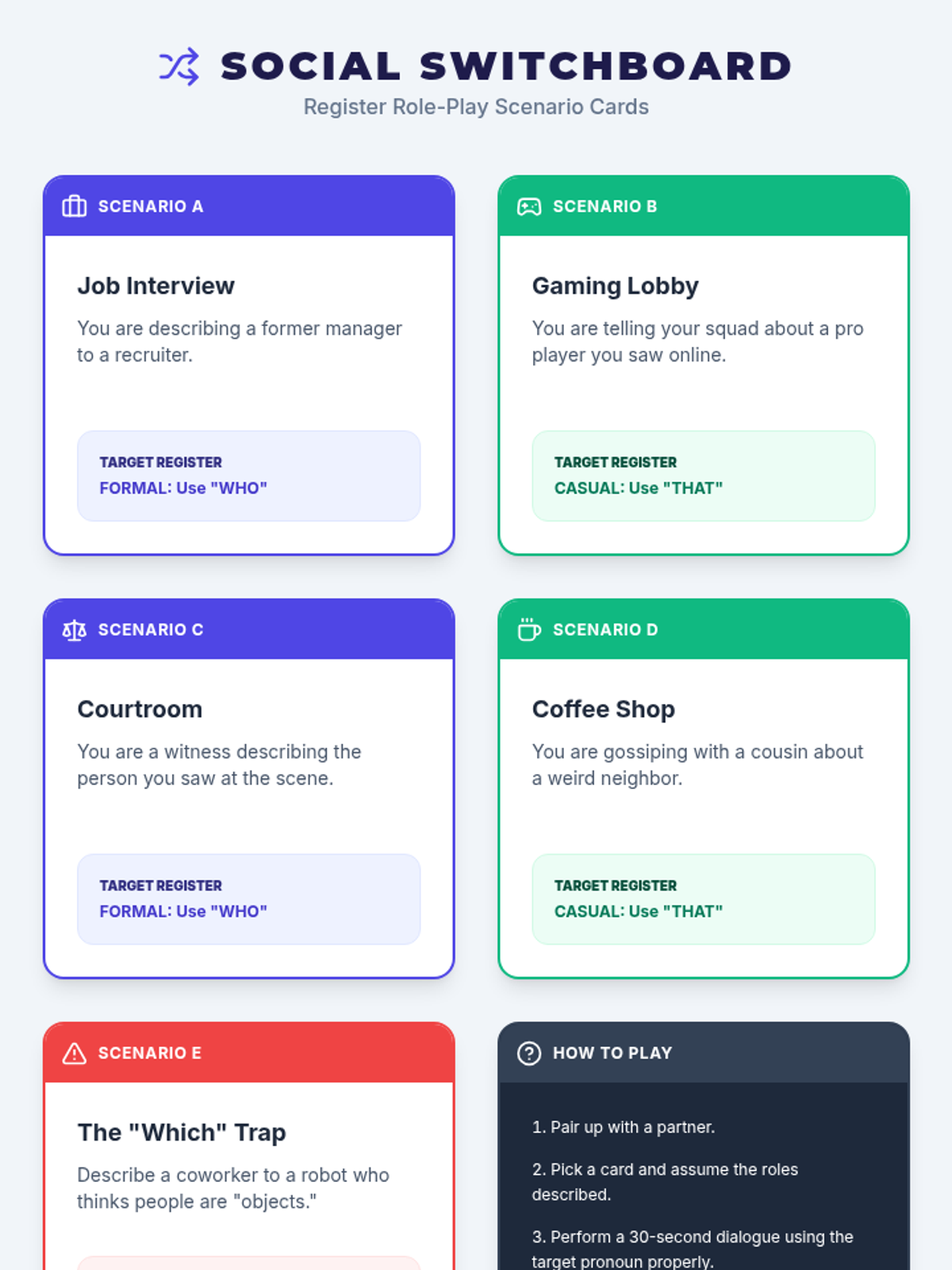
A lesson exploring the stylistic differences between 'who' and 'that' when referring to people, focusing on formal vs. informal registers and the 'which' restriction.
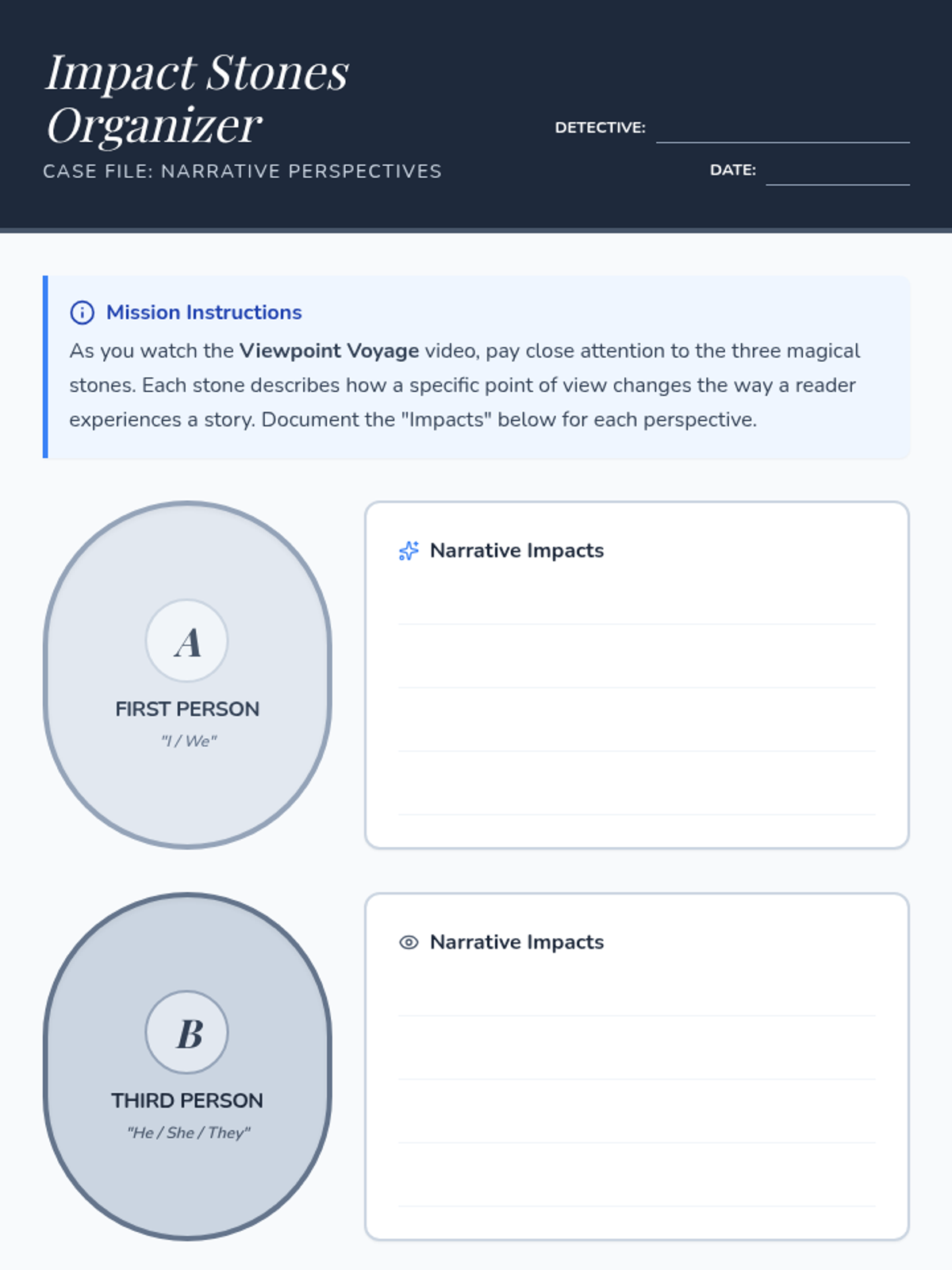
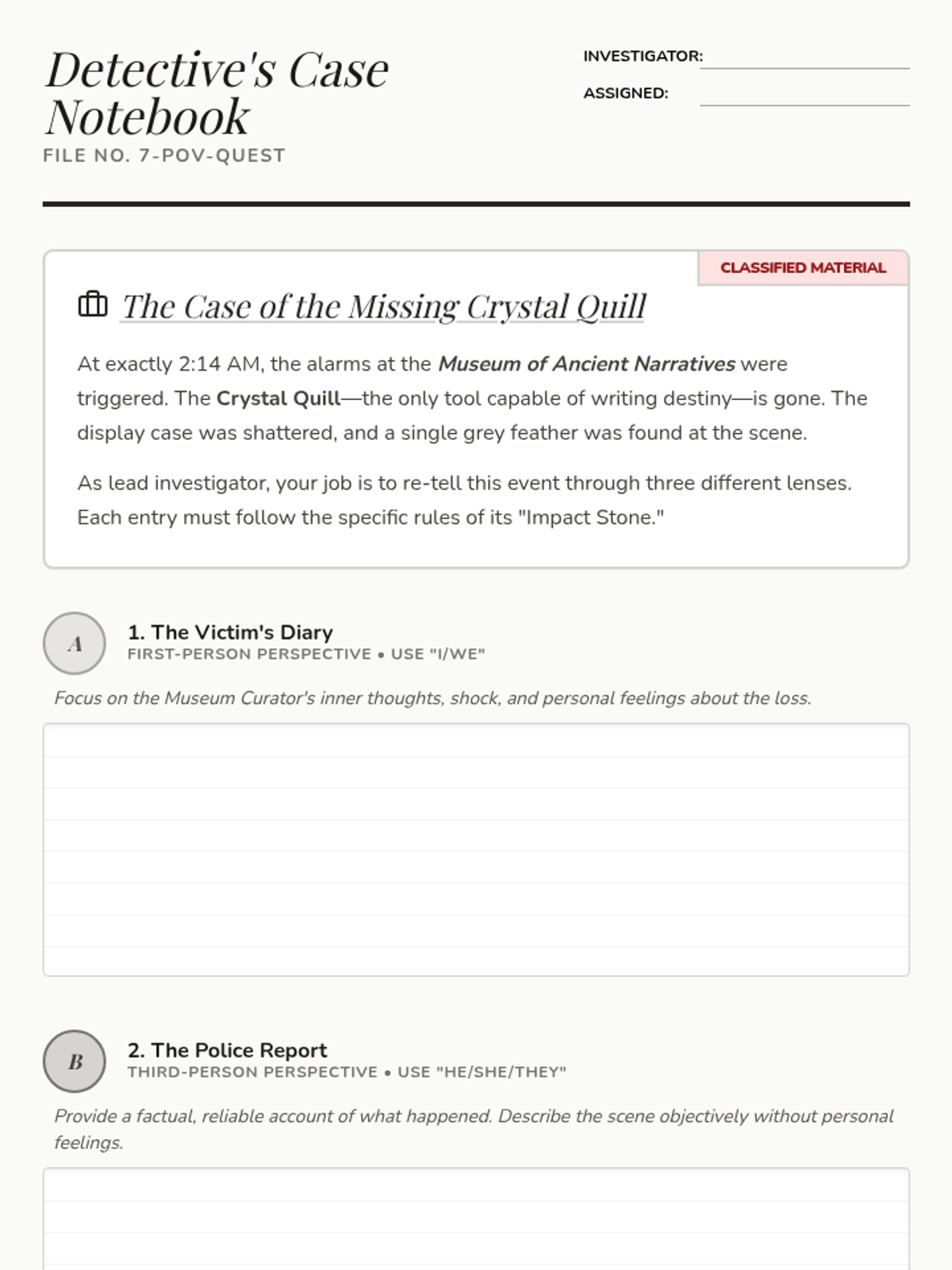
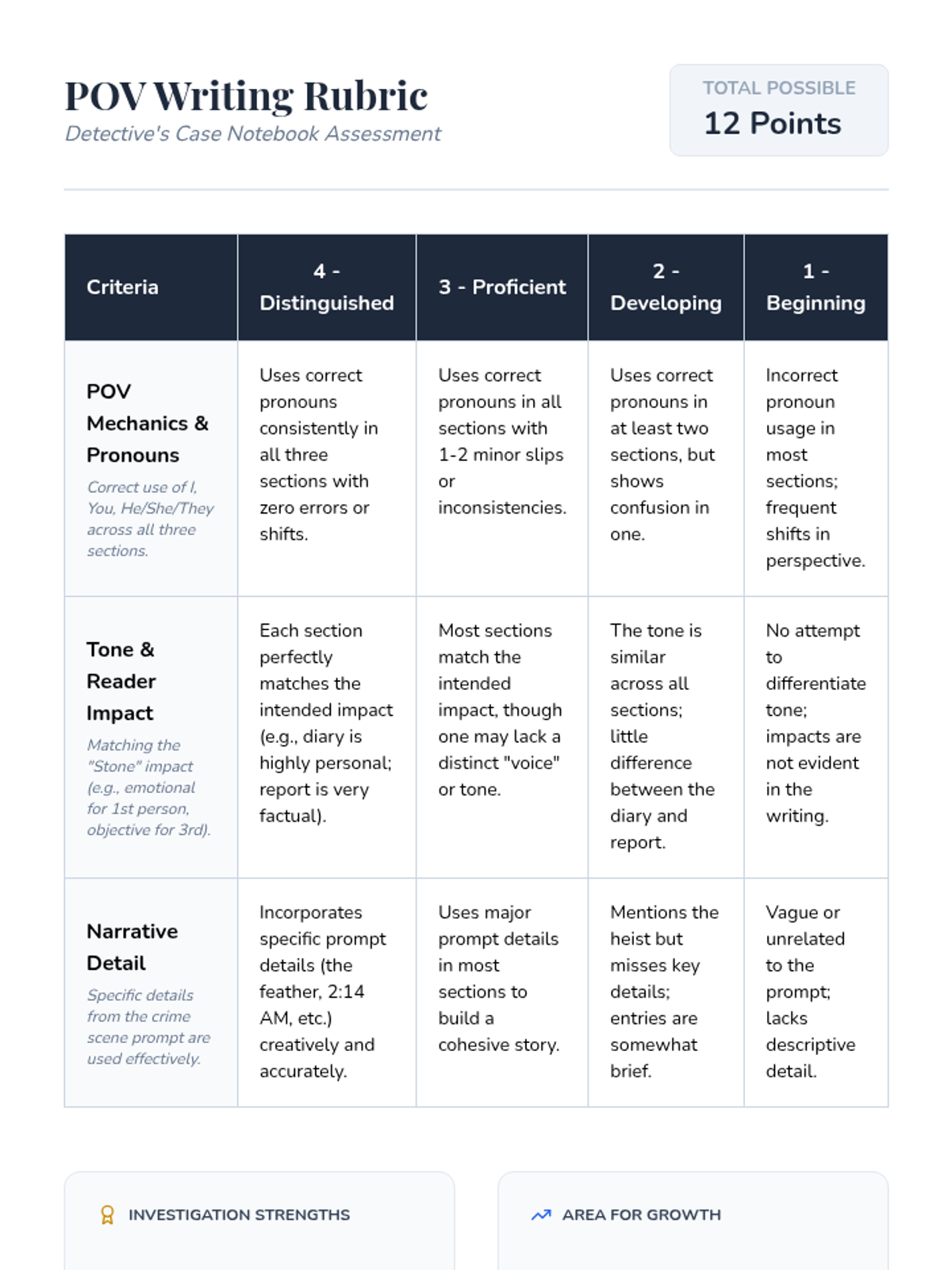
Students analyze the impact of first, second, and third-person points of view using the 'Impact Stones' framework from the Viewpoint Voyage video, culminating in a creative writing detective activity.
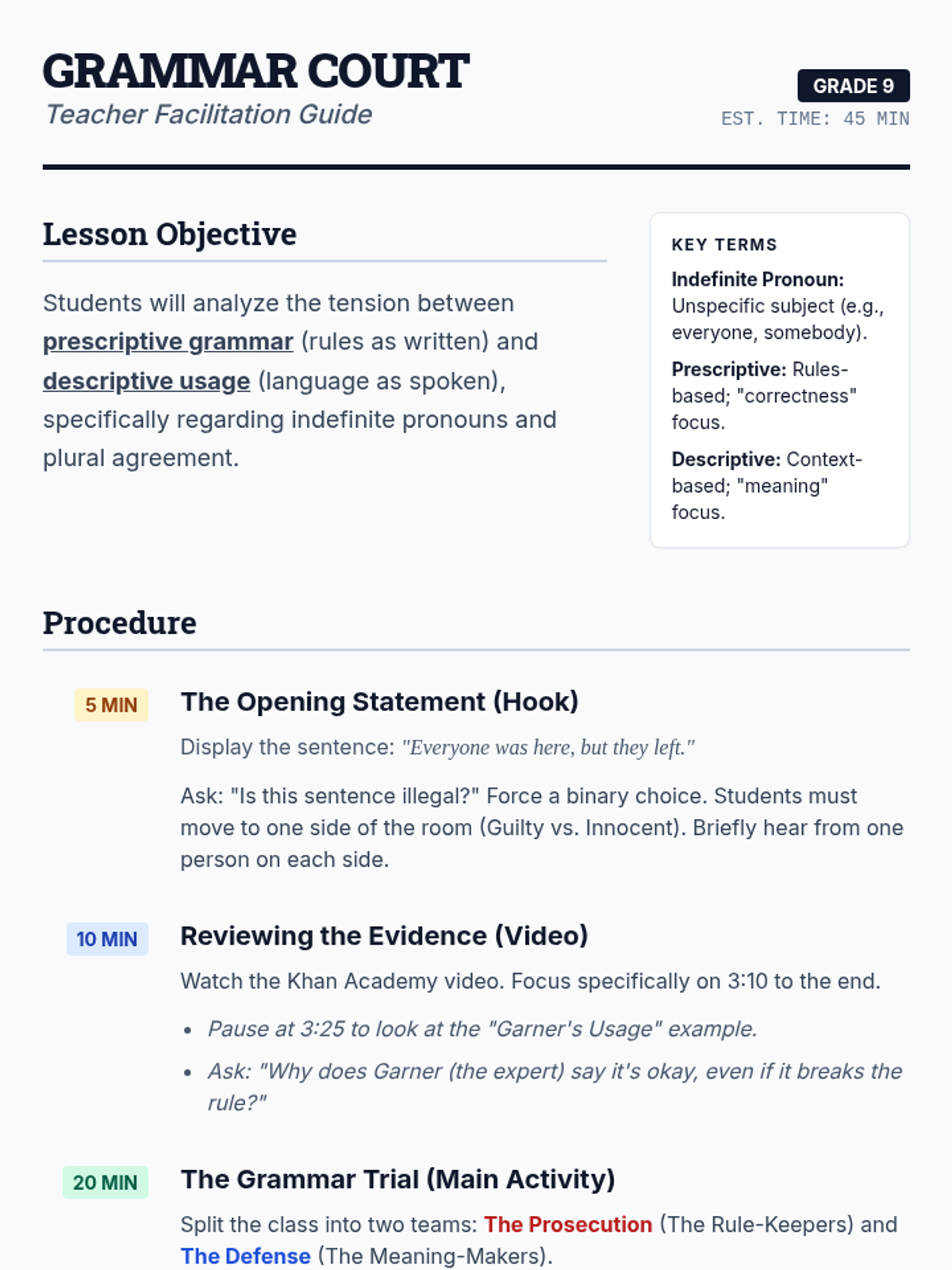
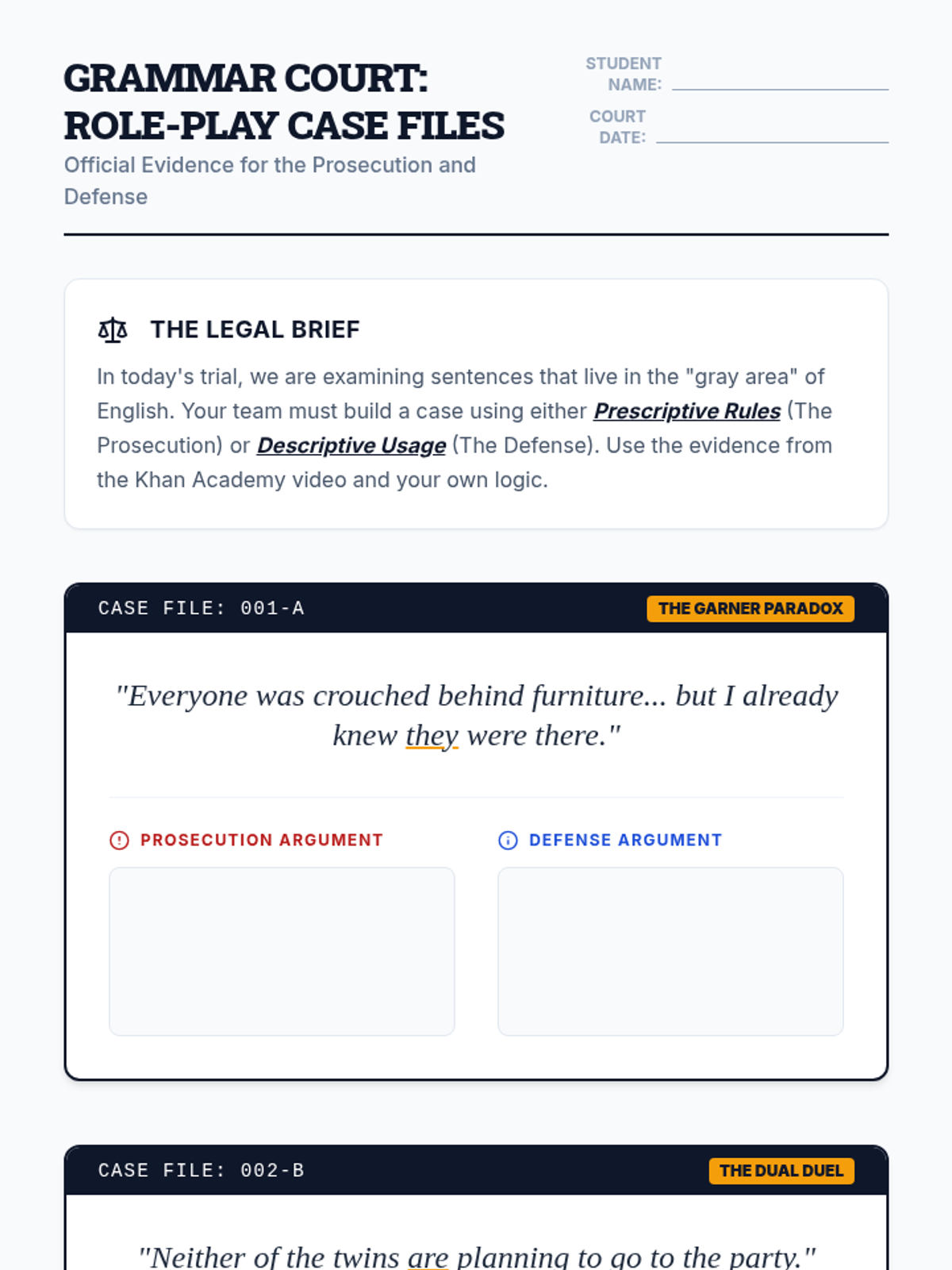
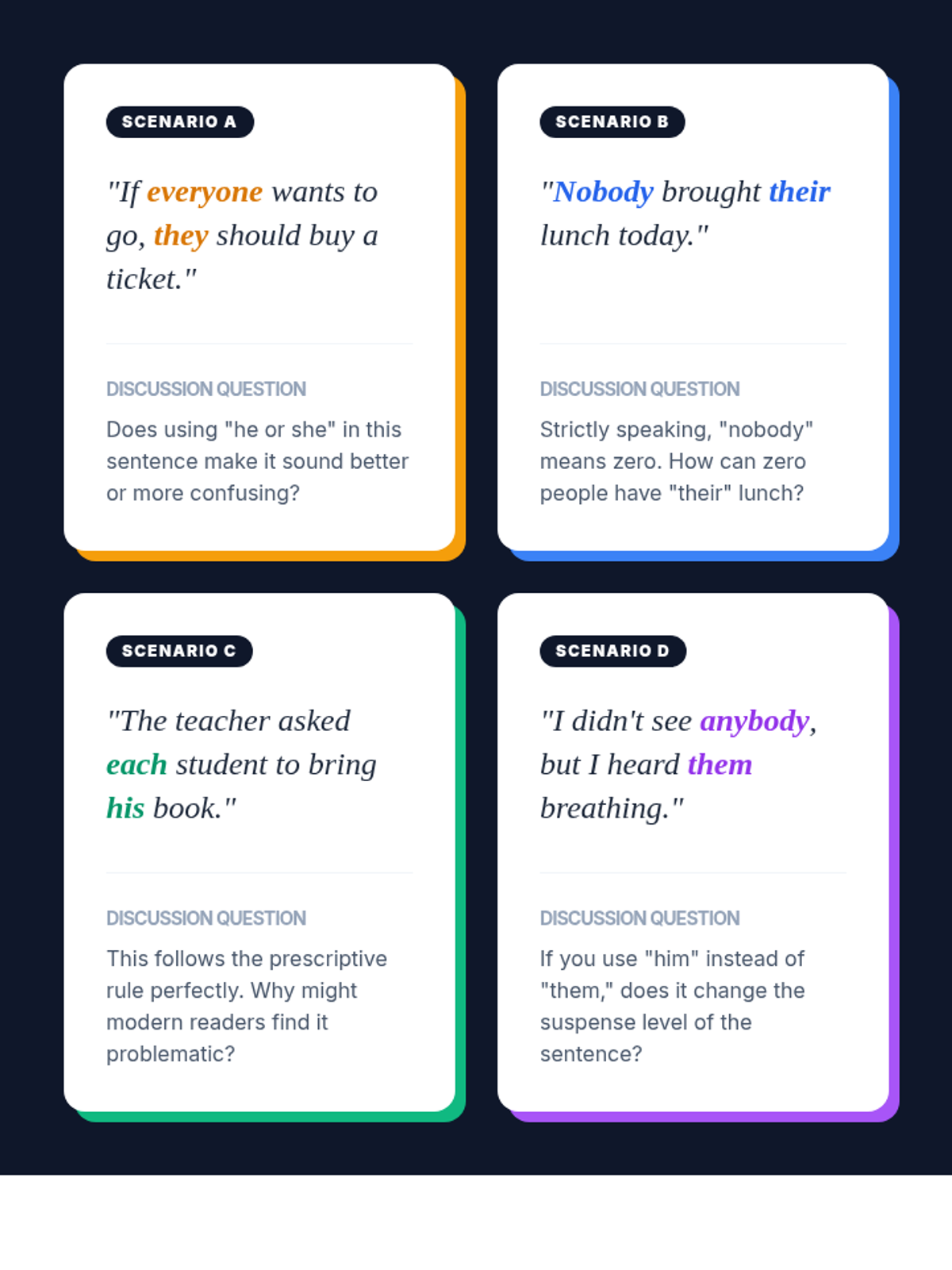
A 9th-grade grammar lesson where students act as legal teams to debate the conflict between prescriptive grammar rules and descriptive usage, focusing on indefinite pronouns and the 'singular they.'
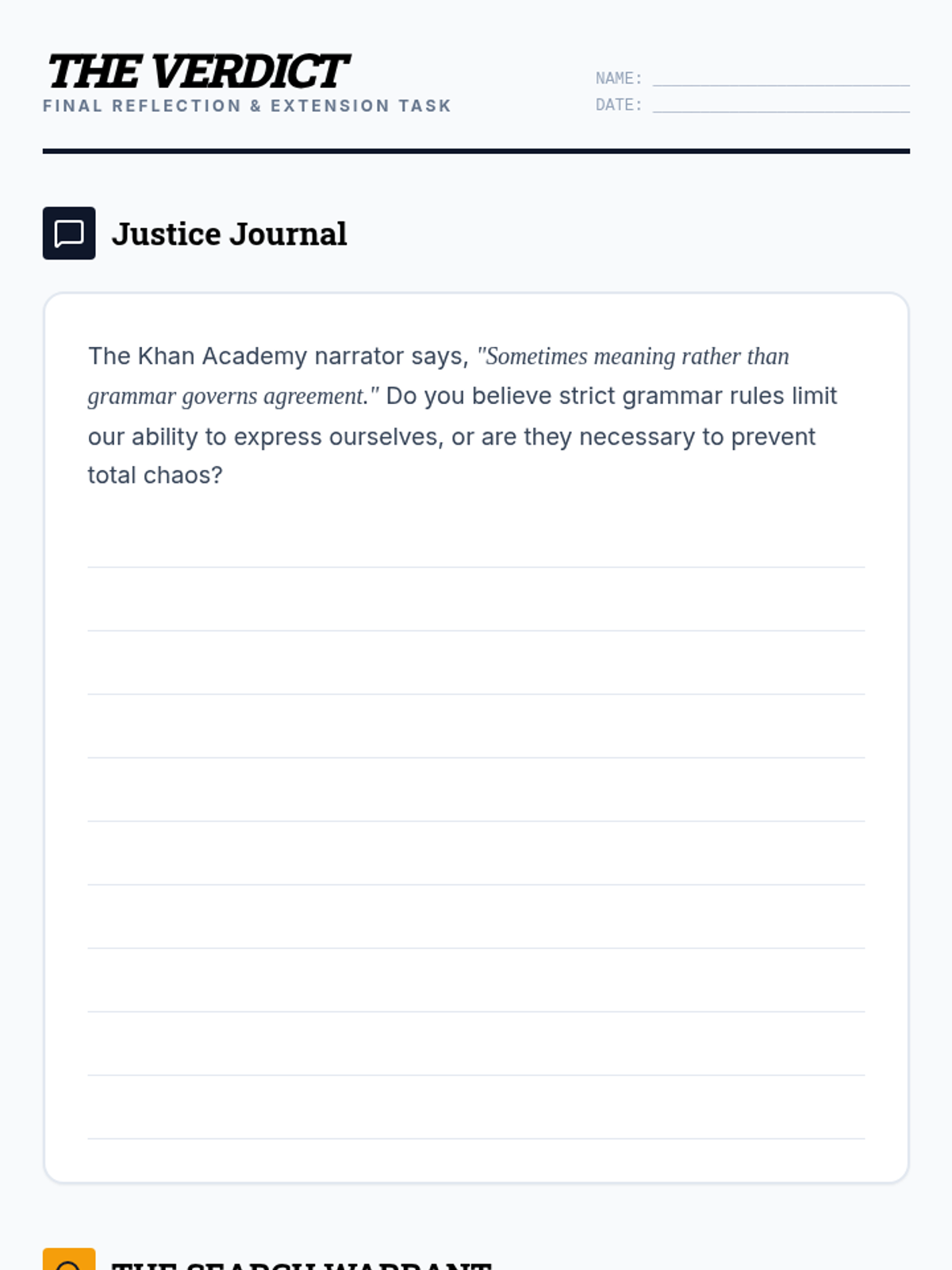
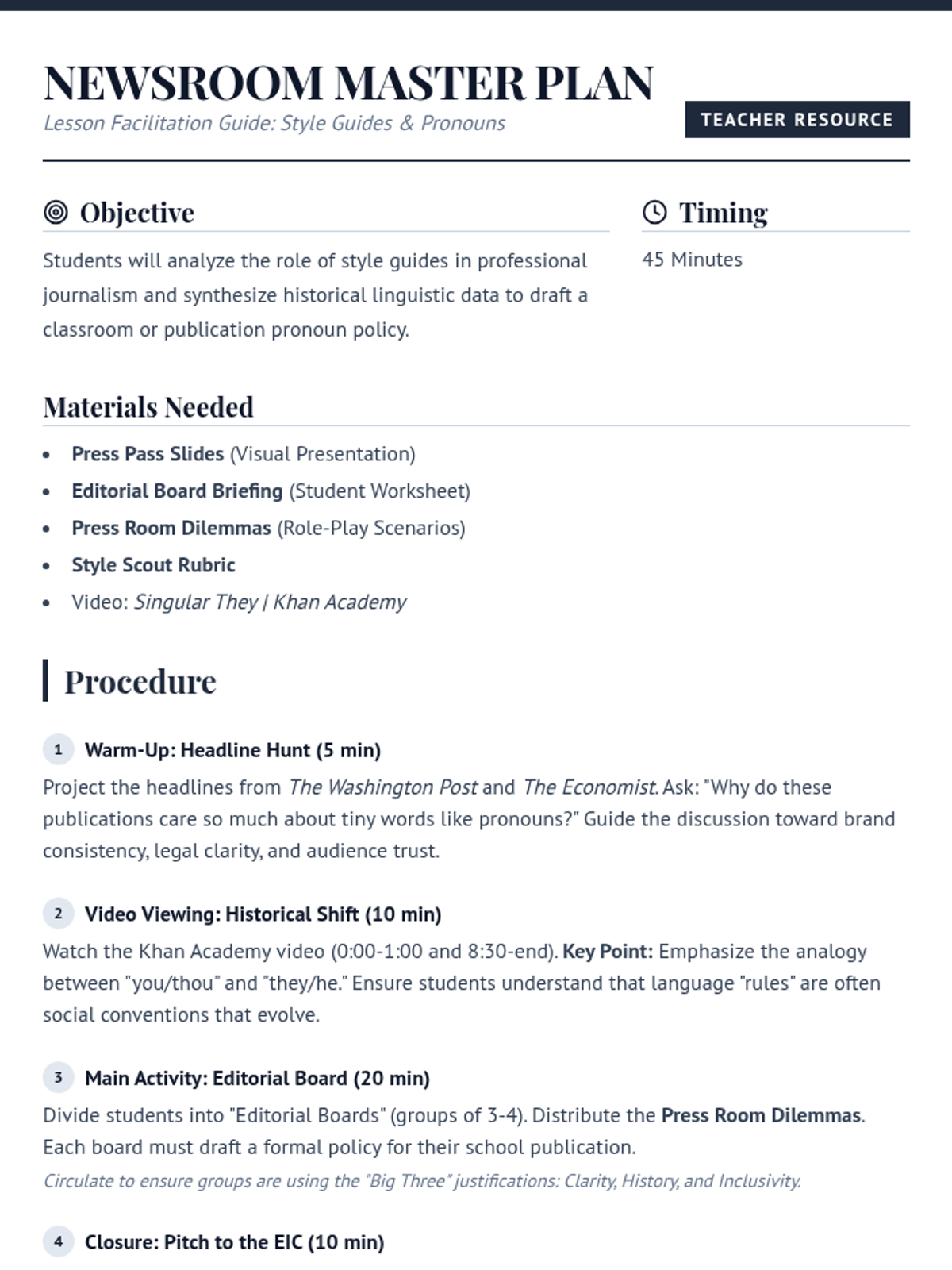
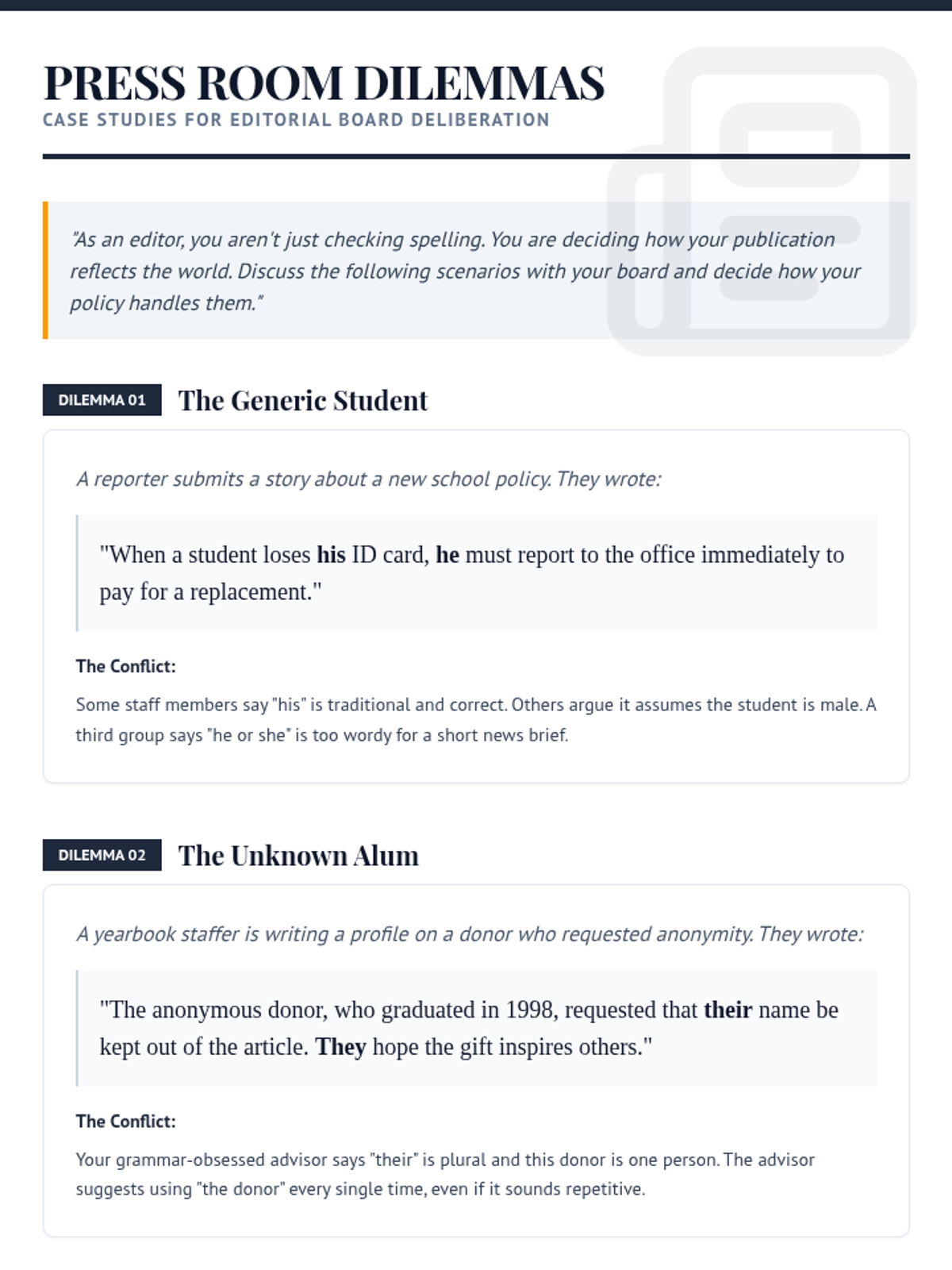
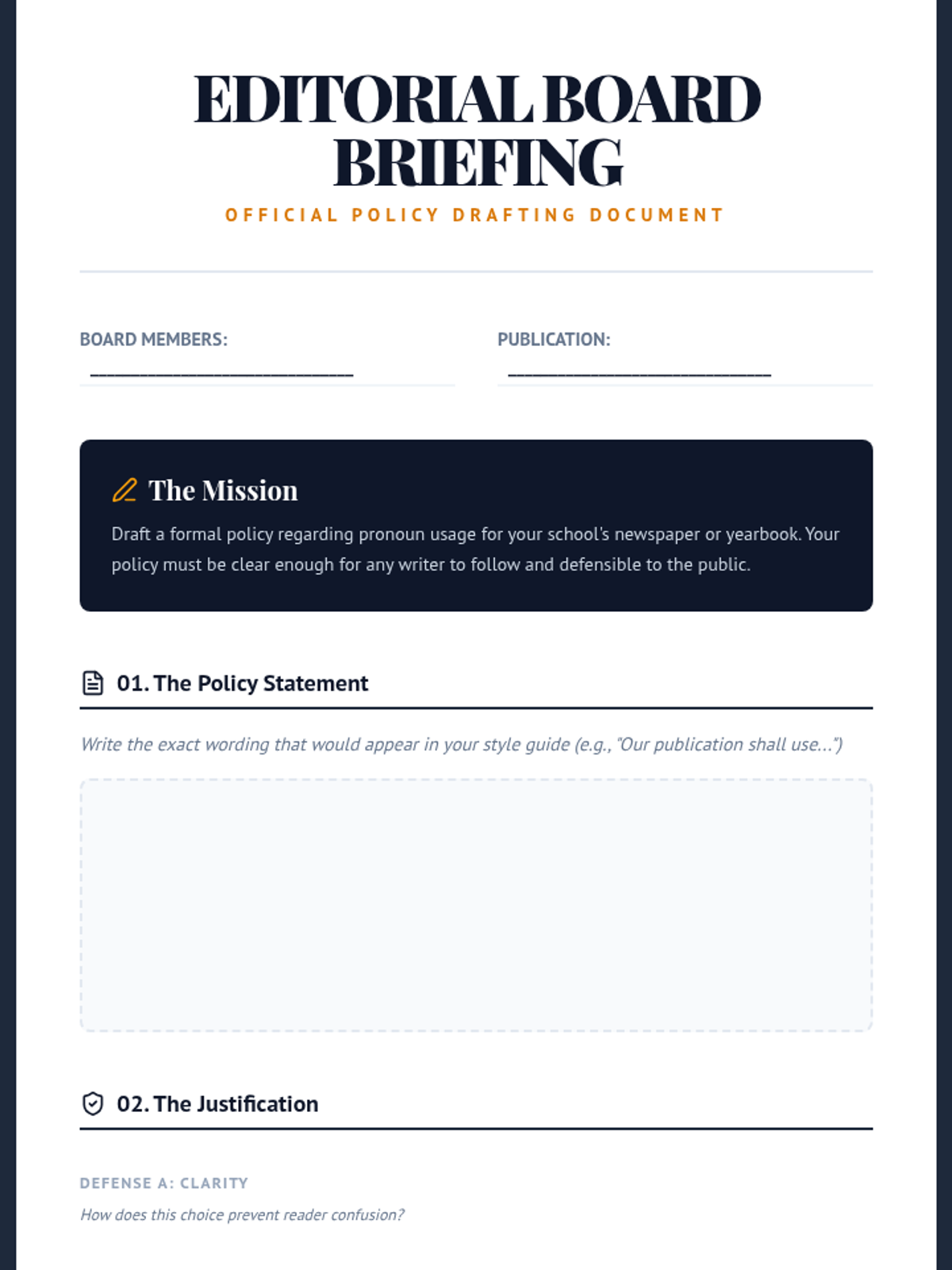
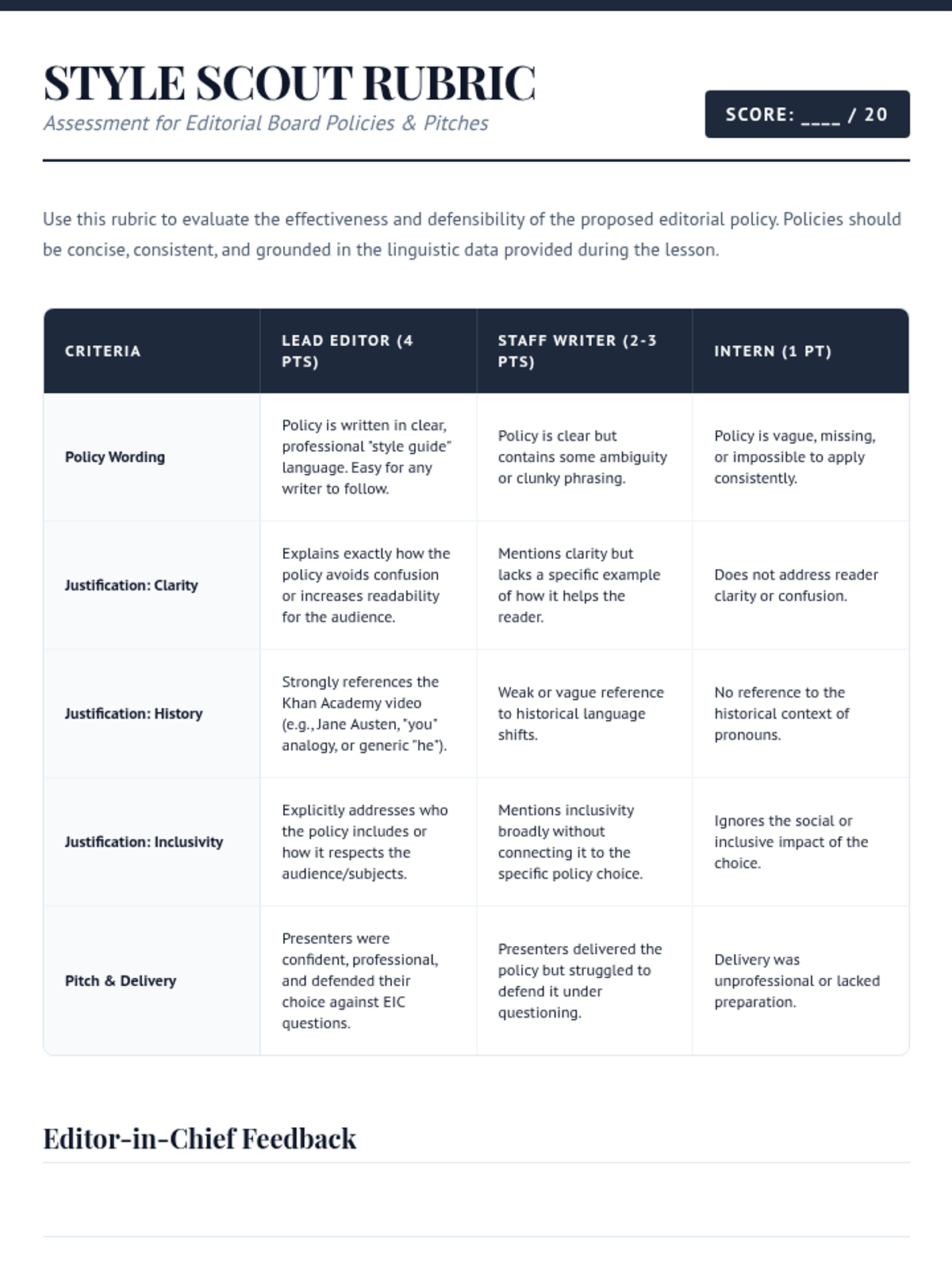
This lesson explores the history and utility of style guides in journalism, focusing on the evolution of pronouns. Students analyze the transition from 'generic he' to 'singular they' and collaborate to draft a formal style policy for their own publication.
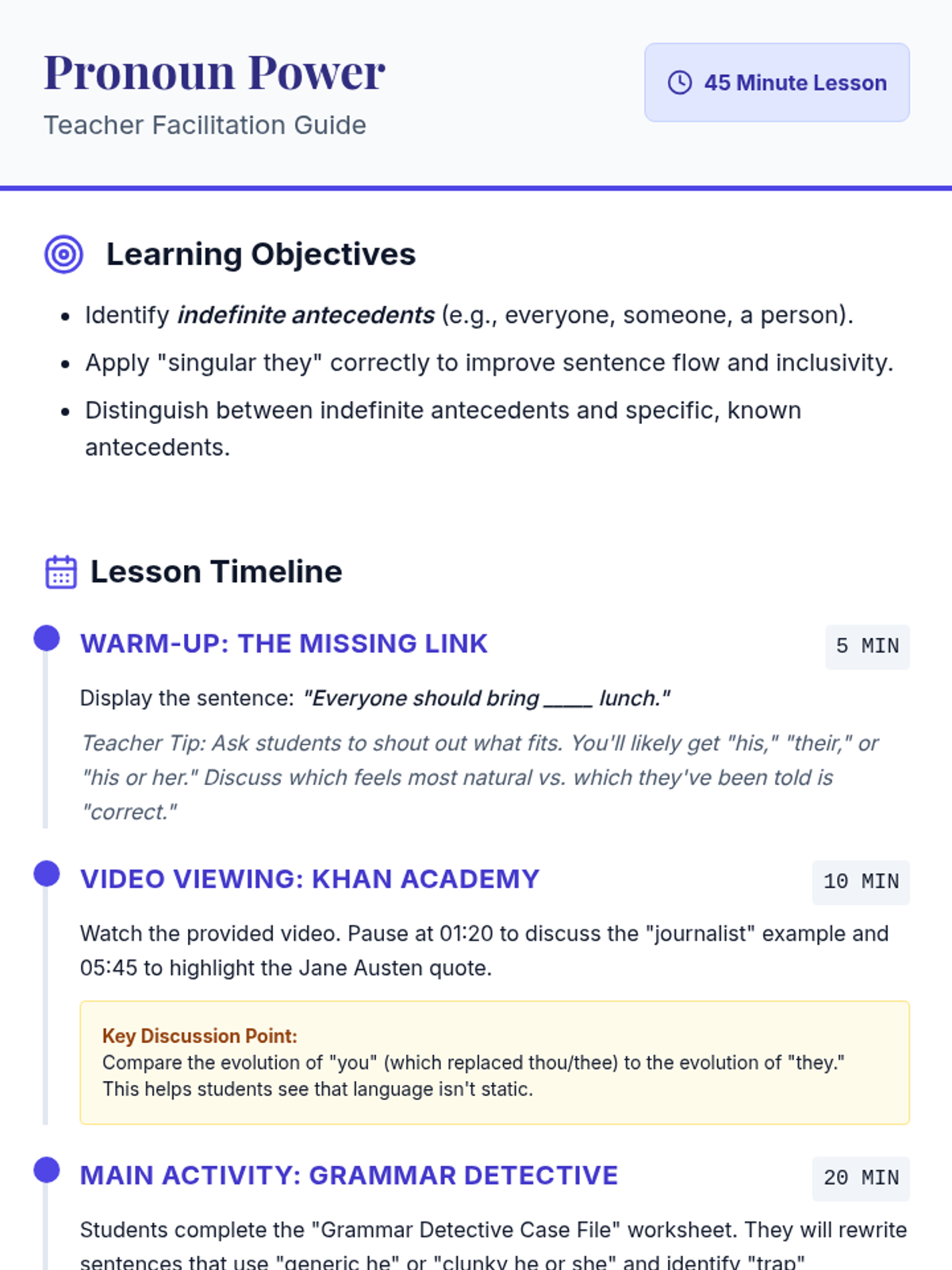
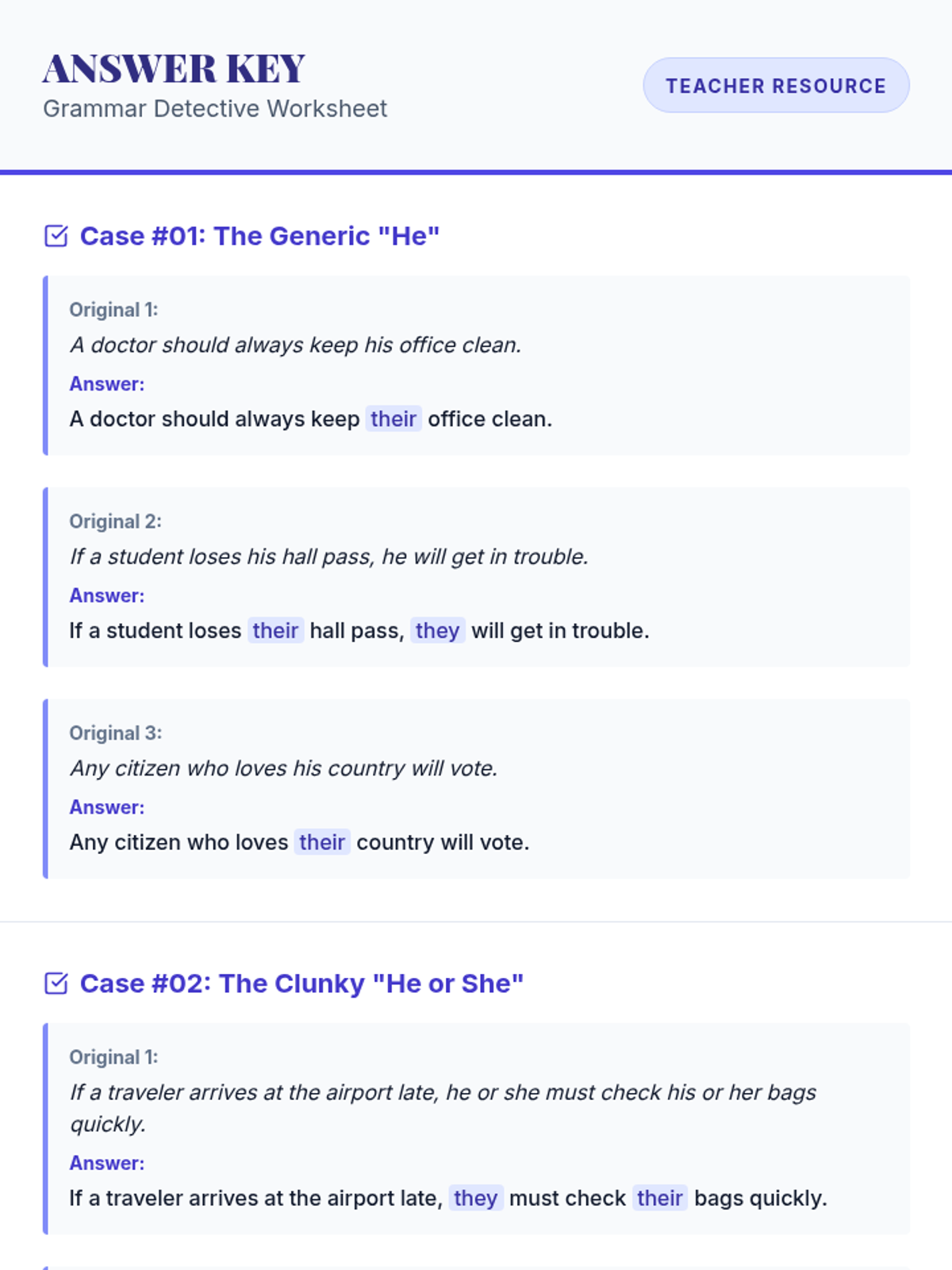
A Middle School Language Arts lesson focusing on the use of 'singular they' for indefinite antecedents. Students explore the historical evolution of pronouns, analyze literary examples, and practice rewriting sentences for clarity and inclusivity.
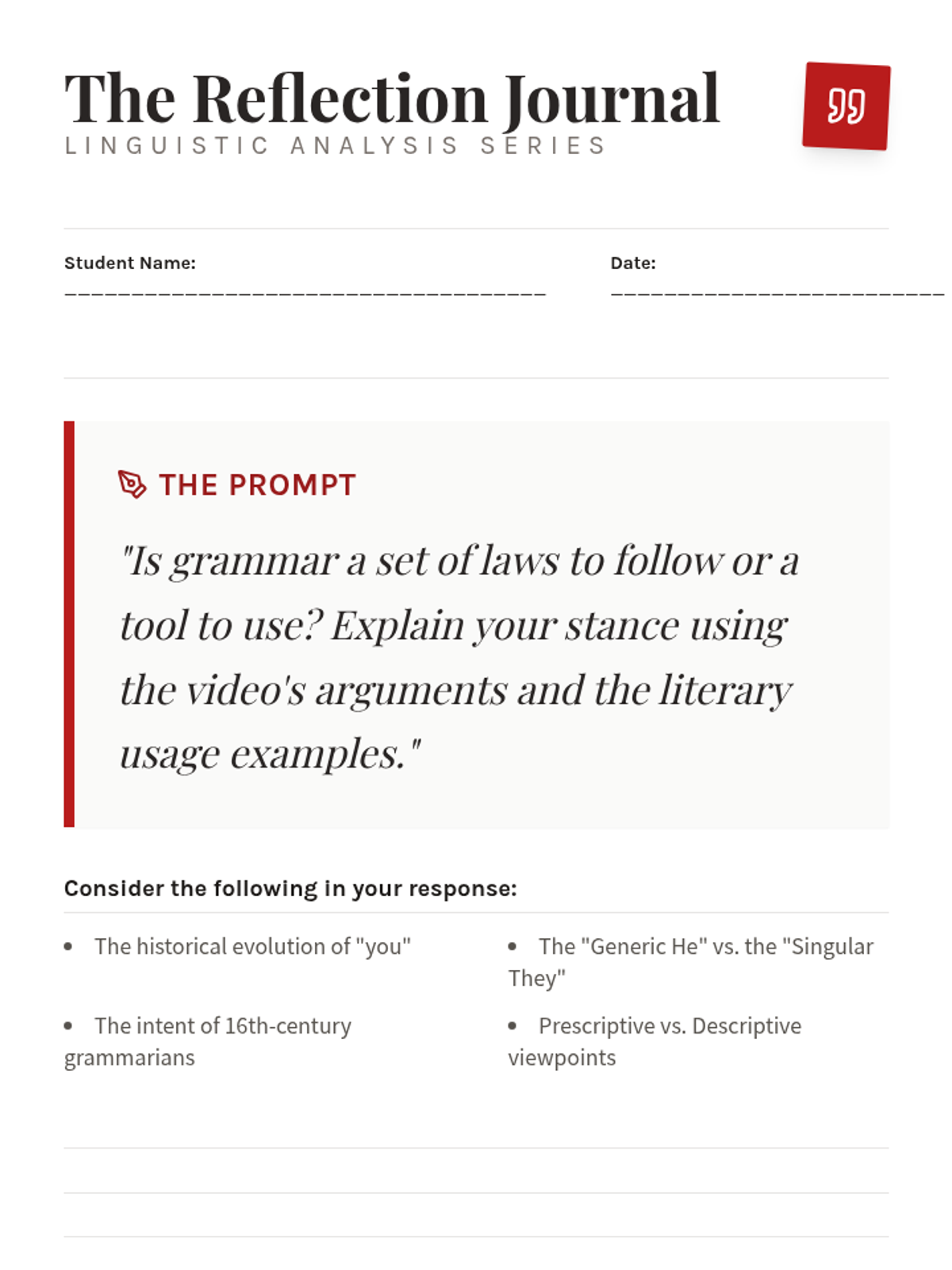
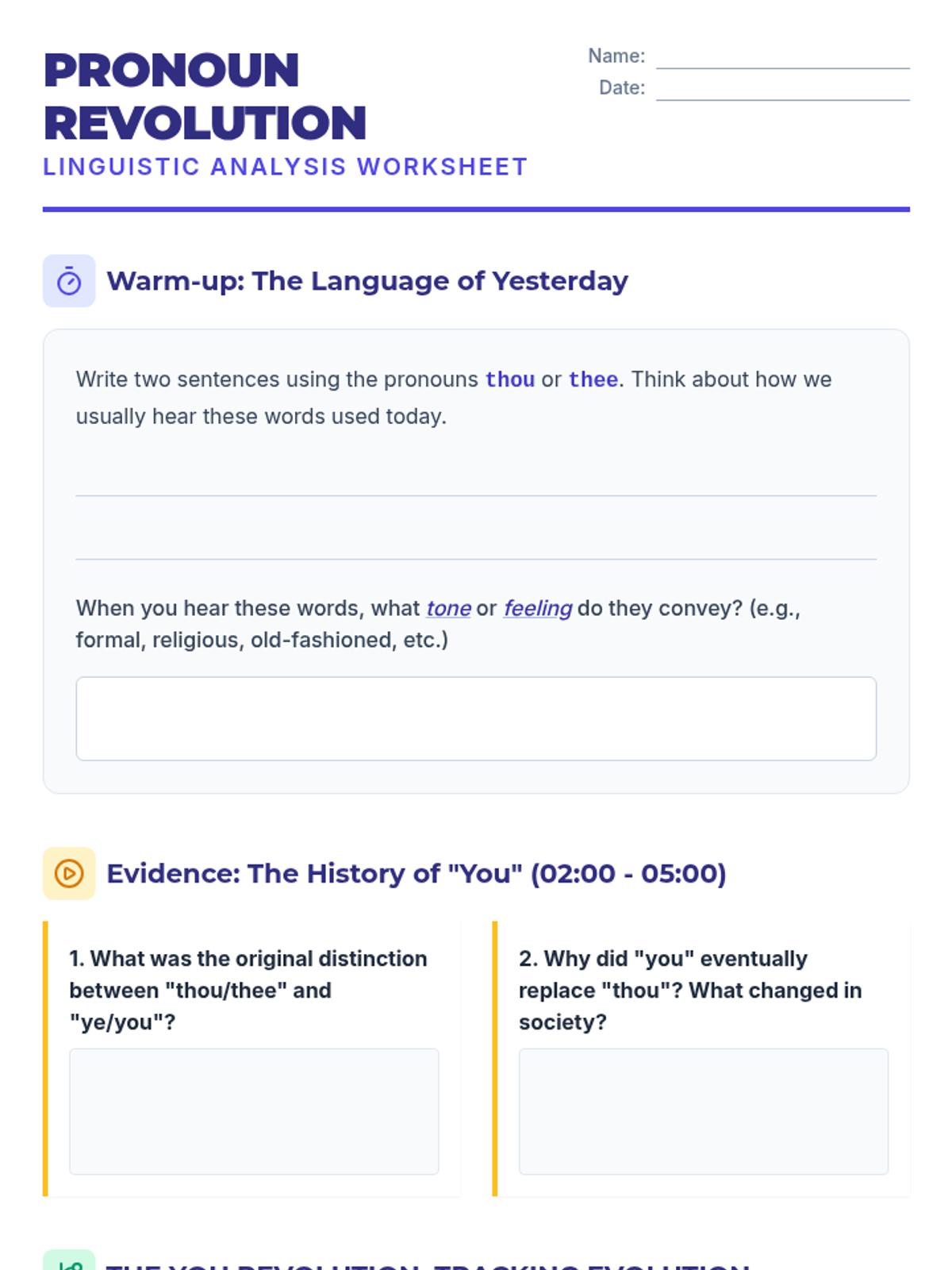
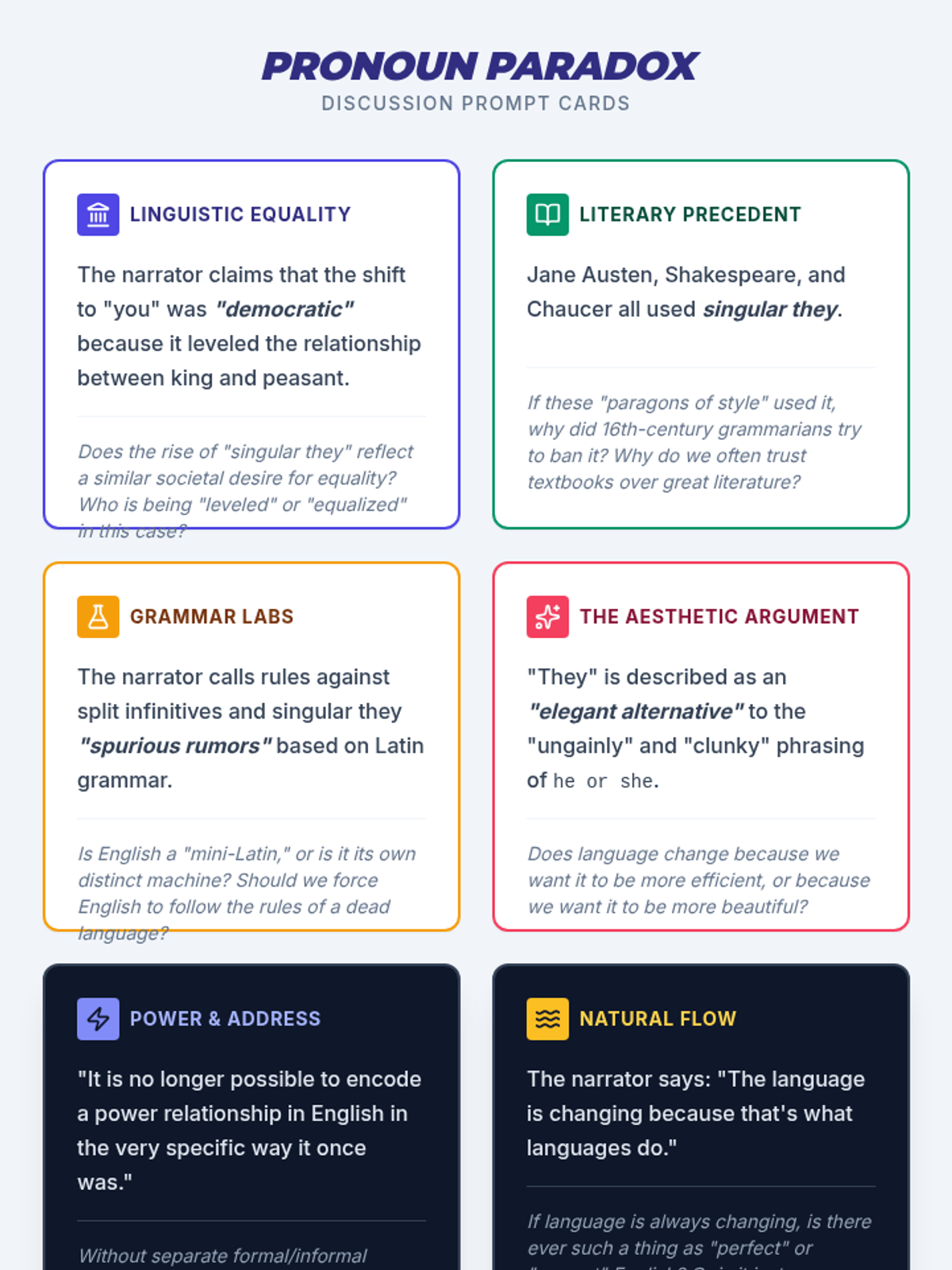
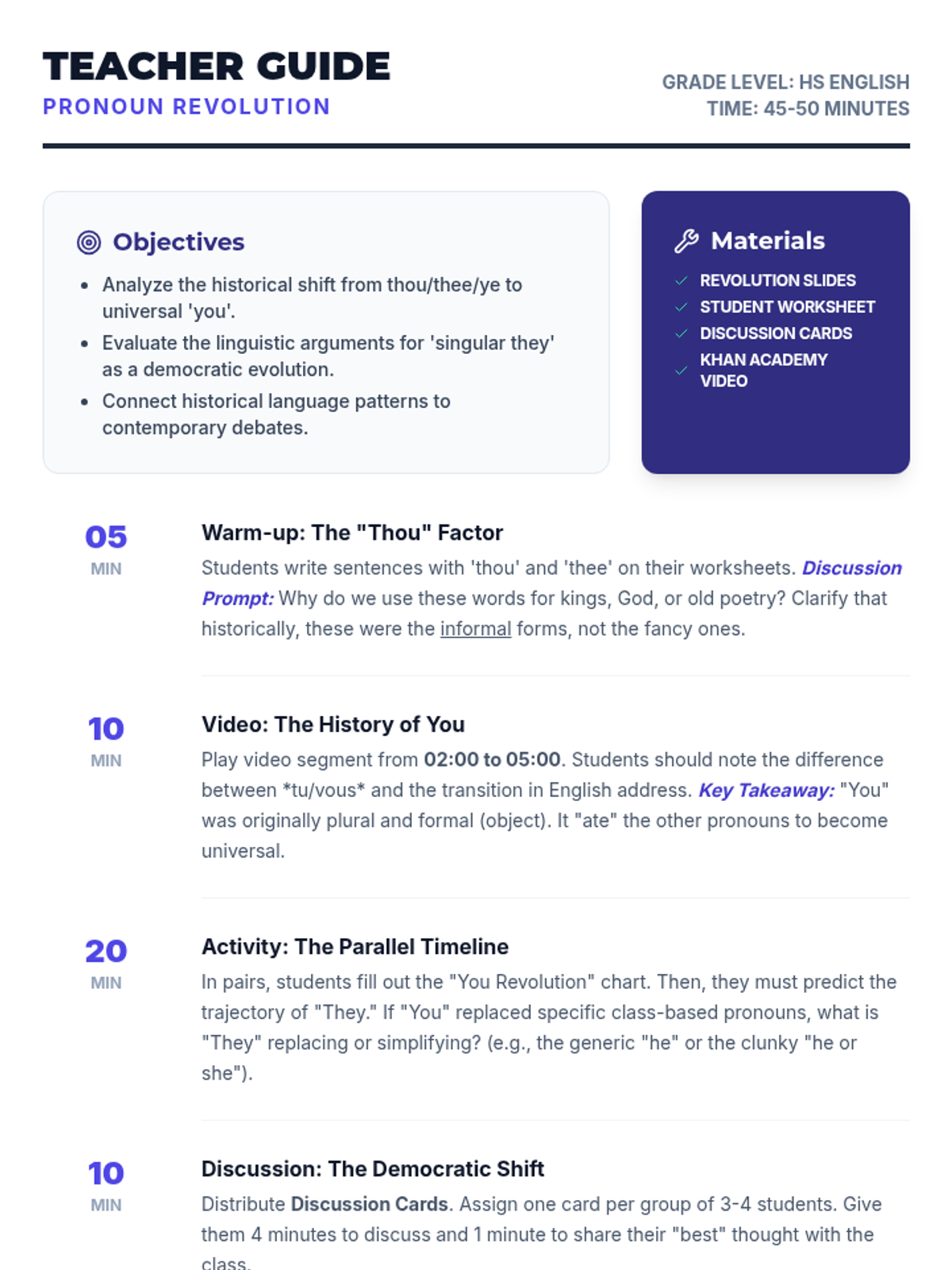
A linguistics-focused lesson examining the historical shift of 'you' from a formal plural to a universal pronoun, drawing parallels to the modern evolution of the singular 'they'. Students analyze language as a living, democratic tool using historical evidence and literary precedent.
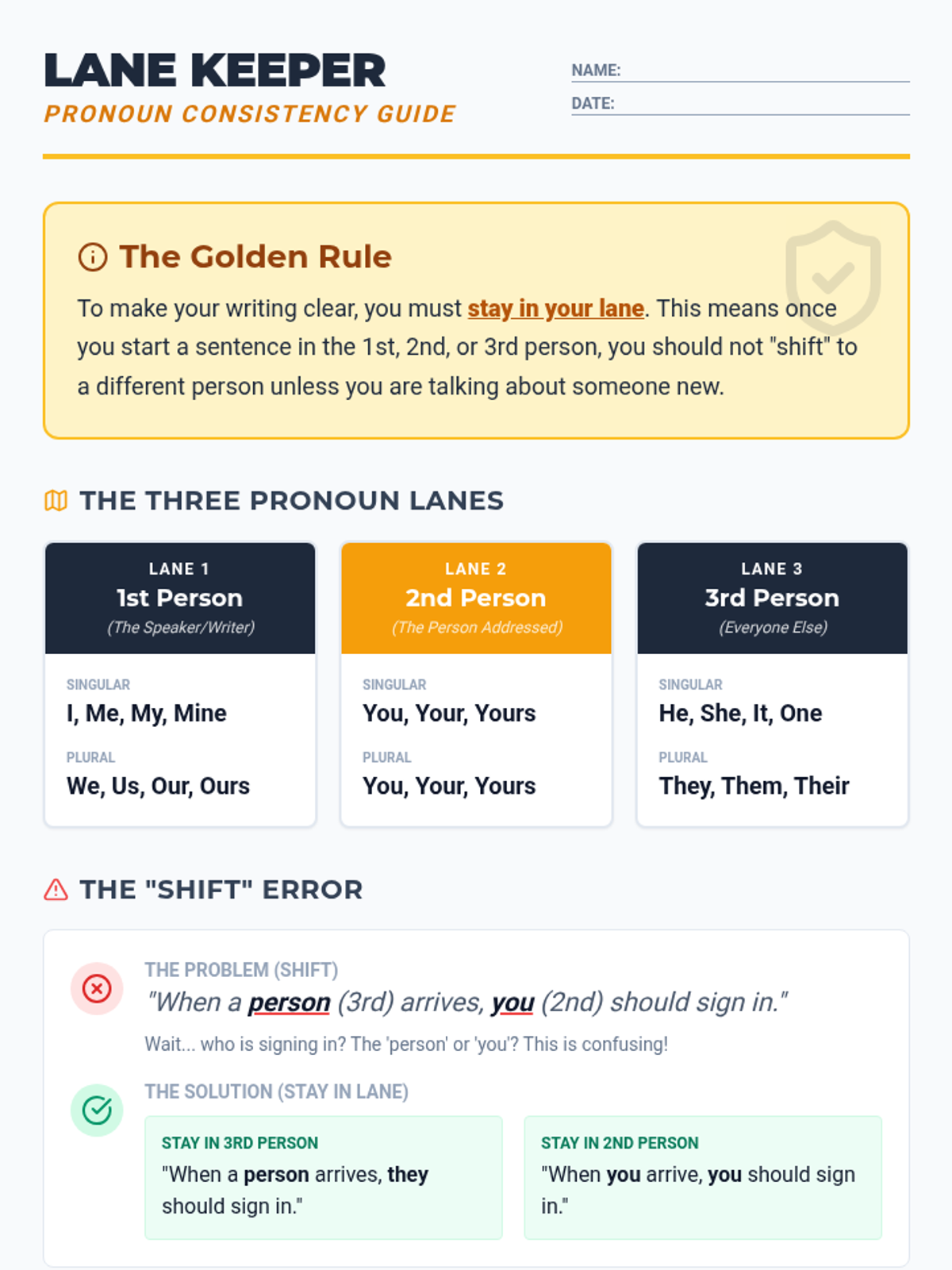
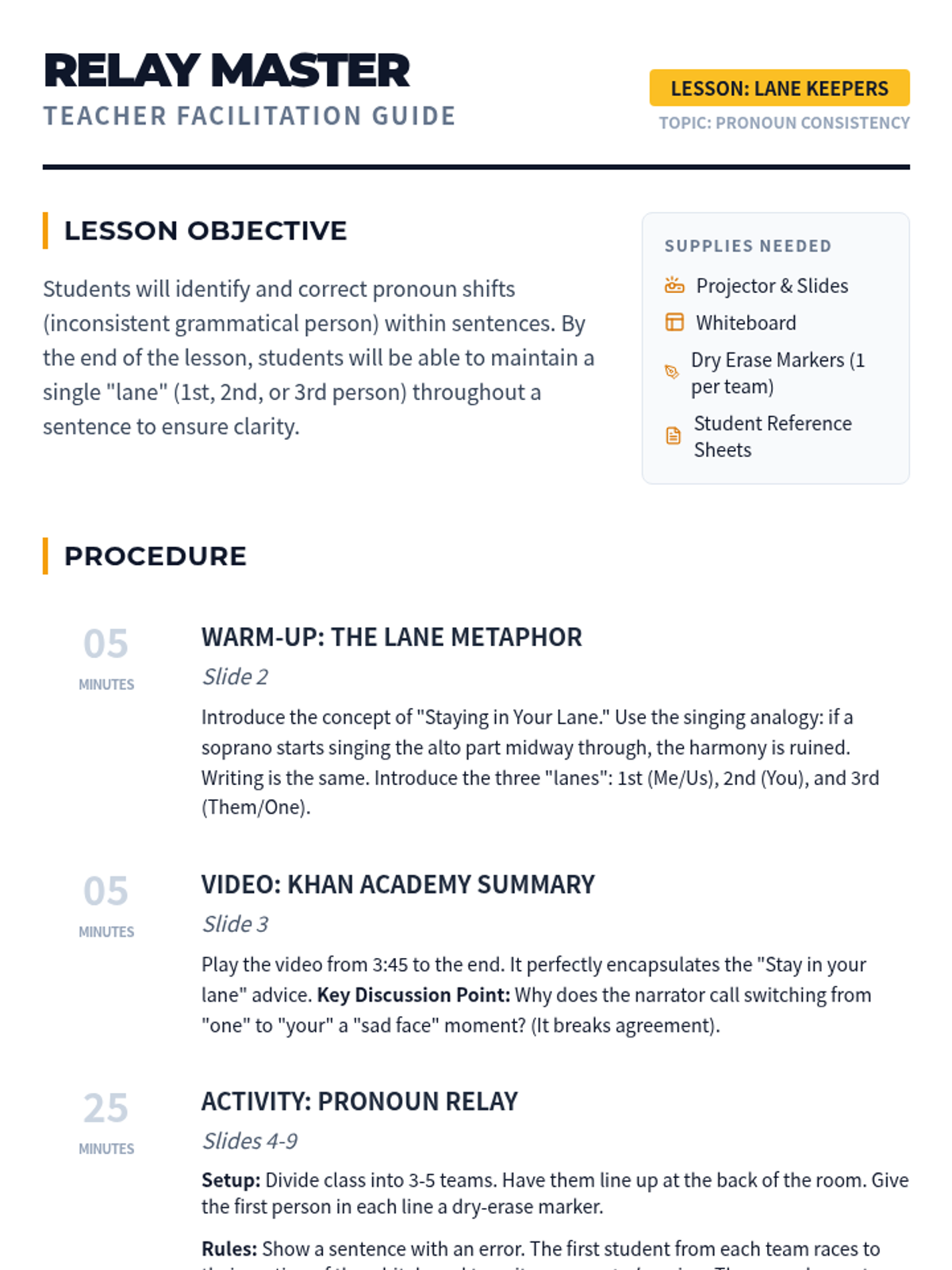
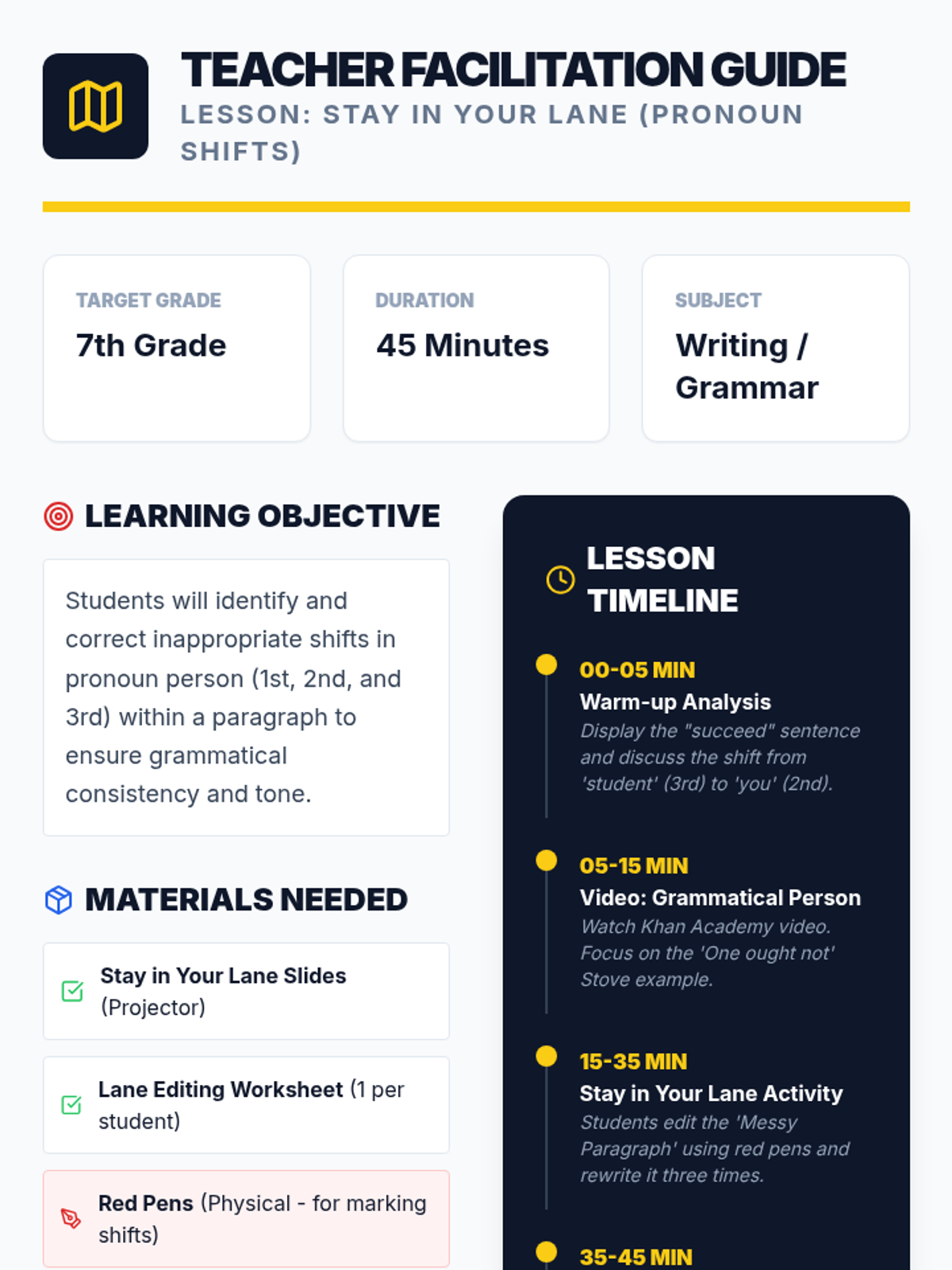
A high-energy lesson focused on maintaining consistent grammatical person (pronoun agreement). Students learn the 'Stay in Your Lane' concept through a video and a collaborative board-race game.
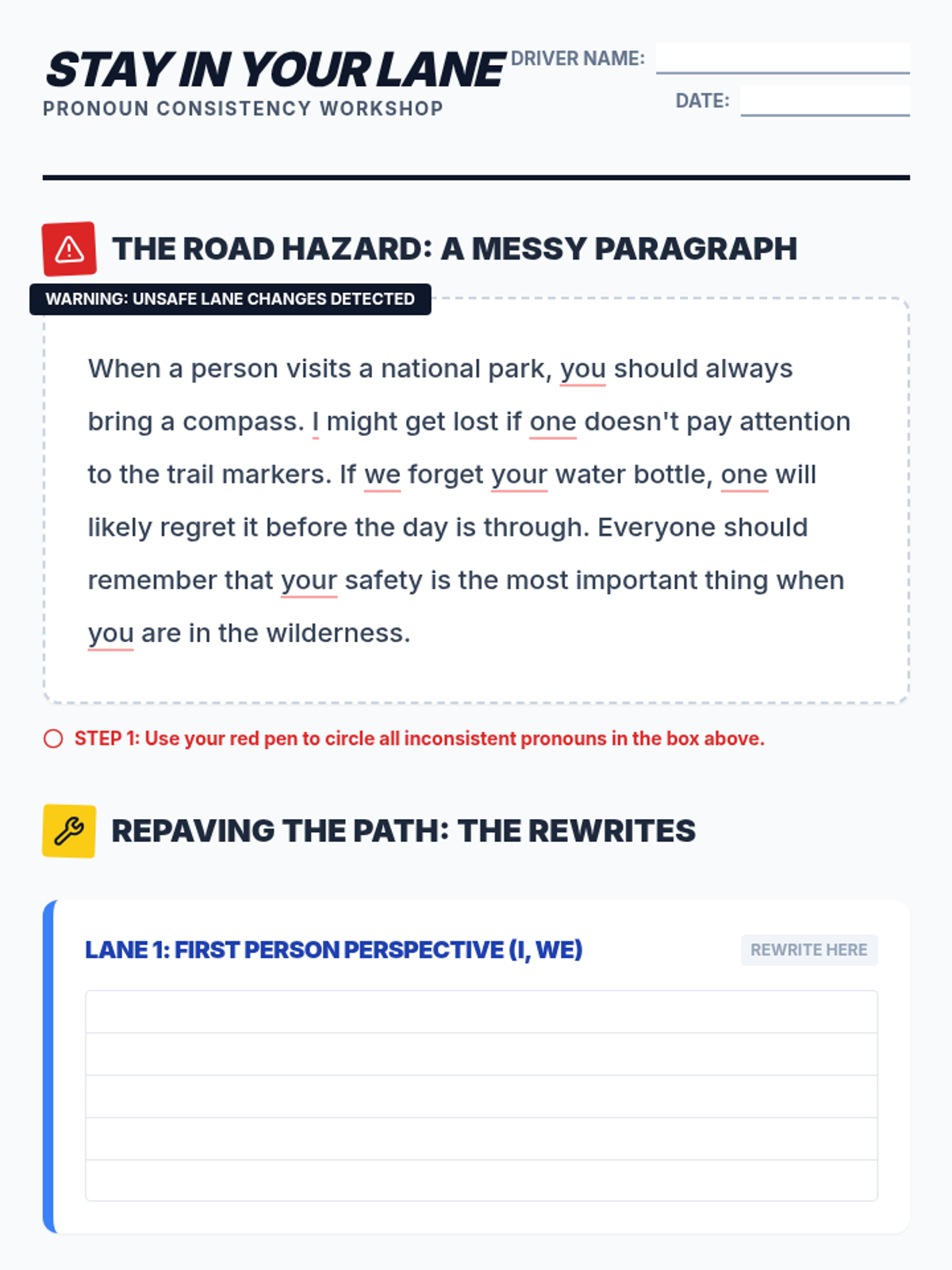
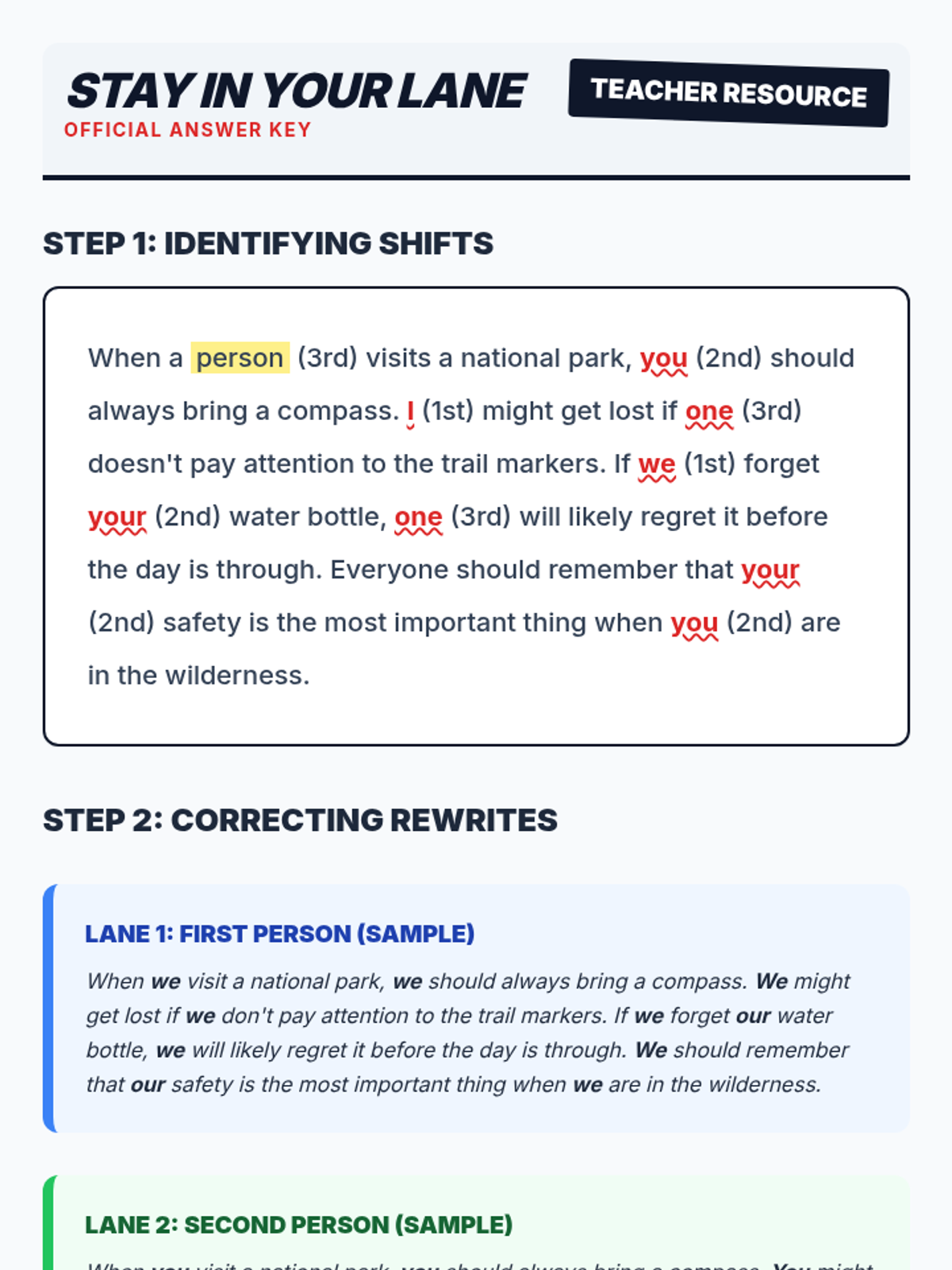
A writing workshop focused on identifying and correcting inappropriate shifts in pronoun person, using the 'stay in your lane' analogy.
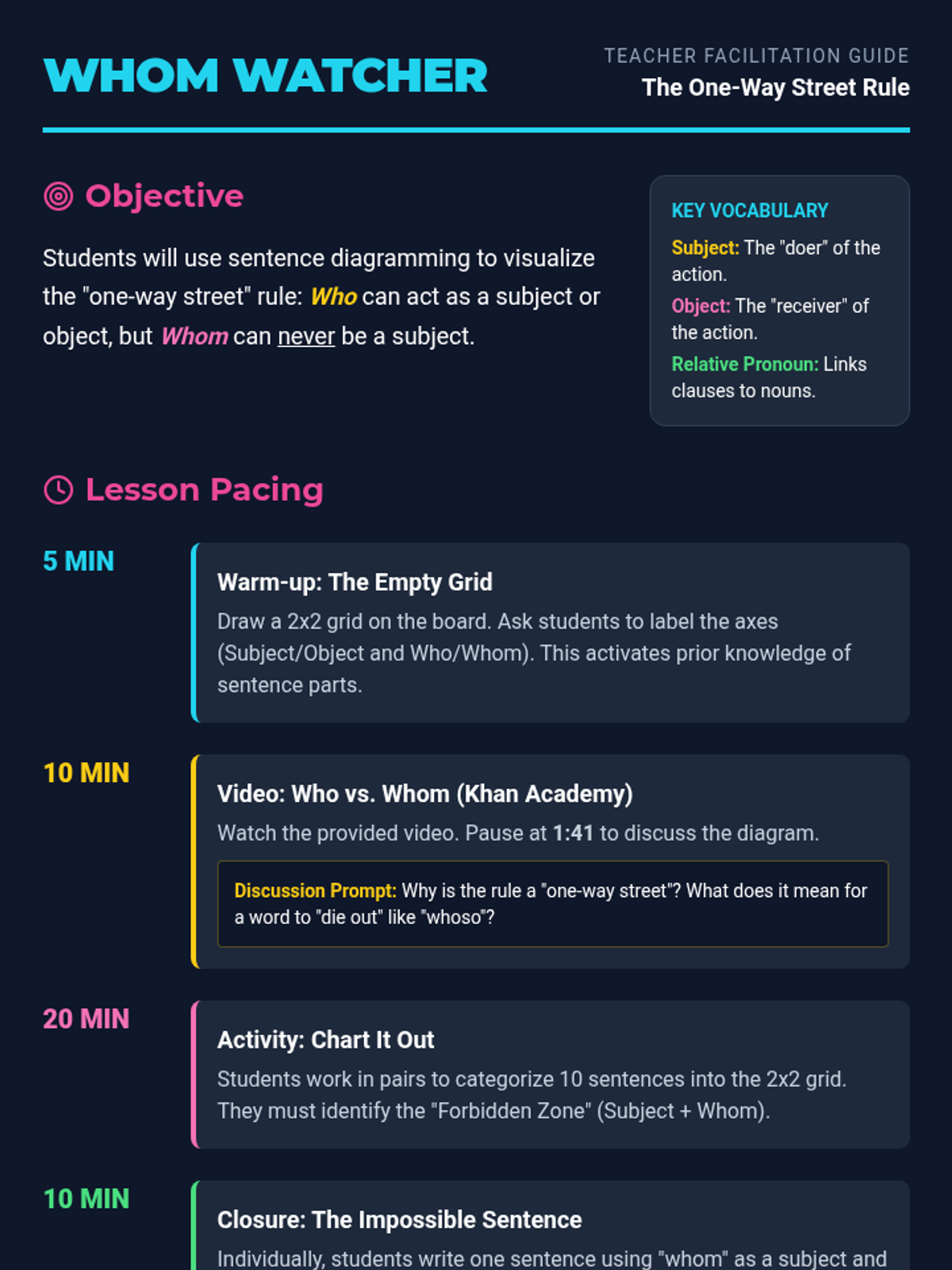
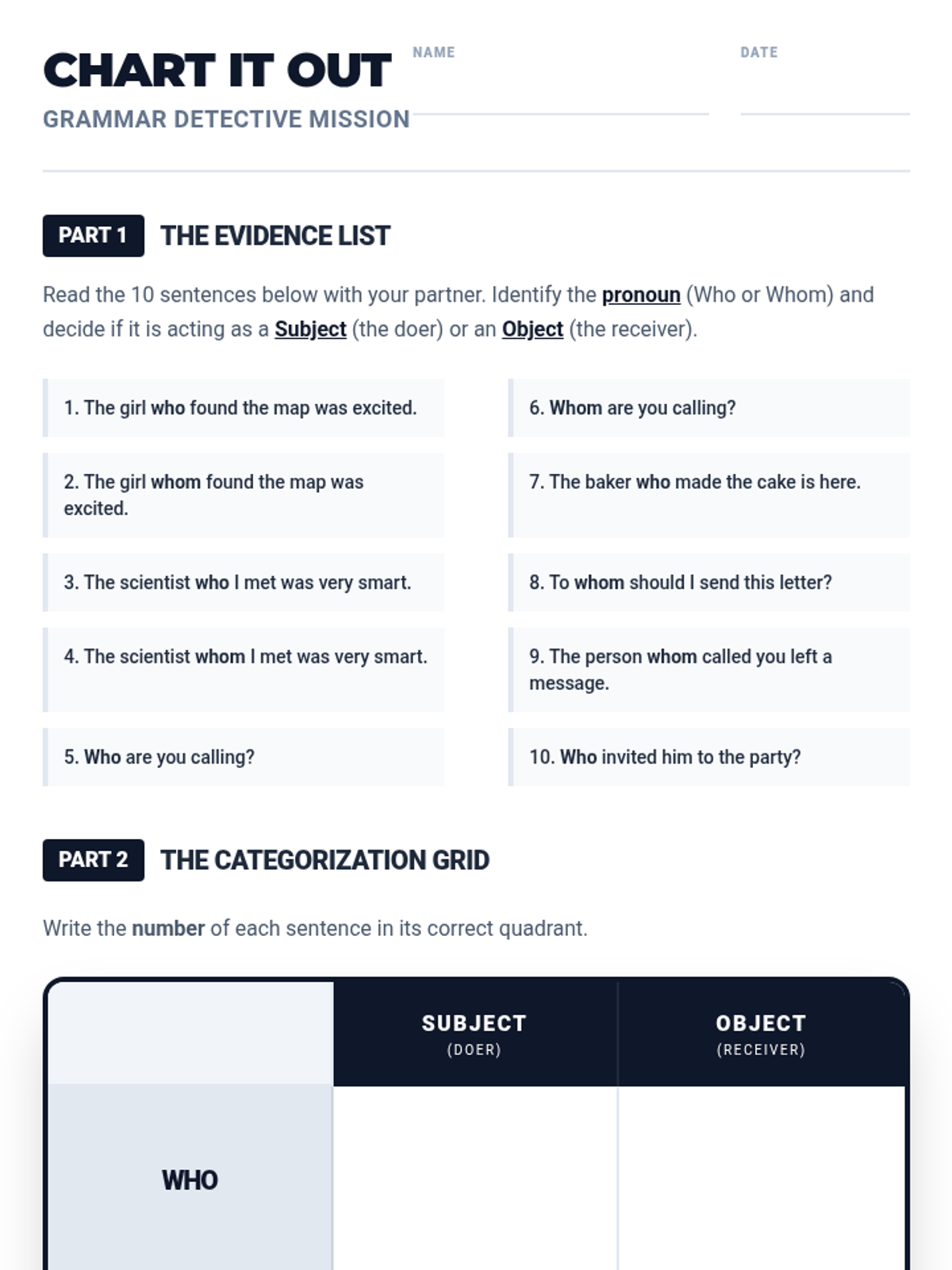
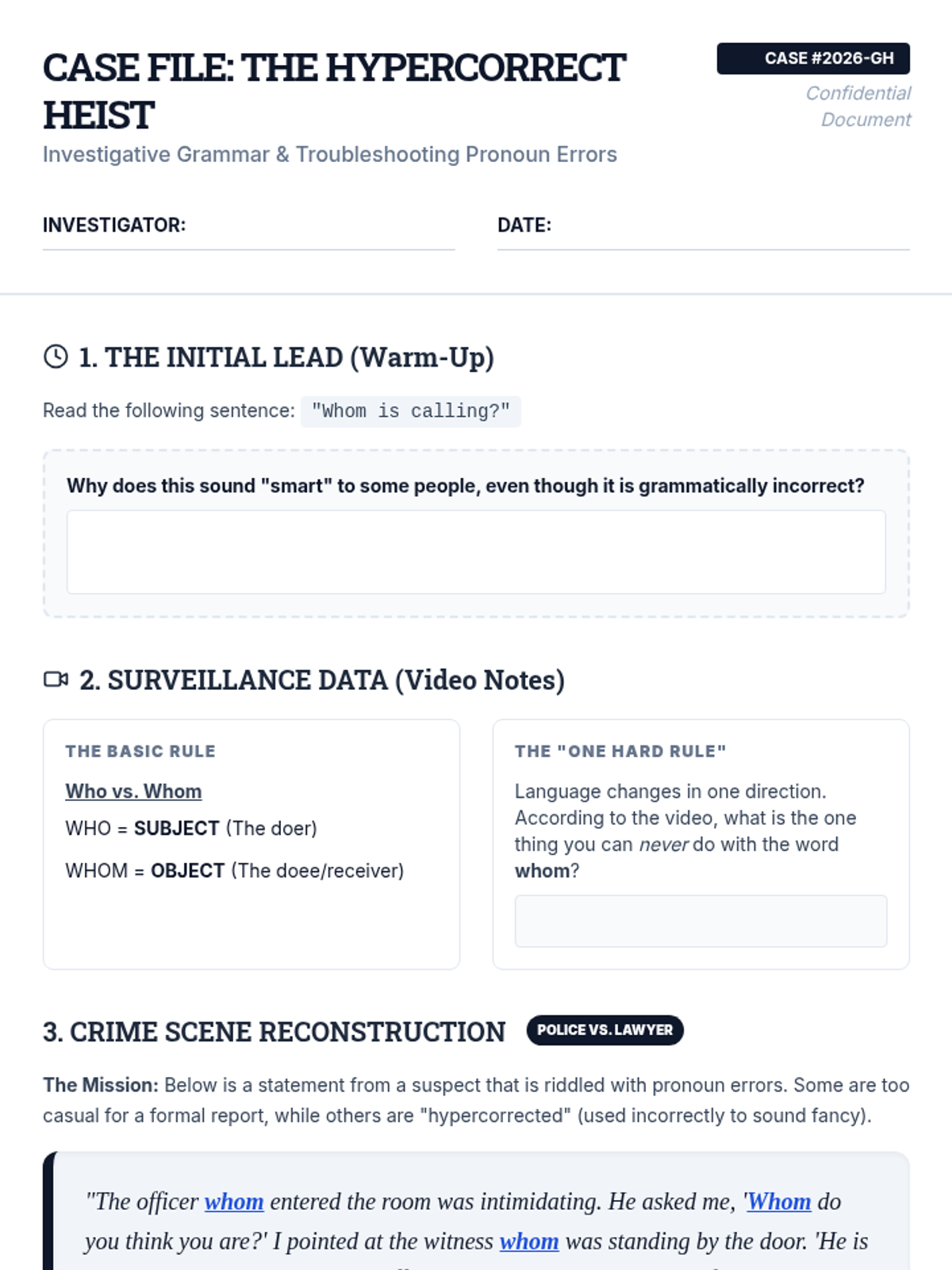
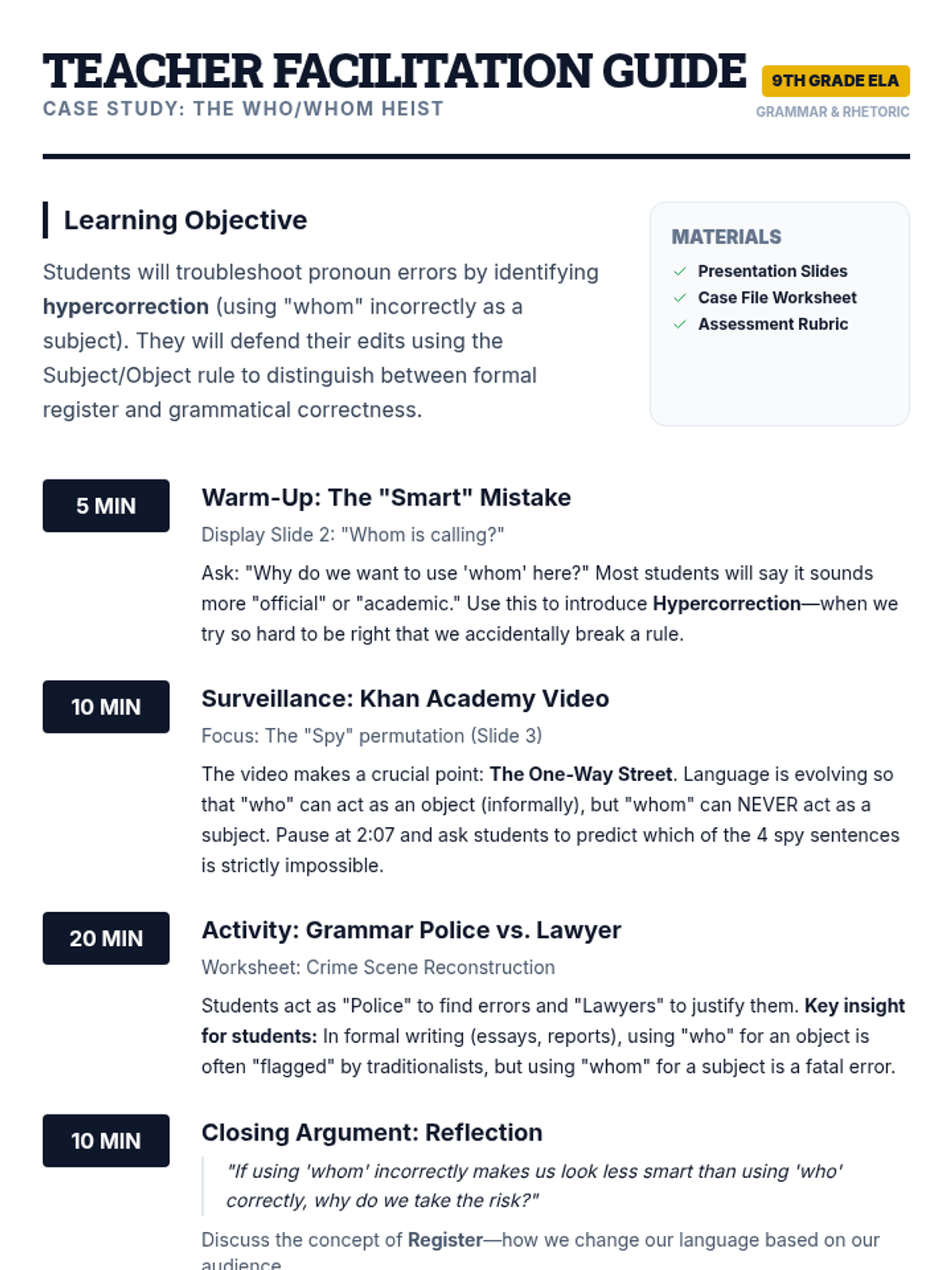
Students explore the 'One-Way Street' rule of grammar, learning that while 'who' is expanding its role, 'whom' can never be a subject. The lesson features a Khan Academy video, a 2x2 diagramming activity, and the creation of 'impossible' sentences.
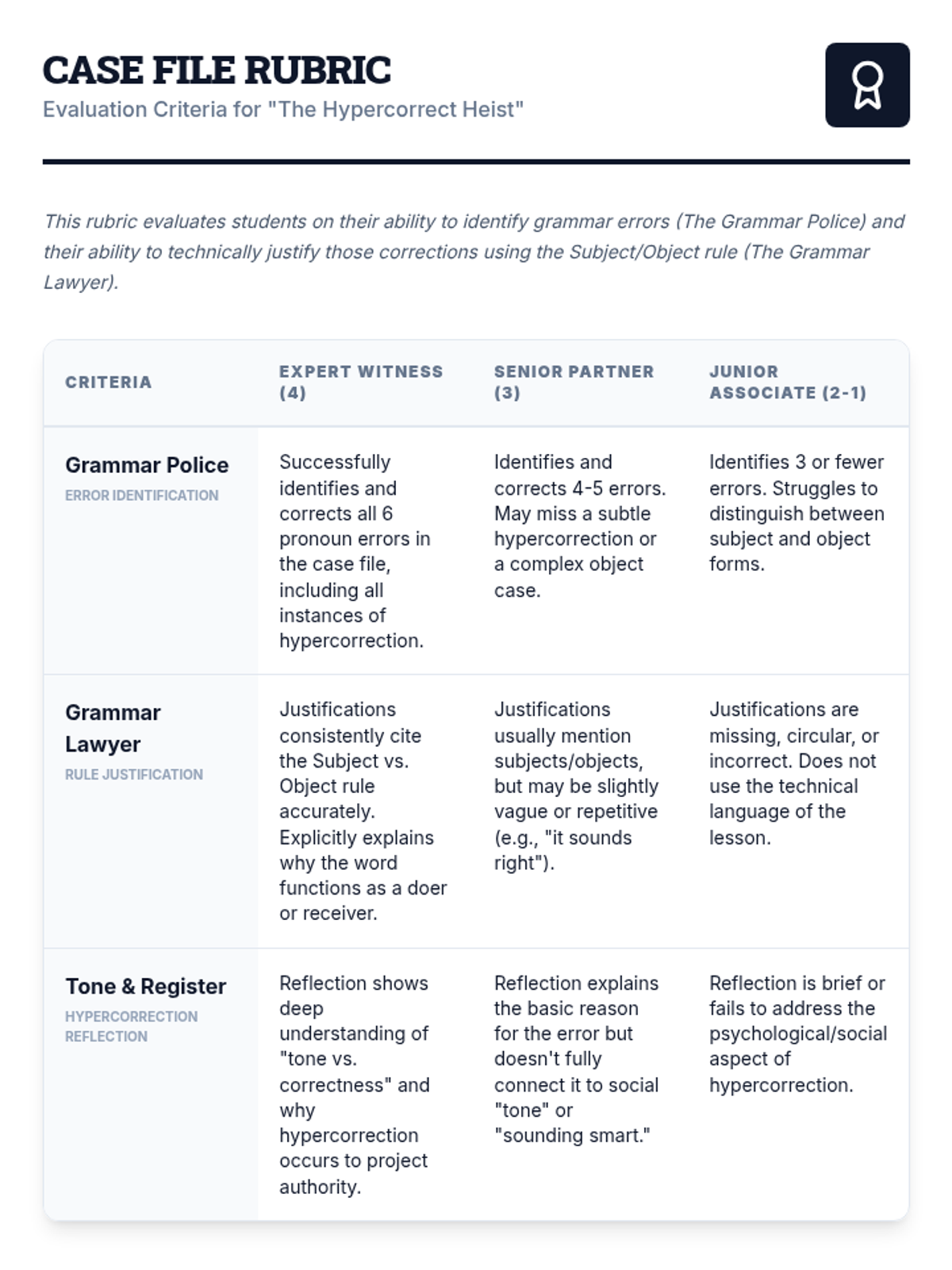
Students will master the distinction between 'who' and 'whom', focusing on identifying hypercorrection and understanding the 'one-way street' of language evolution. The lesson uses a legal investigation theme to engage students in technical grammar analysis.
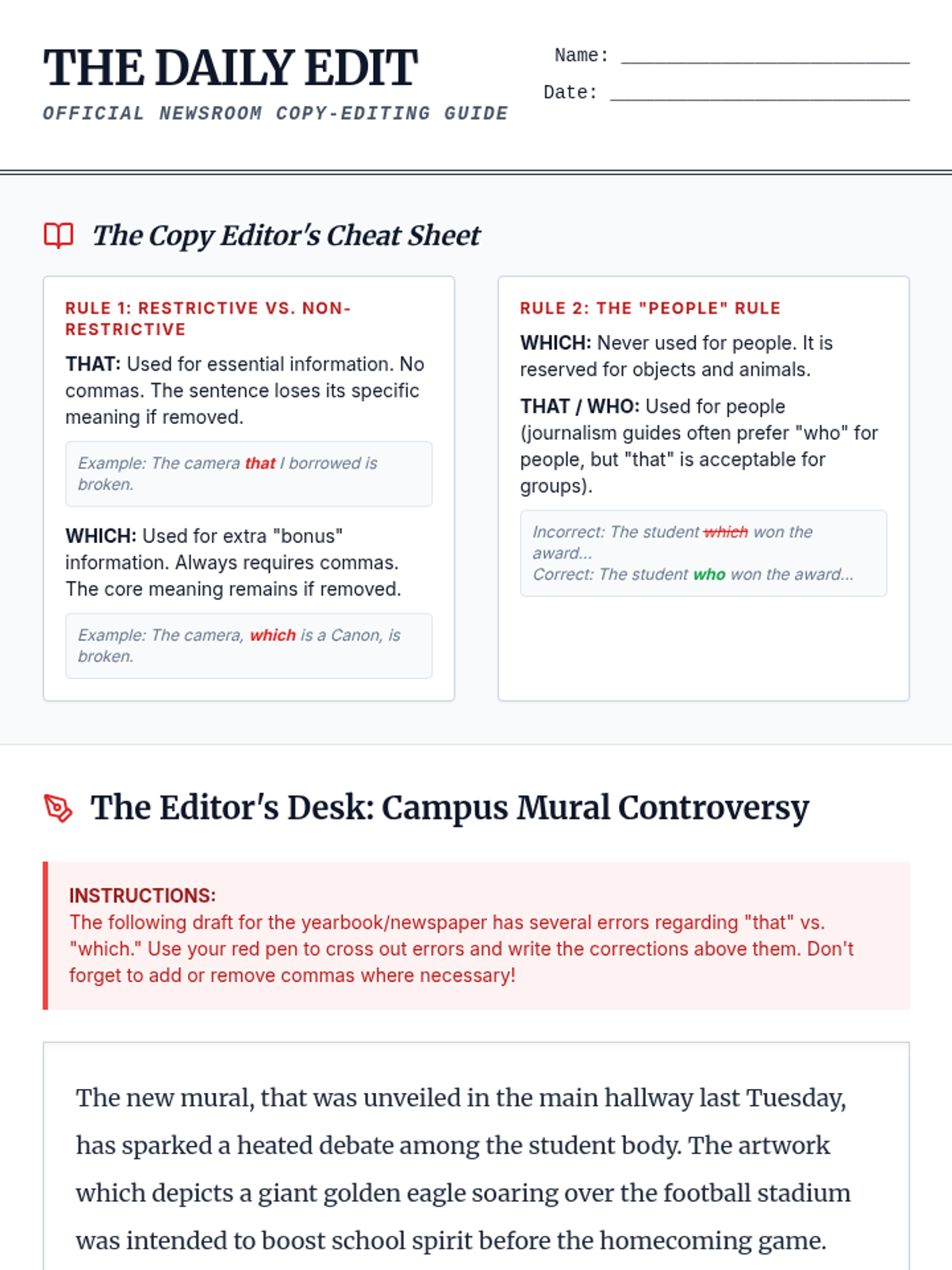
A journalism-focused lesson on the grammatical nuances of 'that' versus 'which,' teaching students to use restrictive and non-restrictive clauses to improve reporting clarity.
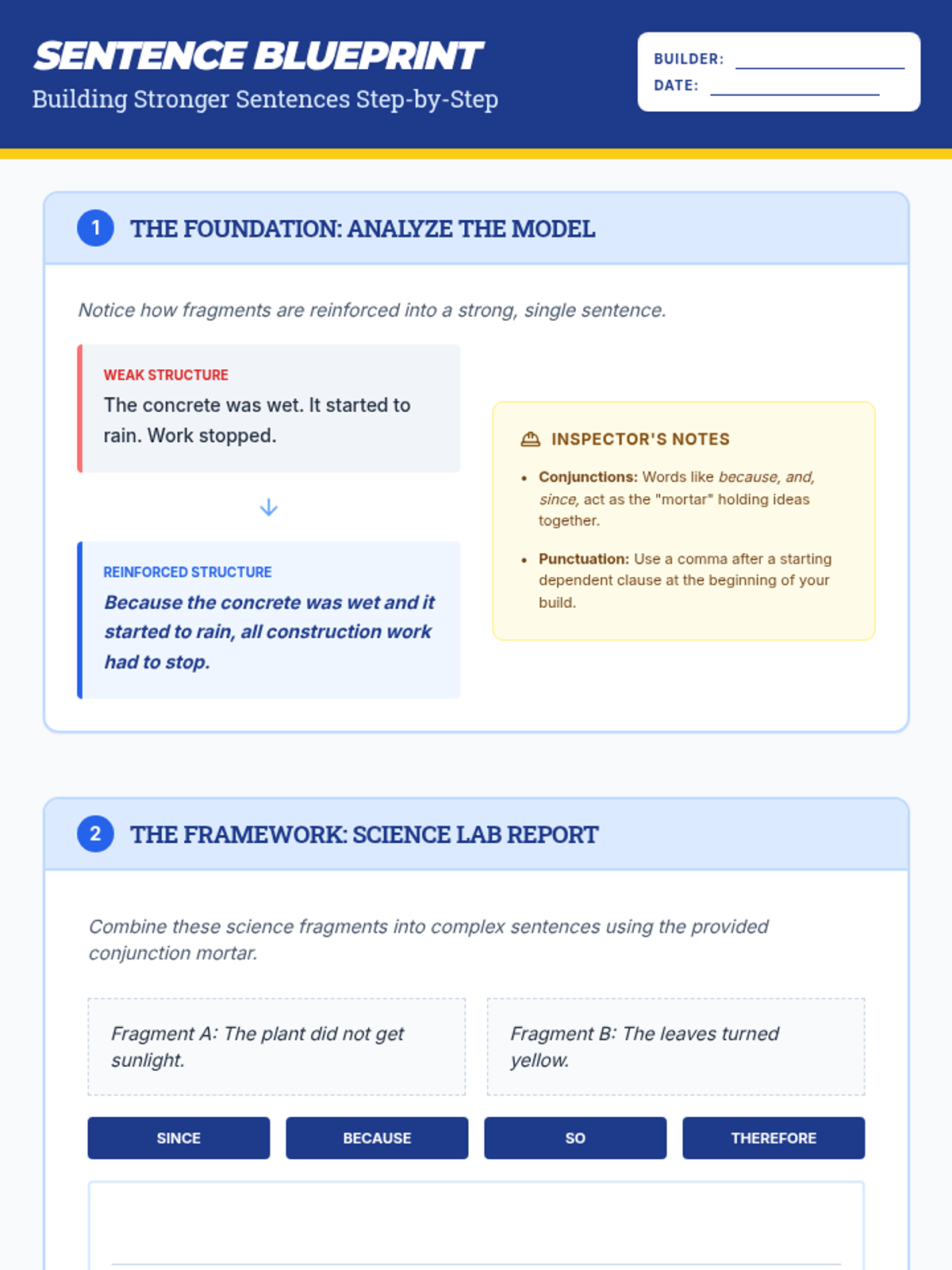
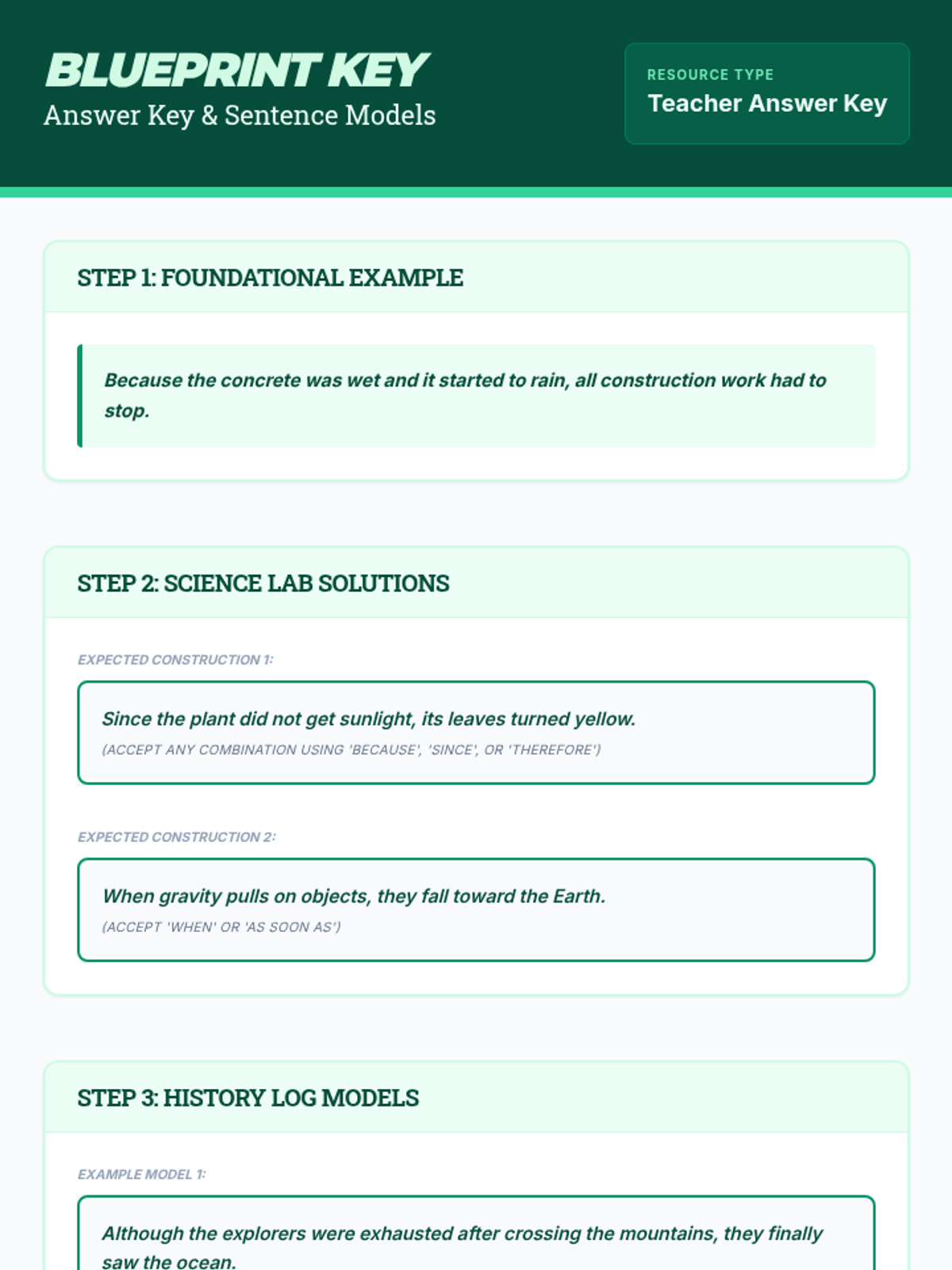
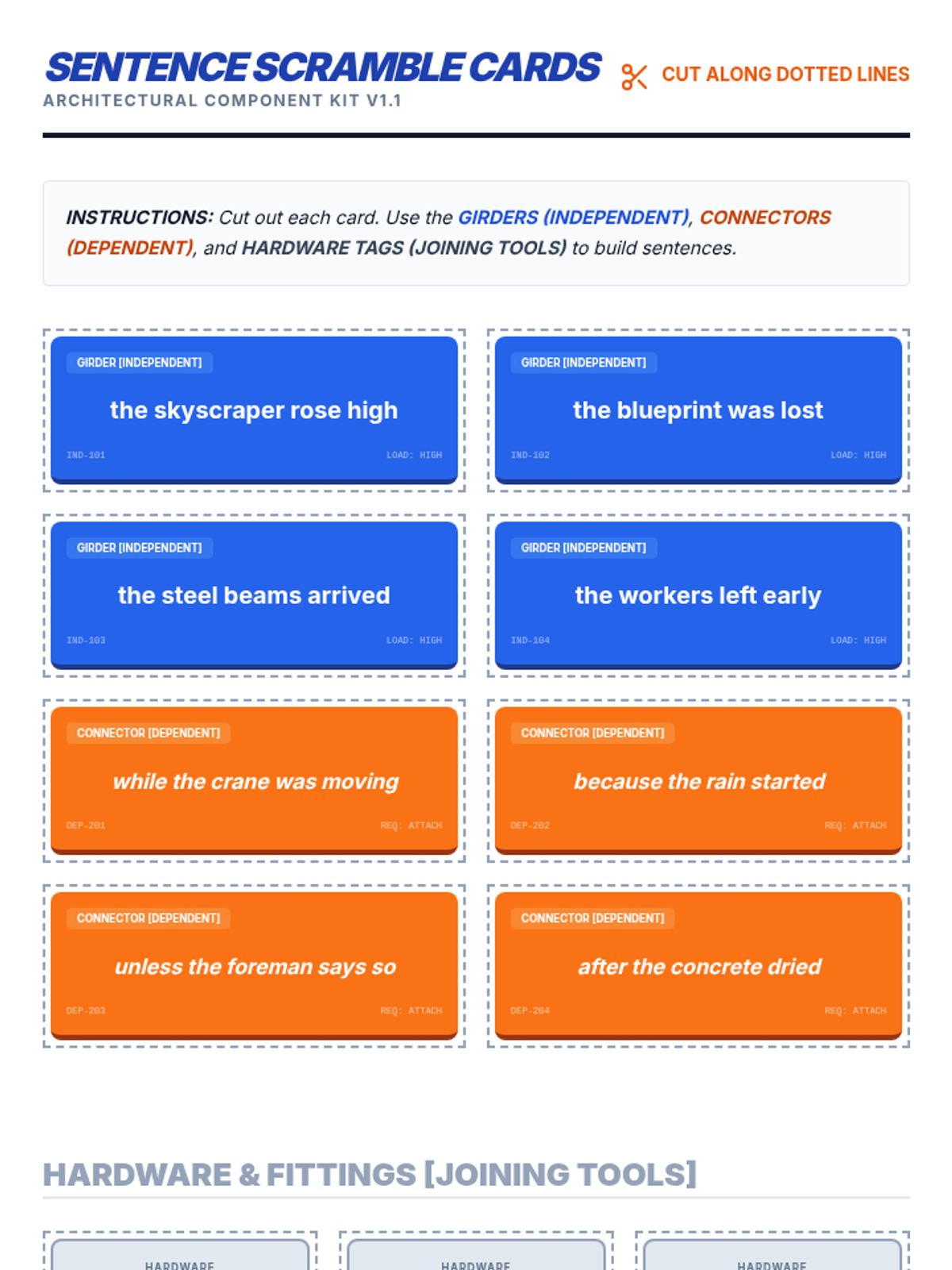
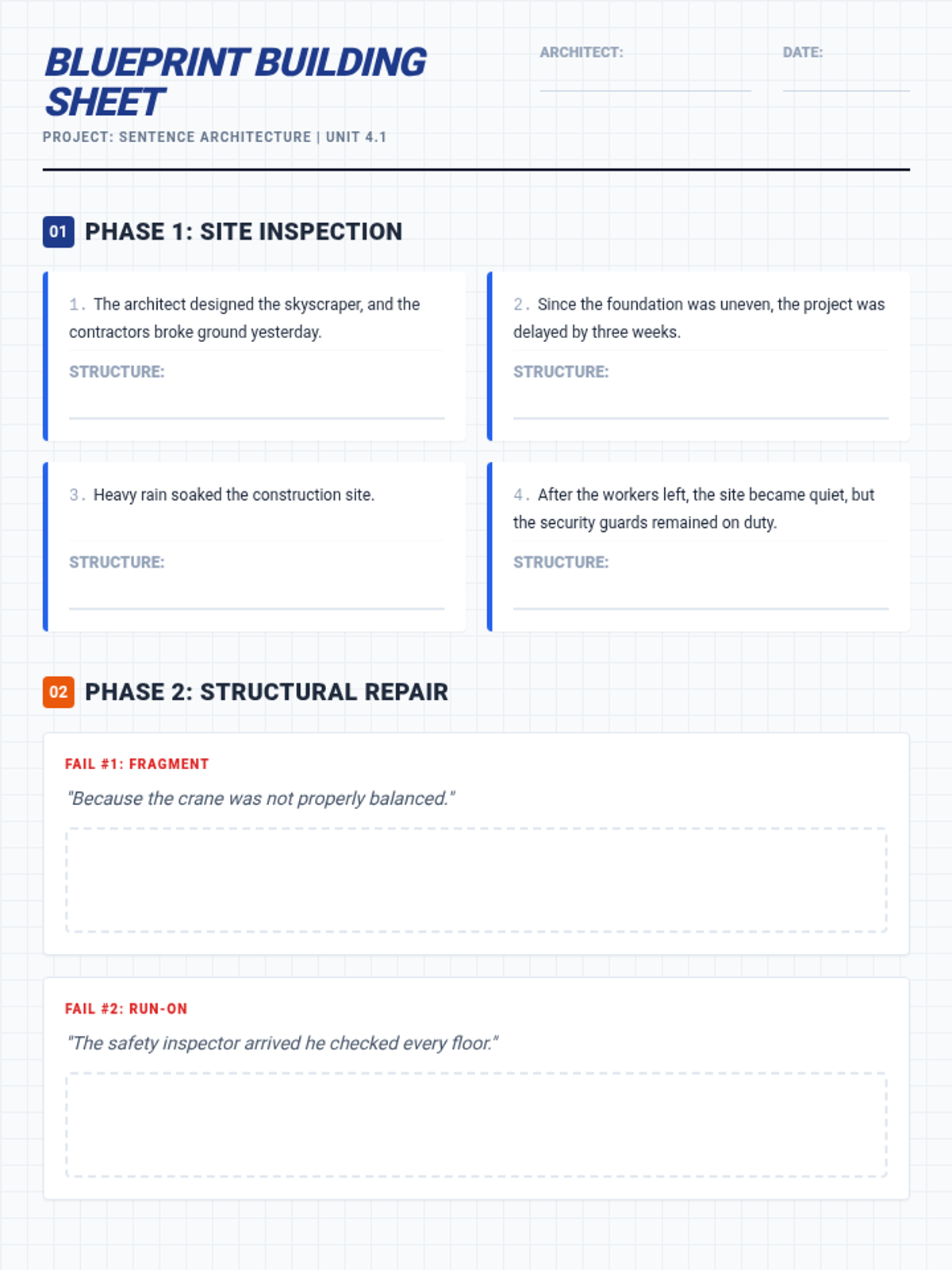
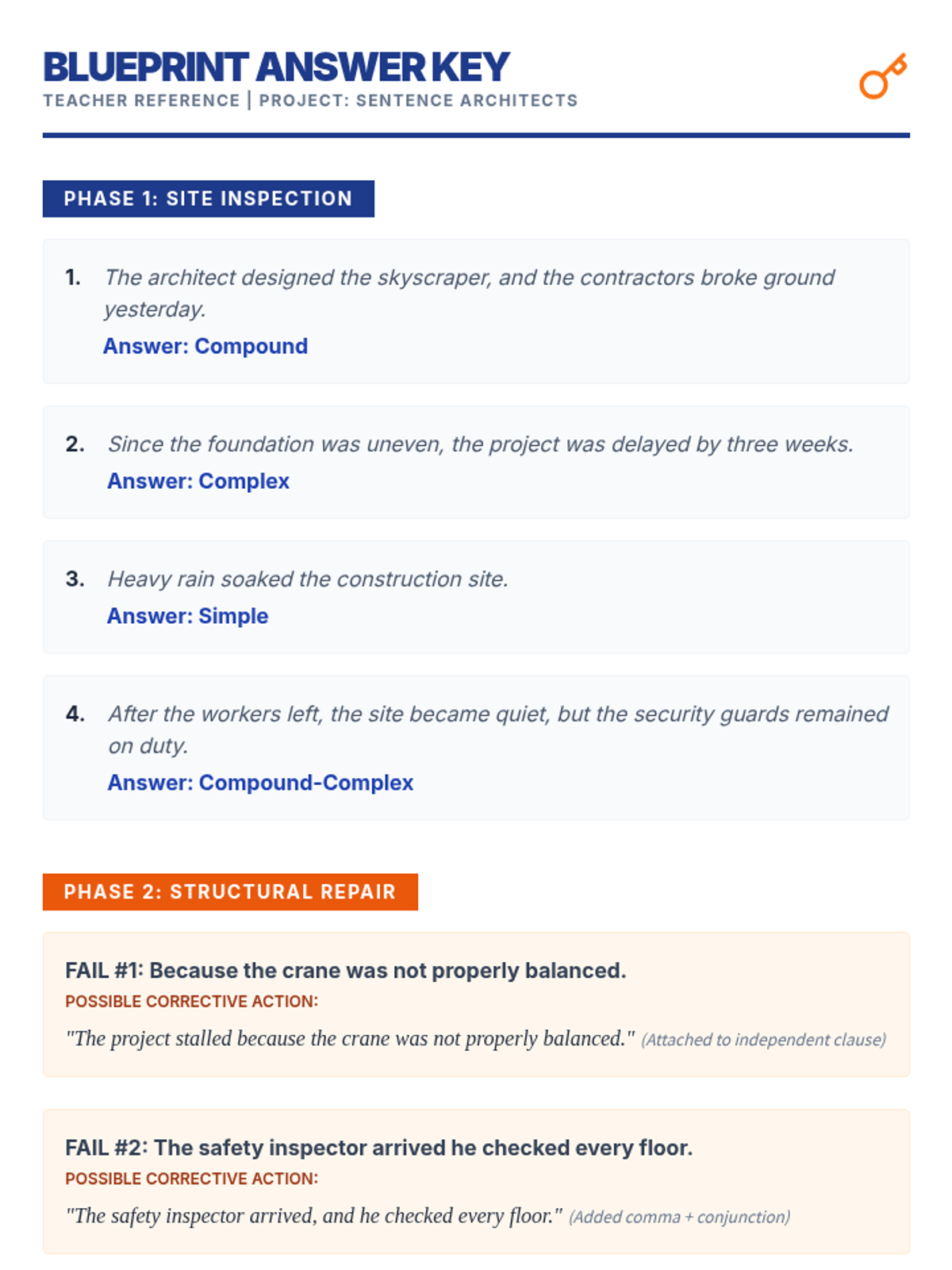
A lesson focused on sentence construction, teaching students to transform fragments and simple sentences into sophisticated compound and complex sentences using a construction-themed framework.
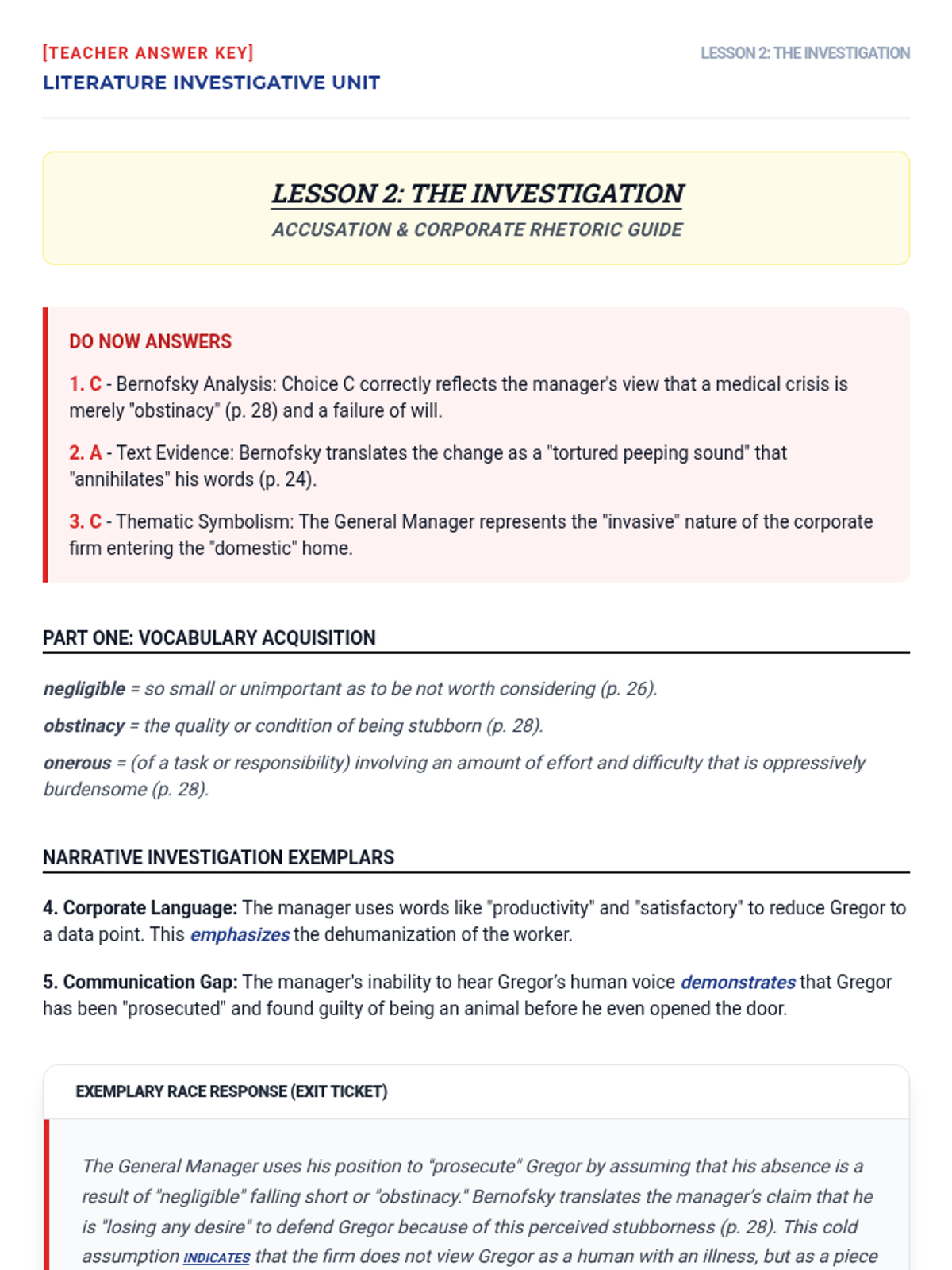
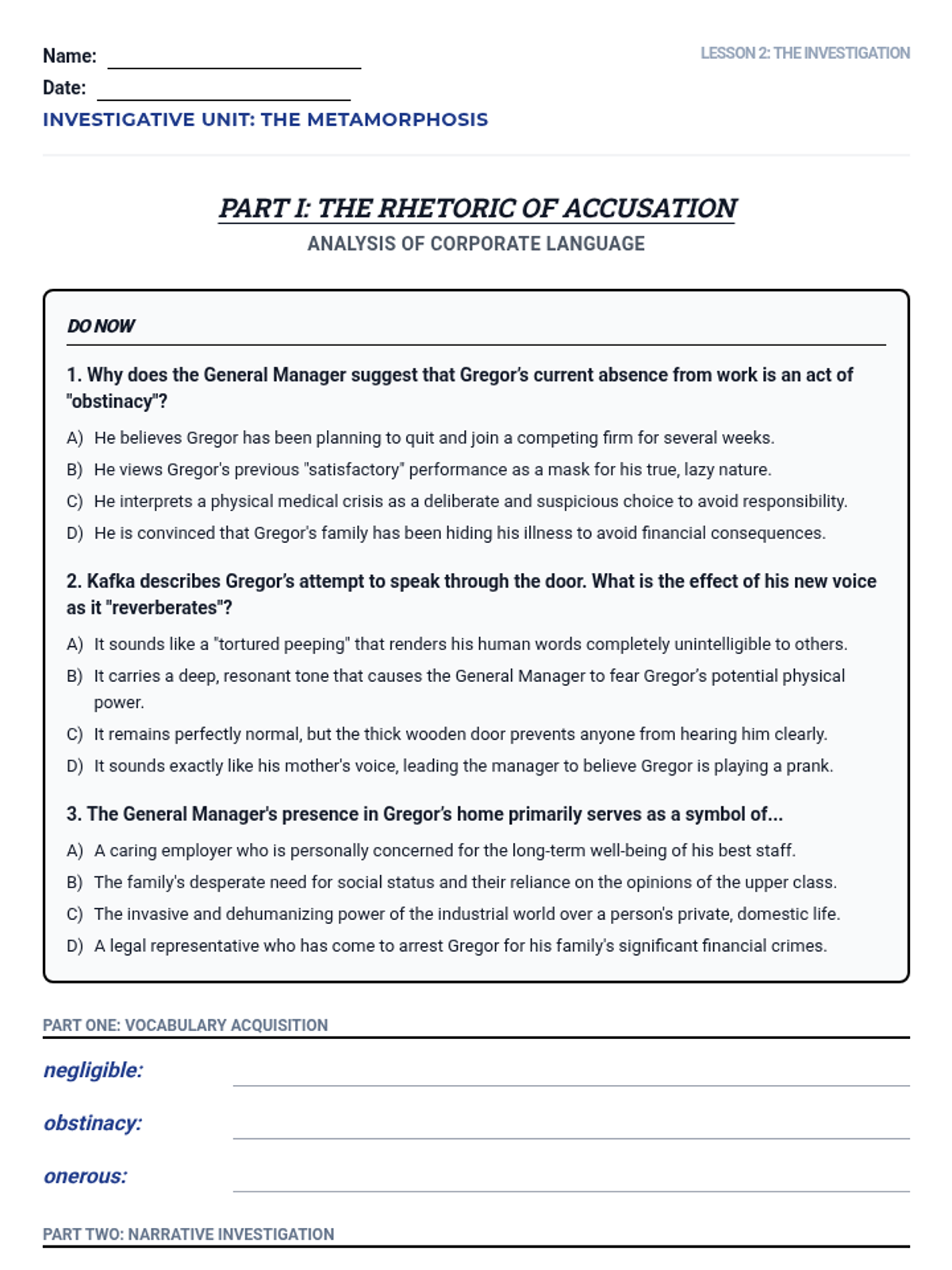
Students analyze the Chief Clerk's dialogue and how he uses corporate language to minimize Gregor's humanity and maximize his perceived 'laziness'.
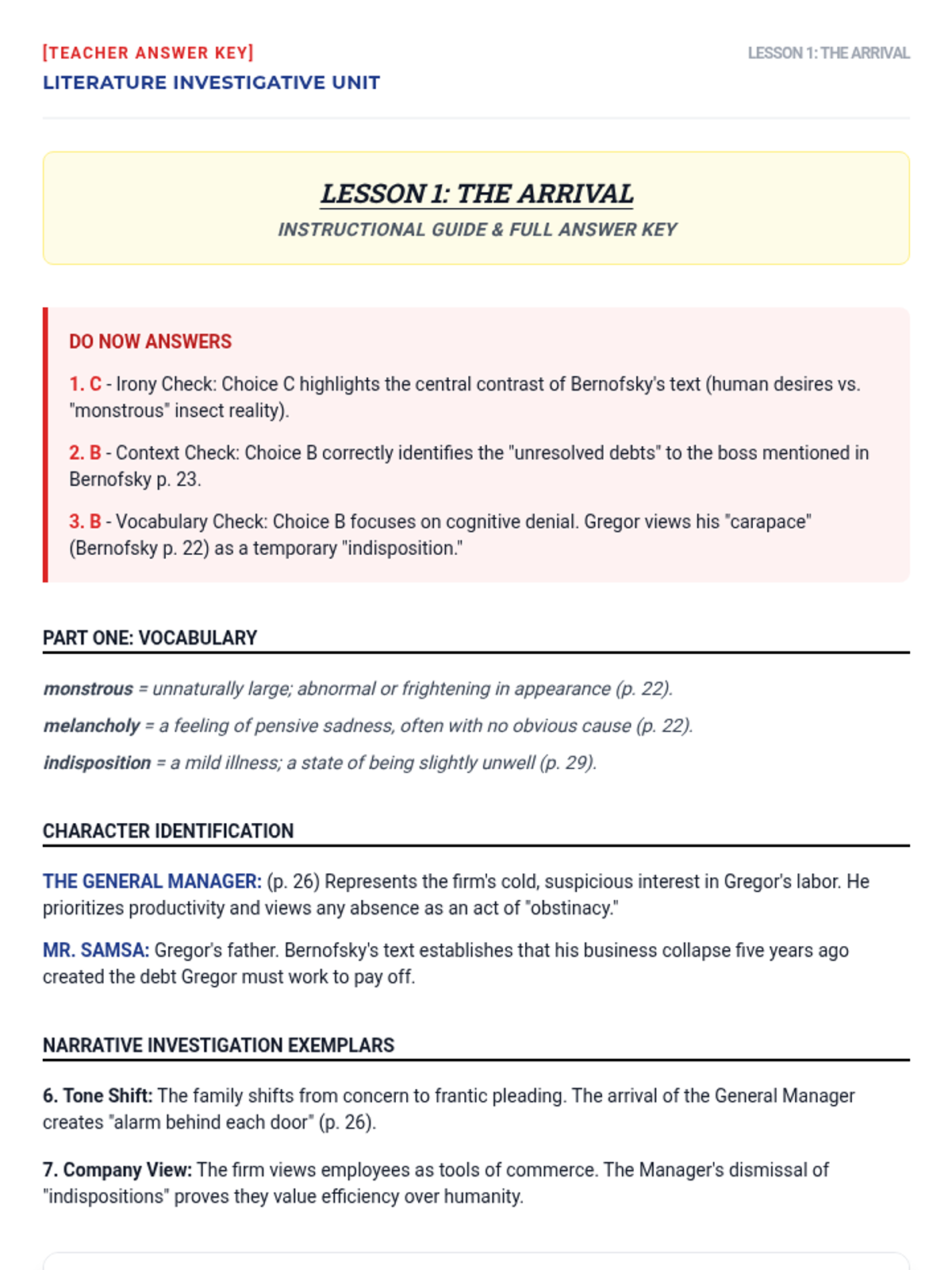
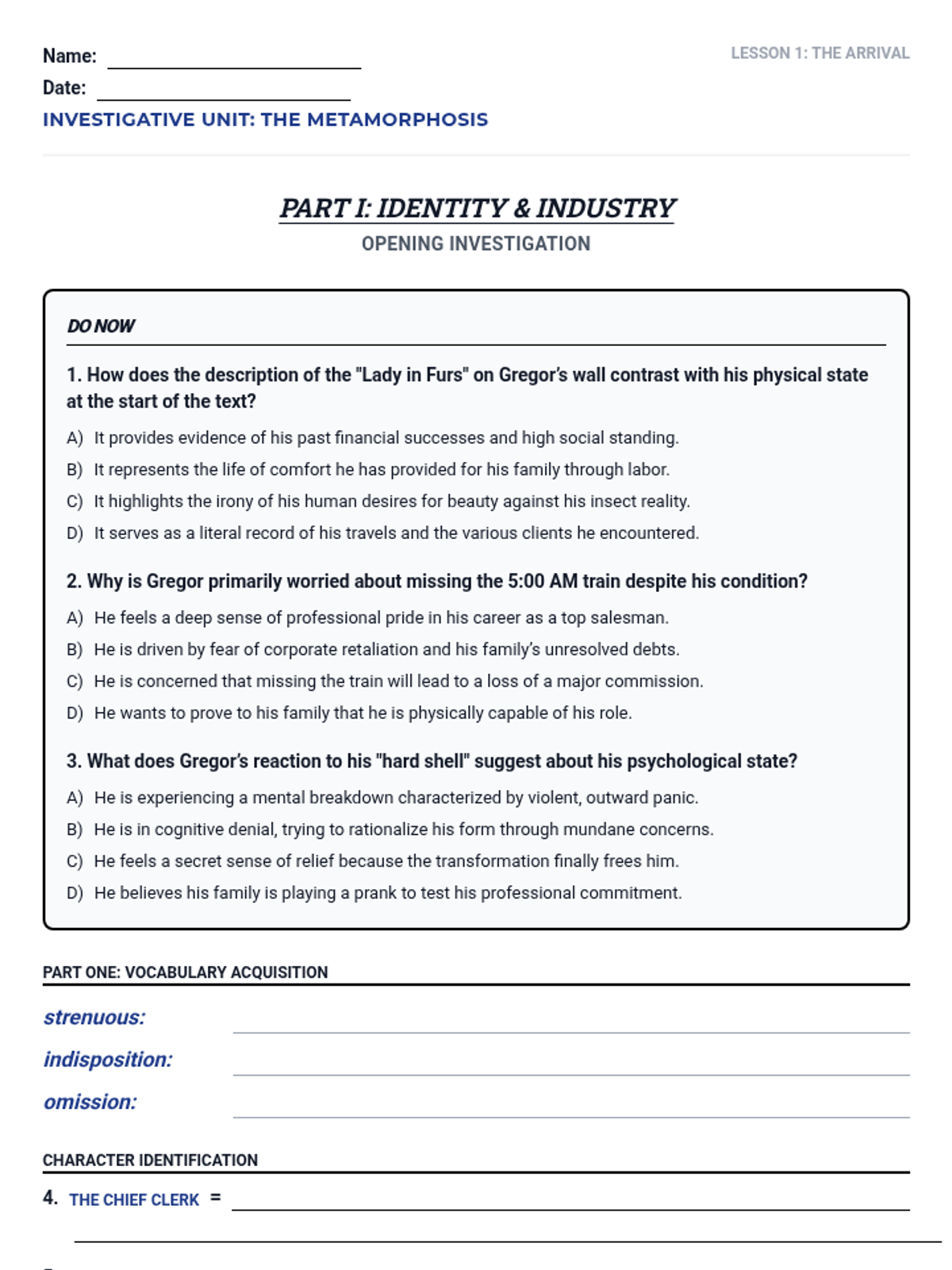
Students analyze the arrival of the Chief Clerk and the immediate shift from familial concern to corporate suspicion. Focus on the theme of 'The Firm' as a dehumanizing force.
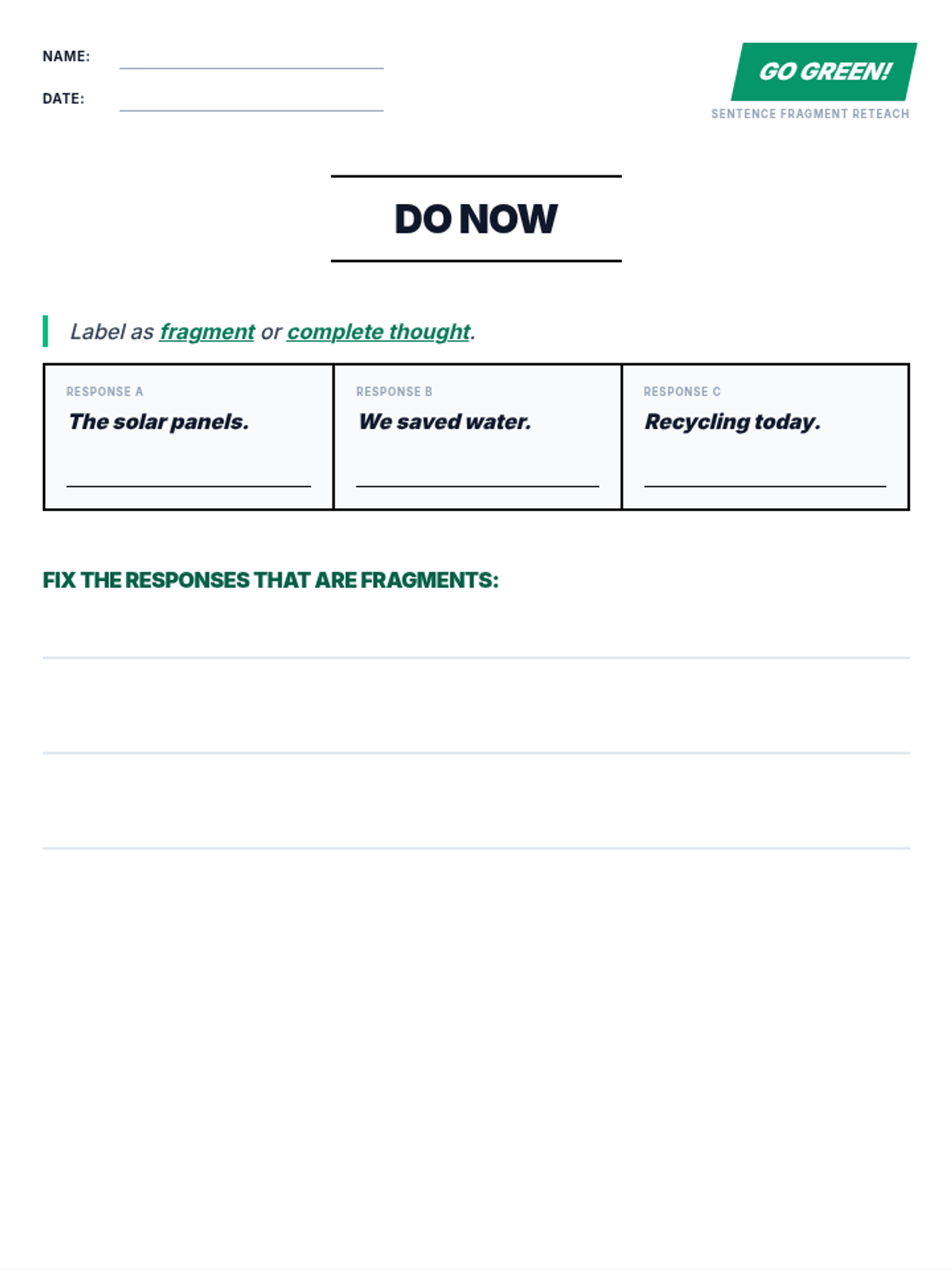
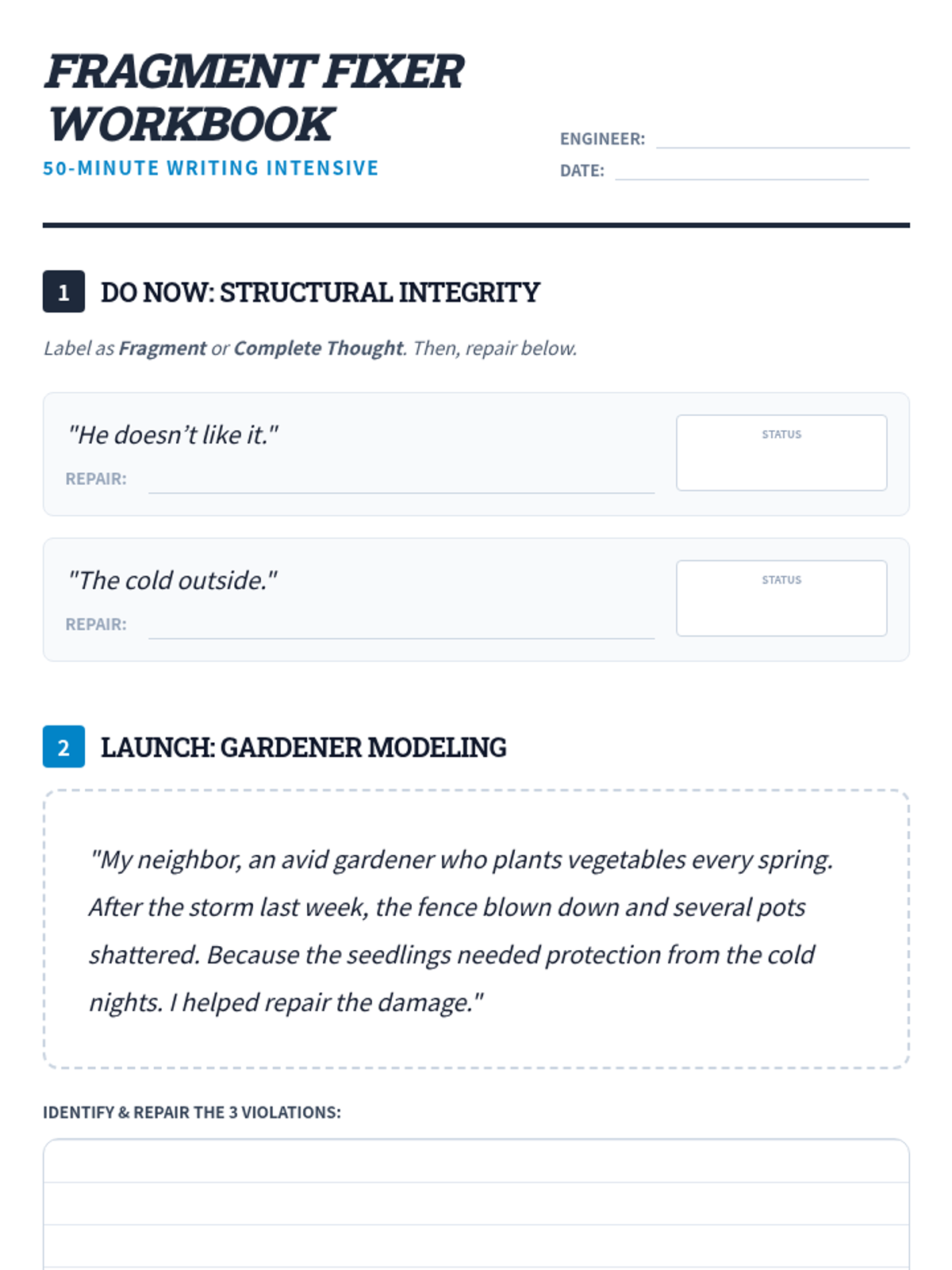
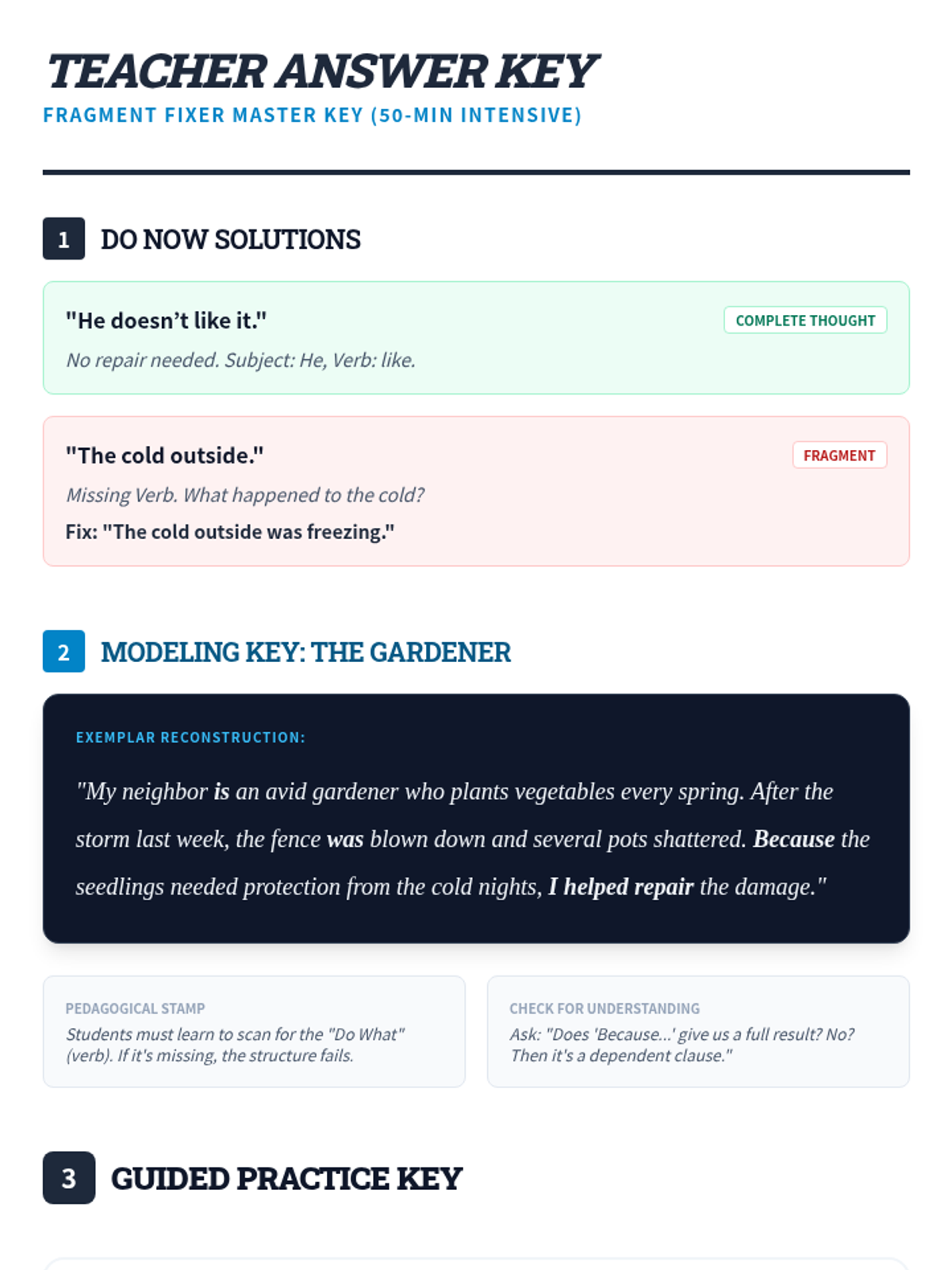
A comprehensive reteach lesson on identifying and correcting sentence fragments, themed around environmental conservation and 'going green'. Includes a student worksheet and a detailed teacher facilitation guide with an answer key.
A targeted 50-minute reteach lesson designed to help students master the distinction between sentence fragments and complete thoughts. The lesson uses themes of community and history (Civil Rights, Harlem Renaissance) to provide high-engagement practice. It follows a structural approach: Diagnostic Do Now, Gardener Modeling, Historical Guided Discourse, and Independent Application.
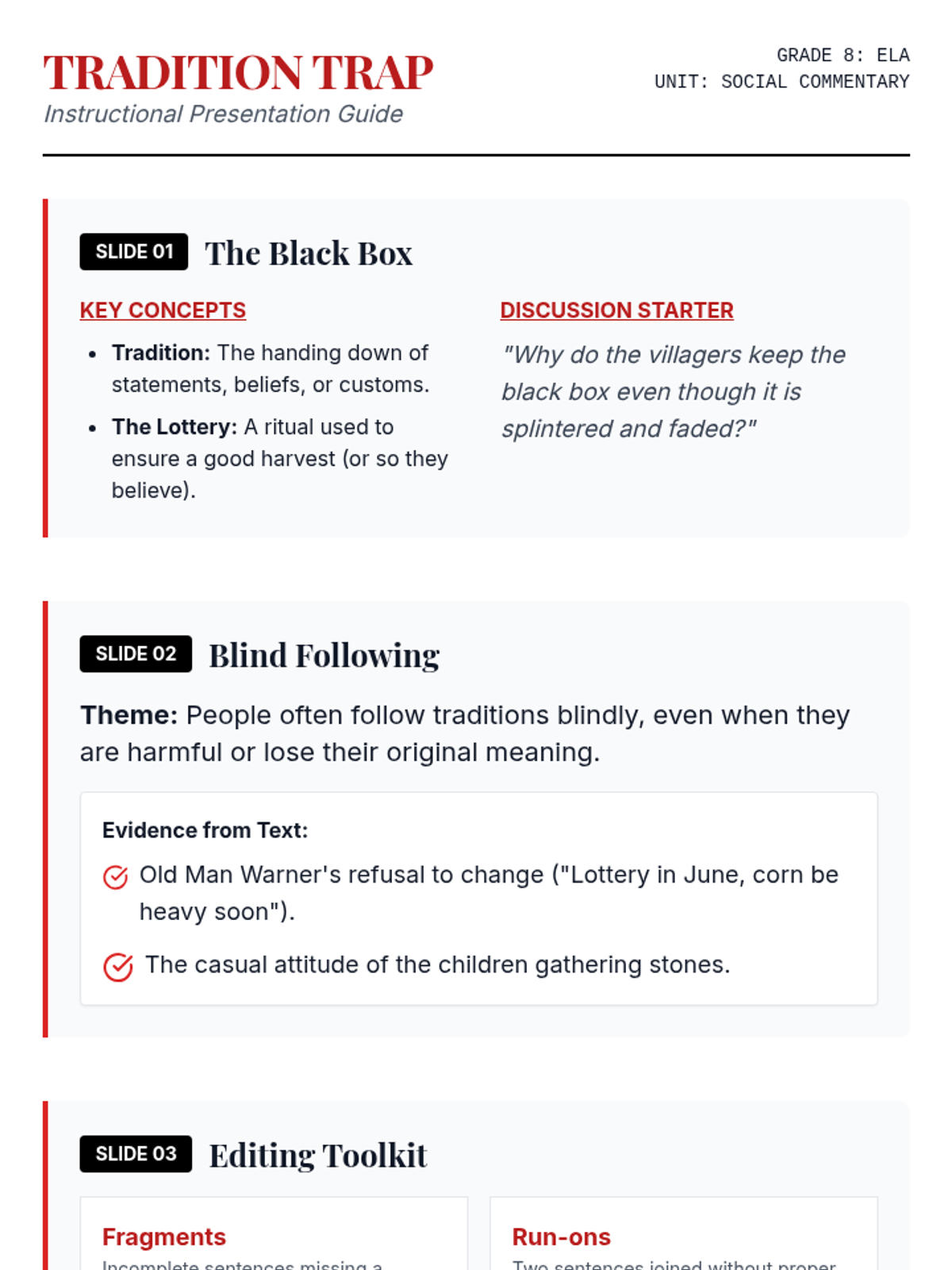
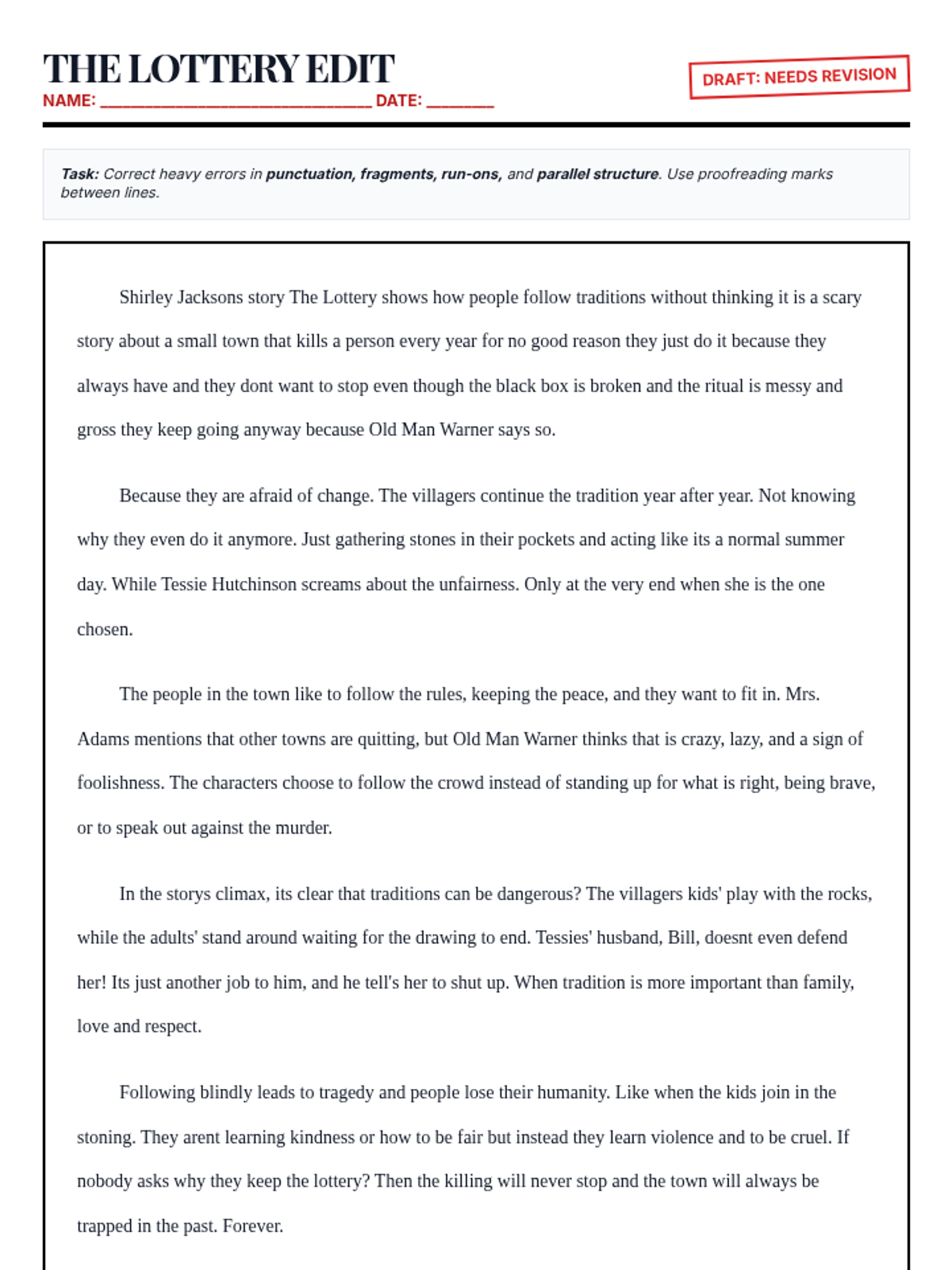
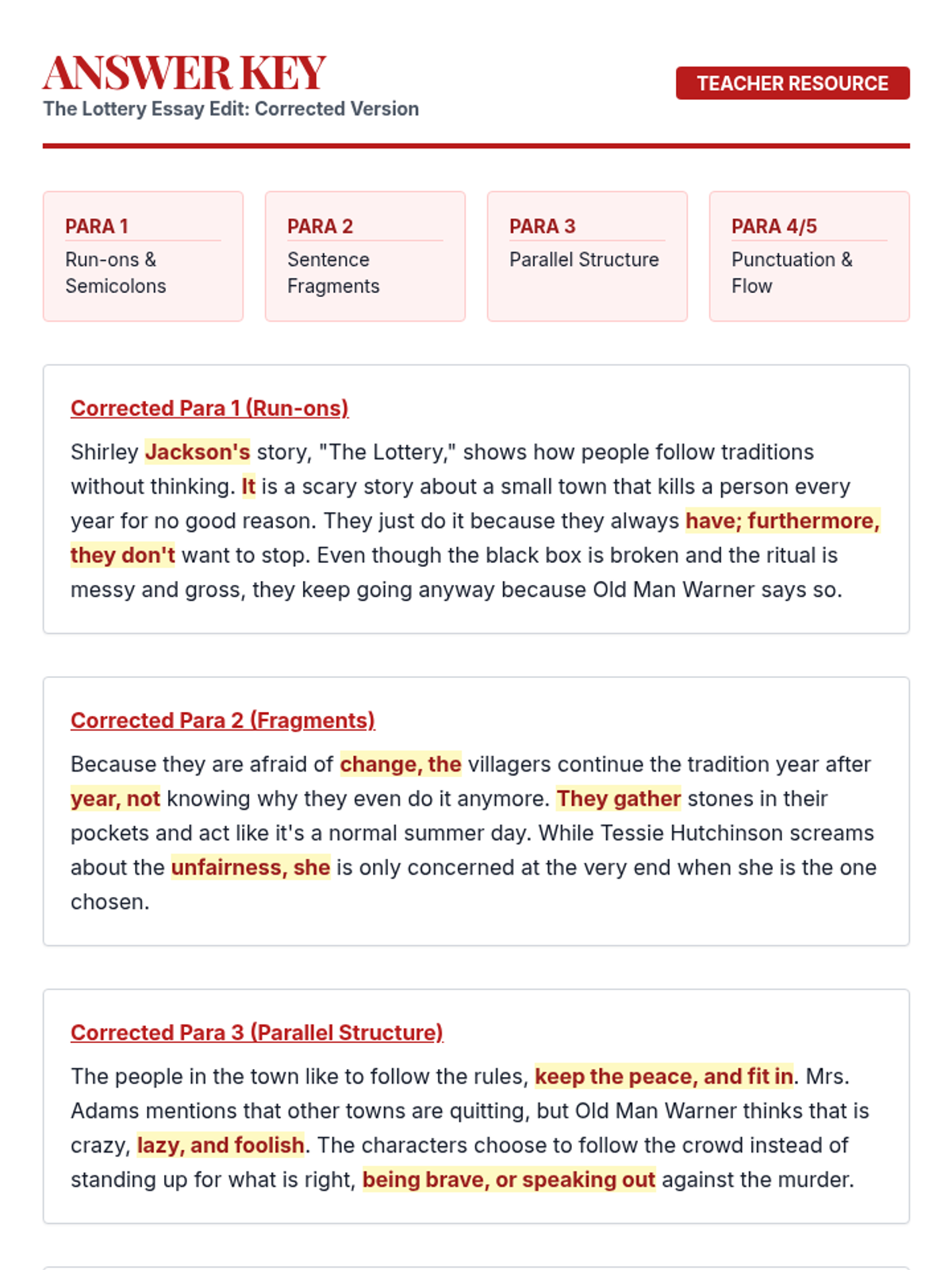
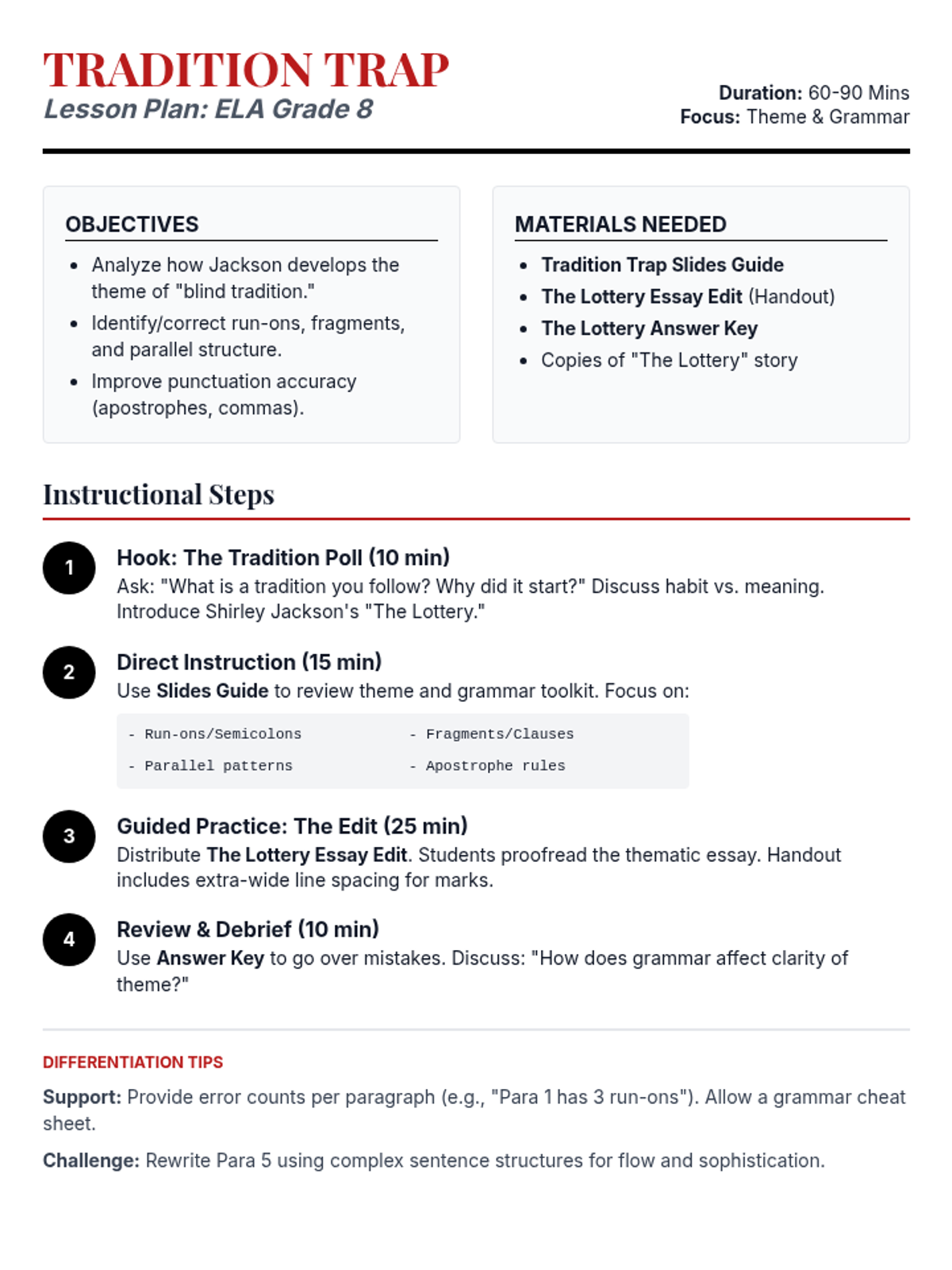
A lesson exploring the themes of Shirley Jackson's 'The Lottery,' focusing on the dangers of blindly following tradition and improving writing through error analysis and correction.
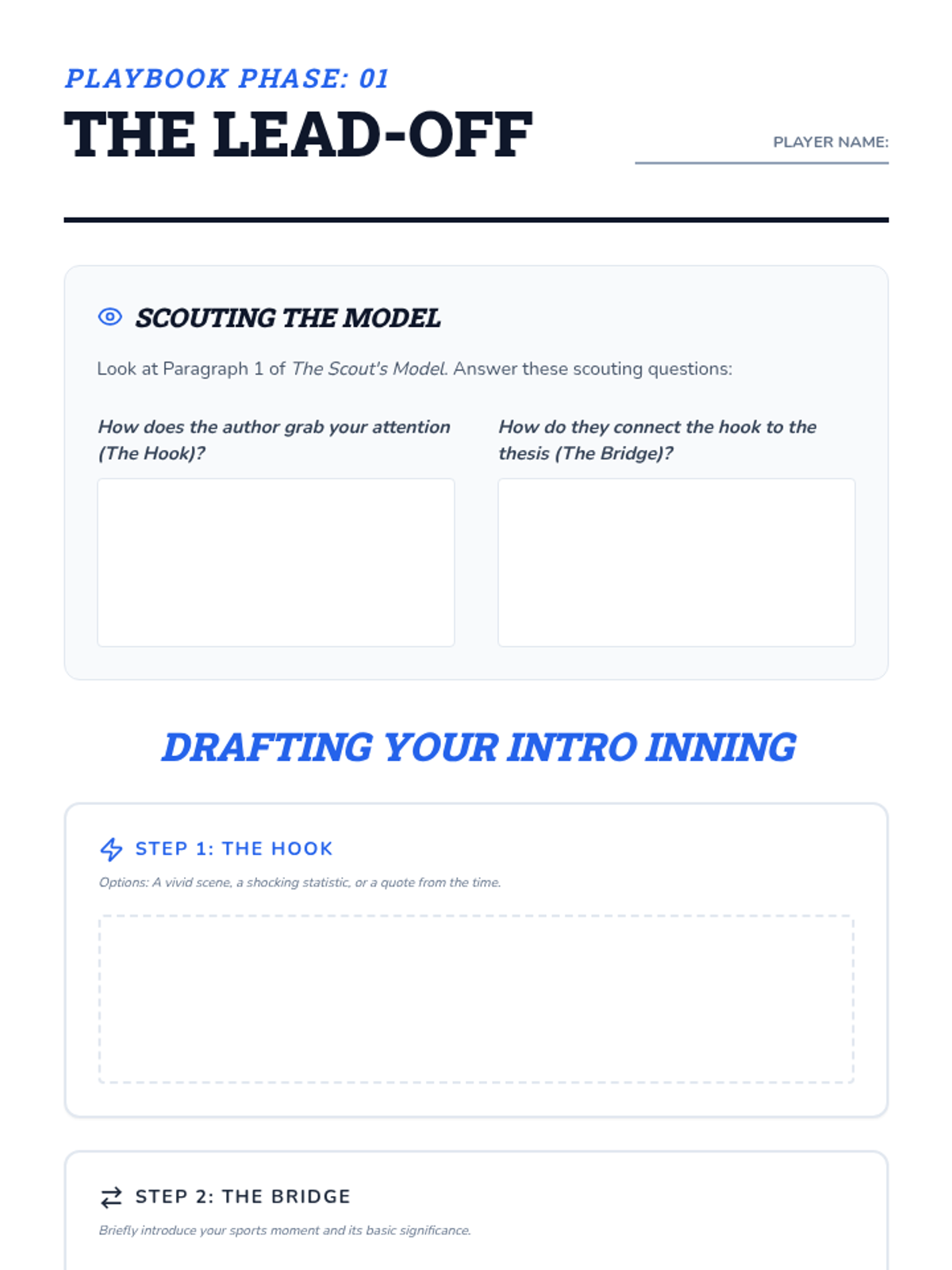
Drafting the final introduction and conclusion (bookending the paper), peer reviewing the full paper, and final polishing using the rubric.
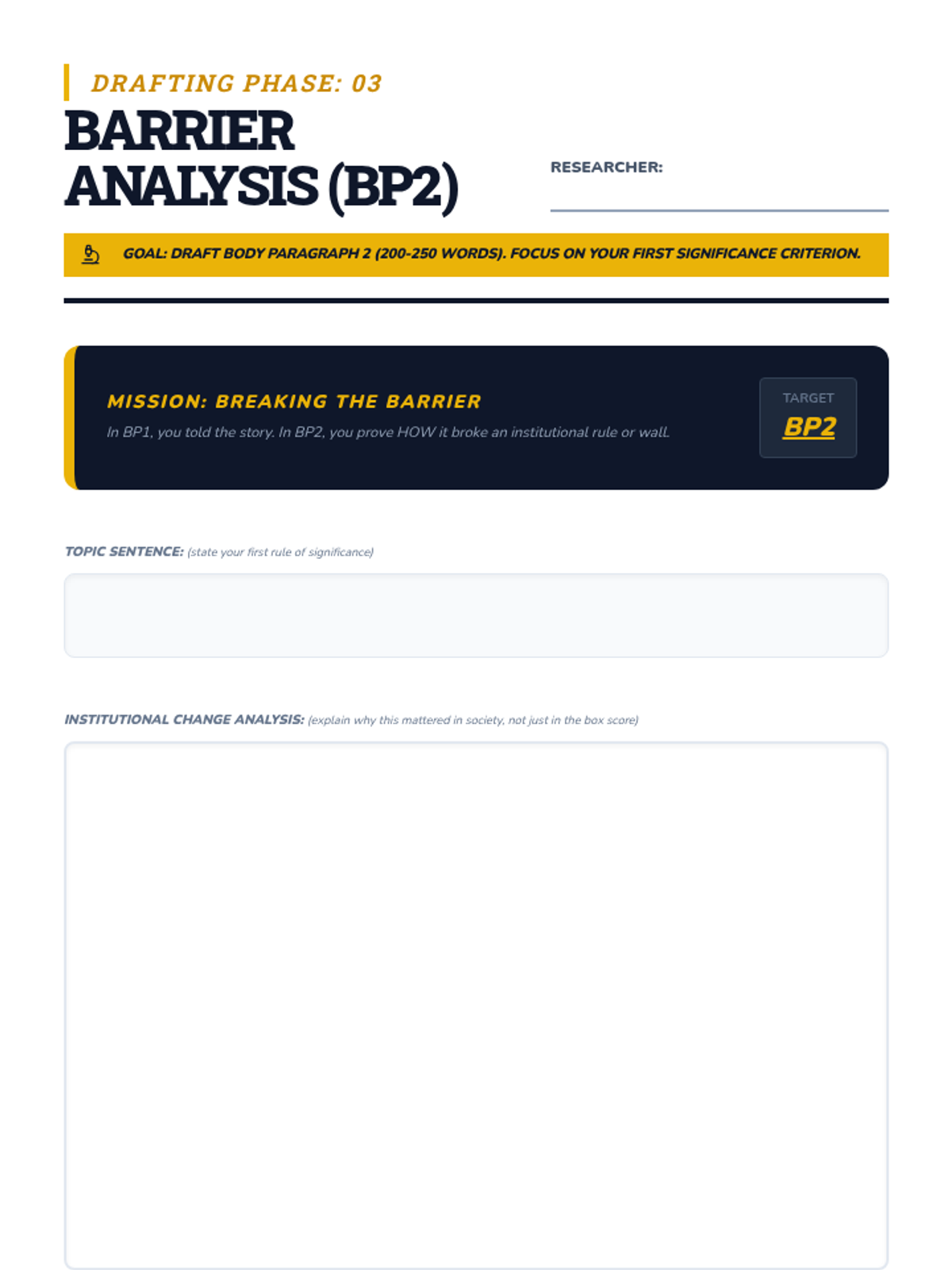
Drafting the second body paragraph, focusing on institutional changes and the breaking of systemic barriers.
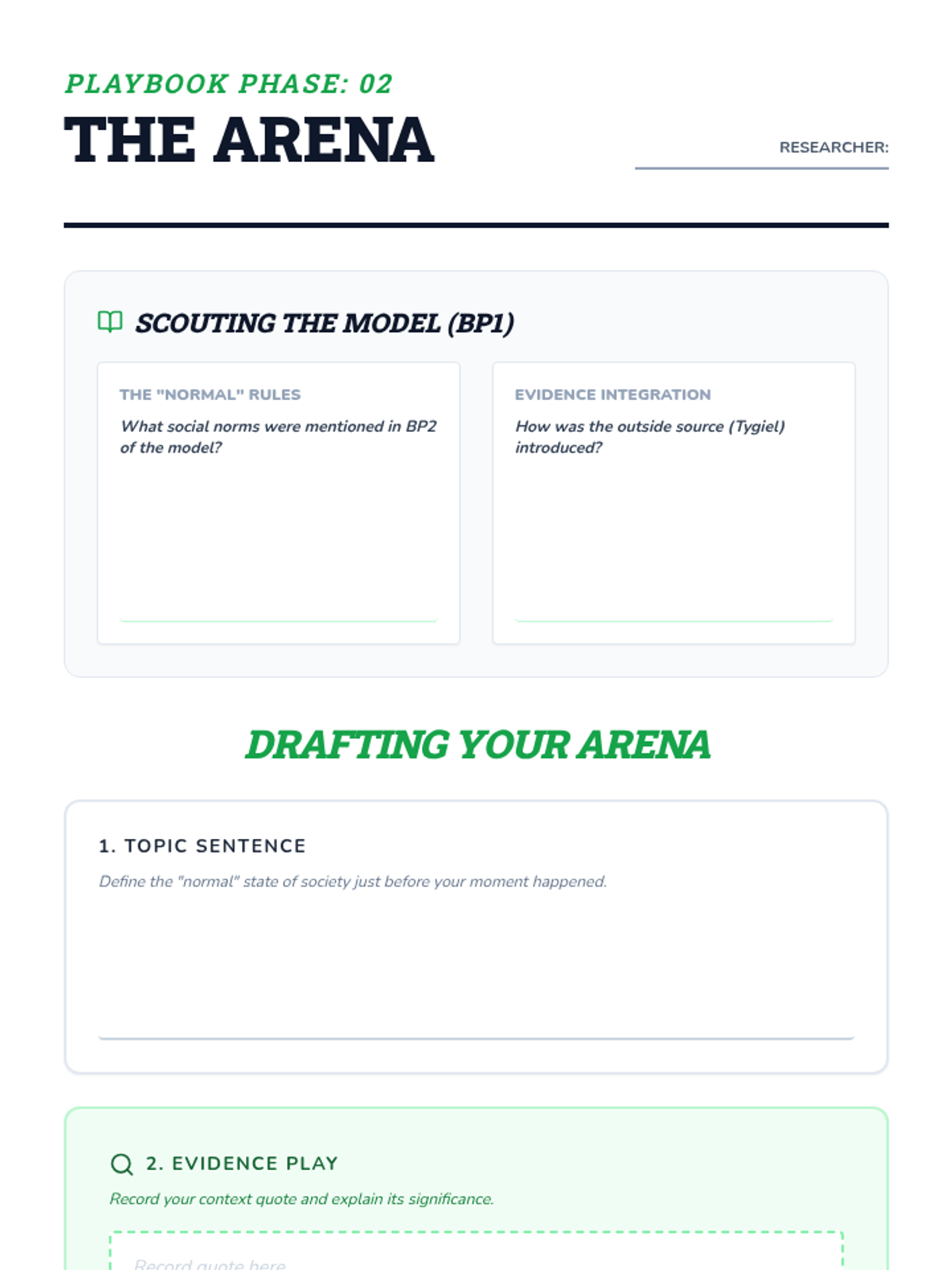
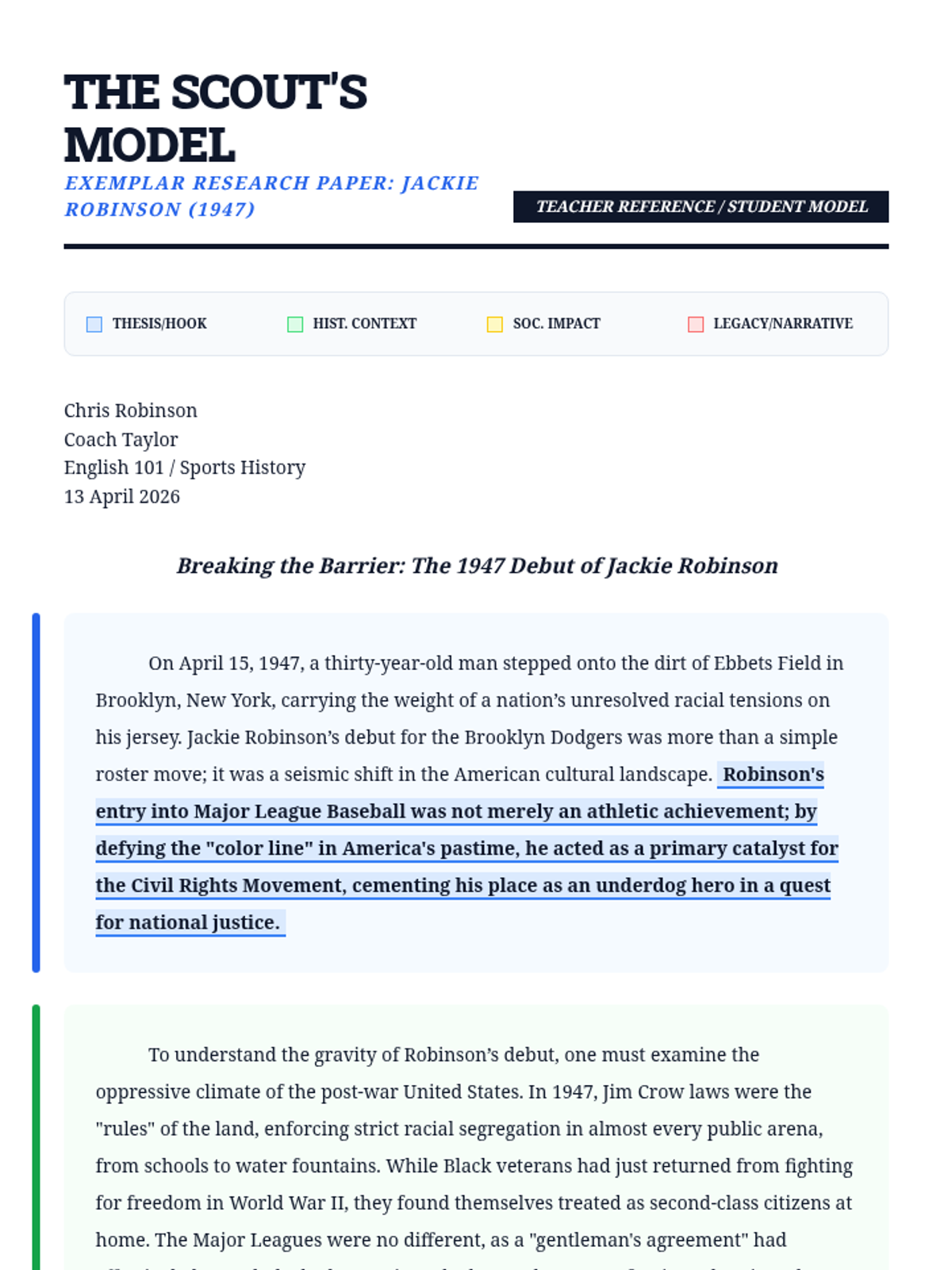
Students research and draft their first body paragraph, focusing on the historical context of their sports moment.
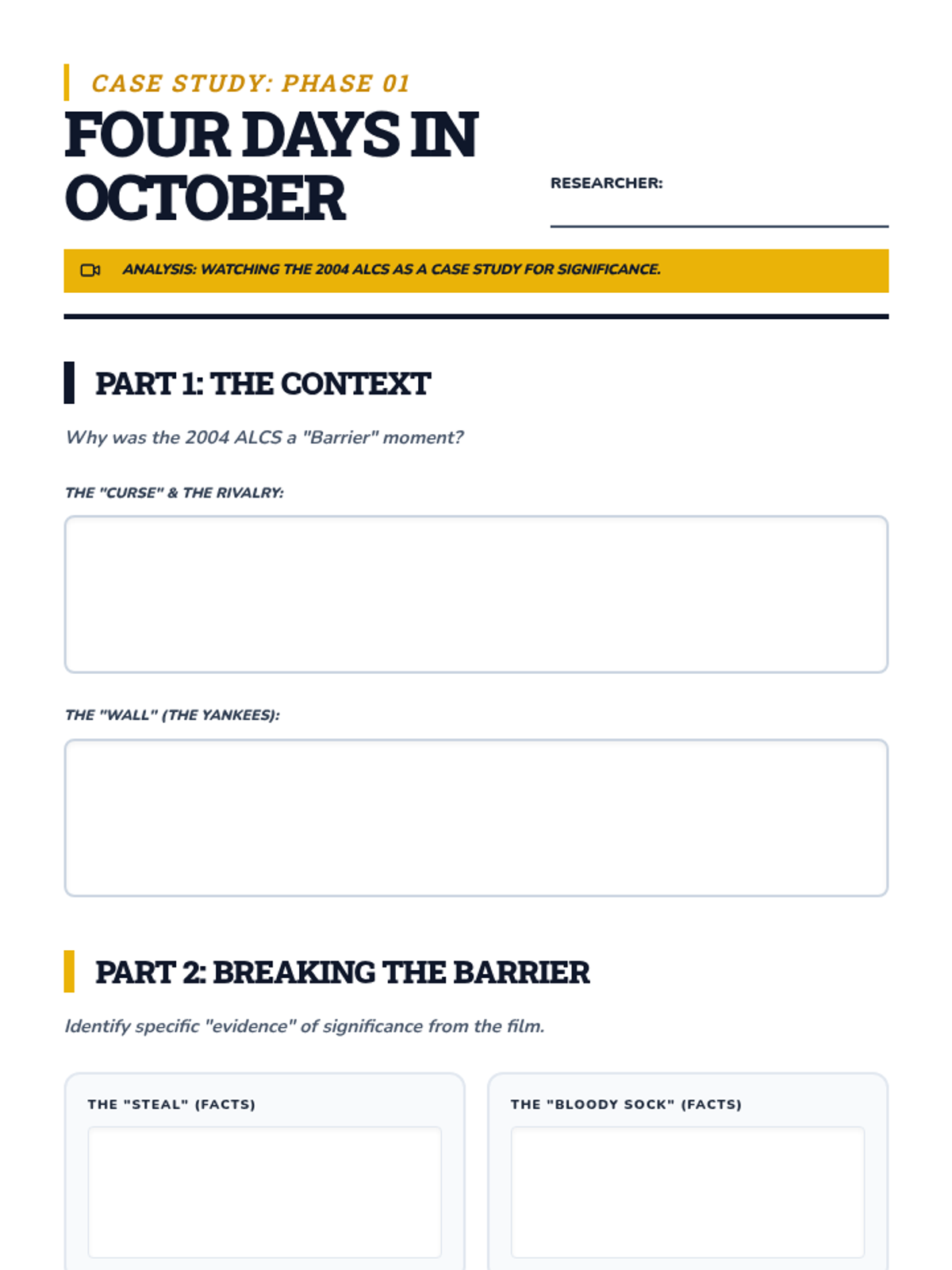
Brainstorming significant moments, defining specific criteria for "significance," and analyzing the 'Four Days in October' 30 for 30 documentary as a case study.
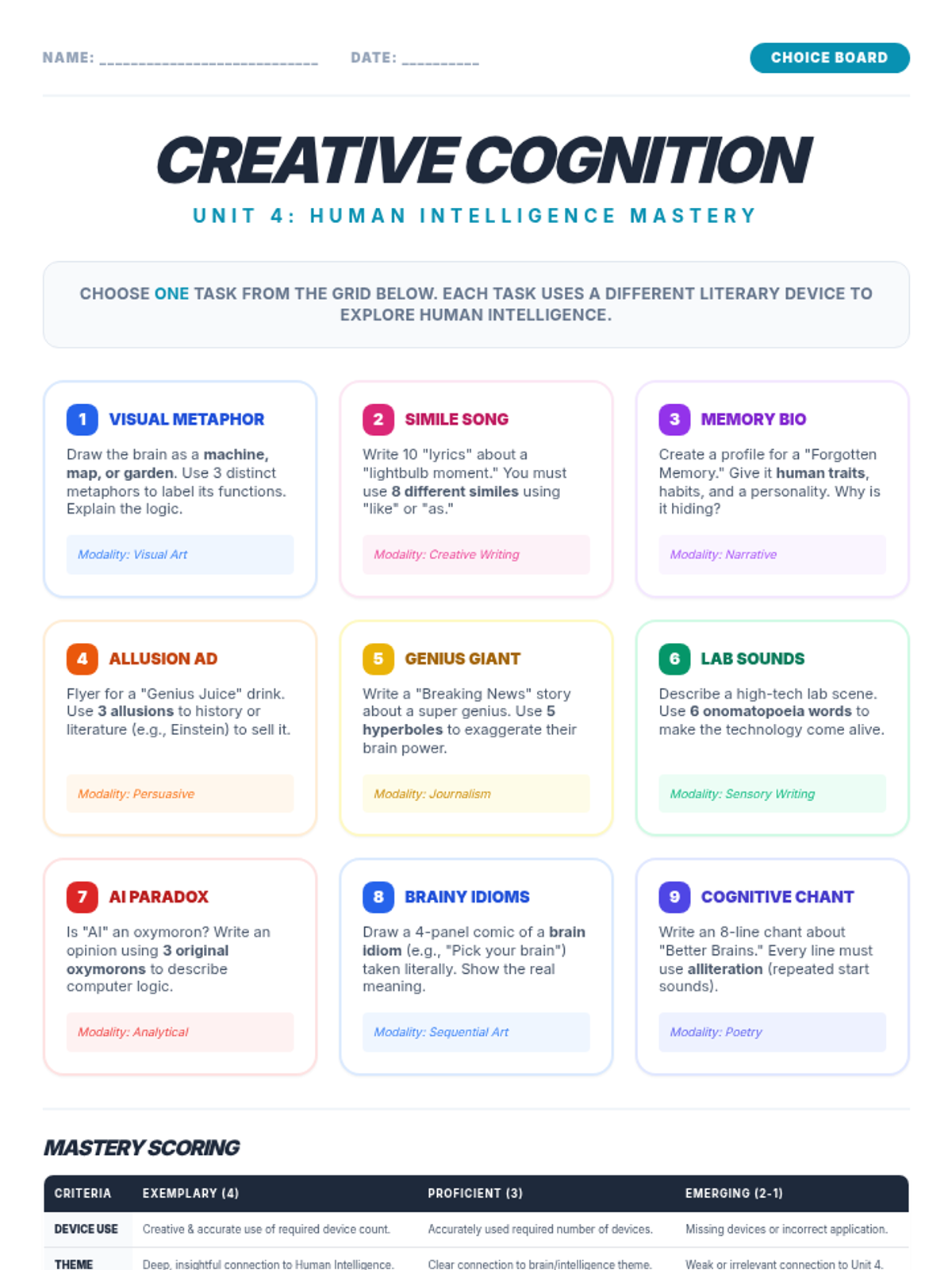
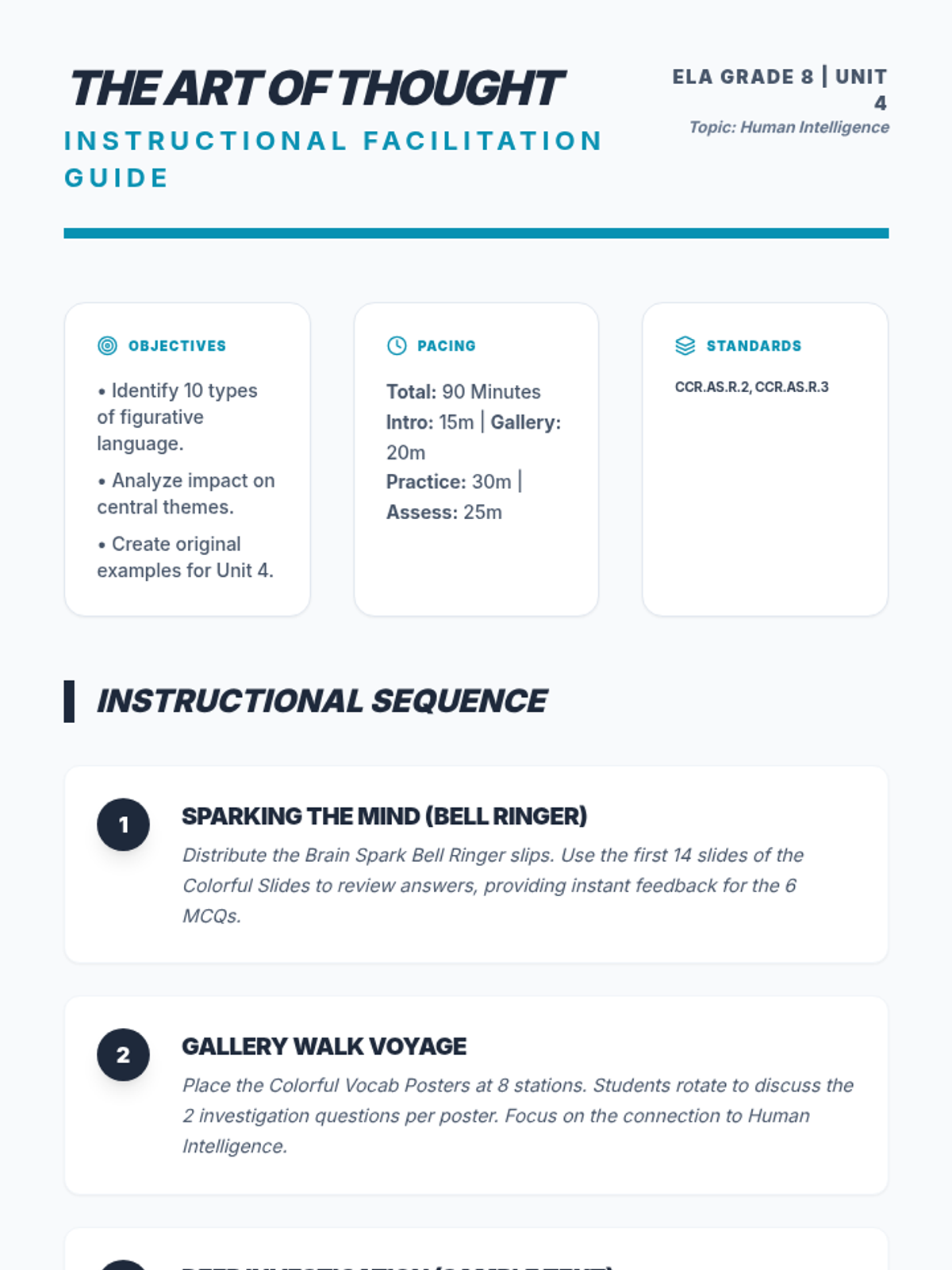
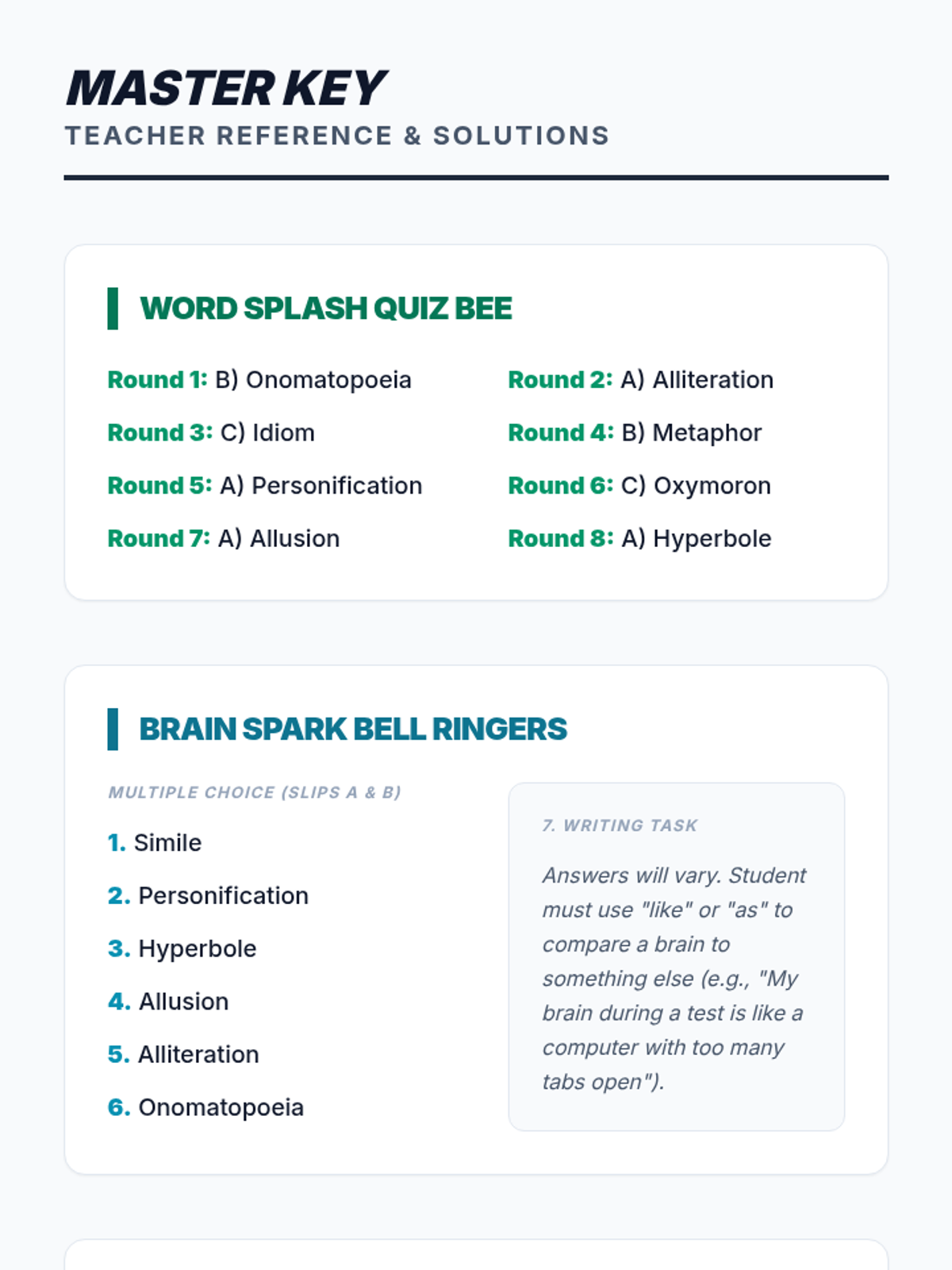
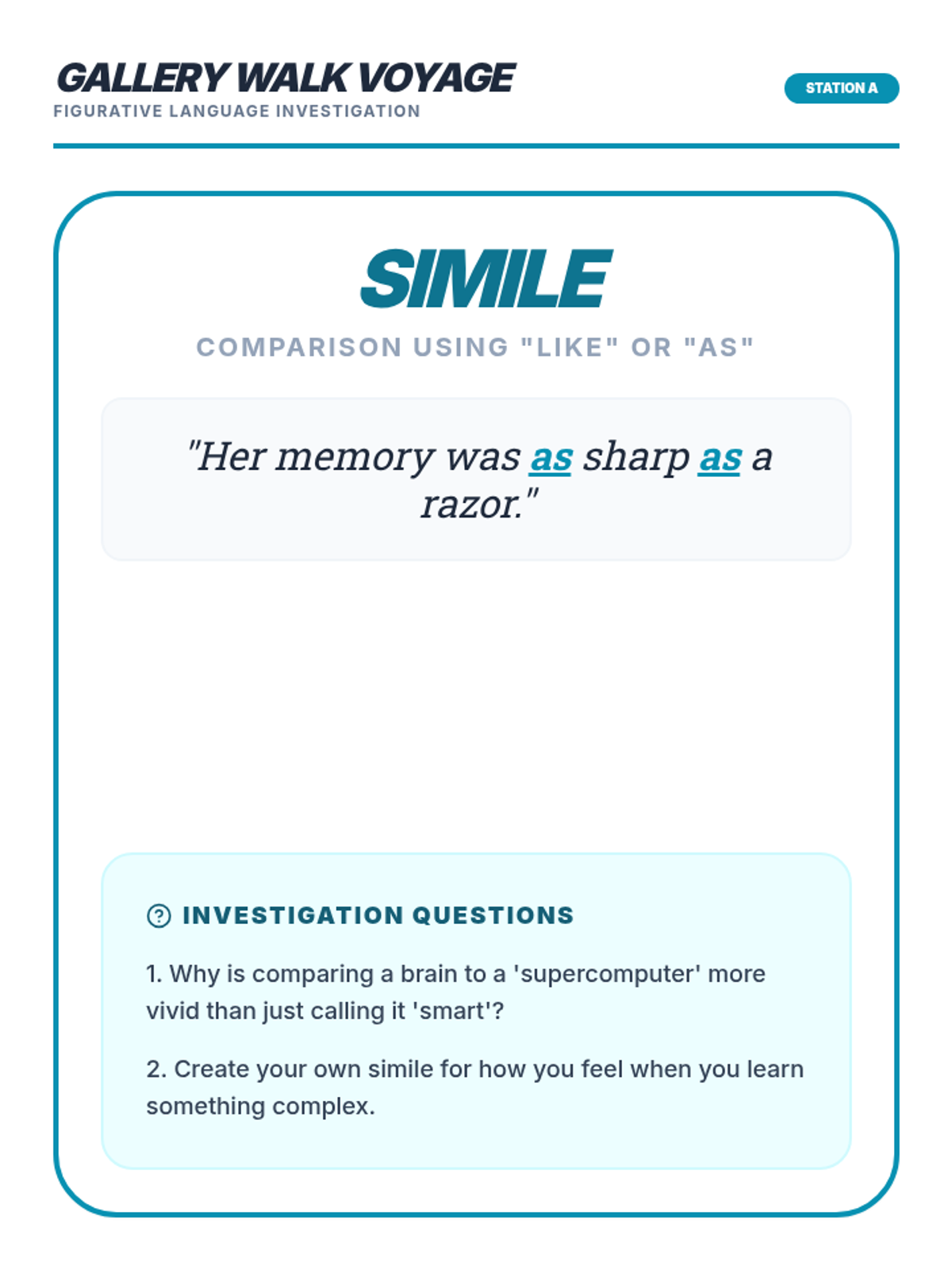
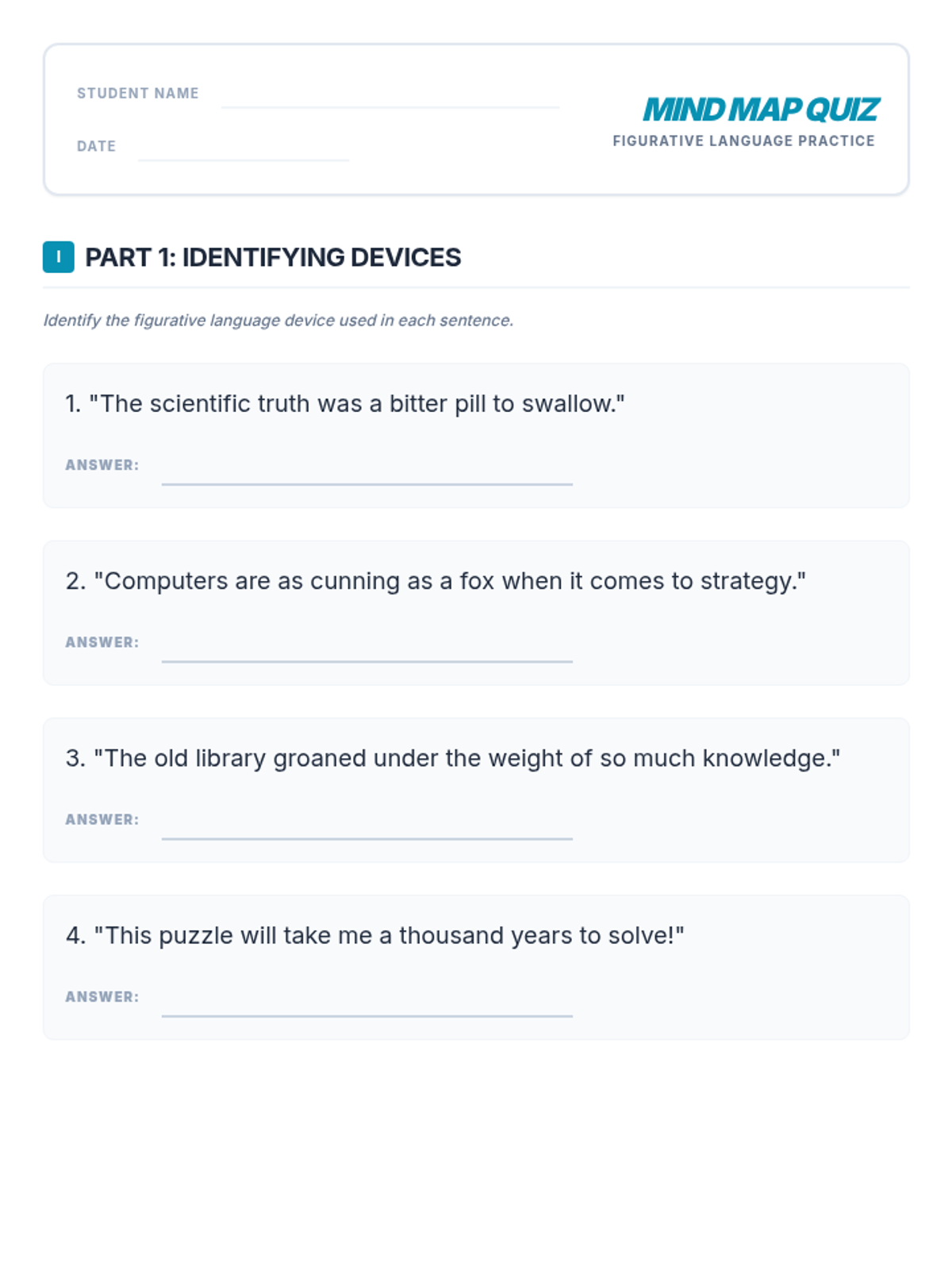
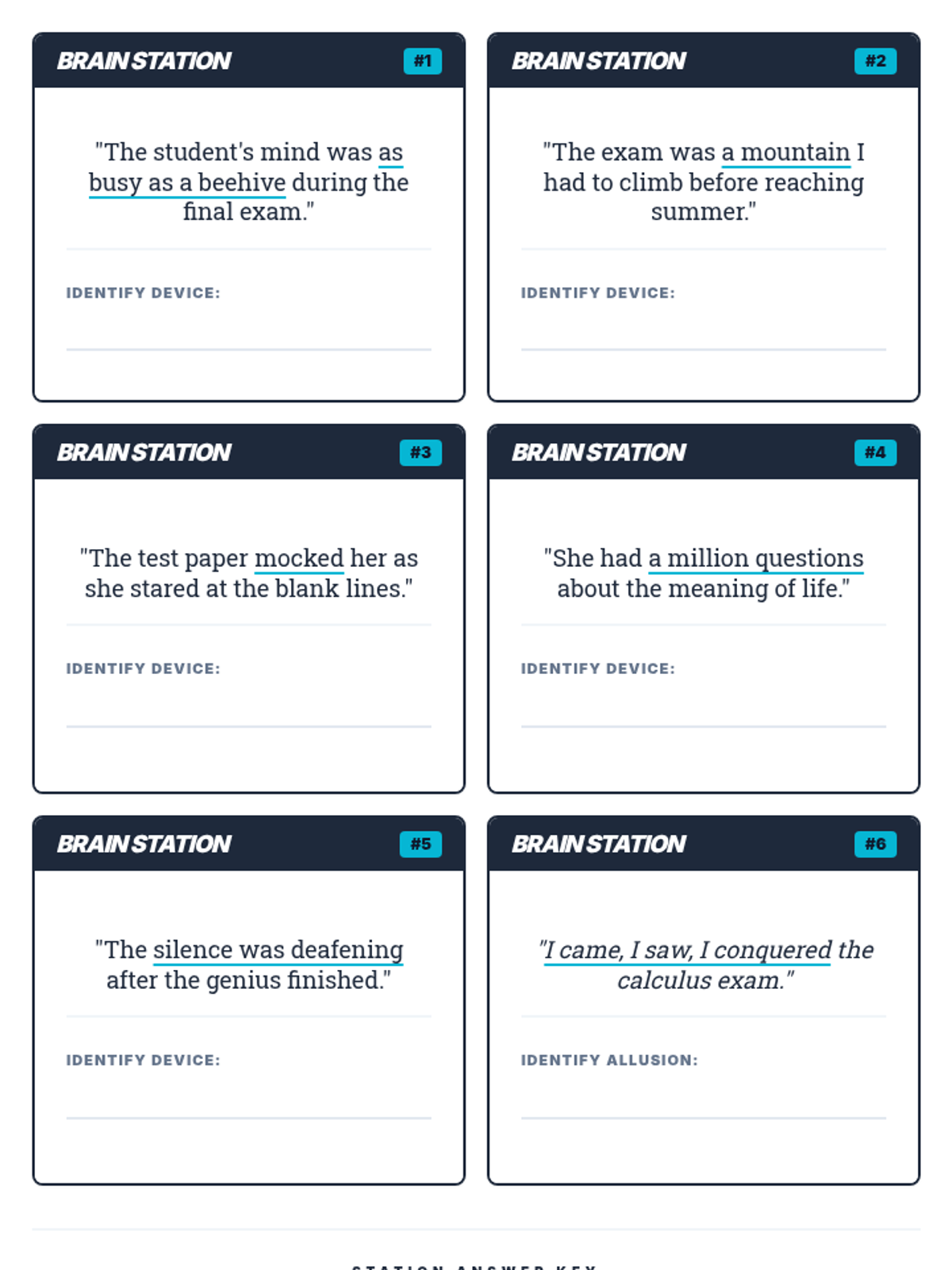
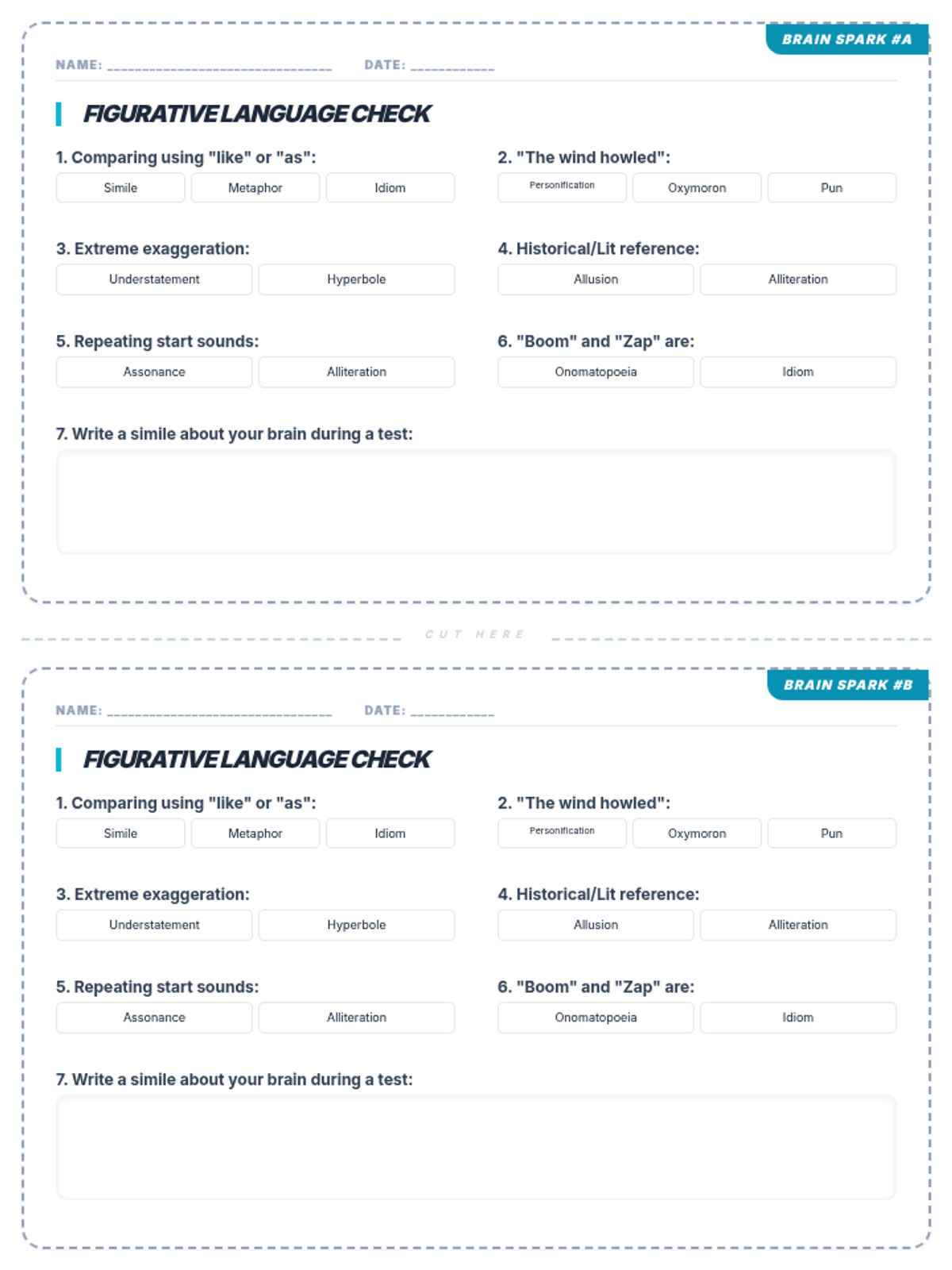
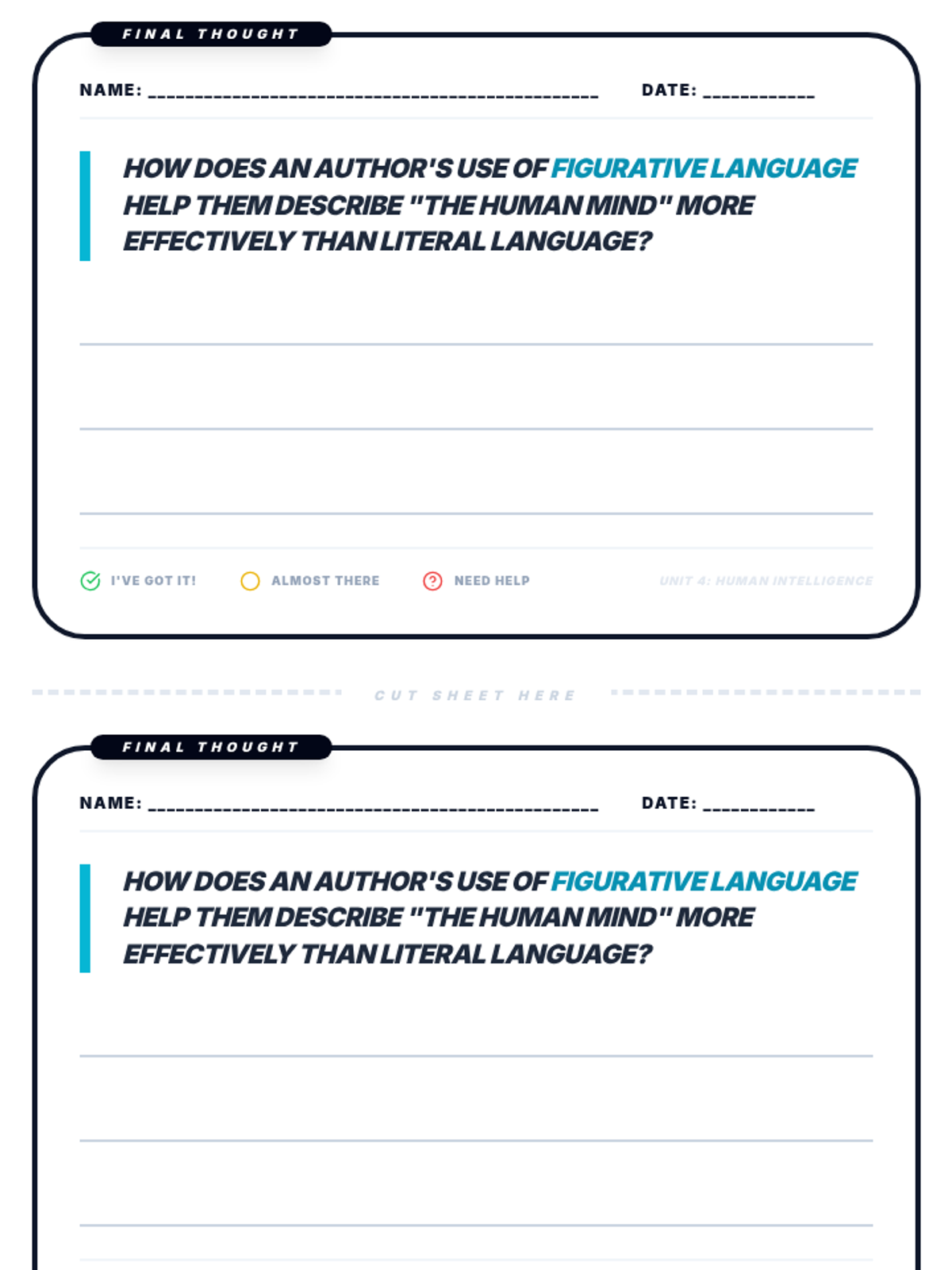
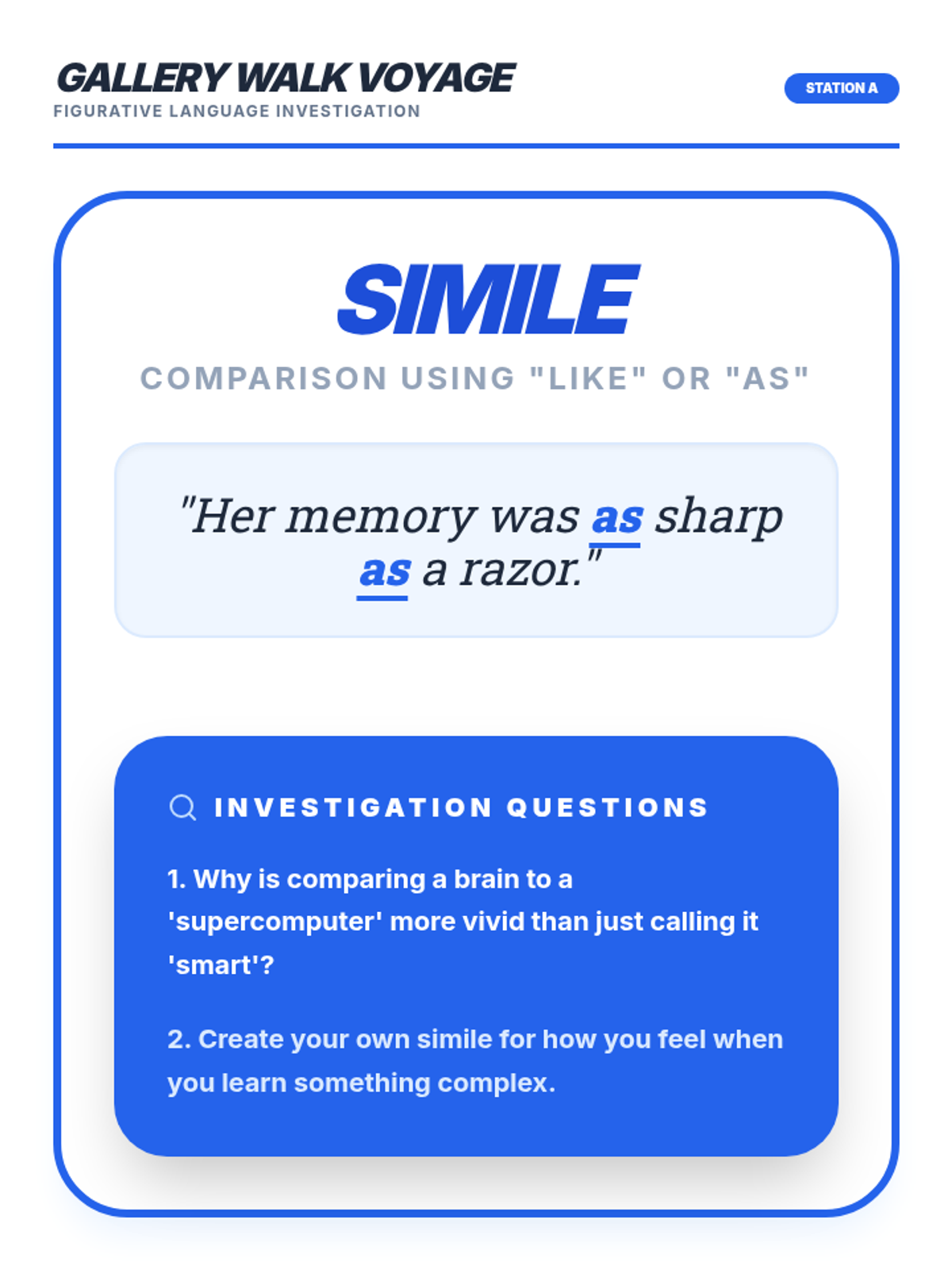
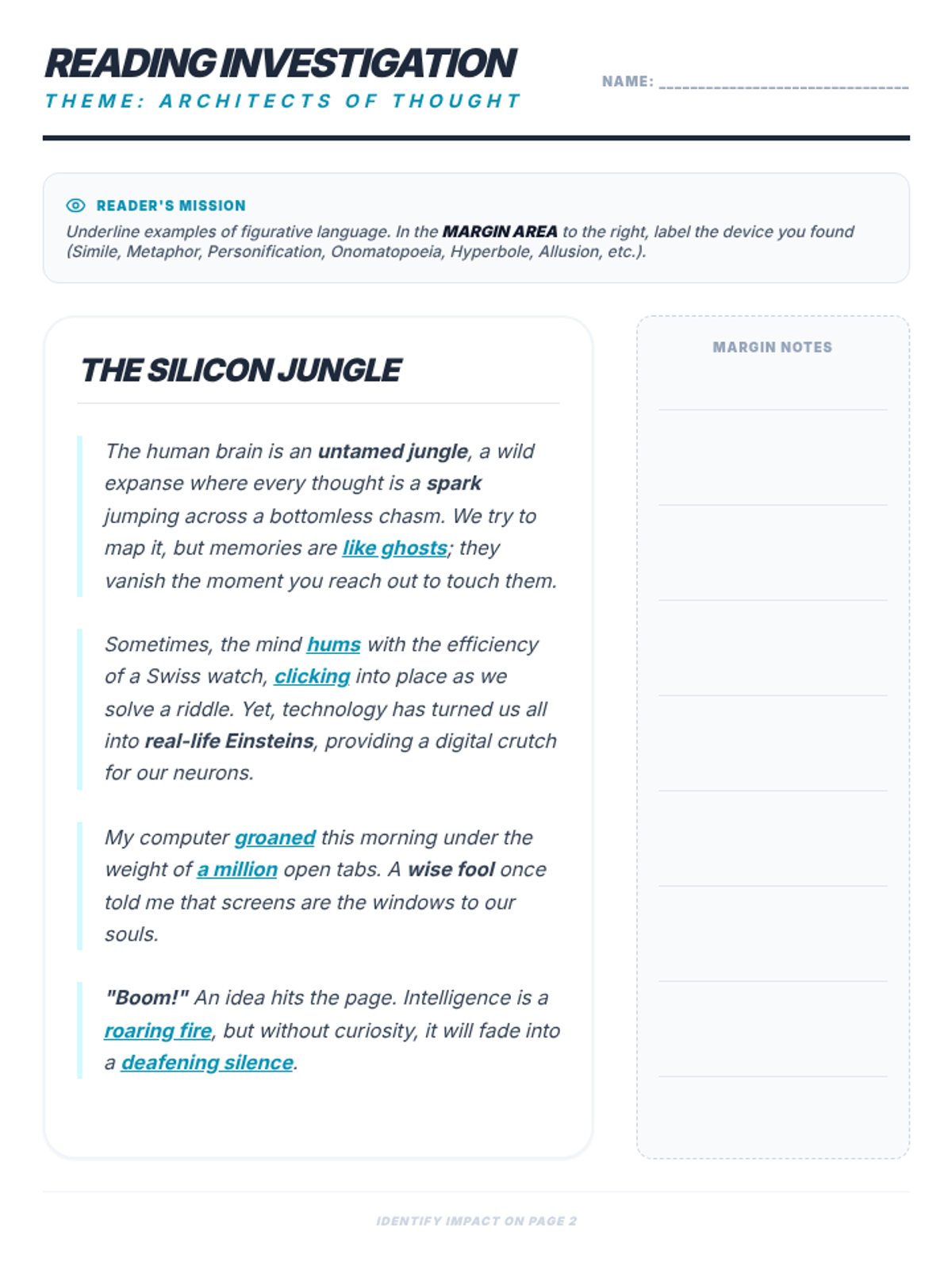
A deep dive into identifying and analyzing figurative language within the context of human intelligence and cognitive development, featuring a comprehensive slide deck and multiple interactive activities.
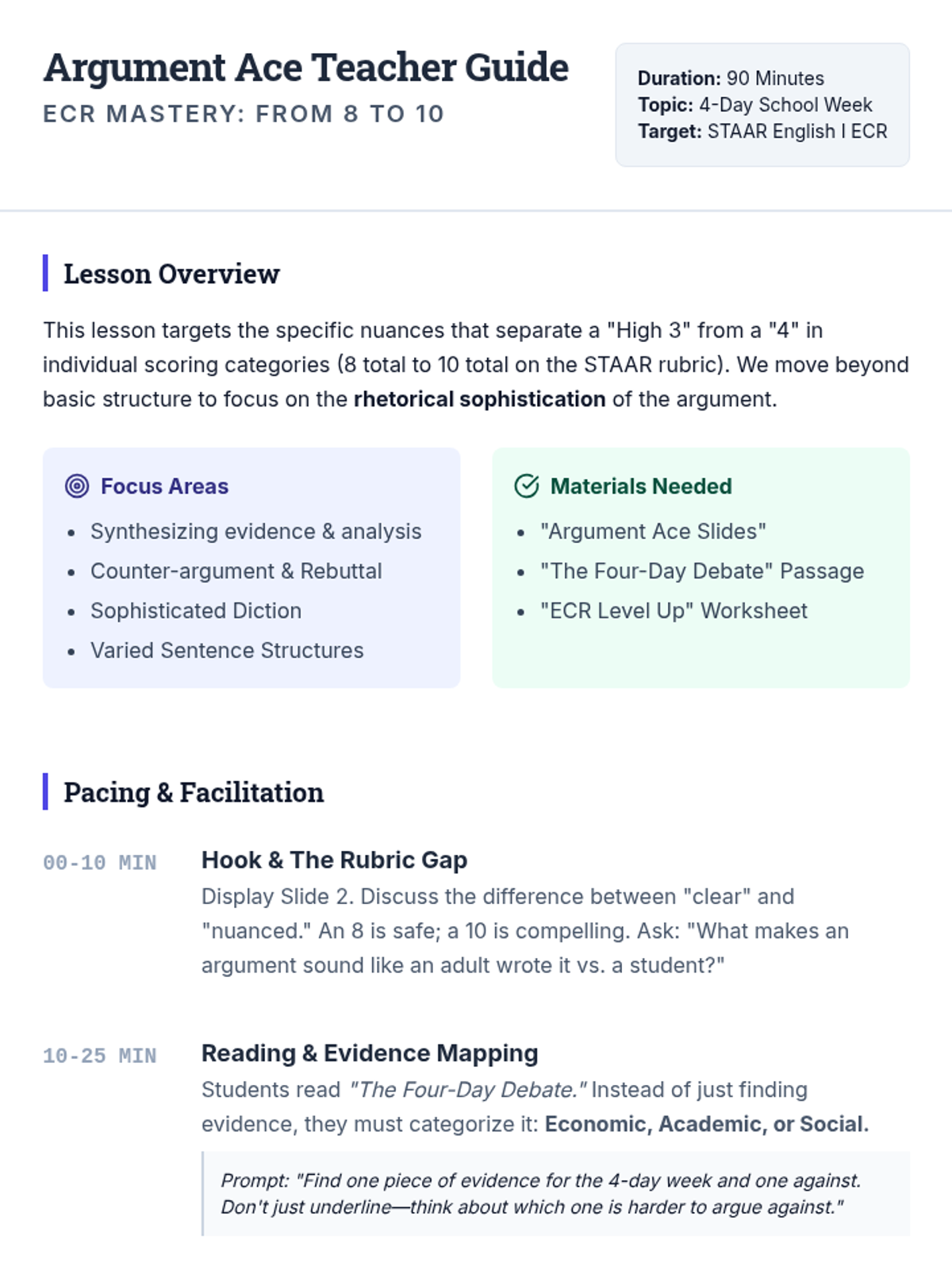
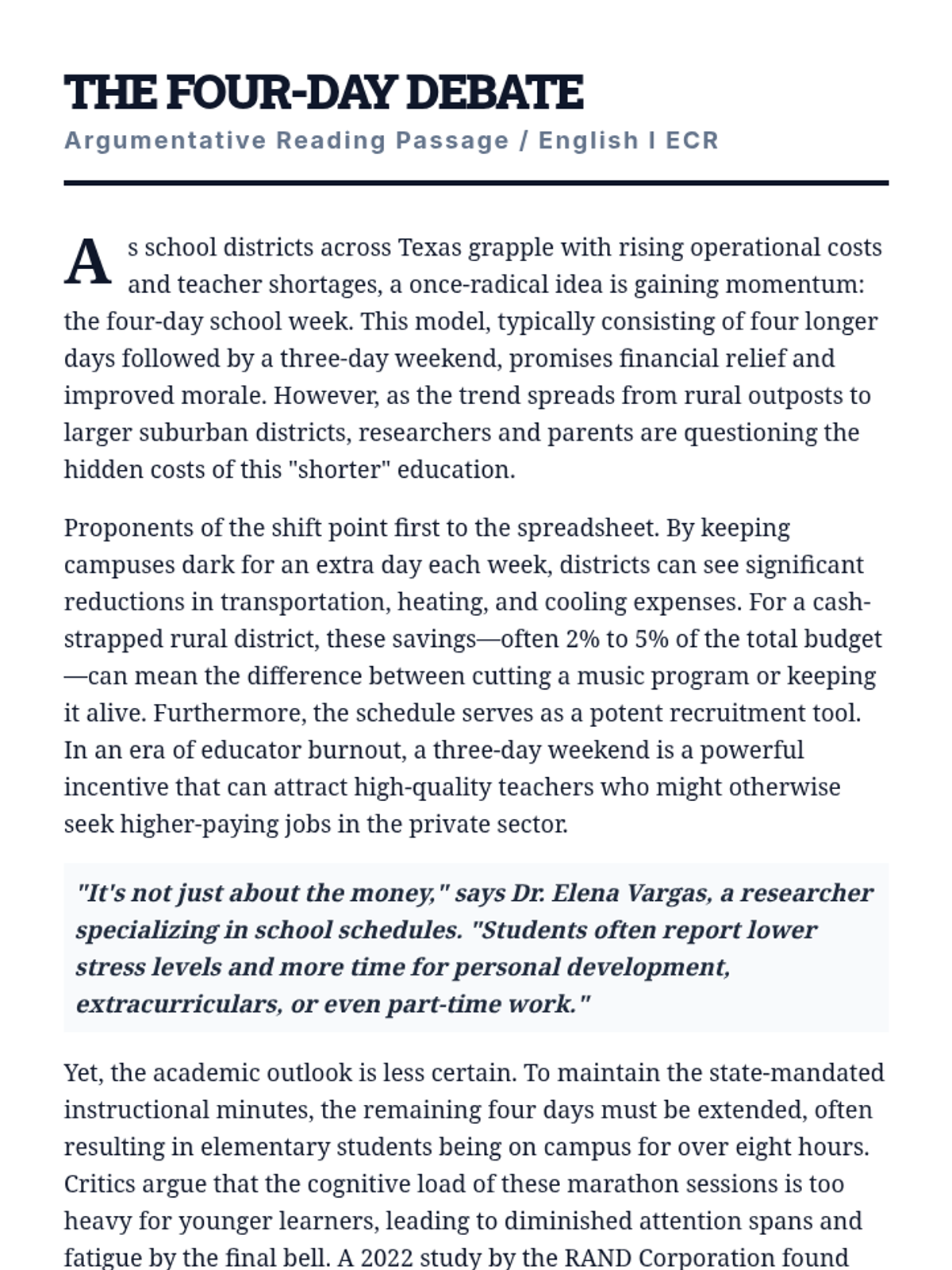
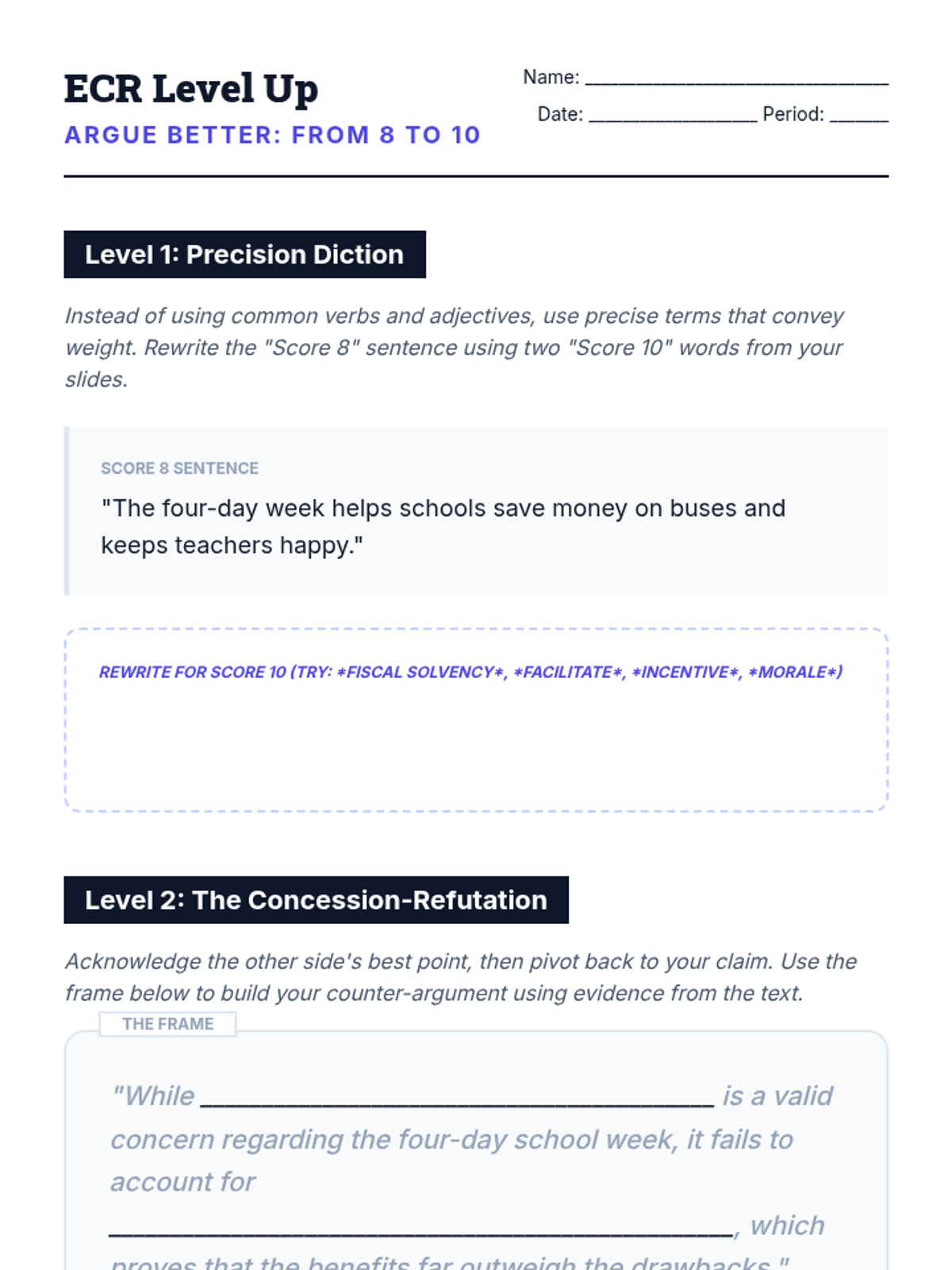
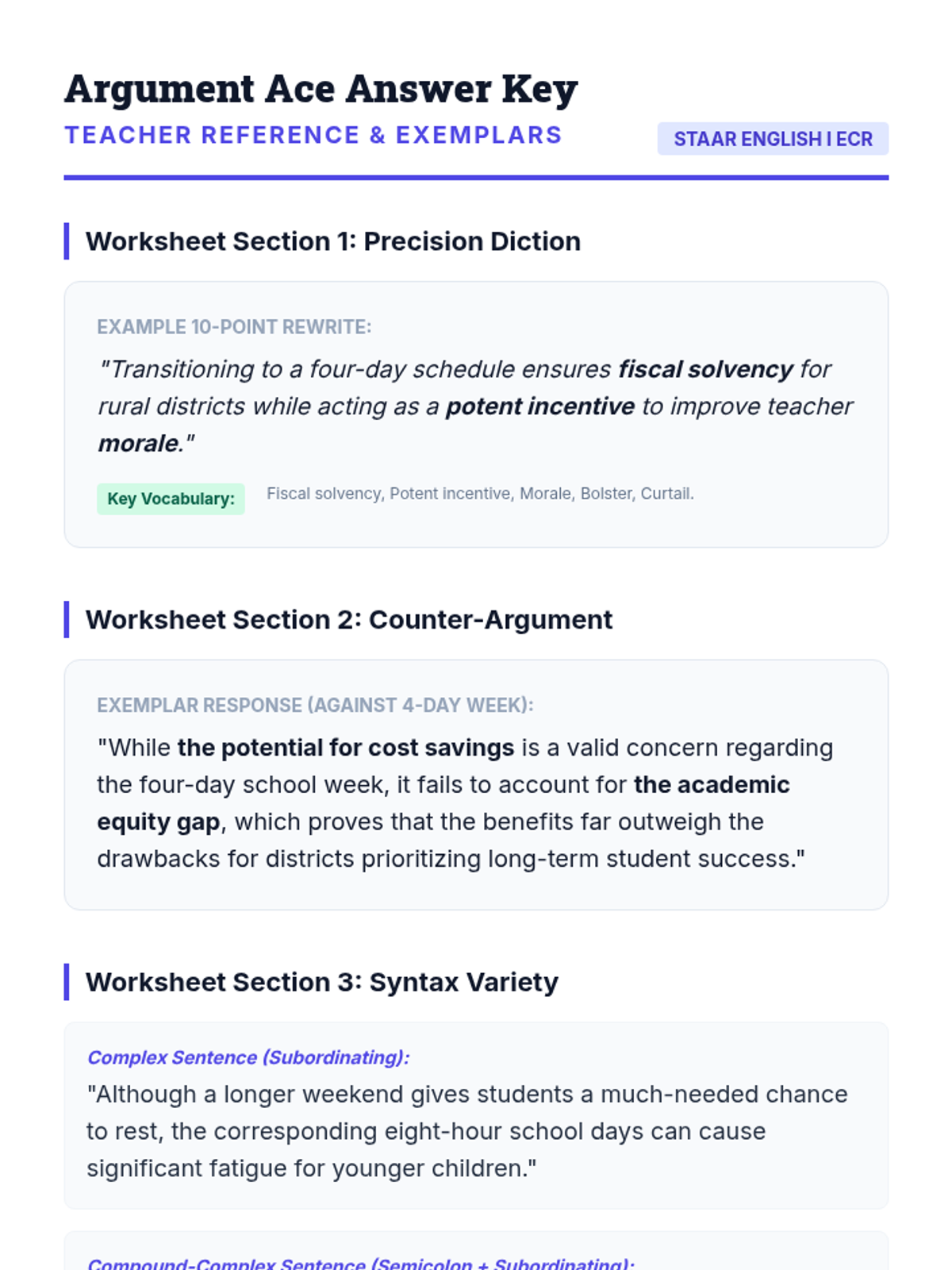
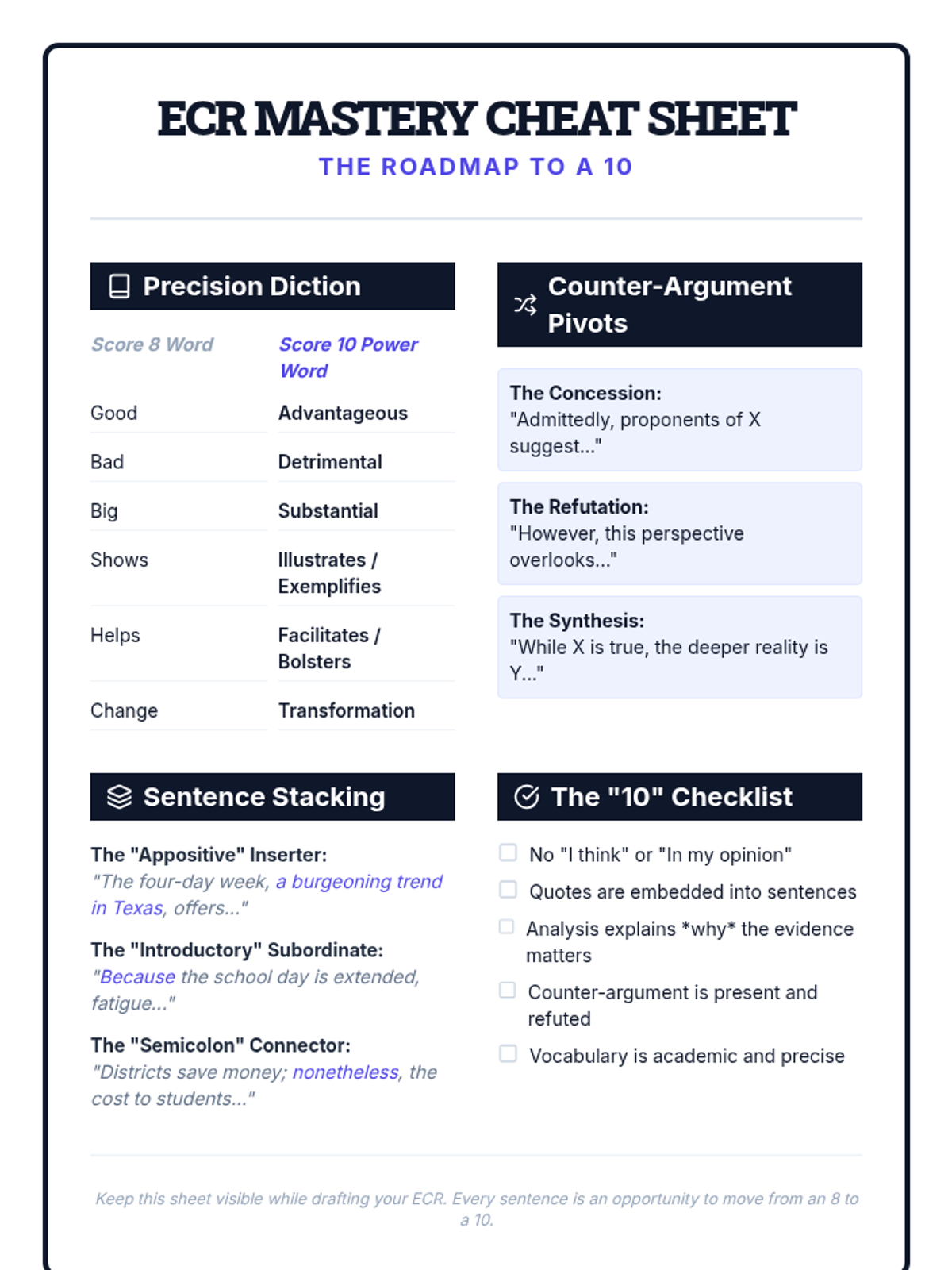
A 90-minute intensive lesson designed to bridge the gap between proficient (8) and advanced (10) scores on the Texas English 1 Argumentative ECR, focusing on counter-arguments, syntax, and sophisticated word choice.
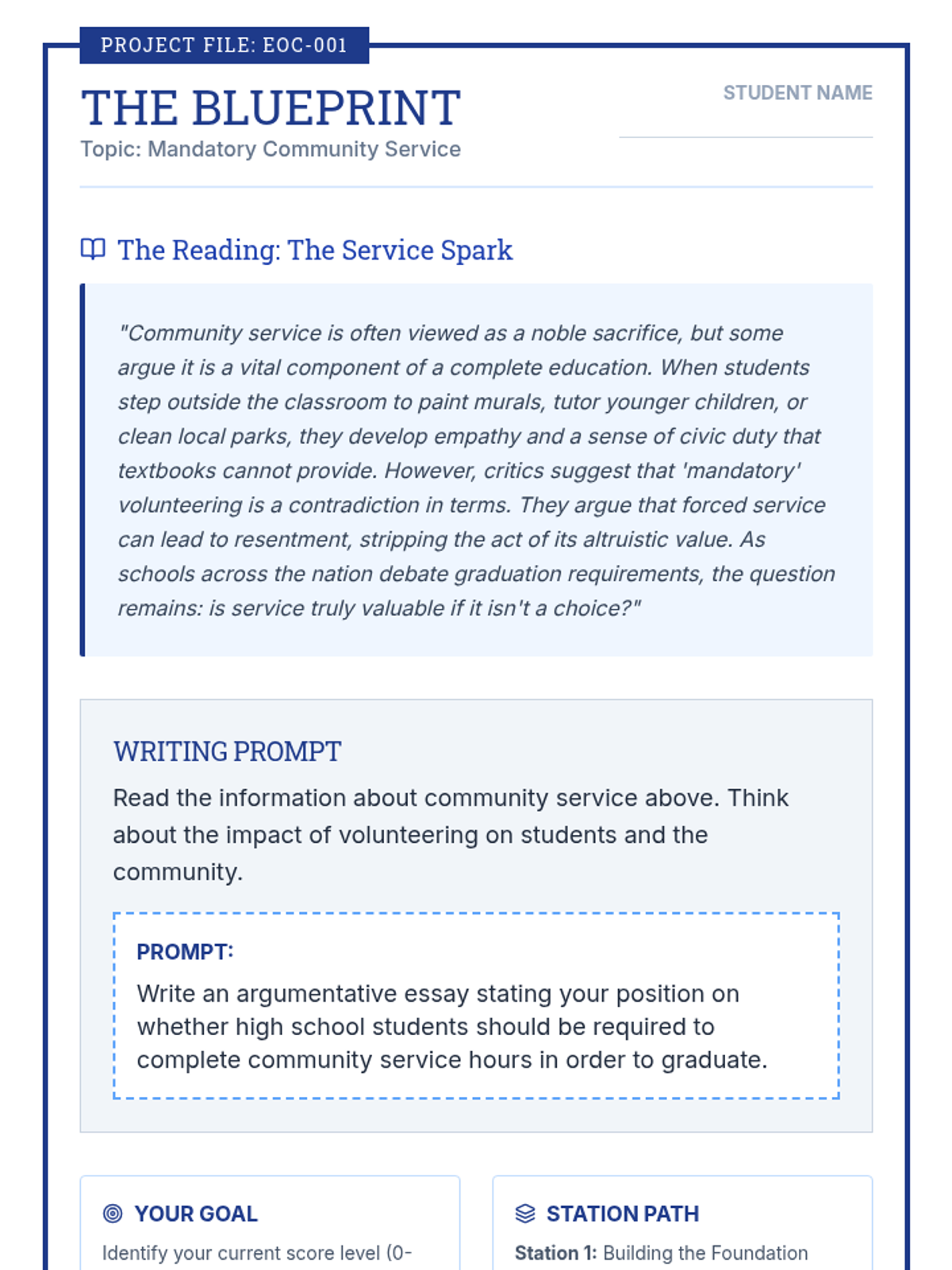
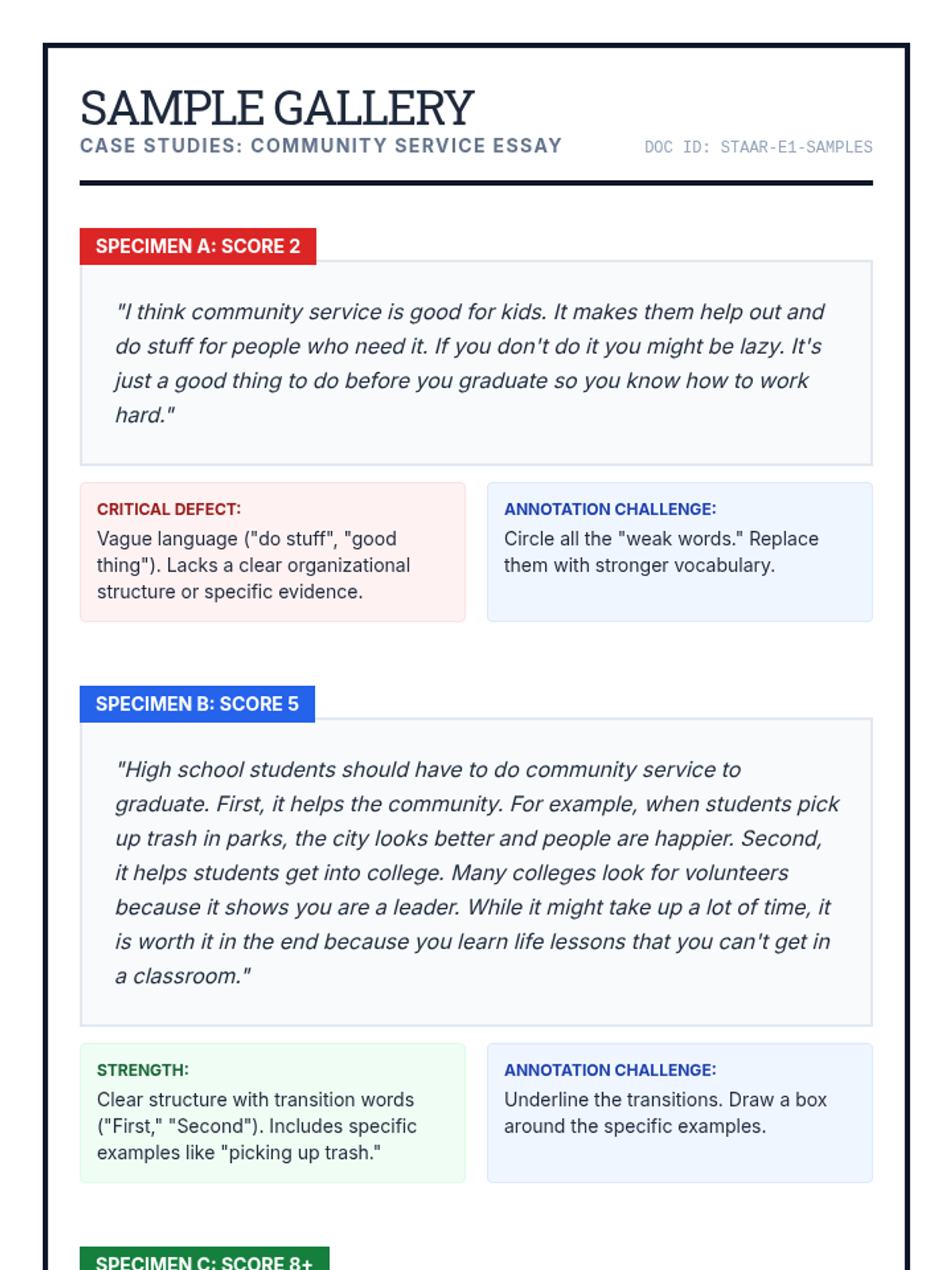
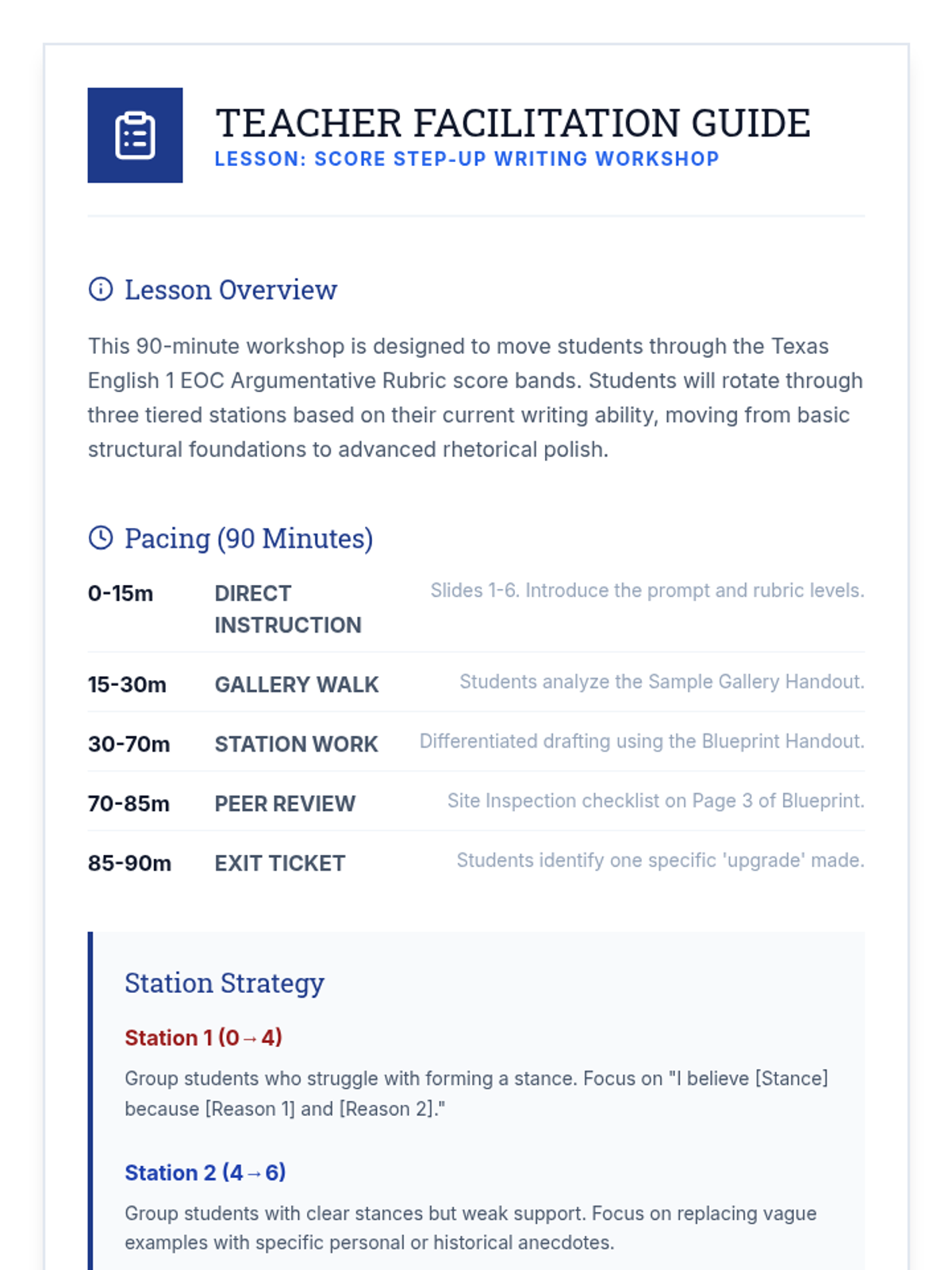
A 90-minute differentiated writing workshop designed to move students up the Texas English 1 EOC argumentative writing rubric through targeted stations. Students analyze samples, use tiered graphic organizers, and engage in peer review centered on the 'Value of Community Service' prompt.
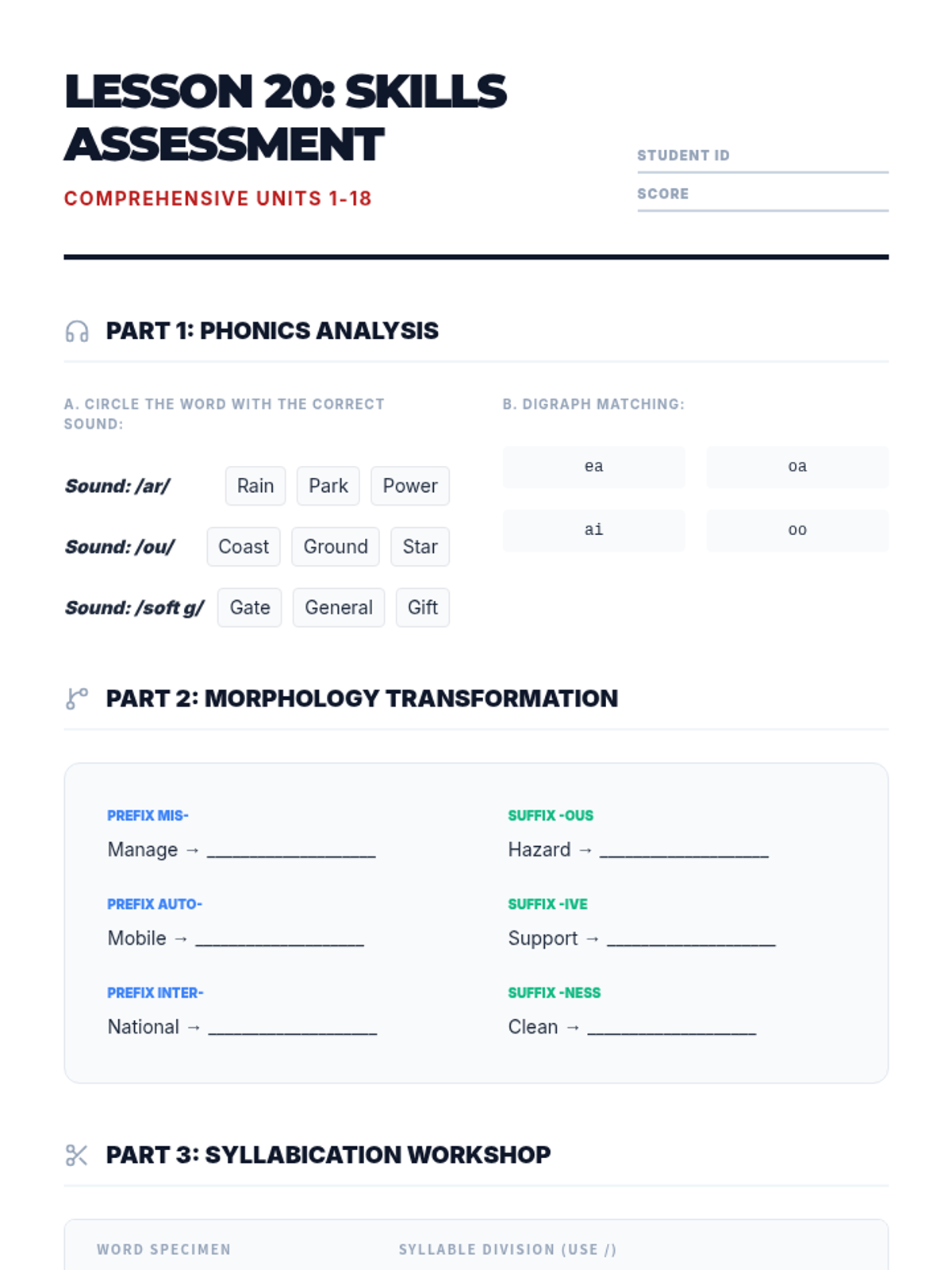
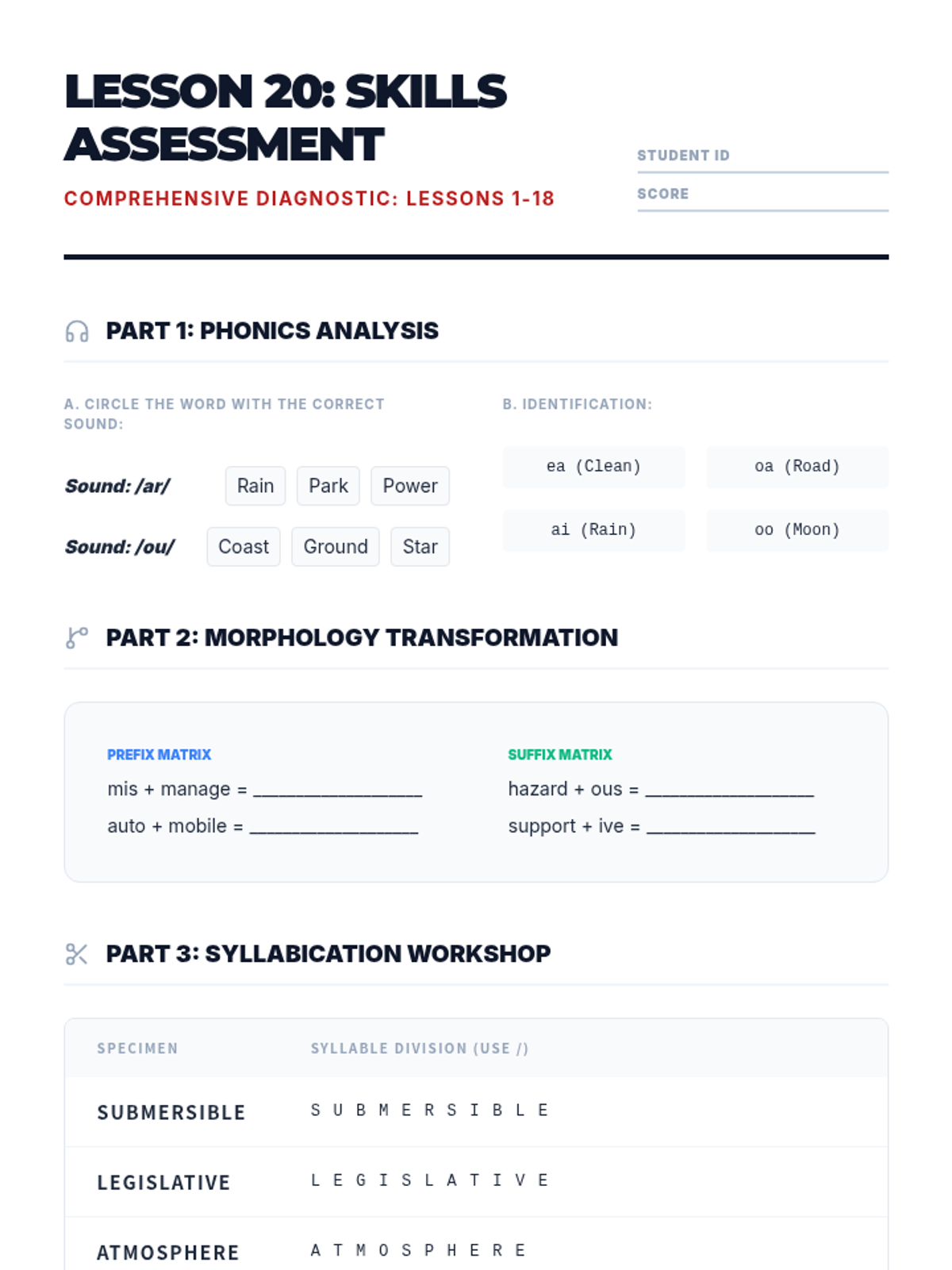
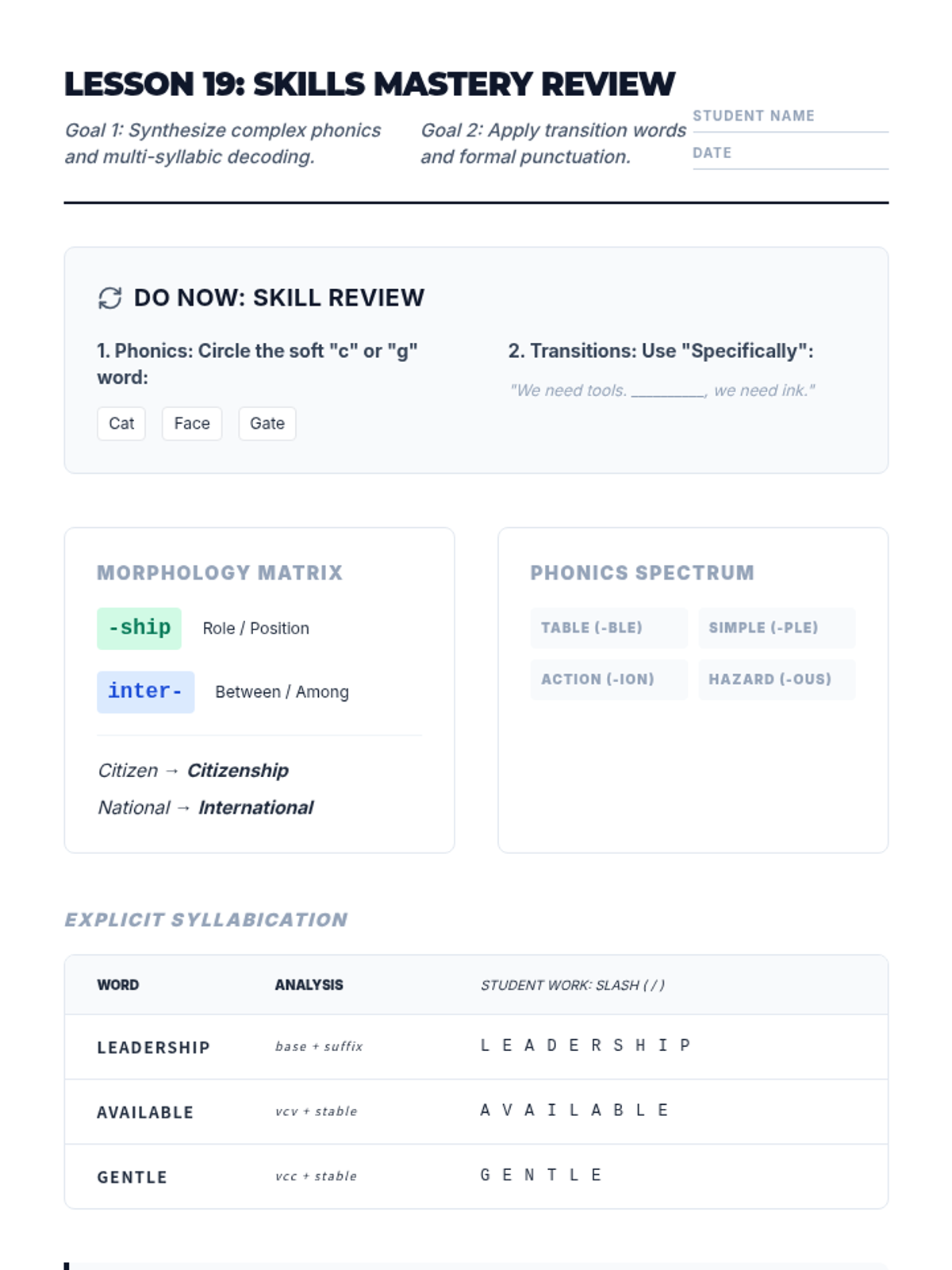
A formal skills assessment covering phonics diagnostics, morphology transformations, syllabication, Tier 3 vocabulary matching, and logic transitions.
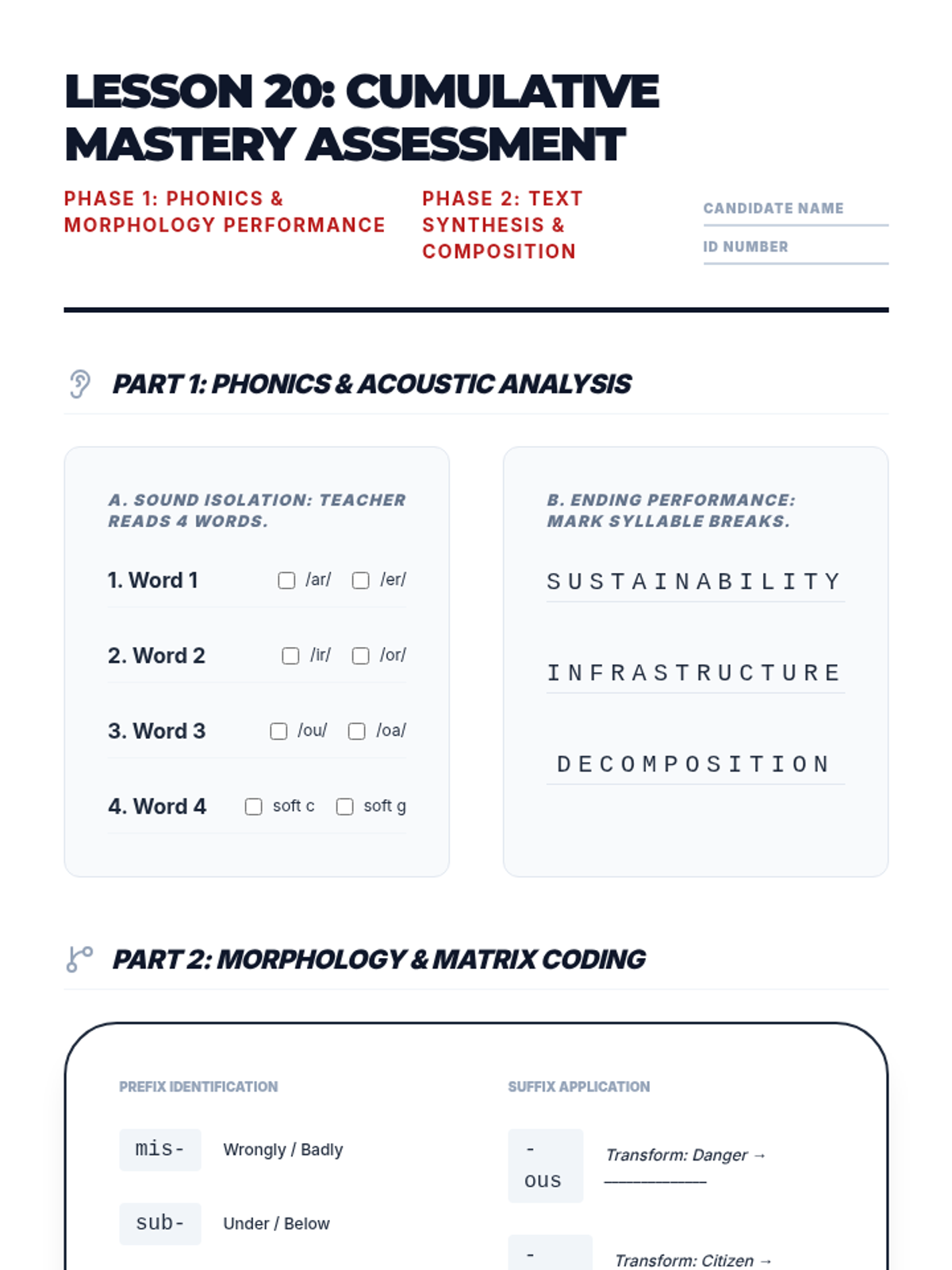
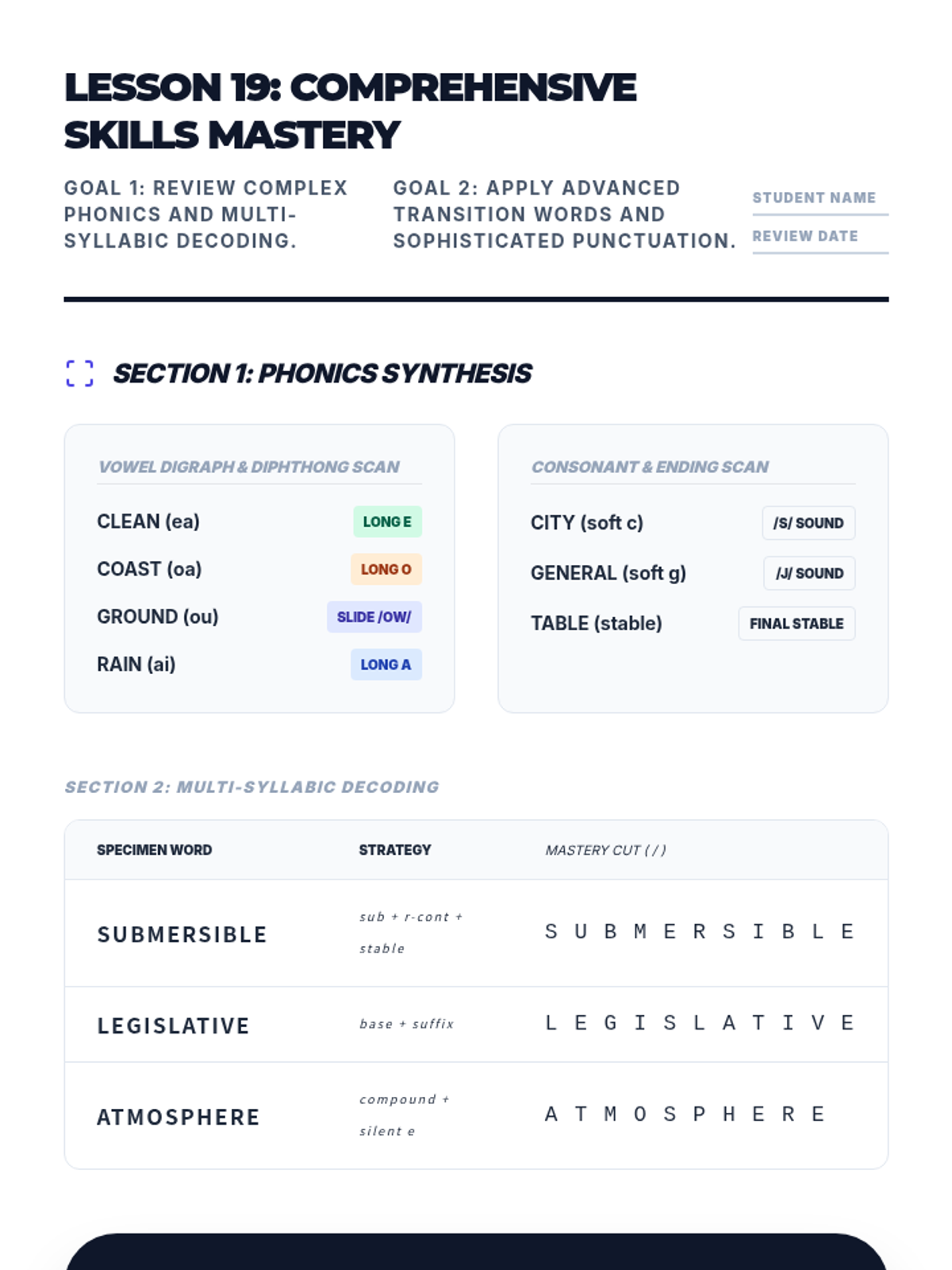
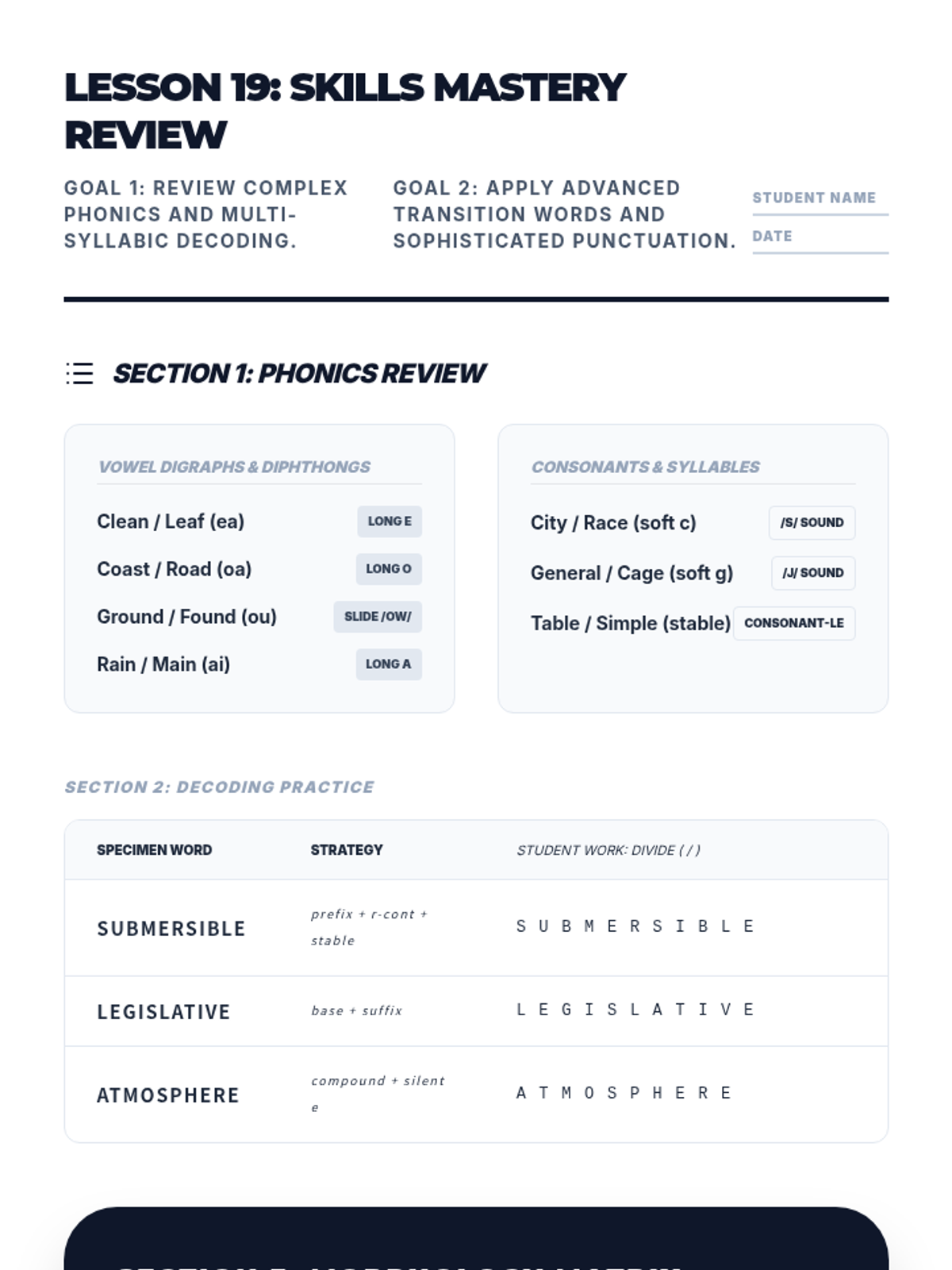
A comprehensive cumulative review of phonics, morphology, vocabulary, and grammar skills taught in Lessons 1-18. Focuses on mechanical mastery and academic readiness.
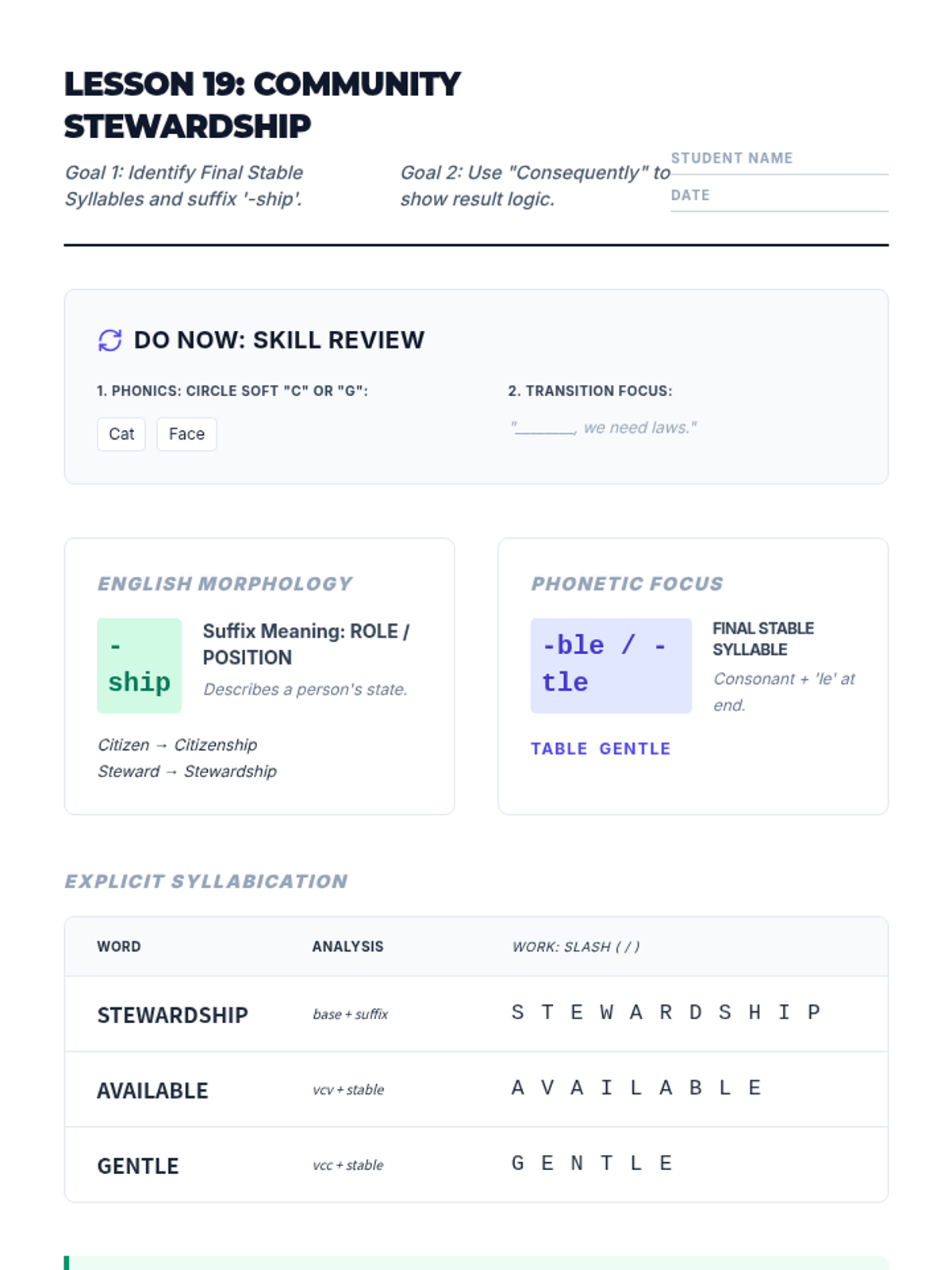
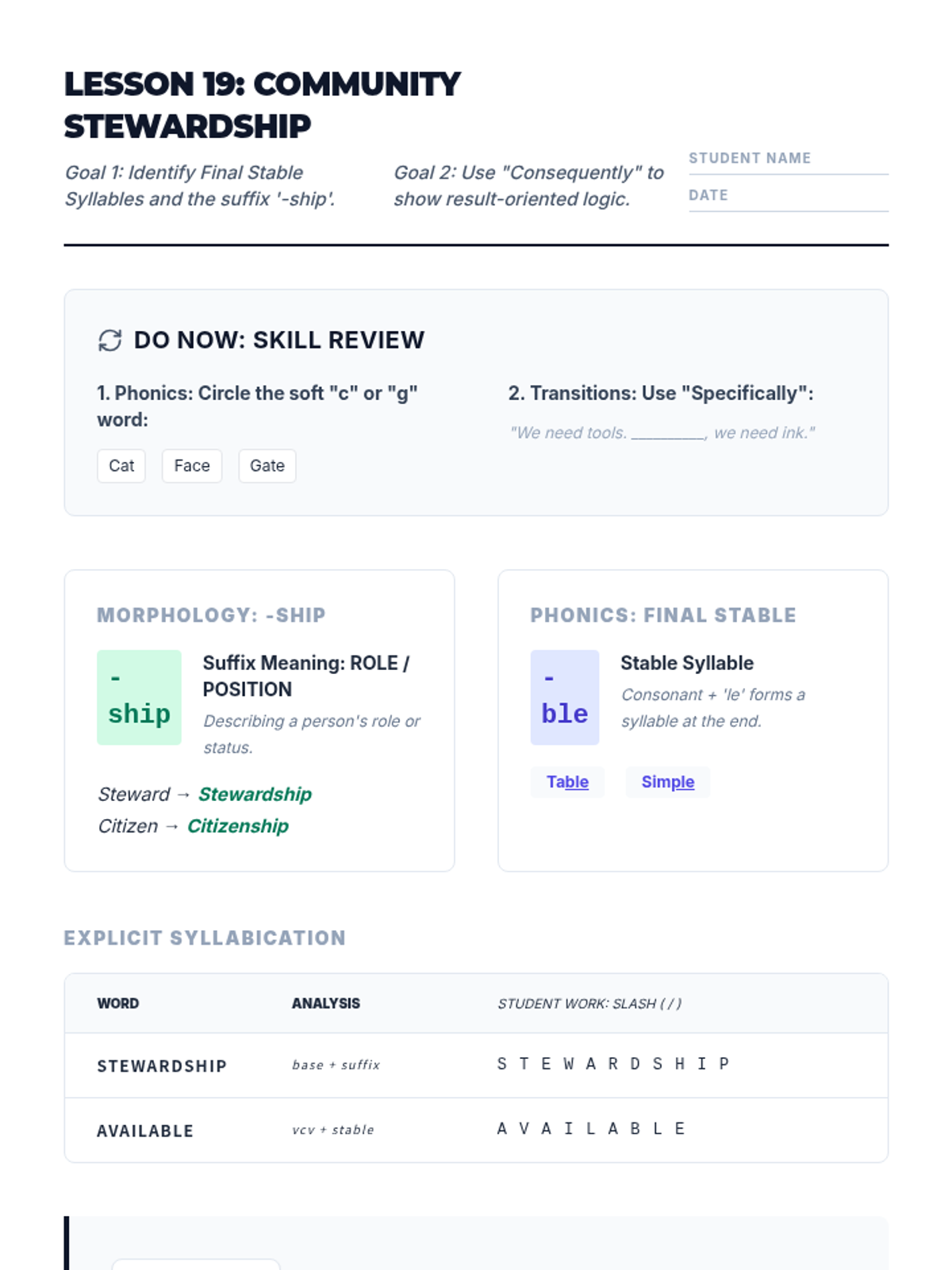
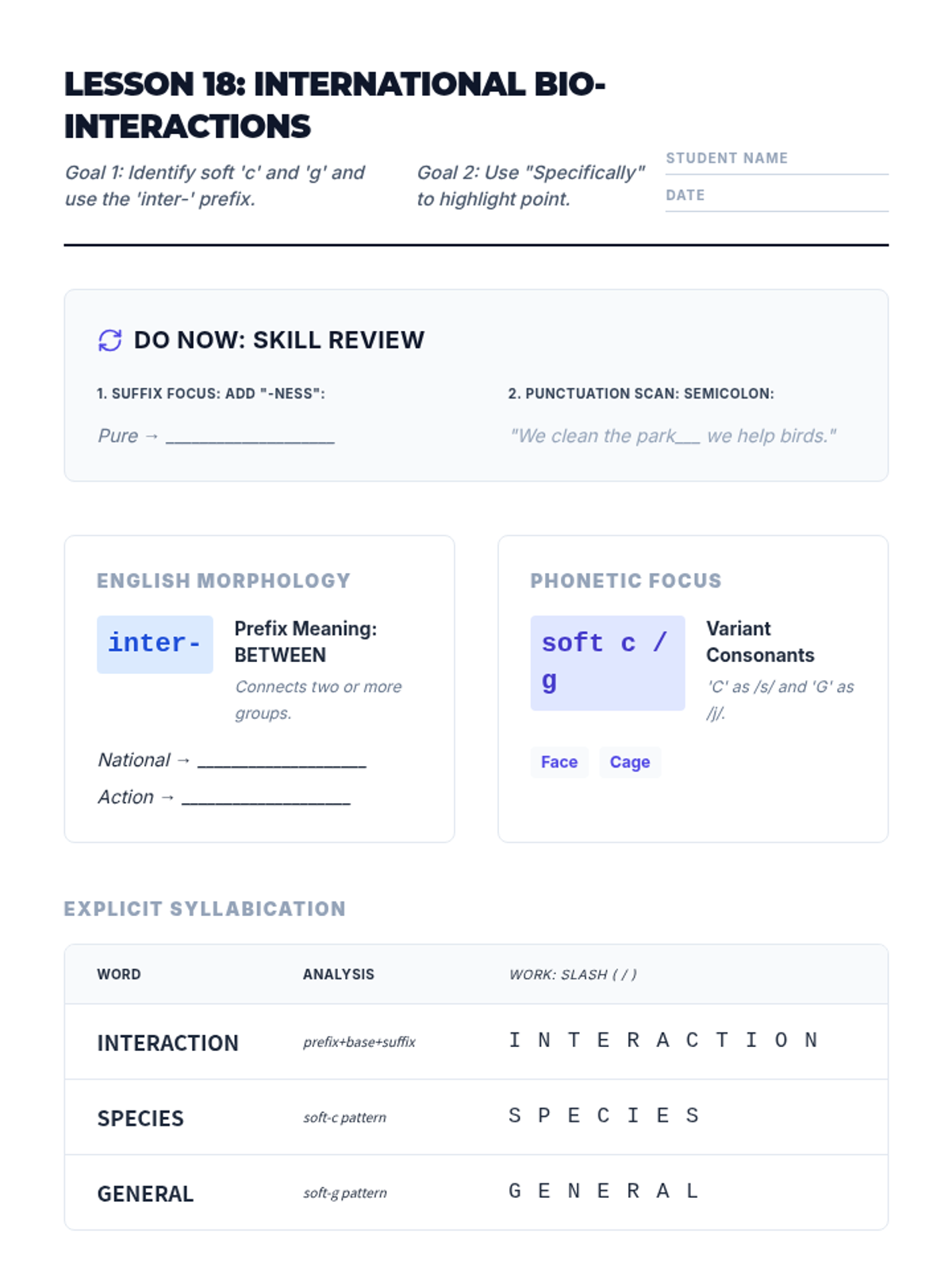
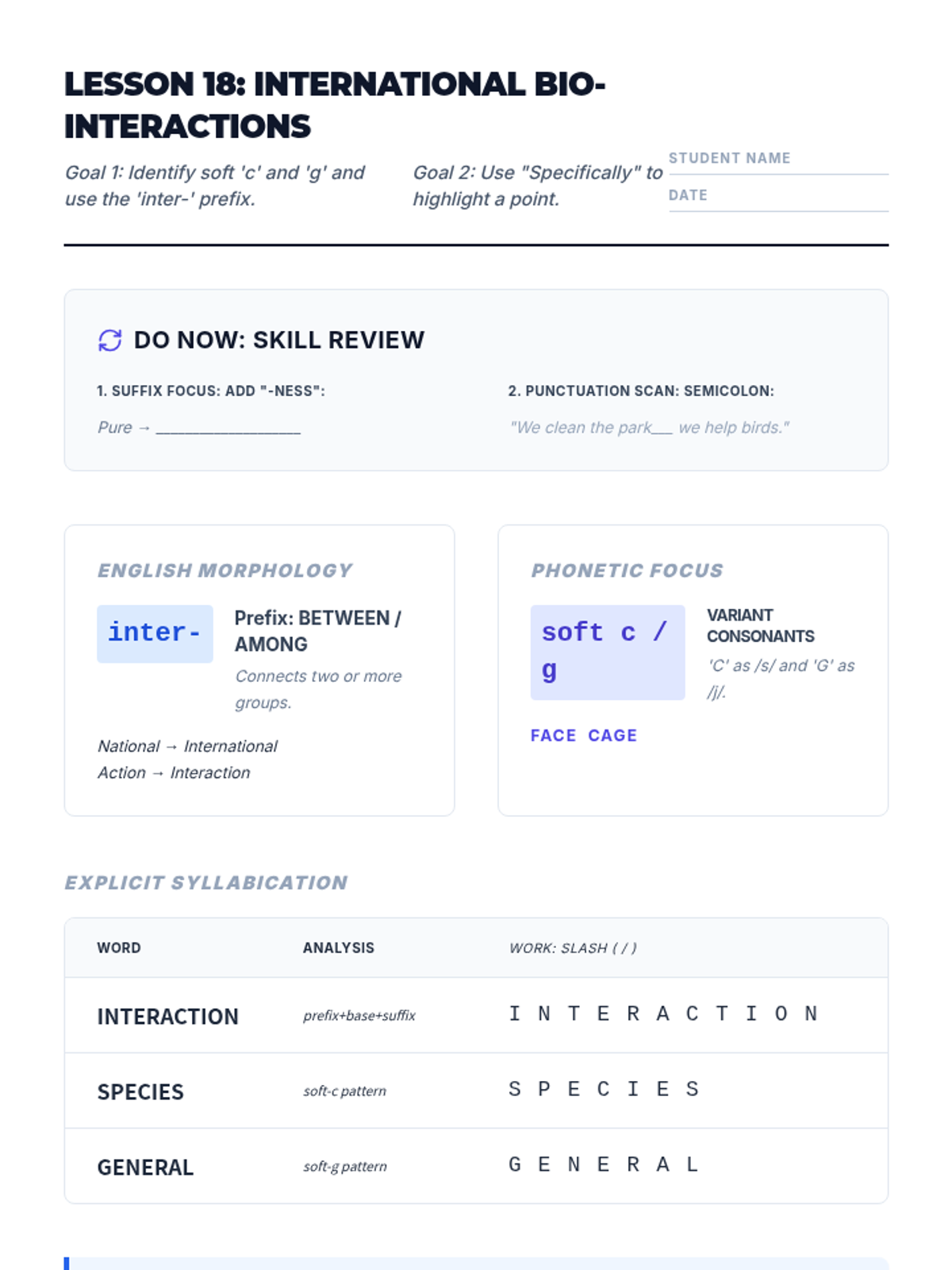
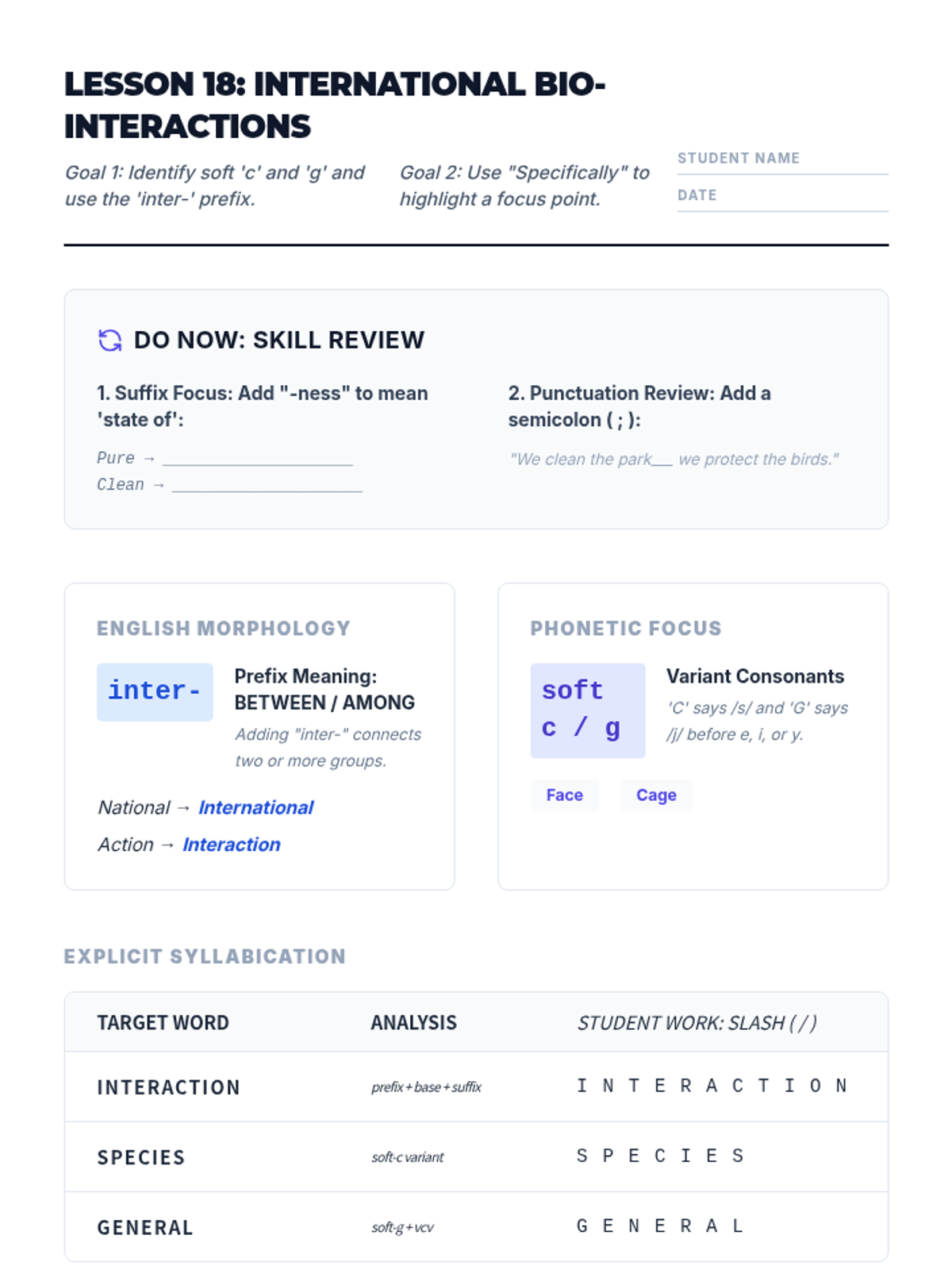
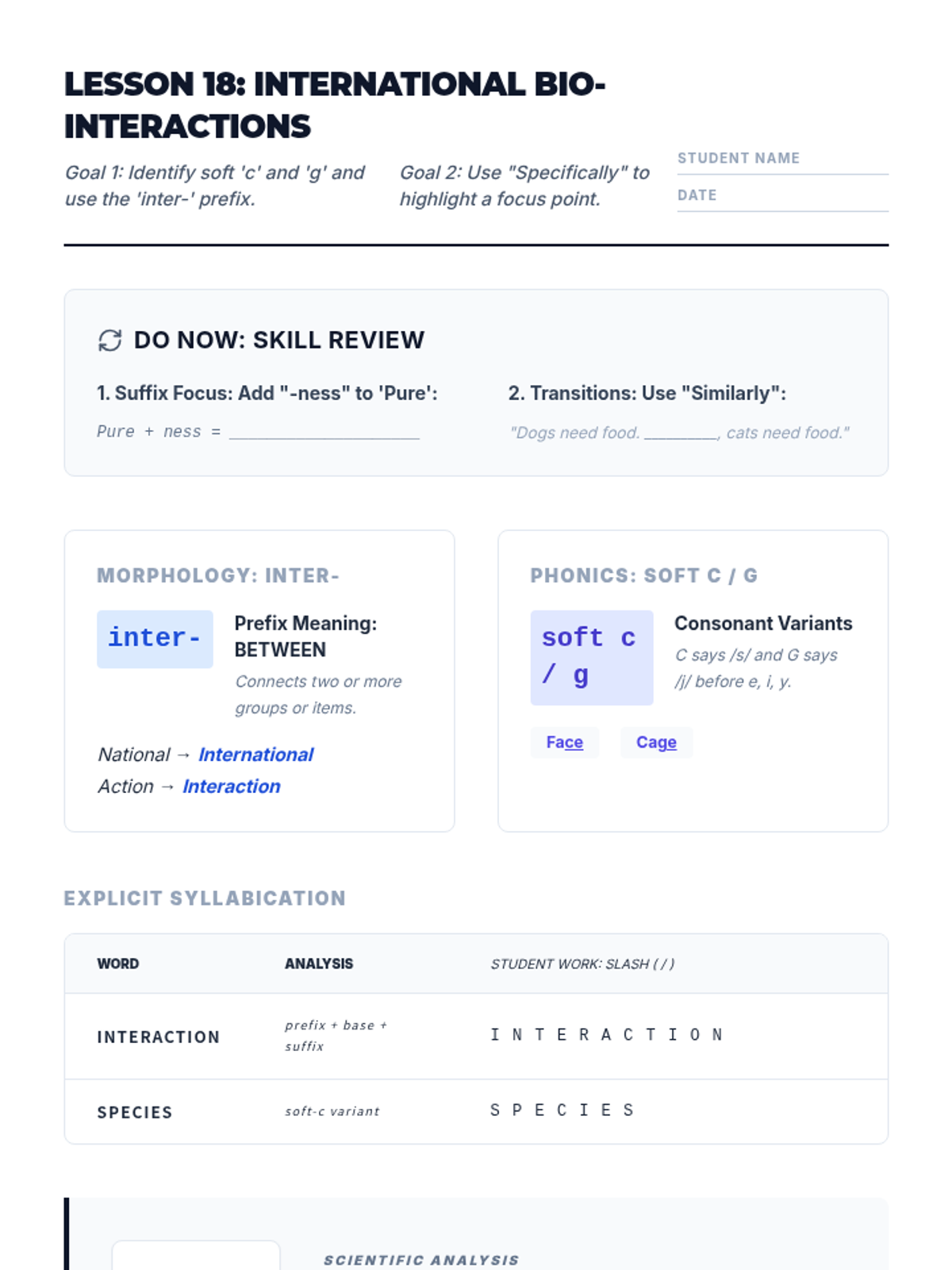
Introducing soft 'c' and 'g' sounds and the prefix 'inter-'. Theme: International interaction for species protection.
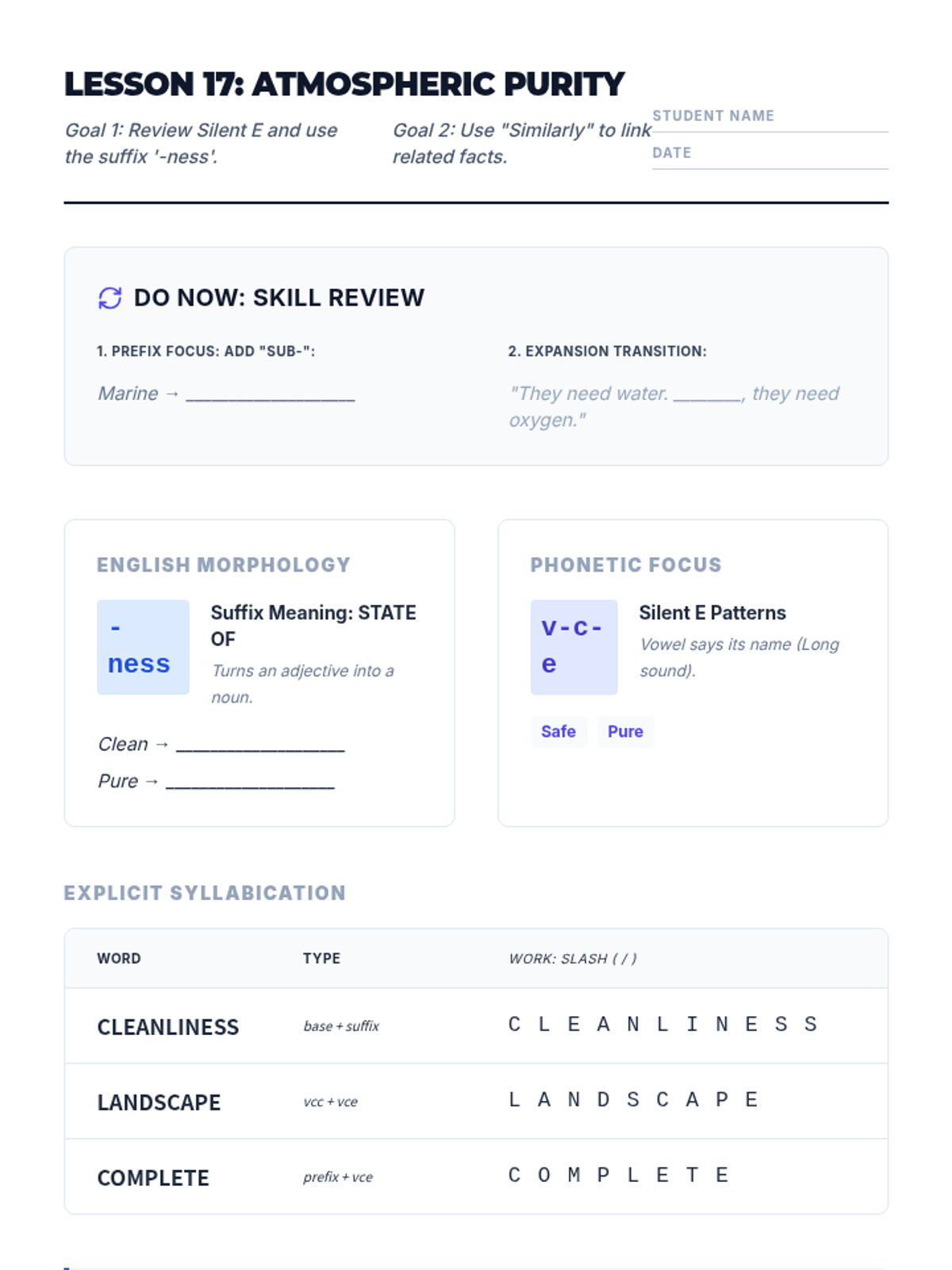
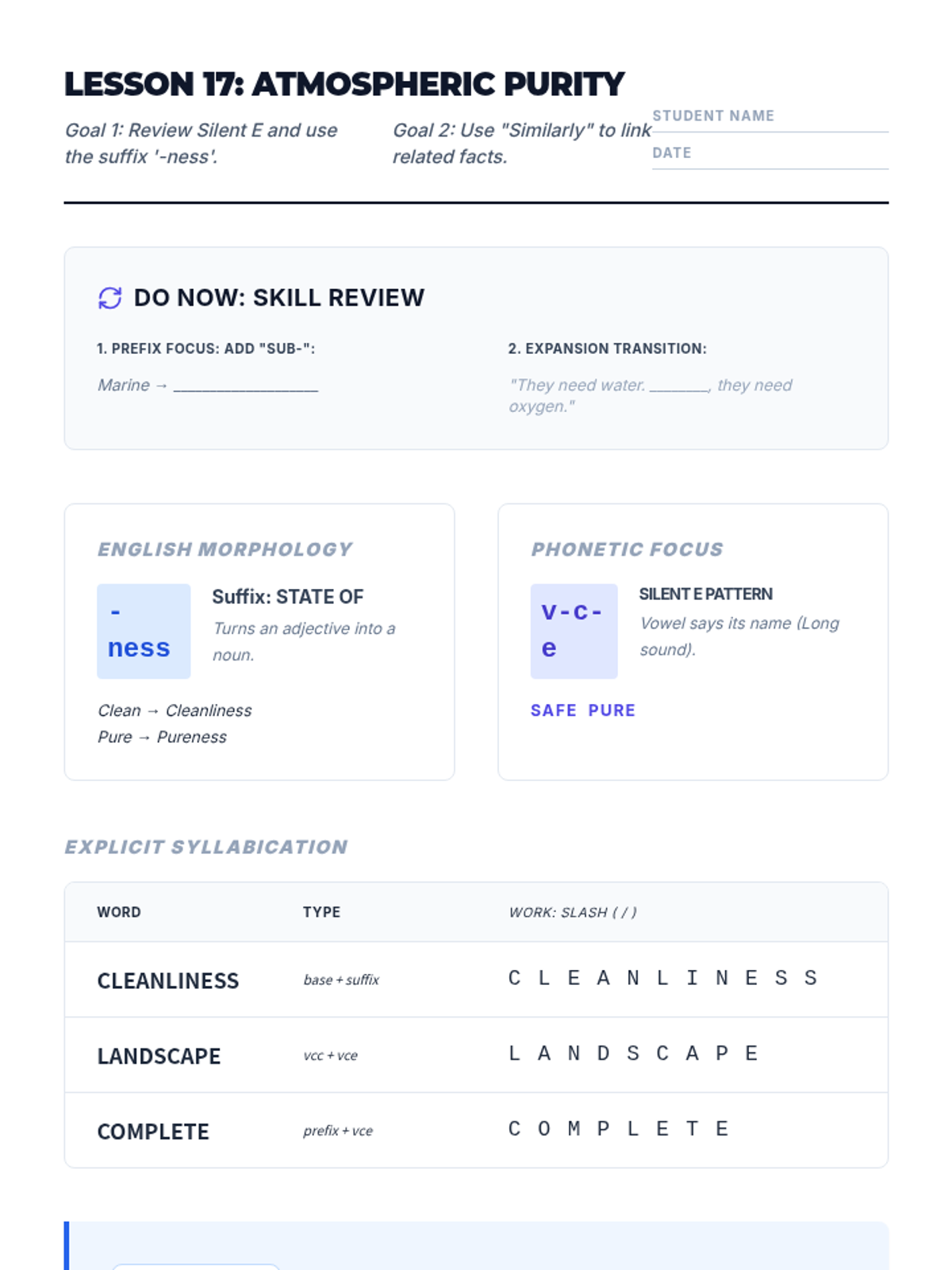
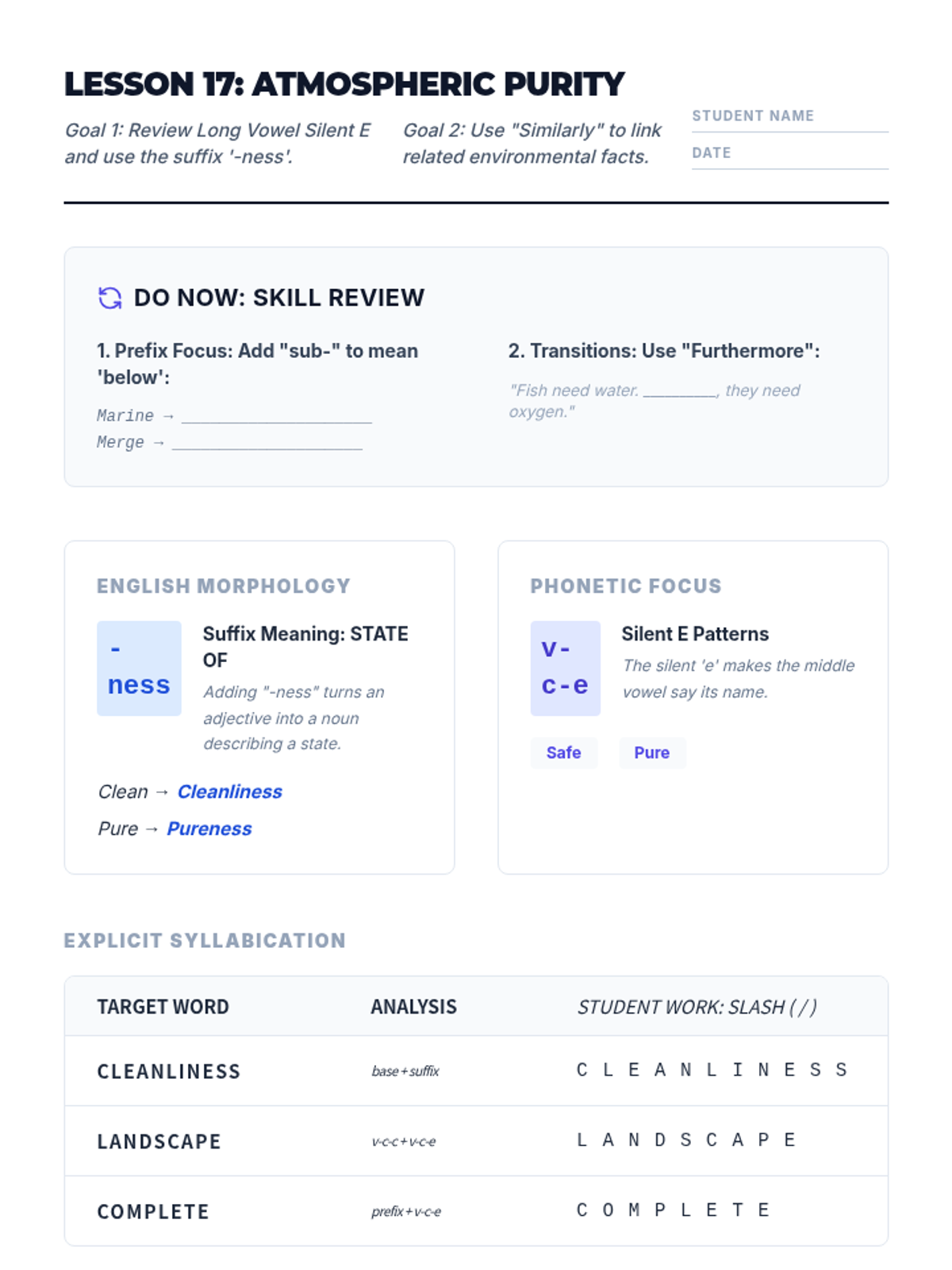
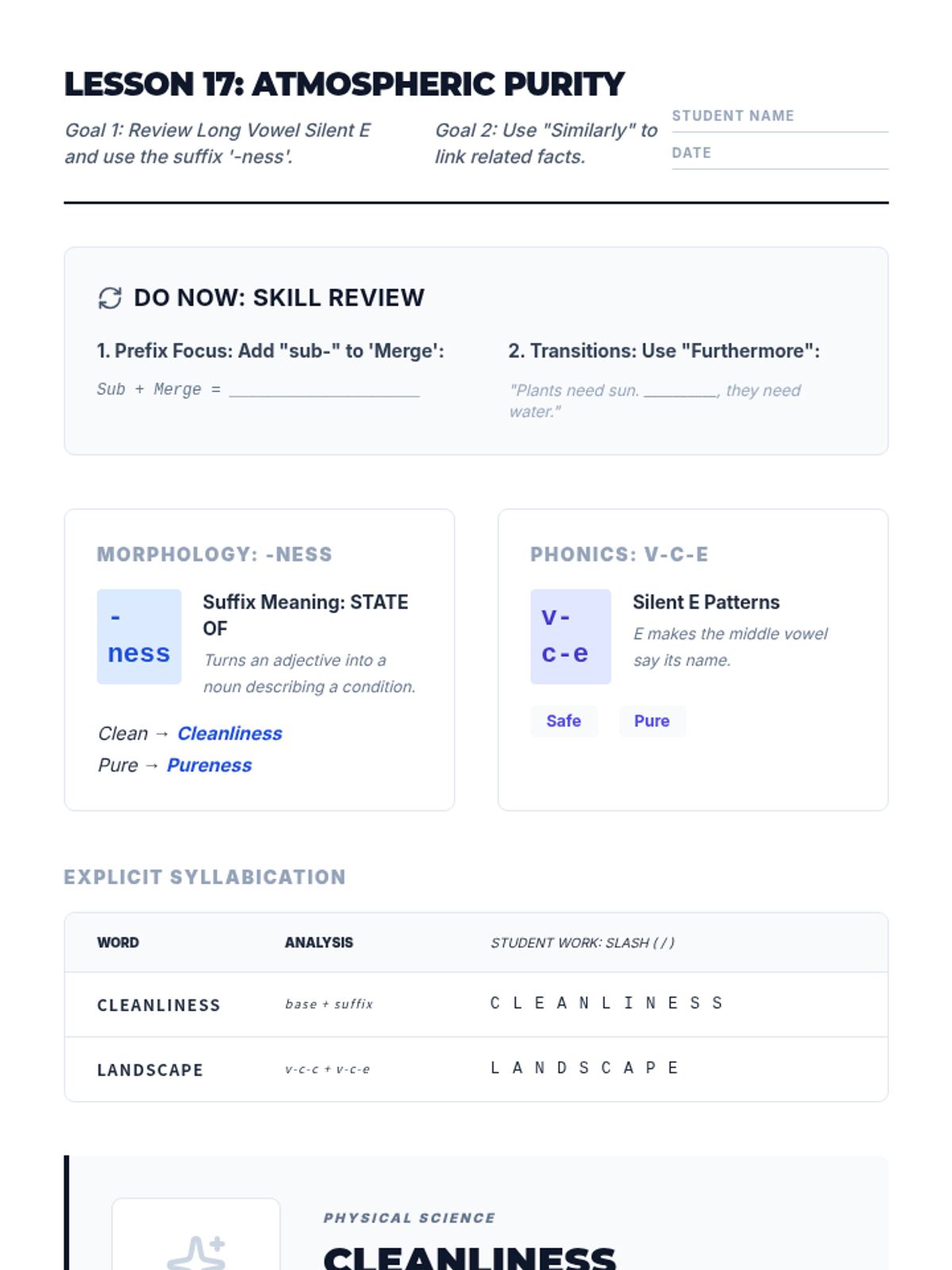
Reviewing Long Vowel Silent E patterns and the suffix '-ness'. Theme: Air quality and cleanliness.
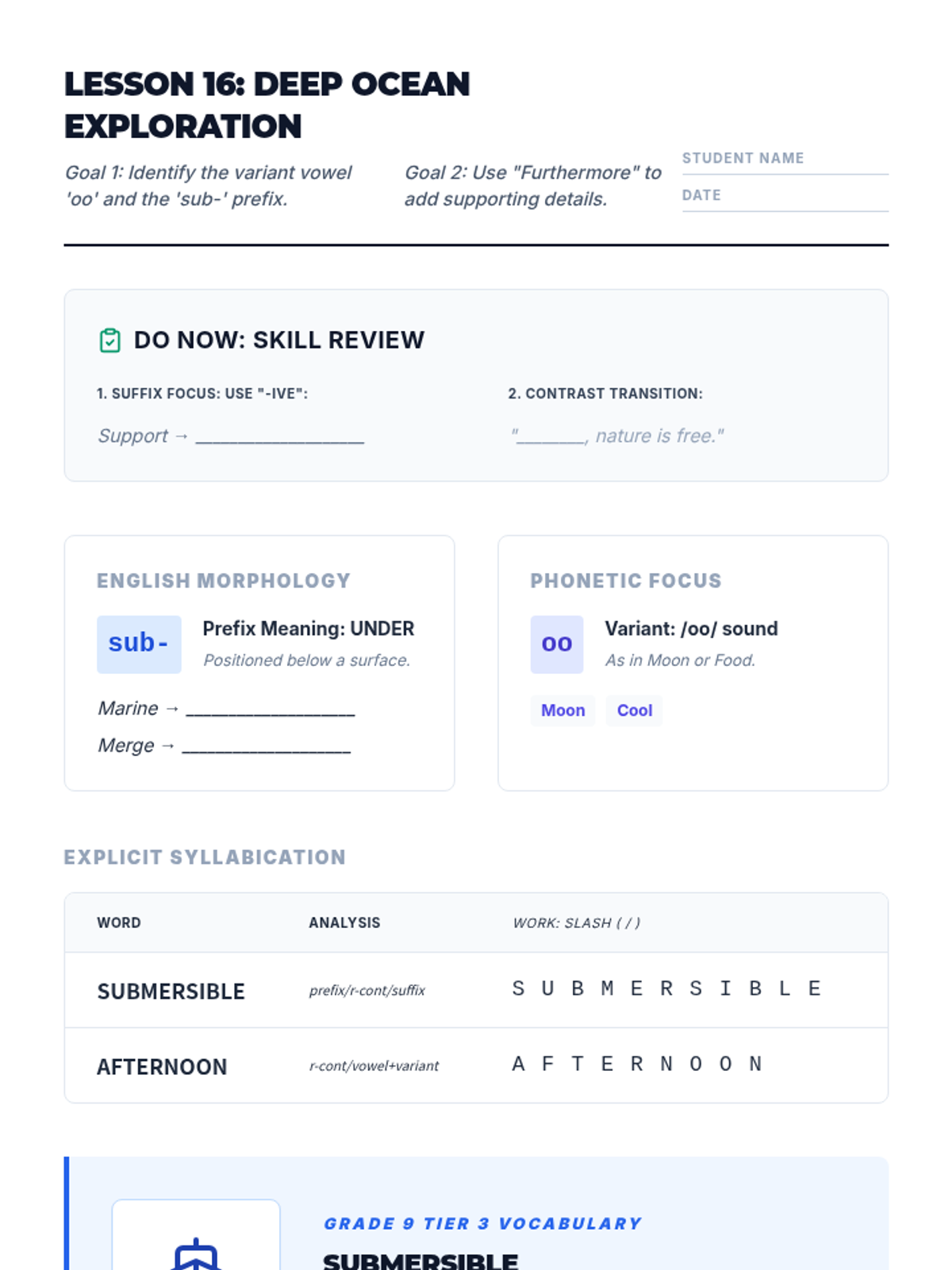
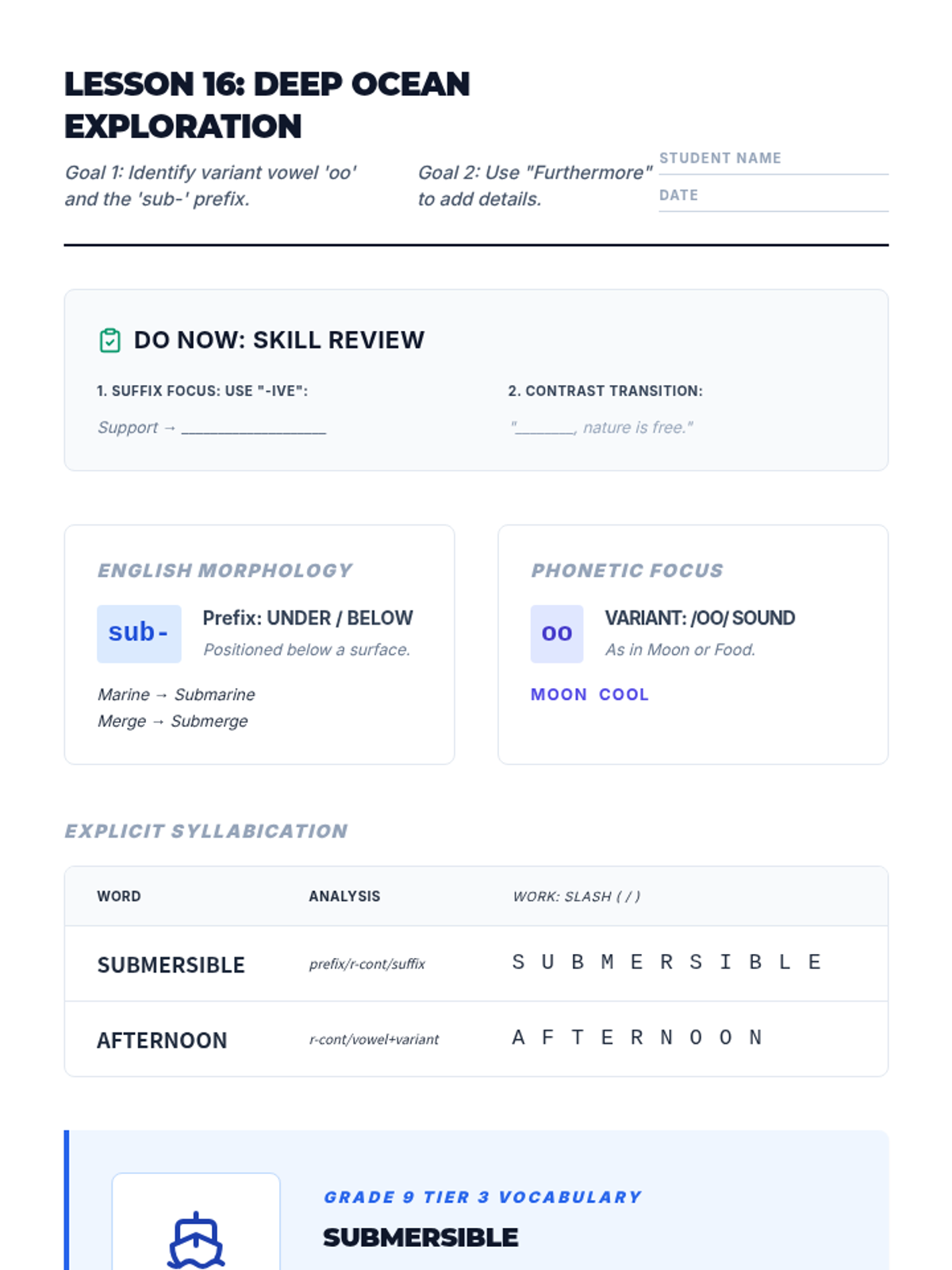
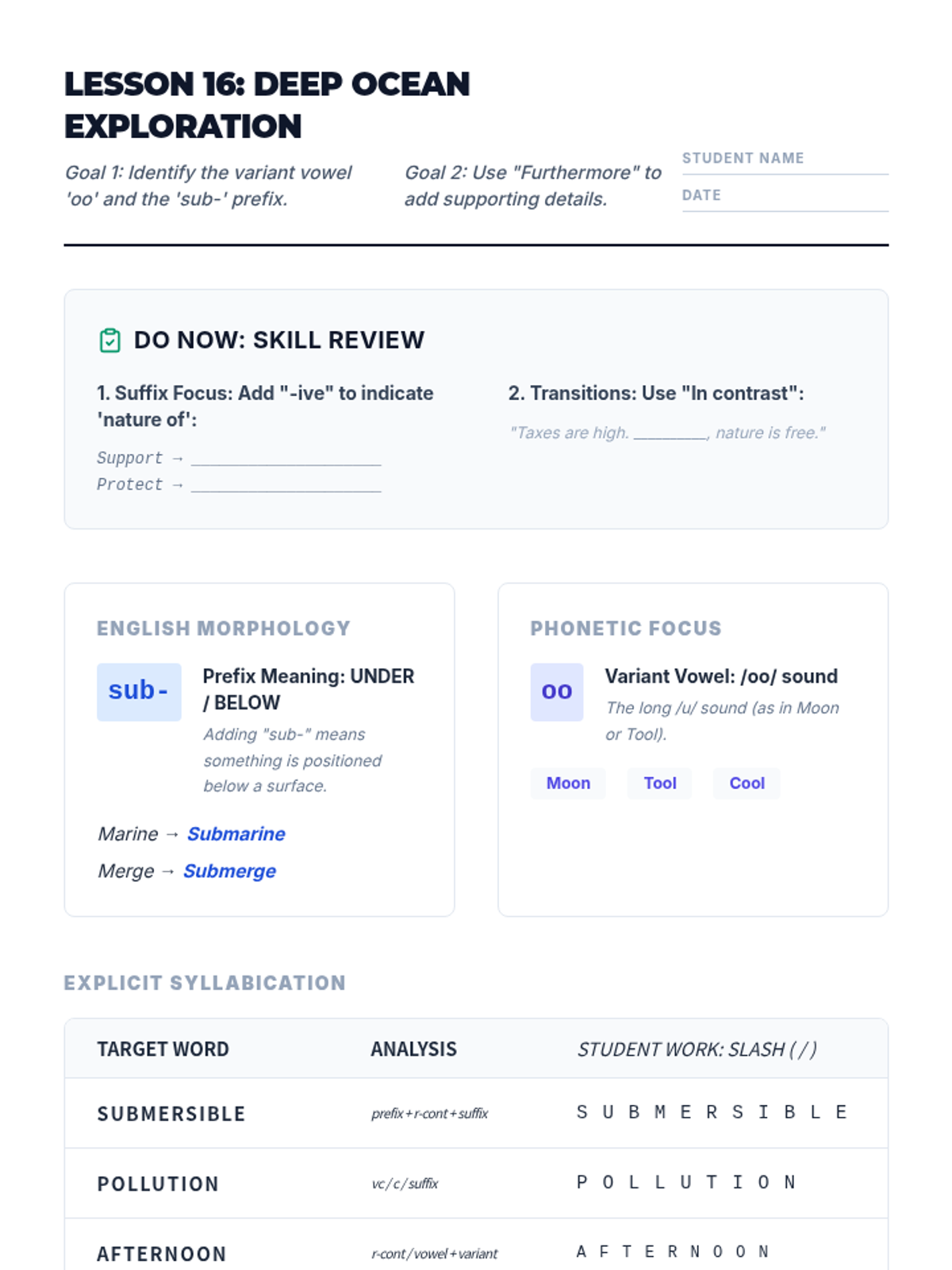
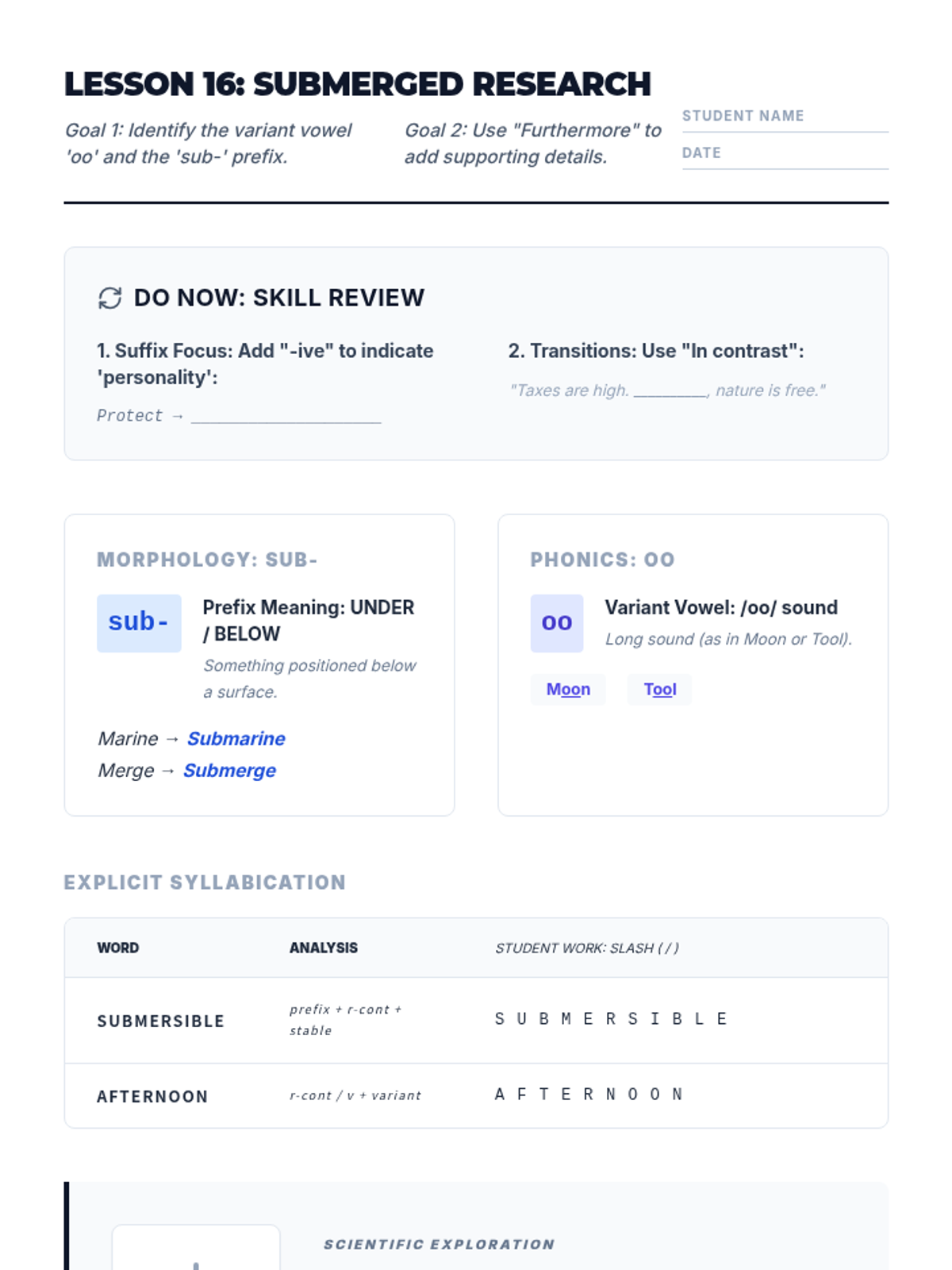
Exploring variant vowel 'oo' and the prefix 'sub-'. Theme: Submerged ocean research and deep-sea exploration.
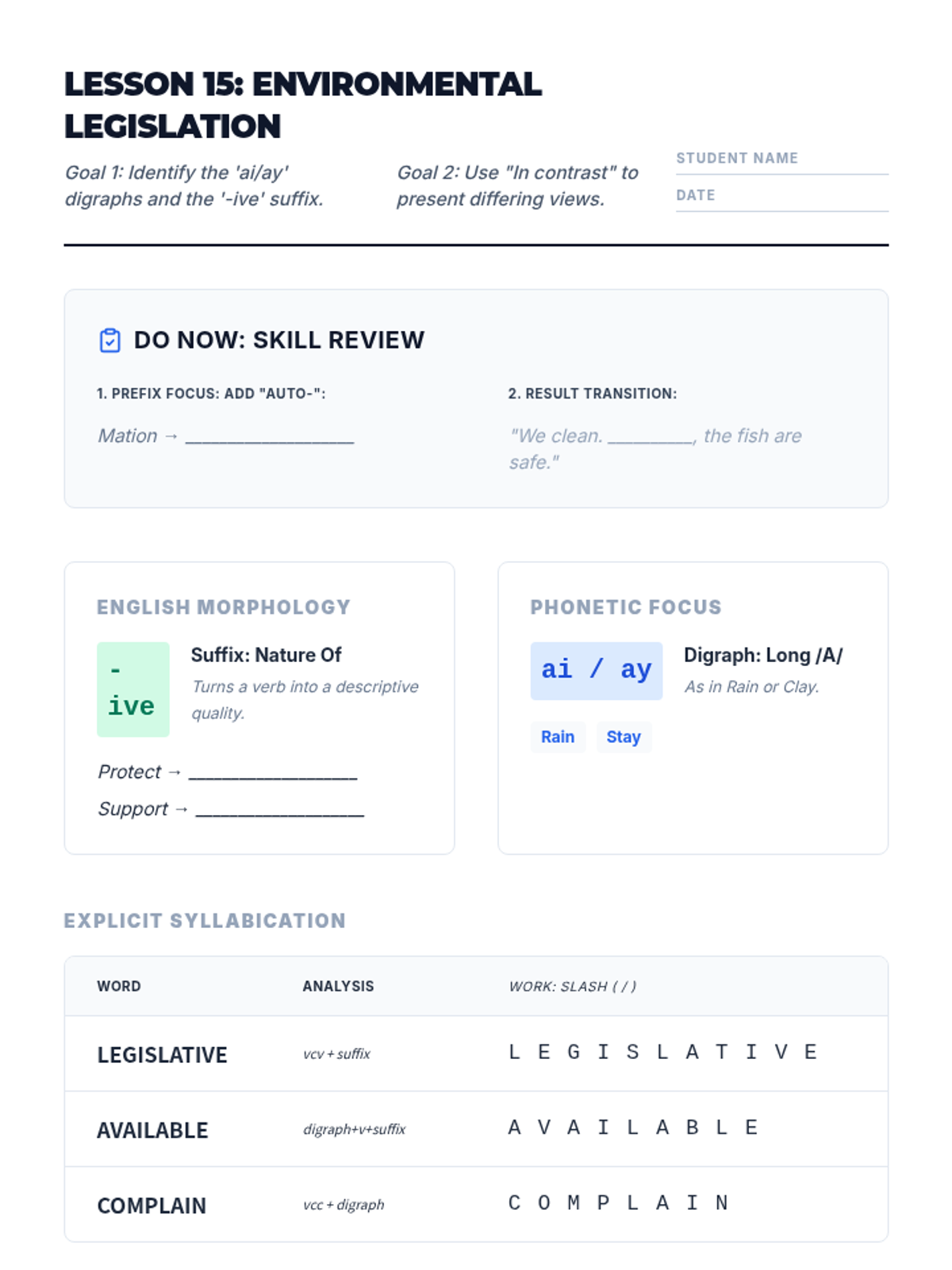
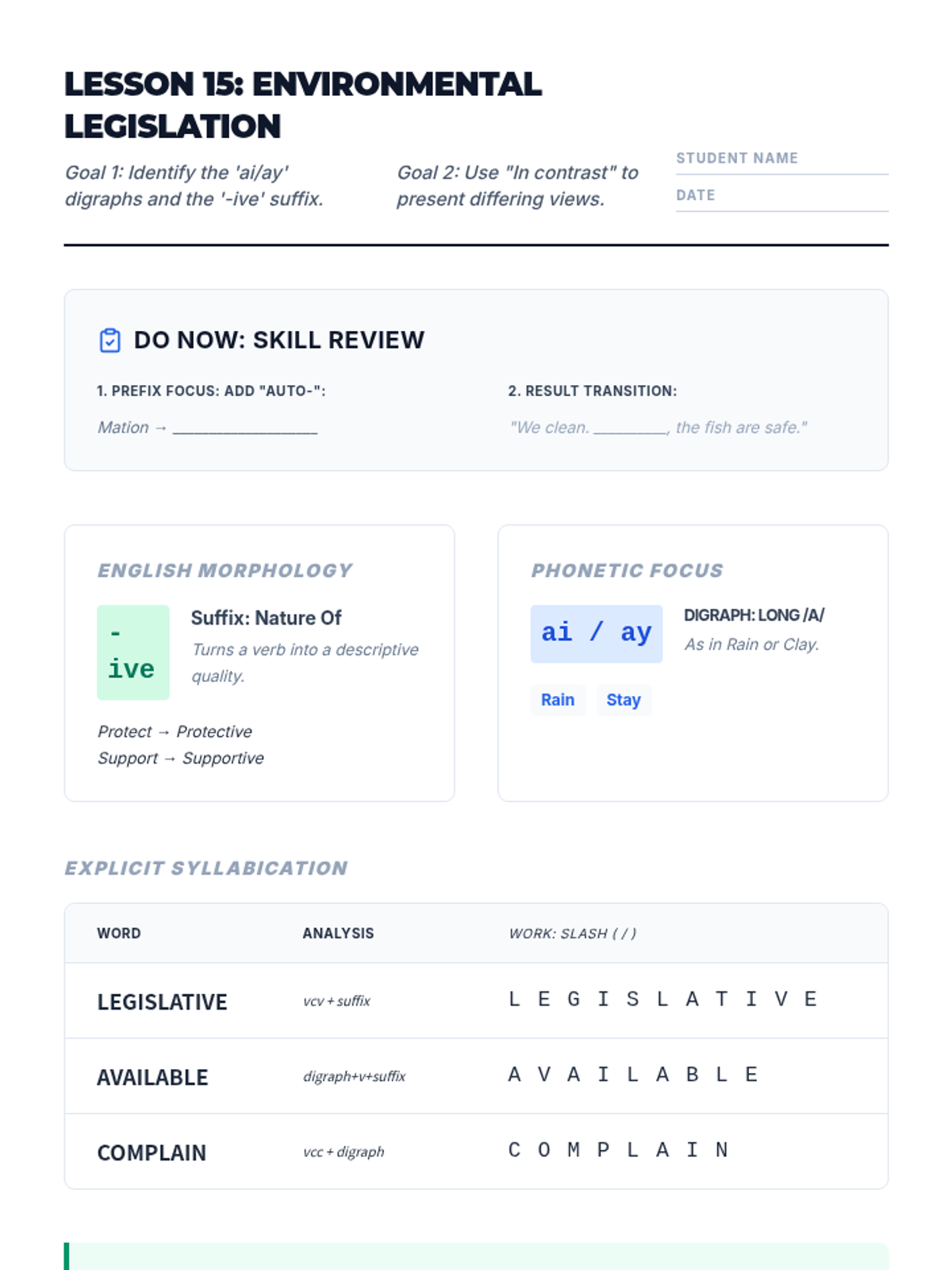
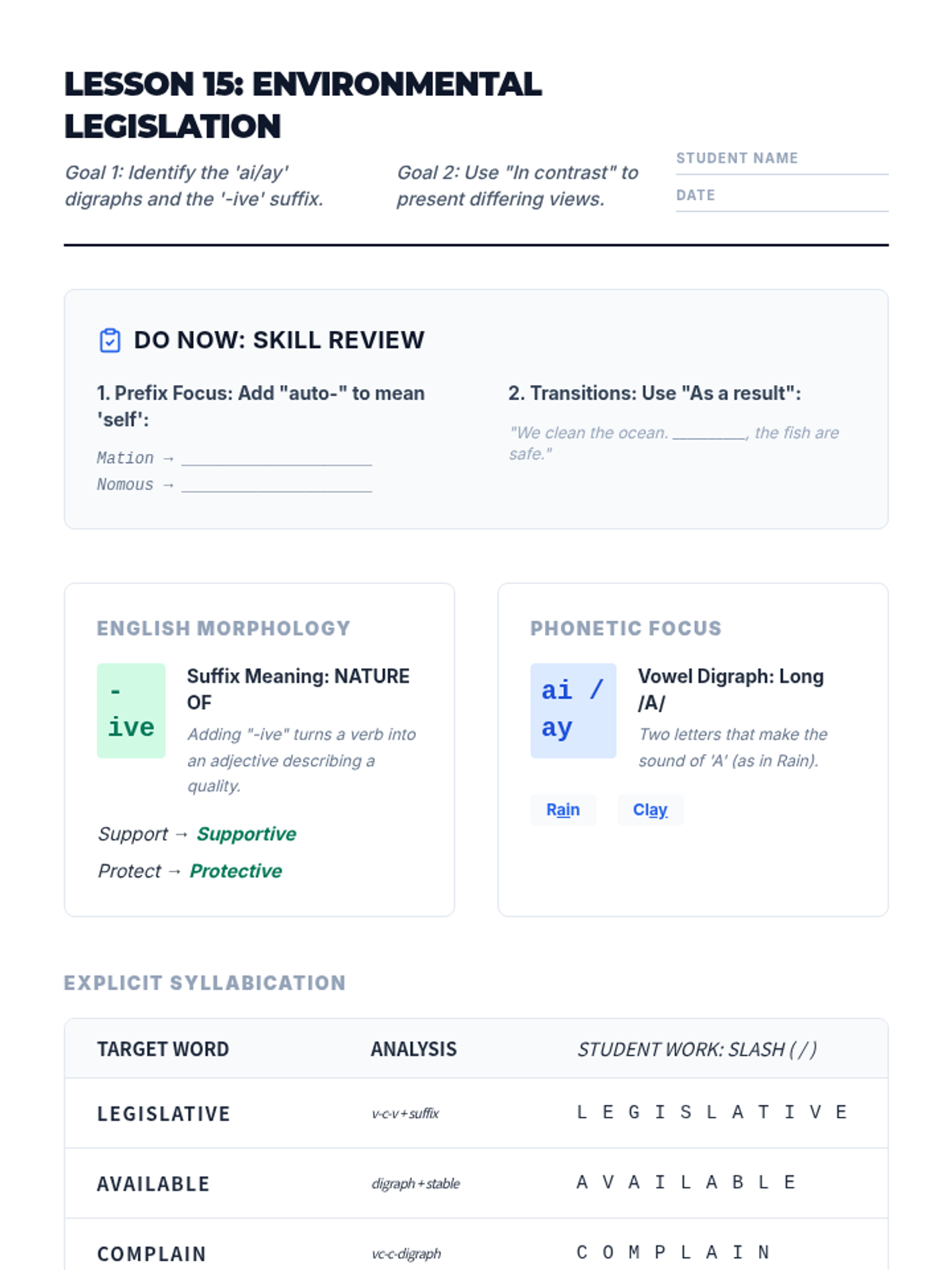
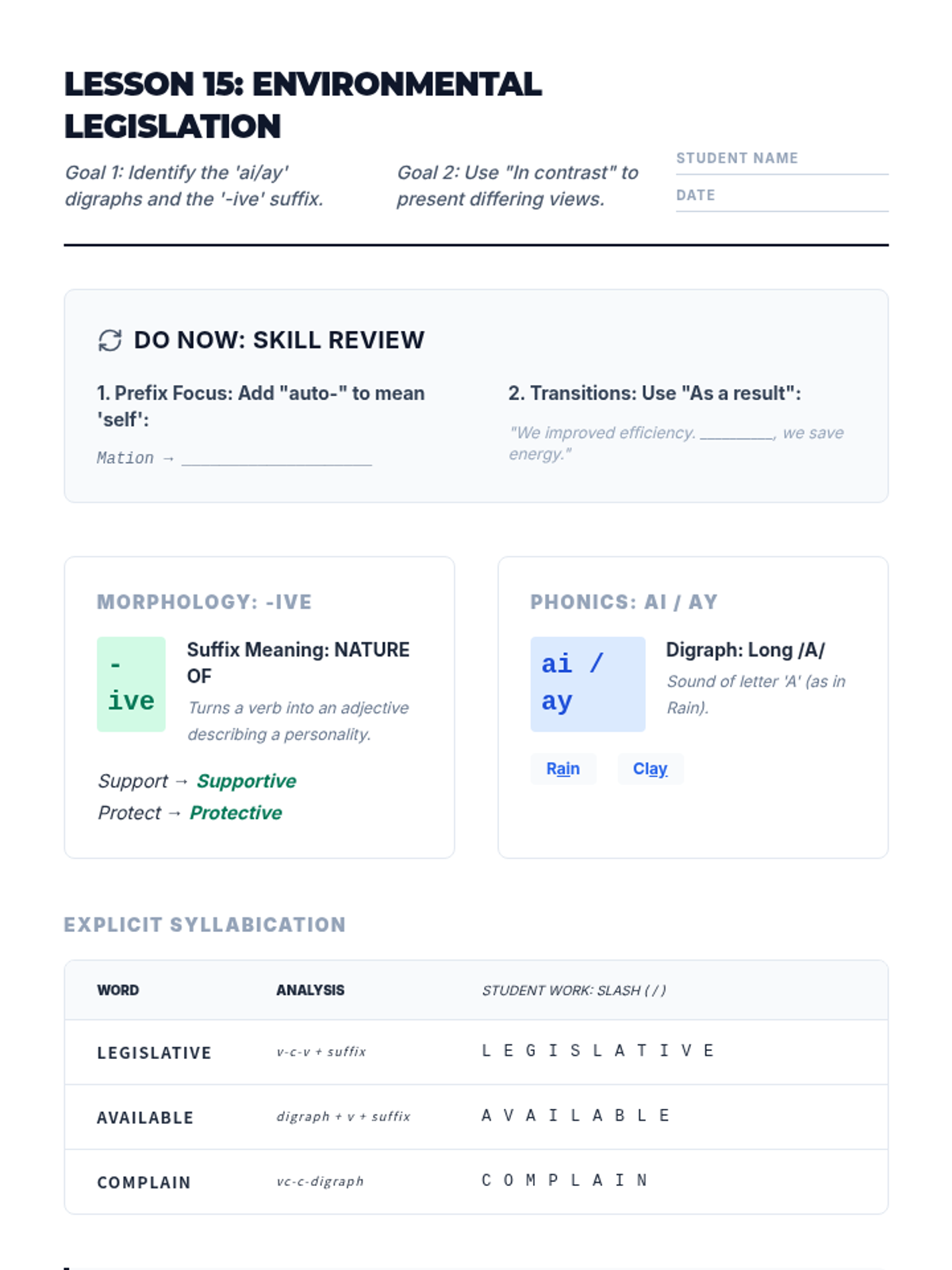
Focusing on 'ai/ay' digraphs and the suffix '-ive'. Students learn about legislative sustainability efforts.
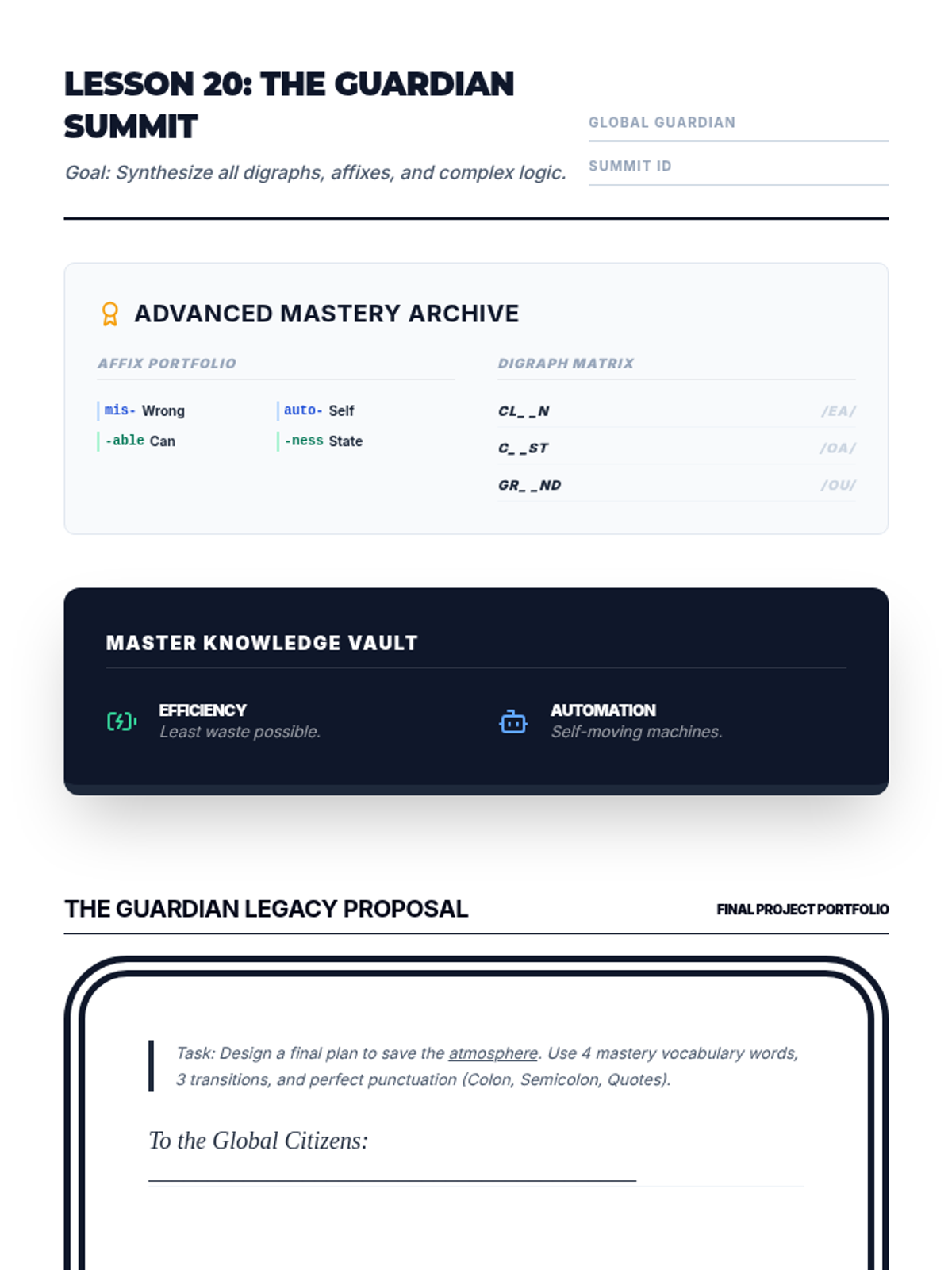
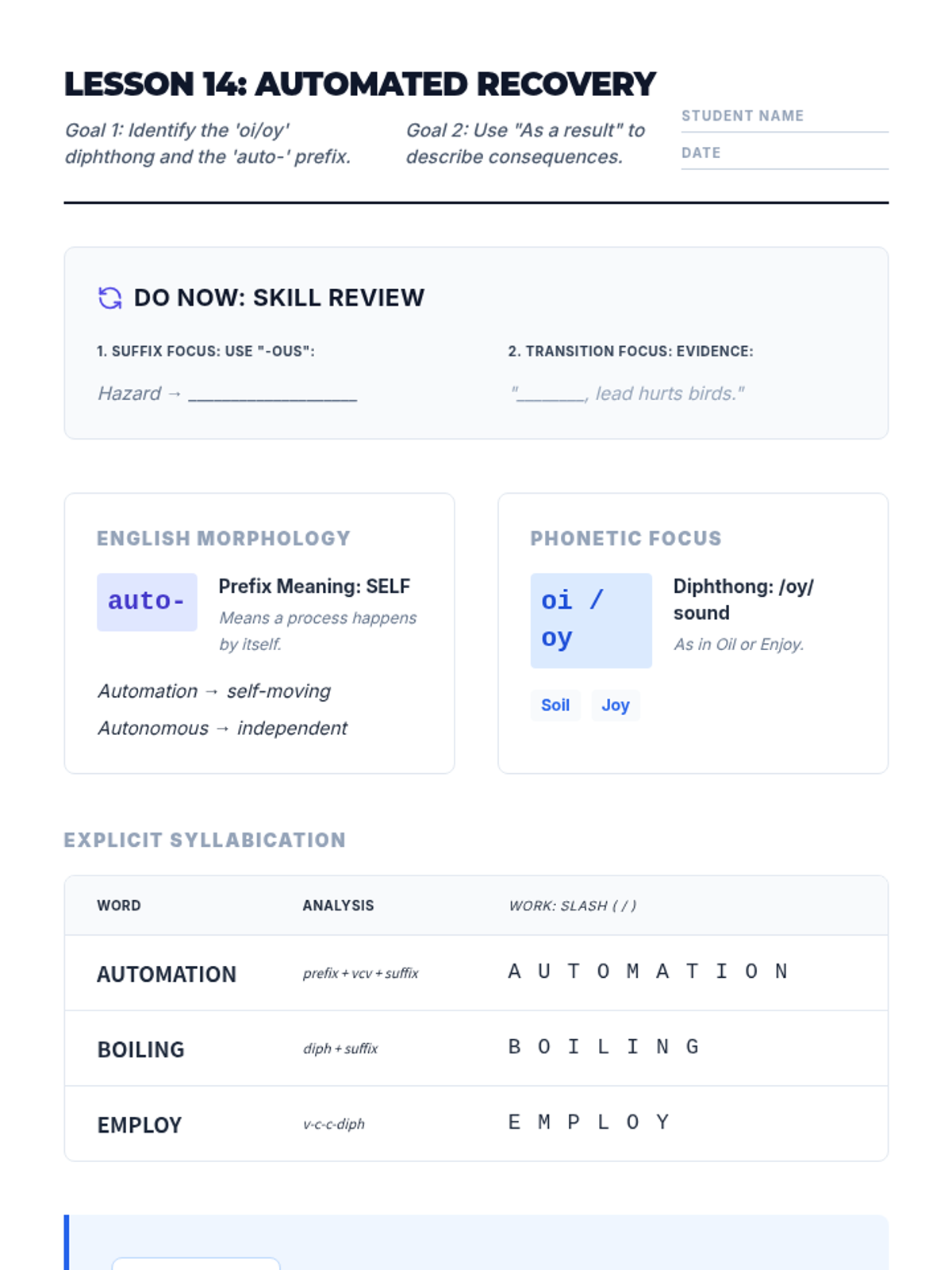
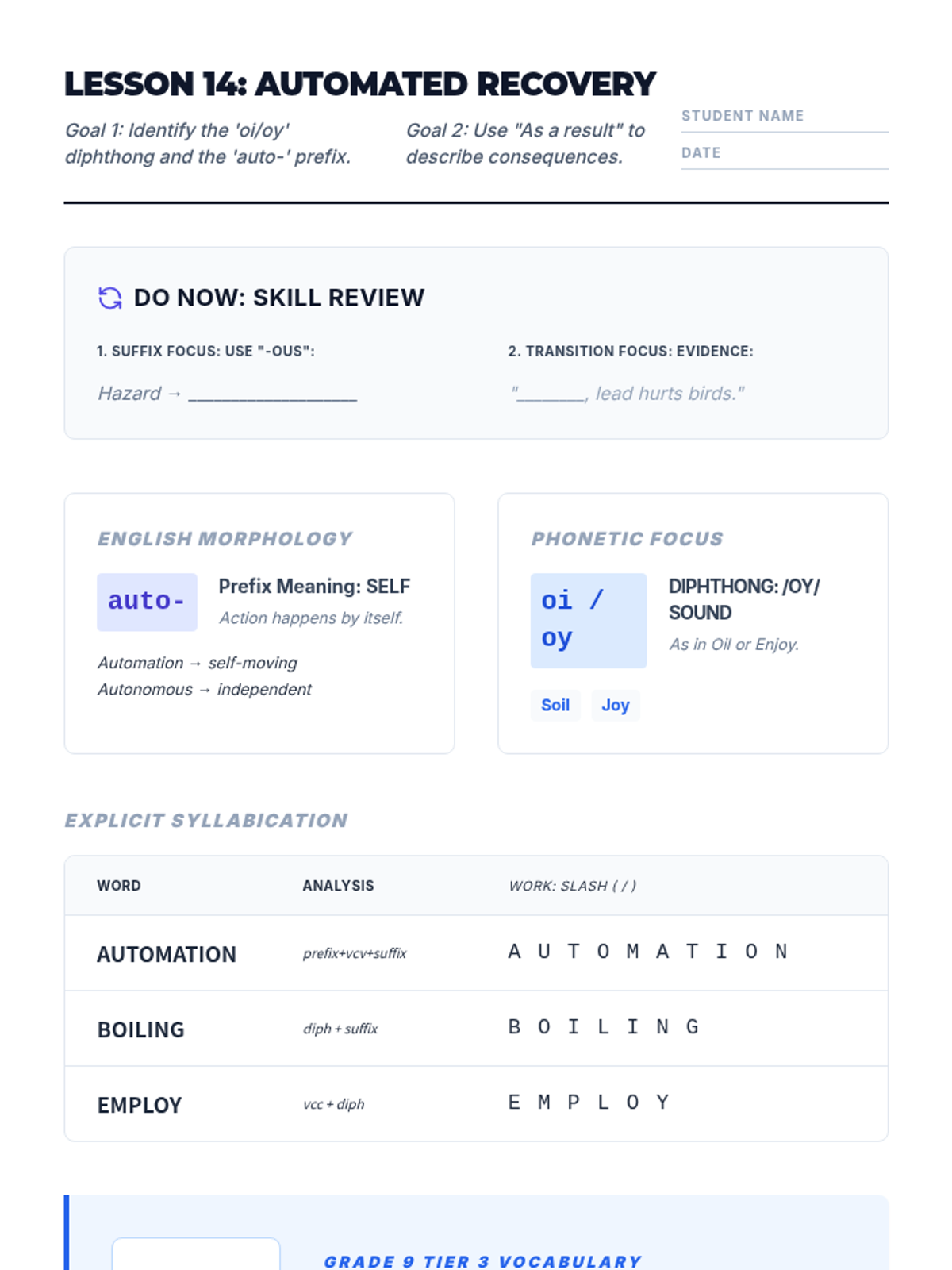
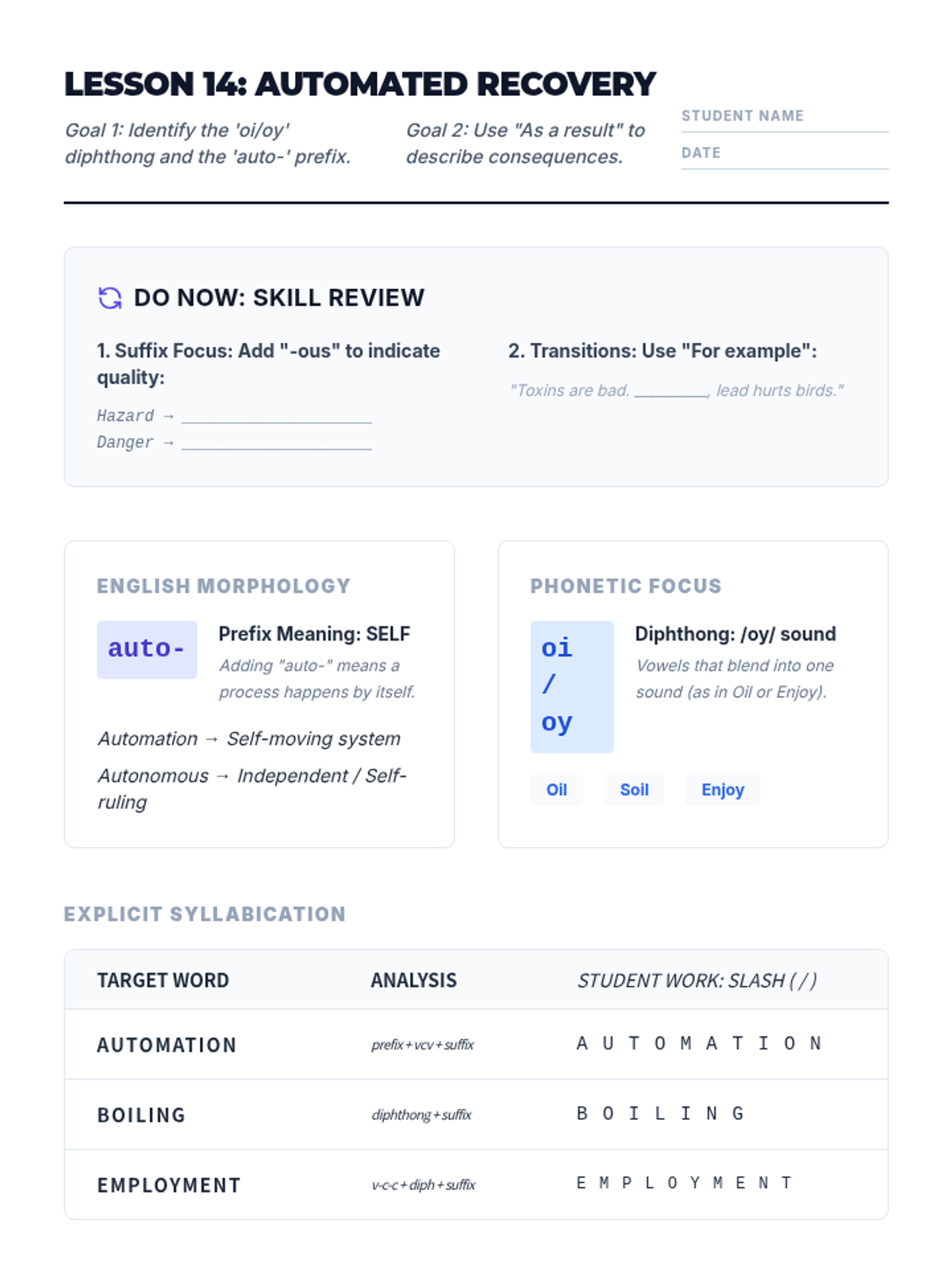
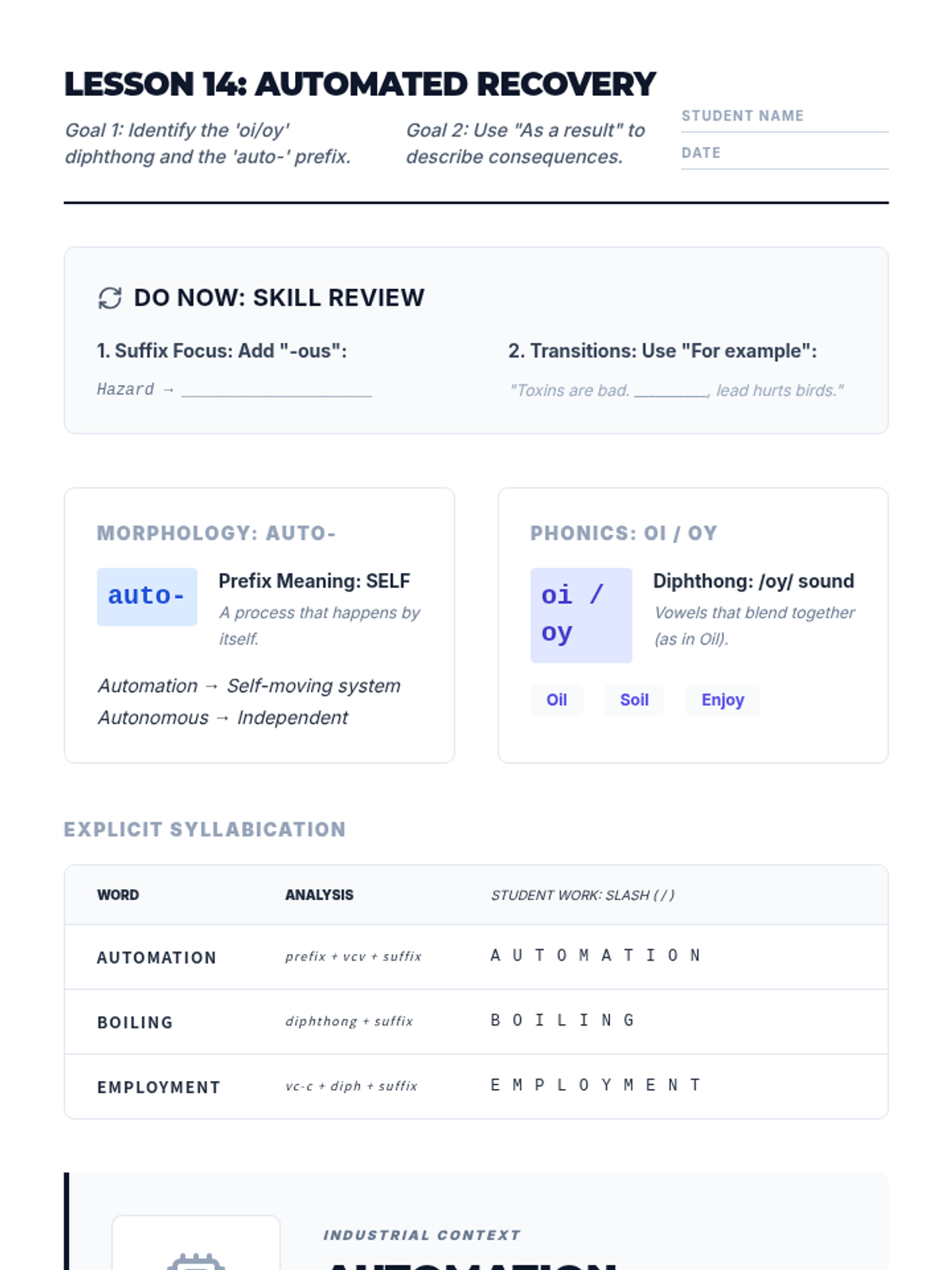
Introduces 'oi/oy' diphthongs and the prefix 'auto-'. Theme: Automated conservation technology.
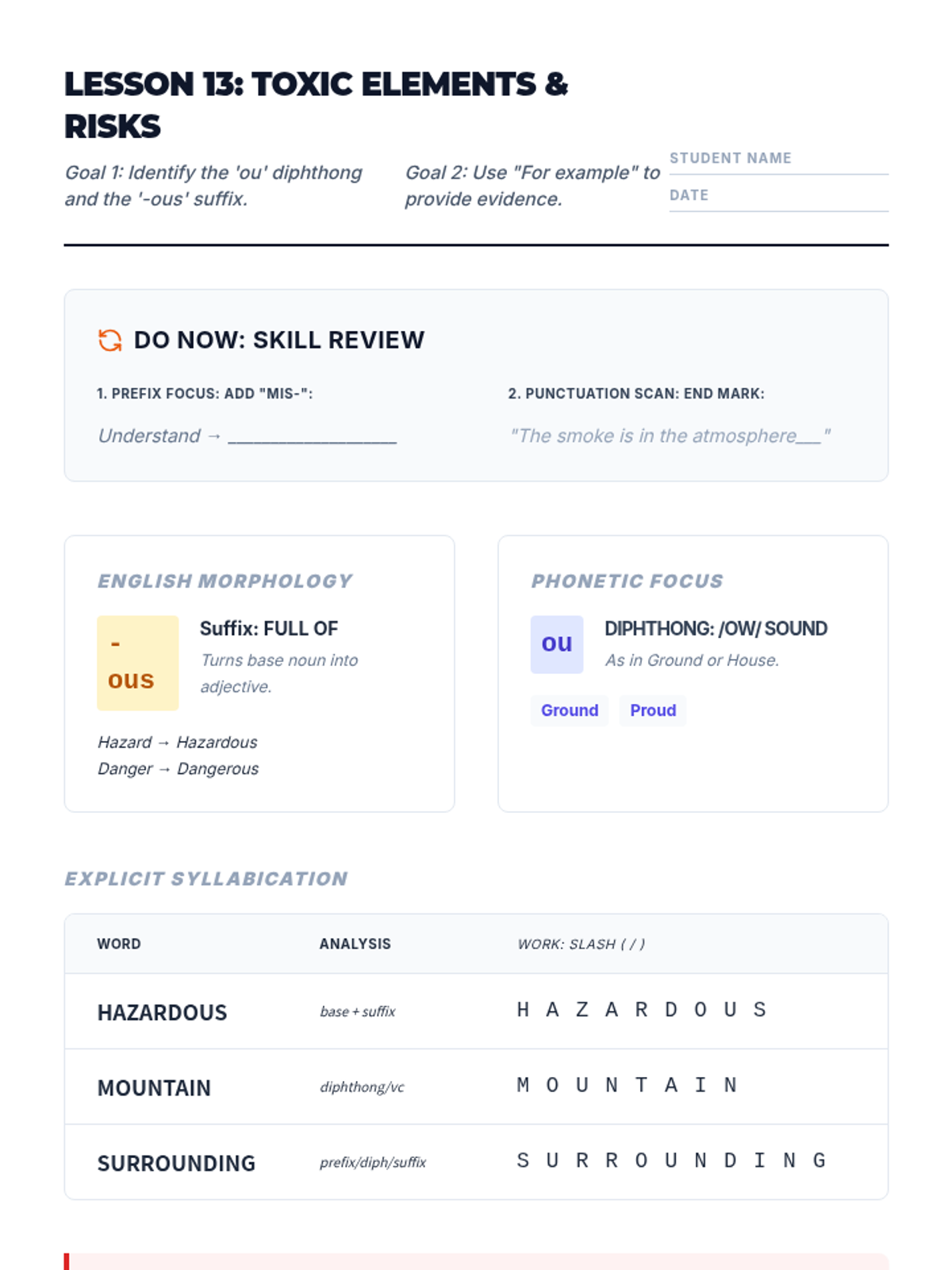
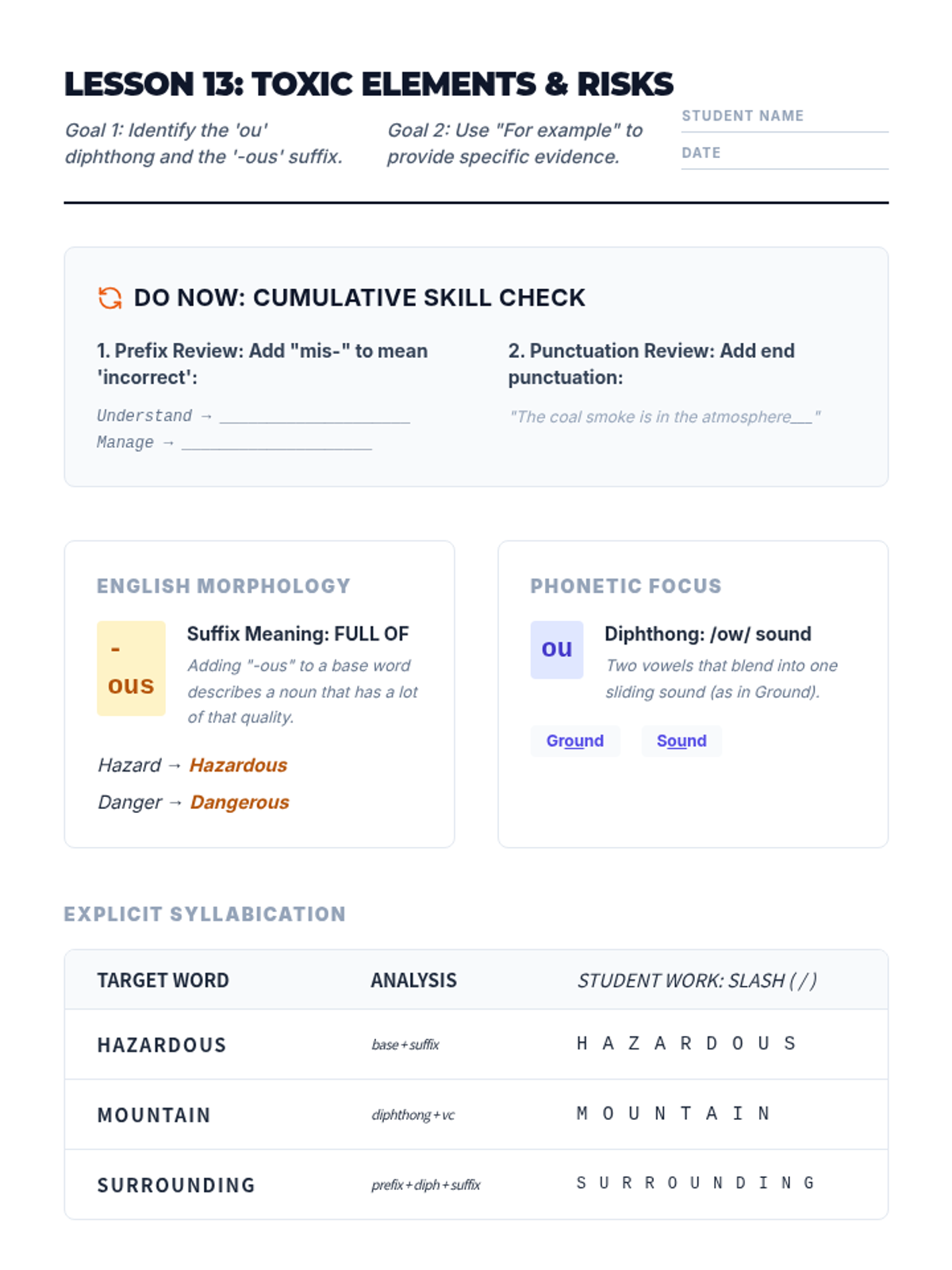
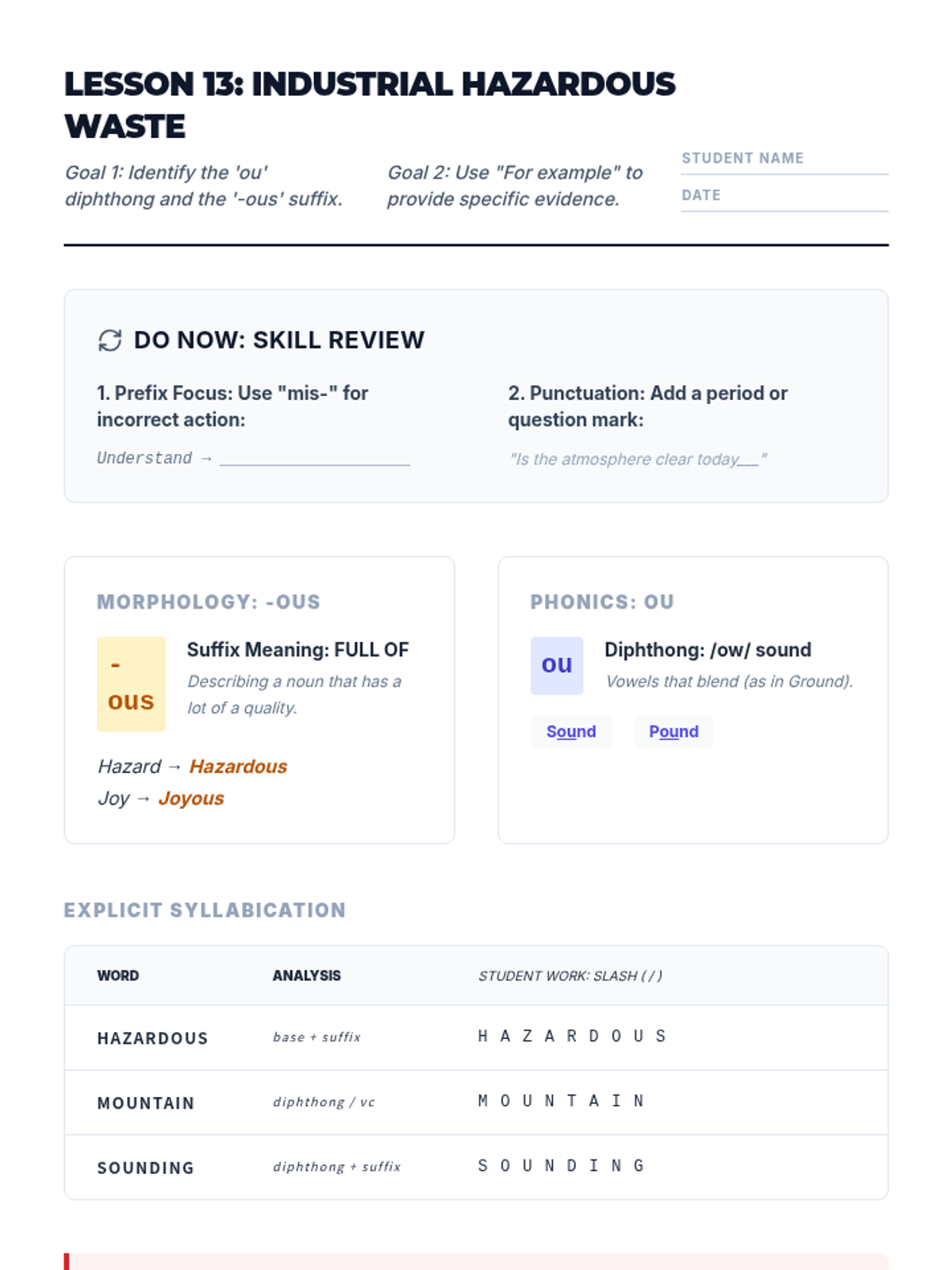
Covers the 'ou' diphthong and the suffix '-ous'. Students examine hazardous waste and environmental risks.
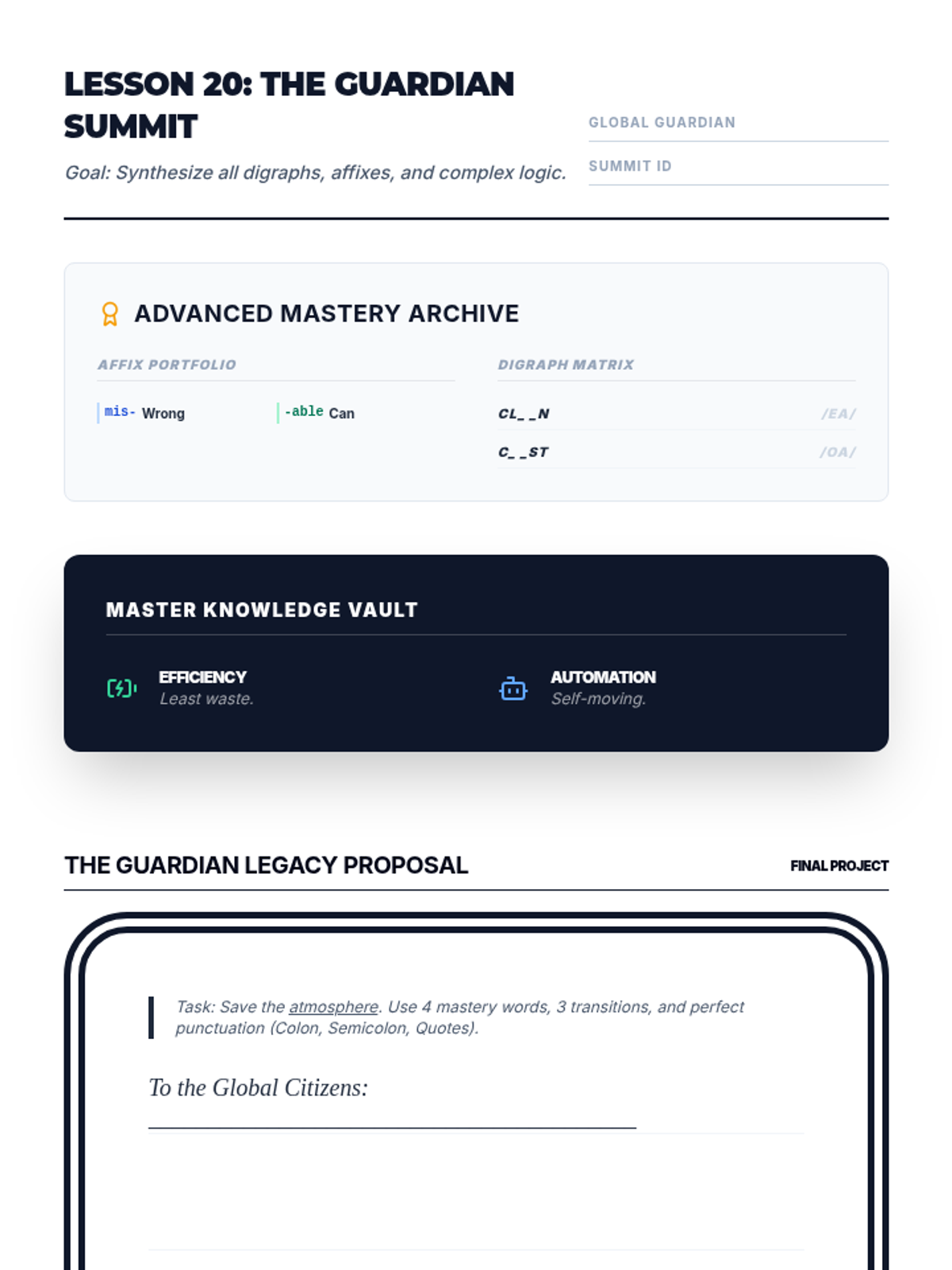
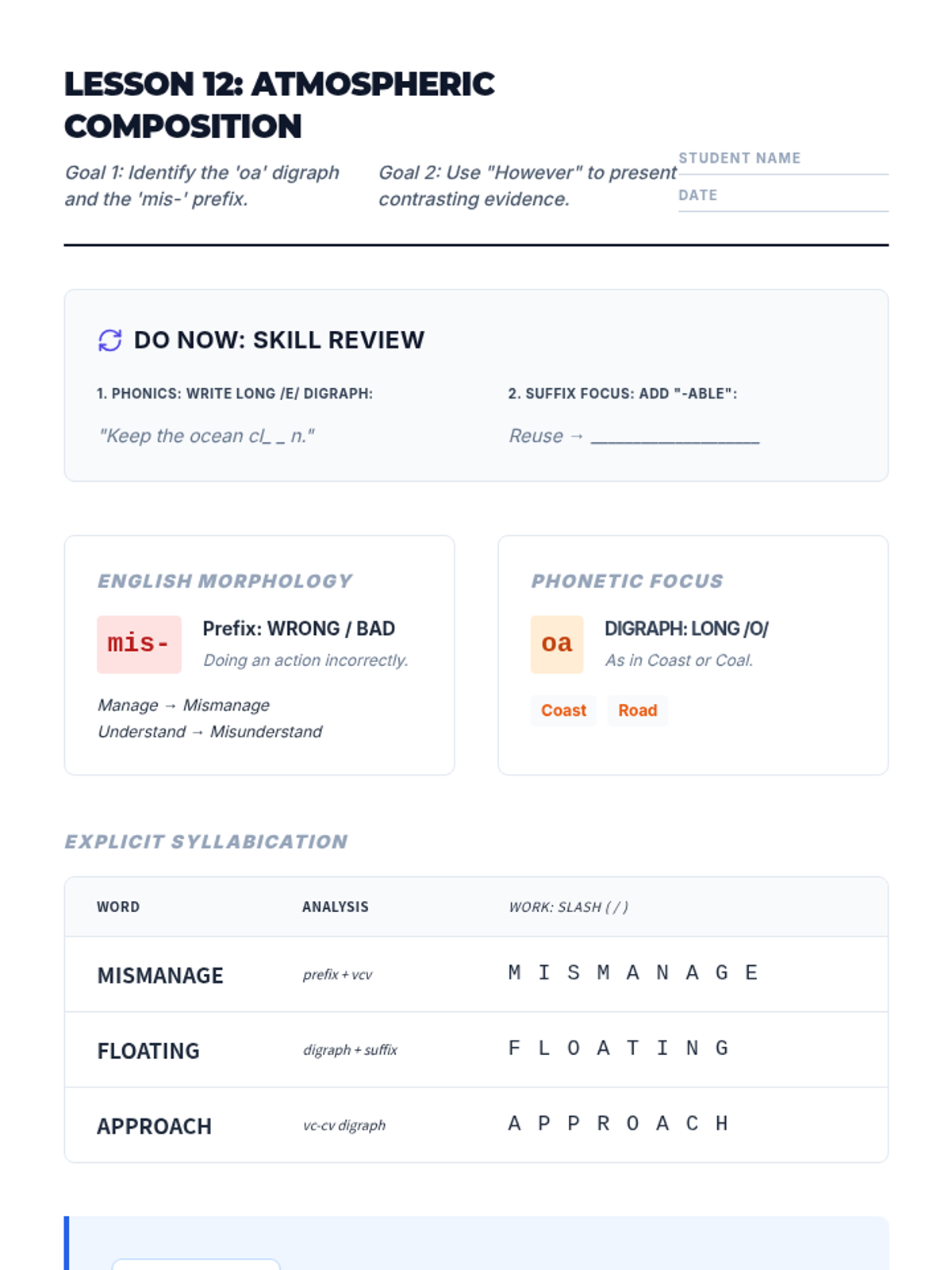
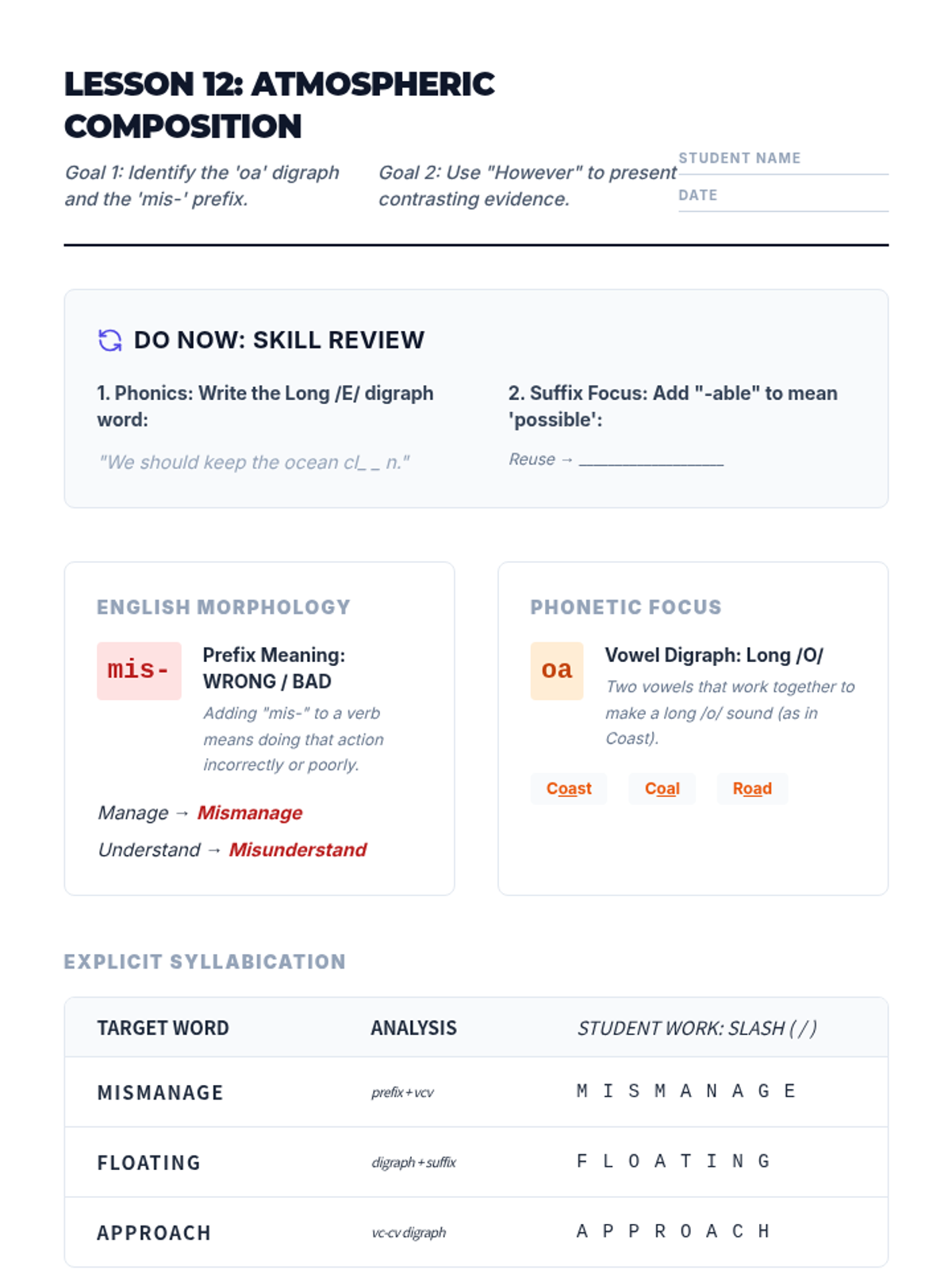
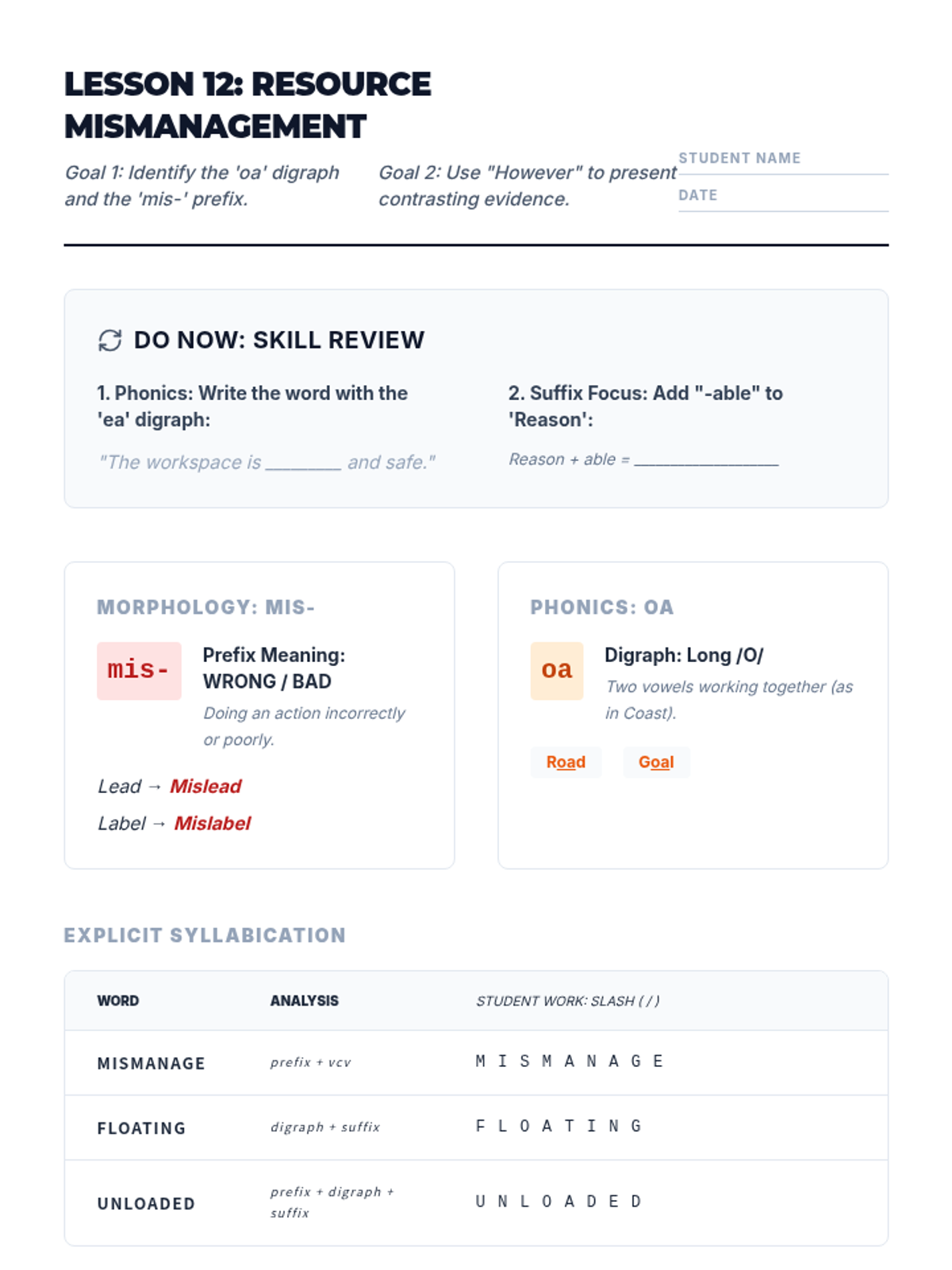
Introducing the 'oa' digraph and the prefix 'mis-'. Focuses on the atmosphere and the mismanagement of resources.
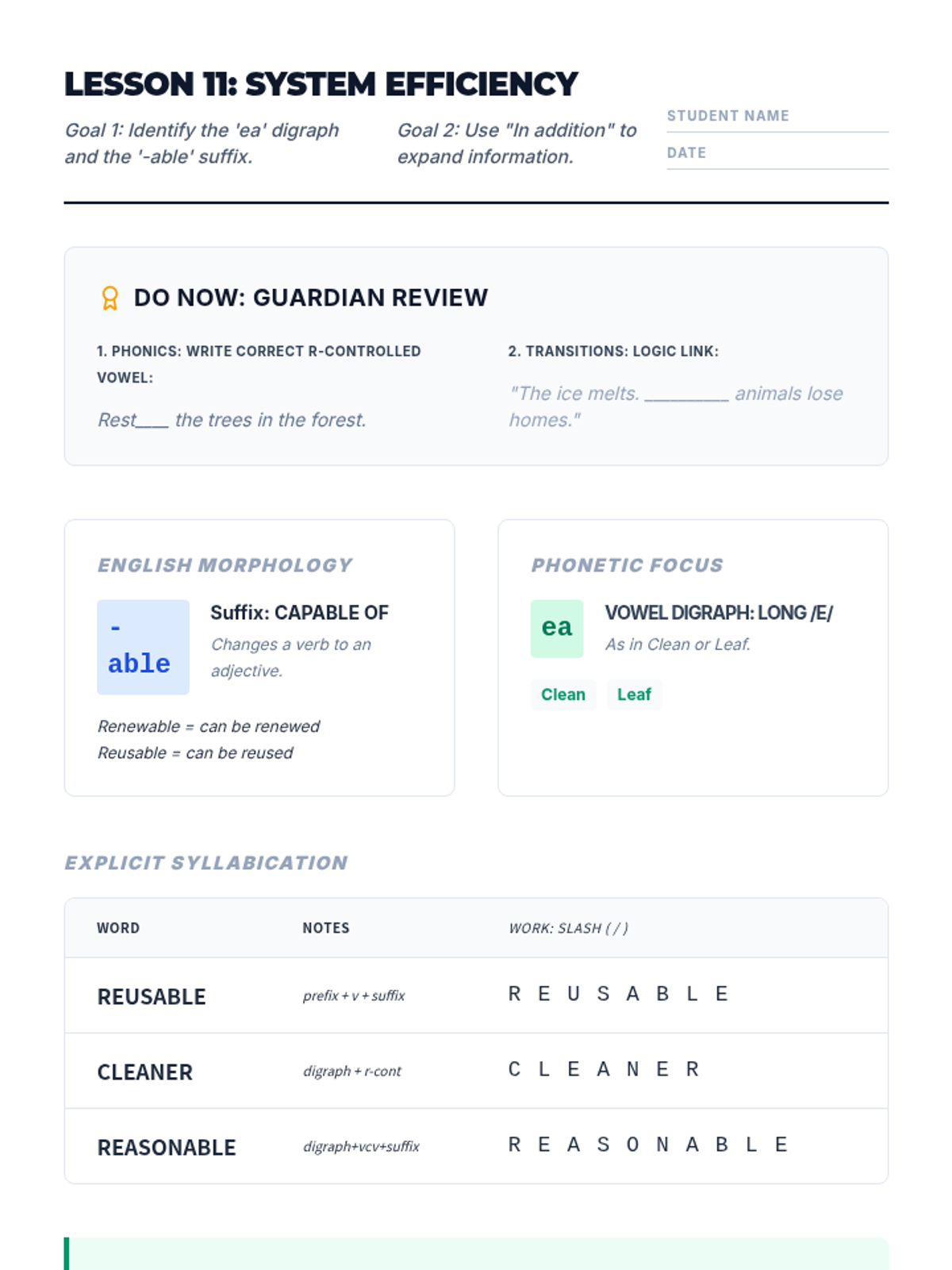
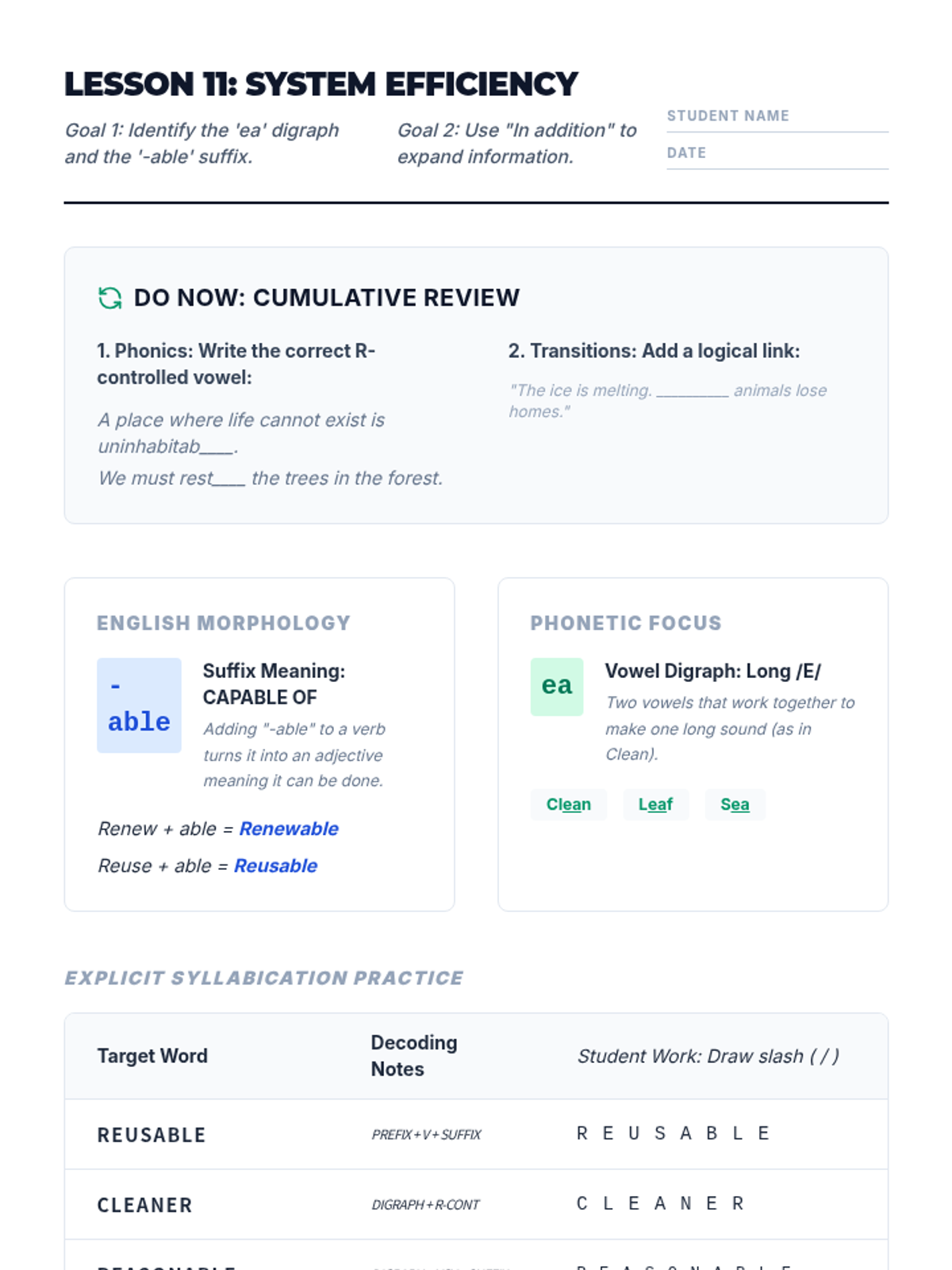
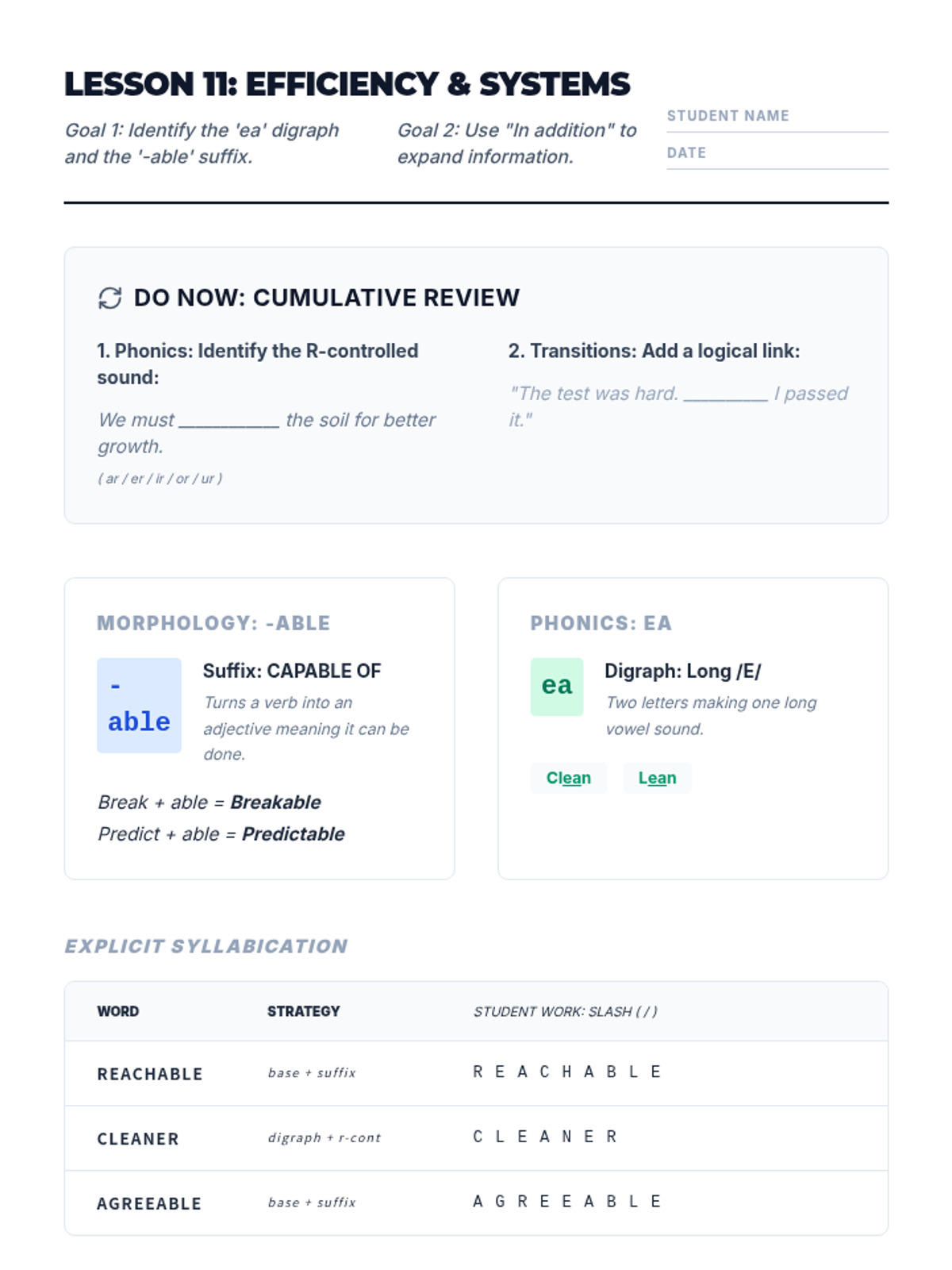
Exploring the 'ea' vowel digraph and the suffix '-able'. Students analyze energy efficiency in renewable technology.
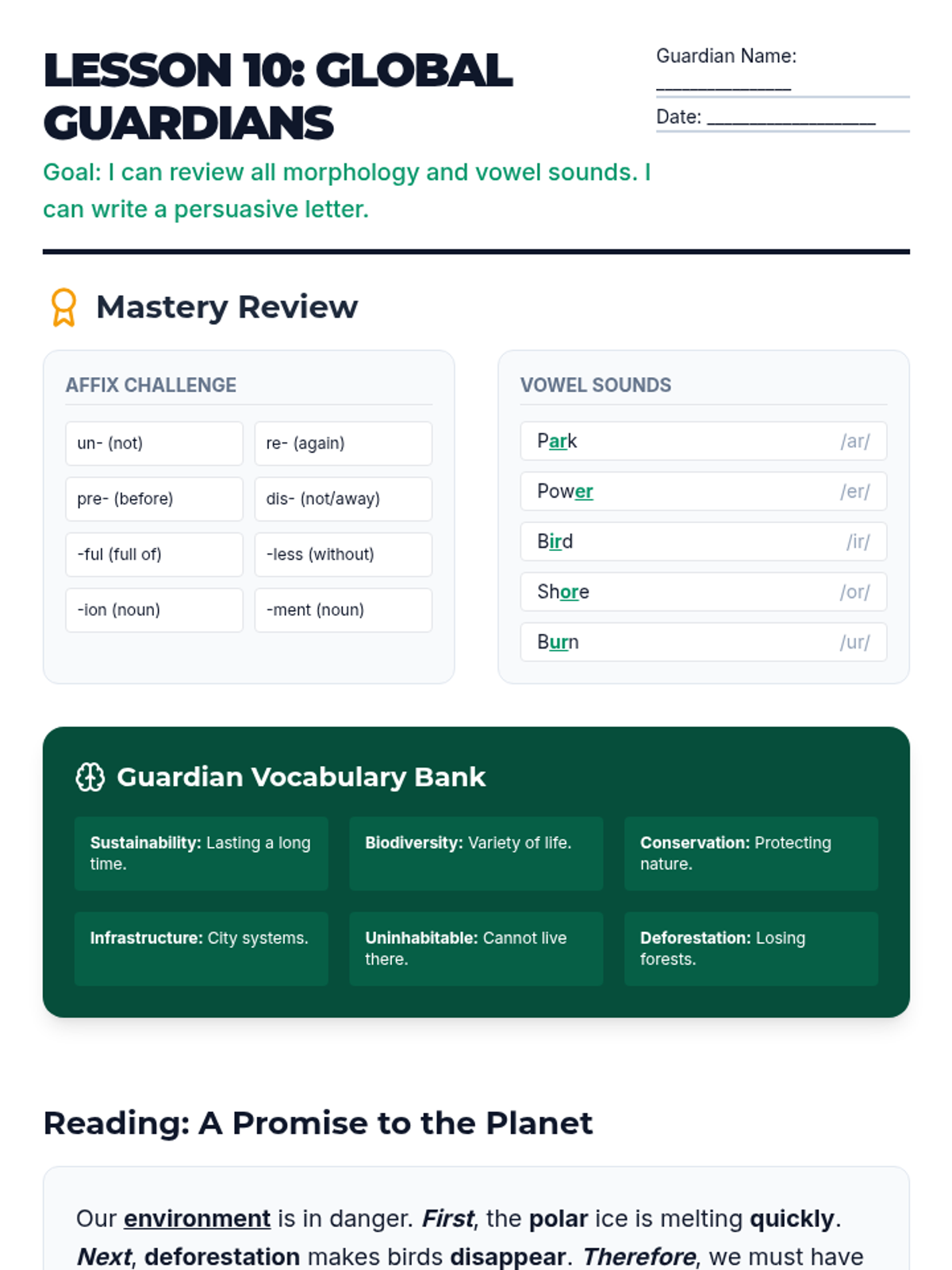
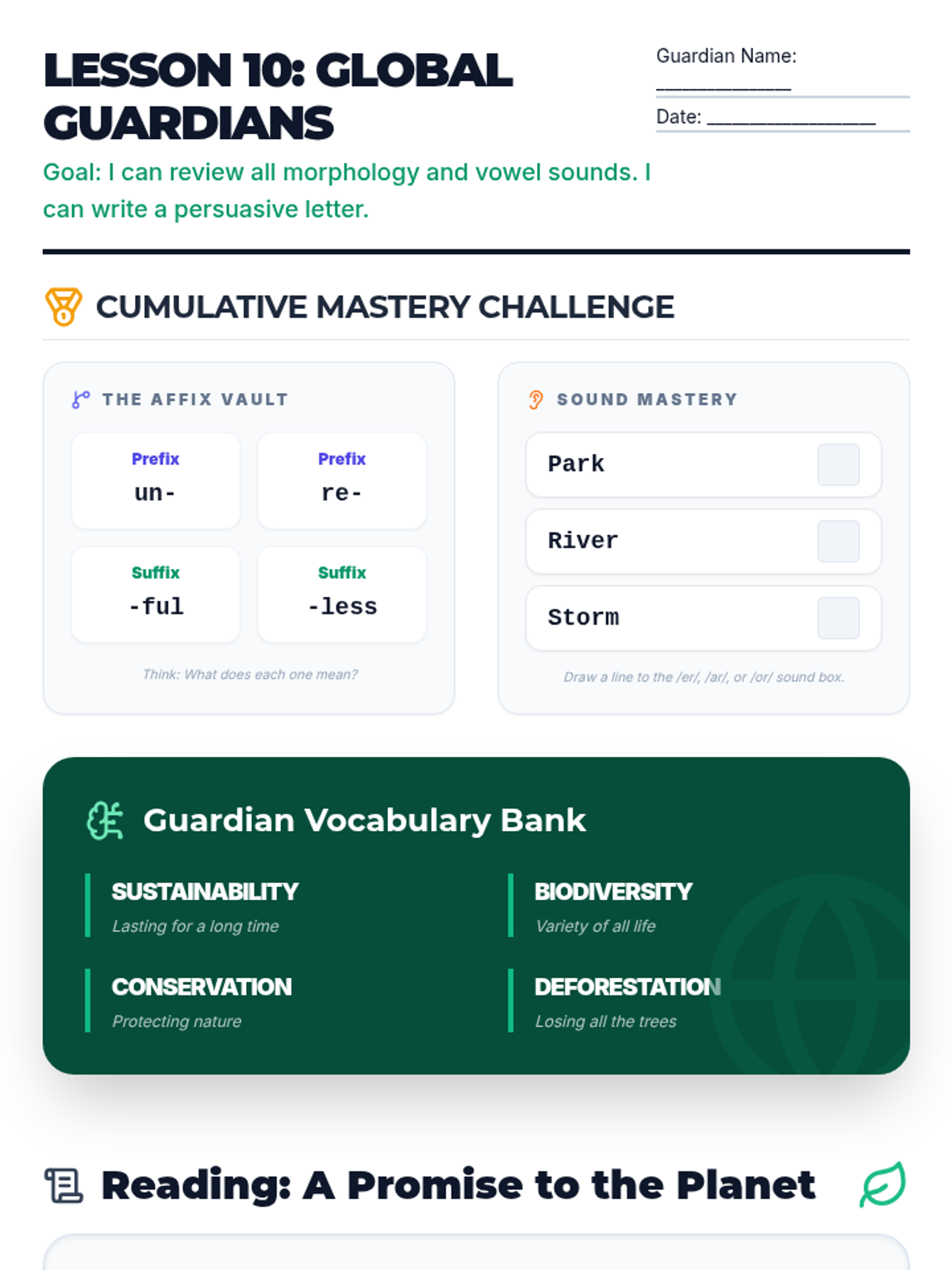
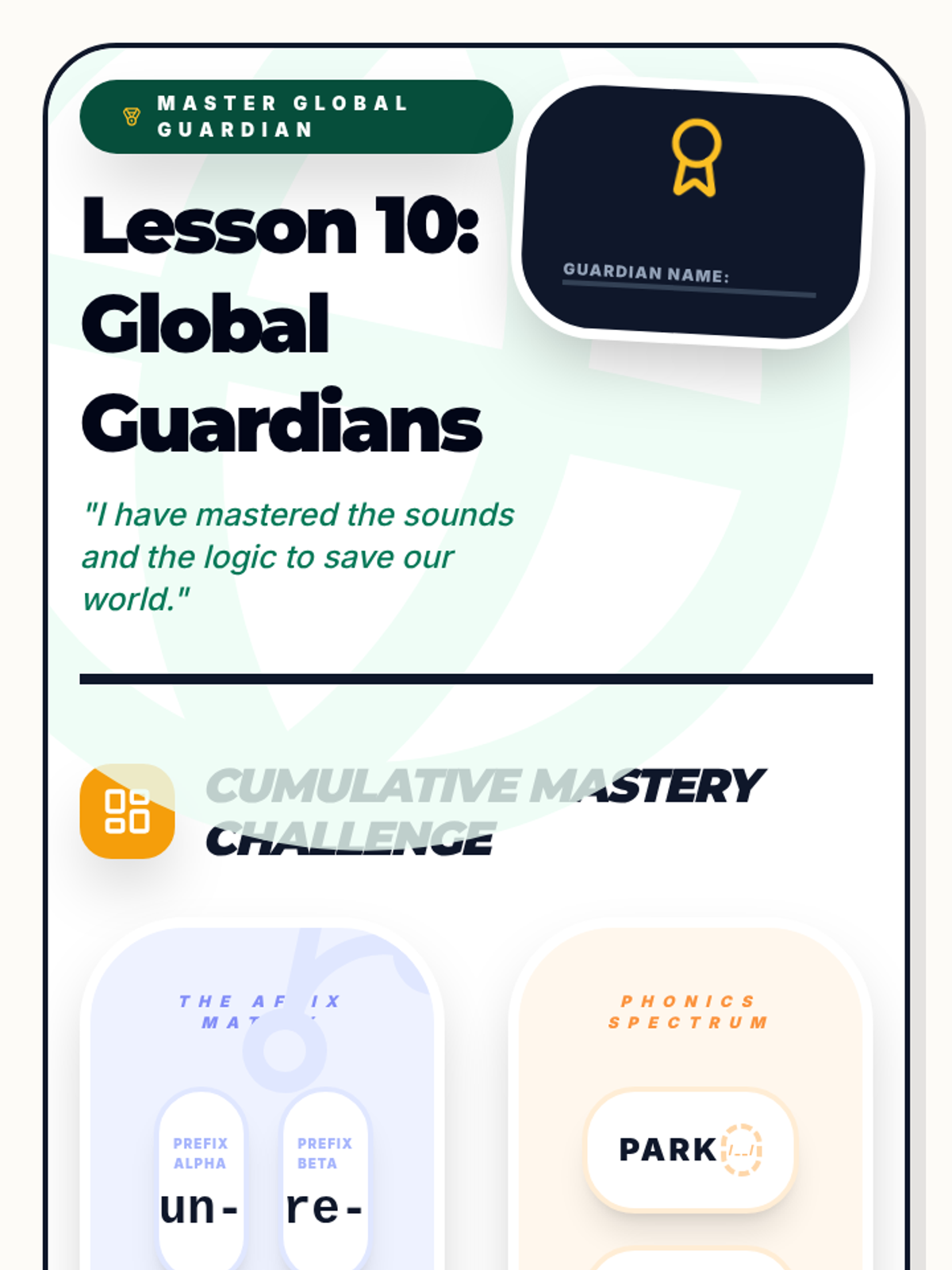
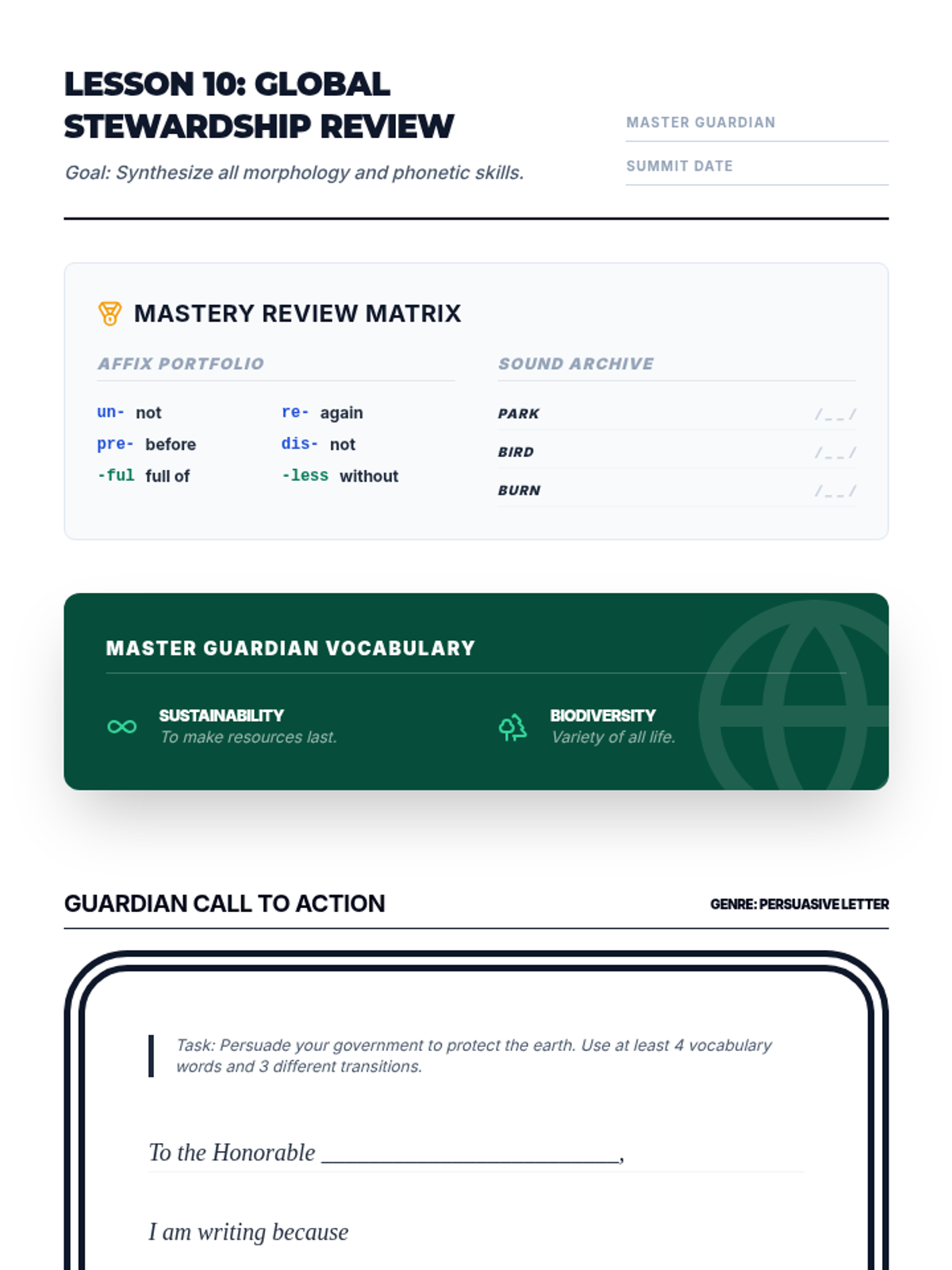
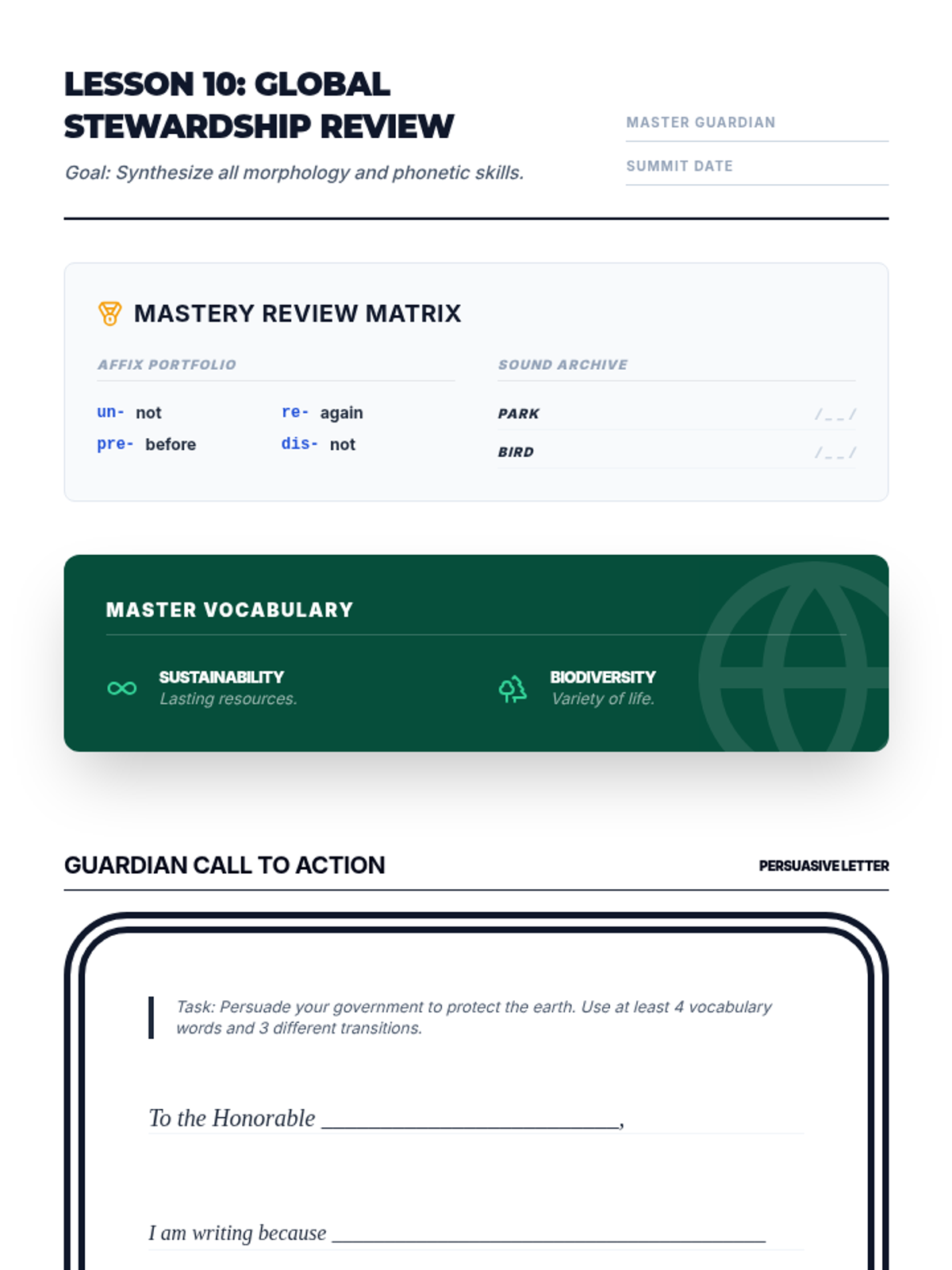
A cumulative review of all morphology, phonics, and writing skills taught. Students compose a final persuasive piece on environmental stewardship.
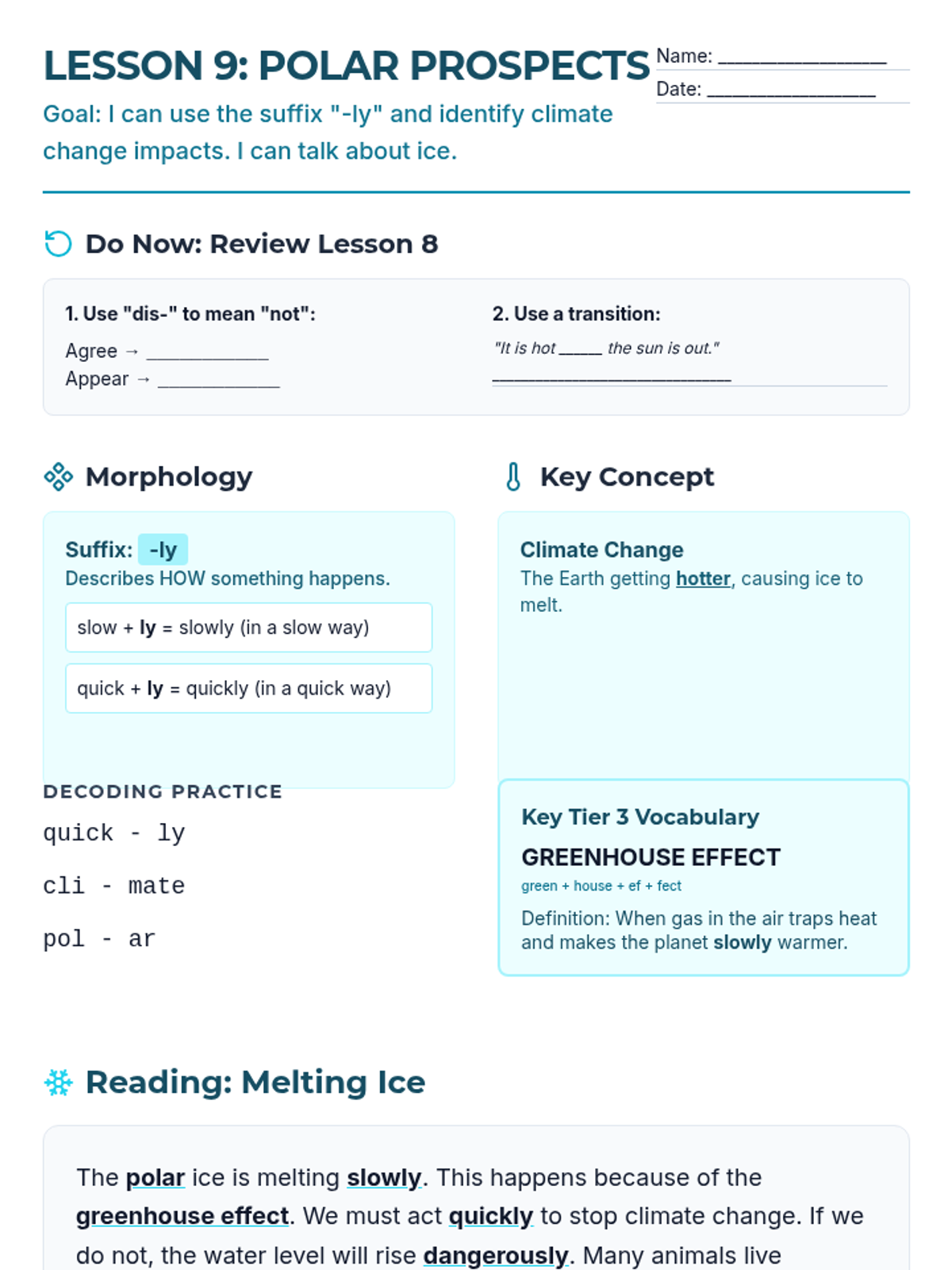
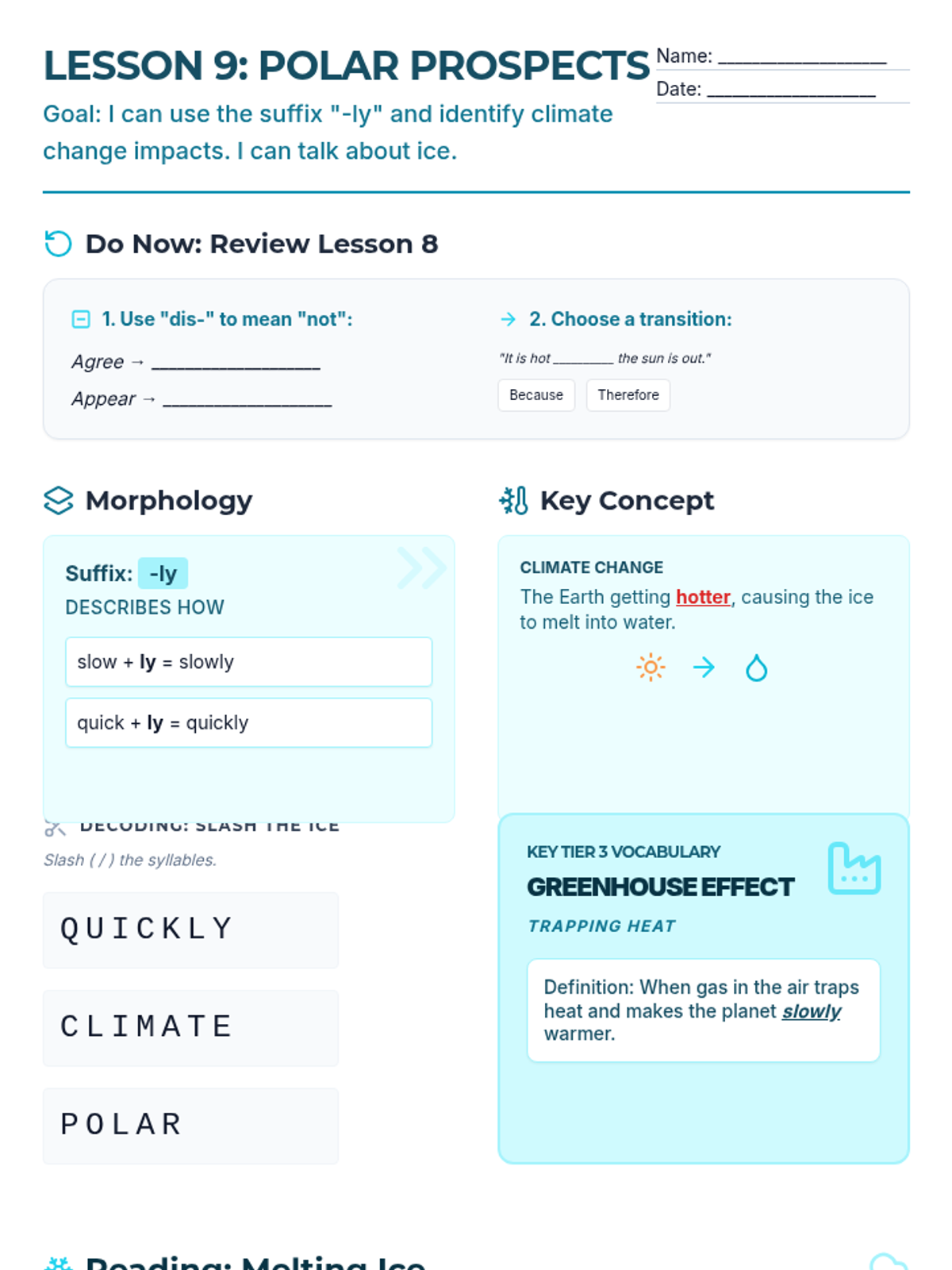
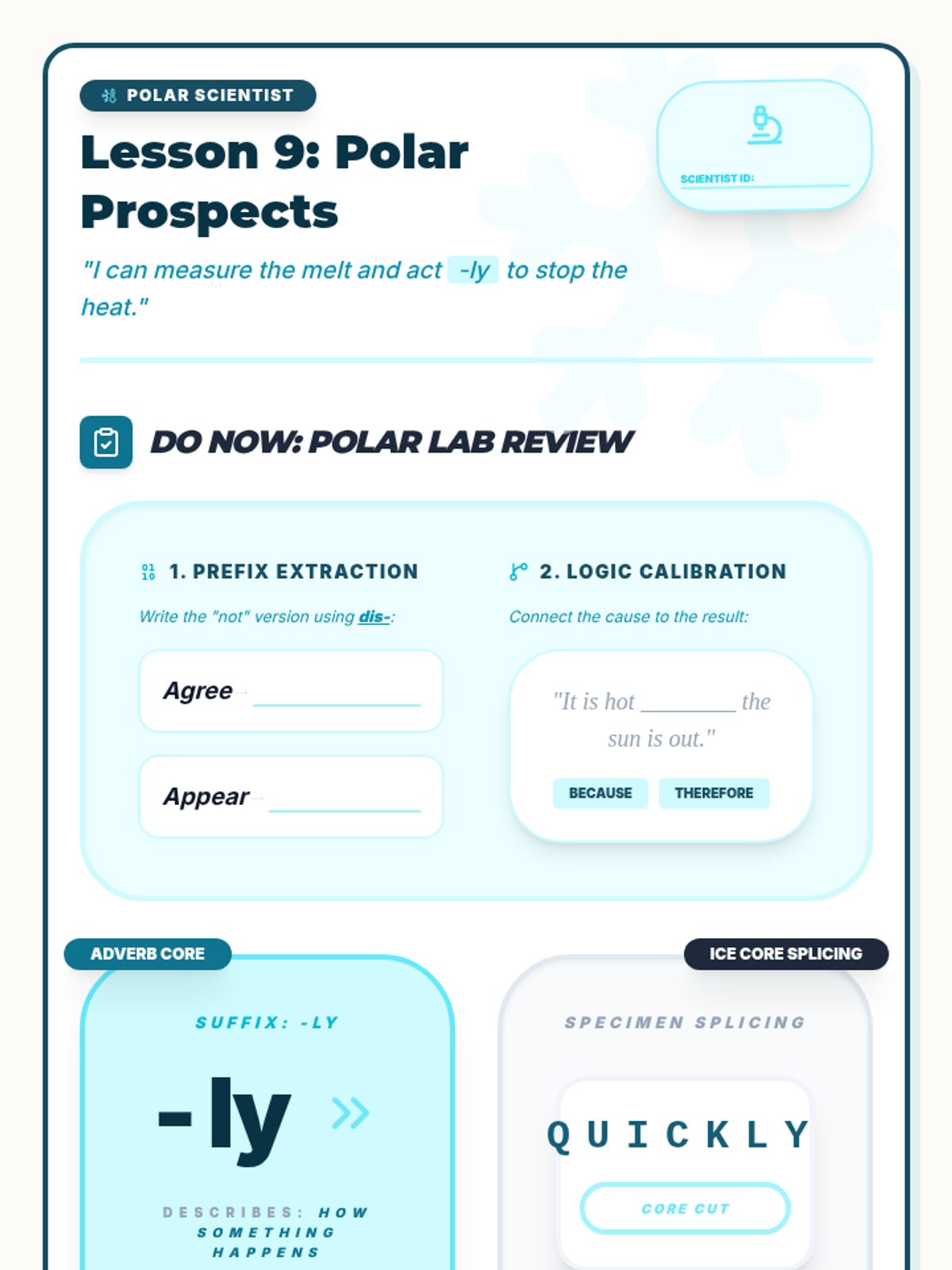
Focusing on the suffix '-ly' and the impact of climate change on polar regions, students practice advanced syllabication and inferential comprehension.
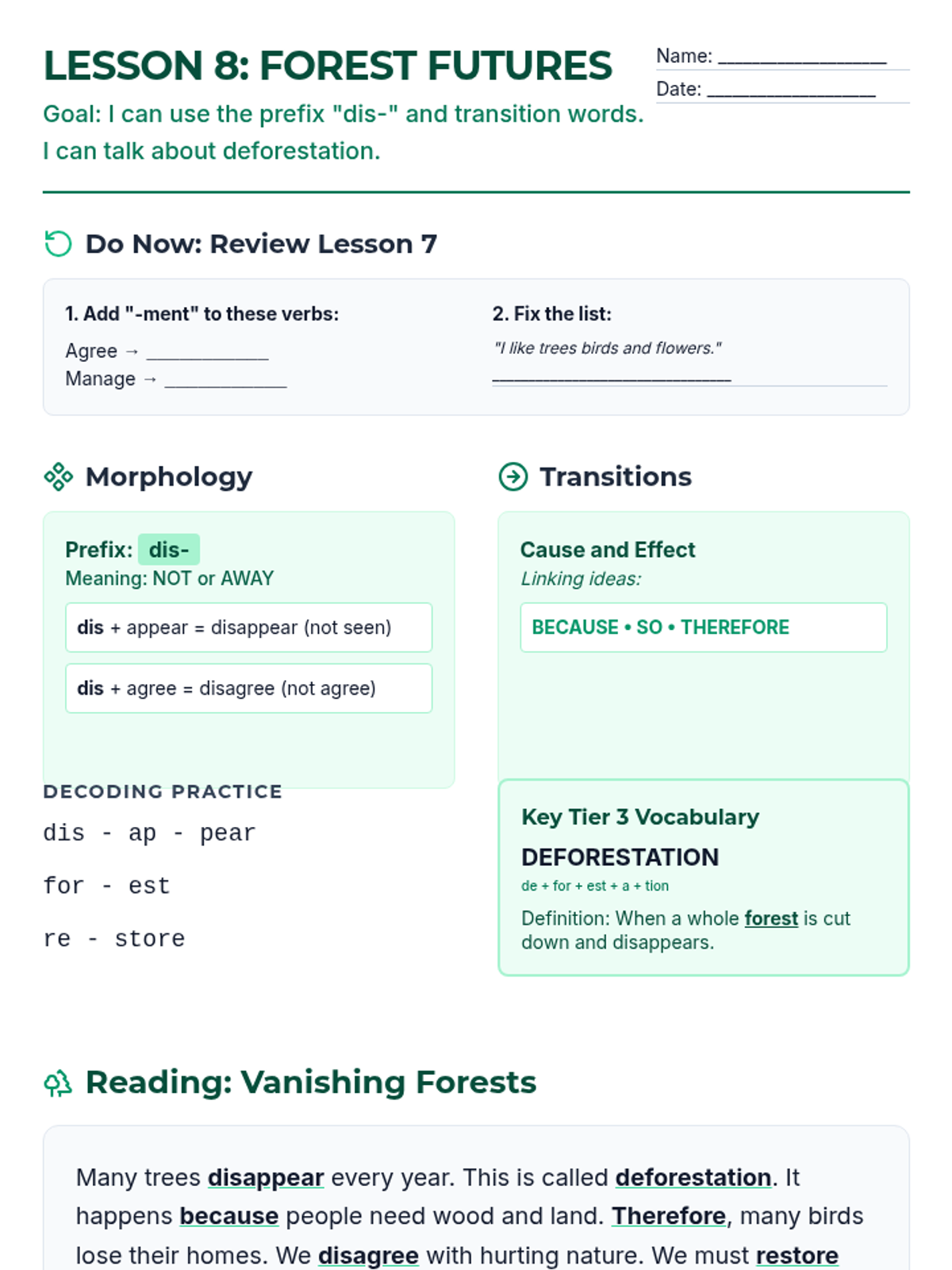
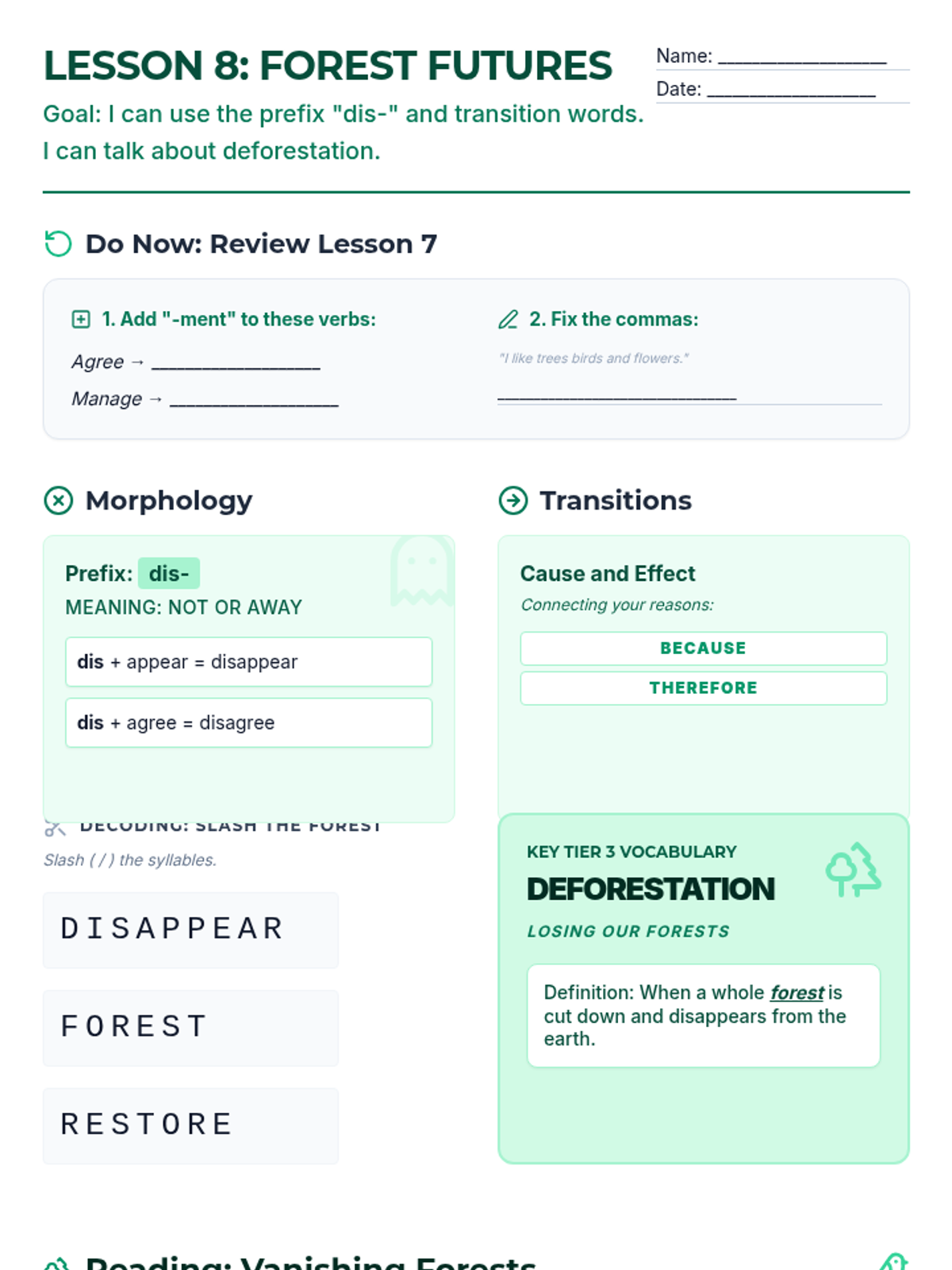
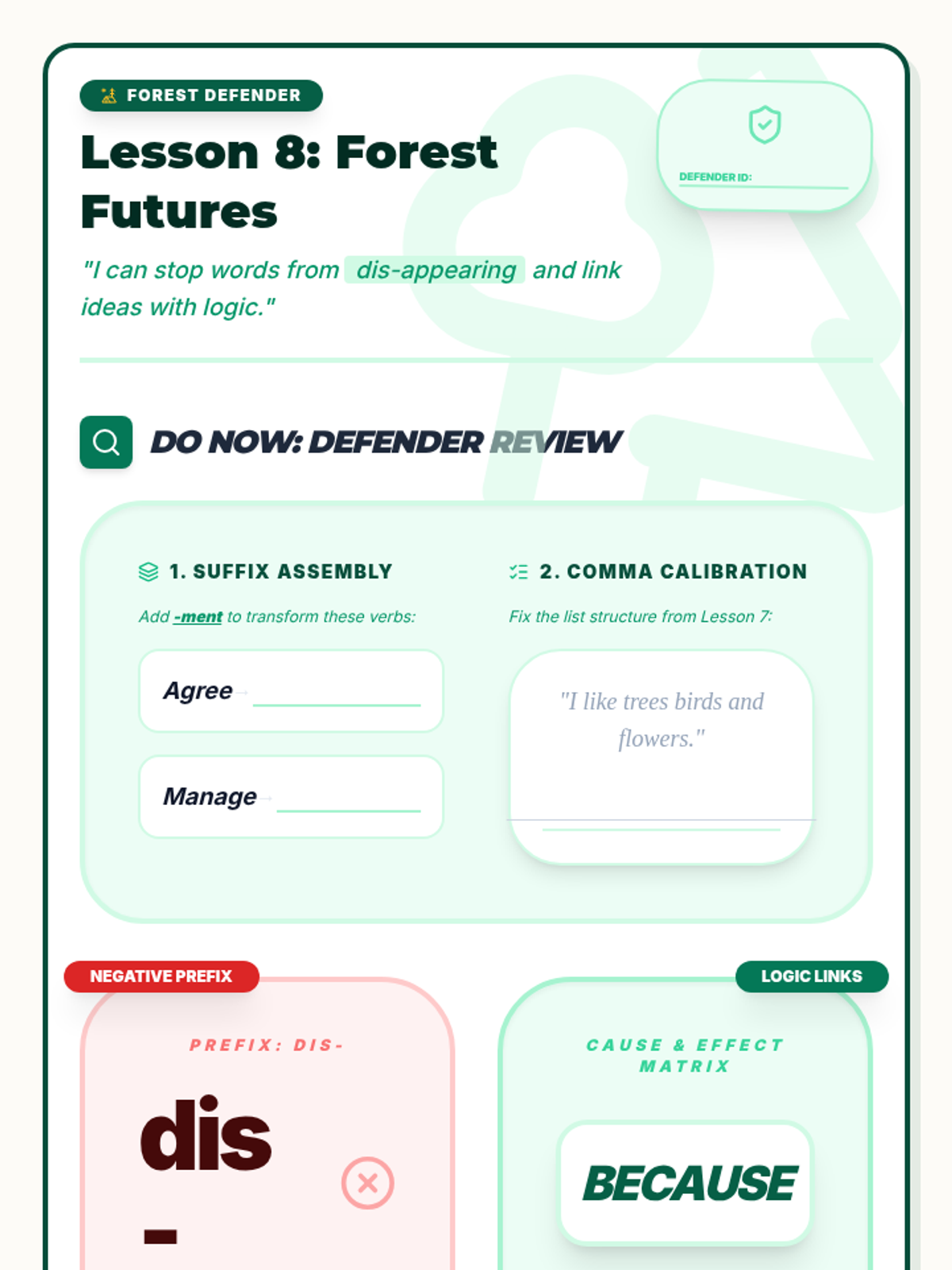
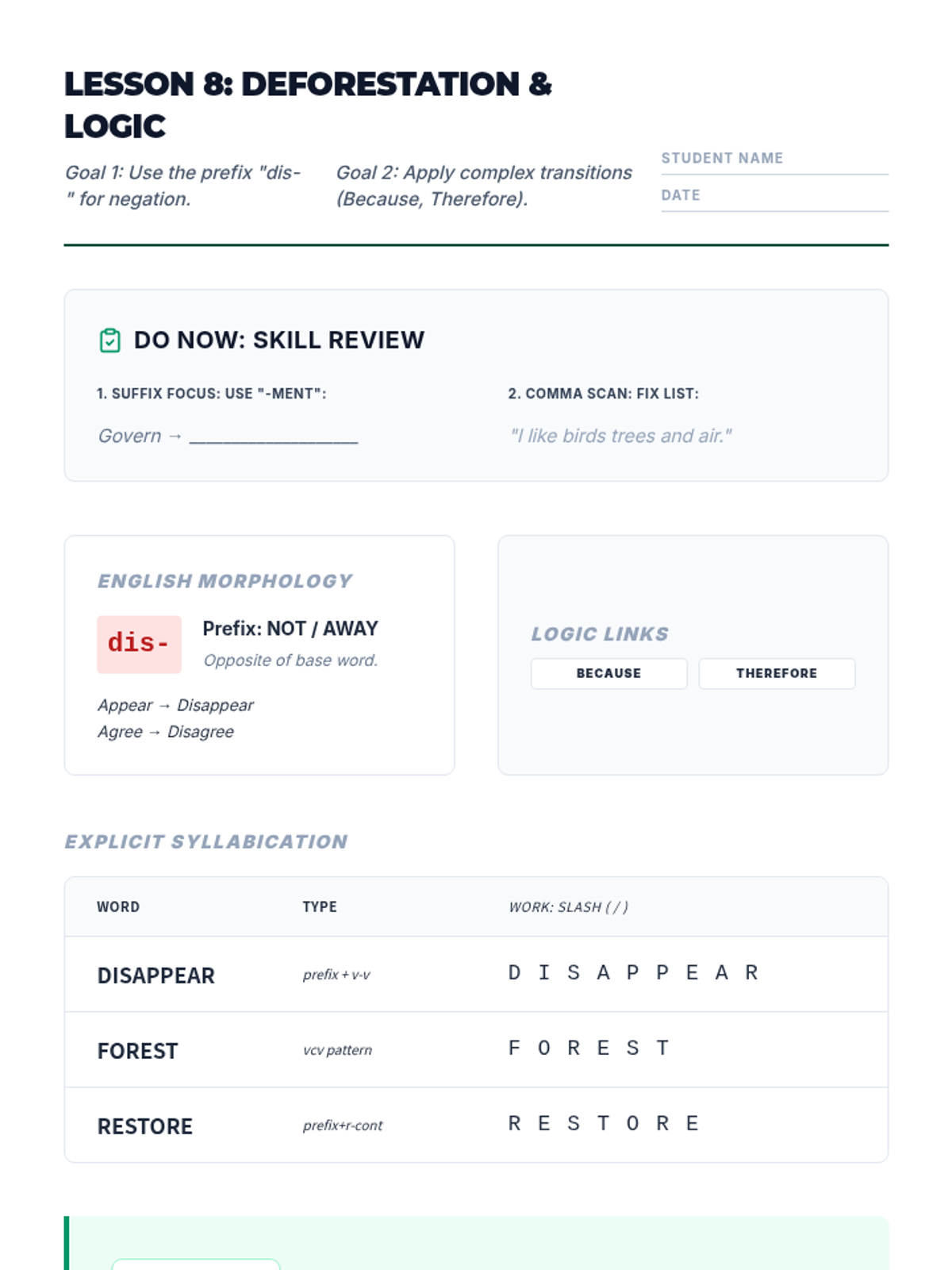
Students explore the prefix 'dis-' and work with complex transitions while learning about the effects of deforestation.
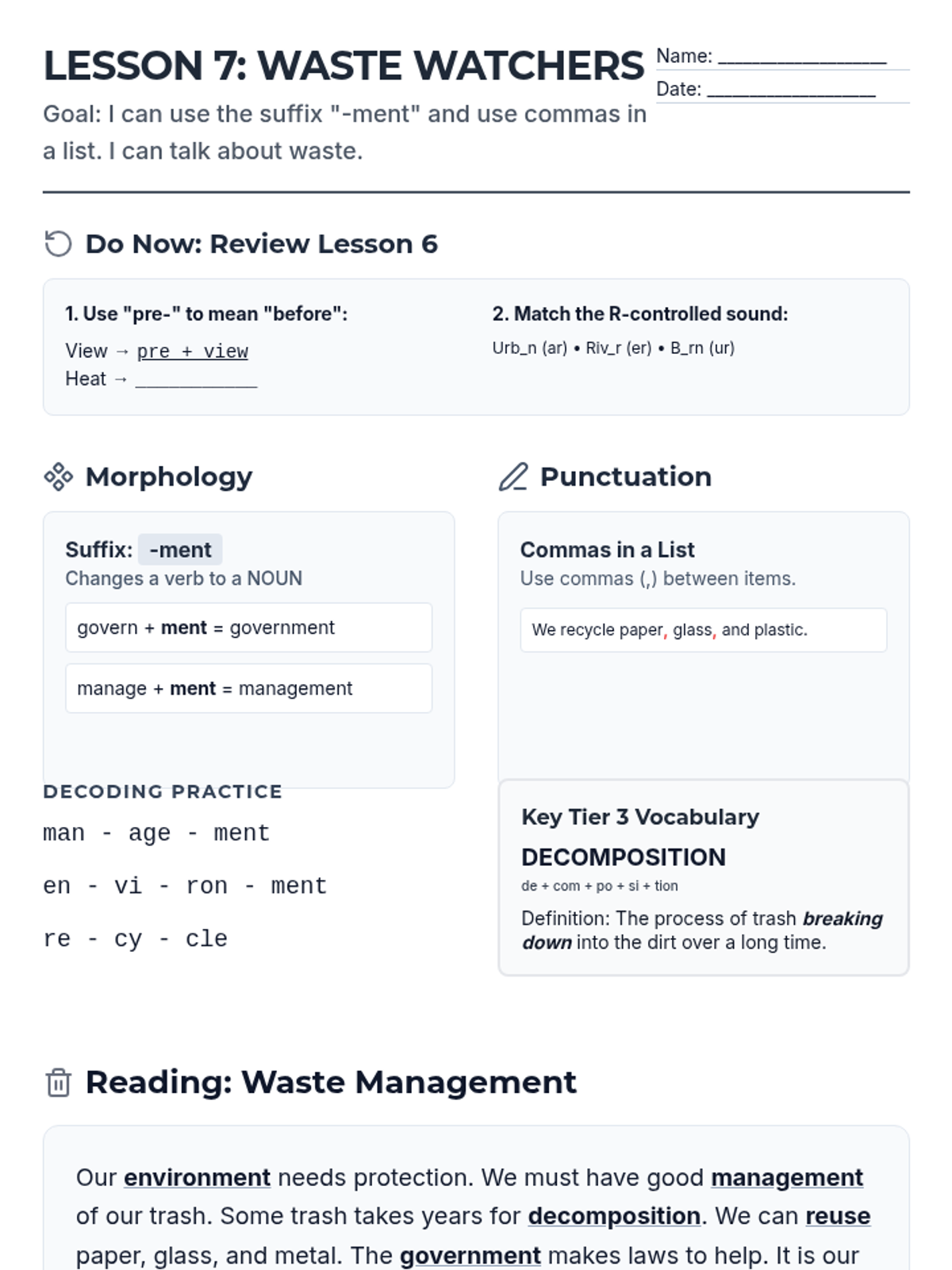
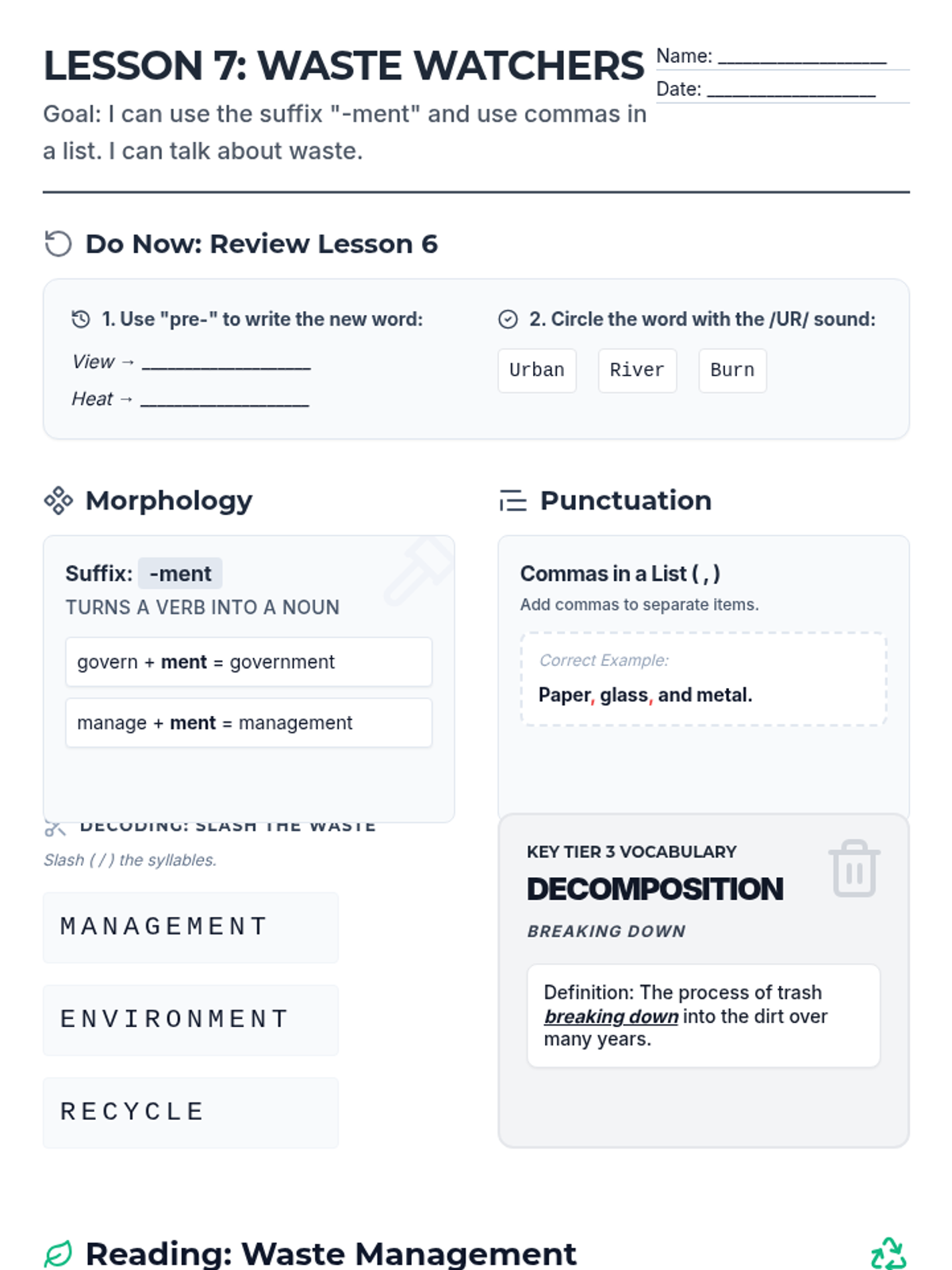
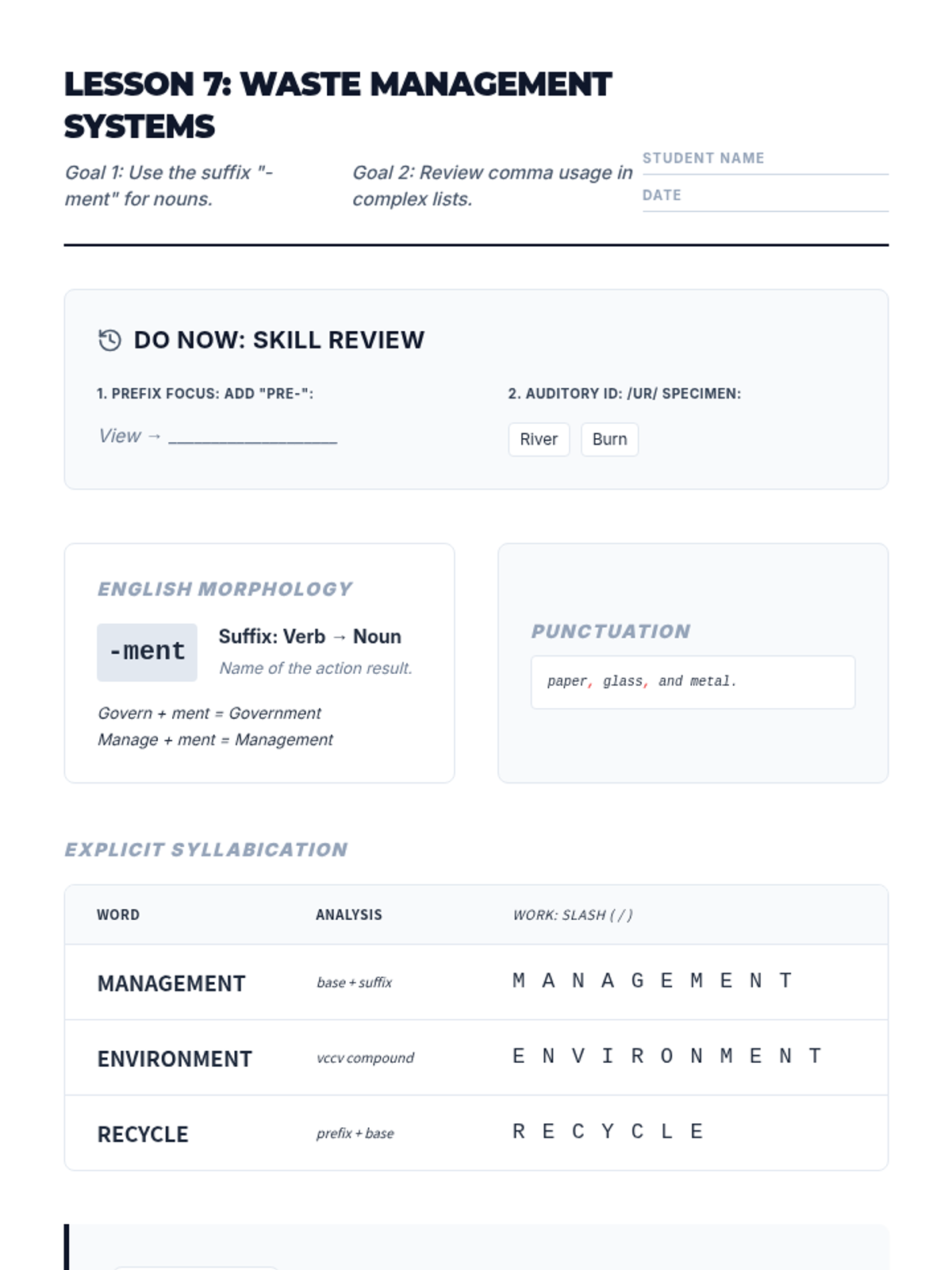
This lesson focuses on the morphology of '-ment' and reviews punctuation, specifically commas in a list, within the context of waste management.
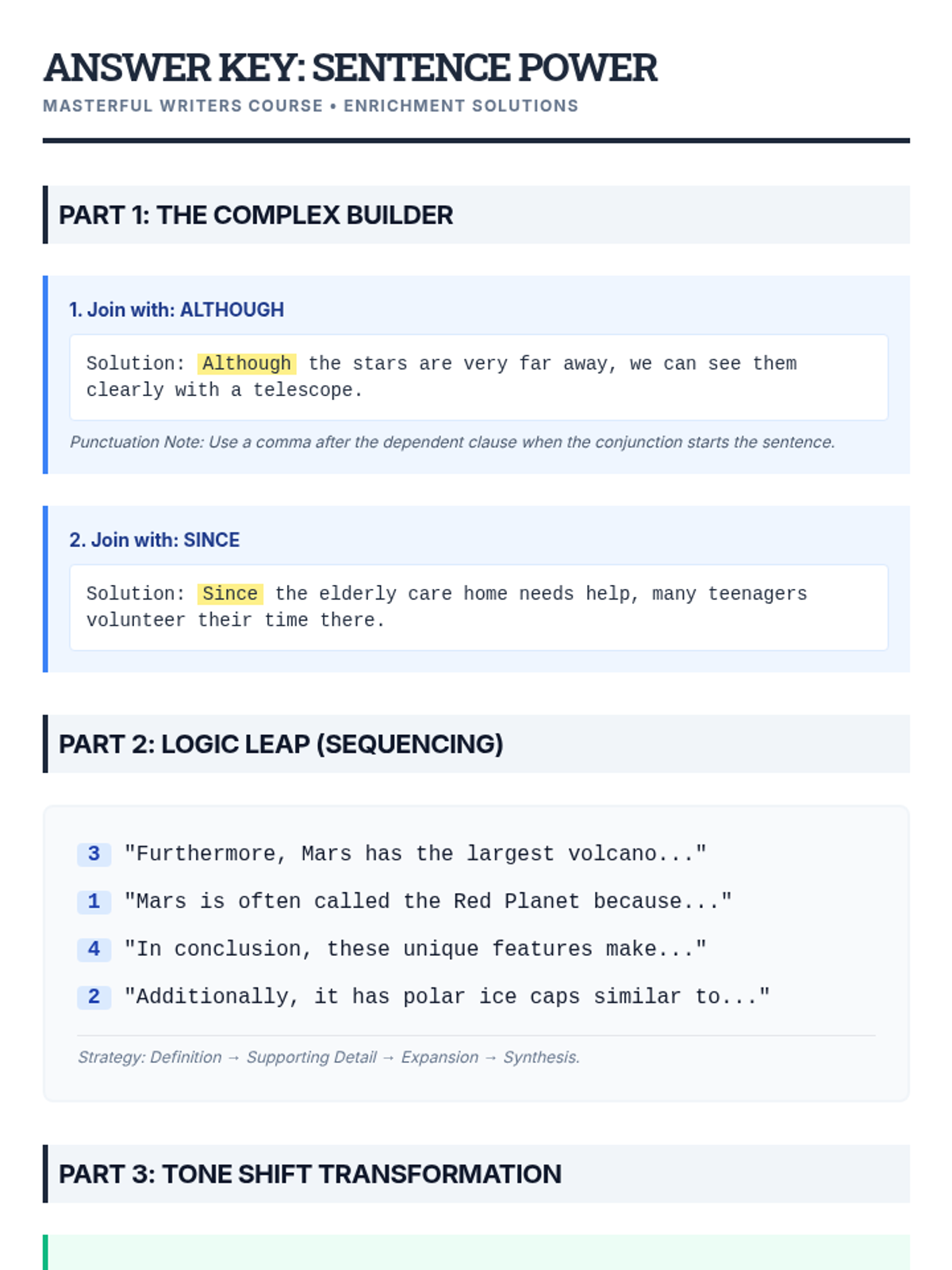
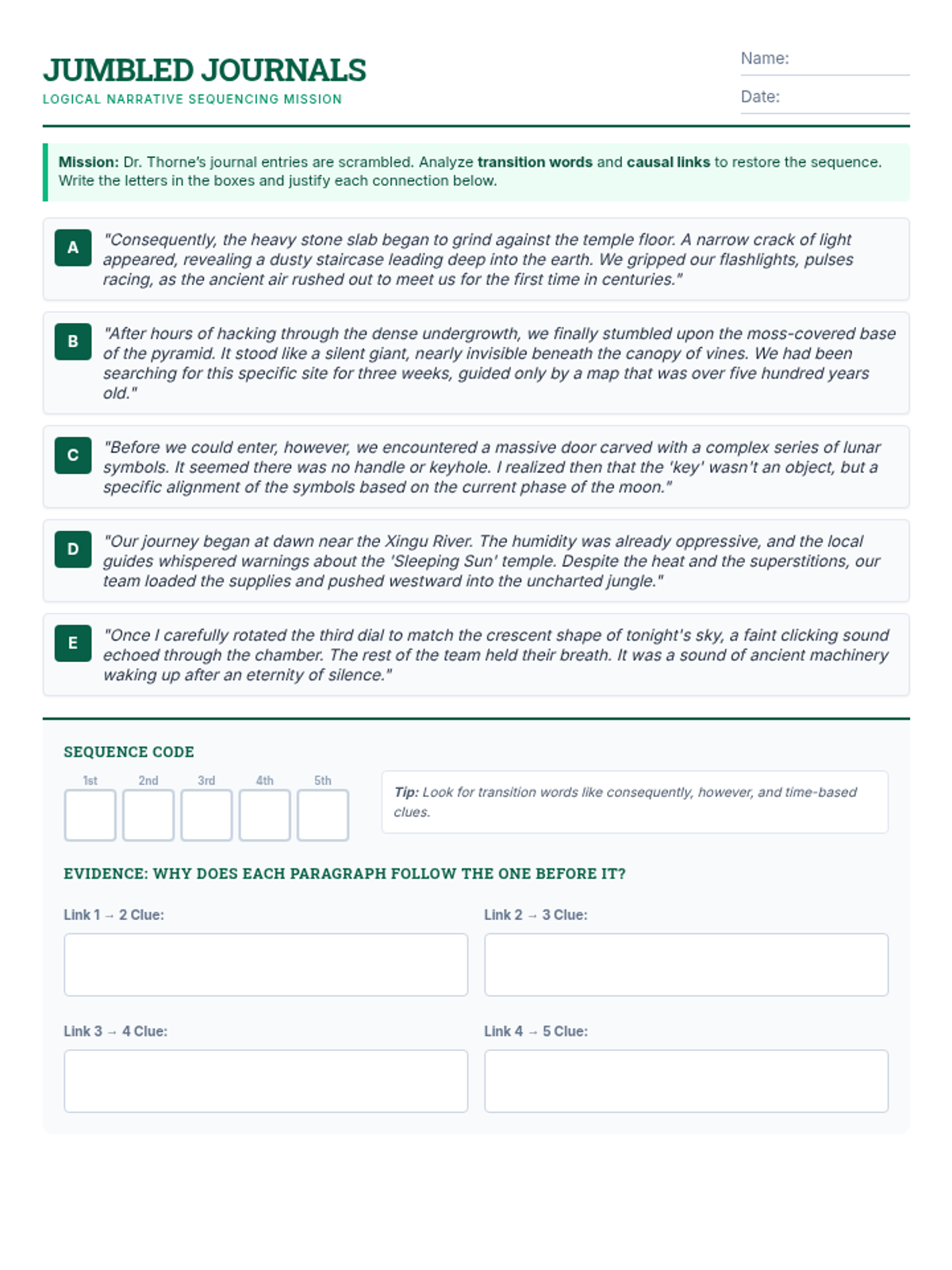
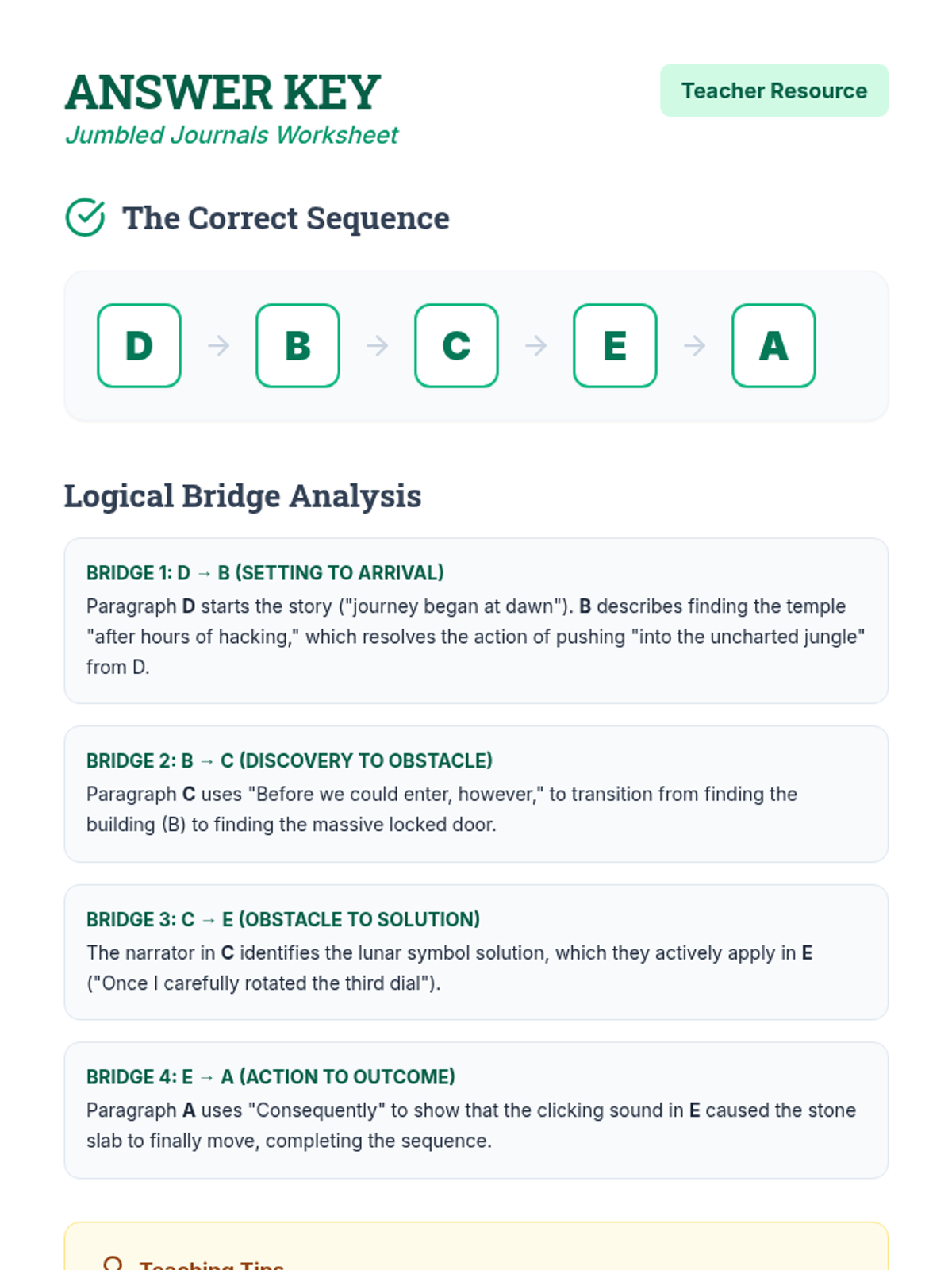
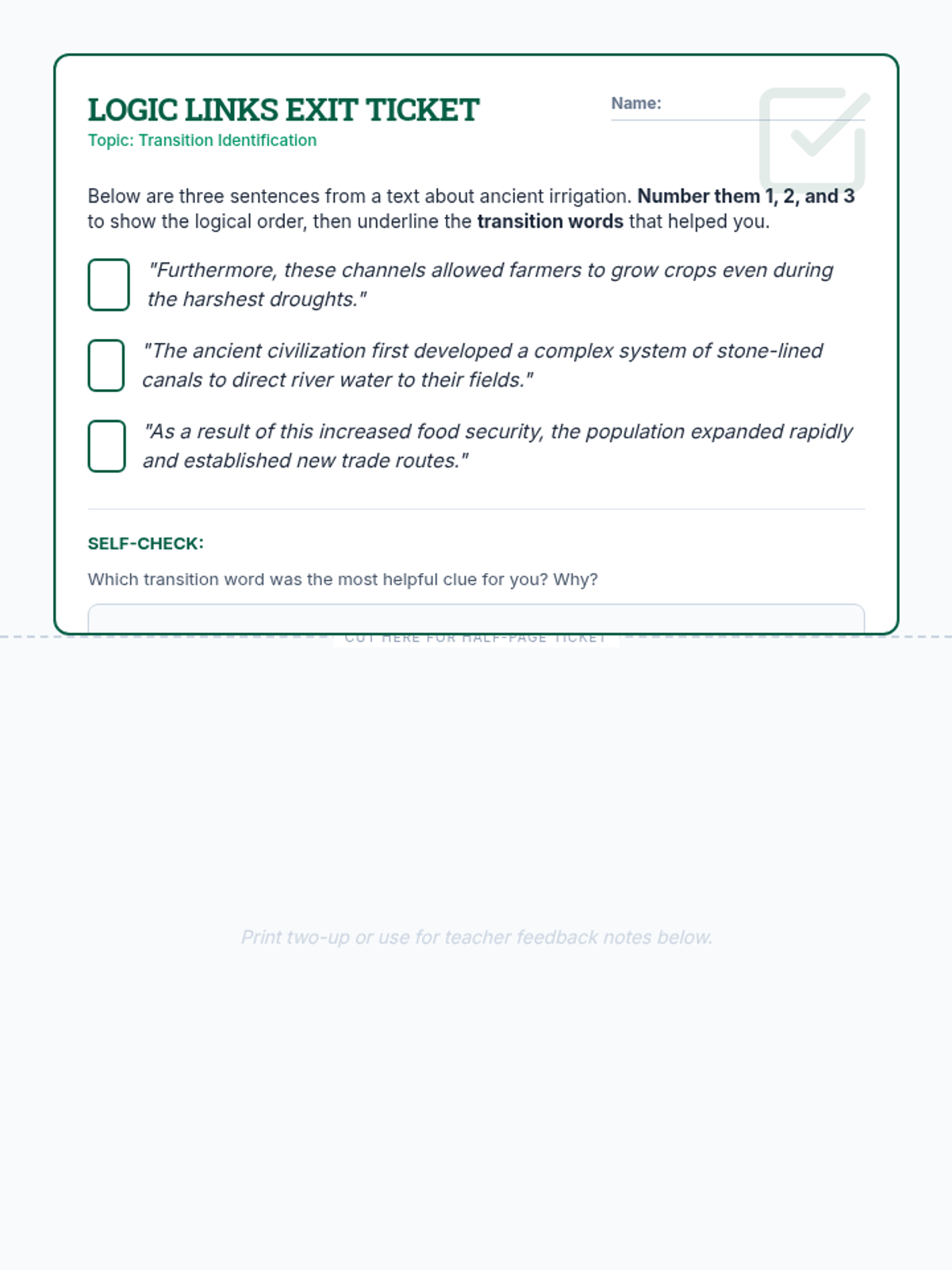
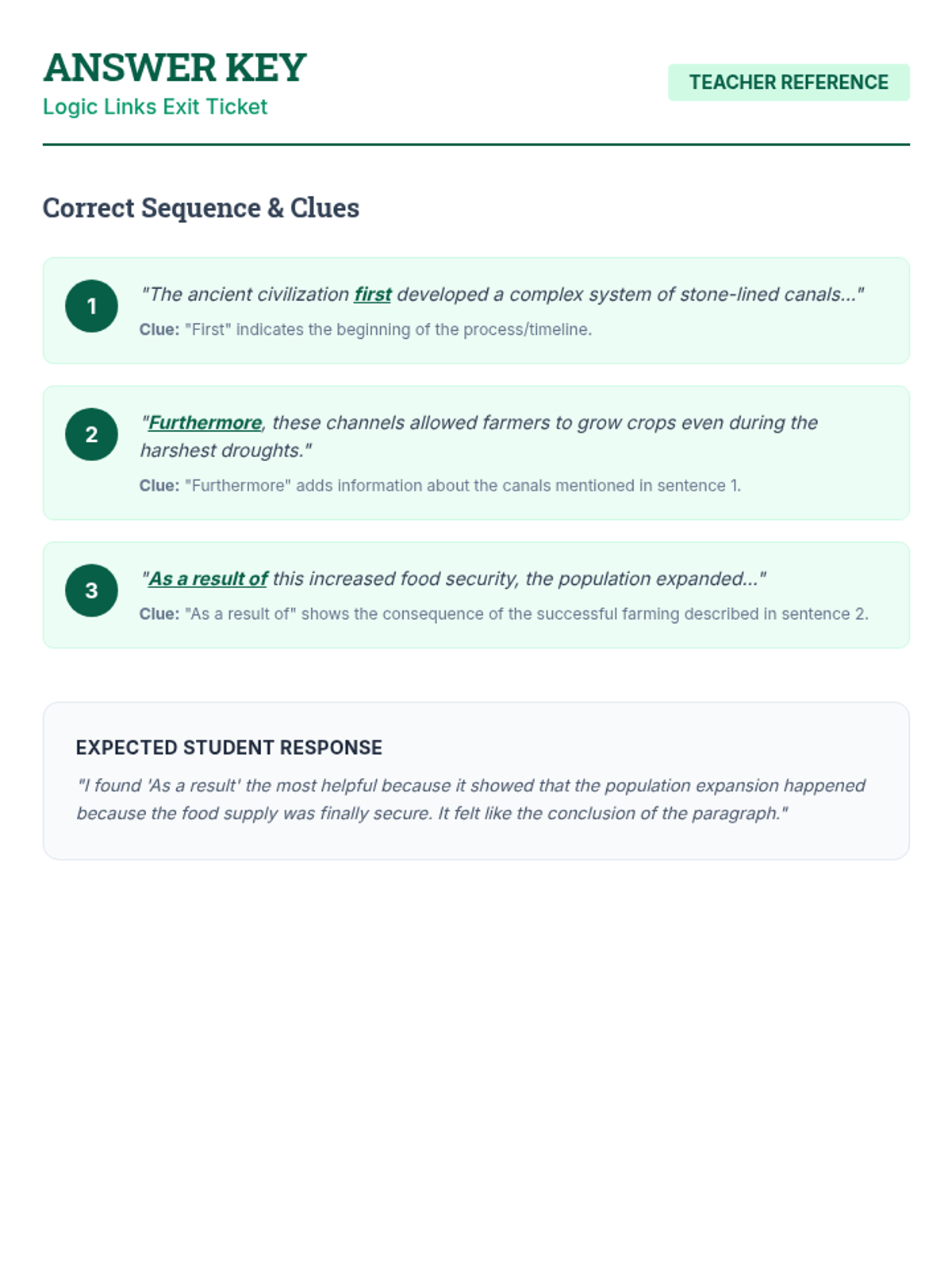
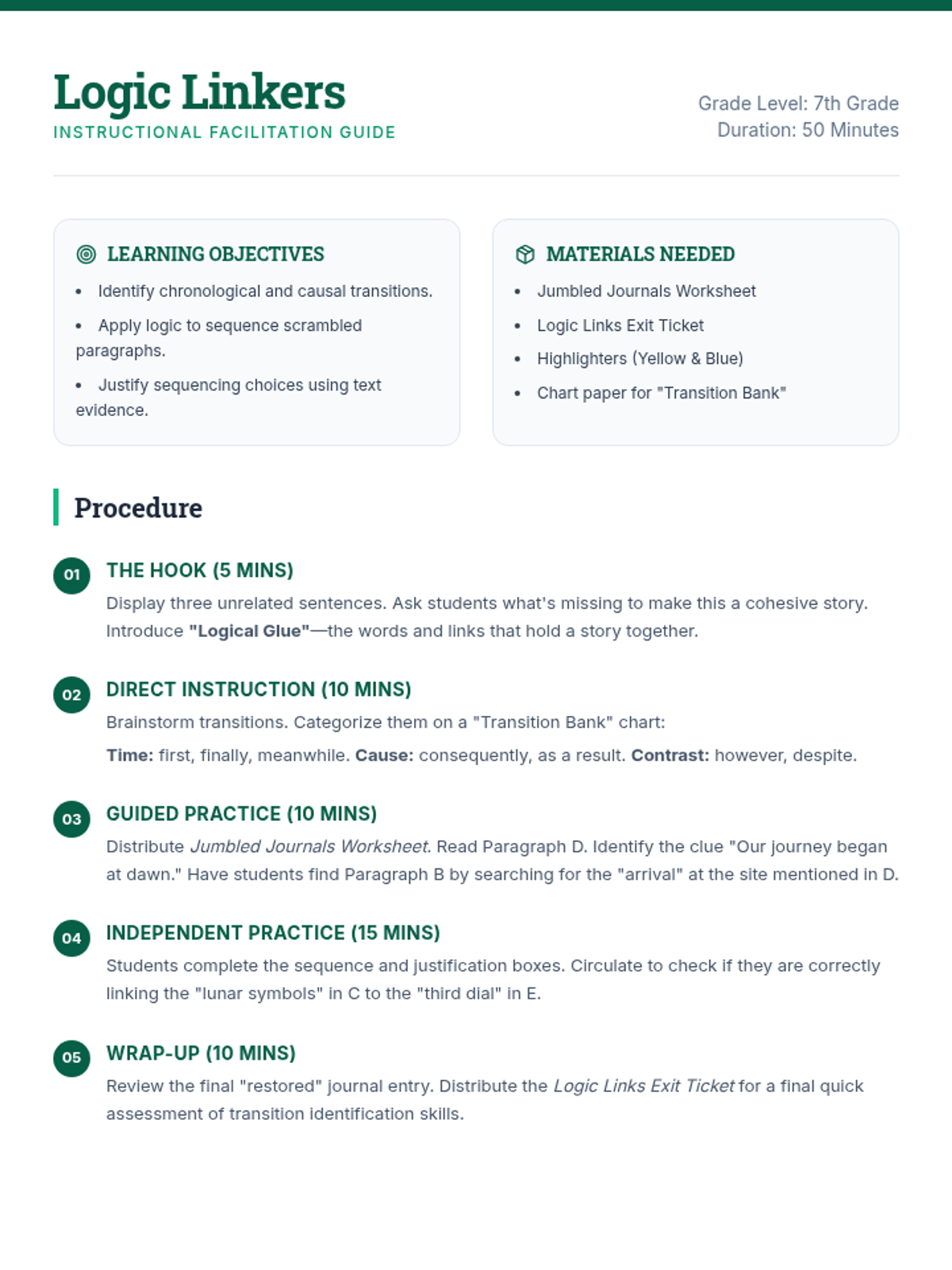
A lesson focused on identifying logical flow and transition markers to reorder scrambled paragraphs into a cohesive narrative or informational text.
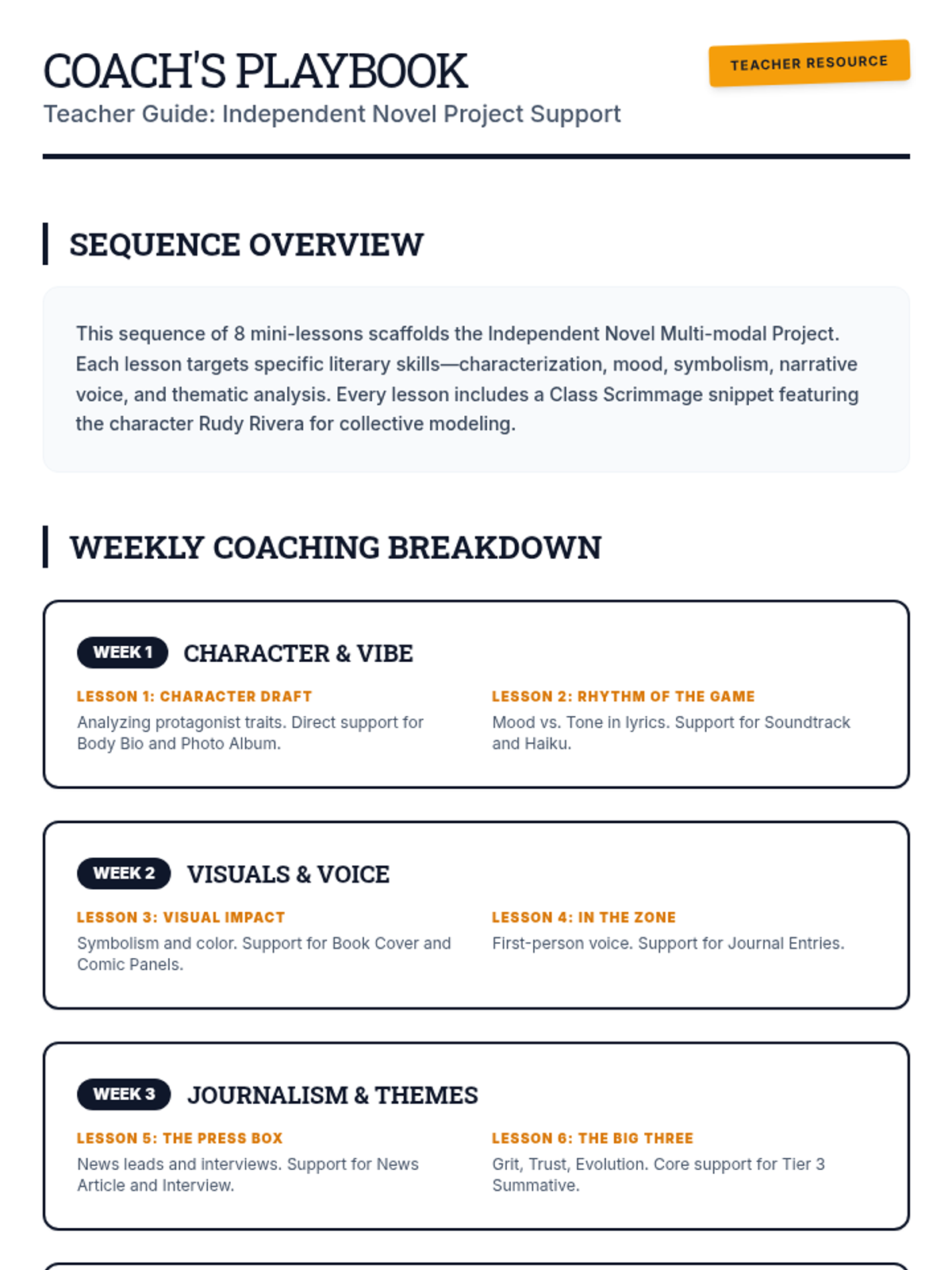
A summary of the sequence's structure and teacher support materials.
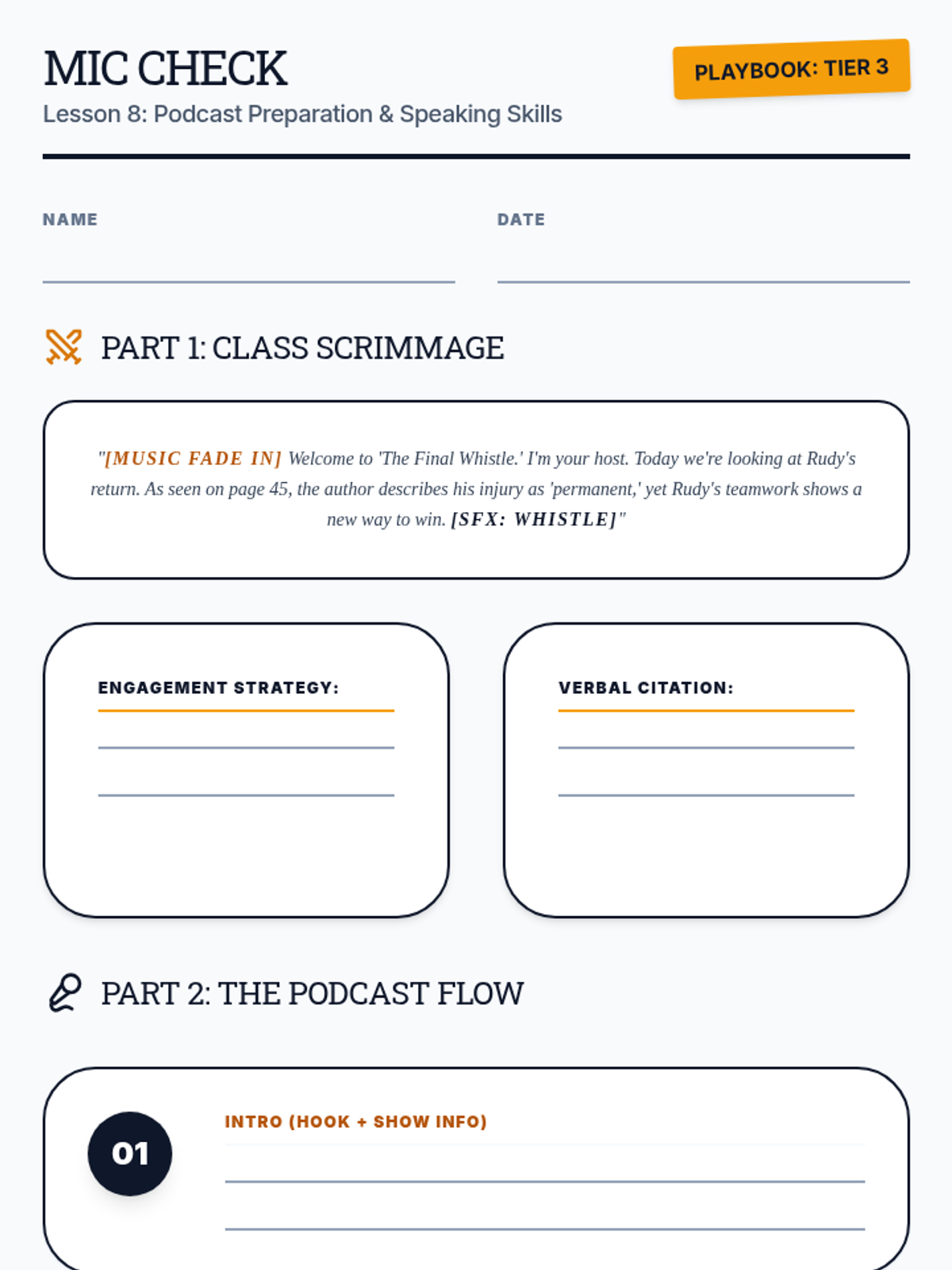
Preparation for the 'Book Talk' podcast assignment, focusing on speaking skills, verbal citations, and audio engagement.
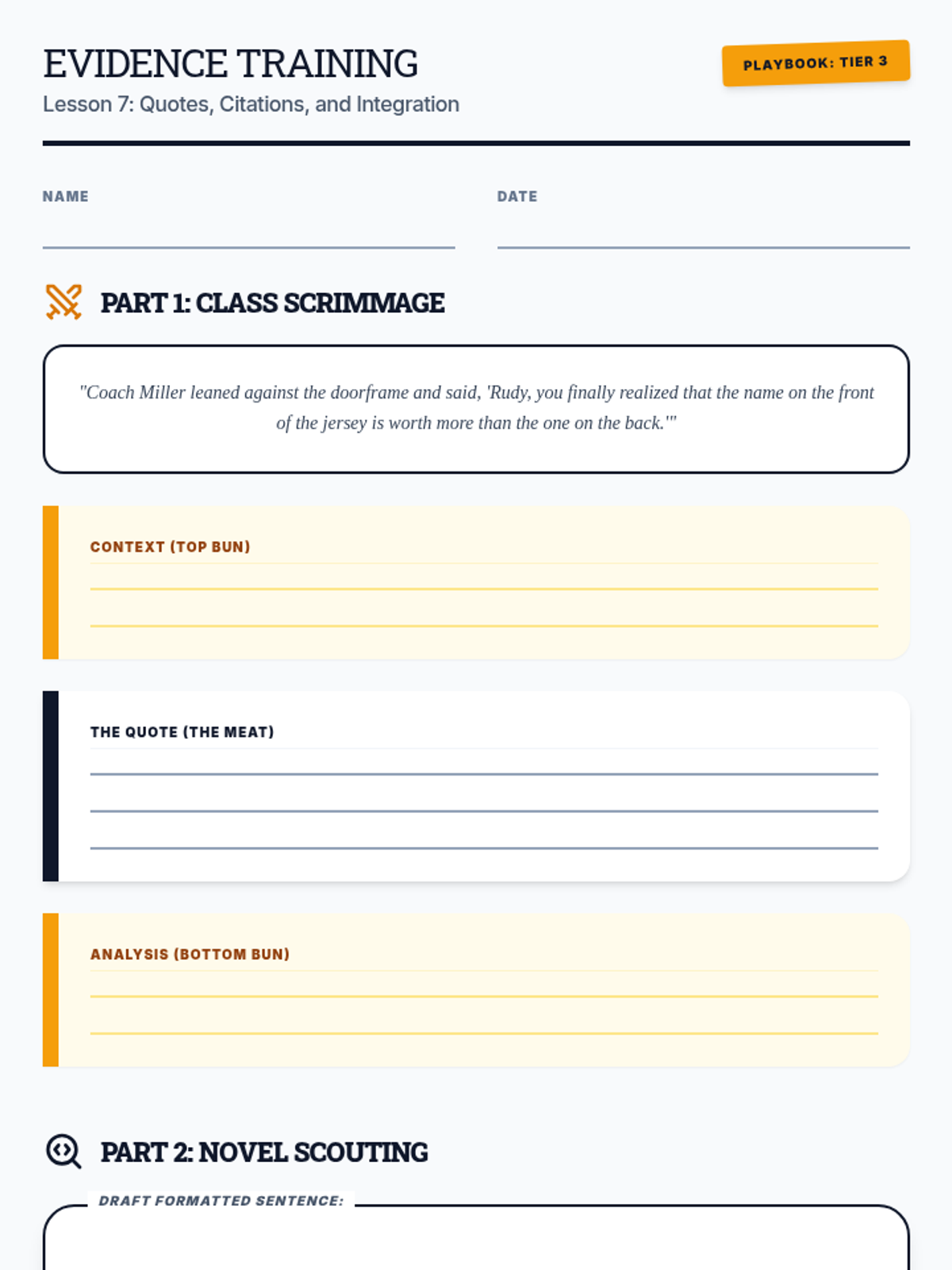
Guided practice on selecting and integrating textual evidence to support literary analysis in essays and responses.
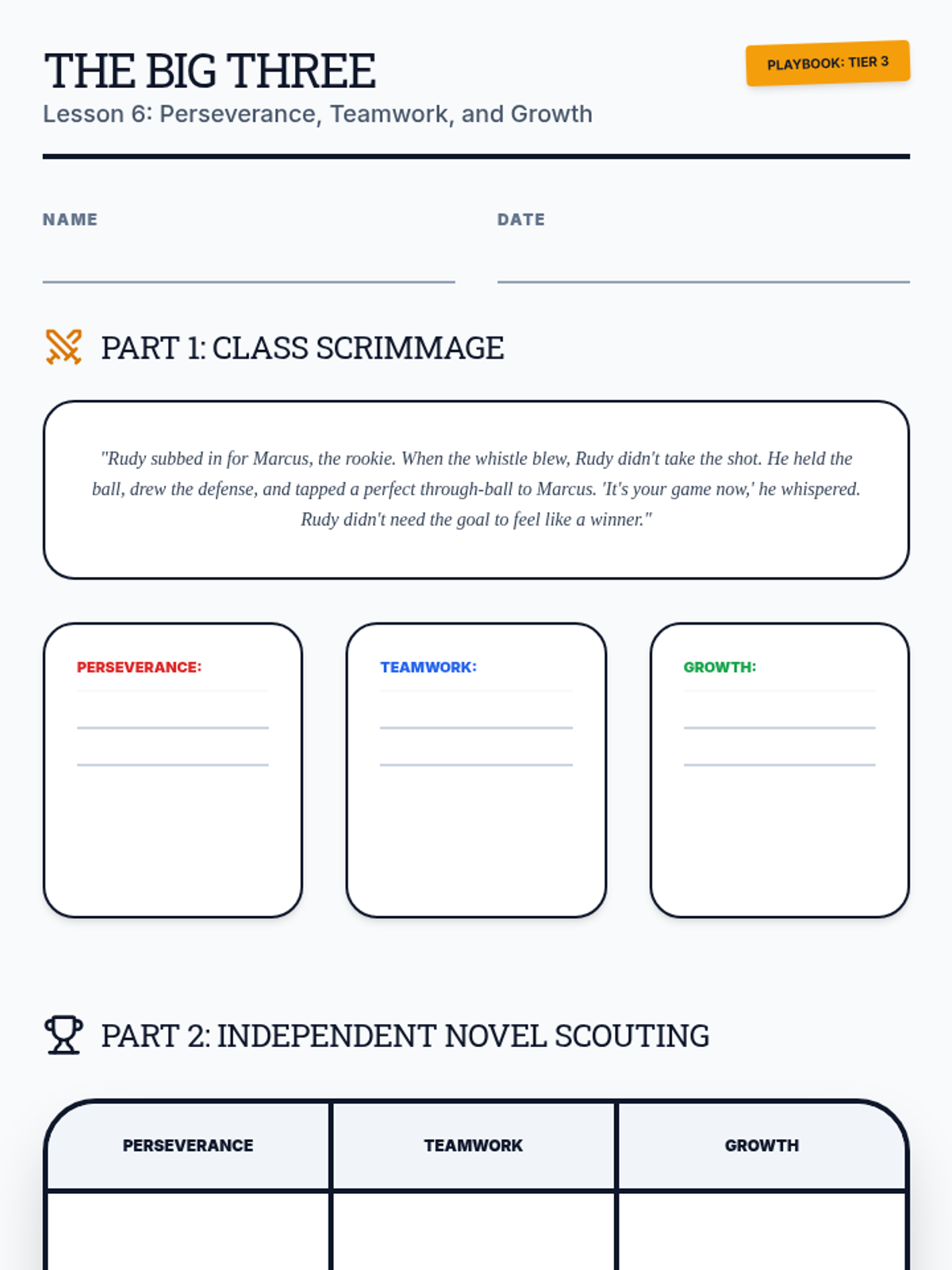
Deep dive into the core themes of perseverance, teamwork, and personal growth required for the final summative projects.
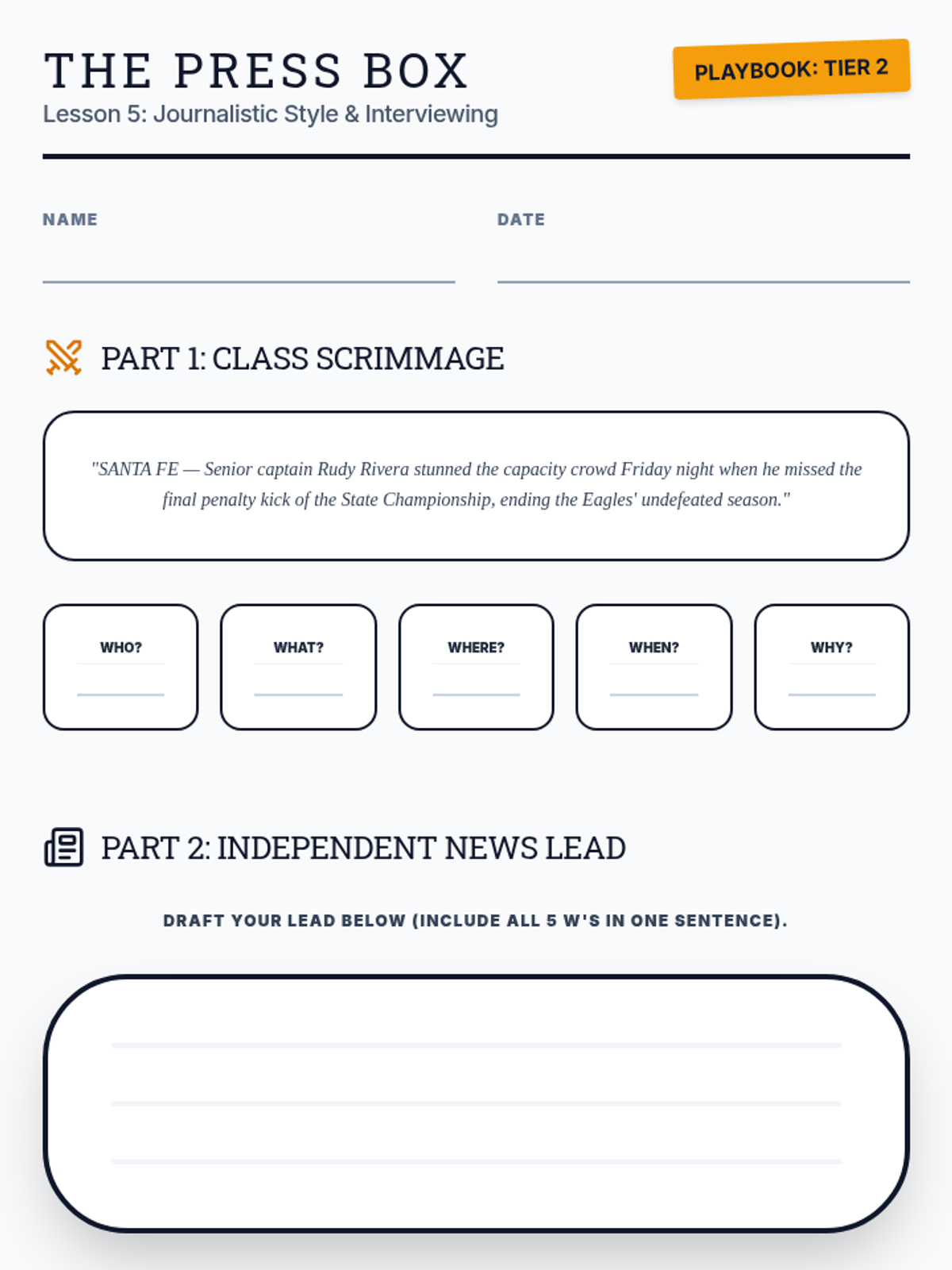
Understanding the conventions of sports journalism and interviewing techniques for news articles and player/coach interviews.
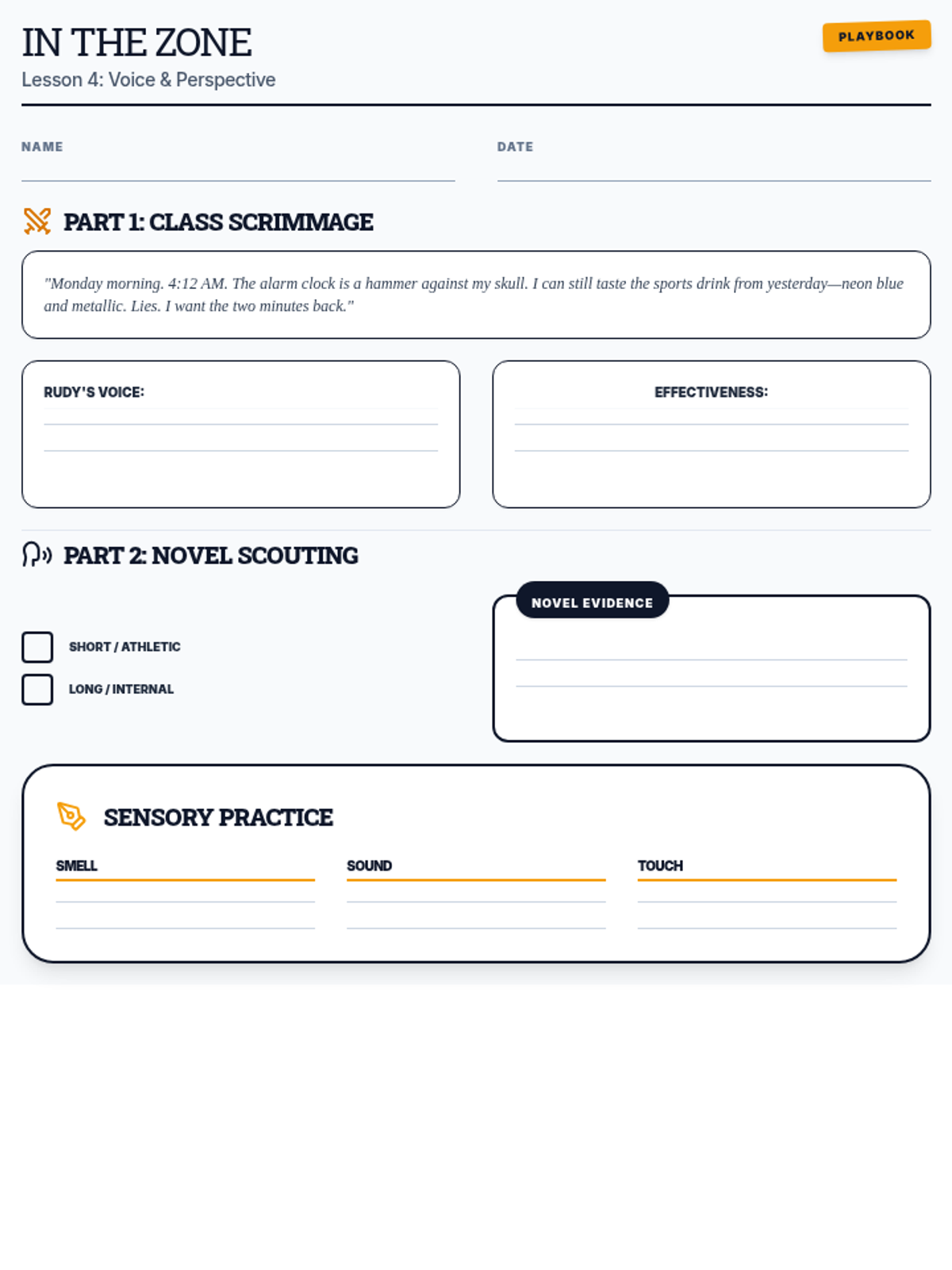
Focusing on narrative voice and internal monologue to support the creation of authentic character journal entries.
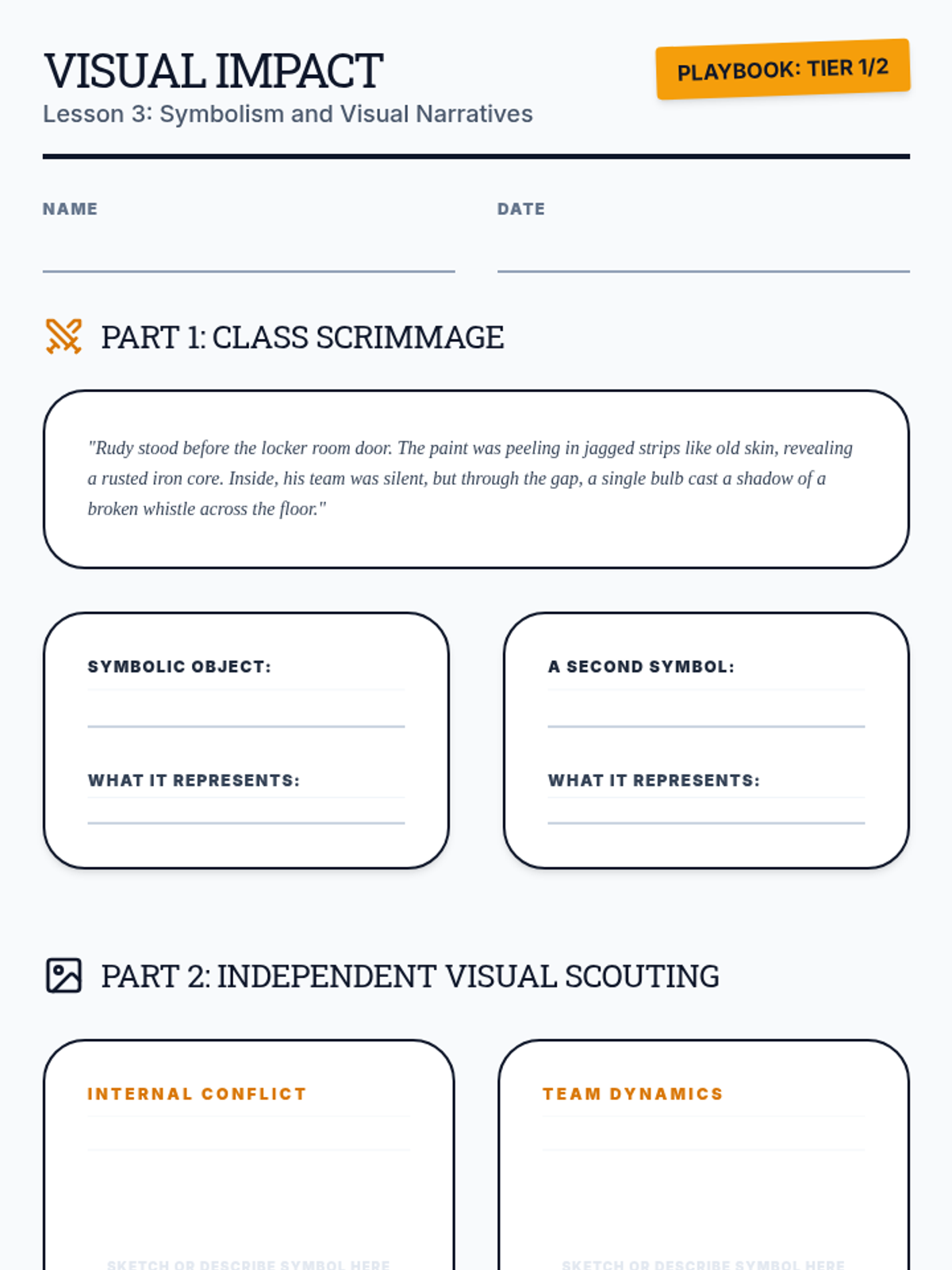
Teaching the use of symbolism in visual storytelling to help students design alternate book covers and comic strips.
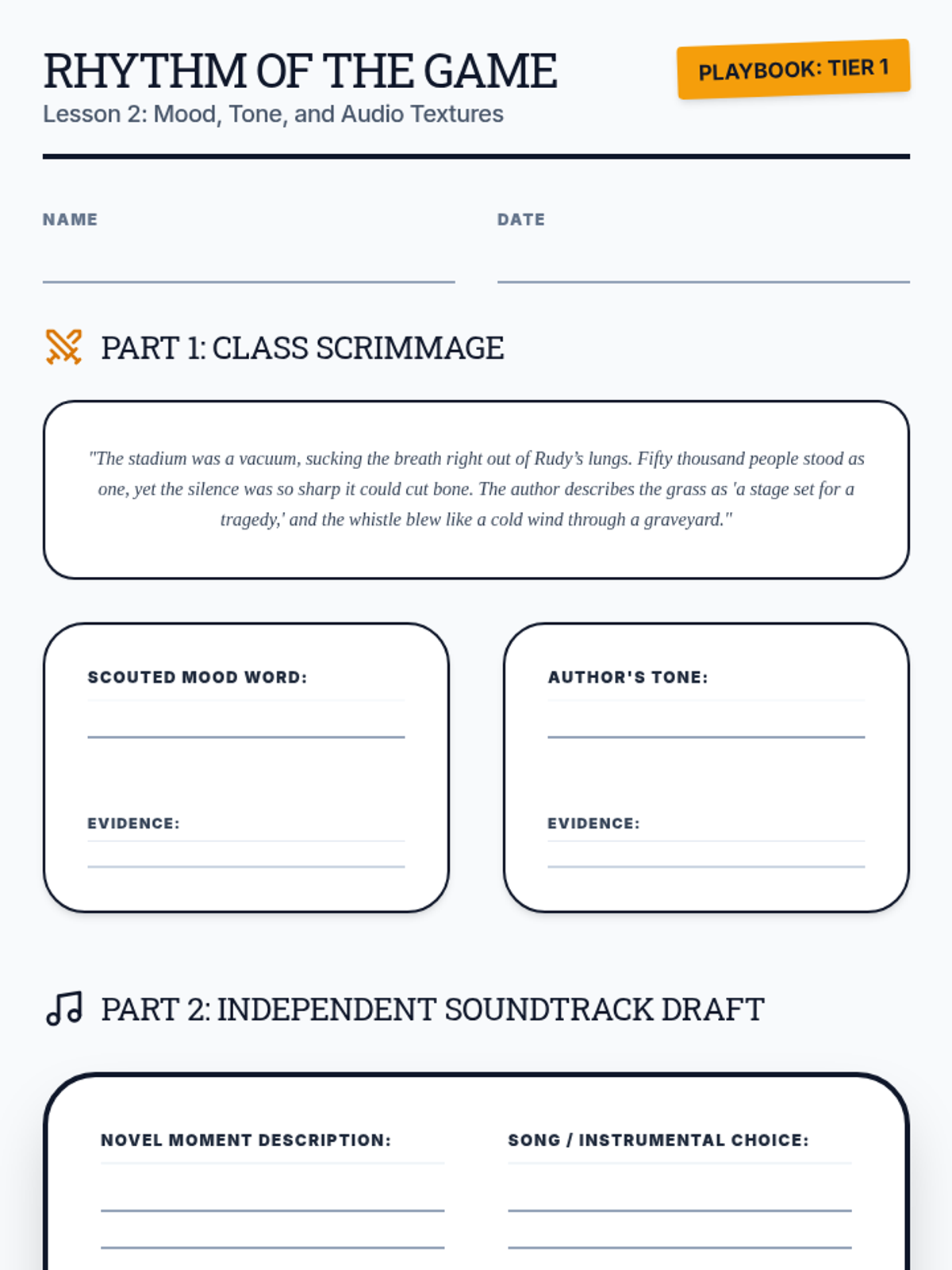
Exploring how mood and tone are established through music and poetry to support the Book Soundtrack and Haiku assignments.
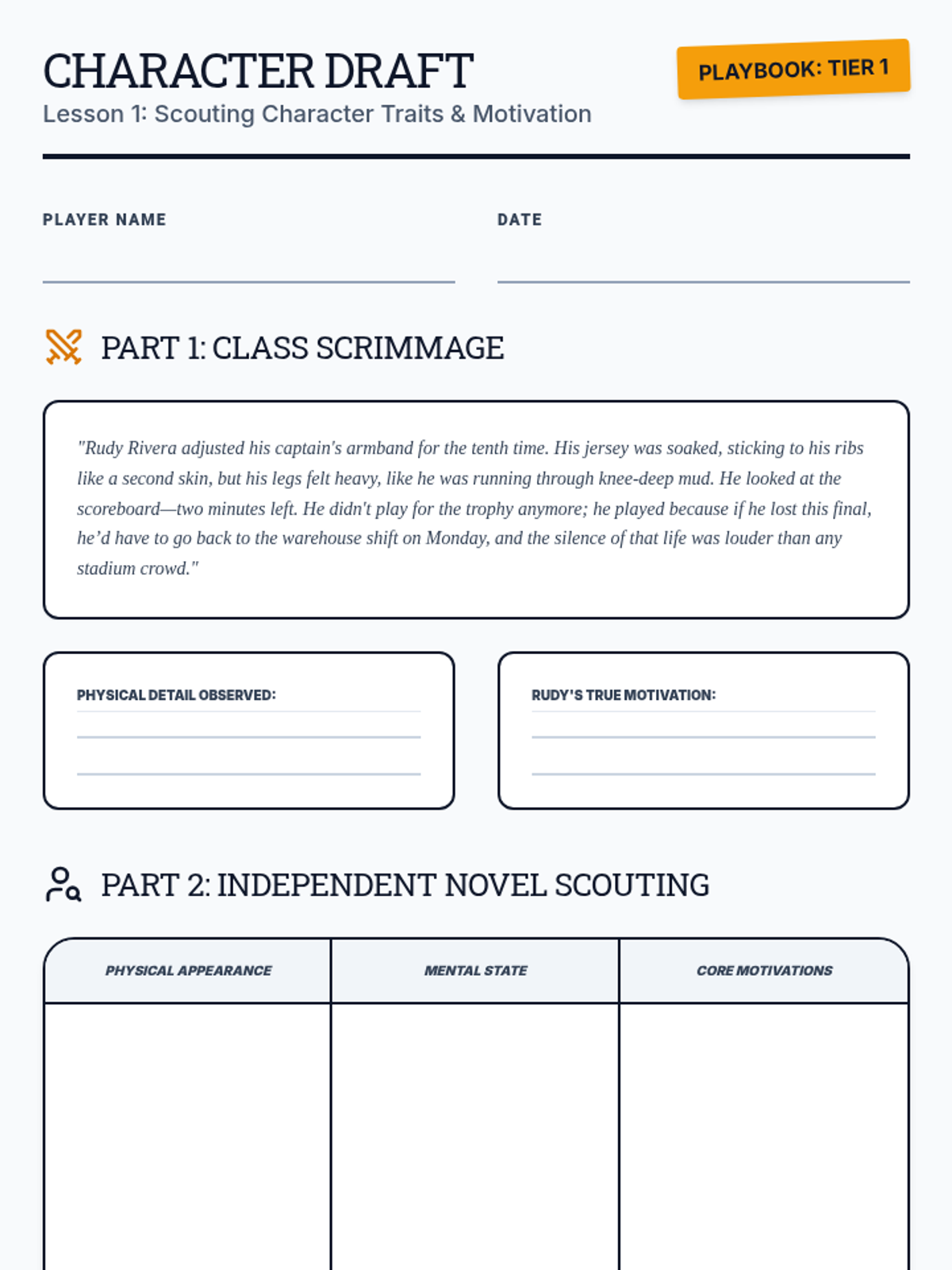
Students learn to analyze character traits and motivations to build a 'Body Biography' or curate a character-driven photo album.
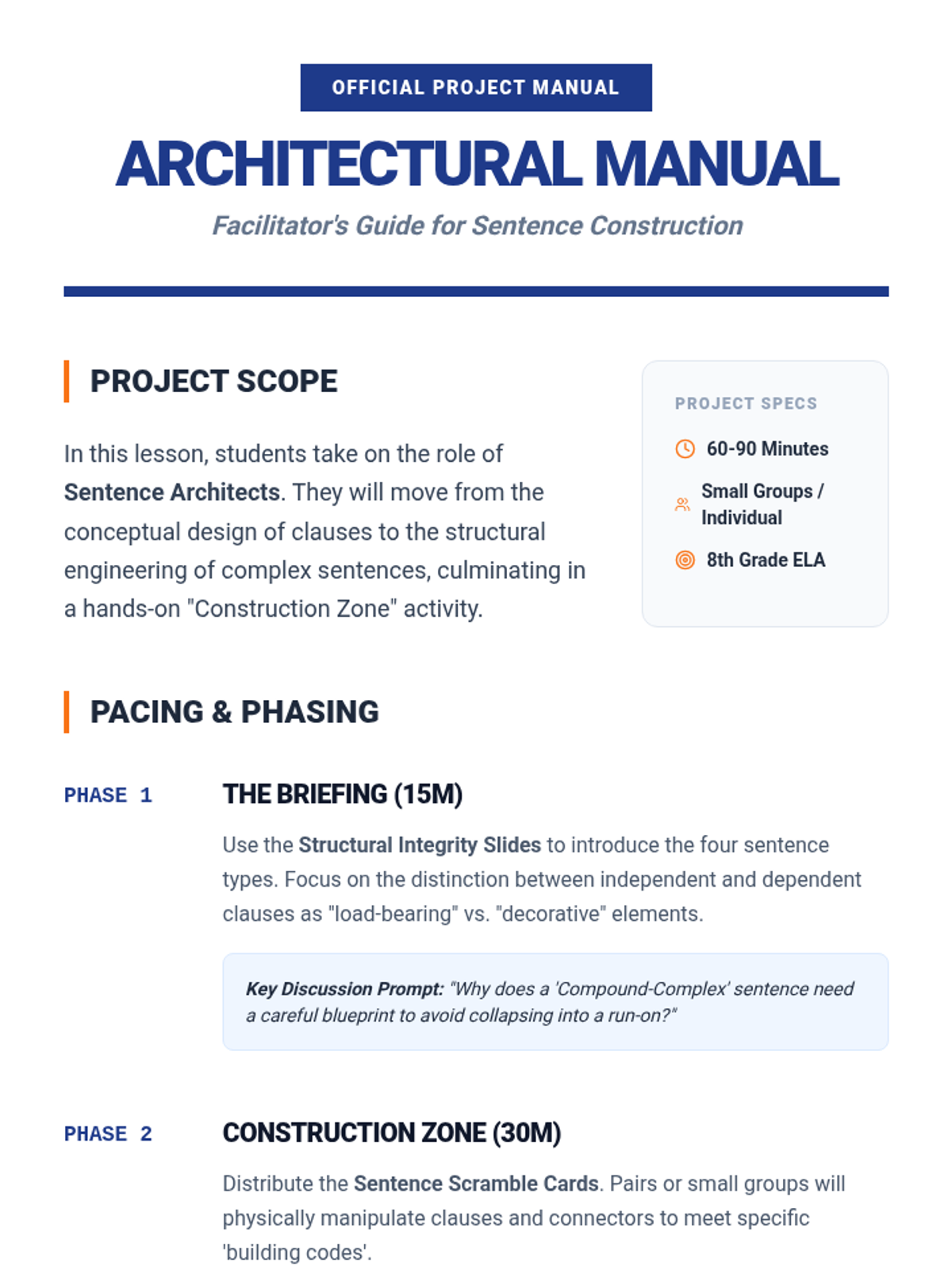
A hands-on exploration of sentence structures—simple, compound, complex, and compound-complex—using an architectural theme to help students build stronger writing foundations.
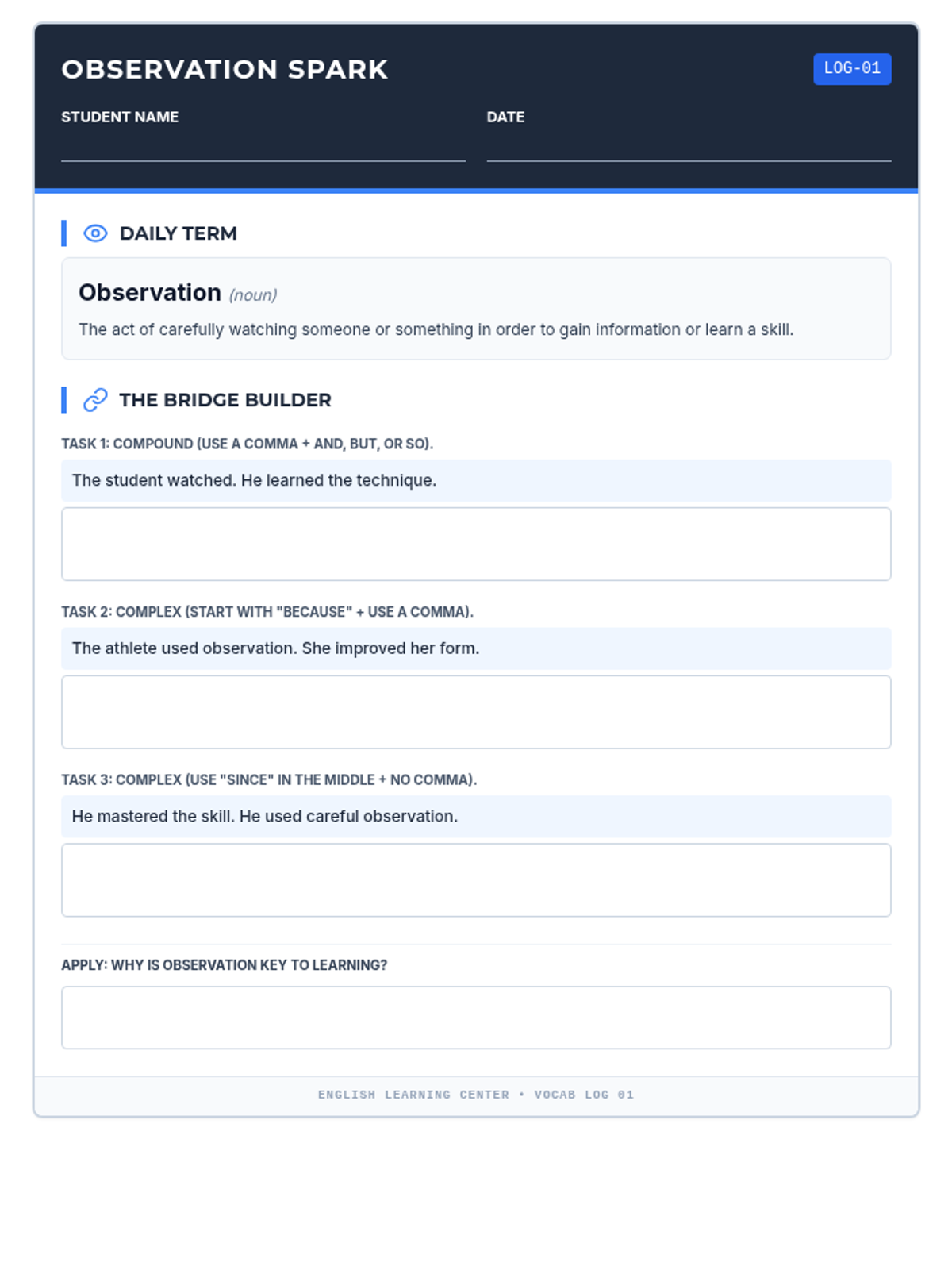
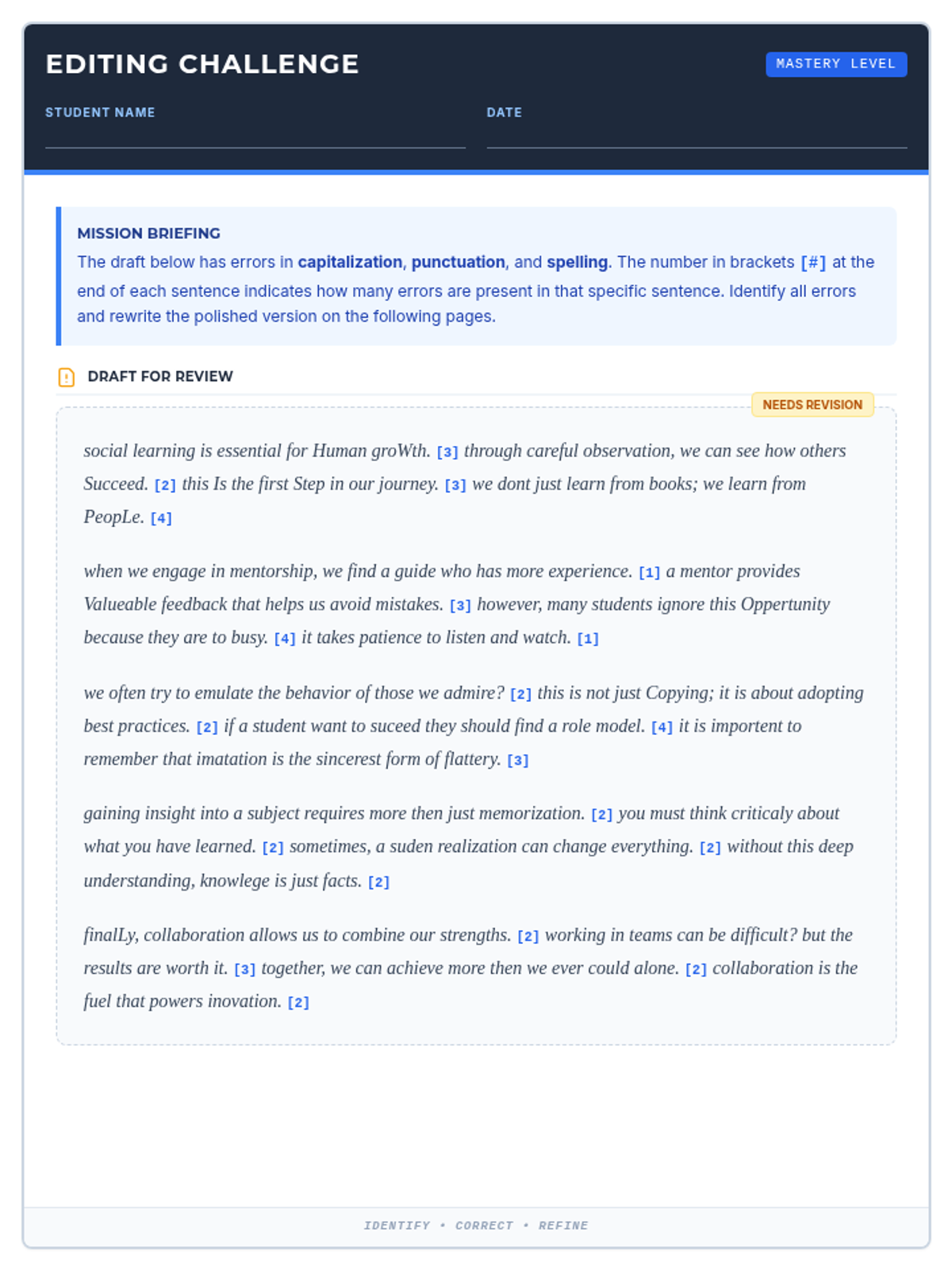
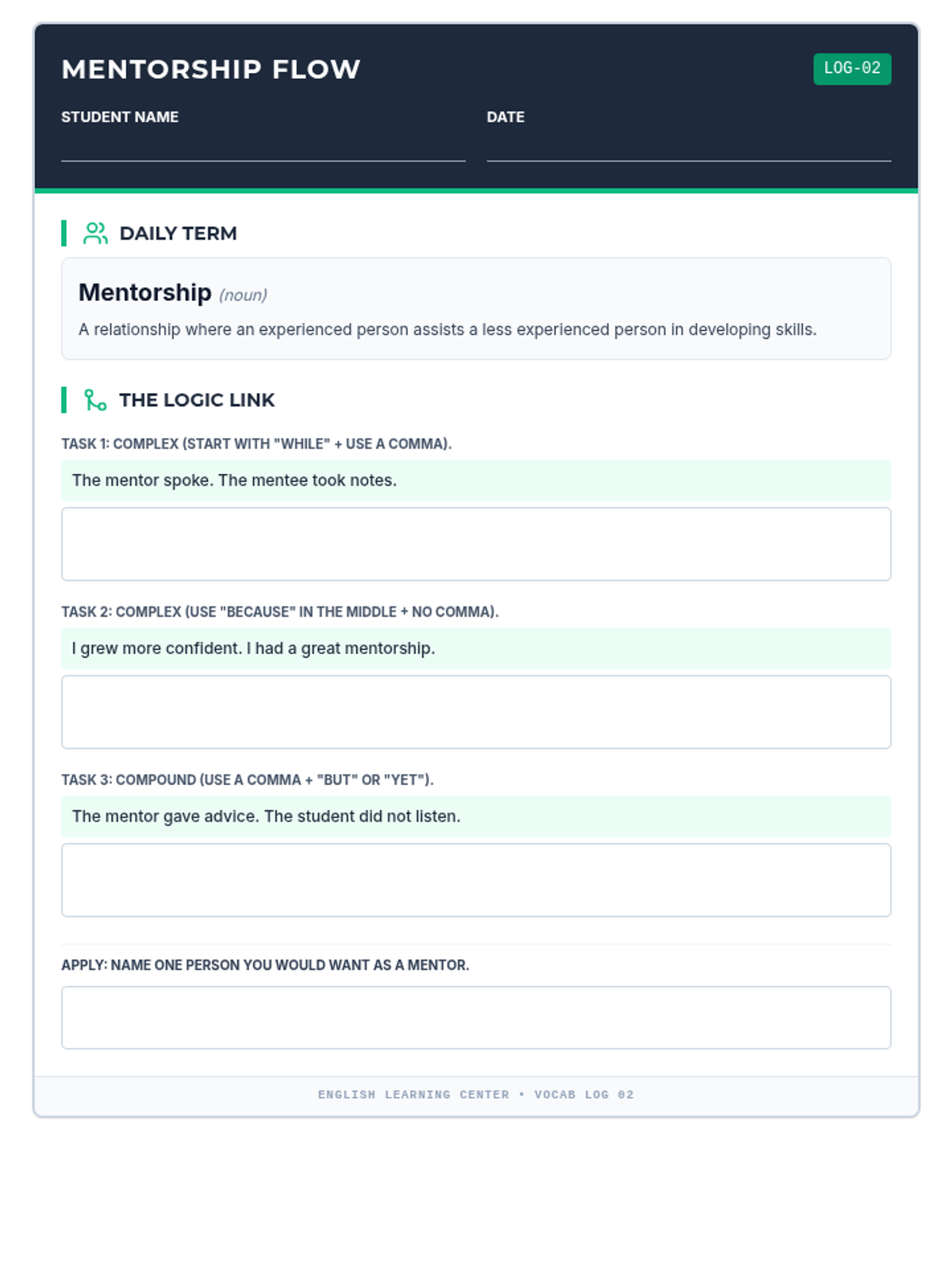
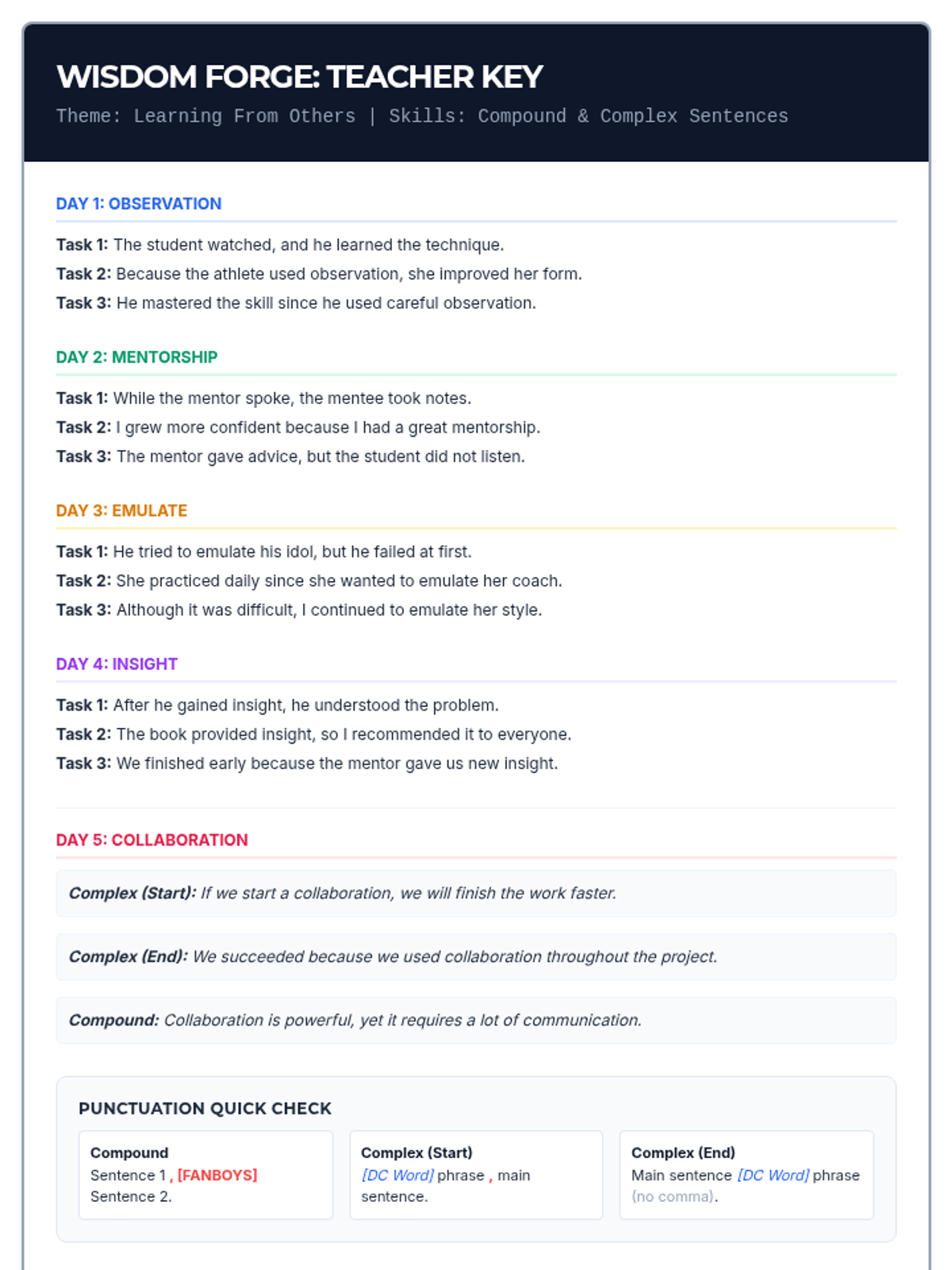
A series of five high-school entrance tickets focused on vocabulary related to social learning and sentence combining techniques including compound and complex structures.
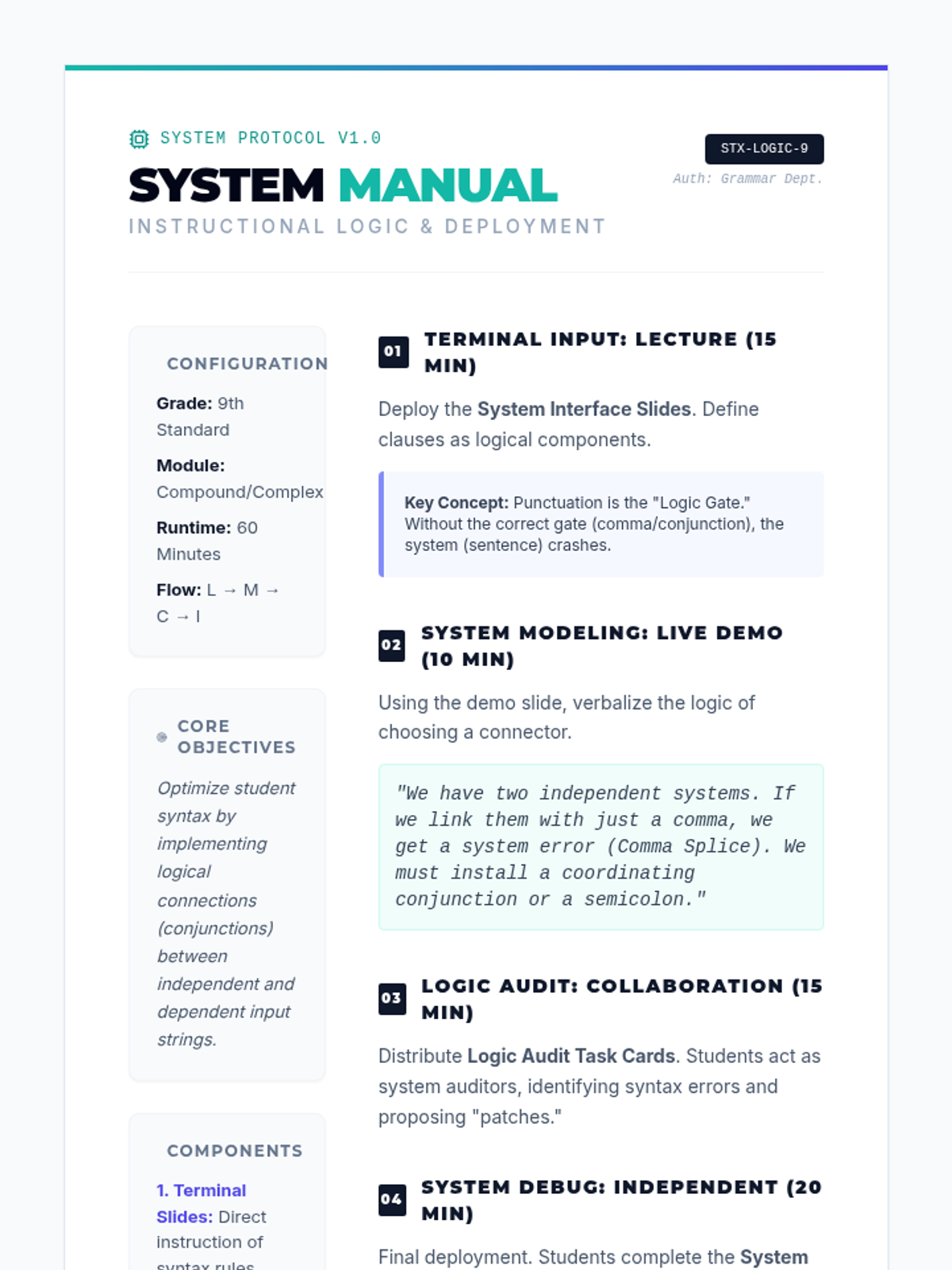
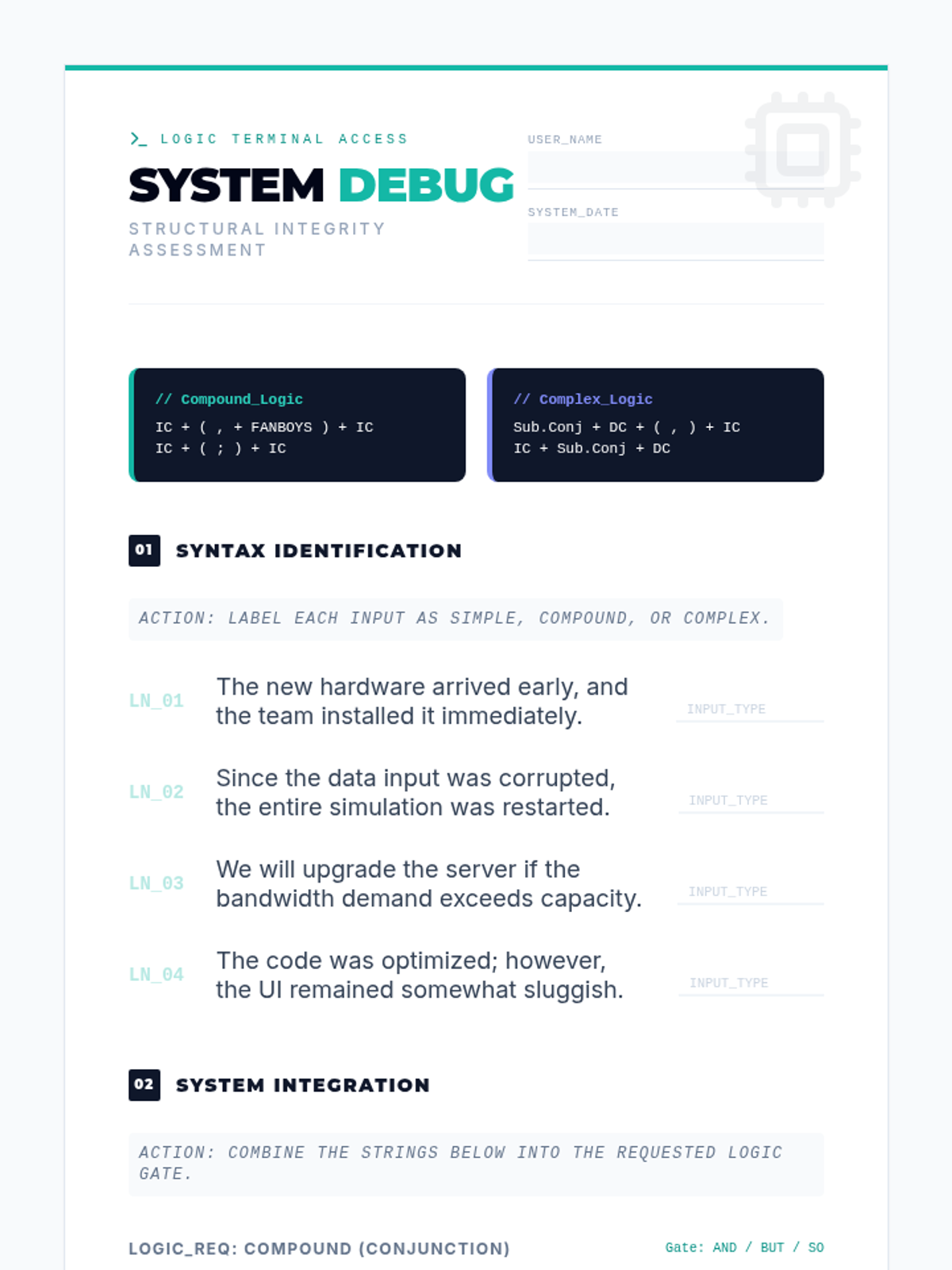
A technical and logic-driven lesson on mastering compound and complex sentence structures, framed through a modern 'Syntax Systems' theme. Includes a system manual for teachers, instructional interface slides, and debugging practice for students.
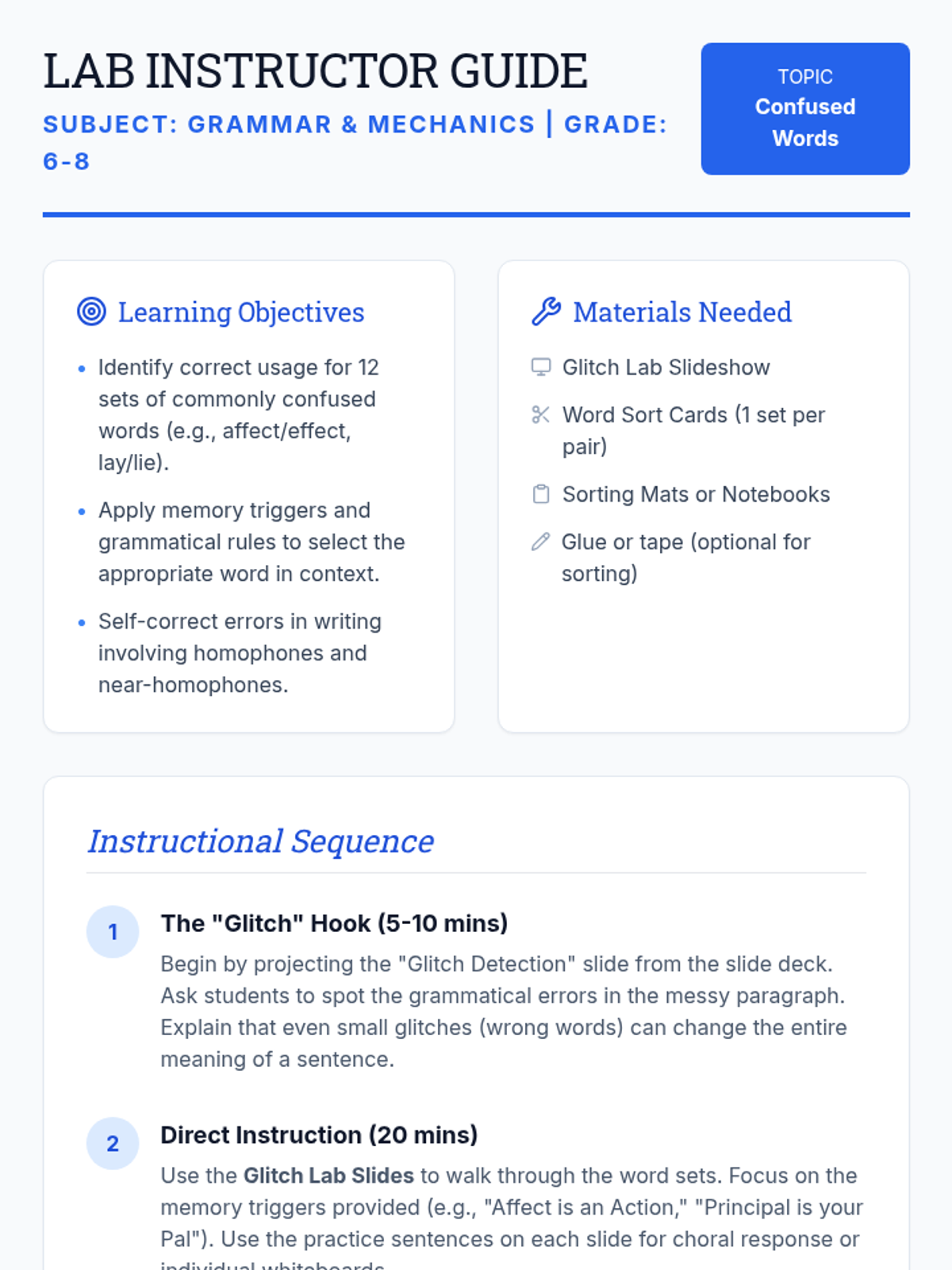
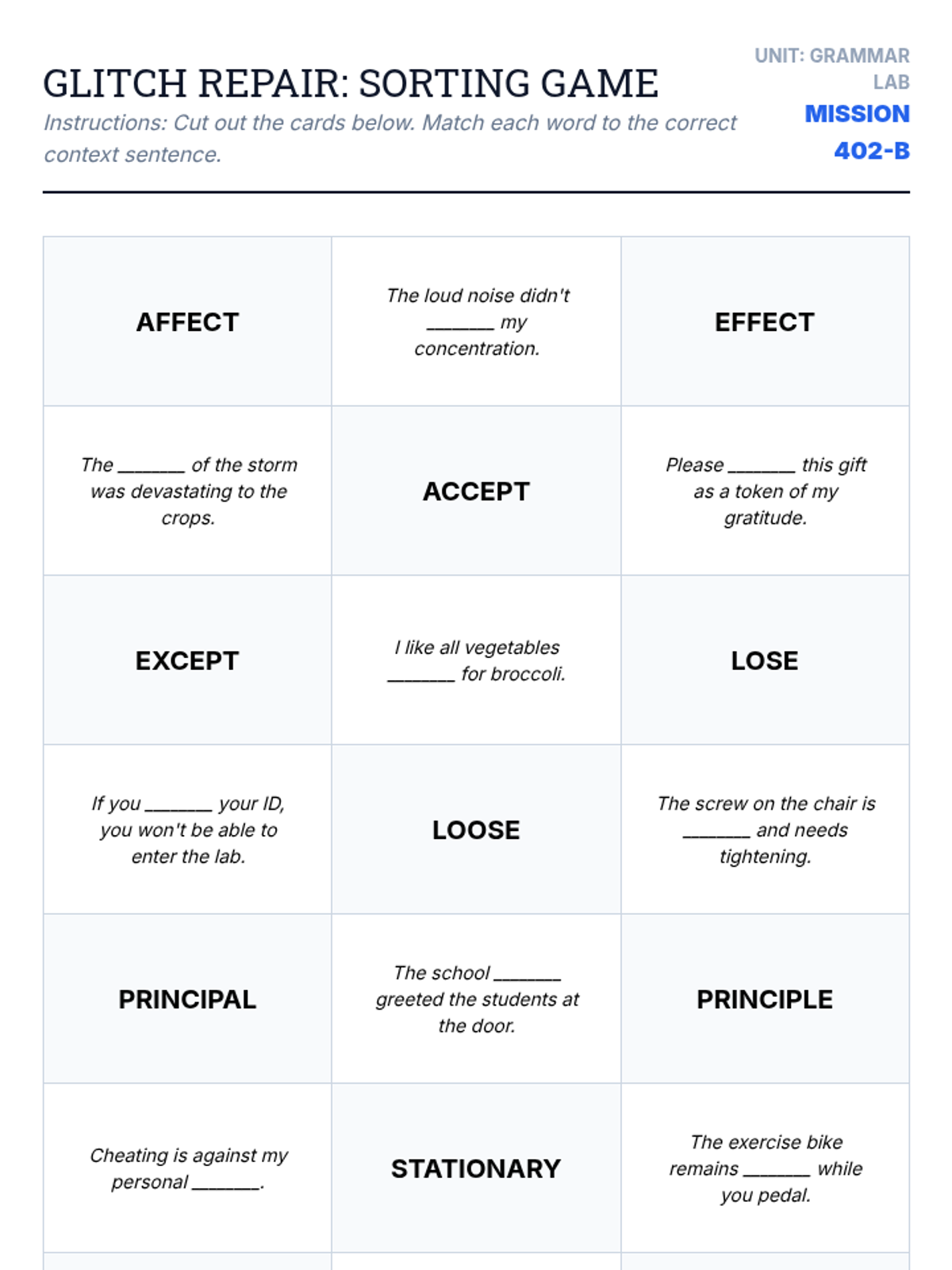
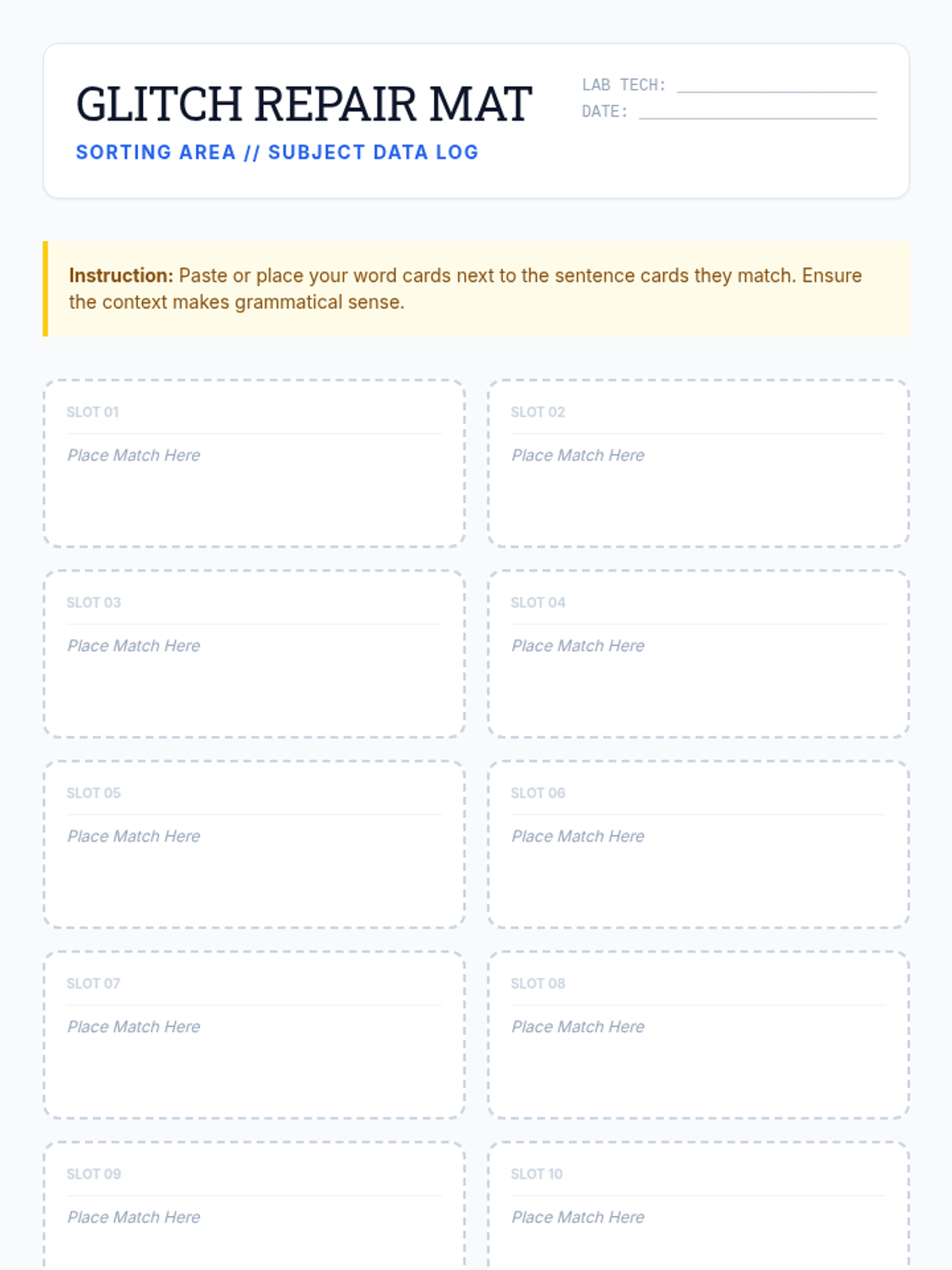
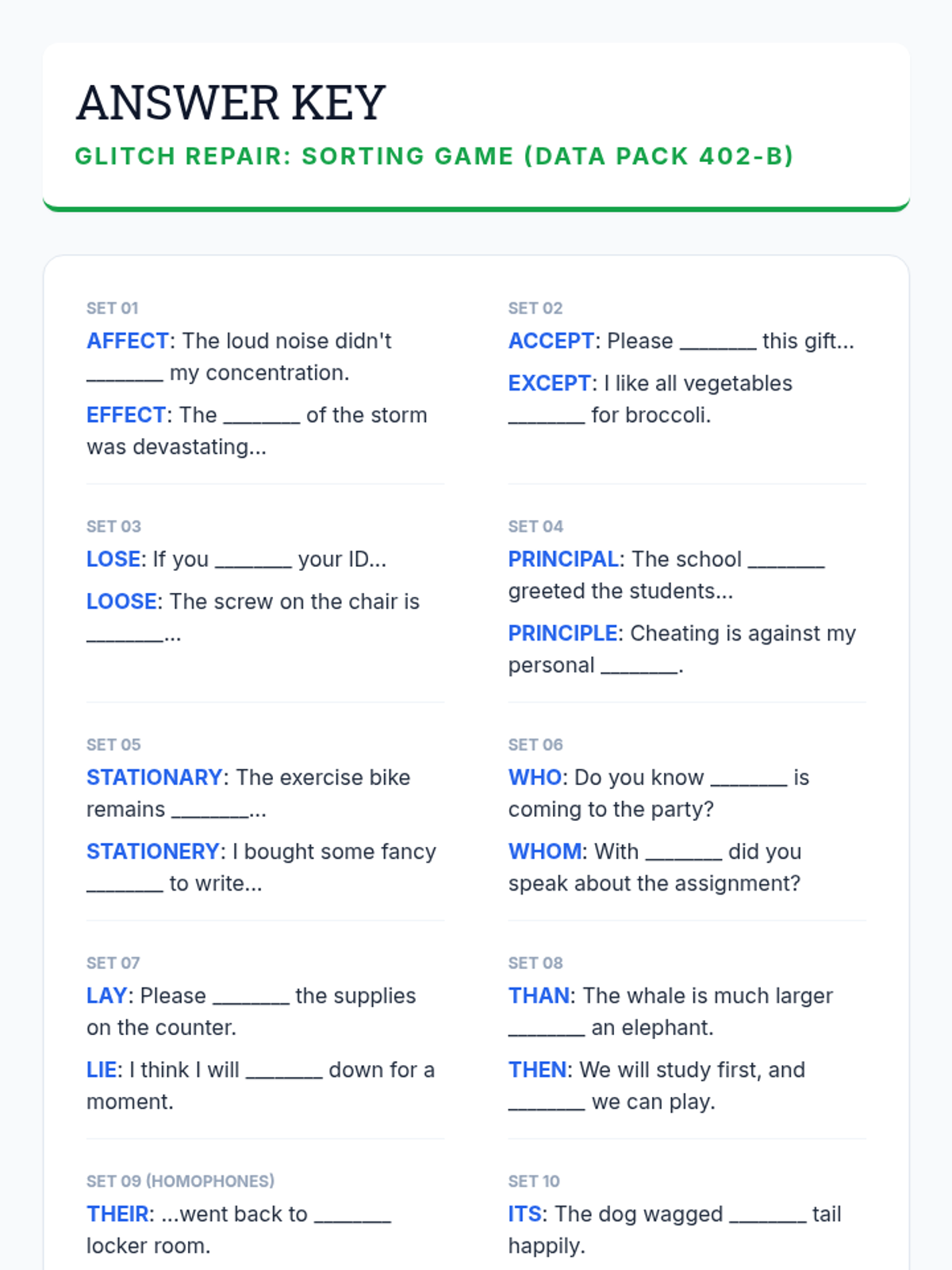
A comprehensive lesson targeting 12 pairs/trios of commonly confused words through a "Grammar Lab" theme. Students will identify, define, and correctly apply homophones and tricky word pairs through direct instruction and a hands-on sorting game.
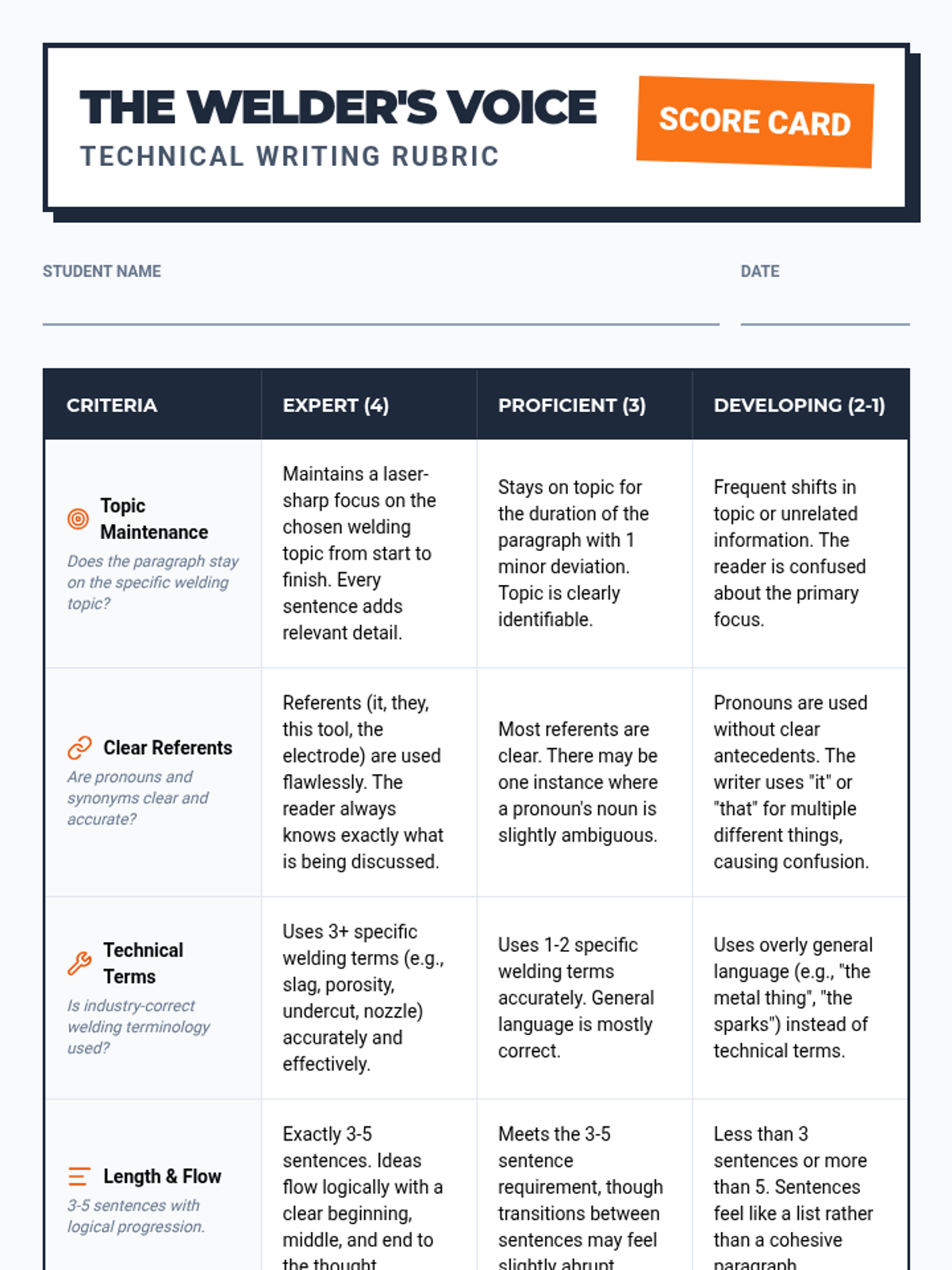
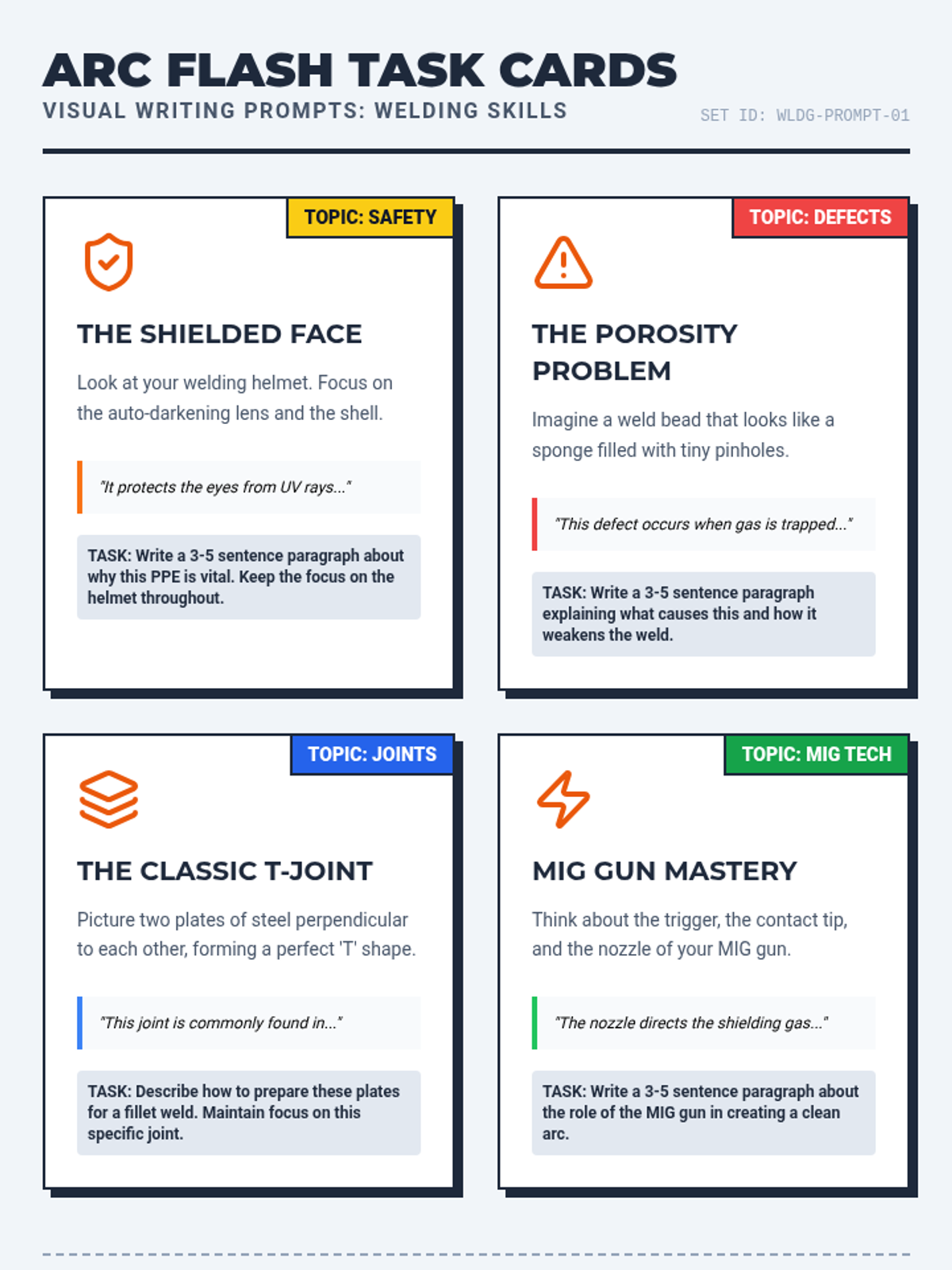
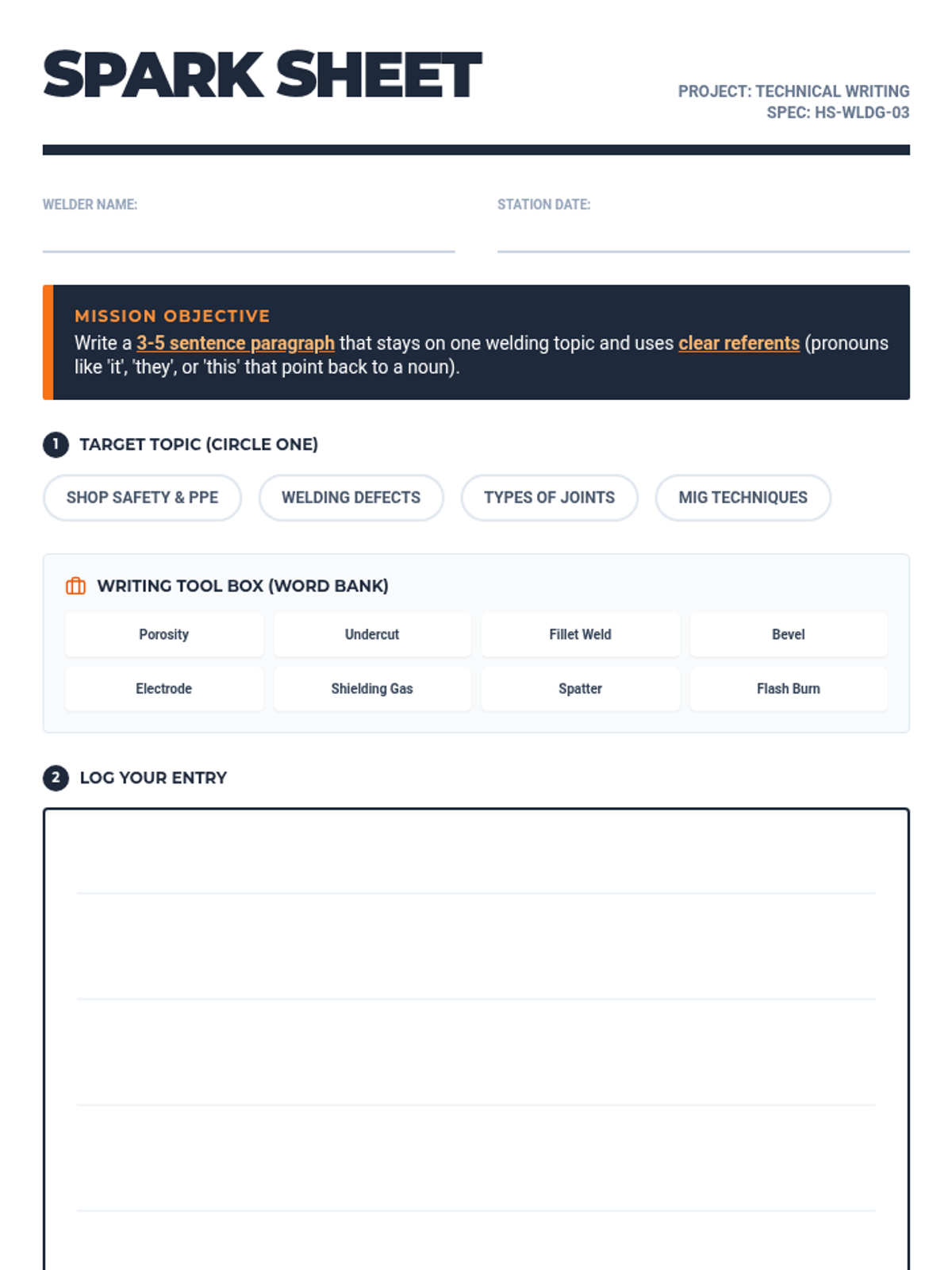
A series of resources designed to help high school students master the art of technical writing in a welding context, focusing on topic maintenance and clear referents.
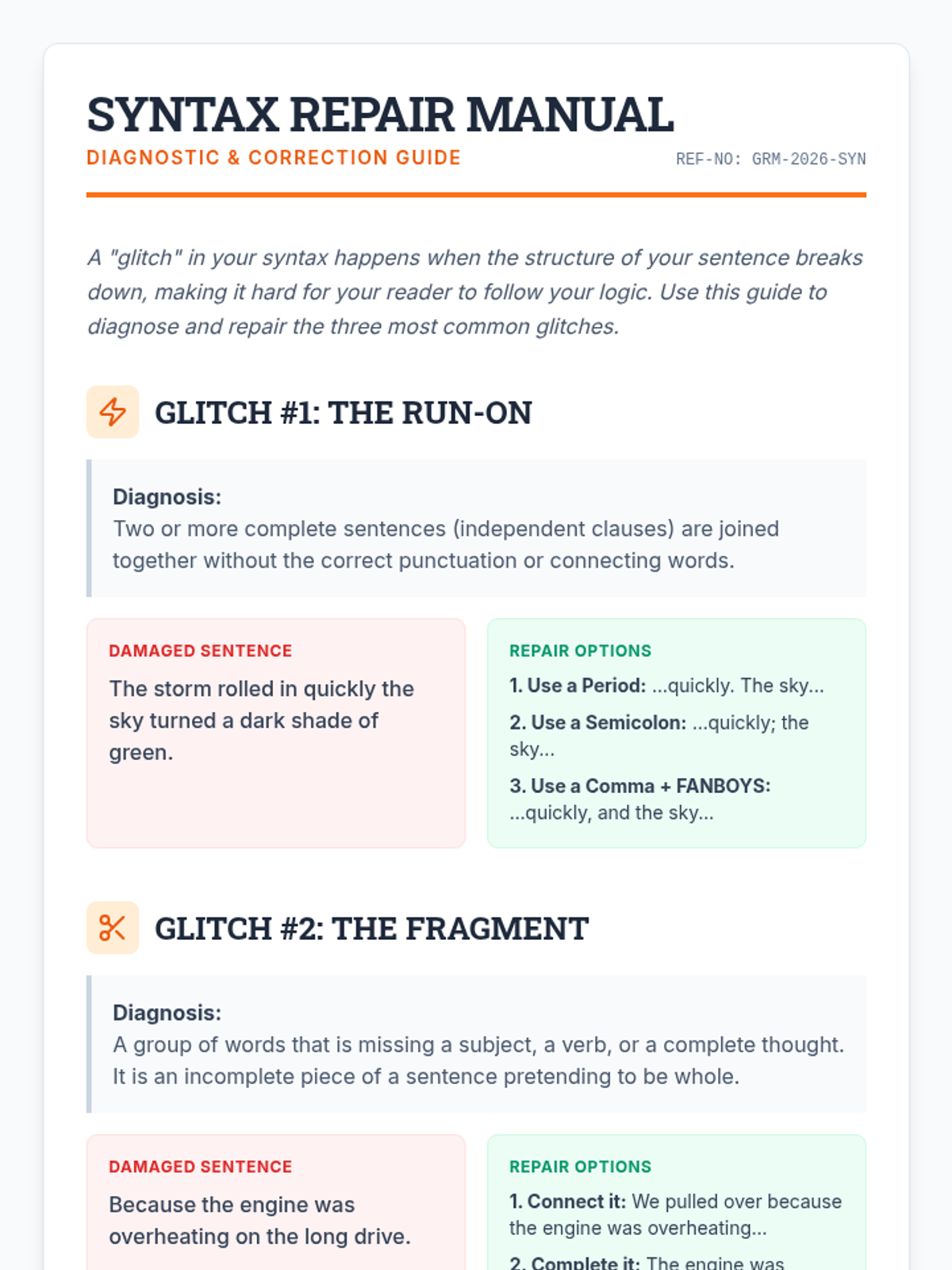
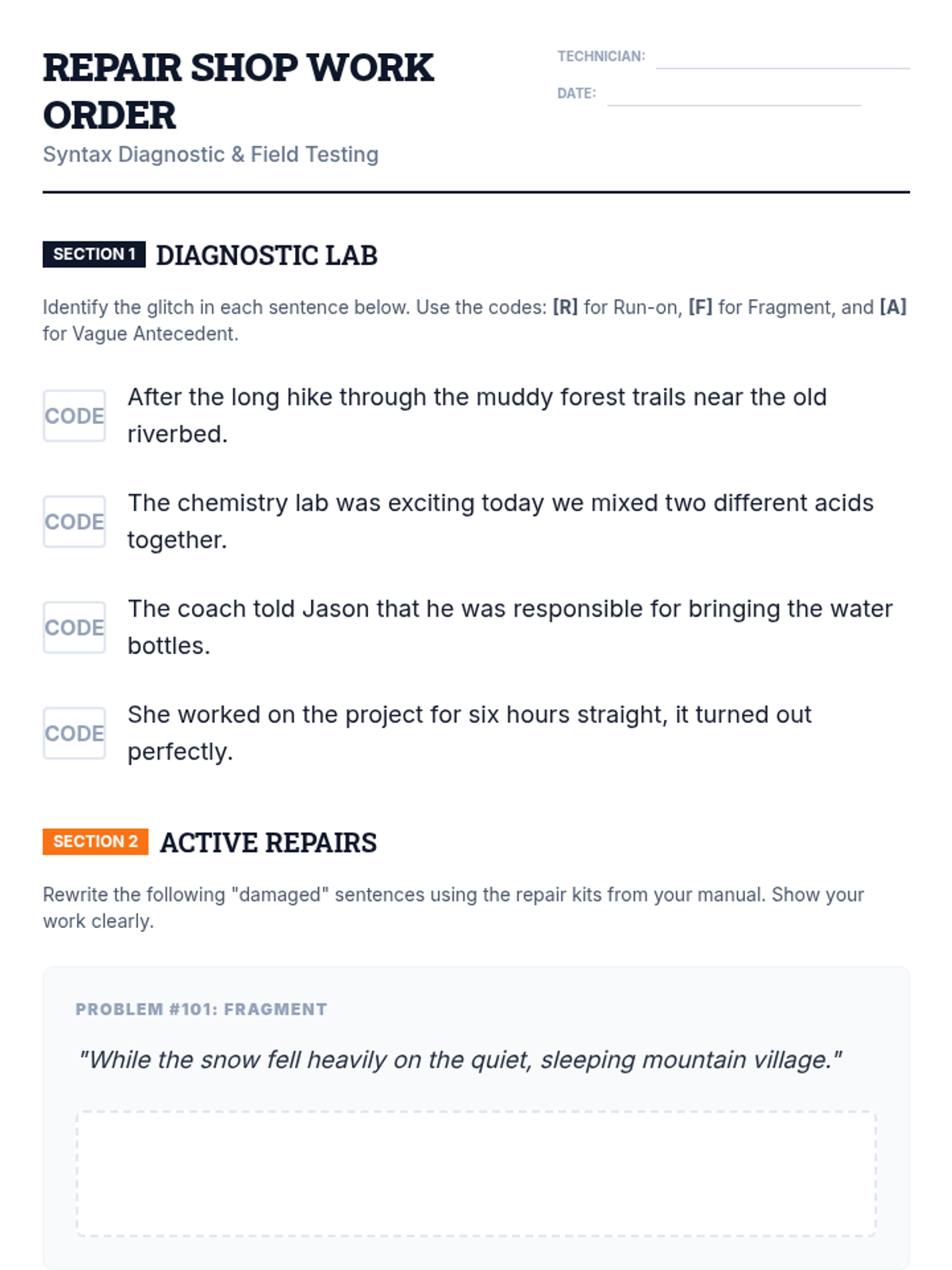
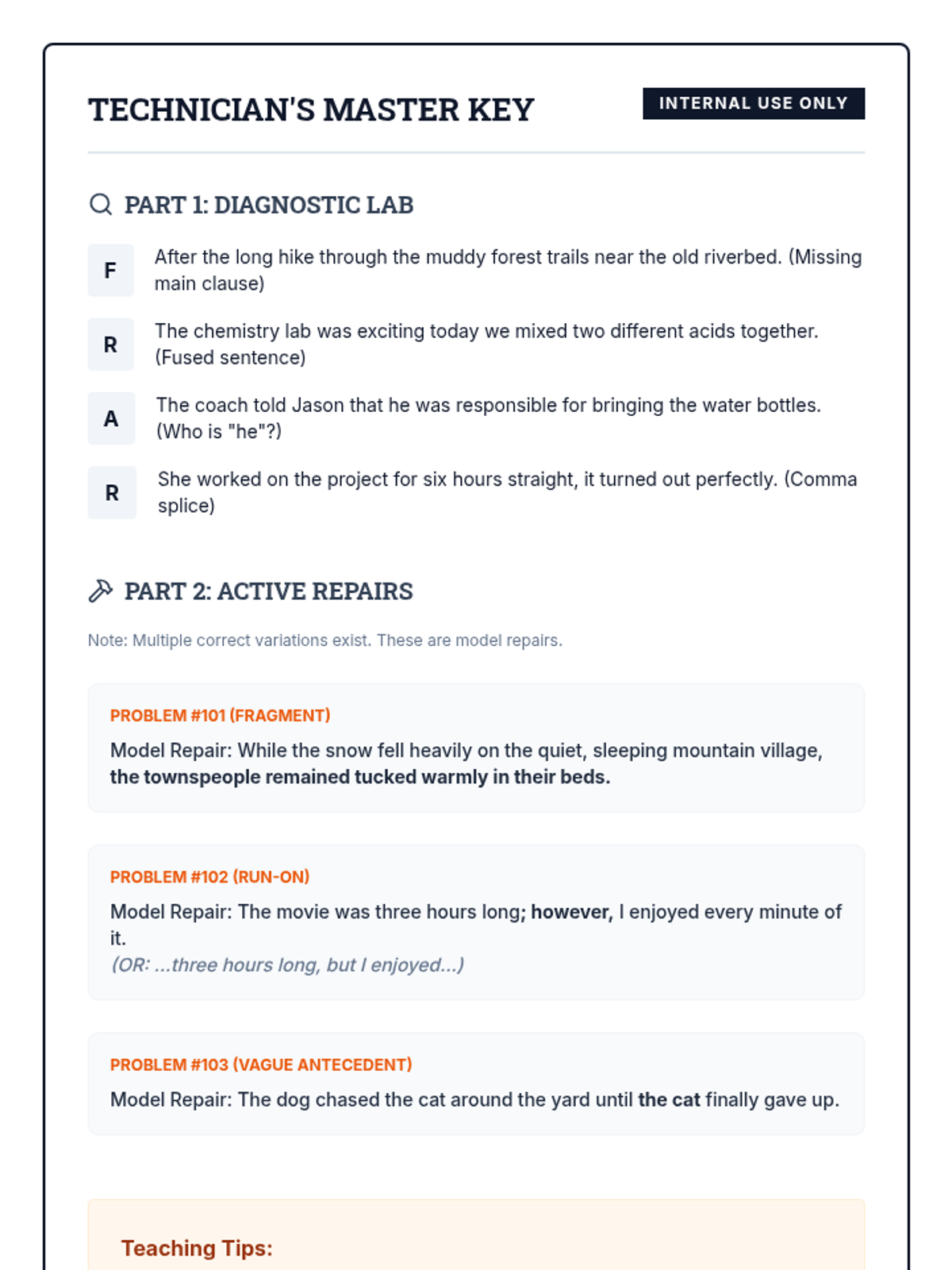
A 15-minute high-impact session focusing on identifying and repairing run-on sentences, sentence fragments, and vague pronoun-antecedent relationships. This lesson provides students with a 'repair manual' for common syntax glitches.
Focus on Public Service and Law with editing questions targeting fragments and run-on sentences.
Focus on Arts, A/V Technology, and Communications with revision questions targeting adding or removing sentences for focus.
Focus on Science, Technology, Engineering, and Mathematics (STEM) with editing questions targeting pronoun-antecedent agreement.
Focus on Hospitality and Tourism with revision questions targeting organization and sentence placement.
Focus on Architecture and Construction with editing questions targeting spelling and possessive nouns.
Focus on Information Technology with revision questions targeting sentence combining and clarity.
Focus on Business, Marketing, and Finance with editing questions targeting subject-verb agreement and verb tense.
Focus on Agriculture, Food, and Natural Resources with revision questions targeting sentence transitions and word choice.
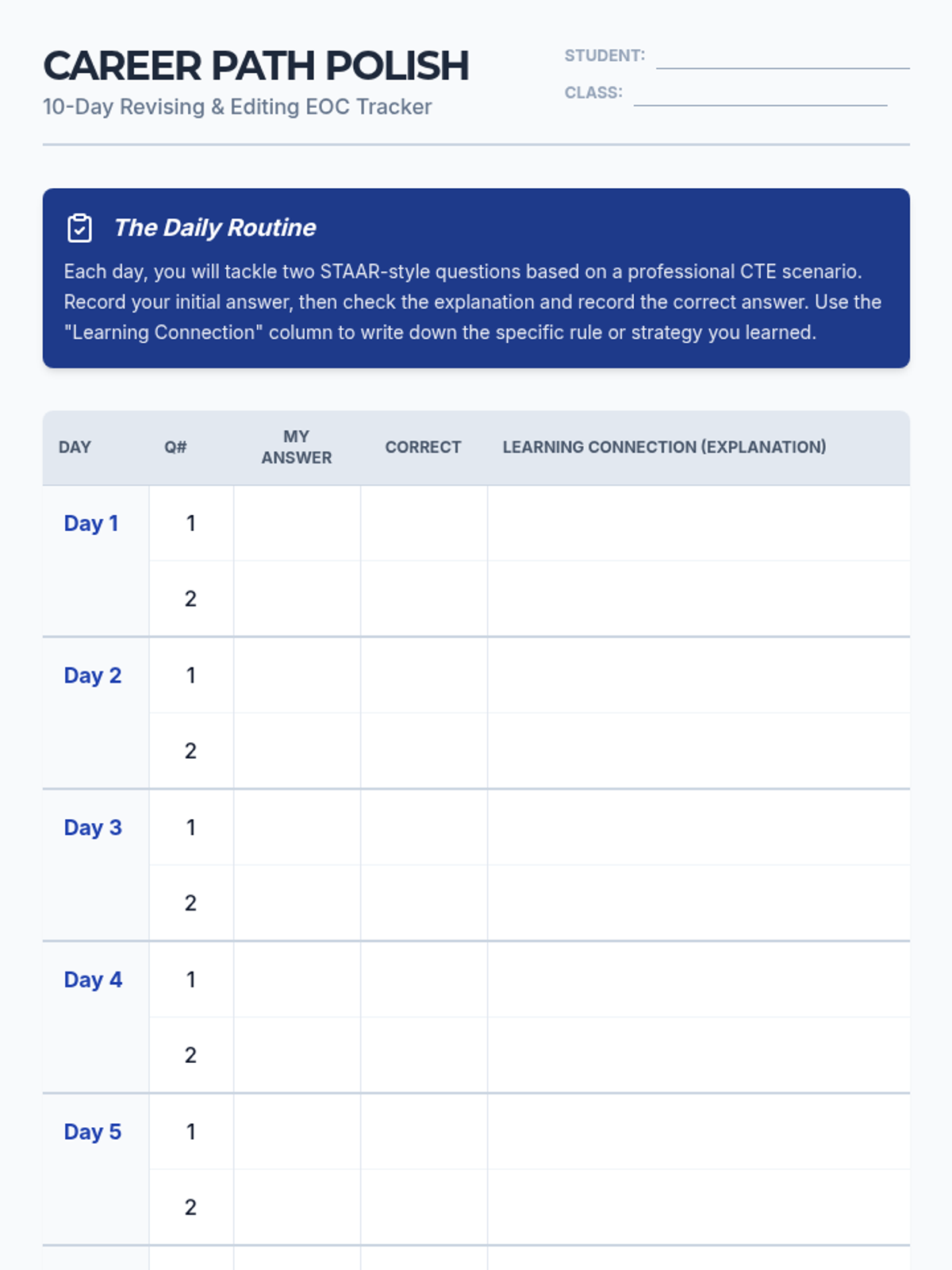
Focus on Health Science careers with editing questions targeting capitalization and punctuation. Includes the master student tracker for the 10-day sequence.
A series of daily editing drills targeting high-frequency STAAR grammar standards including verb agreement, pronoun-antecedent clarity, and complex punctuation.
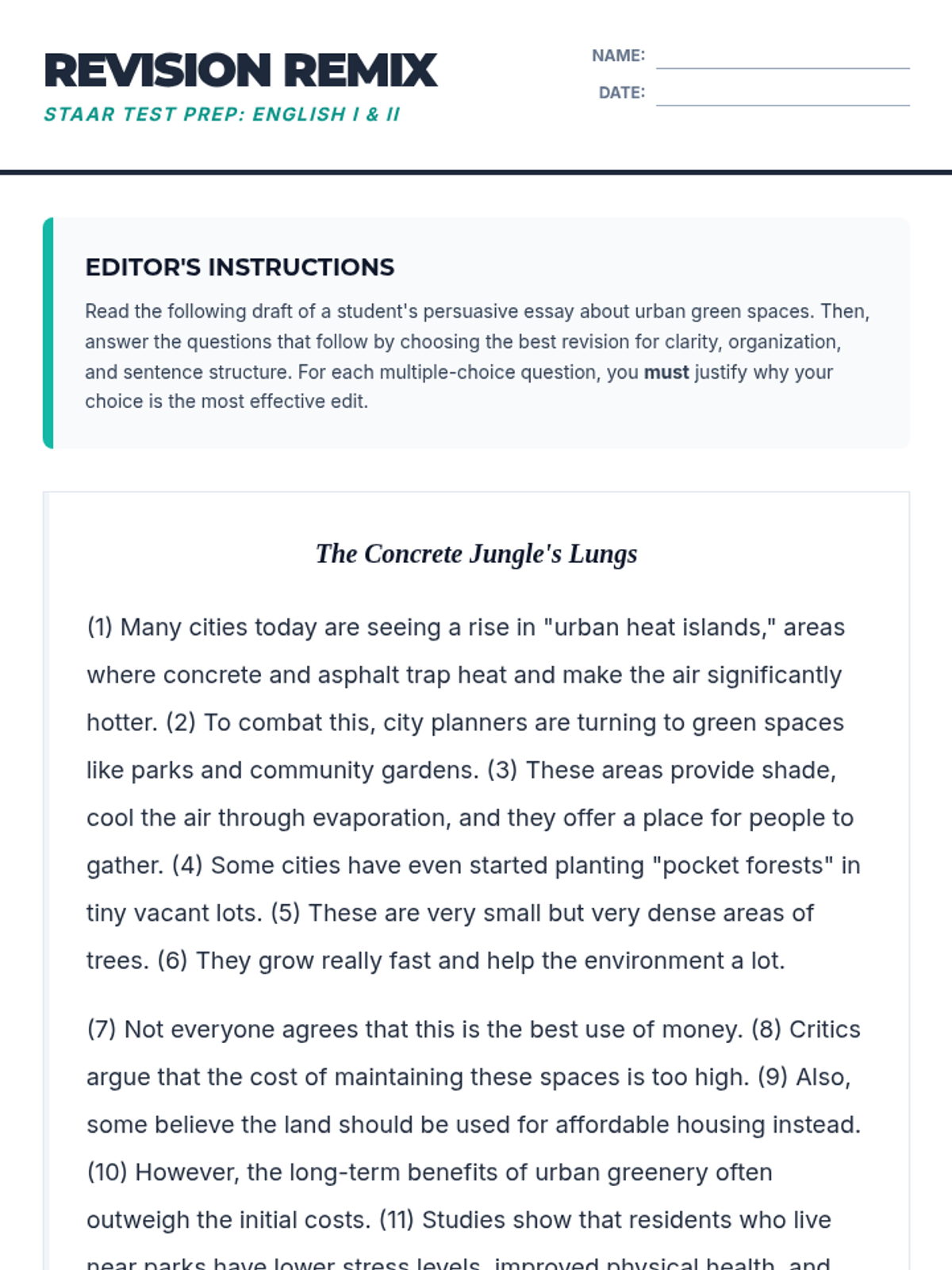
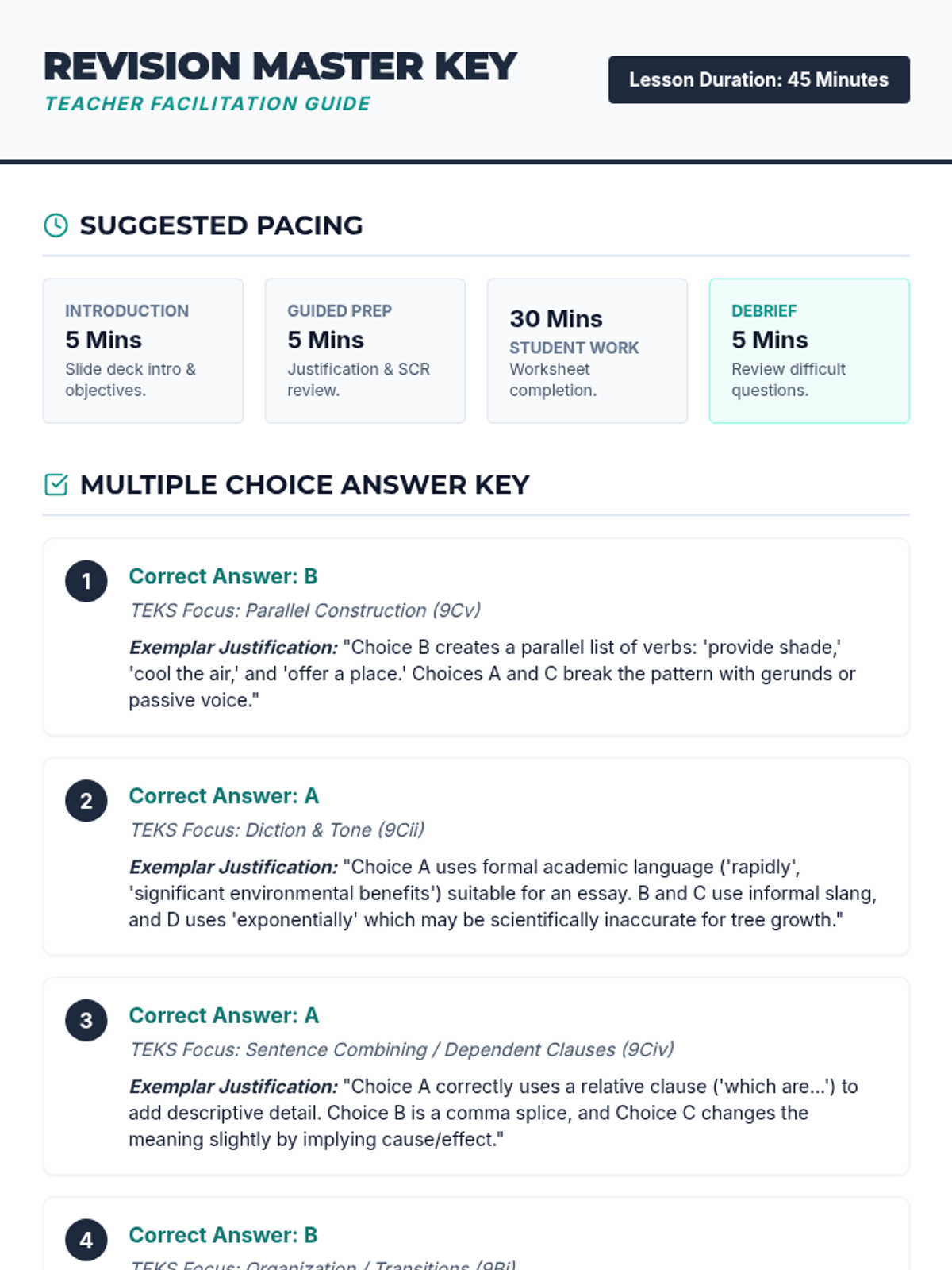
A 45-minute intensive revision workshop focused on high-priority STAAR English I & II TEKS, including clarity, organization, diction, and sentence structure. Students analyze a mentor text, answer multiple-choice questions with written justifications, and complete a Short Constructed Response.
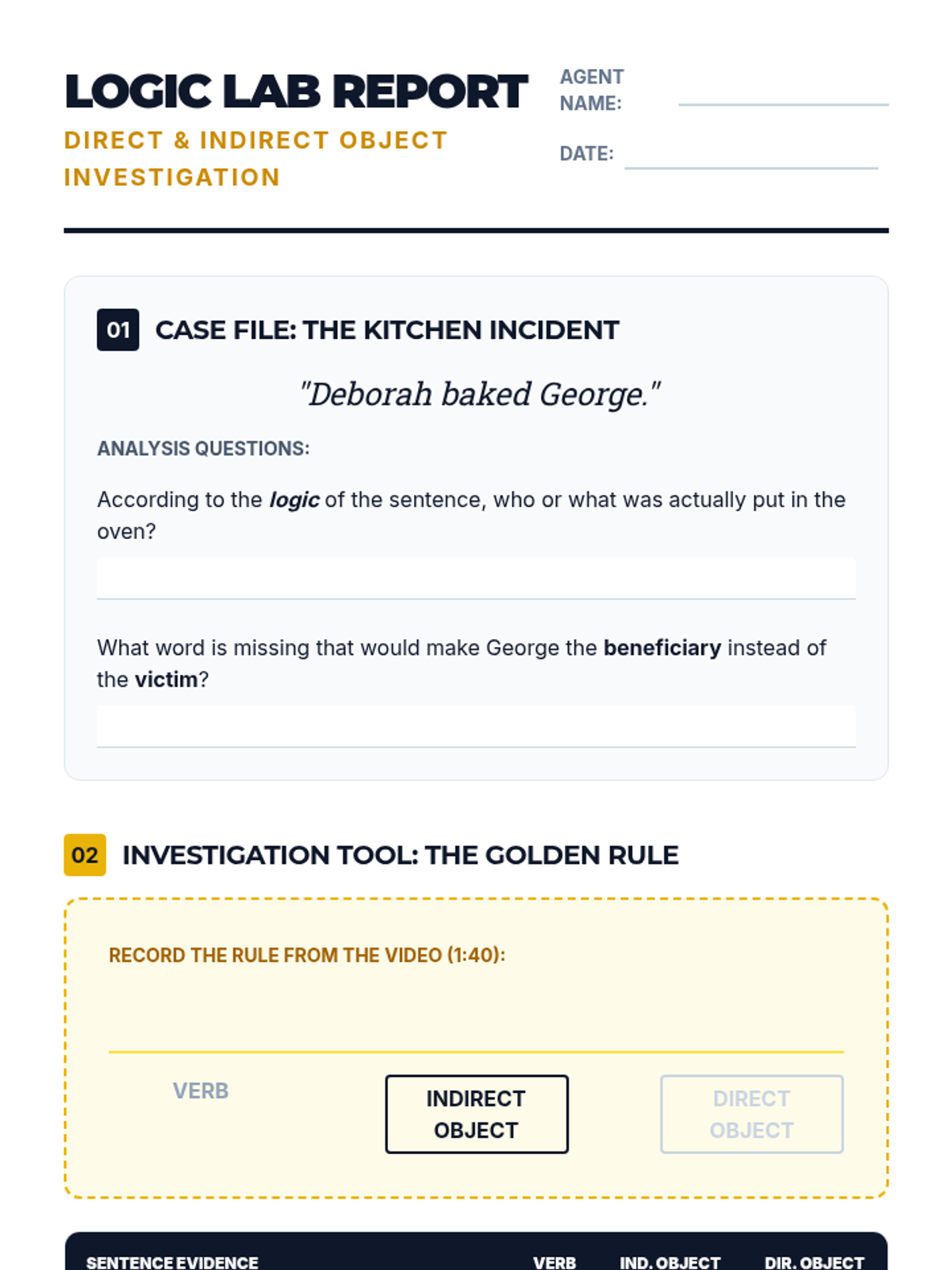
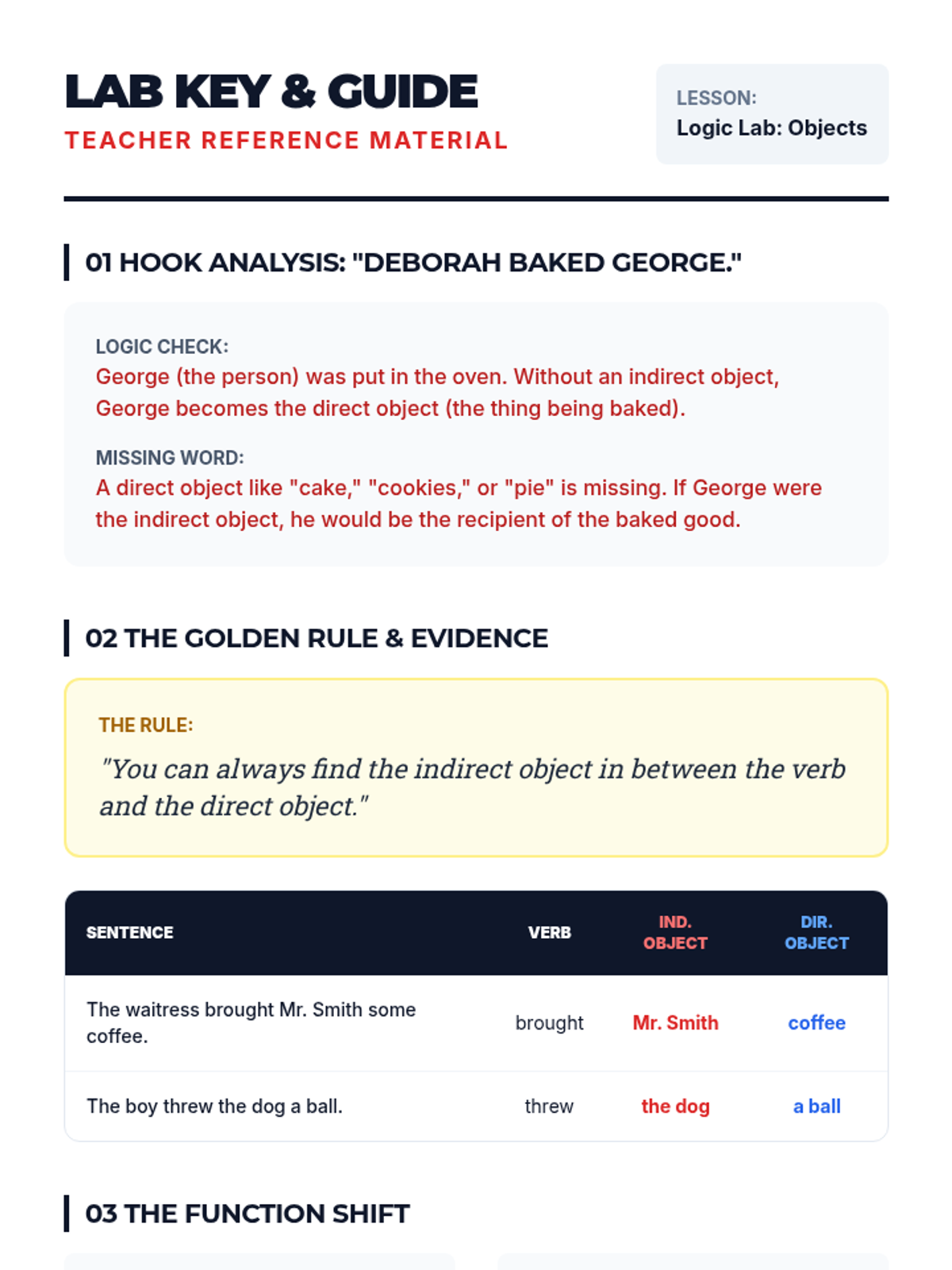
Students will use logic and the 'Golden Rule' of placement to distinguish between direct and indirect objects, investigating sentences where a lack of an indirect object leads to humorous or impossible scenarios.
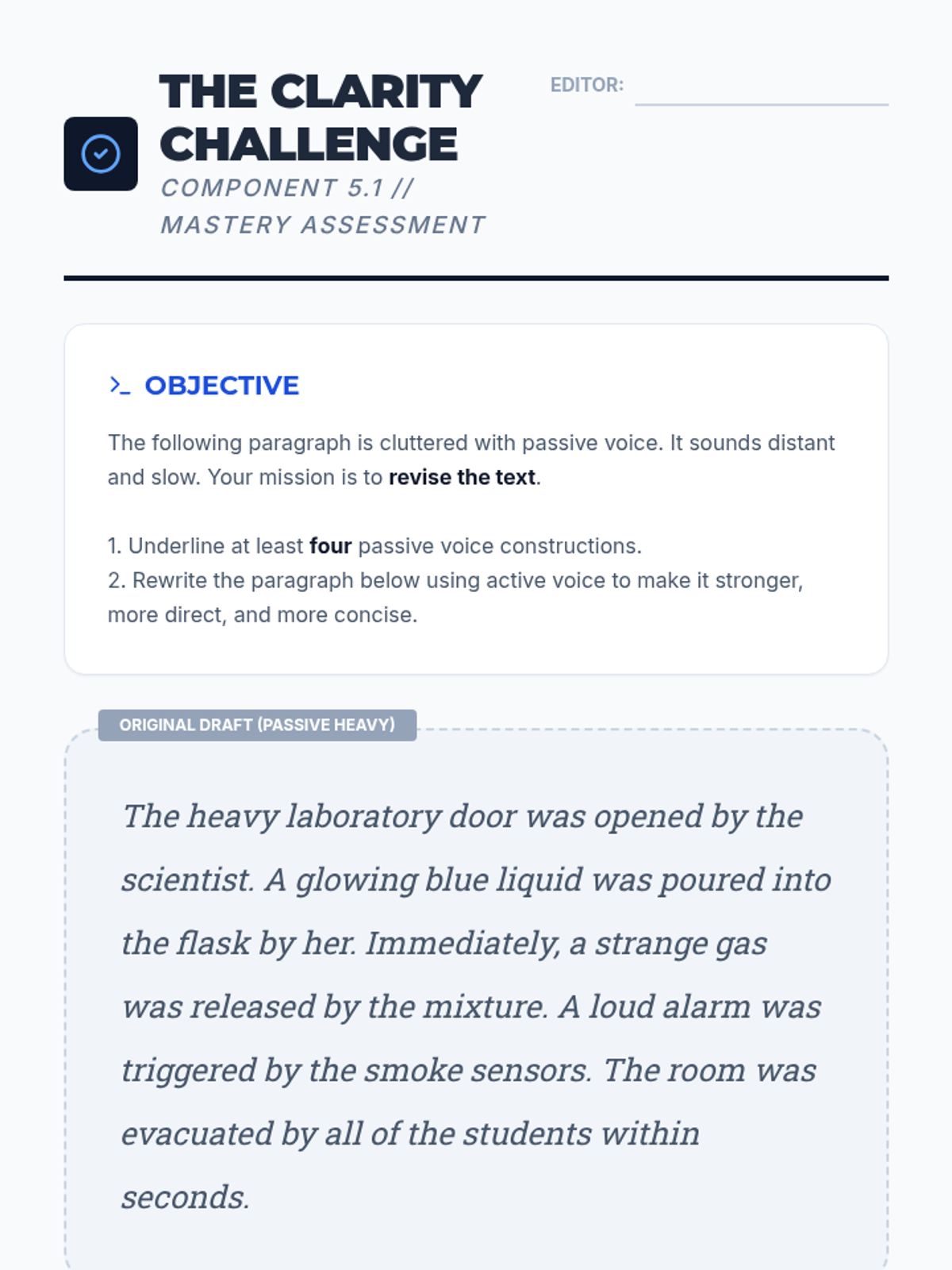
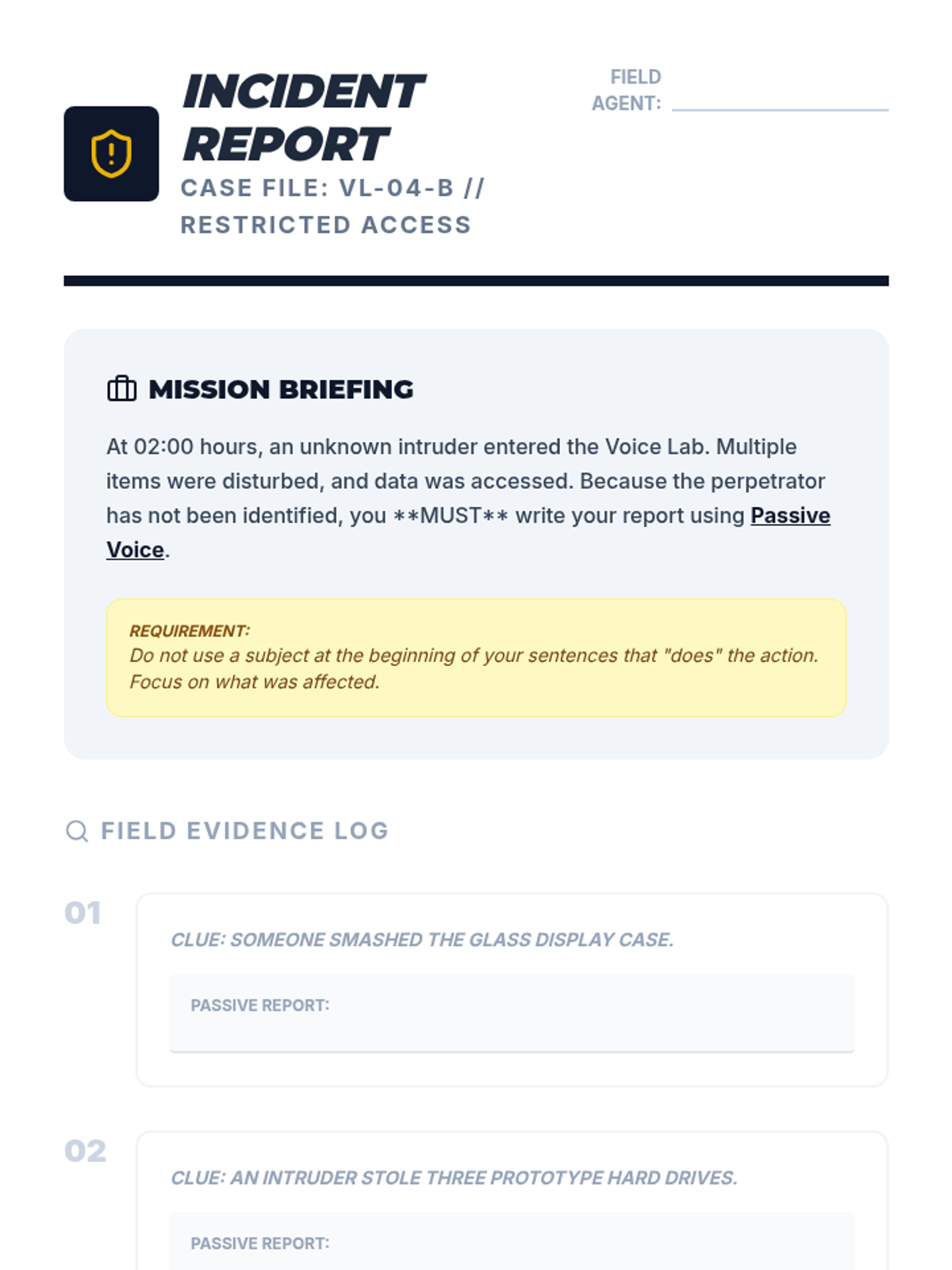
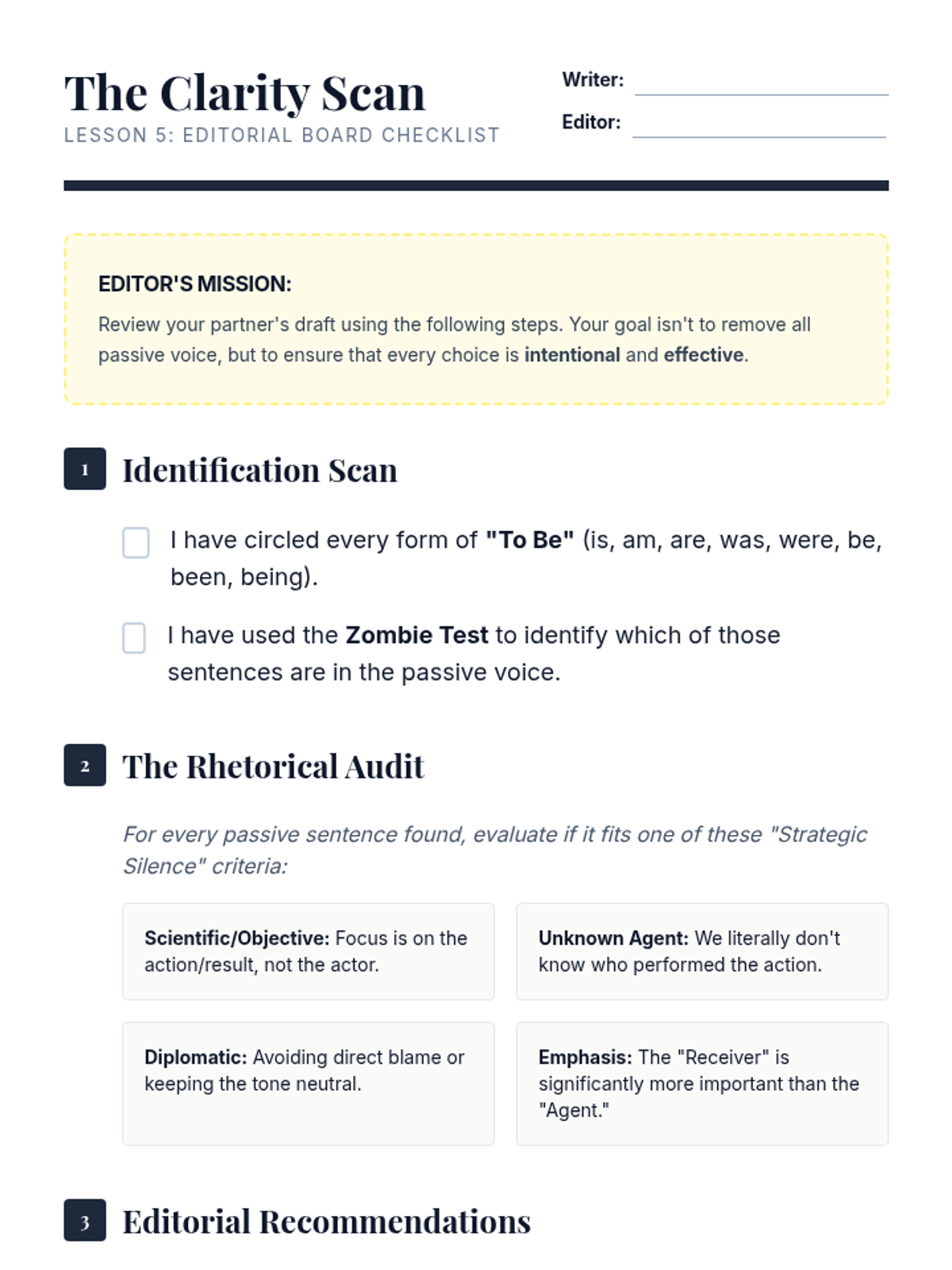
In this culminating workshop, students apply their knowledge to a paragraph-length editing task. They analyze a text heavy with passive voice, determine where active voice would improve flow, and edit for conciseness. Students reflect on how these changes affect the overall tone.
Students learn how to intentionally construct passive sentences when the actor is unknown or less important than the result. They reverse the process from the previous lesson, focusing on shifting the object to the subject position. This ensures mastery of the structural manipulation in both directions.
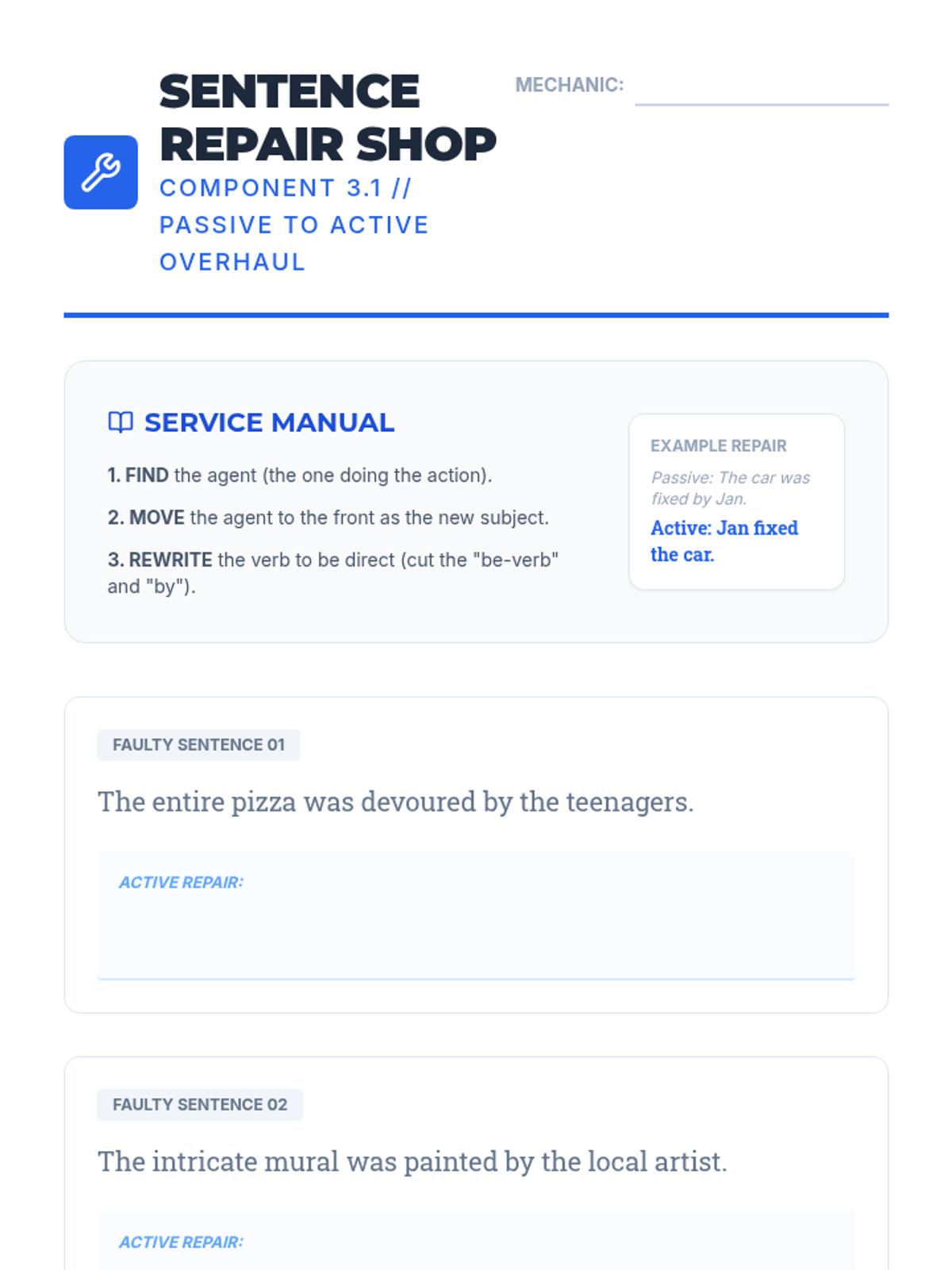
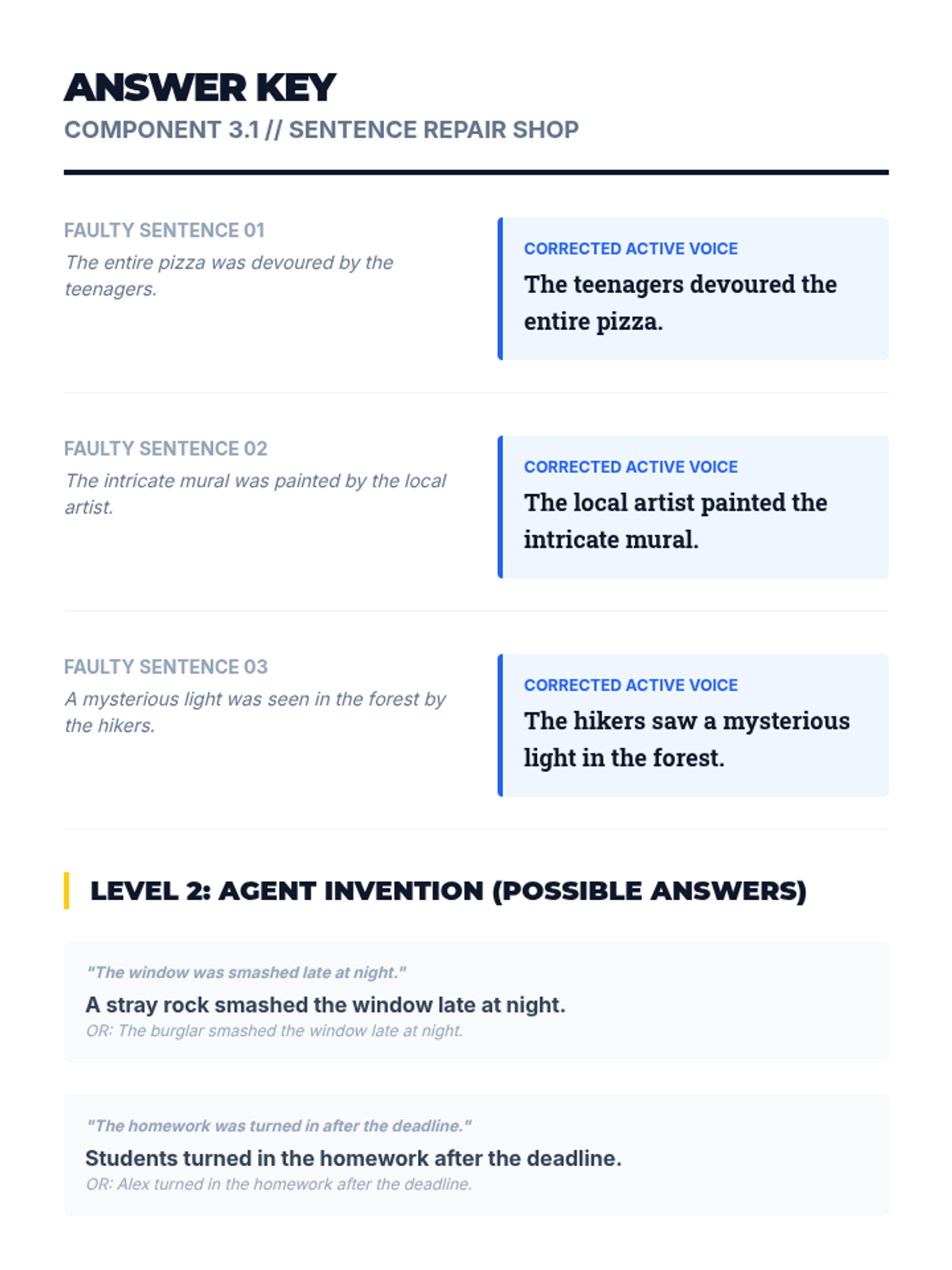
Students practice the mechanics of flipping sentence structures to make the actor the subject. They work through guided examples to eliminate 'to be' verbs and prepositional phrases that clutter the sentence. The lesson emphasizes writing with directness and vigor.
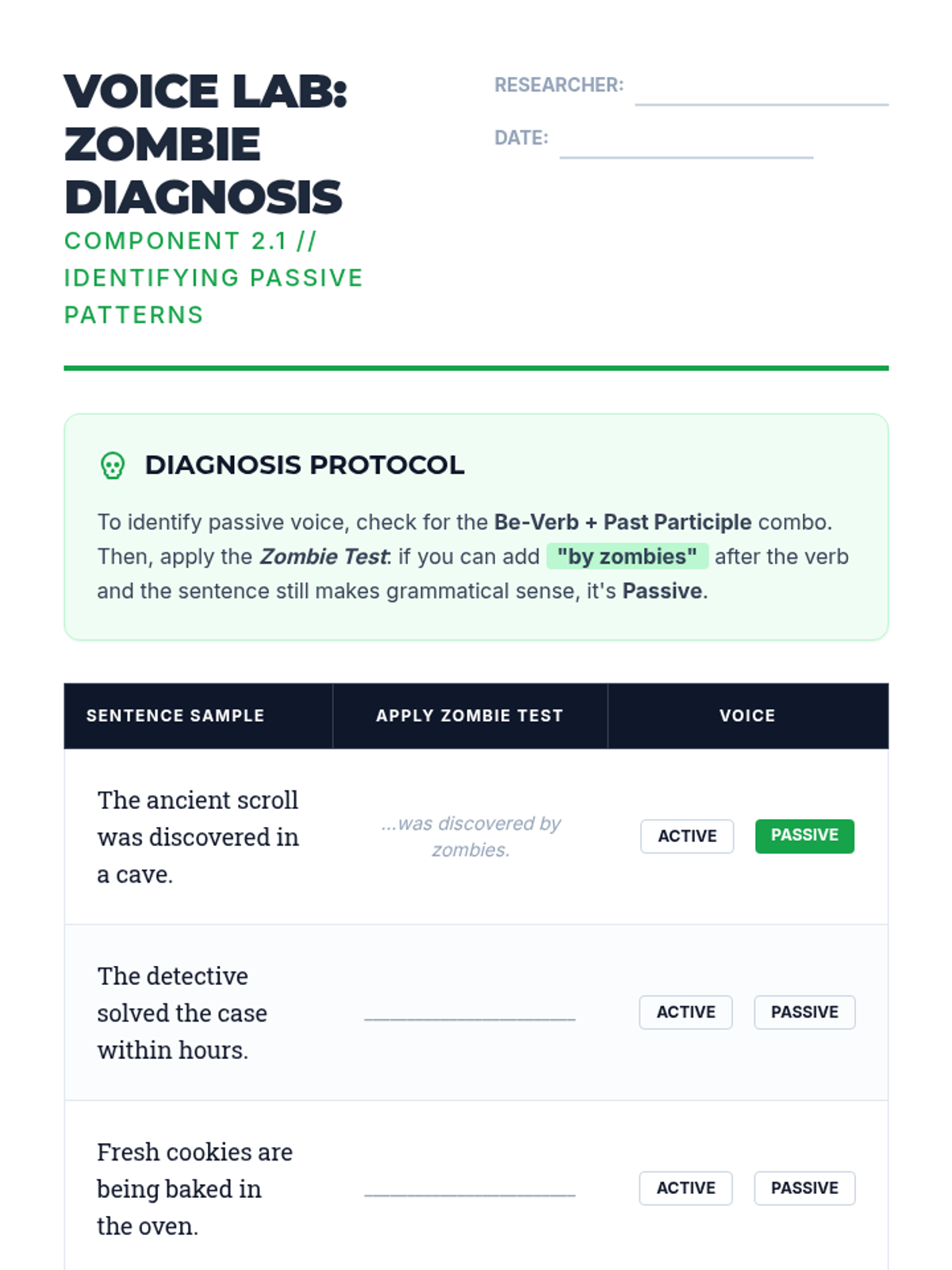
This lesson introduces specific grammatical markers of passive voice, such as forms of 'to be' combined with past participles and the 'by [noun]' phrase. Students use the 'Zombie Test' to identify passive structures in sample sentences.
A culminating peer-review workshop where students apply voice analysis to their own writing drafts to improve clarity.
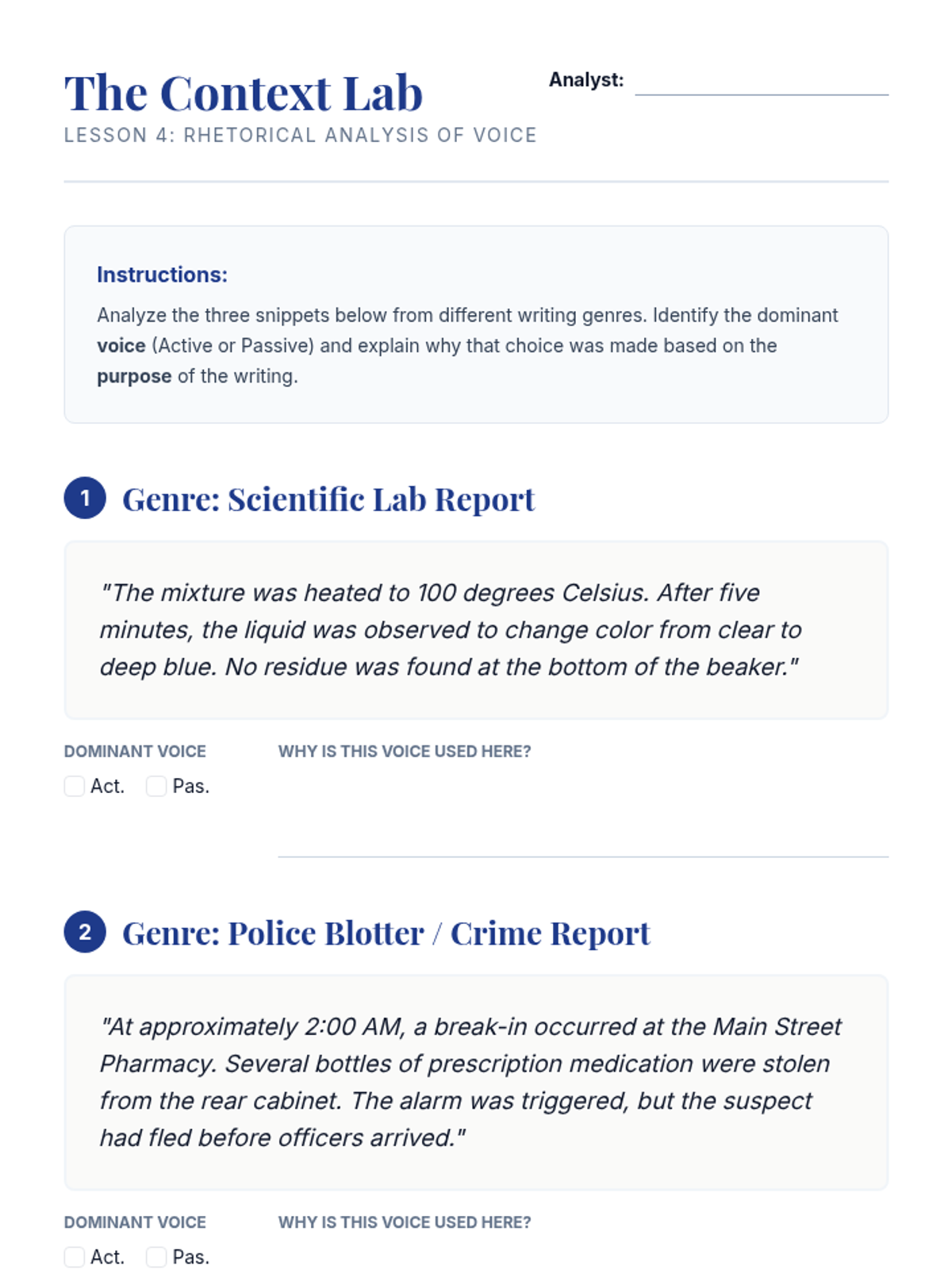
Students explore appropriate uses of passive voice in specific genres like scientific reporting and situations where the agent is unknown.
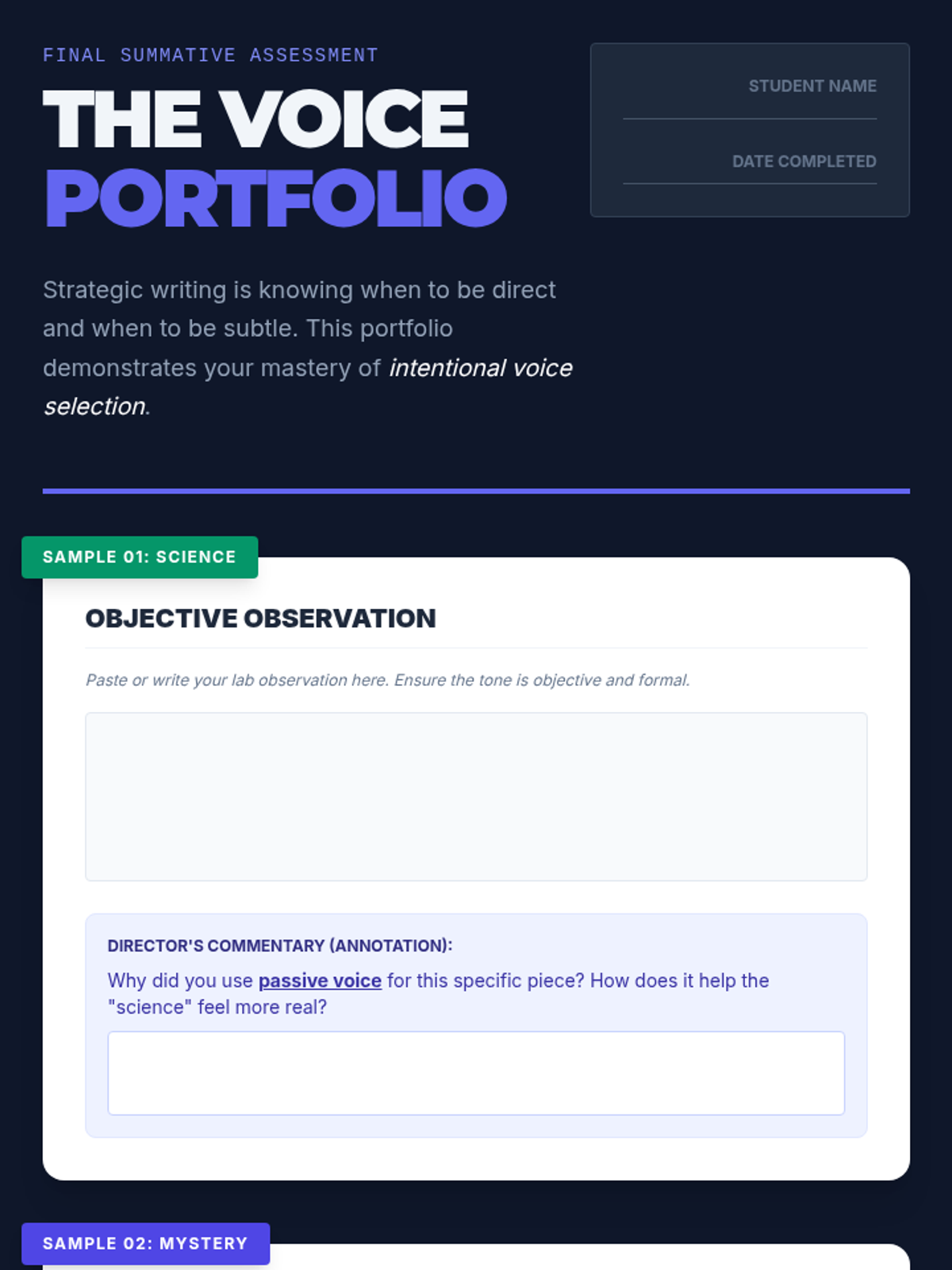
Students assemble a portfolio of three writing samples (science, mystery, and argument). They annotate their work, explaining their stylistic choices for voice.
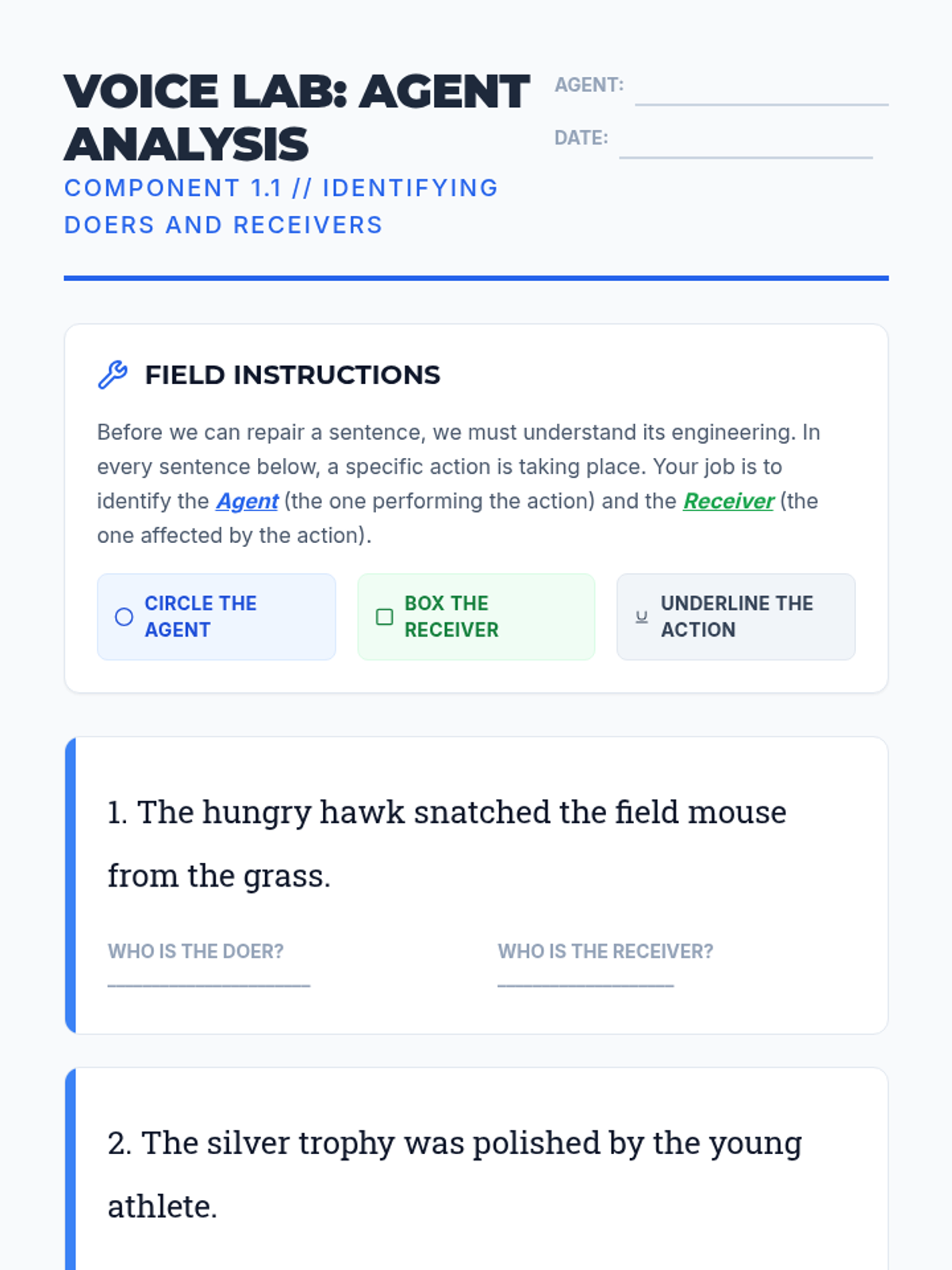
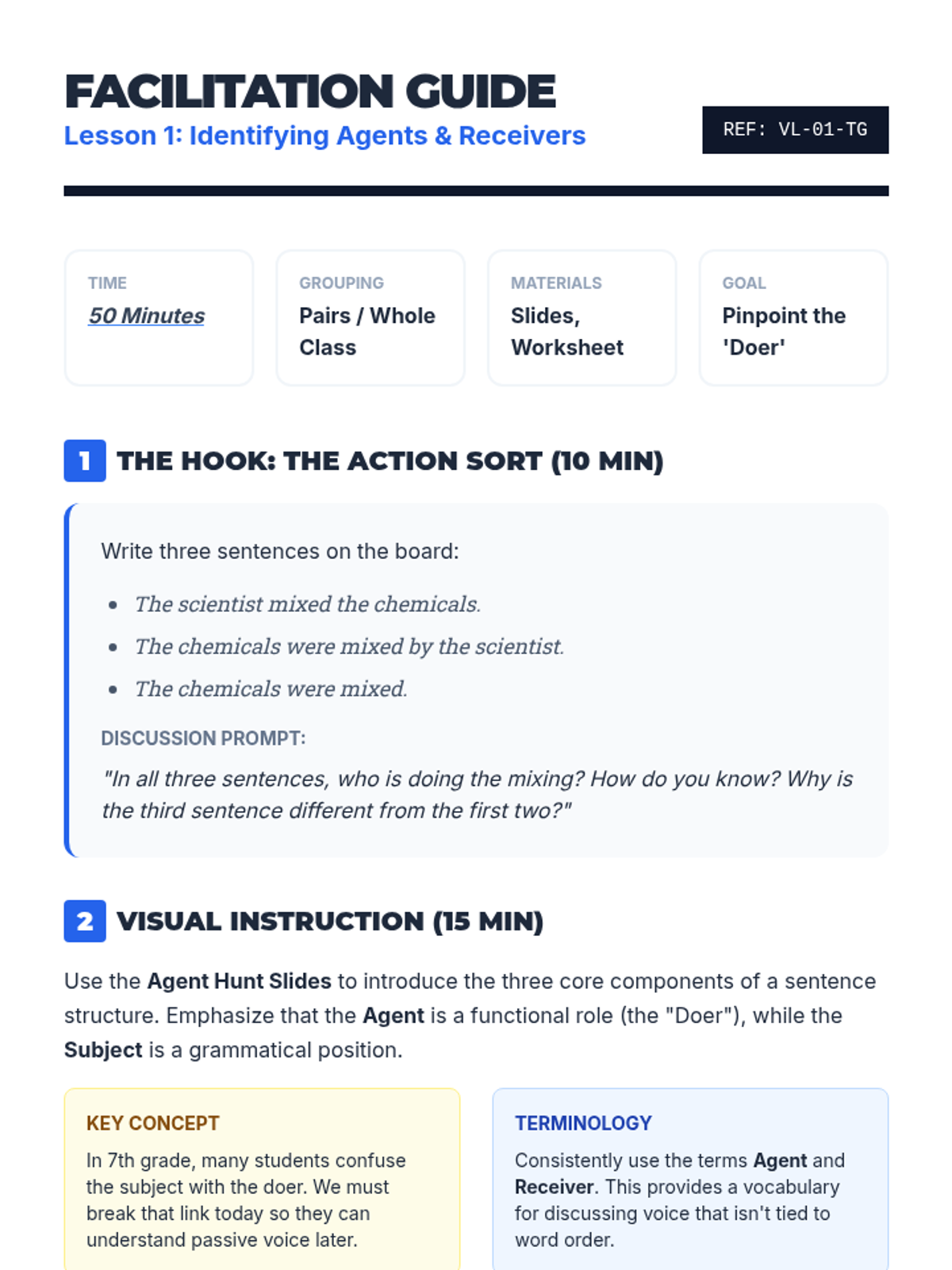
Students identify the subject, verb, and agent in sentences to distinguish between who performs the action and who receives it. This lesson builds the grammatical foundation necessary for understanding voice.
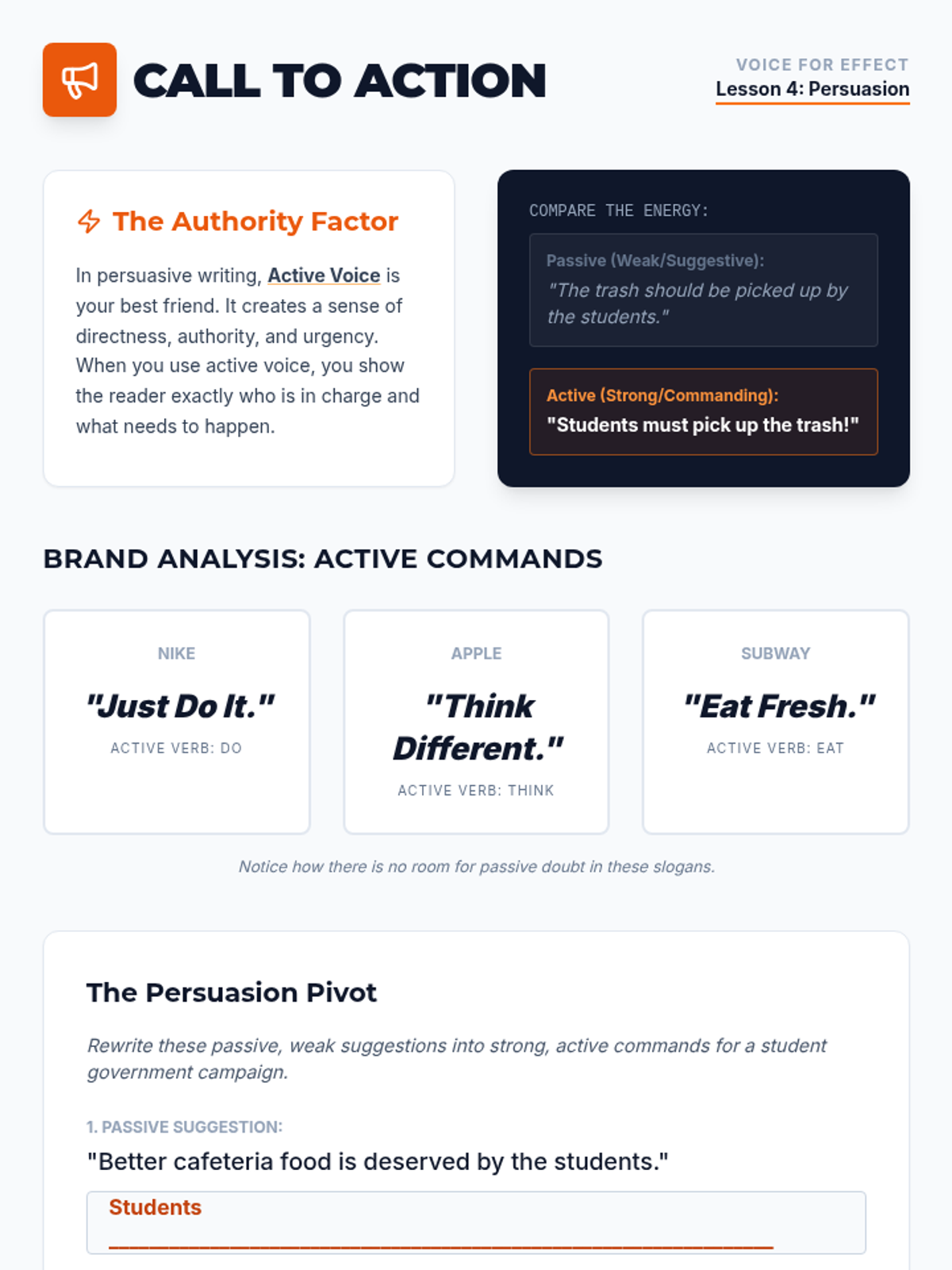
Students identify how strong action verbs and active subjects create urgency in persuasive writing. They draft a call-to-action utilizing active voice.
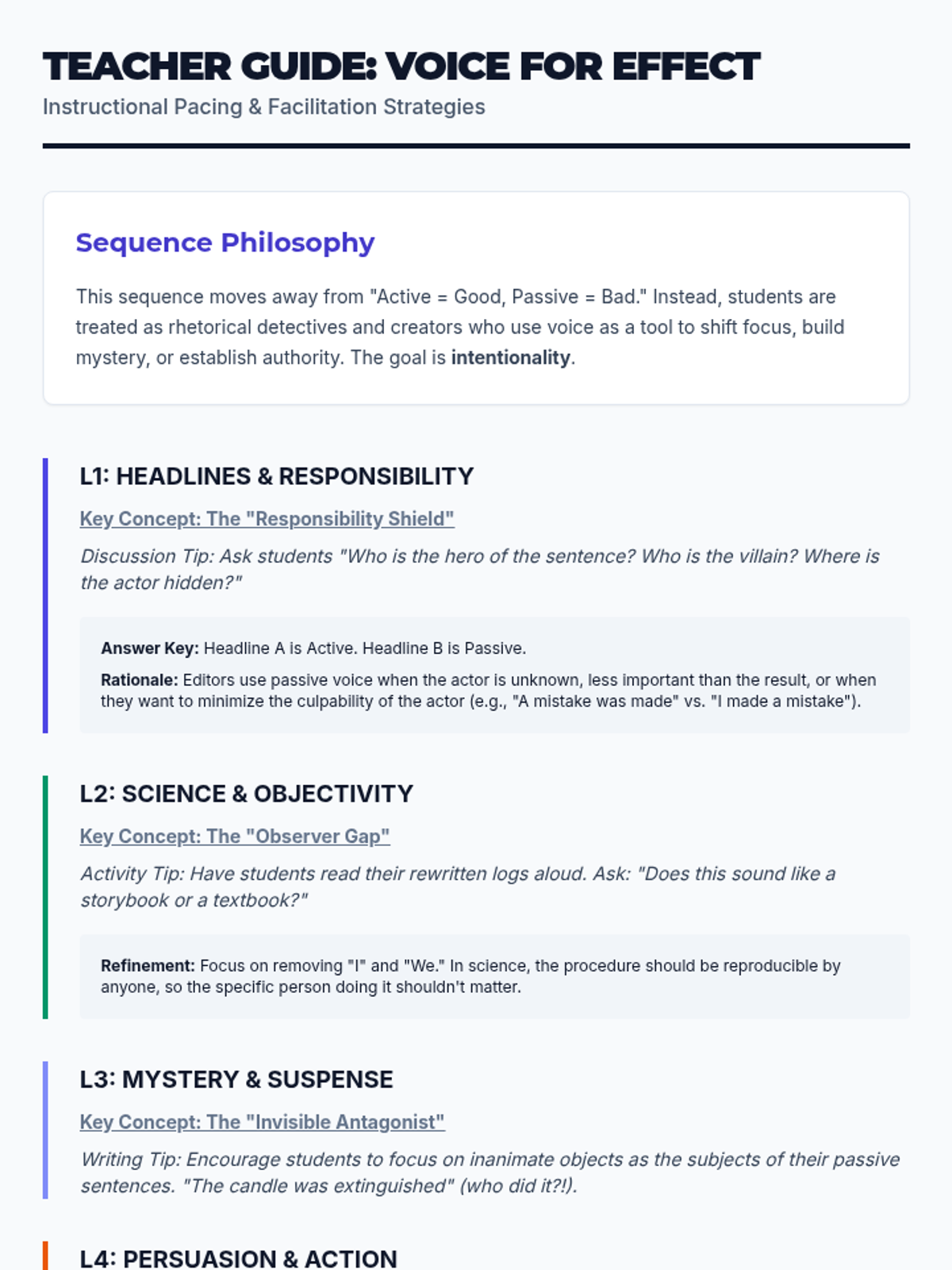
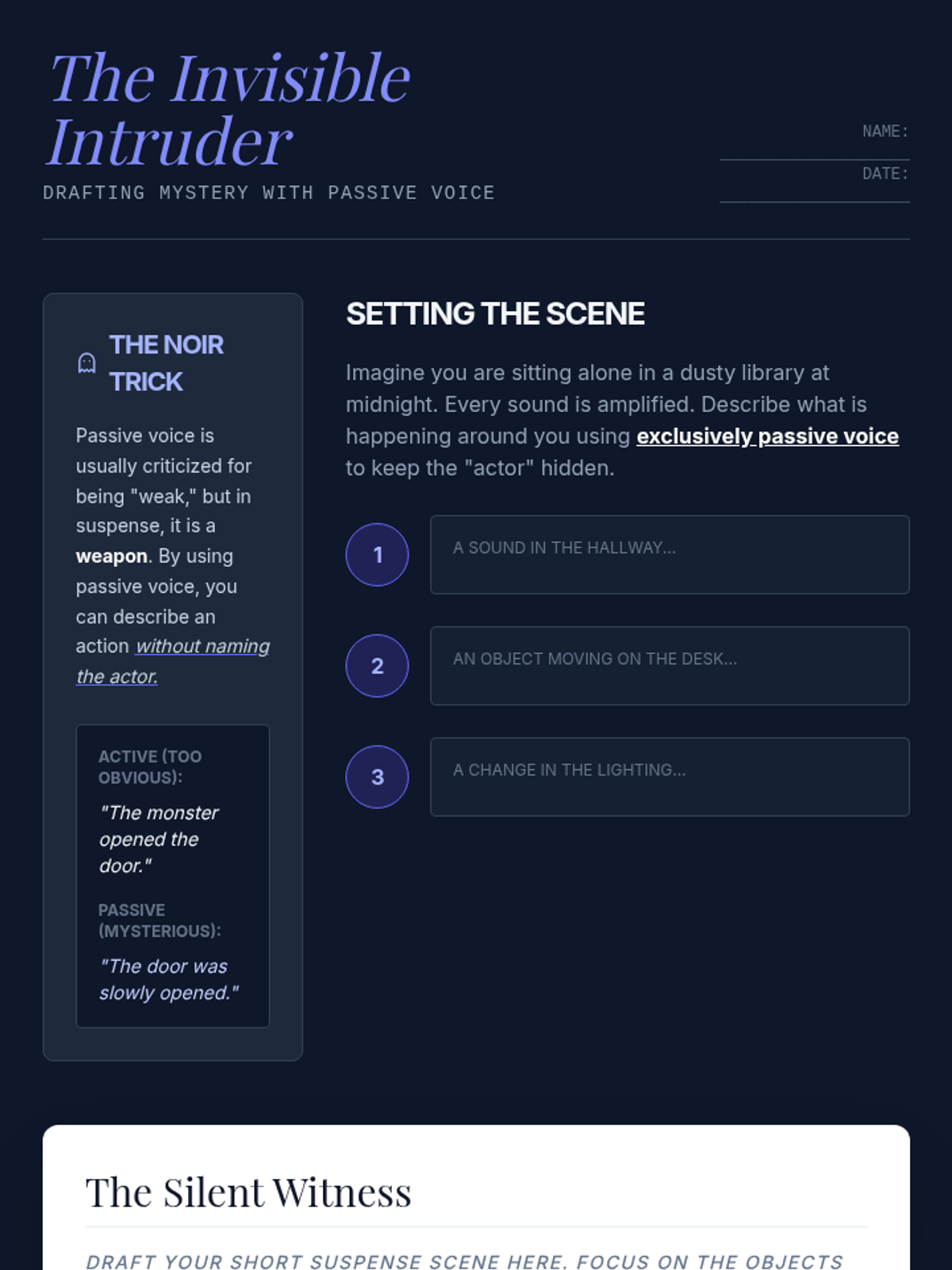
Students explore how passive voice can create mystery by withholding the identity of the subject. They write suspense scenes where actions happen without revealing the cause.
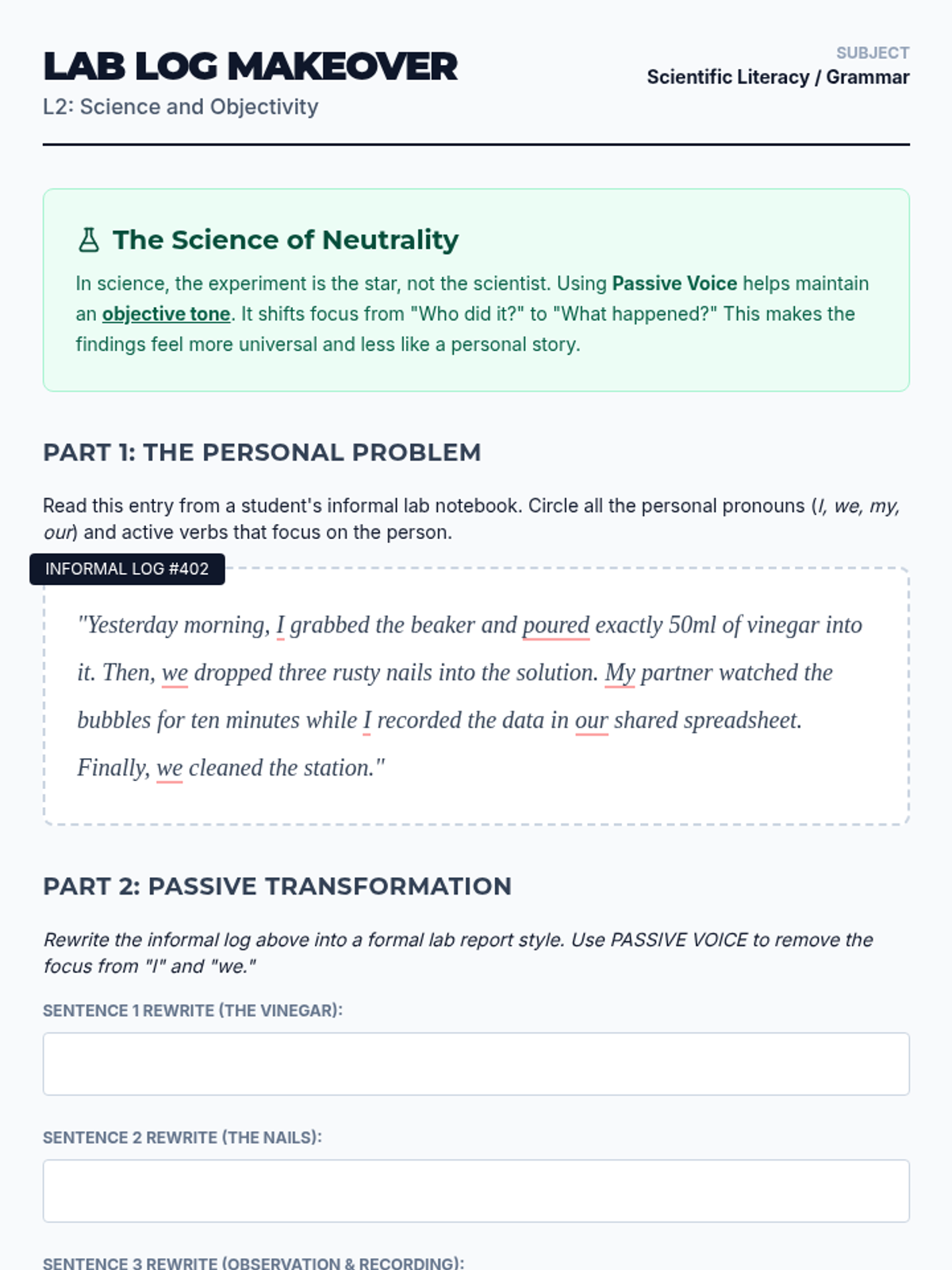
Students examine lab reports to understand why passive voice is standard in objective writing. They practice rewriting personal narratives into objective observations.
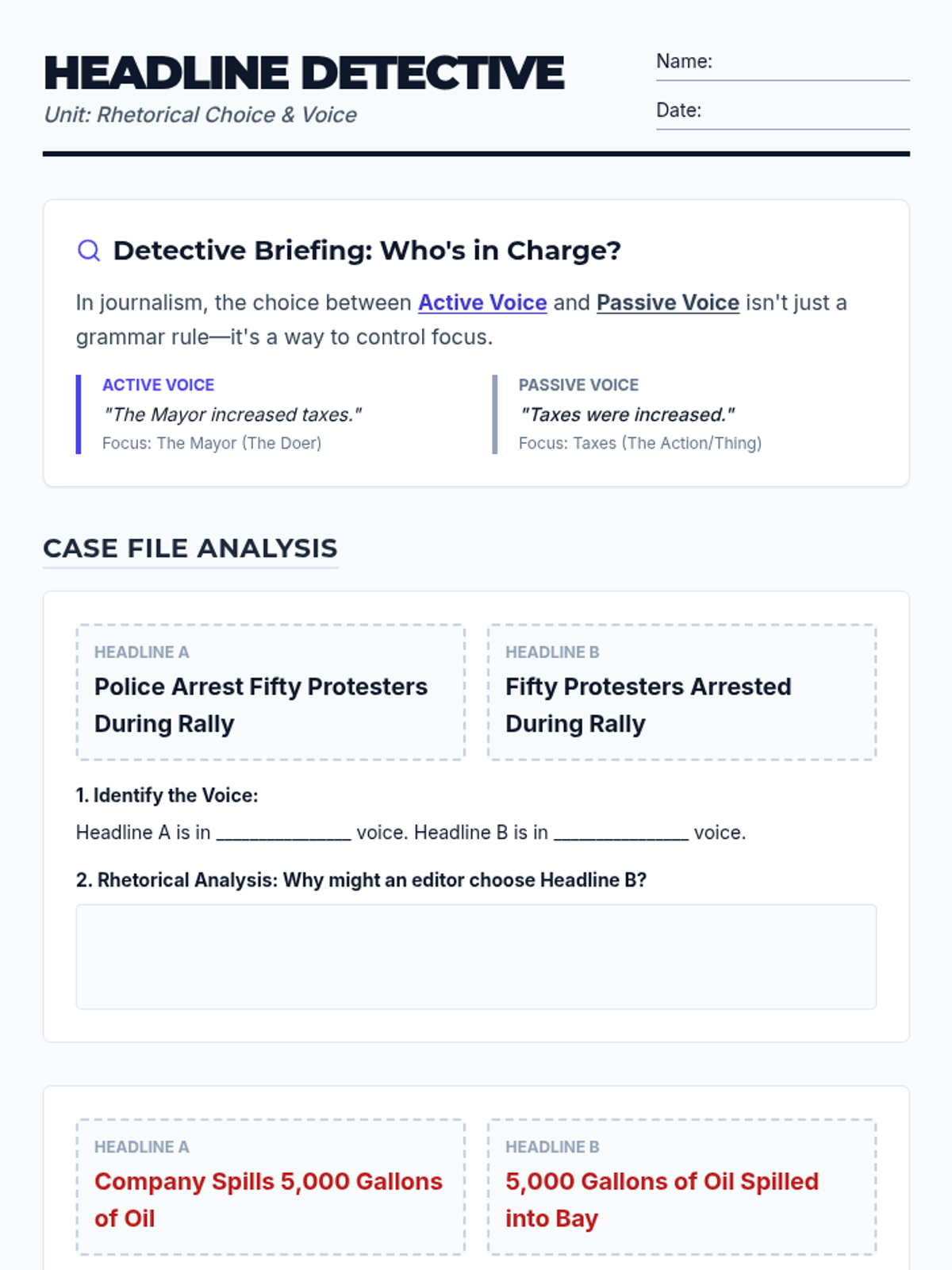
Students analyze real-world news headlines to see how active and passive voice can emphasize or hide responsibility. They compare headlines to discuss the rhetorical impact of subject placement.
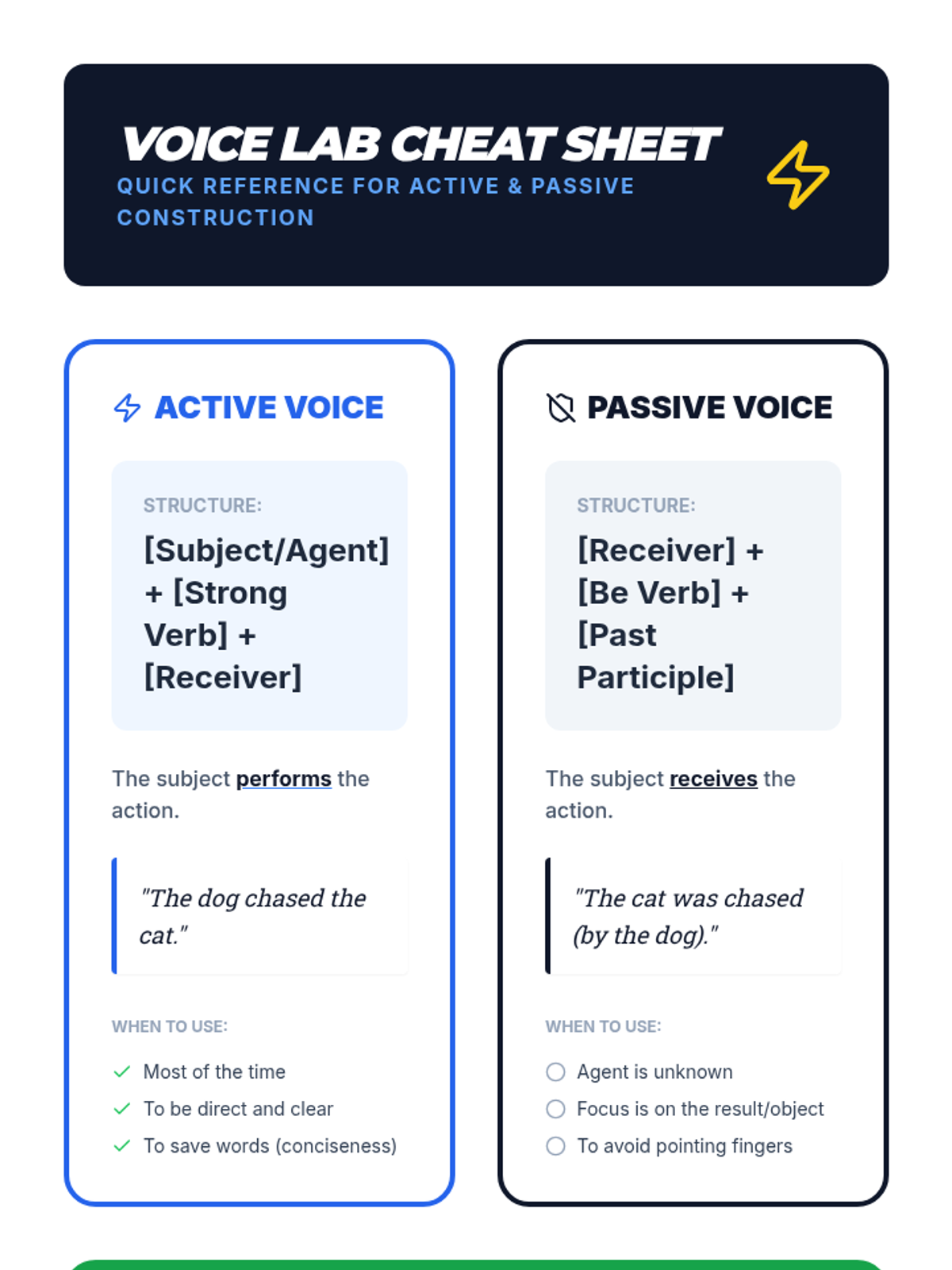
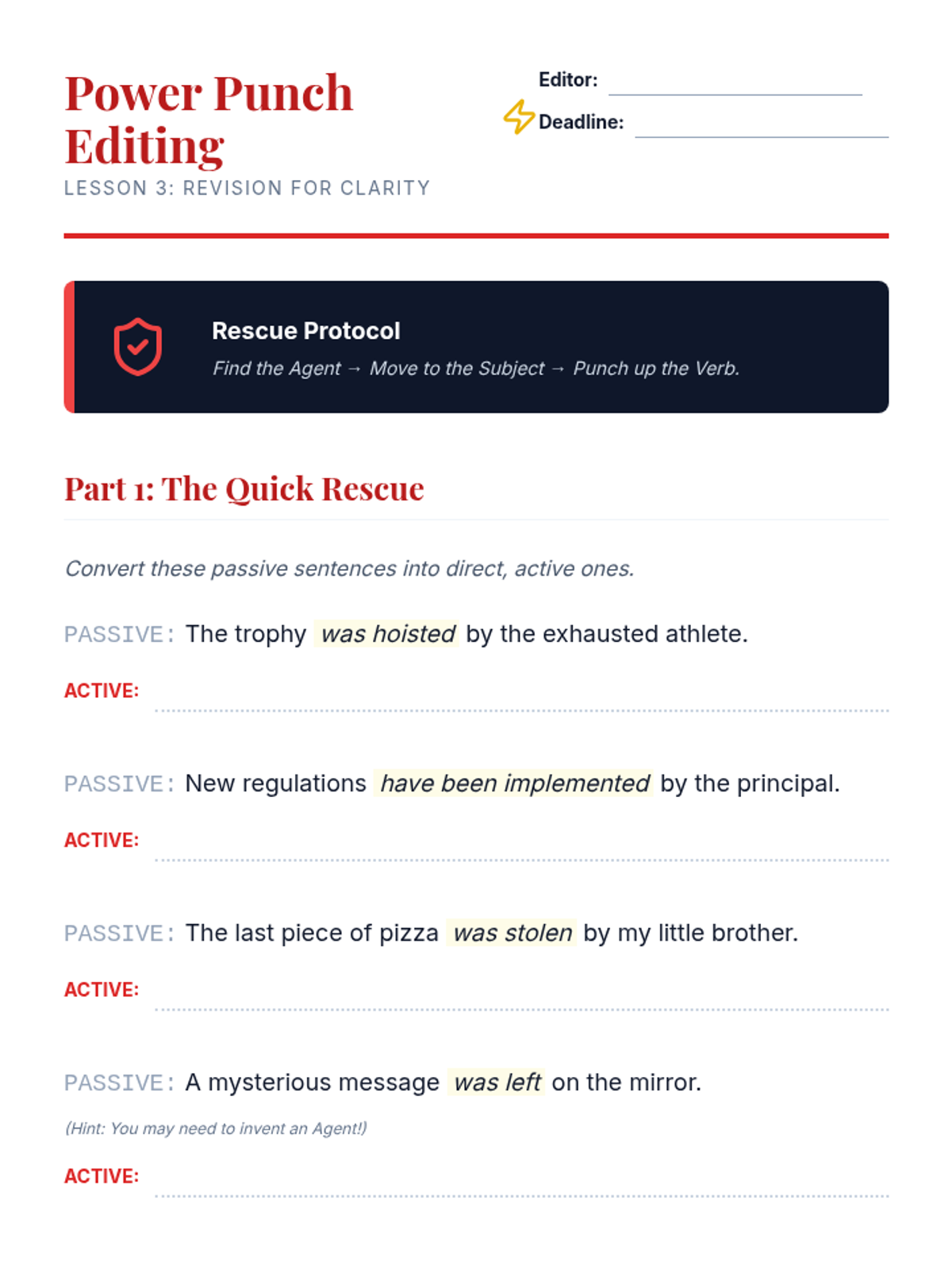
Focuses on revising passive sentences into active ones to improve clarity, directness, and engagement in writing.
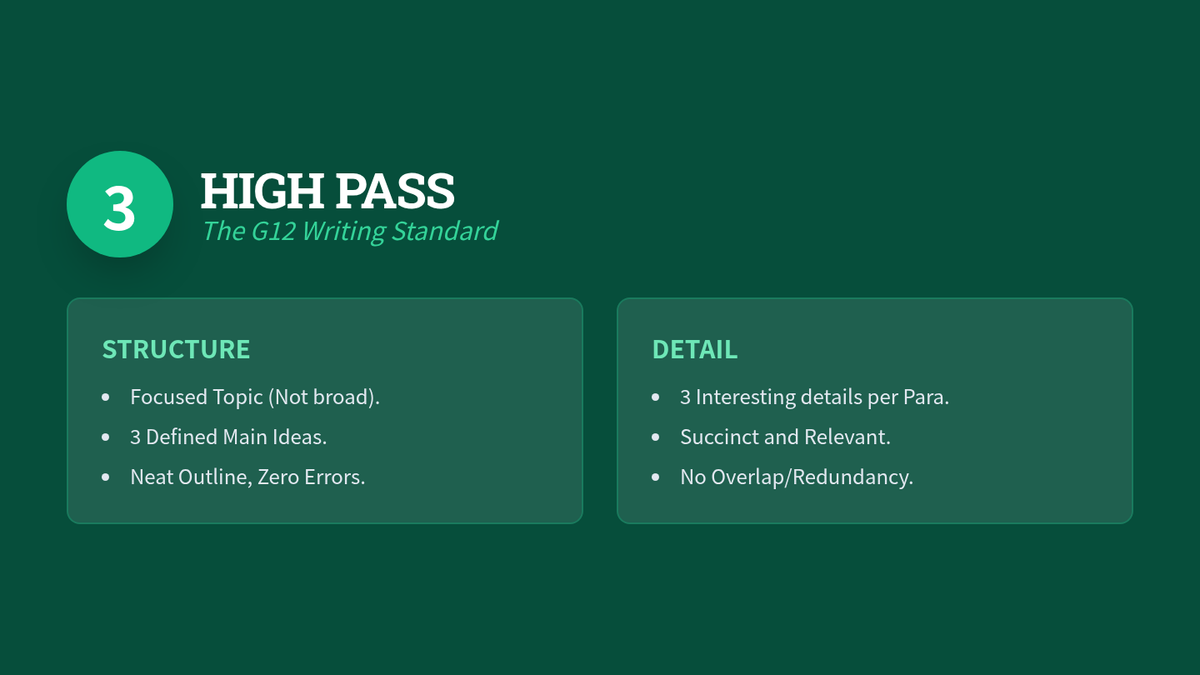
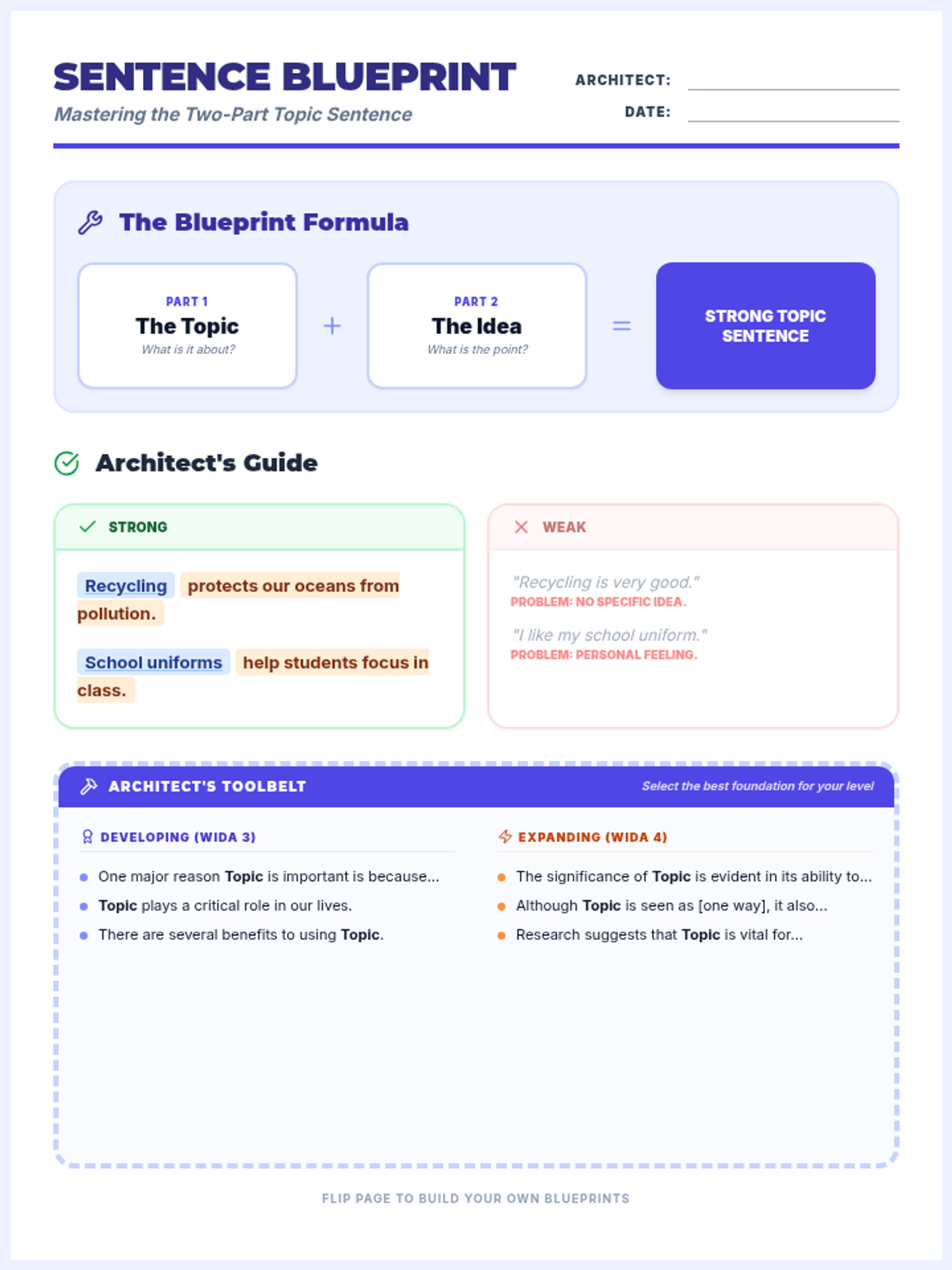
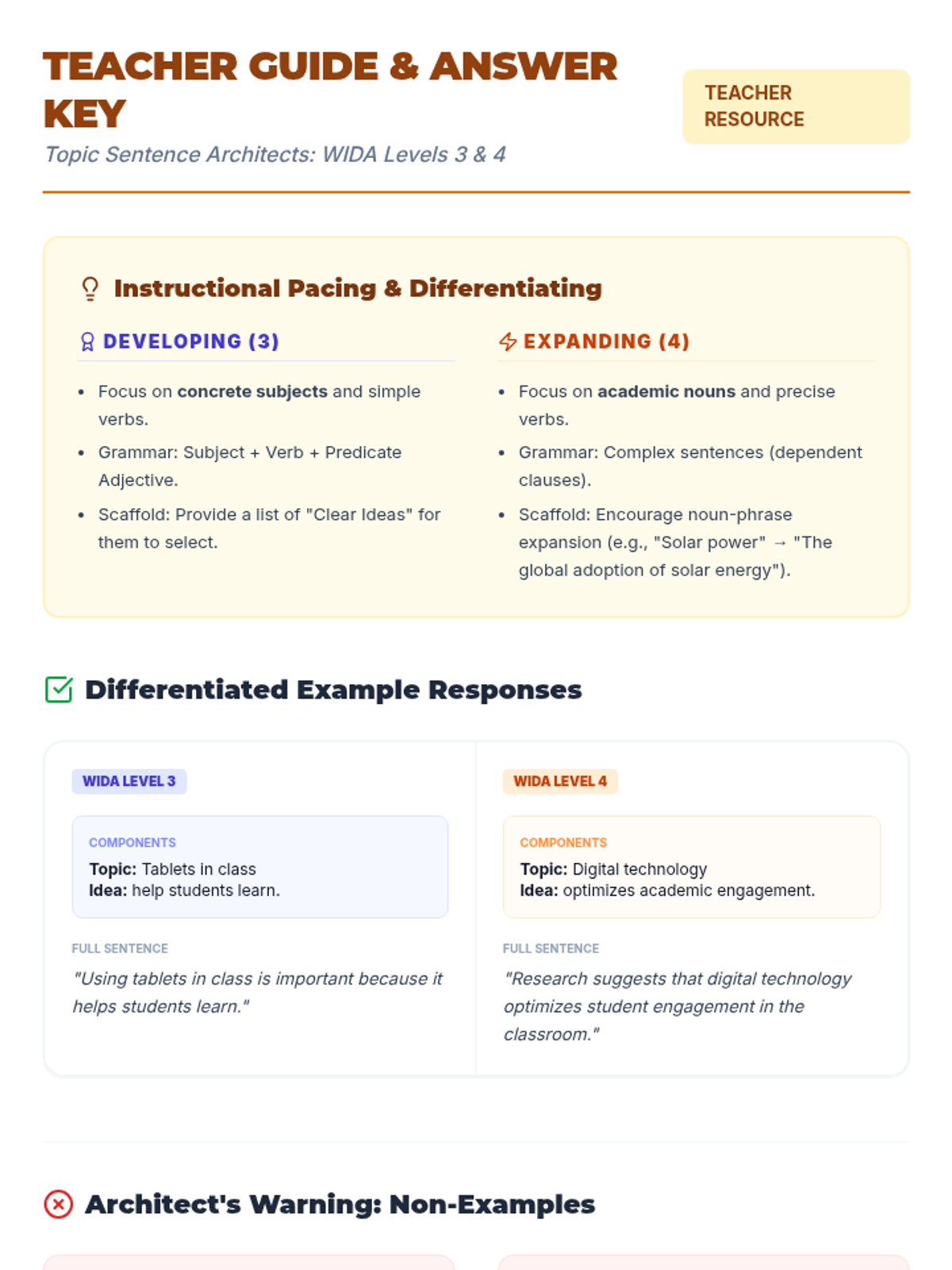
A lesson focused on teaching WIDA level 3 students how to construct strong topic sentences using a two-part formula: the topic and the clear idea. Students will use graphic organizers and sentence starters to build academic paragraph foundations.
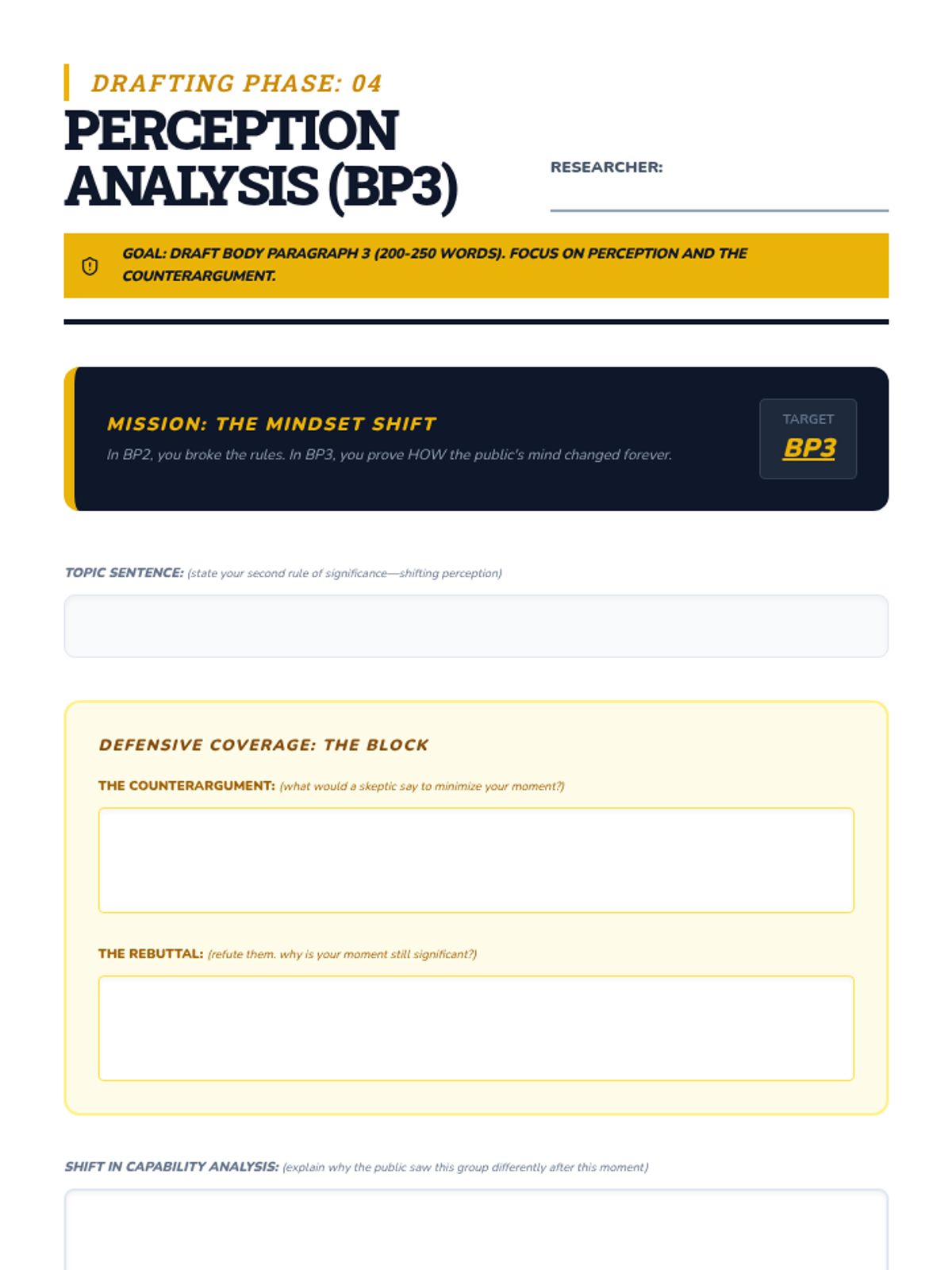
Drafting the third body paragraph, focusing on shifts in public perception and mastering the counterargument/rebuttal.
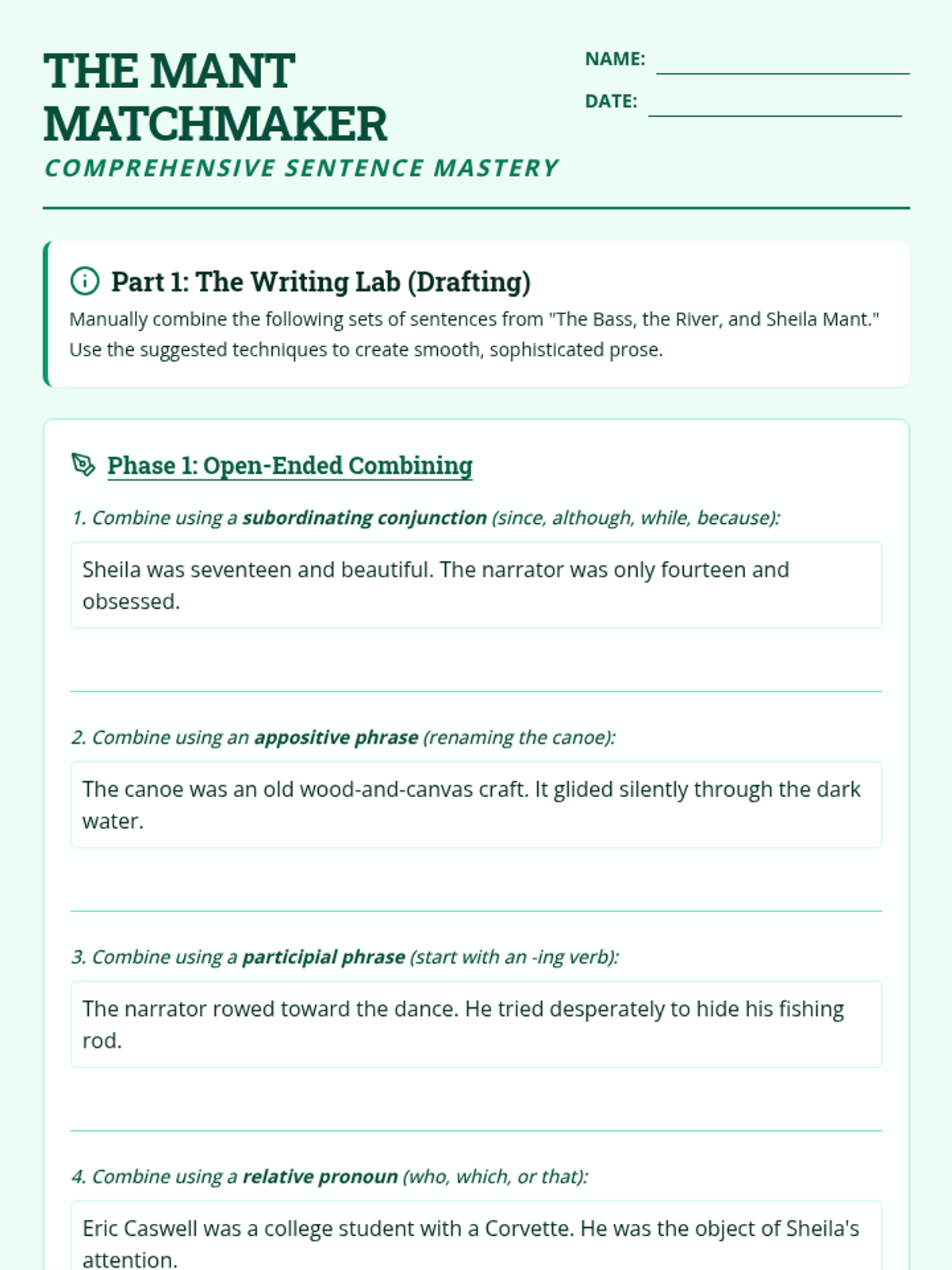
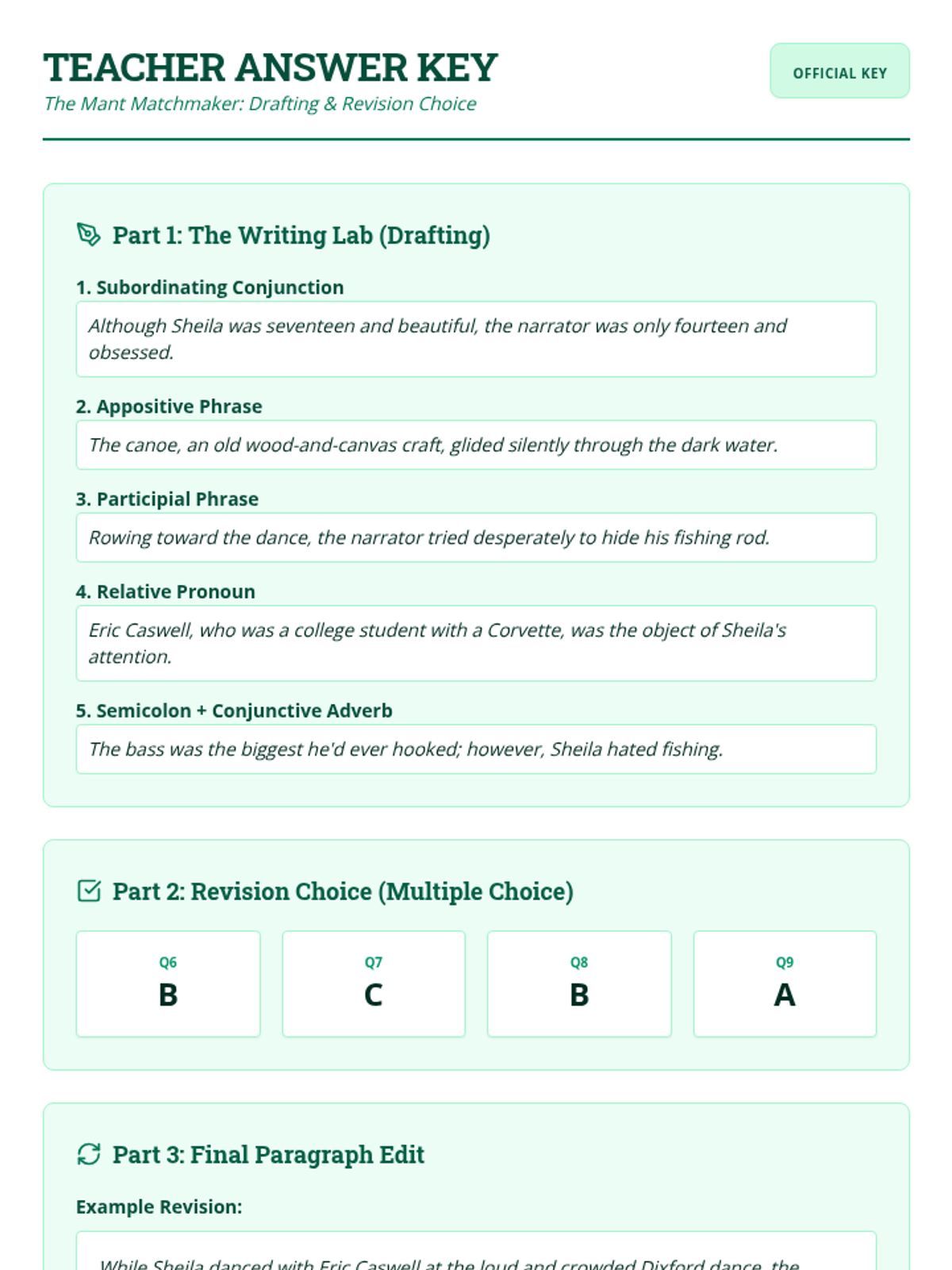
A targeted revising and editing lesson focused on sentence combining techniques, themed around the short story 'The Bass, the River, and Sheila Mant'. Students practice merging short, choppy sentences into sophisticated prose.
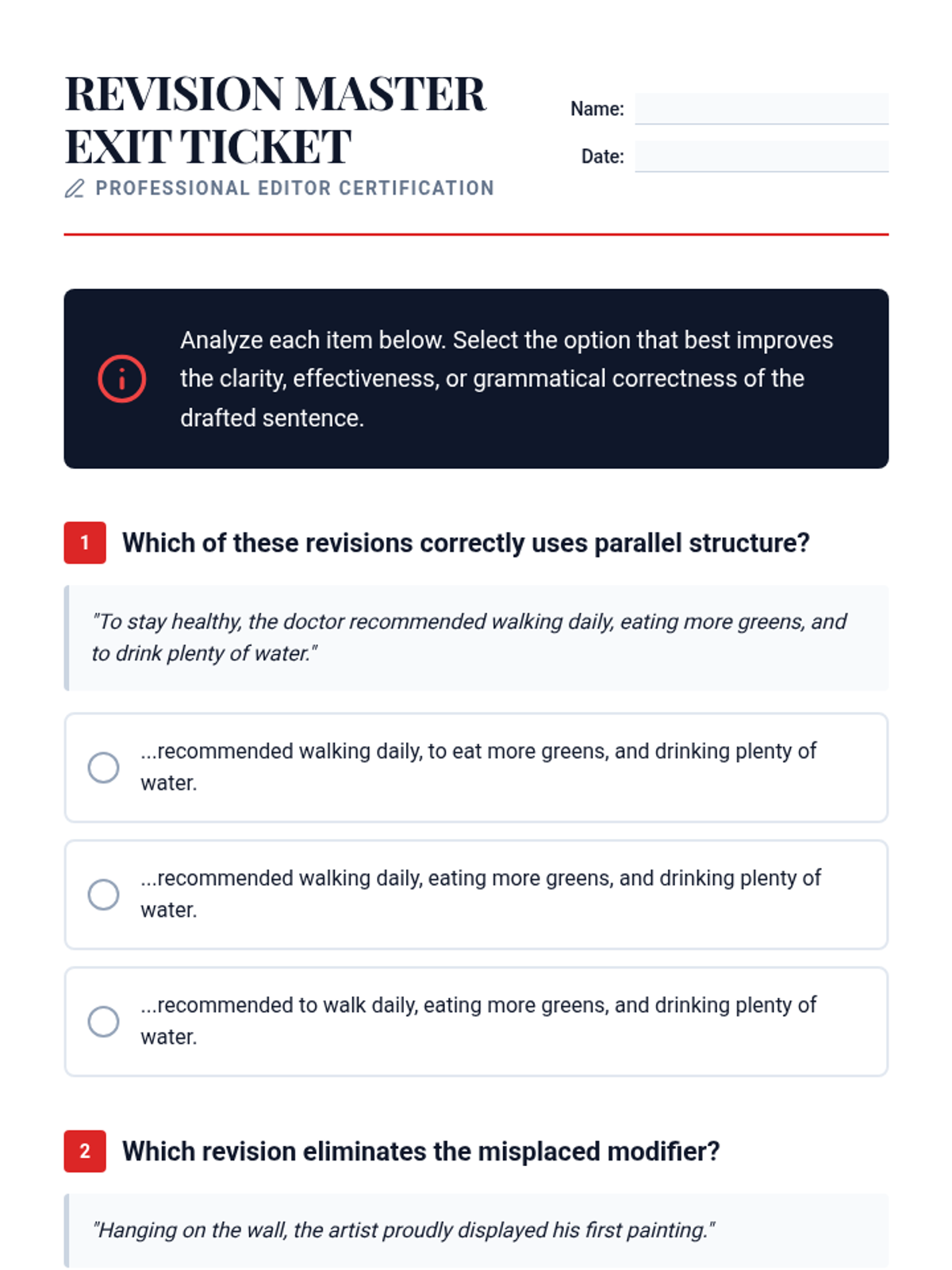
A comprehensive guide to high-level revision and editing, focusing on sentence effectiveness, parallel structure, and eliminating fragments or run-ons. Students learn to refine their writing with the precision of a professional editor.
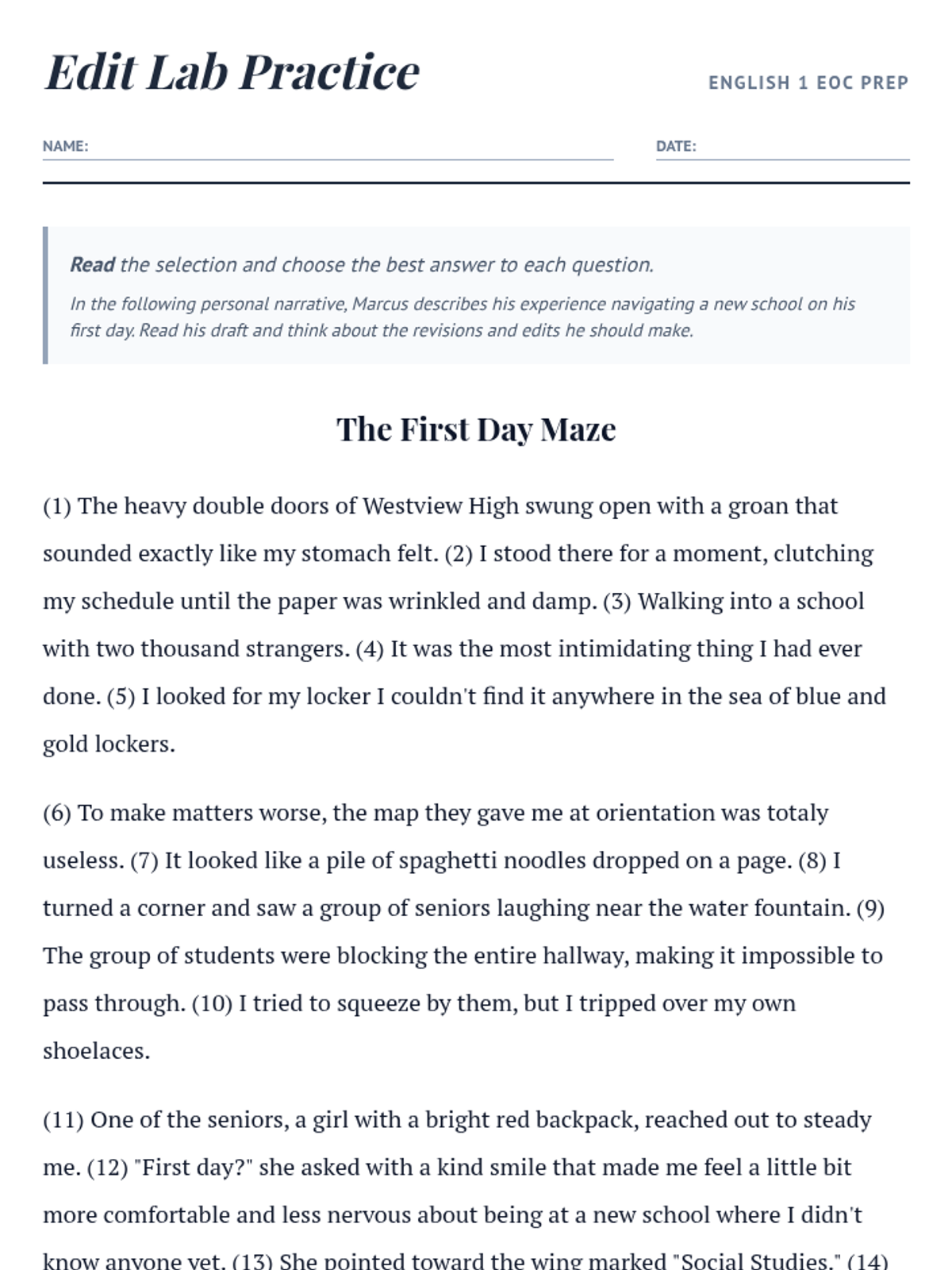
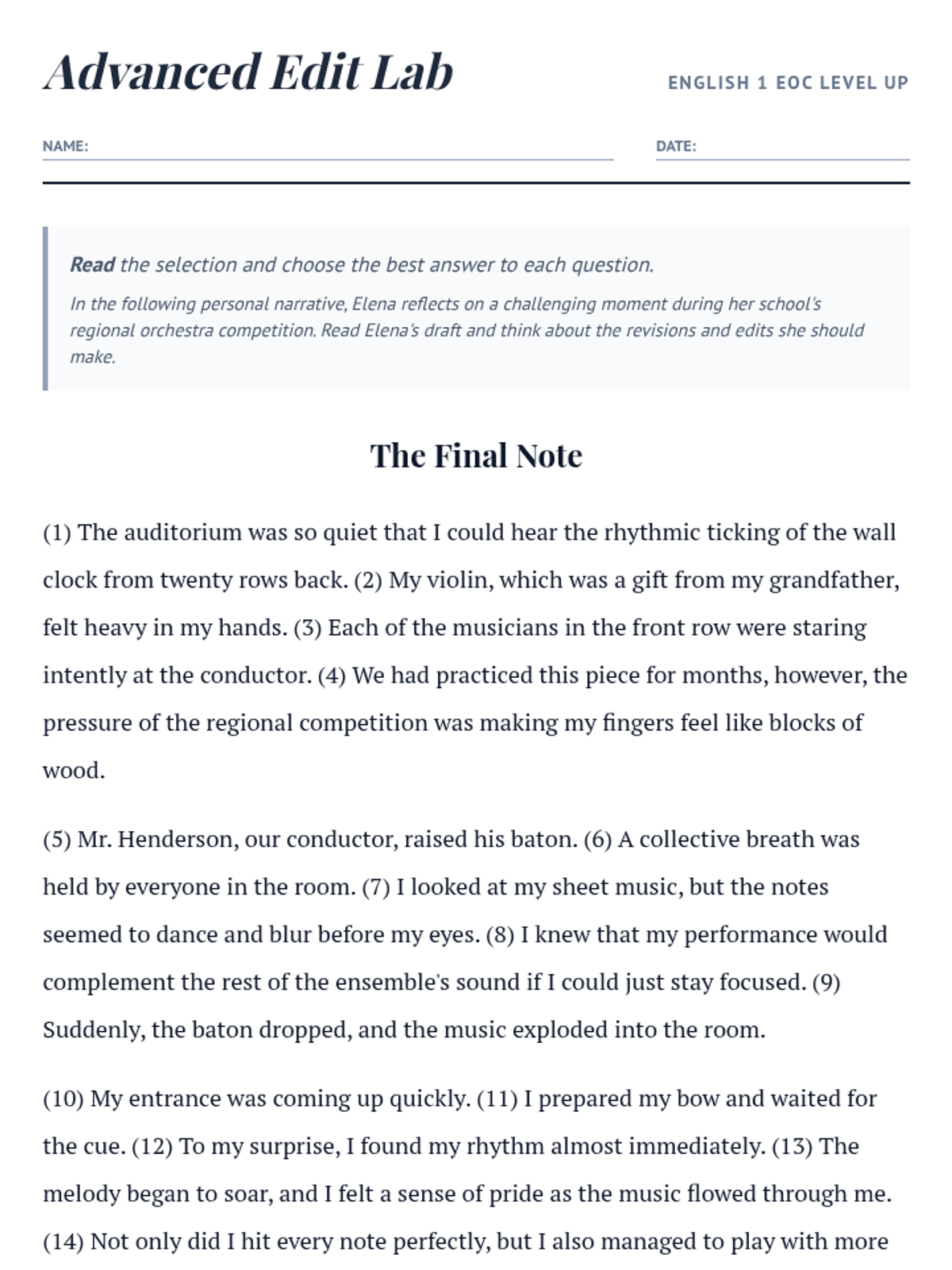
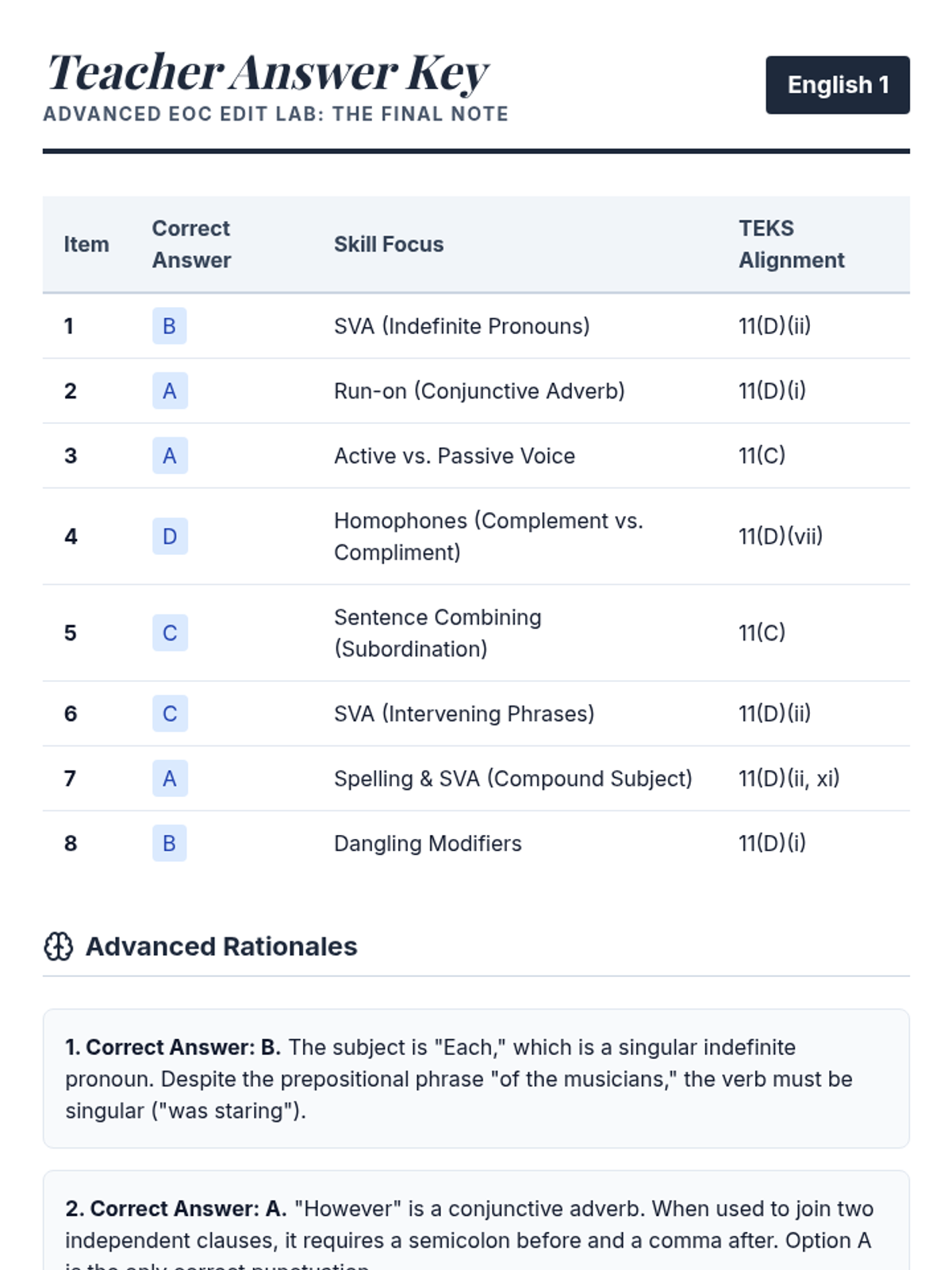
A comprehensive revising and editing practice focused on English 1 Texas EOC skills, featuring a student-centered personal narrative passage and exam-style questions.
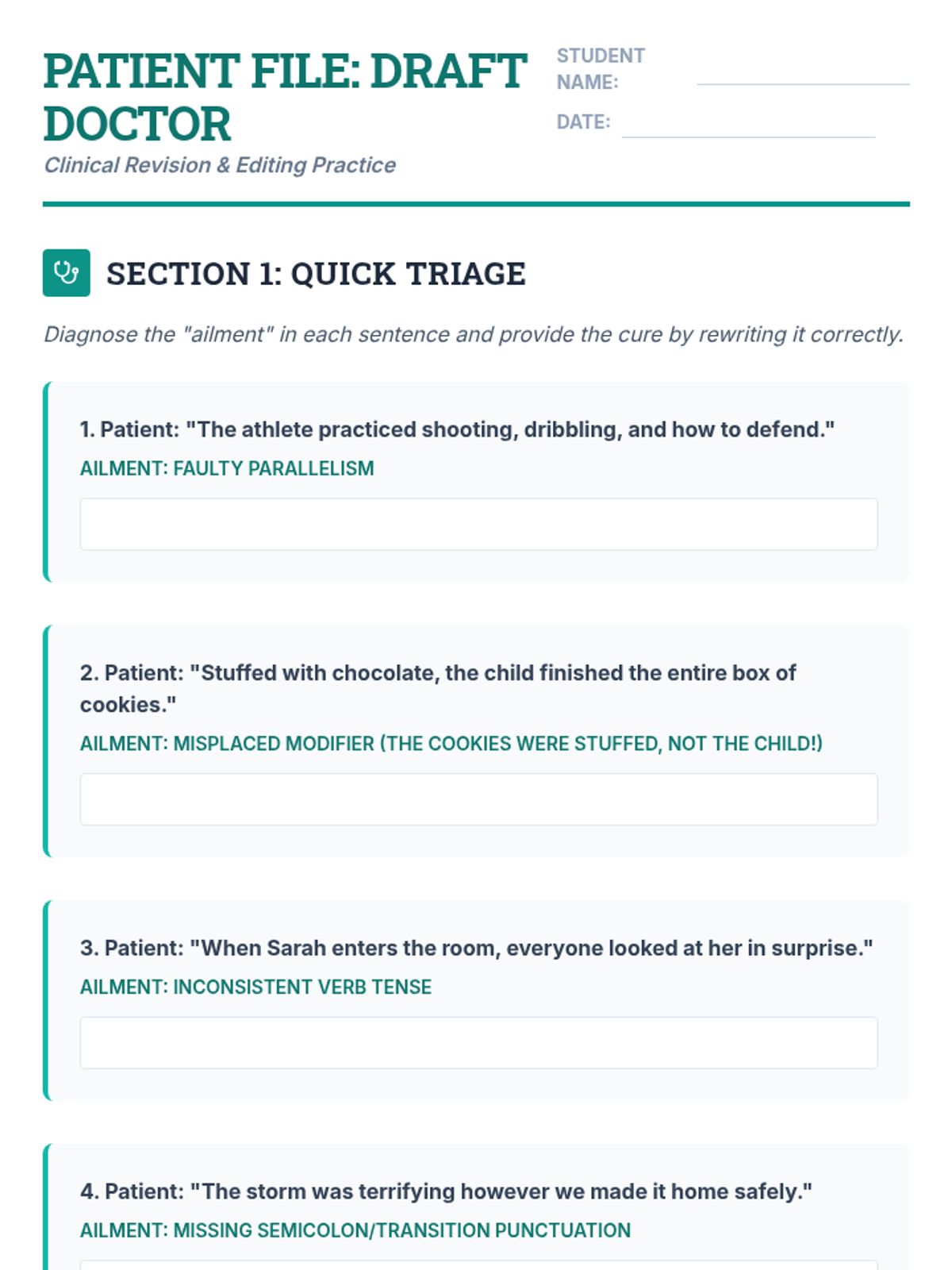
A comprehensive practice session for English 1 EOC revising and editing, featuring a medical-themed approach to 'curing' common writing ailments like poor sentence structure, tense issues, and punctuation errors.
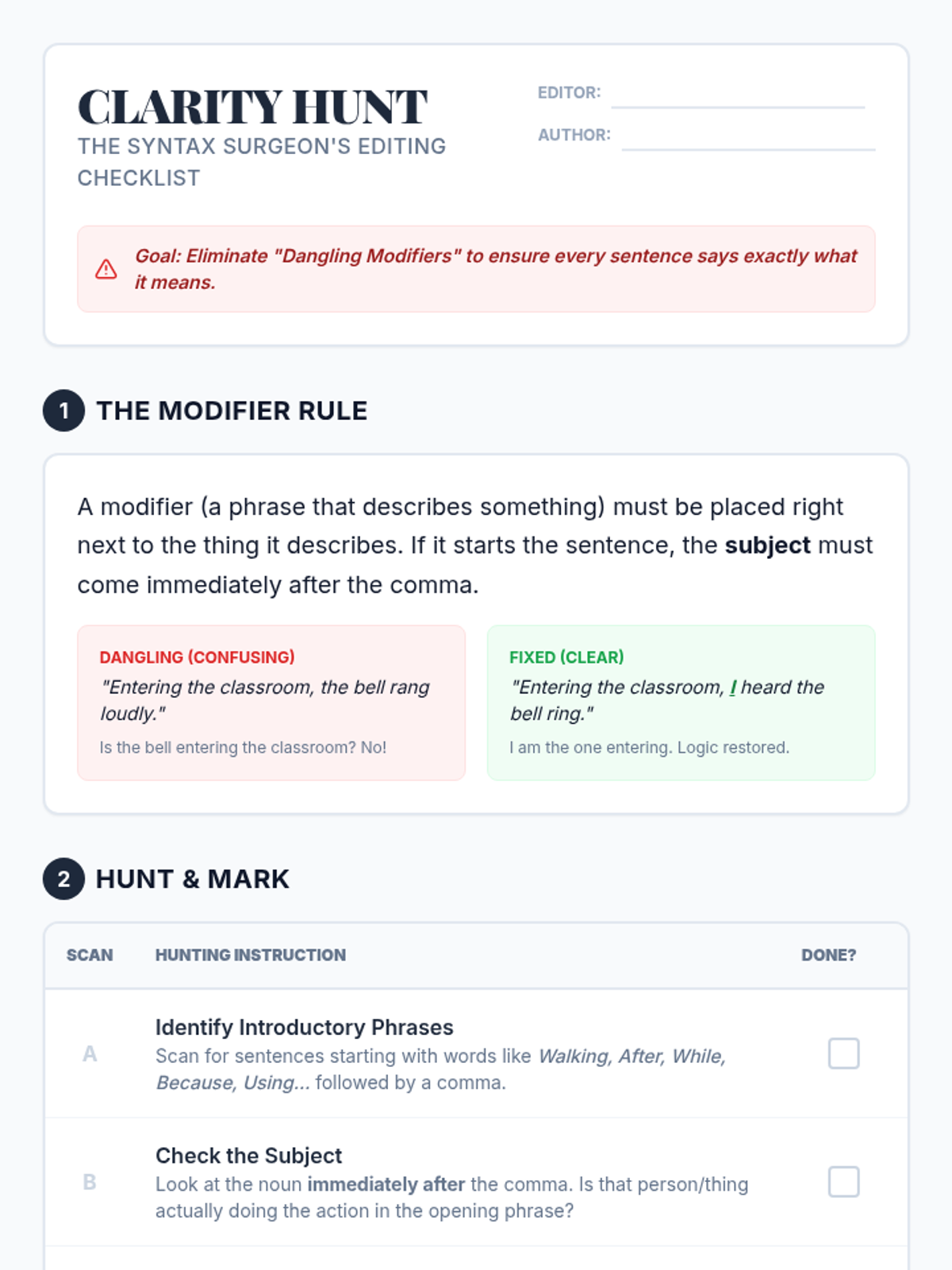
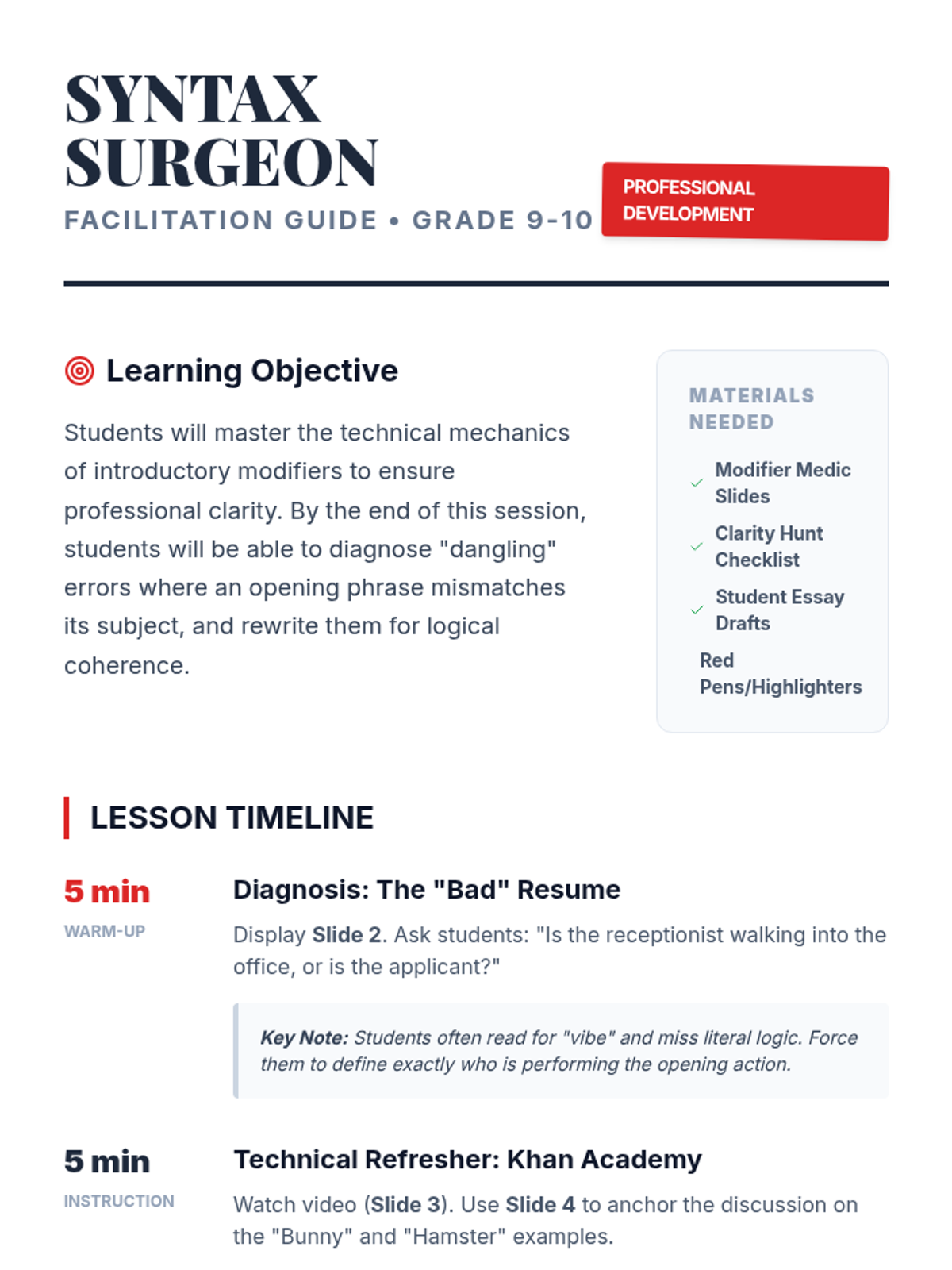
A high-school level grammar lesson focused on identifying and correcting dangling modifiers to improve clarity and professionalism in writing. Students analyze a 'bad' resume, watch a technical refresher, and perform a peer-editing circle on their own essay drafts.
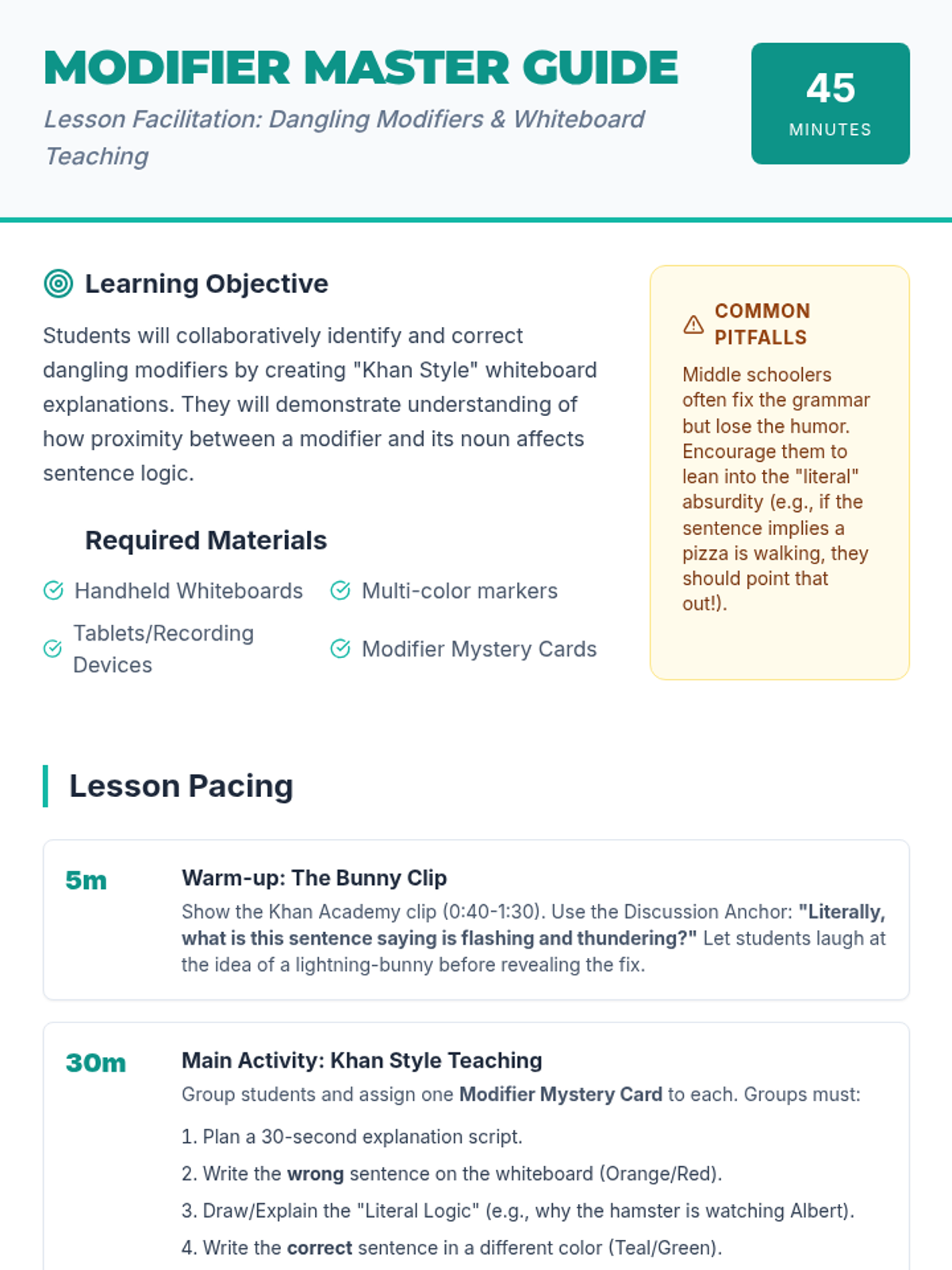
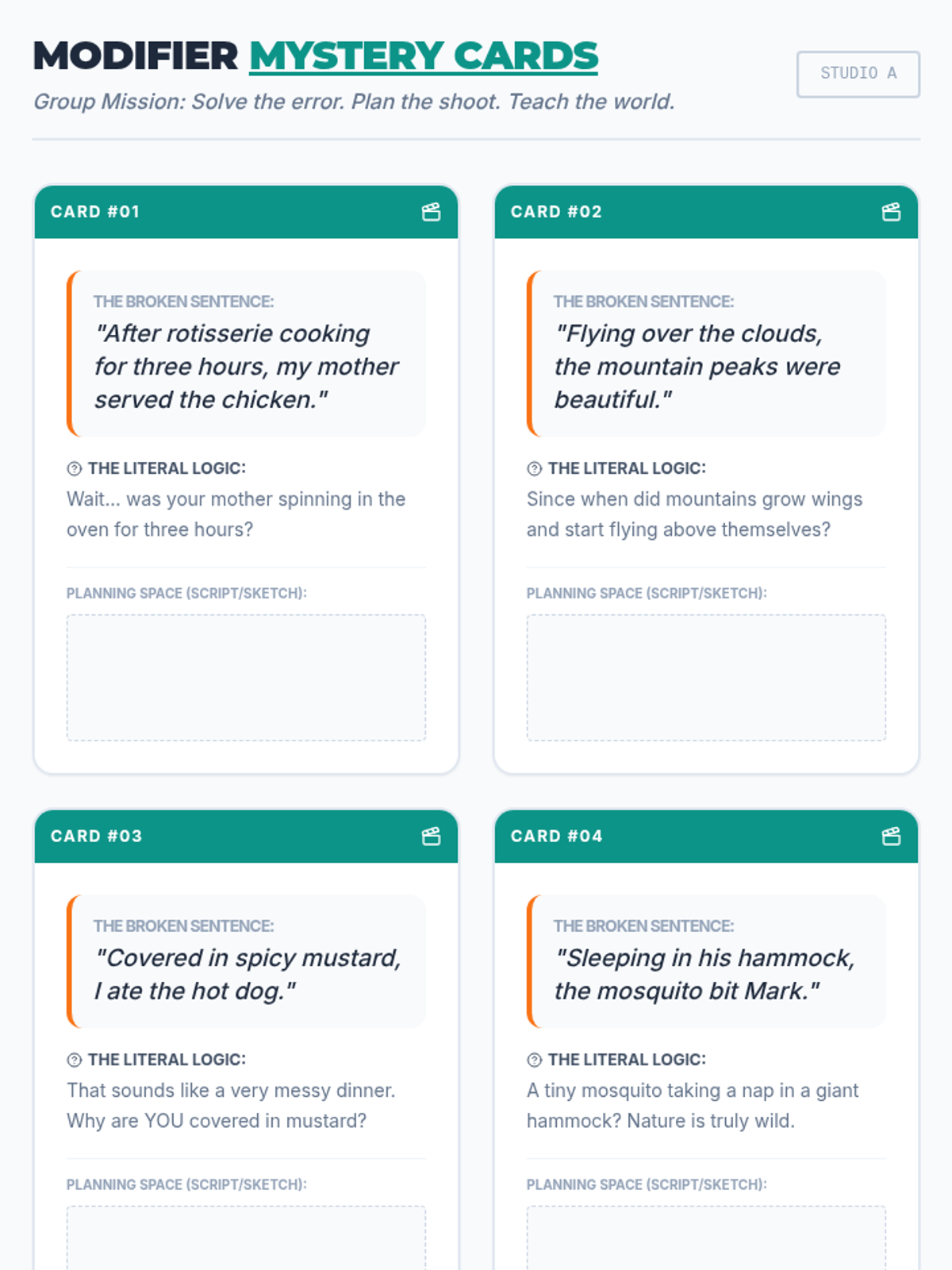
A collaborative grammar lesson where students use whiteboards and tablets to explain and correct dangling modifiers in a 'Khan Academy' style. Students analyze humorous errors, record short teaching clips, and present their work to the class.
A culminating session where students apply all previously learned concepts to edit a complex text for grammatical precision.
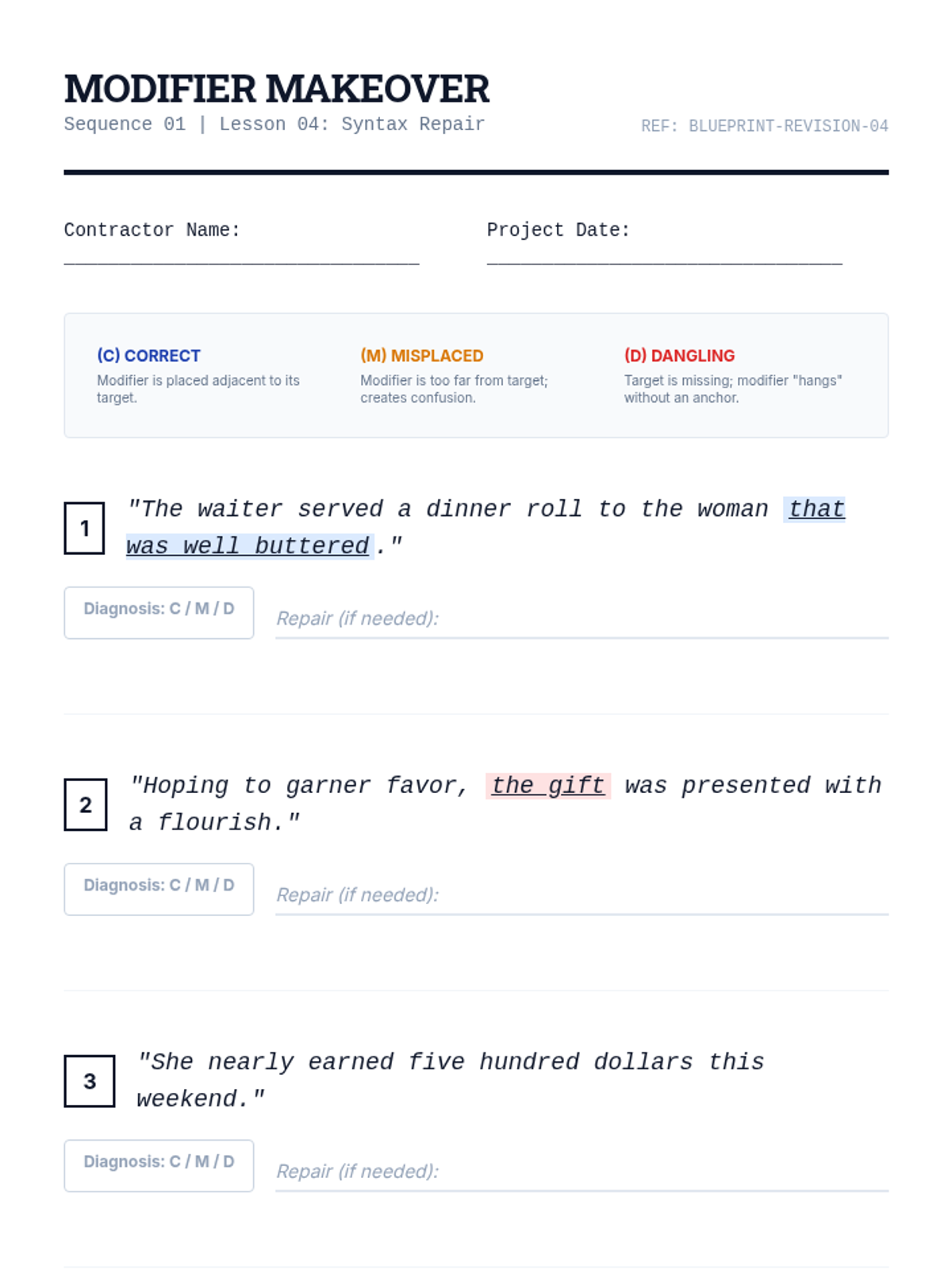
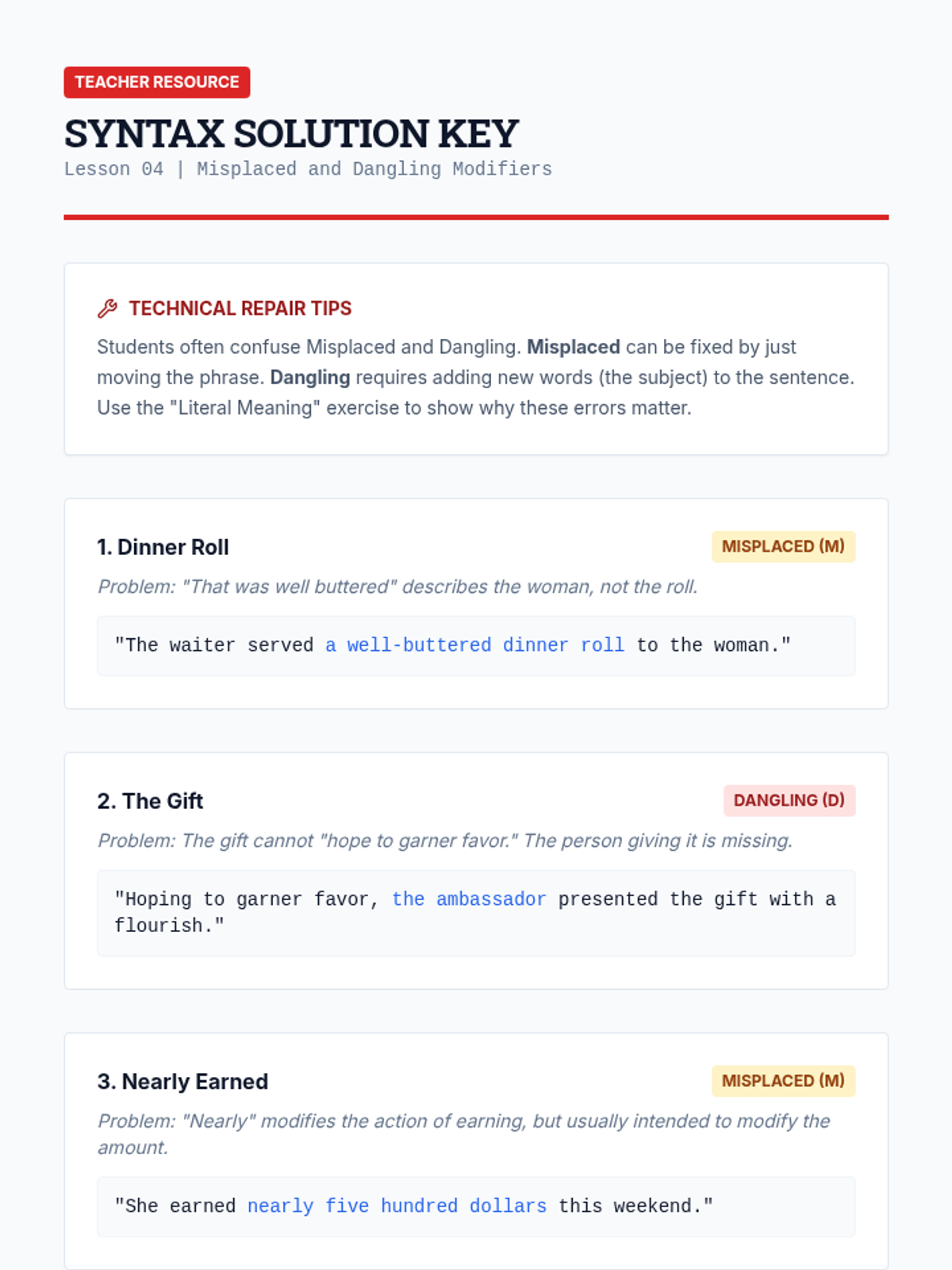
Explores how modifier placement affects sentence clarity, focusing on identifying and correcting misplaced and dangling modifiers.
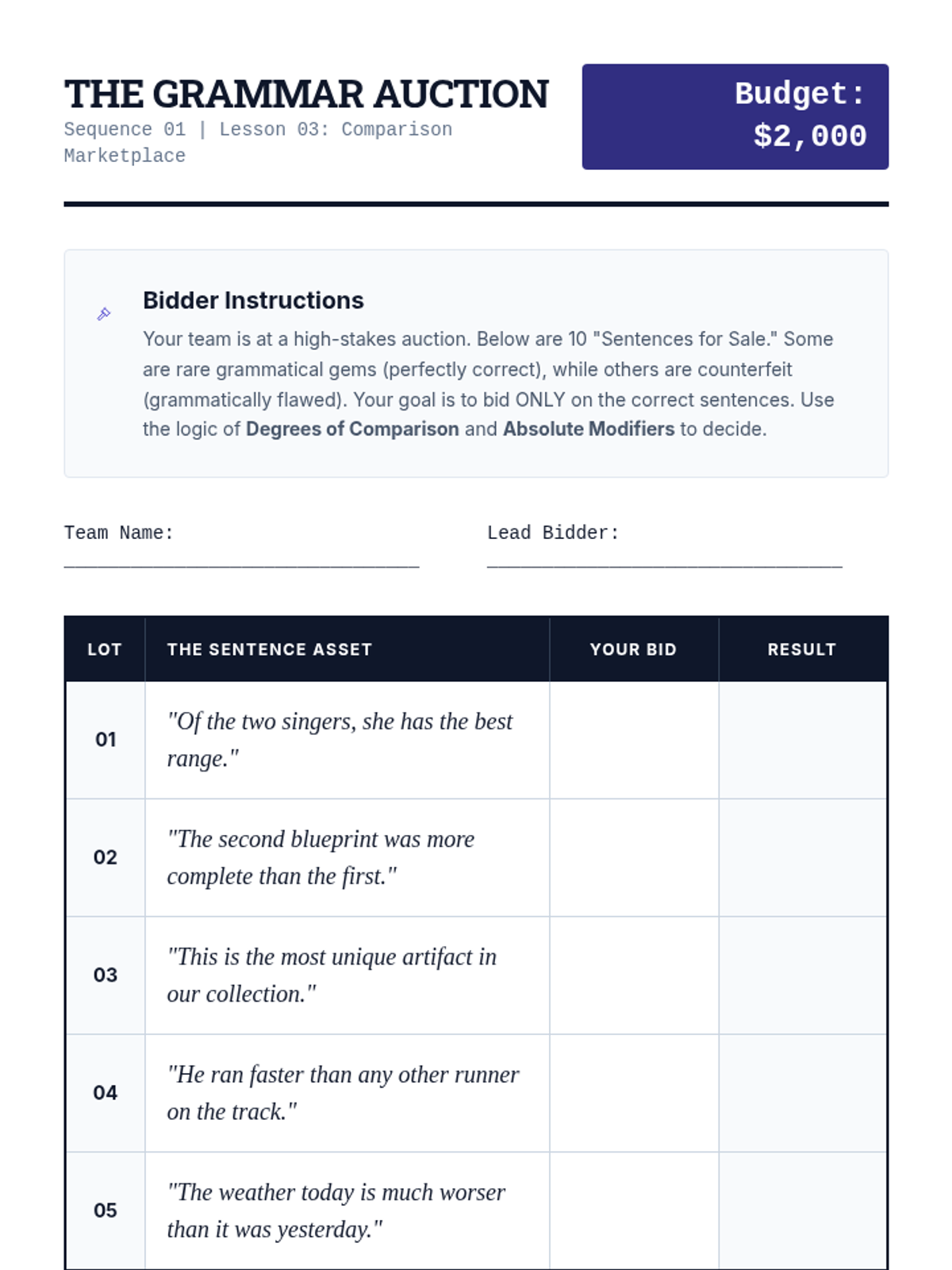
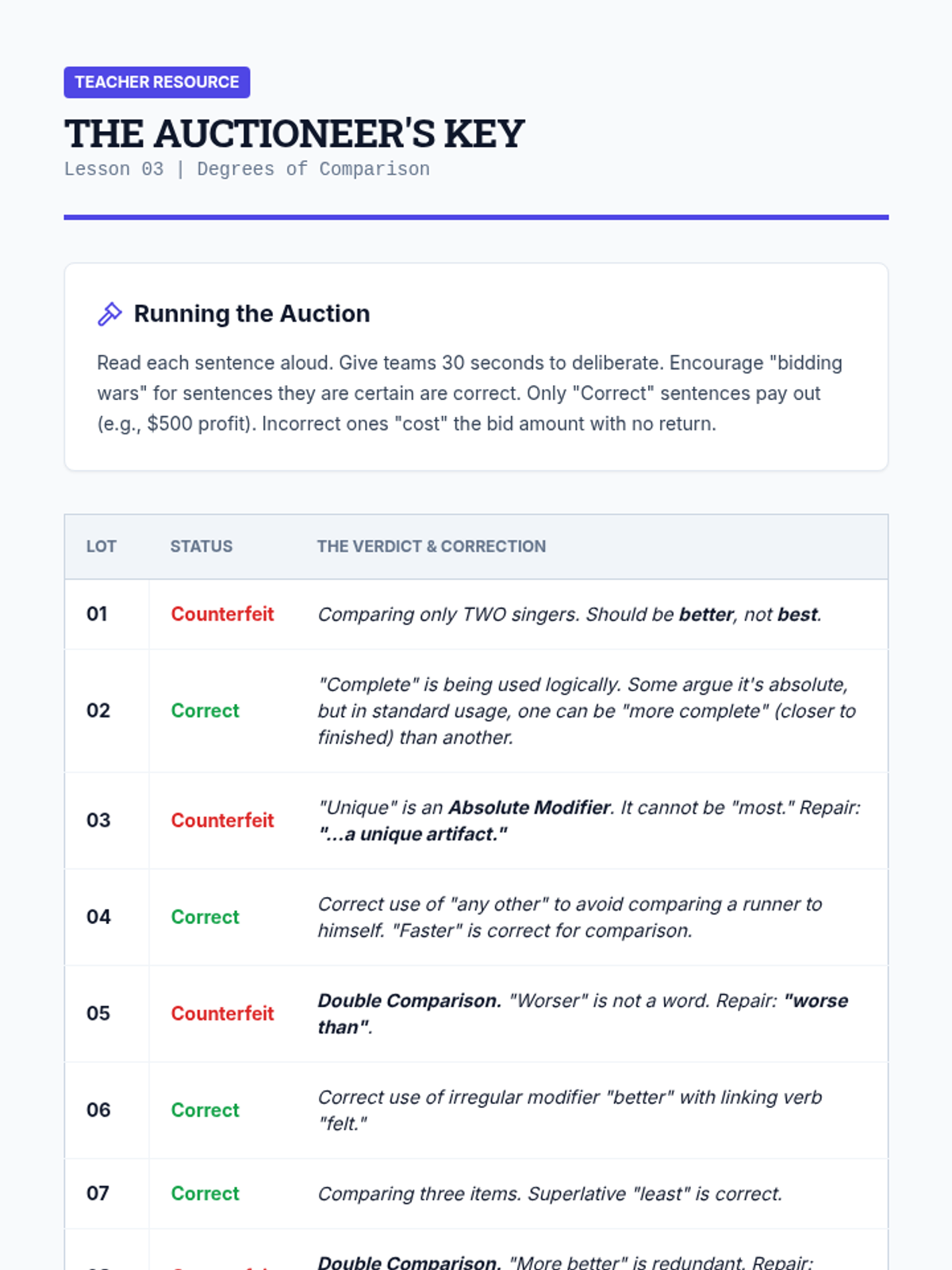
Covers the formation and logical usage of comparative and superlative modifiers, including irregular forms and absolute modifiers.
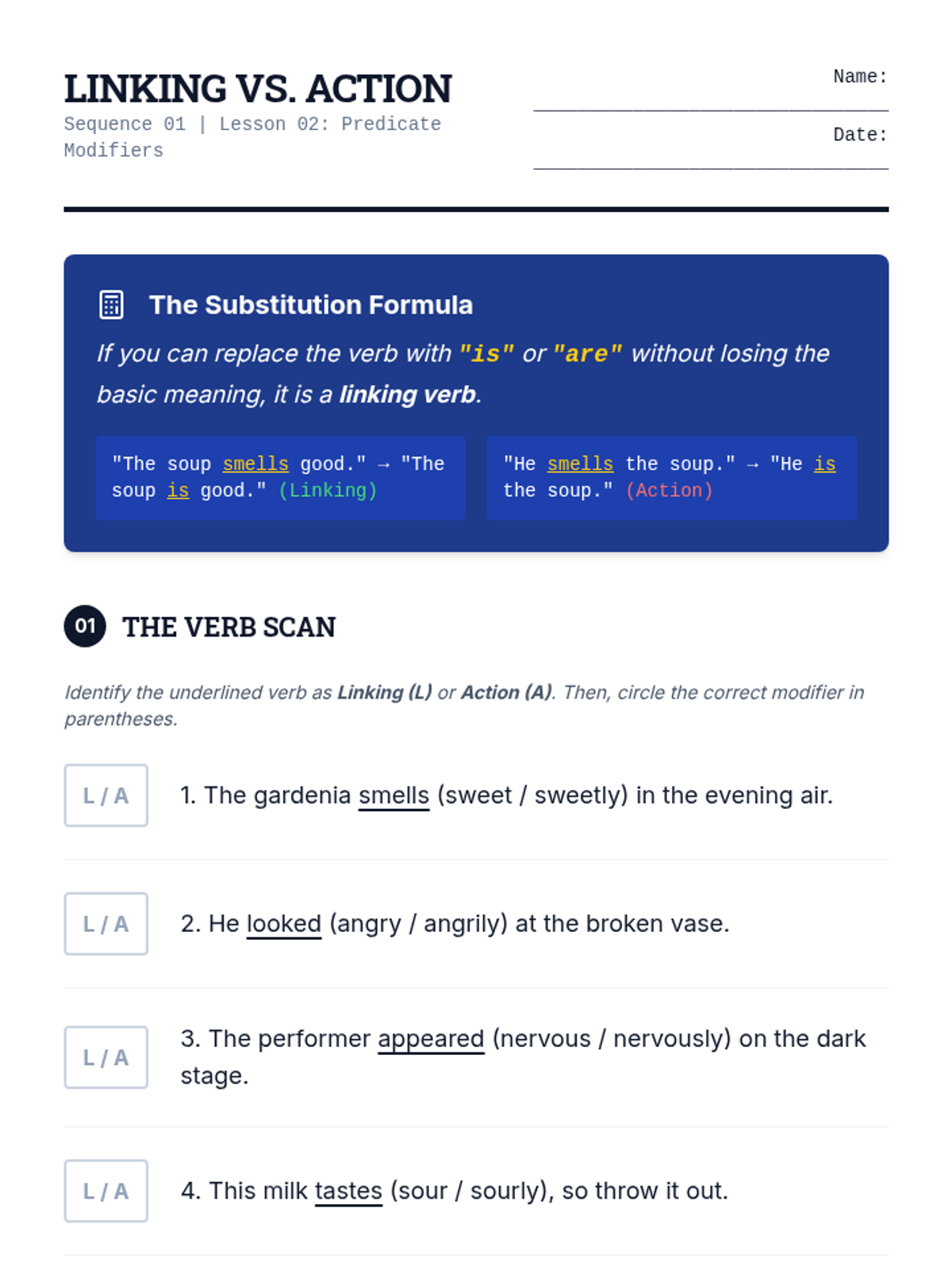
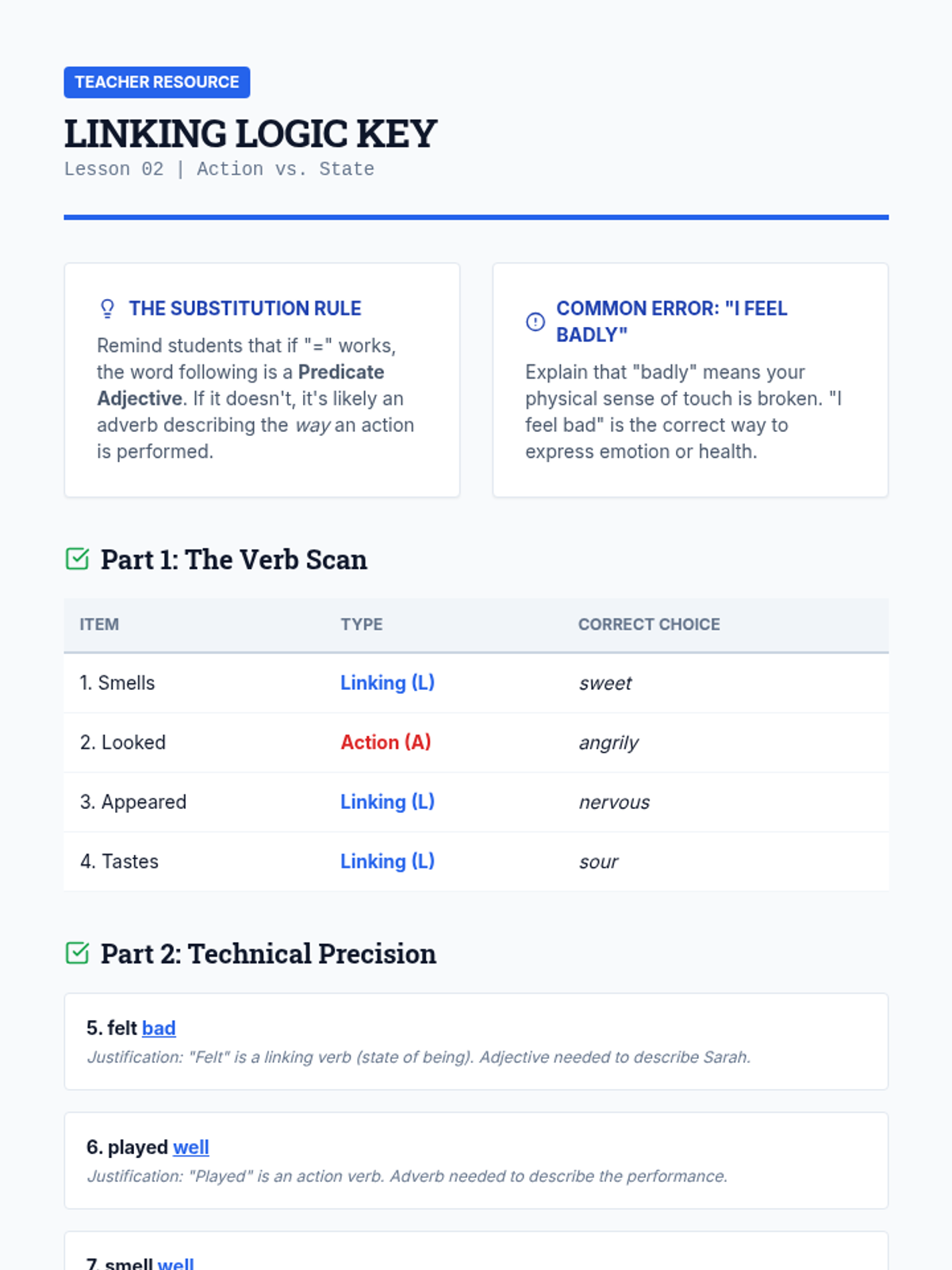
Focuses on the distinction between linking verbs and action verbs to correctly apply predicate adjectives versus adverbs.
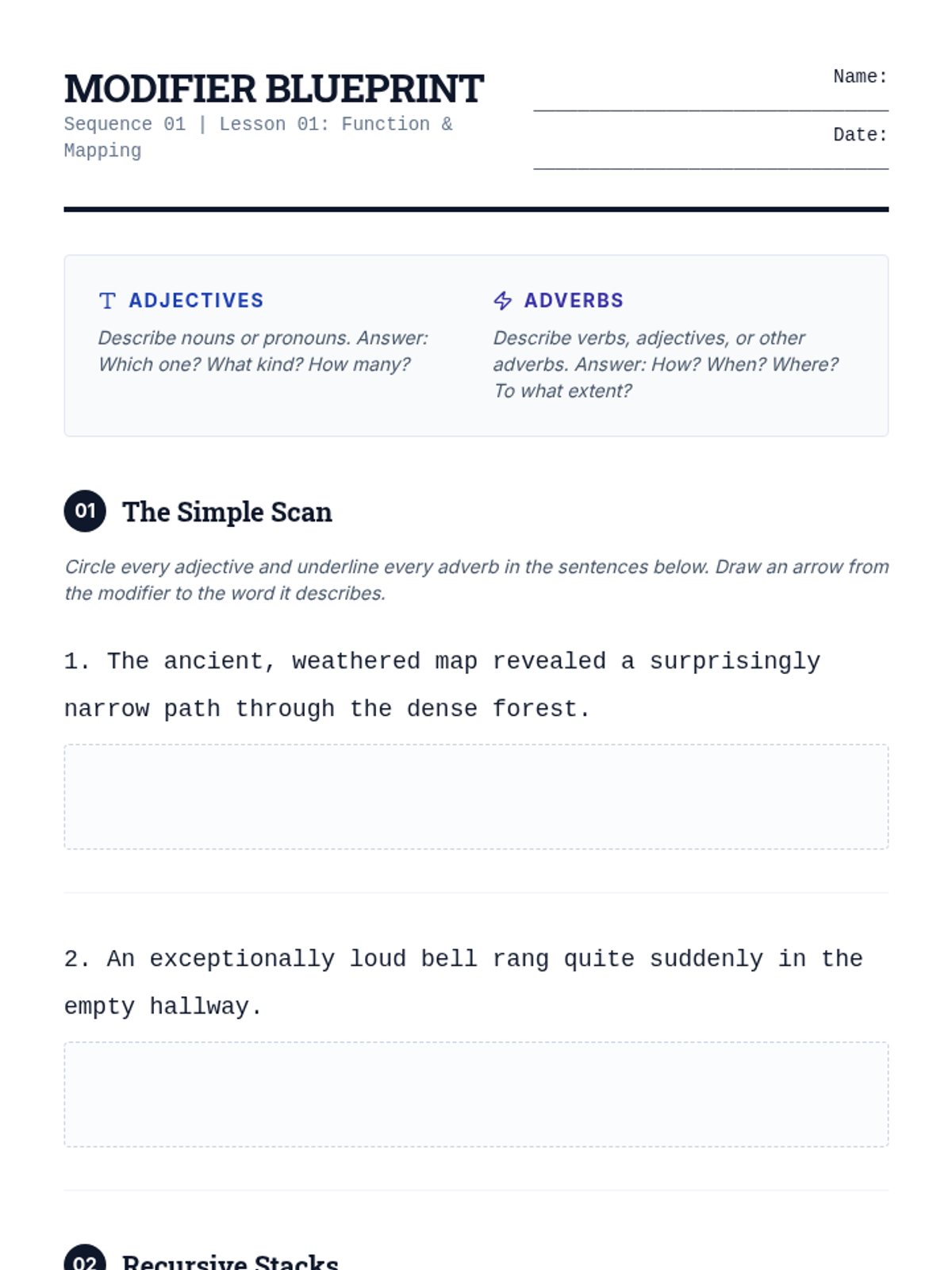
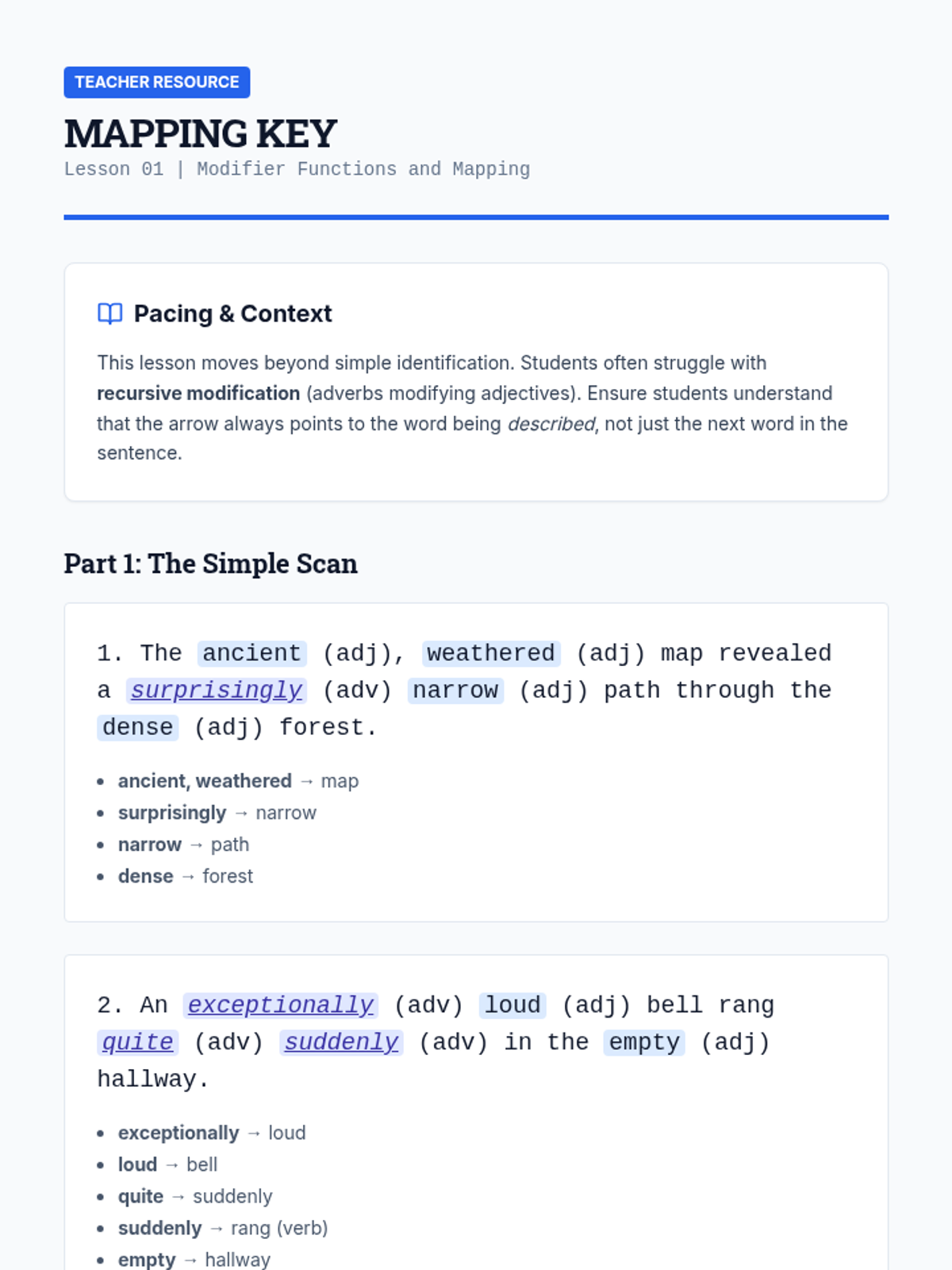
Students identify adjectives and adverbs within complex sentence structures, focusing on recursive modification (adverbs modifying other adverbs/adjectives).
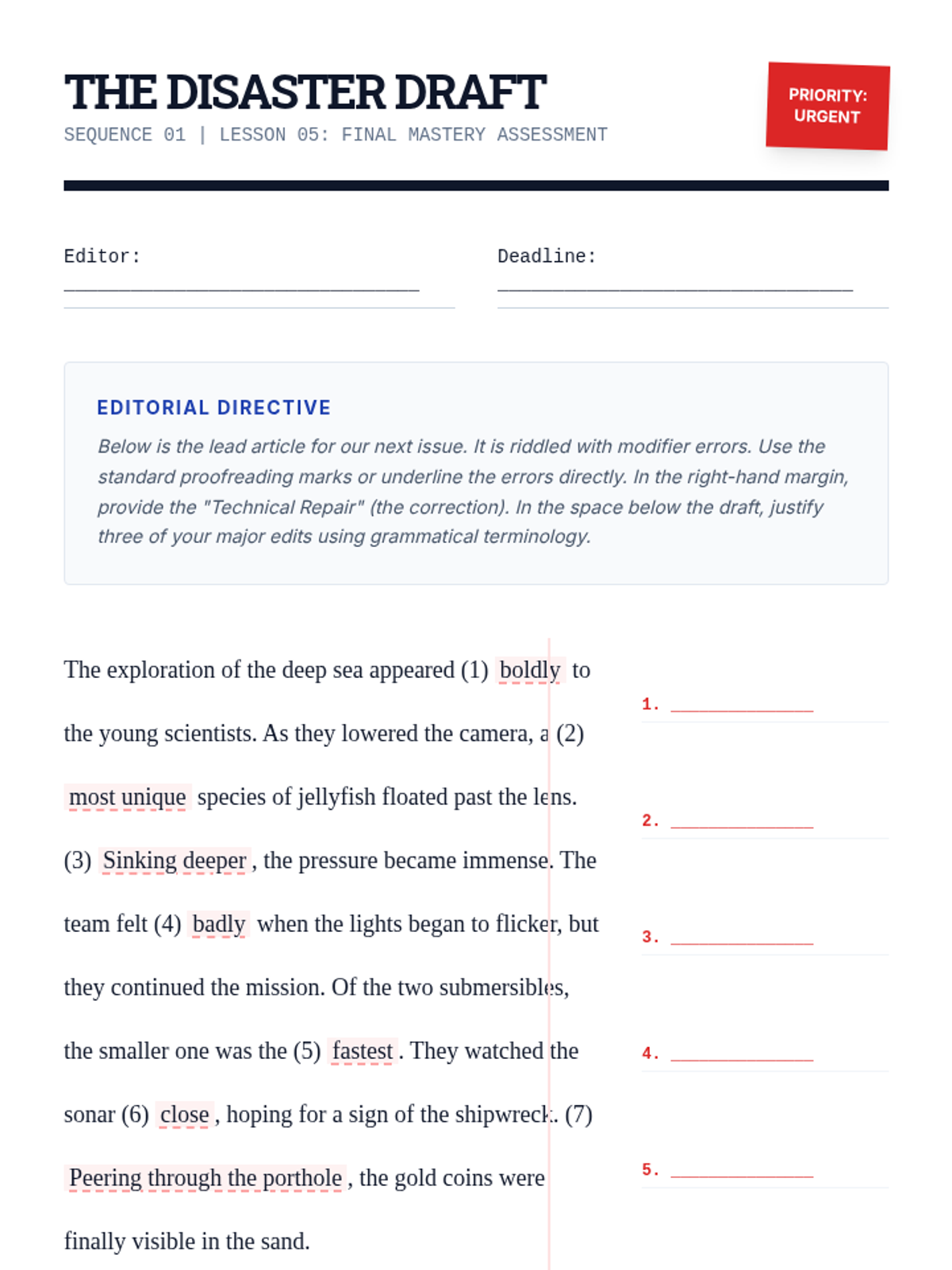
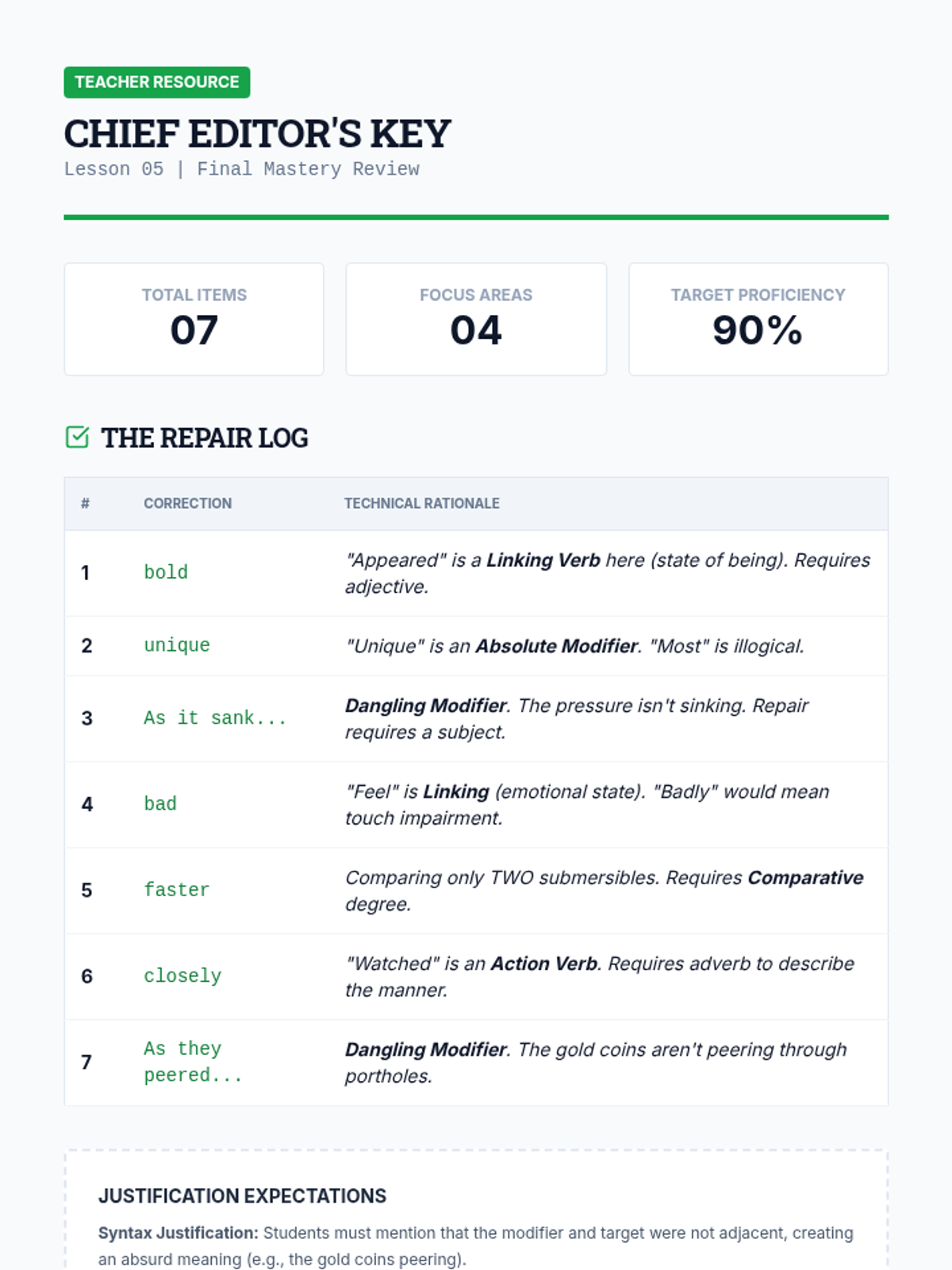
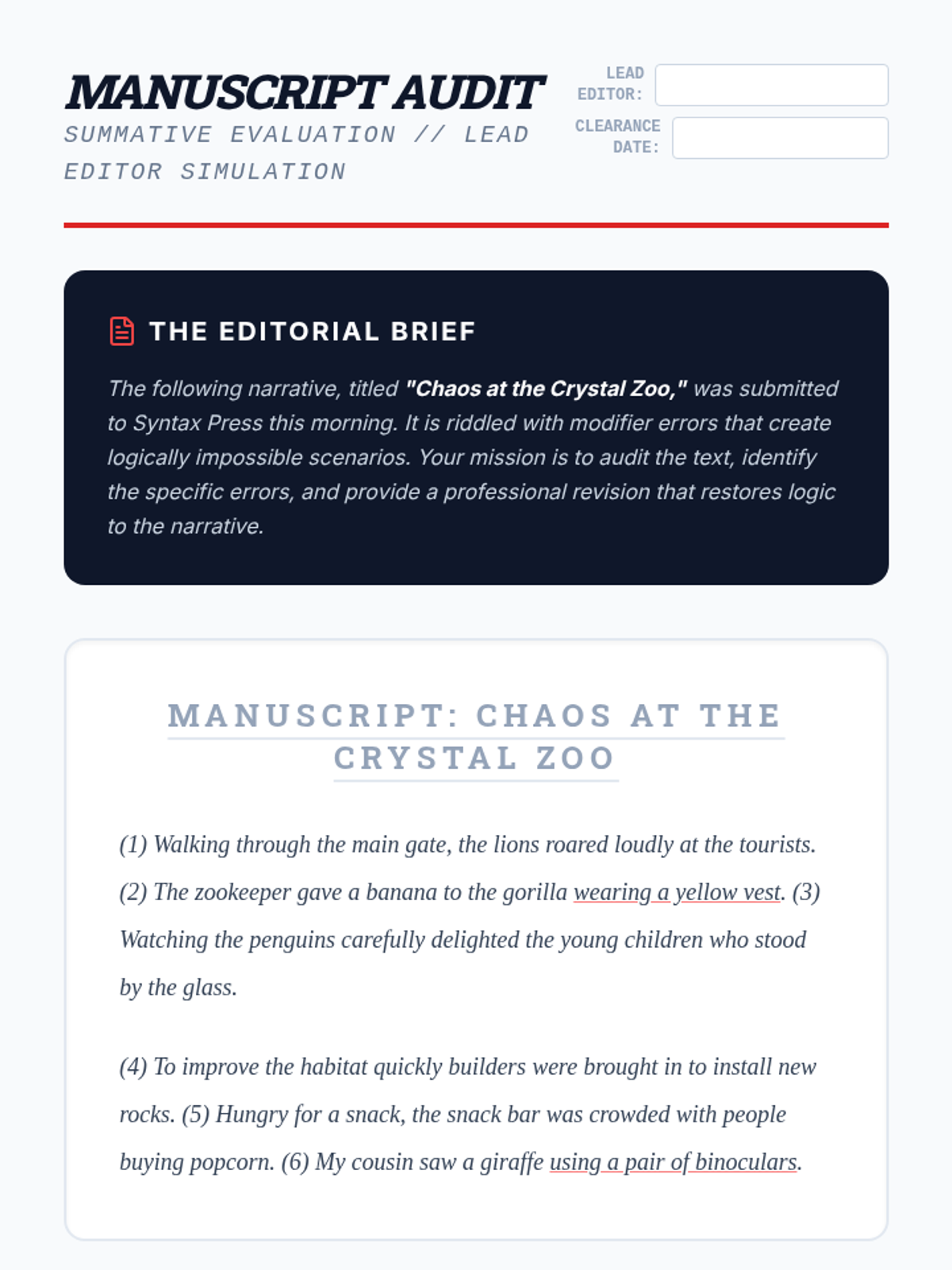
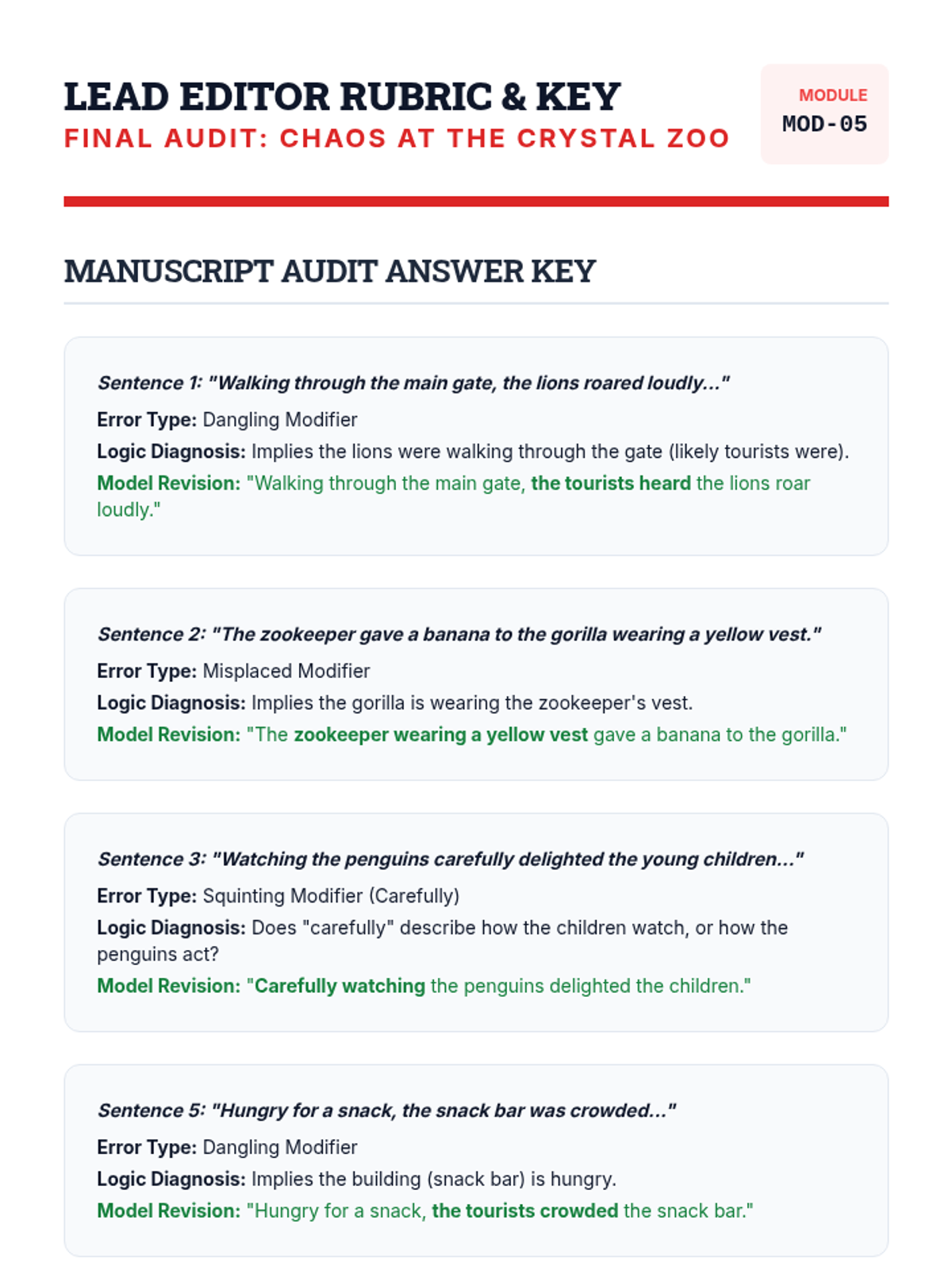
In this culminating lesson, students act as lead editors revising a defective narrative filled with various modifier errors. They must identify the error type, explain the logical fallacy it creates, and rewrite the sentence for clarity.
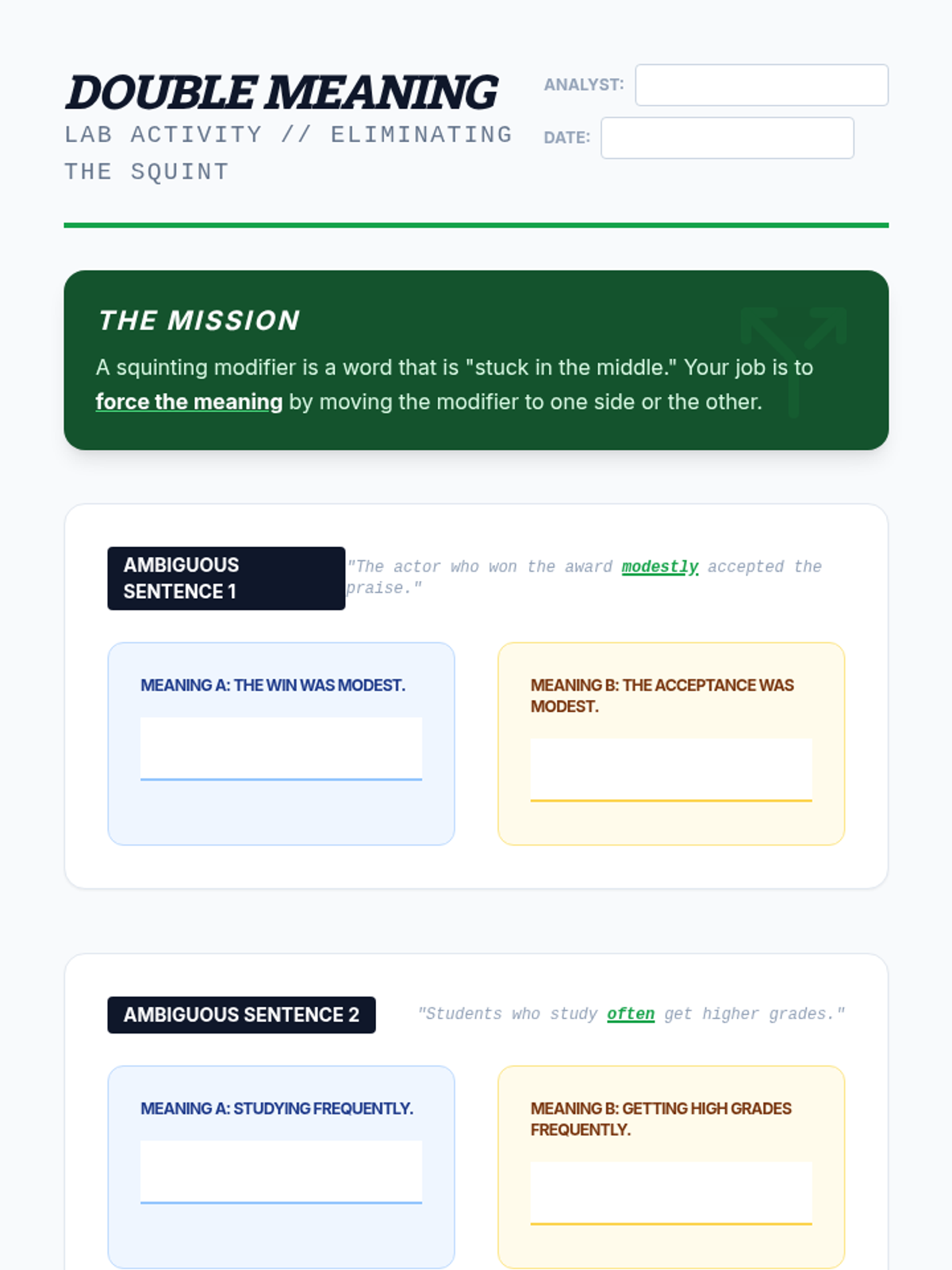
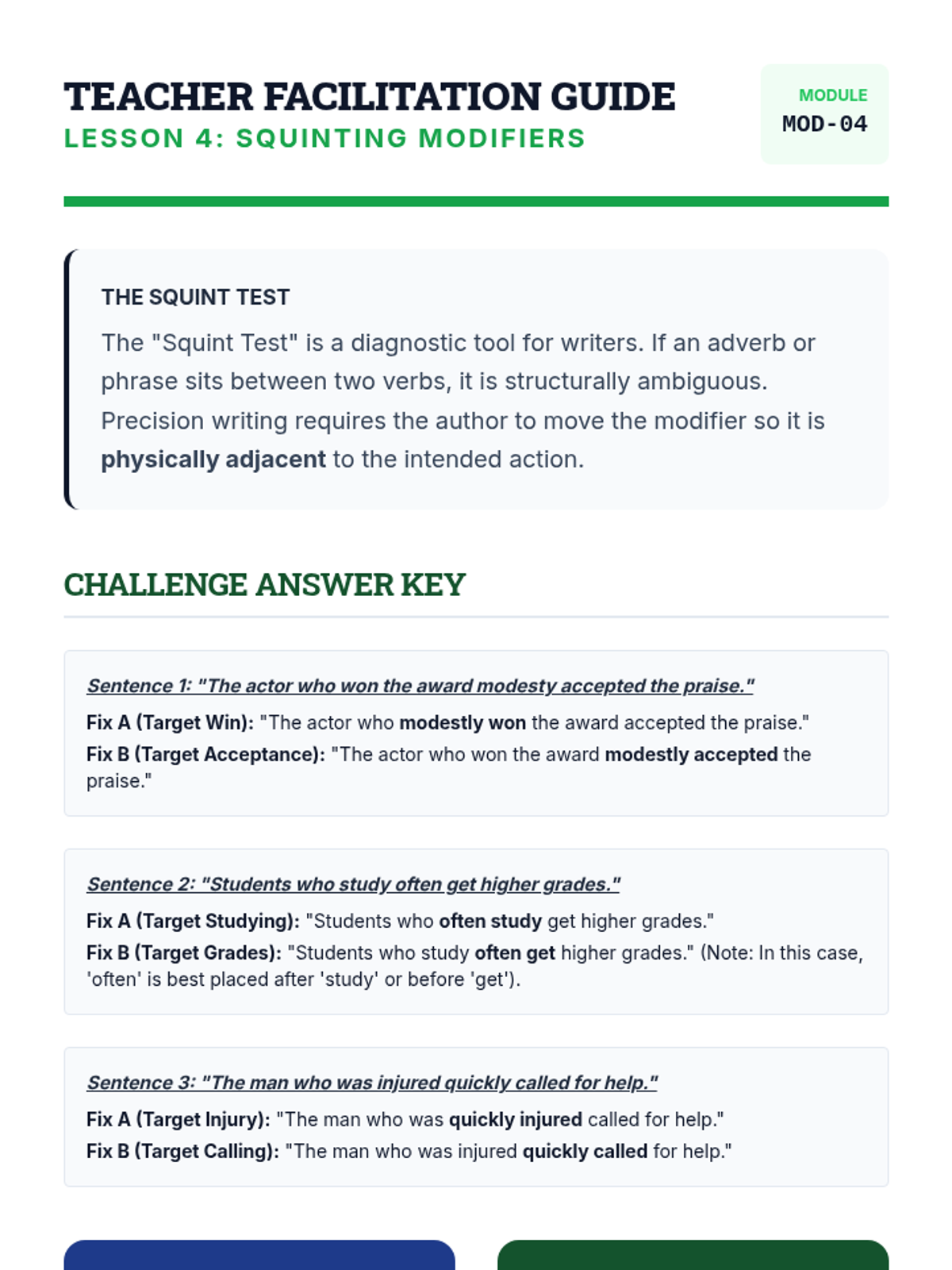
Students explore the nuance of 'squinting' modifiers—adverbs or phrases placed between two clauses that could modify either one. Through a 'rewrite challenge,' students practice rewriting these sentences in two ways to force a specific meaning.
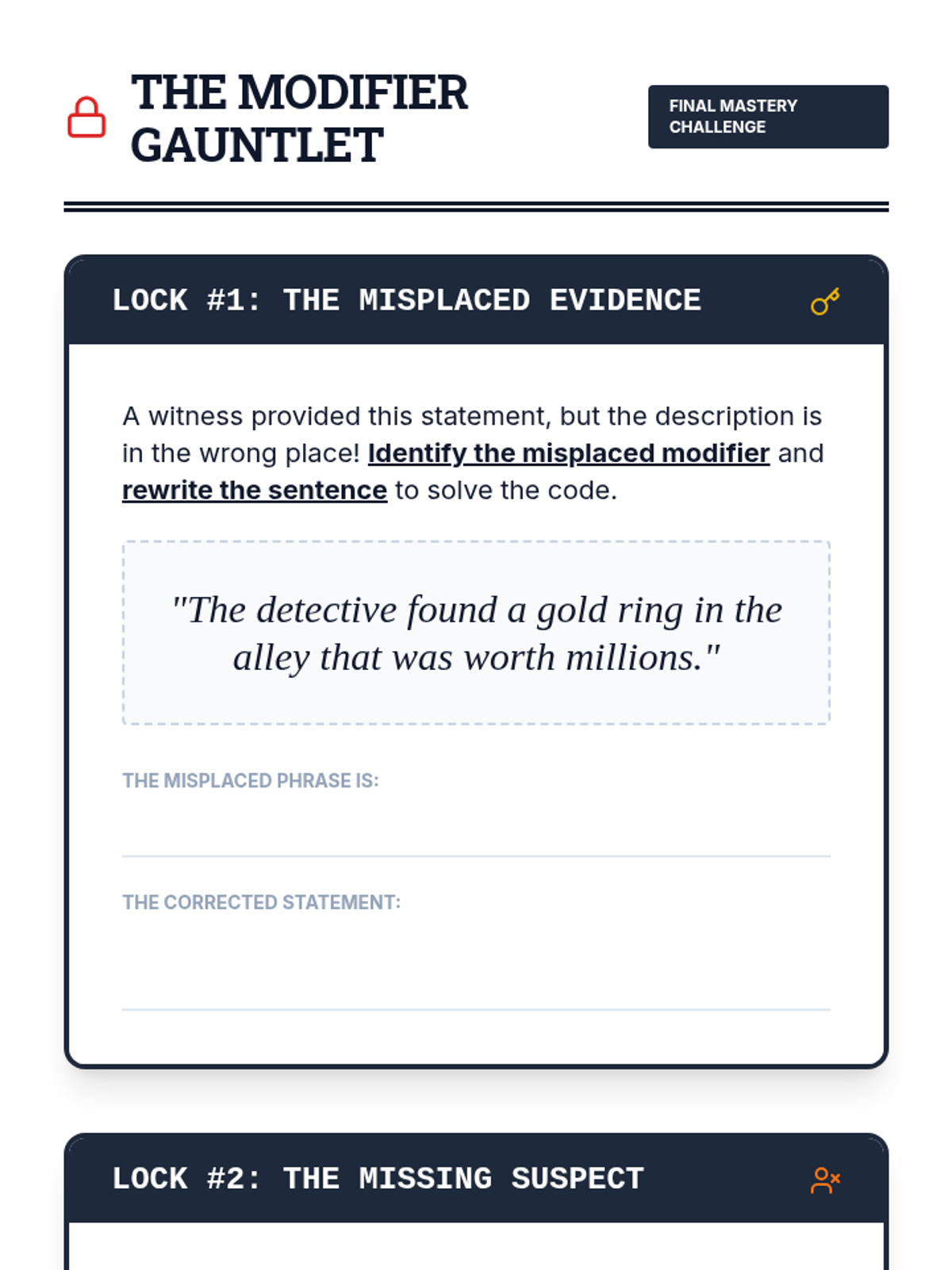
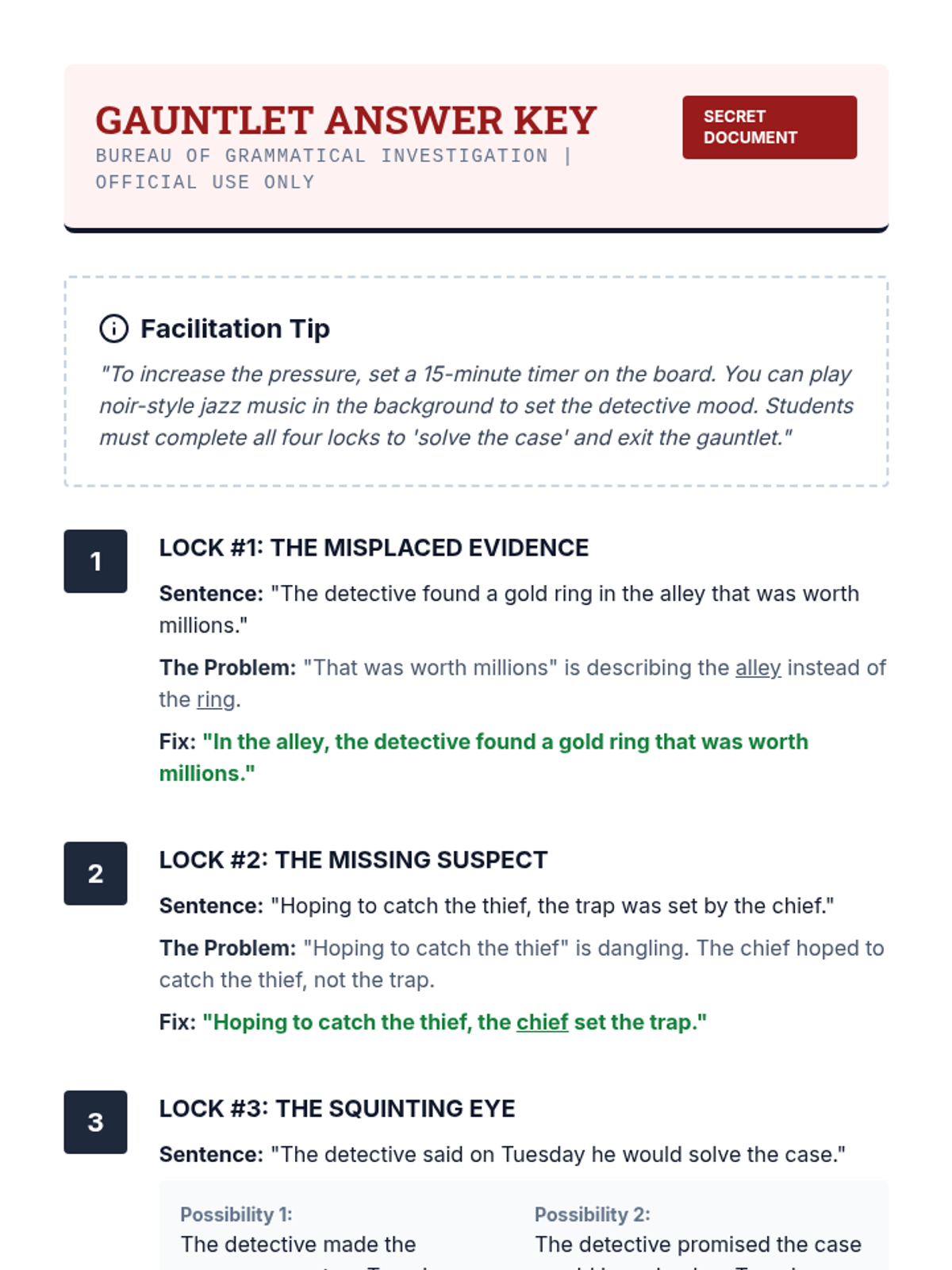
A mixed review challenge where students diagnose and fix misplaced, dangling, and squinting modifiers in a timed 'escape room' environment.
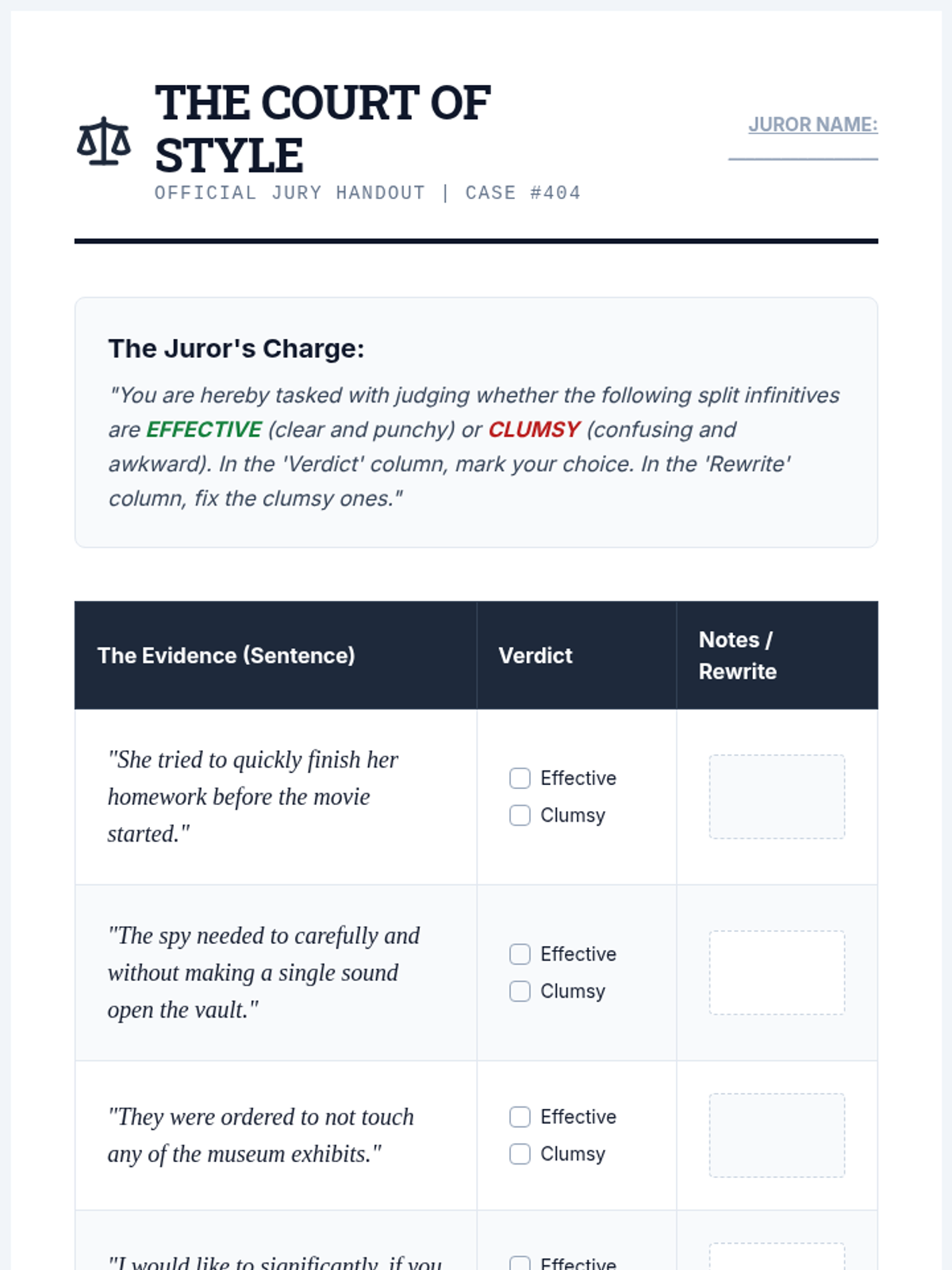
An exploration of split infinitives as a specific case of modifier usage, focusing on the balance between prescriptive grammar and stylistic power.
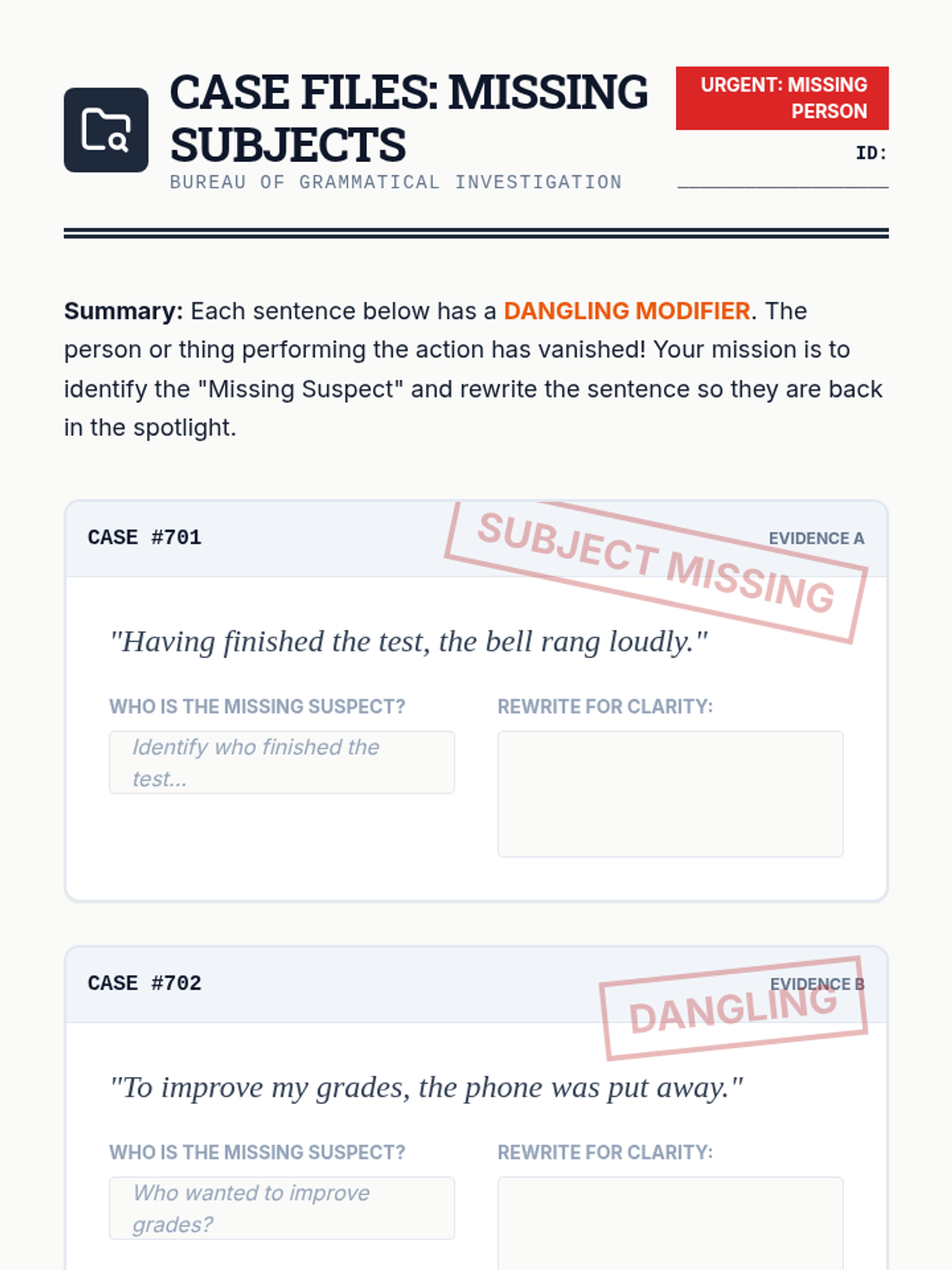
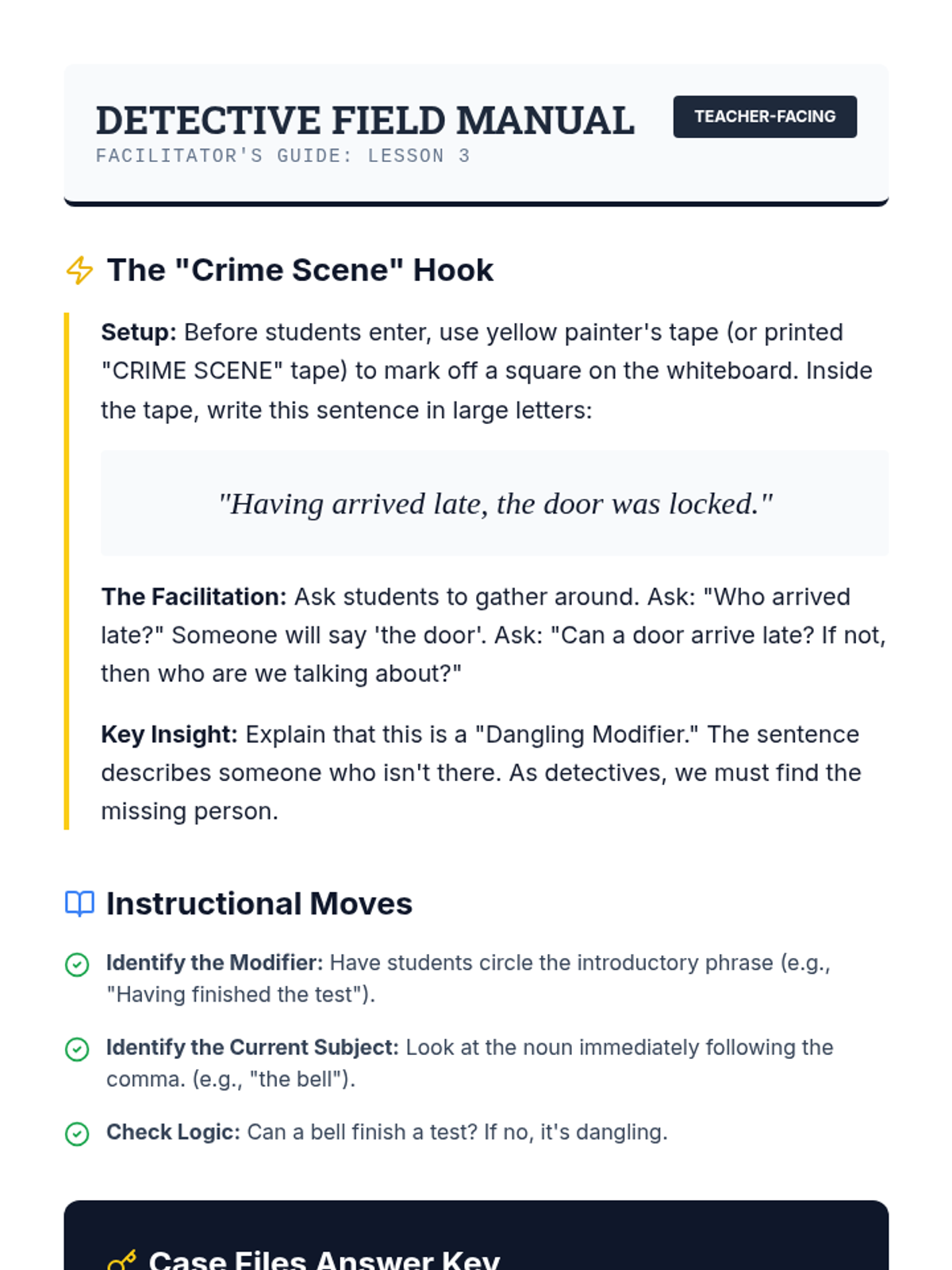
A deep dive into dangling modifiers where students act as detectives to find the missing subjects in sentences and rewrite them for clarity.
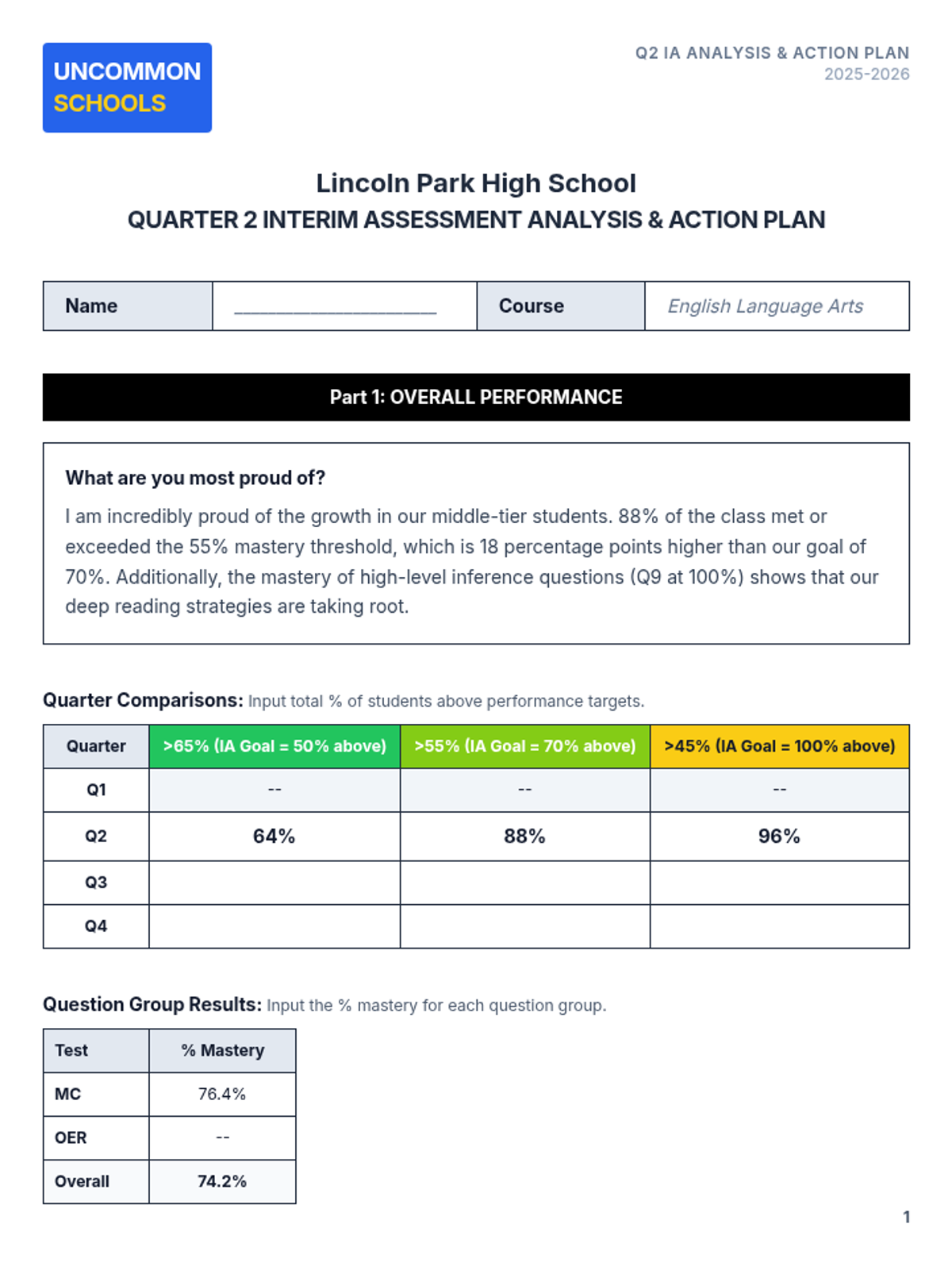
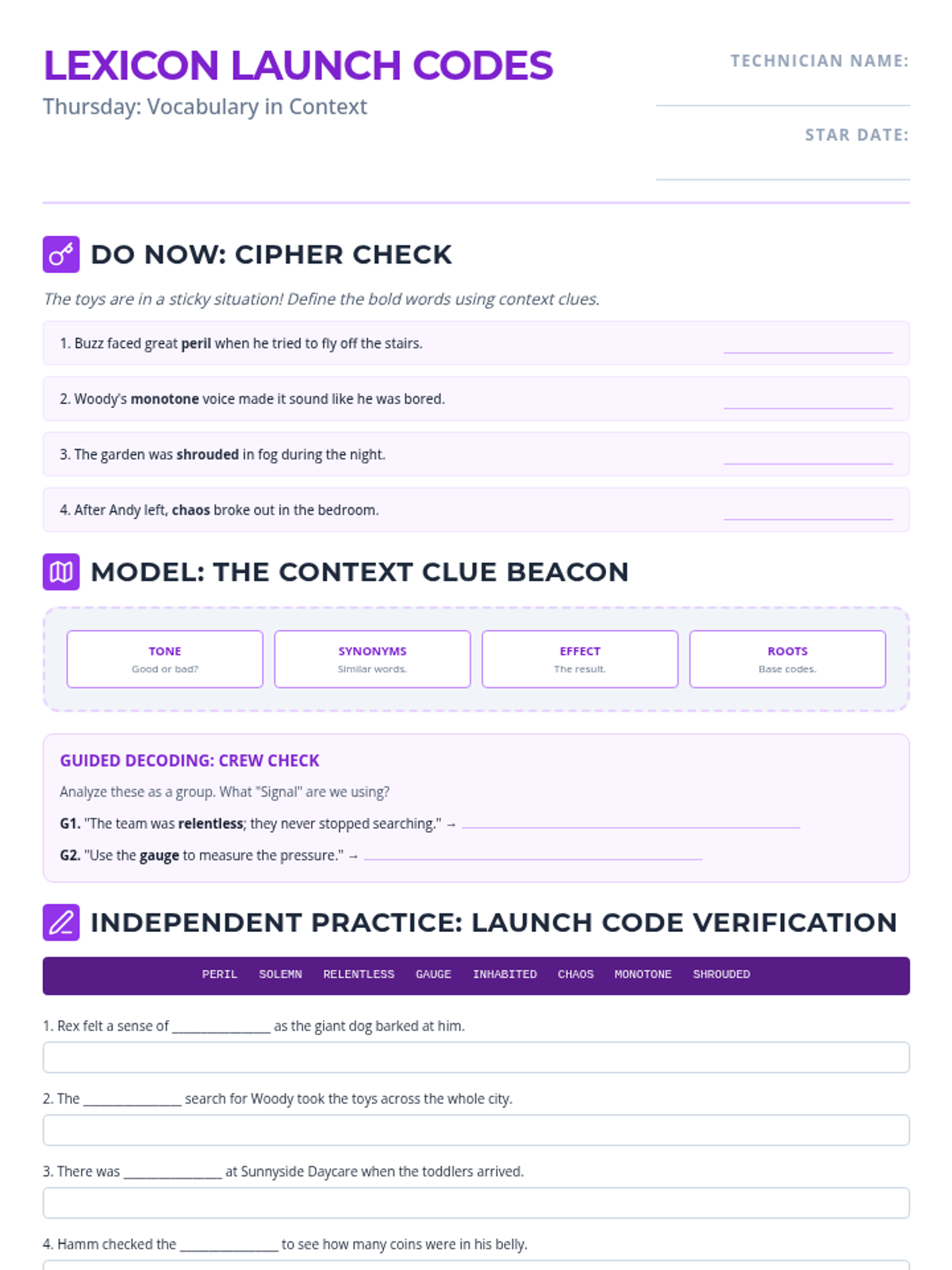
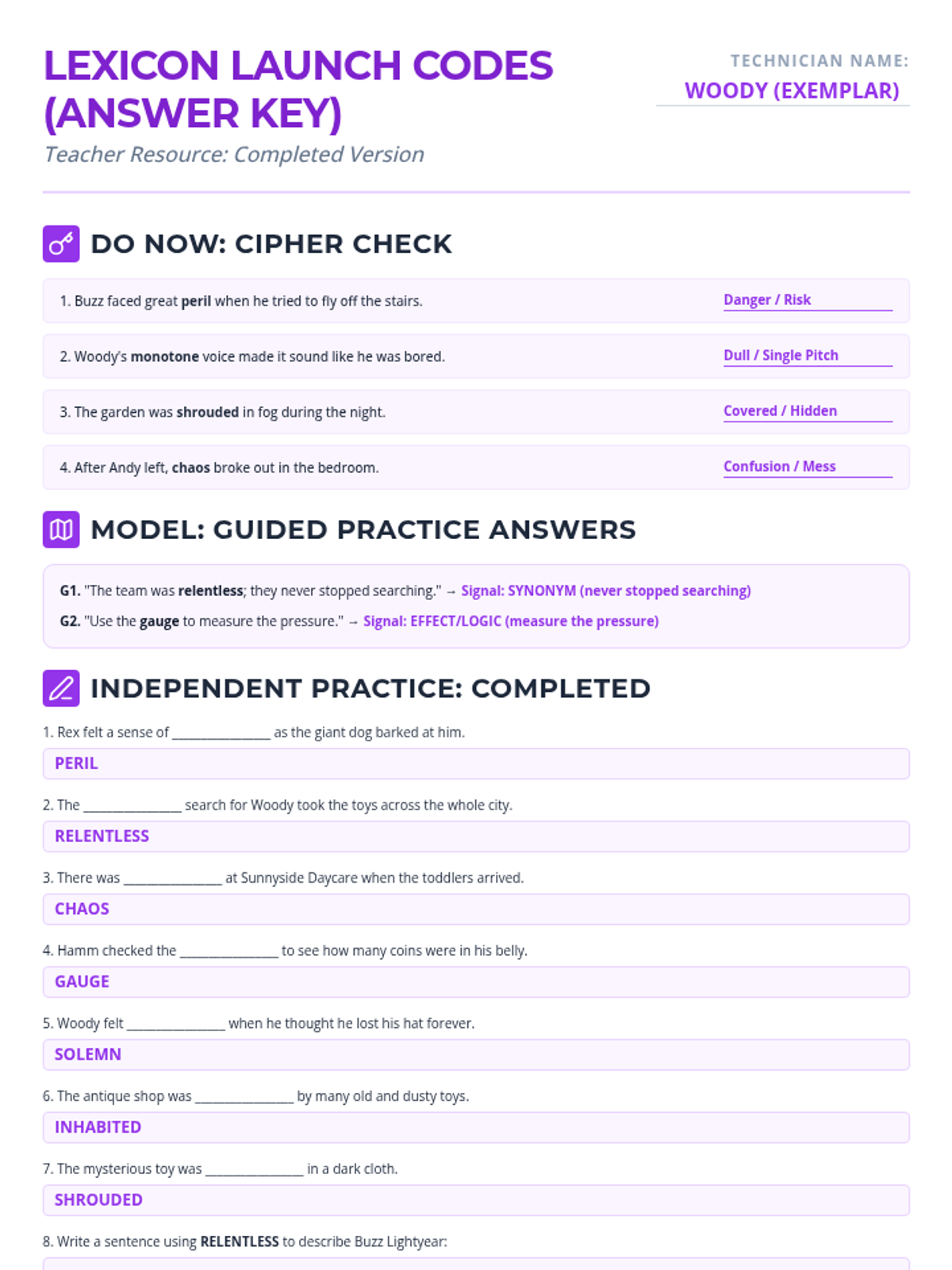
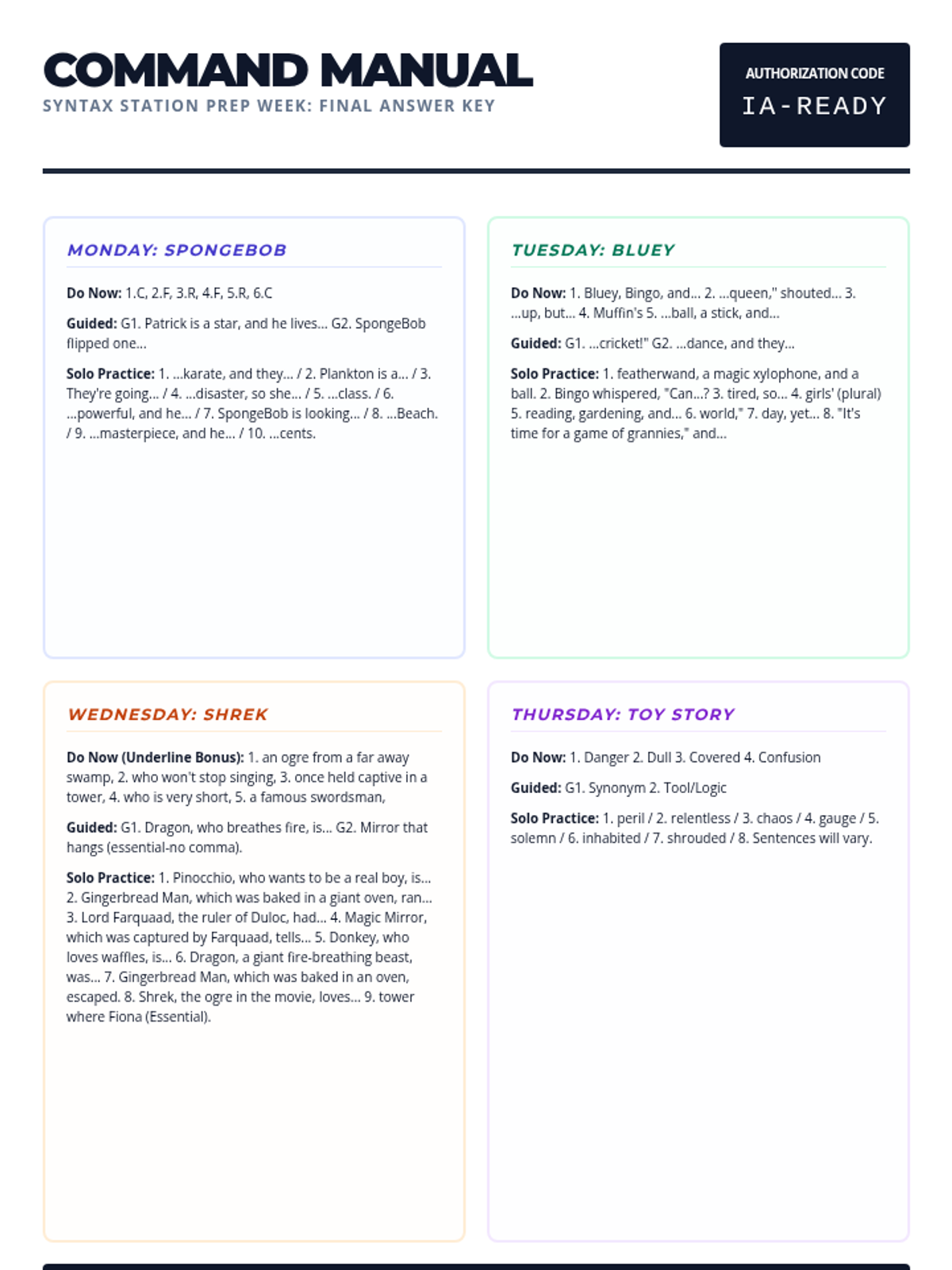
Focuses on using context clues to determine the meaning of complex vocabulary words from the IA exam word bank and applying them correctly in sentences.
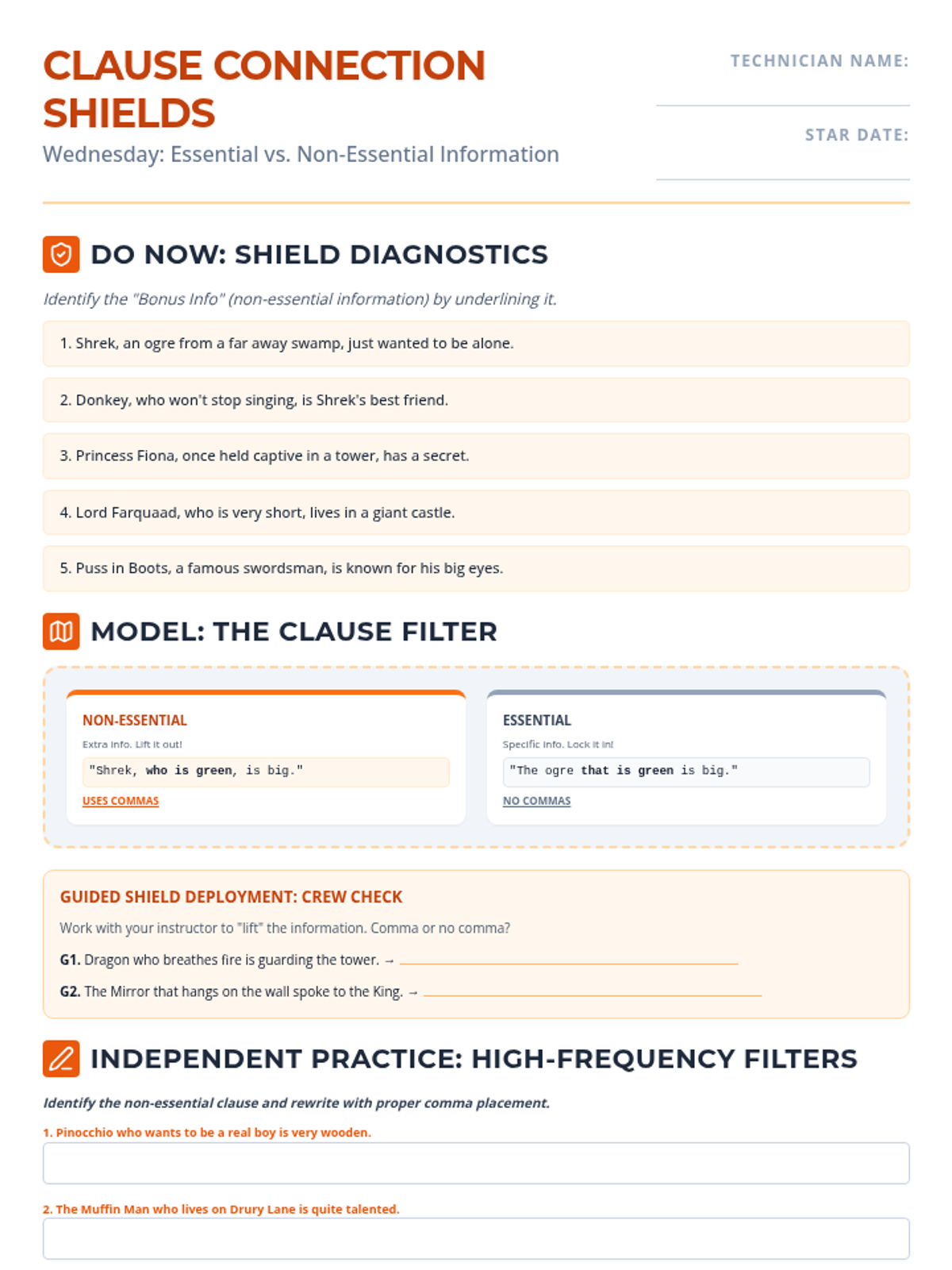
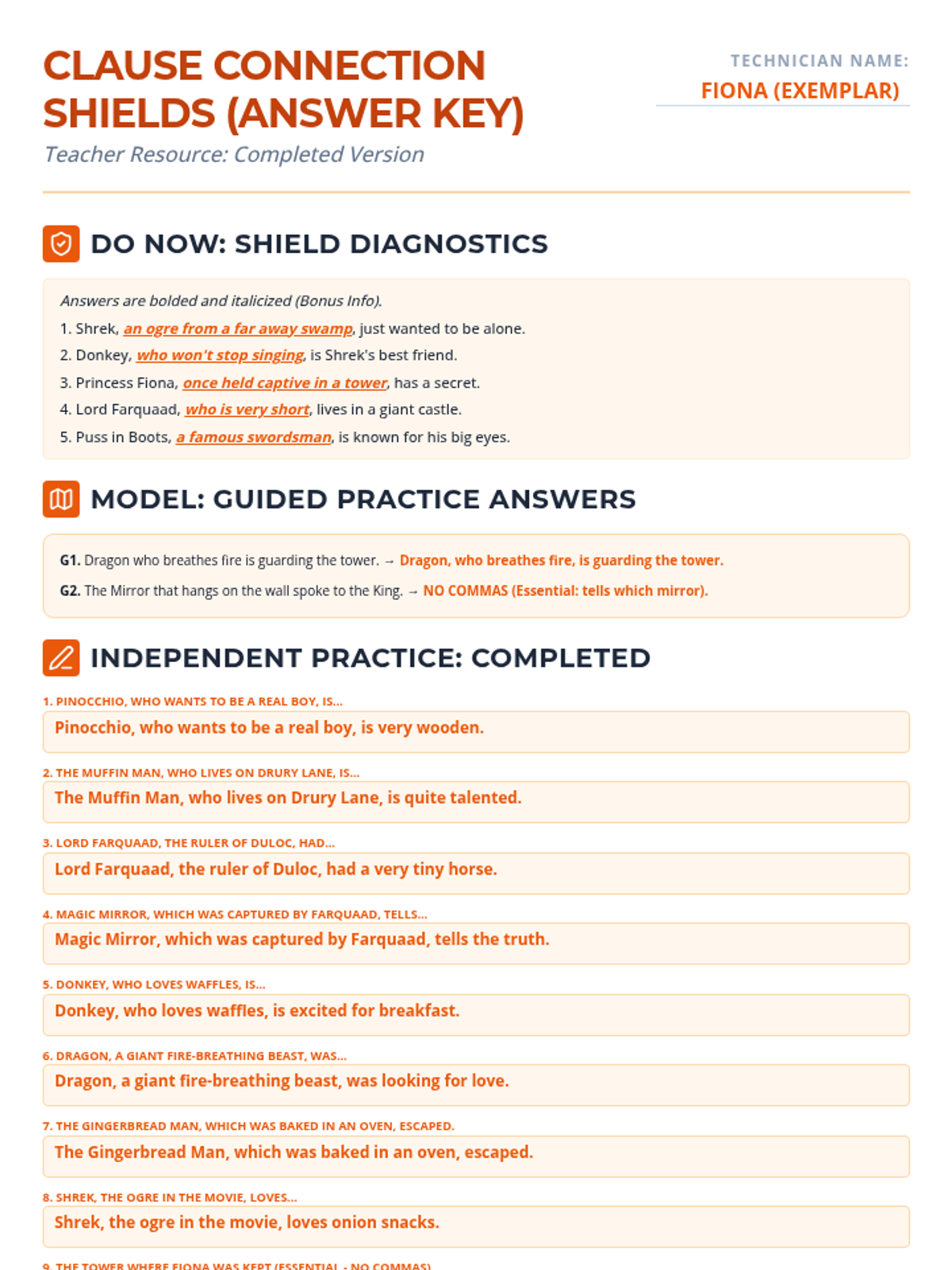
Differentiates between essential and non-essential clauses, focusing on the identification and punctuation of relative clauses and appositives.
Focuses on the correct use of commas in series, commas with coordinating conjunctions, possessive nouns, and punctuation within quotations as seen in the IA exam.
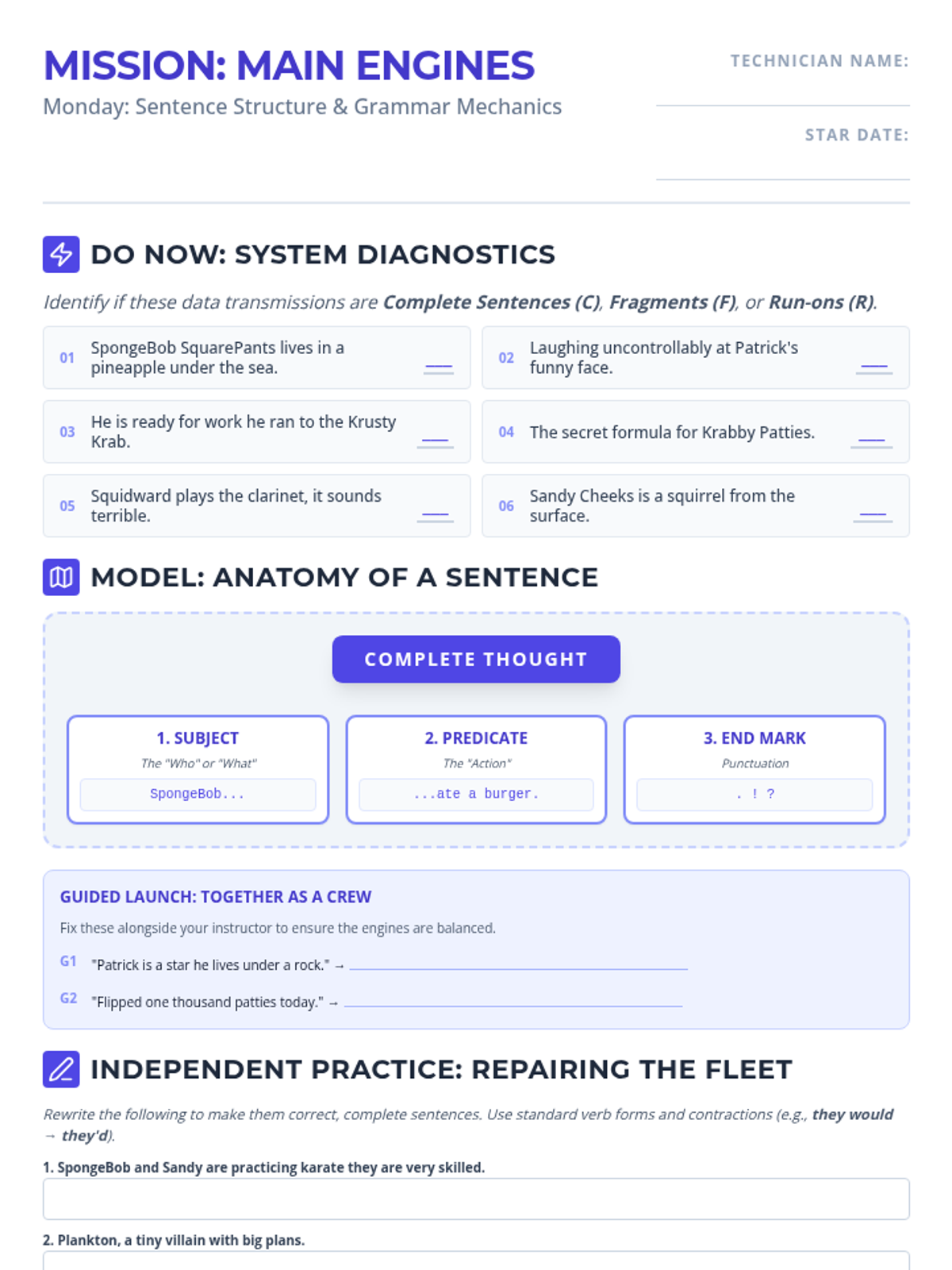
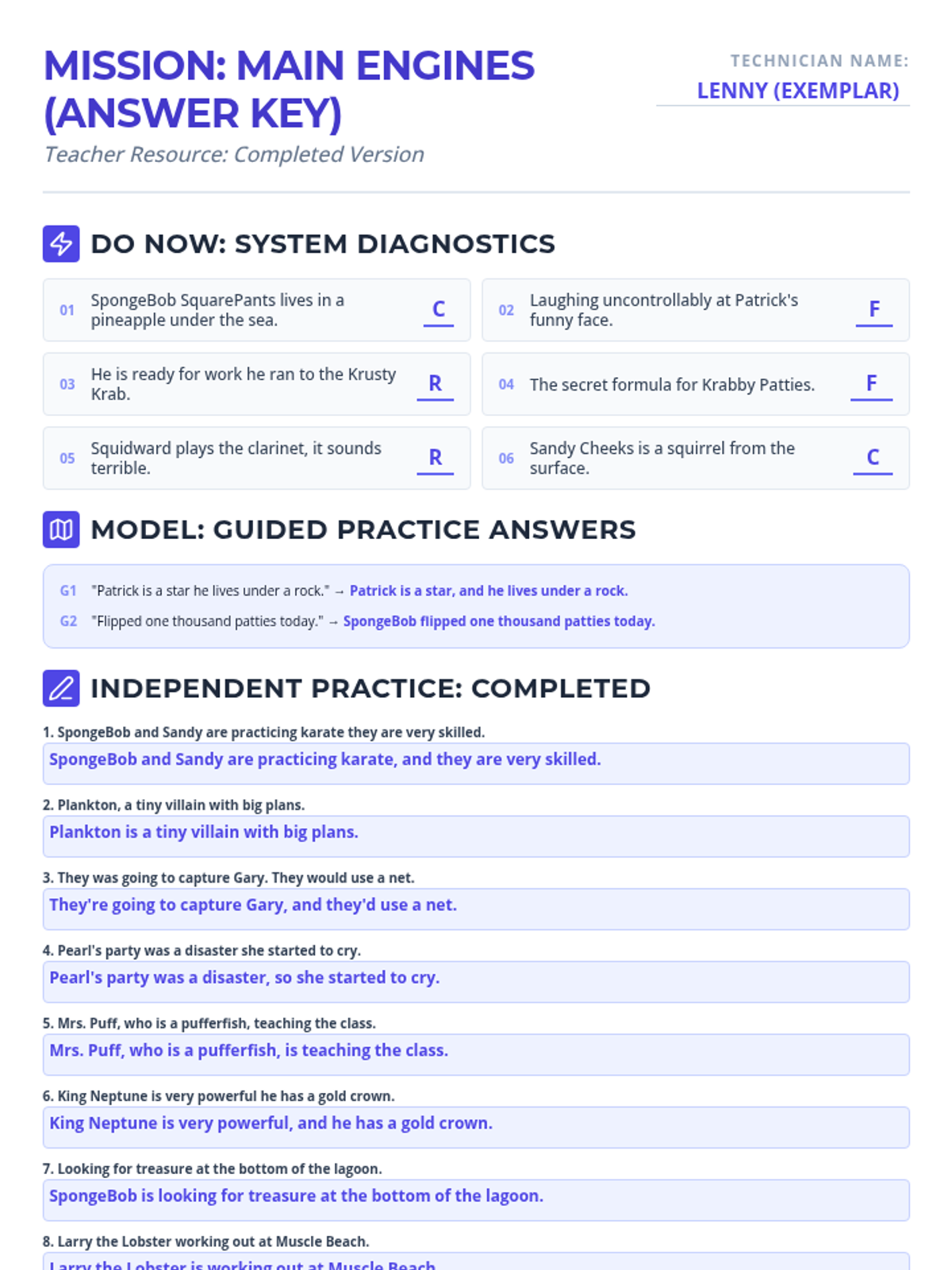
Focuses on identifying complete sentences, avoiding fragments and run-ons, and mastering standard verb forms and contractions as seen in the IA exam.
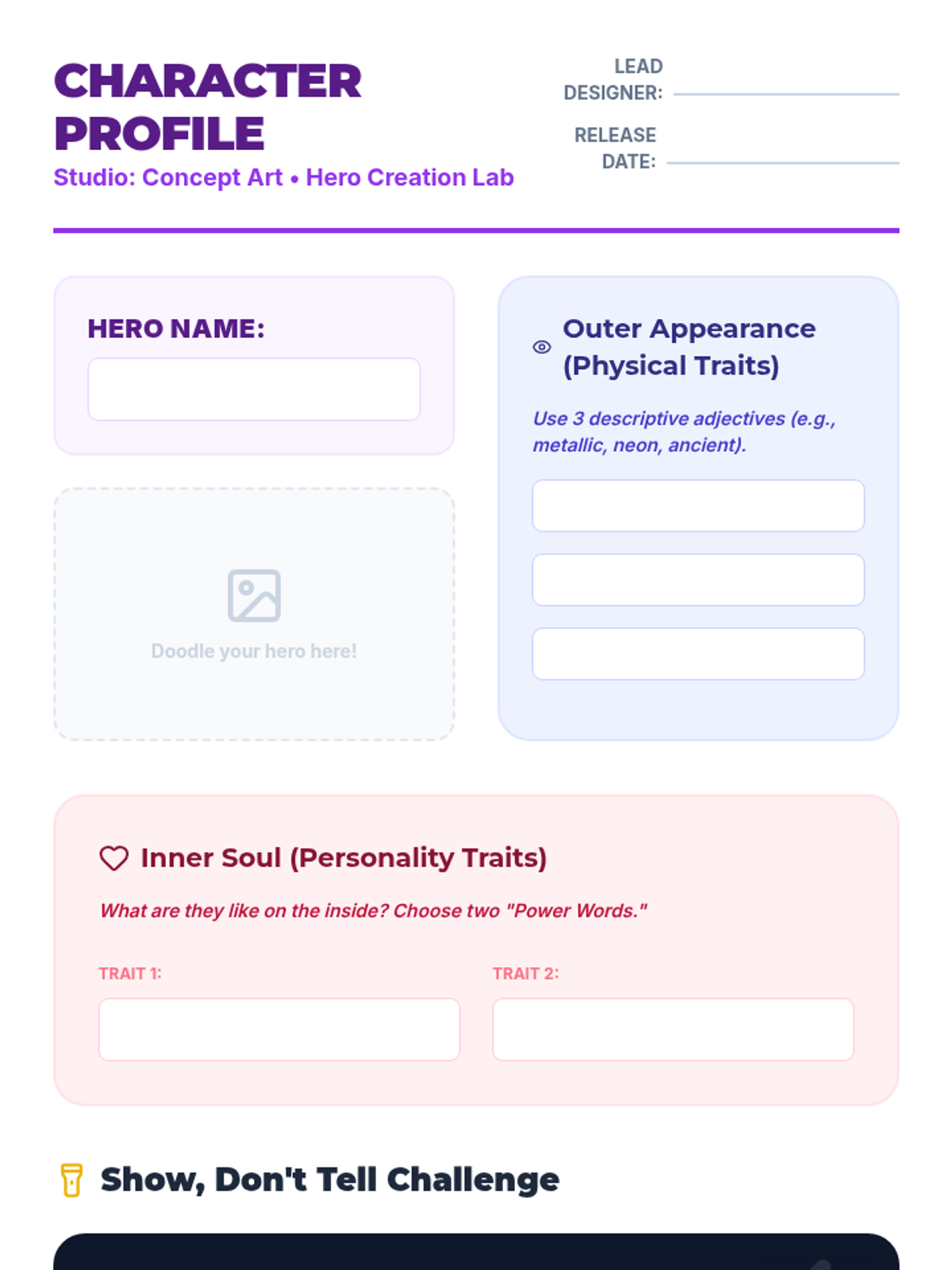
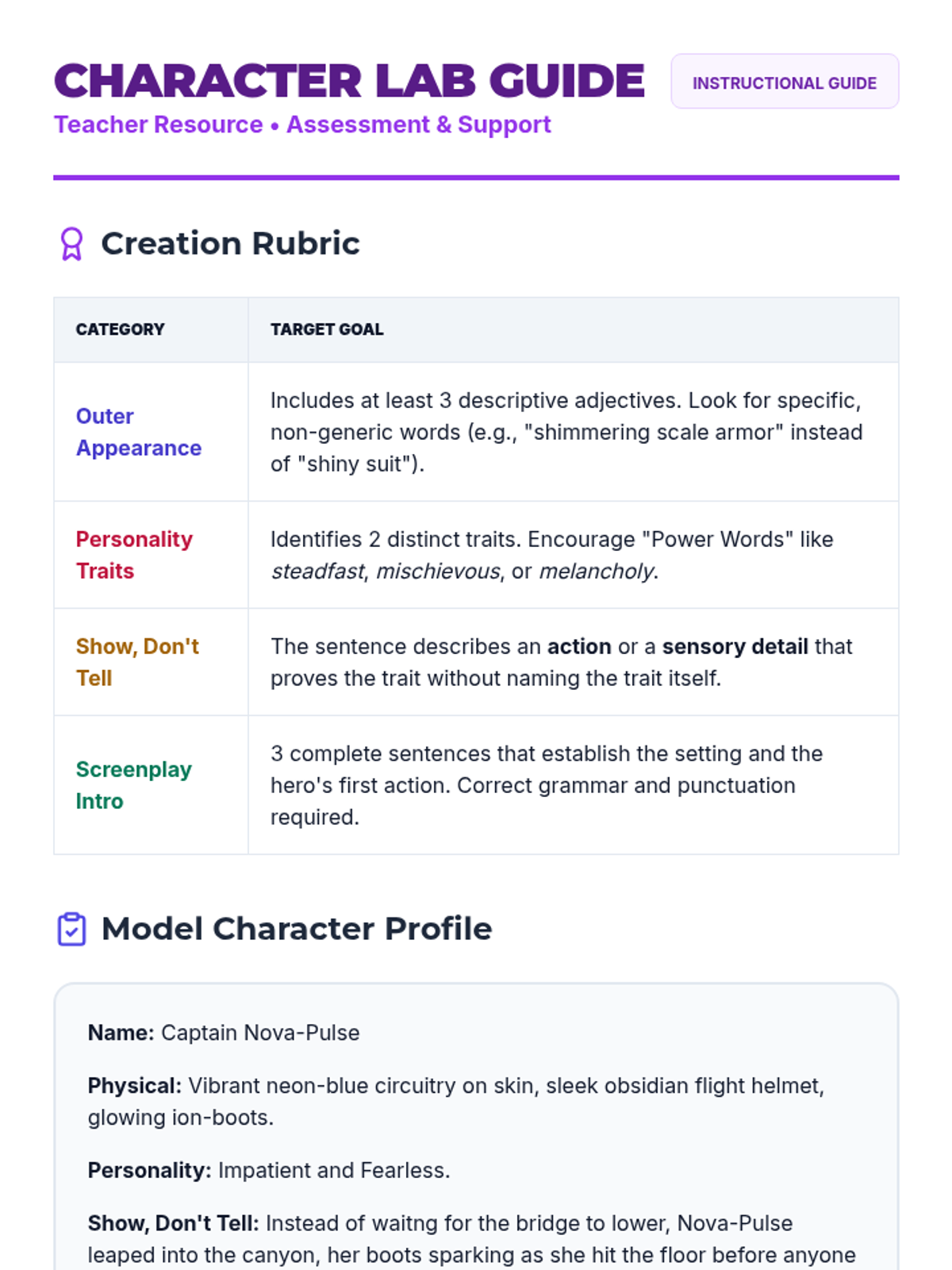
A lesson focused on character development and descriptive writing, helping students use "Show, Don't Tell" techniques and vivid adjectives to create animated heroes.
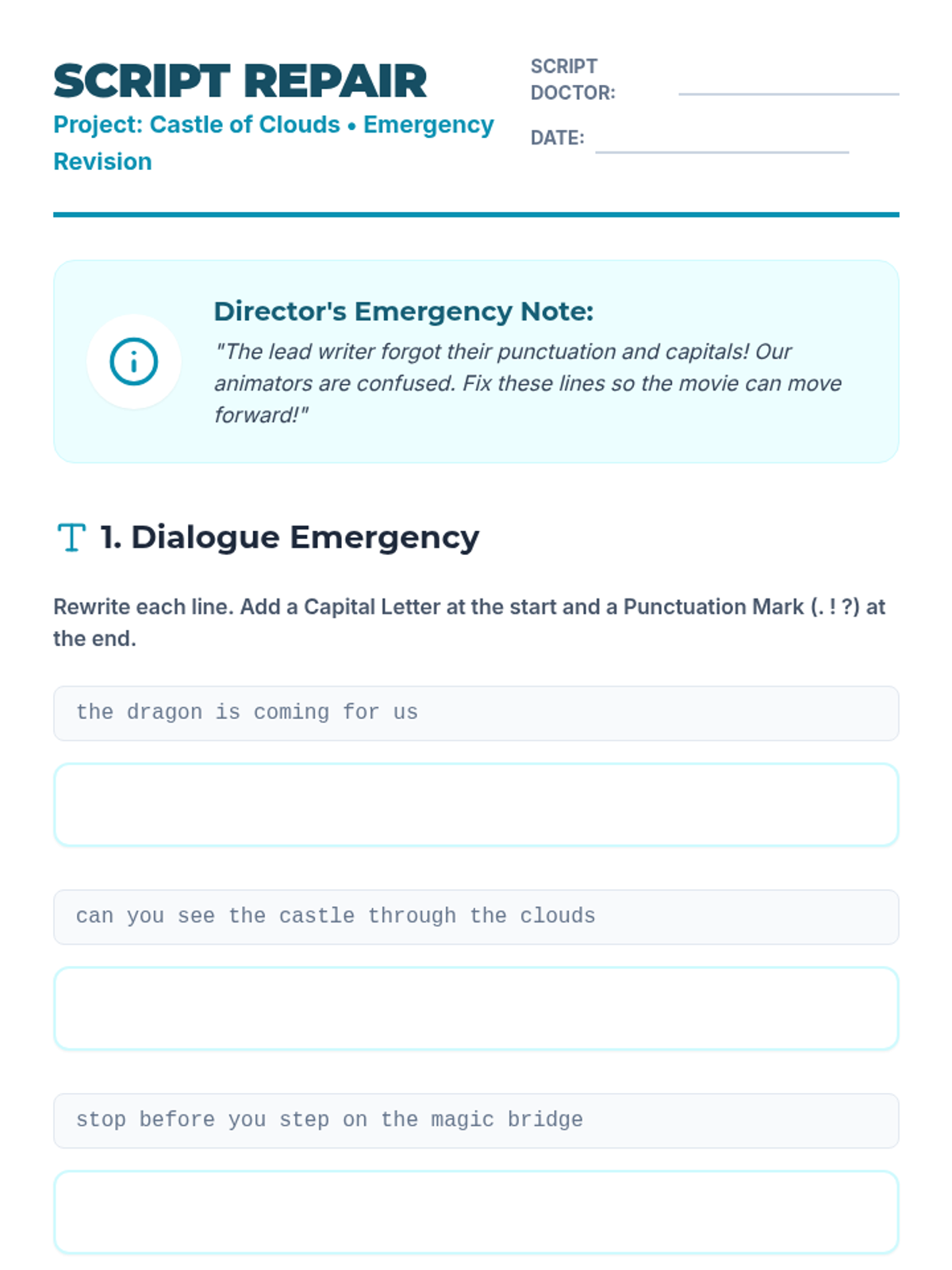
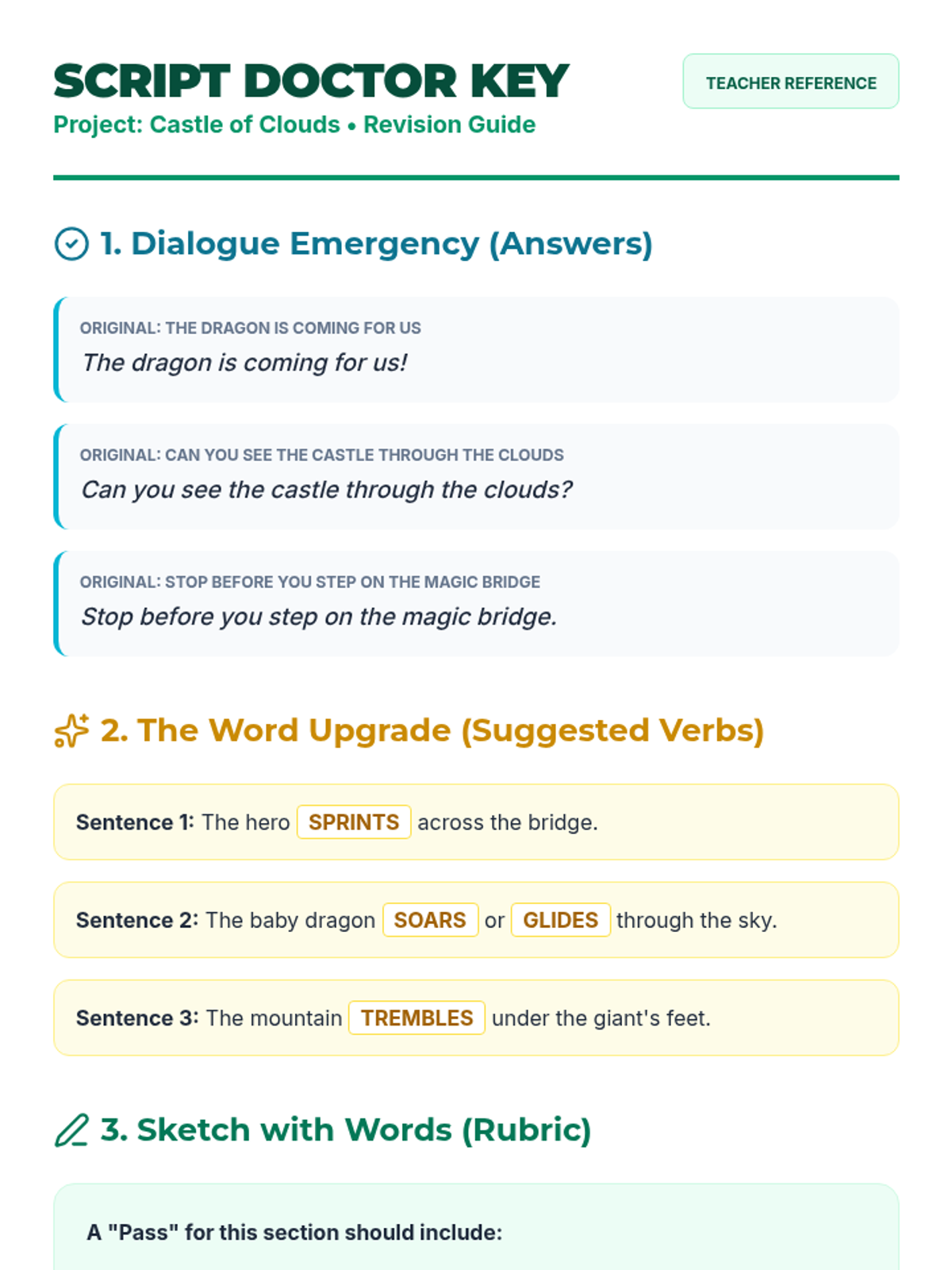
A lesson focused on grammar and sentence structure through the lens of fixing "broken" scripts in an animation studio setting.
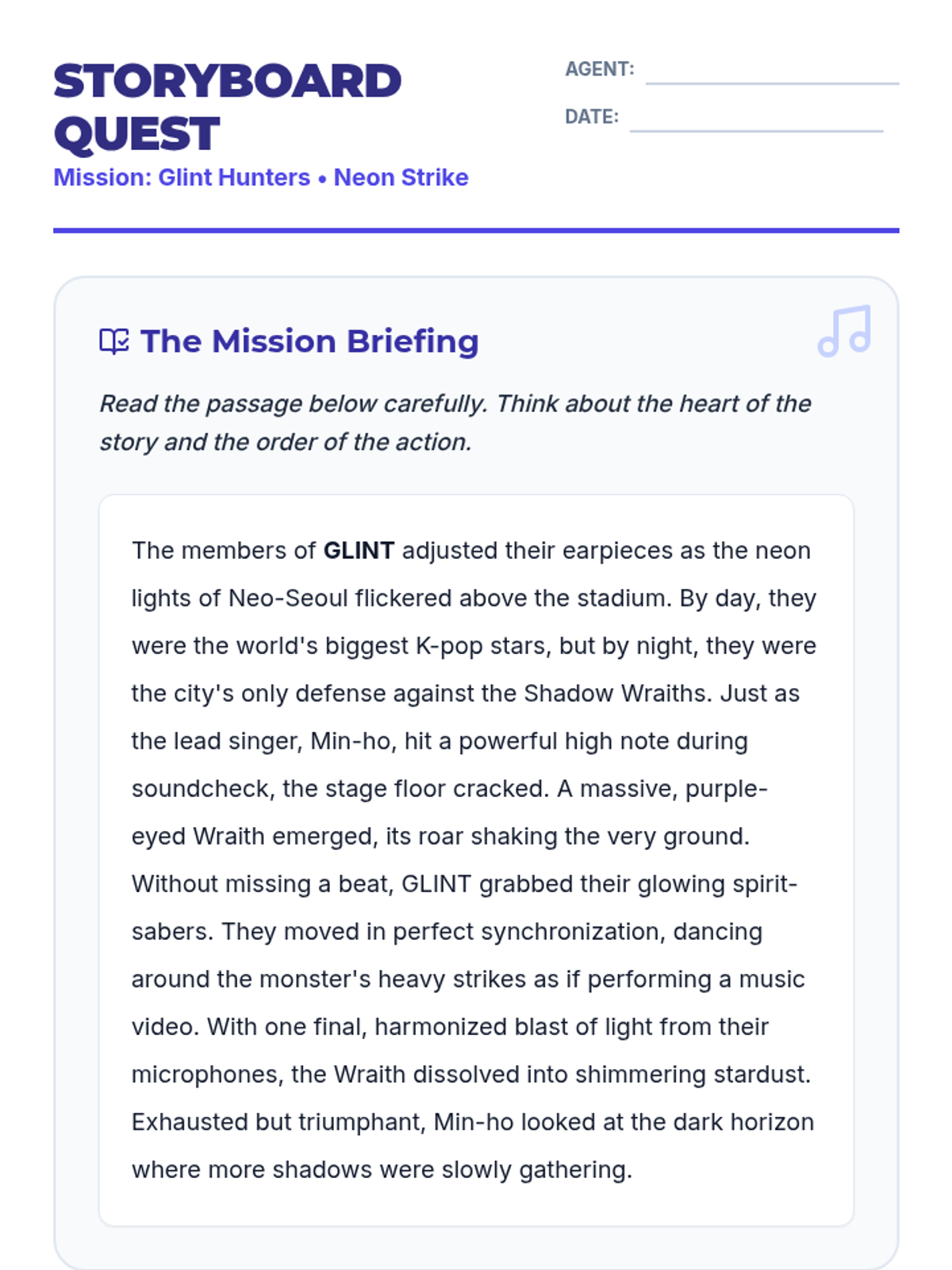
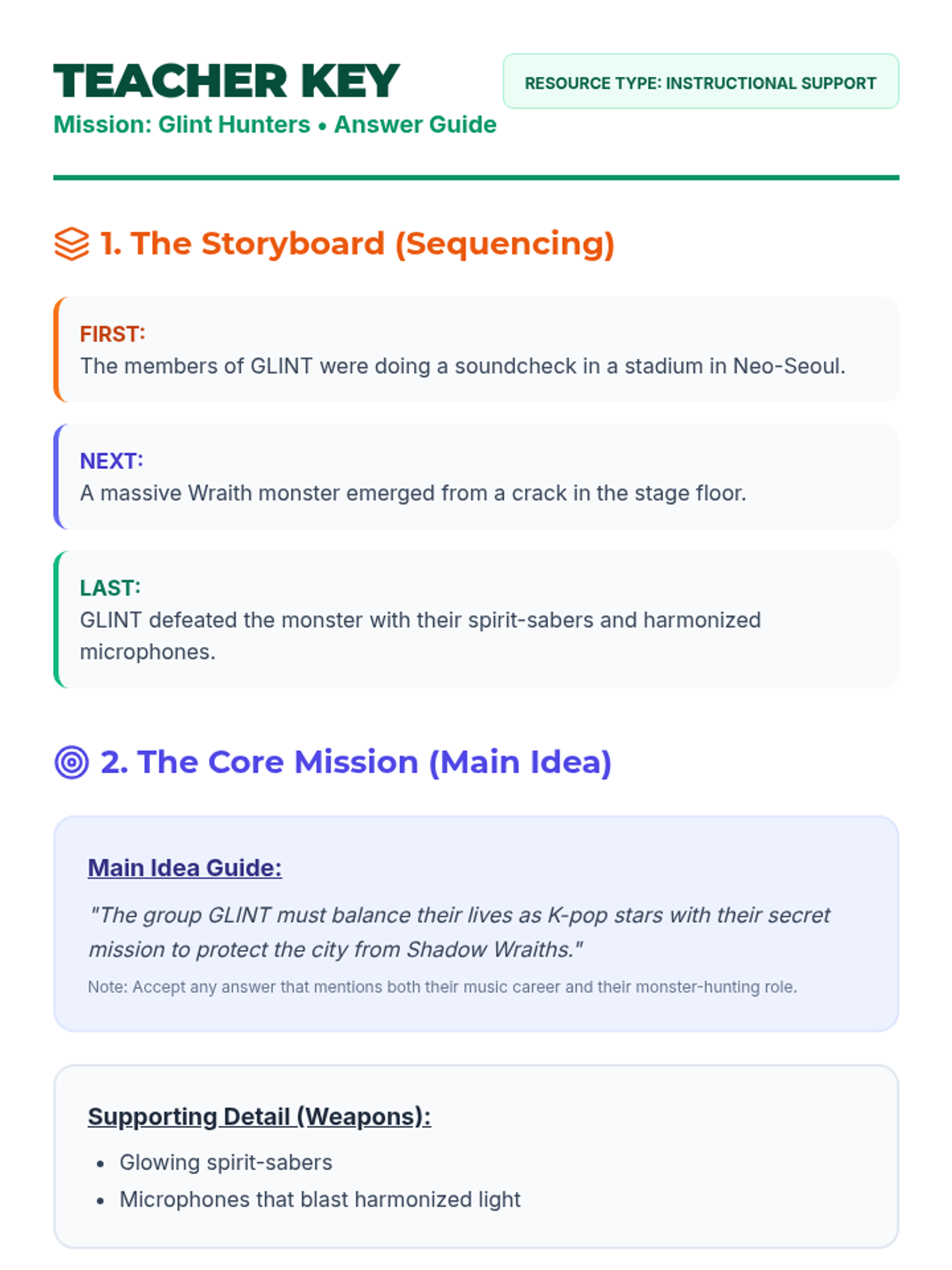
A lesson designed for high school students to improve reading comprehension through the lens of animation and K-pop, focusing on main ideas, sequencing, and inference.
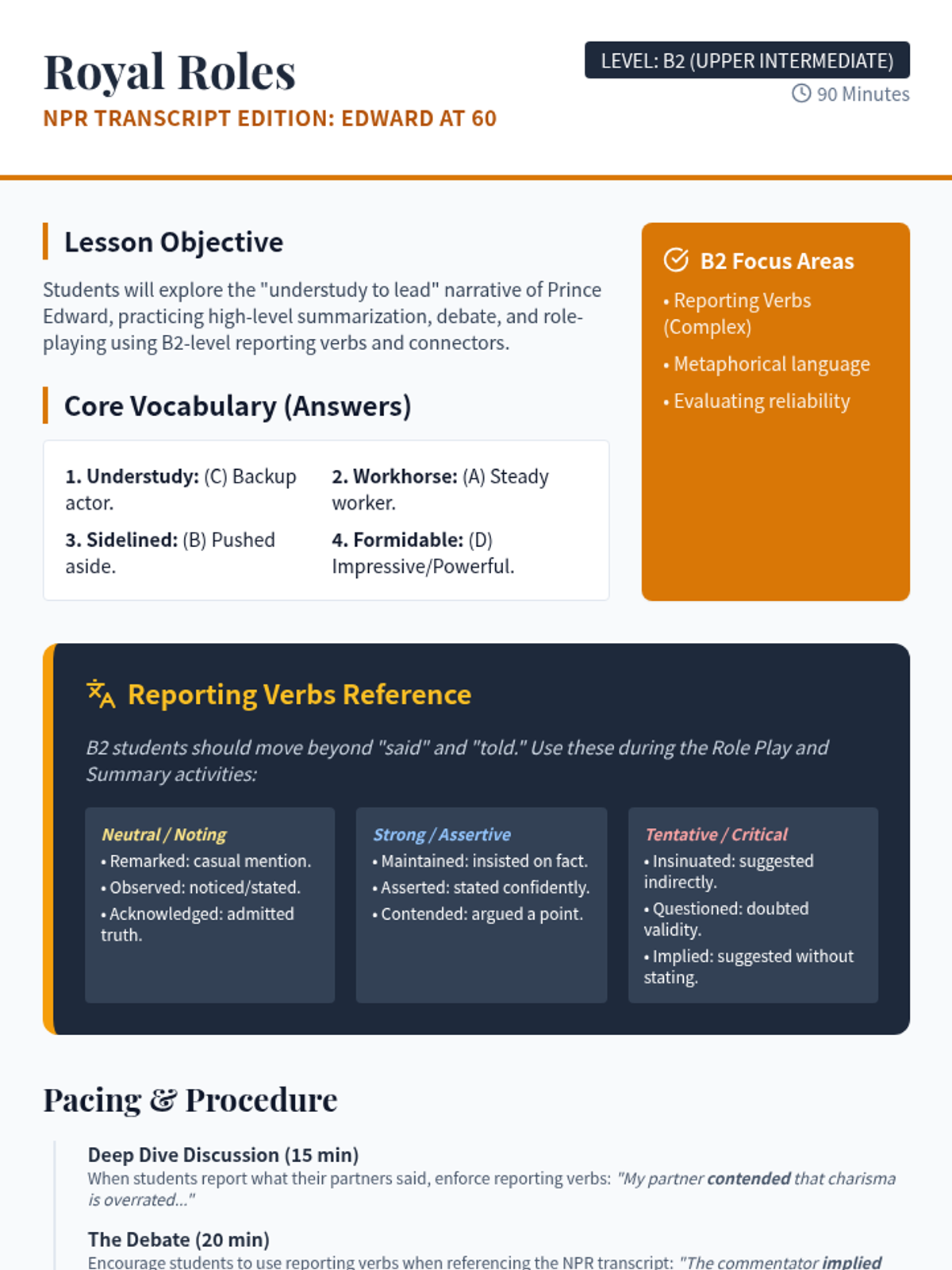
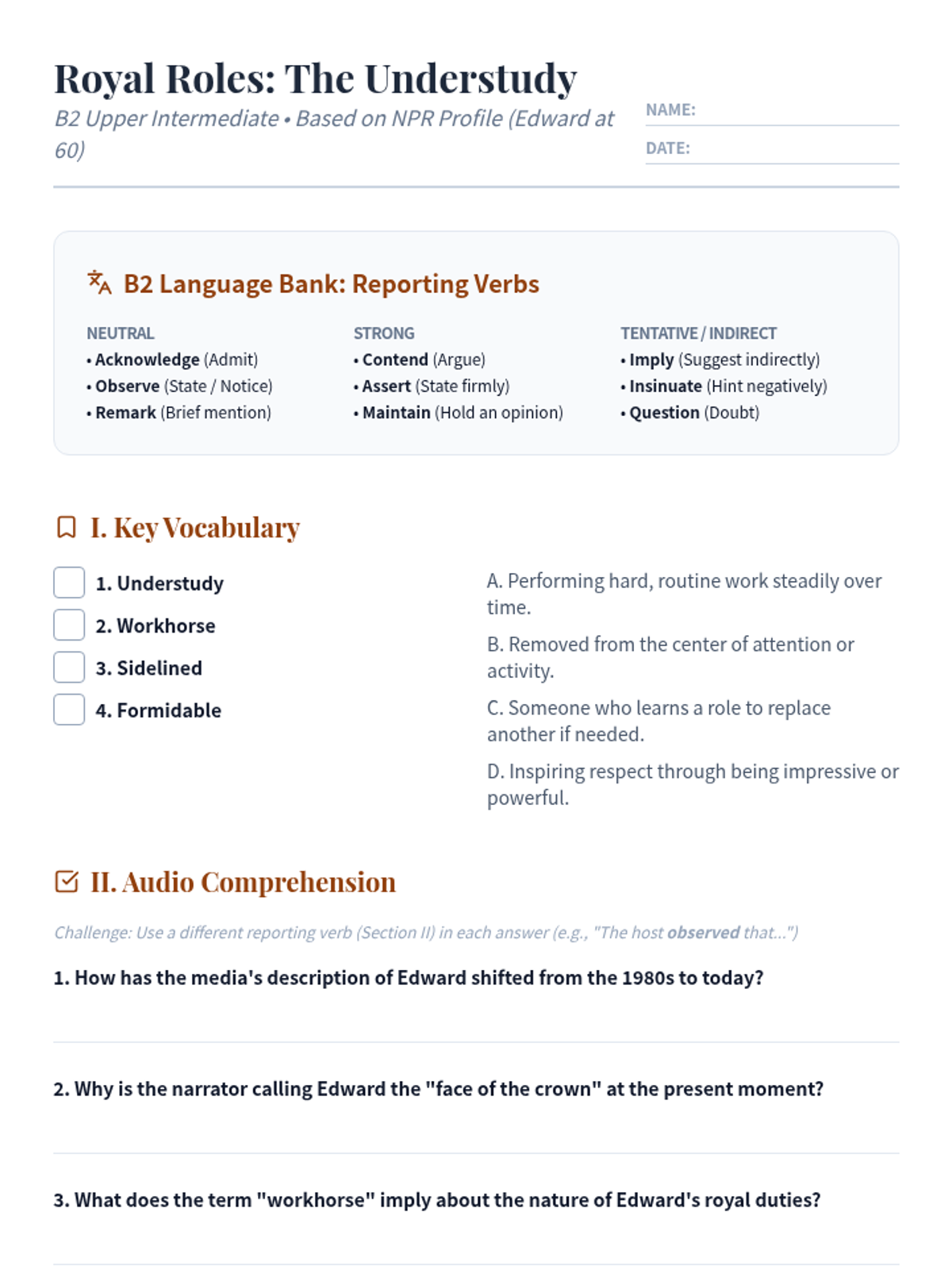
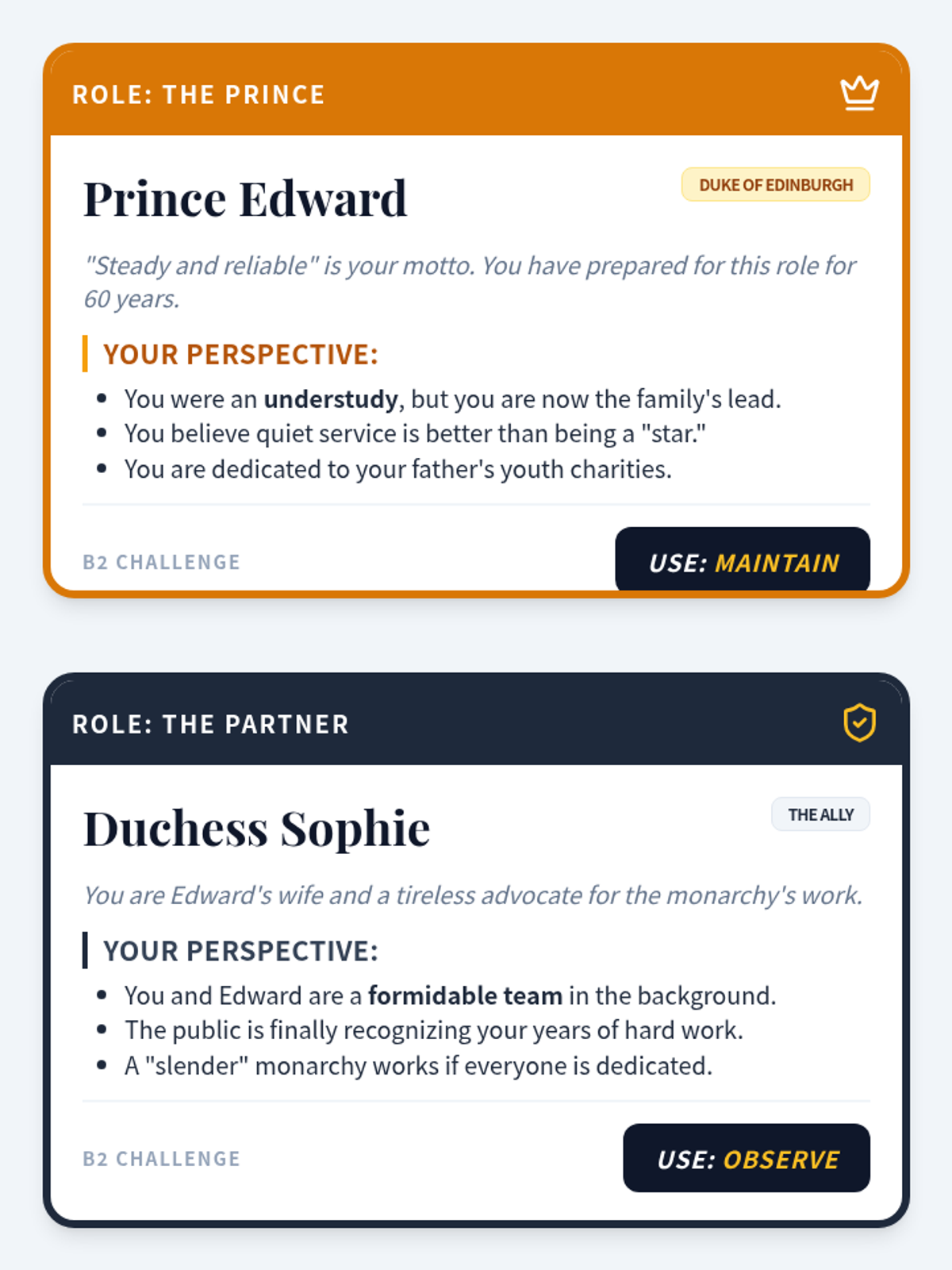
A 90-minute B2-level English lesson focused on the life and public role of Prince Edward, Duke of Edinburgh, featuring listening comprehension and intensive speaking activities.
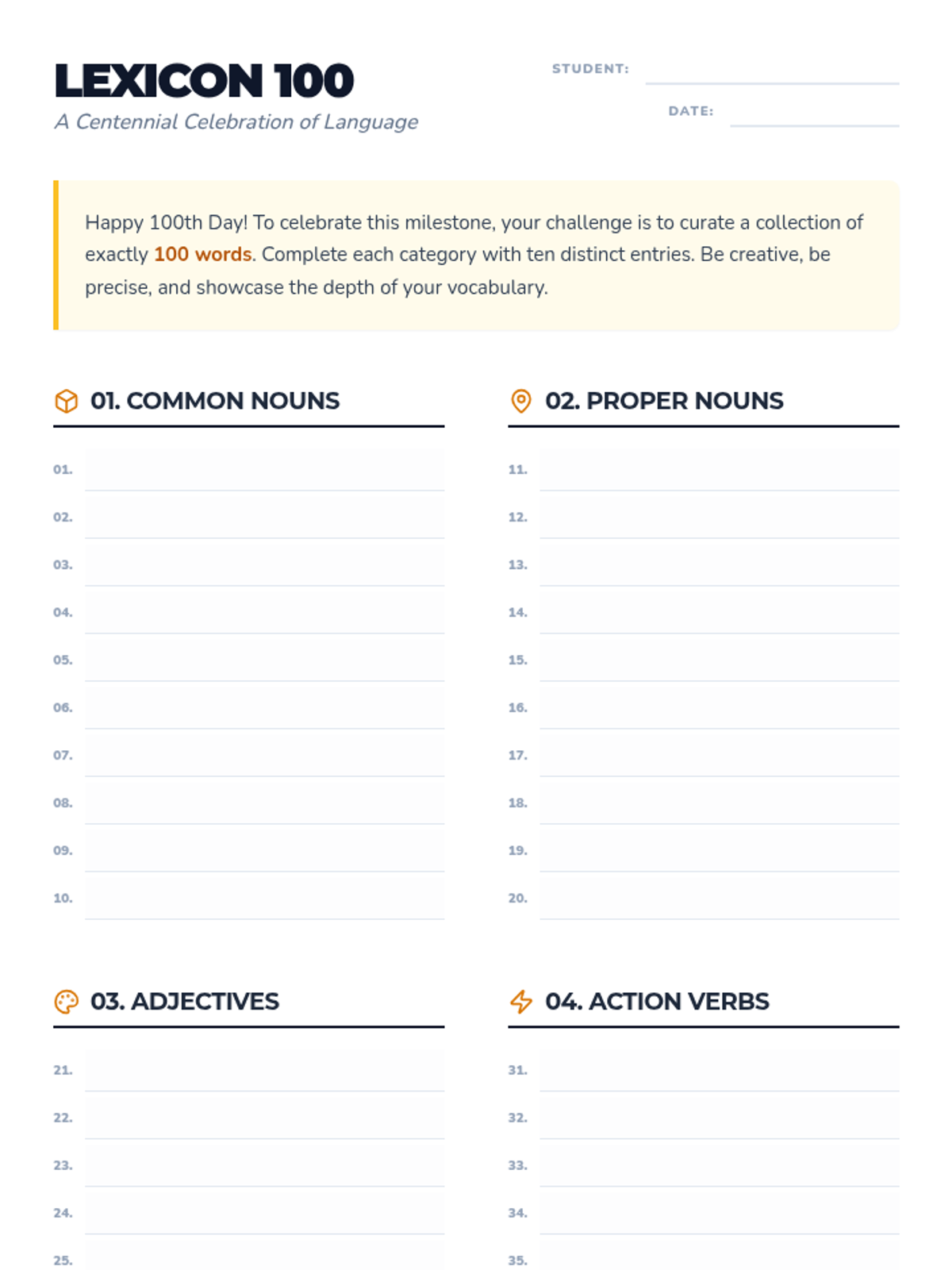
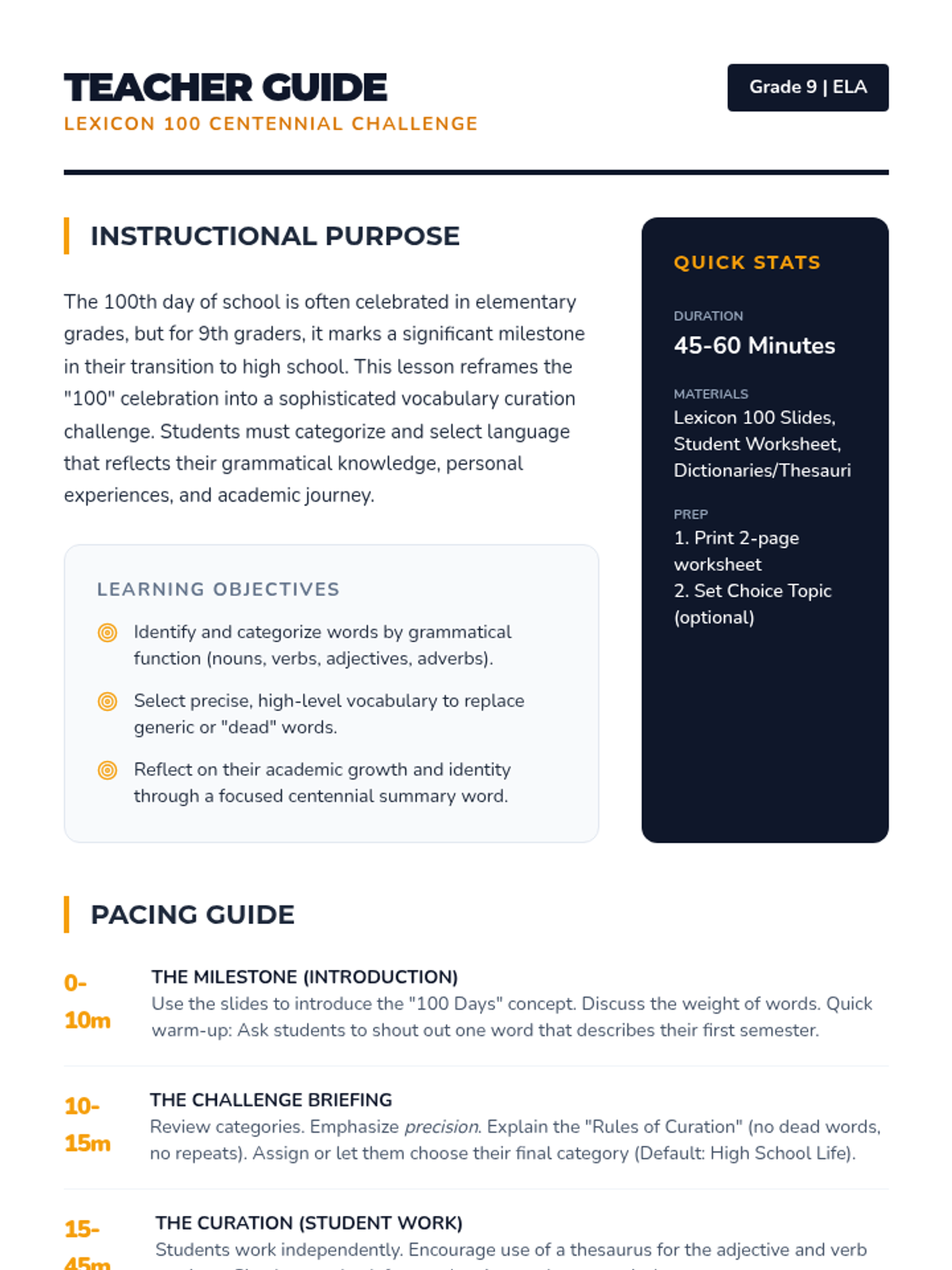
A sophisticated 100th-day celebration focused on vocabulary expansion and reflection. Students participate in a 'Lexicon 100' challenge to curate 100 specific words across grammatical and thematic categories, culminating in a personal reflection on their academic journey.
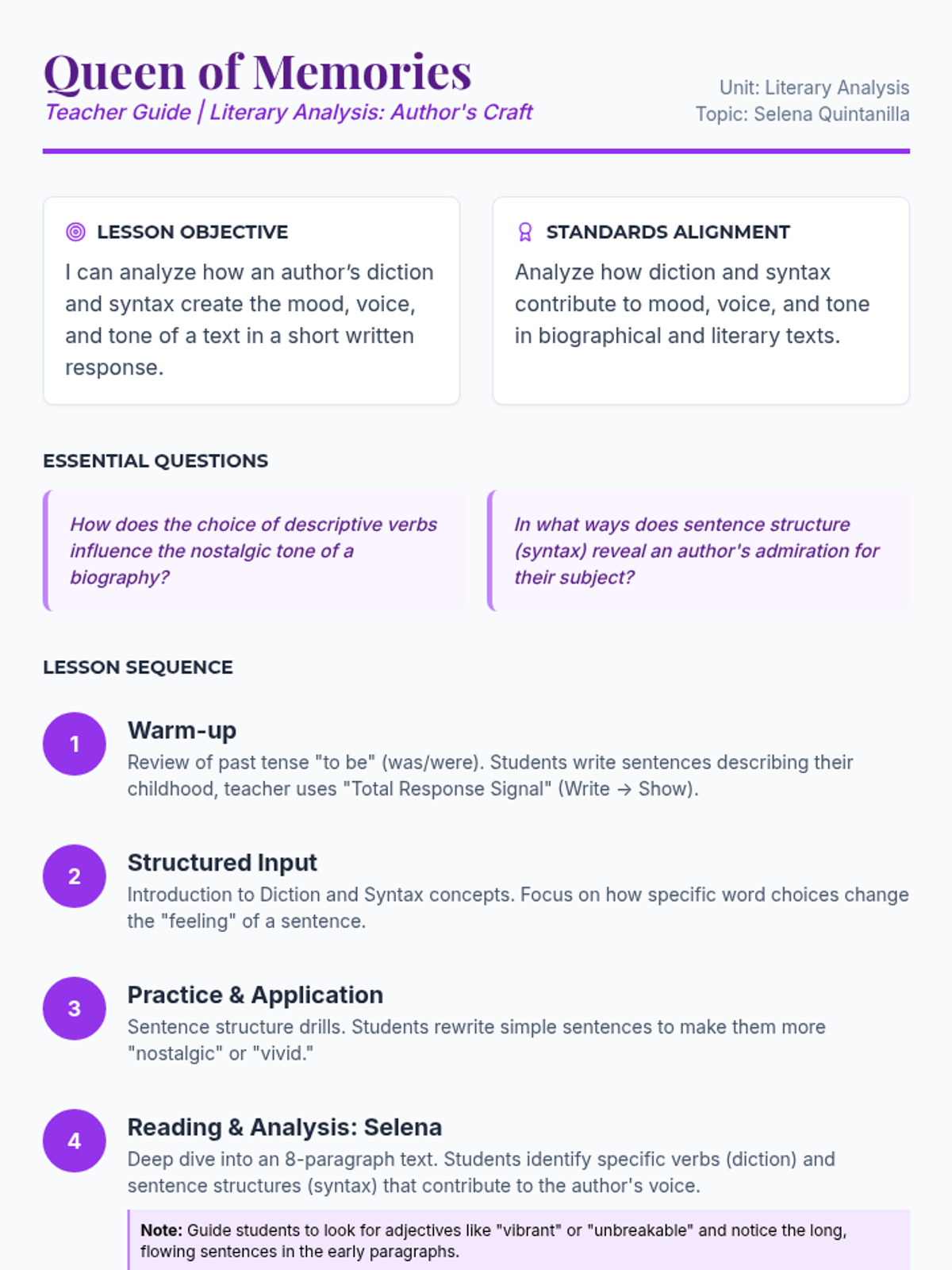
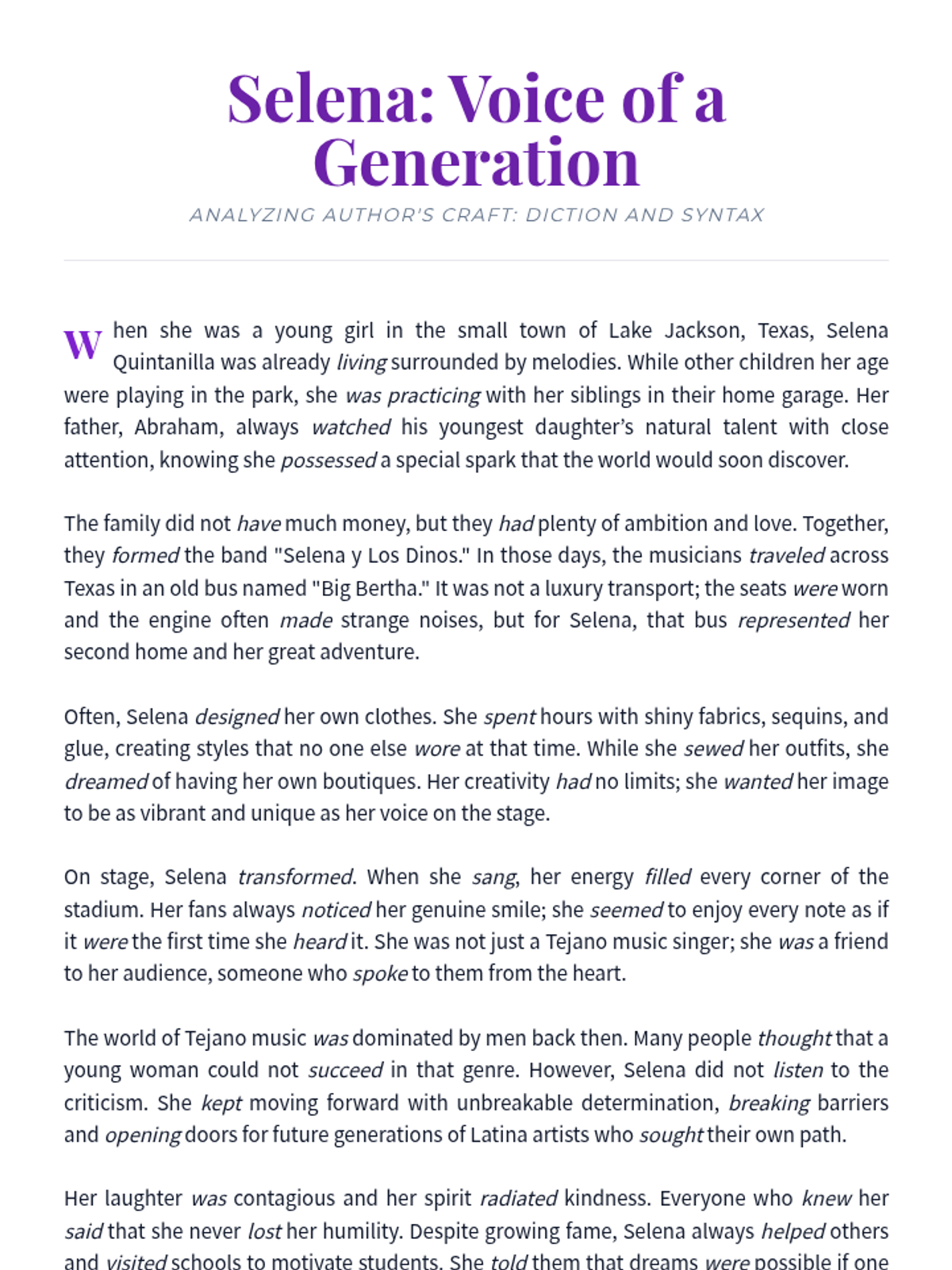
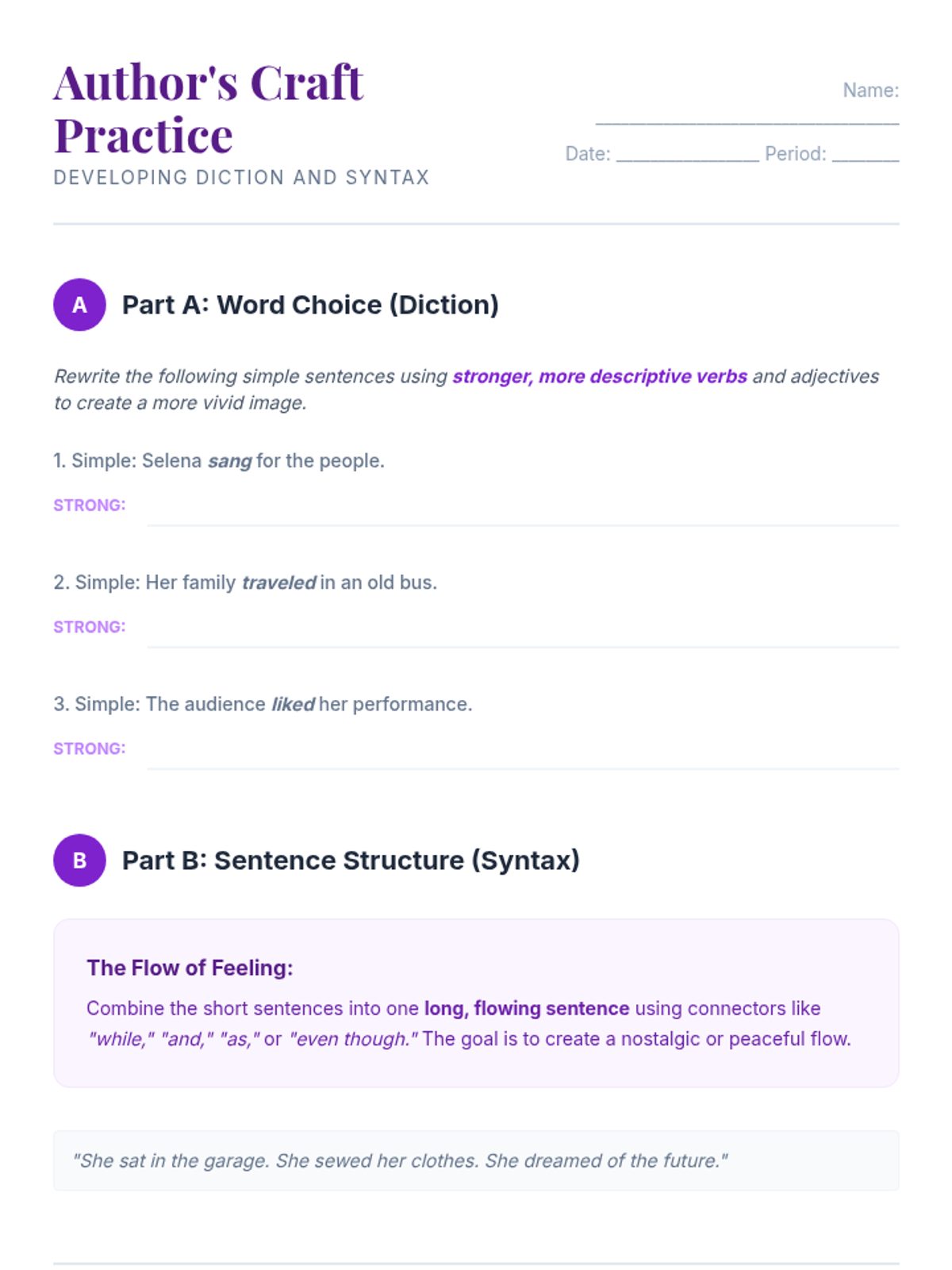
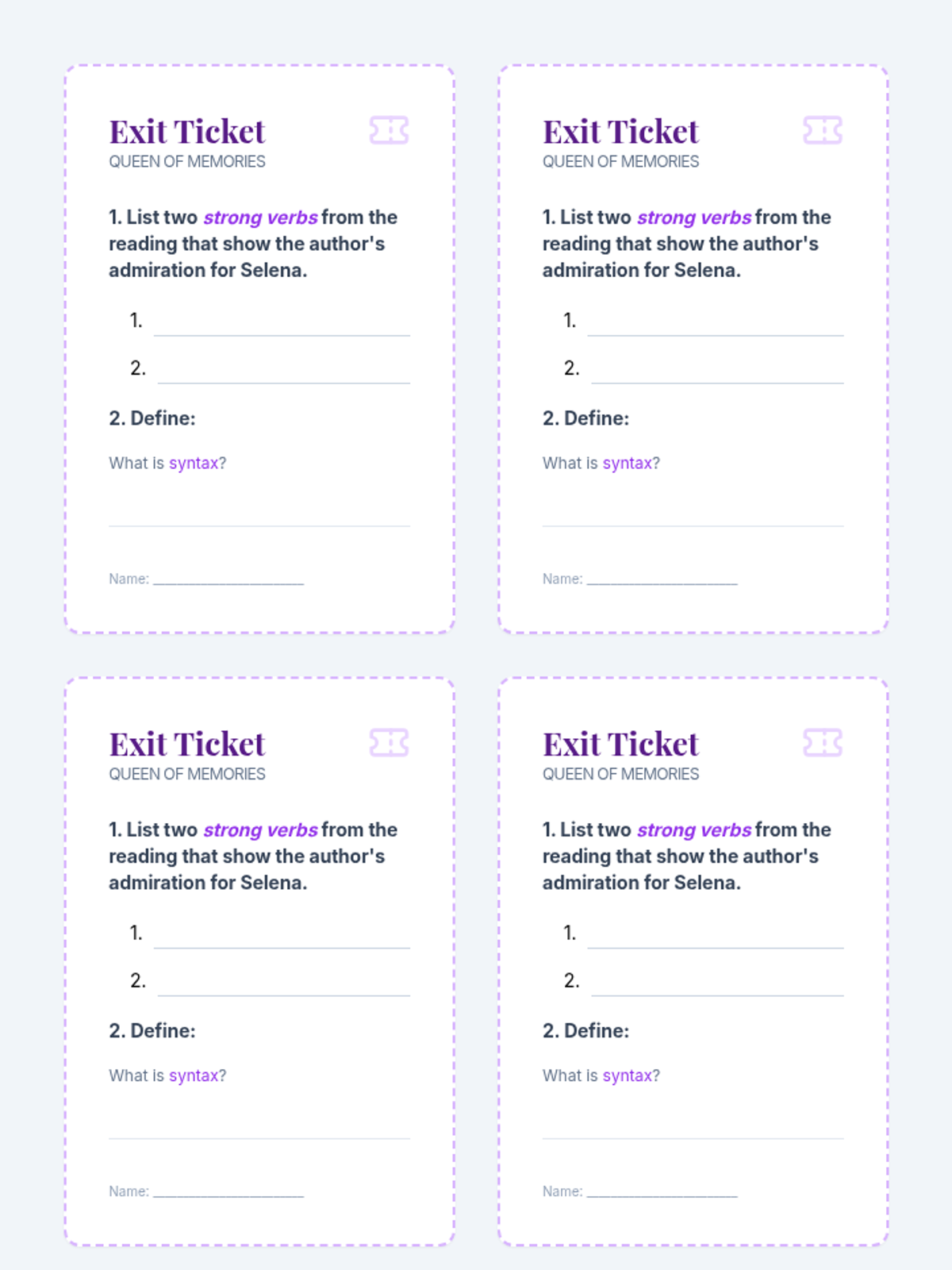
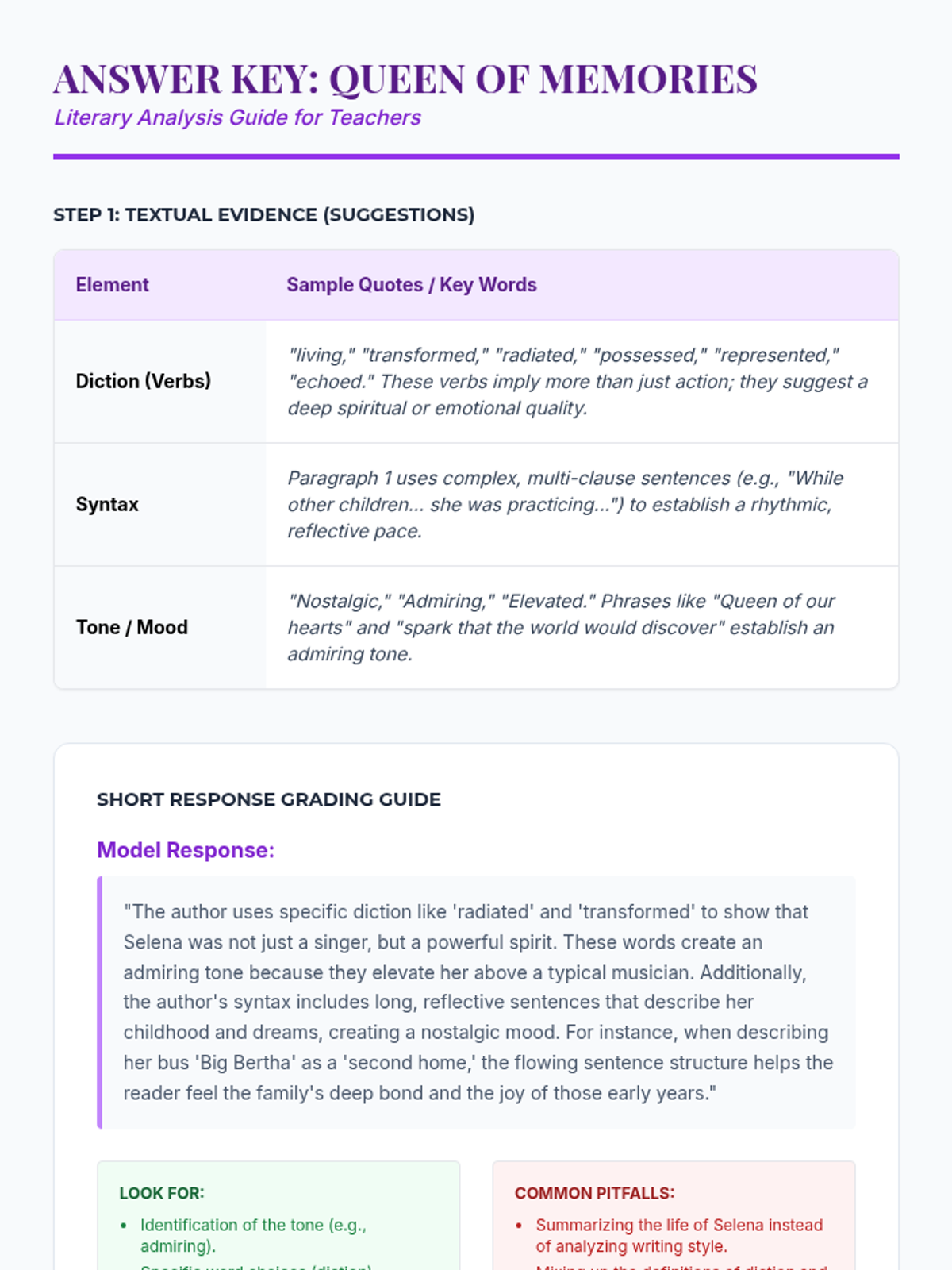
A lesson focused on the life of Selena Quintanilla, using the past tense to analyze how an author's diction and syntax build mood and tone in a biographical text.
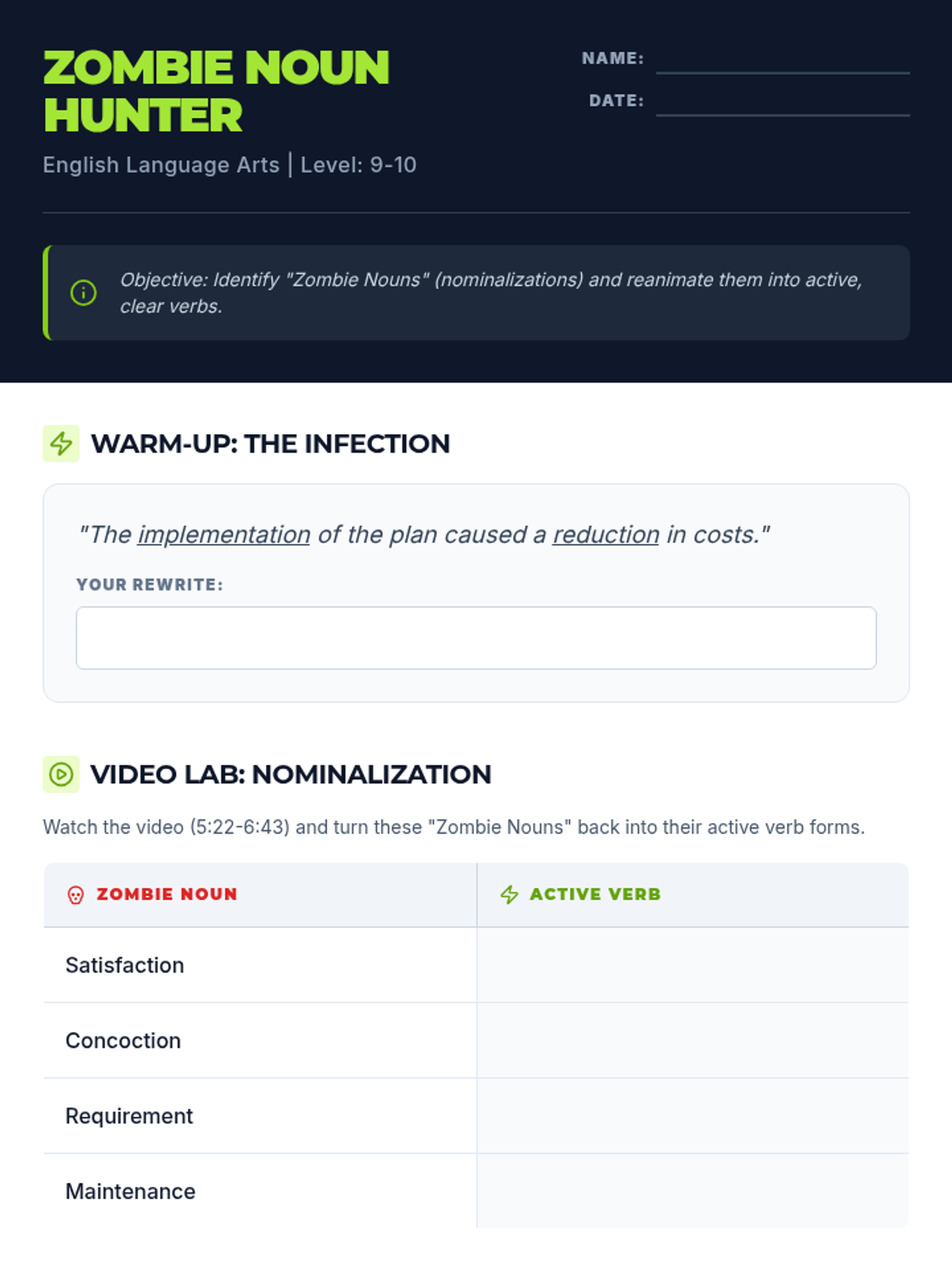
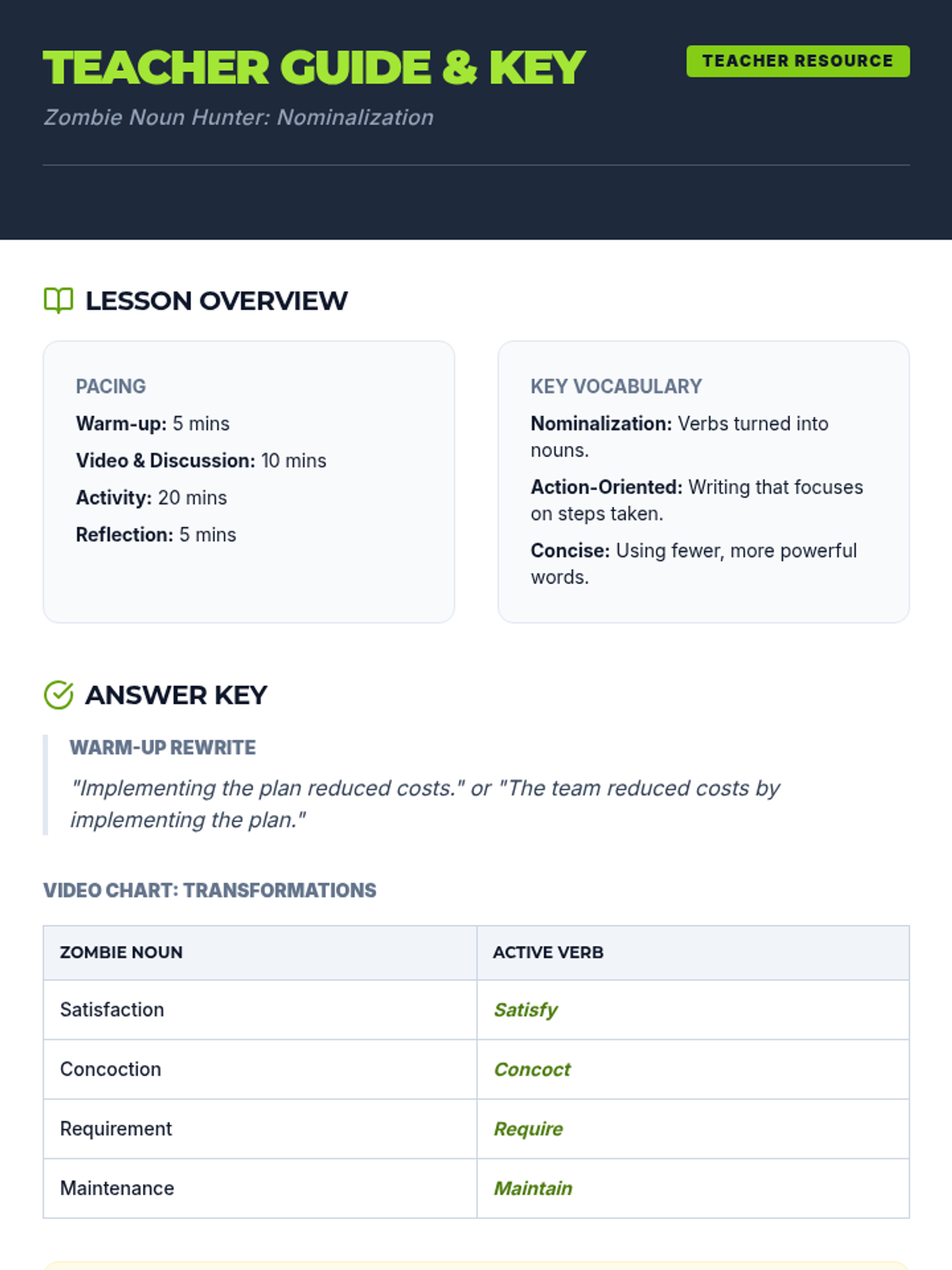
Students learn to identify and eliminate 'Zombie Nouns' (nominalizations) to make their writing more active and concise. The lesson includes a video-based discussion and a 'Nominalization Hunt' activity using a corporate memo.