A high-interest lesson focusing on pronoun-antecedent agreement and clarity within the context of anime and manga history, designed for English II STAAR preparation.
A 45-minute lesson where students showcase their media literacy investigations through screencasts, engage in peer evaluation using a professional rubric, and reflect on their growth as digital fact-checkers.
A 45-minute lesson where students become newsroom investigators, learning to distinguish between objective hard news reporting and subjective opinion pieces through hands-on analysis and writing practice.
A focused lesson on identifying the main idea in fictional and non-fictional texts, tailored for adult learners preparing for the HSED RLA exam. Includes guided practice with current events and structured graphic organizers.
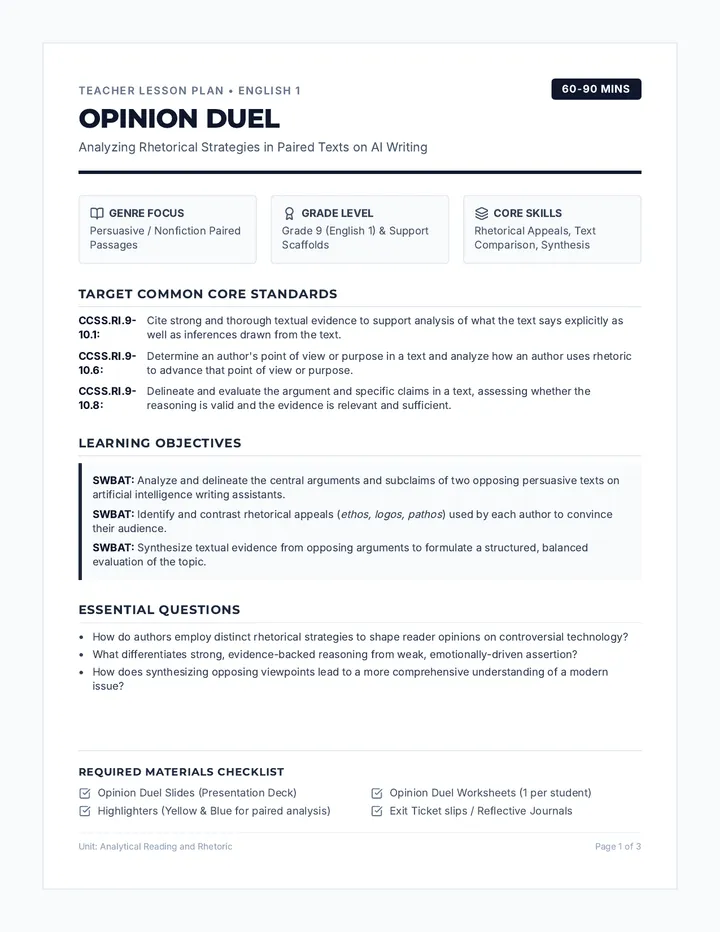
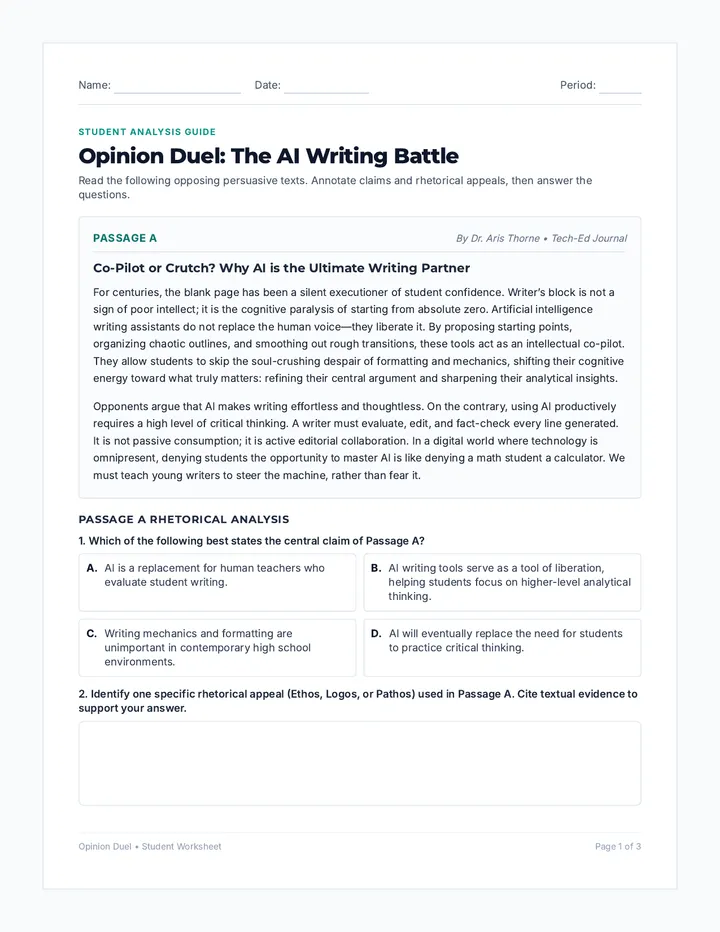
A lesson focused on analyzing the structure and content of a persuasive essay regarding school uniforms, helping students identify key argumentative components.
An introductory lesson for the novel Hatchet by Gary Paulsen, focusing on plot, setting, character, and the theme of survival.
A deep dive into the 2010 Chilean mining accident, focusing on narrative structure, leadership, and the theme of resilience. Students will analyze how the 33 miners' story is constructed as a global narrative.
A collaborative 1-week final project where students form news crews to report on the tragic events of Verona, requiring deep analysis of character motives and textual evidence.
A lesson focused on helping students write a structured three-paragraph essay connecting a self-chosen topic to scientific principles.
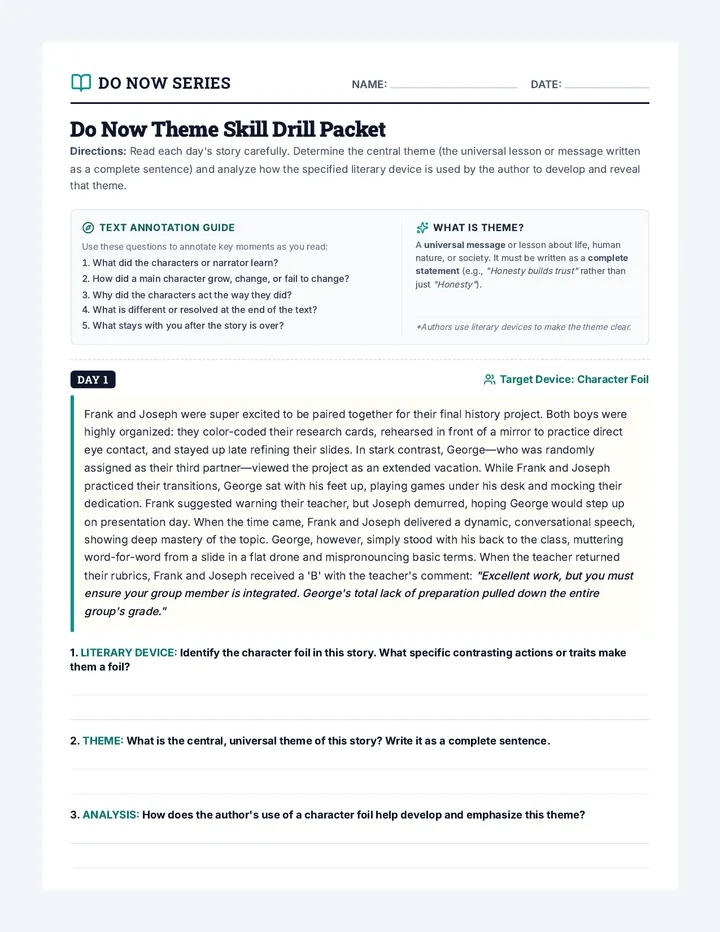
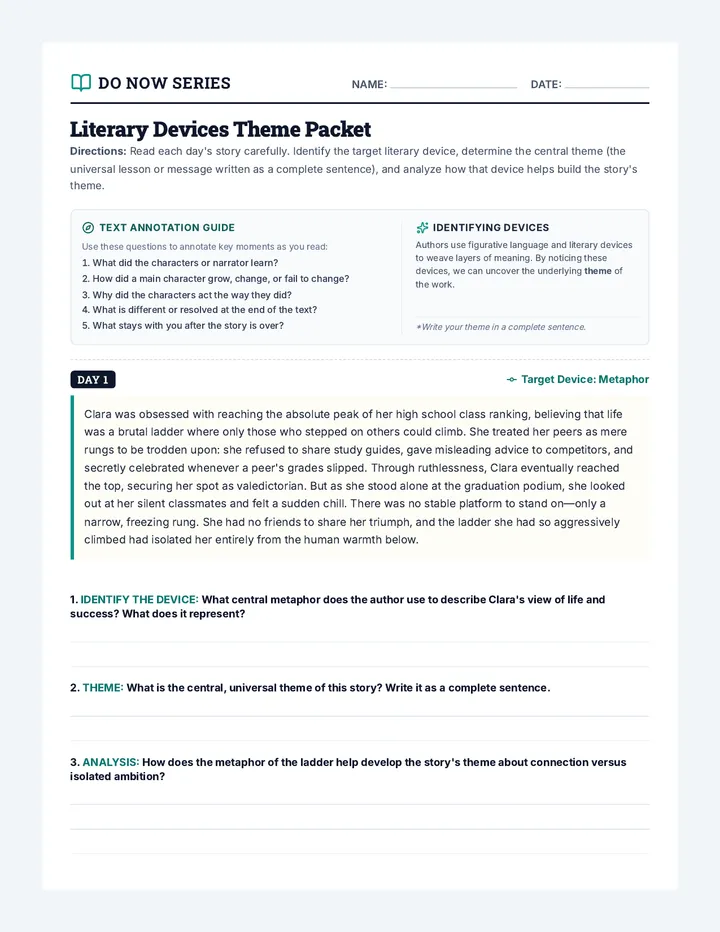
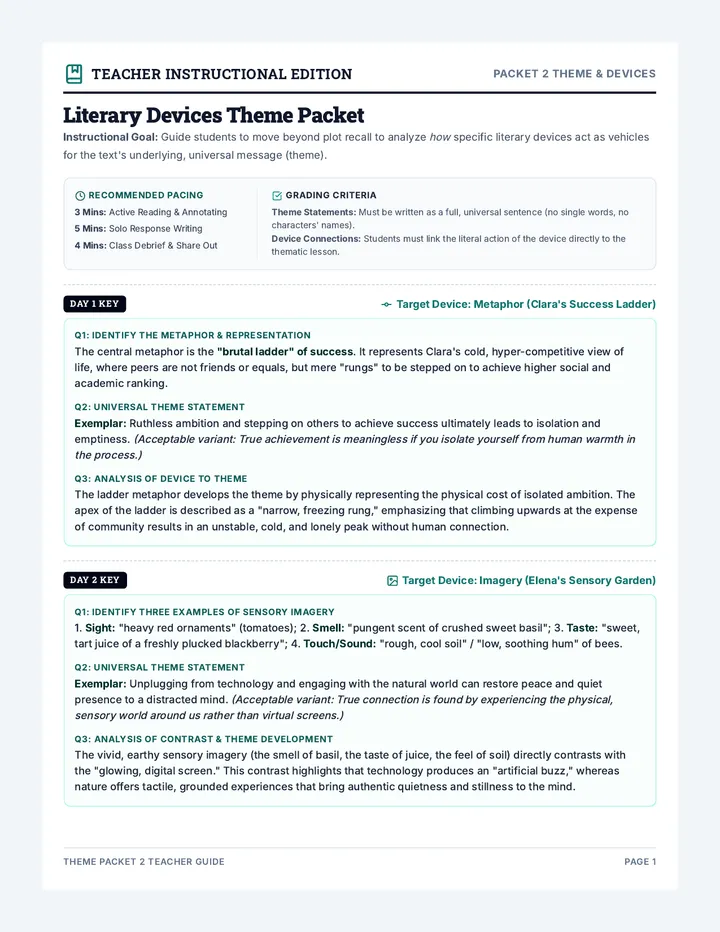
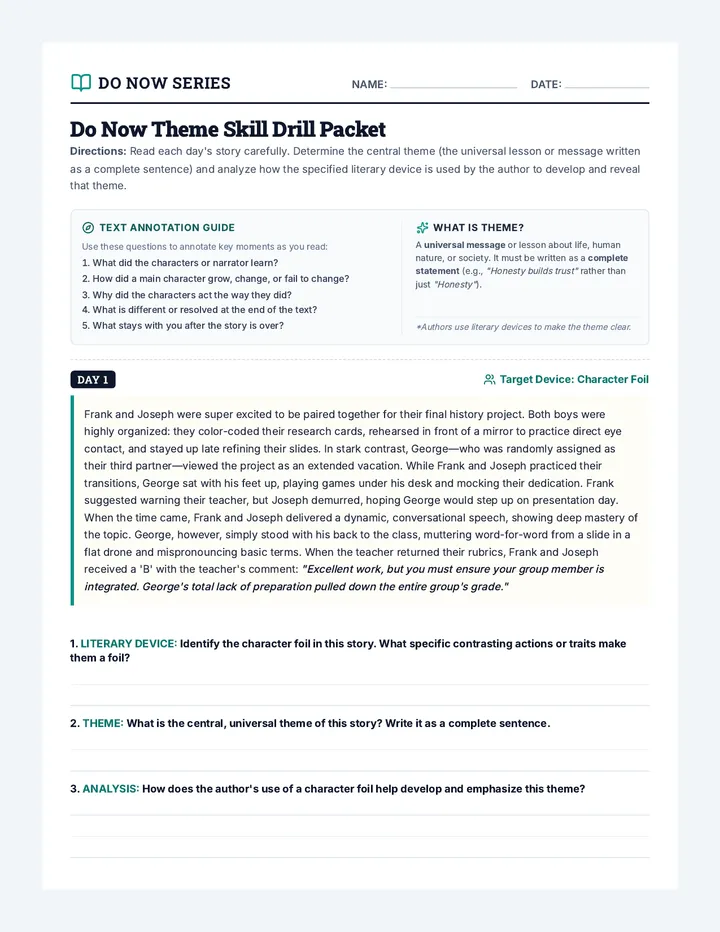
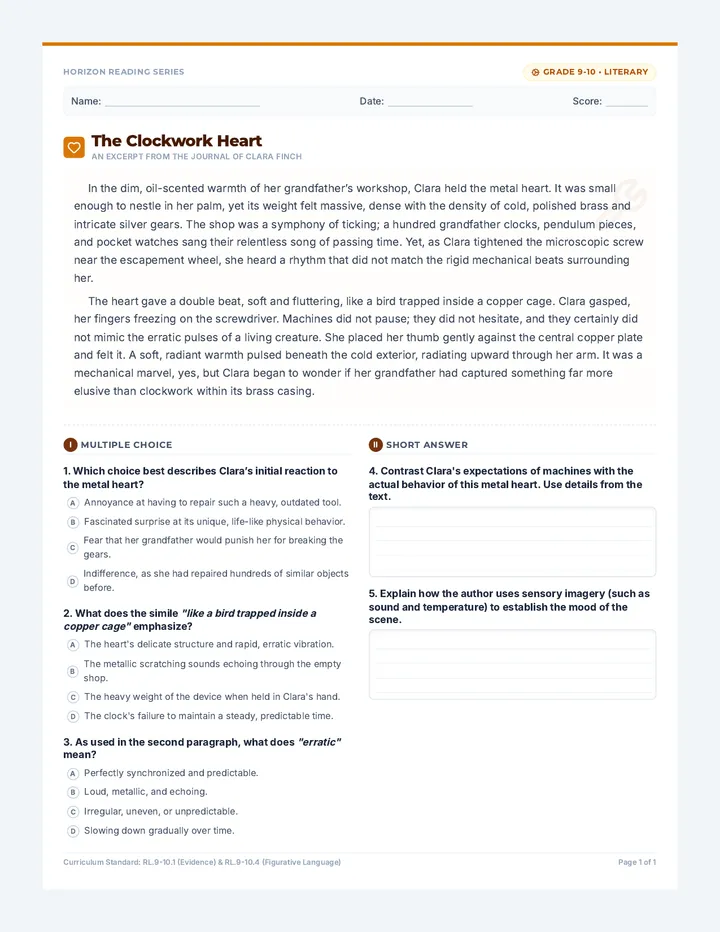
Analyze themes, character development, and figurative language in literary excerpts to prepare for the literature portion of the TSIA.
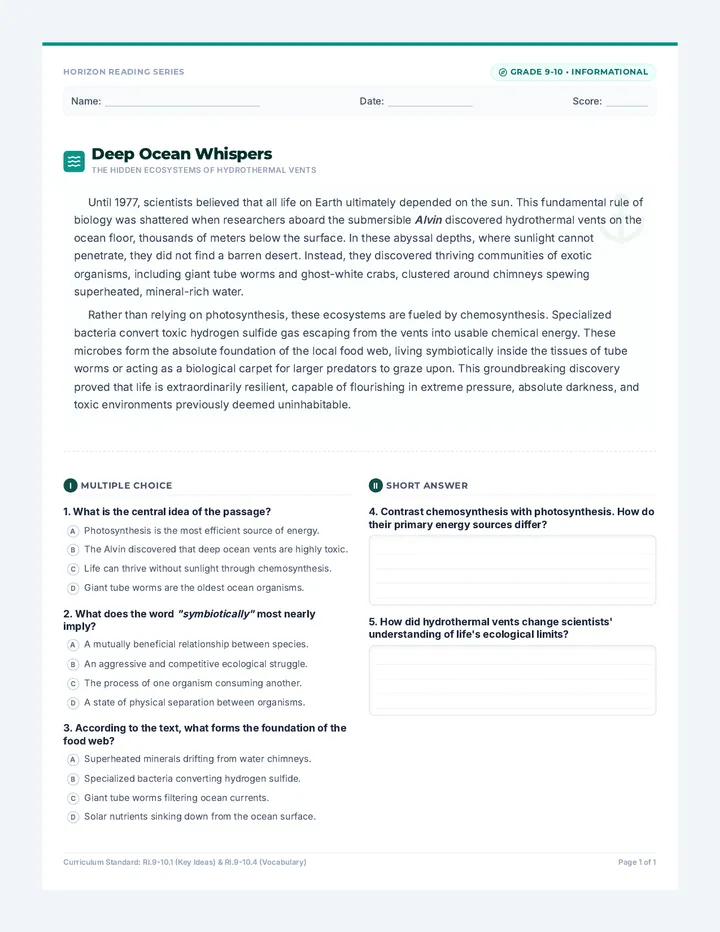
Develop the ability to read between the lines and understand why an author wrote a text, moving beyond the literal.
Master the art of using context clues to define unfamiliar words, essential for tackling complex TSIA passages.
Learn to identify the central point of a passage and distinguish it from supporting details, a fundamental skill for the TSIA.
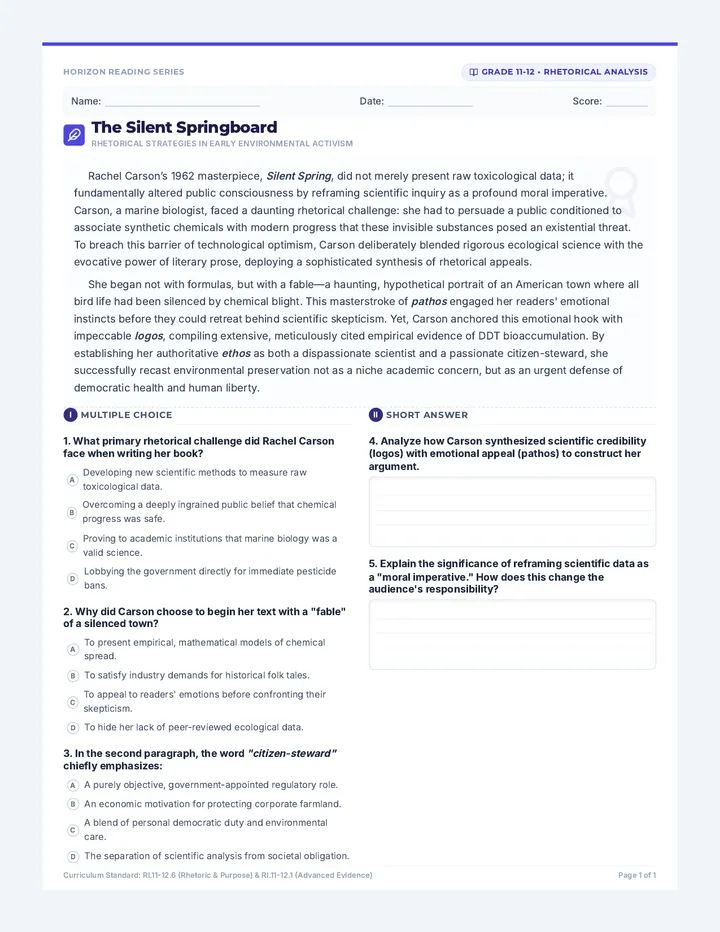
A deep dive into the construction of strong body paragraphs and the art of the counterargument and refutation.
A lesson focused on mastering the Claim, Evidence, and Reasoning (CER) framework through investigative practice and sentence structure analysis.
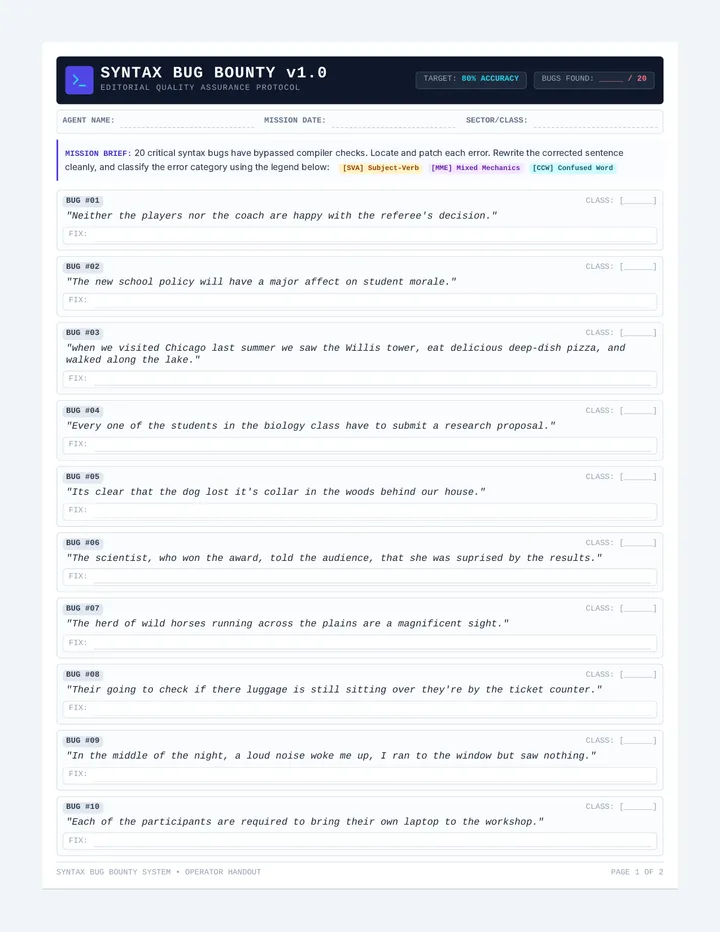
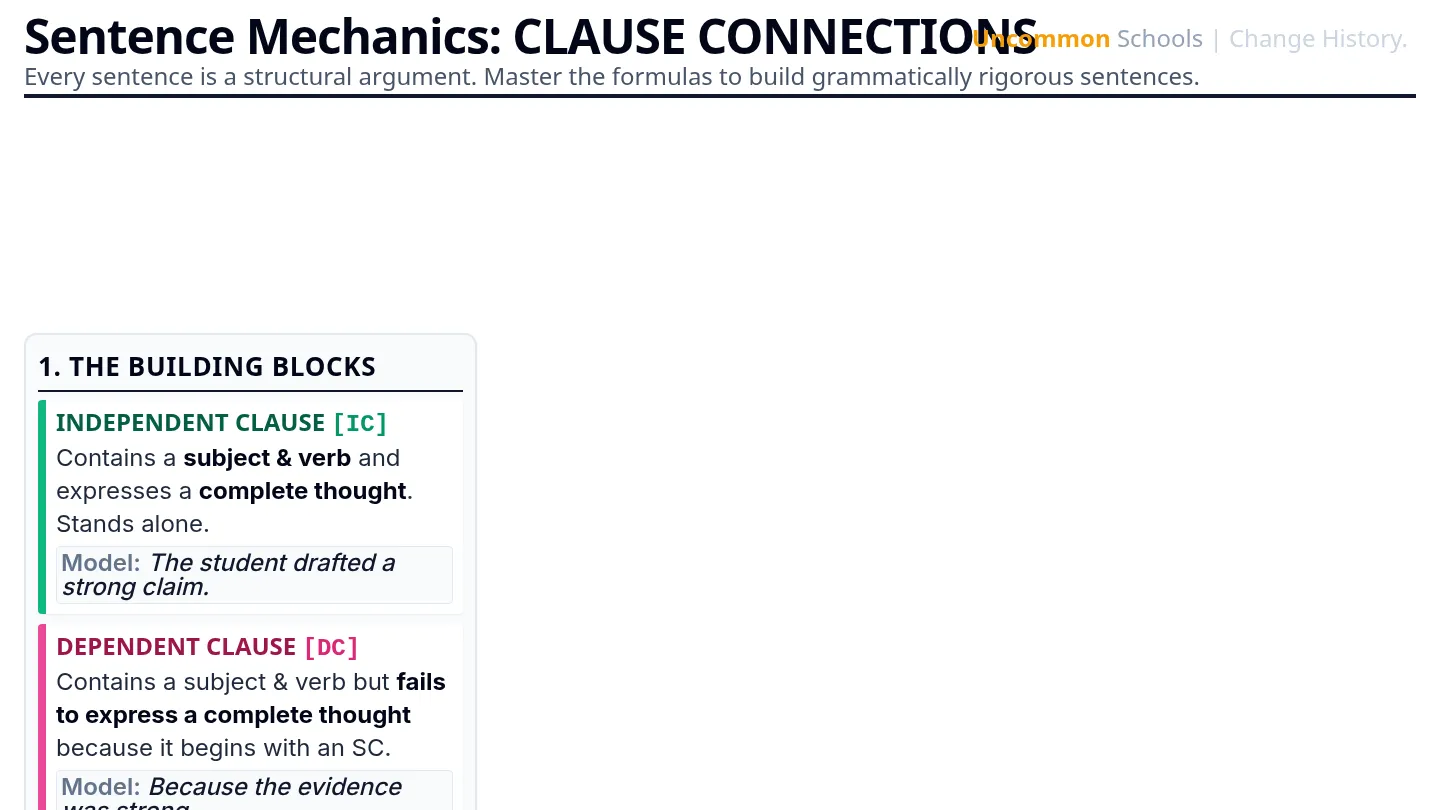
A technical and logic-driven lesson on mastering compound and complex sentence structures, framed through a modern 'Syntax Systems' theme. Includes a system manual for teachers, instructional interface slides, and debugging practice for students.
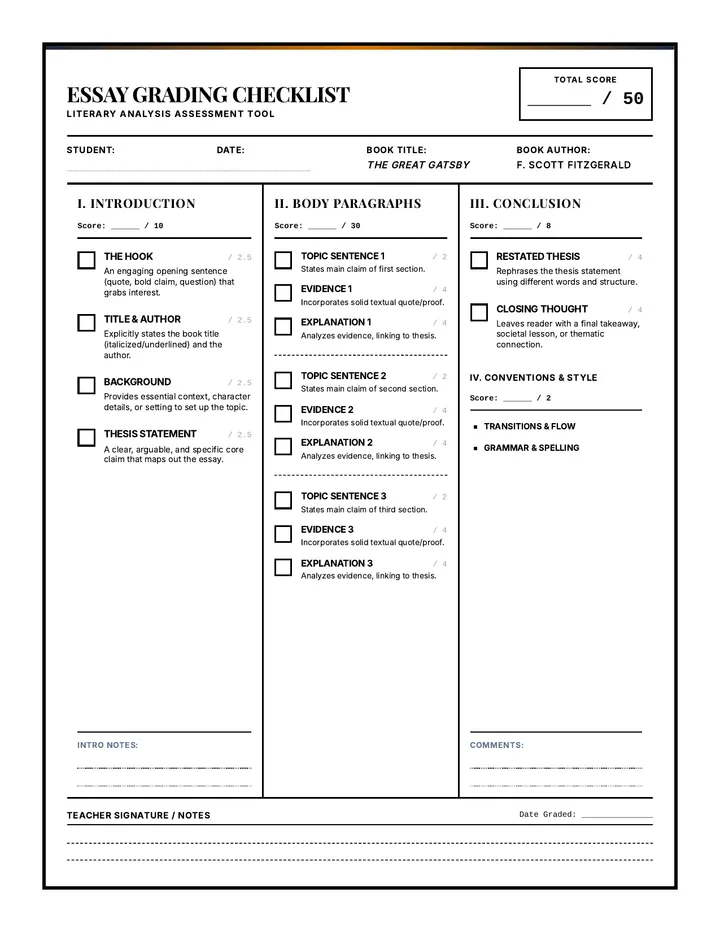
A fast-paced, high-engagement lesson for 11th graders exploring theme in The Great Gatsby, culminating in a dynamic 'Thematic Speed Dating' collaborative activity.
A high-energy, 25-minute collaborative lesson focused on identifying and analyzing themes in Neal Shusterman's 'Downsiders'. Students use a Think-Pair-Share structure to explore the conflict between the Topside and Downside worlds.
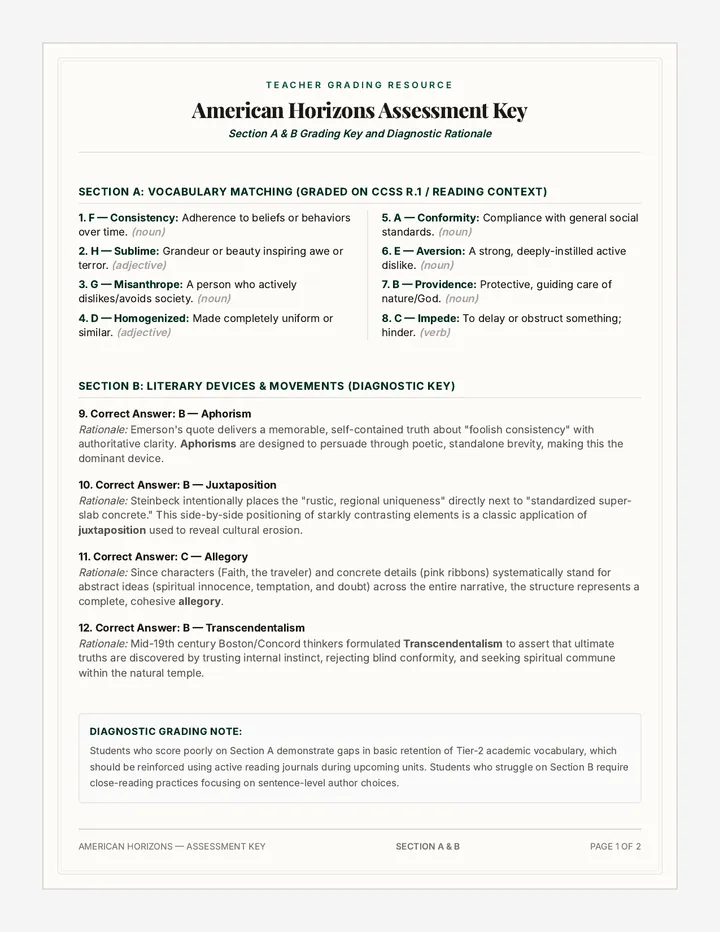
An answer key for the June 2024 Quarter 4 Internal Assessment for World Literature, covering reading comprehension, grammar, vocabulary, and transitions.
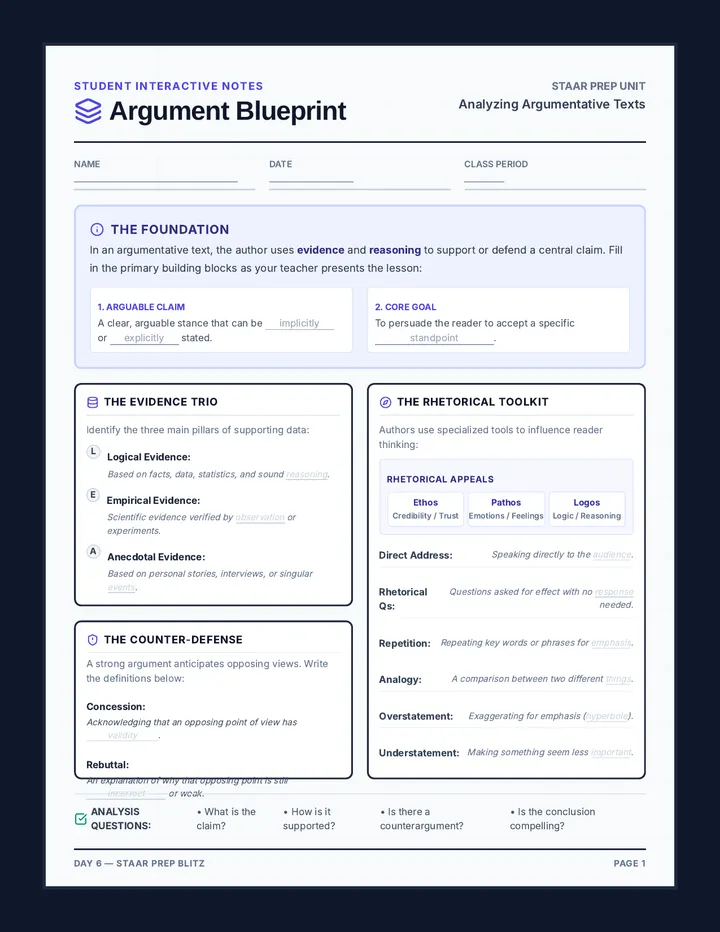
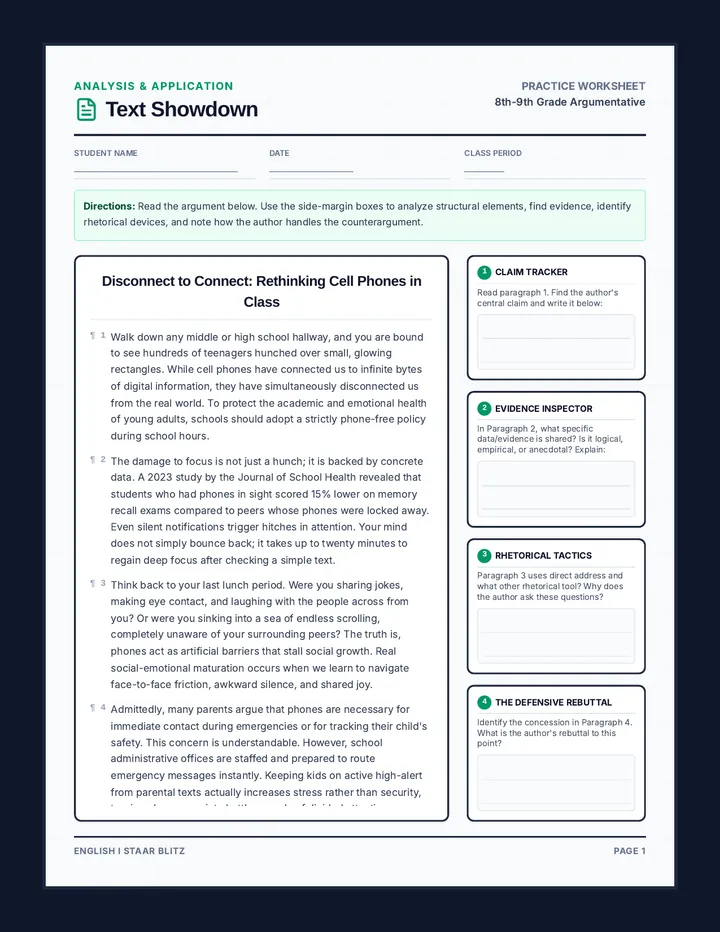
A lesson focused on understanding the structural components of an argumentative essay through a hands-on sorting and sequencing activity.
An ELL Level 1 adapted lesson for Chapter 4 of The Great Gatsby, focusing on romance vs. obsession through the lens of 'Red Flags' and 'Green Flags'. Includes vocabulary scaffolding, visual aids, and a creative meme project.

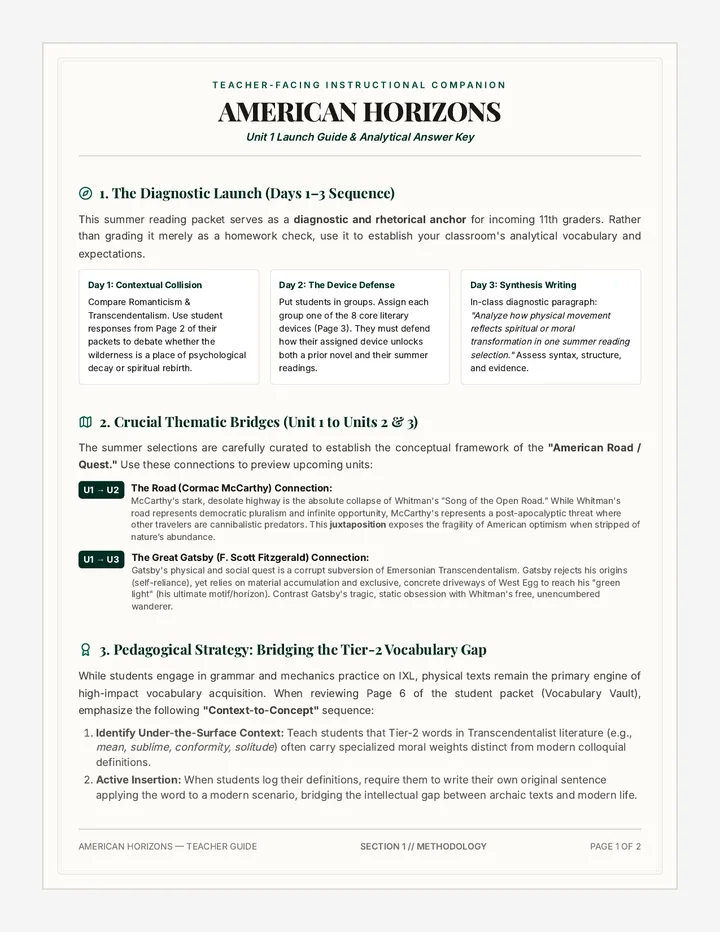
A comprehensive lesson covering TSIA2 grammar standards, including sentence structure, punctuation, agreement, and logical diction. Includes instructional slides, a 20-question practice exam, and a detailed explanation key.
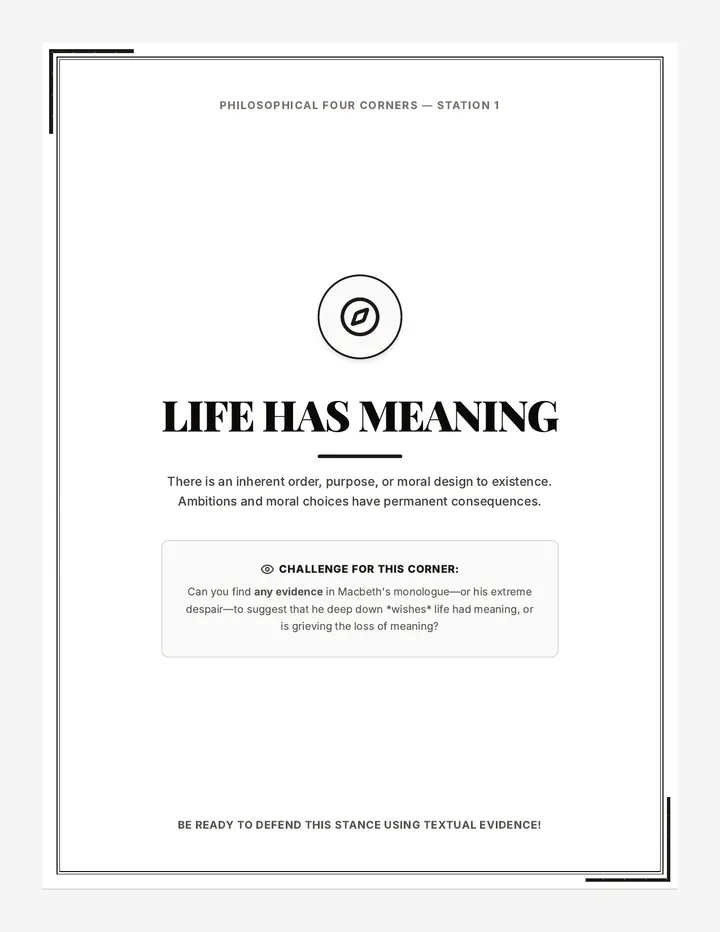
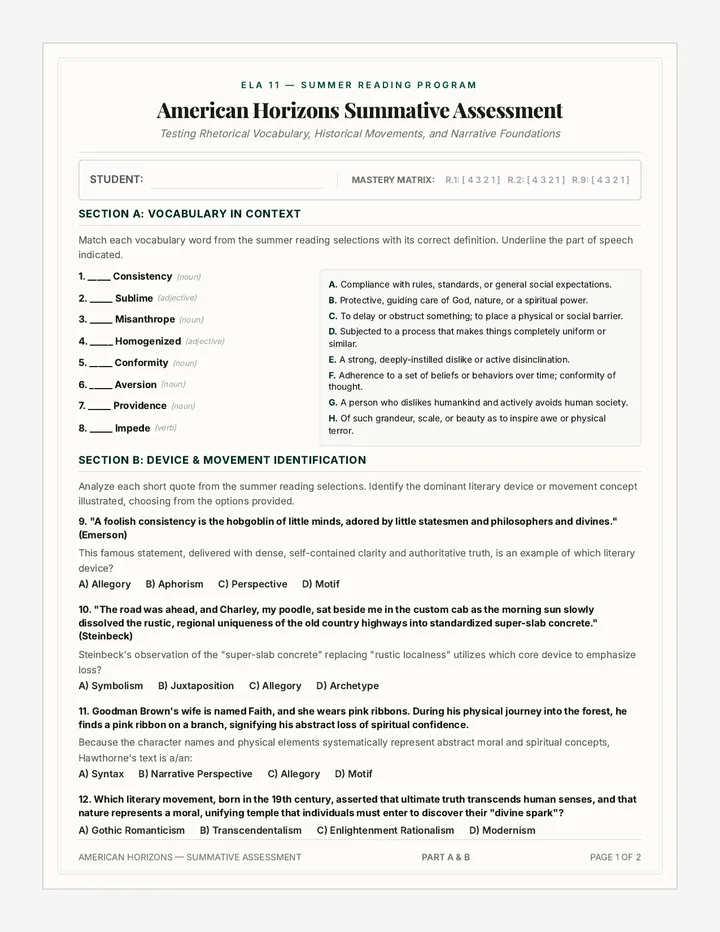
A high school English 4 lesson focused on evaluating evidence, rhetorical devices, and vocabulary in context using Chris Hall's 'Will the sugar tax stop childhood obesity'. Includes a professional presentation and a STAAR-aligned assessment.
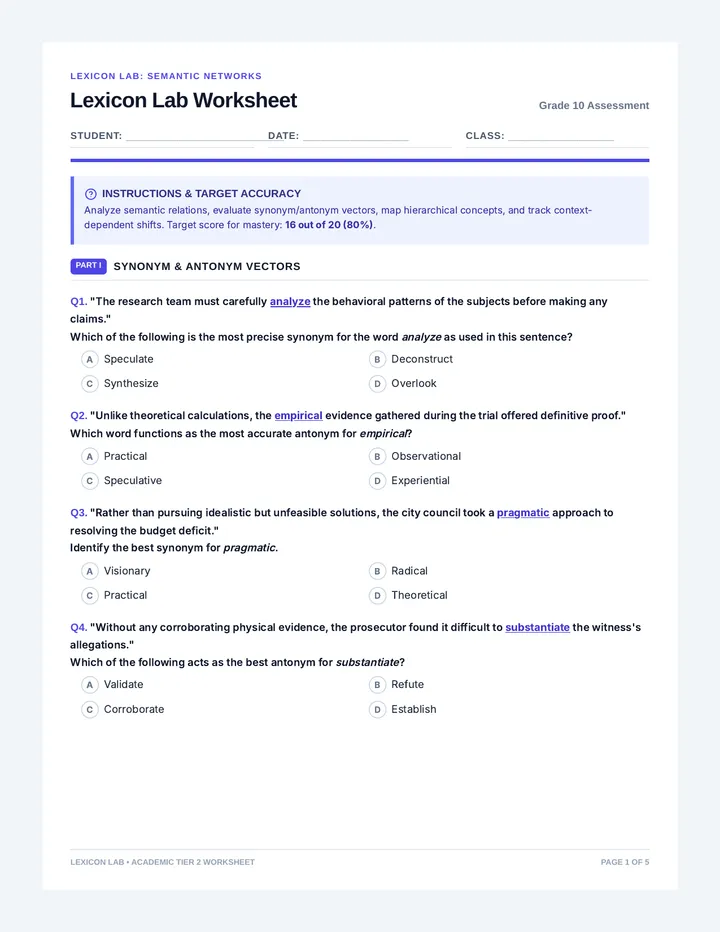
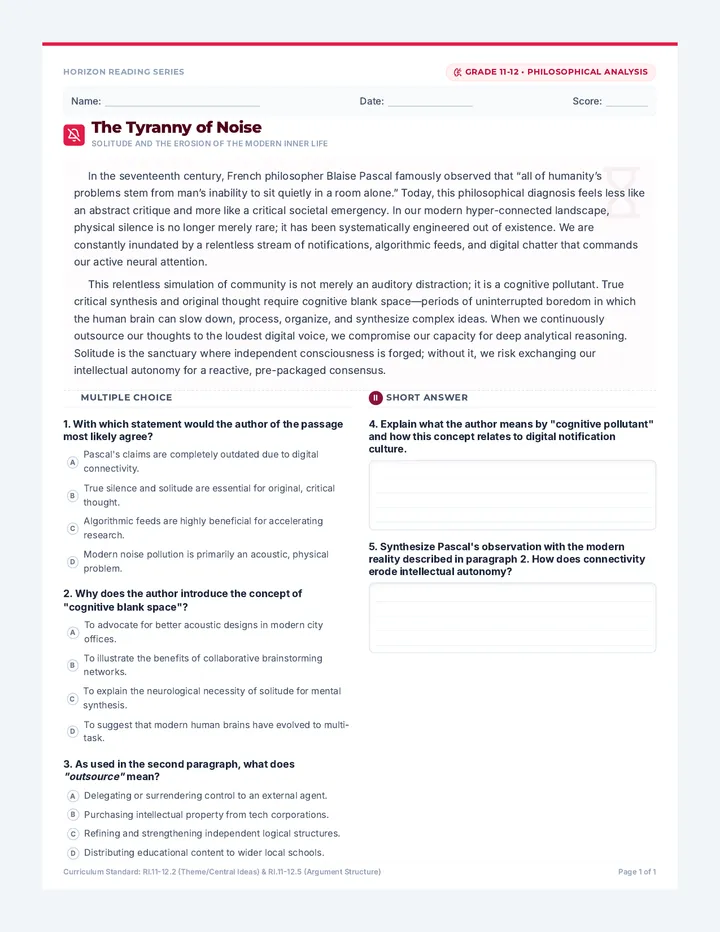
A deep dive into Eric Schlosser's "Food Product Design" from Fast Food Nation, focusing on rhetorical analysis, evidence-based claims, and industrial vocabulary in the flavor industry.
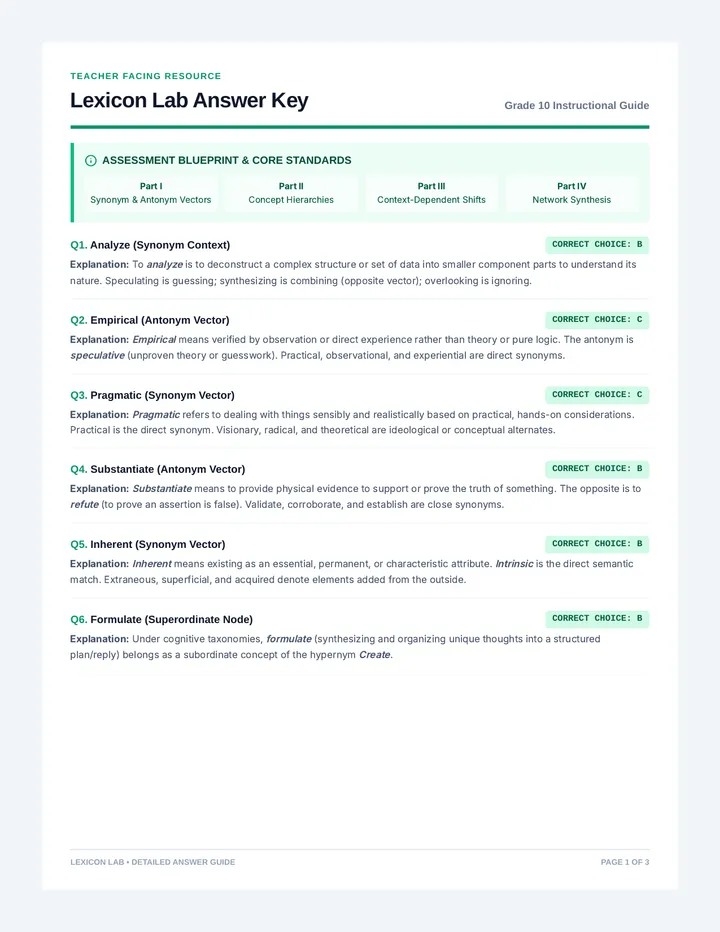
A high school English 3 lesson focused on Eric Schlosser's 'Food Product Design' from Fast Food Nation, exploring rhetorical craft, argumentative evaluation, and industrial food science.
An English I lesson exploring Natasha Trethewey's poem 'At Dusk,' focusing on theme, figurative language, and poetic structure through STAAR-aligned analysis.
A comprehensive lesson analyzing Diane Glancy's 'Without Title' through the lens of TEKS 2.8A, 2.8B, and 2.8C, focusing on theme, imagery, irony, and diction.
A workshop-focused lesson where students refine their original work and compile their final poetry portfolios.
Connects historical protest to contemporary global conflicts and the power of spoken word poetry.
Examines poetry as a tool for social change during the Vietnam War and the Civil Rights Movement.
Explores the visceral imagery and disillusioned perspectives of World War I poets like Wilfred Owen and Siegfried Sassoon.
A masterclass in identifying and analyzing high-frequency literary devices found on the 9th grade ELA STAAR test. Students will move beyond simple identification to understanding how authors use these 'mechanics' to build meaning.
A foundational lesson for beginning ELL students to understand the opening of Homer's Odyssey through visual storytelling and simplified vocabulary focusing on Athena's arrival in Ithaca and her interaction with Telemachus.
A high-energy, movement-based review game designed to prepare students for the 9th grade biology STAAR test. This lesson focuses on the most challenging concepts like protein synthesis, biomolecules, and succession using a "vote with your feet" classroom mechanic.
A fast-paced, detective-themed escape room challenge where students work in teams to decode literary terms and definitions relevant to the 9th Grade English STAAR exam. The activity fits within a 35-minute window and emphasizes collaboration and quick recall.
A lesson focused on analyzing complex social situations involving respect and translating those analyses into persuasive or argumentative essays. Students will evaluate different perspectives and build logical arguments.
Students analyze the climax of Section I, where Gregor is revealed to his family and the Chief Clerk. They will focus on the father's aggressive reaction and the symbolism of the final push back into the room.
Students examine the breakdown of communication between Gregor and his family. They will analyze the symbolism of Gregor's changing voice and use affixes to decode complex words.
Students analyze Gregor's professional life and his feelings of alienation. They will focus on characterization and the arrival of the Chief Clerk, exploring how Gregor's identity is tied to his labor.
Students explore the opening of the novella, focusing on Gregor's physical transformation and his initial internal reaction. They will practice using context clues and the IDEAS method to define difficult vocabulary.
Students explore the theme of alienation and the role of family debt in Kafka's life and work. They will practice identifying these themes in short text excerpts and learn how to use the RACE format with transition words.
Students are introduced to the concepts of magical realism and the term "Kafkaesque." They will learn how Kafka blends ordinary reality with impossible, nightmare-like situations to create a unique literary style.
Students examine the historical and social context of Prague in the late 1800s. They will explore how Kafka's identity as a German-speaking Jew in a Czech city contributed to the themes of isolation in his writing.
Students read a simplified biography of Franz Kafka to understand the author's background, his difficult relationship with his father, and his "double life" as an office worker and a writer.