This lesson covers the eight parts of speech specifically for students preparing for the GED exam, focusing on identifying them in context and understanding their functions in standard English sentences.
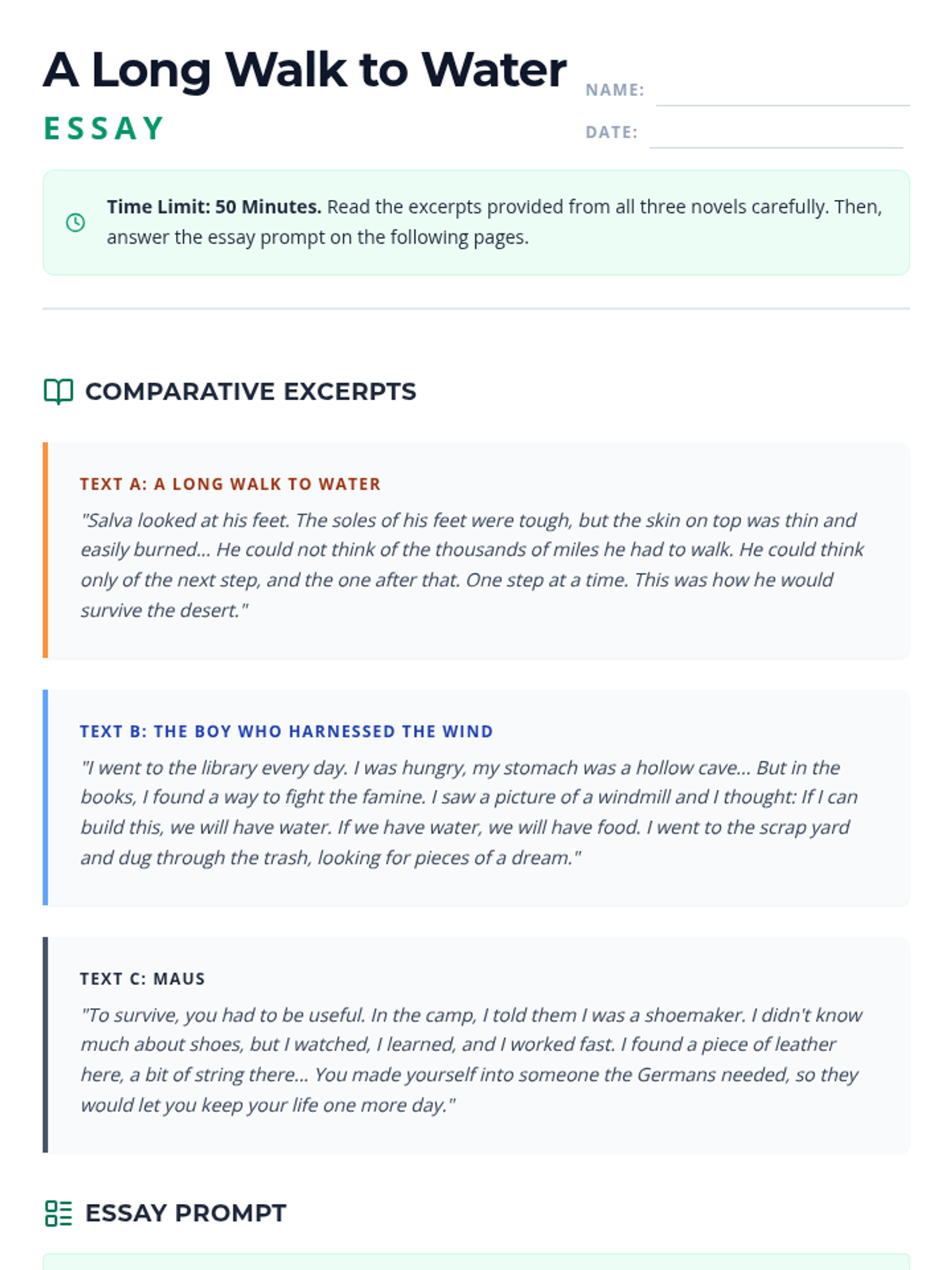
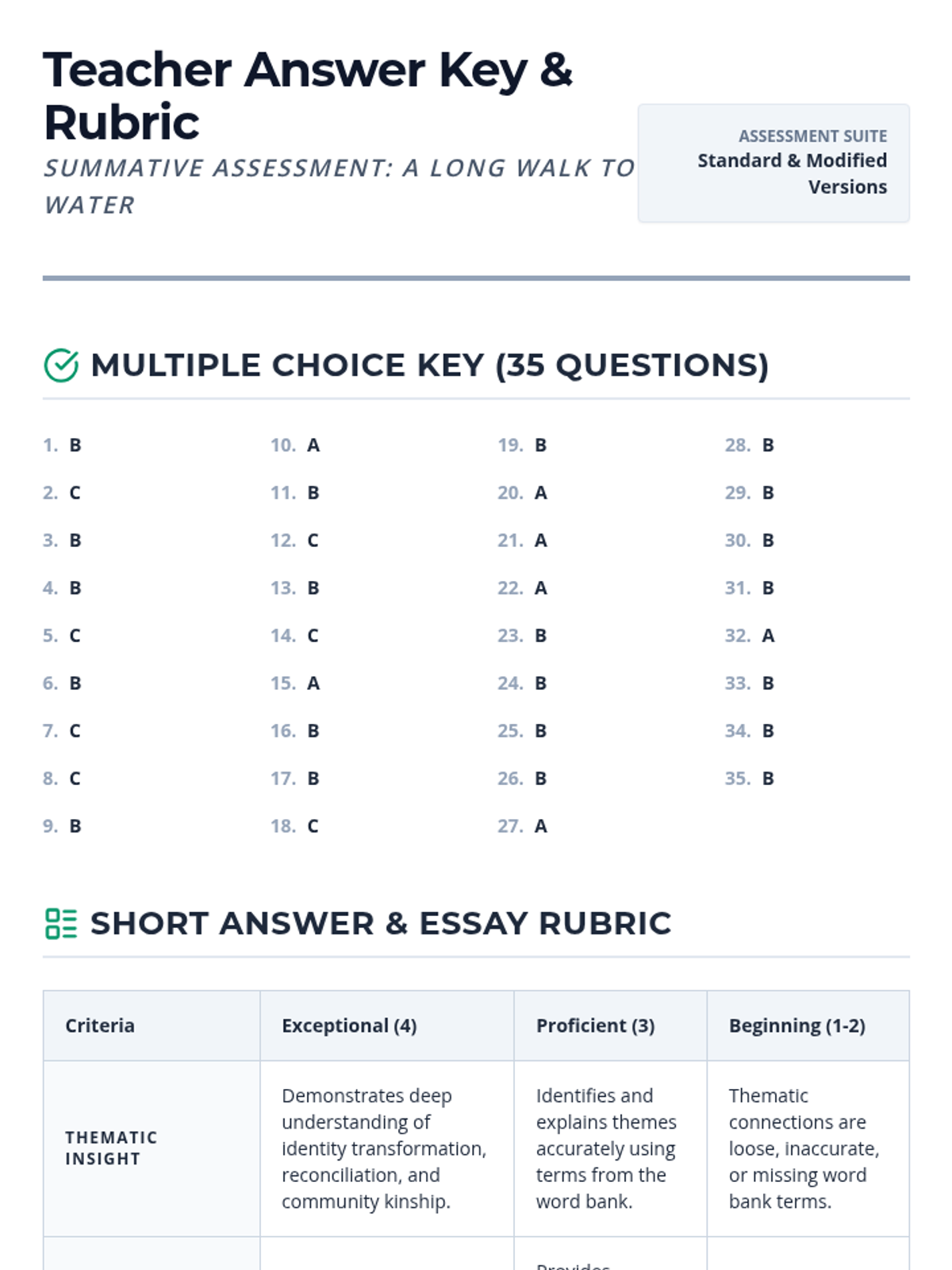
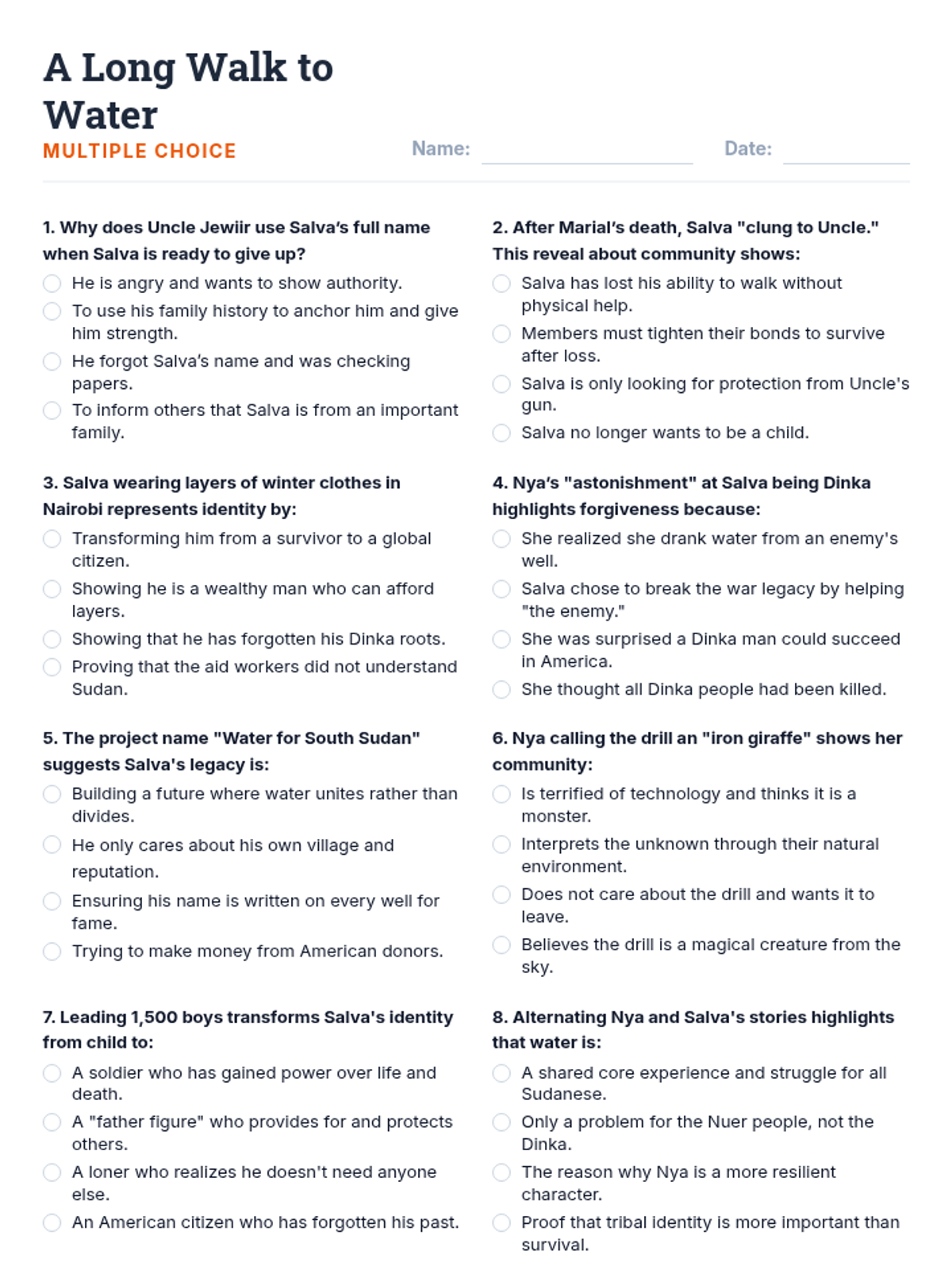
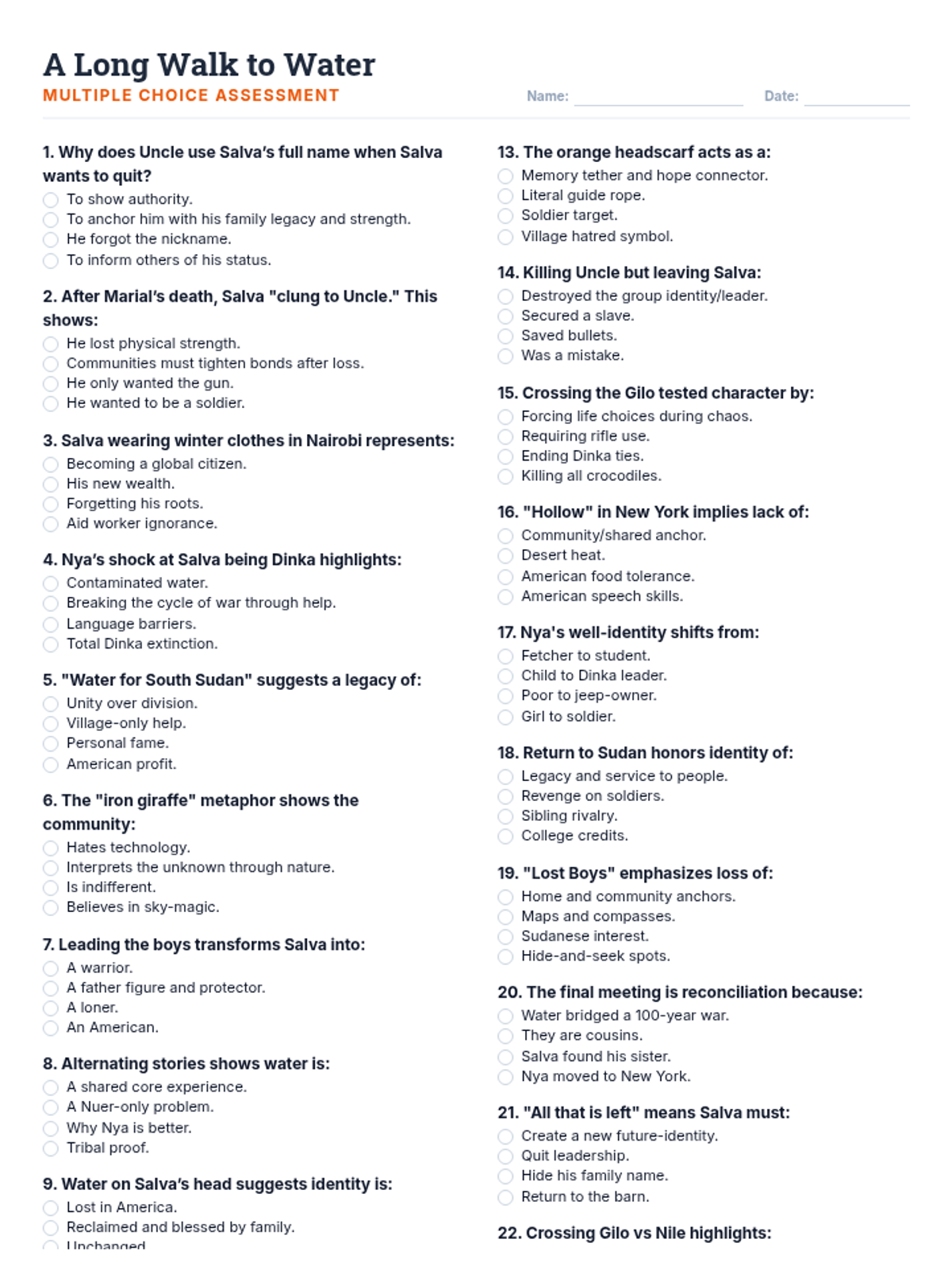
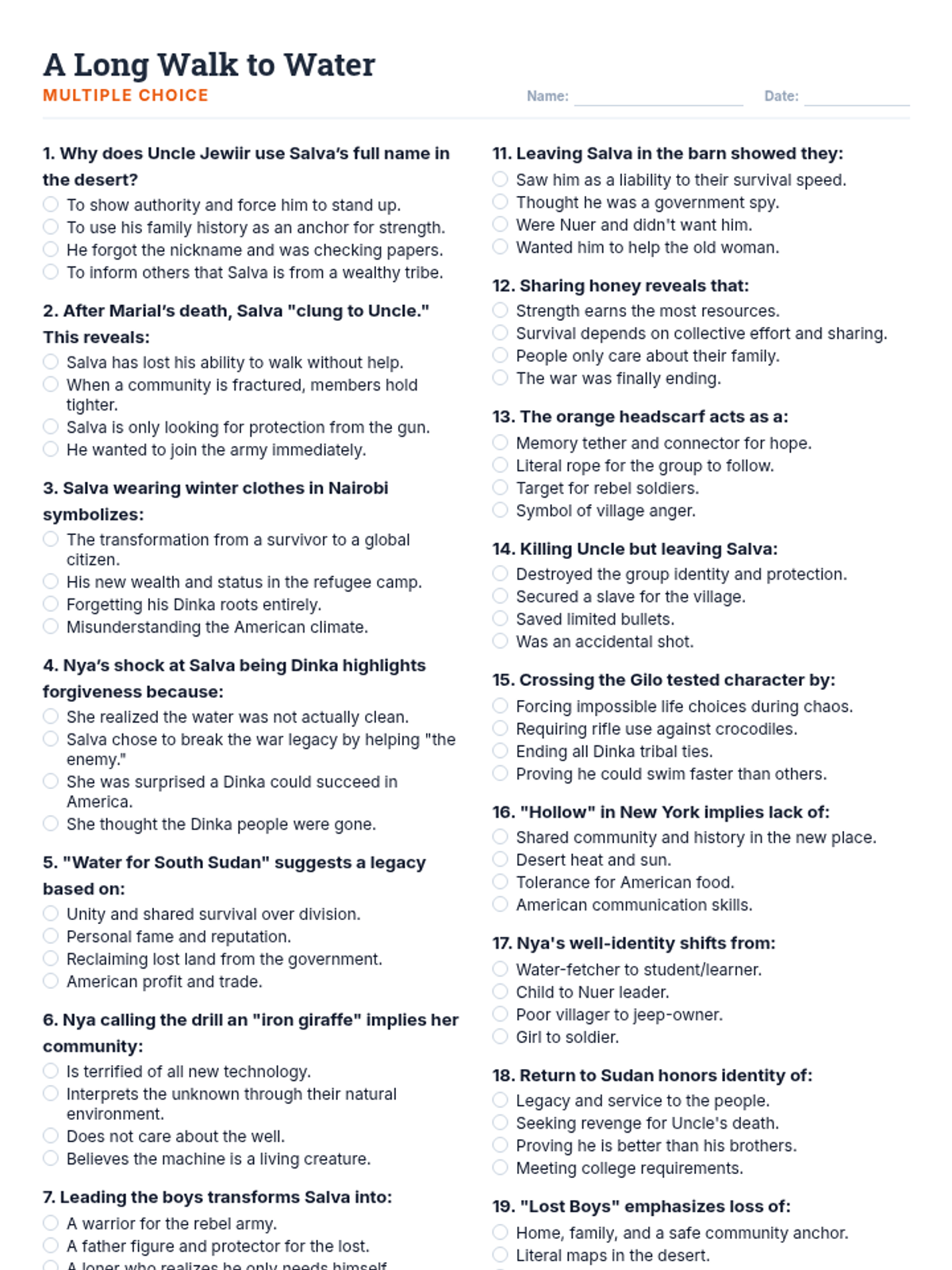
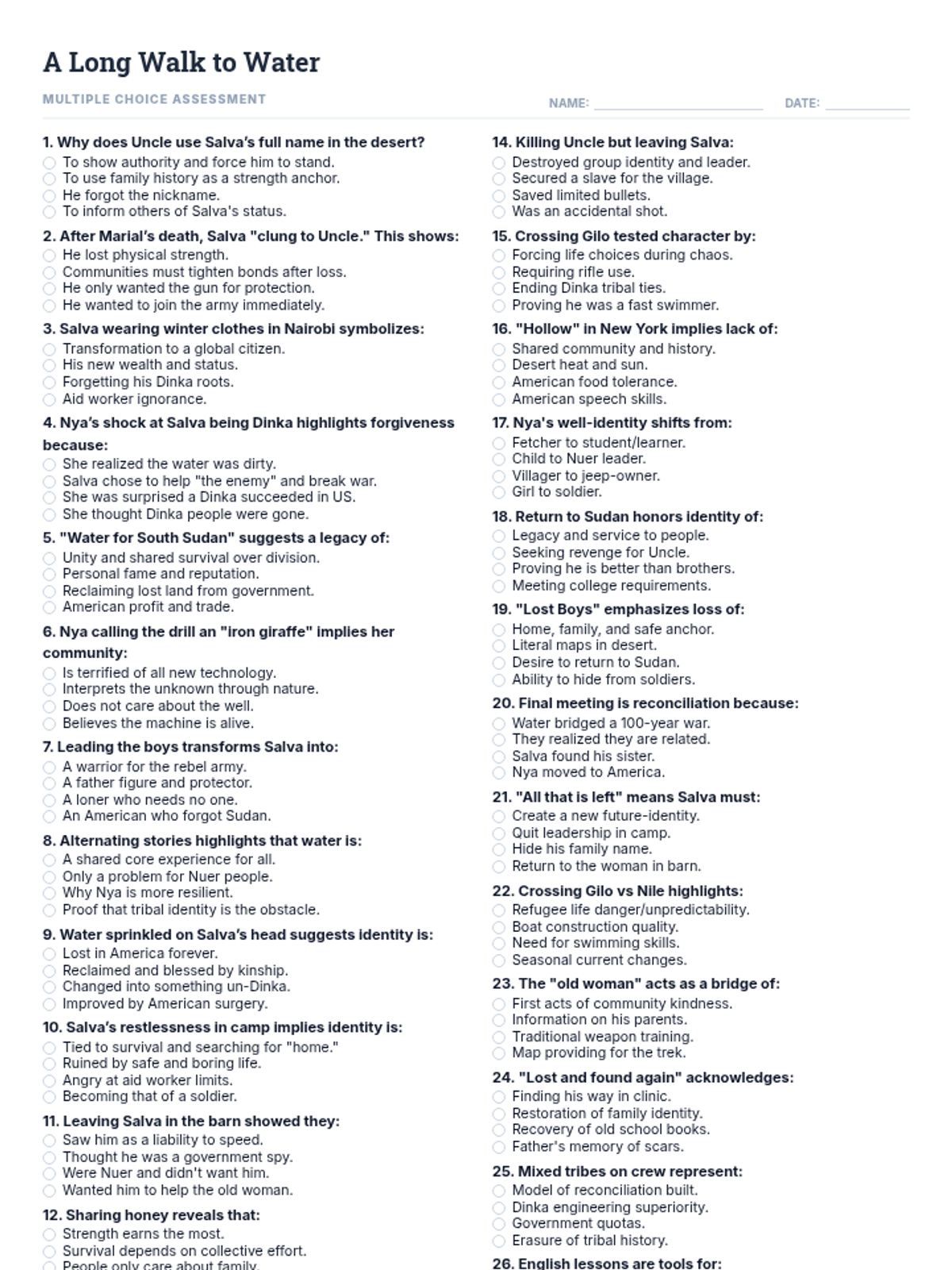
A comprehensive two-part summative assessment for the novel 'A Long Walk to Water', featuring multiple-choice questions, short responses, and a thematic comparison essay involving 'The Boy Who Harnessed the Wind' and 'MAUS'.
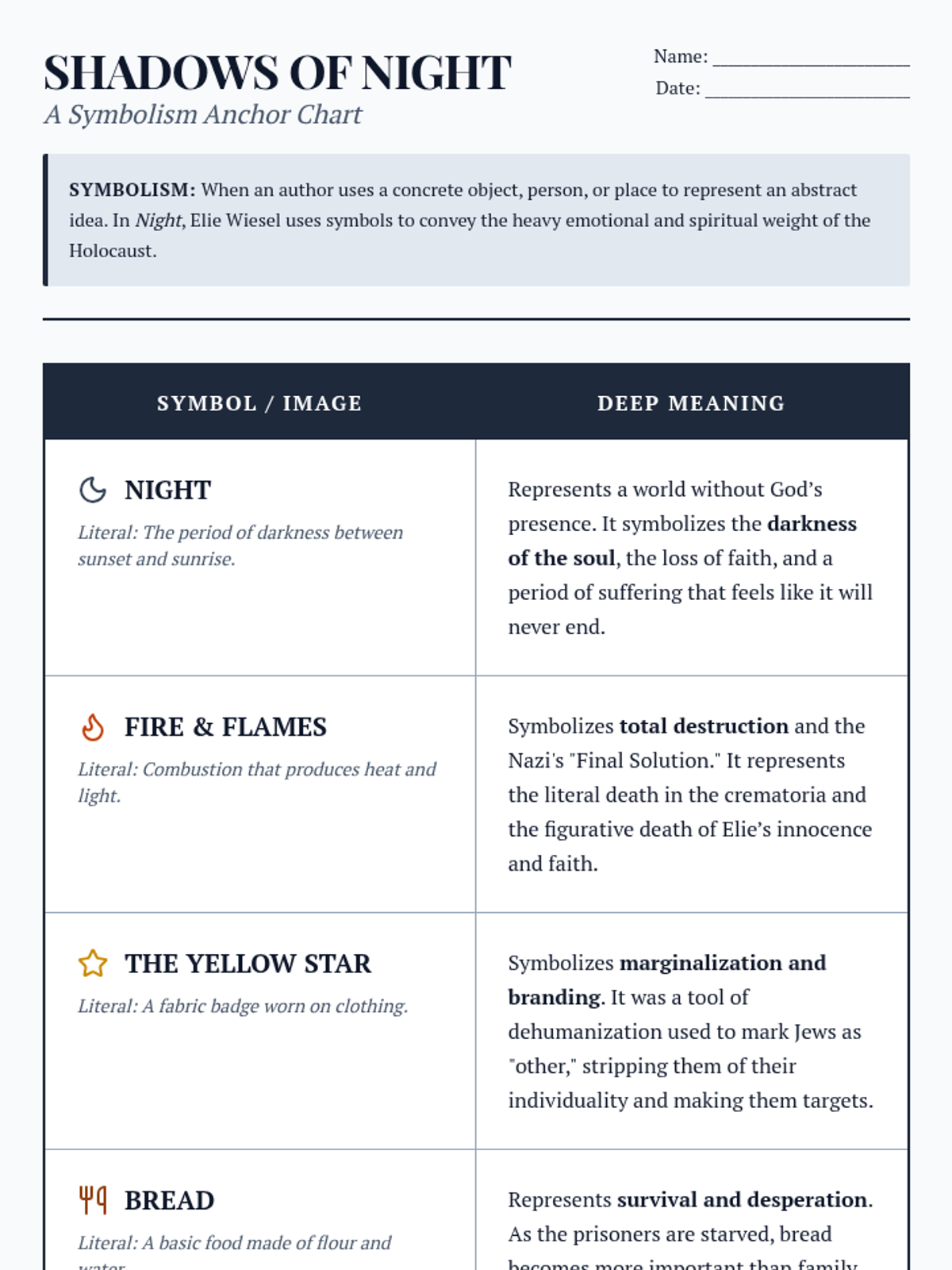
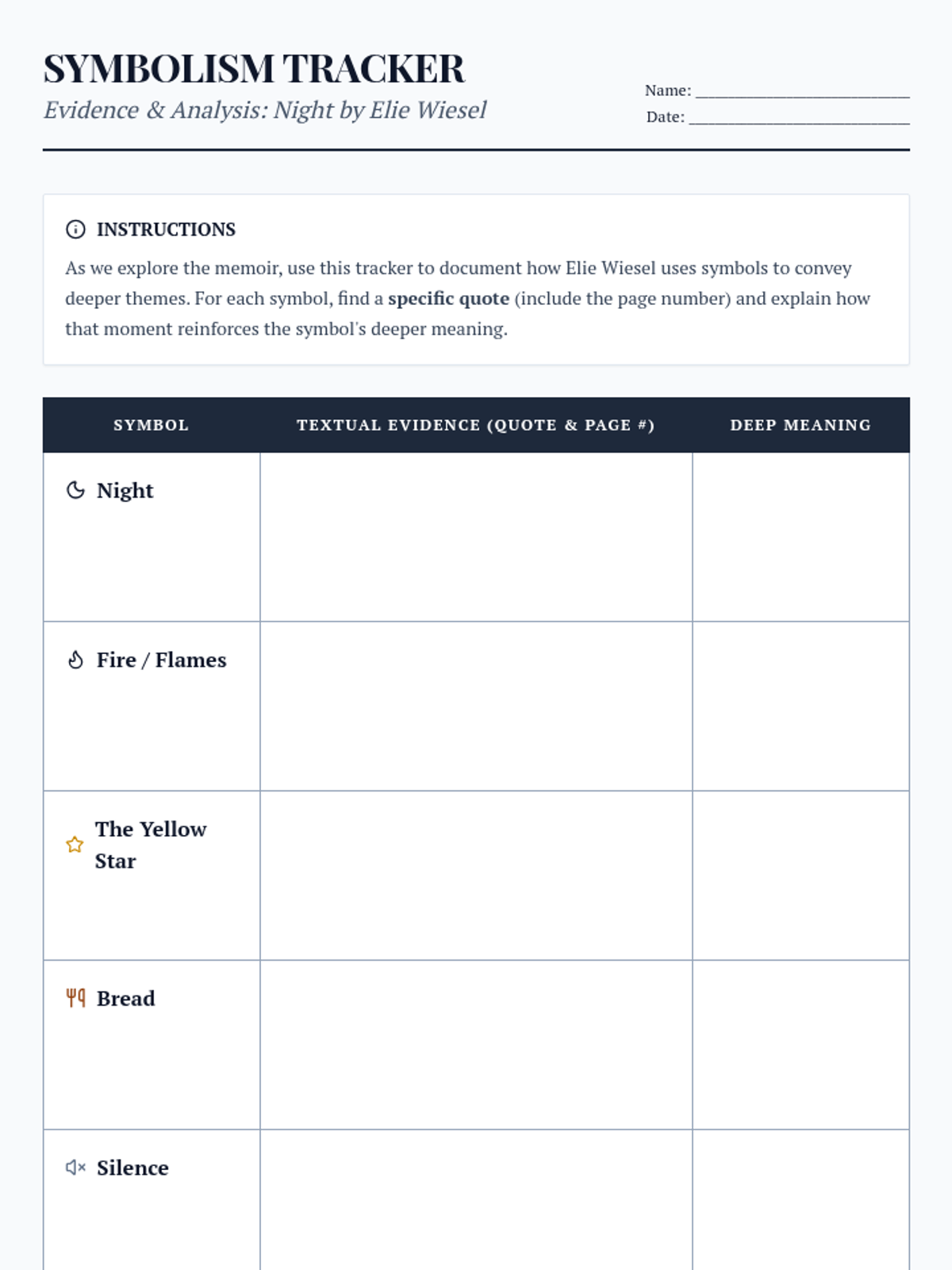
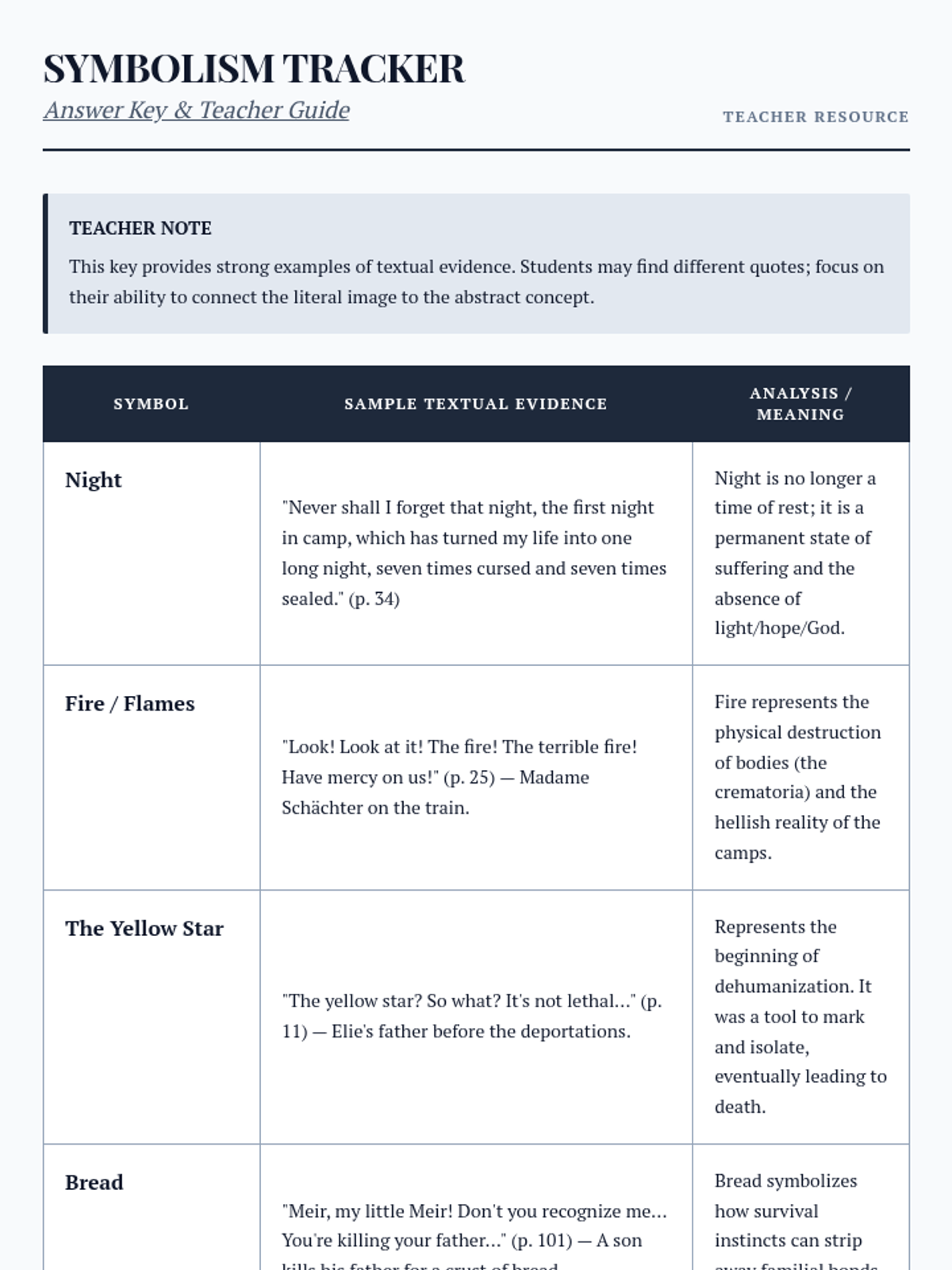
A deep dive into the profound symbolism of Elie Wiesel's 'Night'. Students examine how literal objects like night, fire, and the yellow star represent abstract concepts of faith, dehumanization, and survival through textual evidence and guided discussion.
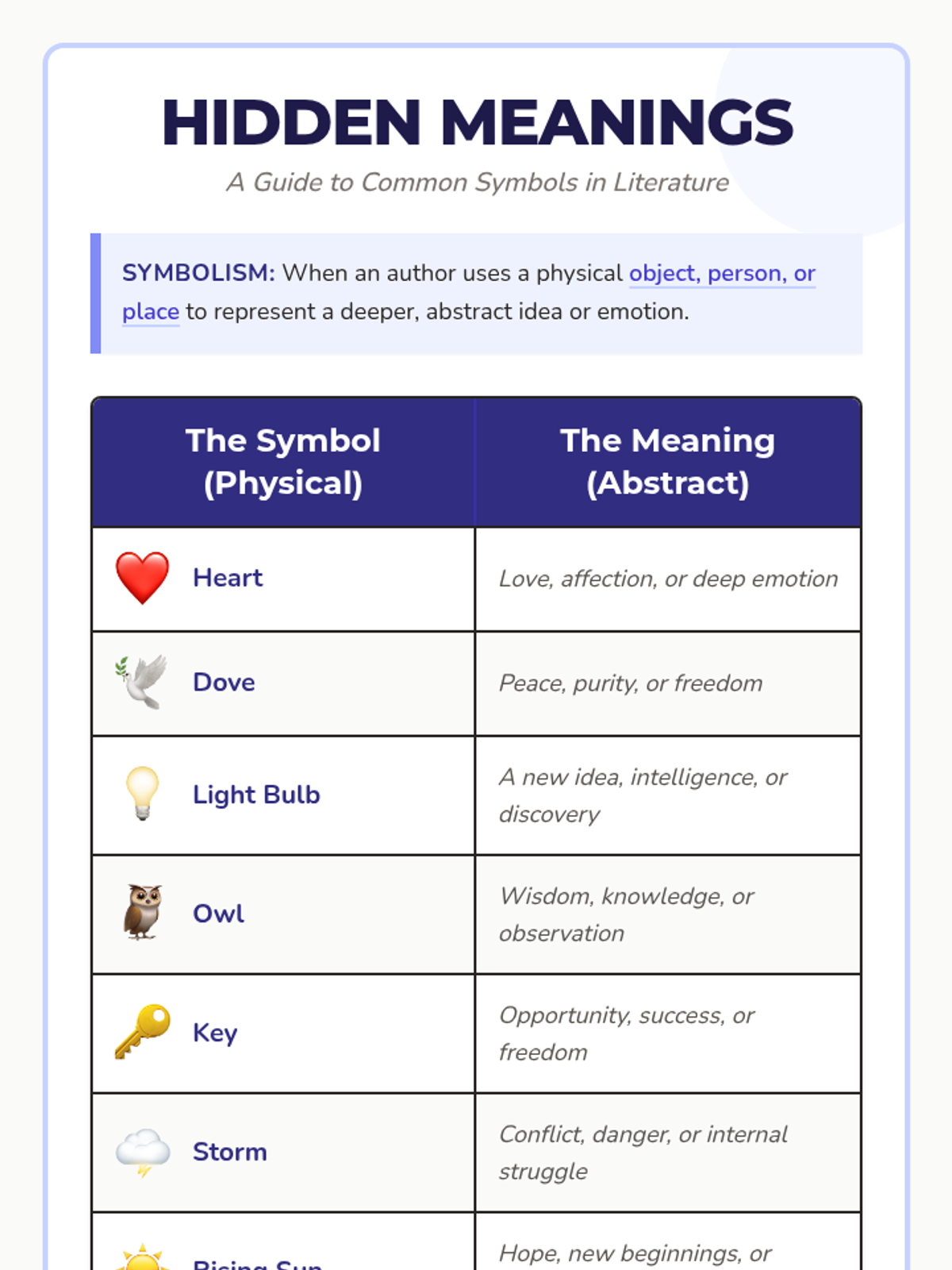
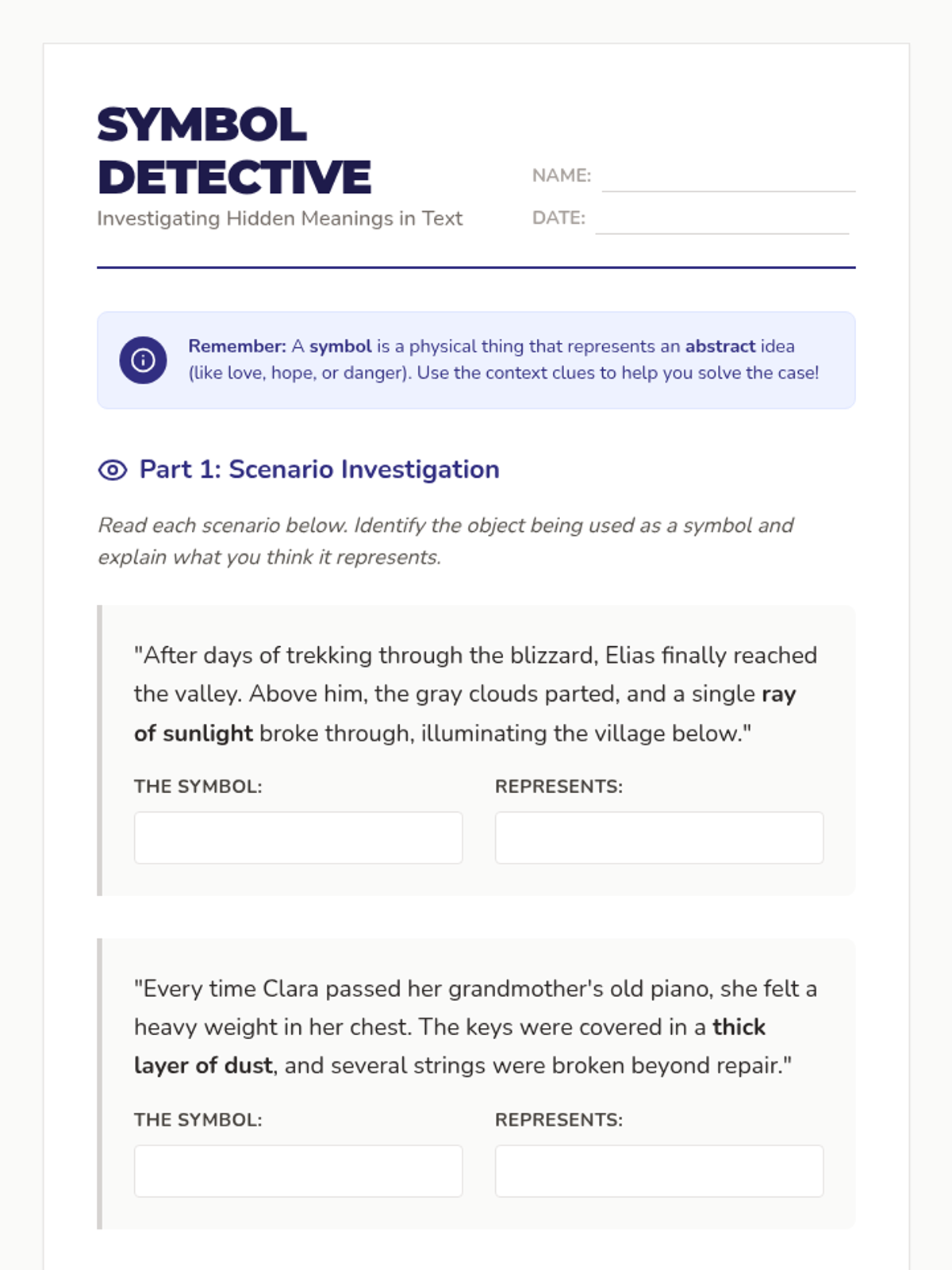
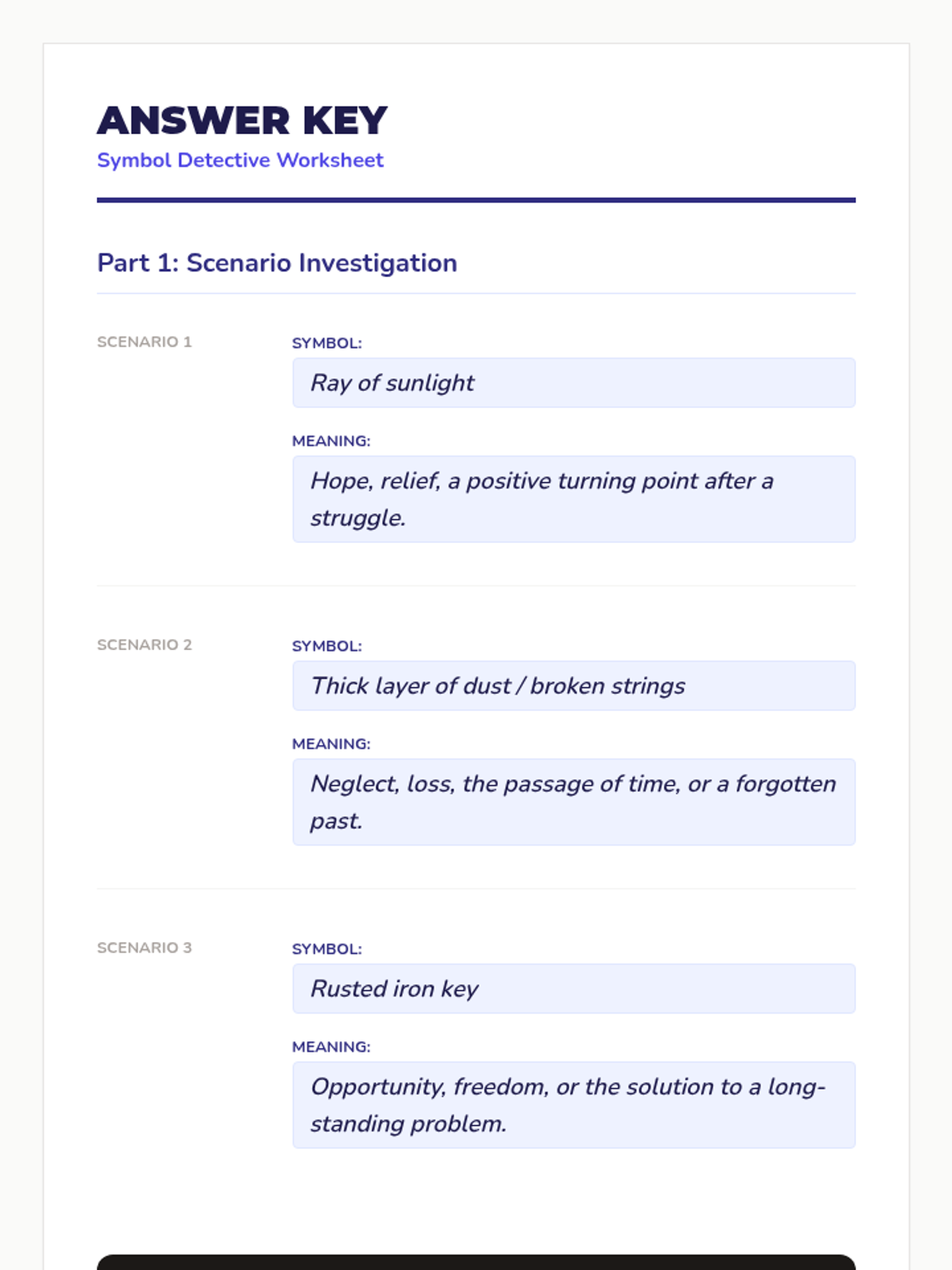
A lesson exploring how authors use everyday objects to represent deeper abstract ideas, helping students decode layers of meaning in literature.
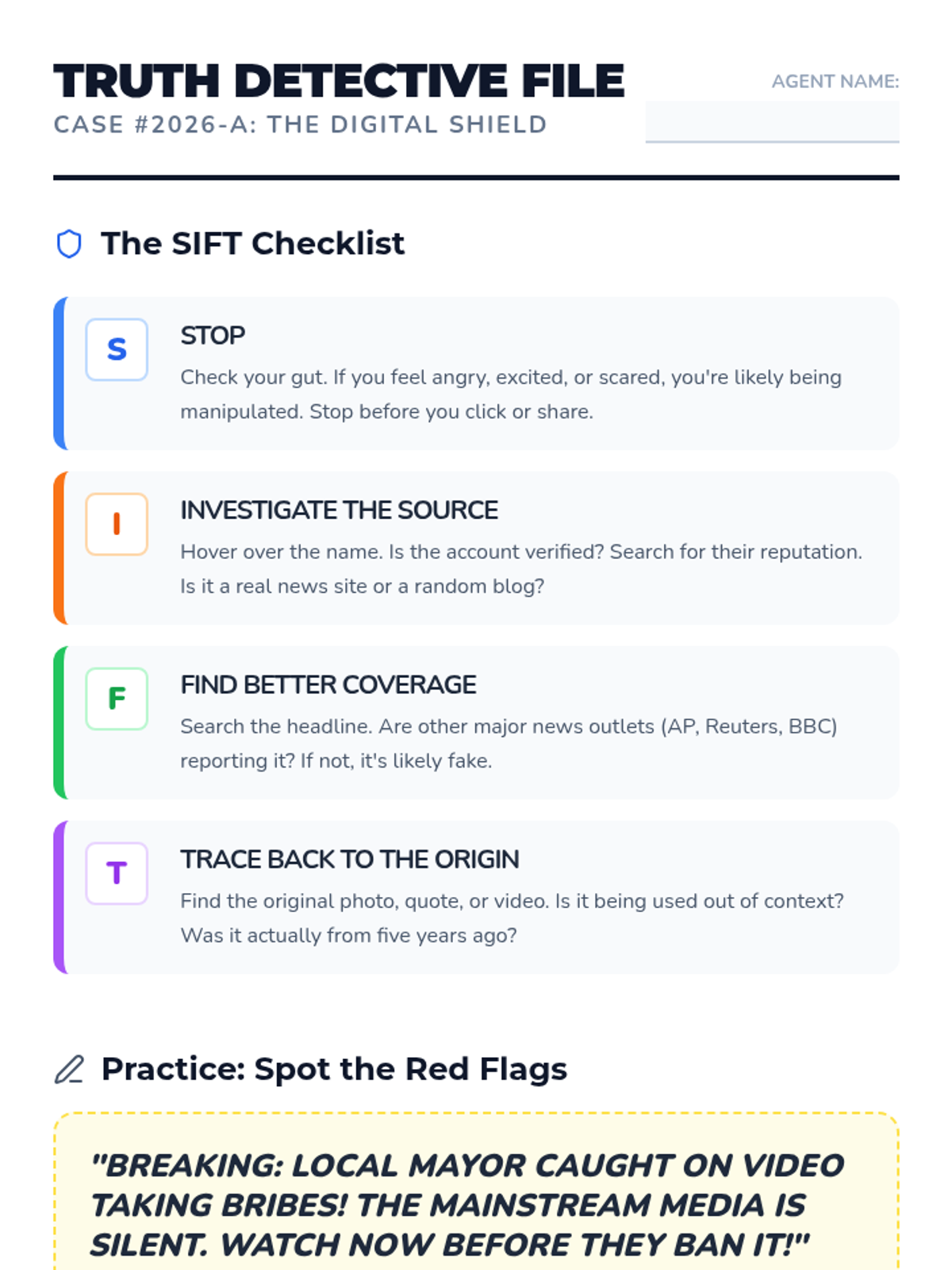
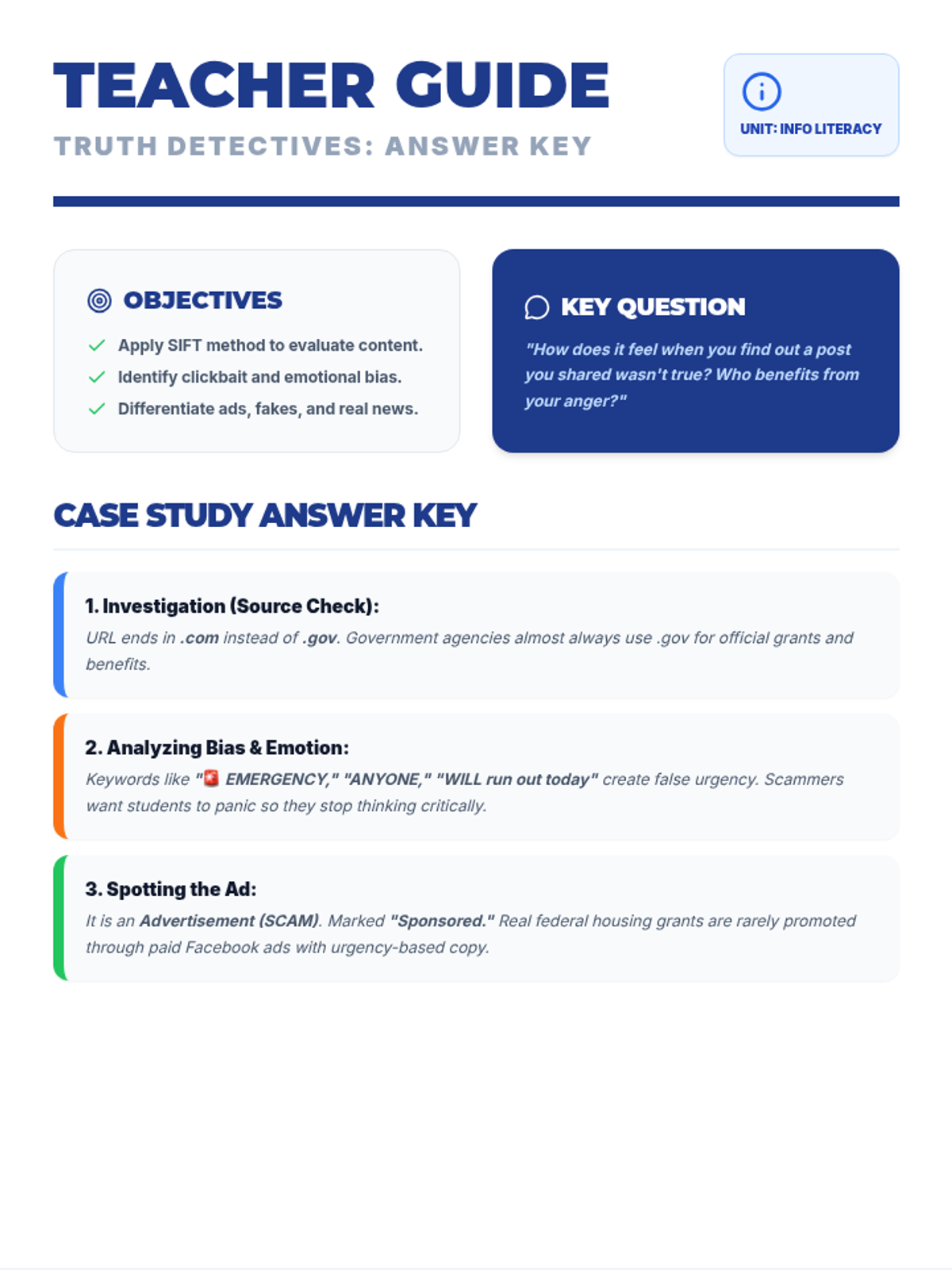
A lesson designed to empower high school students with the tools to navigate digital misinformation, focusing on the SIFT method, identifying emotional bias, and spotting sponsored content.
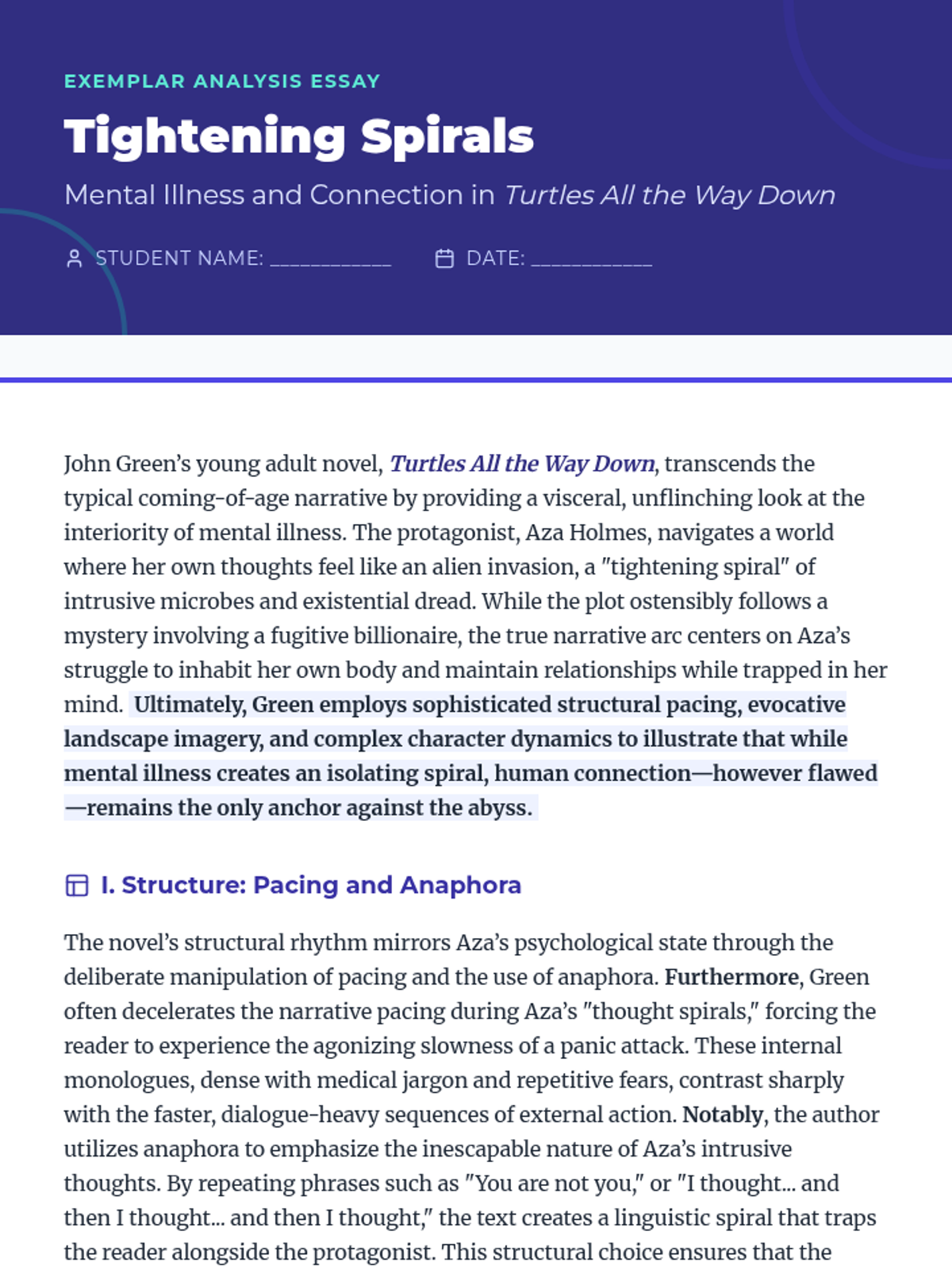
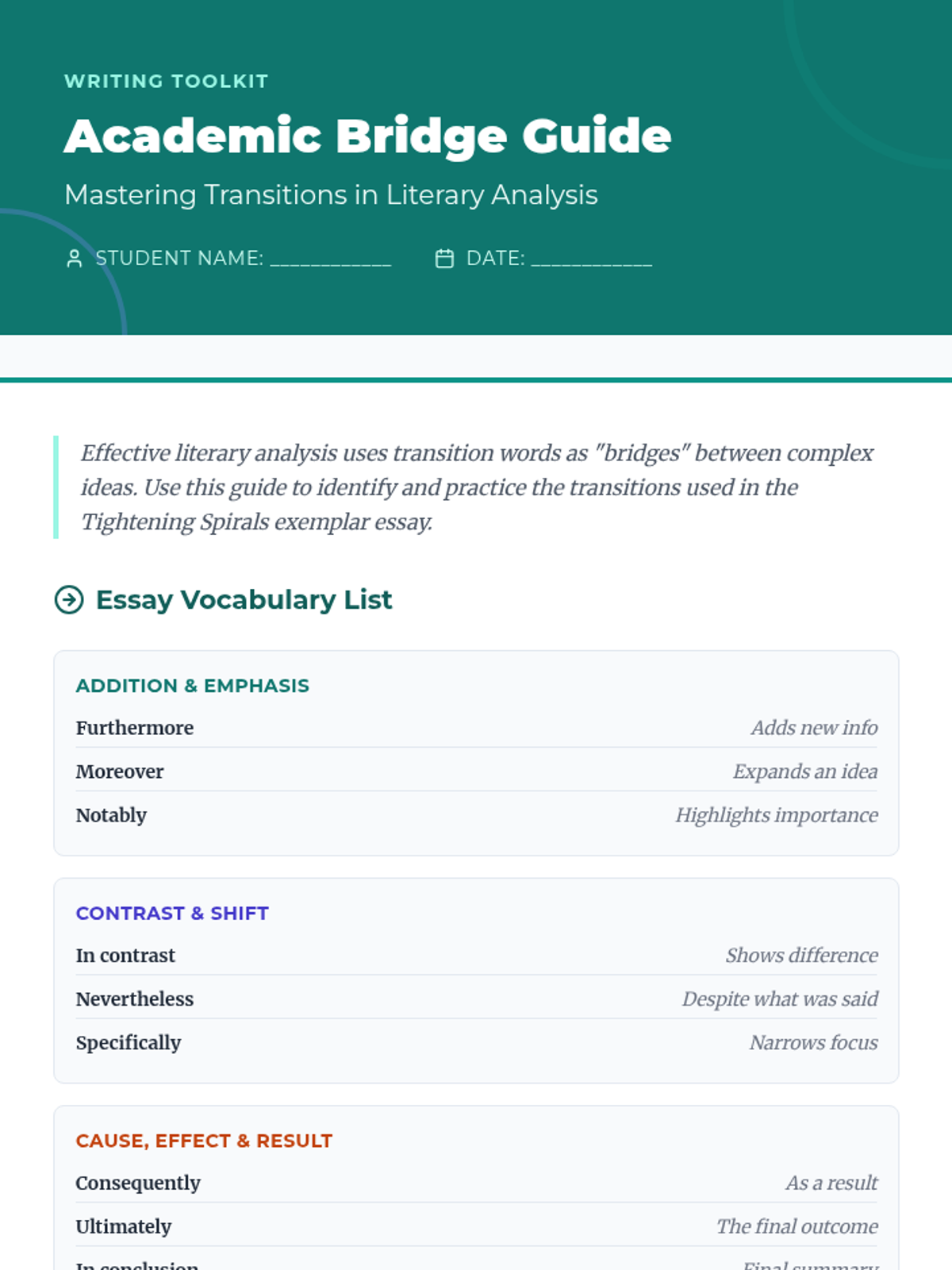
A comprehensive exemplar analysis essay of John Green's 'Turtles All the Way Down' focusing on text structure, literary devices, and character dynamics. Includes a targeted guide to academic transition words for 10th-grade writers.
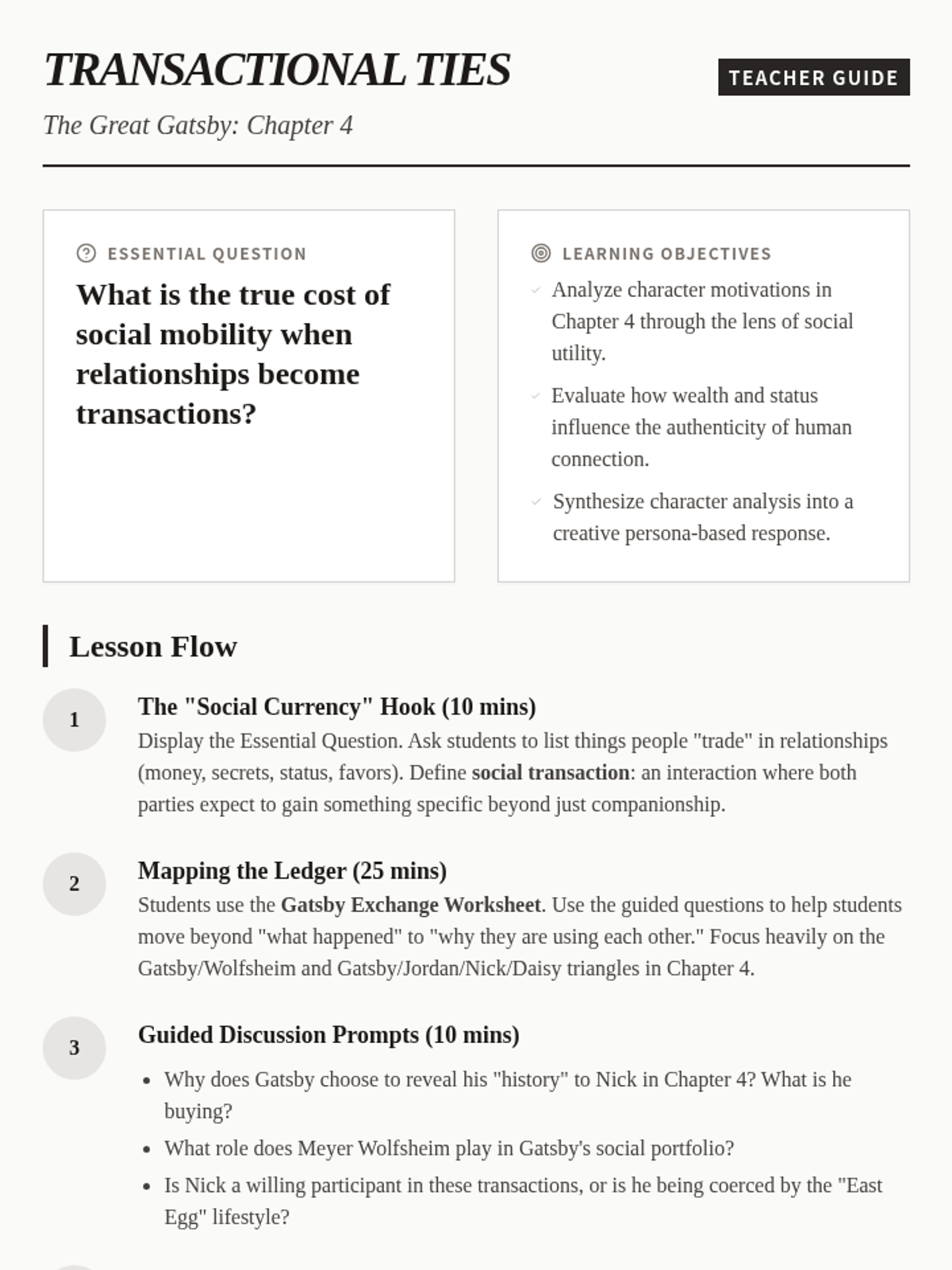
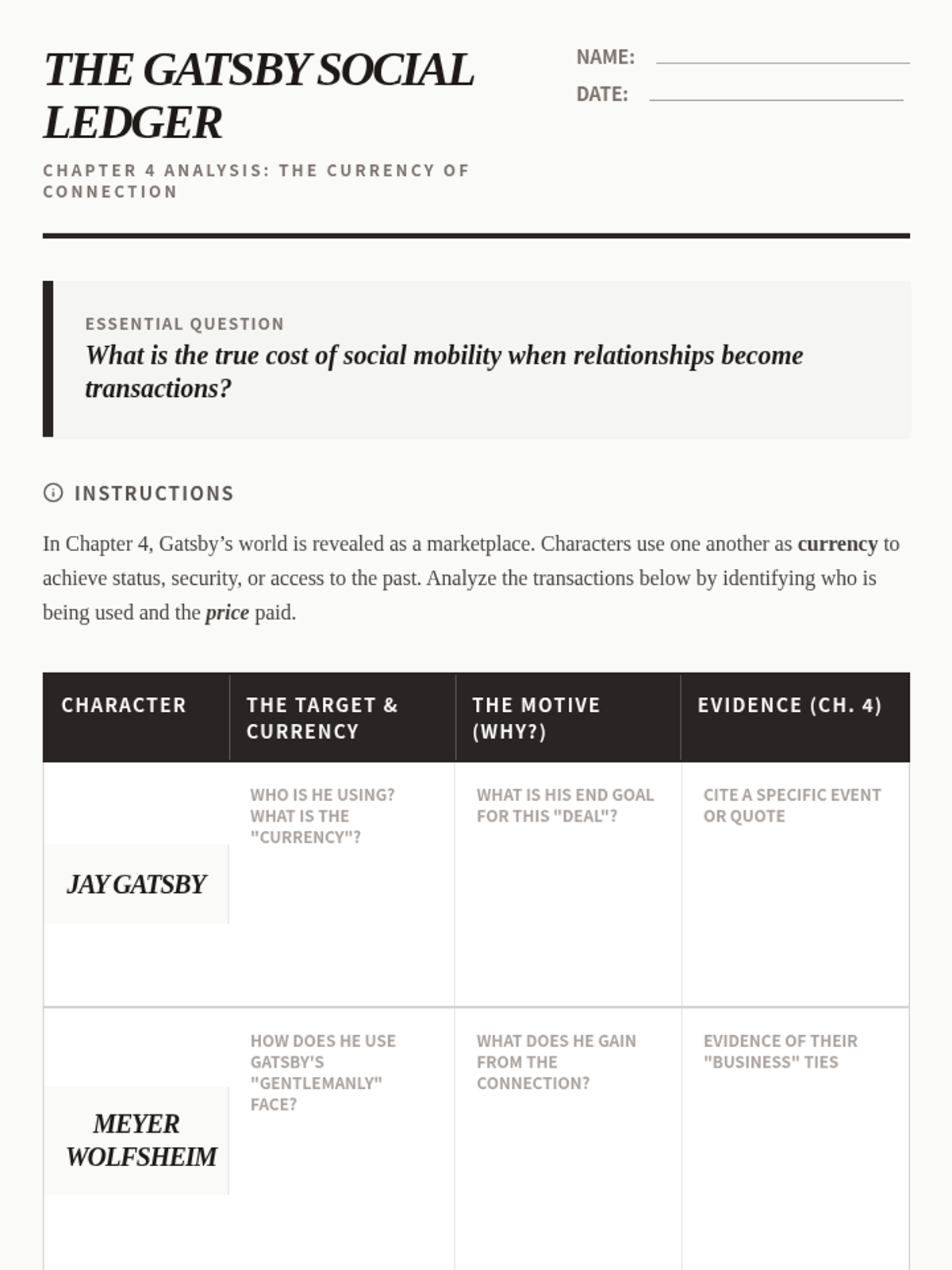
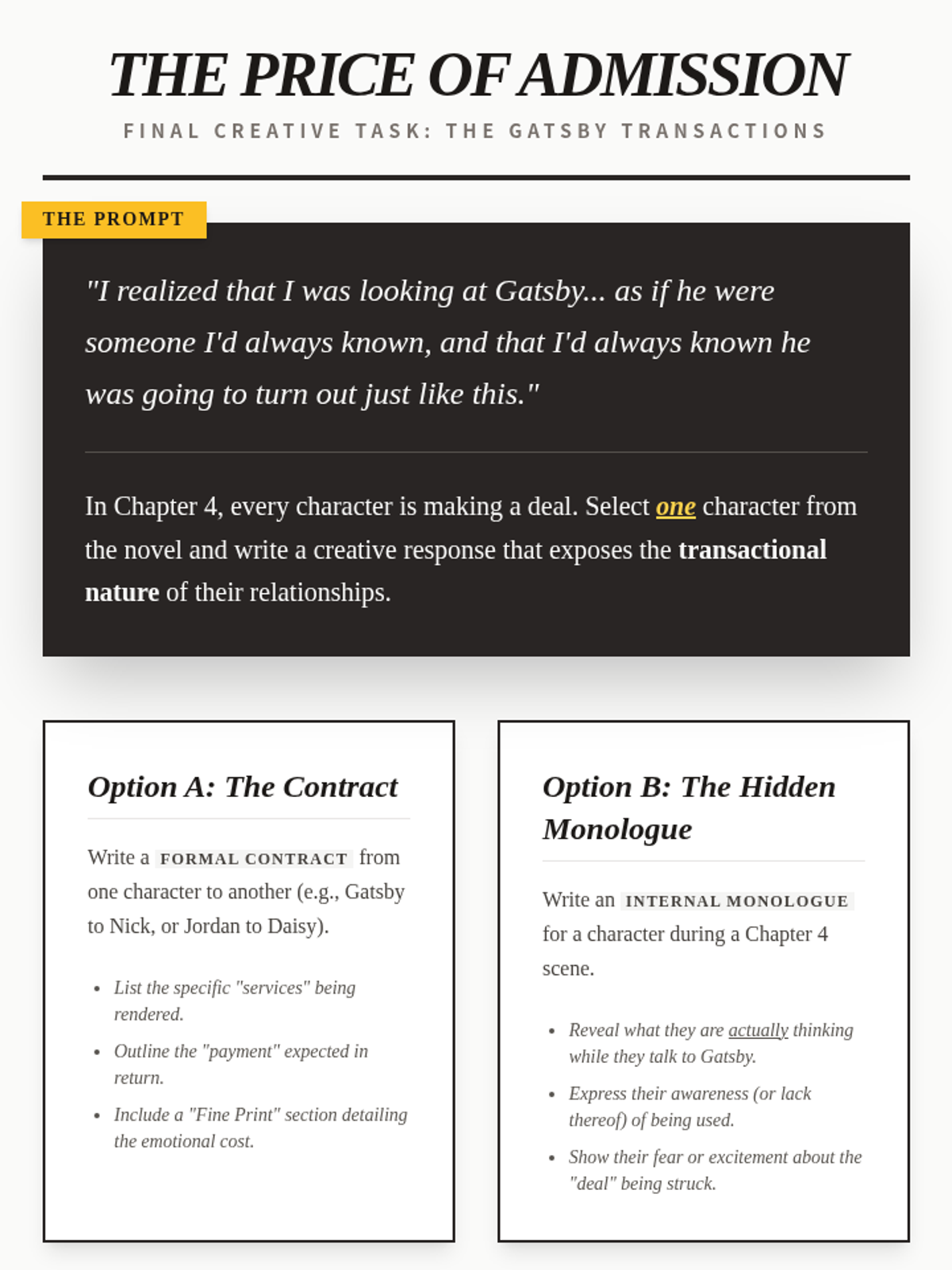
Explore the complex, self-serving relationships in Chapter 4 of The Great Gatsby. Students analyze characters through the lens of social transactions and complete a creative response on character motivations and the 'cost' of their social deals.
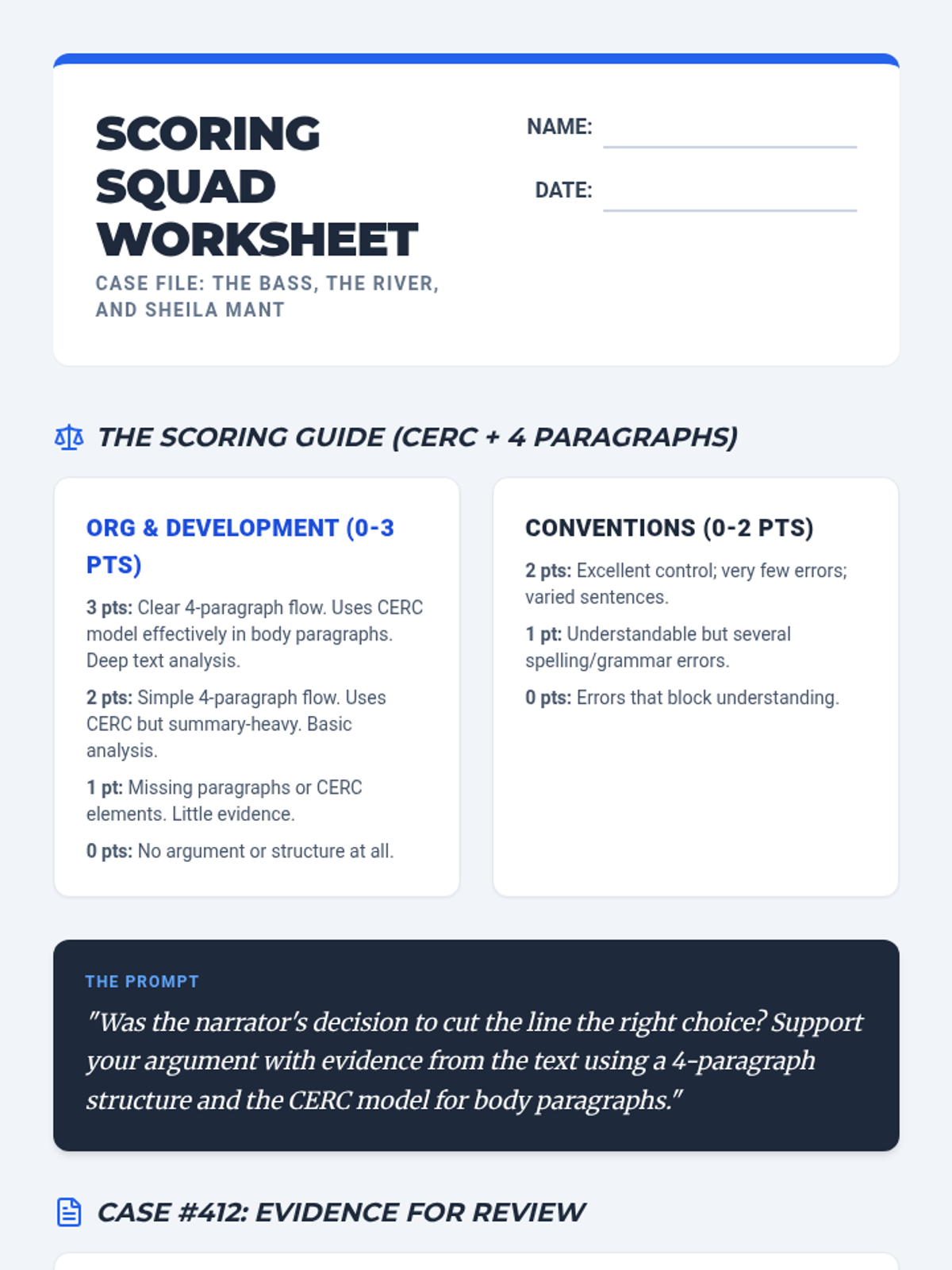
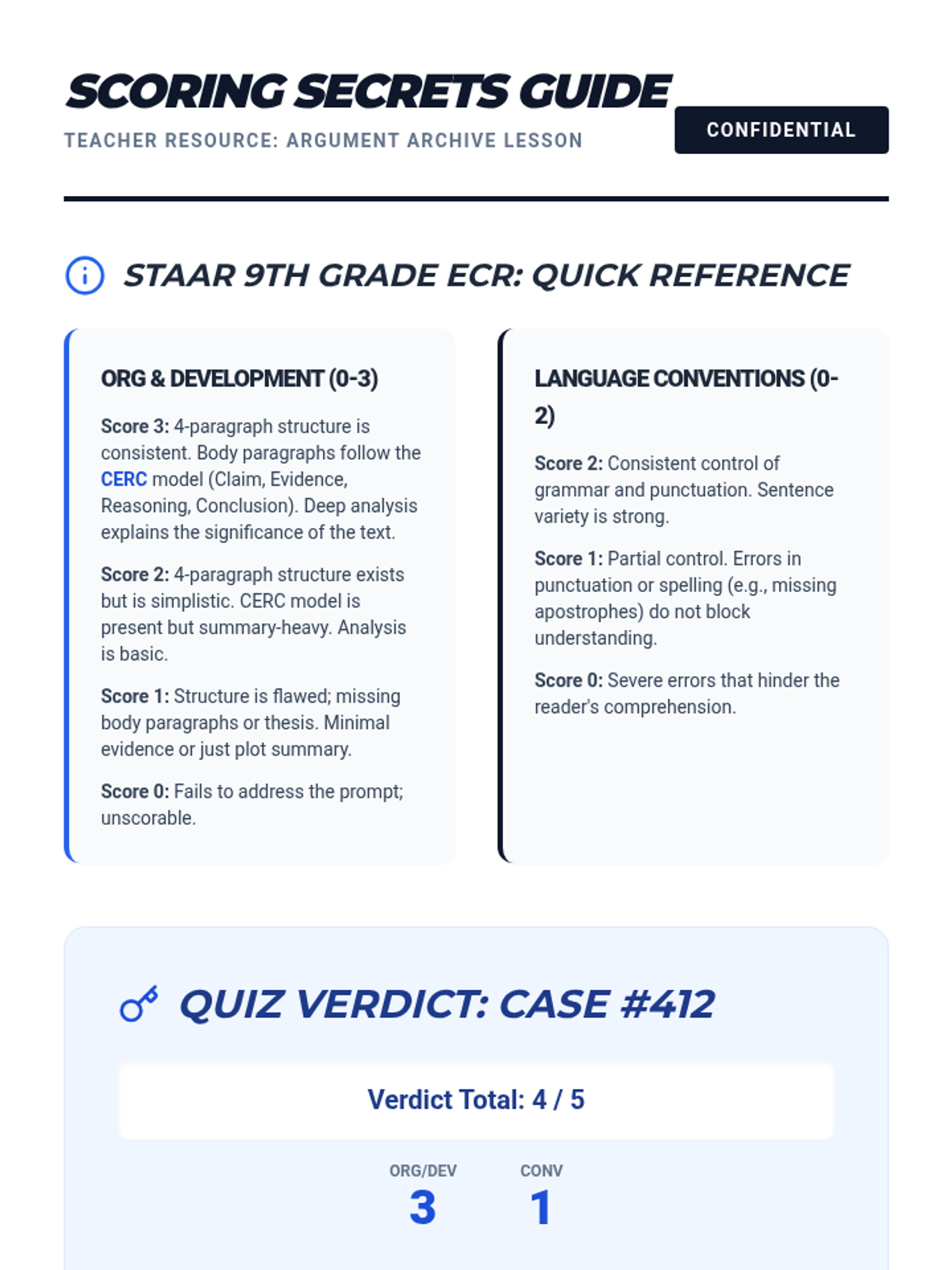
This lesson breaks down the 5-point STAAR English I Argumentative ECR rubric using 'The Bass, the River, and Sheila Mant' as a central text. Students analyze graded examples and practice scoring a new essay to master the criteria for evidence, organization, and conventions.
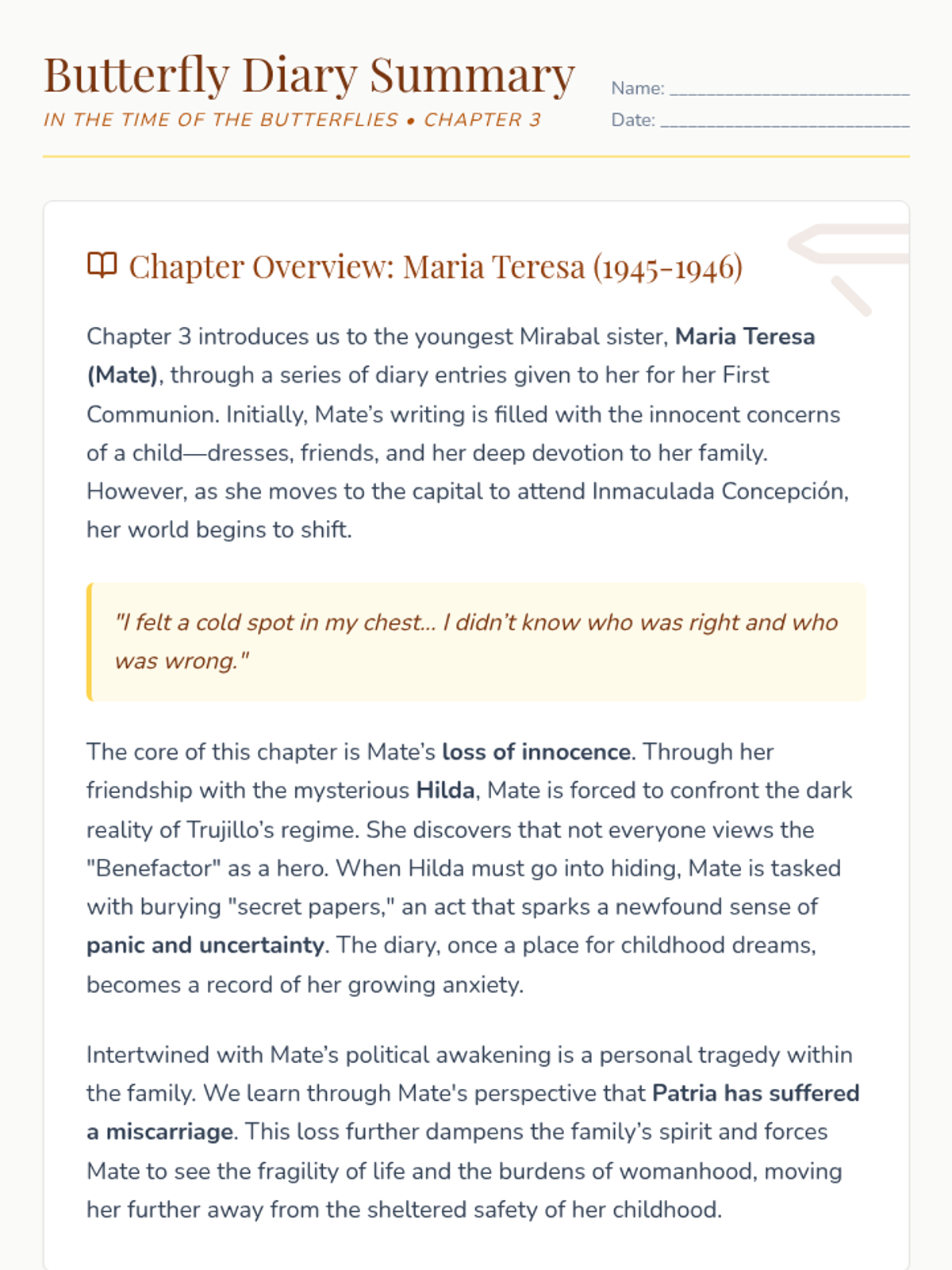
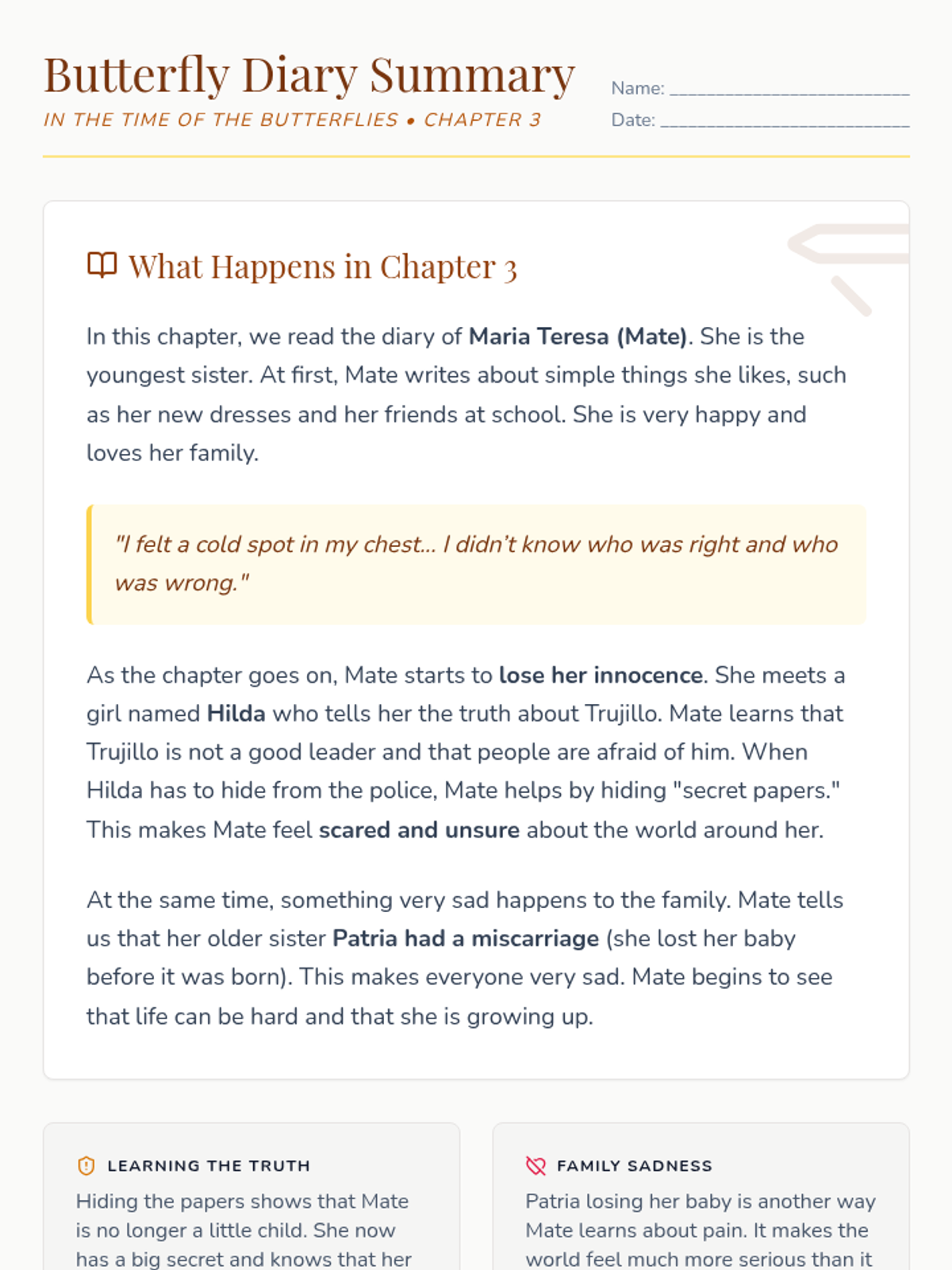
A focused study of Chapter 3 of Julia Alvarez's 'In the Time of the Butterflies', focusing on Maria Teresa's loss of innocence and her first glimpses into the political reality of Trujillo's Dominican Republic.
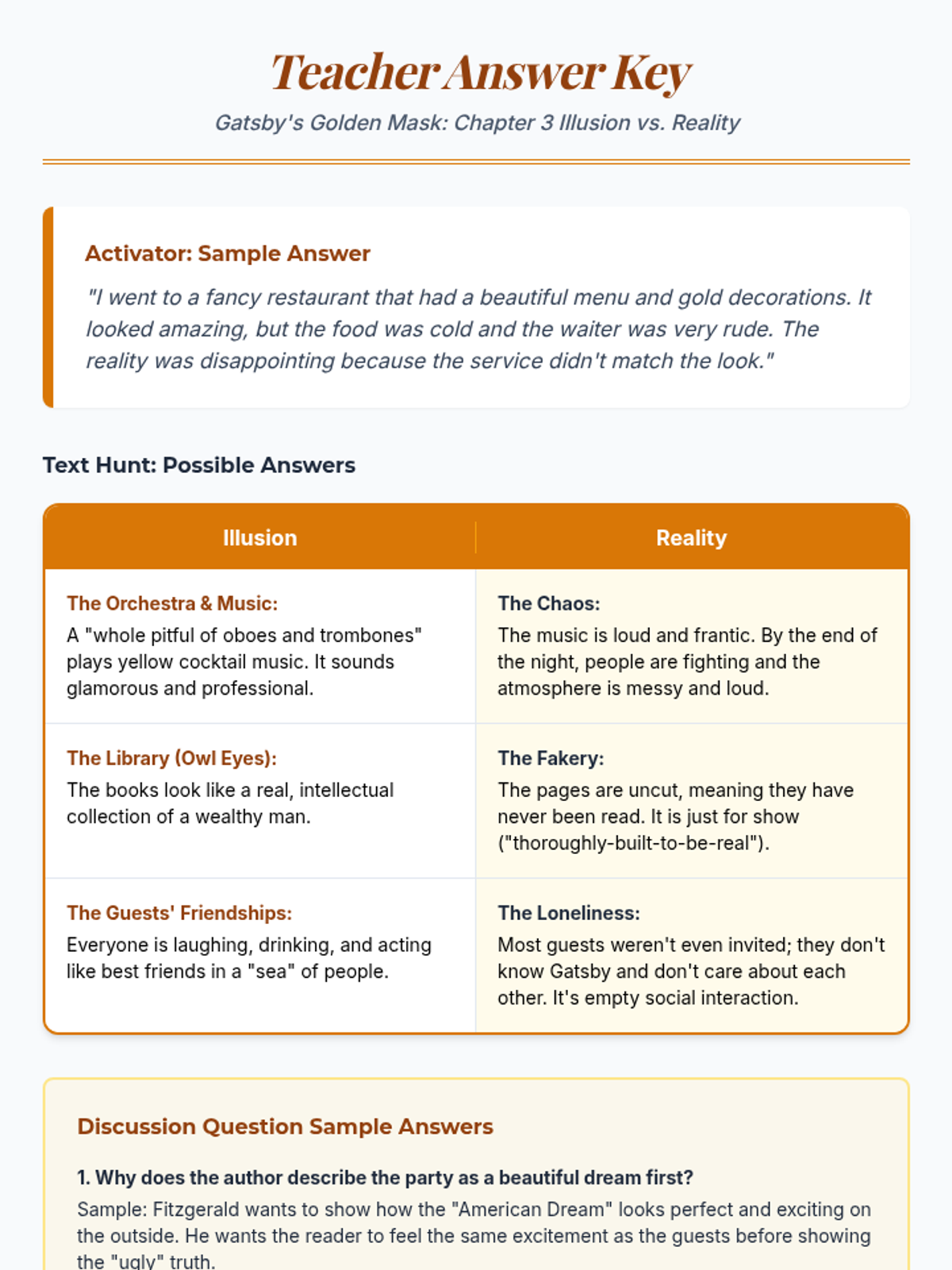
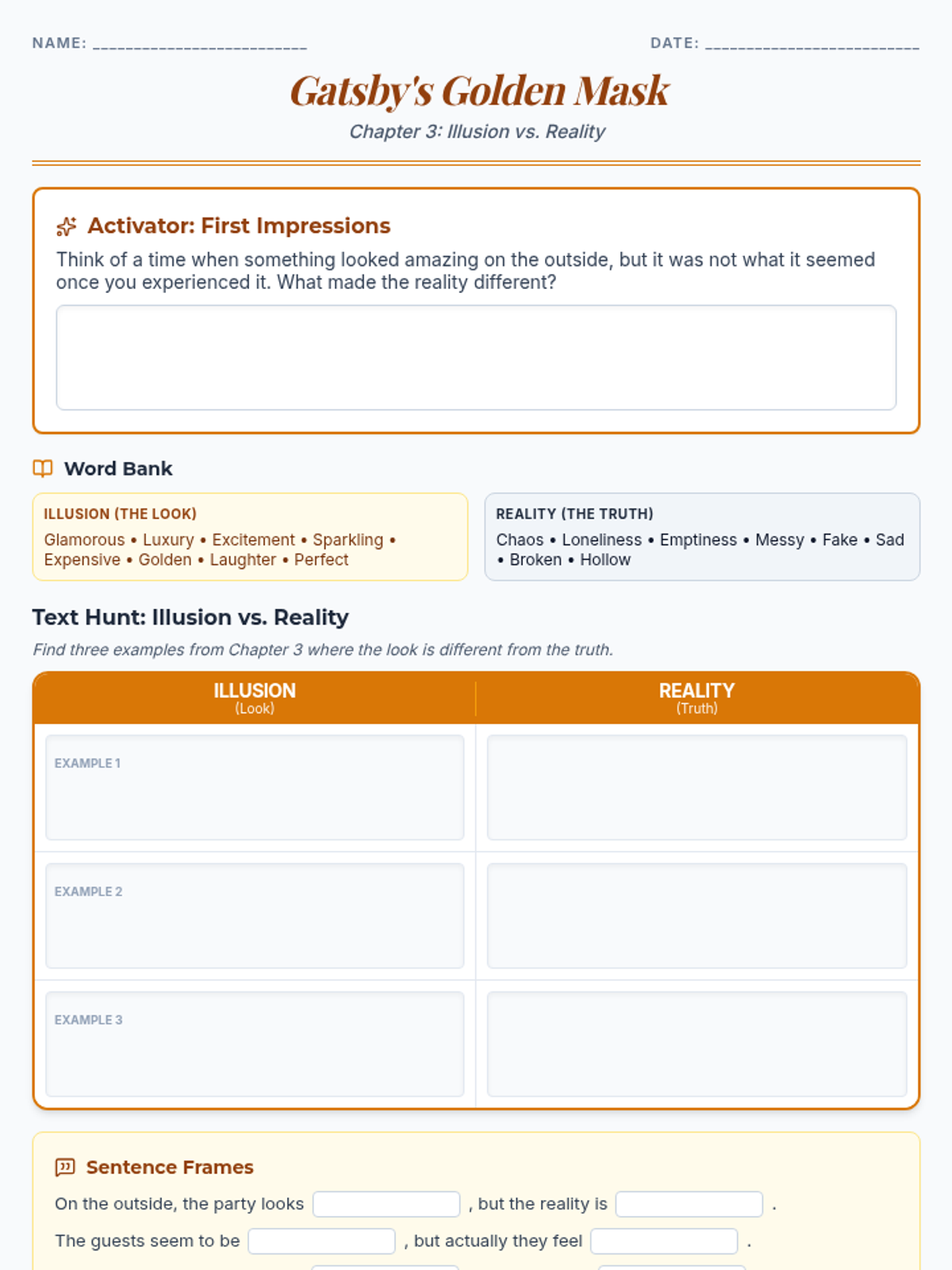
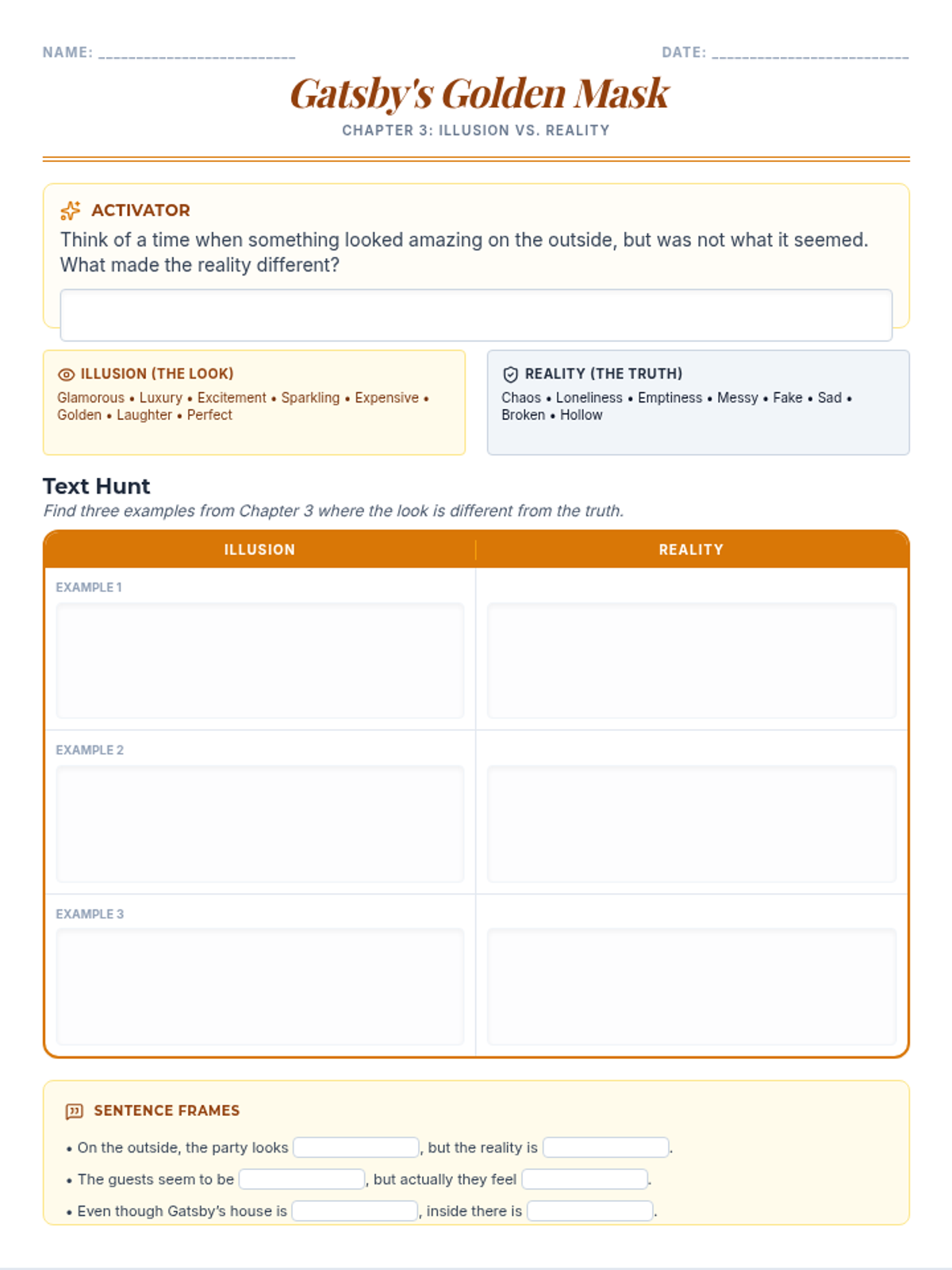
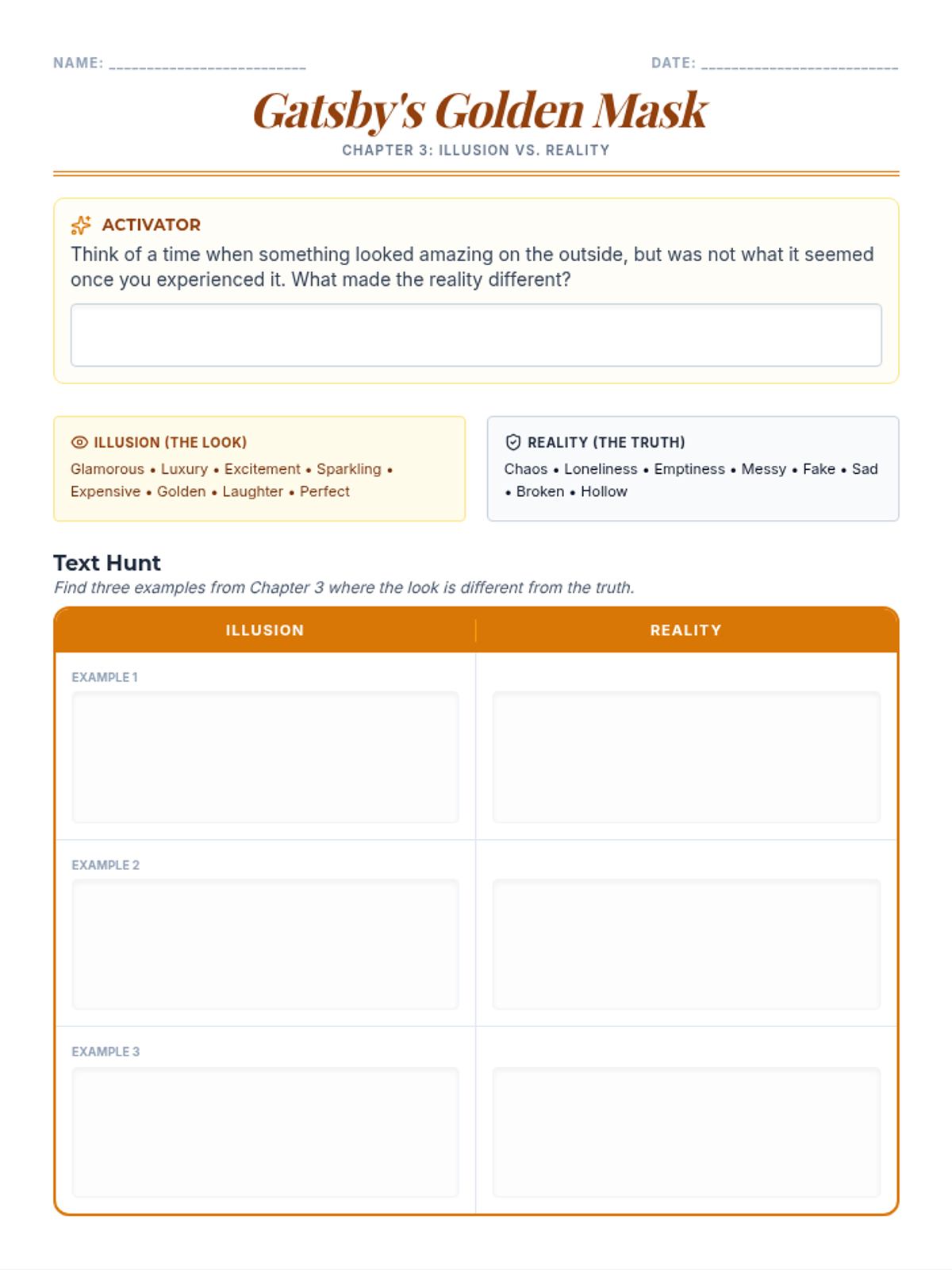
A lesson exploring the contrast between the glittering surface of Gatsby's parties and the underlying reality of the 1920s, designed for Level 2 English Language Learners.
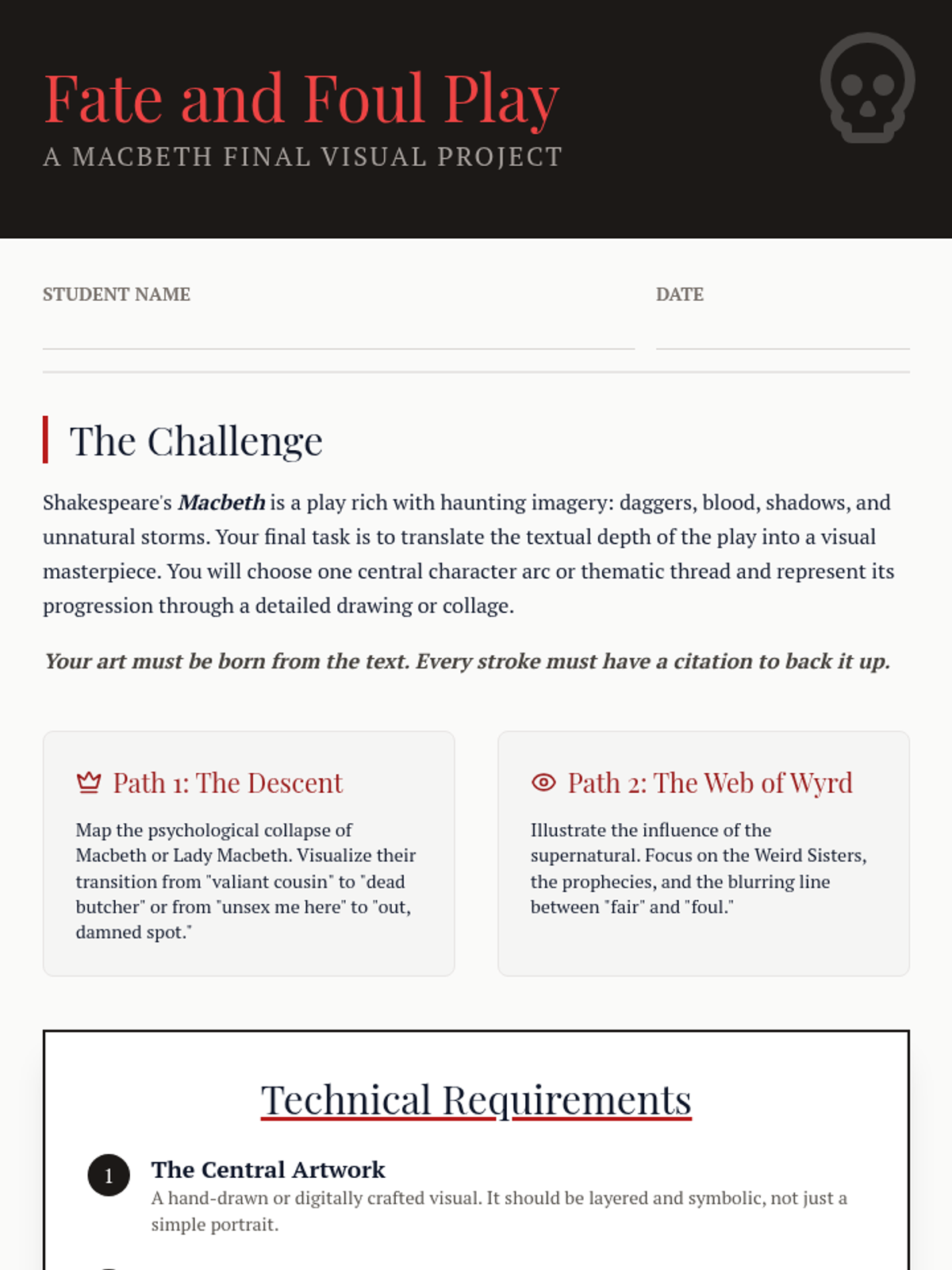
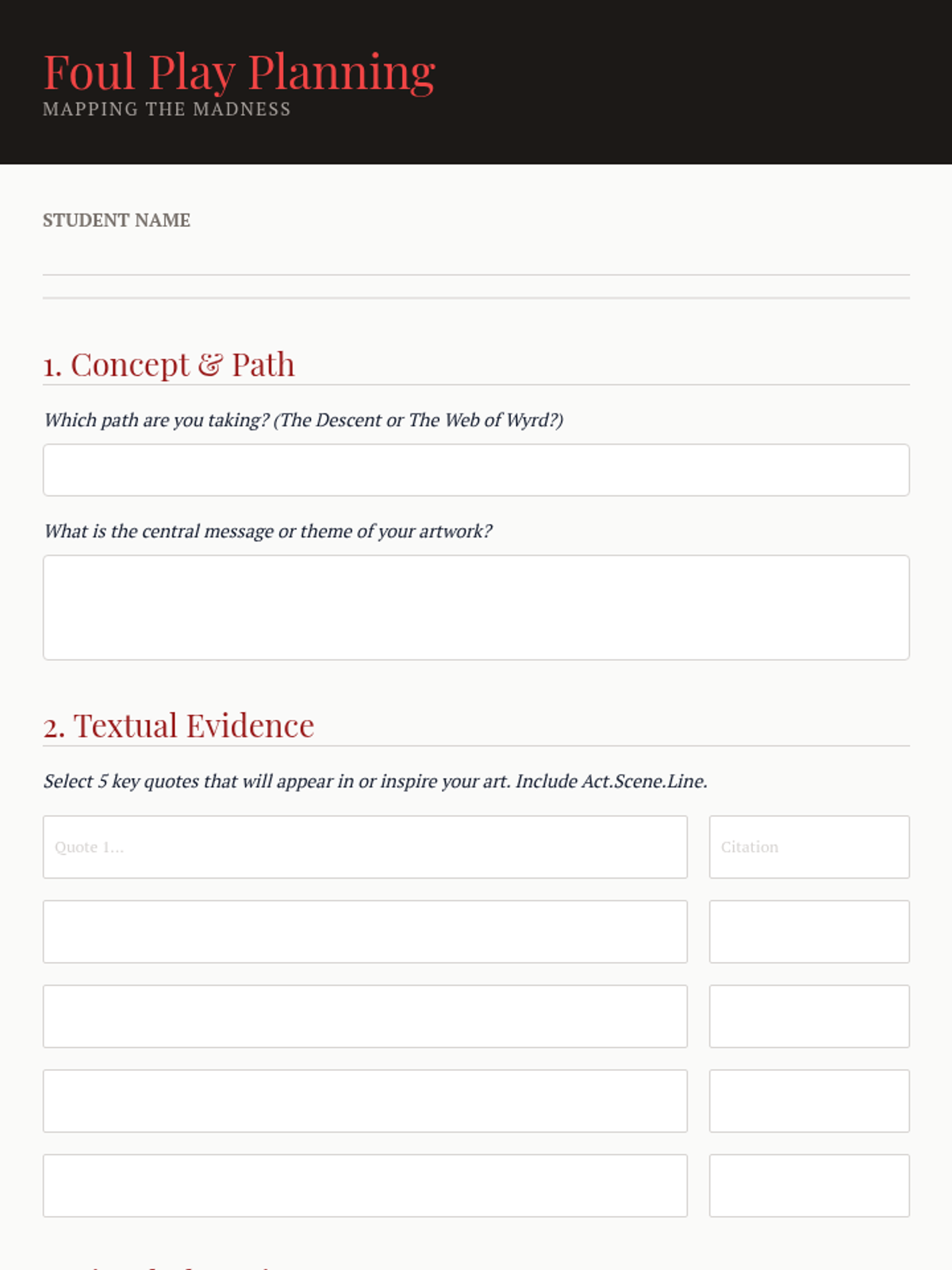
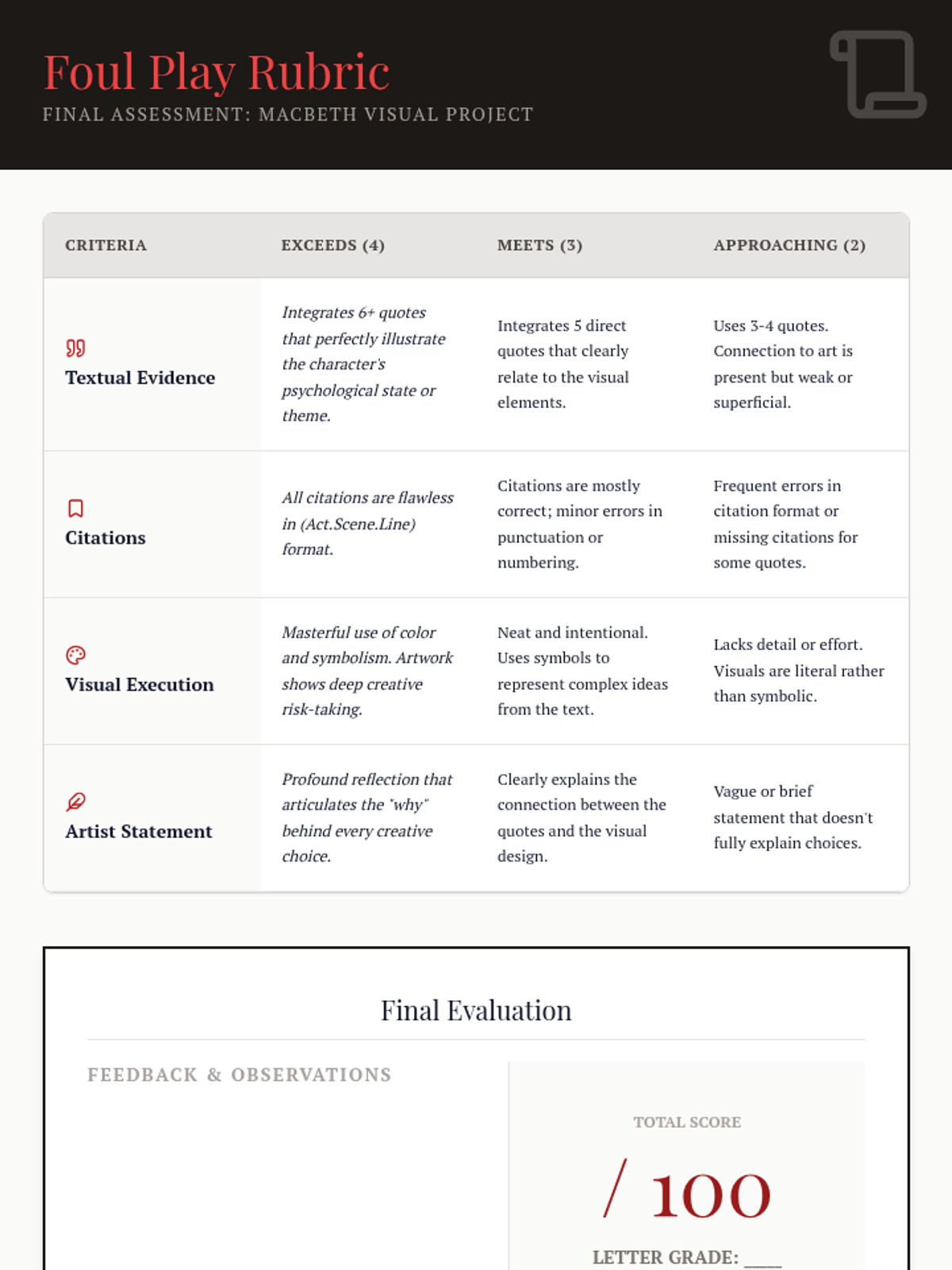
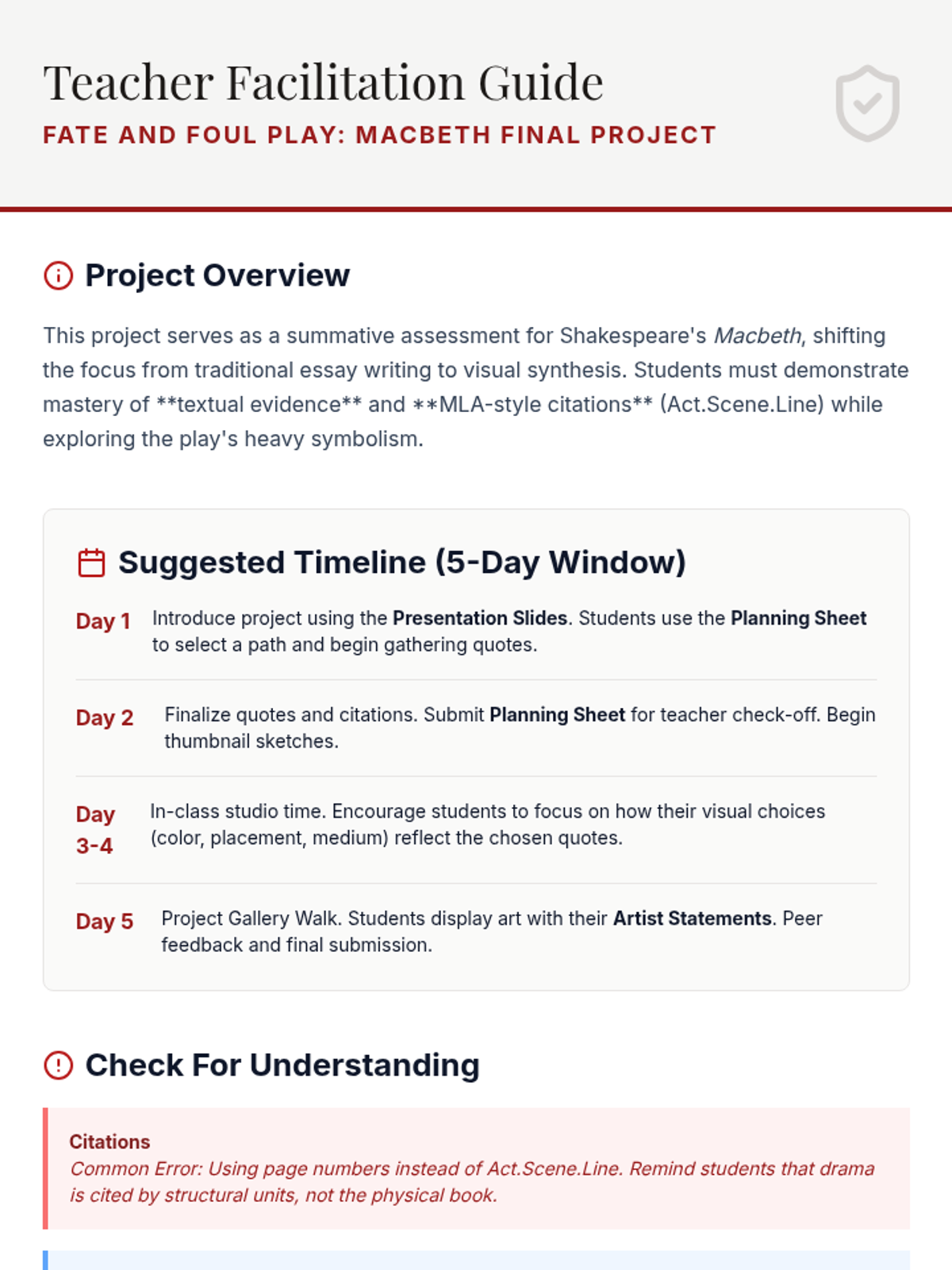
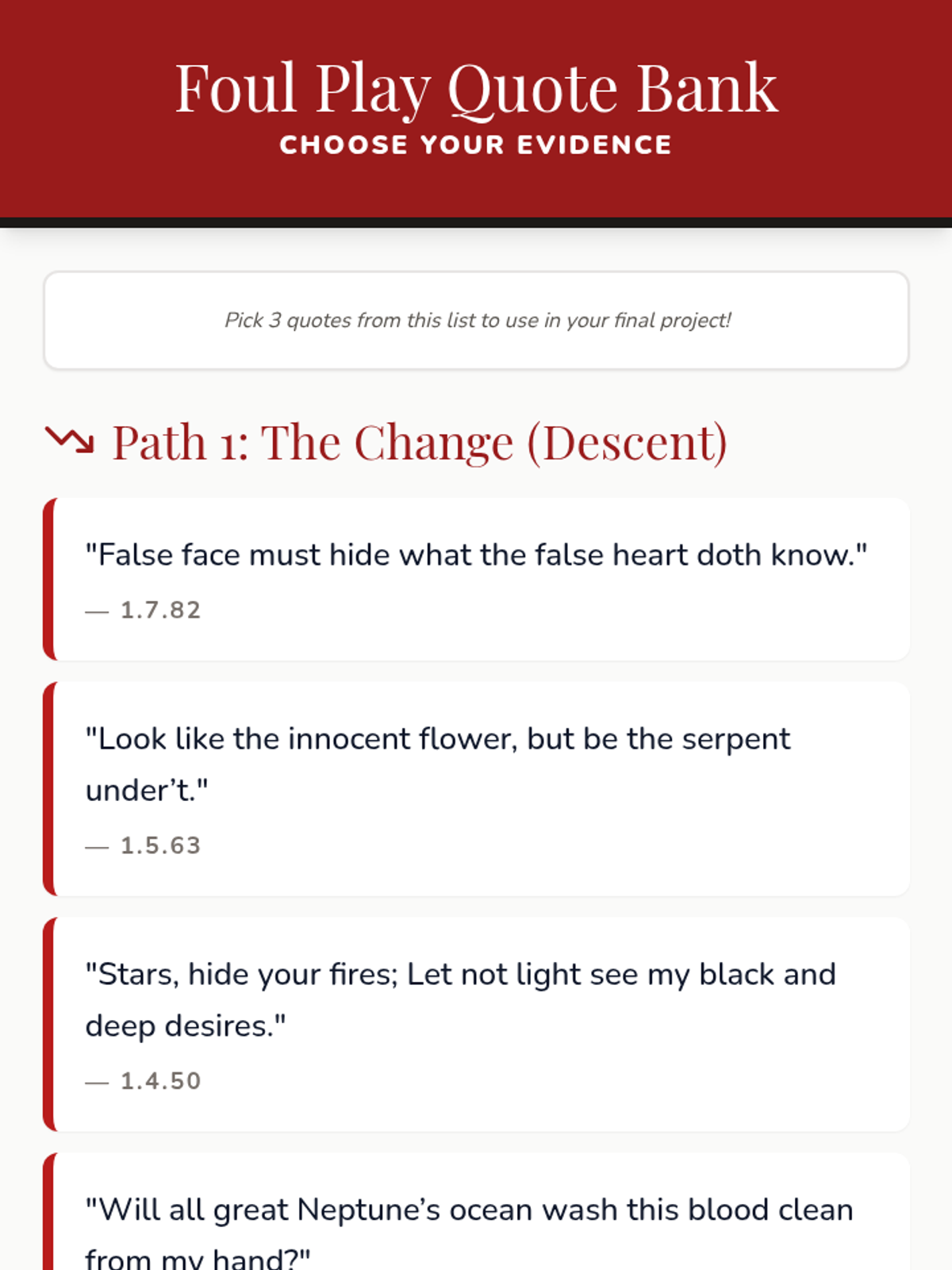
A creative final project for Shakespeare's Macbeth that requires students to synthesize textual evidence with visual art. Students choose a central theme or character arc to illustrate, supporting their artistic choices with cited quotes from the play.
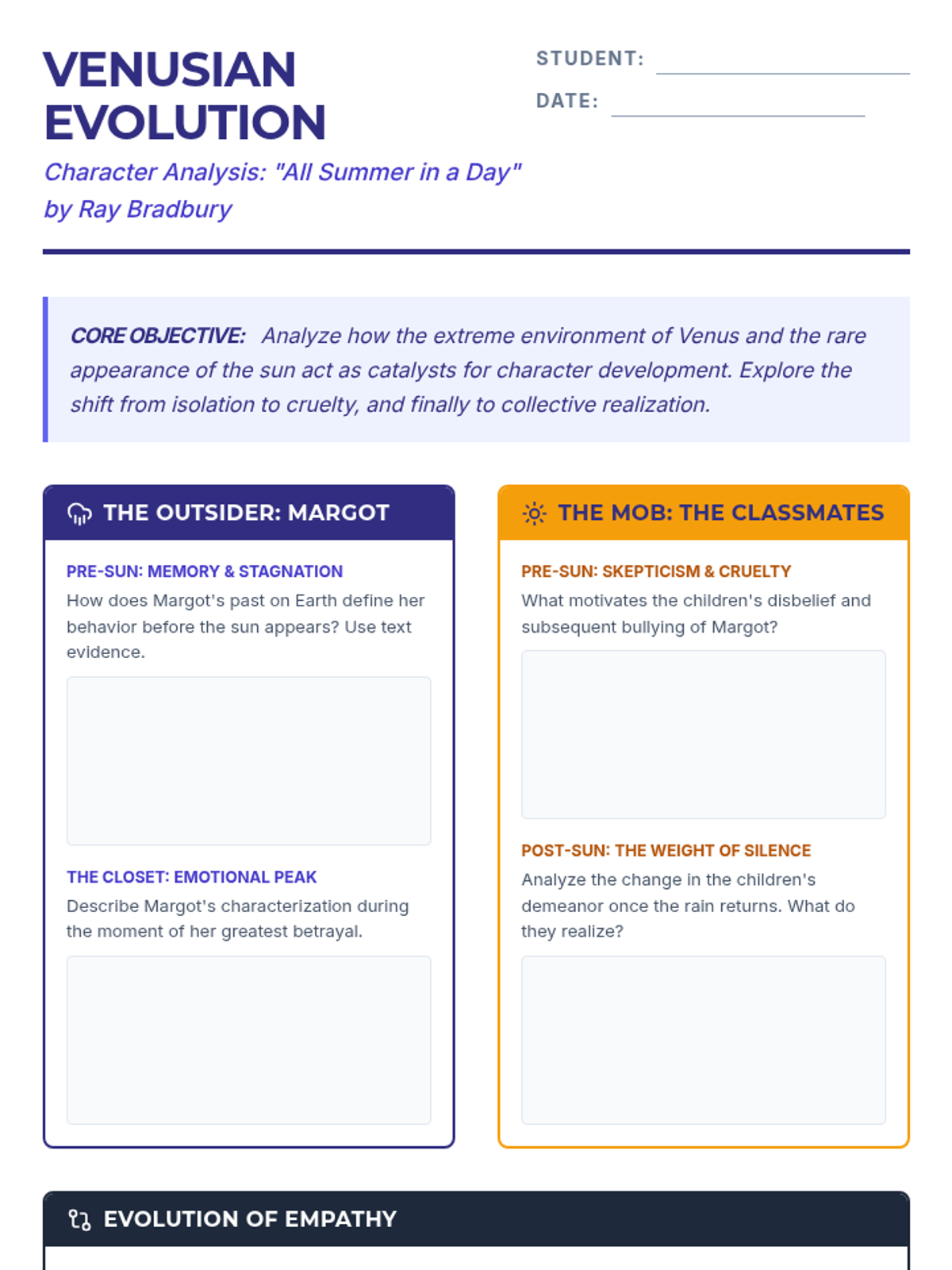
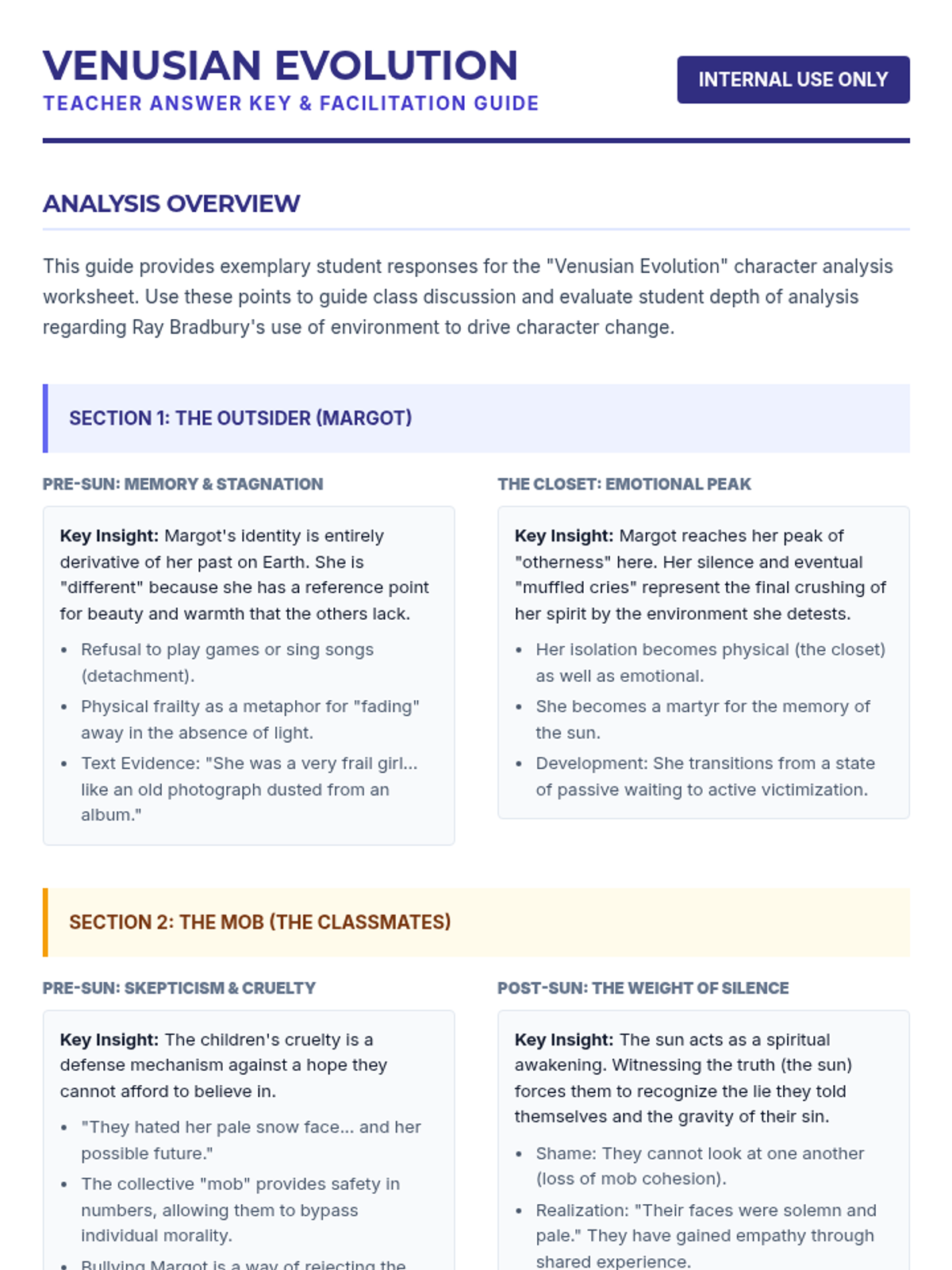
A high school ELA lesson focused on analyzing character development and the impact of setting in Ray Bradbury's 'All Summer in a Day'. Students examine Margot's isolation and the classmates' collective shift from cruelty to realization.
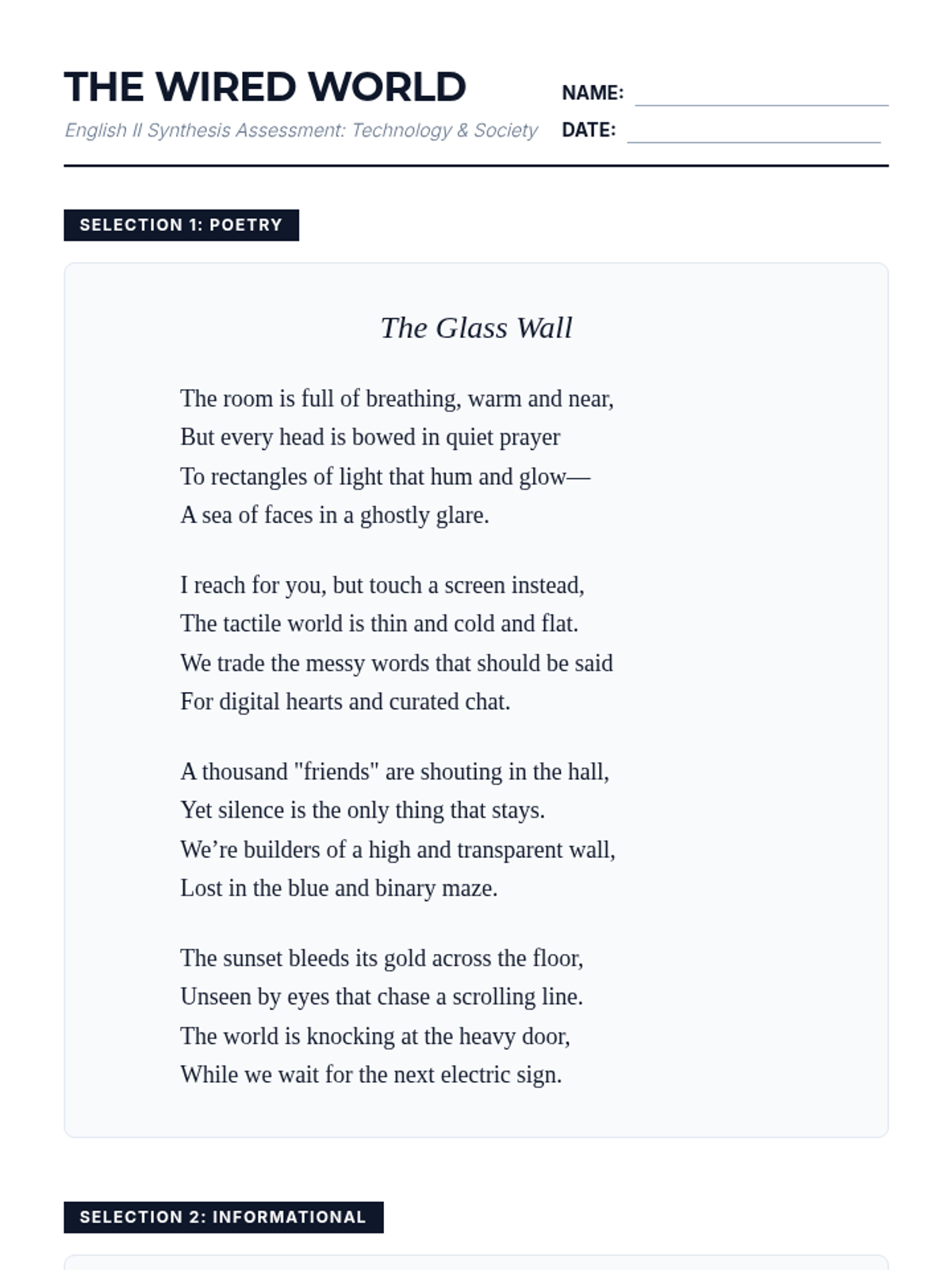
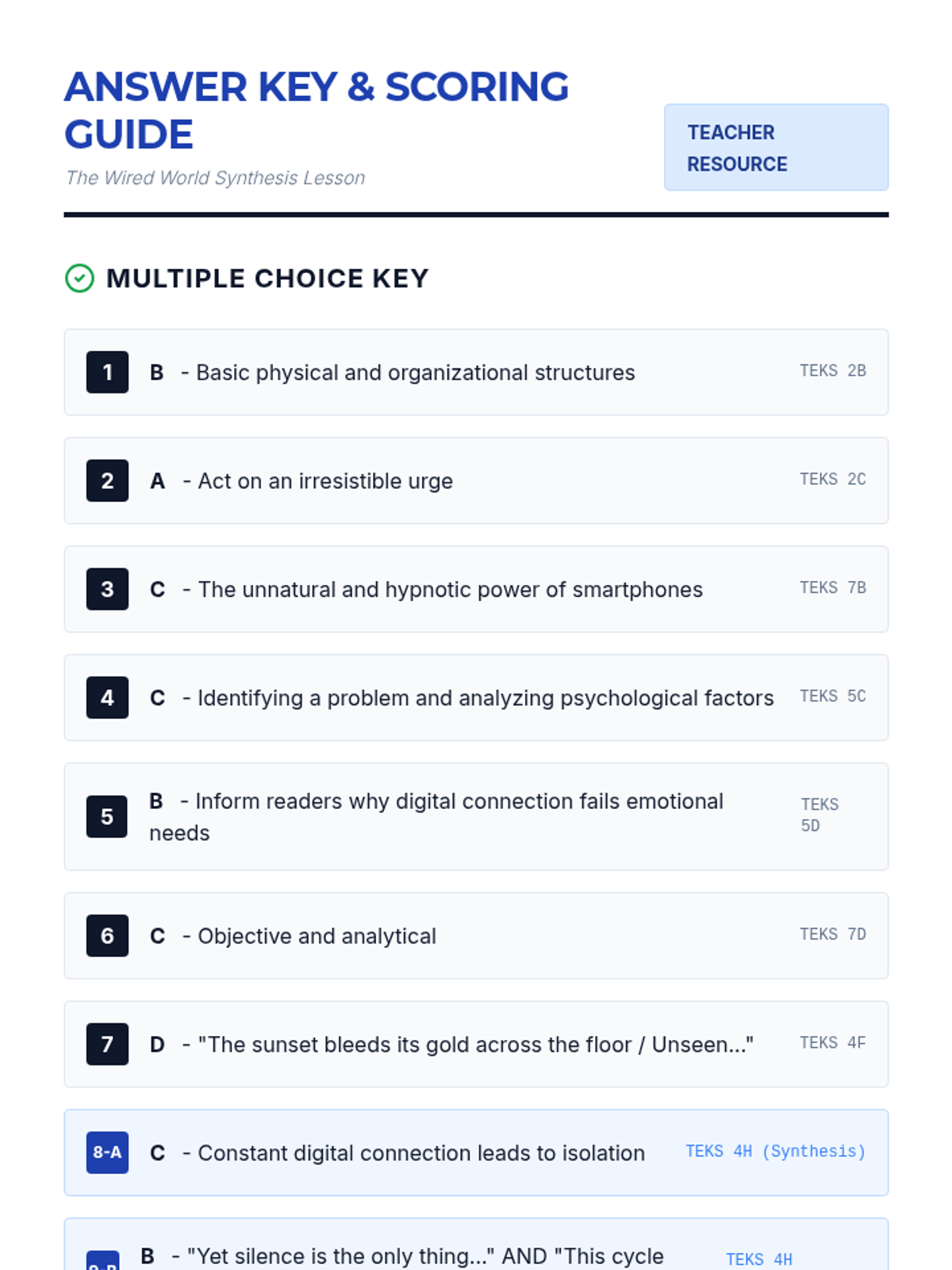
Students analyze a poem and an informational article about technology, practicing synthesis skills and answering STAAR-aligned assessment questions including multi-part and multi-select formats.
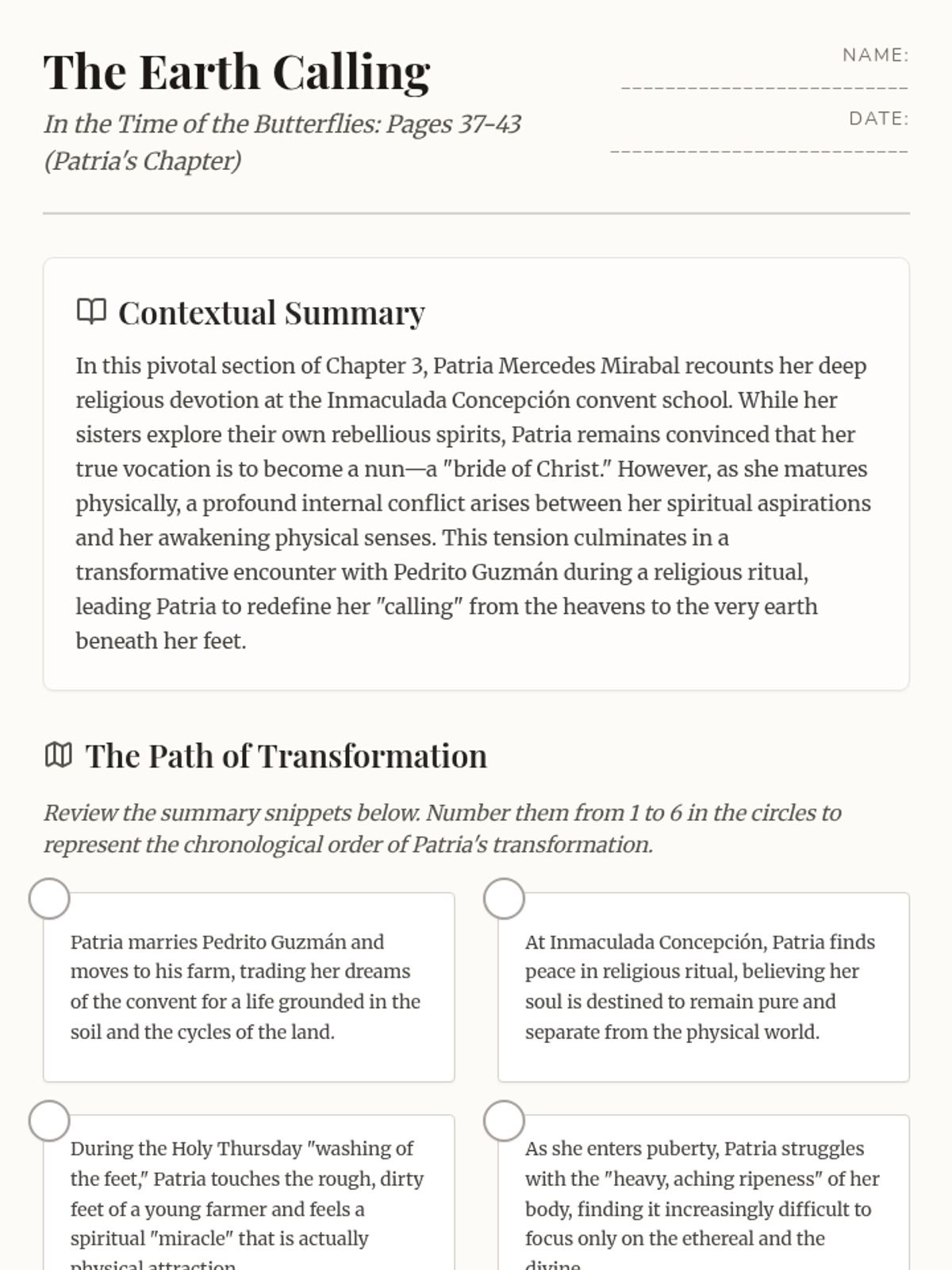
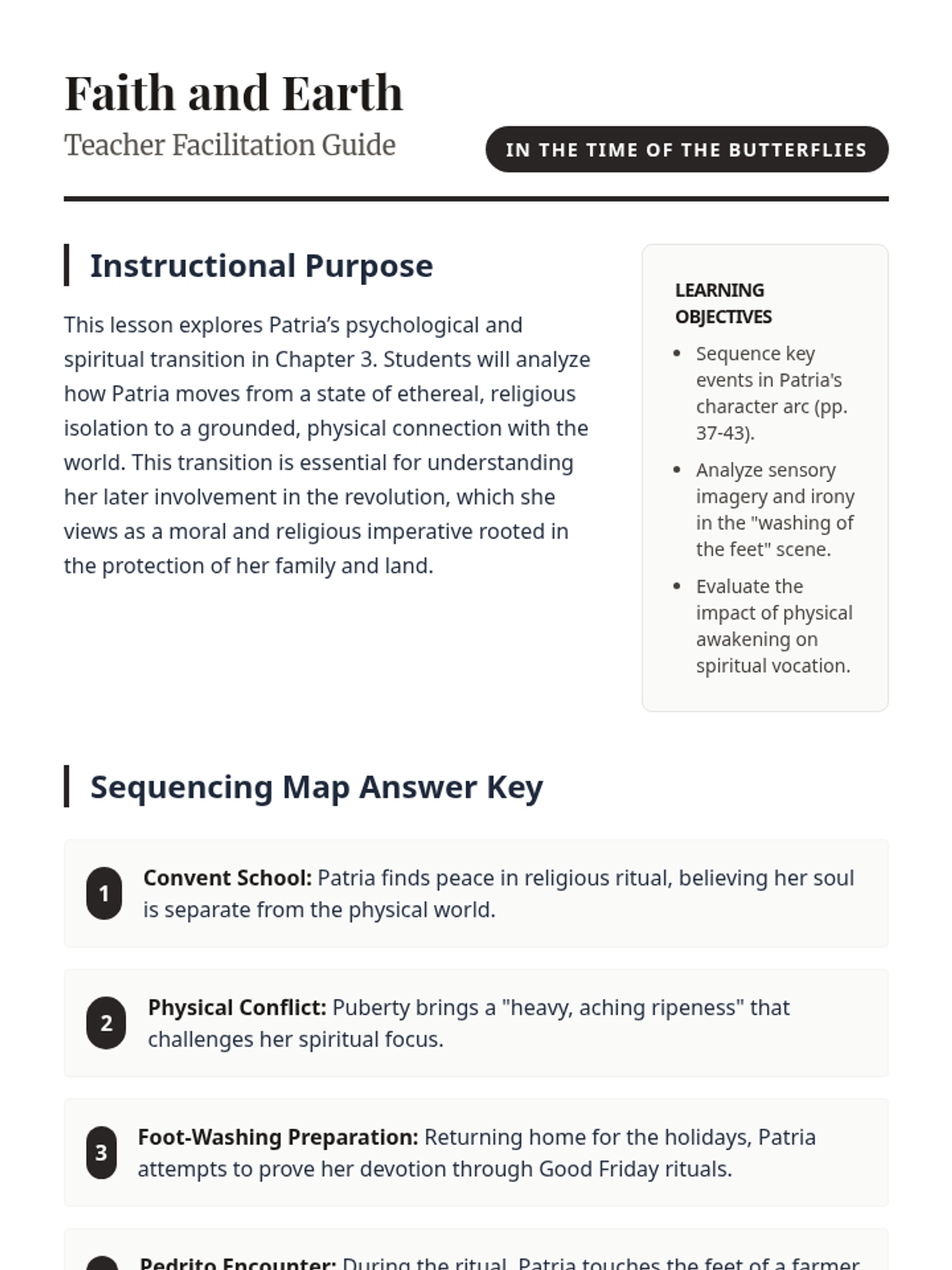
A deep dive into Patria's pivotal transition from religious devotion to earthly connection in Julia Alvarez's "In the Time of the Butterflies". This lesson focuses on character development and the intersection of faith and physical reality.
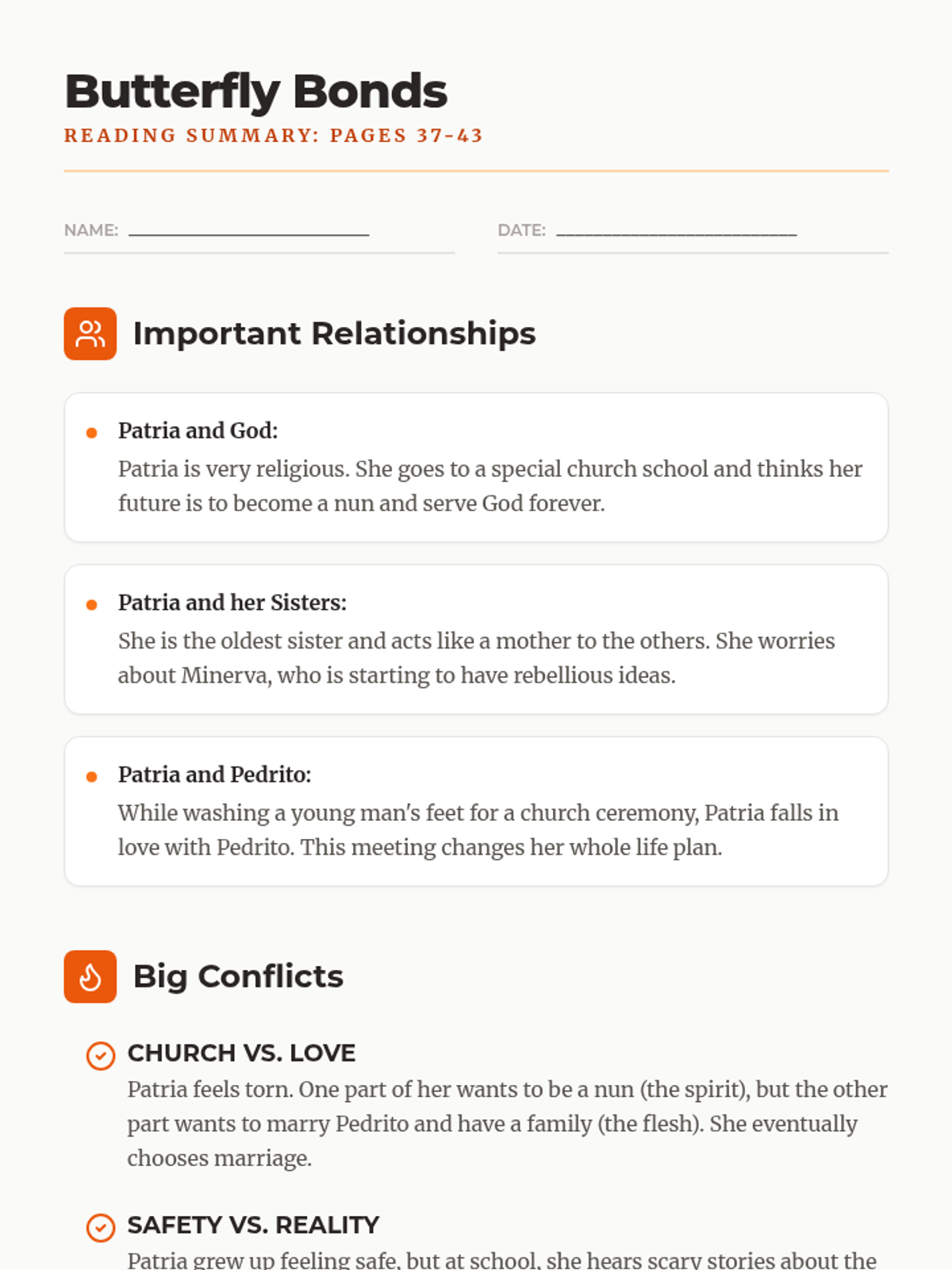
This lesson covers the introductory chapters of Julia Alvarez's 'In the Time of the Butterflies', focusing on Patria's early life, her religious devotion, and her transition into adulthood.
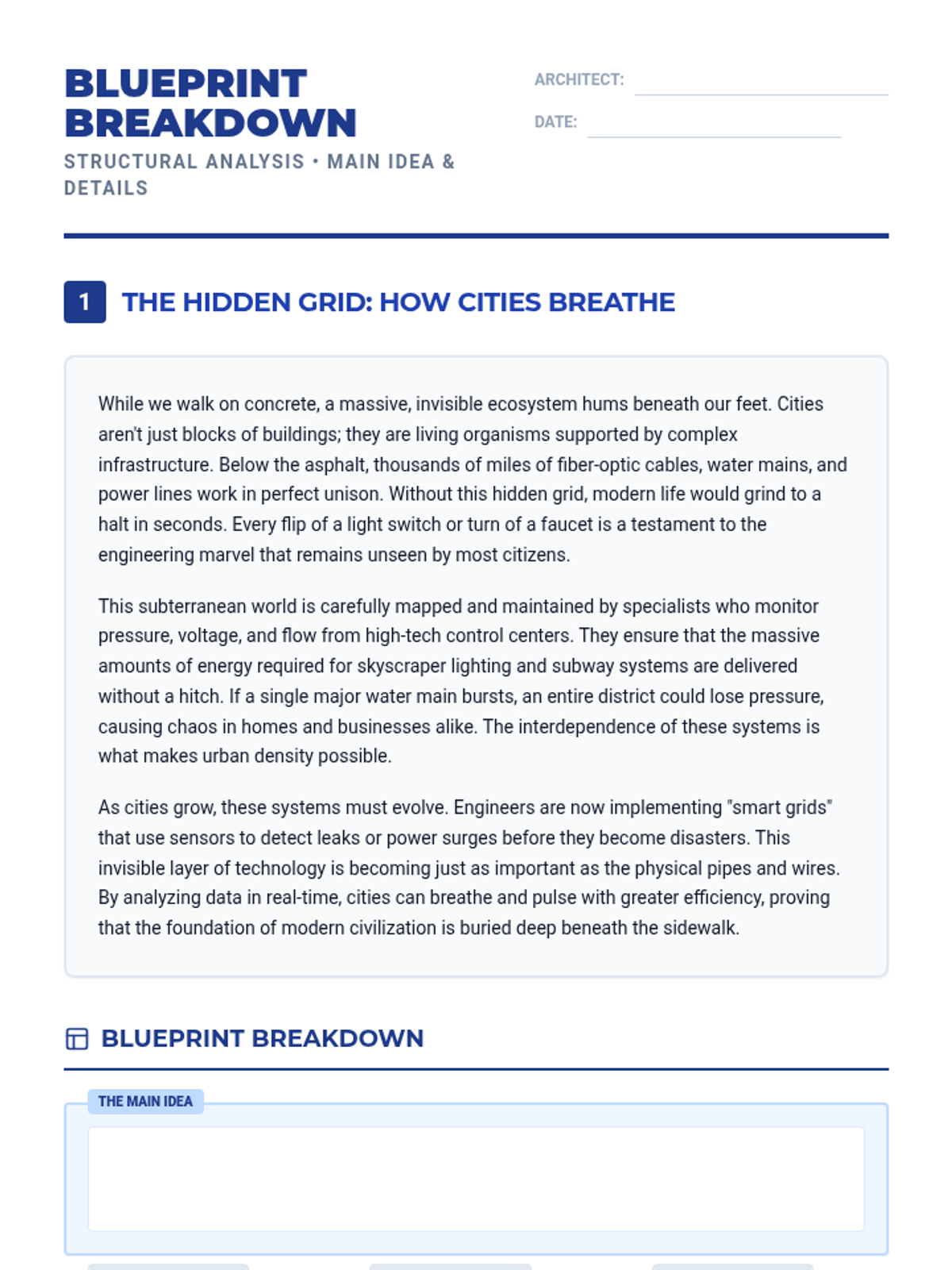
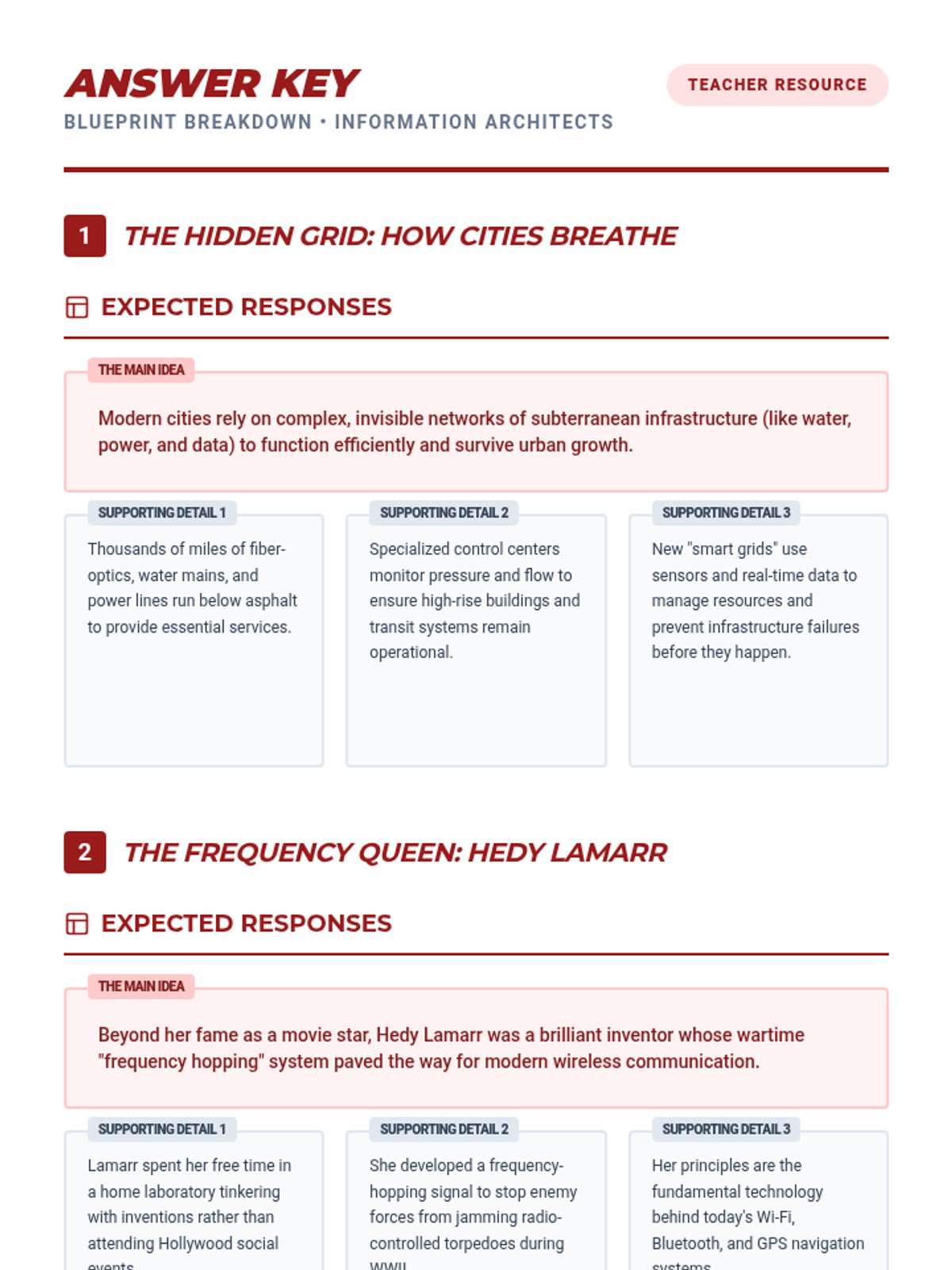
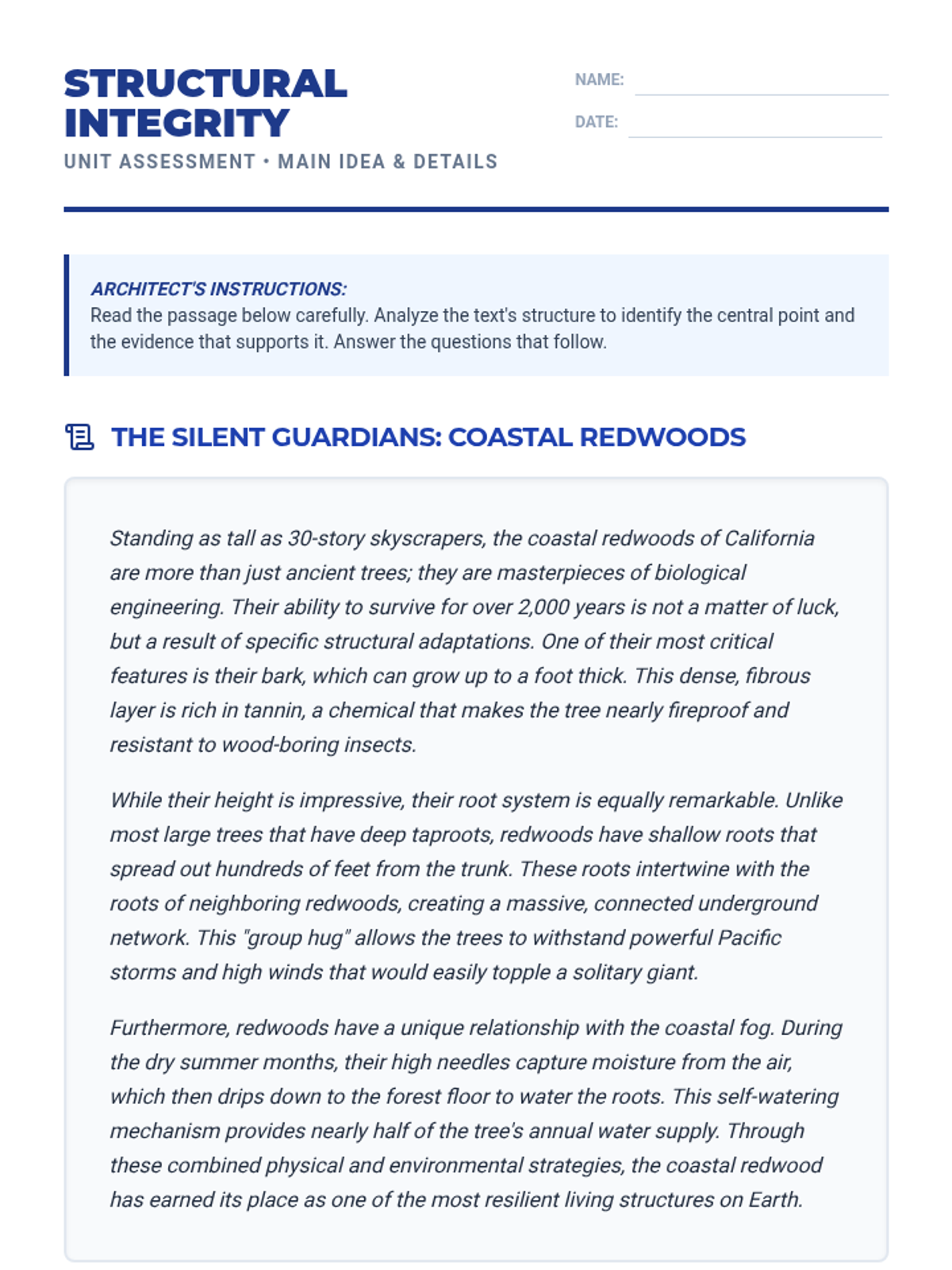
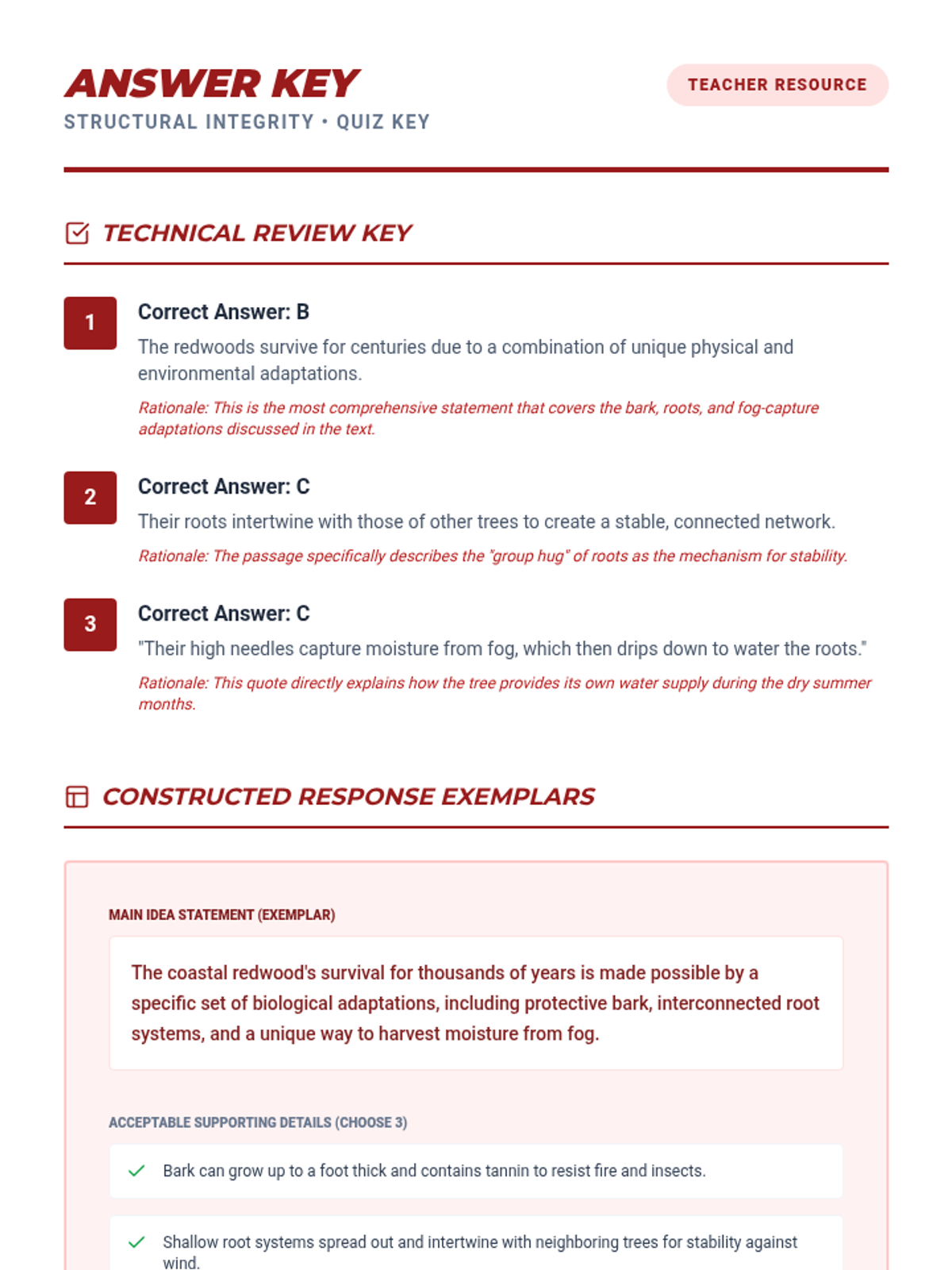
A lesson focused on identifying main ideas and supporting details in complex non-fiction texts, using an 'Information Architect' theme to visualize text structure.
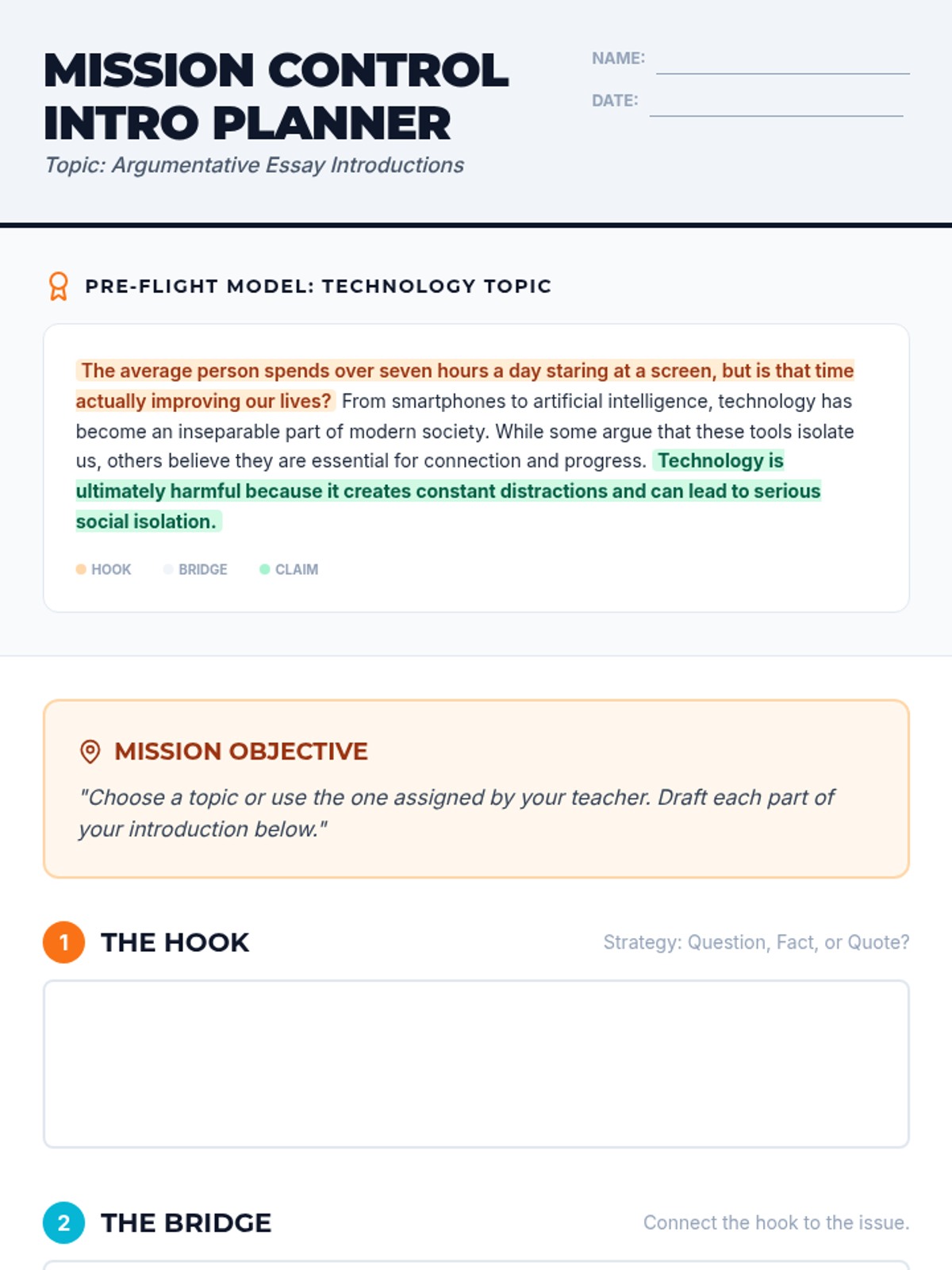
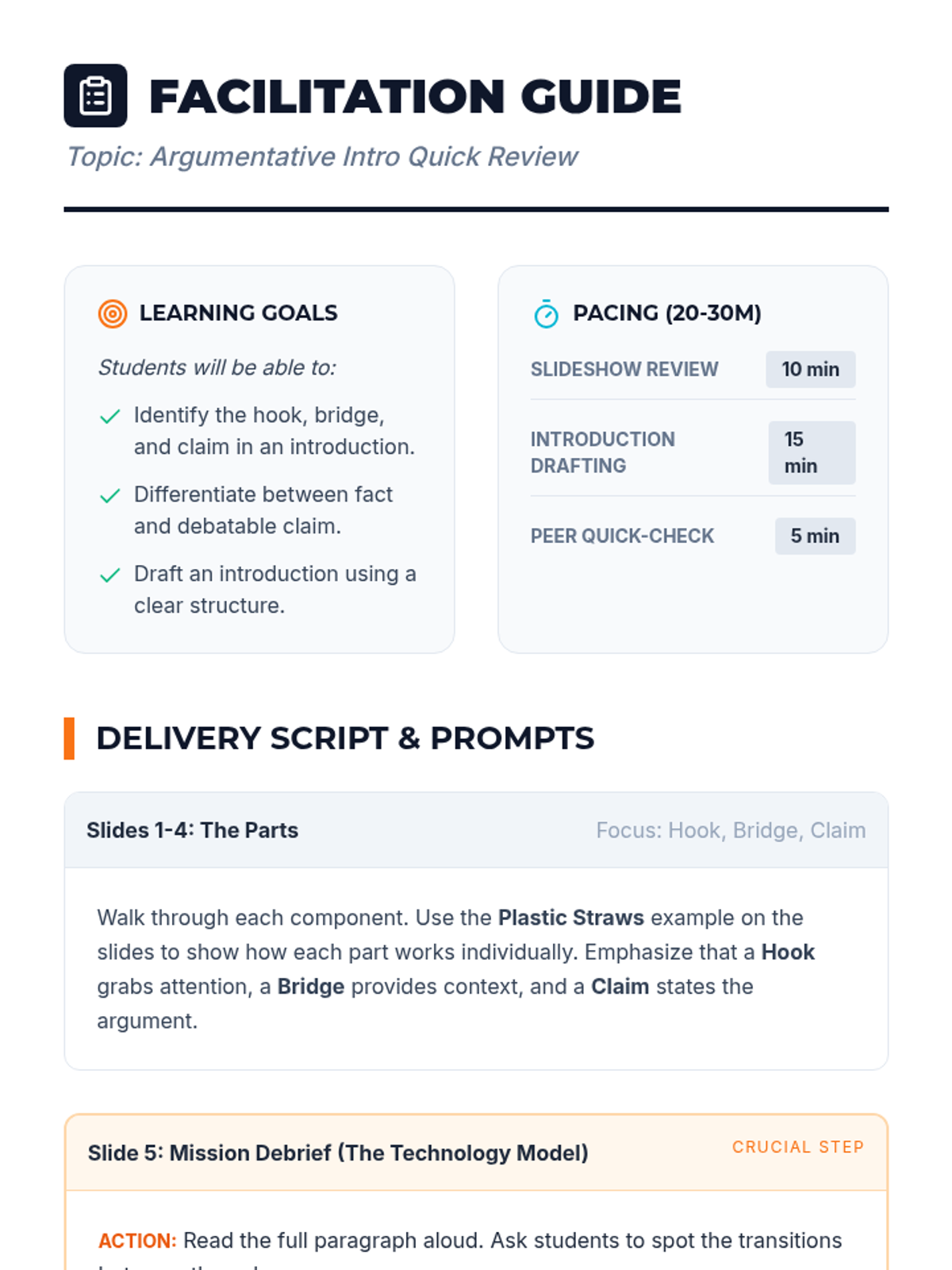
A quick-start guide to mastering the three essential components of an argumentative essay introduction: the hook, the bridge, and the claim.
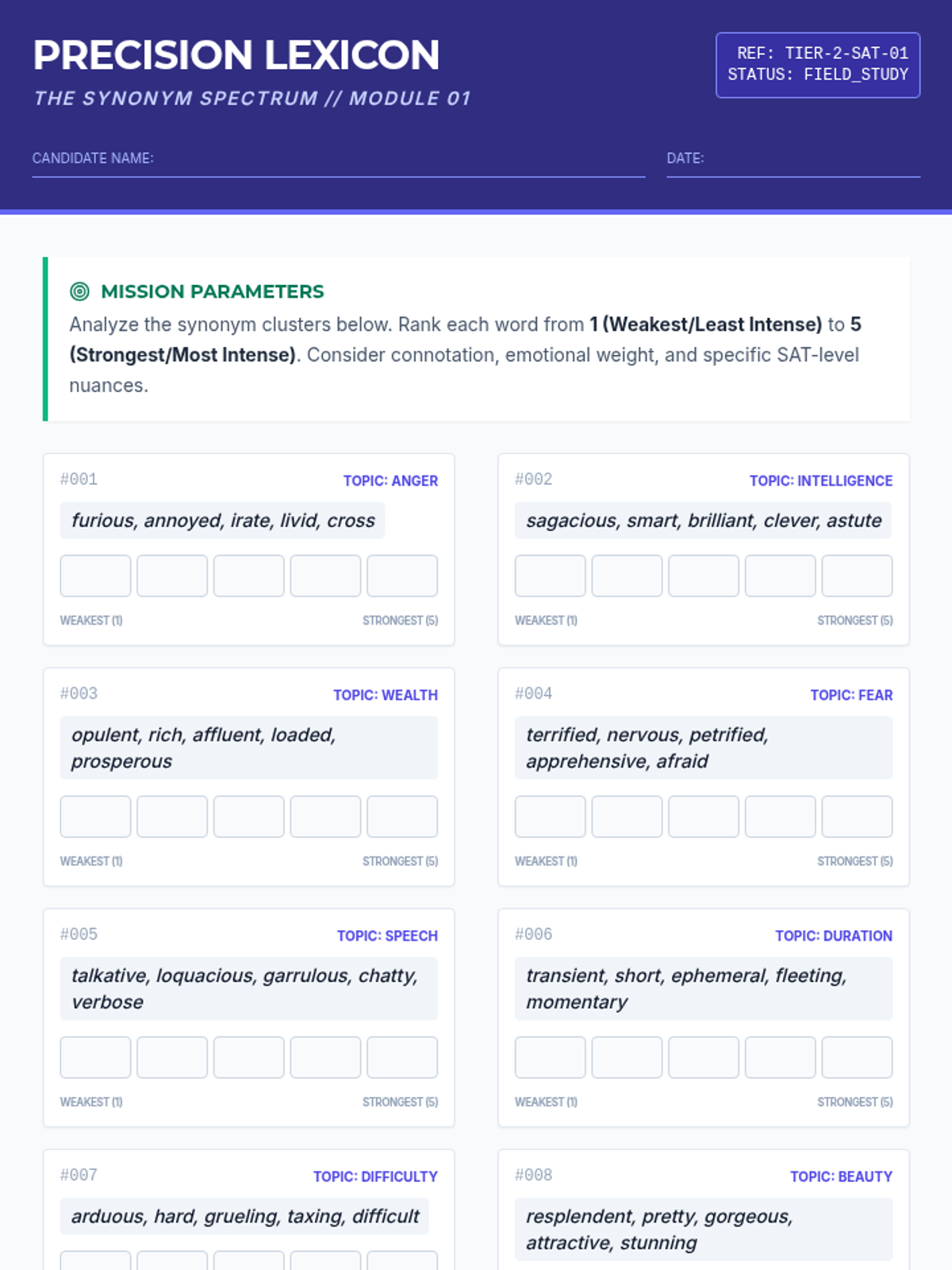
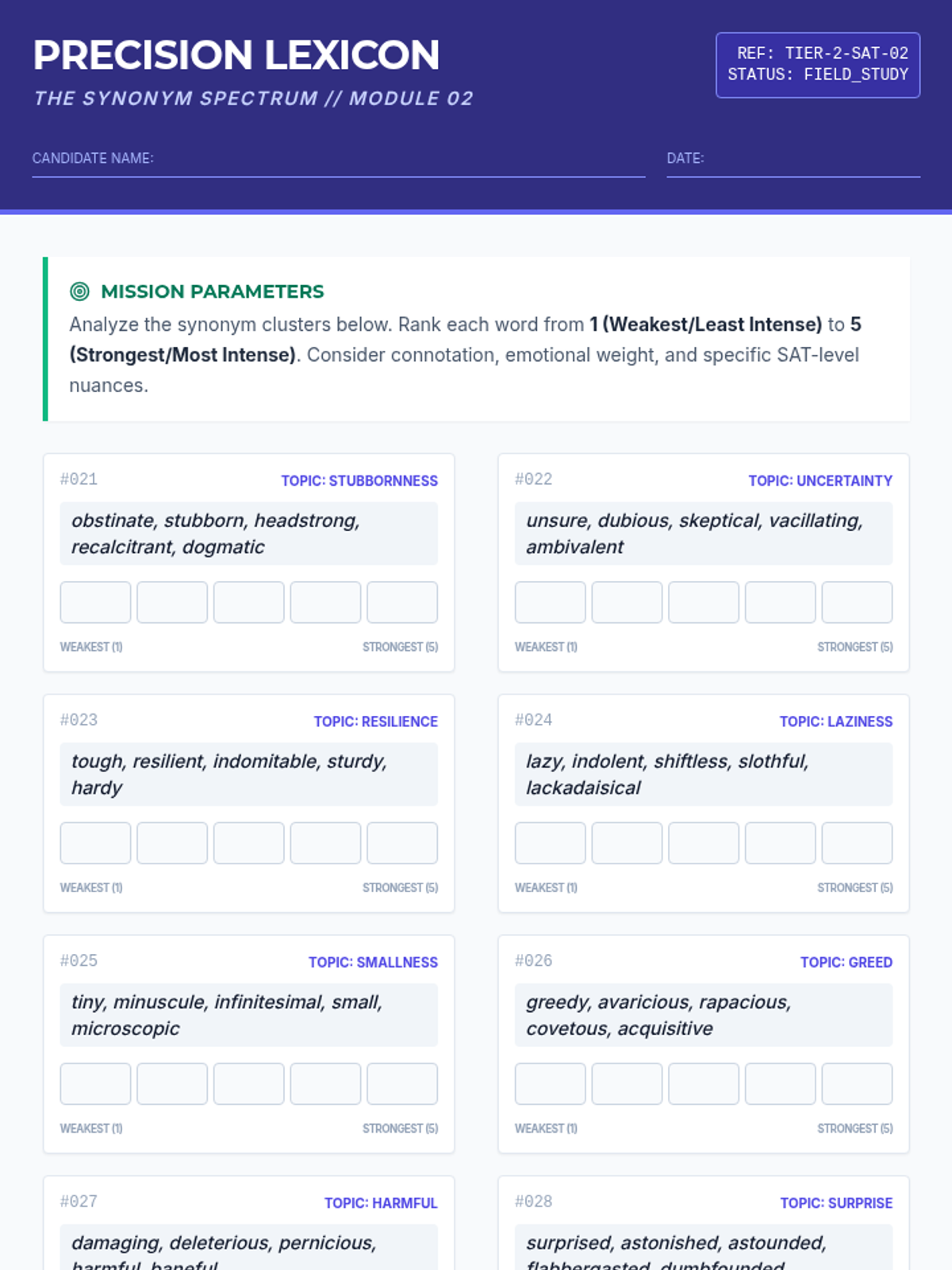
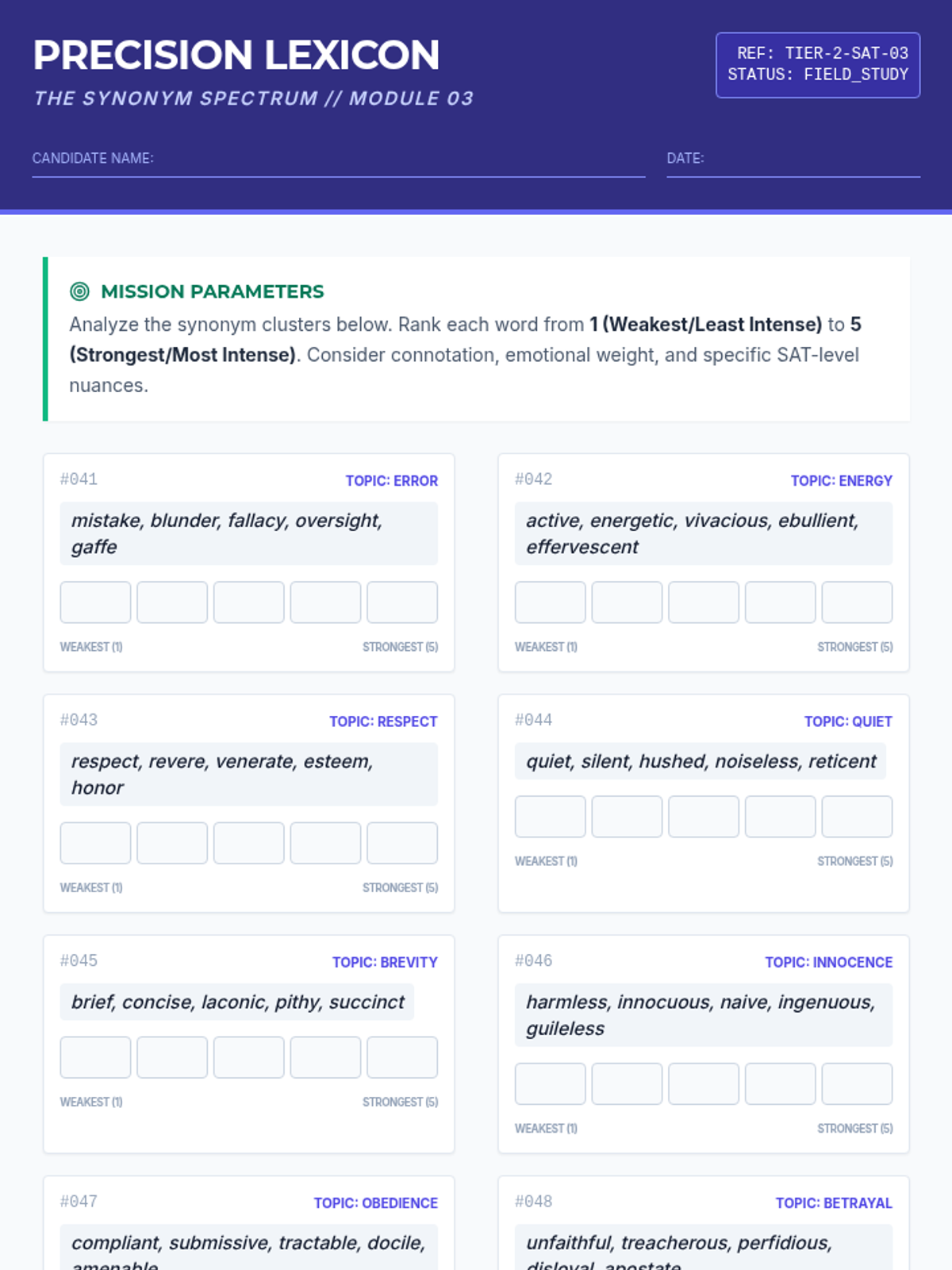
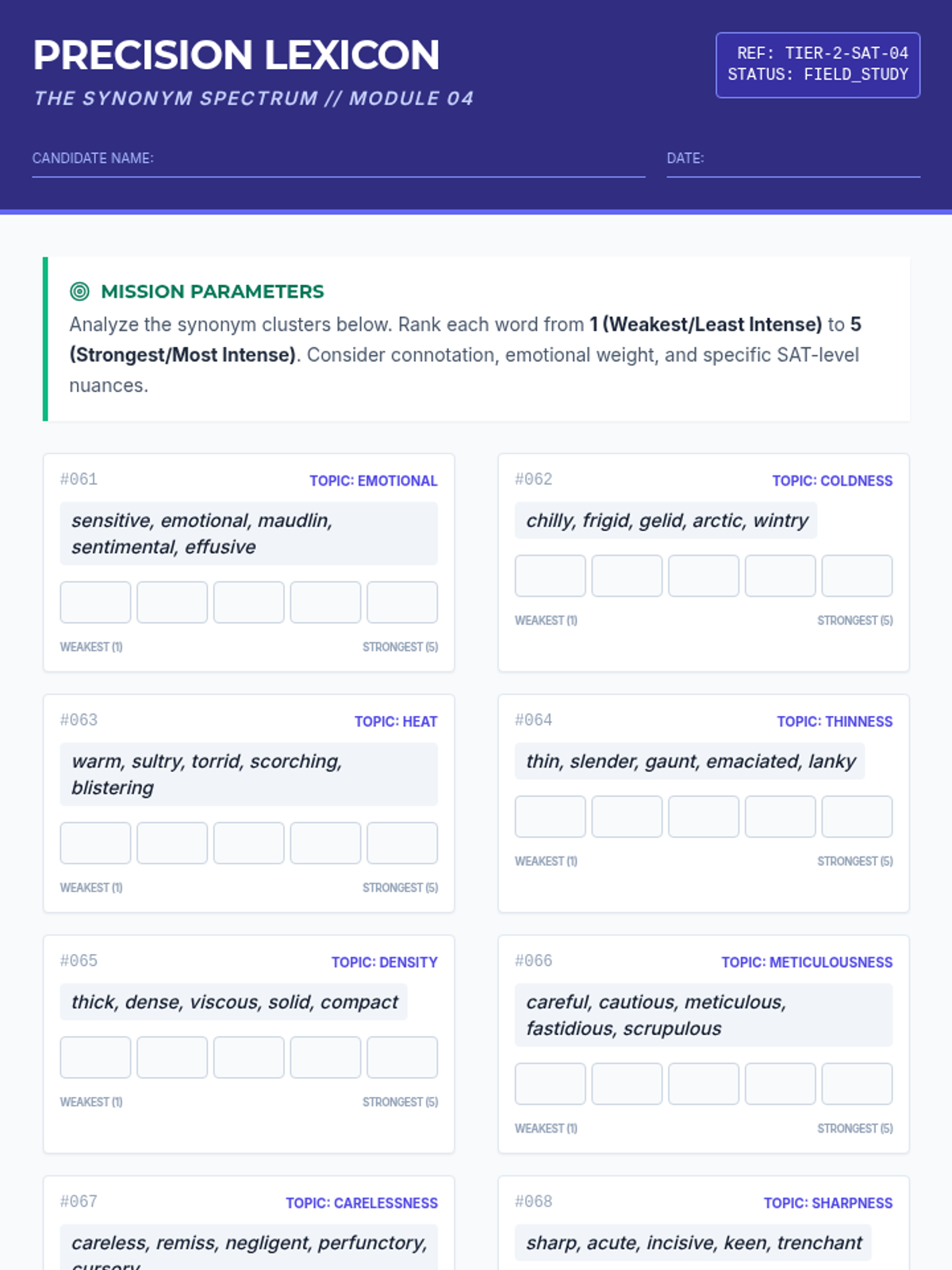
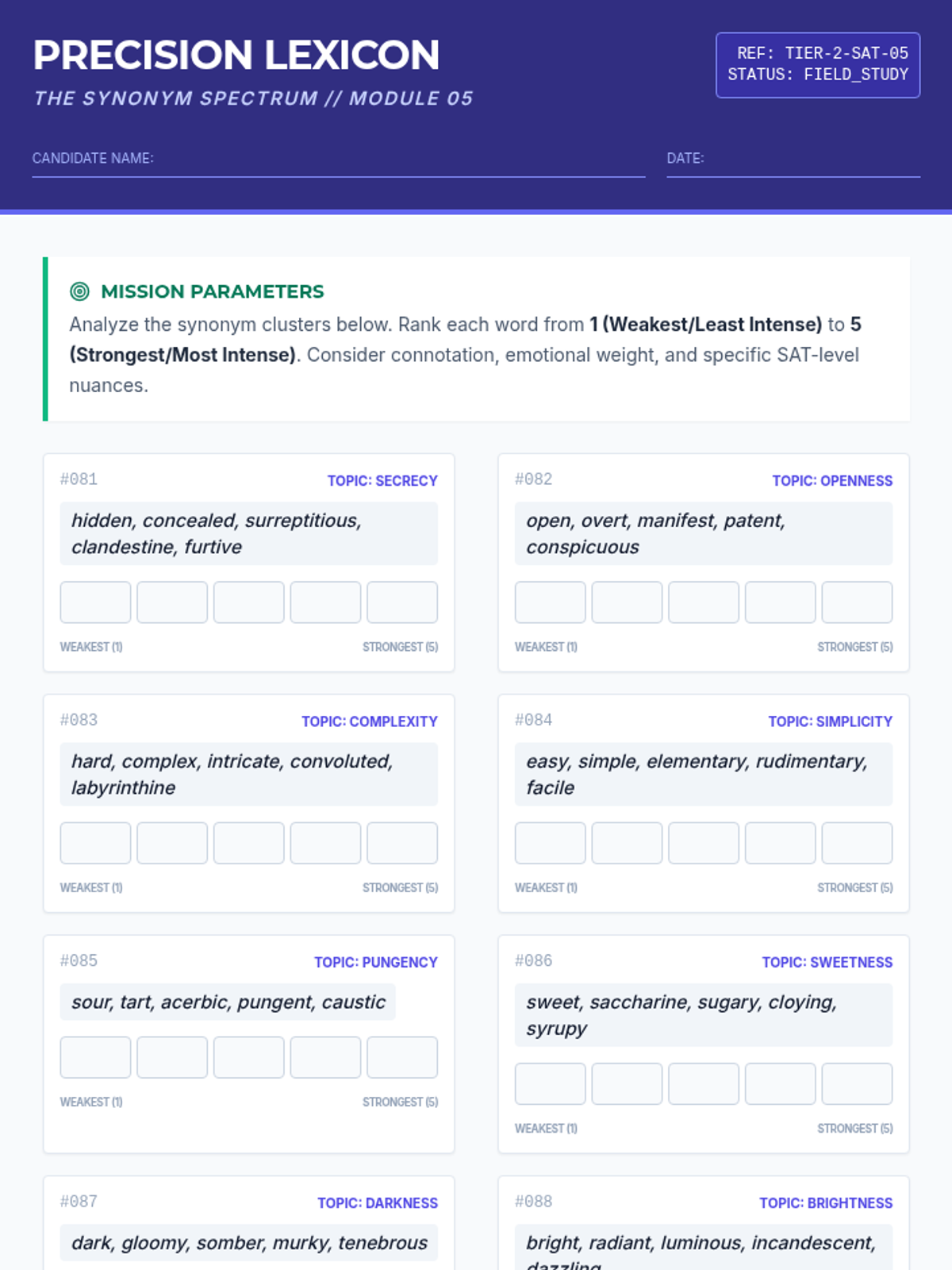
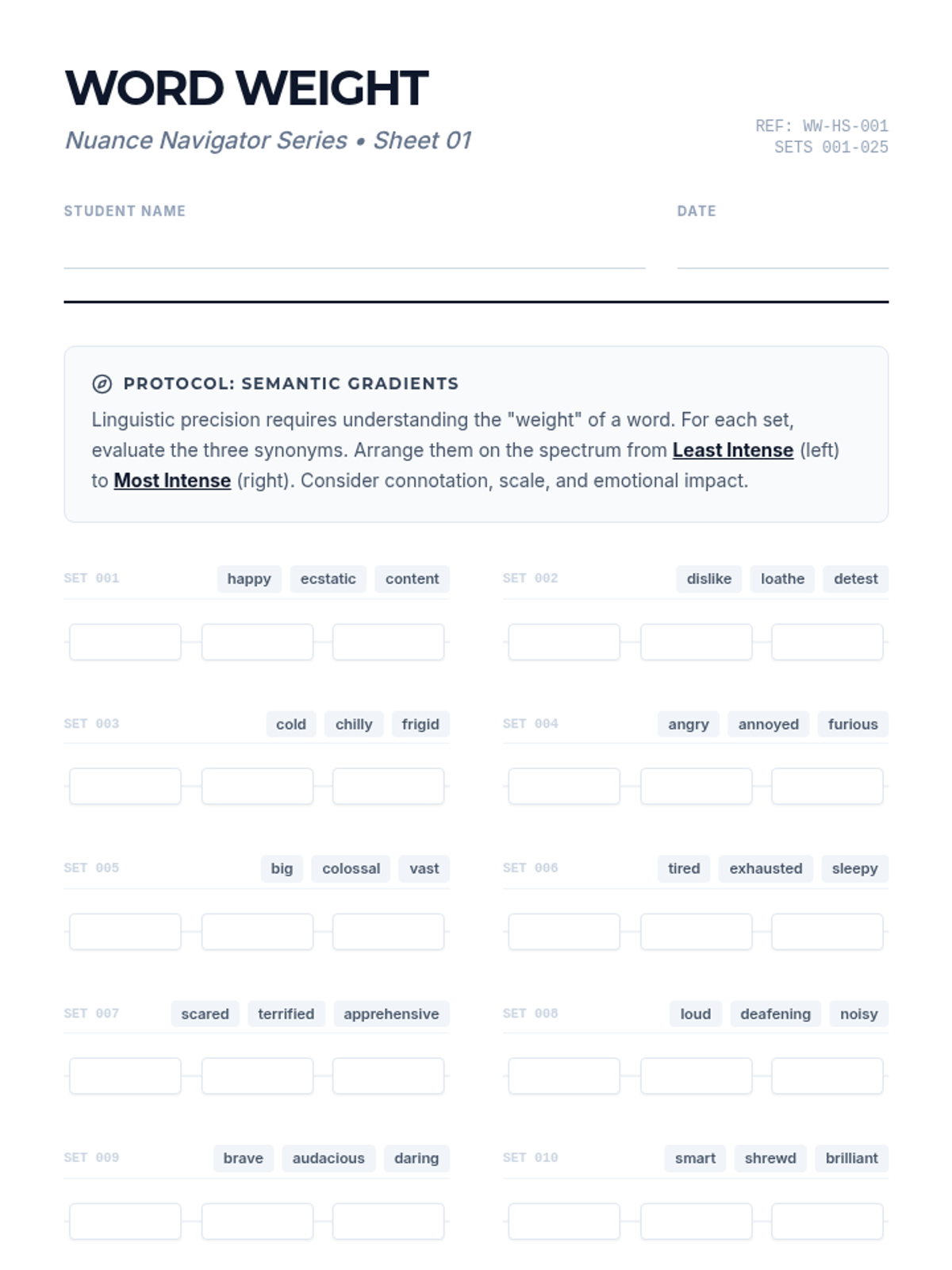
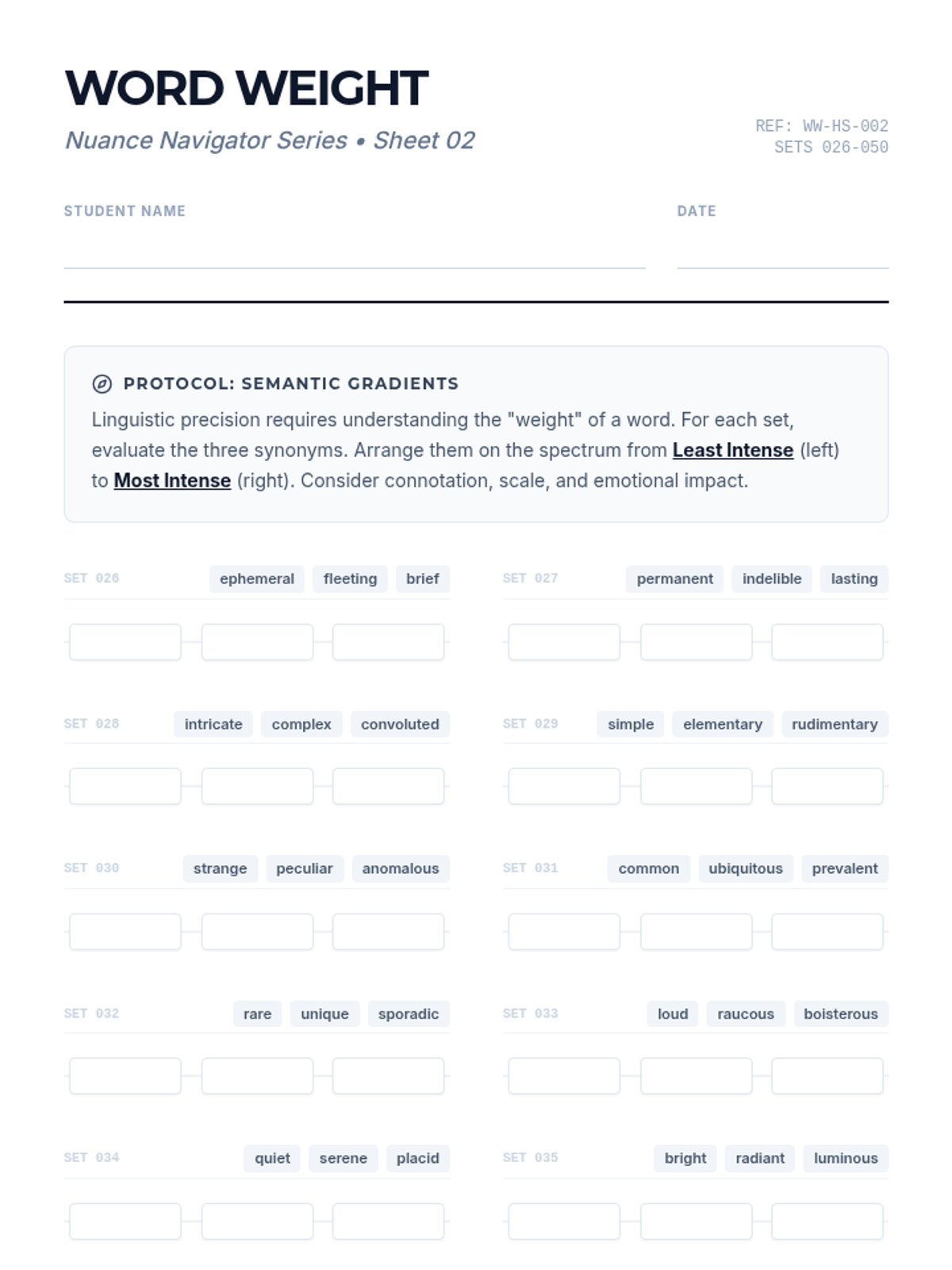
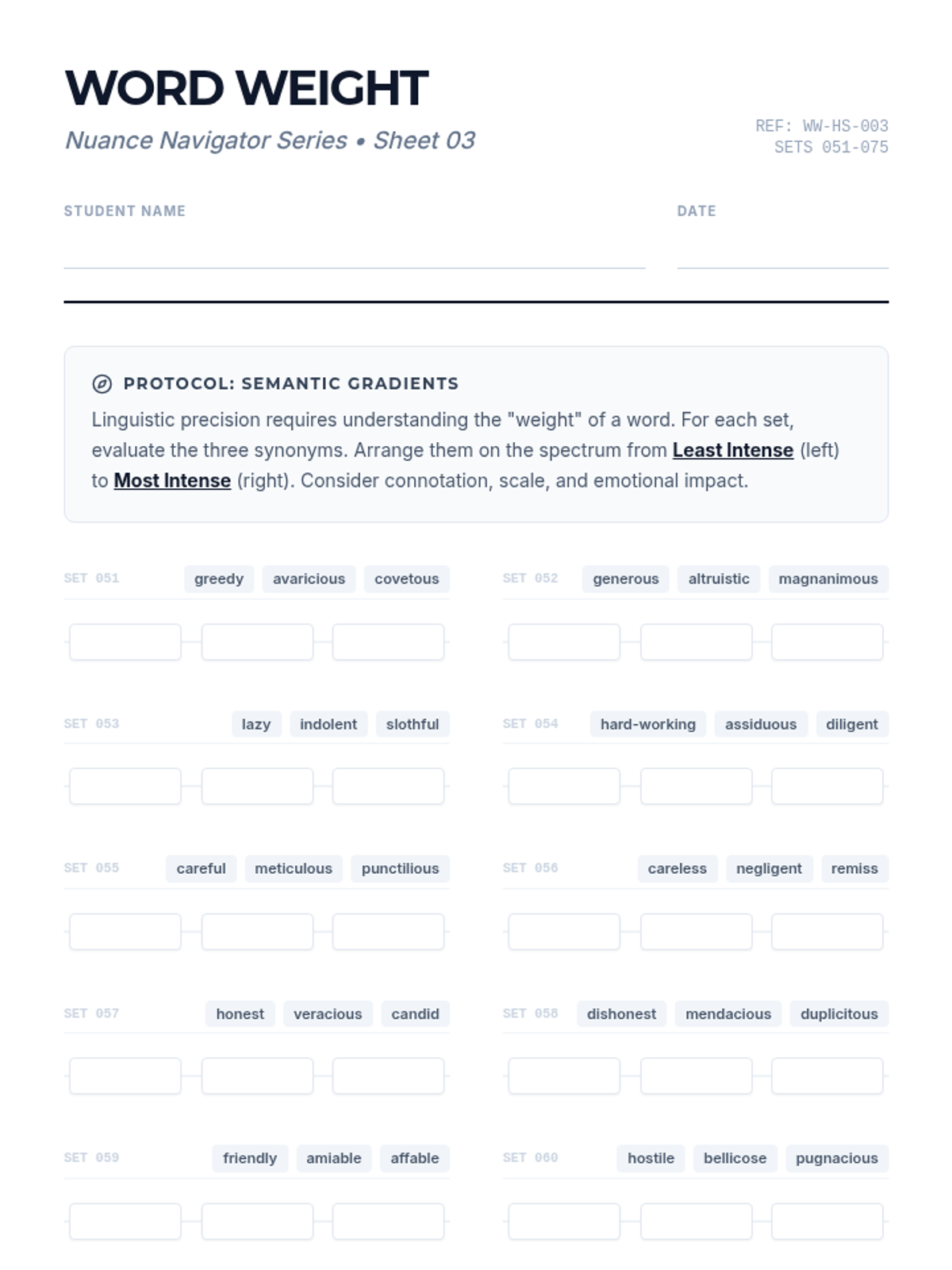
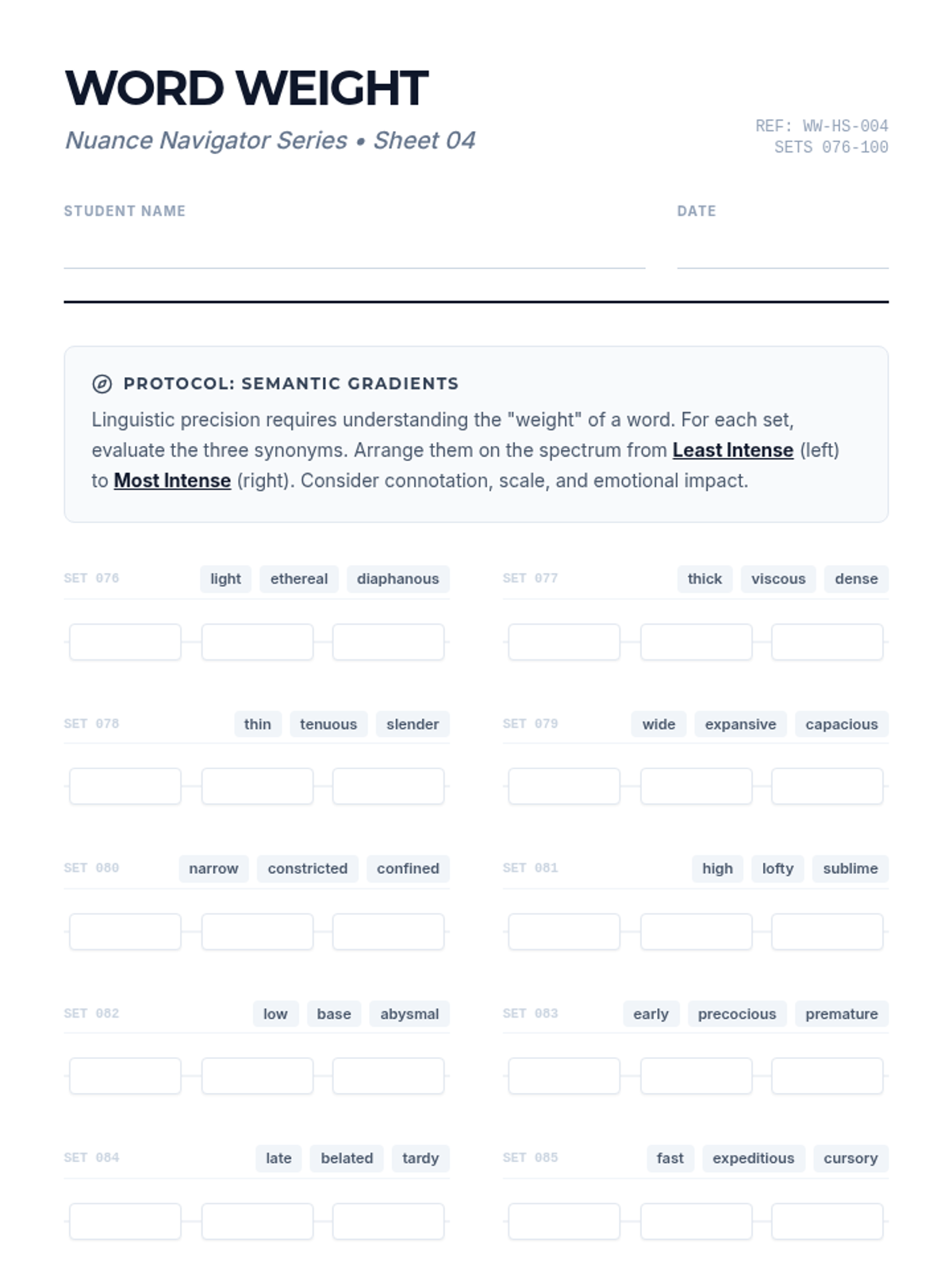
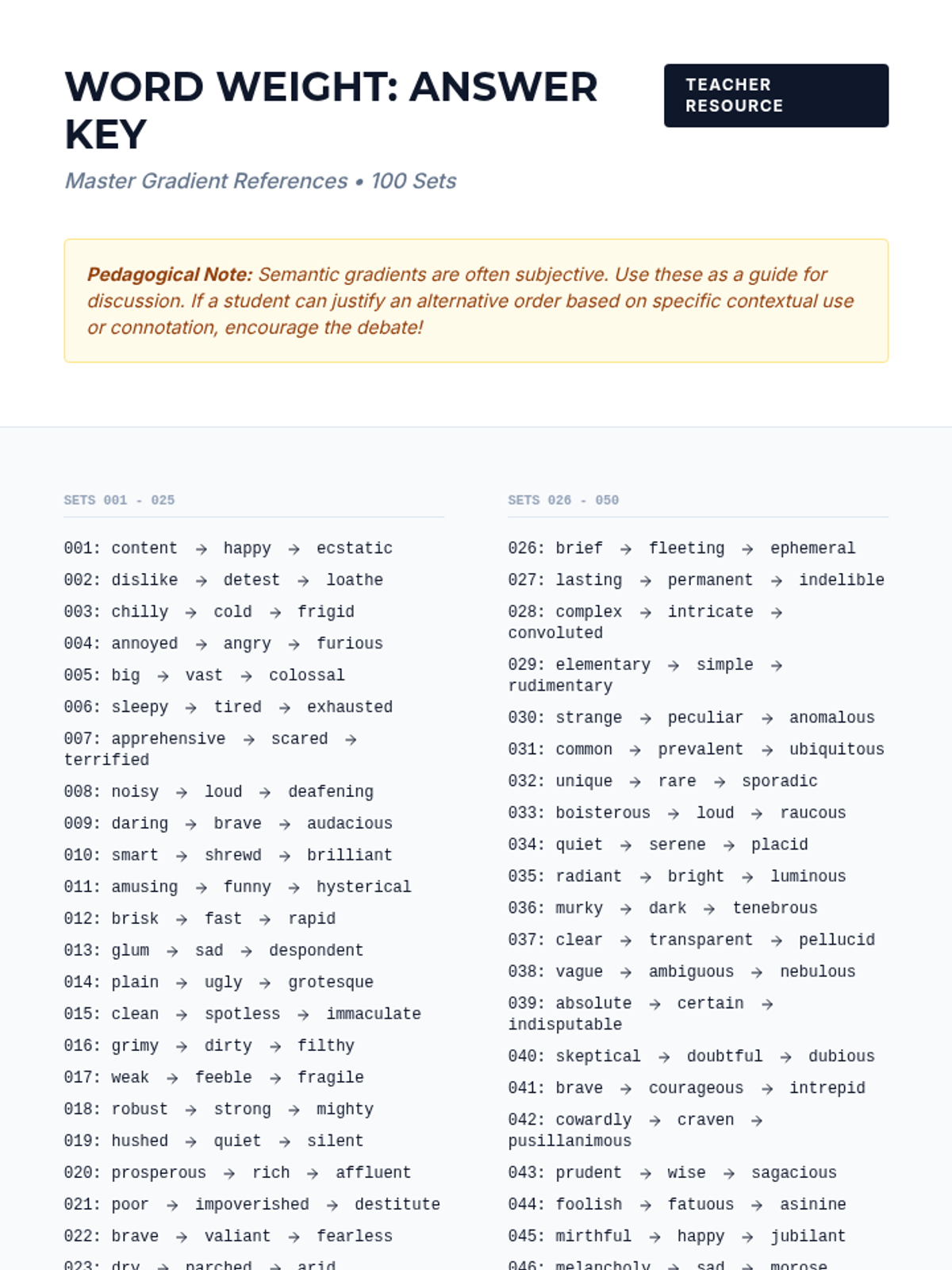
A comprehensive series of worksheets designed for 12th-grade students to master the nuances of Tier 2 and SAT vocabulary by ranking synonyms based on intensity and connotation.
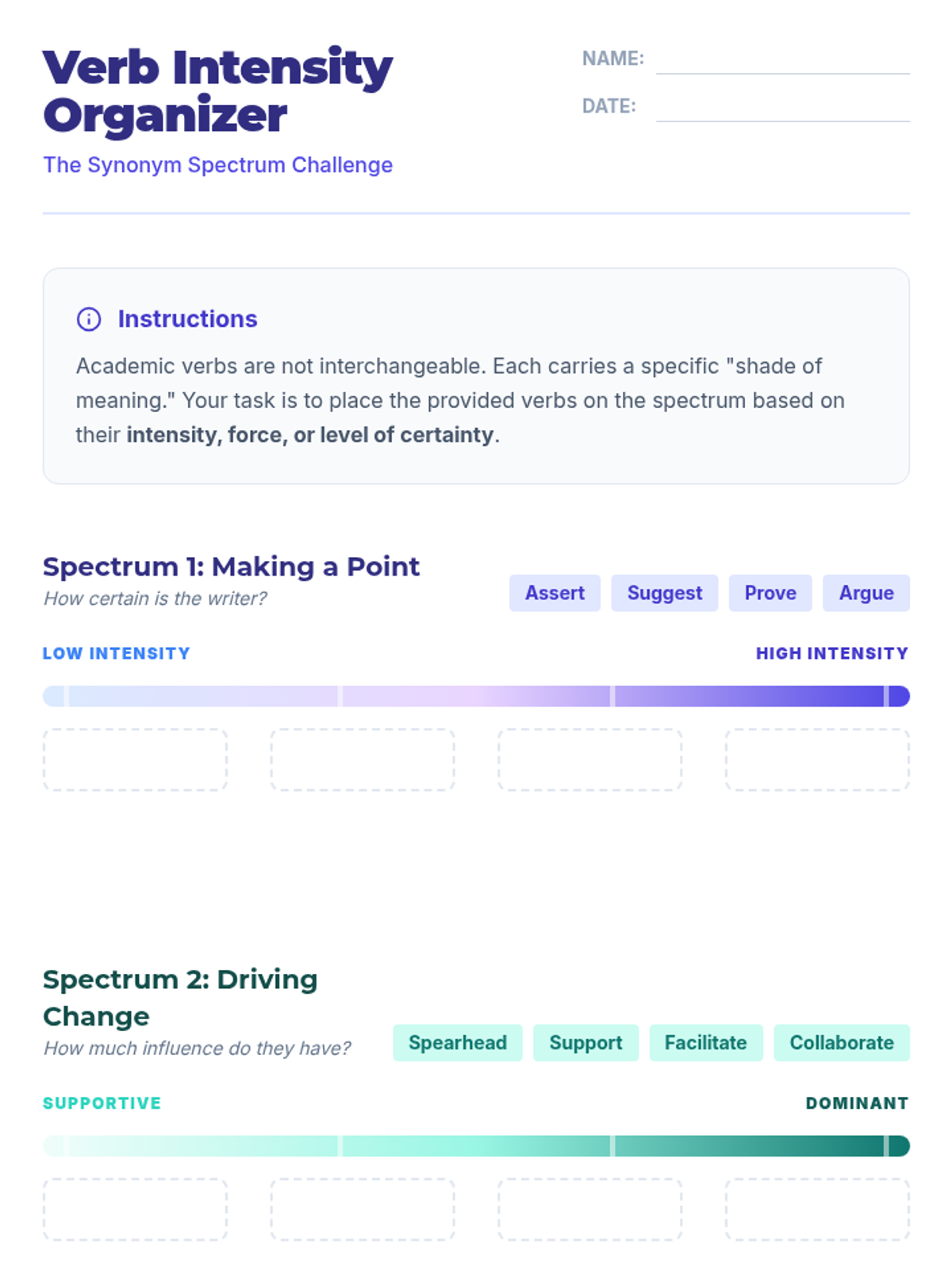
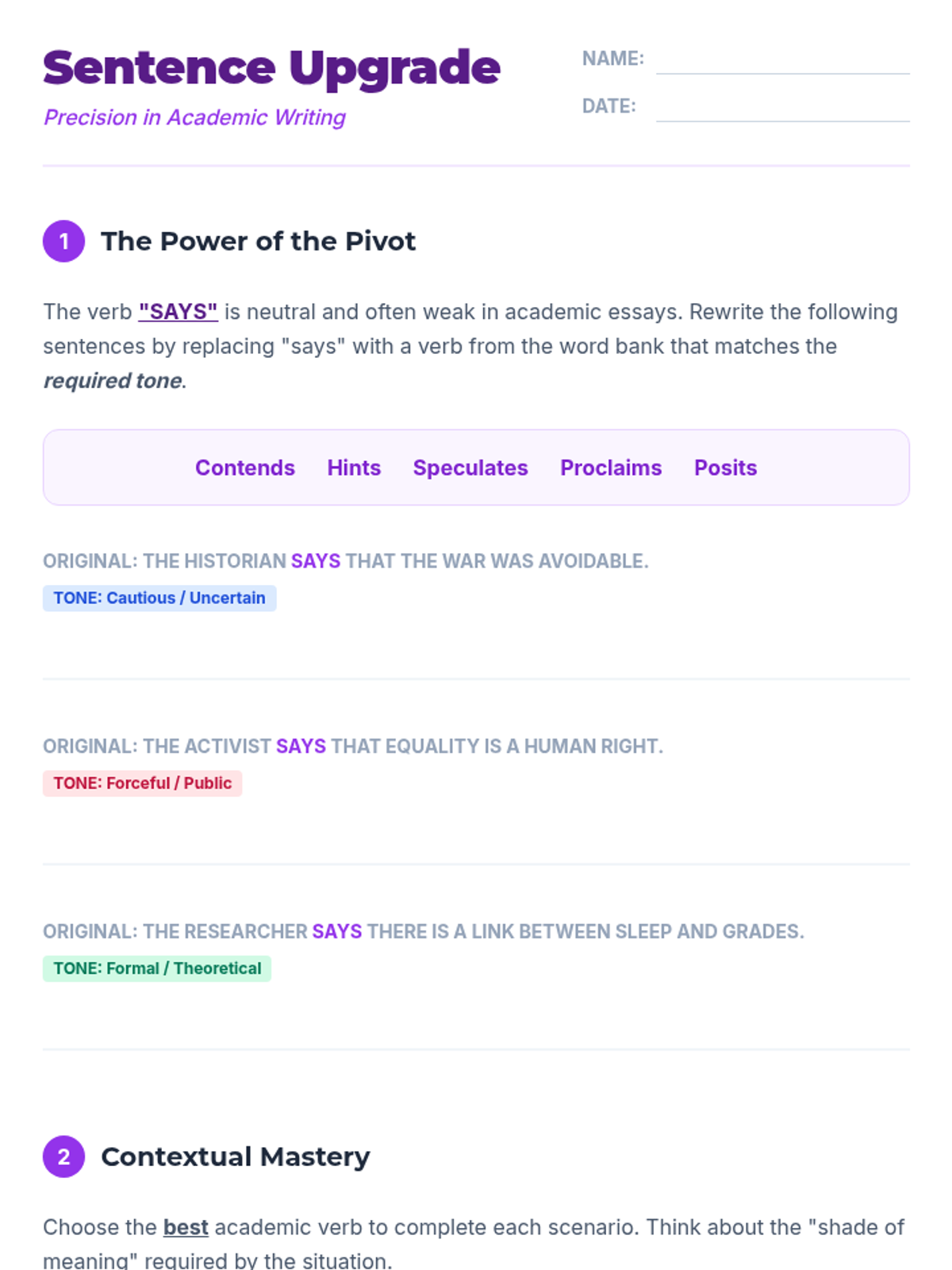
This lesson explores the nuances of academic verbs, teaching students to distinguish between different 'shades of meaning' to improve writing precision and tone.
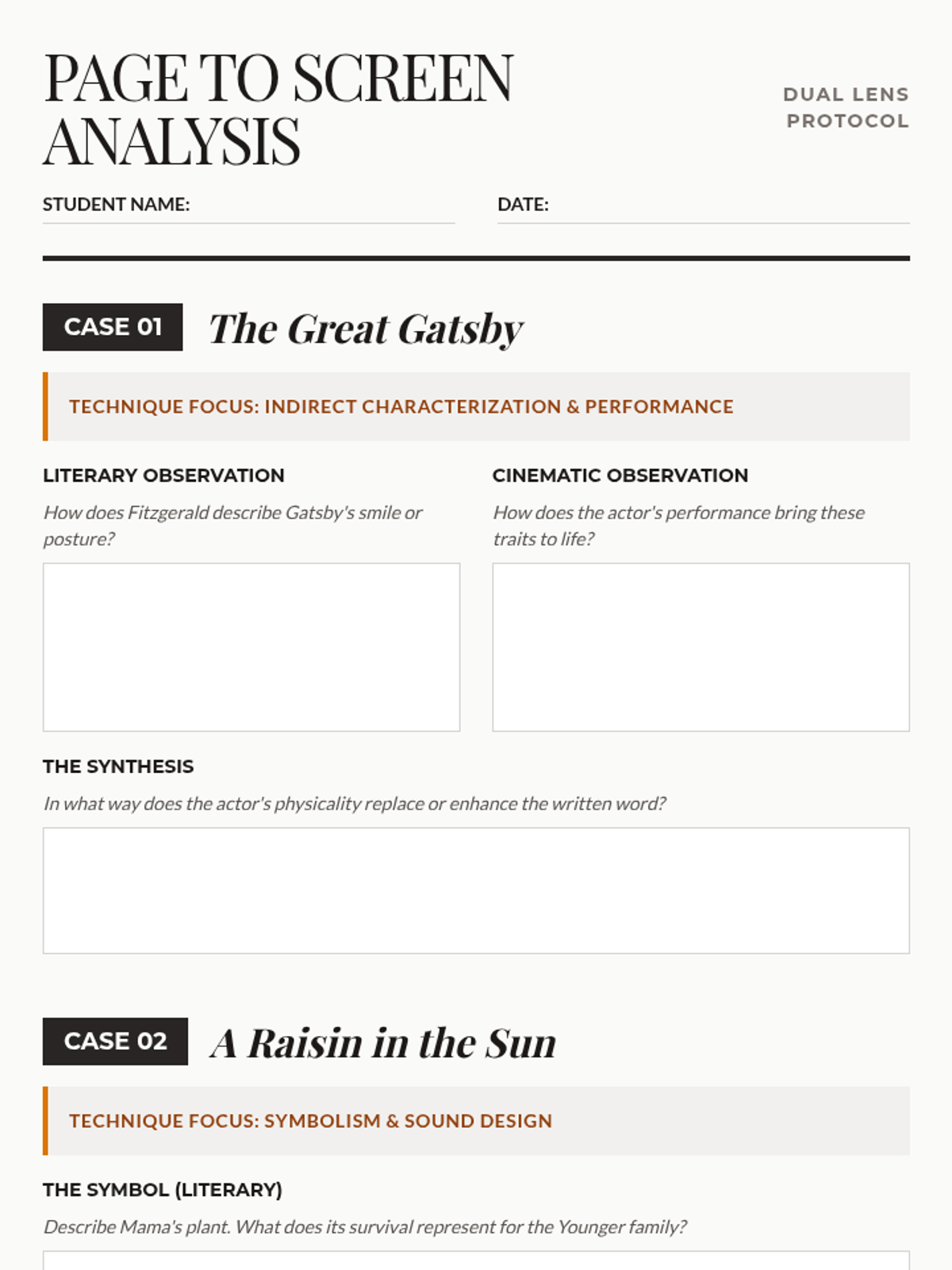
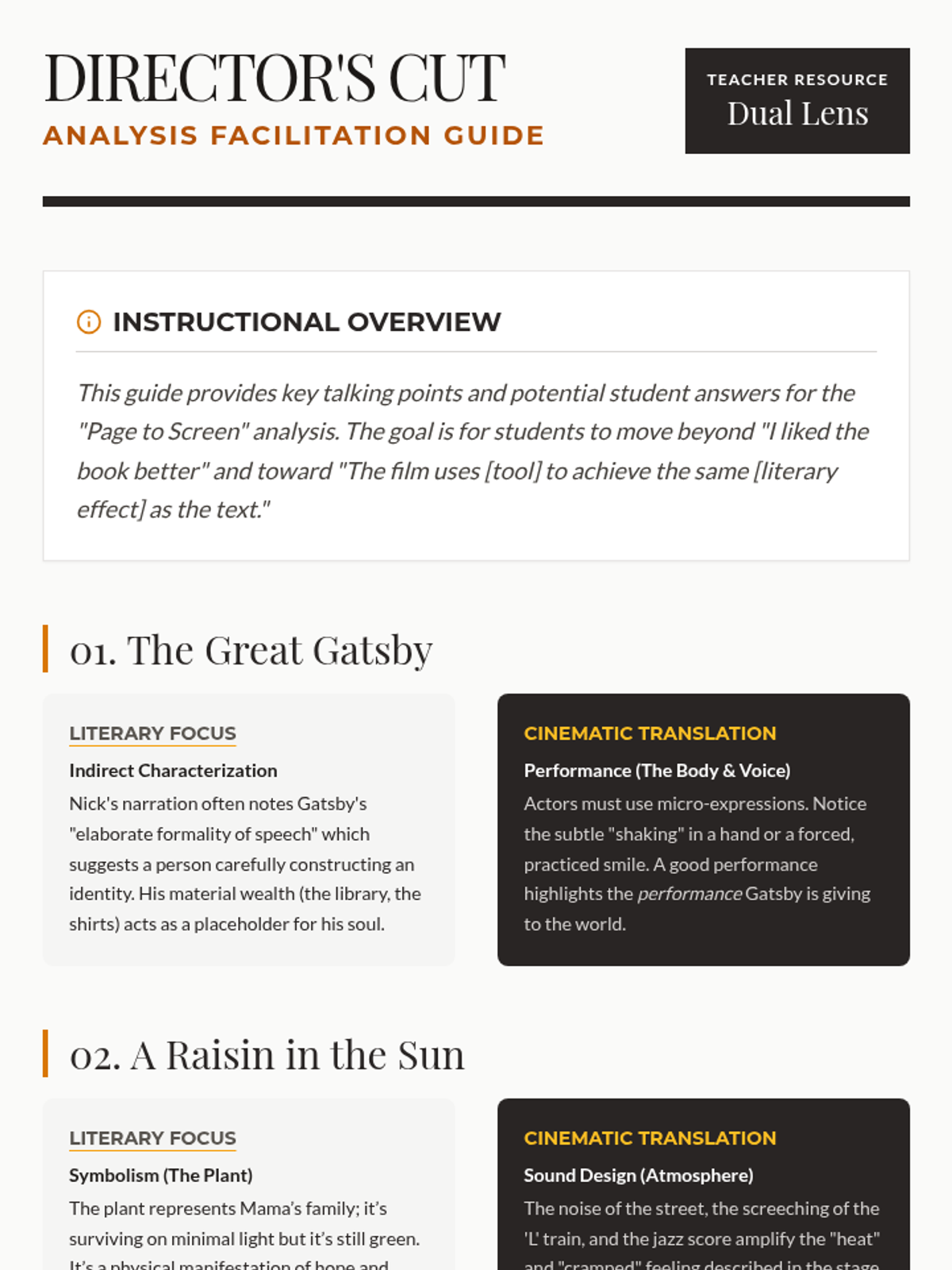
A comprehensive guide to analyzing literature and film, focusing on how narrative elements translate from page to screen using four iconic works. Students explore Characterization, Symbolism, Narrative Structure, and Theme through both literary techniques and cinematic tools like Performance, Sound Design, Editing, and Lighting.
A comprehensive deep-dive into lexical nuance, helping high school students master the art of selecting the perfect word by exploring intensity, connotation, and context through semantic gradients.
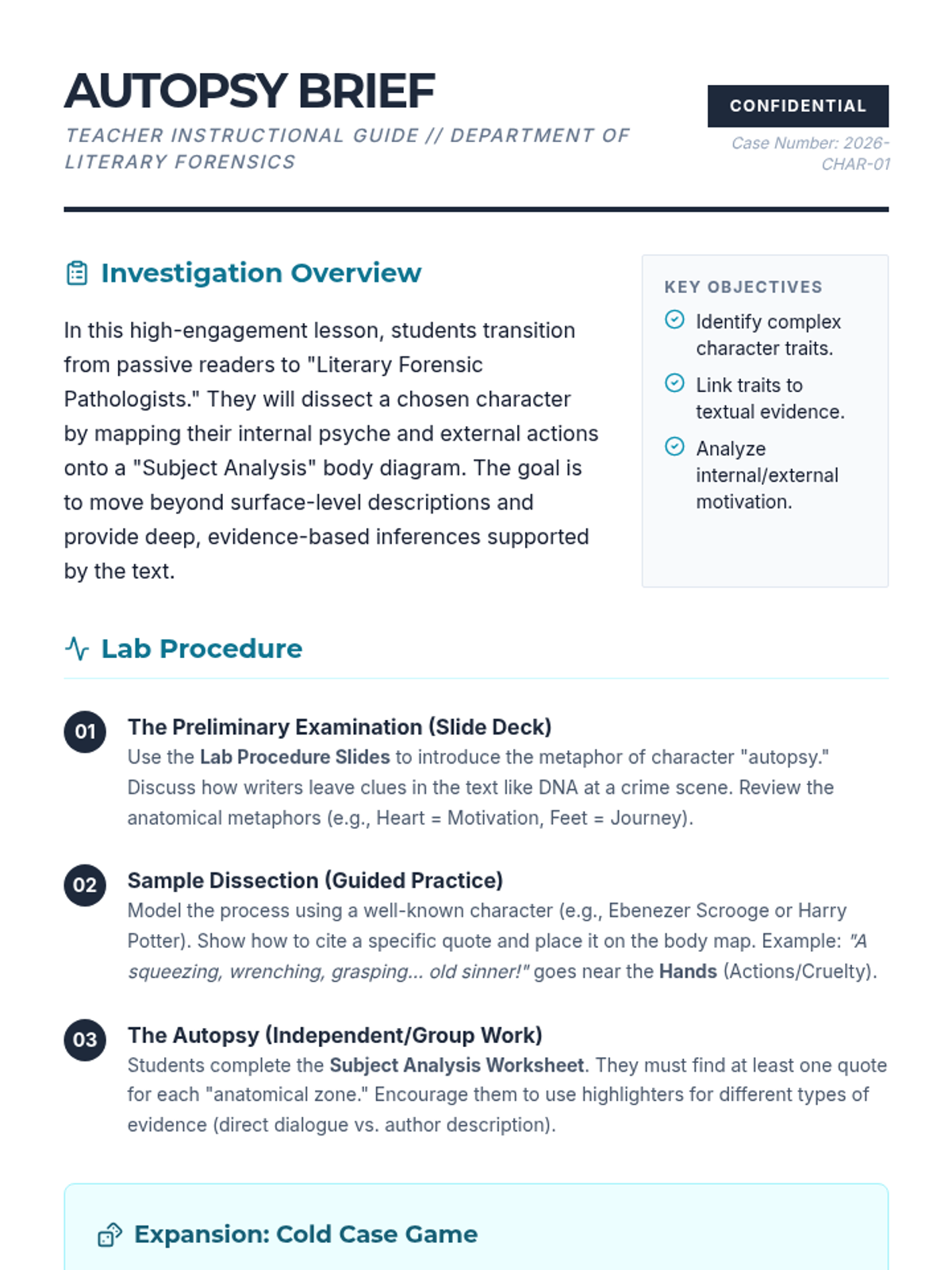
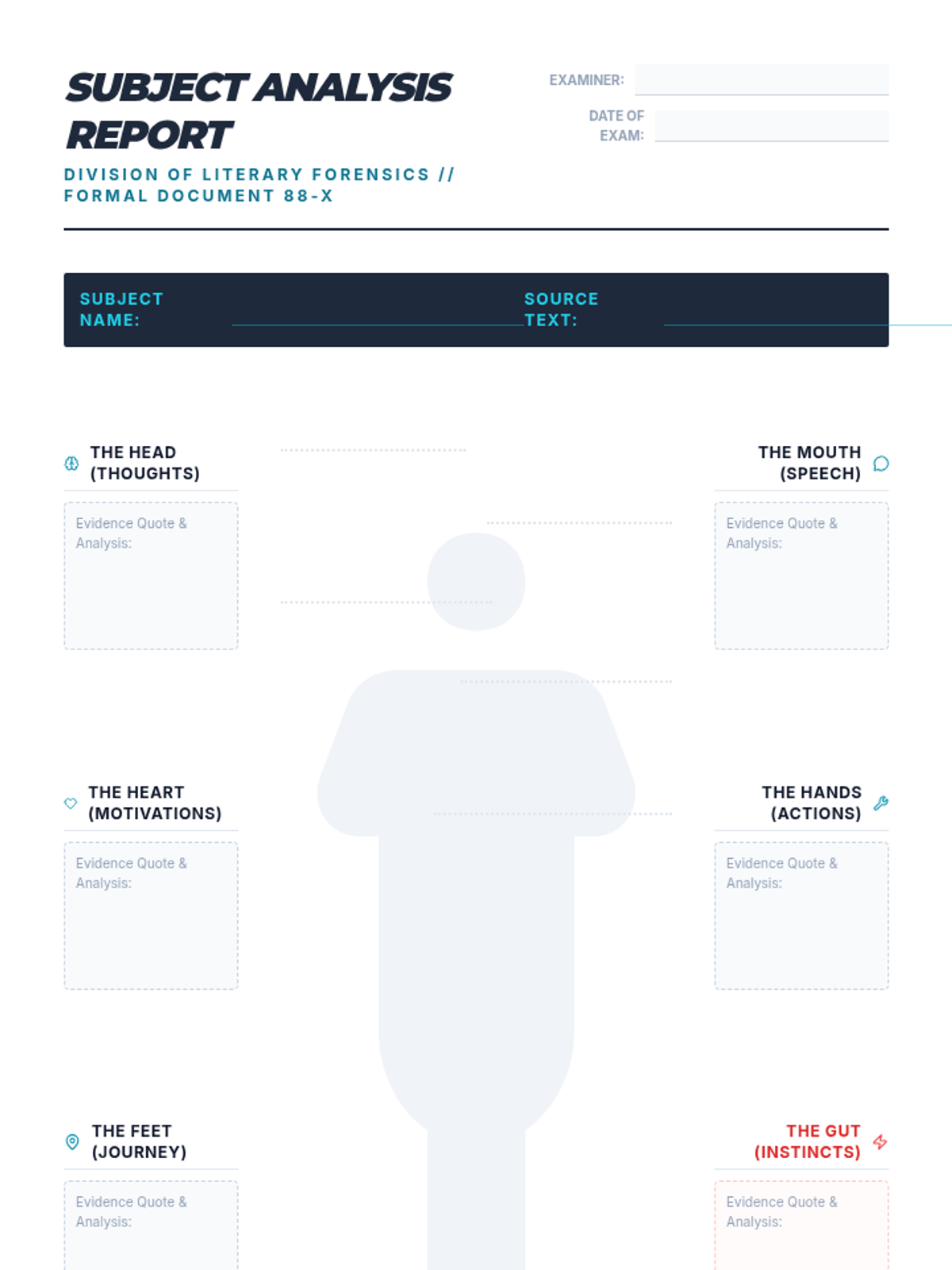
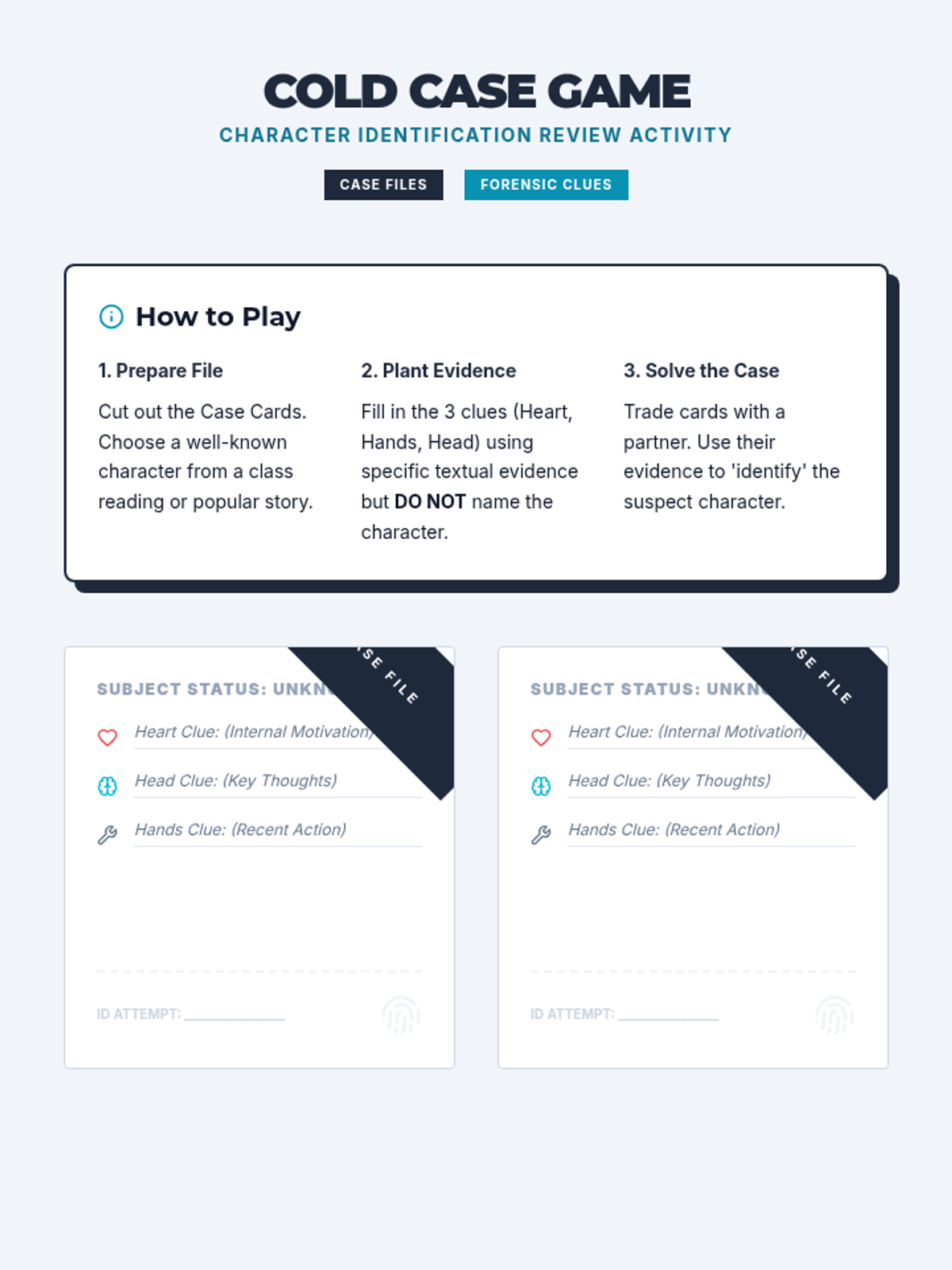
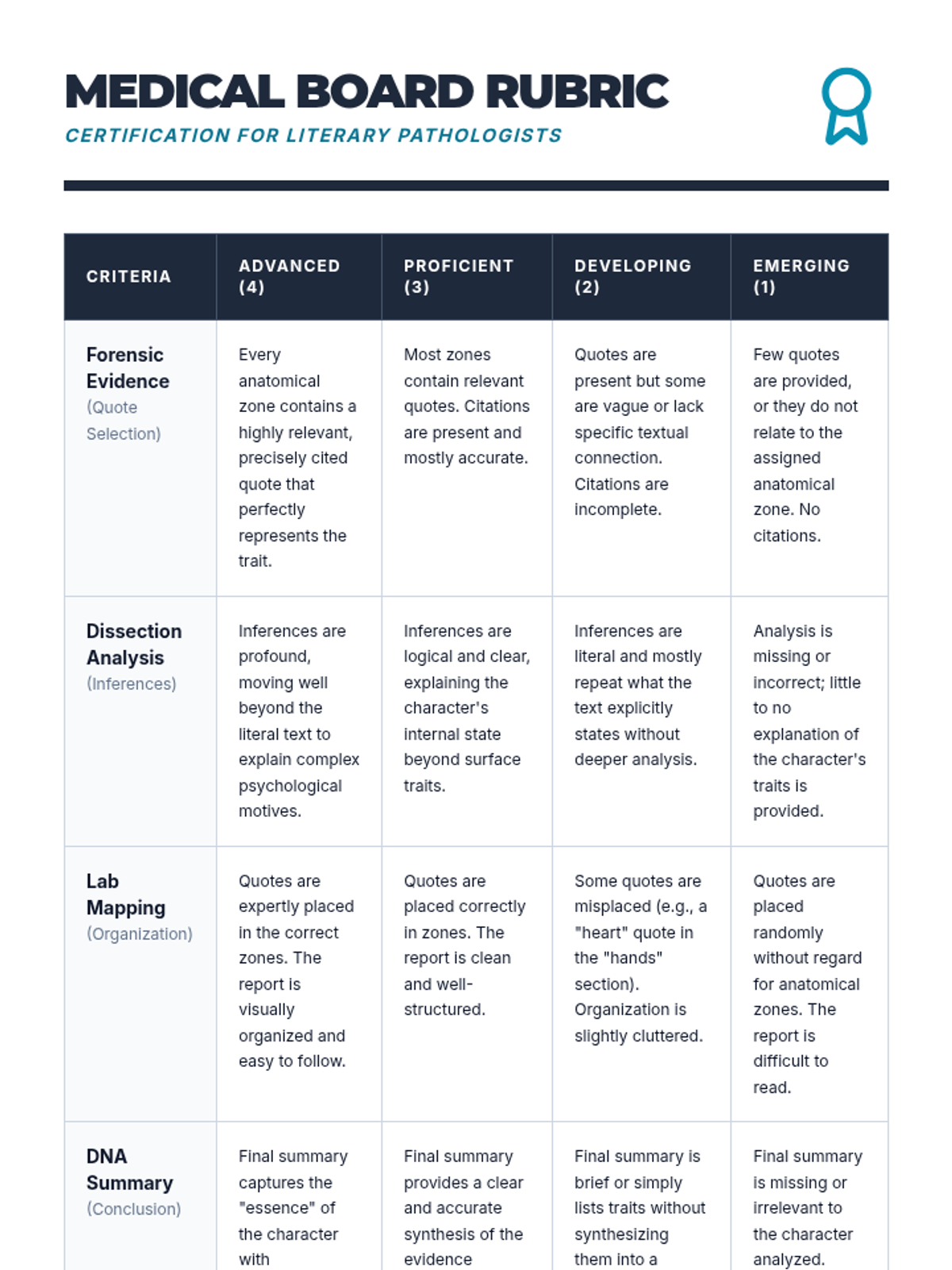
A deep-dive character analysis lesson where students perform a 'Character Autopsy' using textual evidence to map internal traits and external motivations. Students function as forensic literary analysts to uncover the 'DNA' of a protagonist or antagonist.
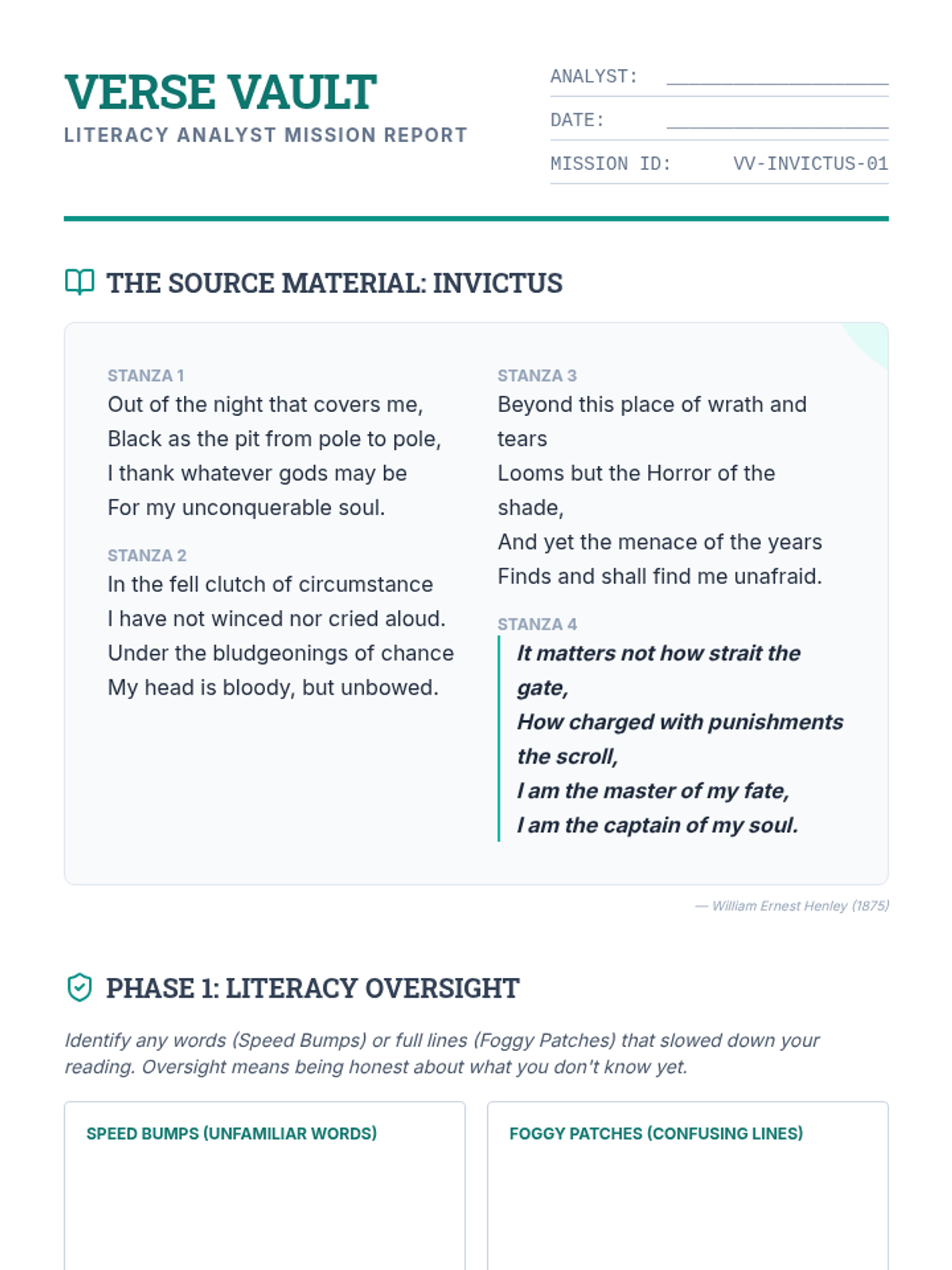
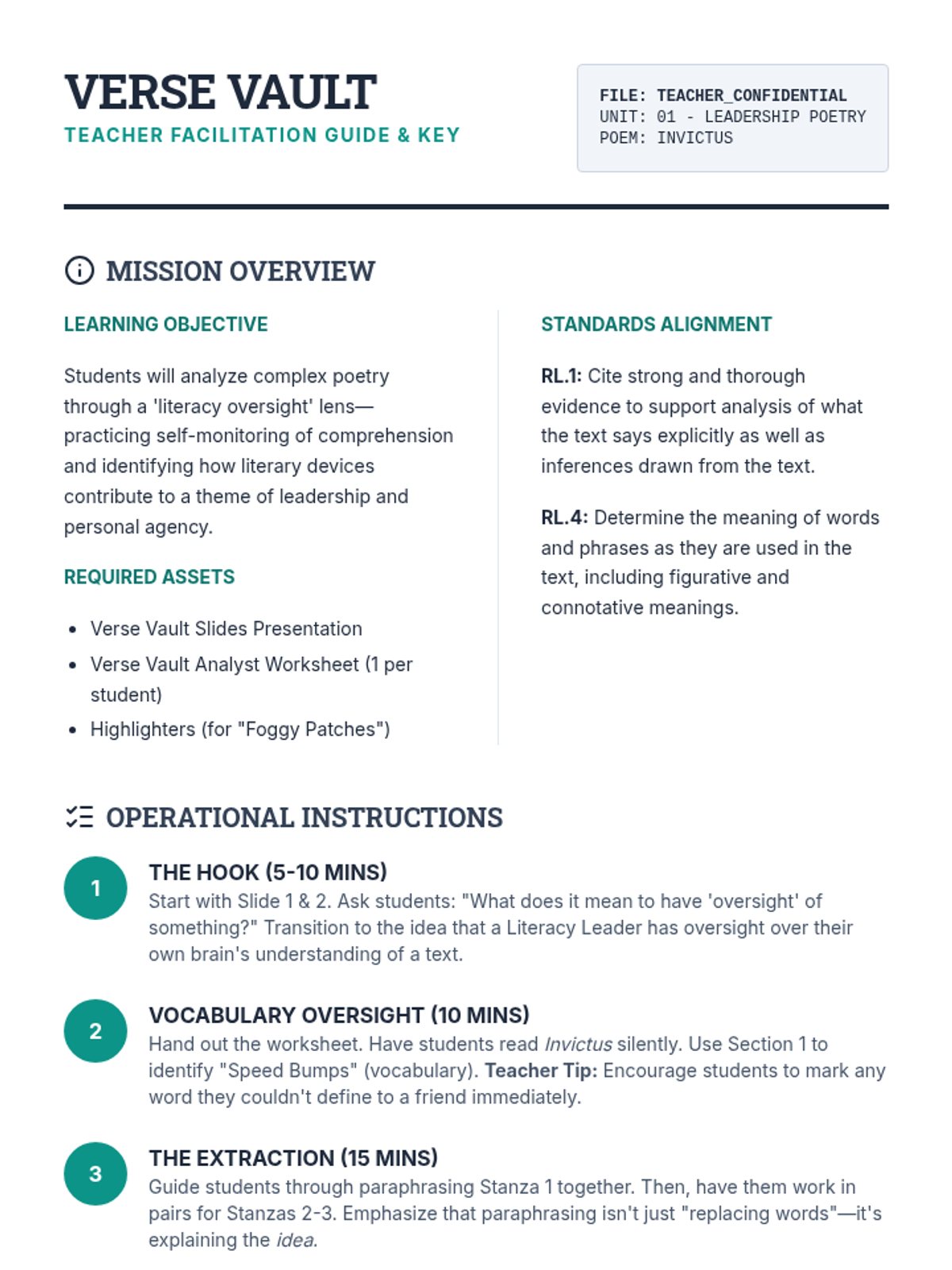
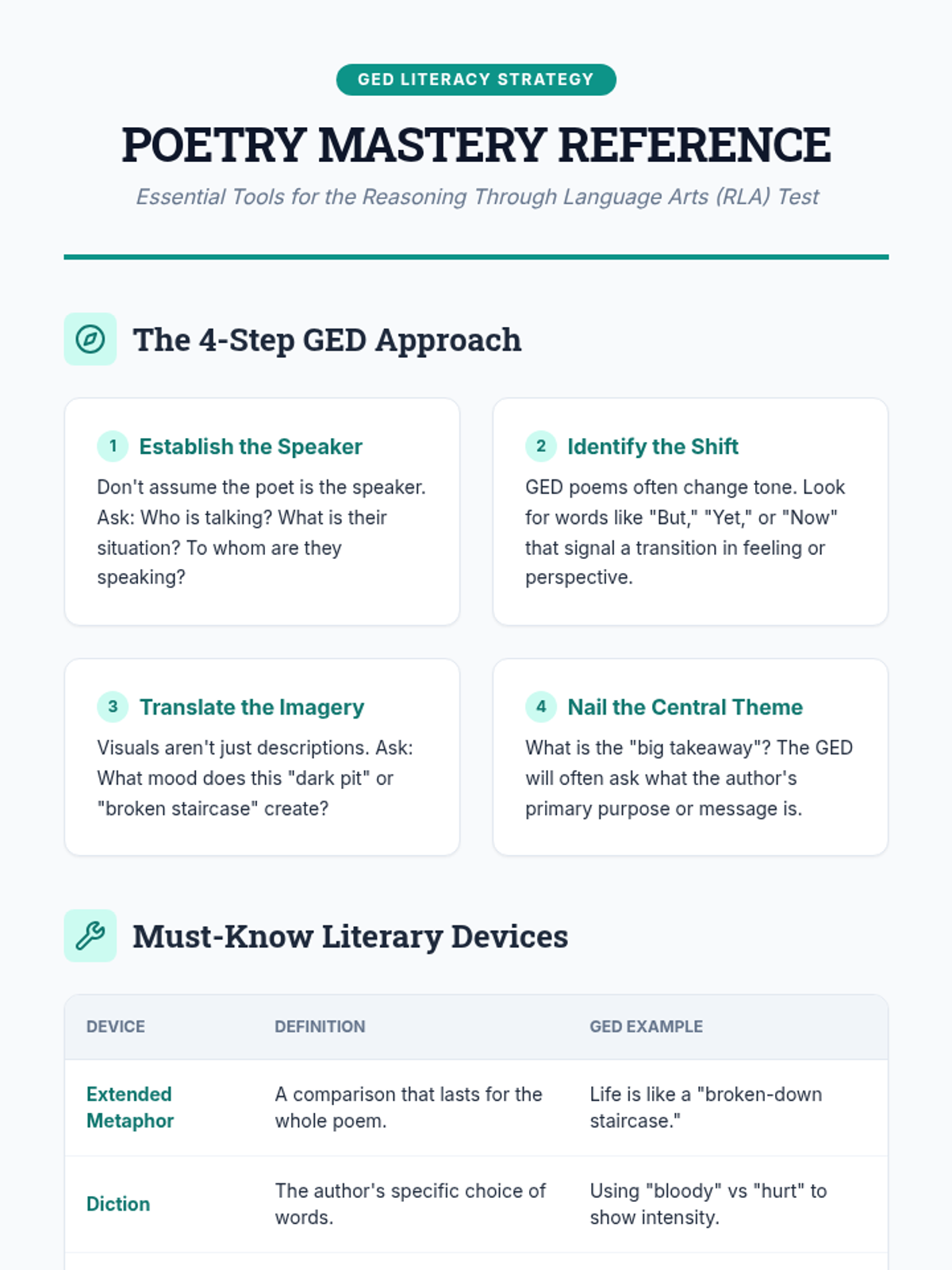
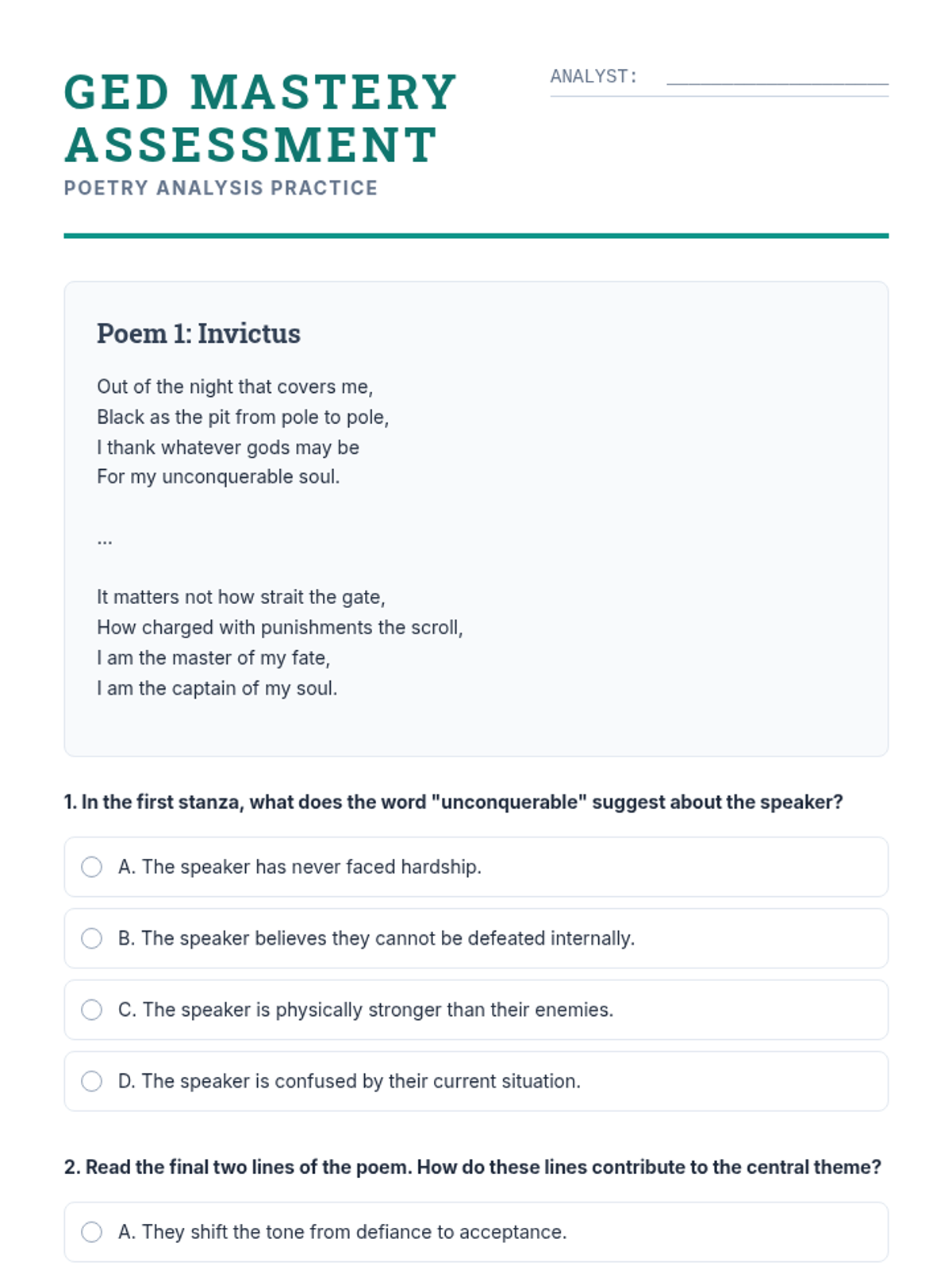
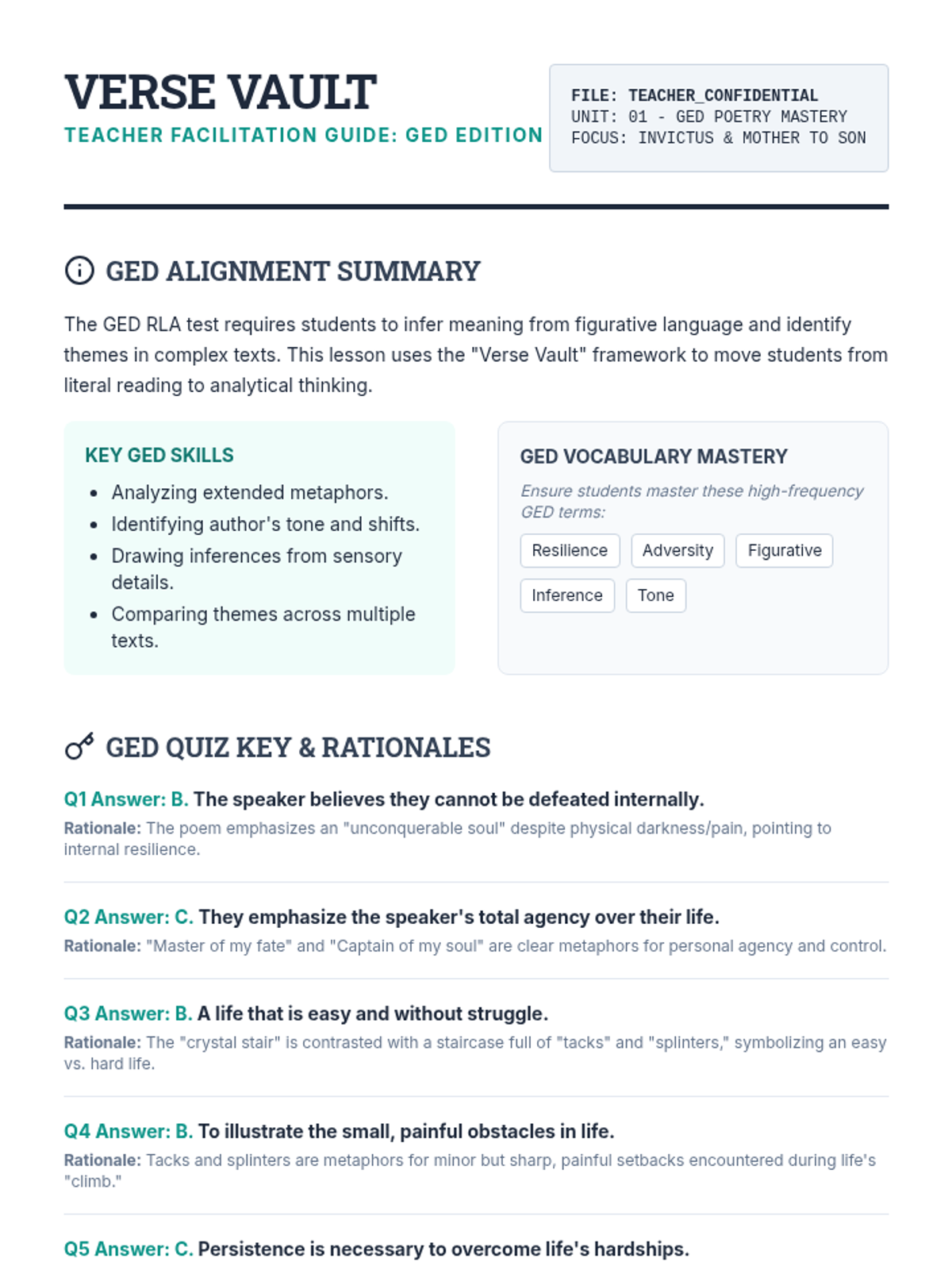
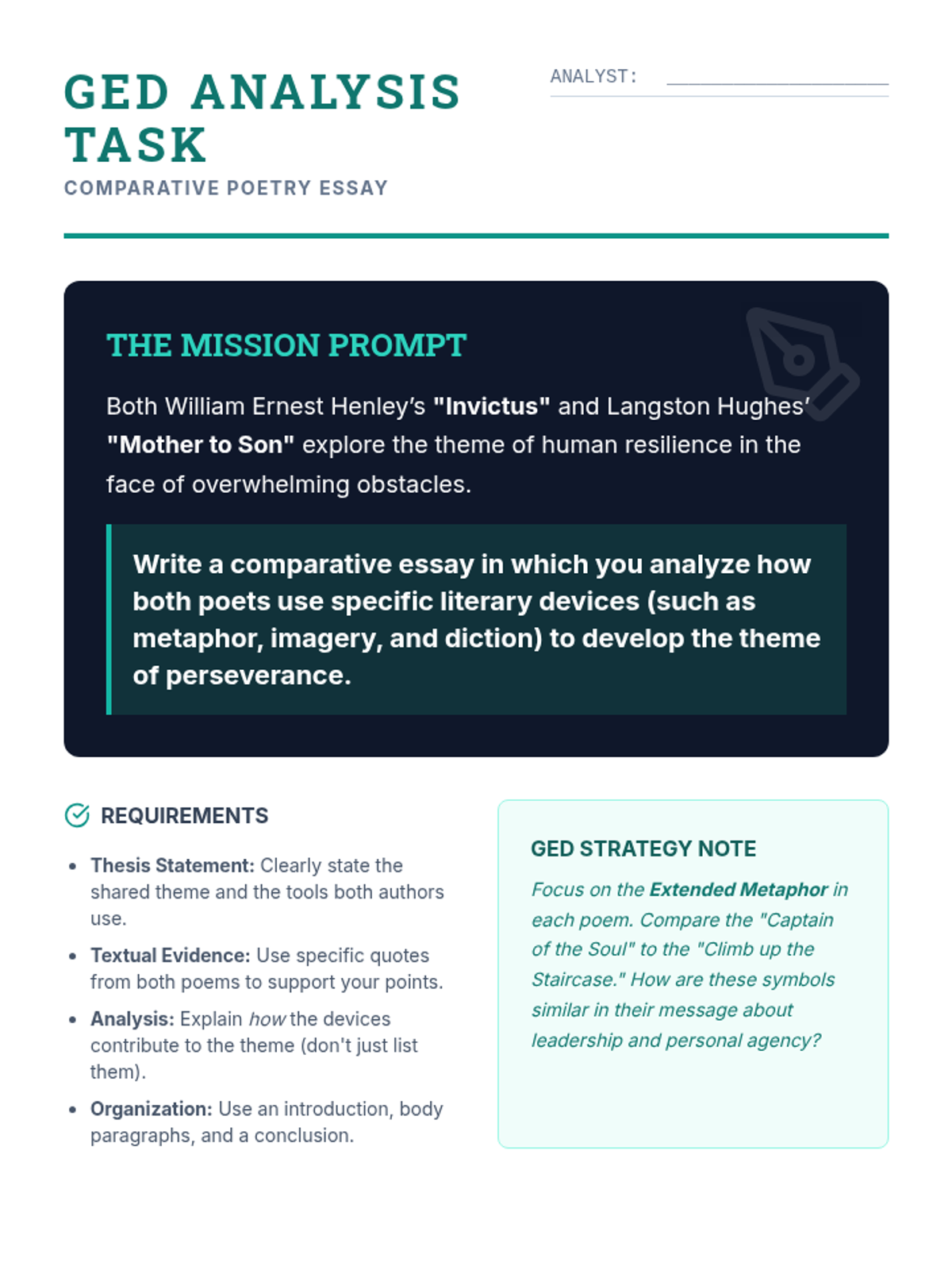
A poetry analysis lesson where students take on the role of 'Literacy Analysts' to decode complex texts and lead their own learning. Through the lens of leadership and self-oversight, students learn to break down stanzas, identify literary devices, and uncover deeper themes.
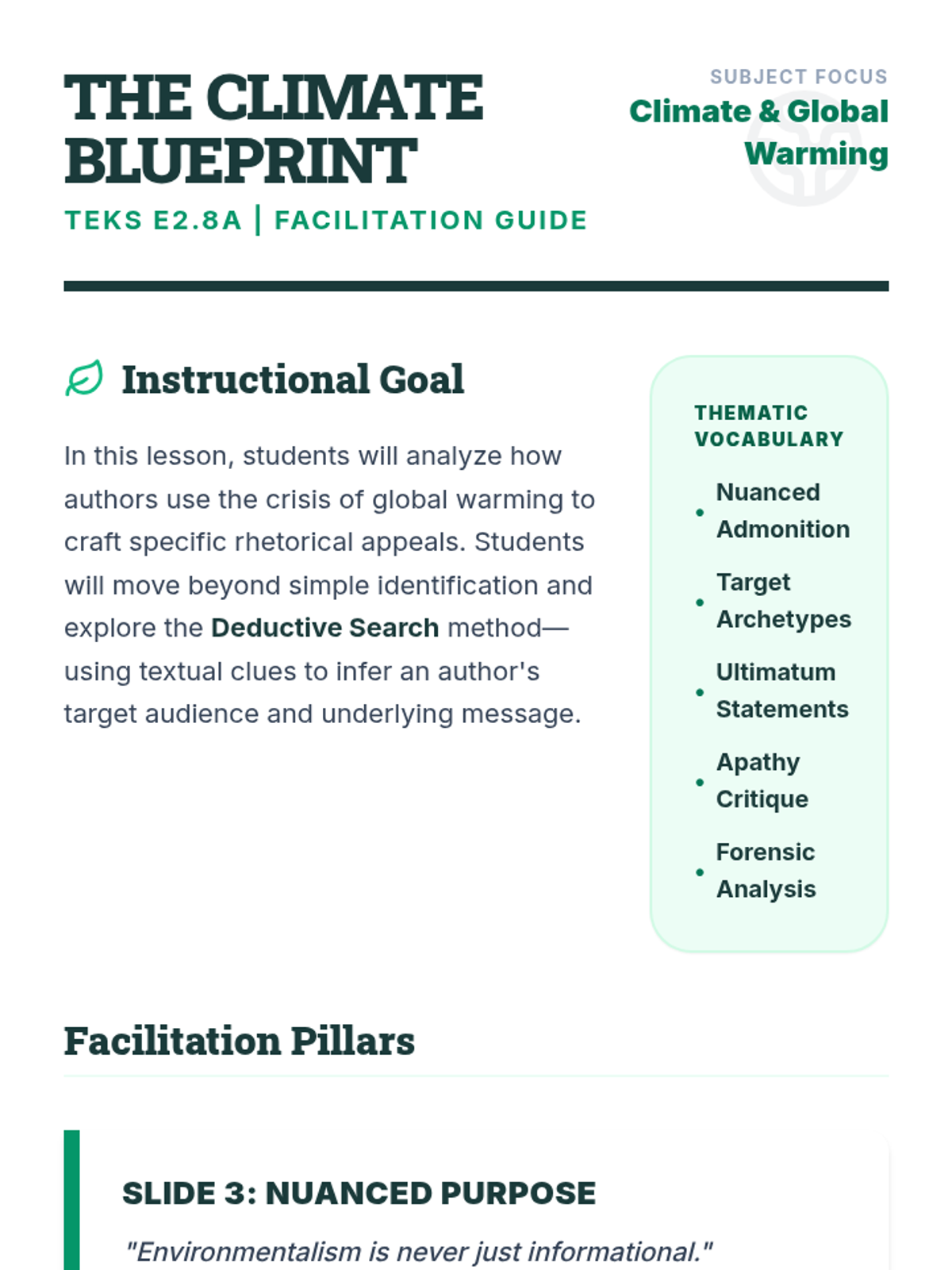
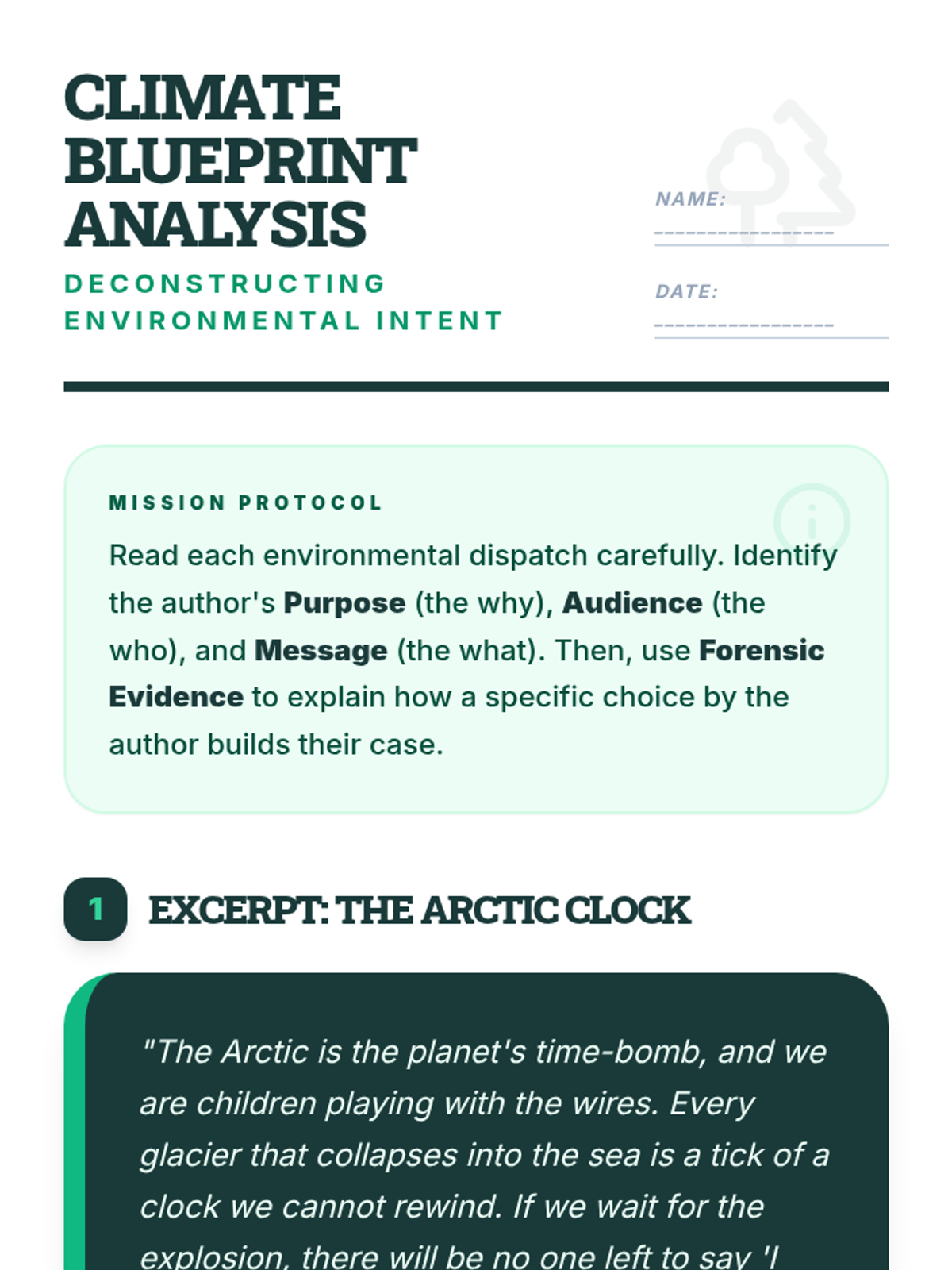
An instructional unit focusing on TEKS E2.8A, teaching students to analyze author's purpose, audience, and message within a variety of texts using nuanced verbs and rhetorical context.
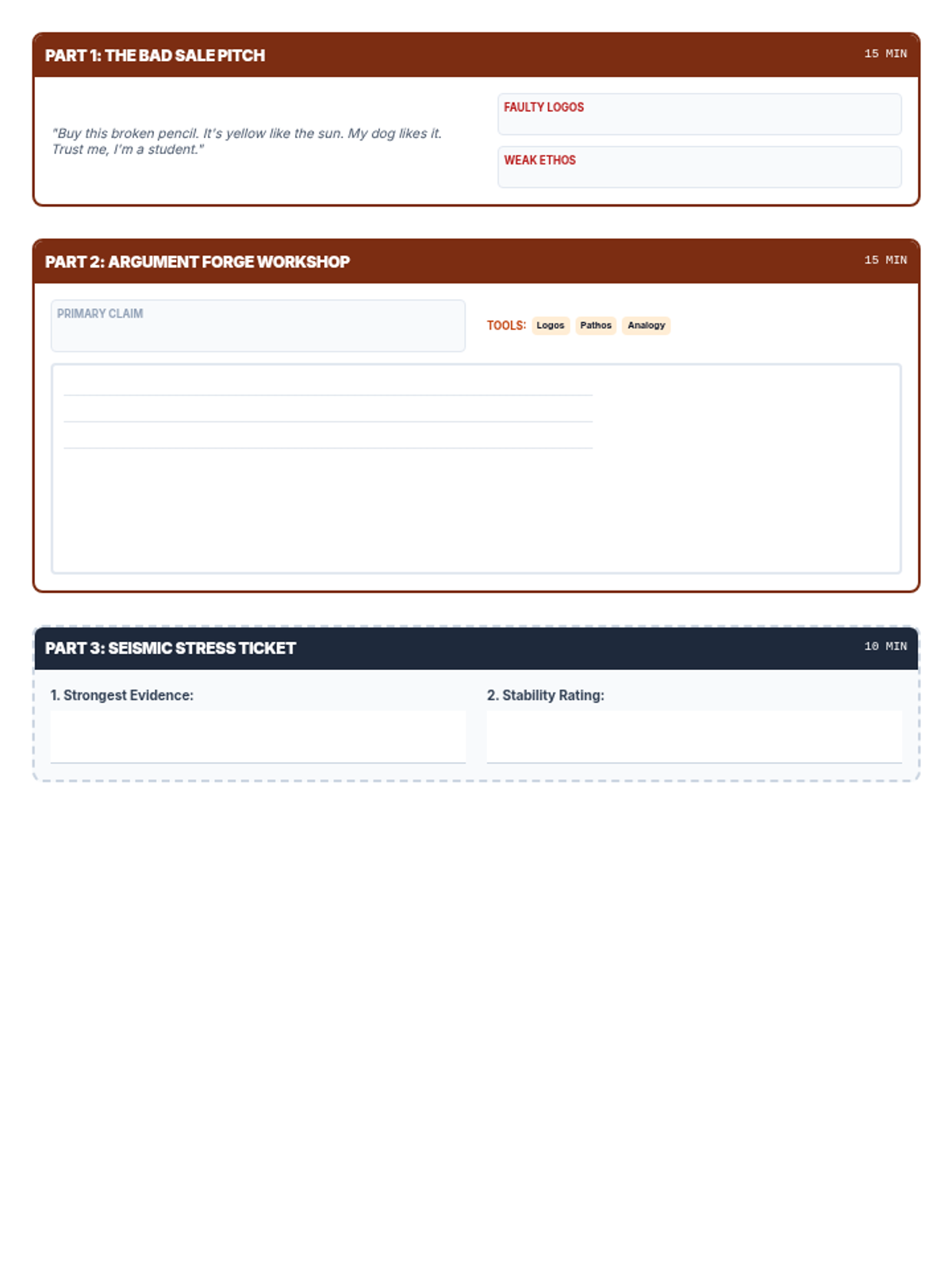
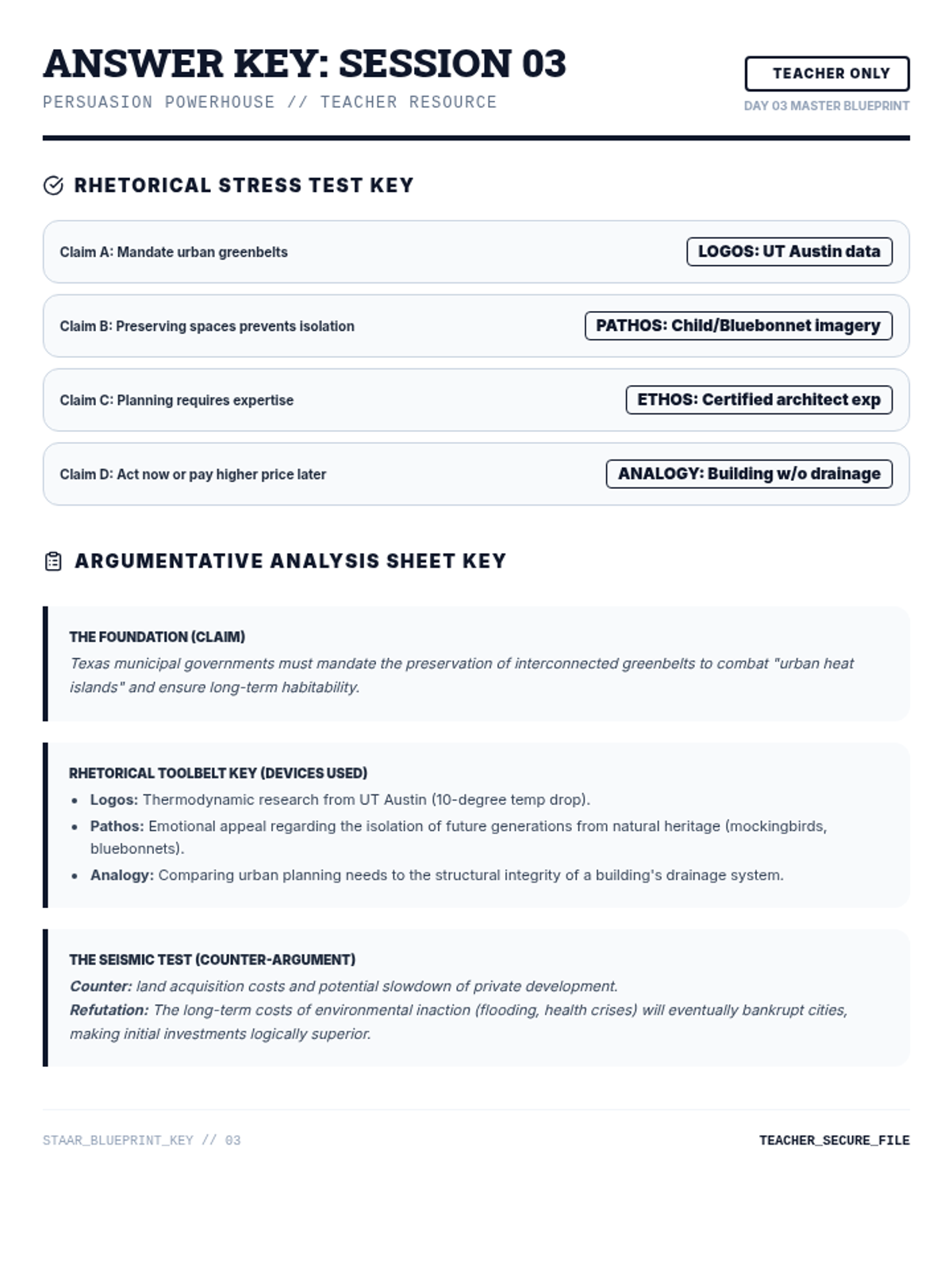
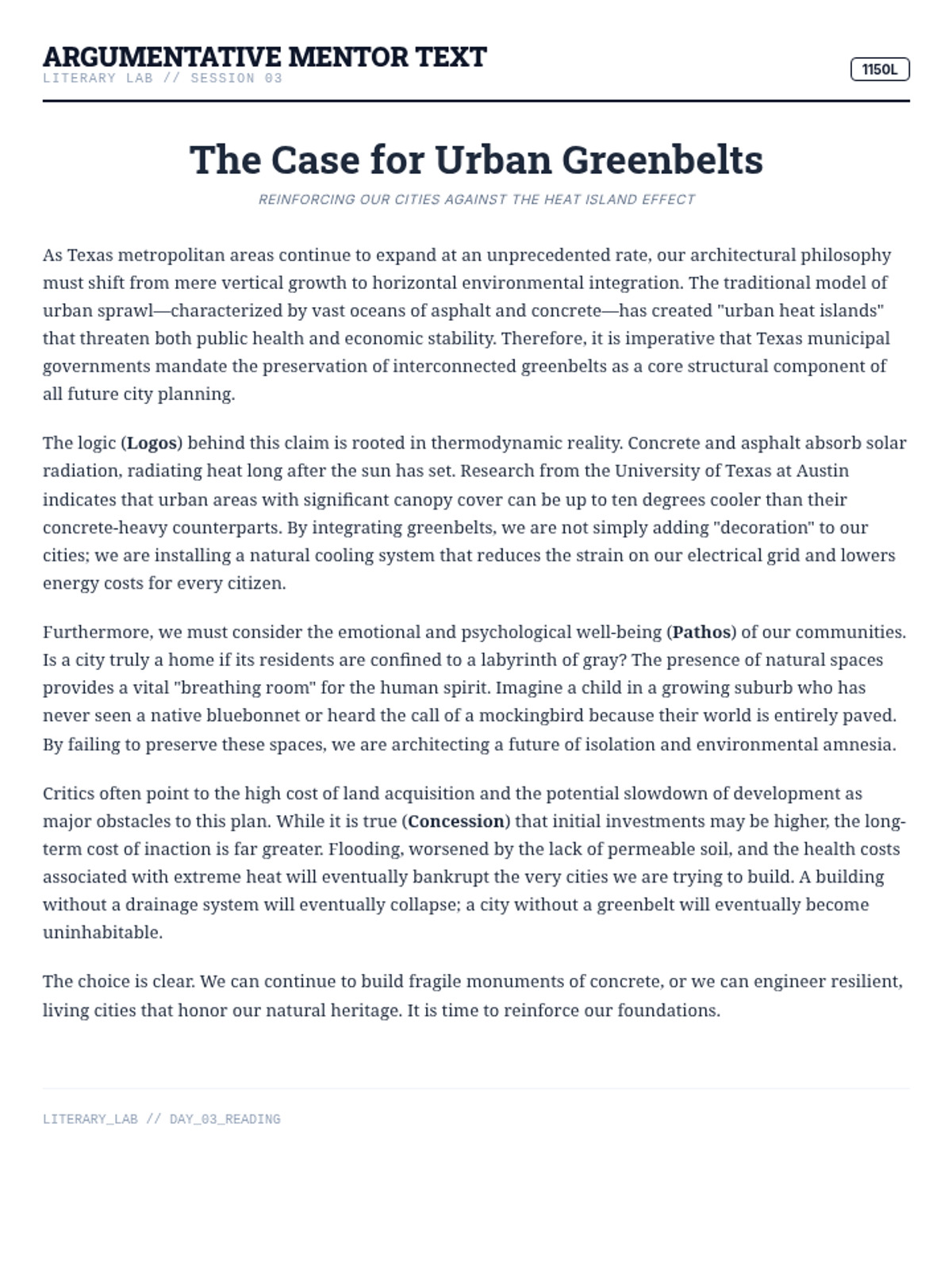
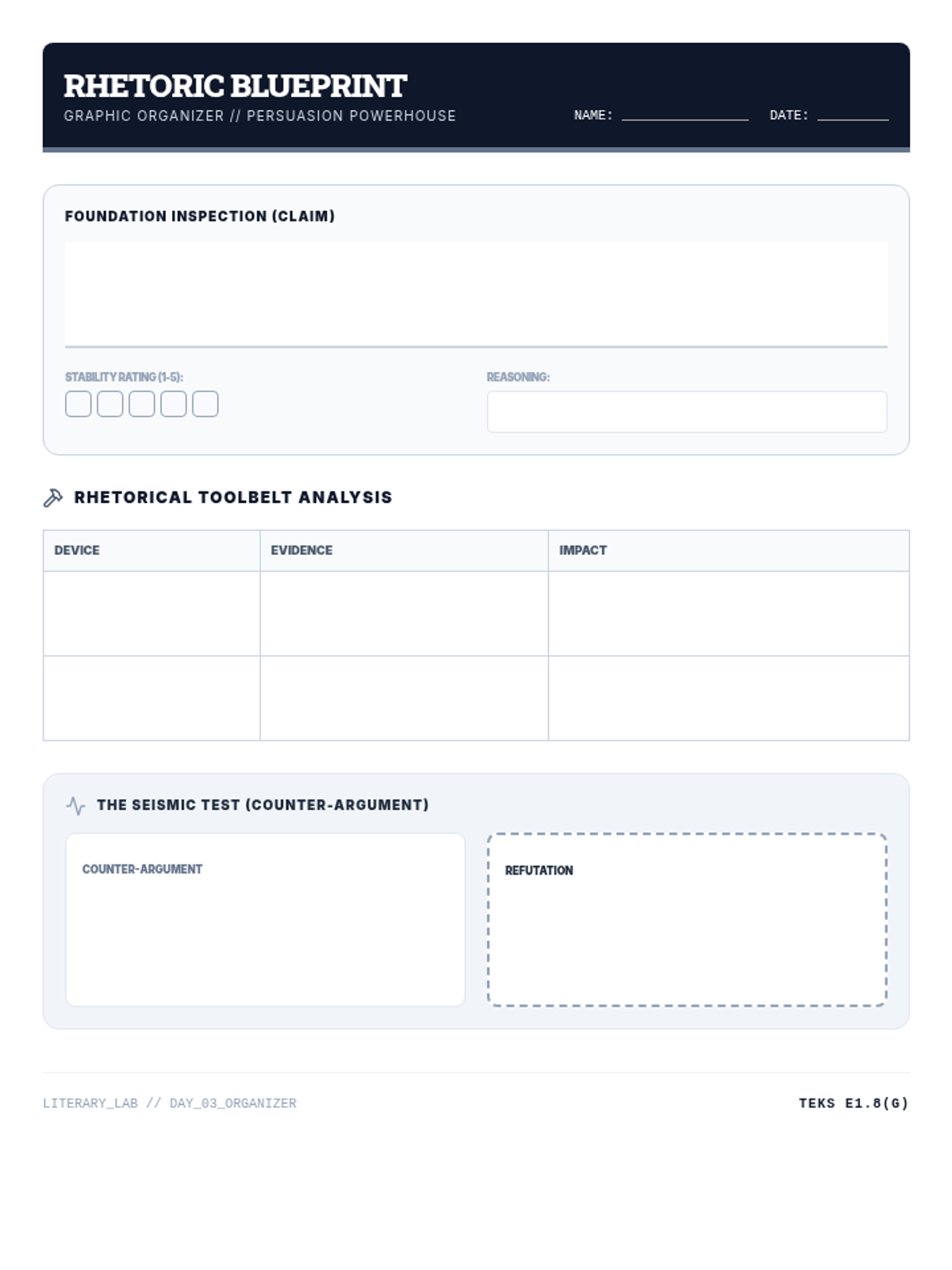
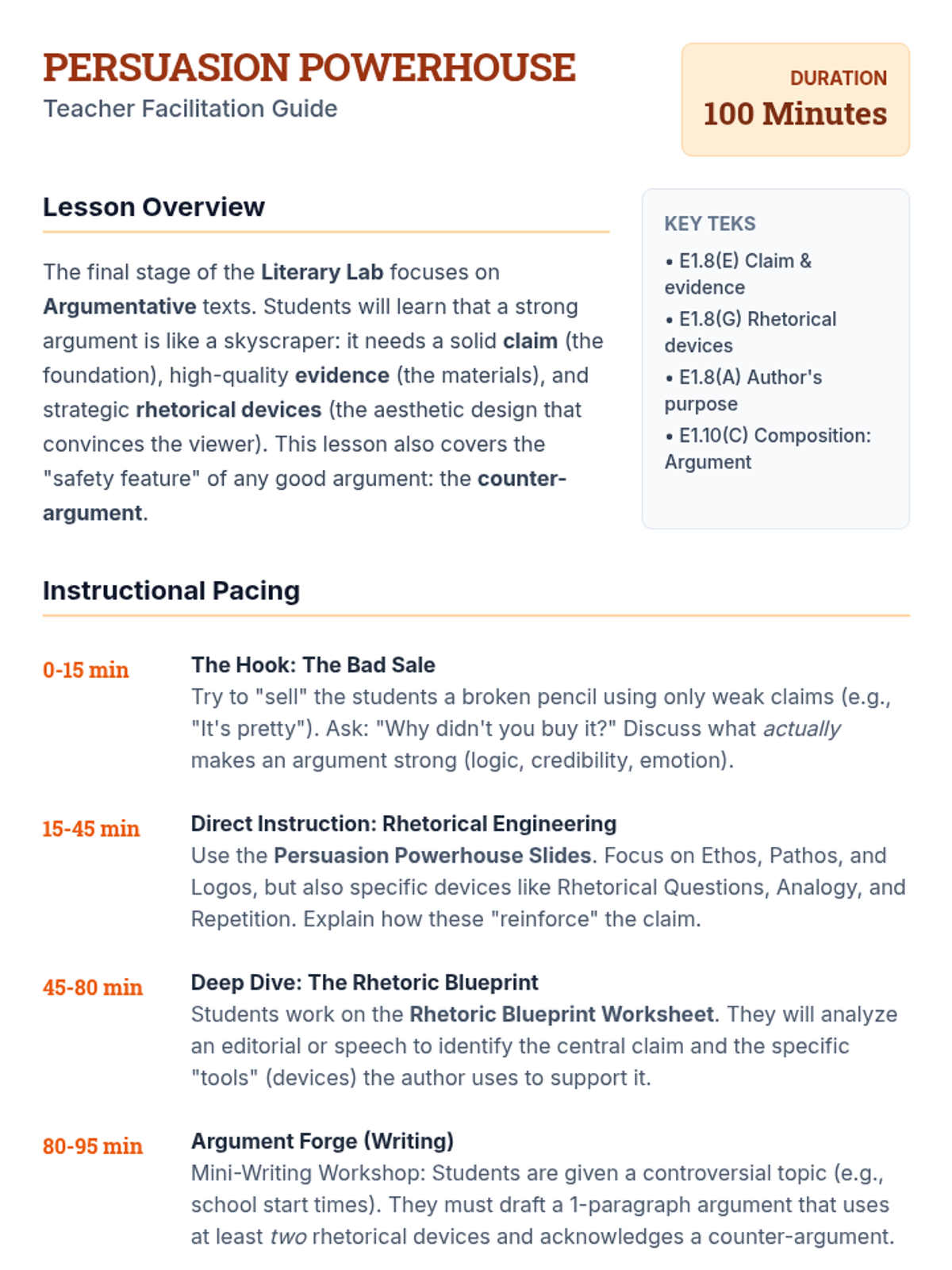
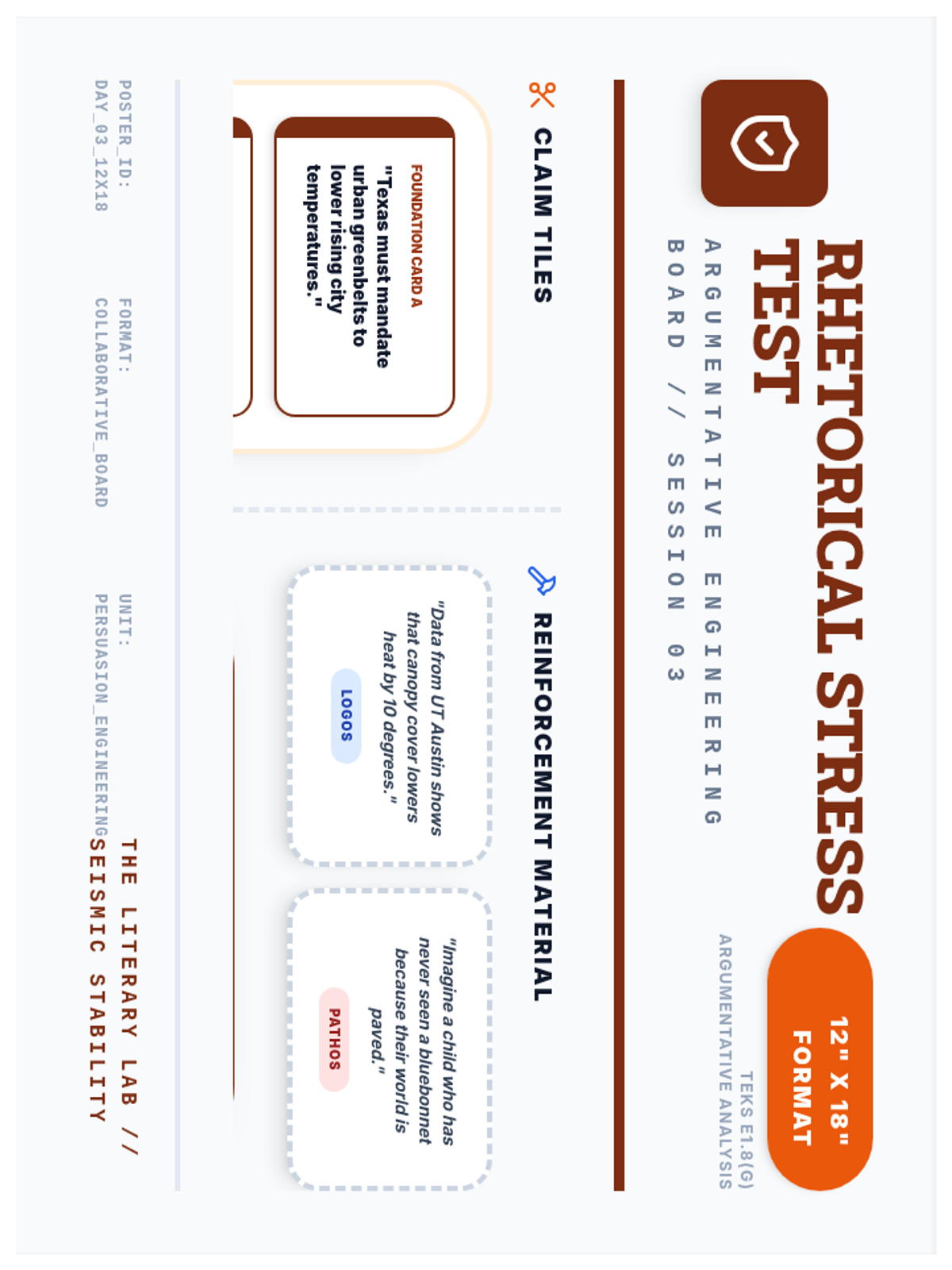
Deconstructs the components of a powerful argument, focusing on claim development, rhetorical devices, and the strategic use of evidence and counter-arguments.
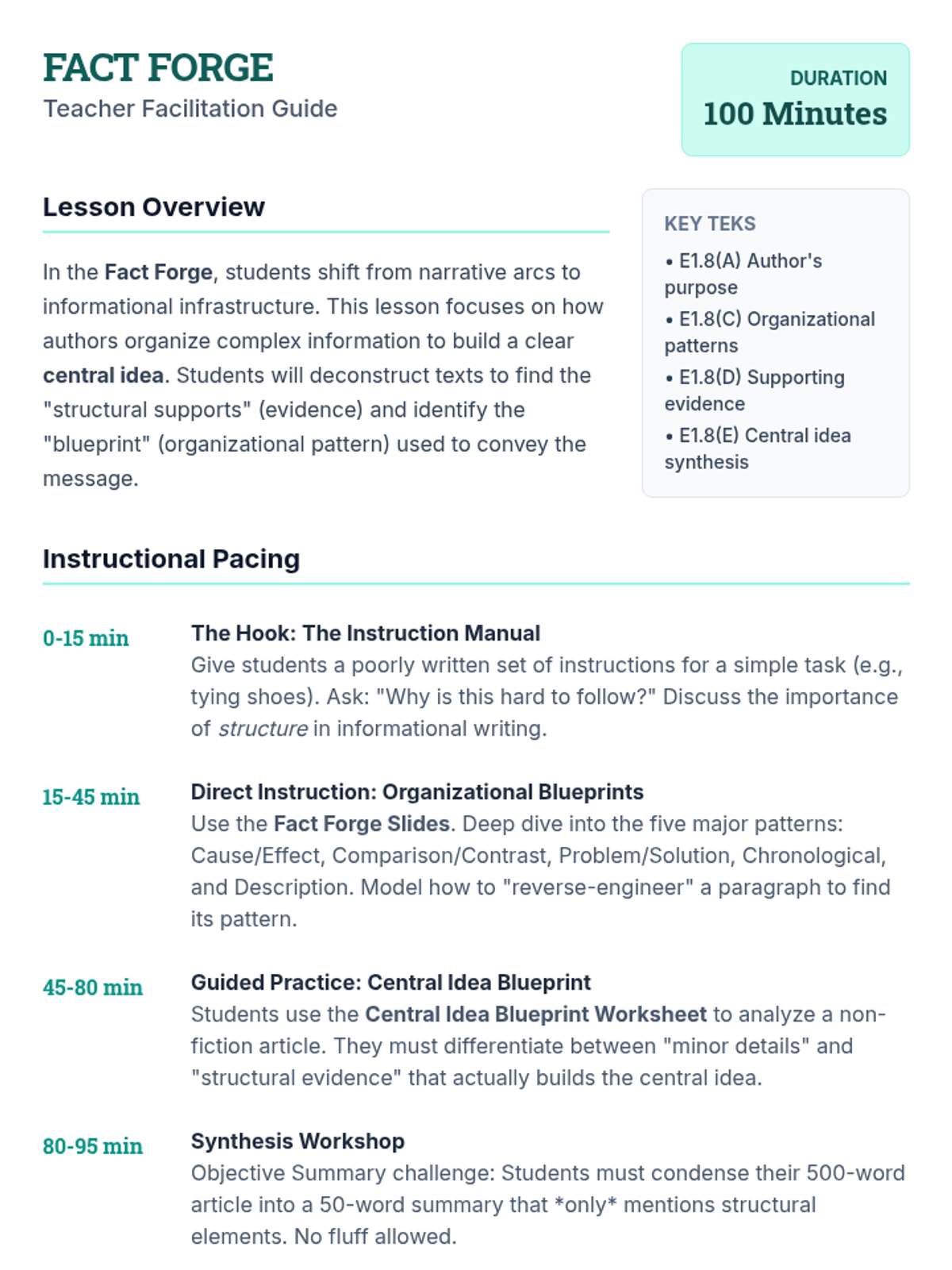
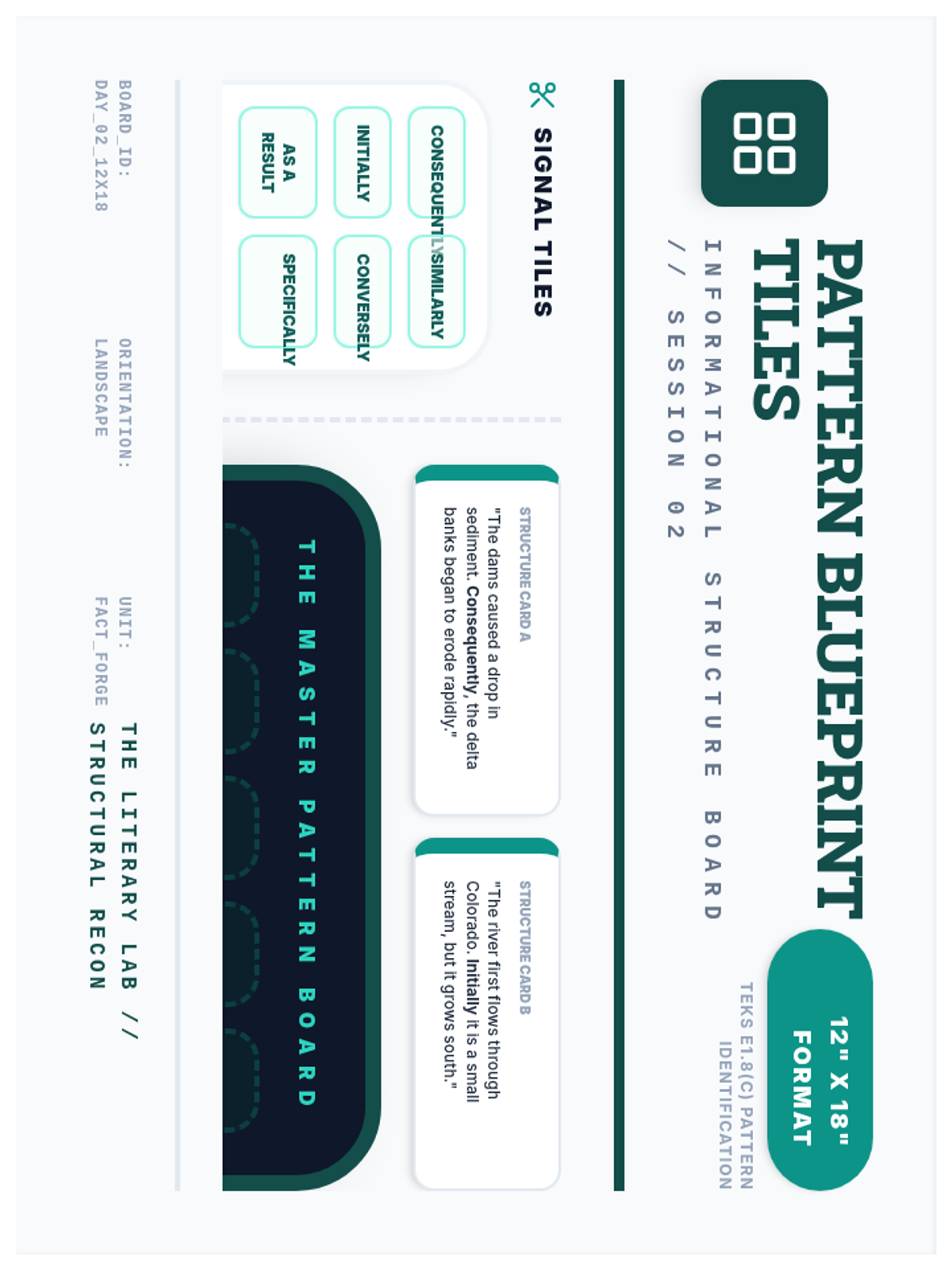
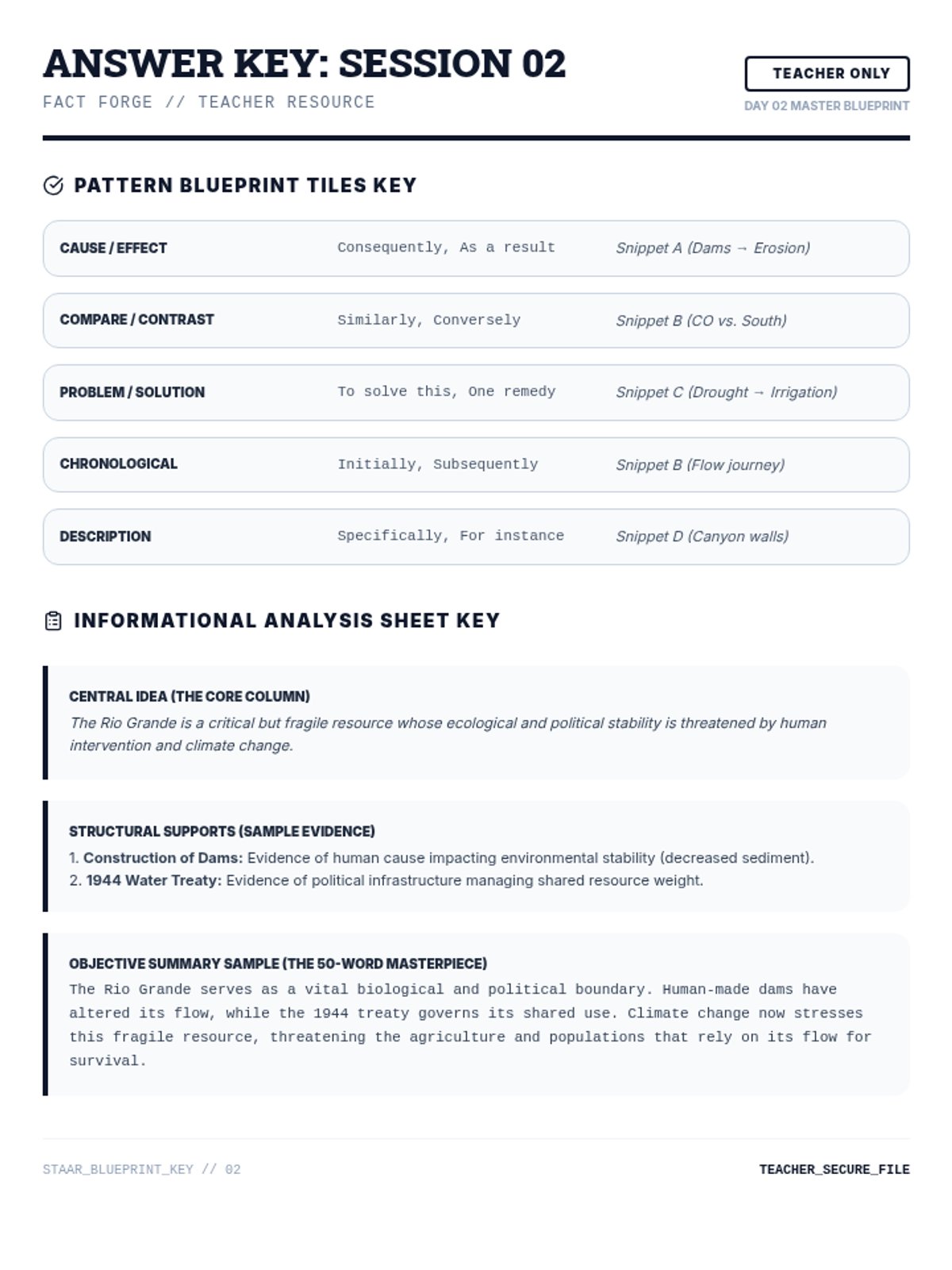
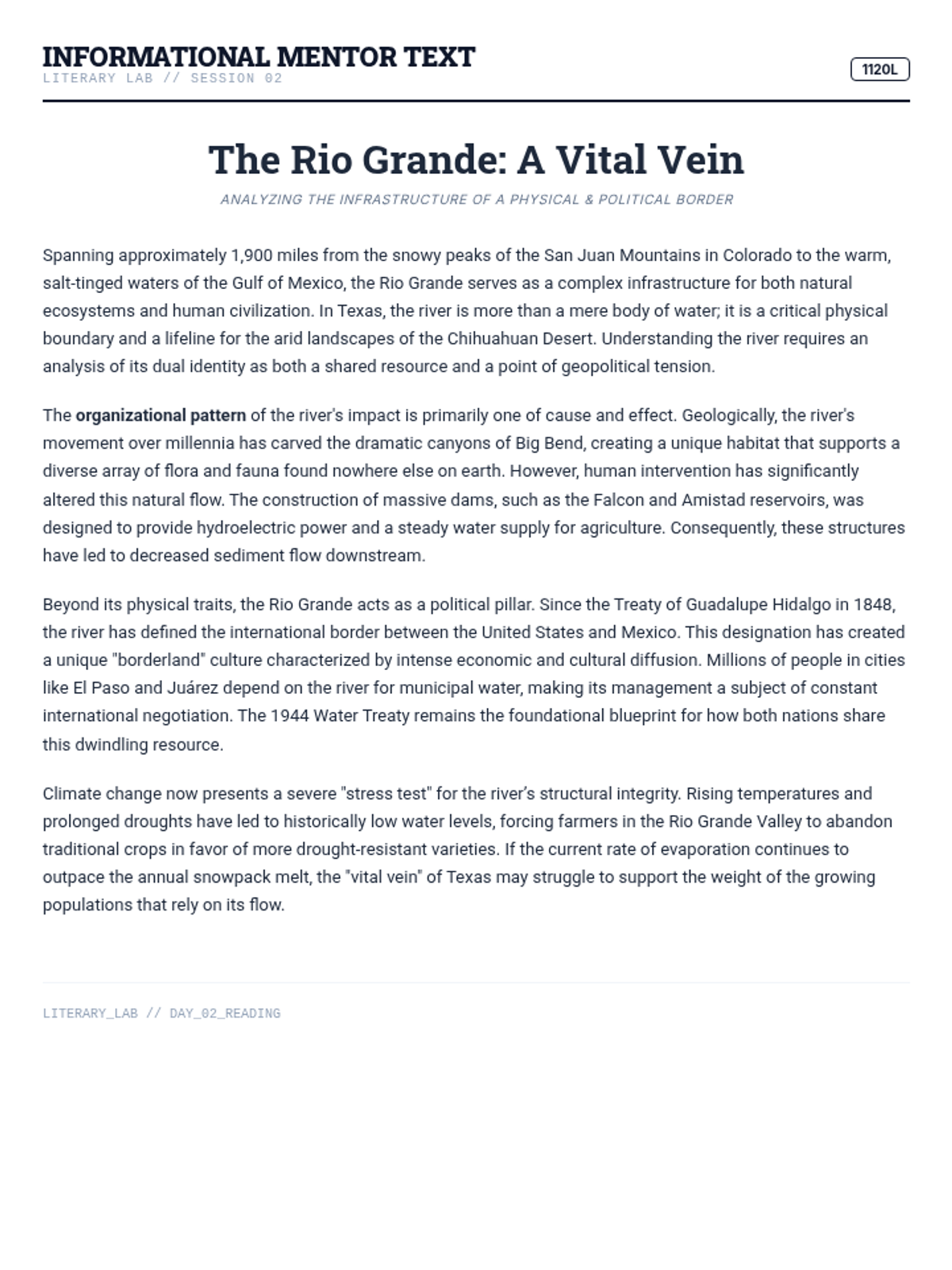
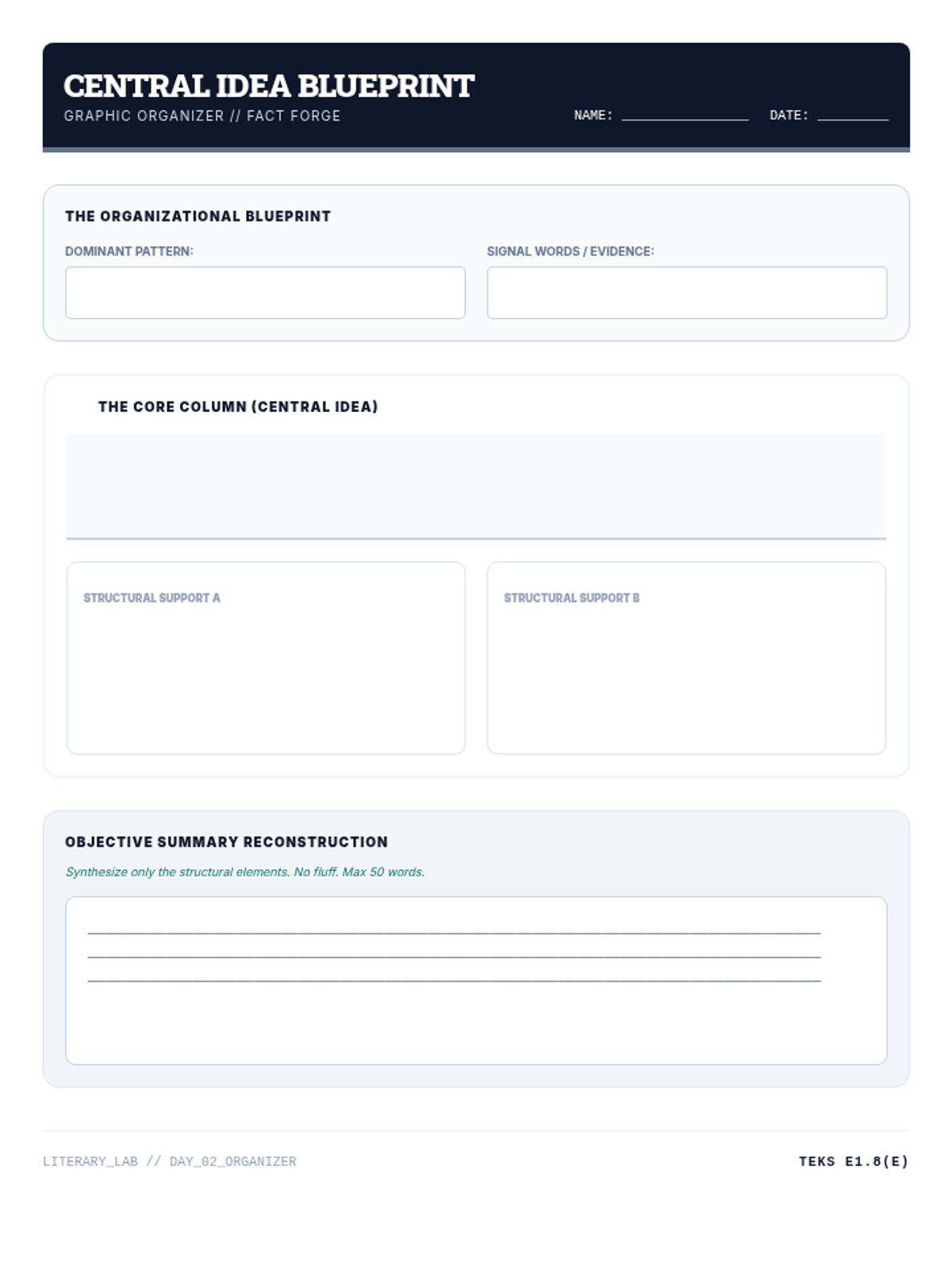
Explores informational texts by analyzing organizational patterns, central ideas, and how authors use specific evidence to build complex explanations.

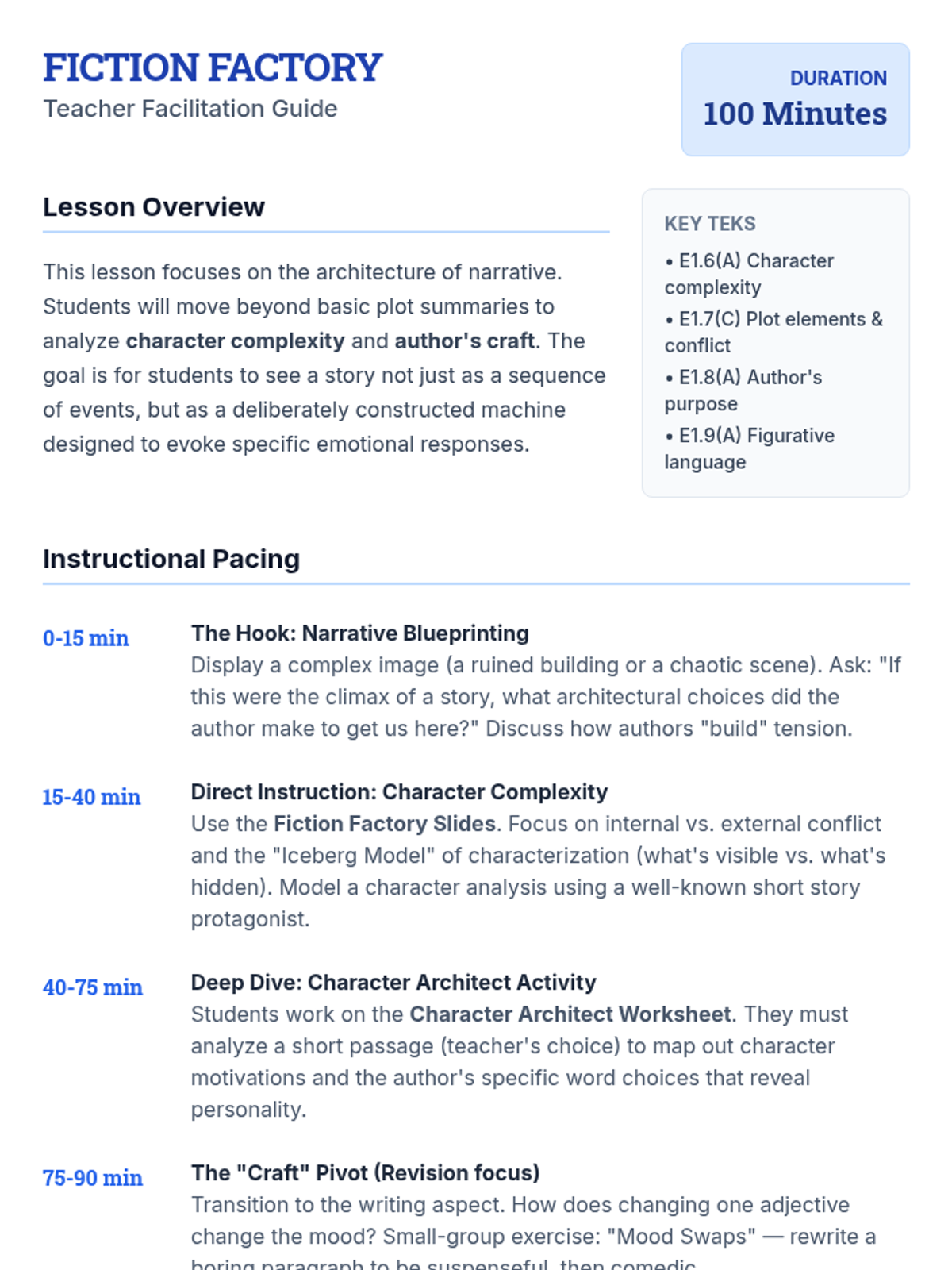
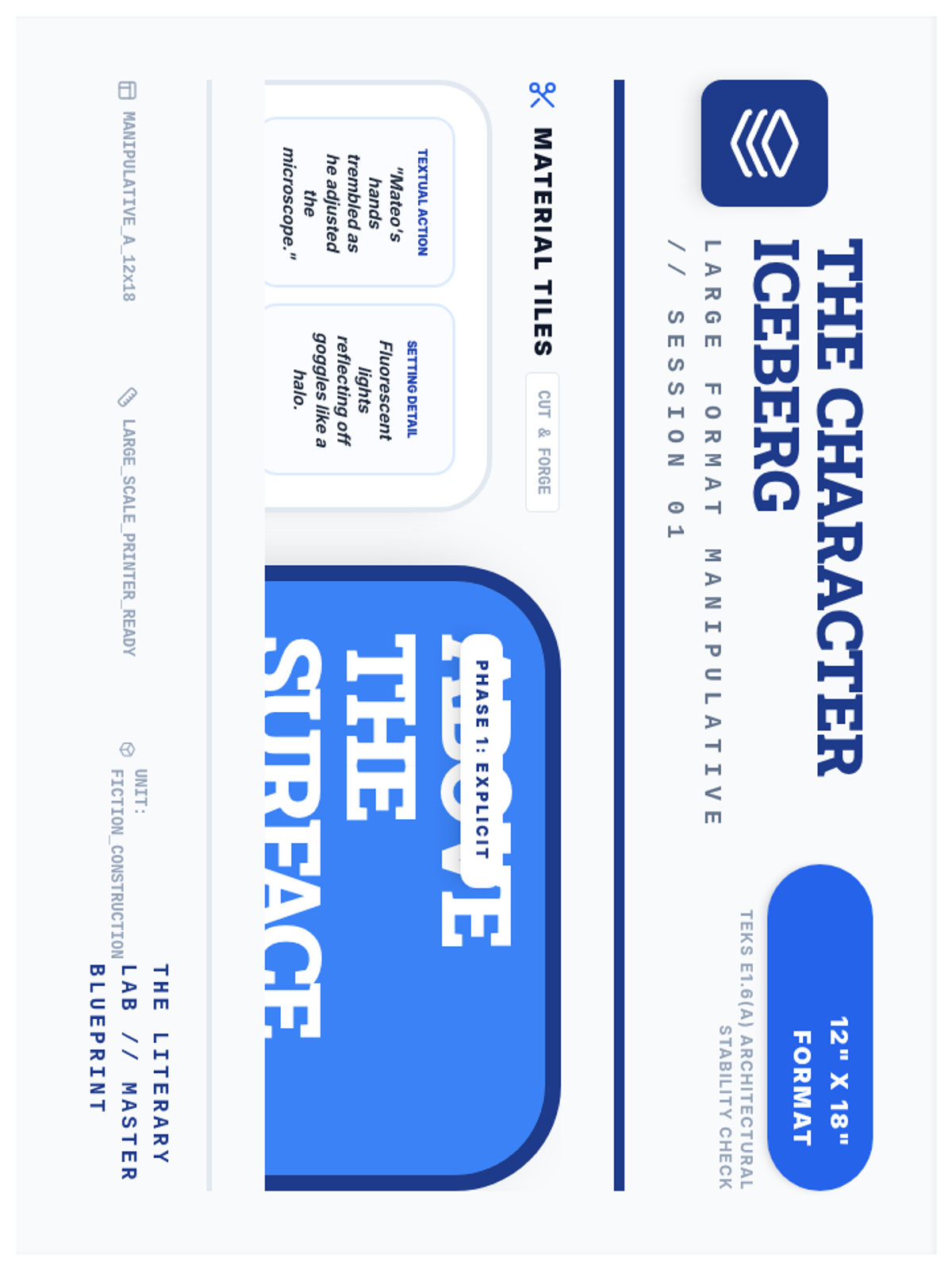
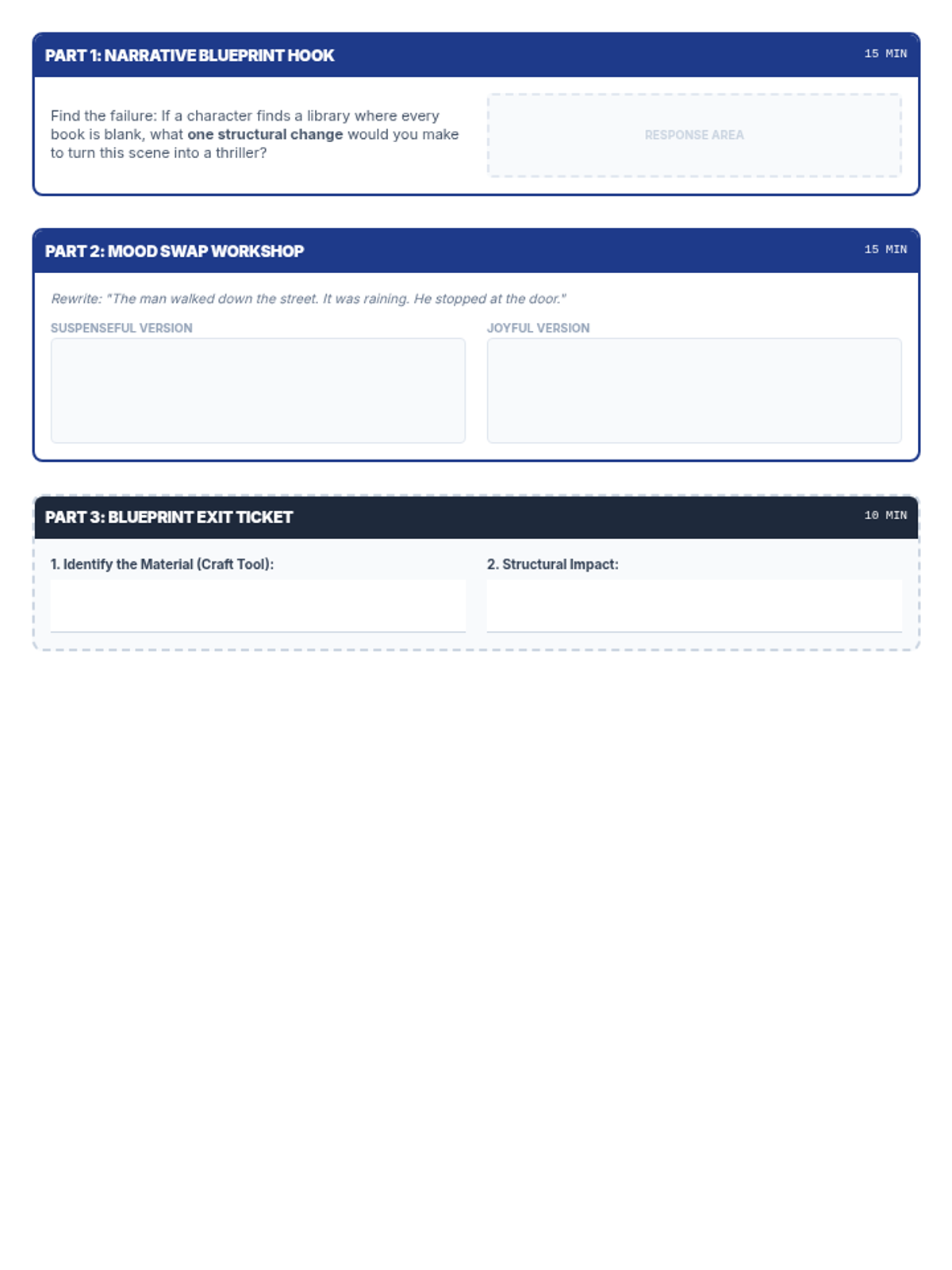
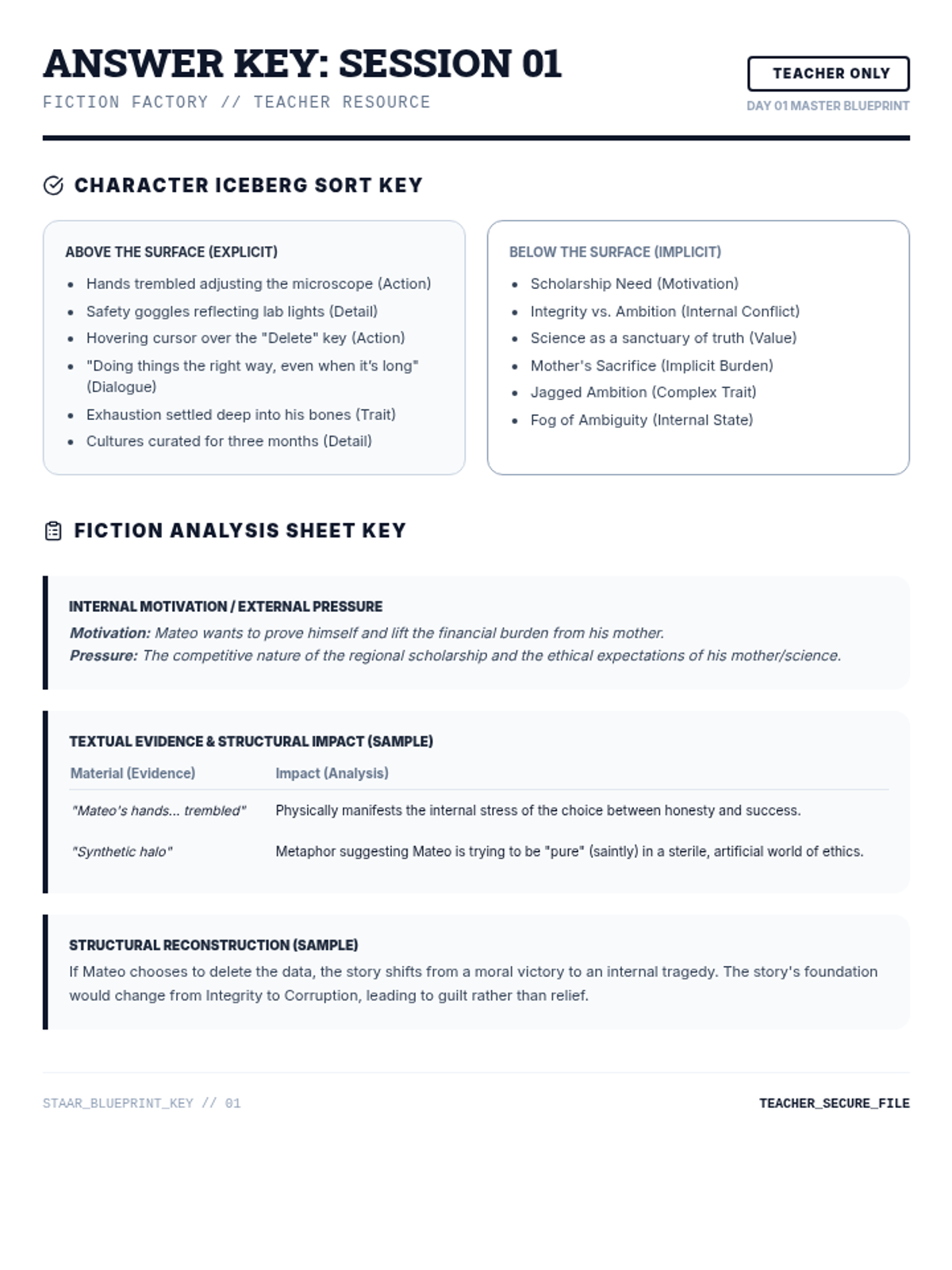
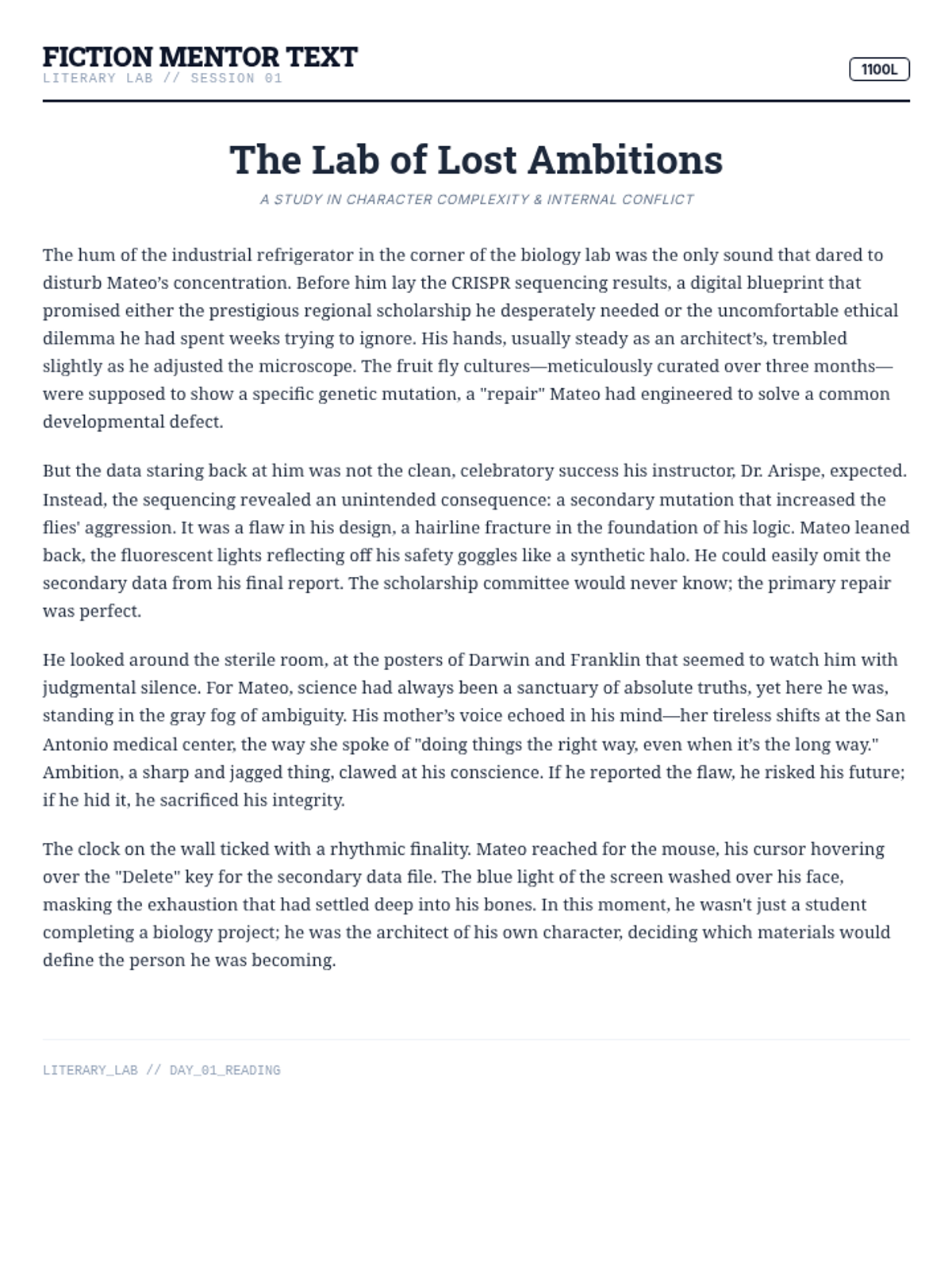
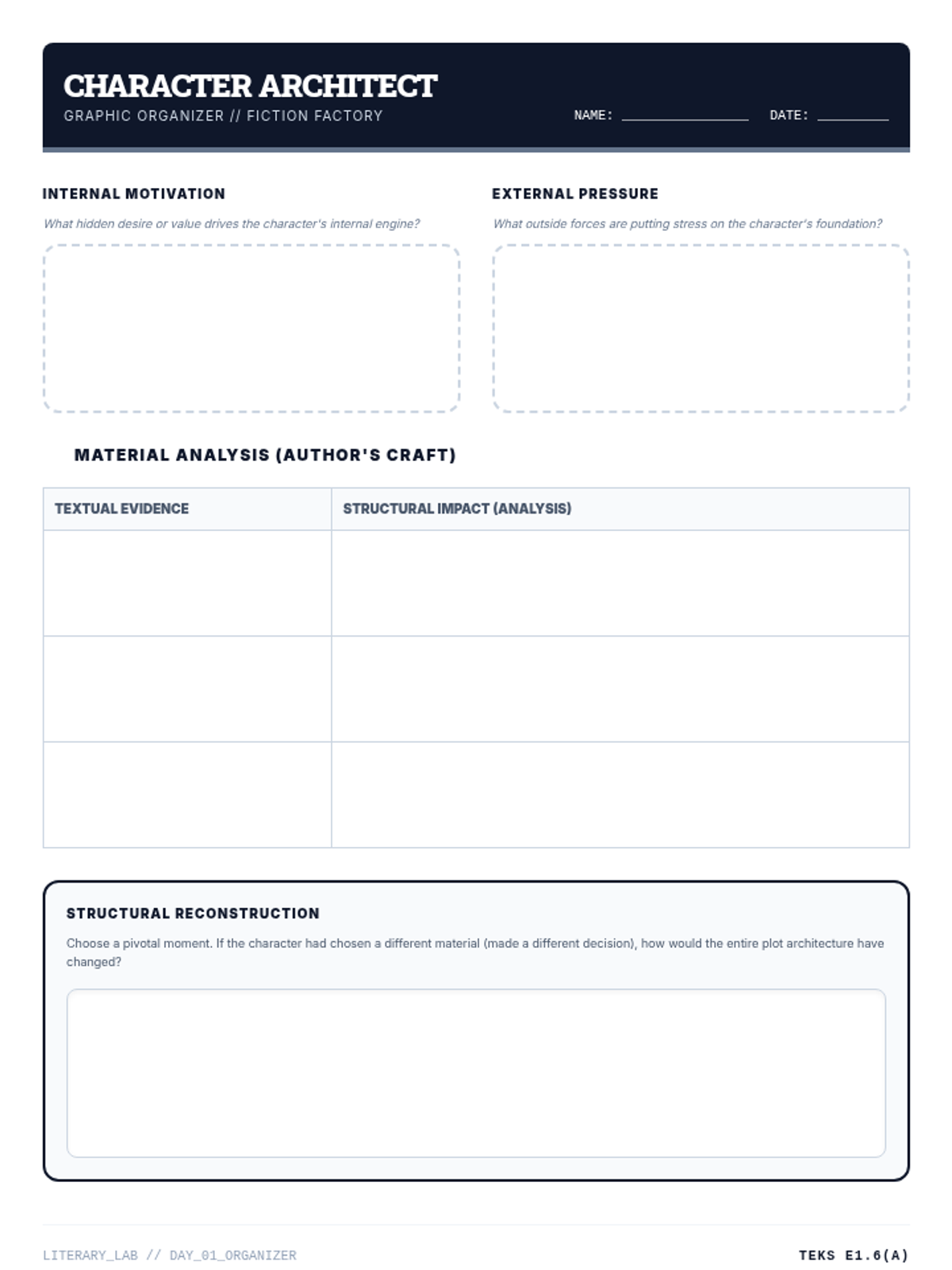
Focuses on the structural elements of fiction, specifically character complexity, plot architecture, and the impact of author's craft on mood and tone.
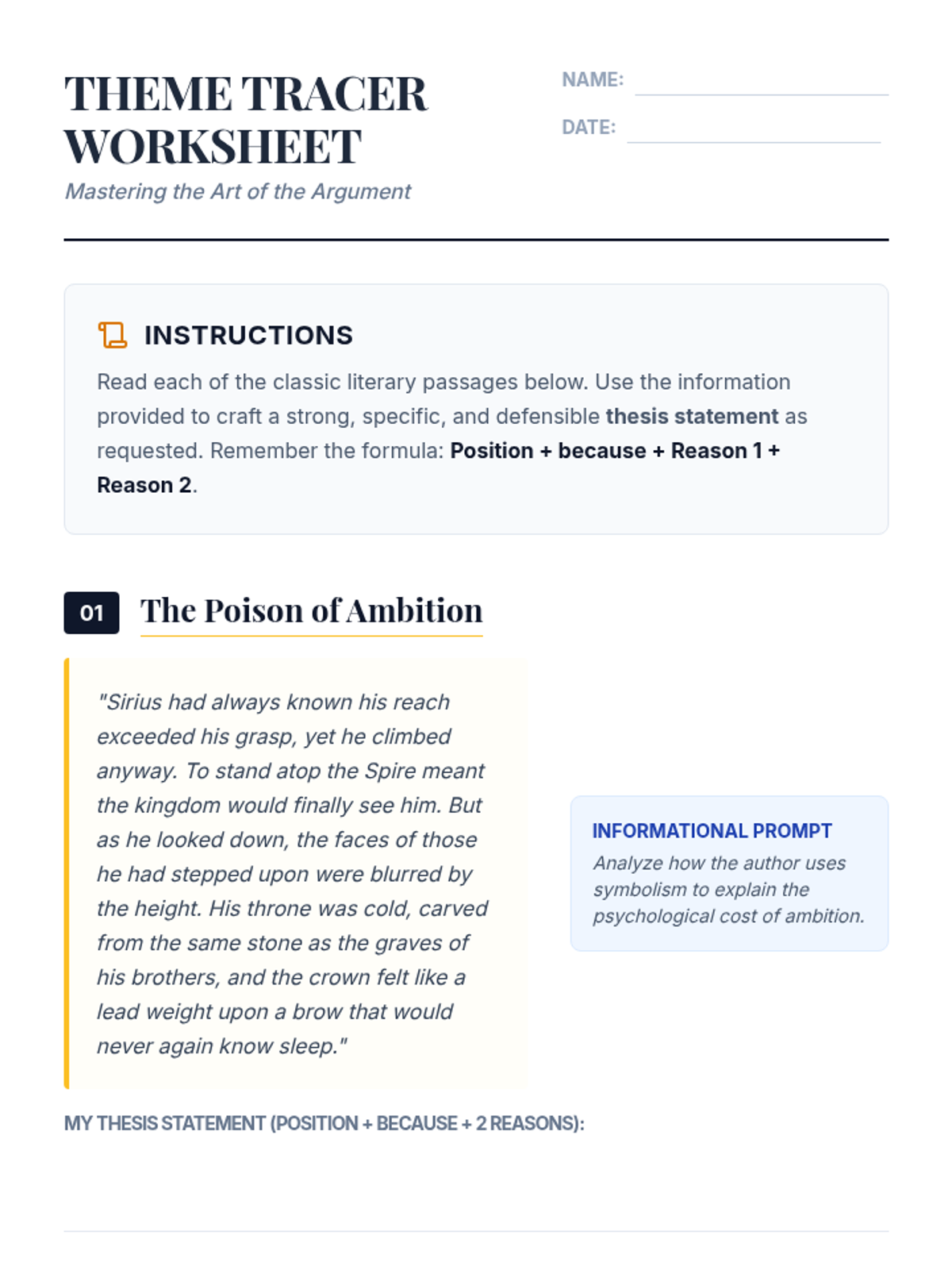
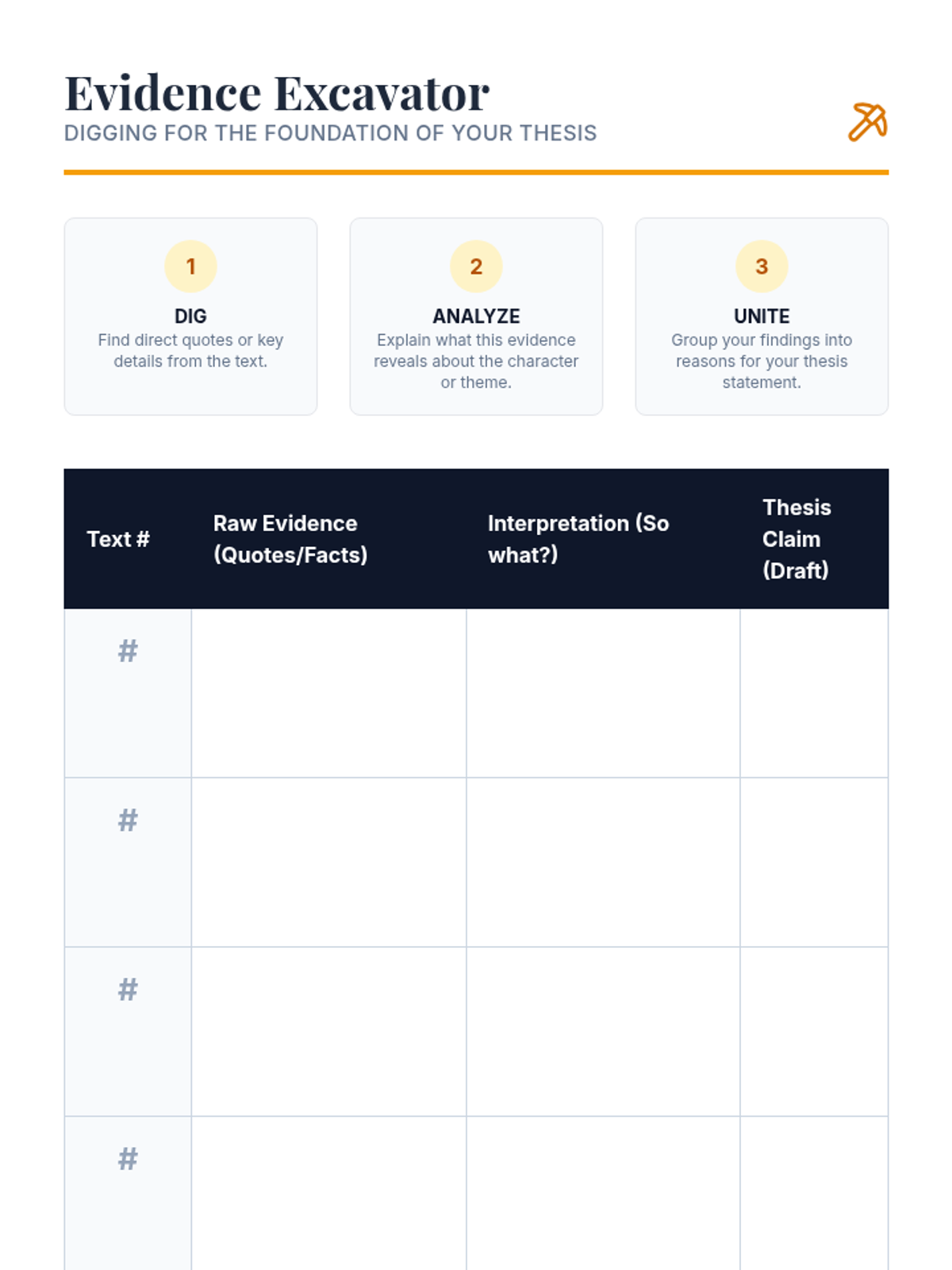
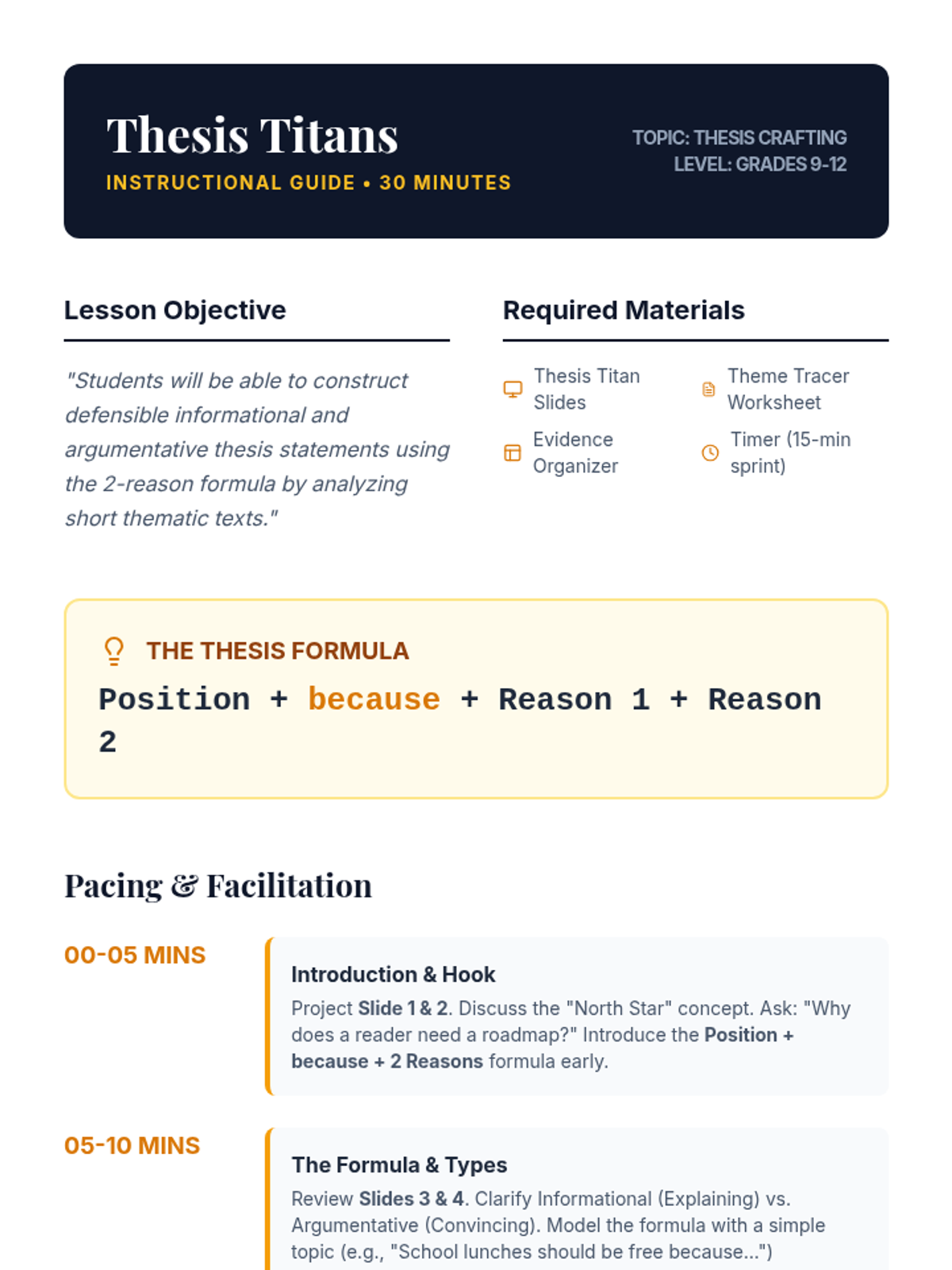
A fast-paced 30-minute lesson focusing on crafting strong thesis statements for informational and argumentative writing using classic literary themes. Students will analyze short thematic texts, identify evidence, and construct clear, defensible thesis statements.

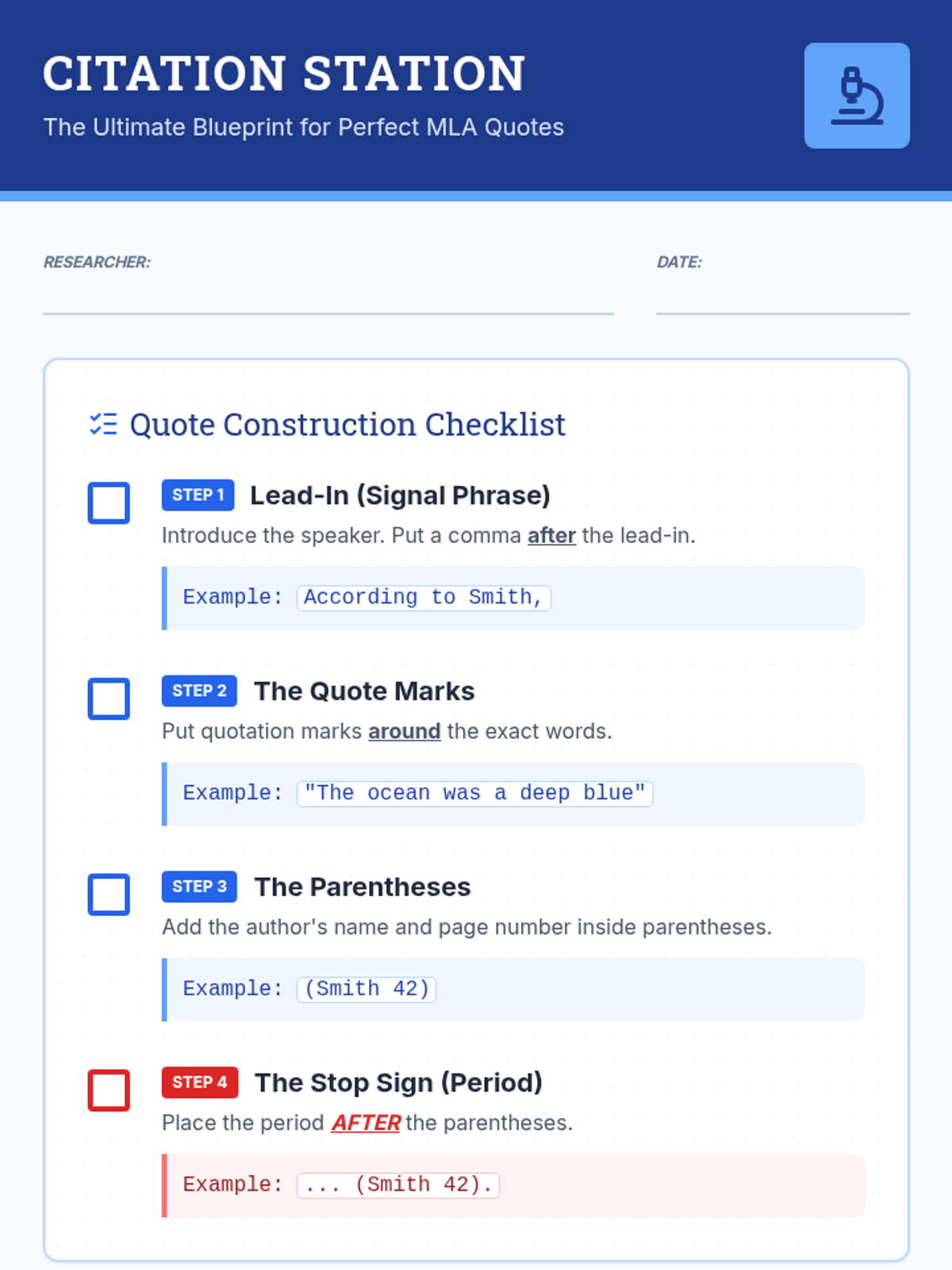
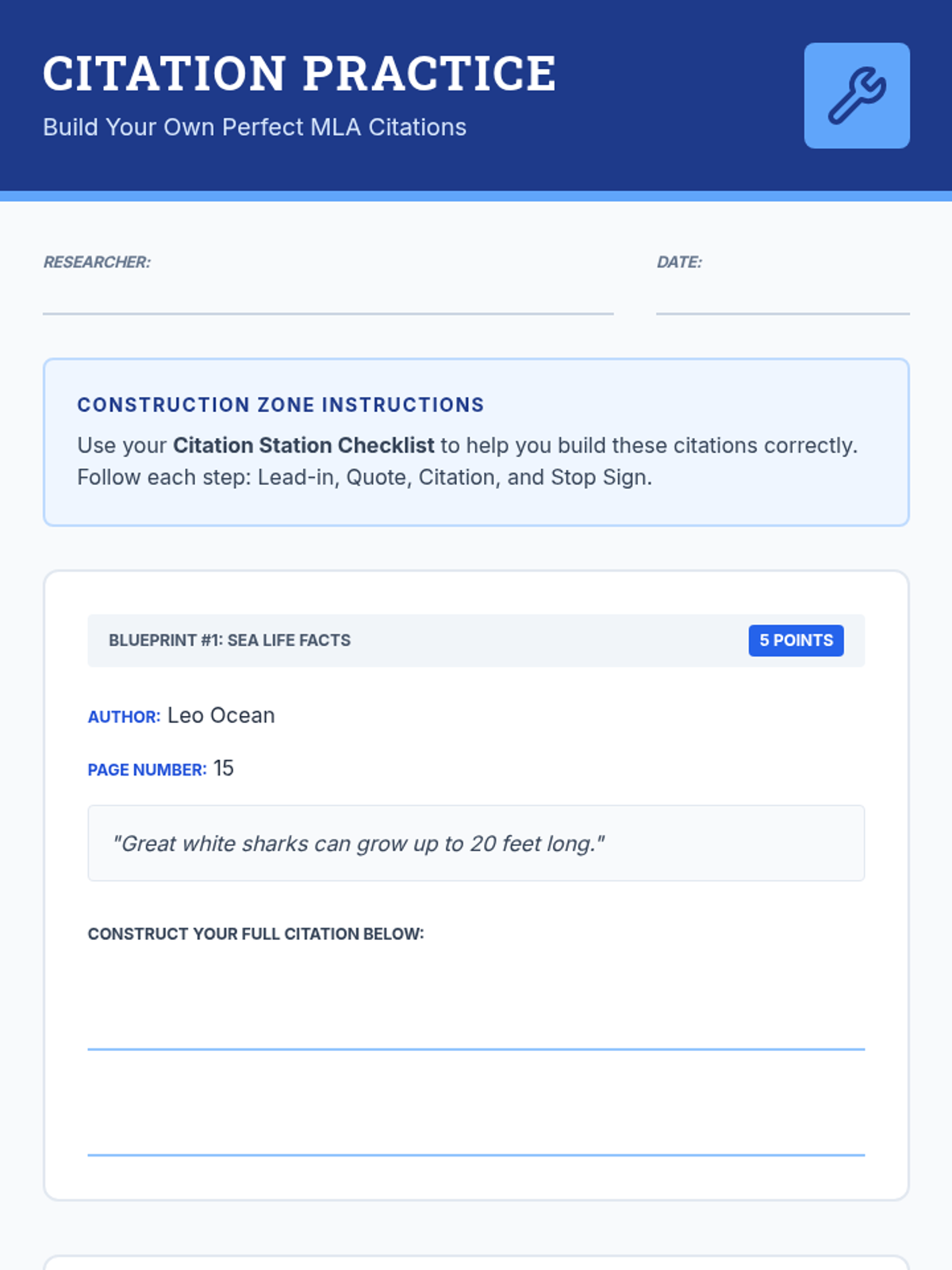
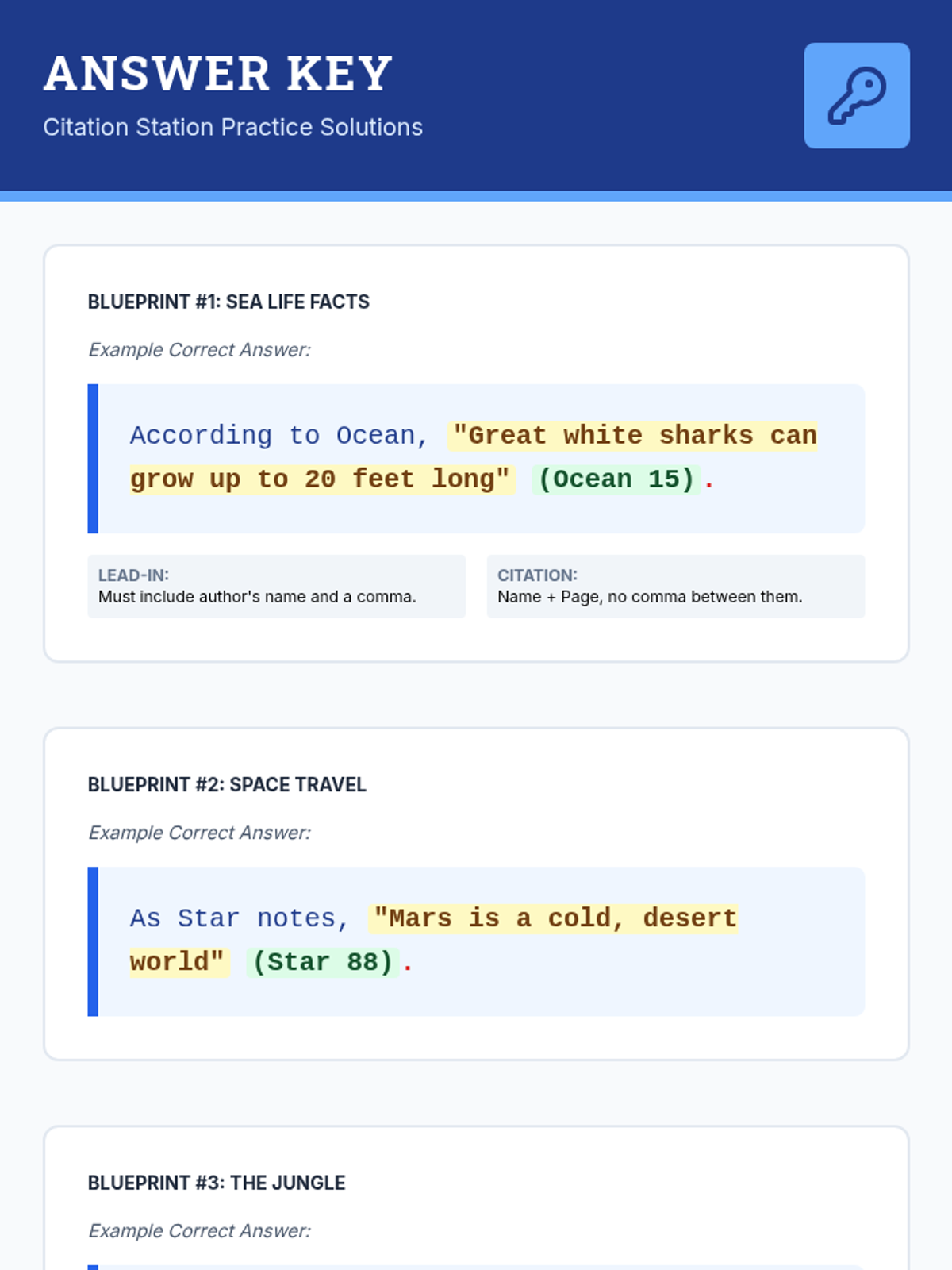
A targeted lesson for 7th-grade students, particularly those with IEP writing goals, focusing on the mechanics of MLA in-text citations and quote integration using a highly visual, step-by-step approach.
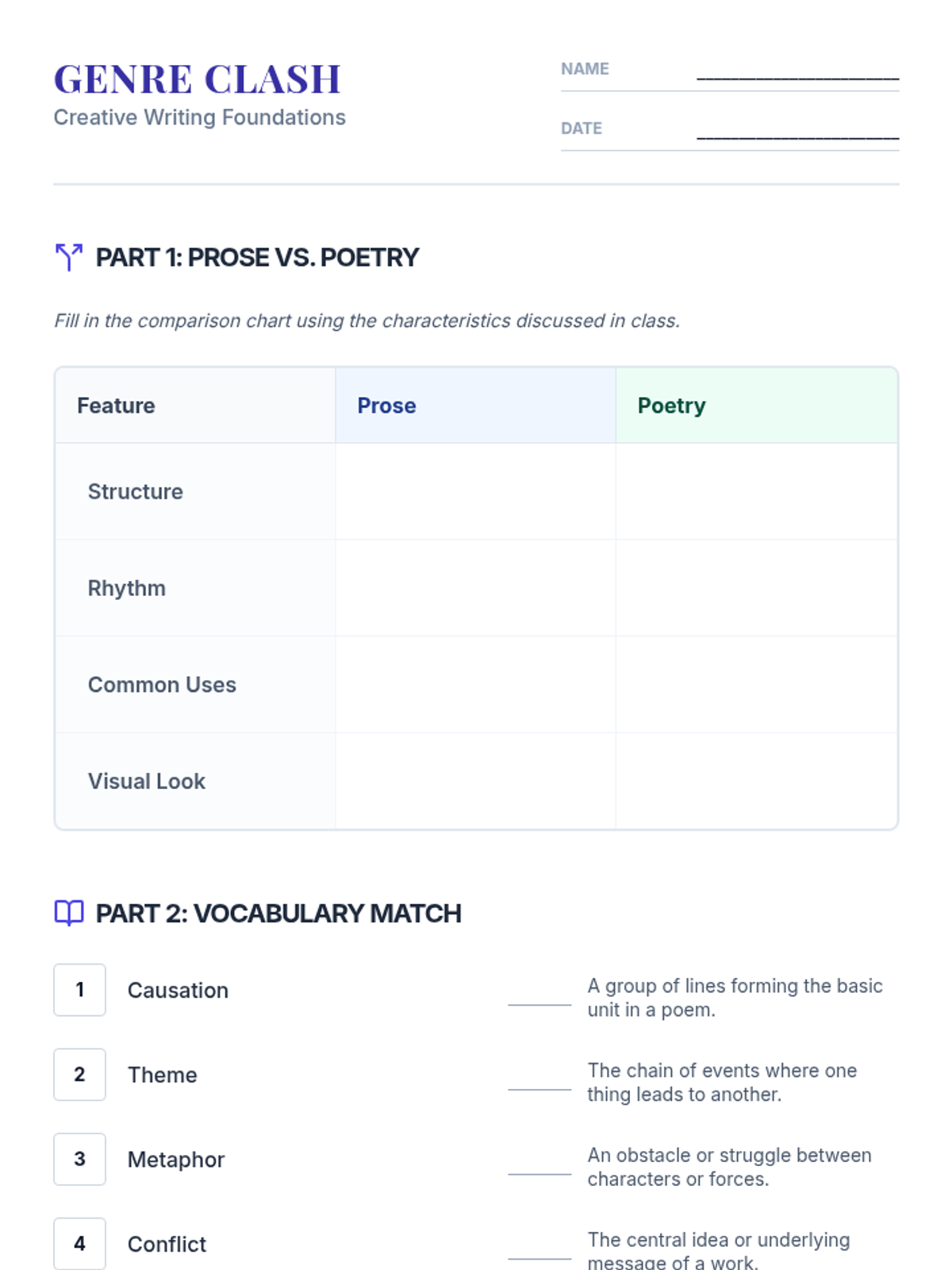
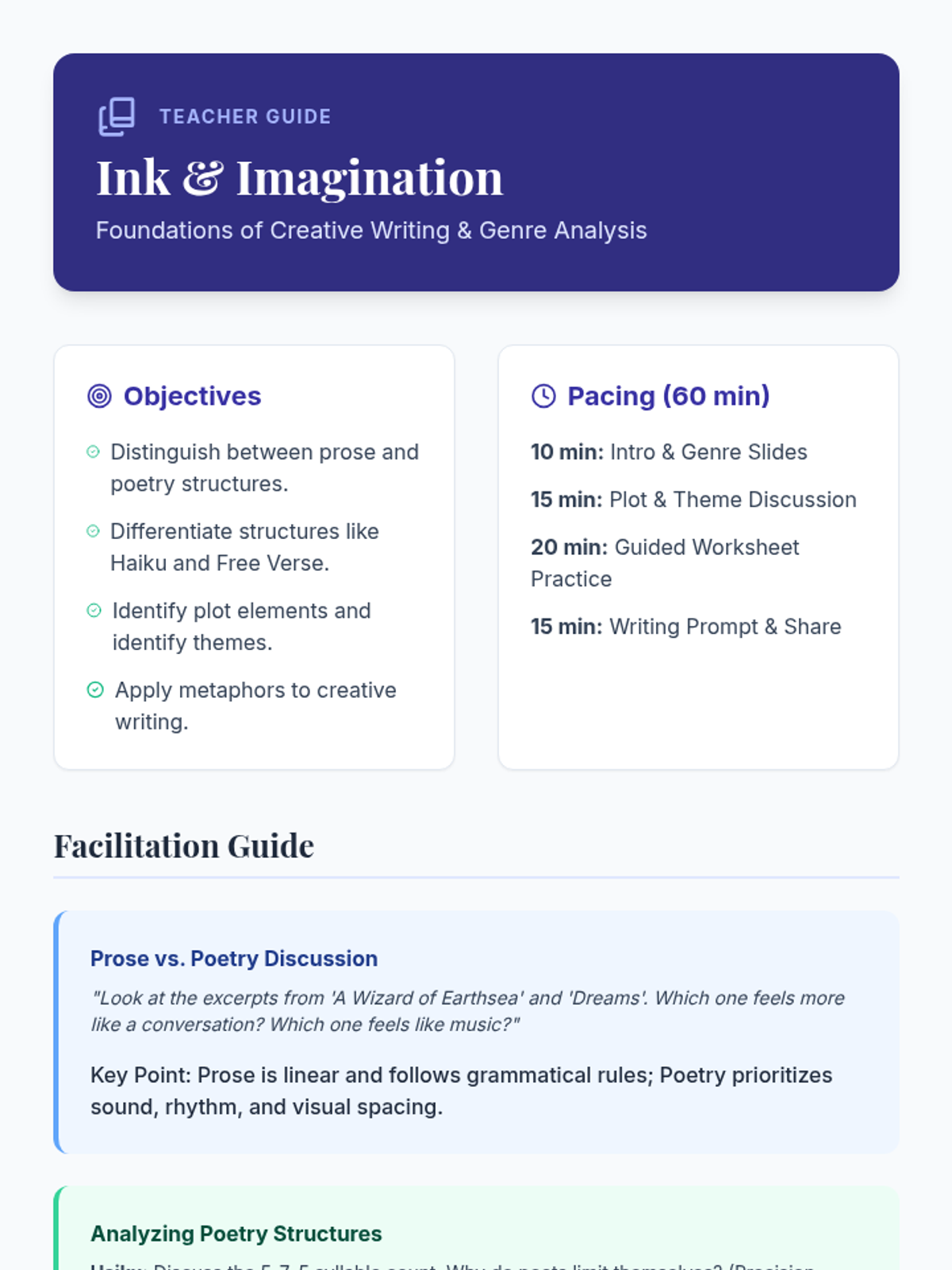
An introductory lesson on creative writing that explores the differences between prose and poetry, defines plot and theme, and introduces literary devices like metaphors.
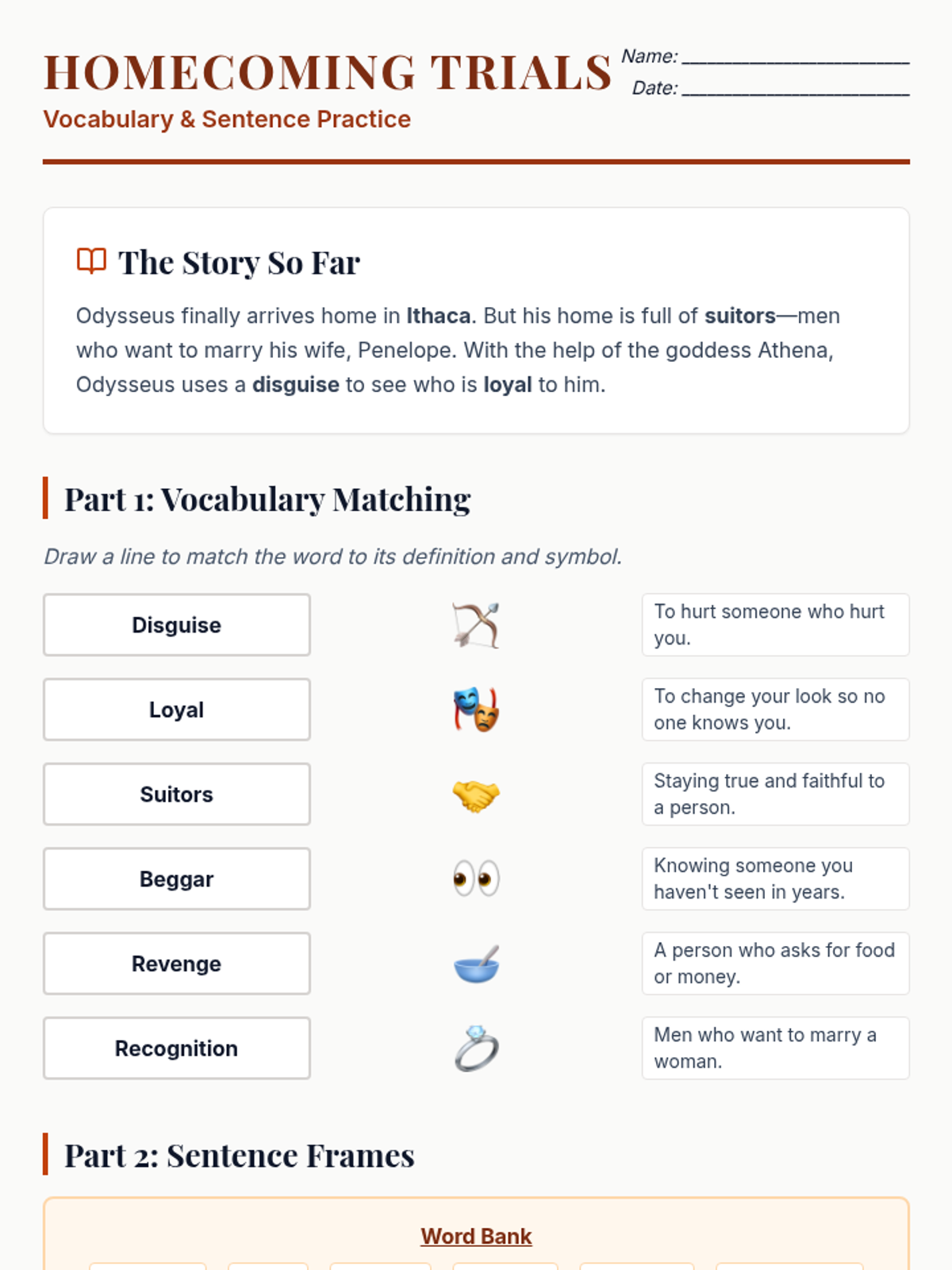
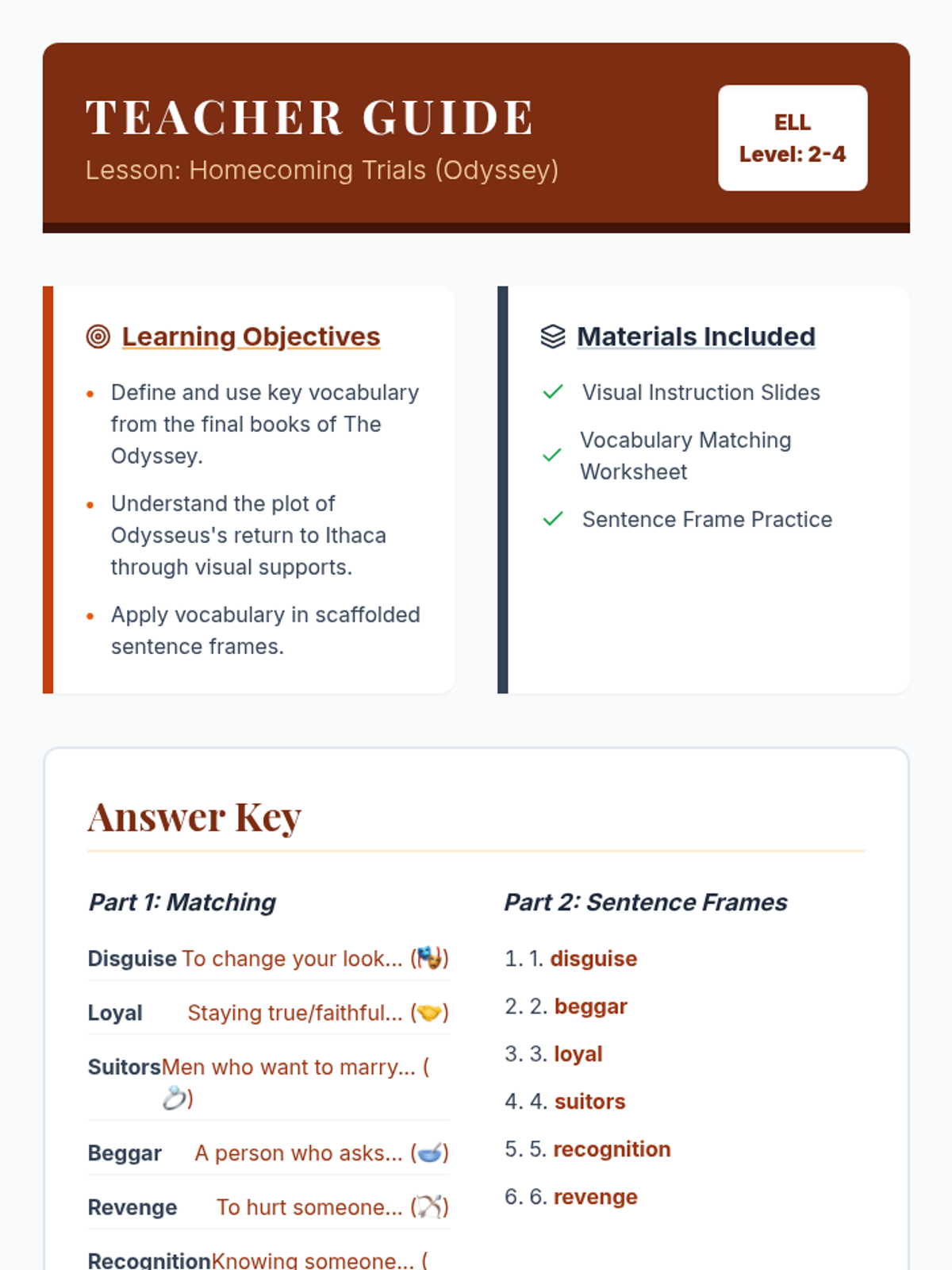
A lesson focused on Odysseus's return to Ithaca, designed specifically for ELL students. Includes vocabulary building through matching and sentence frames to support language acquisition and comprehension of the epic's climax.
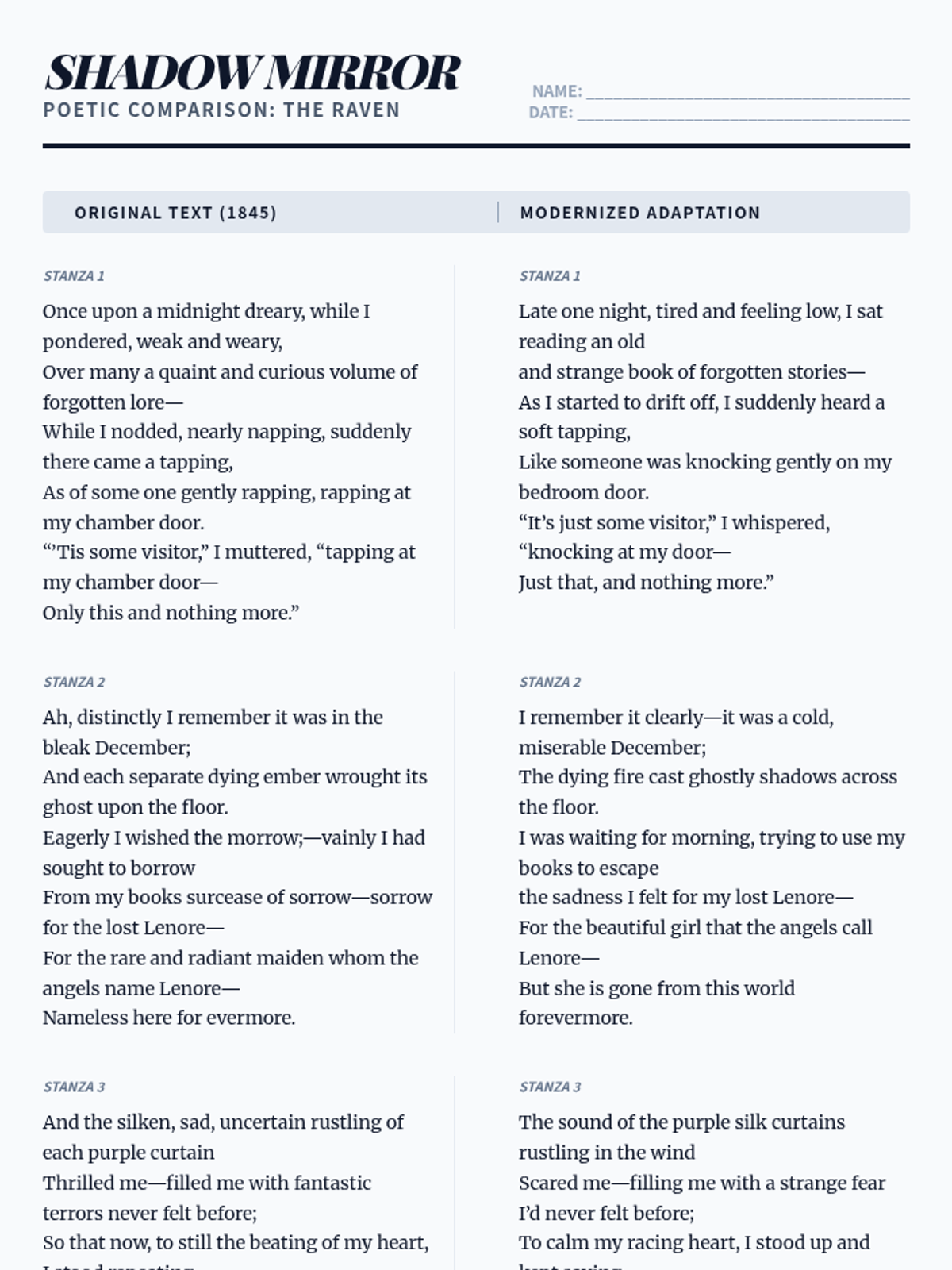
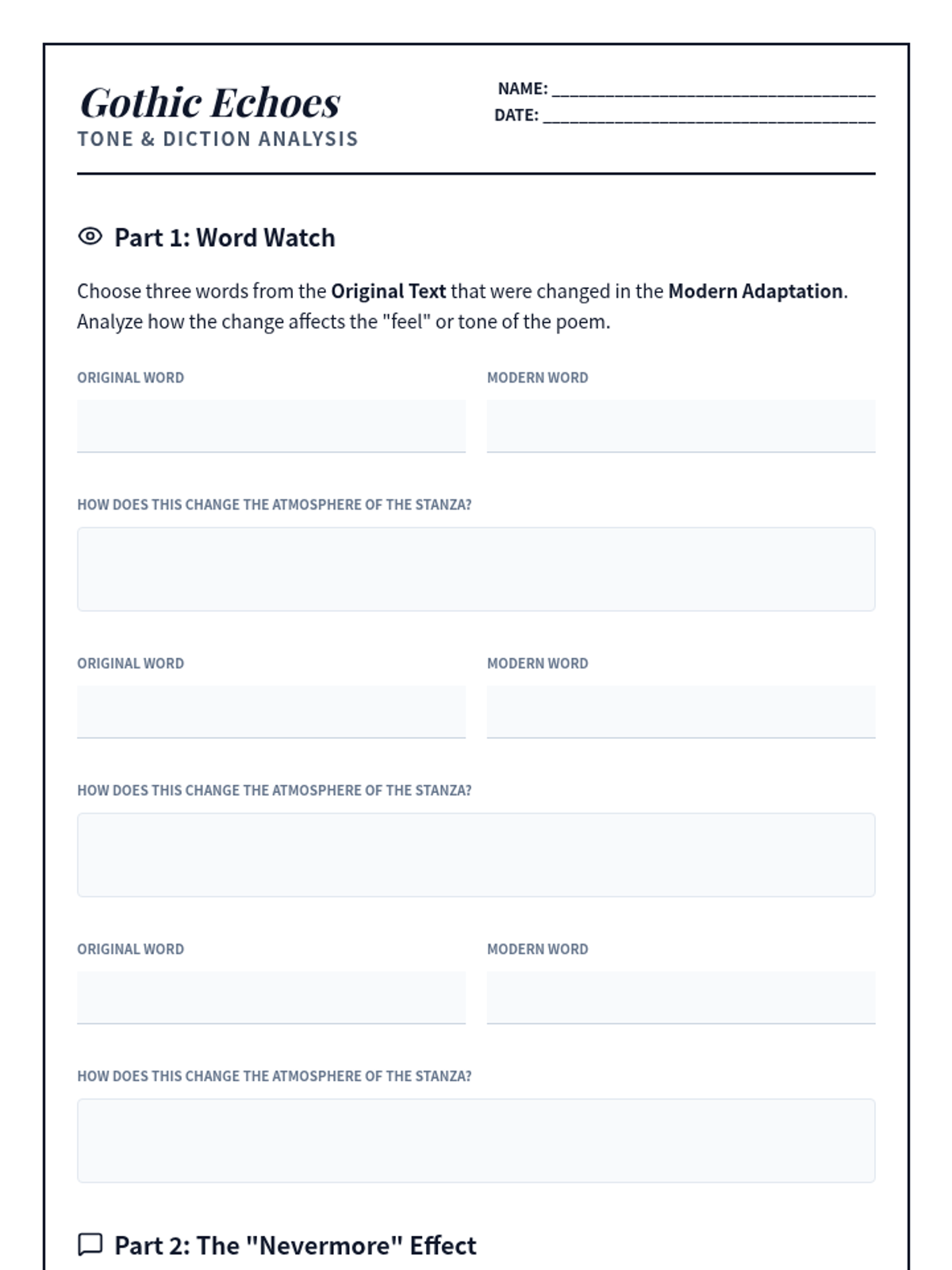
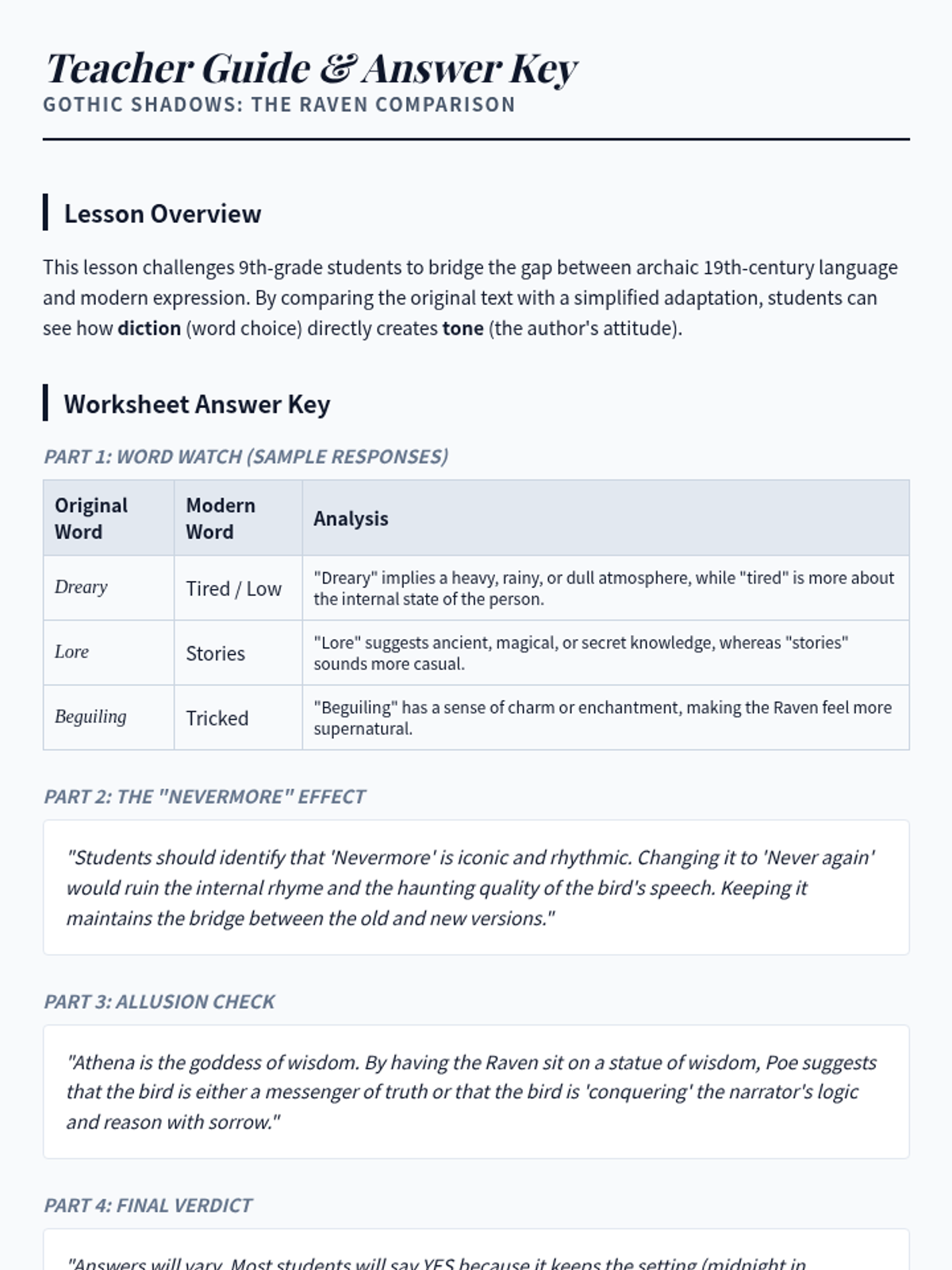
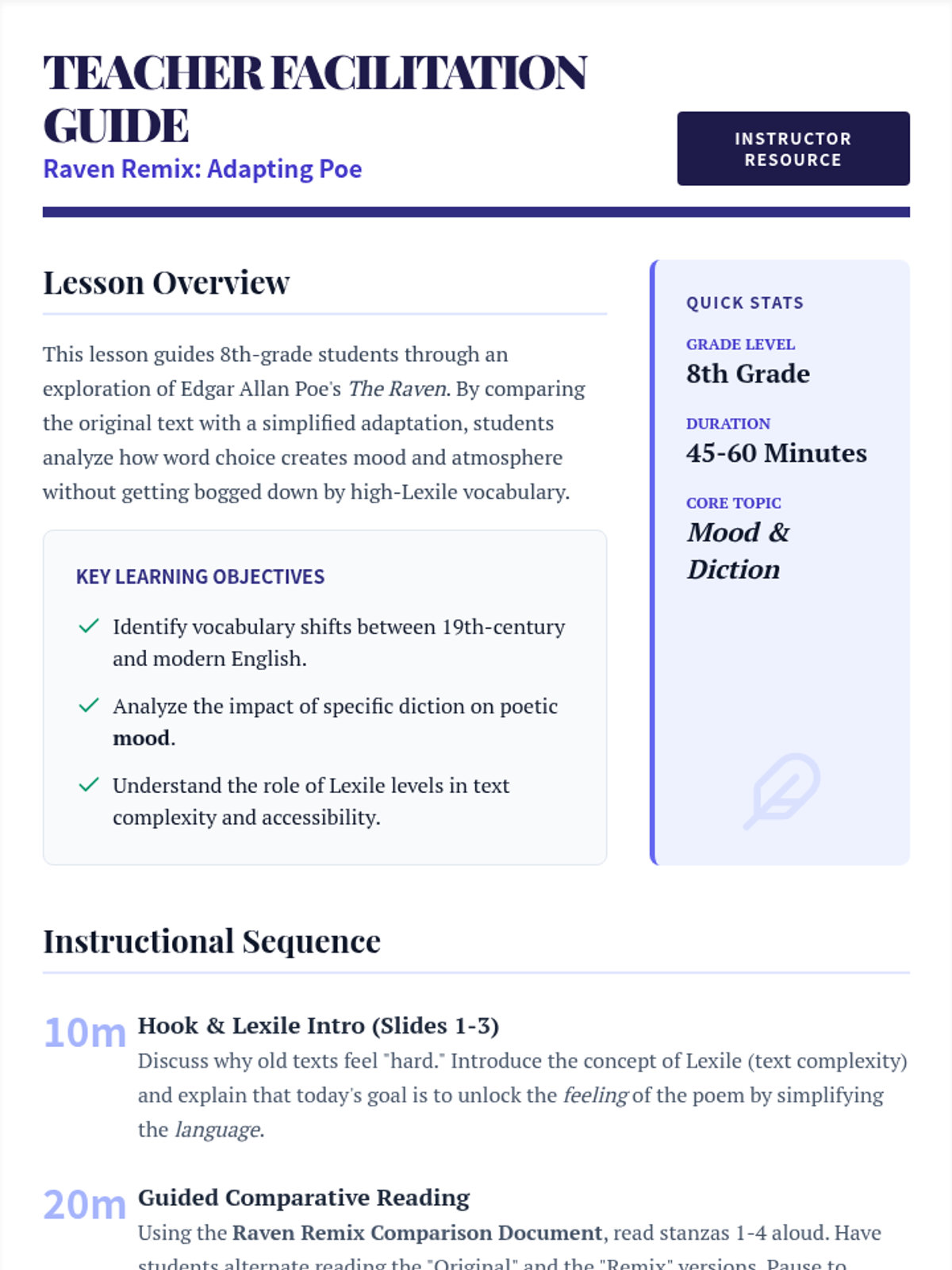
A deep dive into Edgar Allan Poe's 'The Raven,' focusing on tone, diction, and the impact of modernization on gothic literature. Students will compare the original 1845 text with a contemporary version to understand how language shapes atmosphere.
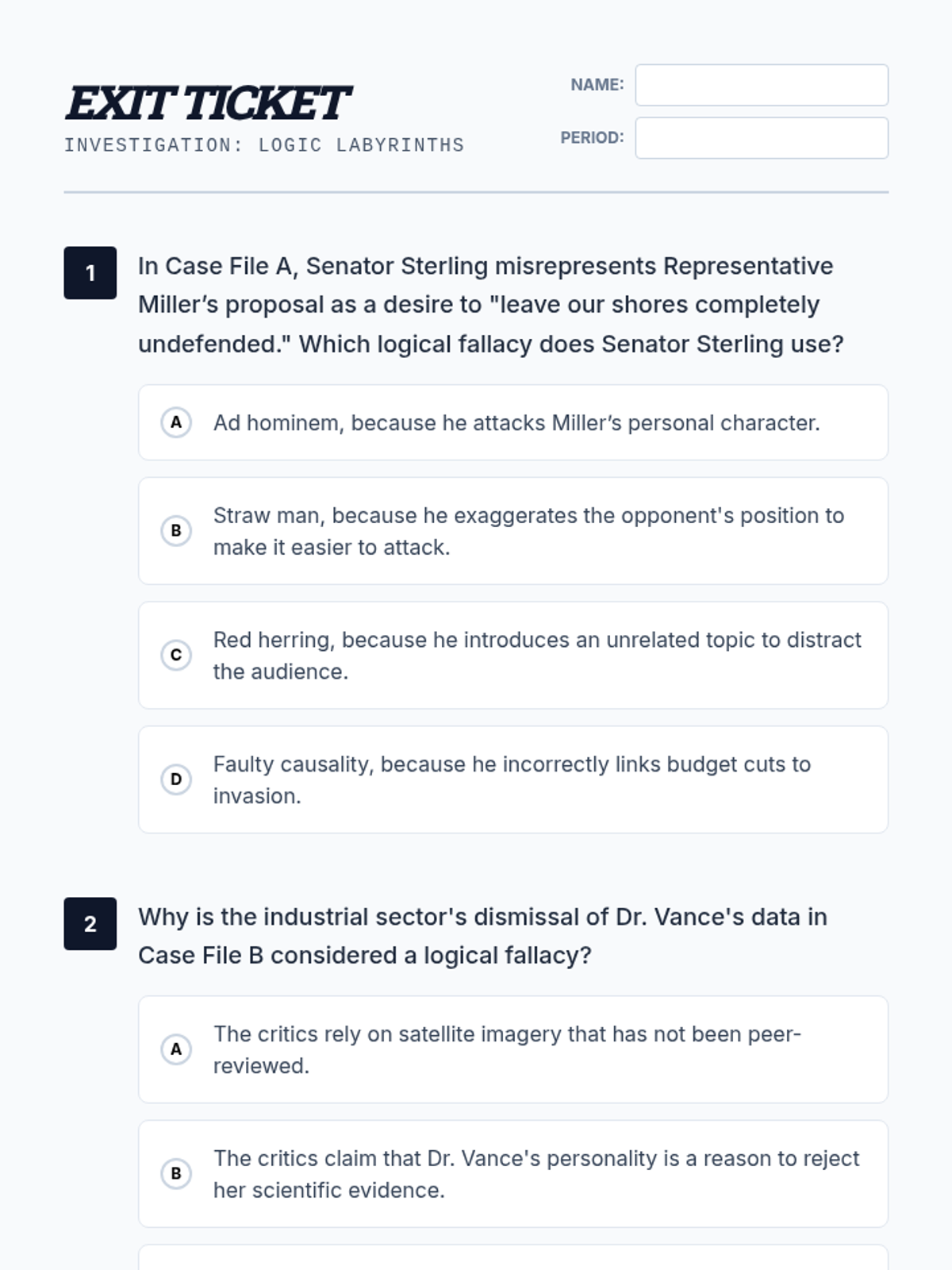
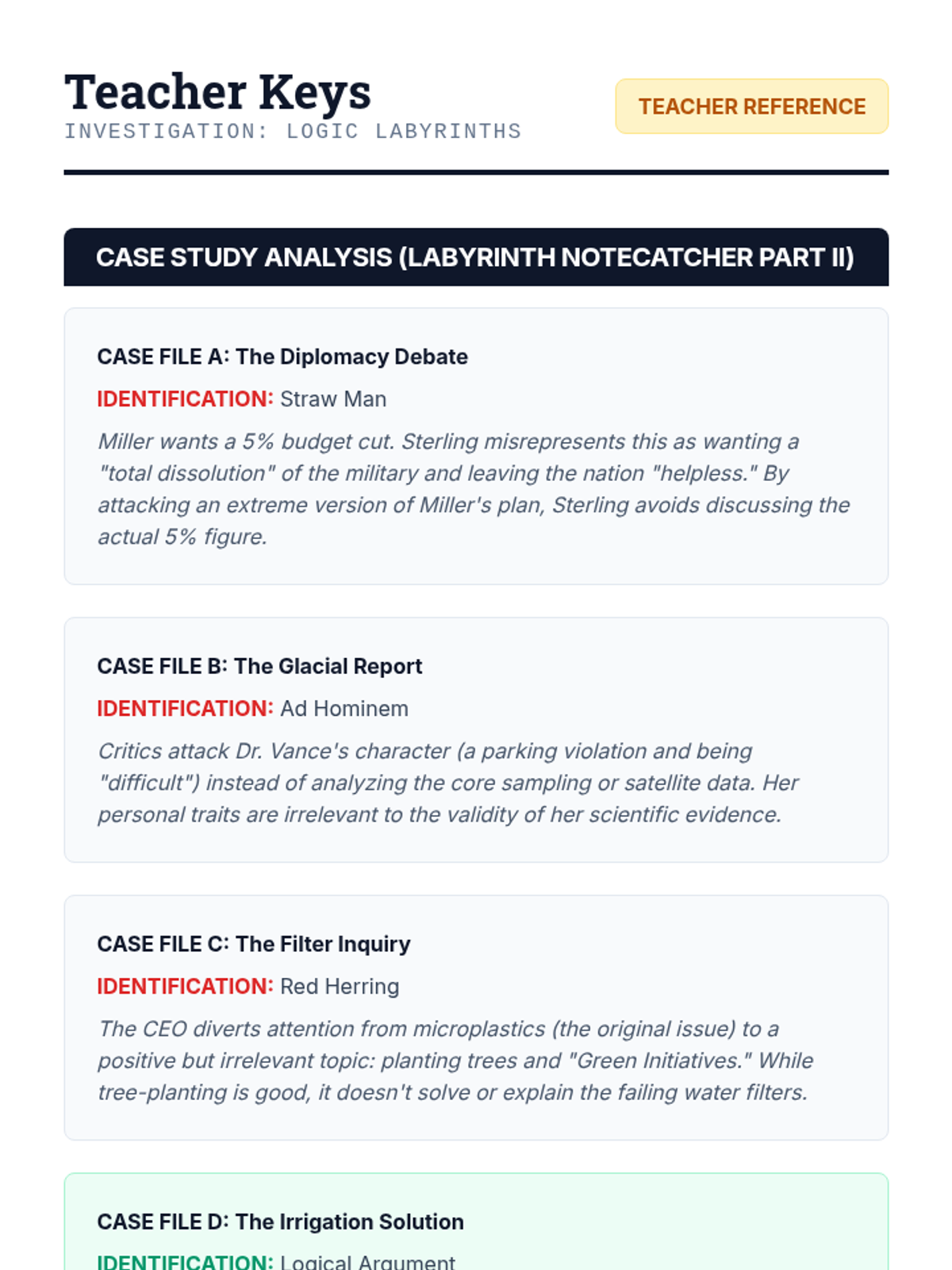
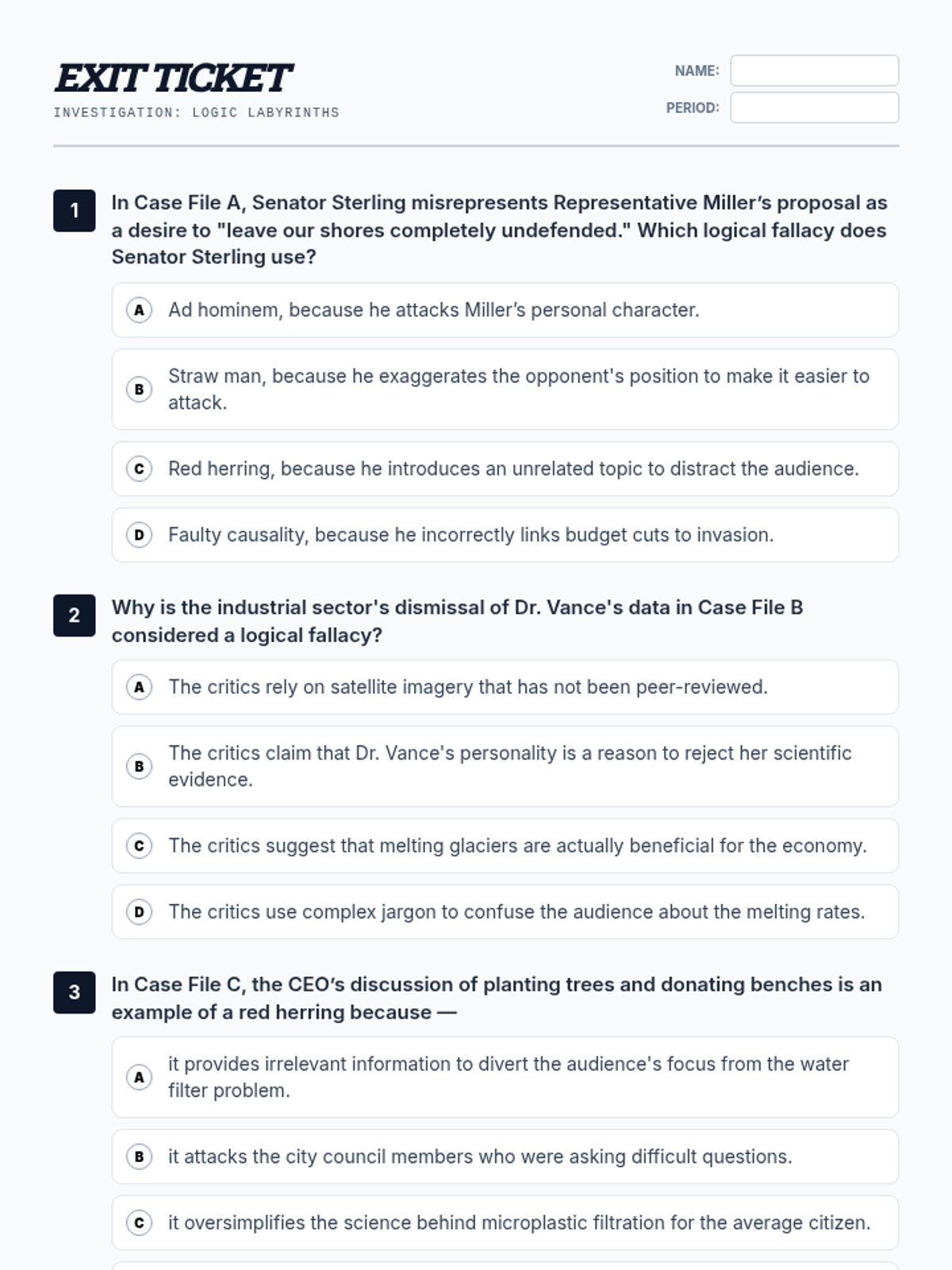
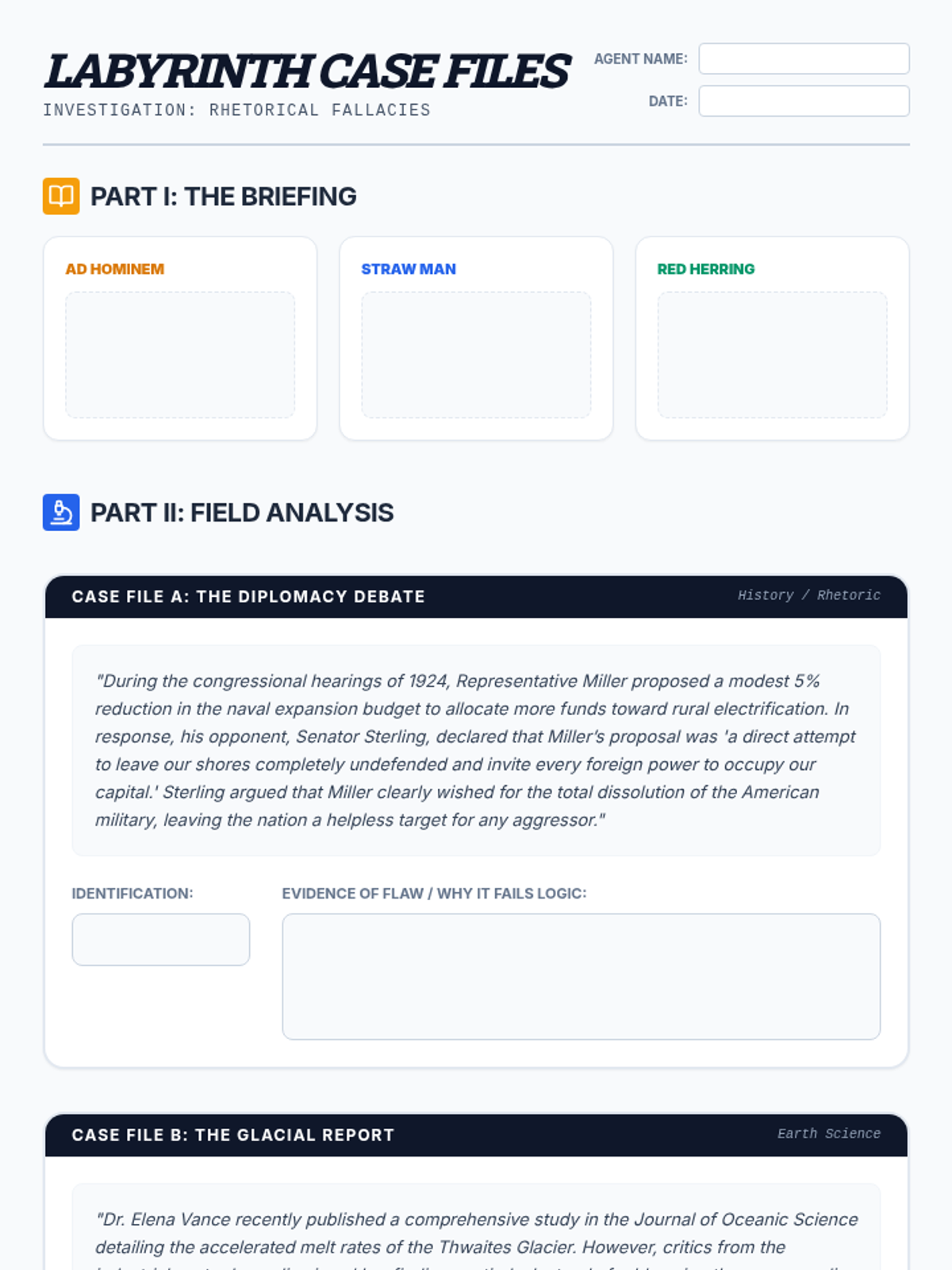
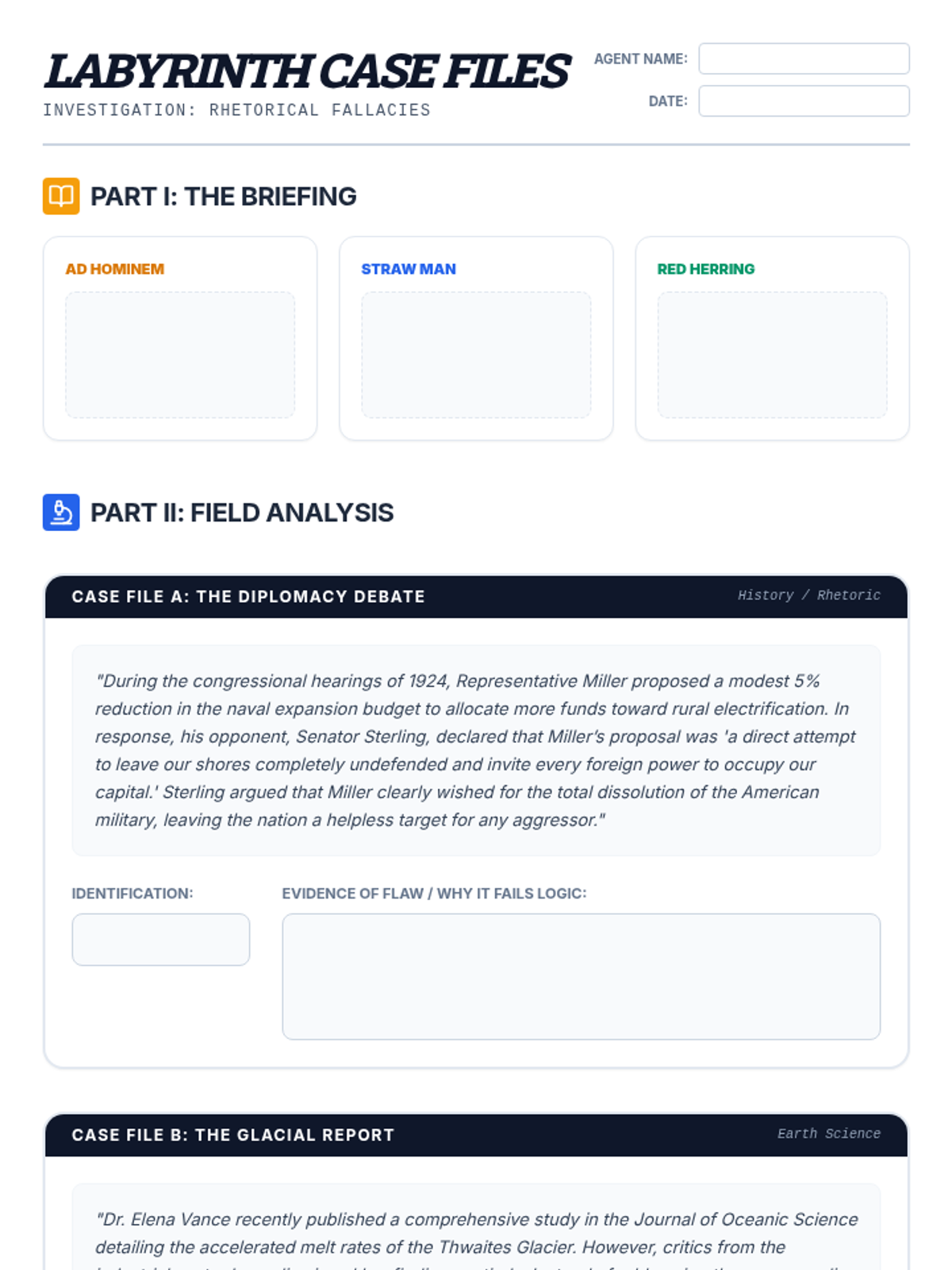
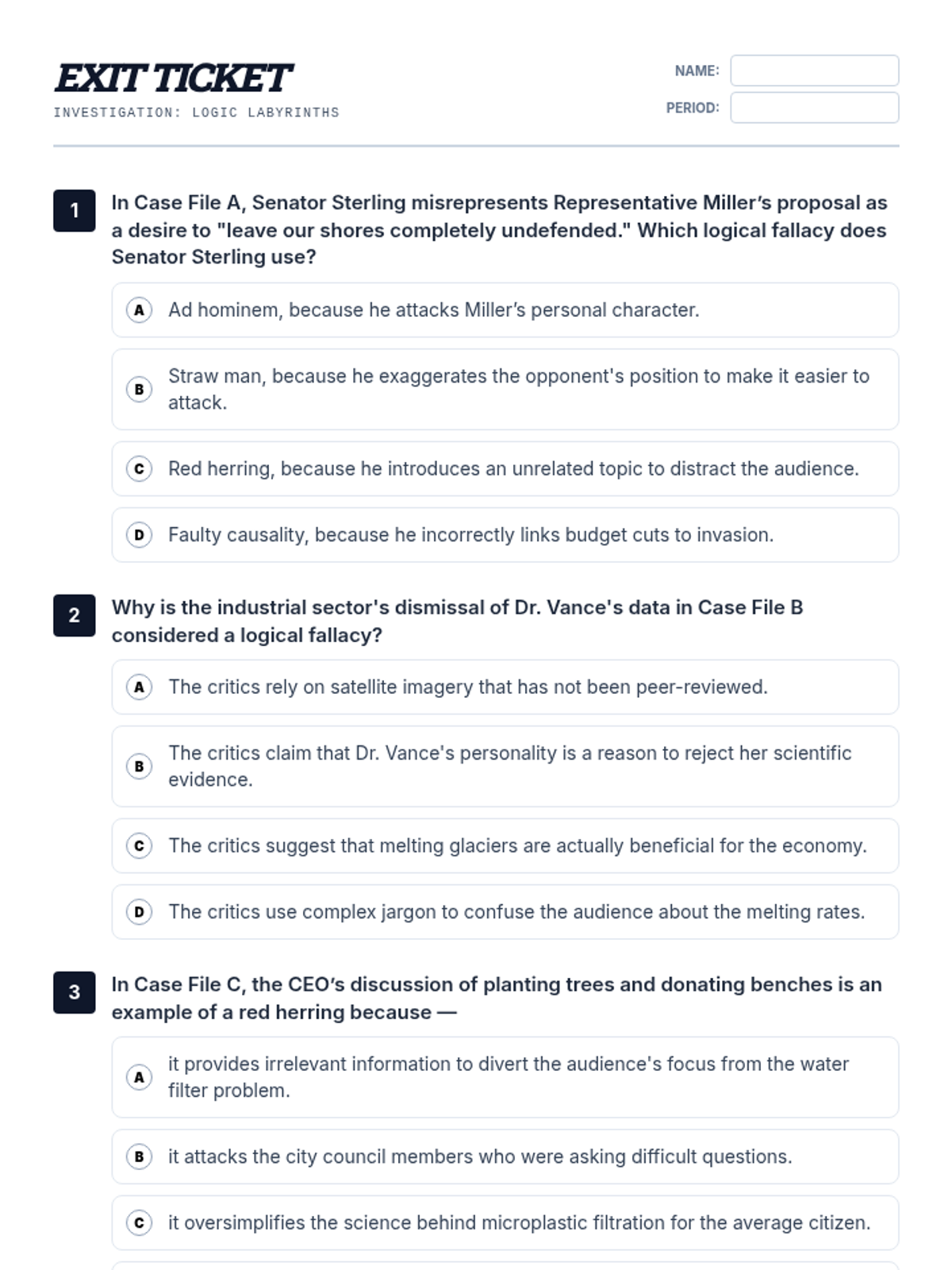
A comprehensive introduction to identifying logical fallacies—ad hominem, straw man, and red herring—using historical and scientific contexts to prepare English I students for STAAR-level rhetorical analysis.
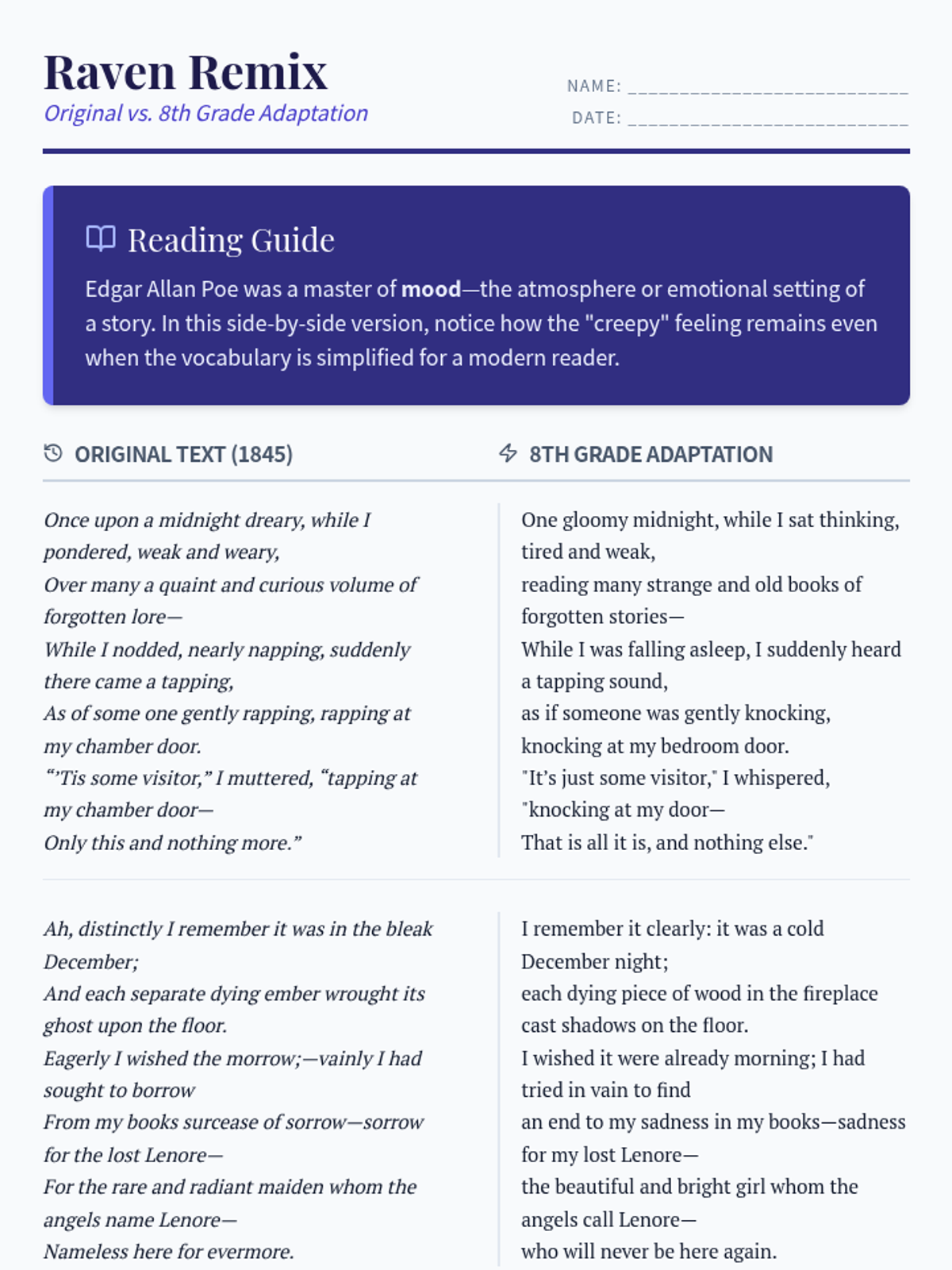
Students explore Edgar Allan Poe's 'The Raven' through a side-by-side comparison of the original text and an 8th-grade adapted version. The lesson focuses on mood, vocabulary, and how language choices impact the reader's experience.
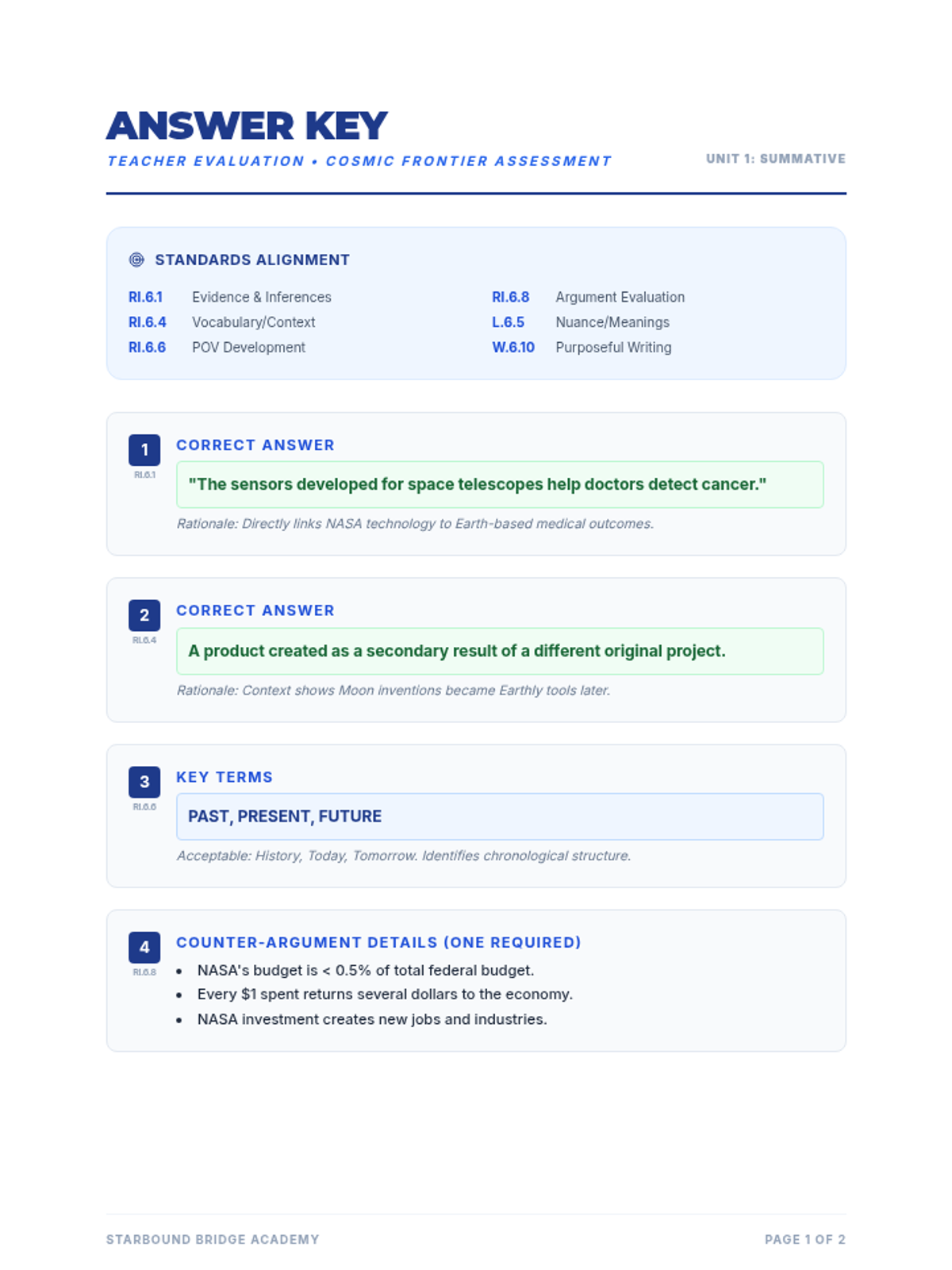
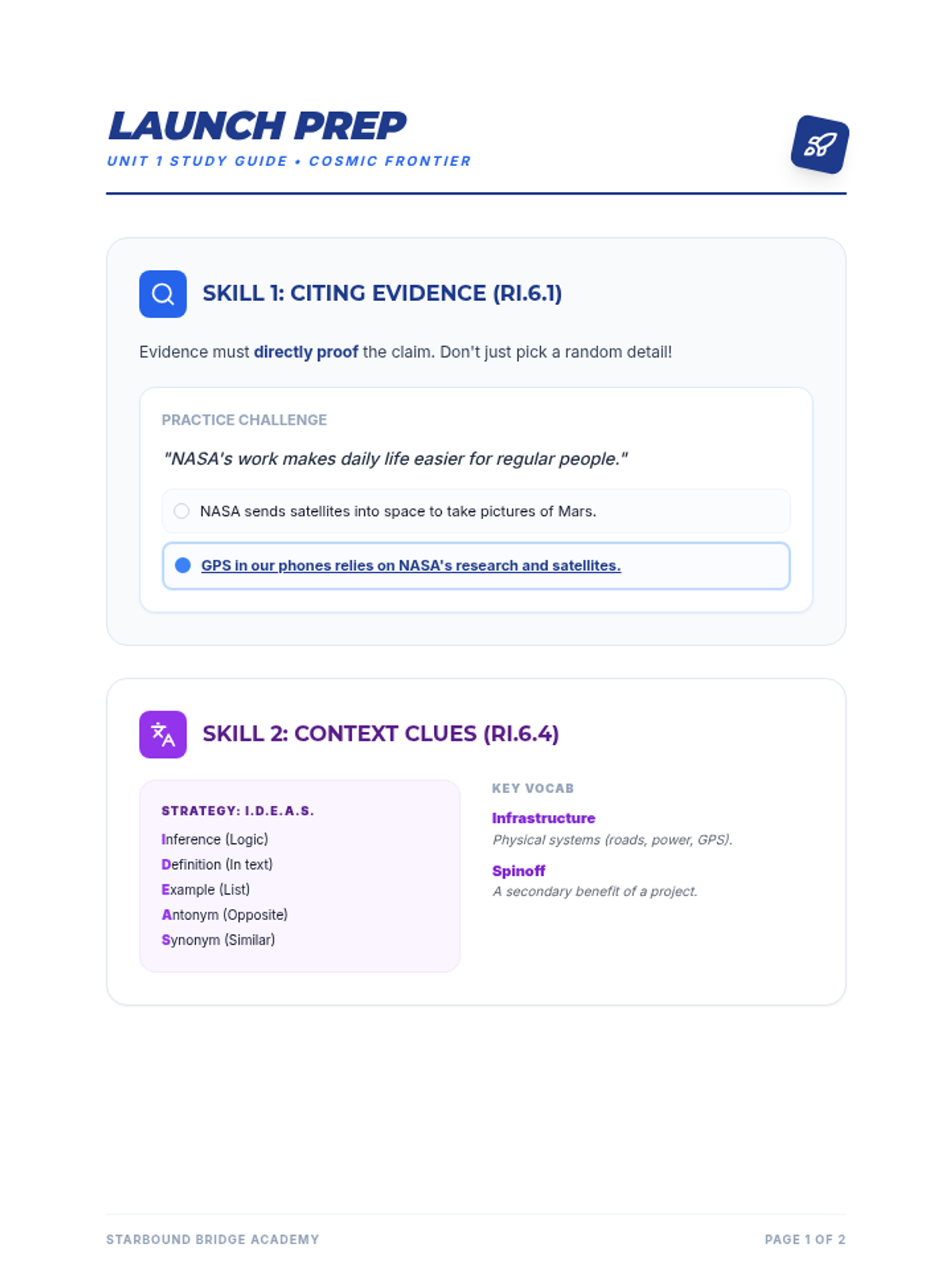
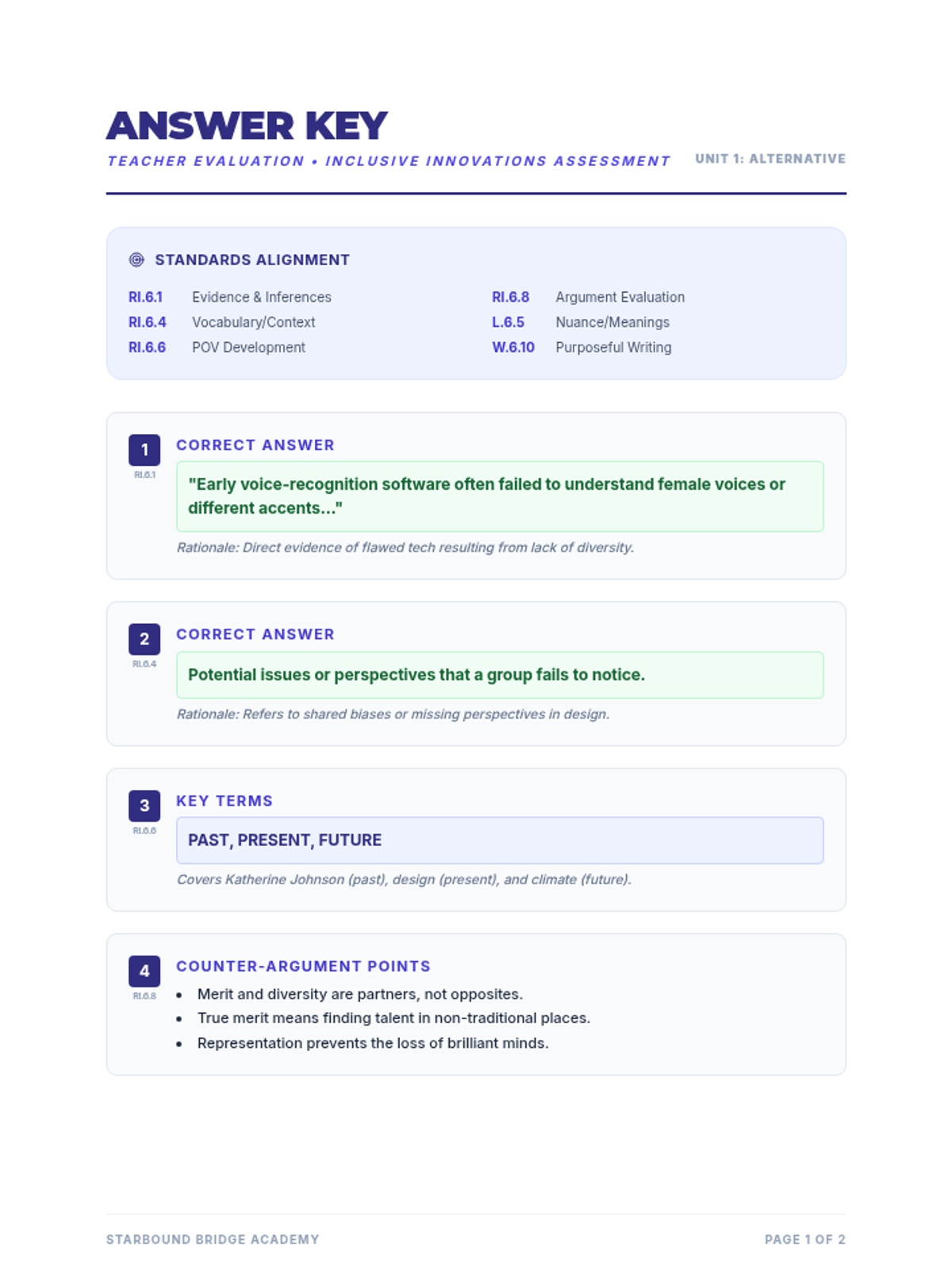
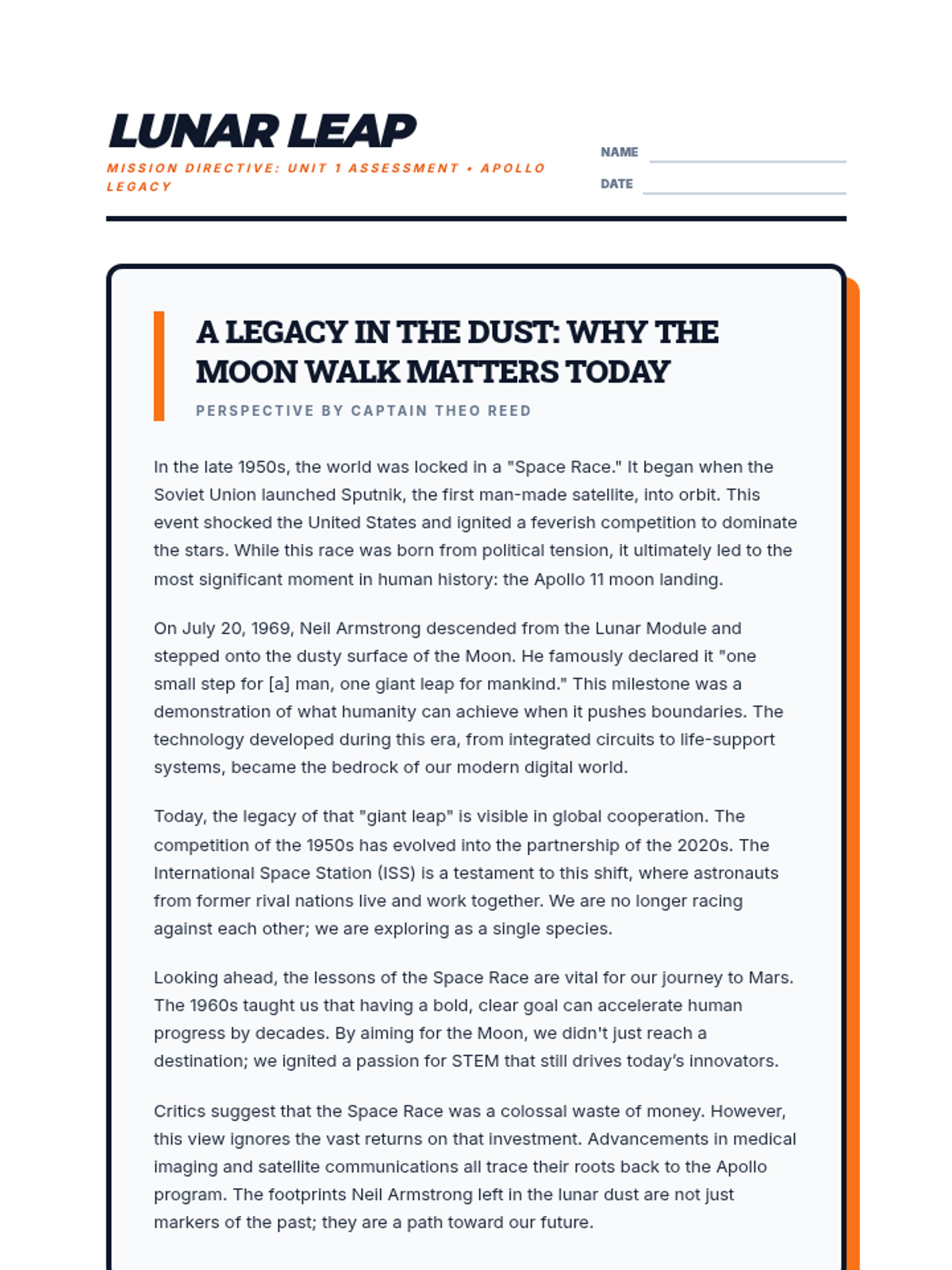
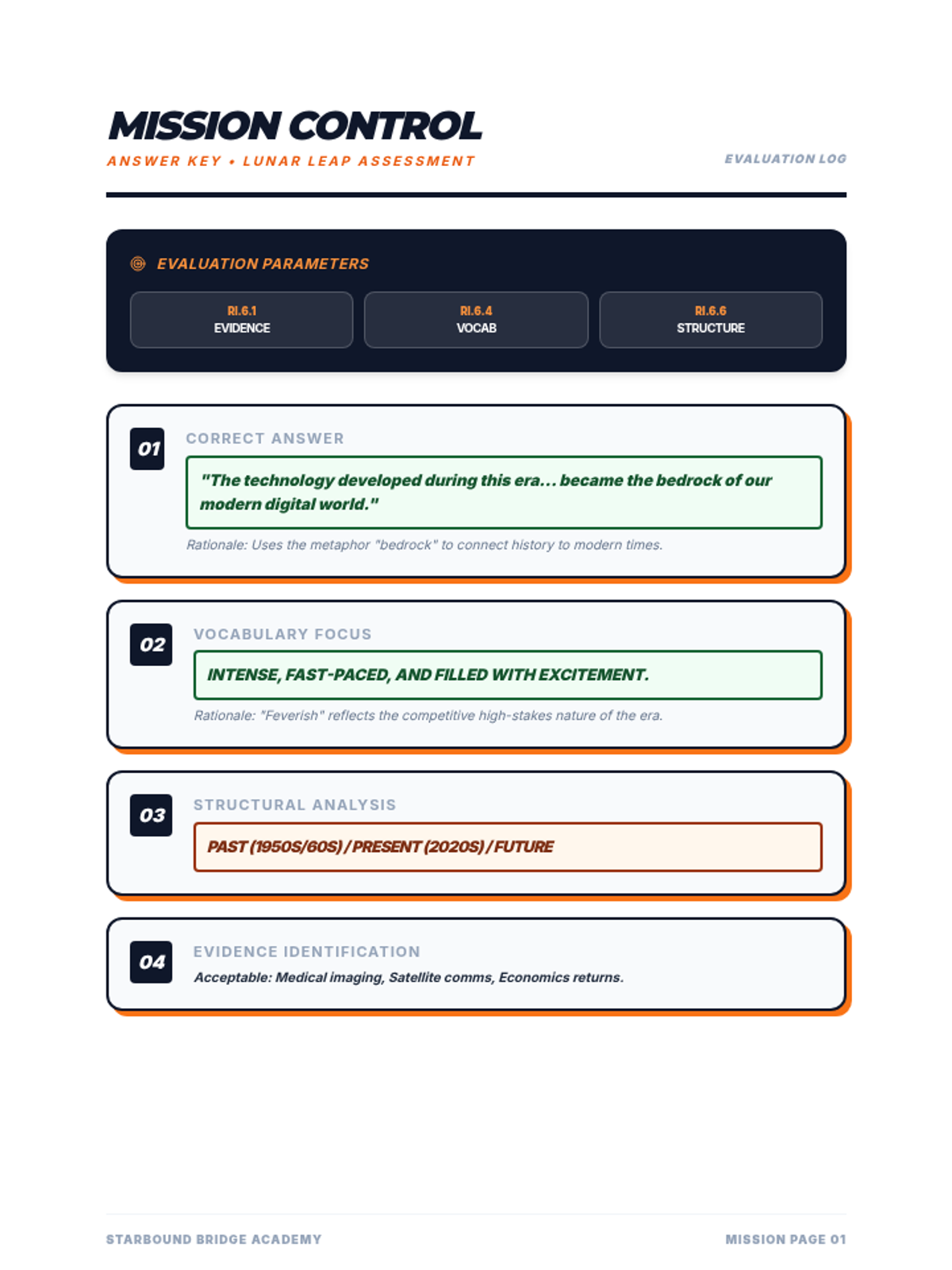
A summative assessment package focused on middle school ELA standards (RL.6/RI.6) through the lens of a persuasive text regarding NASA funding and its historical impact.
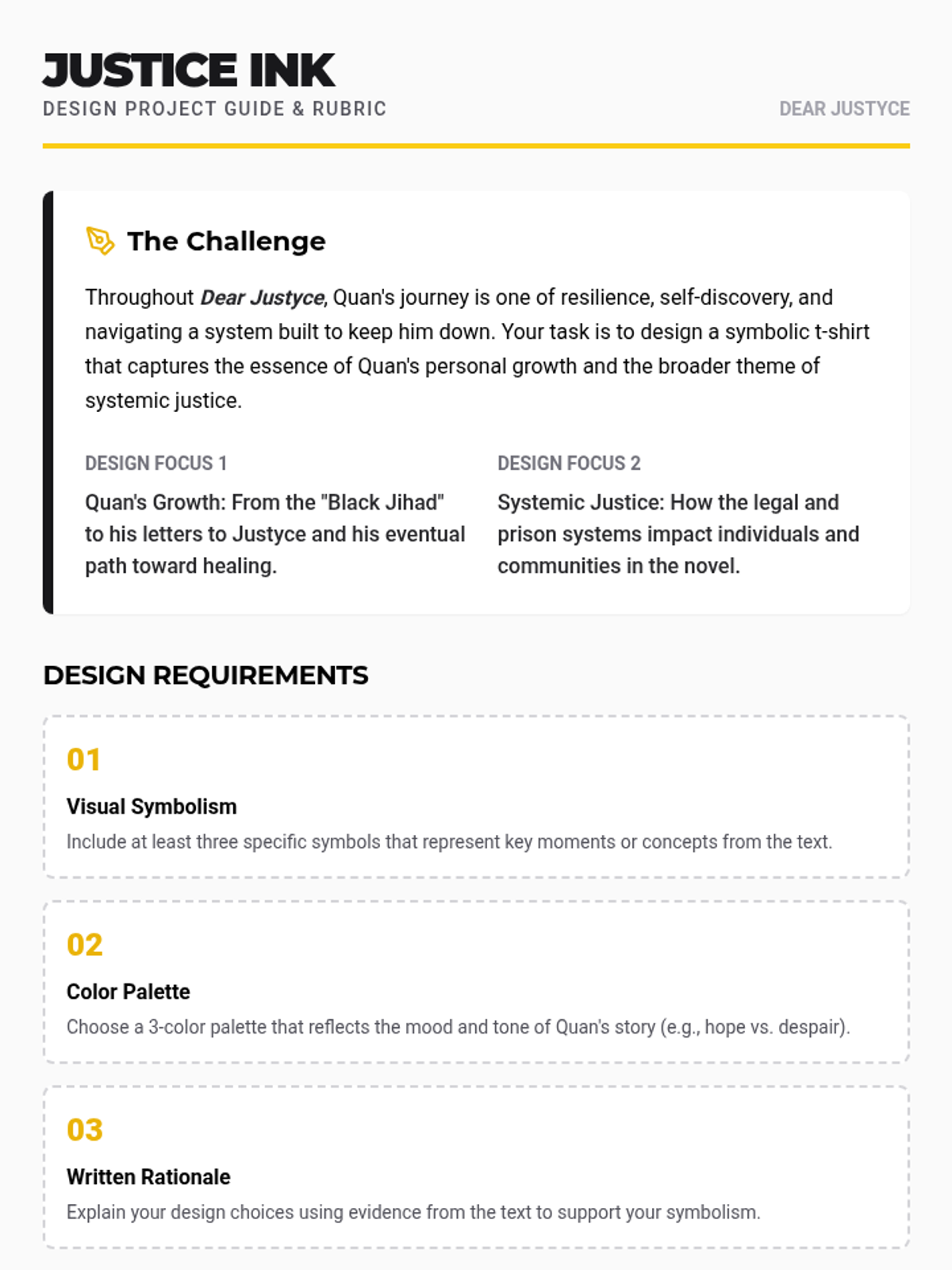
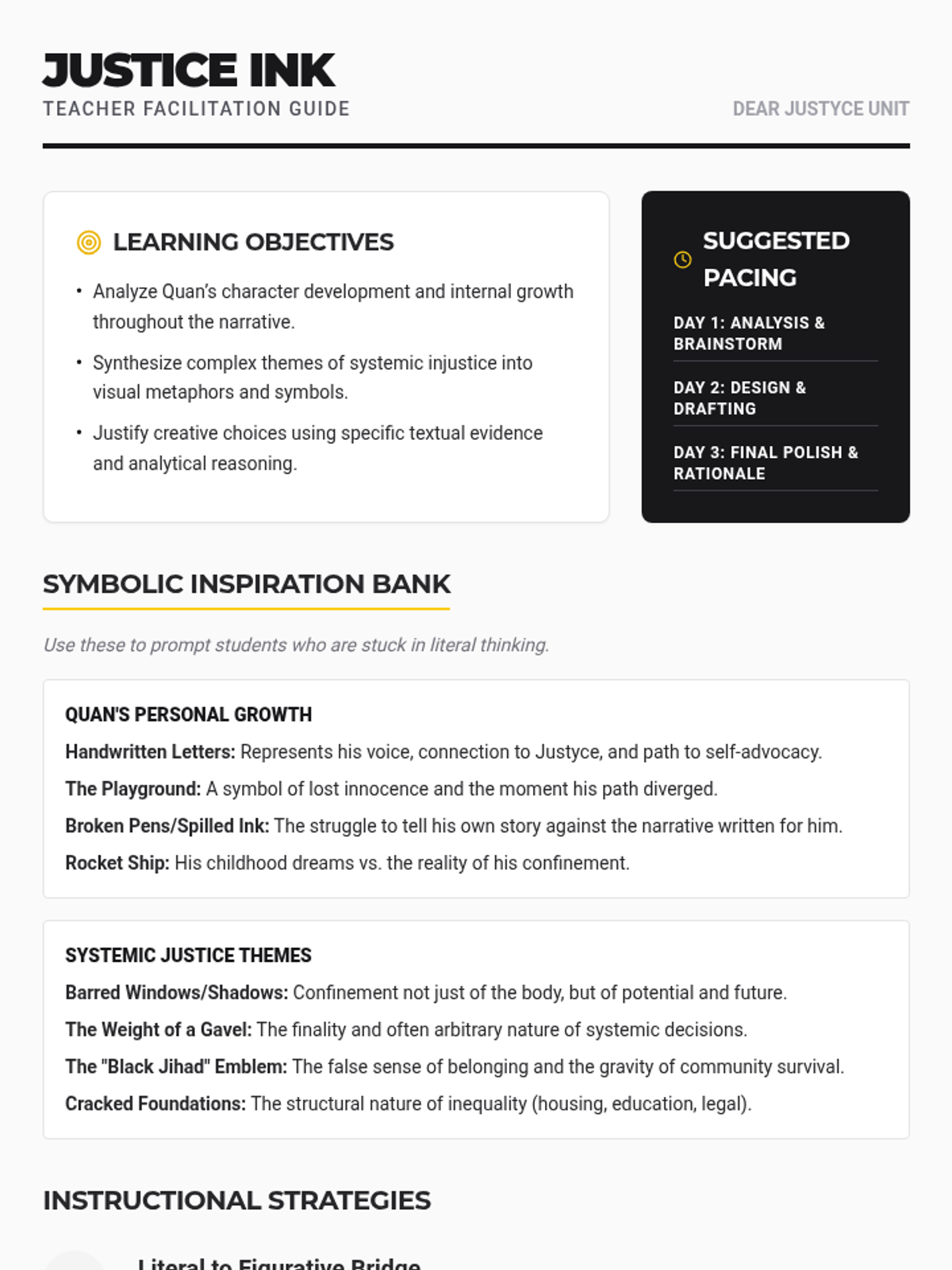
A creative design project where students analyze Quan's character arc and systemic justice themes in Dear Justyce to create a symbolic t-shirt design.
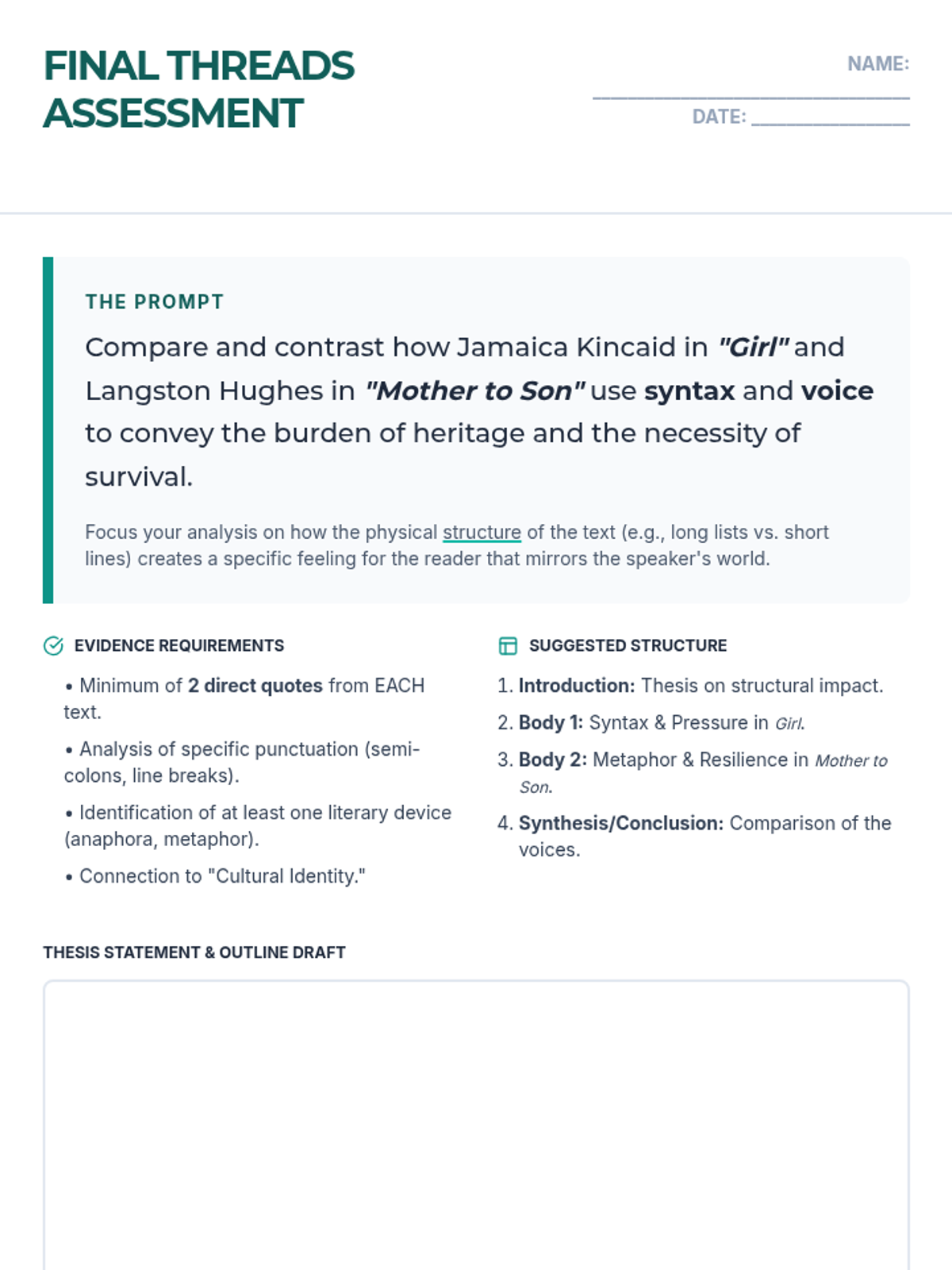
The culminating assessment where students draft a comparative response analyzing how both Kincaid and Hughes use specific literary devices to convey themes of identity and perseverance.
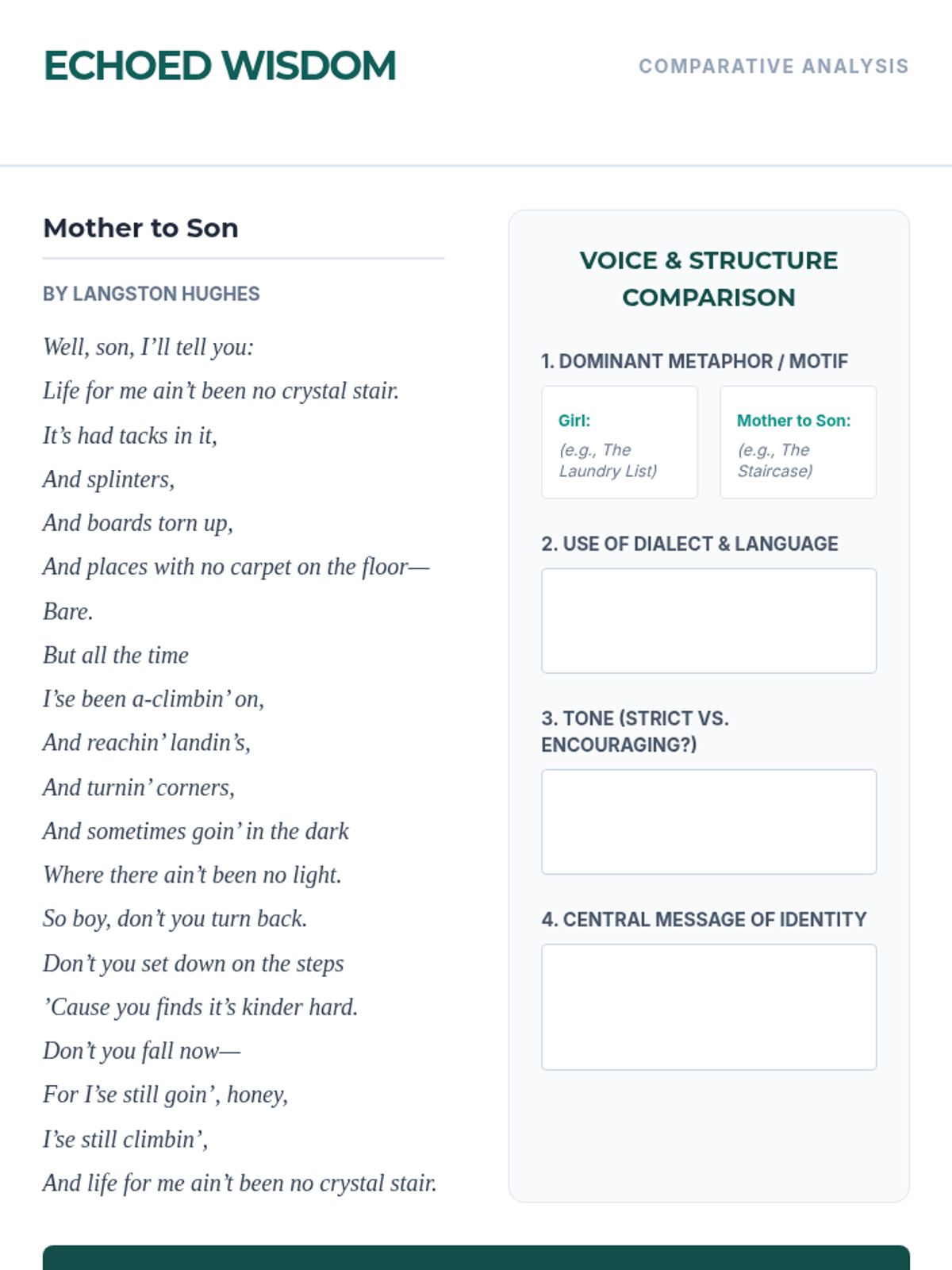
Introduction of Langston Hughes' 'Mother to Son' as a comparative text, focusing on the shared motif of maternal advice and the contrasting use of dialect and metaphor.
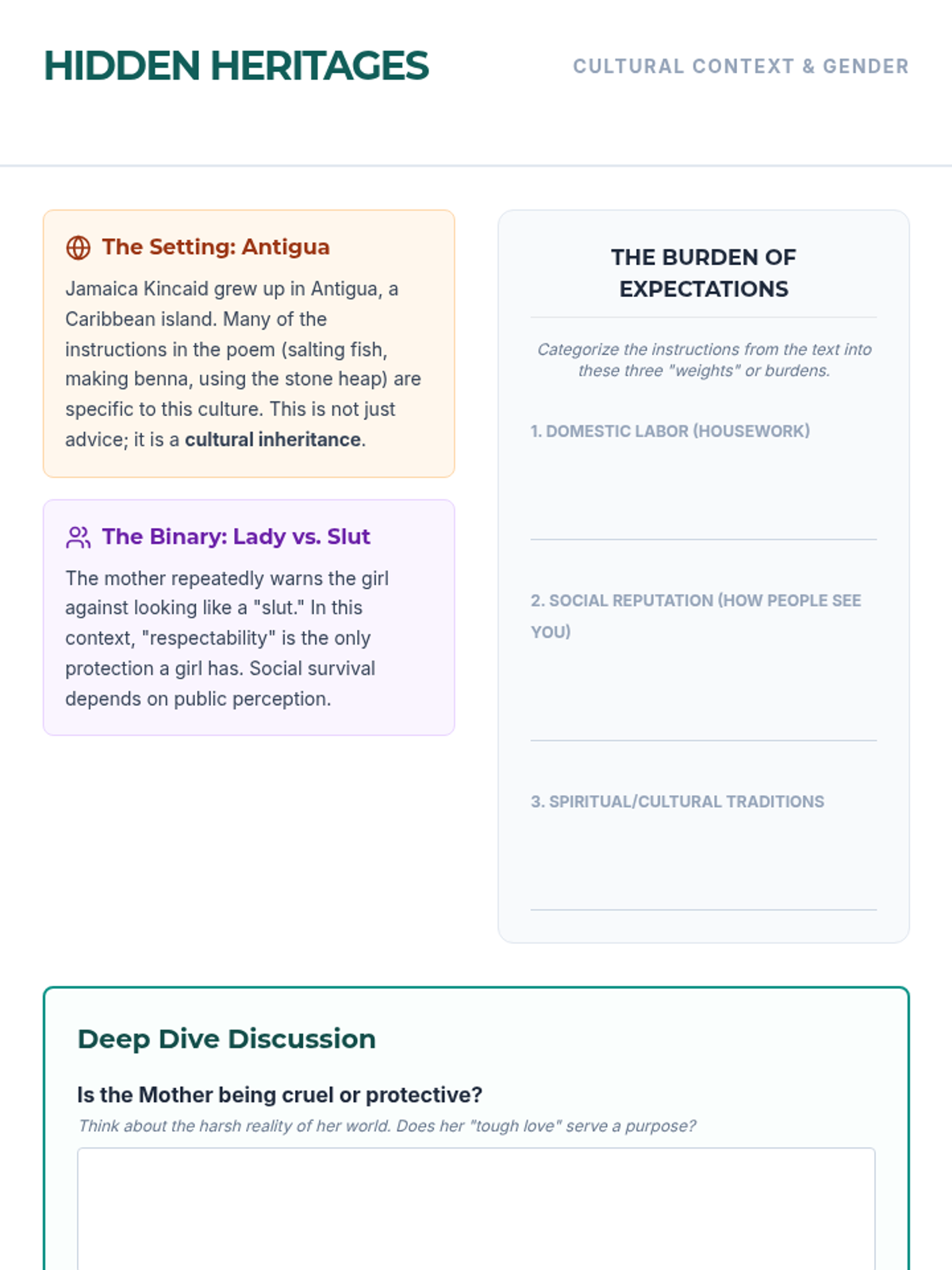
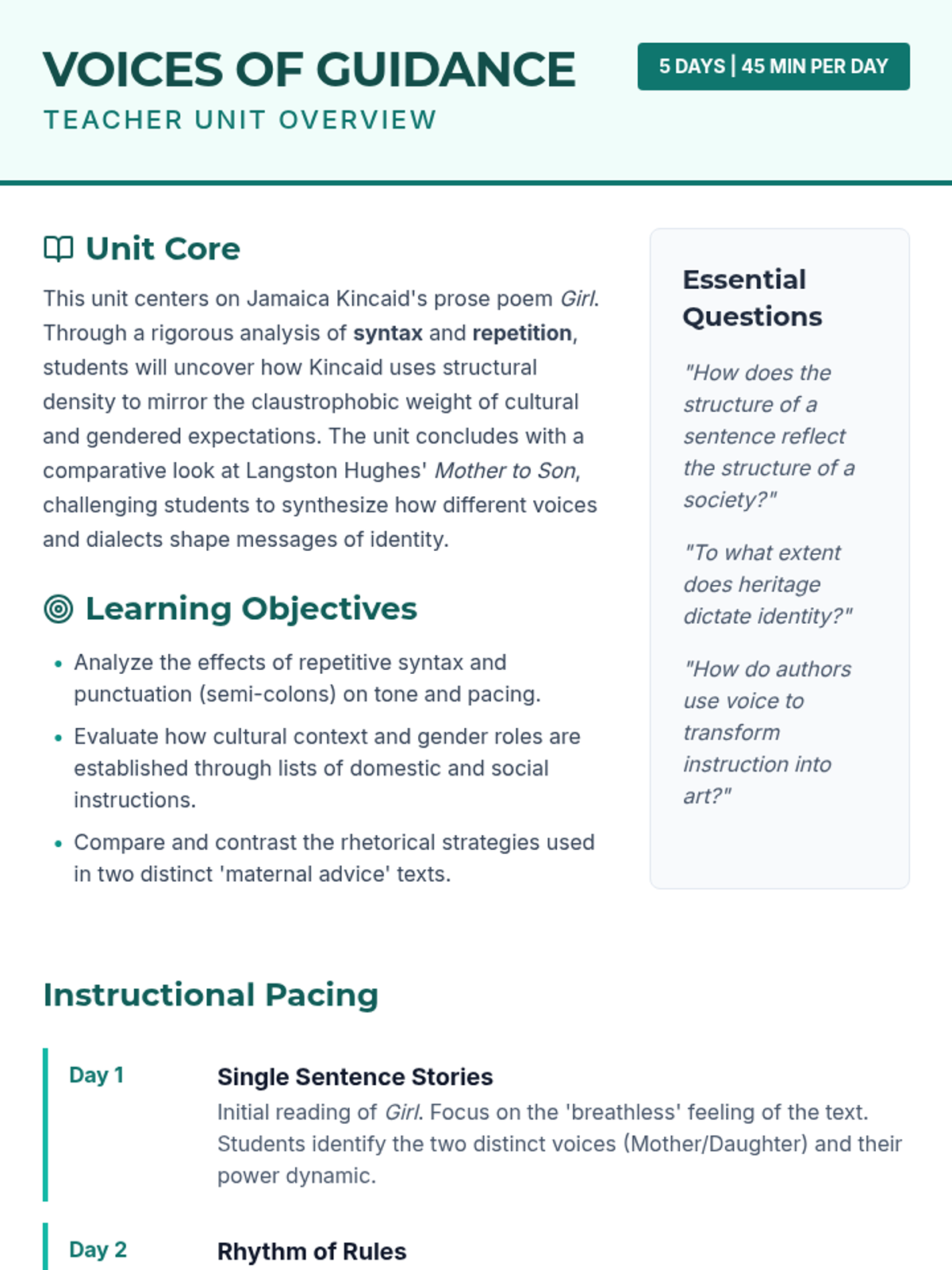
Exploration of the cultural and gendered expectations within 'Girl', focusing on the Caribbean context and the universal themes of identity formation under maternal guidance.
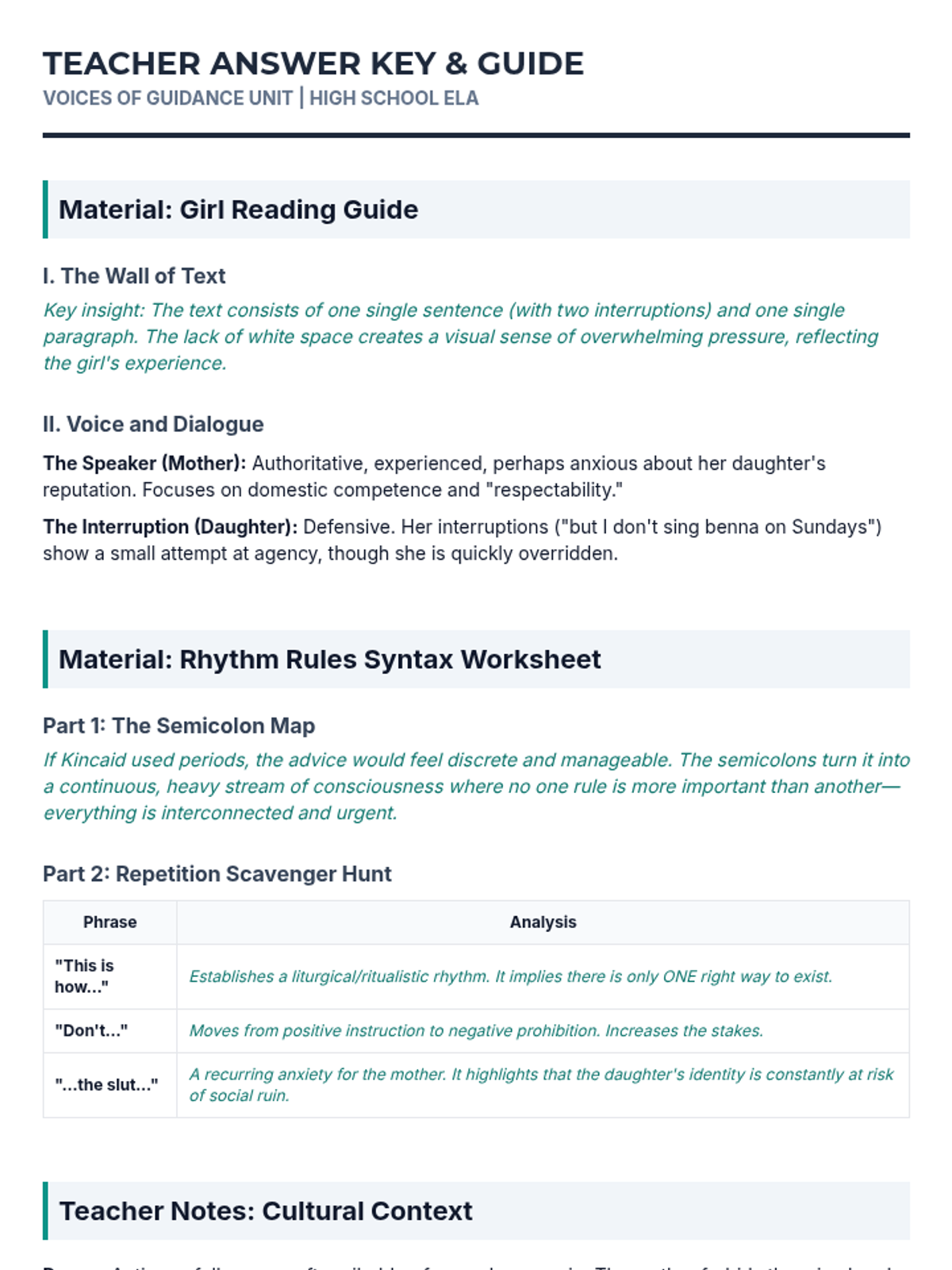
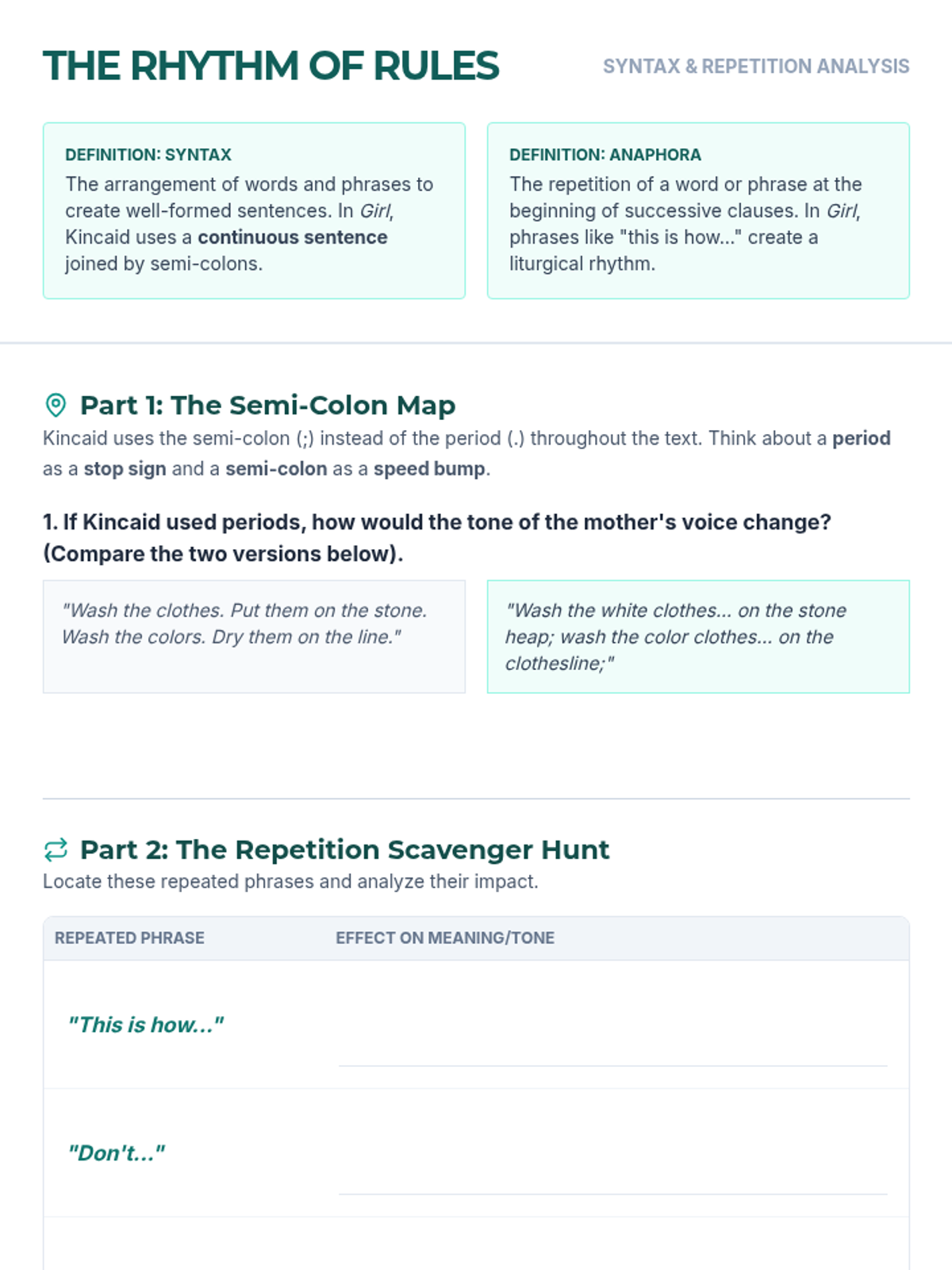
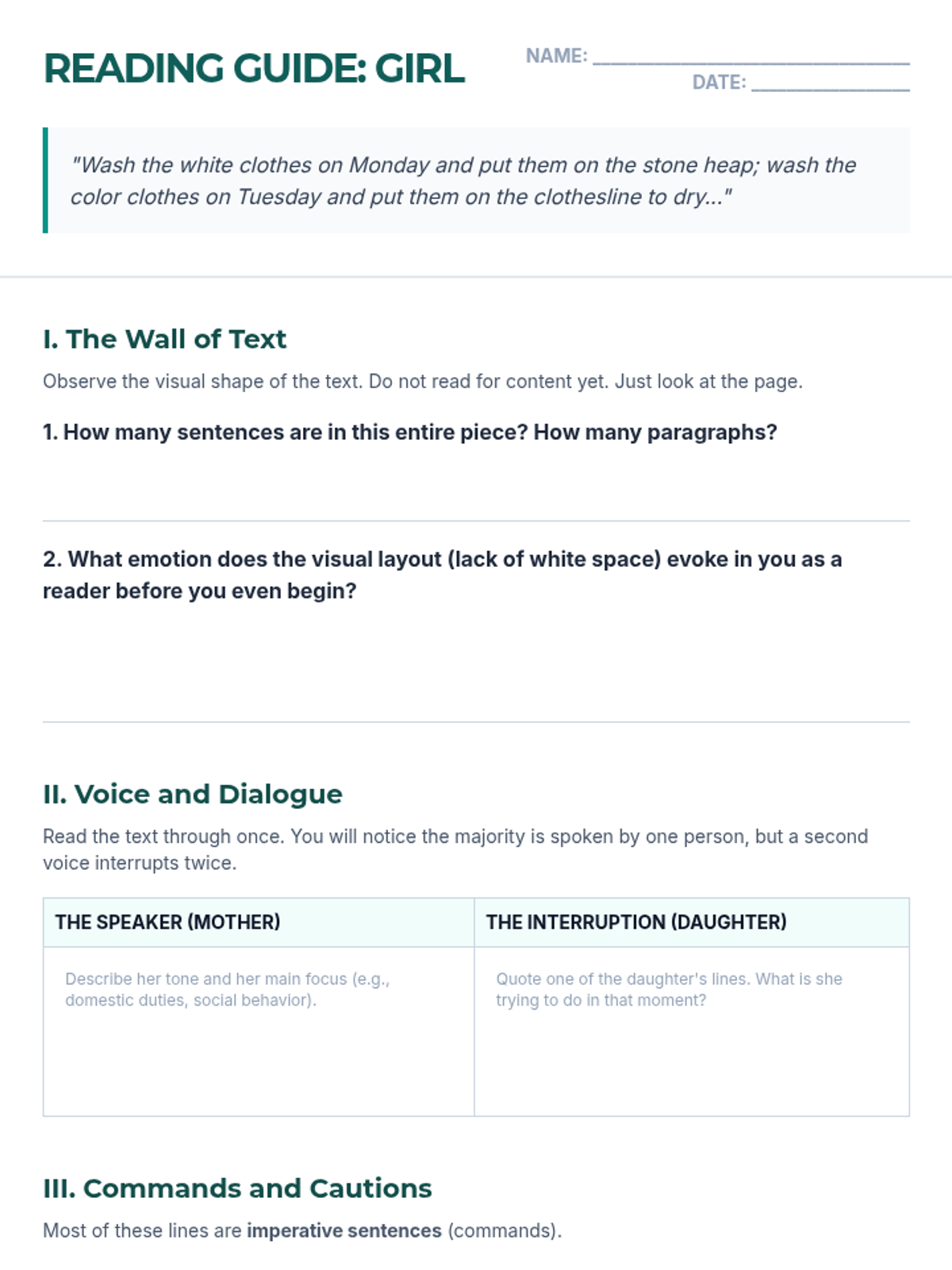
A deep dive into the syntax of 'Girl', specifically analyzing how Kincaid's use of semi-colons and rhythmic repetition creates a 'breathless' quality that reflects the overwhelming nature of societal expectations.
An introduction to Jamaica Kincaid's 'Girl', focusing on initial reactions to its unique single-sentence structure and the immediate sense of voice and authority.