A targeted lesson for 7th-grade students, particularly those with IEP writing goals, focusing on the mechanics of MLA in-text citations and quote integration using a highly visual, step-by-step approach.
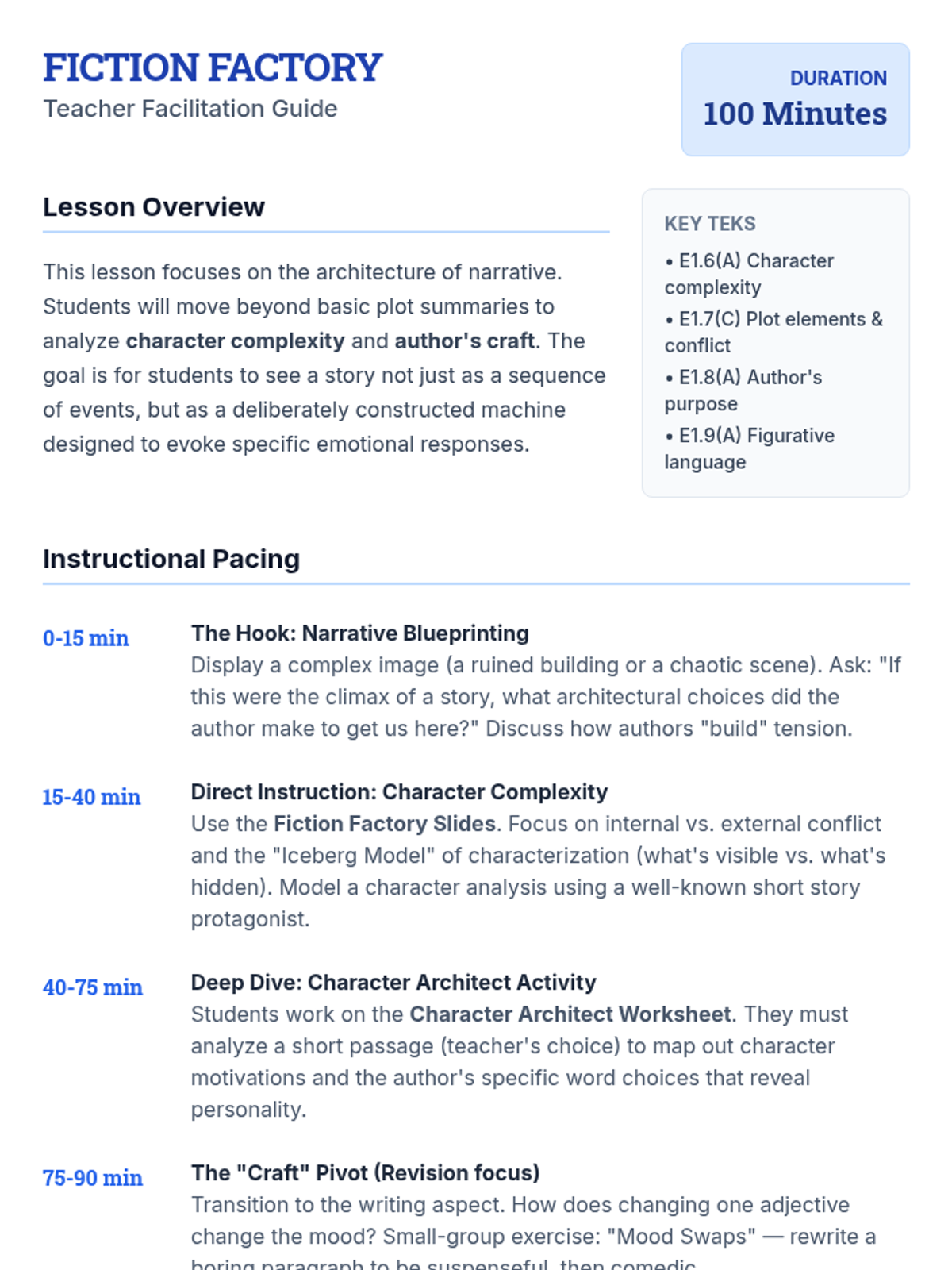
A rigorous STAAR-aligned high school English I lesson analyzing how authors employ literary devices, diction, syntax, and imagery to craft mood, voice, and tone. Students engage in interactive note-taking followed by guided close reading of Edgar Allan Poe and Delia Owens, culminating in independent passage analysis.
An hour-long structured reading lesson focusing on B and W letter-sound association and common sight words. Designed with dyslexia-friendly spacing, color-coded highlights, and picture scaffolding to support struggling oral readers.
Students synthesize their research into a concise problem statement or charity profile, sharing their findings in a peer-feedback speed-dating activity.
Students conduct independent research using guided graphic organizers to trace the root causes of their local issue and analyze charity community impact.
Students learn to evaluate online sources using the 5 Ws of Research framework, analyzing mission statements, local statistics, and financial transparency for charities.
A targeted preparation module designed to scaffold student success on Part 3 of the NYS Regents ELA exam. Students dissect a mentor text, use a structured graphic organizer to identify central ideas and literary techniques, and practice writing high-scoring responses using guided templates.
A comprehensive RLA lesson designed to guide English I students through analyzing how characterization, character foils, and plot elements intersect to develop deep thematic messages in literary texts.
A seventh-grade ELA lesson focused on identifying key ideas, controlling ideas, and argumentative claims with supporting evidence. Students complete a structured guided-notes packet based on instructional slides and apply their skills to evaluate opposing viewpoints.
A lesson focused on teaching grade 7 students how to make inferences about an author's use of language, including figurative language, mood, and tone, to understand their specific purposes. Students complete guided cloze notes and apply their learning to analyze Hughes's poem 'Dreams' and identify terms.
A comprehensive lesson analyzing character motivations, behaviors, and their impacts on plot development and themes using excerpts from The Hunger Games.
An introductory 8th-grade lesson on making logical inferences and selecting text evidence, featuring guided notes with cloze passages, photo/text practice, and a set of differentiated task cards.
A foundational vocabulary lesson for WIDA Level 1-2 9th-grade ELL students covering Books 1-11 of The Odyssey. Includes a word search puzzle for visual word recognition and a scaffolded sentence-frame worksheet for contextual practice.
A comprehensive lesson on making inferences and locating textual evidence for 7th-grade students, featuring interactive notes, visual prompts, and differentiated parallel passages.
A highly scaffolded, special-education-friendly lesson on Romeo and Juliet up to Act 3, Scene 2. Includes a visual character map and a 15-question comprehension check with chunked text summaries and sentence starters.
A 45-minute small group lesson for 7th graders focusing on the final three vignettes of 'The House on Mango Street'. Students explore Esperanza's evolving view of independent women, role models, and the symbolic paths to freedom represented by the house and writing.
An 8th-grade lesson that unpacks the process of finding theme by focusing on character growth, conflict resolution, and transitioning from a single subject/topic to a fully realized thematic statement.
A mastery-focused lesson pack containing 16 Grade 8 ELA task cards aligned to the North Carolina Standard Course of Study (NCSCOS). Designed for retesting and remedial support, the pack includes 4-per-page task cards, a student recording sheet for active thinking, and a comprehensive teacher guide with full answer explanations.
A comprehensive guided practice lesson on RI.7.2 and RI.7.3, focused on how unique organisms interact with extreme ecosystems. Students explore deep-sea vents, toxic caves, and frozen deserts through modeling slides, collaborative task-card stations, and a tracking notebook.
A comprehensive mini-lesson centered on analyzing conflict, escalation, and resolution through the poem 'Mad', connecting it to prior unit texts like 'Amigo Brothers' and 'Bad Boy'.
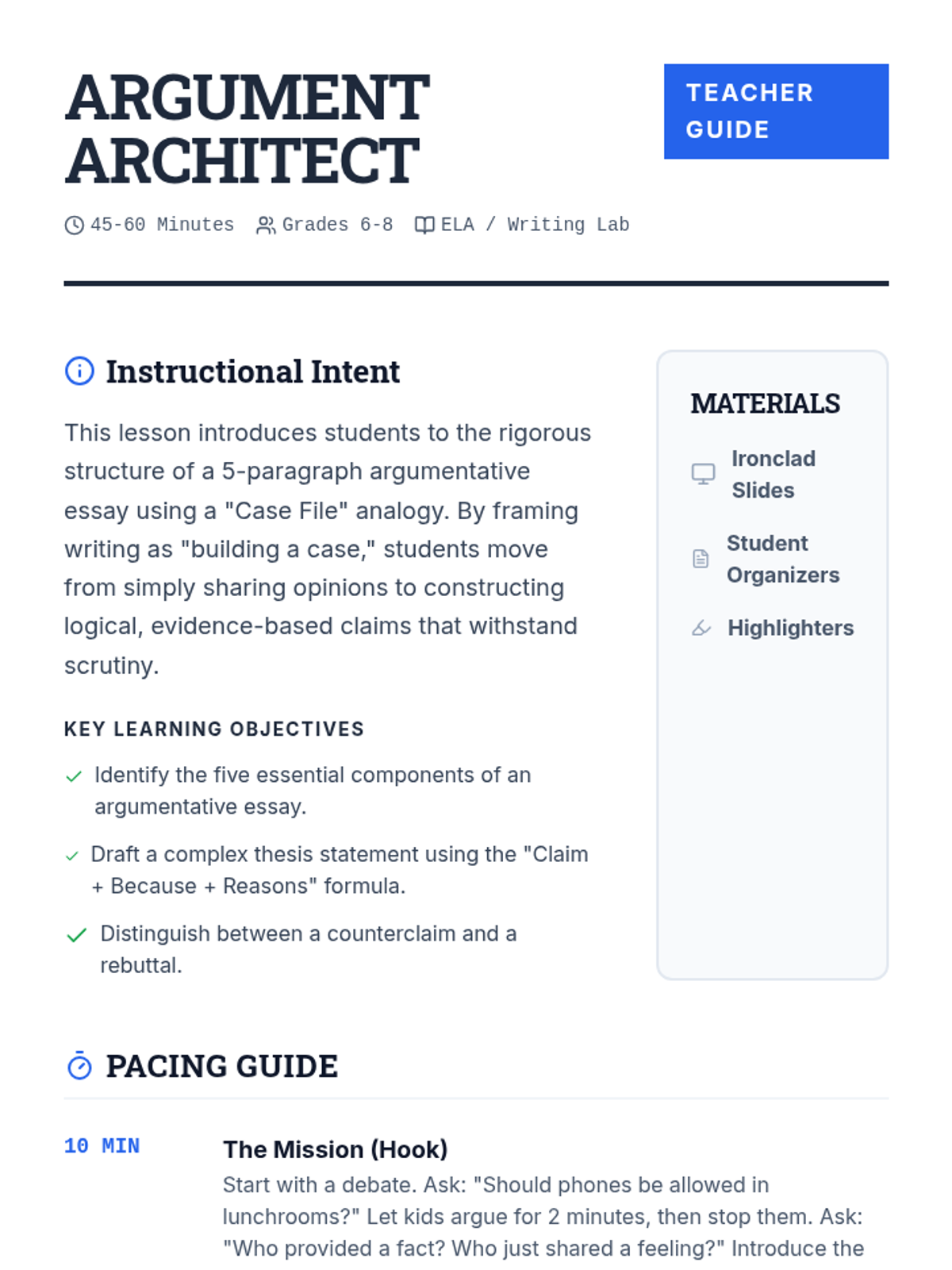
A superhero-themed writing workshop lesson that guides students through mastering the TEXT paragraph structure and upgrading it to a full four-paragraph essay. Features dynamic, comic-inspired anchor charts and pocket-sized desk checklists.
This lesson provides a highly structured scaffold to help co-taught ELA students build a comparison thesis statement and paragraph. It links the protagonist Amal from Amal Unbound with Edgar Guest's inspirational poem 'See It Through', focusing on the theme of resilience.
A high-interest figurative language lesson using real quotes from Chapters 31-40 of Byron Graves's novel Rez Ball, tailored for 7th-grade ELA resource room students. Includes a visual reference guide, matching task cards, a cut-and-paste sorting sheet, and a teacher key.
A comprehensive 7th-grade literary analysis and annotation unit based on Gary Soto's short story 'Seventh Grade'. Students track character development, plot, and themes while practicing active questioning and drawing text-based inferences.
A close-reading lesson exploring conflict and setting in Gary Paulsen's Woodsong. Students analyze how the brutal winter environment drives the plot and shapes the central conflict.