A comprehensive mini-lesson centered on analyzing conflict, escalation, and resolution through the poem 'Mad', connecting it to prior unit texts like 'Amigo Brothers' and 'Bad Boy'.
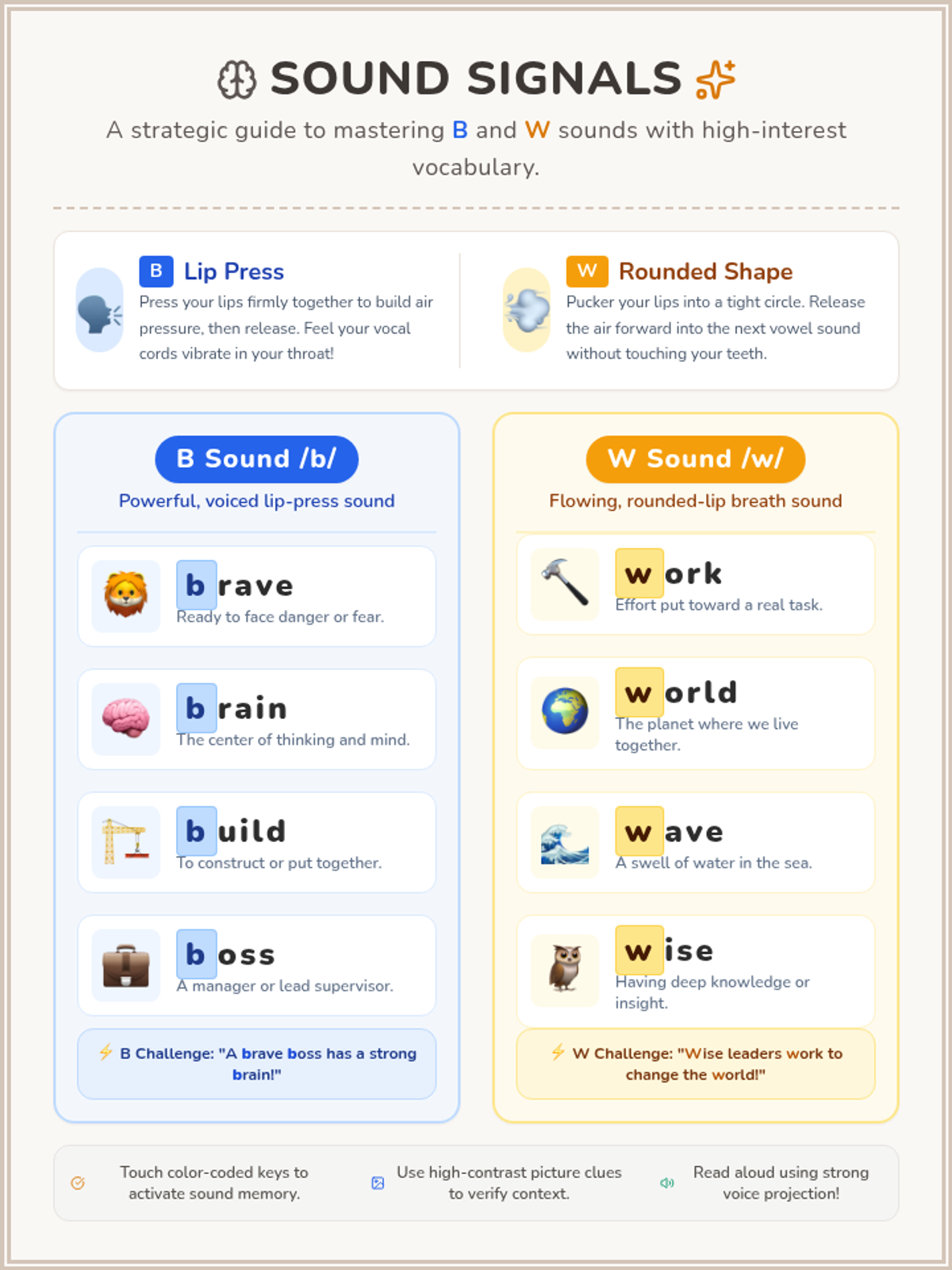
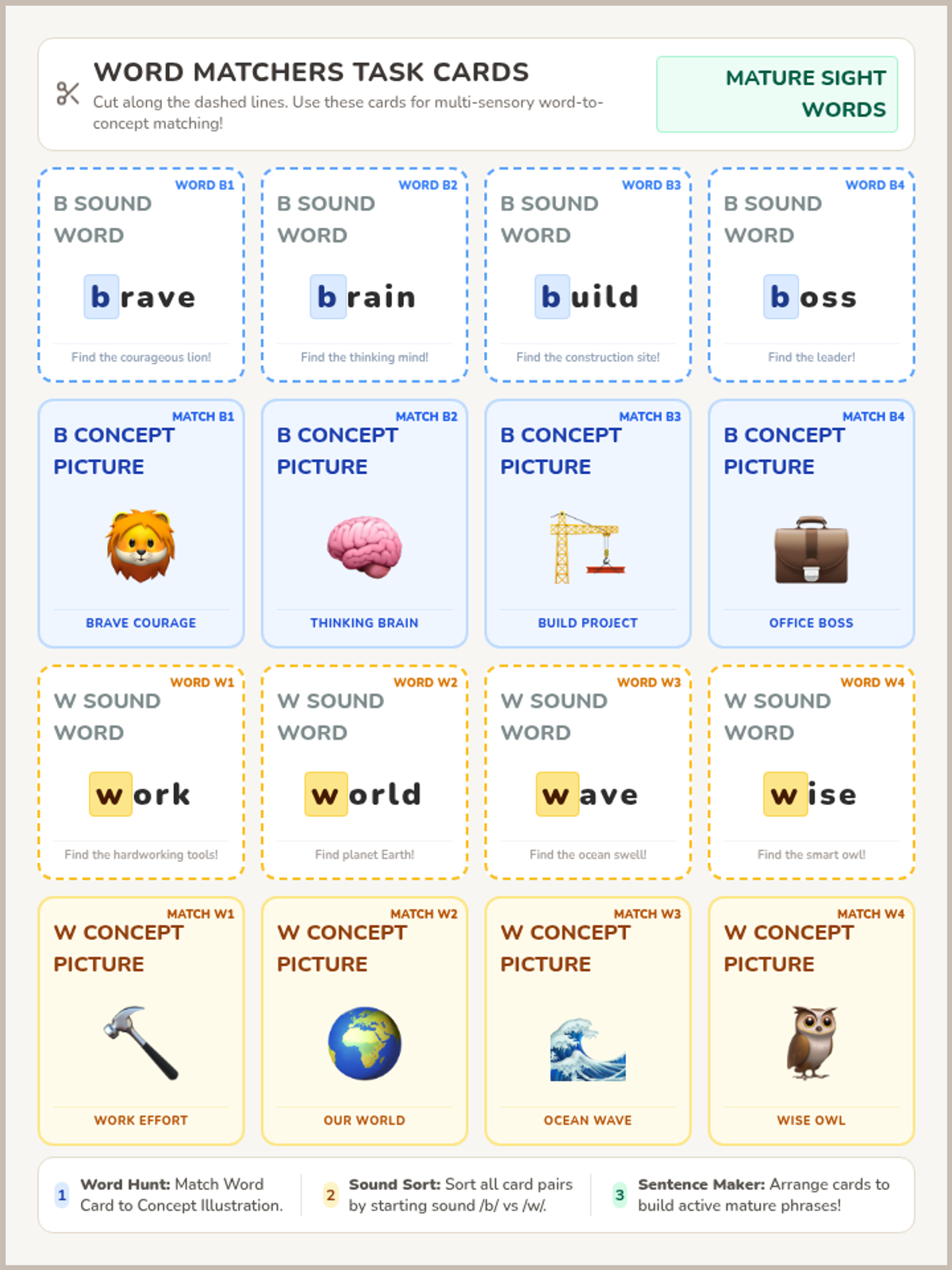
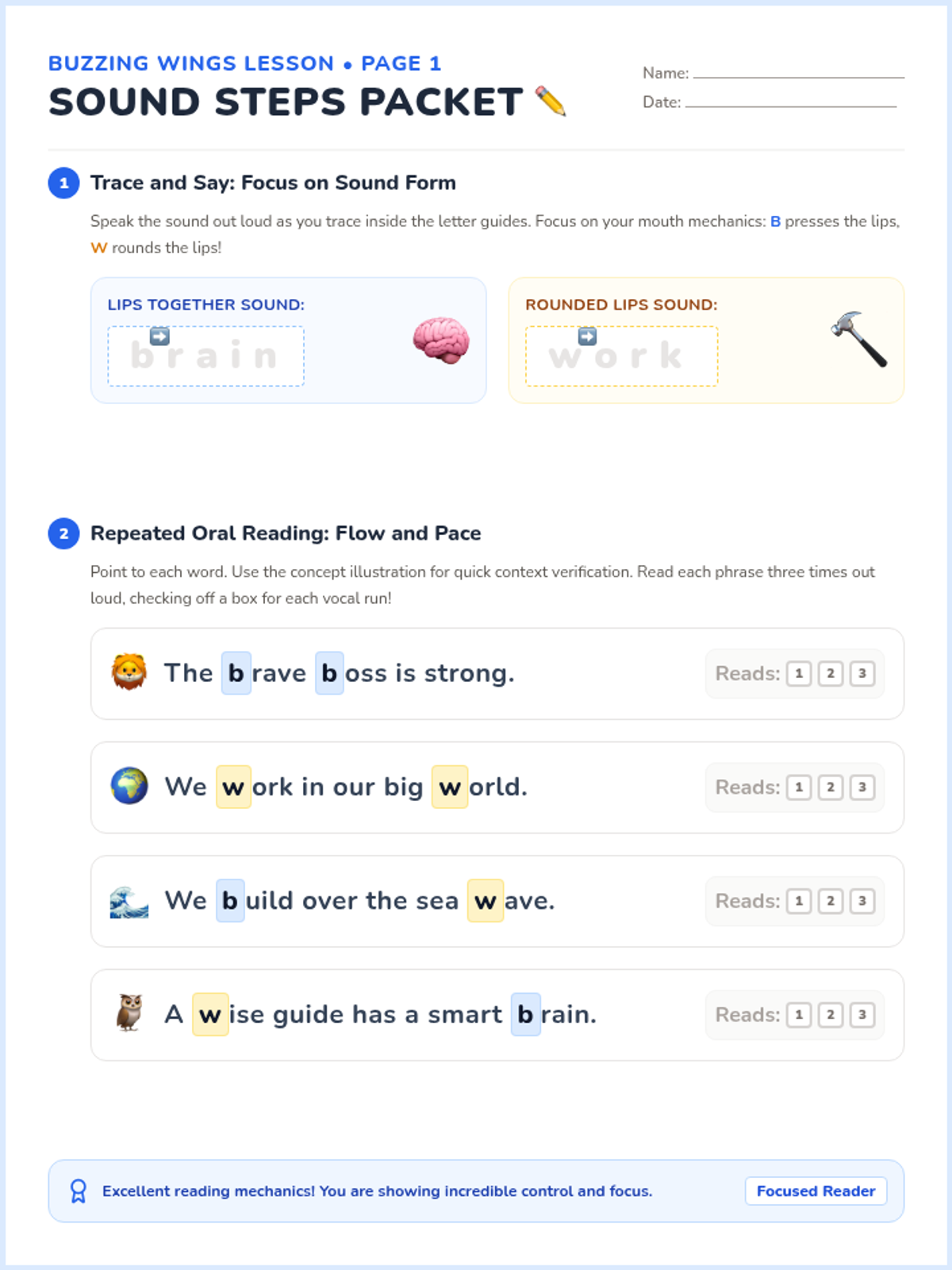
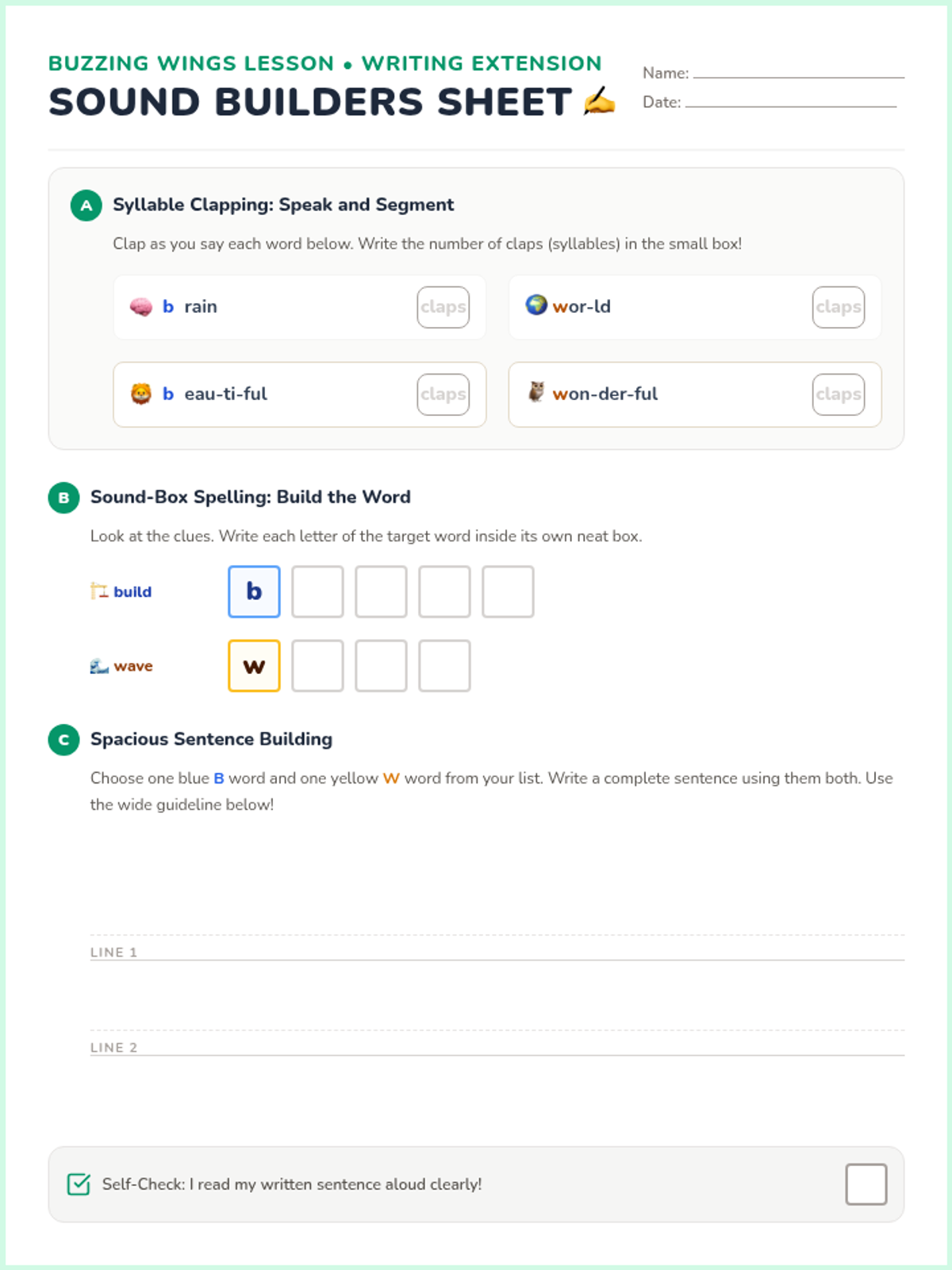
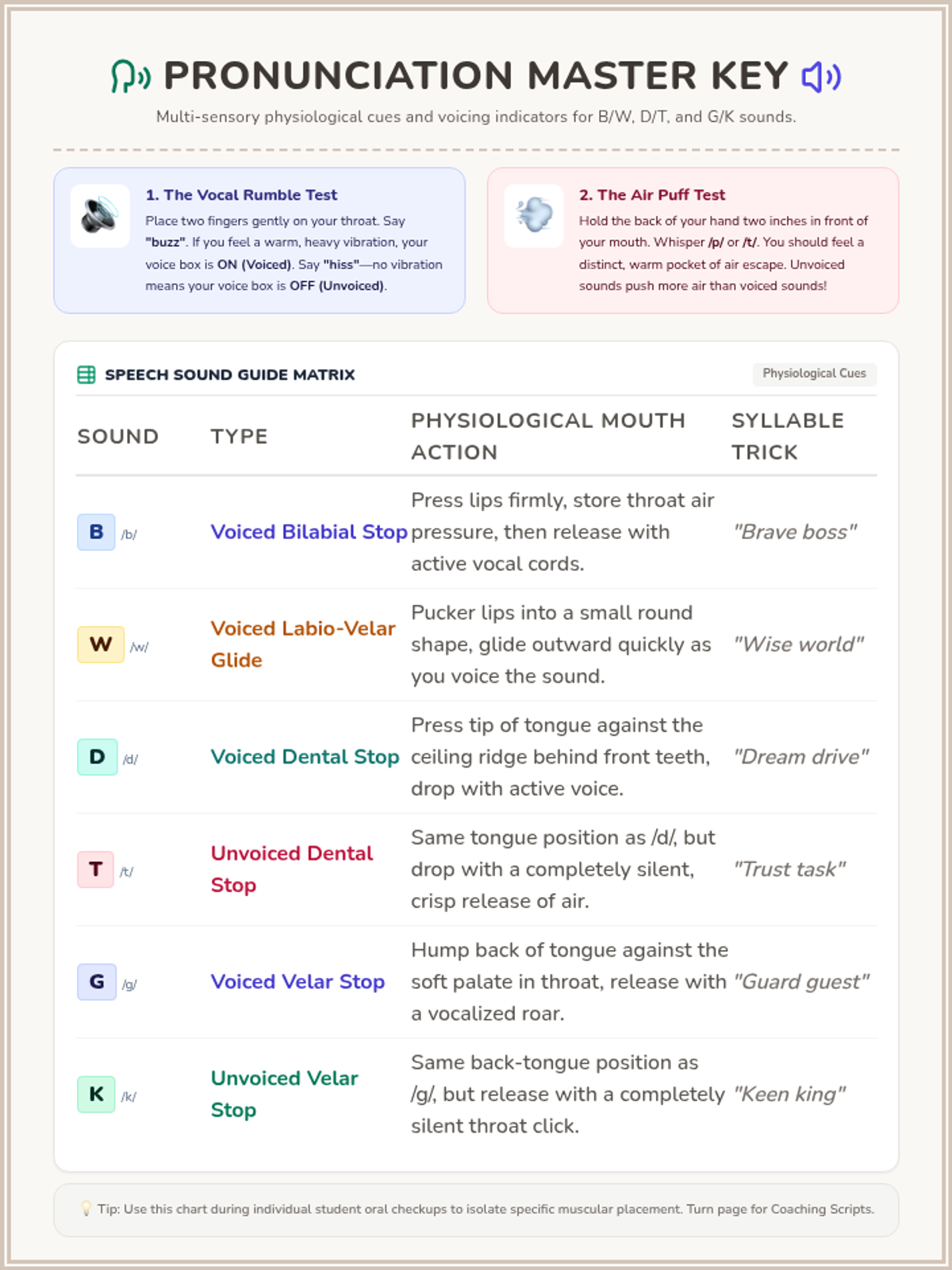
An hour-long structured reading lesson focusing on B and W letter-sound association and common sight words. Designed with dyslexia-friendly spacing, color-coded highlights, and picture scaffolding to support struggling oral readers.
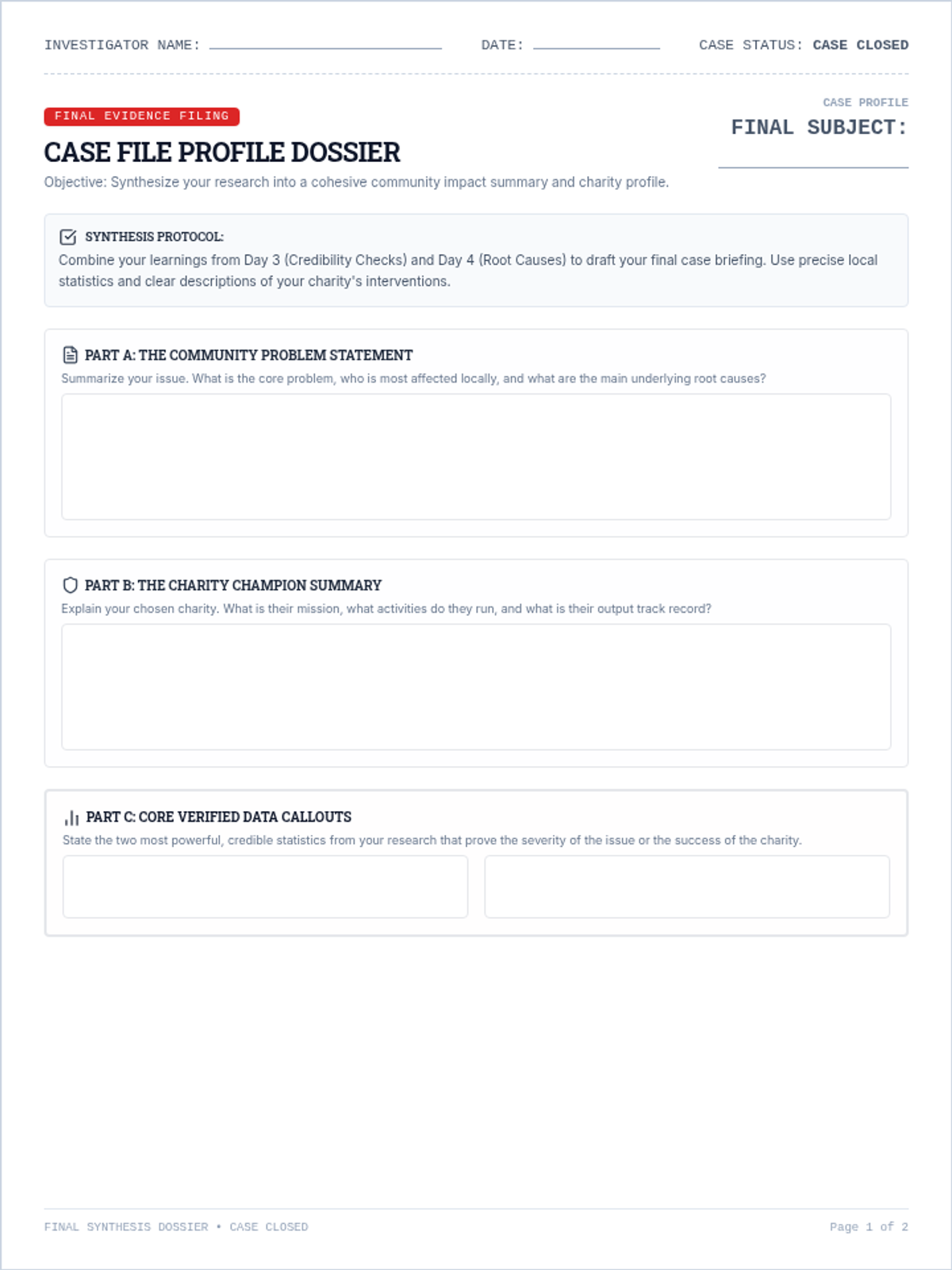
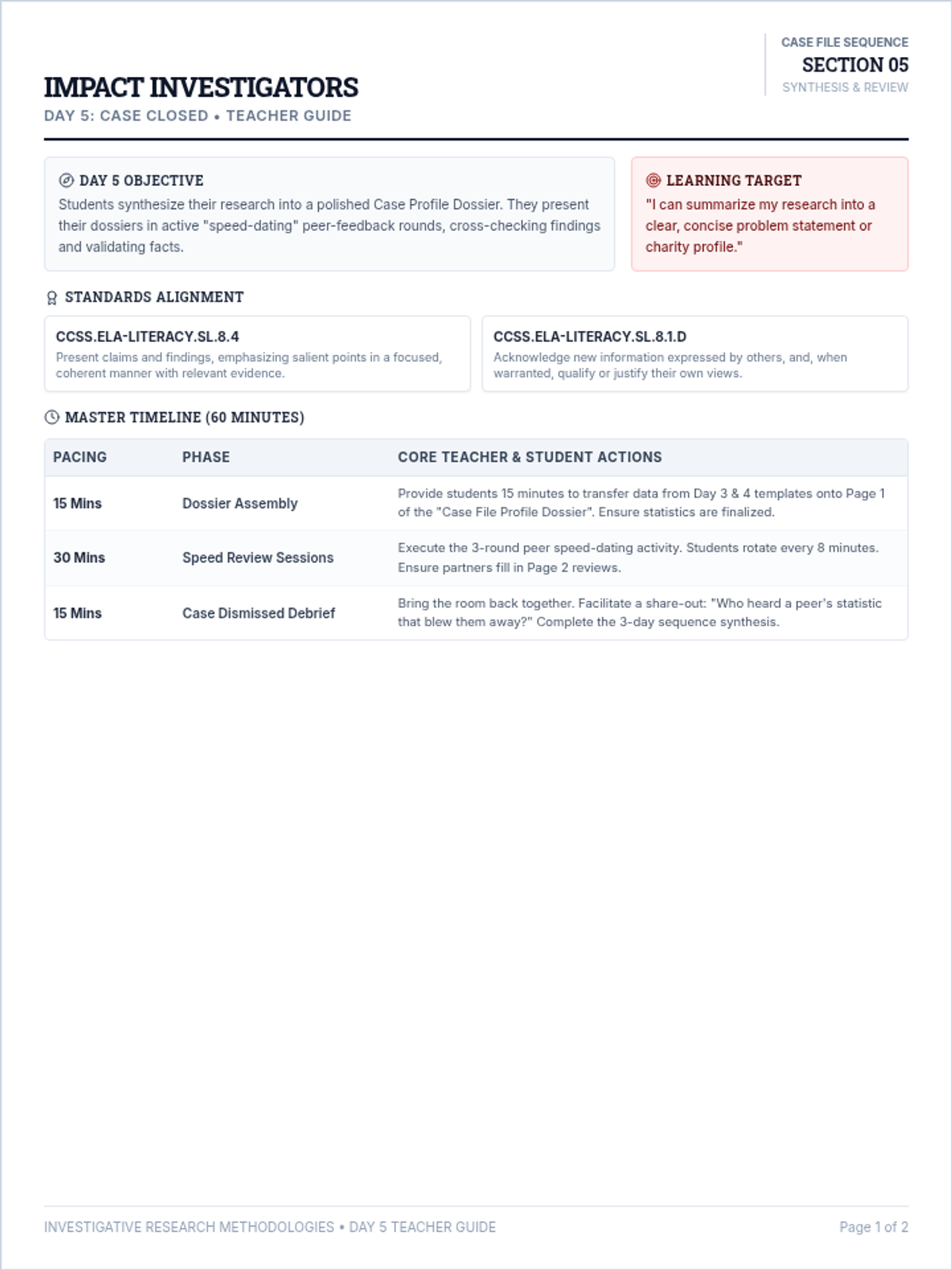
Students synthesize their research into a concise problem statement or charity profile, sharing their findings in a peer-feedback speed-dating activity.
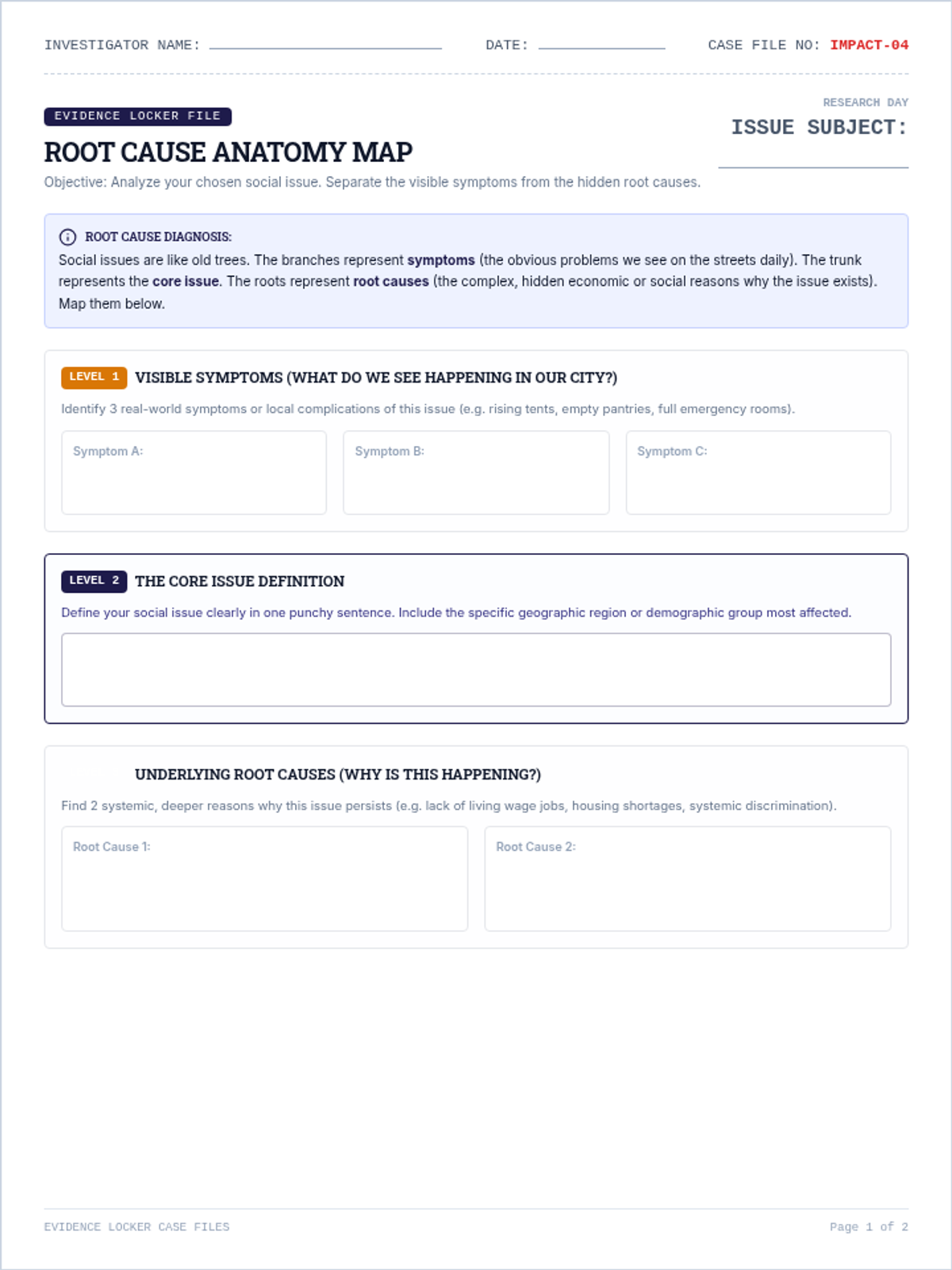
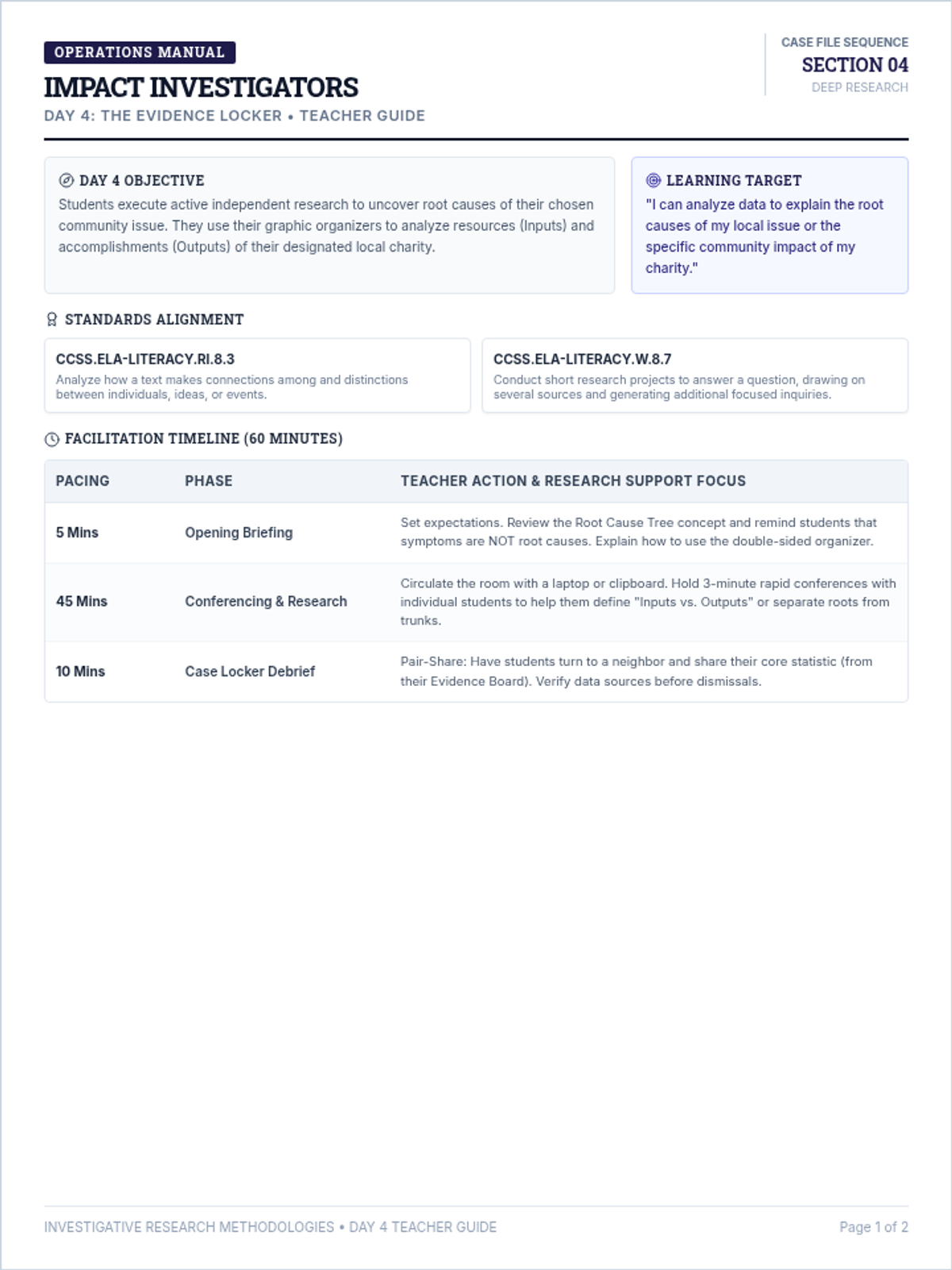
Students conduct independent research using guided graphic organizers to trace the root causes of their local issue and analyze charity community impact.
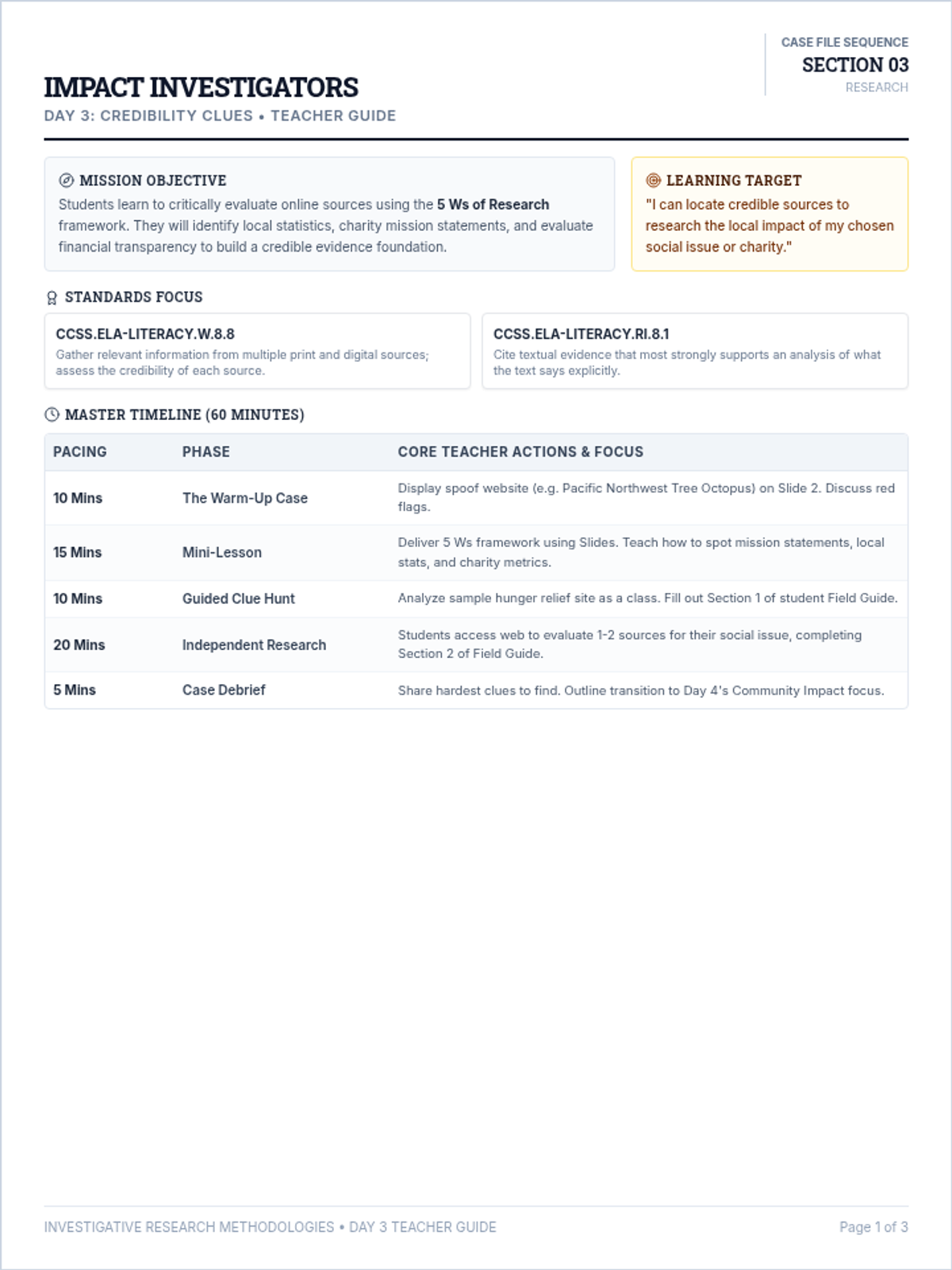
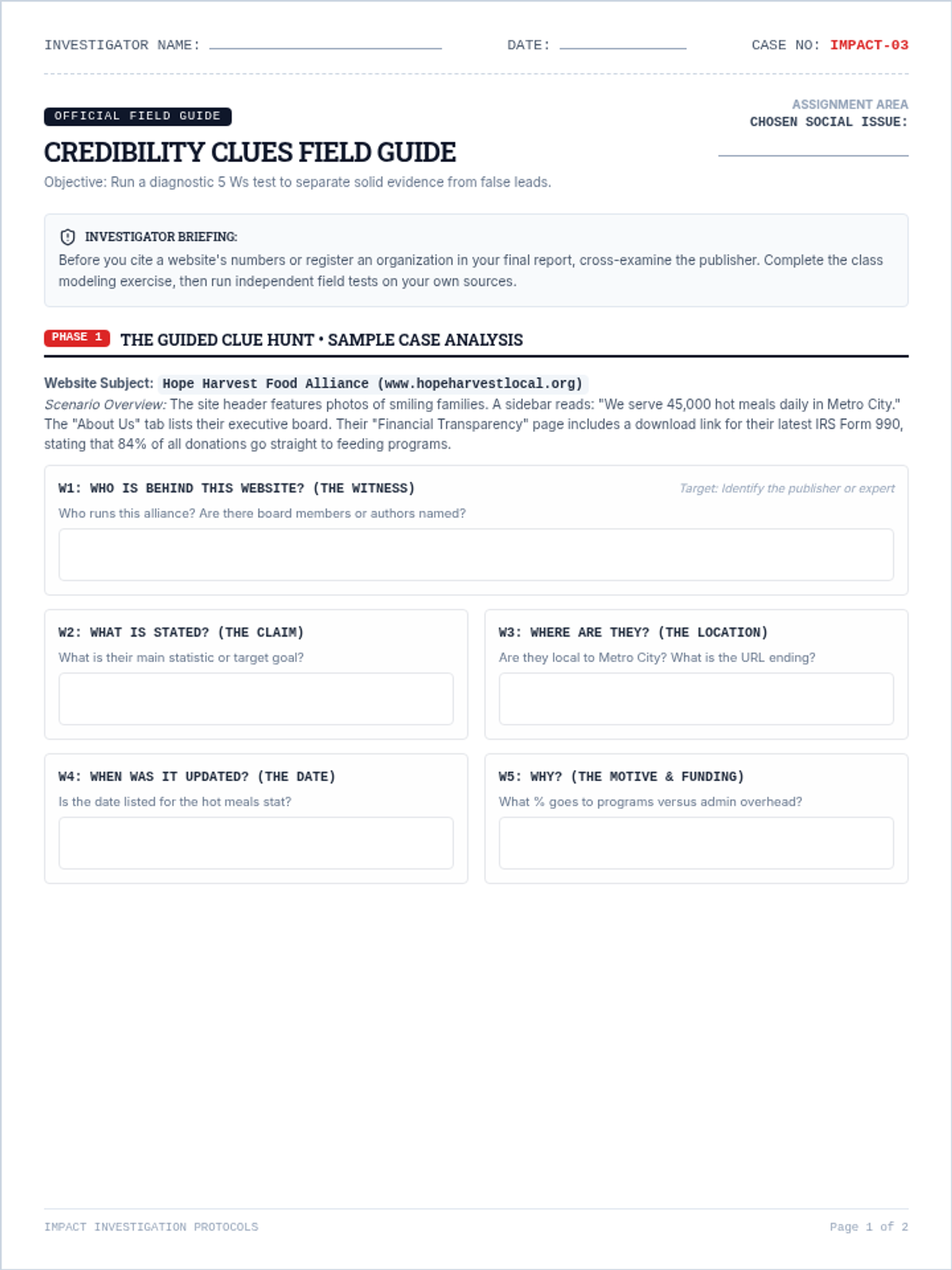
Students learn to evaluate online sources using the 5 Ws of Research framework, analyzing mission statements, local statistics, and financial transparency for charities.
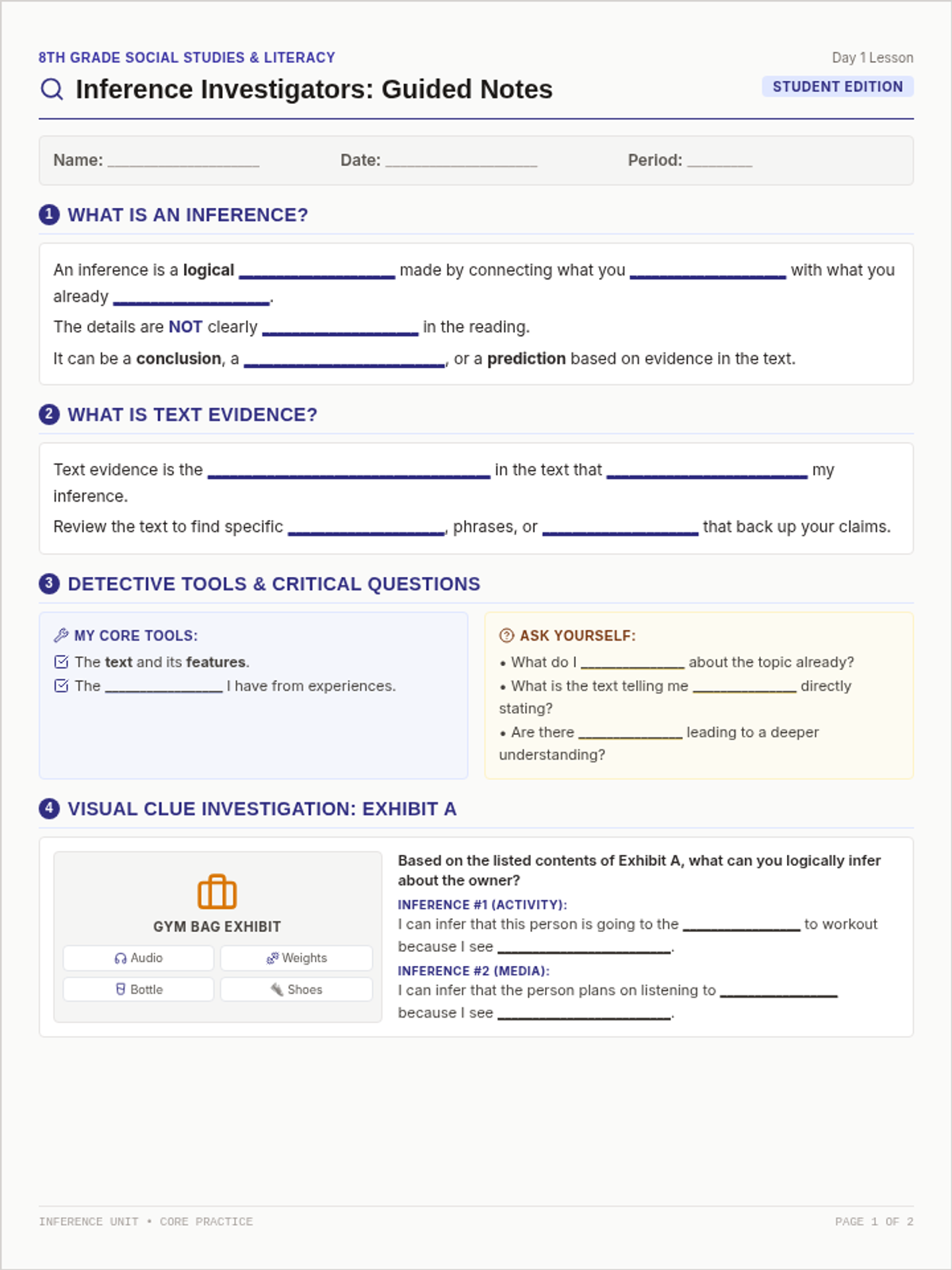
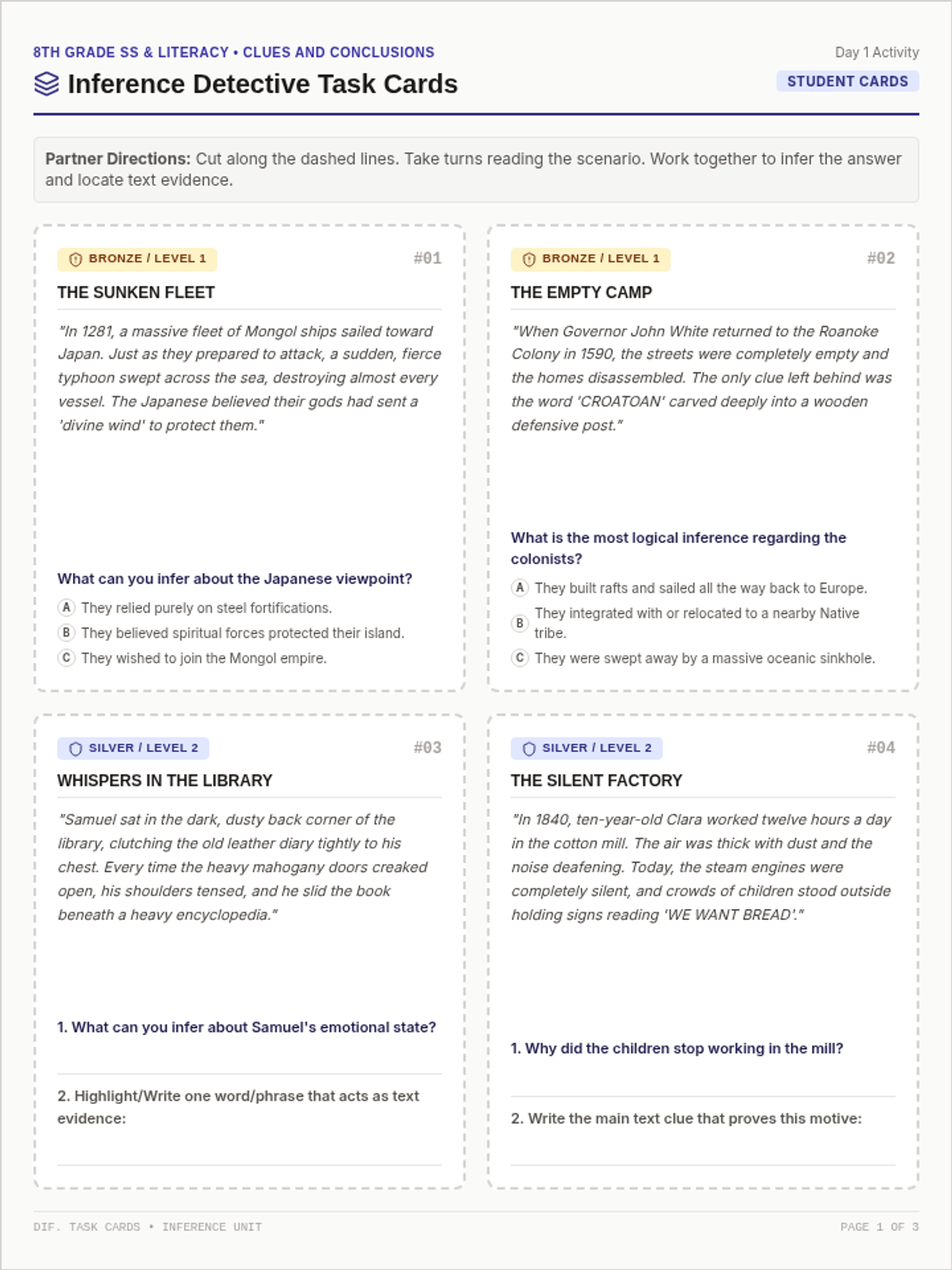
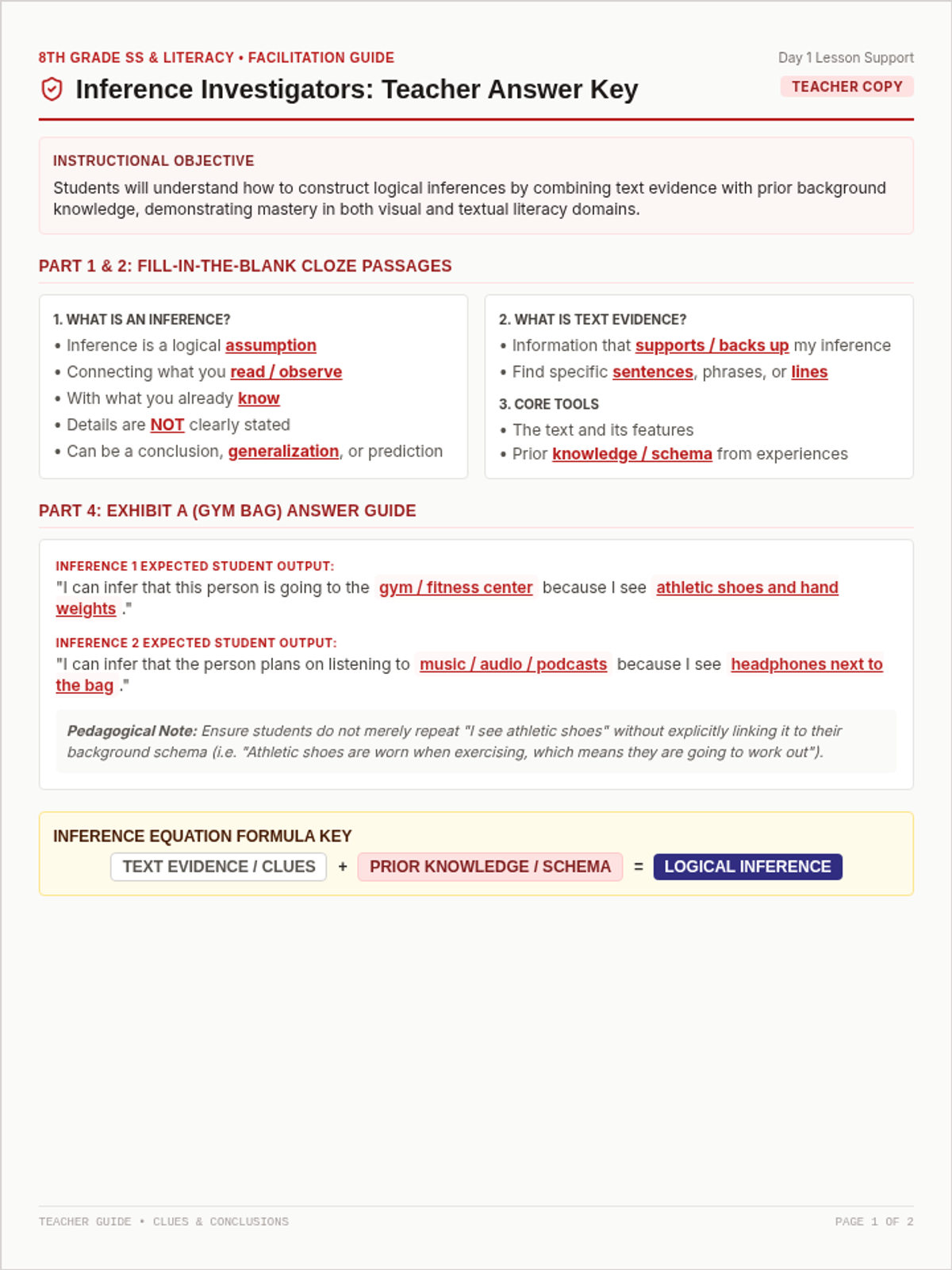
An introductory 8th-grade lesson on making logical inferences and selecting text evidence, featuring guided notes with cloze passages, photo/text practice, and a set of differentiated task cards.
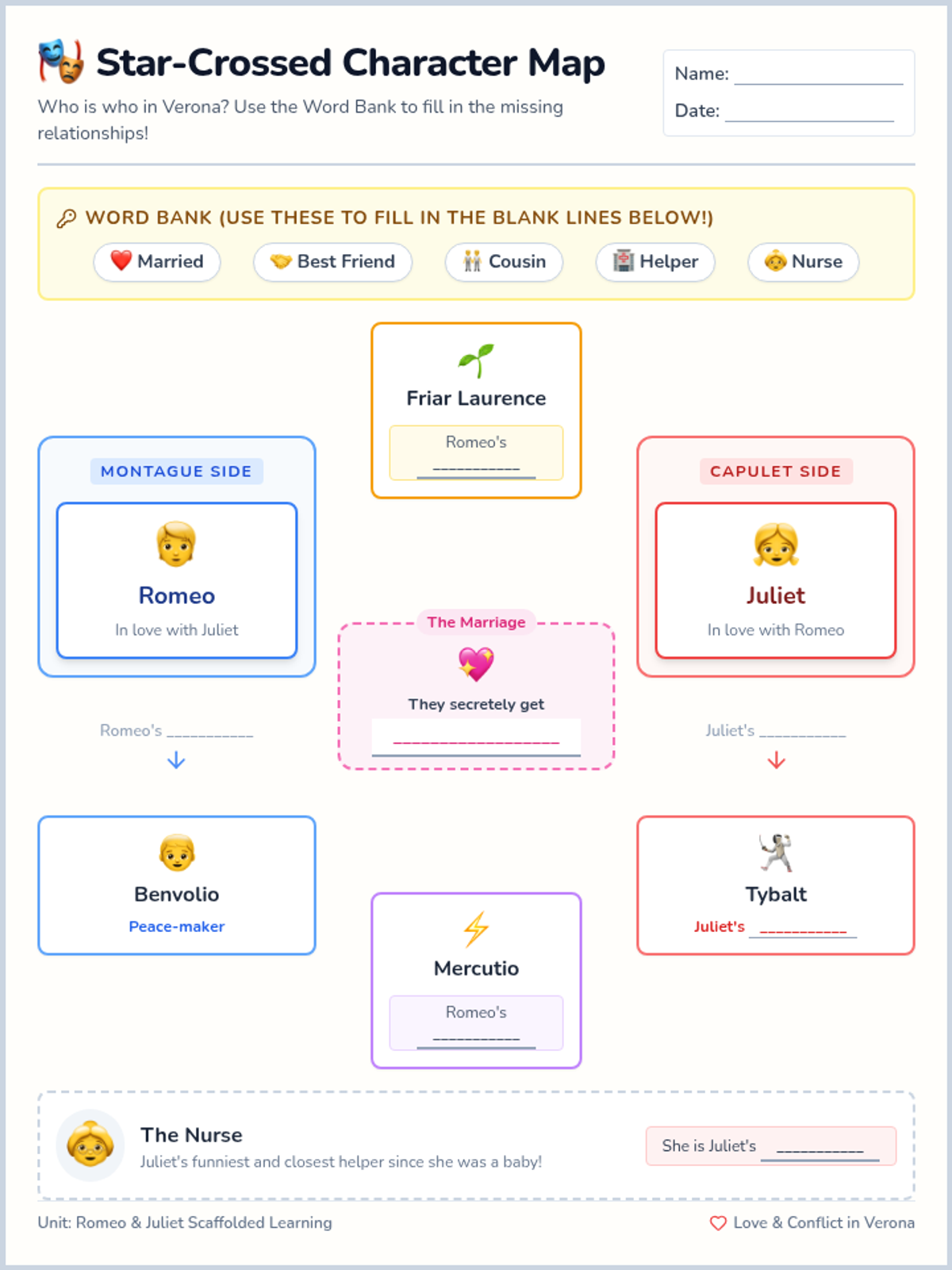
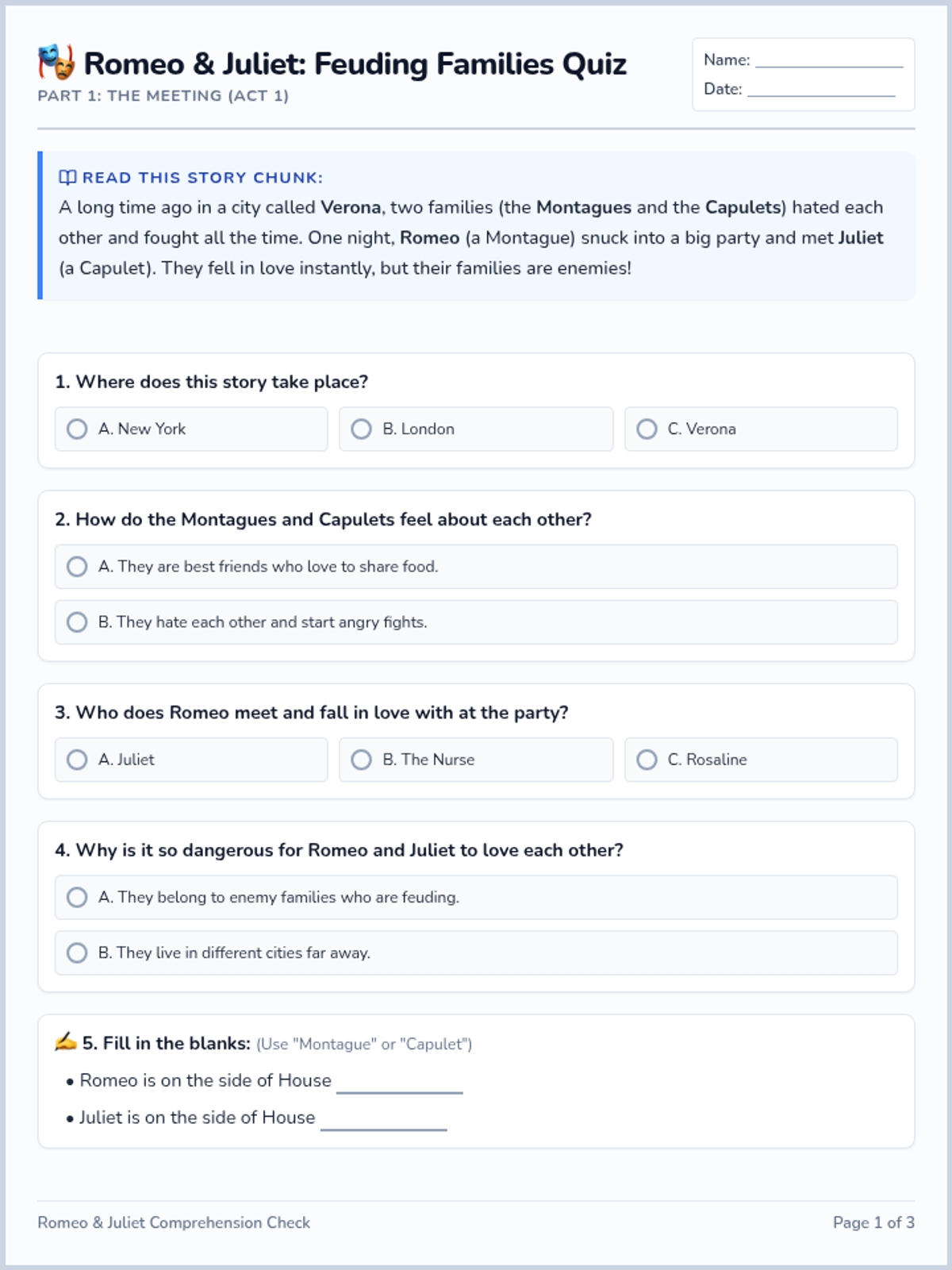
A highly scaffolded, special-education-friendly lesson on Romeo and Juliet up to Act 3, Scene 2. Includes a visual character map and a 15-question comprehension check with chunked text summaries and sentence starters.
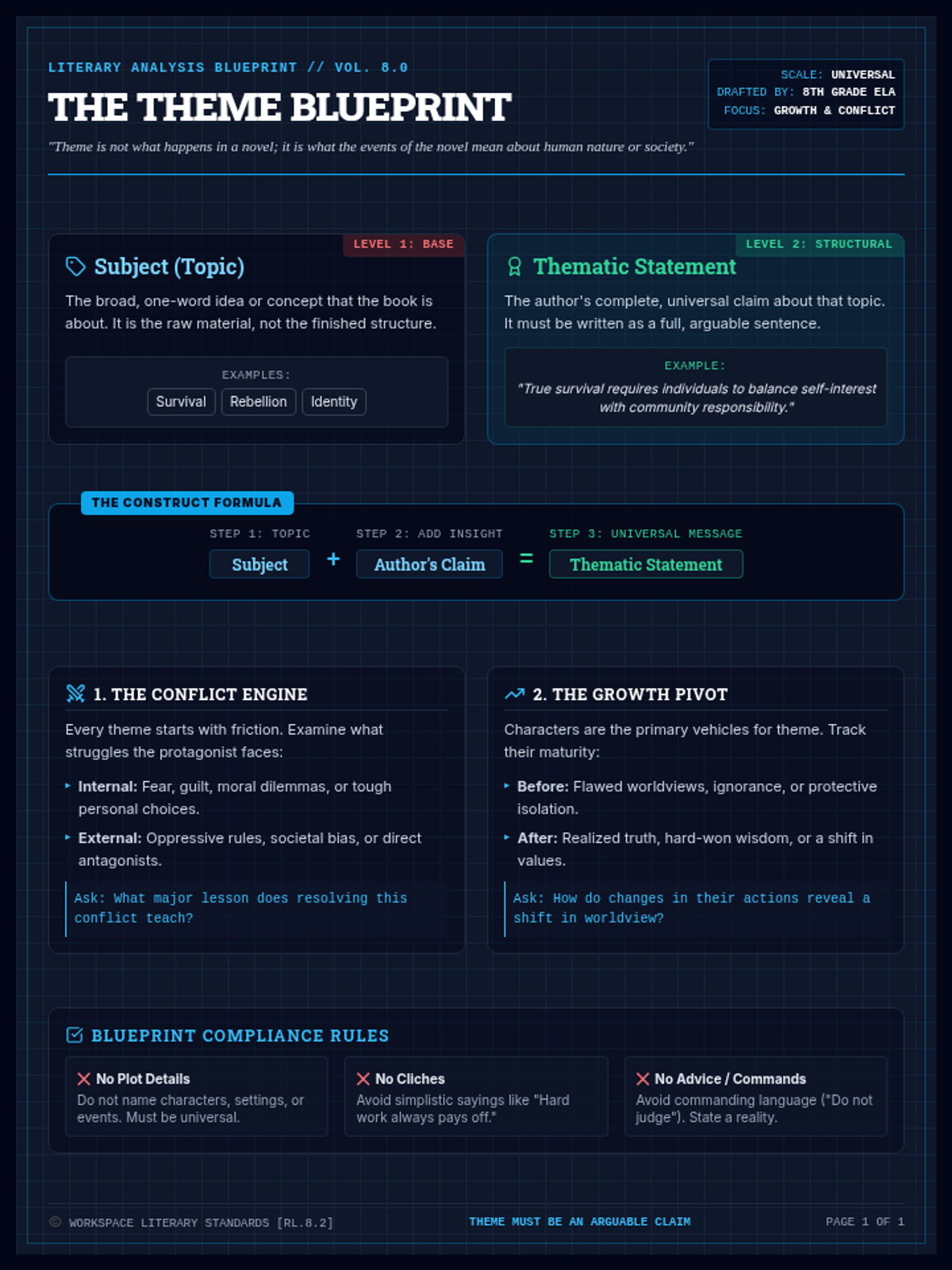
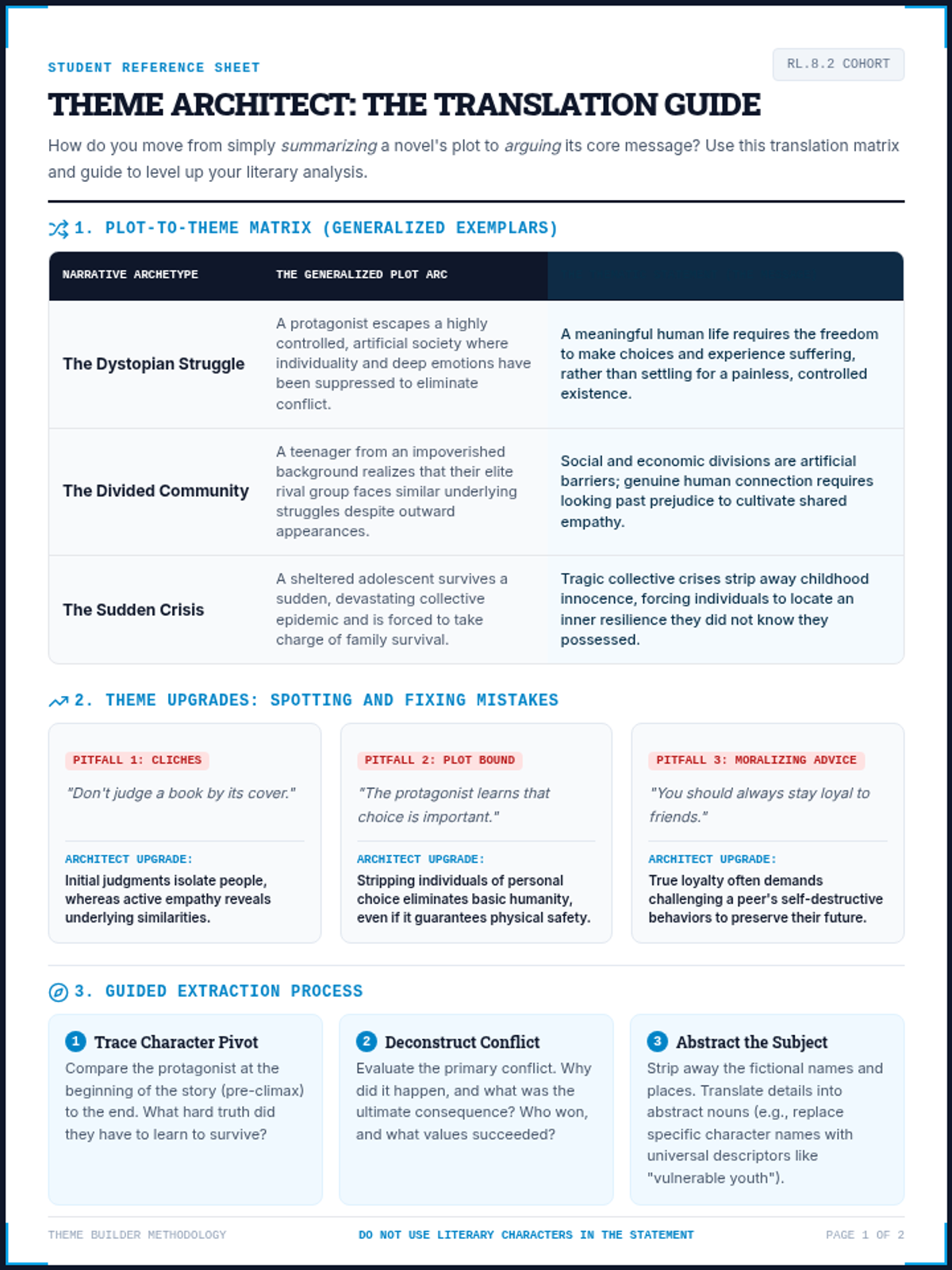
An 8th-grade lesson that unpacks the process of finding theme by focusing on character growth, conflict resolution, and transitioning from a single subject/topic to a fully realized thematic statement.
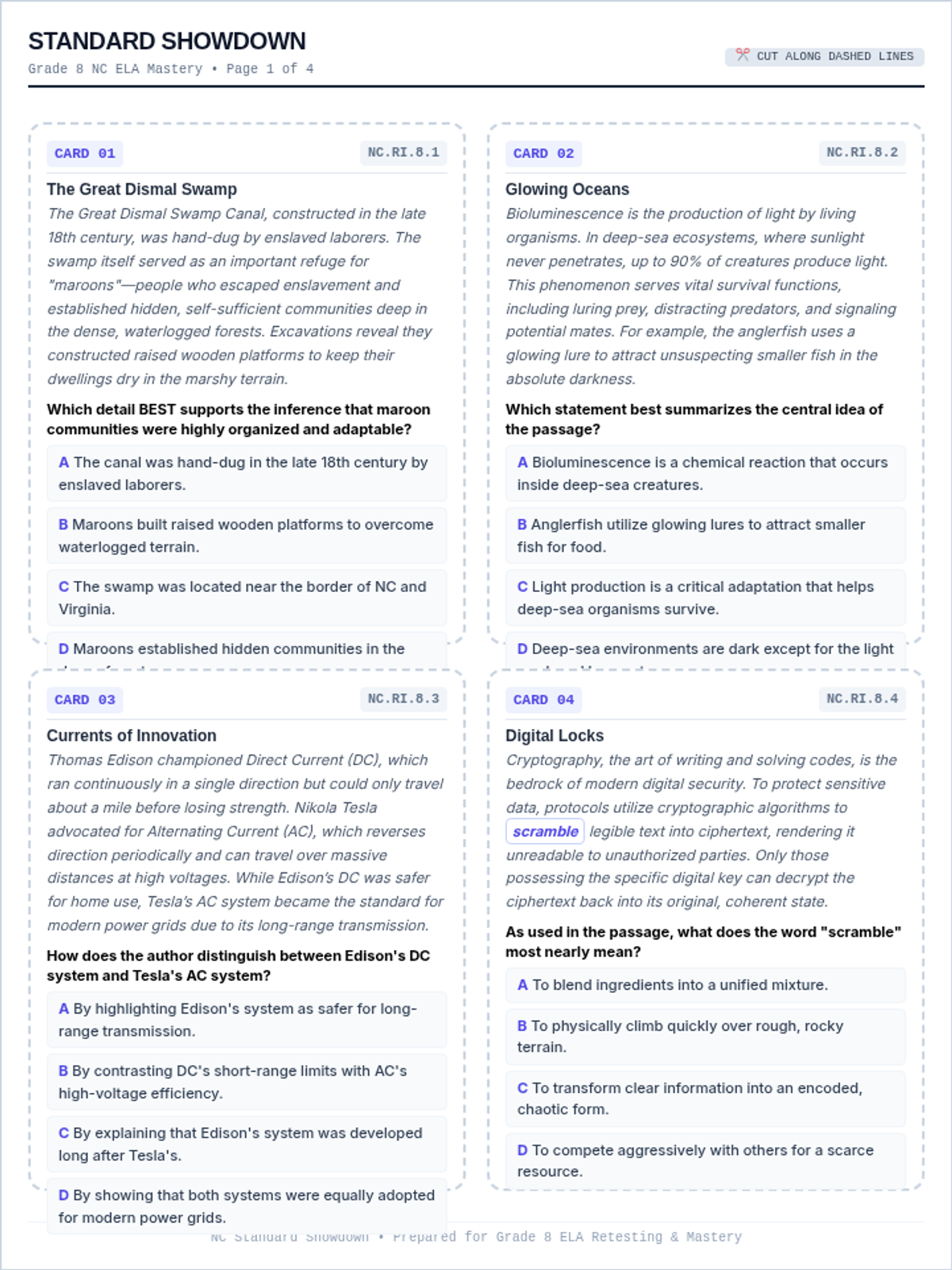
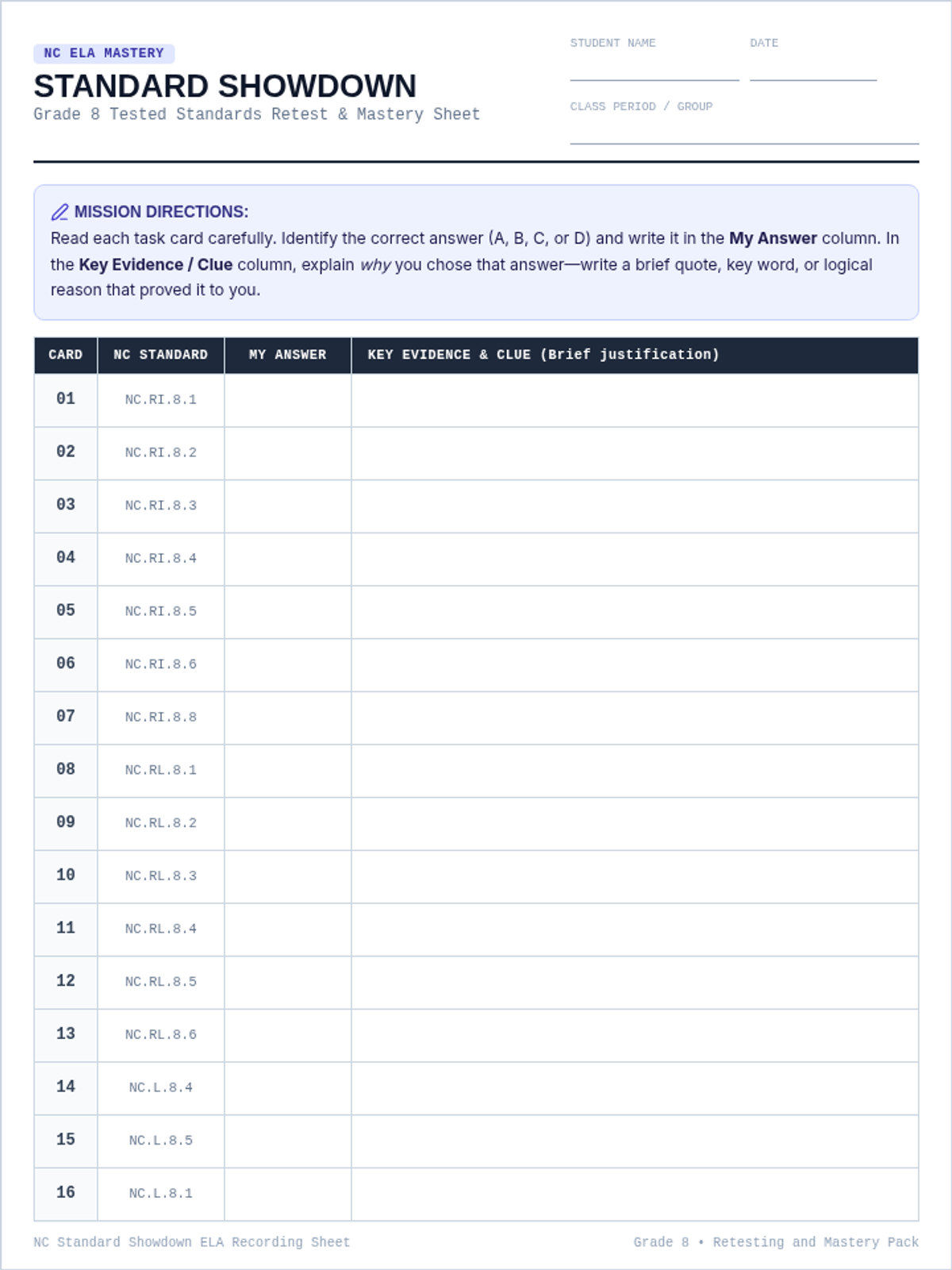
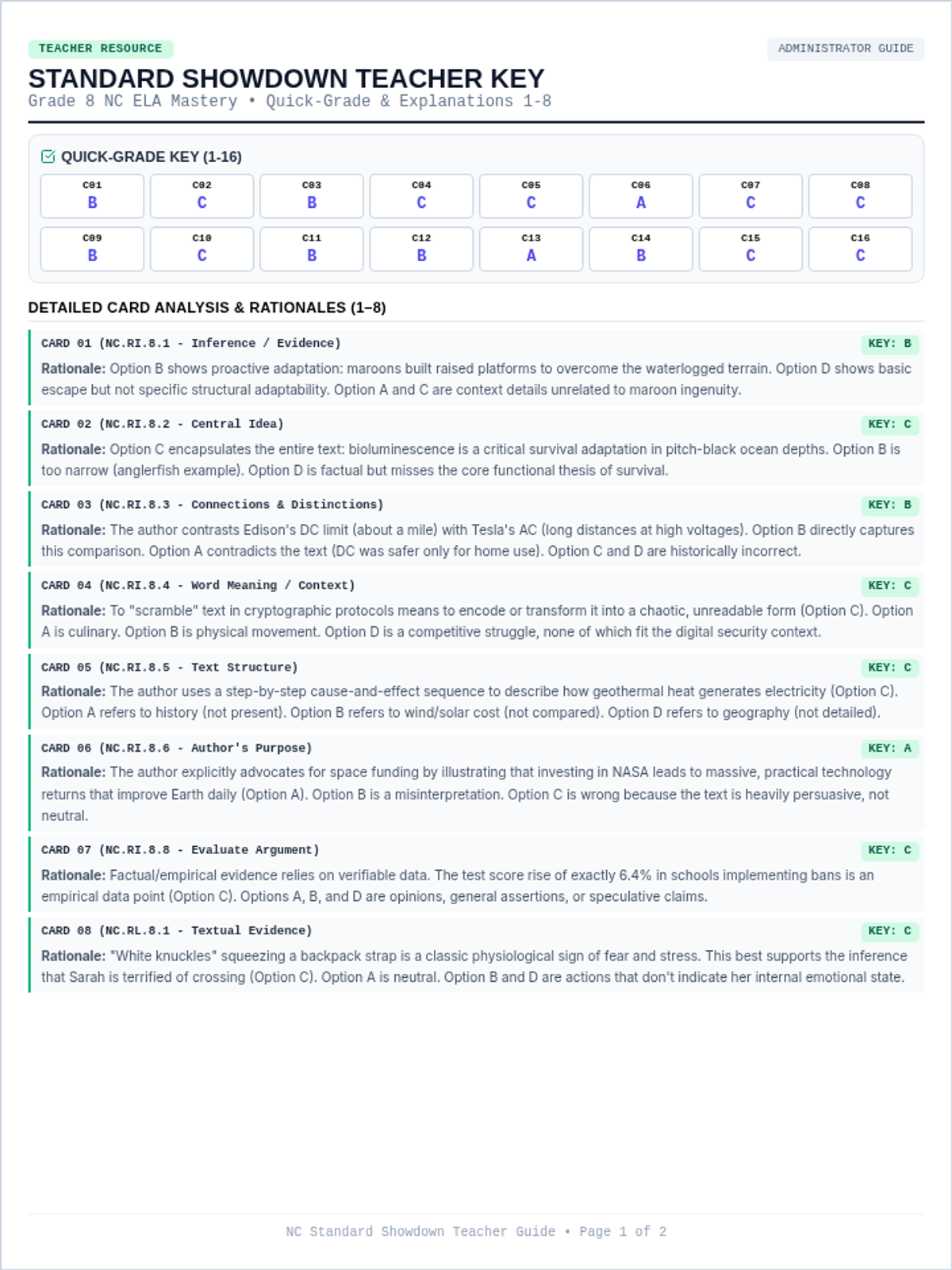
A mastery-focused lesson pack containing 16 Grade 8 ELA task cards aligned to the North Carolina Standard Course of Study (NCSCOS). Designed for retesting and remedial support, the pack includes 4-per-page task cards, a student recording sheet for active thinking, and a comprehensive teacher guide with full answer explanations.
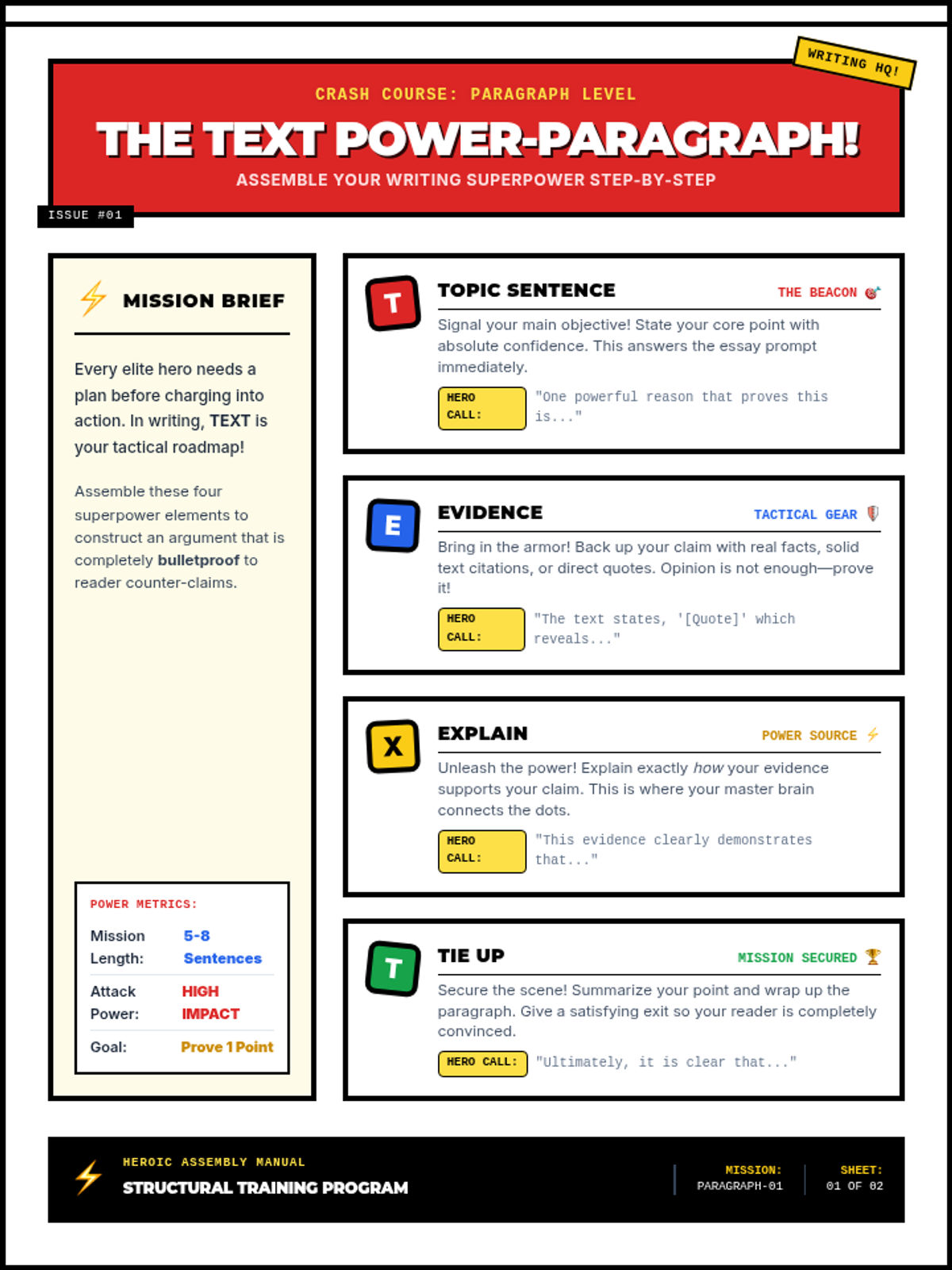
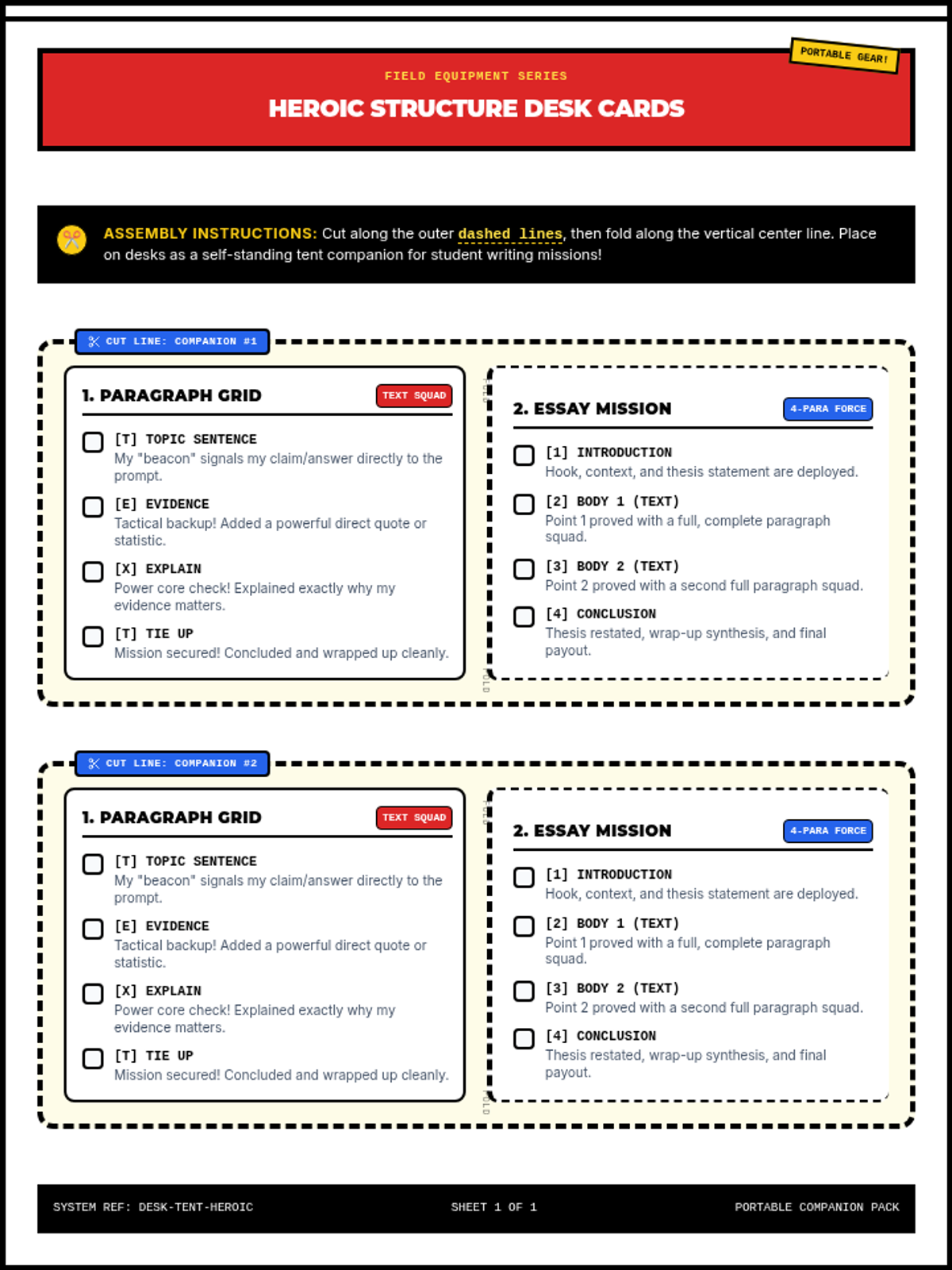
A superhero-themed writing workshop lesson that guides students through mastering the TEXT paragraph structure and upgrading it to a full four-paragraph essay. Features dynamic, comic-inspired anchor charts and pocket-sized desk checklists.
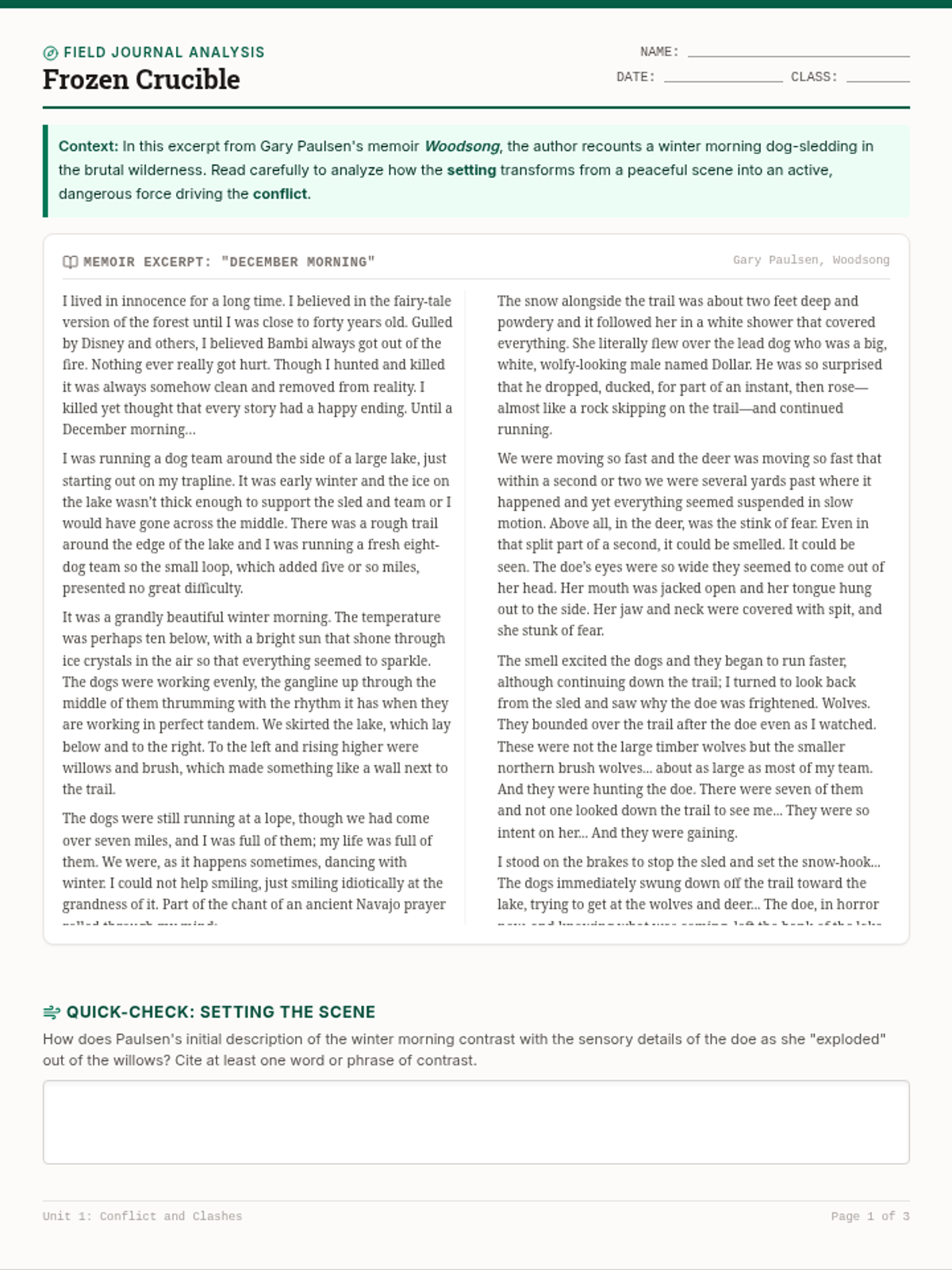
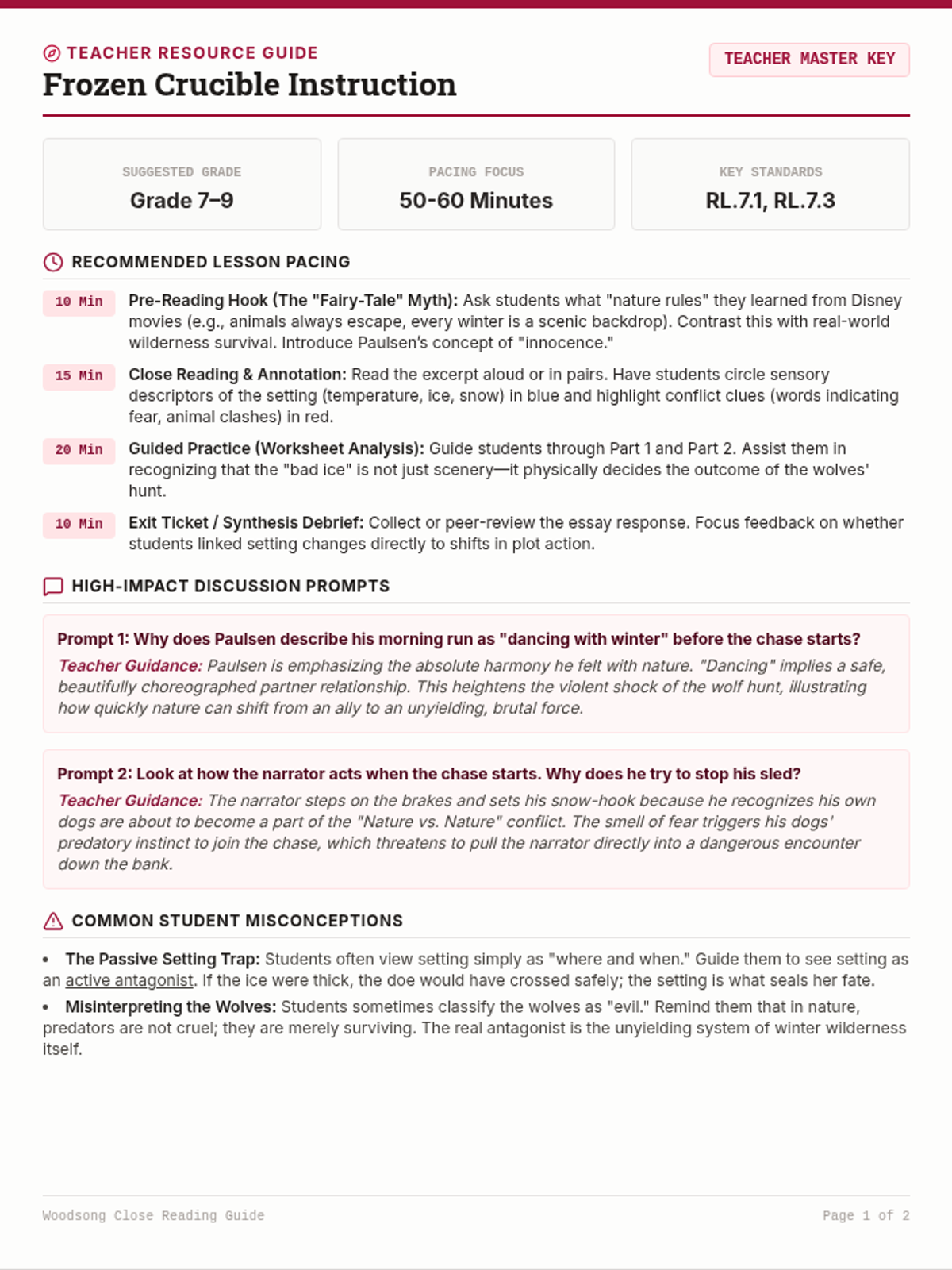
A close-reading lesson exploring conflict and setting in Gary Paulsen's Woodsong. Students analyze how the brutal winter environment drives the plot and shapes the central conflict.
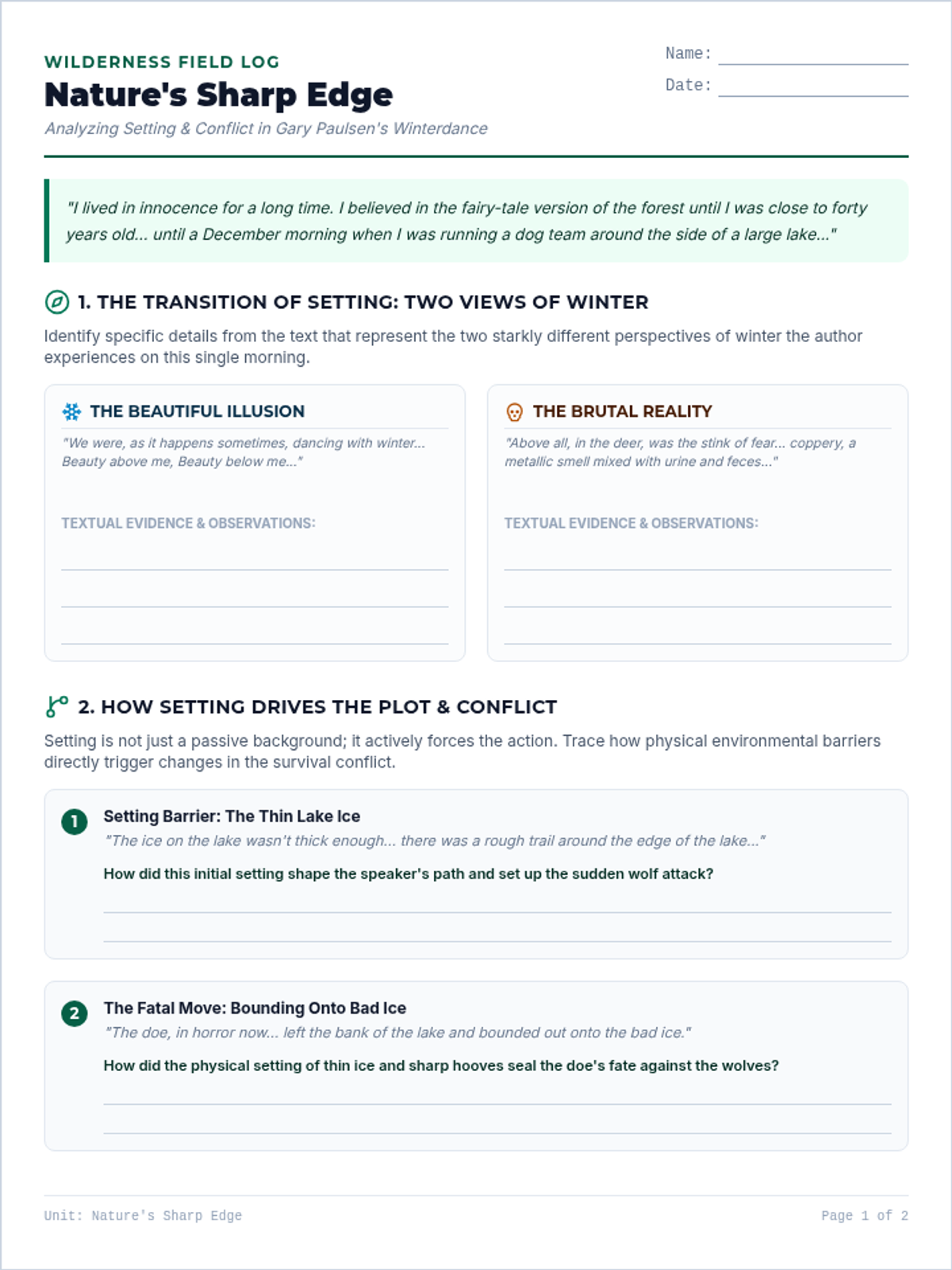
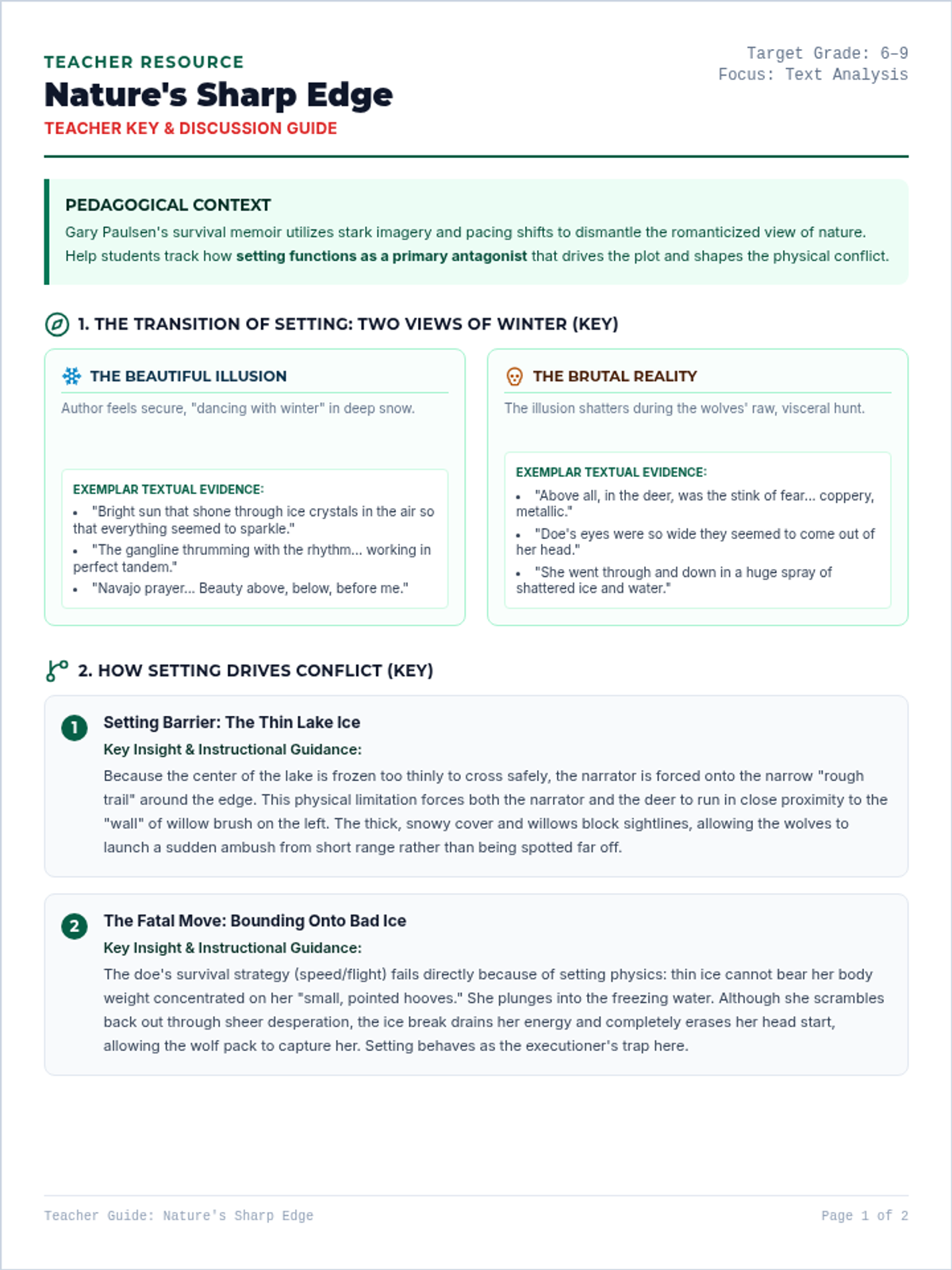
A literature lesson focused on Gary Paulsen's Winterdance Chapter 1. Students analyze how setting drives conflict and explore personal connections to the themes of survival, fear, and shattered illusions.
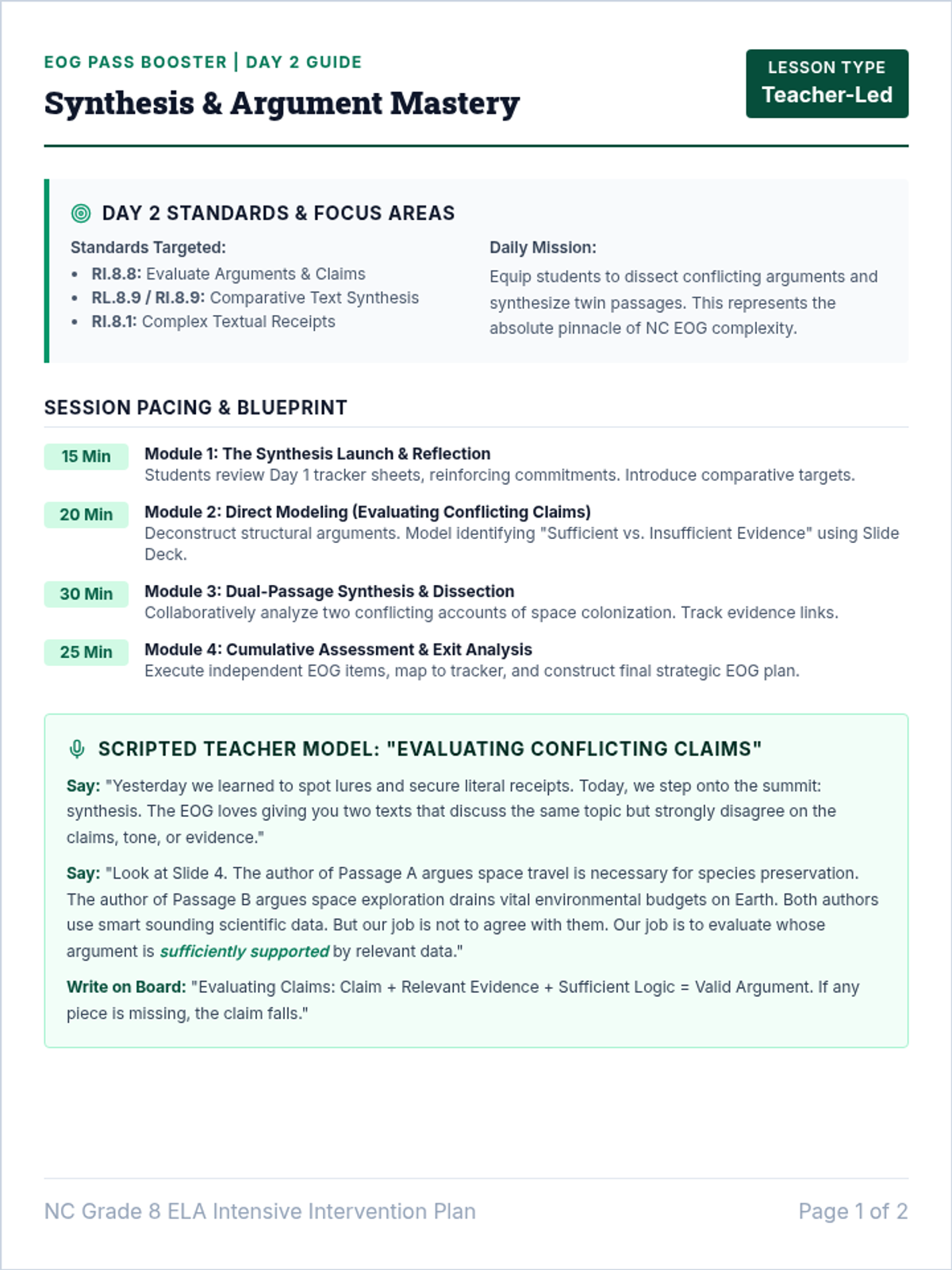
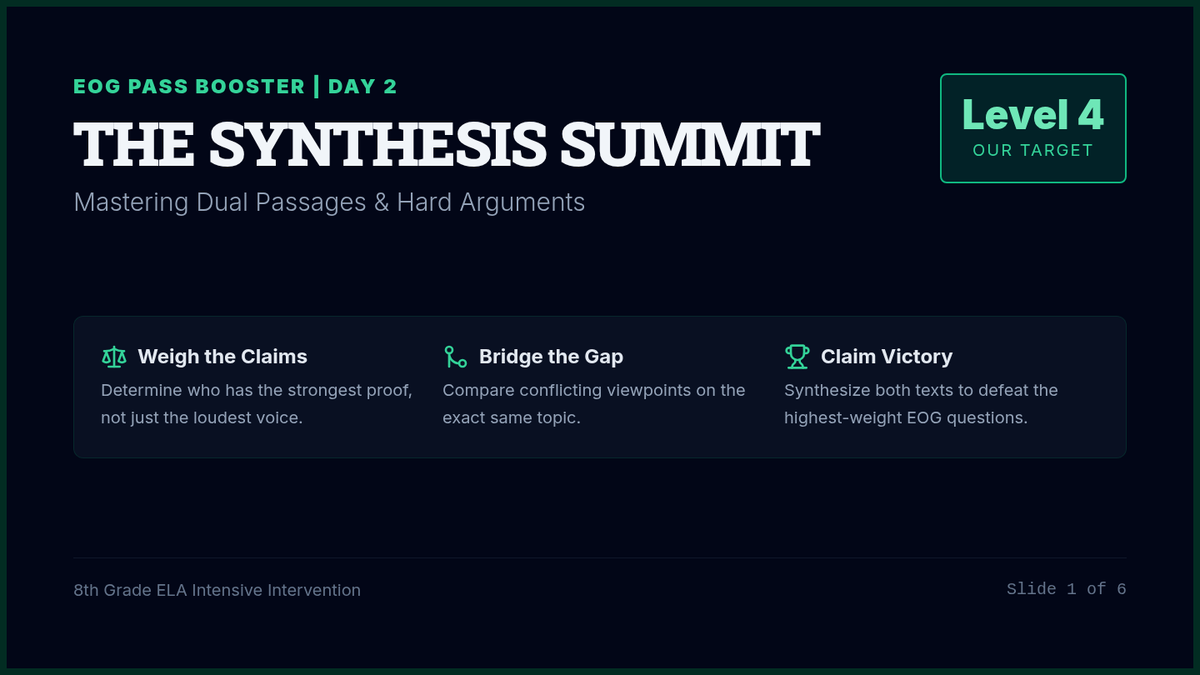
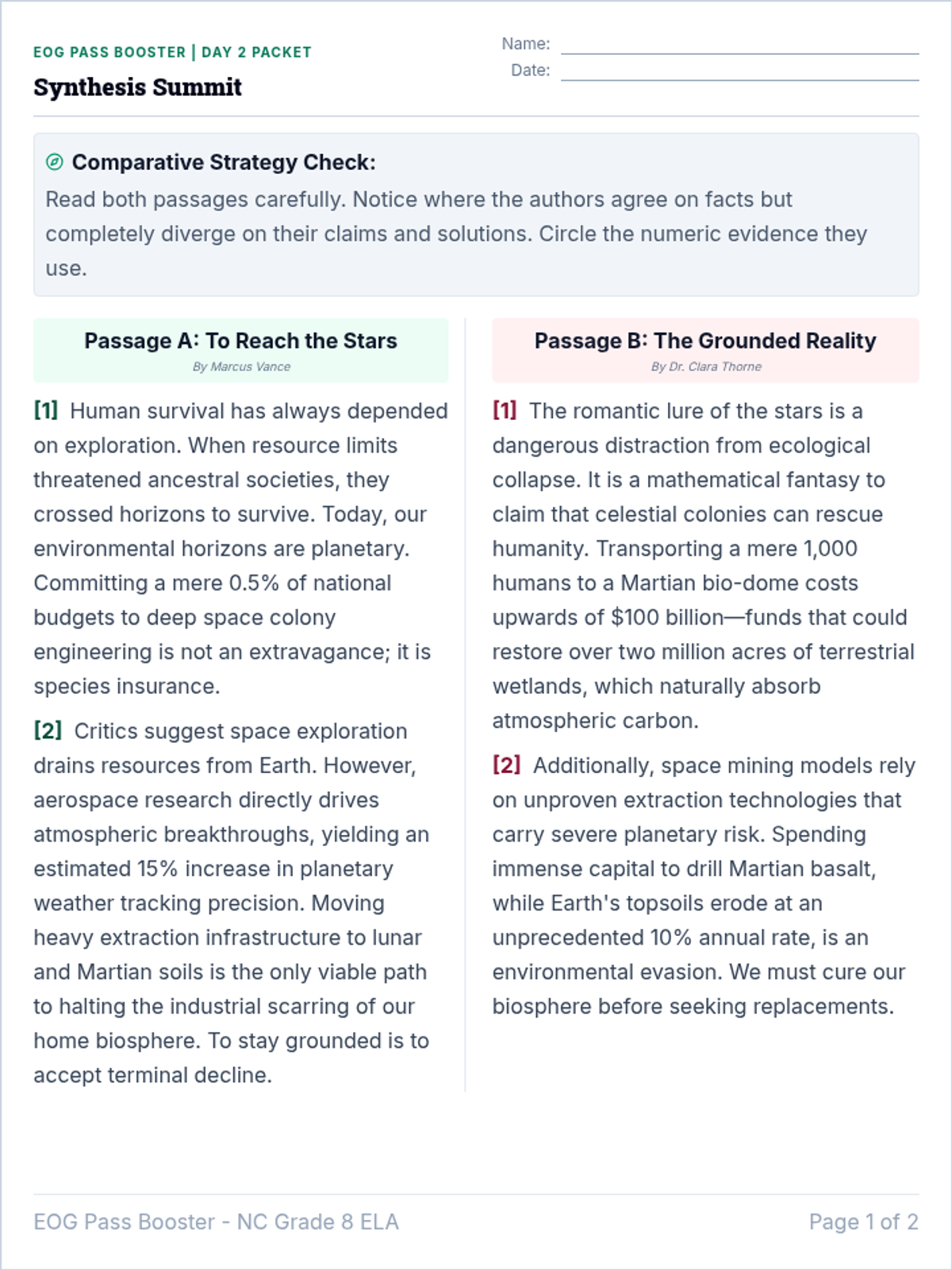
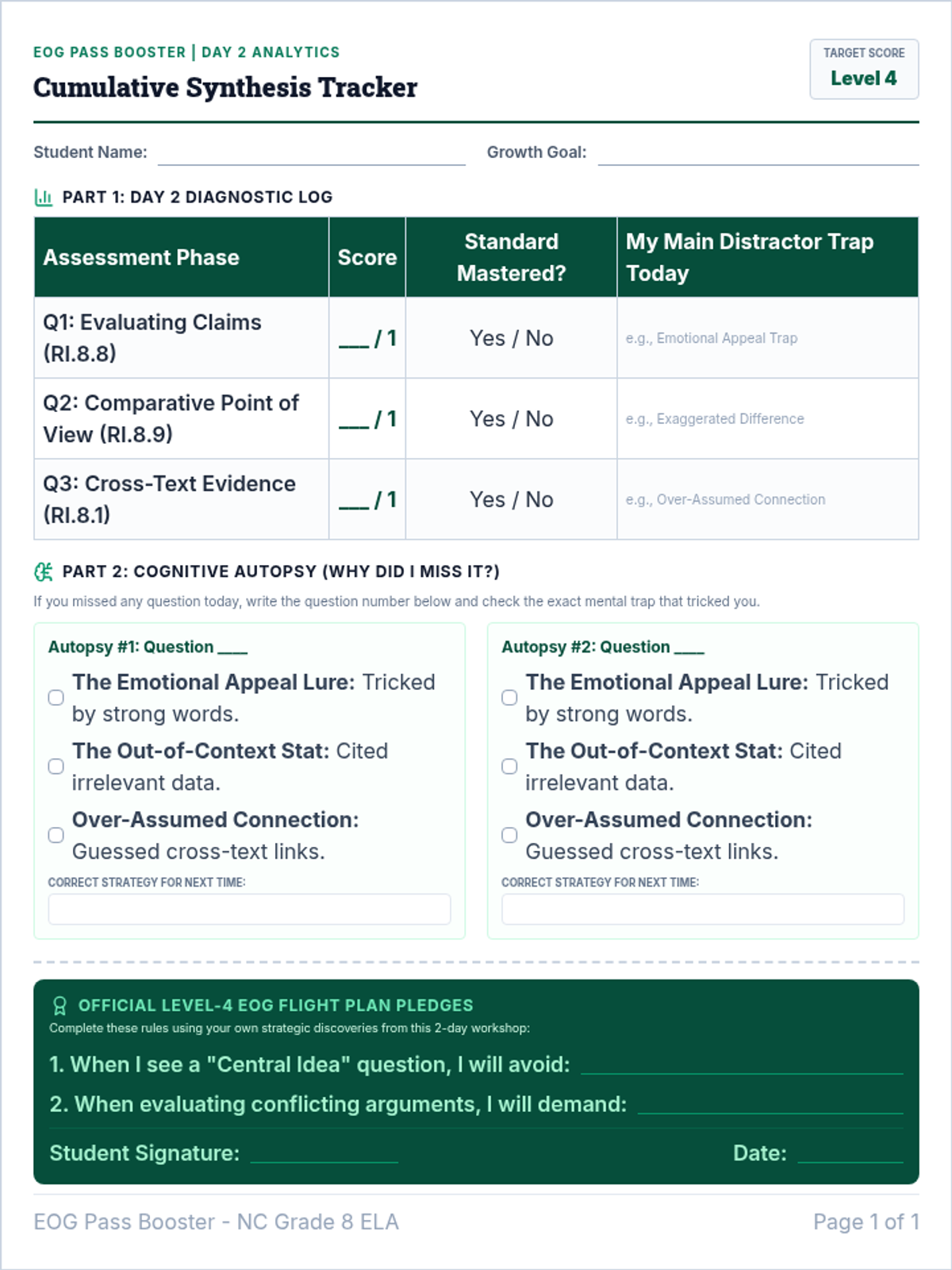
Focuses deeply on RI.8.8 (evaluating arguments, specific claims, and the relevance and sufficiency of evidence) through direct modeling, a high-rigor scientific passage, and targeted analytical practice.
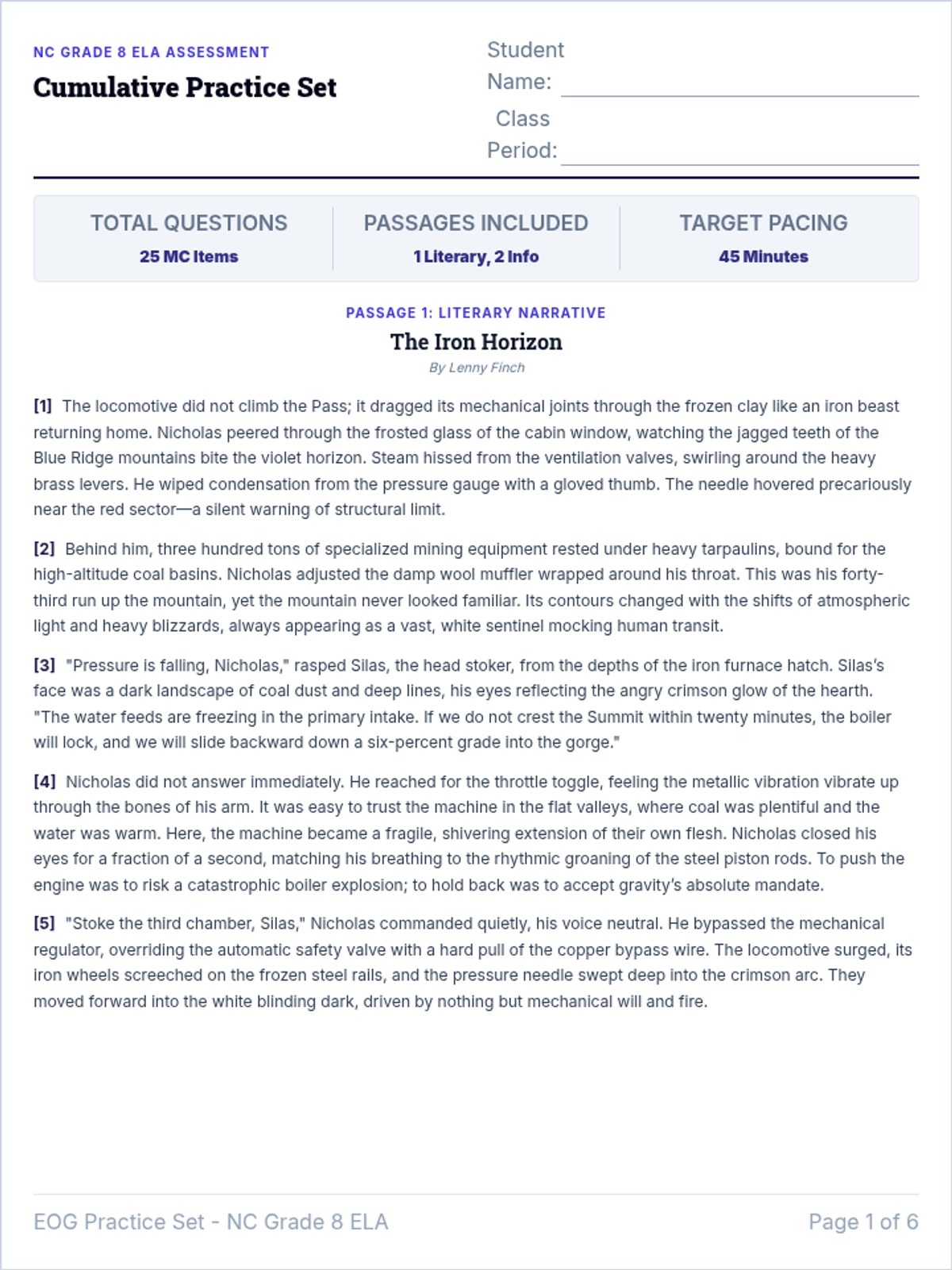
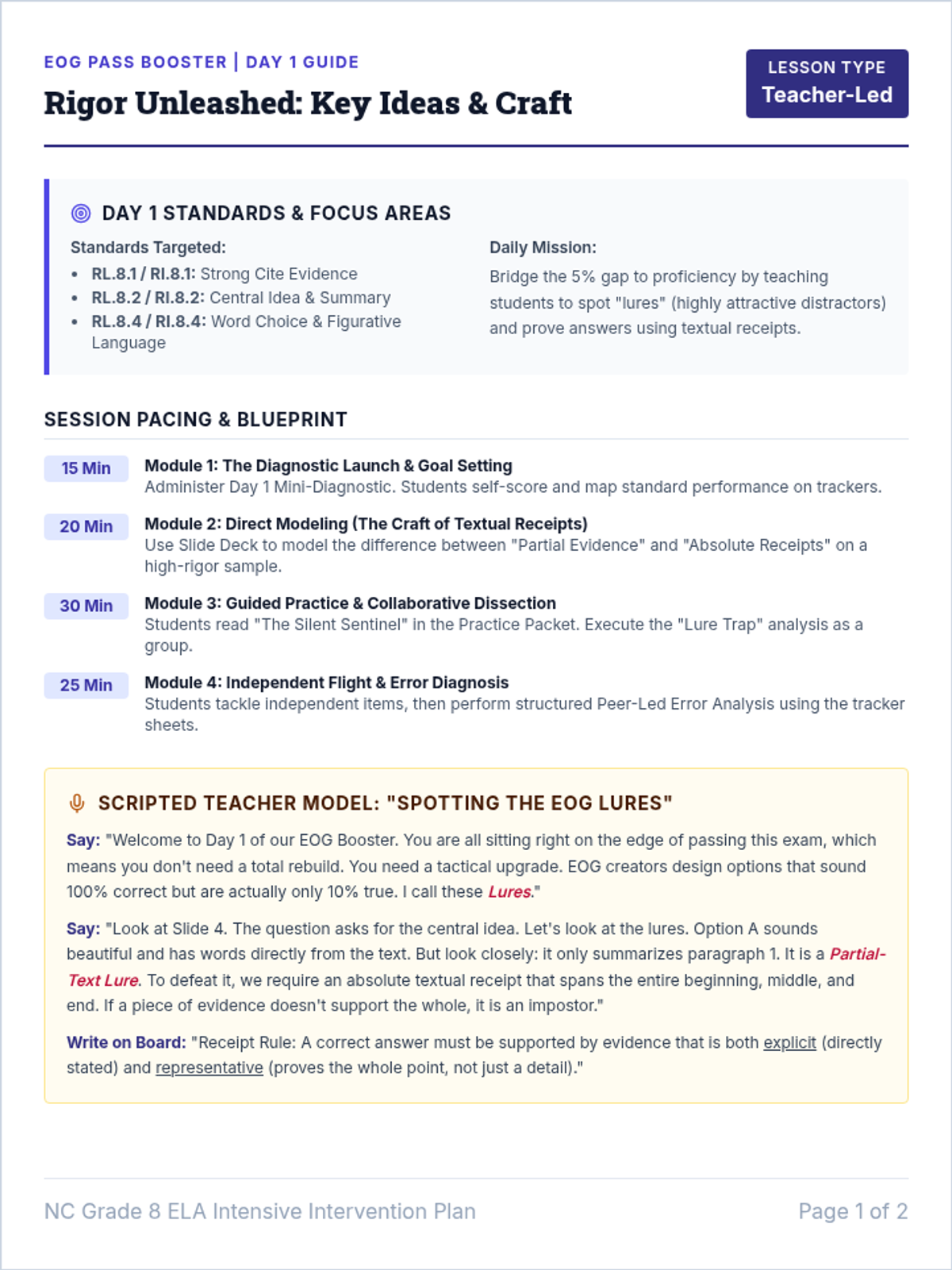
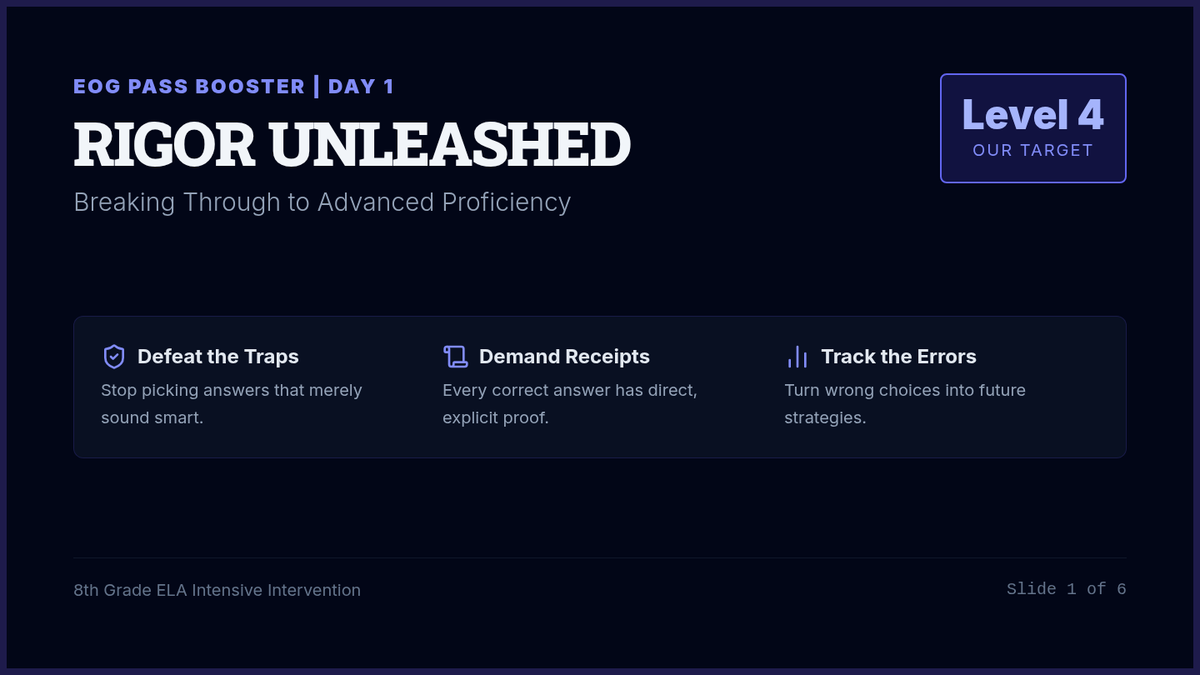
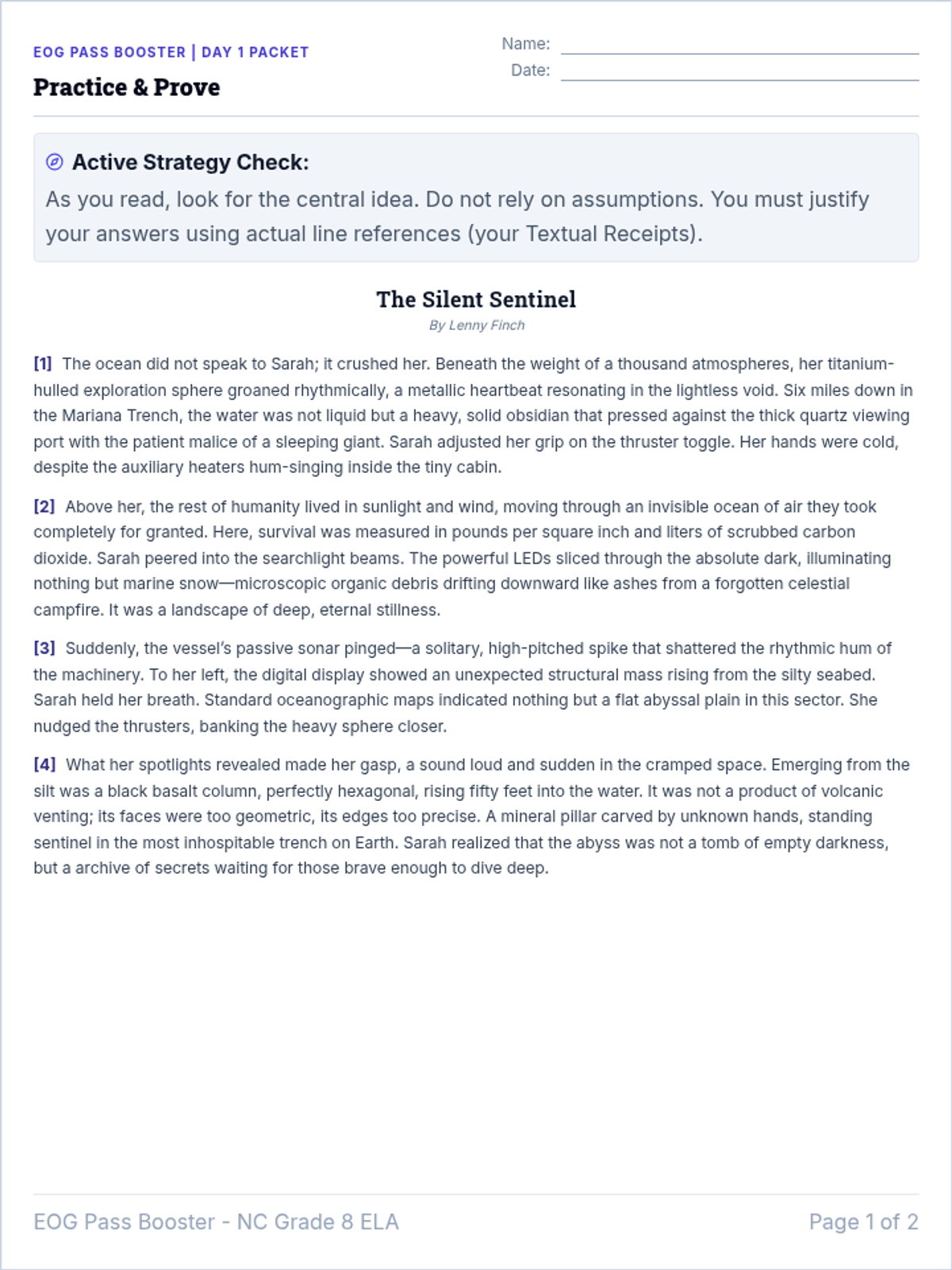
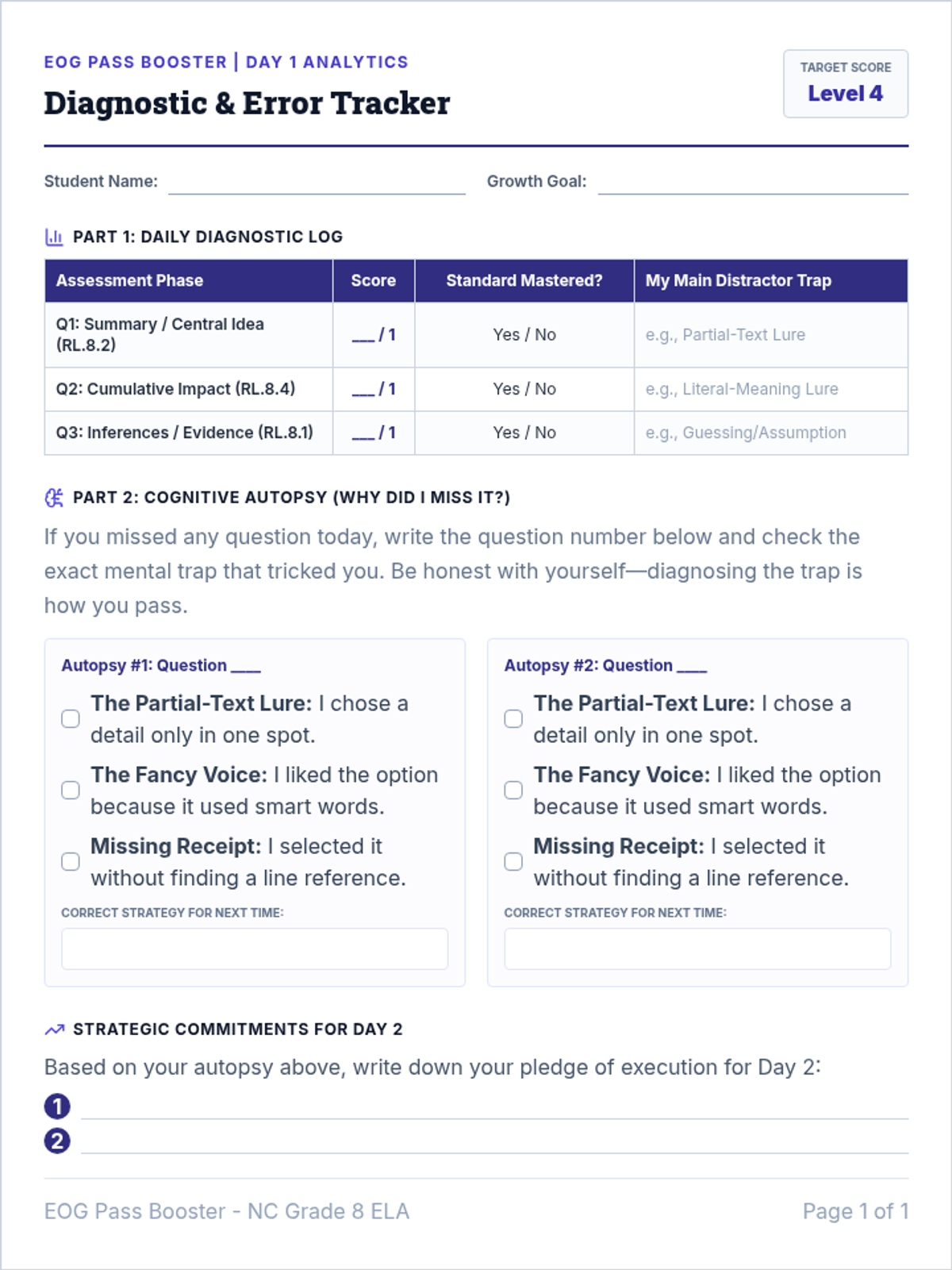
Focuses on high-weight RL/RI.8.1 (textual evidence), RL/RI.8.2 (central idea and objective summary), and RL/RI.8.4/RL.8.6 (word choice, figurative language, and point of view/structure) through direct instruction, high-rigor modeling, and targeted practice.
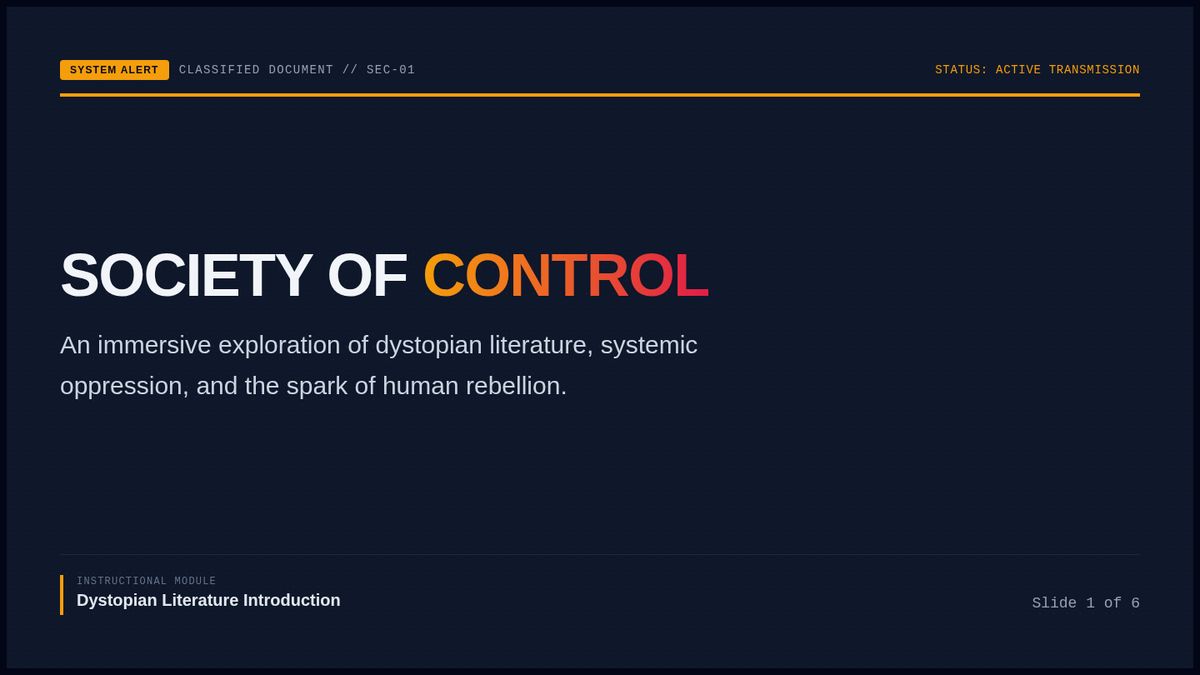
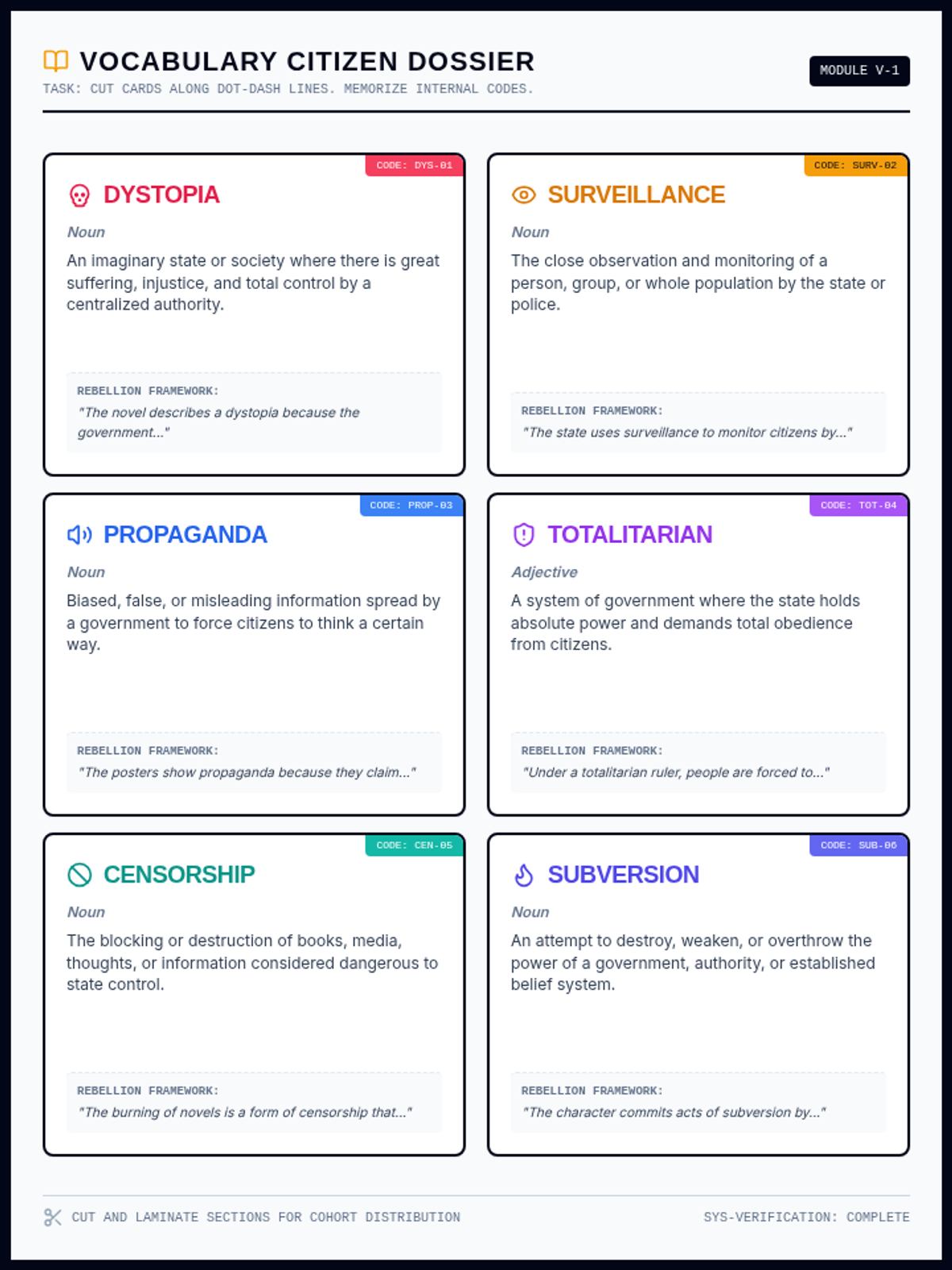
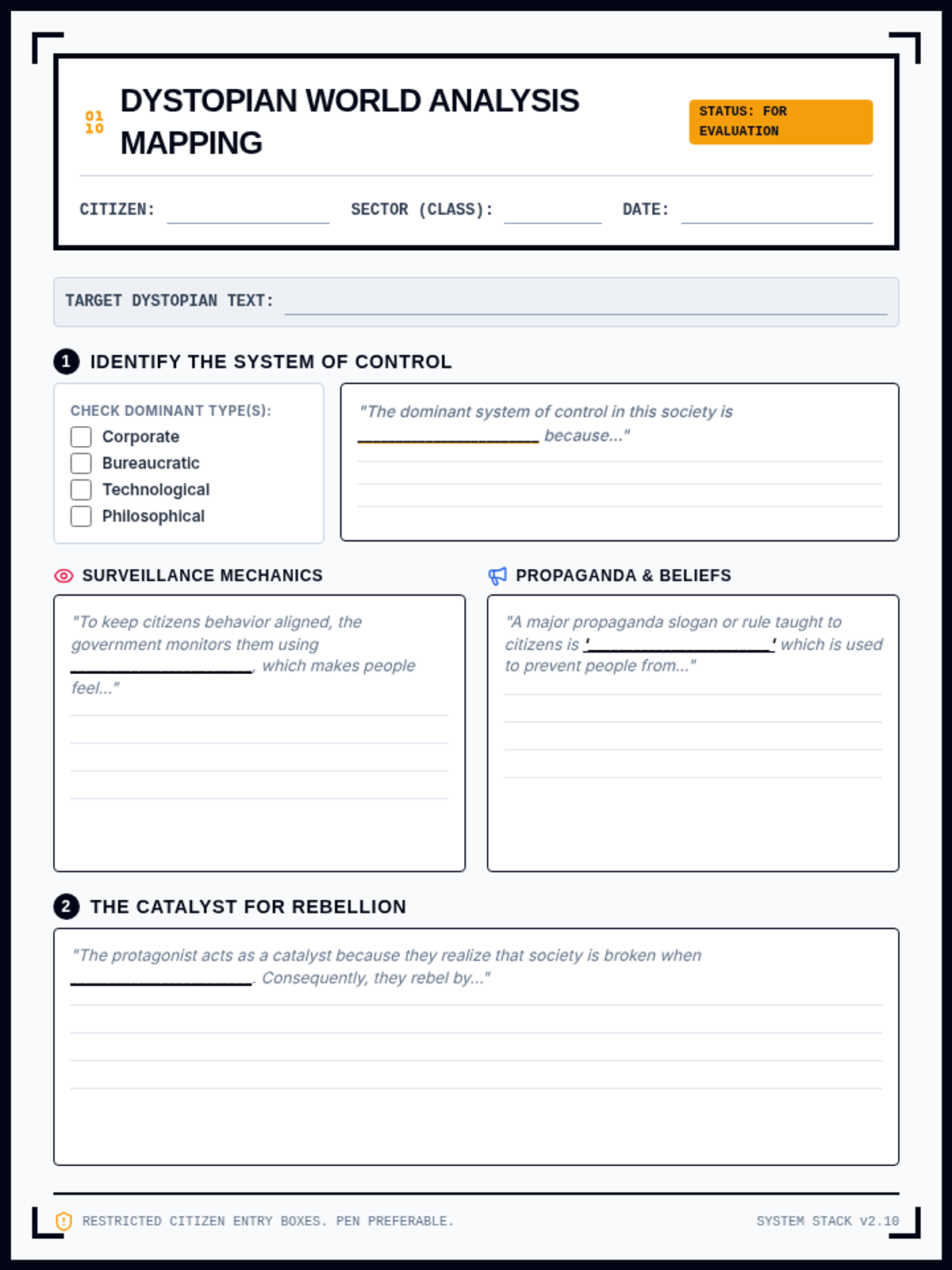
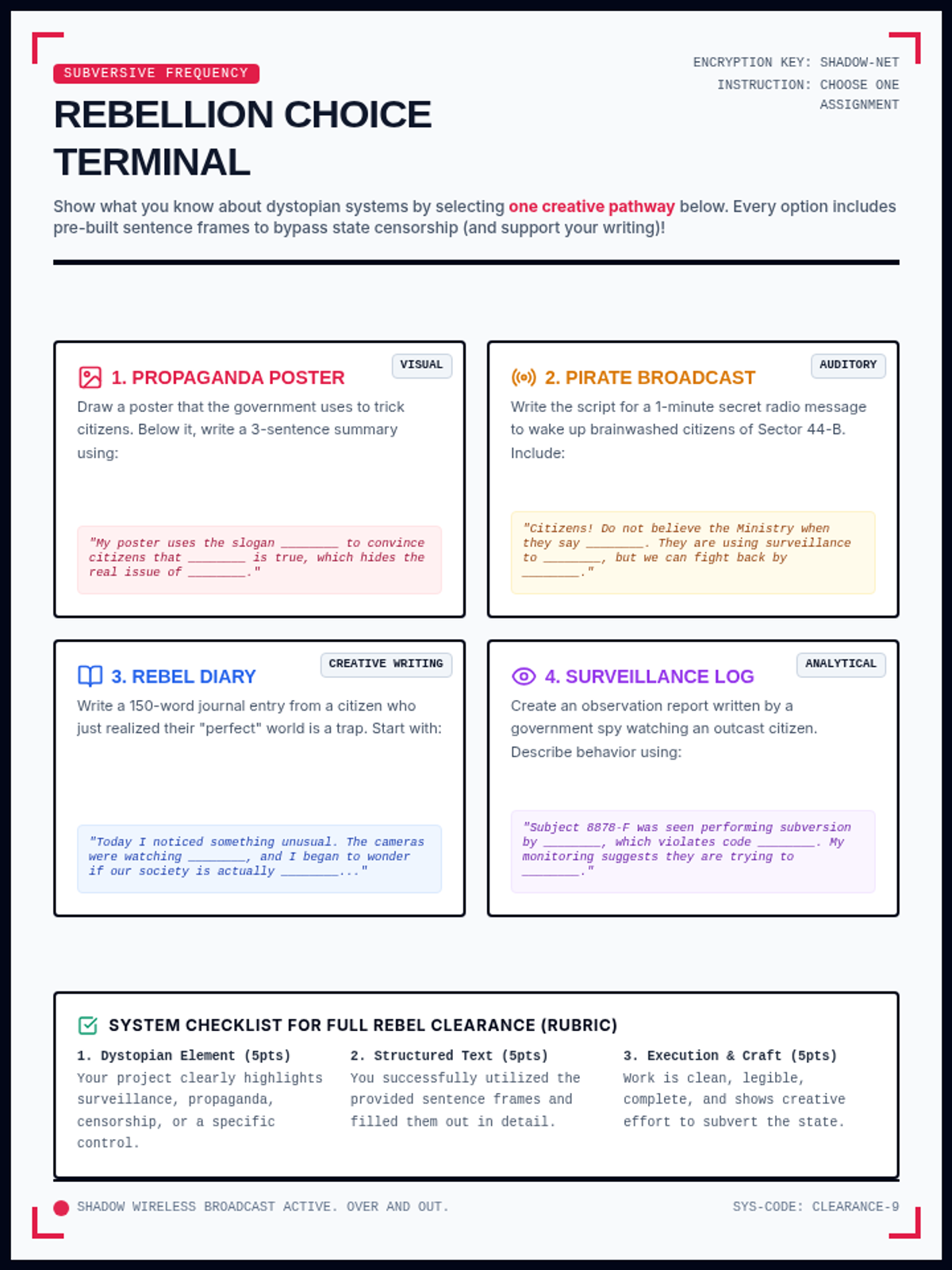
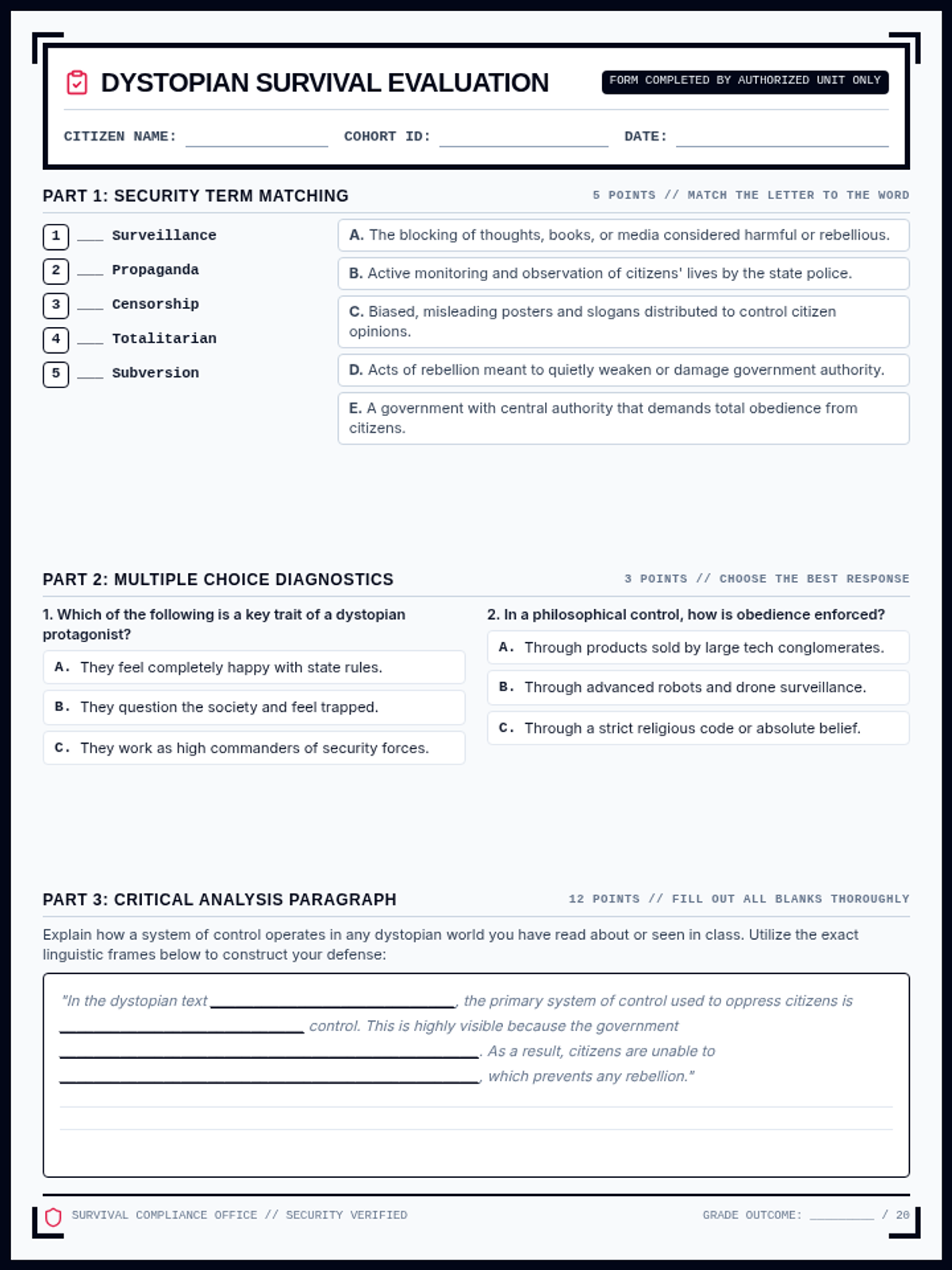
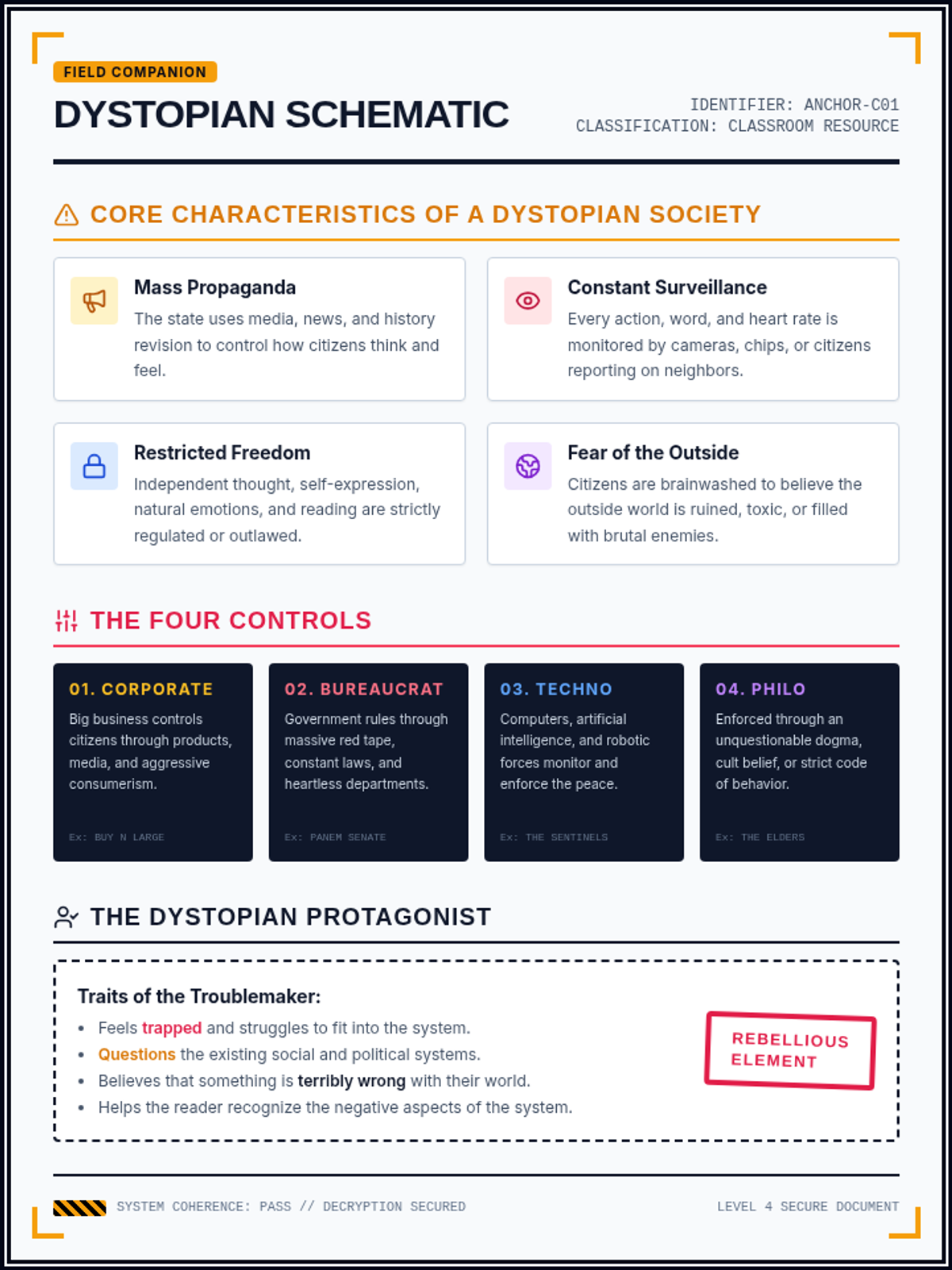
An immersive introductory lesson on dystopian literature. Students analyze systems of control, common tropes, and societal rebellion through visual slides, structured graphic organizers, and a creative choice board with heavy scaffolding and sentence starters.
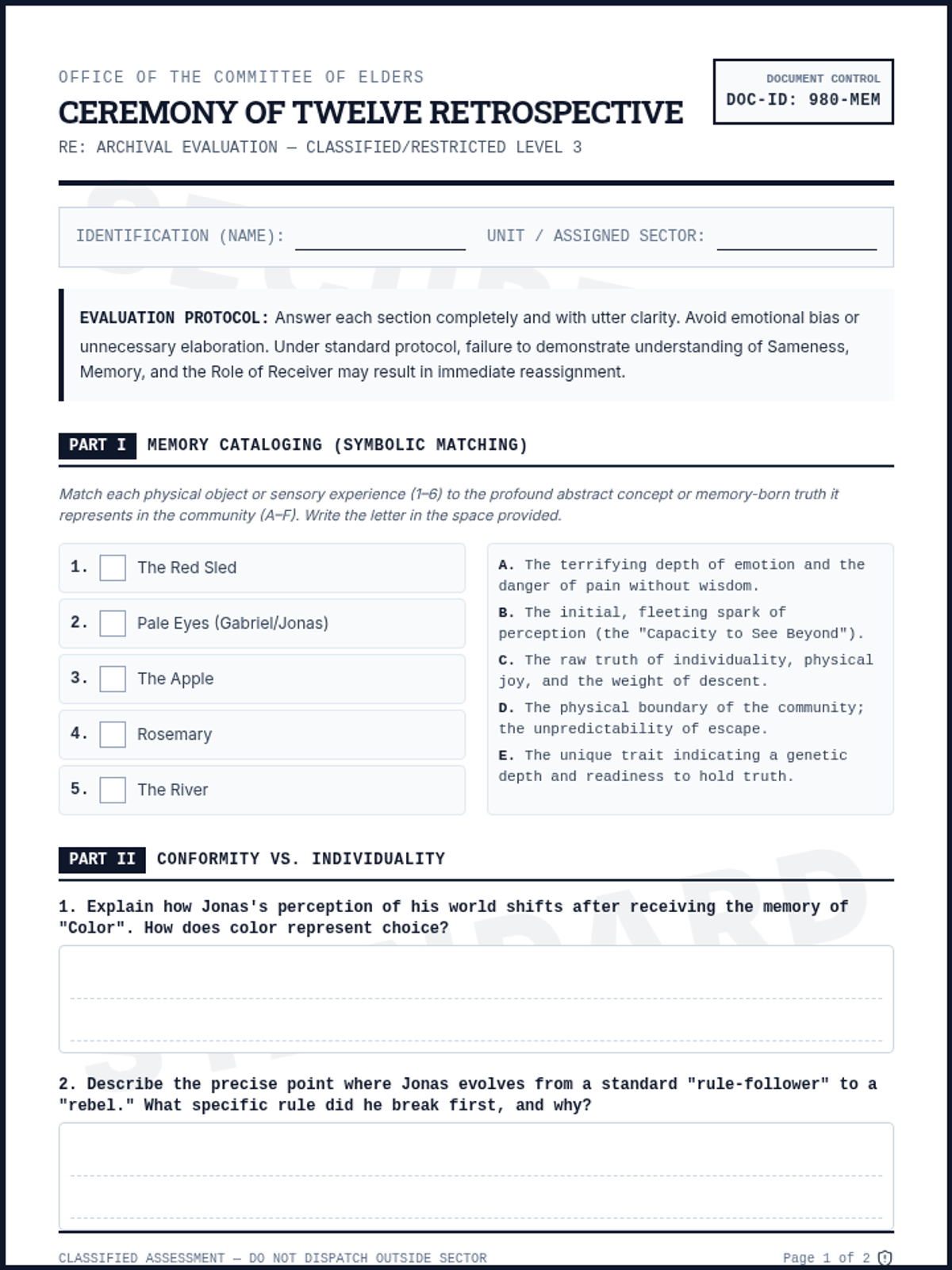
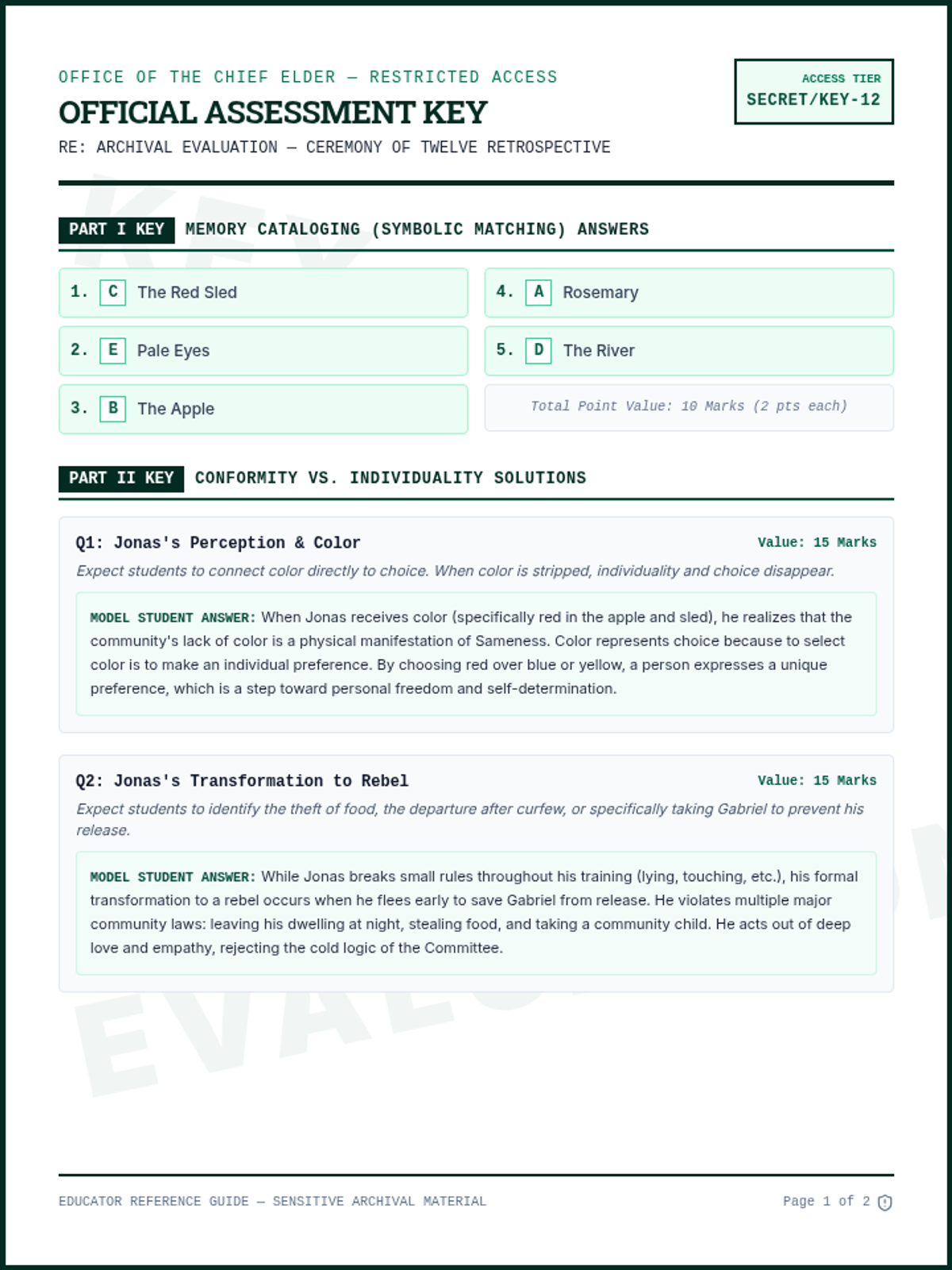
A comprehensive final exam lesson on Lois Lowry's 'The Giver', featuring a high-stakes, dystopian-themed student assessment and an educator's answer key and rubric focusing on memory, conformity, and character choice.
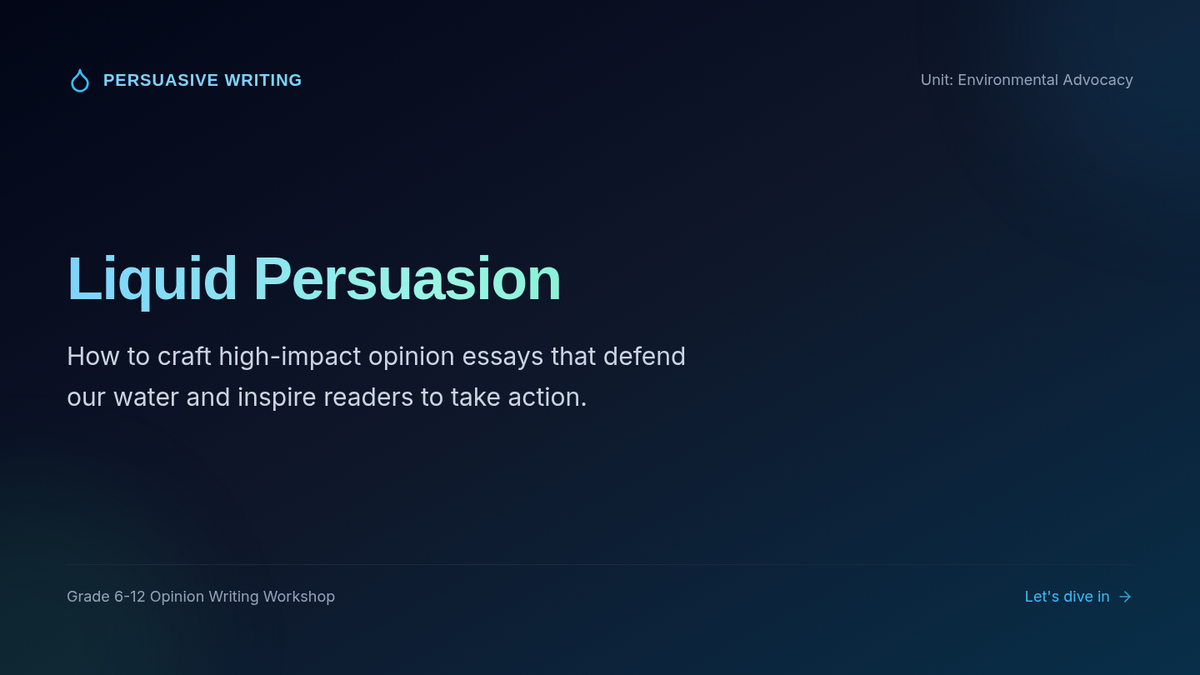
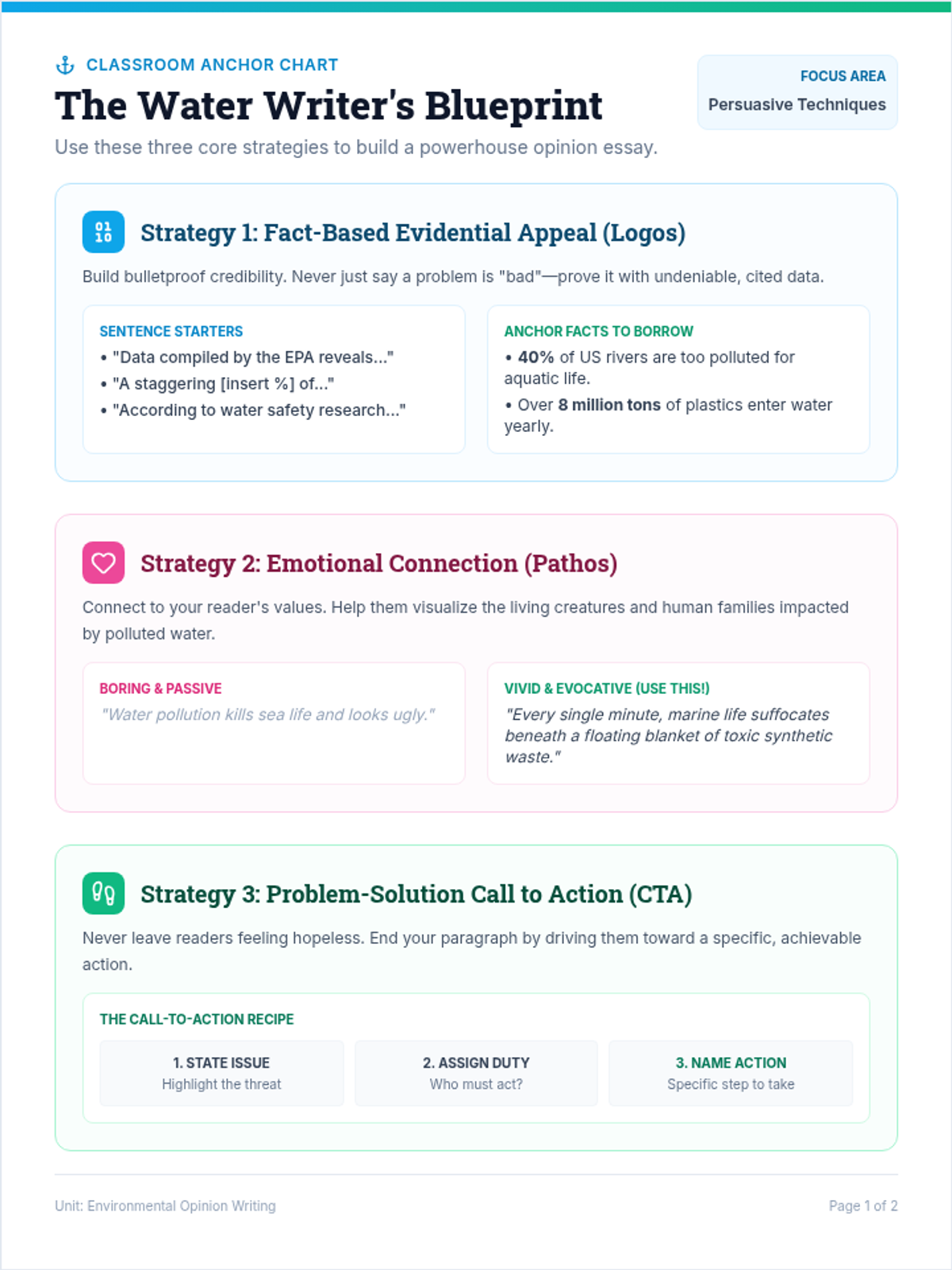
A targeted writing lesson that guides students through crafting high-impact opinion essays on water pollution and water demand. Students learn to combine fact-based evidential appeals, emotional connections, and structured problem-solution calls to action.