A literature lesson focused on Gary Paulsen's Winterdance Chapter 1. Students analyze how setting drives conflict and explore personal connections to the themes of survival, fear, and shattered illusions.
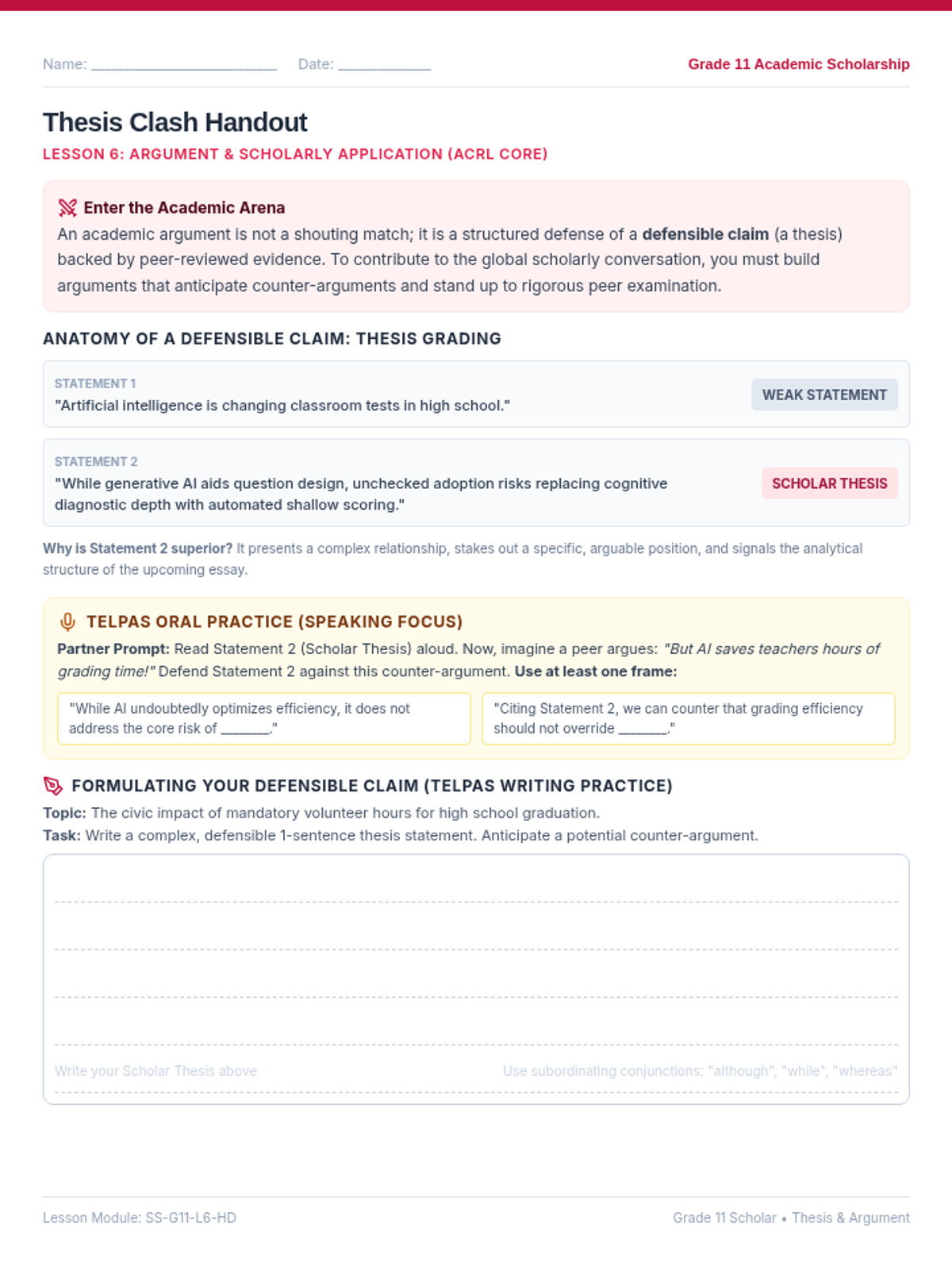
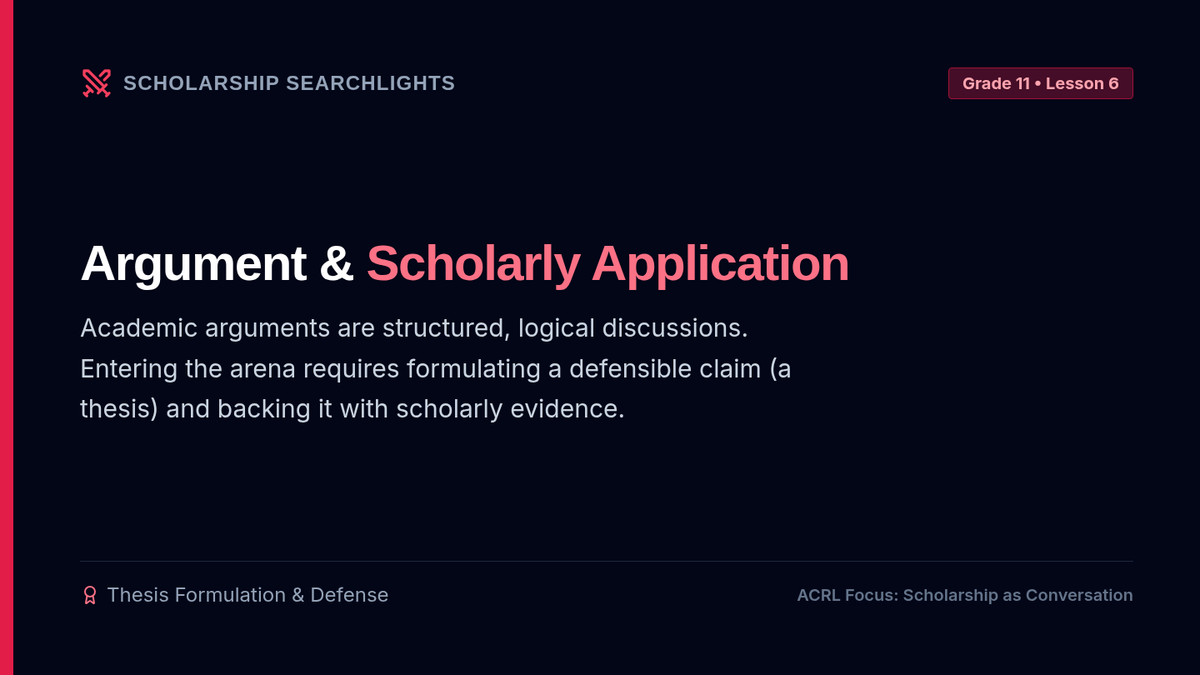
Students learn to formulate defensible academic claims, integrate scholarly evidence seamlessly into arguments, and reflect on their growth as scholarly contributors.
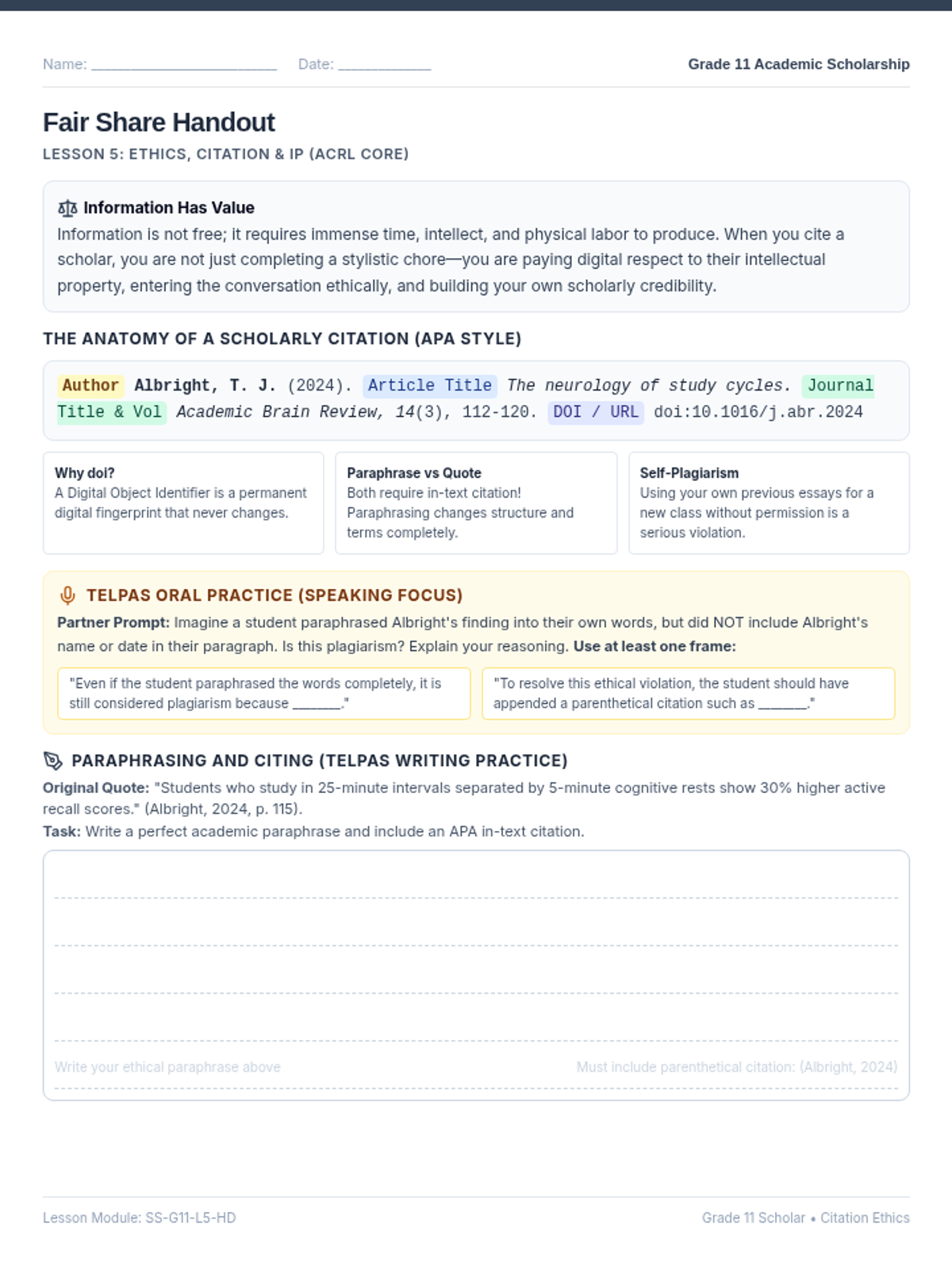
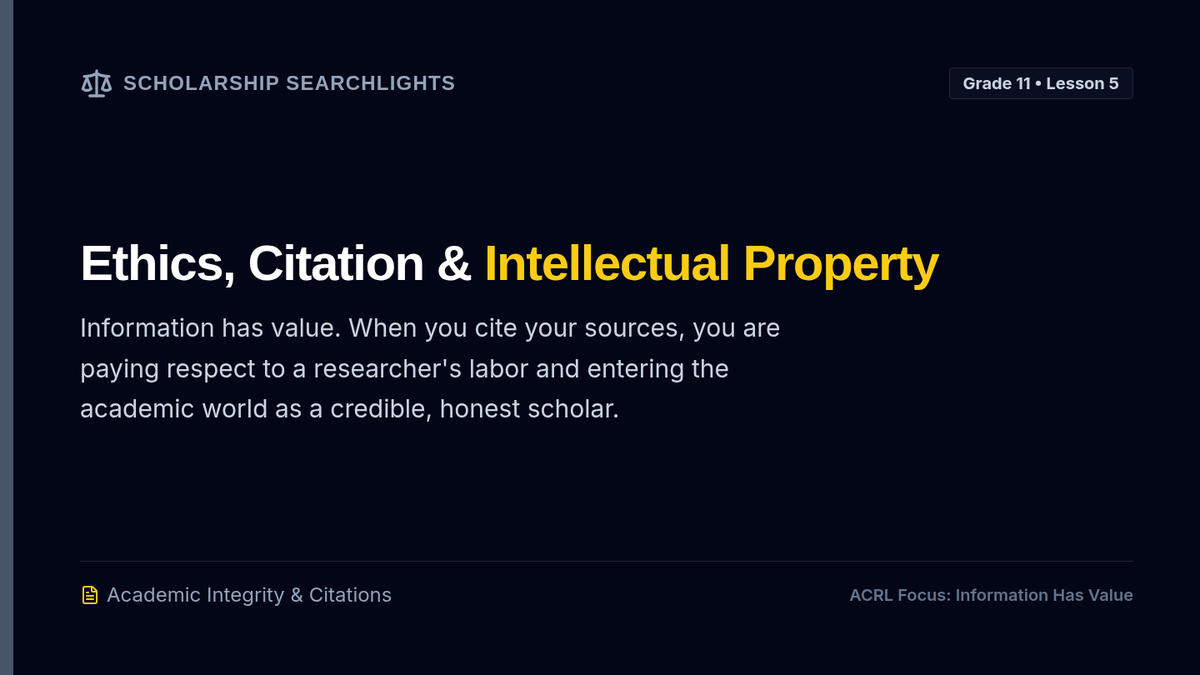
Students learn the principles of ethical information consumption, intellectual property rights, citation systems (APA, MLA), and how proper citation values scholarly creation.
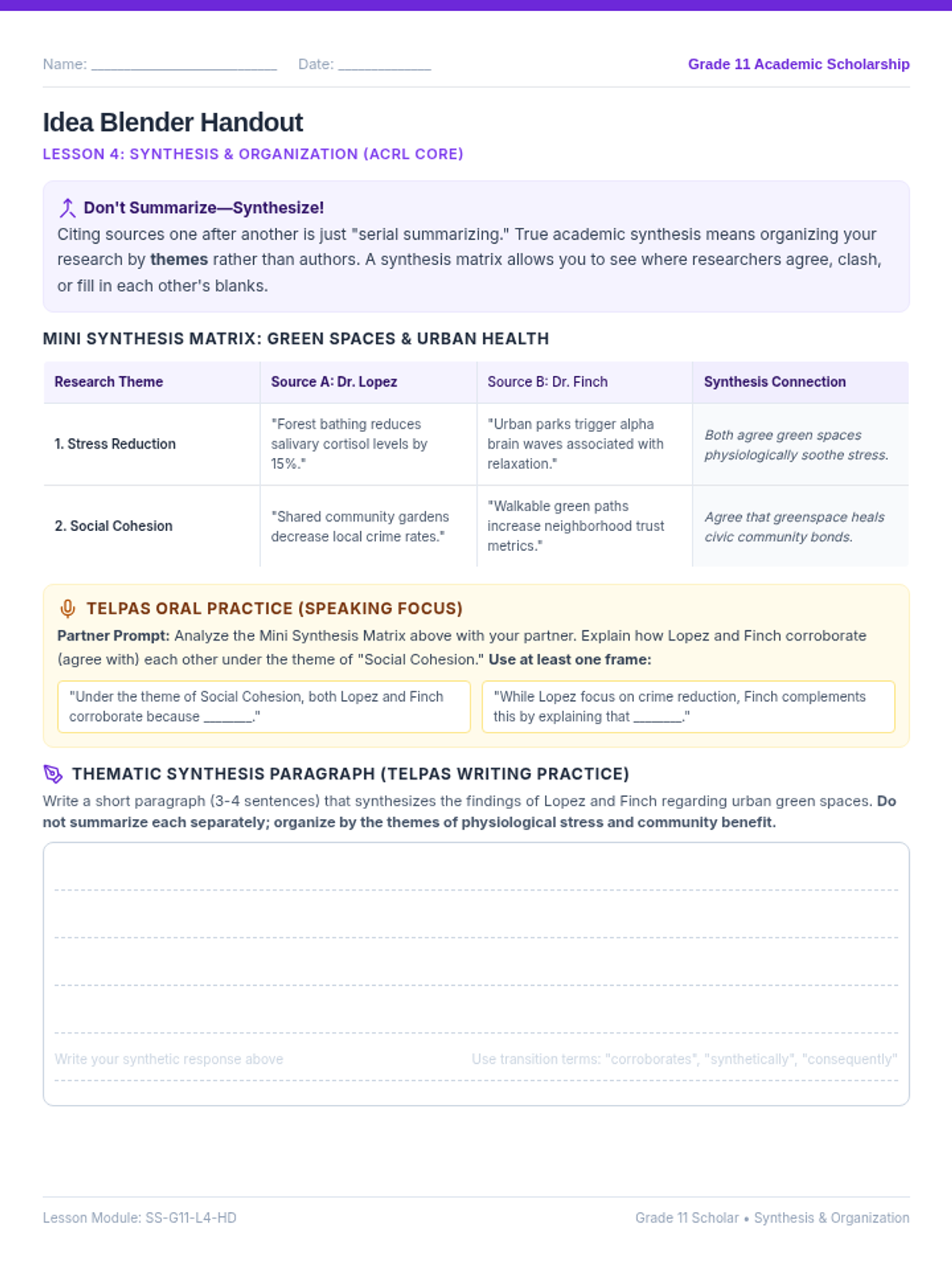
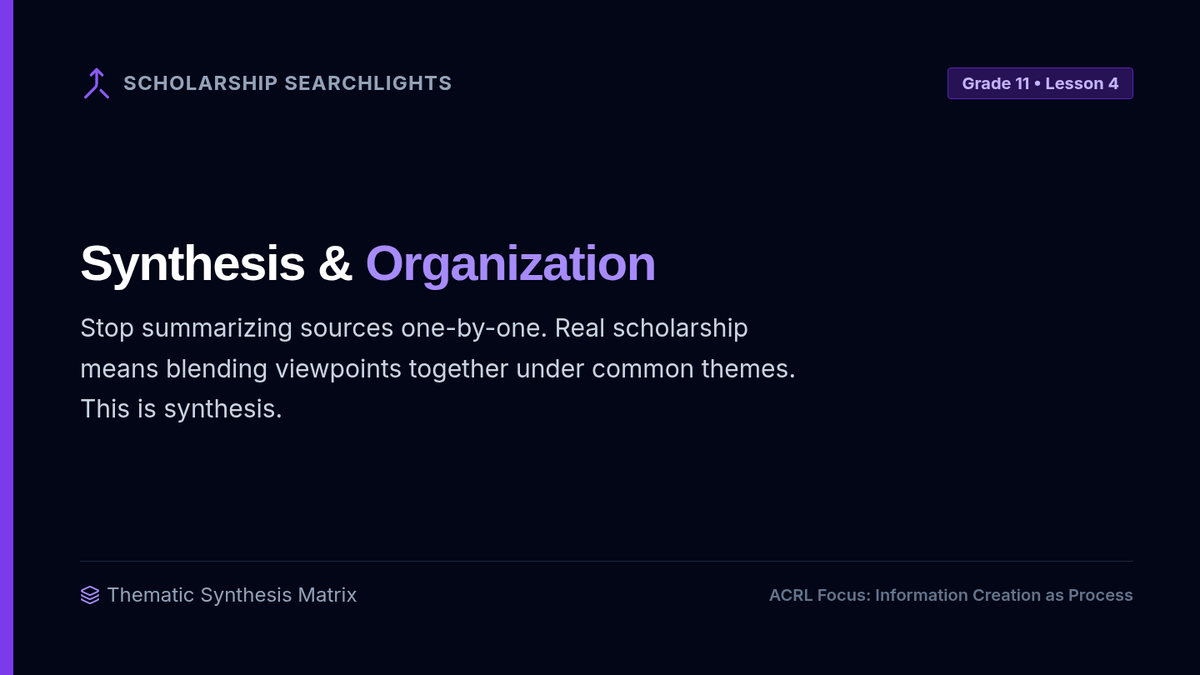
Students learn to organize complex research findings from multiple scholarly perspectives using a synthesis matrix and formulate cohesive thematic summaries.
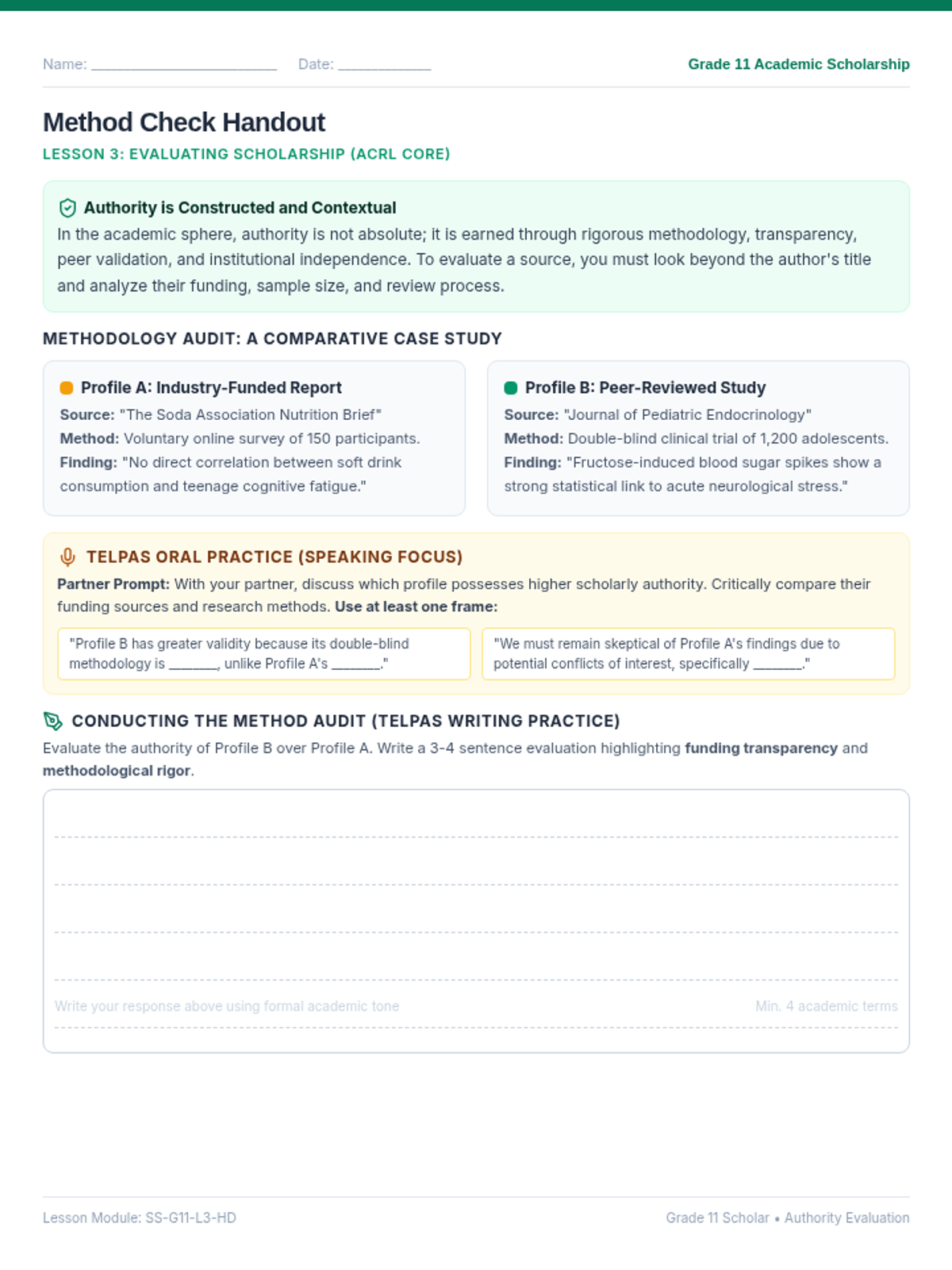
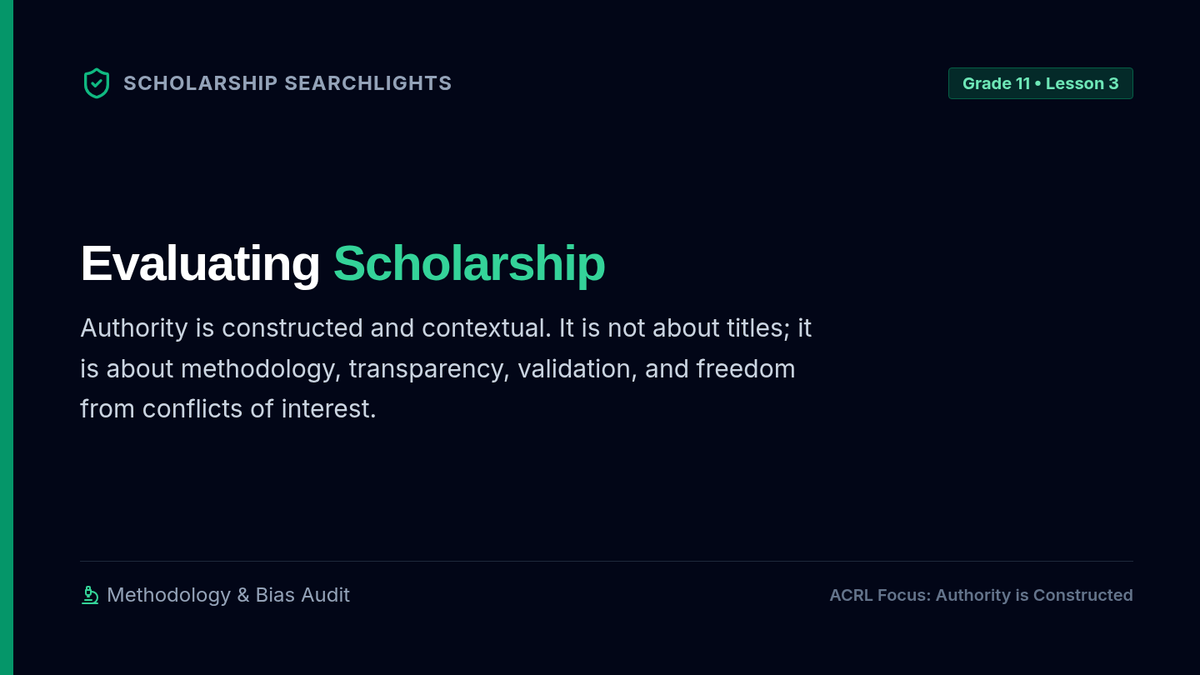
Students learn to analyze scholarly source authority, unpacking research methodology, peer review dynamics, and institutional credibility of research findings.
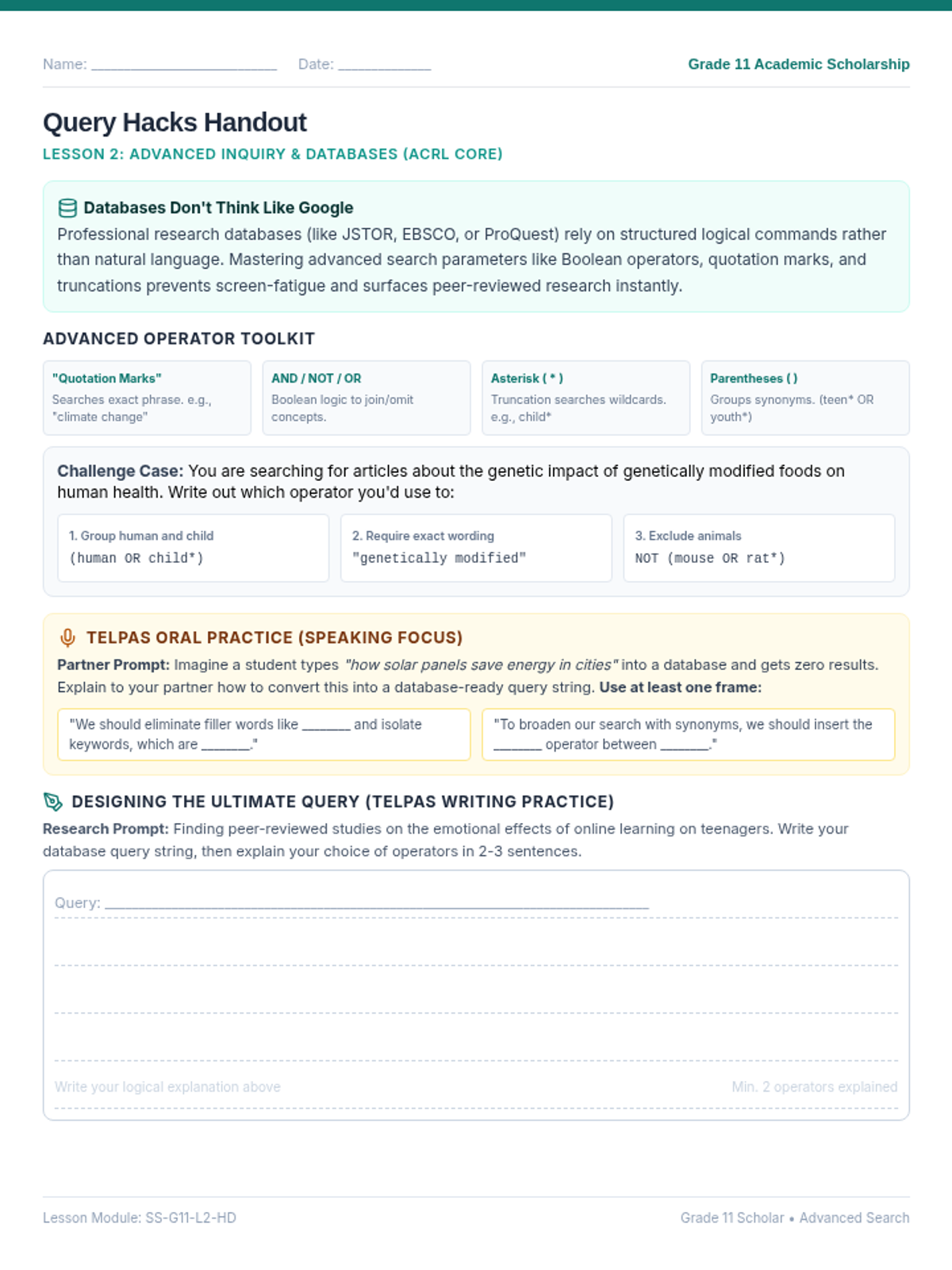
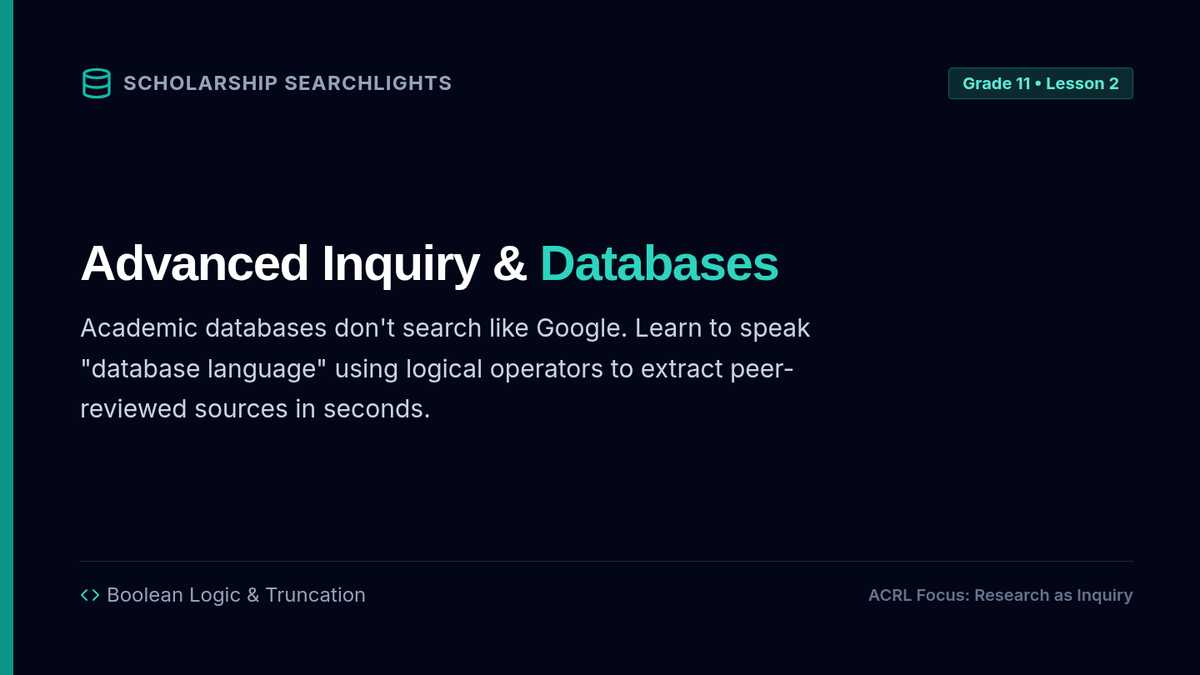
Students develop advanced database search strategies using boolean parameters, wildcard systems, truncations, and key field boundaries to narrow scholarly results.
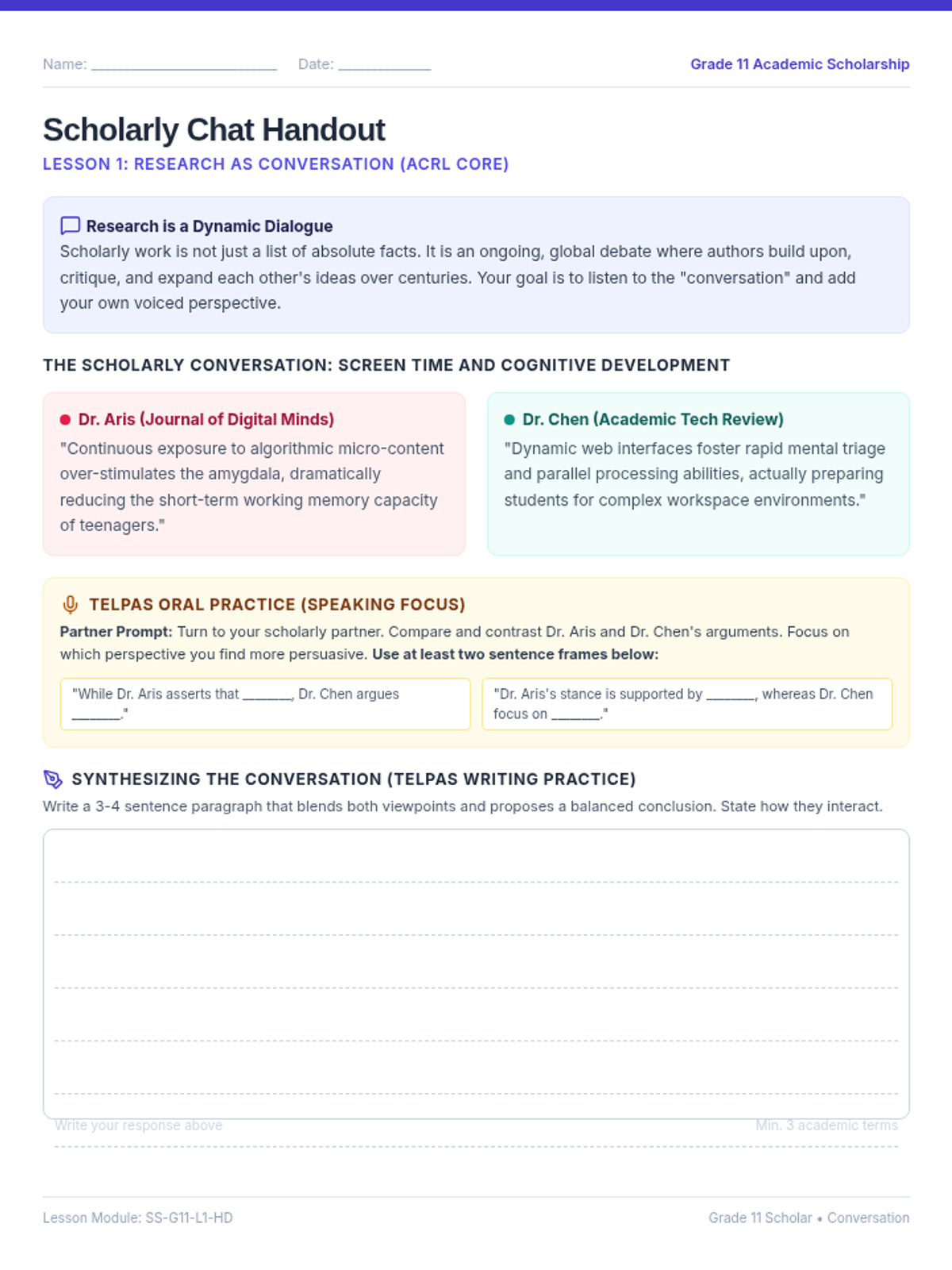
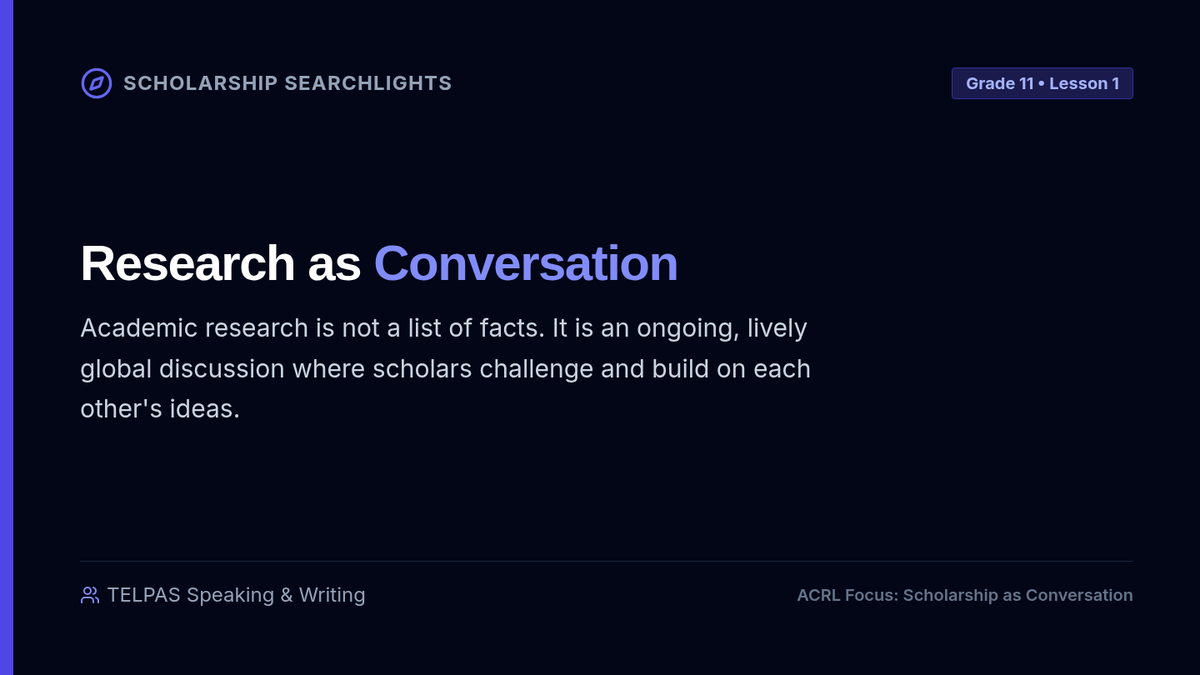
Students explore the collaborative nature of research, recognizing scholarly databases and academic literature as an ongoing dialogue where authors build upon, challenge, and refine each other's ideas.
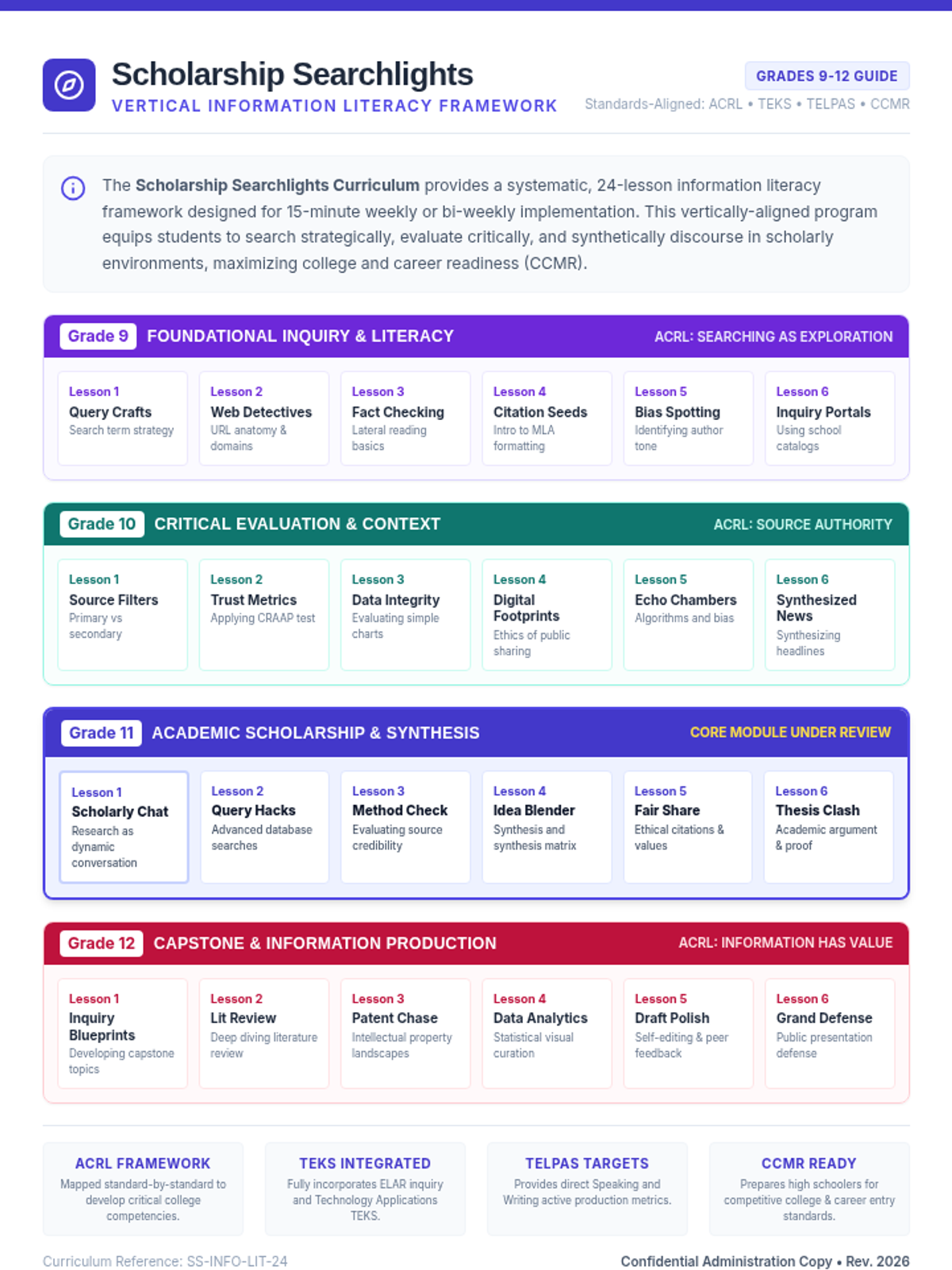
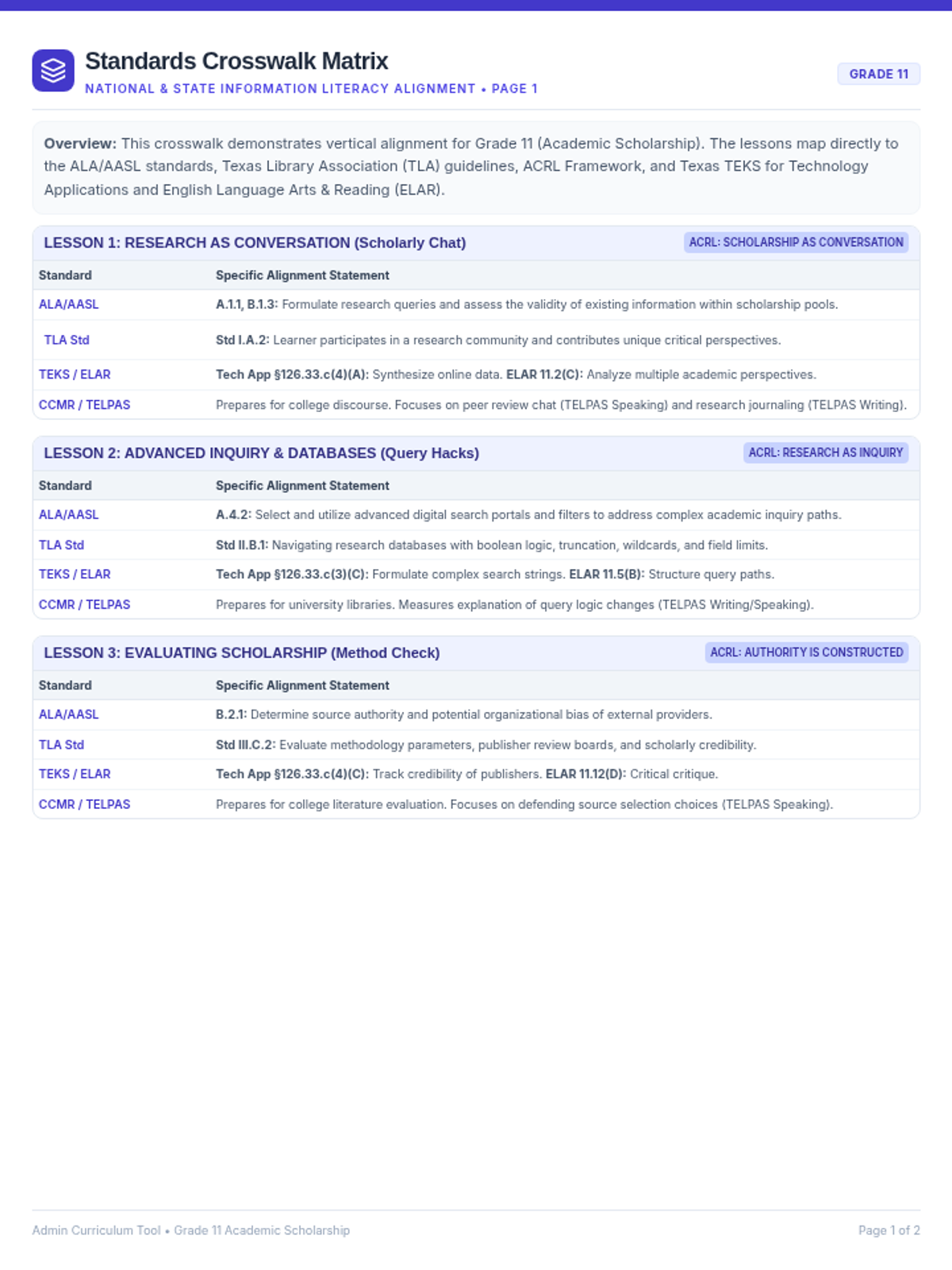
Administrative resources and vertical alignment guides for teachers and school leadership, including the full 24-lesson K-12 scope and standards crosswalk.
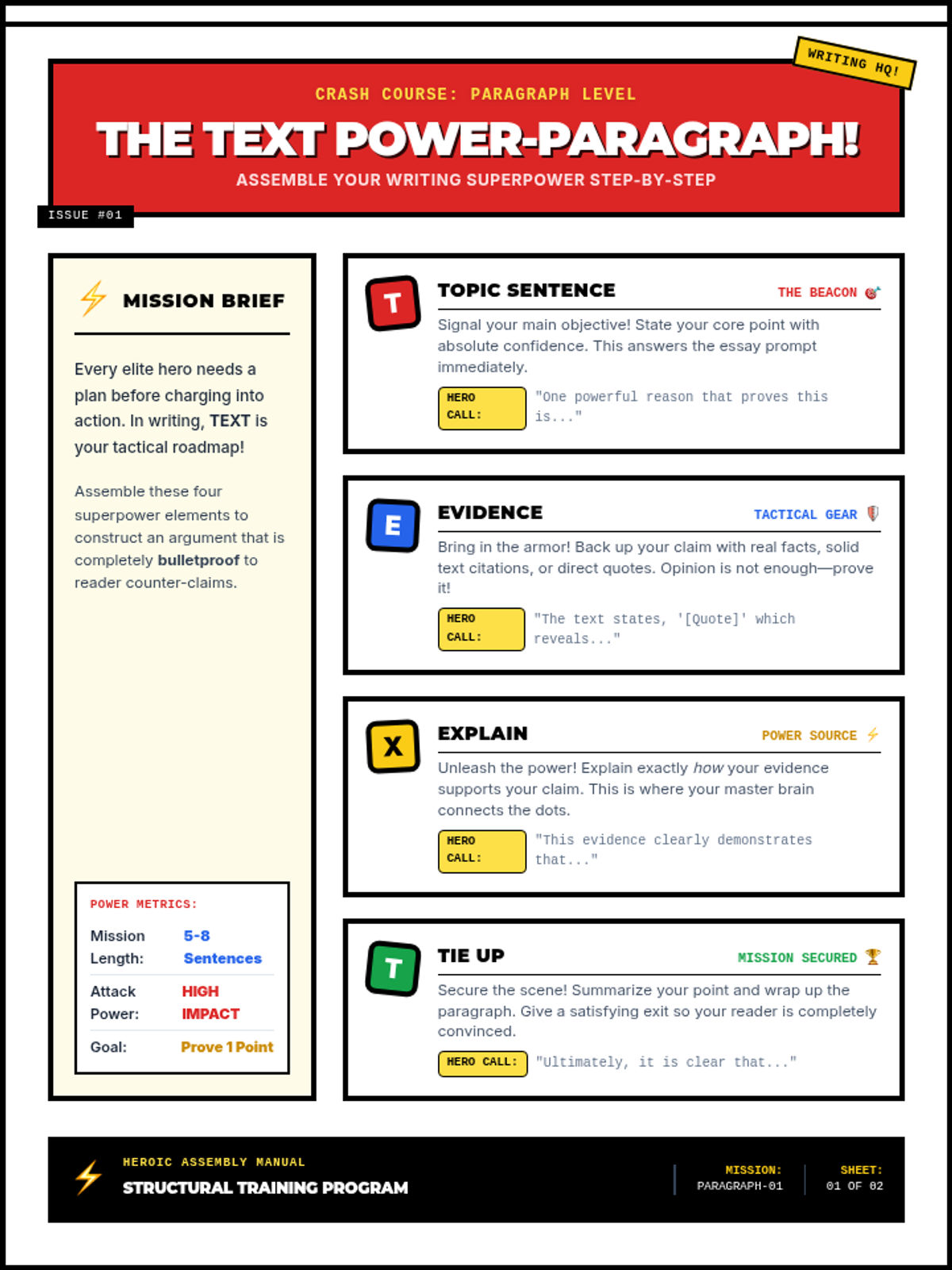
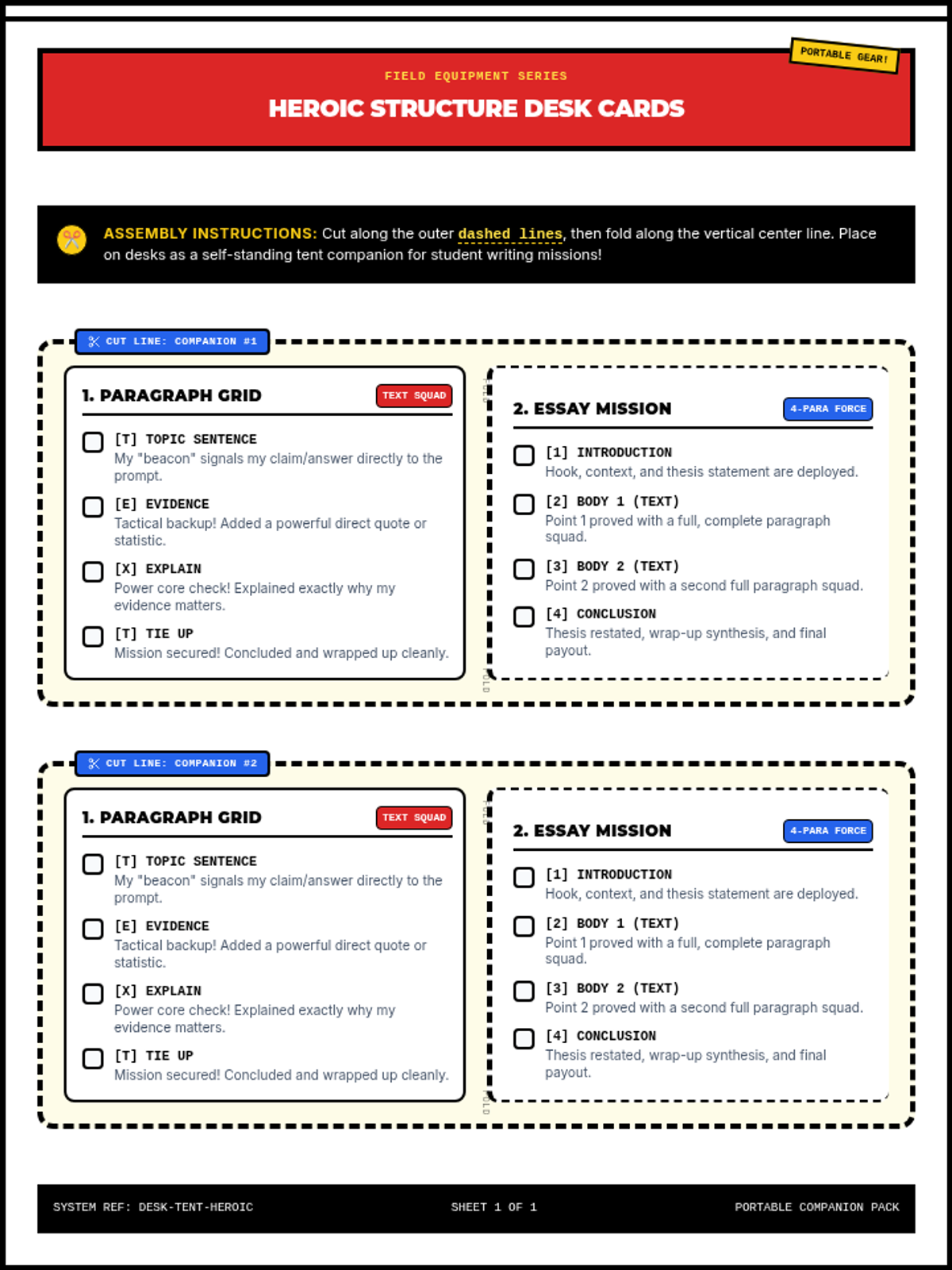
A superhero-themed writing workshop lesson that guides students through mastering the TEXT paragraph structure and upgrading it to a full four-paragraph essay. Features dynamic, comic-inspired anchor charts and pocket-sized desk checklists.
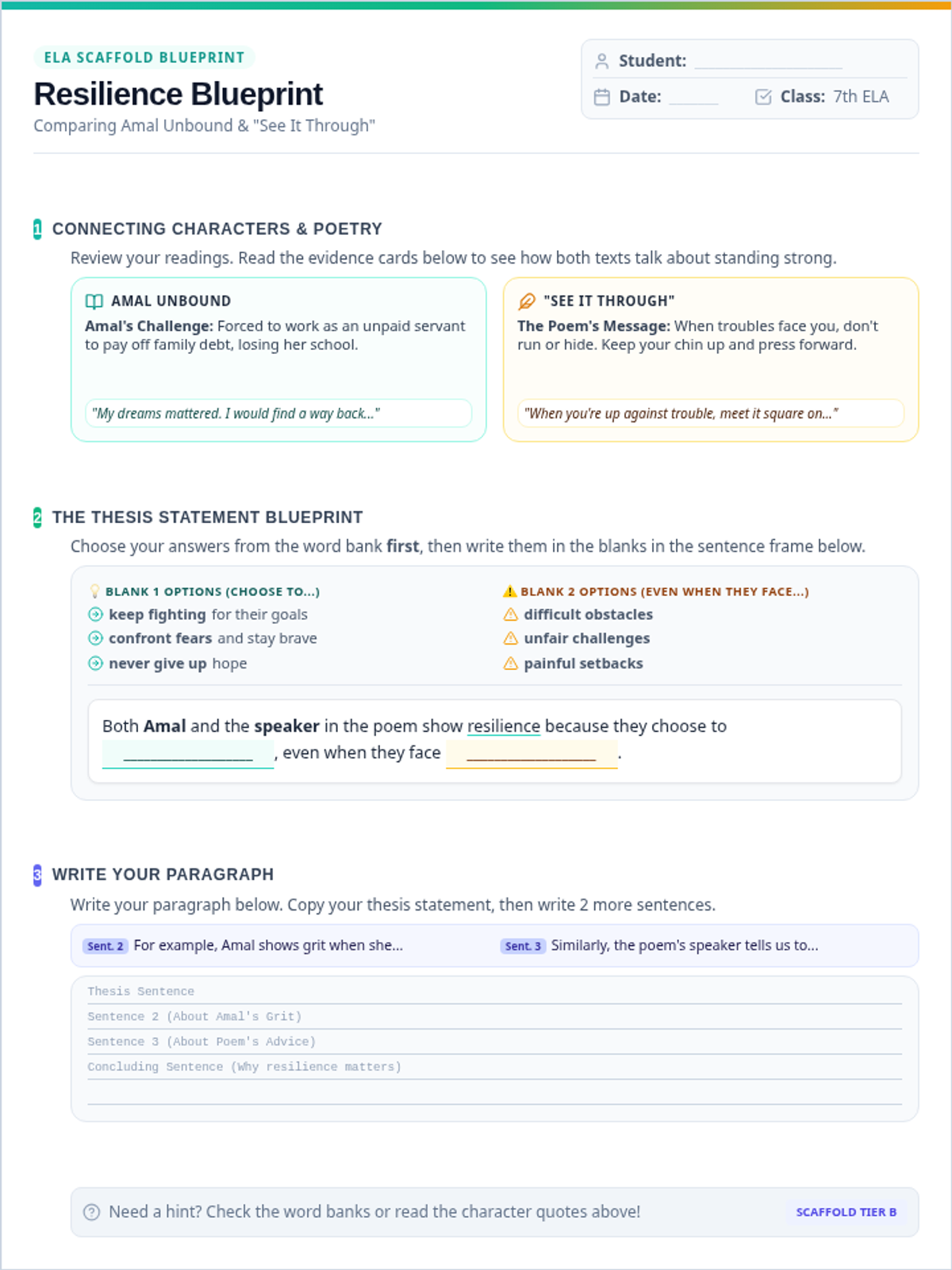
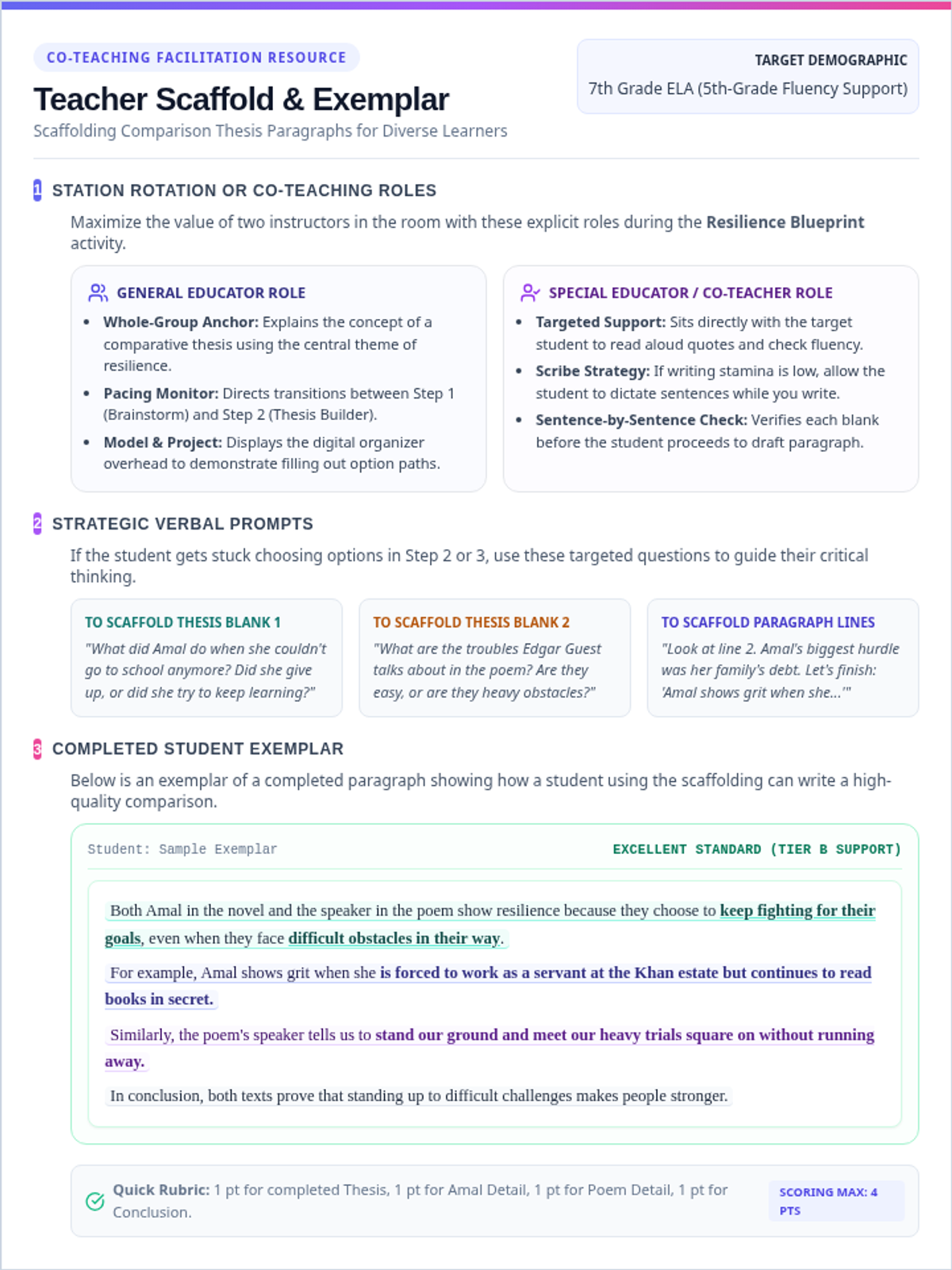
This lesson provides a highly structured scaffold to help co-taught ELA students build a comparison thesis statement and paragraph. It links the protagonist Amal from Amal Unbound with Edgar Guest's inspirational poem 'See It Through', focusing on the theme of resilience.
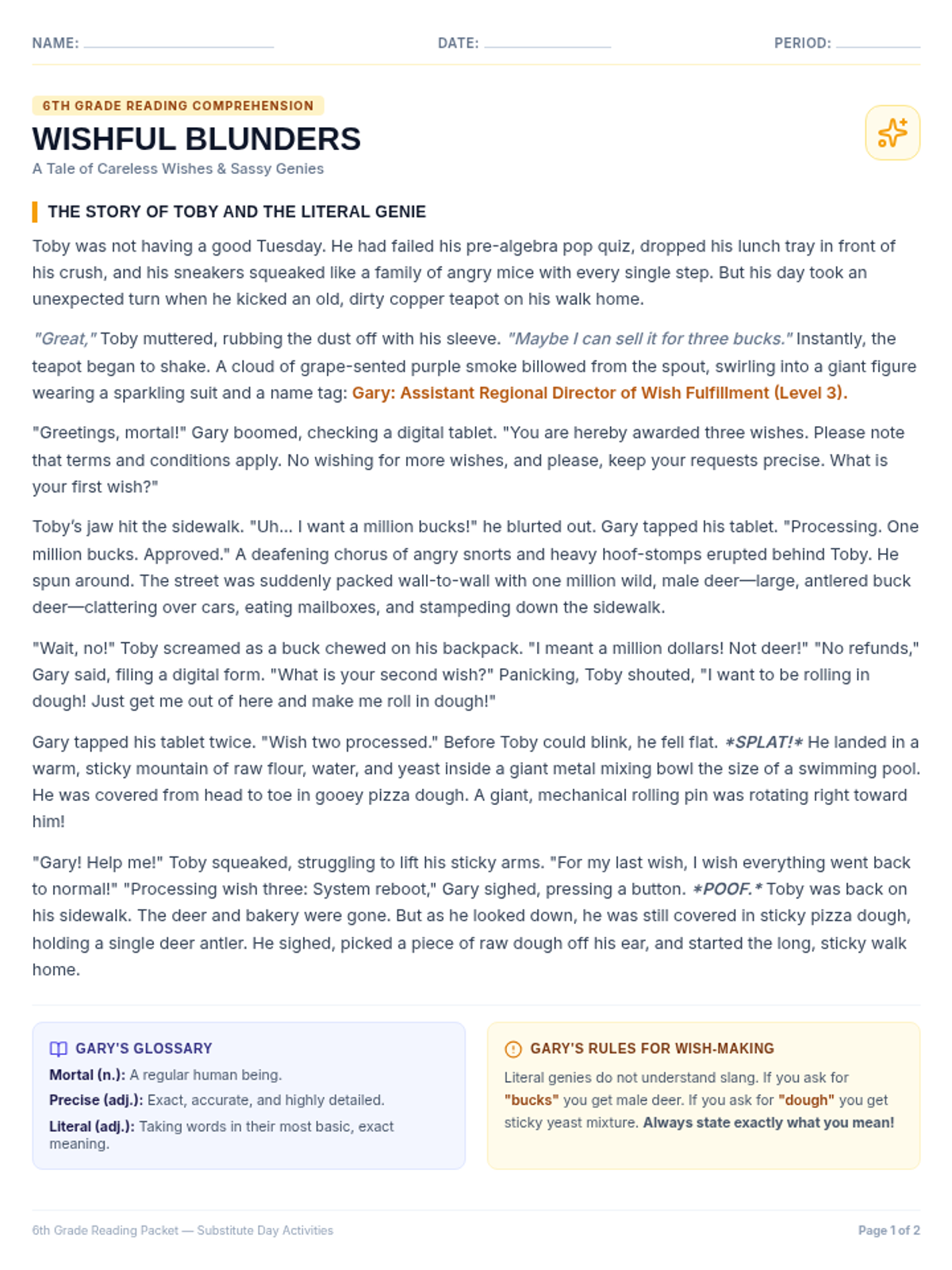
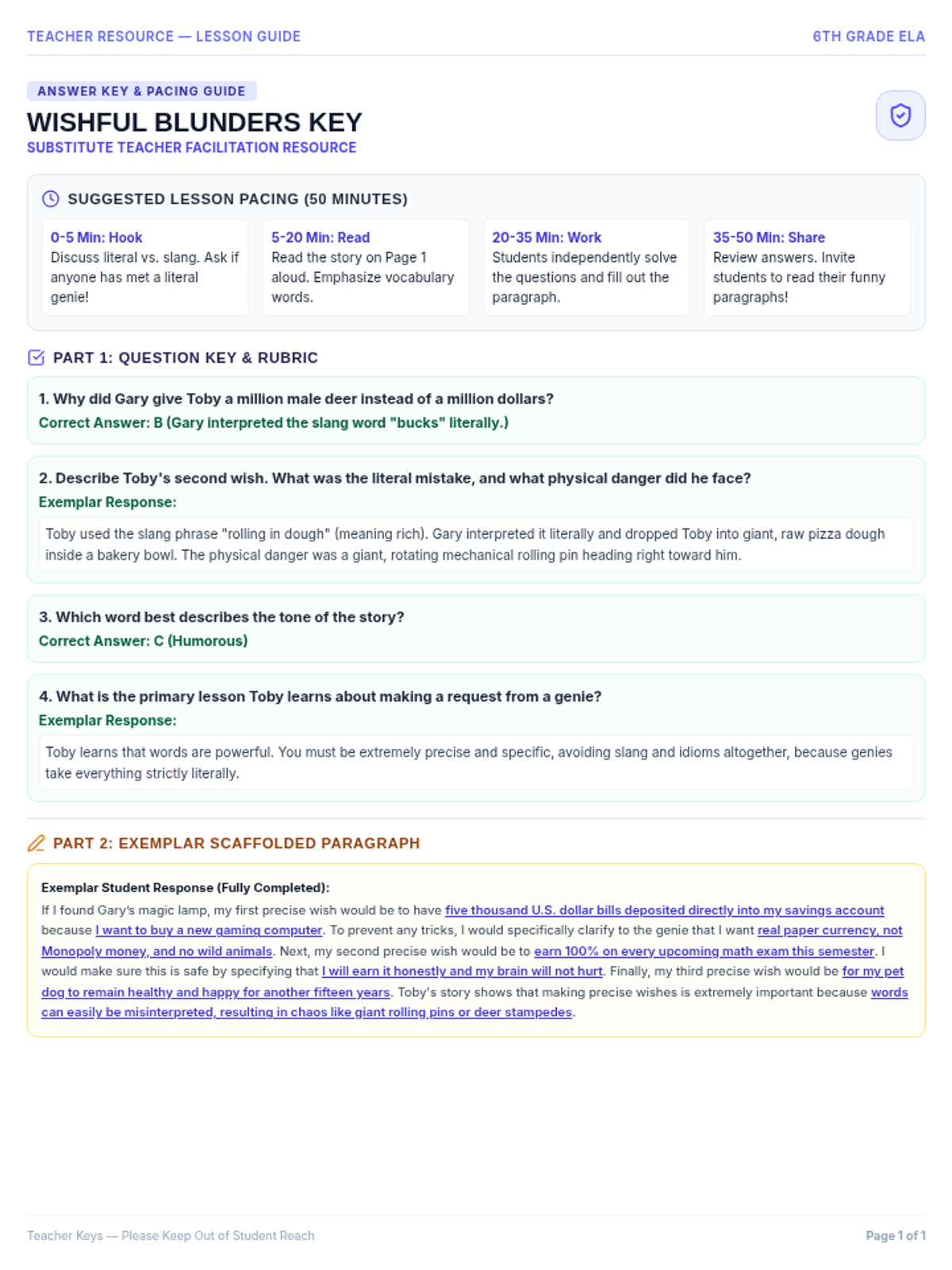
A funny, engaging 6th grade reading comprehension packet ideal for substitute teacher days. Students read a humorous story about a literal genie, answer text-dependent questions, and write a structured paragraph about their own precise wishes using detailed sentence starters.
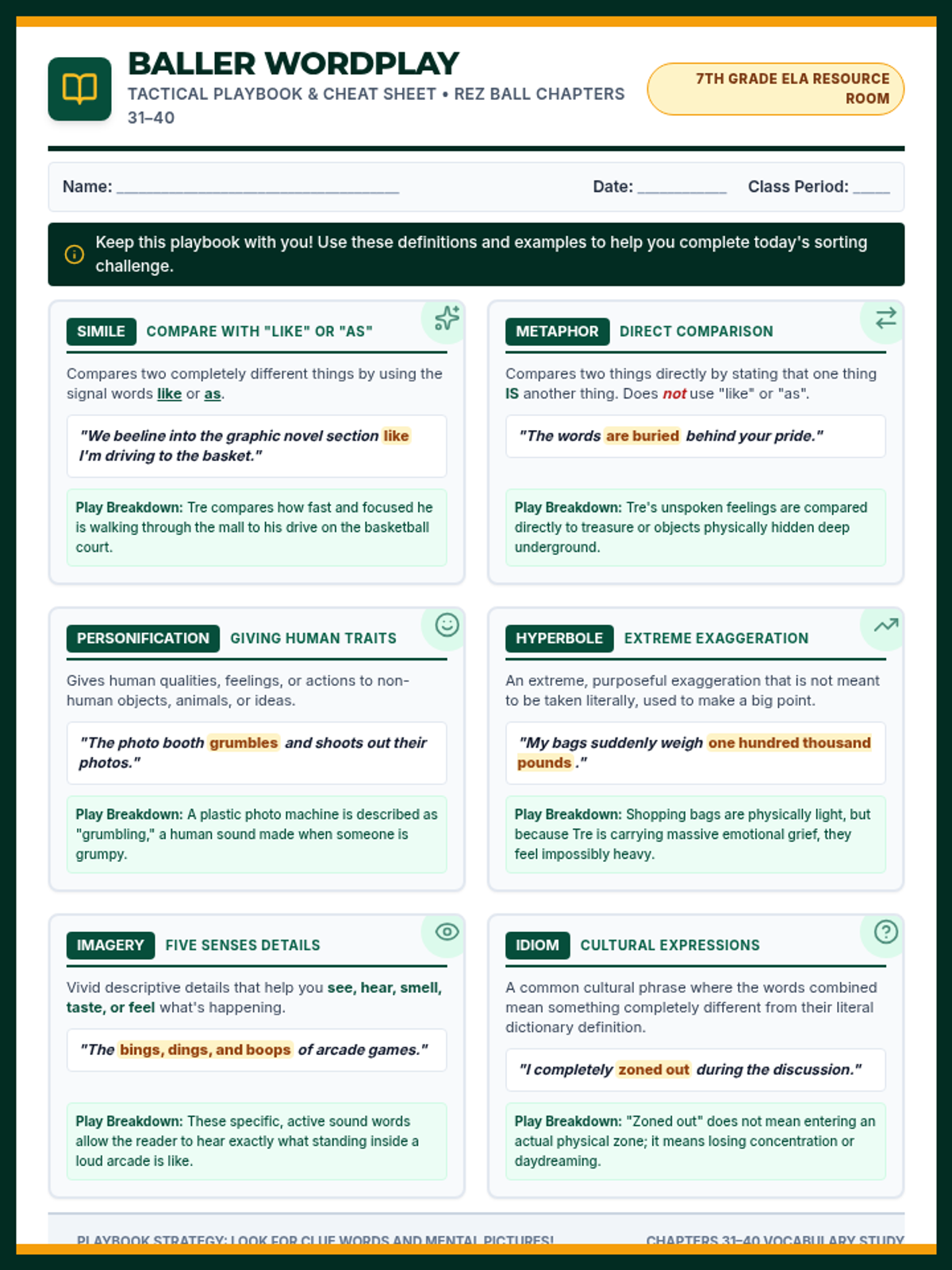
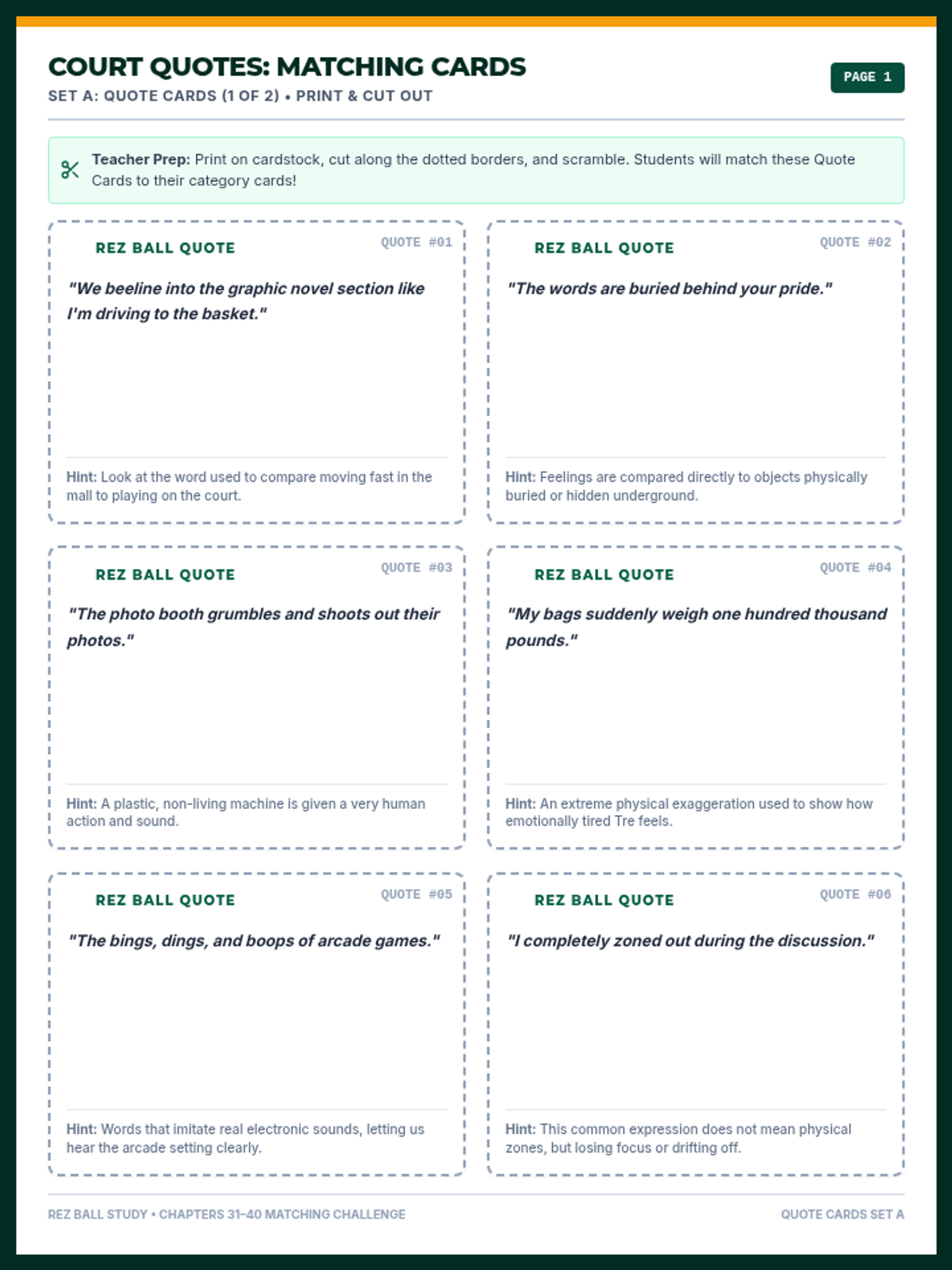
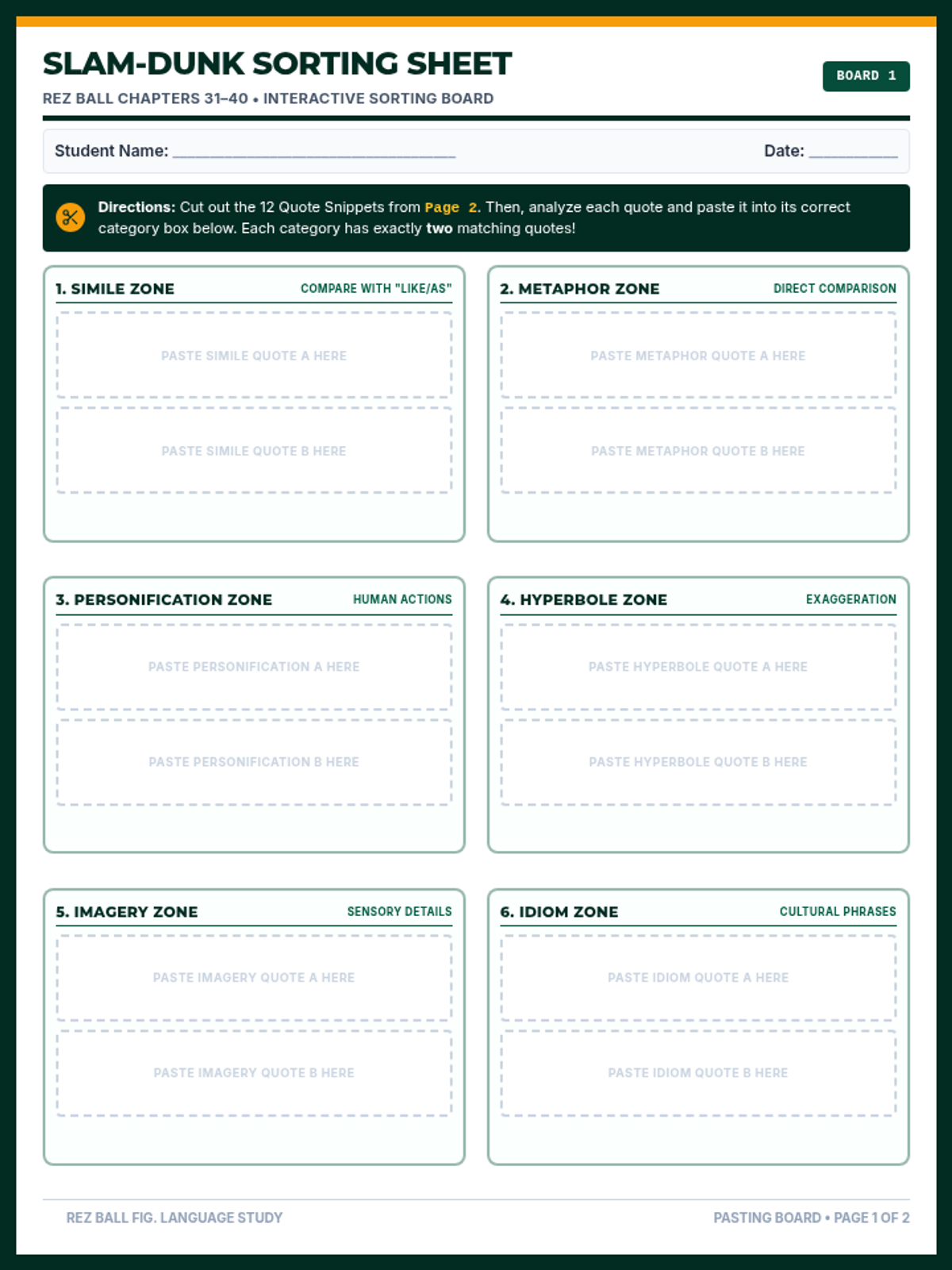
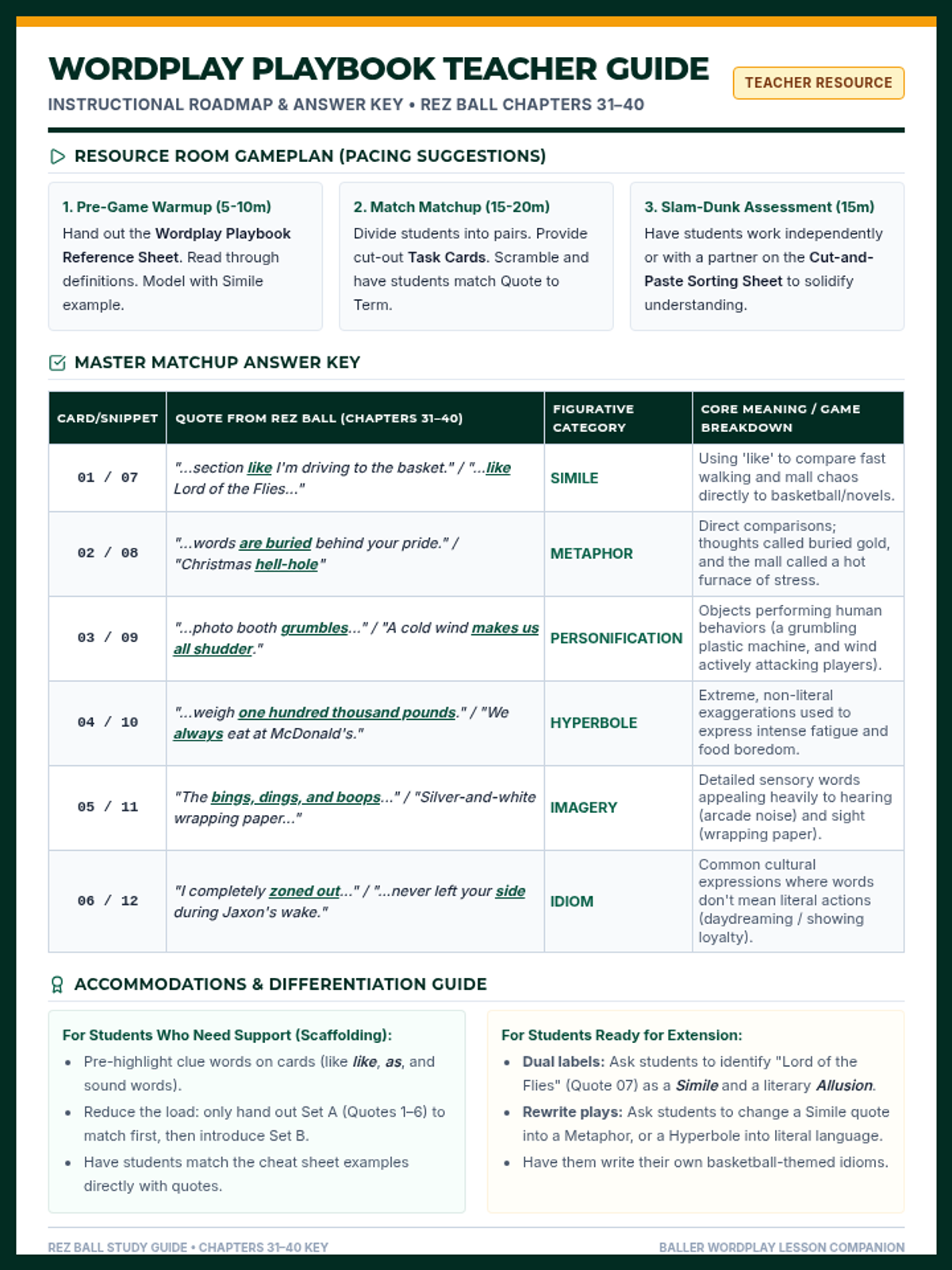
A high-interest figurative language lesson using real quotes from Chapters 31-40 of Byron Graves's novel Rez Ball, tailored for 7th-grade ELA resource room students. Includes a visual reference guide, matching task cards, a cut-and-paste sorting sheet, and a teacher key.
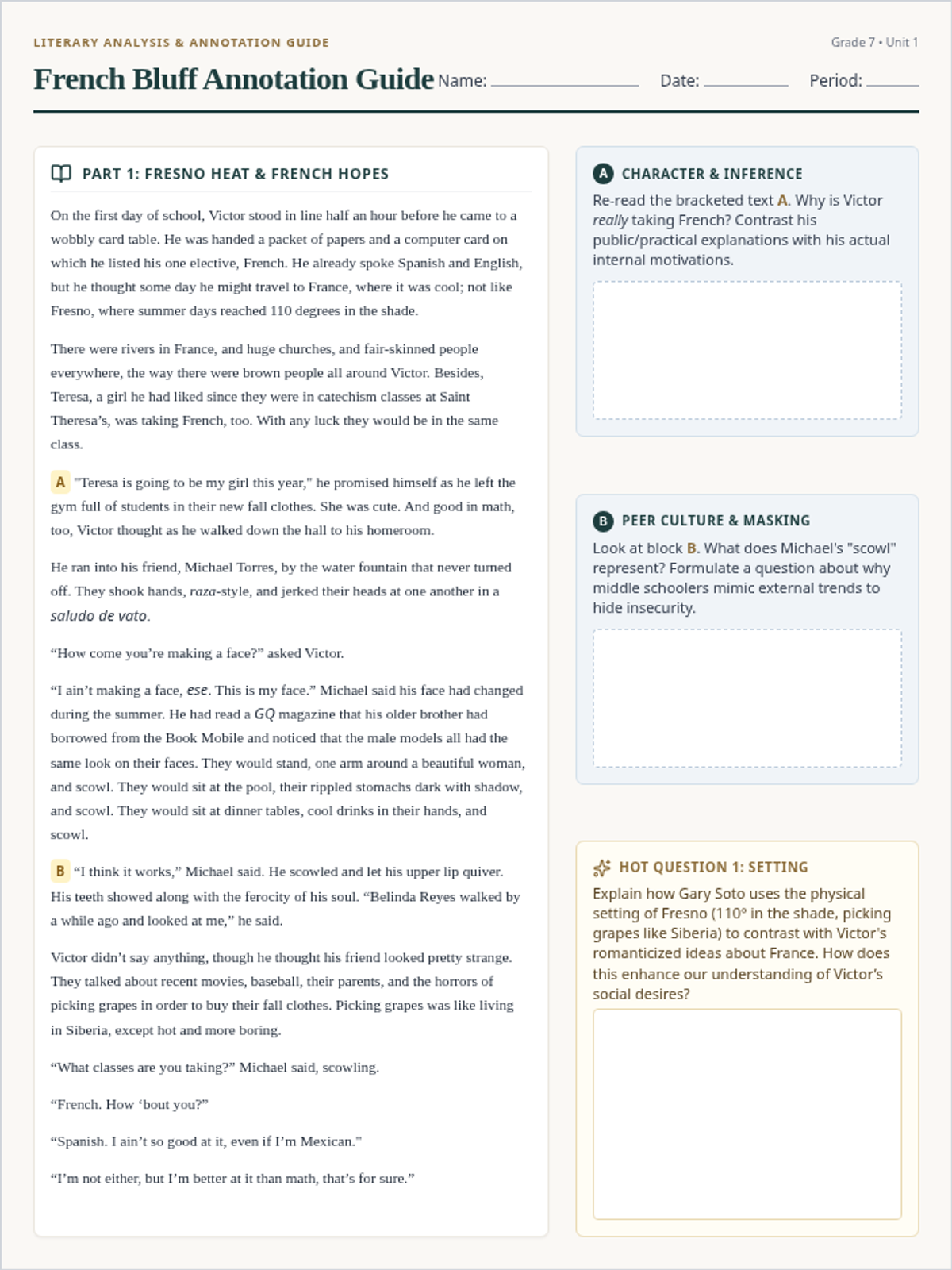
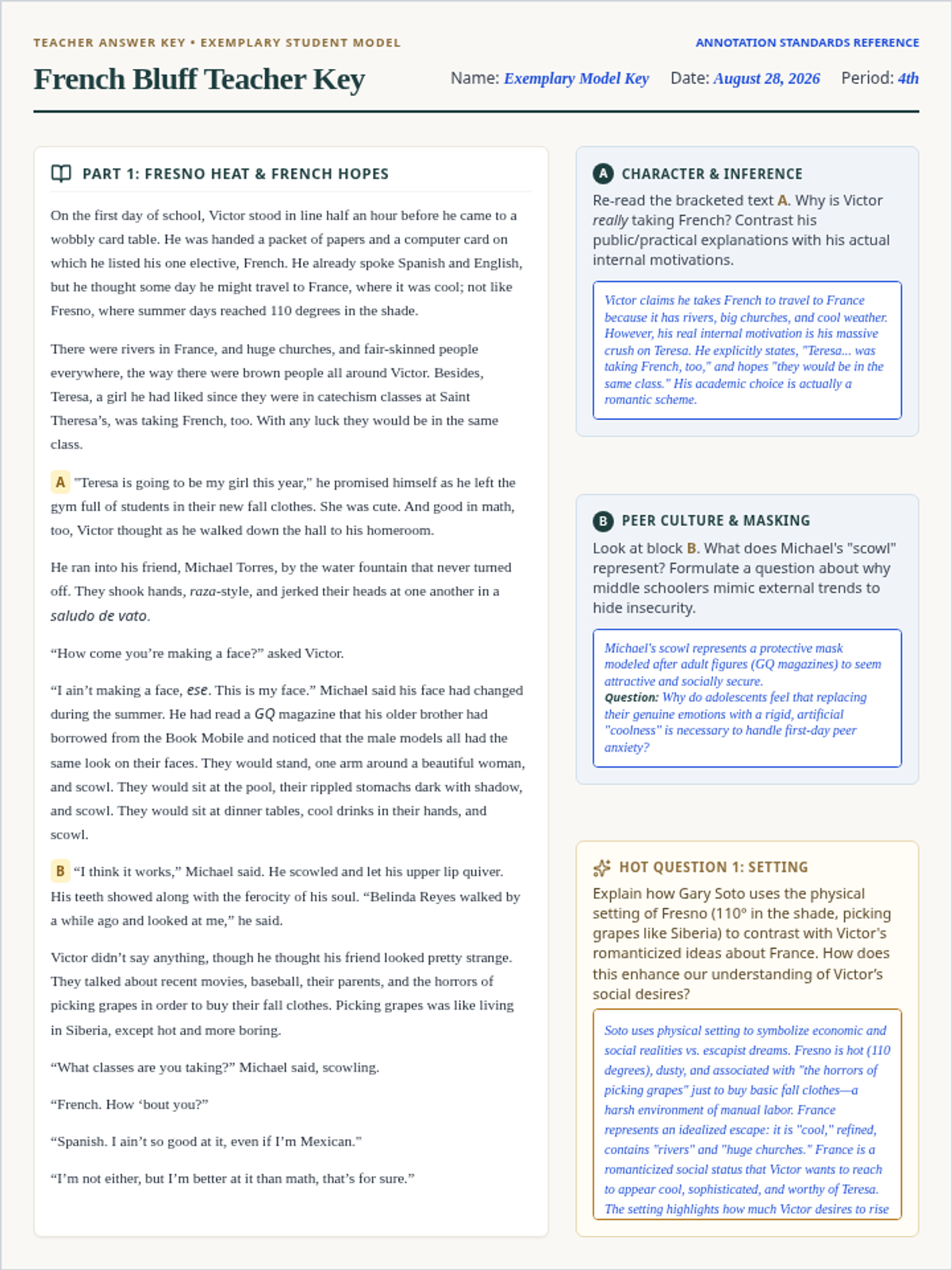
A comprehensive 7th-grade literary analysis and annotation unit based on Gary Soto's short story 'Seventh Grade'. Students track character development, plot, and themes while practicing active questioning and drawing text-based inferences.
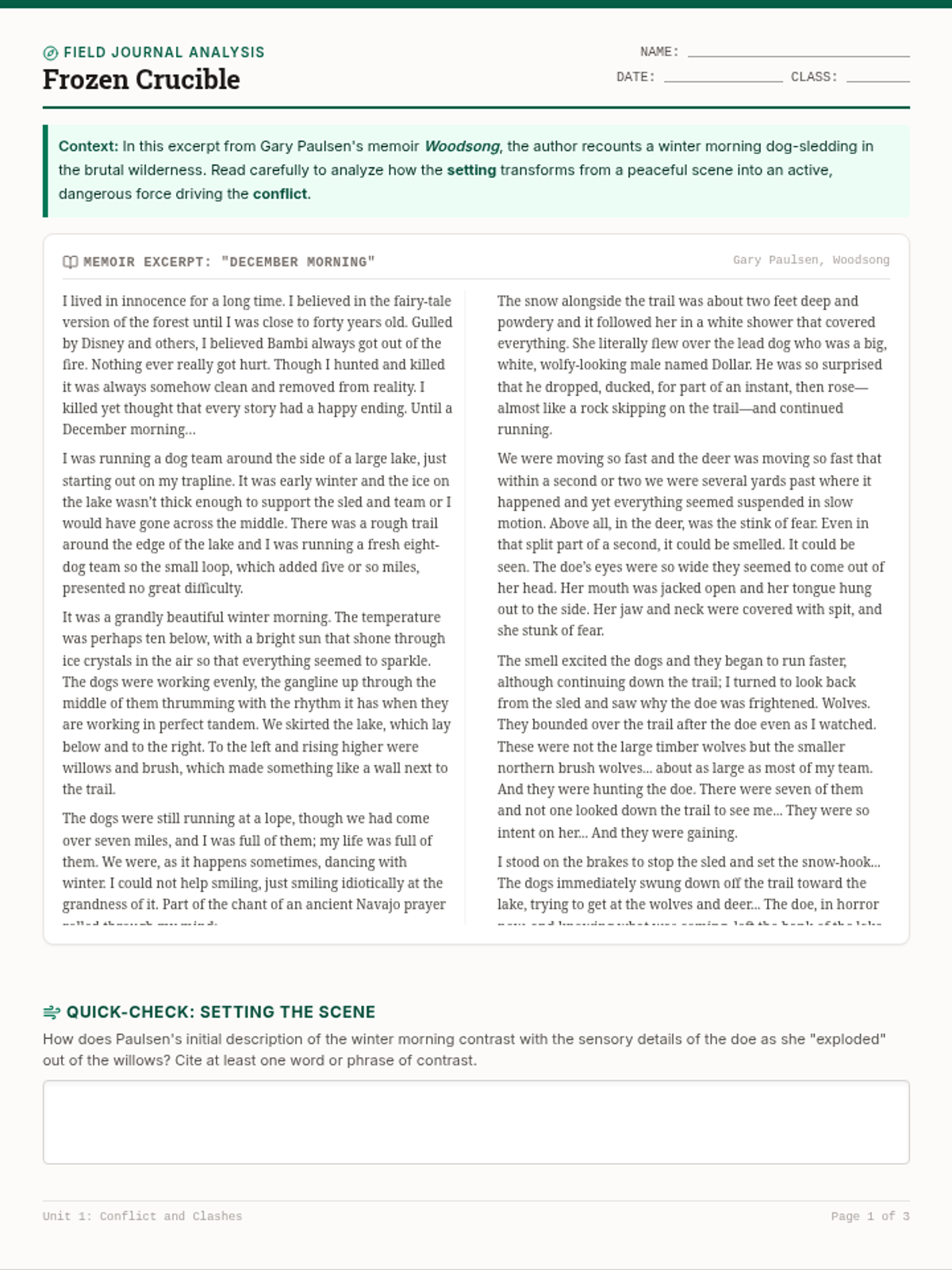
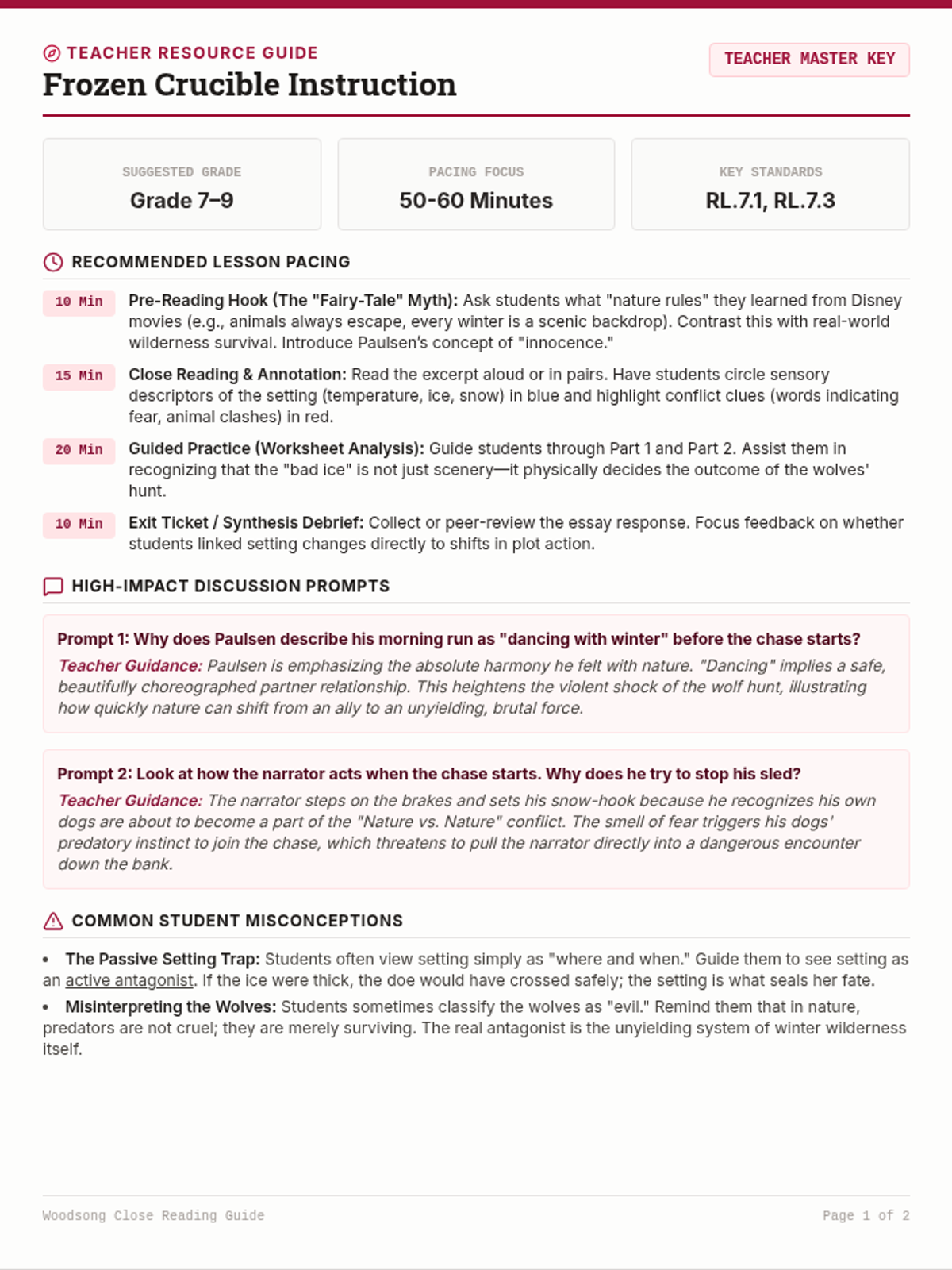
A close-reading lesson exploring conflict and setting in Gary Paulsen's Woodsong. Students analyze how the brutal winter environment drives the plot and shapes the central conflict.
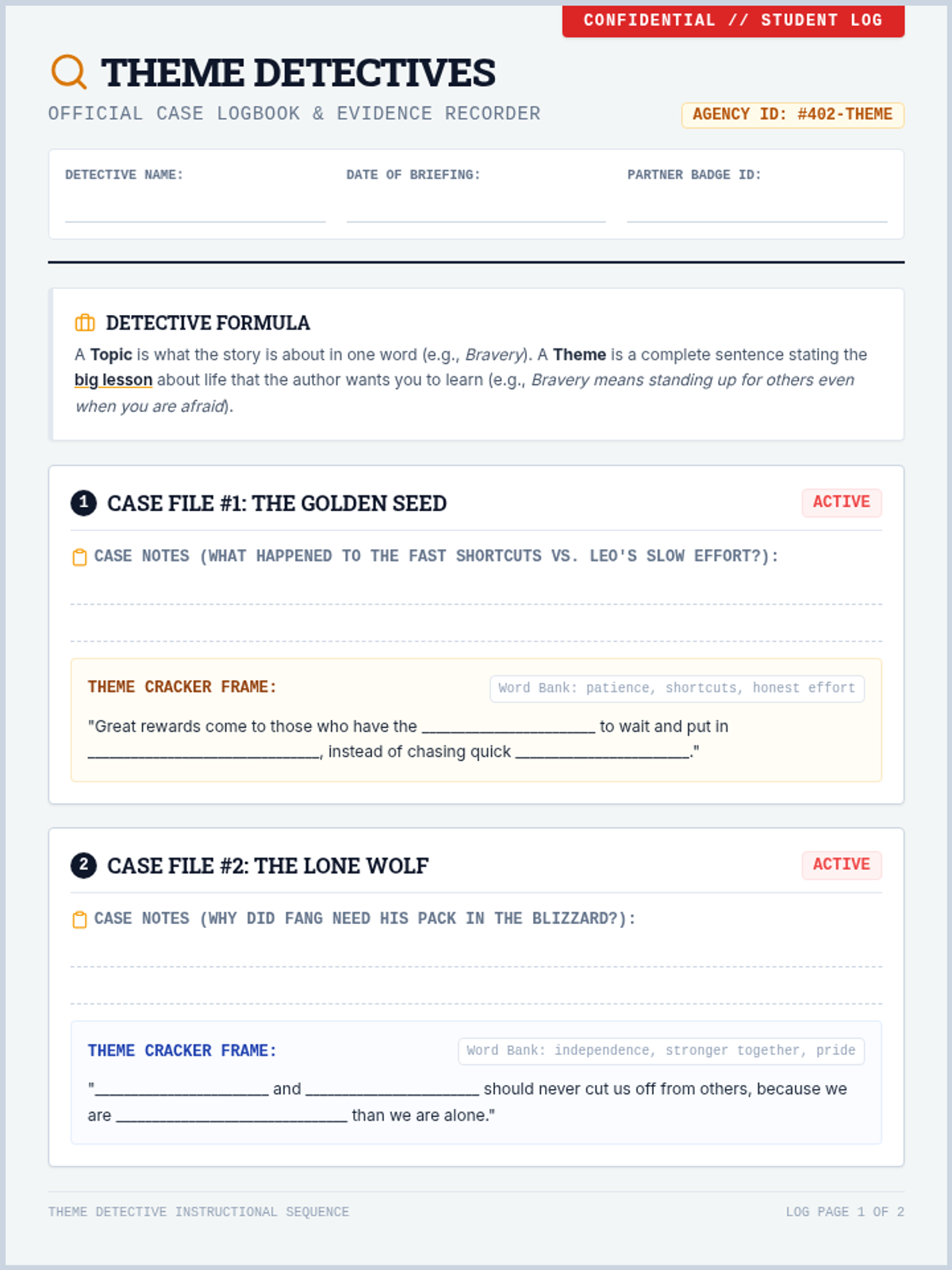
An interactive, whole-class game lesson designed to help students identify abstract themes in stories. Students use visual cues, clues, and sentence starters to uncover and articulate hidden thematic messages.
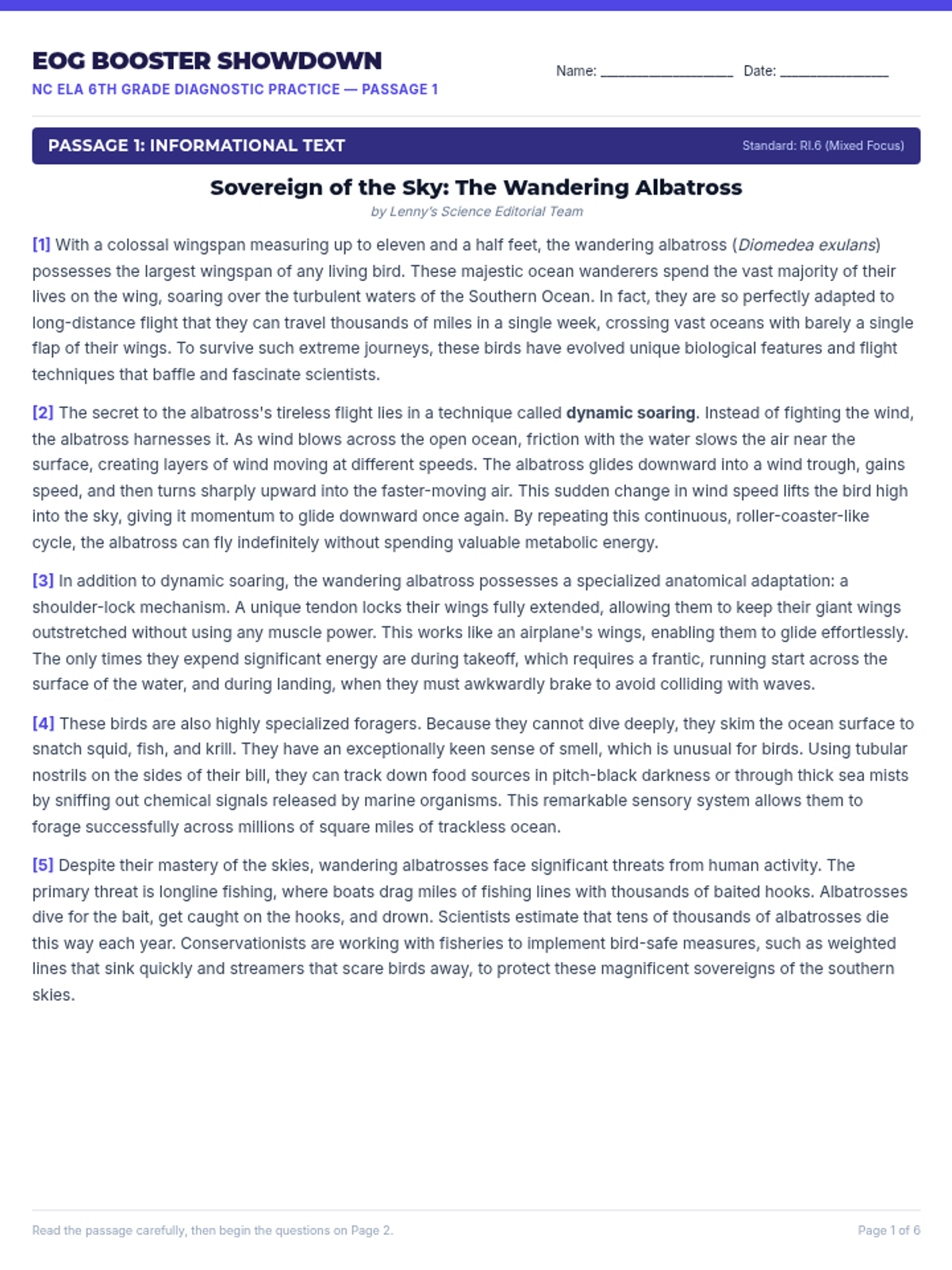
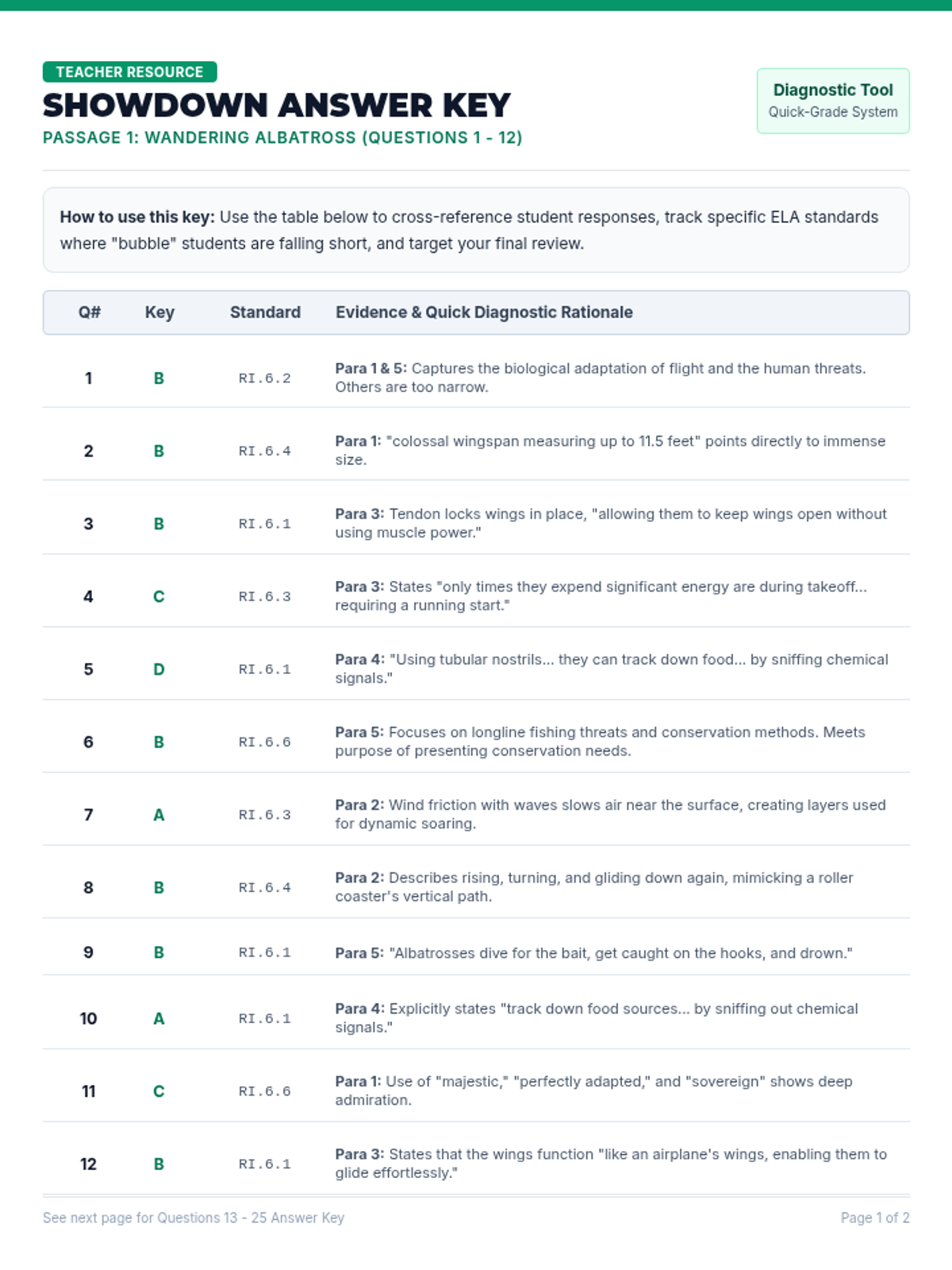
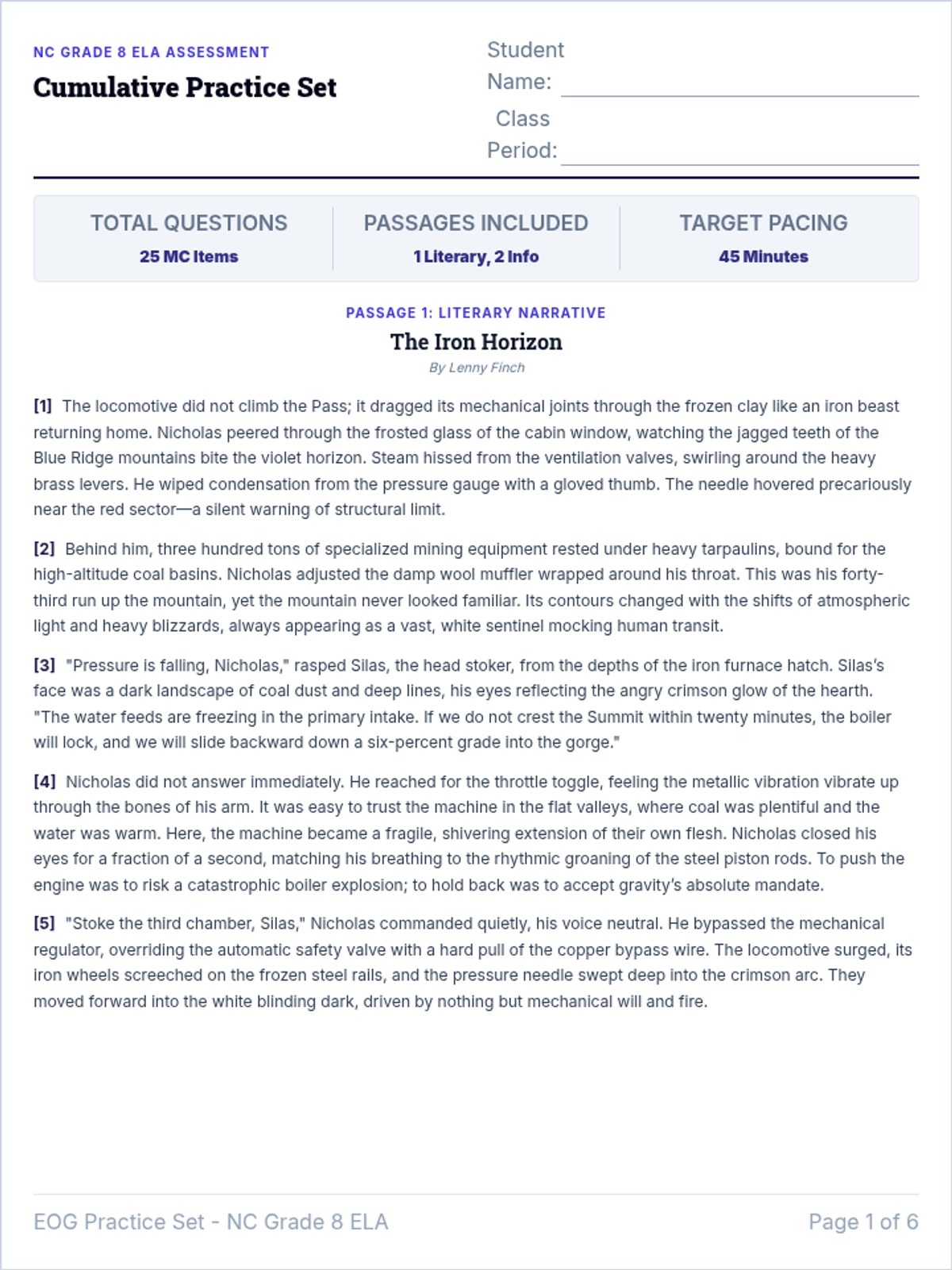
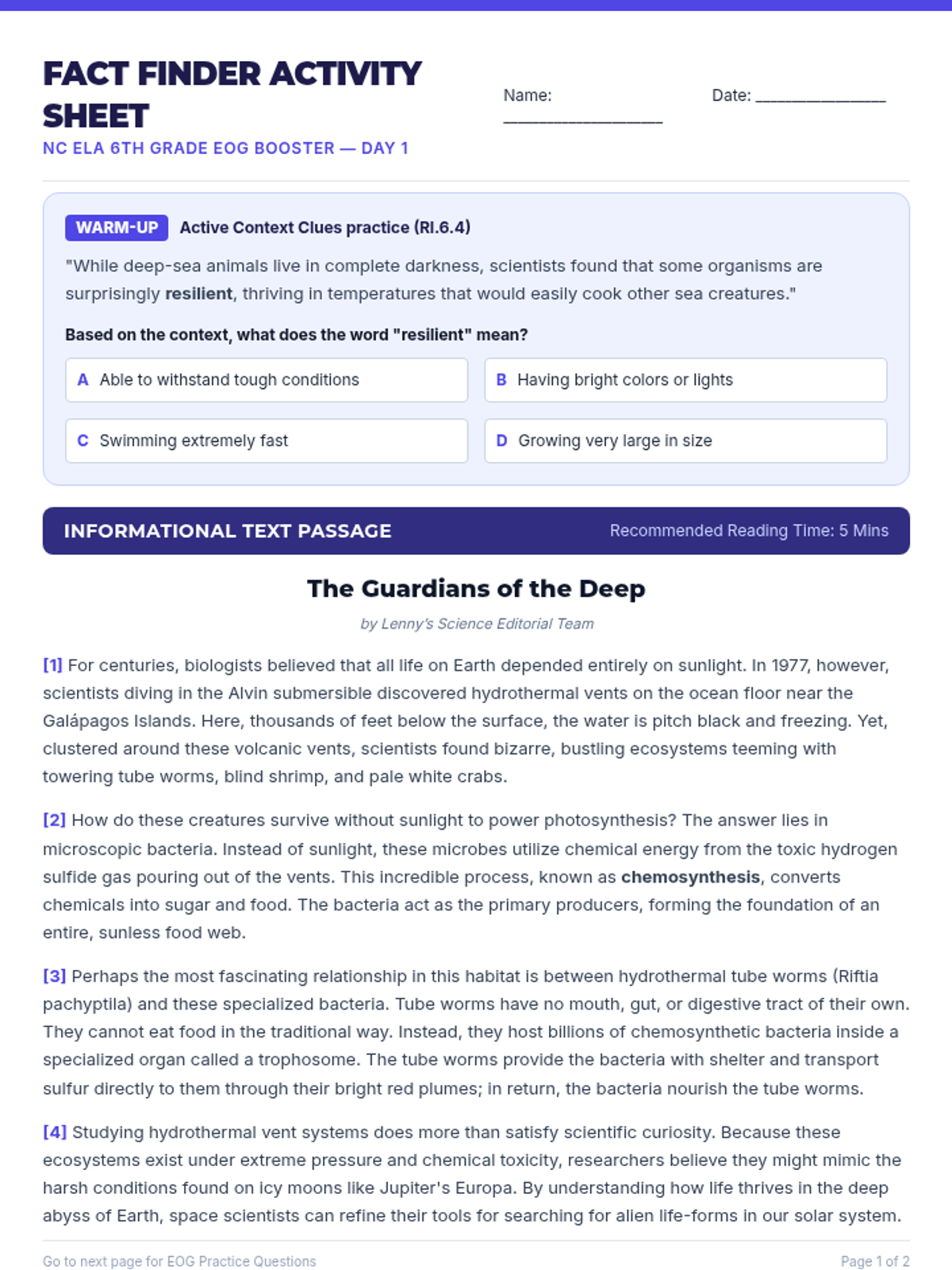
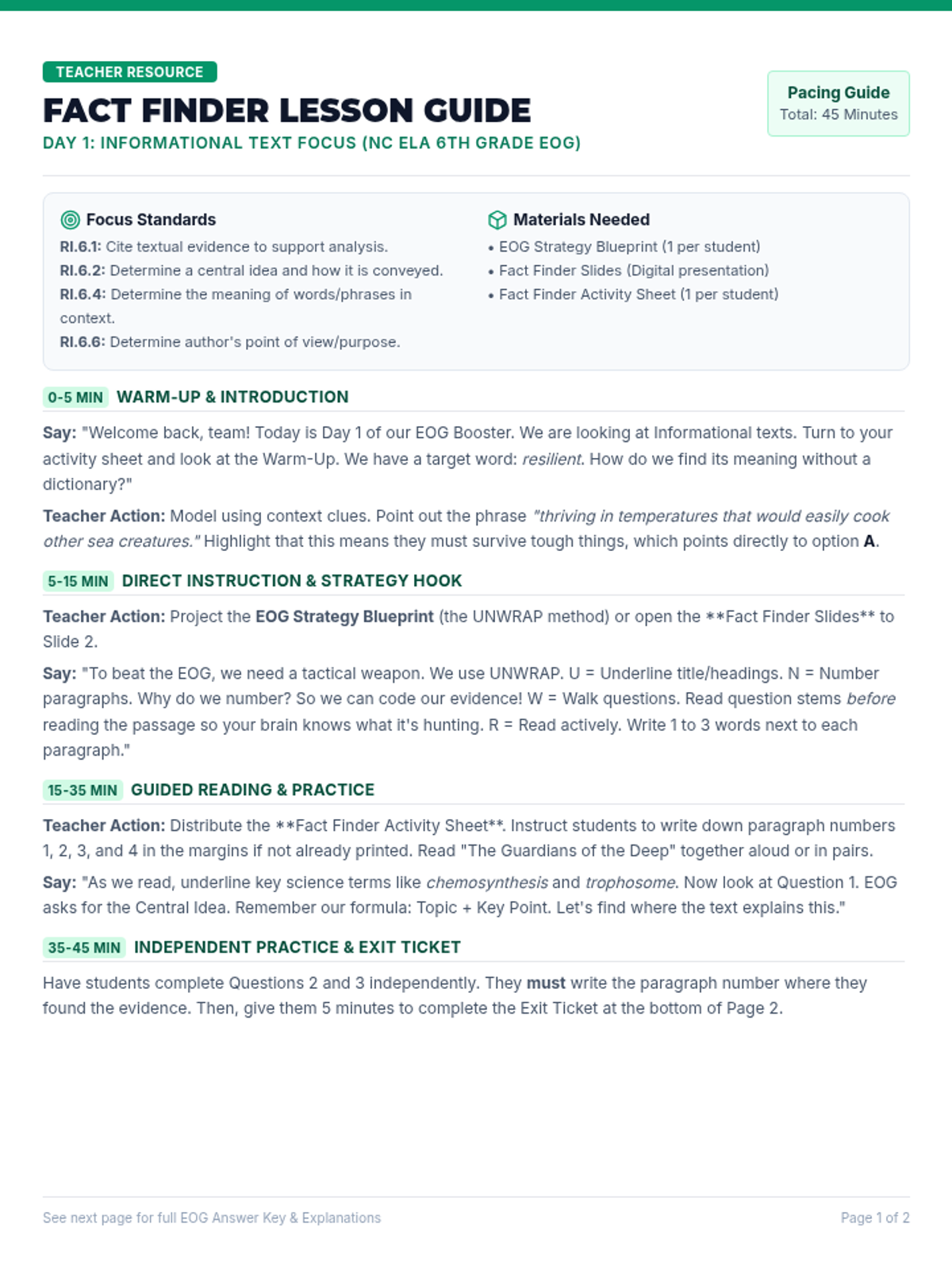
A rigorous, mock-EOG diagnostic exam featuring high-interest informational and literary passages paired with 25 standard-aligned practice questions.
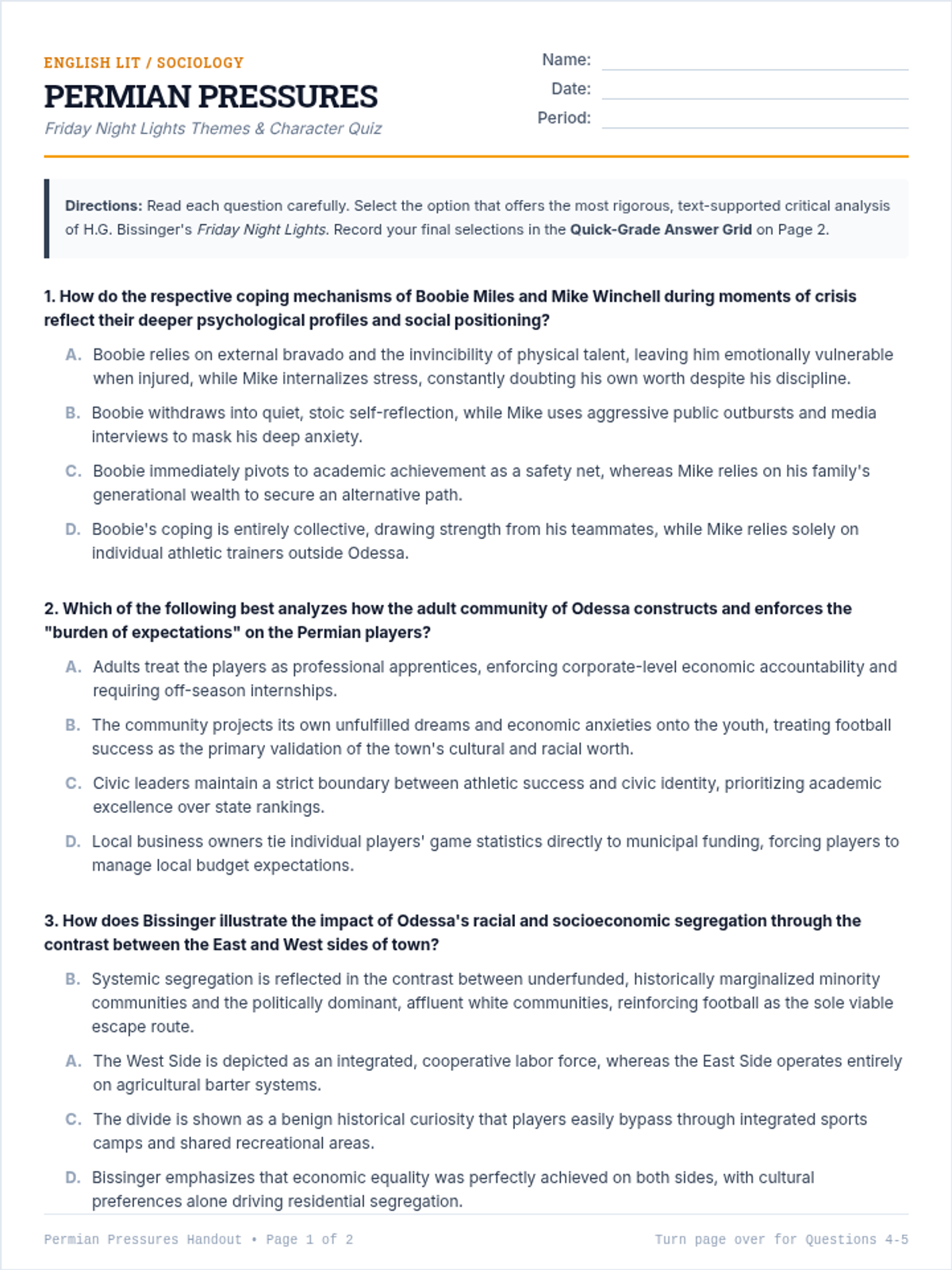
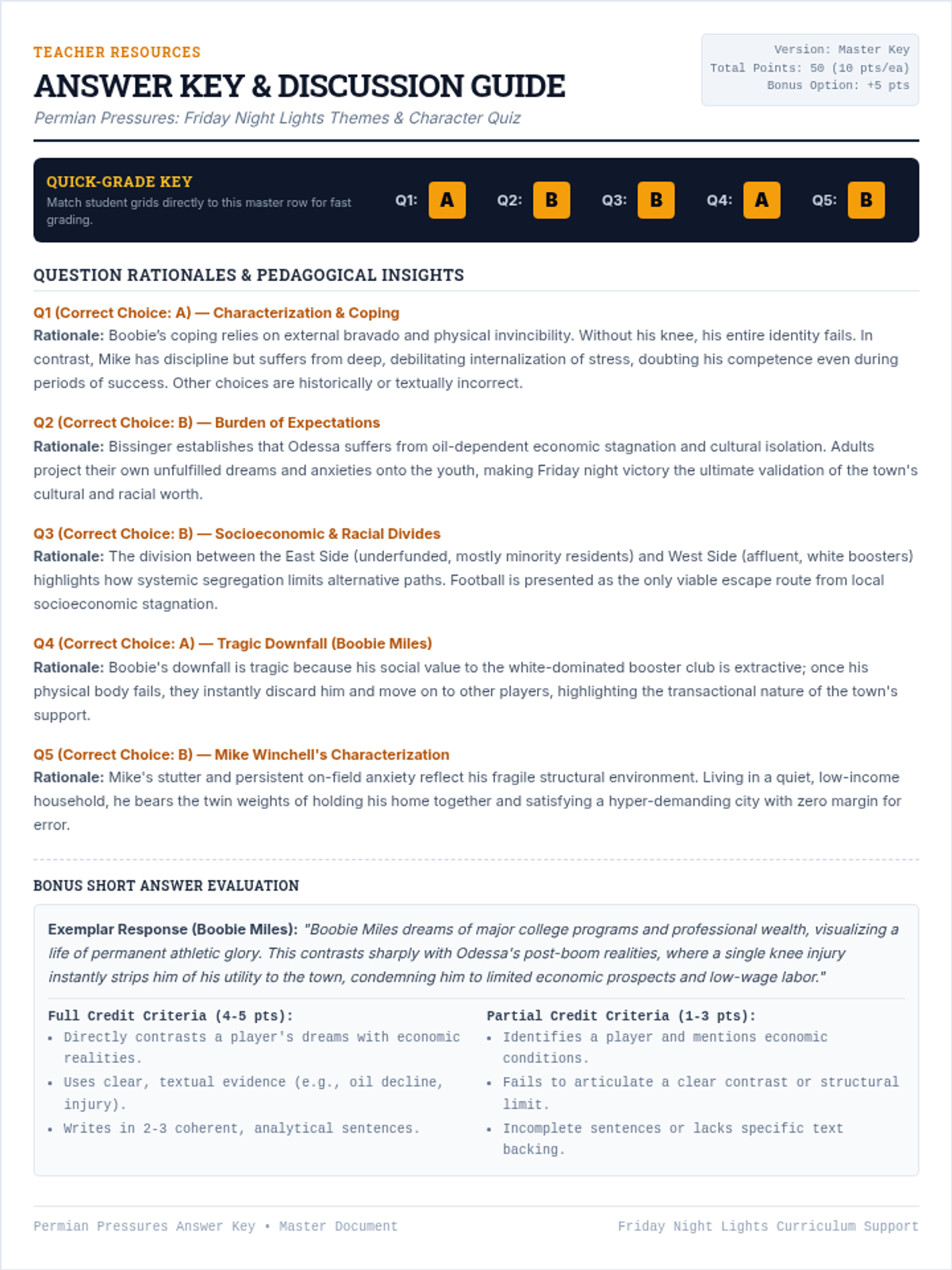
A analytical assessment lesson focusing on the high-stakes themes, racial and socioeconomic divides, and tragic character trajectories of Boobie Miles and Mike Winchell in H.G. Bissinger's Friday Night Lights.
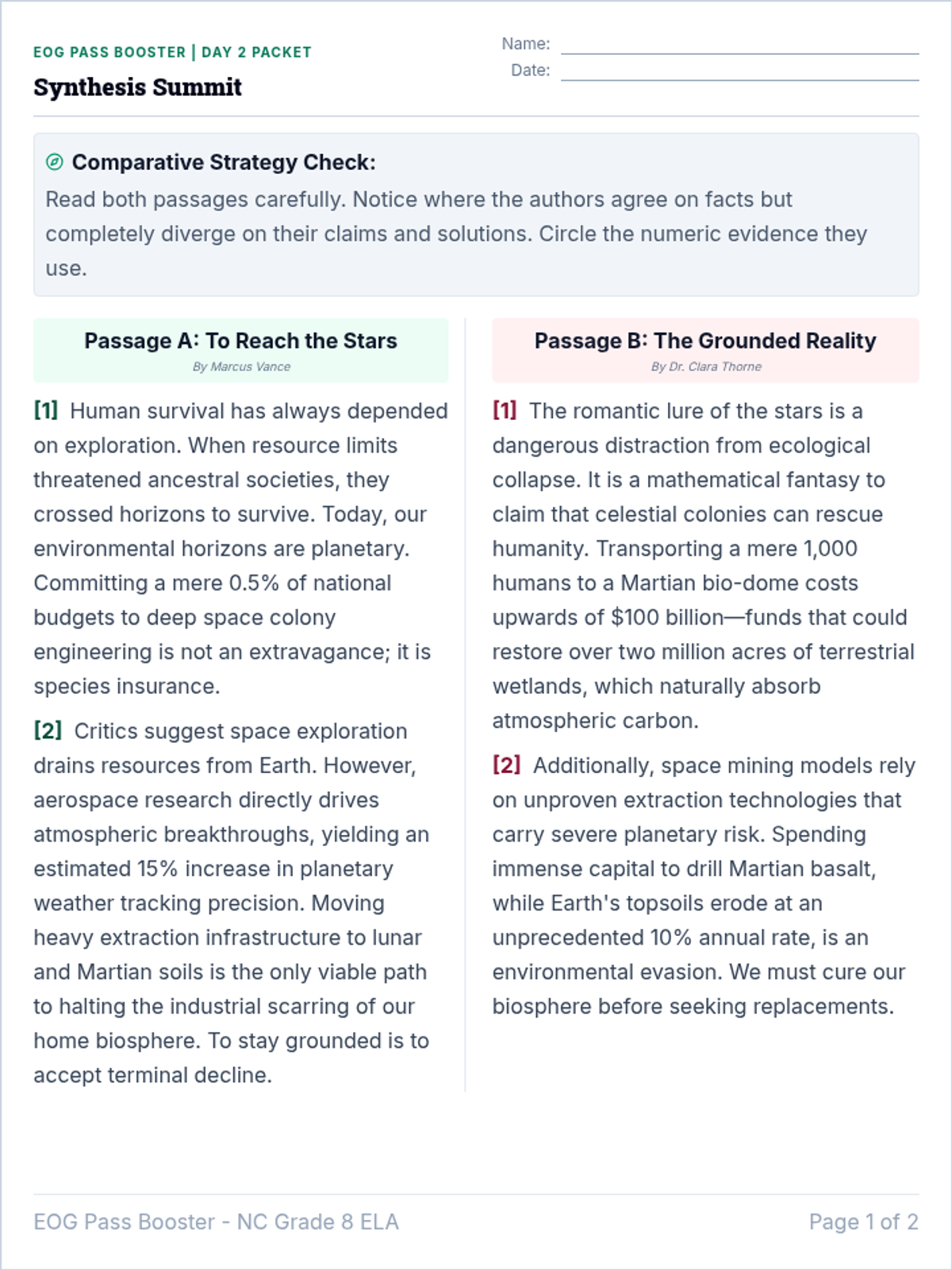
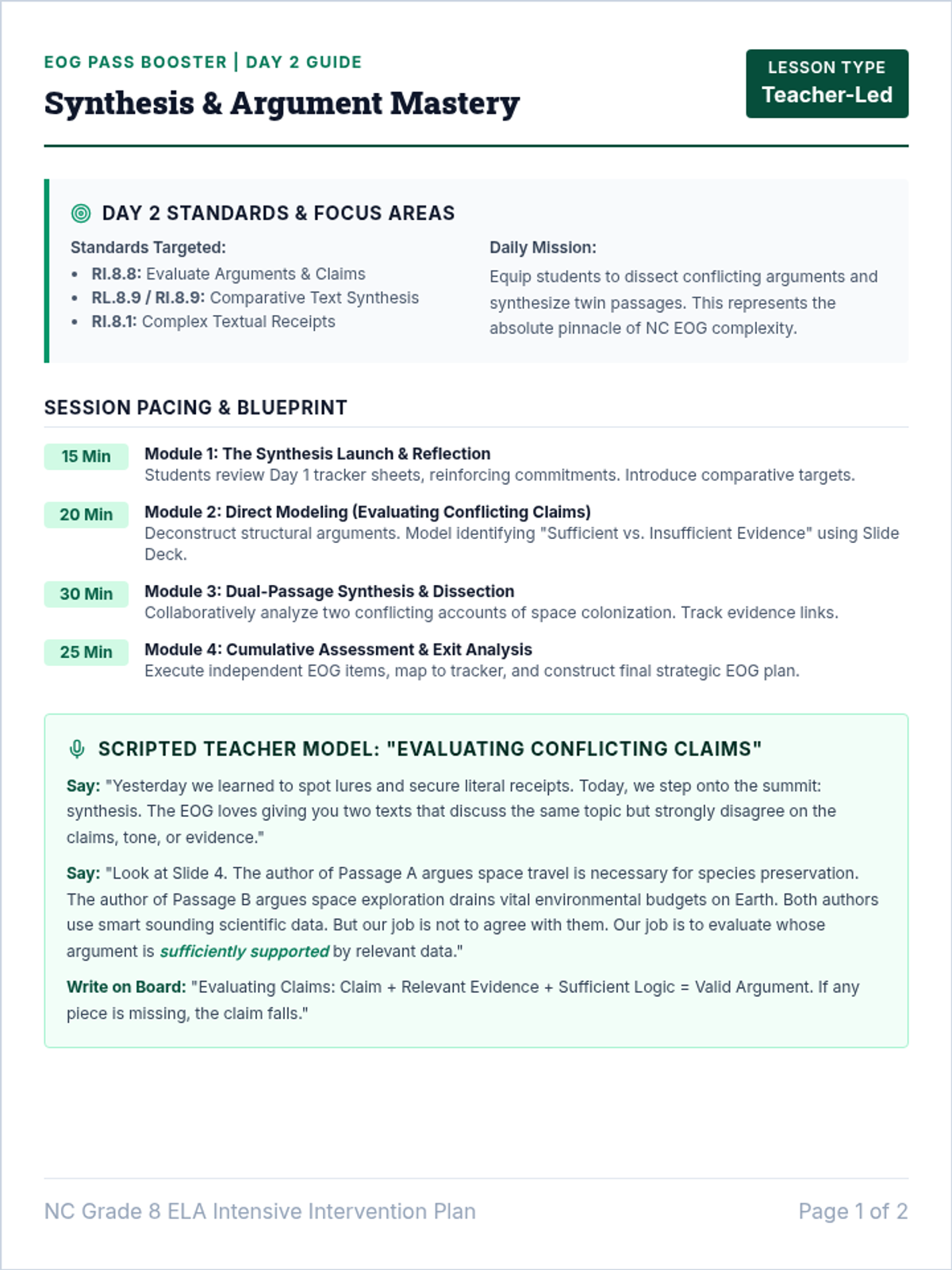
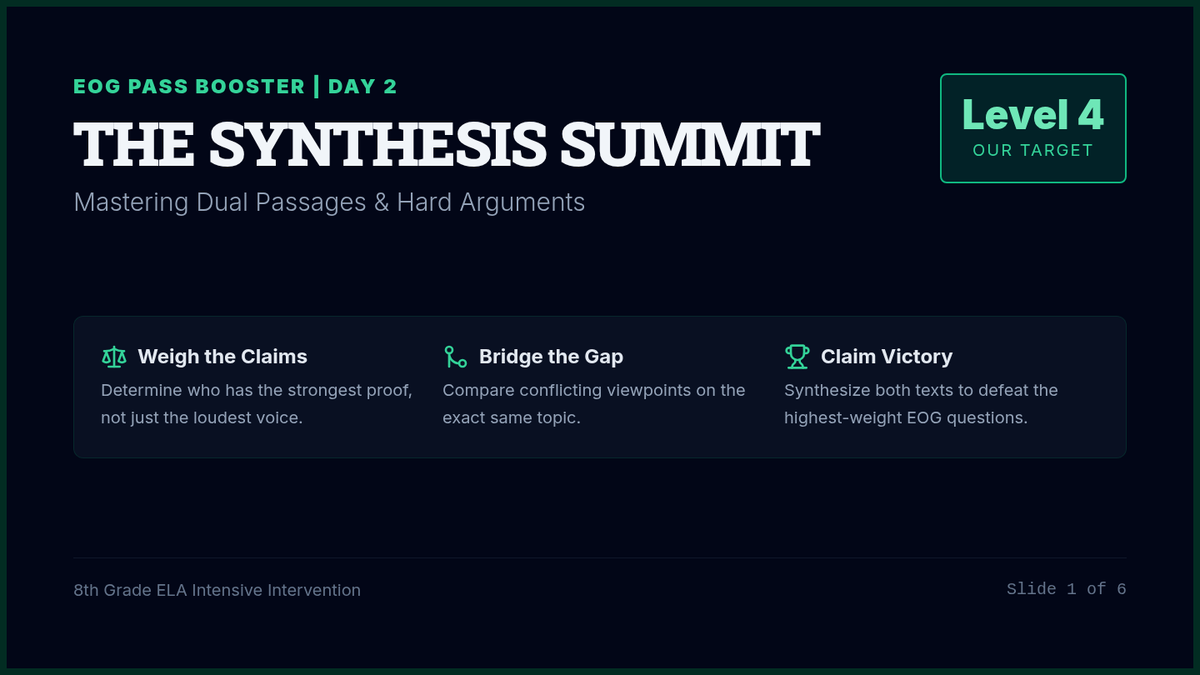
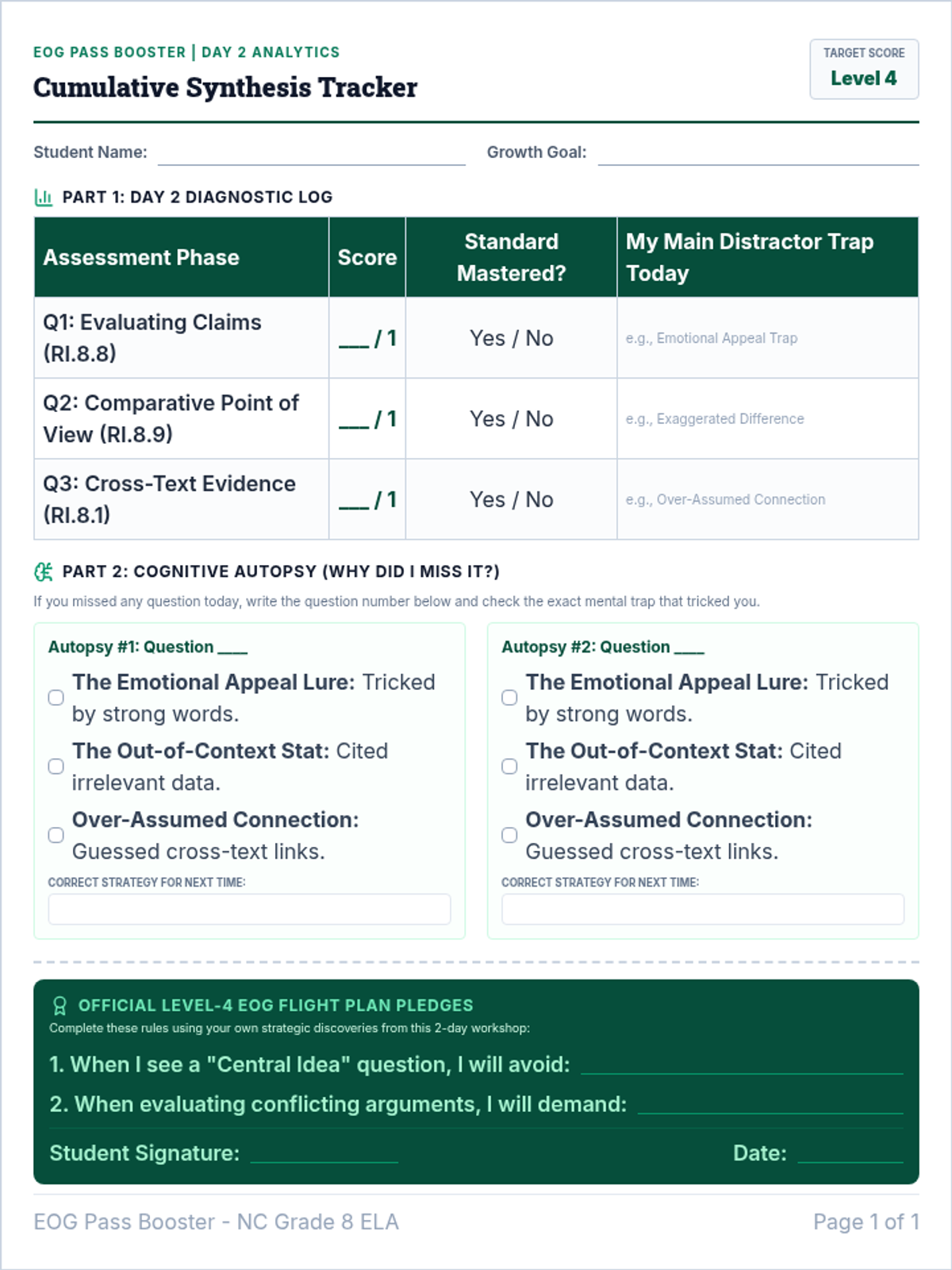
Focuses deeply on RI.8.8 (evaluating arguments, specific claims, and the relevance and sufficiency of evidence) through direct modeling, a high-rigor scientific passage, and targeted analytical practice.
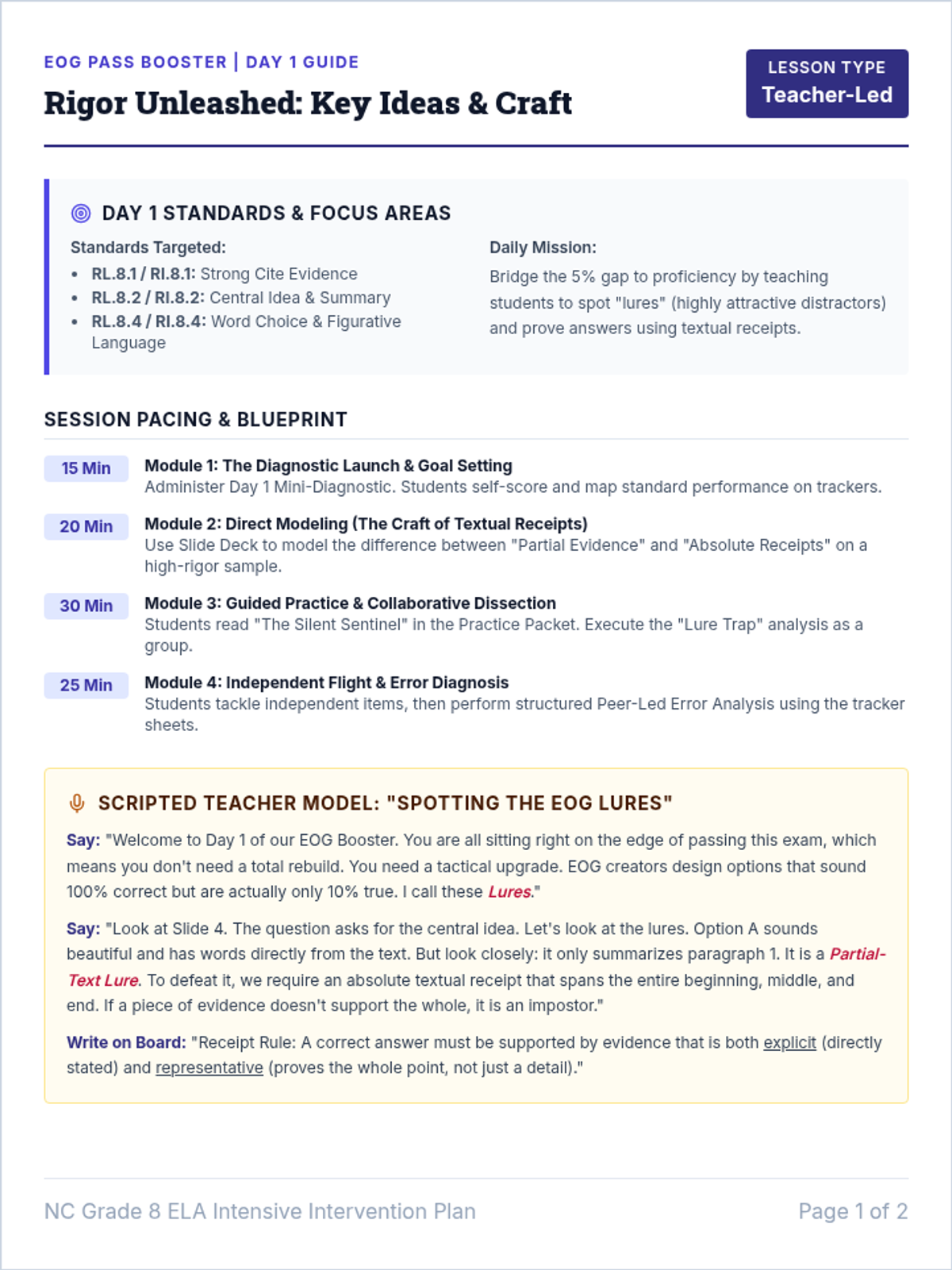
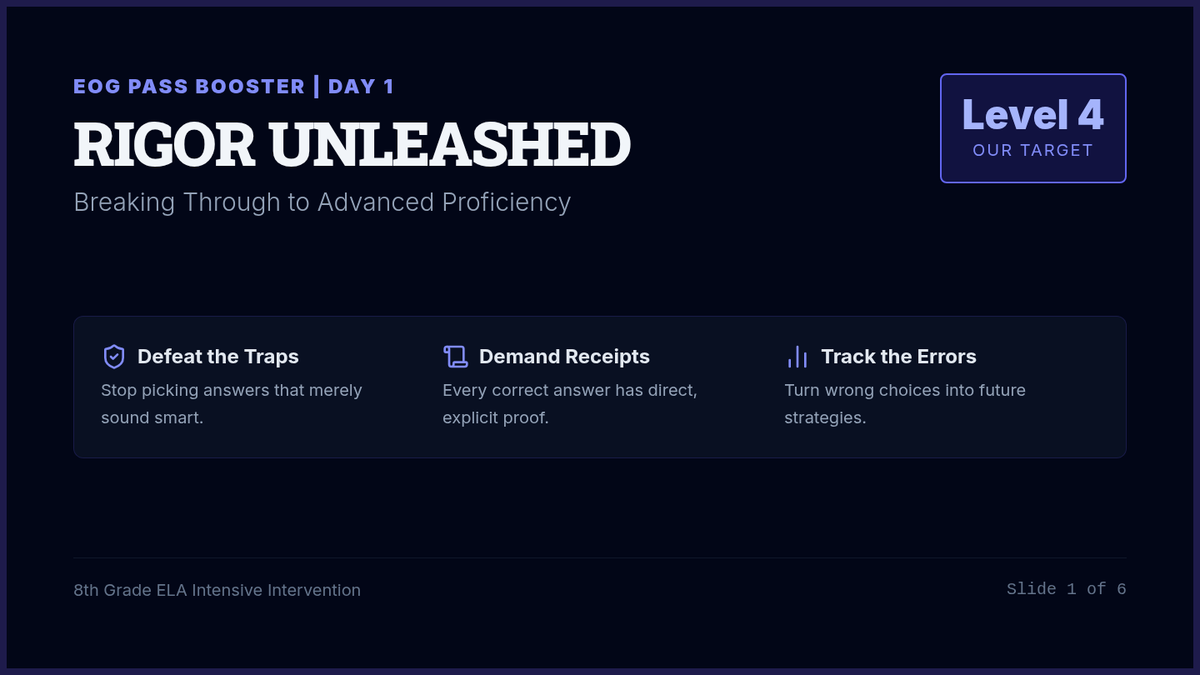
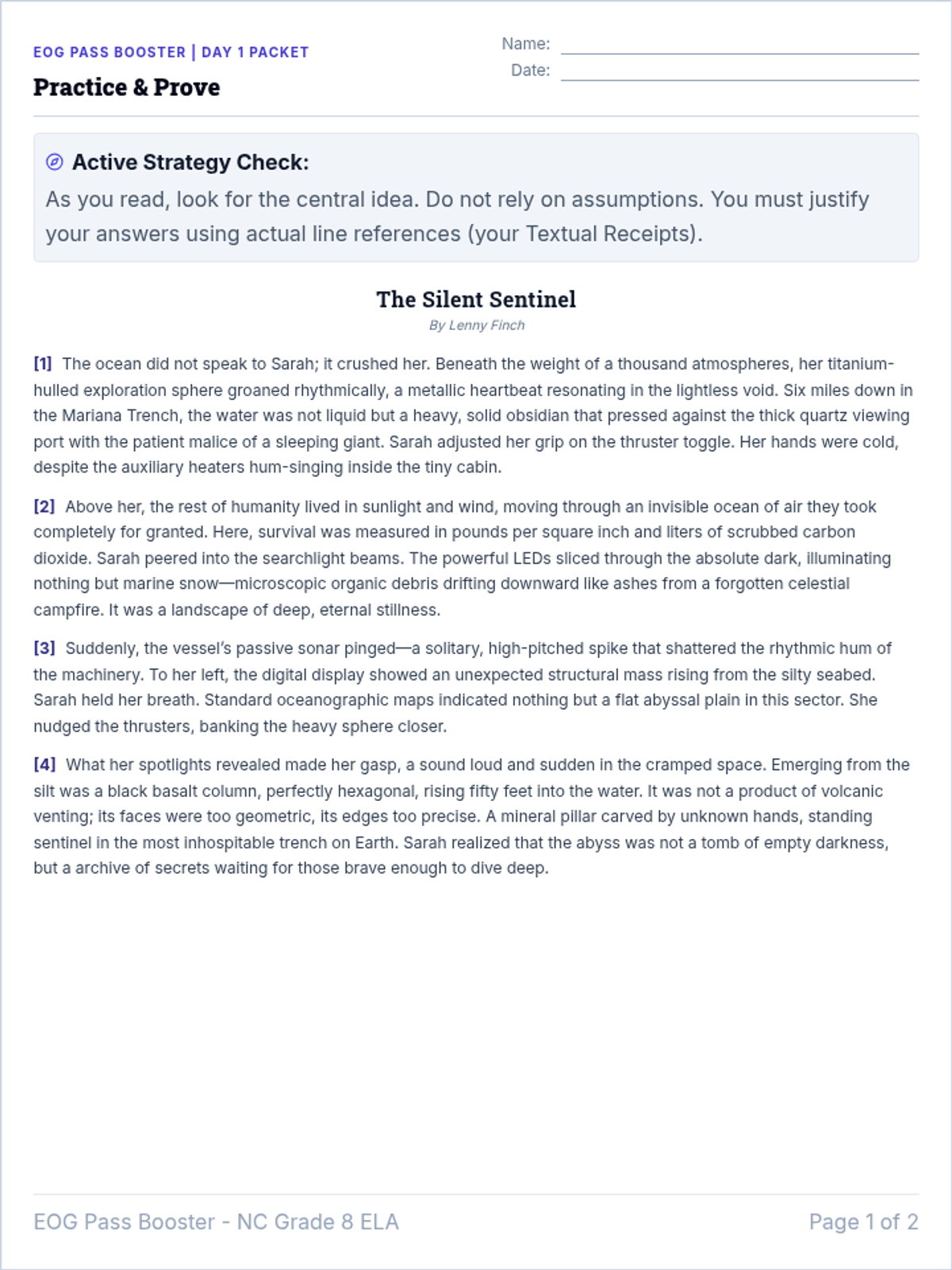
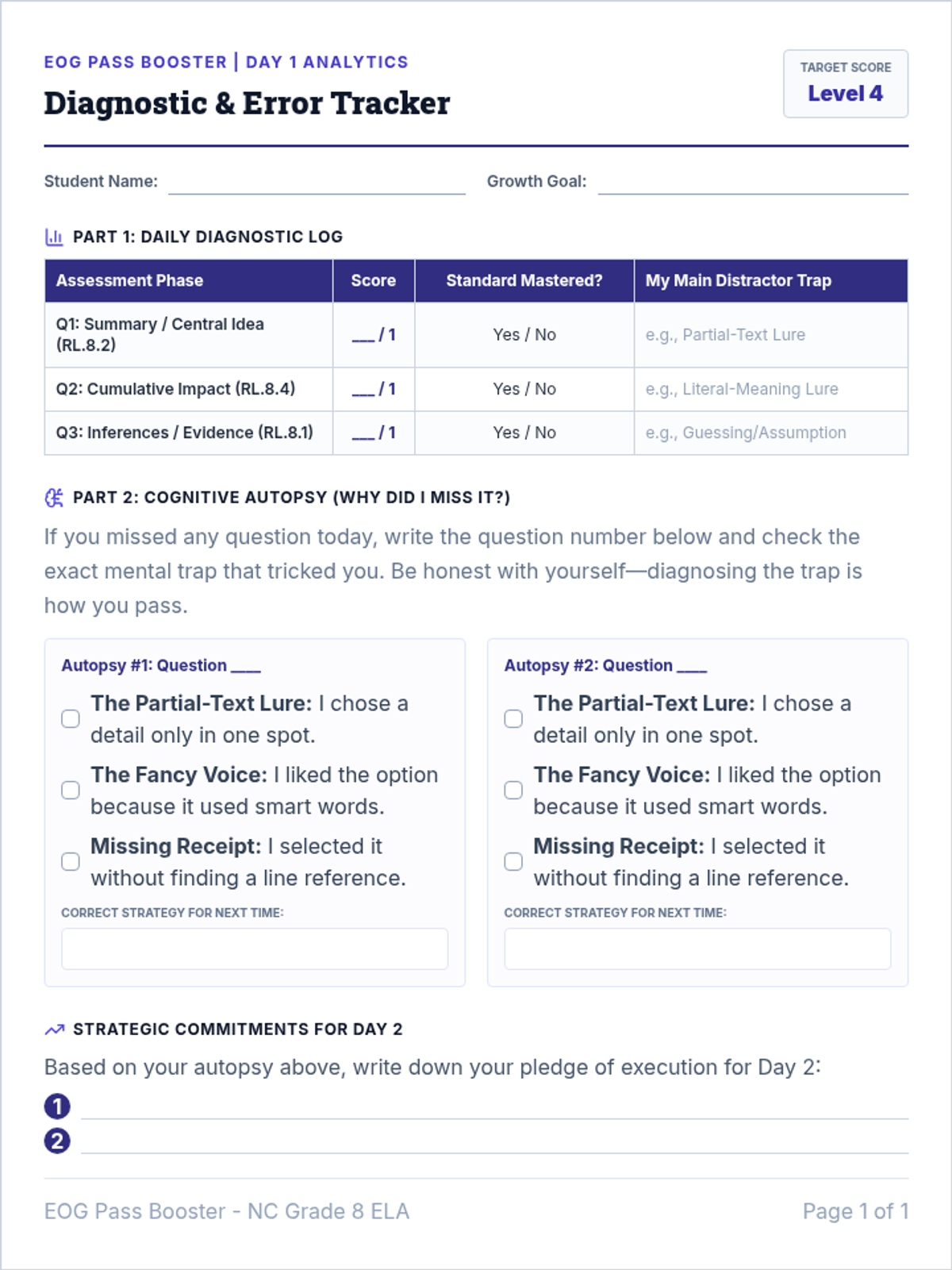
Focuses on high-weight RL/RI.8.1 (textual evidence), RL/RI.8.2 (central idea and objective summary), and RL/RI.8.4/RL.8.6 (word choice, figurative language, and point of view/structure) through direct instruction, high-rigor modeling, and targeted practice.
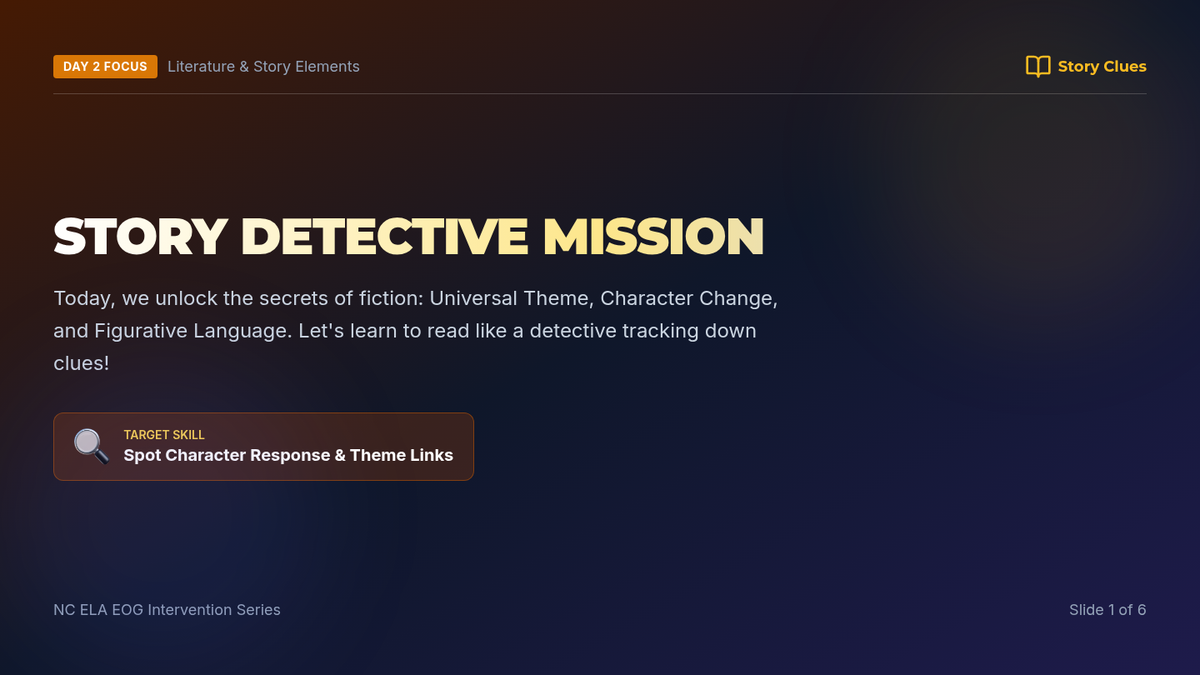
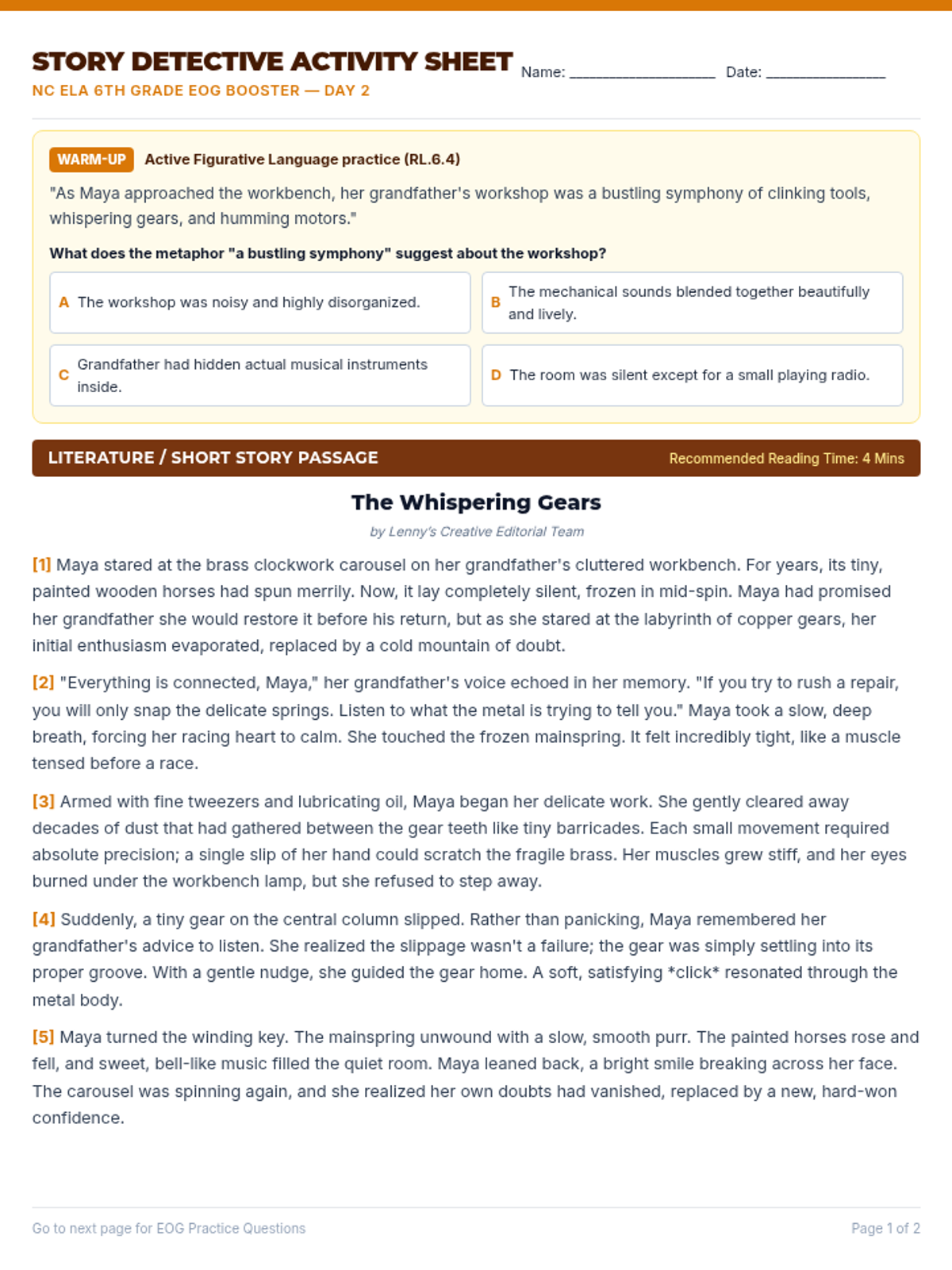
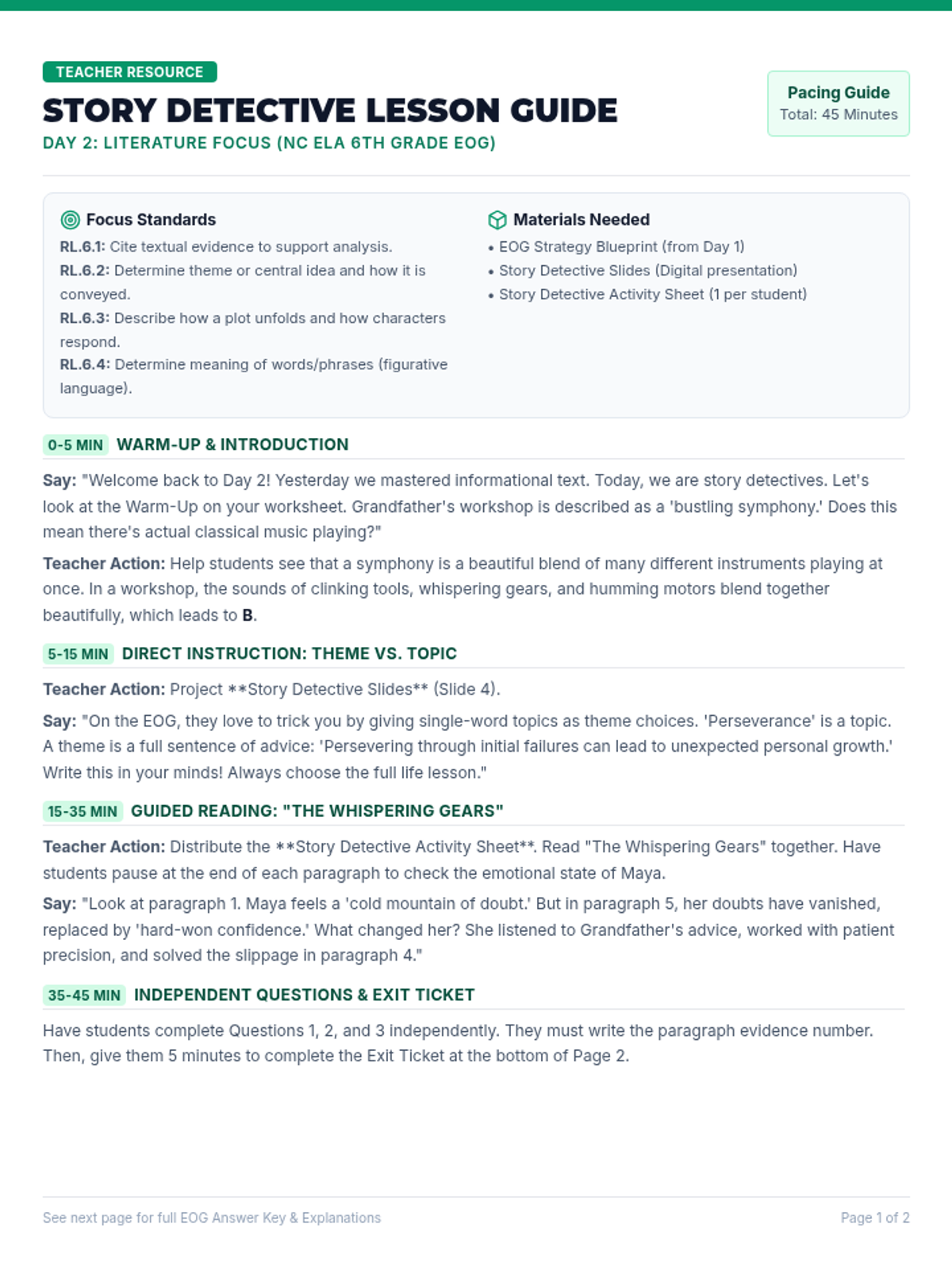
An intensive literary intervention focusing on theme development, character analysis, and interpreting figurative language, combined with rigorous EOG-style questions.
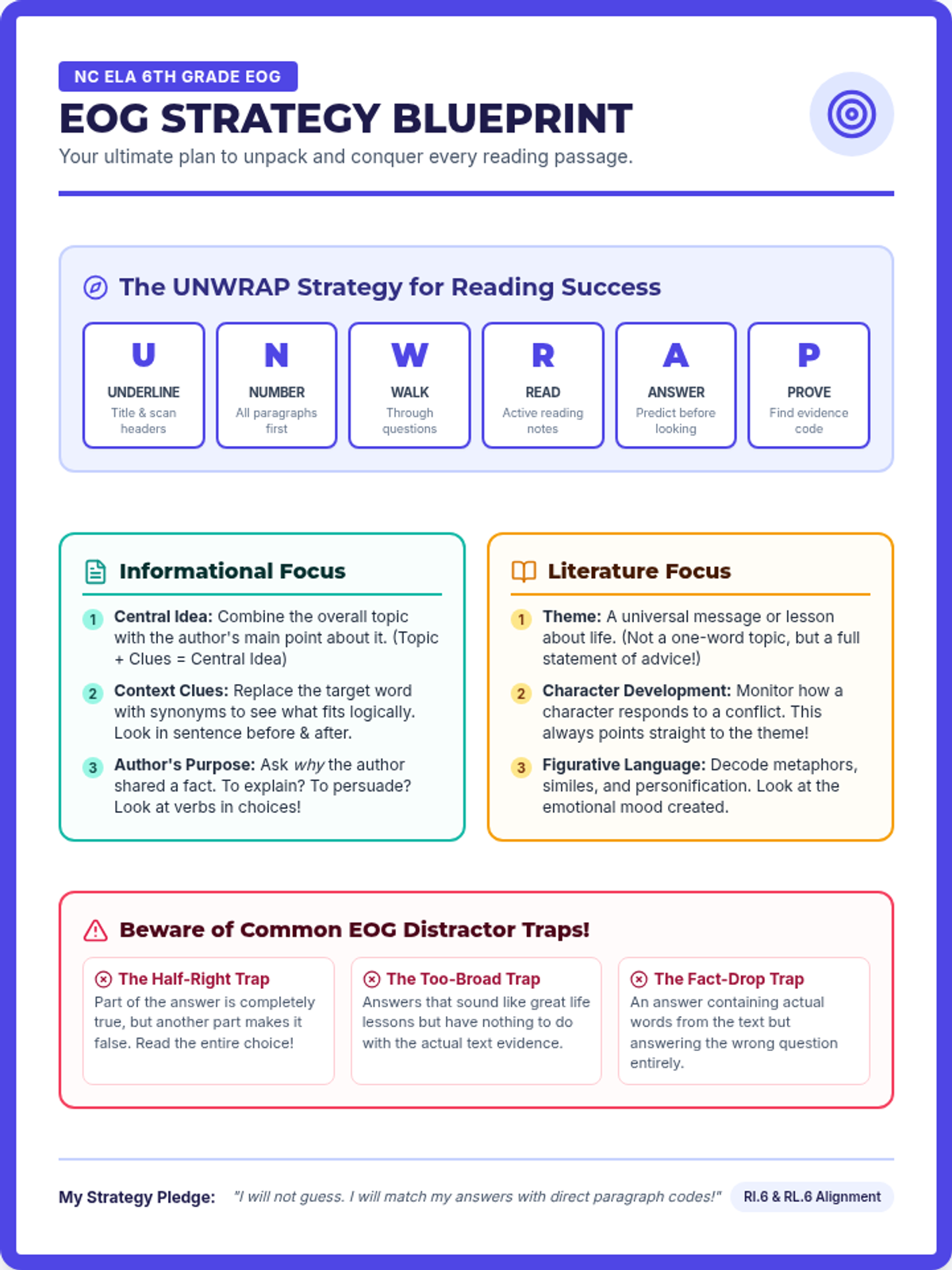
A focused intervention lesson targeting key informational reading skills, including central idea, textual evidence, and vocabulary, using EOG-style questions and test-taking strategies.
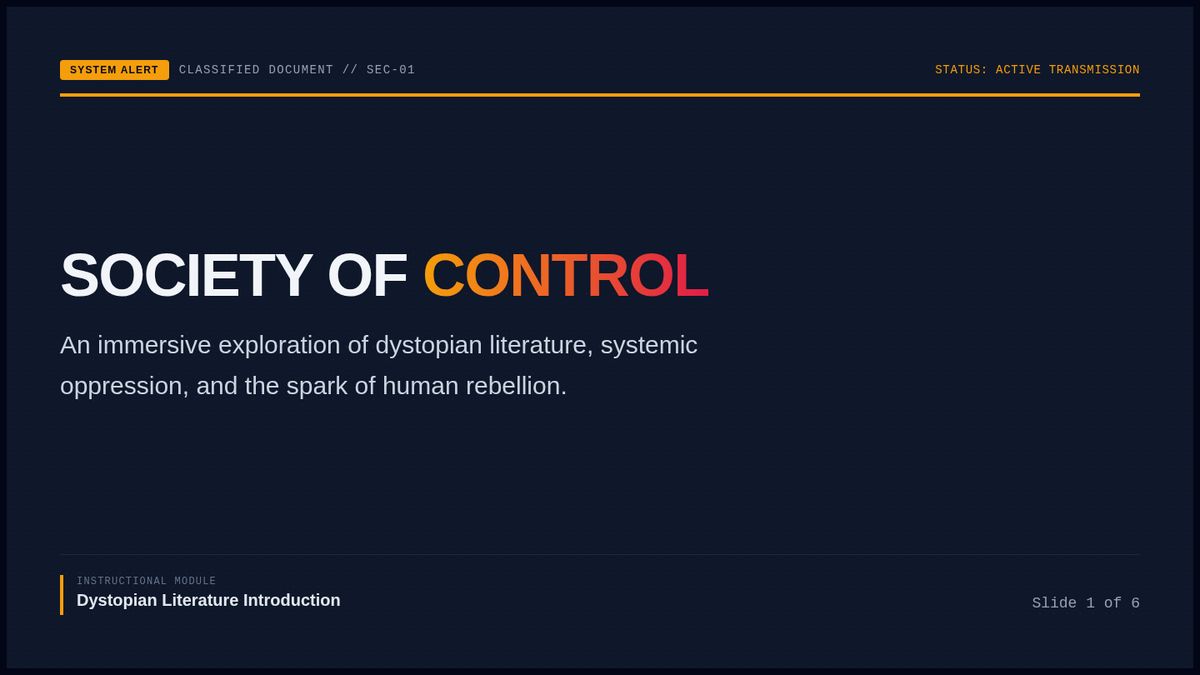
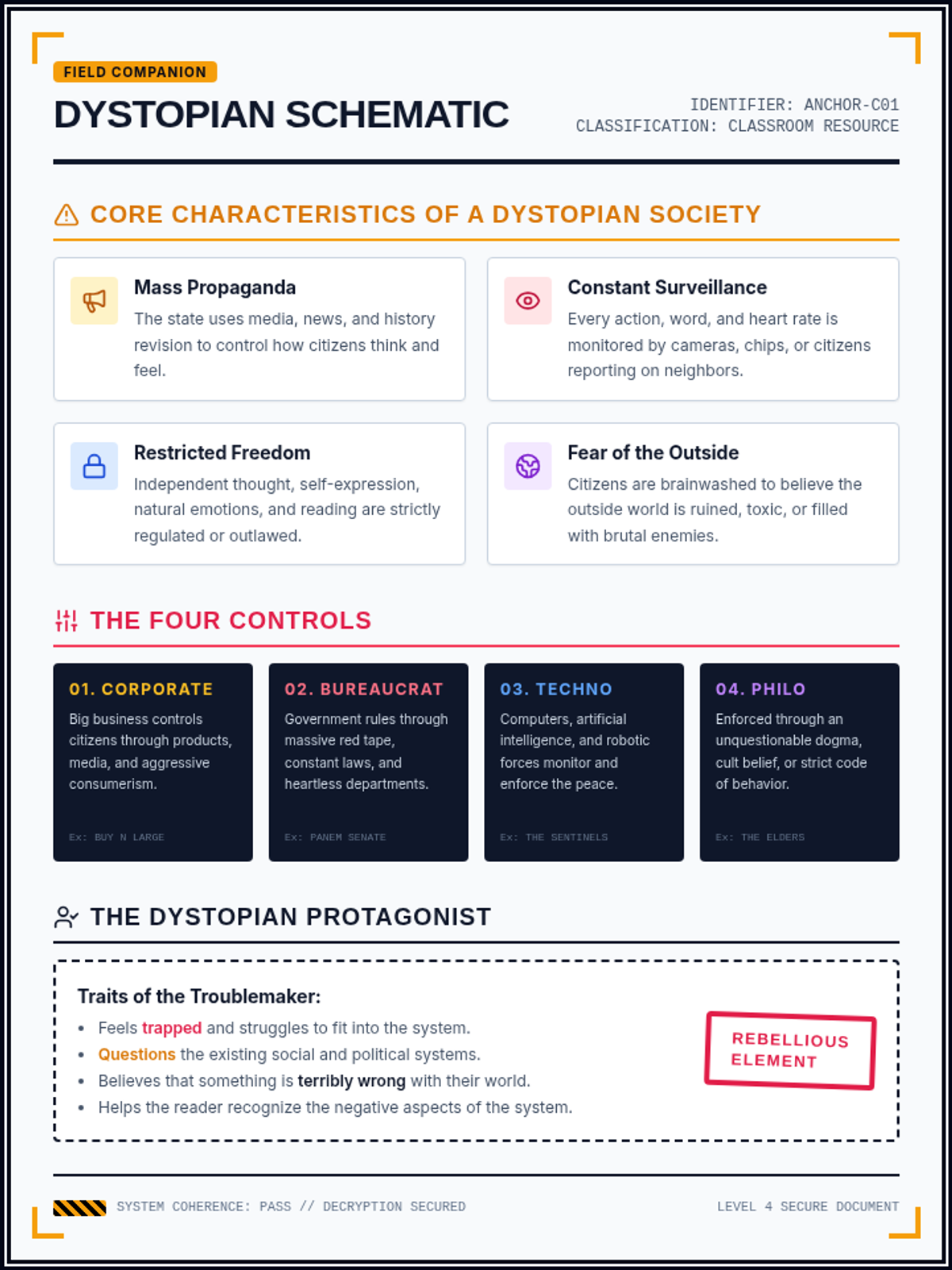
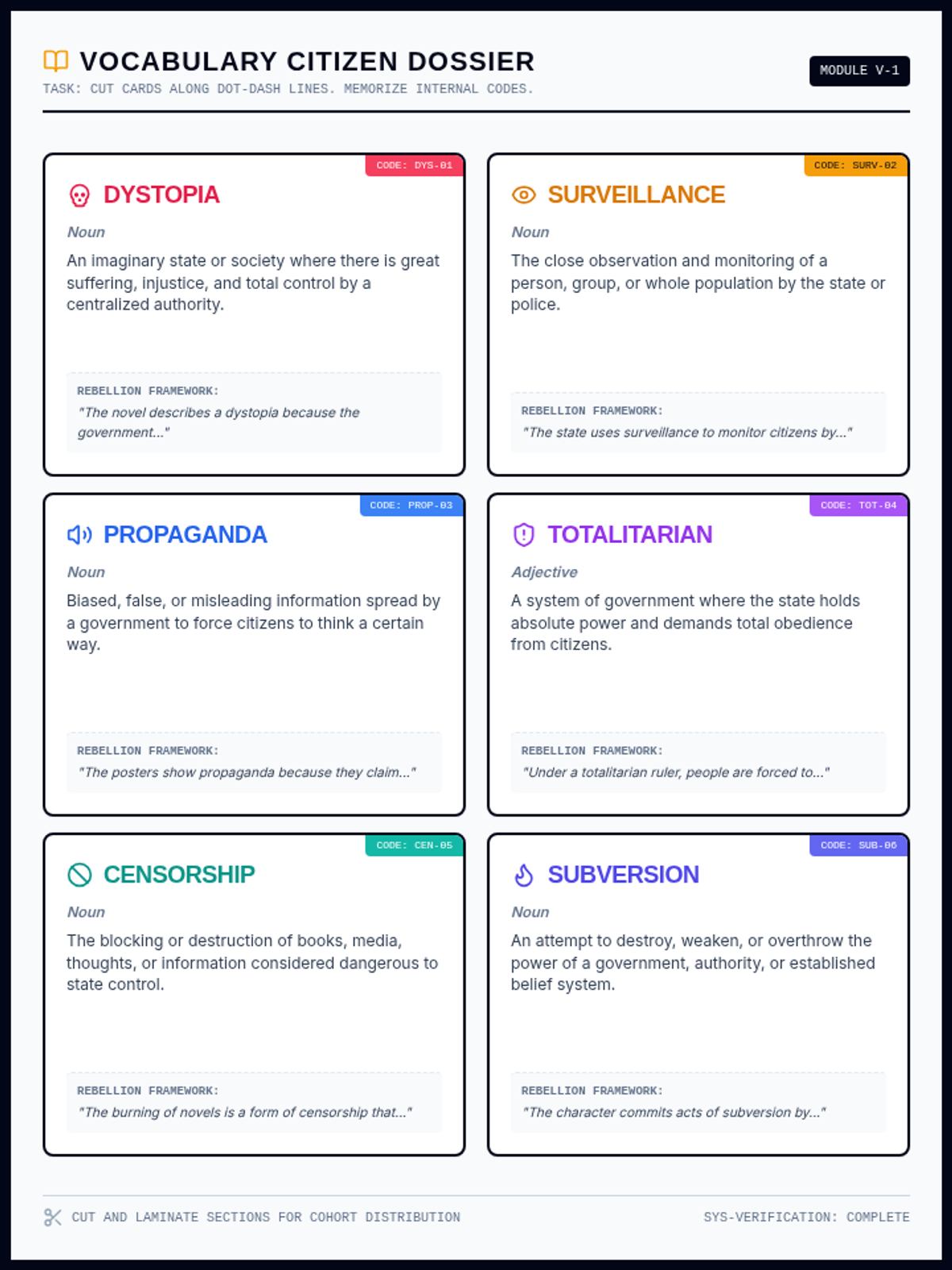
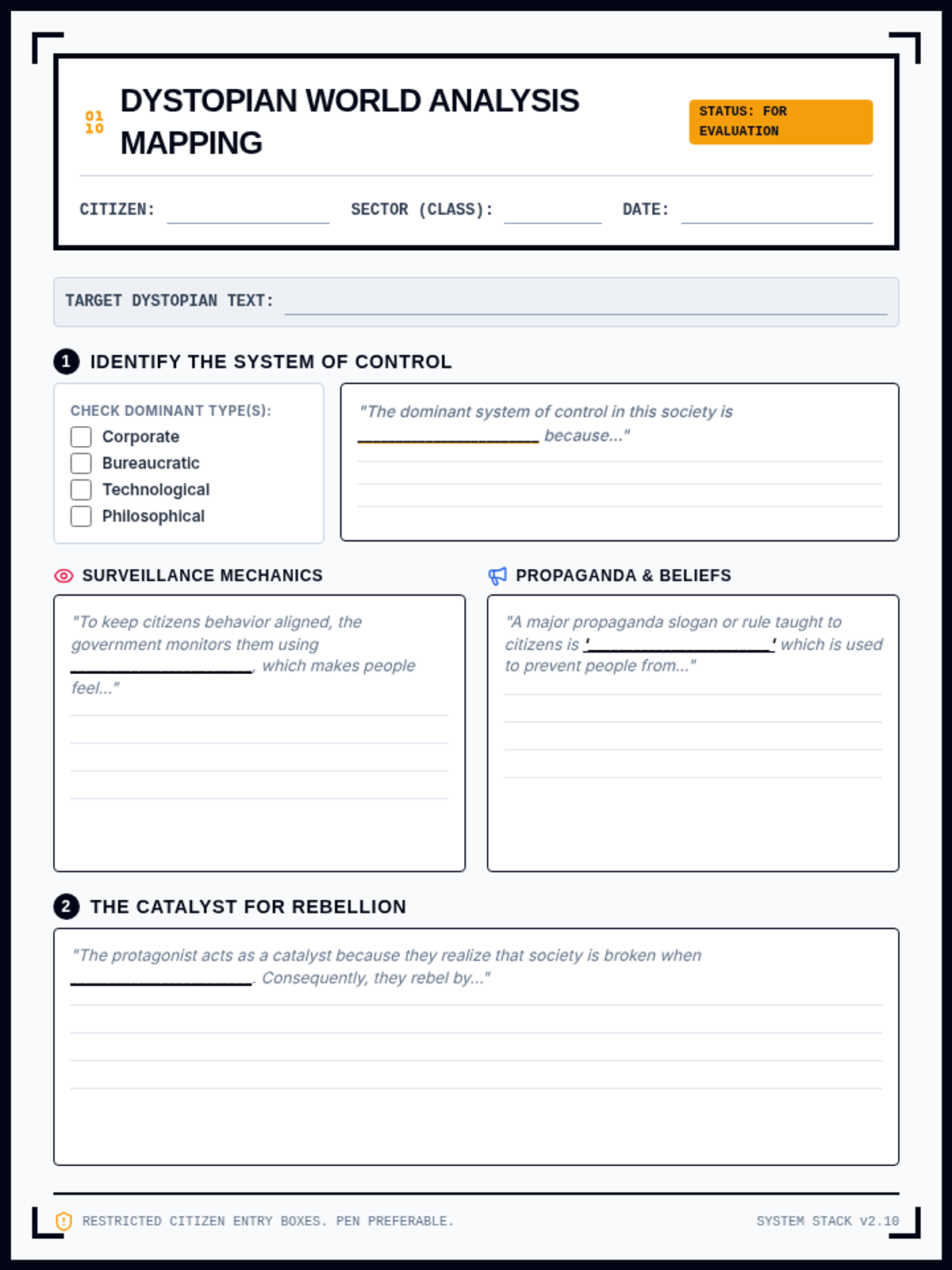
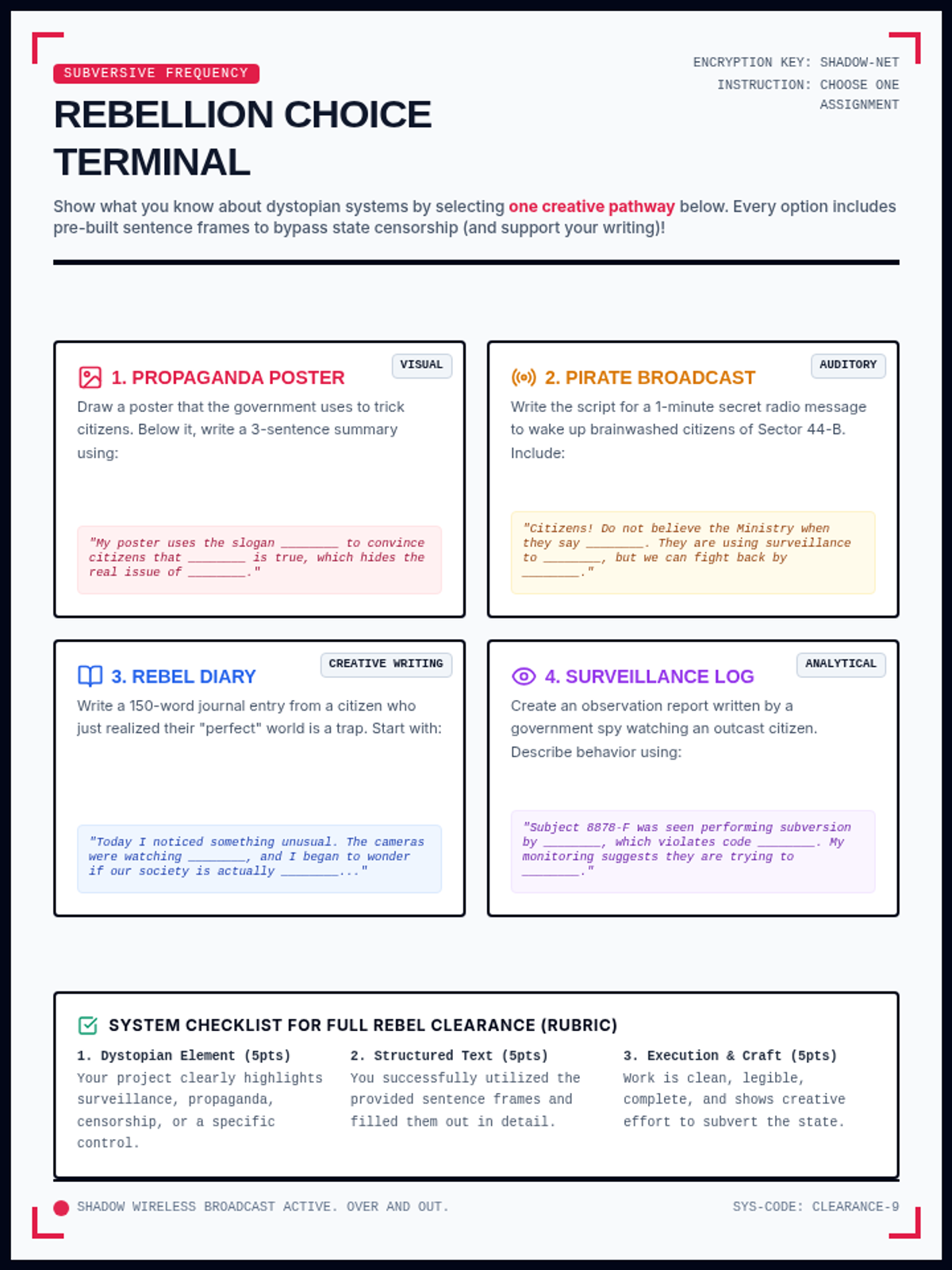
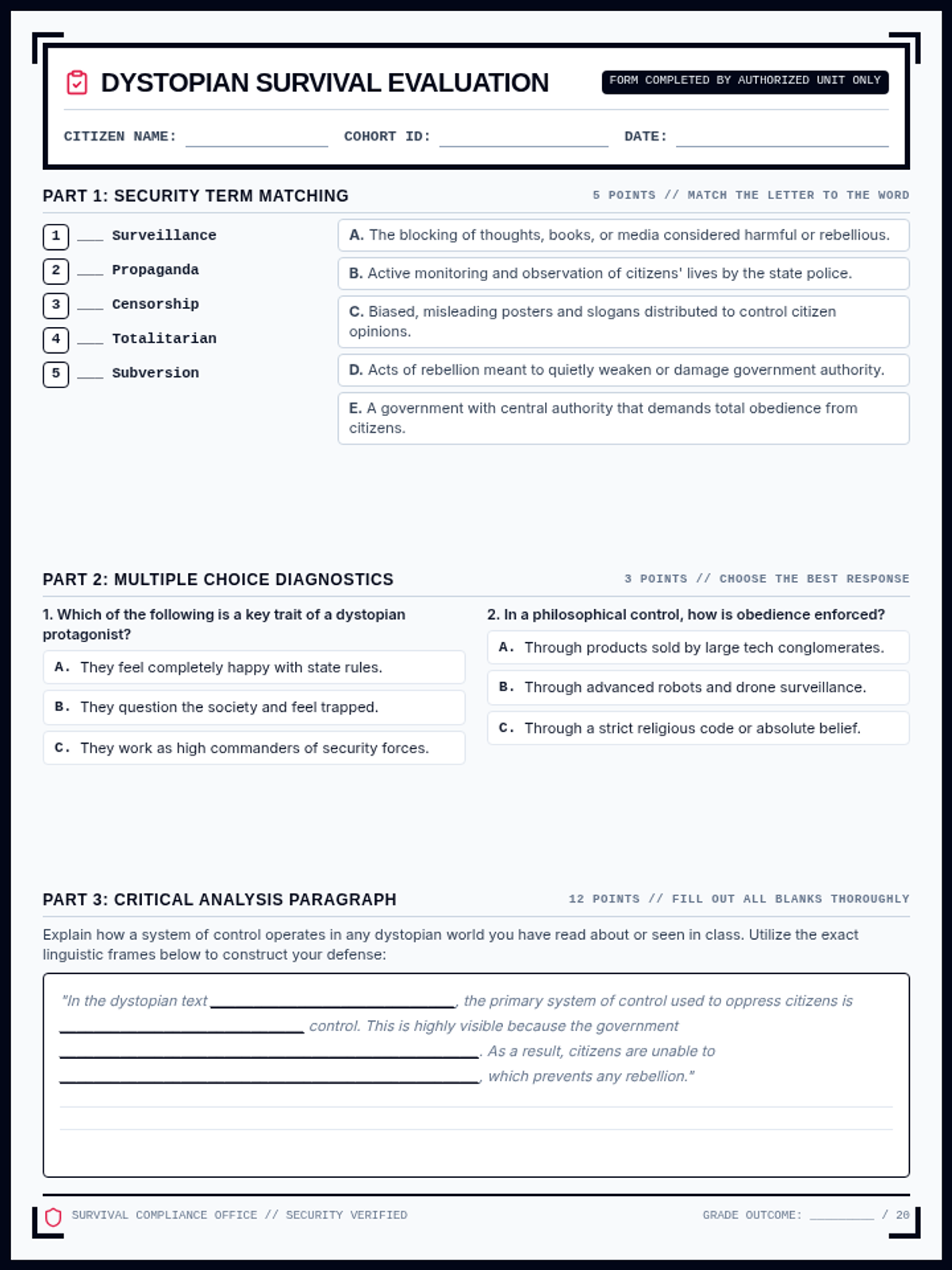
An immersive introductory lesson on dystopian literature. Students analyze systems of control, common tropes, and societal rebellion through visual slides, structured graphic organizers, and a creative choice board with heavy scaffolding and sentence starters.