Targets RI.8.8 (evaluating arguments and claims) and RL/RI.8.9 (comparative analysis of texts on similar themes or topics), culminating in an error-analysis-focused mock EOG passage and student reflection.
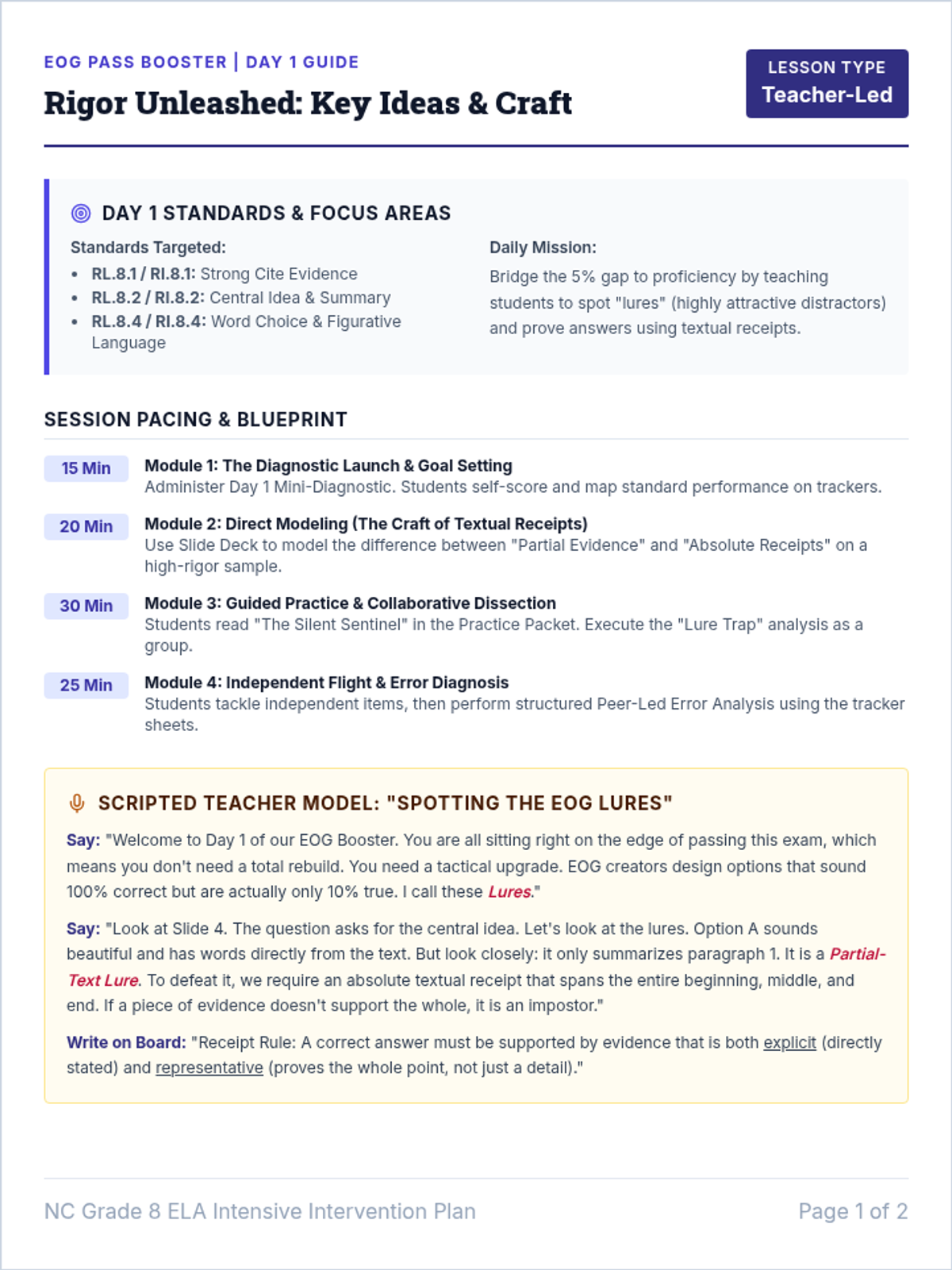
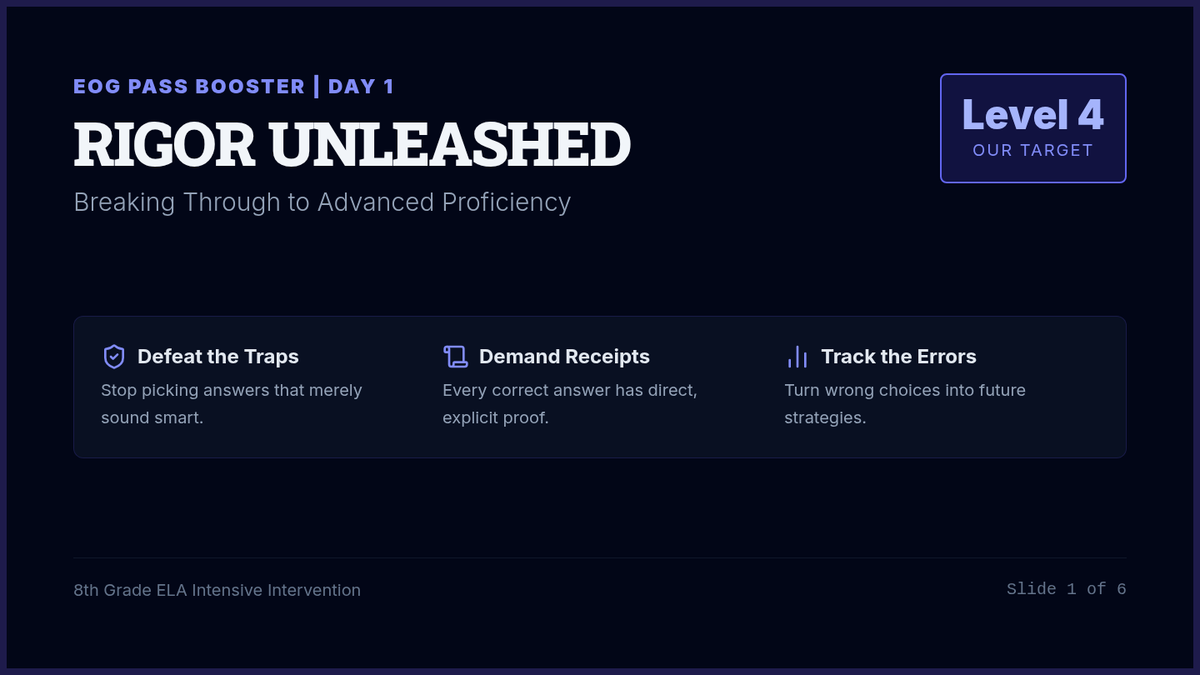
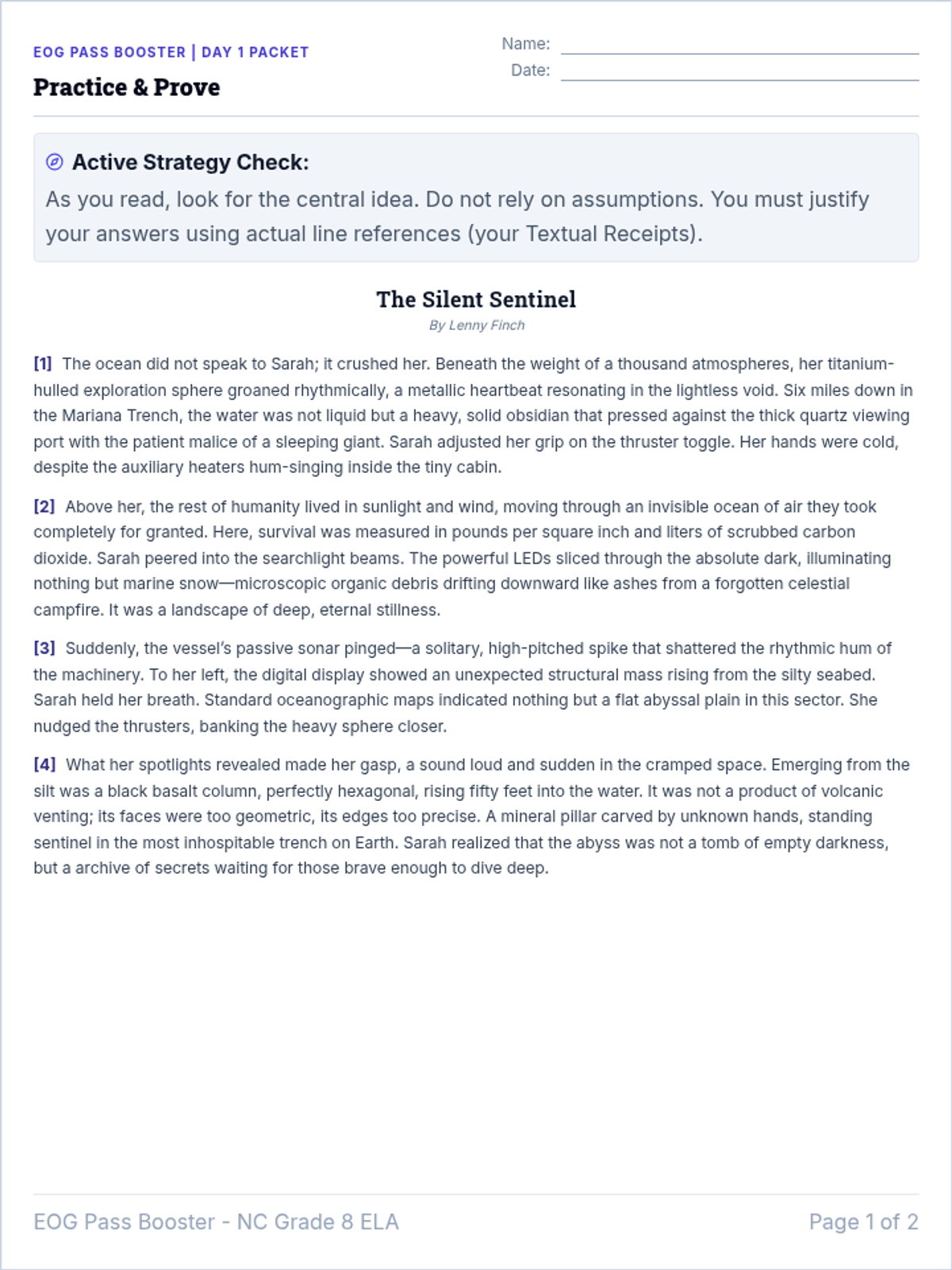
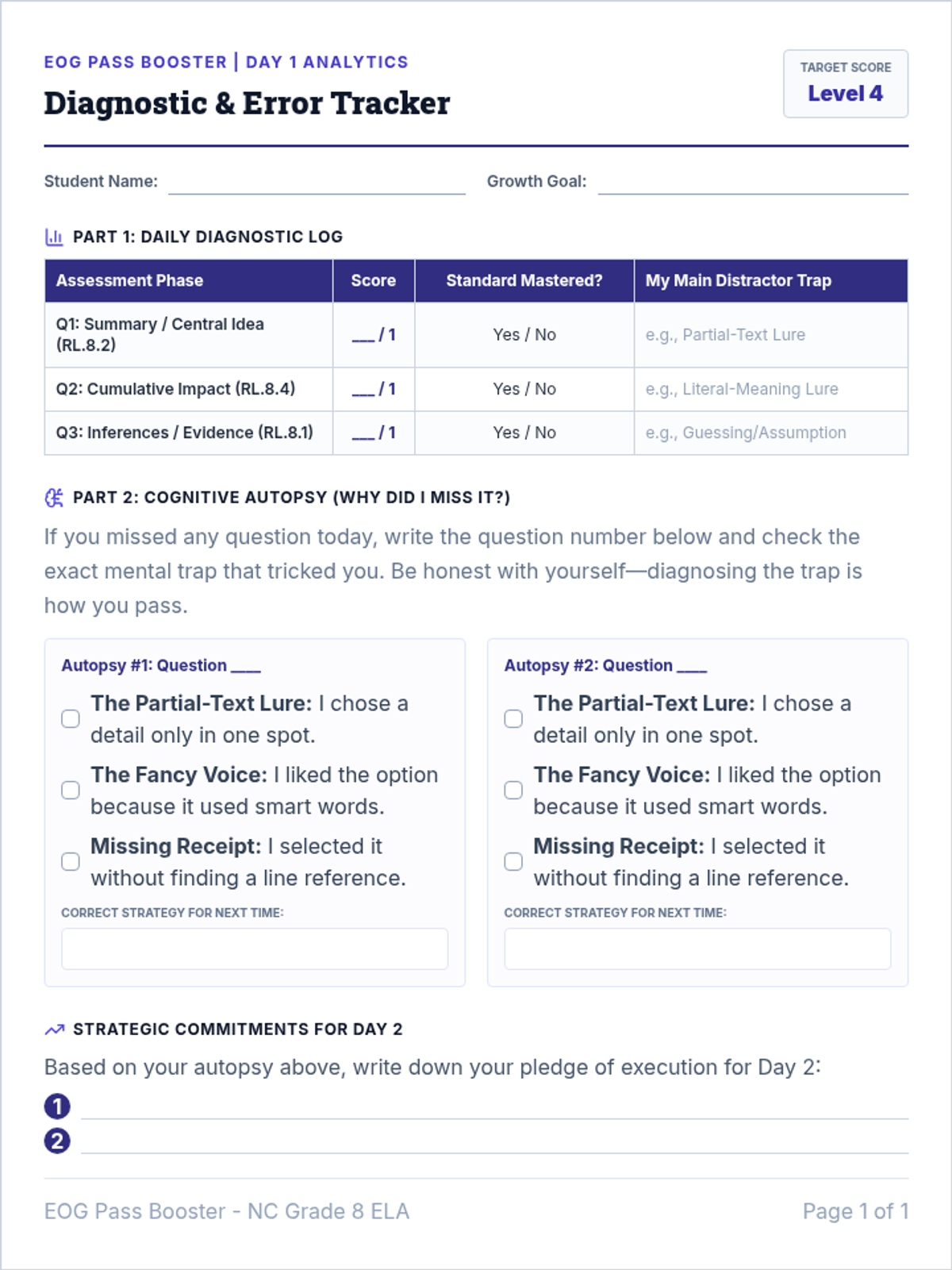
Focuses on high-weight RL/RI.8.1 (textual evidence), RL/RI.8.2 (central idea and objective summary), and RL/RI.8.4/RL.8.6 (word choice, figurative language, and point of view/structure) through direct instruction, high-rigor modeling, and targeted practice.
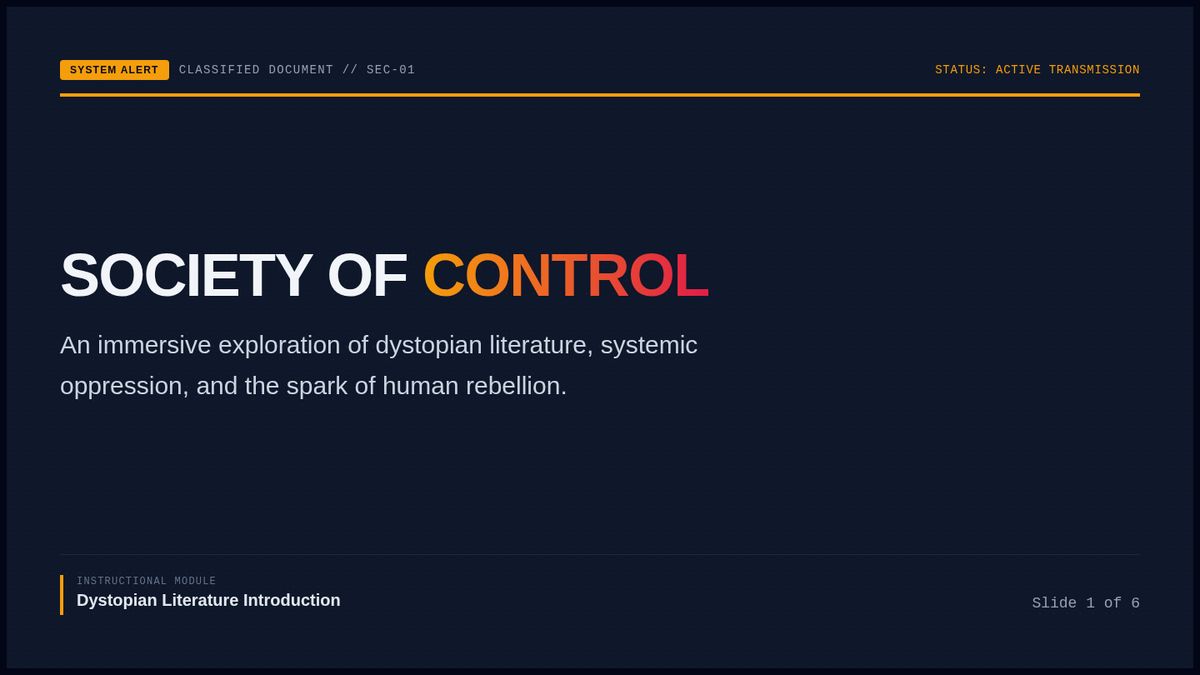
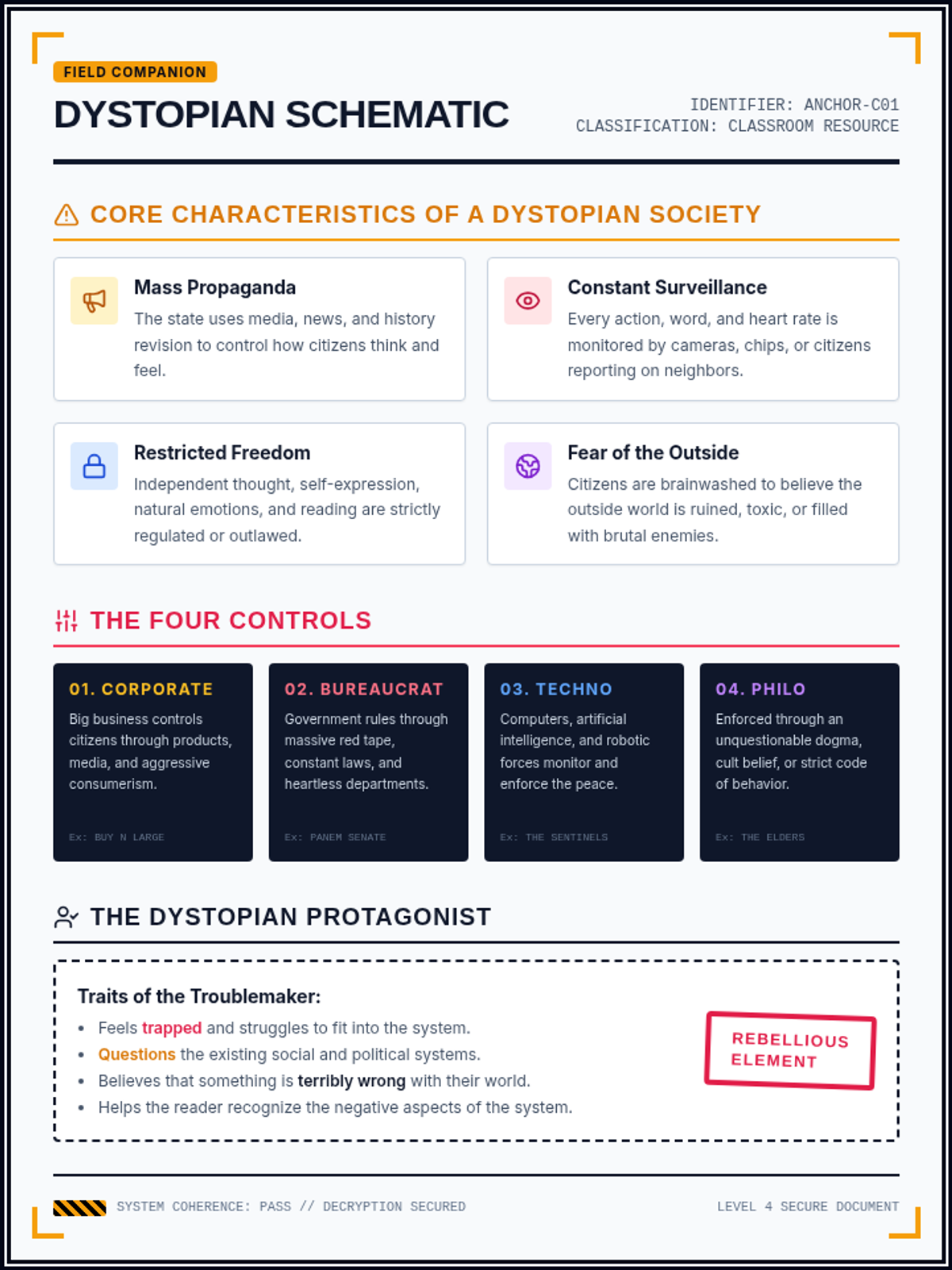
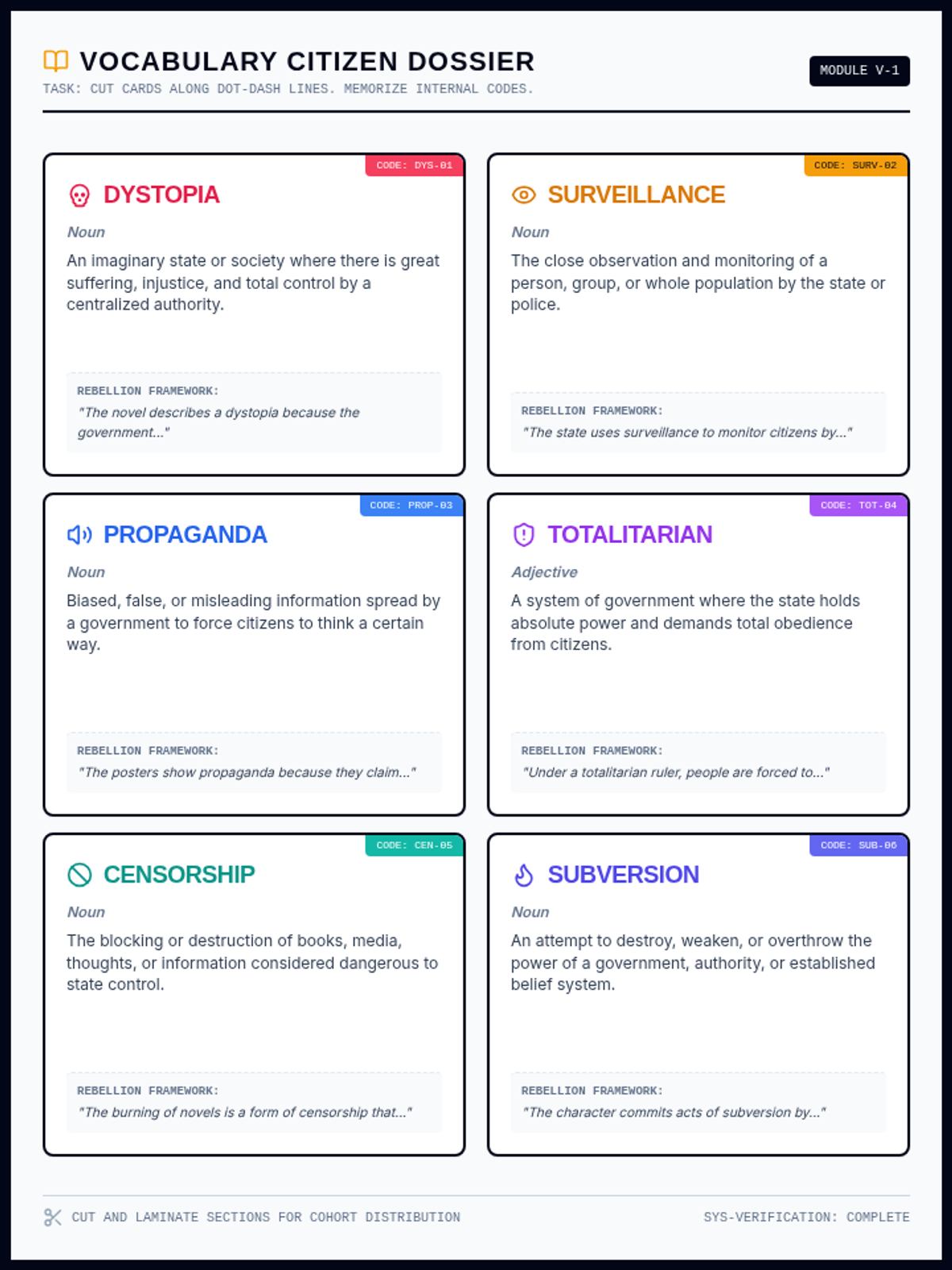
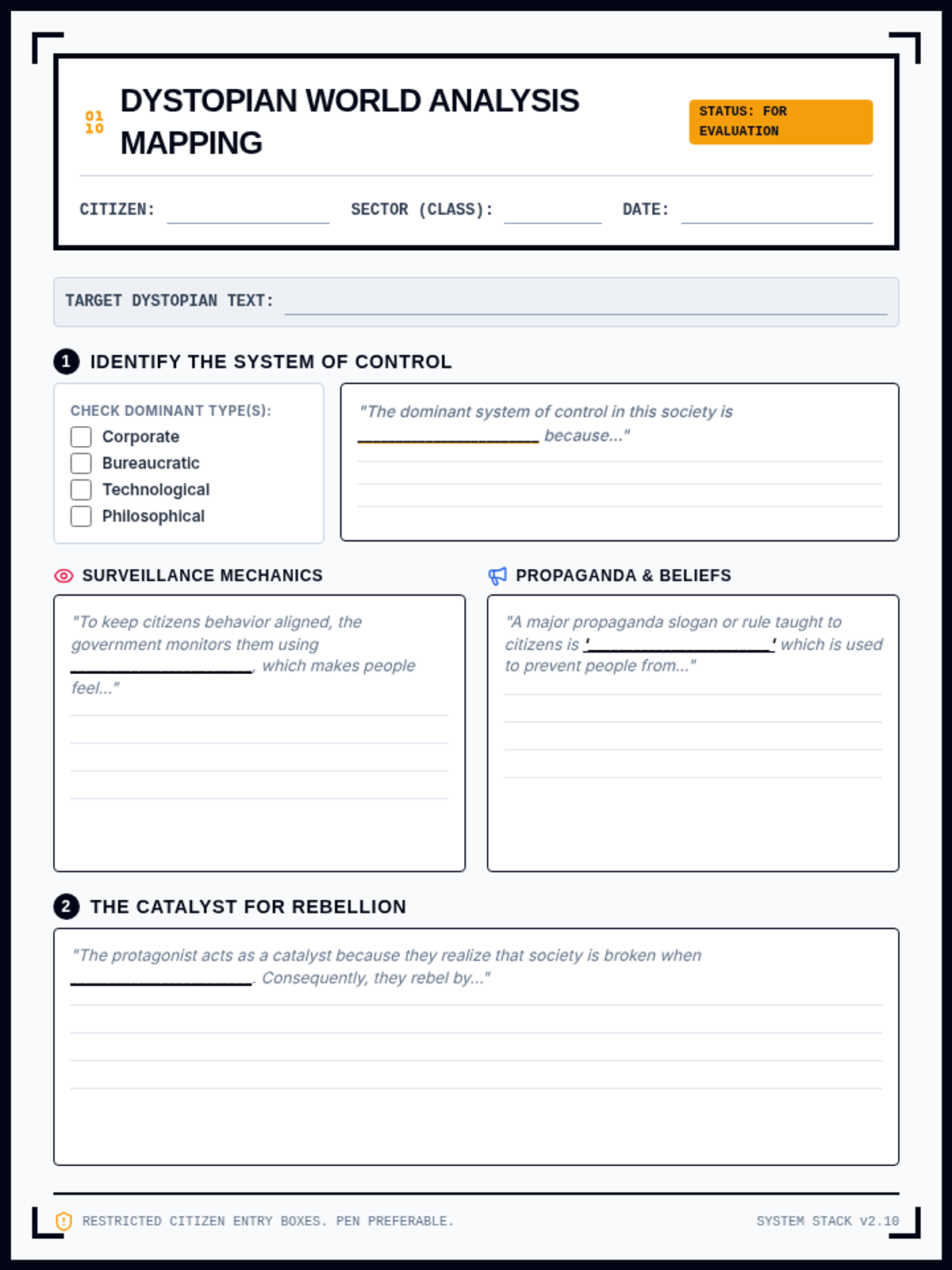
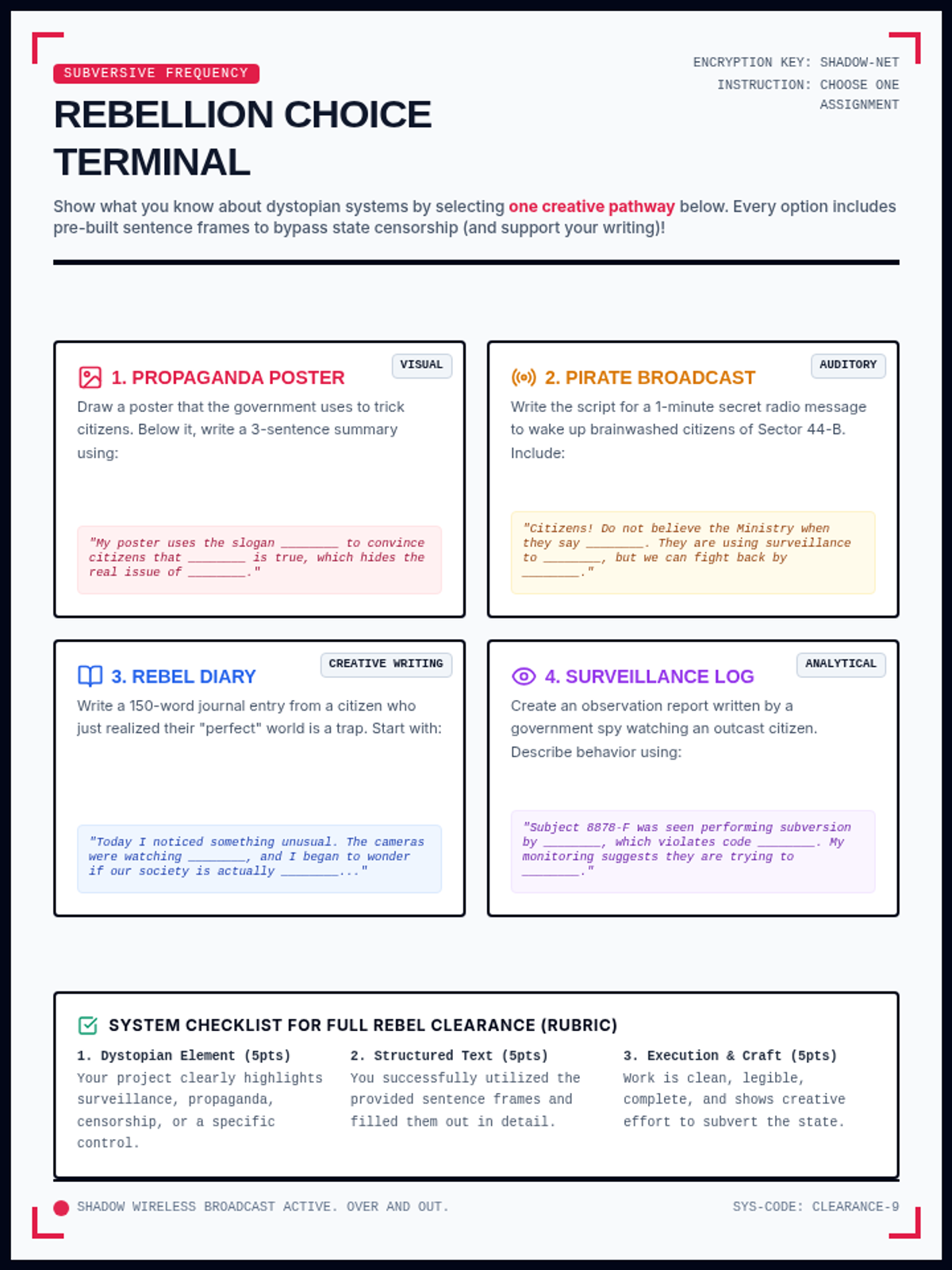
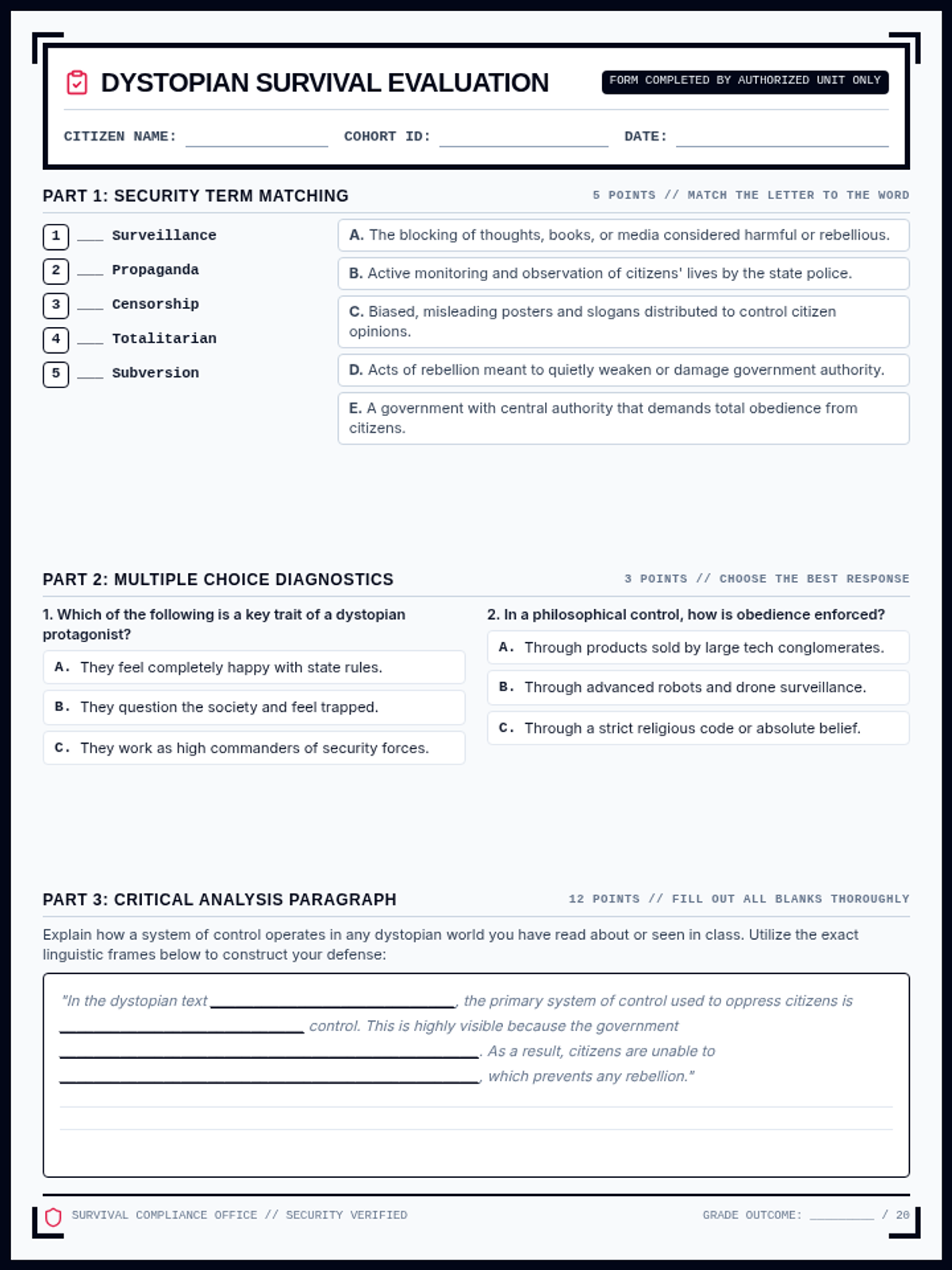
An immersive introductory lesson on dystopian literature. Students analyze systems of control, common tropes, and societal rebellion through visual slides, structured graphic organizers, and a creative choice board with heavy scaffolding and sentence starters.
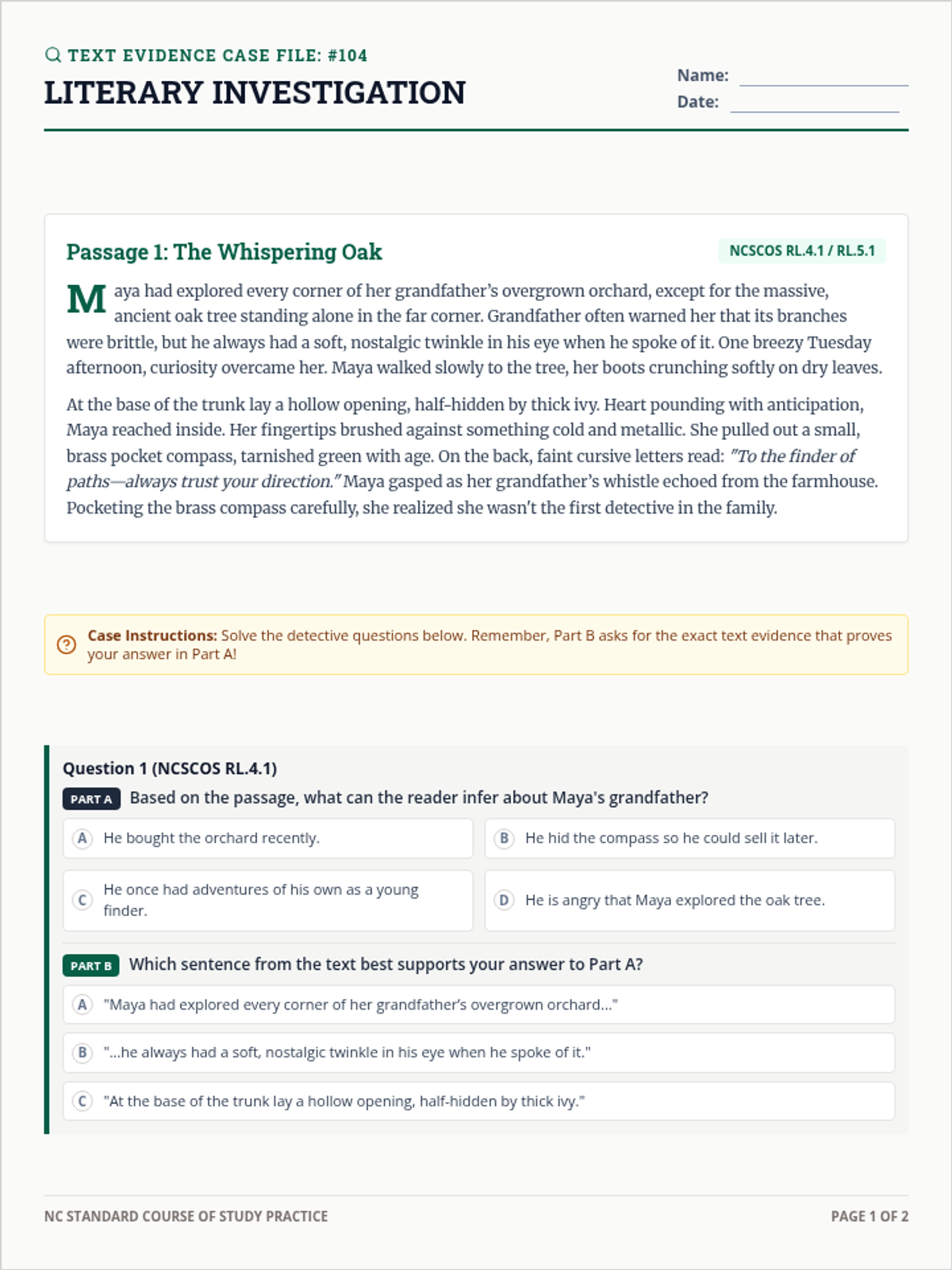
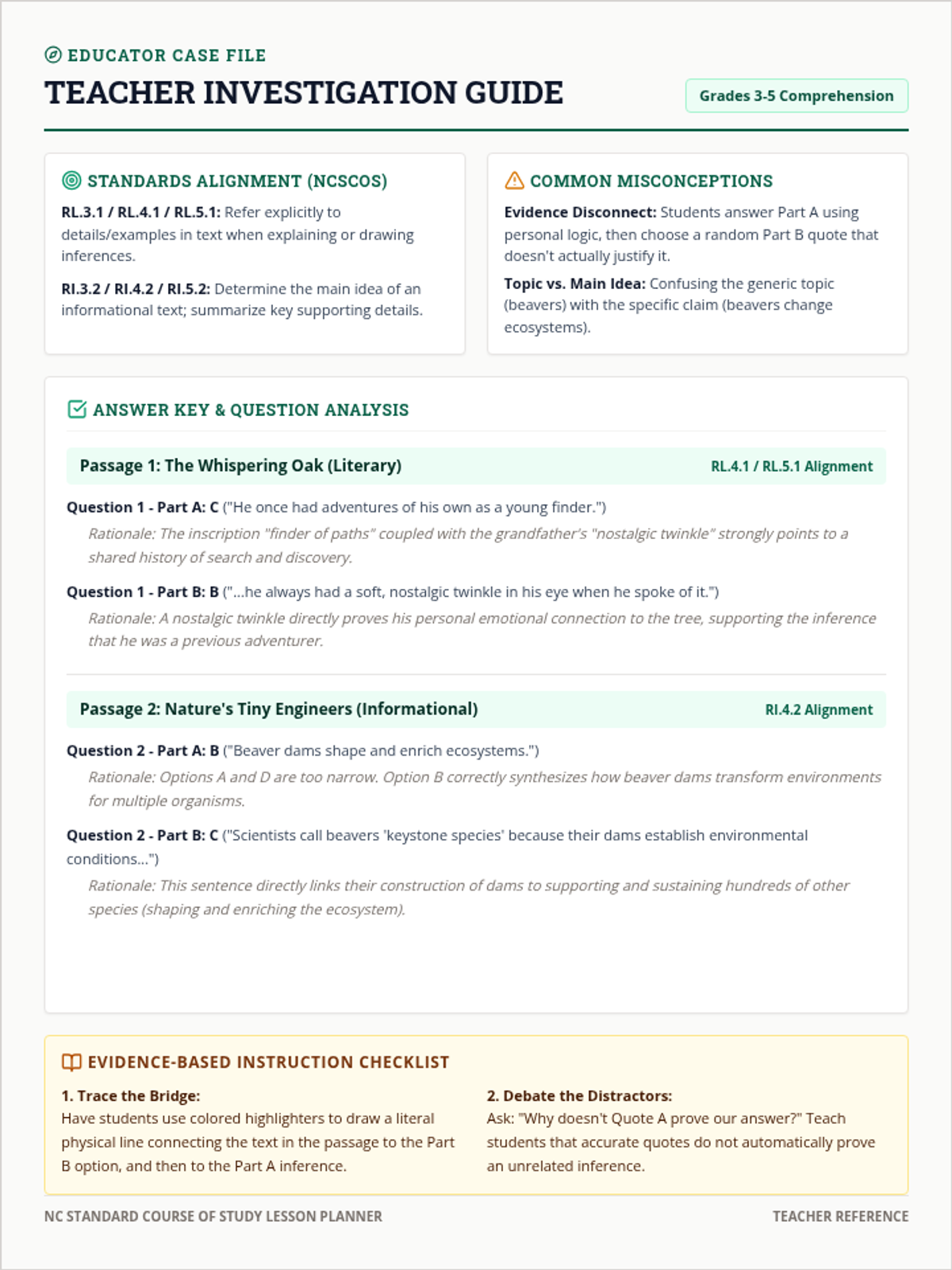
A reading comprehension lesson focused on standard-aligned Part A/Part B questioning strategies for Grades 3-5, aligned to the North Carolina Standard Course of Study (NCSCOS) for literal and inferential comprehension.
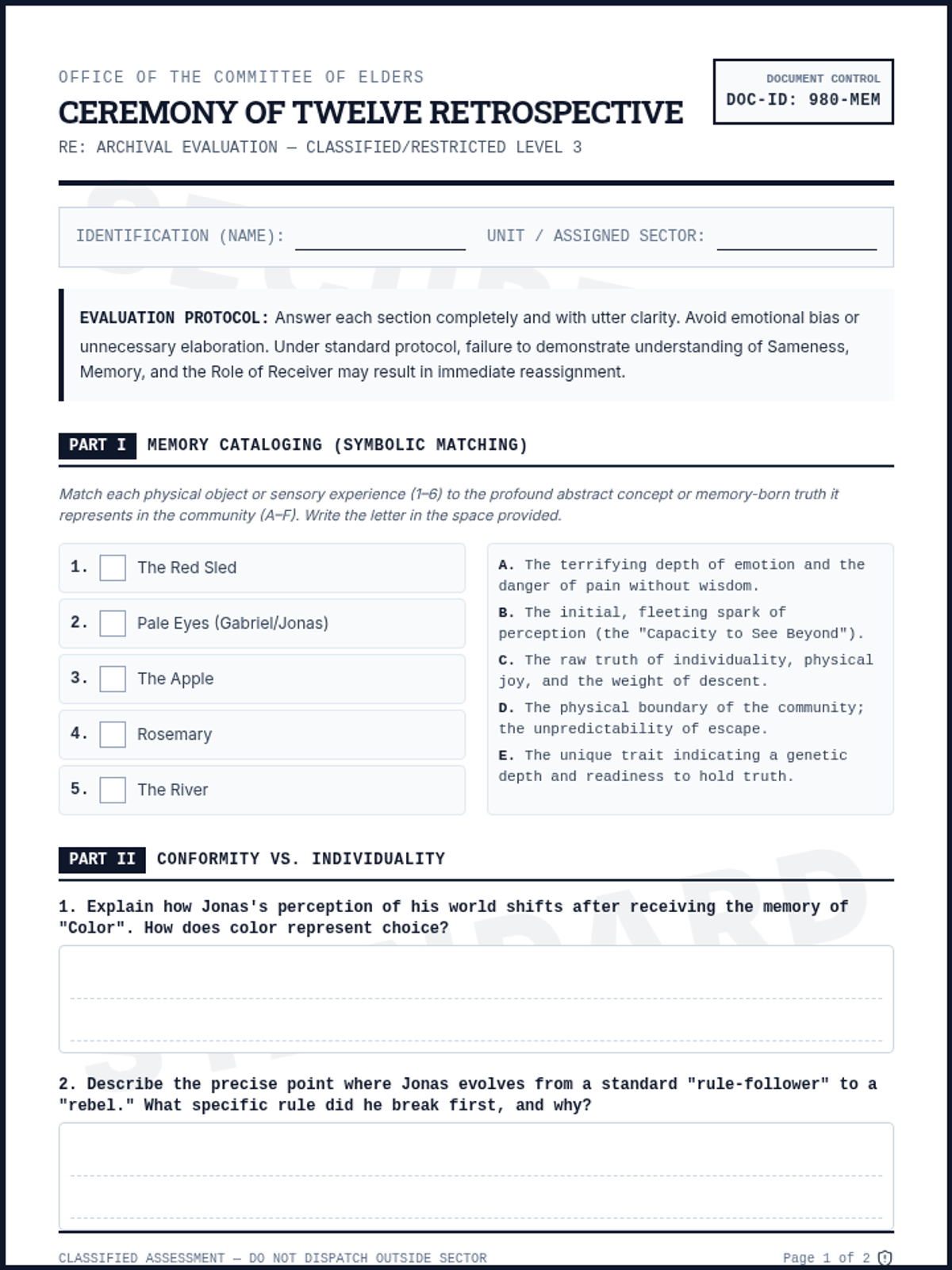
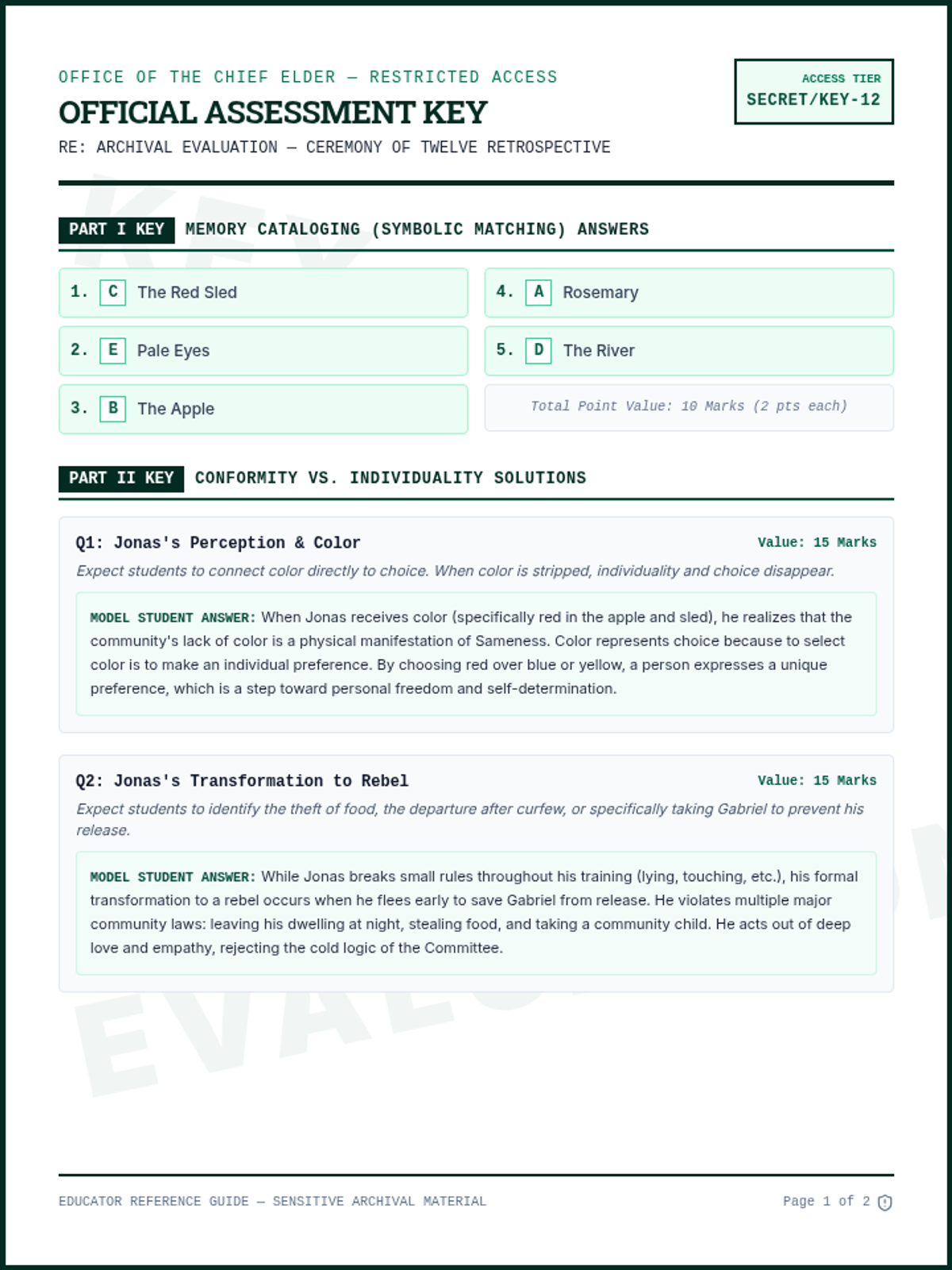
A comprehensive final exam lesson on Lois Lowry's 'The Giver', featuring a high-stakes, dystopian-themed student assessment and an educator's answer key and rubric focusing on memory, conformity, and character choice.
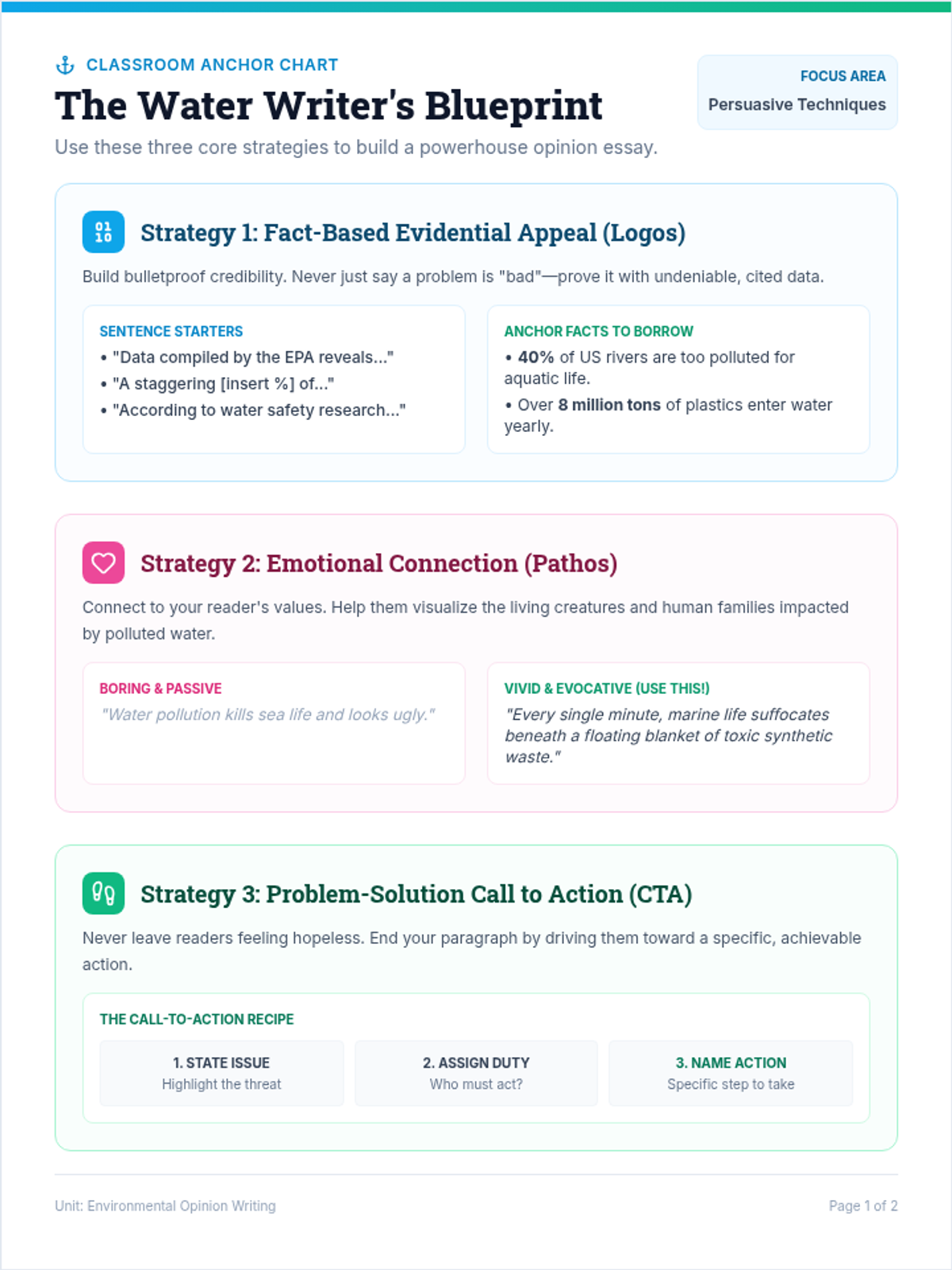
A targeted writing lesson that guides students through crafting high-impact opinion essays on water pollution and water demand. Students learn to combine fact-based evidential appeals, emotional connections, and structured problem-solution calls to action.
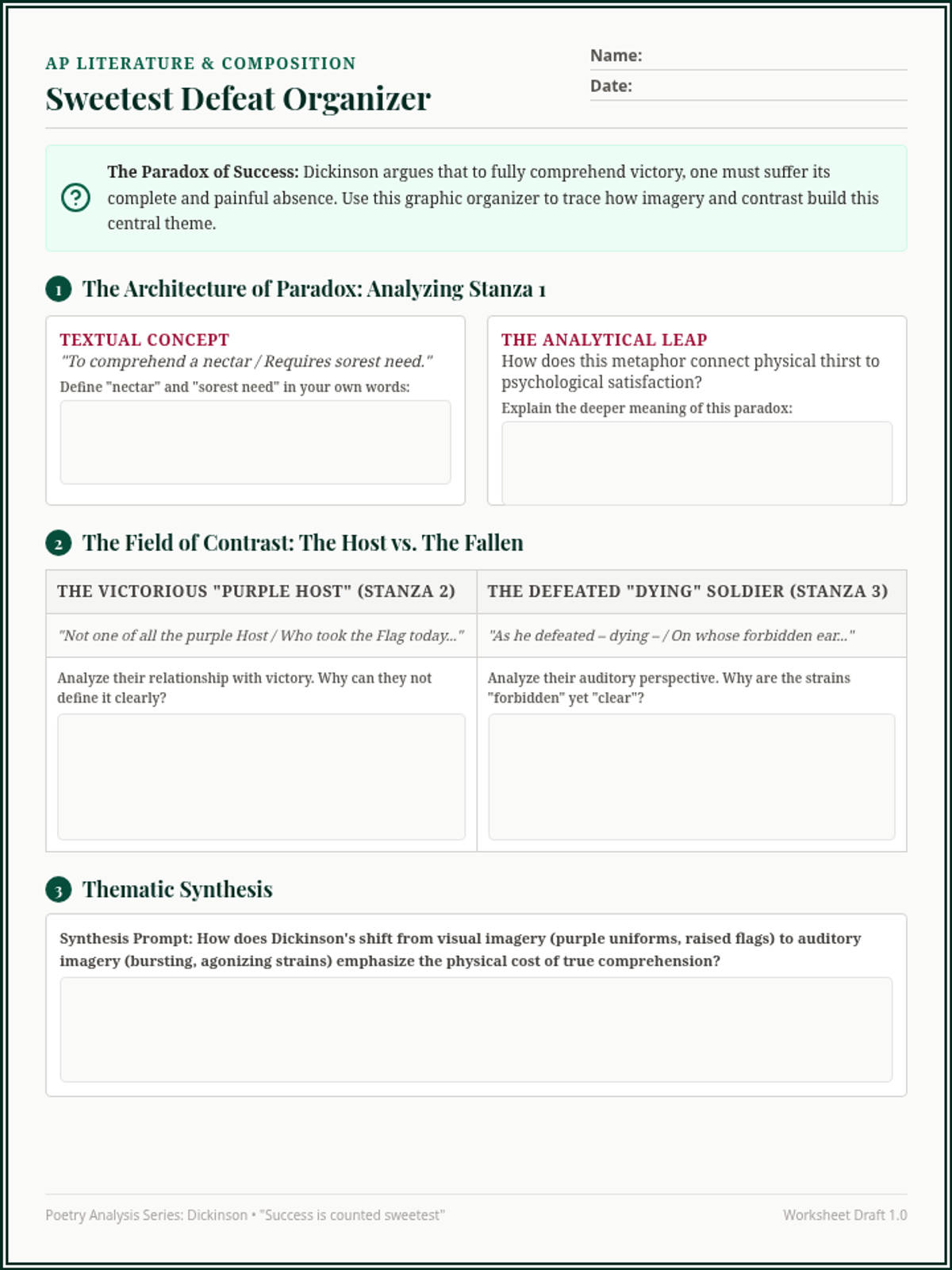
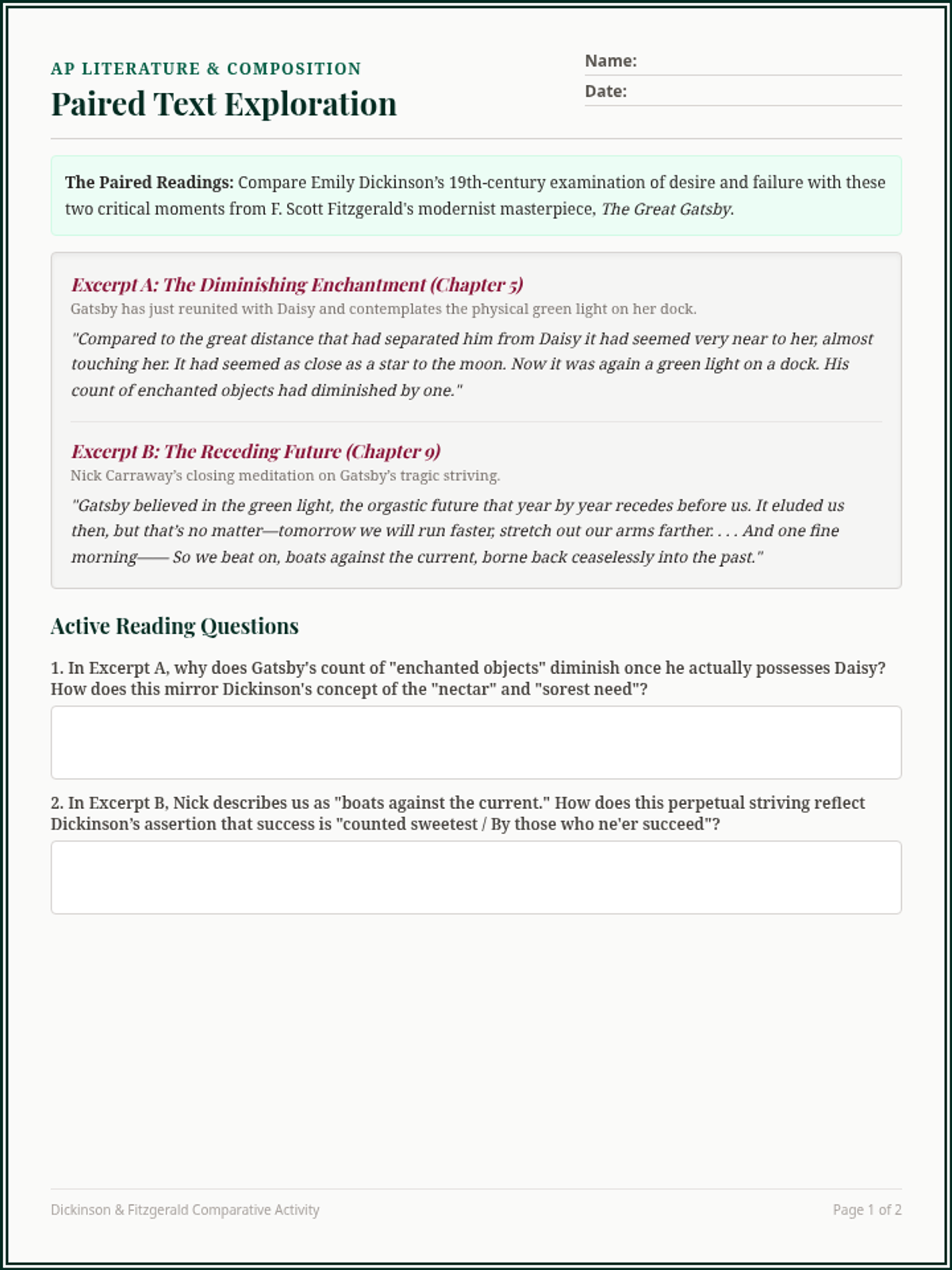
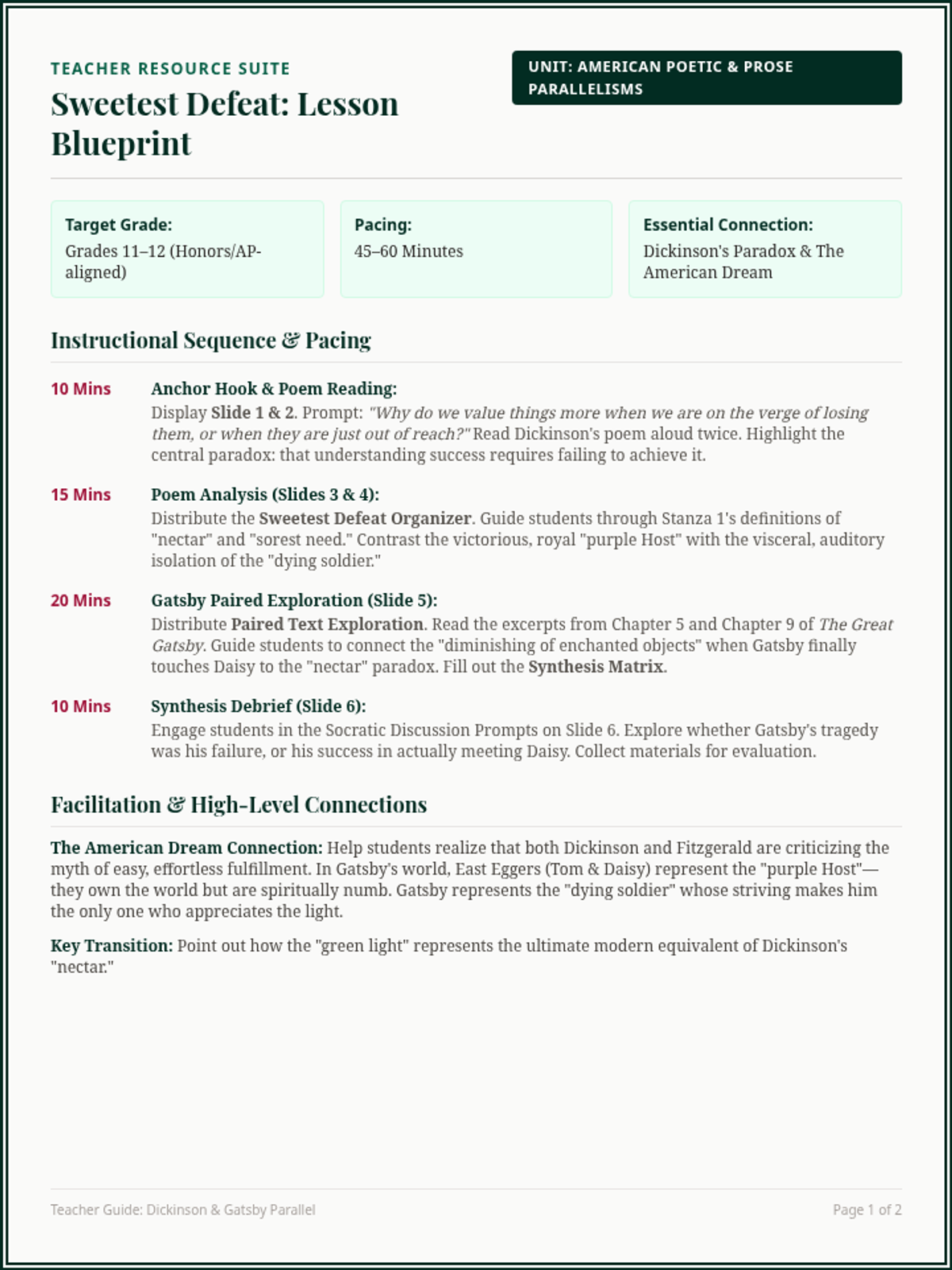
A deep-dive literature lesson exploring Emily Dickinson's 'Success is counted sweetest'. Students analyze how the central paradox—that defeat is necessary to truly comprehend victory—is built through imagery and contrast, and compare these themes to a modern text.
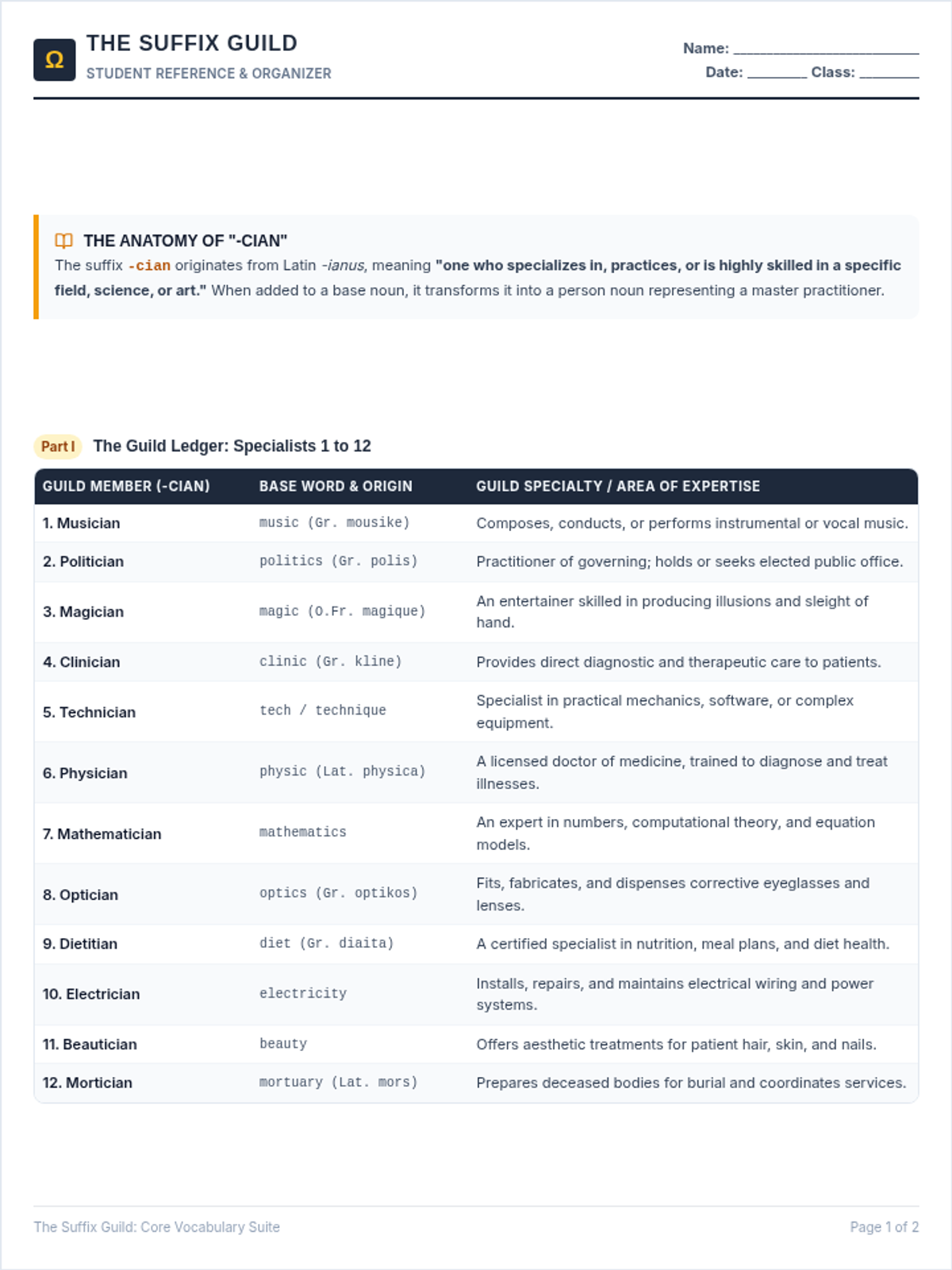
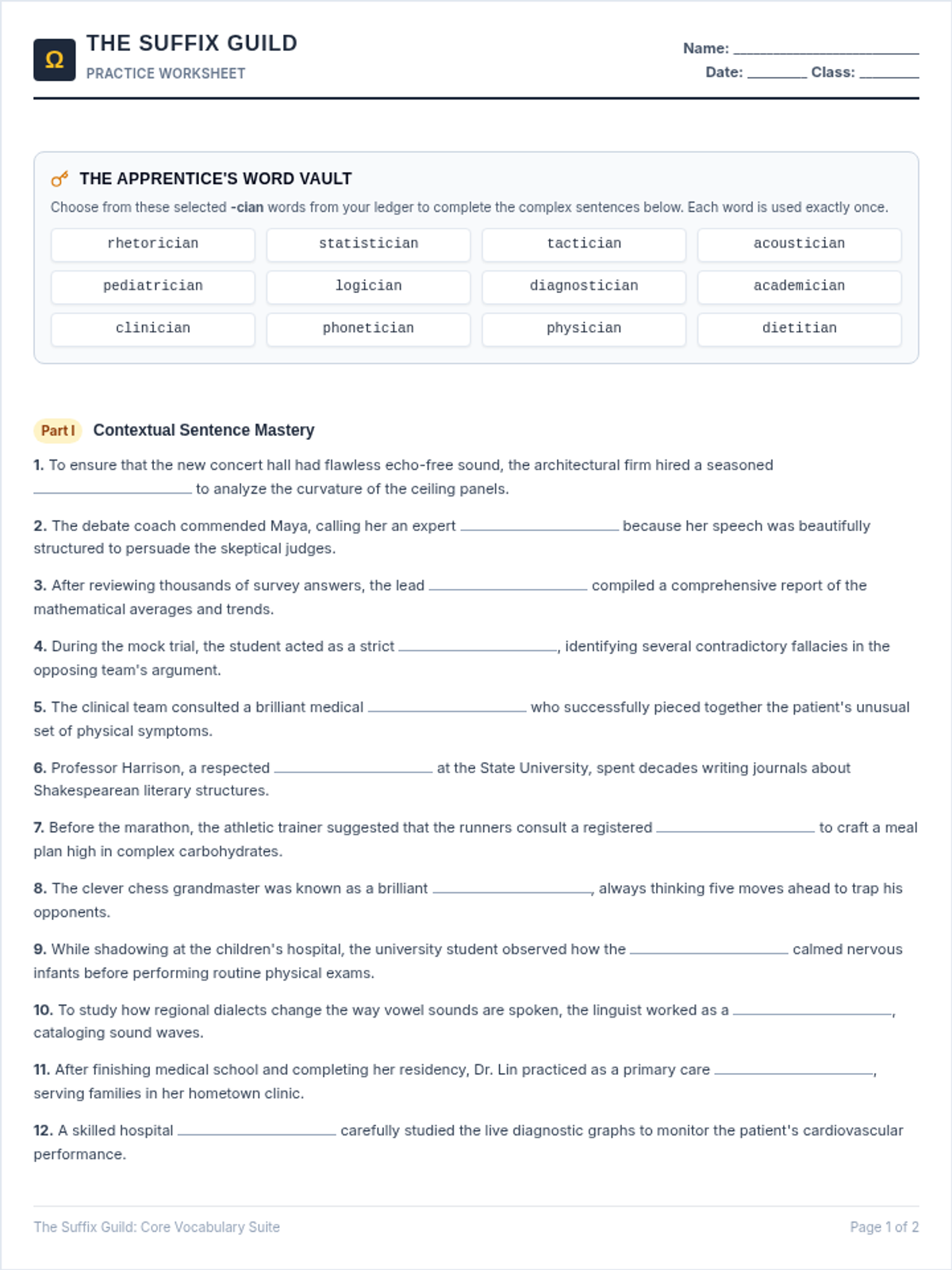
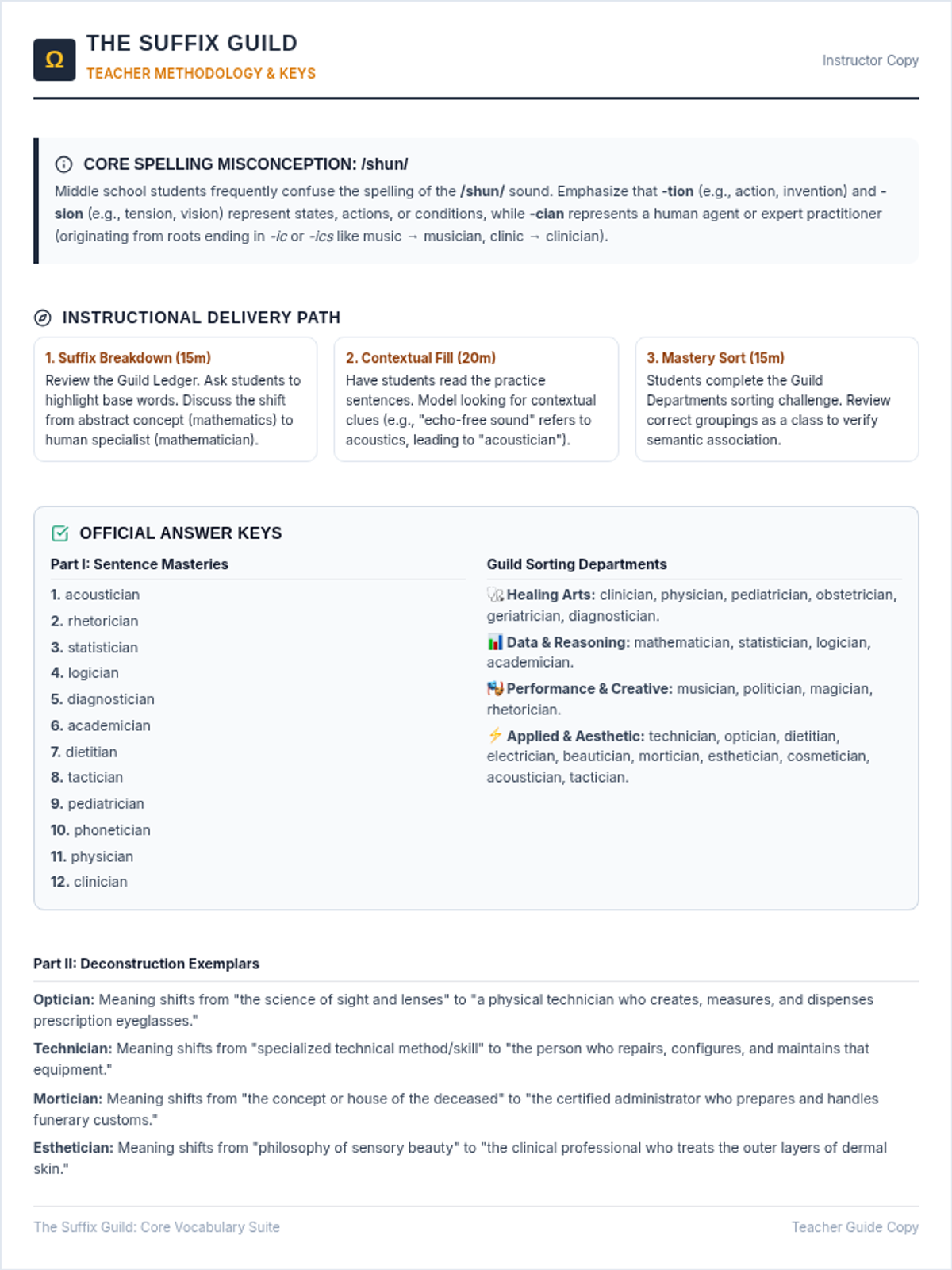
A middle school ELA lesson focusing on the suffix '-cian' (denoting a specialist or practitioner). Students learn 25 distinct terms, analyze their roots, and apply them in high-context graphic organizers, fill-in-the-blank challenges, and analytical writing exercises.
A vocabulary and morphology lesson focusing on the academic and STEM suffix -cian, representing highly skilled occupational roles. Students explore word roots, spelling transformations, and professional definitions.
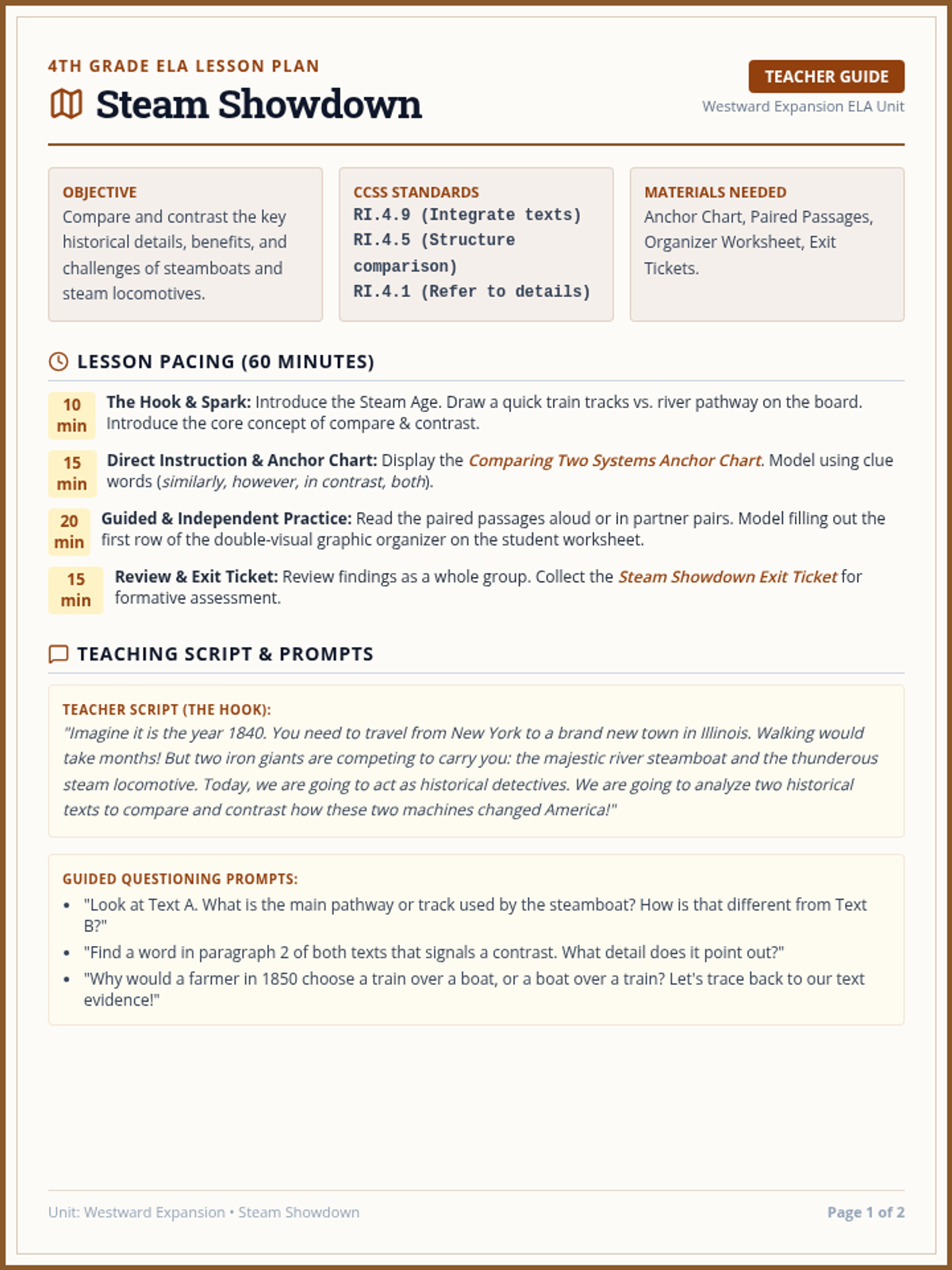
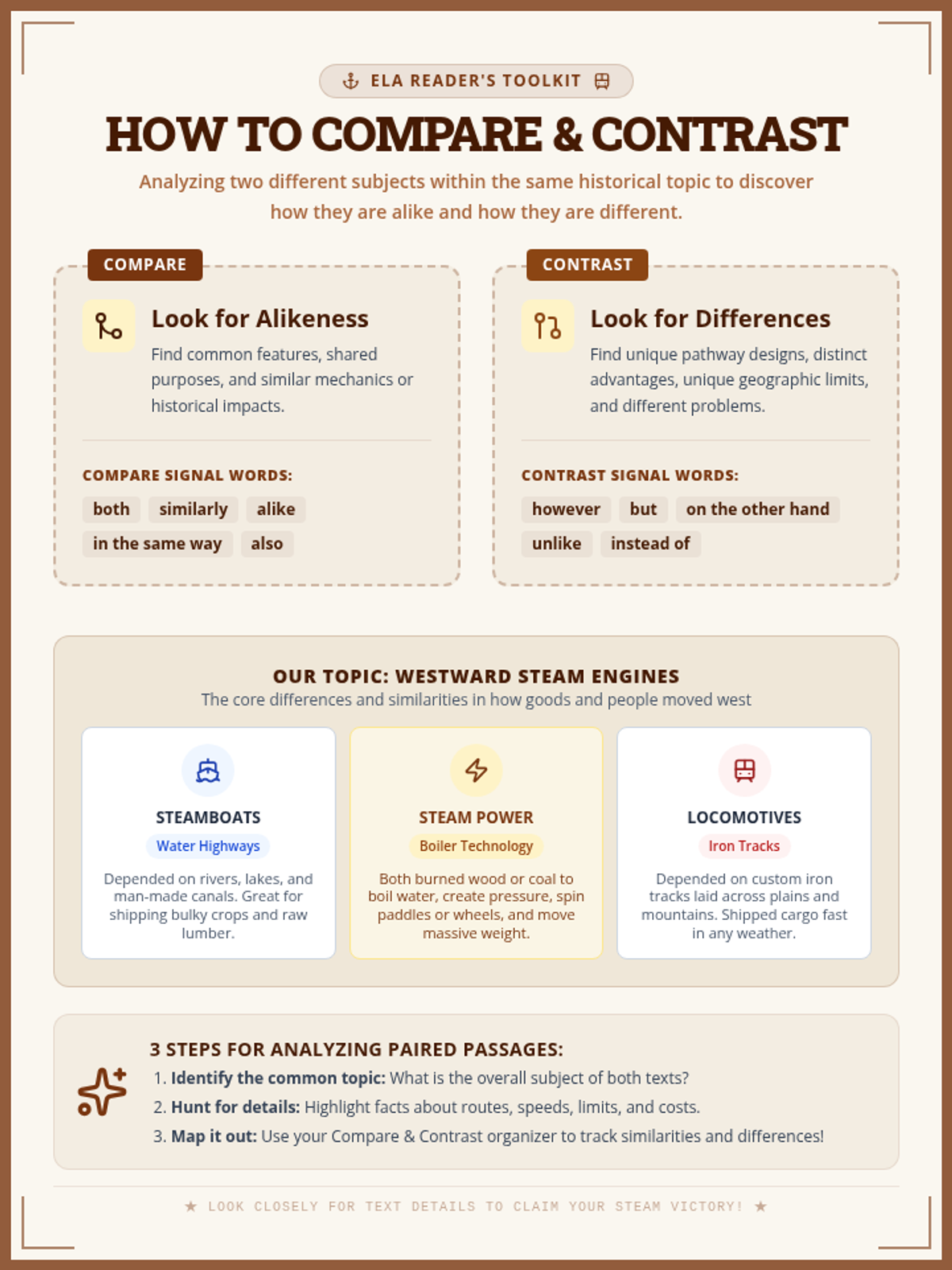
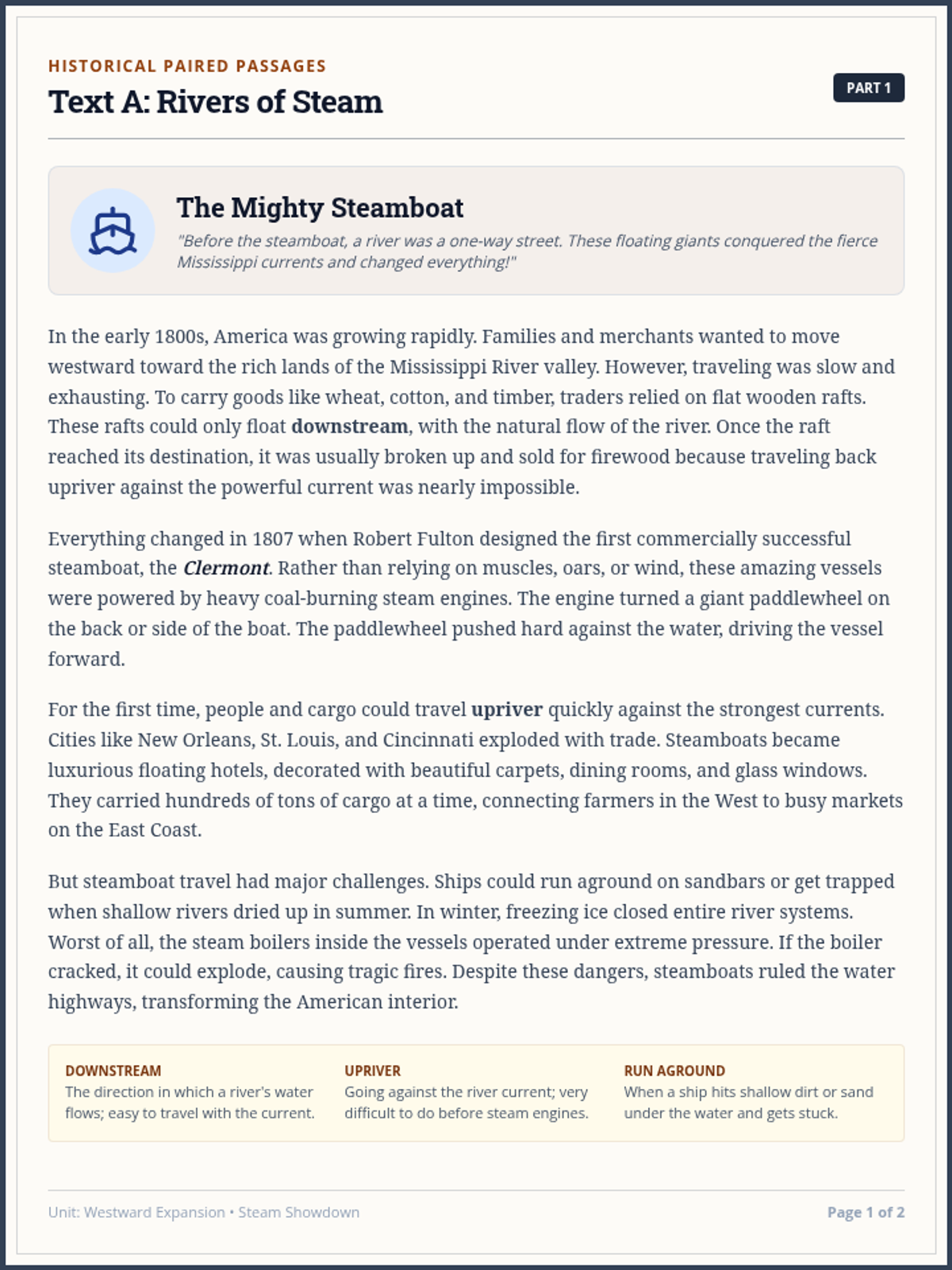
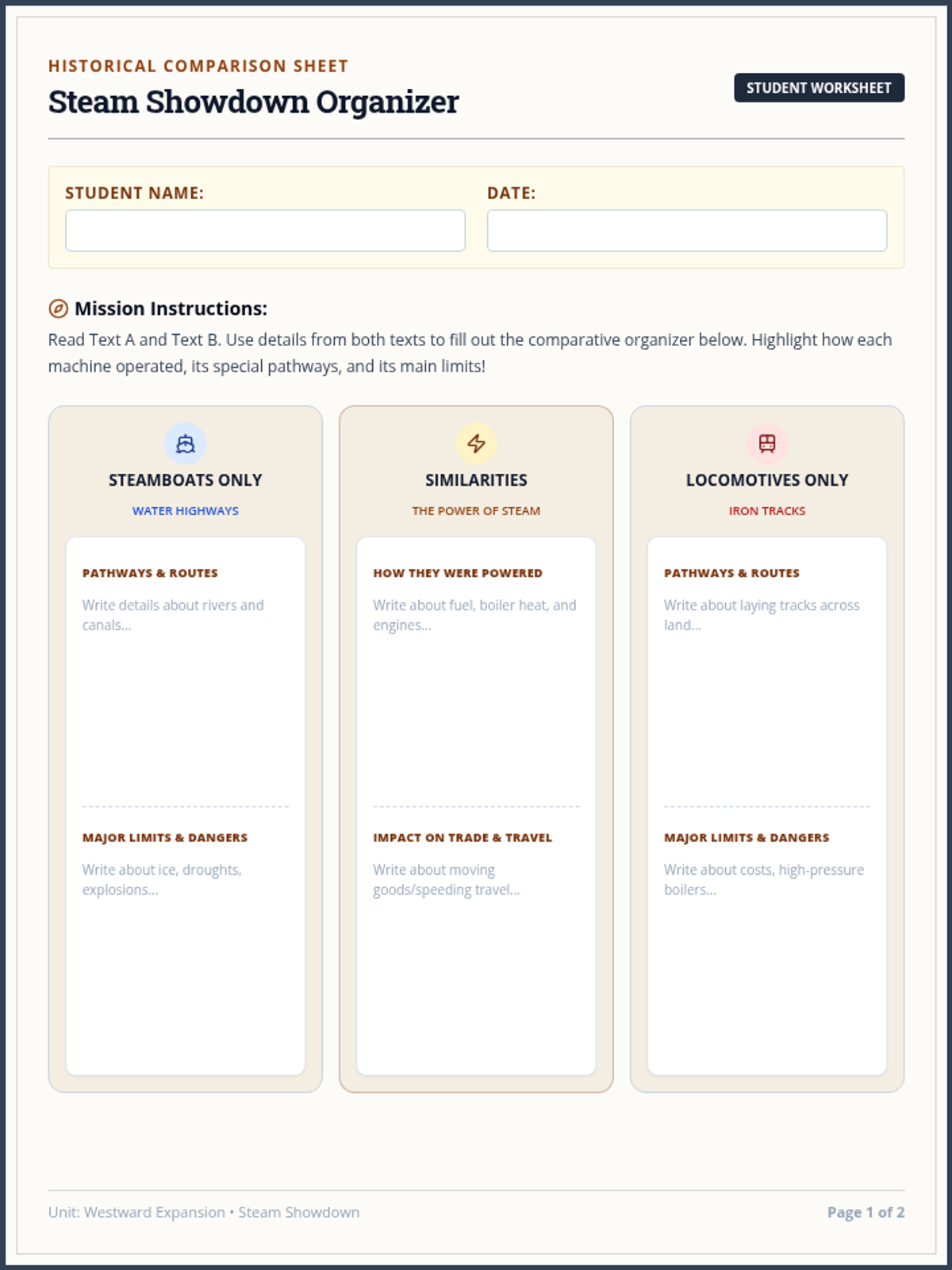
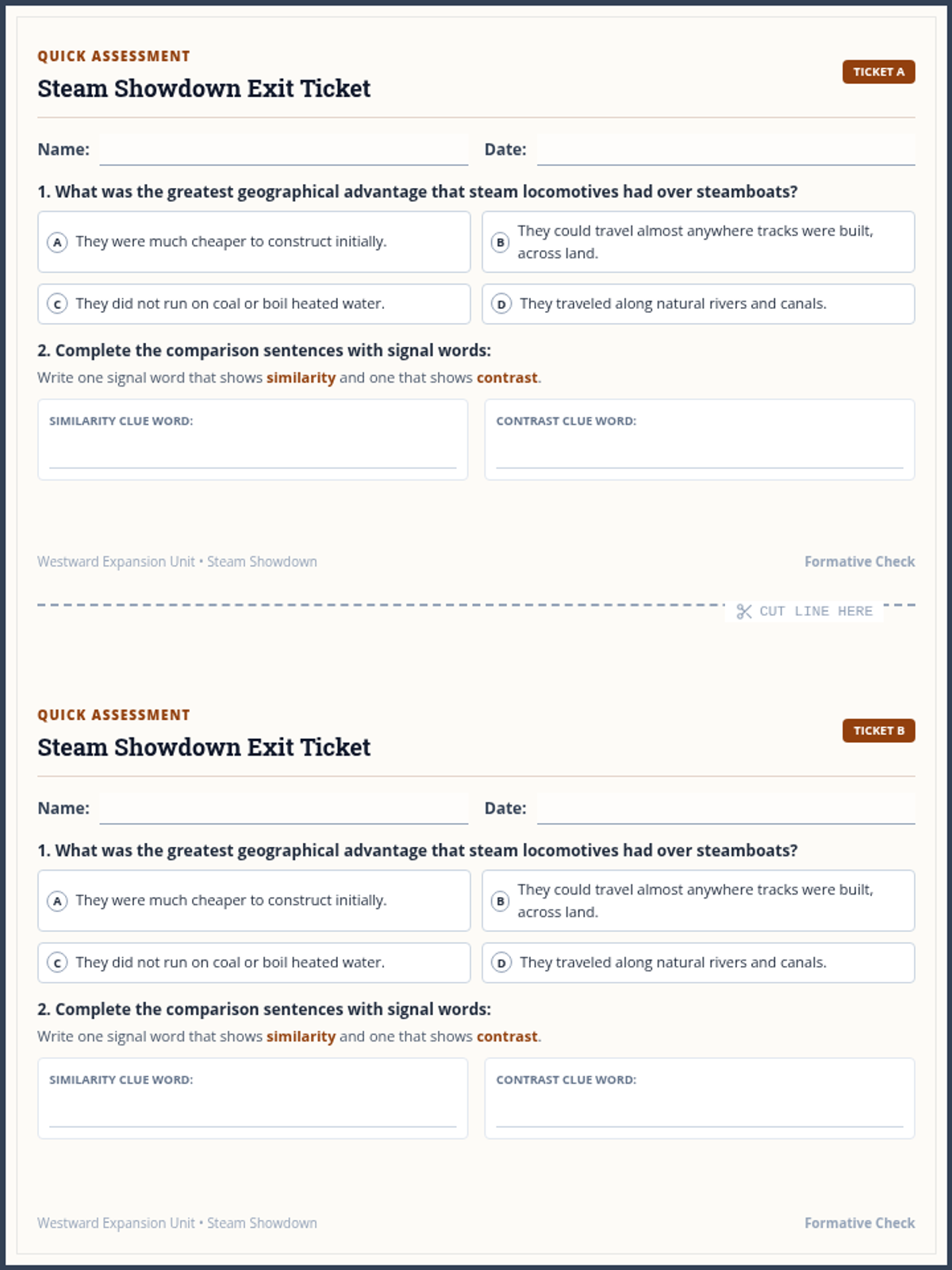
A comprehensive 4th-grade ELA lesson comparing and contrasting steam locomotives and steamboats during American westward expansion. Students analyze two paired historical texts using a custom graphic organizer, text evidence, and structured comparison.
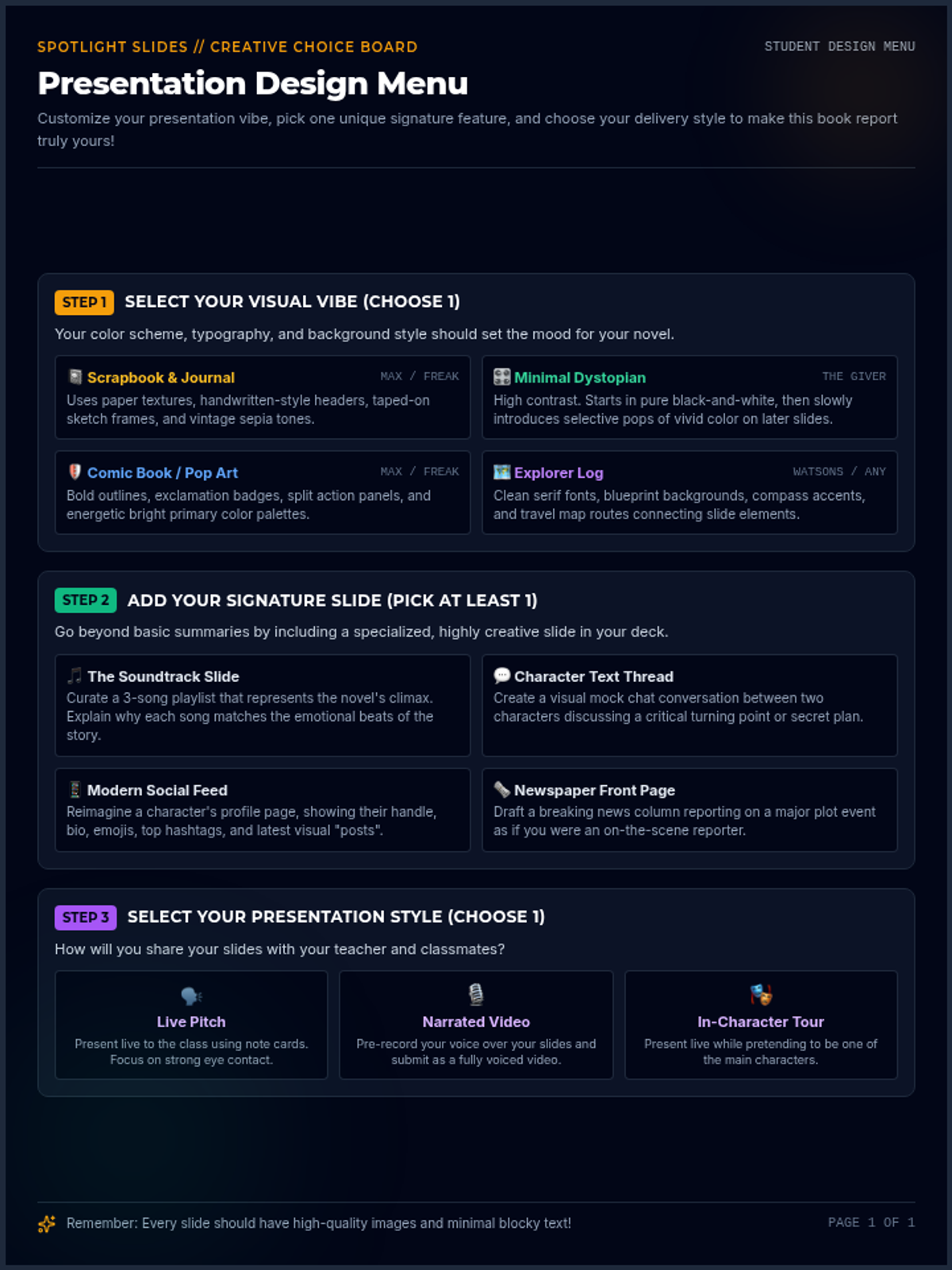
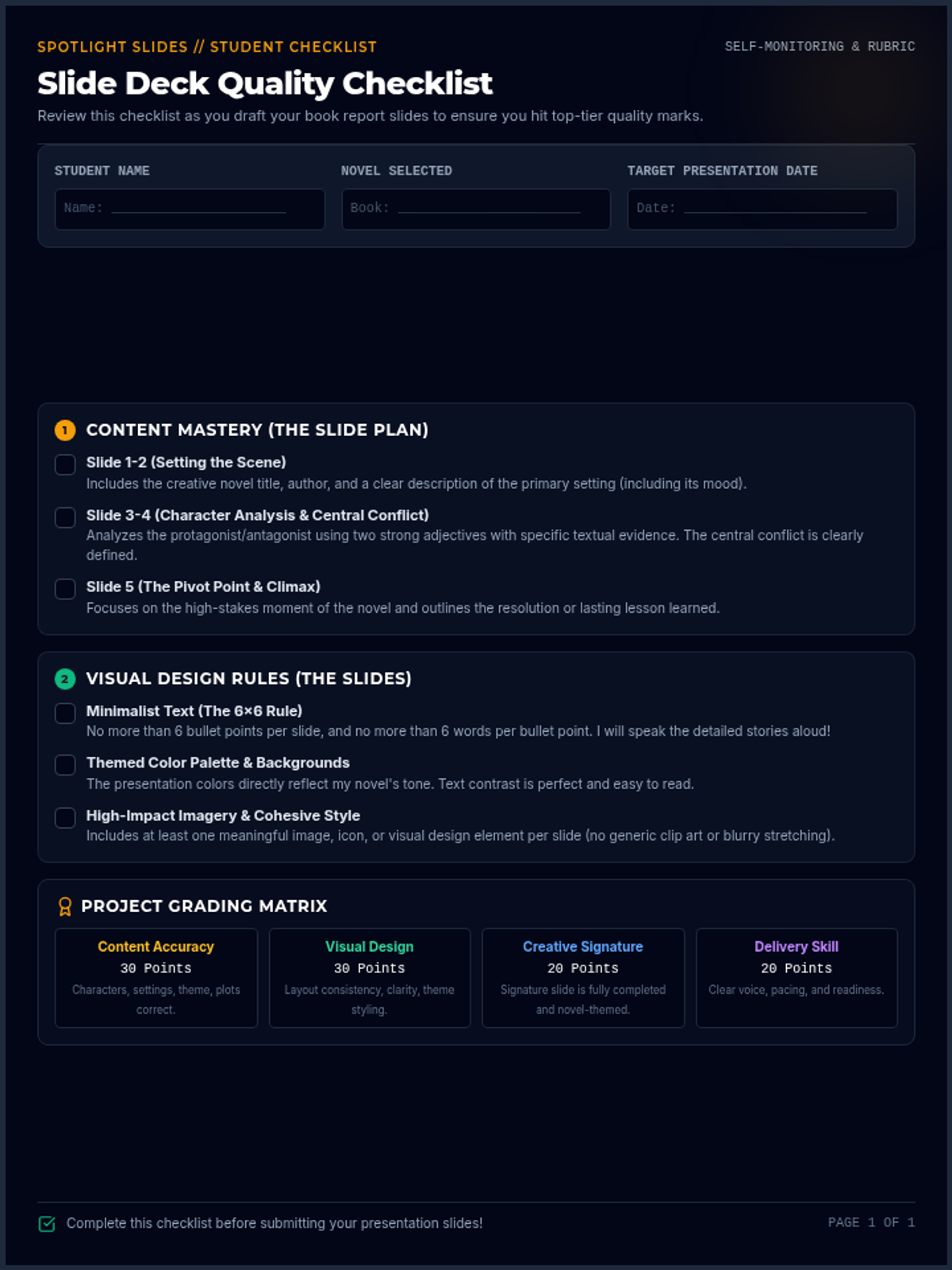
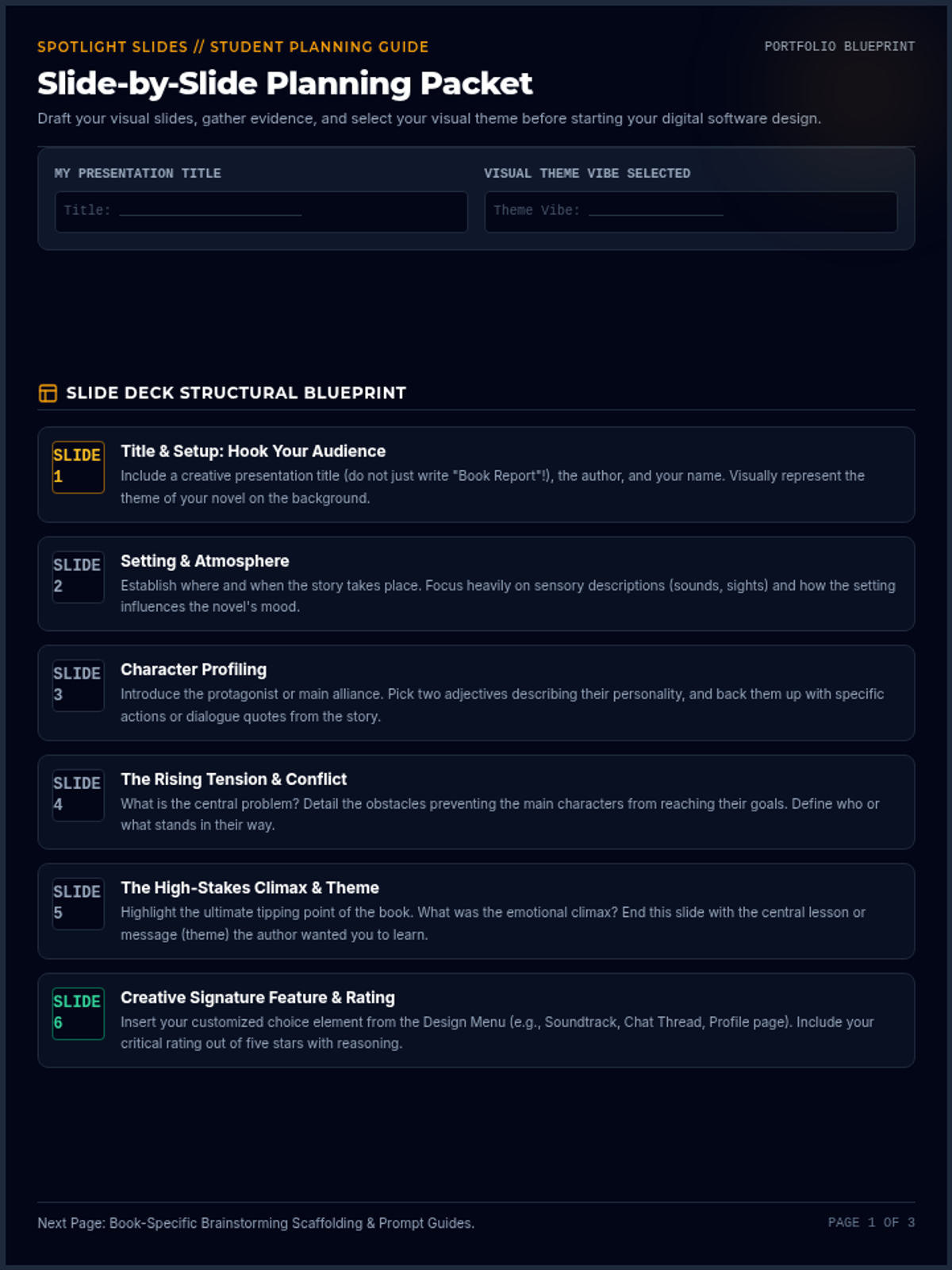
A comprehensive toolkit for guiding students through designing, planning, and executing a highly creative digital book report presentation on one of four shared class novels.
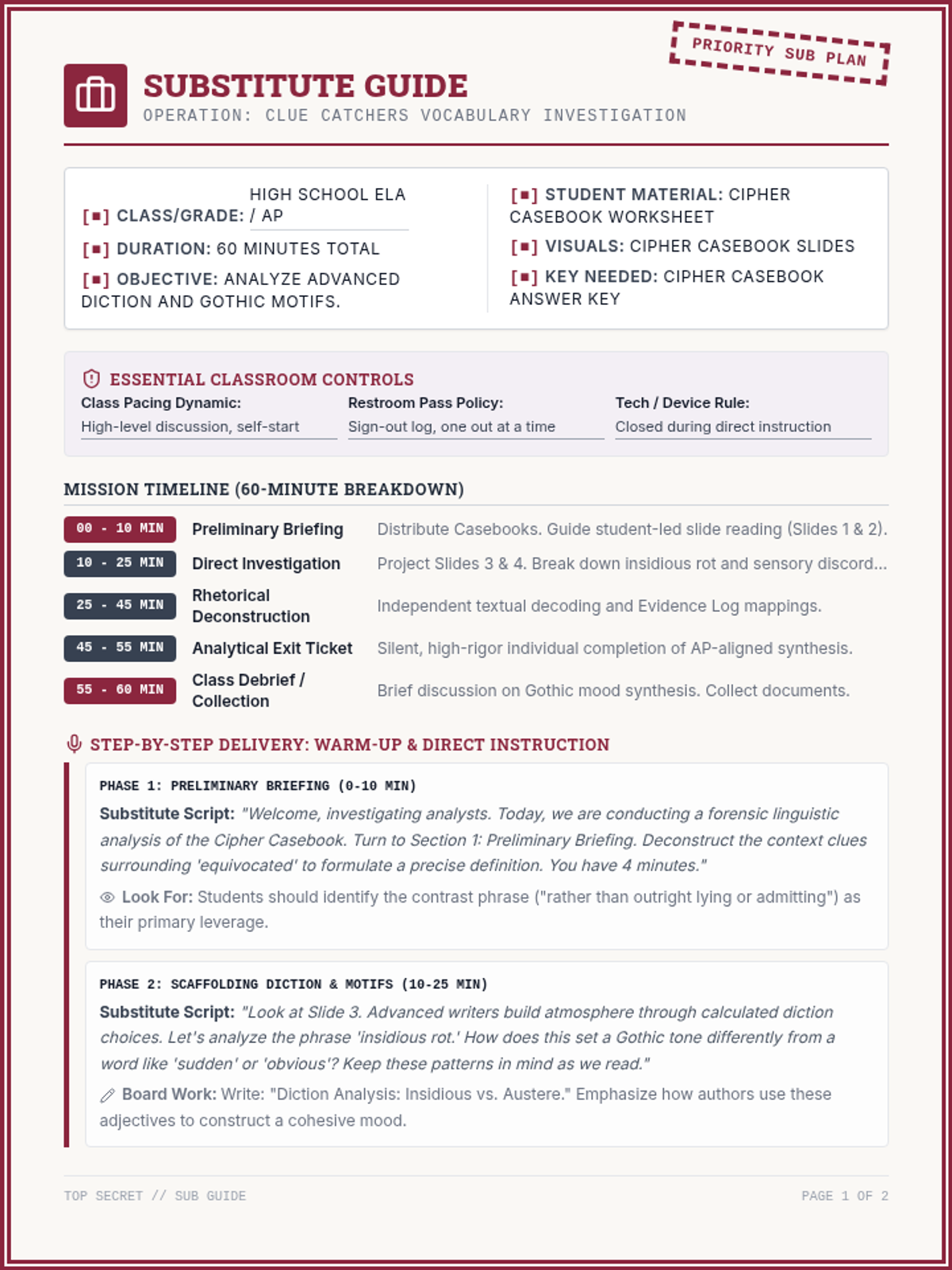
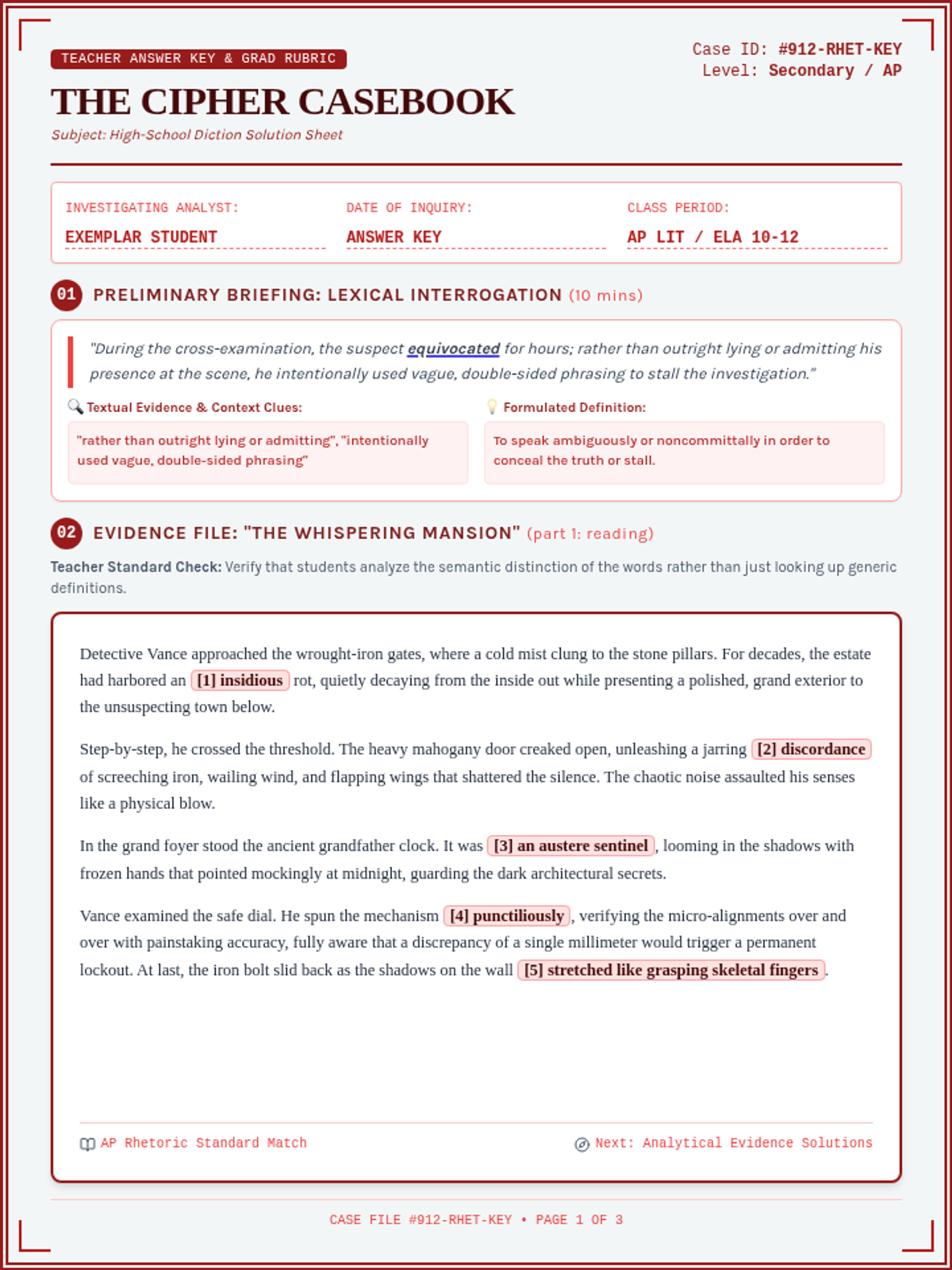
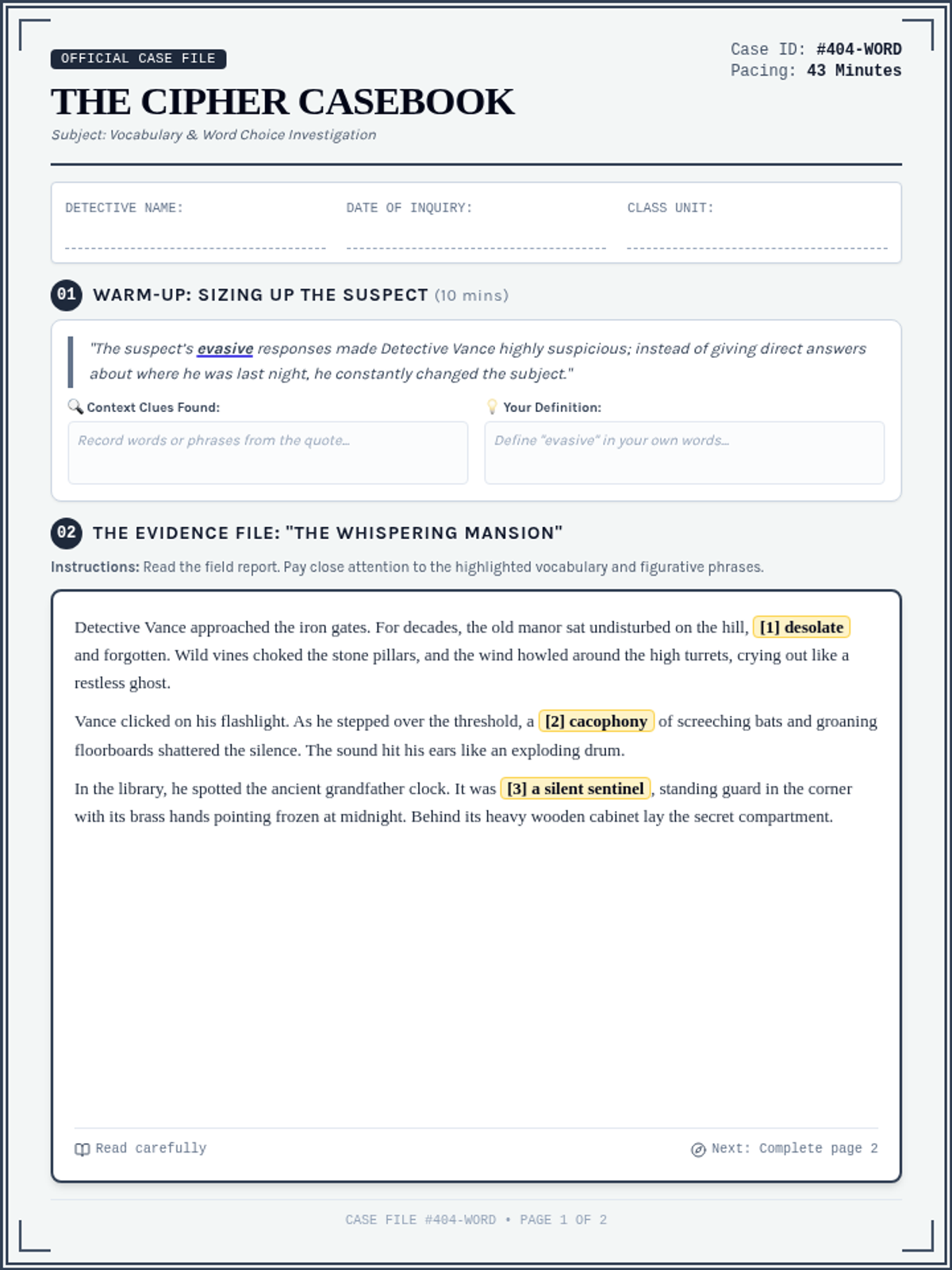
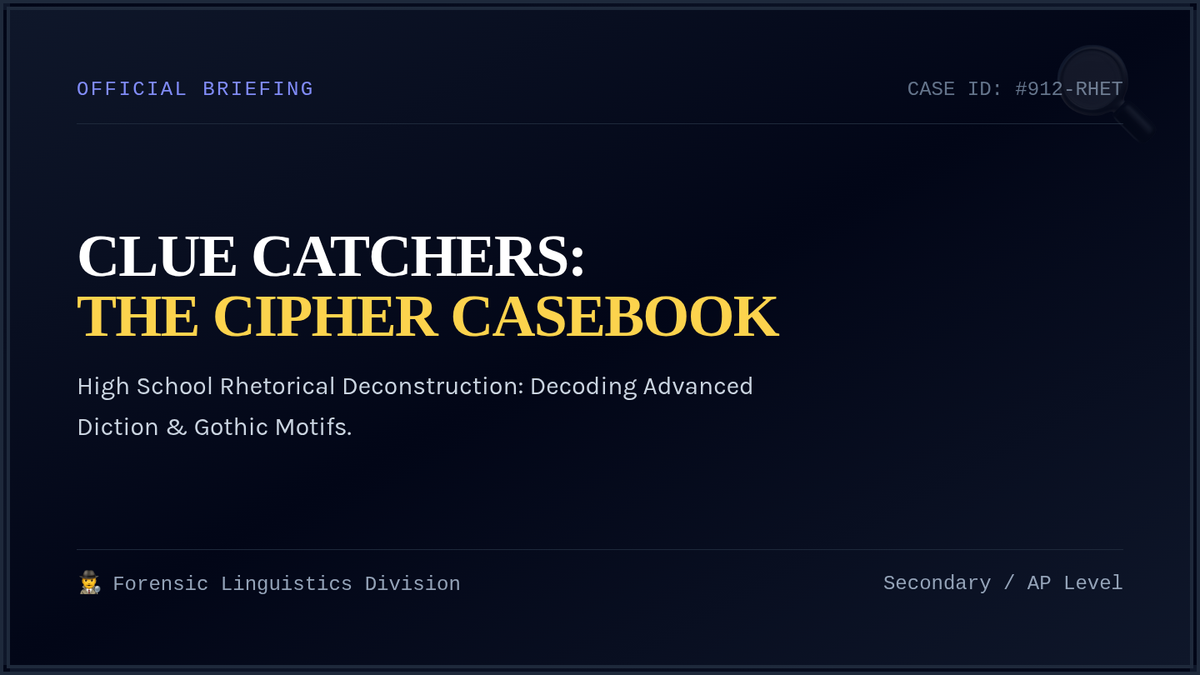
A 60-minute ELA lesson focused on decoding rich vocabulary and figurative language using context clues in a detective-themed investigation.
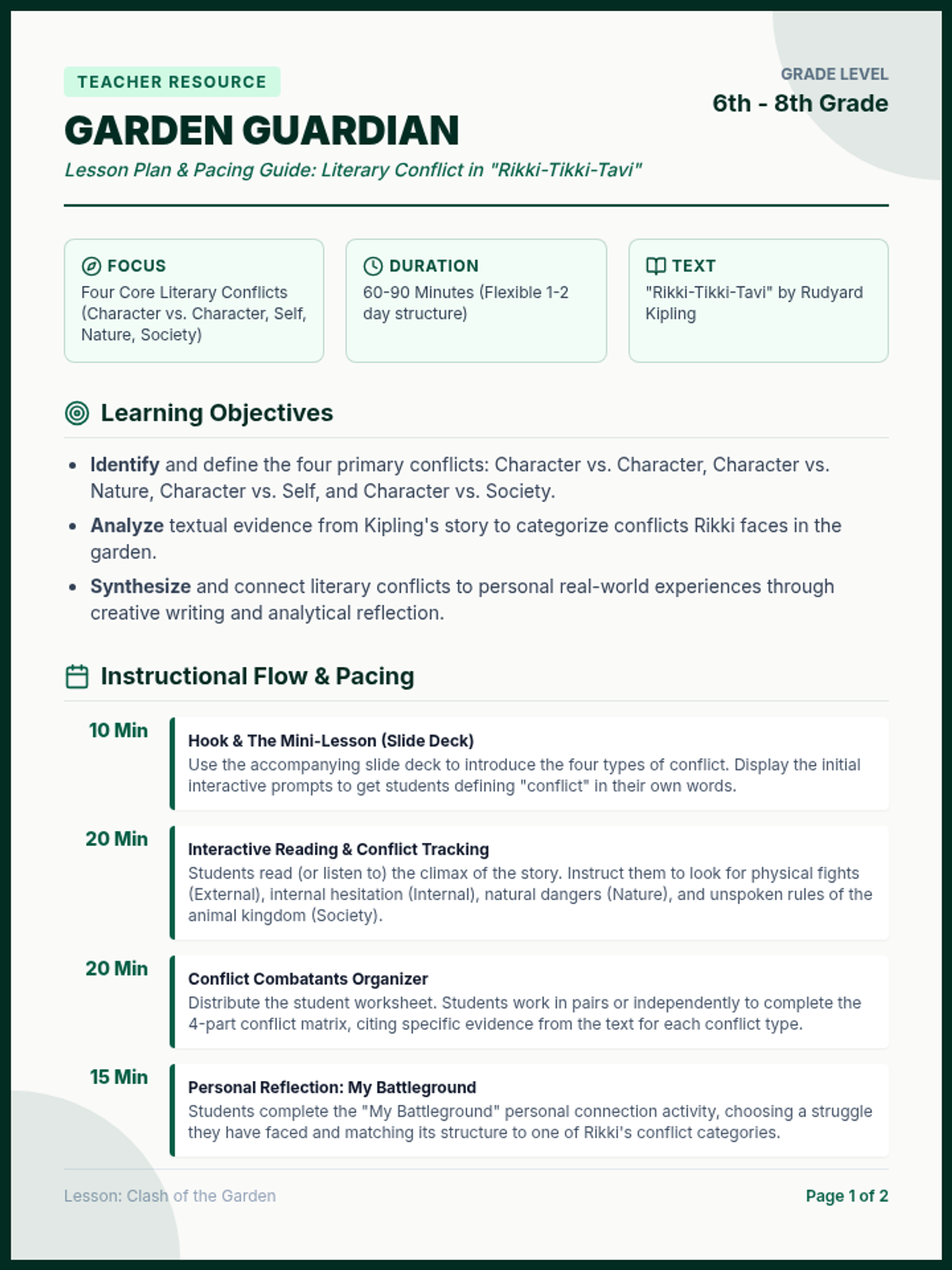
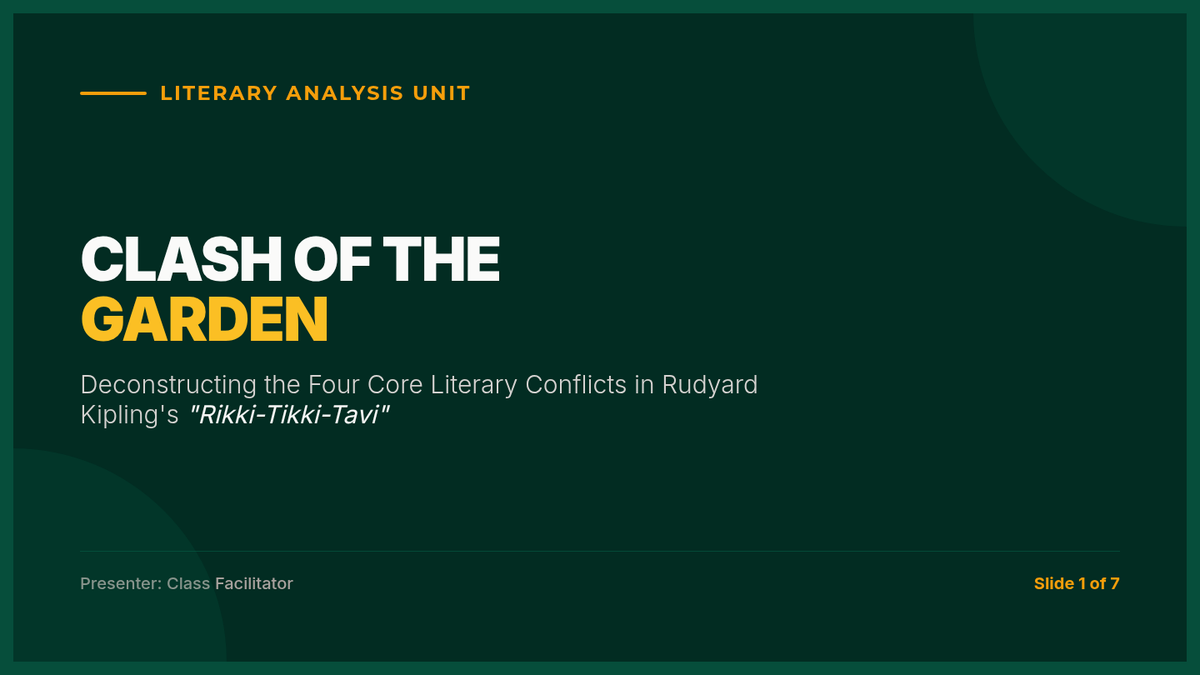
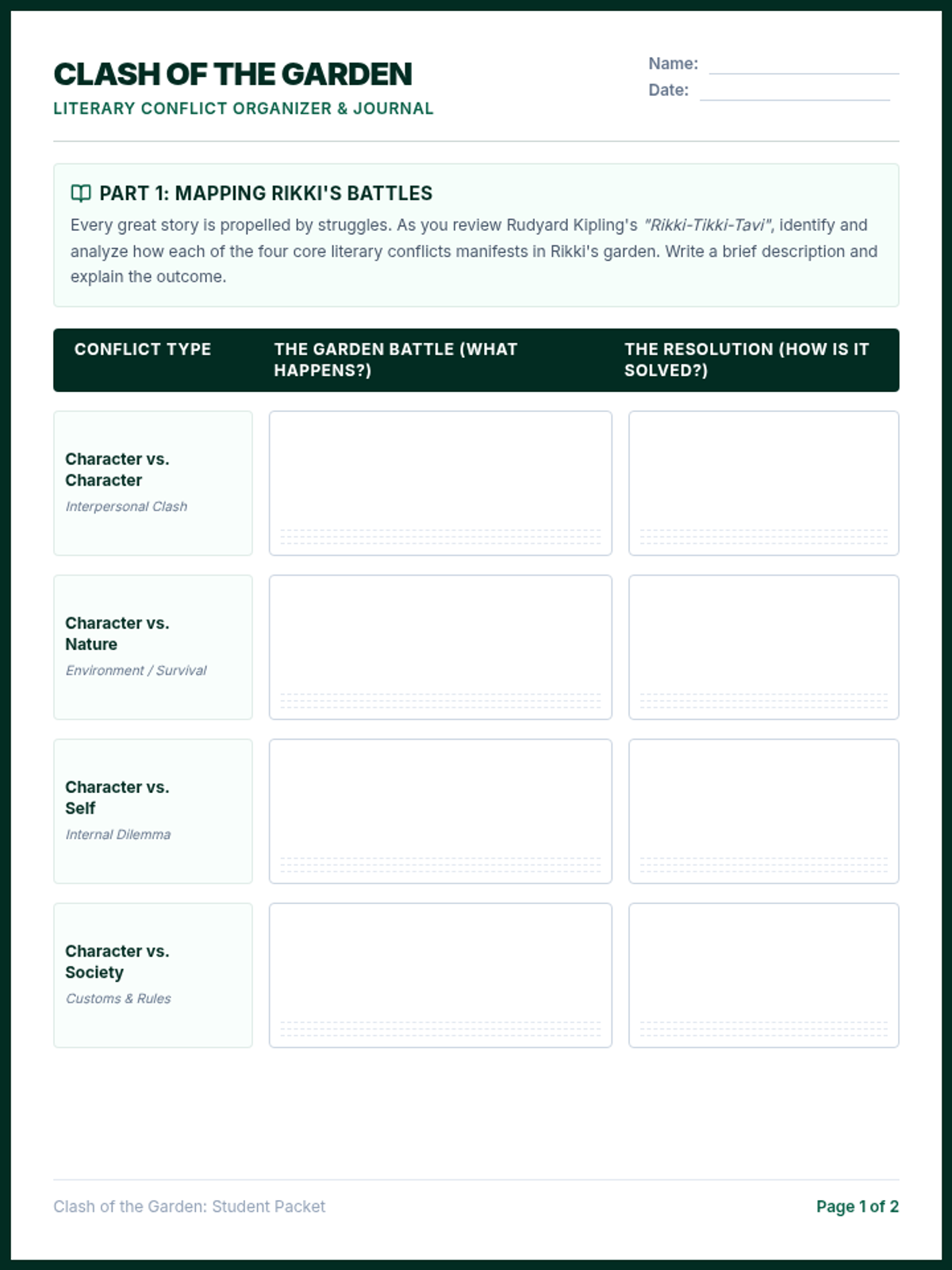
A comprehensive lesson exploring the four core literary conflicts (Character vs. Character, Self, Nature, and Society) using Rudyard Kipling's classic tale, 'Rikki-Tikki-Tavi'. Students map story conflicts and reflect on their own personal battles through structured graphic organizers and personal connection prompts.
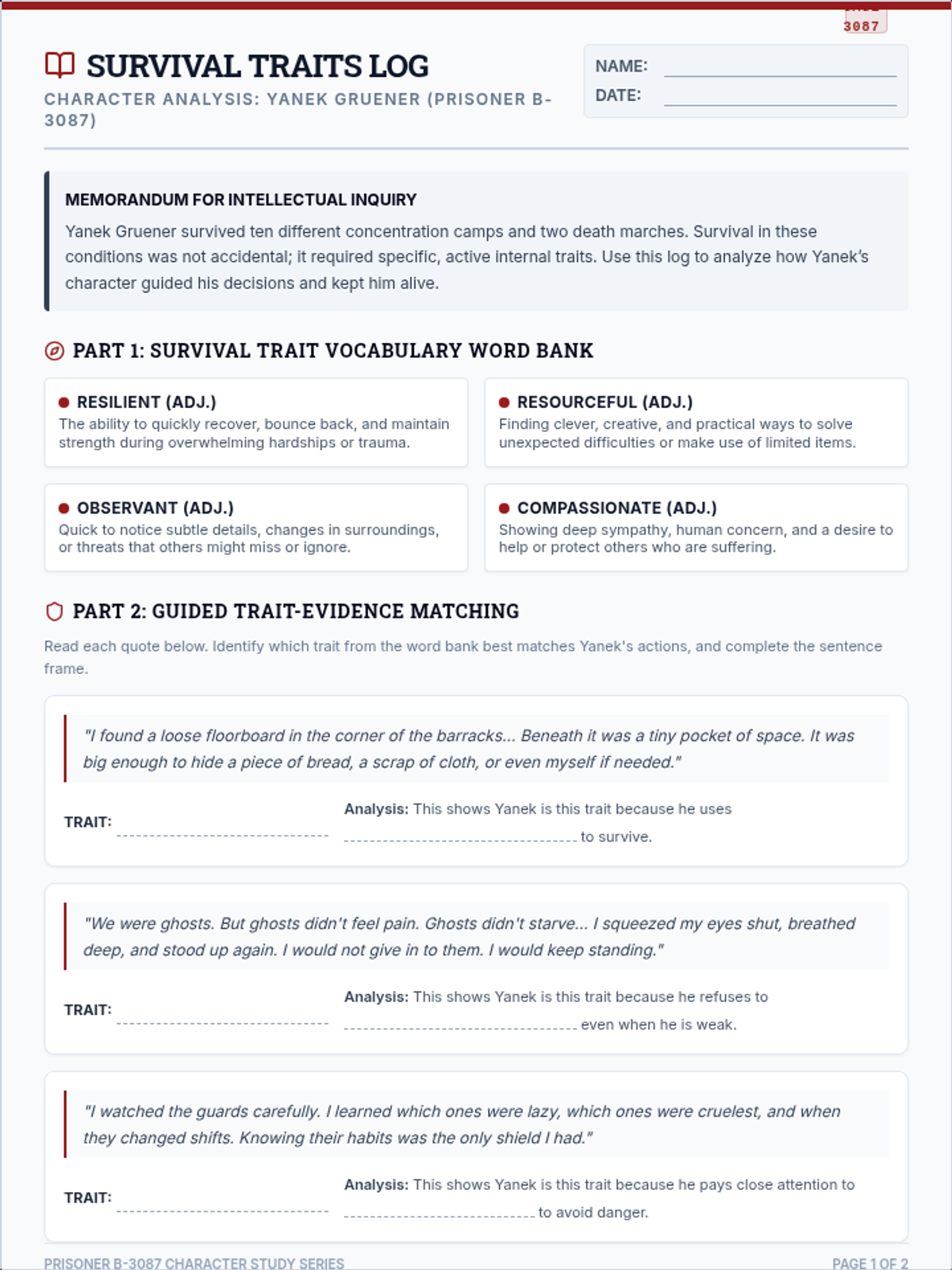
A character analysis lesson for the novel Prisoner B-3087. Students analyze Yanek Gruener's character traits using direct text evidence, graphic organizers, and structured reflection templates.
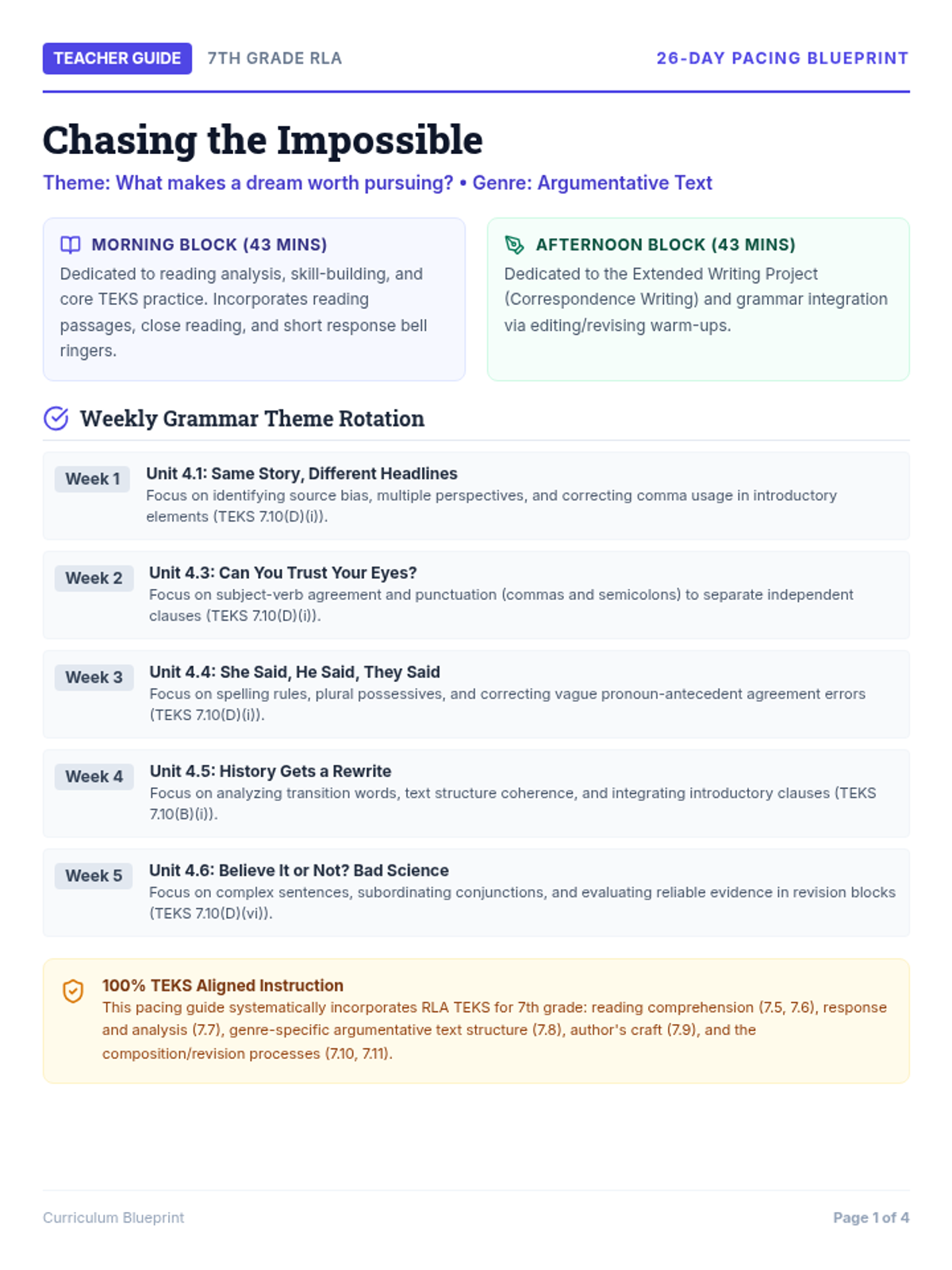
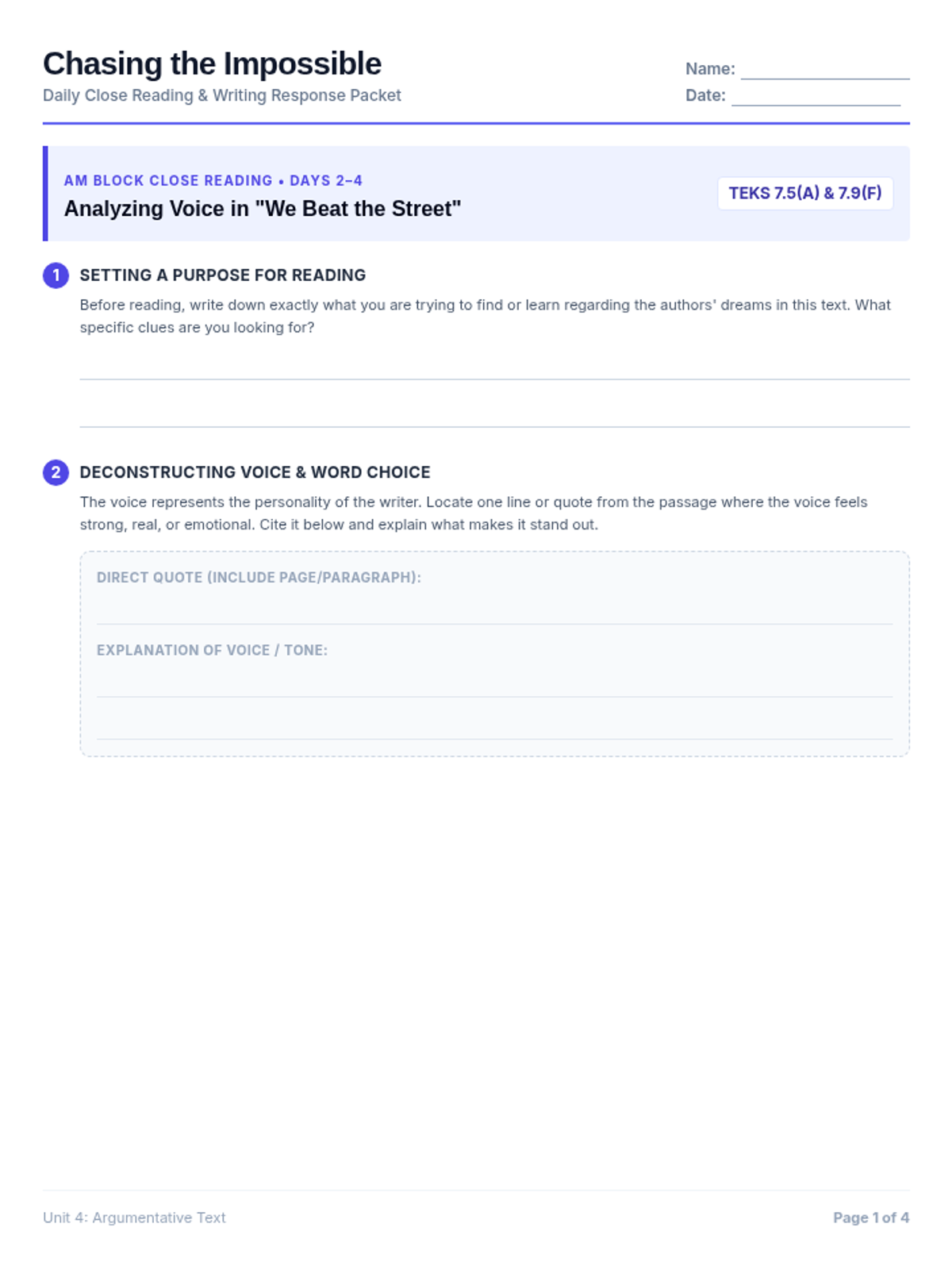
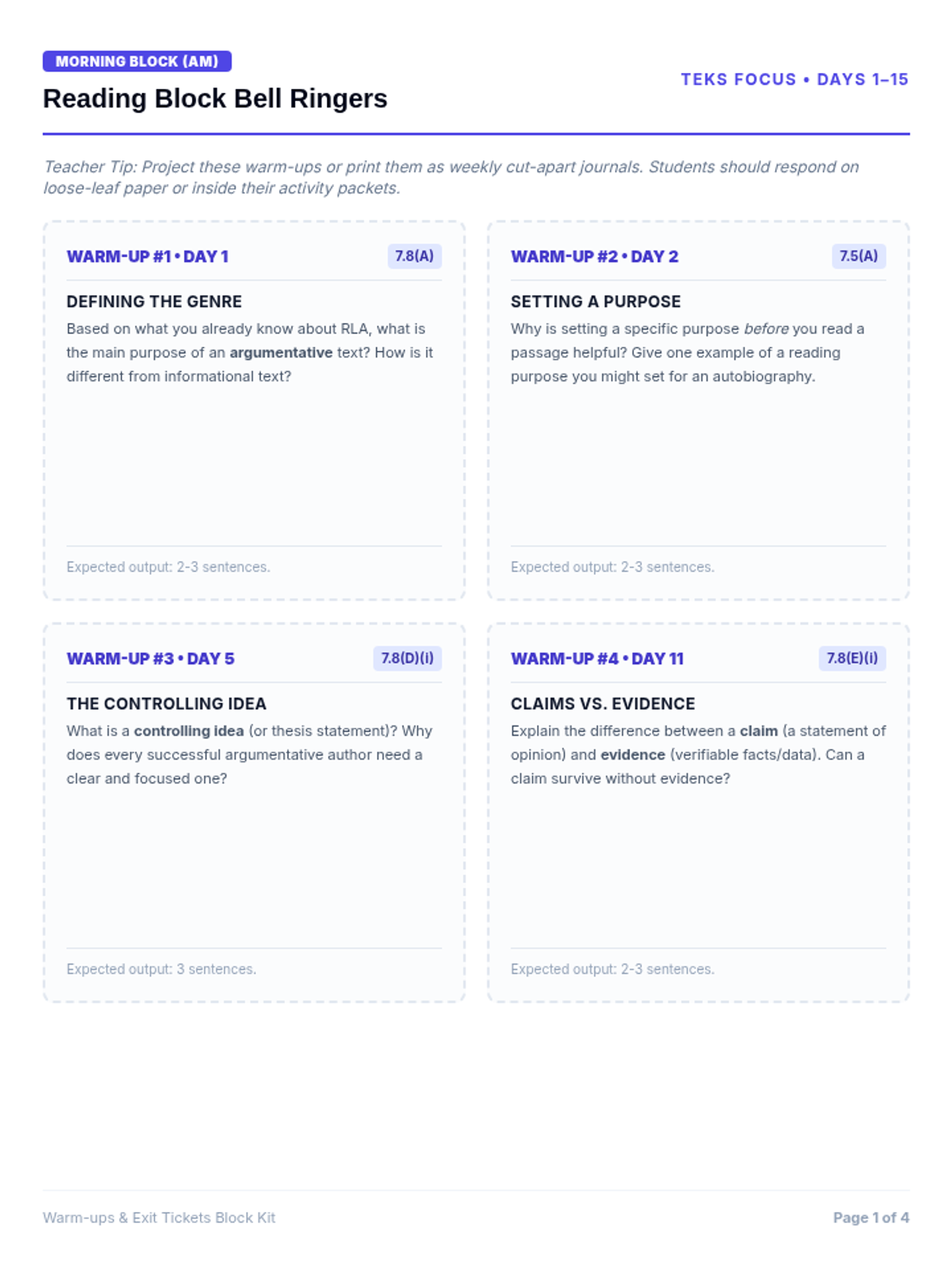
The master 26-day RLA unit planning and resource curriculum, containing the comprehensive pacing guide, student activities, slide decks, and assessments.