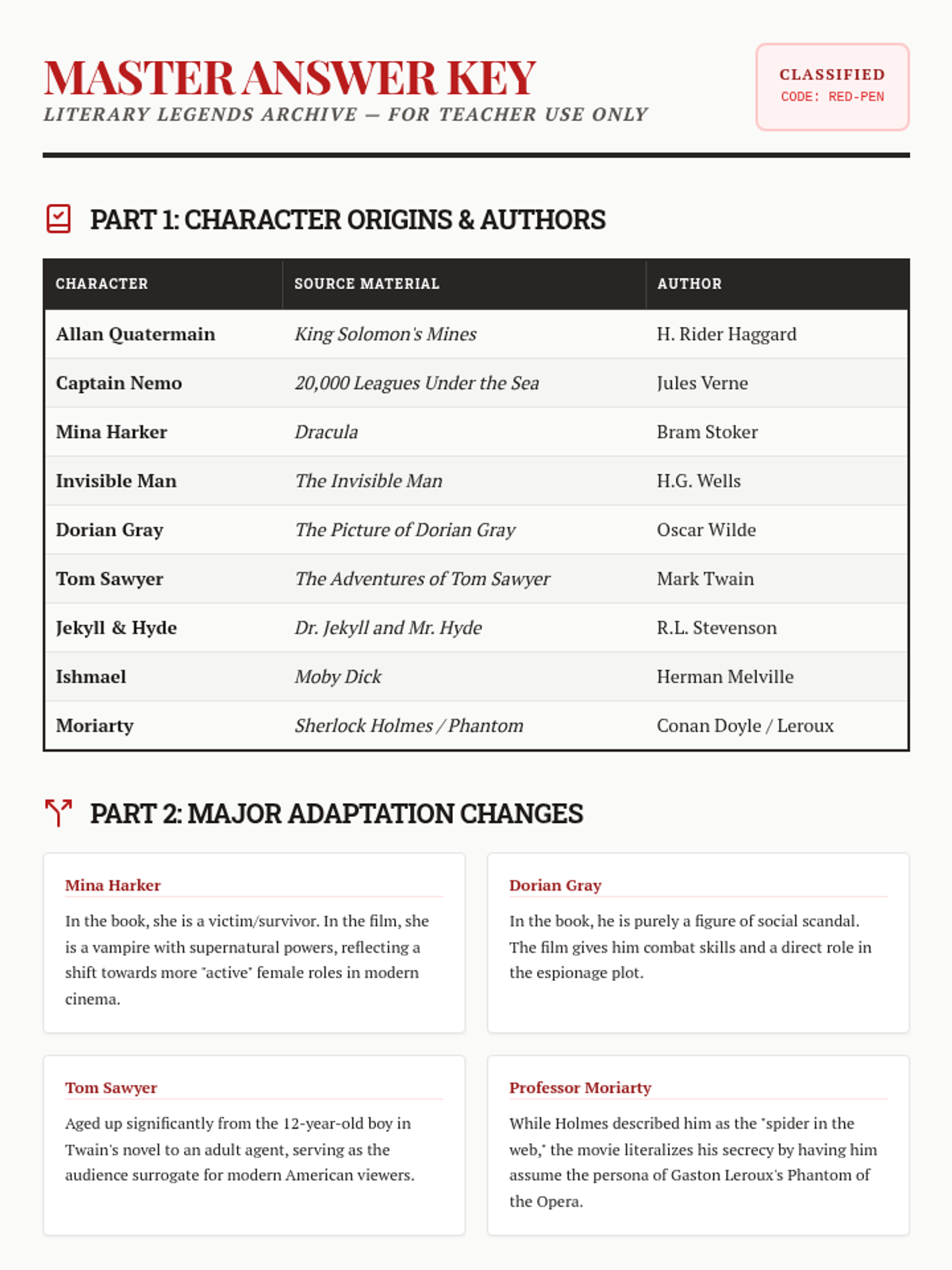
A comprehensive practice module for advanced secondary students to master irregular English verbs through contextual narratives, error analysis, and sentence transformations.
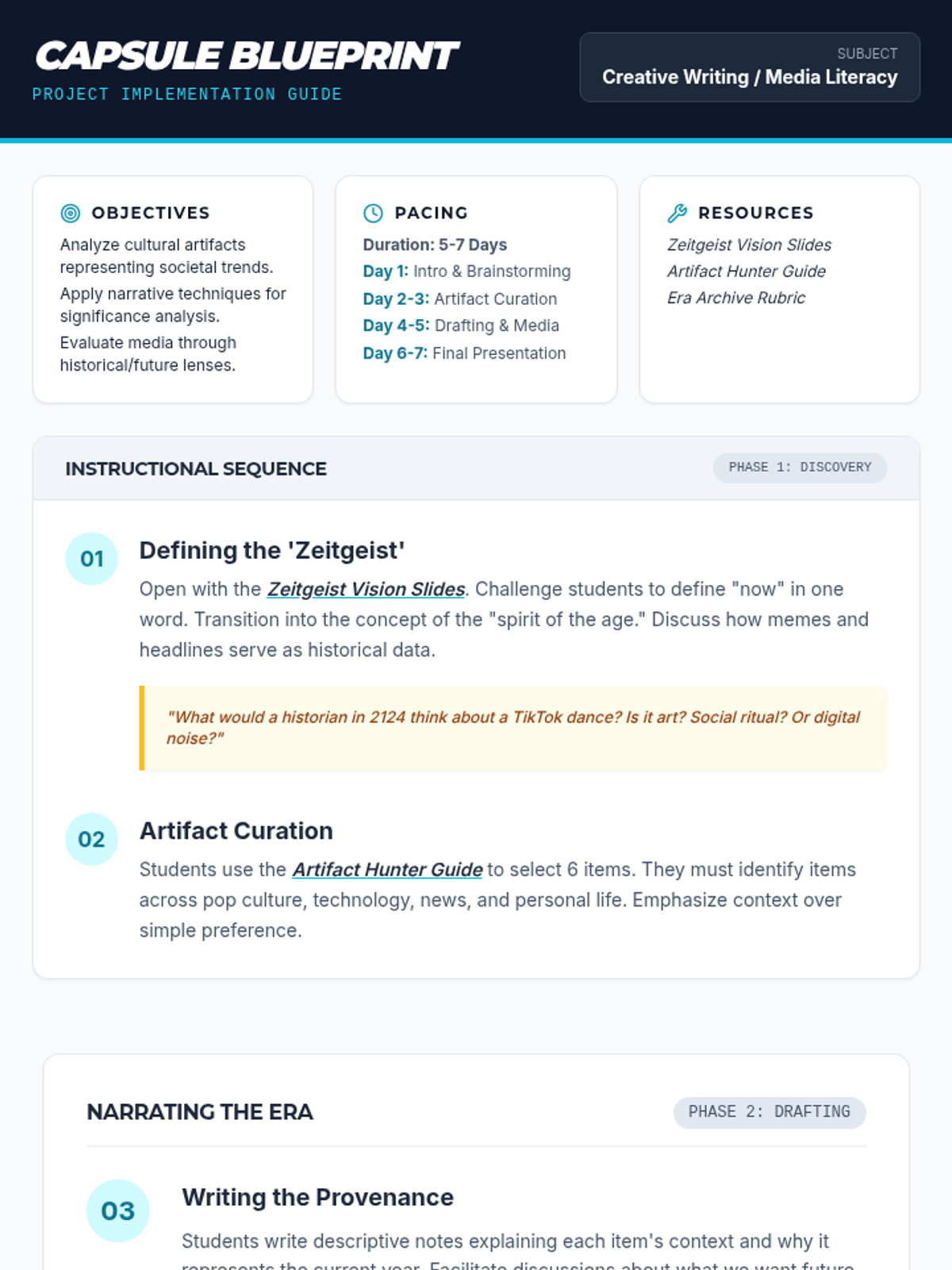
A 15-minute high-impact session focusing on identifying and repairing run-on sentences, sentence fragments, and vague pronoun-antecedent relationships. This lesson provides students with a 'repair manual' for common syntax glitches.
A quick exploration of theme and moral within the classic Brothers Grimm tale 'Briar Rose', featuring a focused bell ringer and exit ticket.
A comprehensive 30-45 minute lesson on the past perfect tense, featuring explicit instructions, a time-travel themed worksheet, and a detailed teacher guide. This lesson helps students understand how to sequence two past events using the 'past before the past' structure.
A deep dive into the life, legacy, and dreams of Suyuan Woo, the founding mother of the Joy Luck Club. Students will explore her resilience in war-torn China and her enduring hope for her daughters.
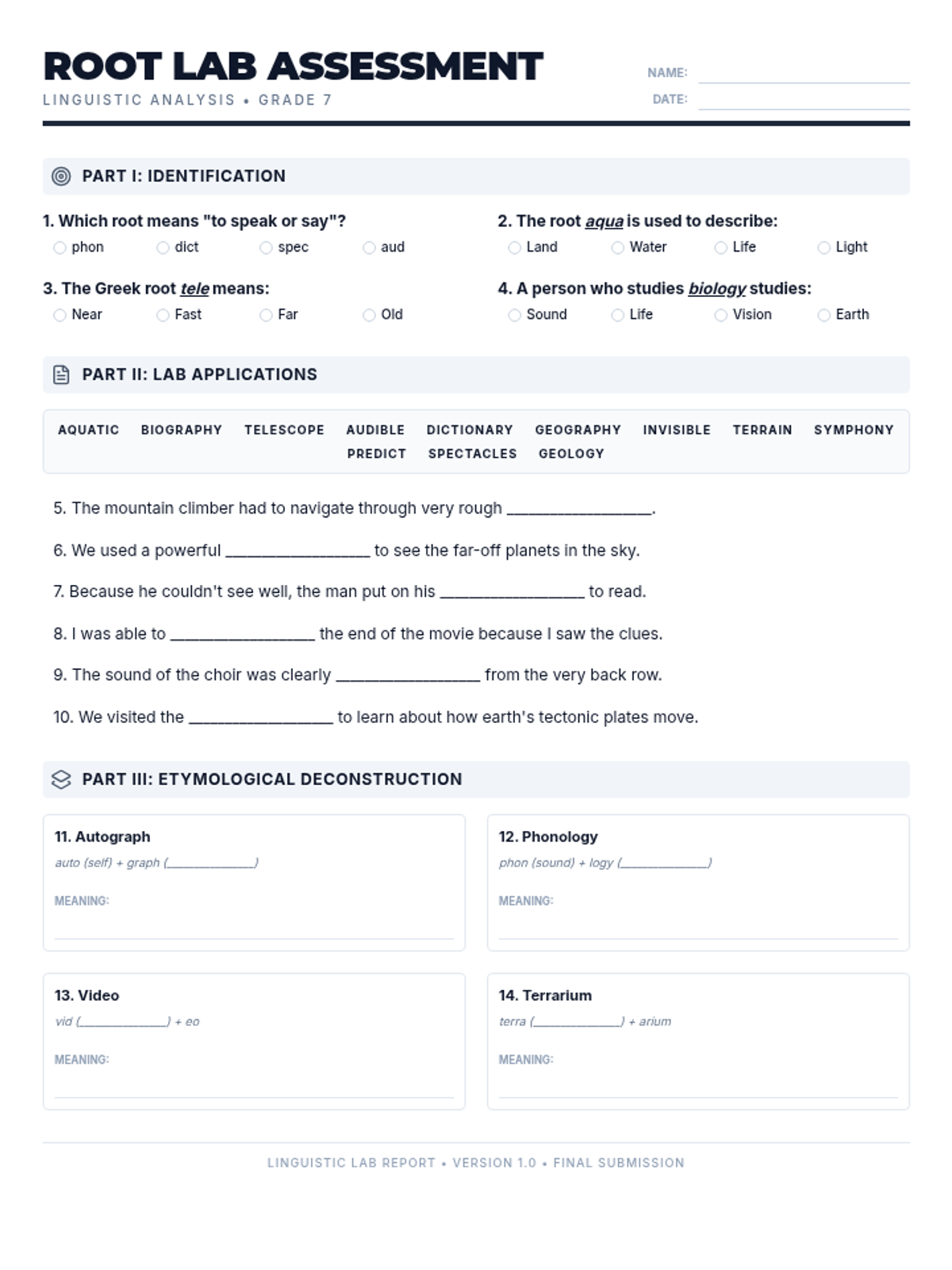
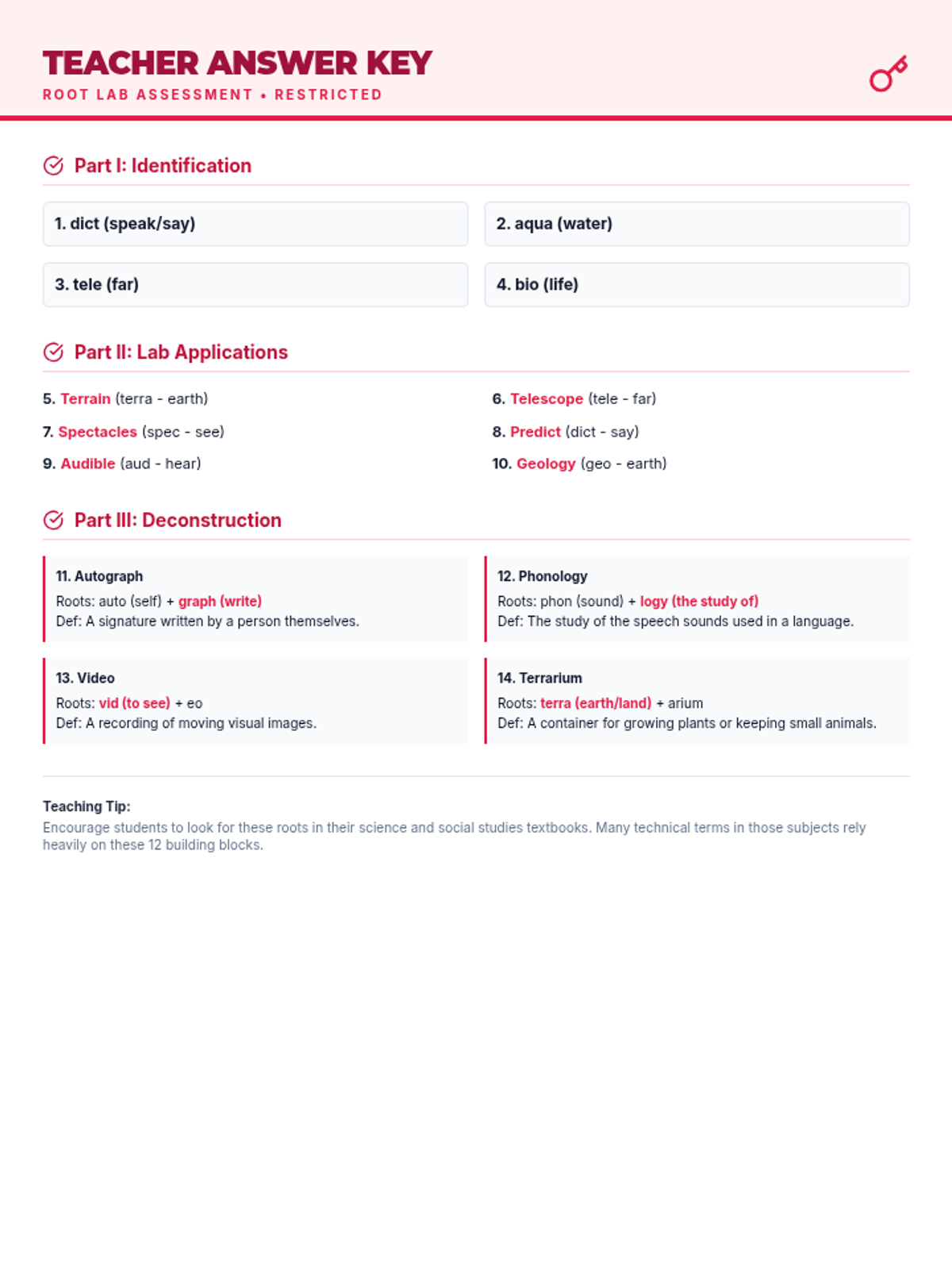
A 45-minute deep dive into the Greek and Latin roots bio-, mal-, jur-, and bene-, designed to help students decode complex academic vocabulary using the 'Word Lab' approach.
A detective-themed grammar lesson focused on correctly using relative pronouns 'who', 'which', and 'that'. Students will identify the correct pronouns for people versus objects through interactive instruction and a practice mission.
Culminating creative project where students reimagine the story in a modern setting, focusing on thematic preservation and character consistency.
Synthesizing the ending of the novella. Students explore the emotional impact of the conclusion and prepare for final project work.
Analysis of Part III, the arrival of the Lodgers, and the symbolic importance of music. Focus on the final break in family bonds.
In-depth analysis of character motivations and power shifts within the household. Using dialogue to understand how the family changes their roles.
Examination of Gregor's internal monologue and physical decline in Part II. Focus on themes of mental health and the loss of voice.
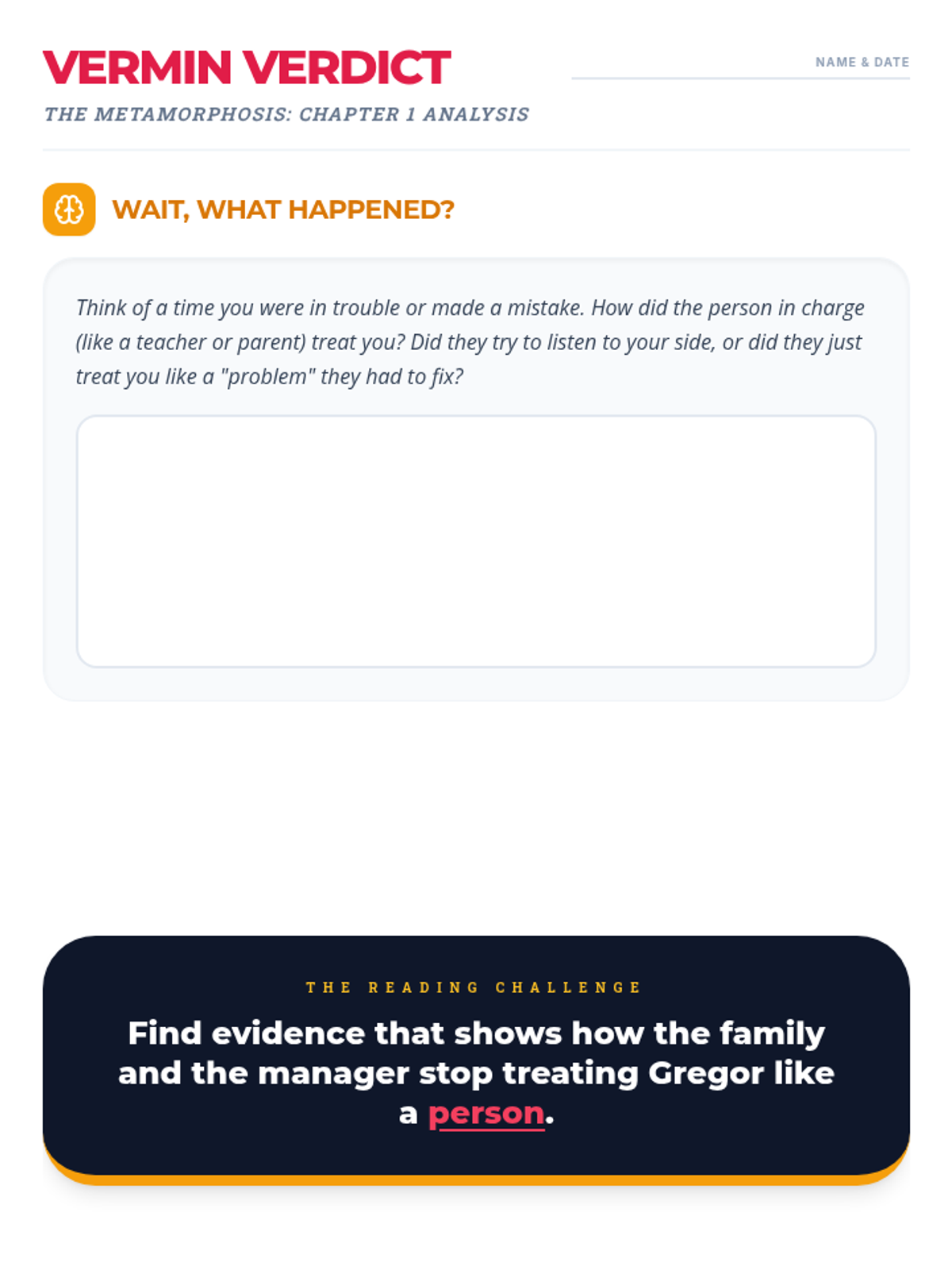
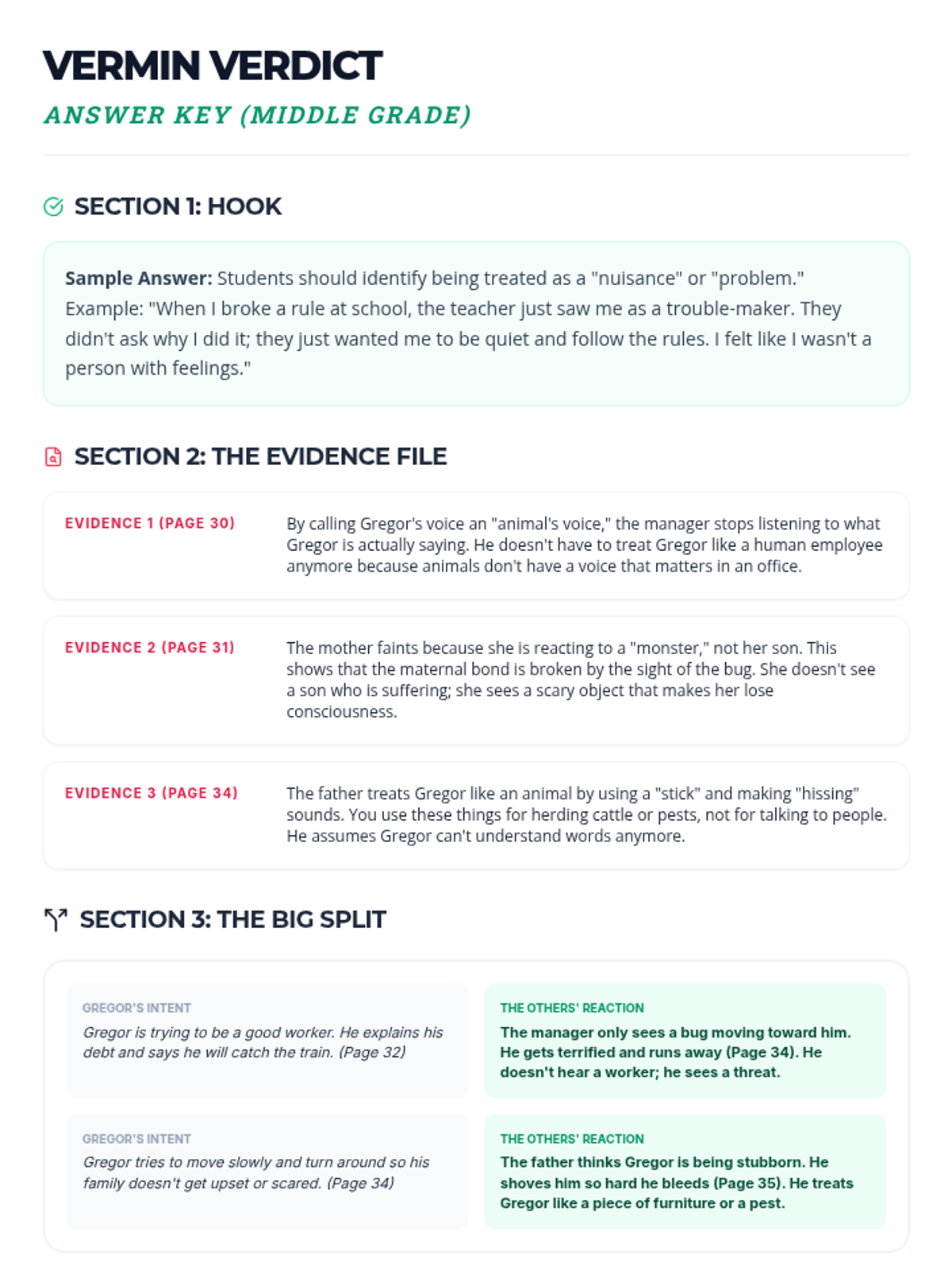
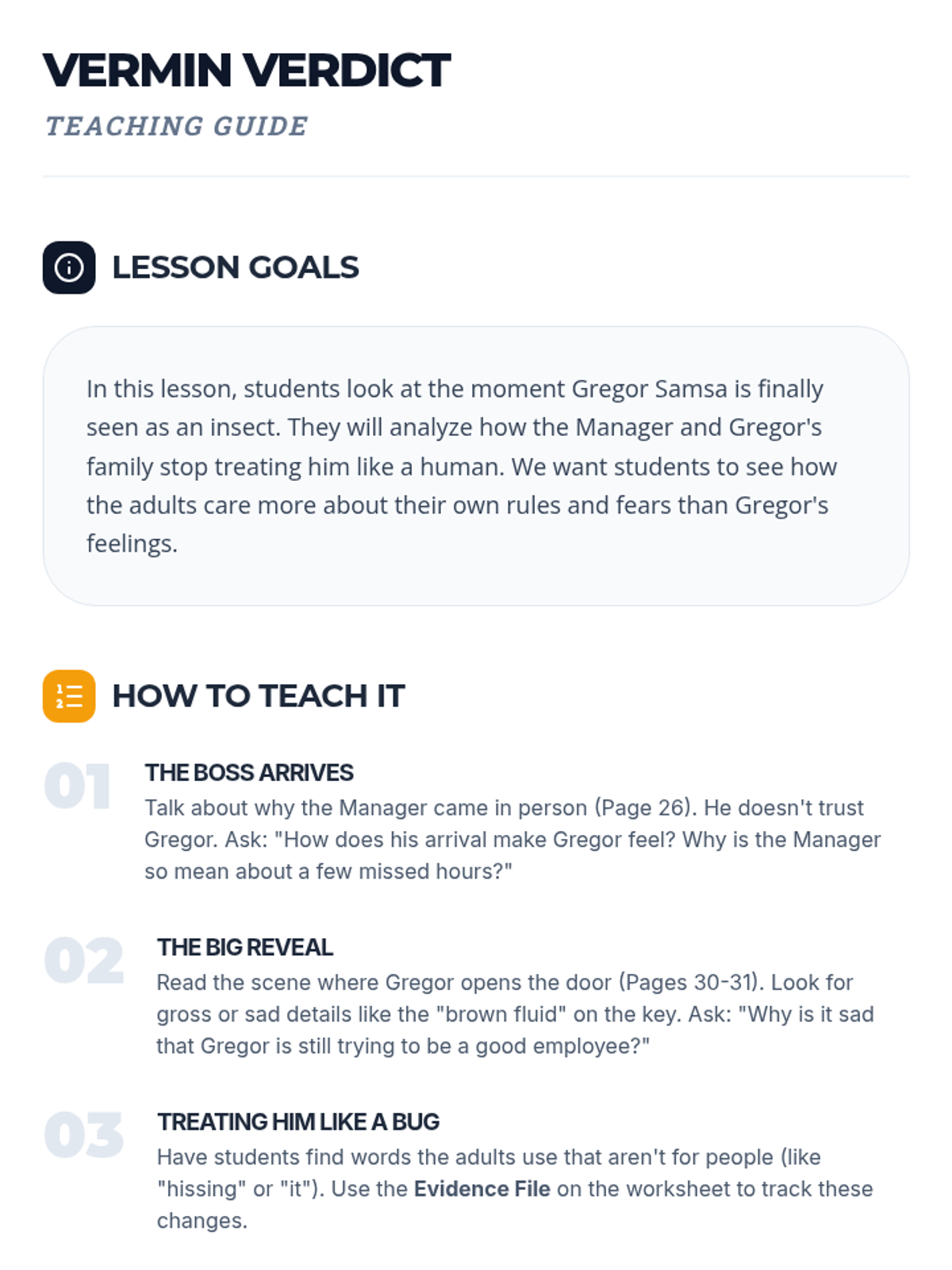
Analysis of the conflict between Gregor and his employer. Focus on the theme of 'The System' vs. the individual through the lens of the Manager's visit.
Introduction to the Samsa Family Case File. Students track character traits and initial reactions in Part I, focusing on how relationships begin to shift.
Students investigate the concept of 'Kafkaesque' and explore the life of Franz Kafka. Focus on vocabulary acquisition and the emotional landscape of isolation.
An introductory lesson for Kafka's 'The Metamorphosis' that explores themes of identity, external labels, and transformation through the lens of astrology and personal argumentation.
A comprehensive vocabulary workshop focused on 13 essential literary terms, using sticky definitions and graphic organizers to help students master analysis and interpretation.
A comprehensive lesson on understanding and crafting claims for argumentative writing, focusing on the difference between facts, opinions, and debatable claims.
Students will learn the structure and purpose of an argumentative essay by analyzing the benefits of daily reading, focusing on claims, evidence, and counterarguments.
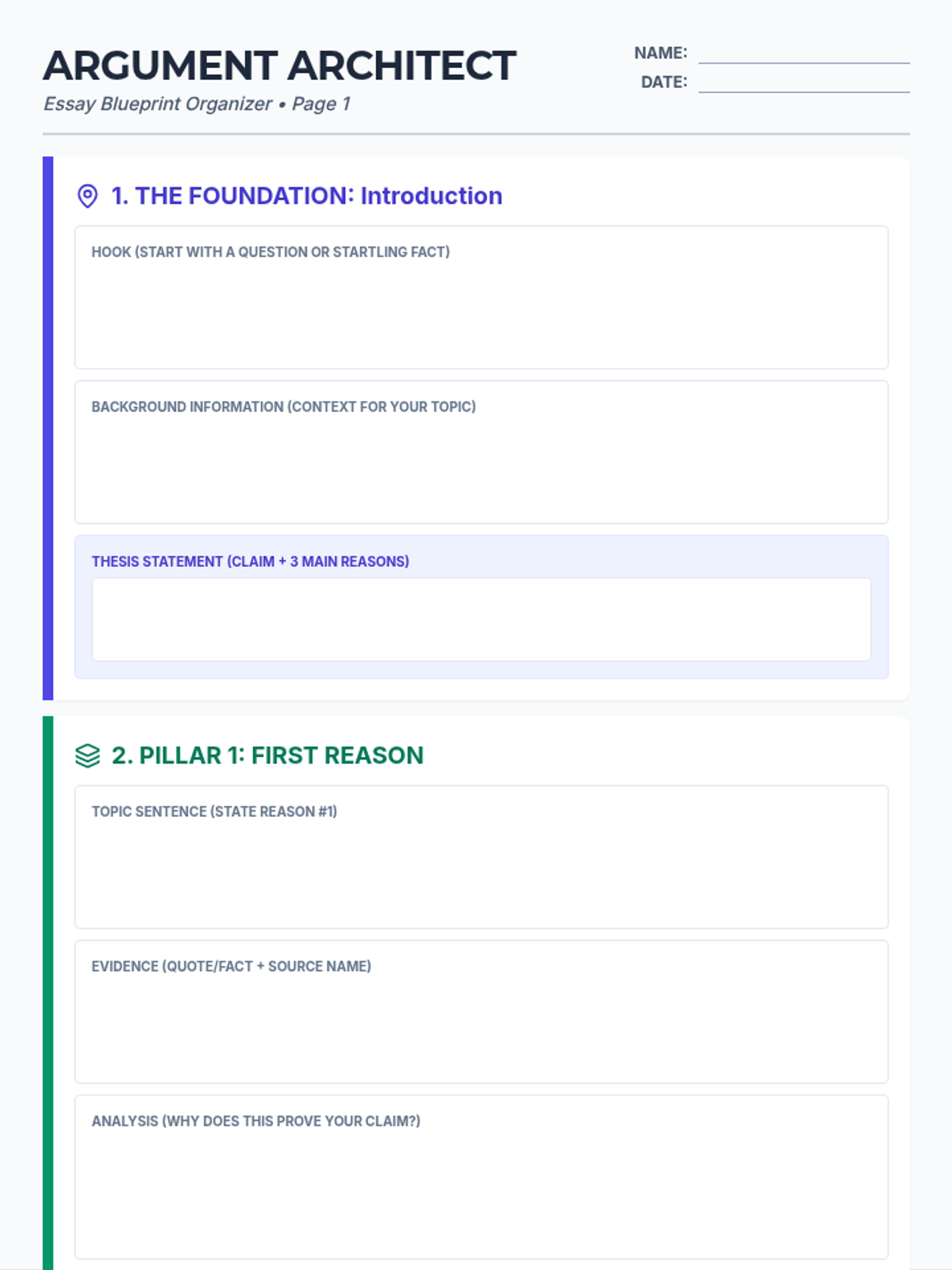
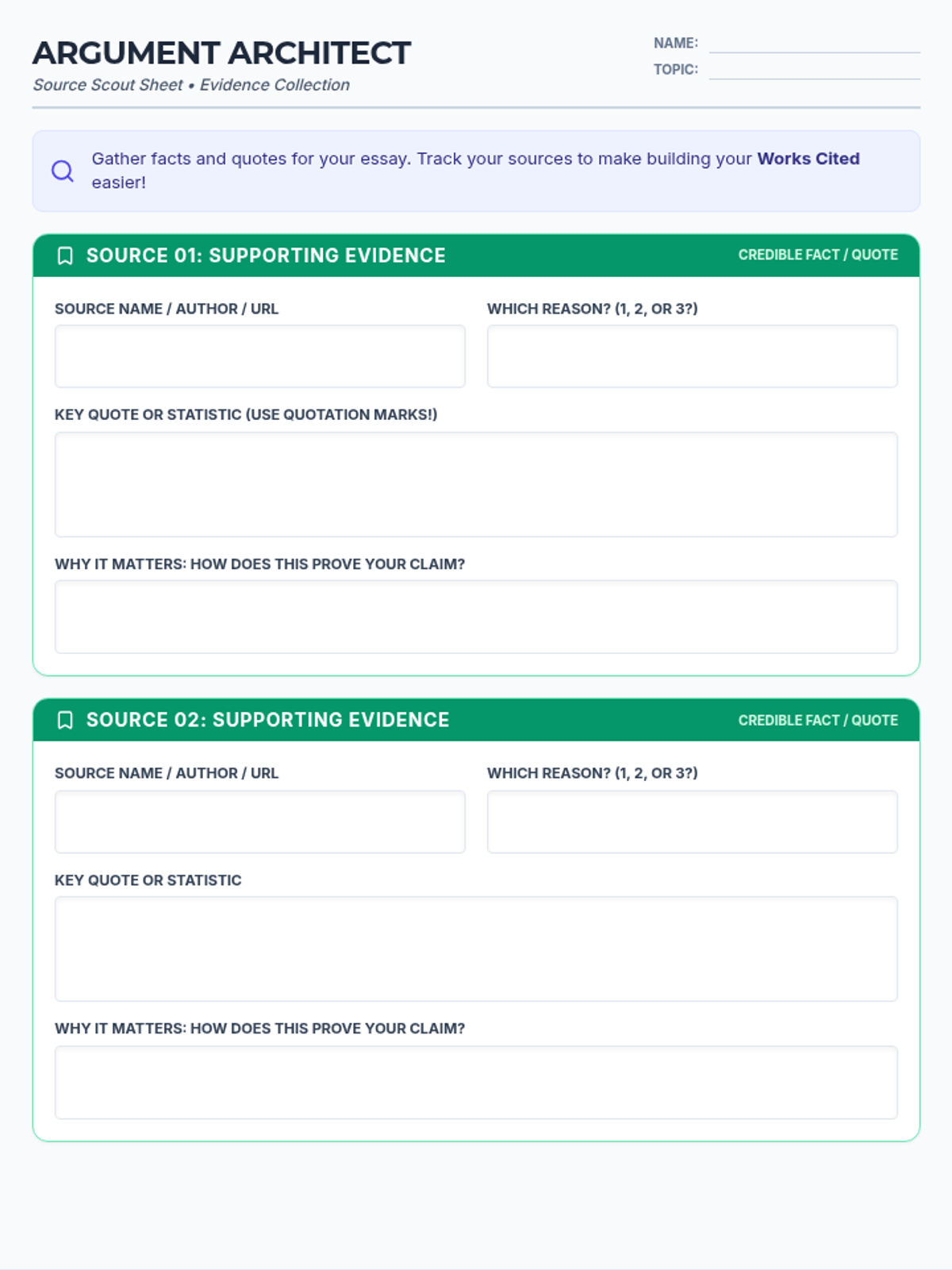
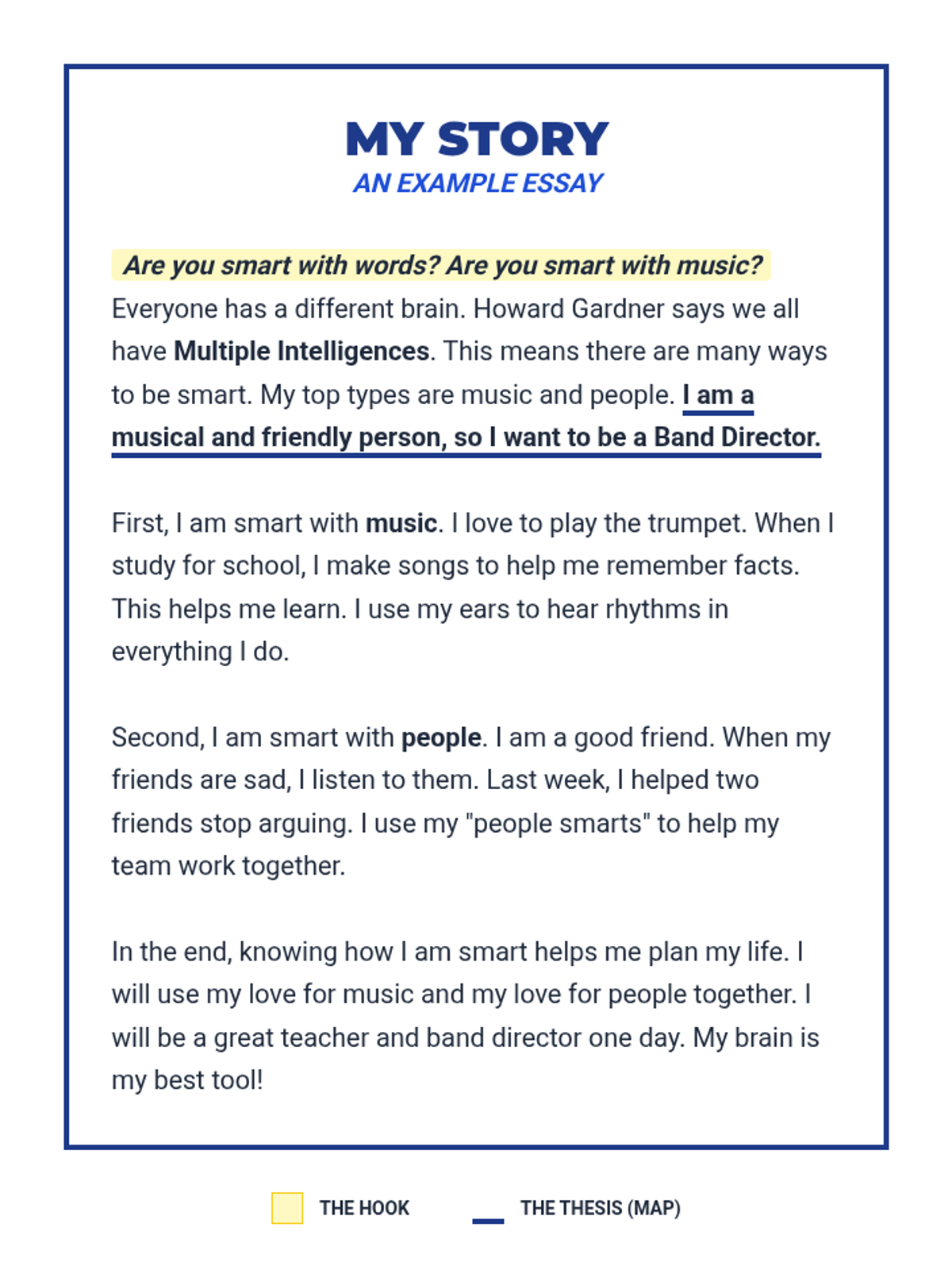
A comprehensive guide to mastering the structure of an argumentative essay, focusing on building strong claims, supporting evidence, and addressing counterarguments through a blueprint-inspired framework.
Exploration of the deportation process and the concept of dehumanization through a "Suitcase" simulation and small group movement activity.
Introduction to the setting of Sighet and the key figures in Eliezer's life before the Holocaust, using a movement-based gallery walk to engage students with ADHD/SLD.
A comprehensive final review covering all MCAS domains, including a mini-mock exam and rapid-fire strategy refresh.
Deep dive into analyzing both literary and informational texts, identifying themes, and evaluating authorial craft with a focus on evidence-based claims.
Teaches students how to construct high-scoring text-based responses and master standard English conventions through structural planning and revision techniques.
Focuses on active reading strategies, Question-Answer Relationships (QAR), and deciphering Tier 2 and Tier 3 vocabulary in context to maximize comprehension on MCAS passages.
A lesson focusing on Frederick Douglass's Narrative, Chapter 10, analyzing the transition from 'brute' to 'man' through two key passages. It eliminates the gallery walk in favor of direct instruction and anchor-chart-guided writing.
A deep dive into character dynamics, focusing on the distinction between static and dynamic characters. Students analyze internal and external catalysts for change through structured graphic organizers.
A comprehensive GED-style final evaluation to measure mastery of RLA skills including reading comprehension, grammar, and writing.
The final polish: mastering punctuation, capitalization, and verb tense consistency to ensure professional-grade writing.