Sentence structure fundamentals, subject-verb agreement, and precise usage of parts of speech including pronouns, conjunctions, and adjectives. Targets technical accuracy through mastery of capitalization, punctuation, spelling, and verb mood.
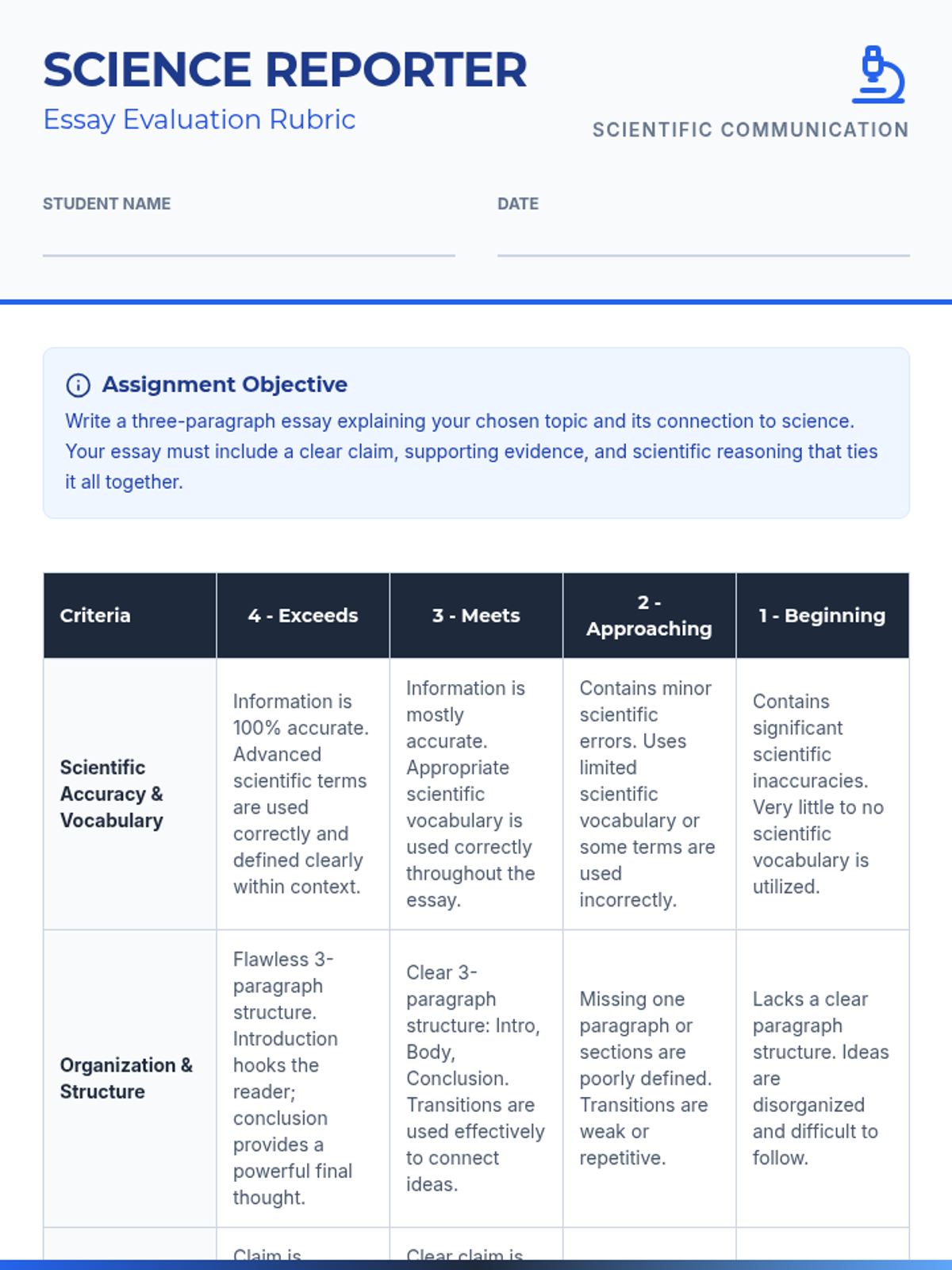
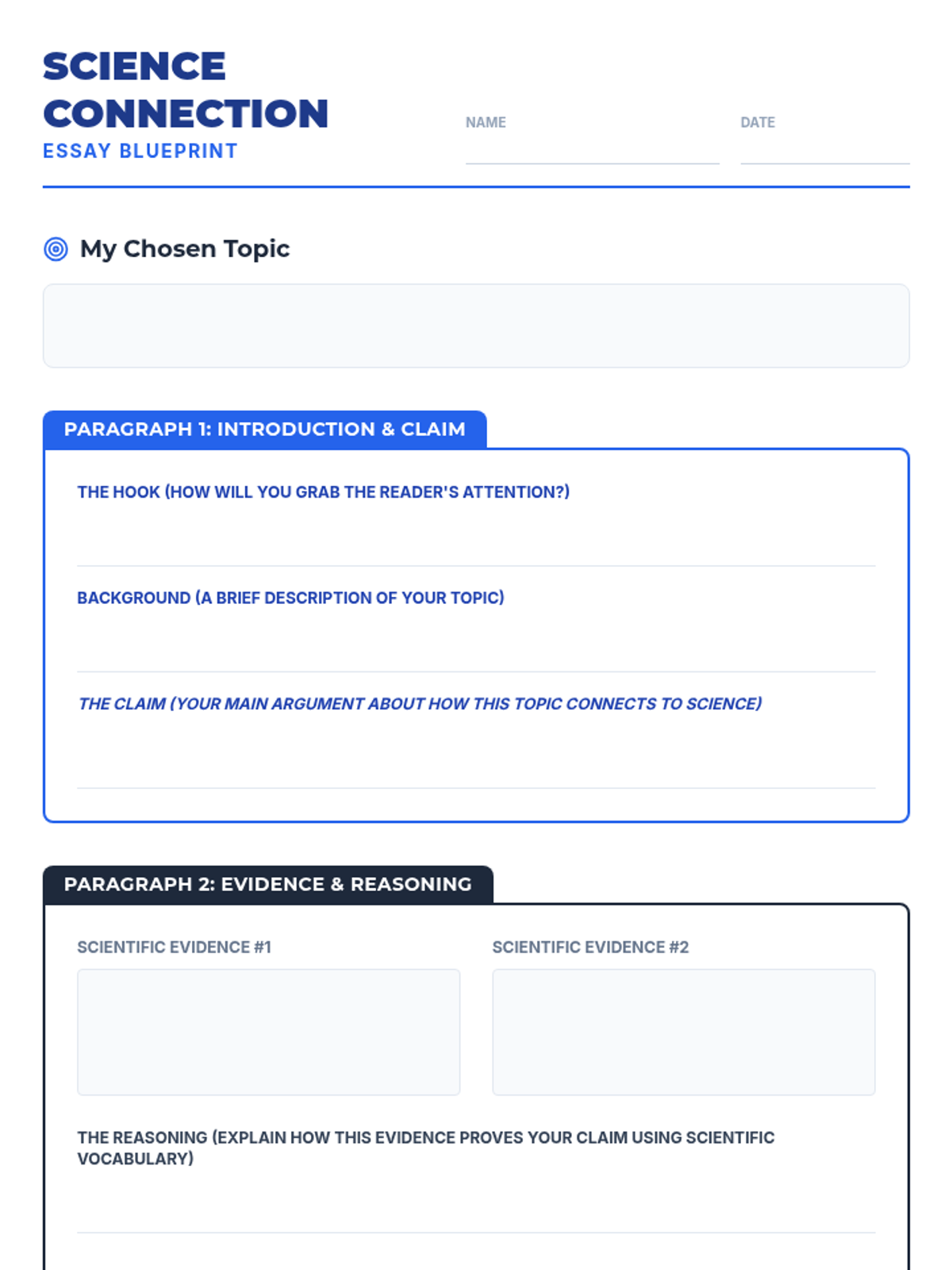
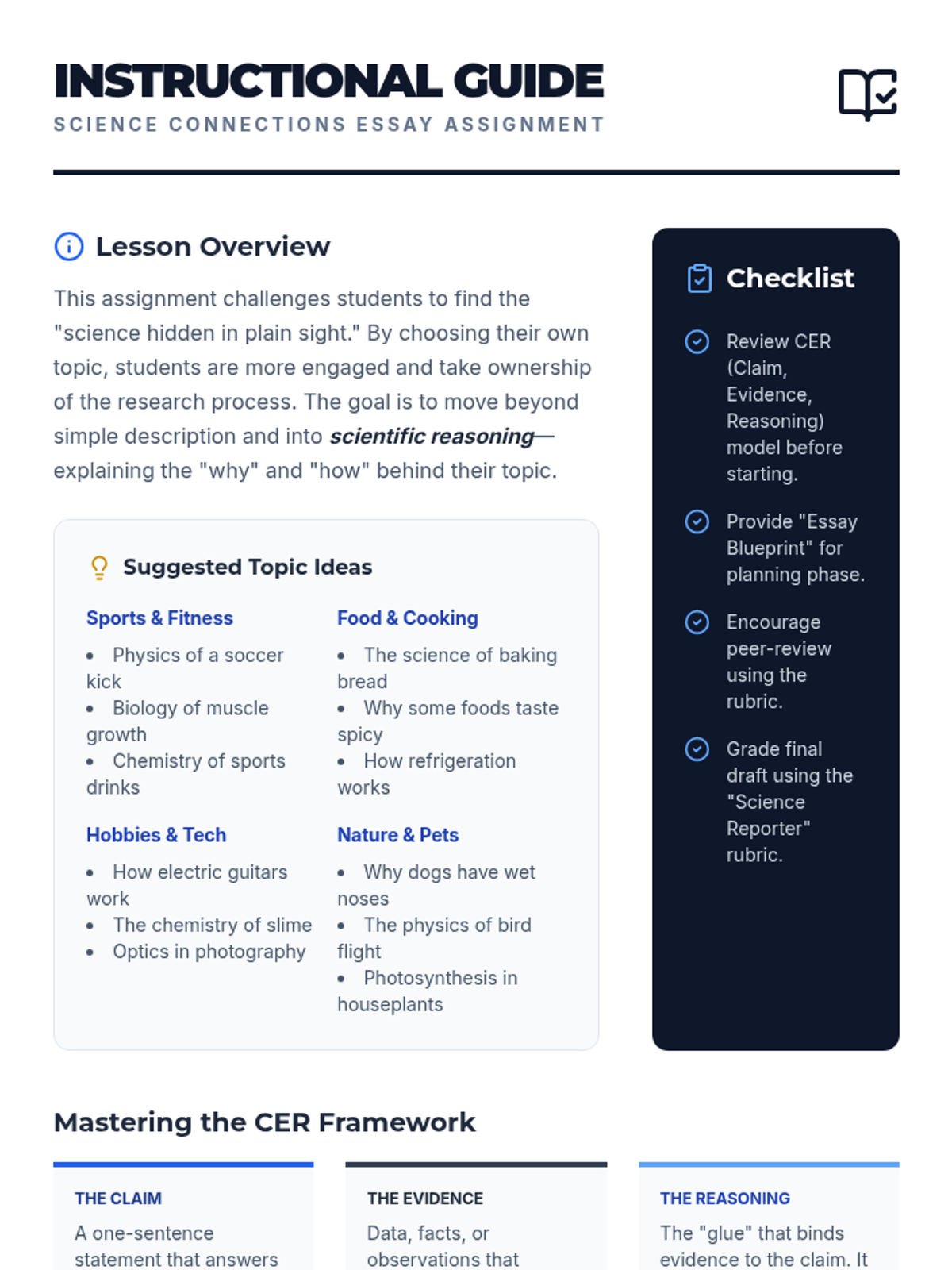
A lesson focused on helping students write a structured three-paragraph essay connecting a self-chosen topic to scientific principles.
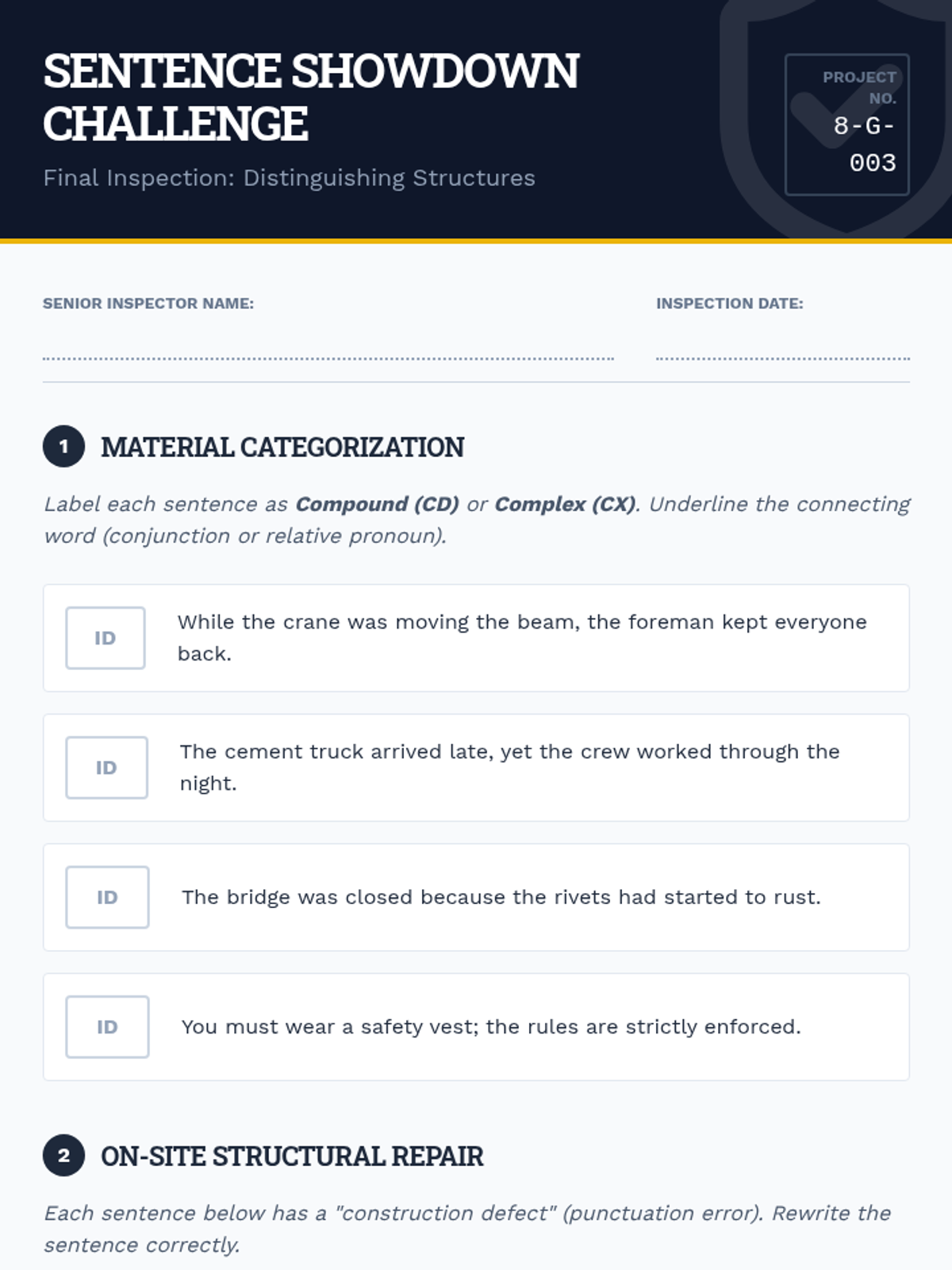
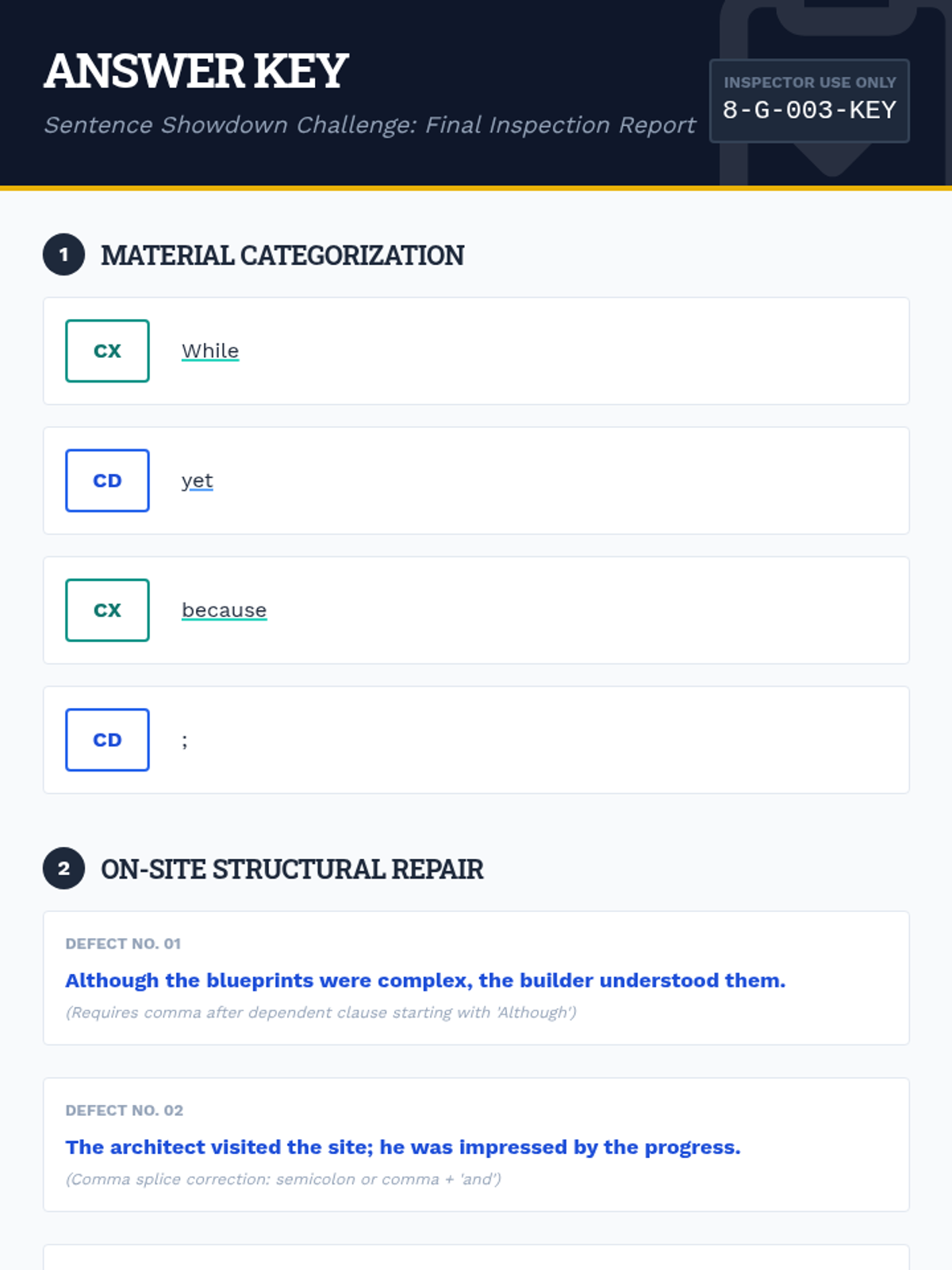
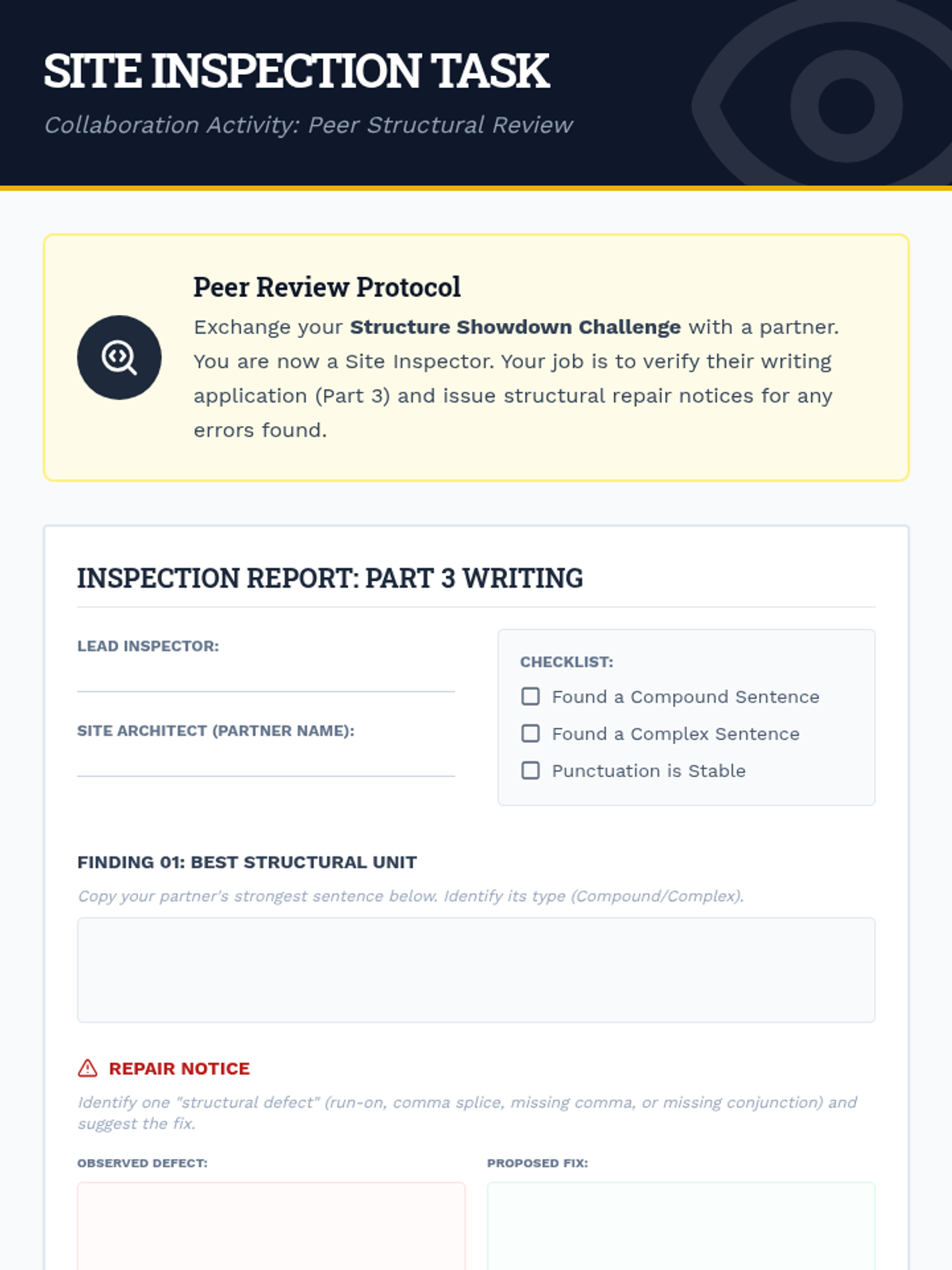
A cumulative review and application session where students differentiate between sentence types and correct structural errors.
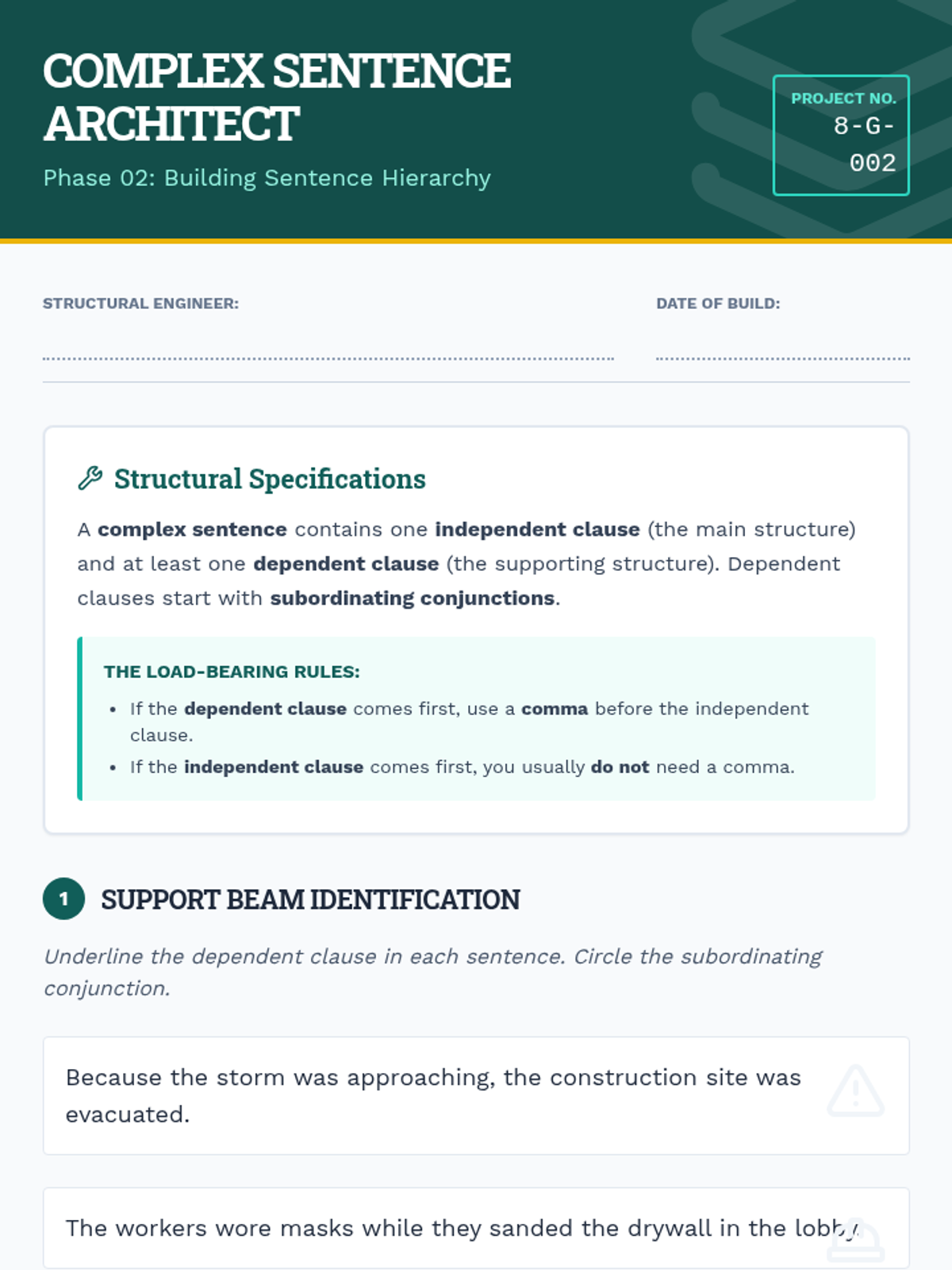
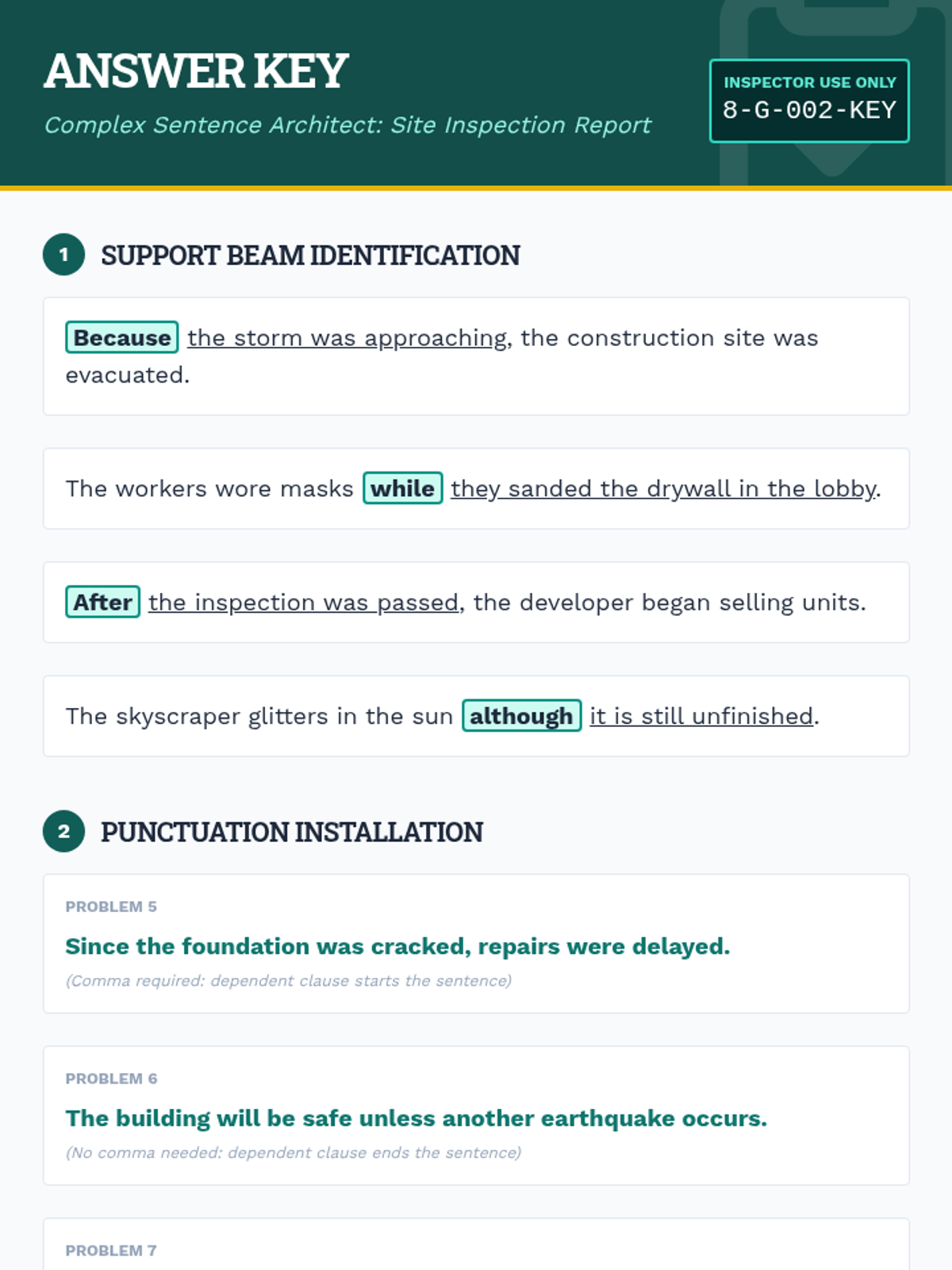
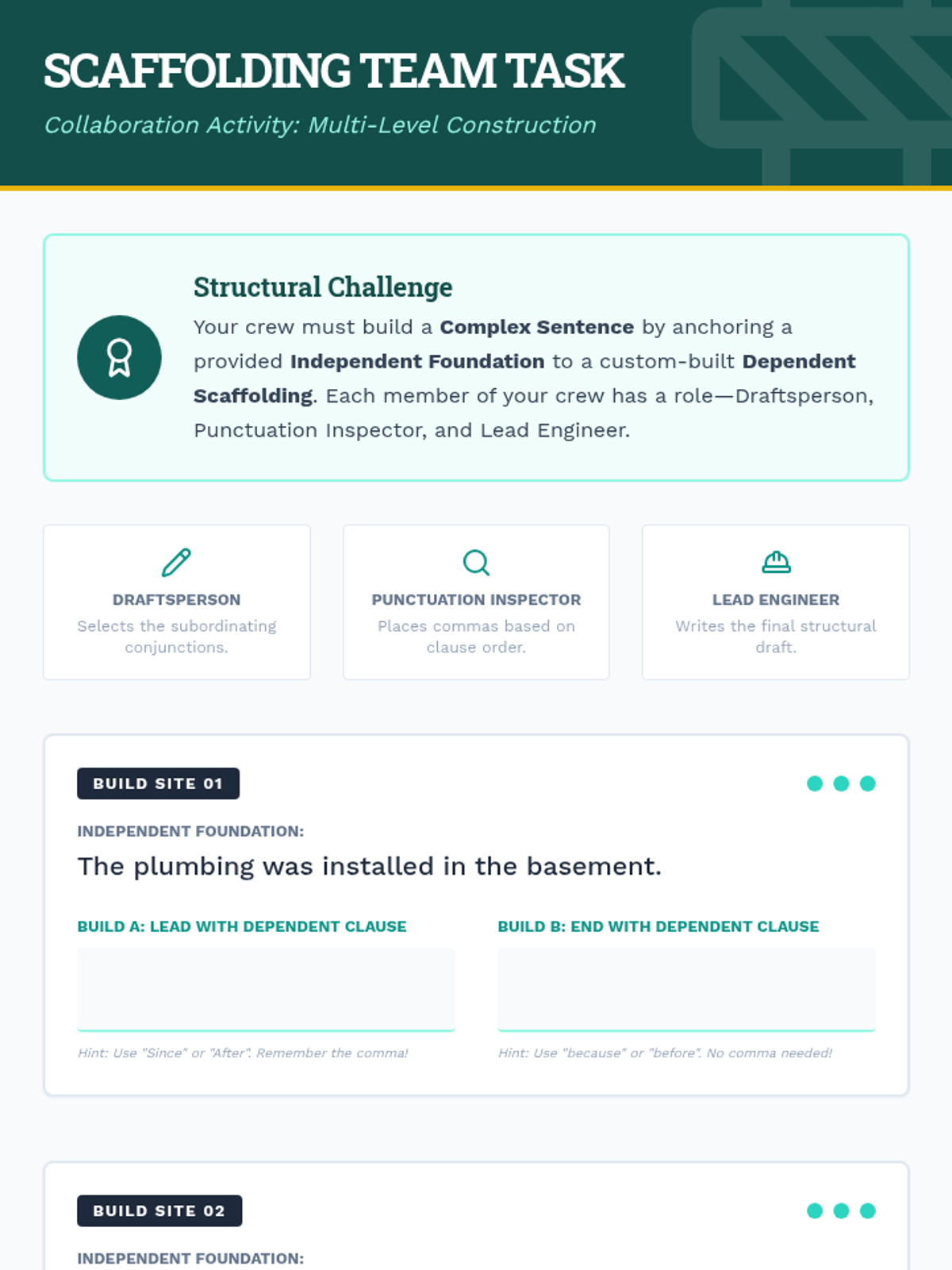
Explores the hierarchy of complex sentences, teaching students to identify and utilize subordinating conjunctions and relative pronouns.
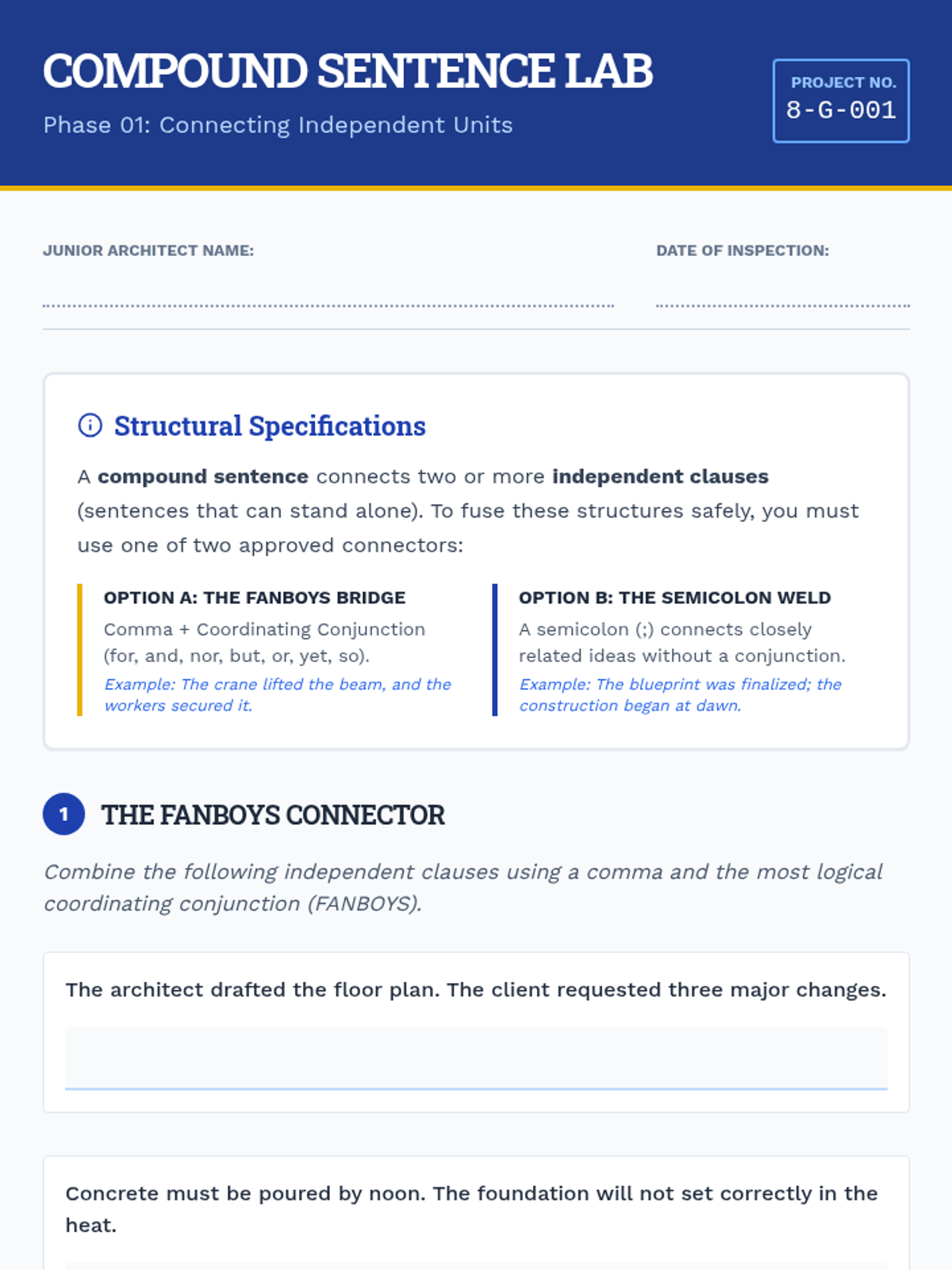
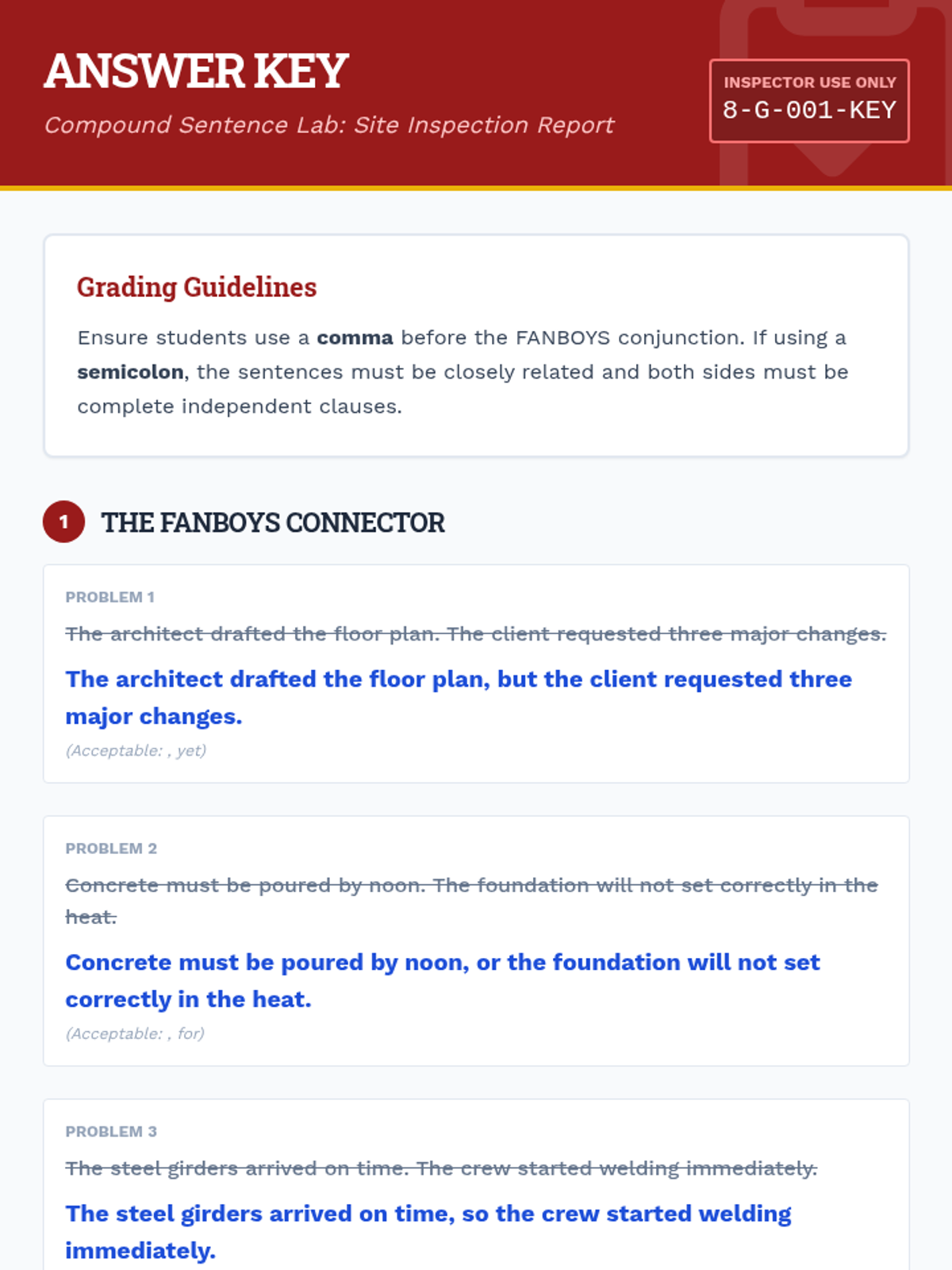
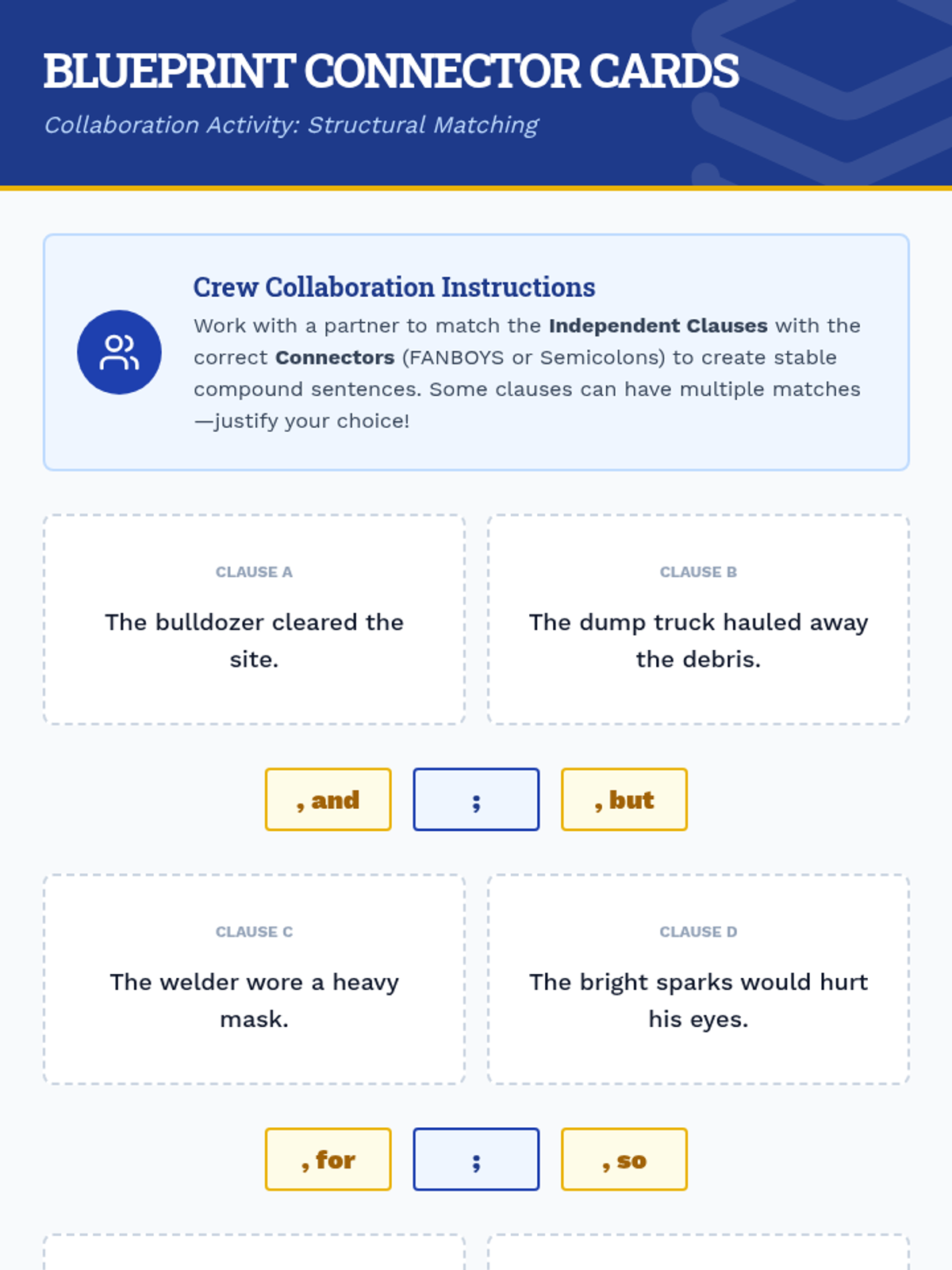
Introduces the mechanics of compound sentences, focusing on coordinating conjunctions (FANBOYS) and the proper use of semicolons.
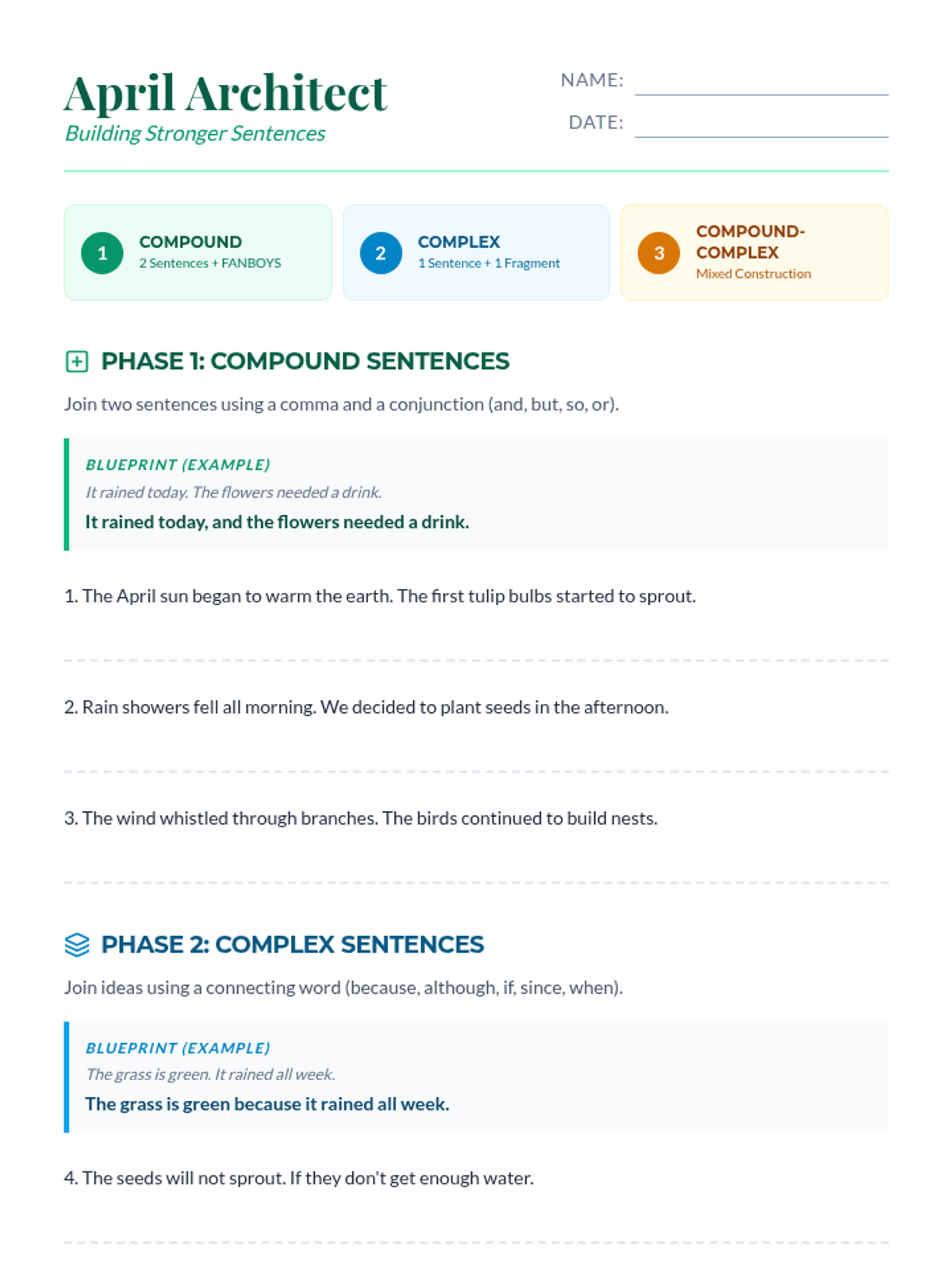
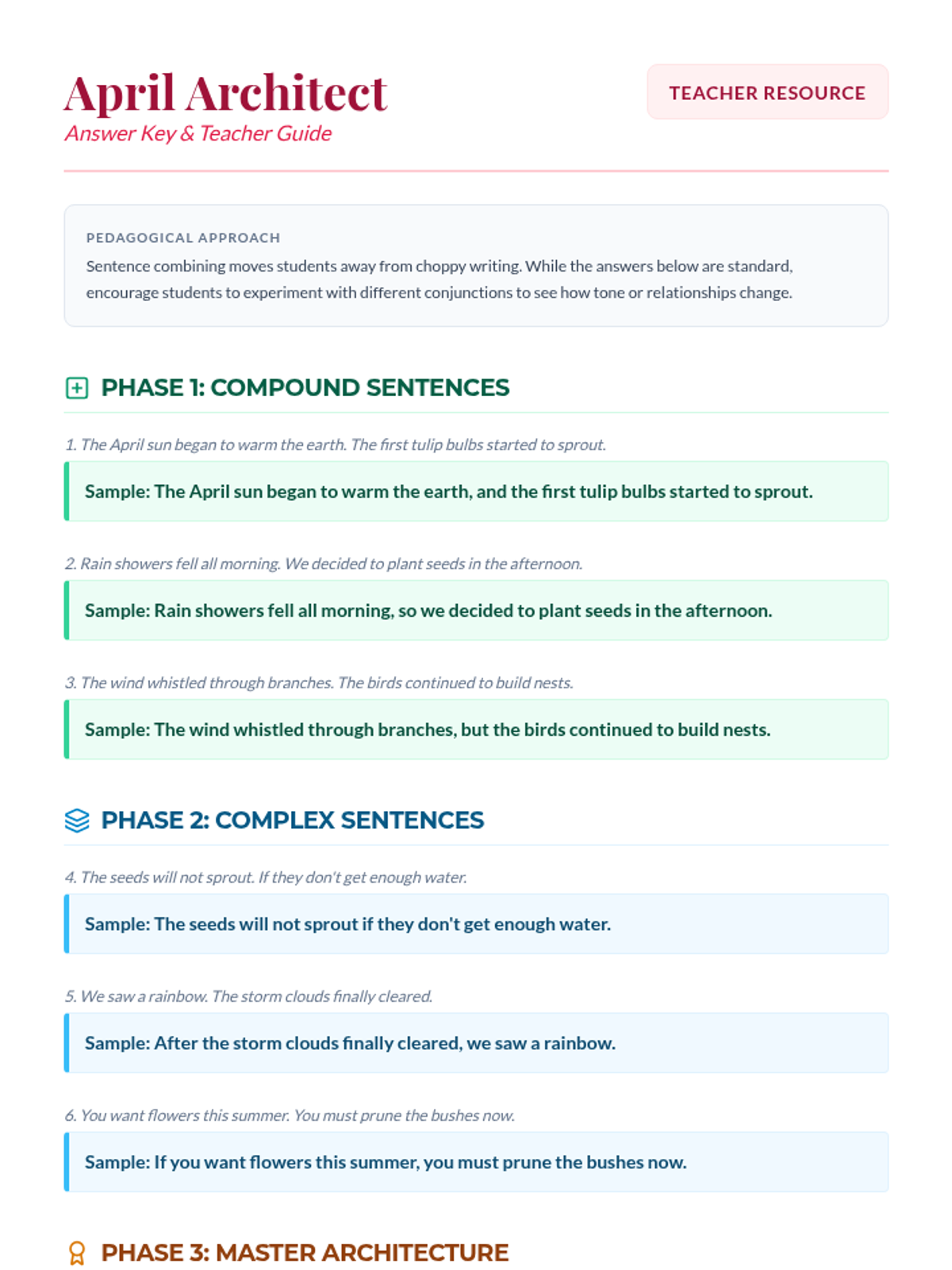
A lesson focused on enhancing sentence variety and structure through combining techniques. Students practice building compound, complex, and compound-complex sentences using April-themed prompts.
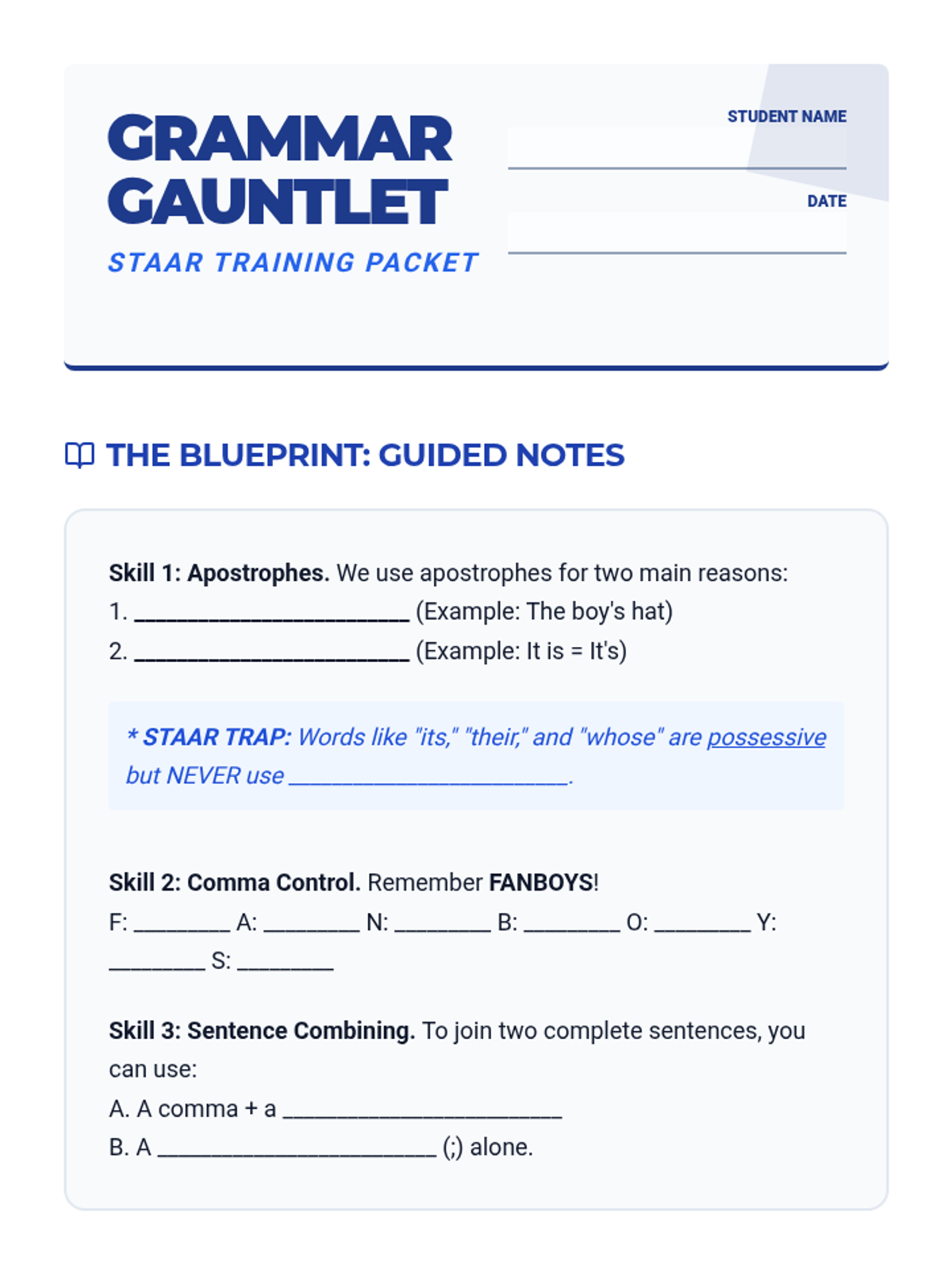
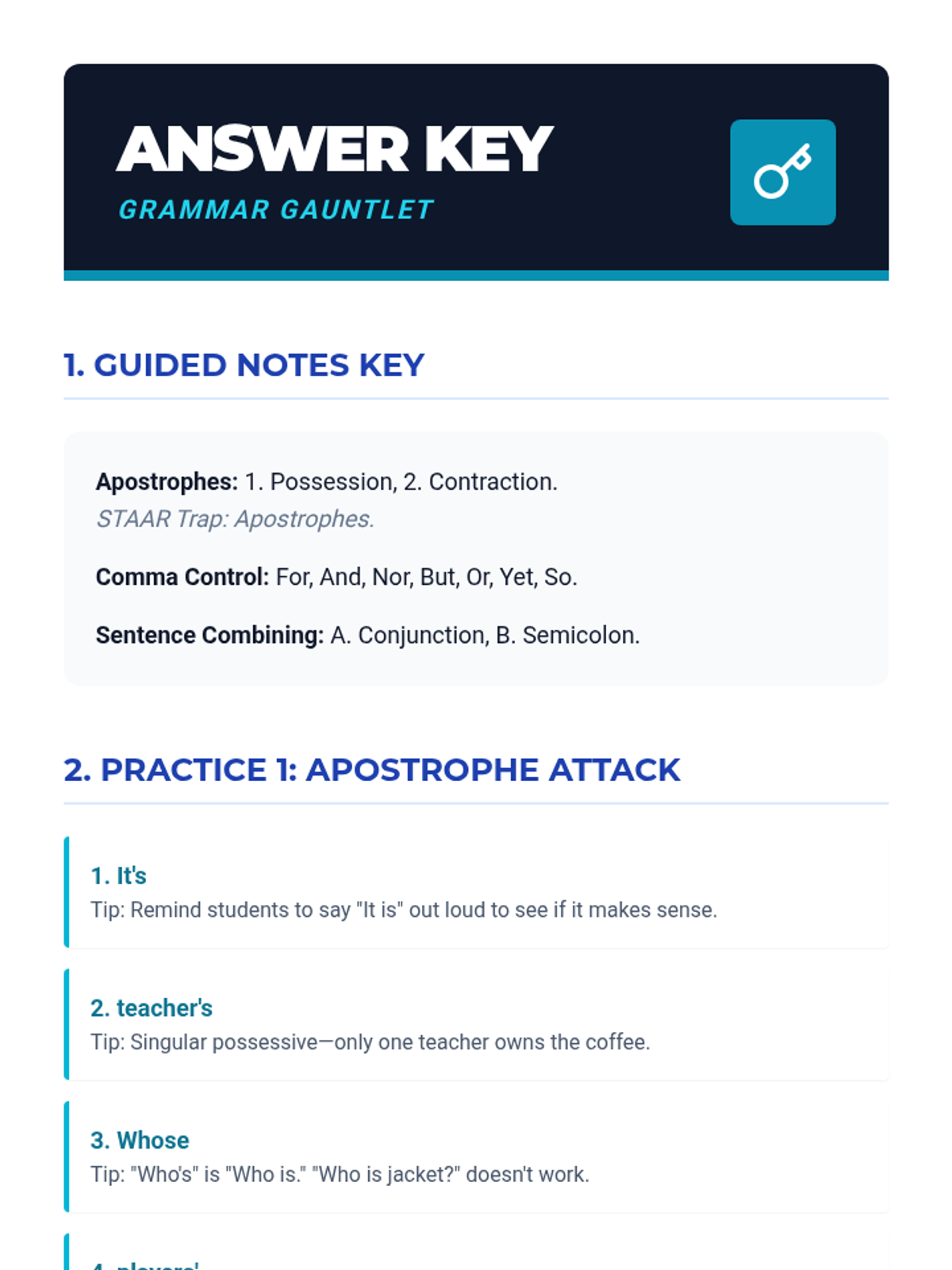
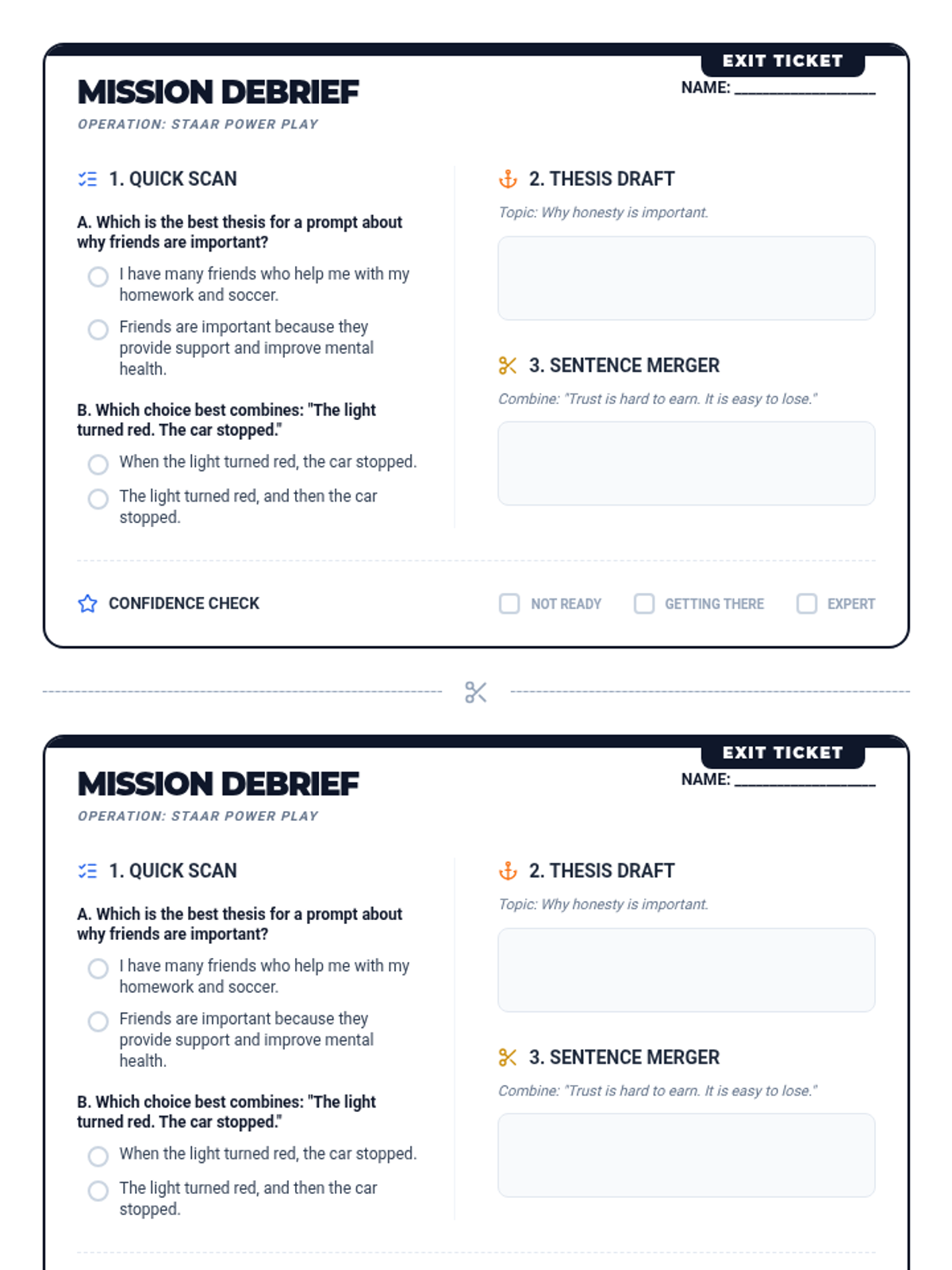
A high-impact tutoring session focused on STAAR writing skills, specifically targeting apostrophes, comma rules, and sentence combining through direct instruction and intensive practice.
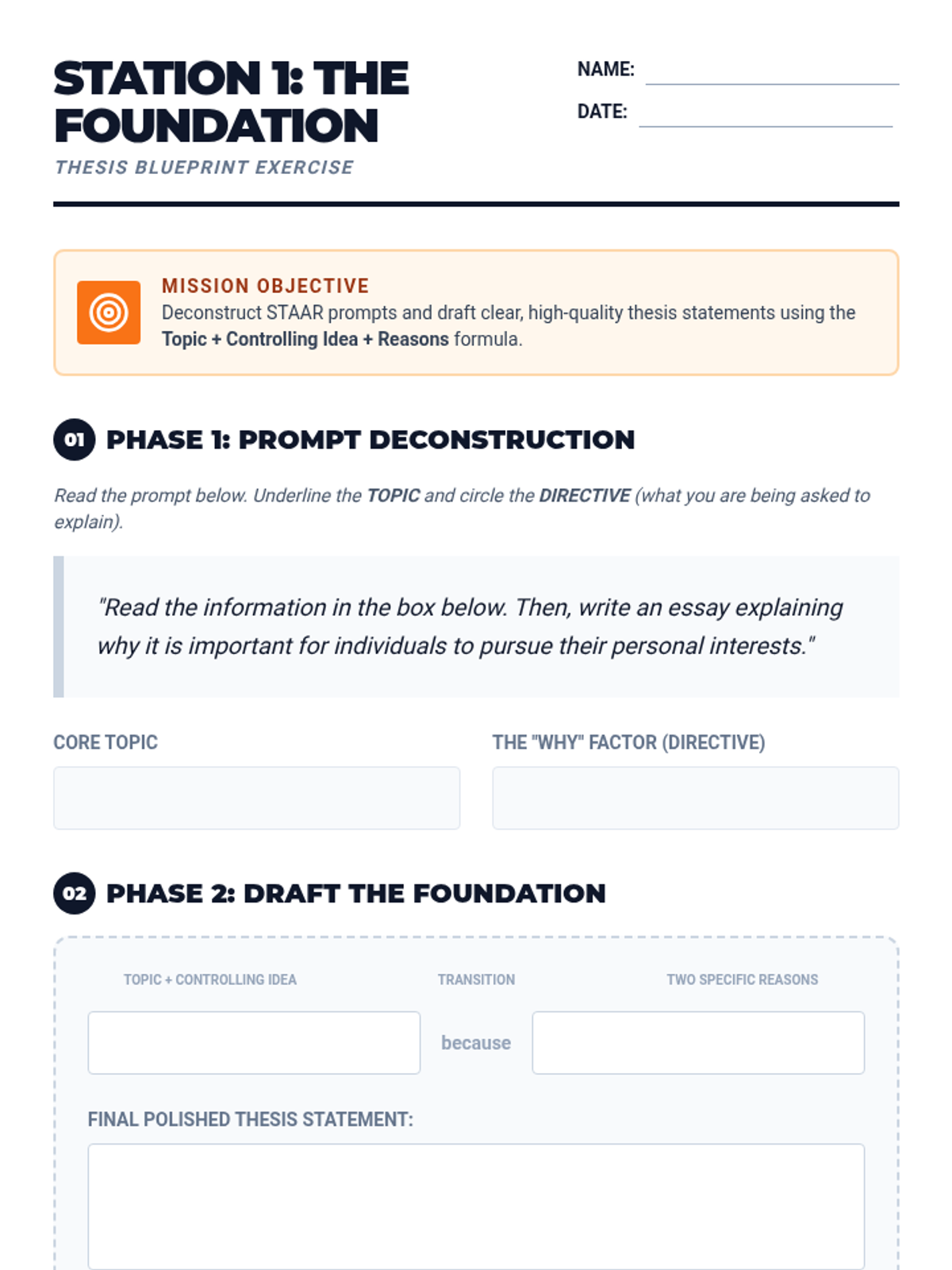
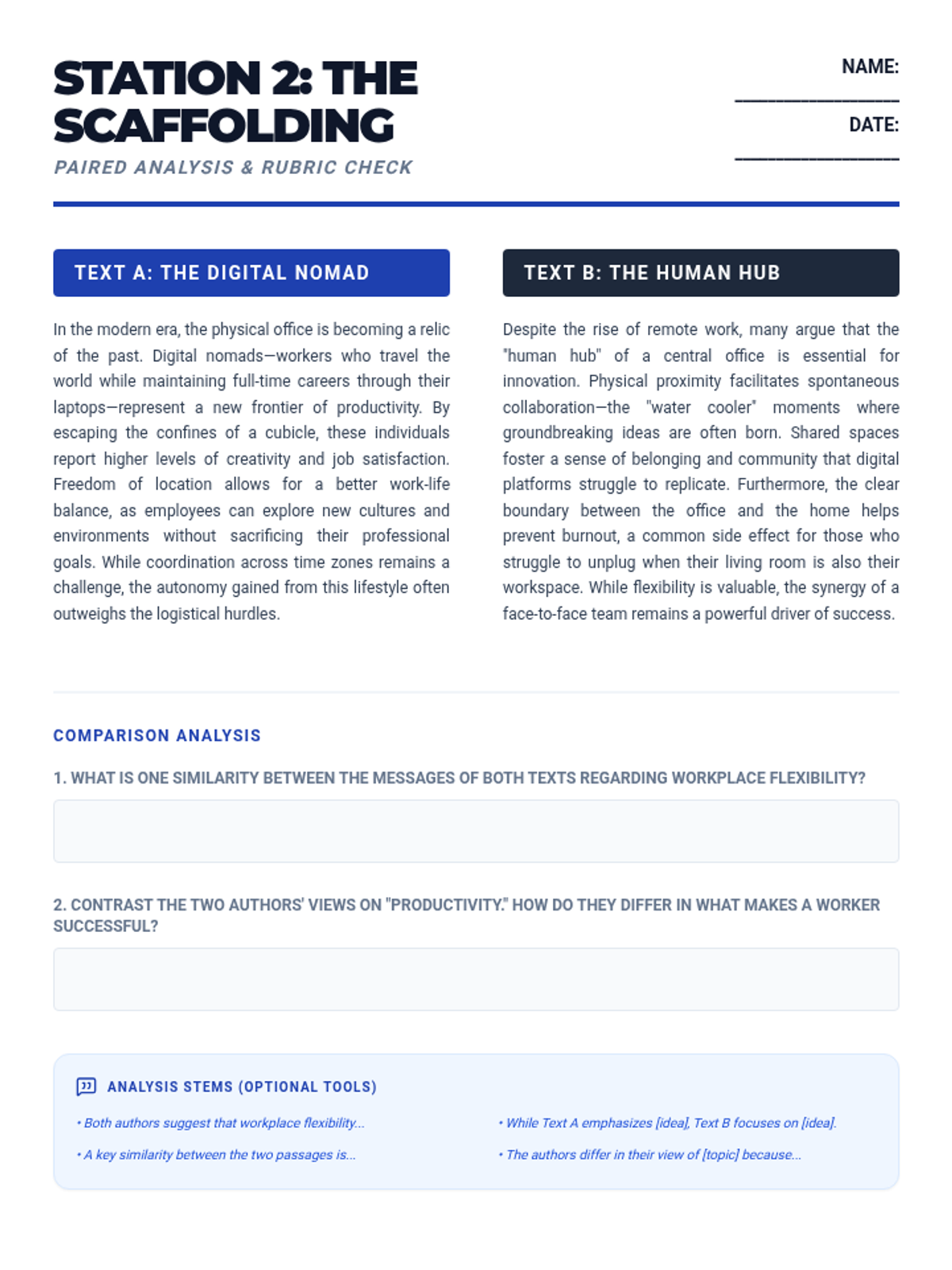
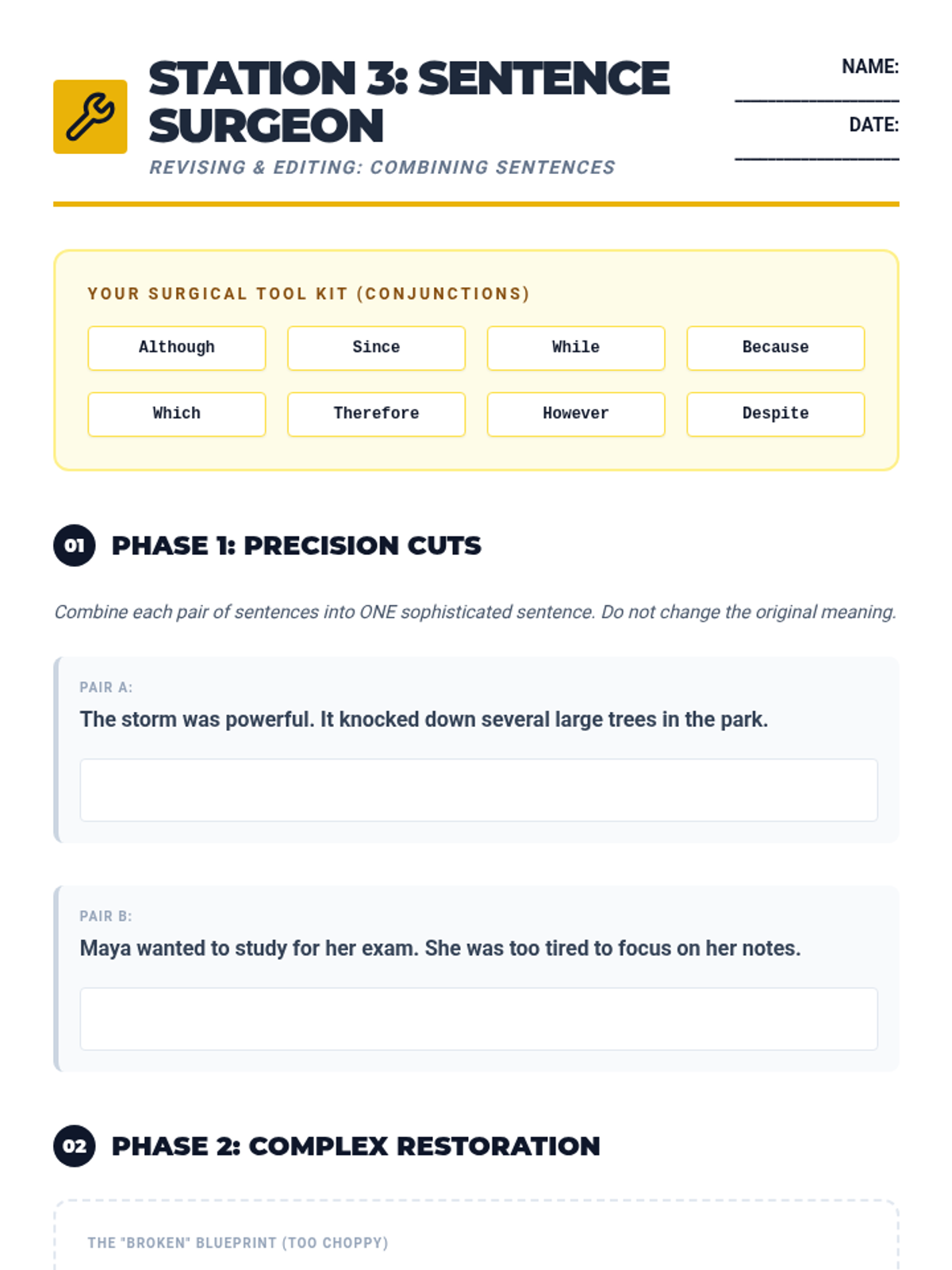
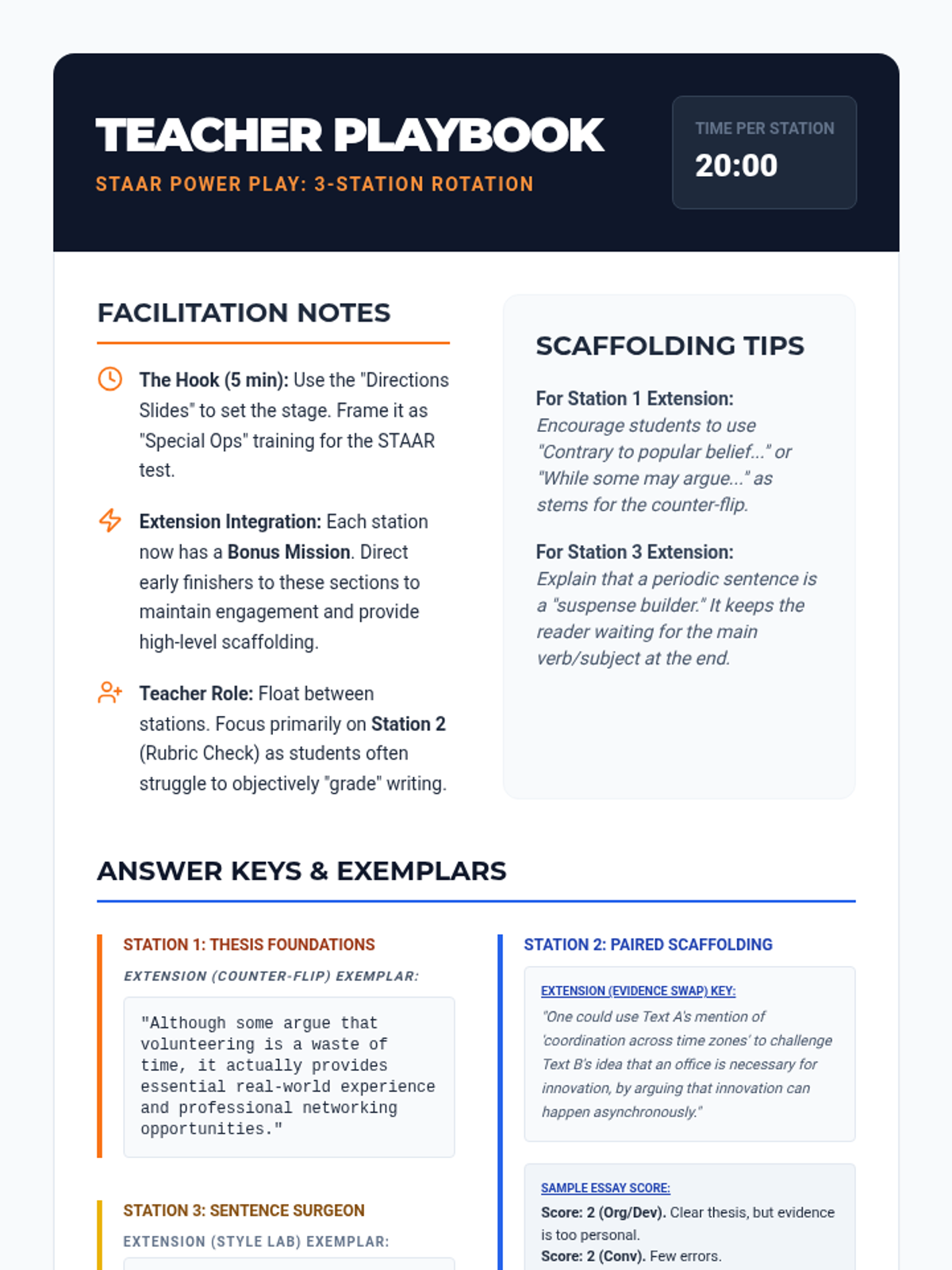
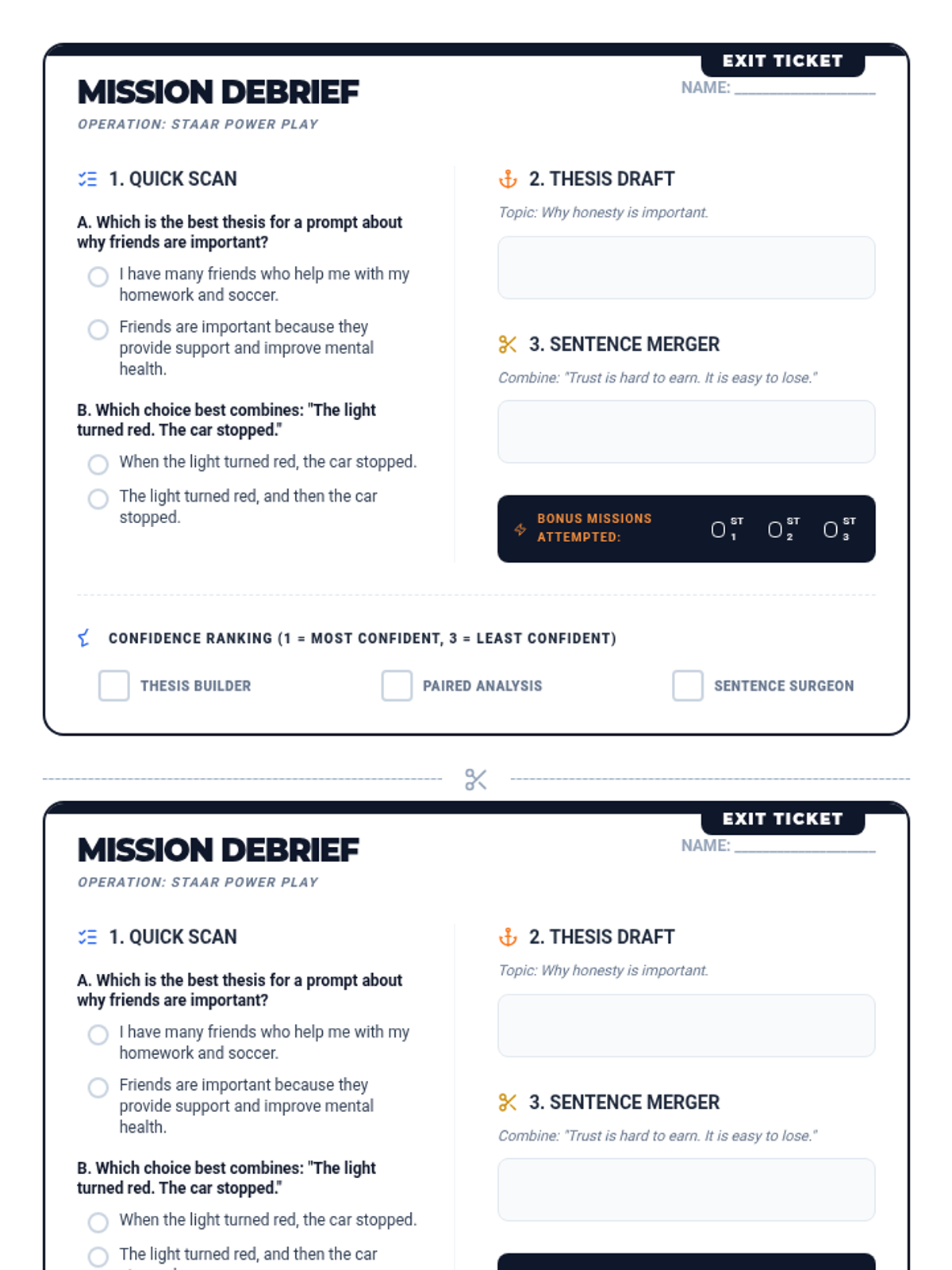
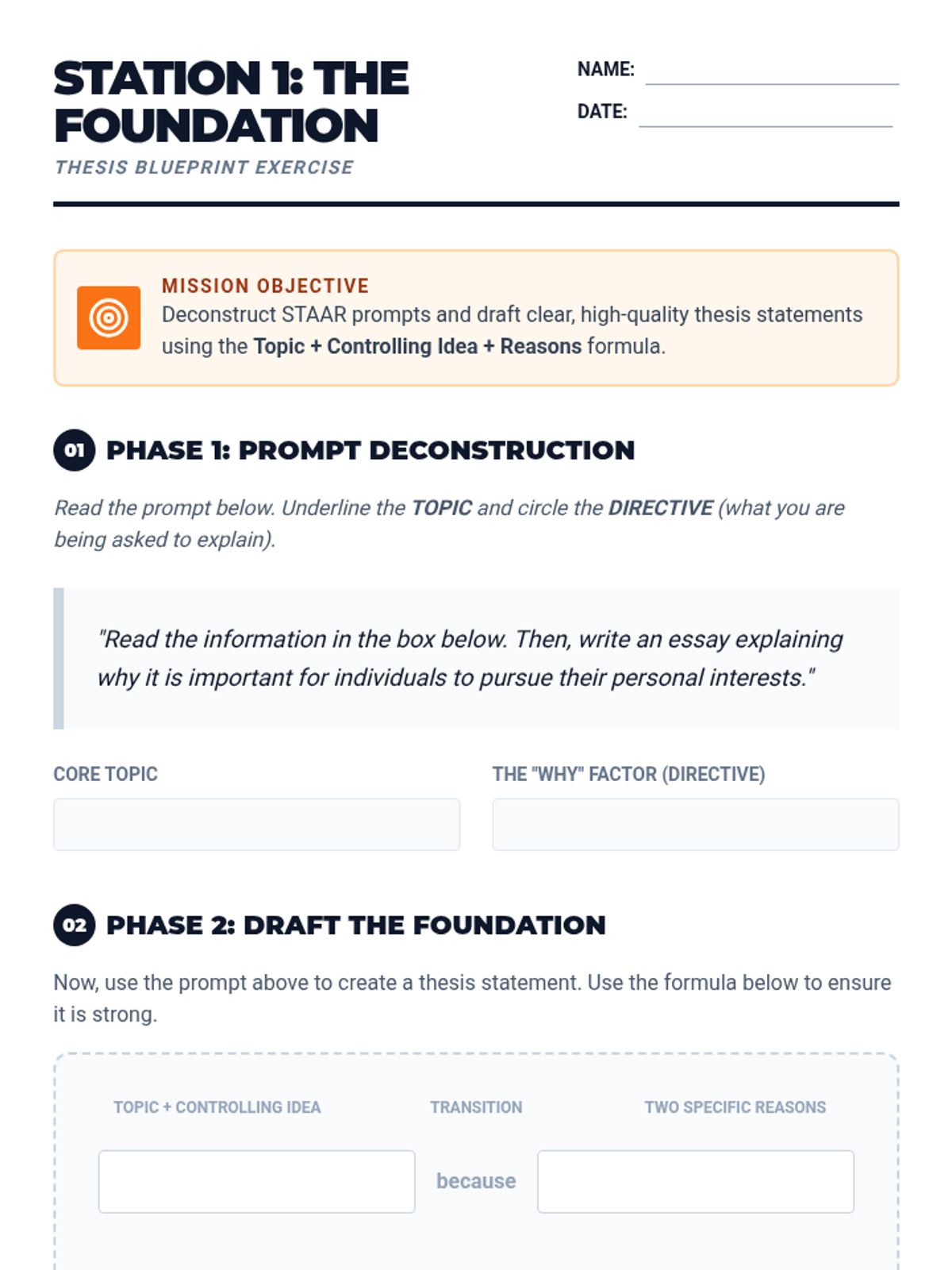
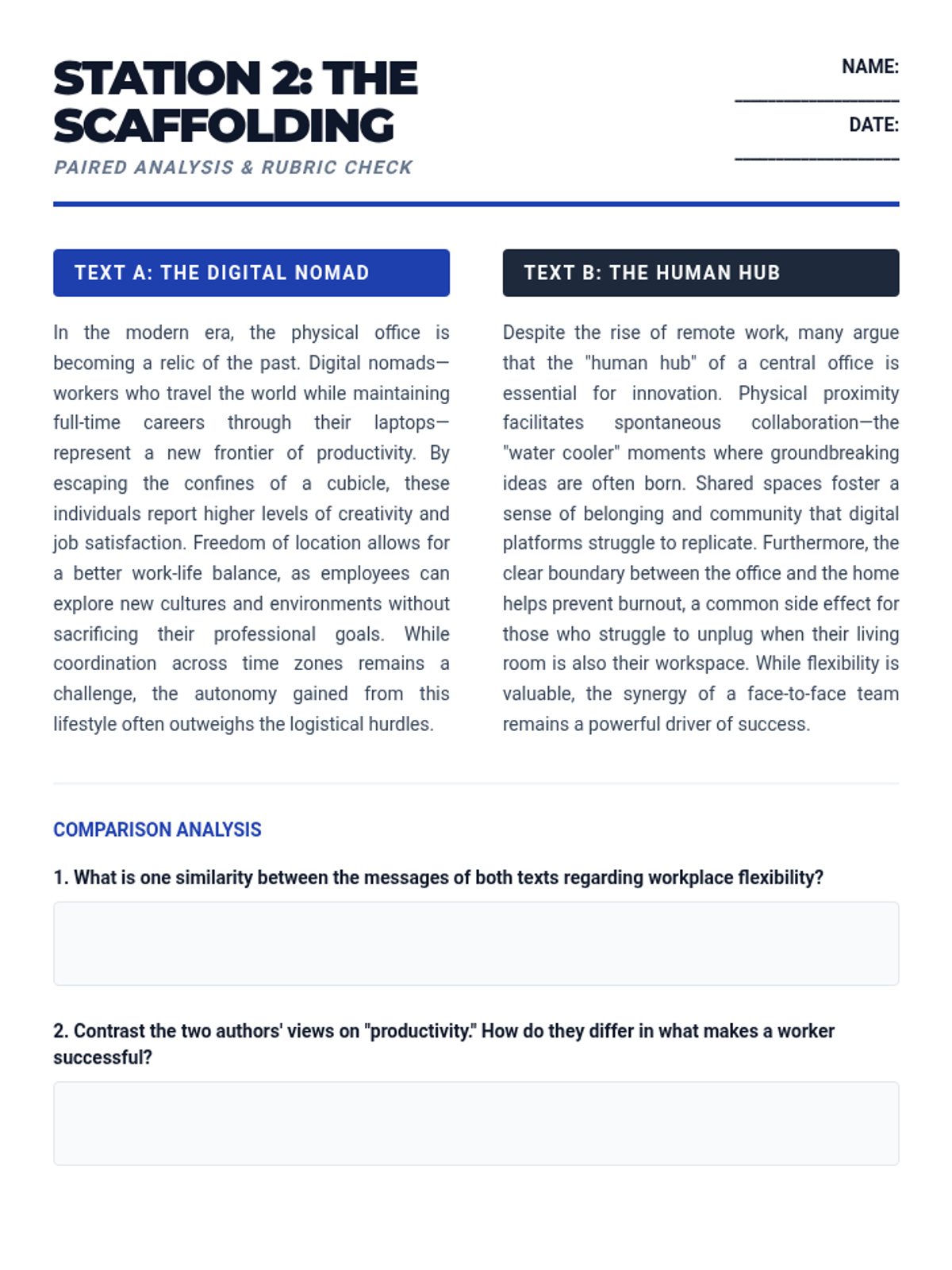
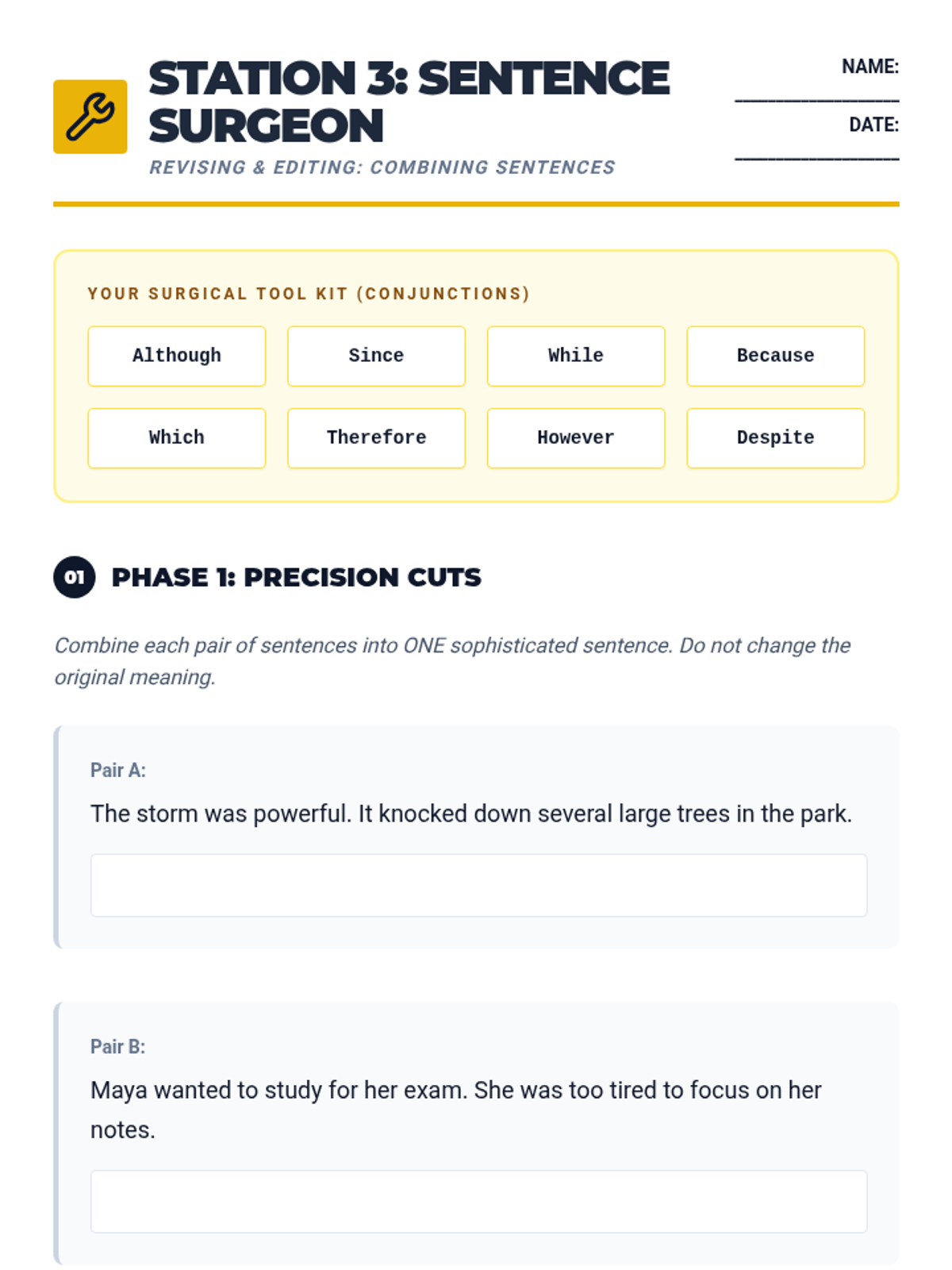
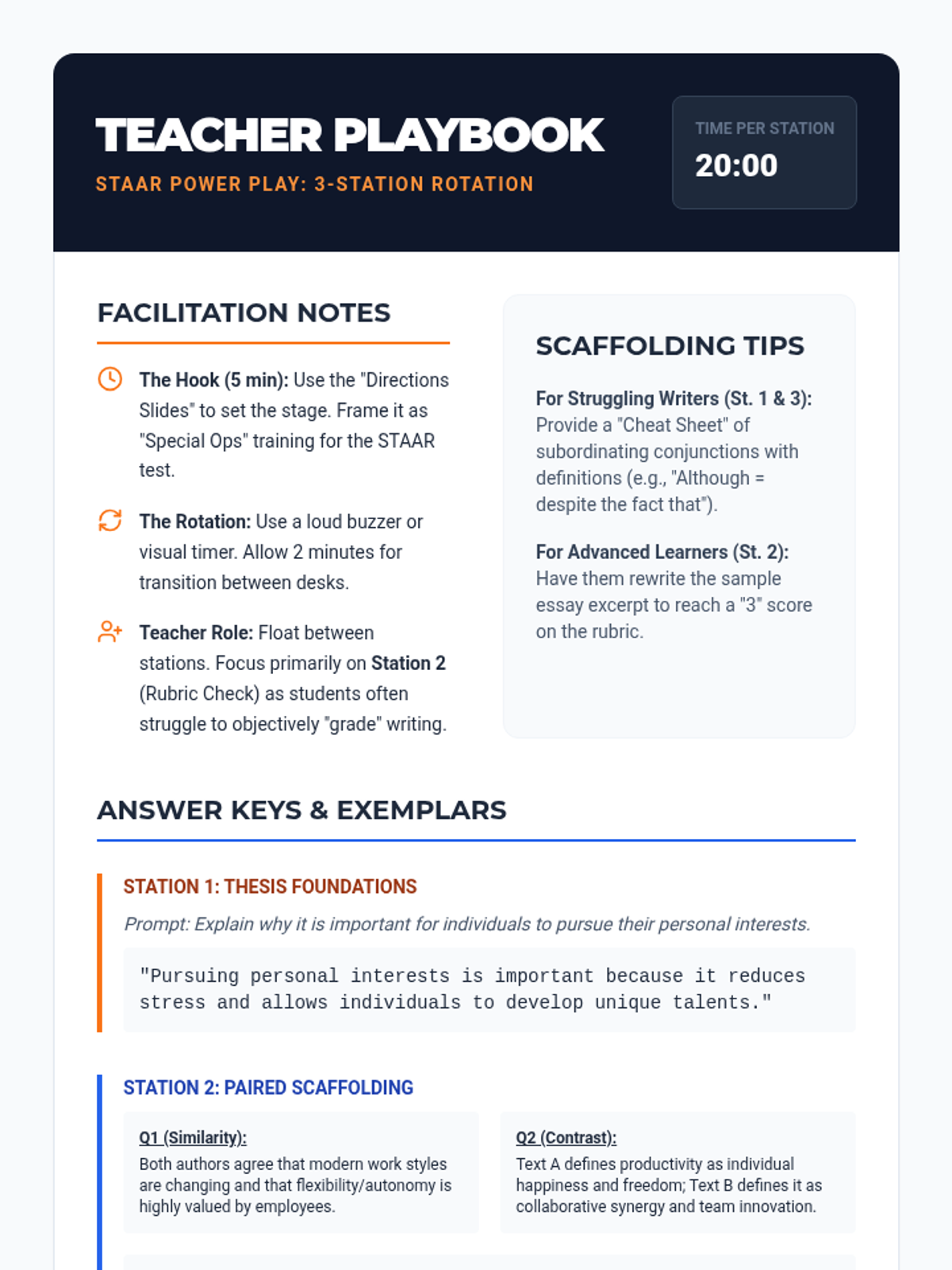
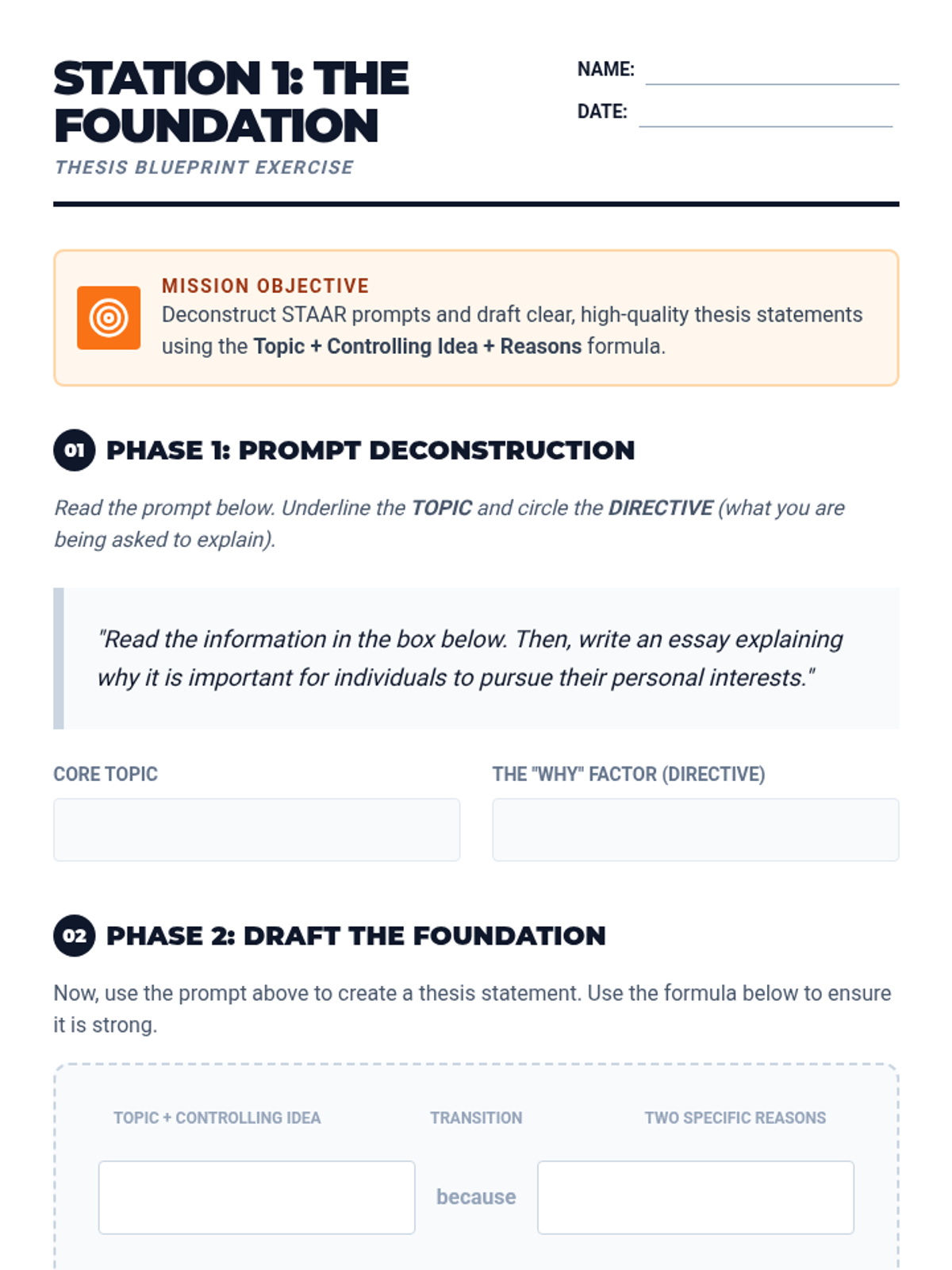
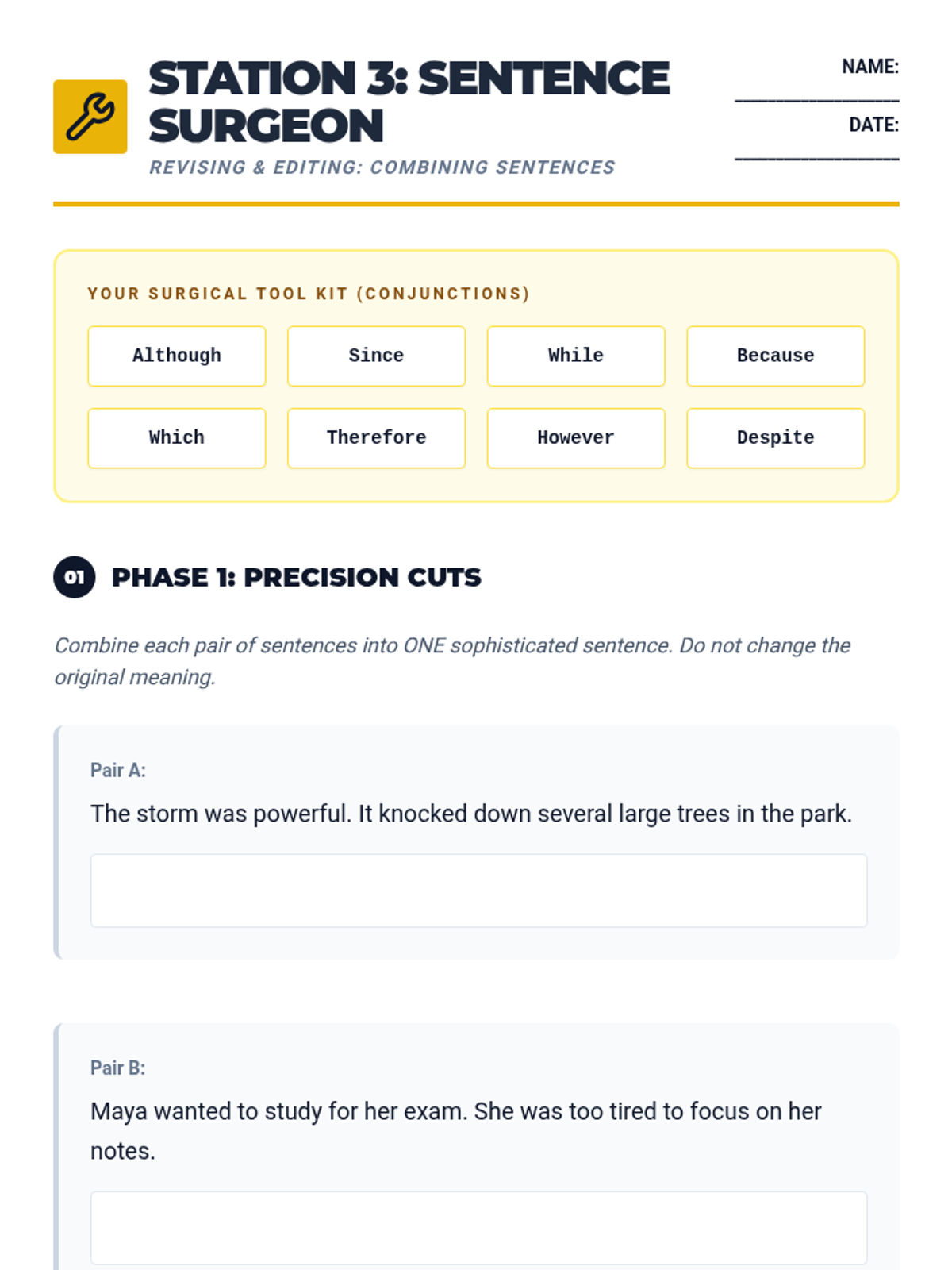
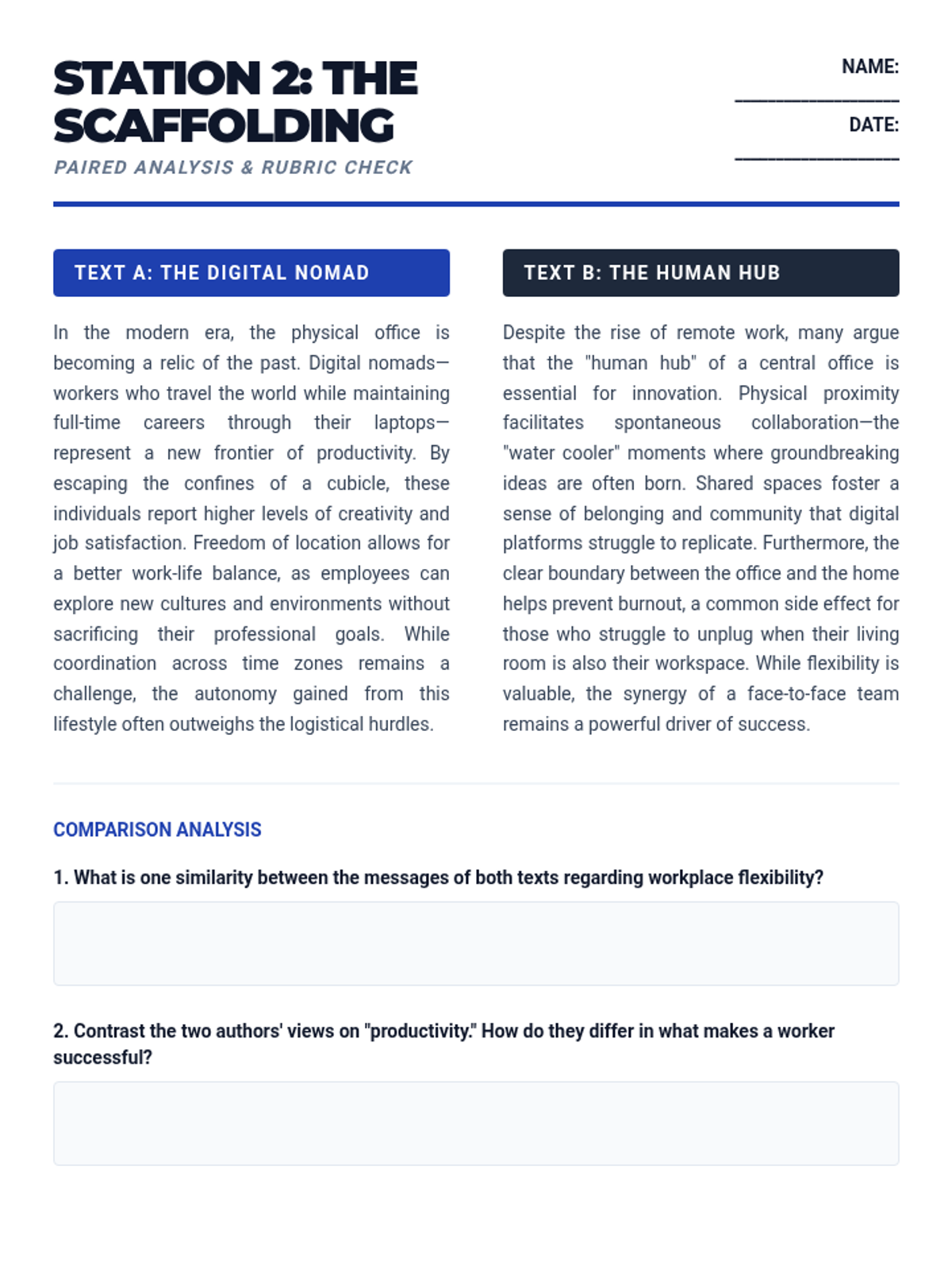
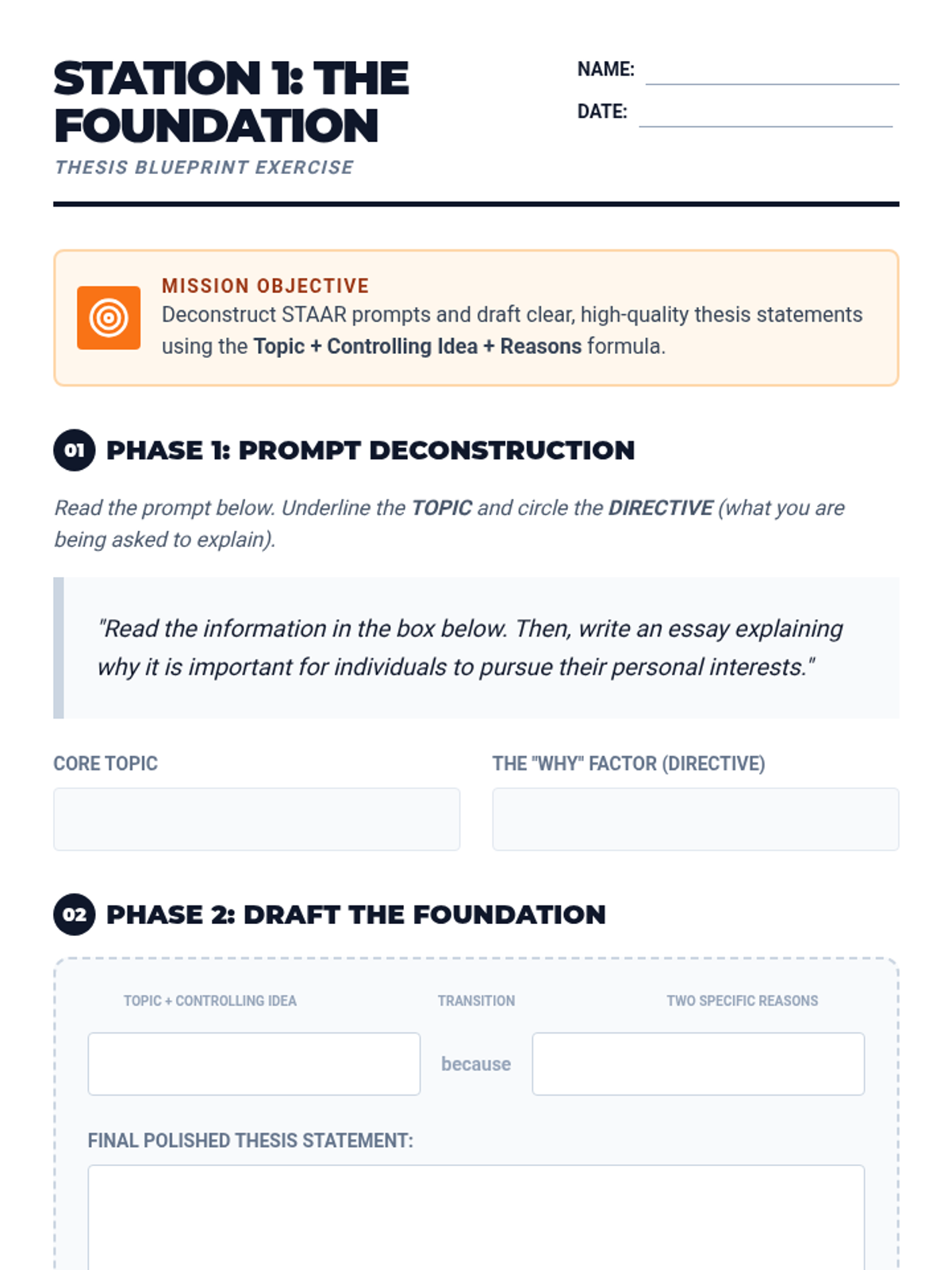
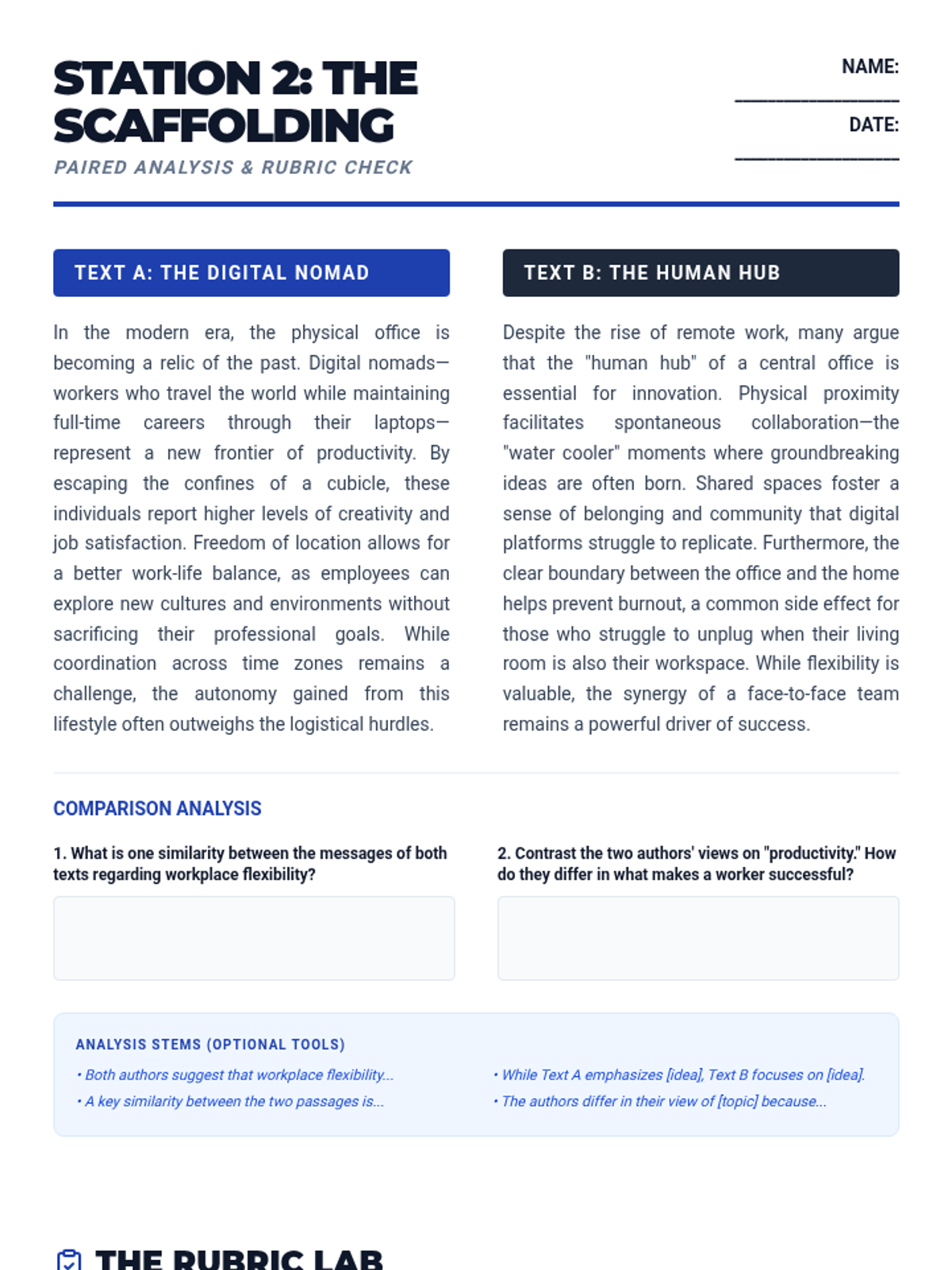
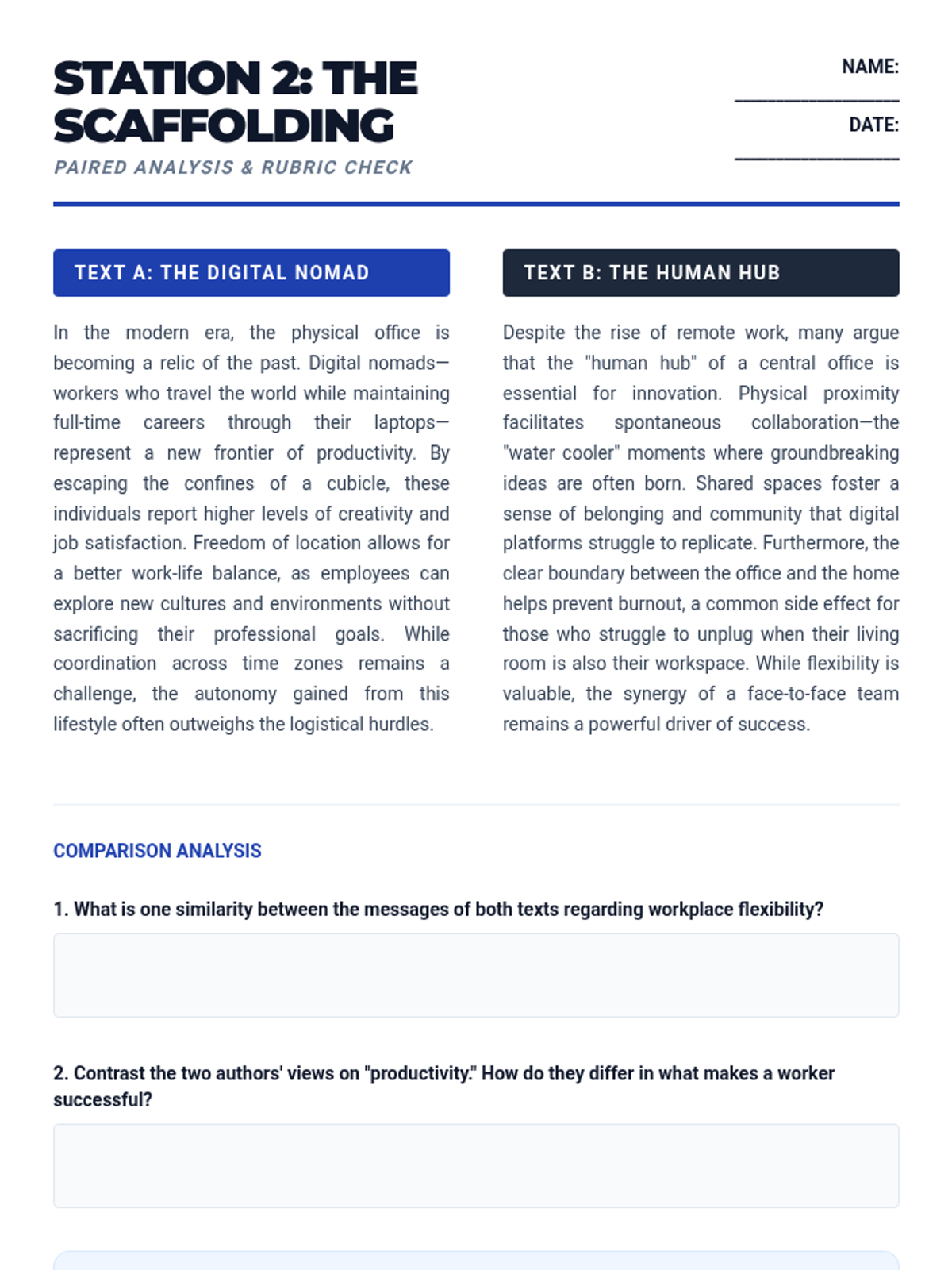
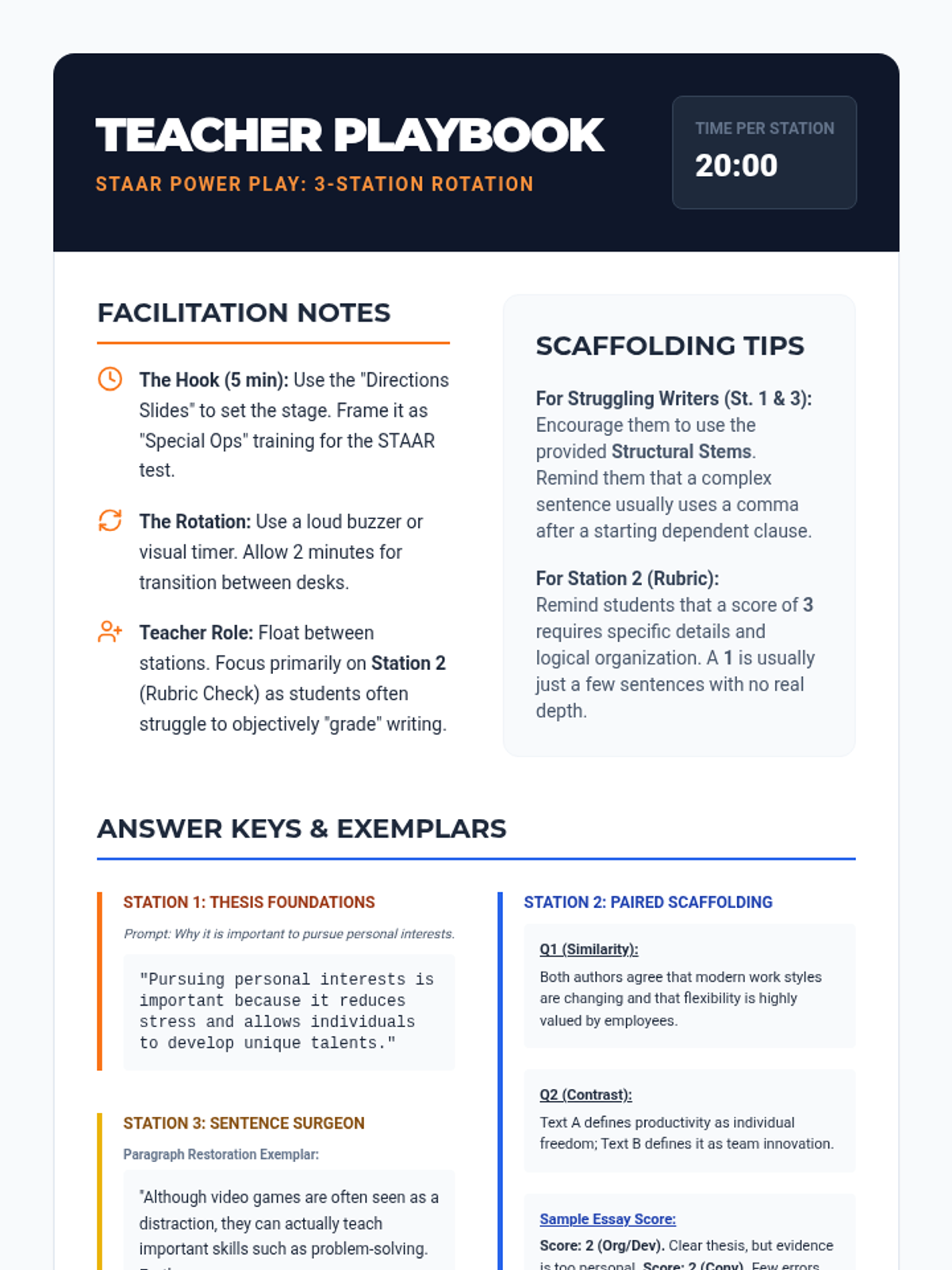
A rotation-based lesson featuring three 20-minute stations: Thesis Foundations, Paired Scaffolding, and Sentence Surgeon.
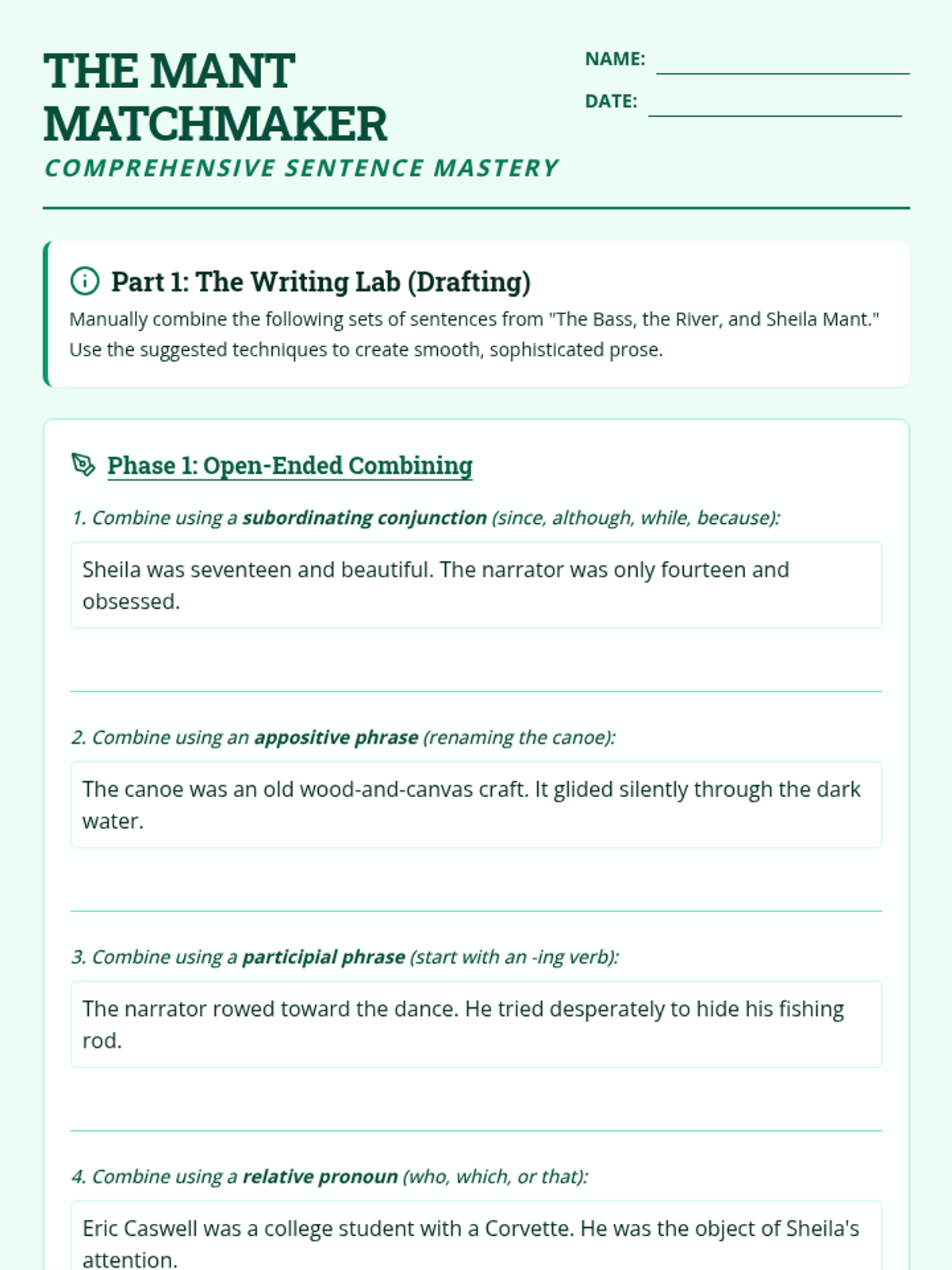
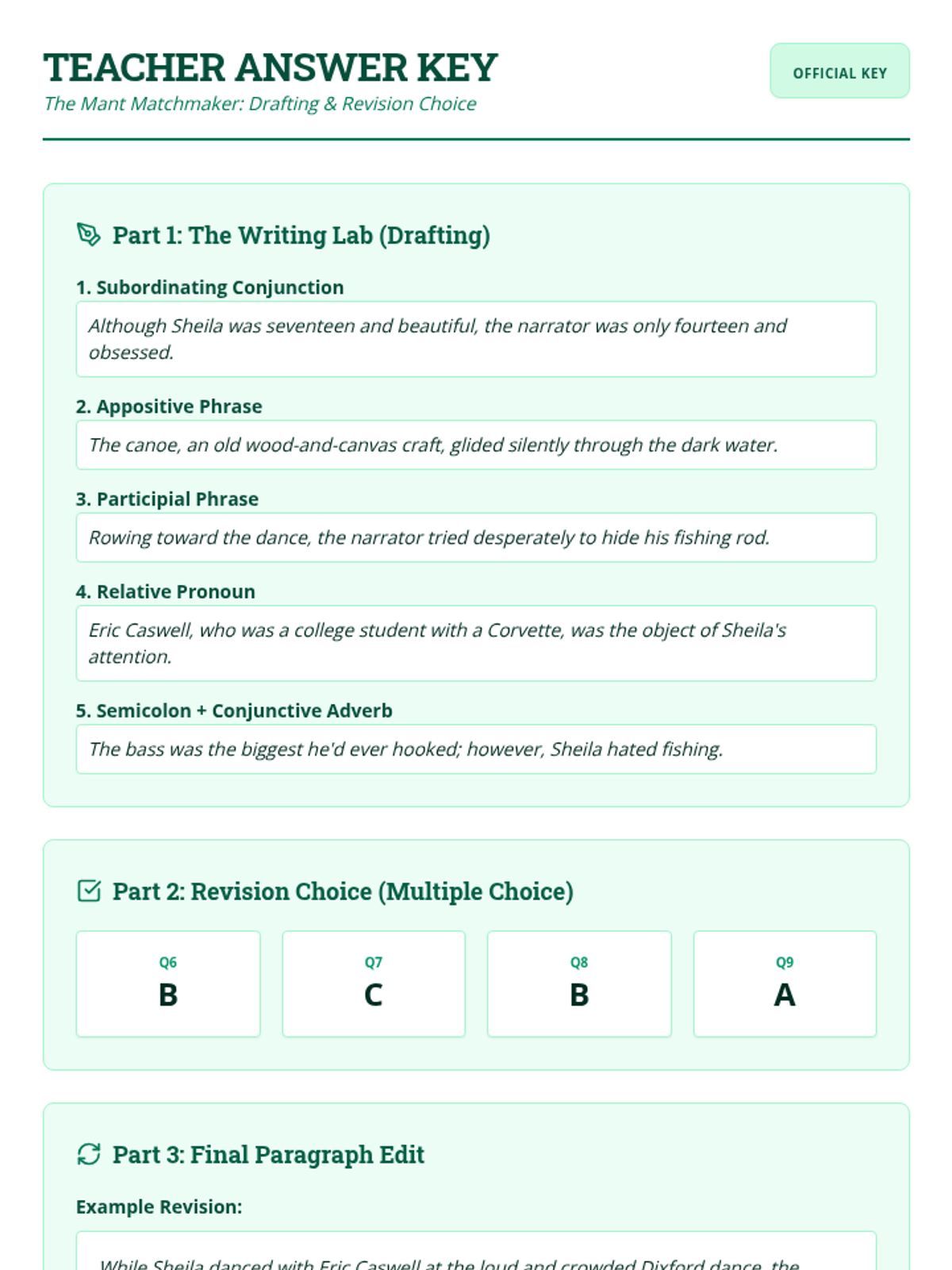
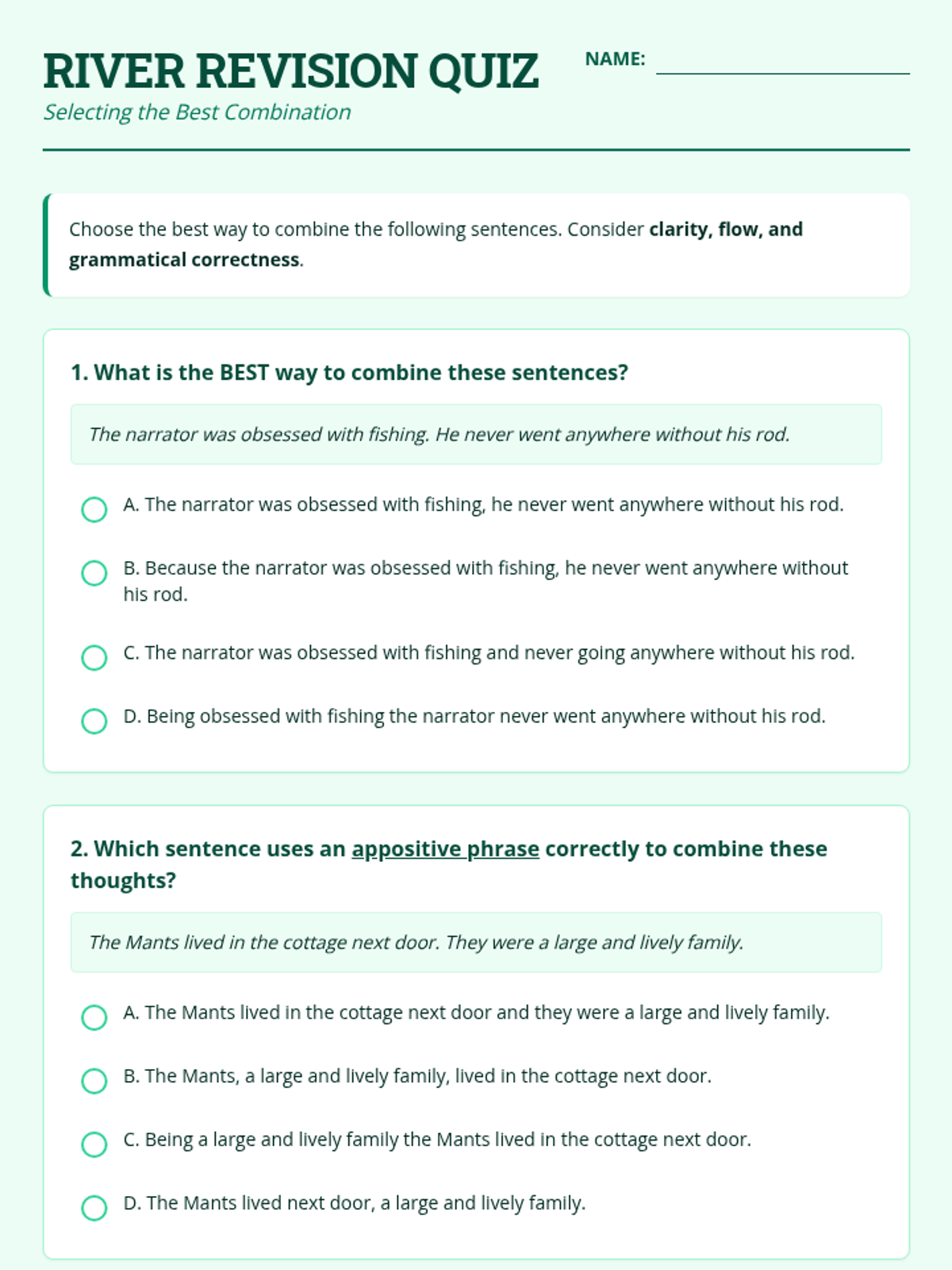
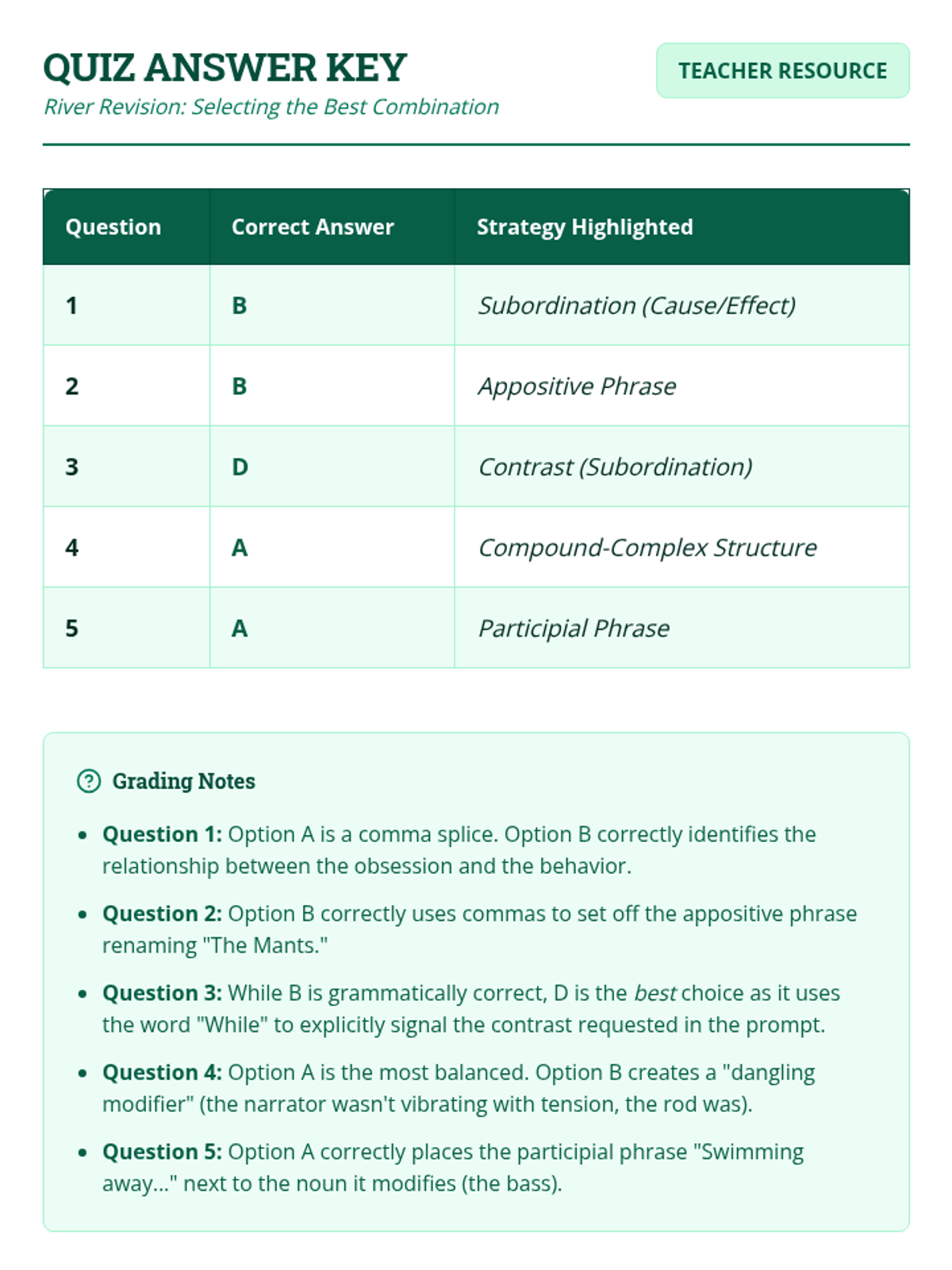
A targeted revising and editing lesson focused on sentence combining techniques, themed around the short story 'The Bass, the River, and Sheila Mant'. Students practice merging short, choppy sentences into sophisticated prose.
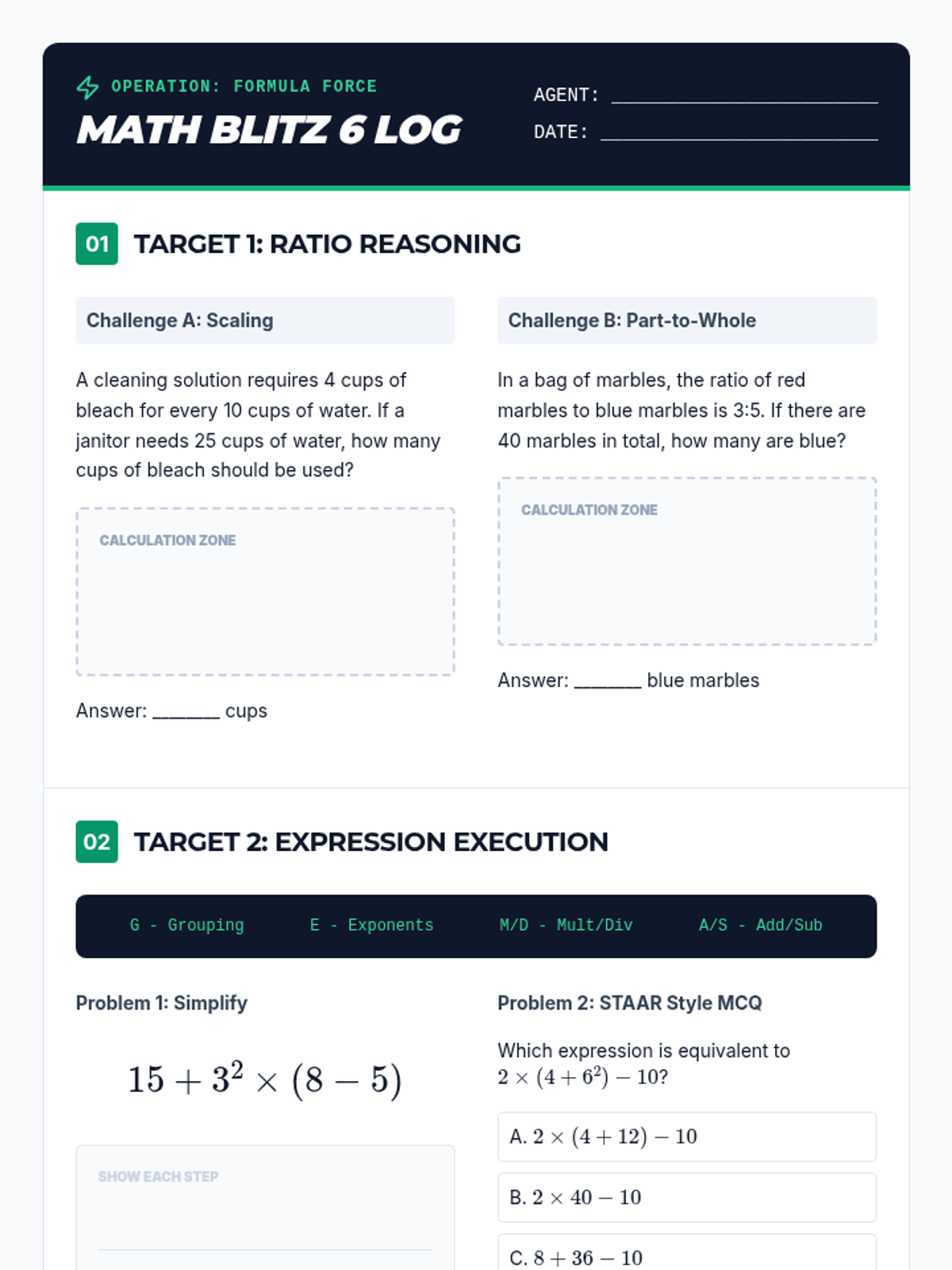
A high-intensity 45-minute STAAR Math Blitz focusing on the highest-tested 6th-grade TEKS, featuring tactical strategy slides and a targeted CFU worksheet.
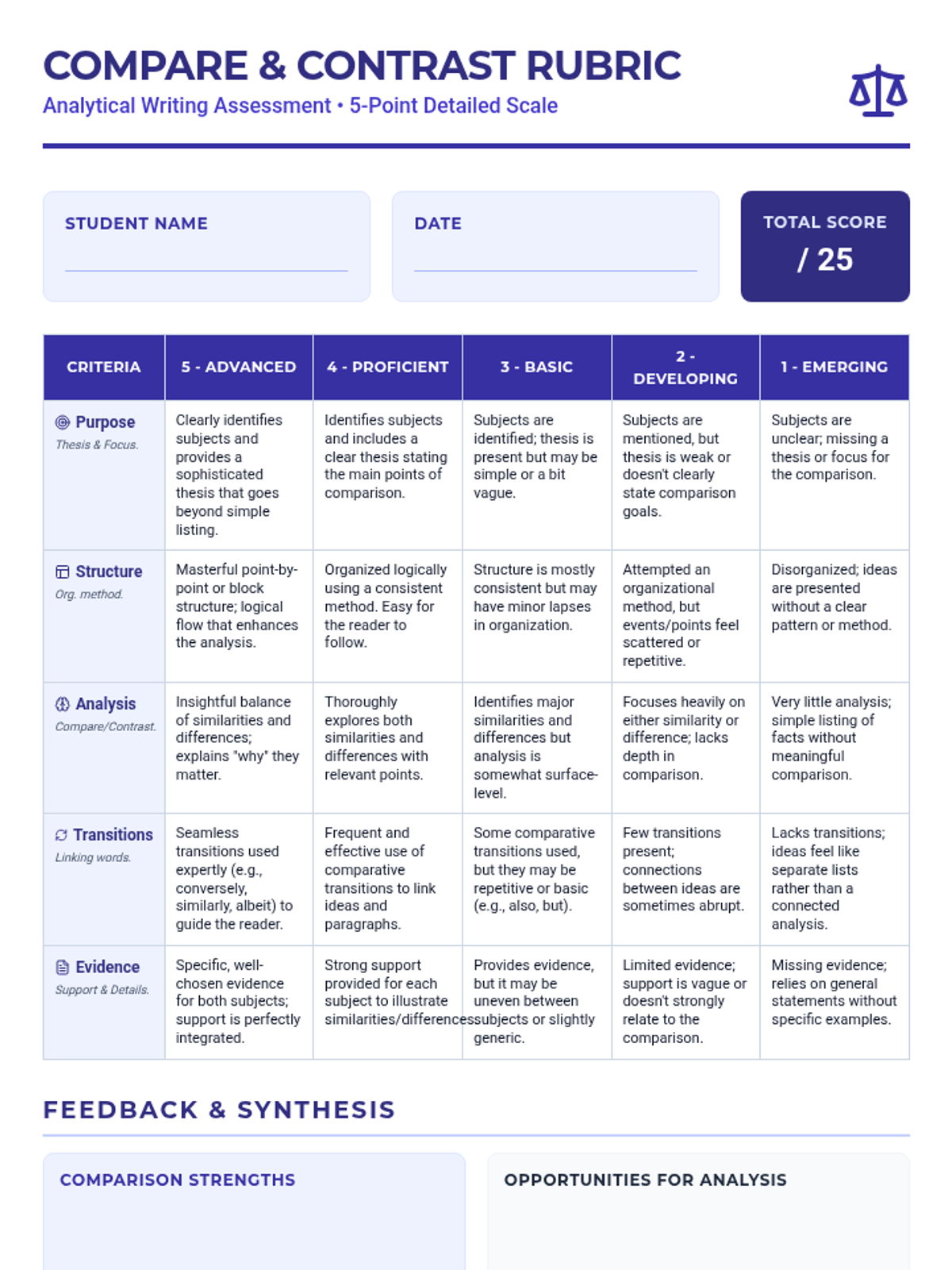
Resources for mastering comparative writing, including rubrics and organizers for subject analysis.
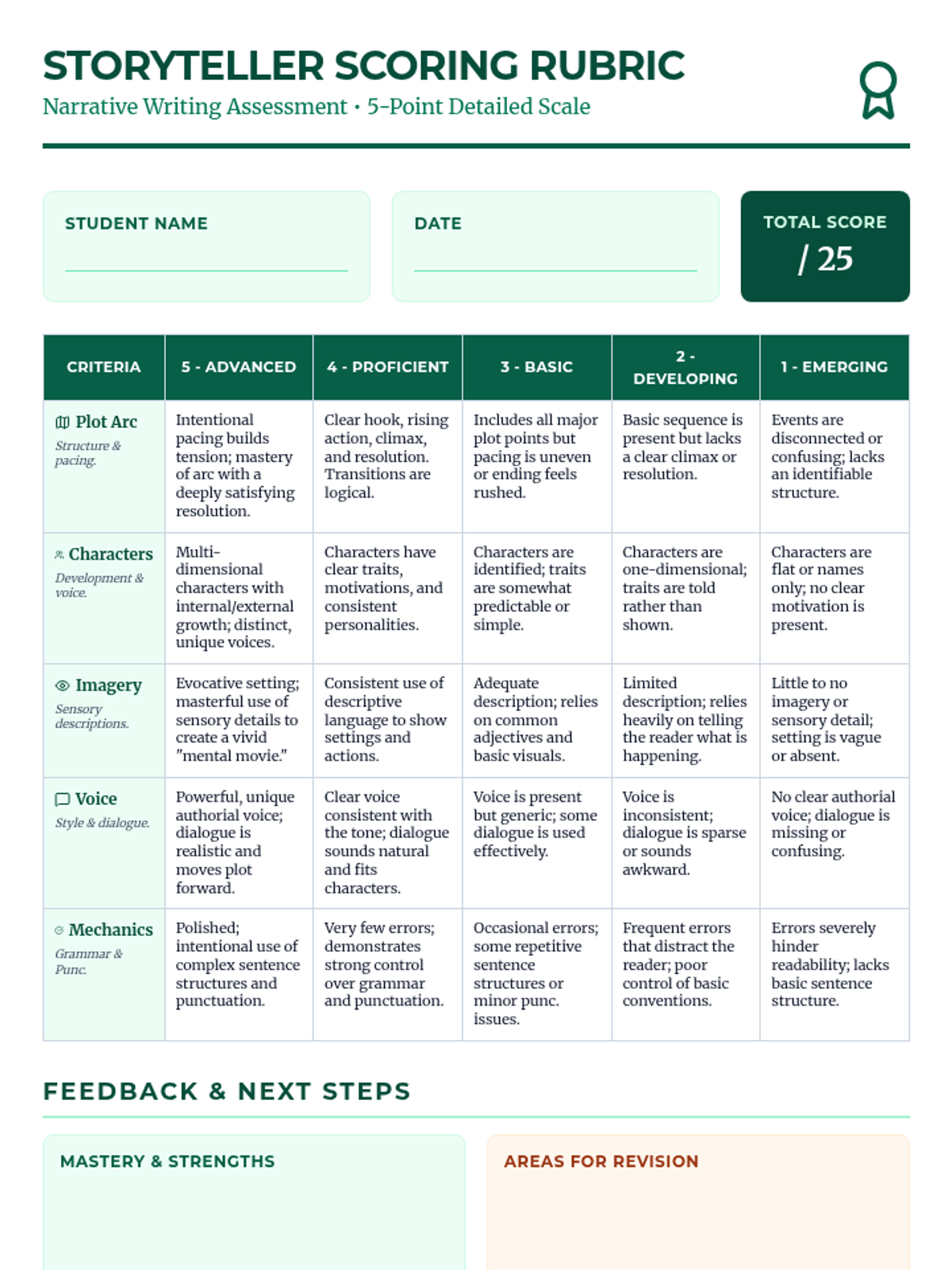
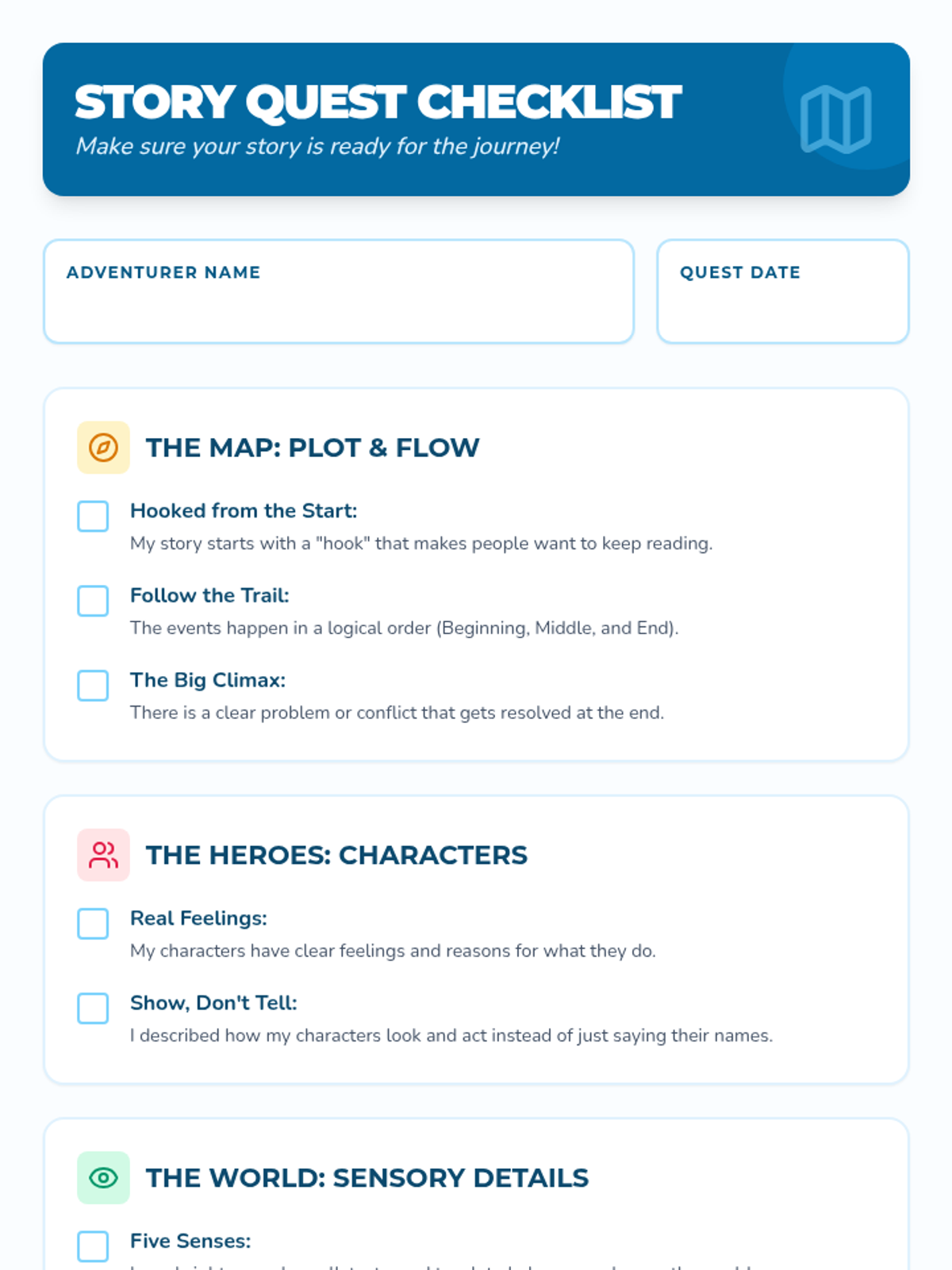
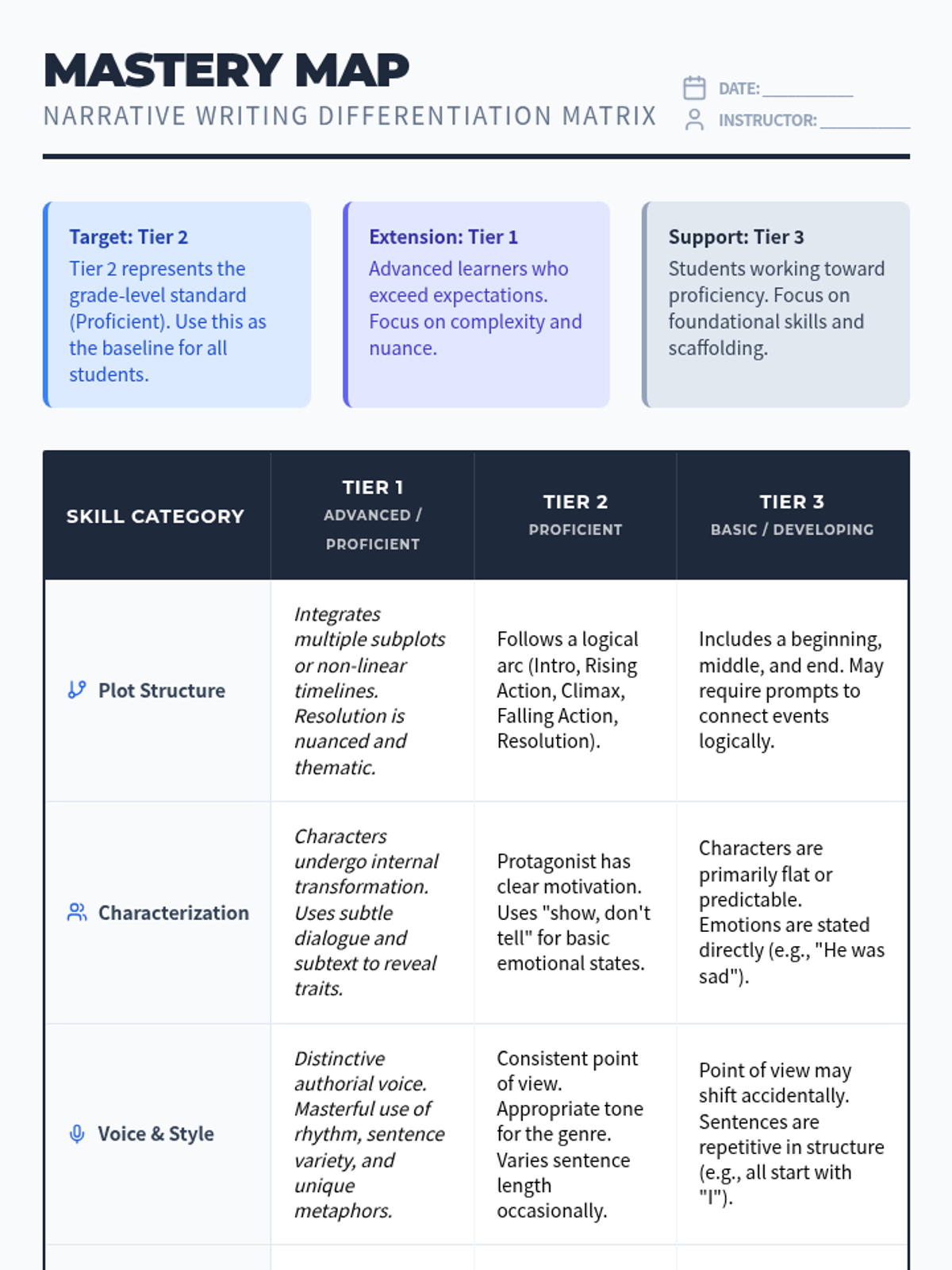
A collection of tools to help students and teachers evaluate narrative writing through clear criteria and student-friendly goals.
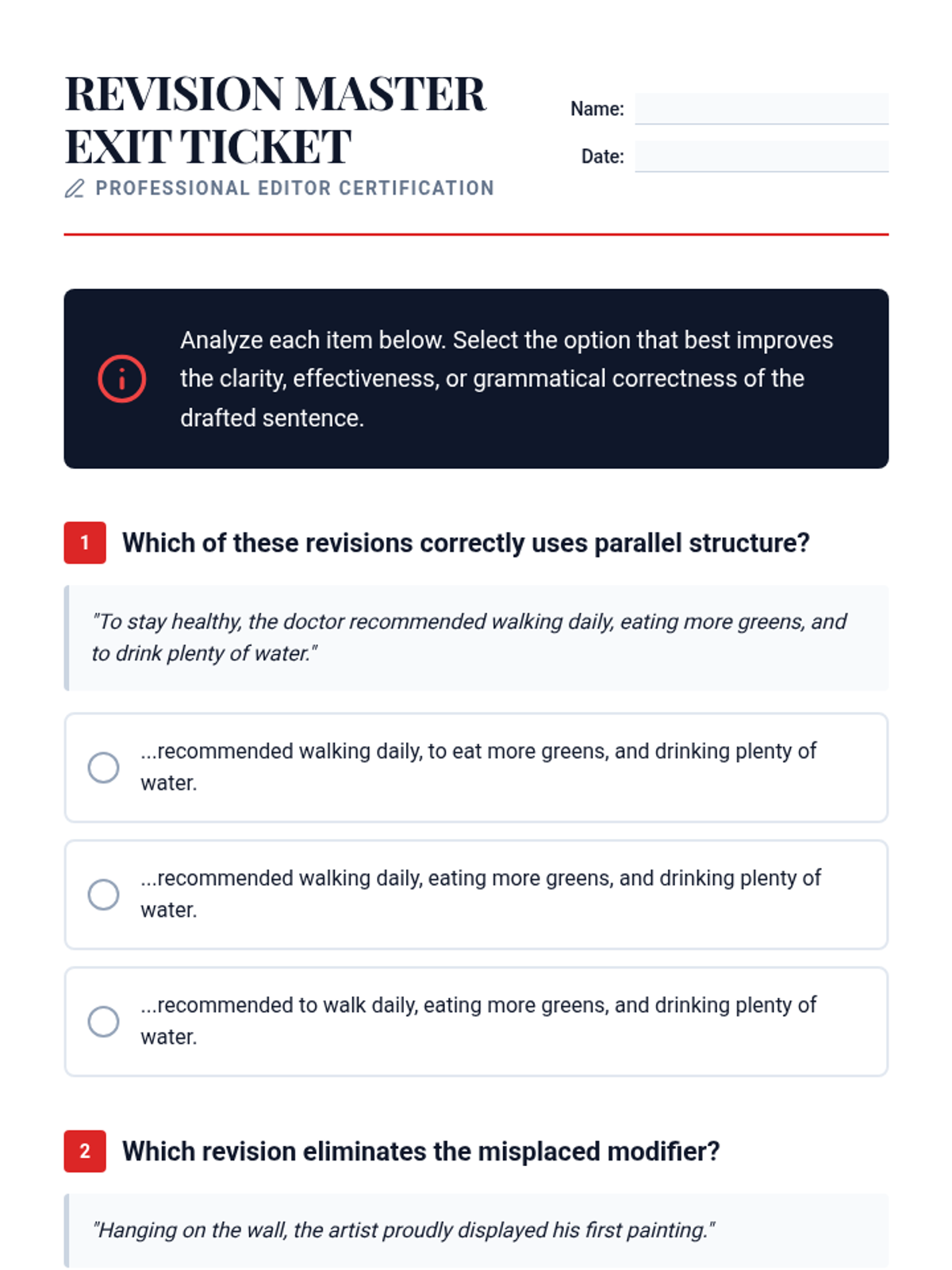
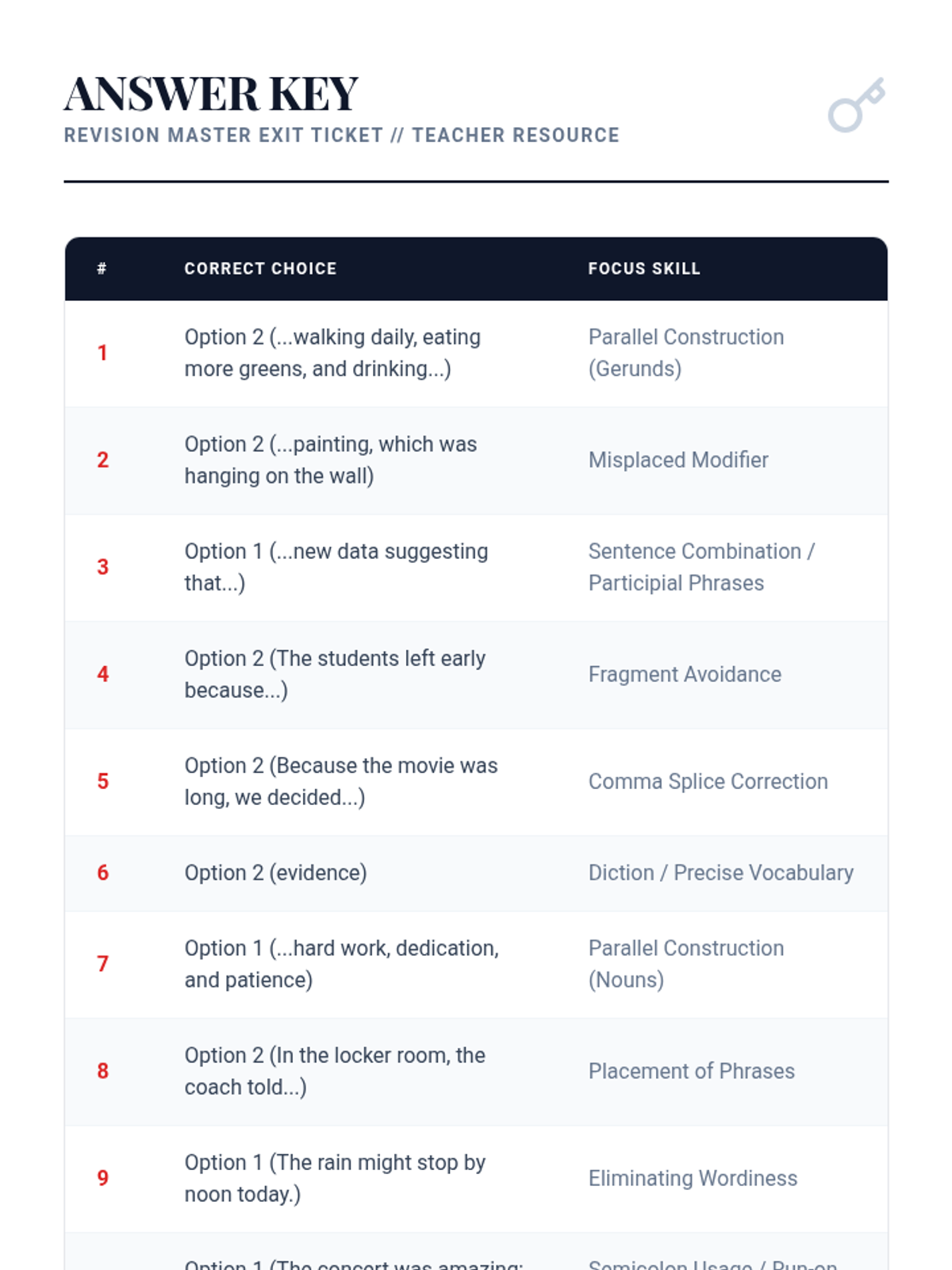
A comprehensive guide to high-level revision and editing, focusing on sentence effectiveness, parallel structure, and eliminating fragments or run-ons. Students learn to refine their writing with the precision of a professional editor.
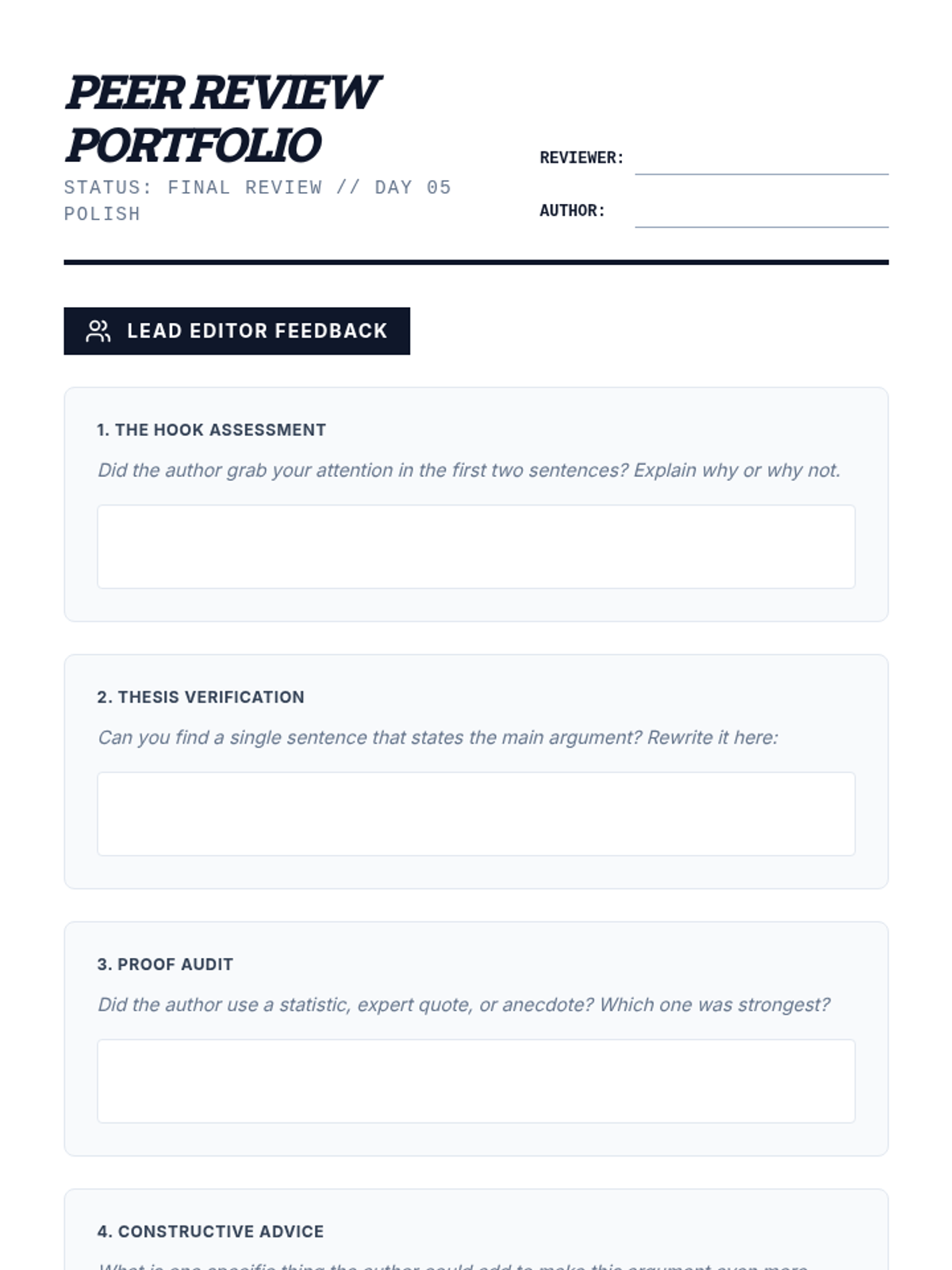
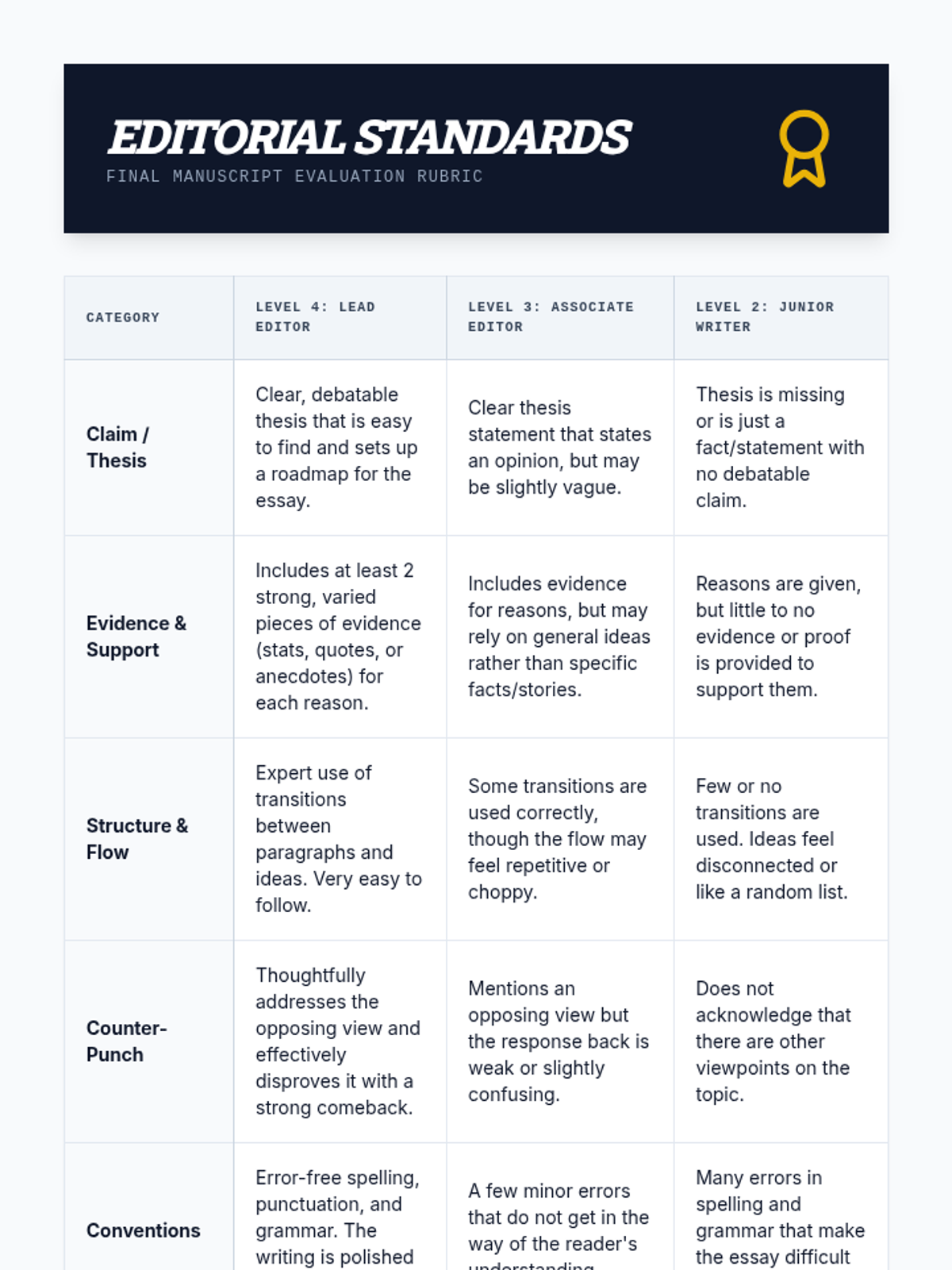
The final stage where students engage in peer review, use a revision checklist, and evaluate their work against a comprehensive rubric.
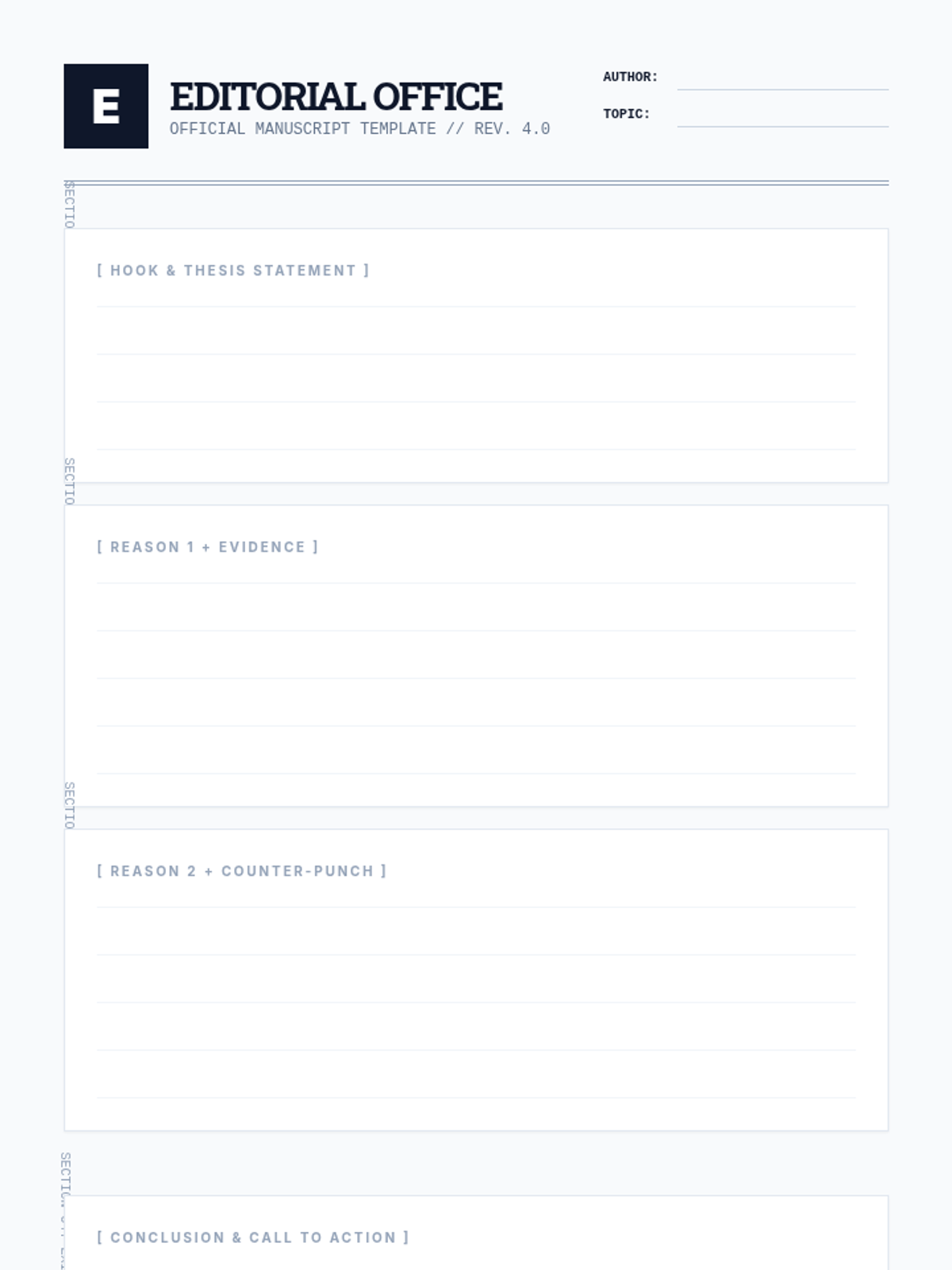
Students focus on transitions and logical flow as they move from planning to drafting their full persuasive essay.
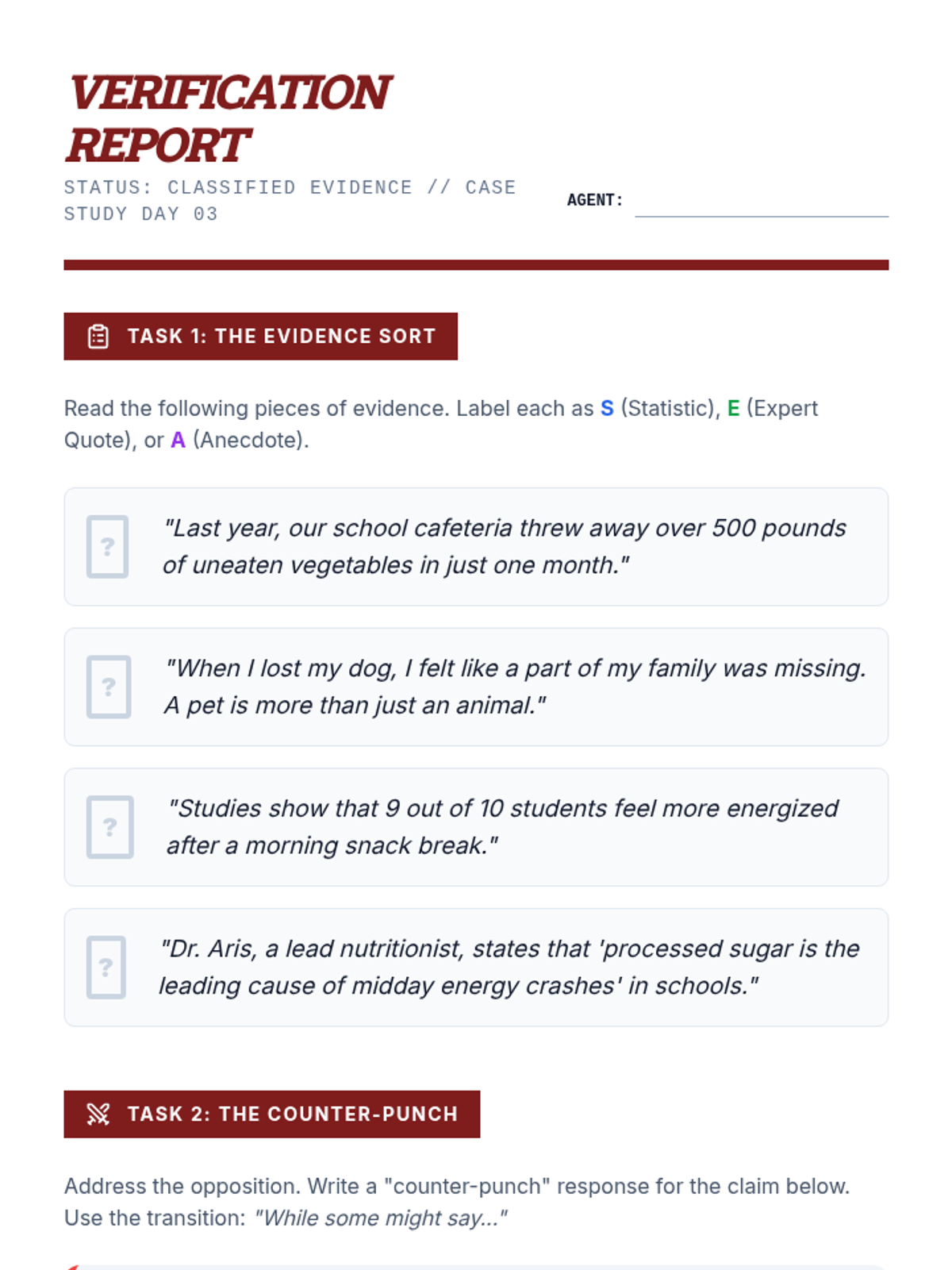
Students dive into types of evidence (stats, anecdotes, expert quotes) and learn how to address counterarguments effectively.
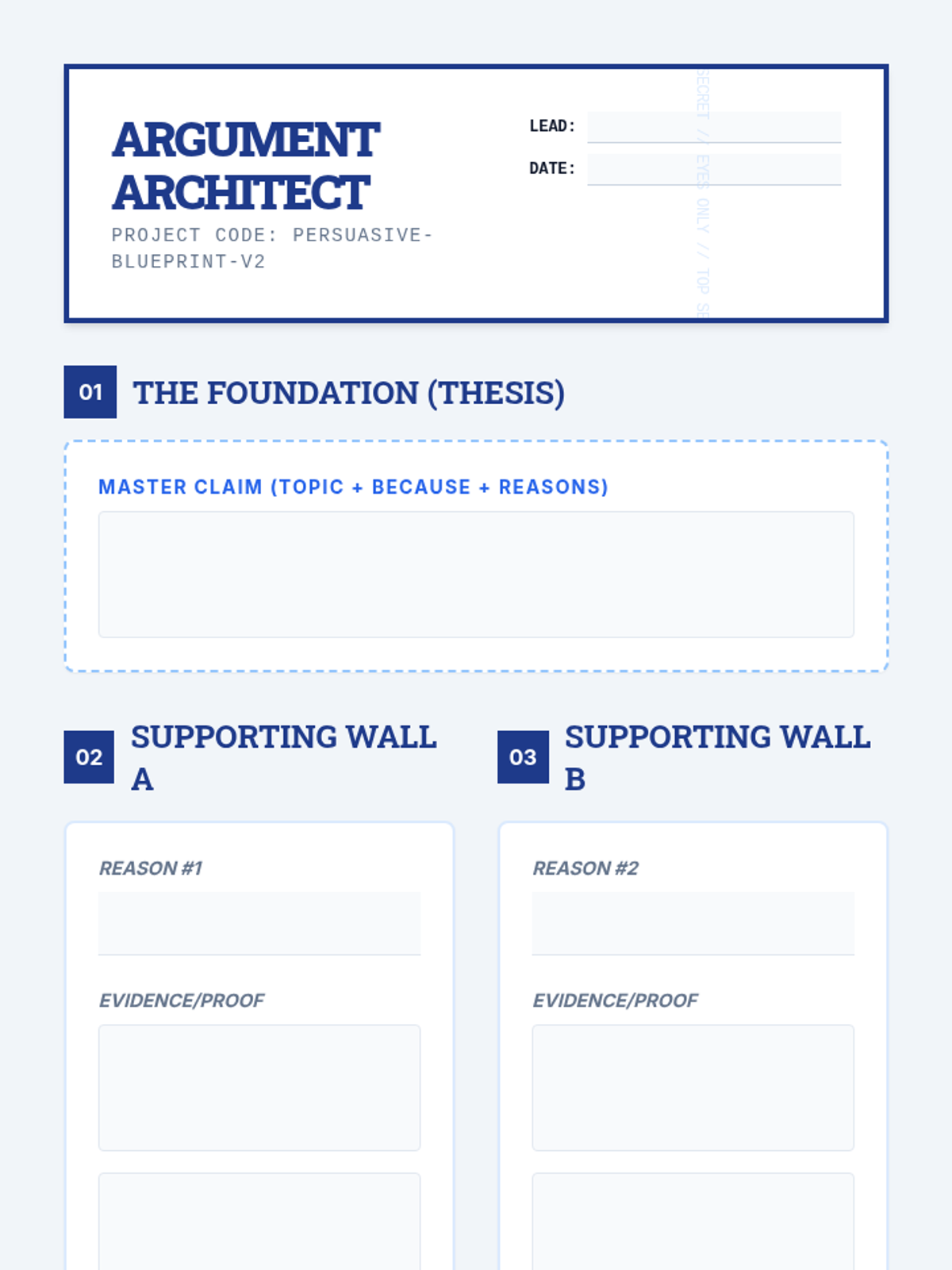
Students learn to craft a strong thesis statement and organize their main points using an Argument Architect graphic organizer.
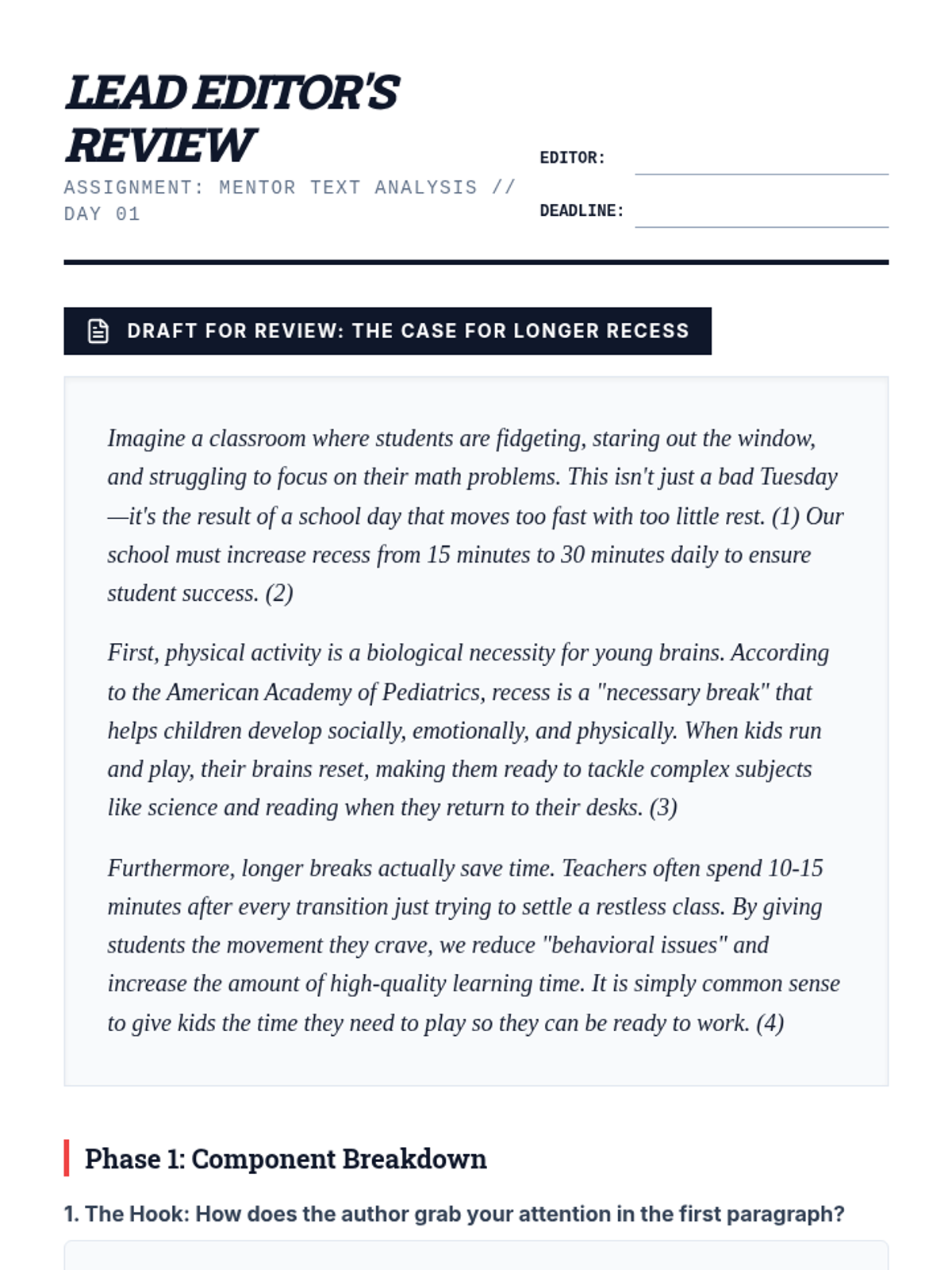
Students explore the purpose of persuasive writing, analyze a mentor text to identify the author's claim, and distinguish between facts and opinions.
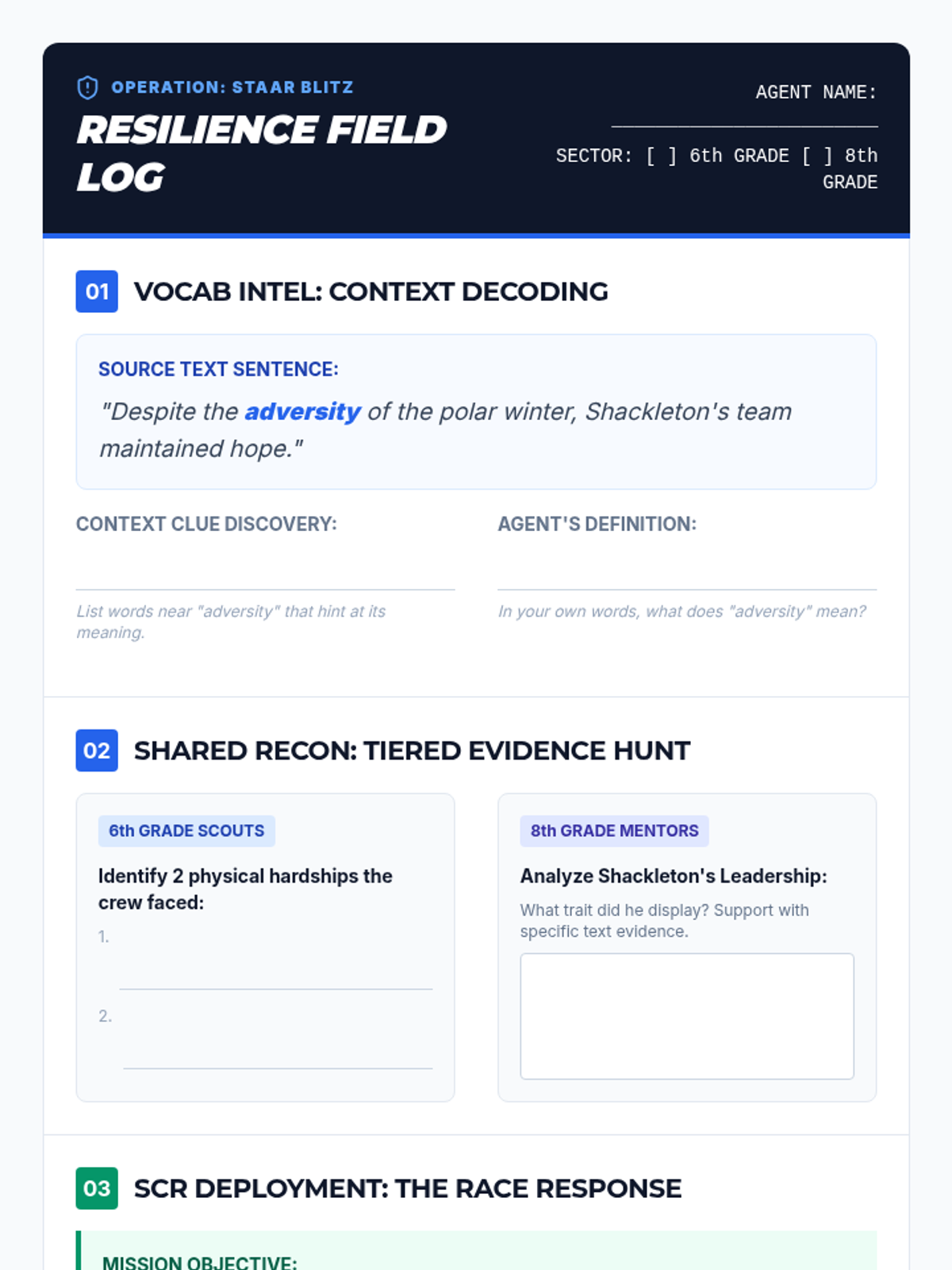
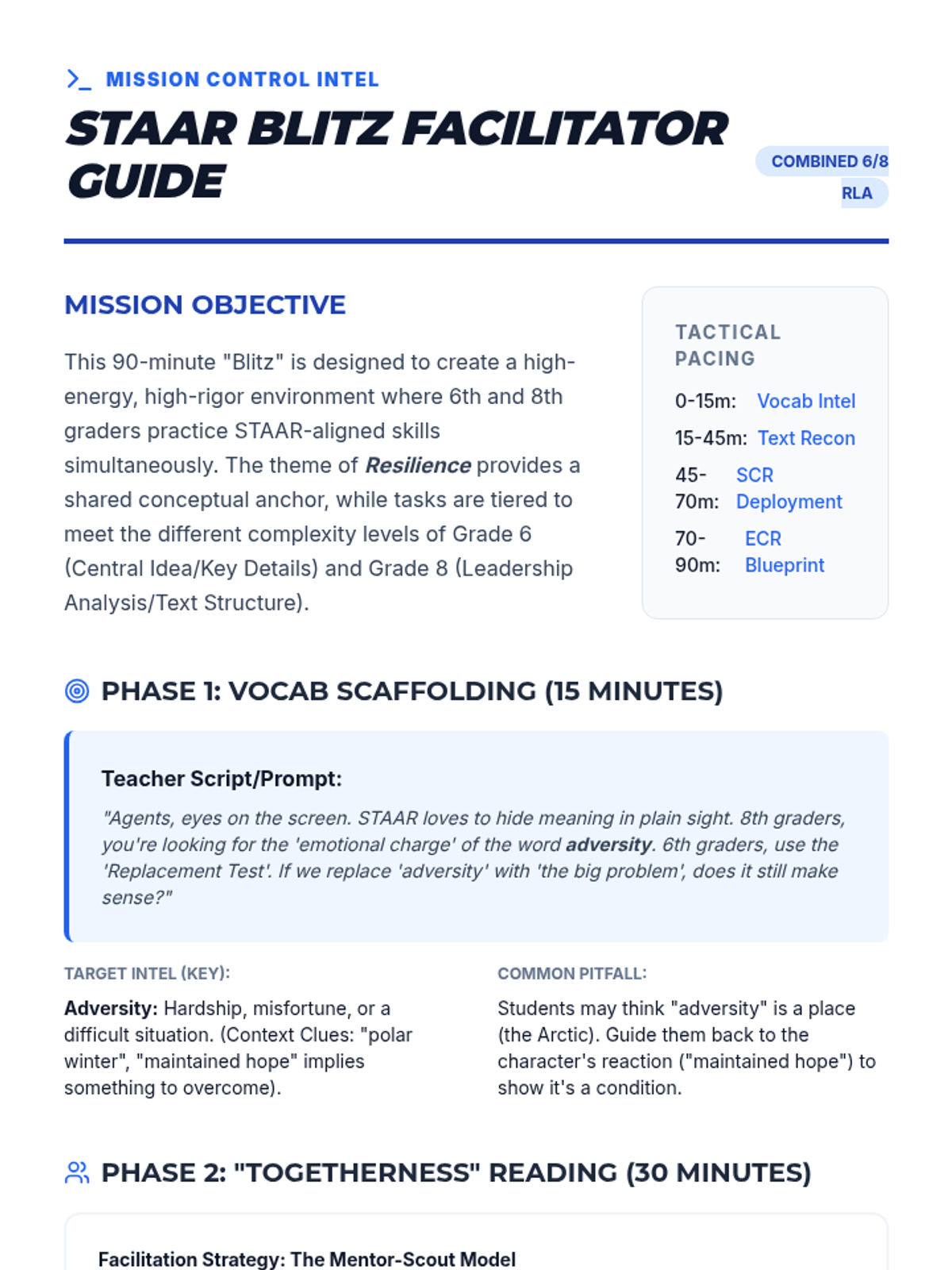
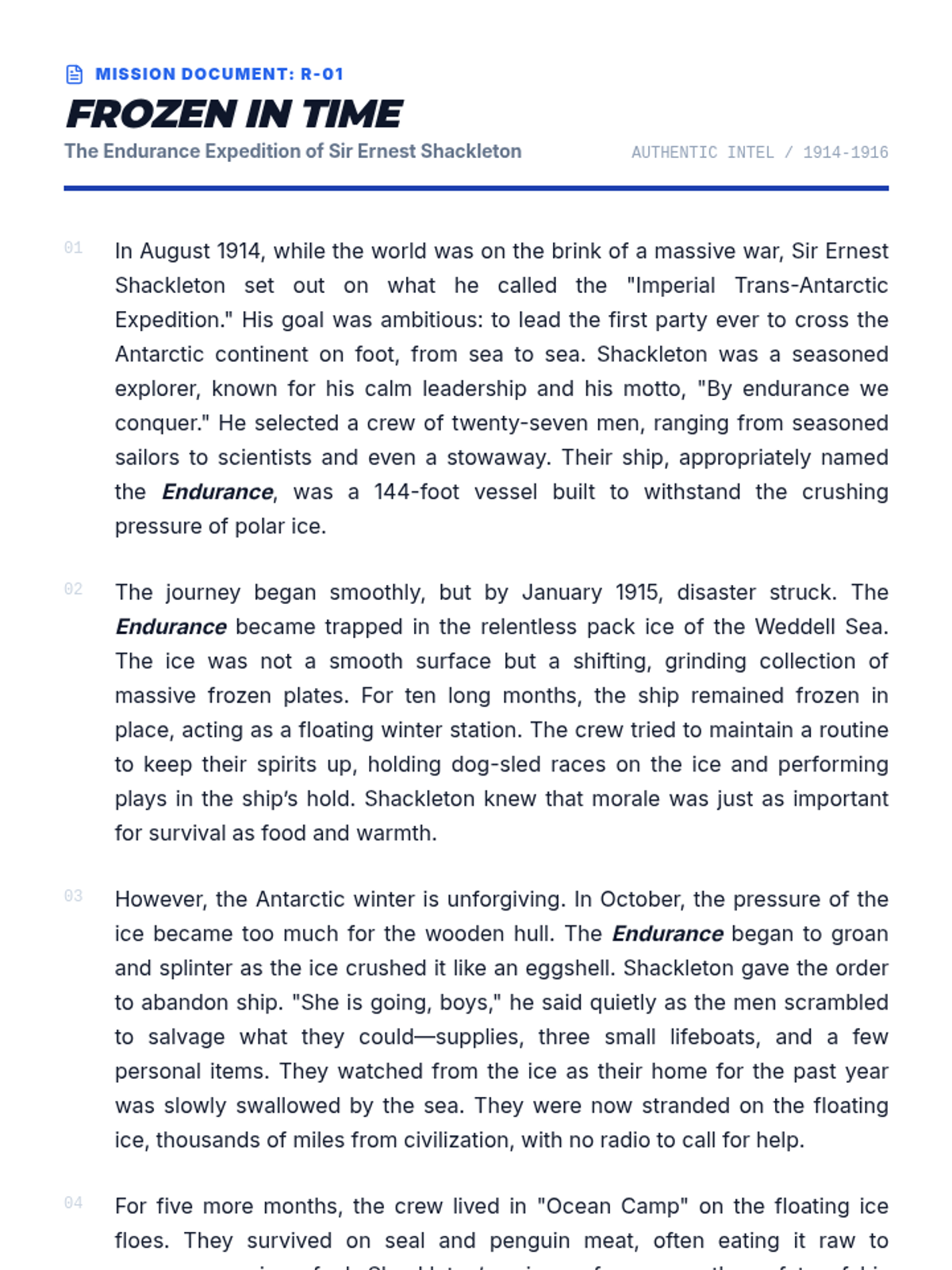
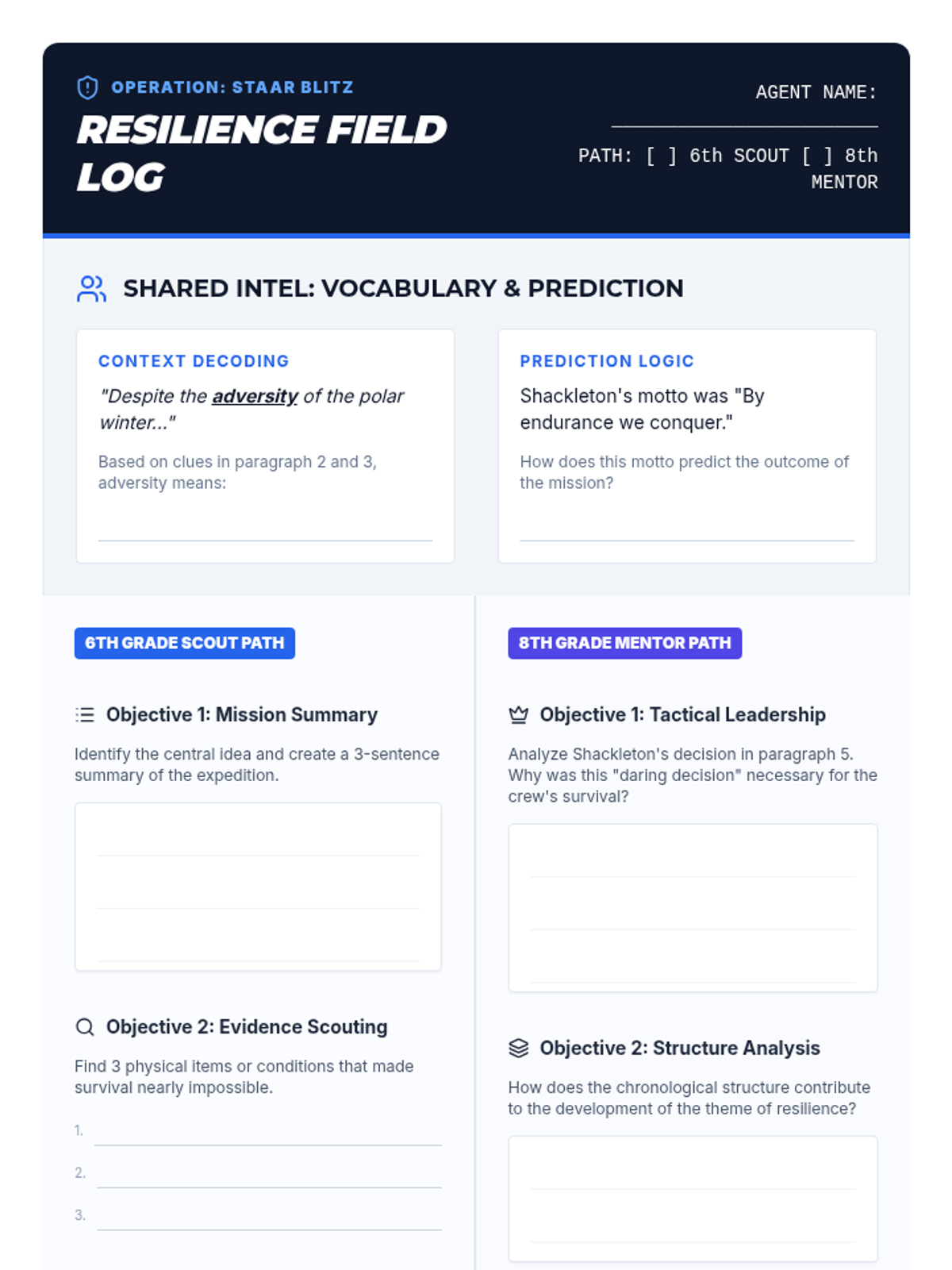
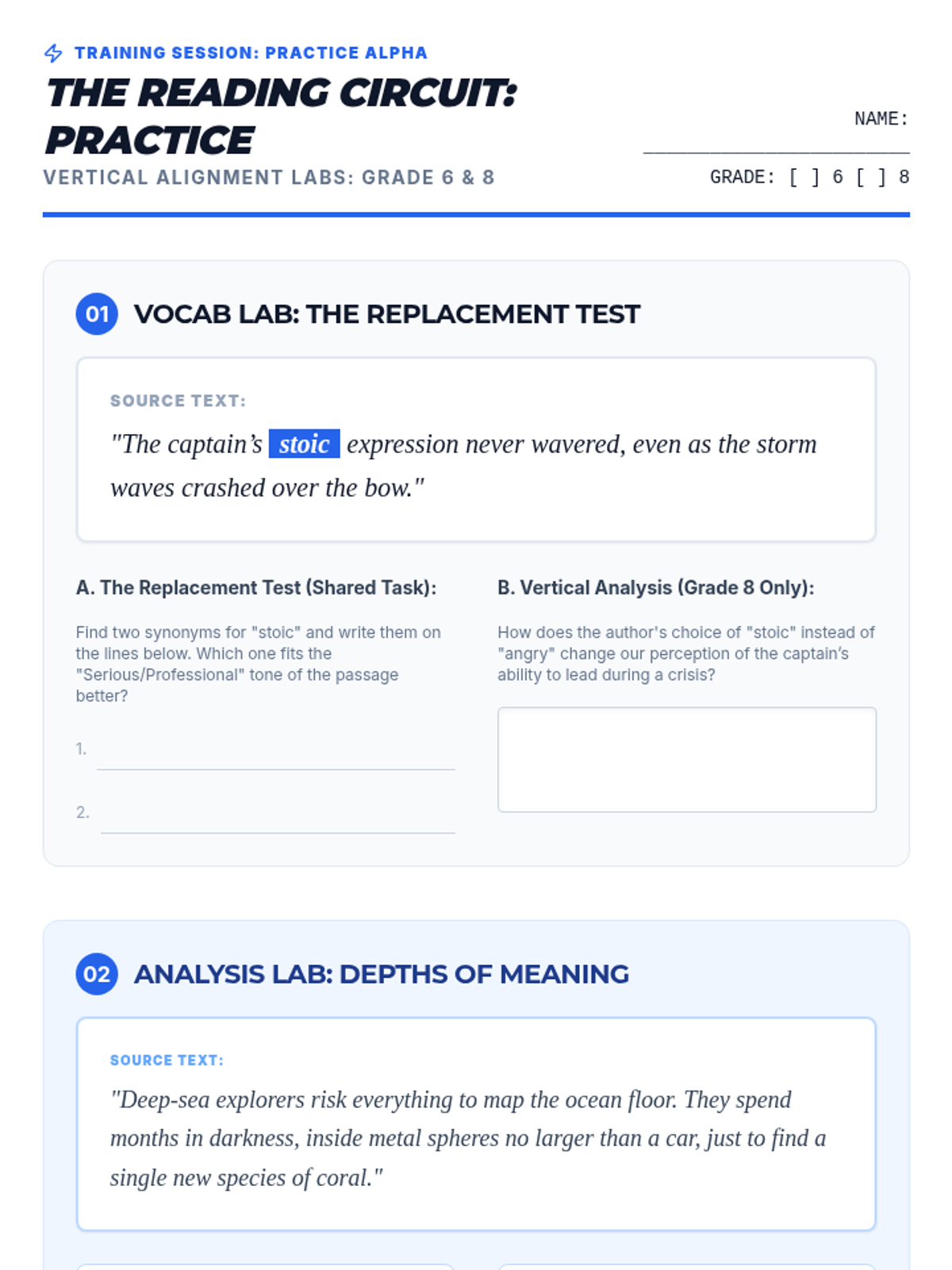
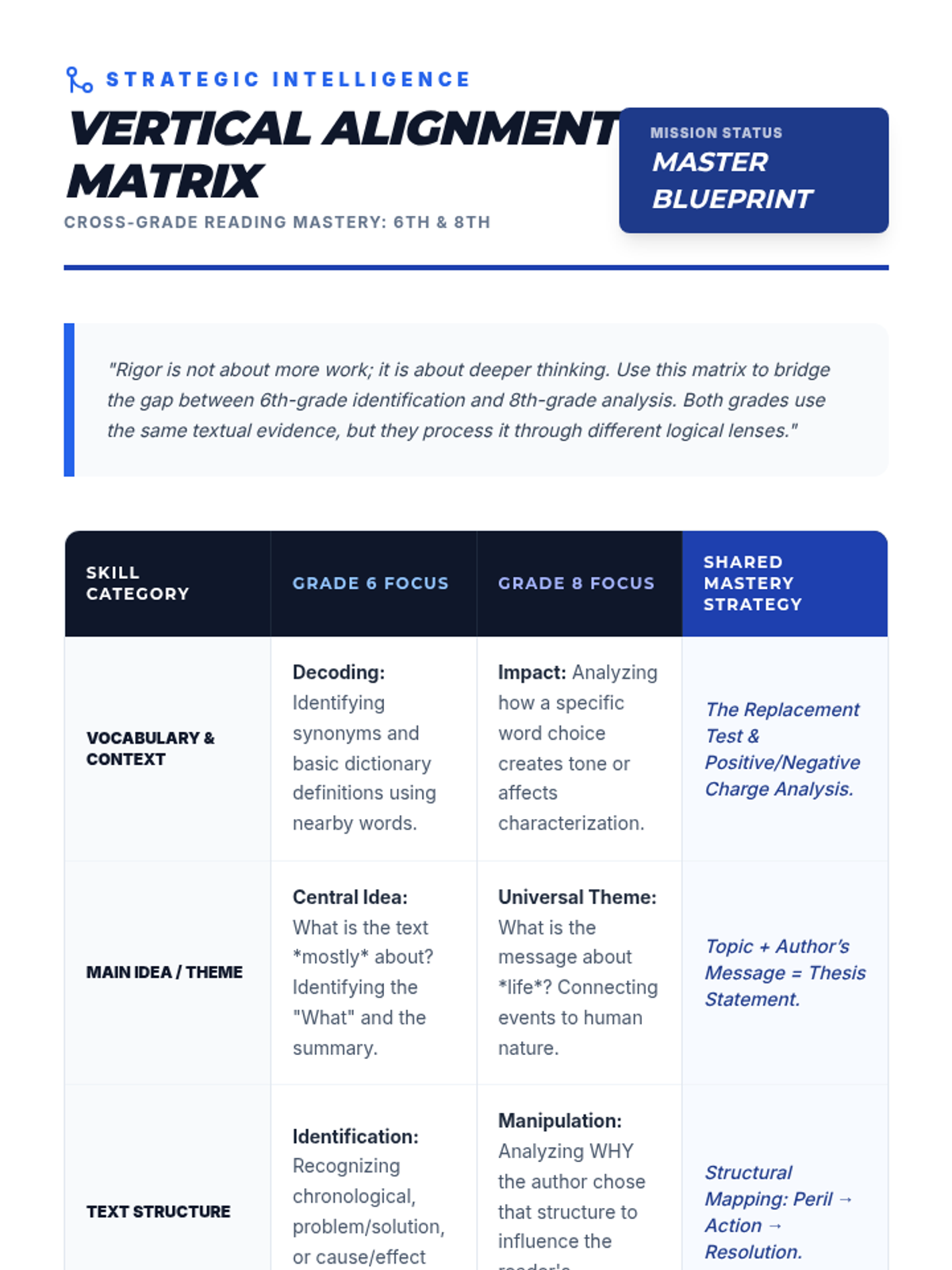
A high-intensity 90-minute STAAR Blitz lesson designed for a combined 6th and 8th-grade reading class, focusing on evidence-based analysis, vocabulary "intel," and SCR/ECR mastery through a "Mission Control" survival theme.
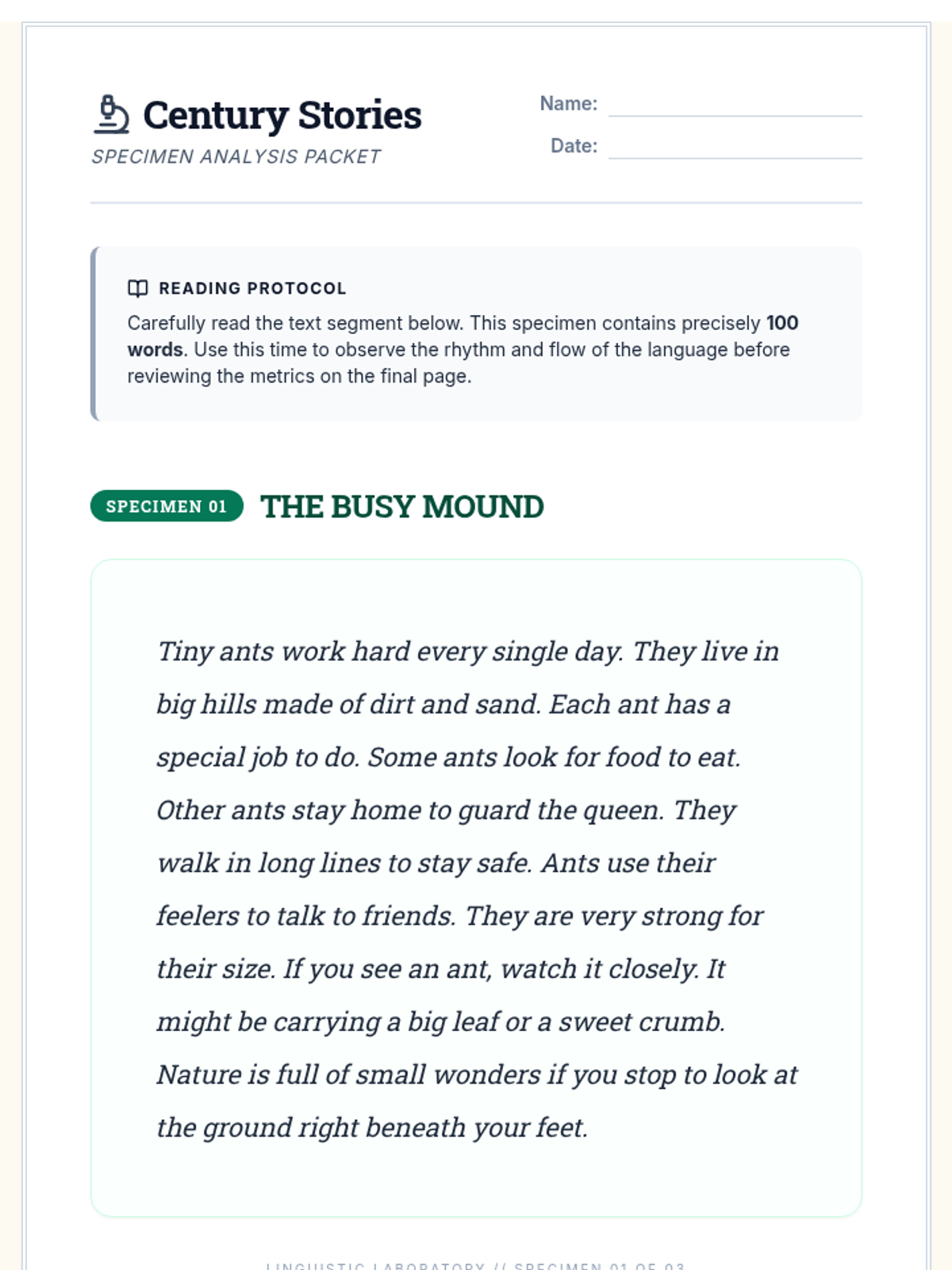
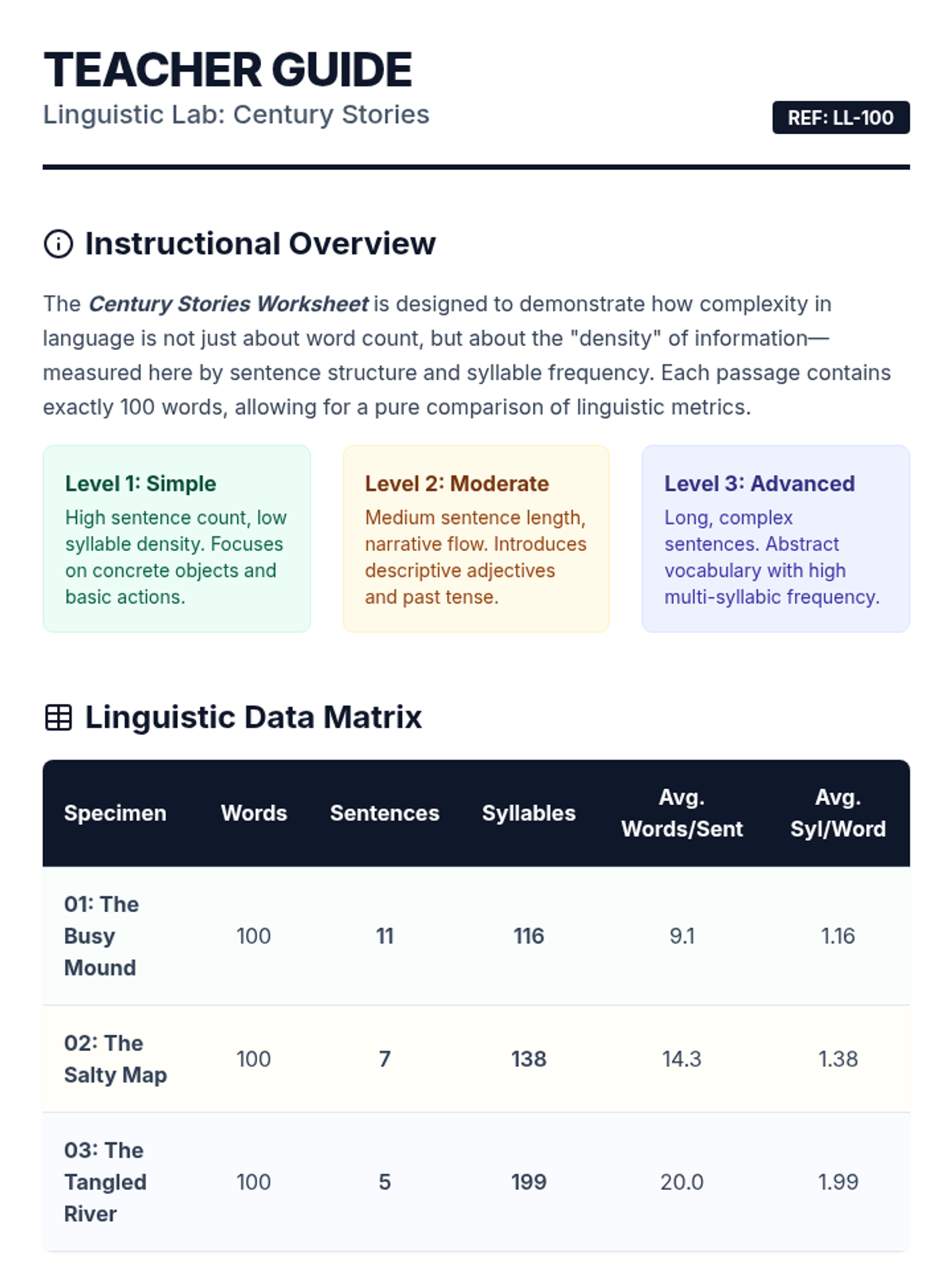
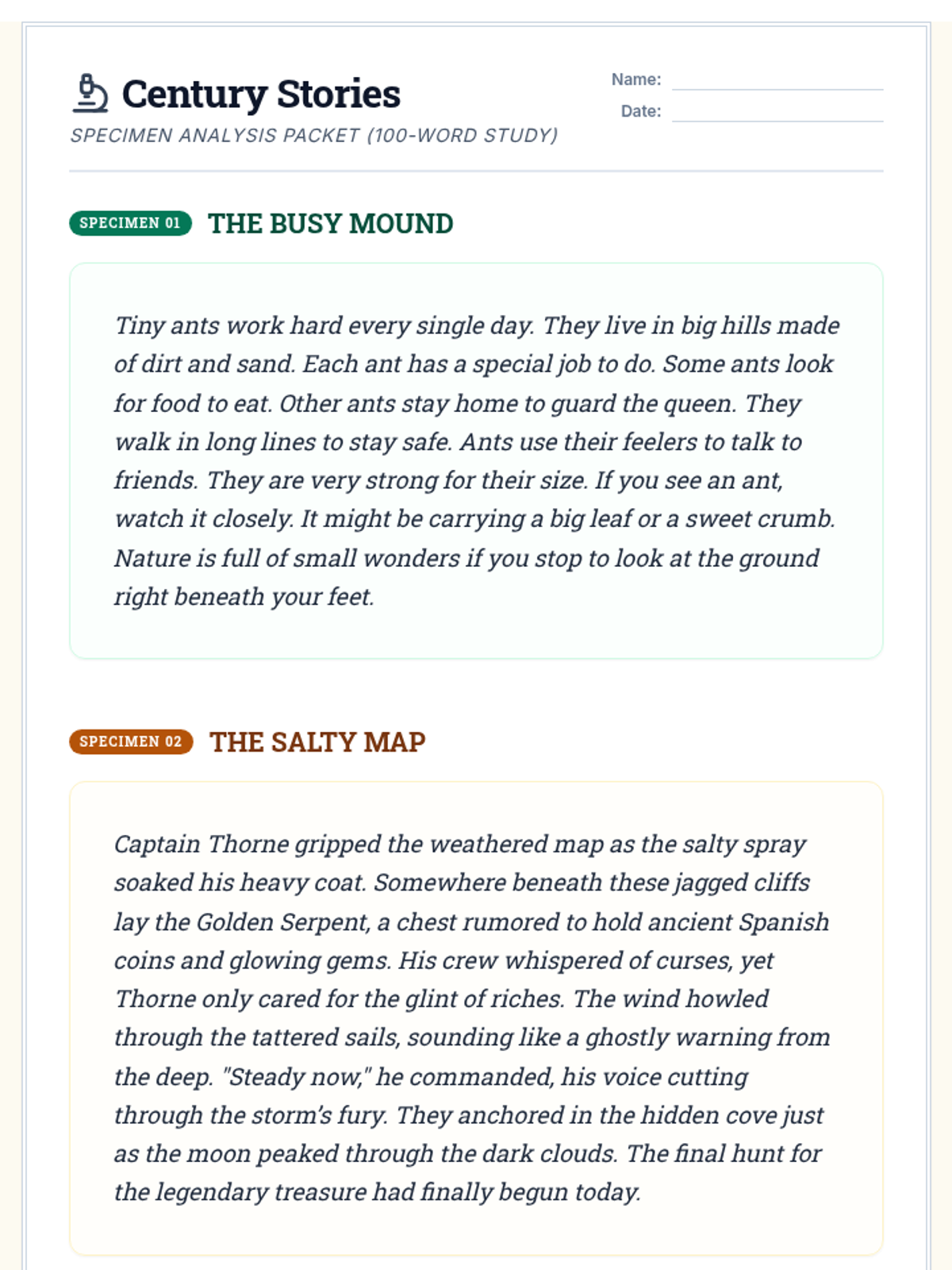
A collection of reading passages designed to challenge students' comprehension and linguistic awareness by analyzing word counts, sentence structures, and syllable patterns.
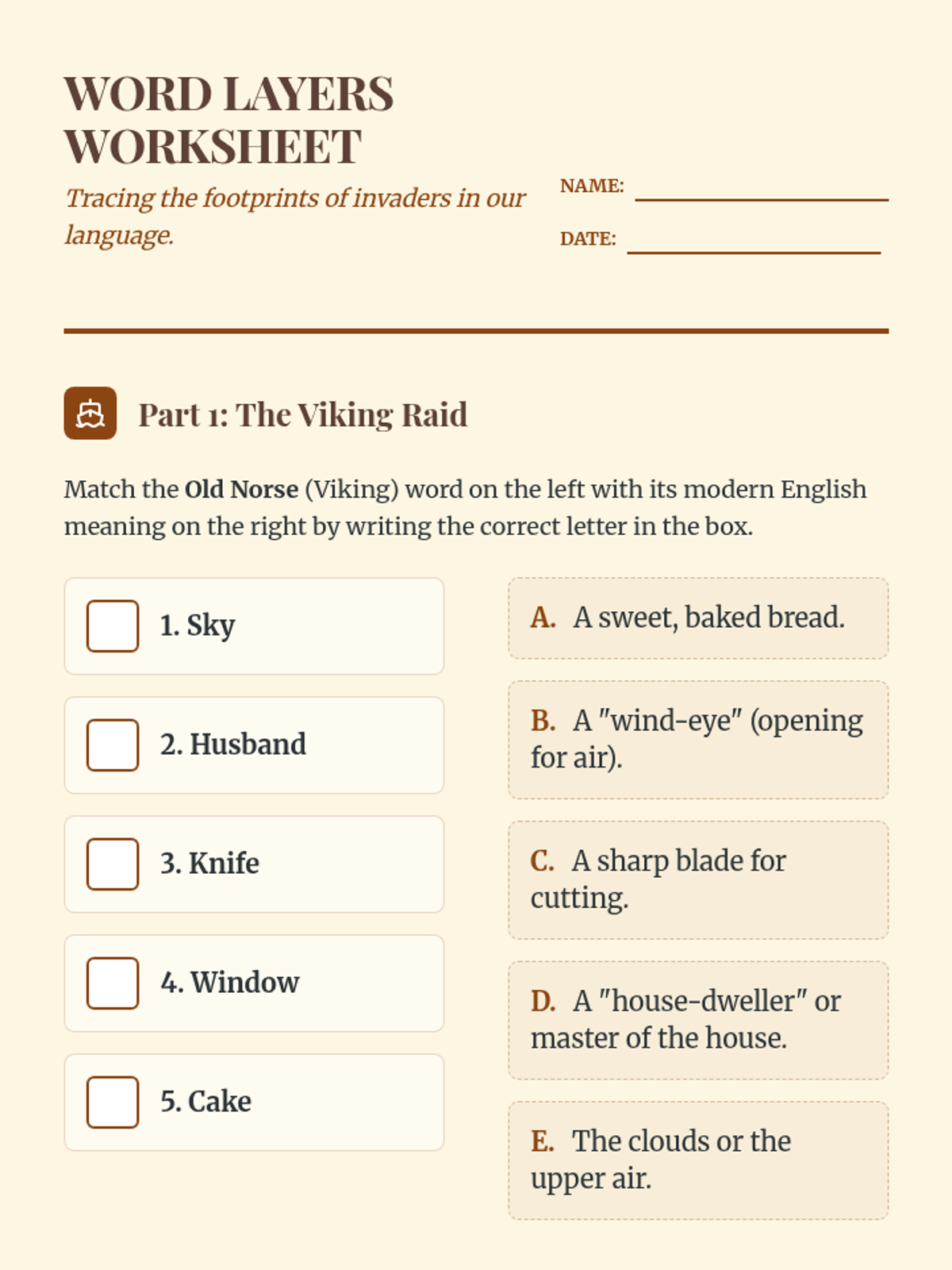
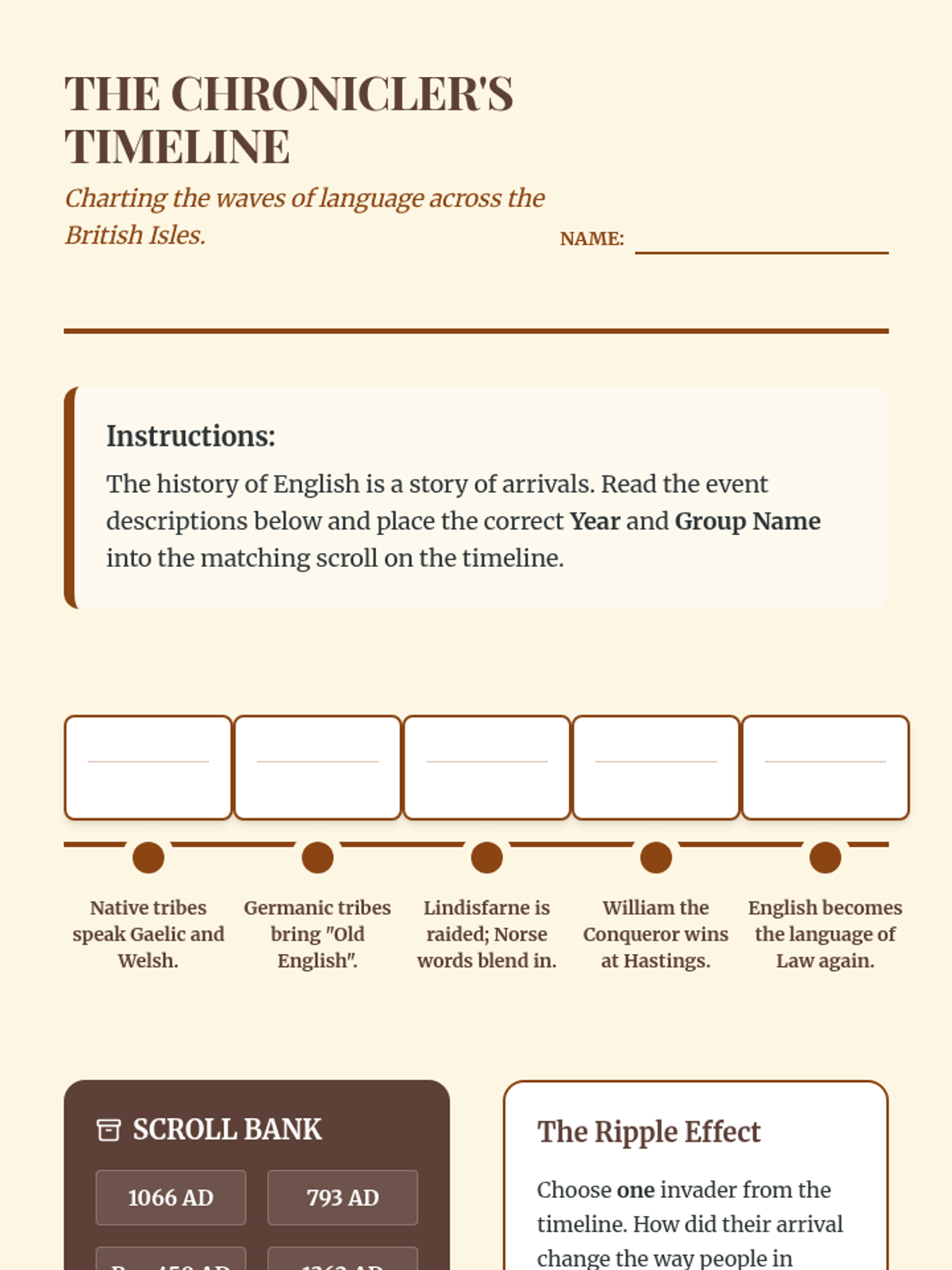
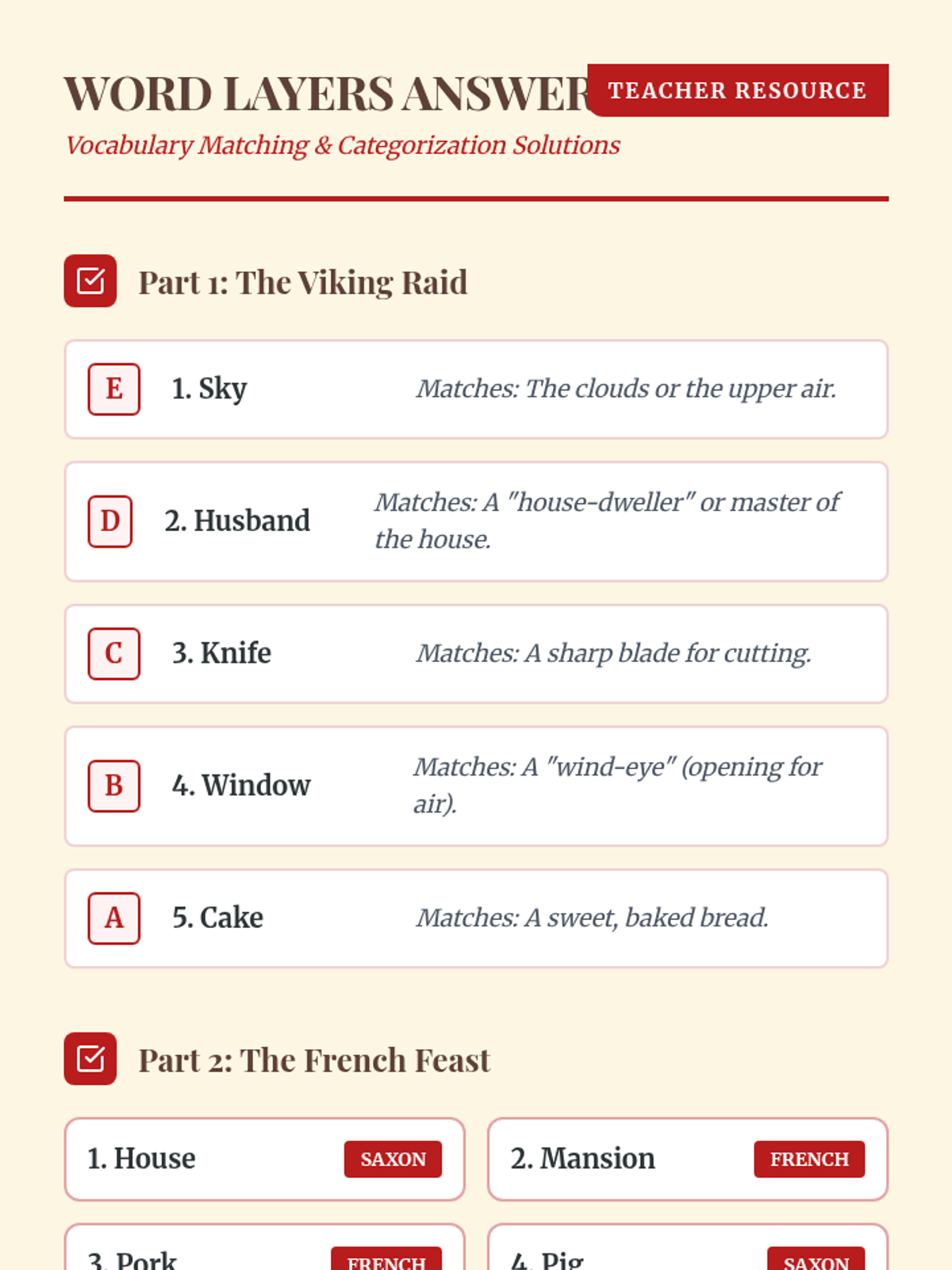
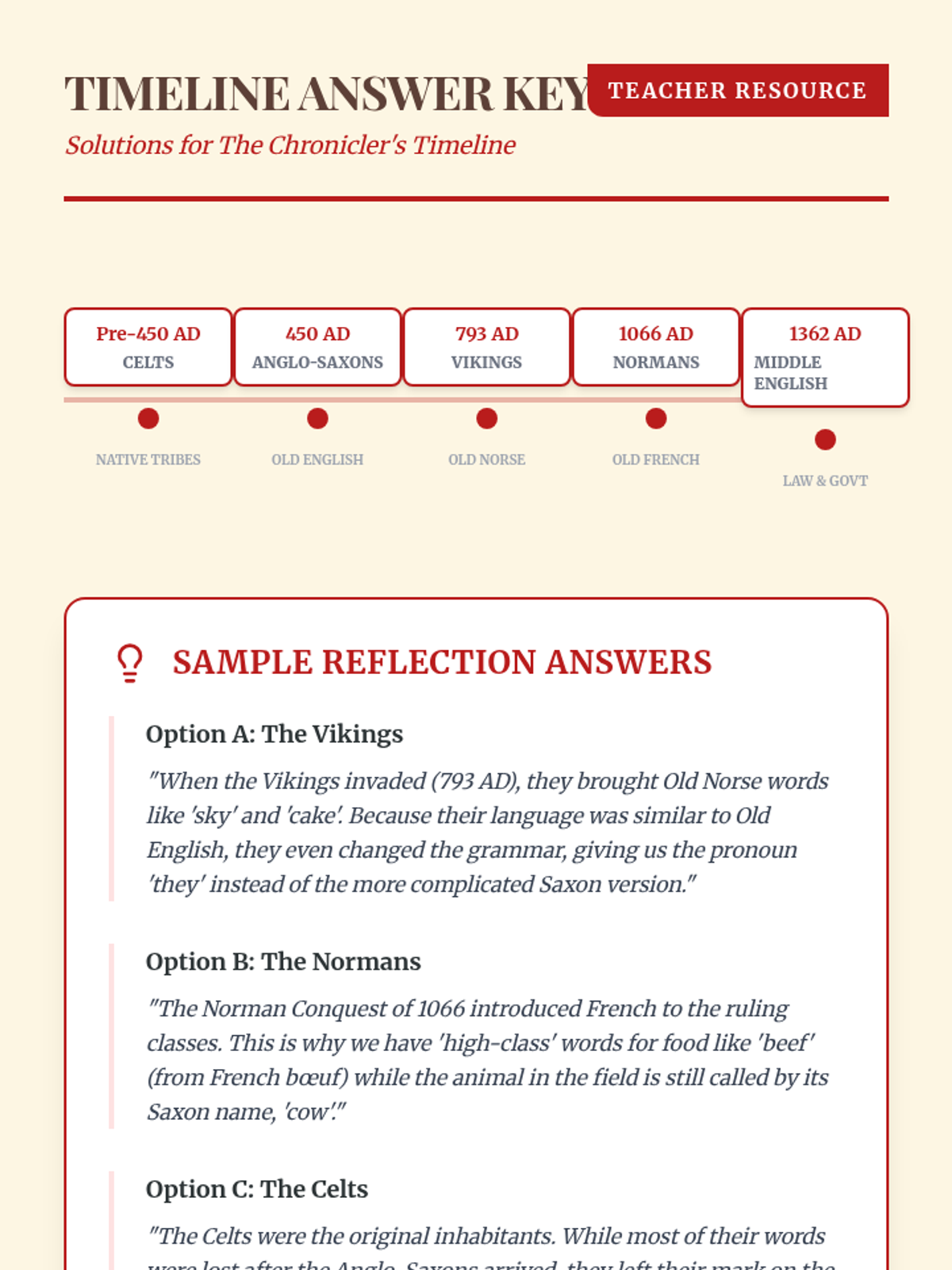
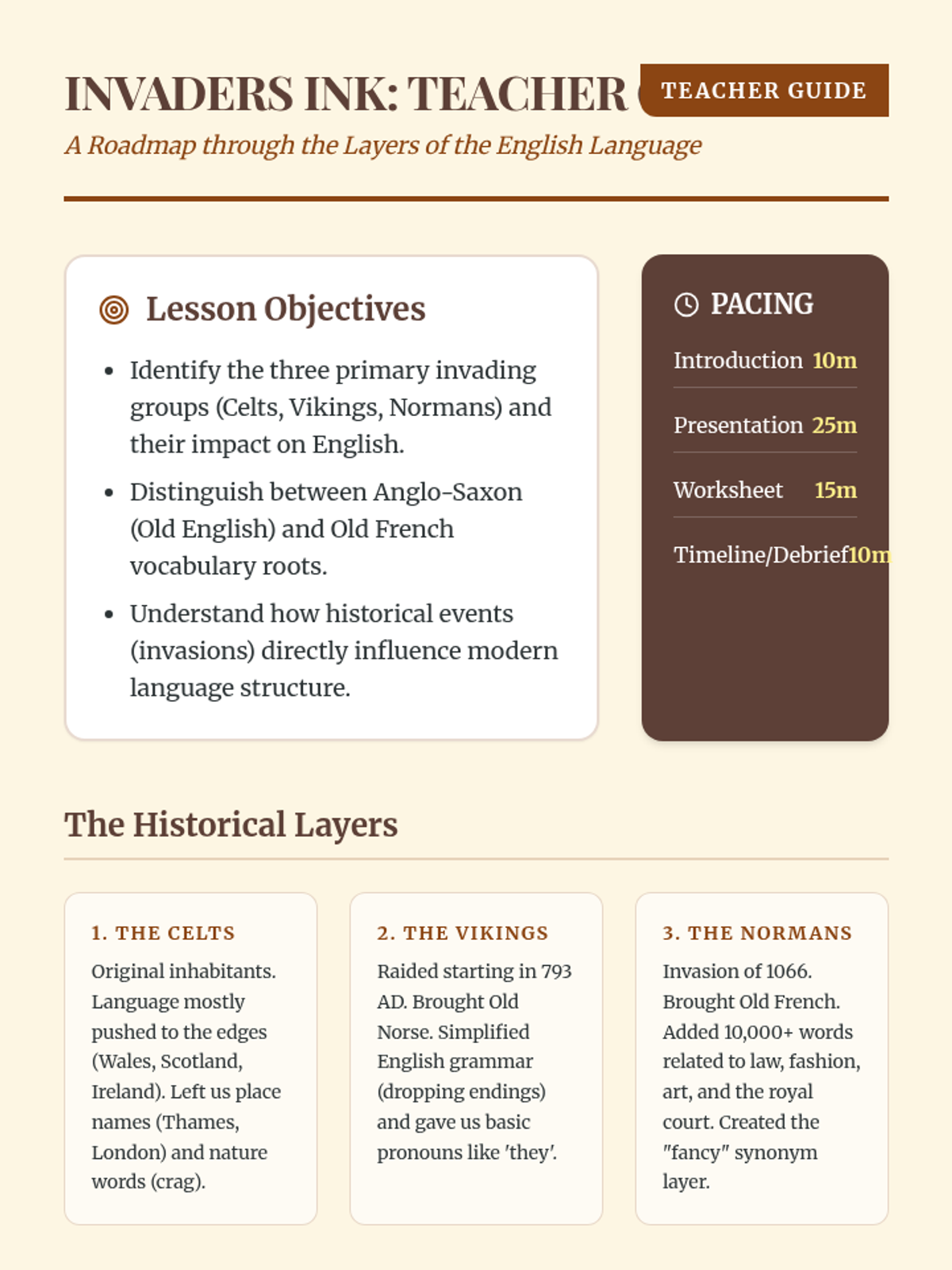
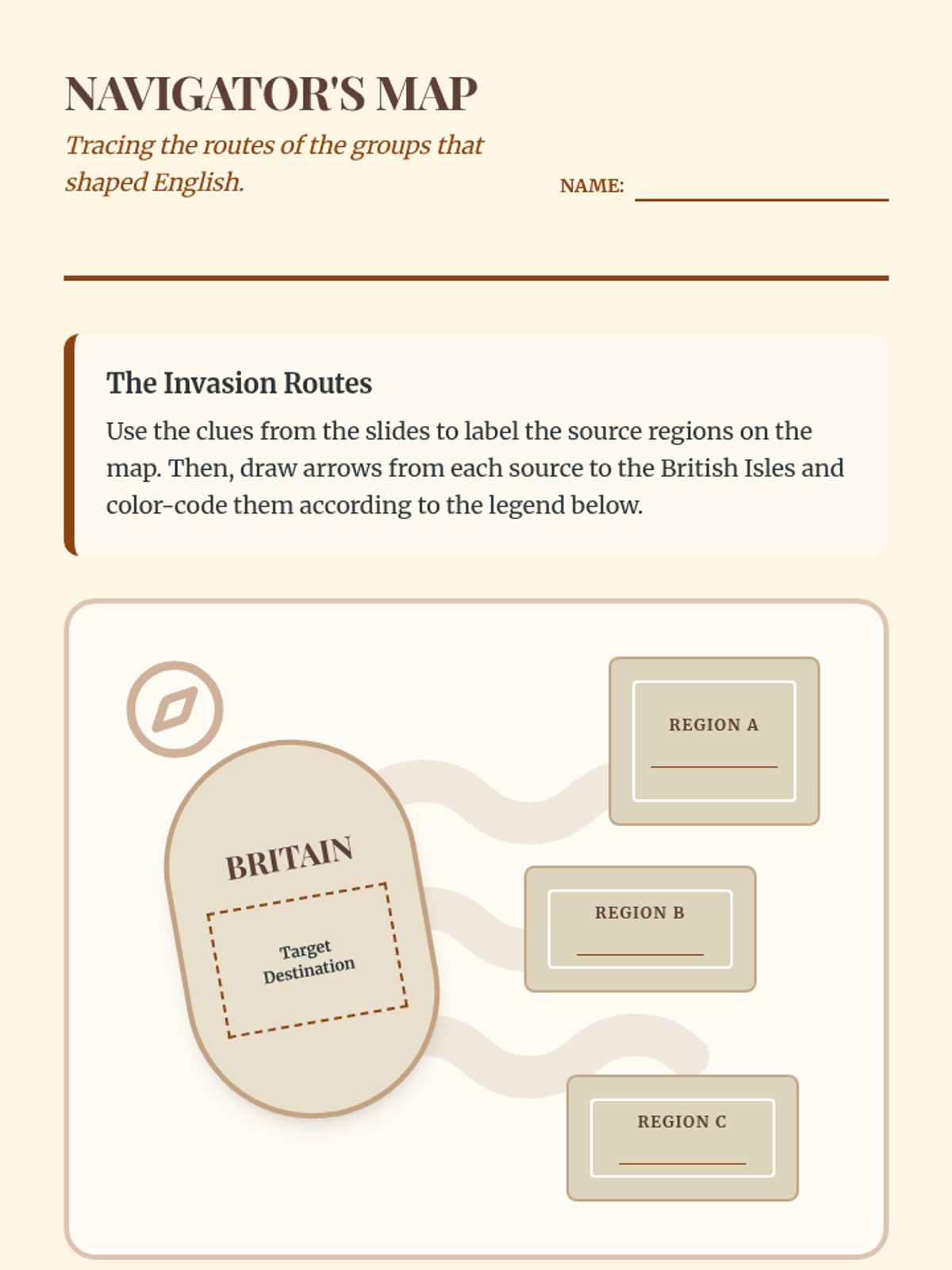
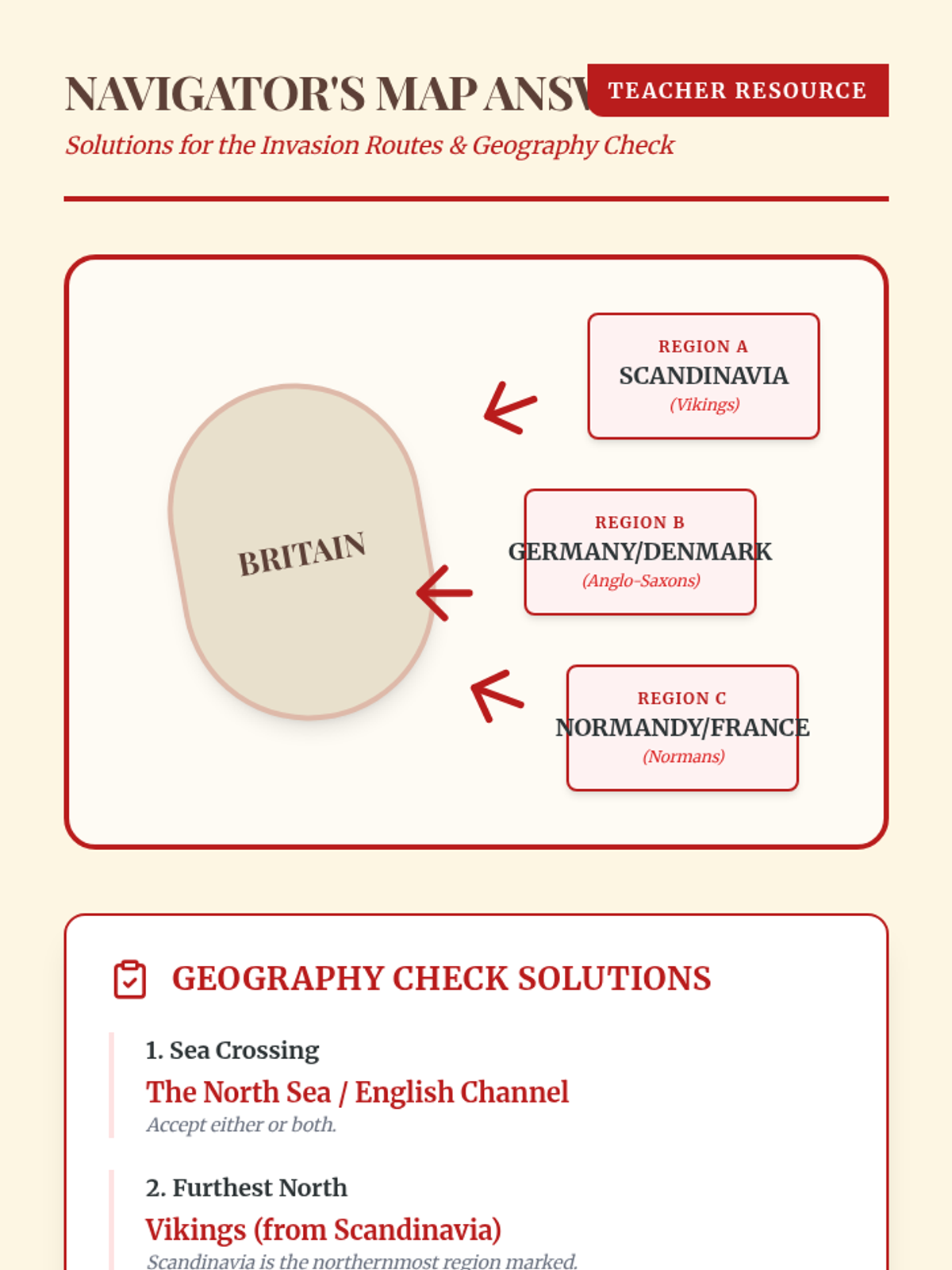
This lesson explores the historical layers of the English language, focusing on how invasions by the Celts, Vikings, and French shaped the vocabulary and grammar we use today. Students will trace the timeline from Old English to the Norman Conquest.
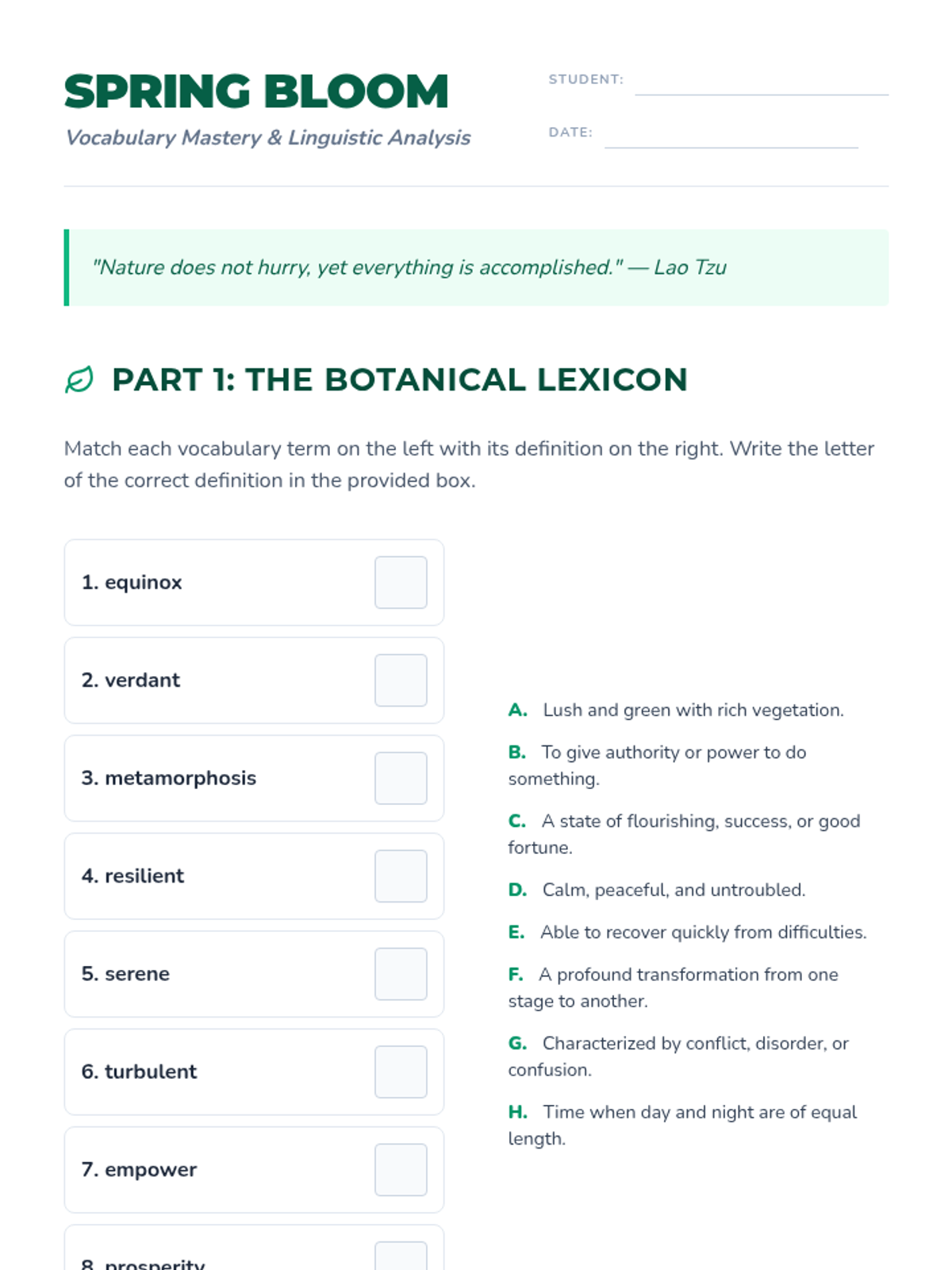
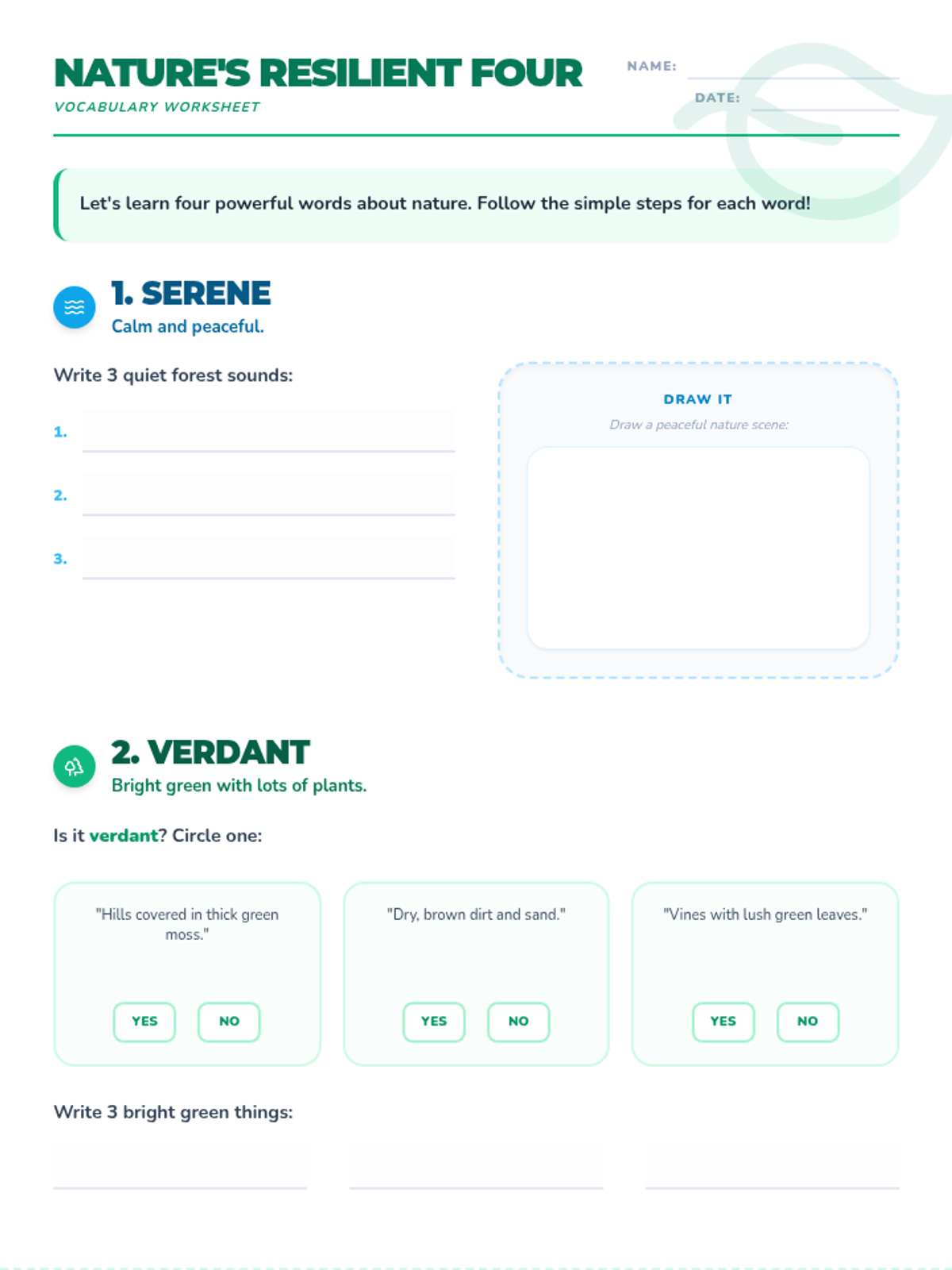
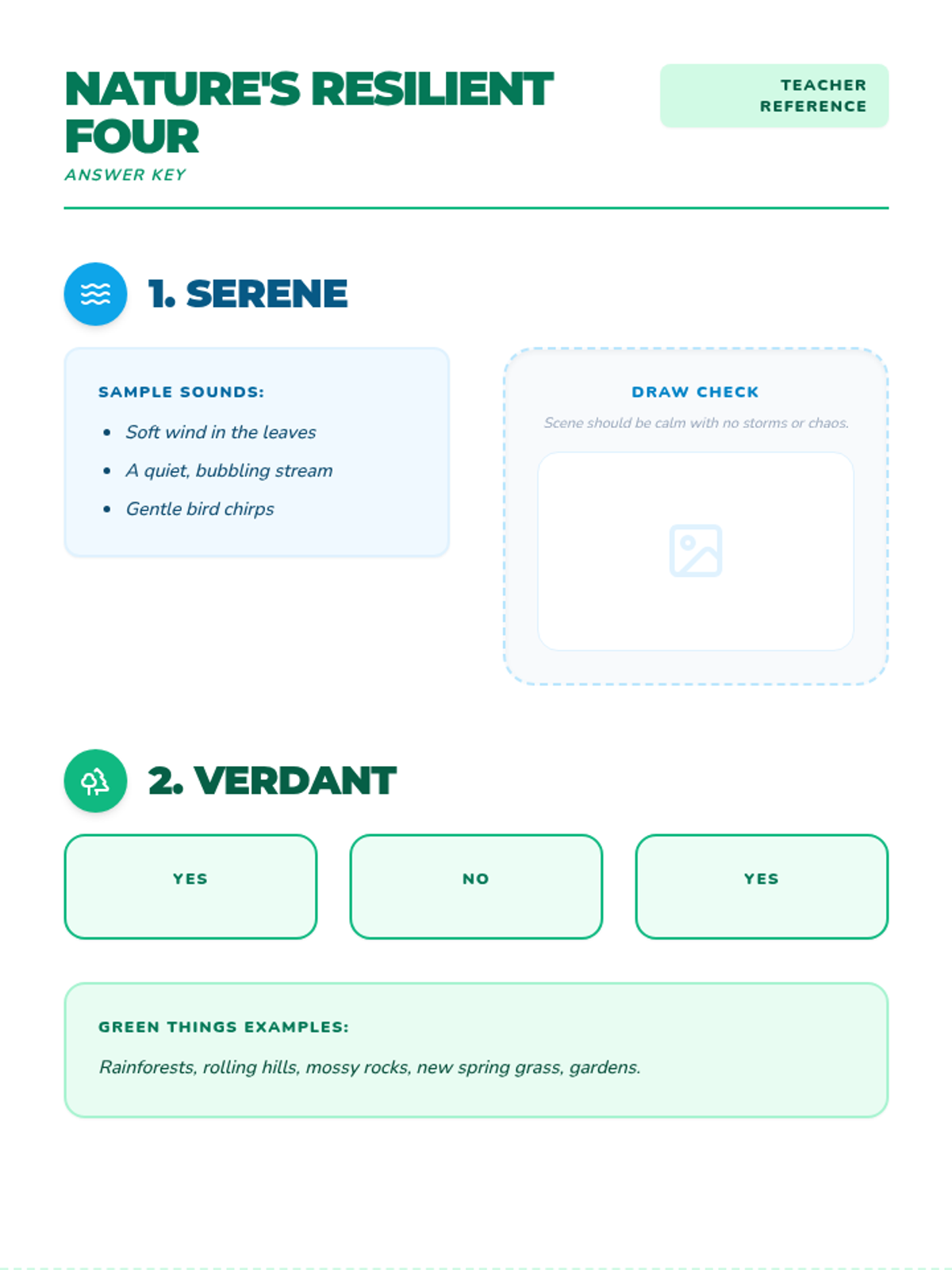
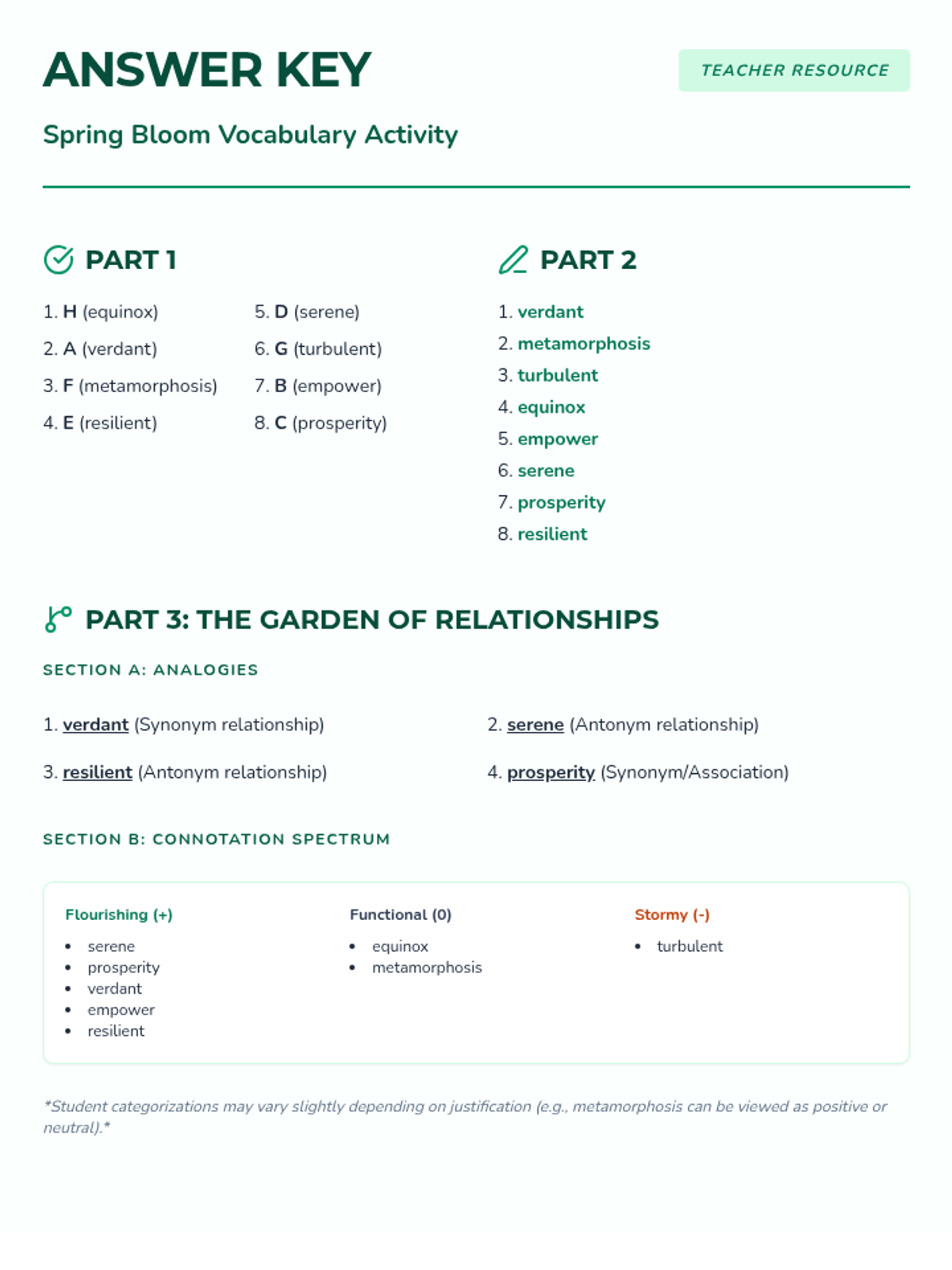
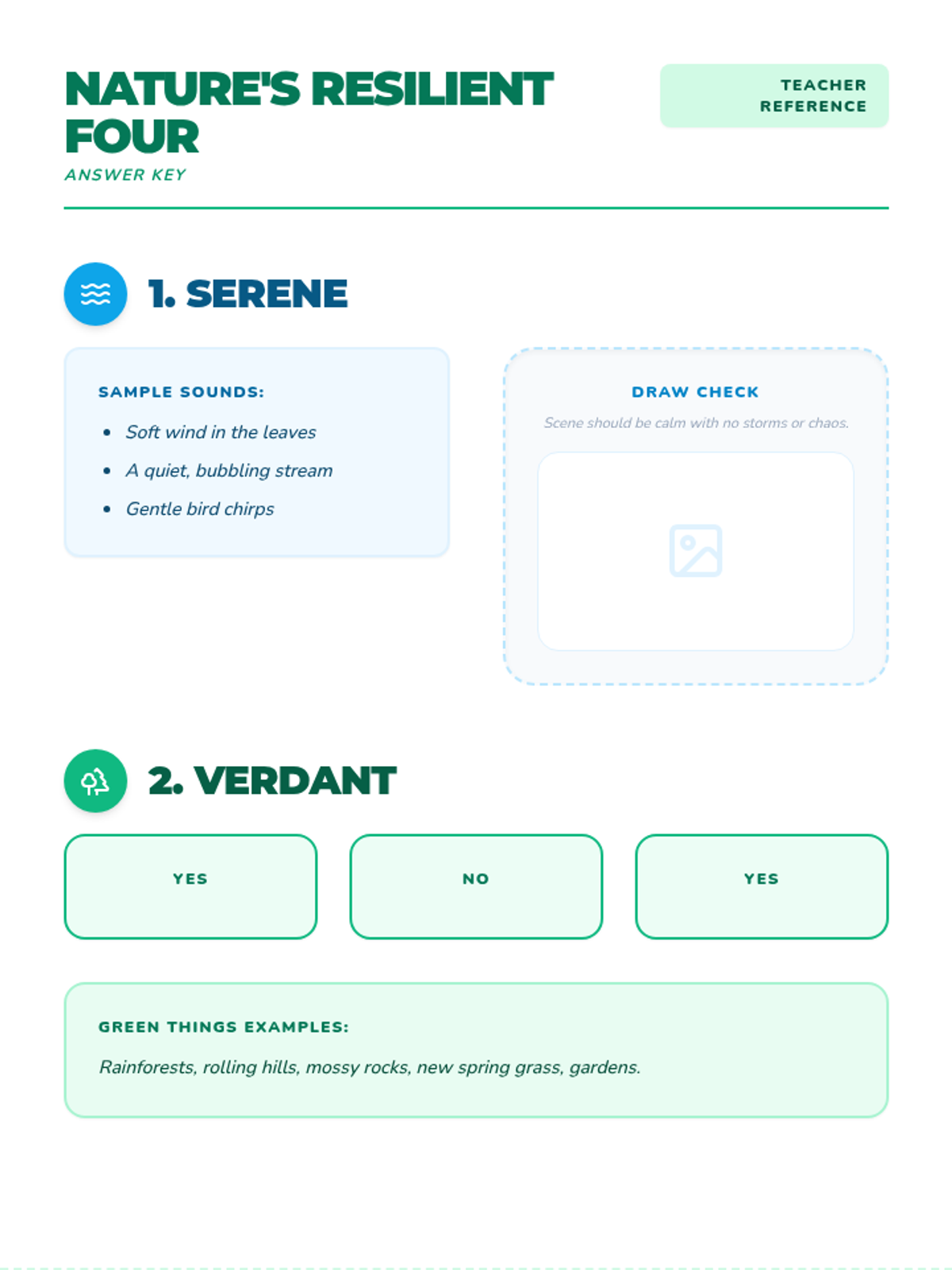
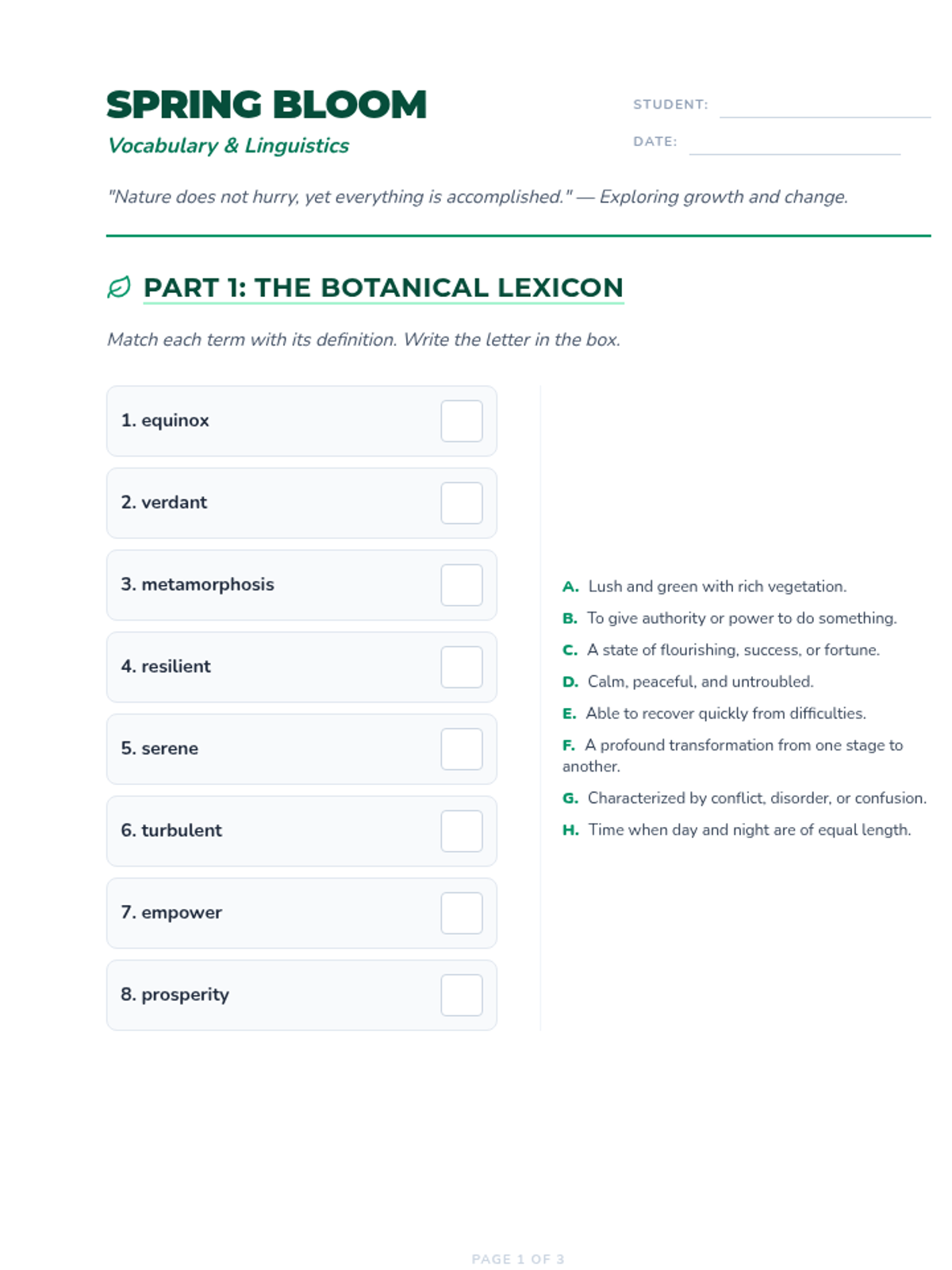
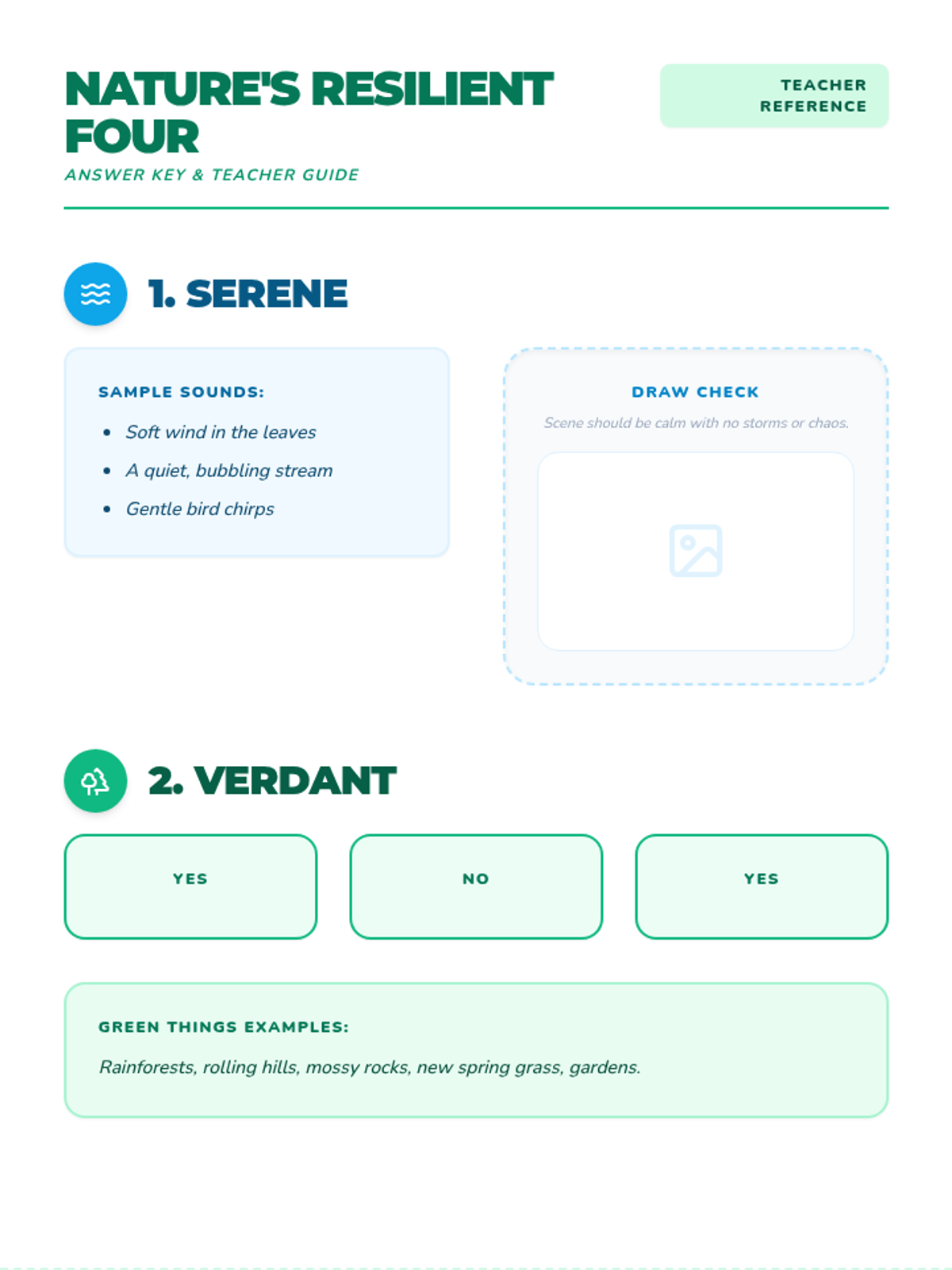
A vocabulary and linguistics lesson exploring themes of transition, growth, and strength. Students master eight high-level terms—equinox, verdant, metamorphosis, resilient, serene, turbulent, empower, and prosperity—through context analysis and creative application.
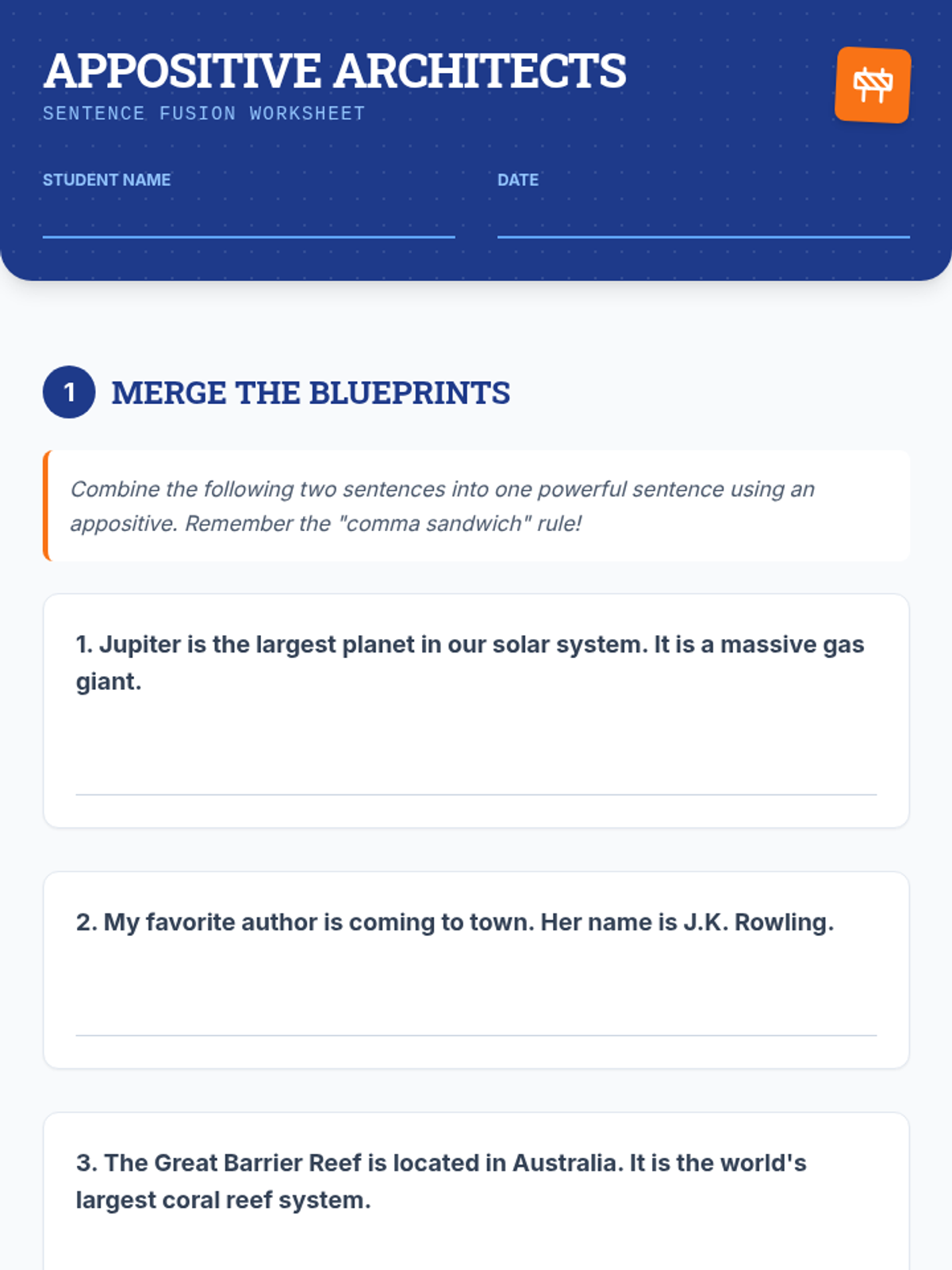
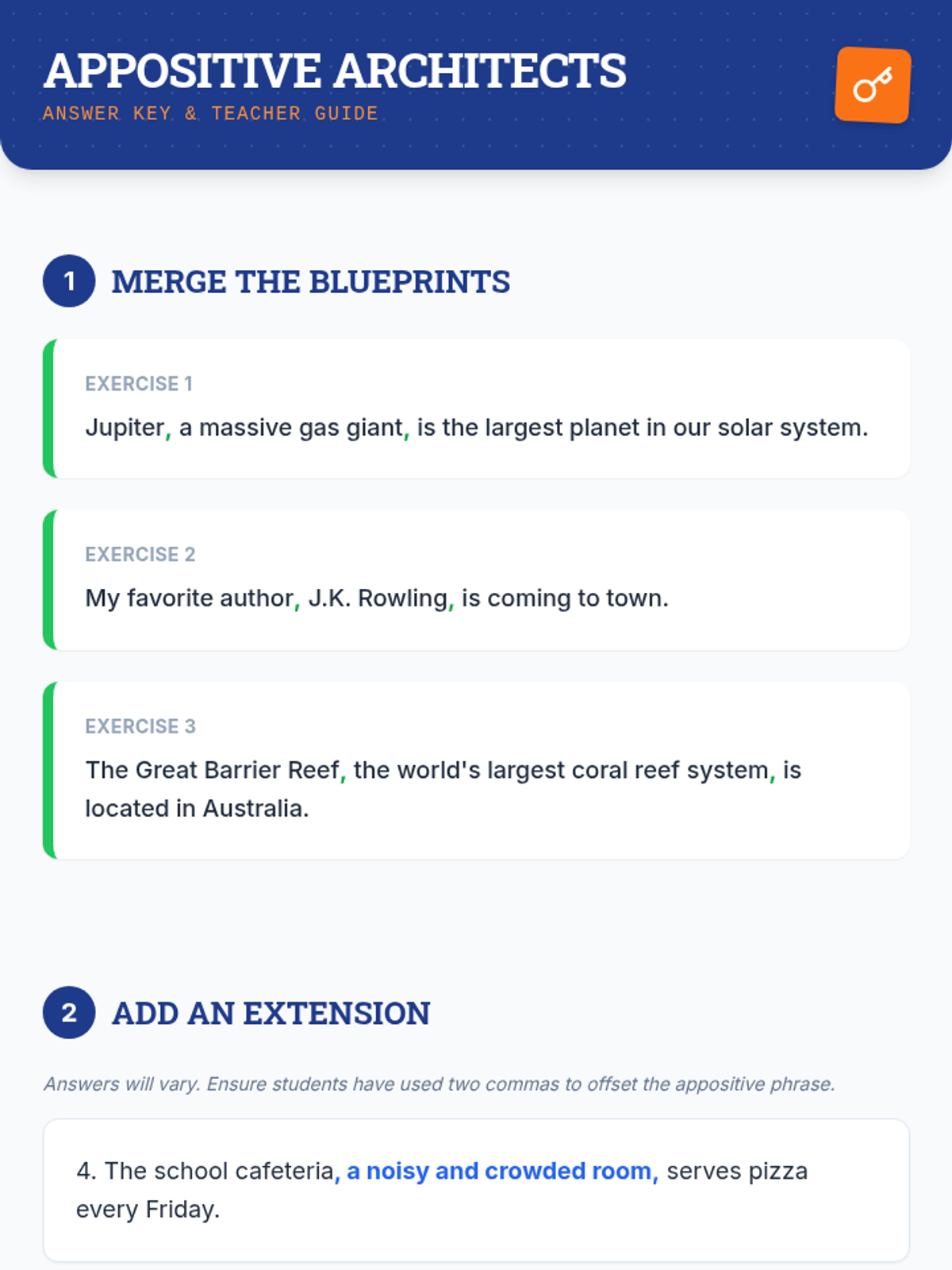
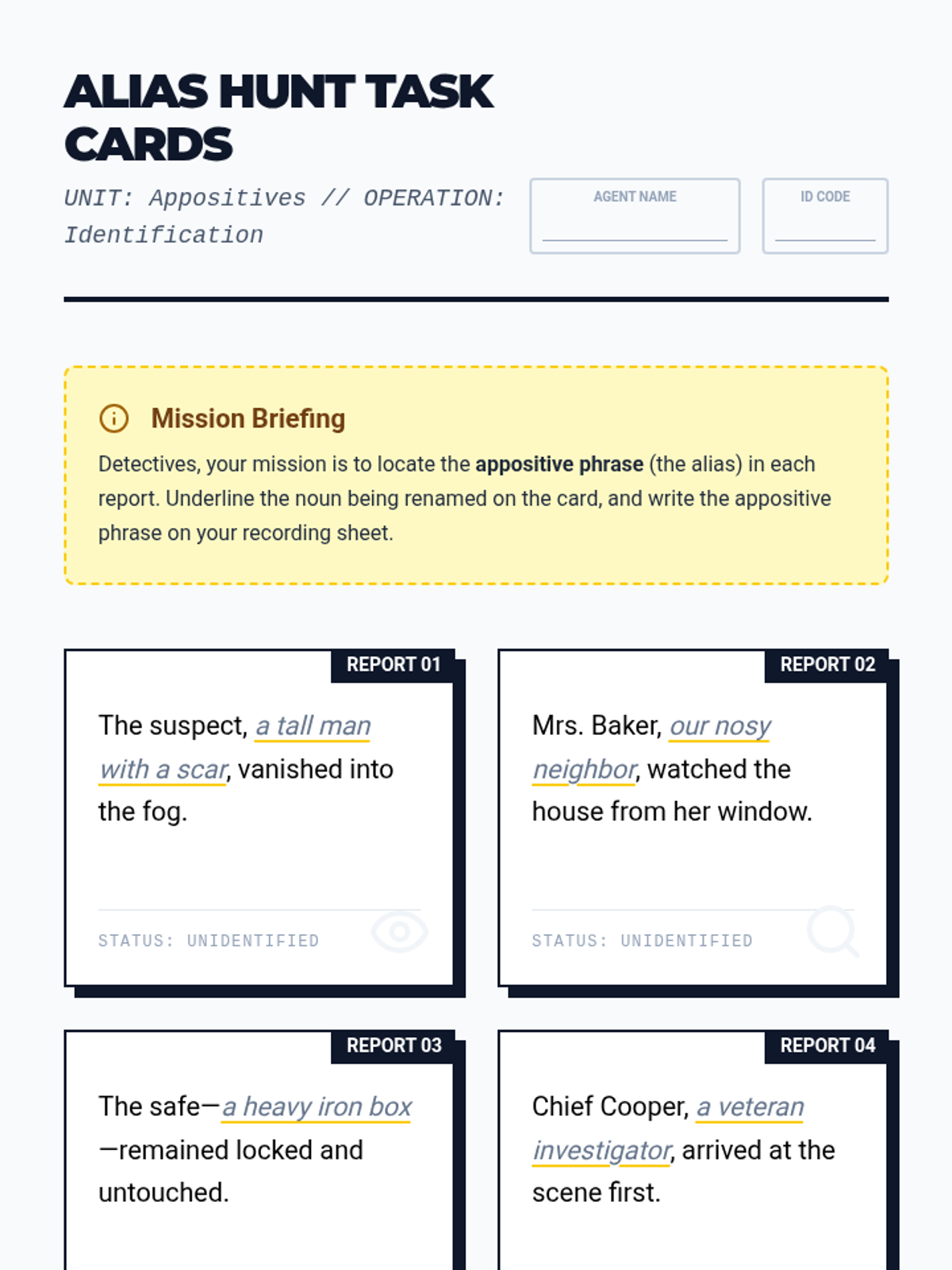
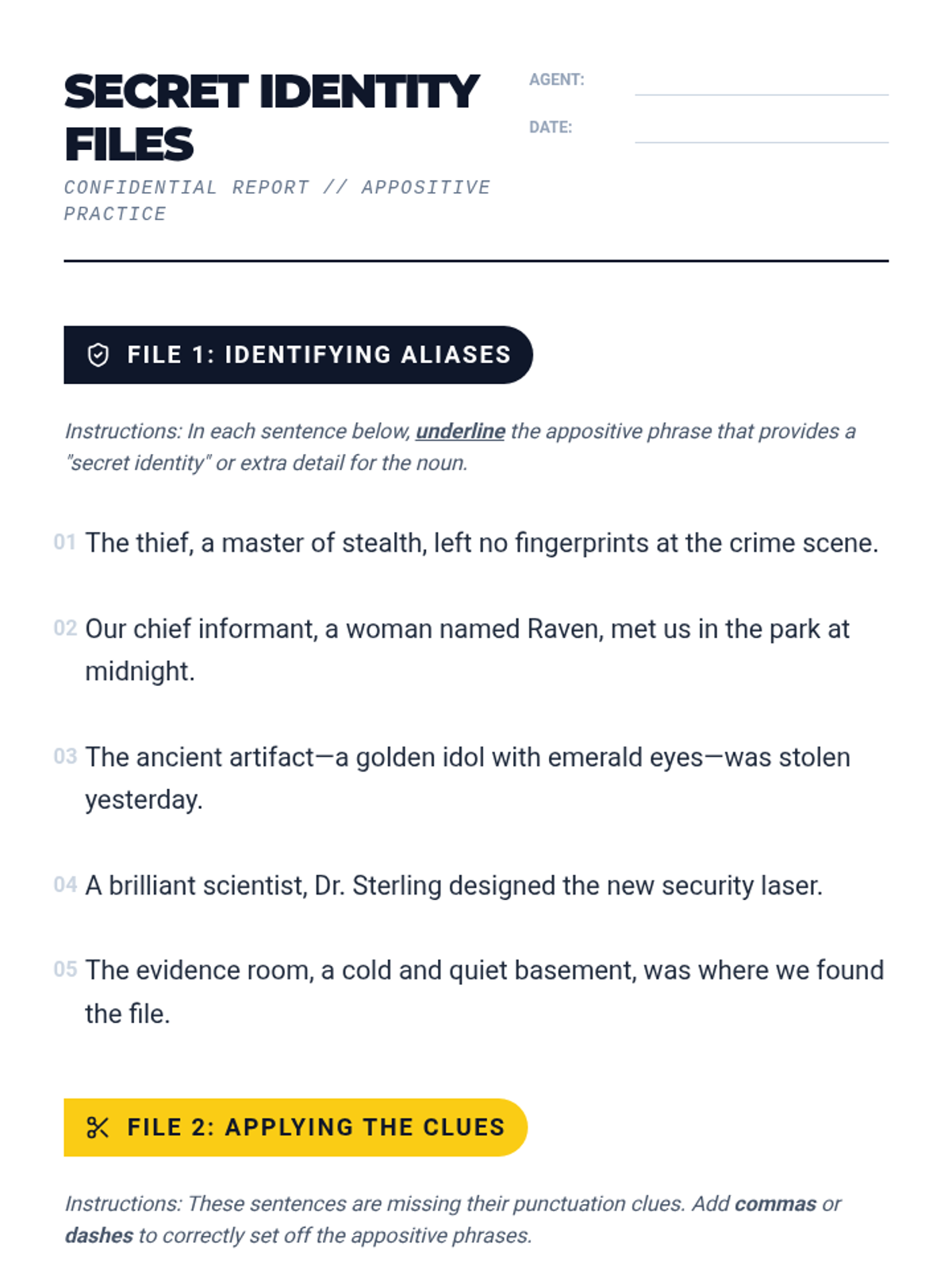
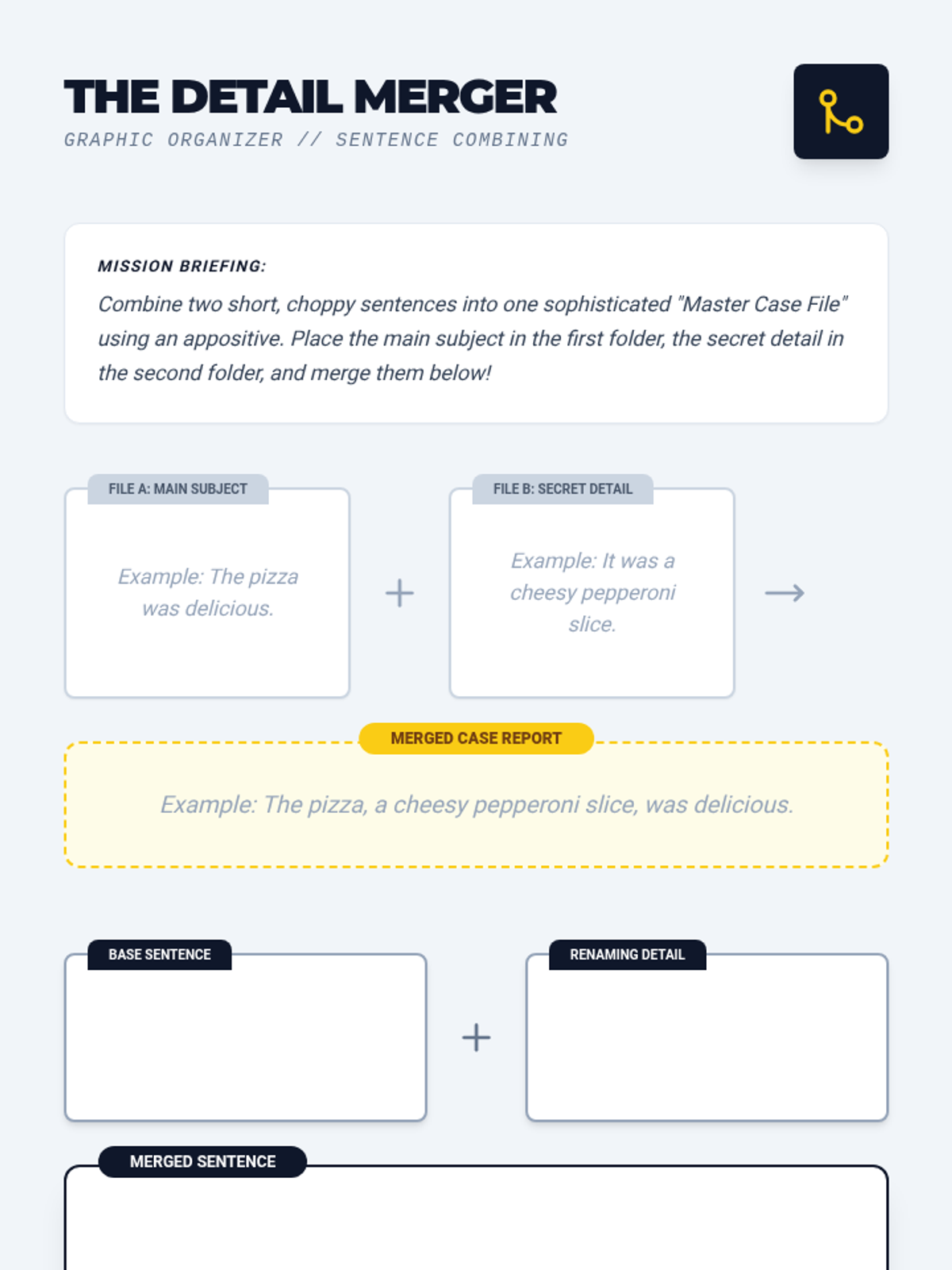
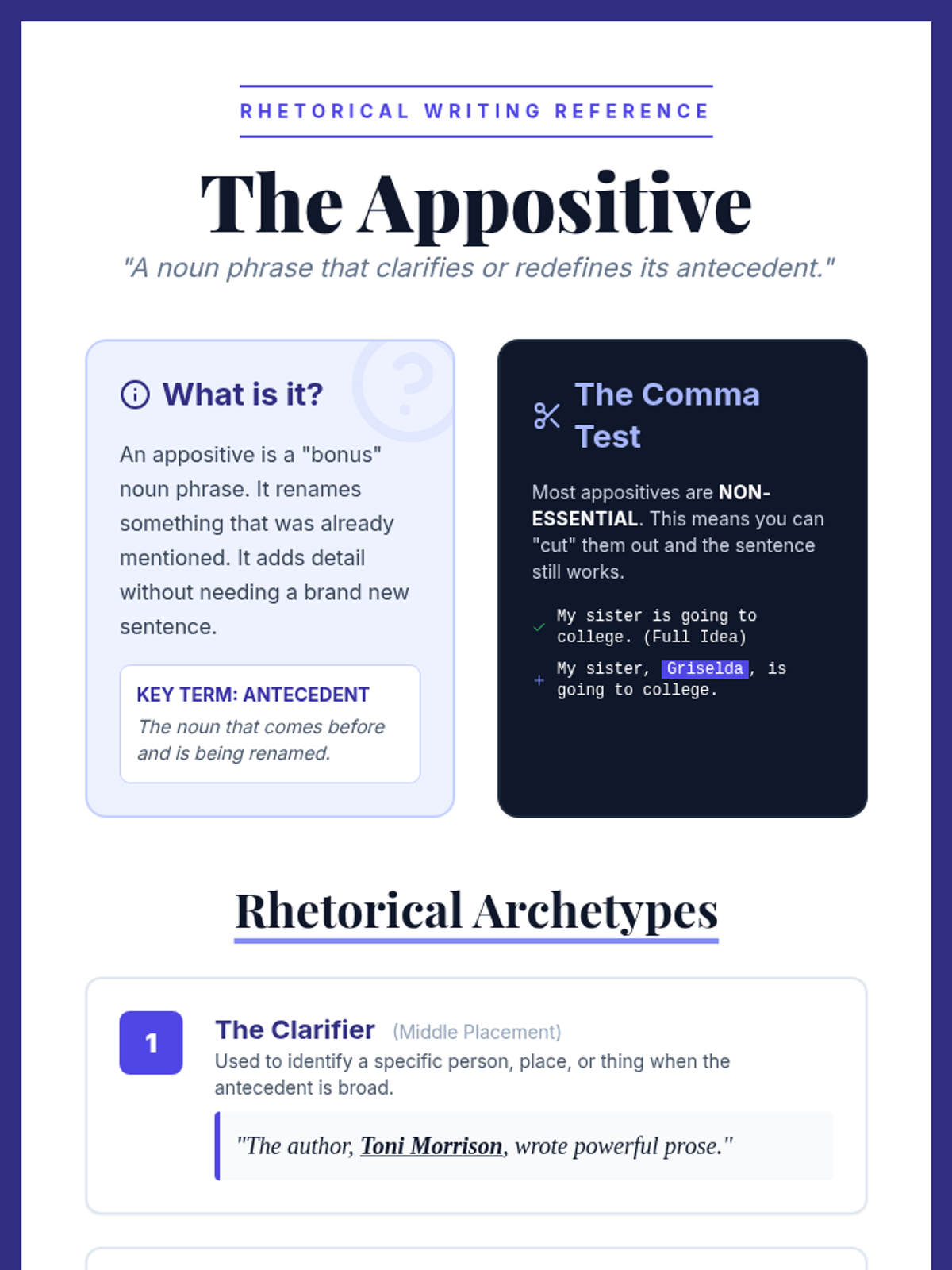
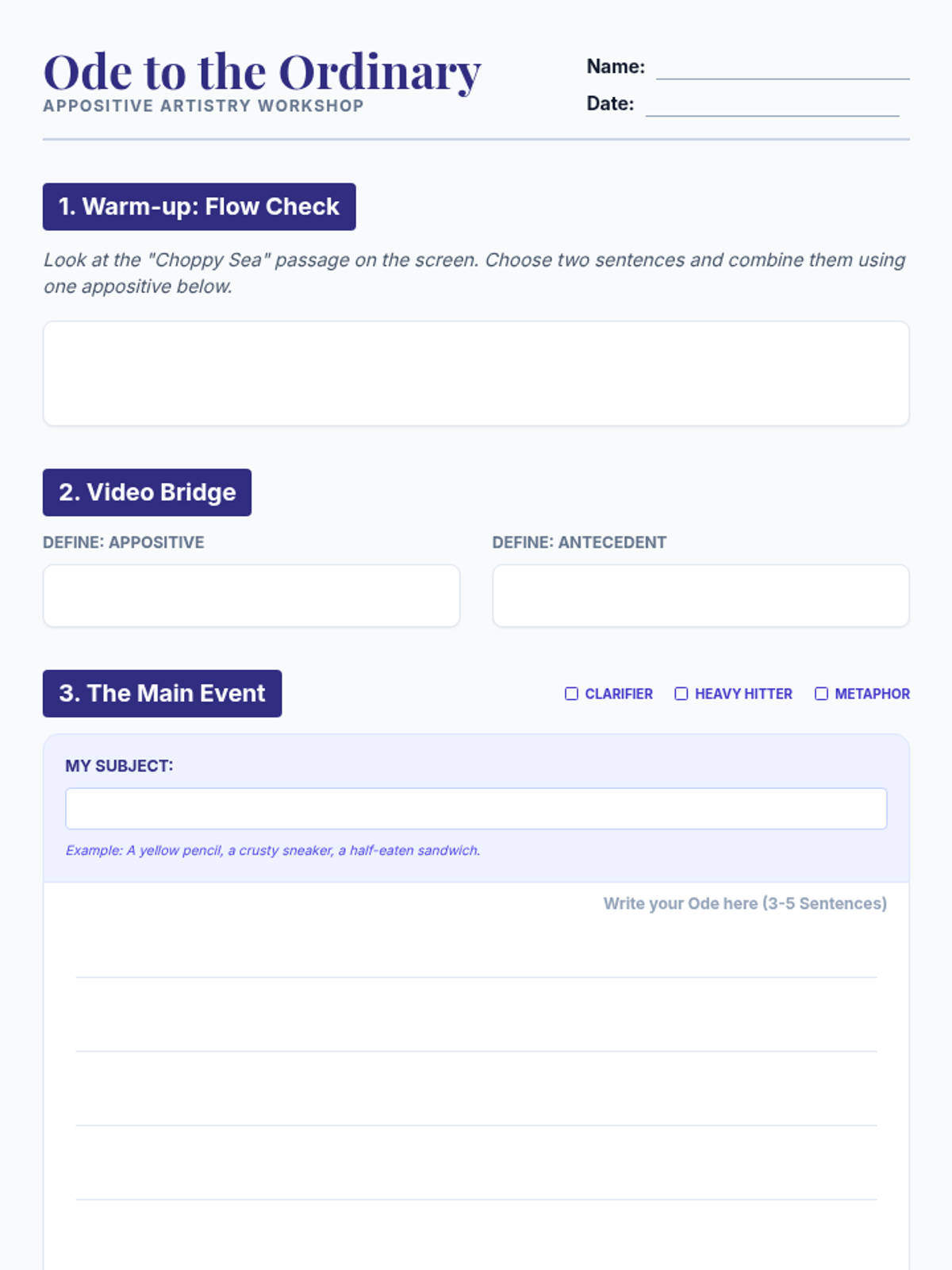
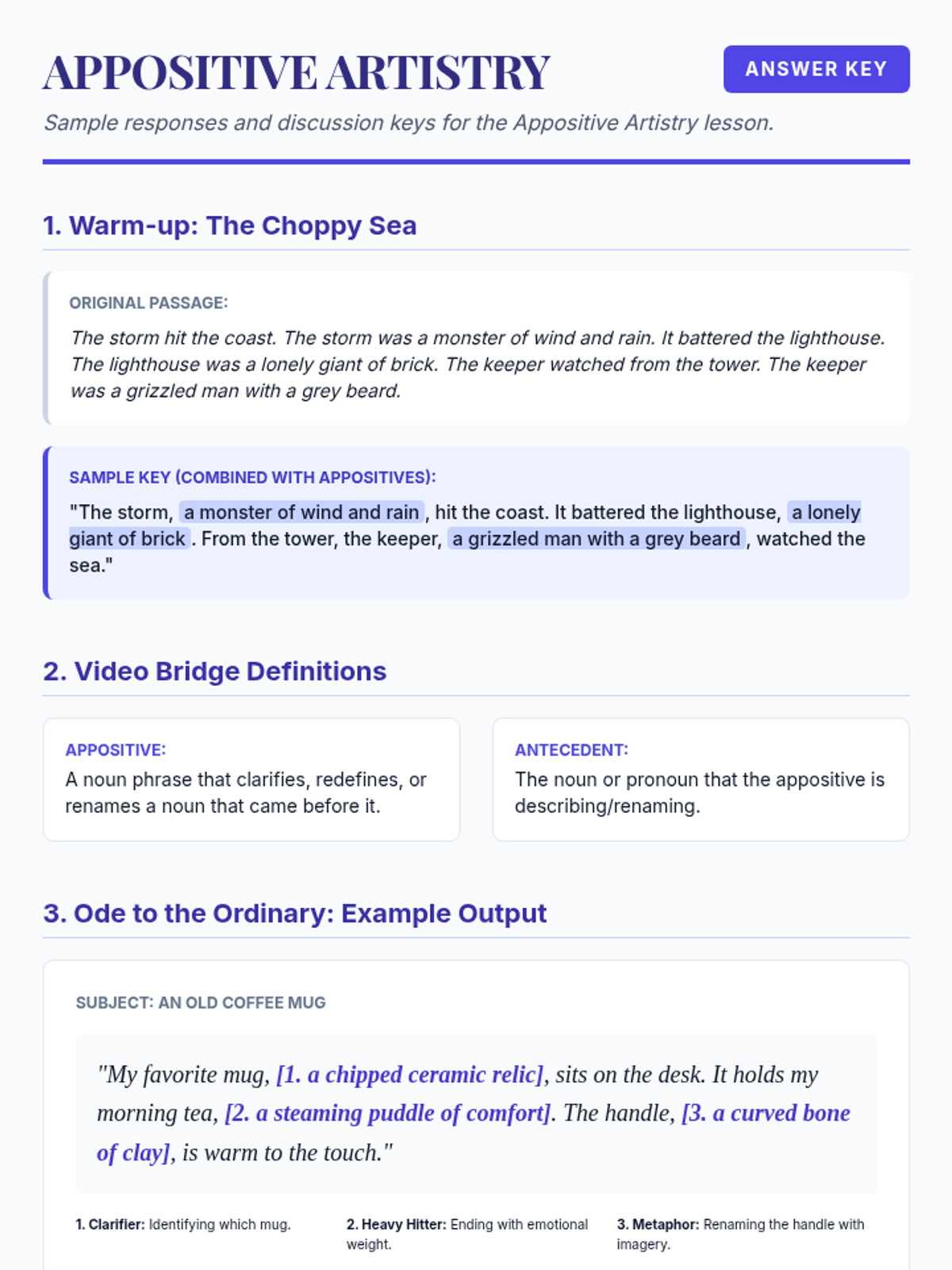
A lesson focused on identifying, punctuating, and constructing appositives to improve sentence variety and detail. Students will learn to combine related sentences and add descriptive noun phrases to their writing.
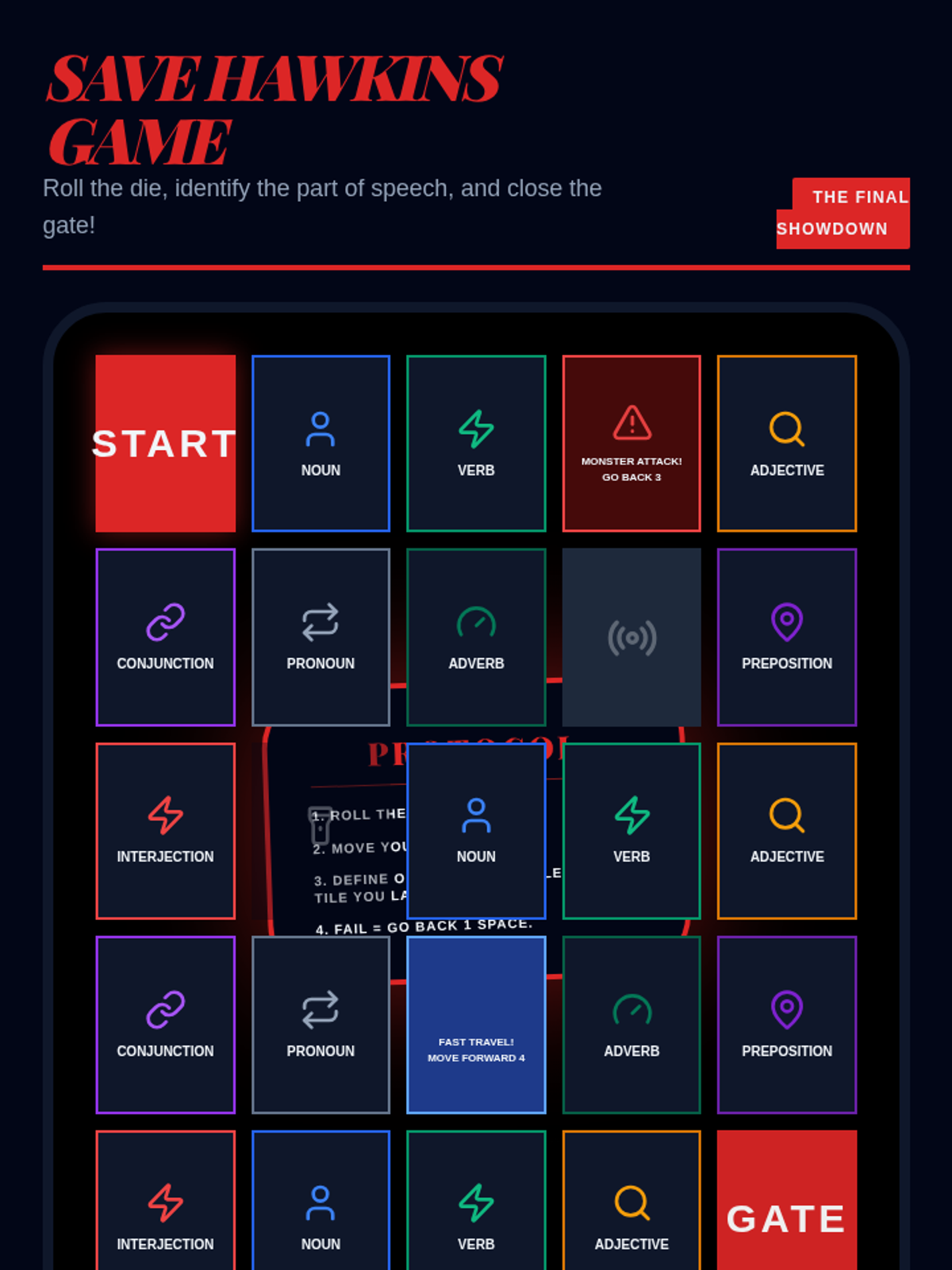
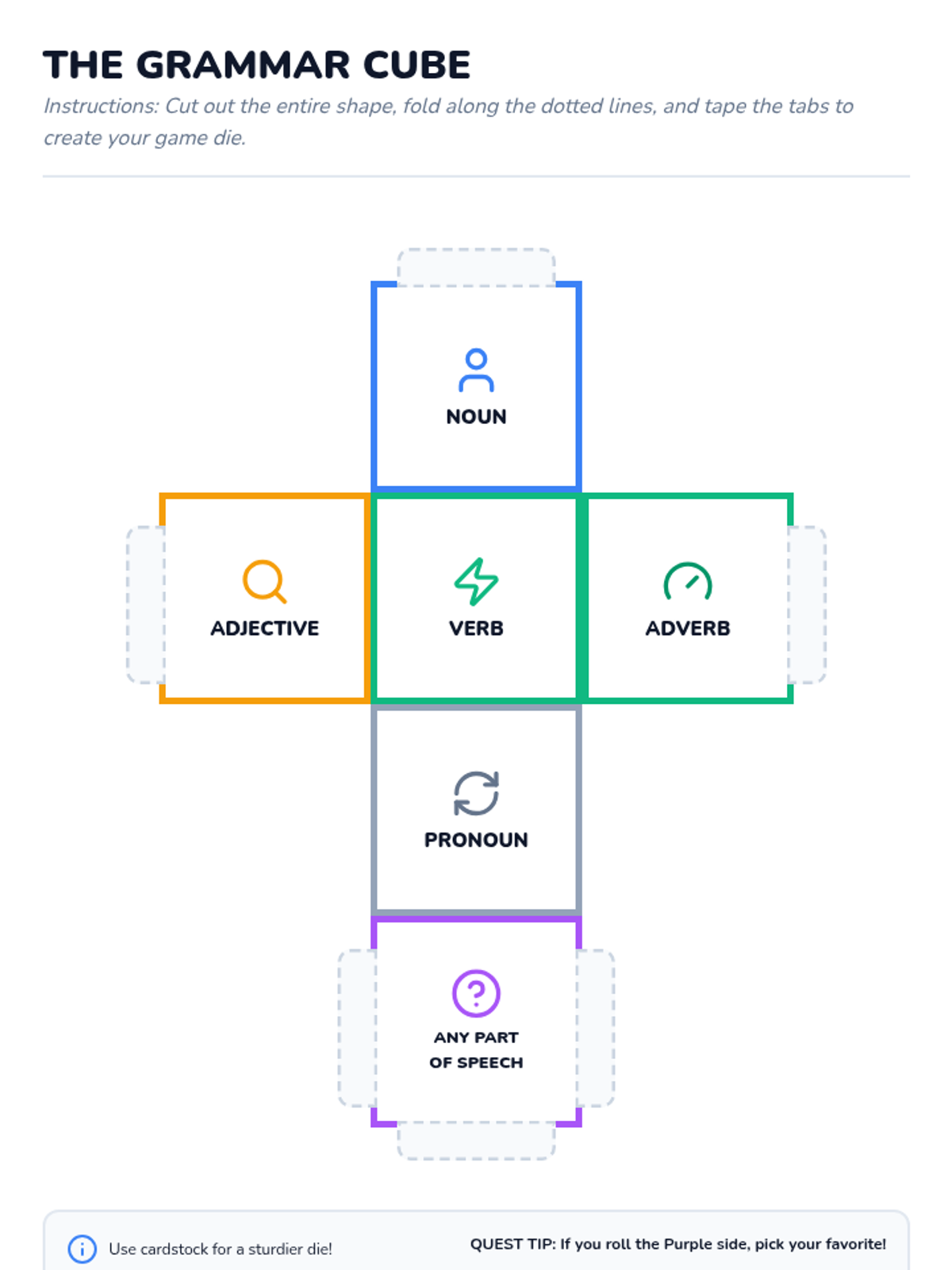
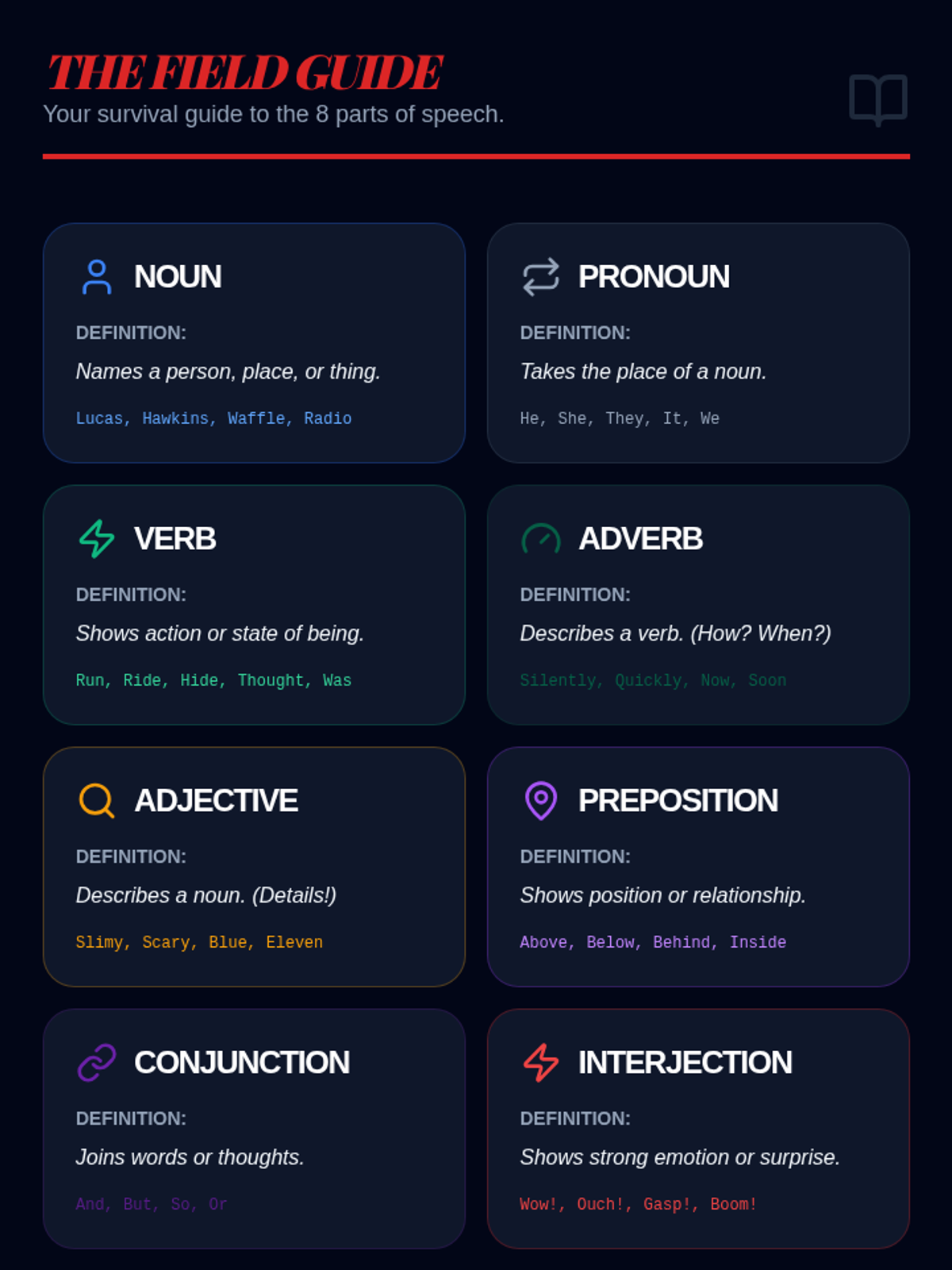
A final review featuring a 'Save Hawkins' board game and a comprehensive 'Field Guide' to all 8 parts of speech.
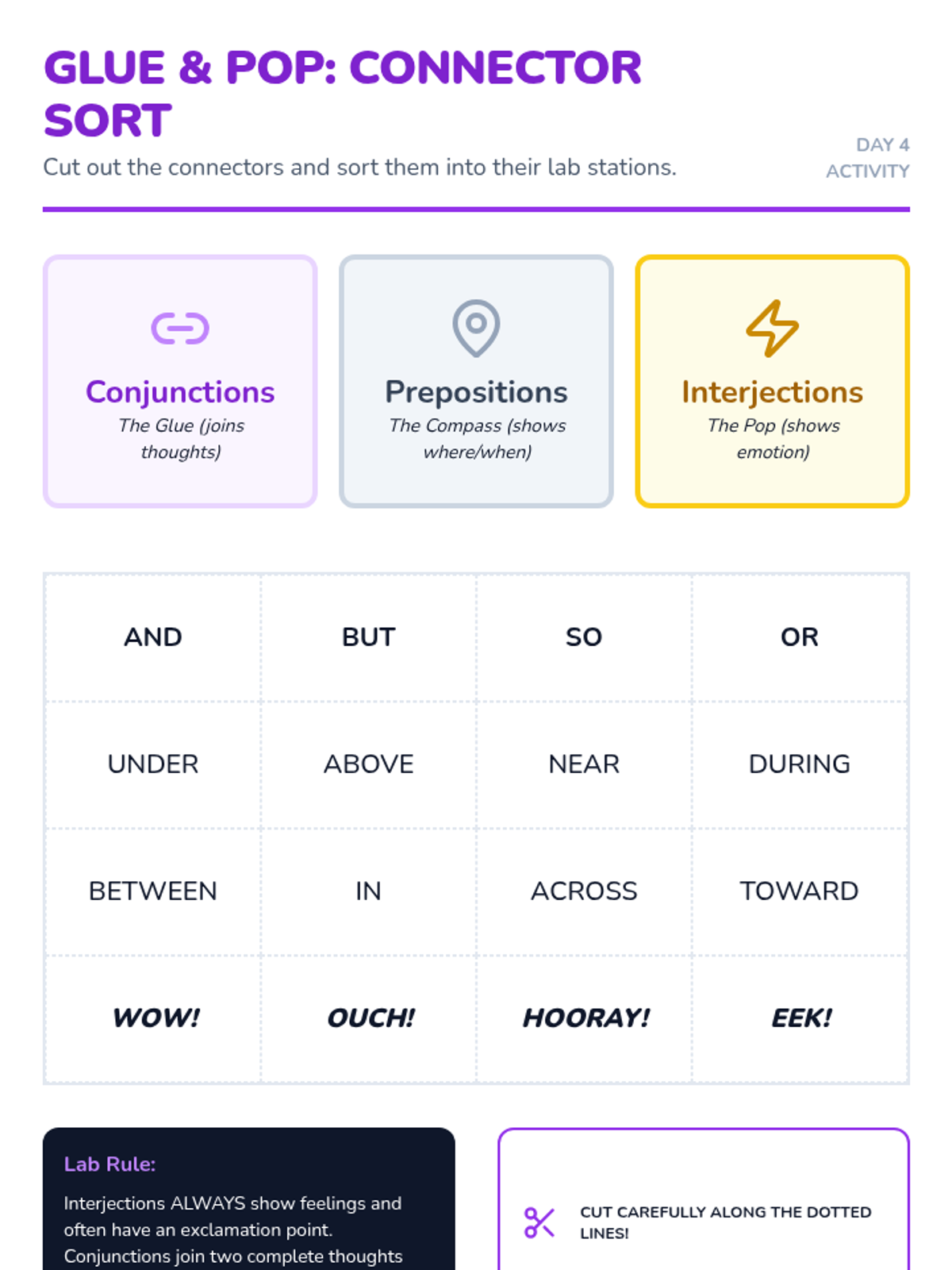
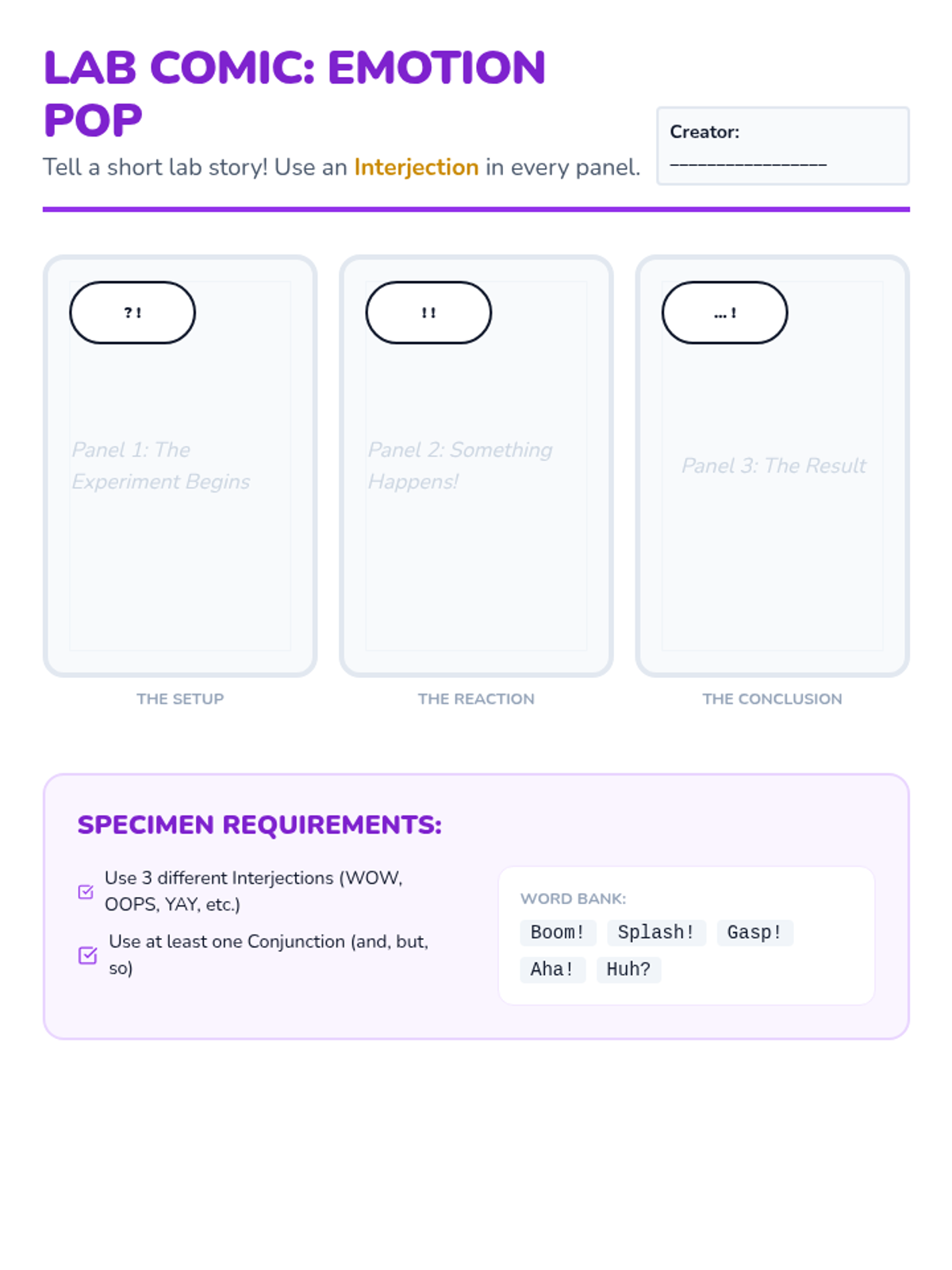
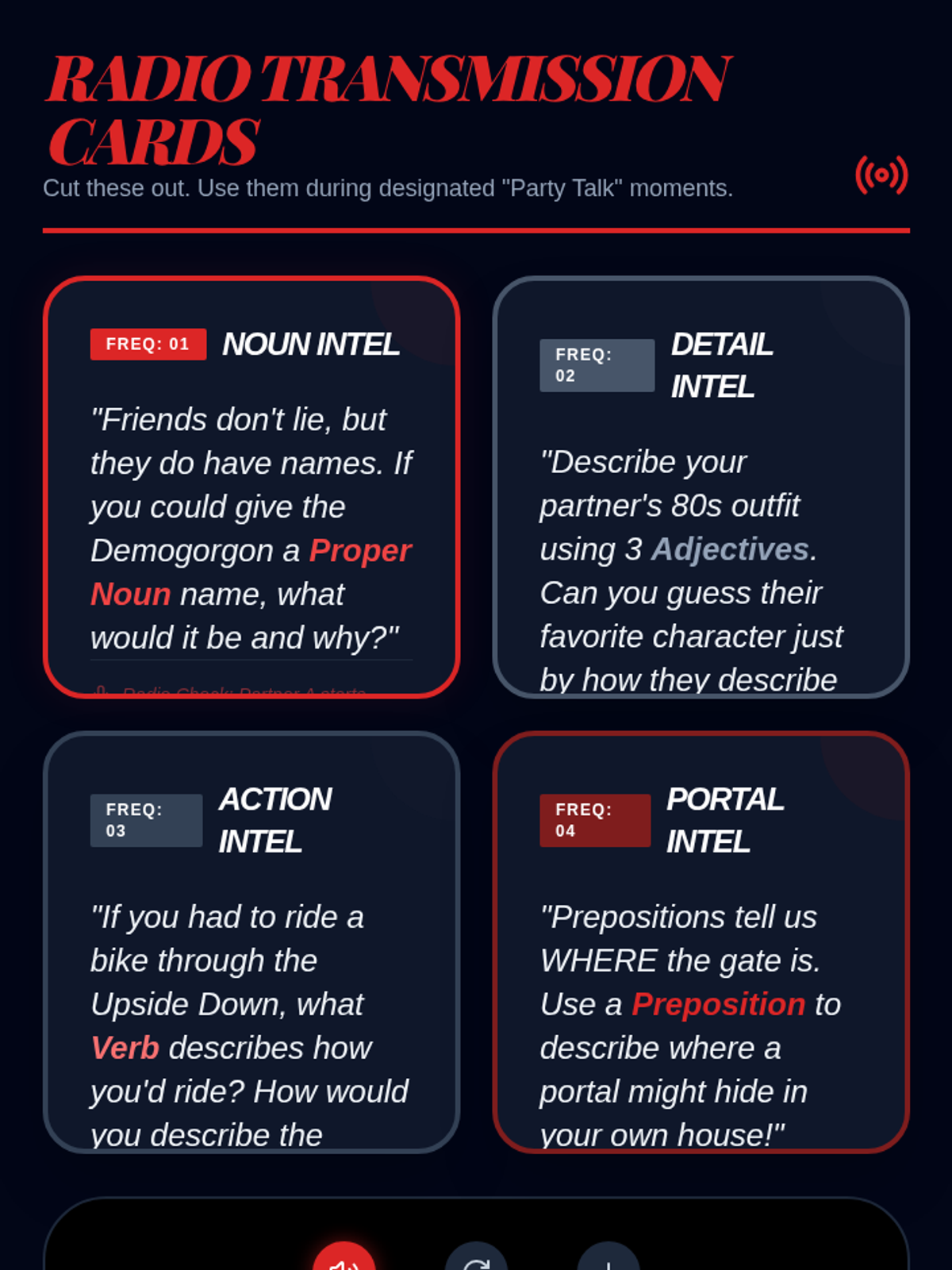
Connect ideas and express terror (or excitement) using Prepositions, Conjunctions, and Interjections to bridge the gap between worlds.
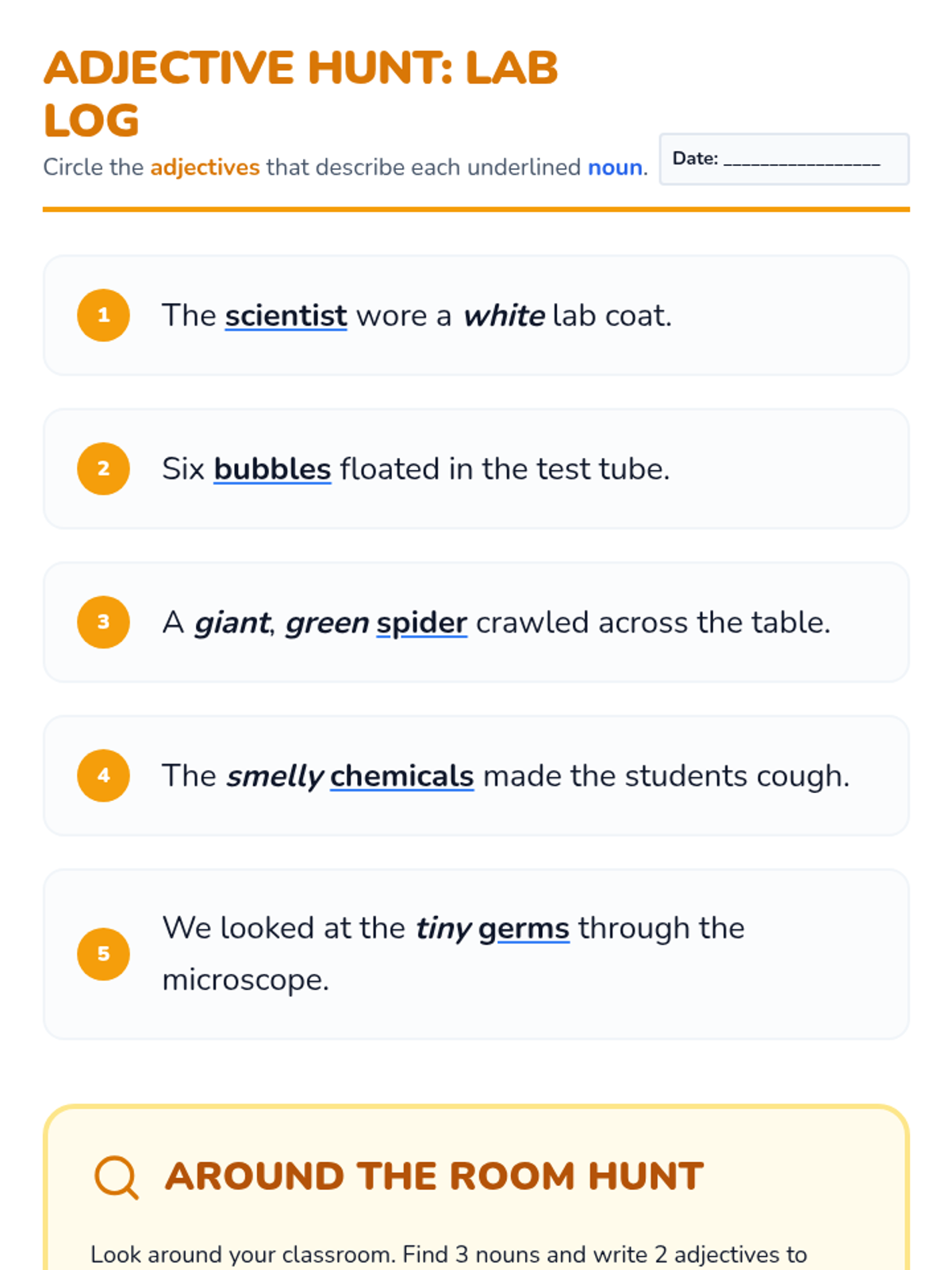
Use Adjectives to describe the mysterious creatures of the Upside Down in a 'Demogorgon Designer' craftivity.
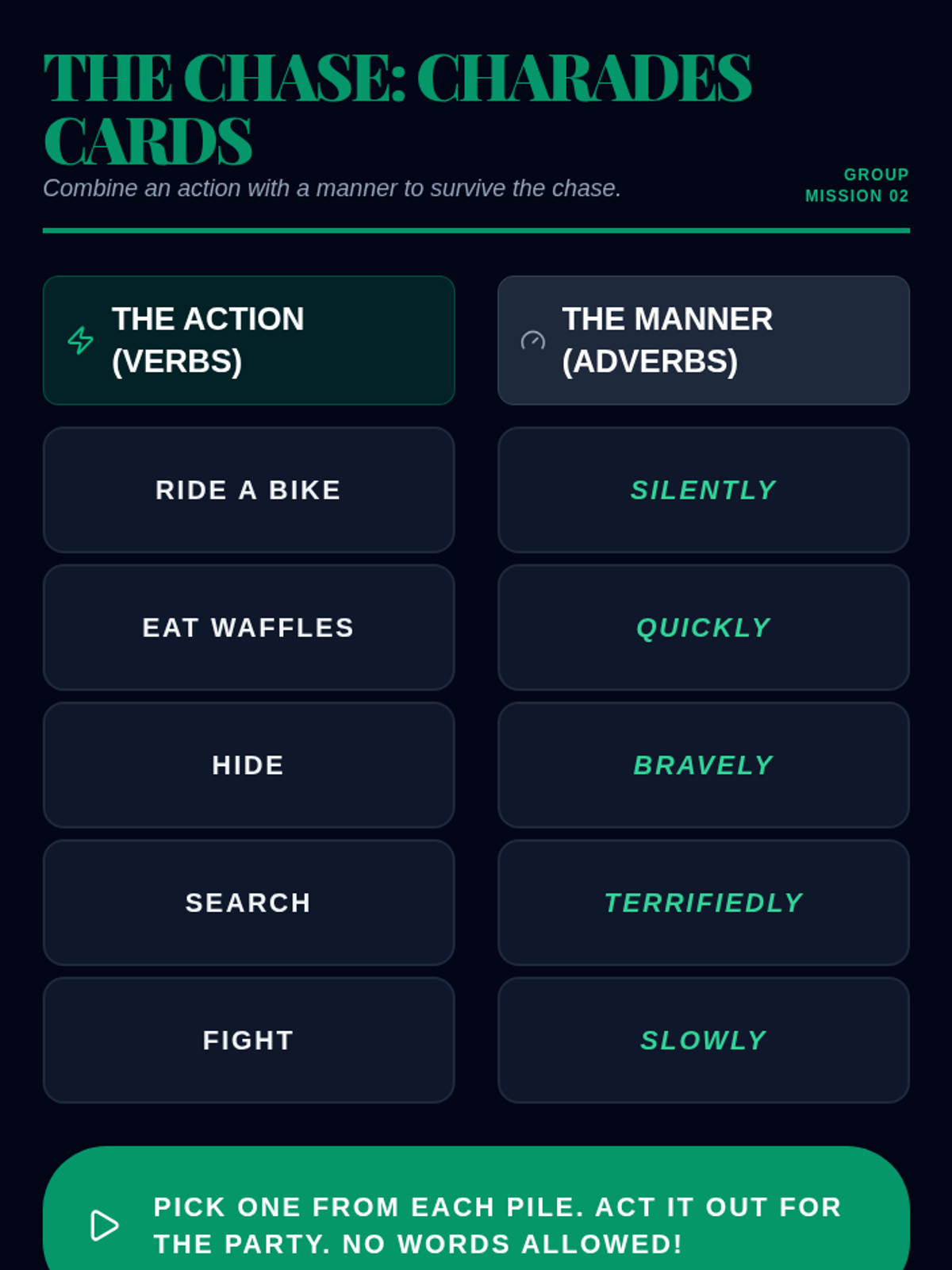
Charge through the streets of Hawkins using Verbs and Adverbs to describe high-stakes actions and intense moments.
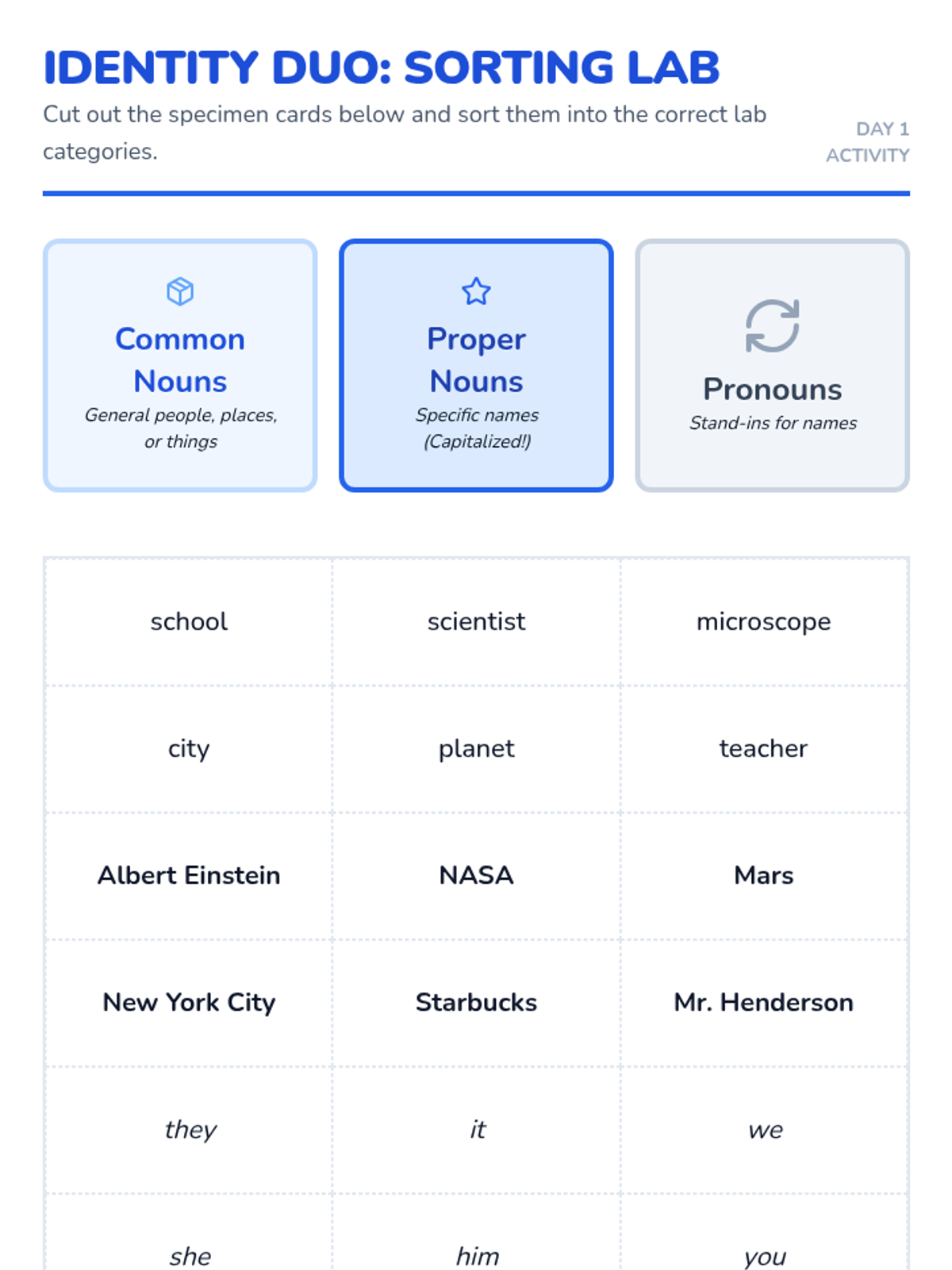
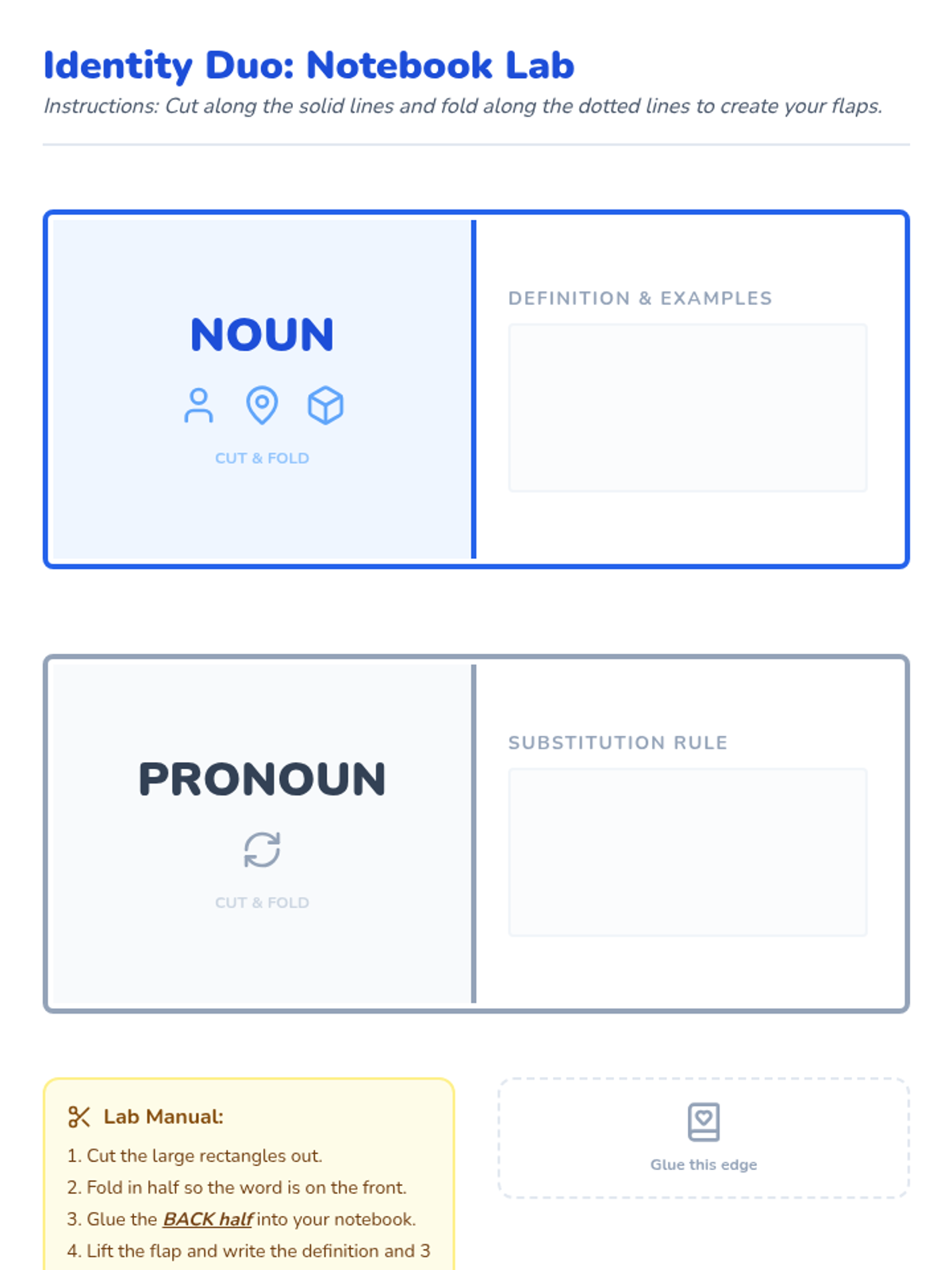
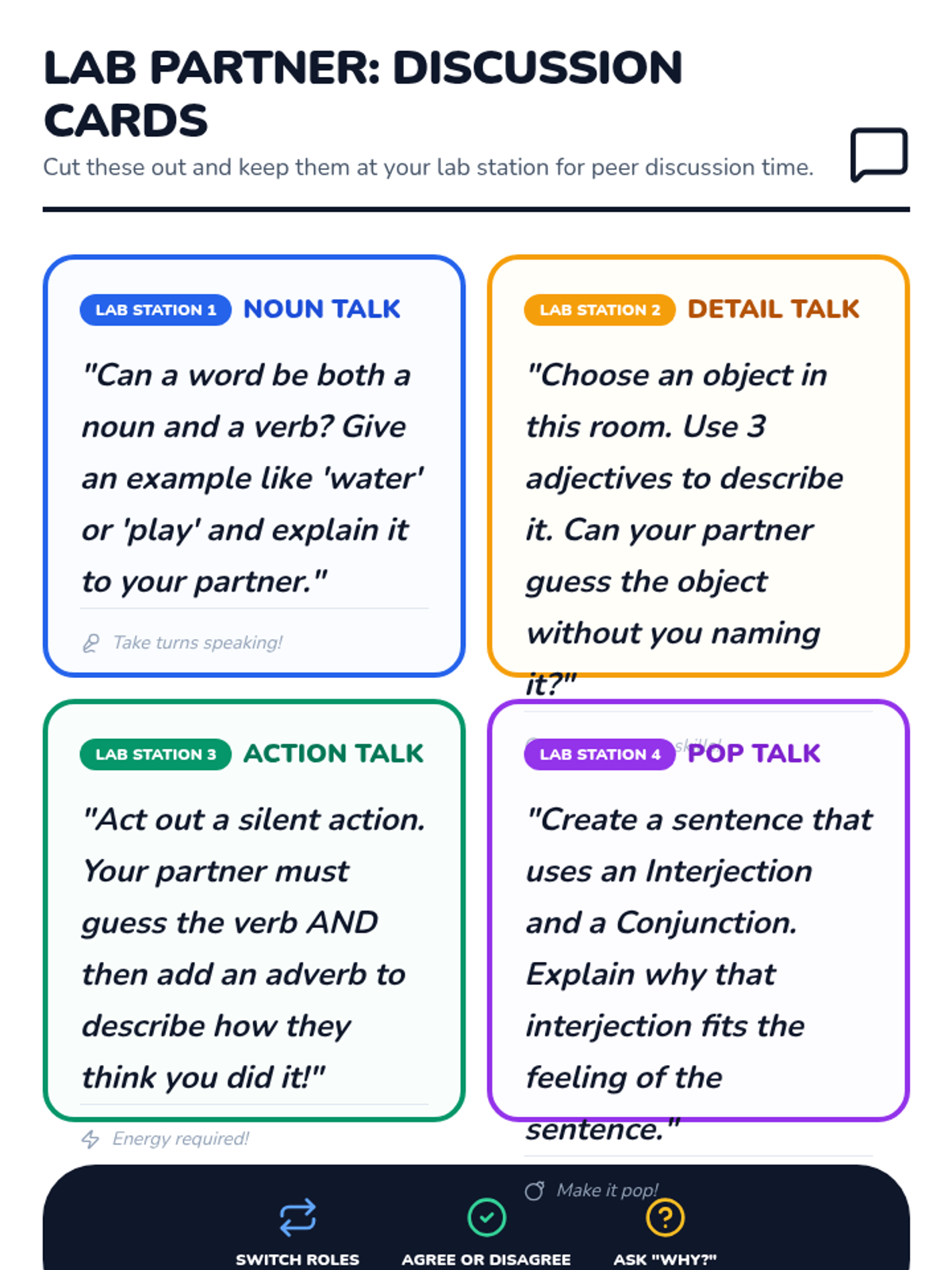
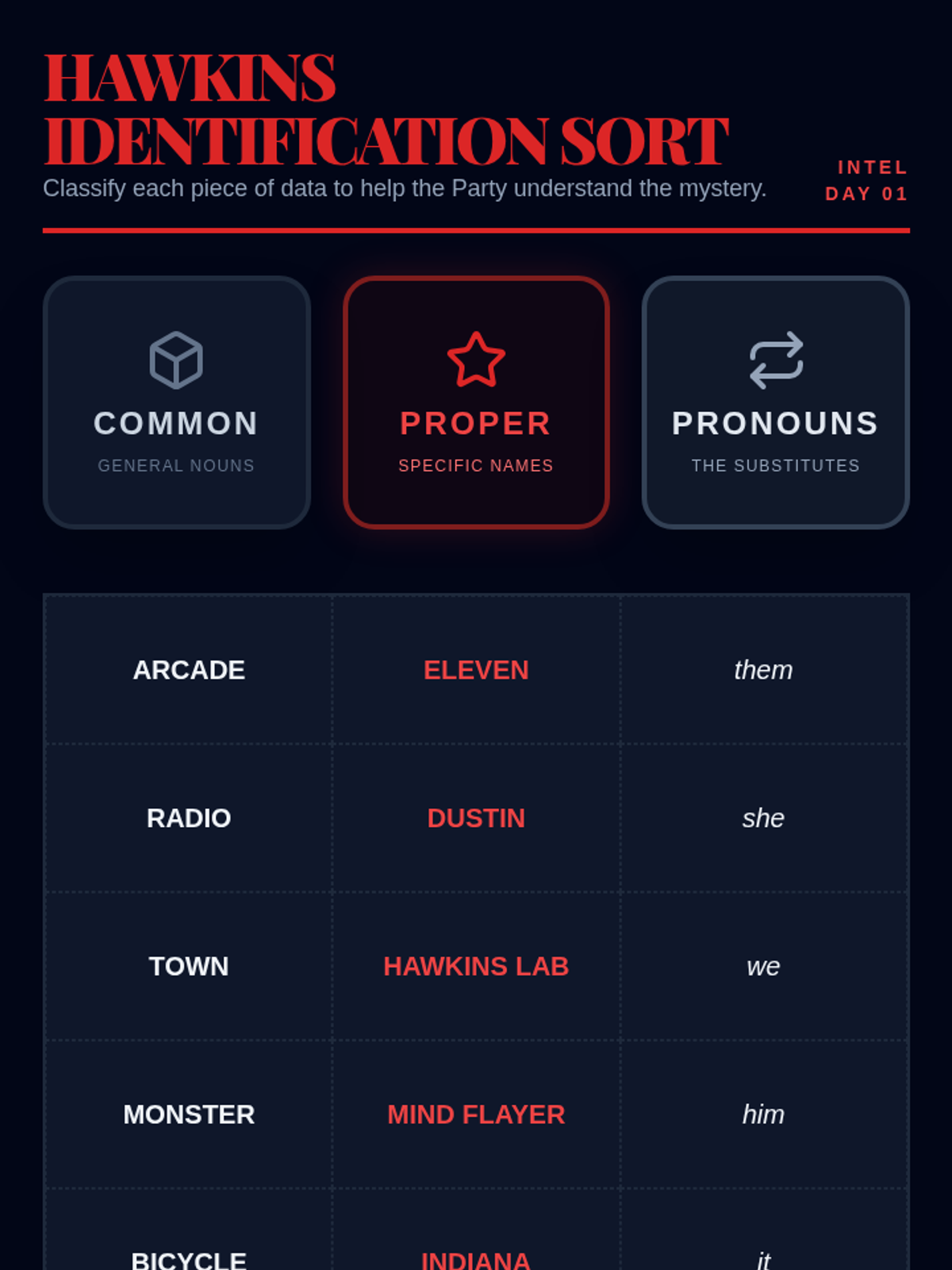
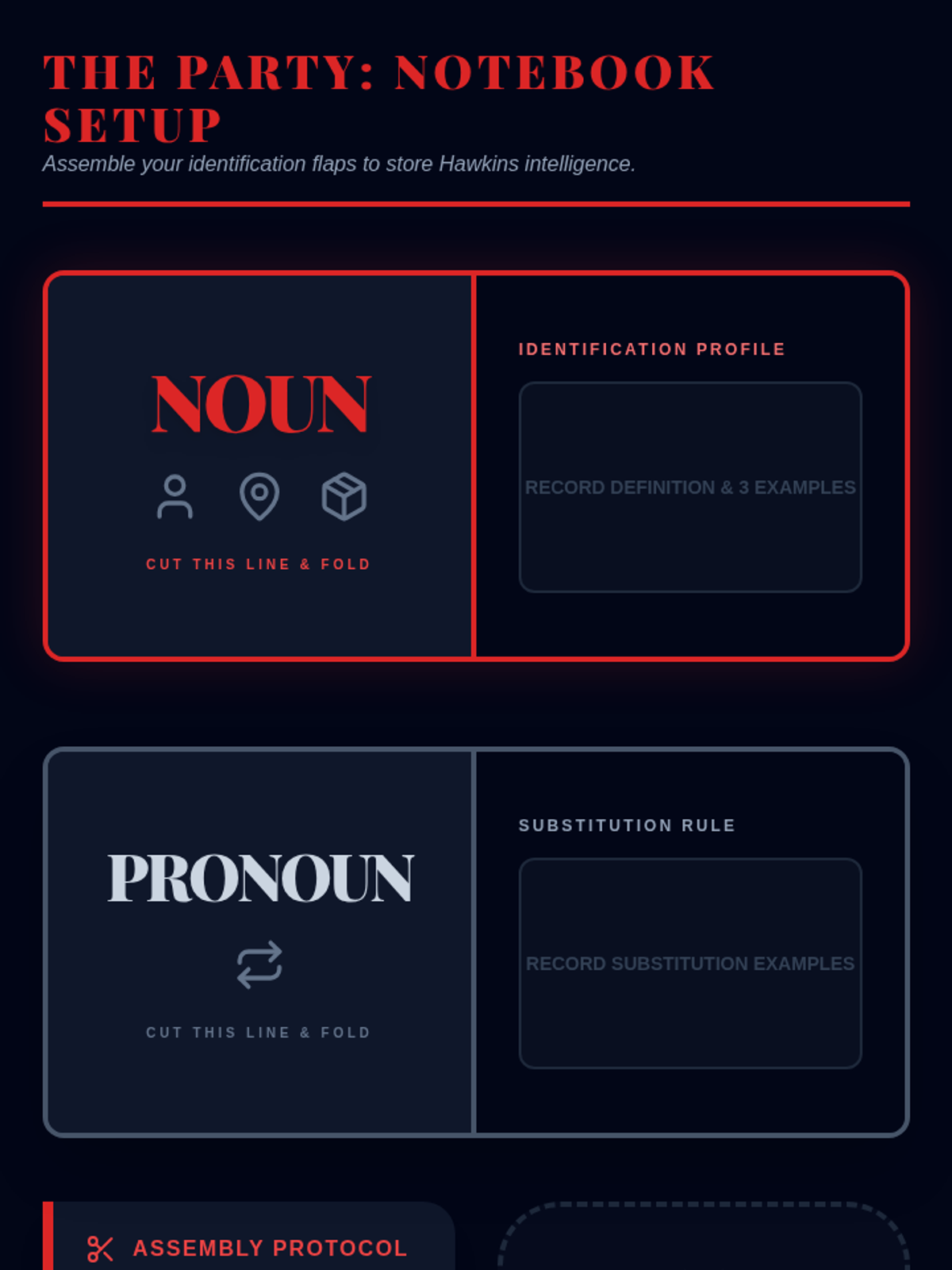
Meet the characters (Nouns) and their stand-ins (Pronouns) in this Hawkins-themed introduction to the building blocks of language.
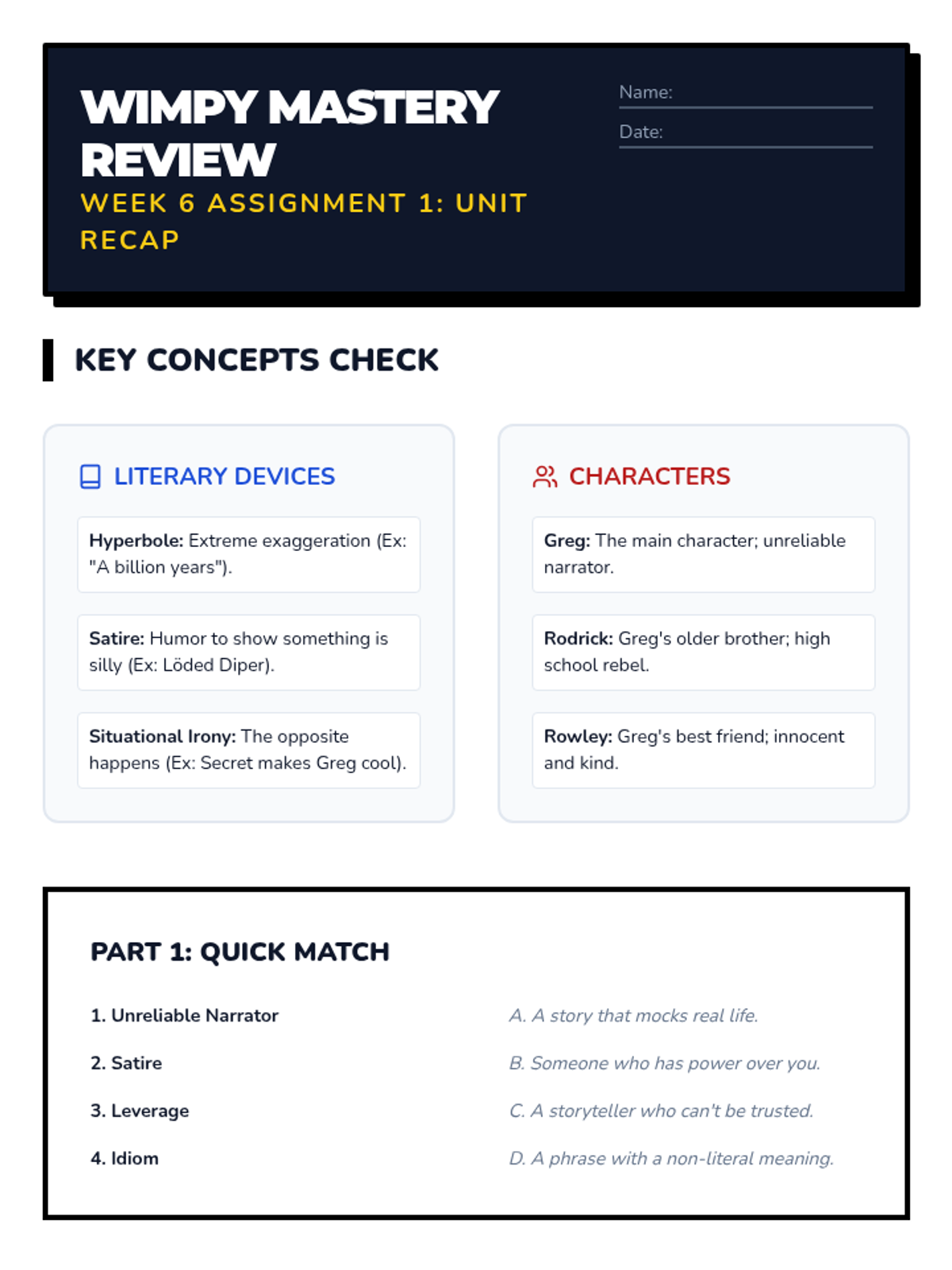
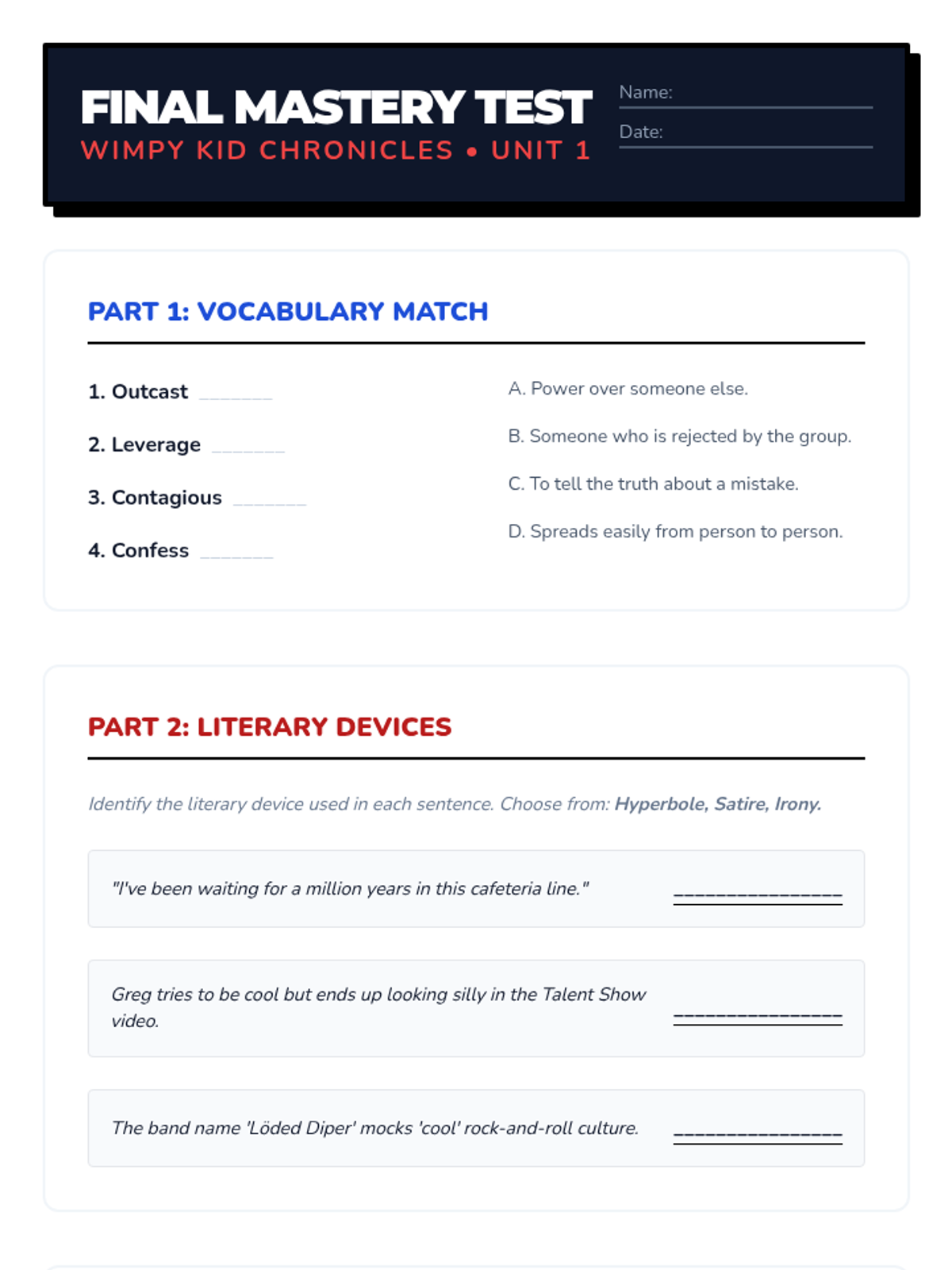
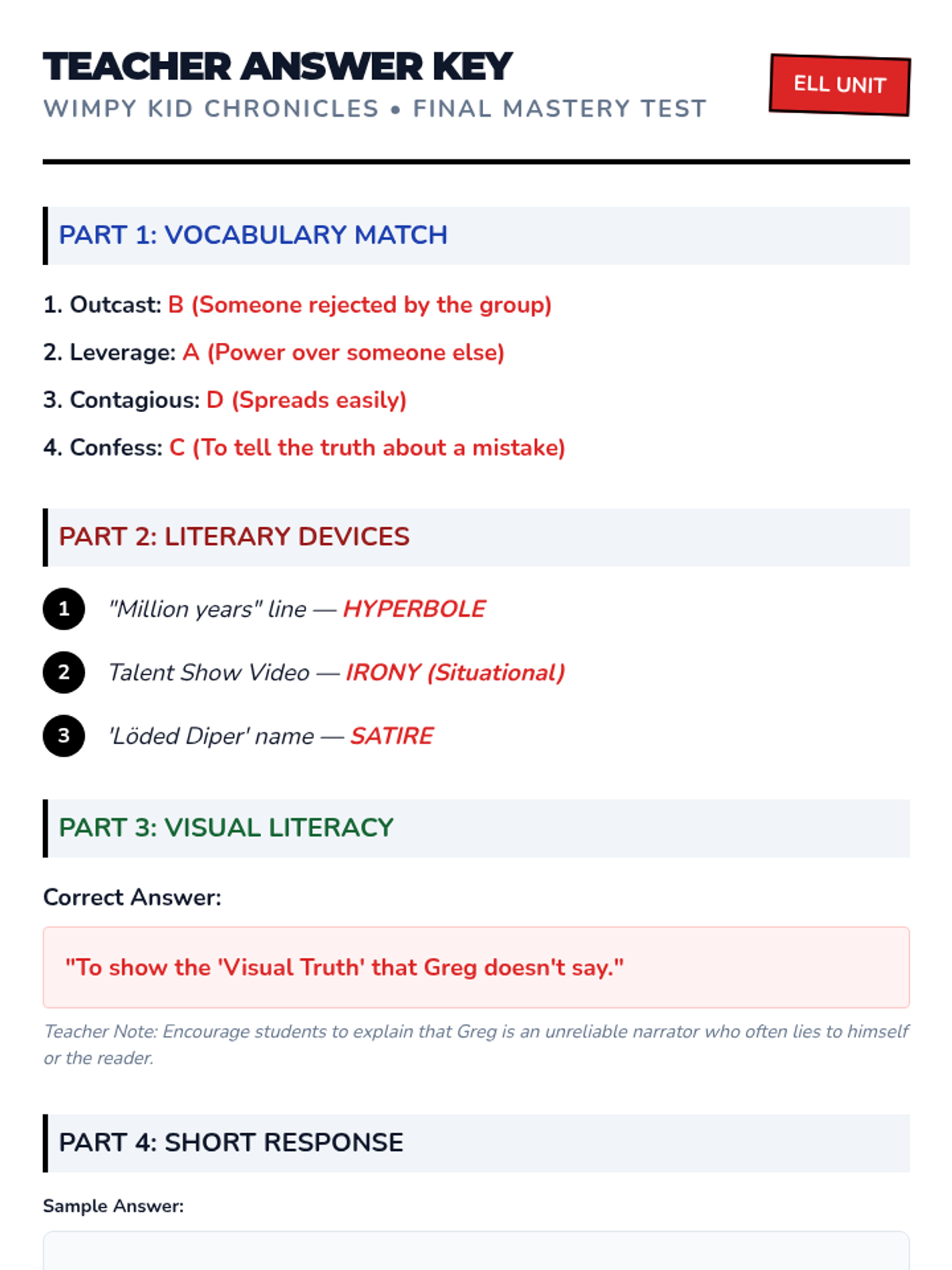
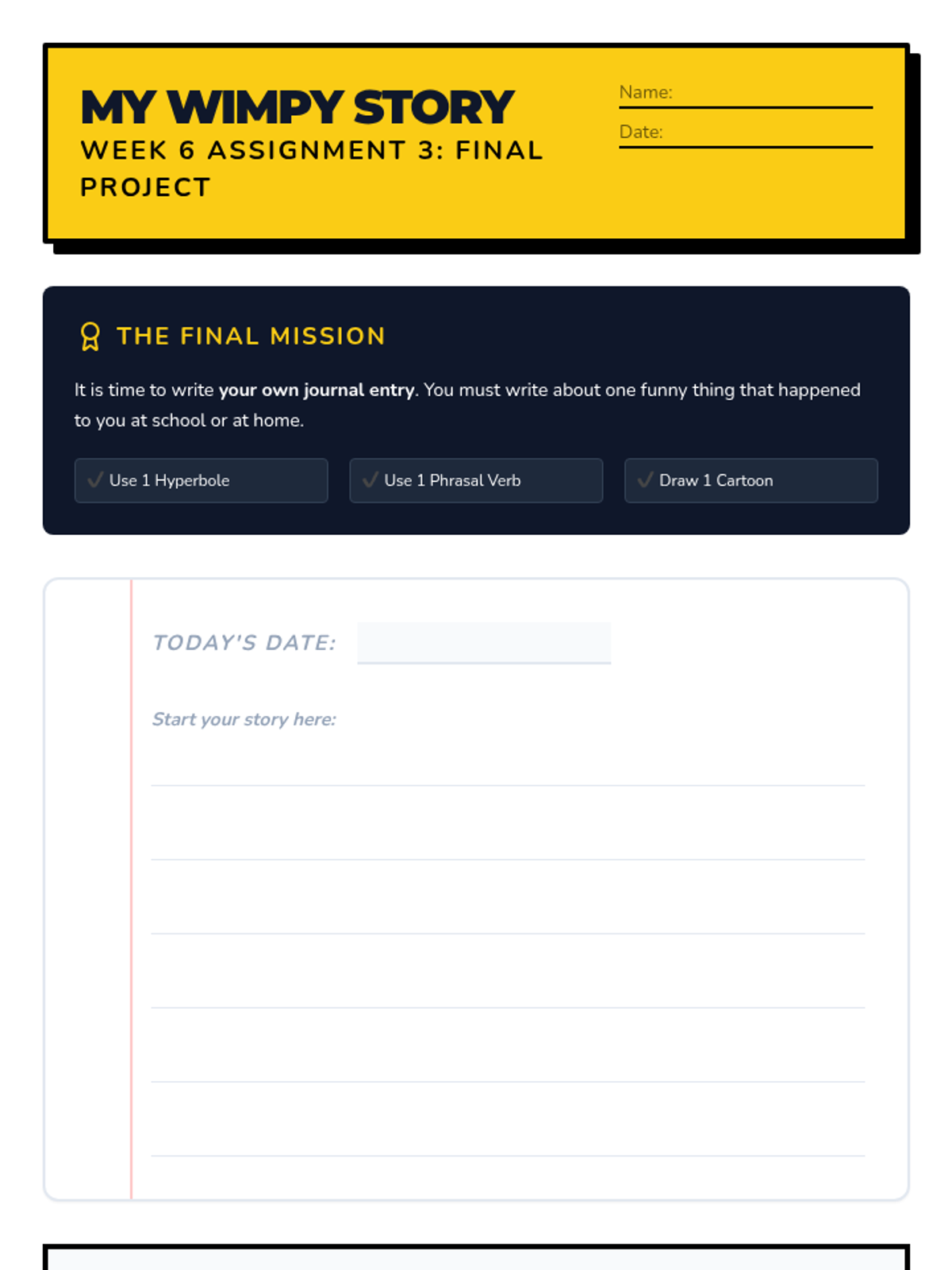
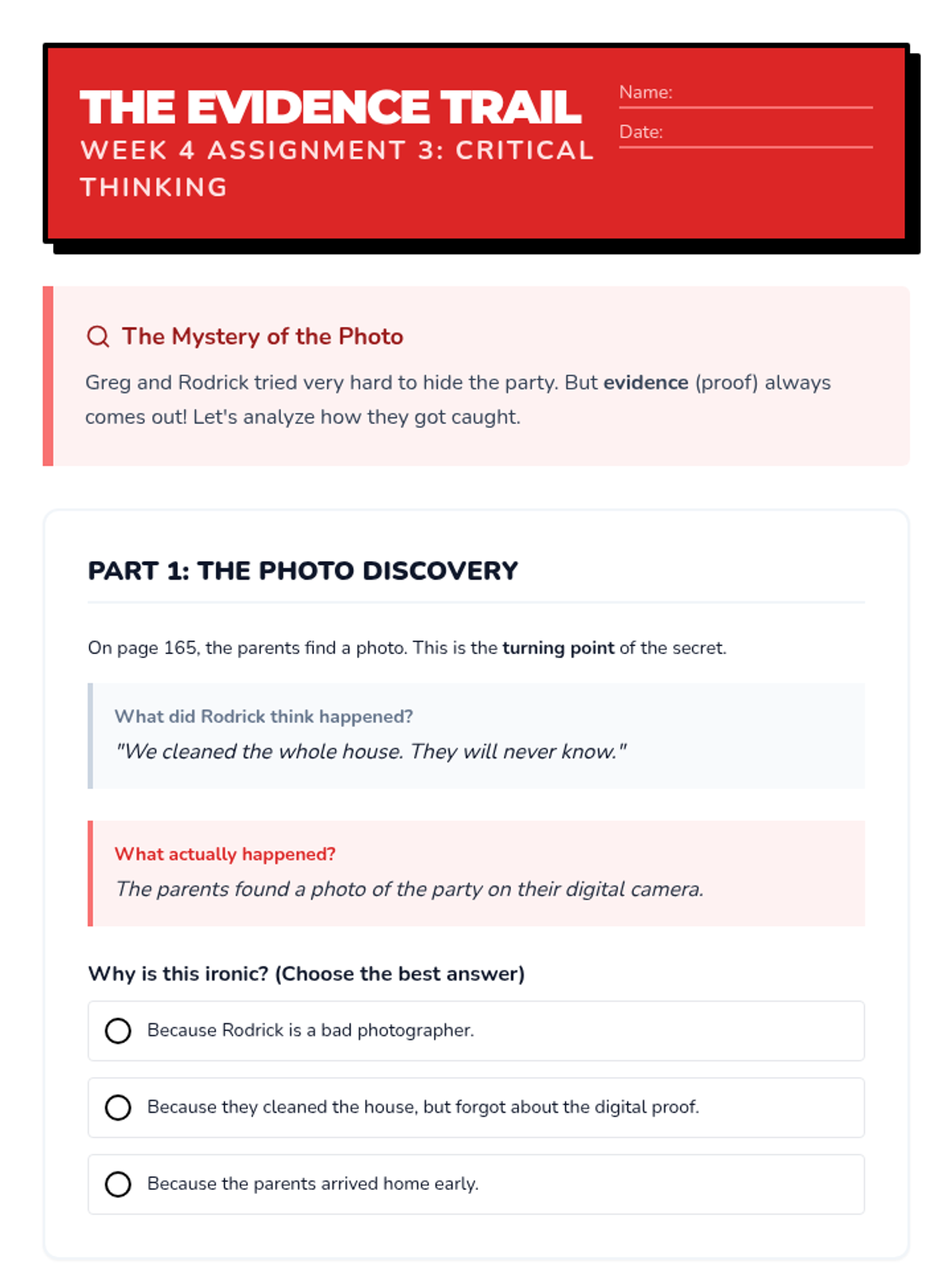
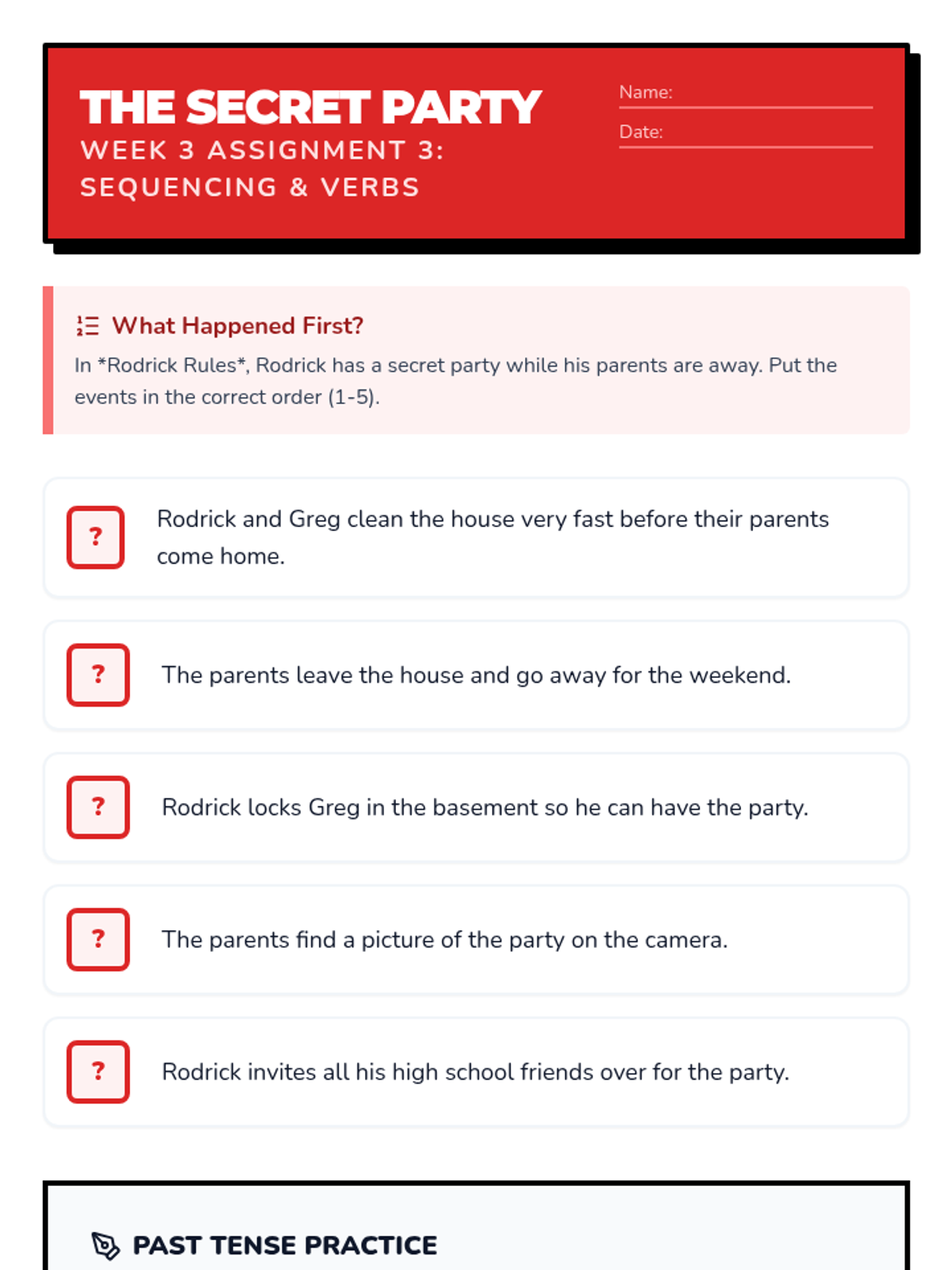
Final analysis of the secret party and Greg's growth. Comprehensive review of literary terms followed by the final unit assessment and creative project.
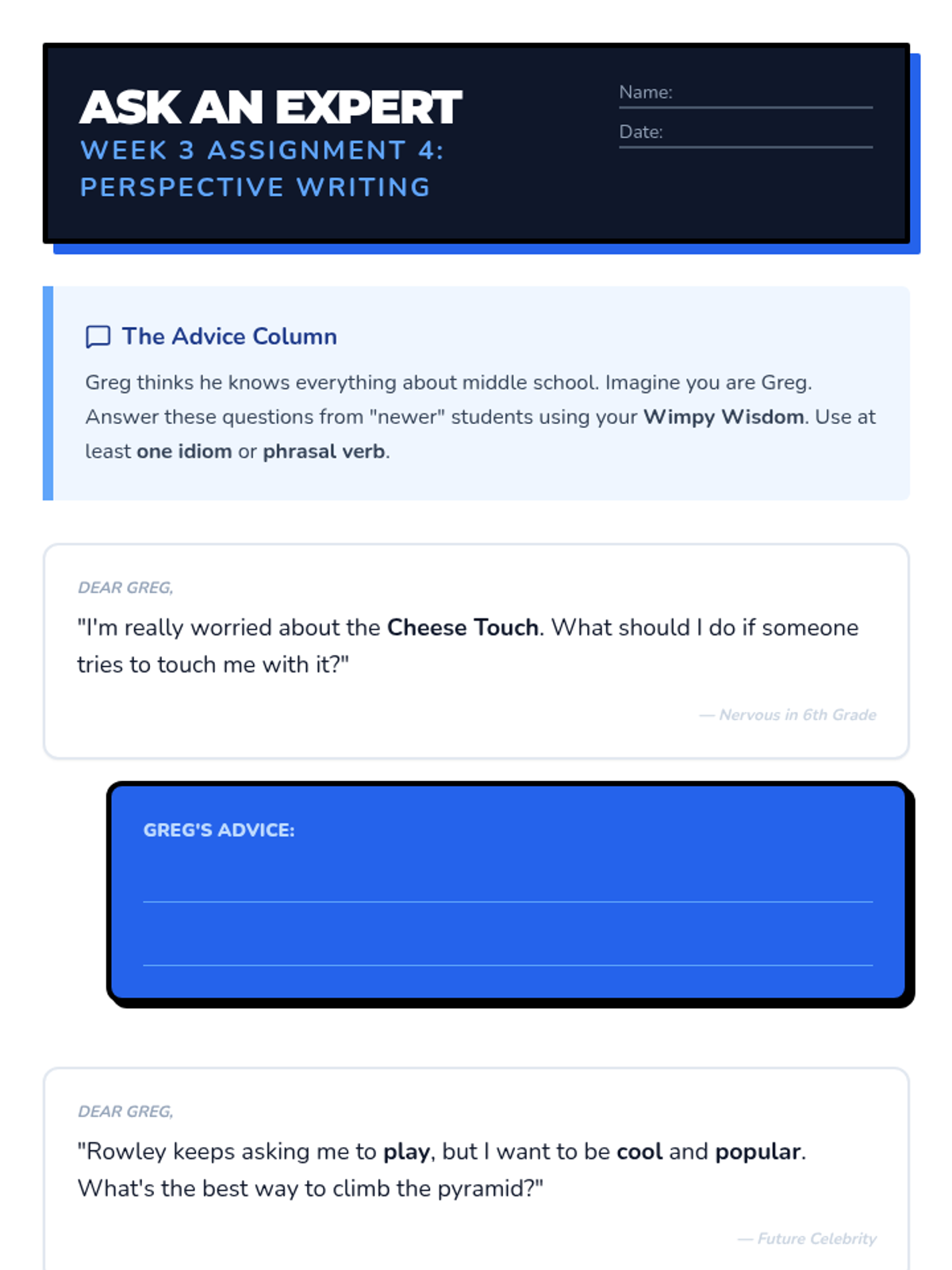
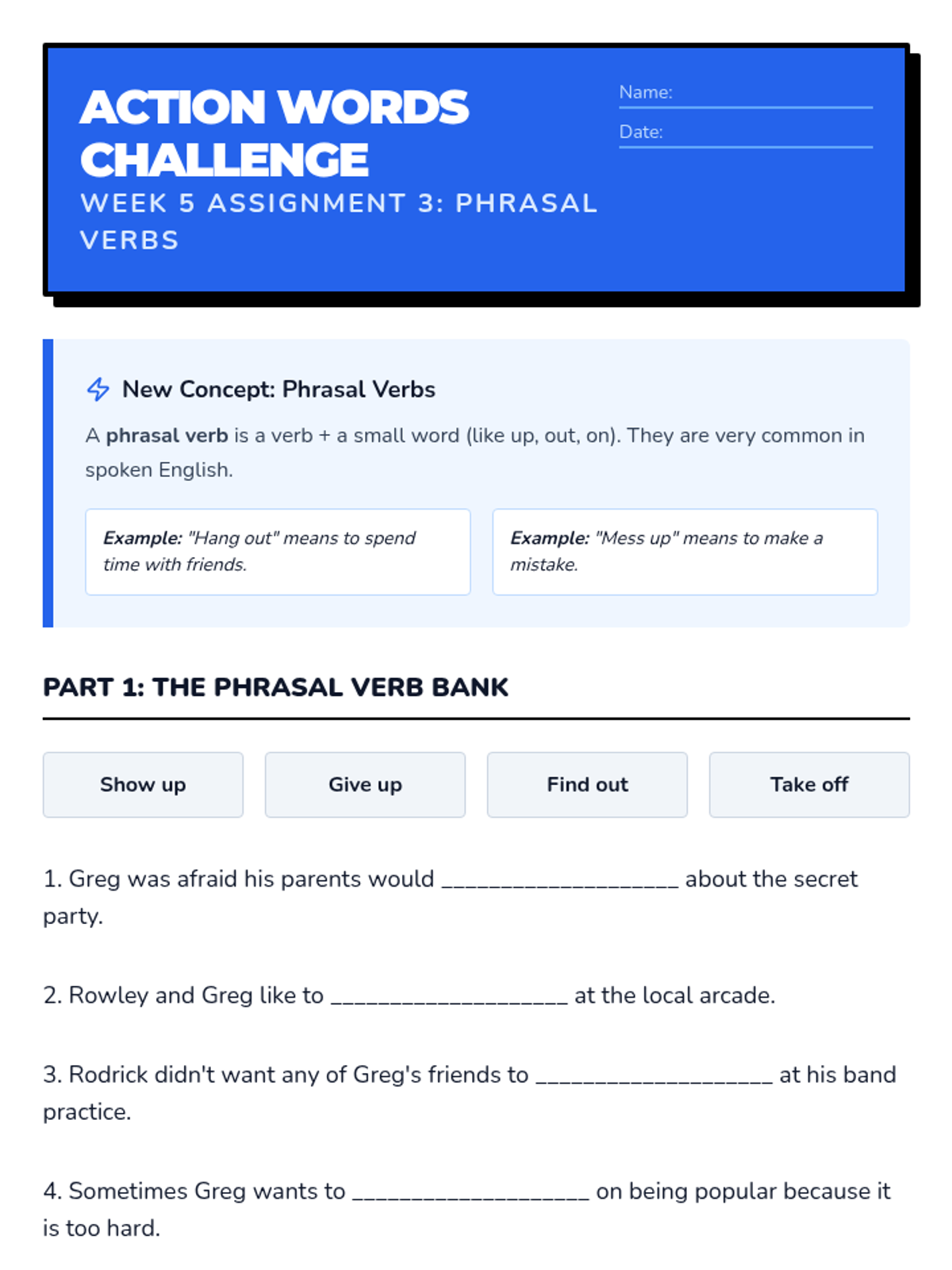
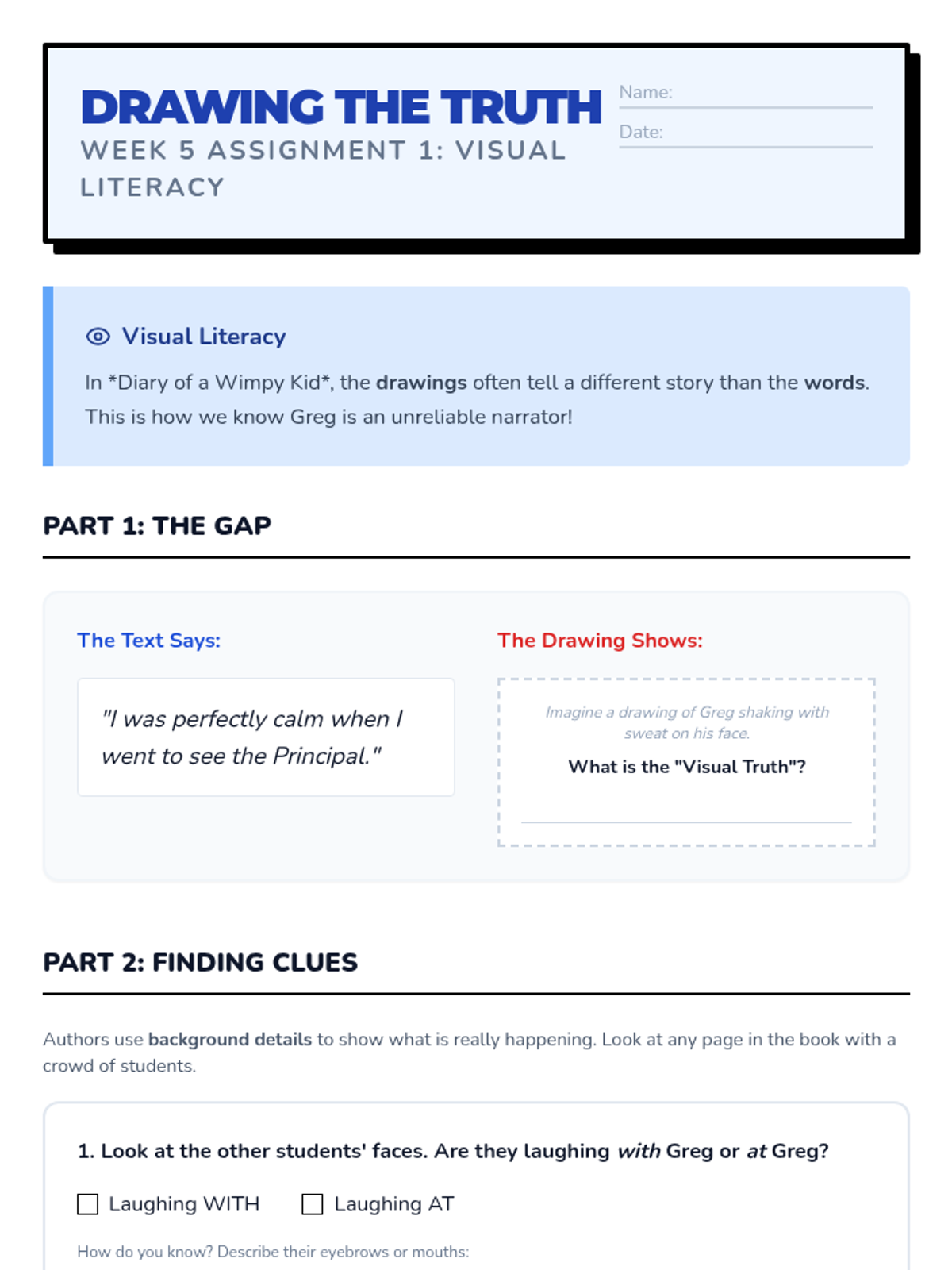
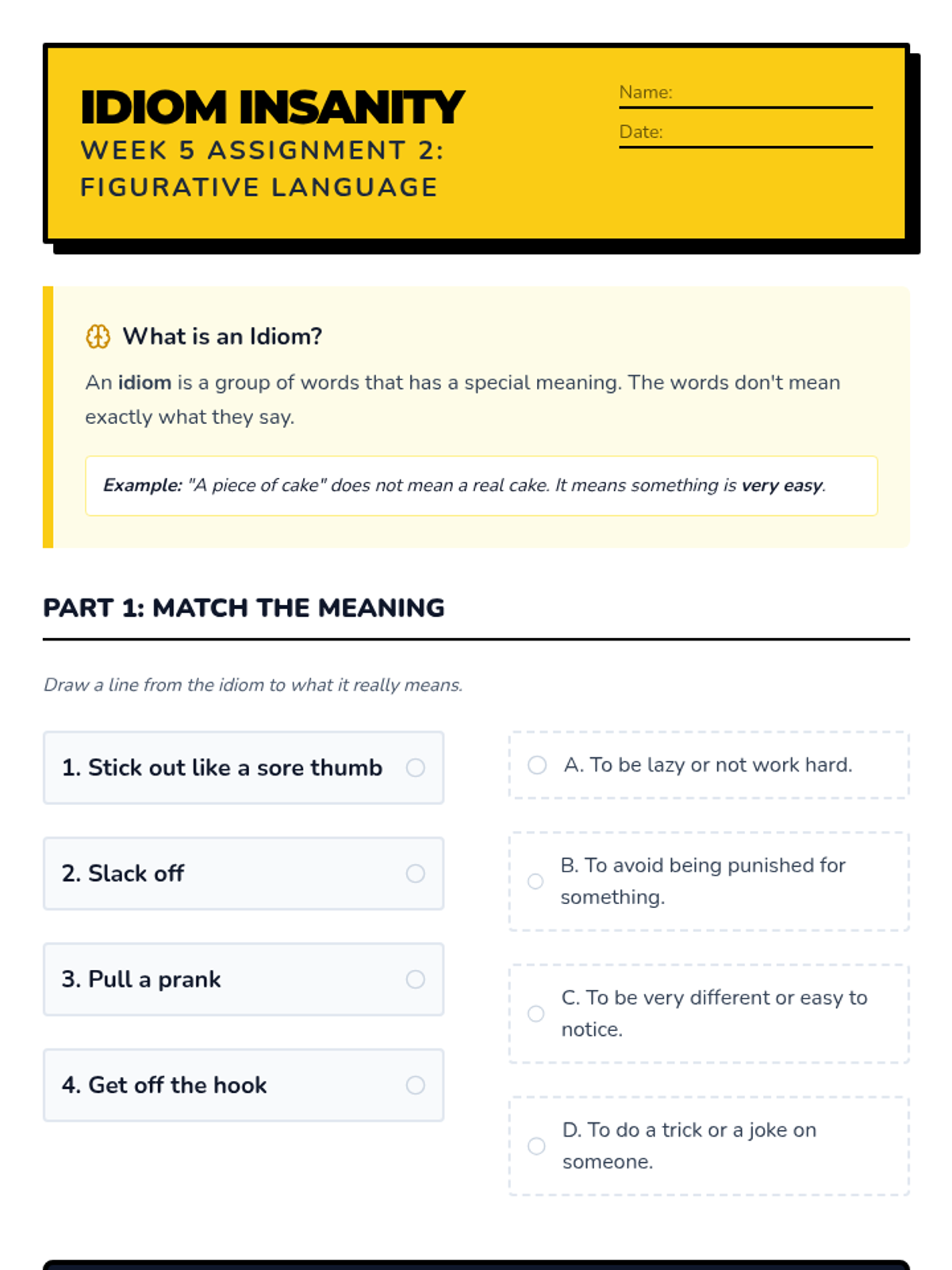
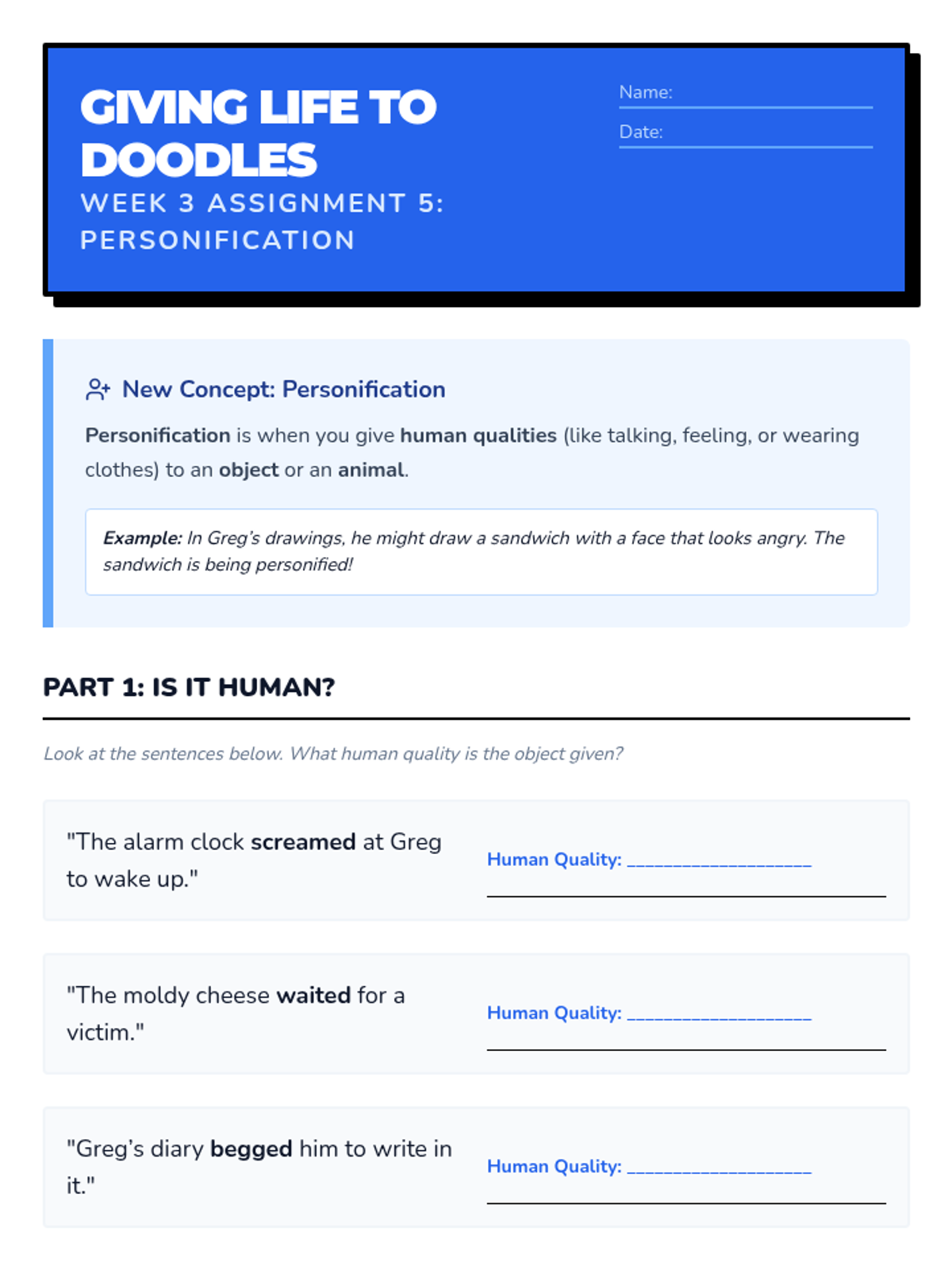
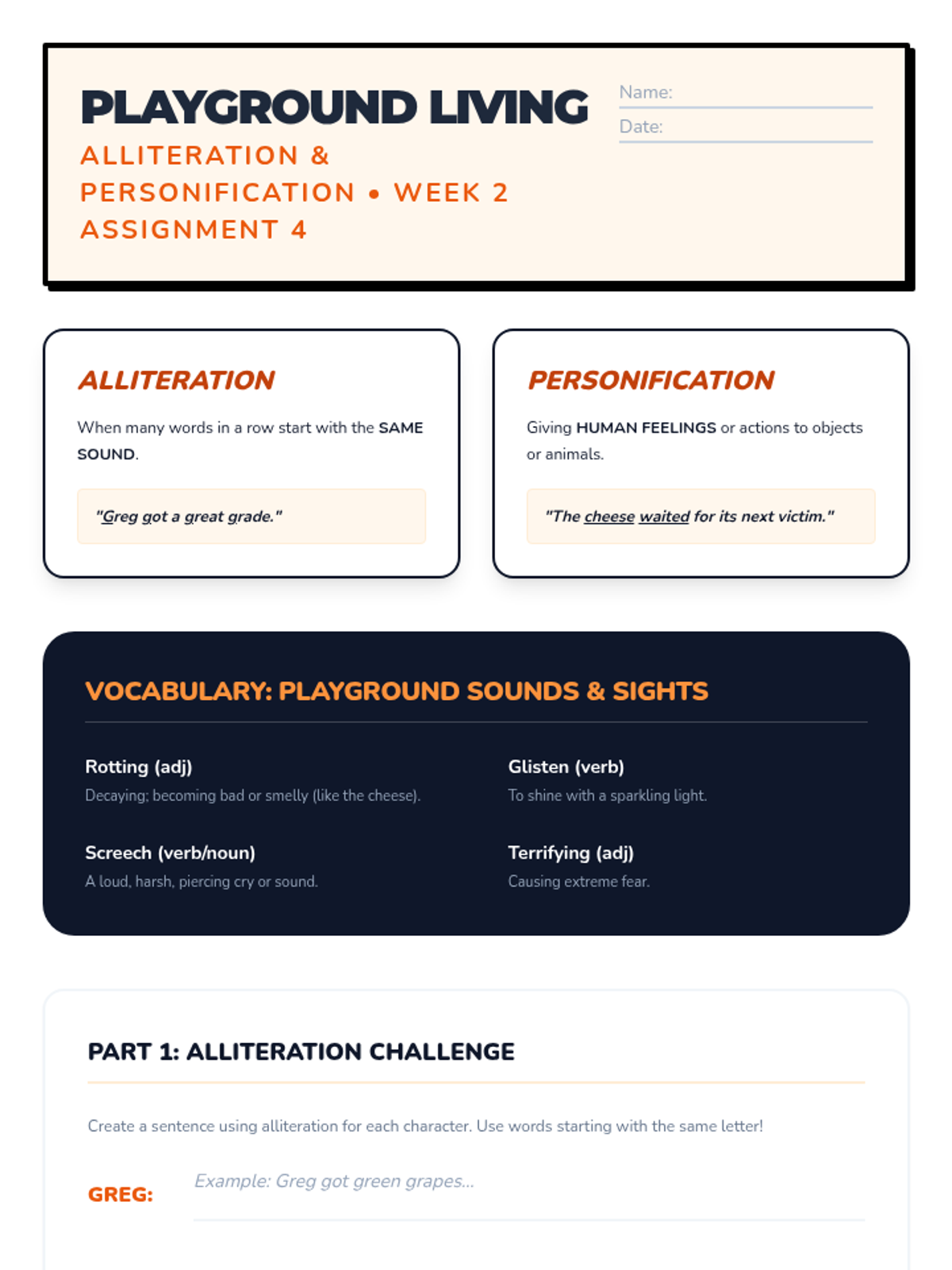
Wrapping up Book 1 with calls back to Greg's early mistakes. Introduction of Personification in Greg's doodles and a deep dive into Visual Irony. Focus on Phrasal Verbs and Idioms to bridge into Book 2.
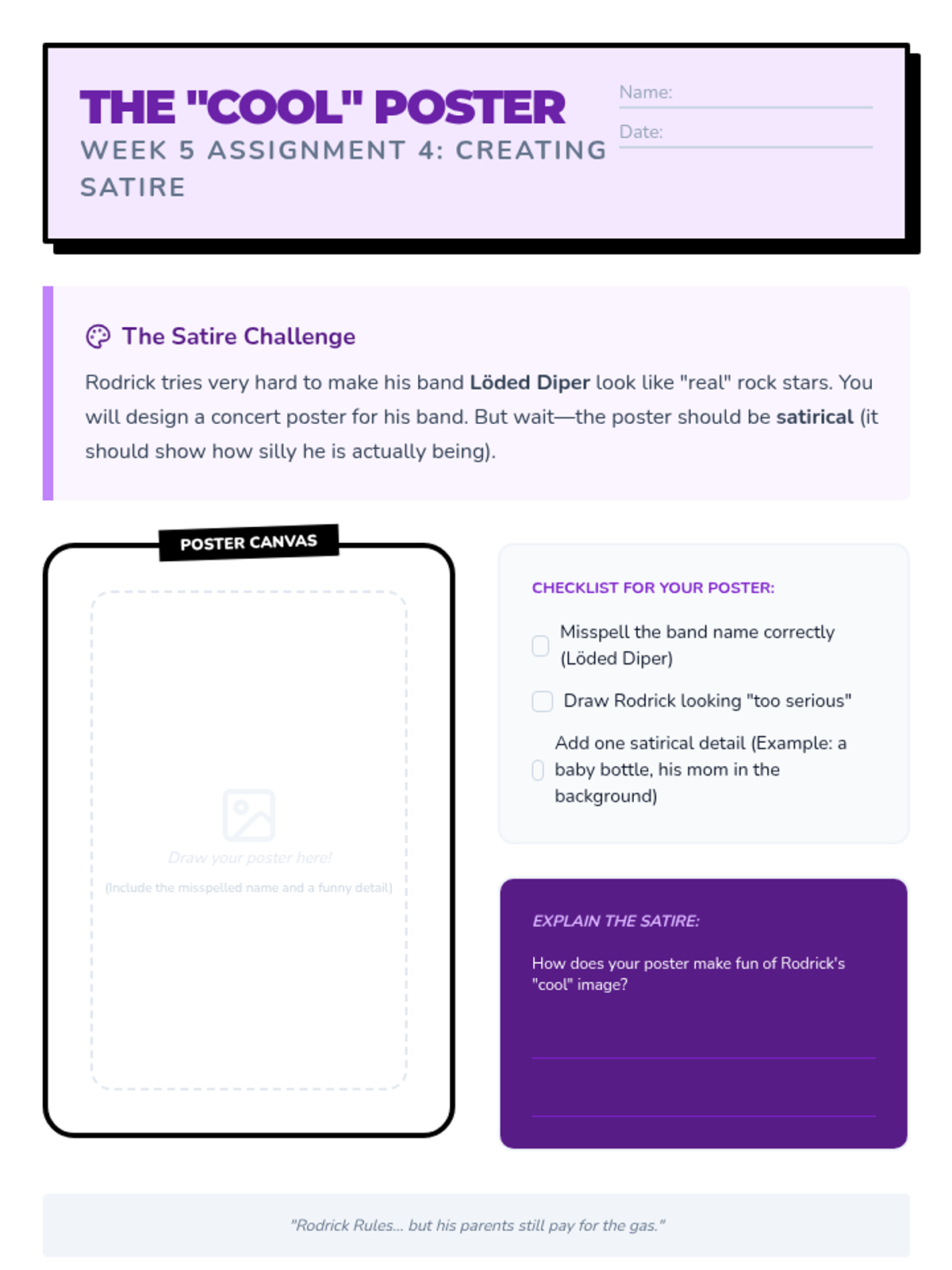
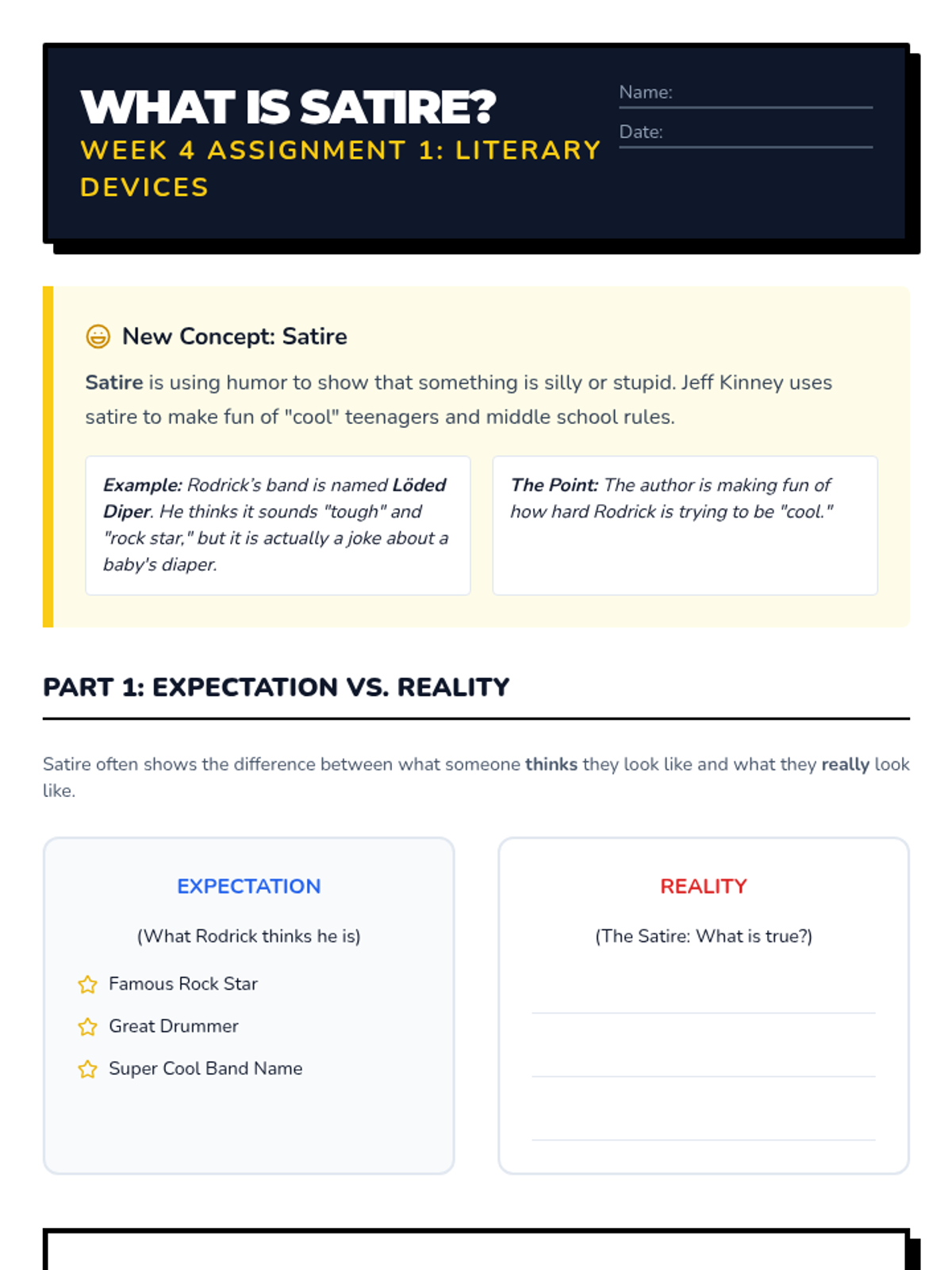
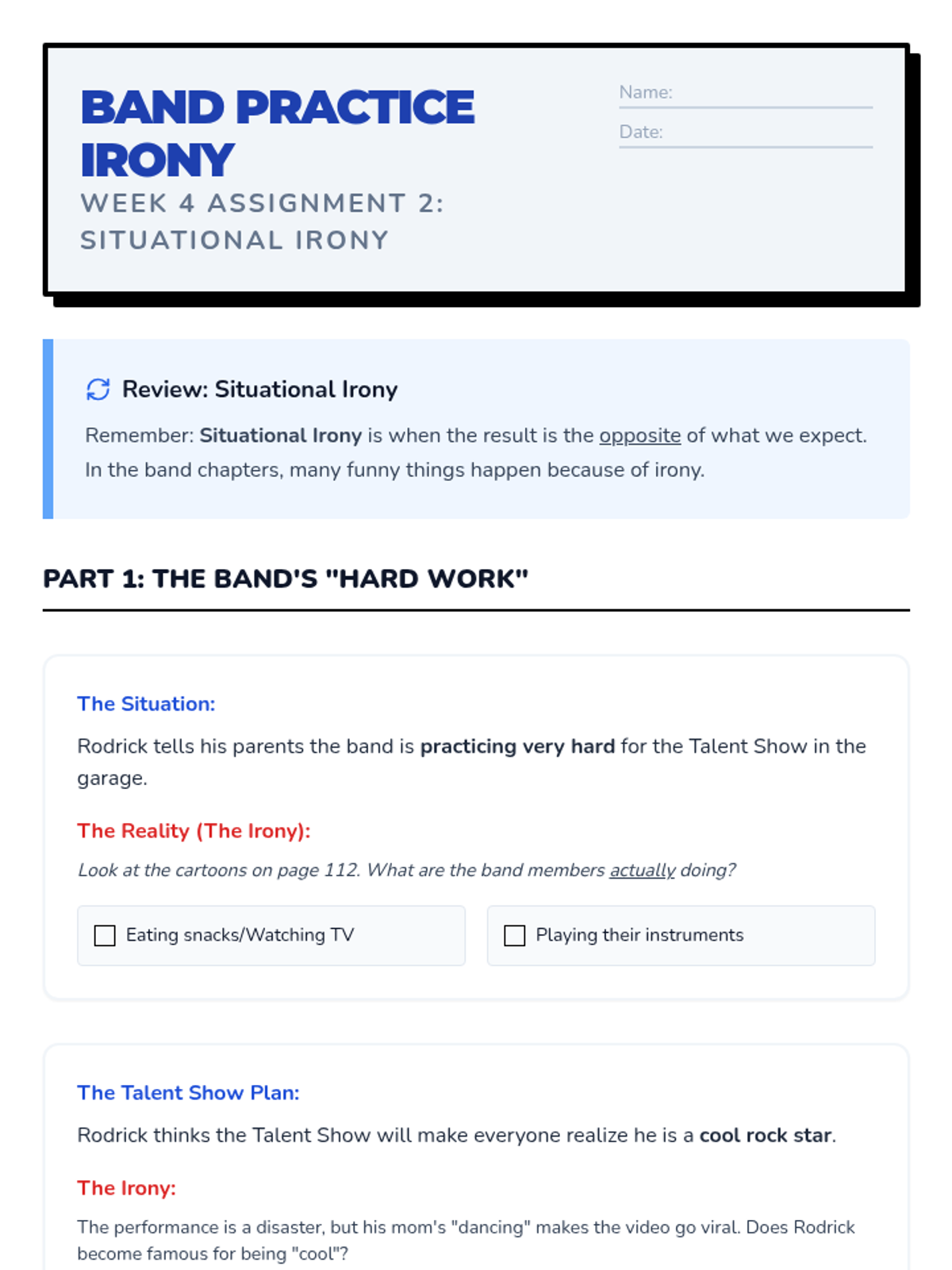
In-depth look at Rodrick's band Löded Diper. Students explore satire and how irony is used to mock social stereotypes.
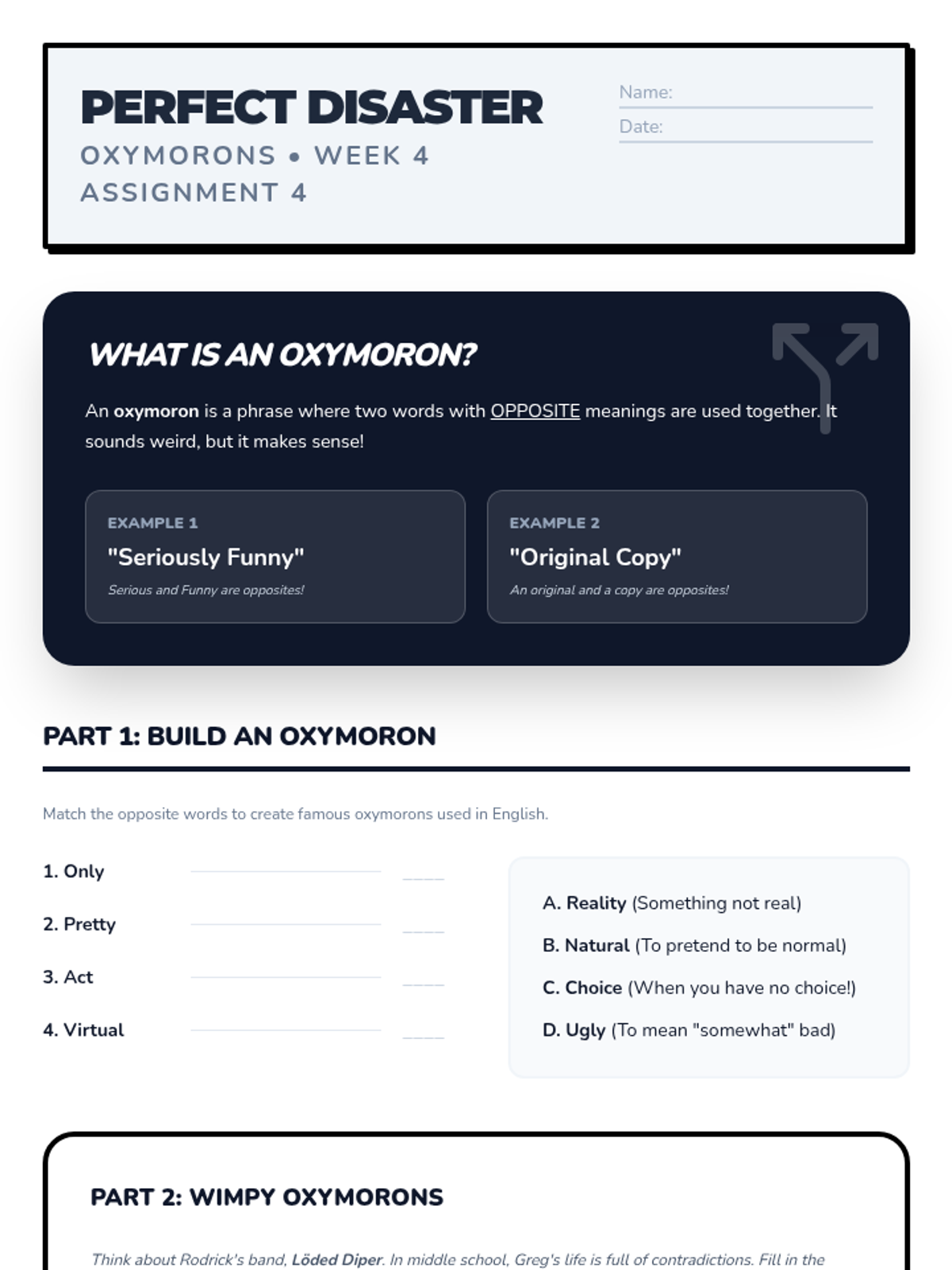
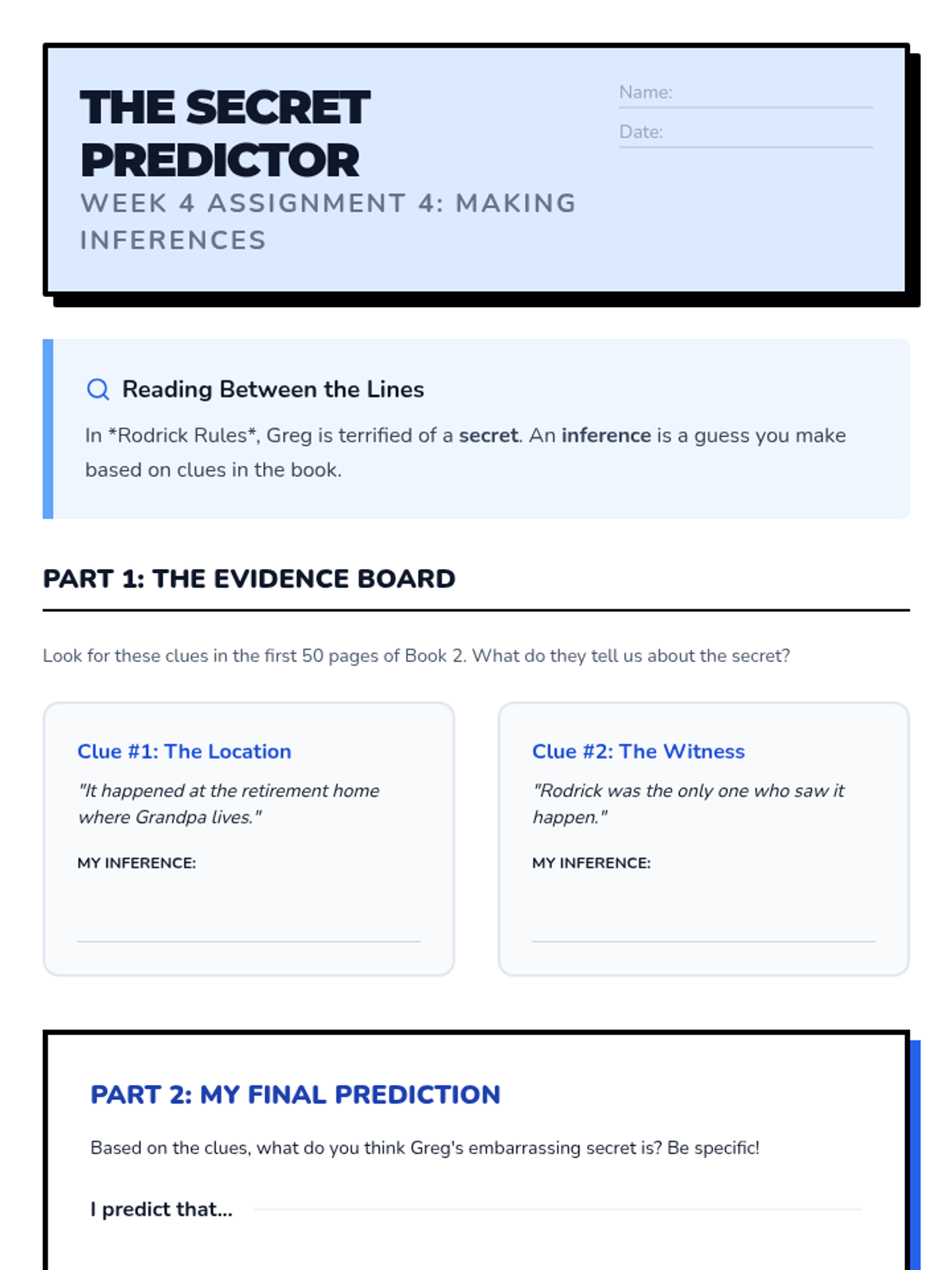
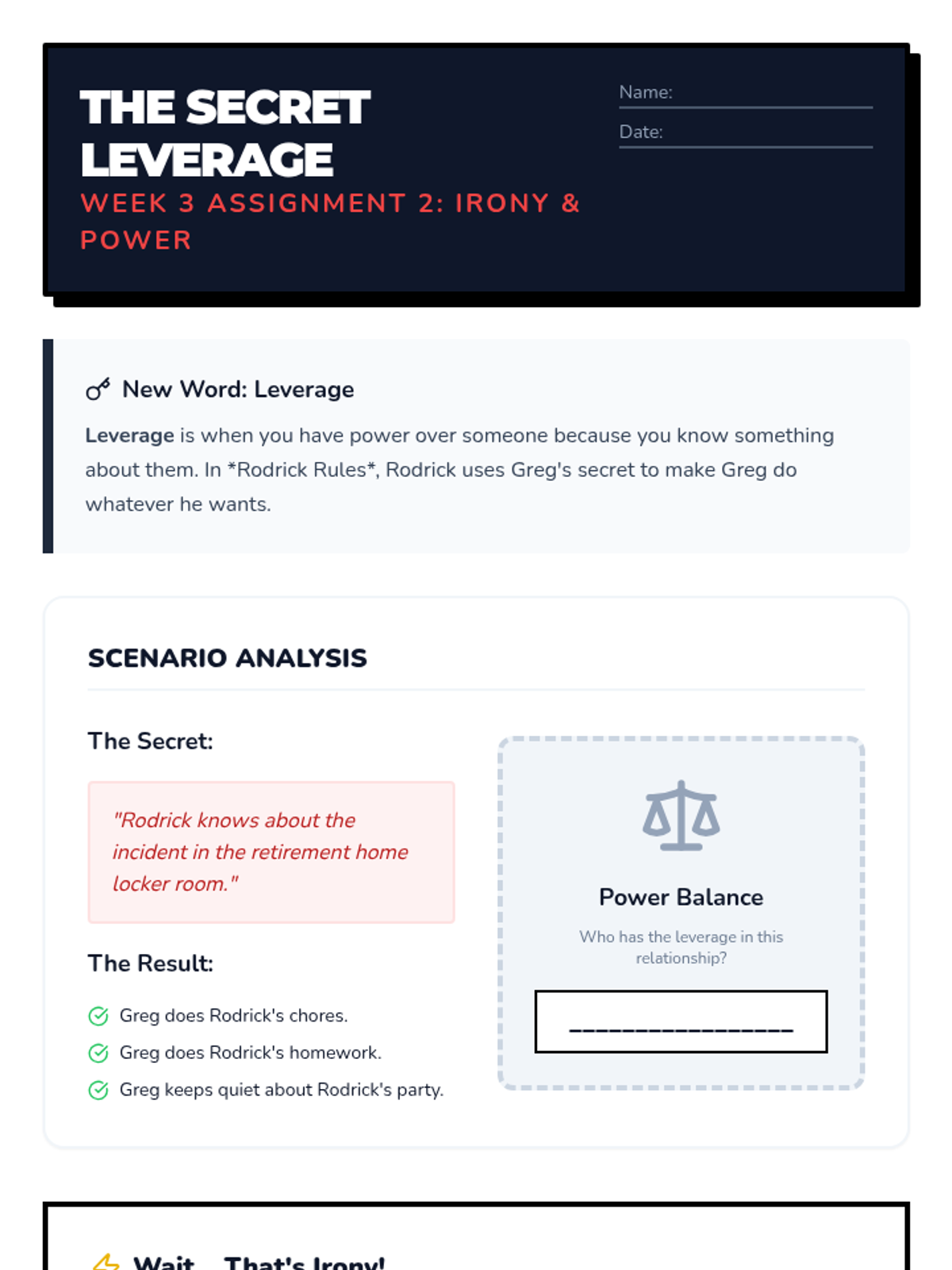
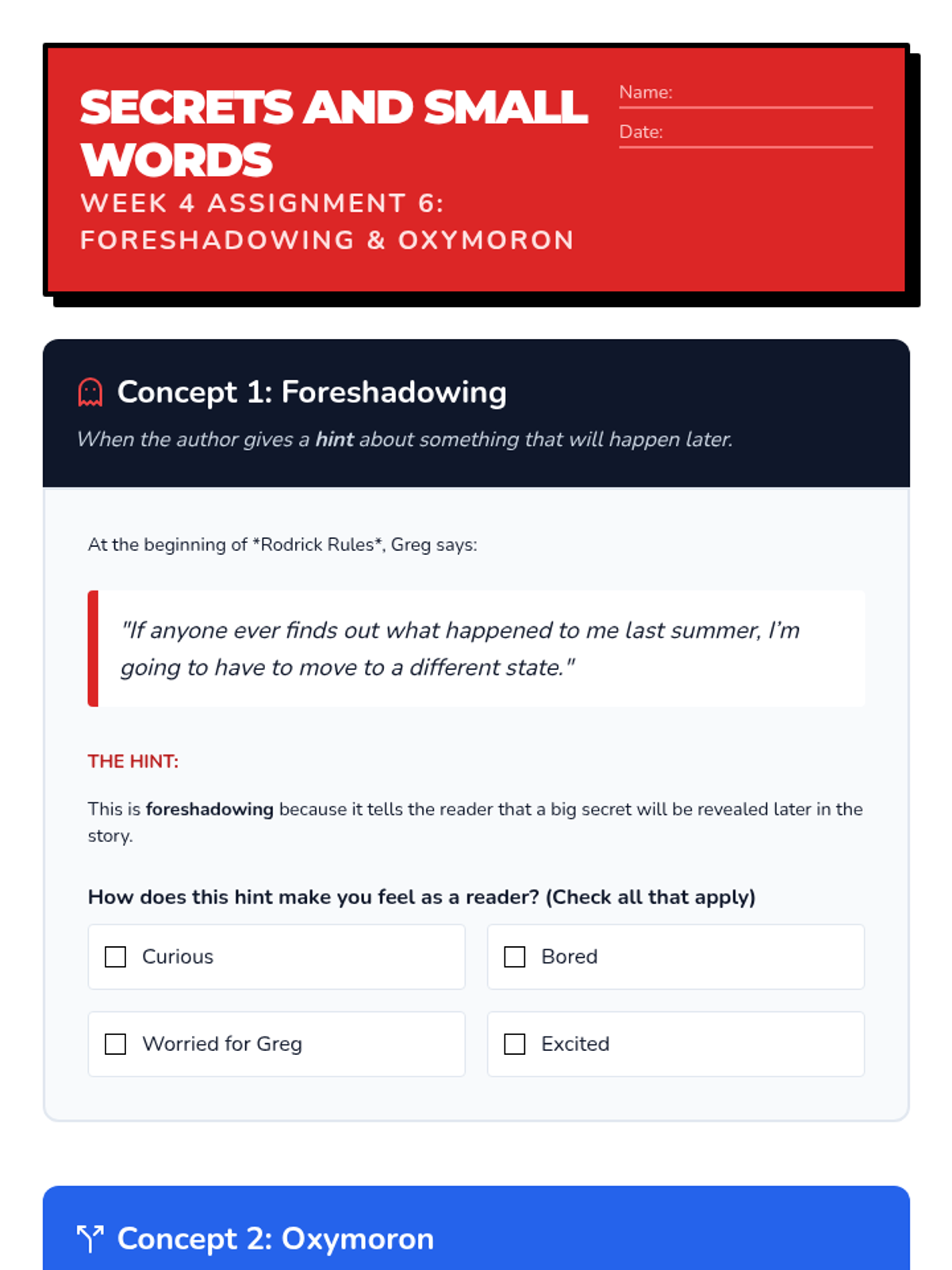
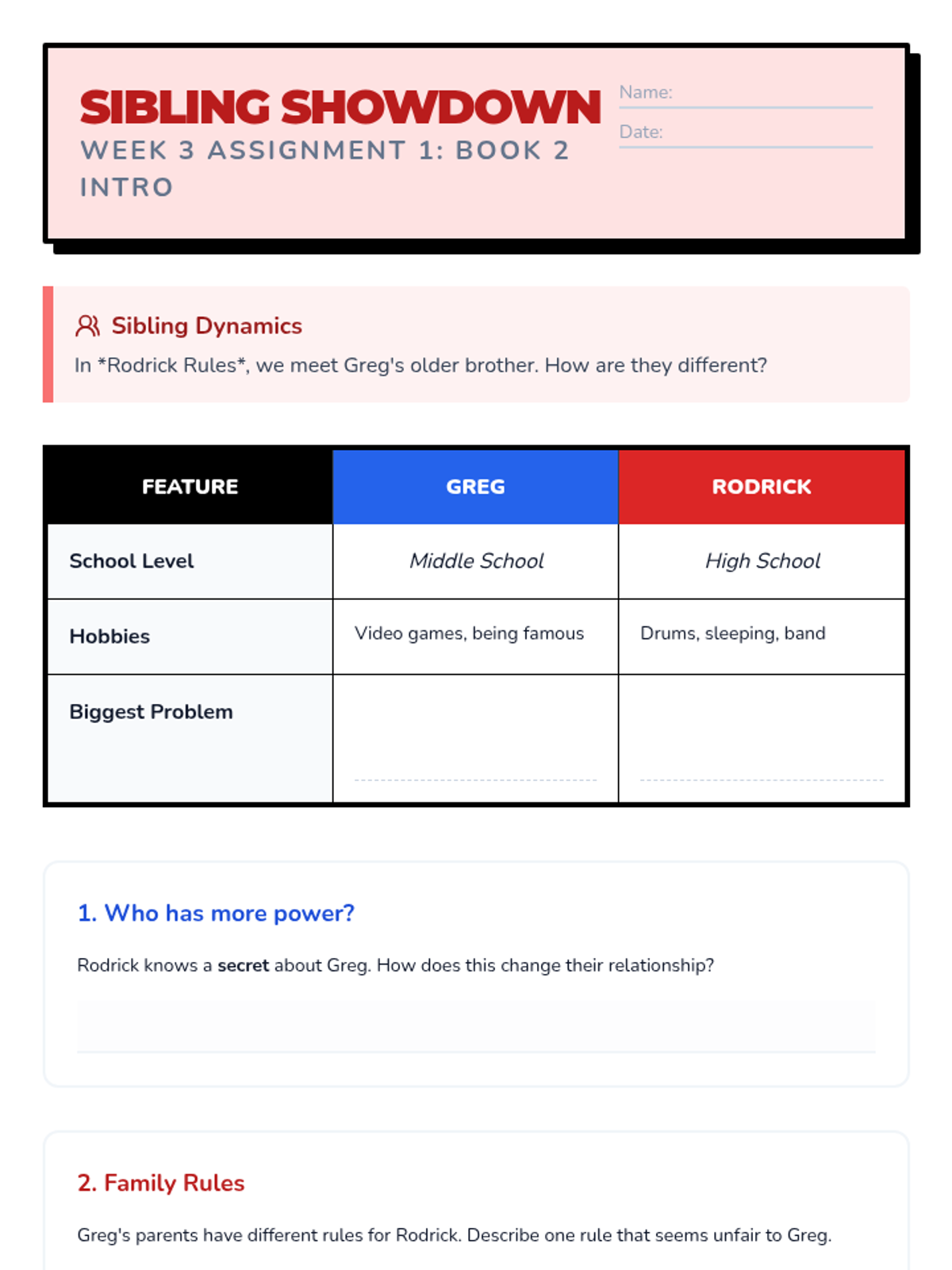
Transitioning to 'Rodrick Rules'. Focus on Foreshadowing (the embarrassing secret) and Oxymoron (Löded Diper). Sibling rivalry vocabulary and the concept of 'Leverage'.
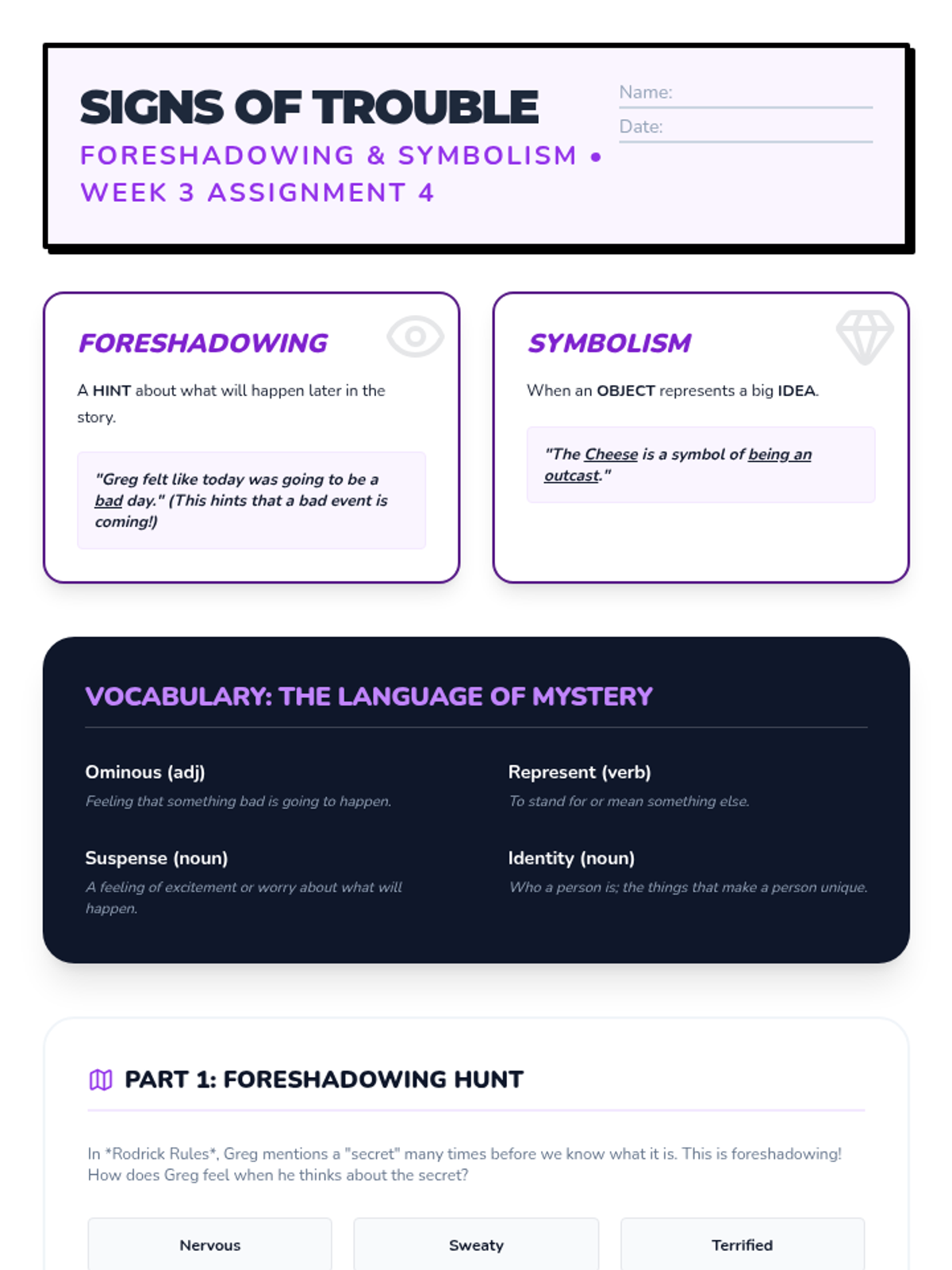
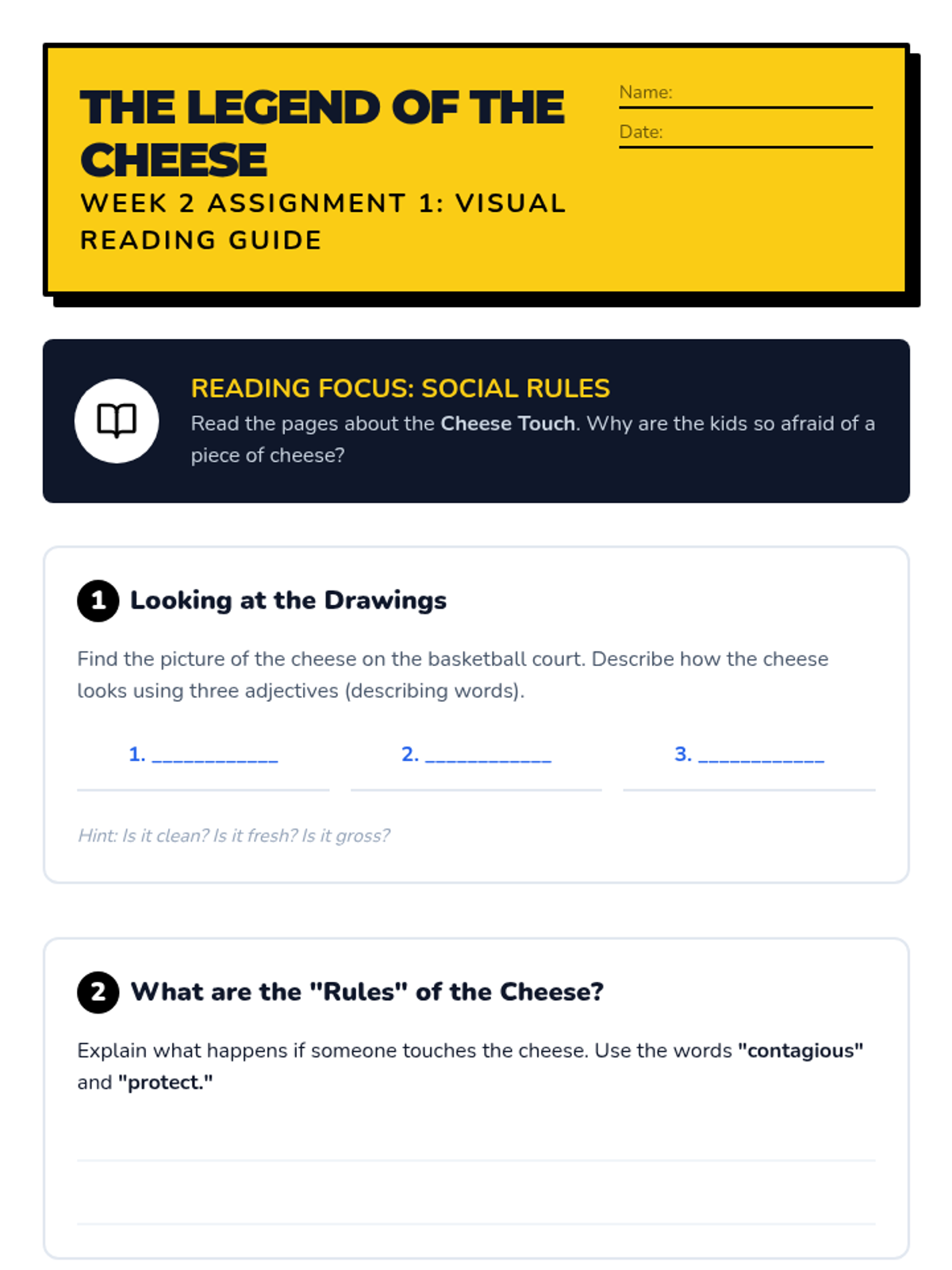
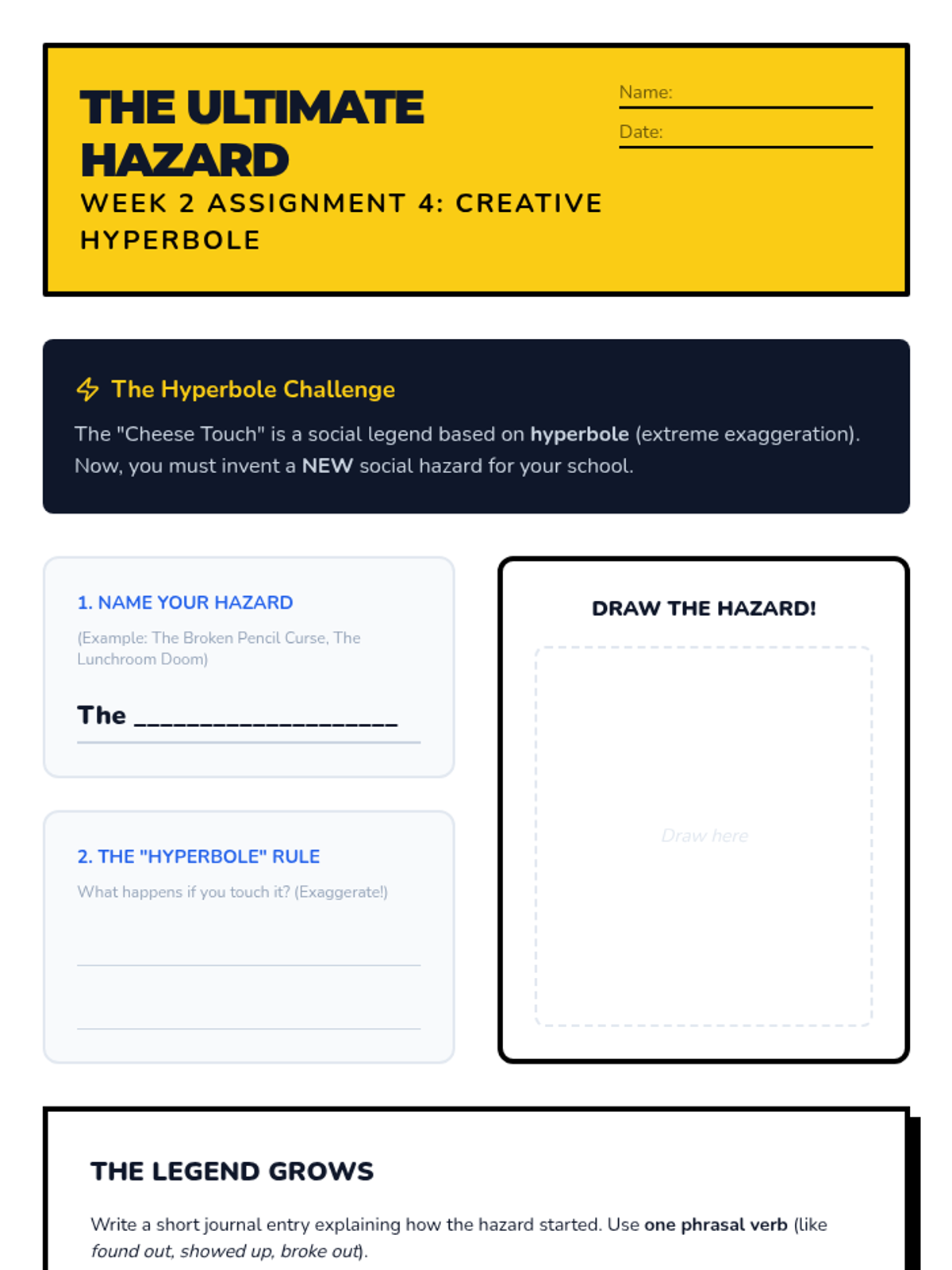
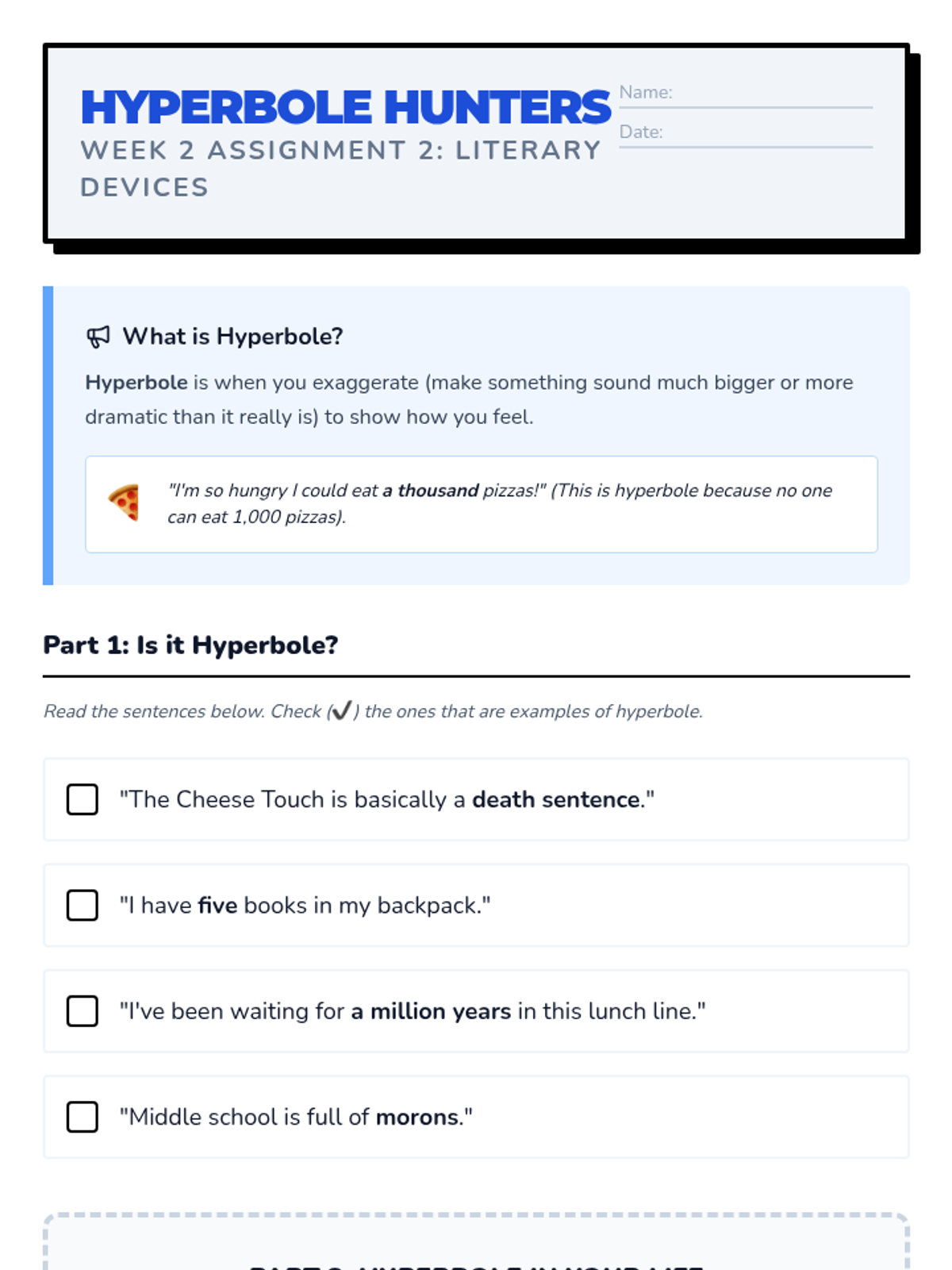
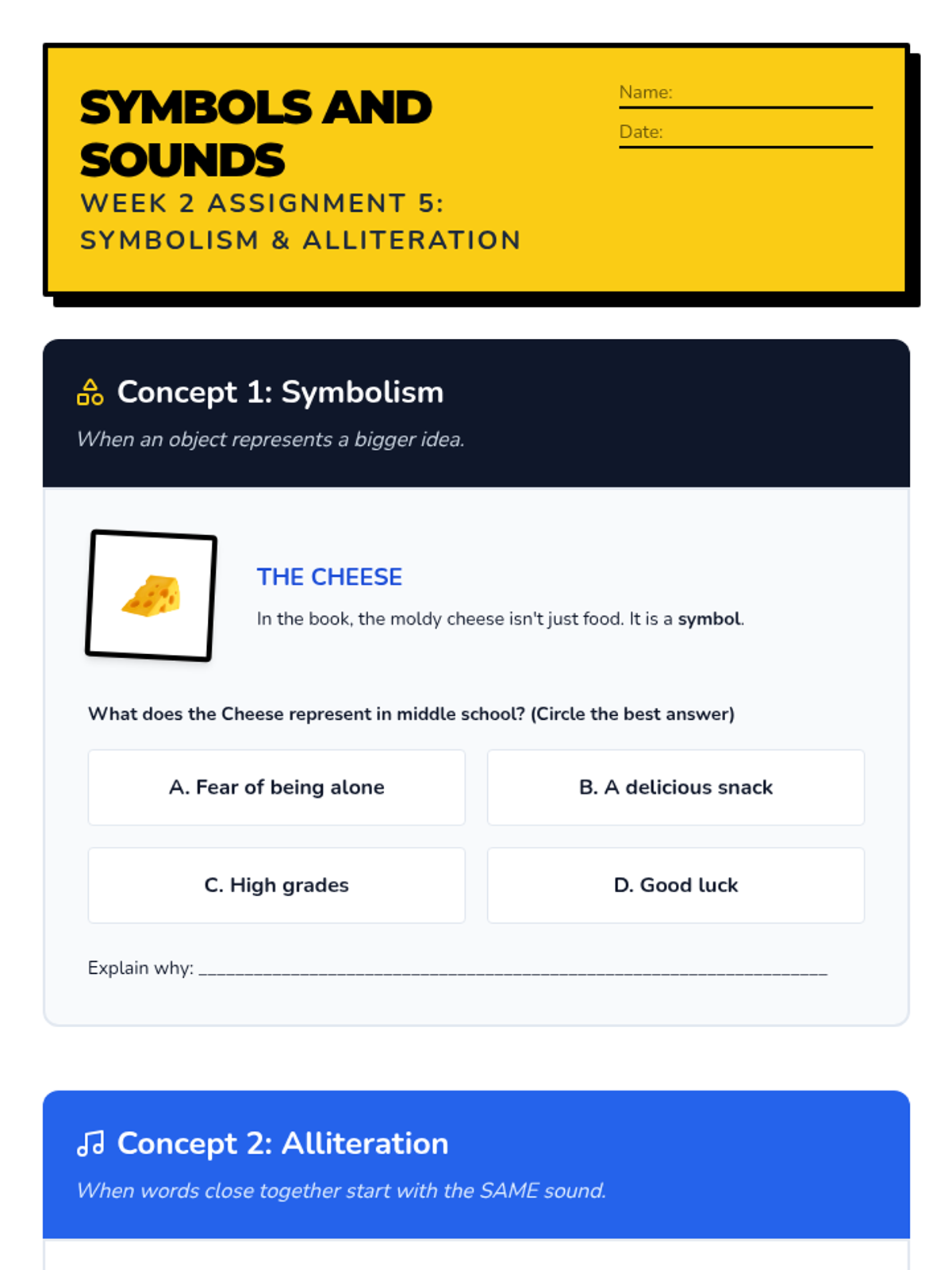
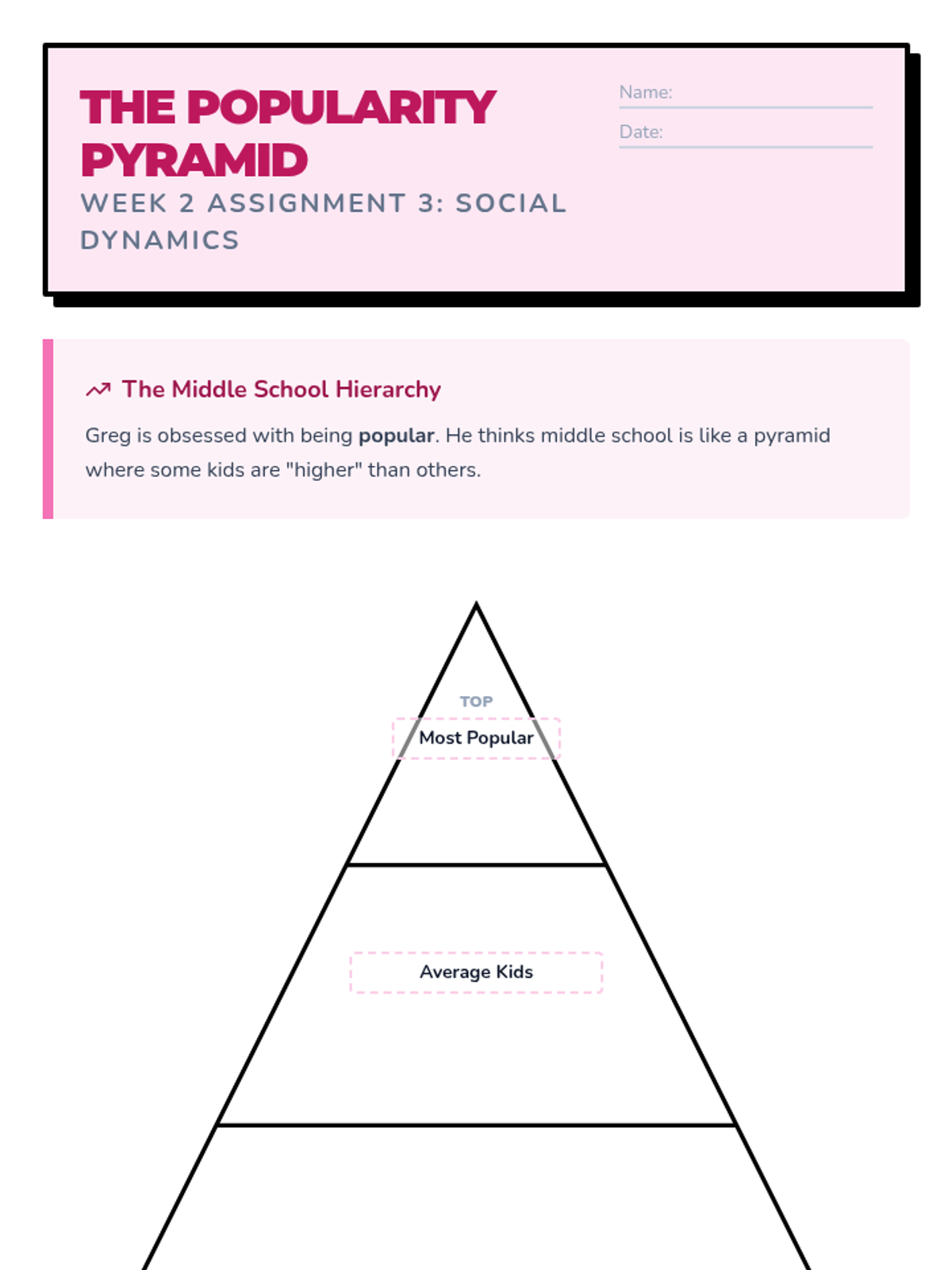
Exploring social hierarchies. Focus on Hyperbole (exaggeration), Symbolism (The Cheese), and Alliteration (Greg's insults). Vocabulary focus on 'Social Exclusion' and 'Status' terms.
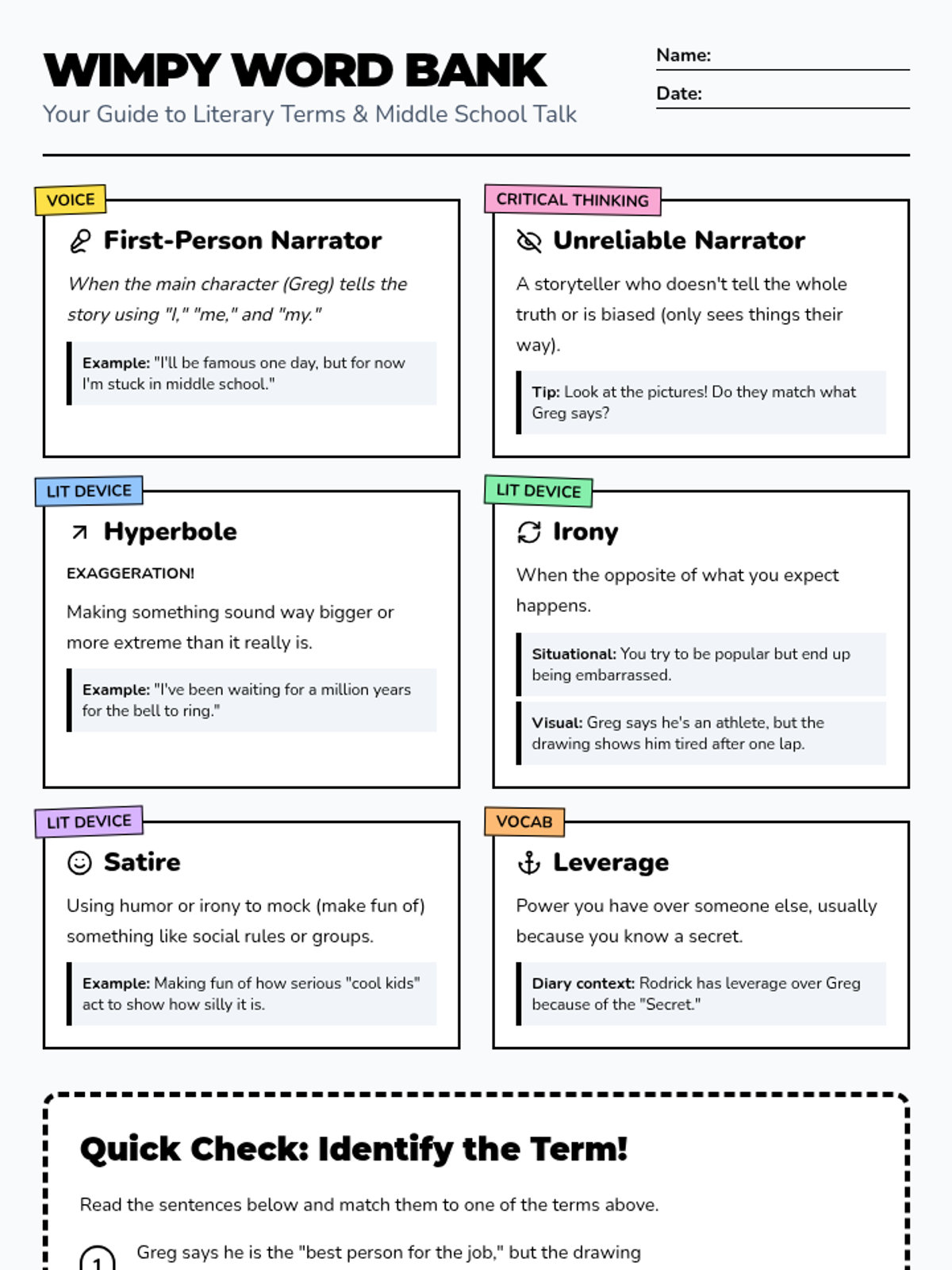
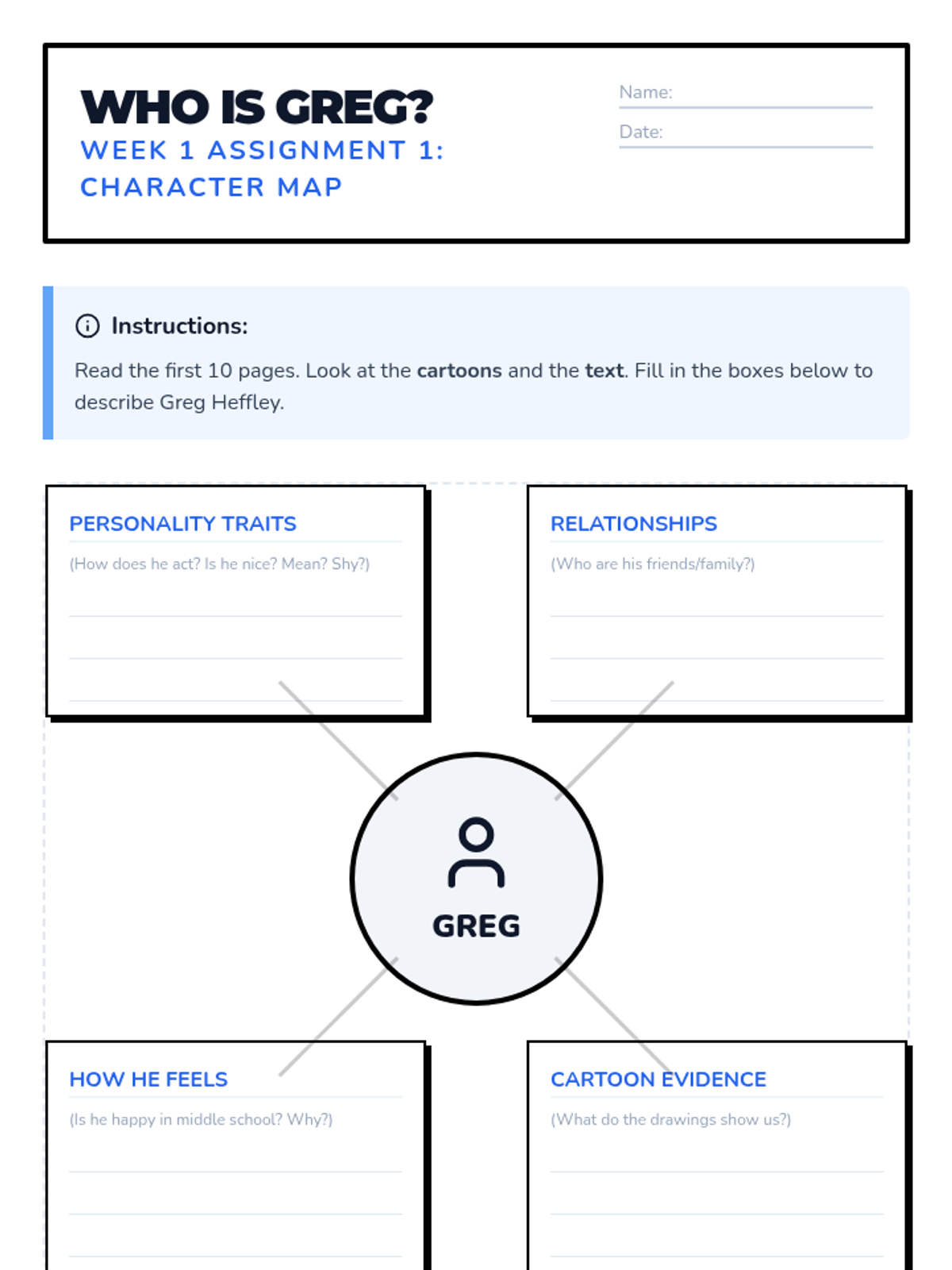
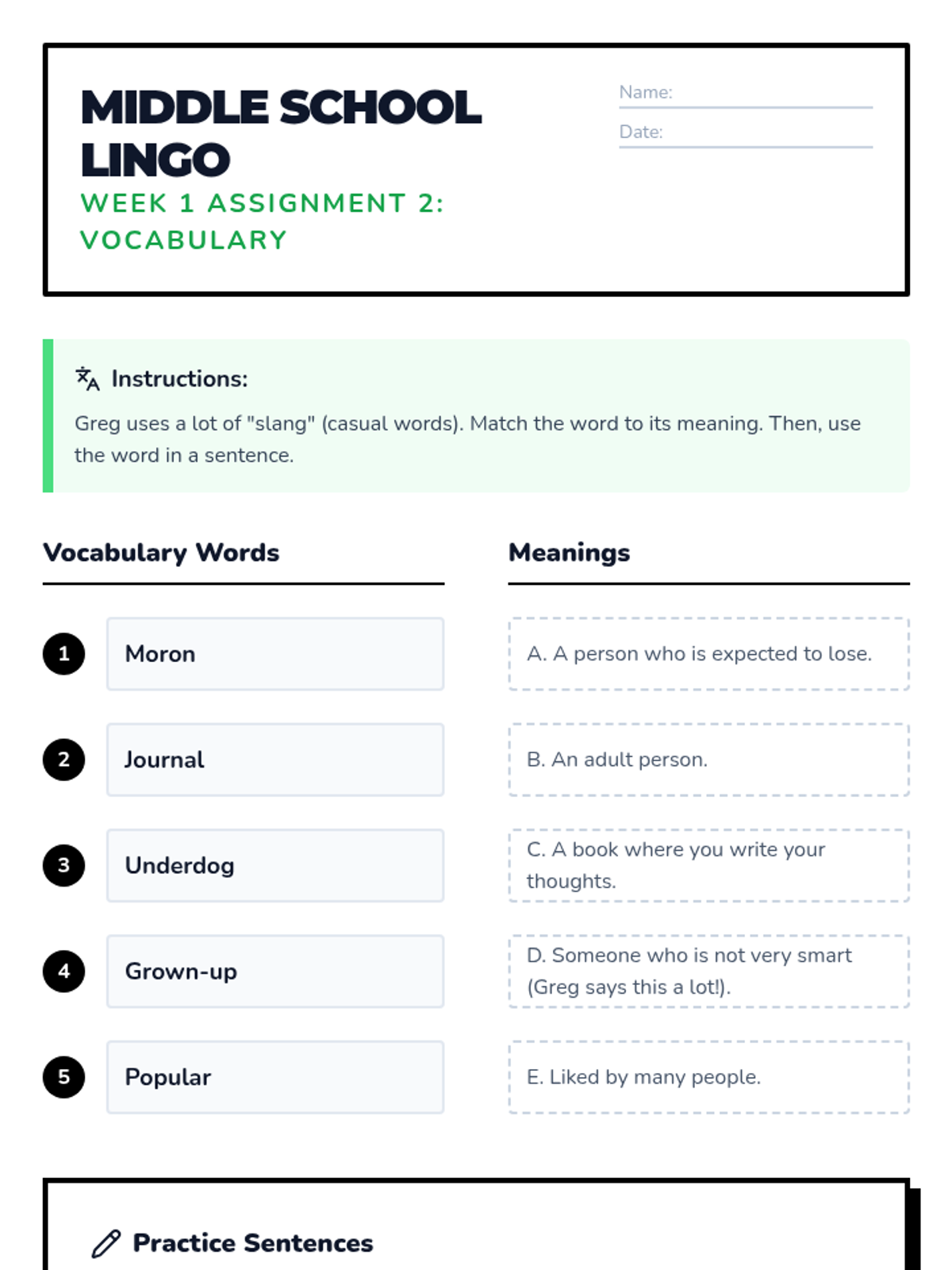
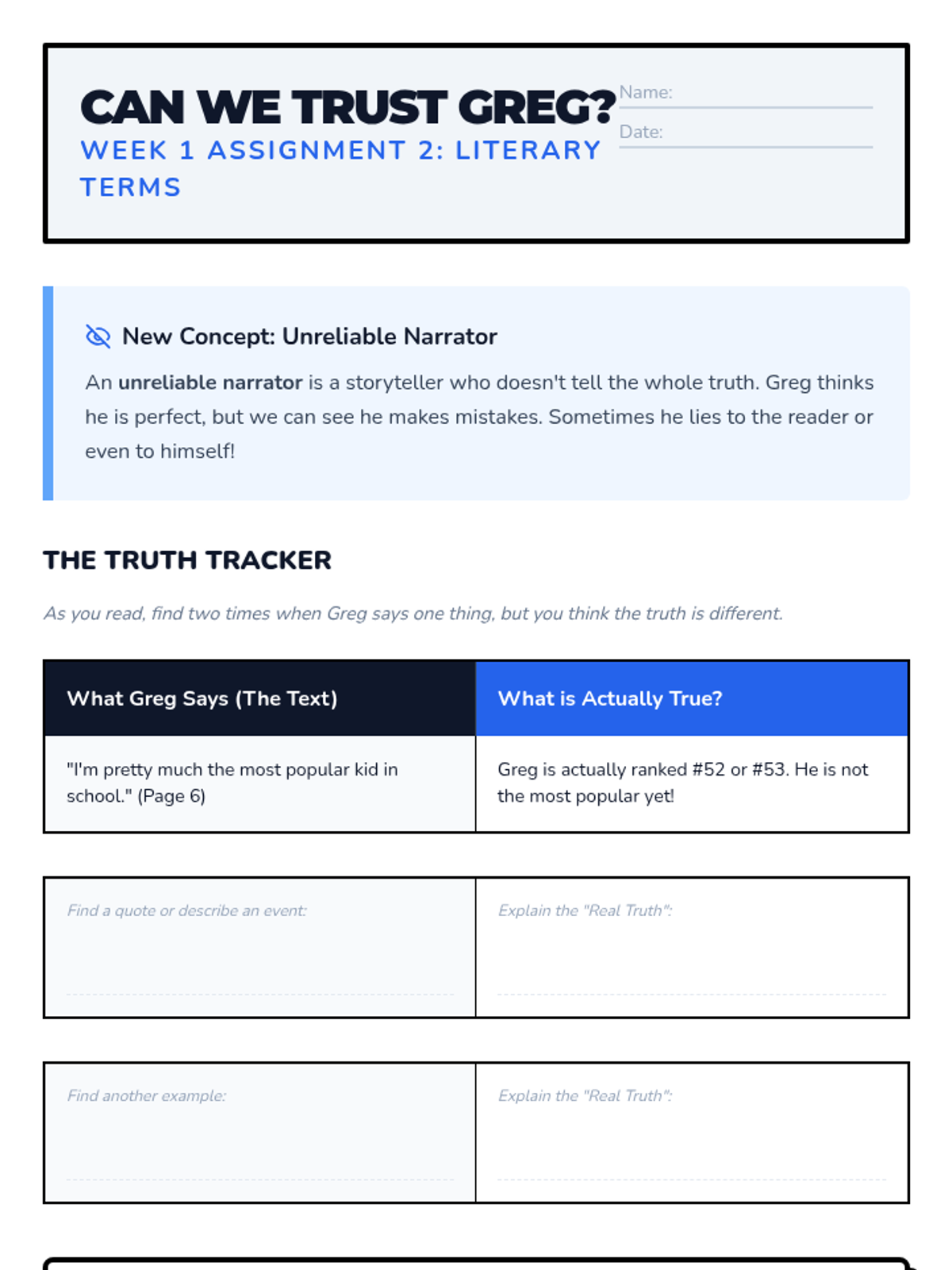
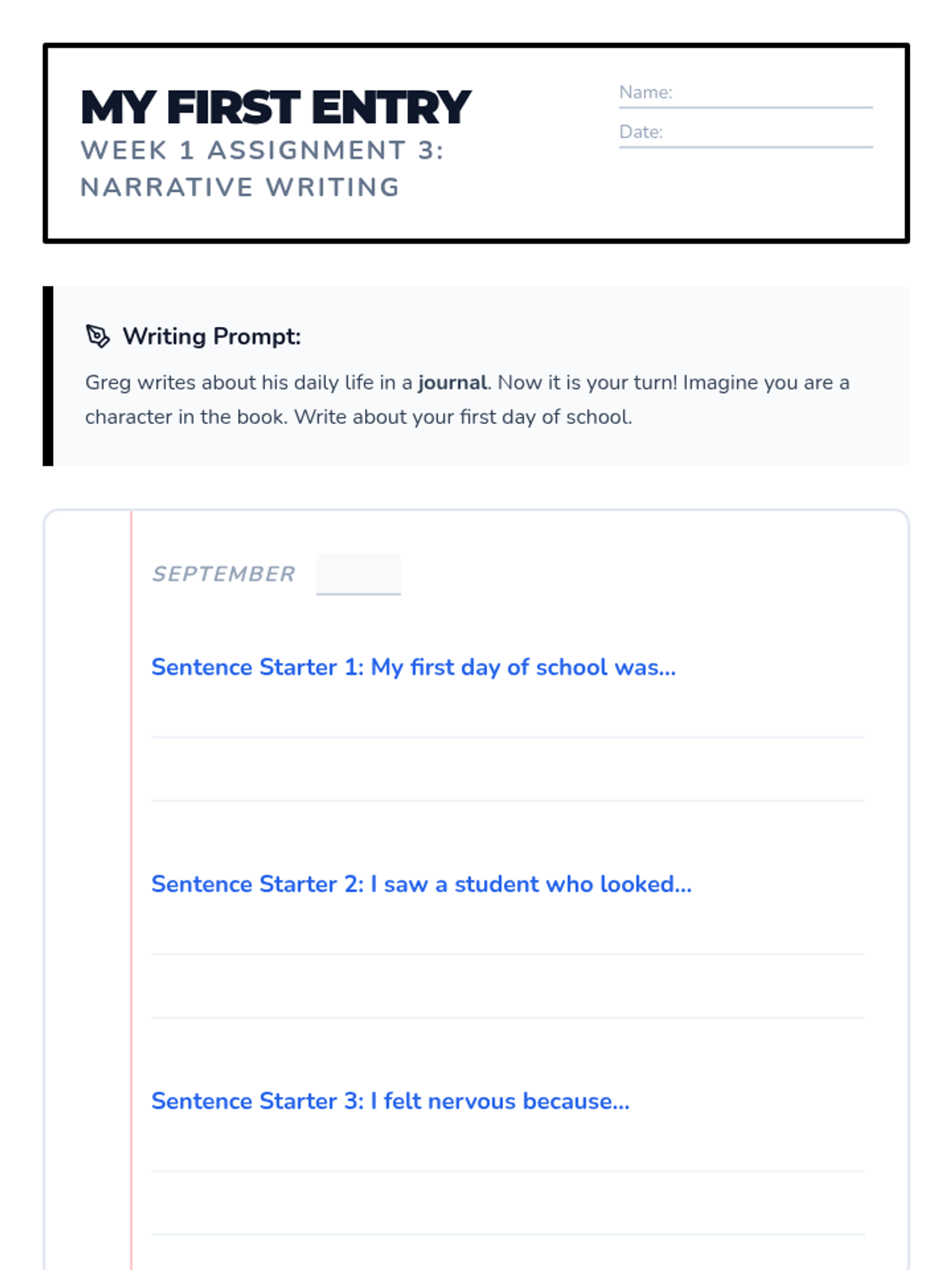
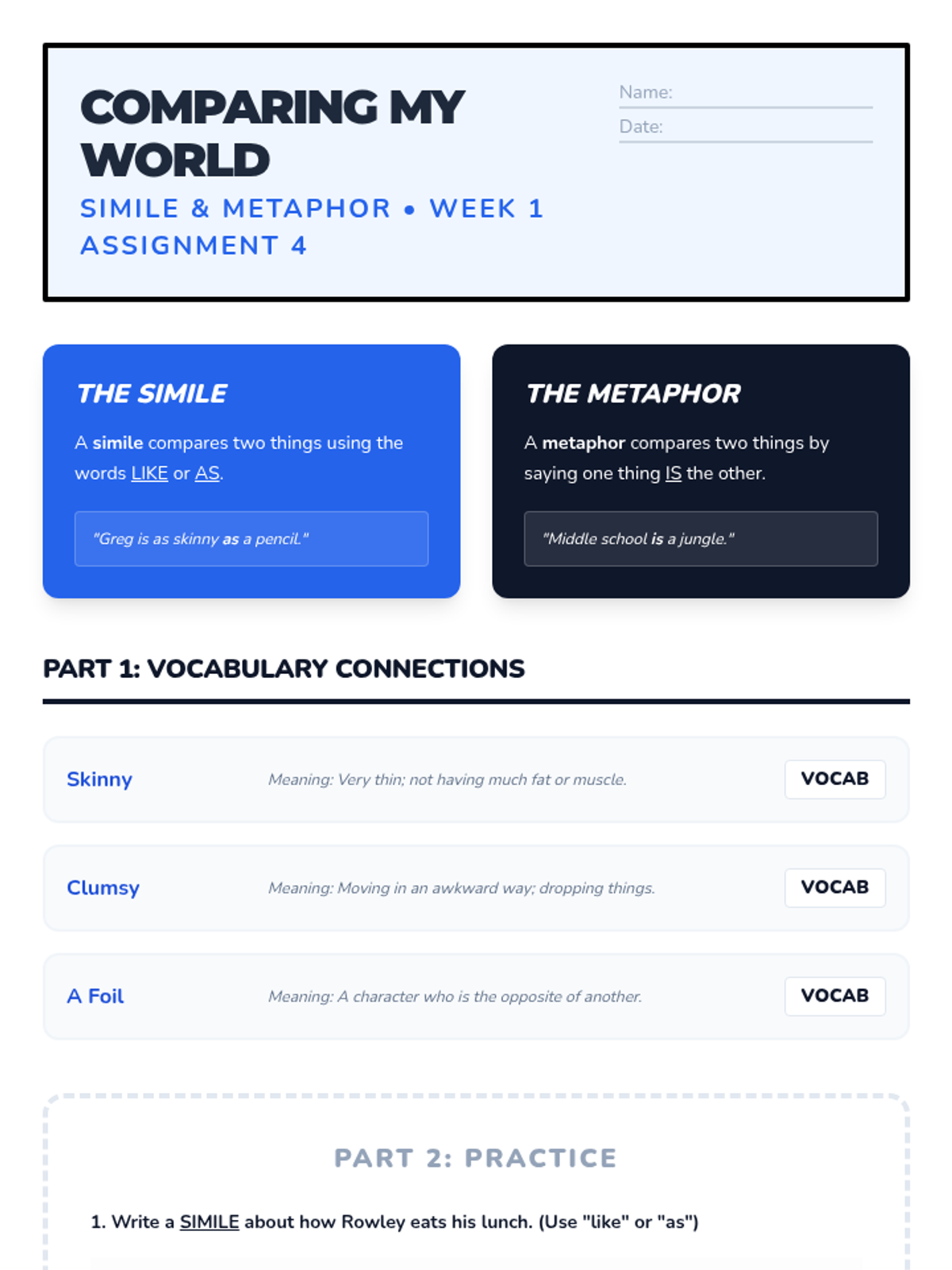
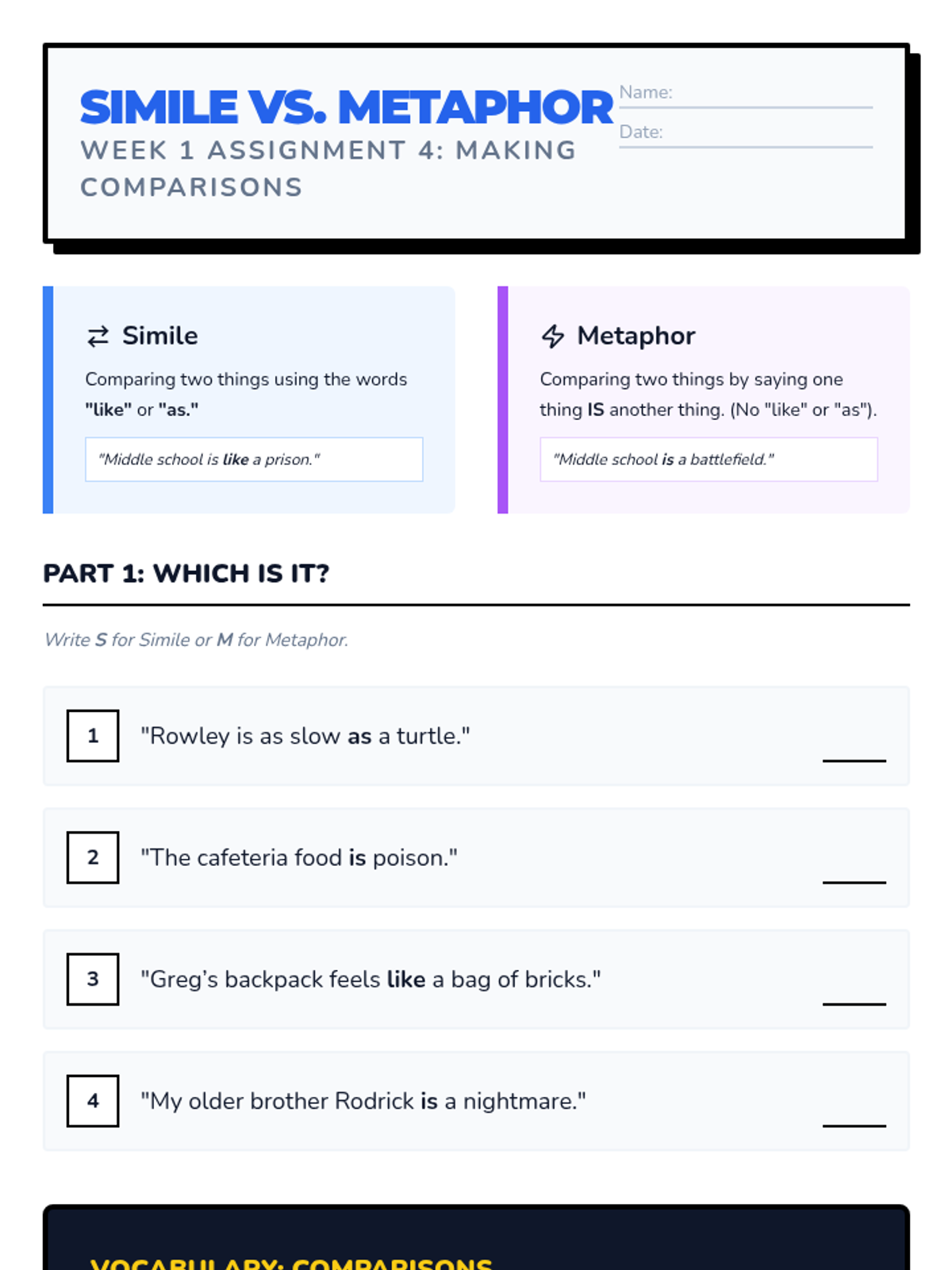
Introduction to Greg Heffley and narrative voice. Students master First-Person Narrator and Unreliable Narrator concepts while learning Simile and Metaphor through Greg's school comparisons. Focus on 'Middle School Lingo' vocabulary.
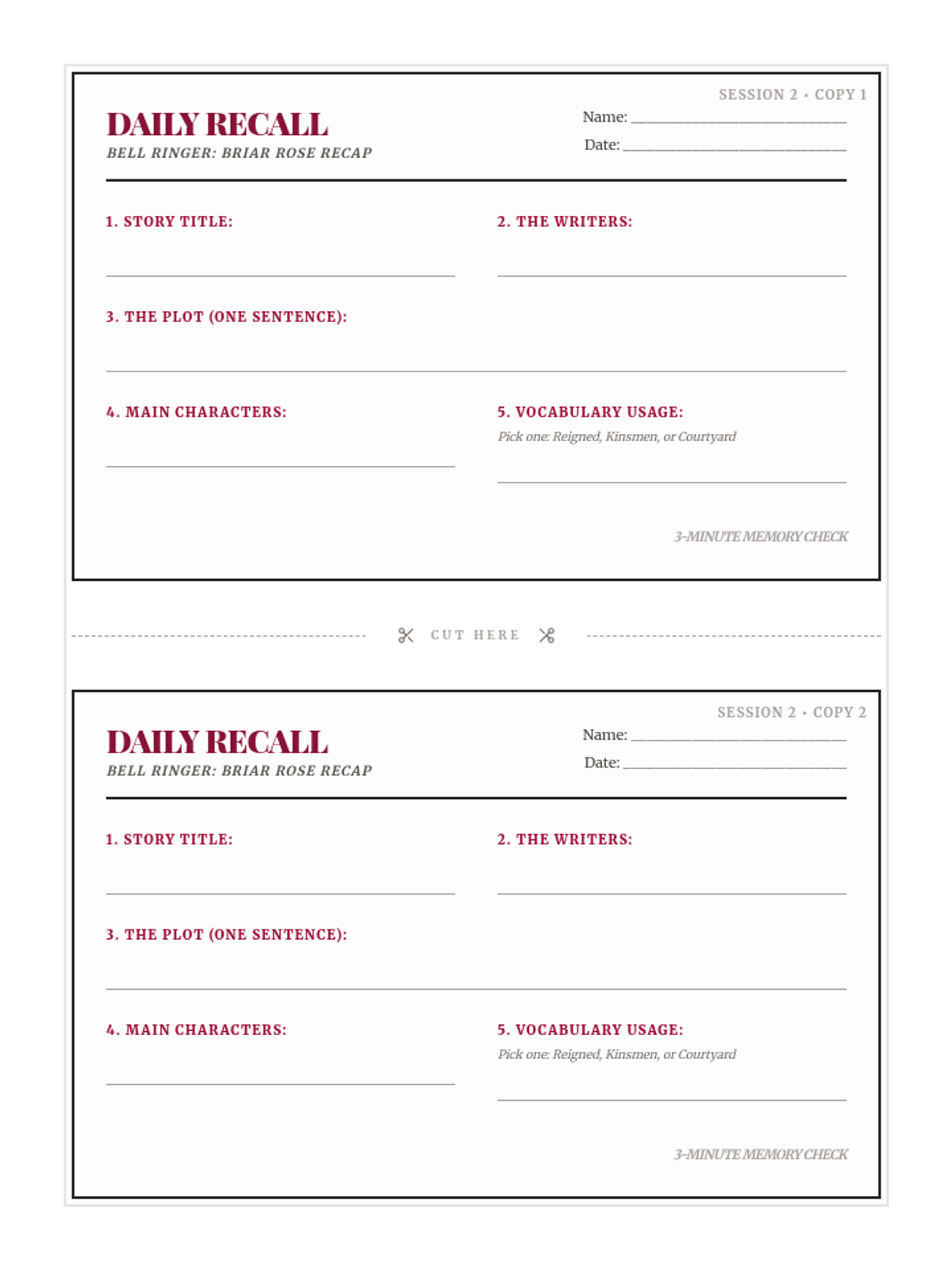
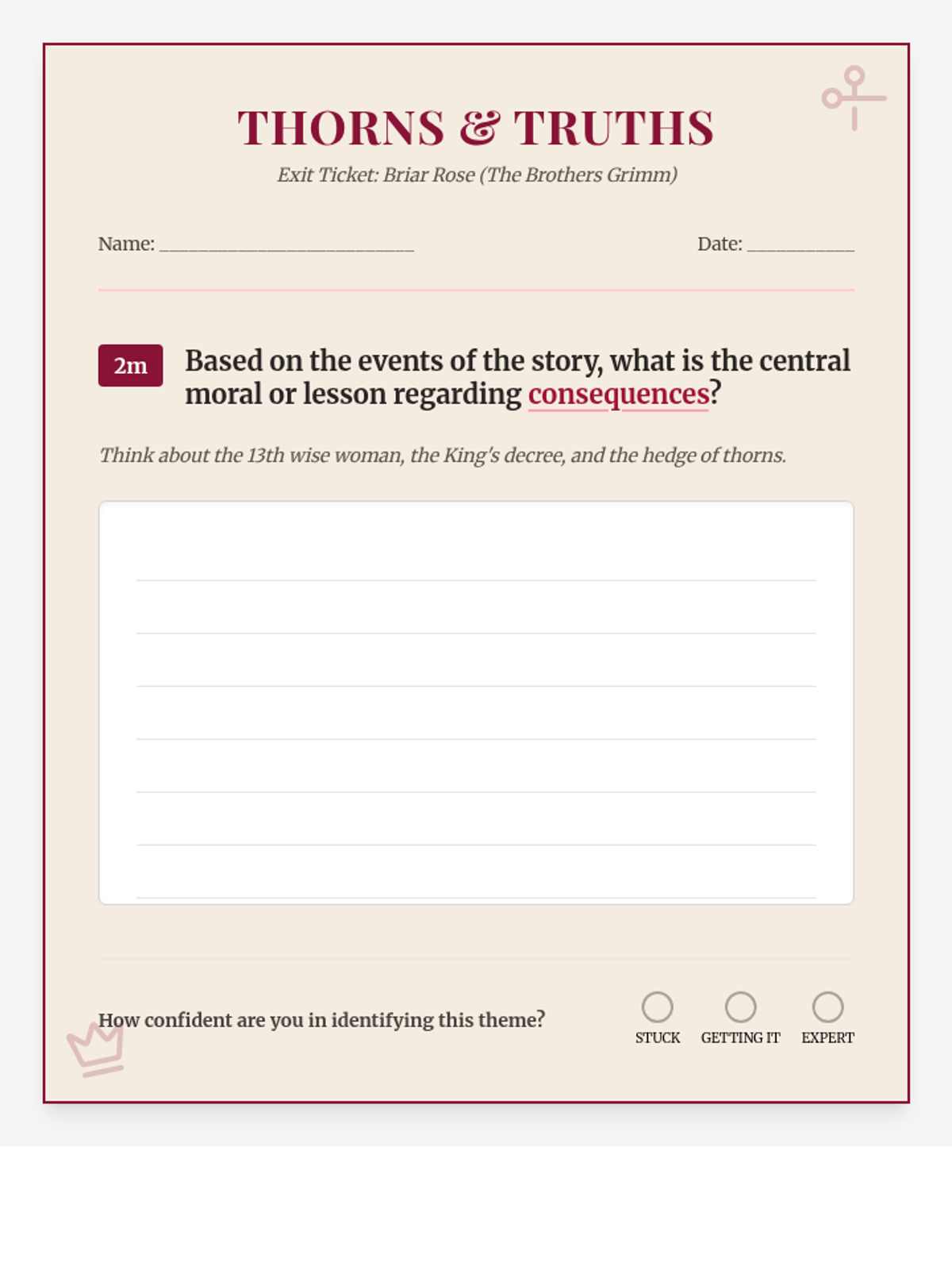
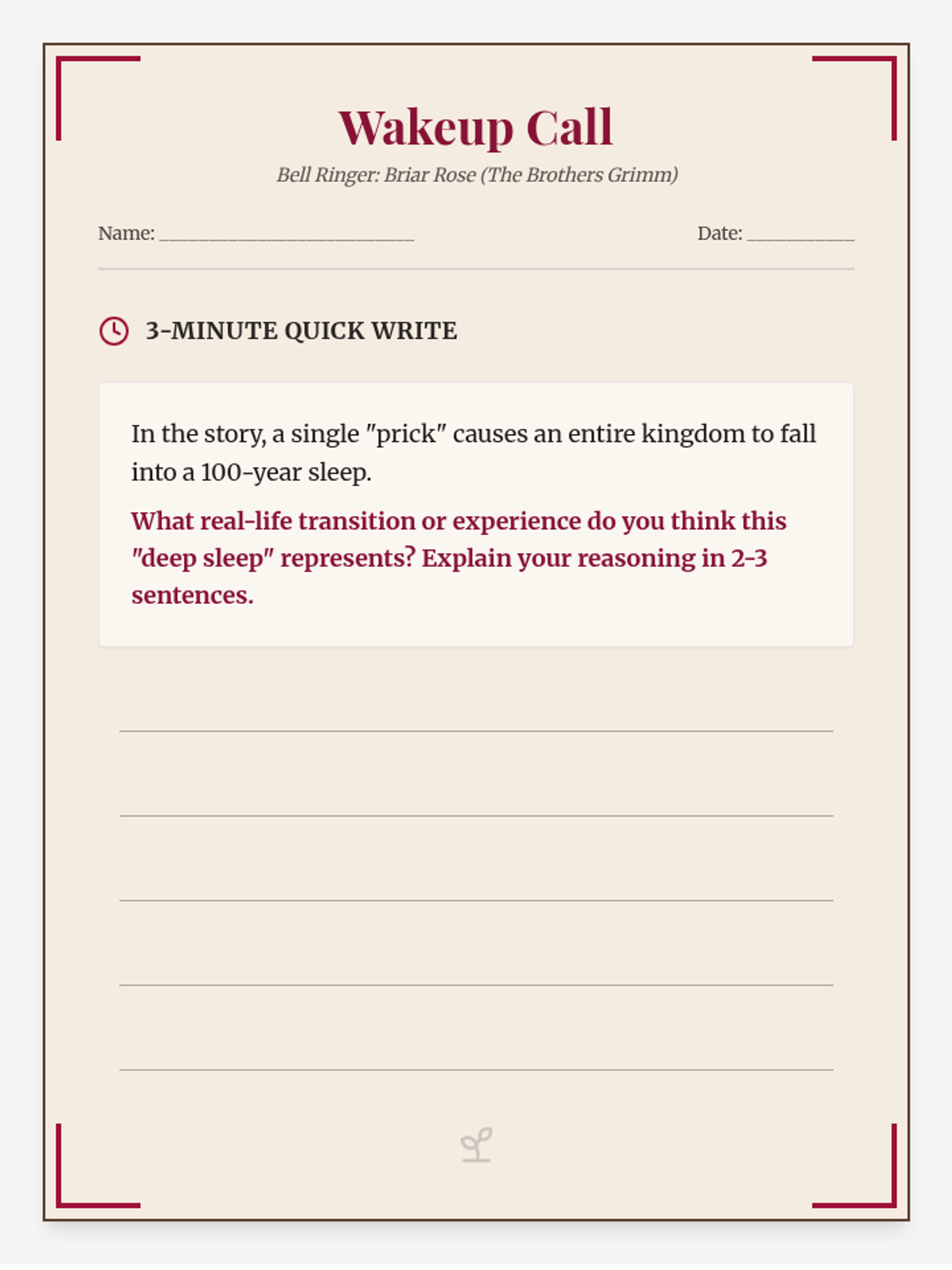
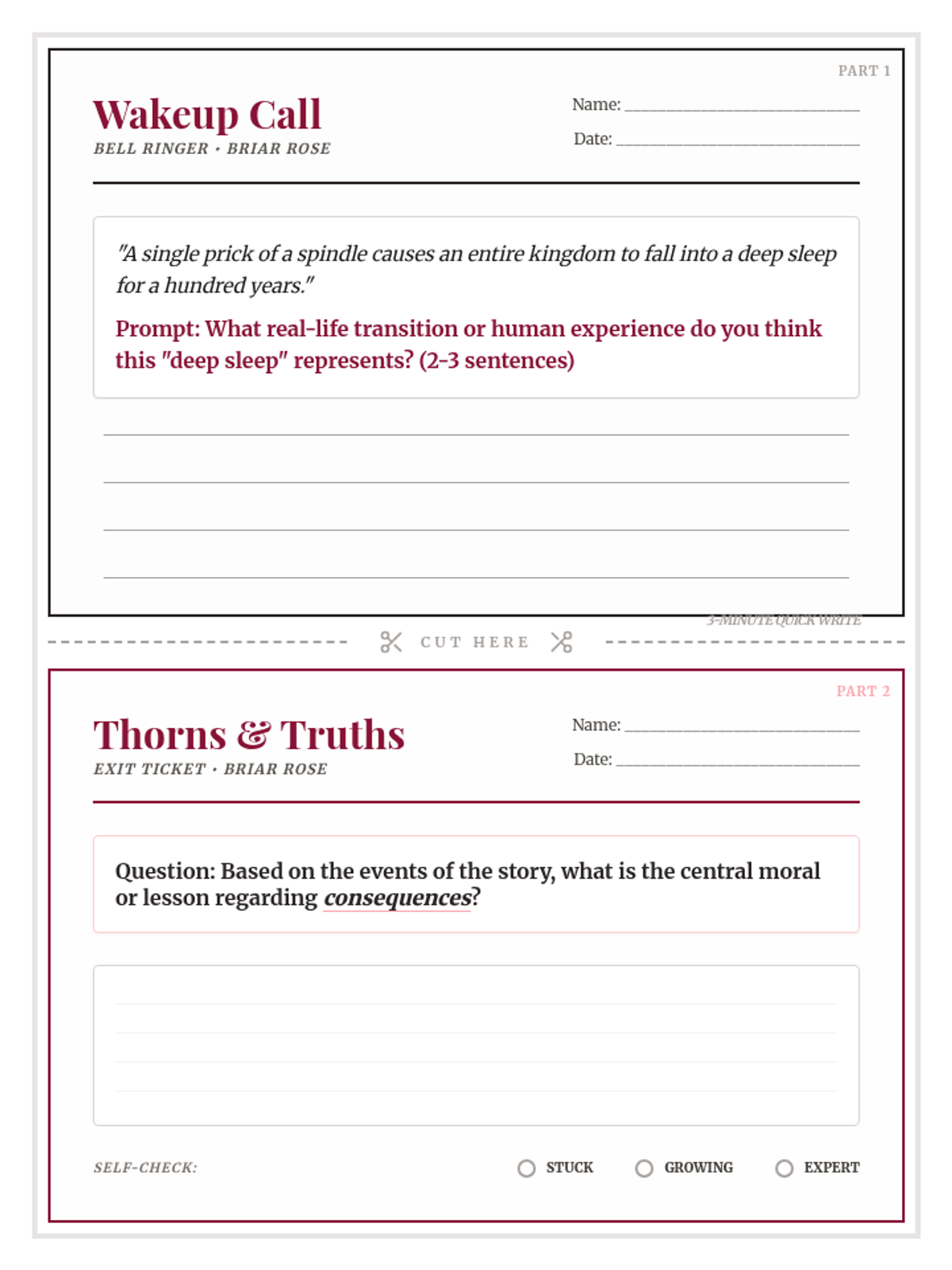
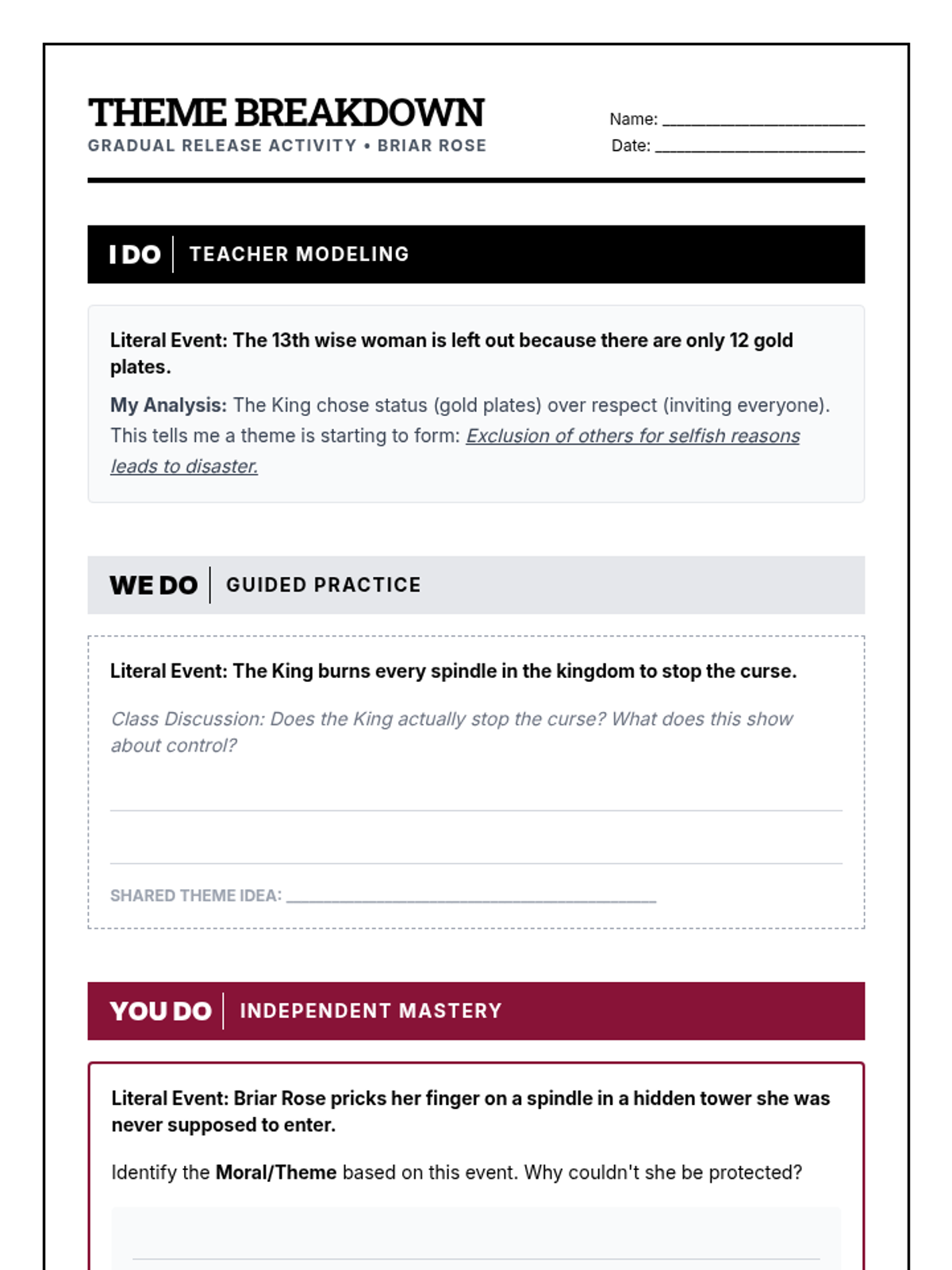
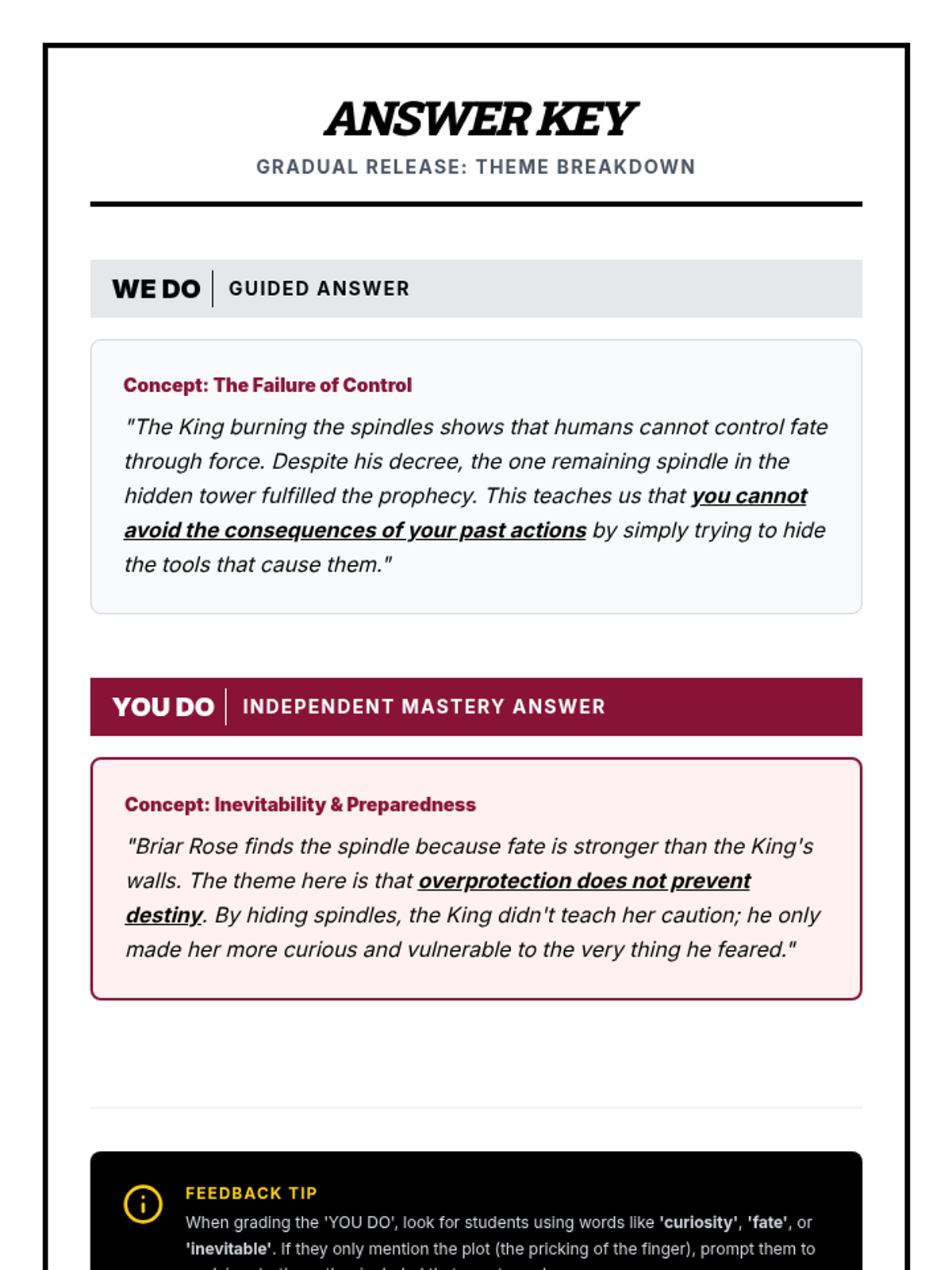
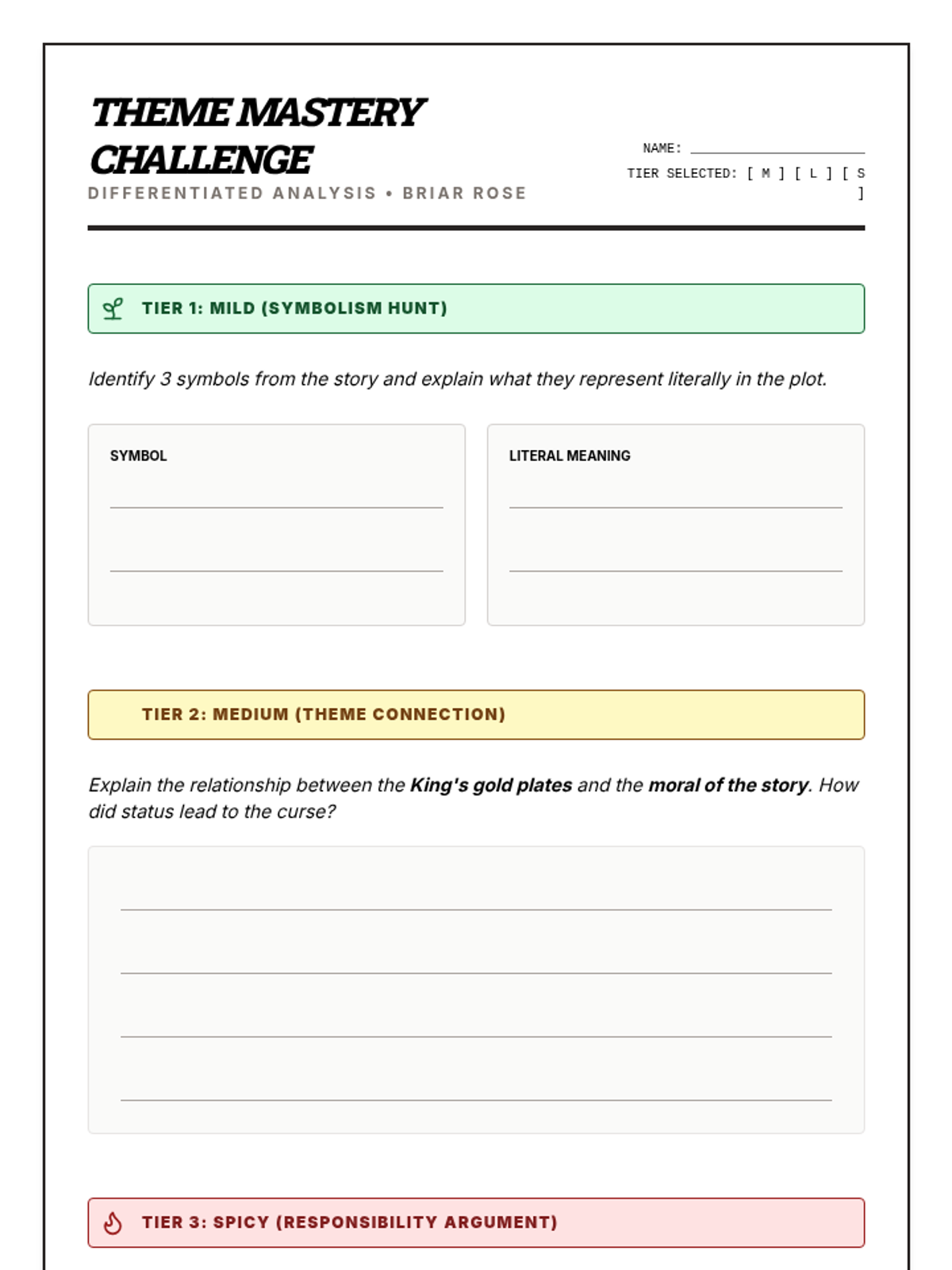
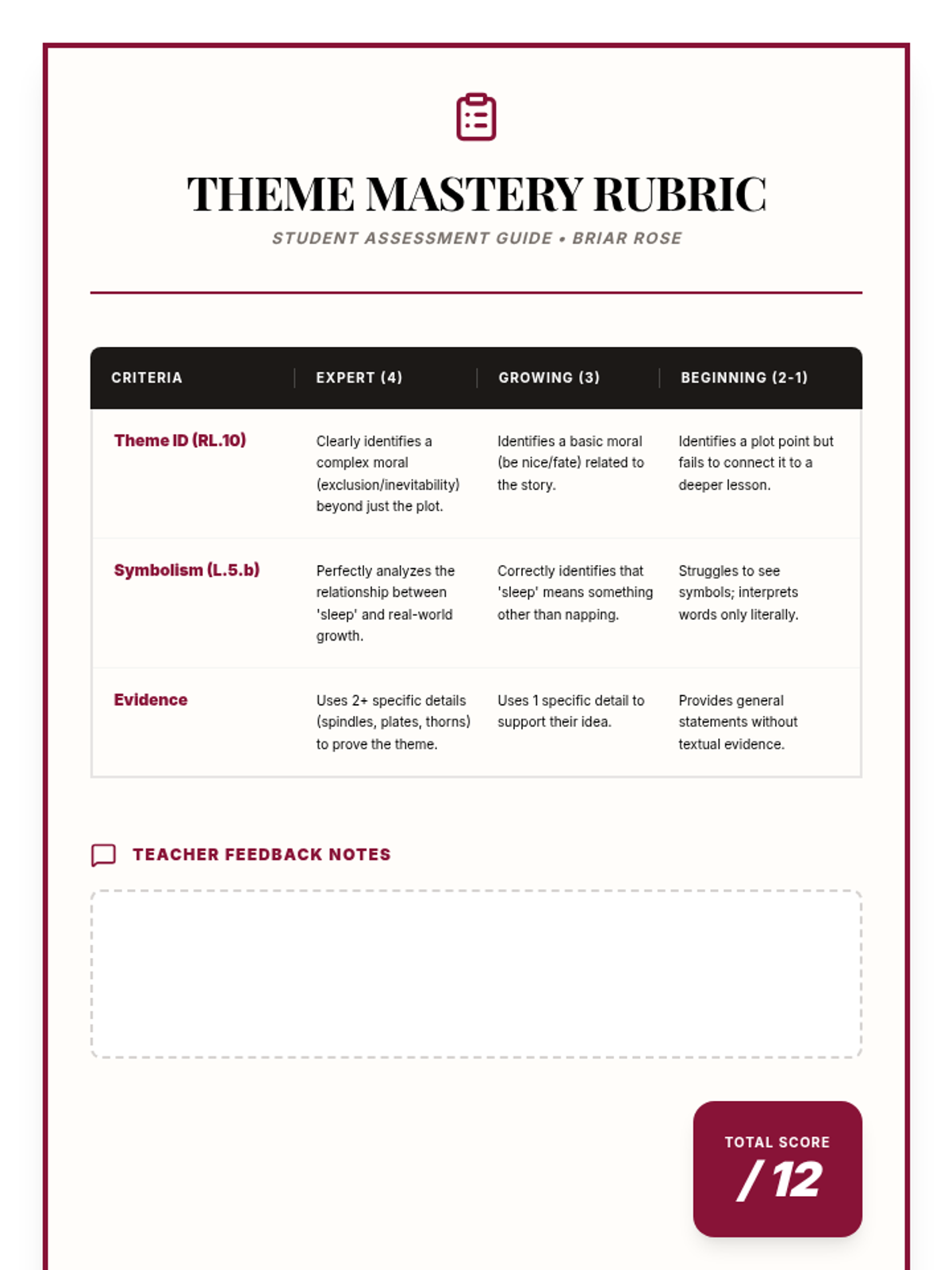
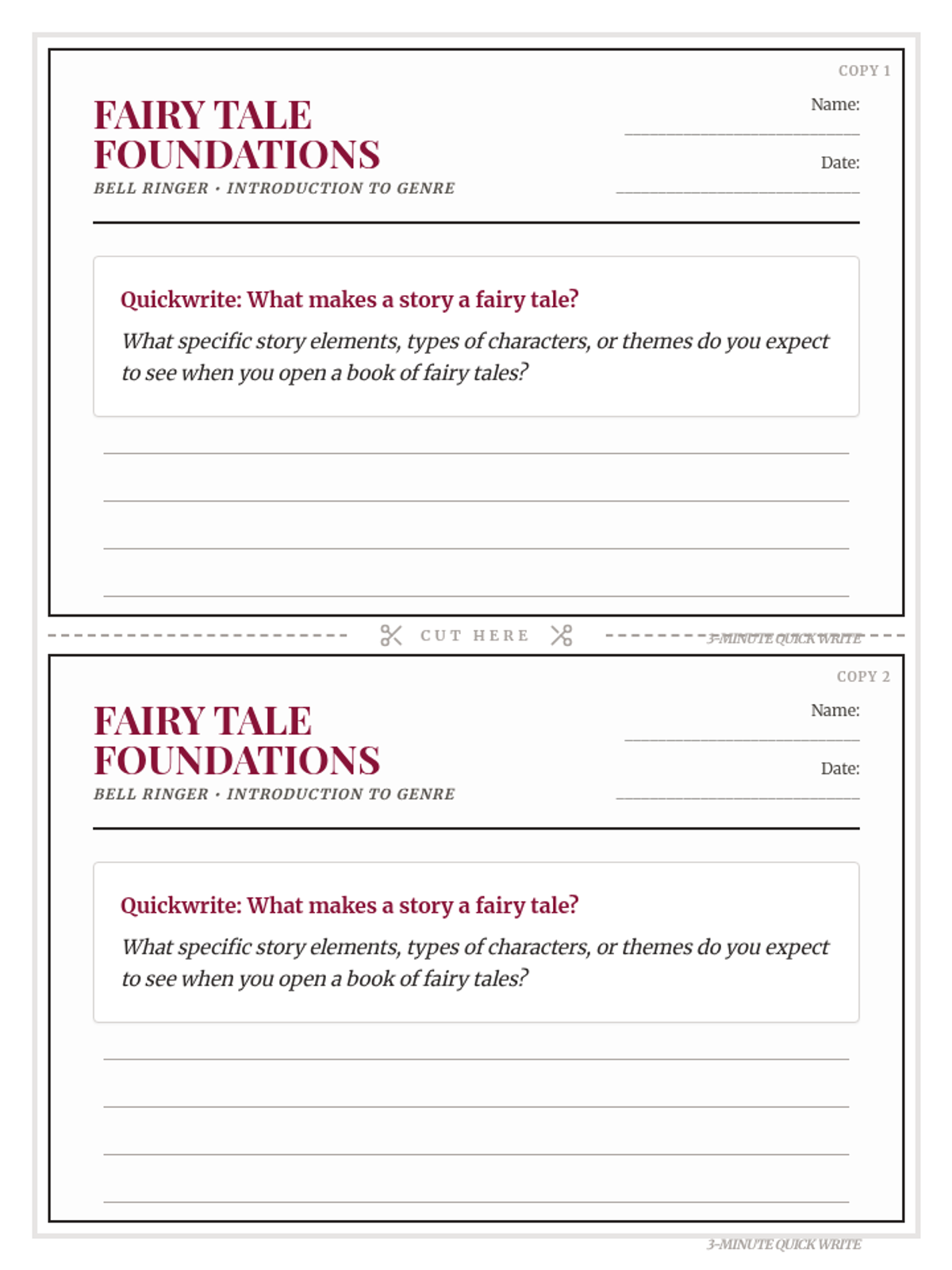
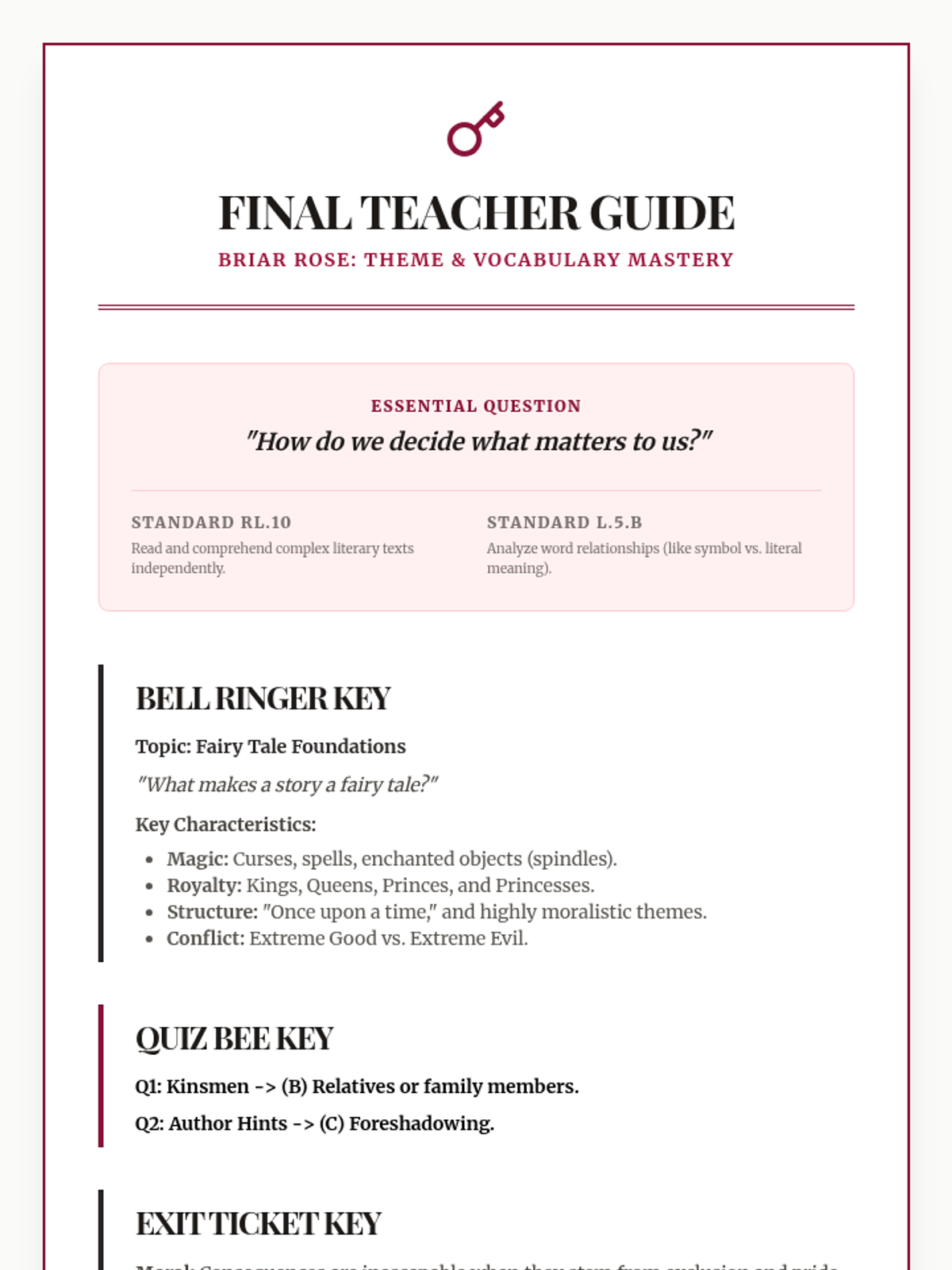
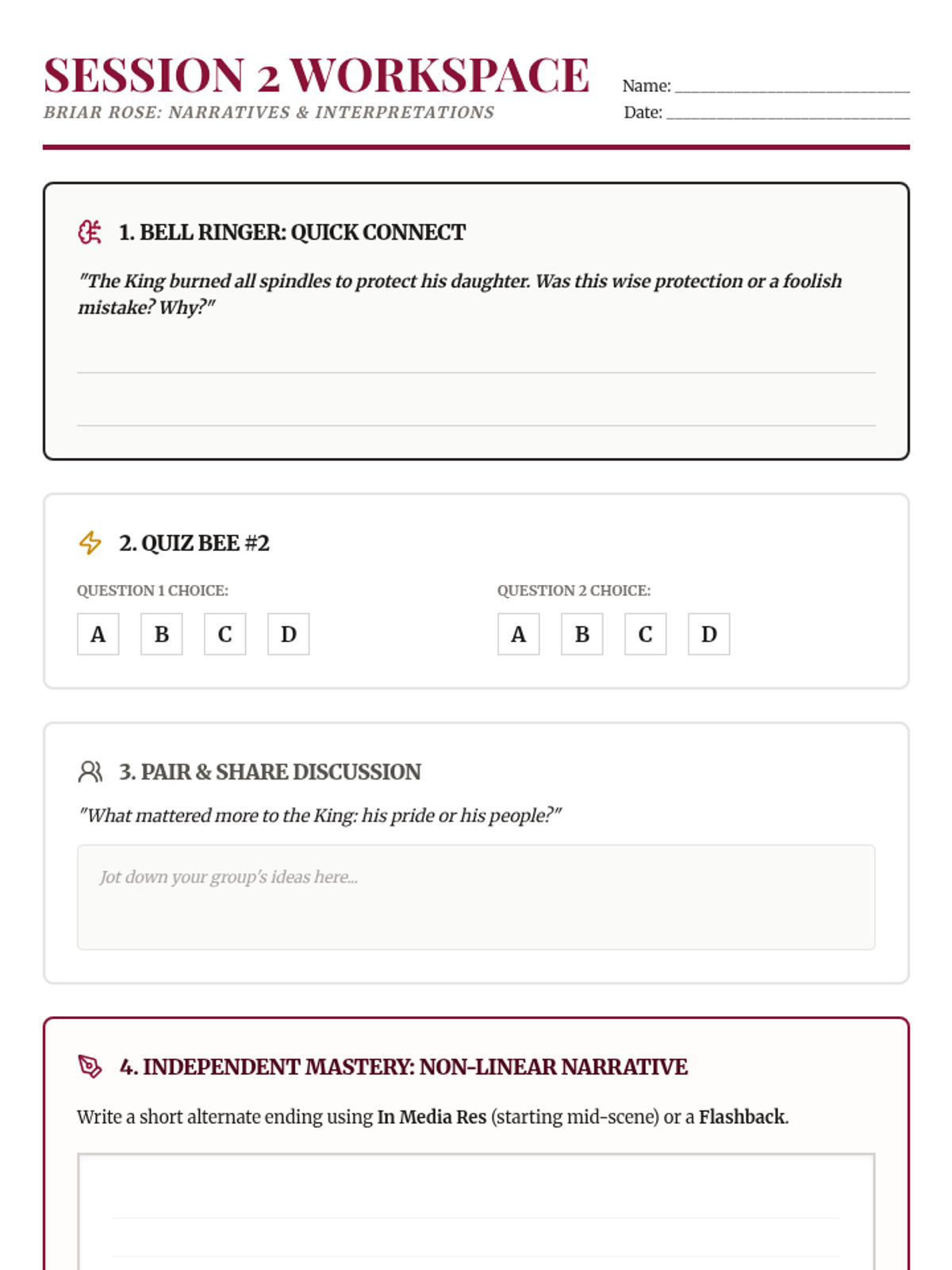
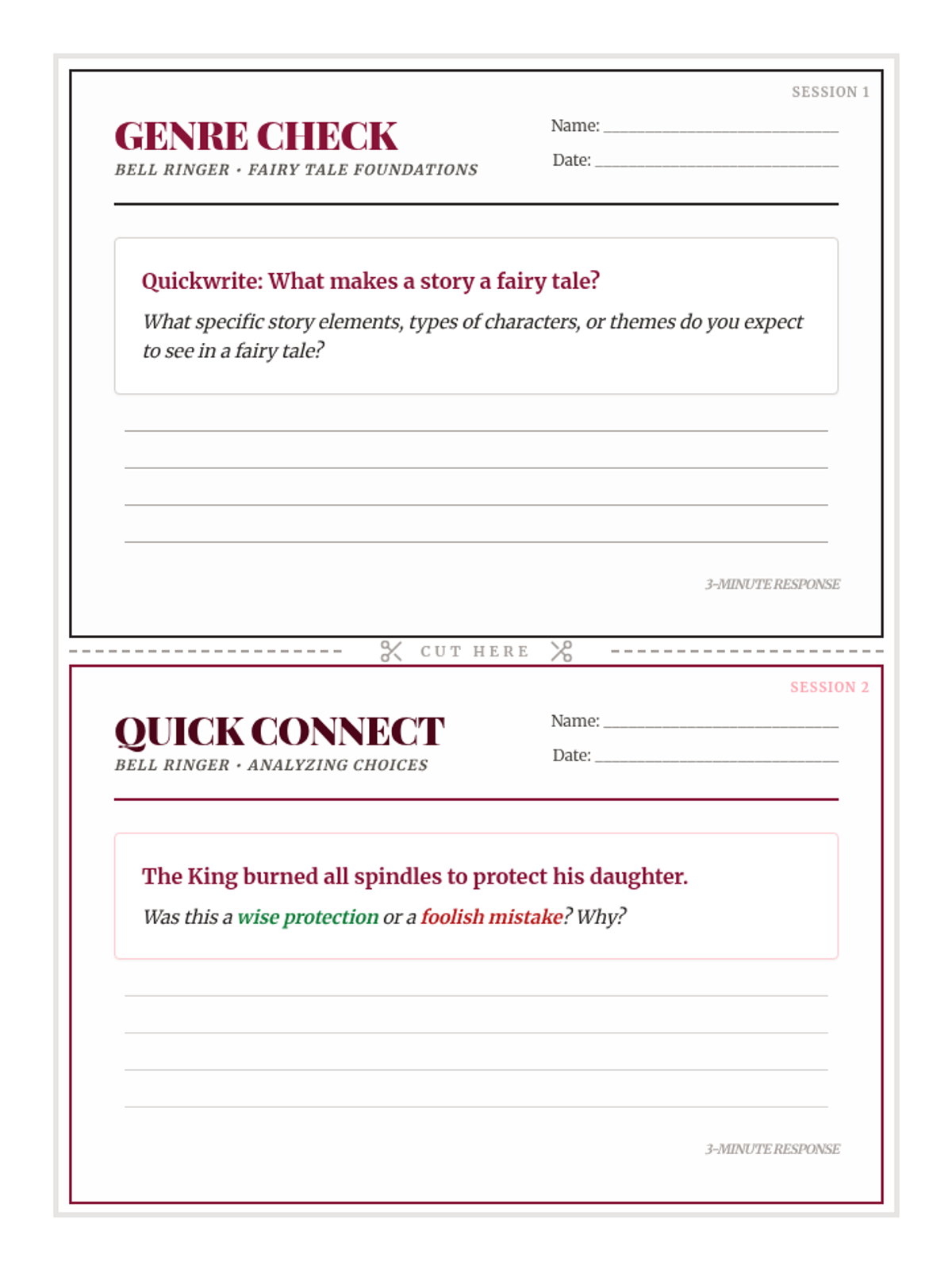
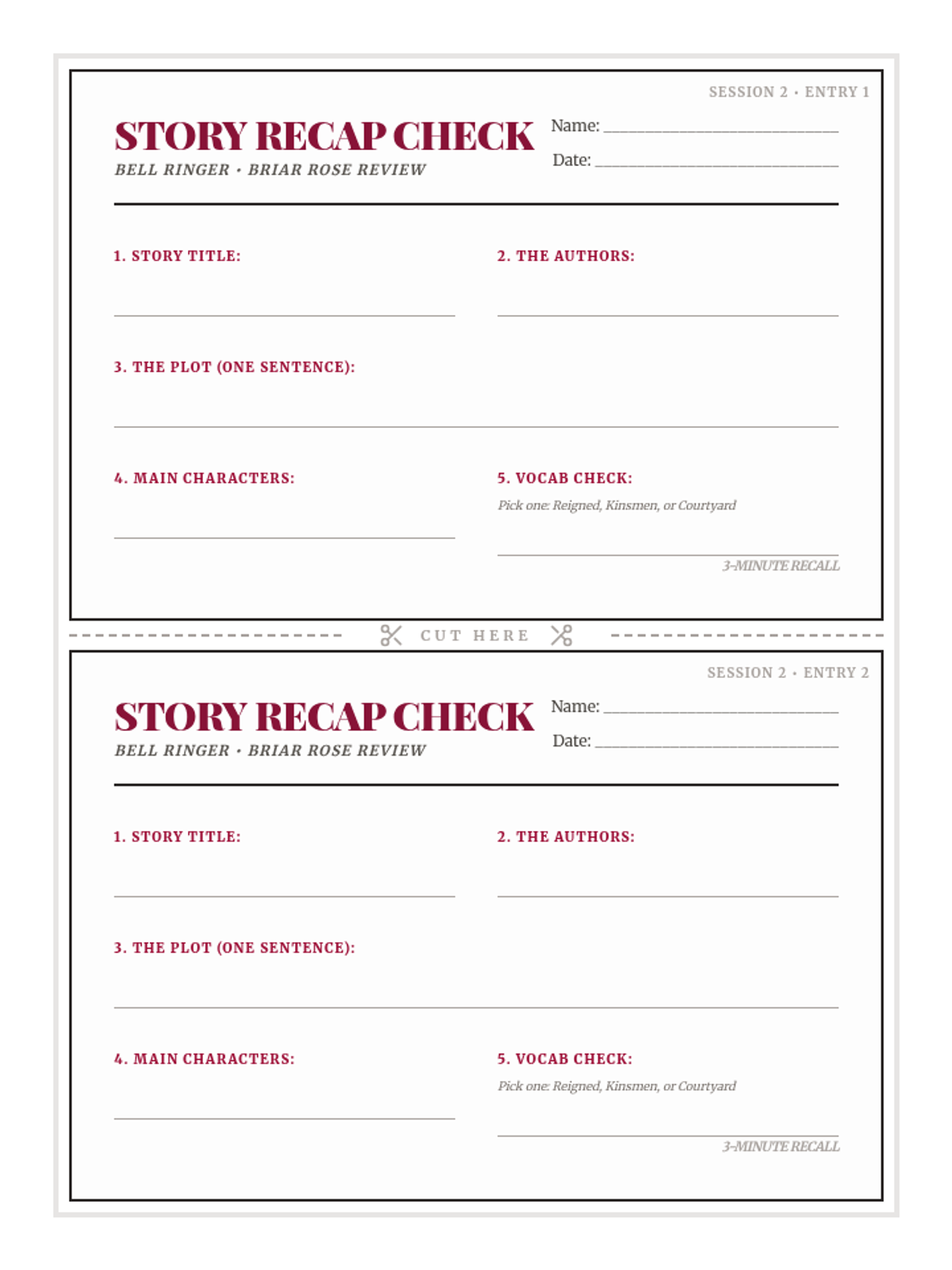
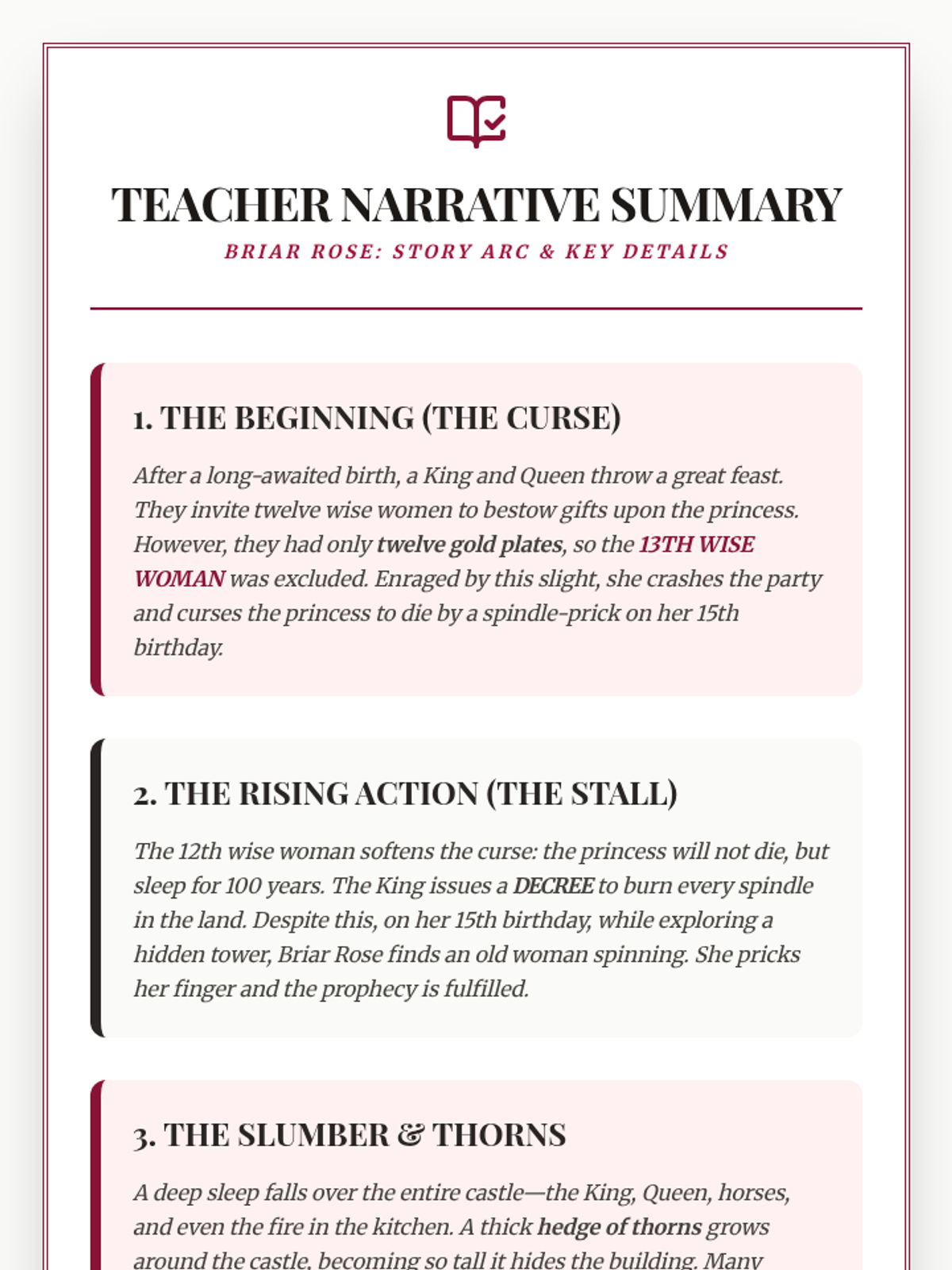
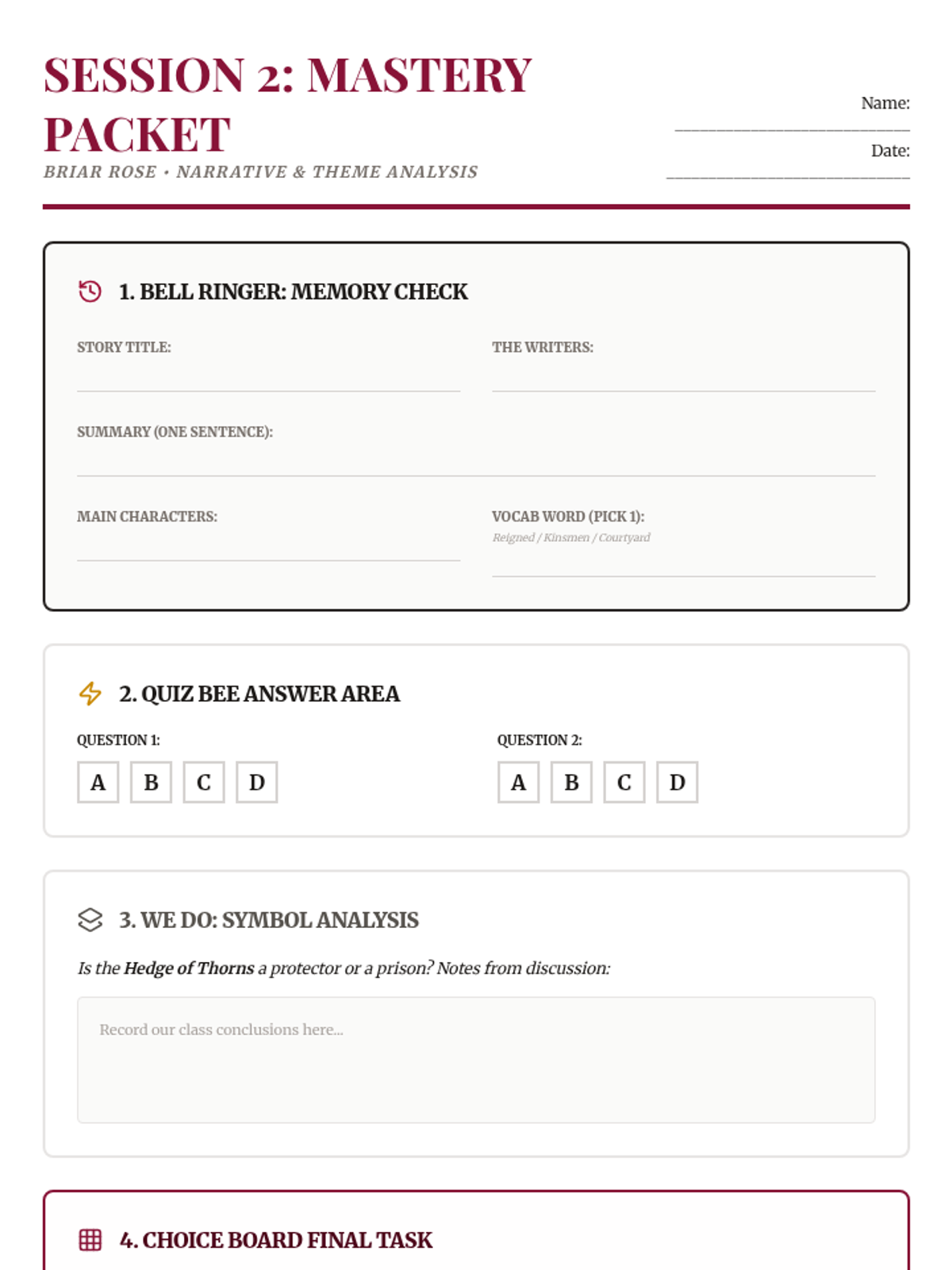
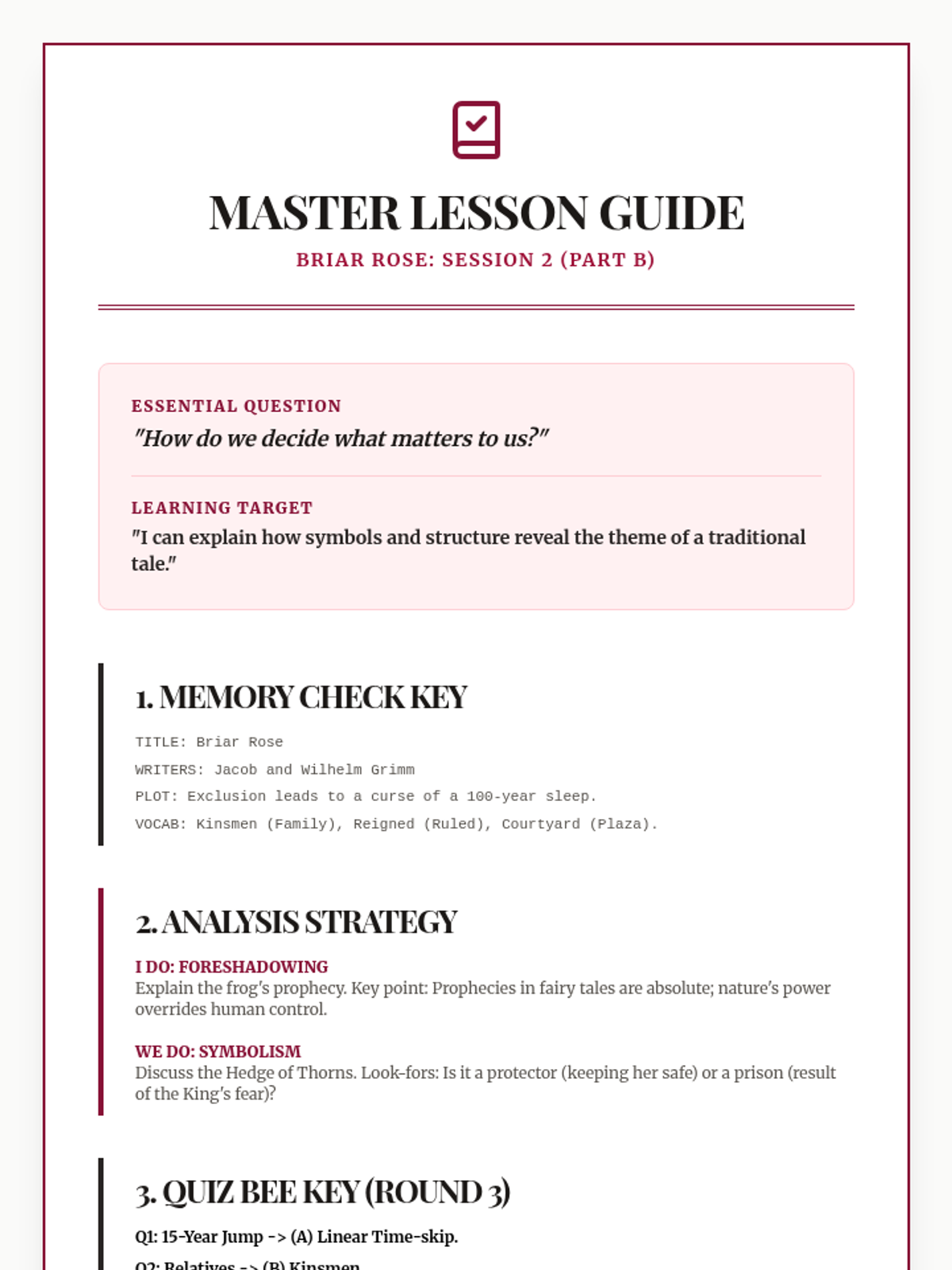
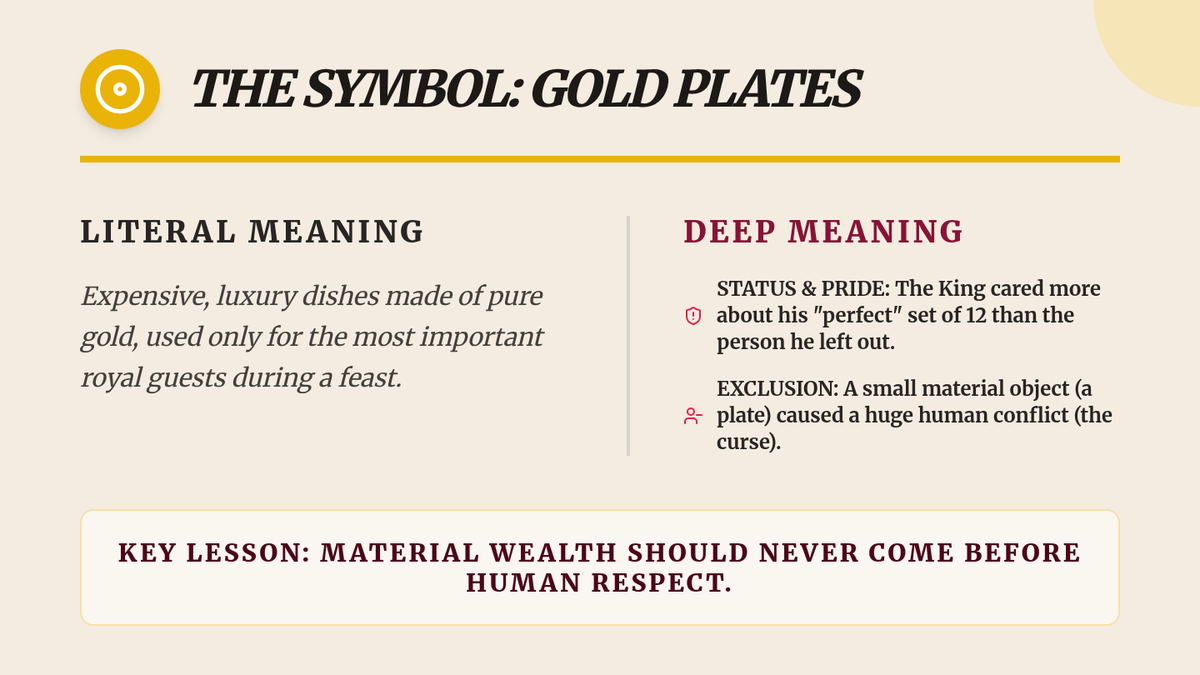
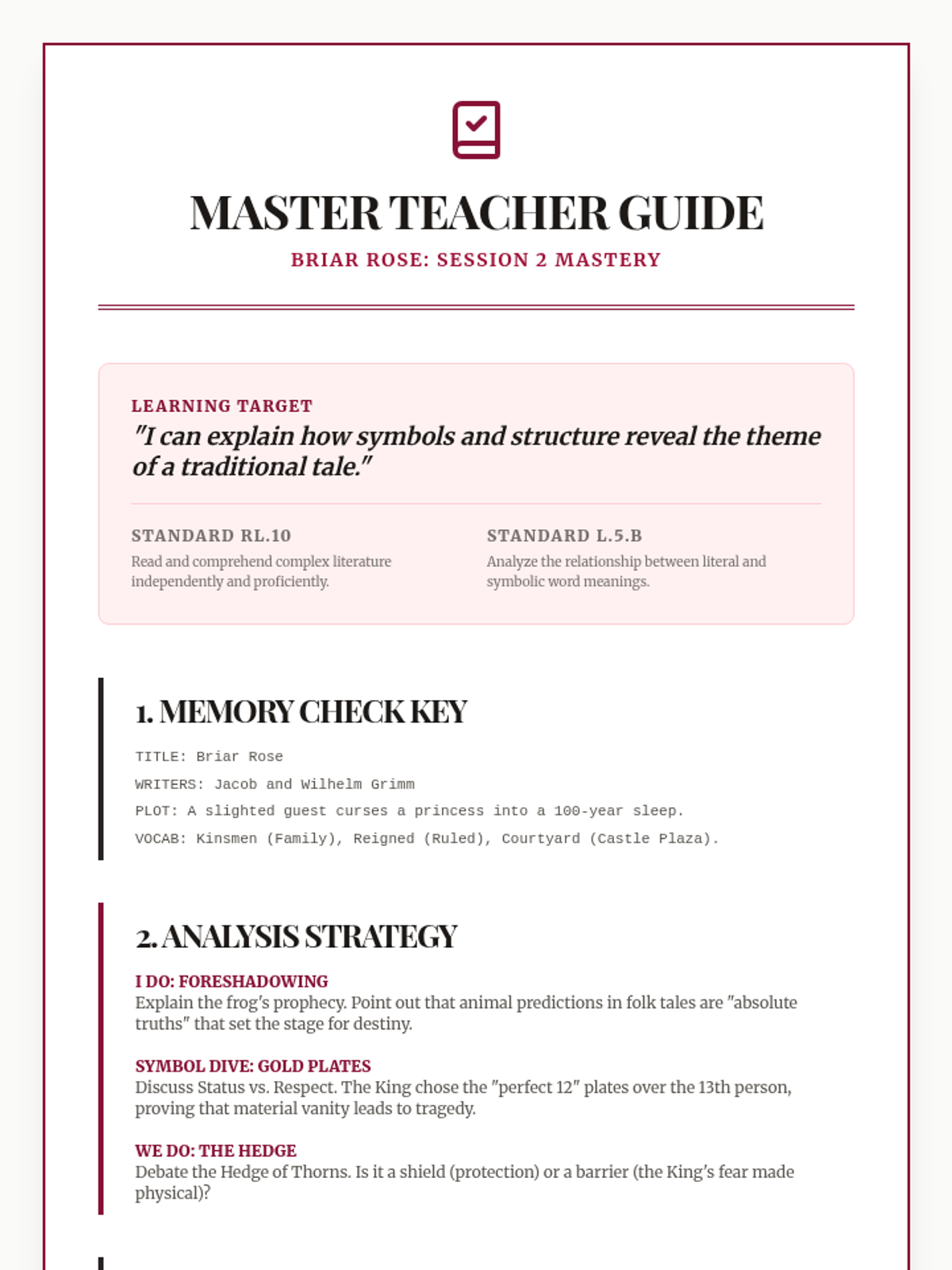
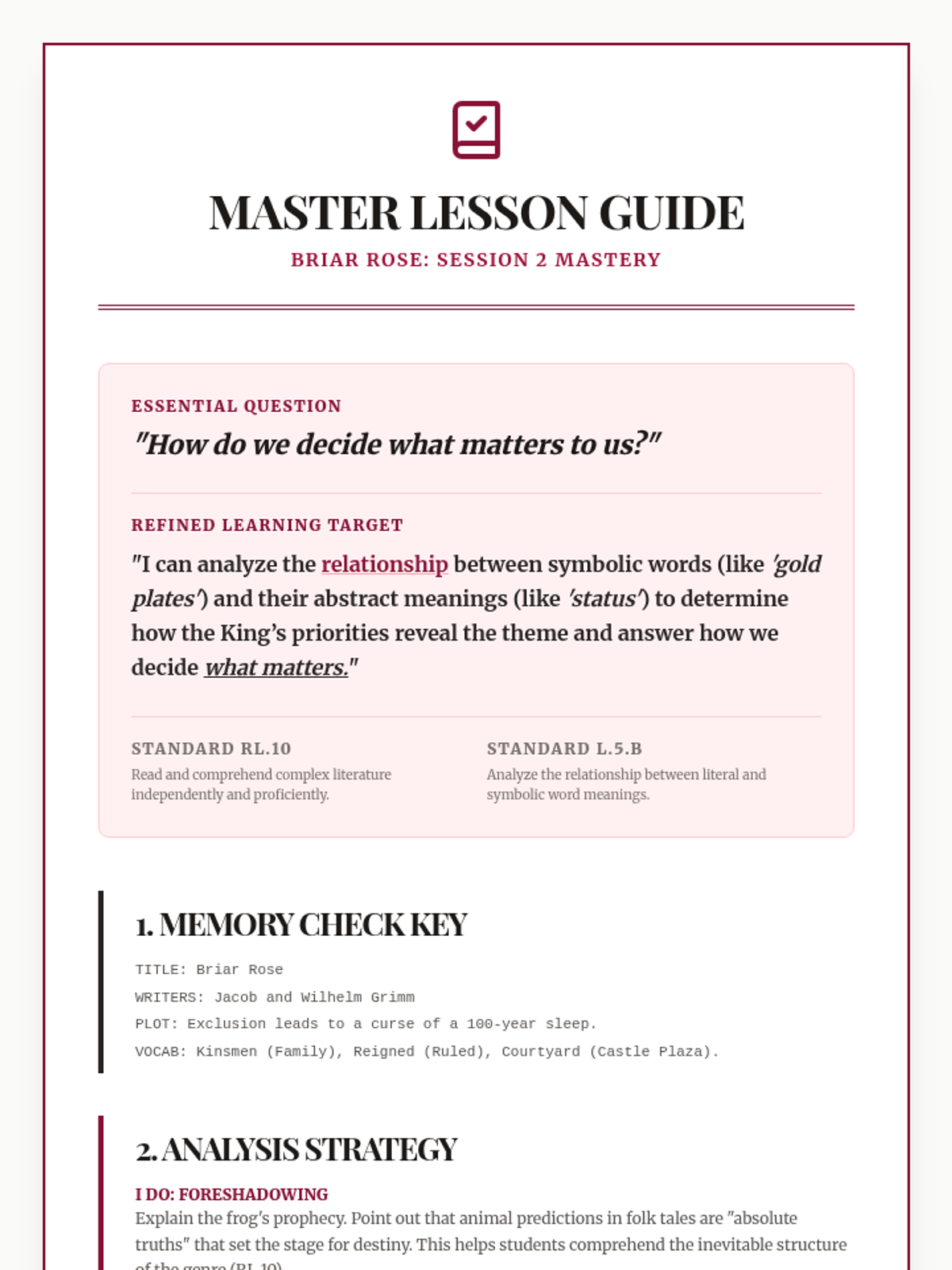
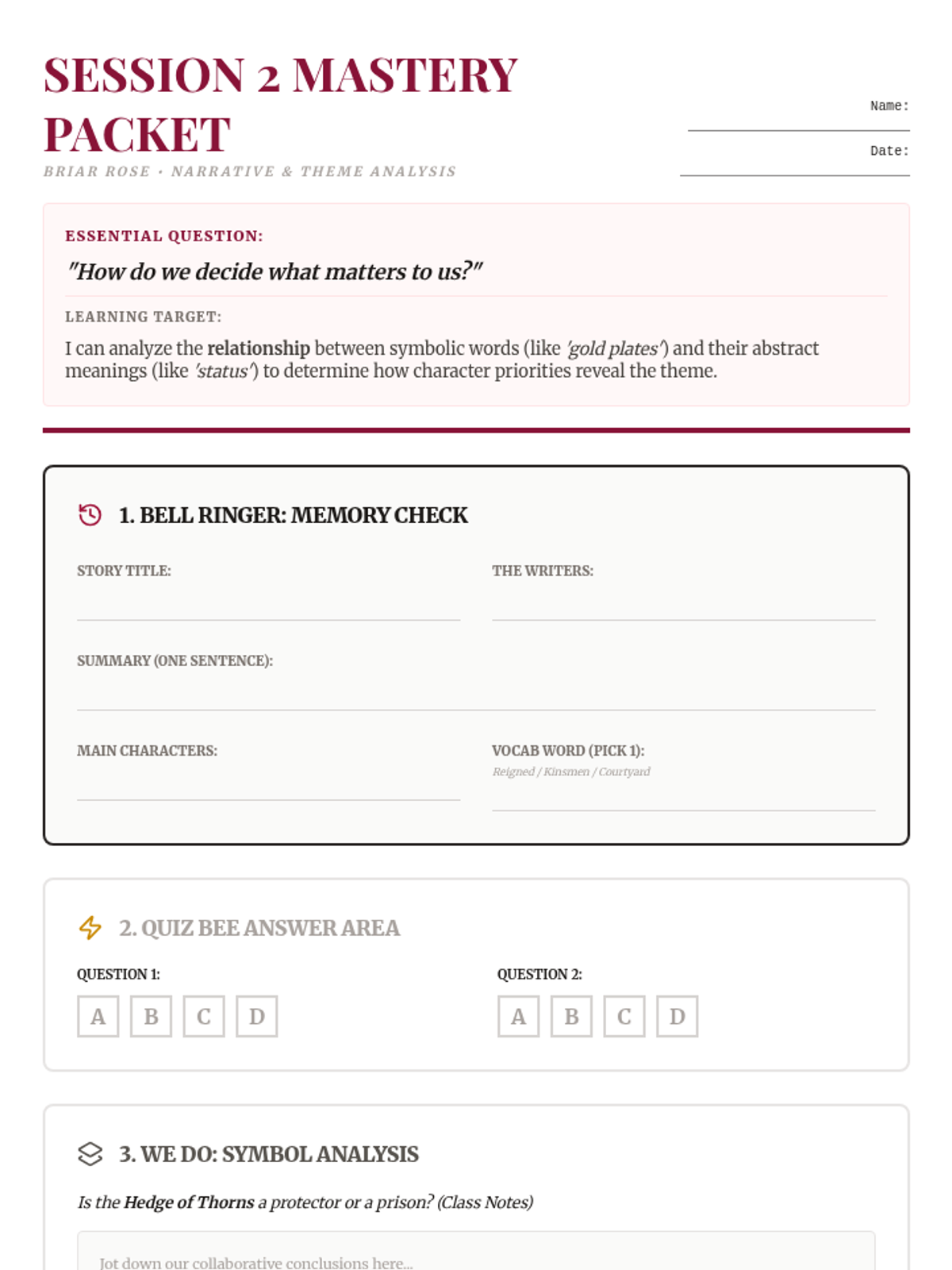
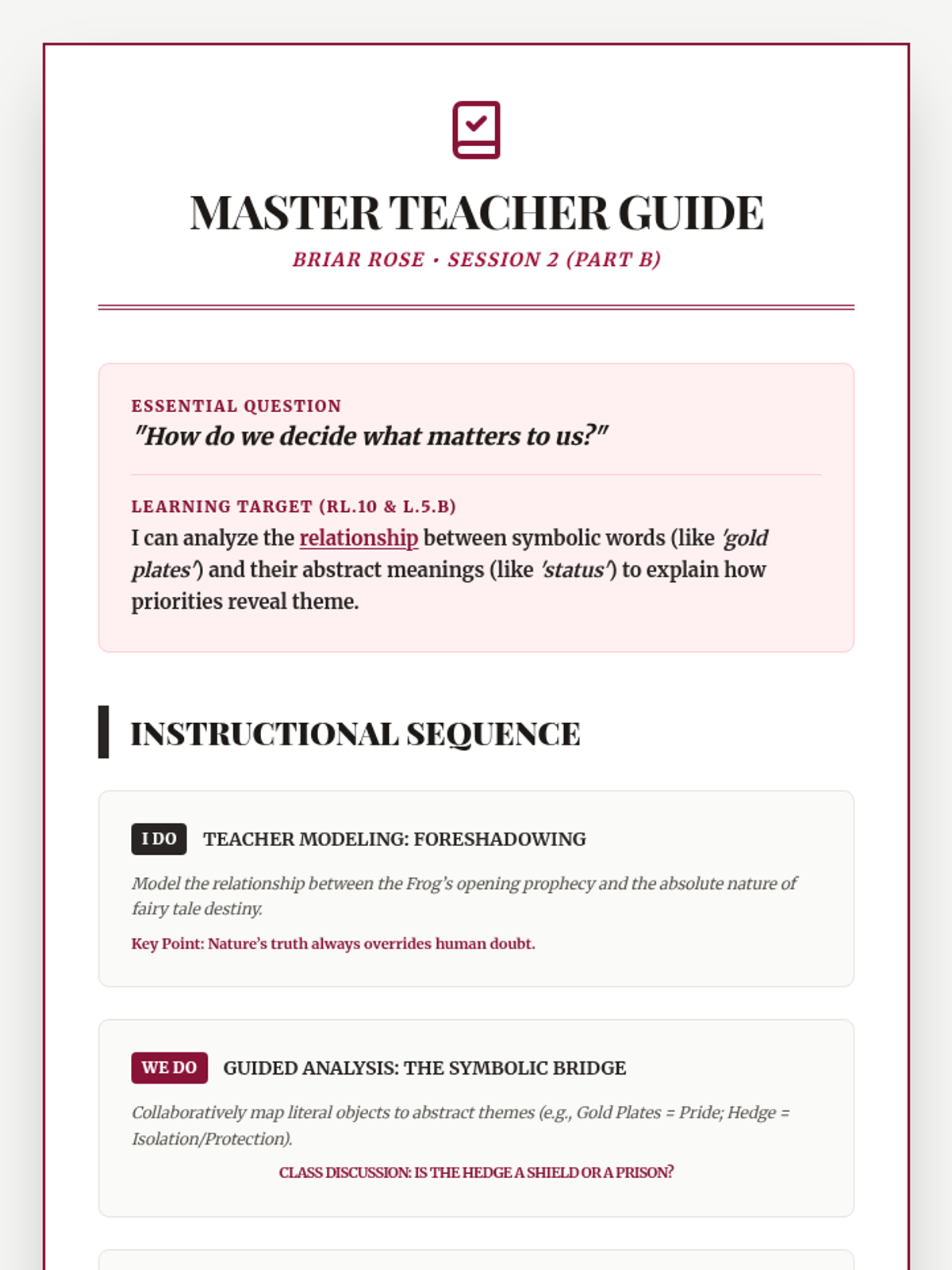
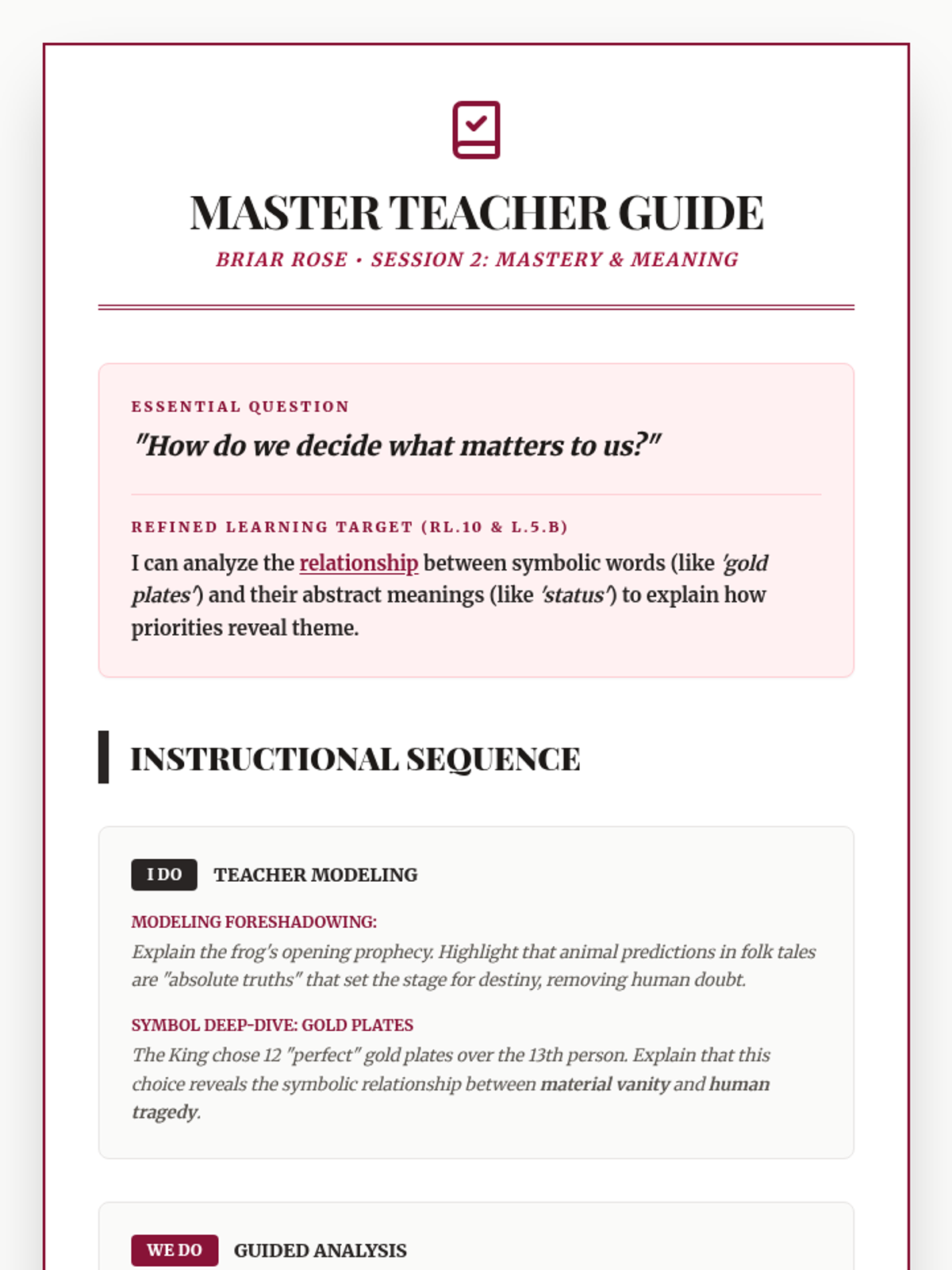
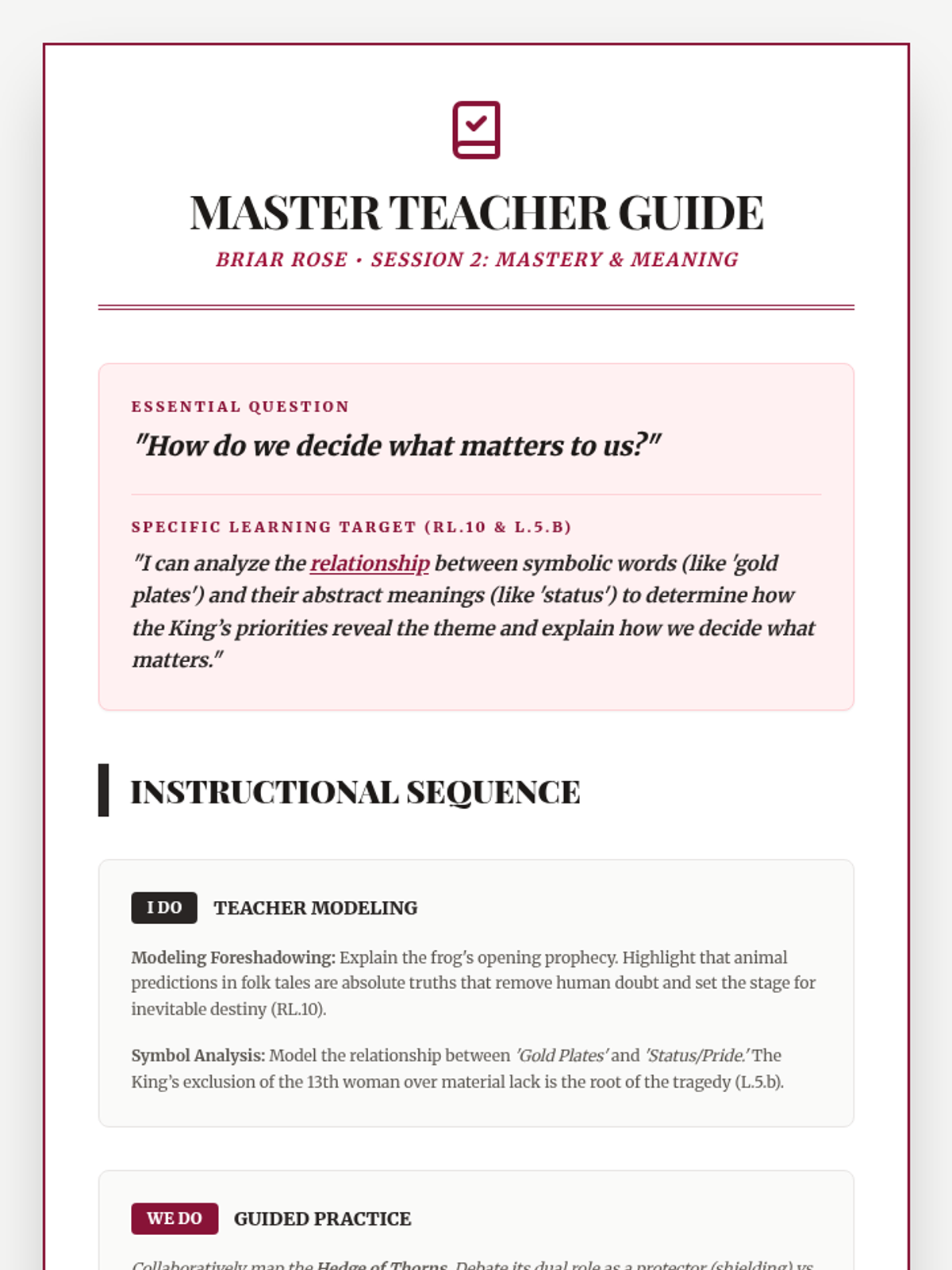
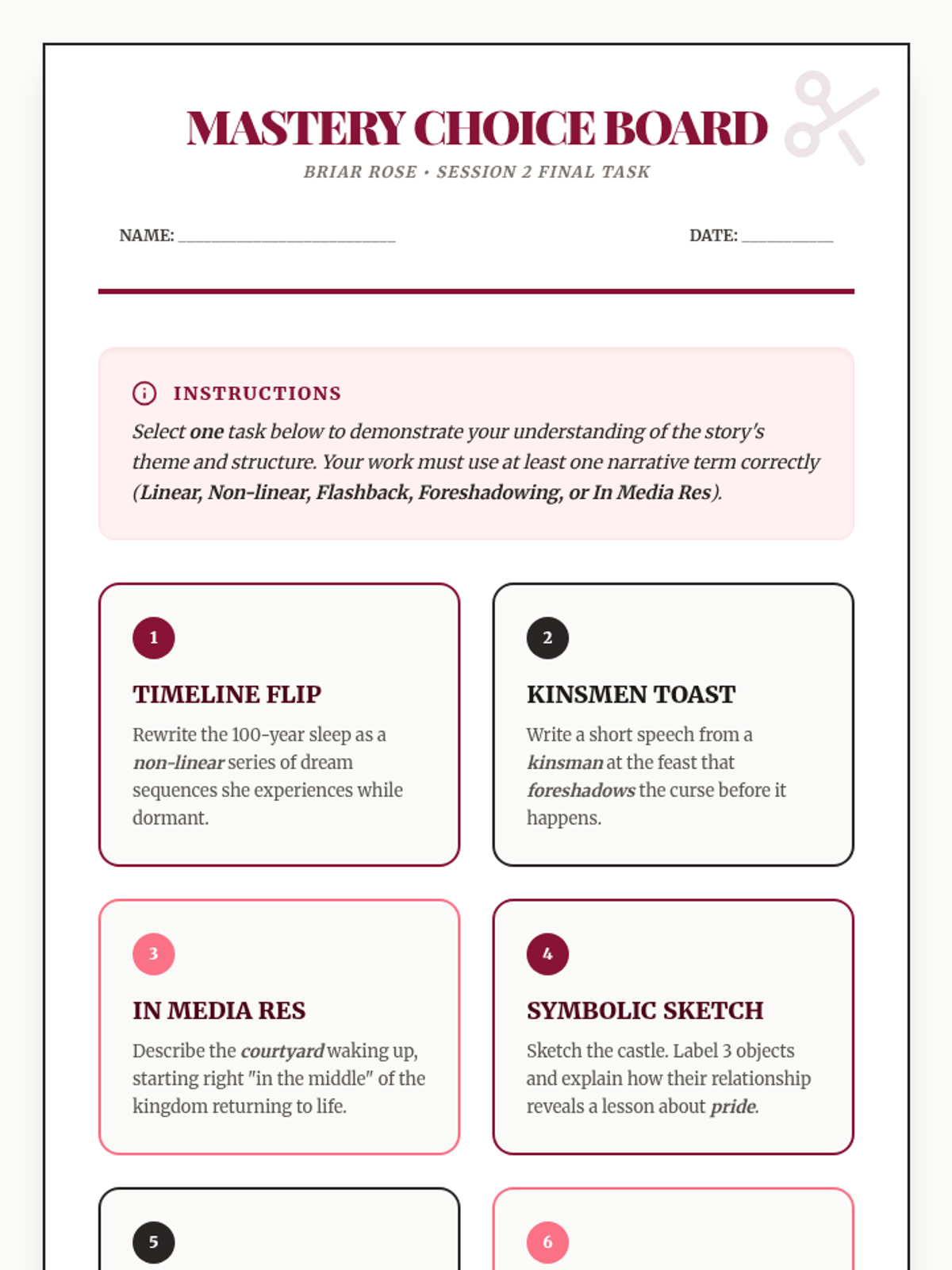
A quick exploration of theme and moral within the classic Brothers Grimm tale 'Briar Rose', featuring a focused bell ringer and exit ticket.
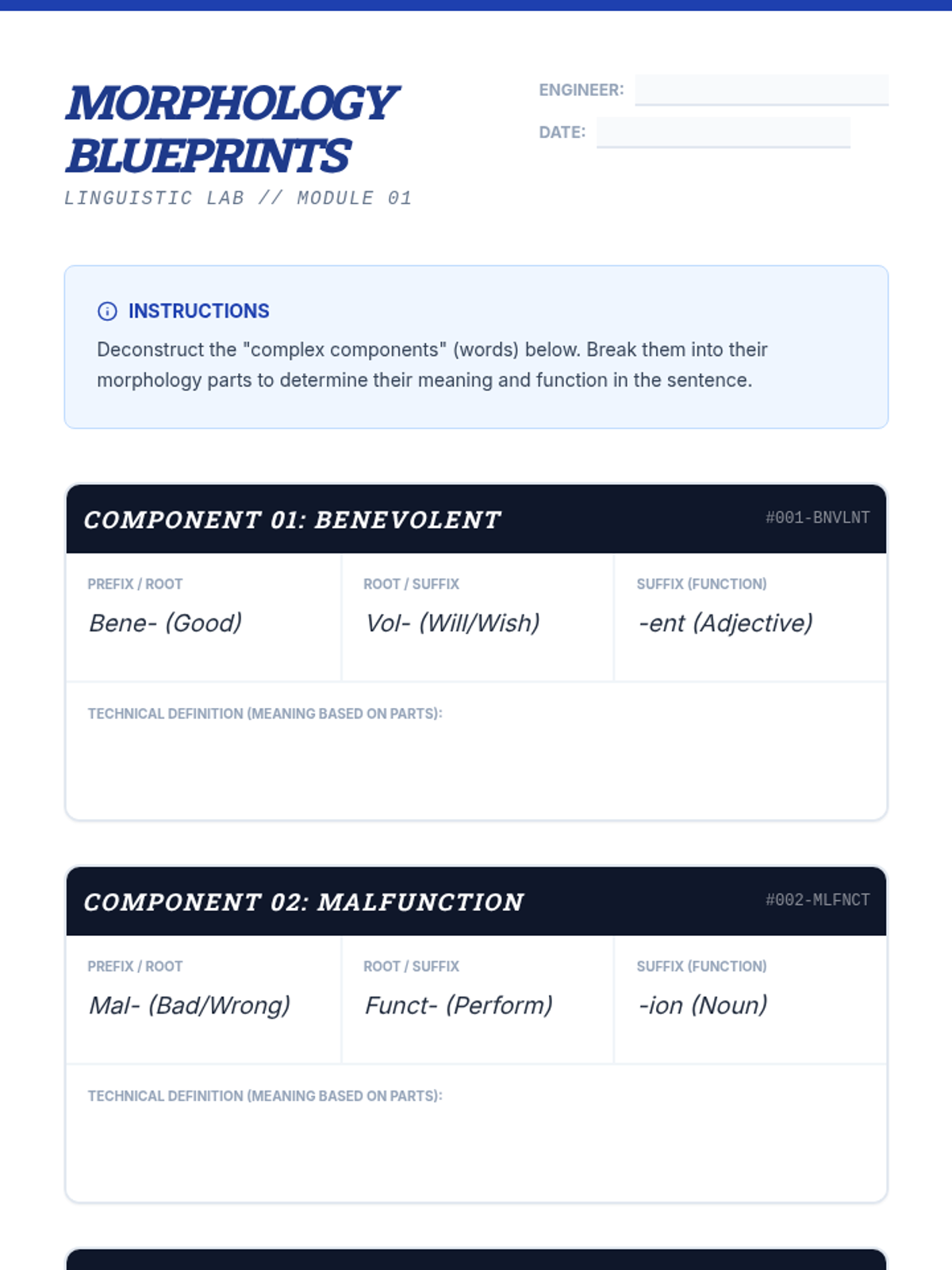
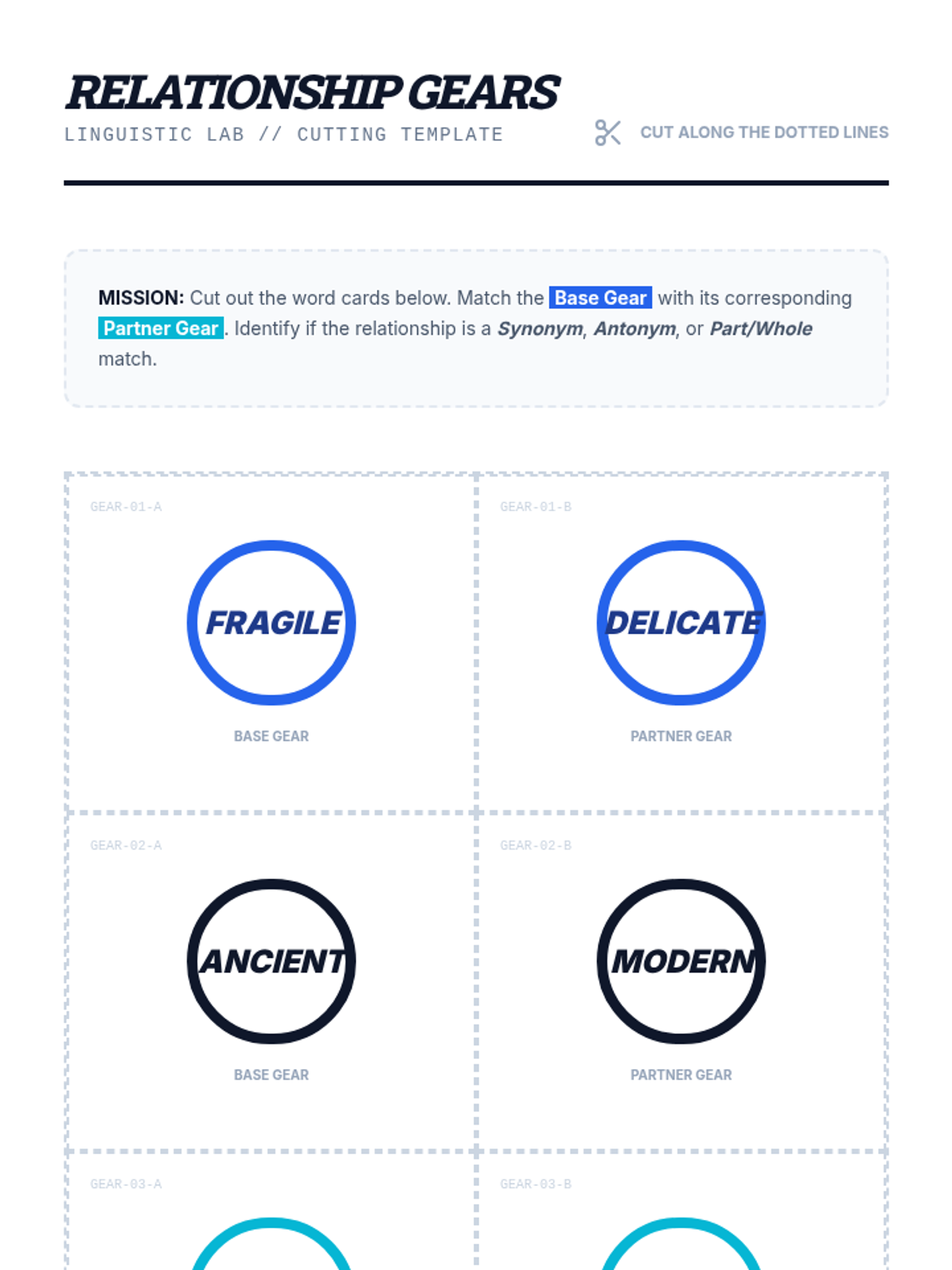
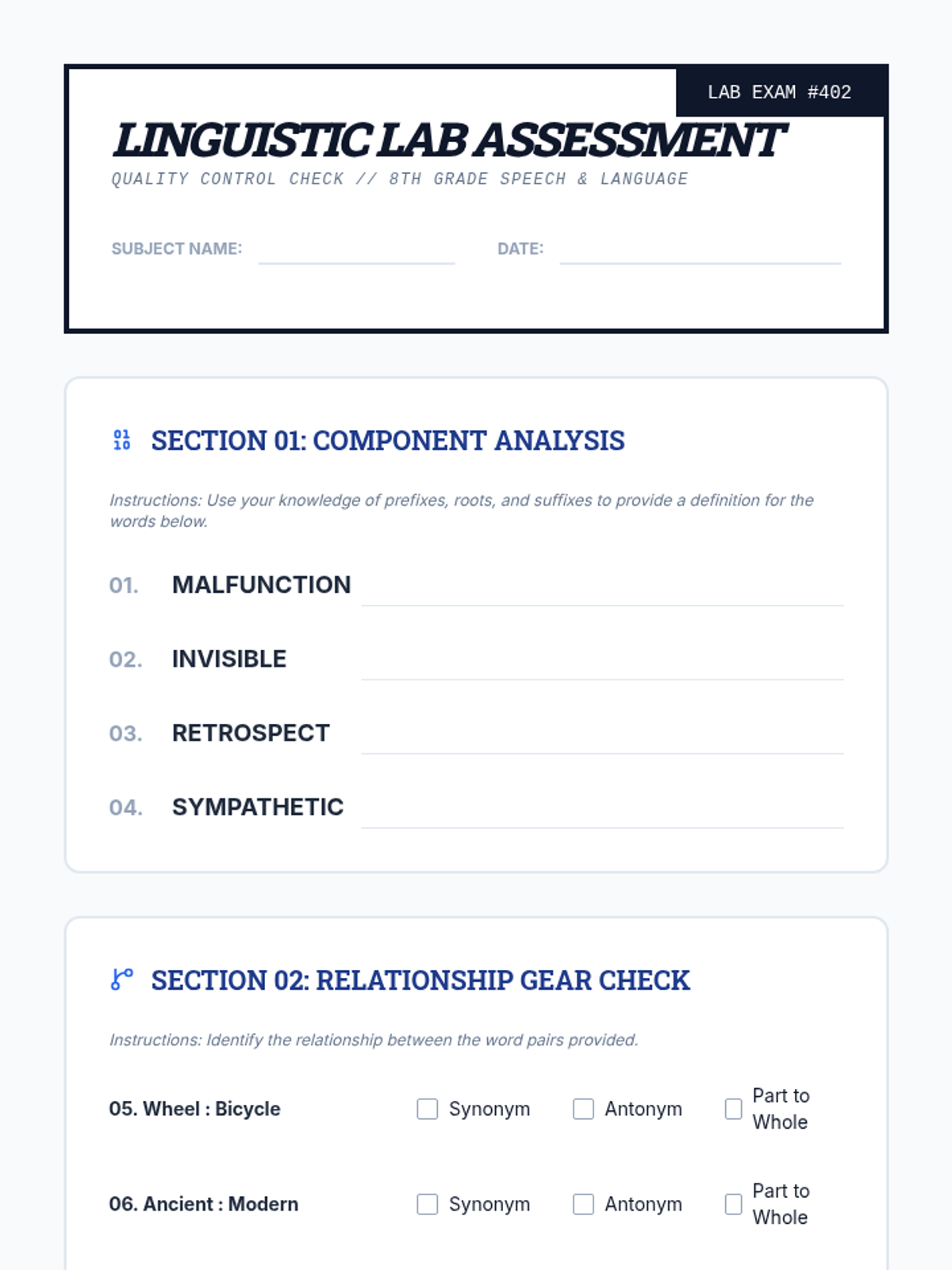
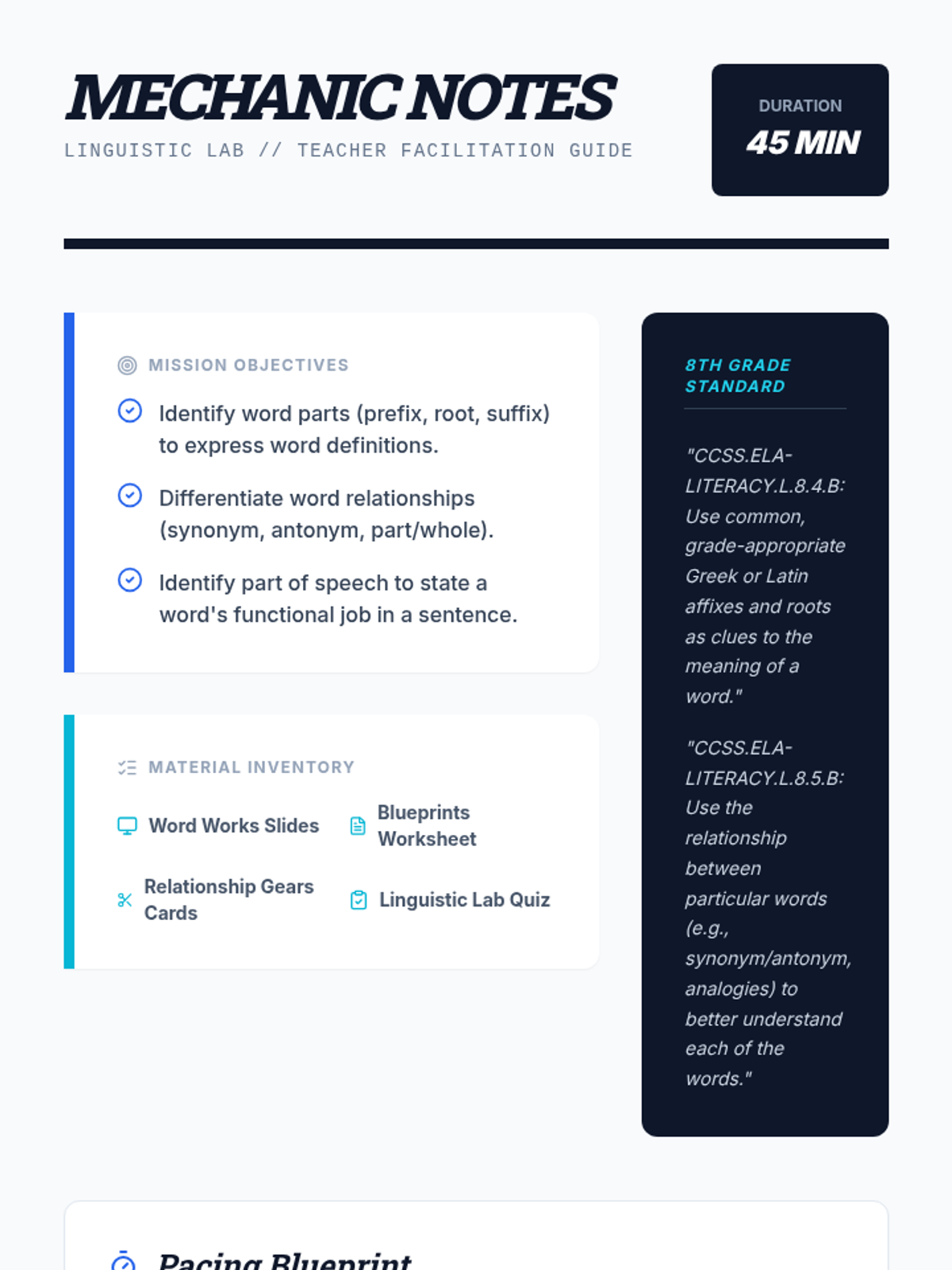
A comprehensive speech and language lesson for 8th graders focused on morphology, word relationships, and parts of speech using a 'Linguistic Lab' mechanical theme.
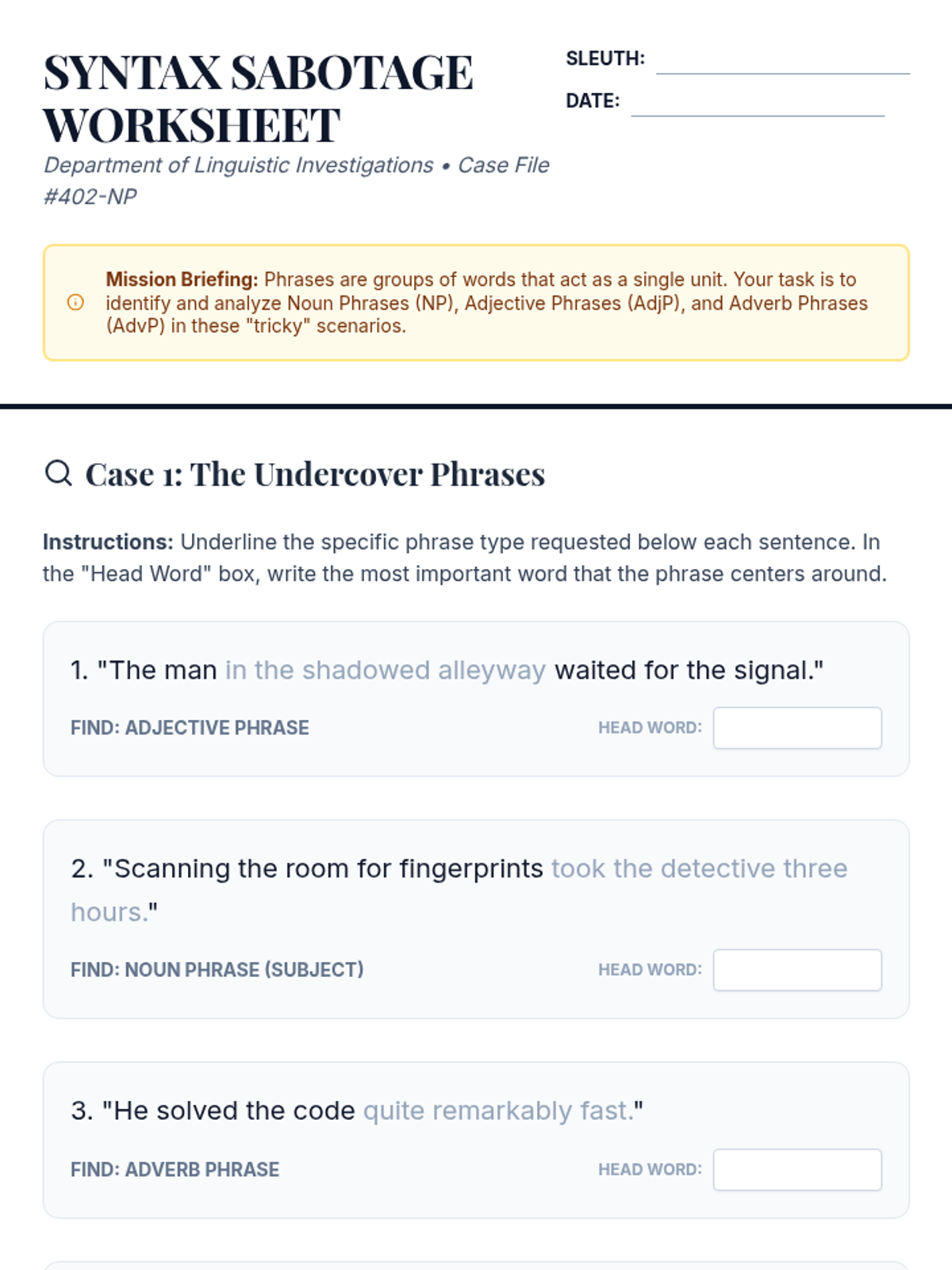
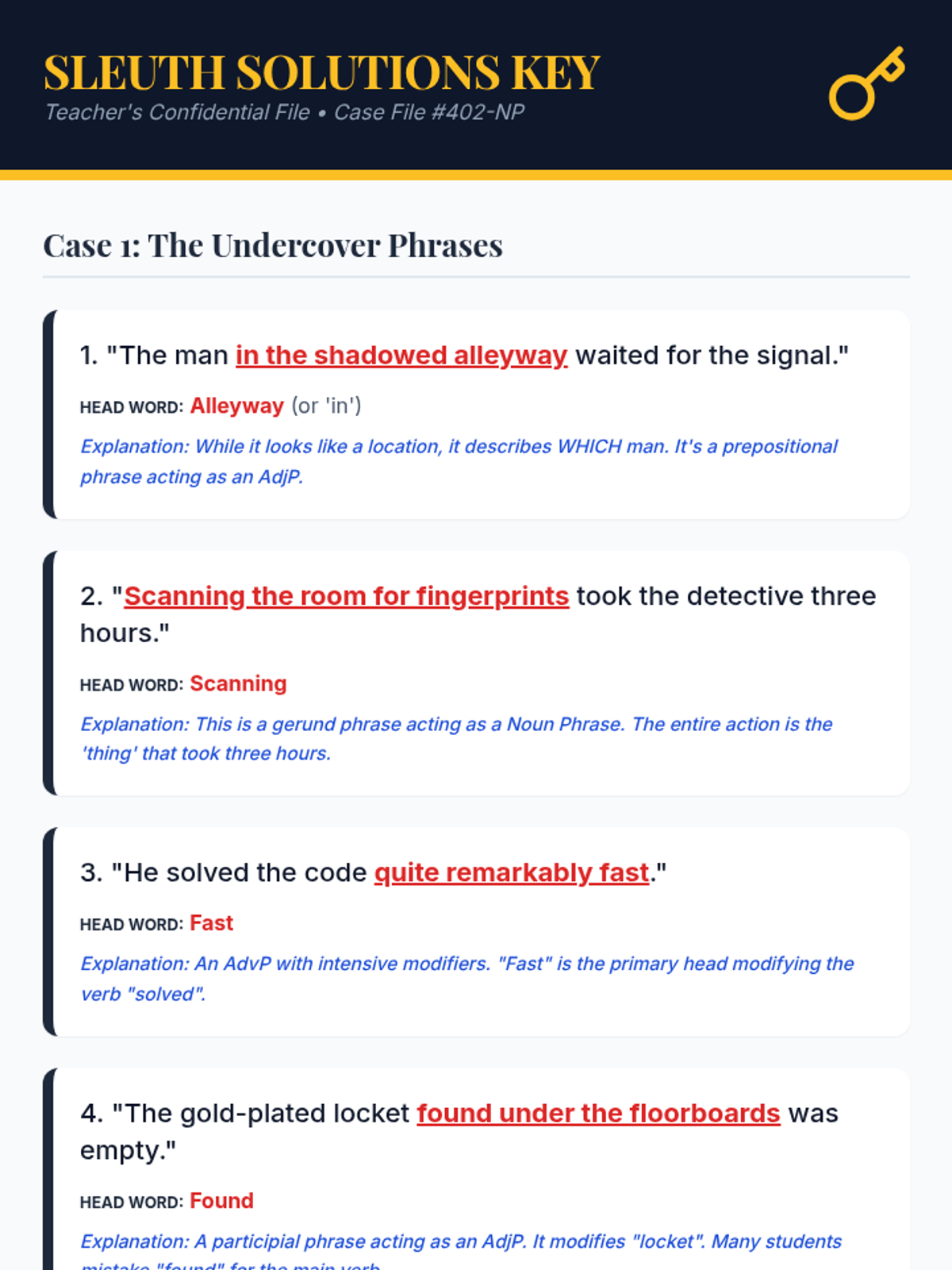
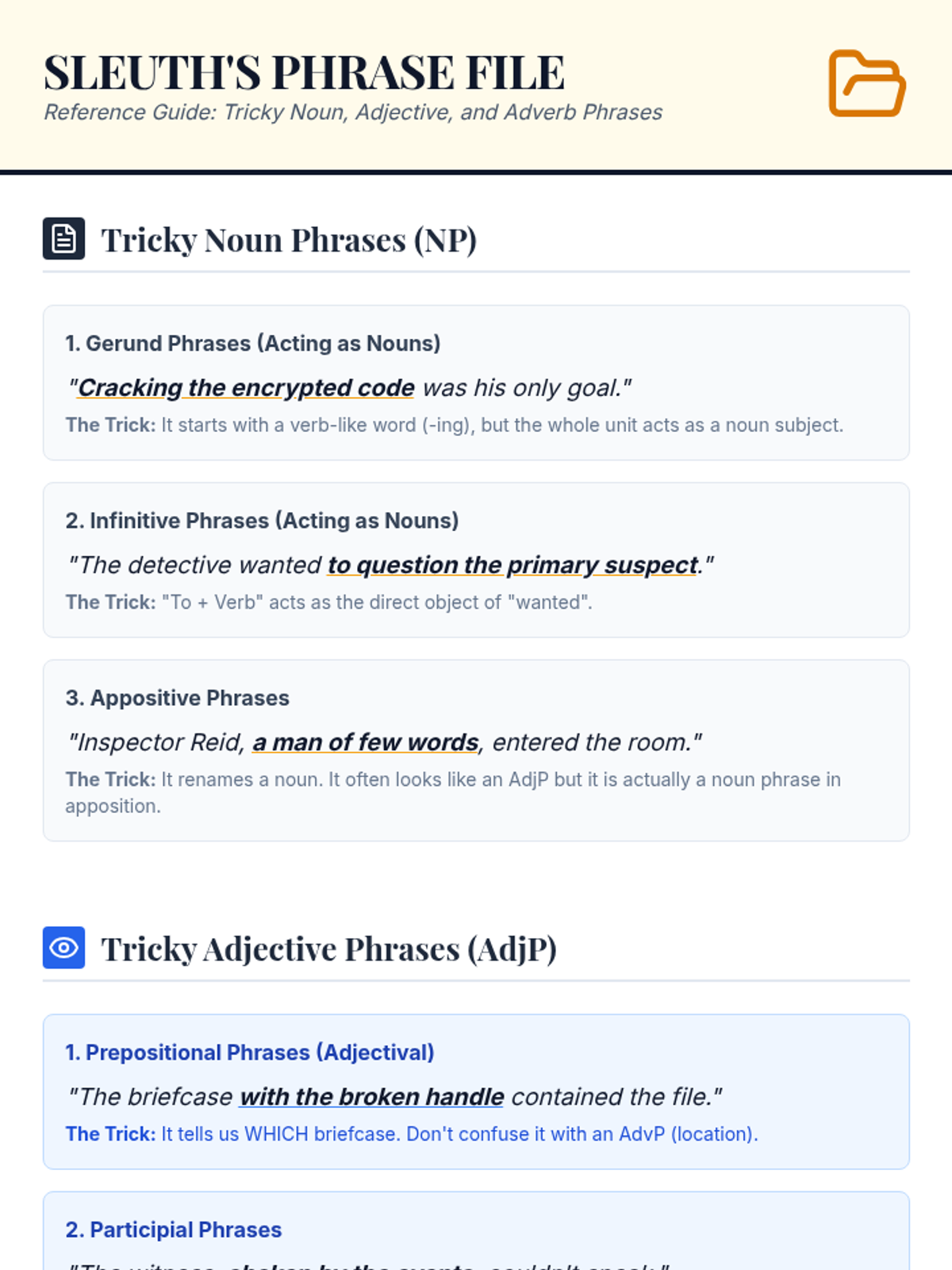
A grammar lesson focused on identifying and using noun, adjective, and adverb phrases in complex and 'tricky' contexts. Students act as 'Syntax Sleuths' to solve linguistic puzzles.
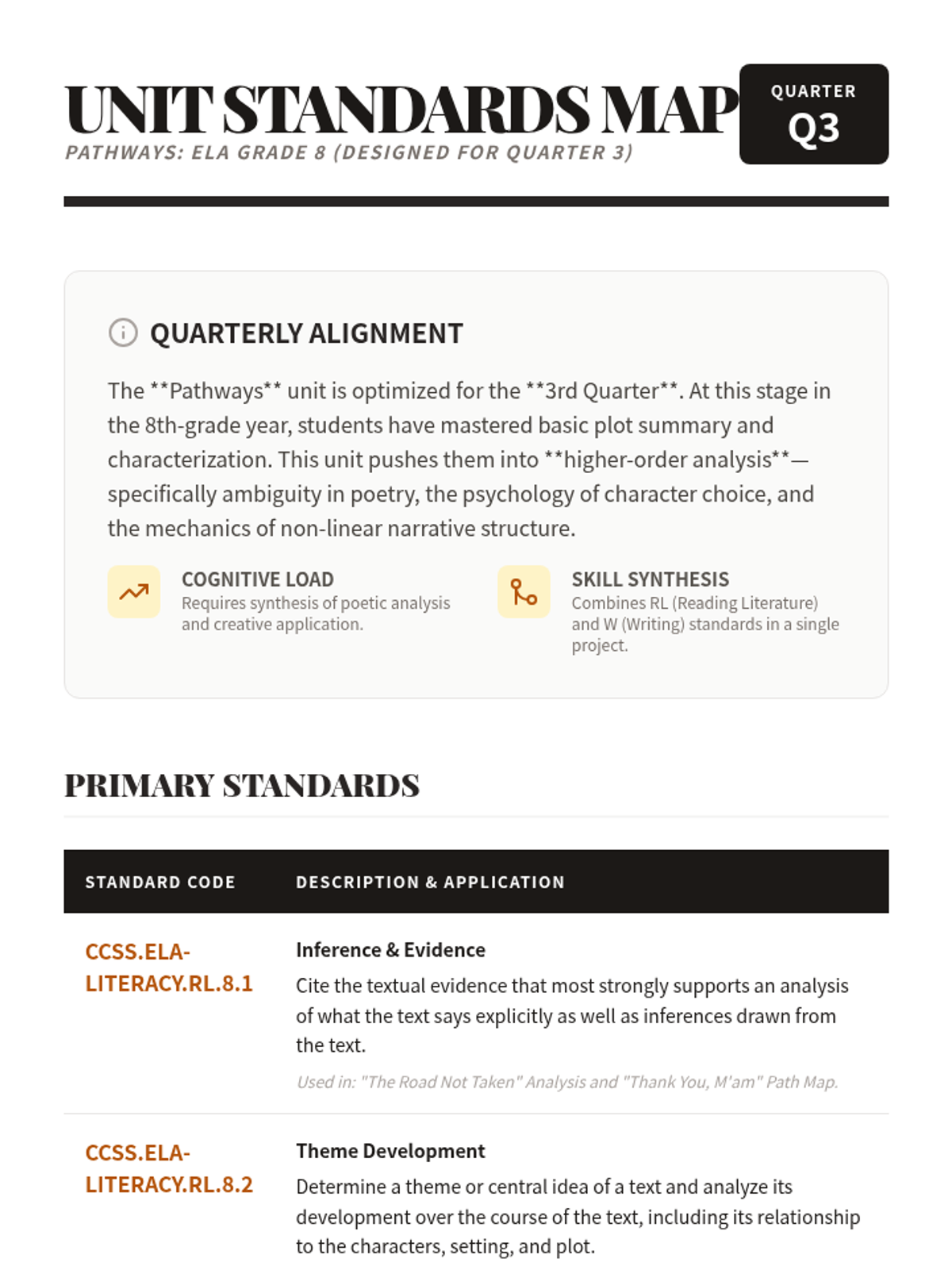
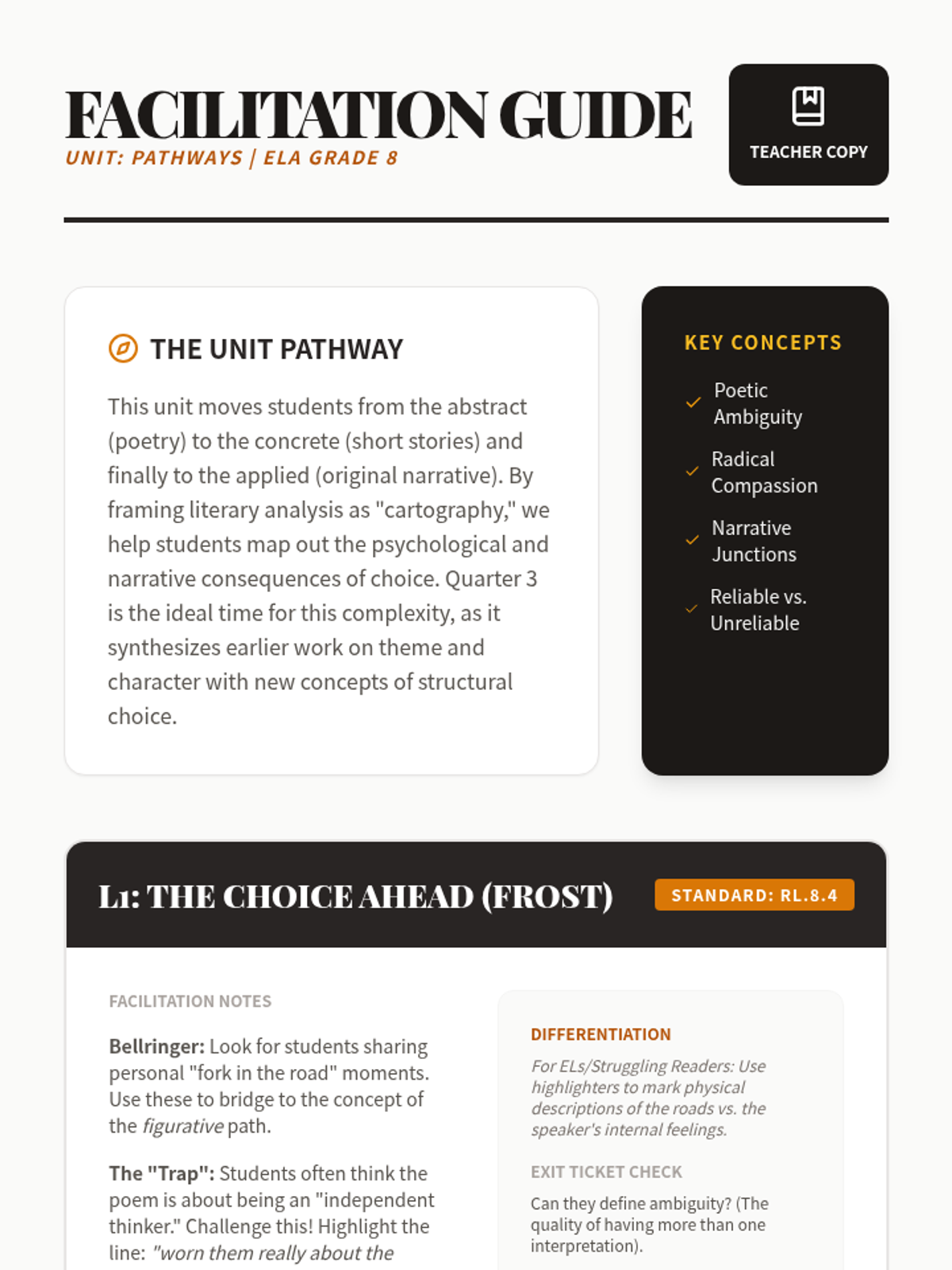
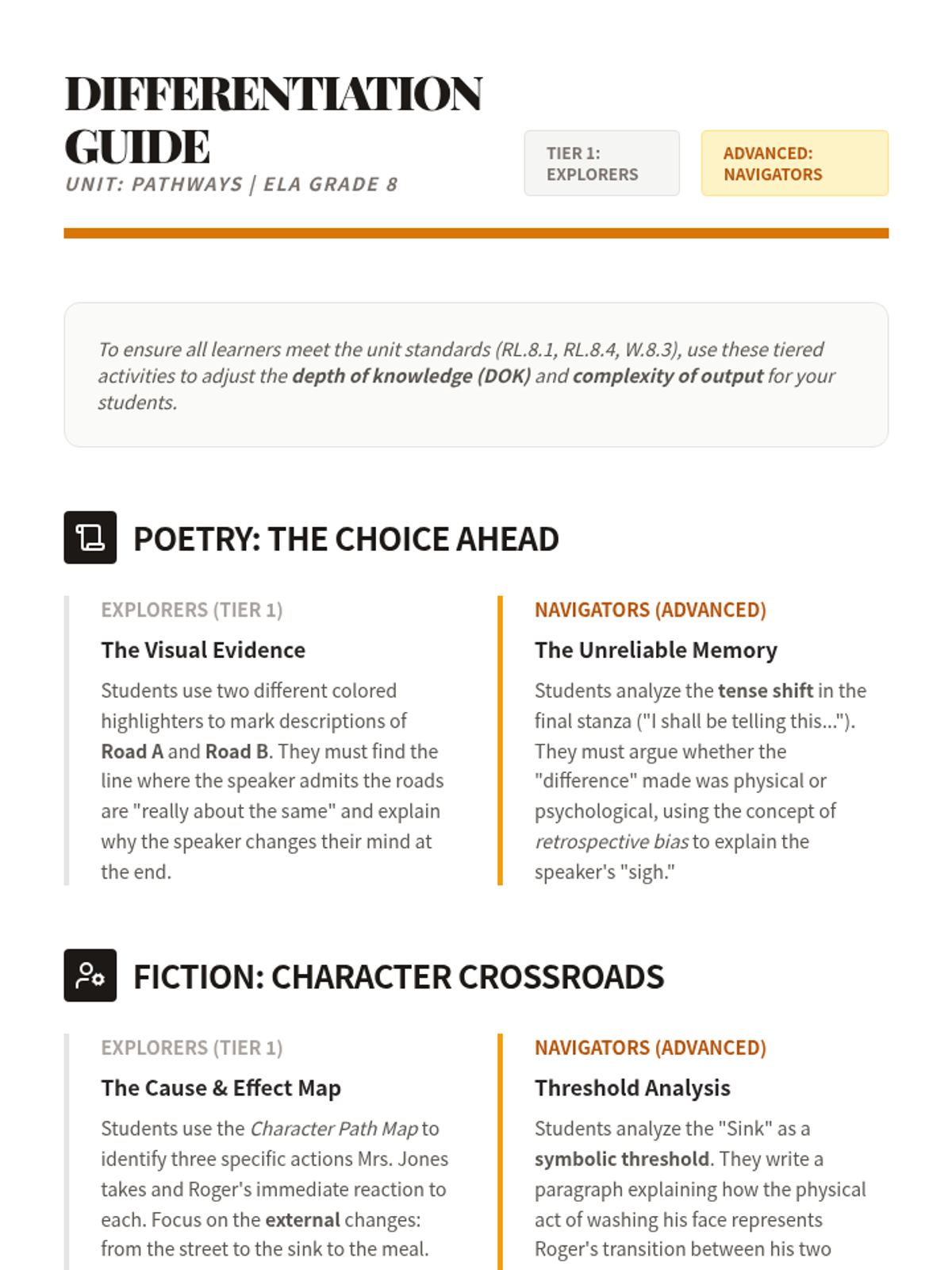
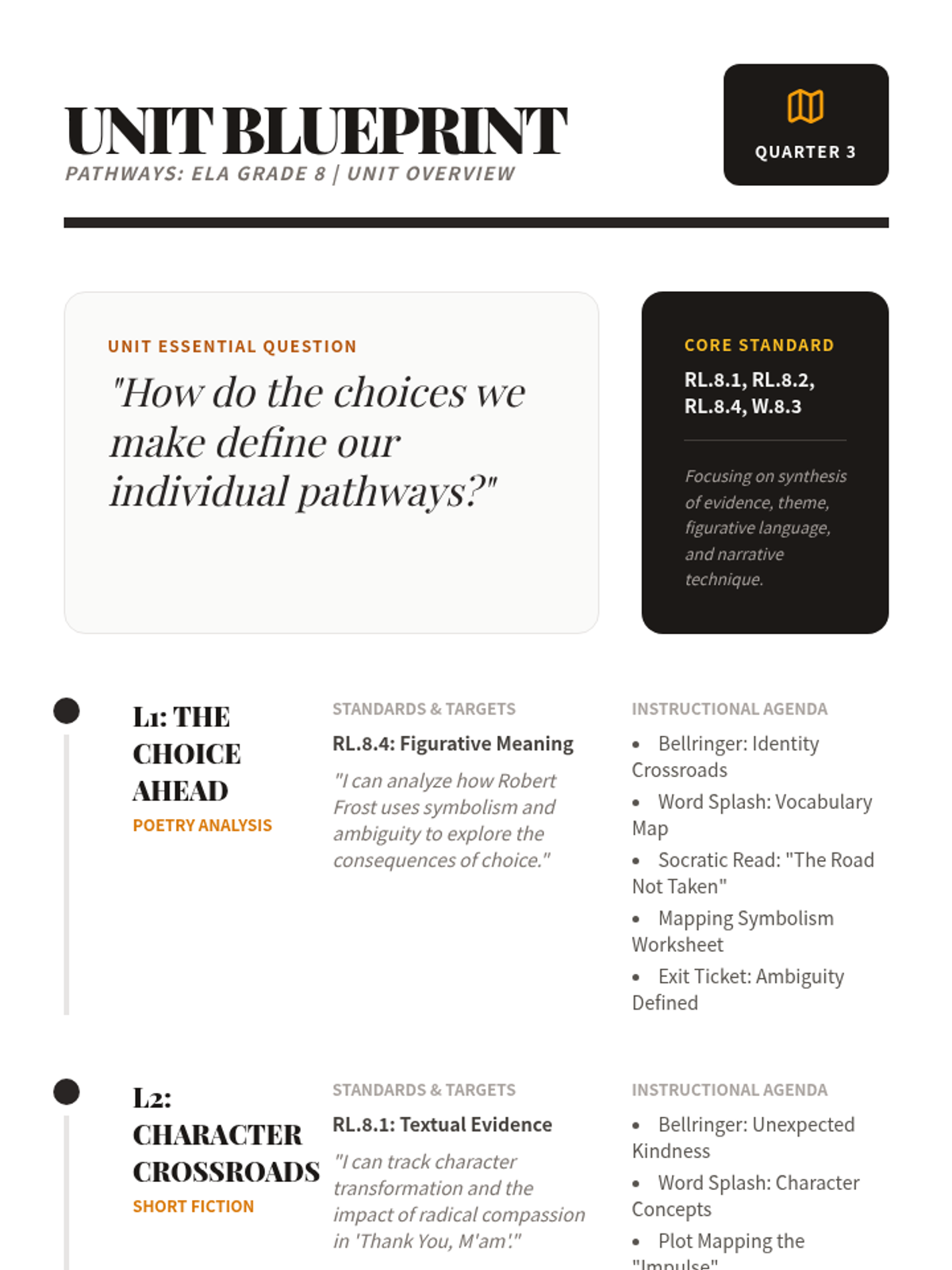
Teacher-facing resources for standards alignment, quarterly planning, and unit overview.
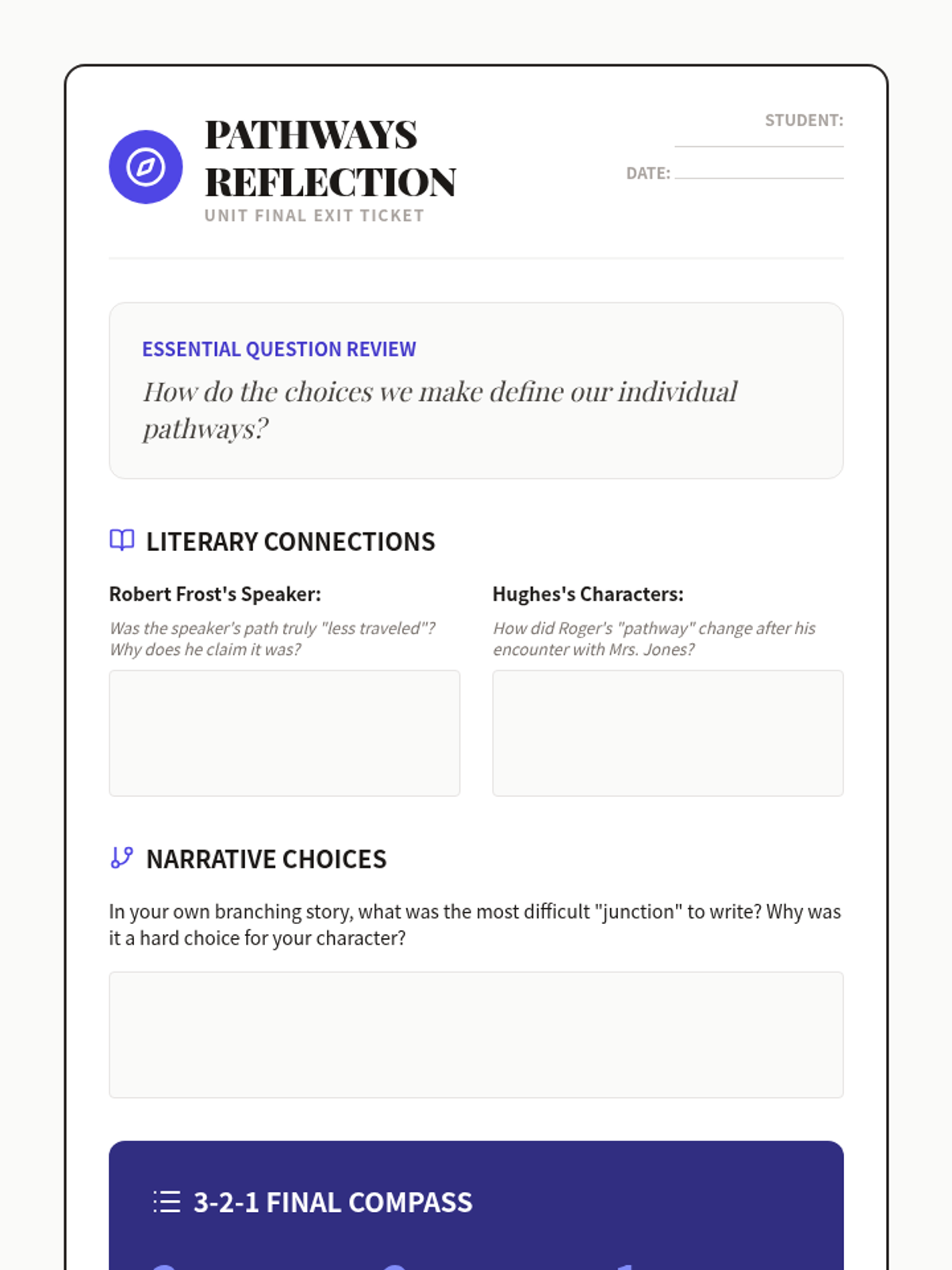
Exploring how different perspectives shape the 'path' of a story. Students compare multiple points of view on the same event.
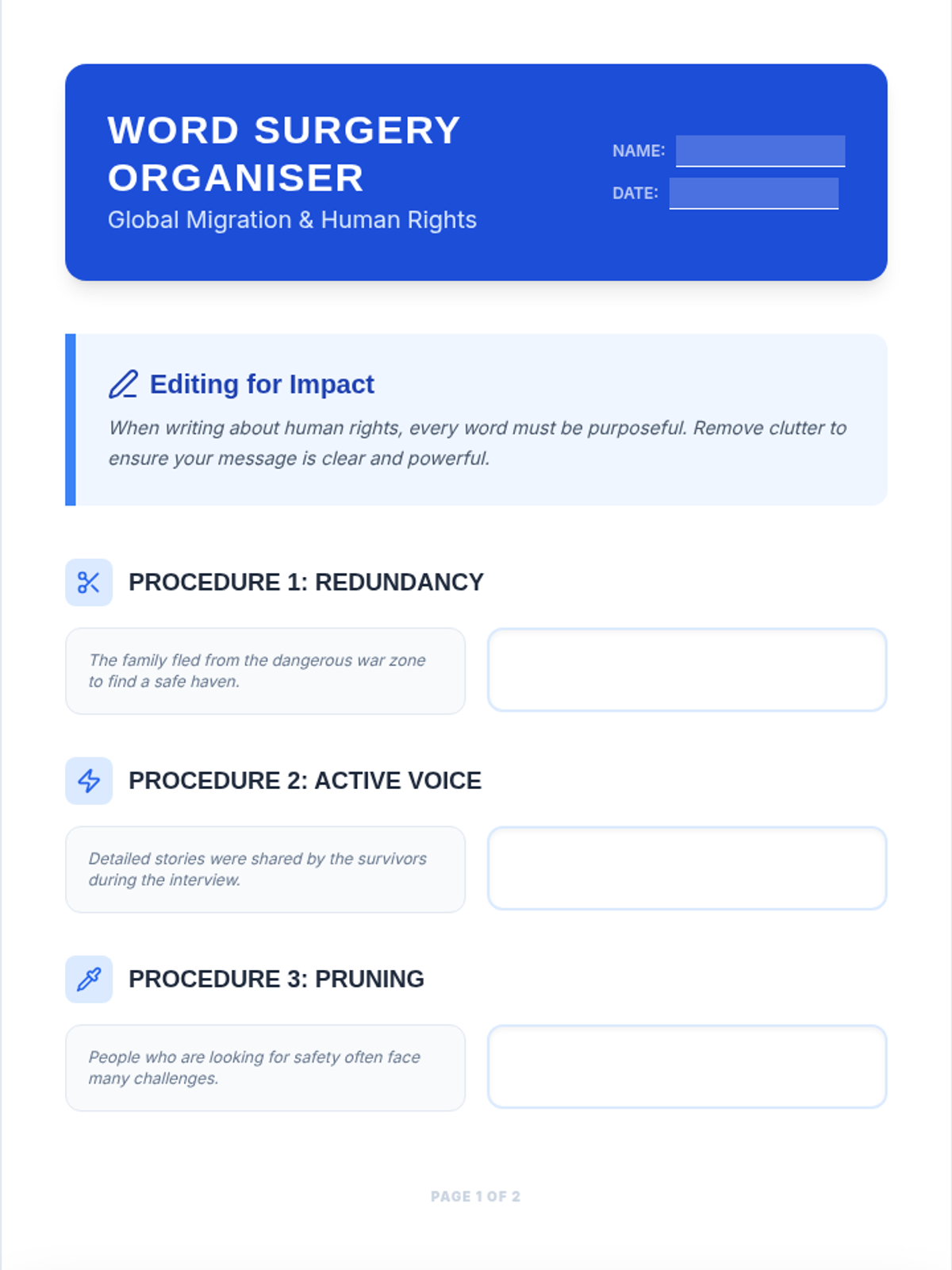
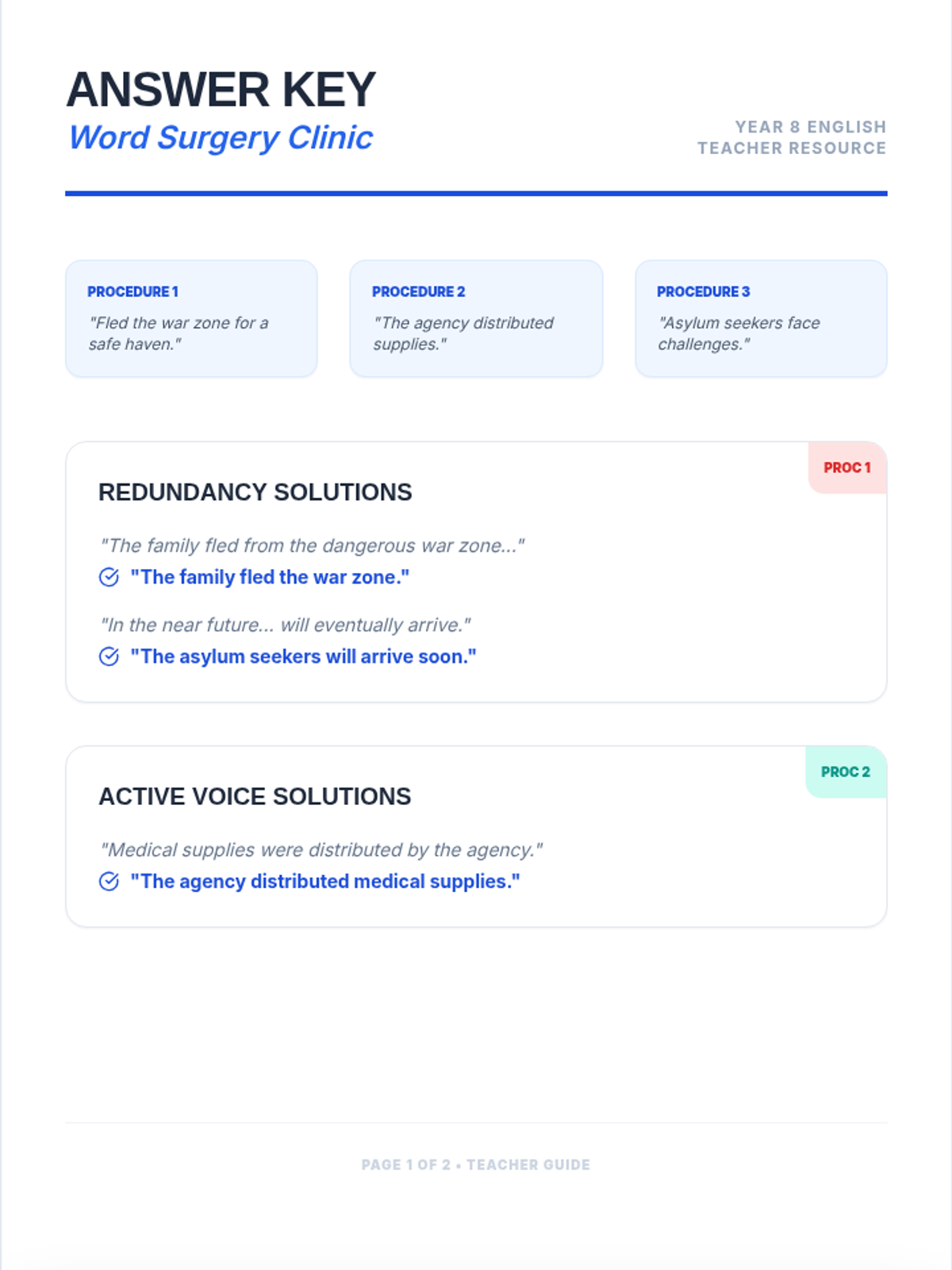
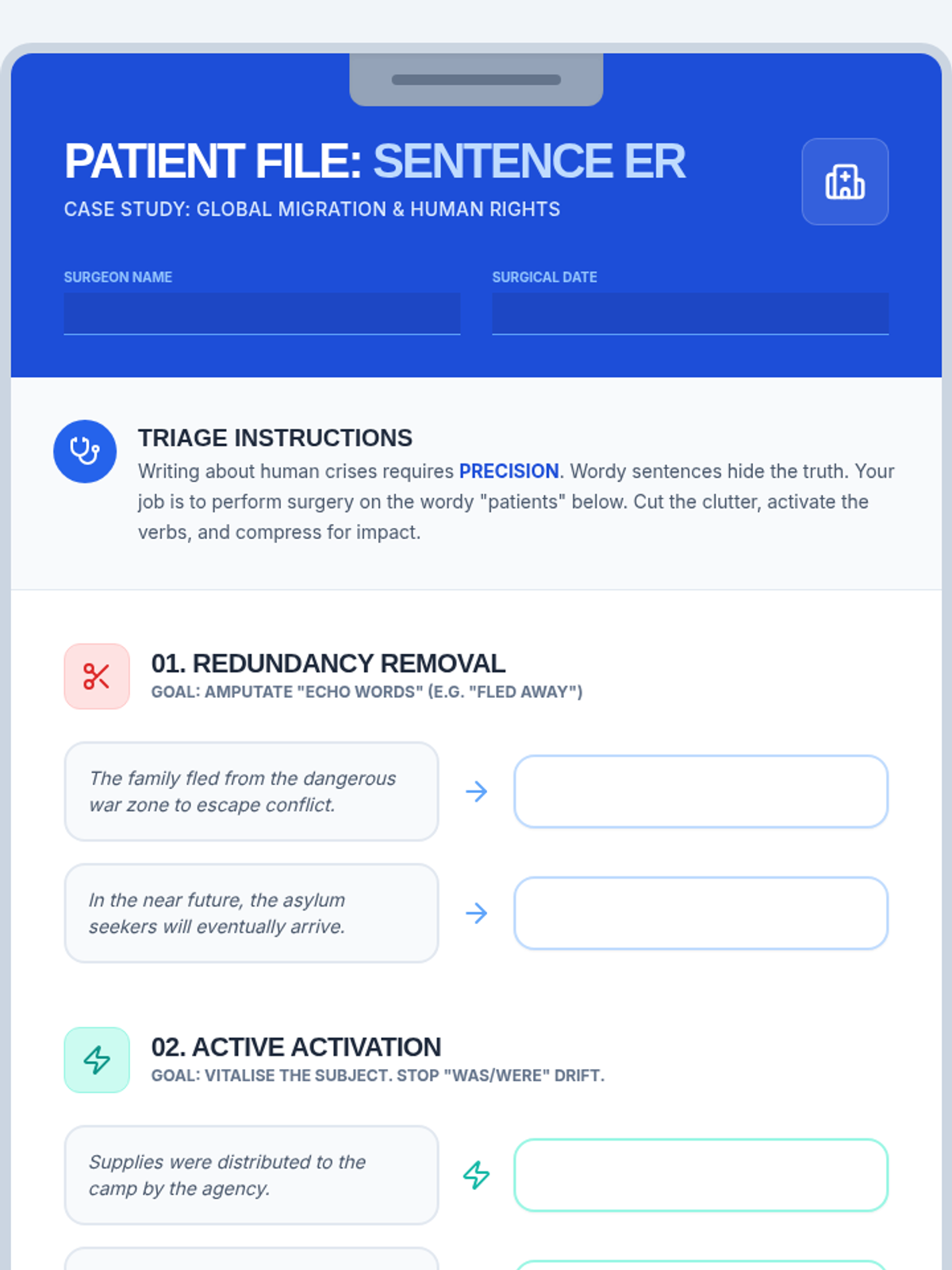
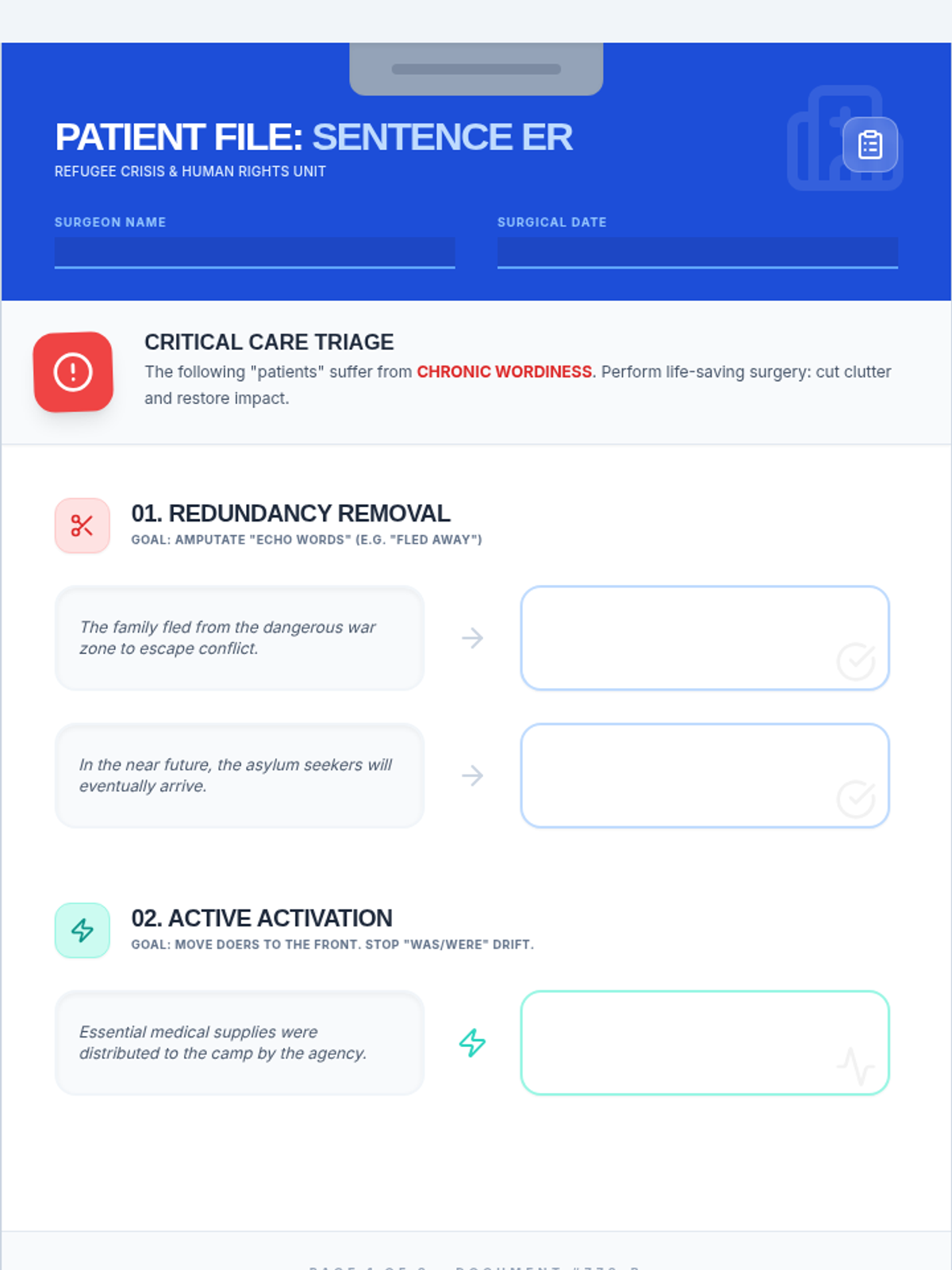
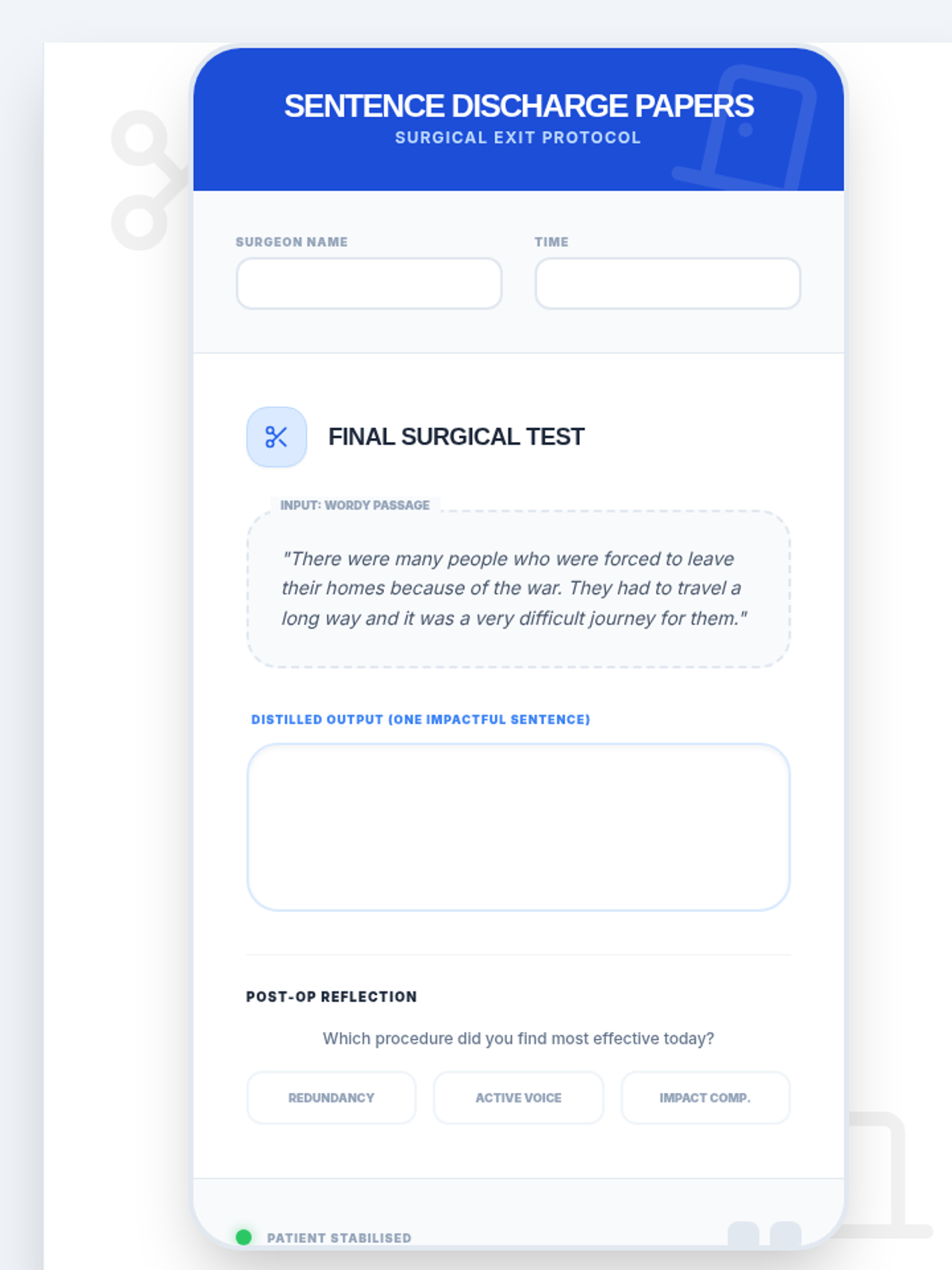
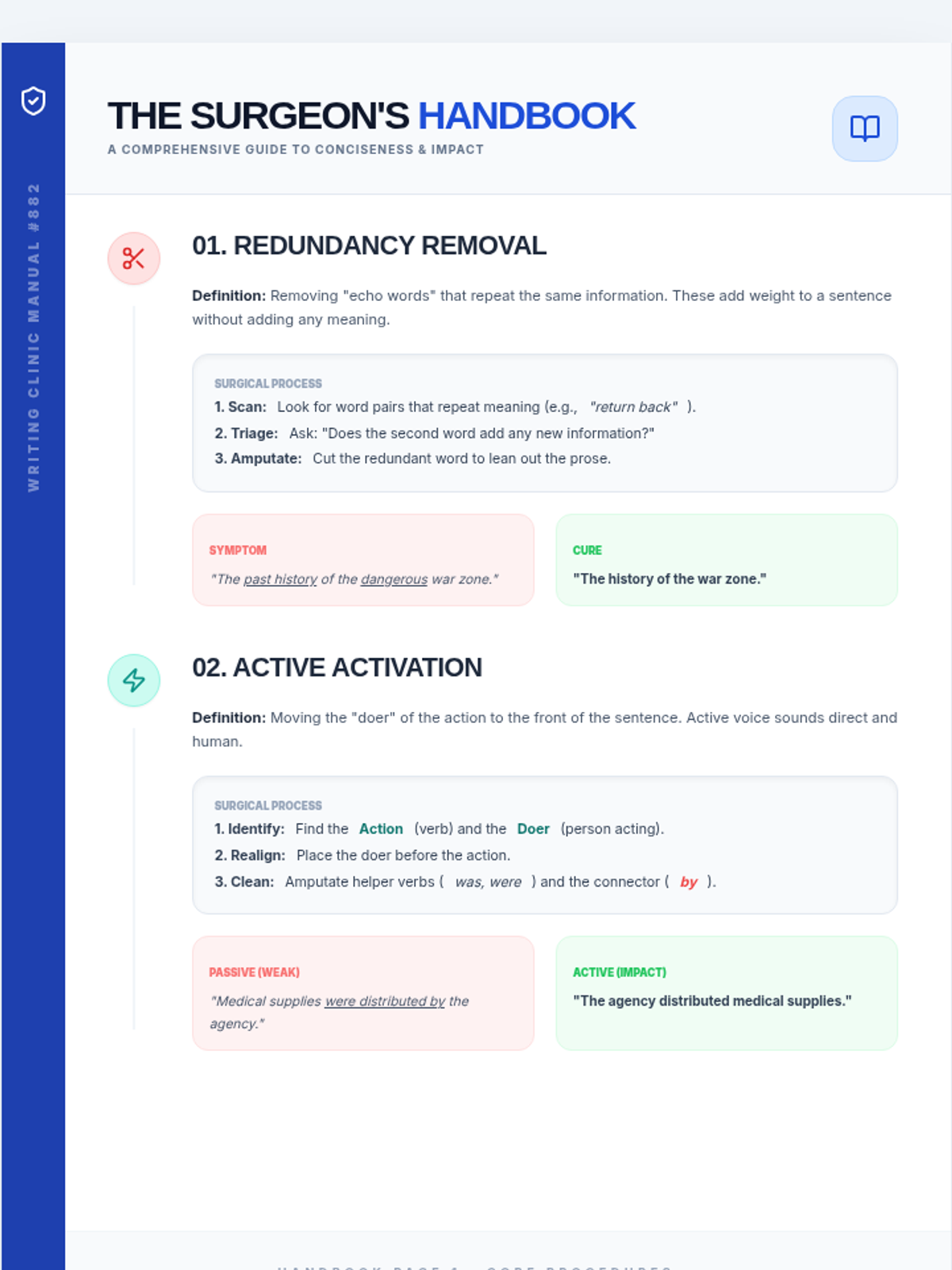
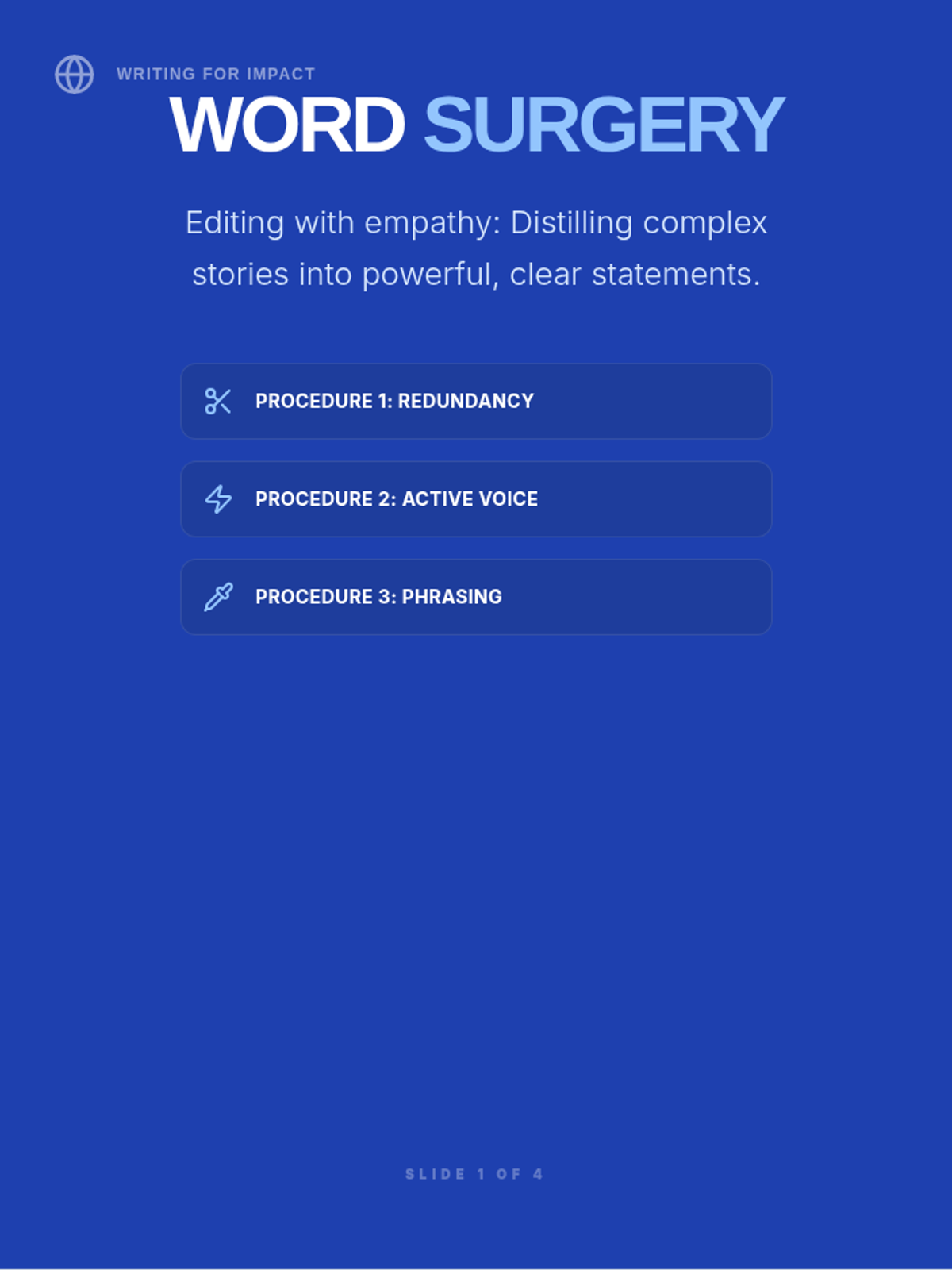
A lesson for Year 8 students on achieving conciseness by removing redundancy, converting passive voice to active, and pruning prepositional phrases.
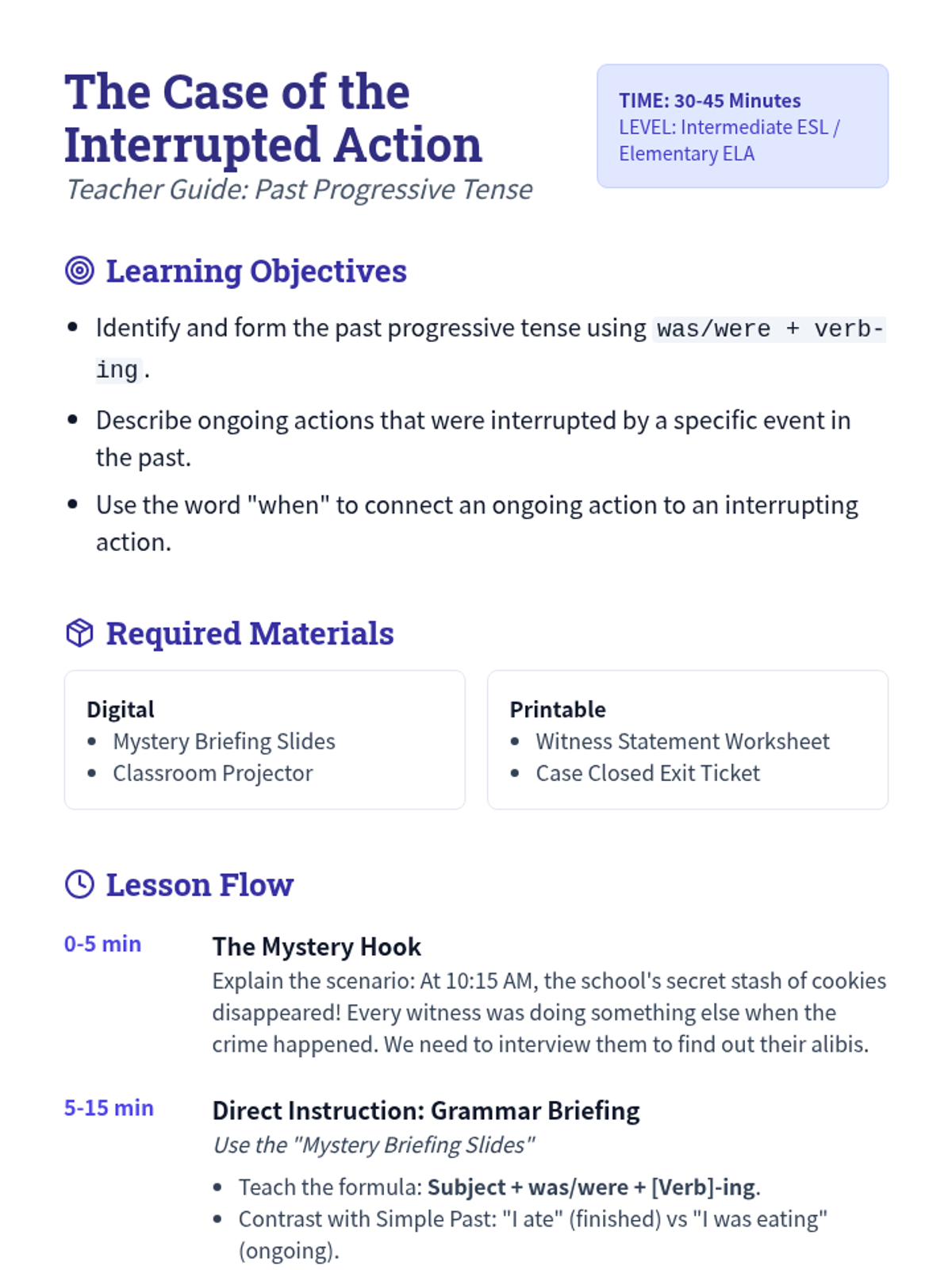
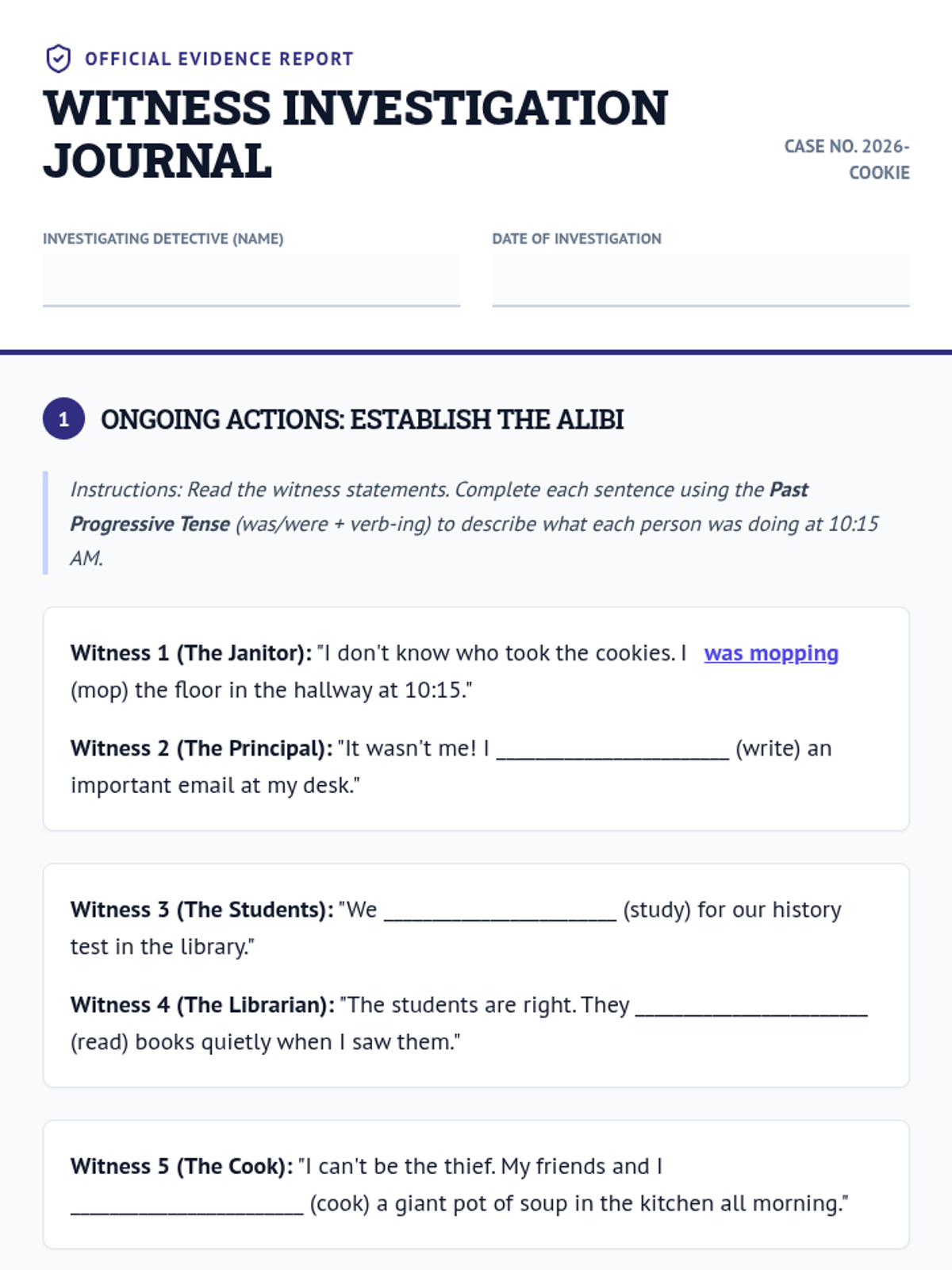
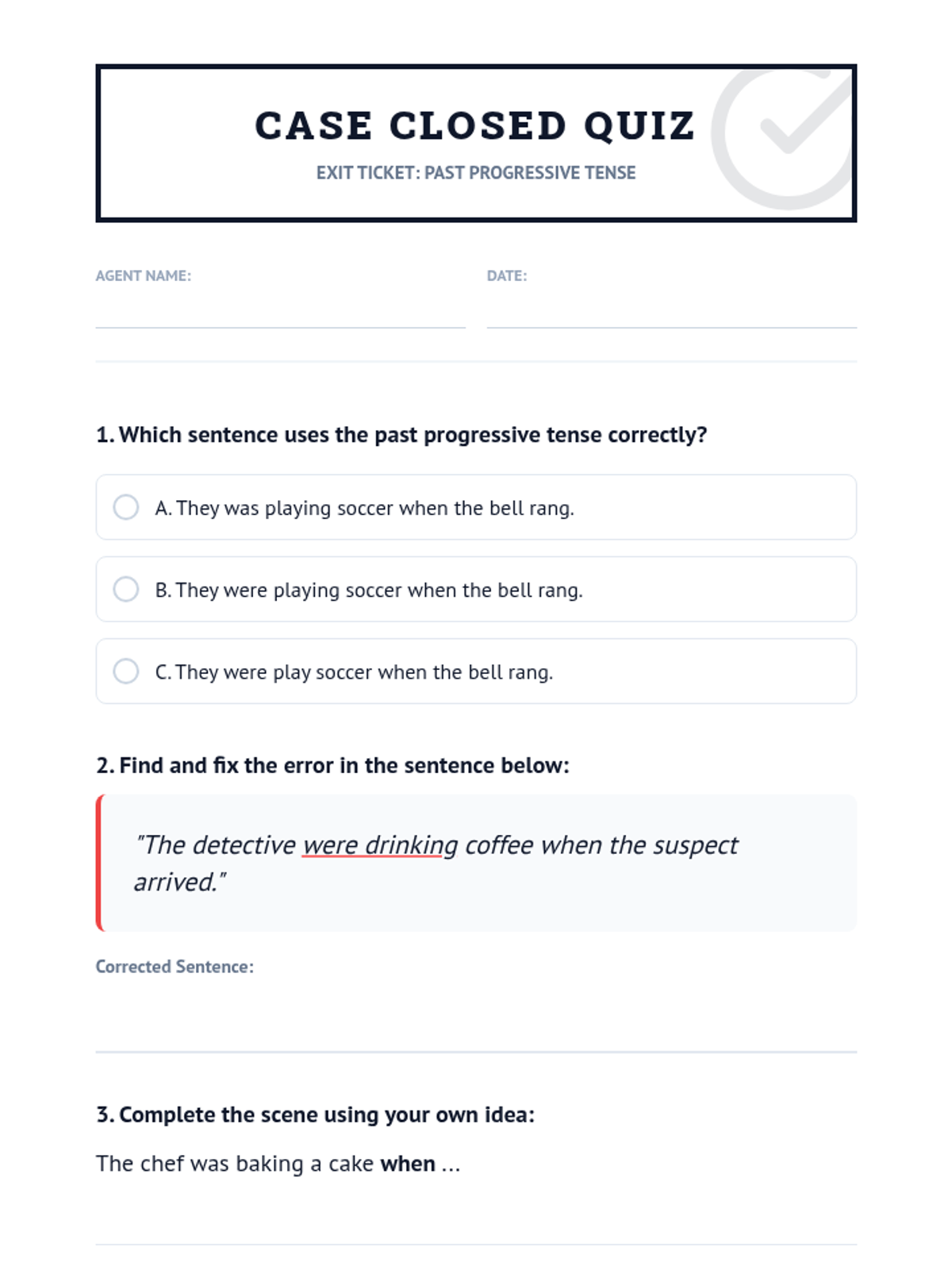
A lesson on the past progressive tense (was/were + verb-ing) focused on describing ongoing and interrupted actions in the past through a detective mystery theme.
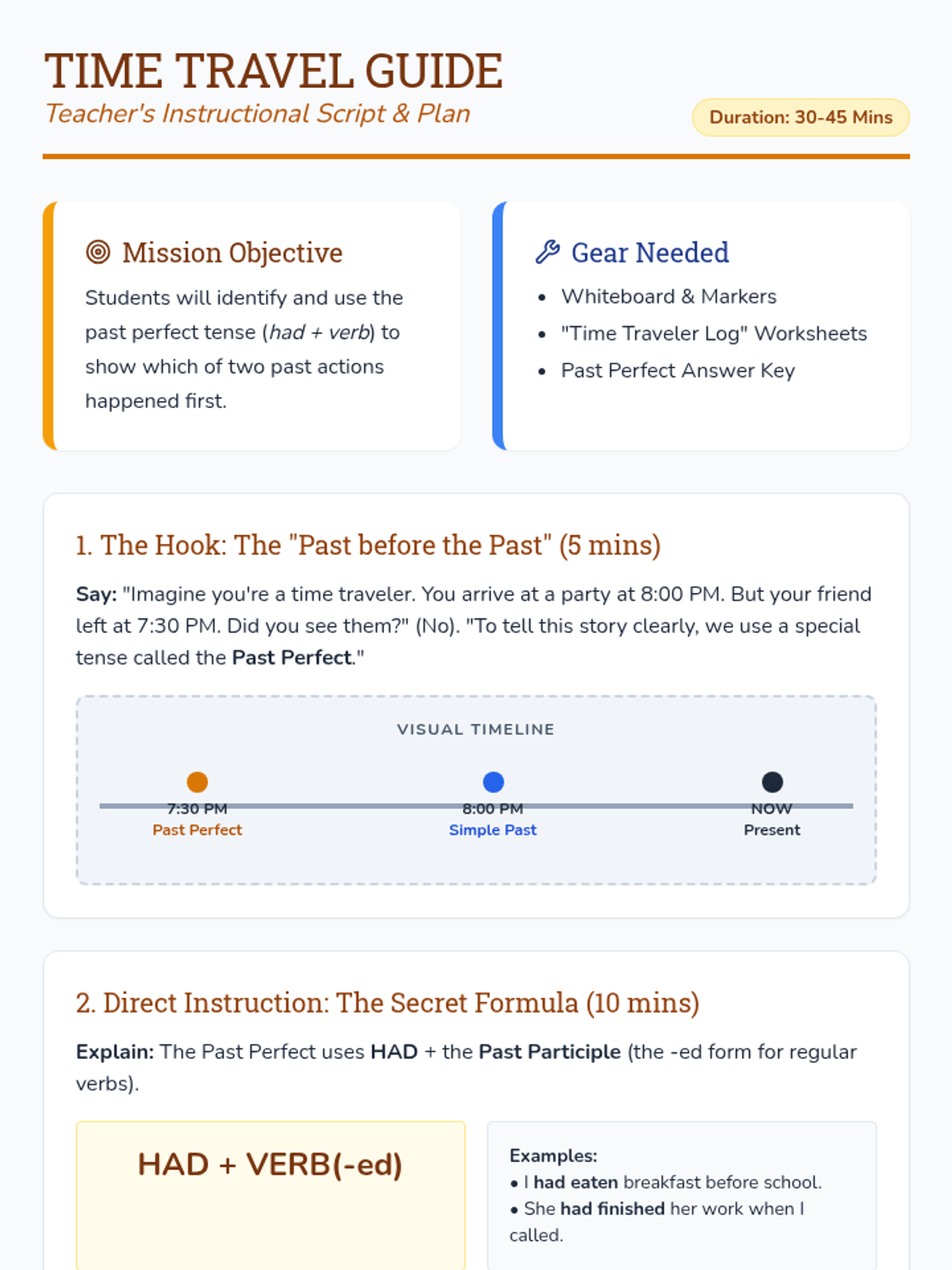
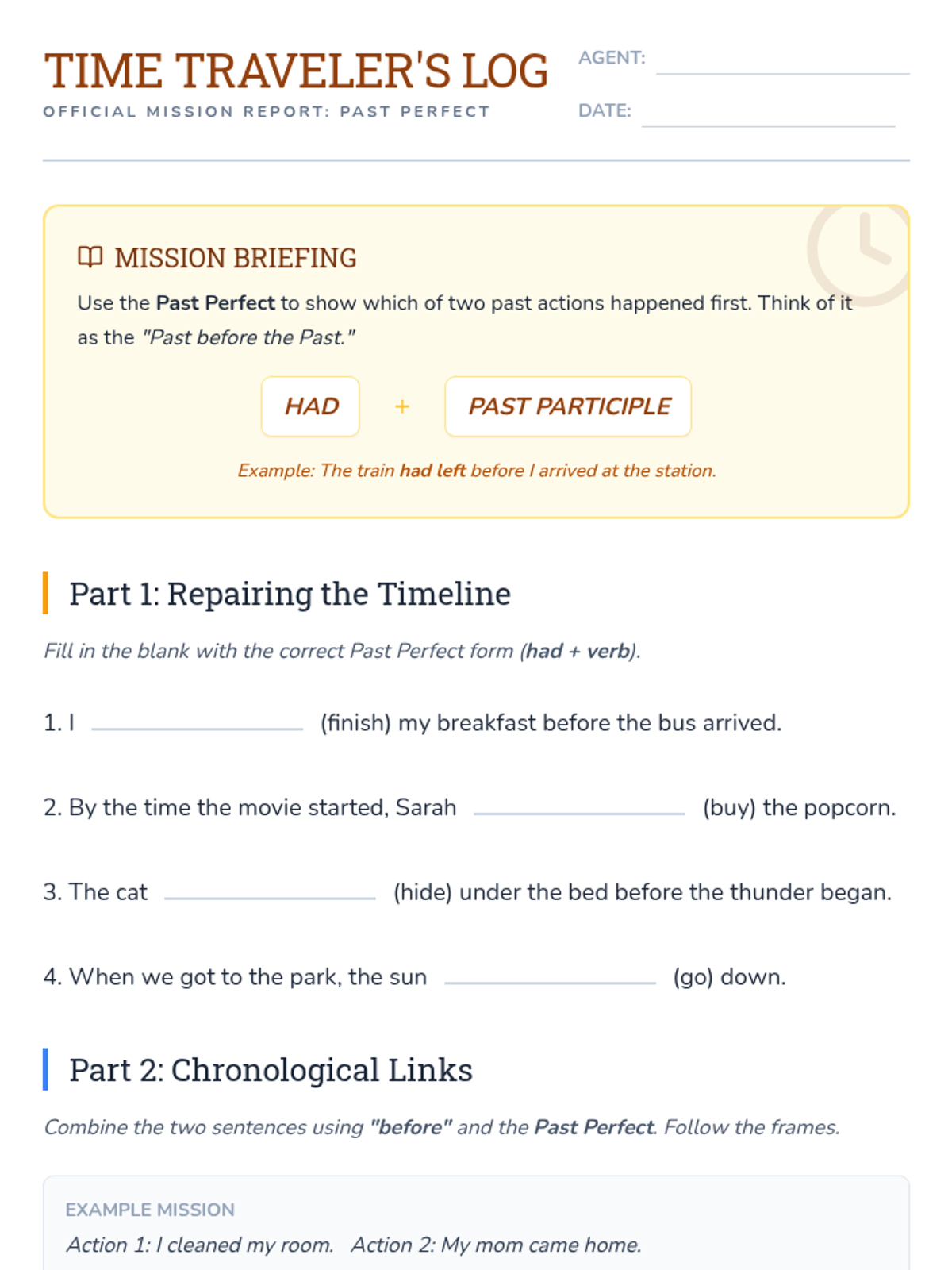
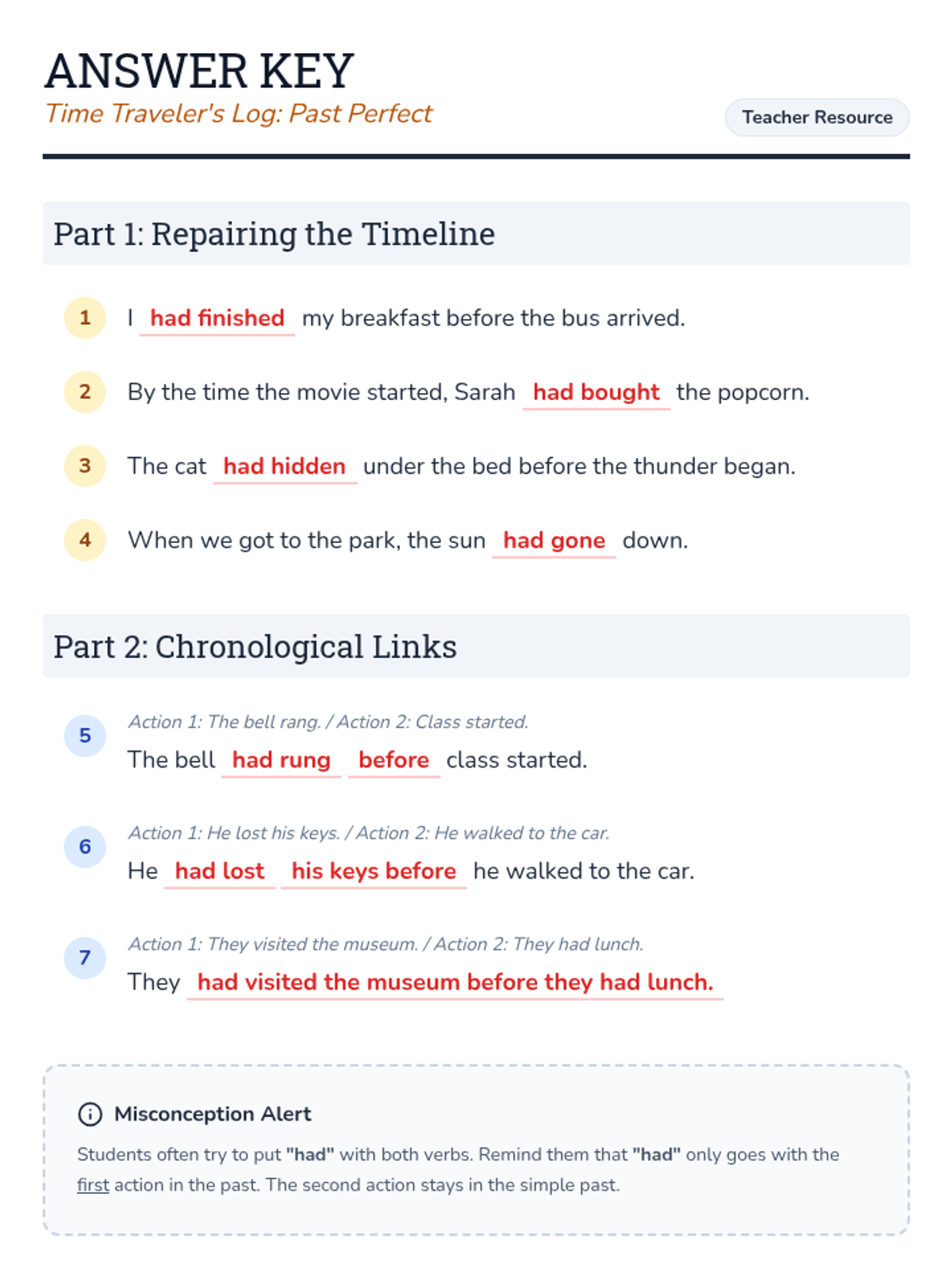
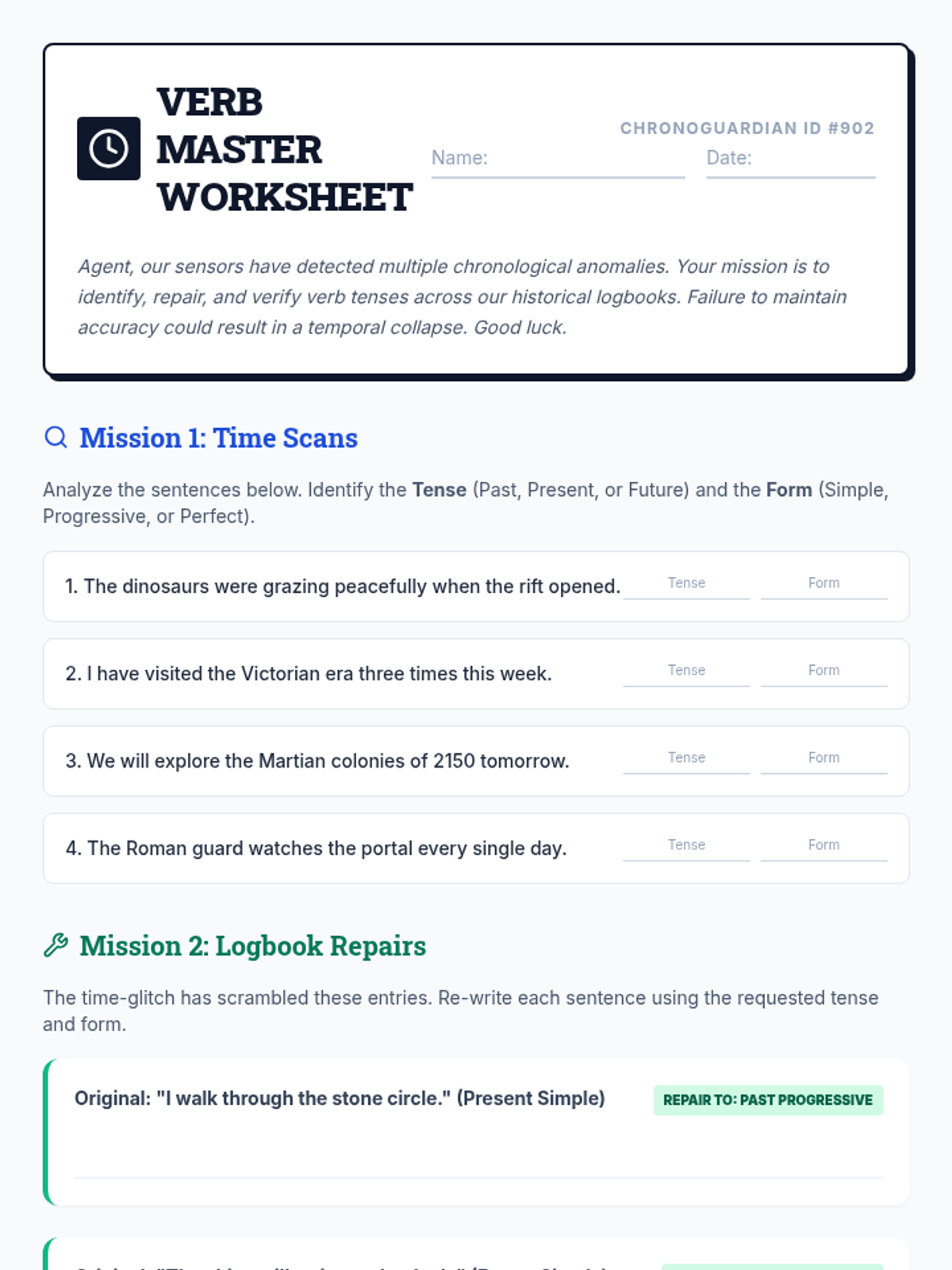
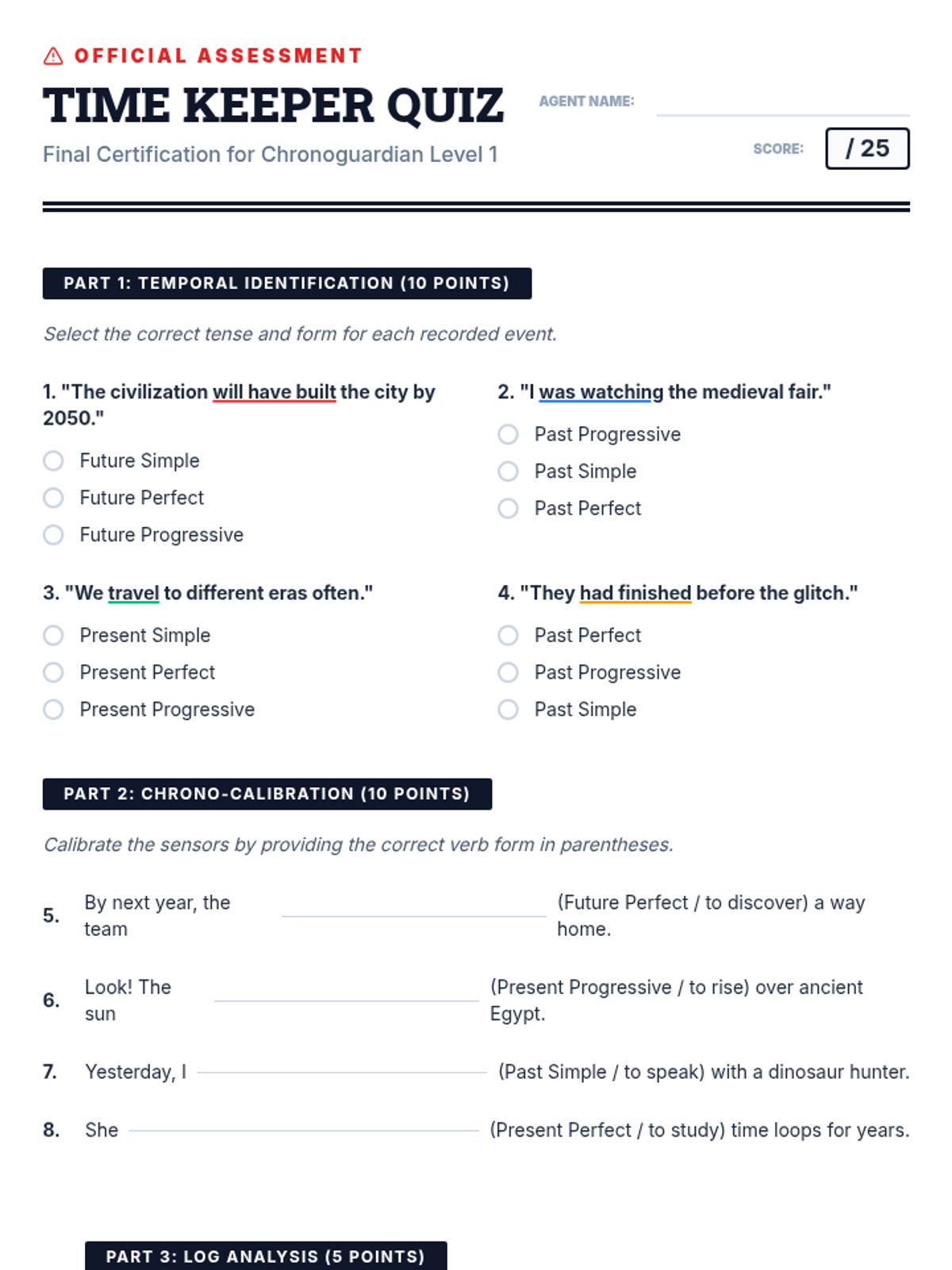
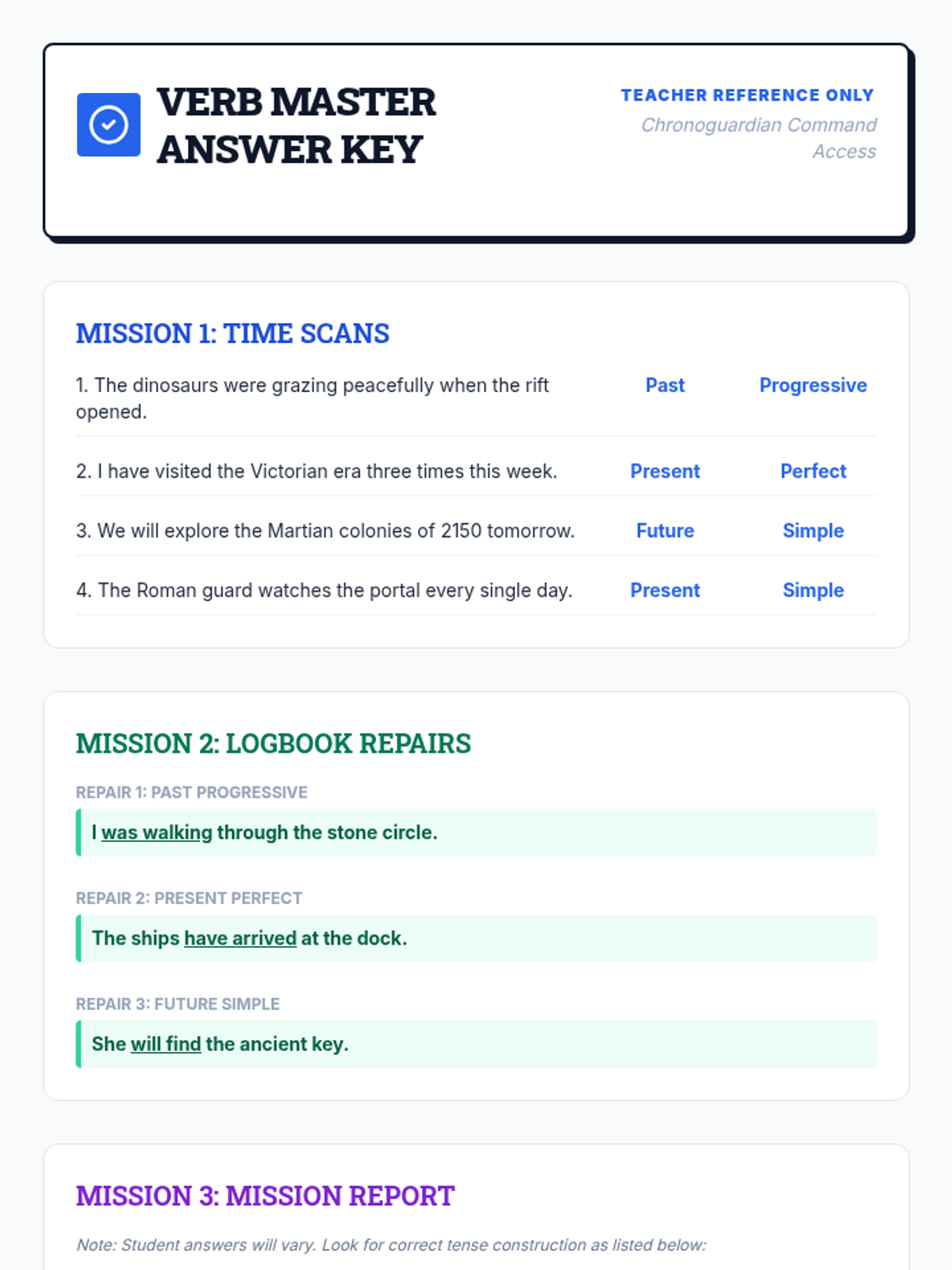
A comprehensive 30-45 minute lesson on the past perfect tense, featuring explicit instructions, a time-travel themed worksheet, and a detailed teacher guide. This lesson helps students understand how to sequence two past events using the 'past before the past' structure.
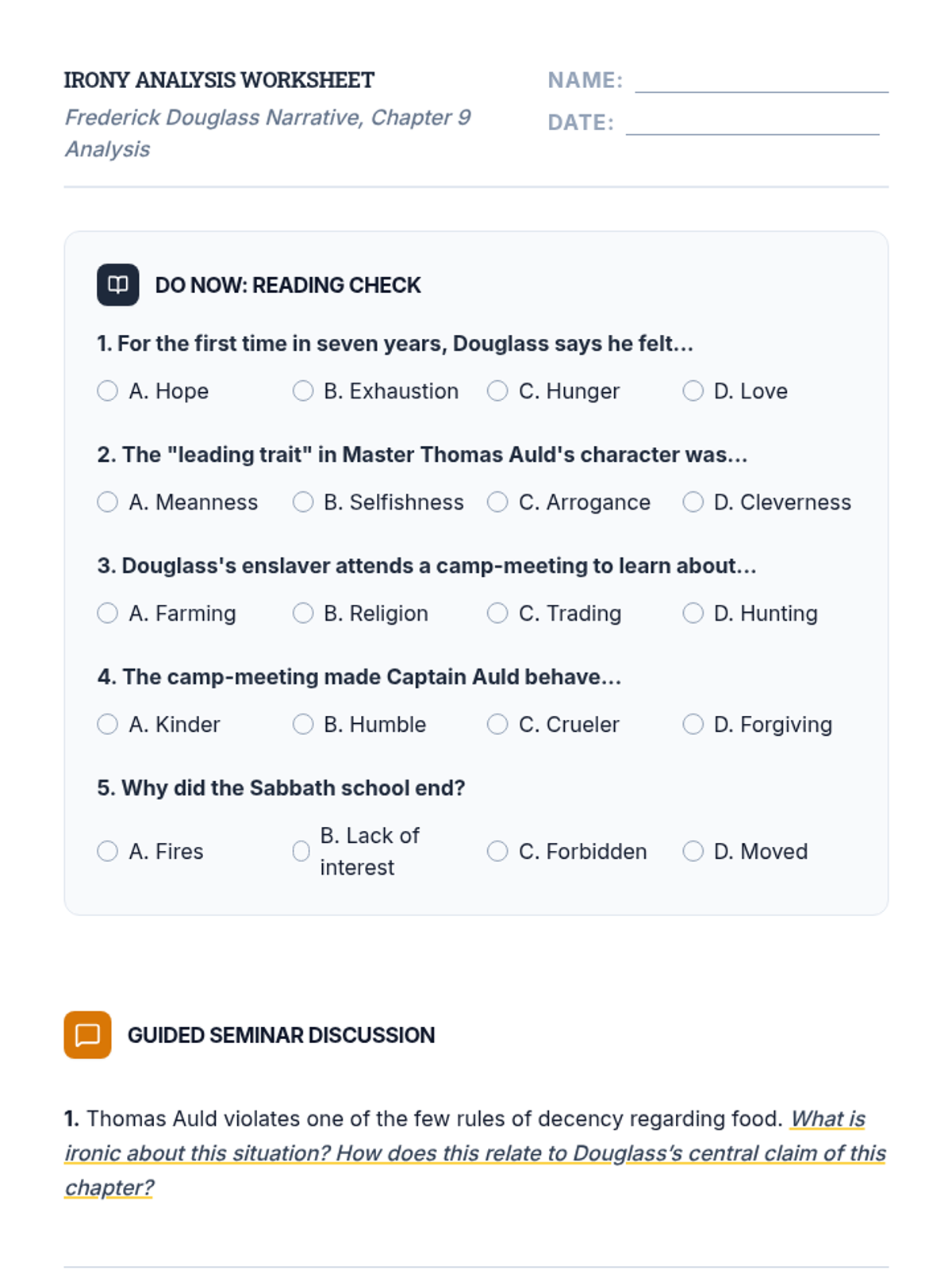
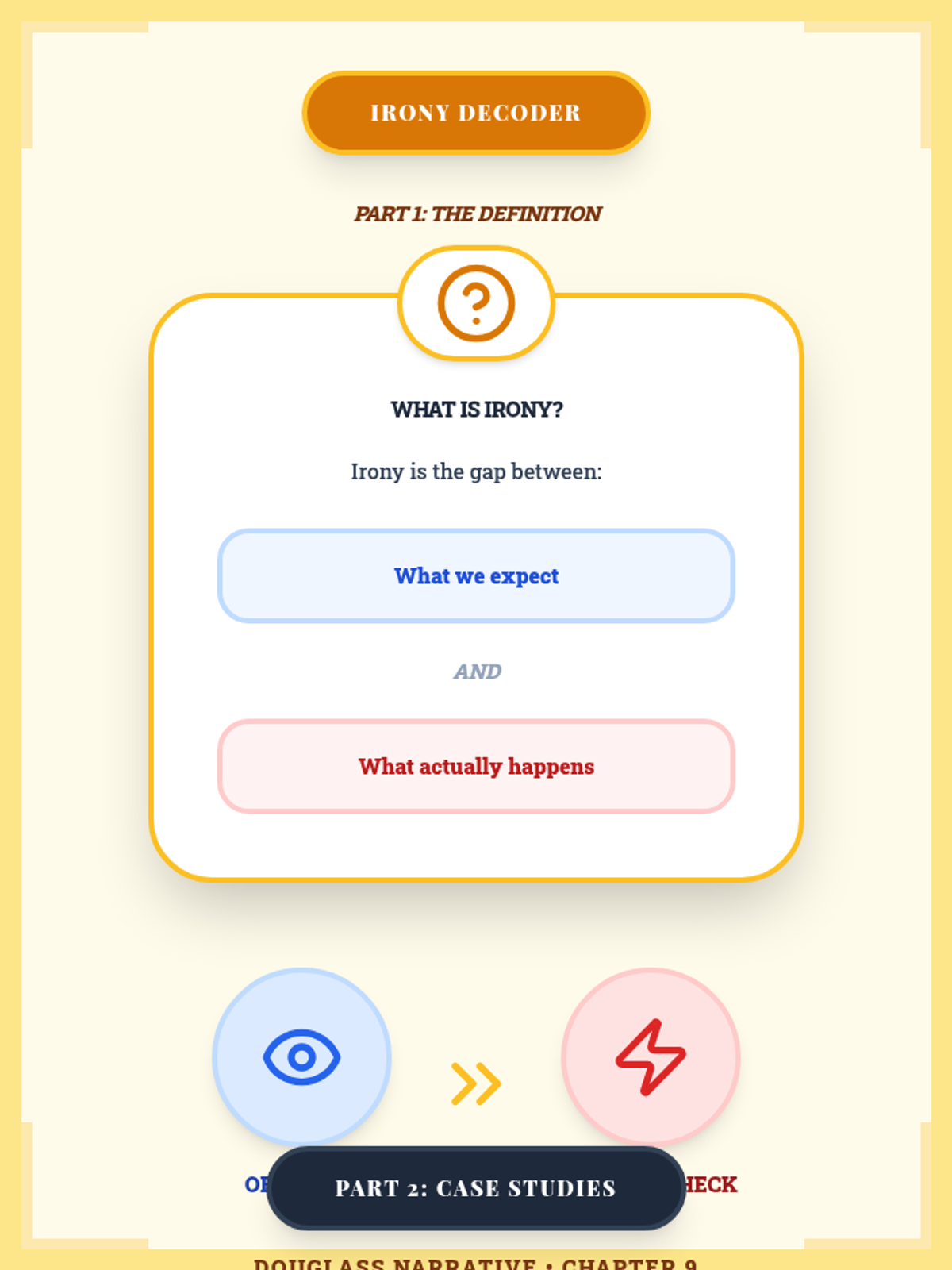
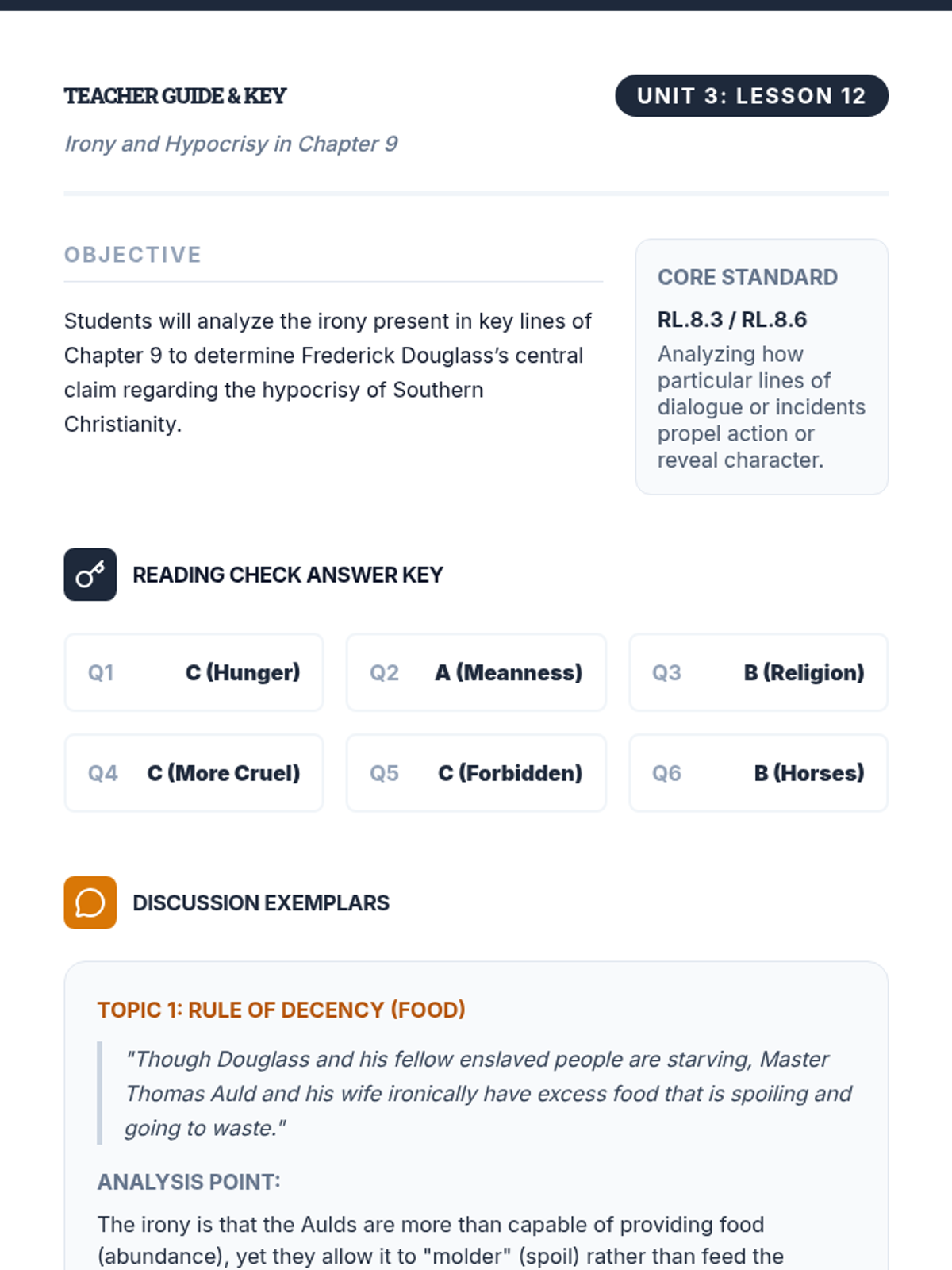
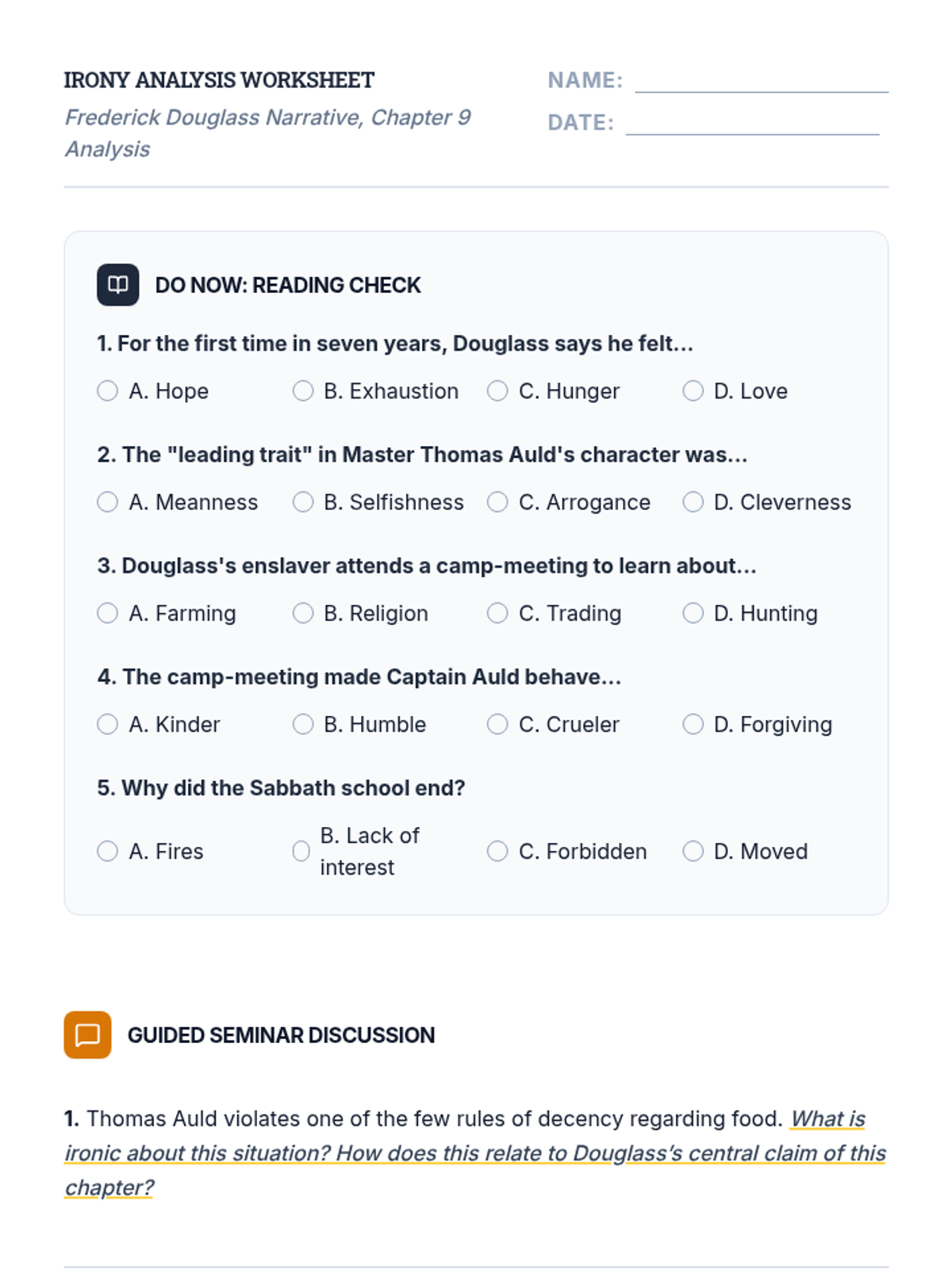
Students analyze the use of irony in Chapter 9 of Frederick Douglass's narrative to identify his central claim about the hypocrisy of Southern Christianity.
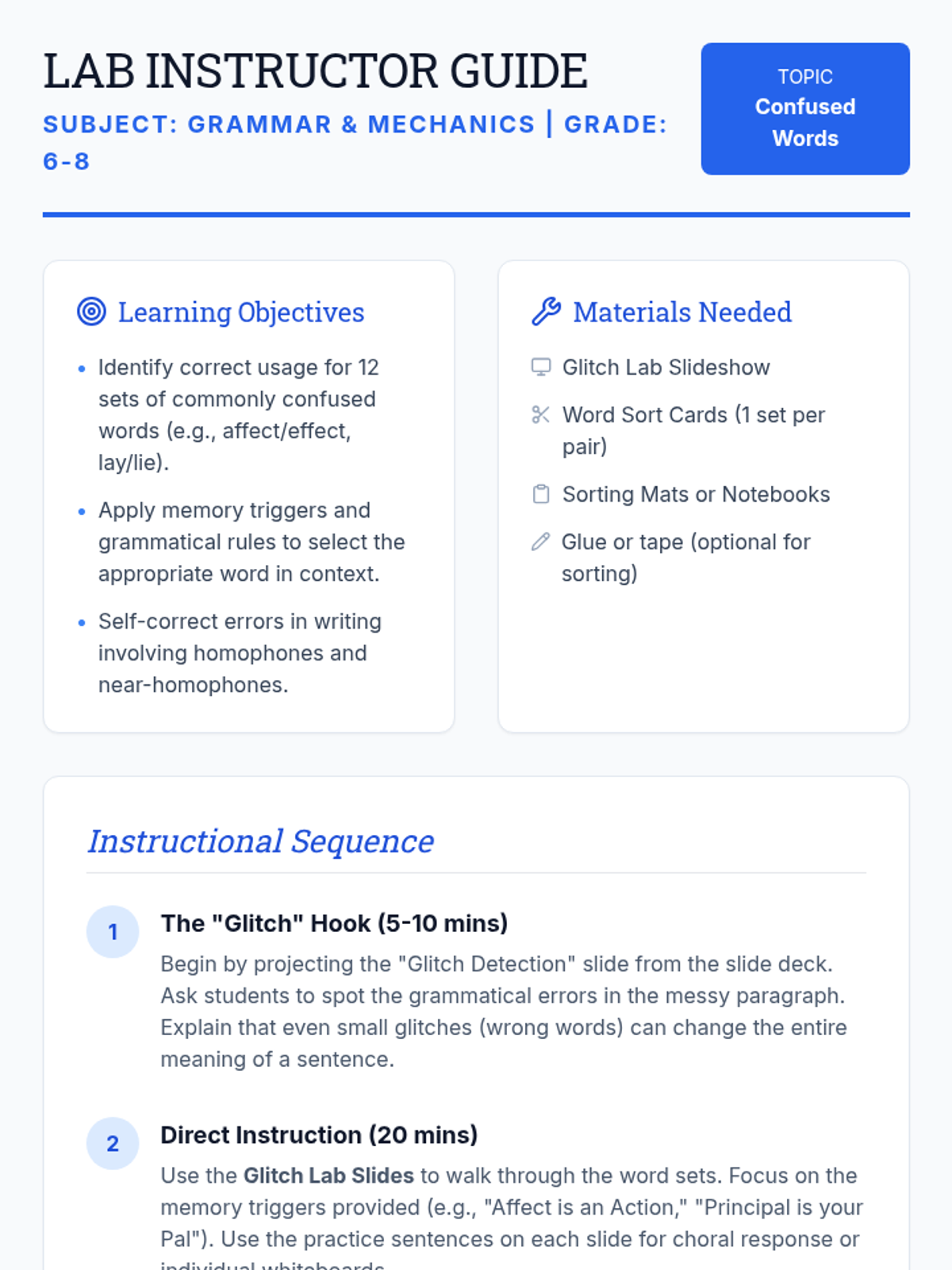
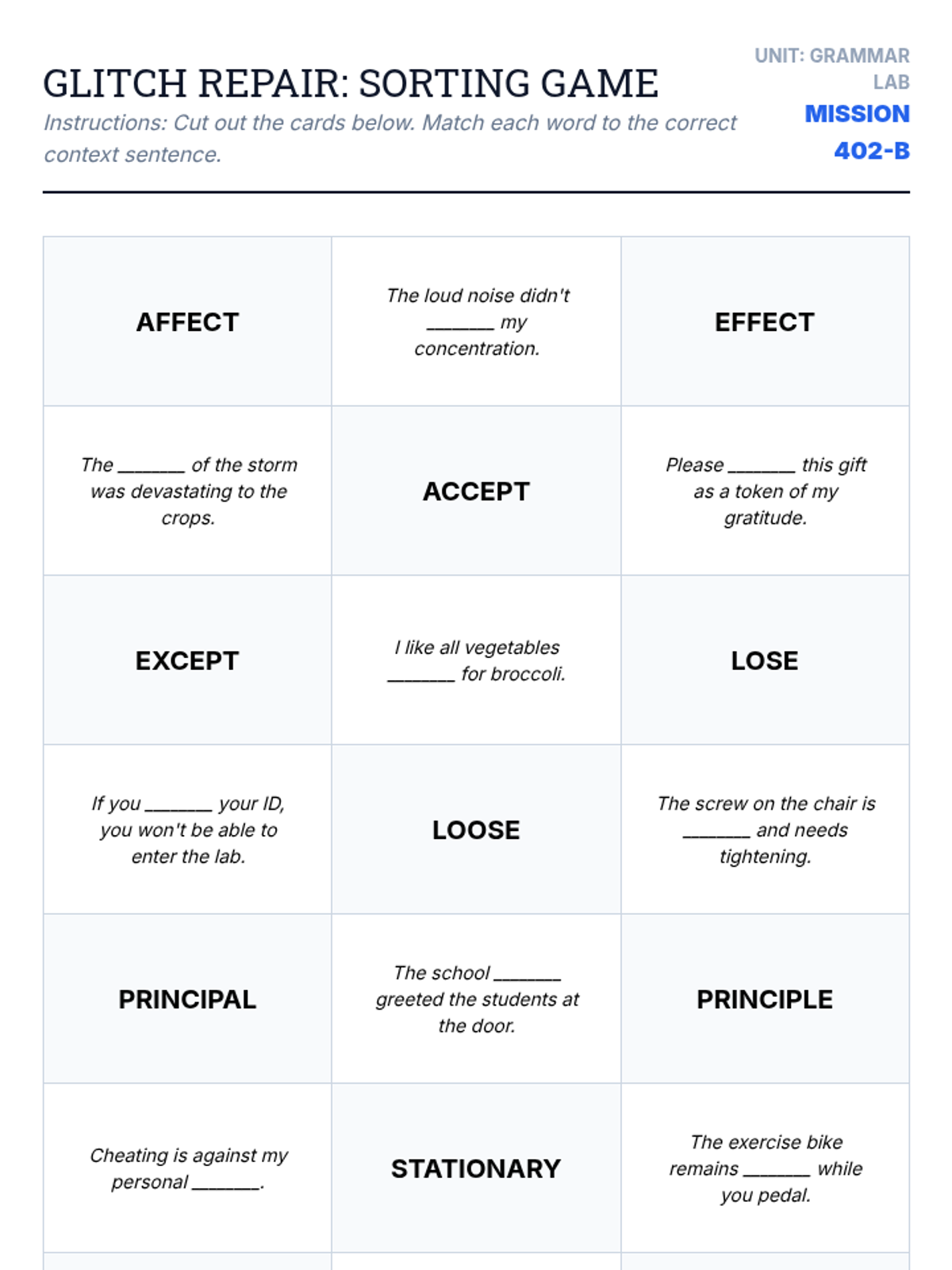
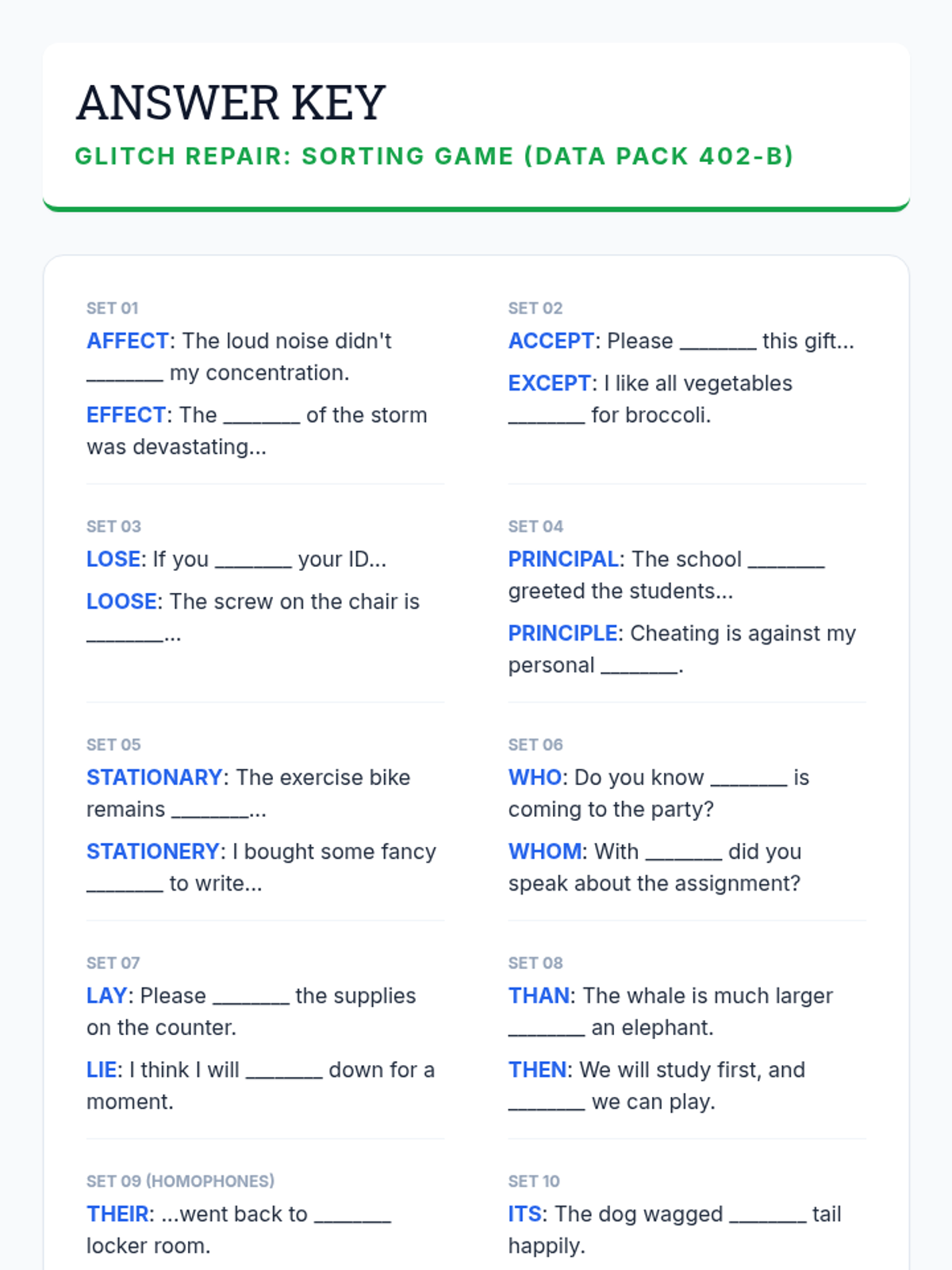
A comprehensive lesson targeting 12 pairs/trios of commonly confused words through a "Grammar Lab" theme. Students will identify, define, and correctly apply homophones and tricky word pairs through direct instruction and a hands-on sorting game.
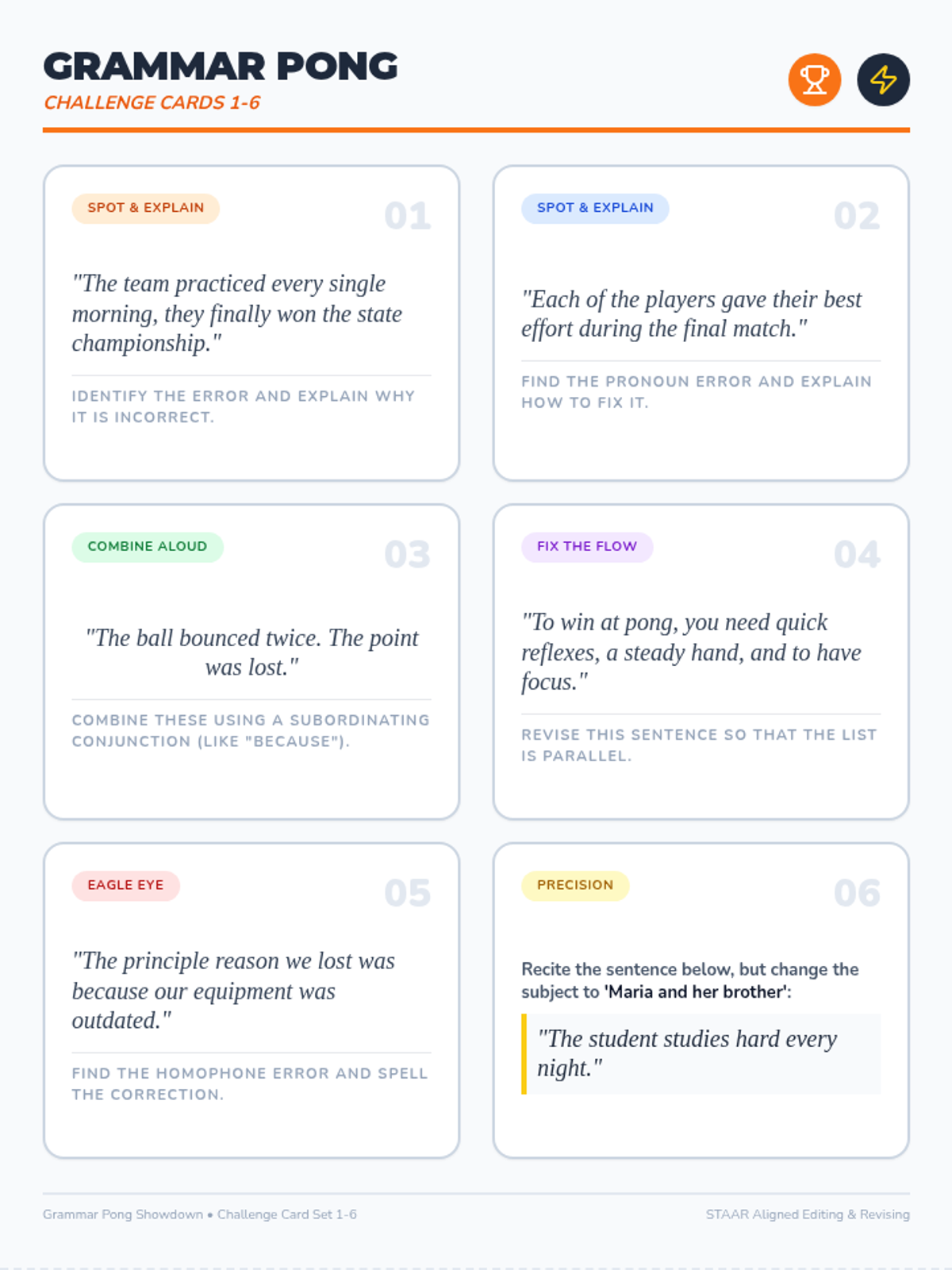
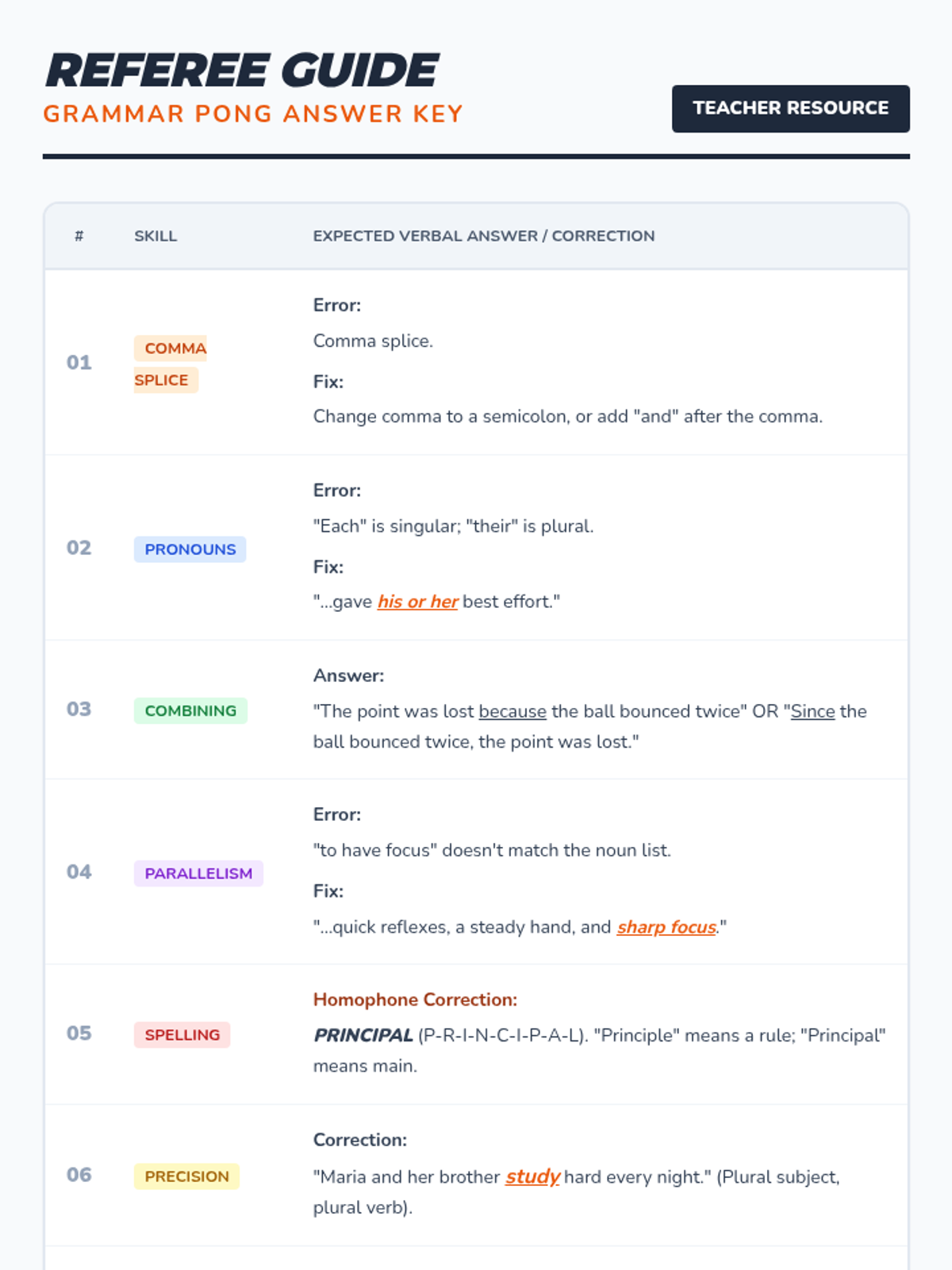
A high-energy editing and revising game where students master comma splices, pronoun-antecedent agreement, and sentence structure through verbal challenges.
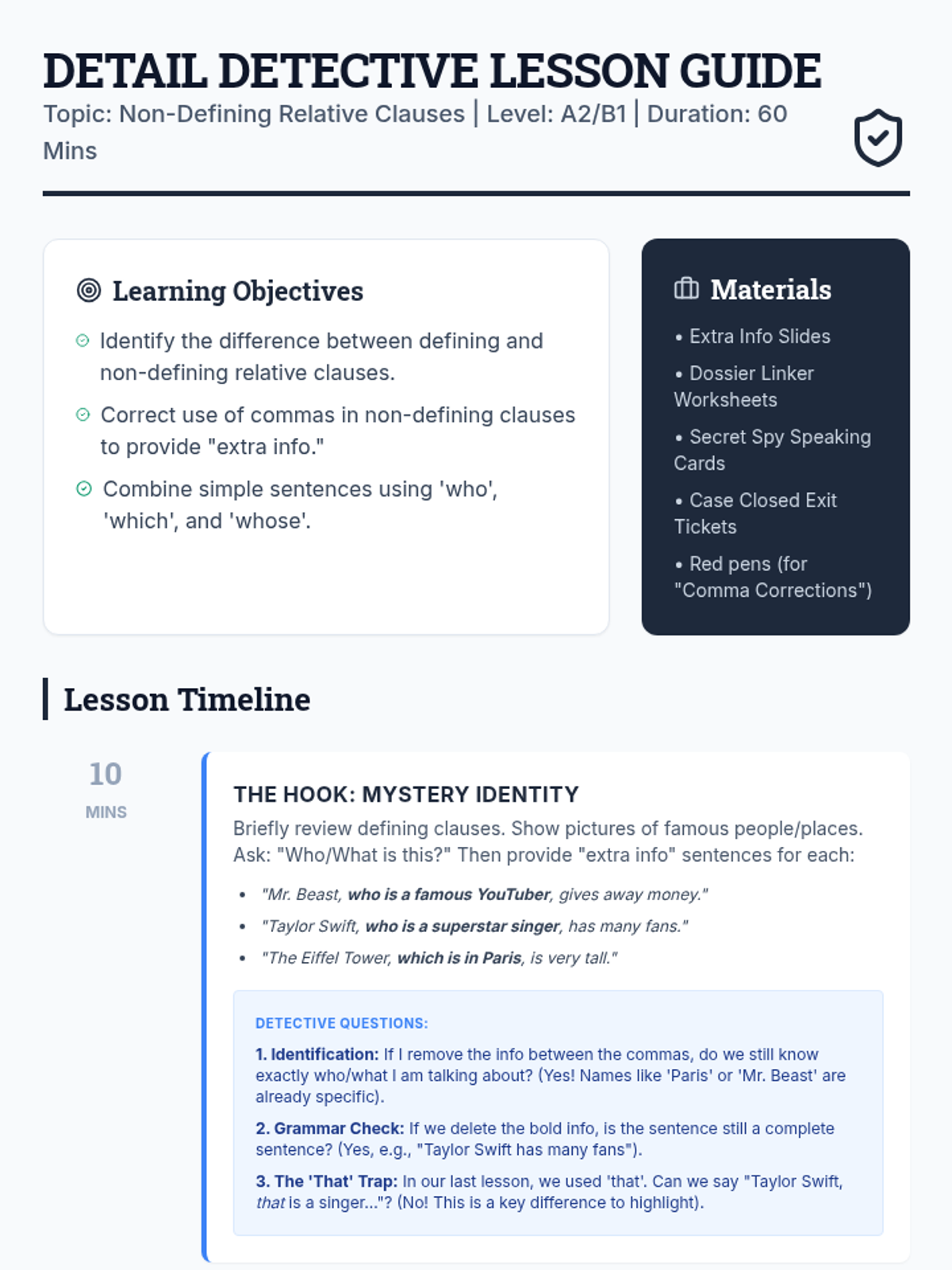
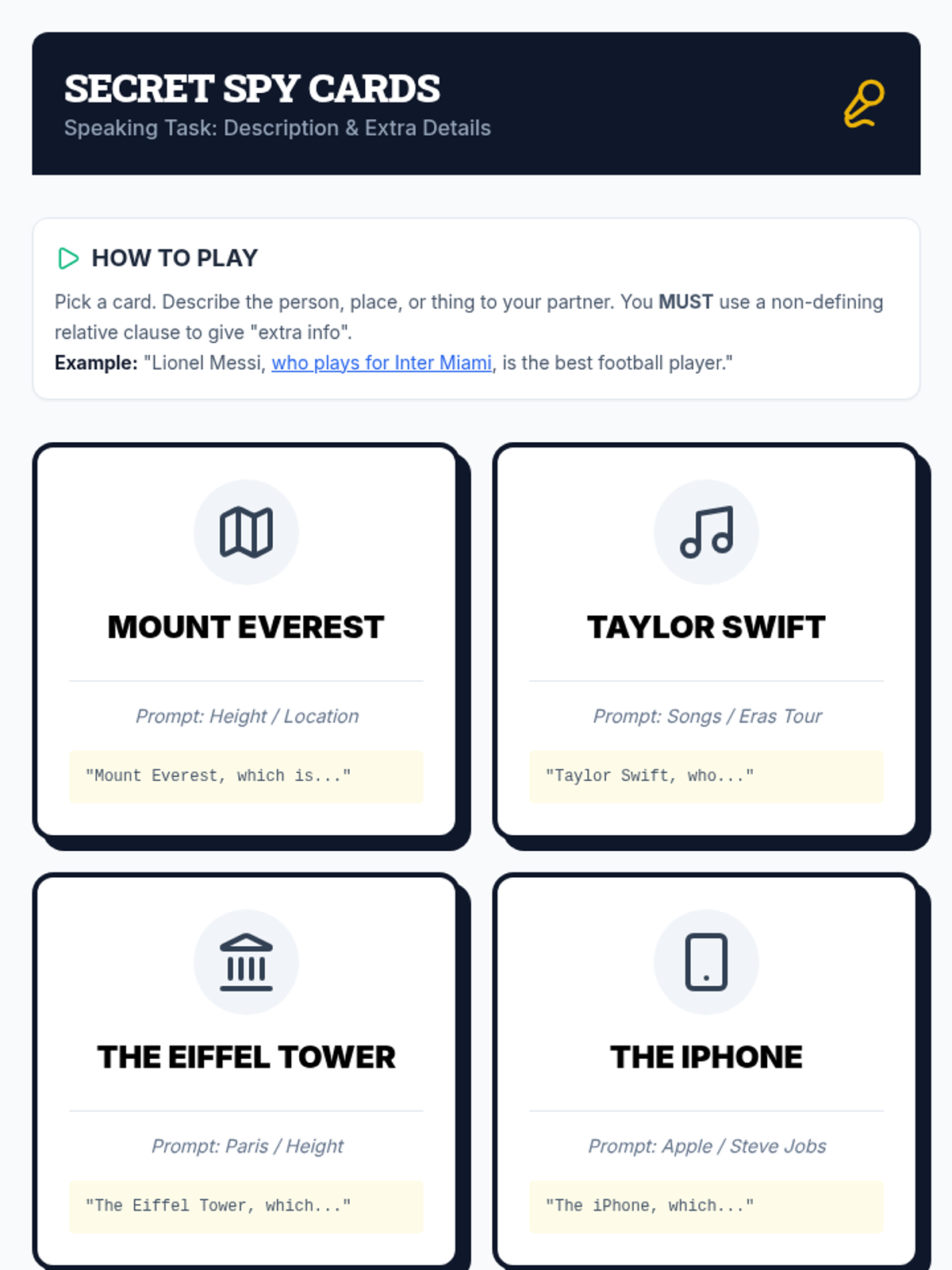
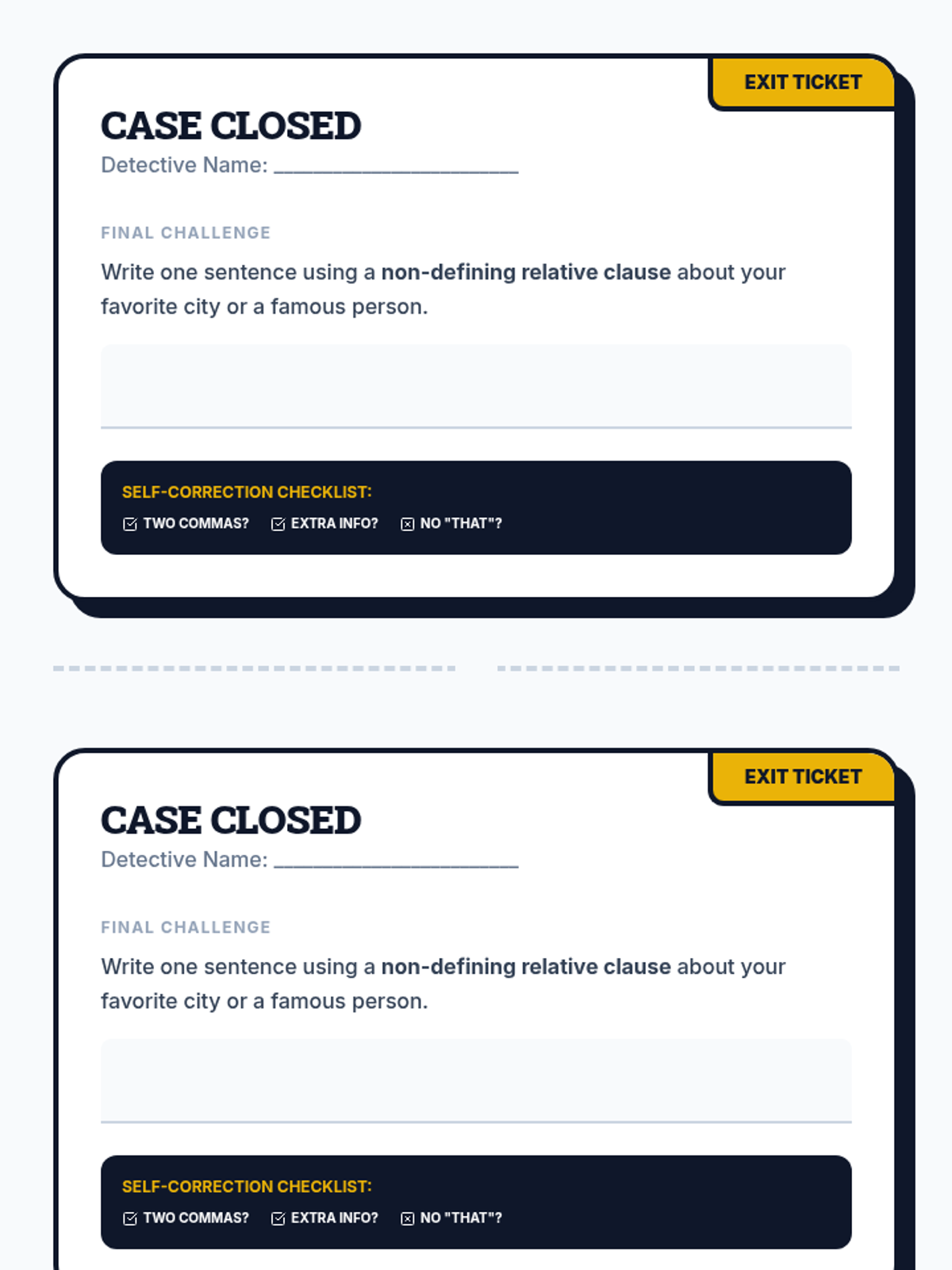
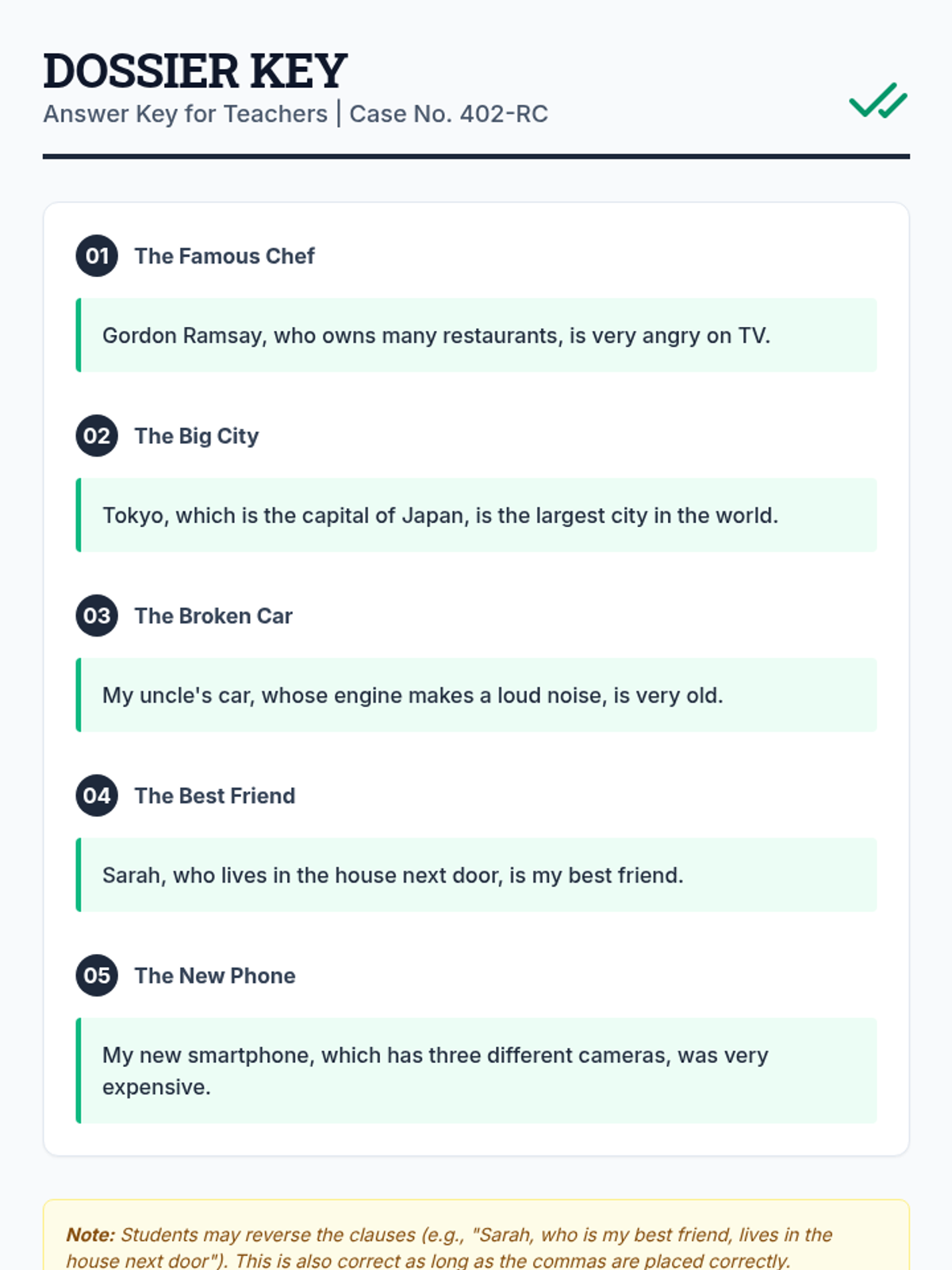
A 60-minute ESL lesson for A2 students focused on non-defining relative clauses through a 'Detail Detective' theme, featuring sentence combining, speaking cards, and comma mastery.
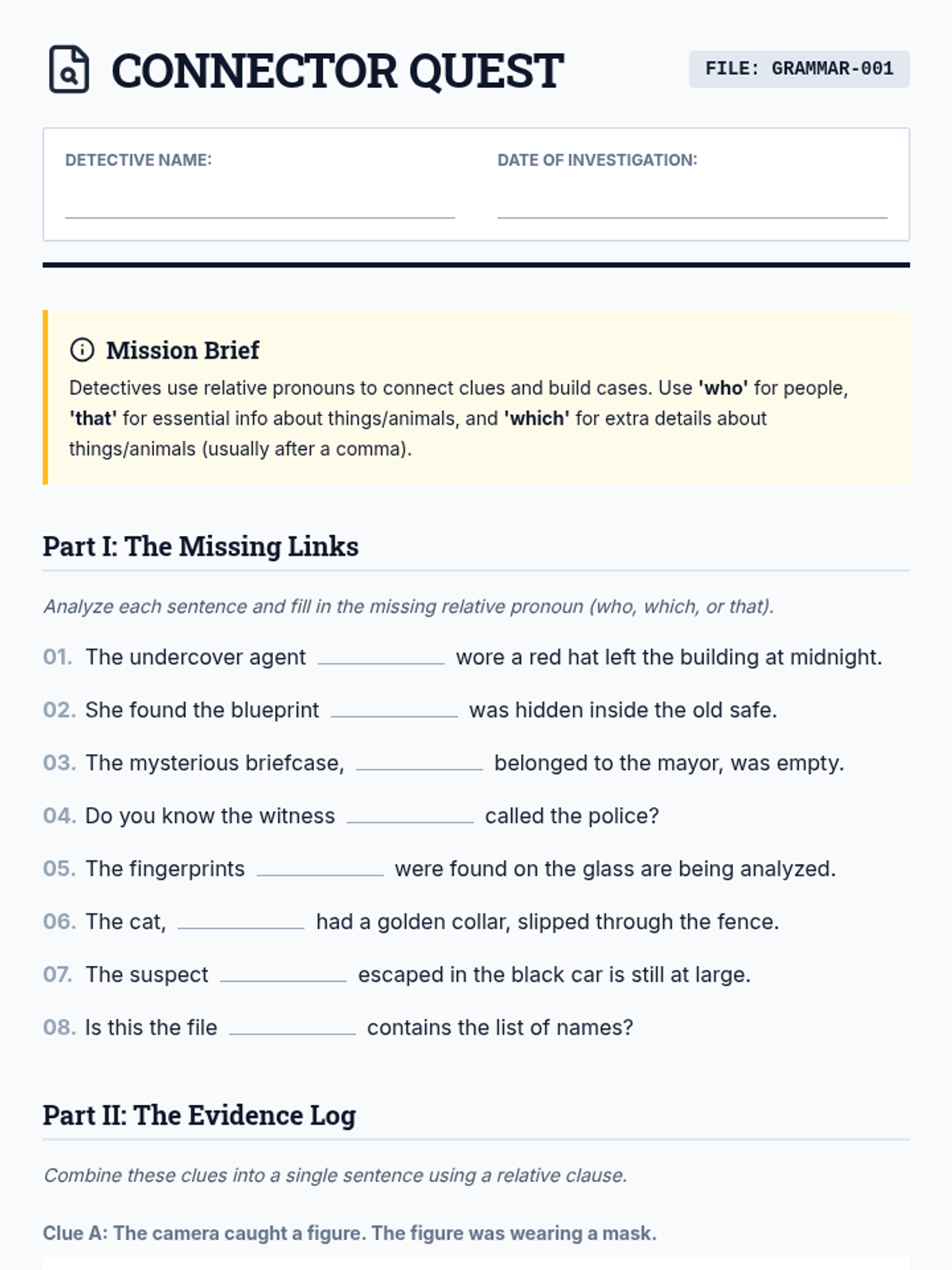
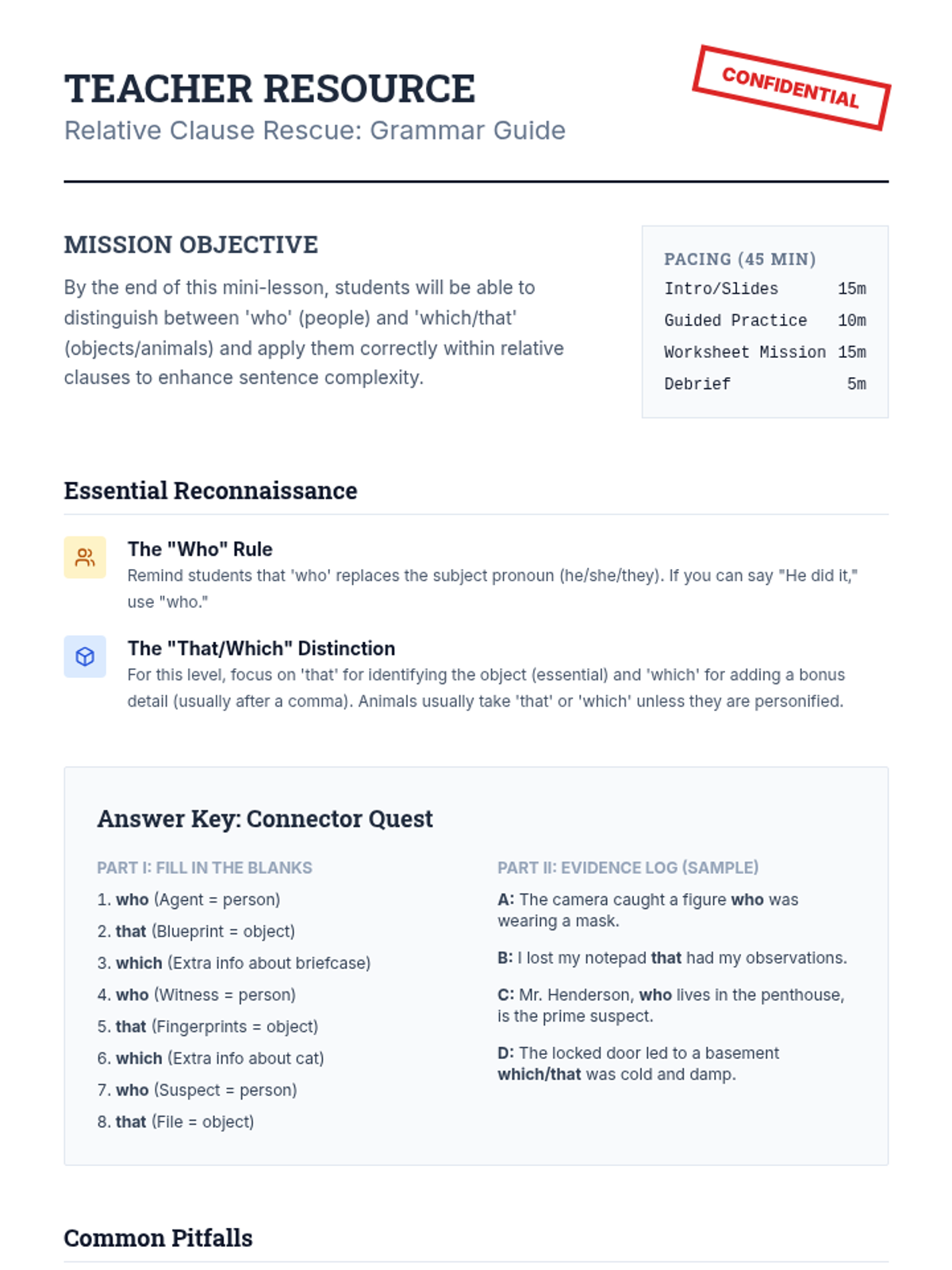
A detective-themed grammar lesson focused on correctly using relative pronouns 'who', 'which', and 'that'. Students will identify the correct pronouns for people versus objects through interactive instruction and a practice mission.
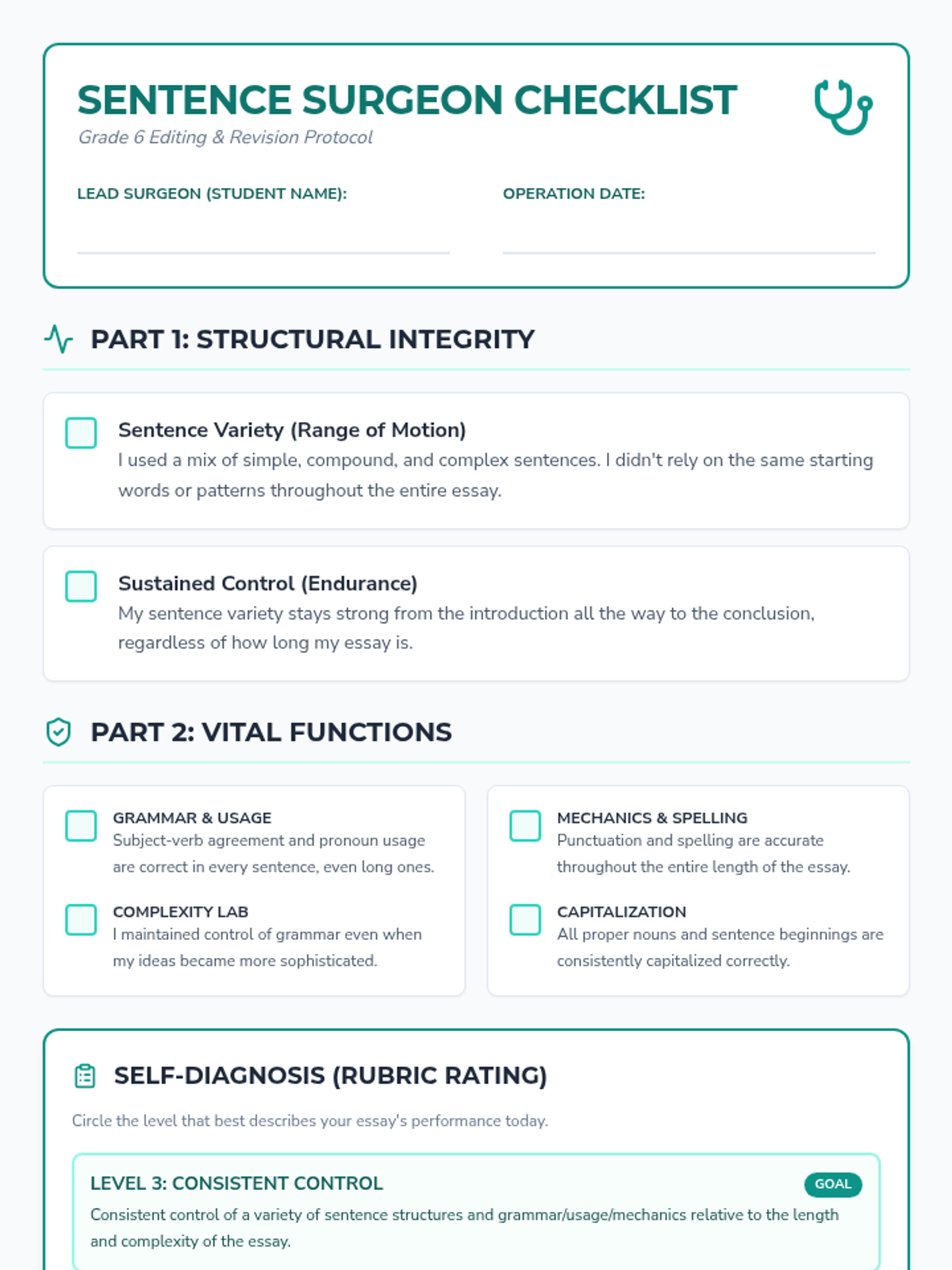
A lesson focused on self-editing and peer-reviewing using a rubric-aligned checklist to improve sentence variety, grammar, and mechanics.
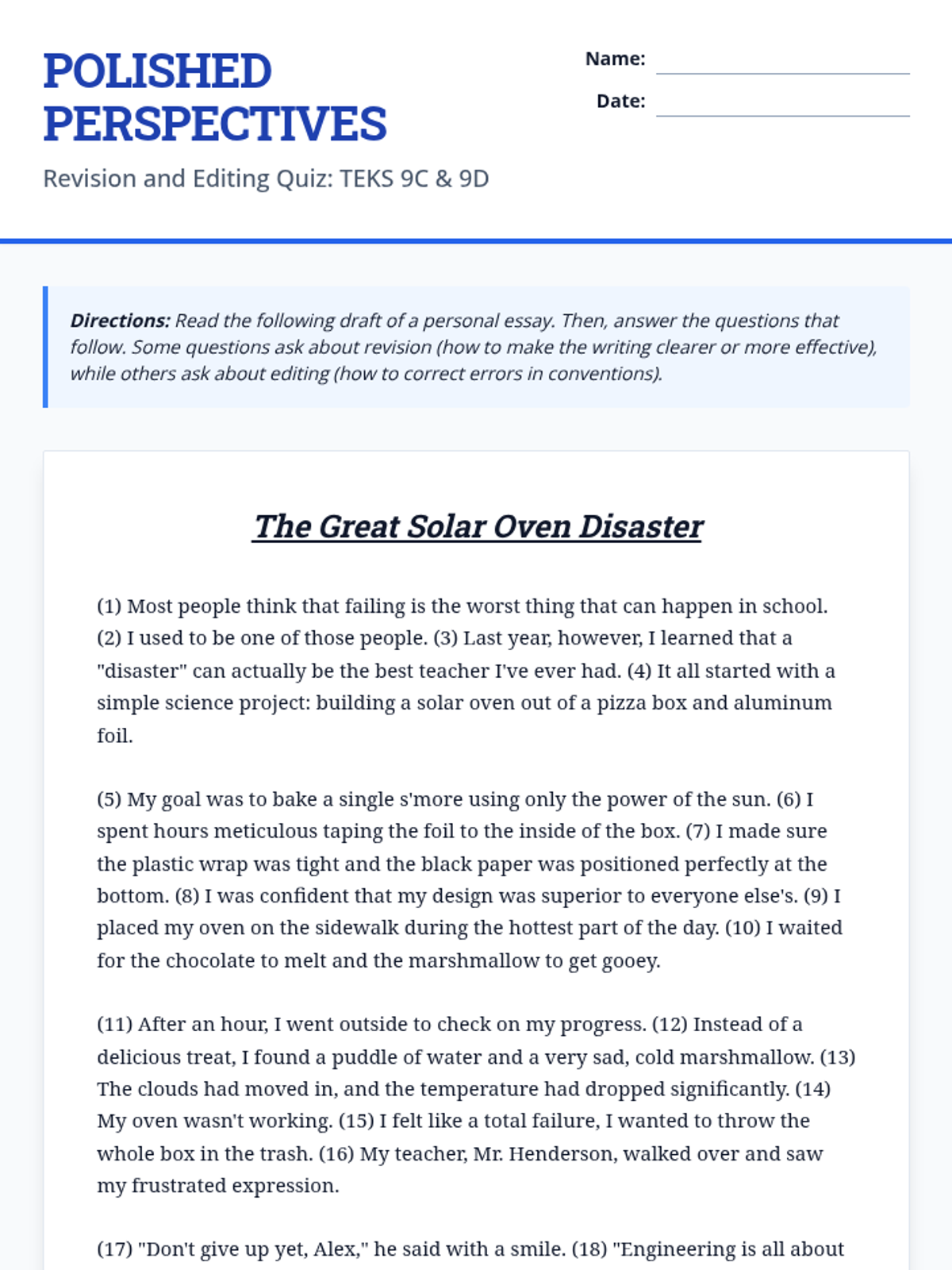
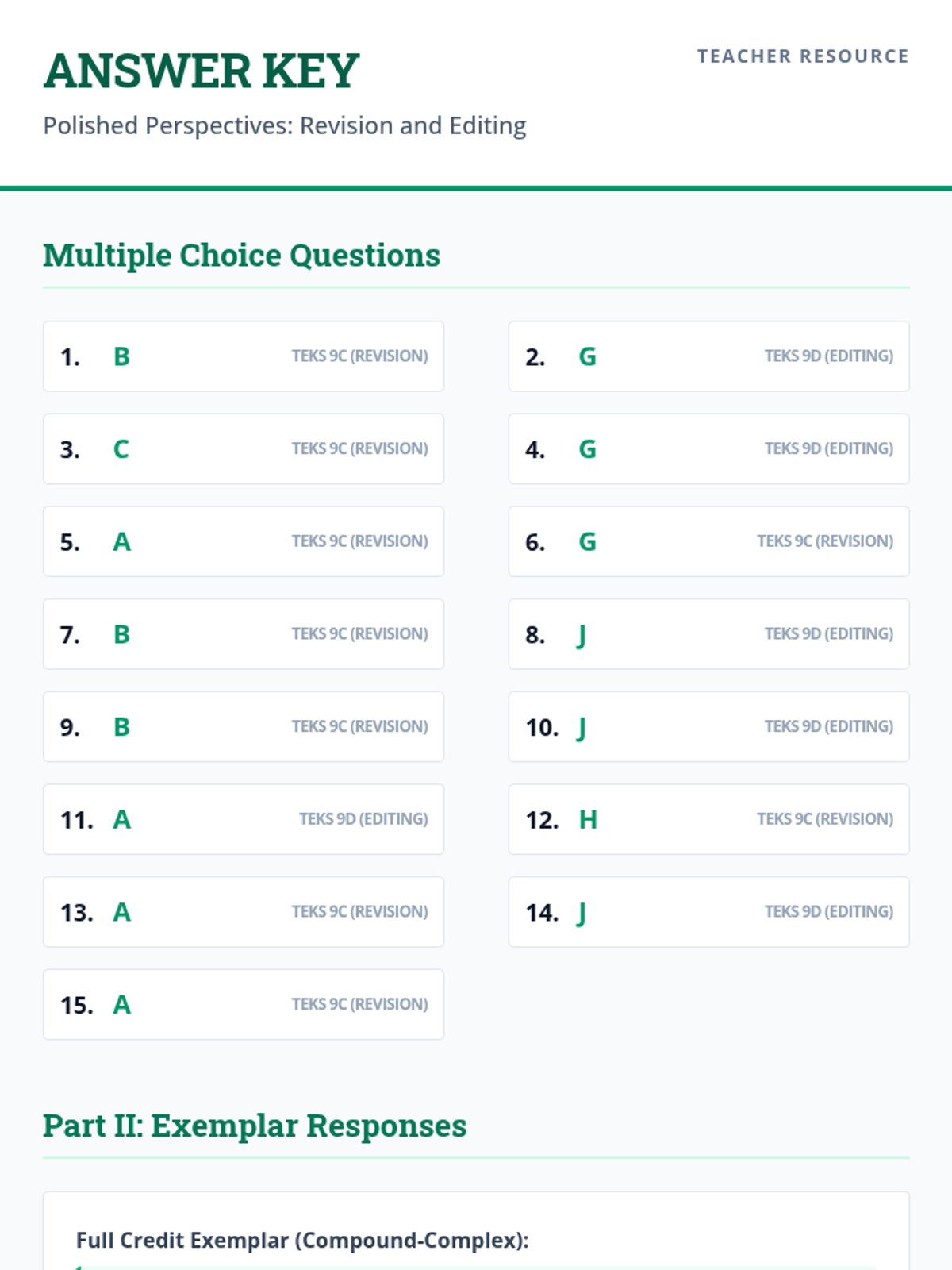
A revision and editing lesson focused on TEKS 9C and 9D, featuring a student's personal essay about a learning experience. The lesson includes a STAAR-aligned quiz with 15 multiple-choice questions and a sentence construction task, along with a detailed answer key.
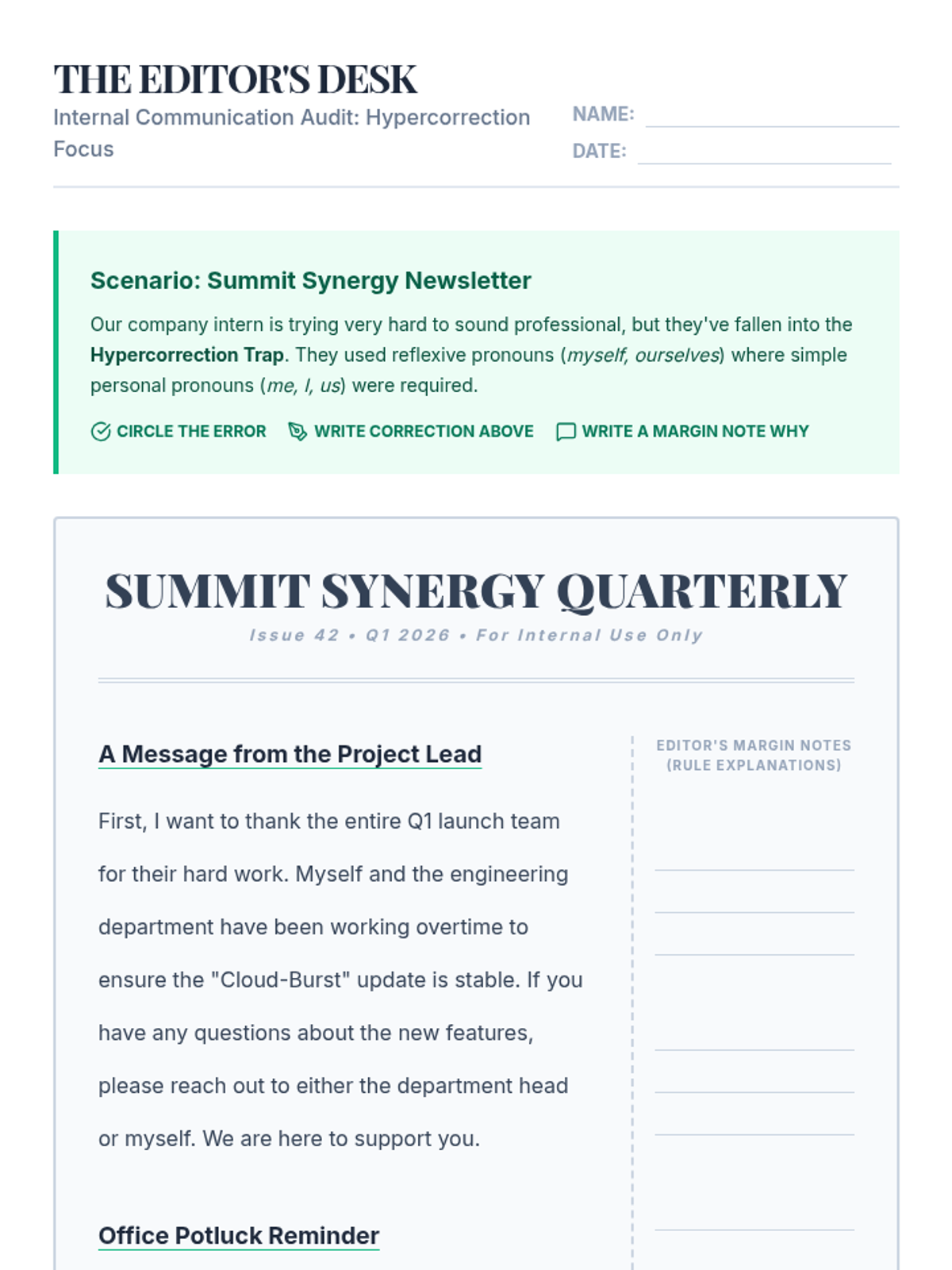
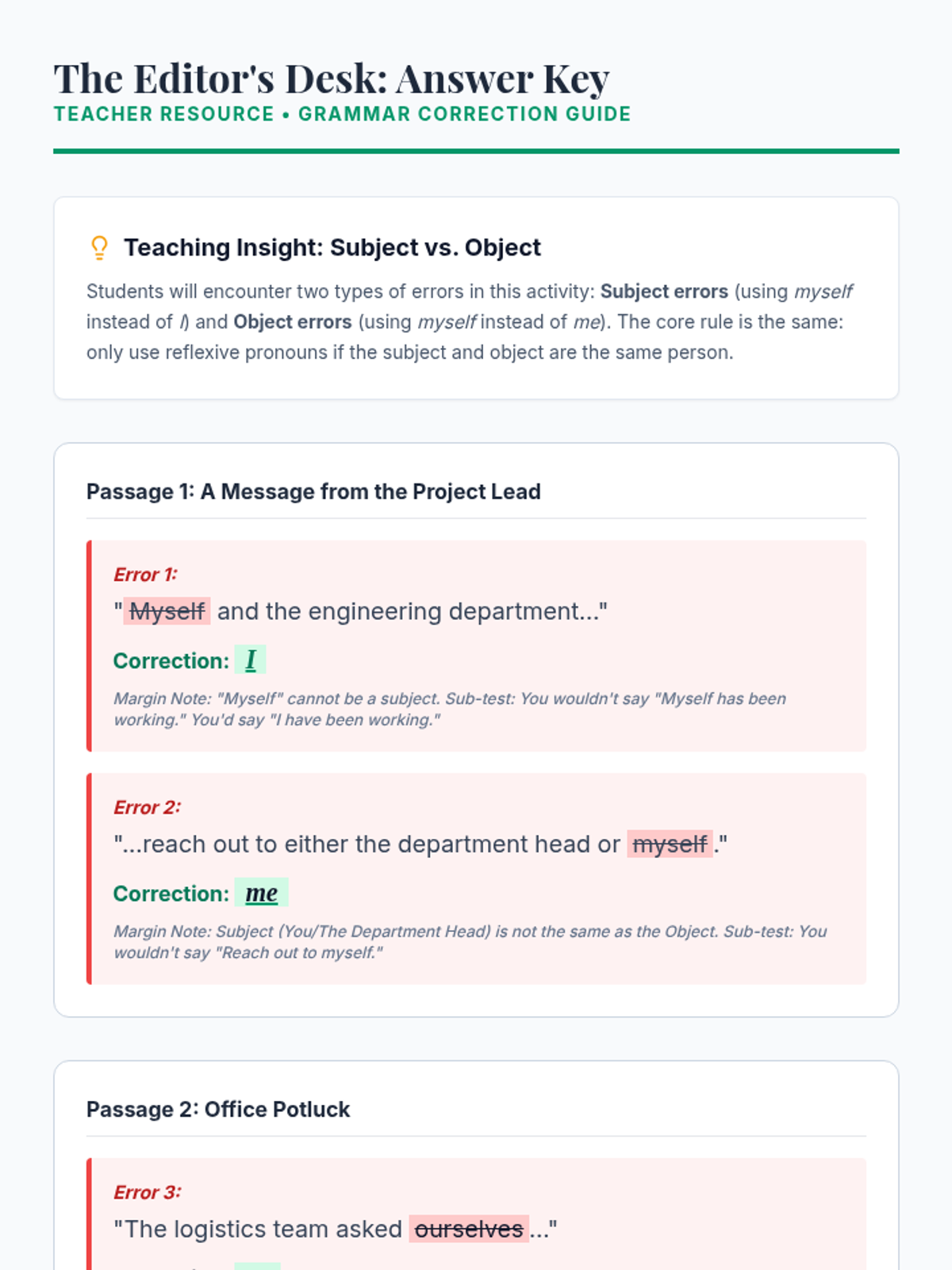
A grammar lesson for 8th graders focusing on the common 'hypercorrection' of using reflexive pronouns like 'myself' to sound more formal, featuring a business newsletter editing activity.
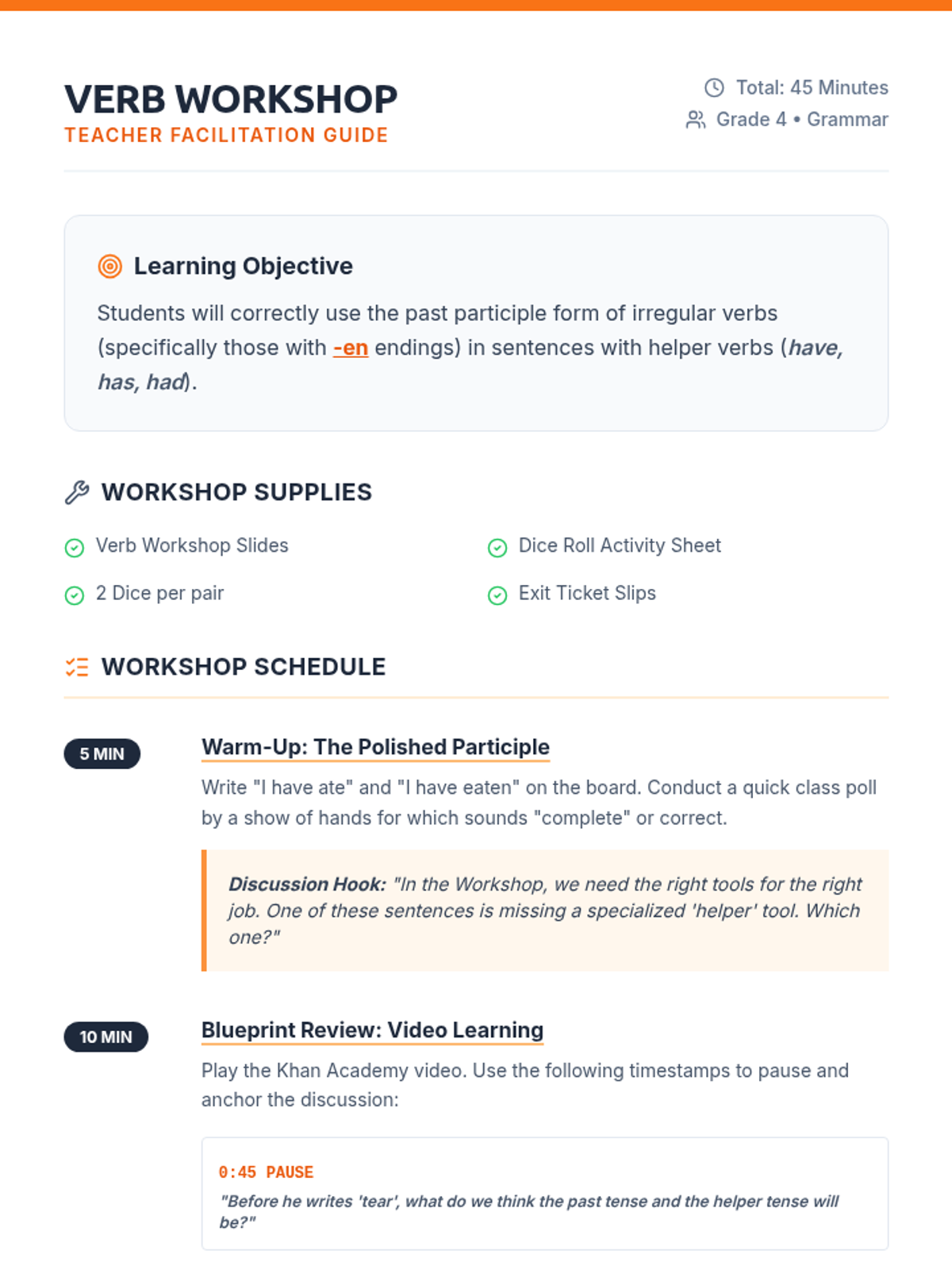
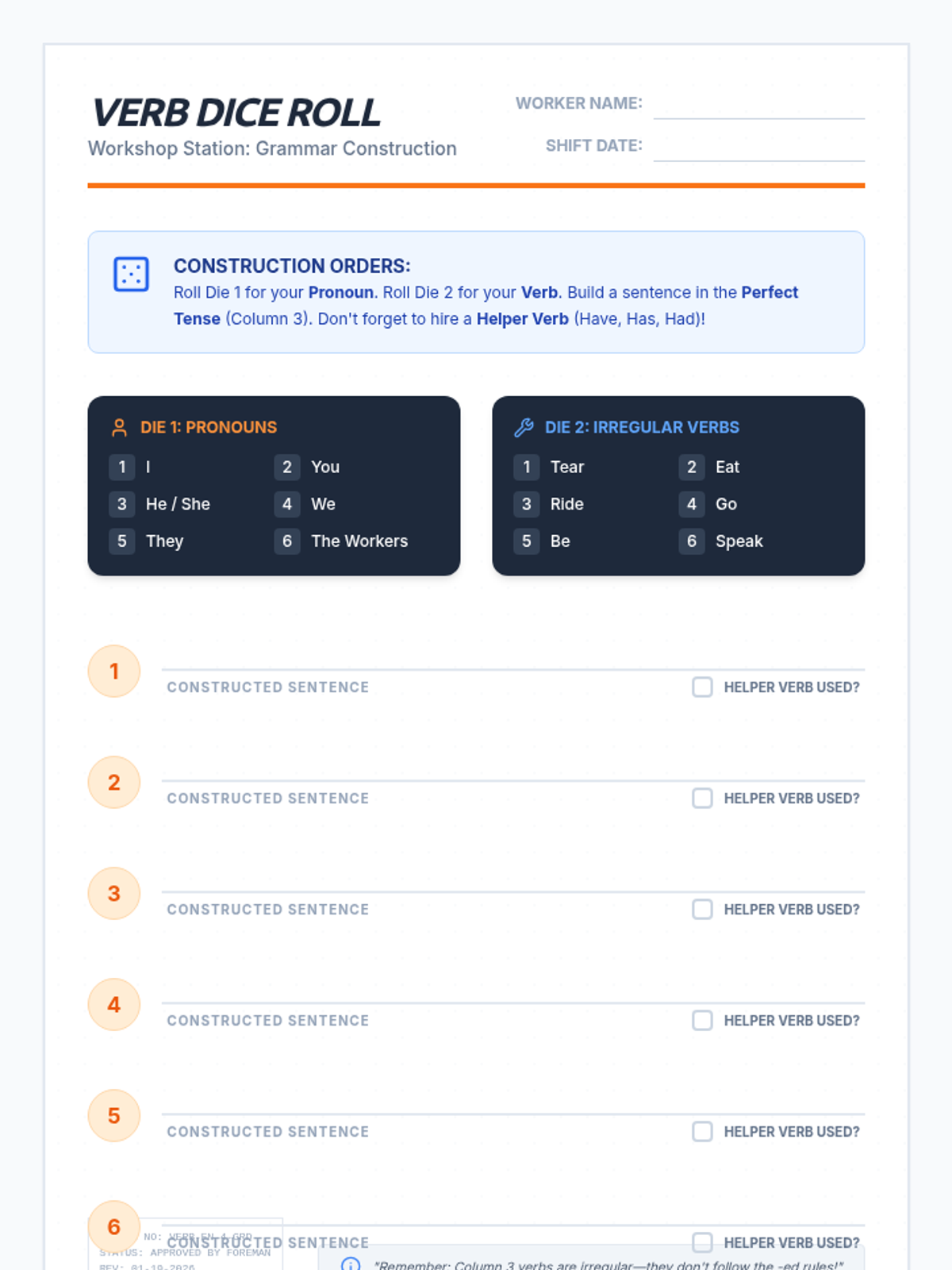
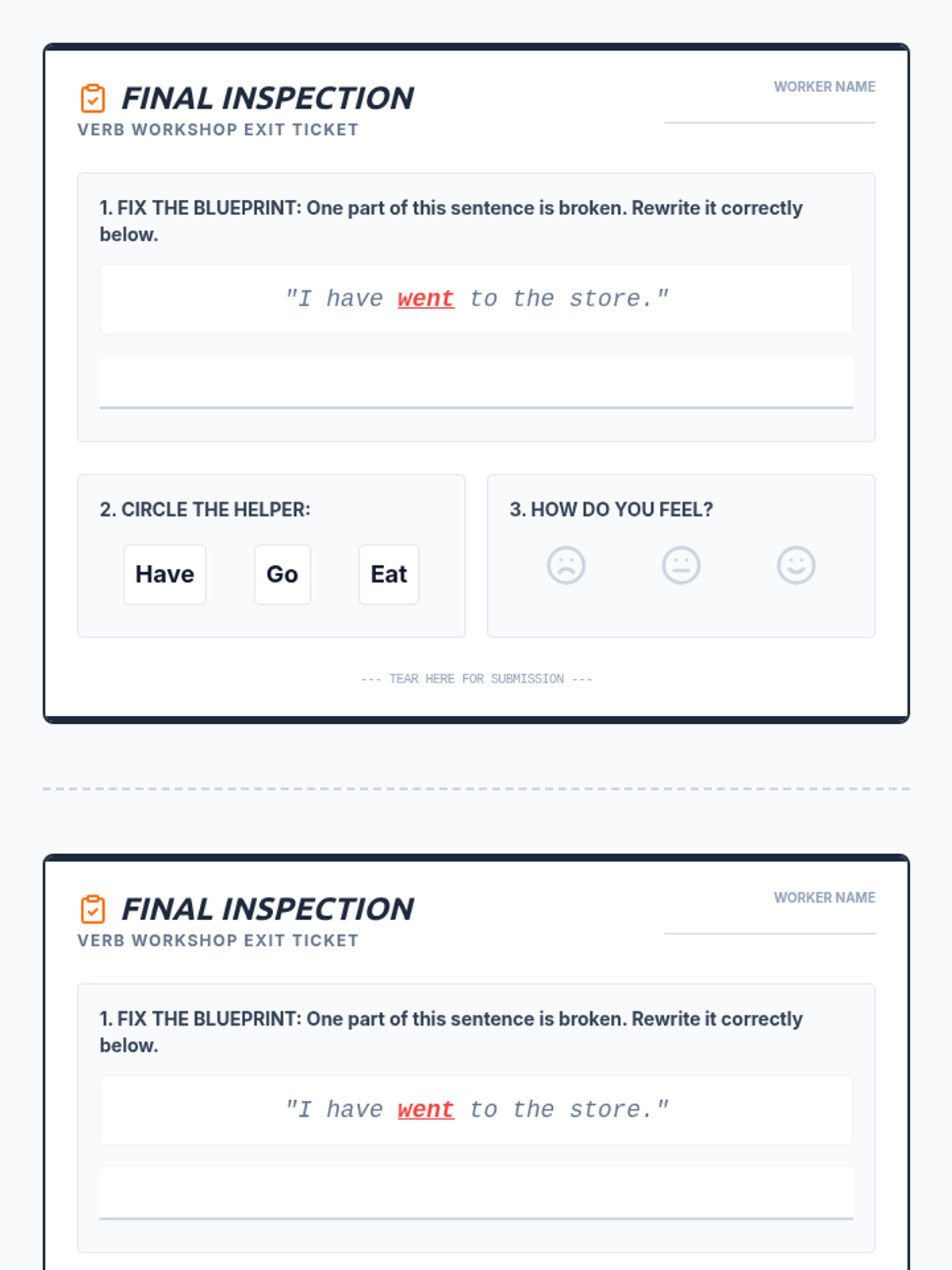
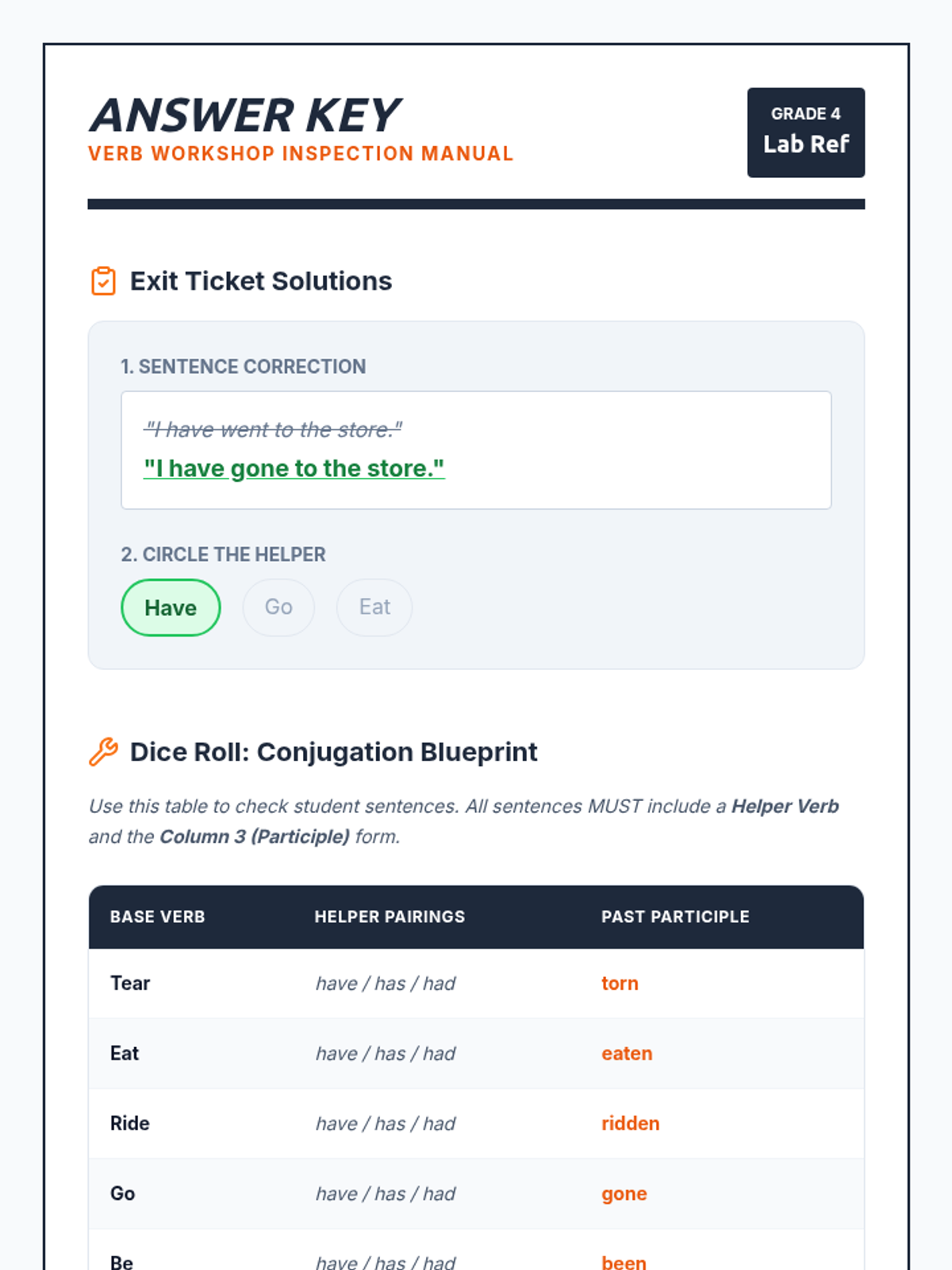
Students will learn to identify and use the past participle form of irregular verbs (specifically those ending in -en) using helper verbs (have, has, had) through a video-led discussion and a hands-on dice rolling activity.
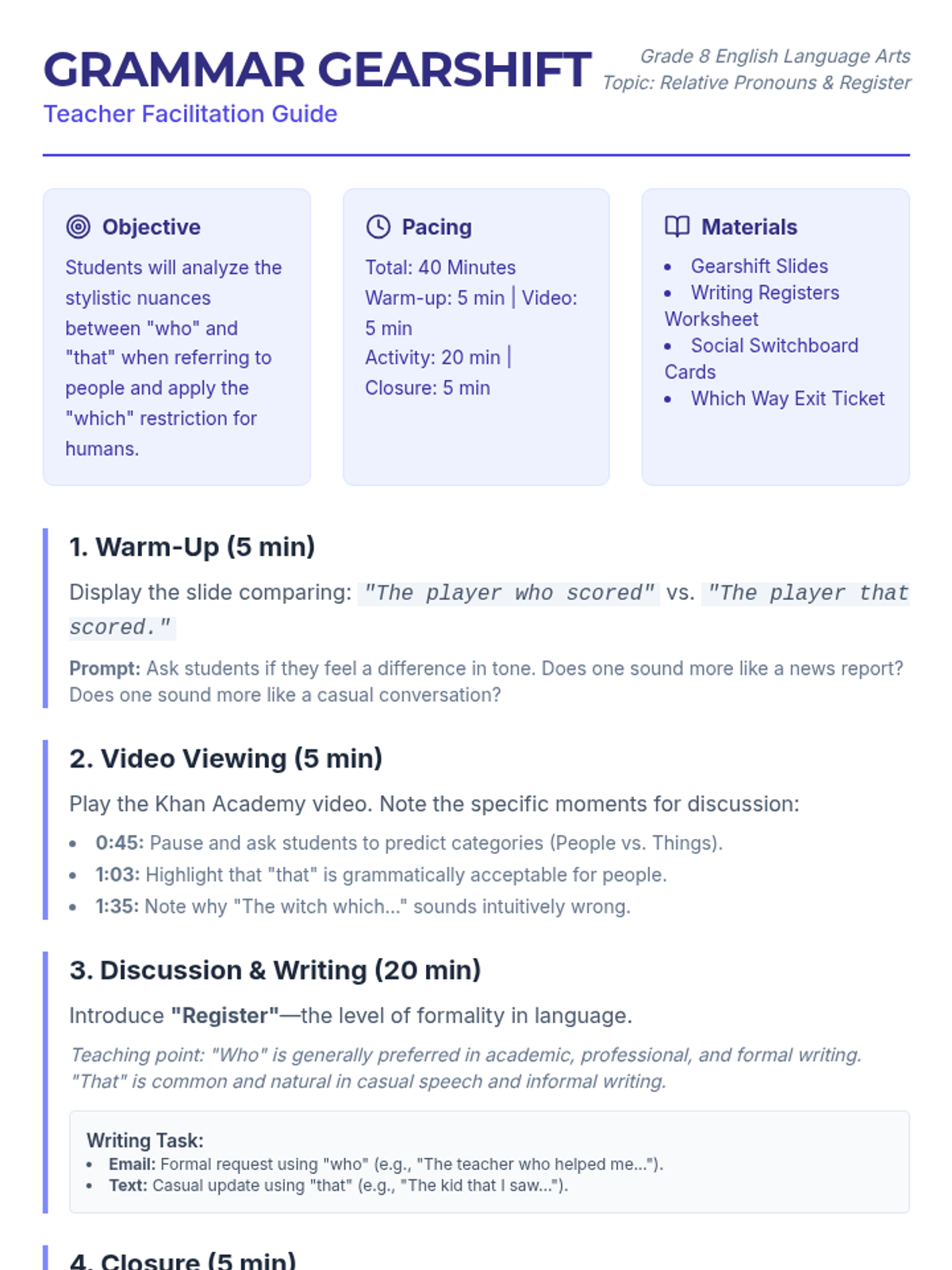
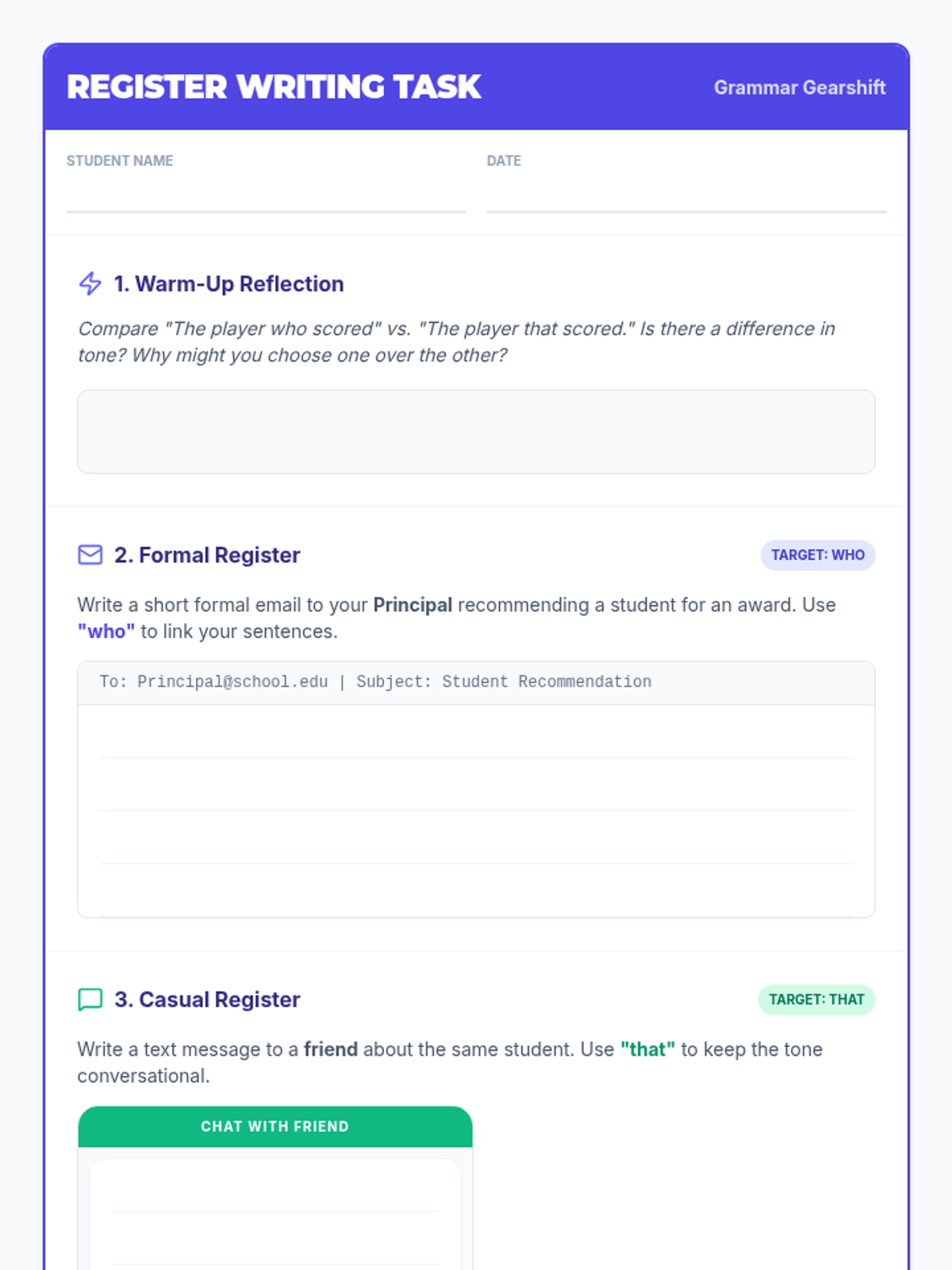
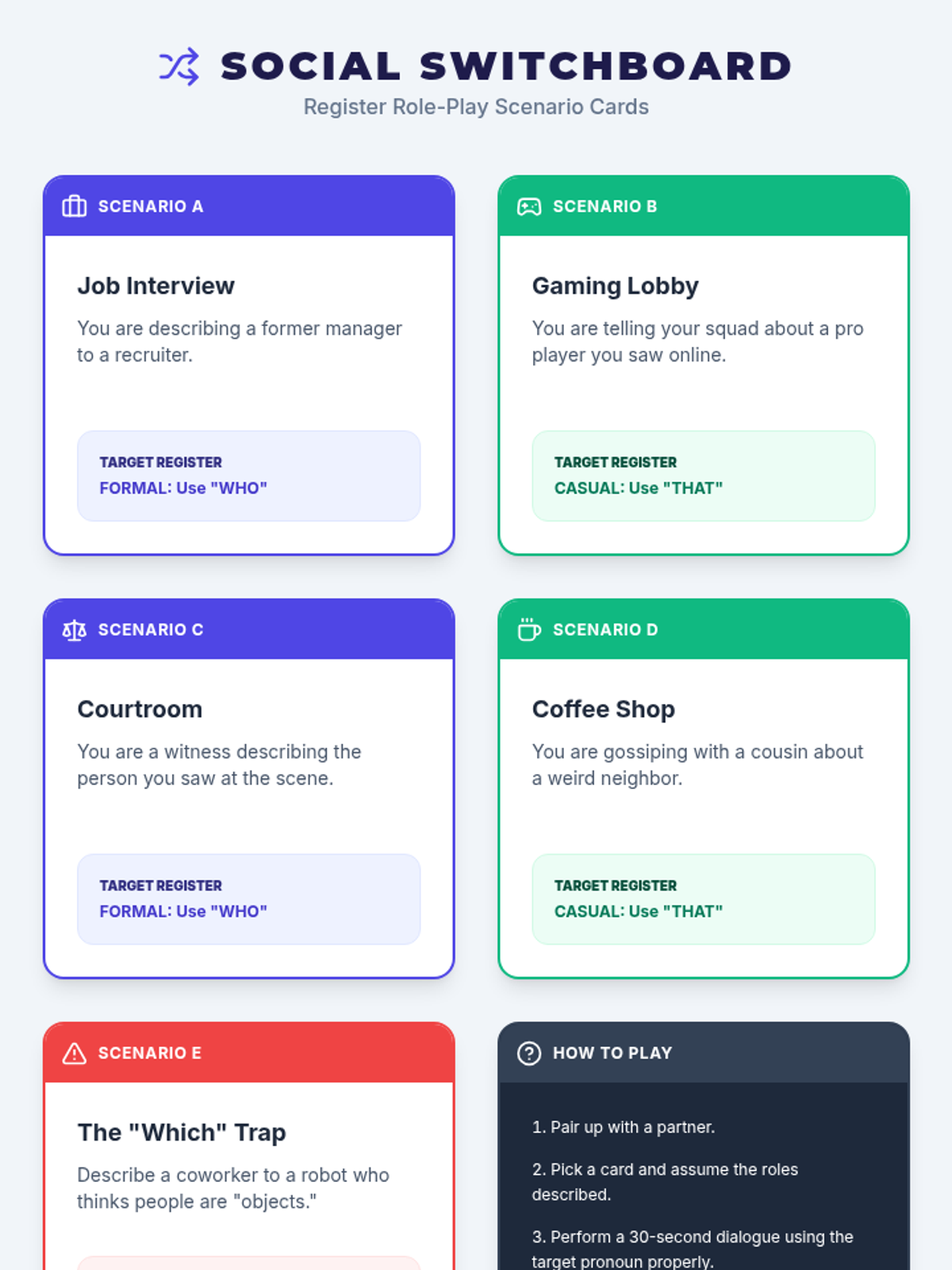
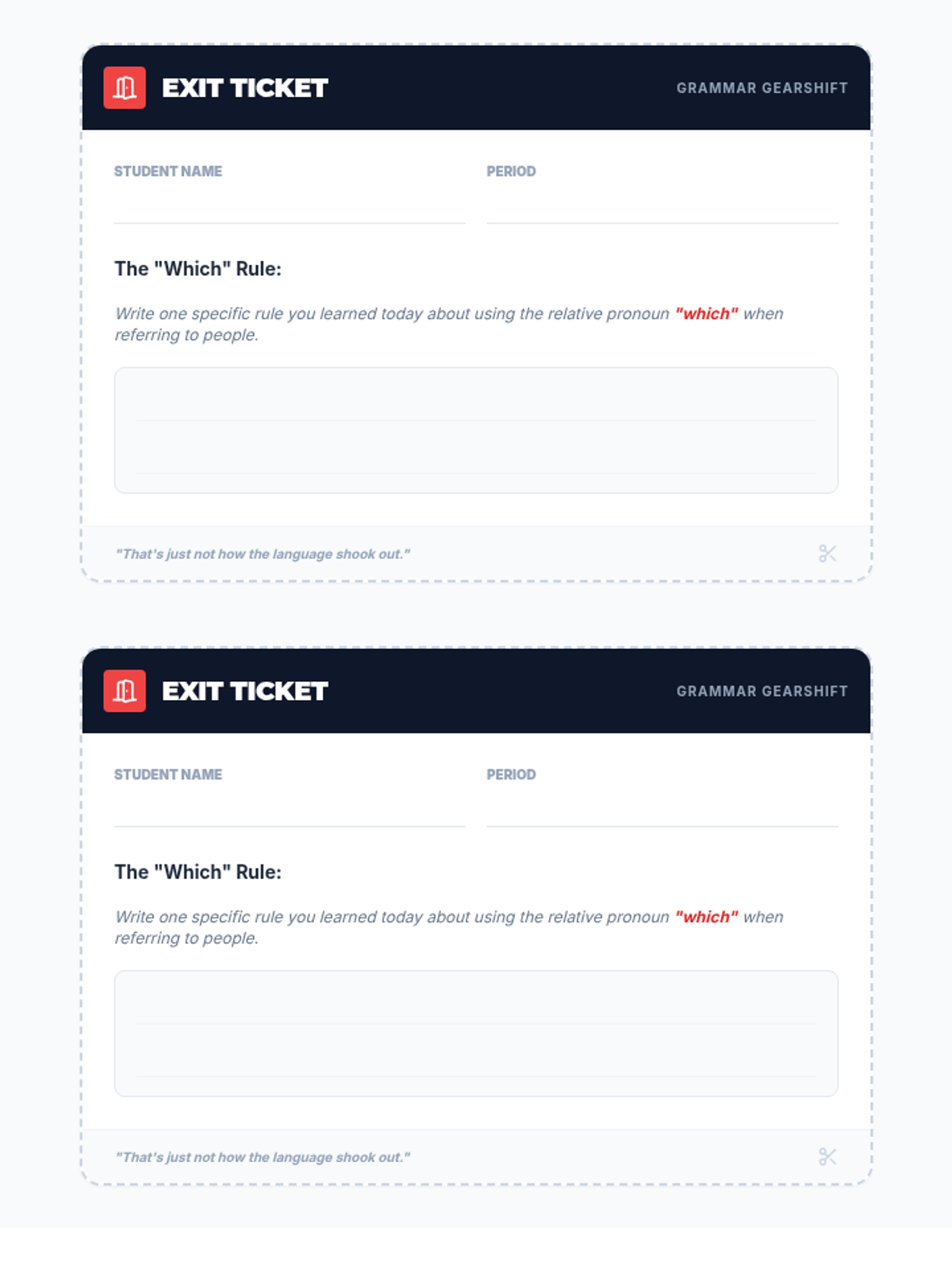
A lesson exploring the stylistic differences between 'who' and 'that' when referring to people, focusing on formal vs. informal registers and the 'which' restriction.
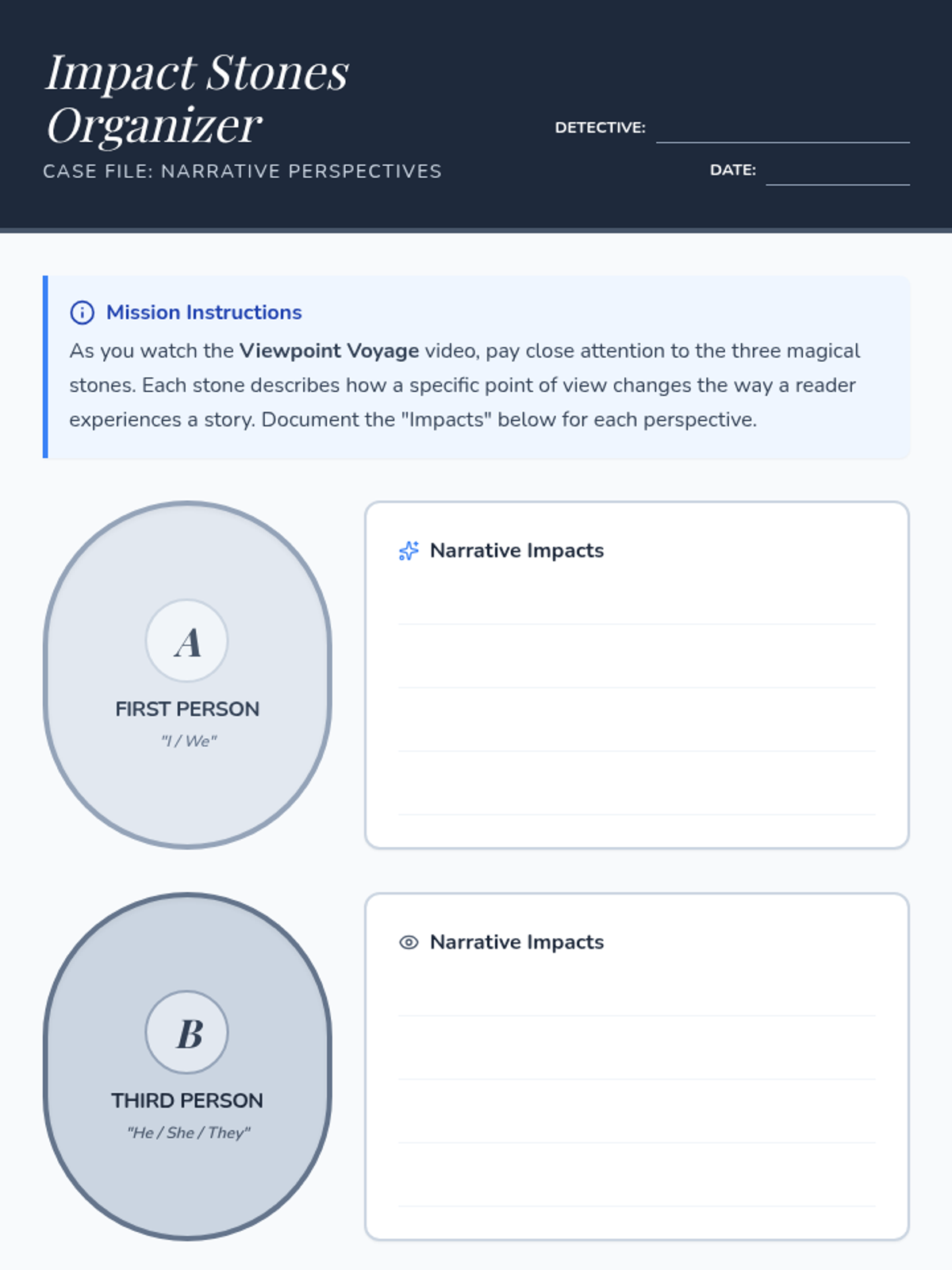
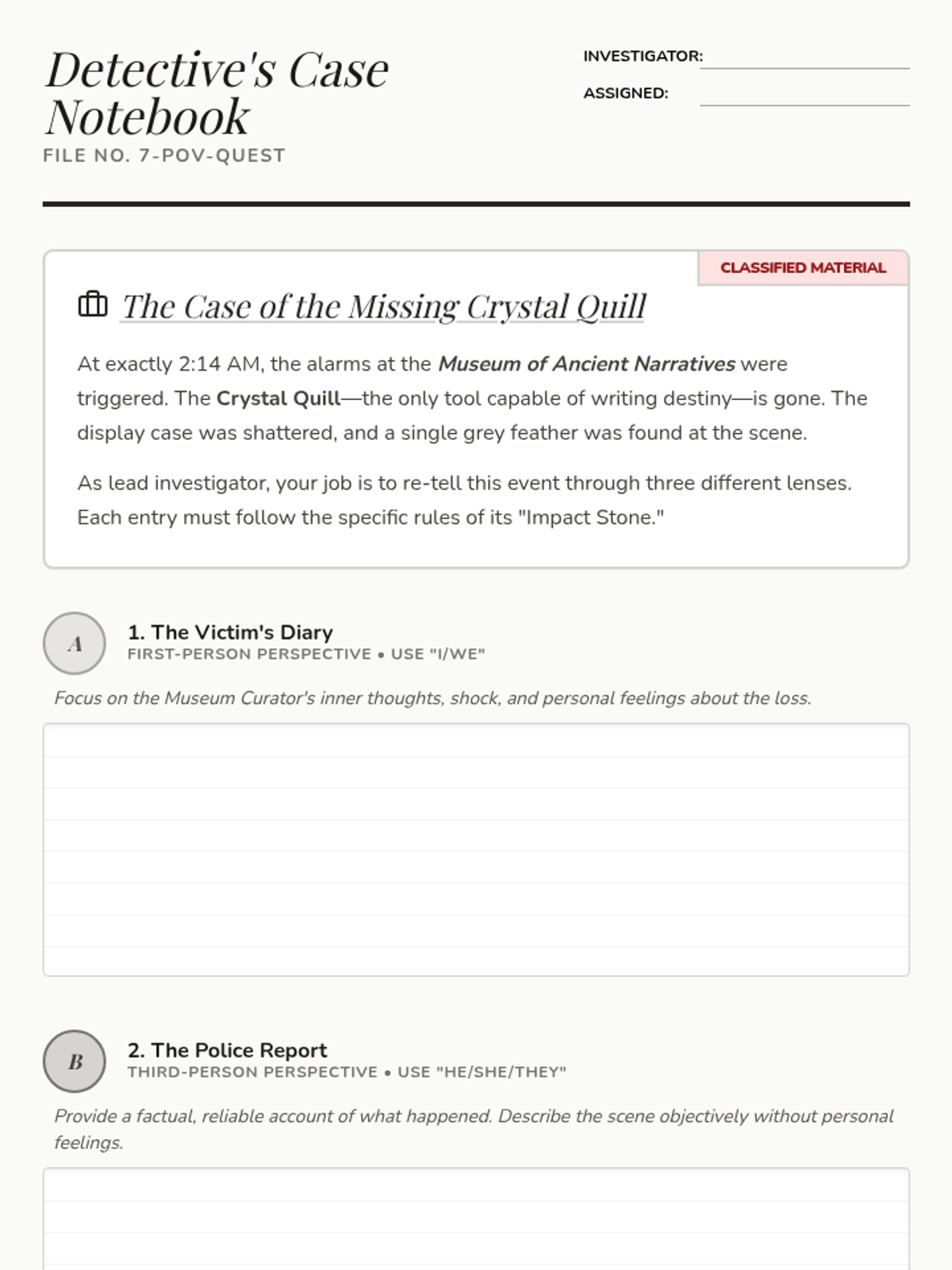
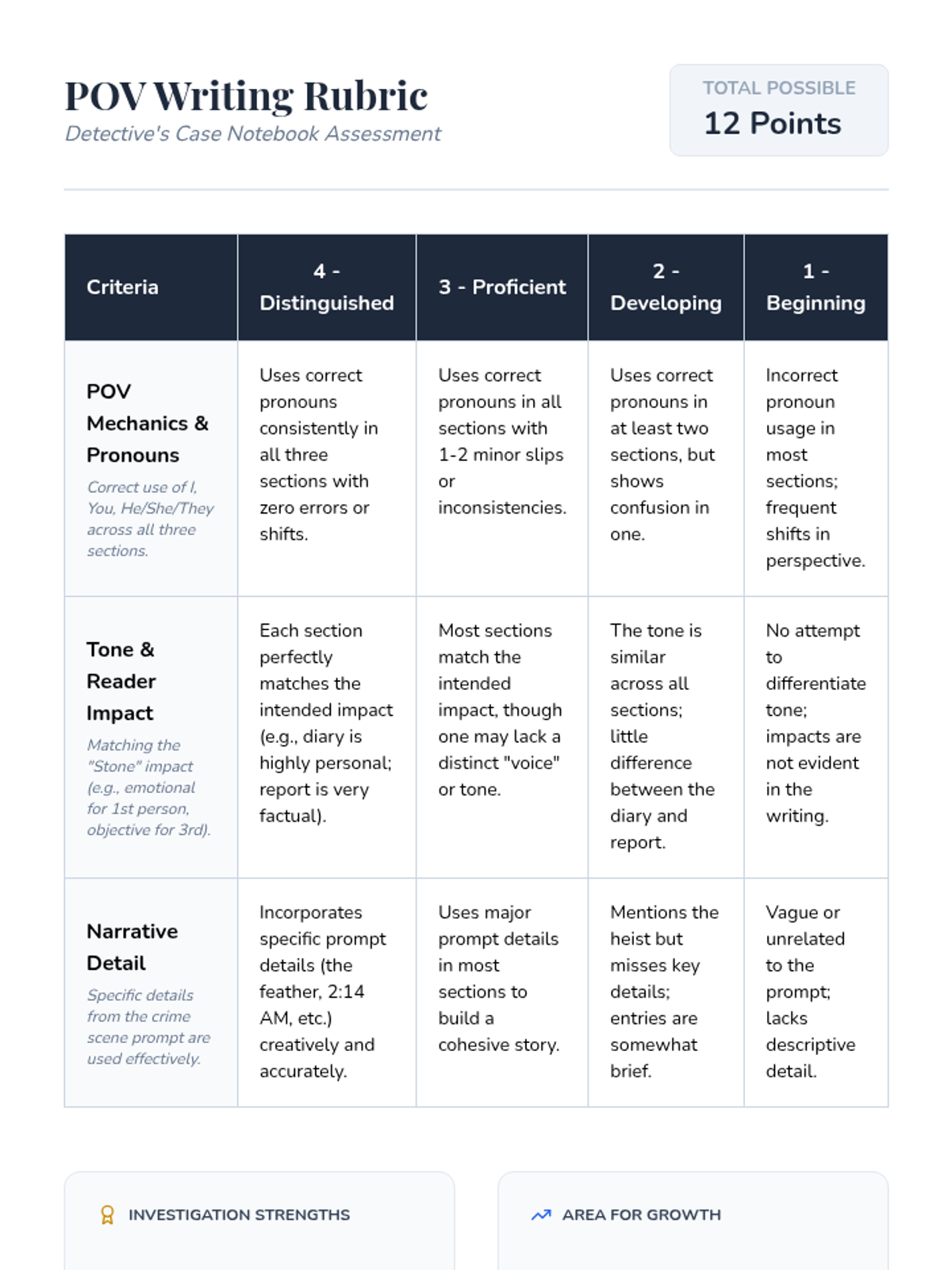
Students analyze the impact of first, second, and third-person points of view using the 'Impact Stones' framework from the Viewpoint Voyage video, culminating in a creative writing detective activity.
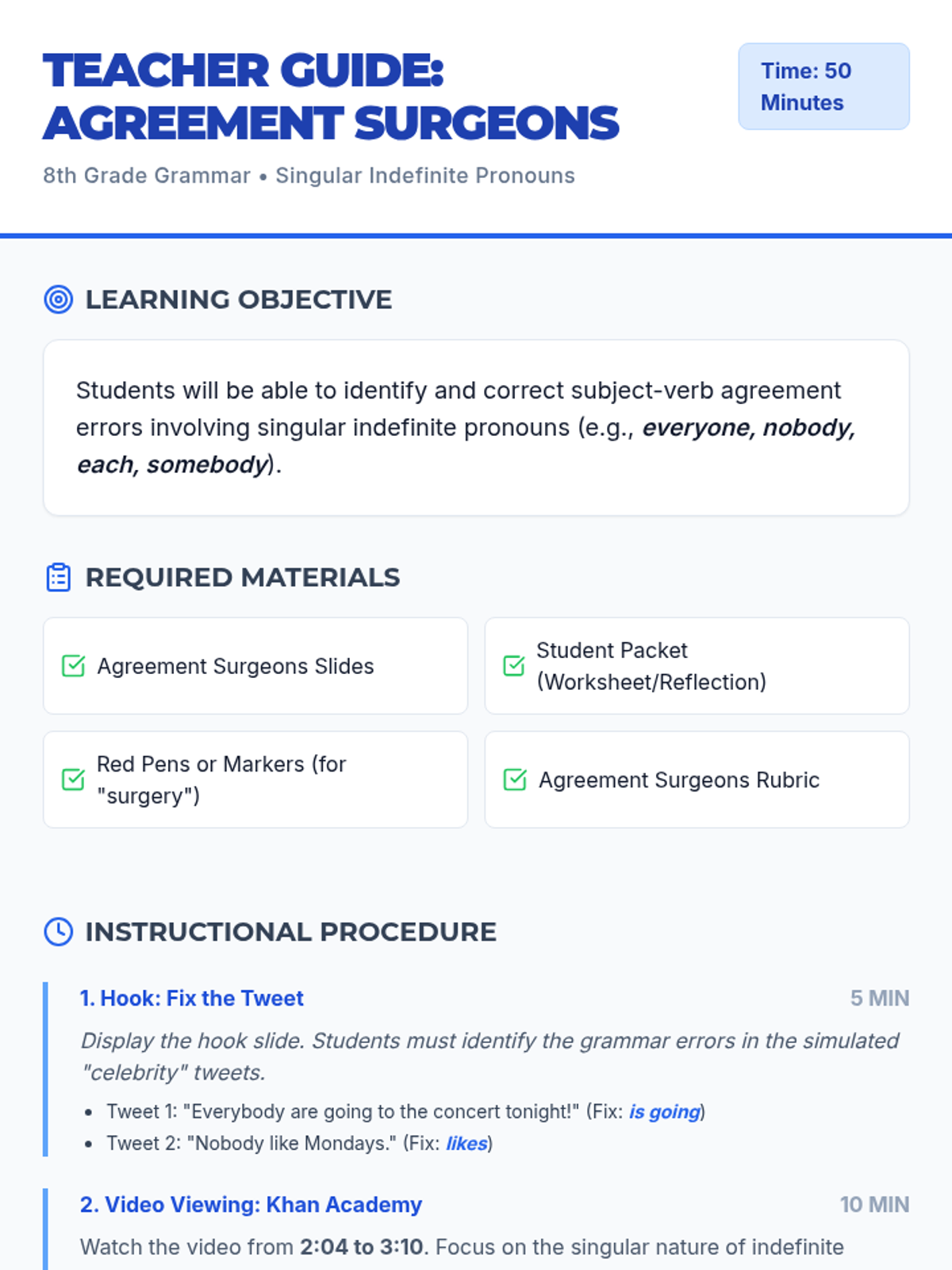
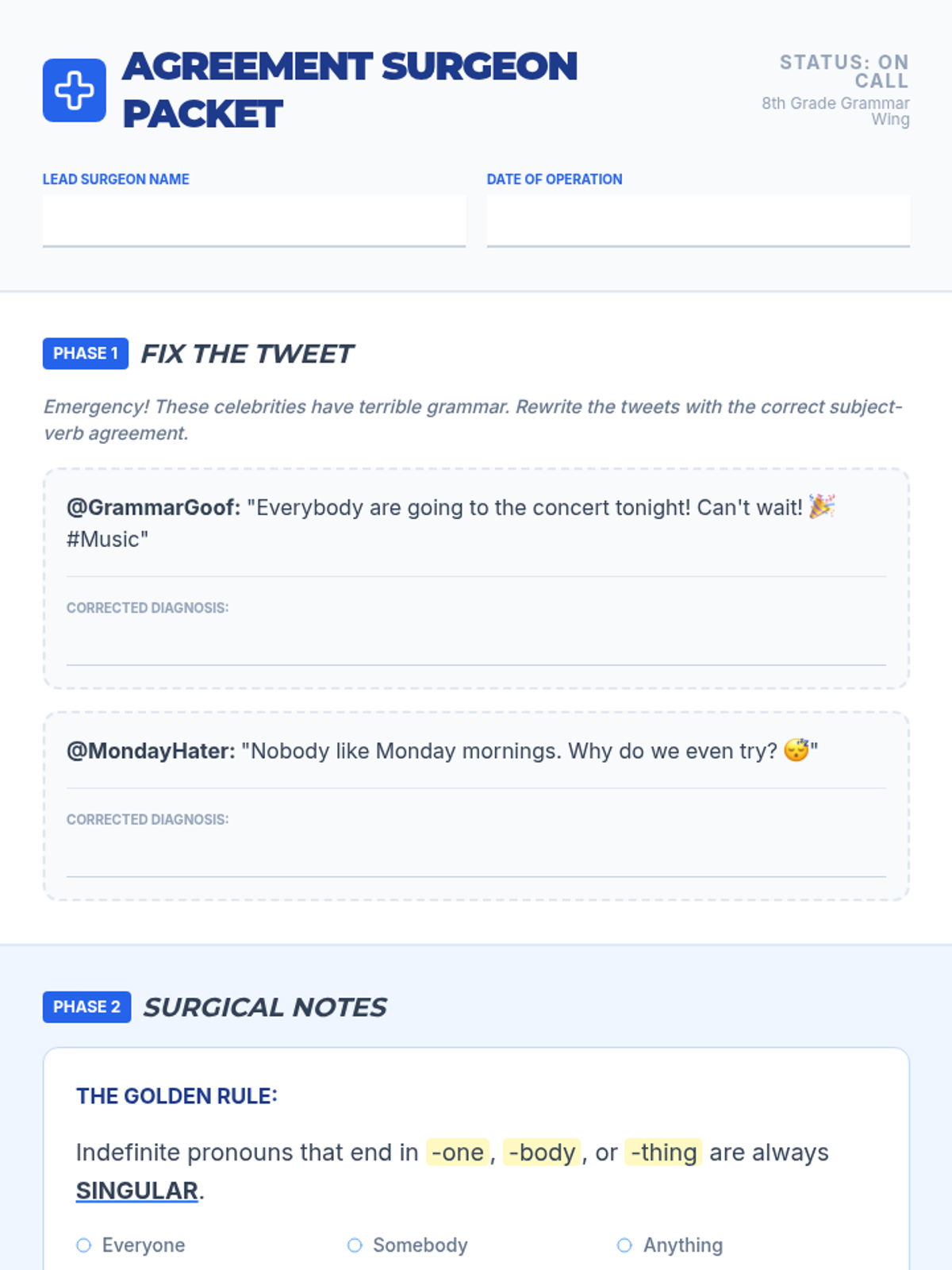
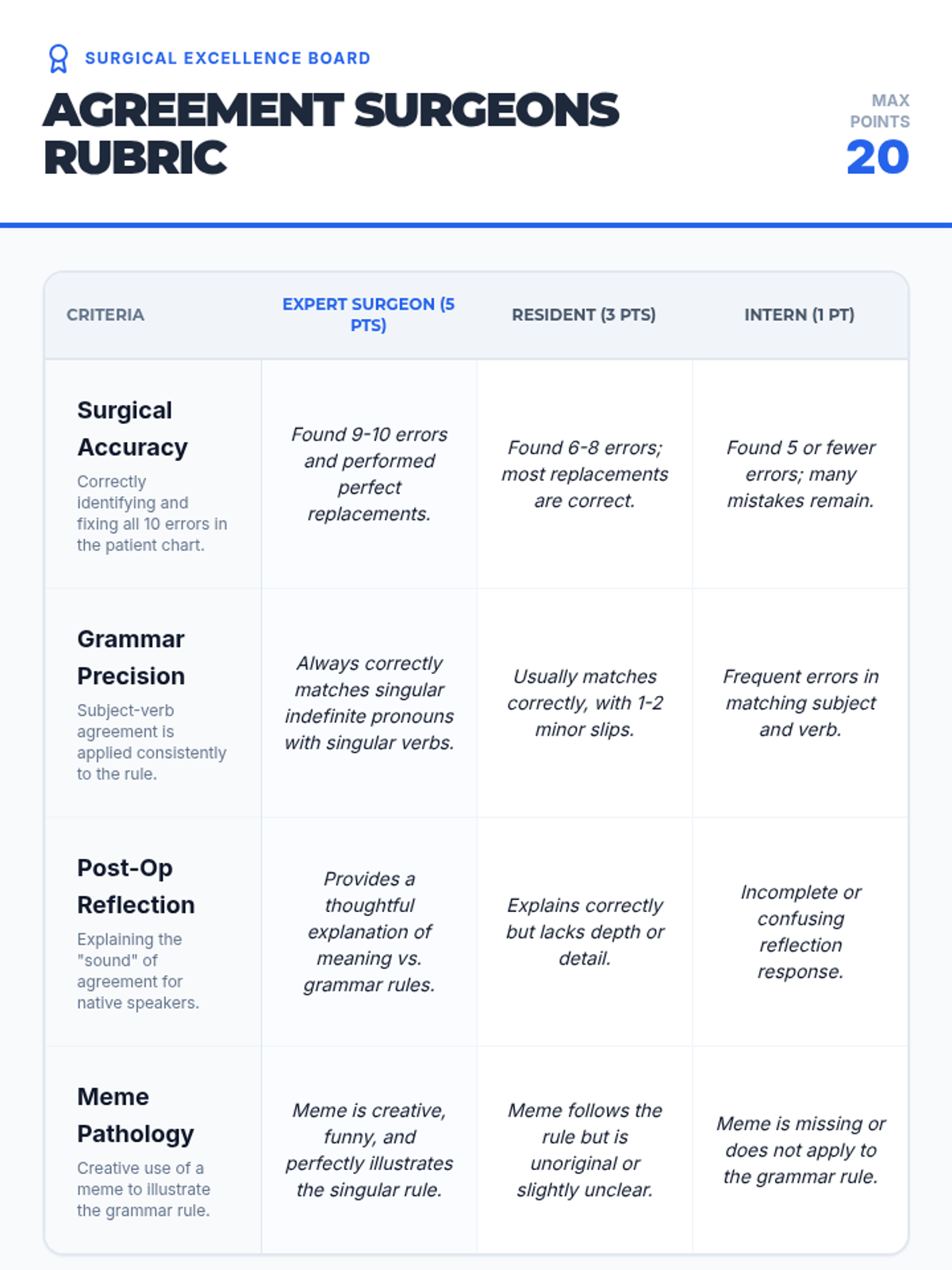
A medical-themed grammar lesson where students become 'Agreement Surgeons' to diagnose and fix subject-verb agreement errors involving singular indefinite pronouns like 'everyone' and 'nobody'.
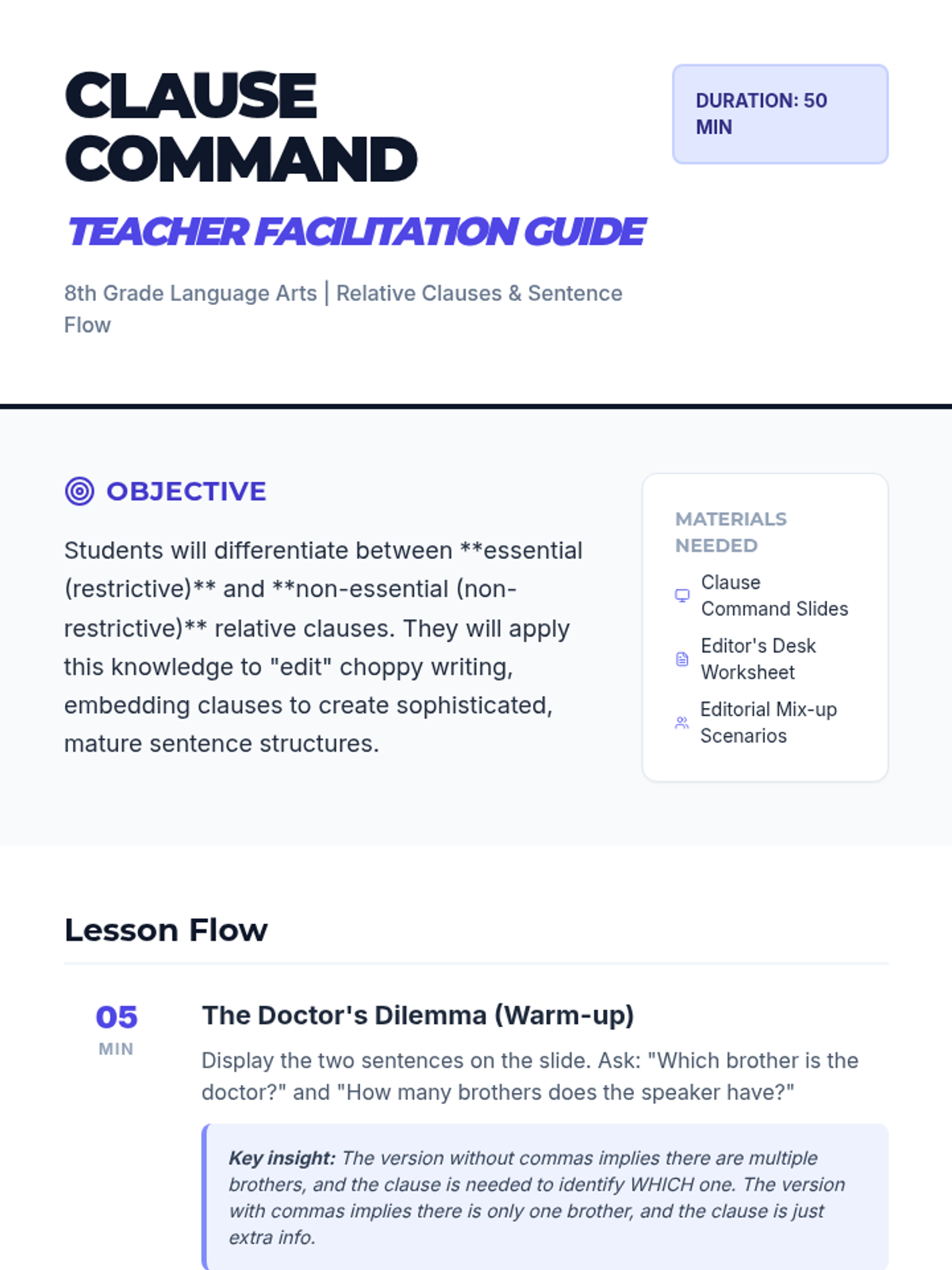
A grammar lesson for 8th graders focusing on identifying and using essential and non-essential relative clauses to improve writing flow and sophistication.
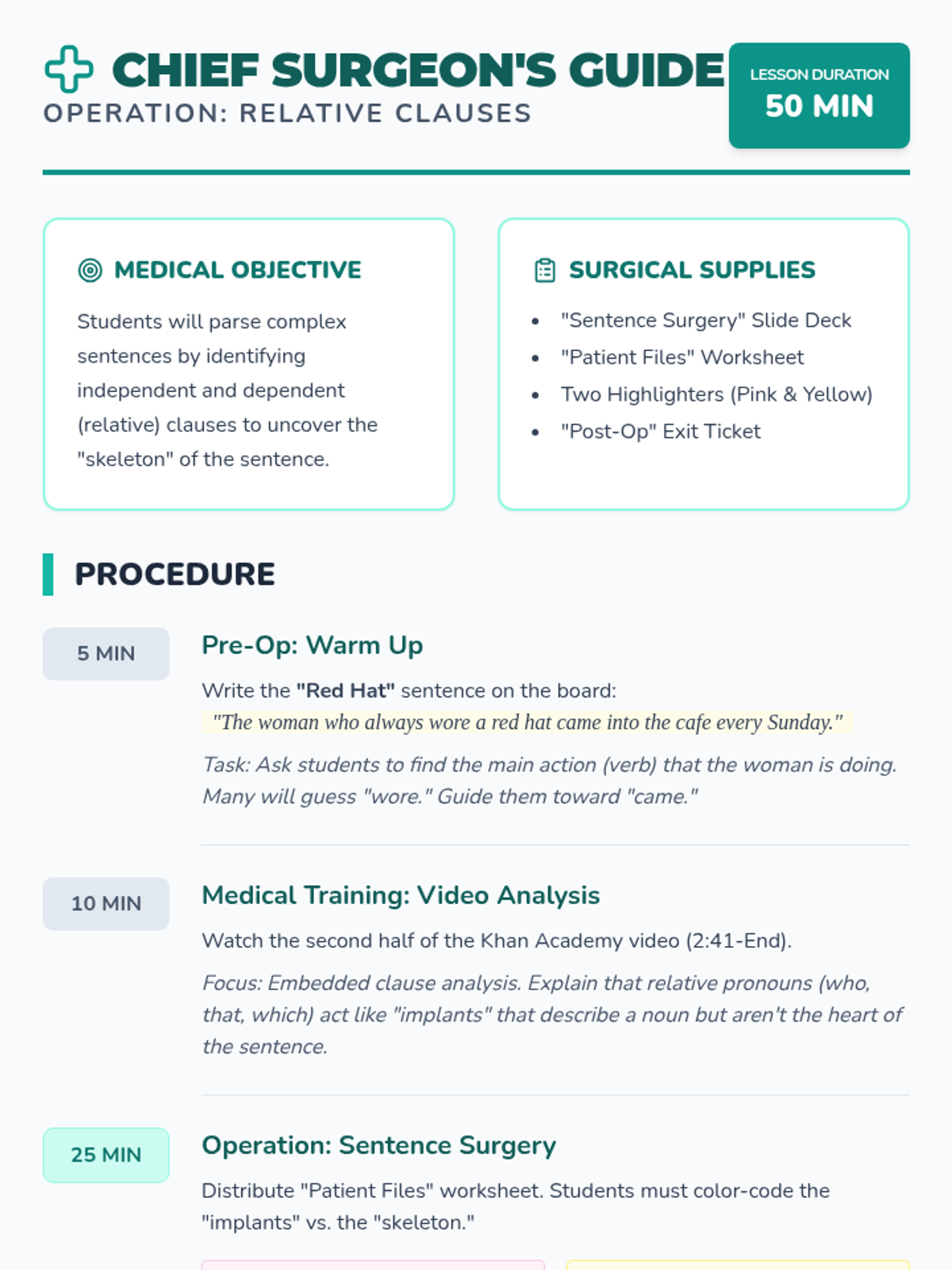
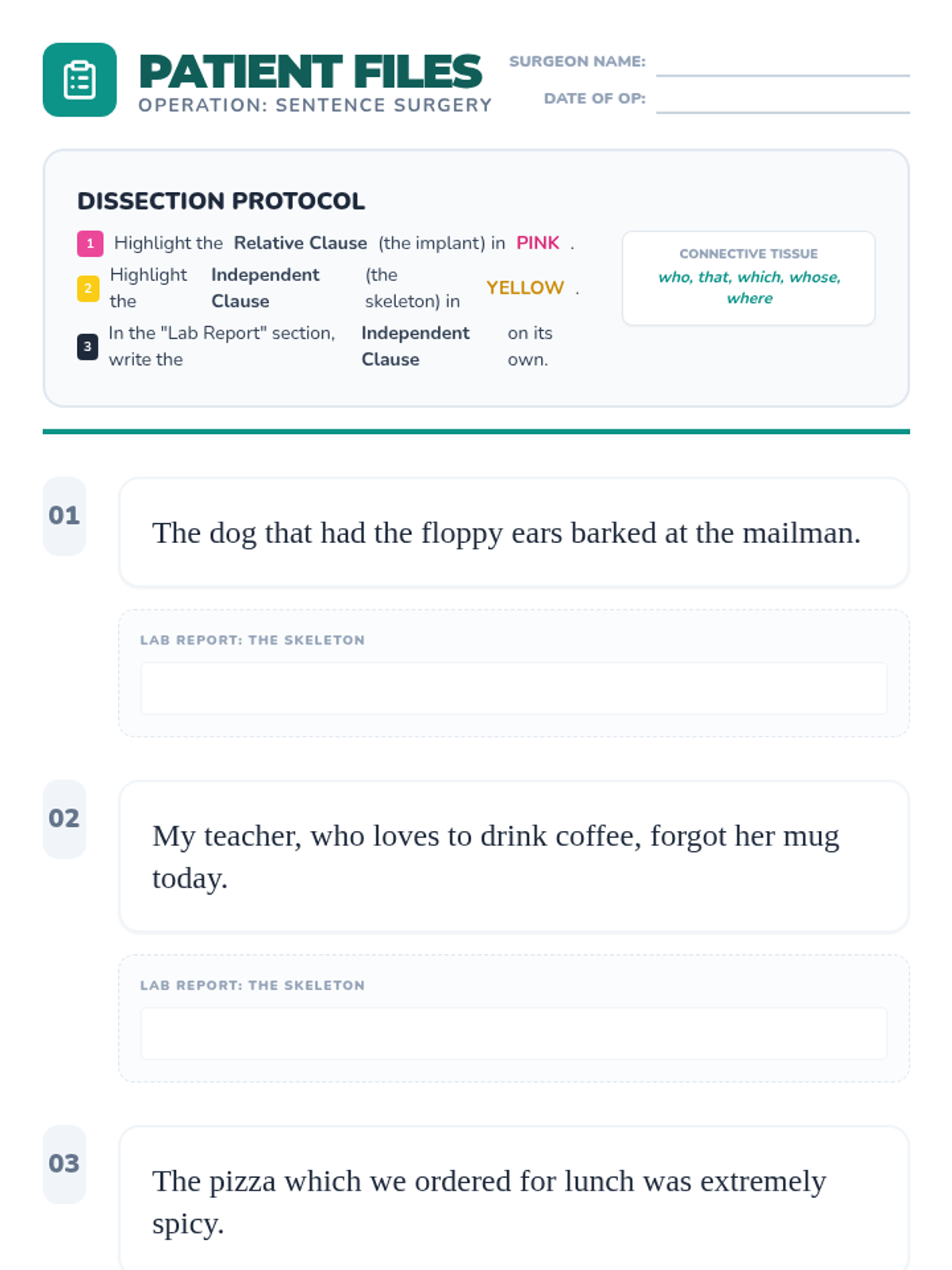
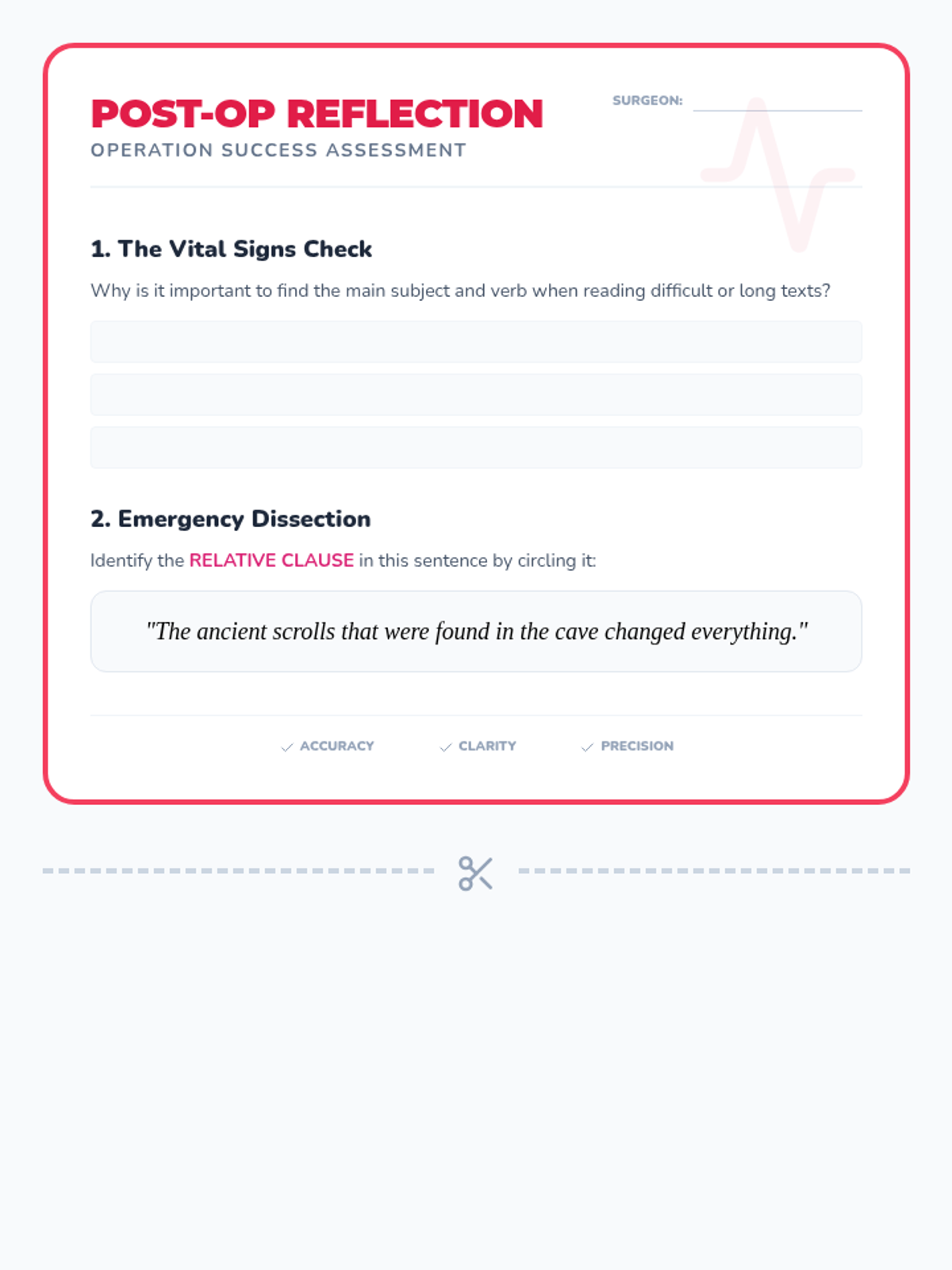
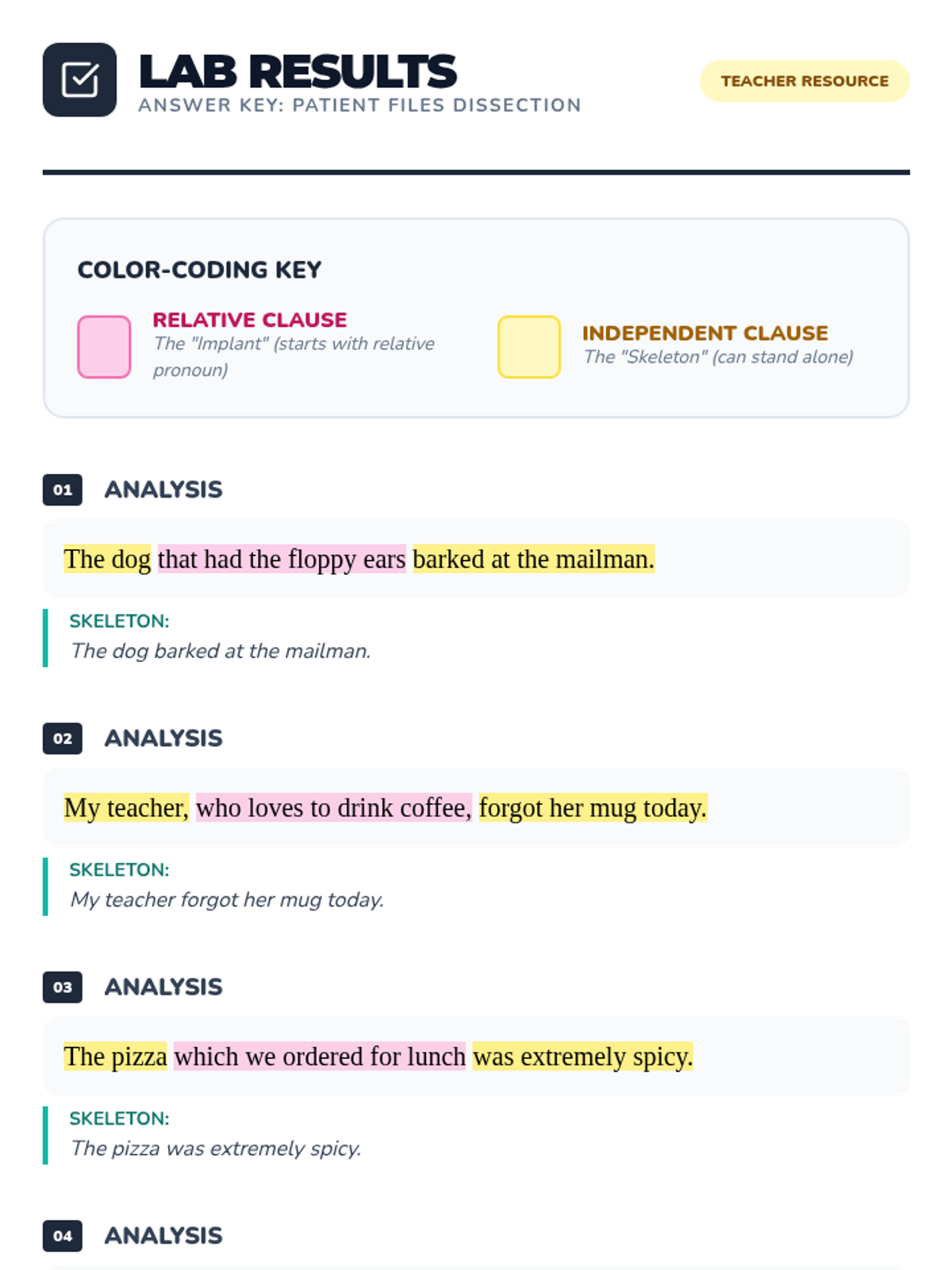
Students become language surgeons to dissect complex sentences, identifying the 'skeleton' (independent clause) and 'implants' (relative clauses) using a clinical medical theme.
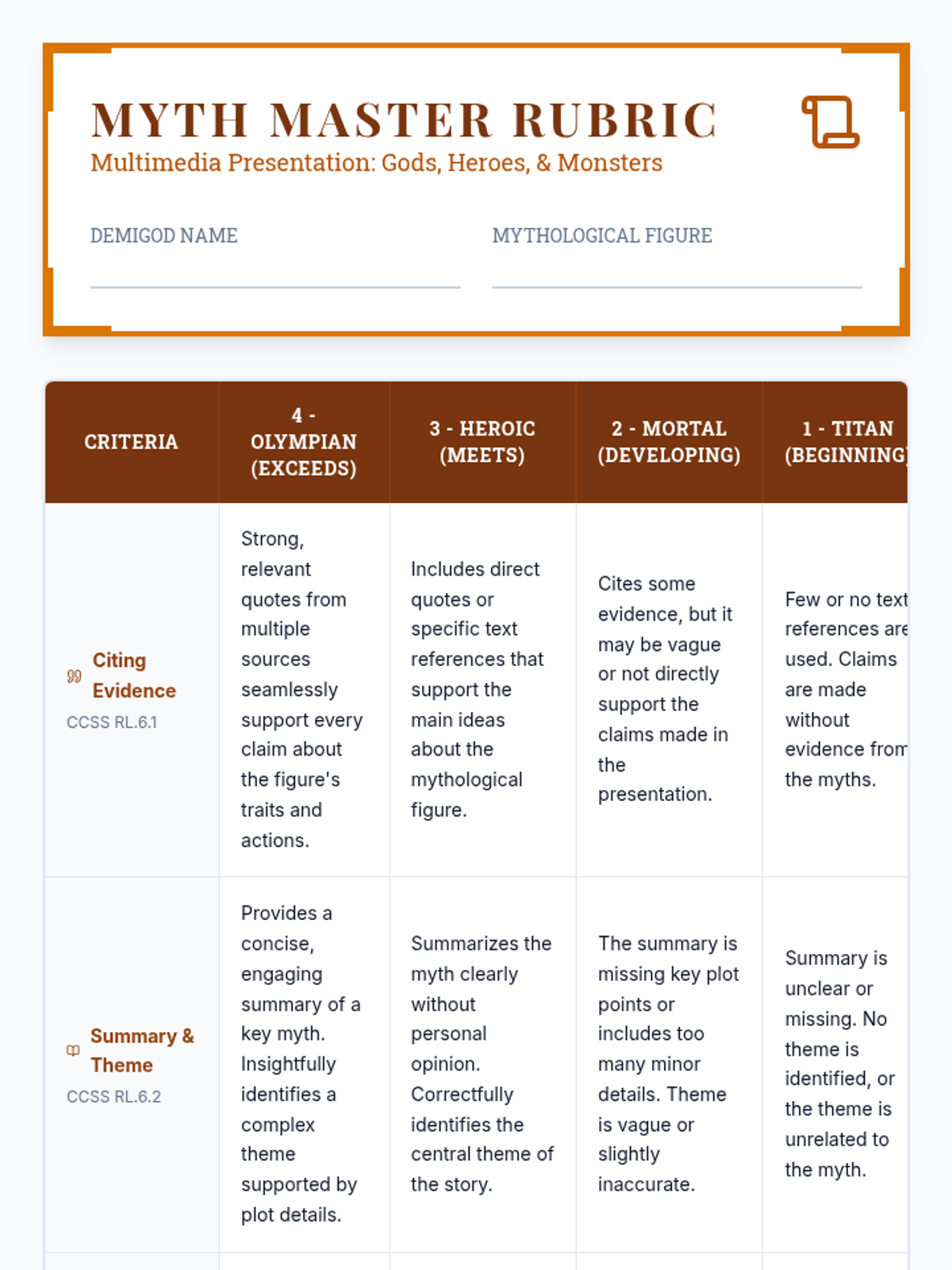
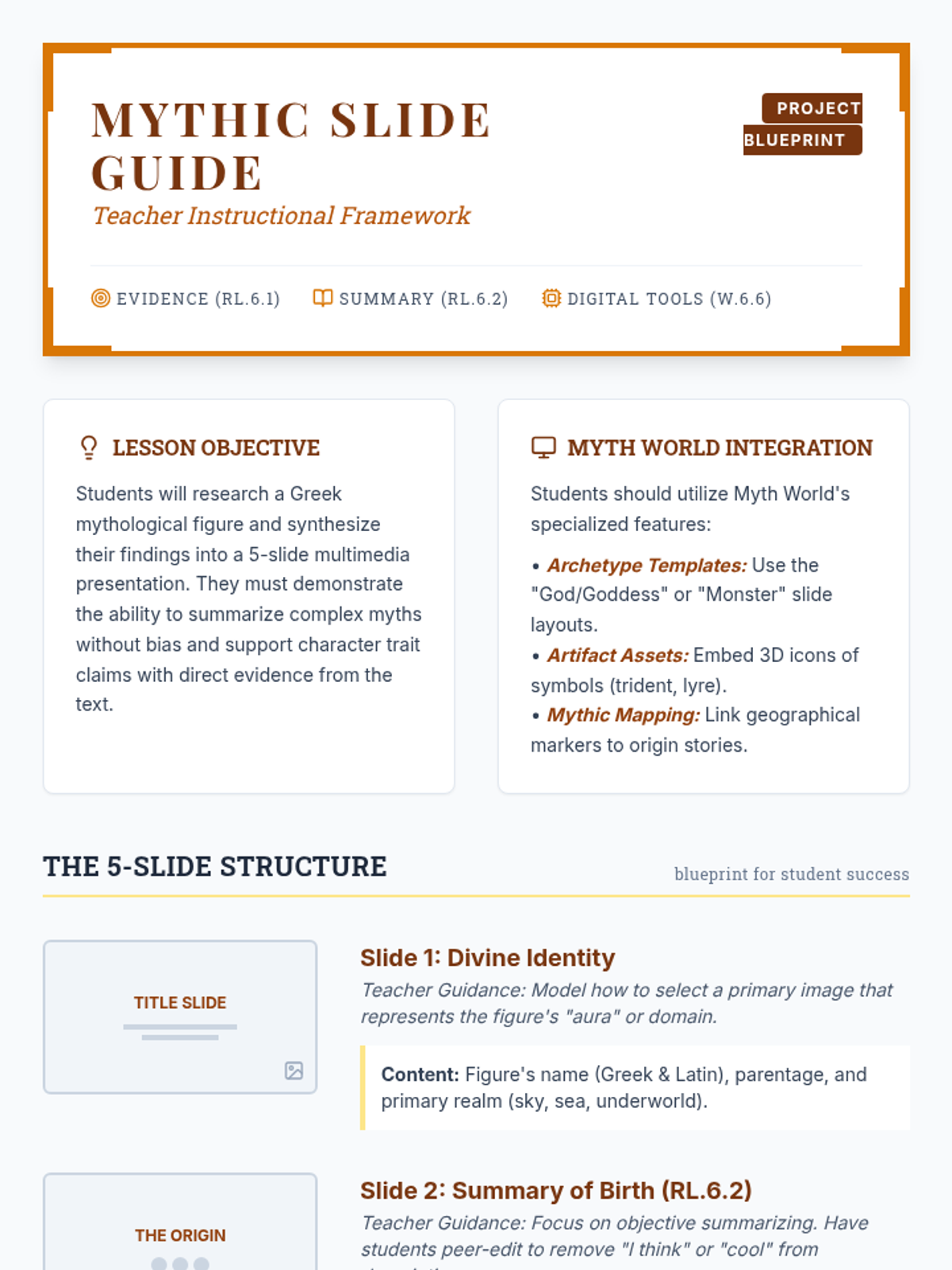
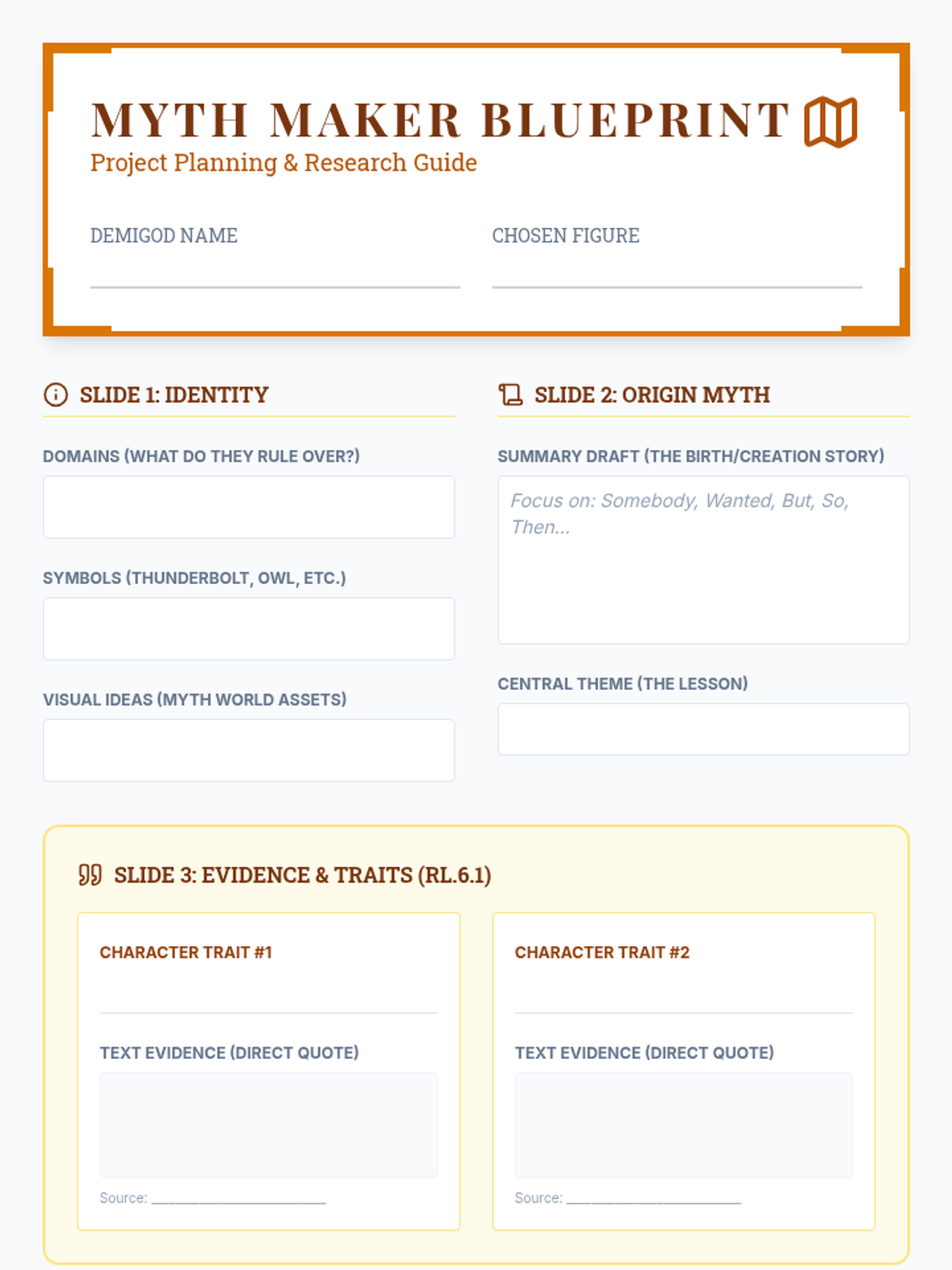
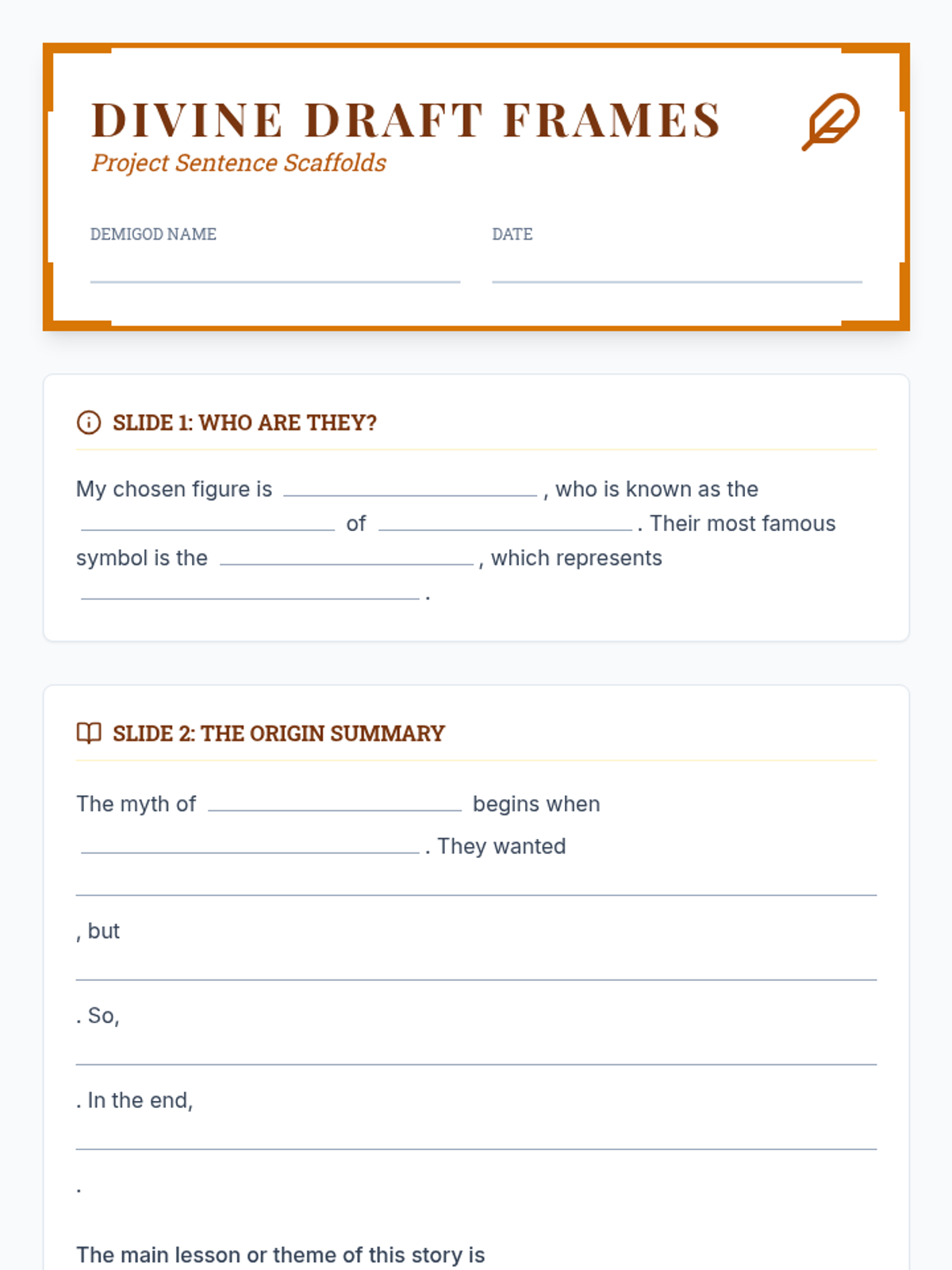
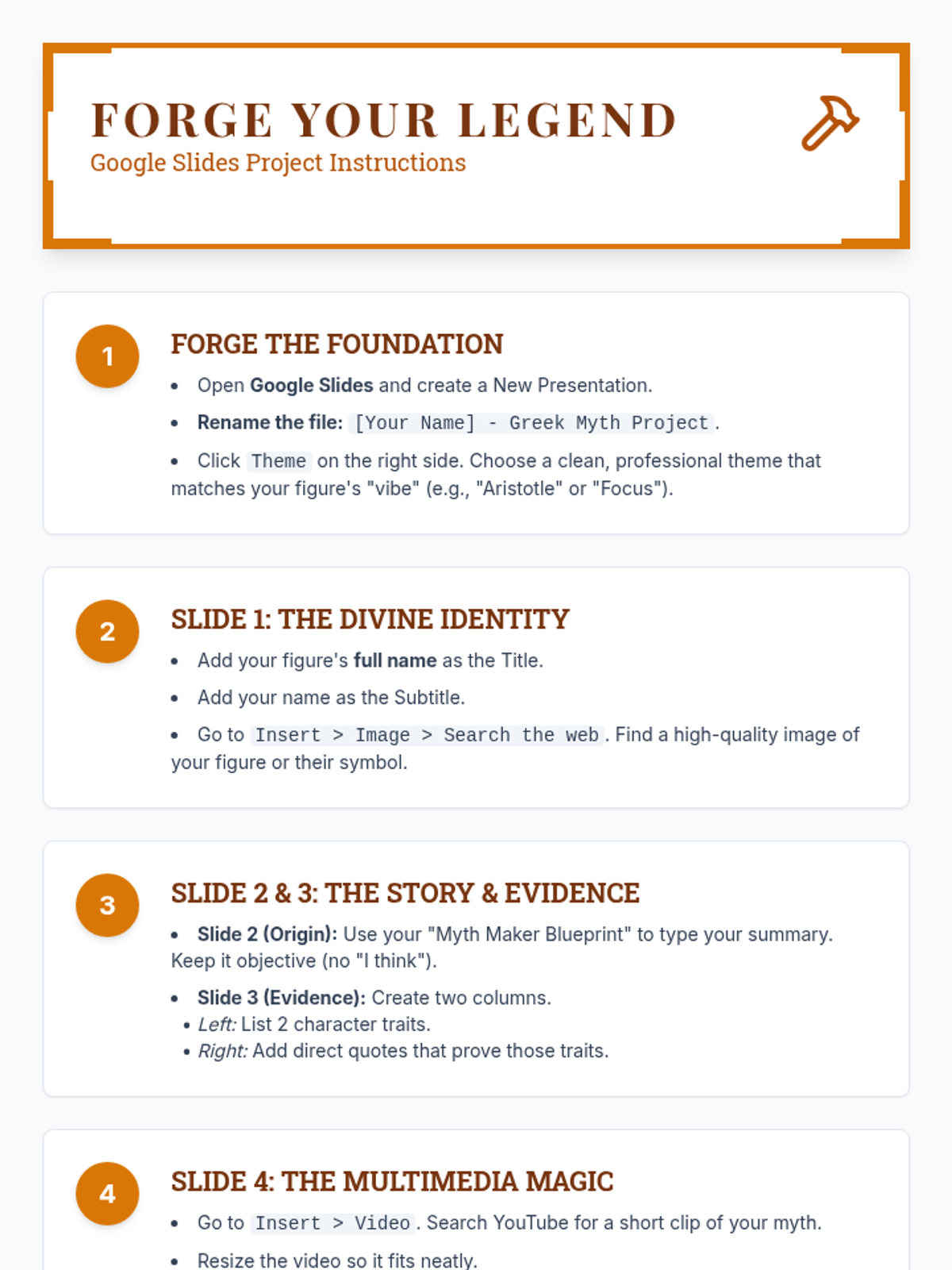
A comprehensive project where students research a Greek mythological figure and create a multimedia presentation demonstrating their understanding of text evidence, summarization, and digital storytelling.
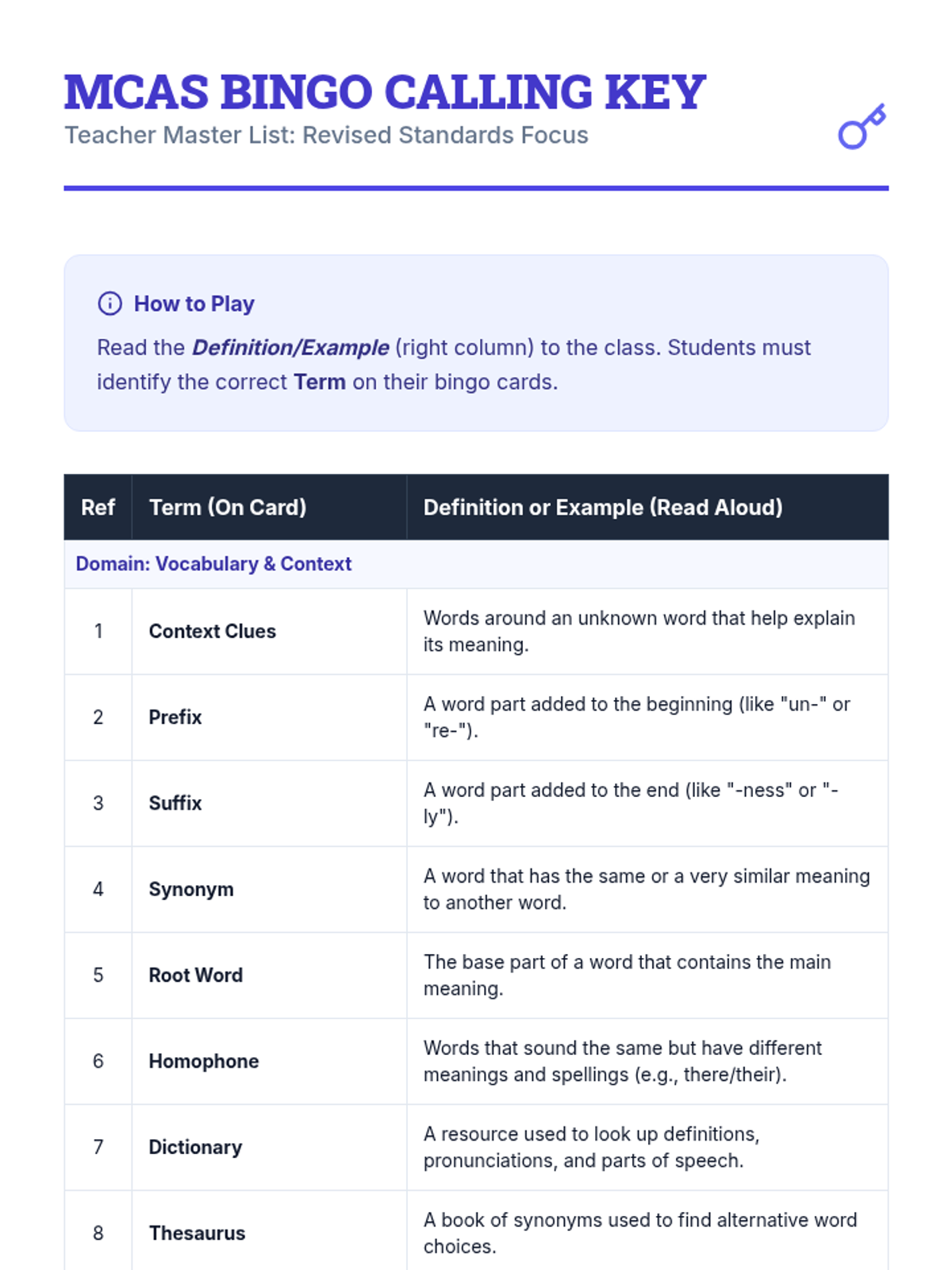
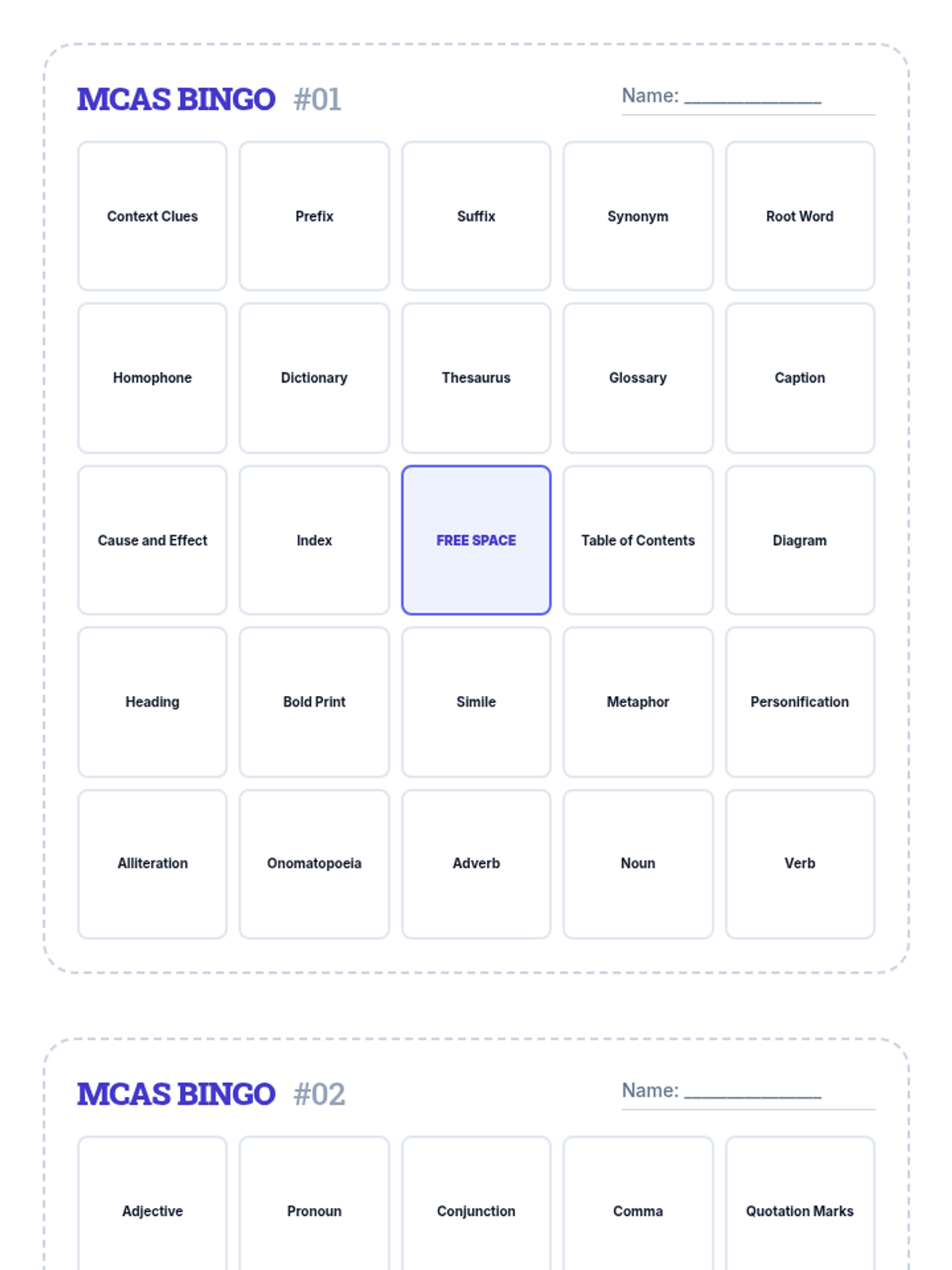
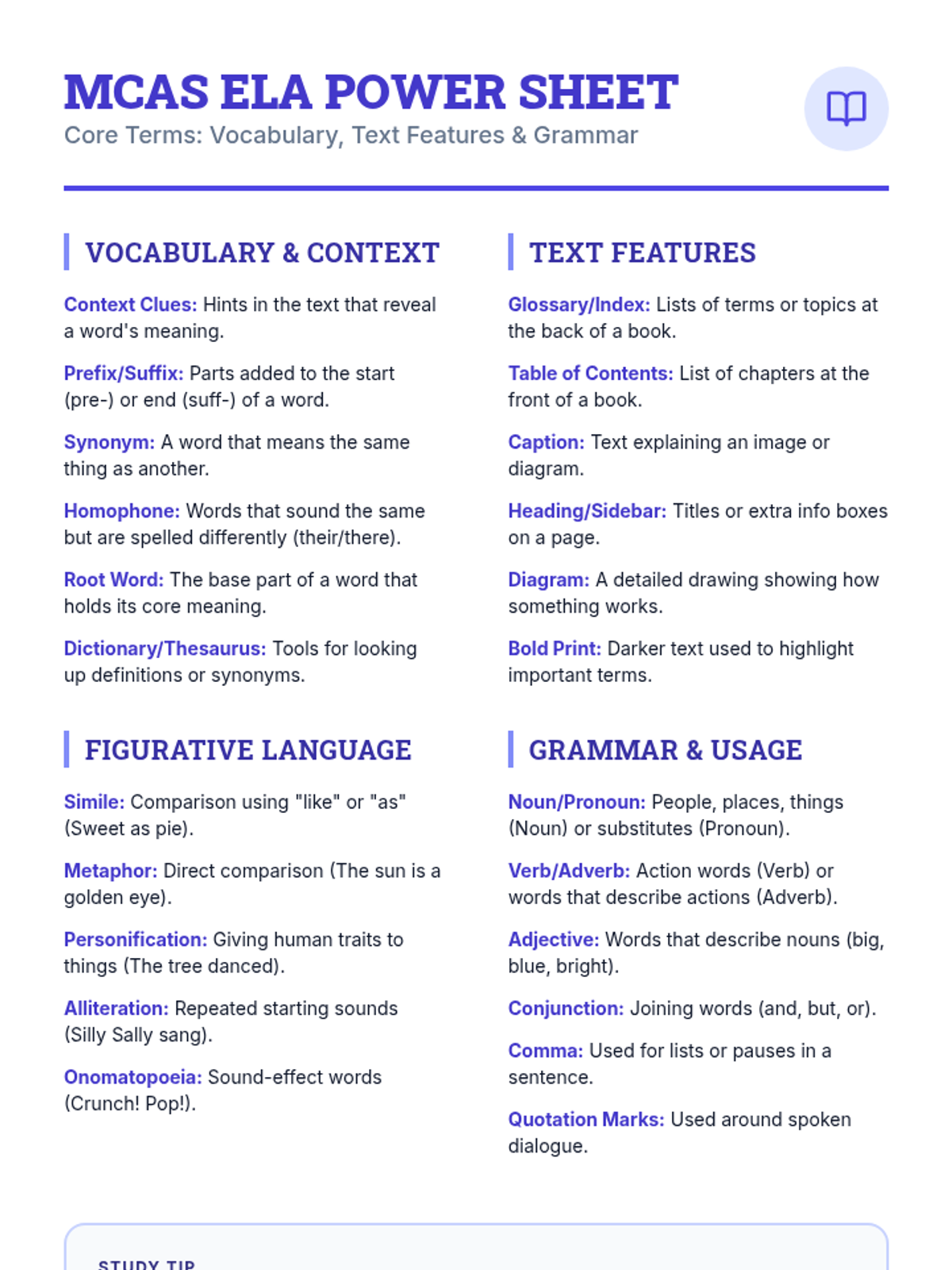
A comprehensive ELA review game designed to help students master MCAS standards through a competitive and engaging bingo format. The lesson covers vocabulary, literary elements, text structures, and grammar.
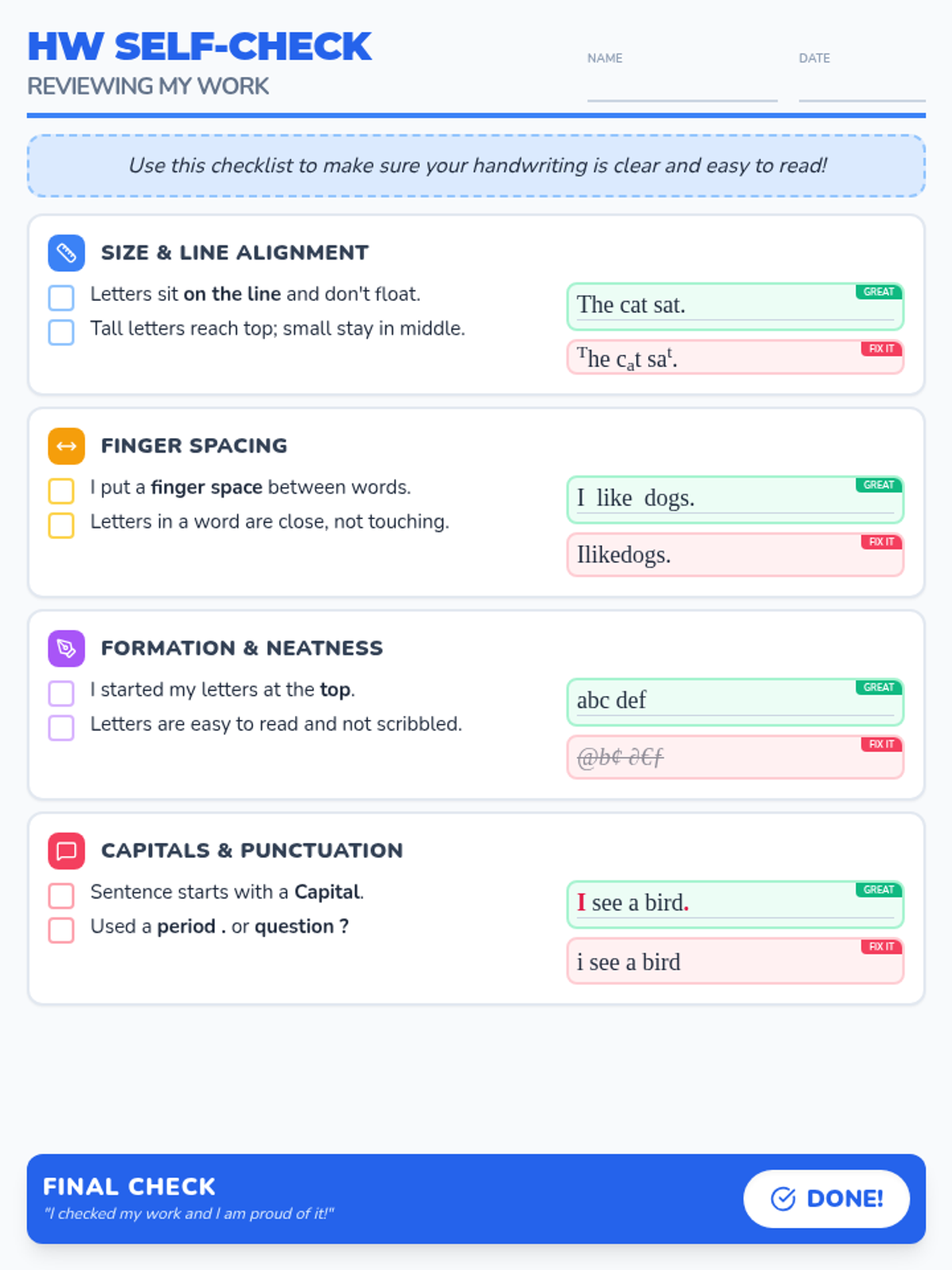
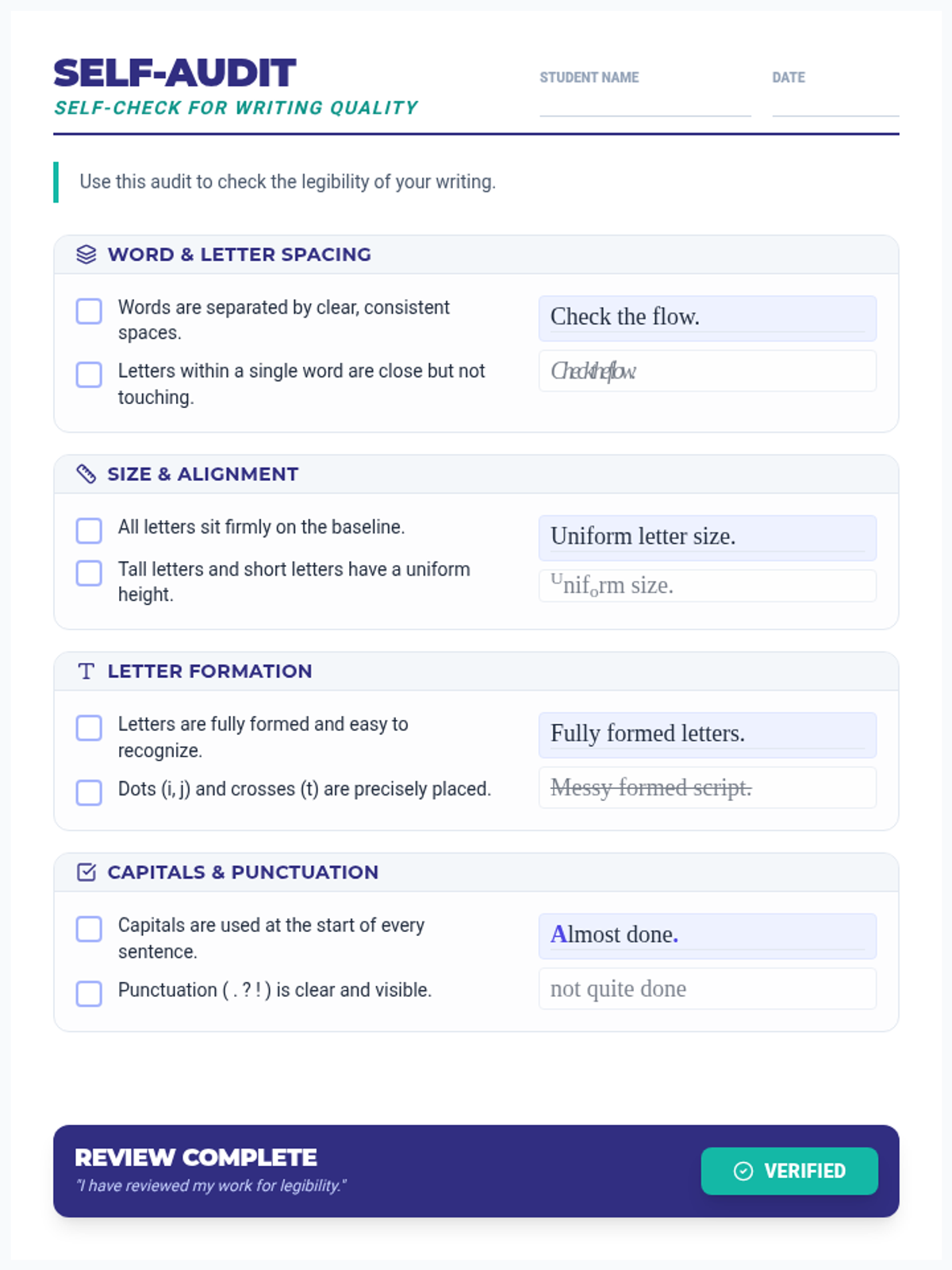
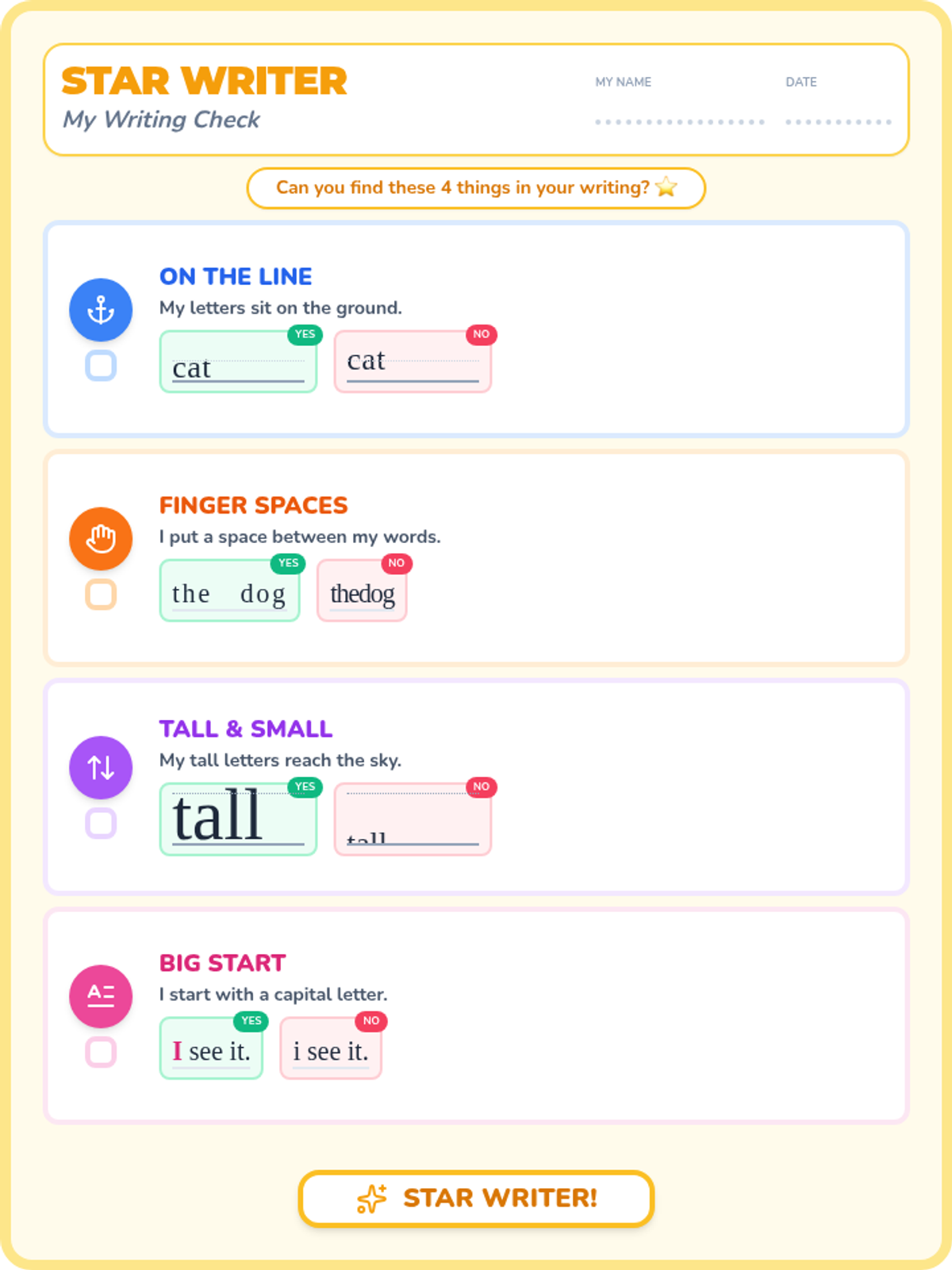
A set of handwriting self-check rubrics designed for different age groups to improve legibility and academic presentation.
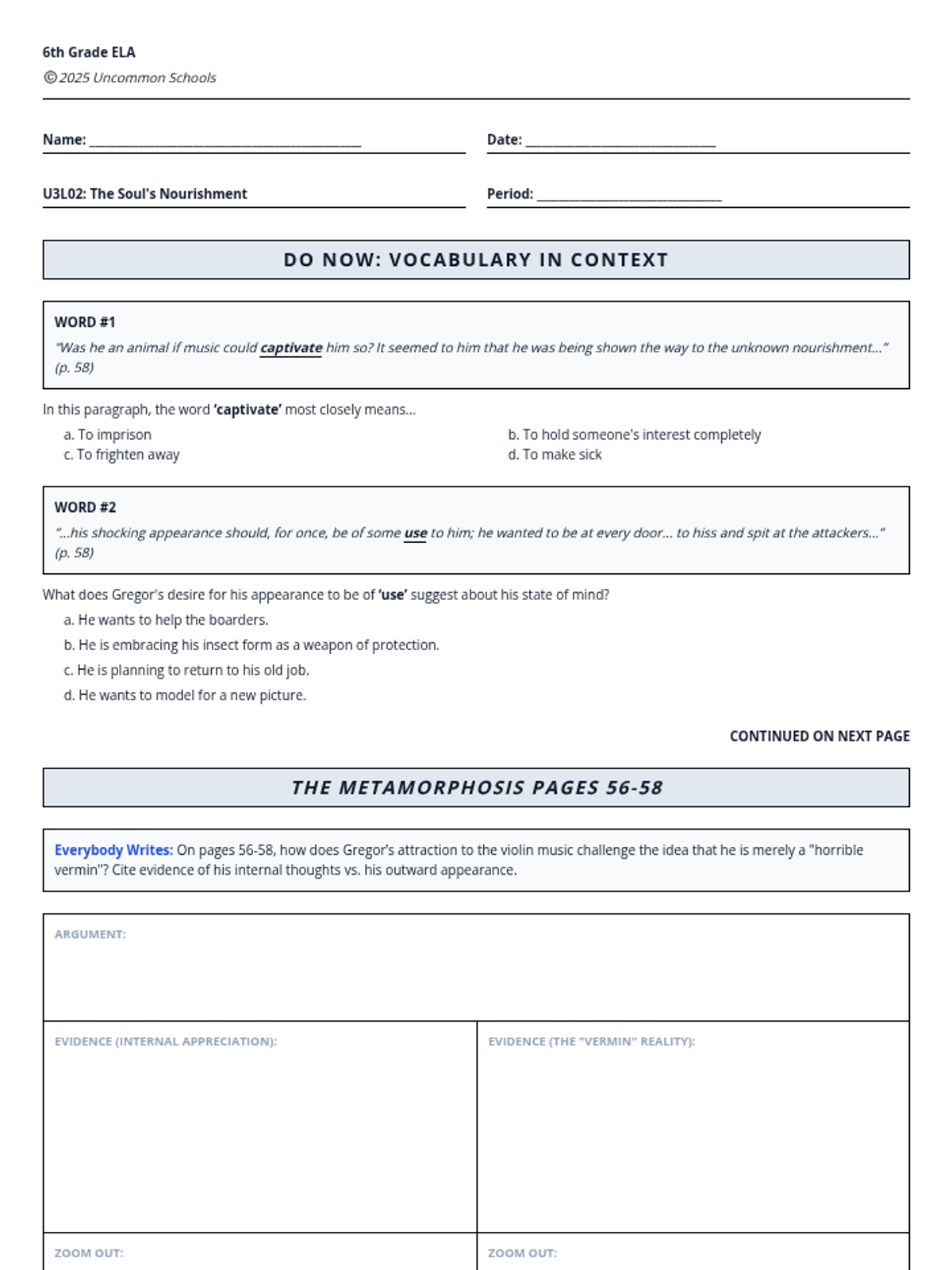
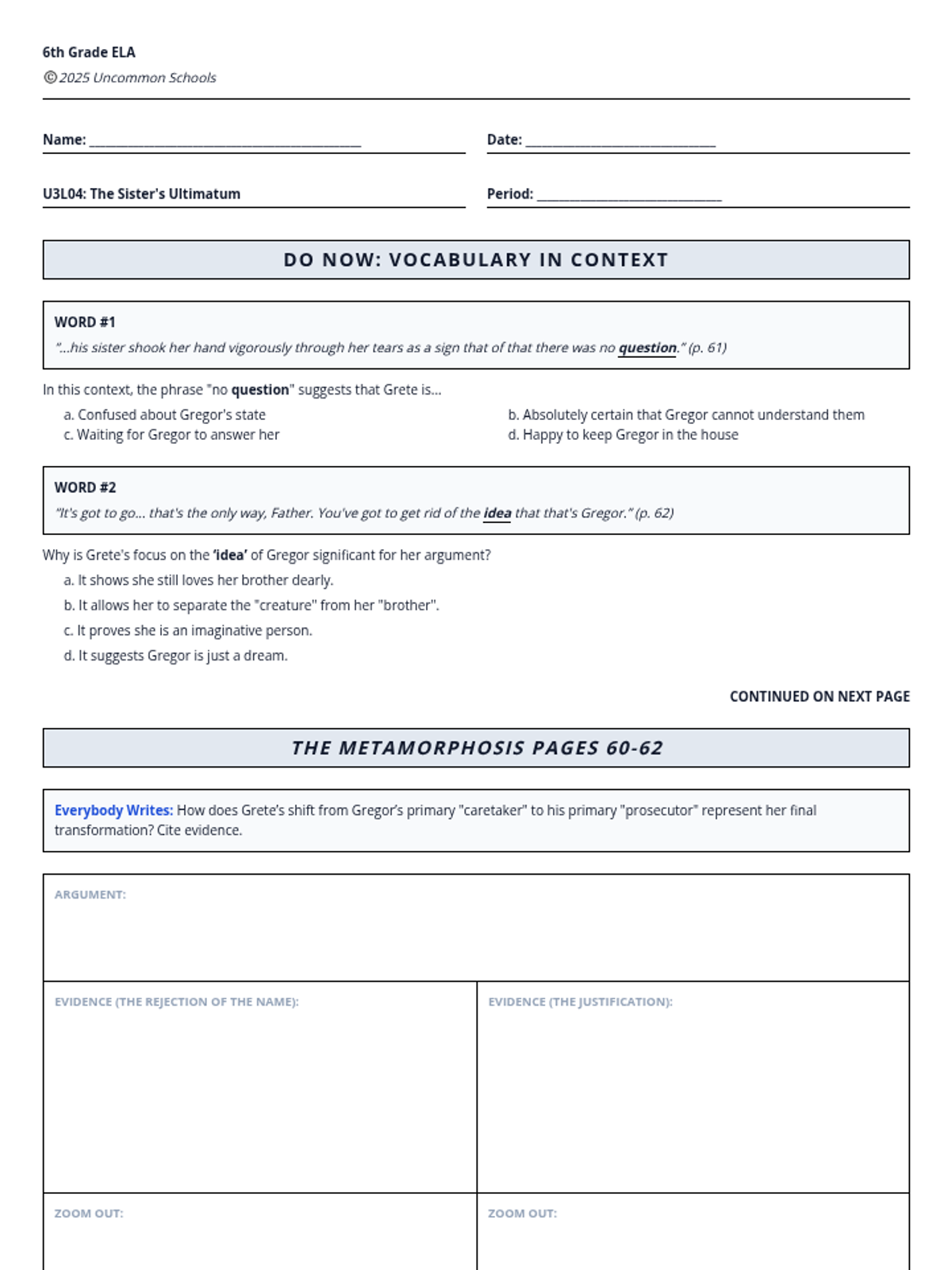
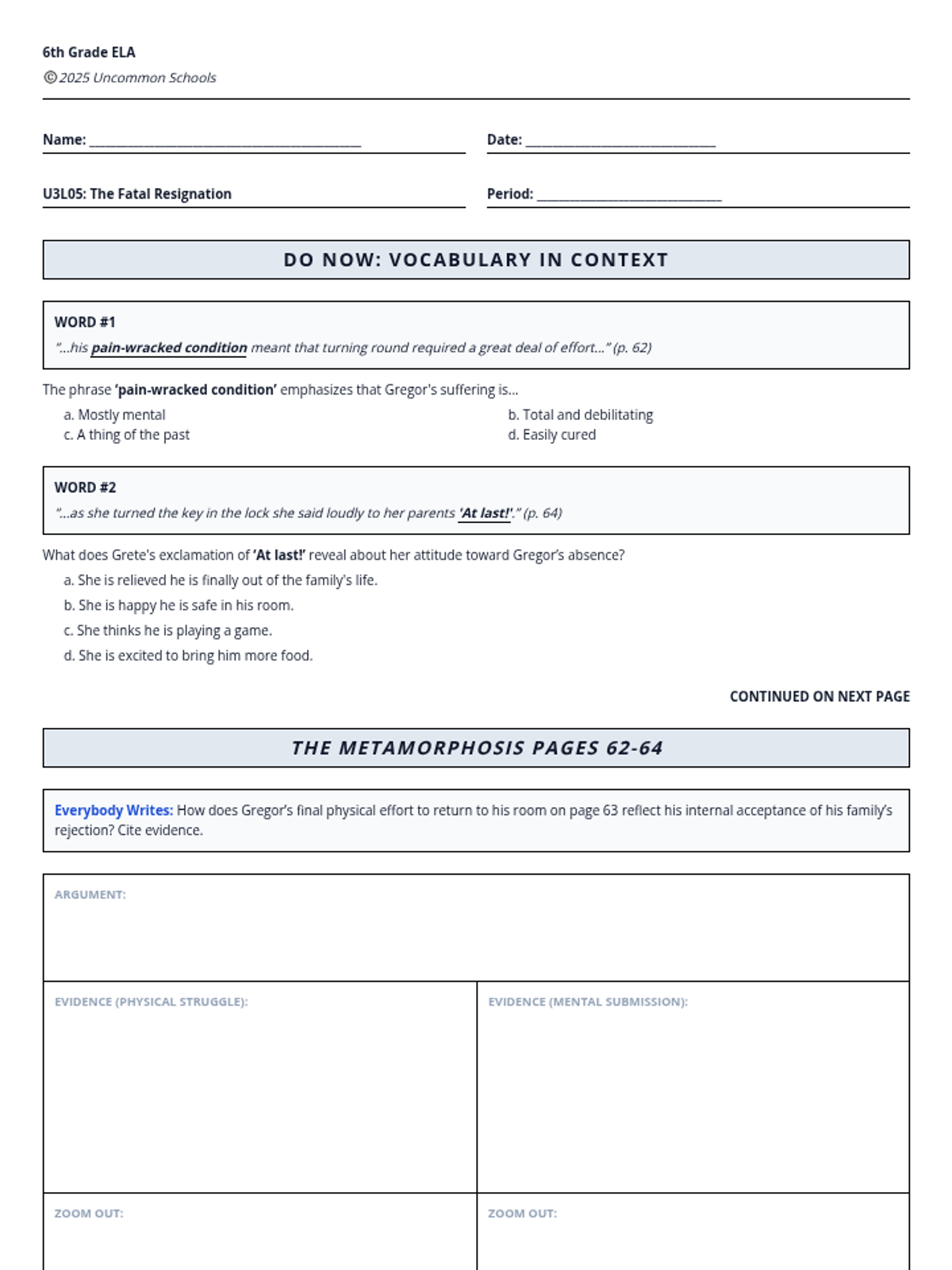
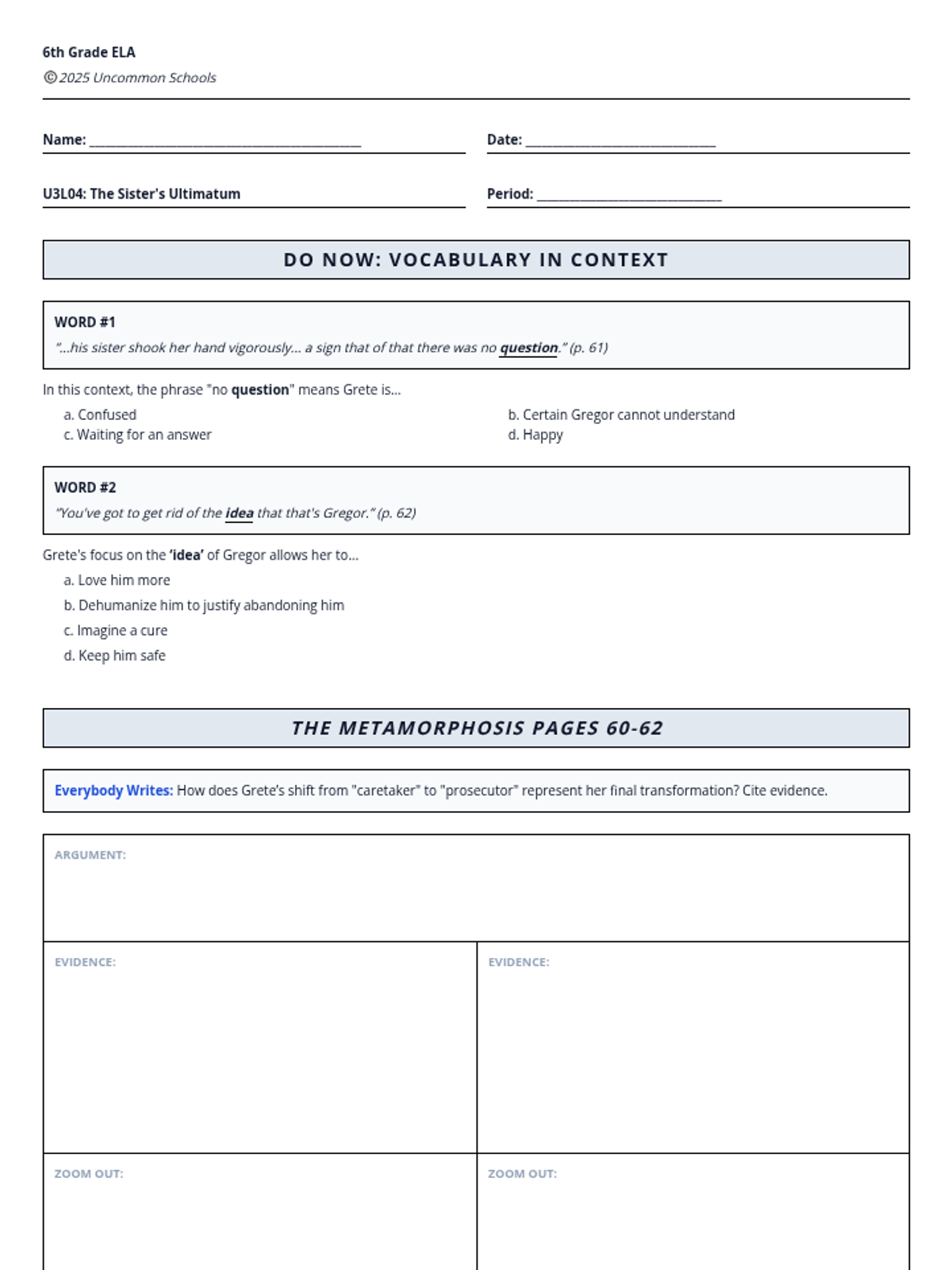
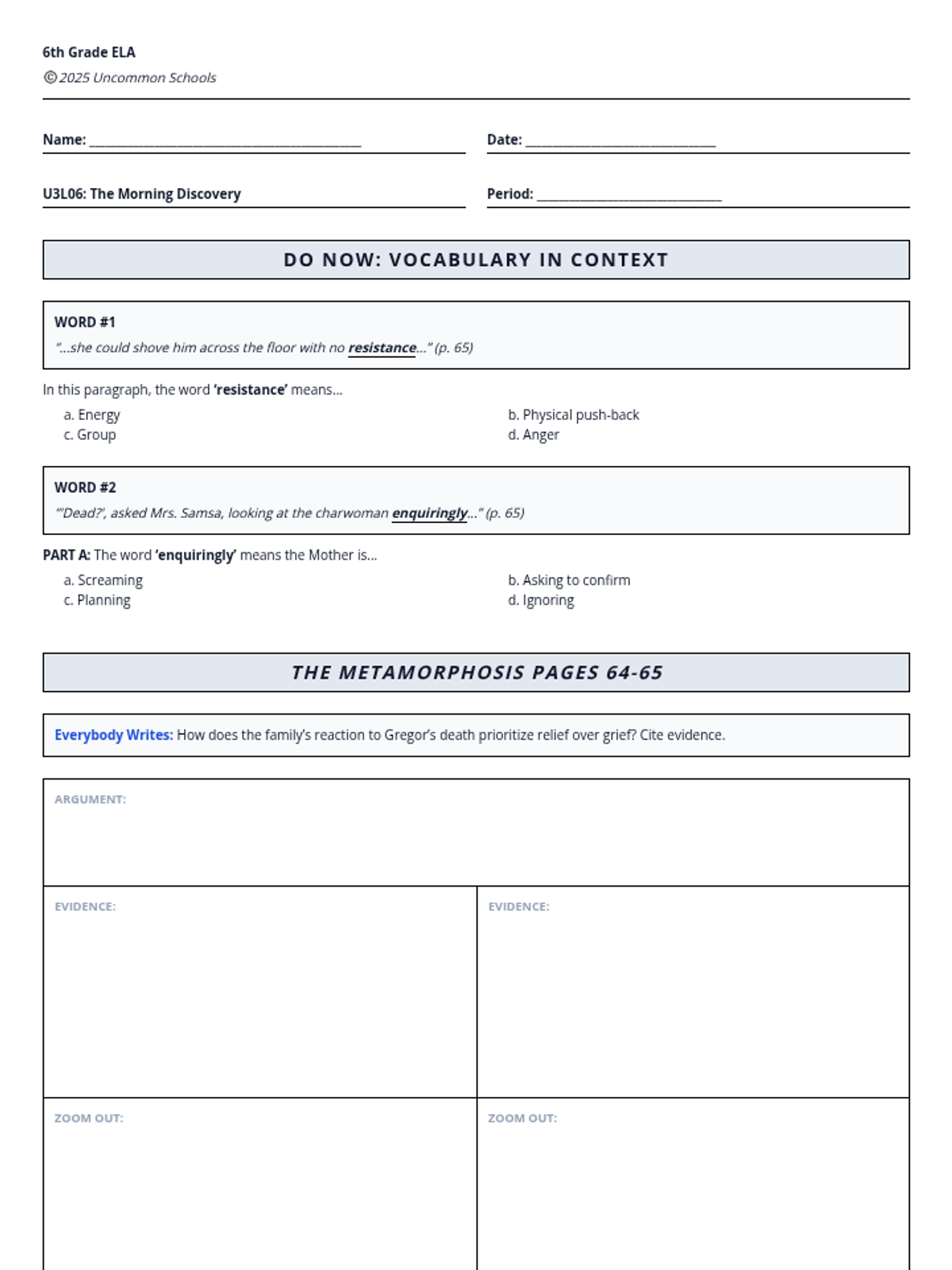
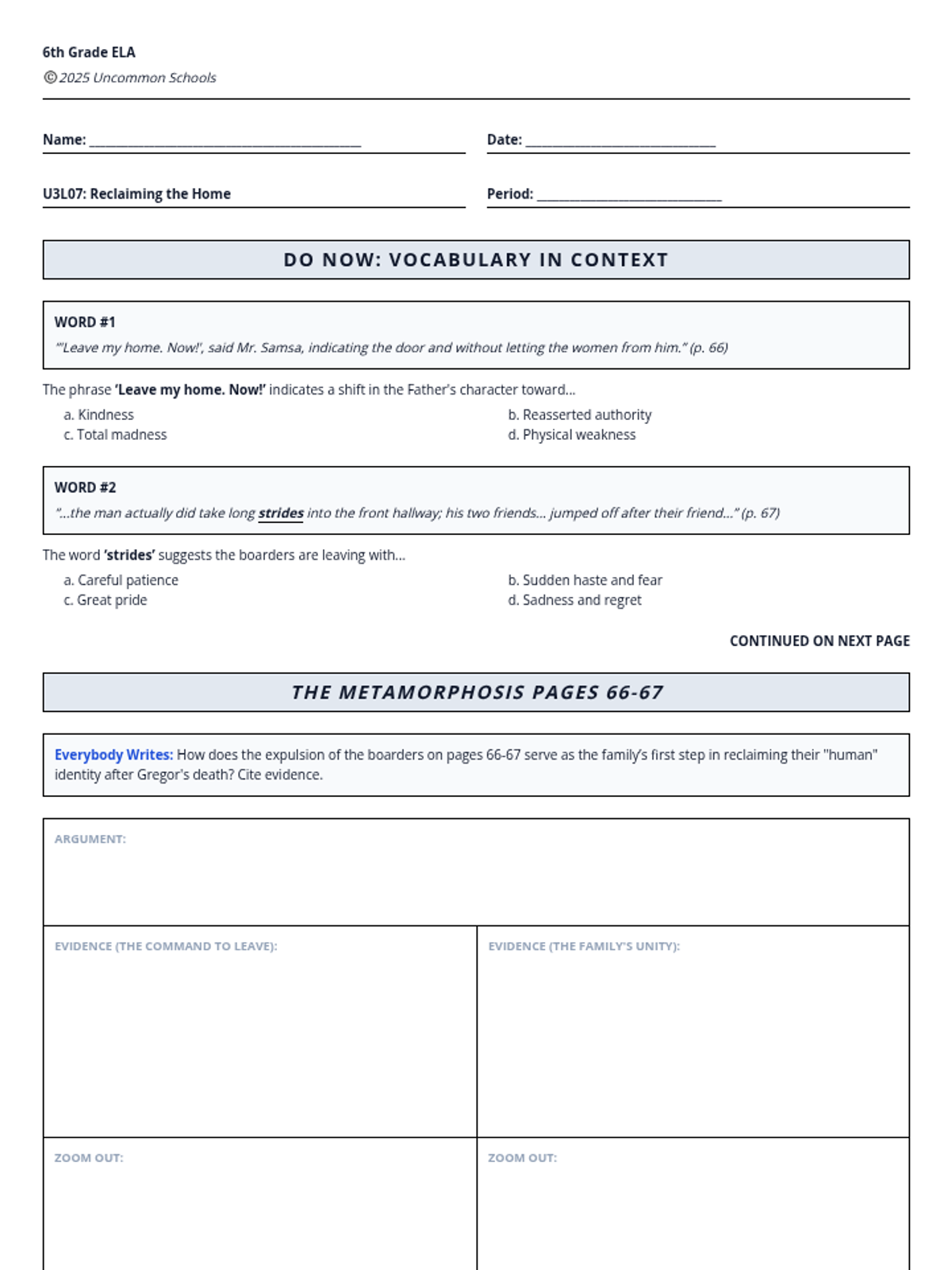
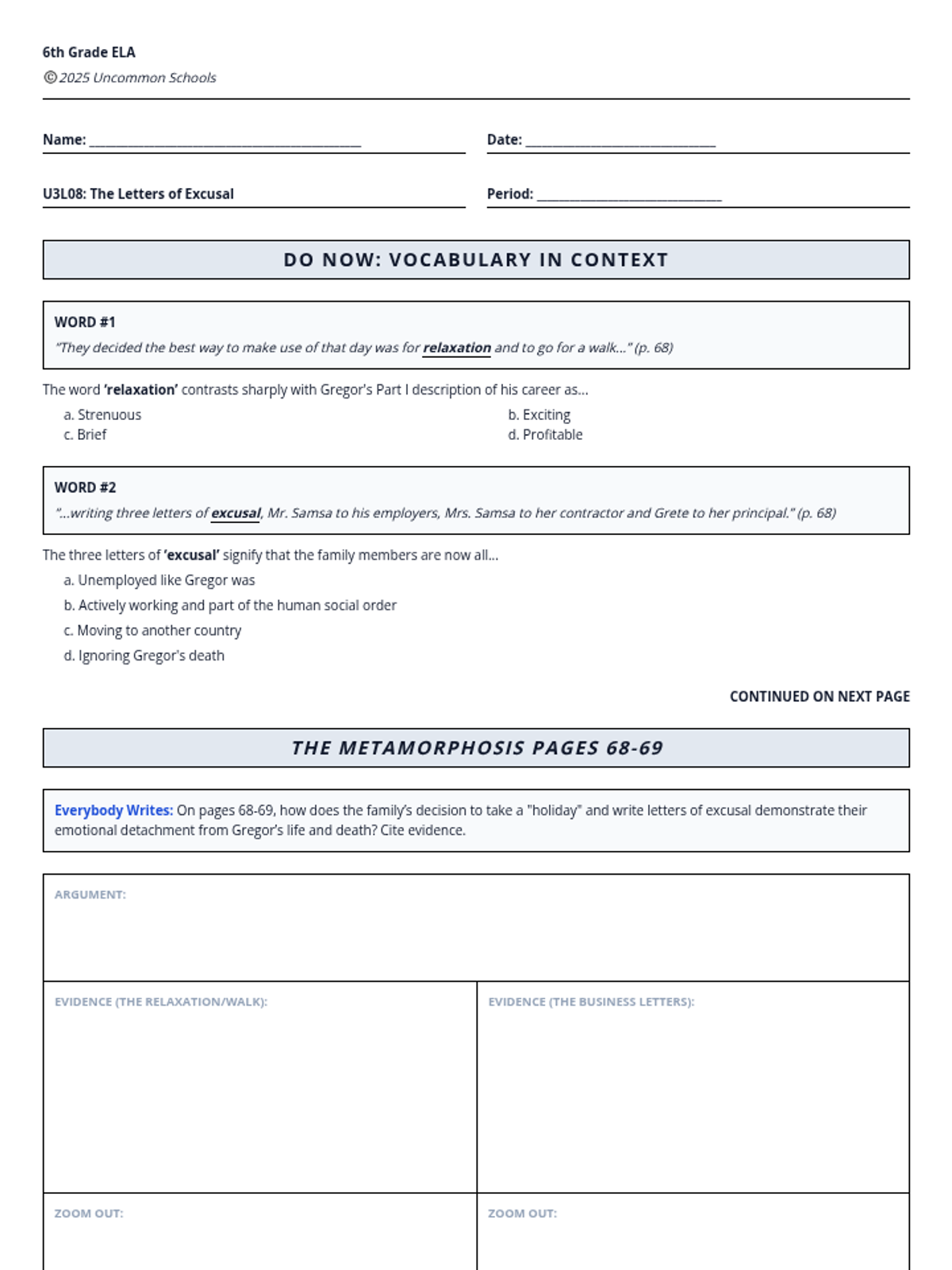
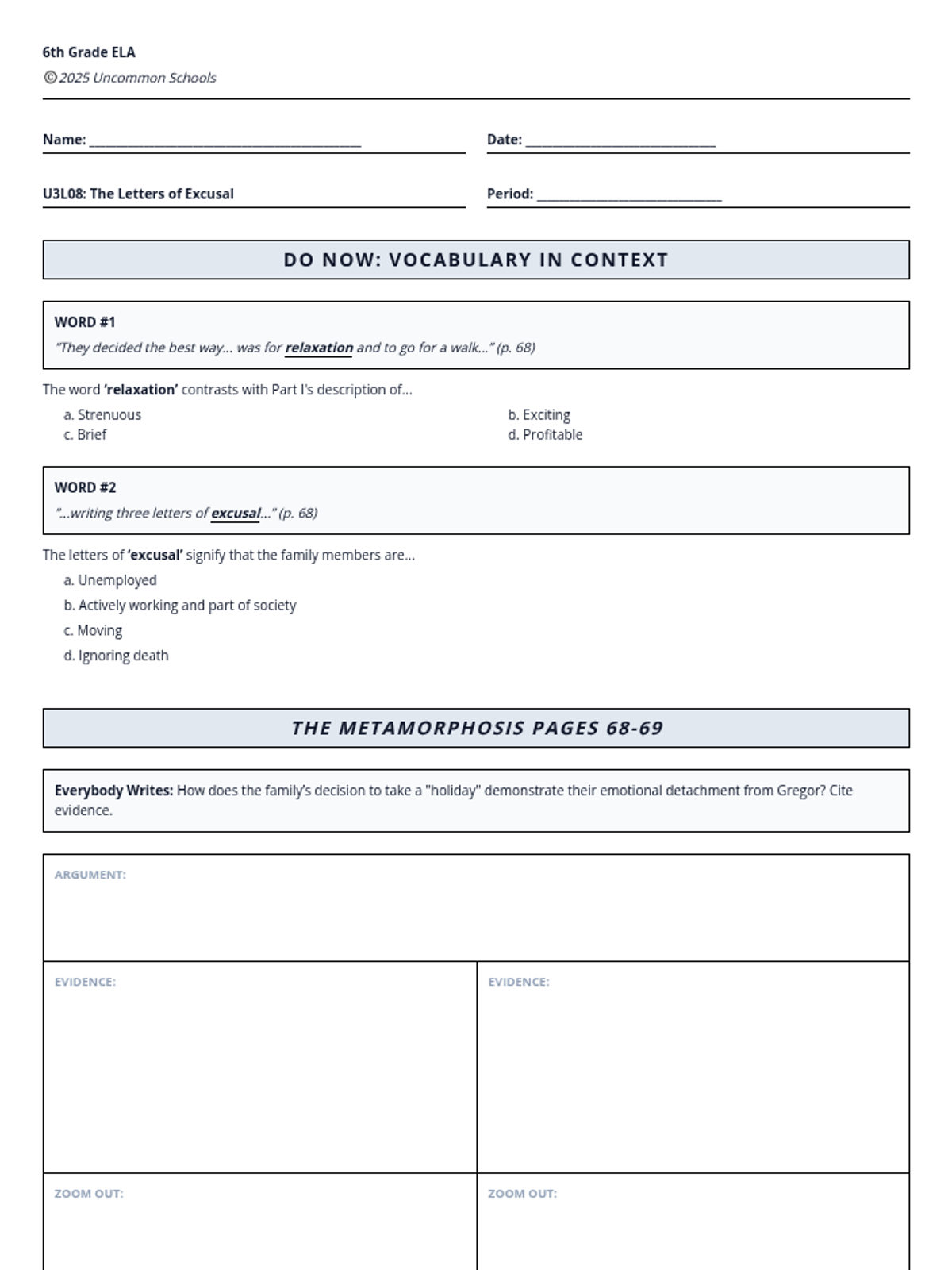
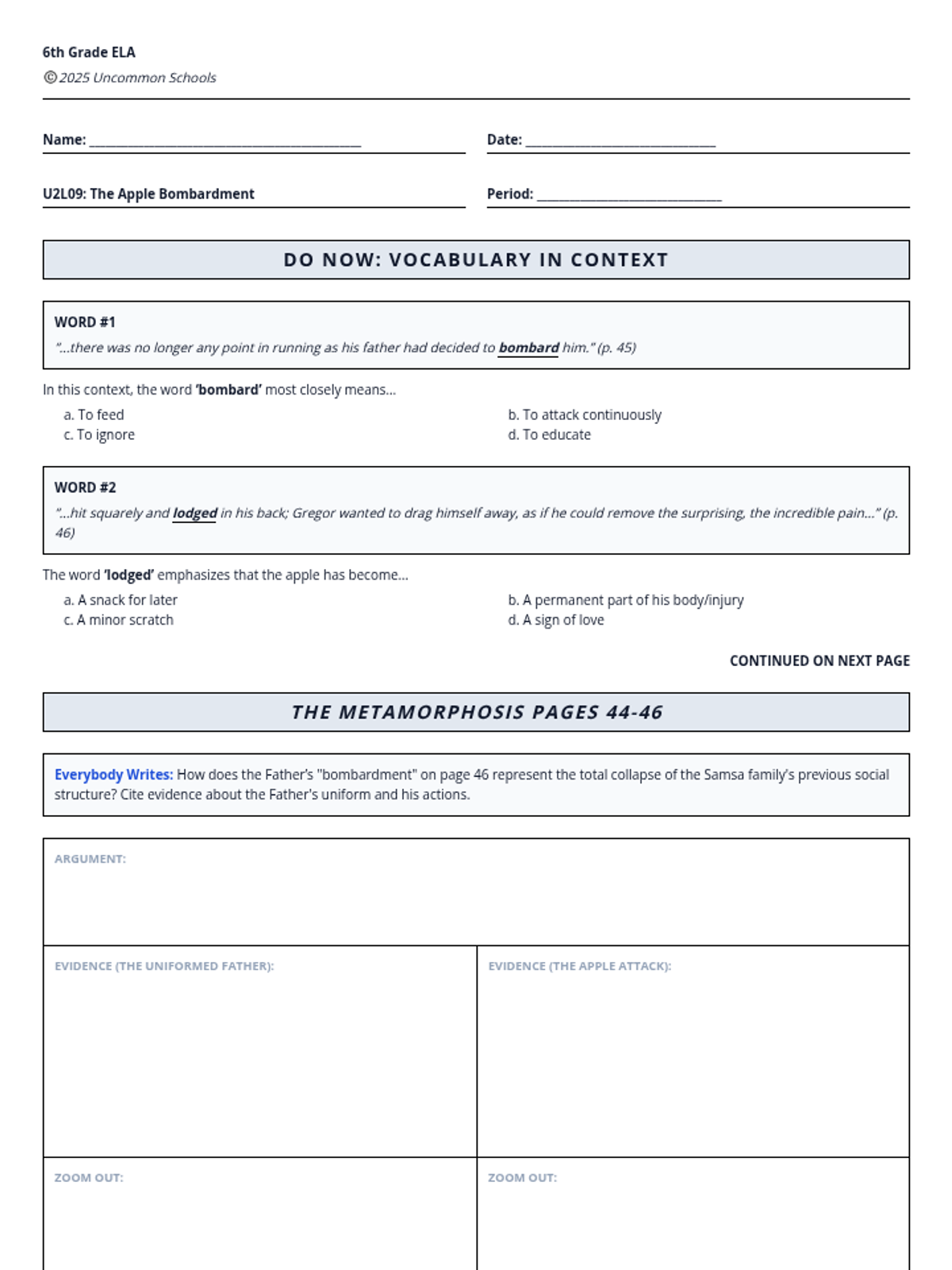
Analyzes the family's final rejection of Gregor and his subsequent physical and mental decline.
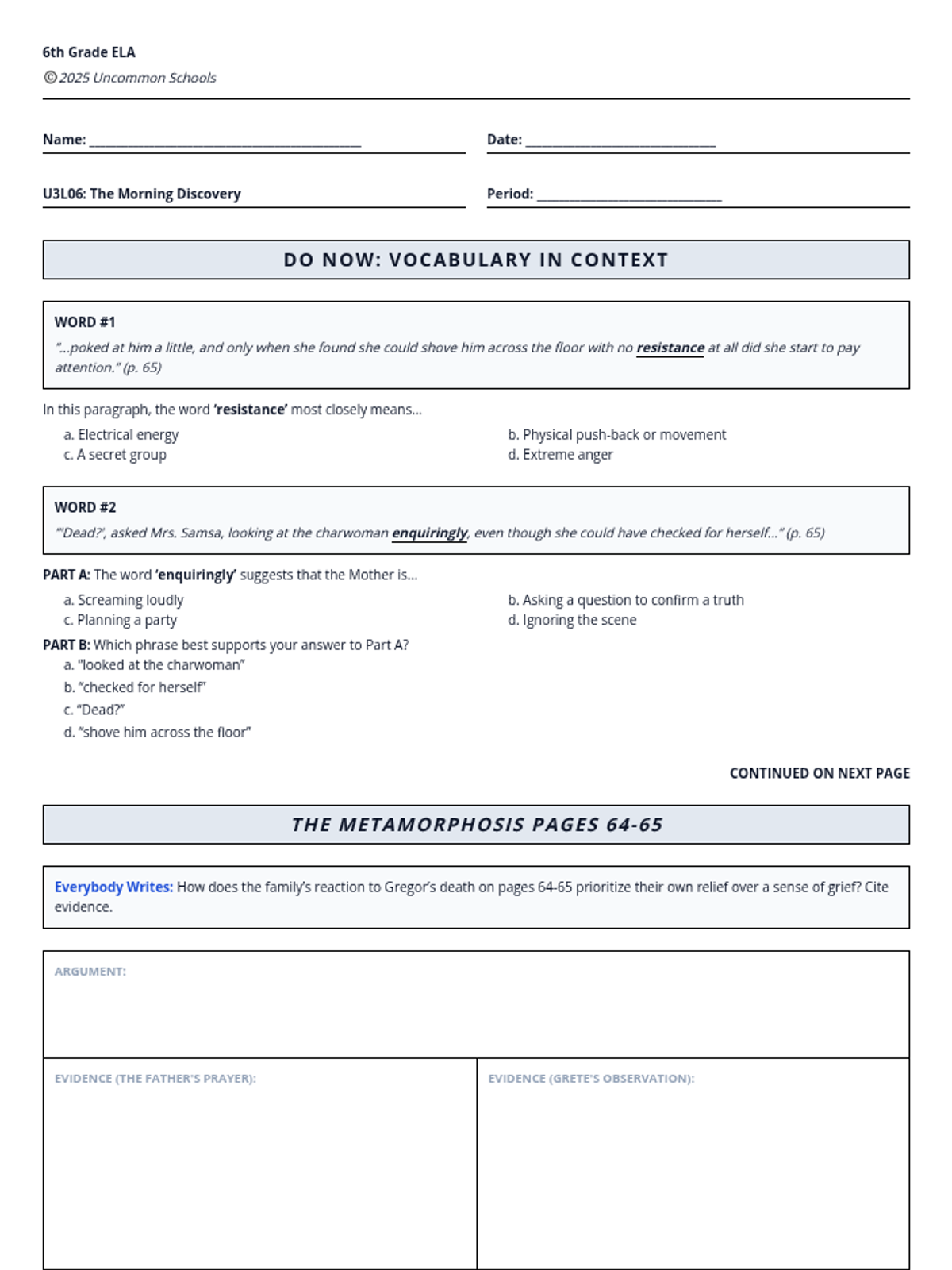
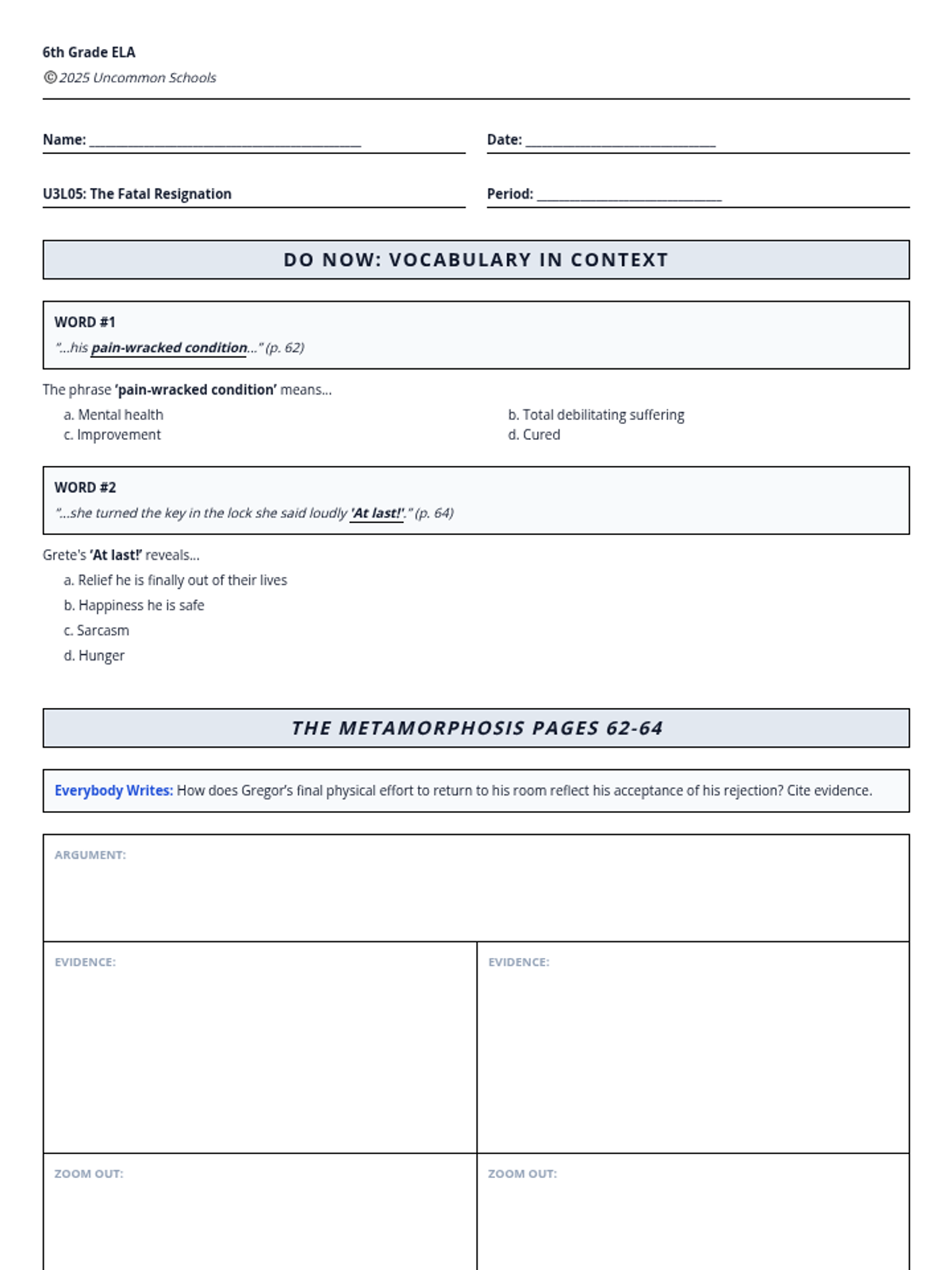
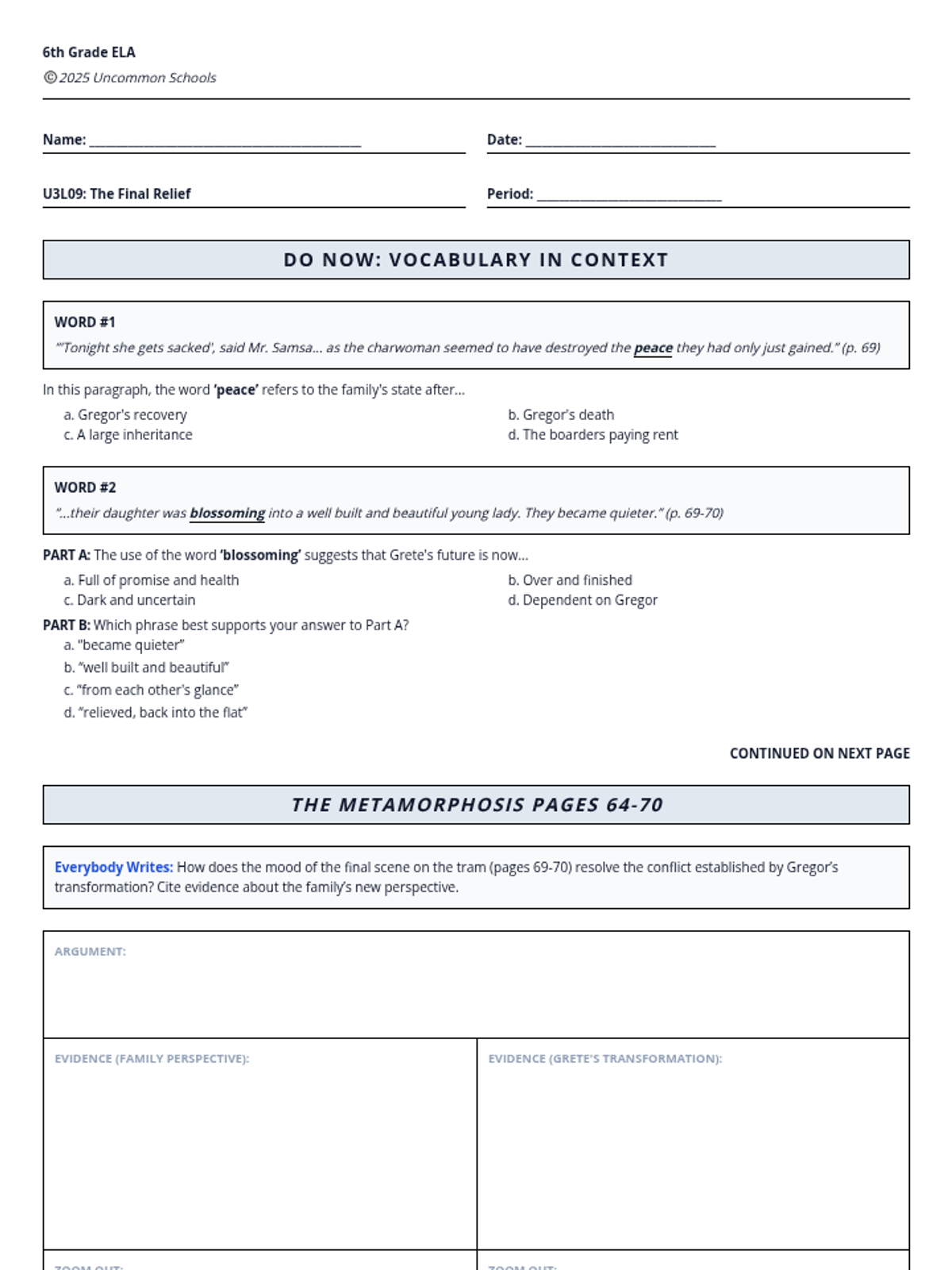
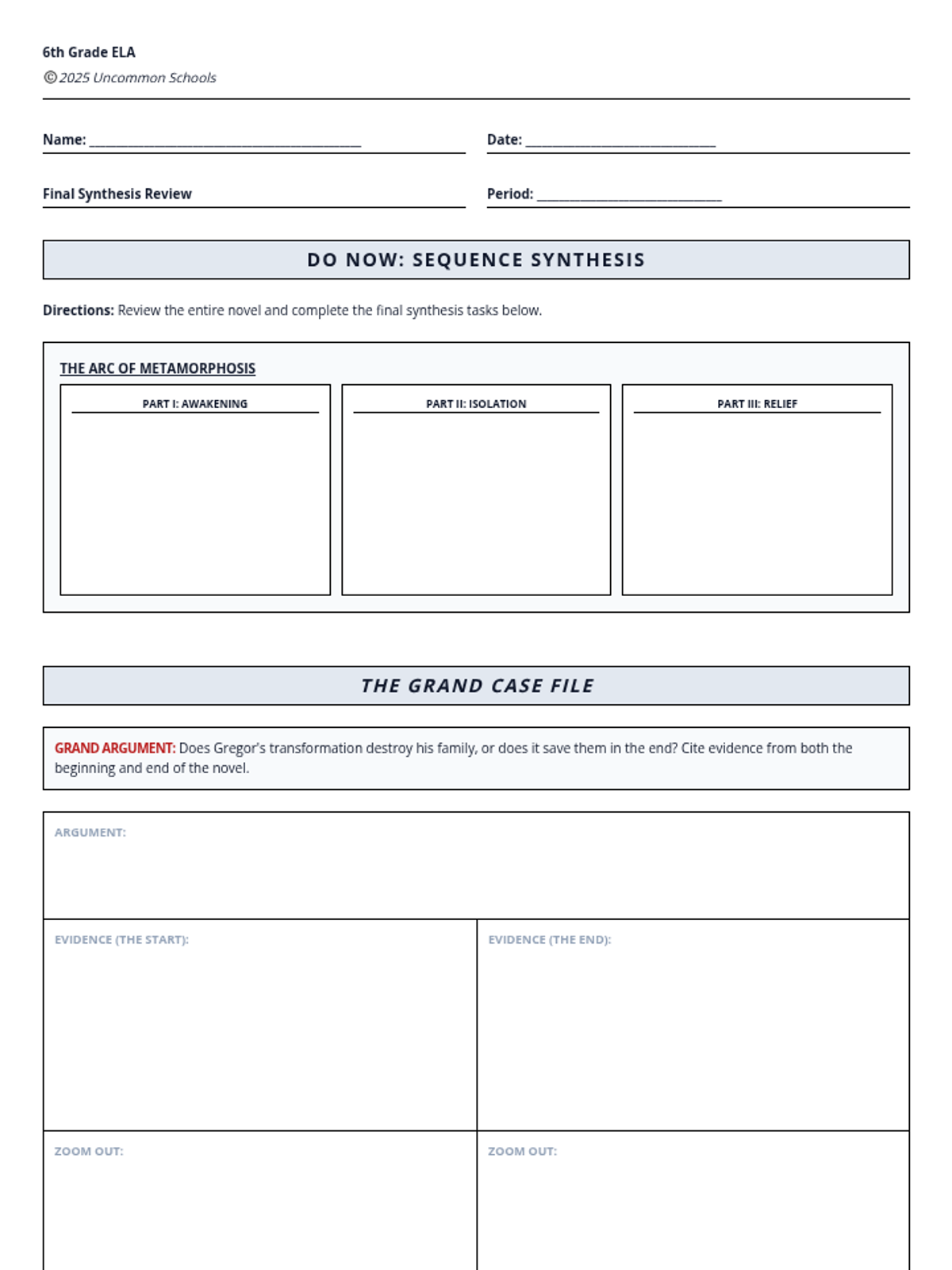
Focuses on Gregor's death and the family's ultimate relief and transformation after his passing.
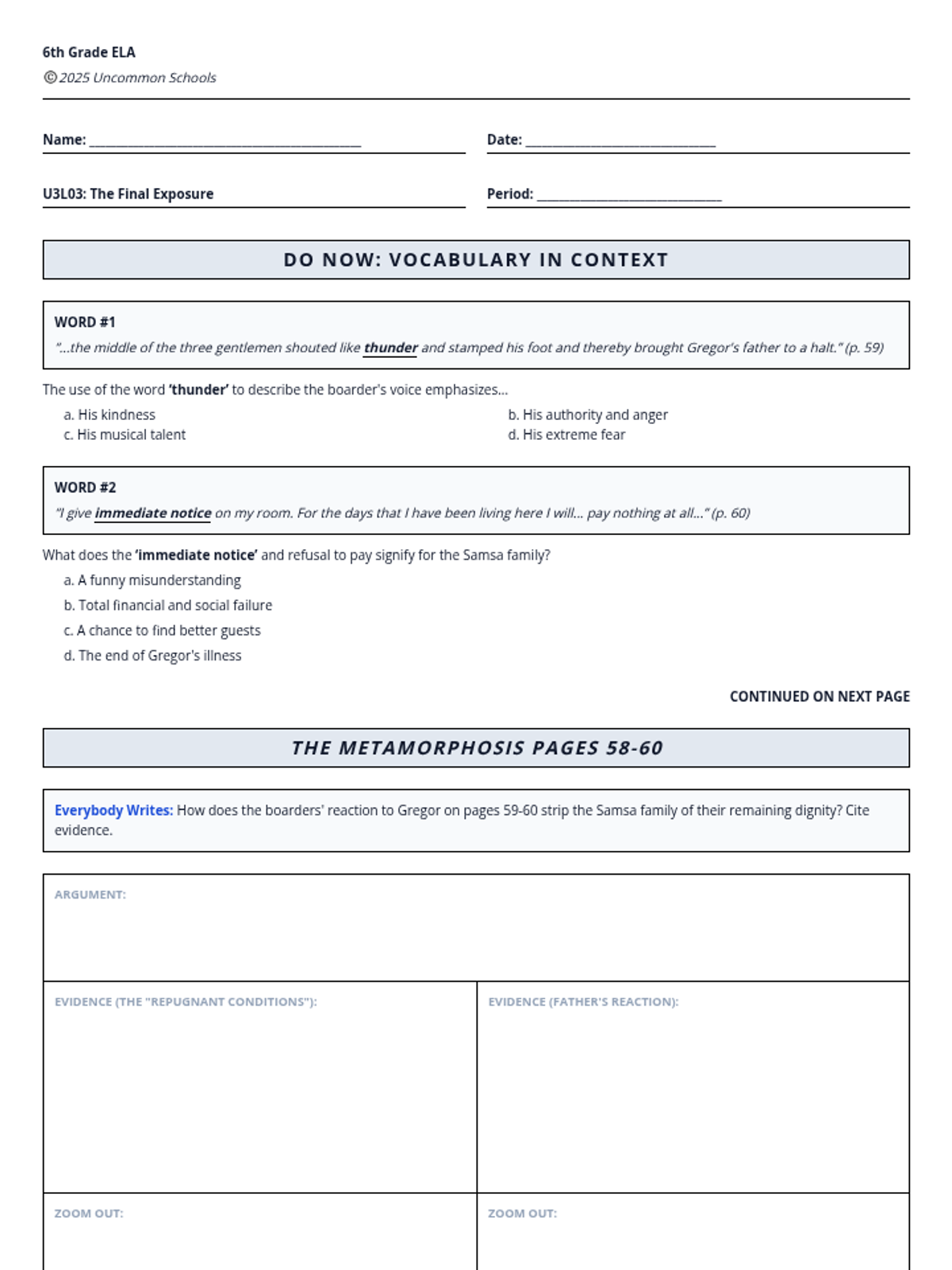
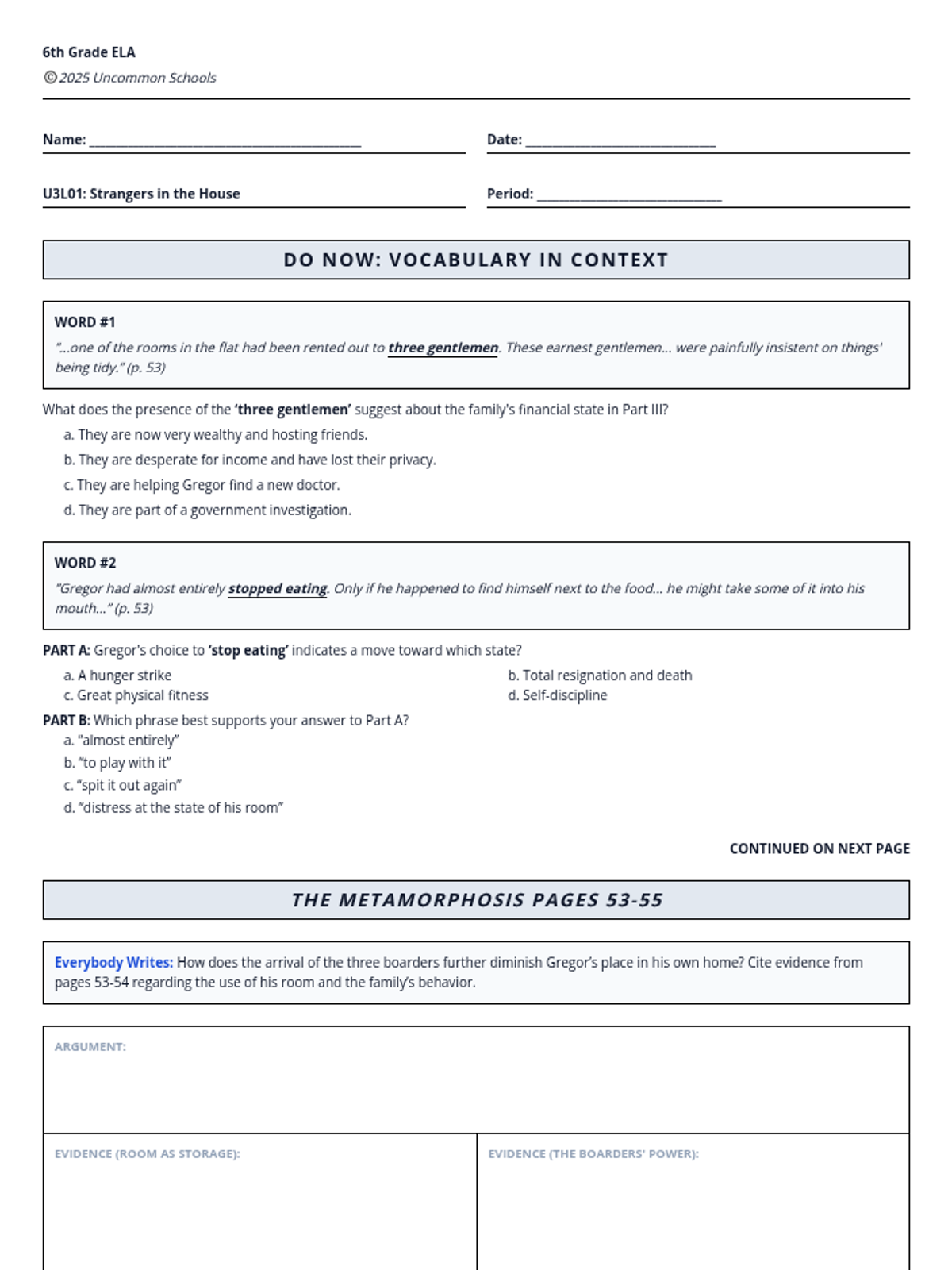
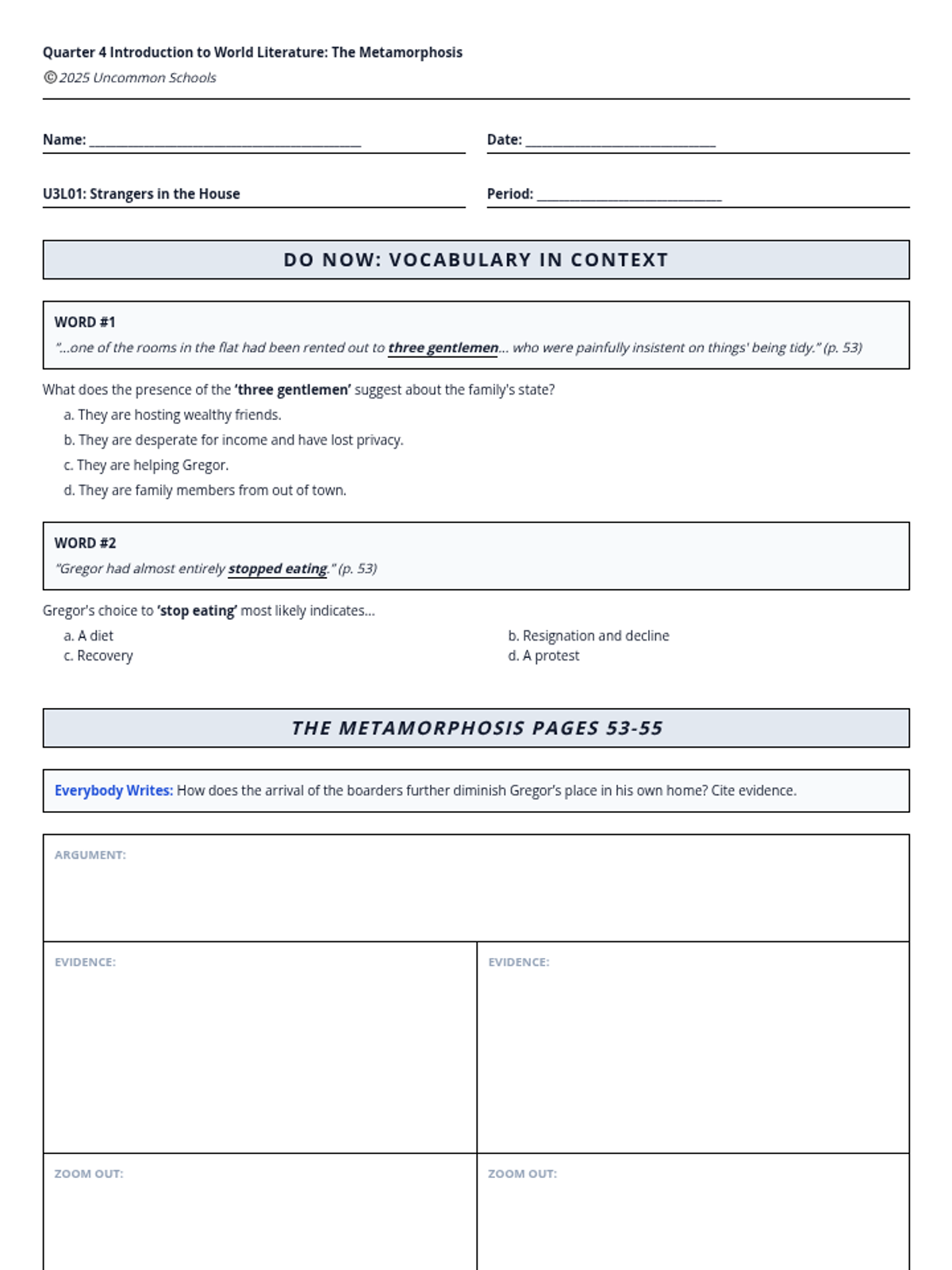
Introduces the new characters (the boarders and the charwoman) and explores Gregor's deteriorating physical and mental health.
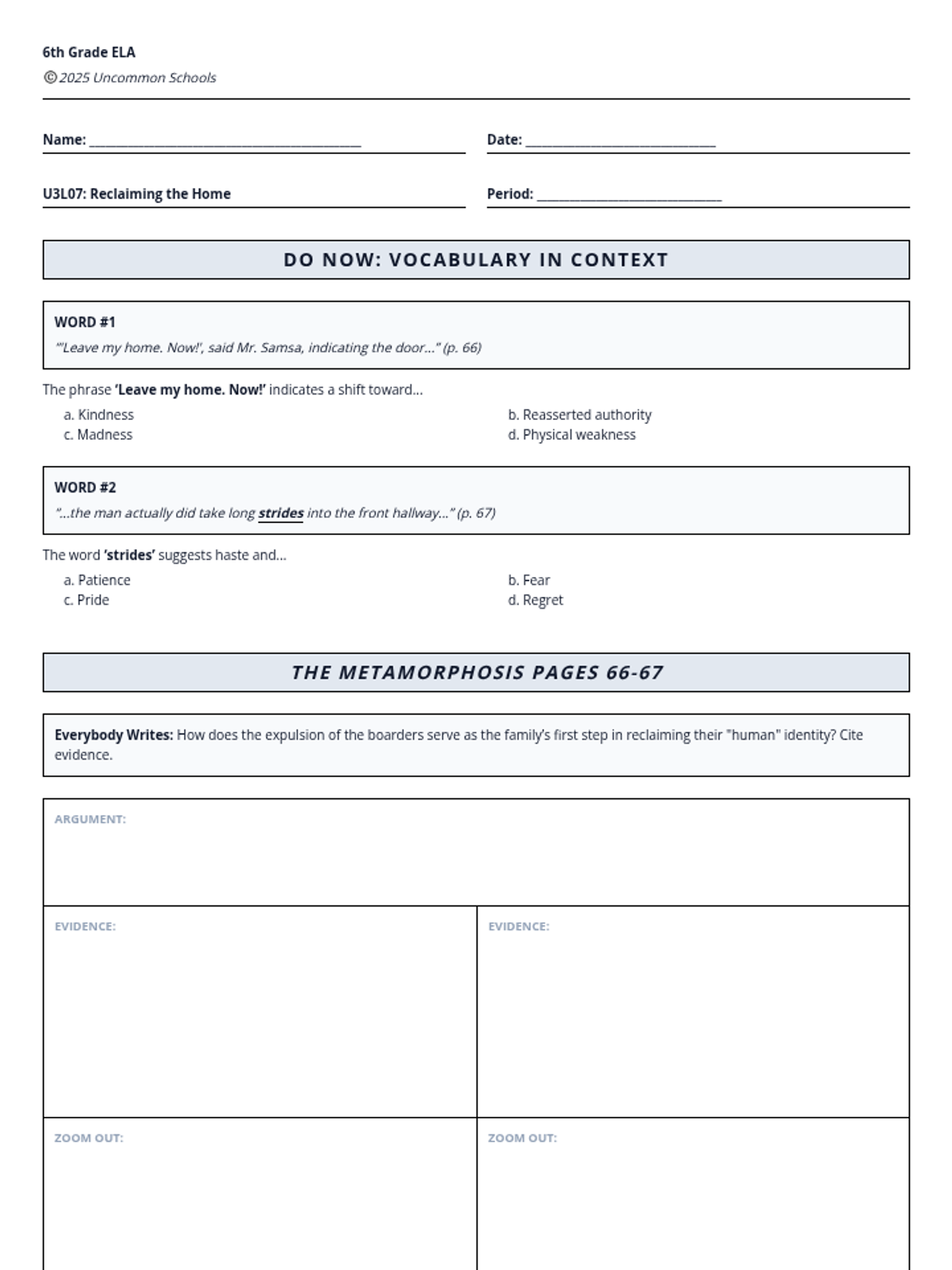
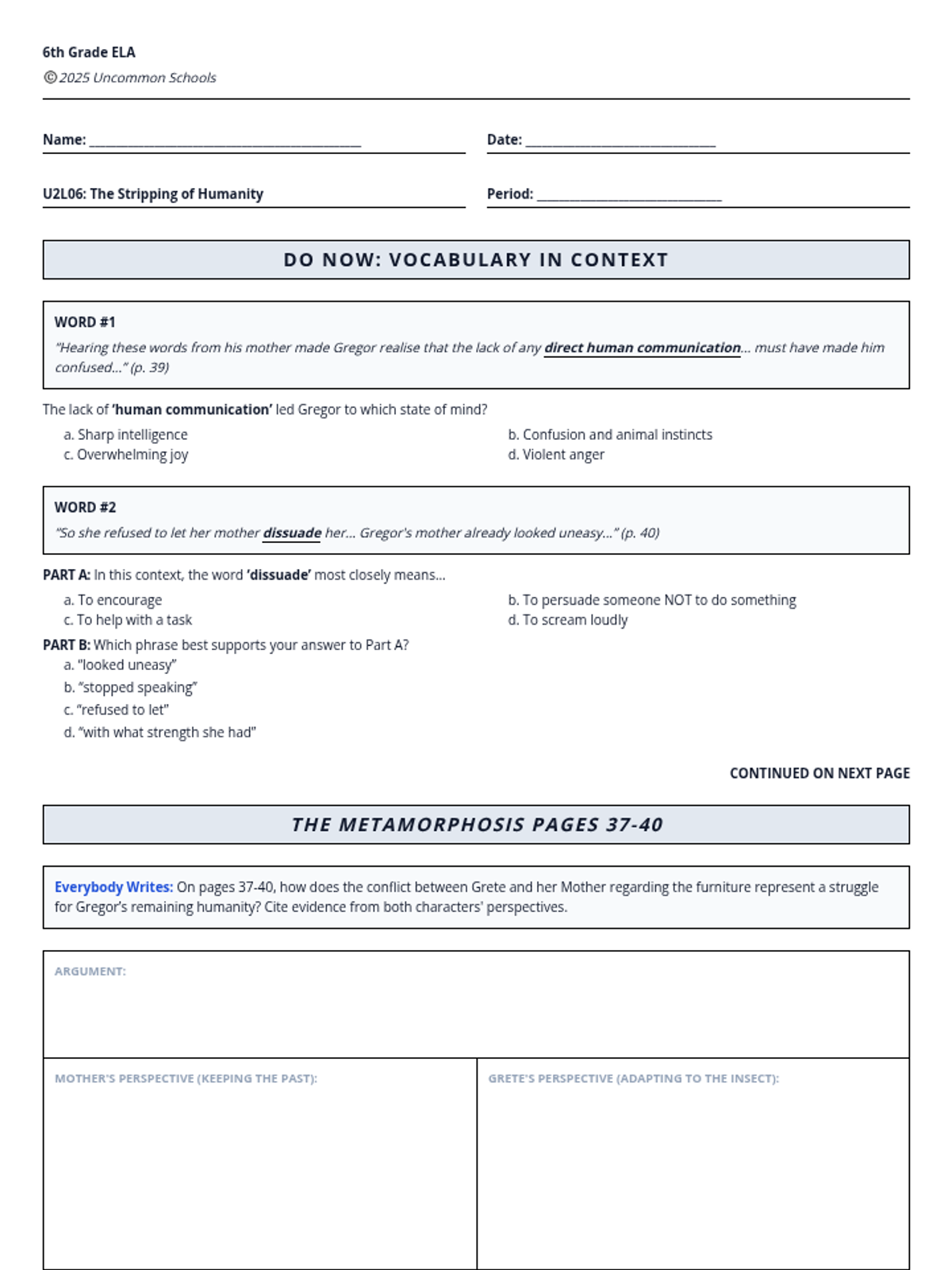
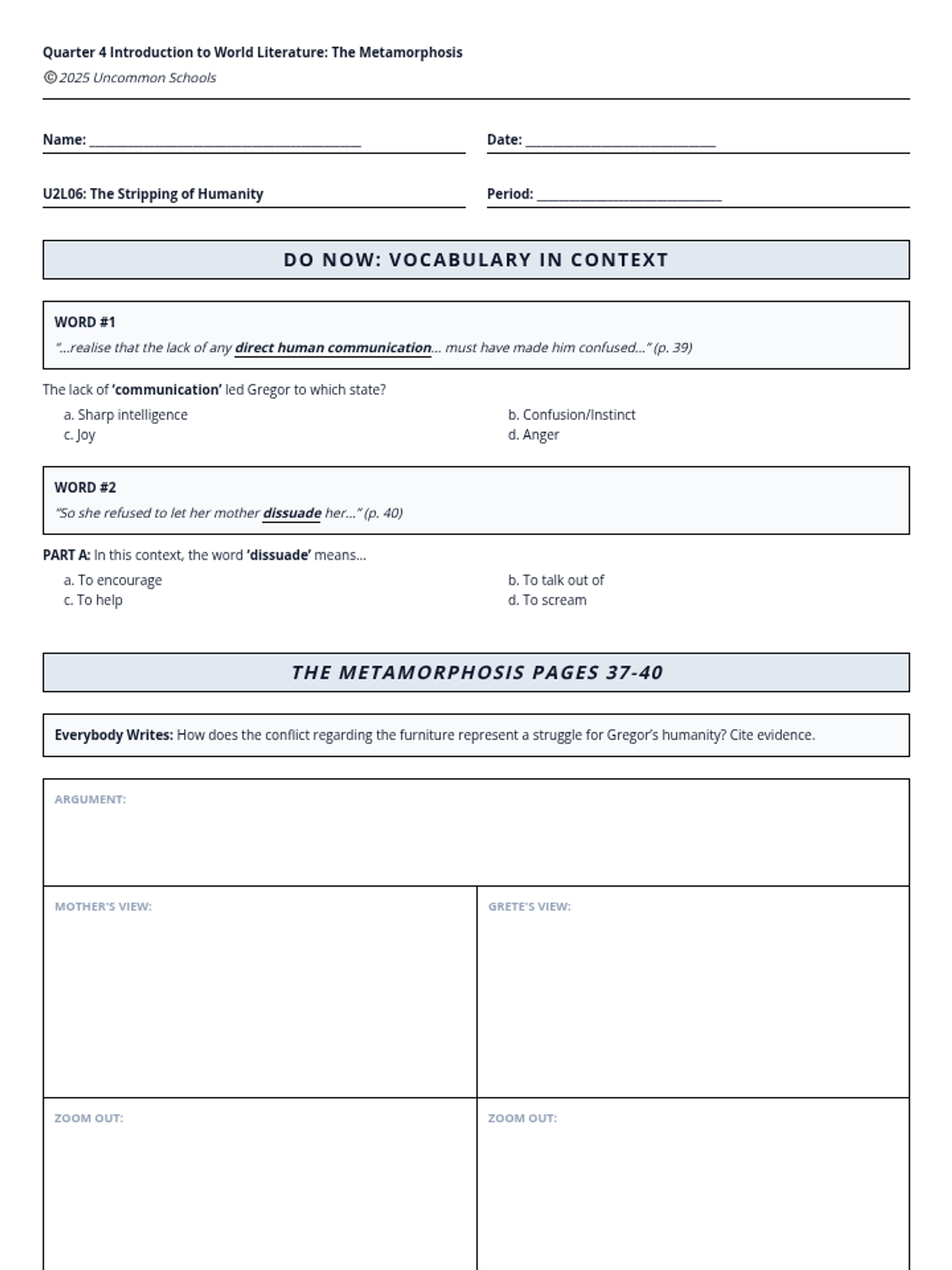
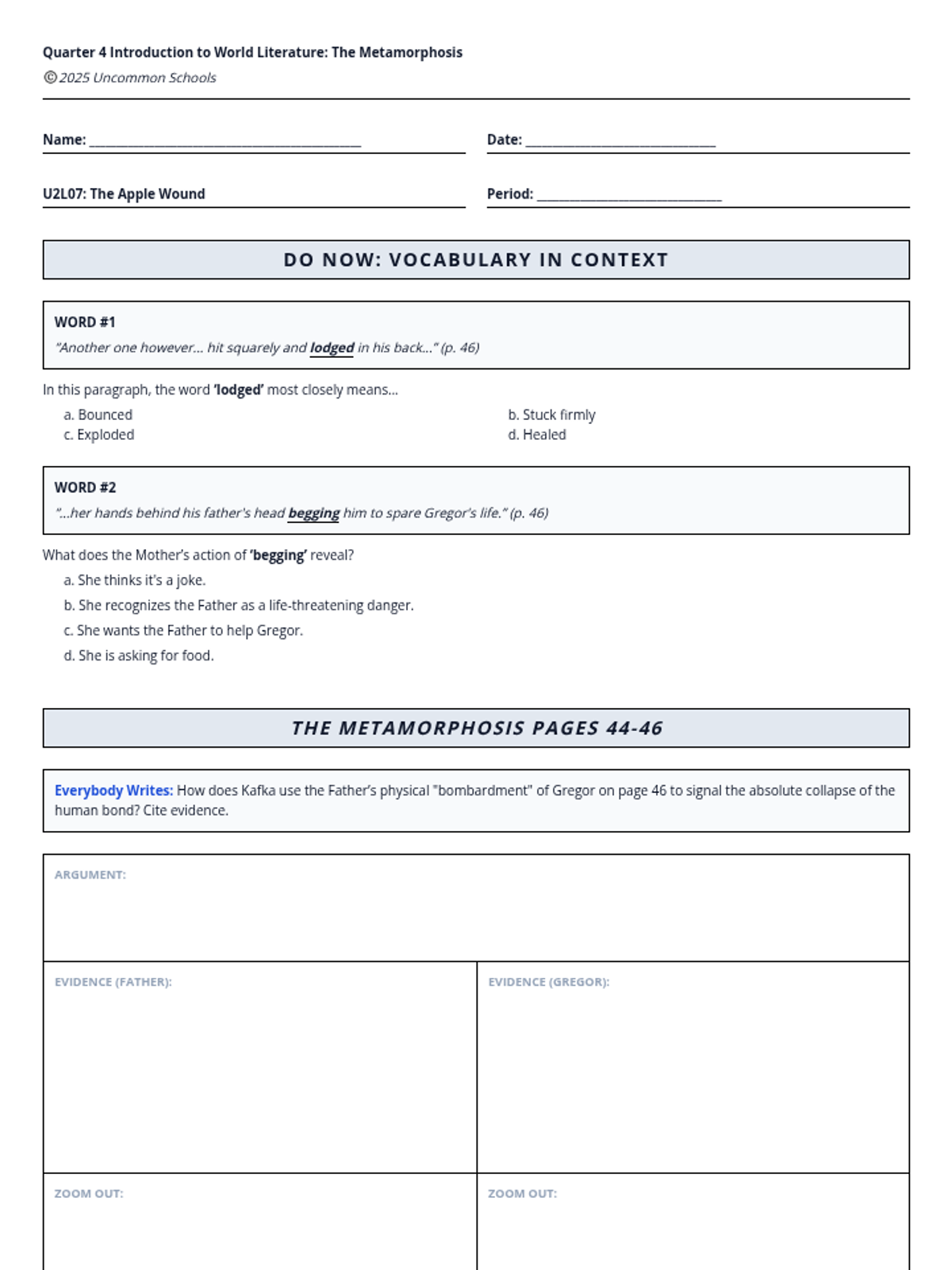
Focuses on the conflict over Gregor's furniture and the first violent confrontation with his father in Part II.
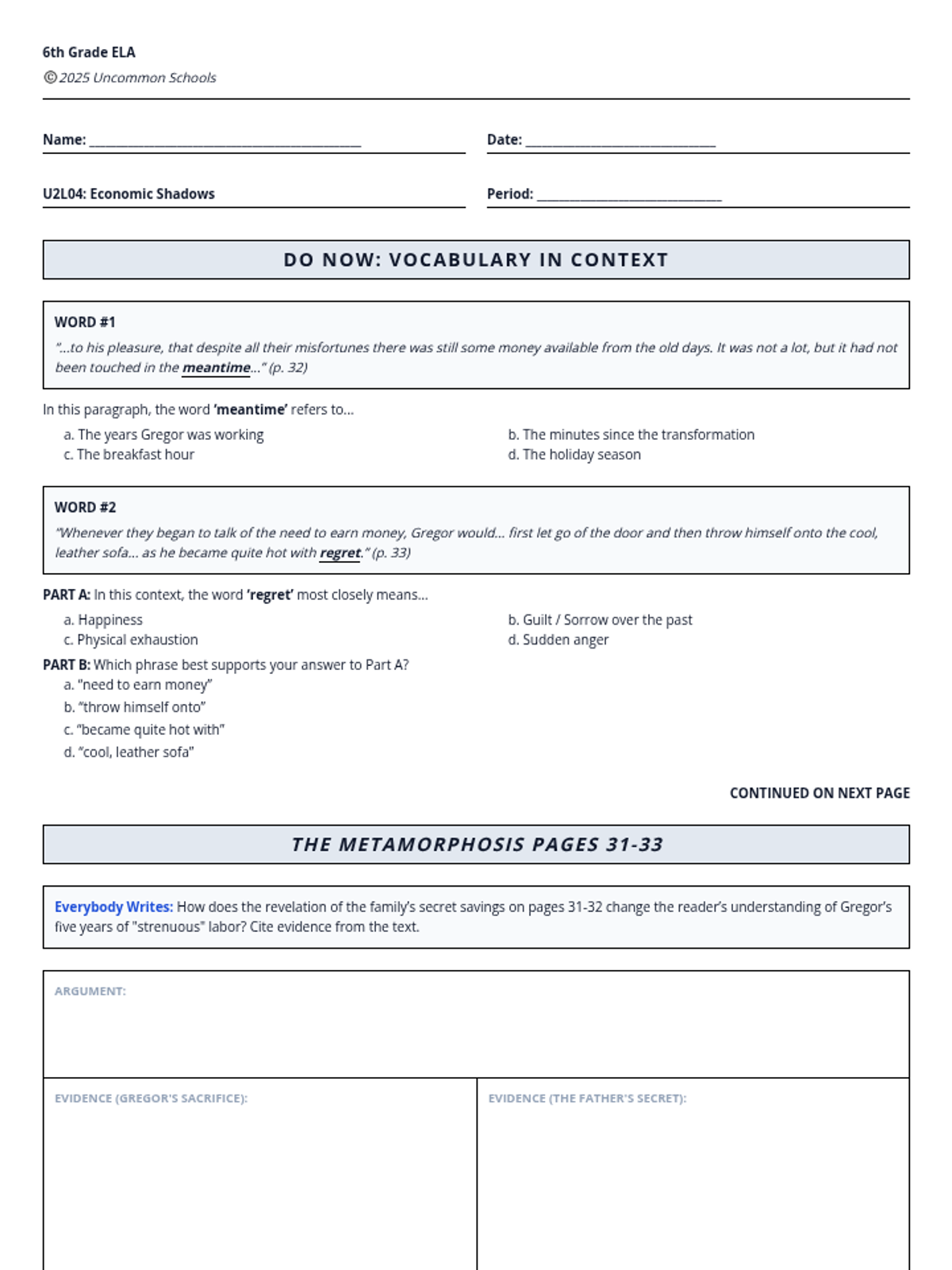
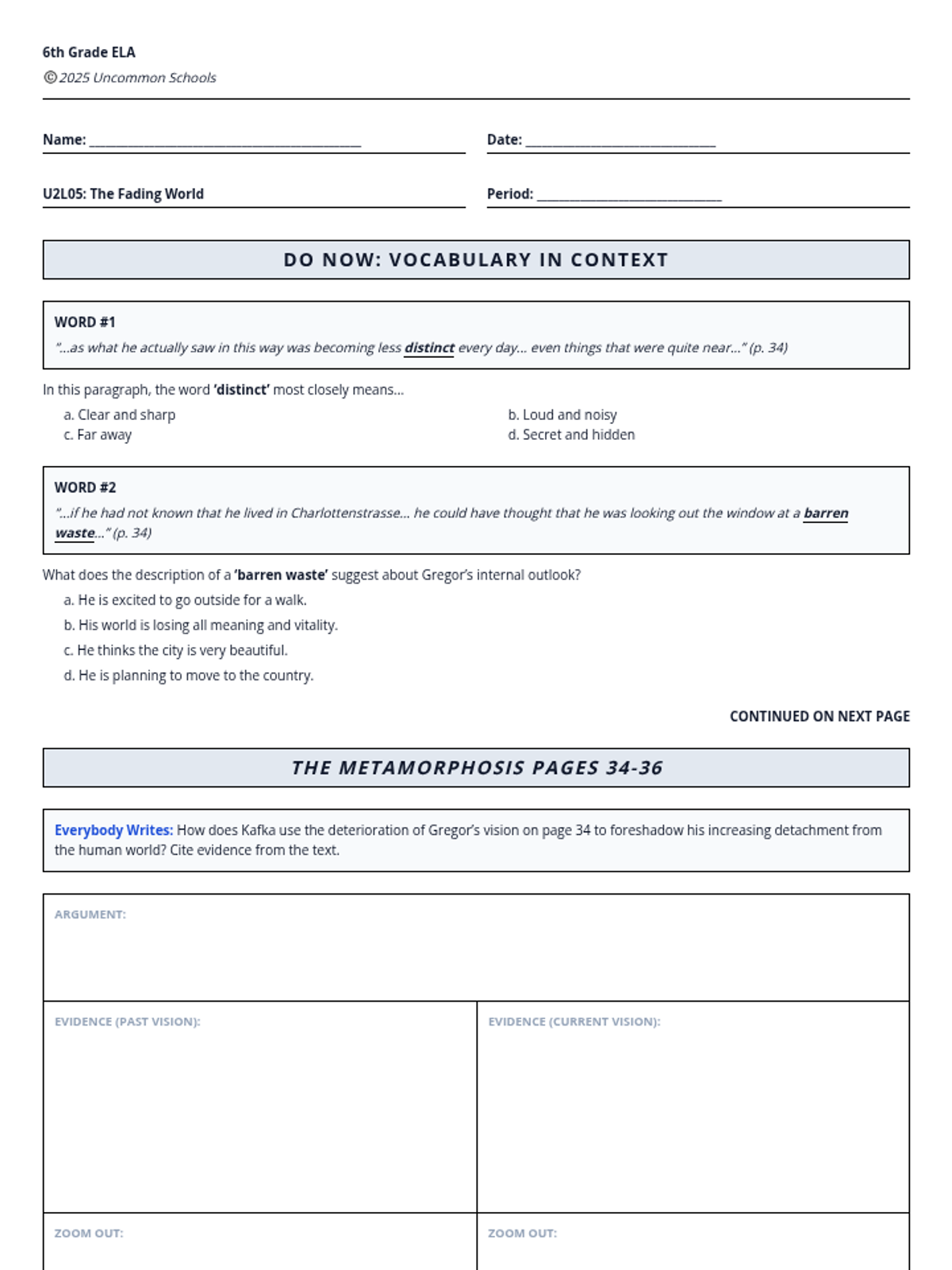
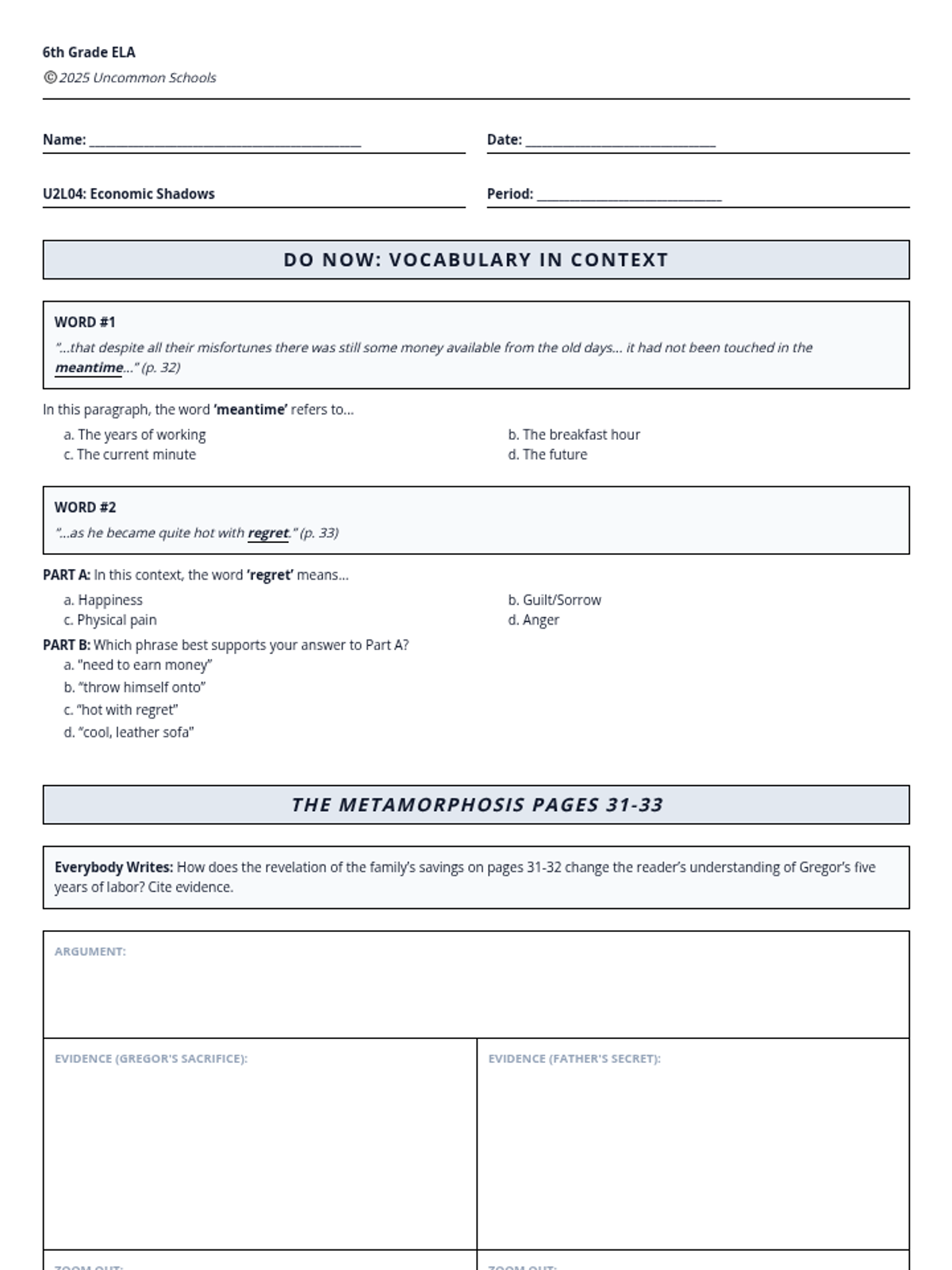
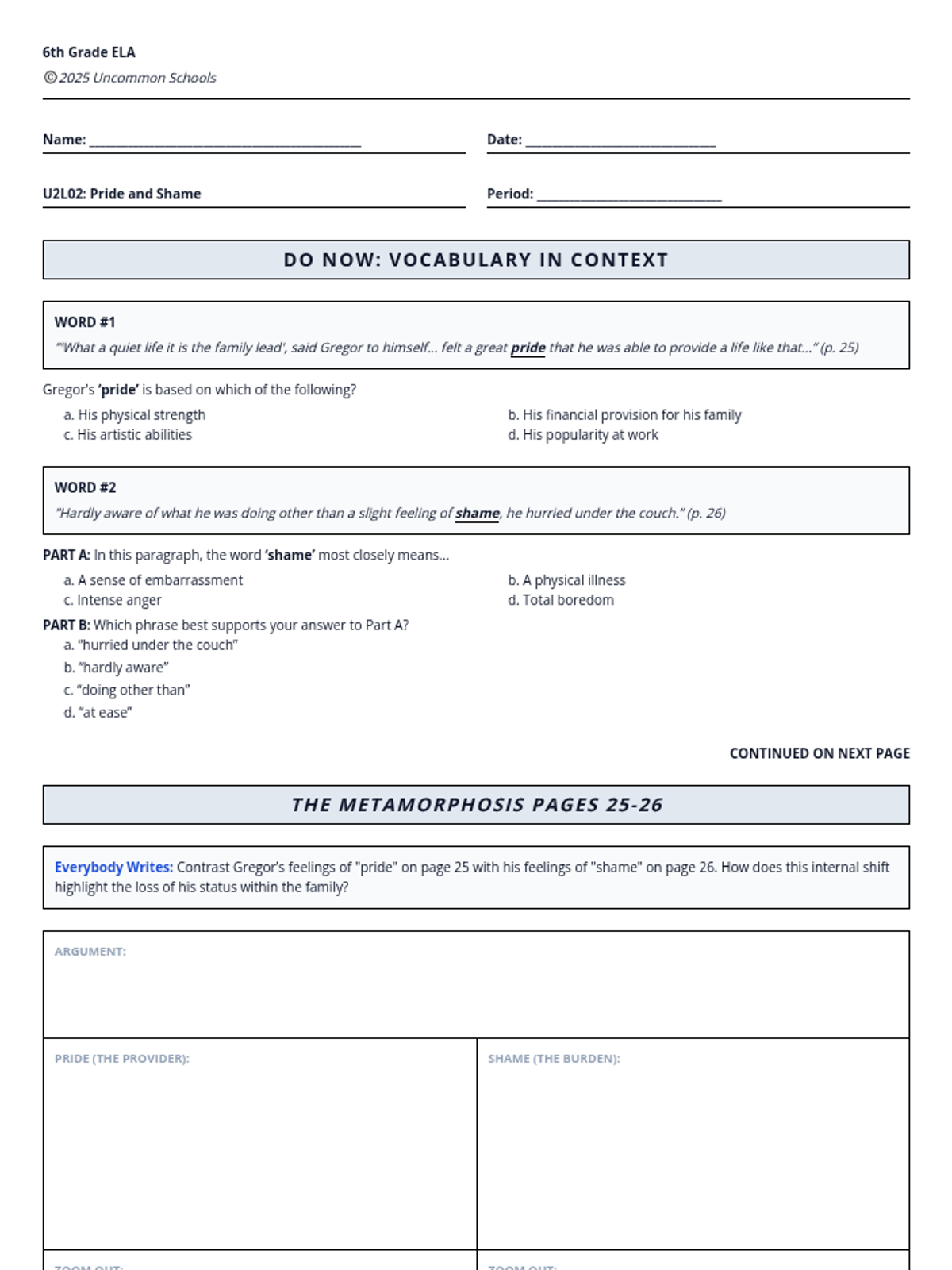
Analyzes the family's financial state and the psychological toll of isolation on Gregor.
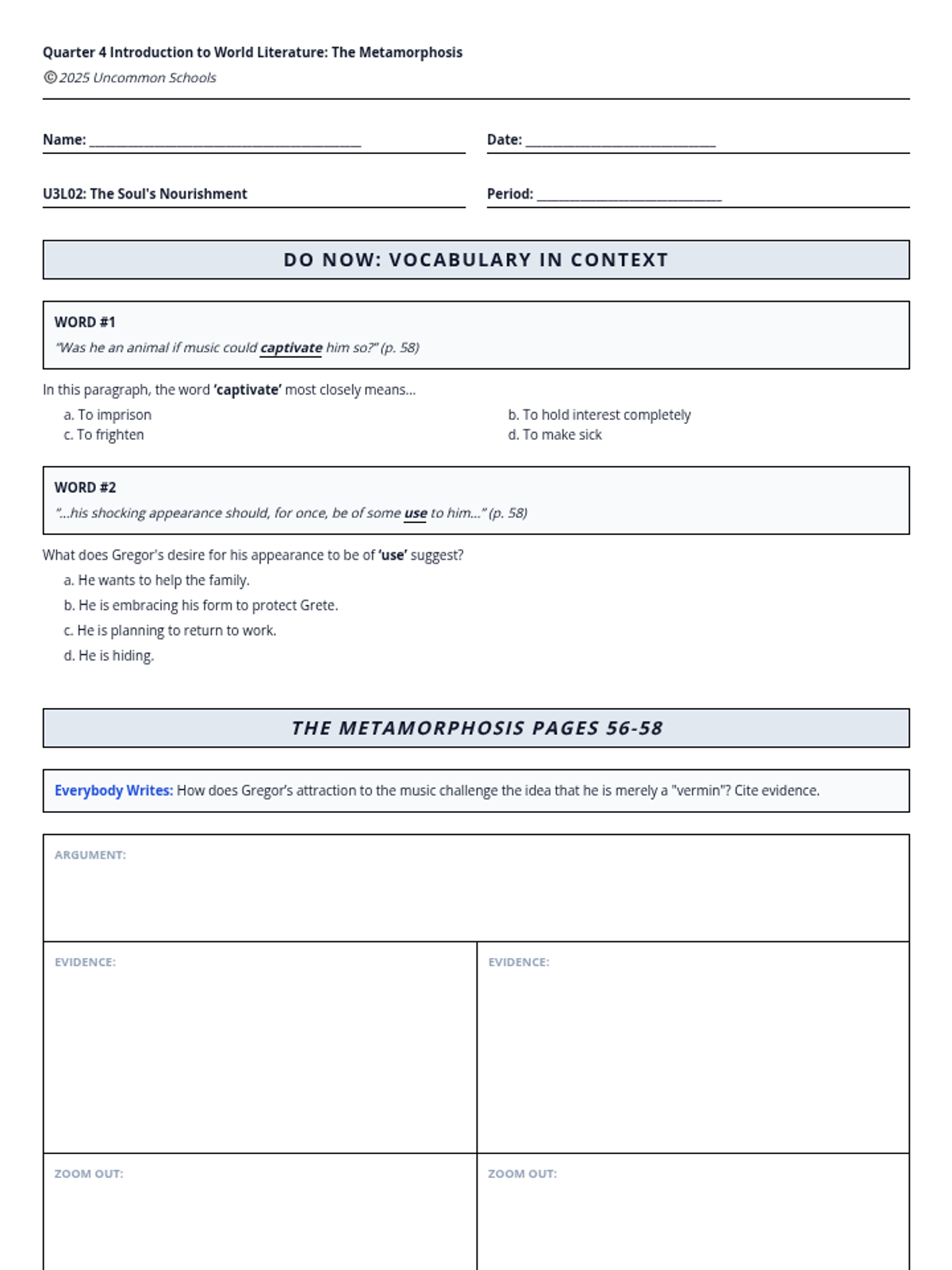
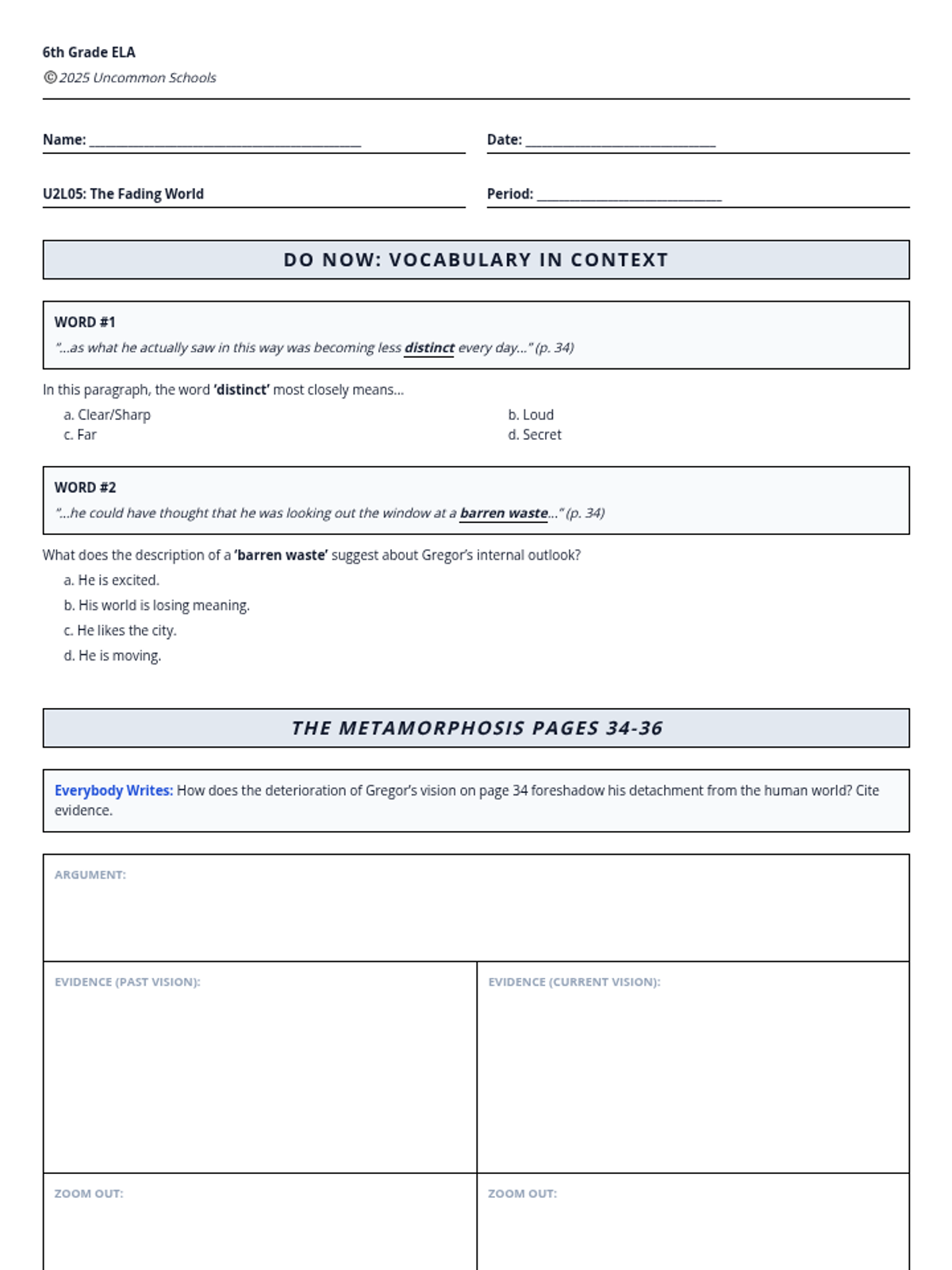
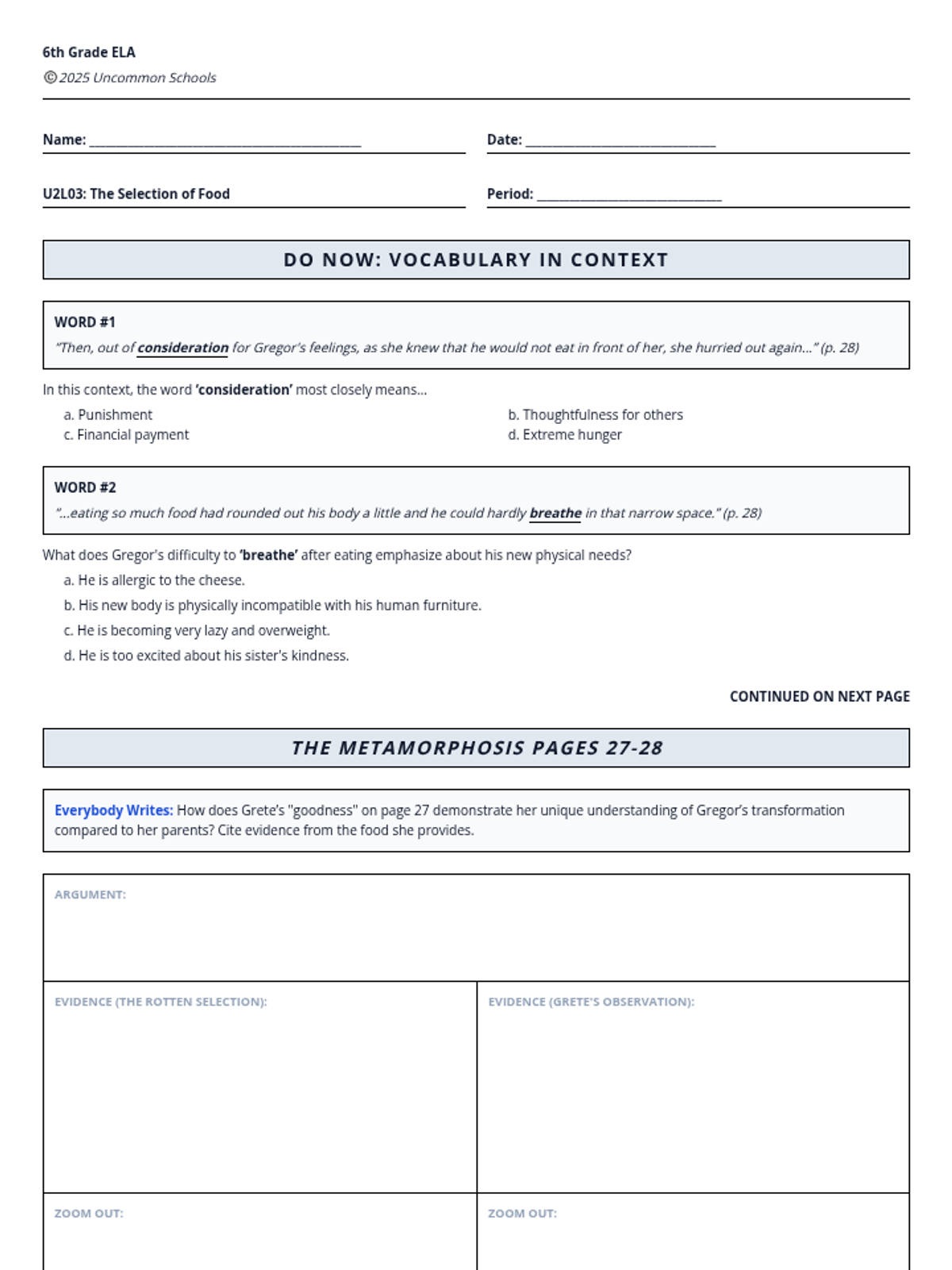
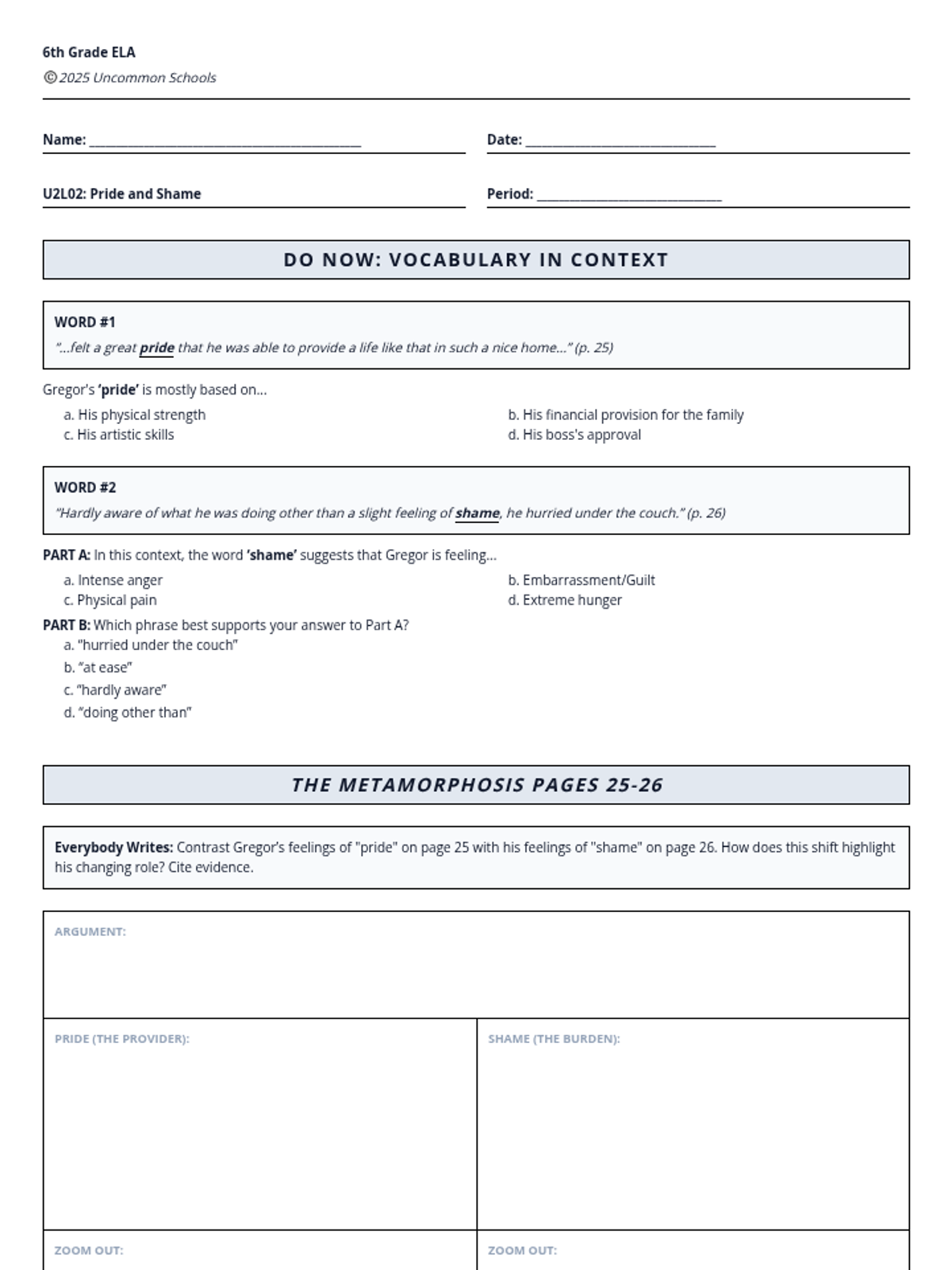
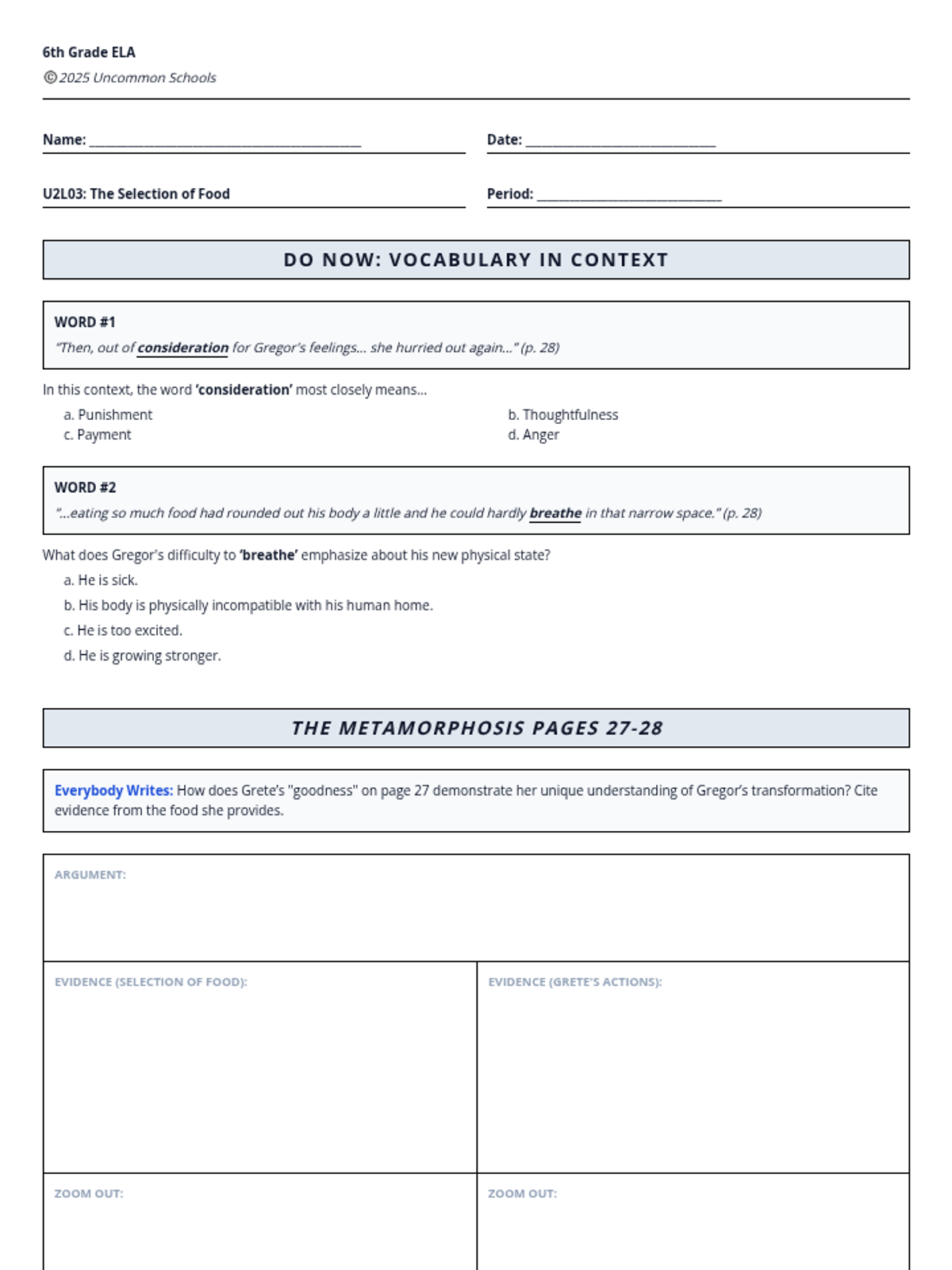
Covers the beginning of Part II, exploring Gregor's physical adjustment to his room and his family's initial attempts to care for him.
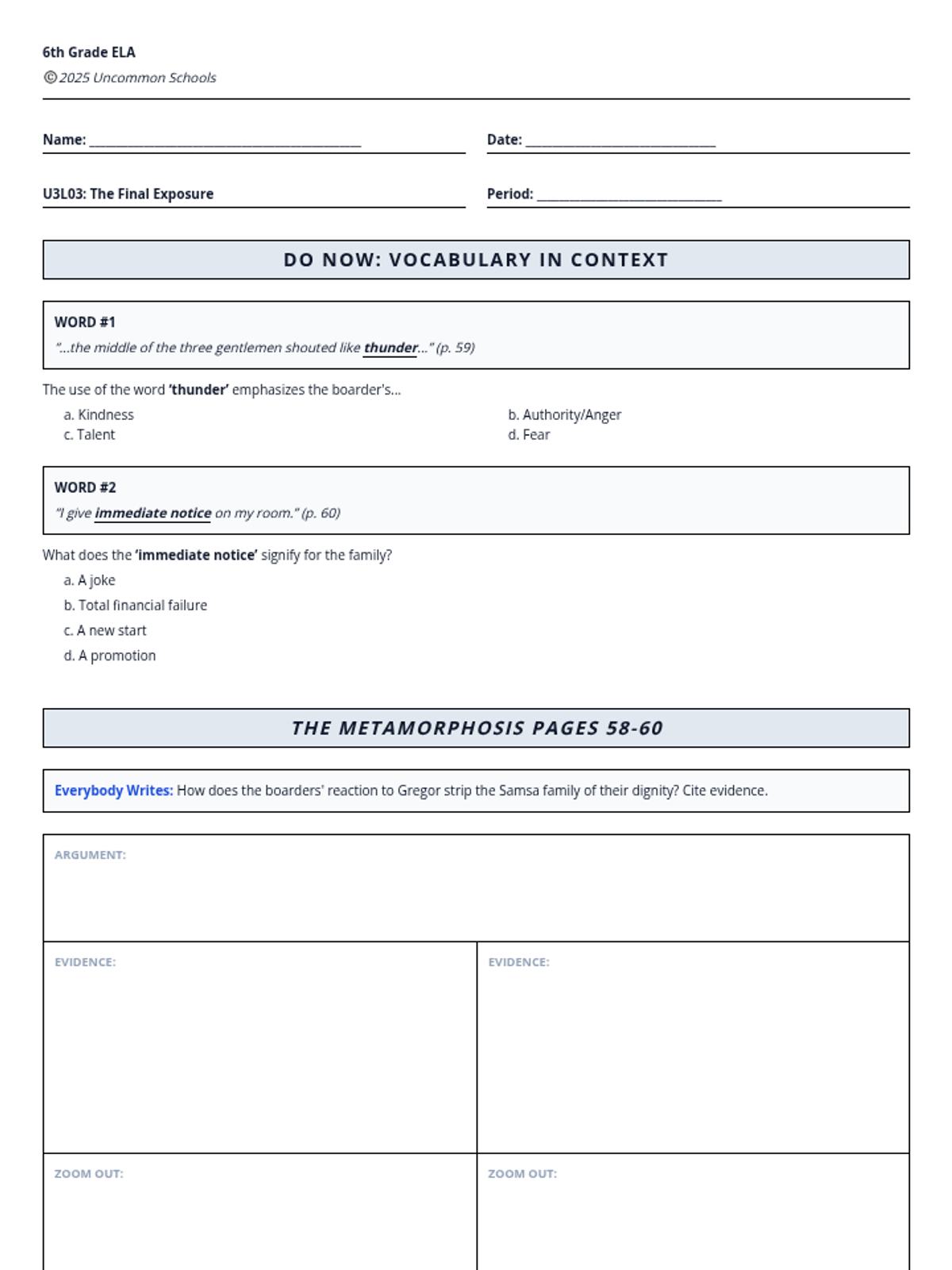
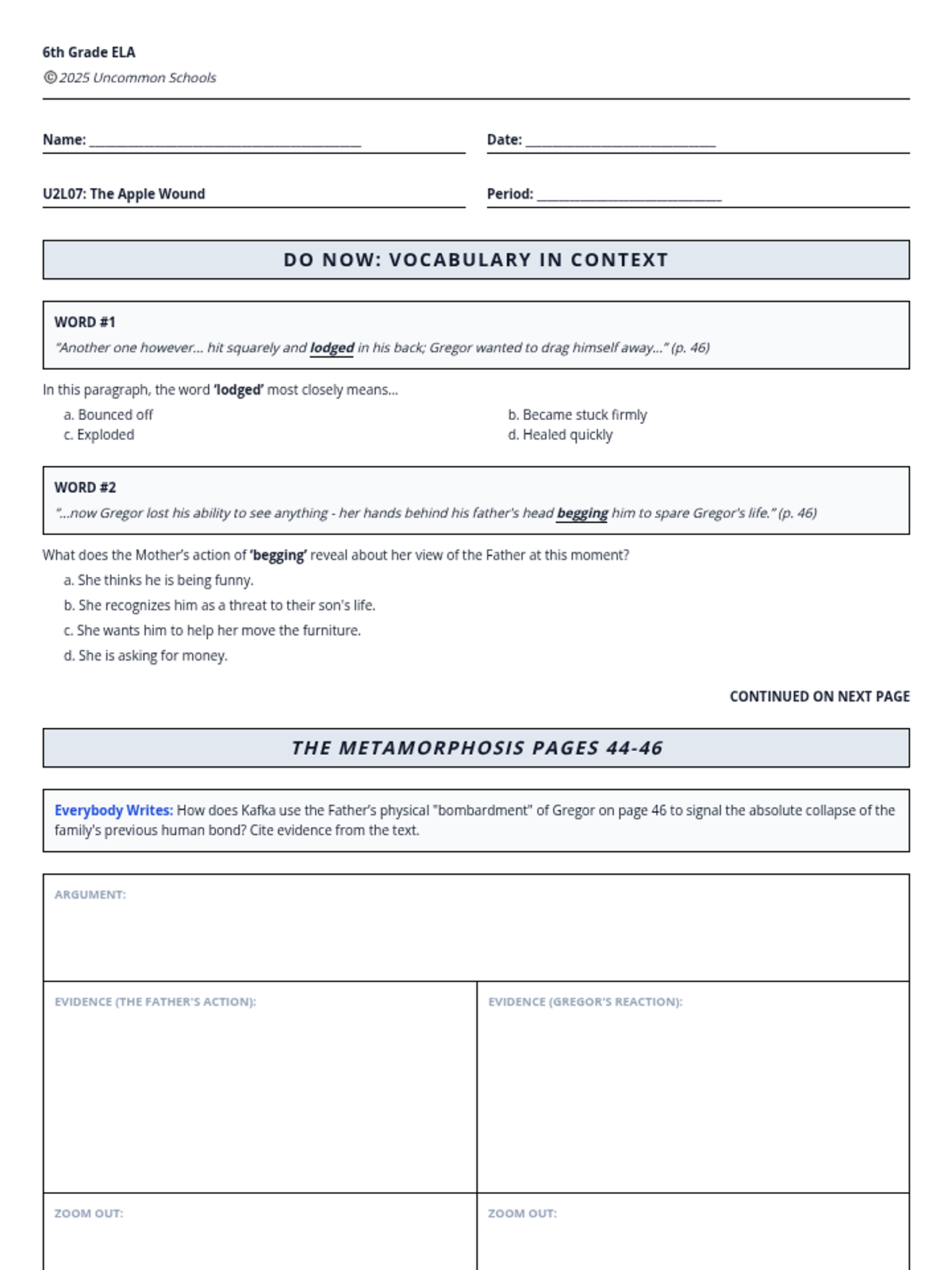
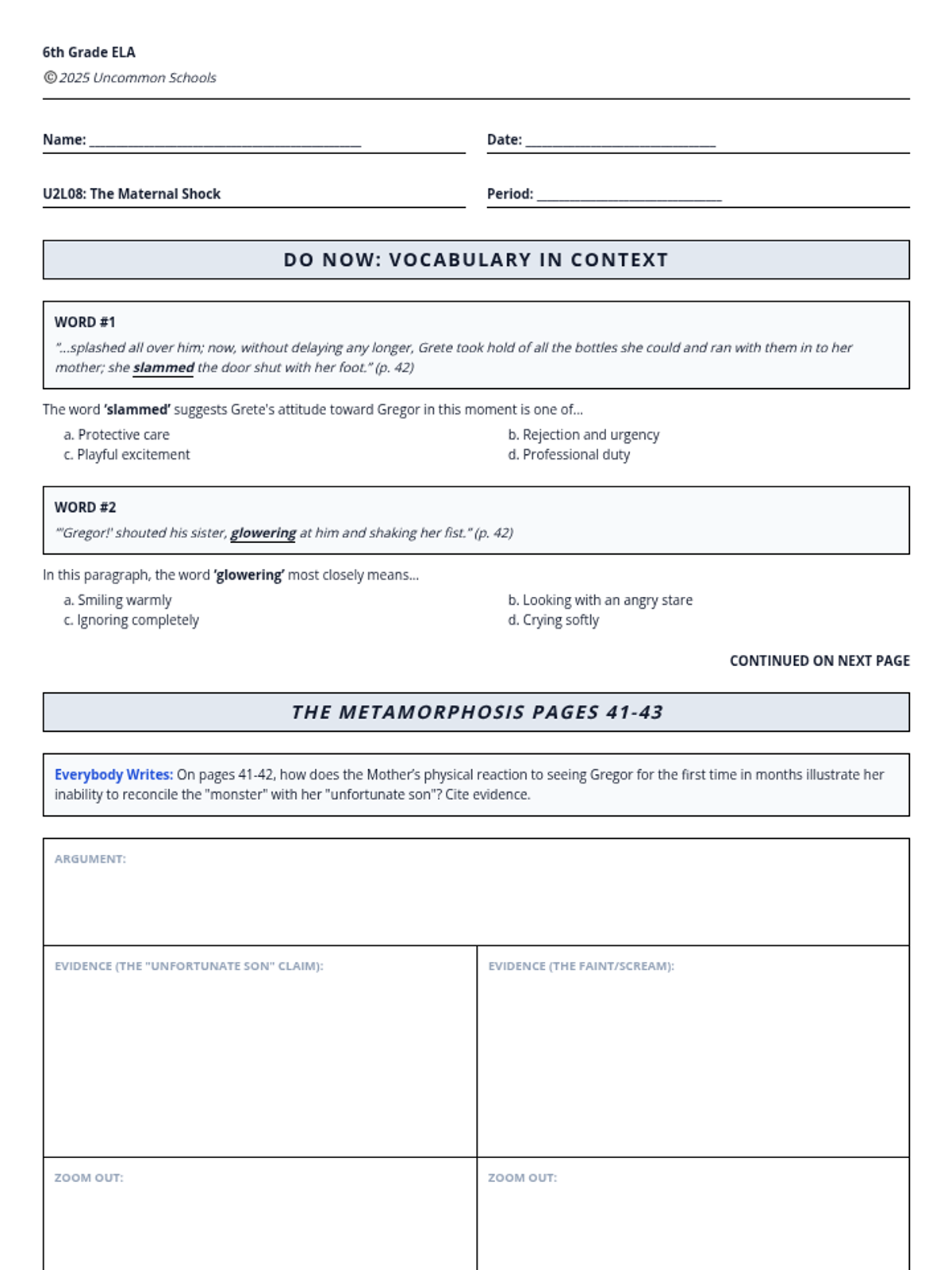
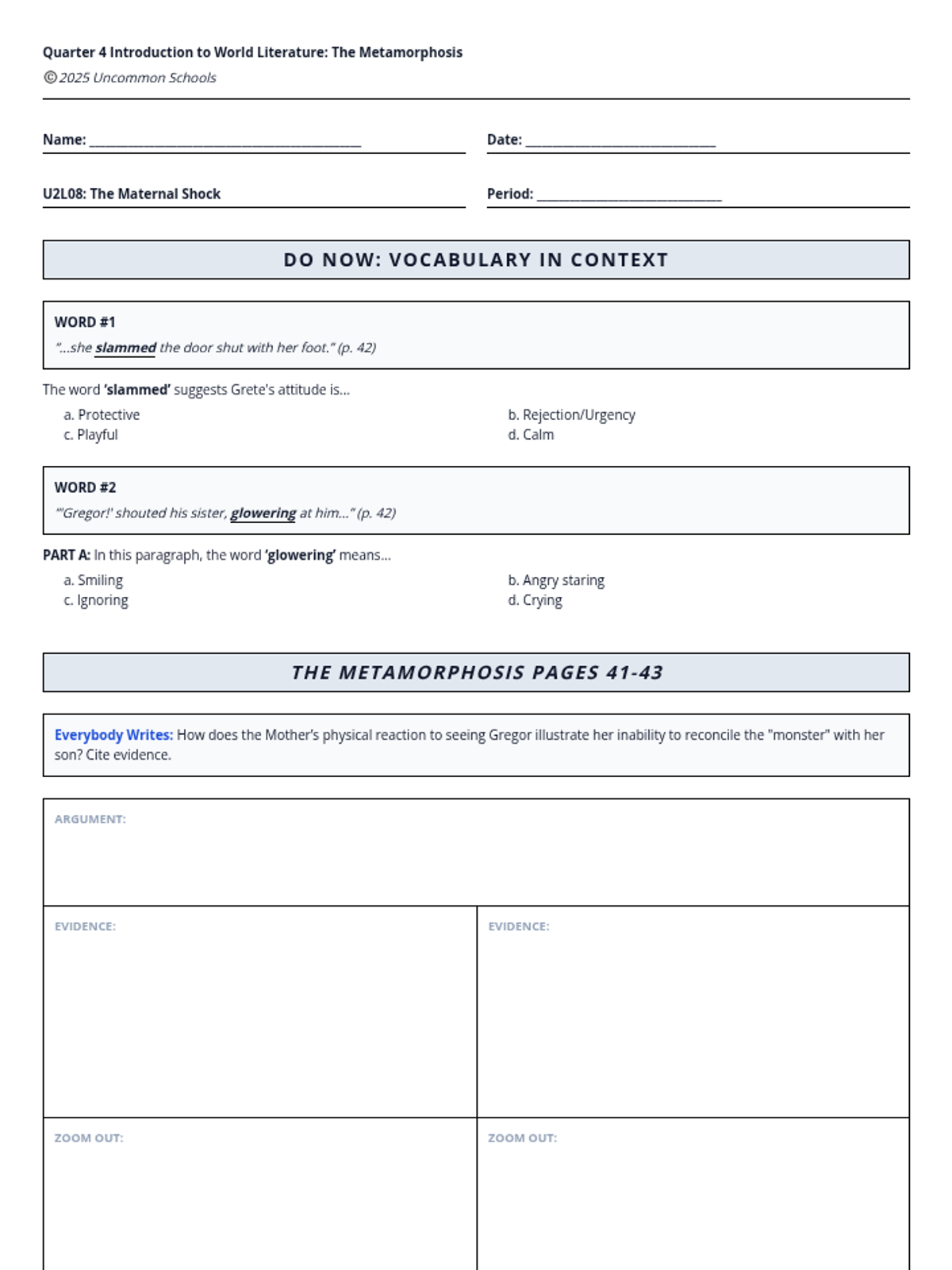
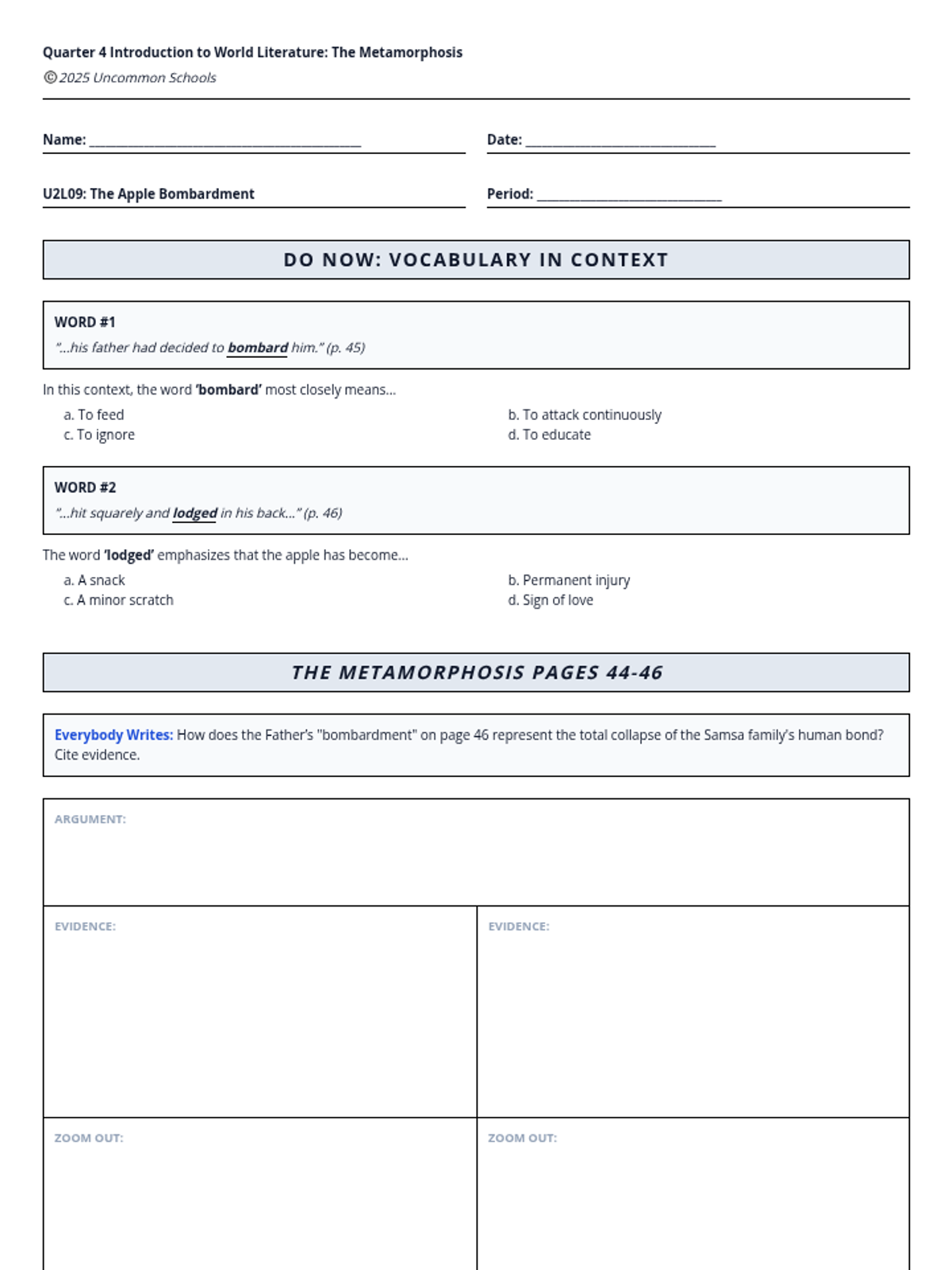
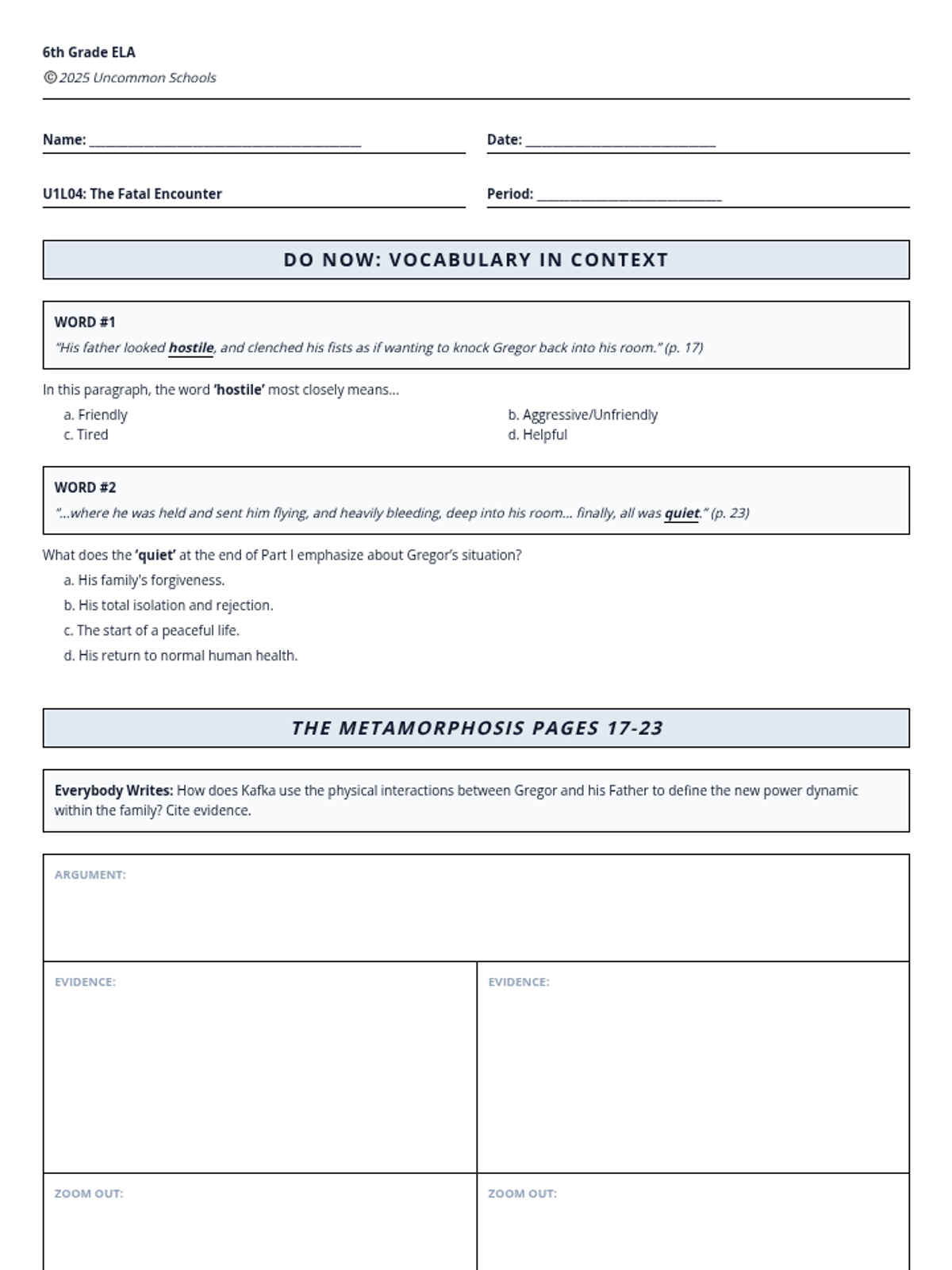
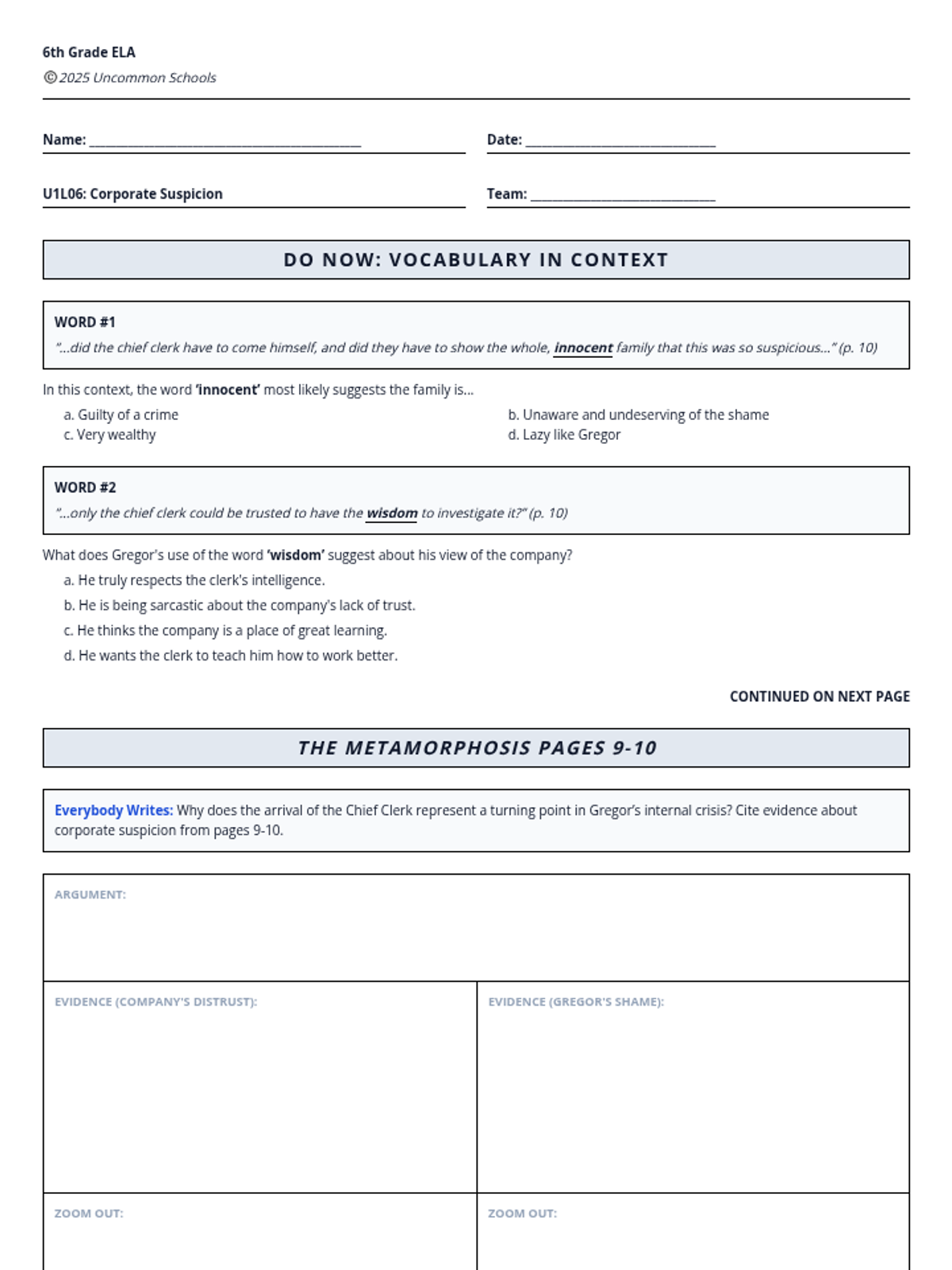
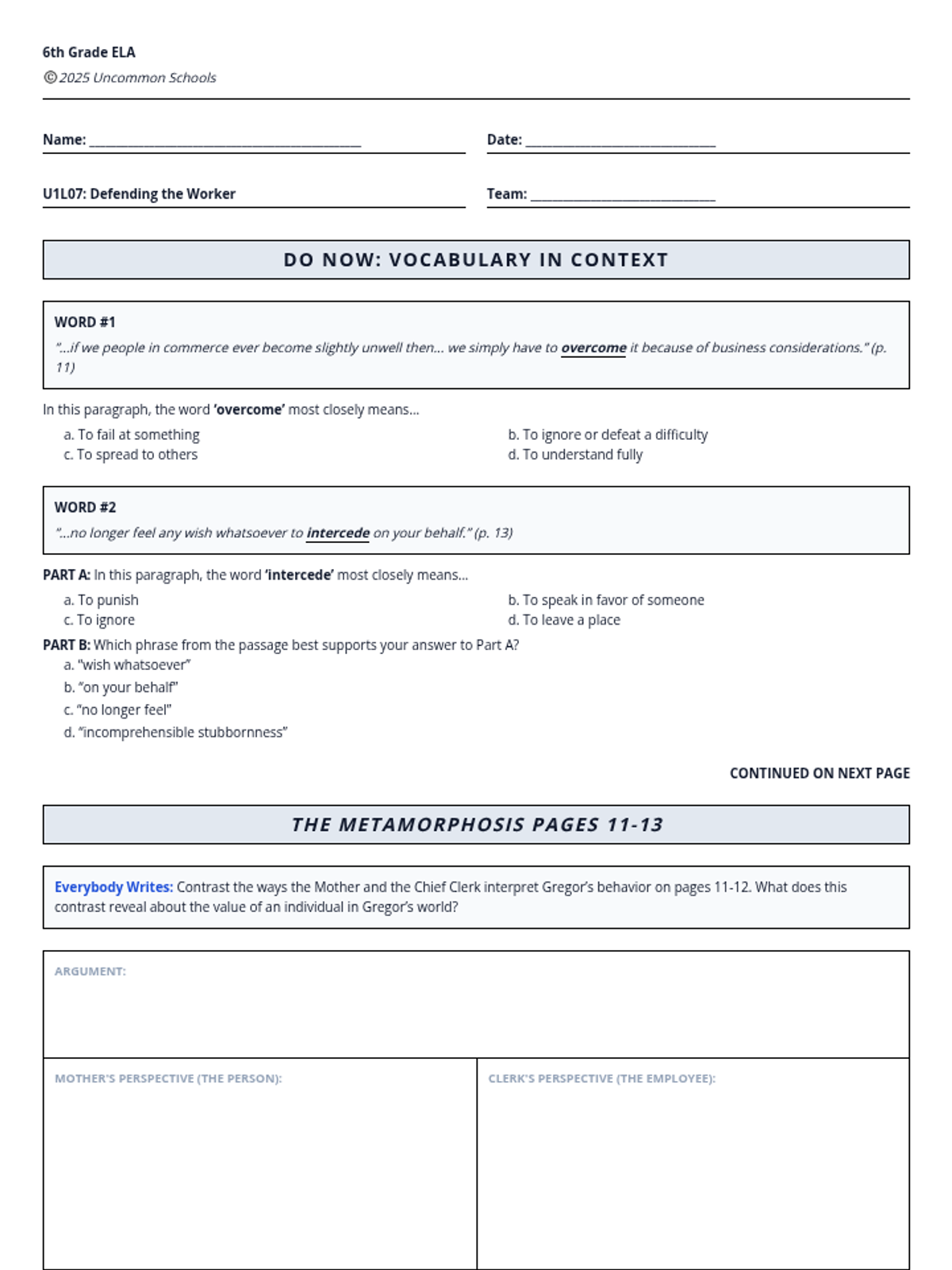
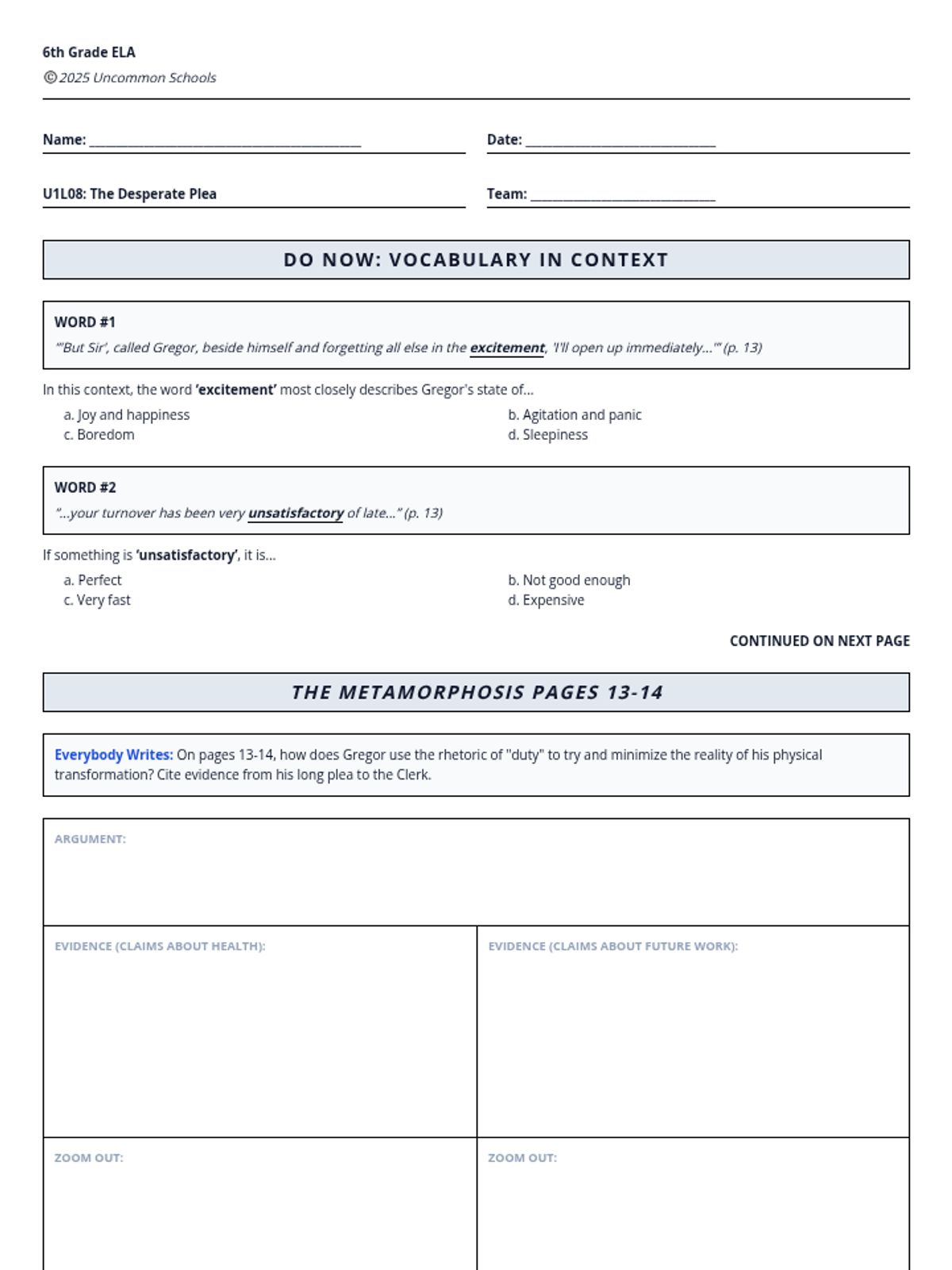
Analyzes the first visual encounter between the family and Gregor in his new form, culminating in the Father's violent rejection.
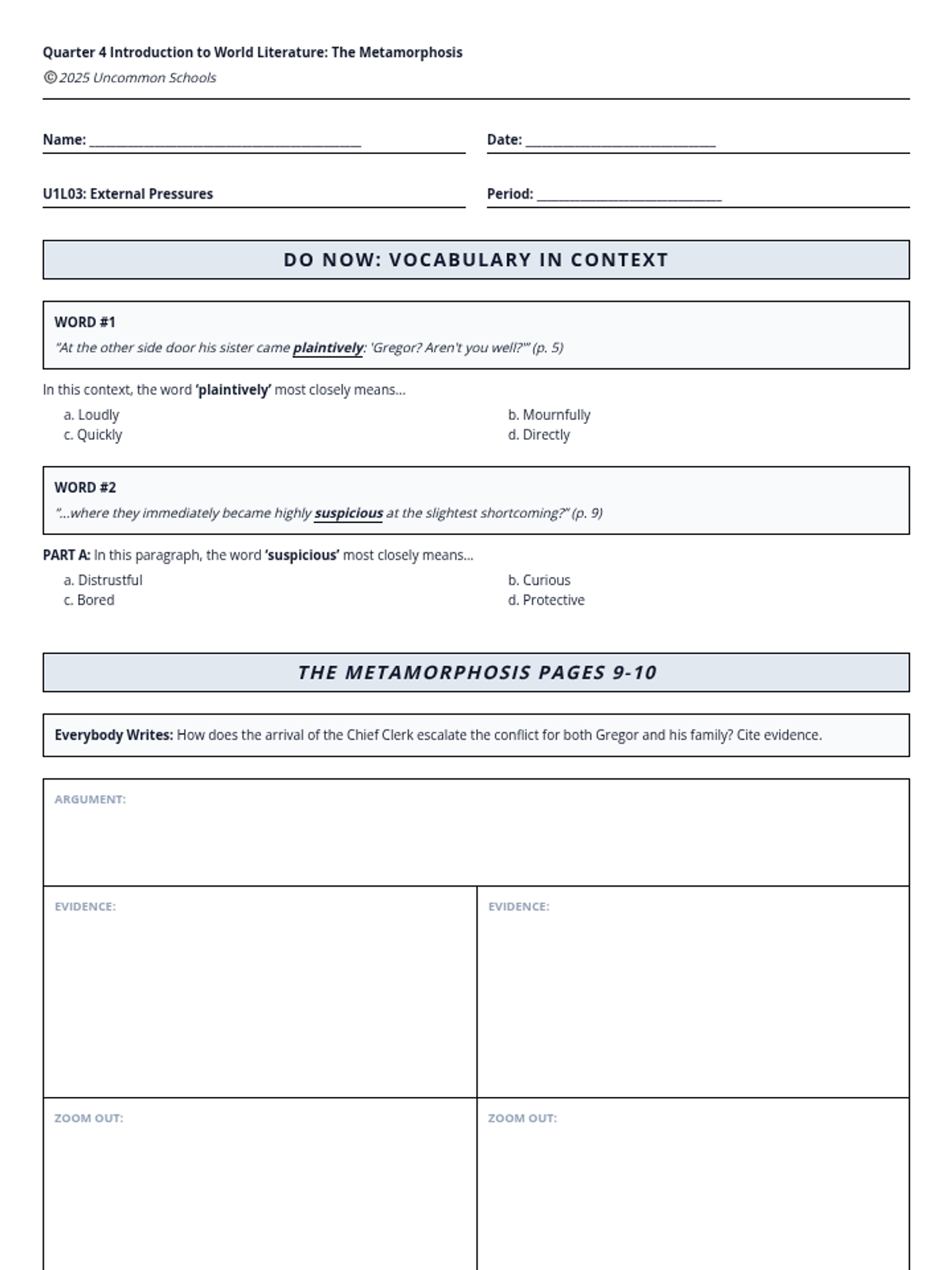
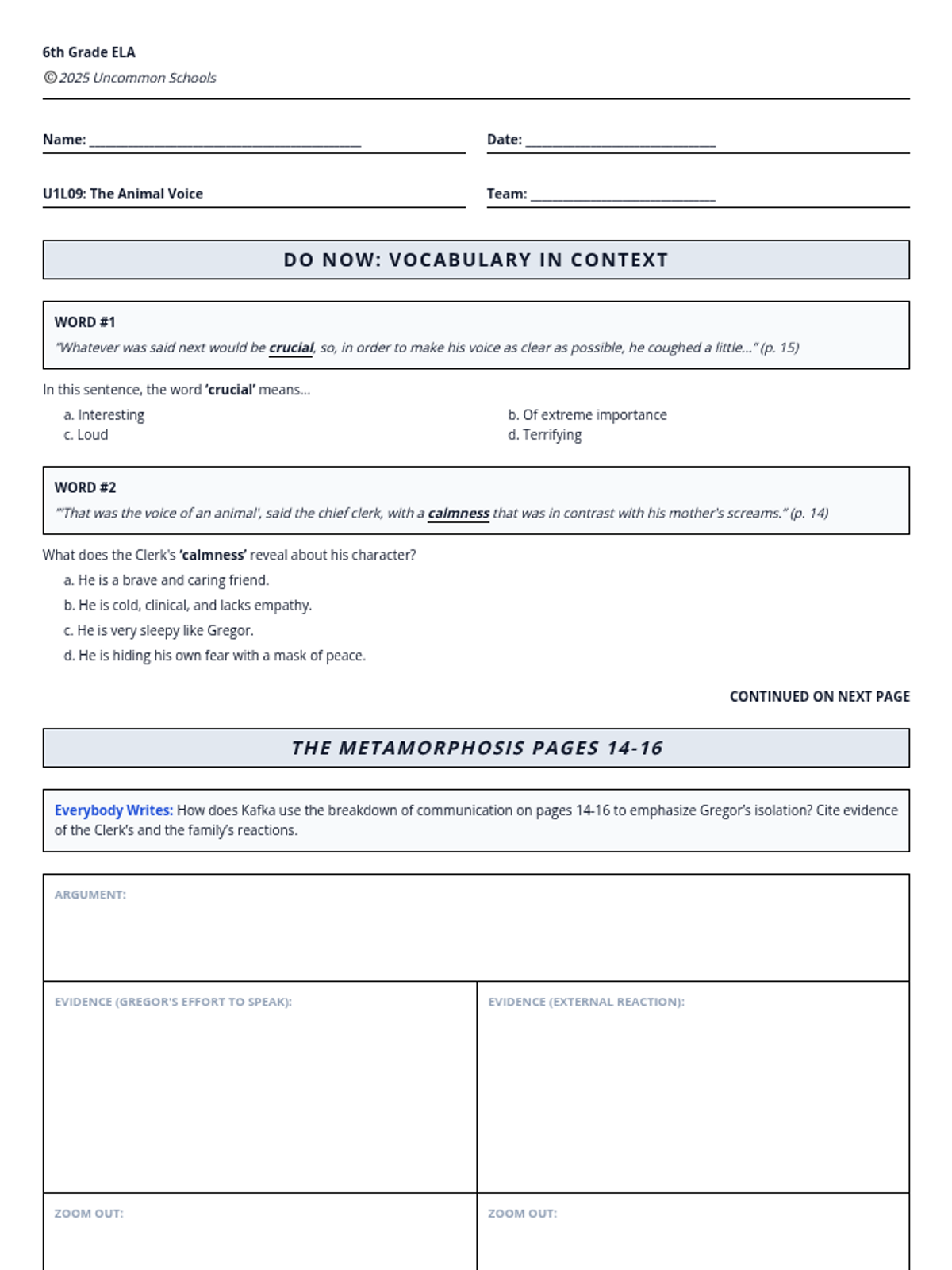
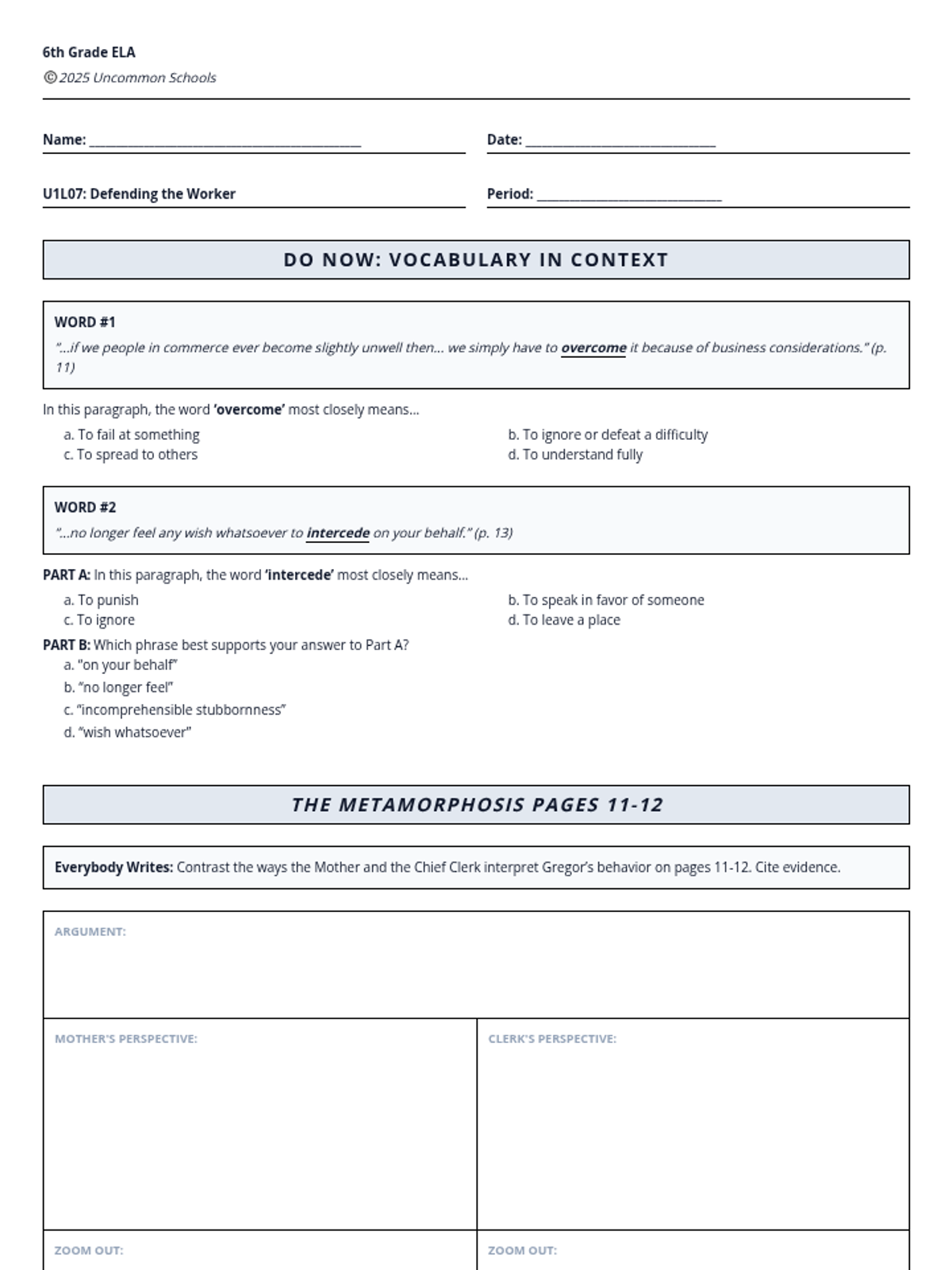
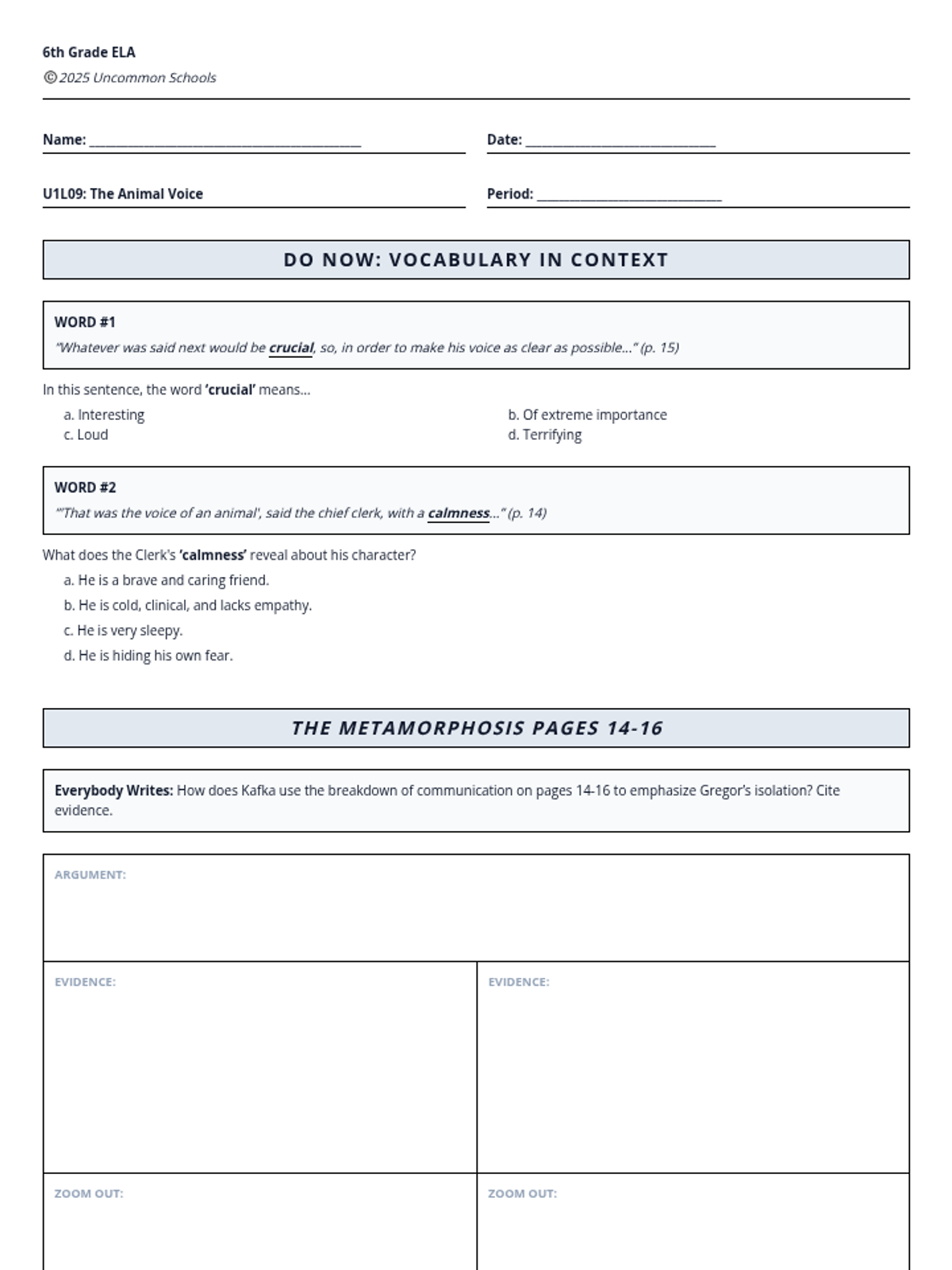
Focuses on the immediate external pressure as the family and the Chief Clerk demand entry to Gregor's room.
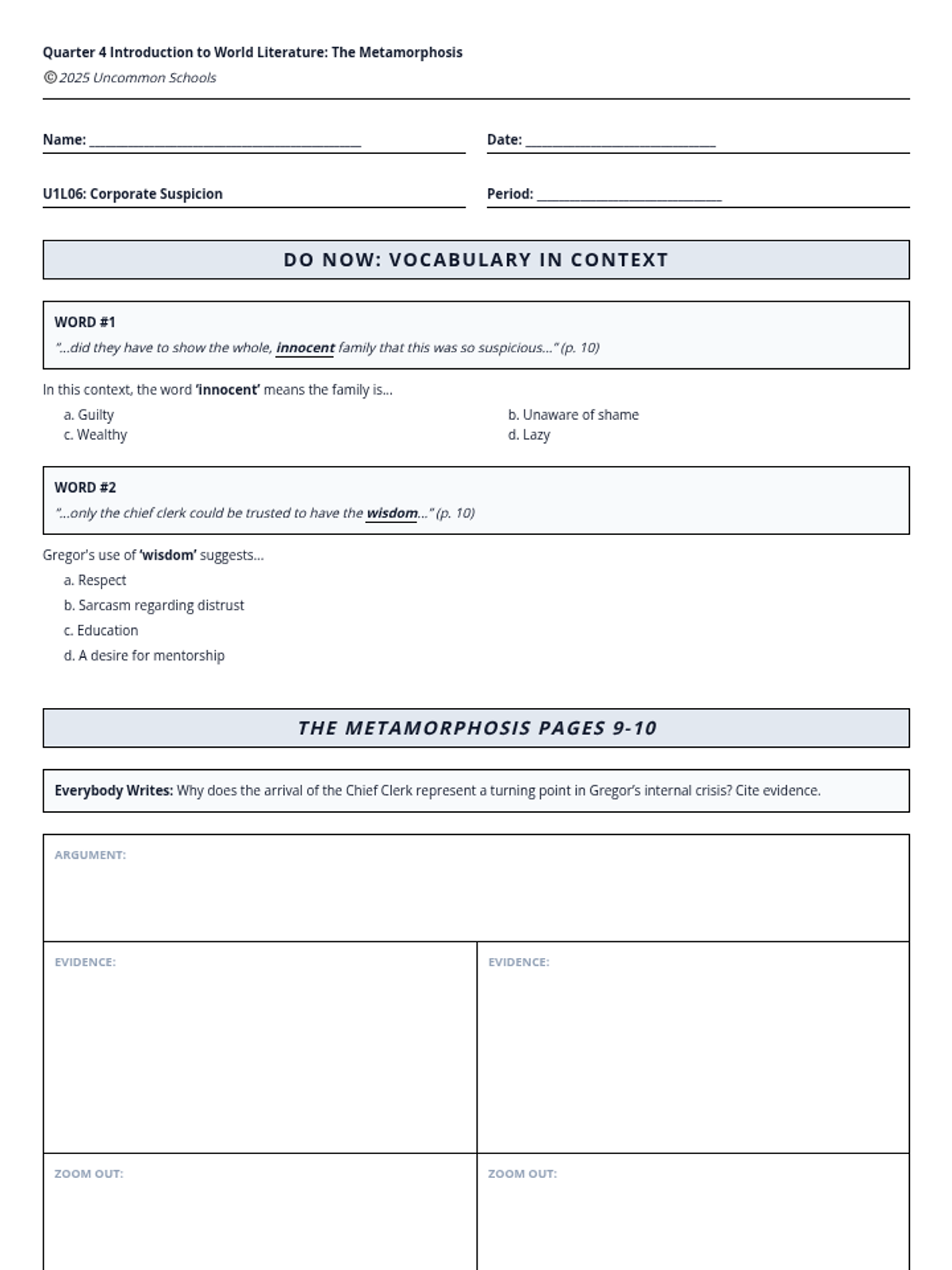
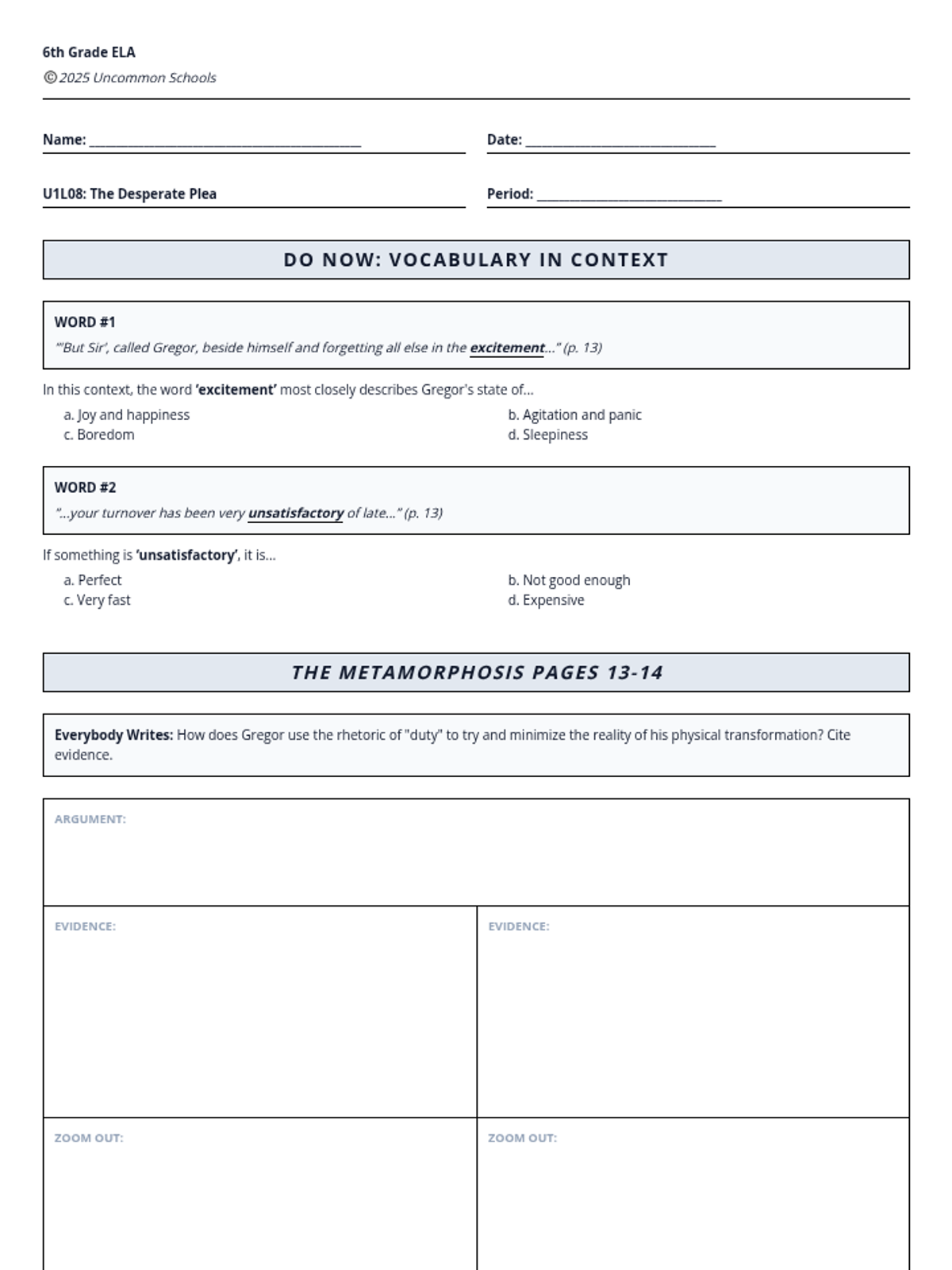
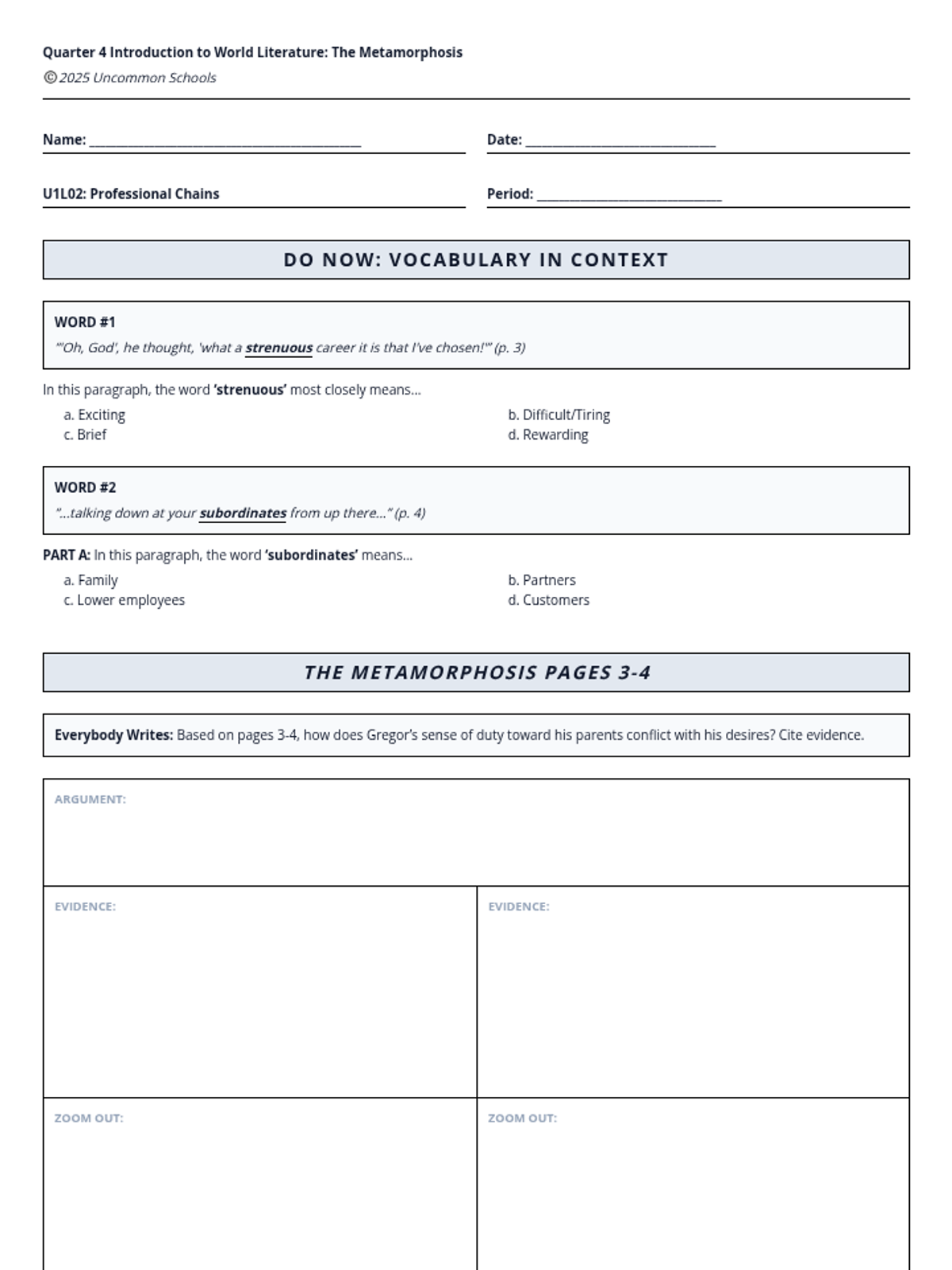
Explores Gregor's dissatisfaction with his job and the professional pressures that dictate his life even during his transformation.
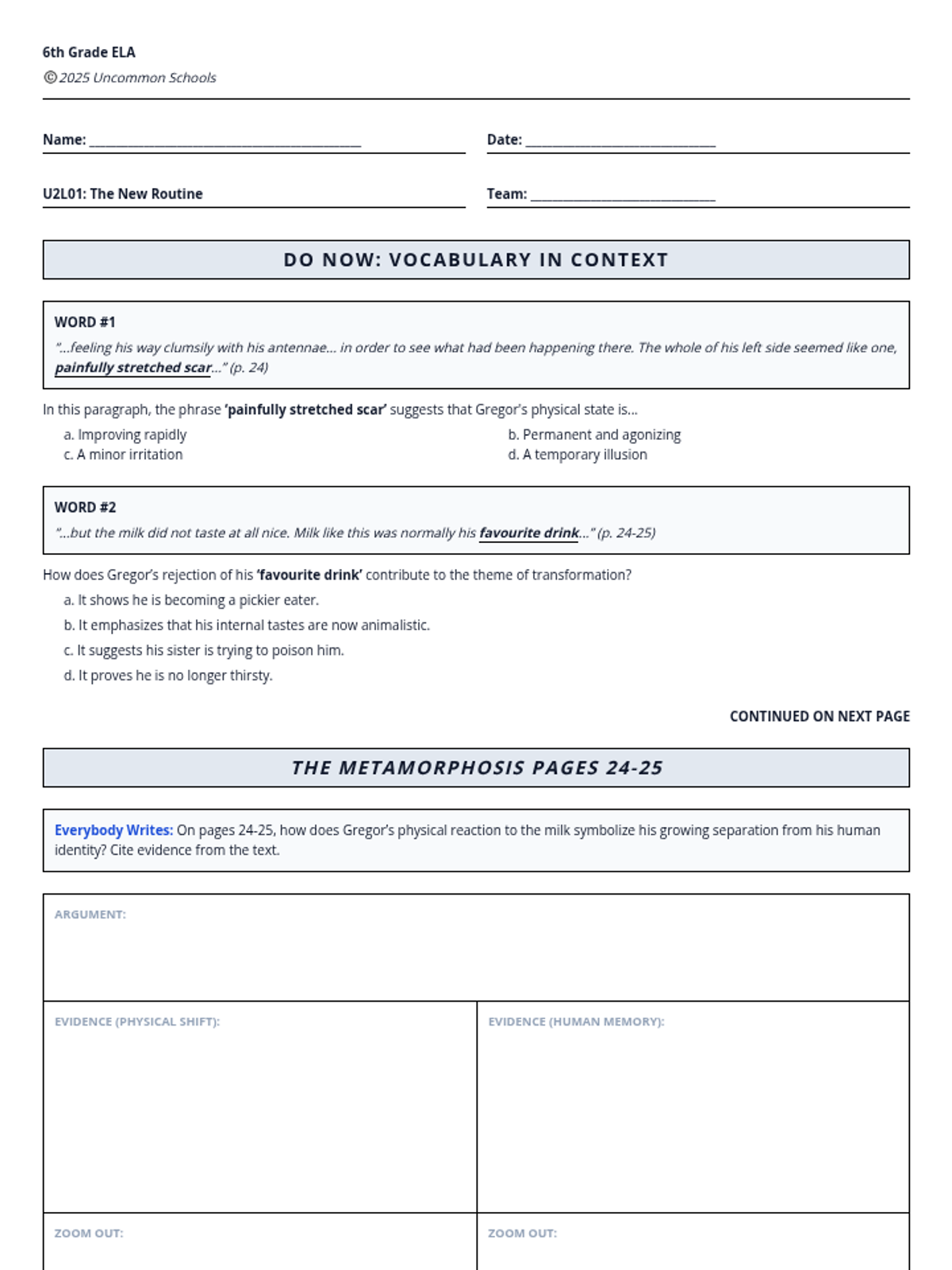
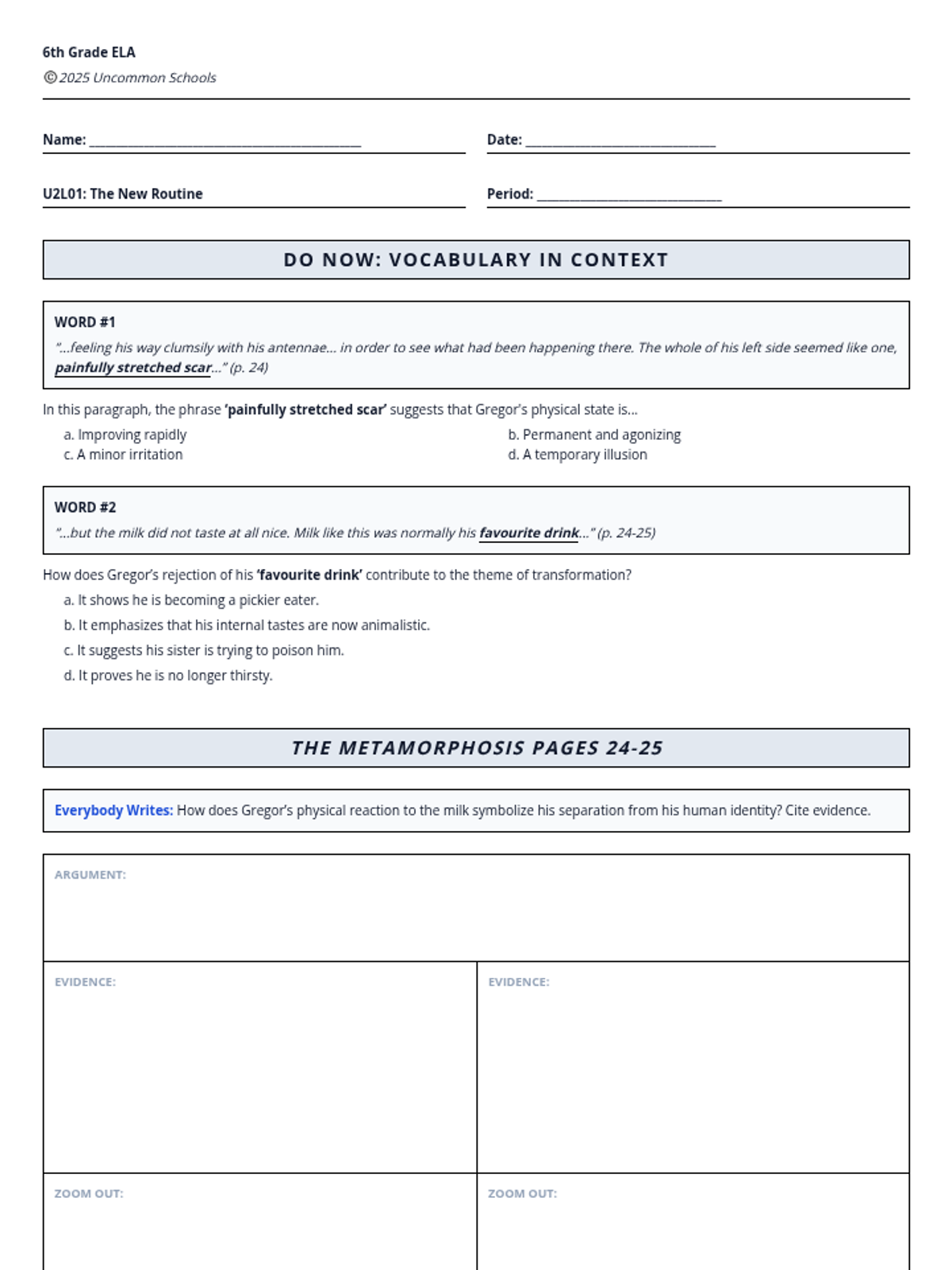
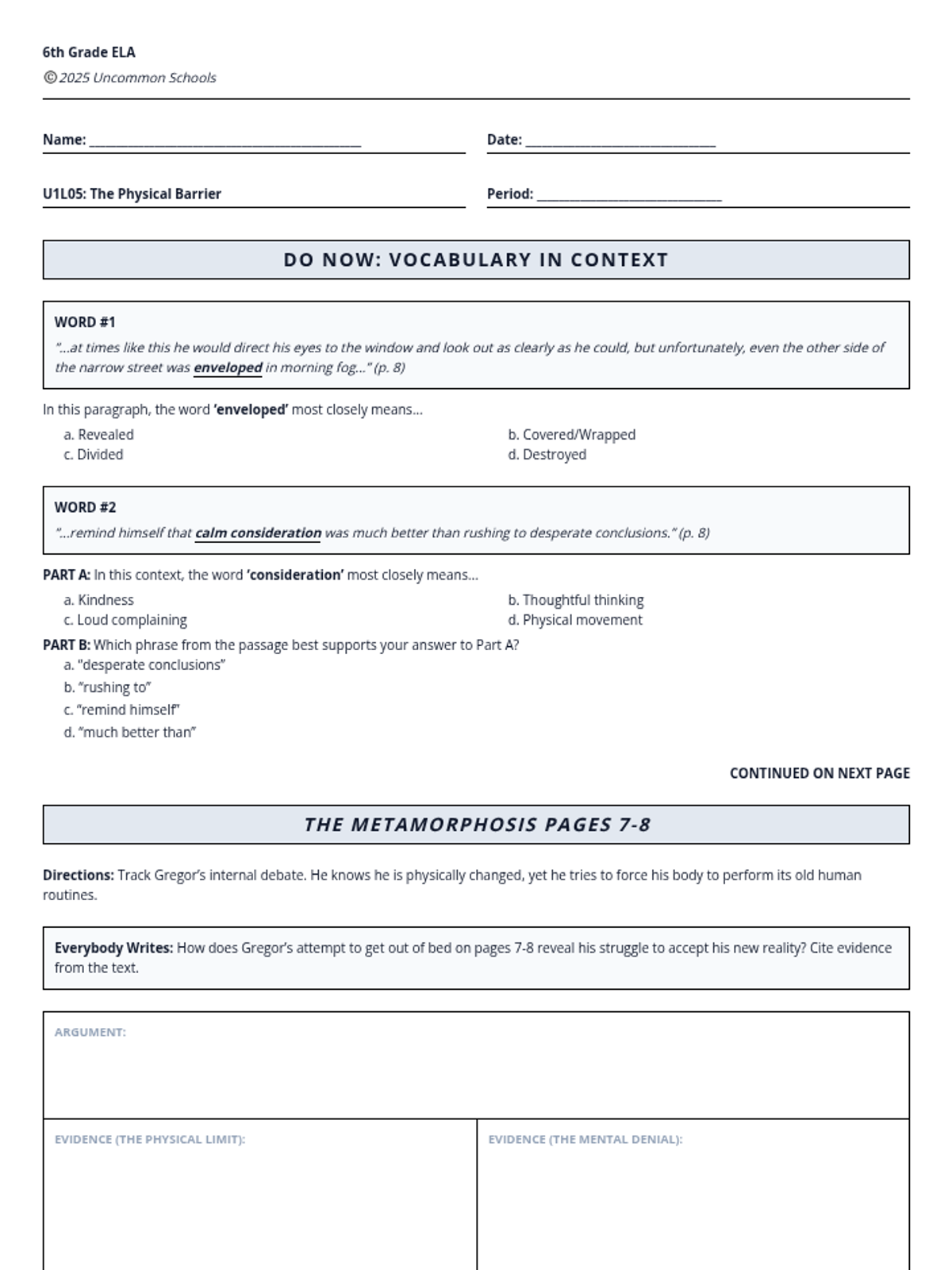
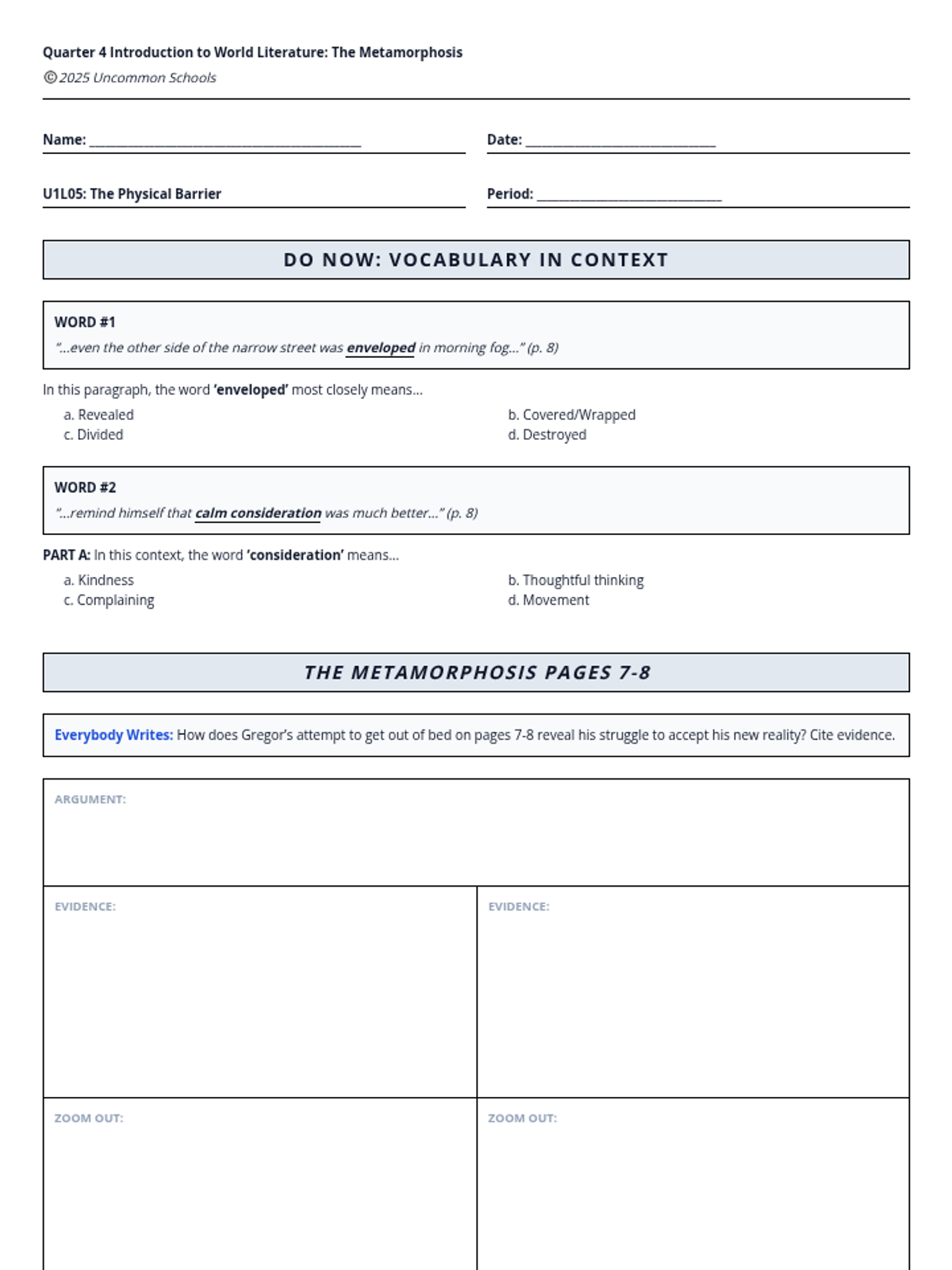
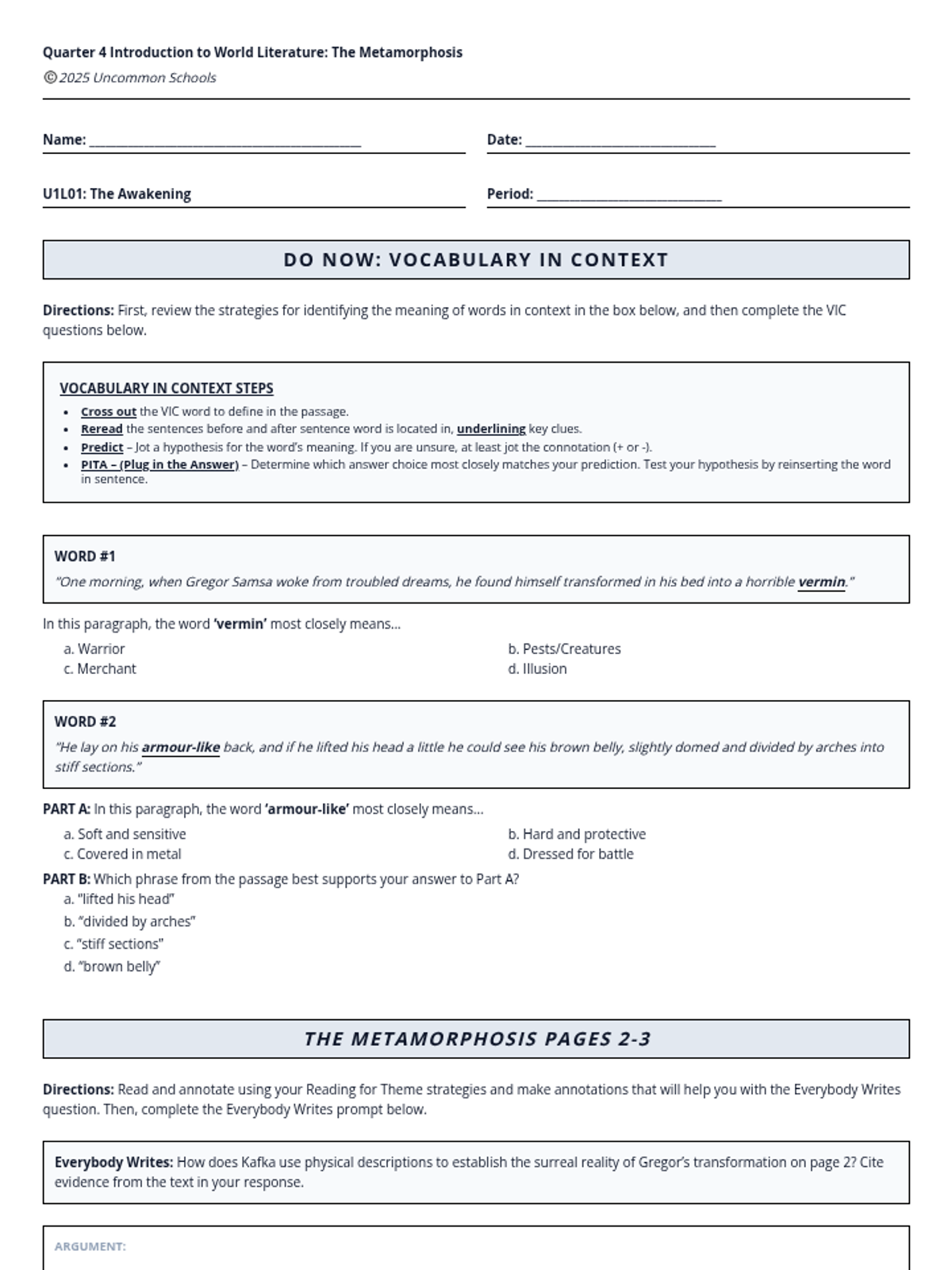
Introduction to Gregor's transformation and initial reaction. Focuses on the physical details of his new state.
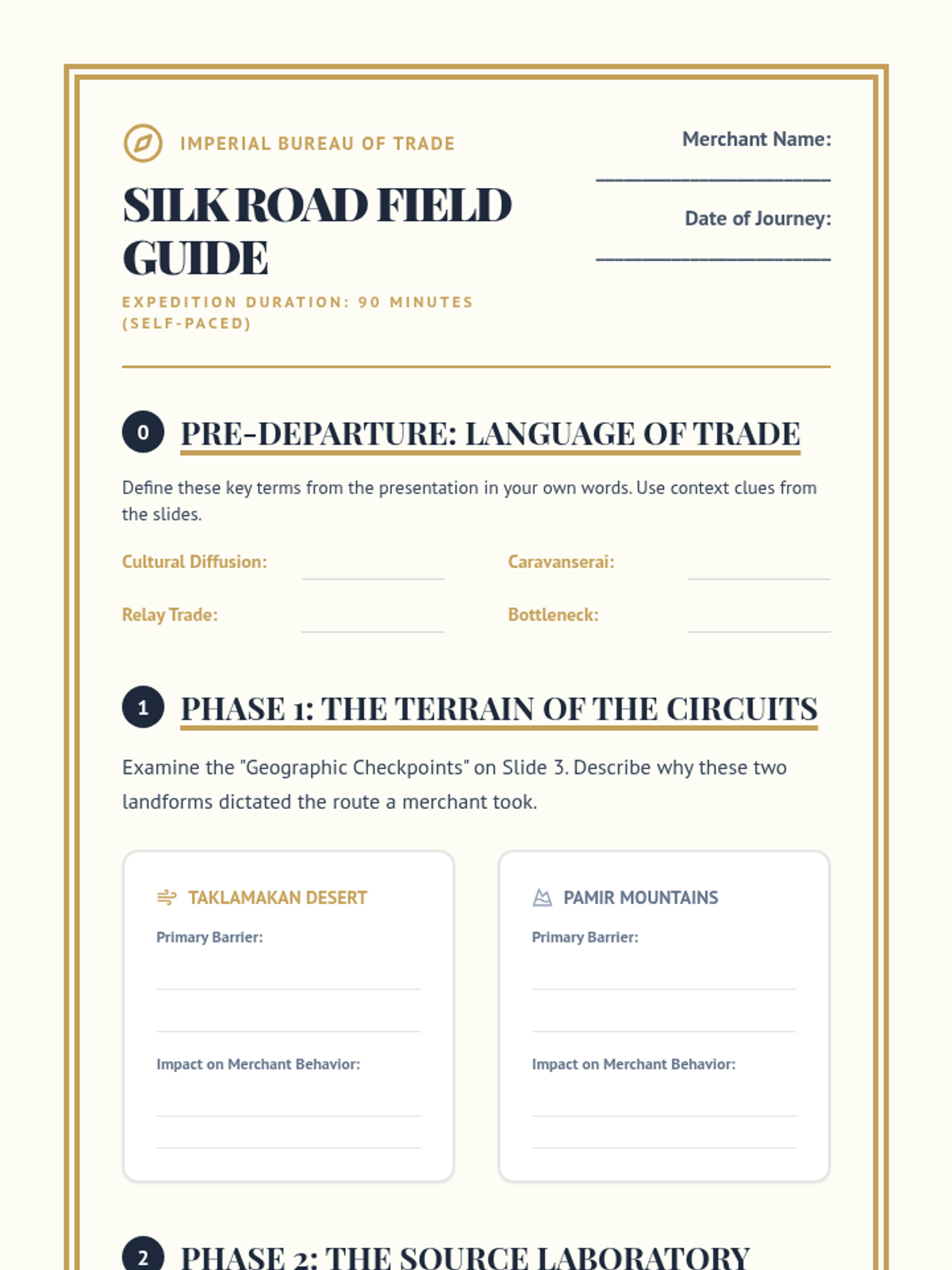
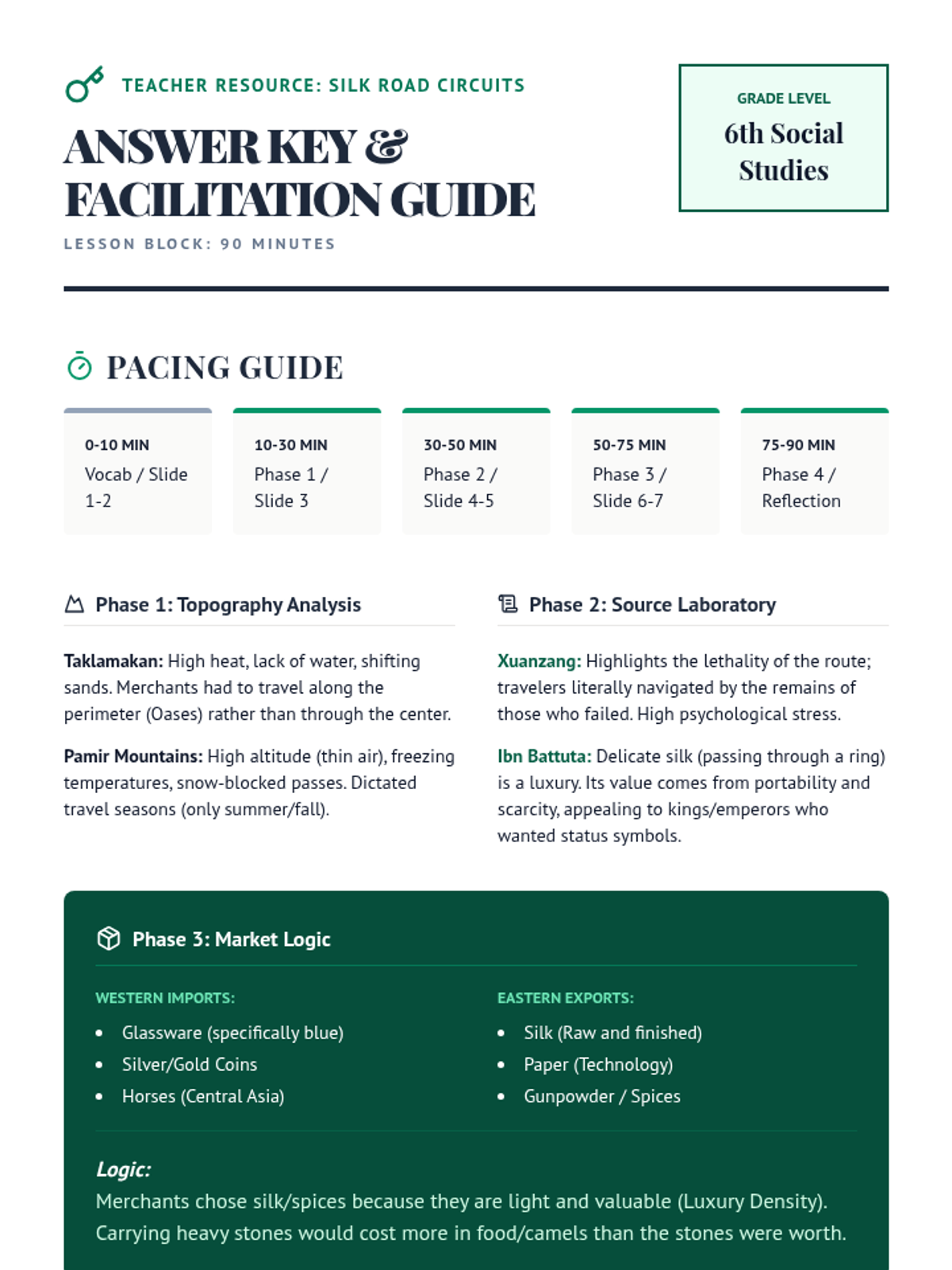
A self-paced Social Studies lesson for 6th grade focused on the Silk Road as an ancient global network, integrating rigorous primary source analysis and geography skills.
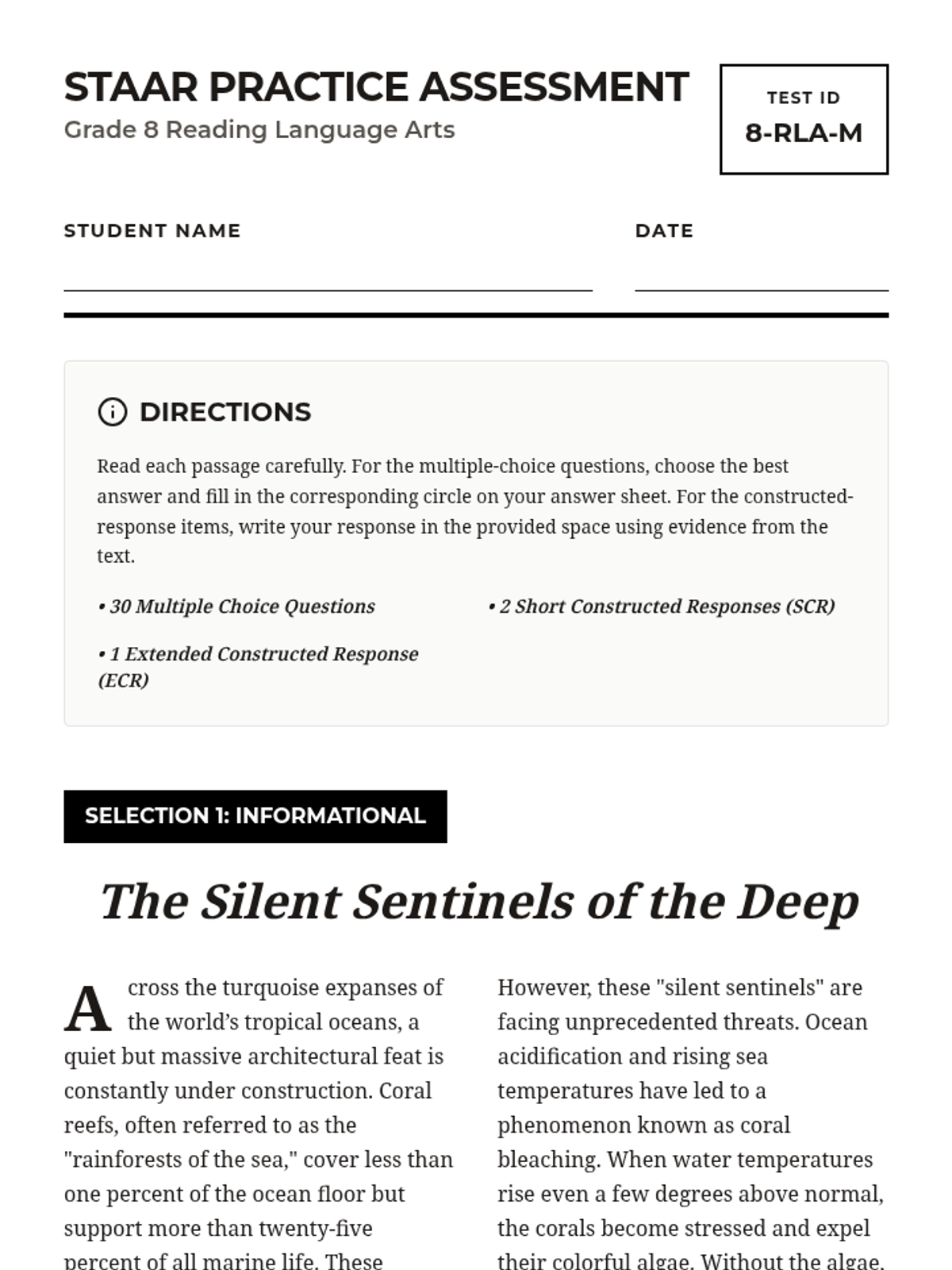
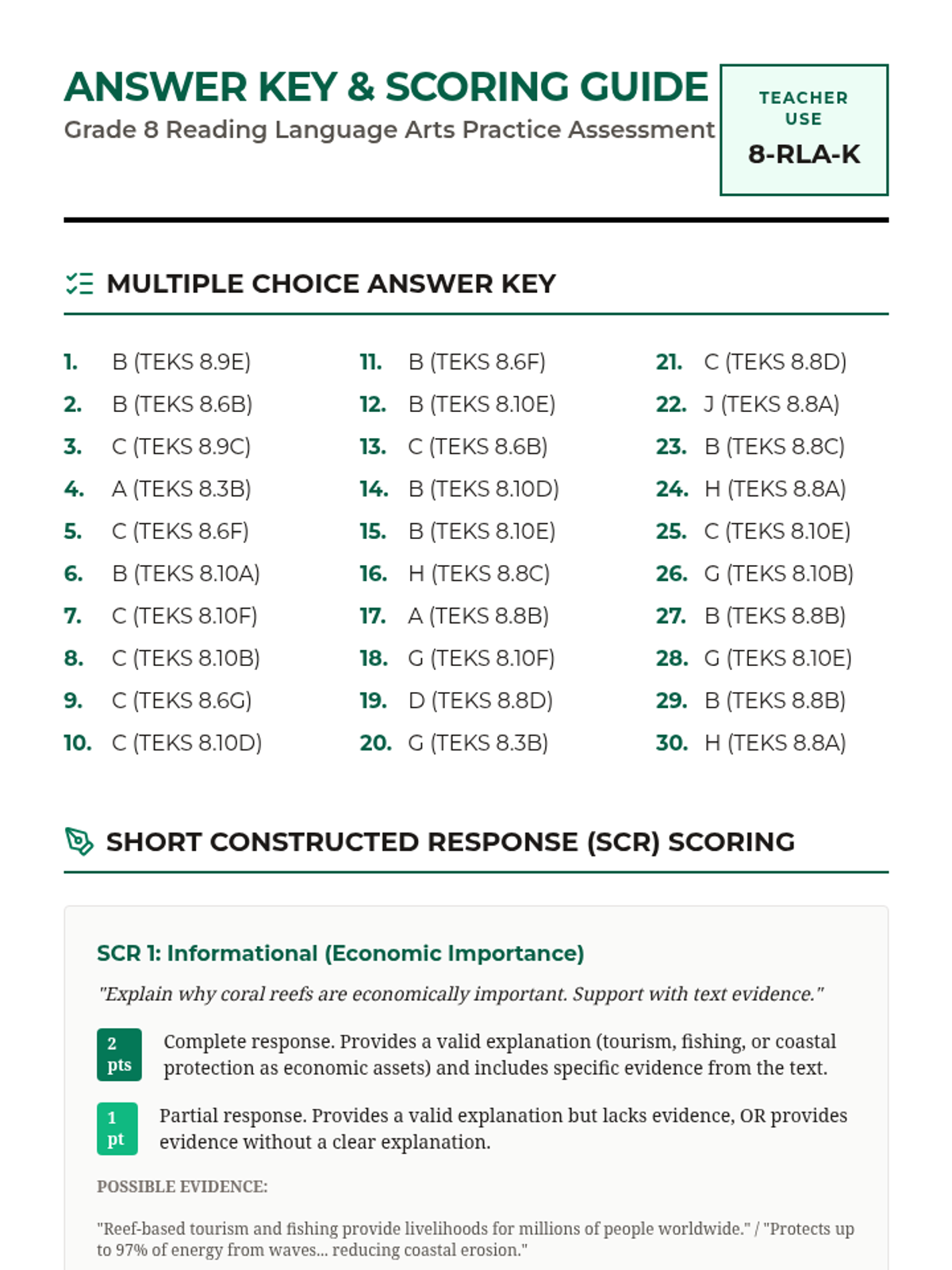
A full-length 8th-grade STAAR reading practice assessment, including 30 multiple-choice questions, two SCRs, and one ECR based on informational and fiction passages.
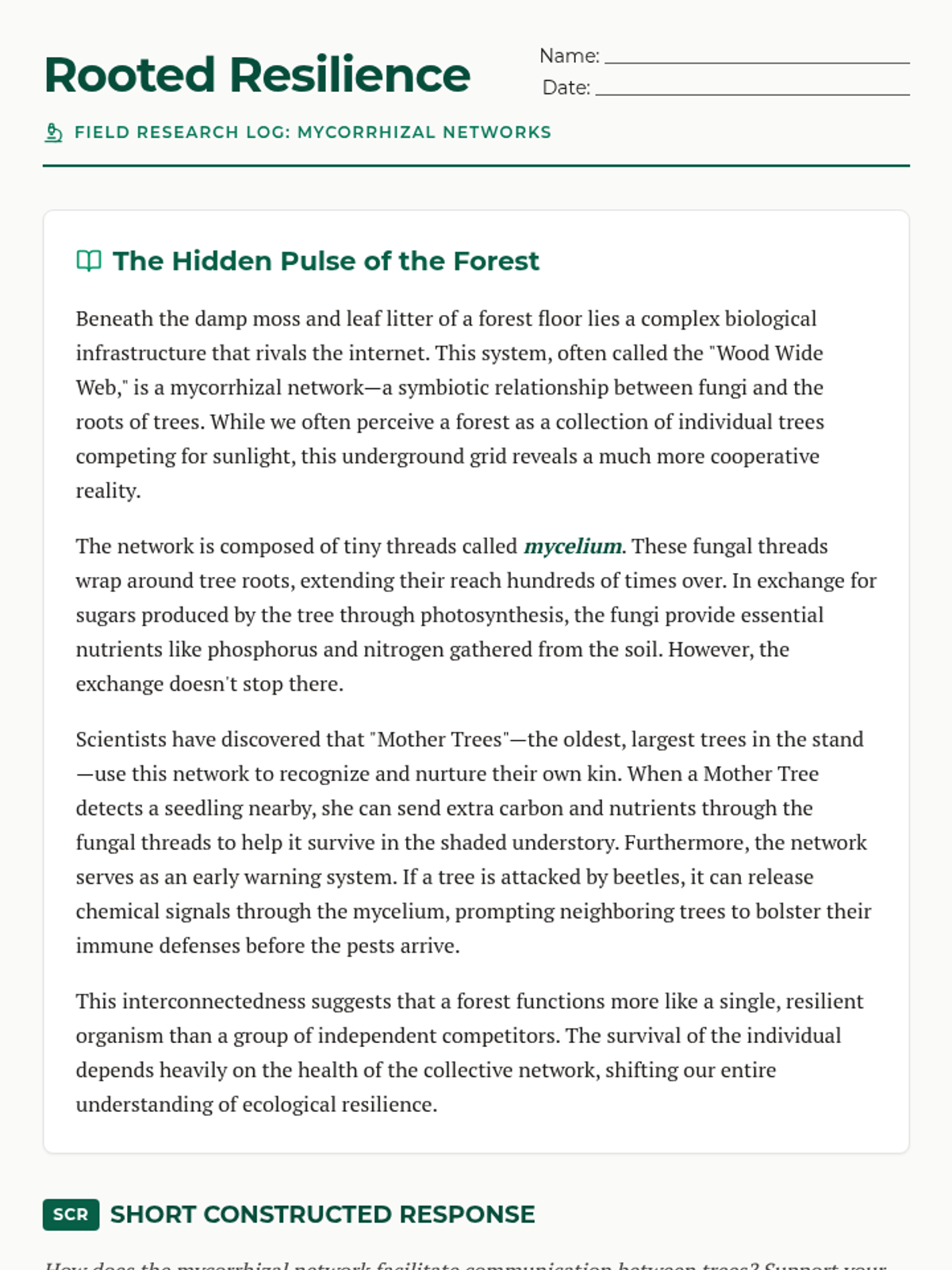
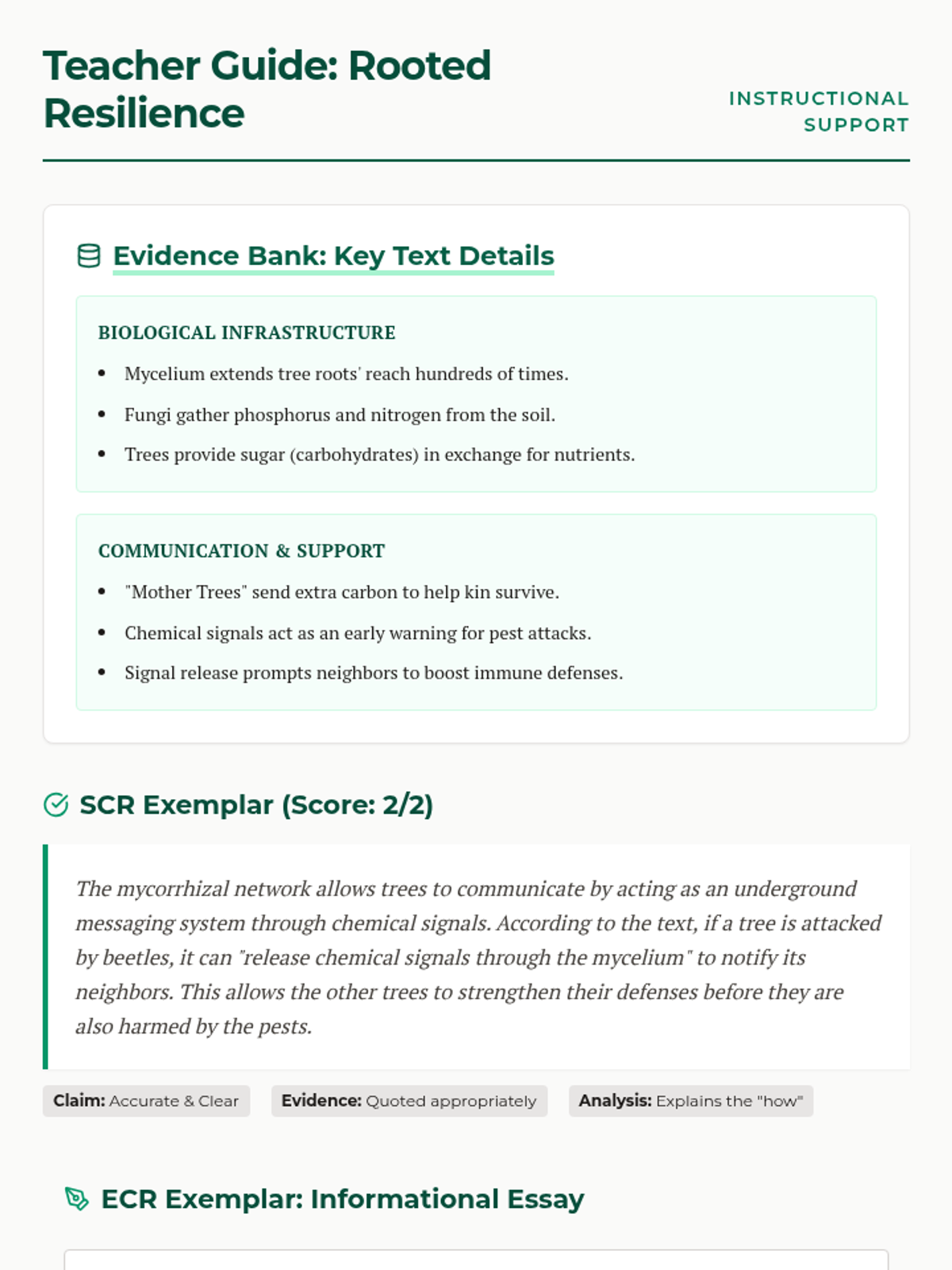
A rigorous informational reading and writing assignment focused on the mycorrhizal network, designed to practice SCR and ECR skills with an emphasis on organization, evidence, and sentence variety.
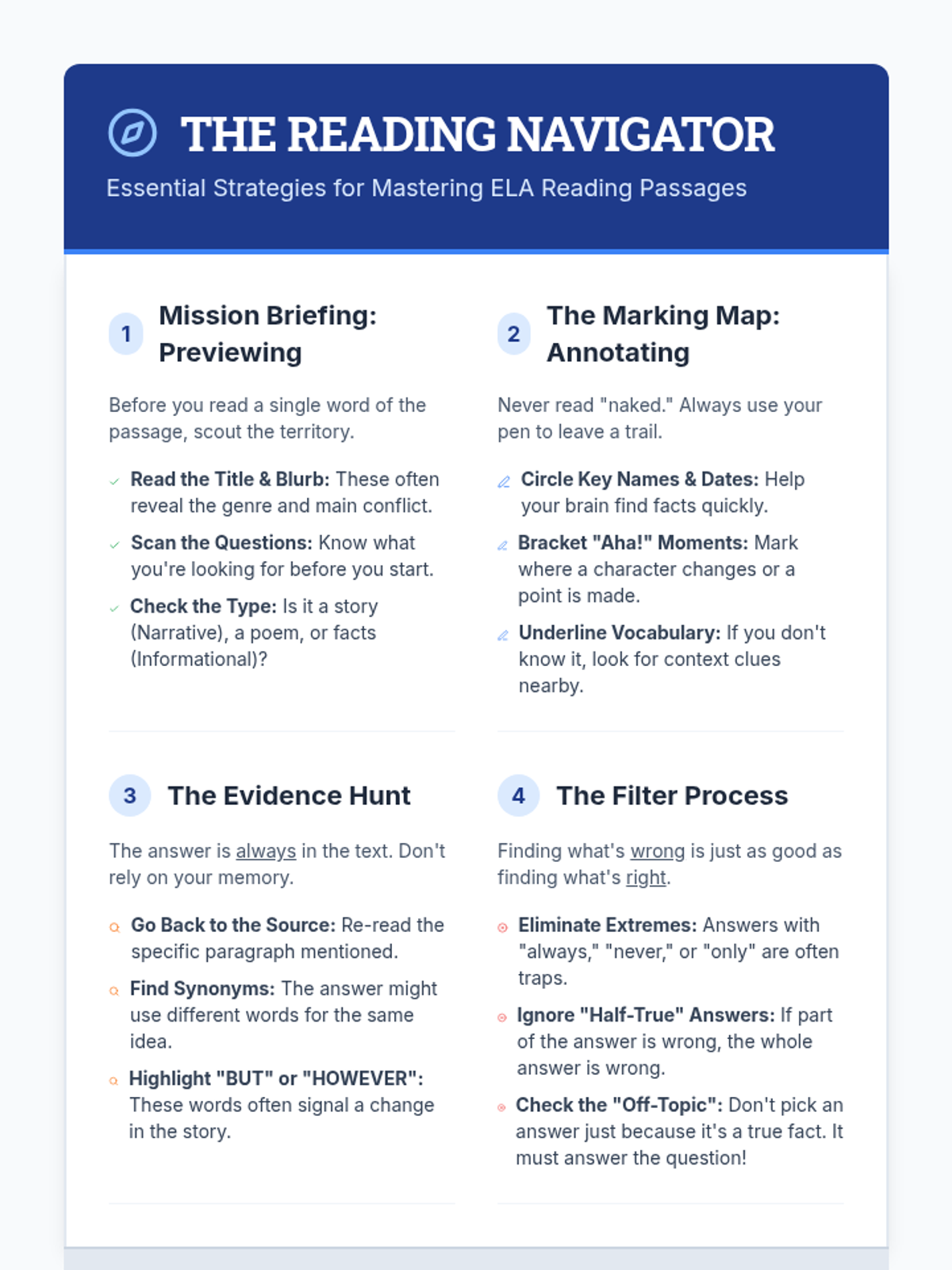
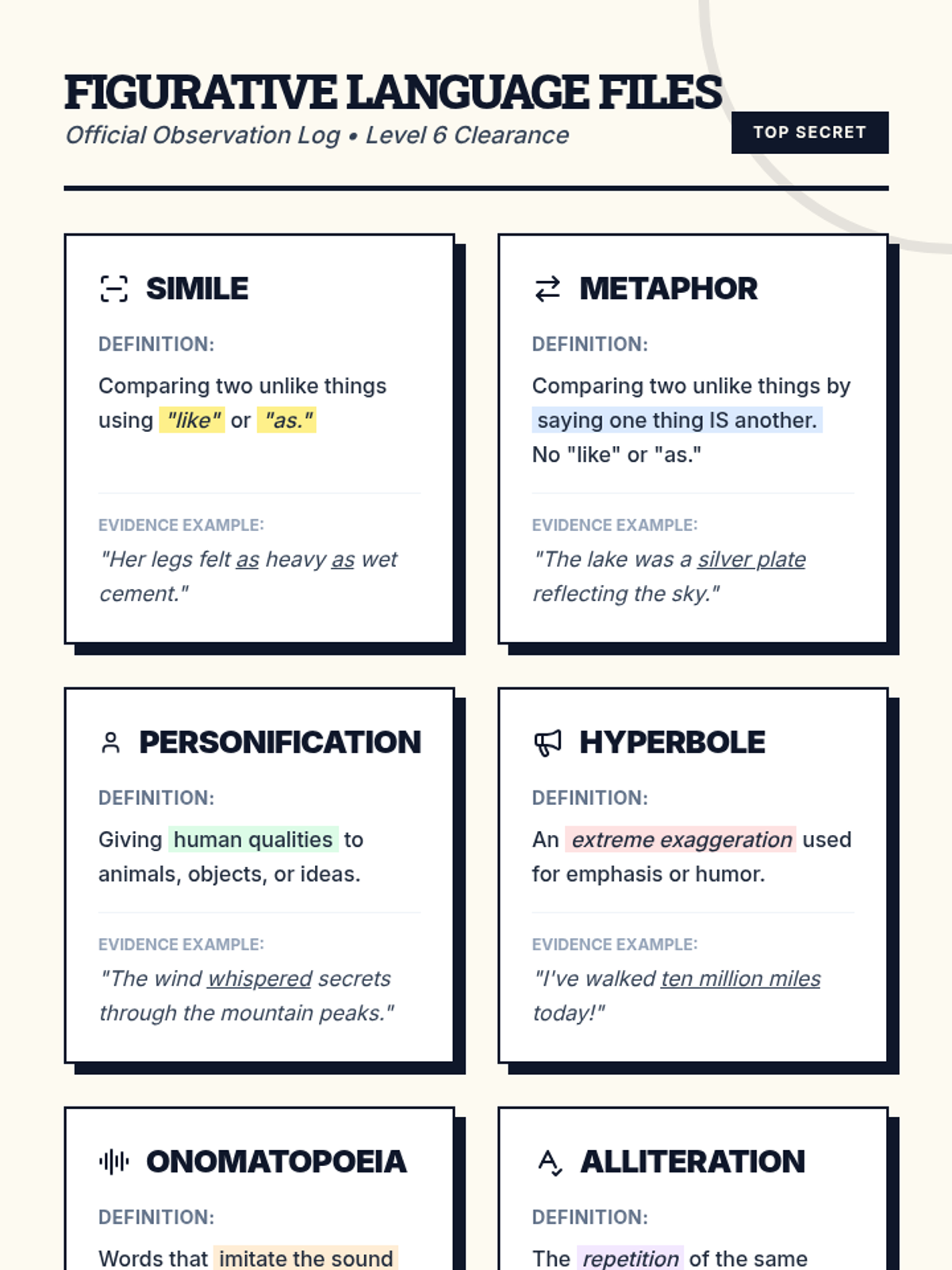
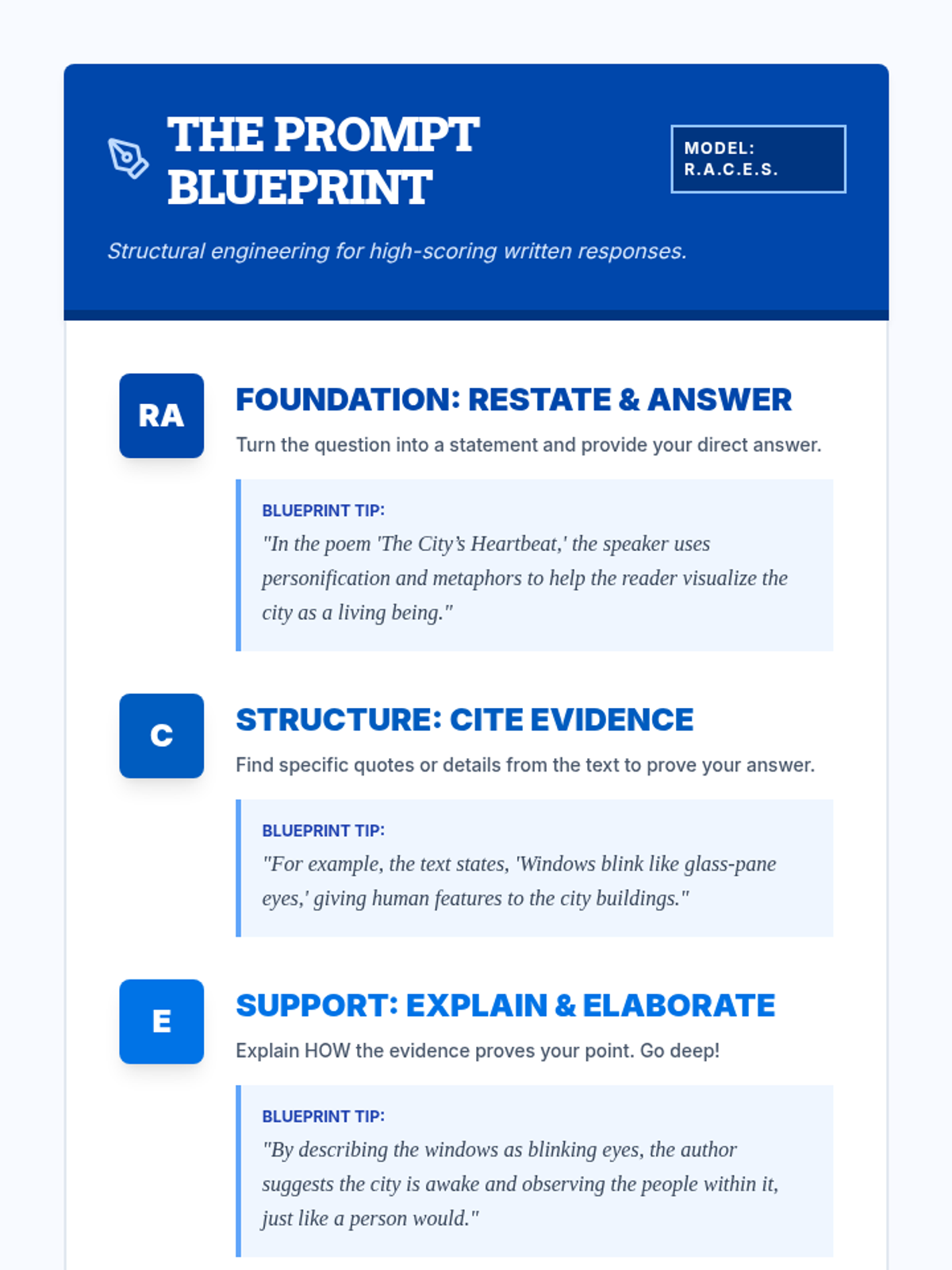
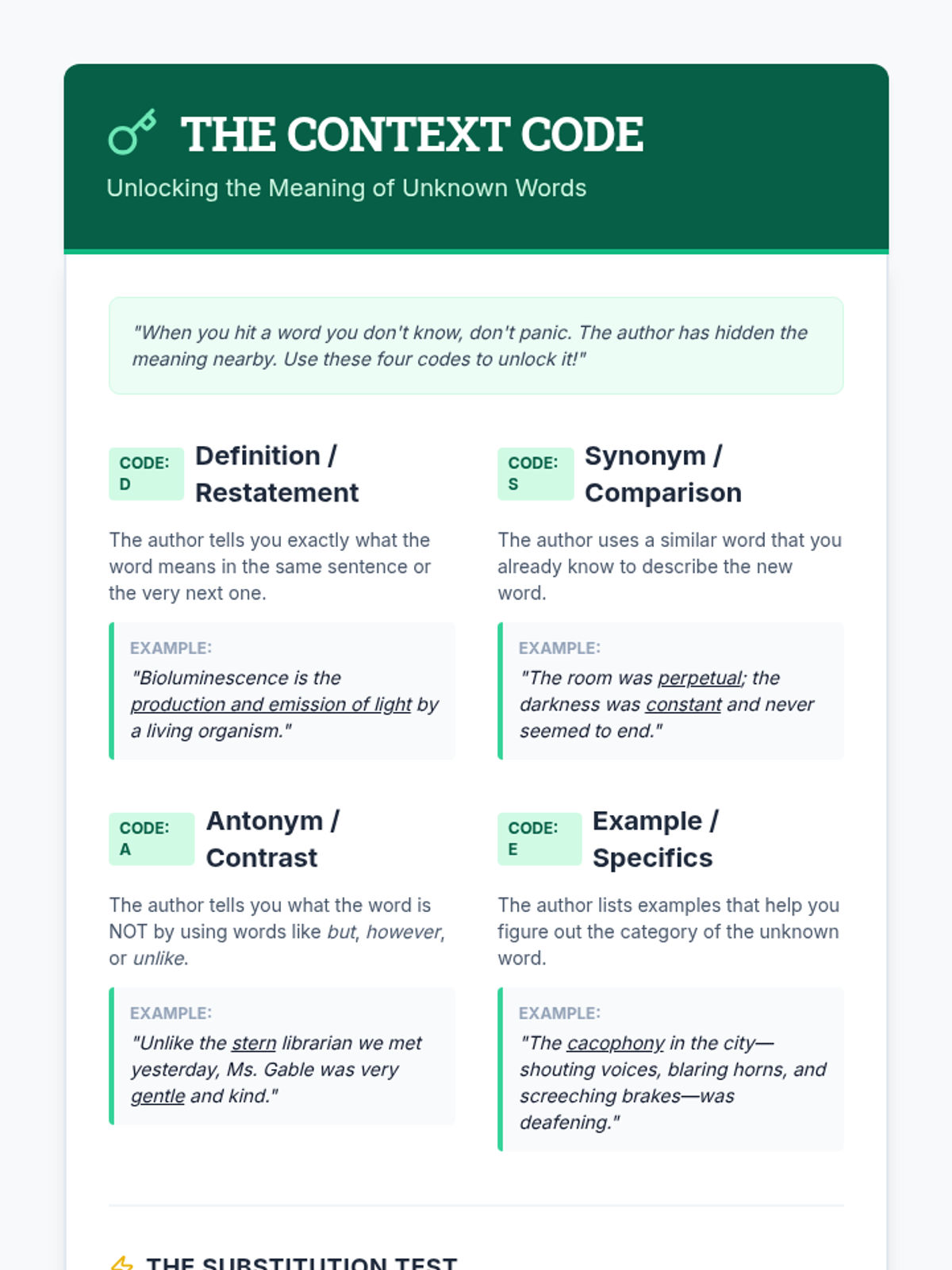
A collection of high-impact reference materials and strategy guides to help students navigate complex texts and construct high-quality written responses.
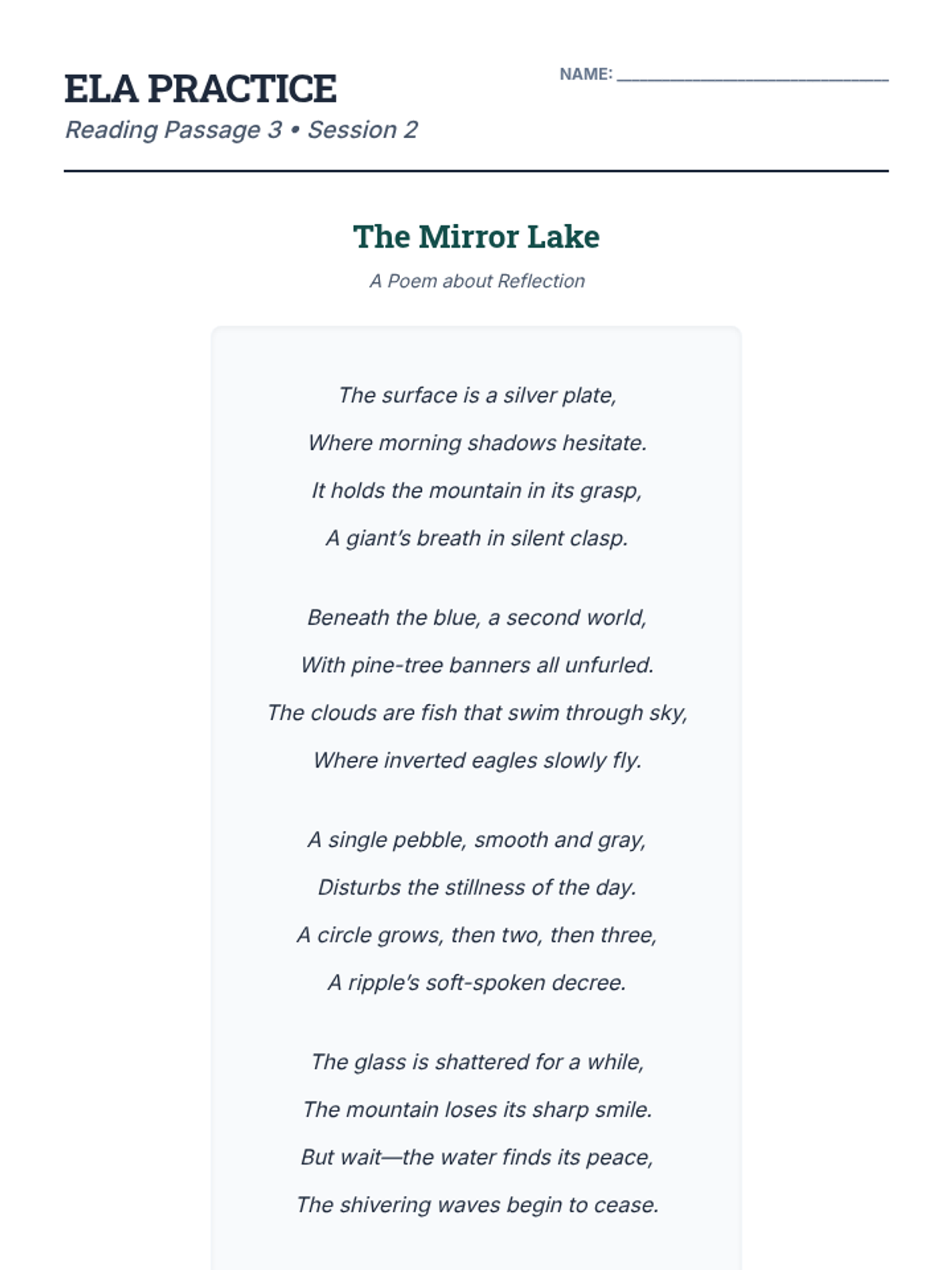
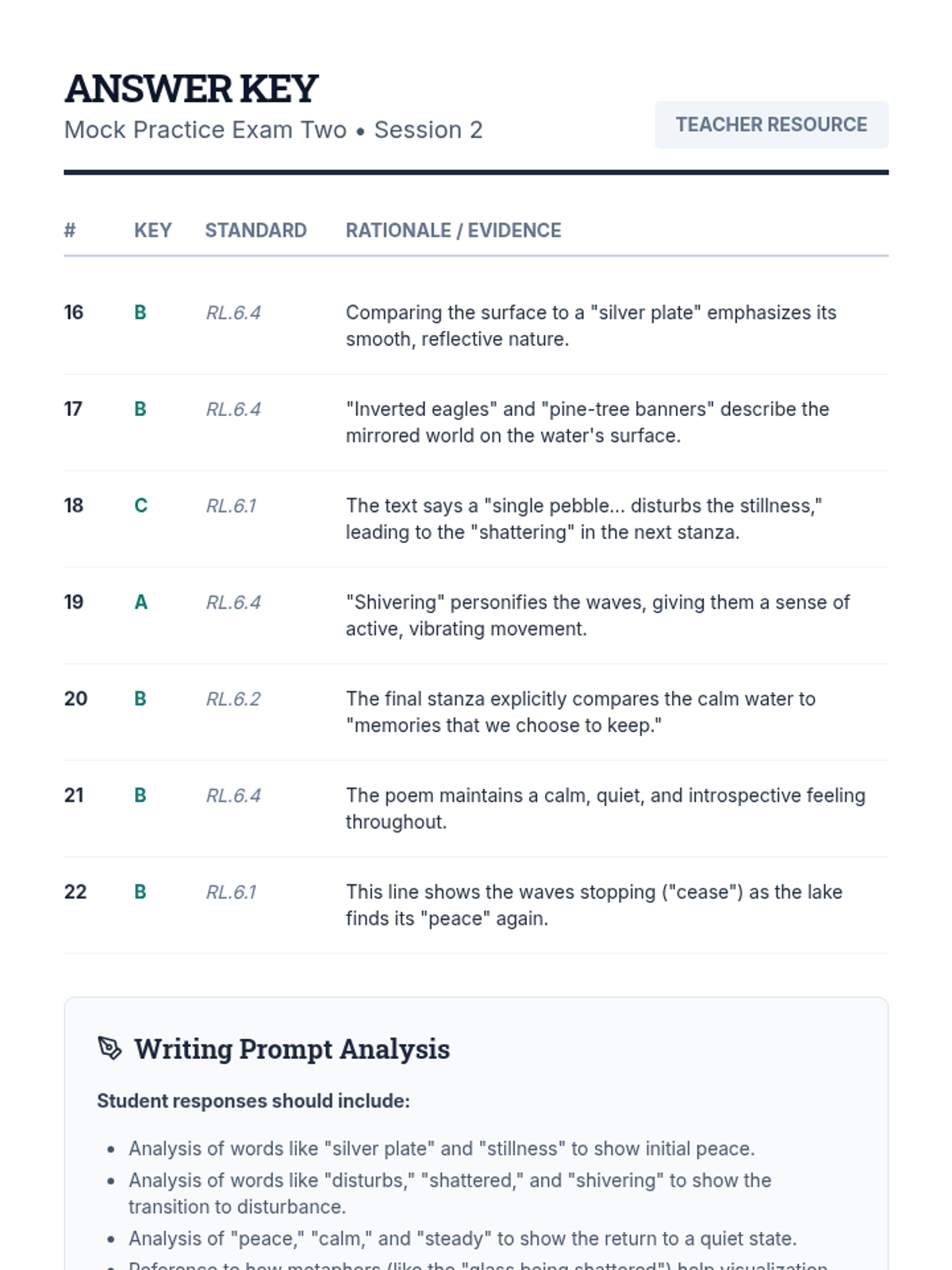
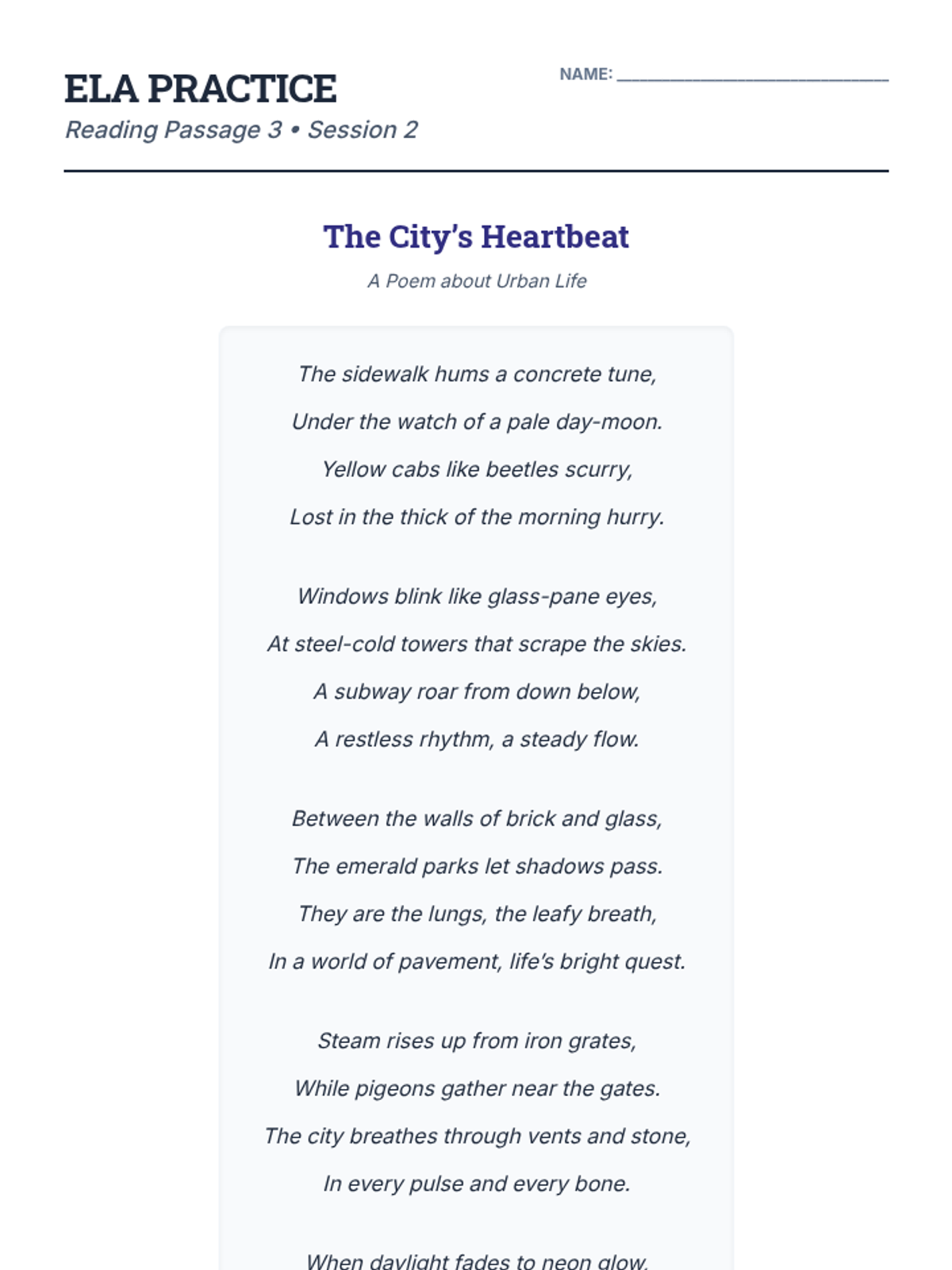
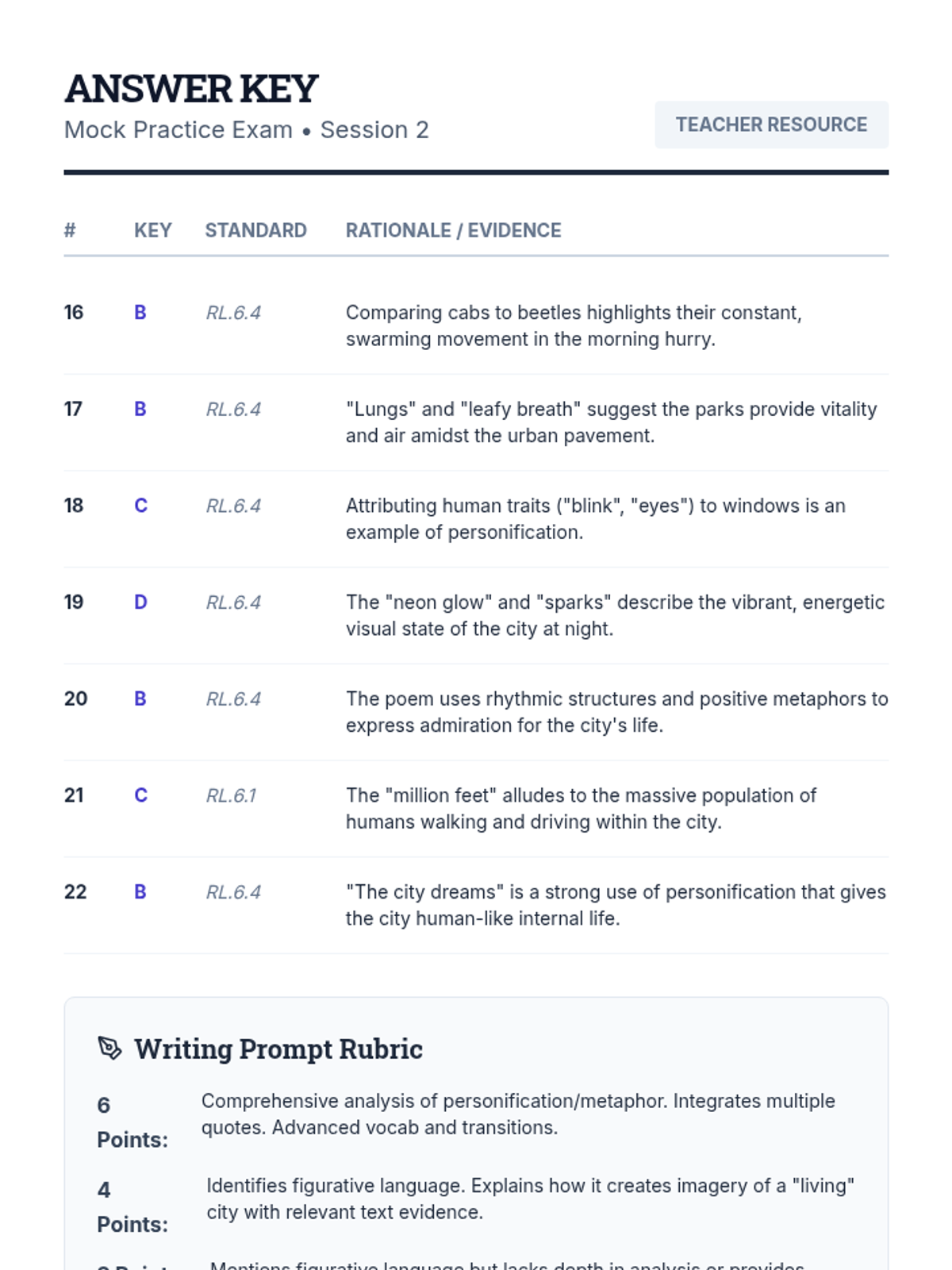
The second full-length mock ELA exam for Grade 6, providing further practice with complex texts and standards-aligned assessments.
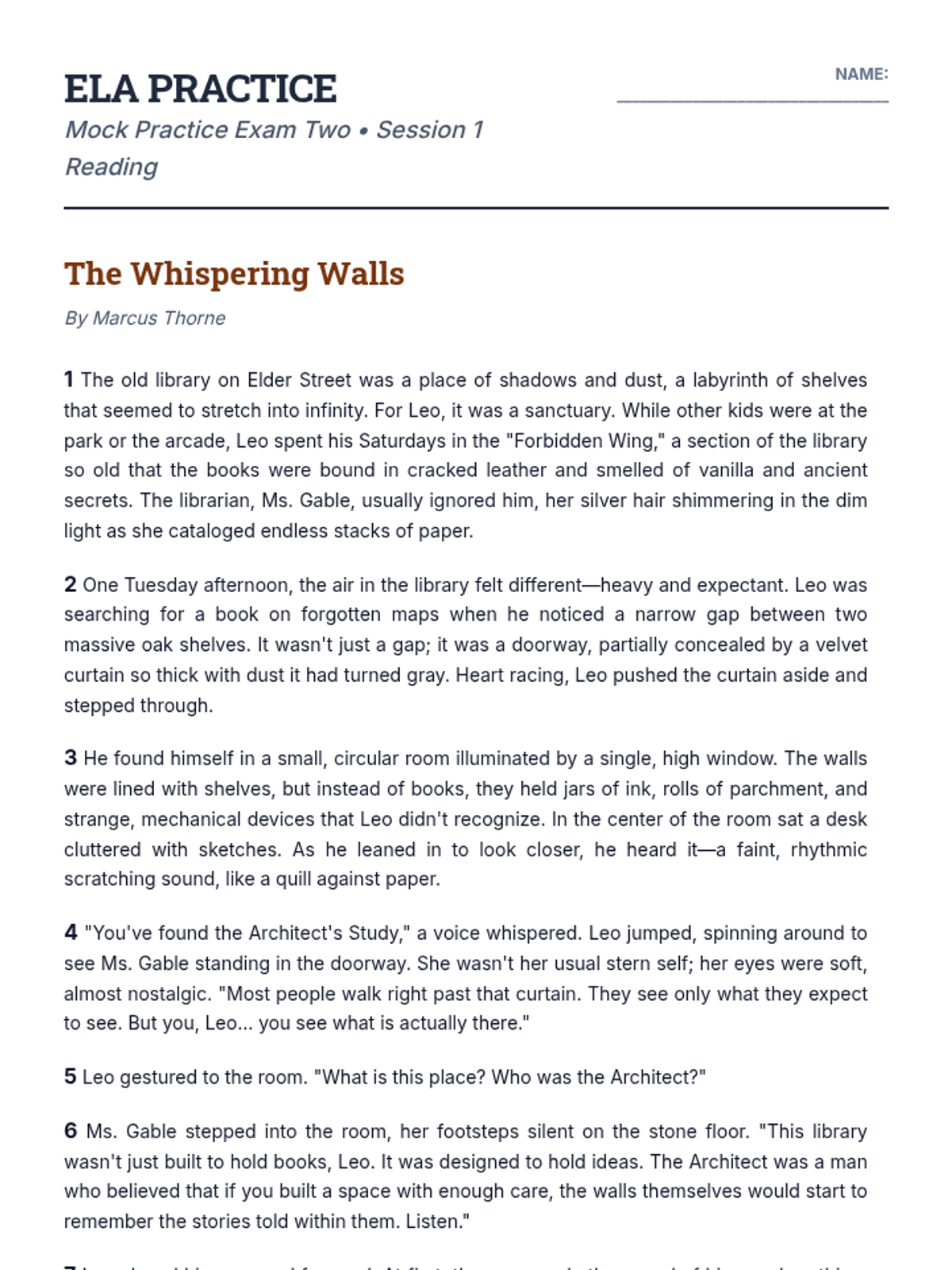
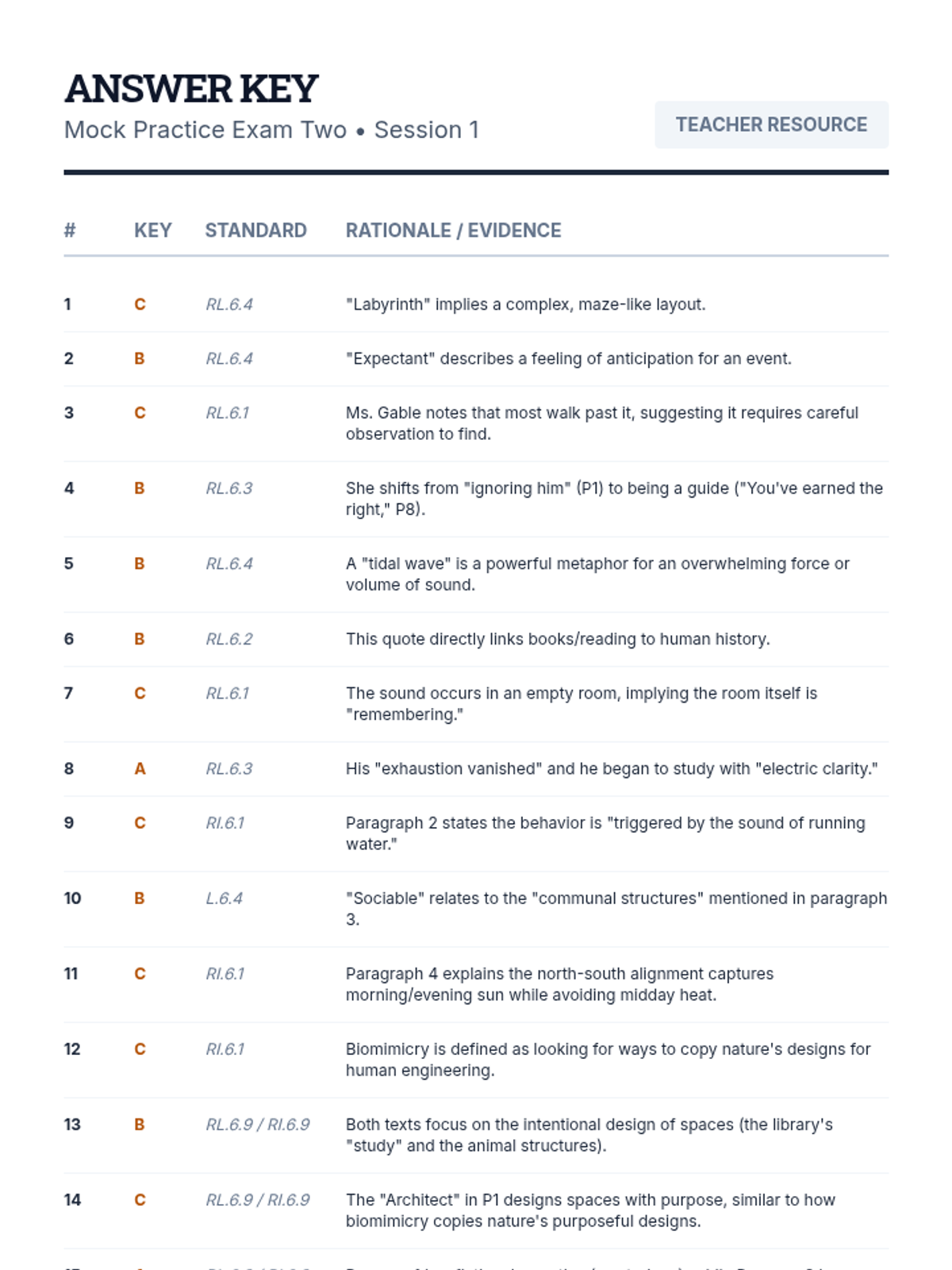
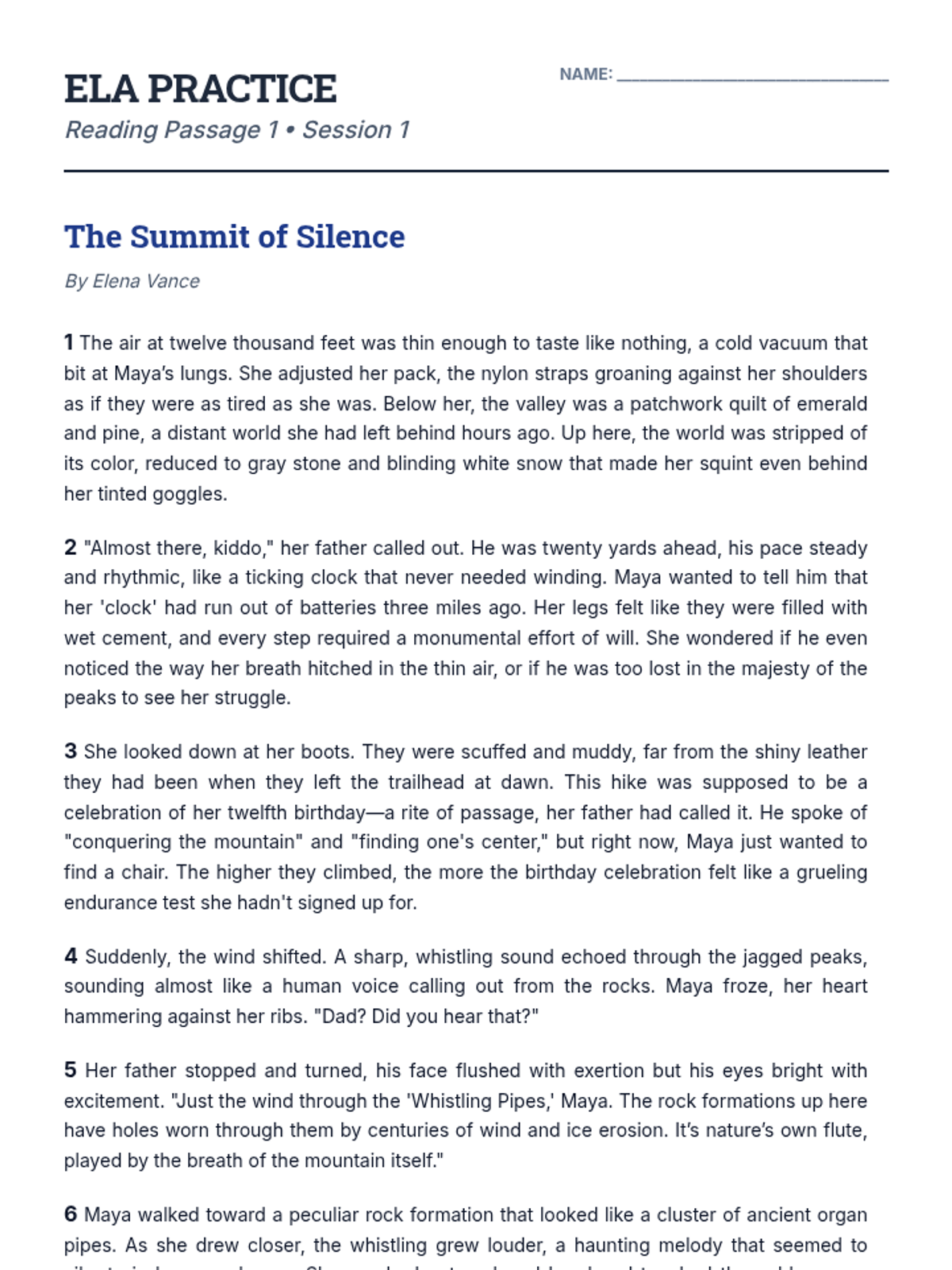
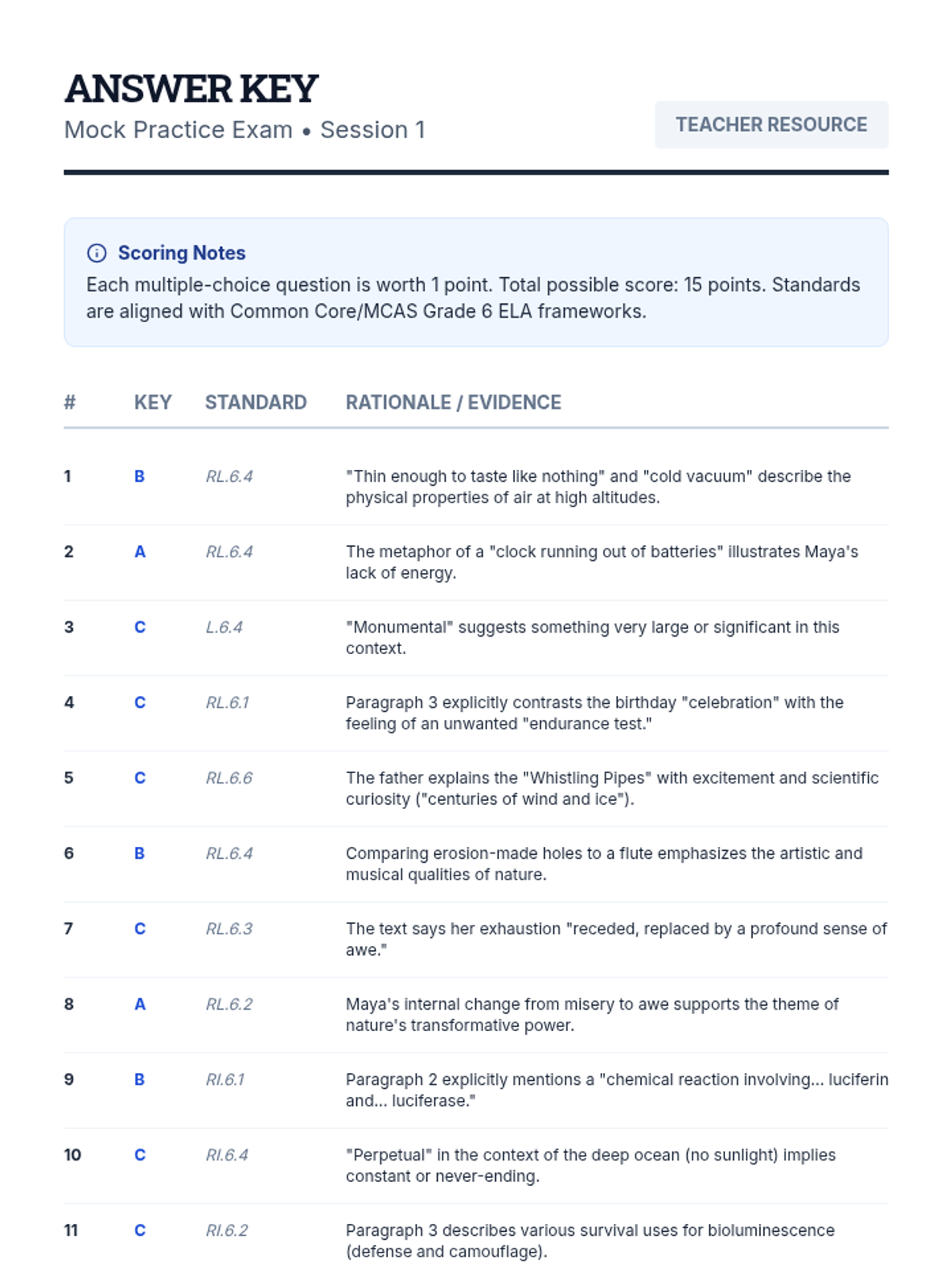
A full-length mock ELA exam for Grade 6, featuring diverse reading passages and multiple-choice questions aligned with state standards.
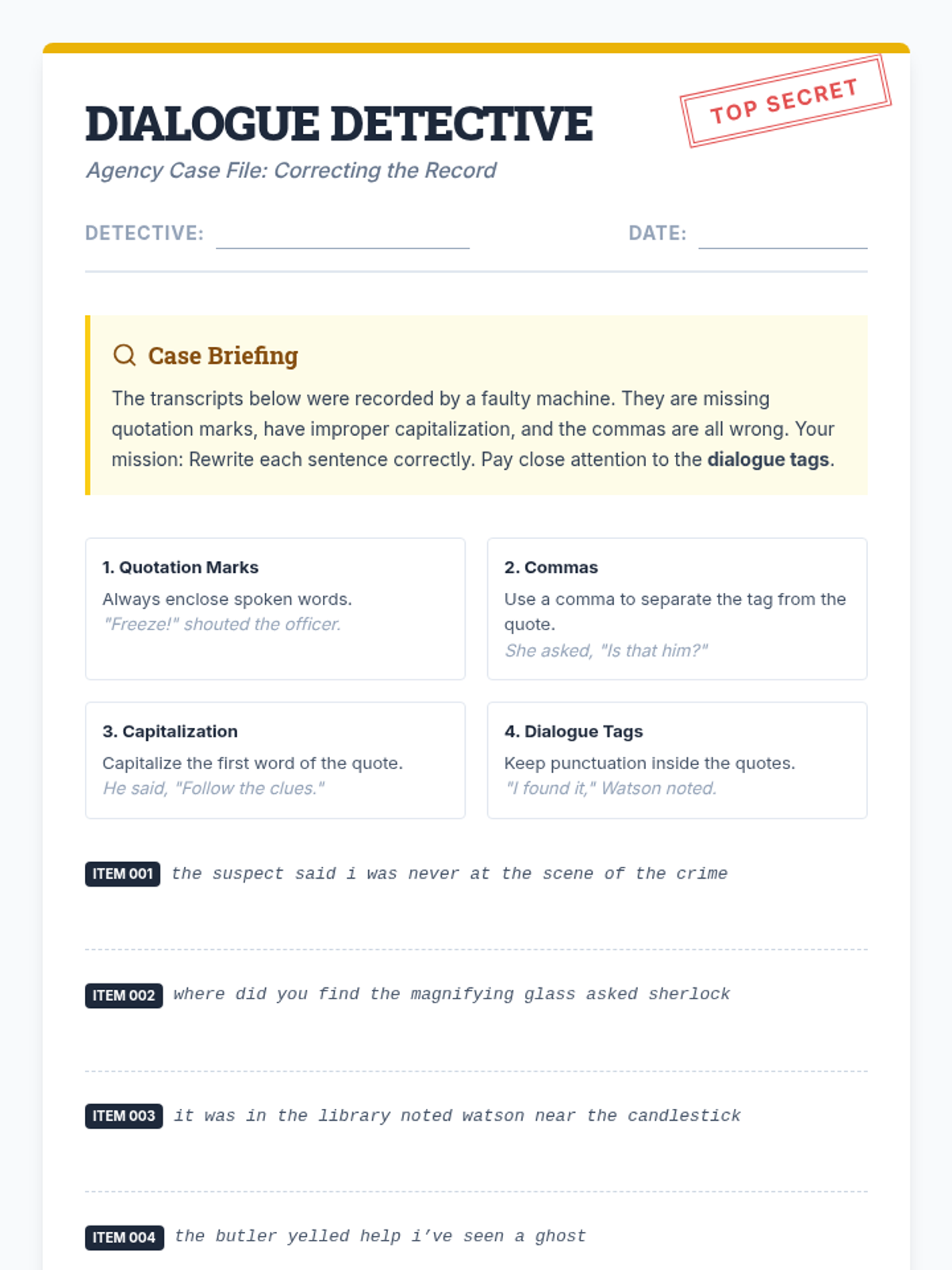
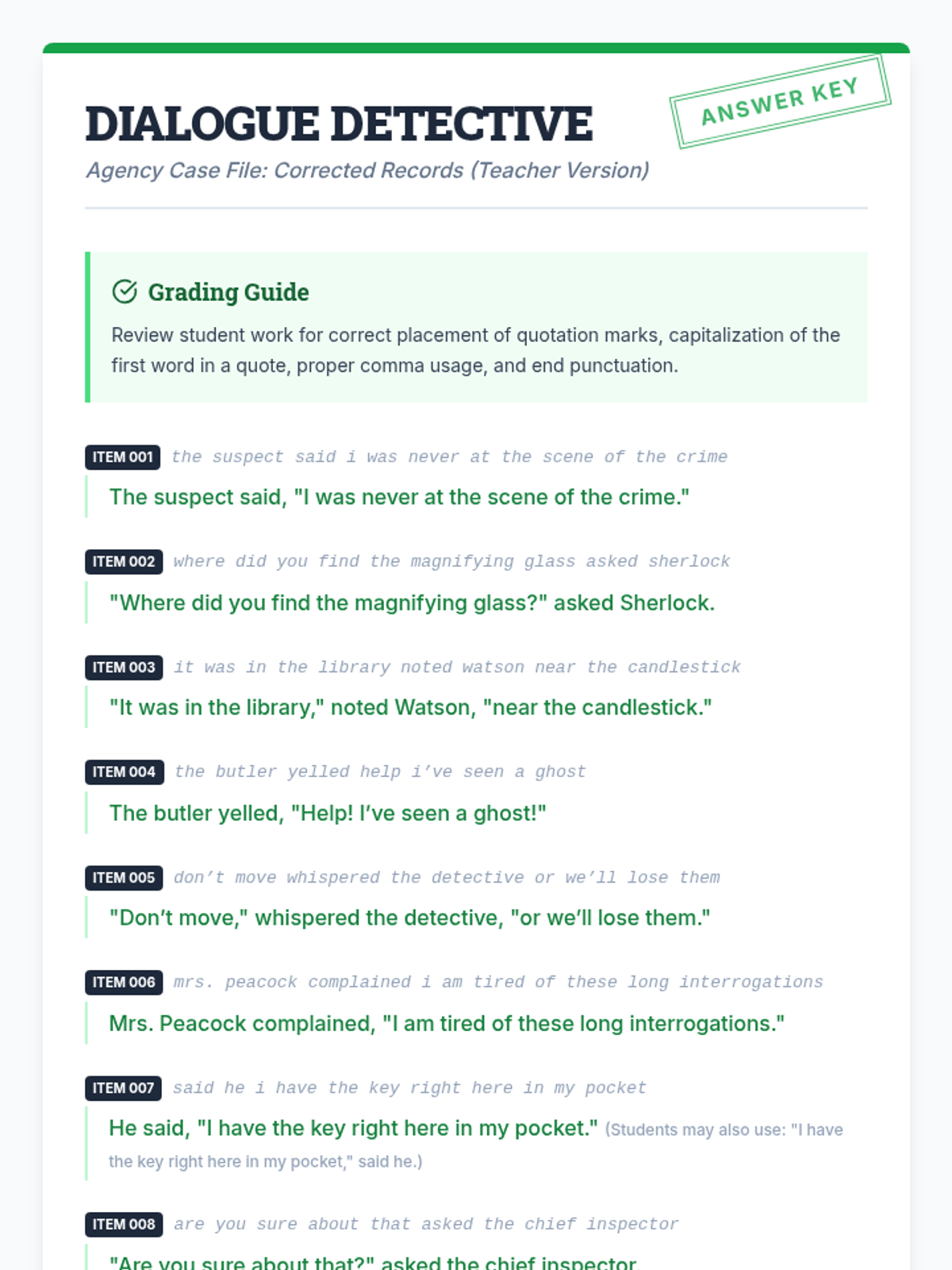
A comprehensive lesson on identifying and correcting common dialogue errors, including punctuation, capitalization, and formatting of dialogue tags.
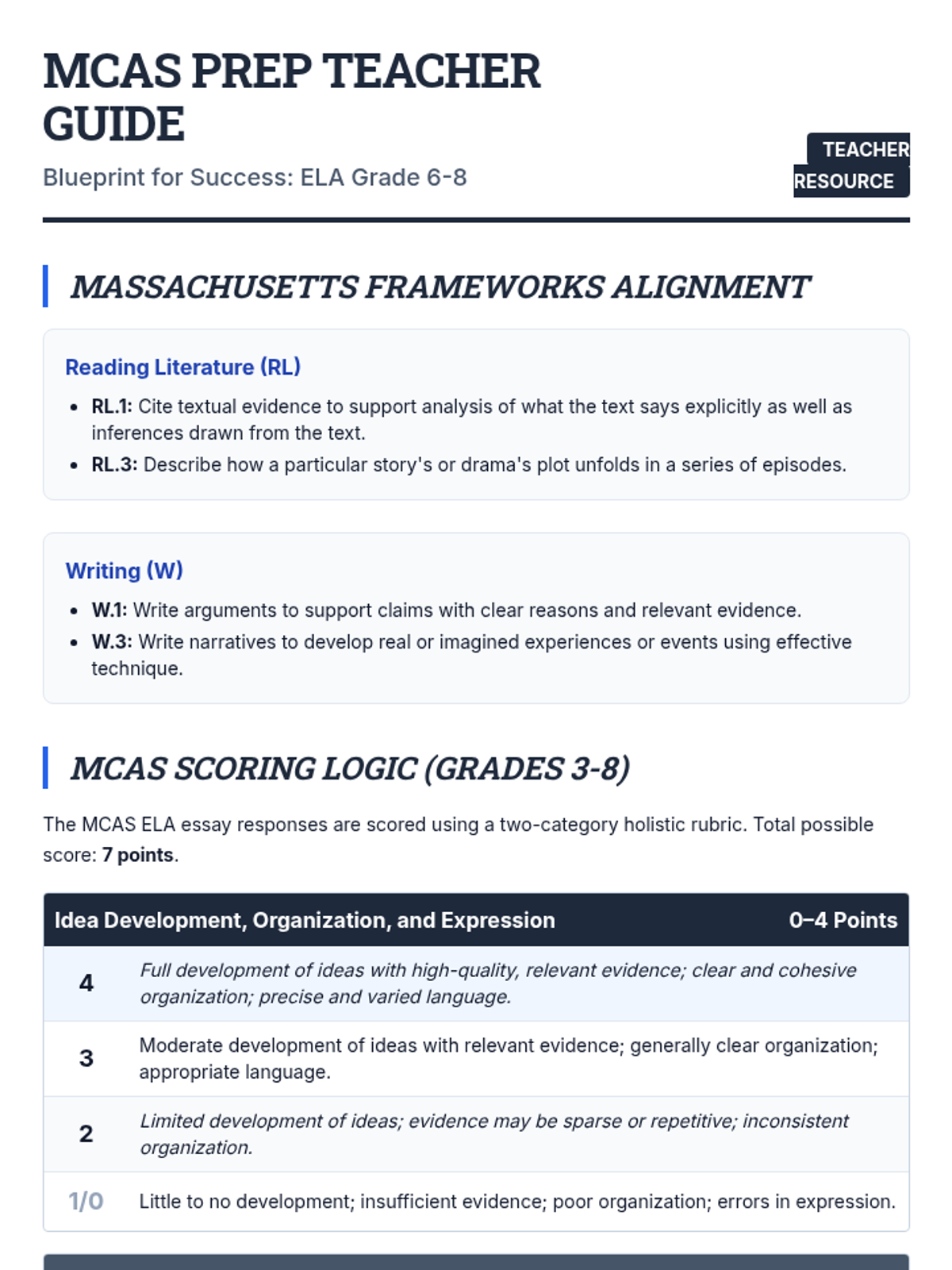
A comprehensive MCAS ELA prep lesson focusing on the three pillars of the state assessment: text analysis, evidence-based essay writing, and narrative composition. Students practice with authentic-style prompts and use structured planning guides aligned to Massachusetts scoring rubrics.
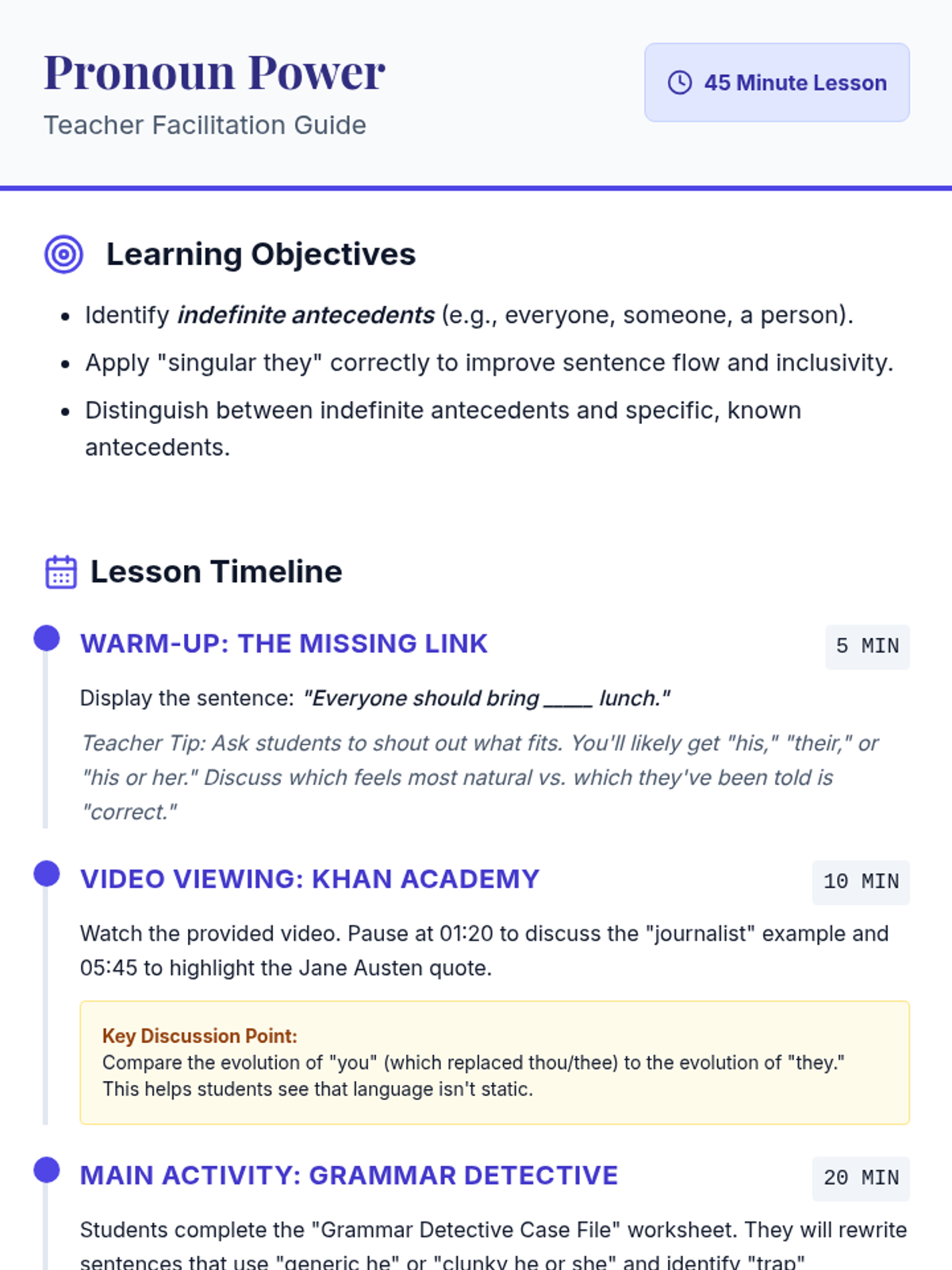
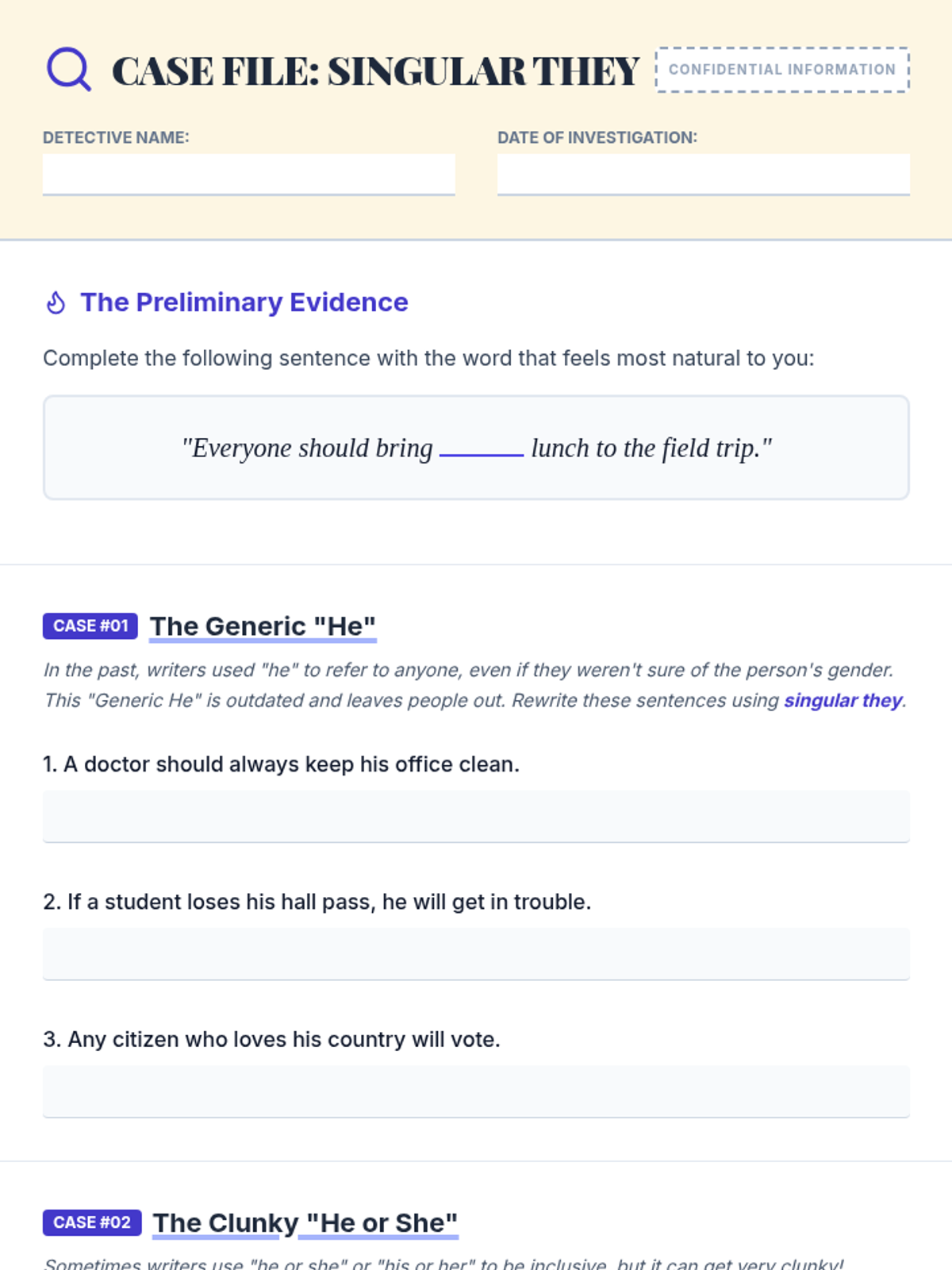
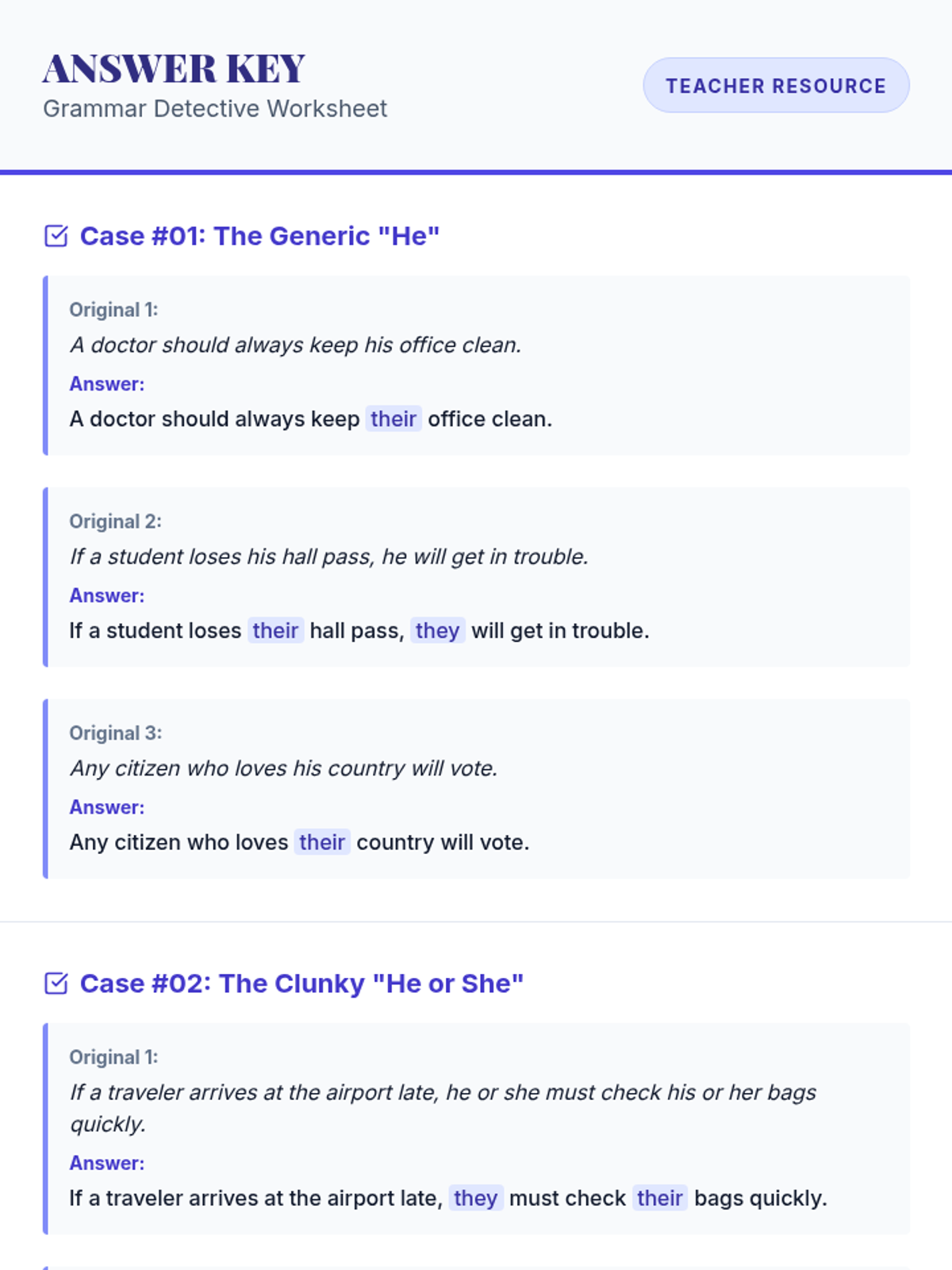
A Middle School Language Arts lesson focusing on the use of 'singular they' for indefinite antecedents. Students explore the historical evolution of pronouns, analyze literary examples, and practice rewriting sentences for clarity and inclusivity.
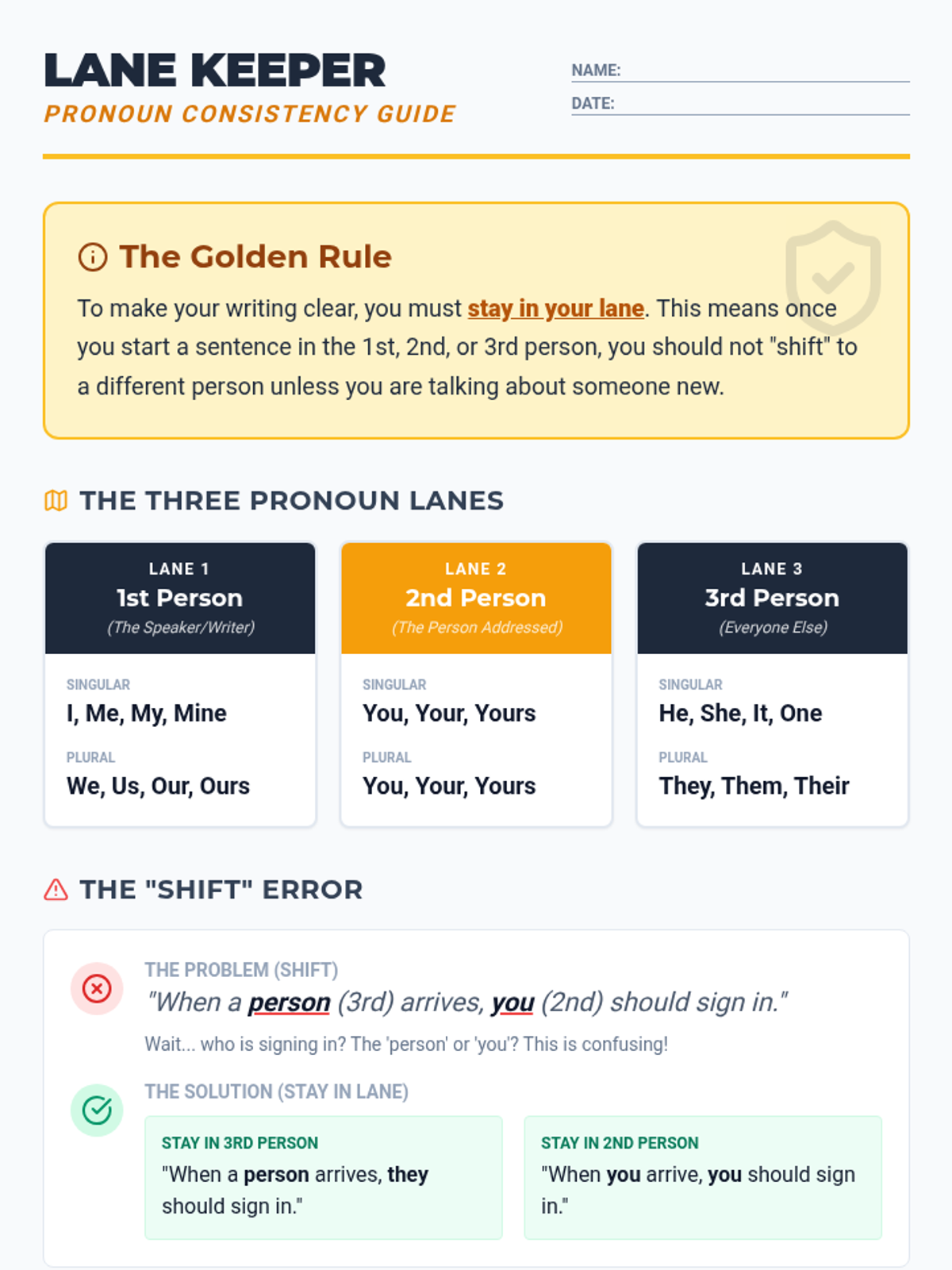
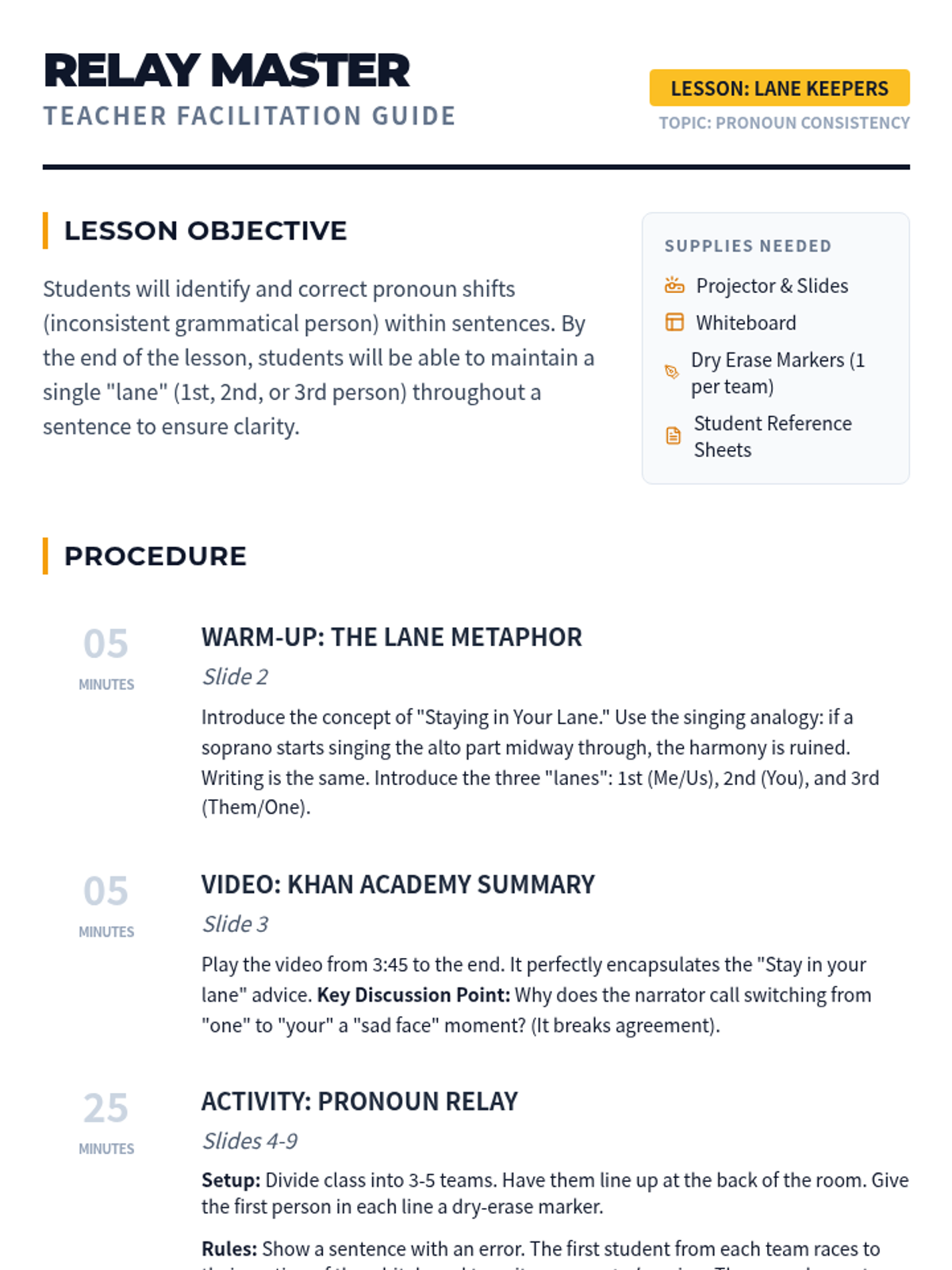
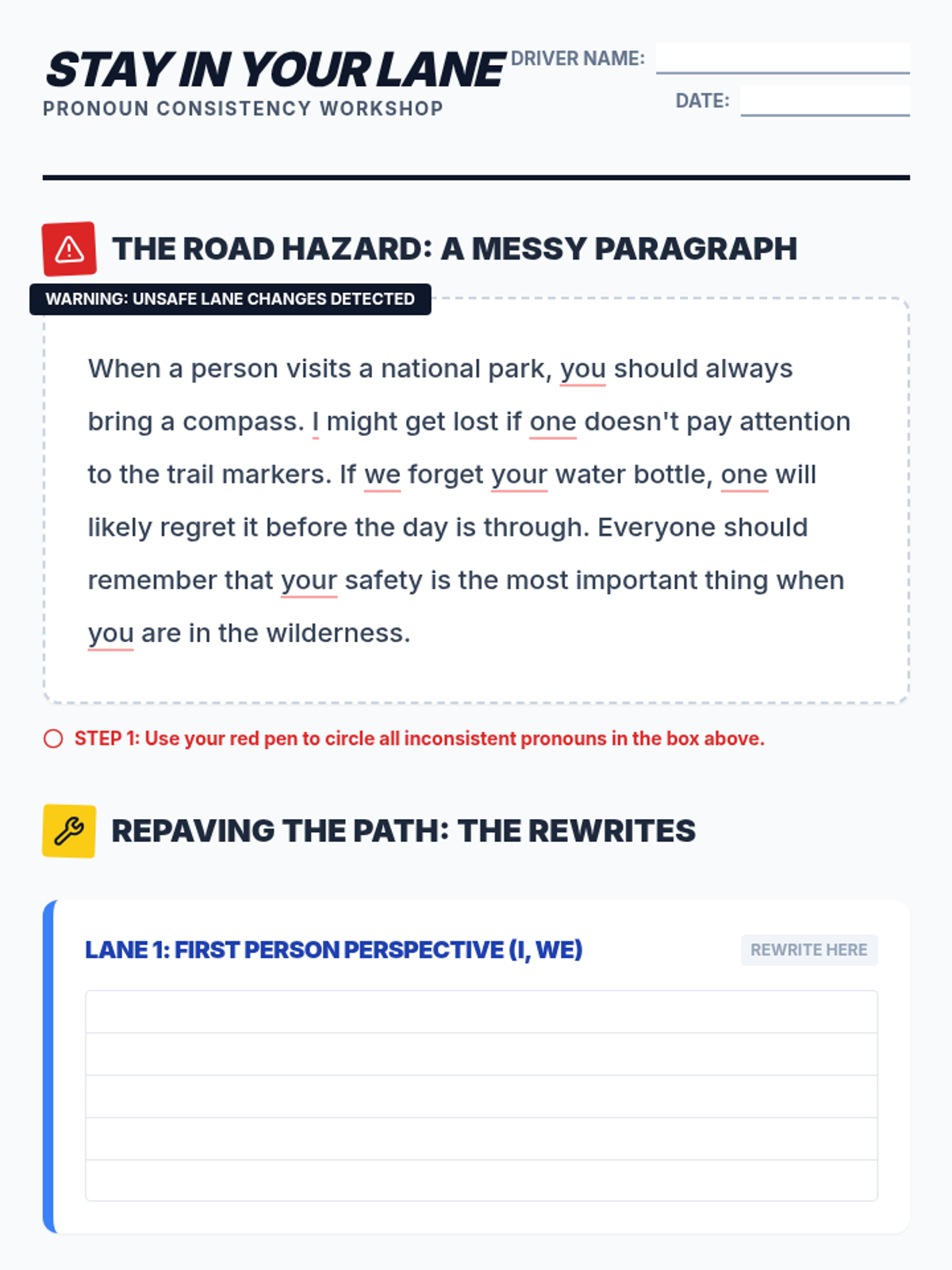
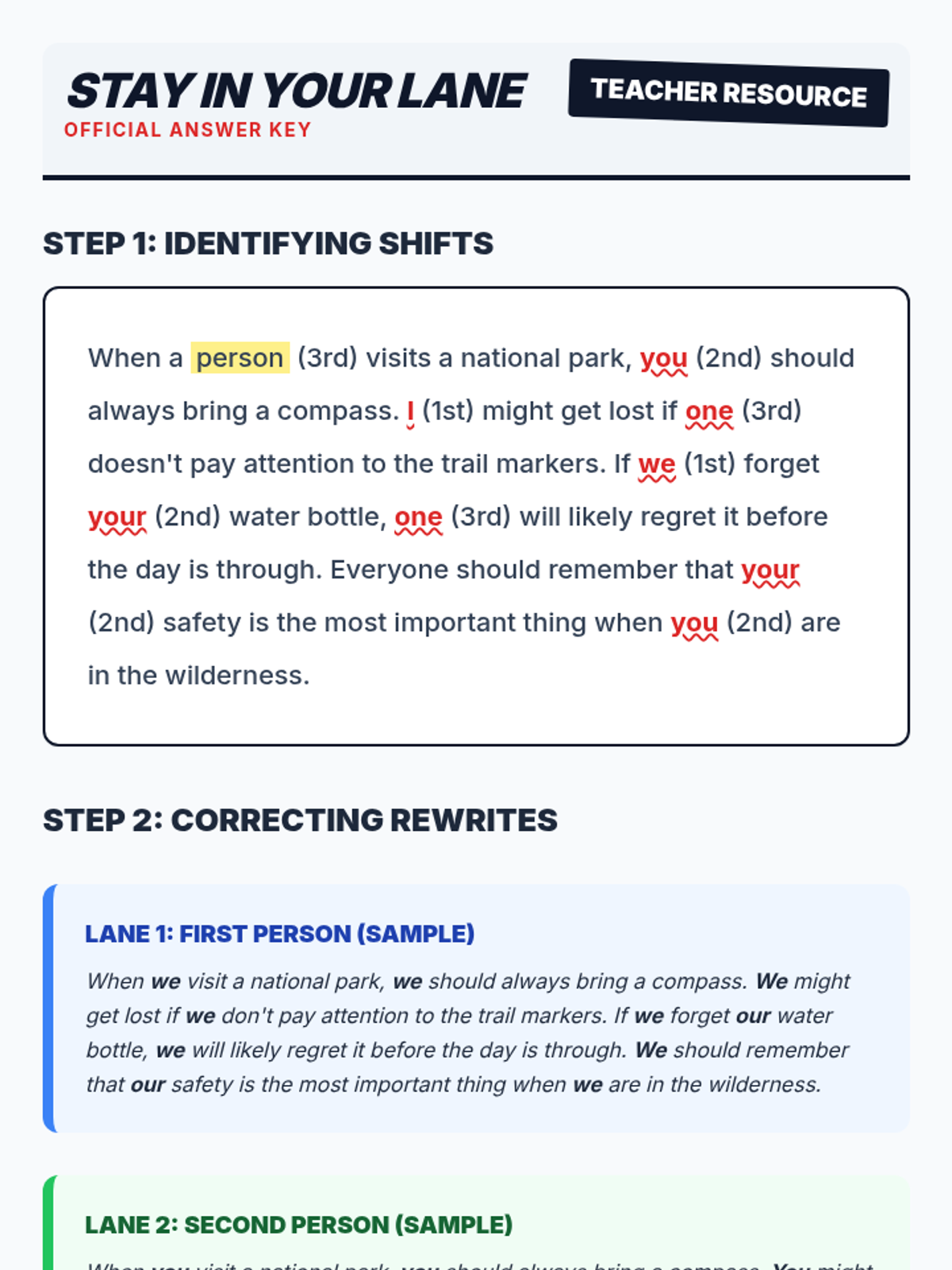
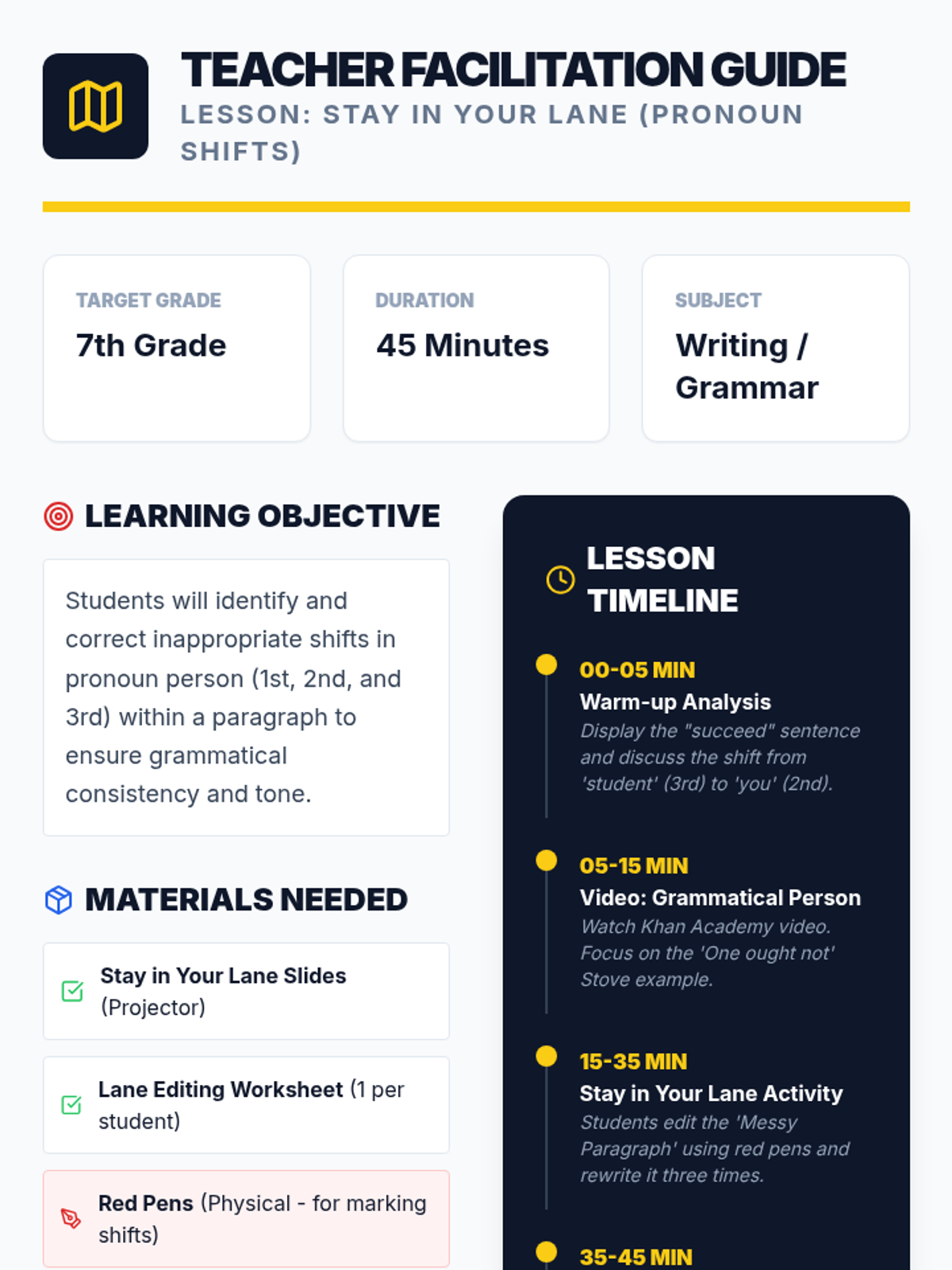
A high-energy lesson focused on maintaining consistent grammatical person (pronoun agreement). Students learn the 'Stay in Your Lane' concept through a video and a collaborative board-race game.
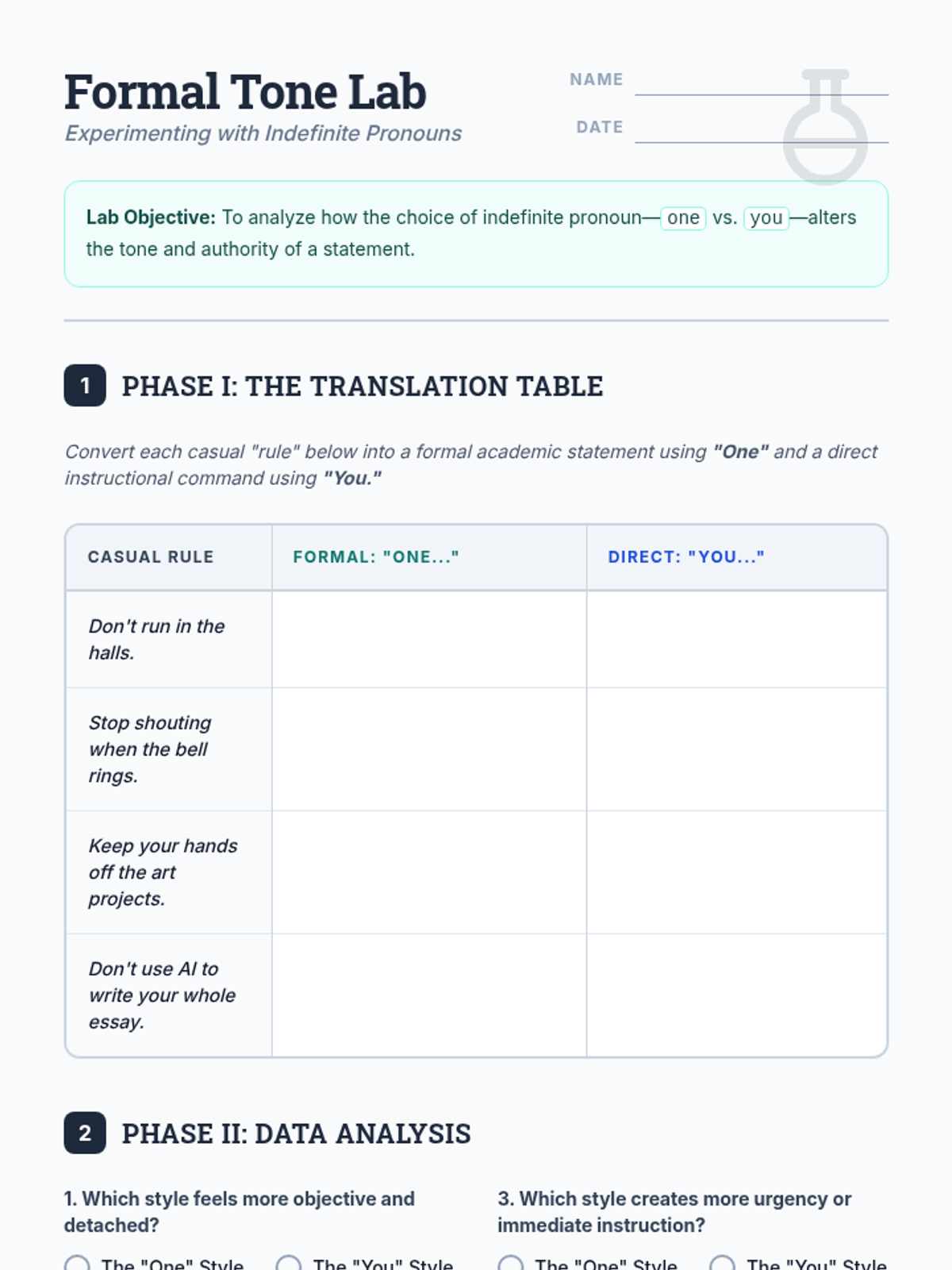
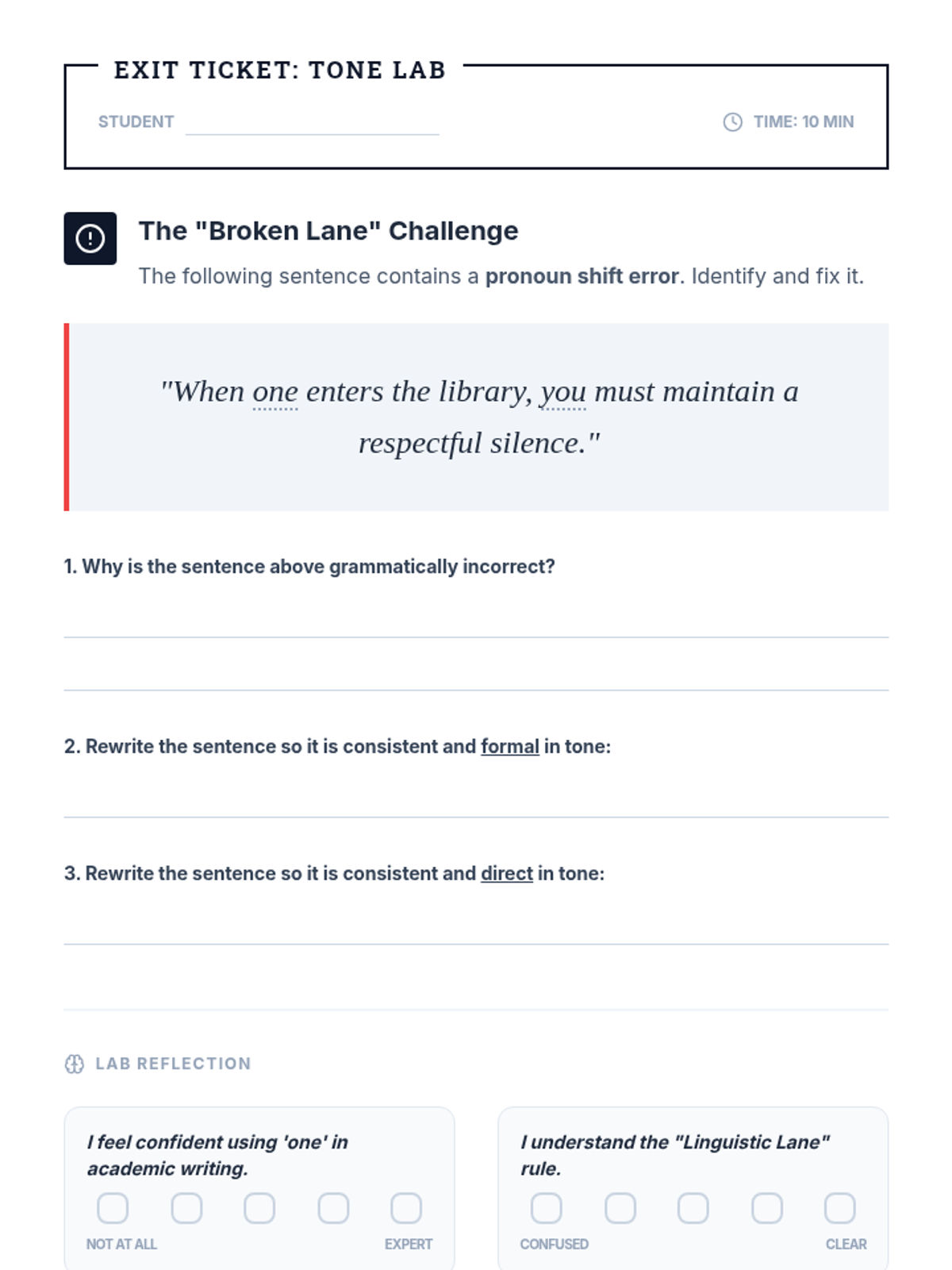
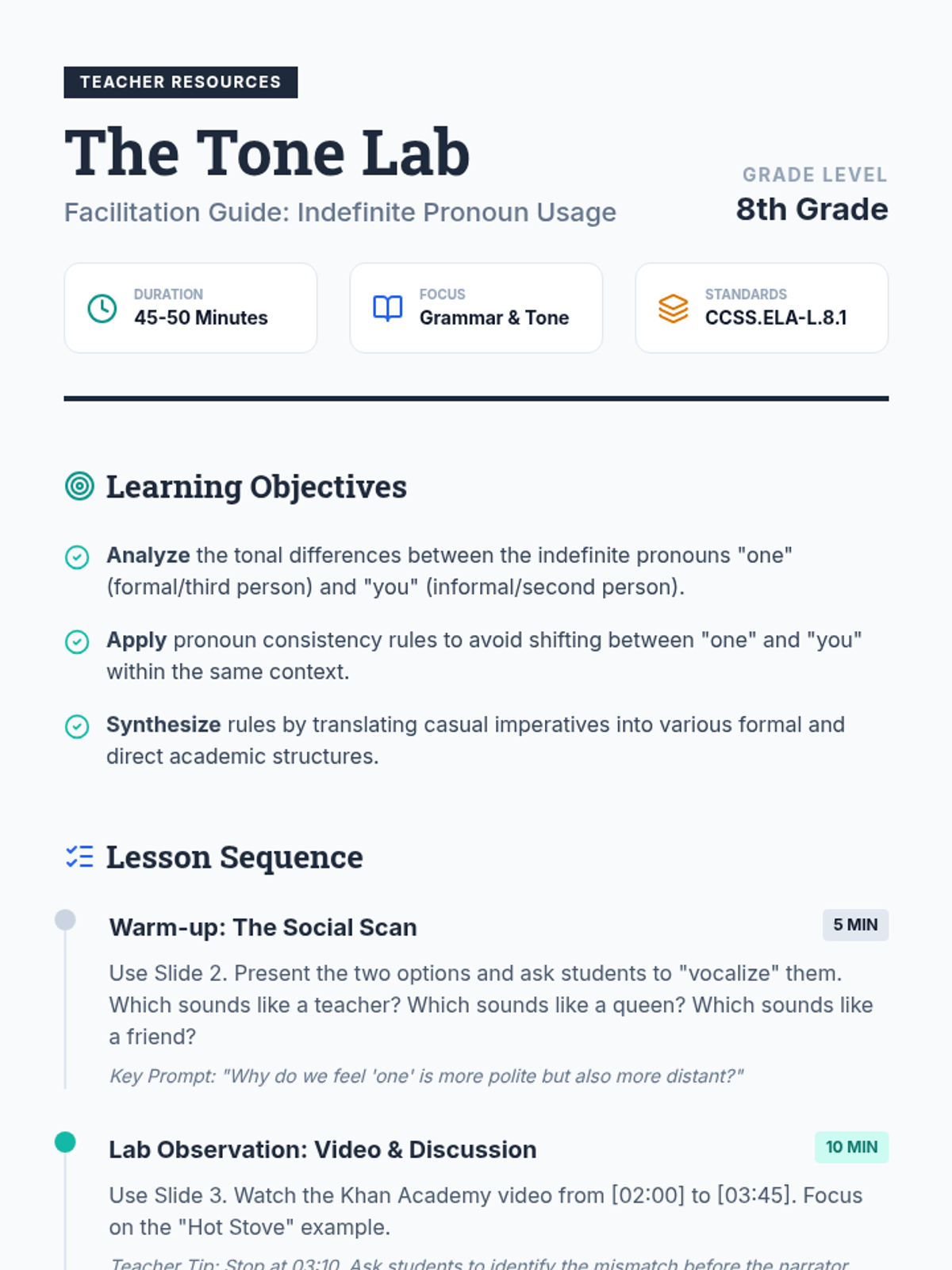
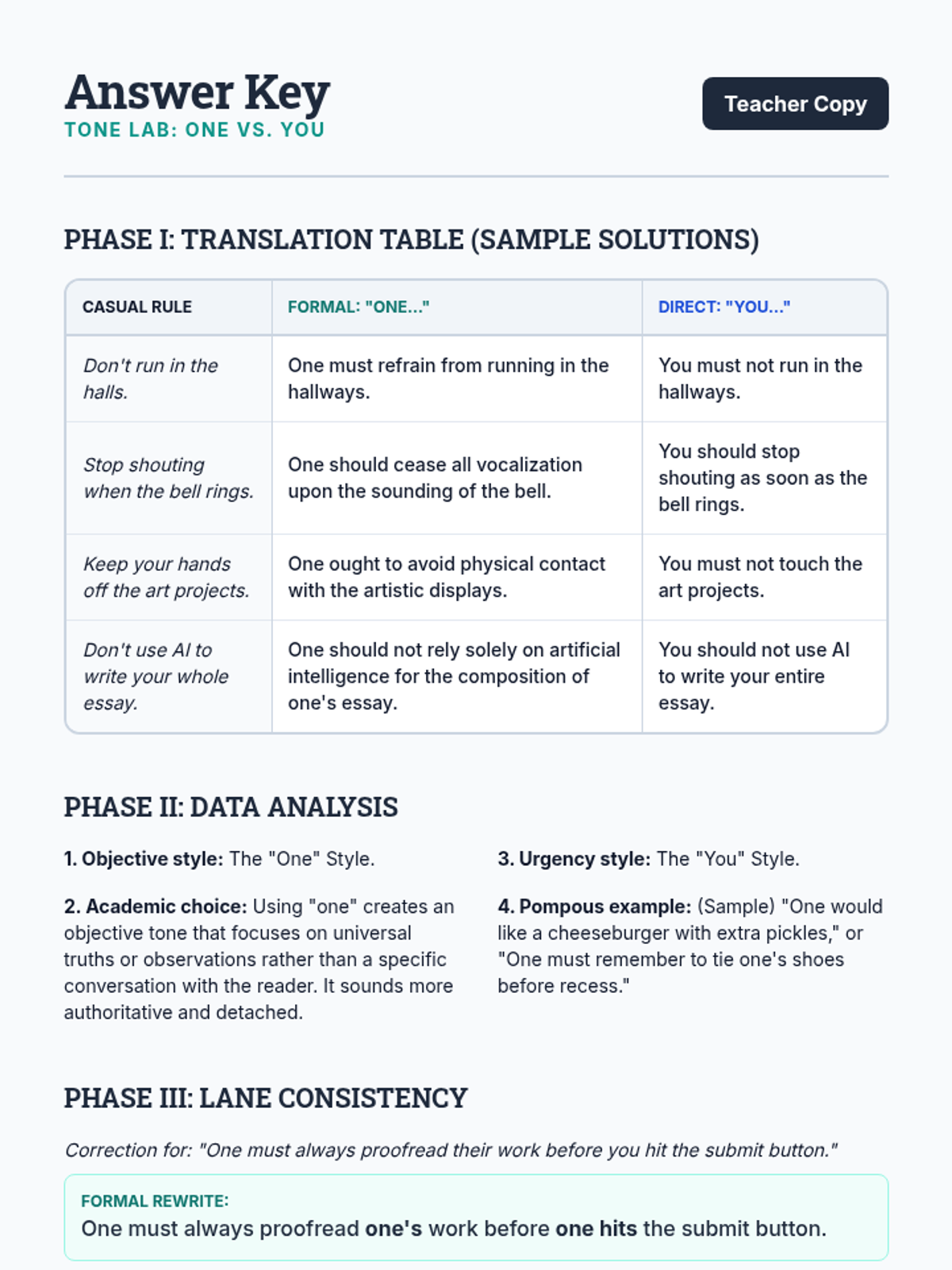
An advanced 8th-grade grammar lesson exploring the tonal differences and consistency requirements of using 'one' versus 'you' as indefinite pronouns. Students practice translating casual rules into formal and direct commands while learning to avoid confusing pronoun shifts.
A writing workshop focused on identifying and correcting inappropriate shifts in pronoun person, using the 'stay in your lane' analogy.
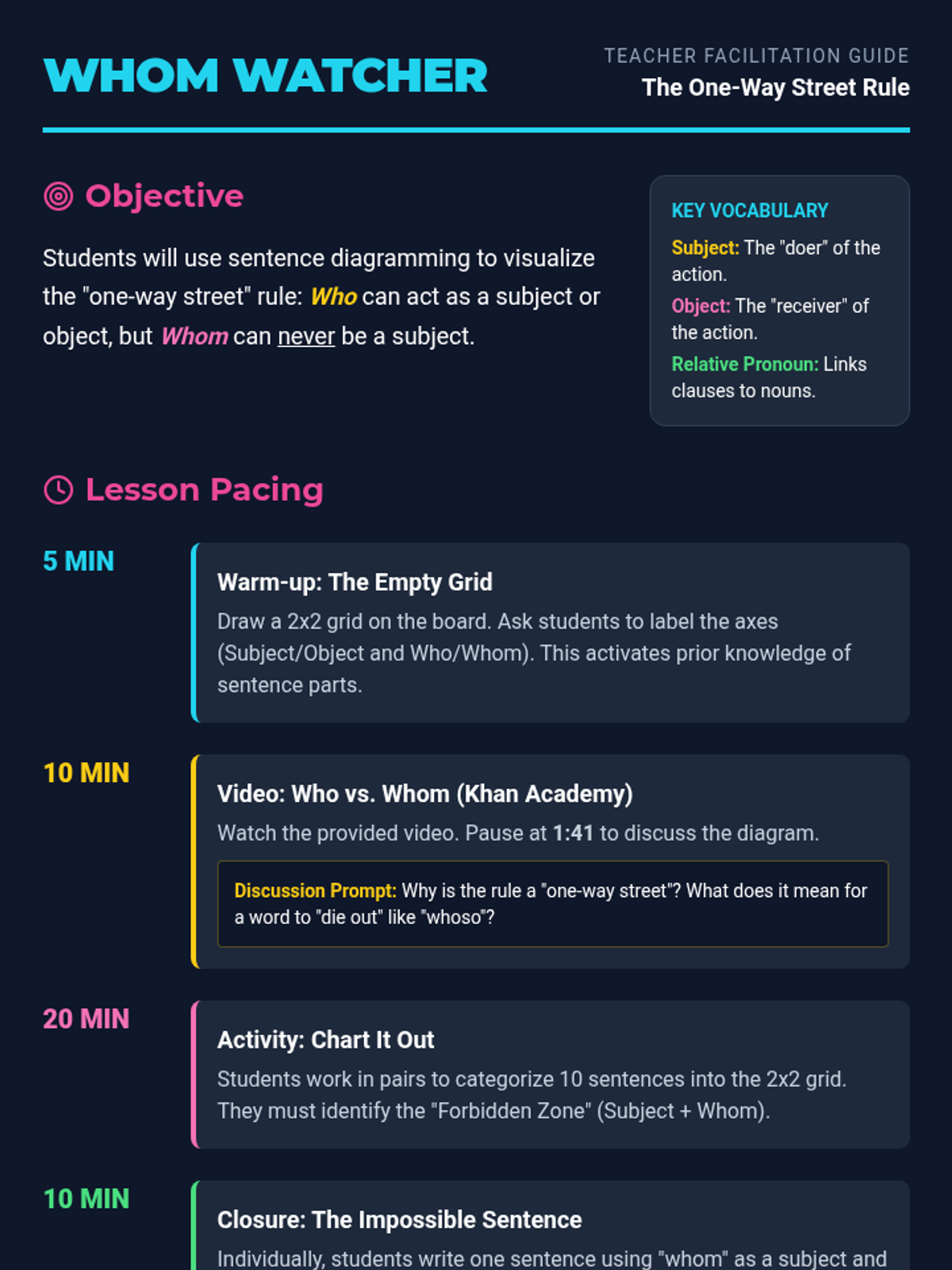
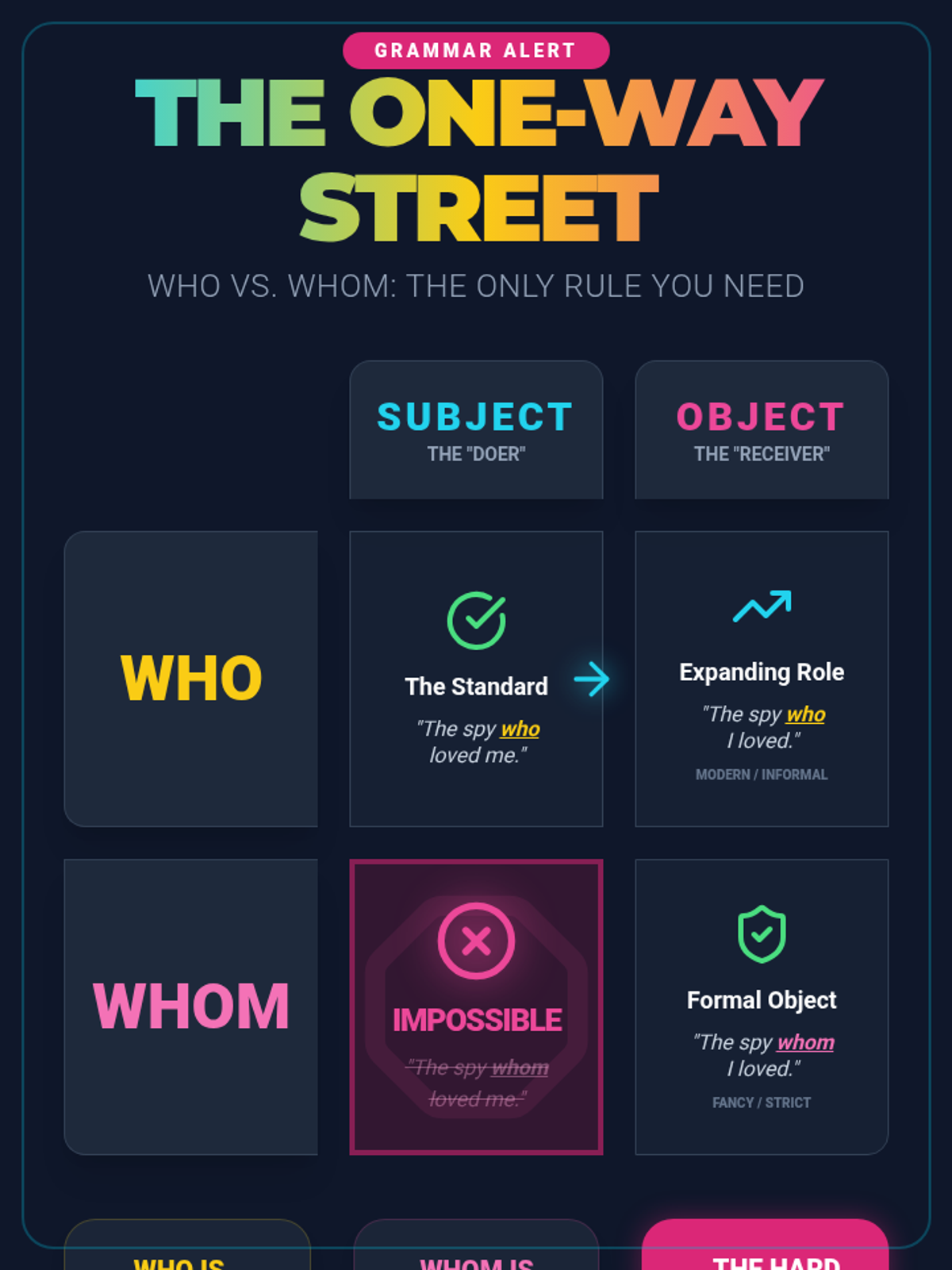
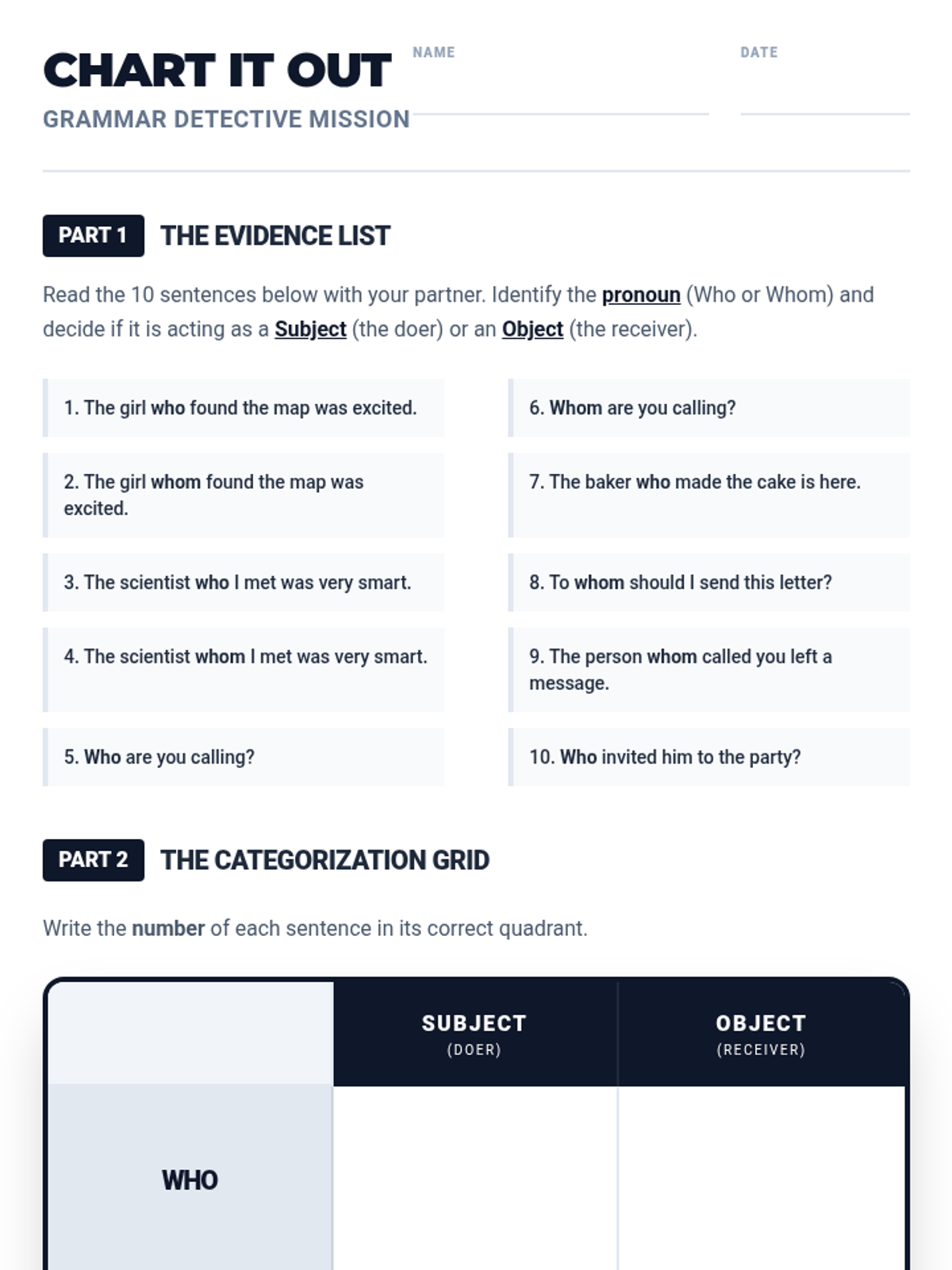
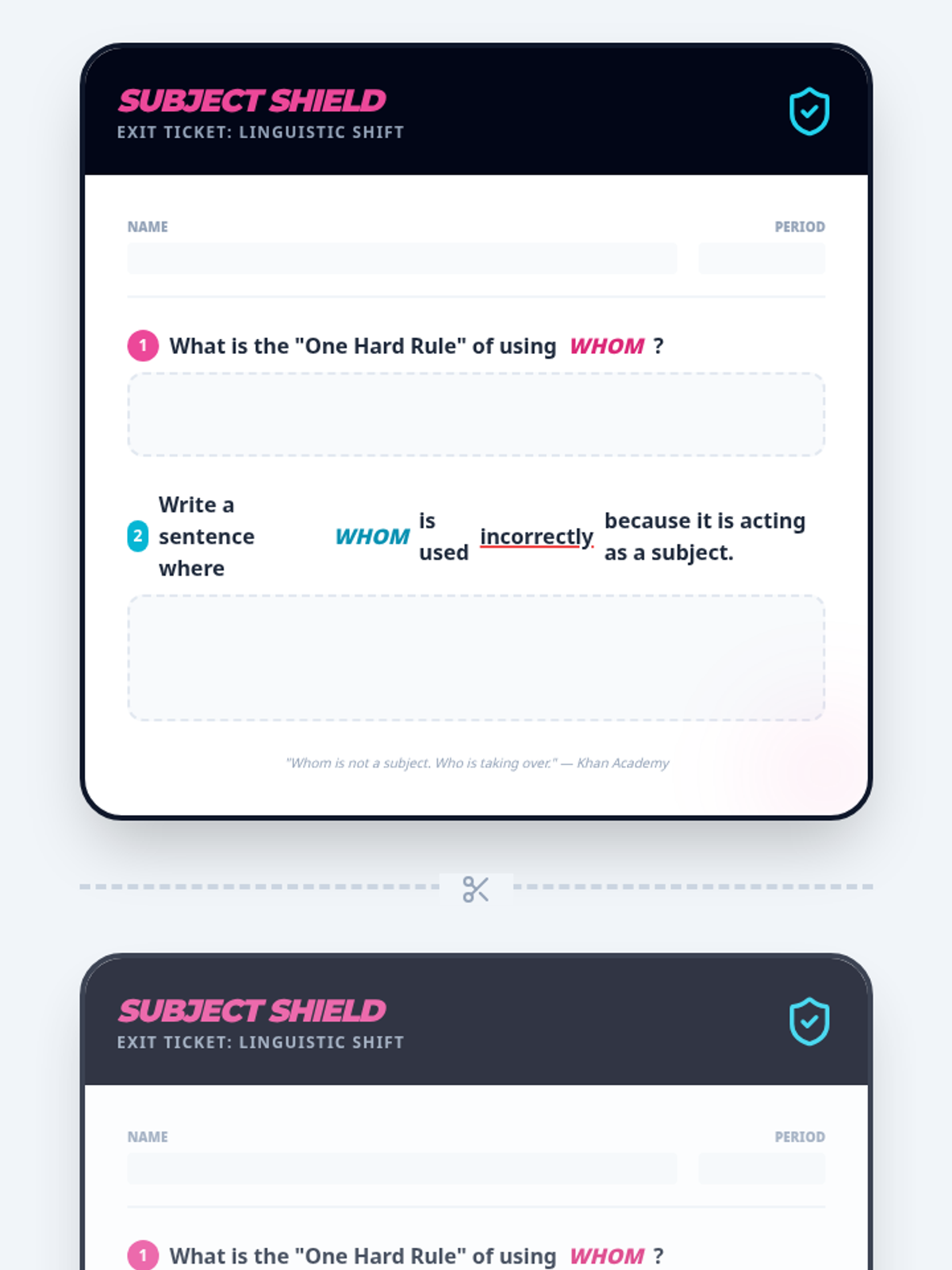
Students explore the 'One-Way Street' rule of grammar, learning that while 'who' is expanding its role, 'whom' can never be a subject. The lesson features a Khan Academy video, a 2x2 diagramming activity, and the creation of 'impossible' sentences.
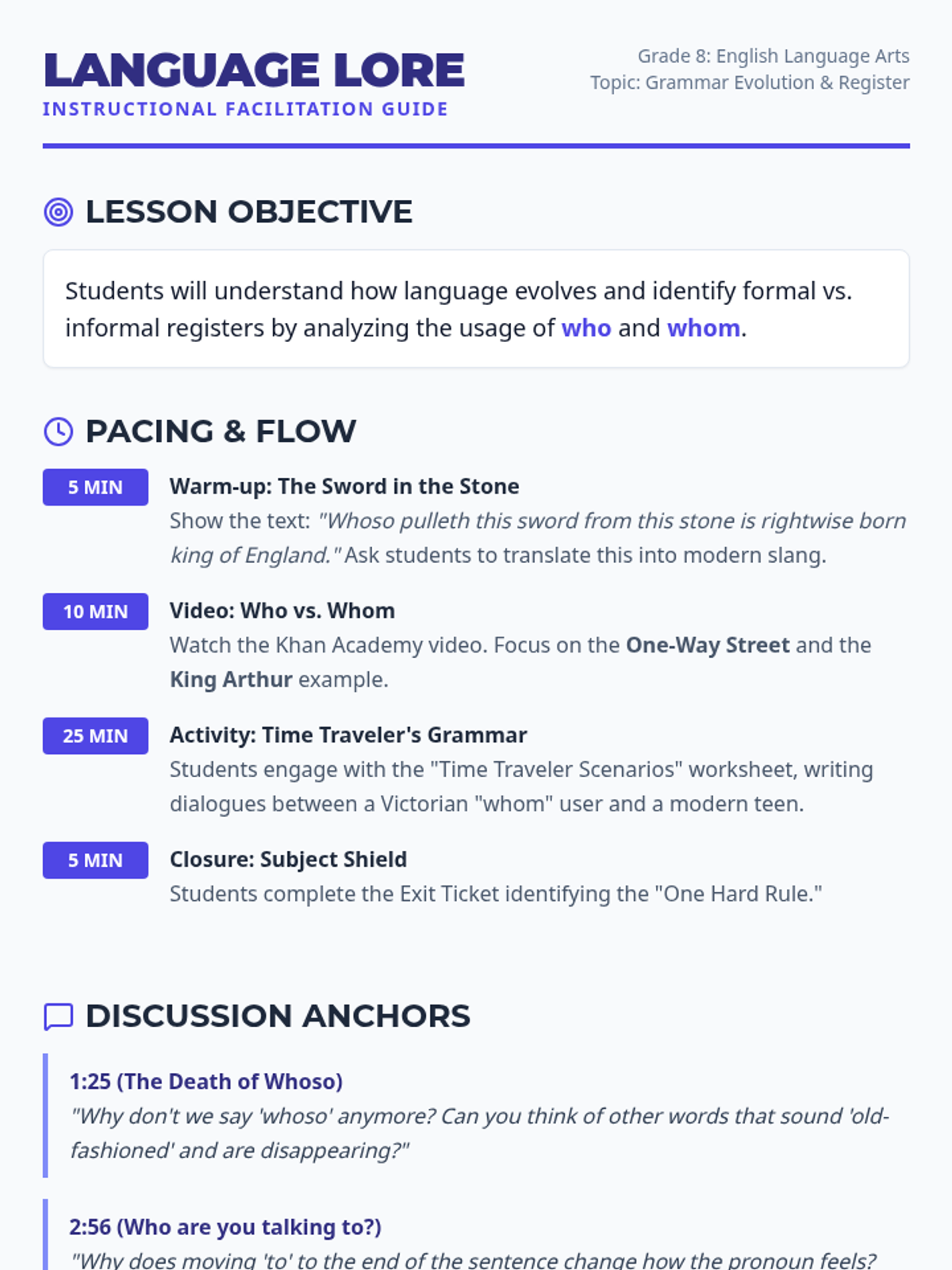
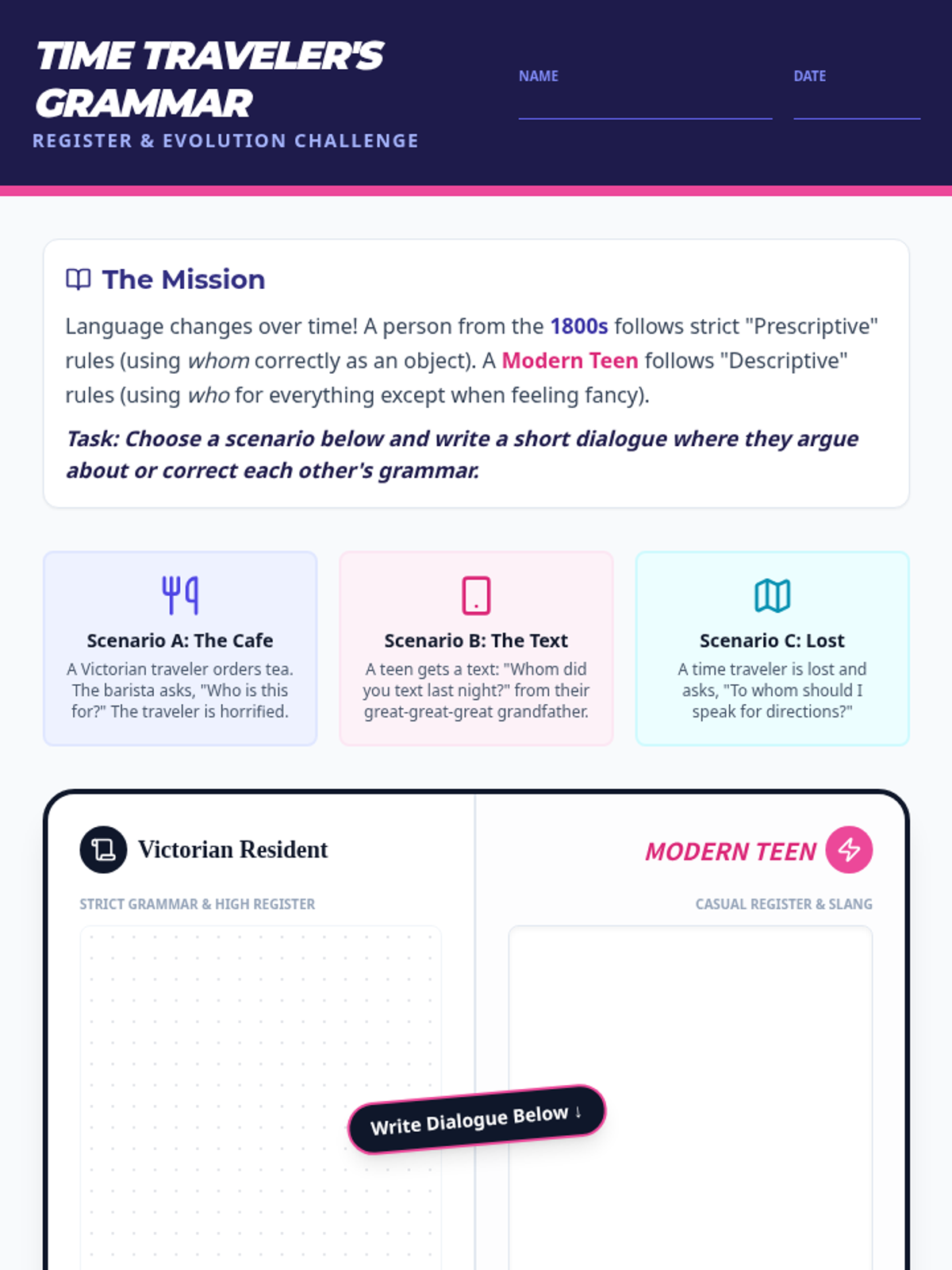
Students explore the evolution of English grammar through the lens of 'who' versus 'whom,' focusing on how registers change over time and the 'one hard rule' of subject-object pronouns.
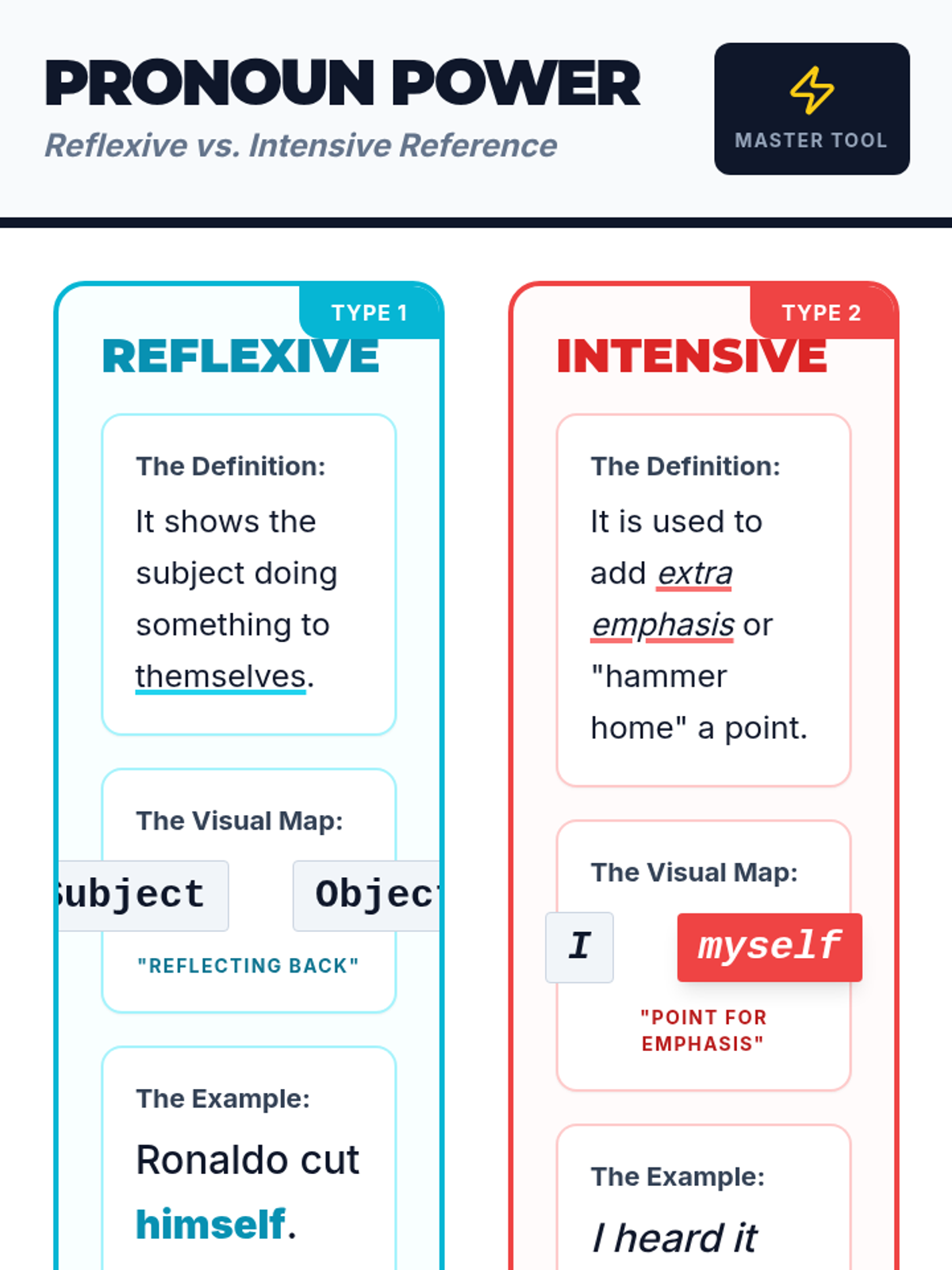
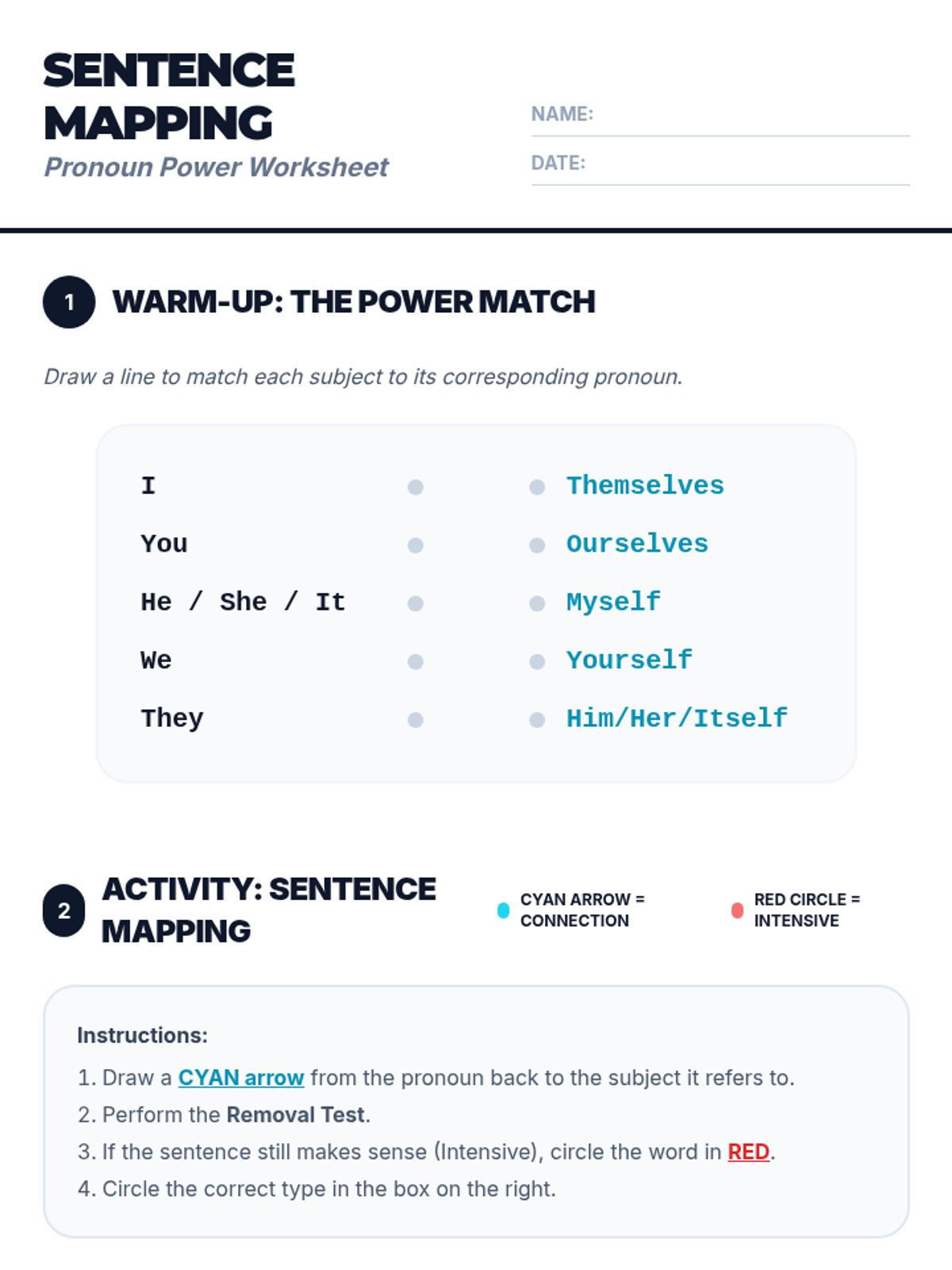
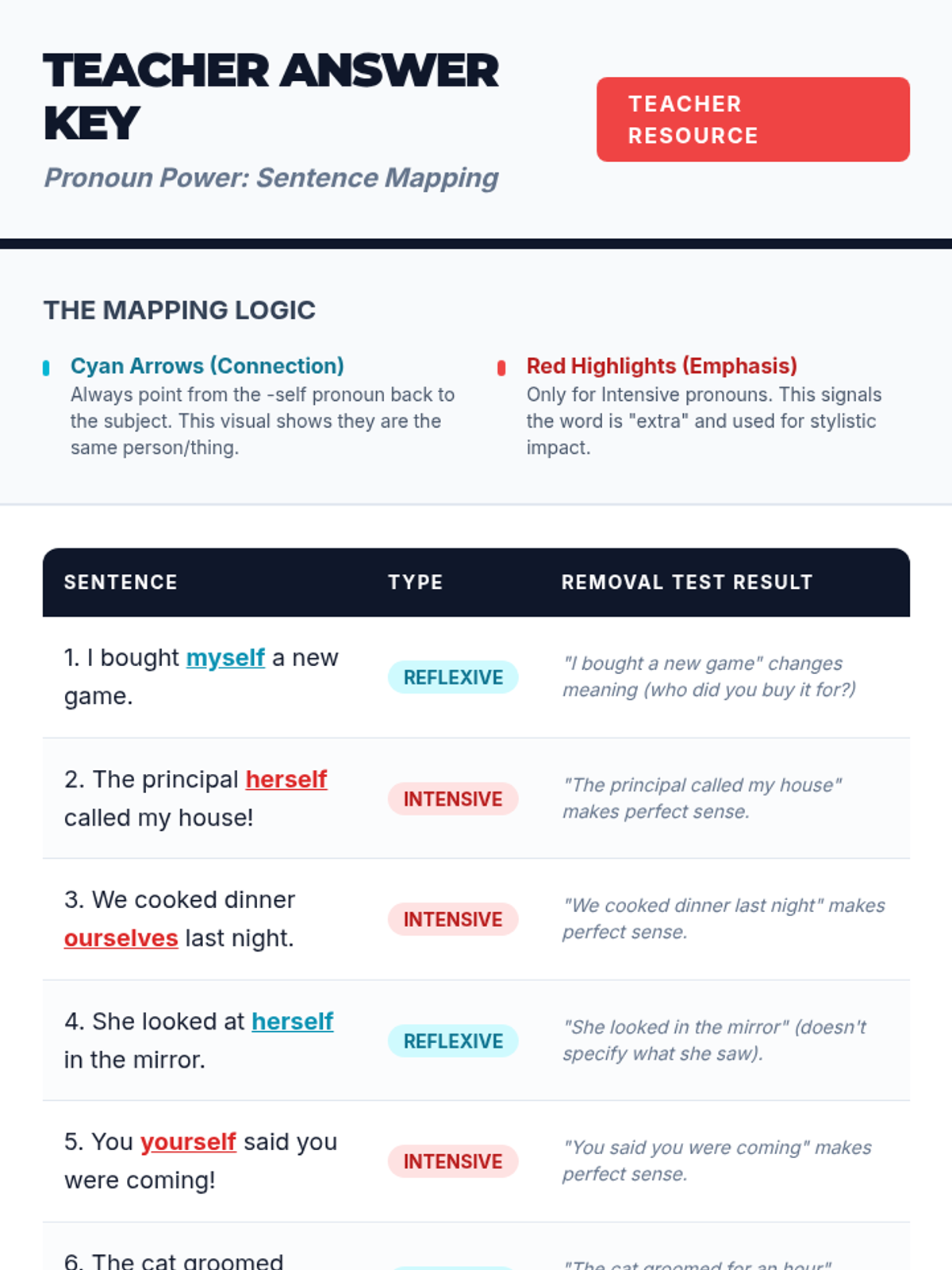
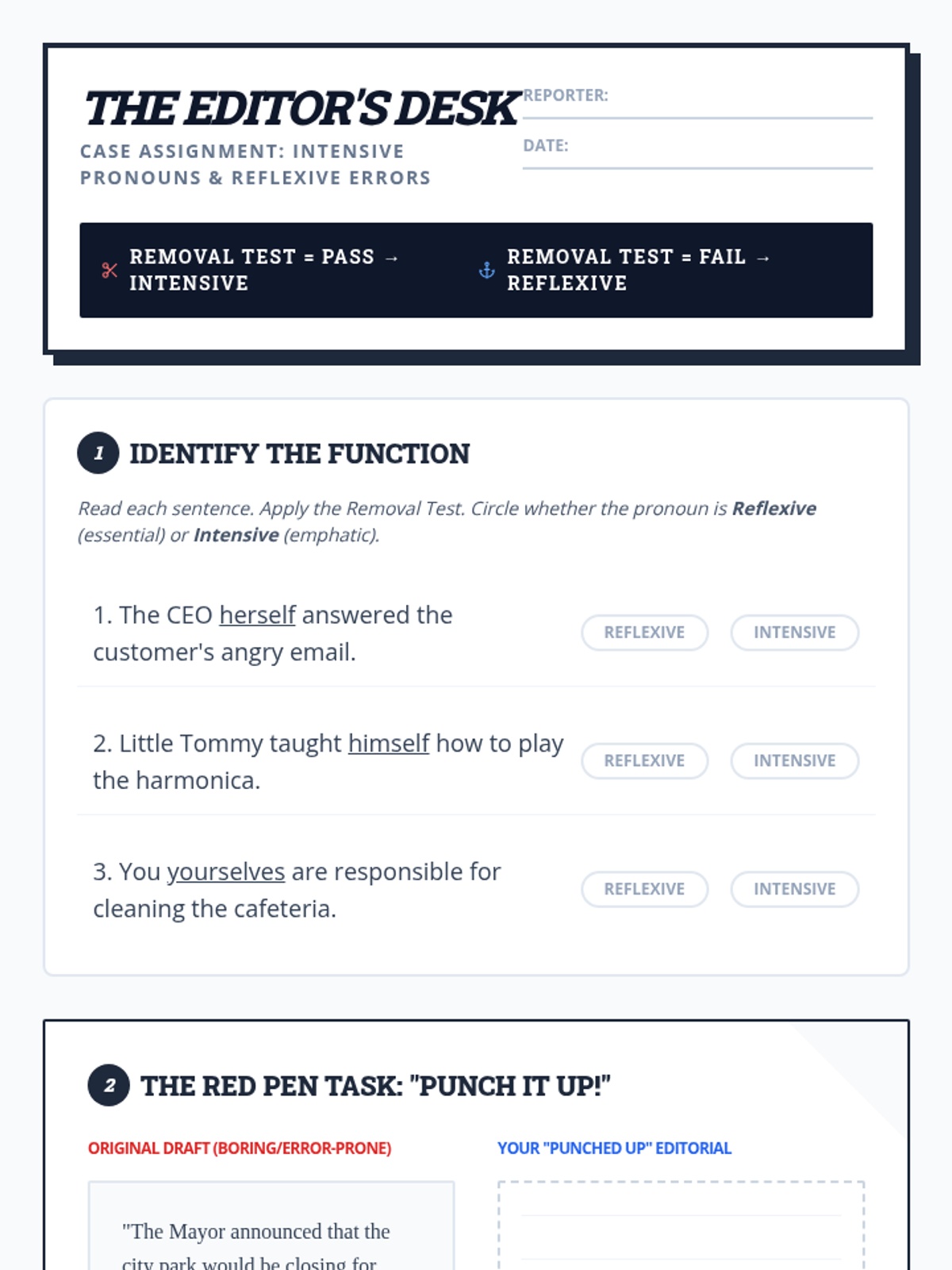
A visual-first approach to distinguishing between reflexive and intensive pronouns using mapping techniques and the 'Removal Test'. Designed for middle school support/remedial students.
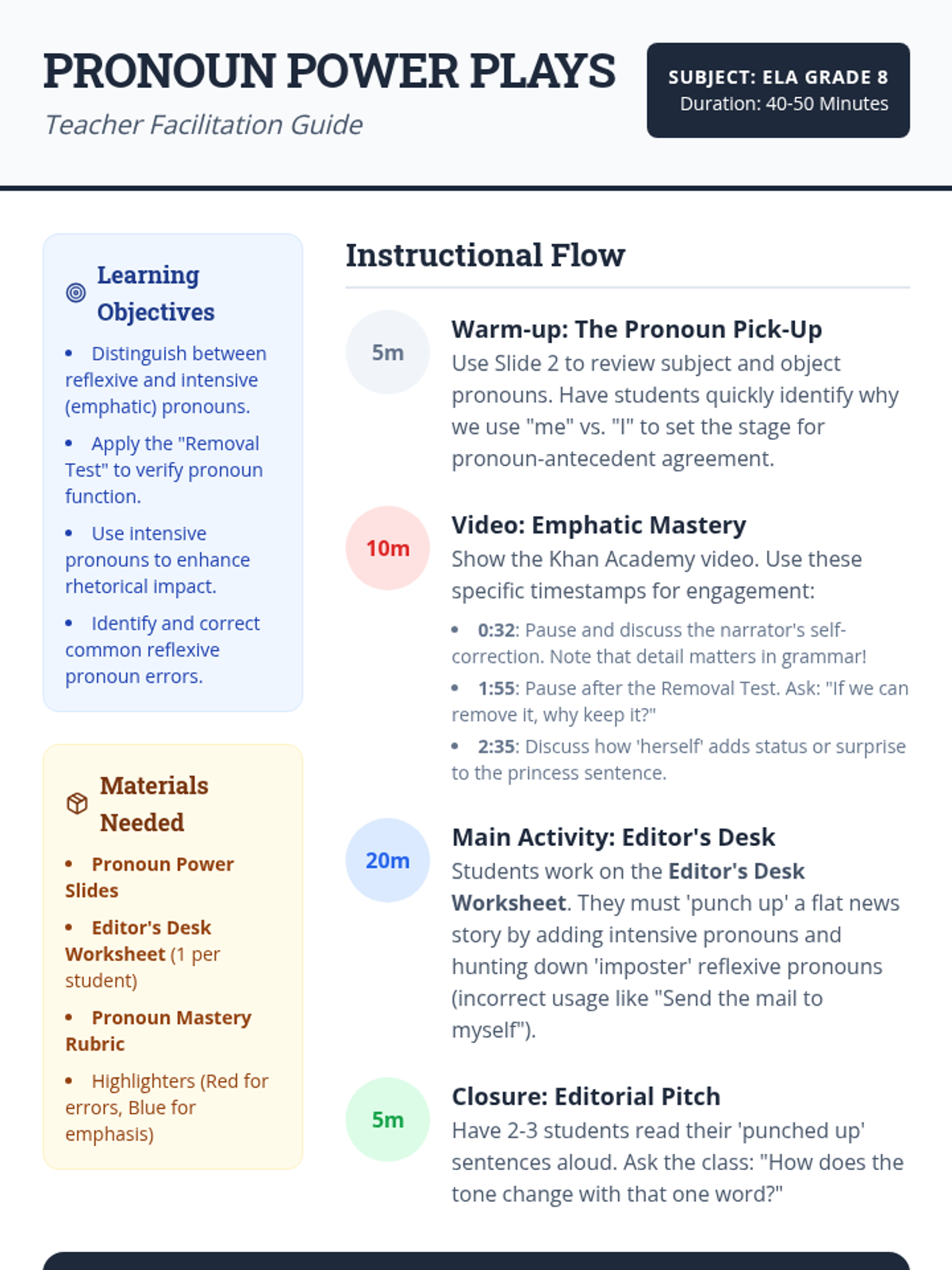
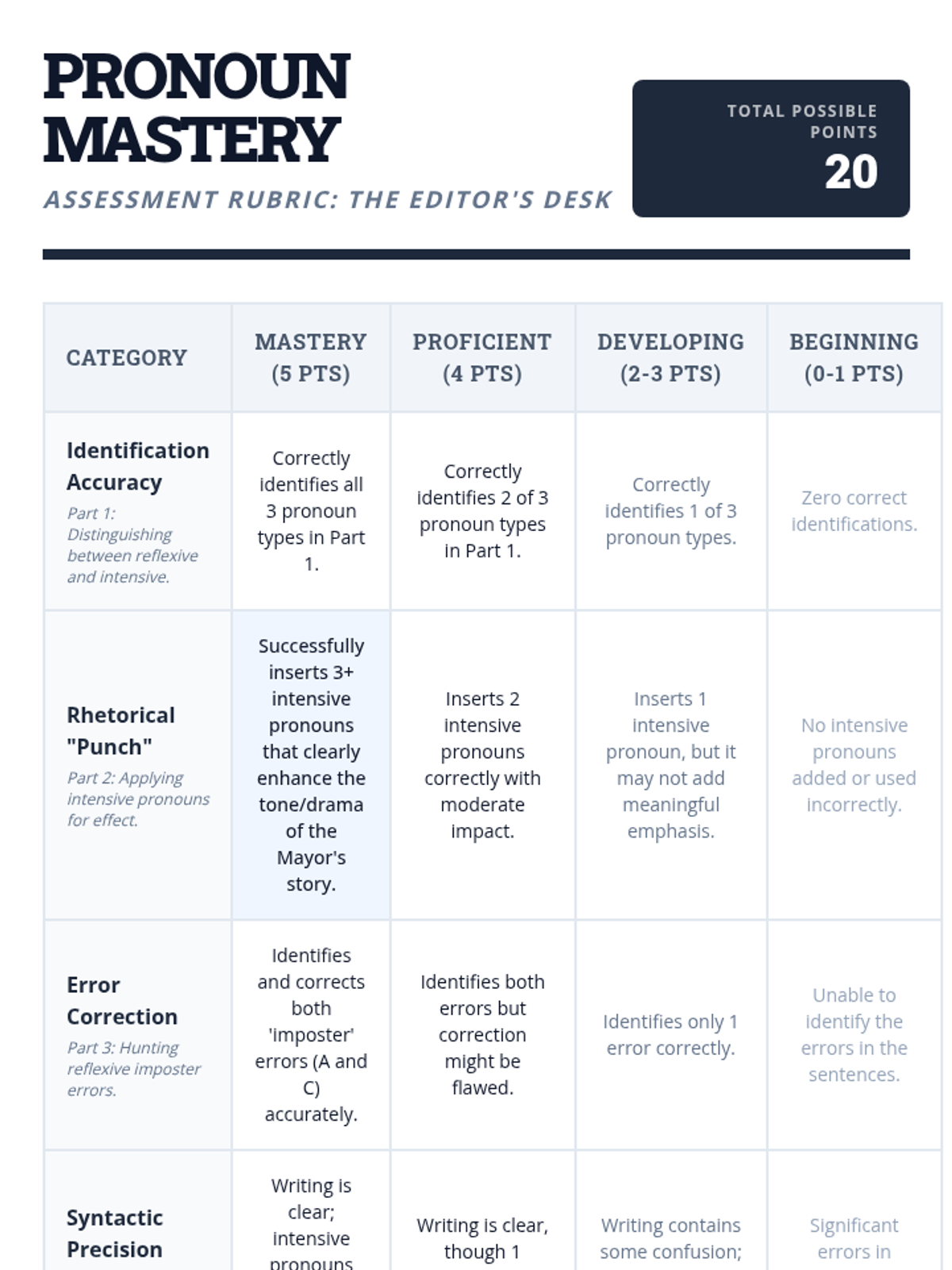
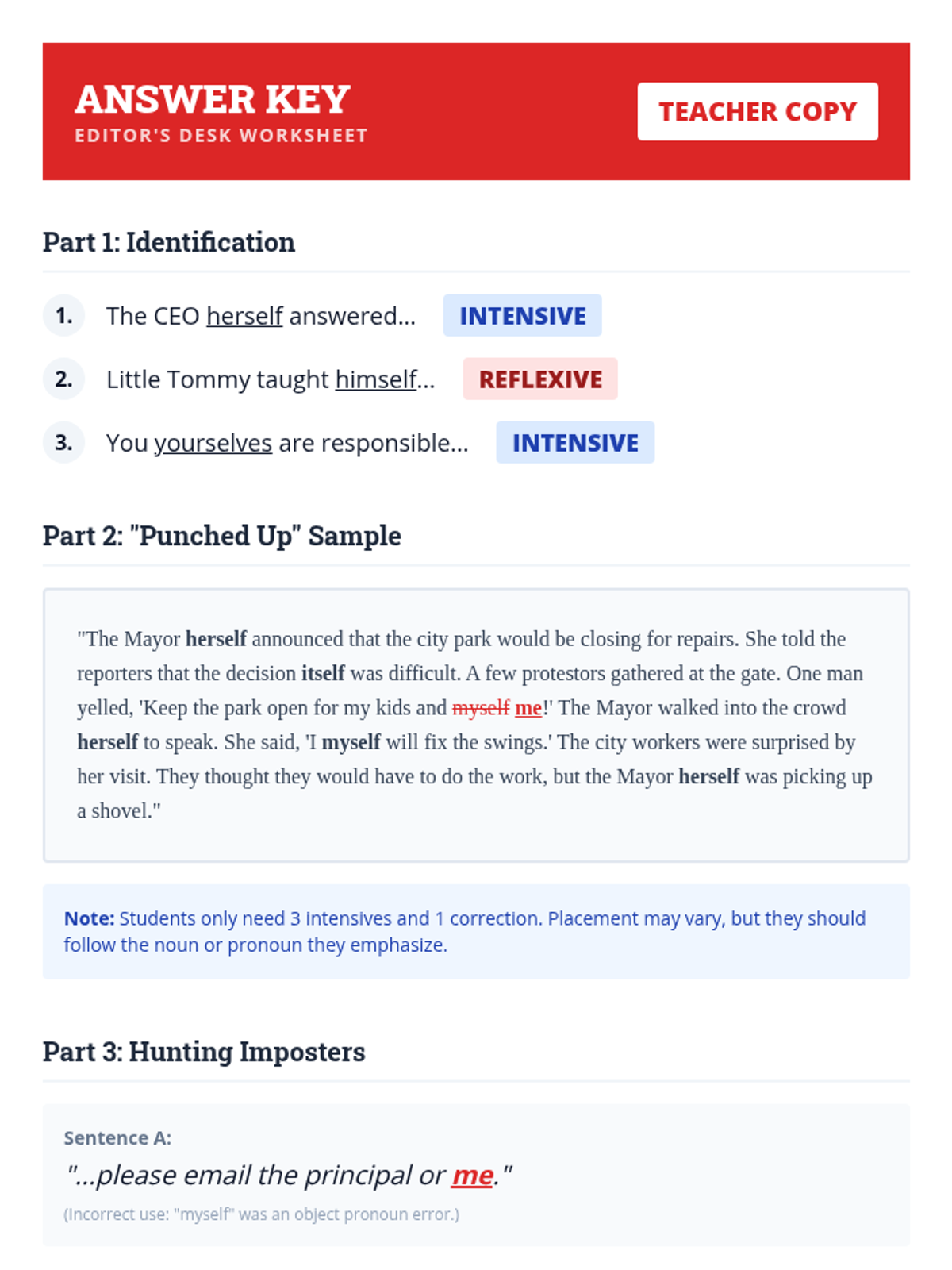
Students will master the distinction between reflexive and intensive pronouns, learning how to use emphatic pronouns to add rhetorical flair and 'punch' to their writing while avoiding common usage errors.
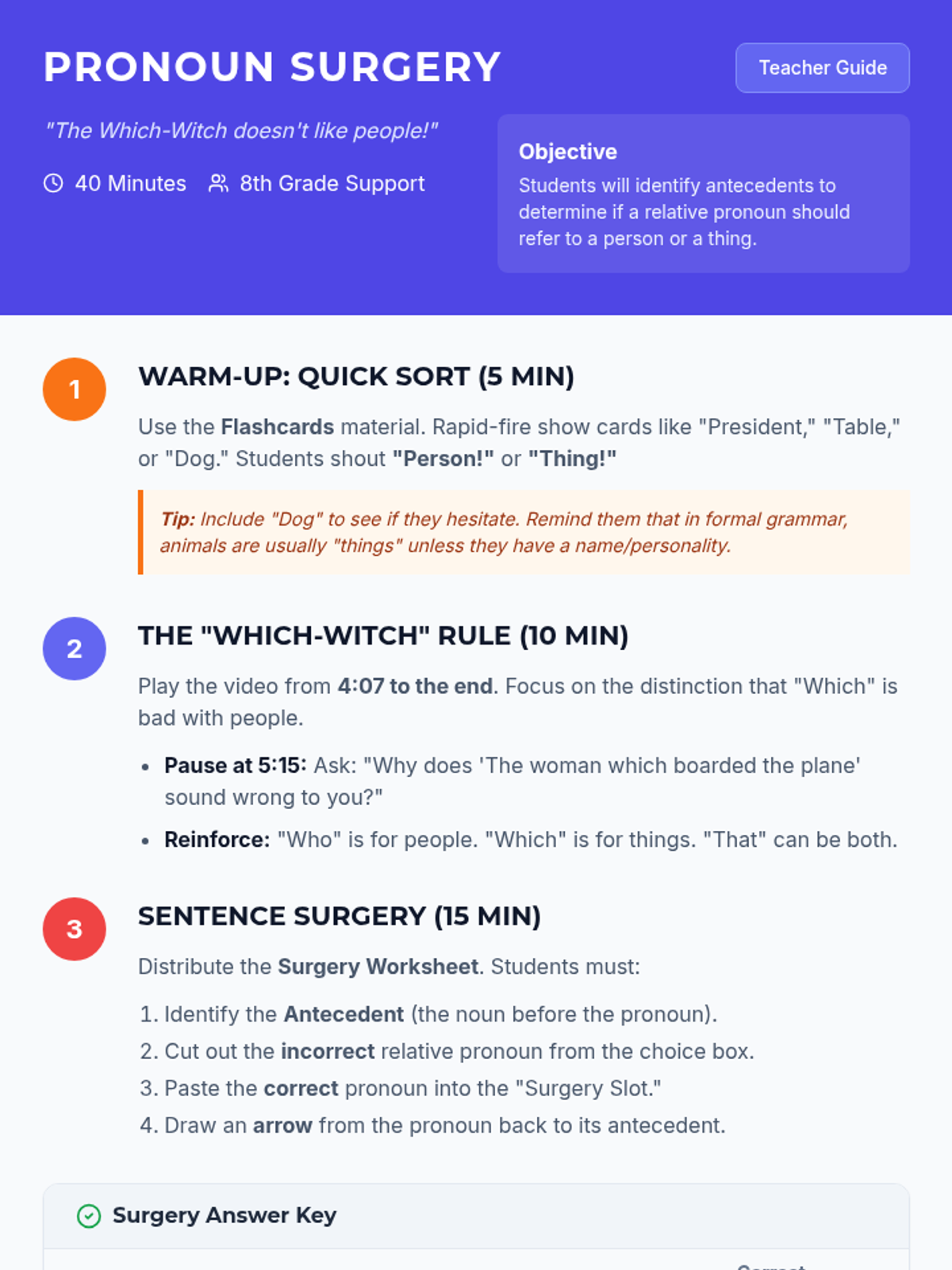
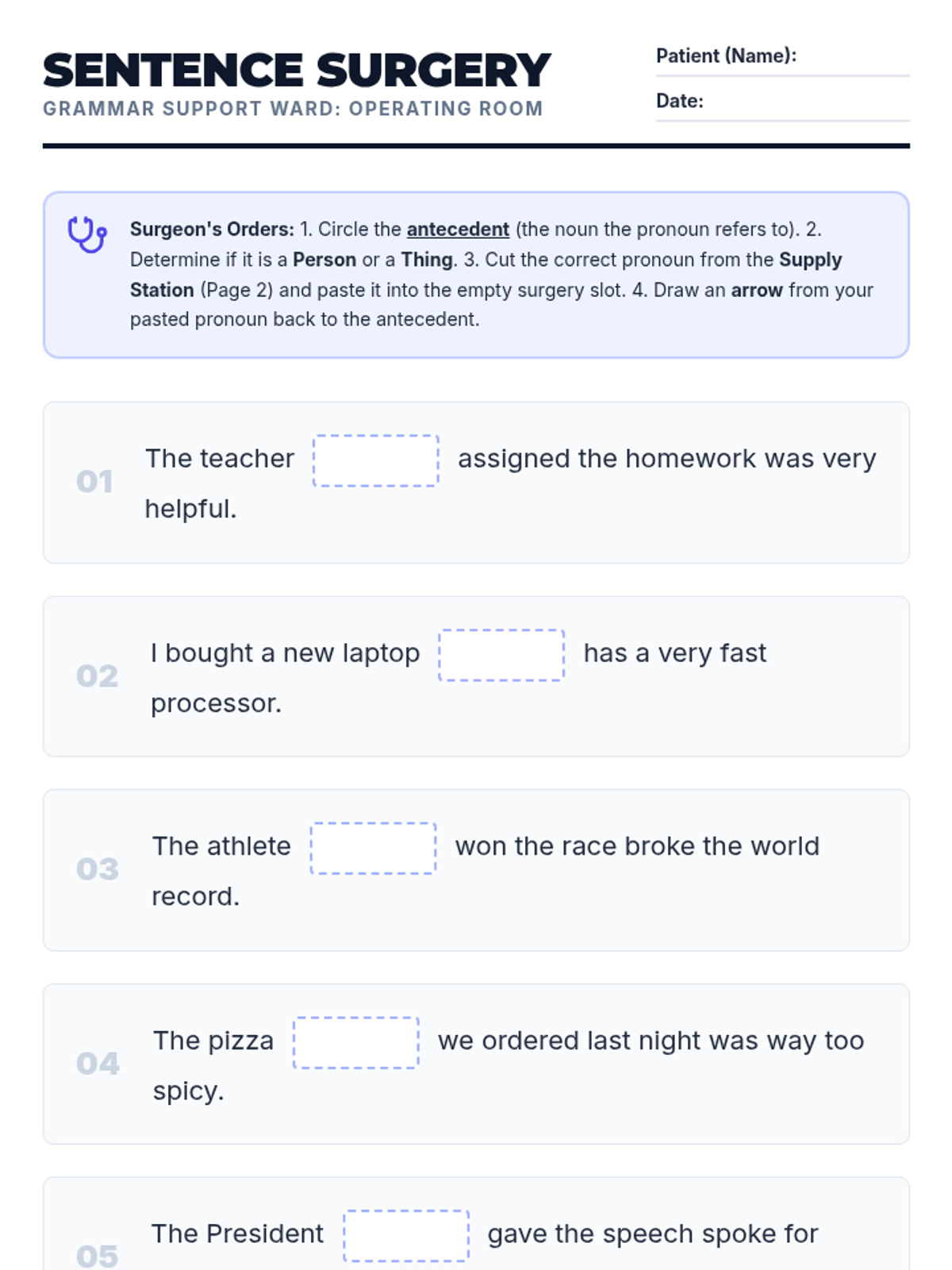
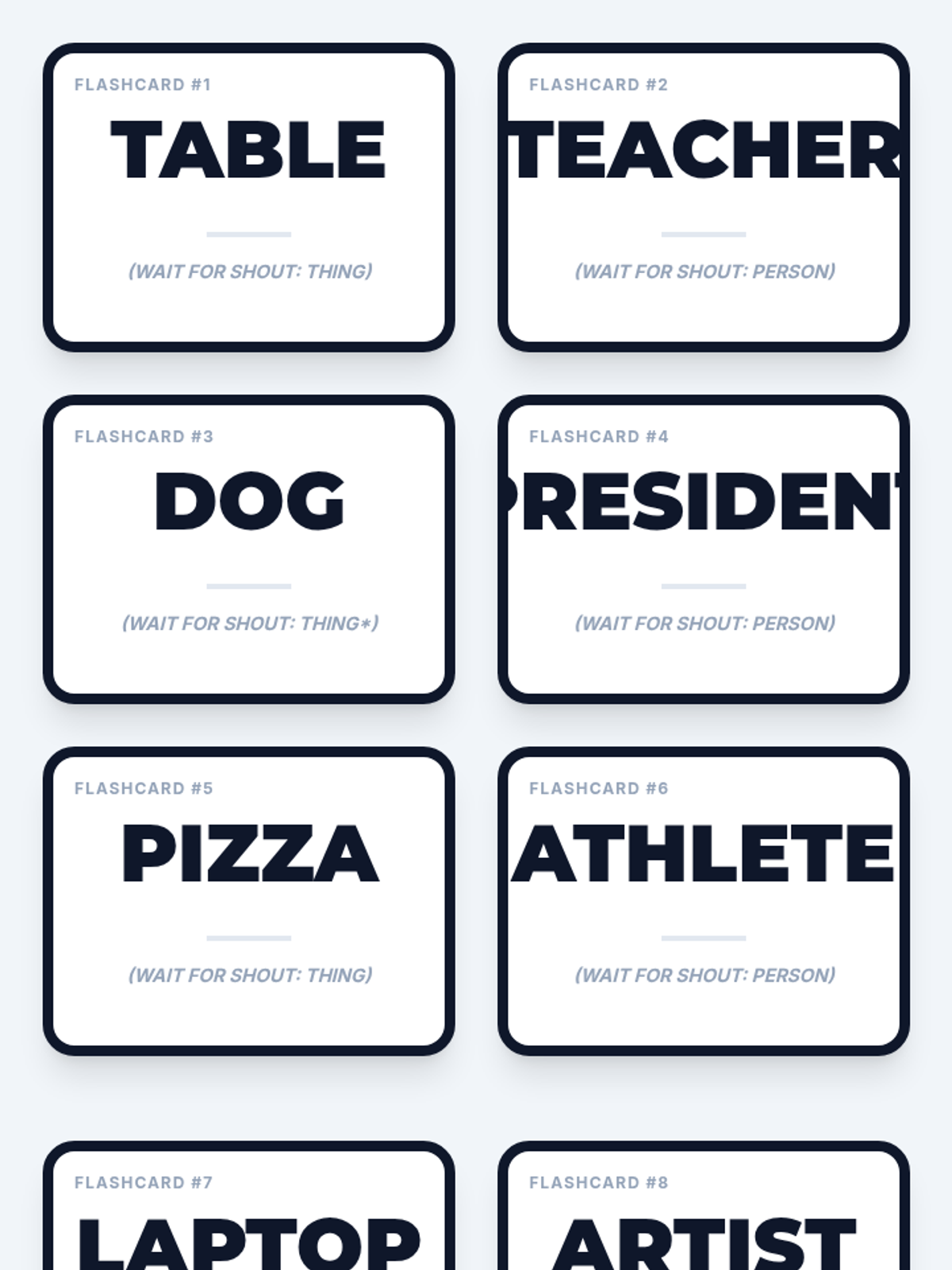
A targeted grammar lesson for 8th graders focusing on the distinction between 'who', 'that', and 'which' based on whether the antecedent is a person or a thing, featuring a 'Sentence Surgery' hands-on activity.
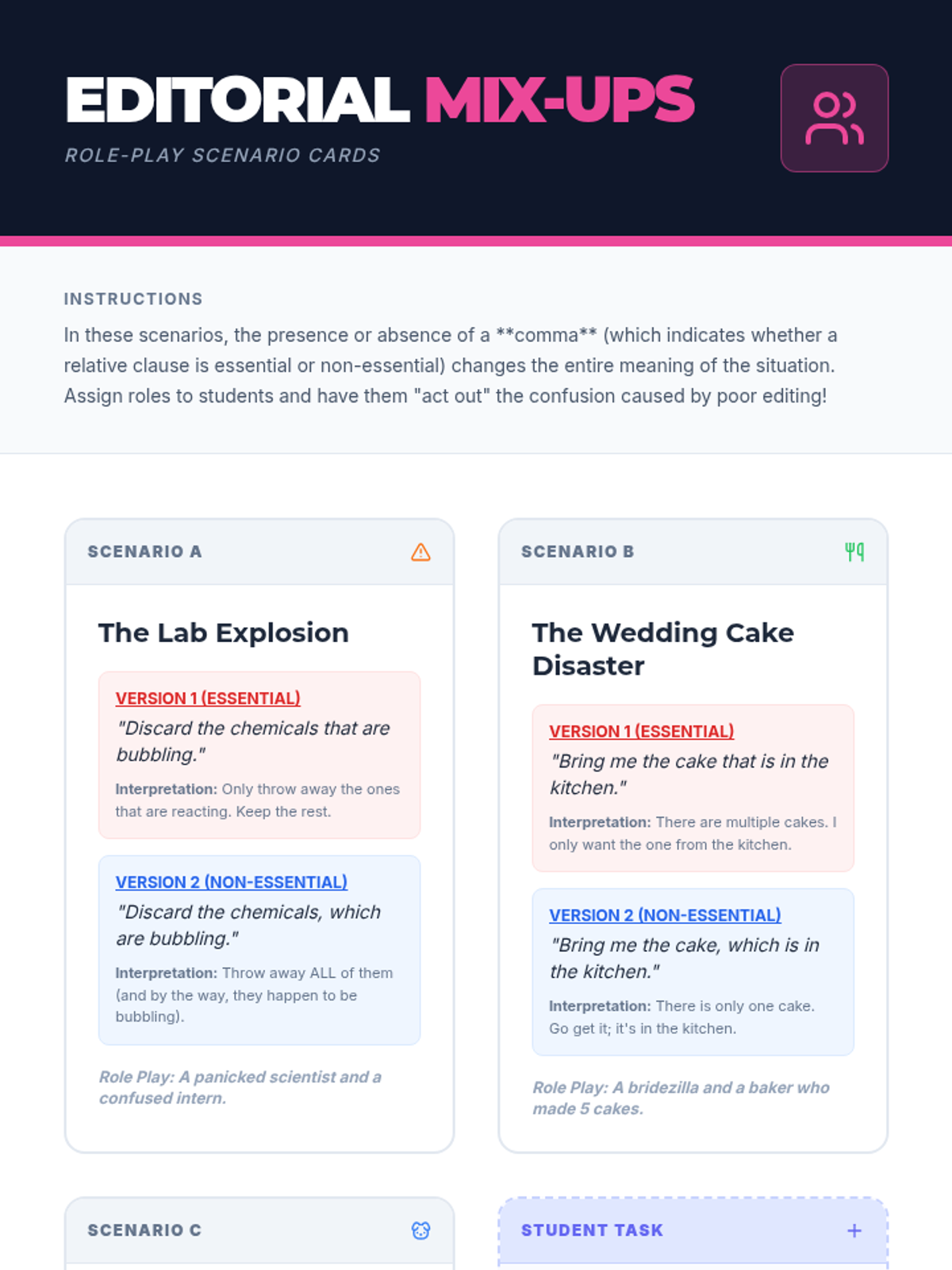
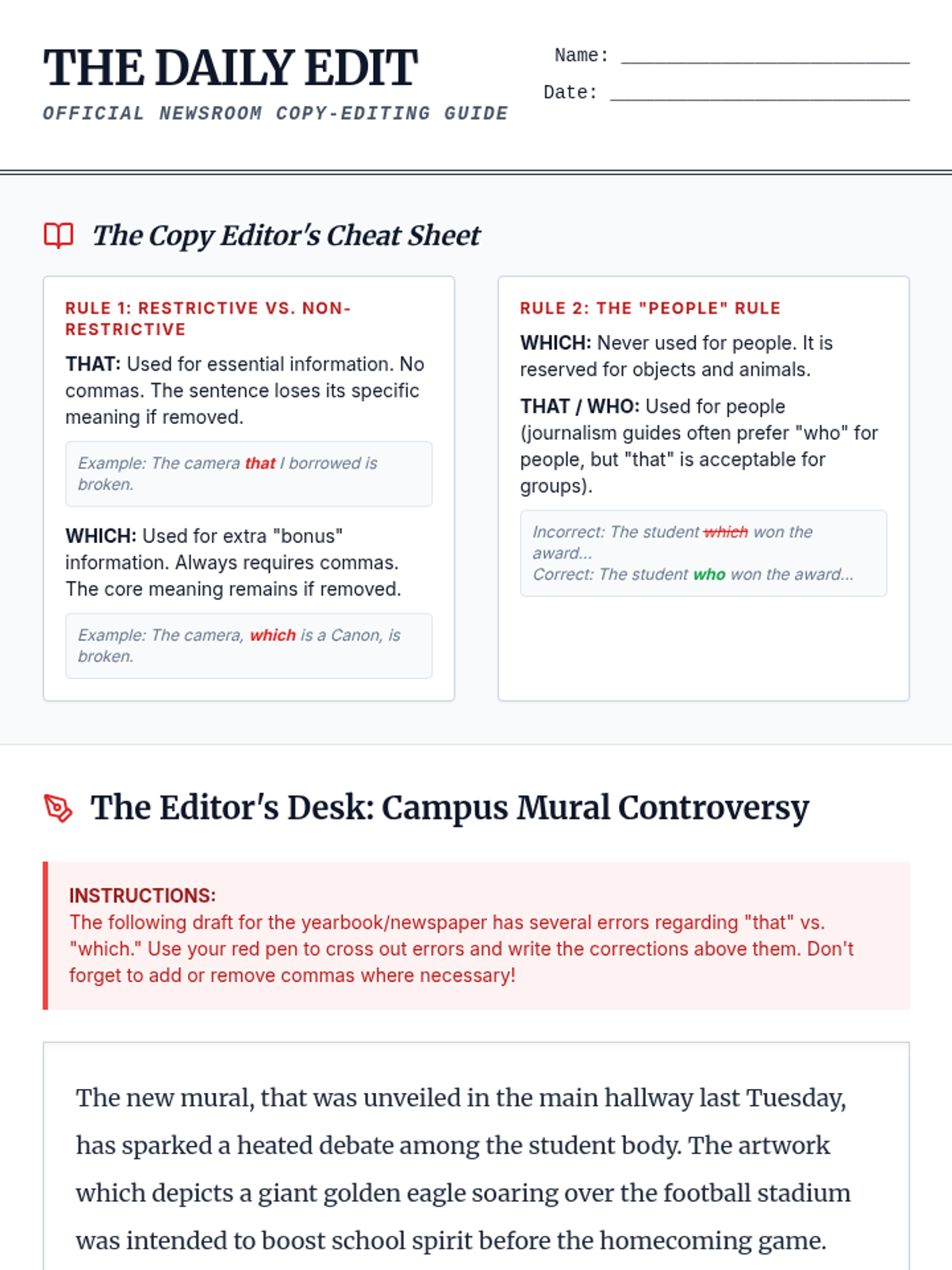
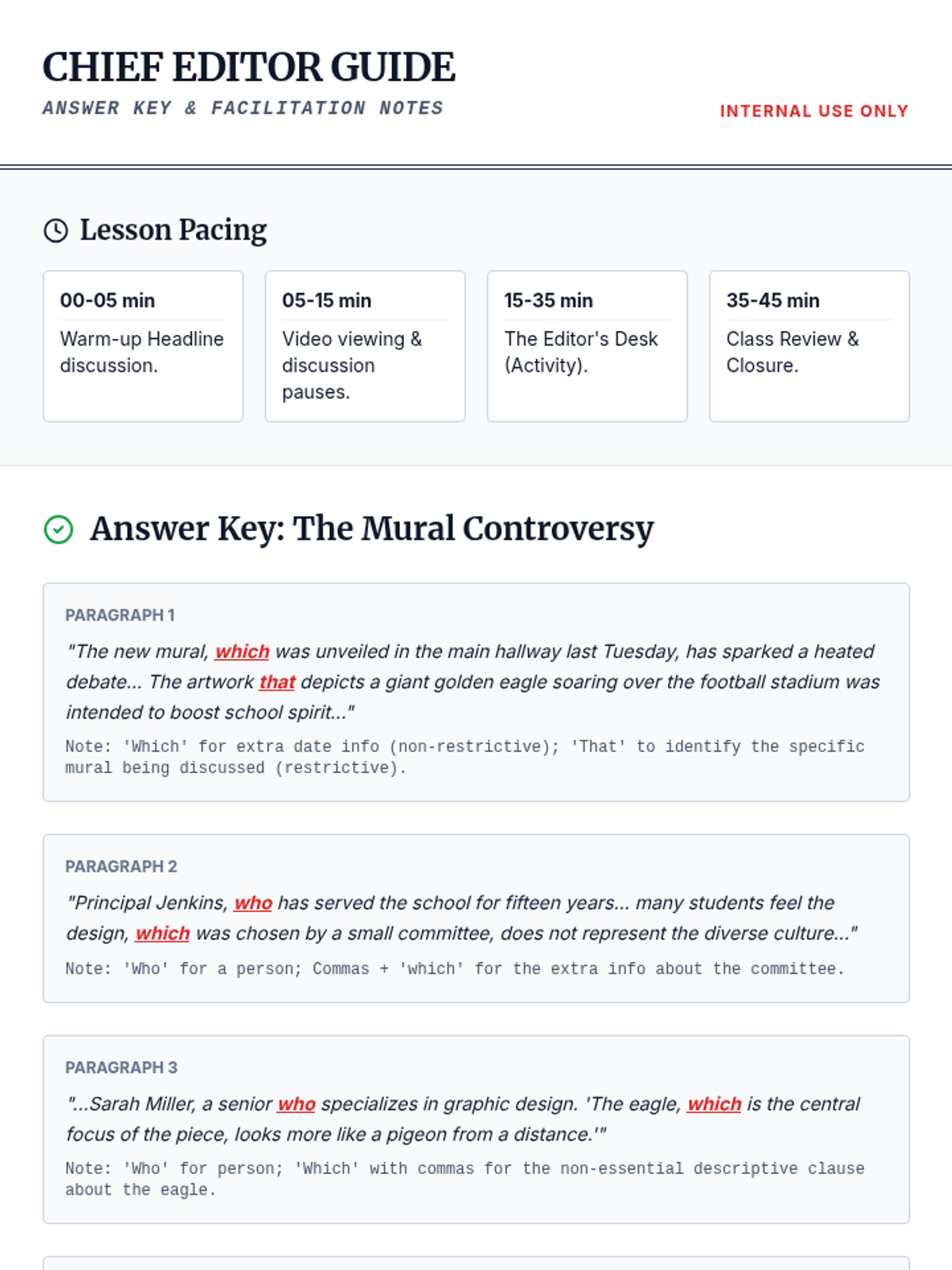
A journalism-focused lesson on the grammatical nuances of 'that' versus 'which,' teaching students to use restrictive and non-restrictive clauses to improve reporting clarity.
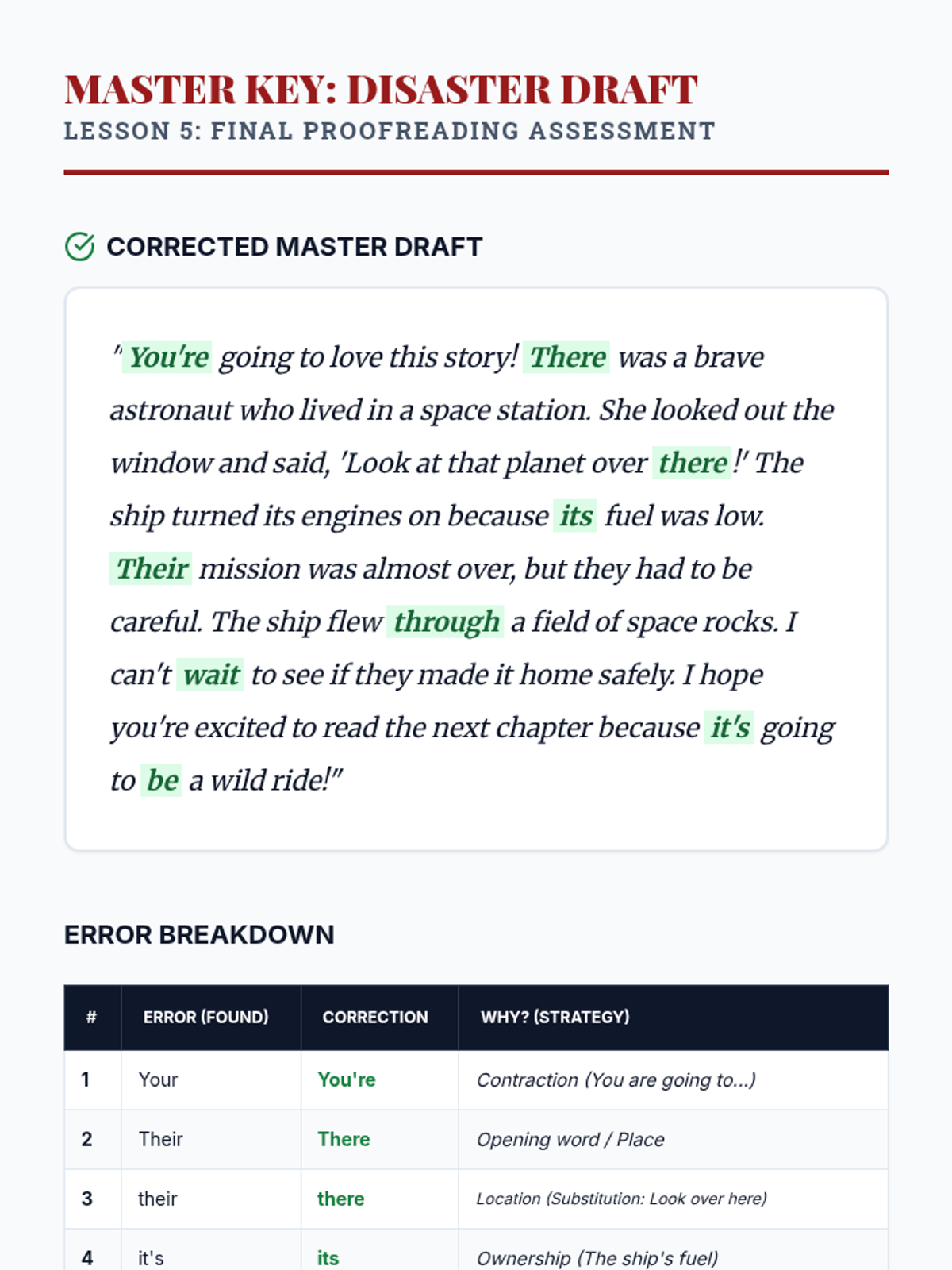
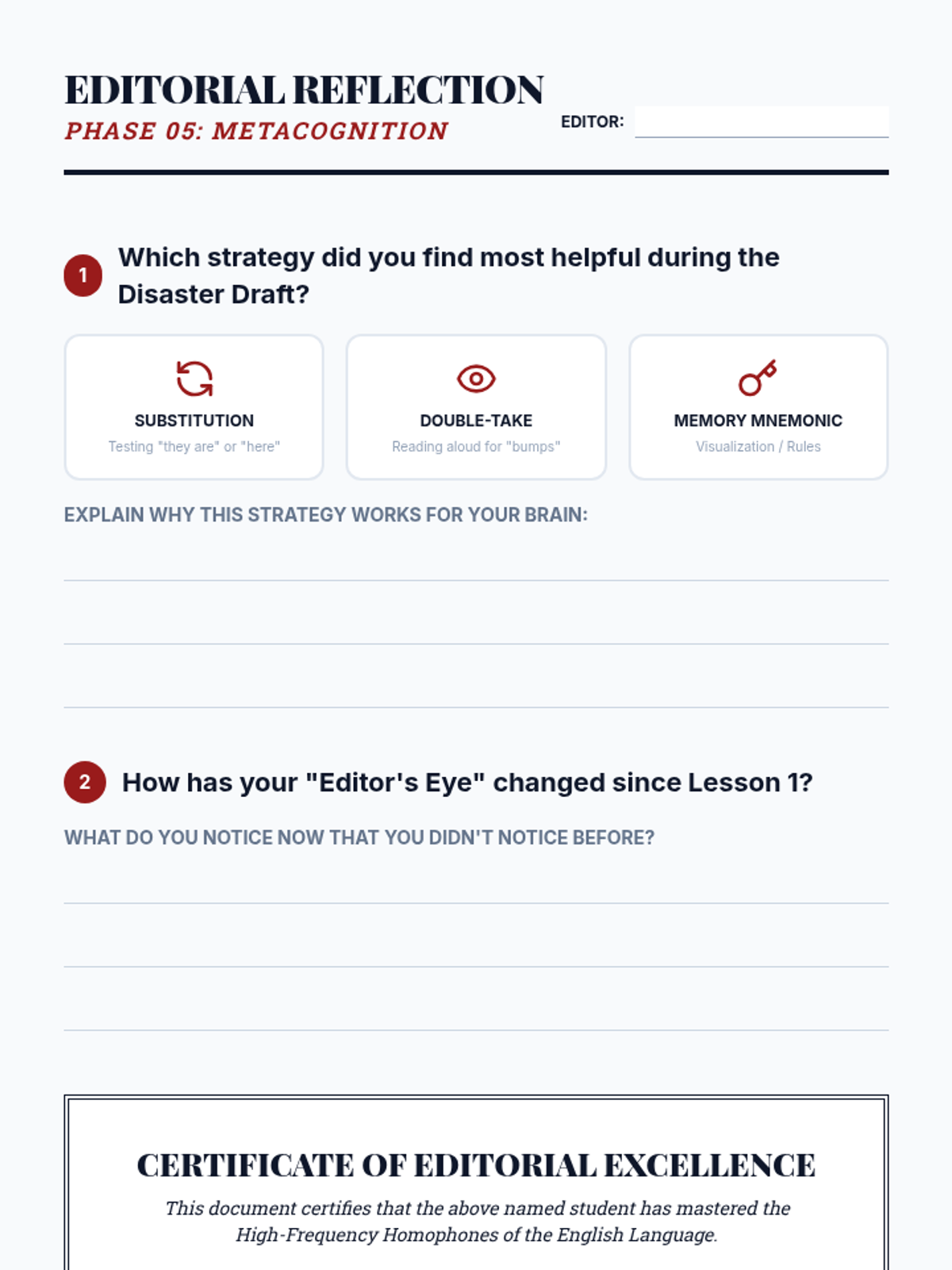
A final mastery assessment where students correct a 'disaster draft' and reflect on their personal editing strategies.
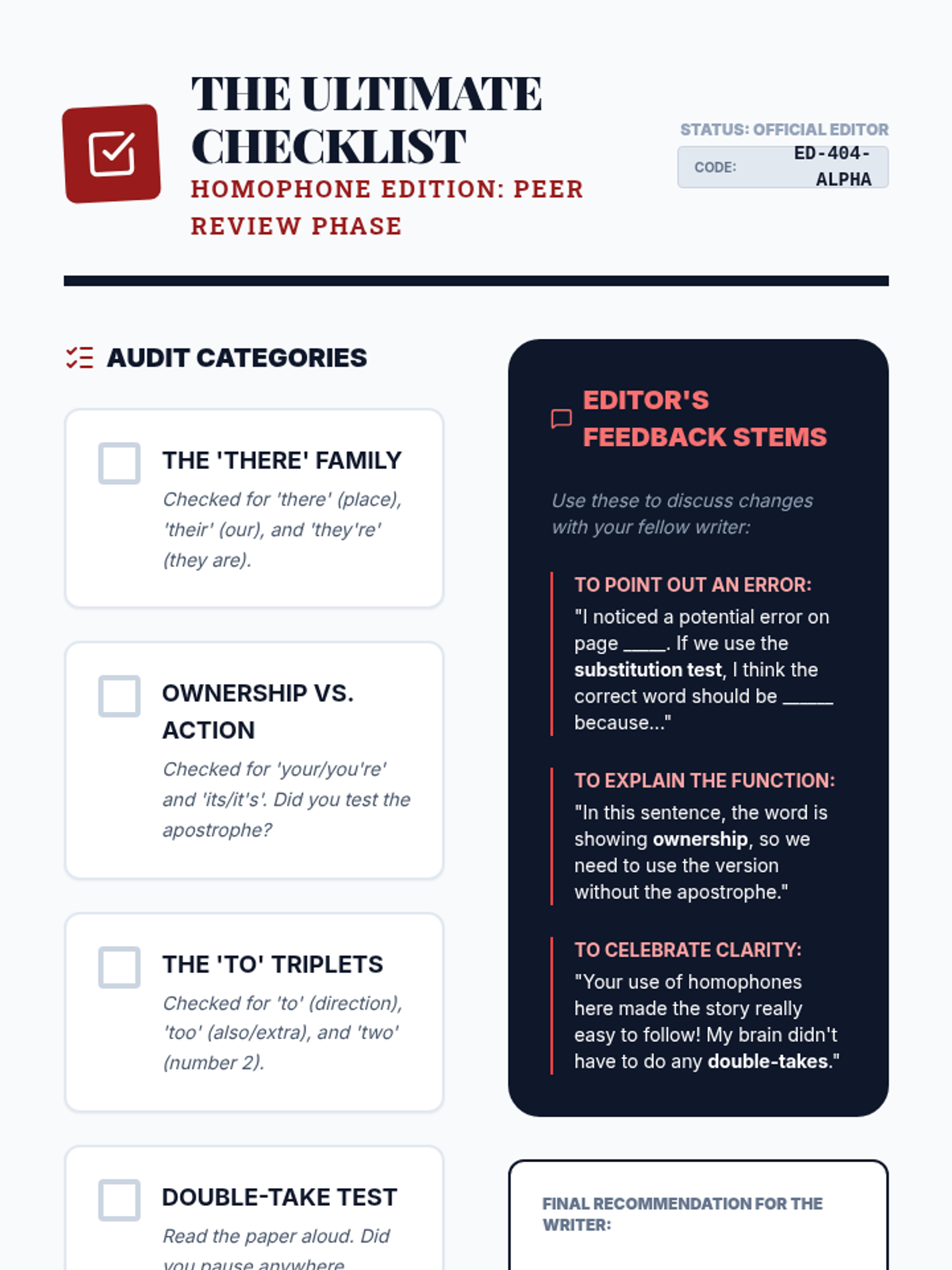
Students act as editors for their peers, using a specialized checklist to refine drafts and provide constructive feedback on homophone usage.
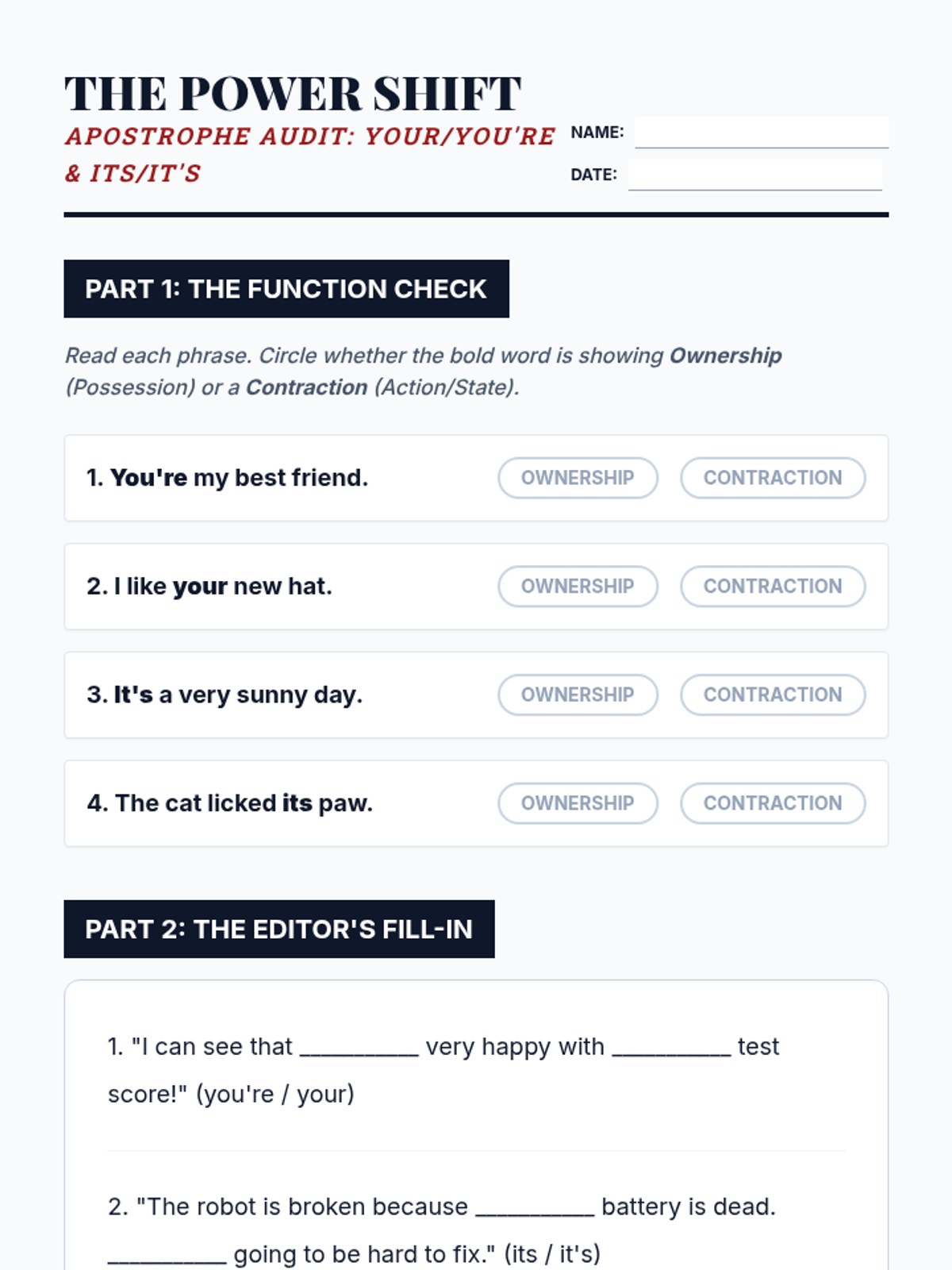
Focusing on 'your/you're' and 'its/it's', students learn to distinguish between possession and contractions through sentence-building exercises.
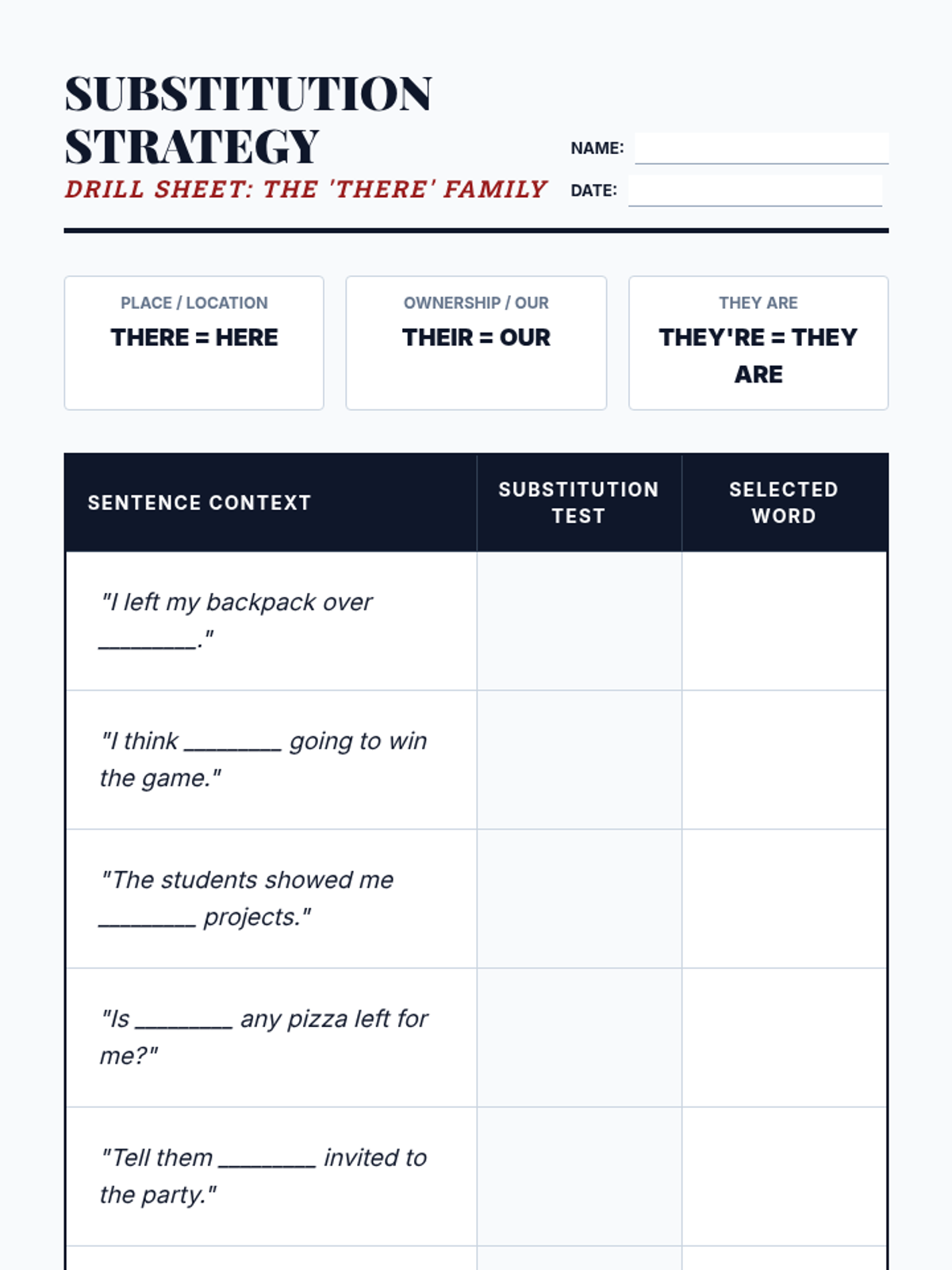
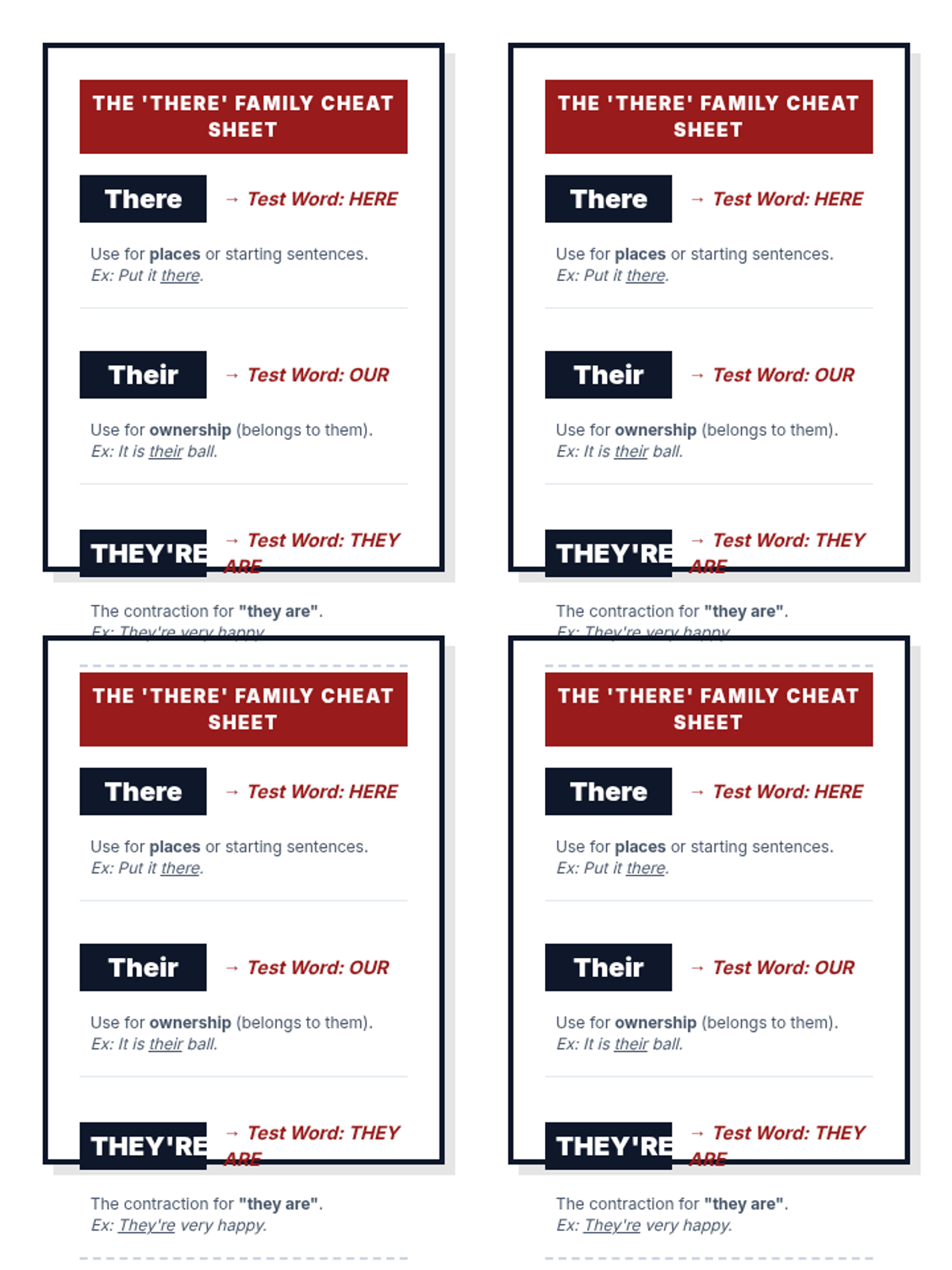
A deep dive into 'there,' 'their,' and 'they're' using the substitution strategy to ensure correct usage in every sentence.
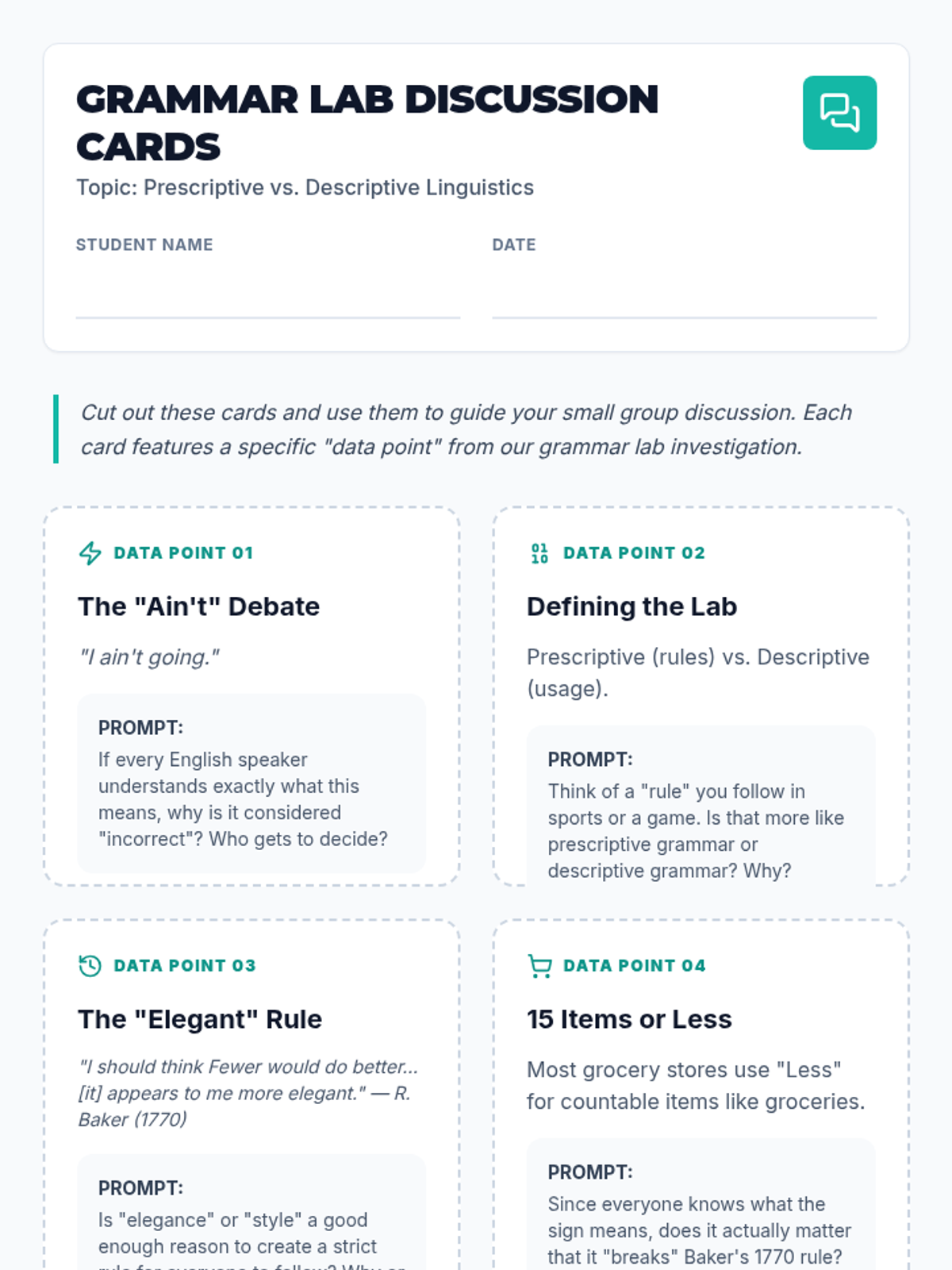
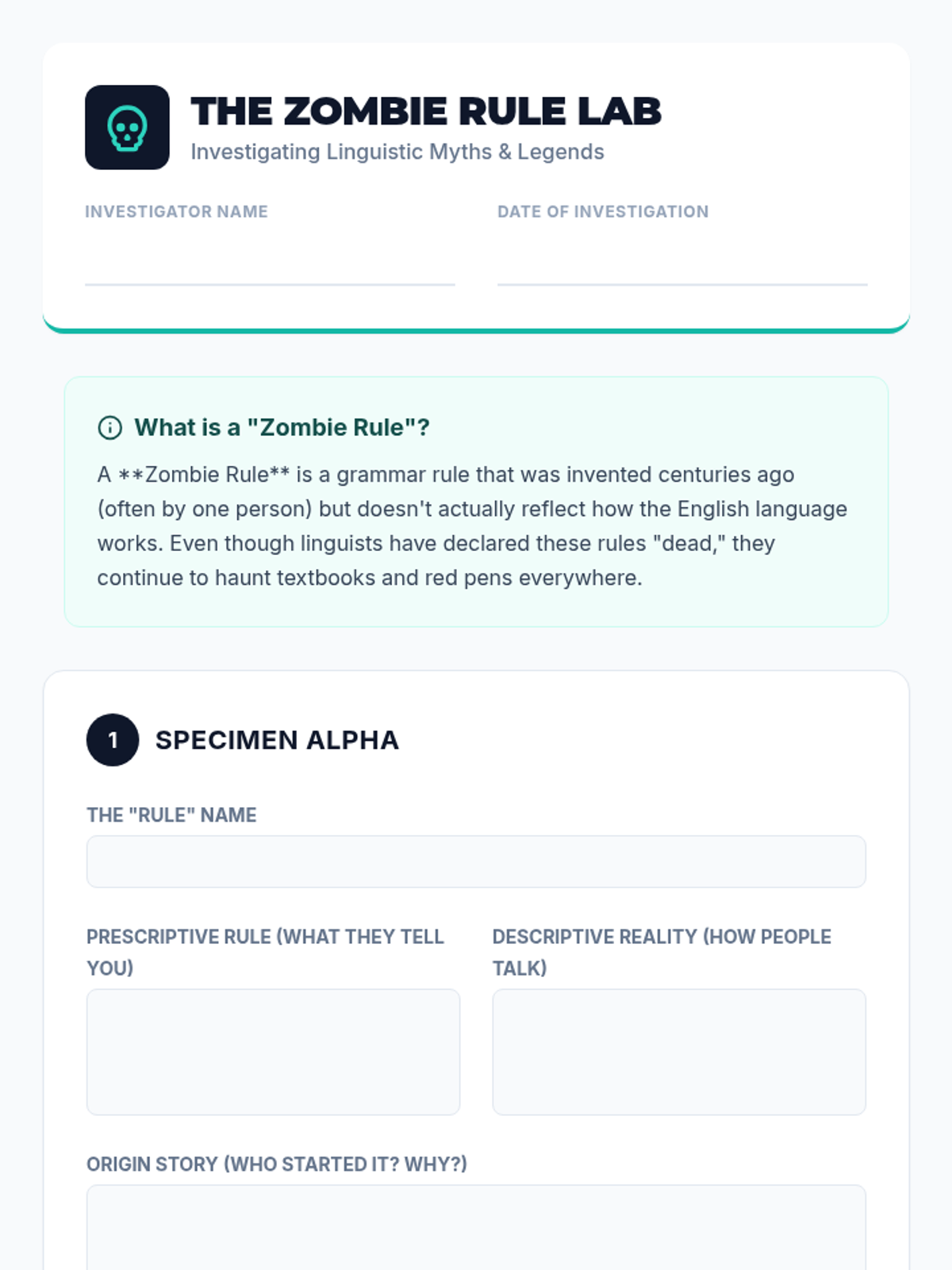
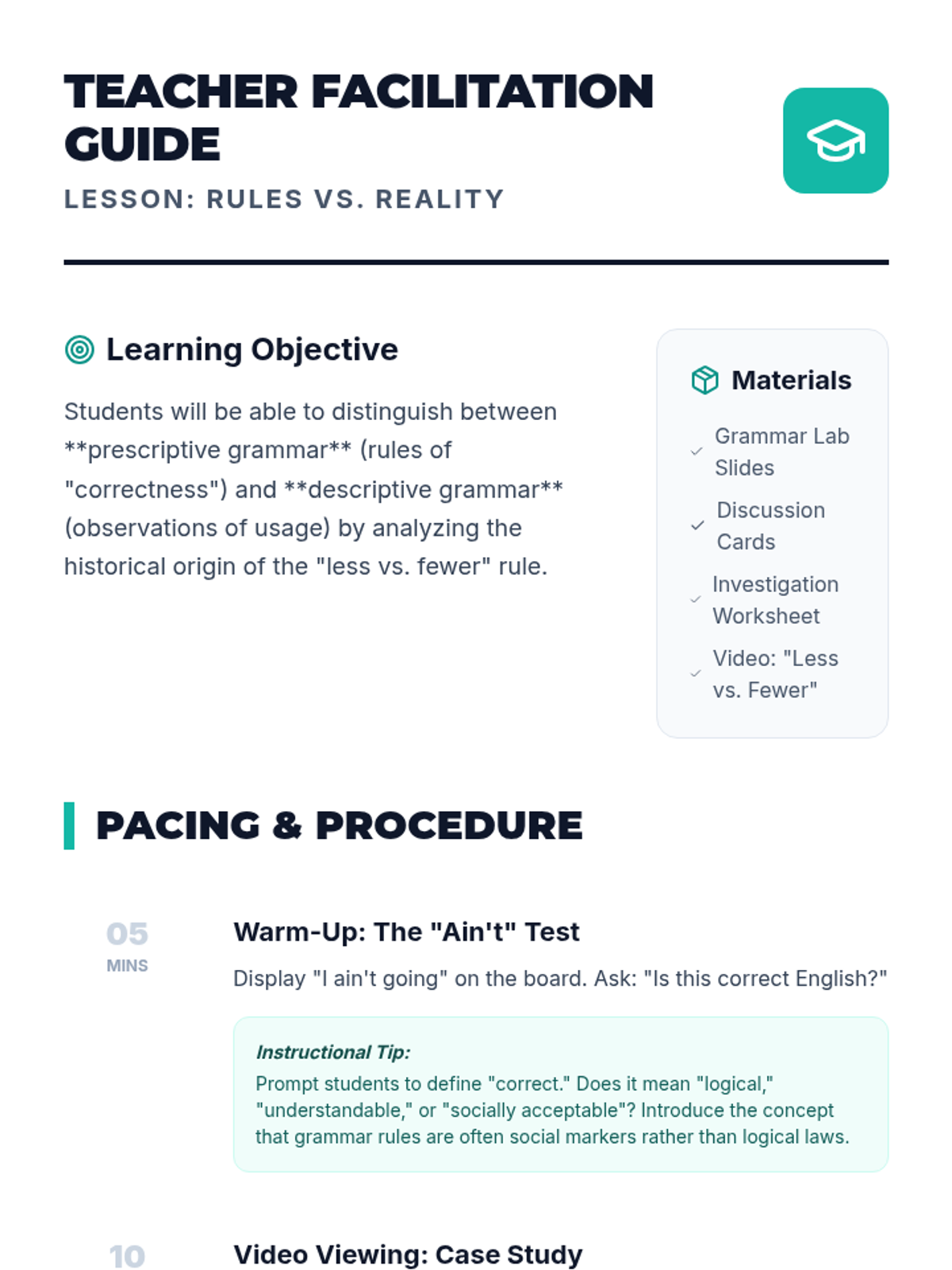
This lesson explores the historical origins of grammar rules, specifically the 'less vs. fewer' distinction, to teach the difference between prescriptive and descriptive grammar. Students will analyze how arbitrary preferences became standard rules and investigate other 'zombie rules' in the English language.
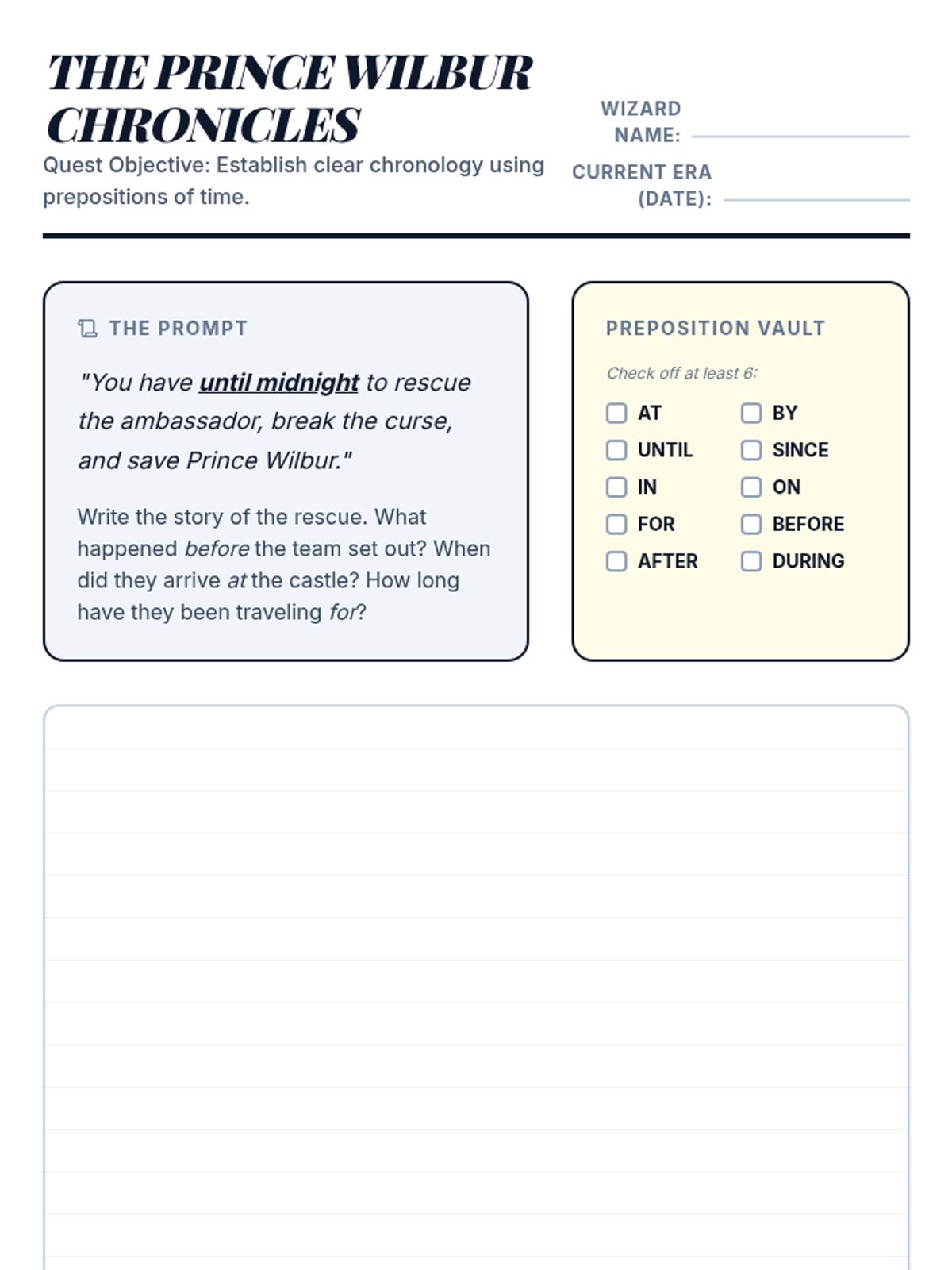
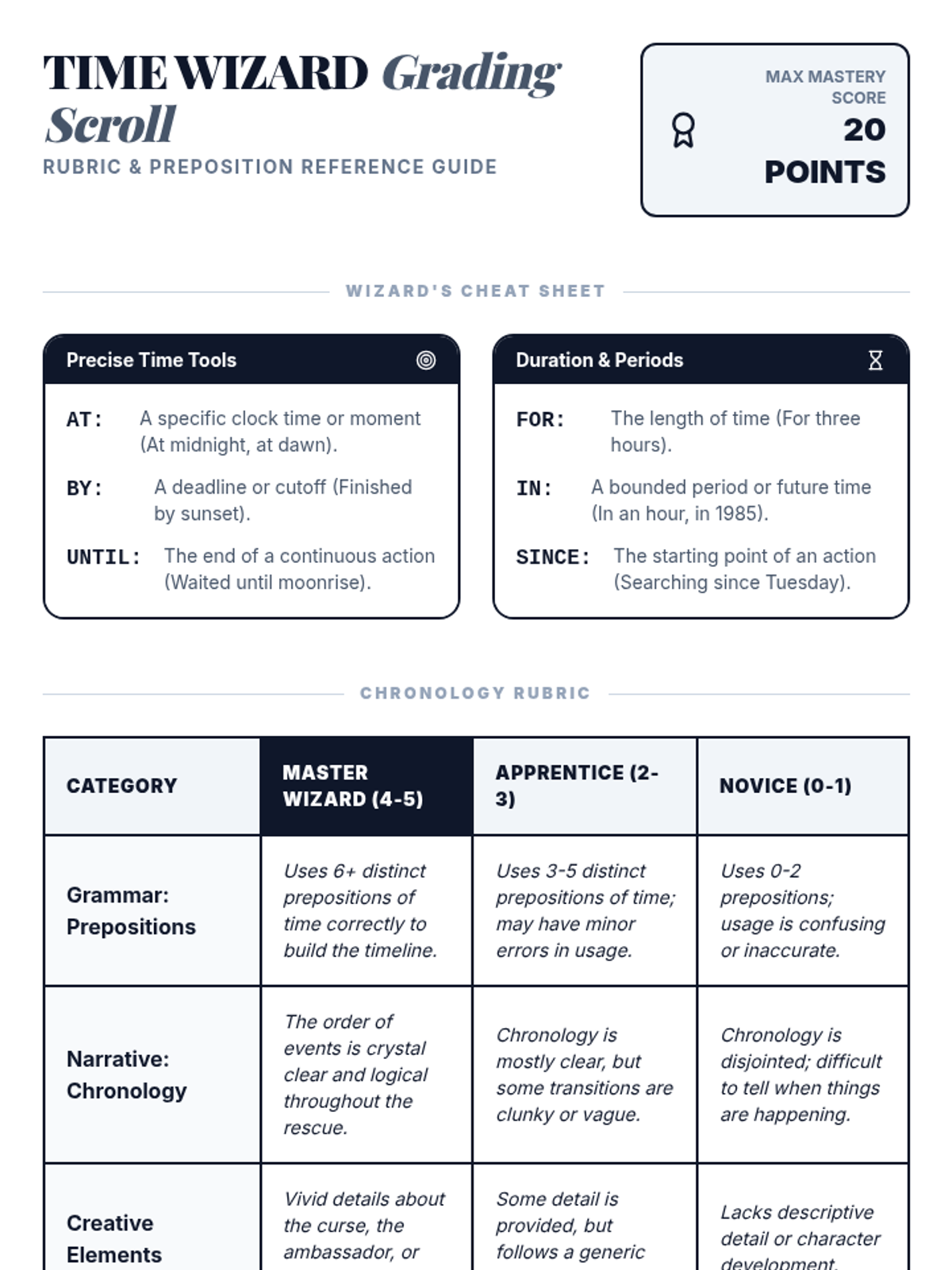
Students will learn to use prepositions of time (at, by, until, for, etc.) to create clear chronology in a creative narrative about rescuing Prince Wilbur from a magical curse. The lesson includes a presentation, a creative writing activity, and an assessment rubric themed around becoming a 'Time Wizard'.
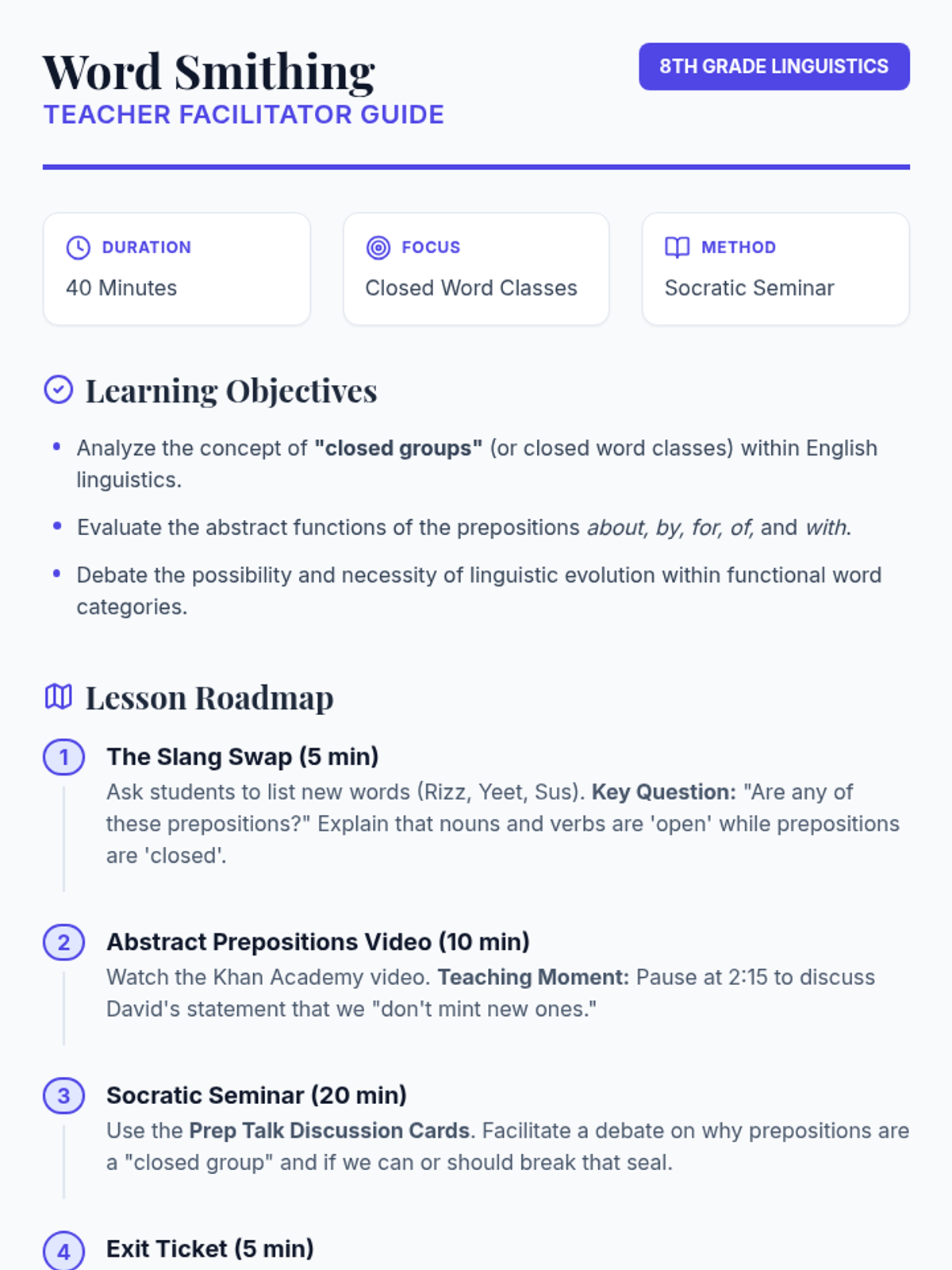
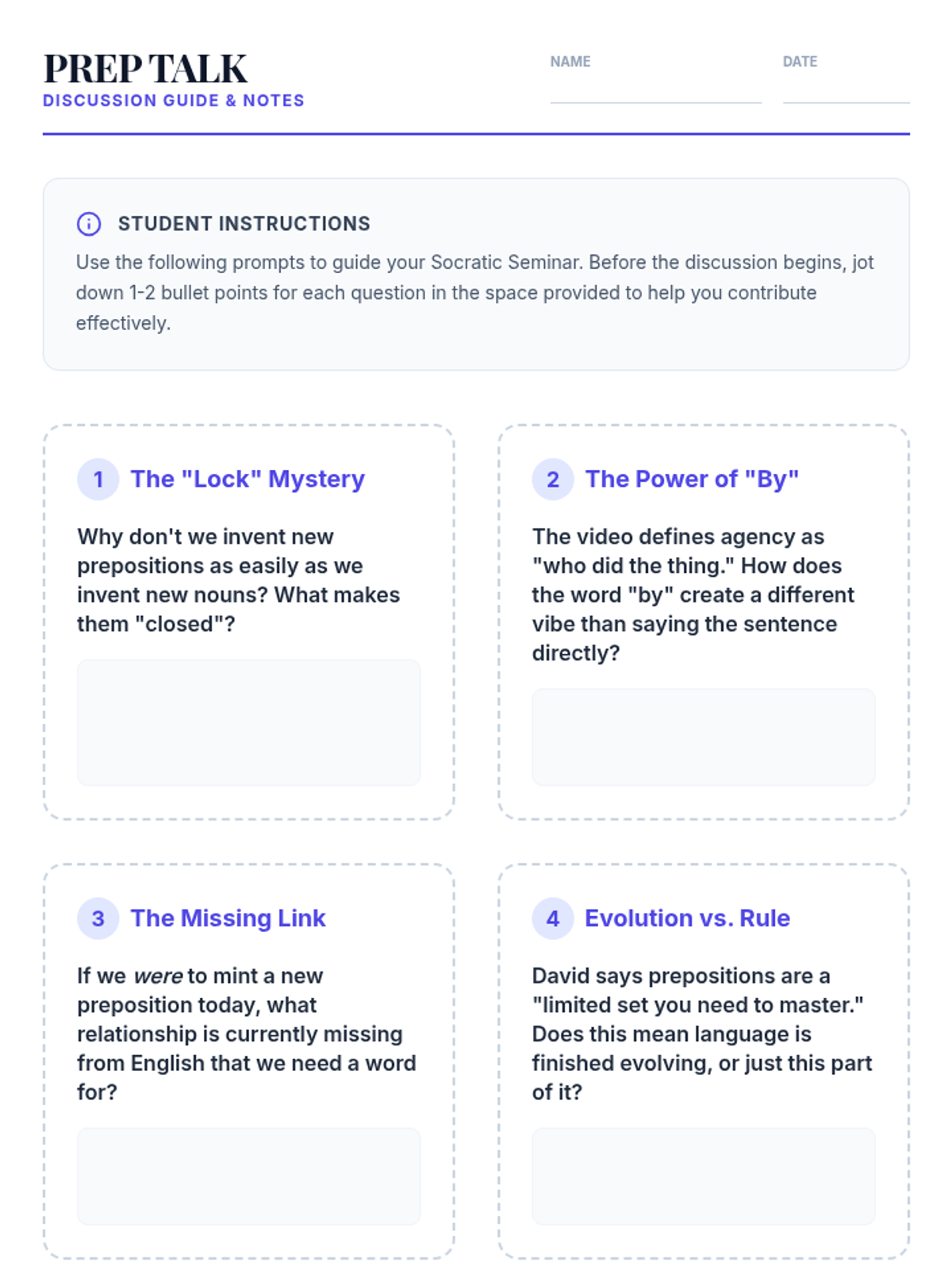
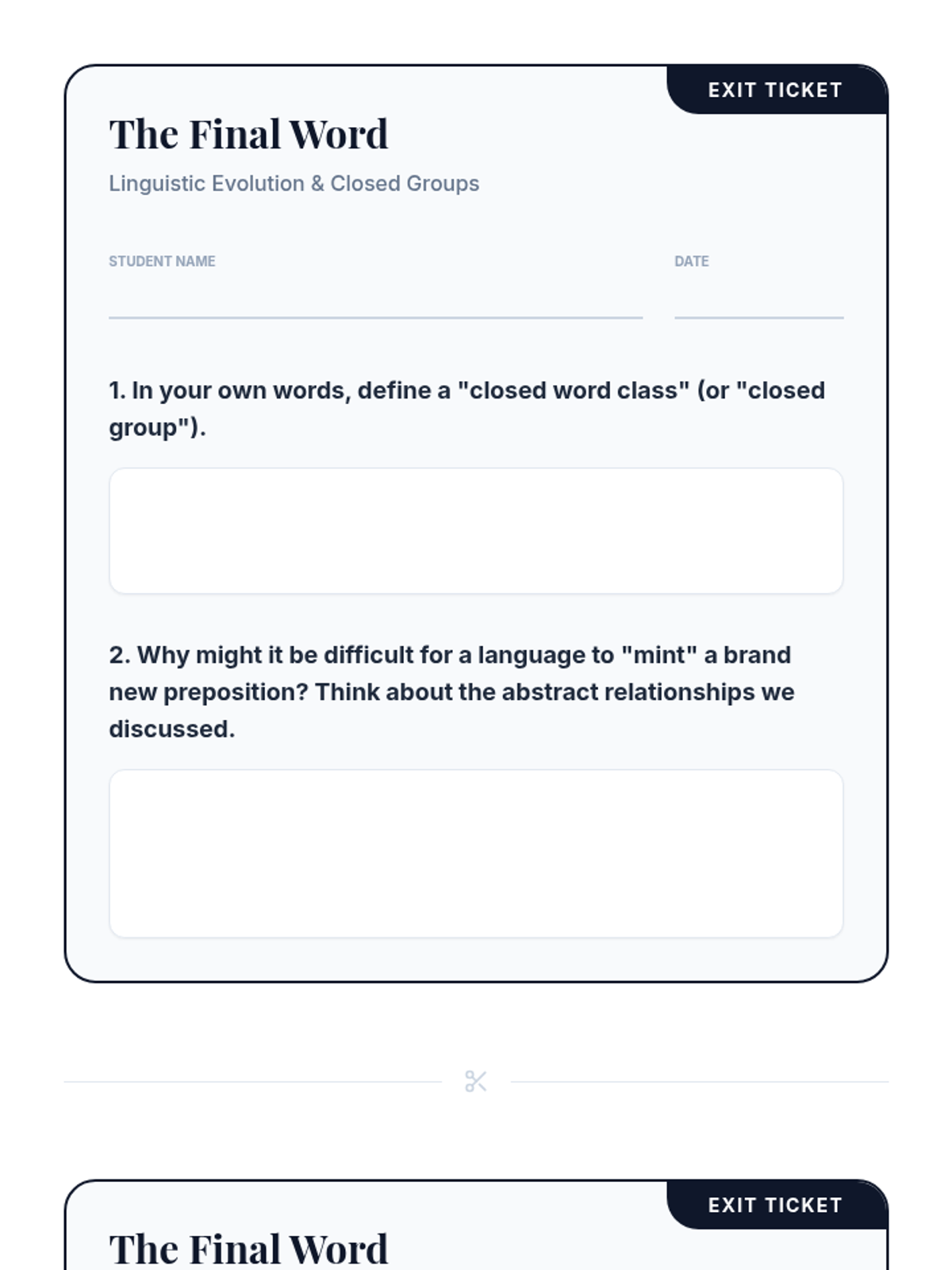
A deep dive into linguistic evolution and the concept of closed word classes, focusing on the abstract nature of prepositions and why we rarely invent new ones.
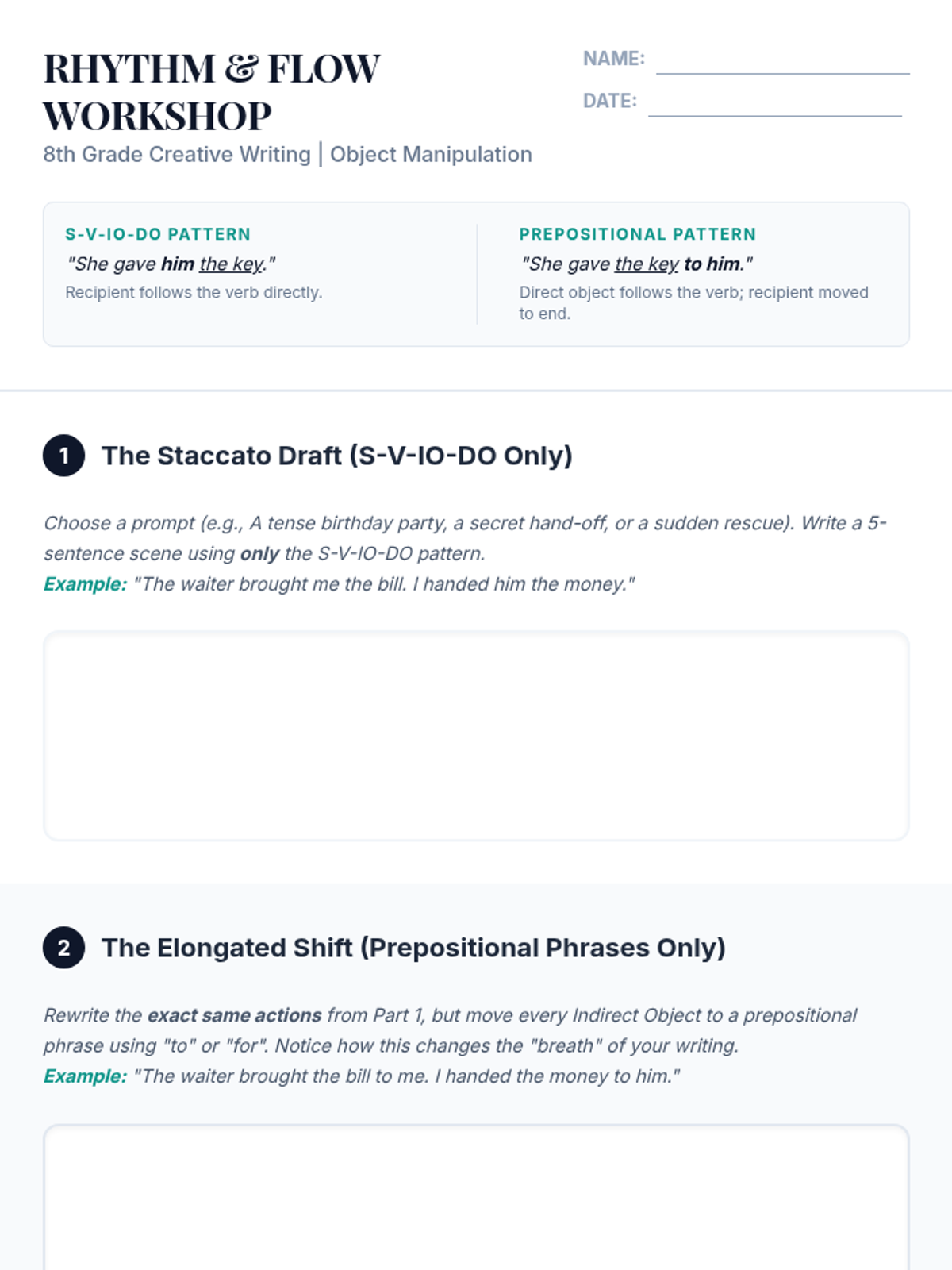
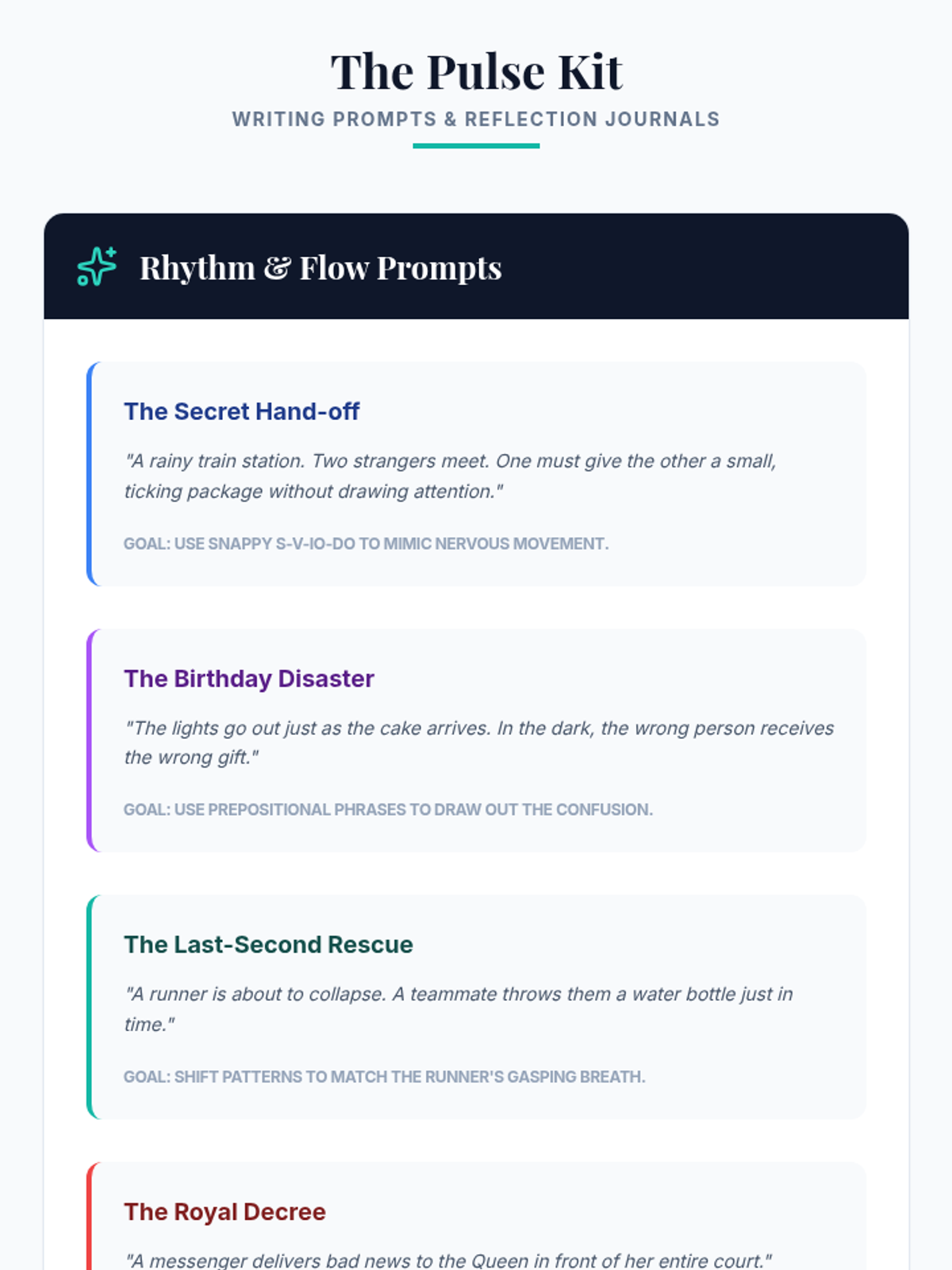
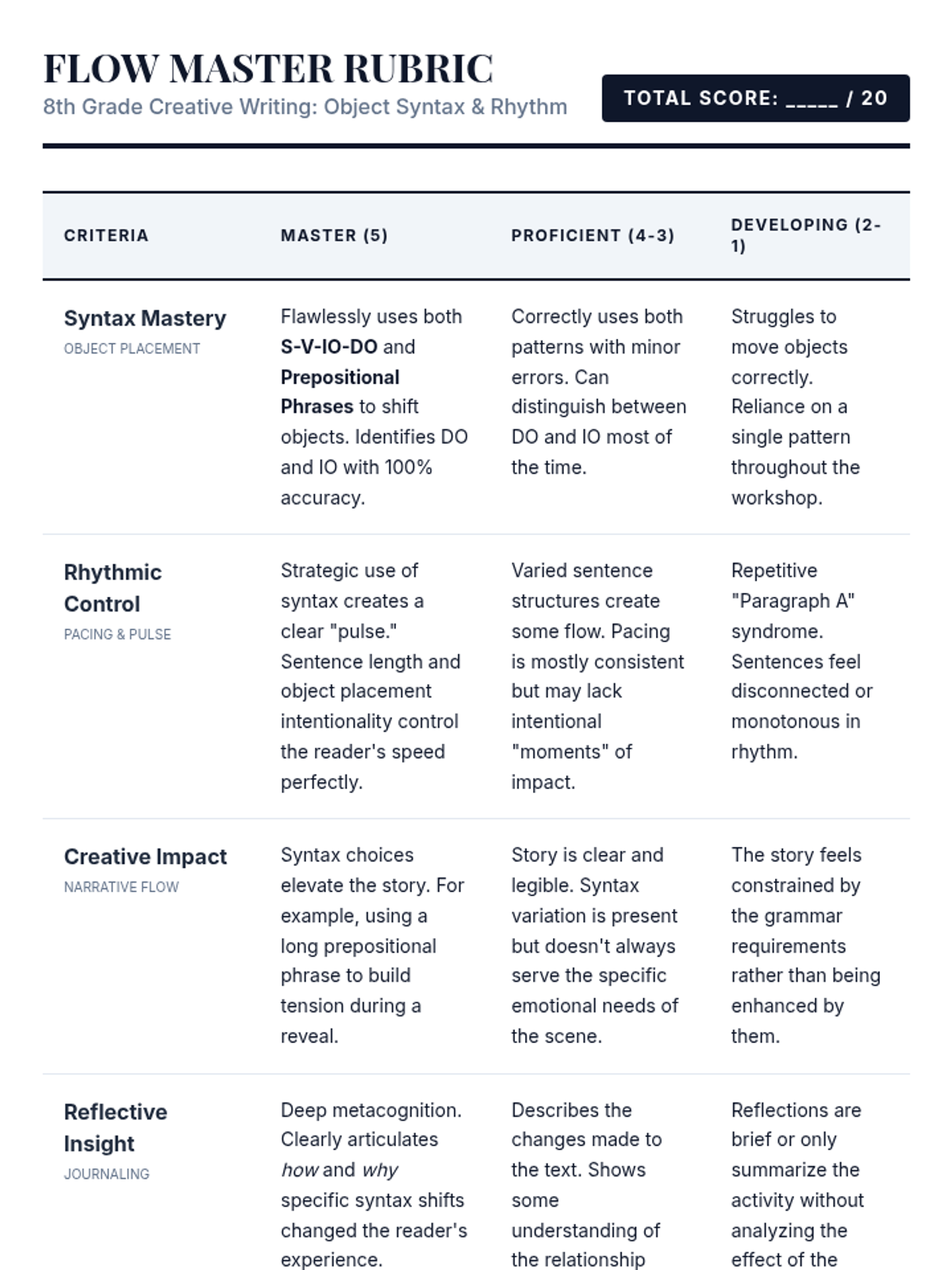
A creative writing lesson focused on manipulating direct and indirect objects to control sentence rhythm, pacing, and flow. Students analyze the 'preposition test' to move objects and create specific stylistic effects in their narrative writing.
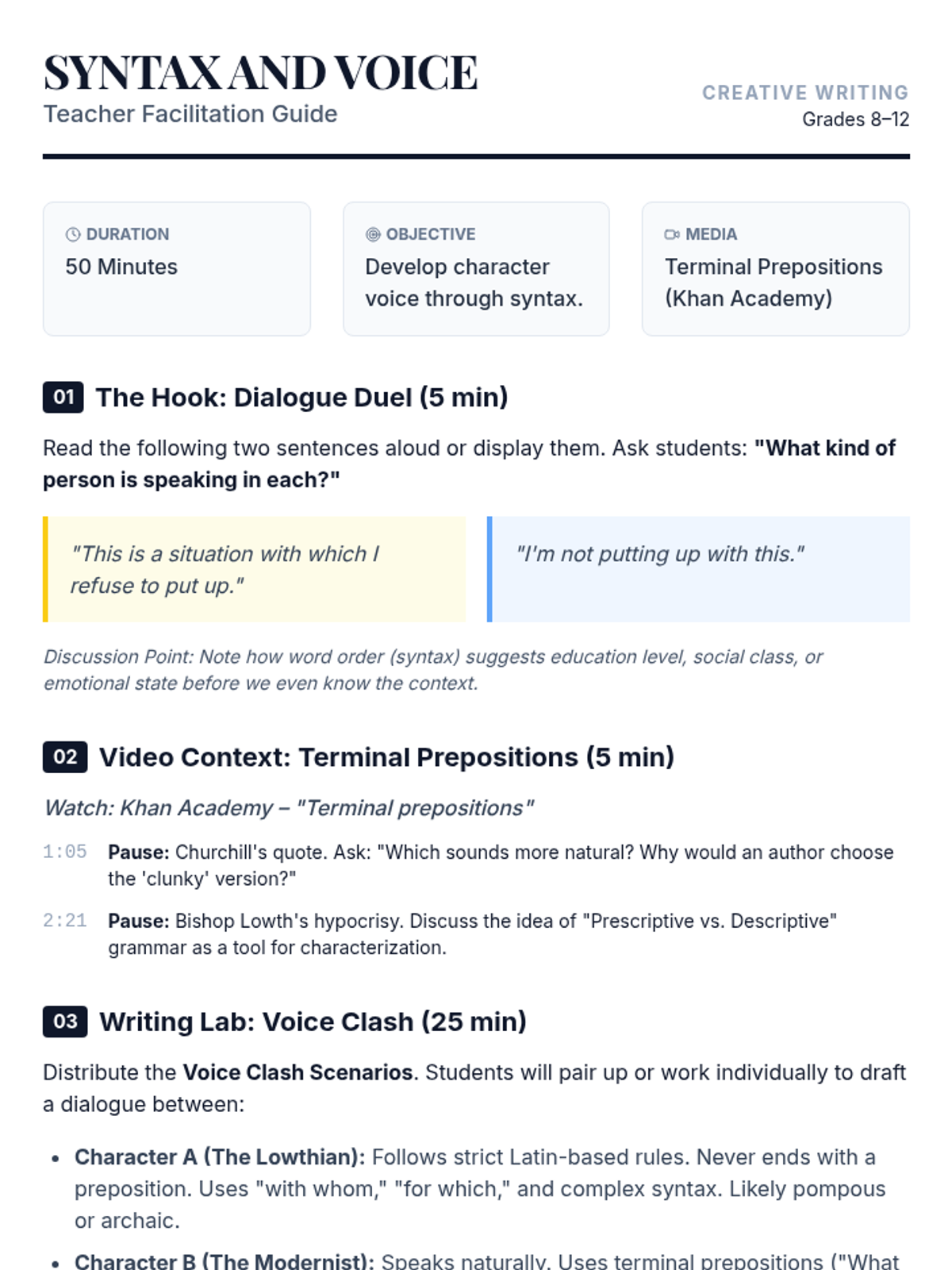
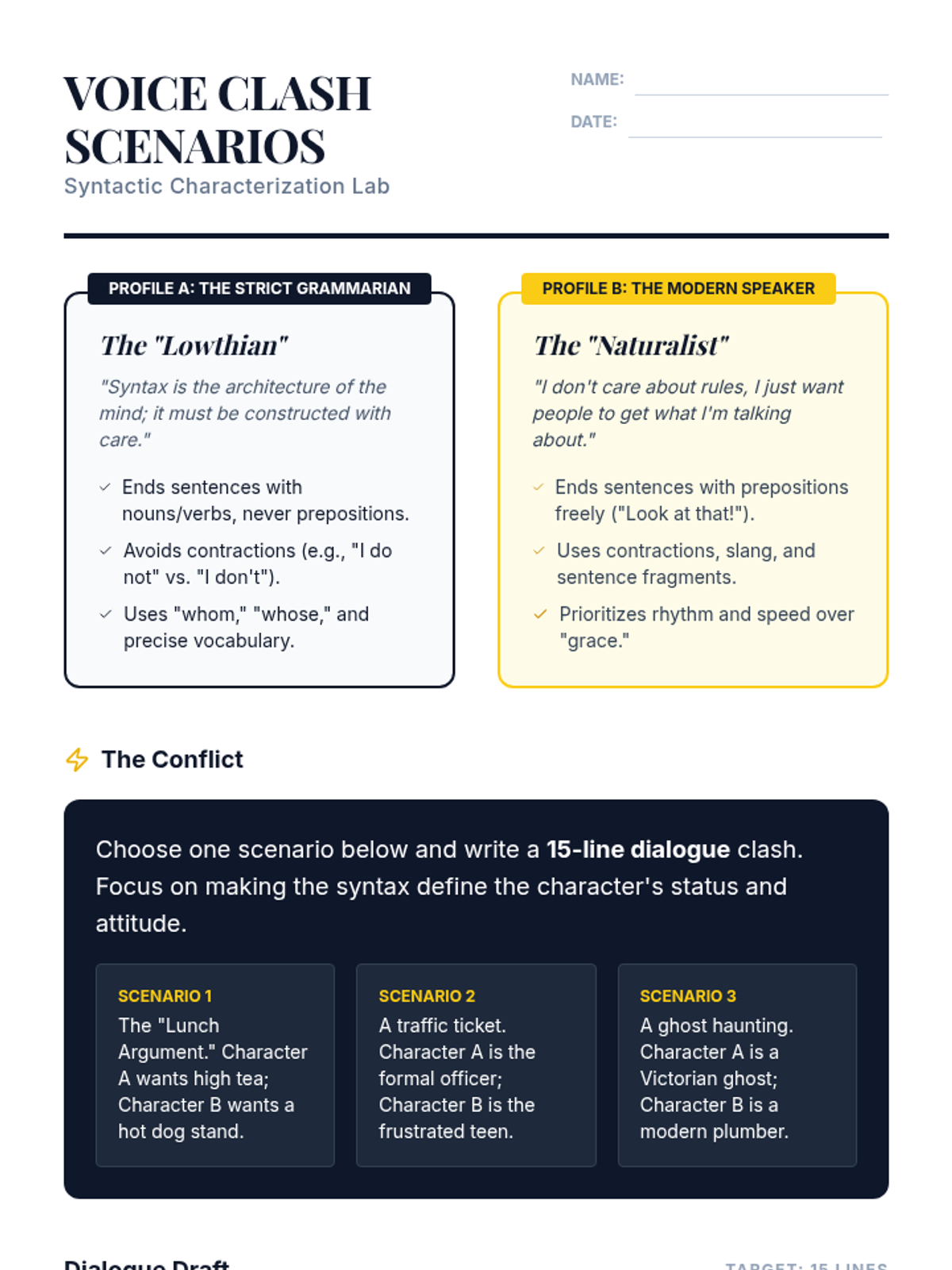
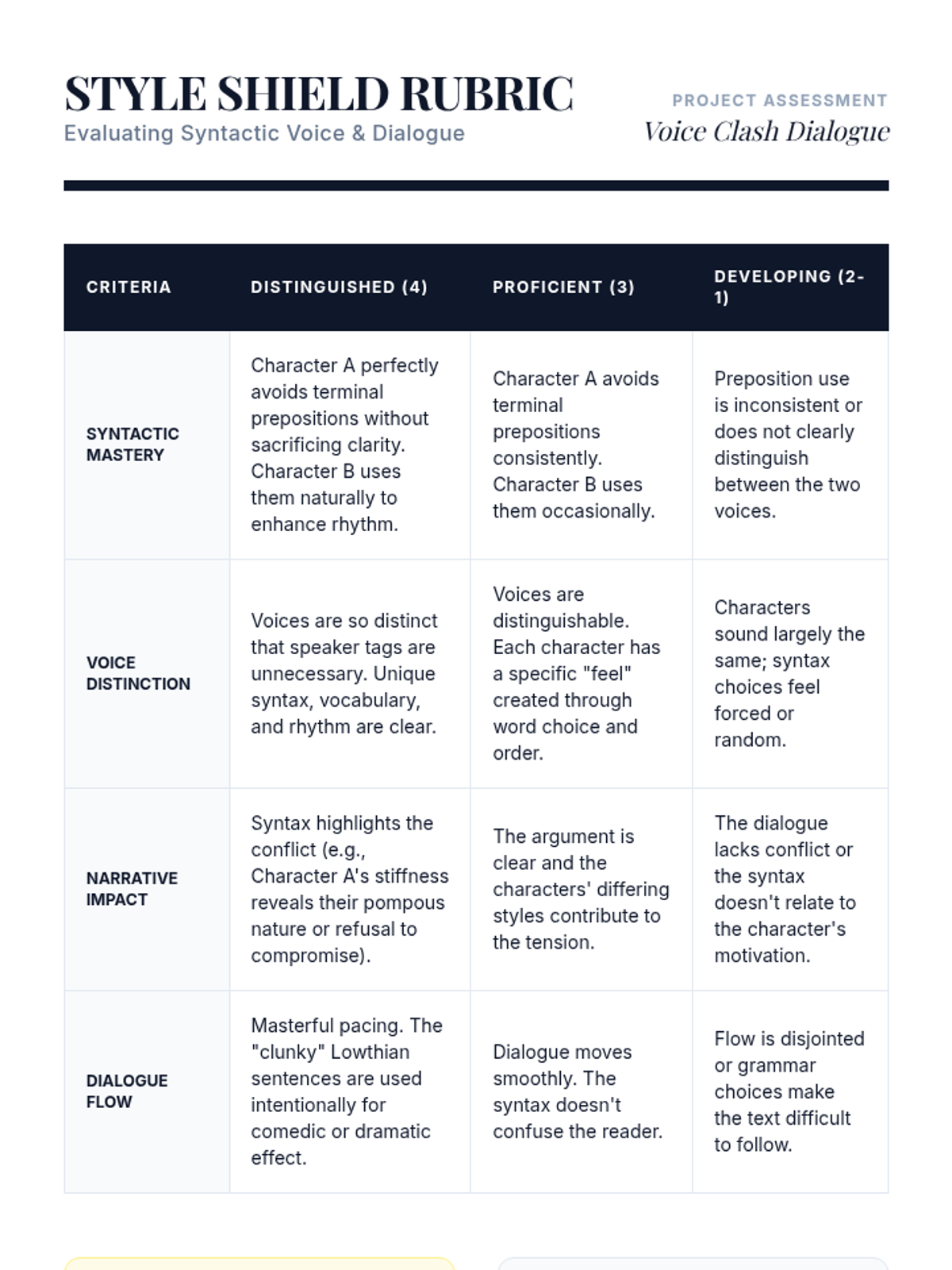
A creative writing lesson for grades 8-12 focusing on how syntax and the use (or avoidance) of terminal prepositions can define a character's voice and personality. Students contrast formal 'Lowthian' rules with natural speech through video analysis and dialogue writing.
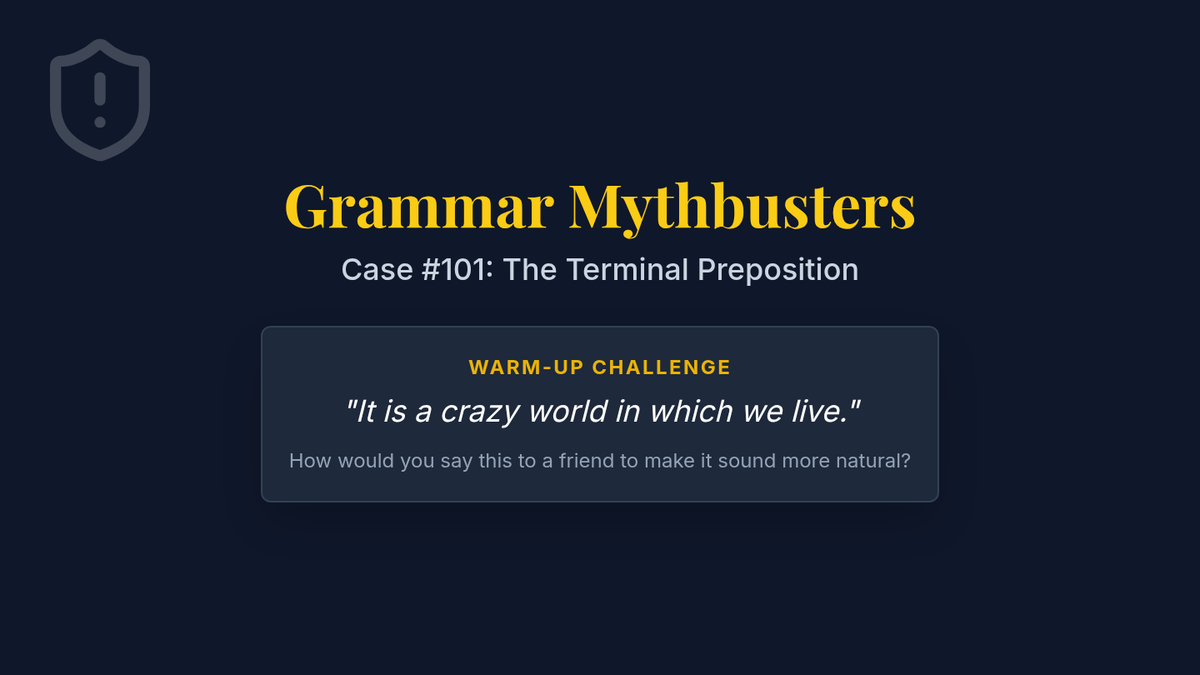
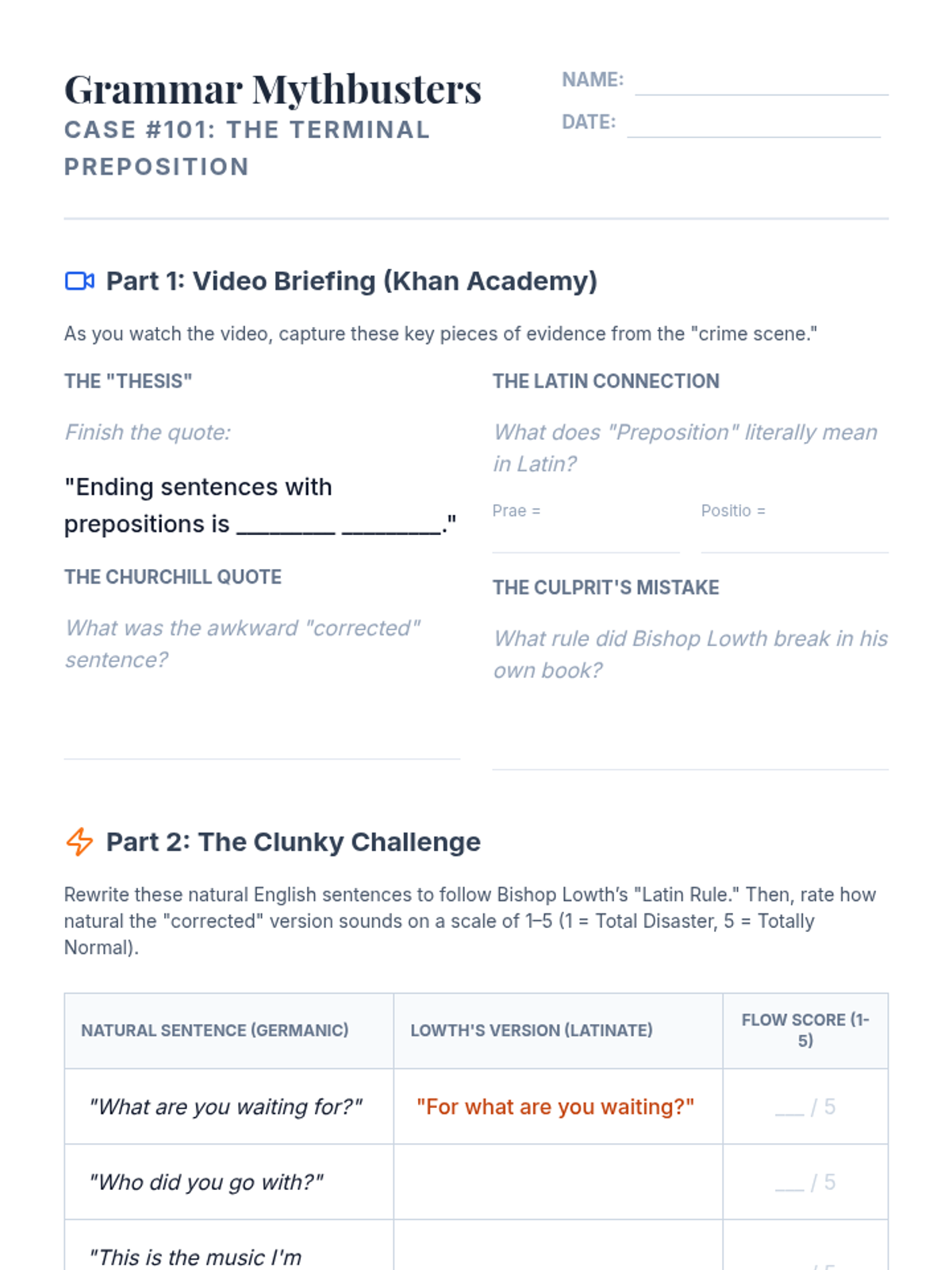
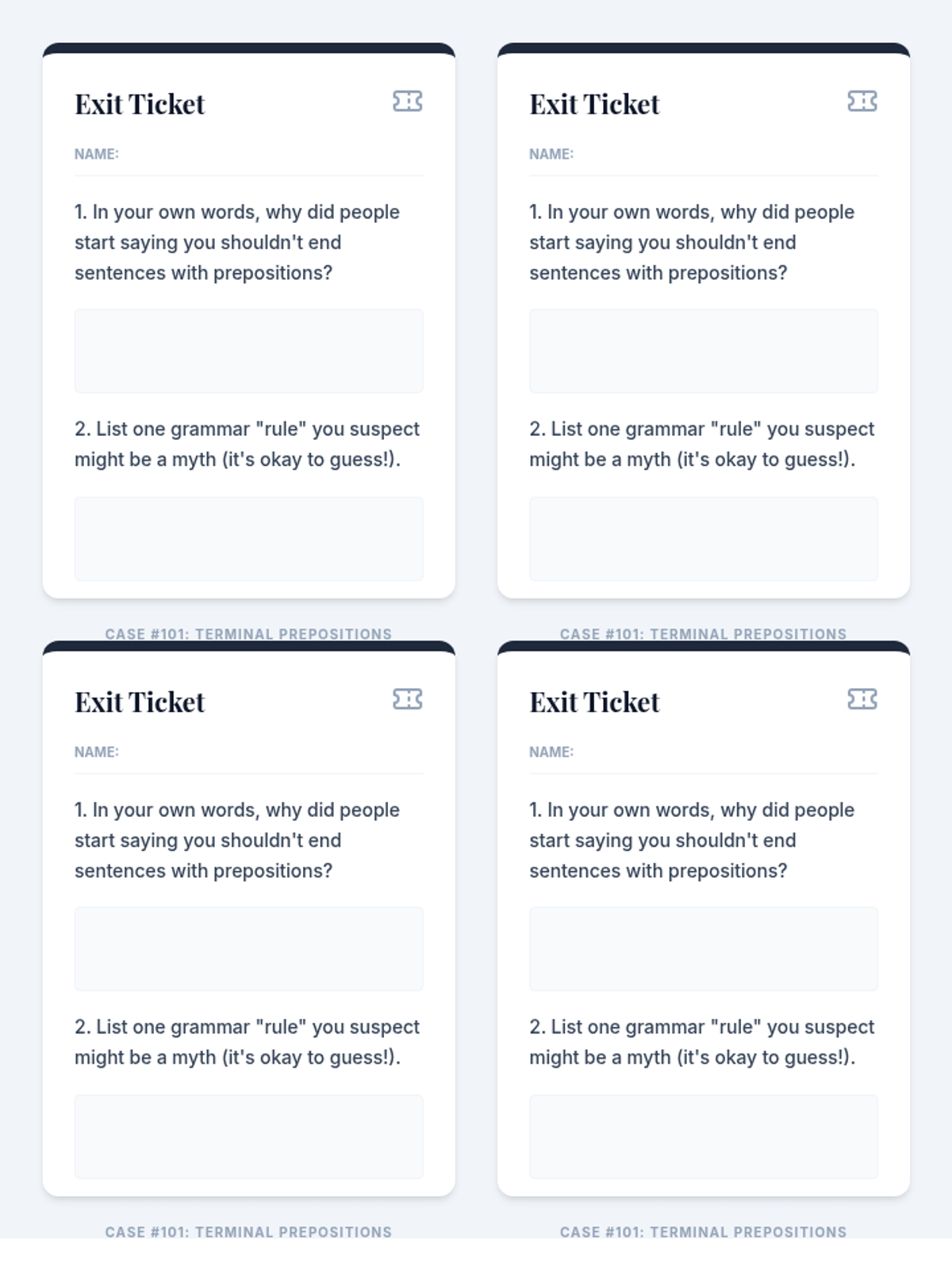
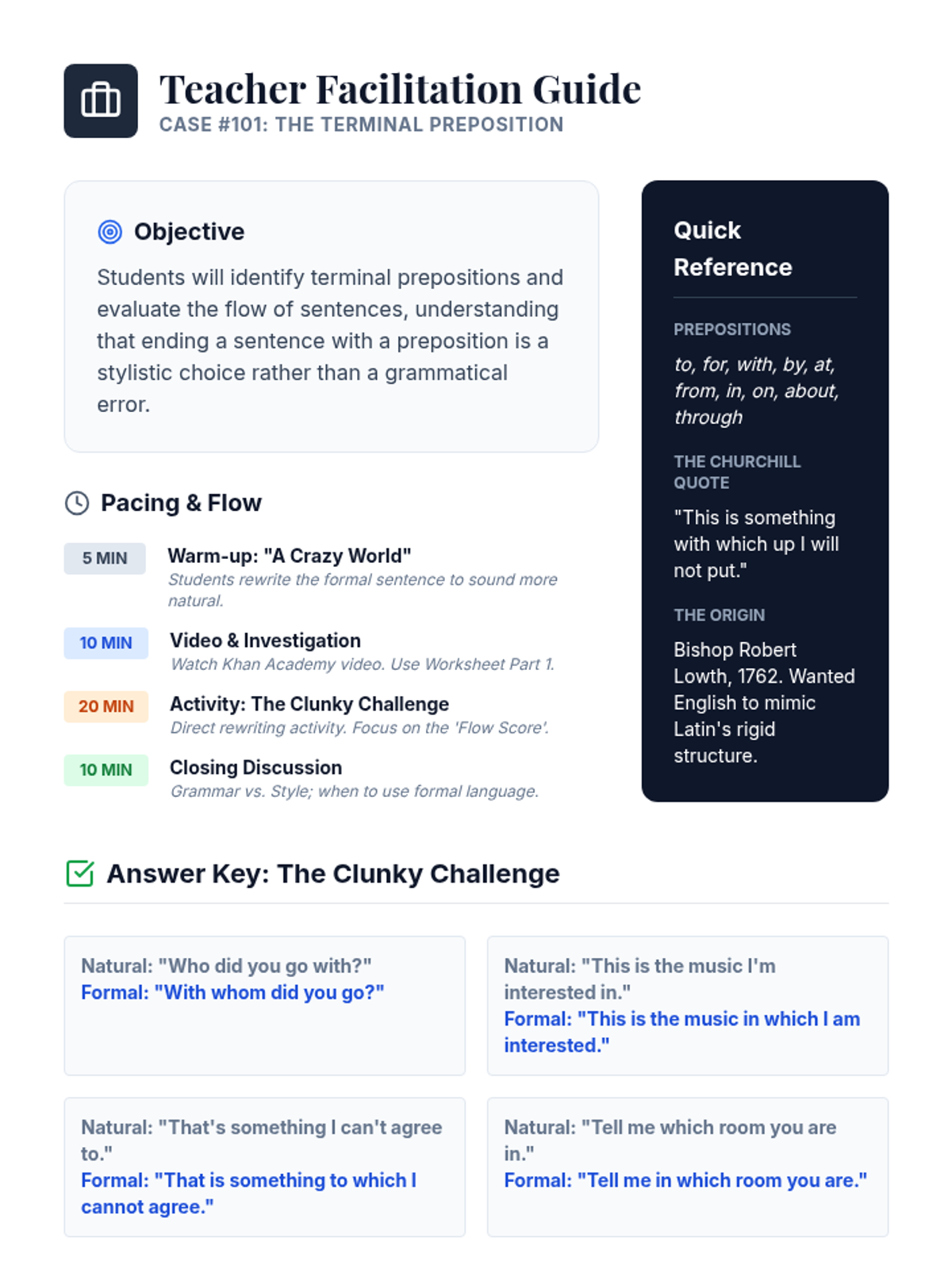
A middle school grammar lesson that deconstructs the myth of the terminal preposition, exploring its Latin origins and the difference between formal style and natural English flow.
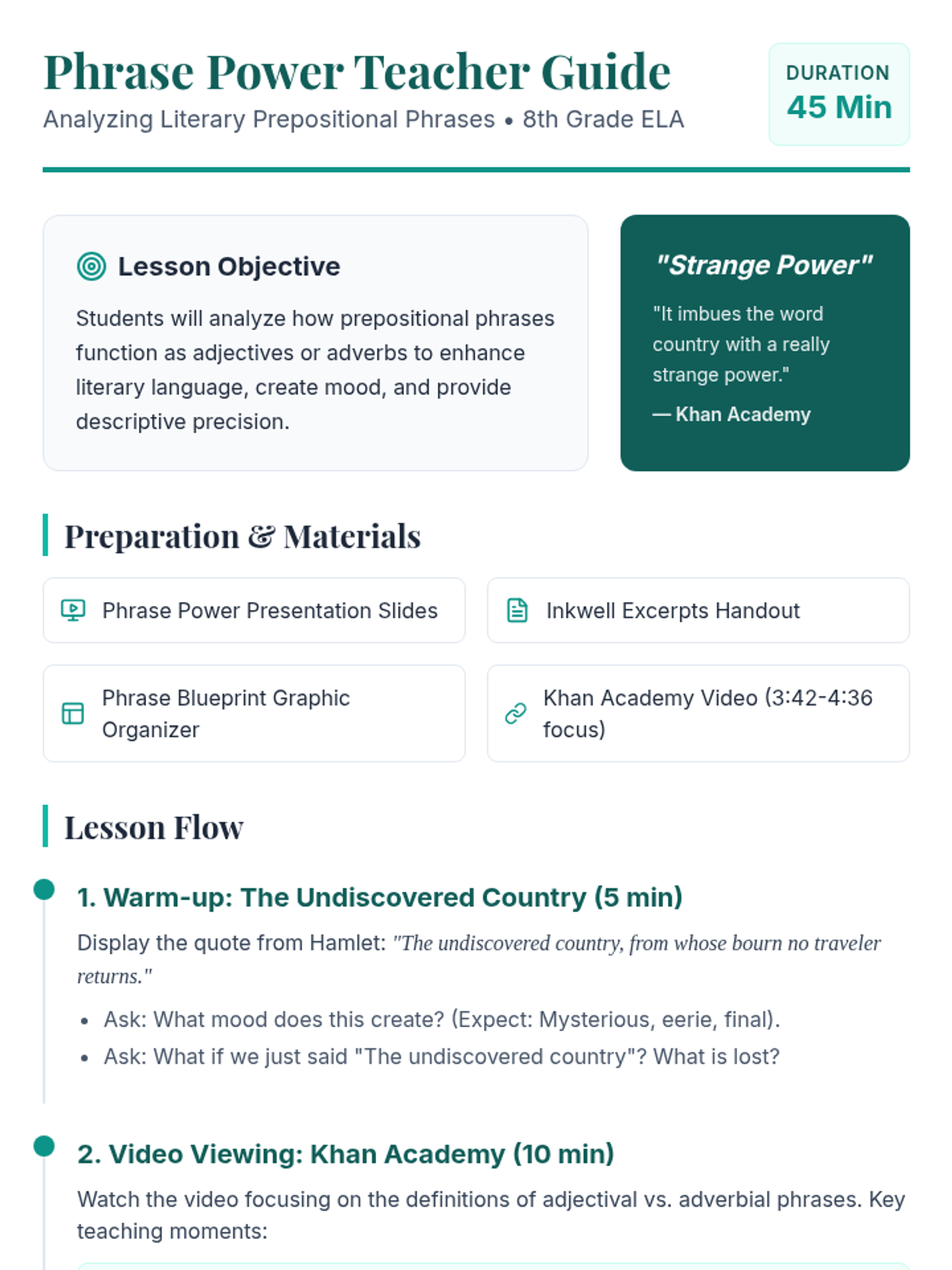
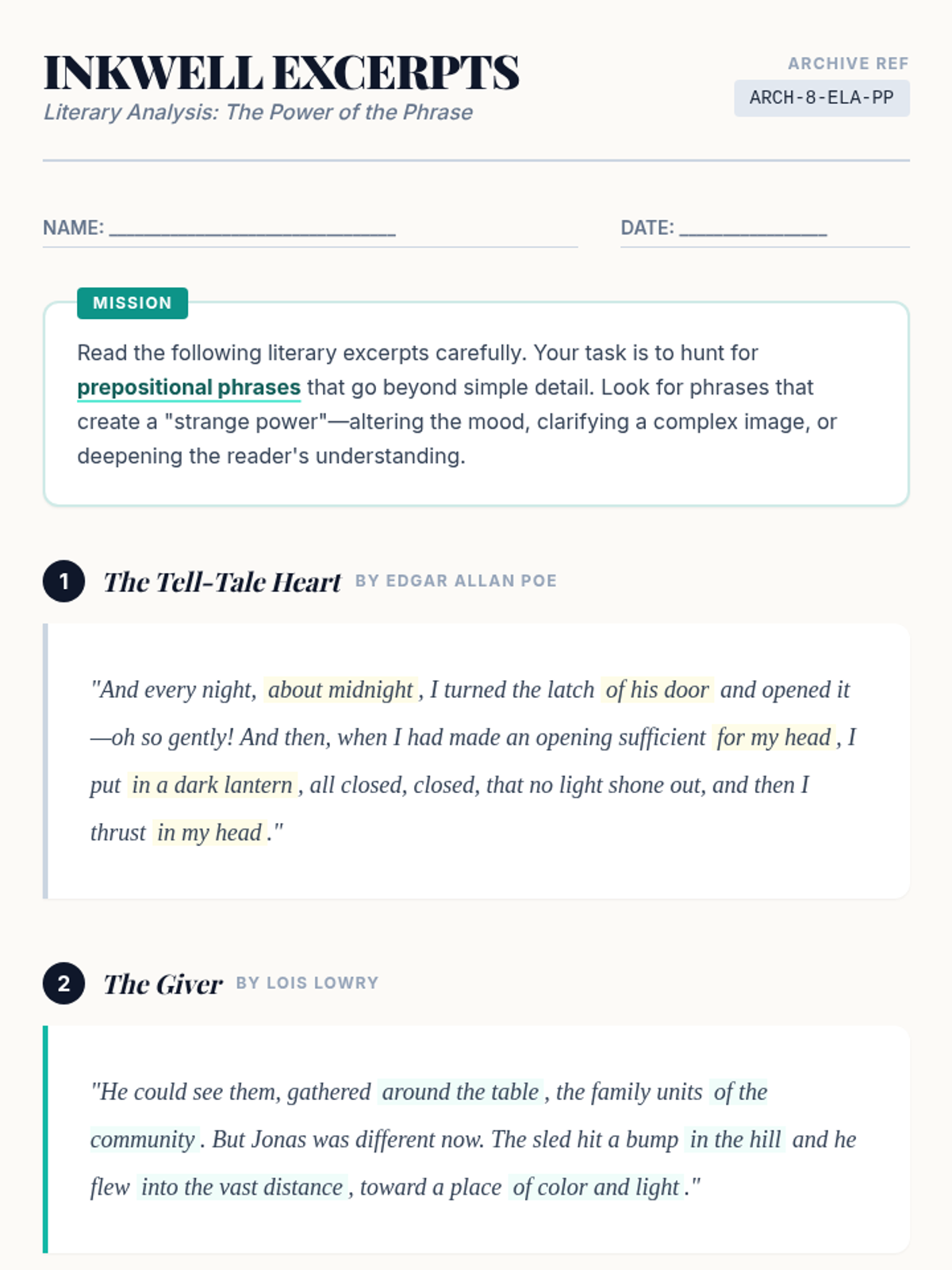
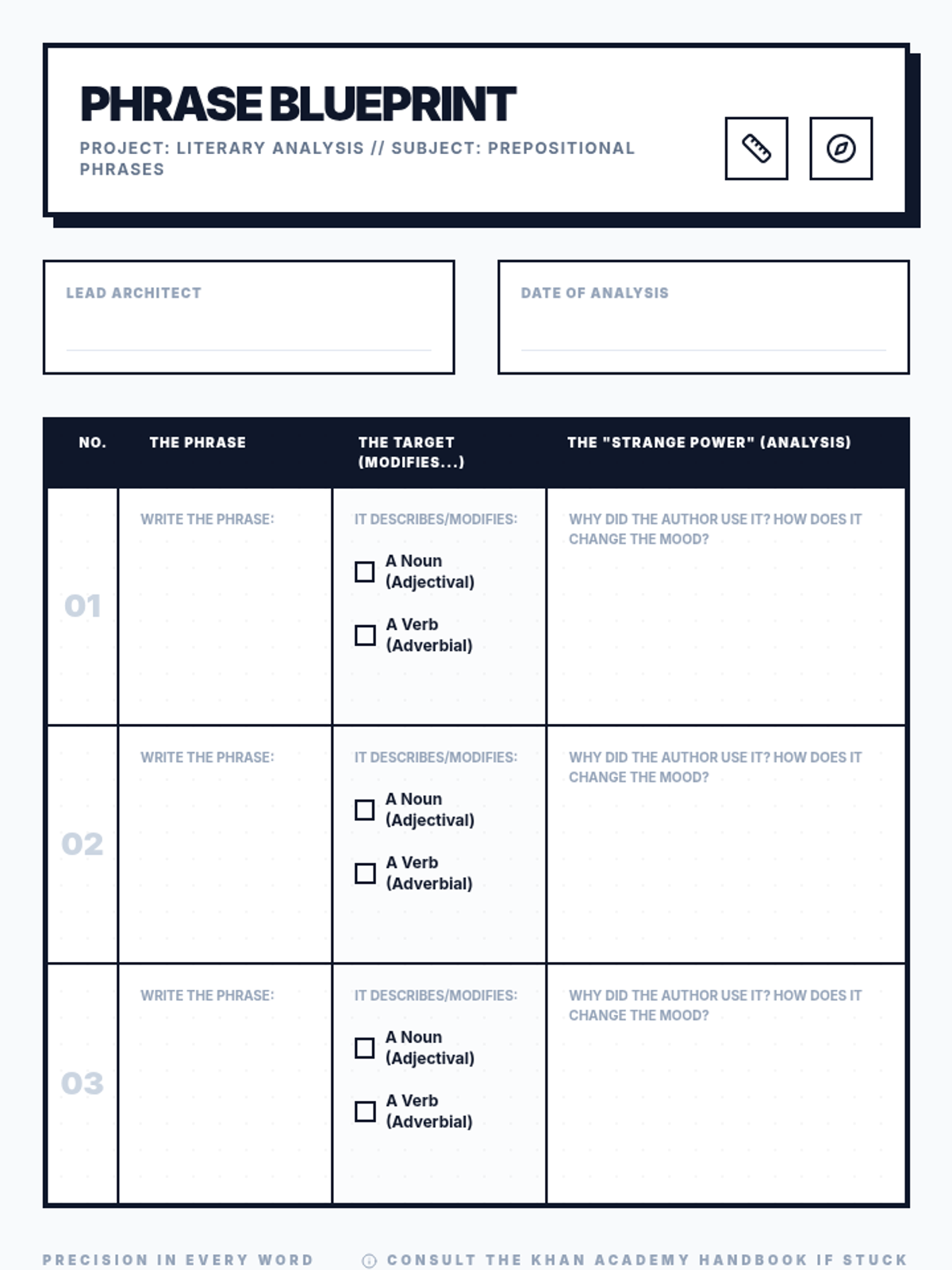
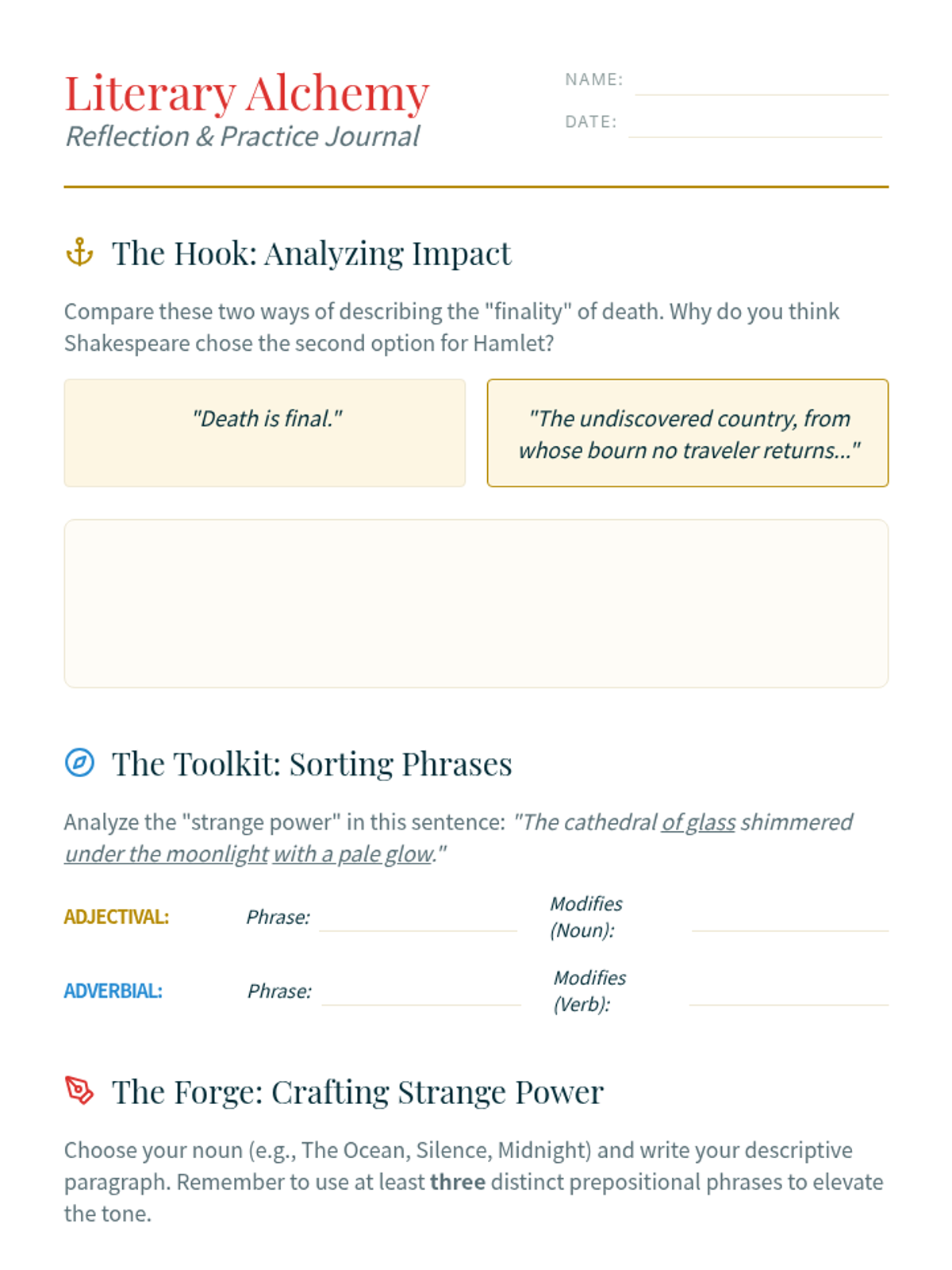
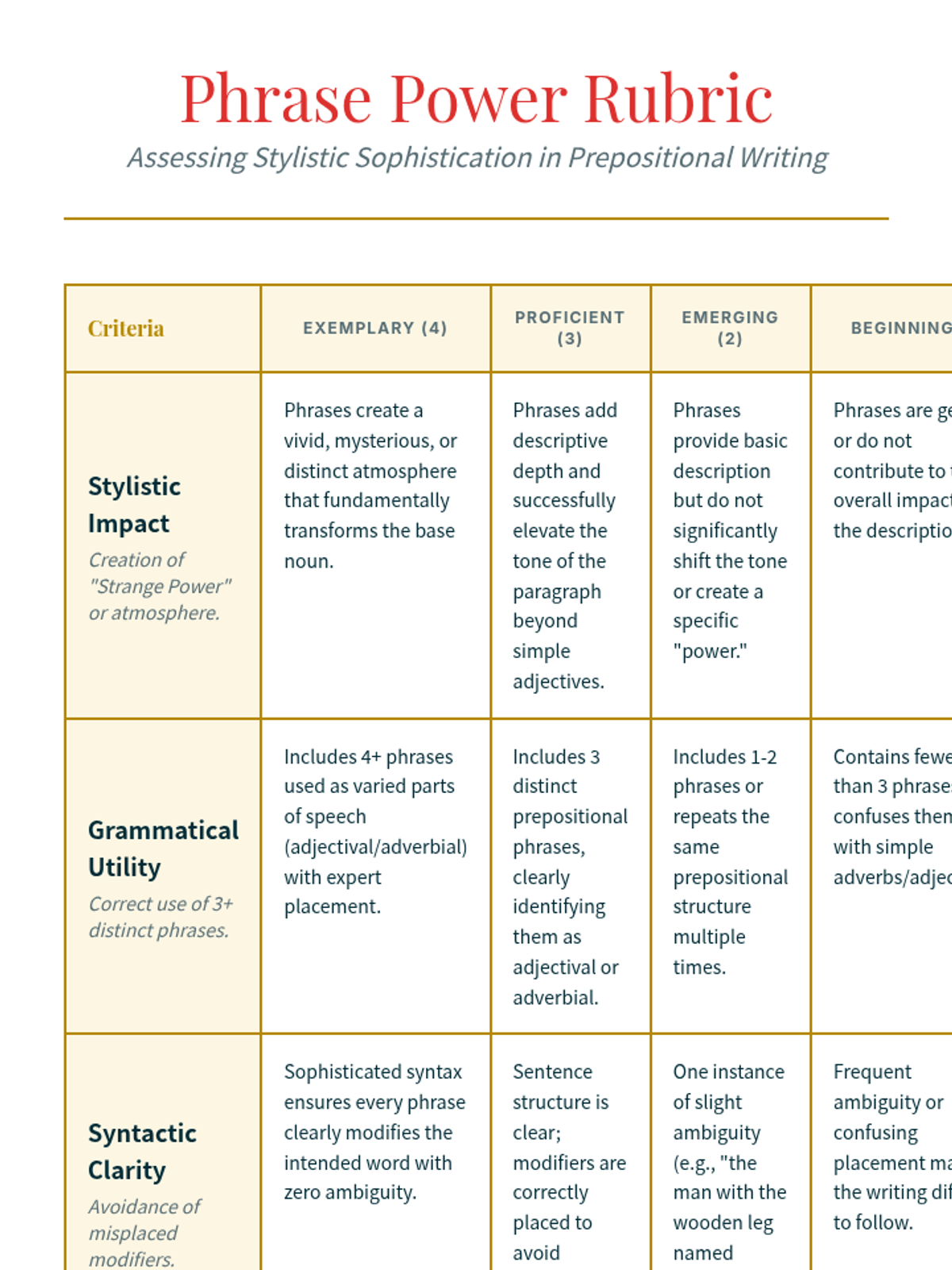
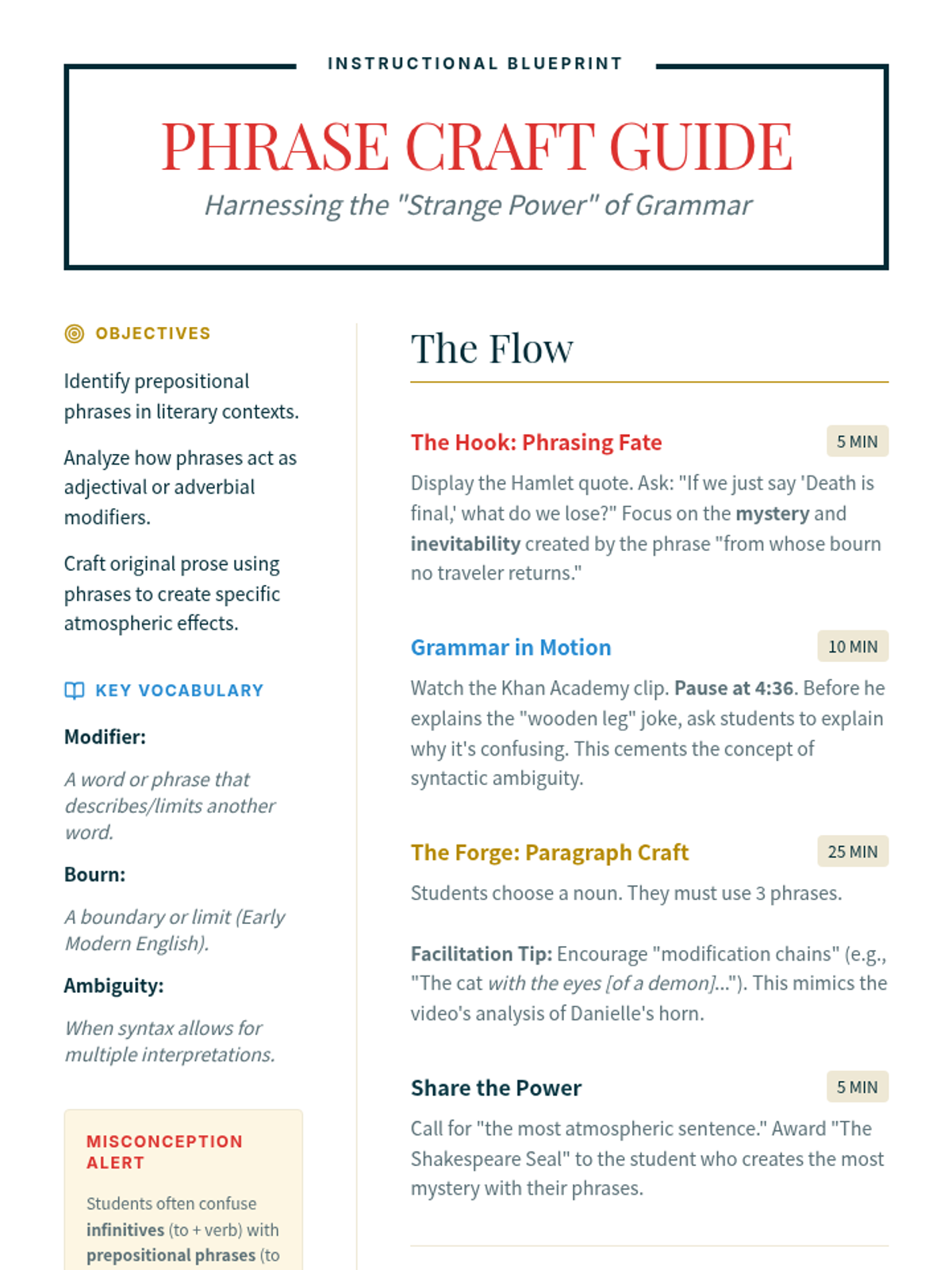
A lesson for 8th-grade students focused on identifying prepositional phrases in literature and analyzing how they create mood, clarity, and 'strange power' in writing.
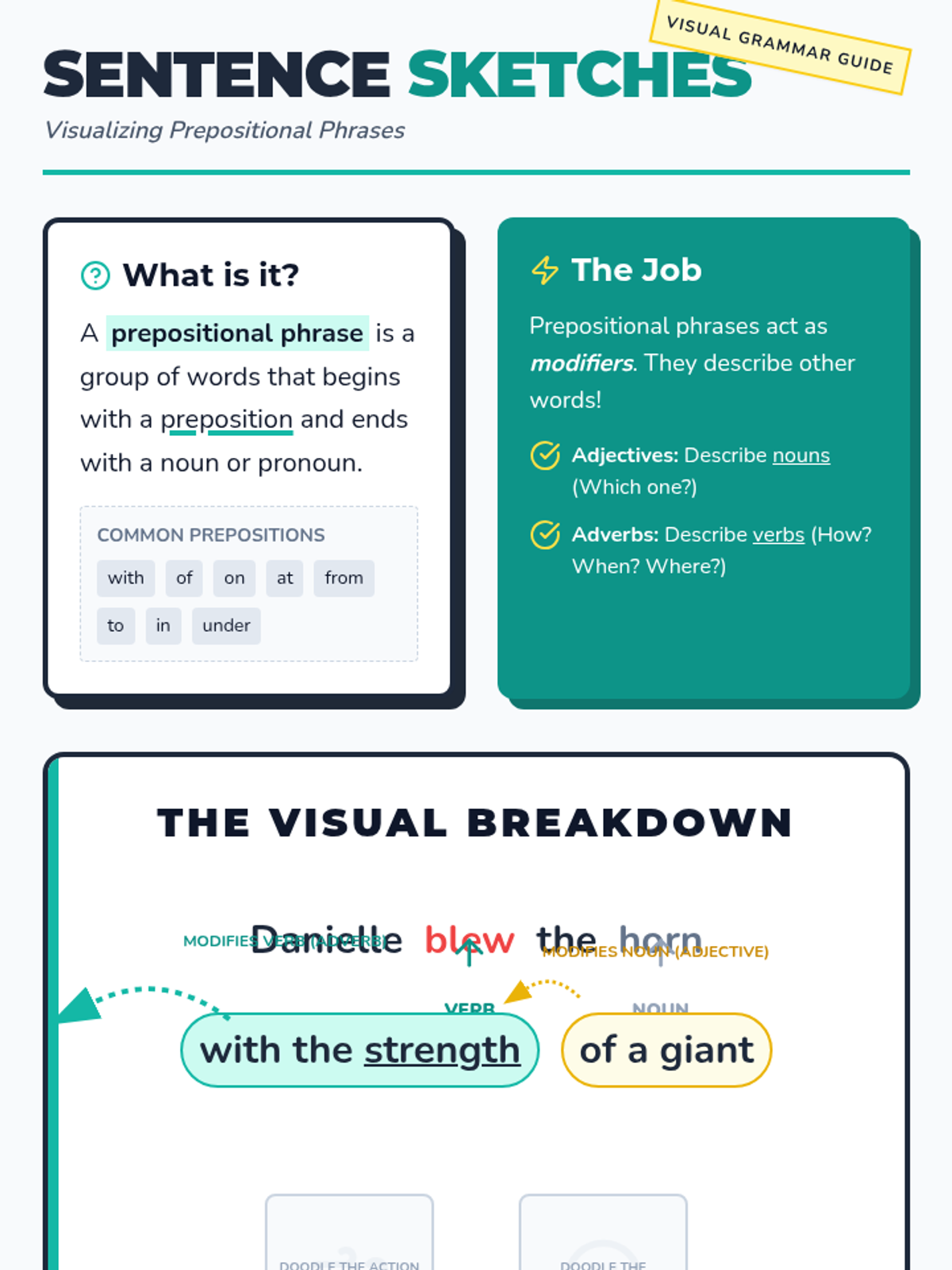
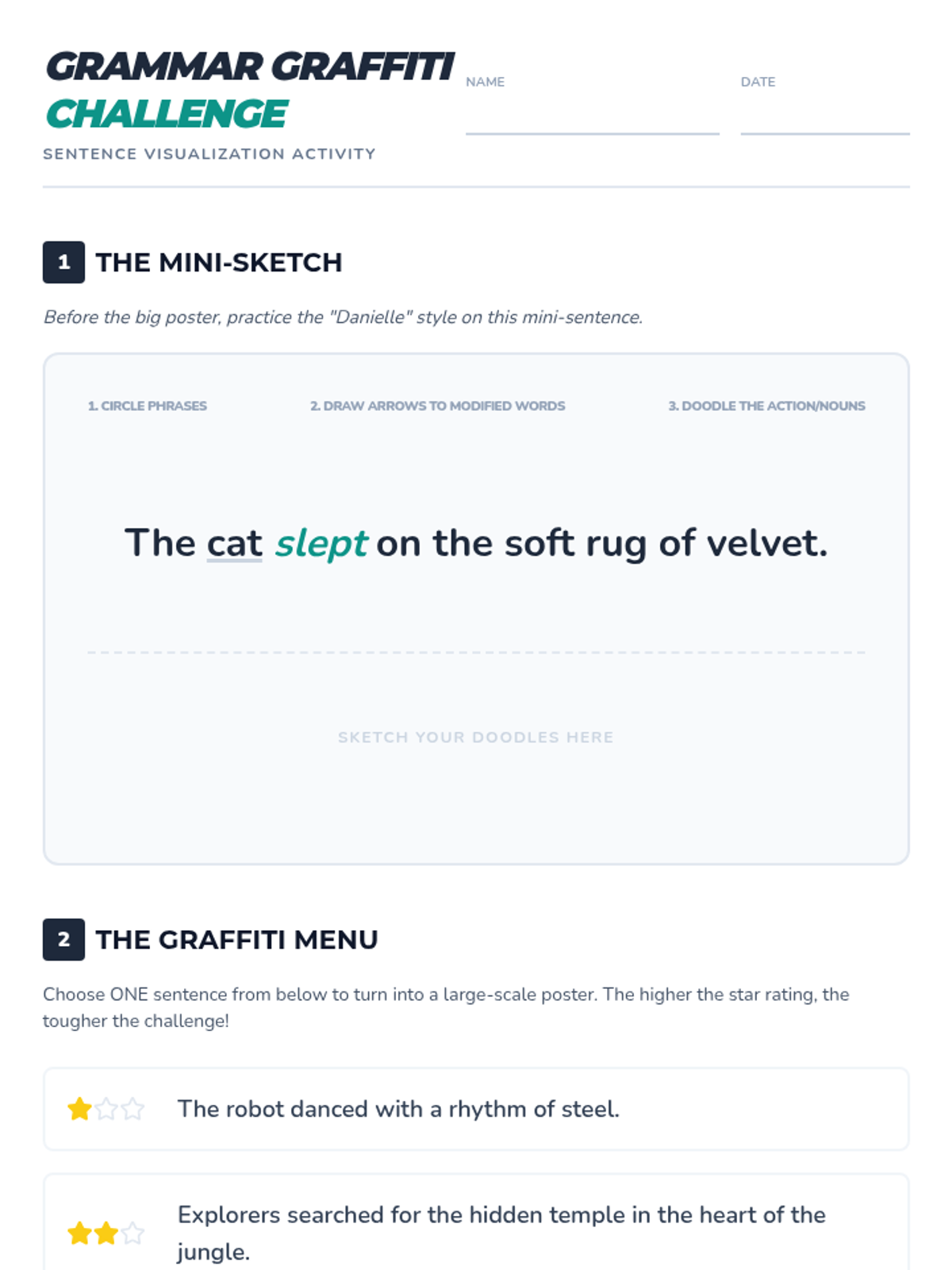
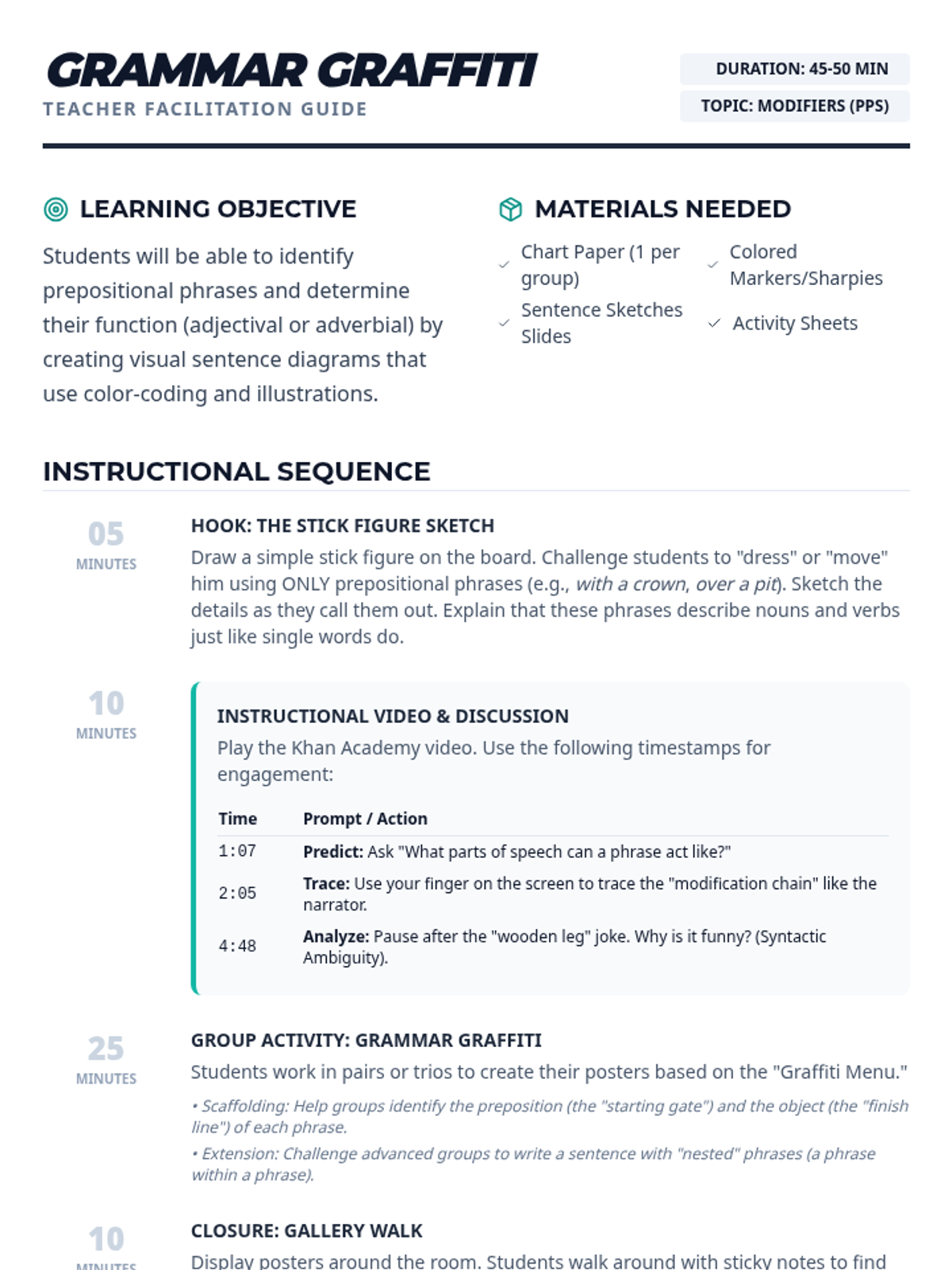
A visual-first lesson on sentence structure focusing on prepositional phrases. Students use 'Grammar Graffiti'—a combination of diagramming and doodling—to visualize how phrases modify nouns and verbs, inspired by Khan Academy's instructional style.
In this lesson, 8th-grade students analyze how prepositional phrases function as stylistic tools in literature, using Shakespeare's 'Hamlet' as a core example to understand how grammar creates 'strange power' and atmosphere.
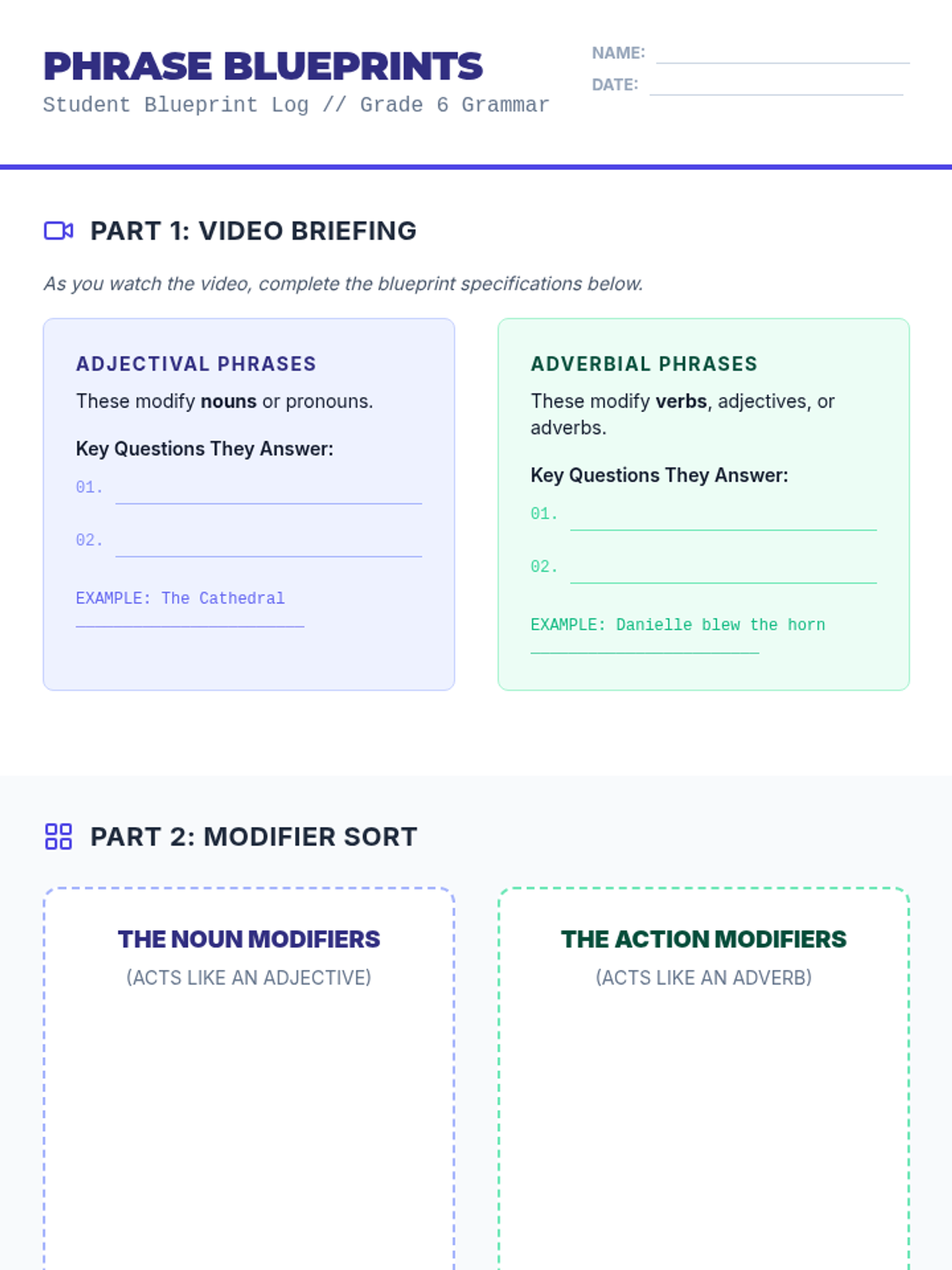
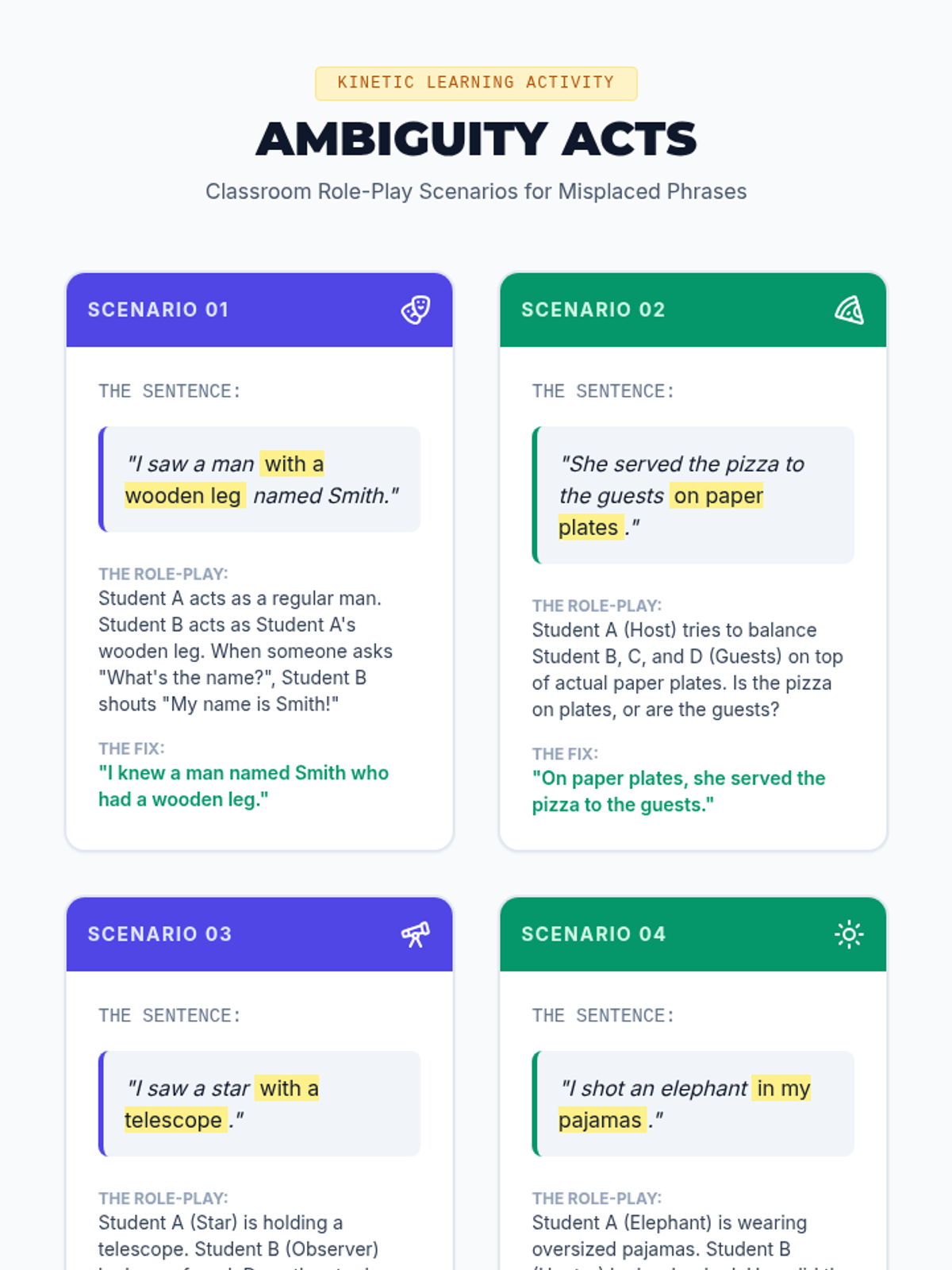
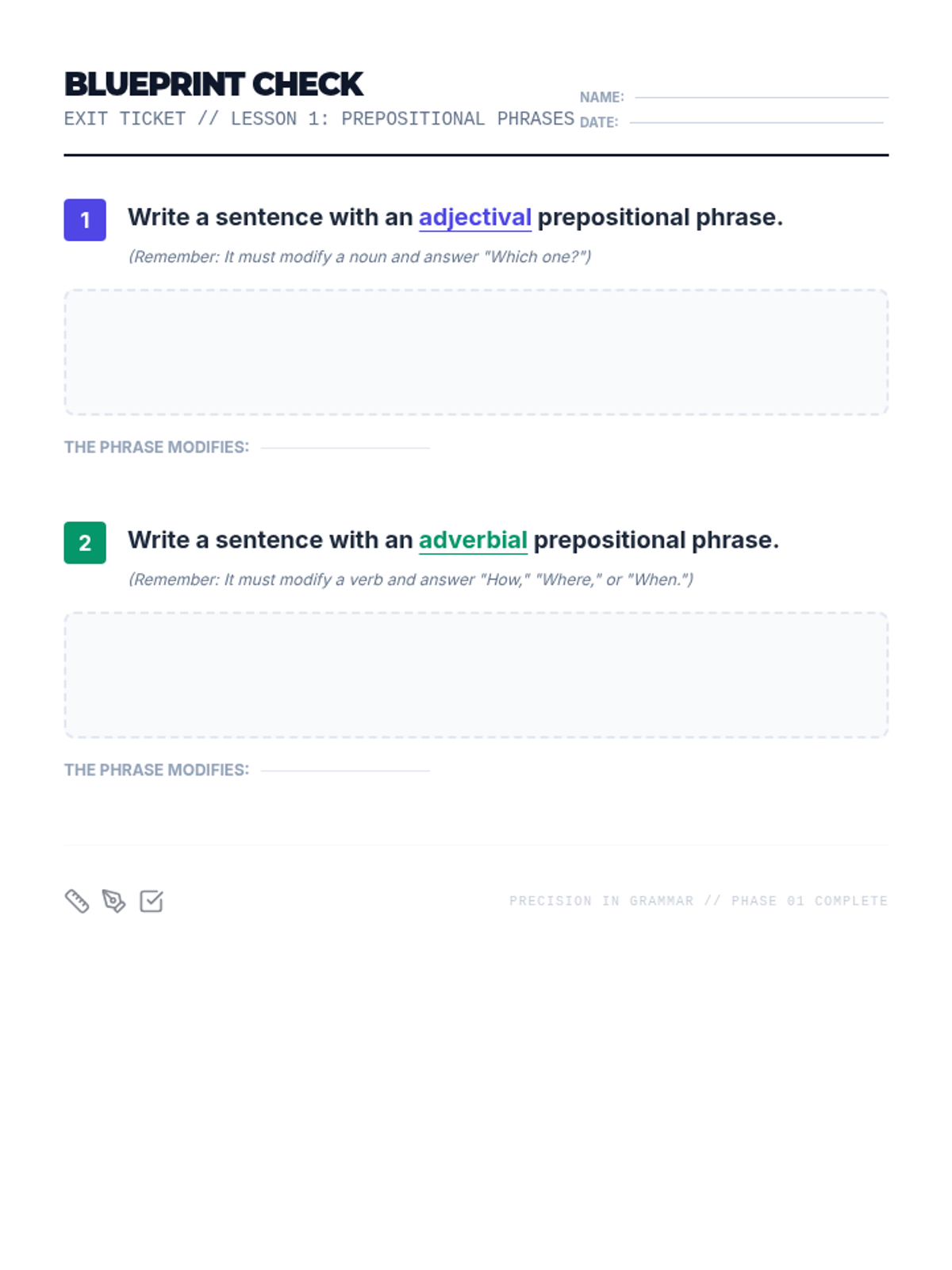
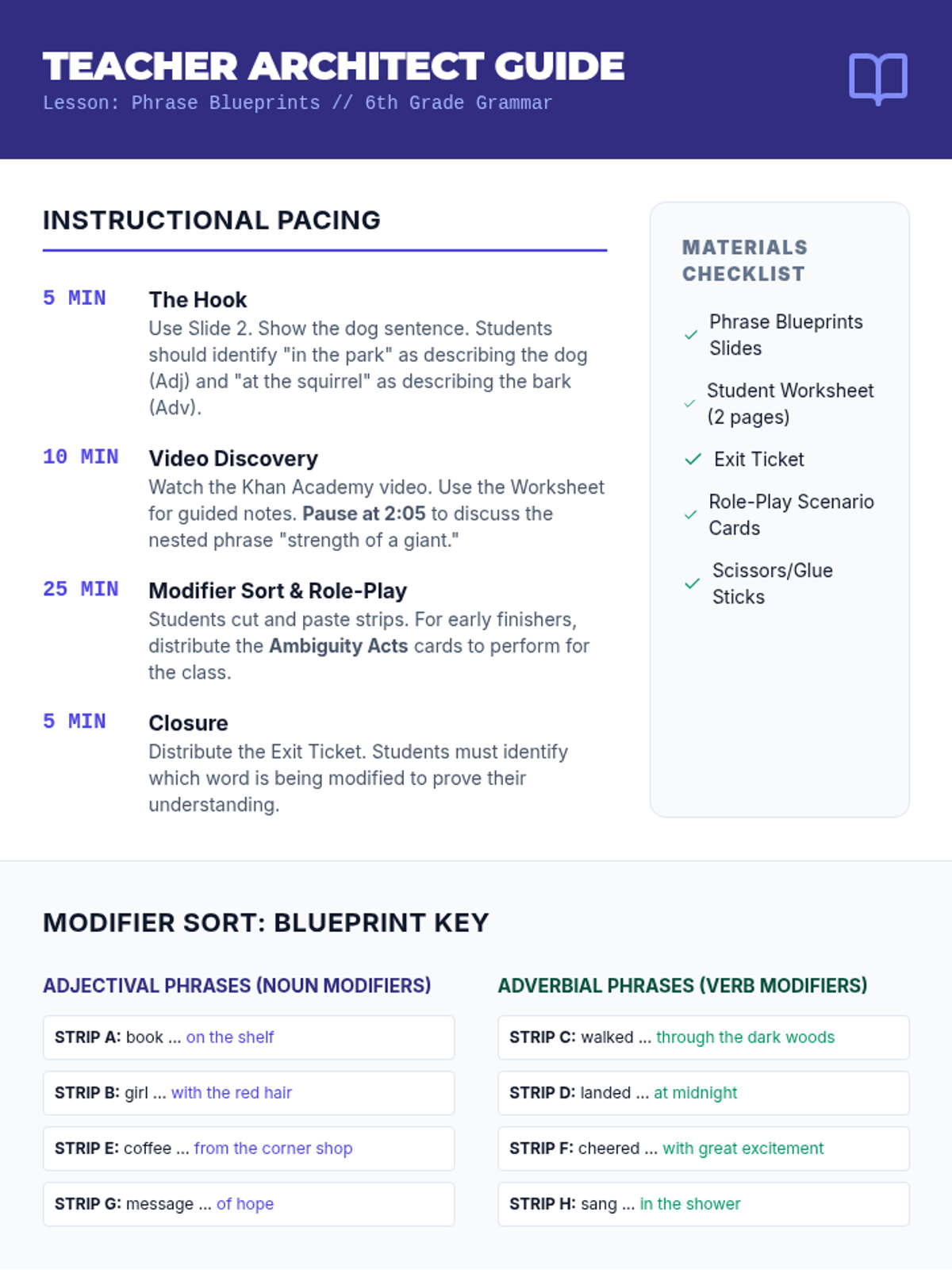
A 6th-grade grammar lesson where students distinguish between adjectival and adverbial prepositional phrases through architectural sentence analysis, video observation, and a kinetic sorting activity.
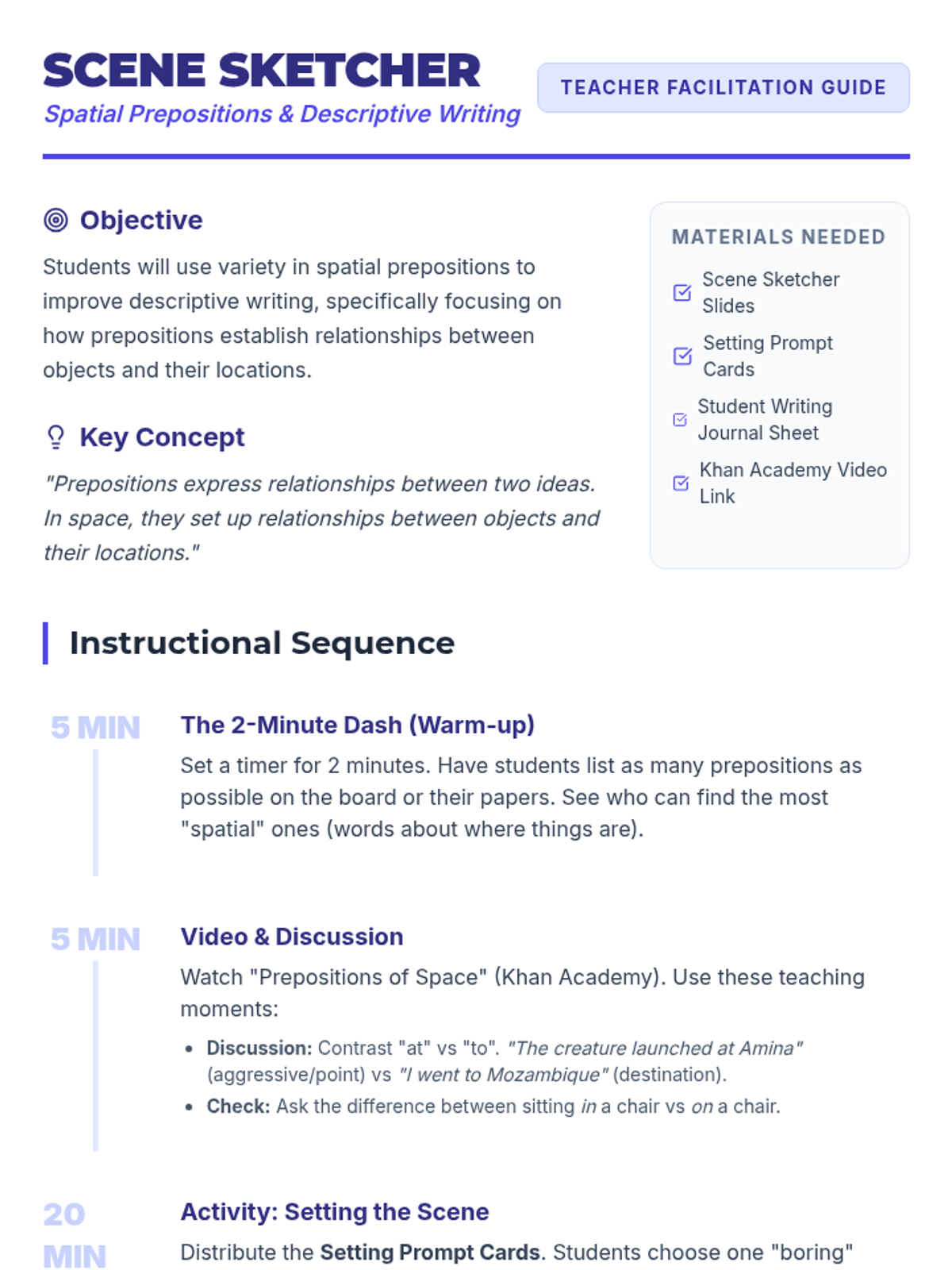
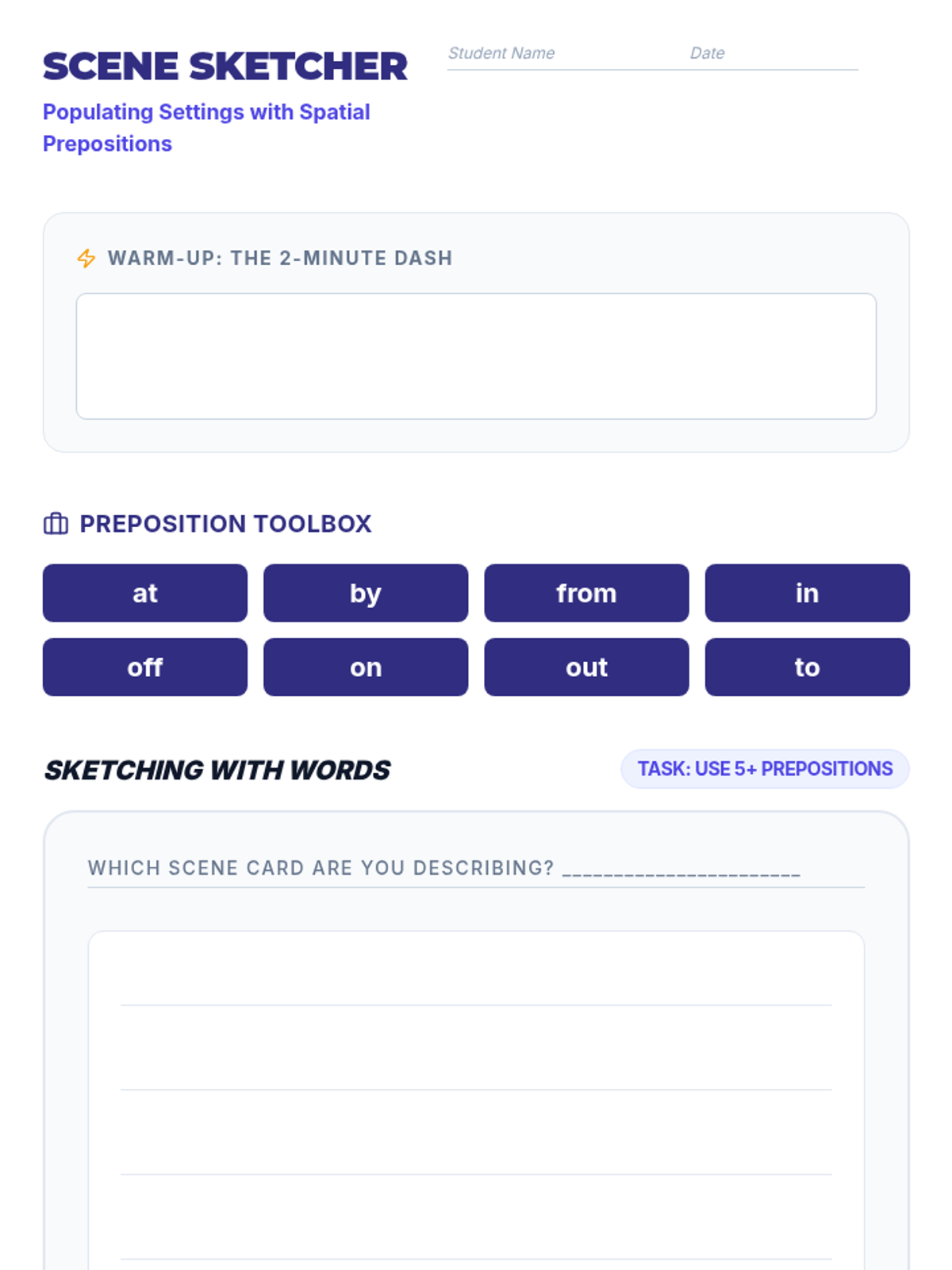
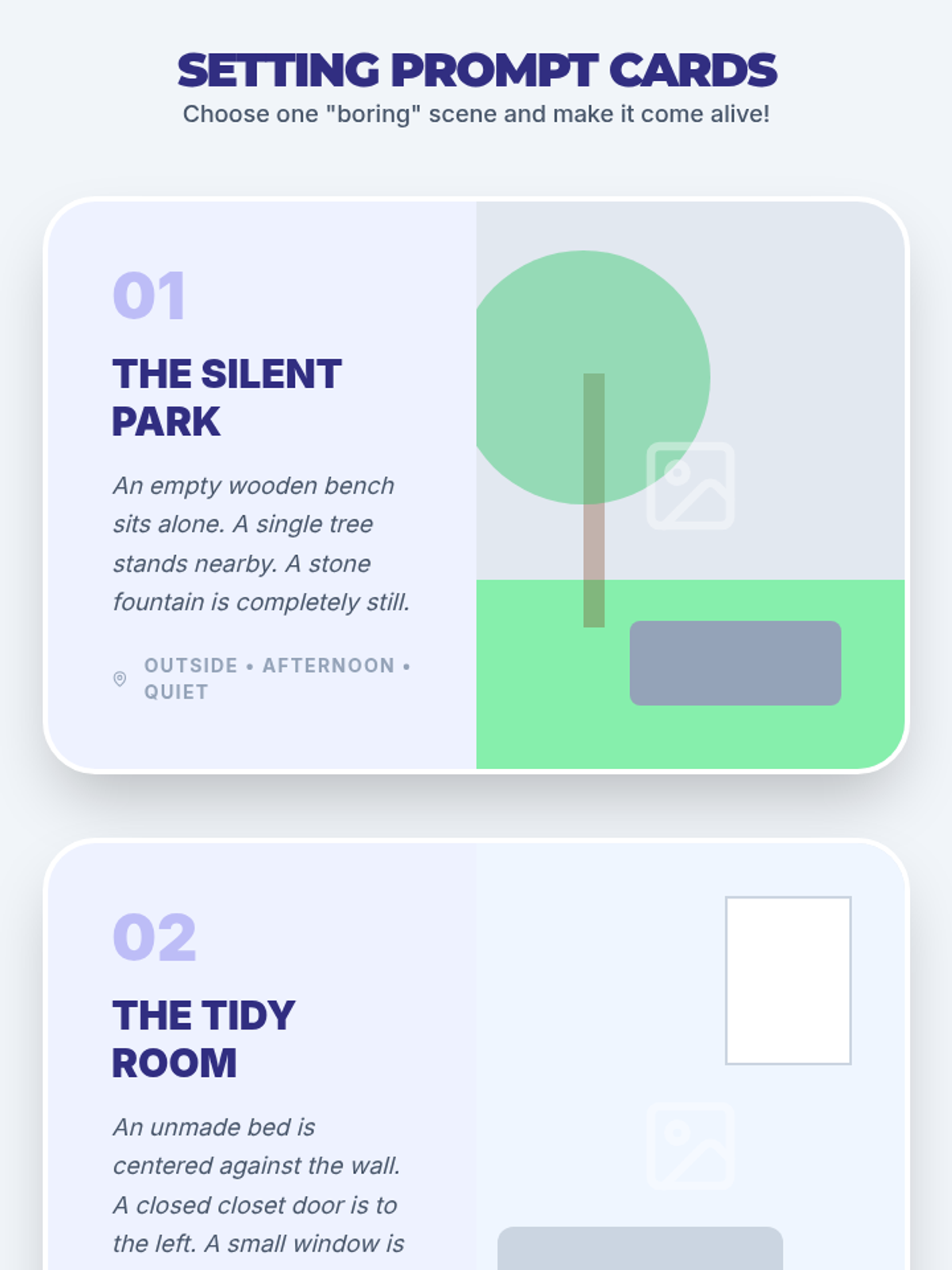
A lesson focusing on using spatial prepositions (at, by, from, in, off, on, out, to) to enhance descriptive writing through visual prompts and narrative scene-building.
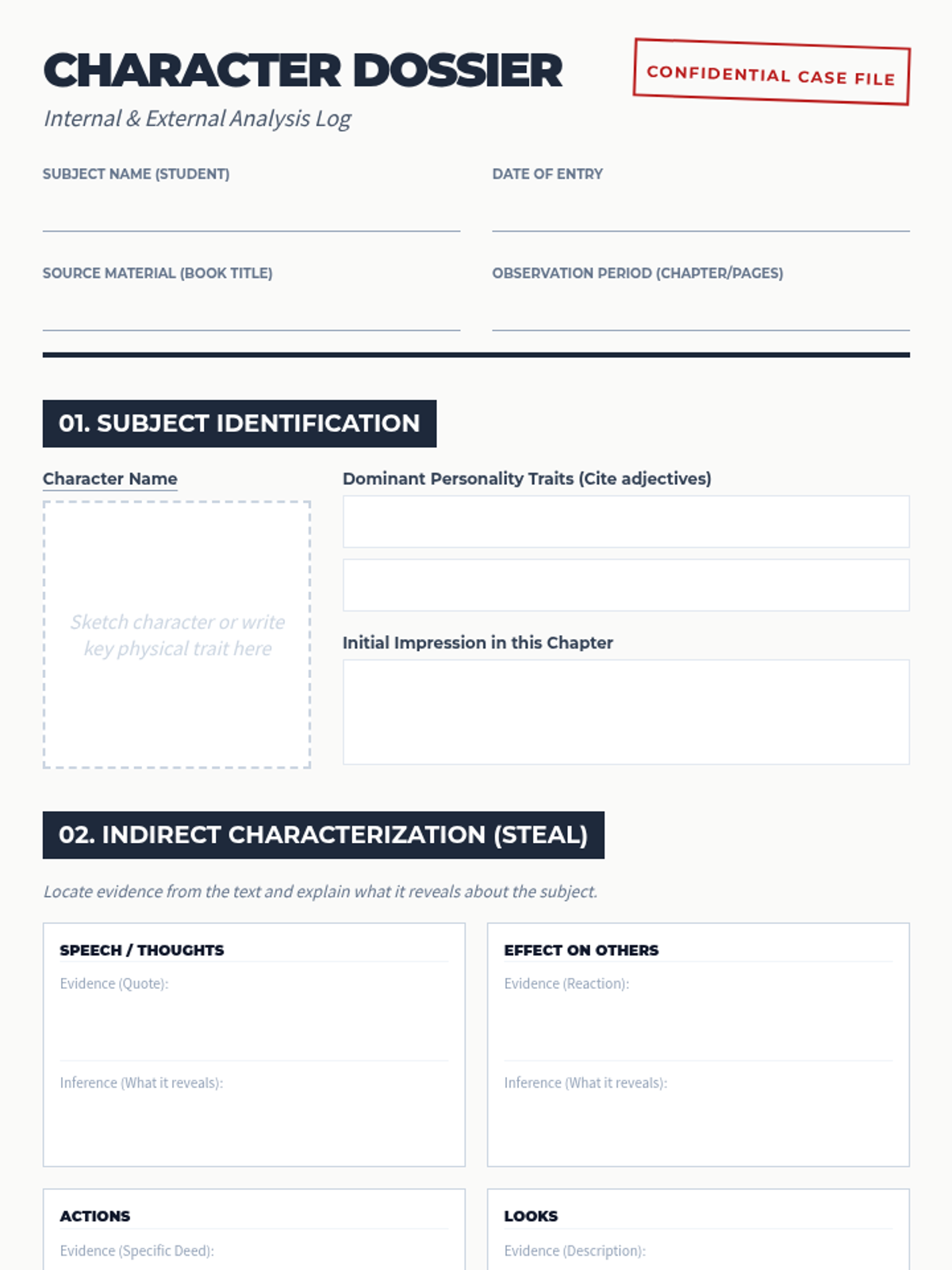
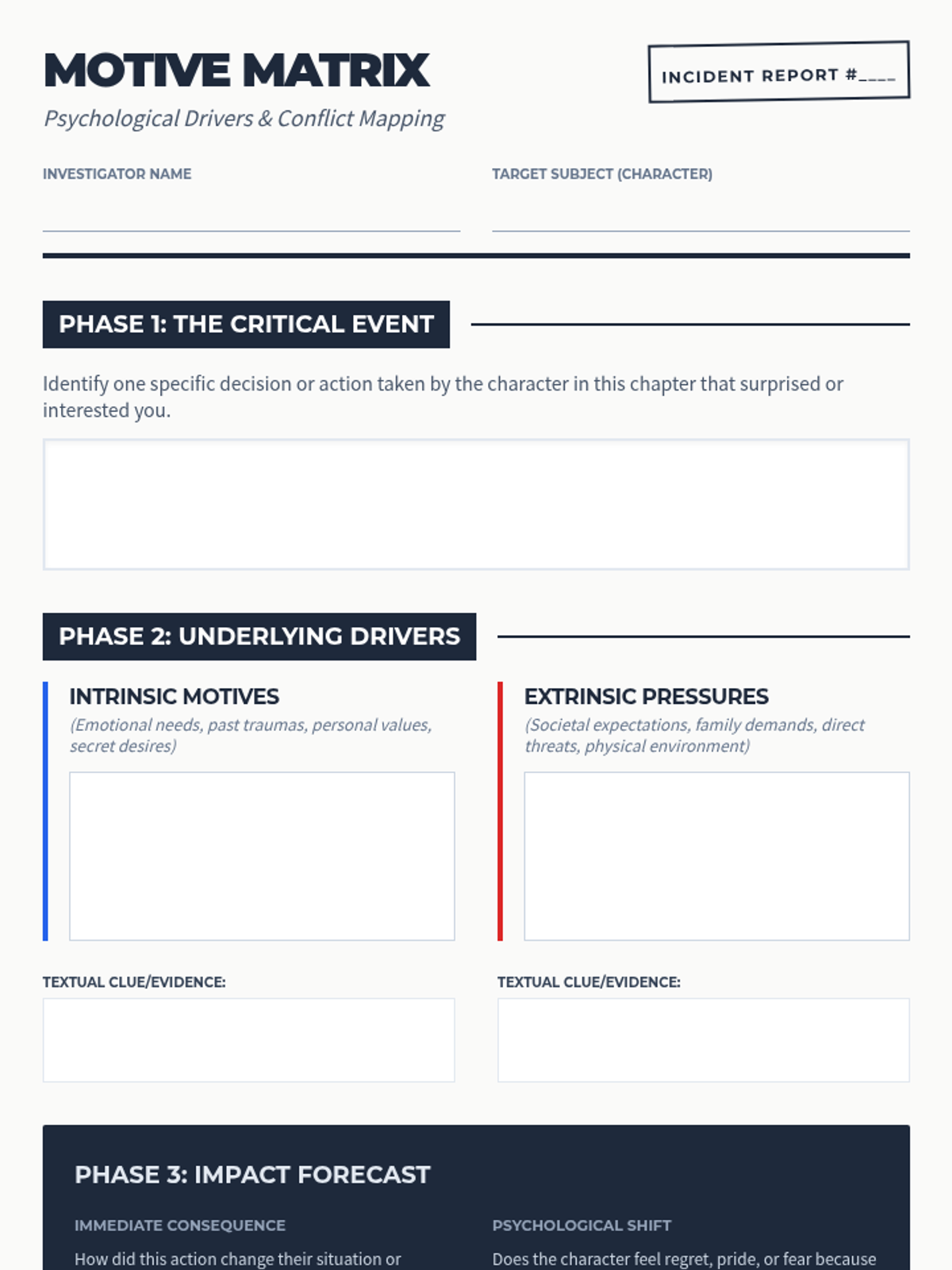
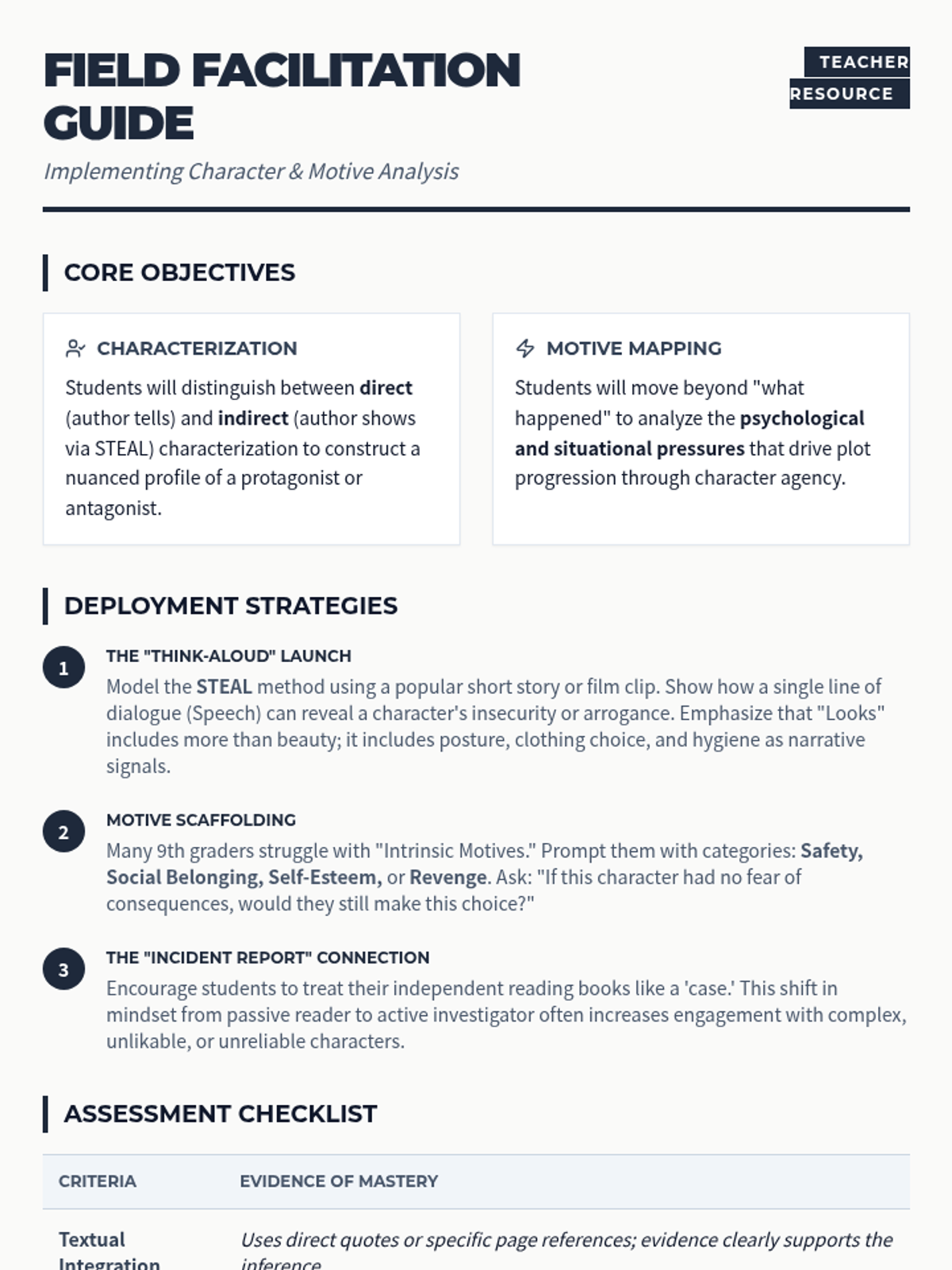
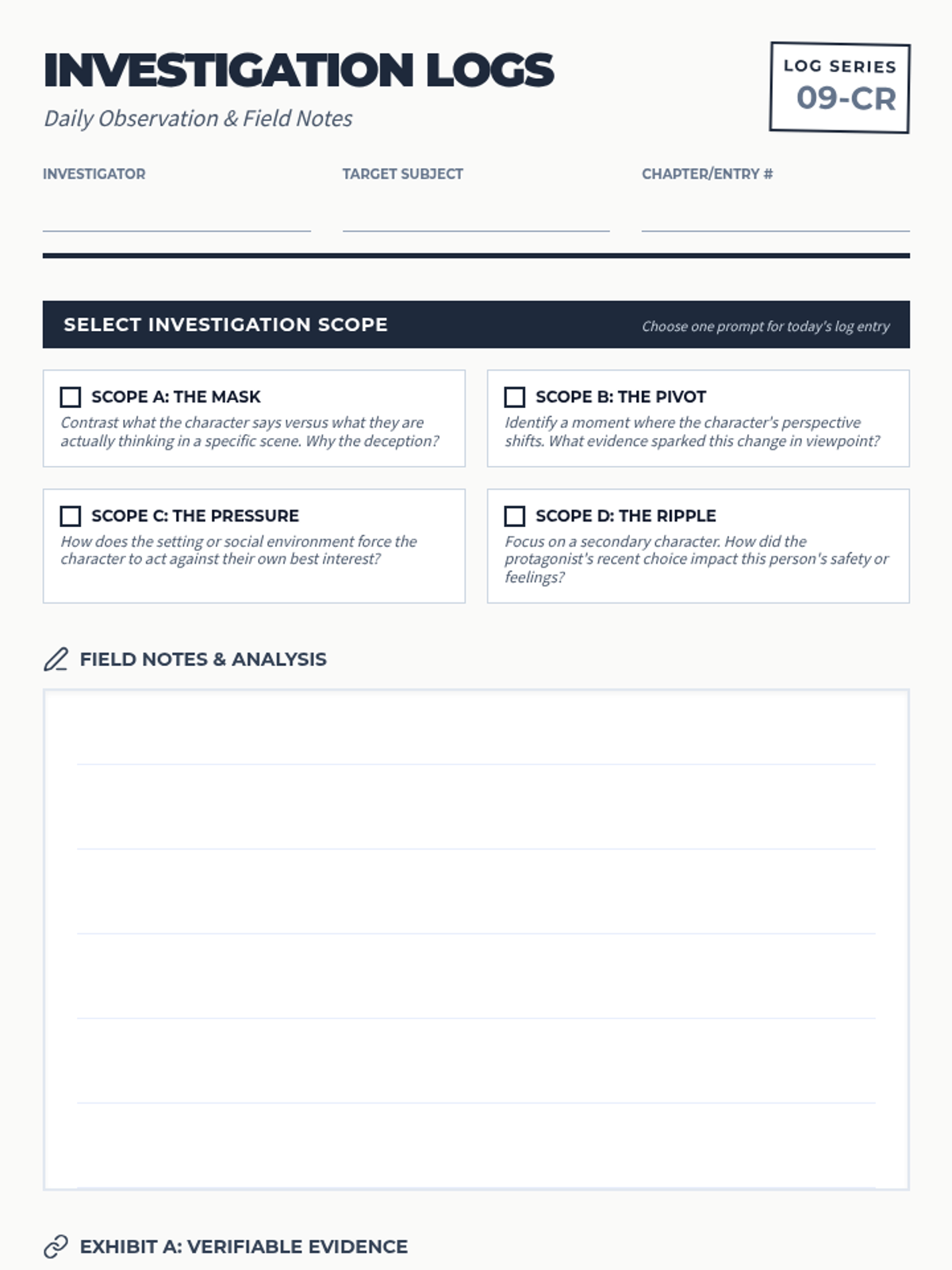
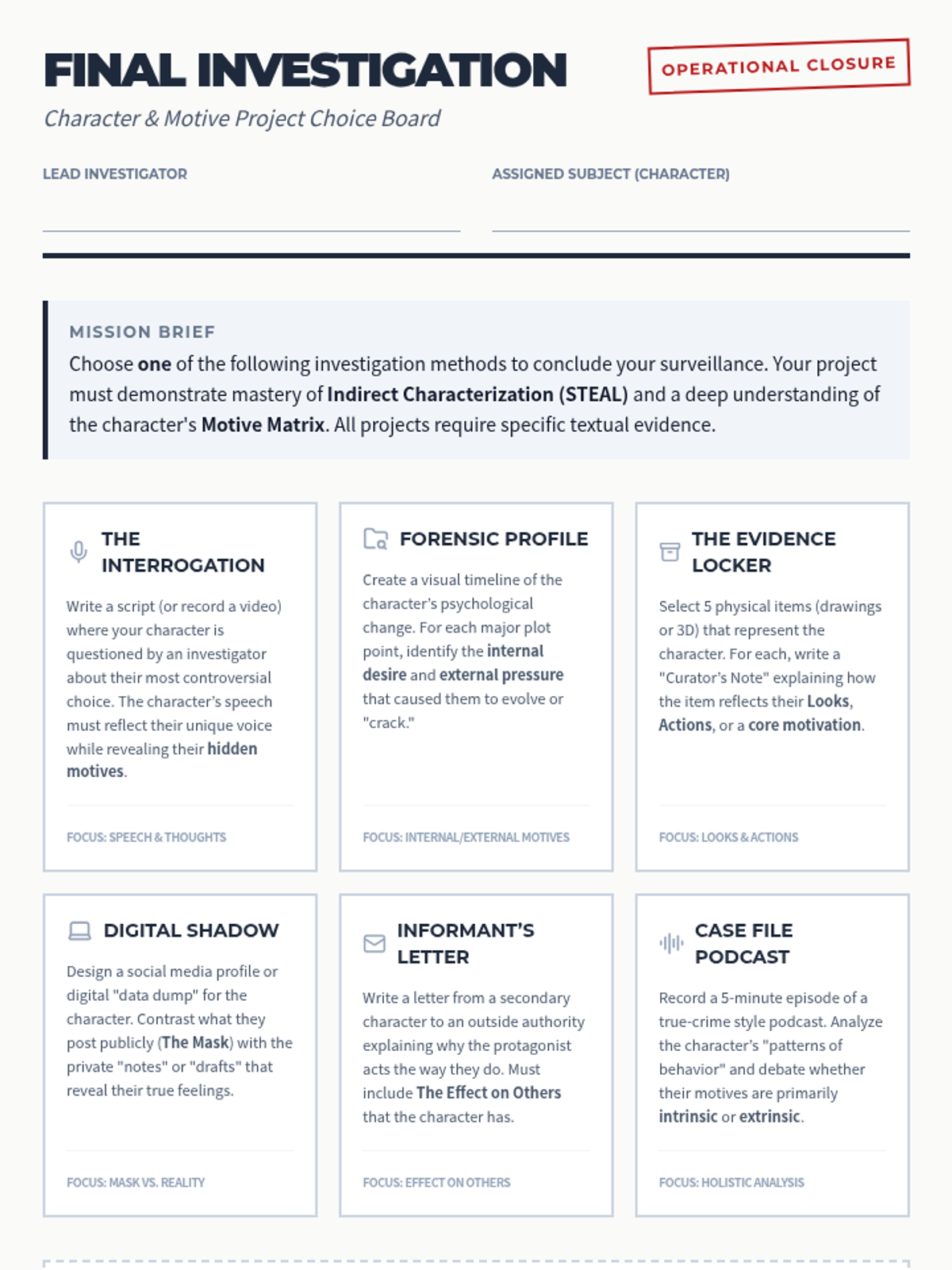
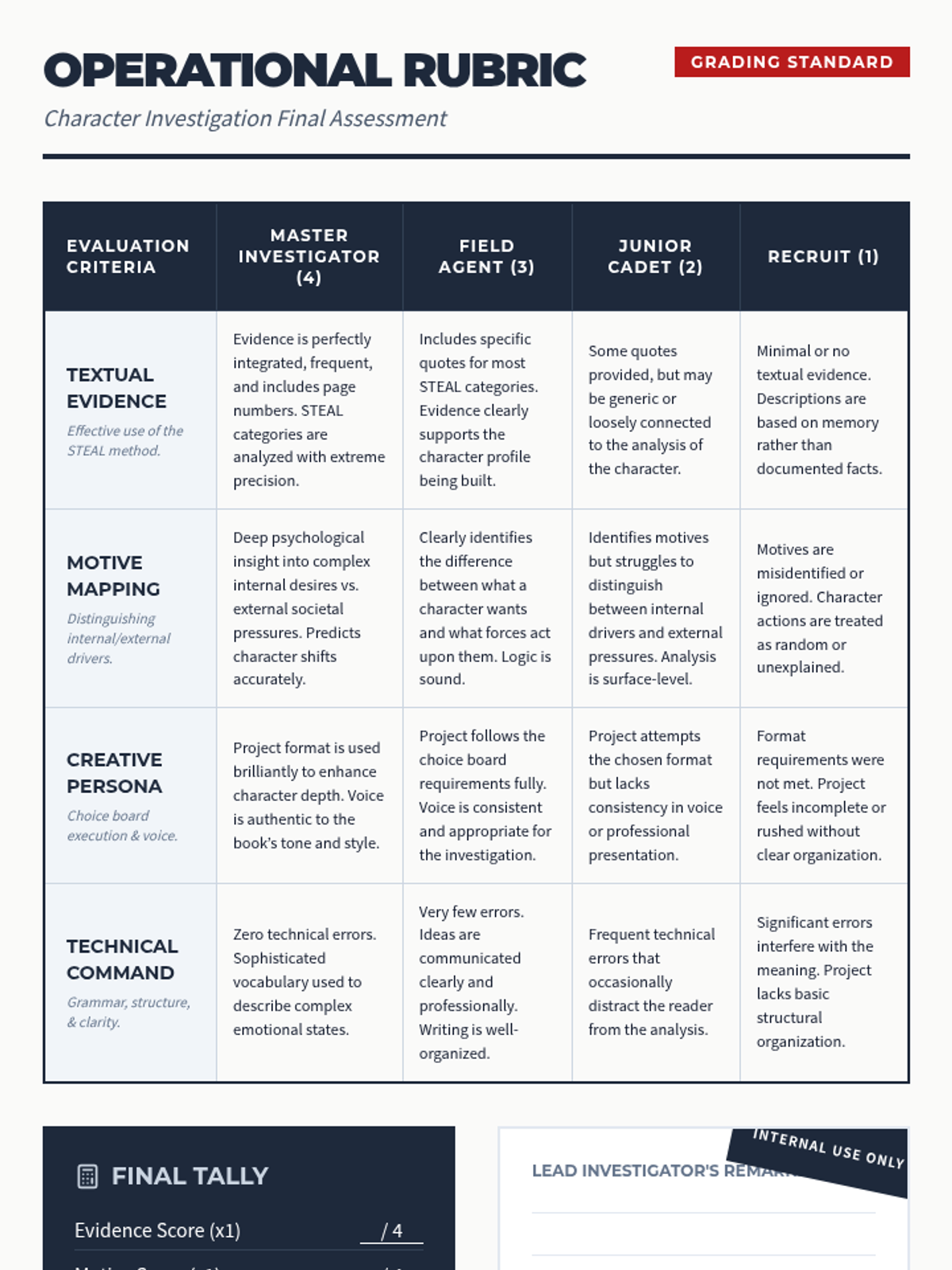
A set of analytical tools designed for 9th-grade students to track character development and psychological motives during independent reading. These worksheets use a 'Case File' aesthetic to make literary analysis feel like an investigation.
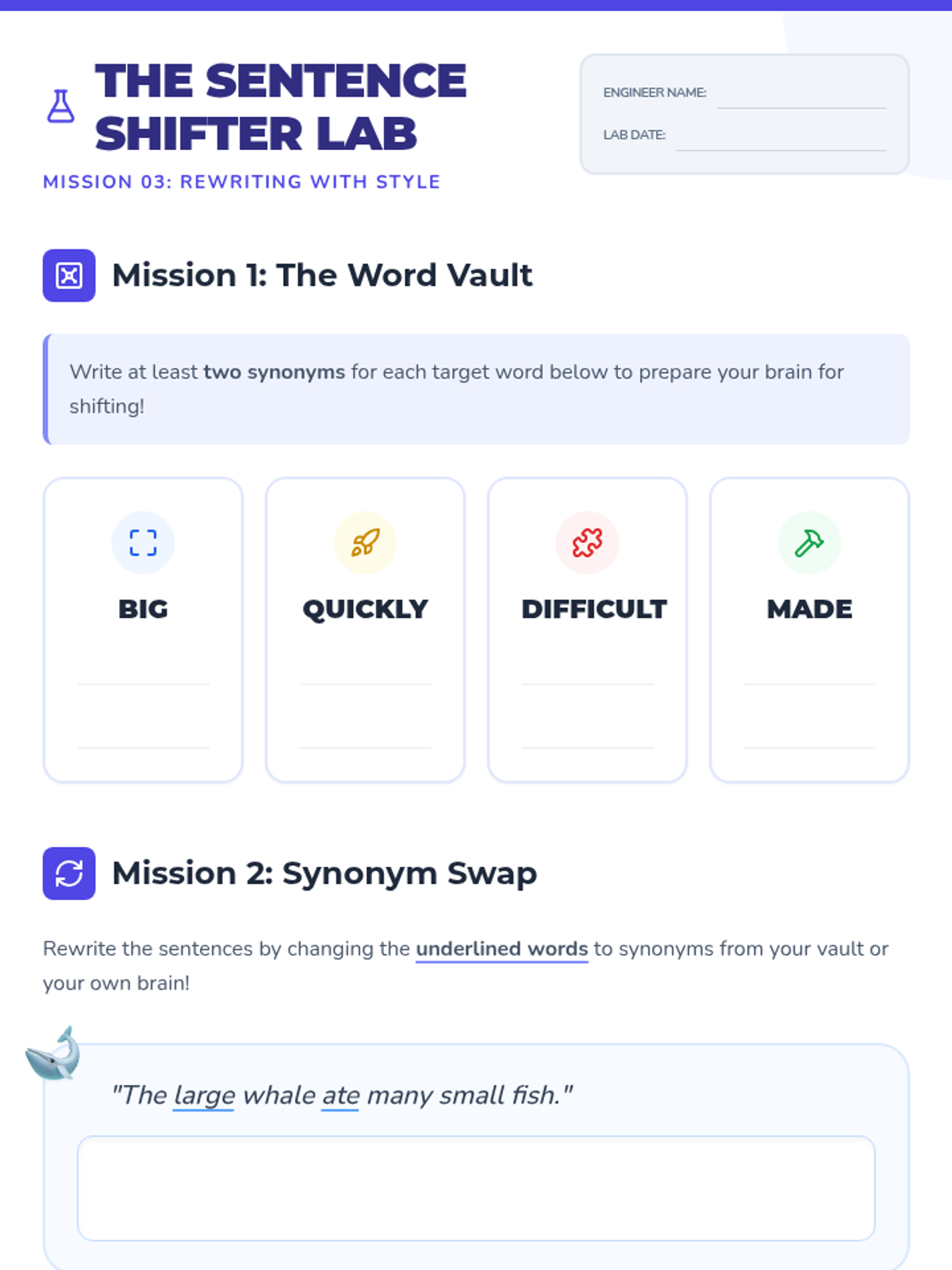
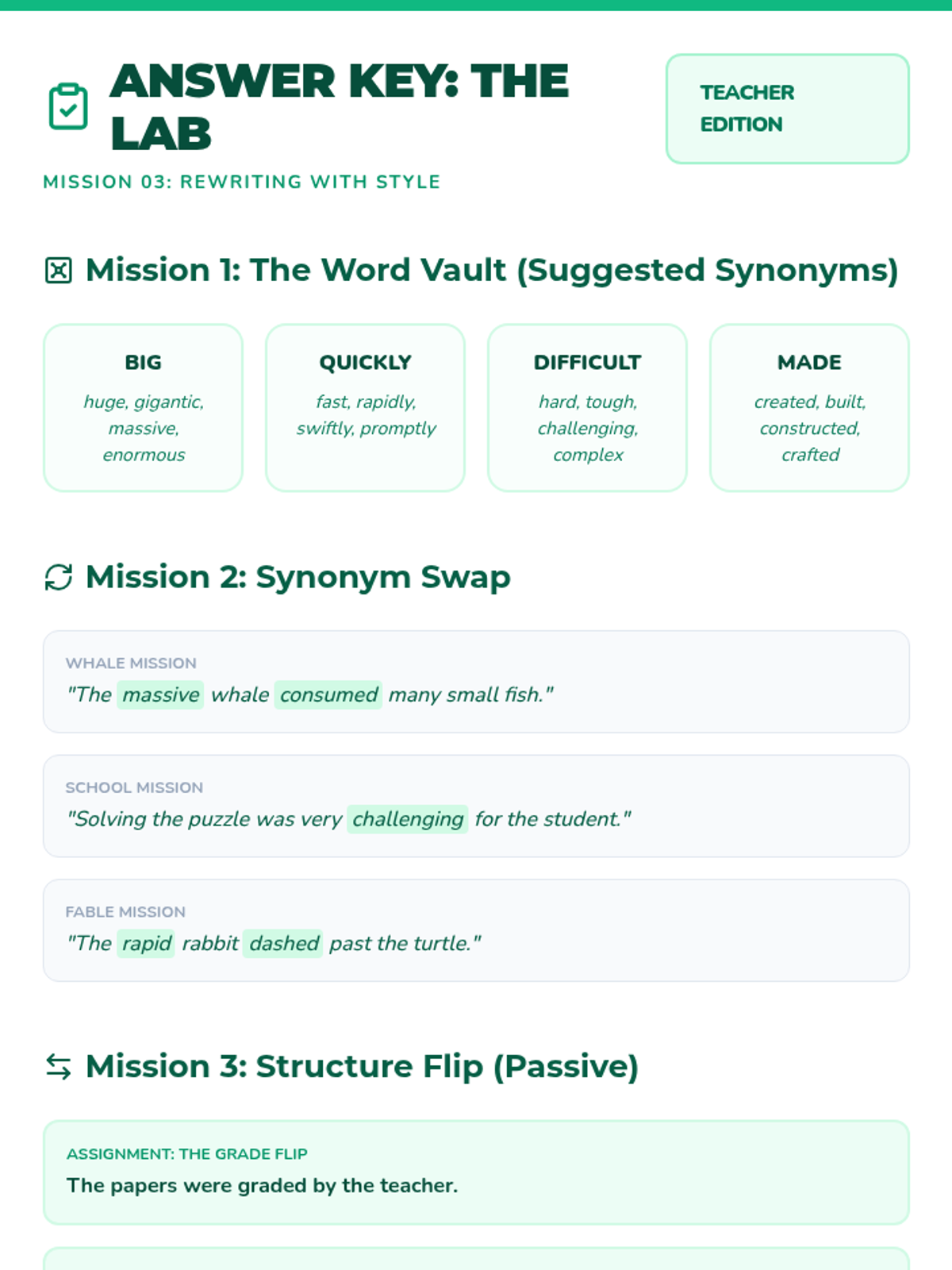
A visual, high-engagement workshop for students to practice sentence manipulation. Students explore synonyms to enhance vocabulary and master the 'Active to Passive' voice flip through space, school, and fable-themed missions.
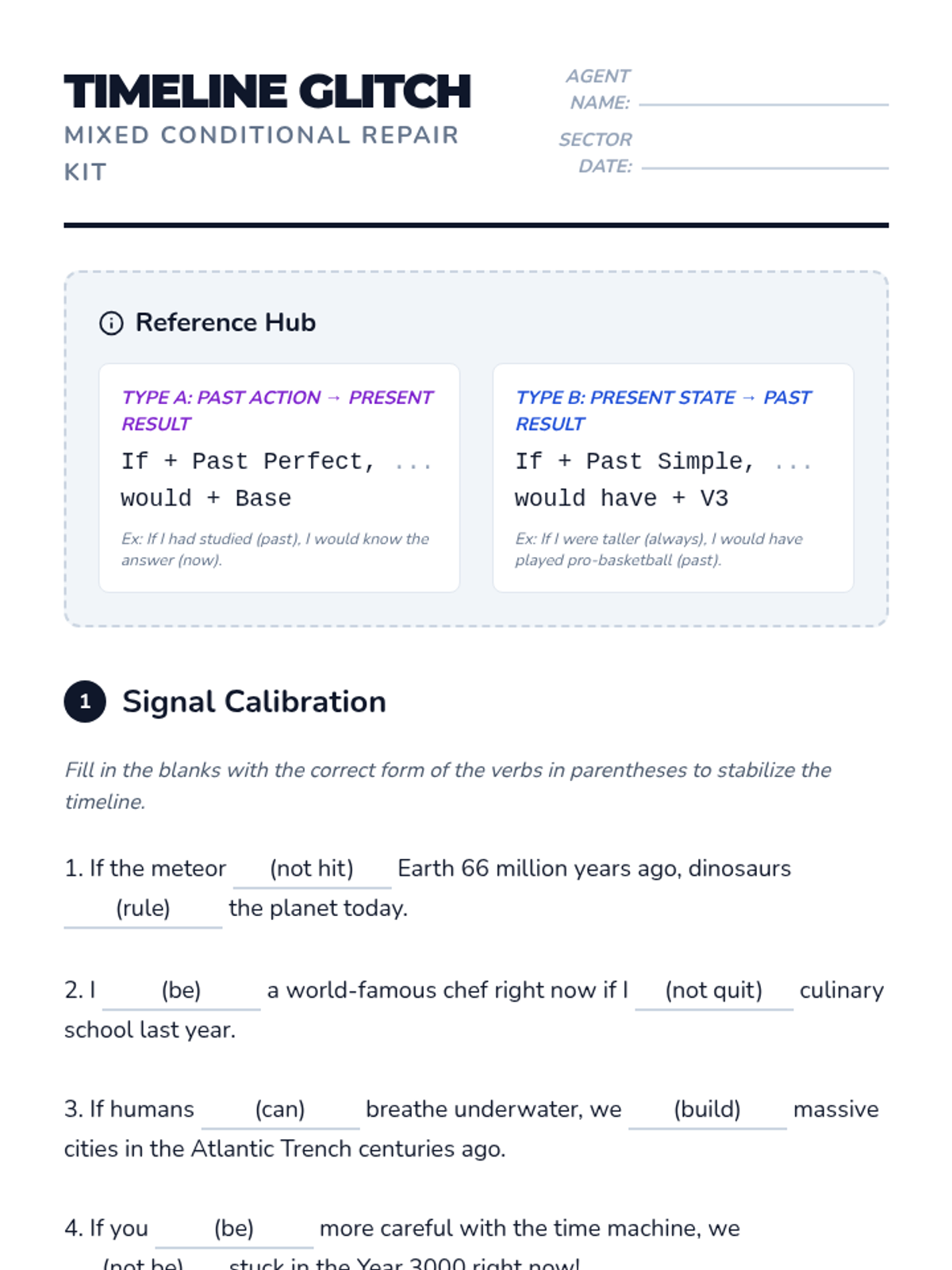
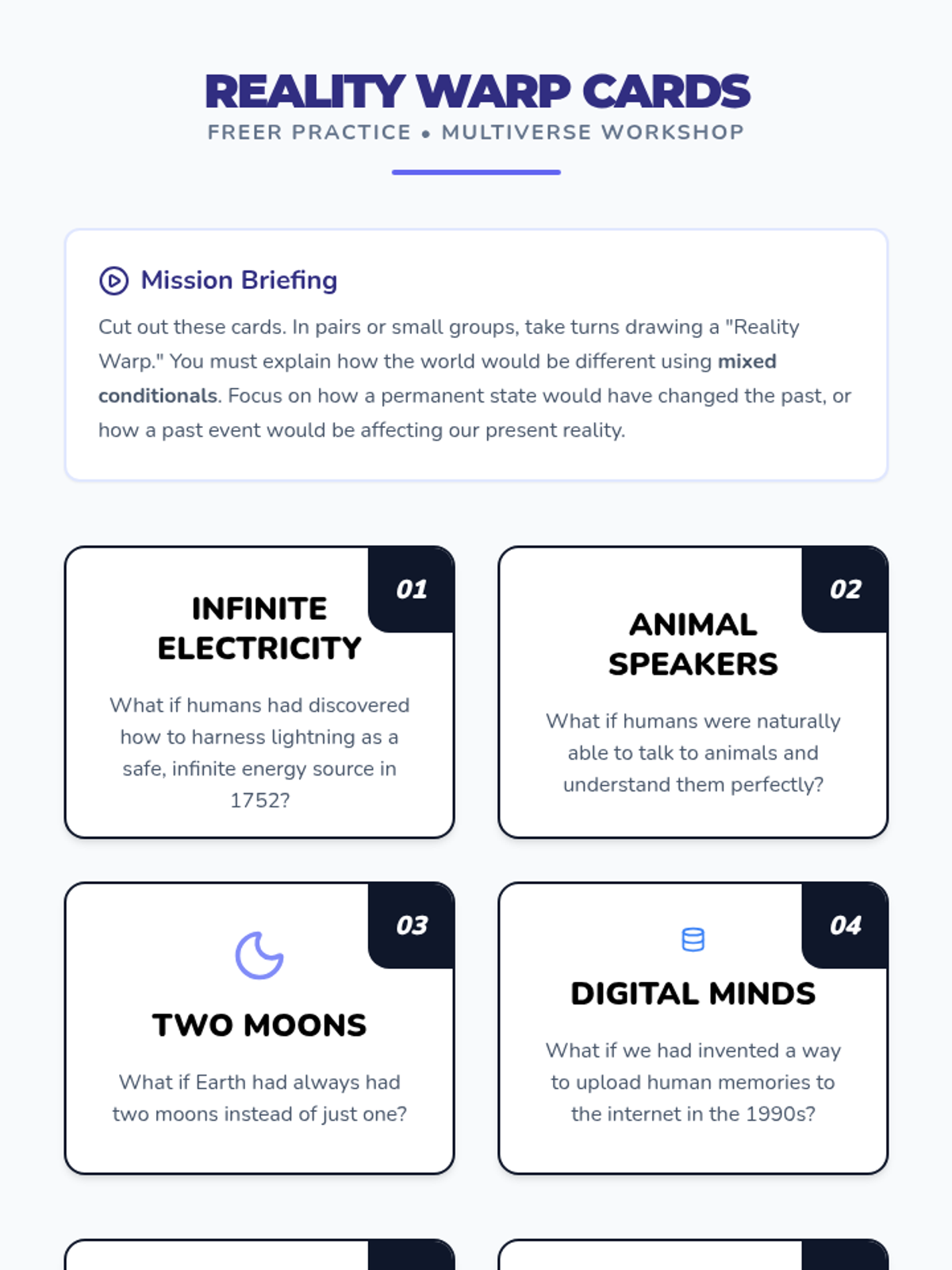
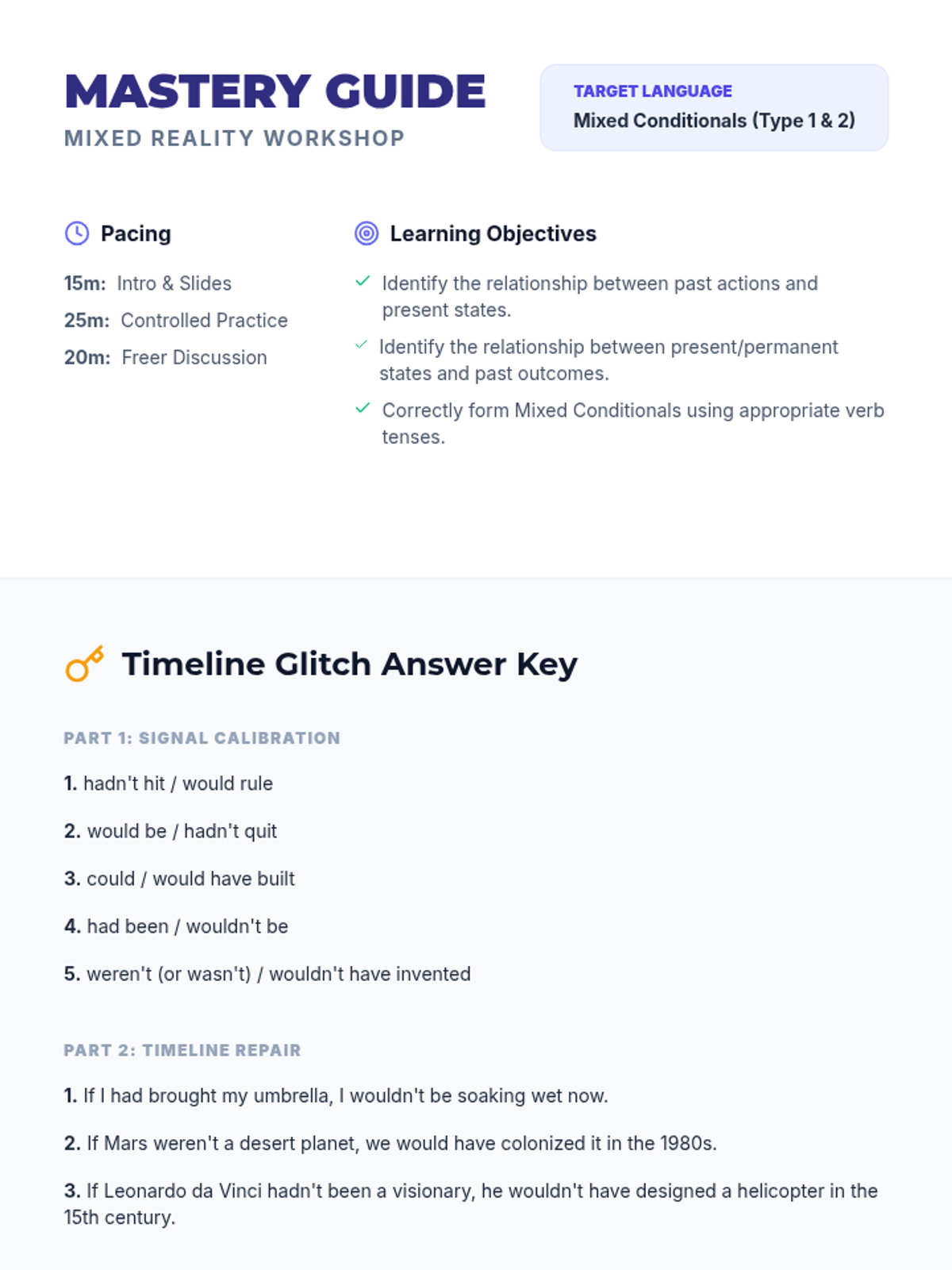
An introductory lesson on mixed conditionals (Type 1: Past Action/Present Result and Type 2: Present State/Past Result) using imaginative and 'anything is possible' scenarios.
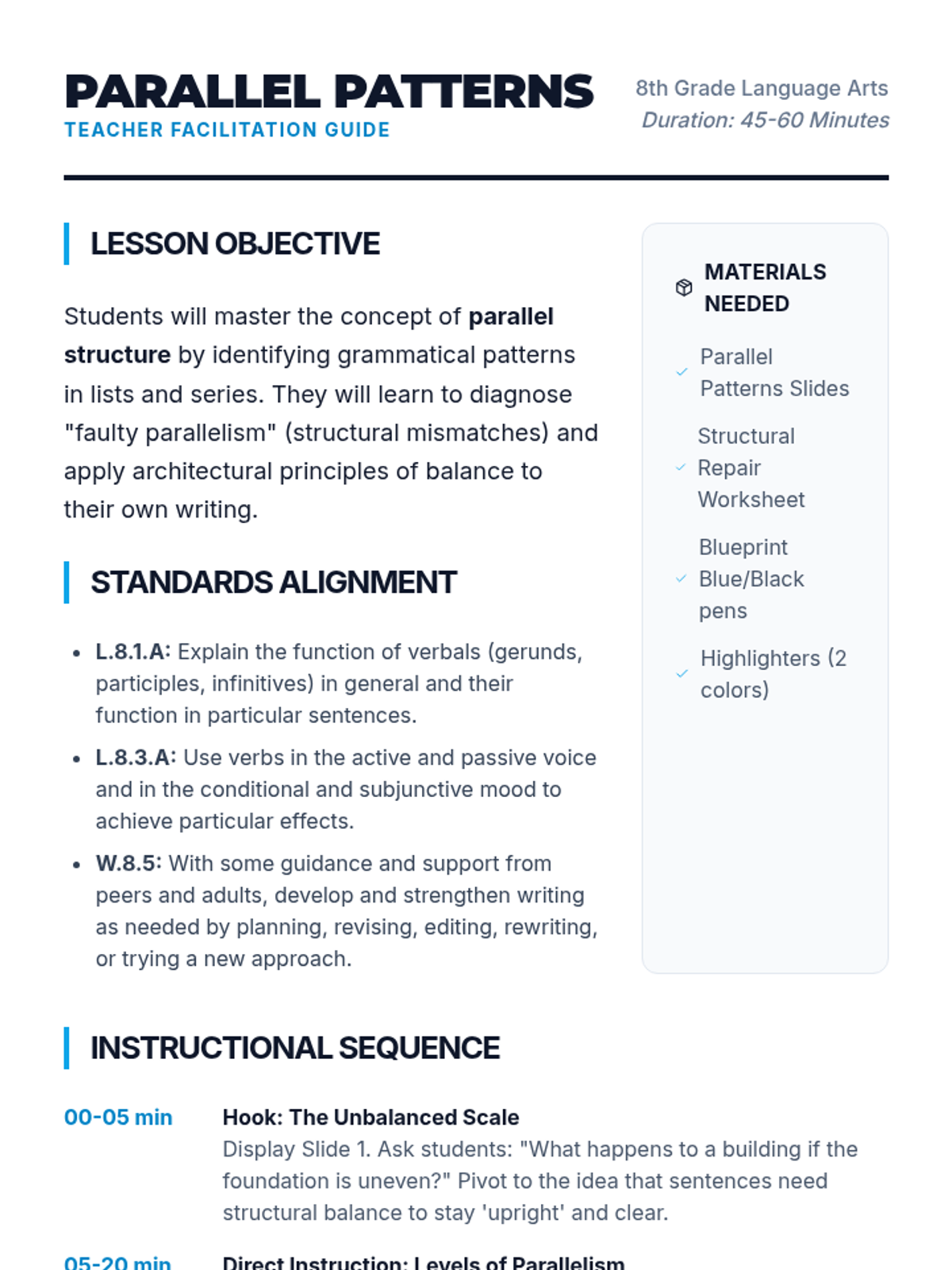
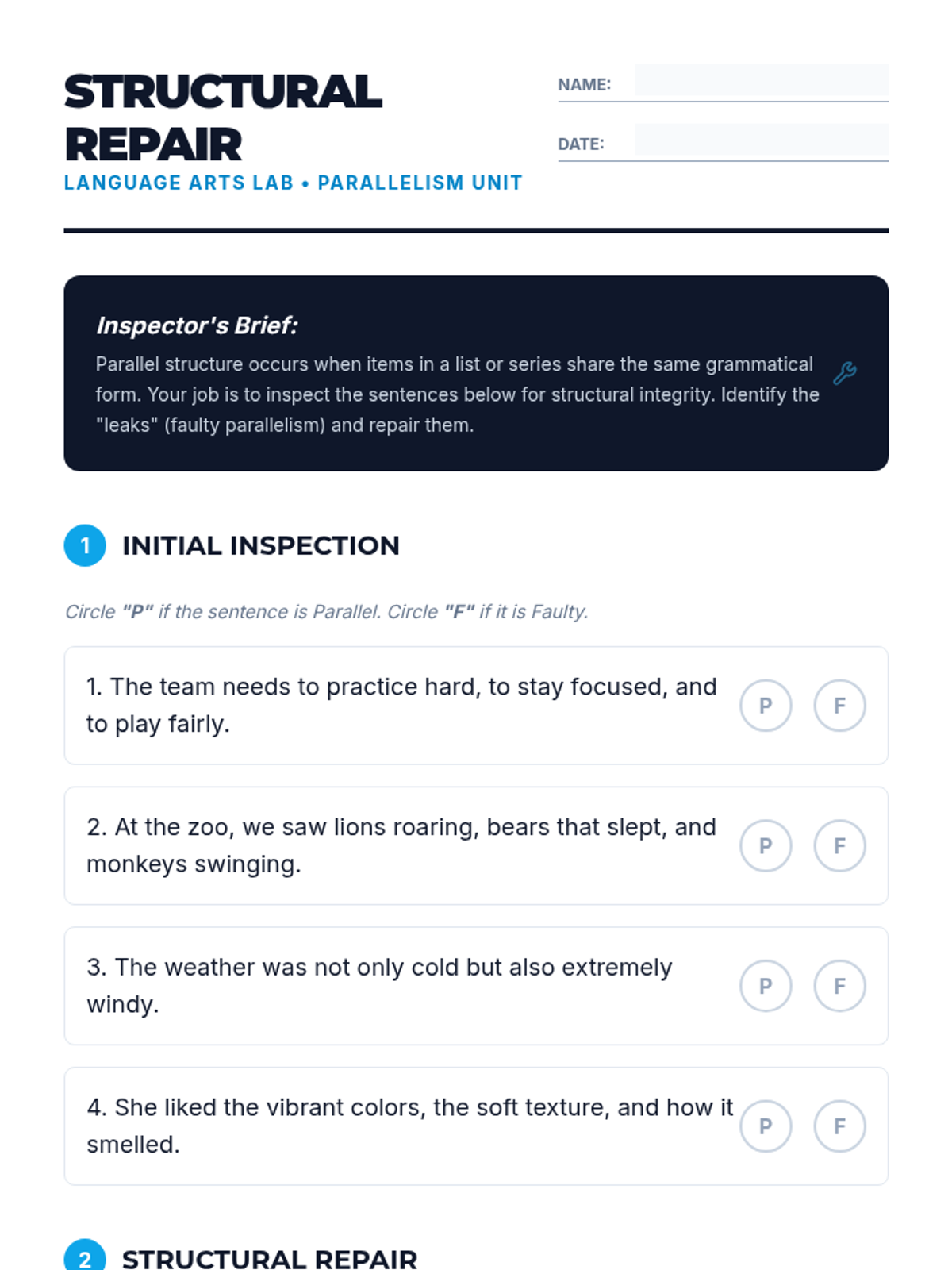
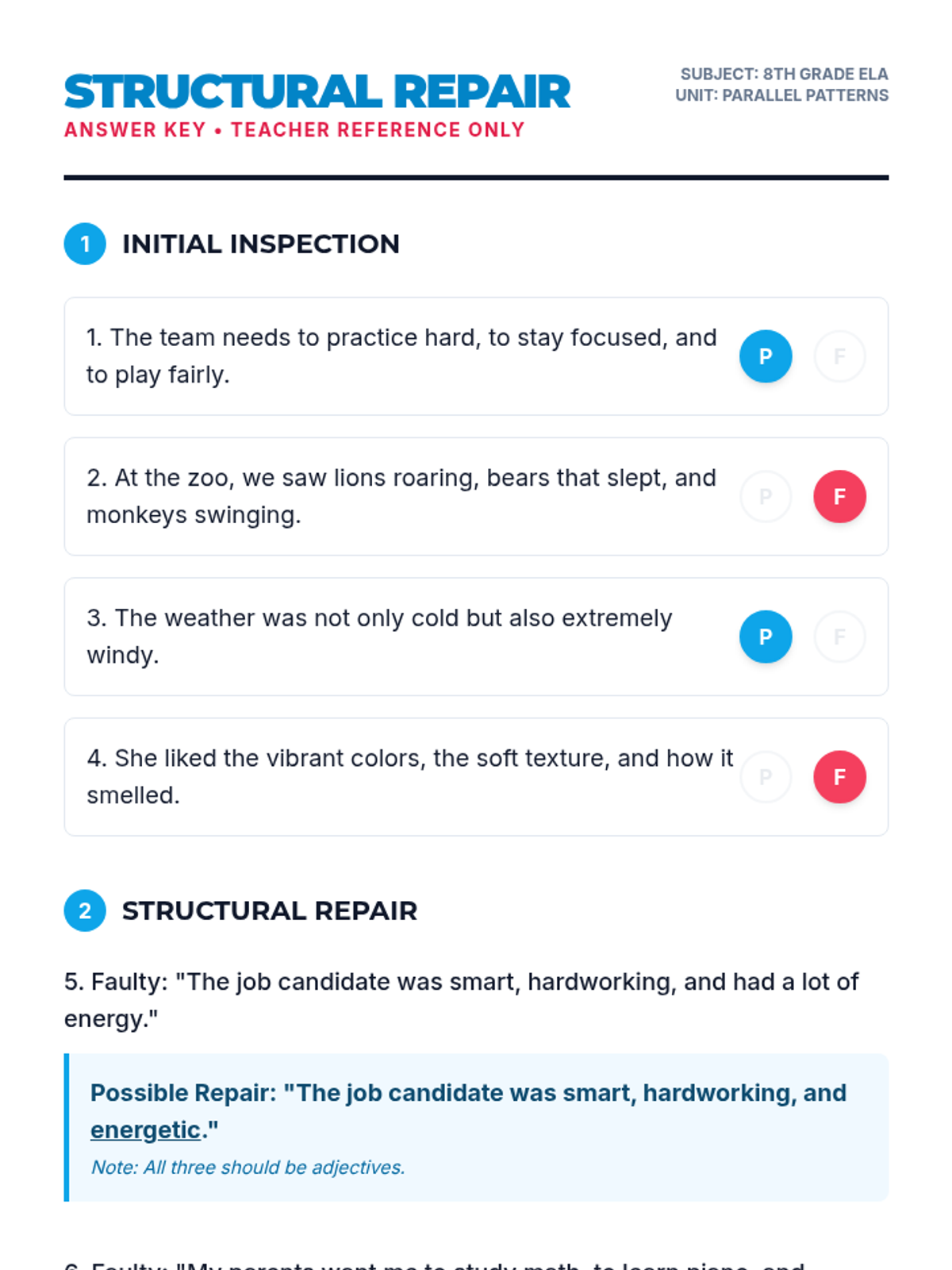
A lesson focusing on identifying and correcting faulty parallelism in sentences, helping students create rhythm and clarity in their writing.
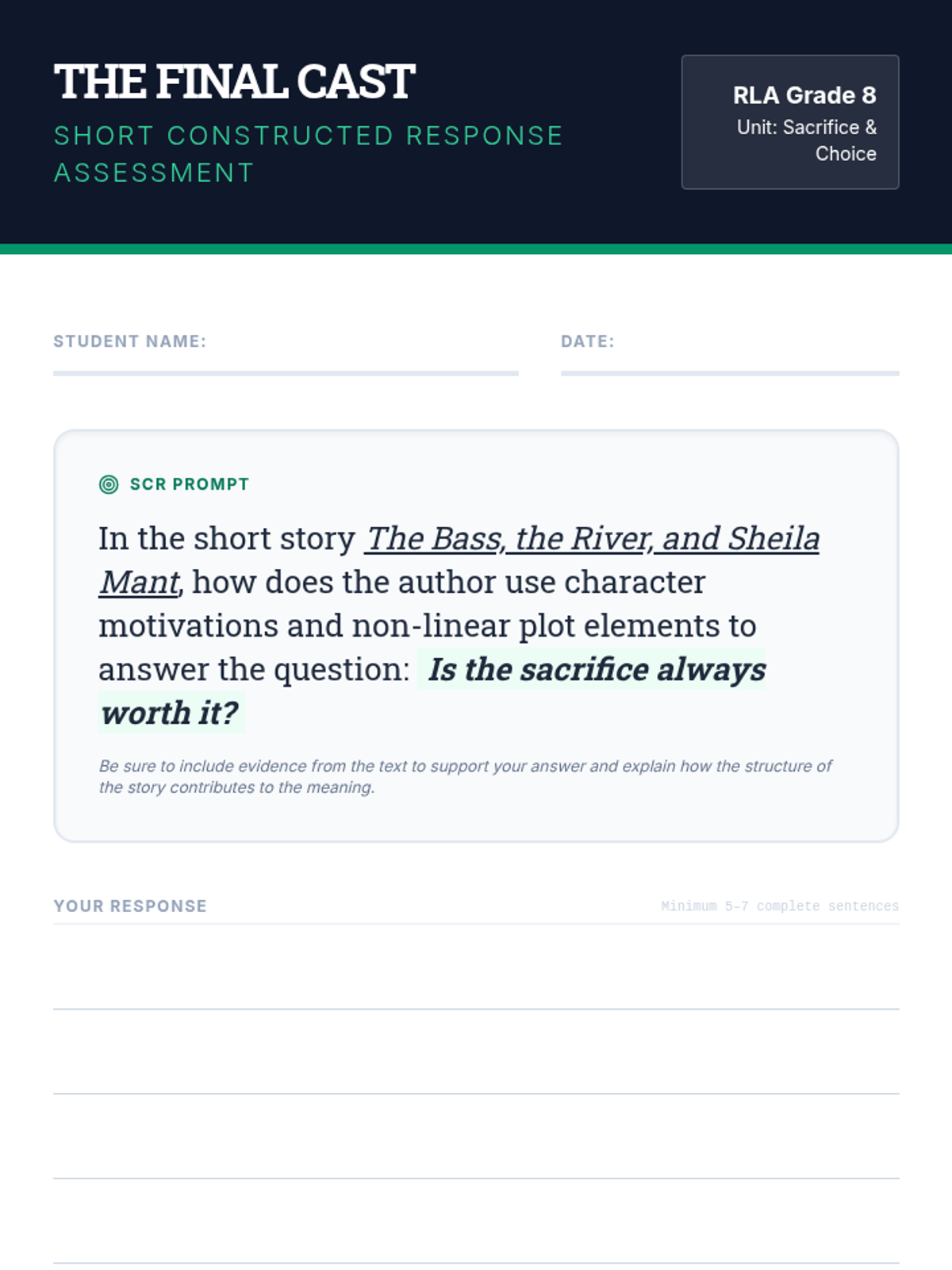
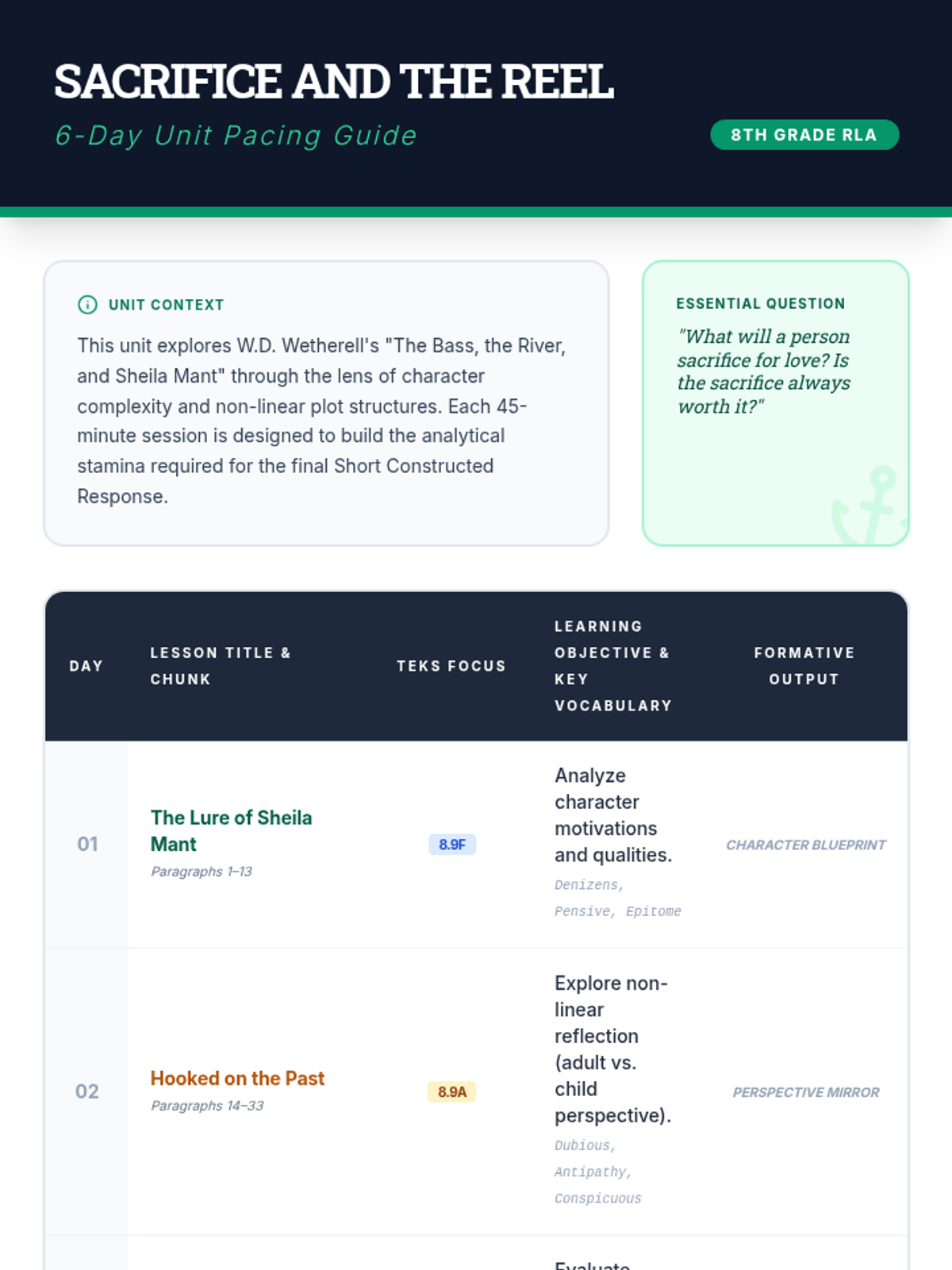
Students complete a Short Constructed Response (SCR) analyzing how the author uses character and plot to answer the essential question.
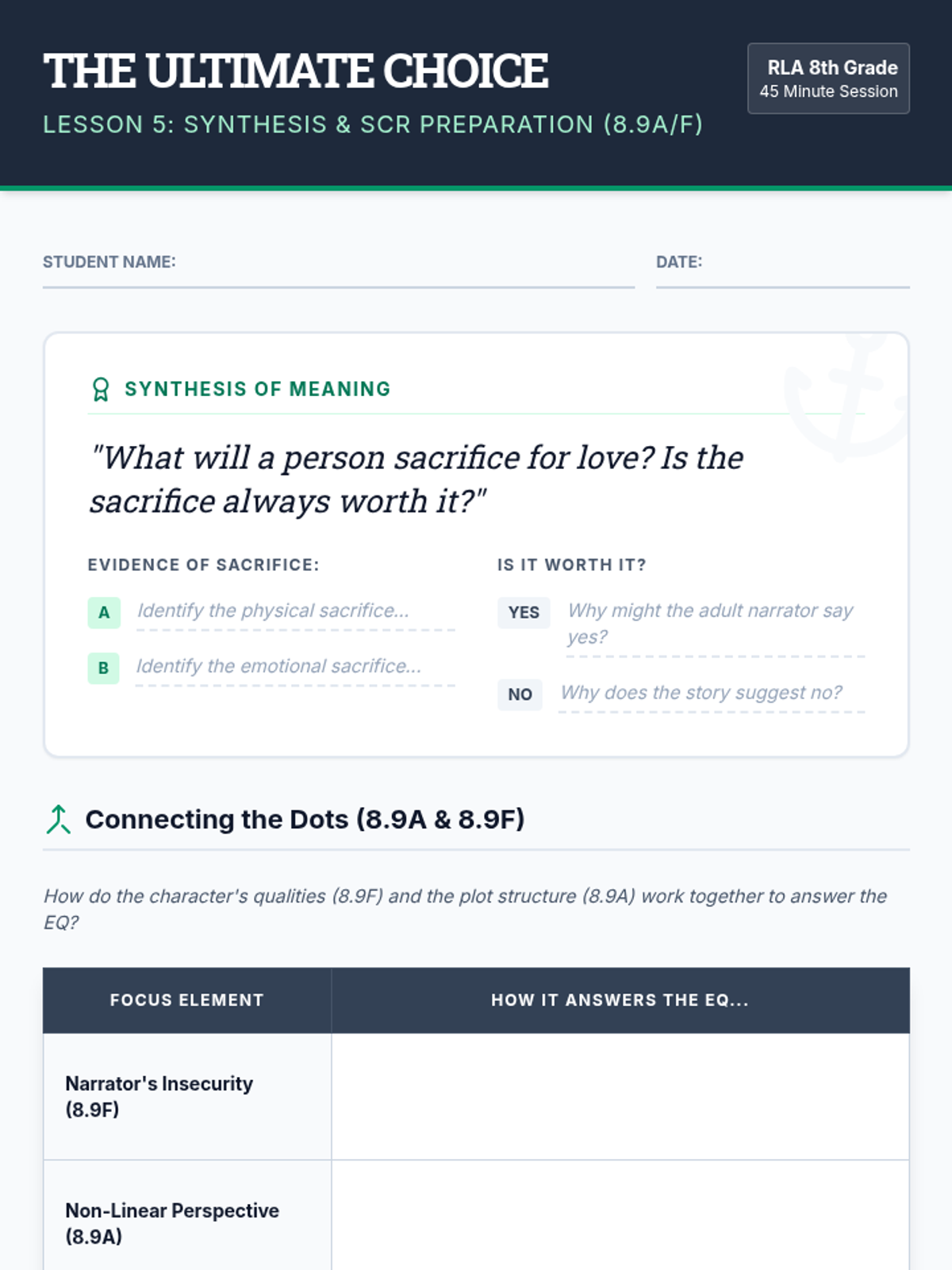
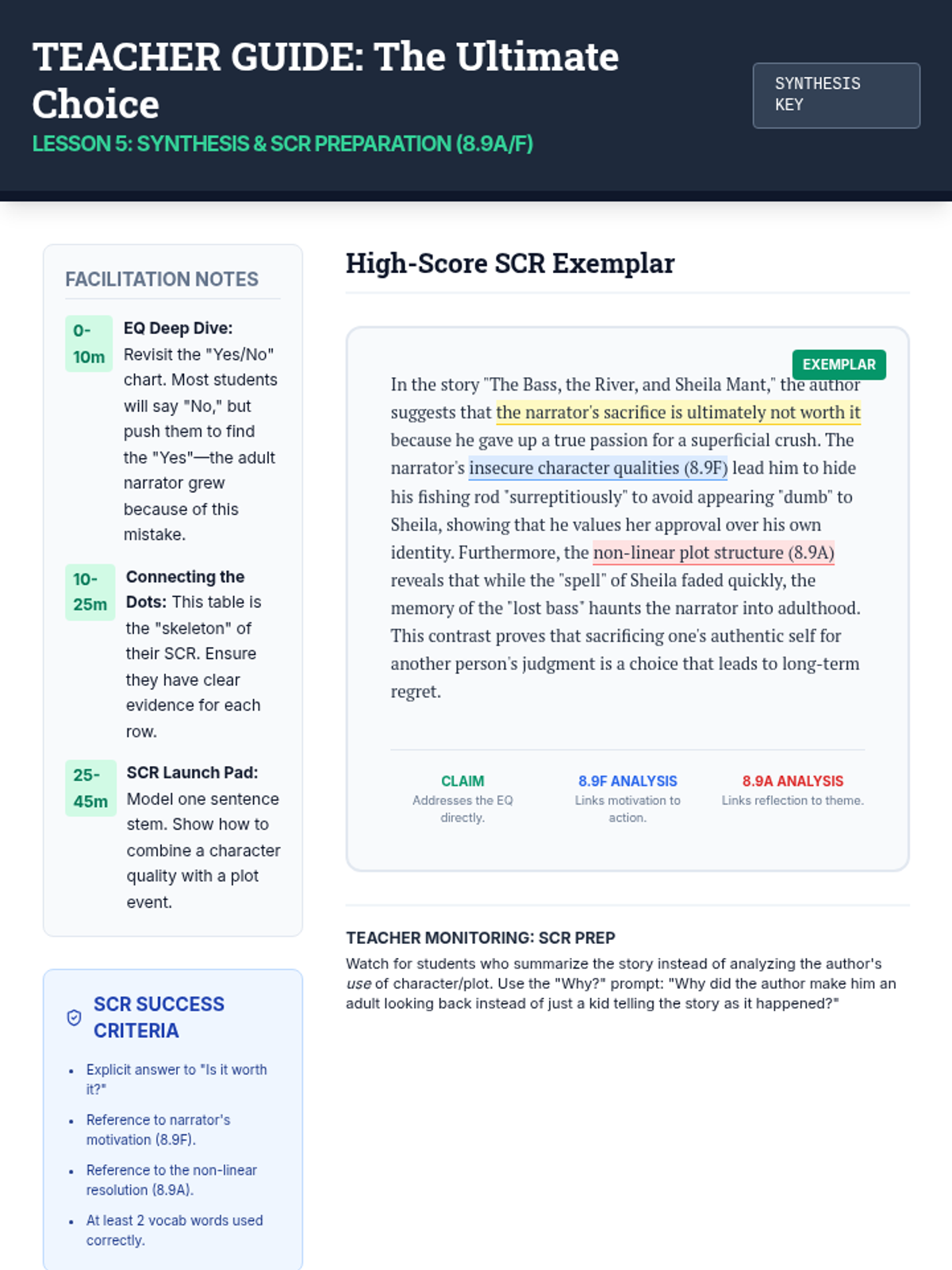
Students synthesize the story's themes and prepare for the SCR by answering the essential question. Focus on TEKS 8.9A/F.
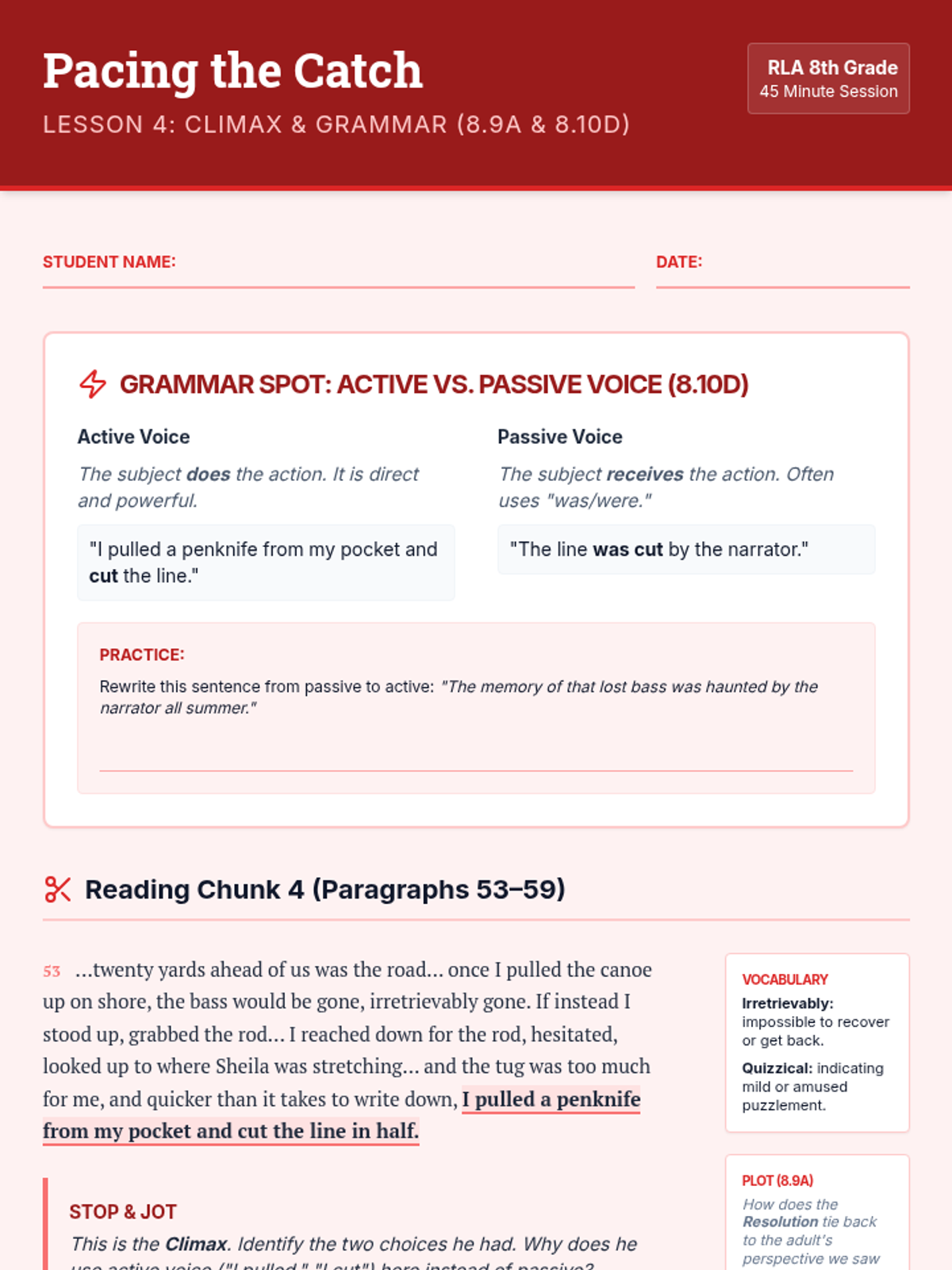
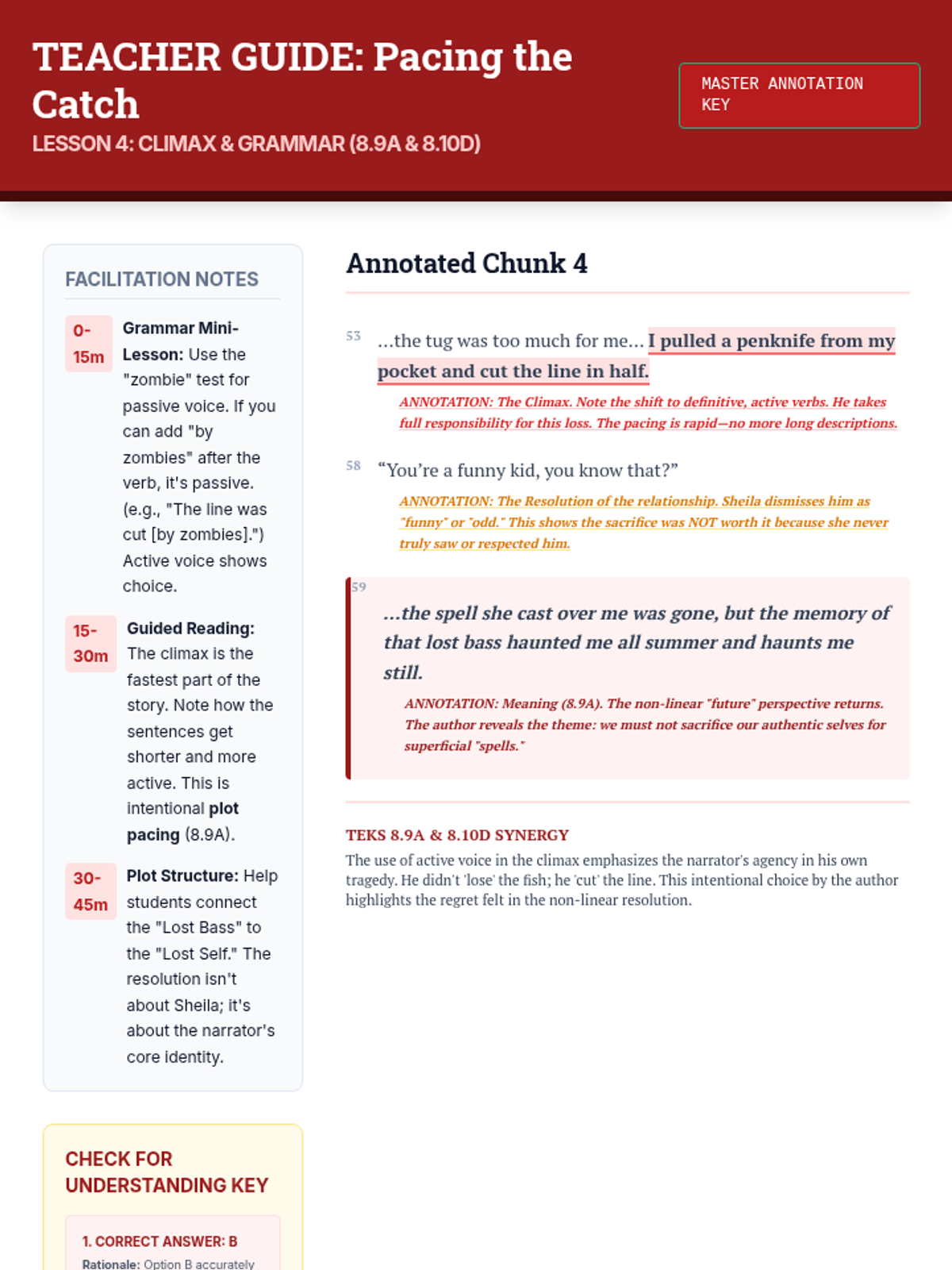
Students examine the climax and resolution while practicing active and passive voice. Focus on TEKS 8.9A and 8.10D.
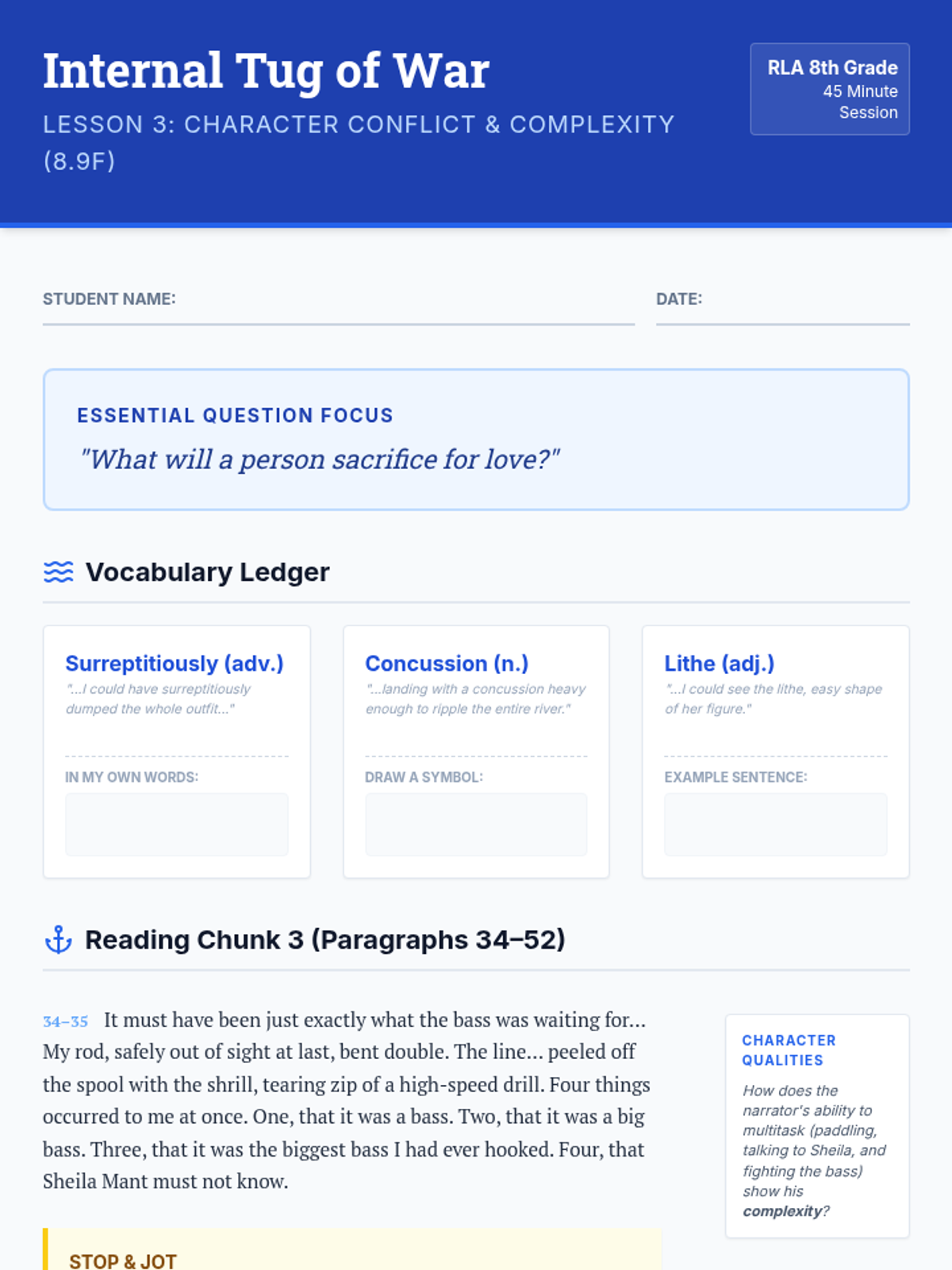
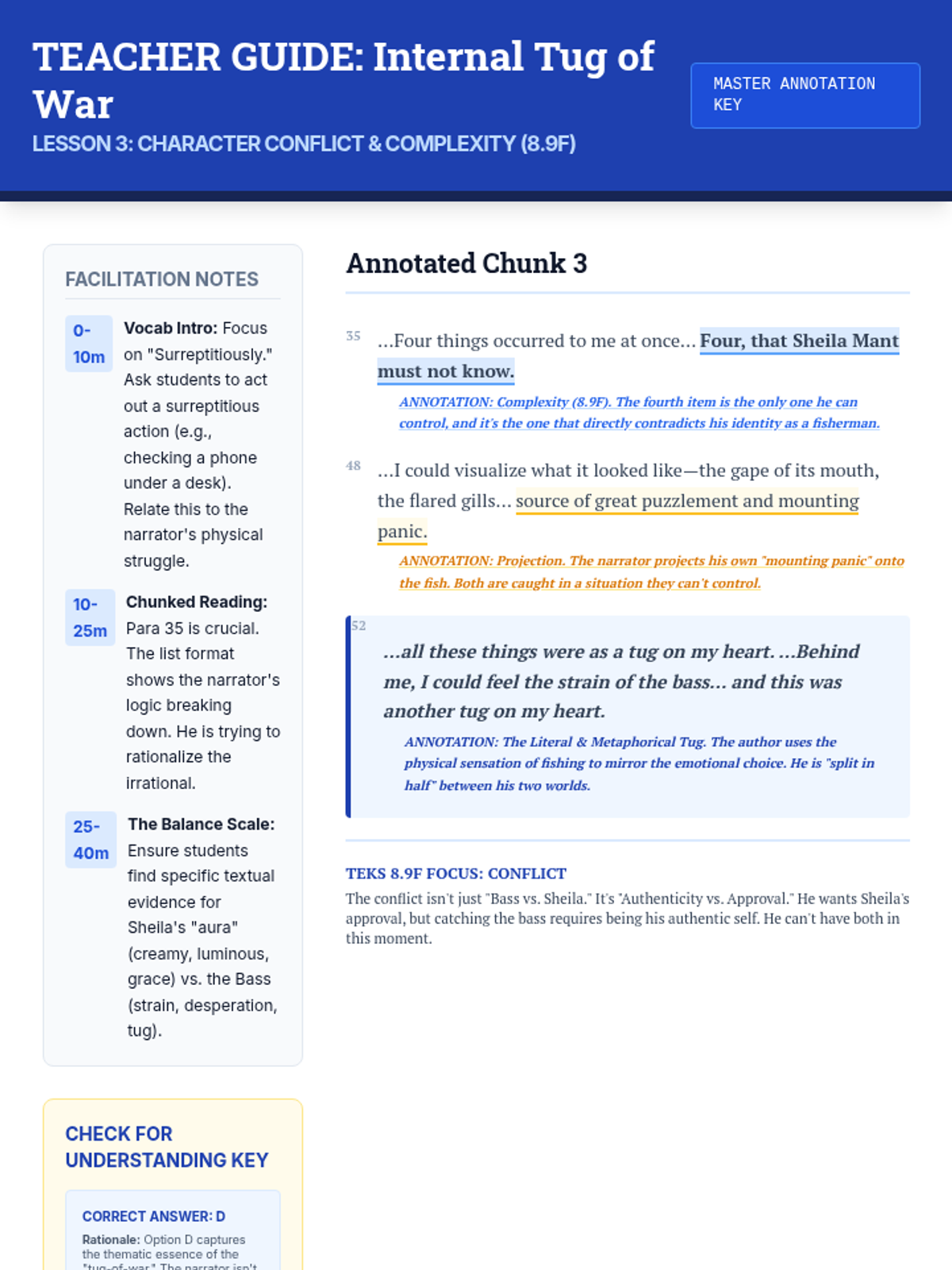
Students analyze the internal conflict of the narrator as he balances his passion for fishing with his desire for Sheila. Focus on TEKS 8.9F.
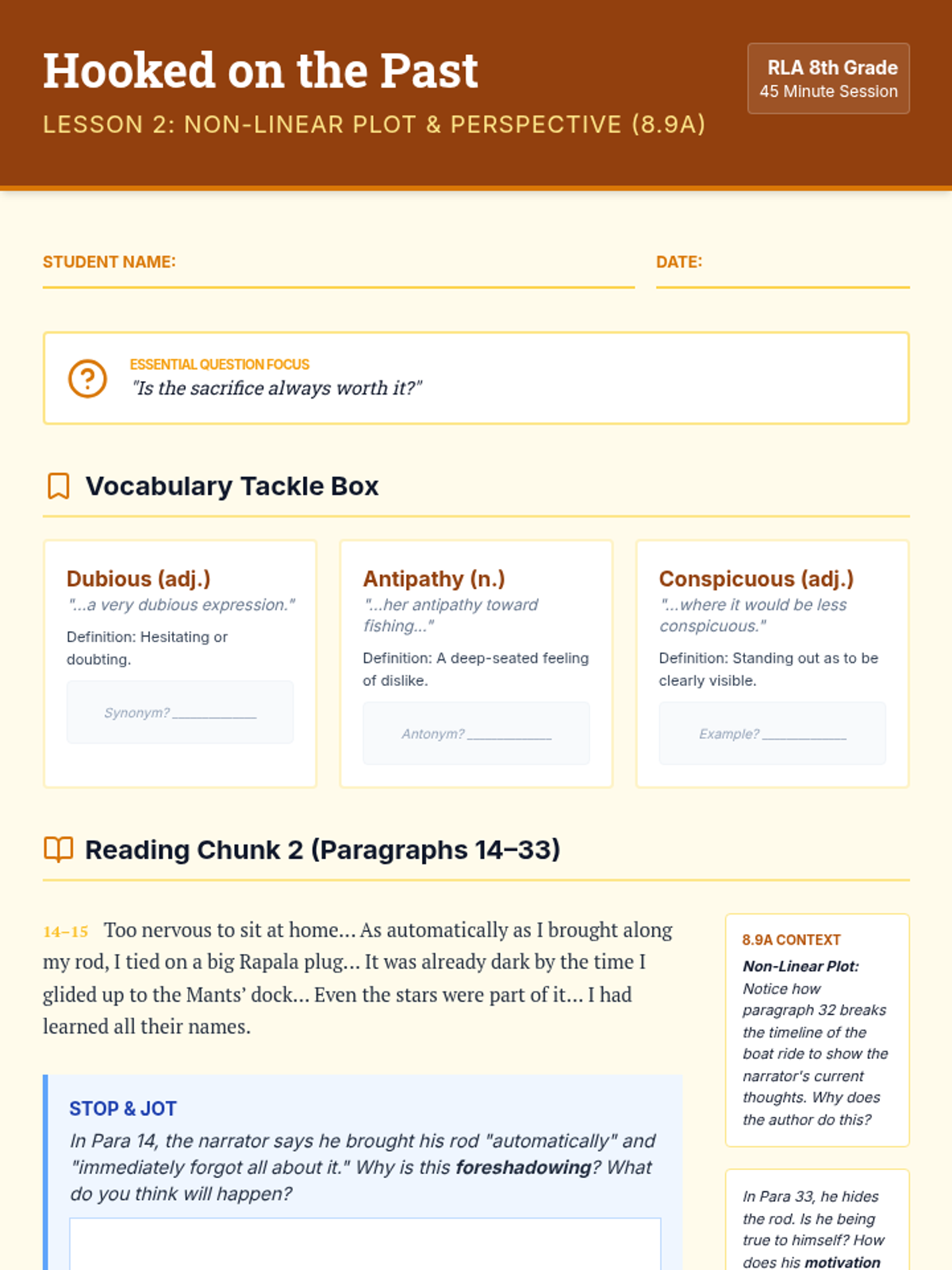
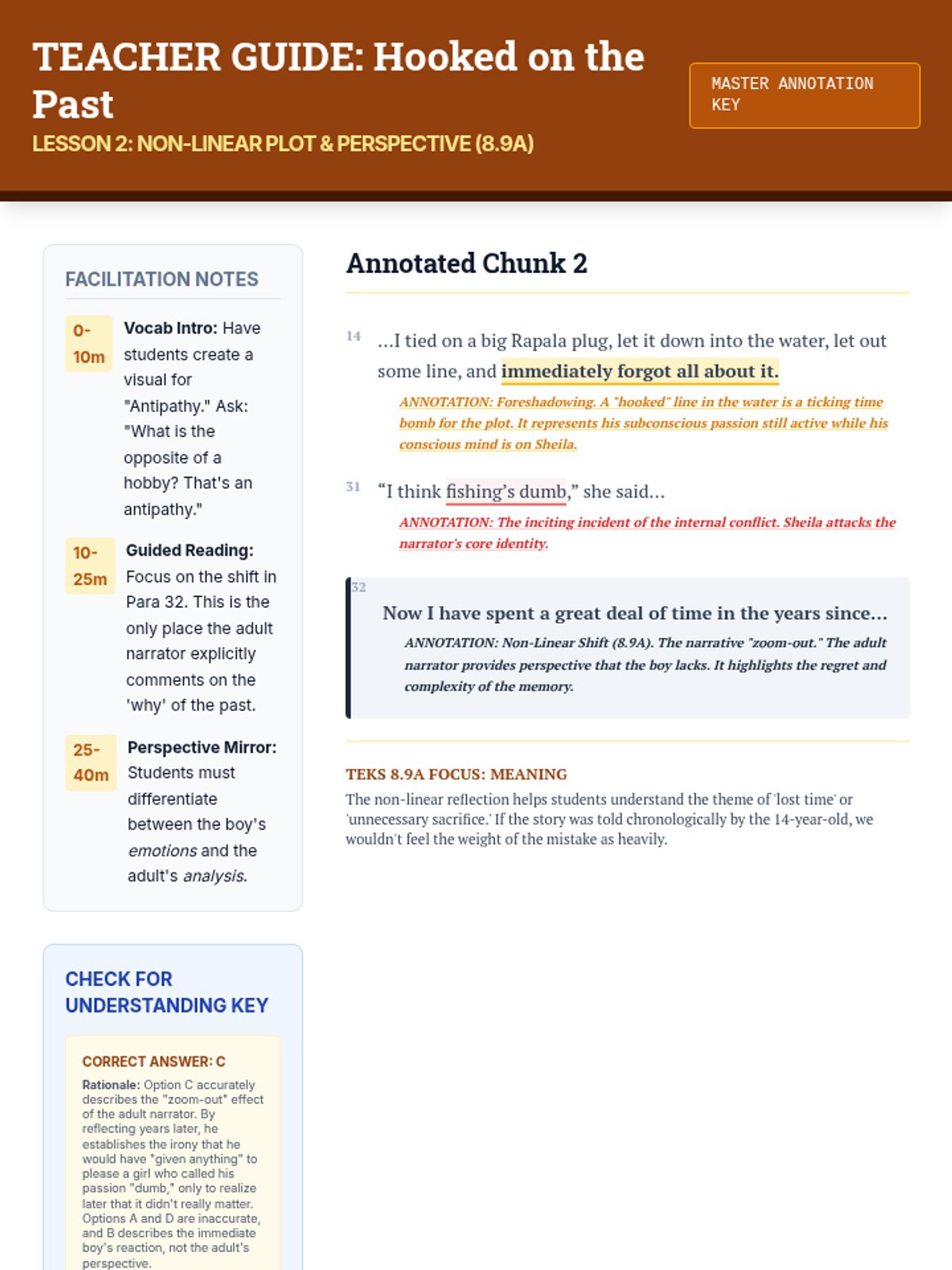
Students explore narrative perspective and non-linear plot elements (flashbacks/reflections) in paragraphs 14-33. Focus on TEKS 8.9A.
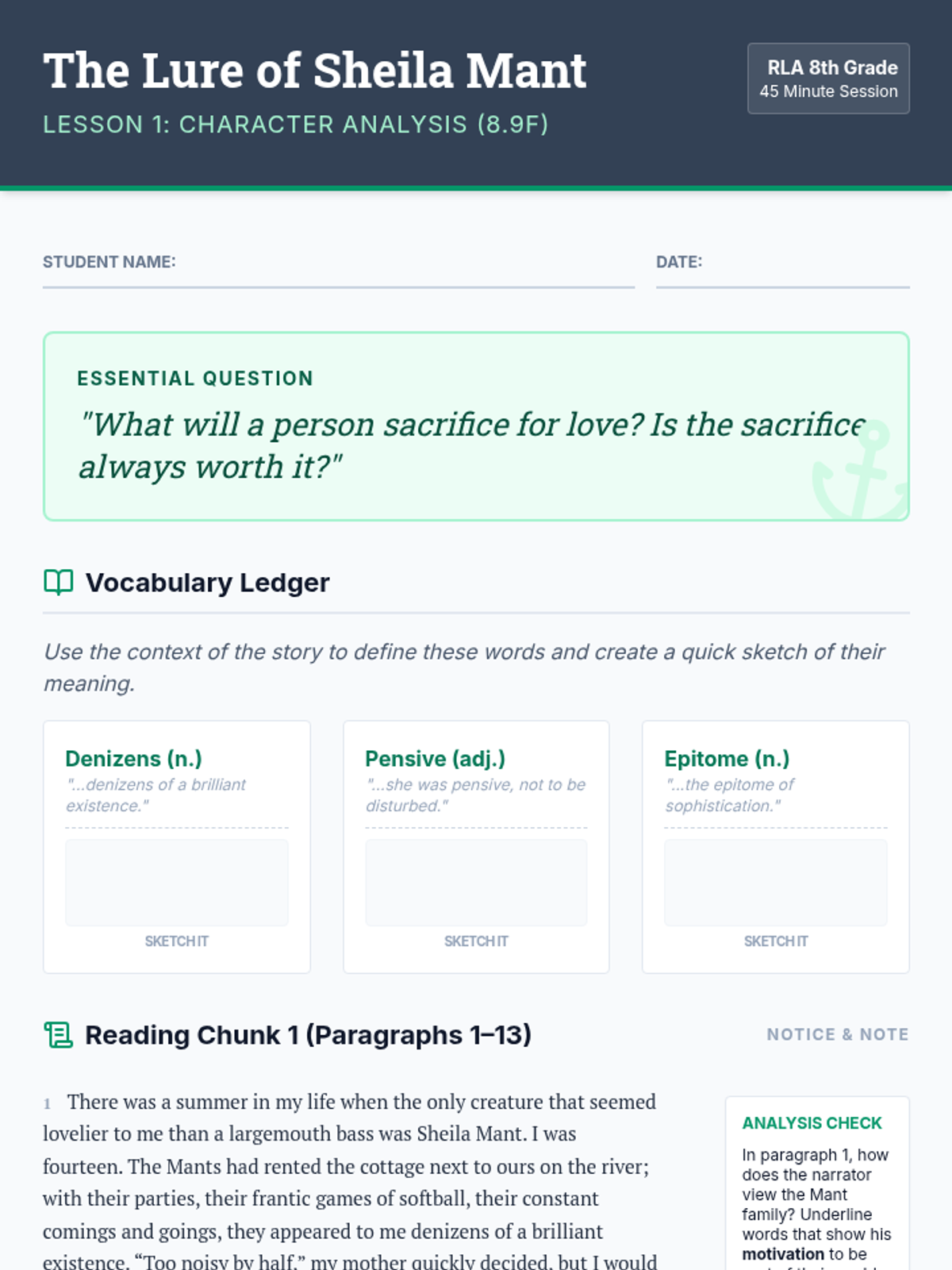
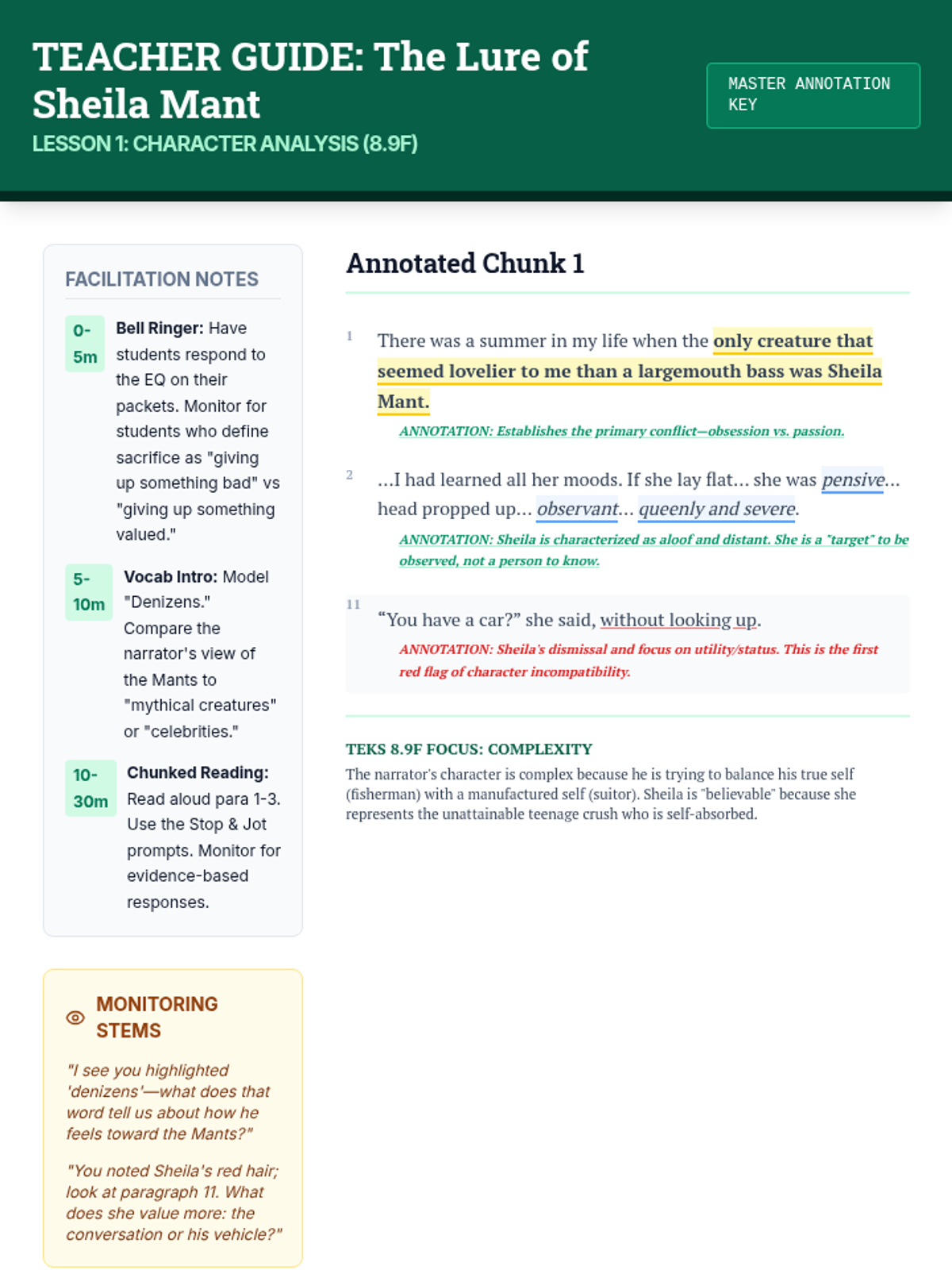
Students analyze initial characterization and motivations in paragraphs 1-13 of 'The Bass, the River, and Sheila Mant'. Focus on TEKS 8.9F.
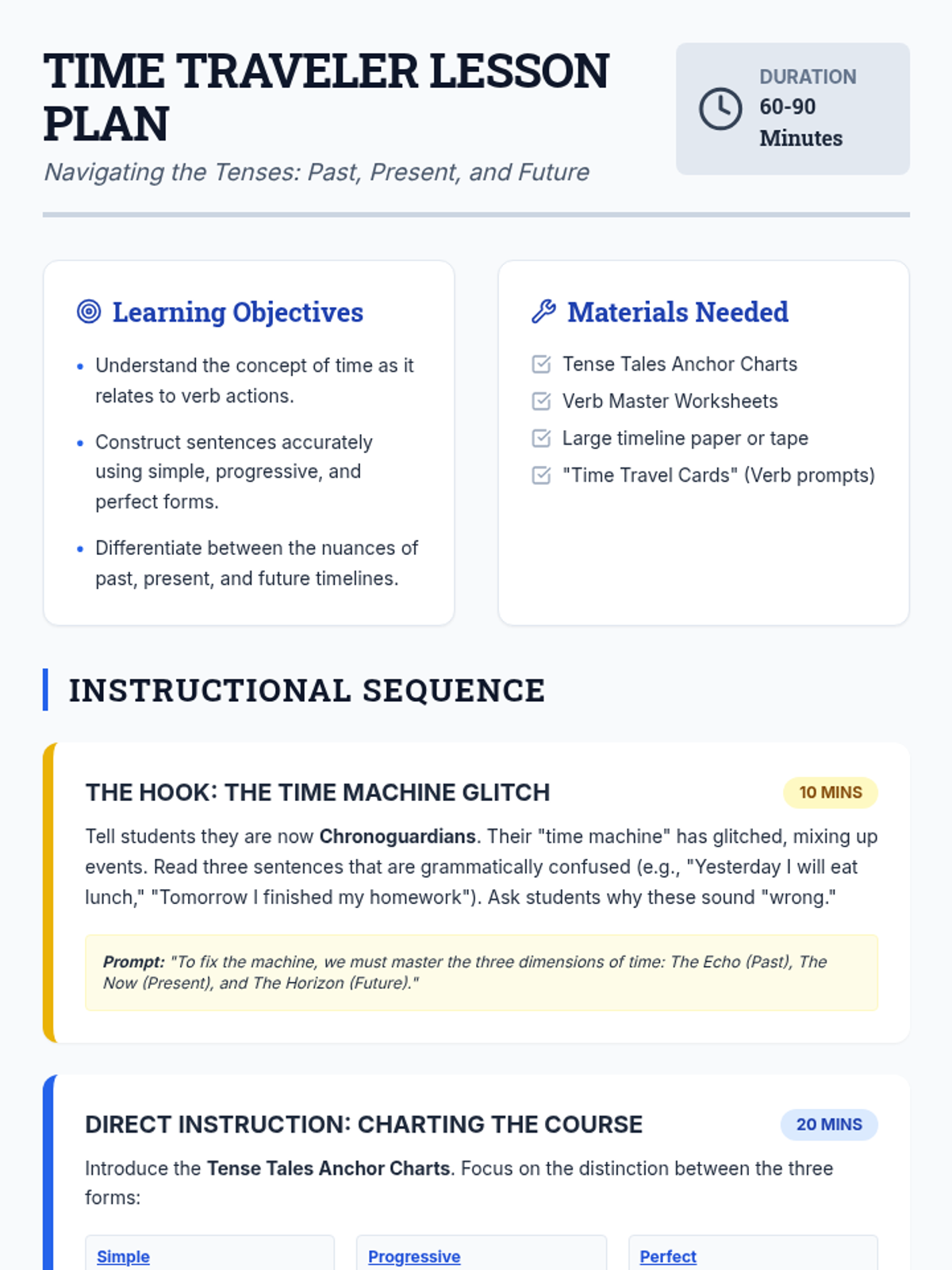
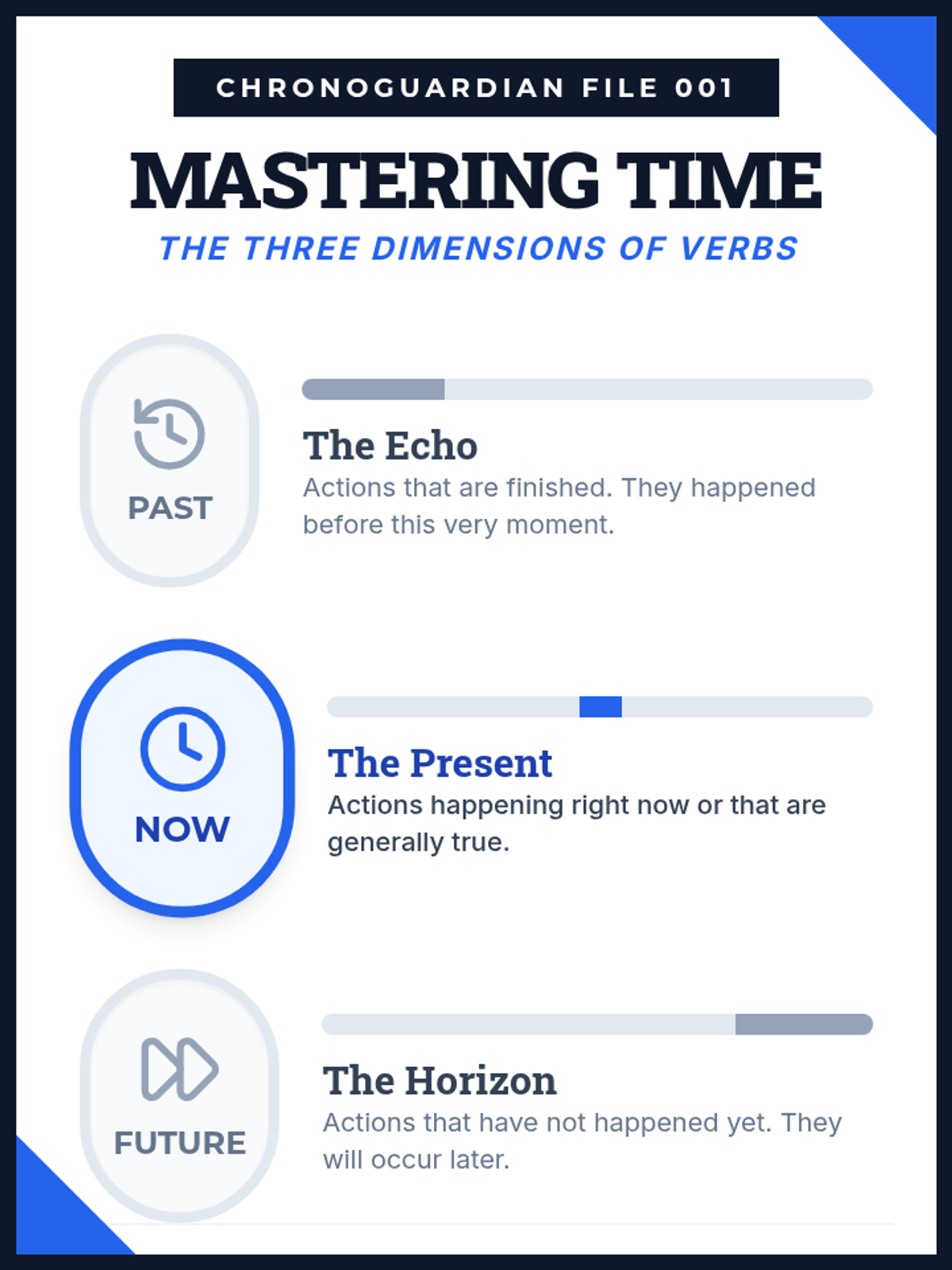
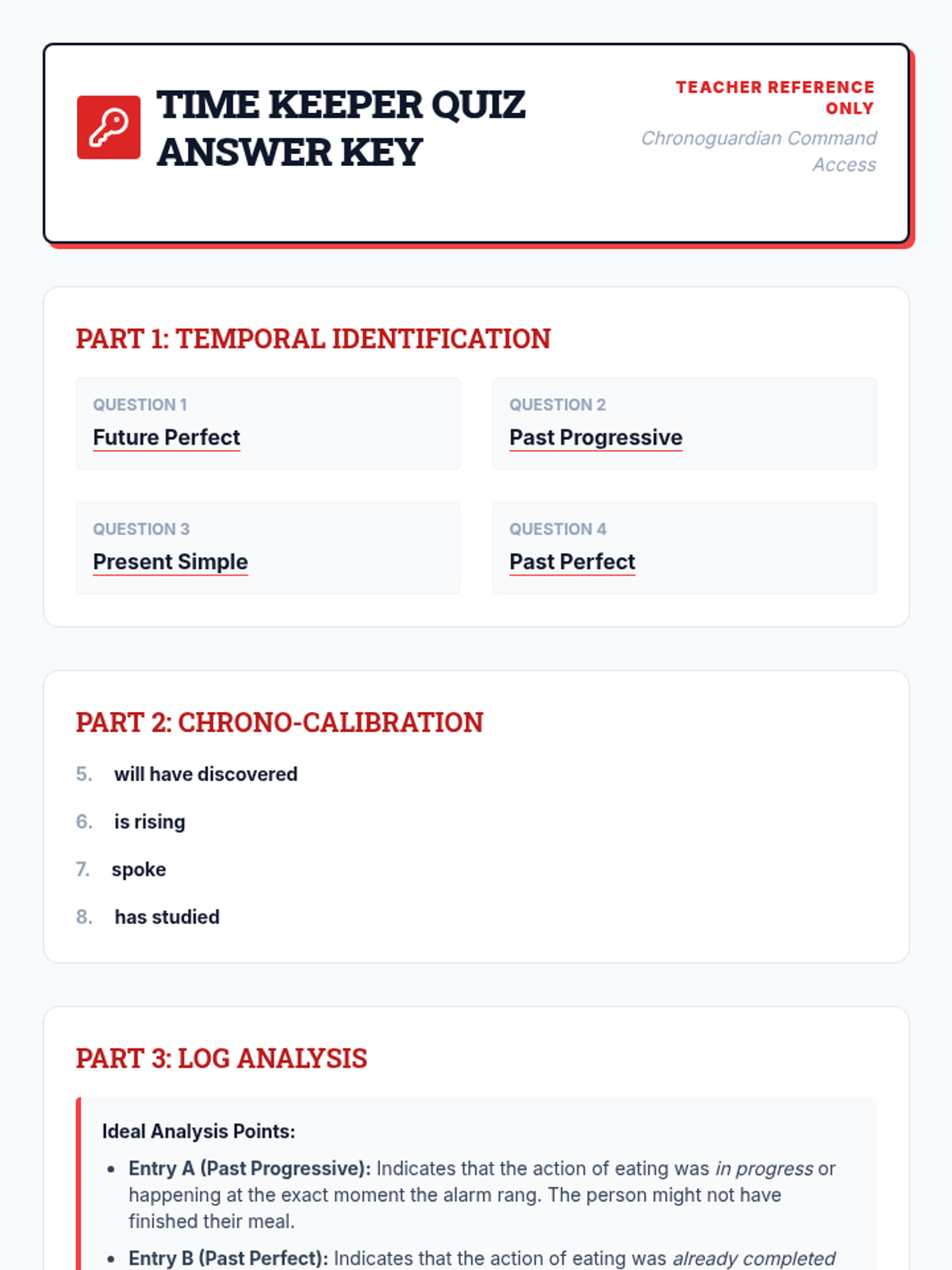
A comprehensive lesson on verb tenses (past, present, future) covering simple, progressive, and perfect forms through the lens of a time-traveling adventure.
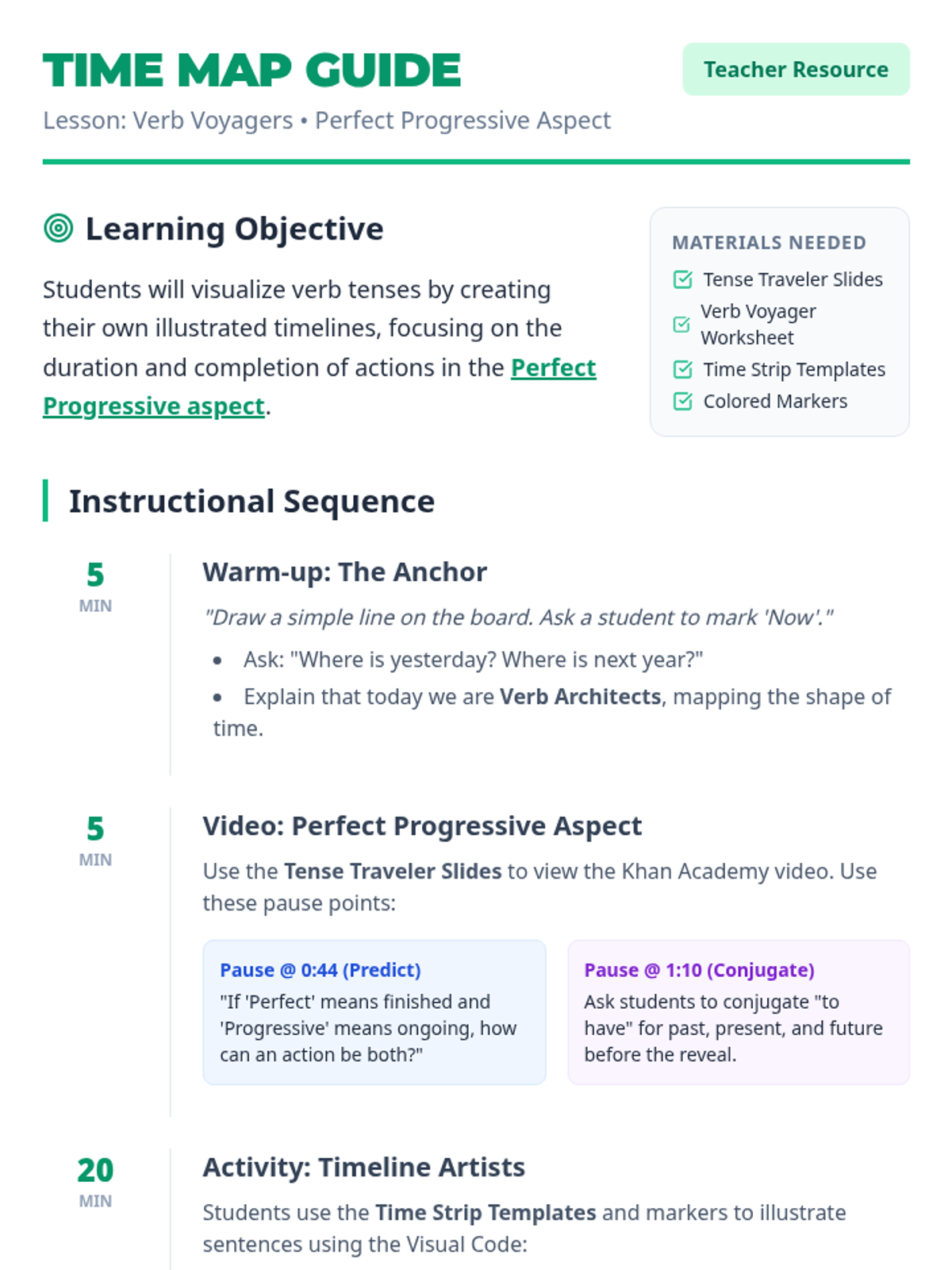
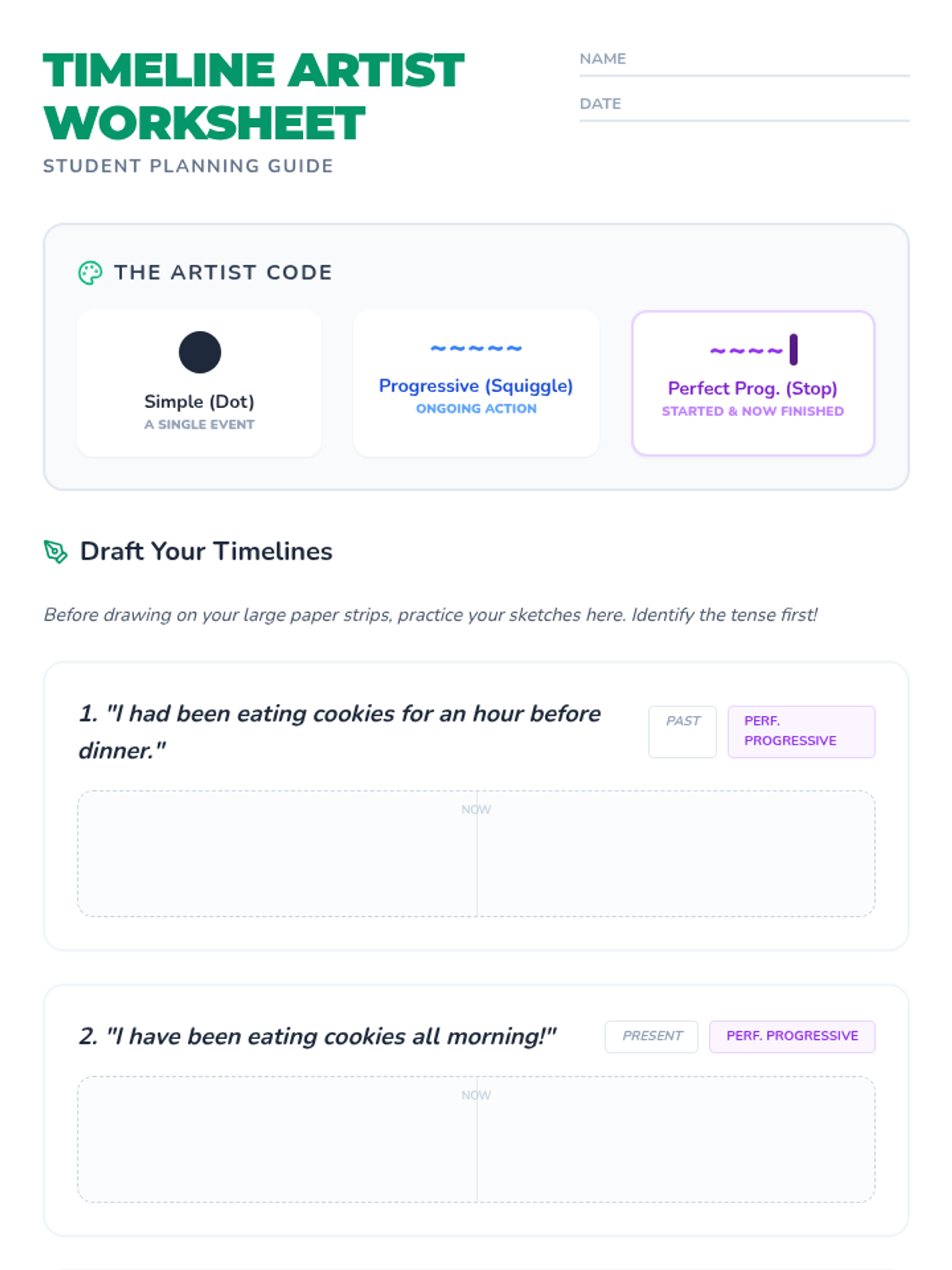
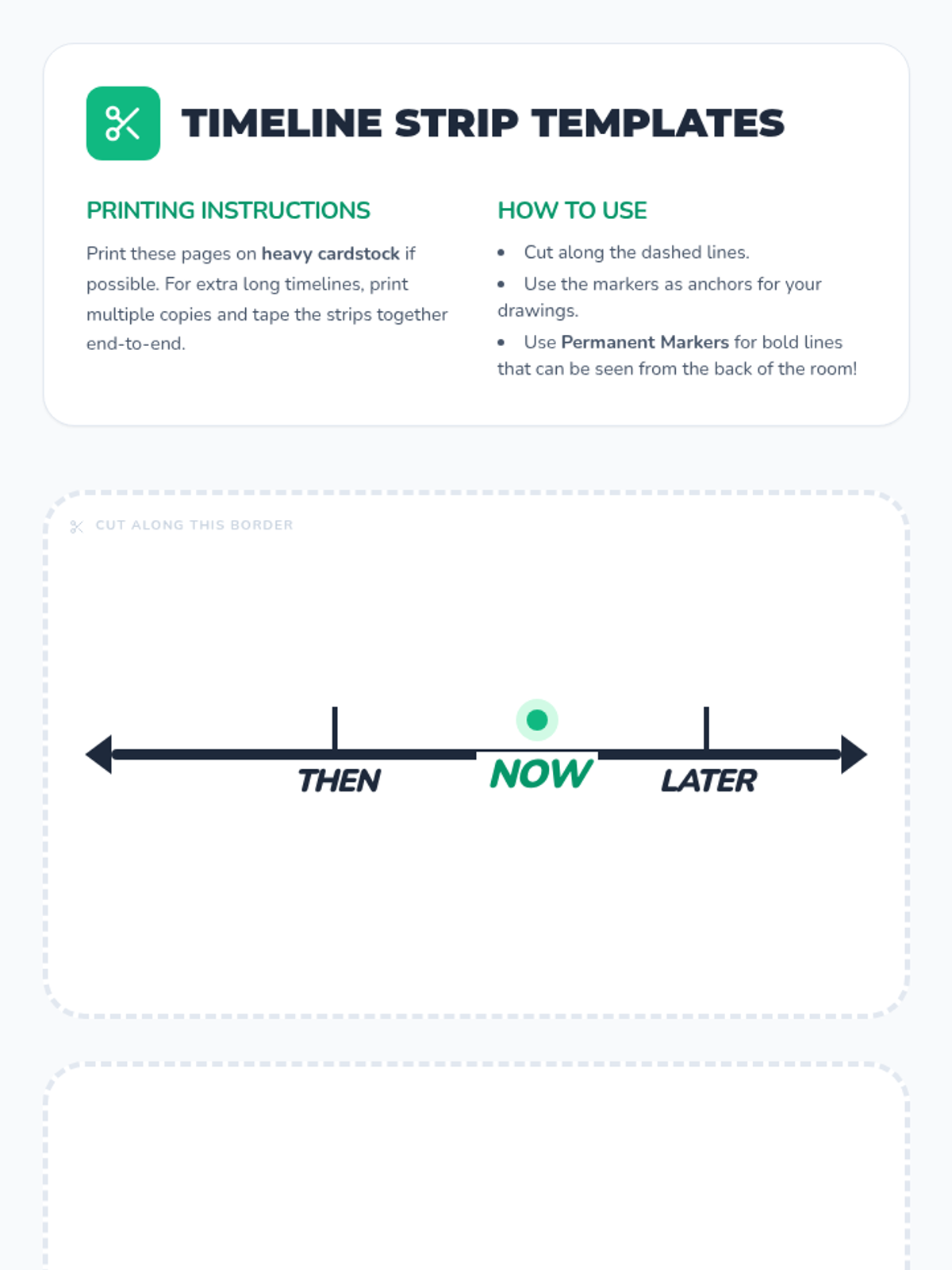
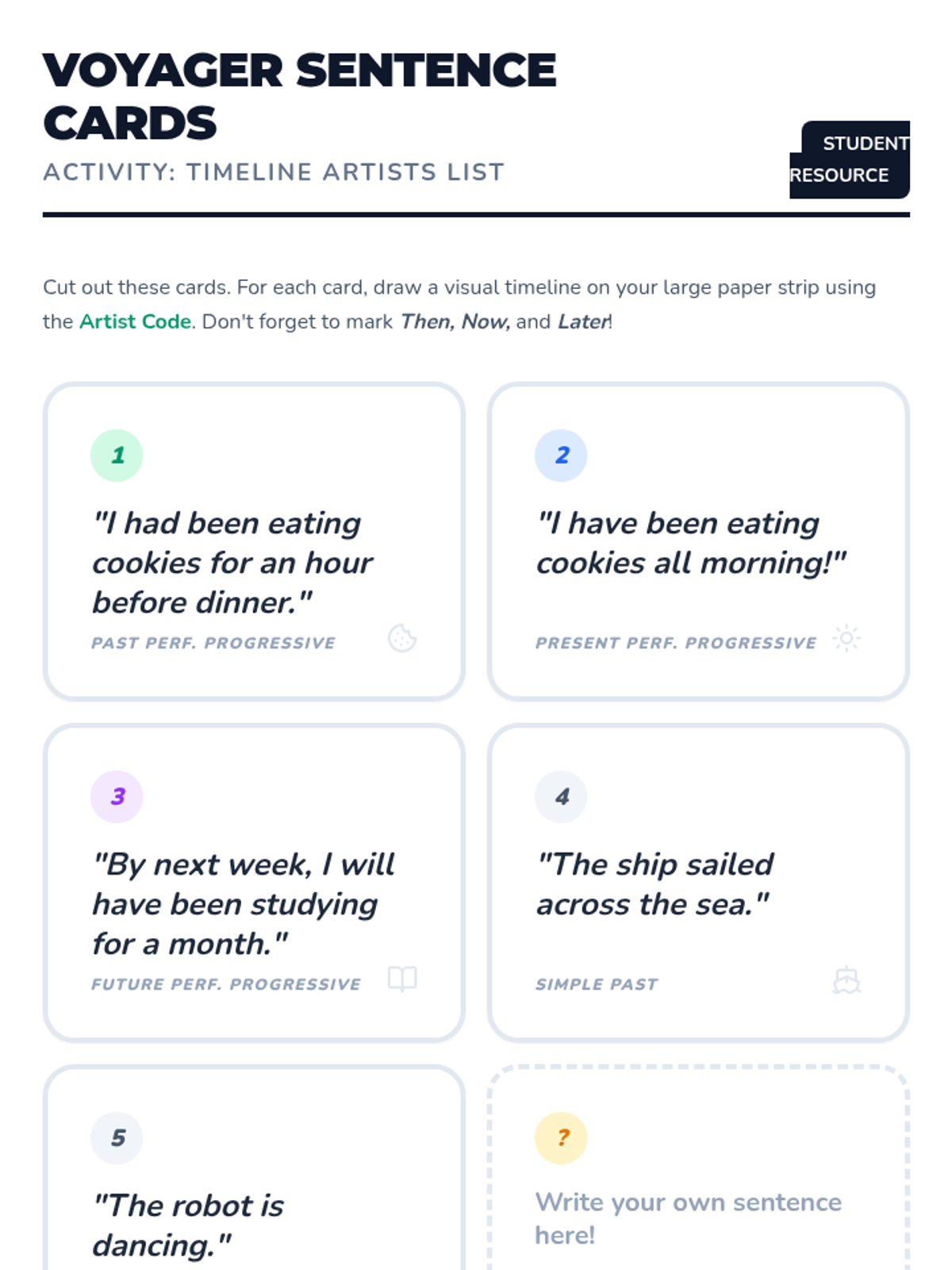
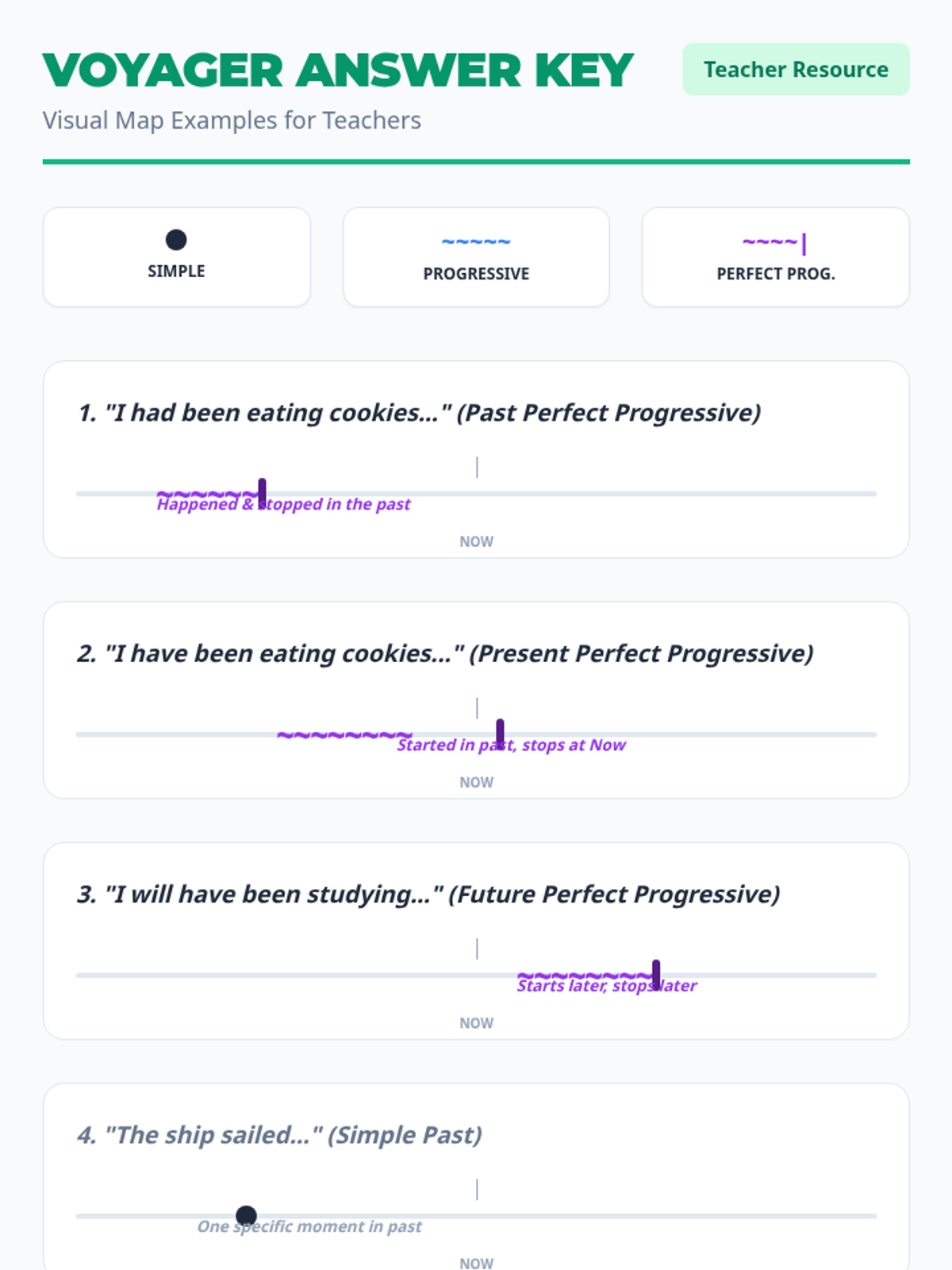
A visual-first grammar lesson where students use artistic symbols (dots and squiggles) to map complex verb tenses on a timeline, featuring the Perfect Progressive aspect.
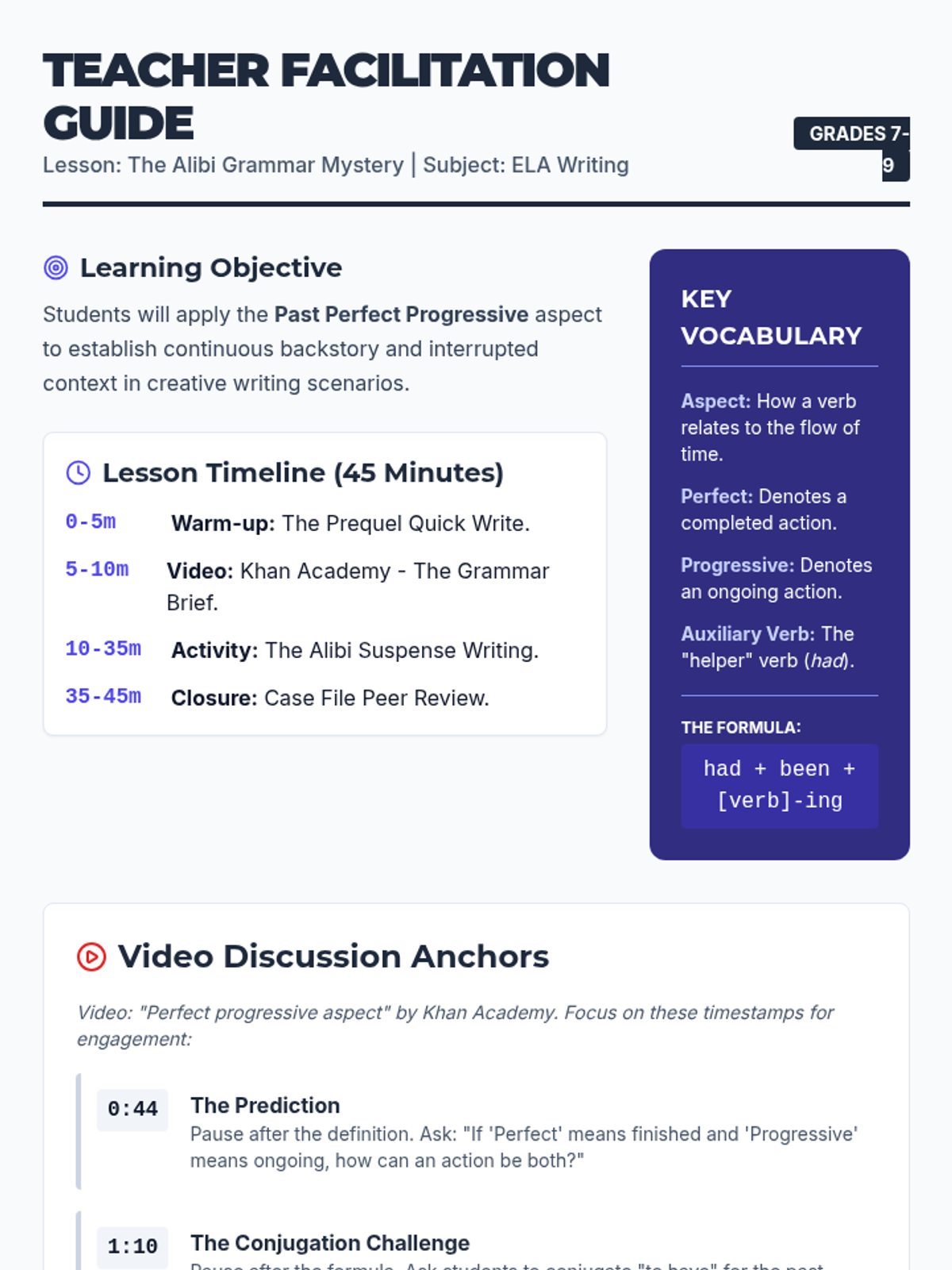
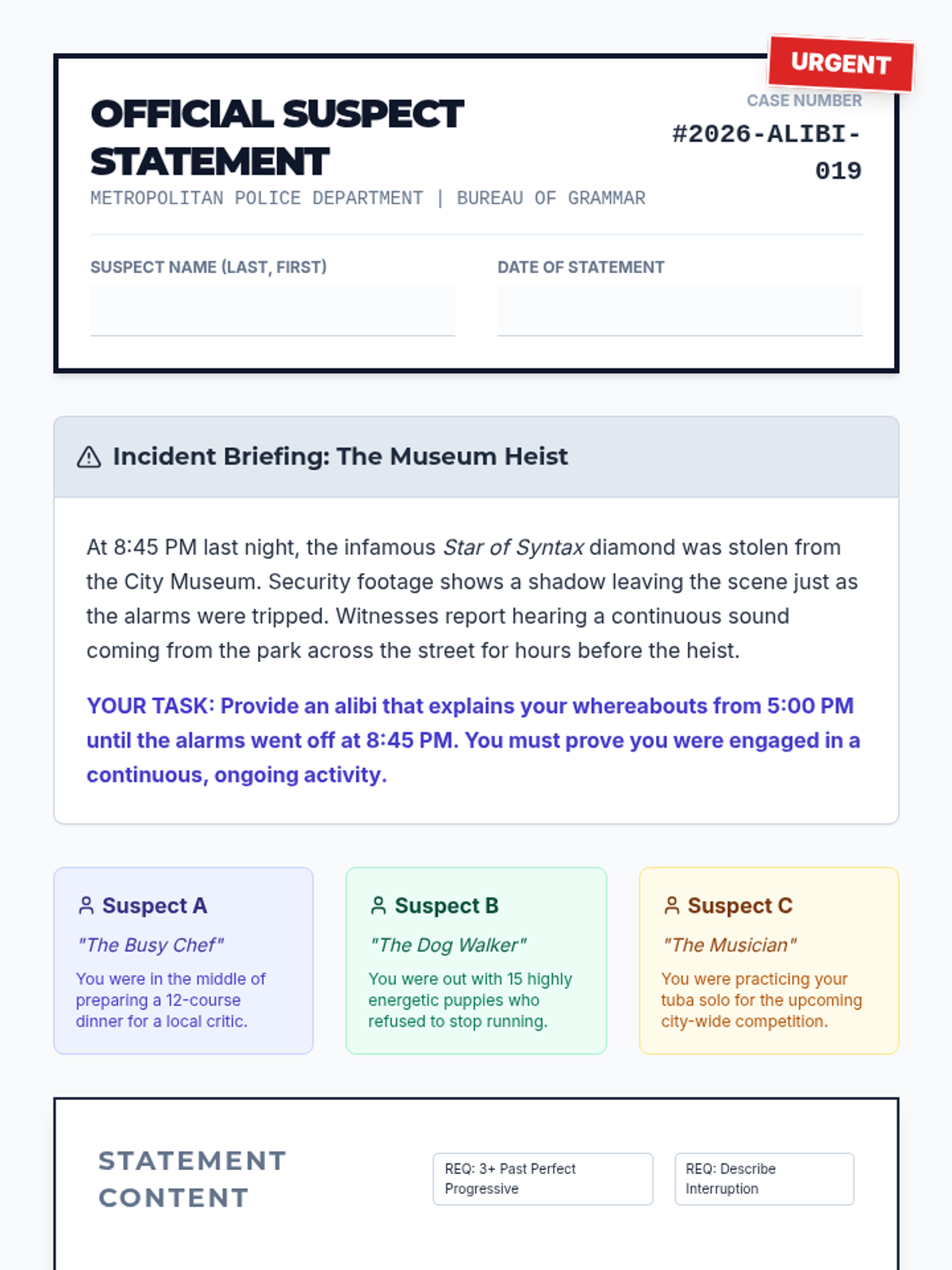
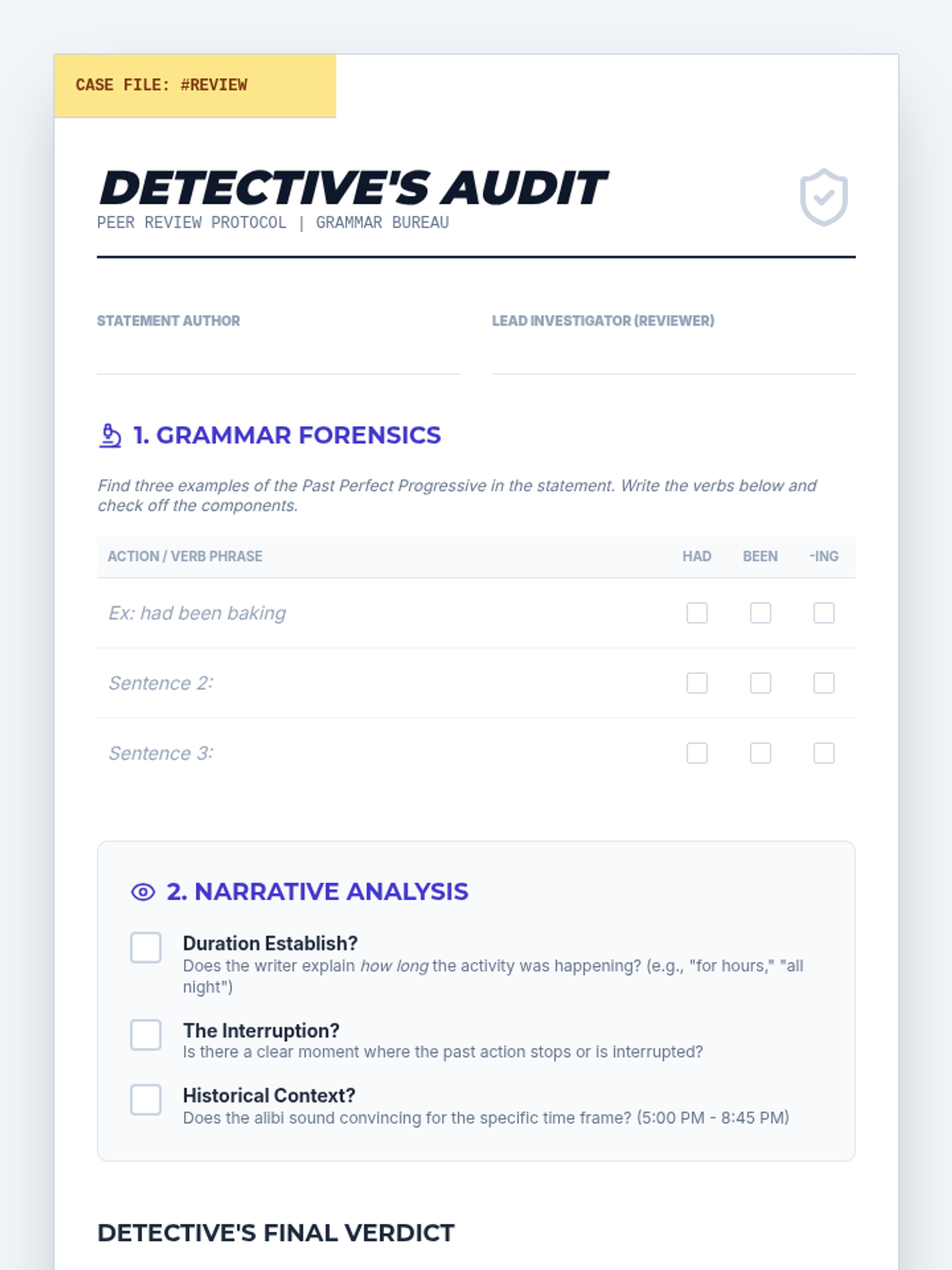
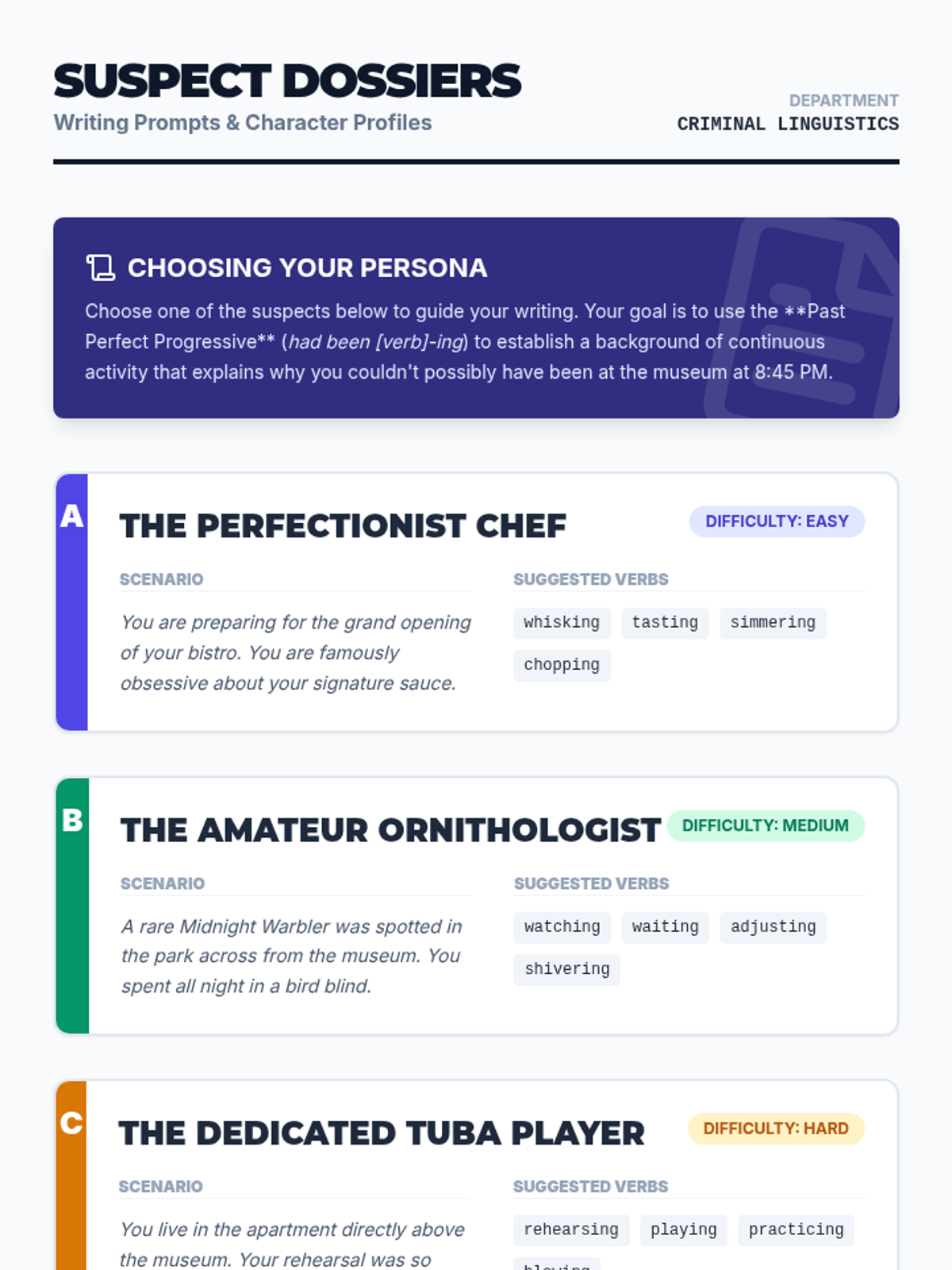
A creative writing lesson for 7th-9th graders focusing on the Past Perfect Progressive aspect. Students use 'The Alibi' mystery scenario to practice establishing continuous backstory and context.
A lesson focused on identifying and using appositives to add detail and variety to sentences, using a detective-themed 'Identity Files' approach.
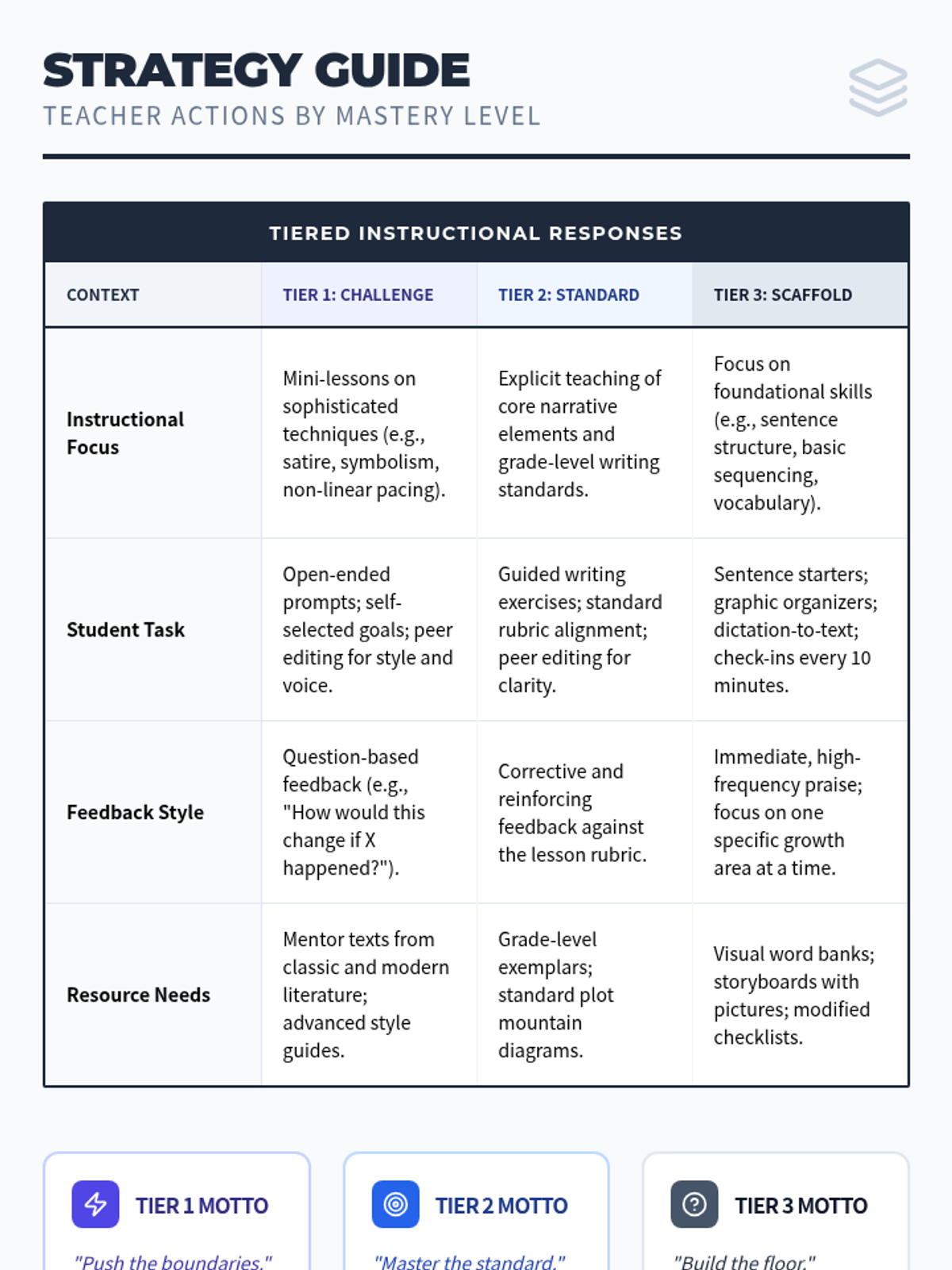
A resource kit for teachers to track and support student progress across three distinct tiers of mastery, specifically tailored for Narrative Writing skills.
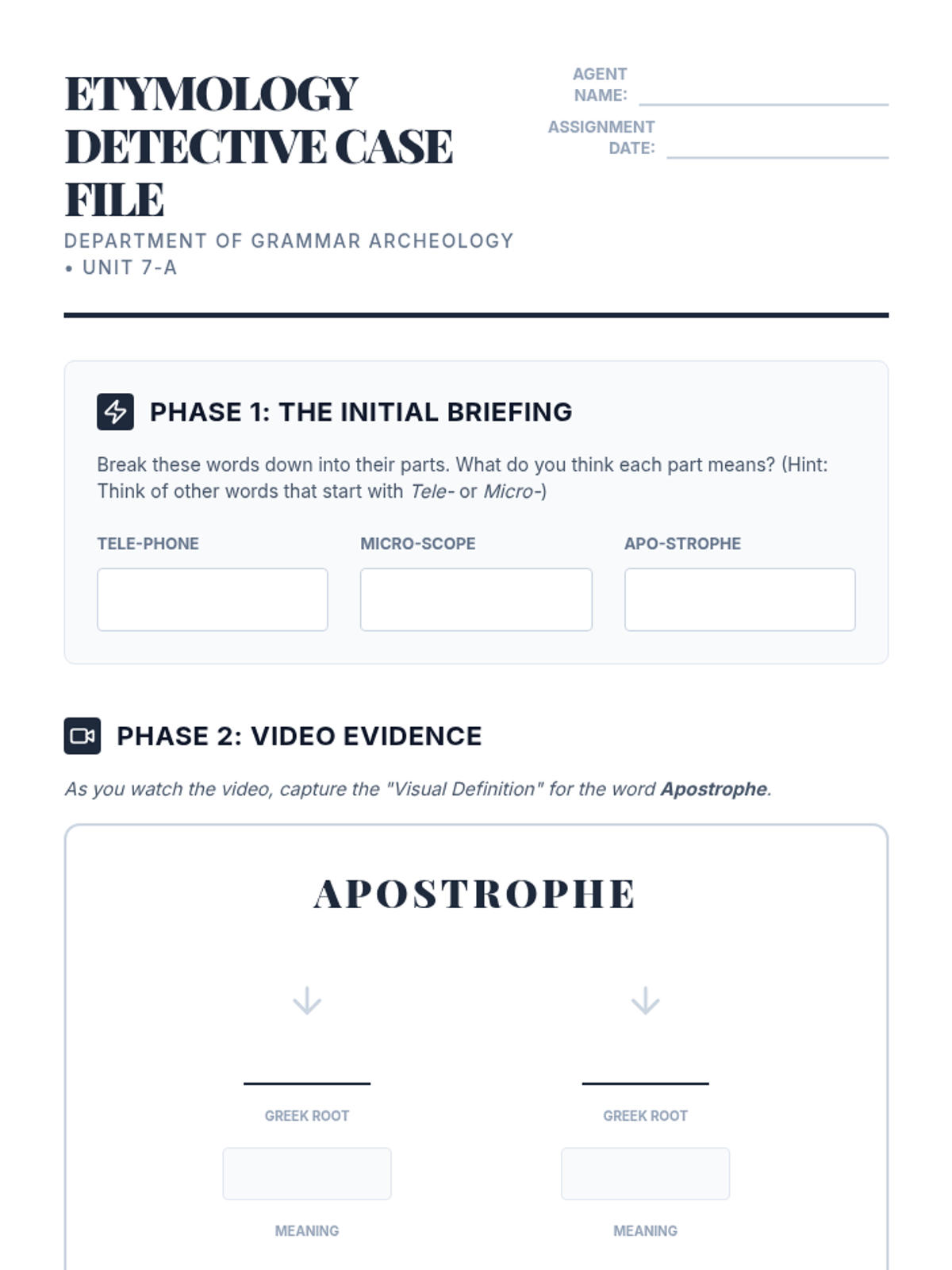
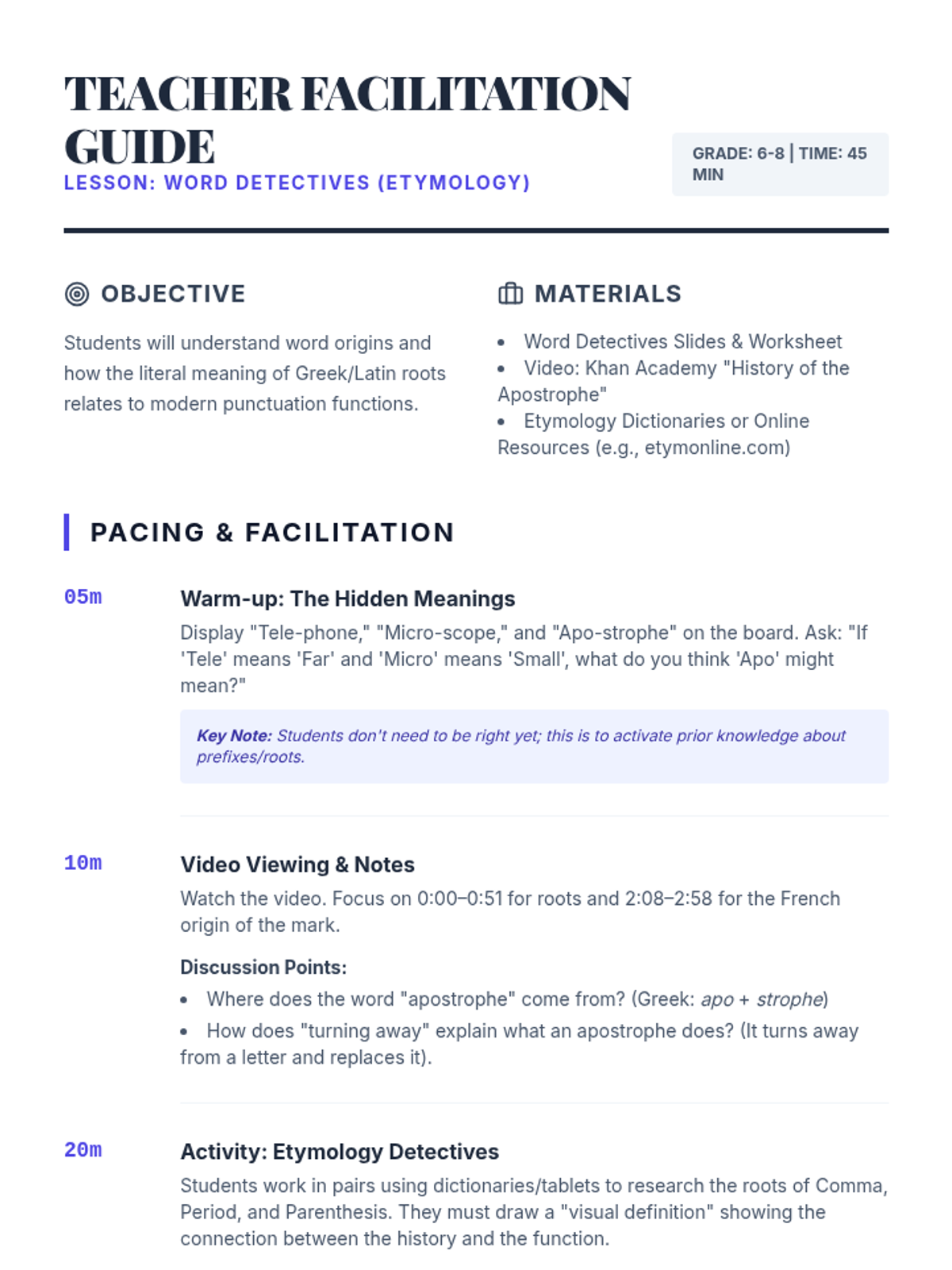
A lesson for grades 6-8 exploring the Greek and Latin origins of grammar terms, specifically focusing on the history of the apostrophe and other punctuation marks. Students act as etymology detectives to connect ancient roots to modern definitions.
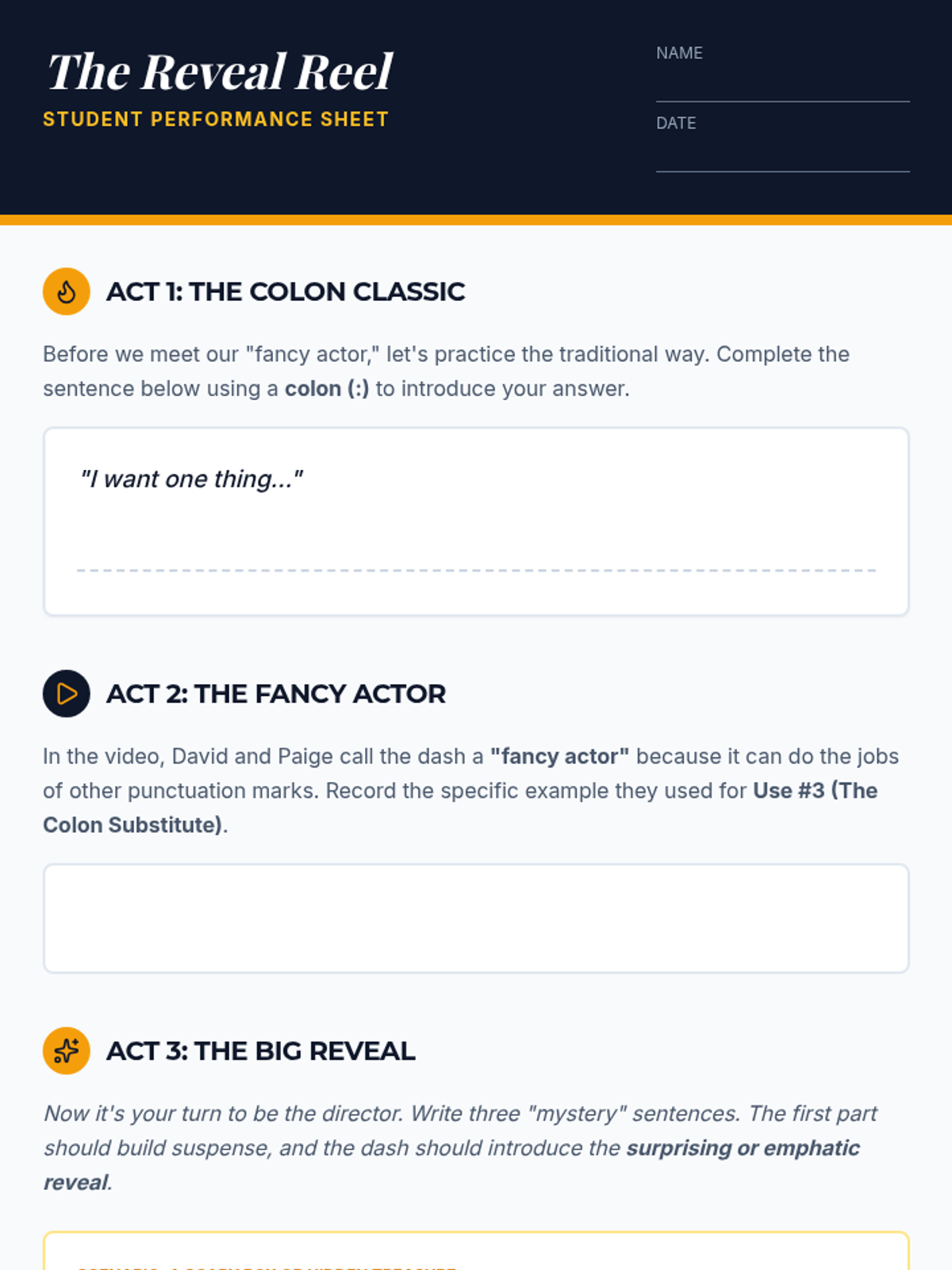
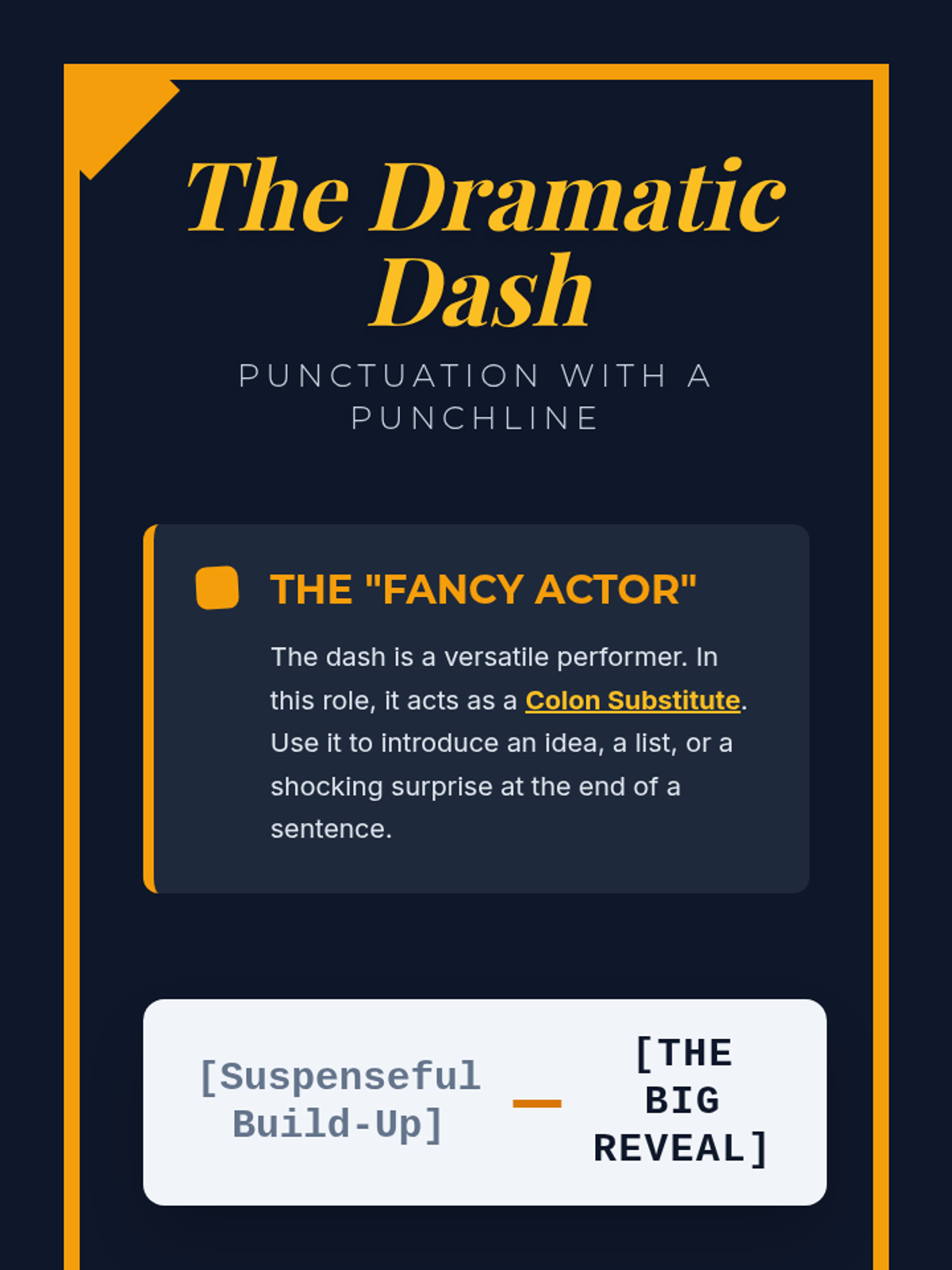
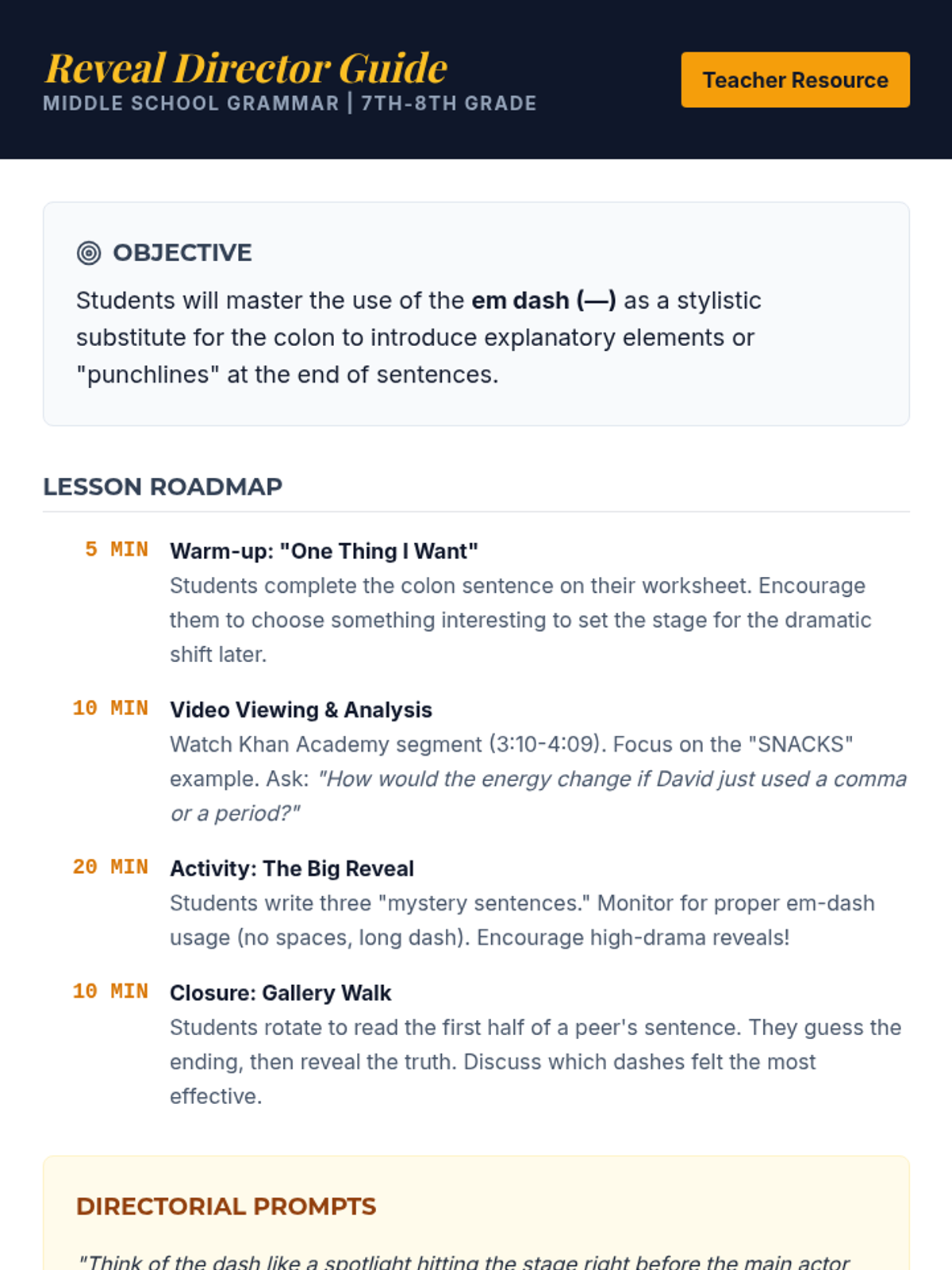
Students learn to use the em dash as a stylistic substitute for a colon to introduce 'punchlines' and dramatic reveals in their writing. The lesson features a Khan Academy video and a creative writing activity called 'The Big Reveal.'
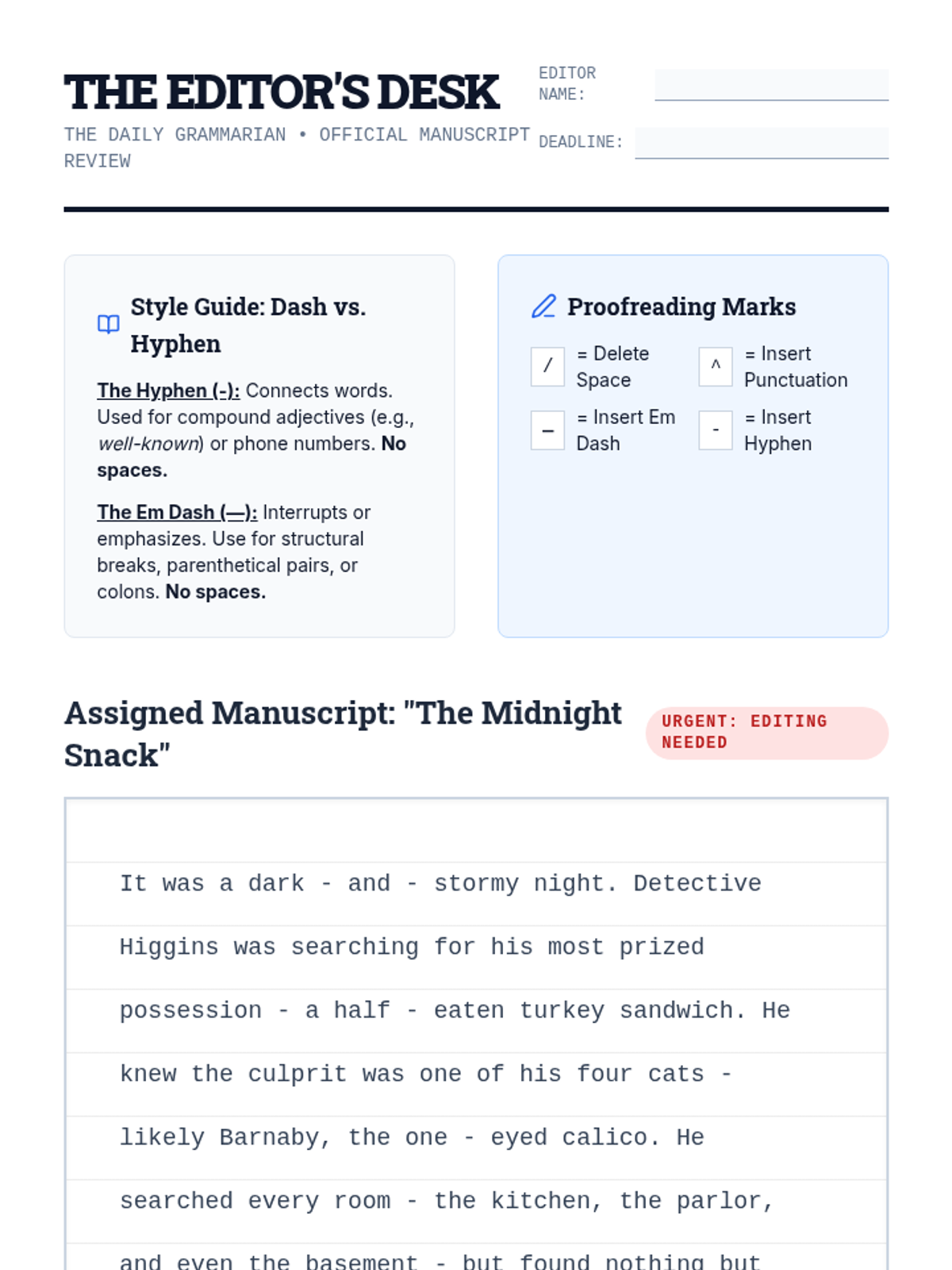
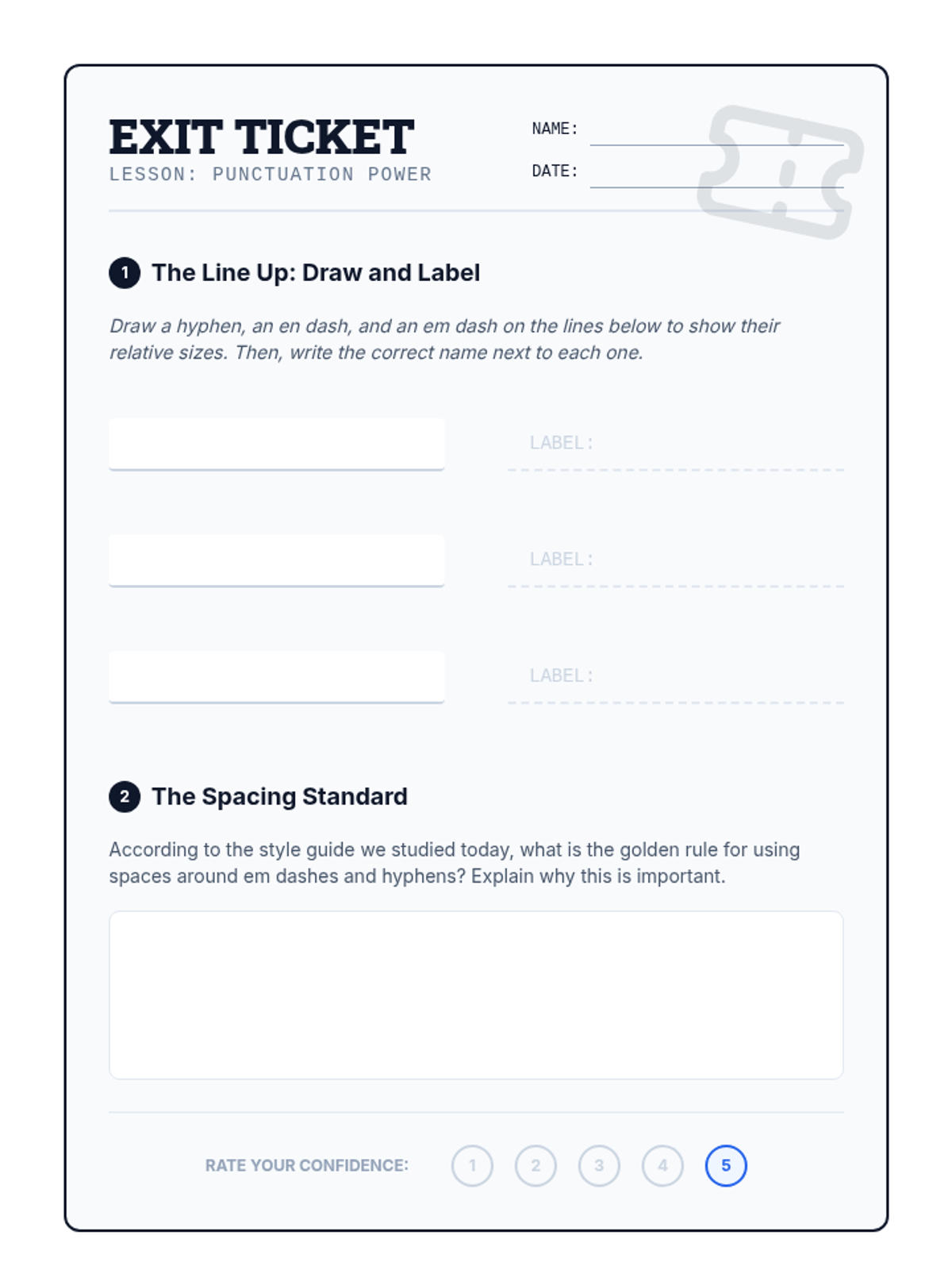
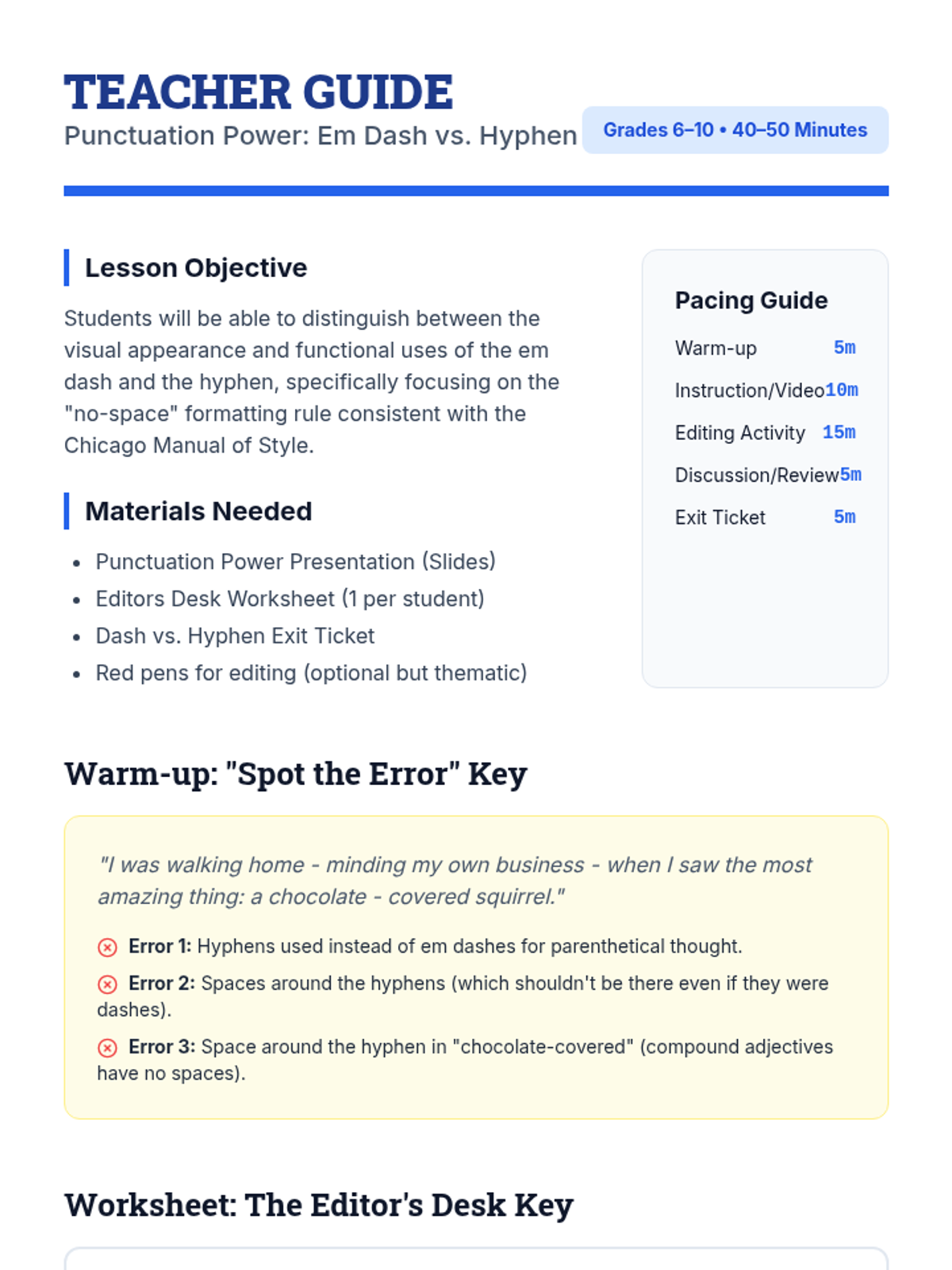
A comprehensive lesson for 6th-10th grade students focusing on the functional and formatting differences between em dashes and hyphens, featuring a newsroom-themed editing activity.
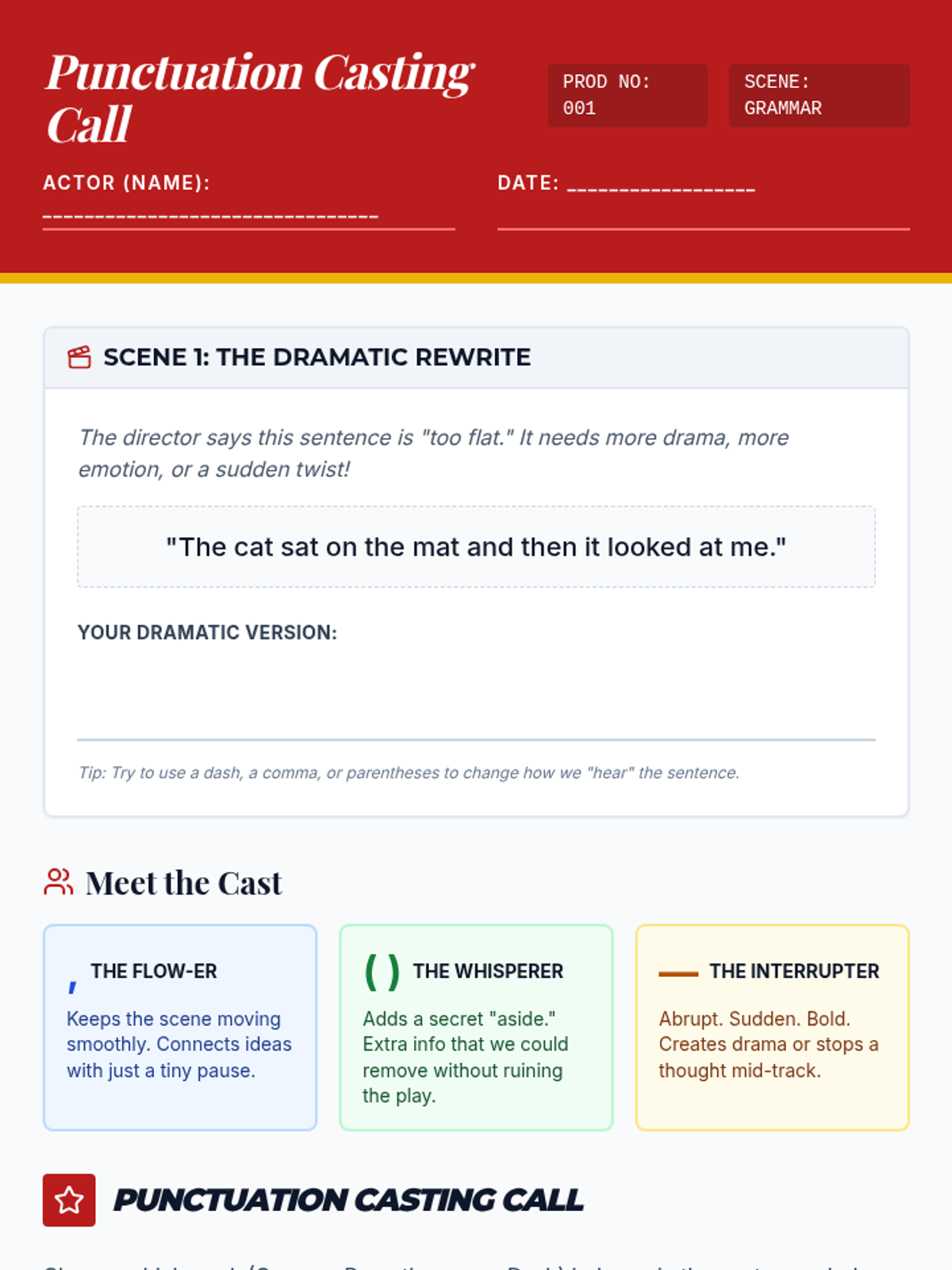
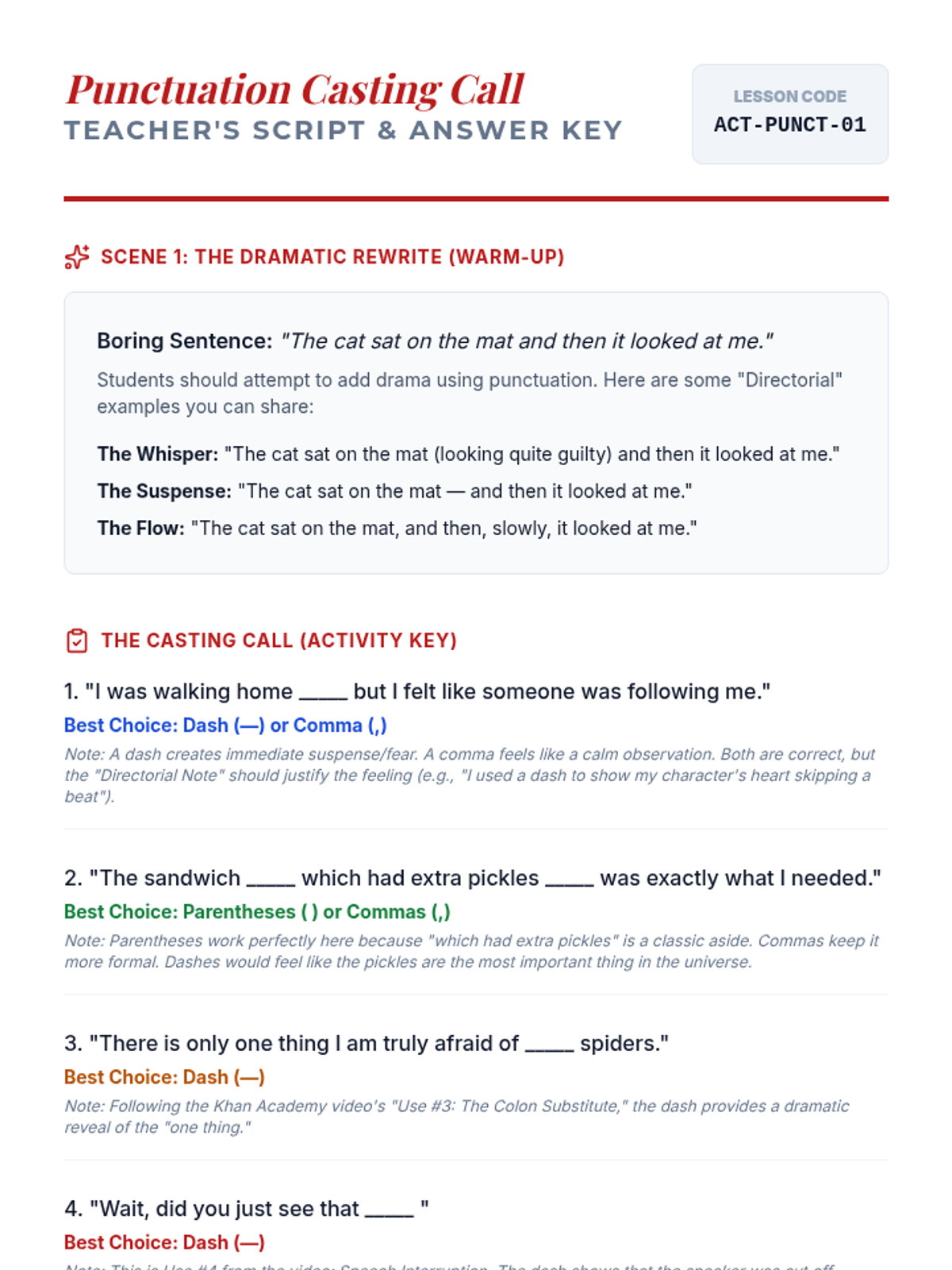
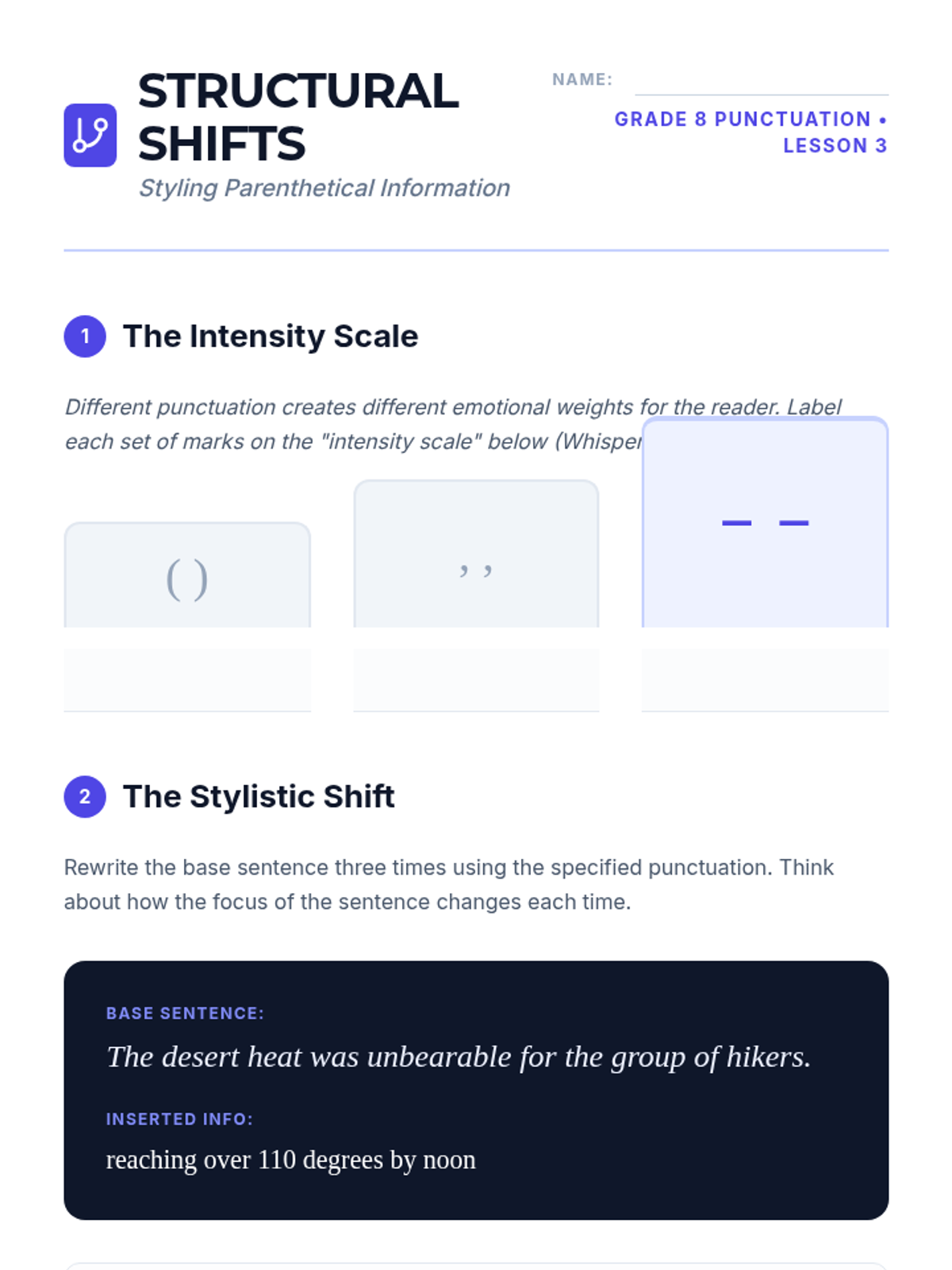
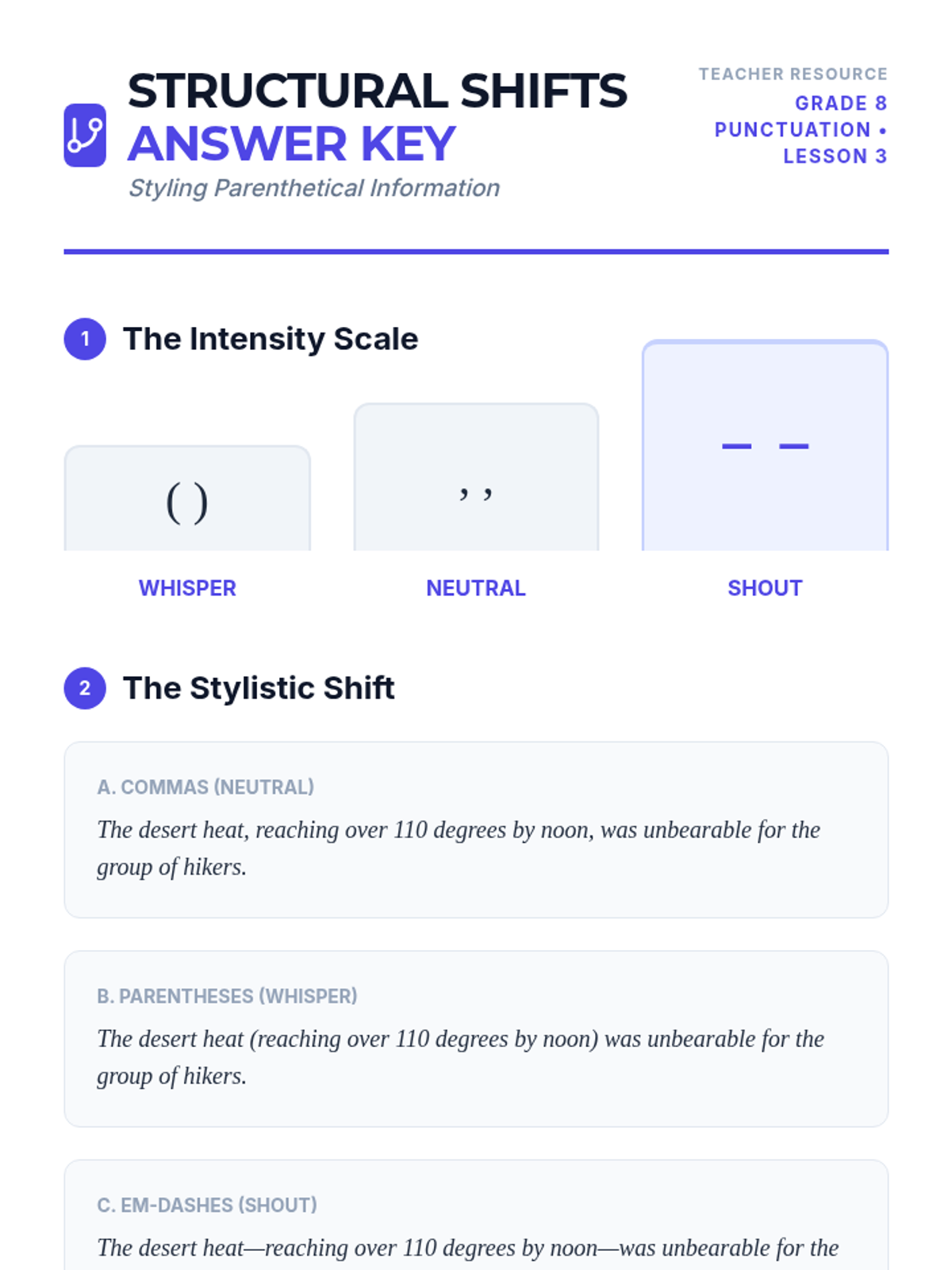
A middle school lesson exploring the stylistic and functional differences between commas, parentheses, and dashes using a theatrical 'Casting Call' metaphor. Students analyze how punctuation choices act like actors on a stage to change the tone and flow of sentences.
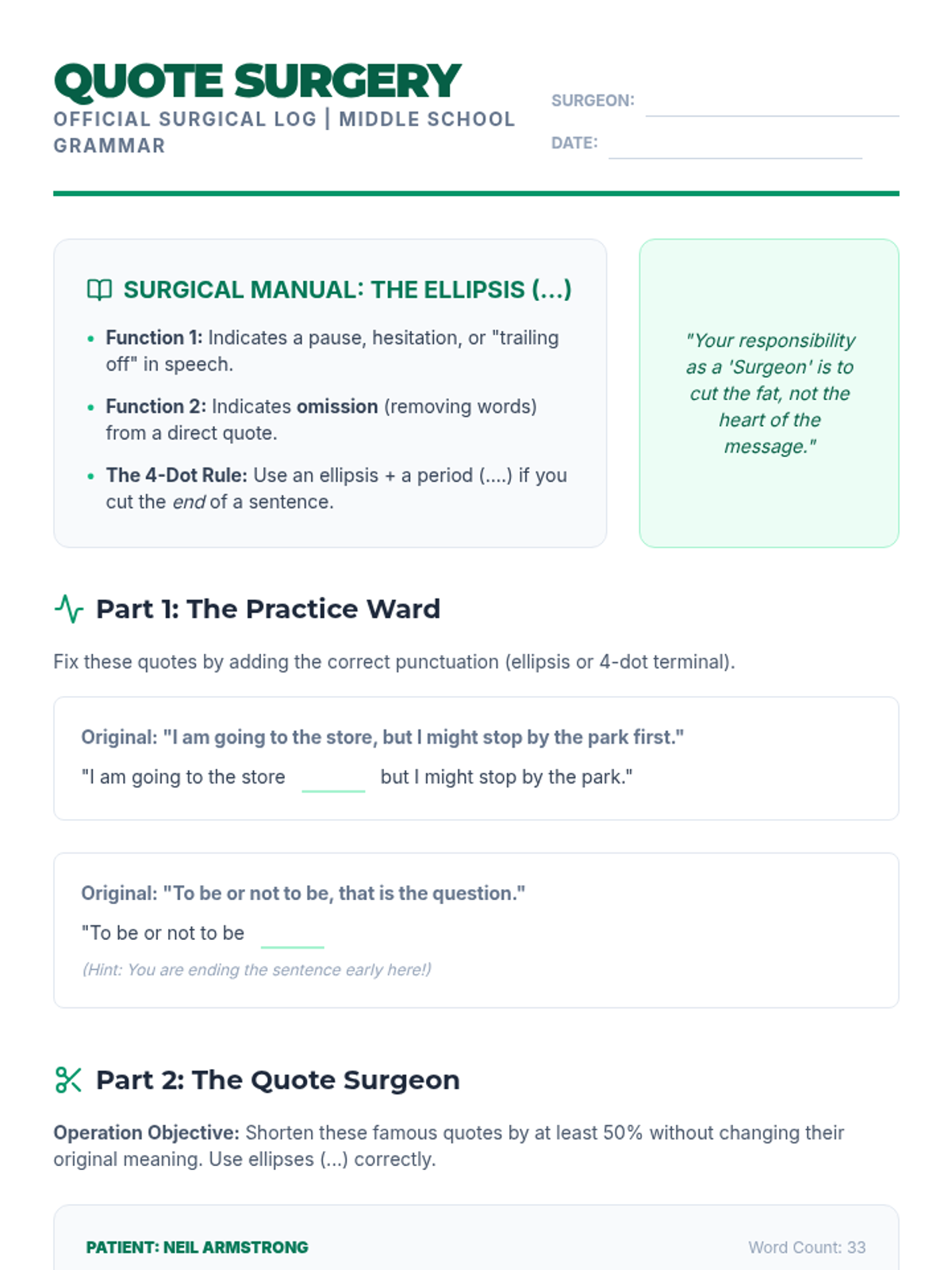
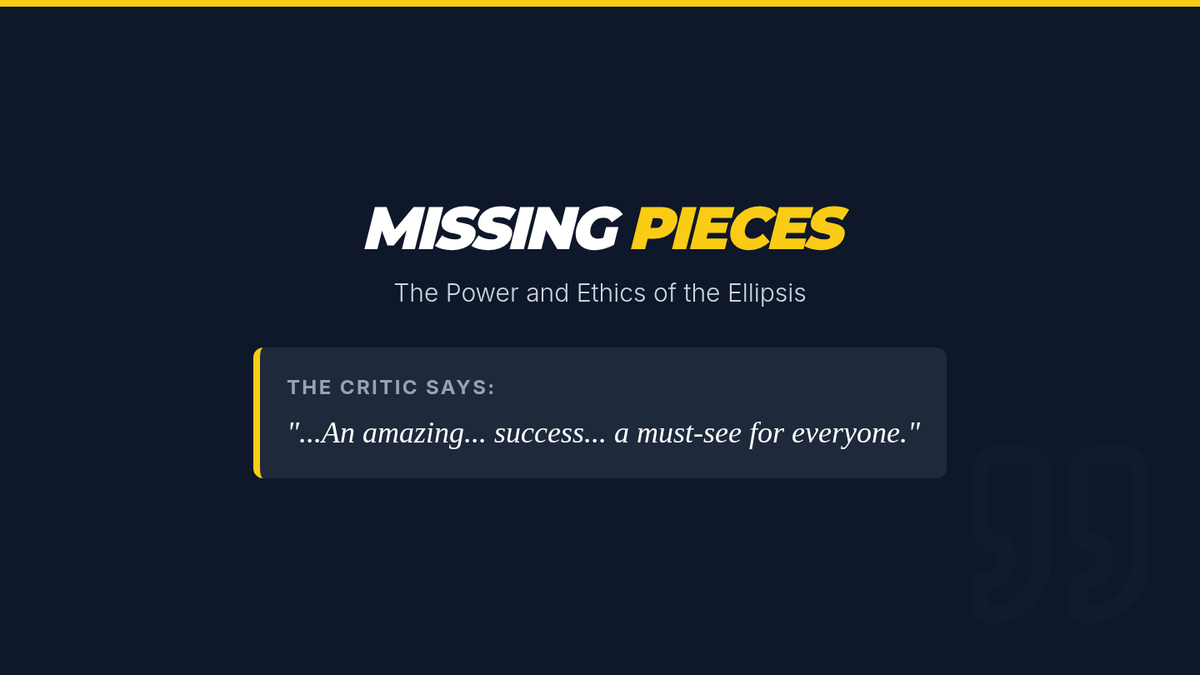
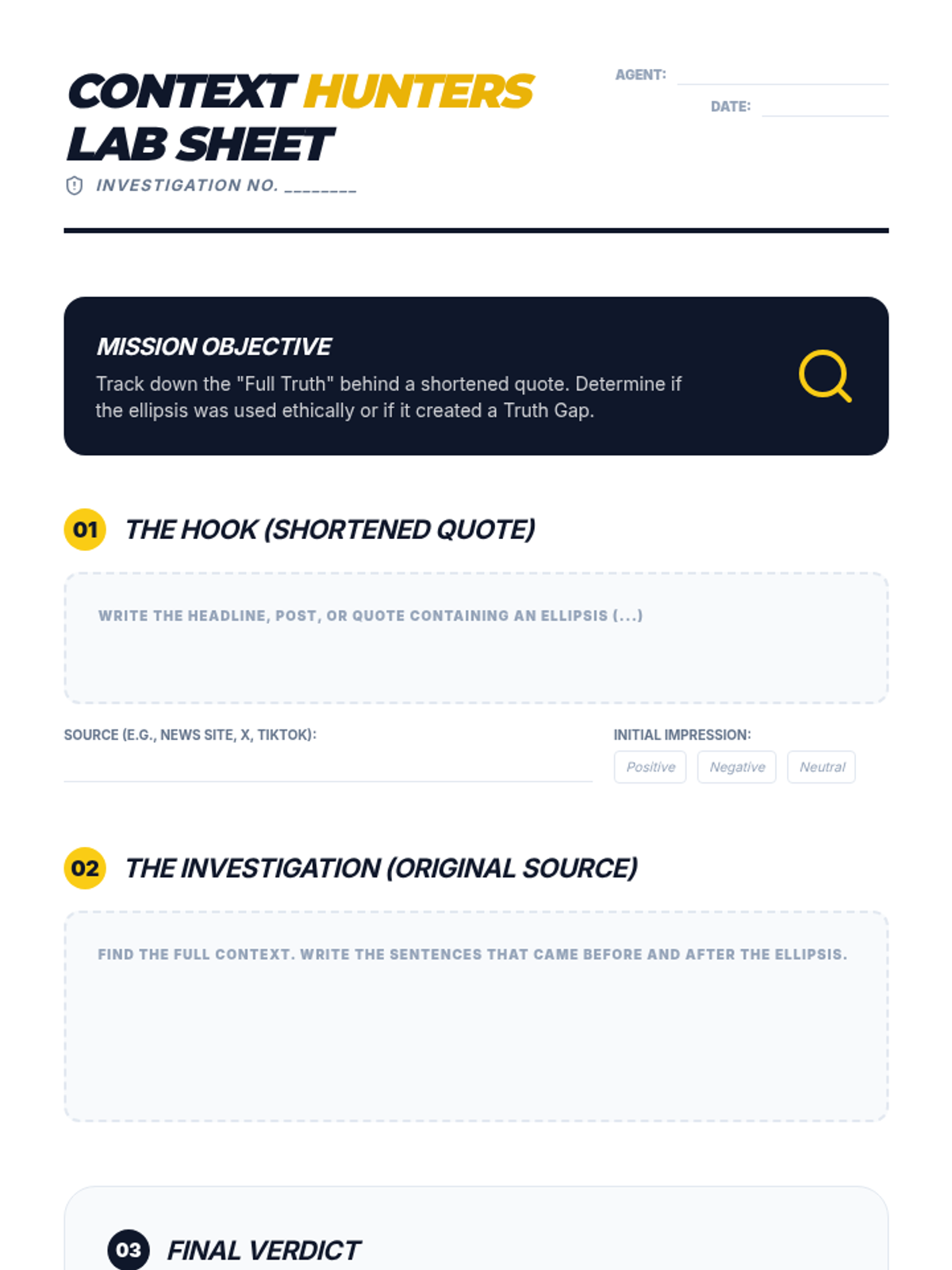
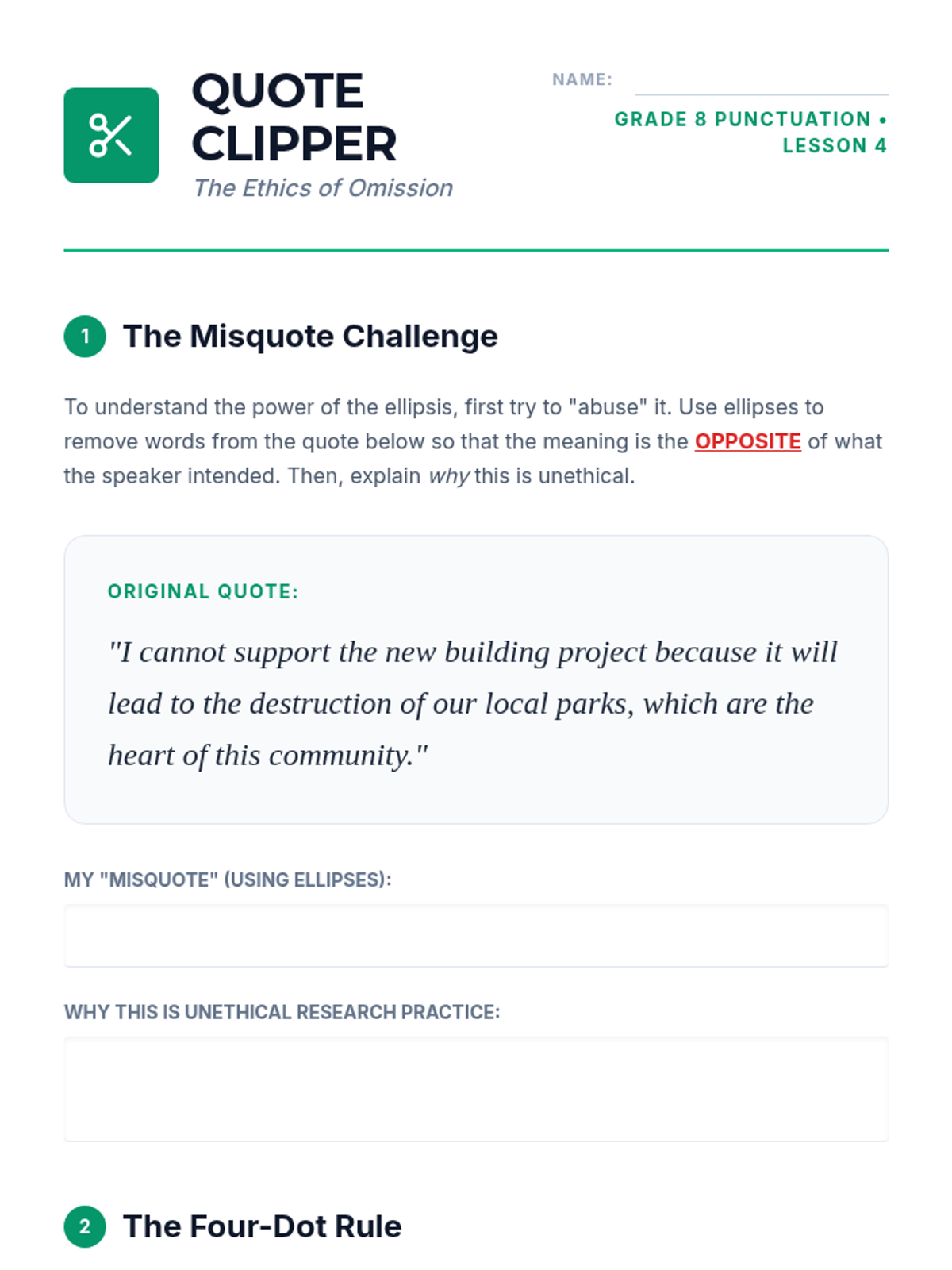
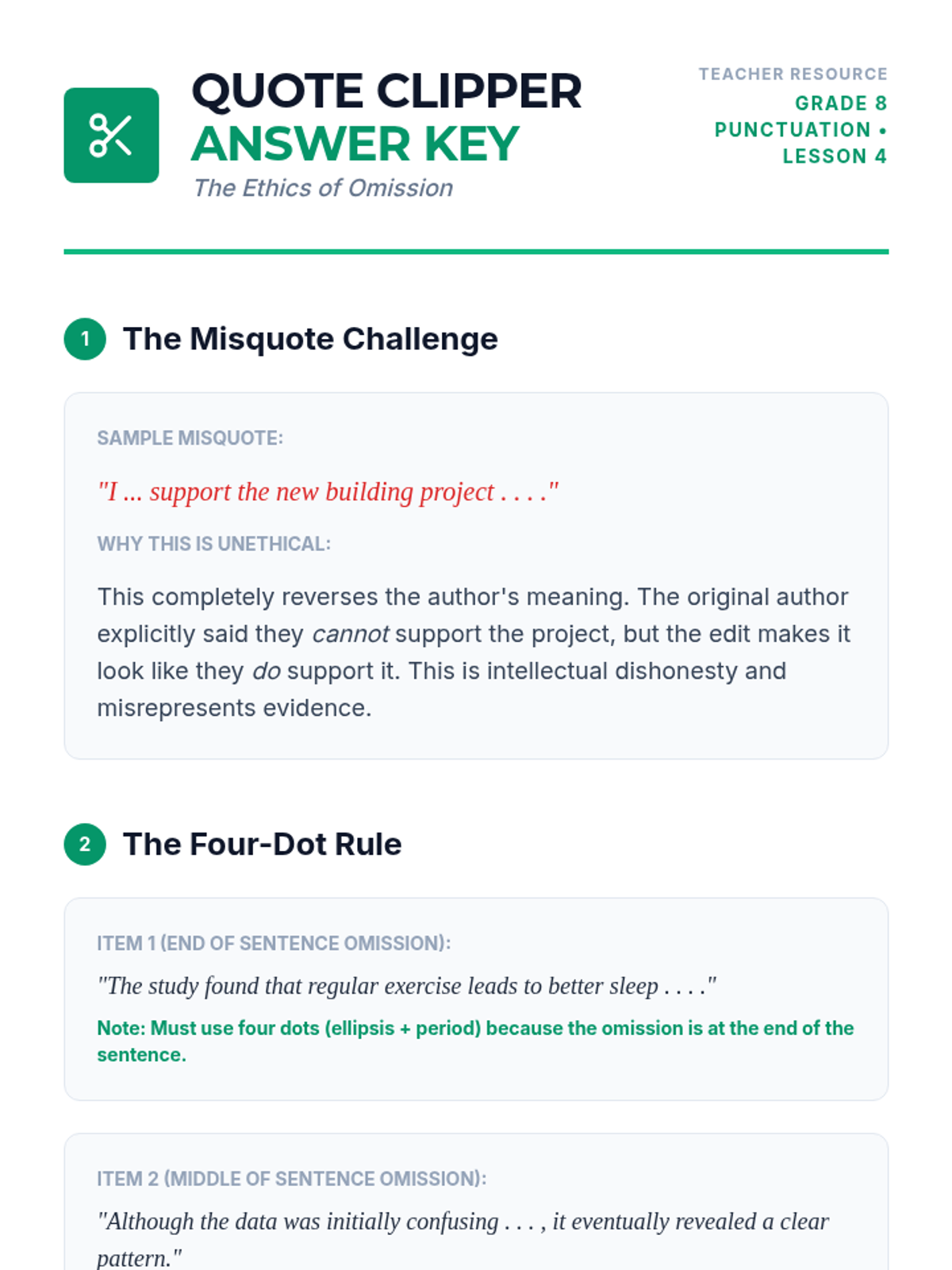
This lesson teaches students the mechanics and ethics of using ellipses. Students will learn to use the 'surgical' tool of the ellipsis to shorten quotes for brevity while maintaining the speaker's original intent, and explore the dangers of 'misrepresentation' through a creative unethical editing activity.
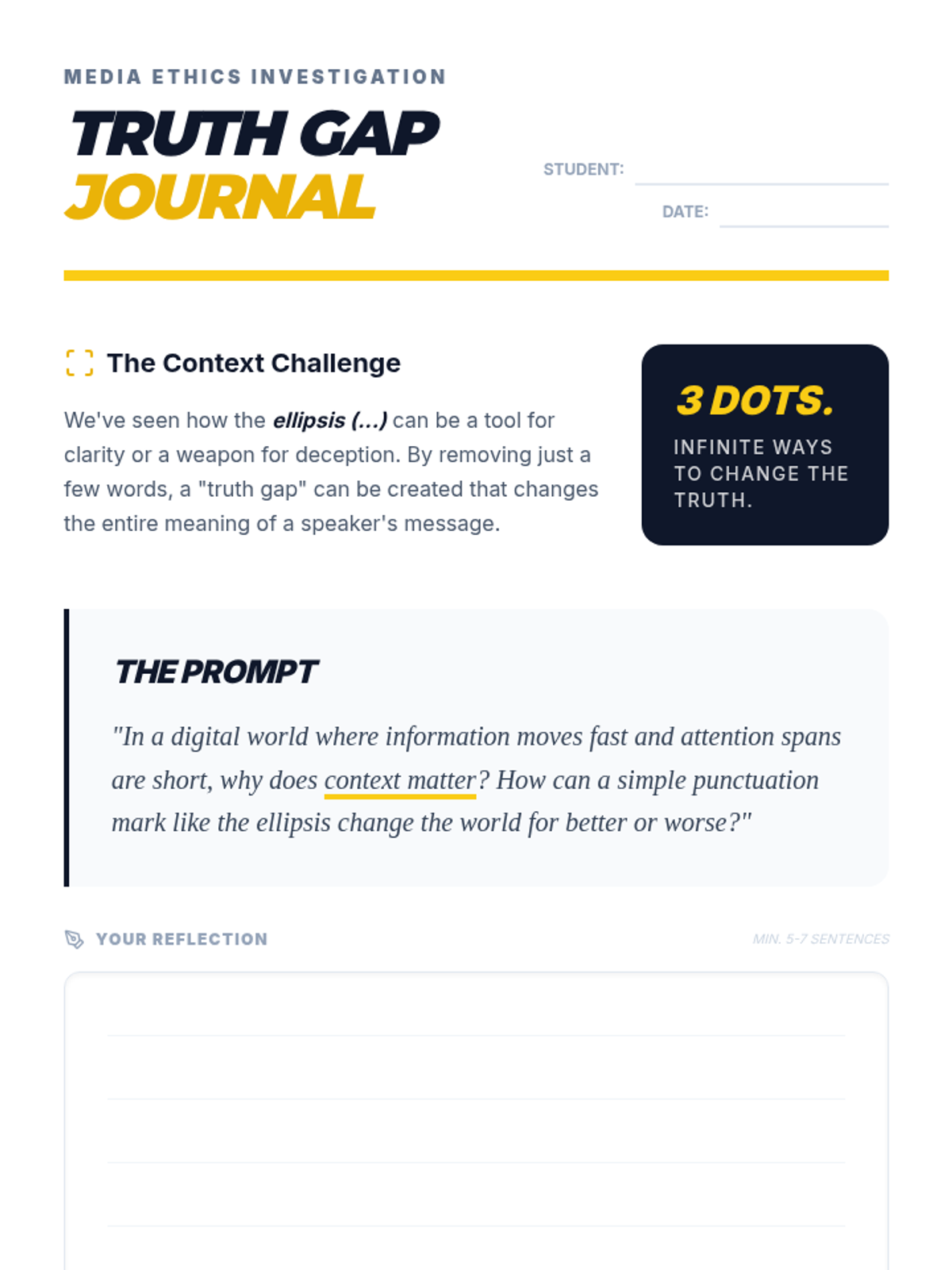
Students explore the ethics of punctuation, specifically how ellipses can be used to omit information and alter the truth in media and quotes.
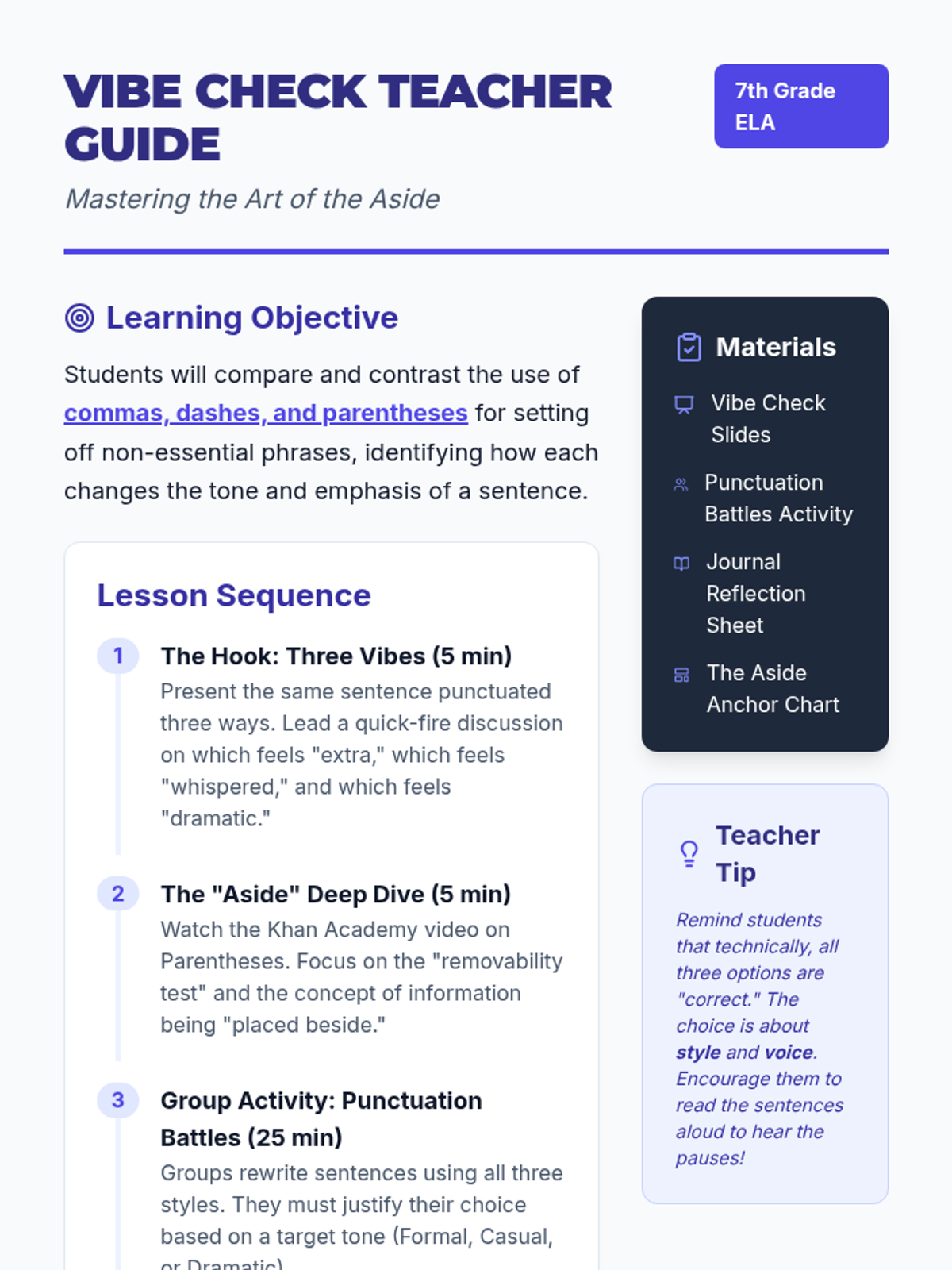
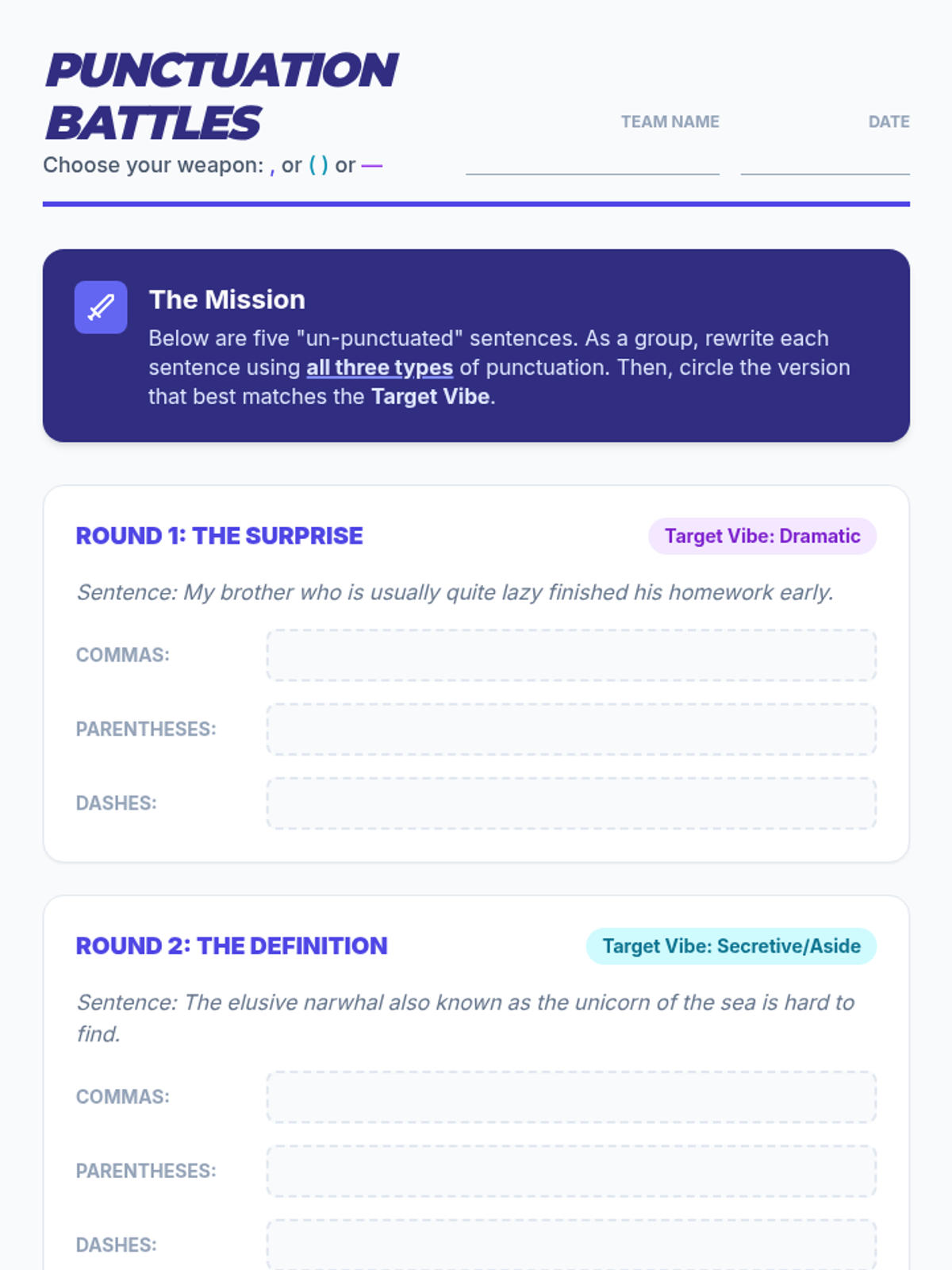
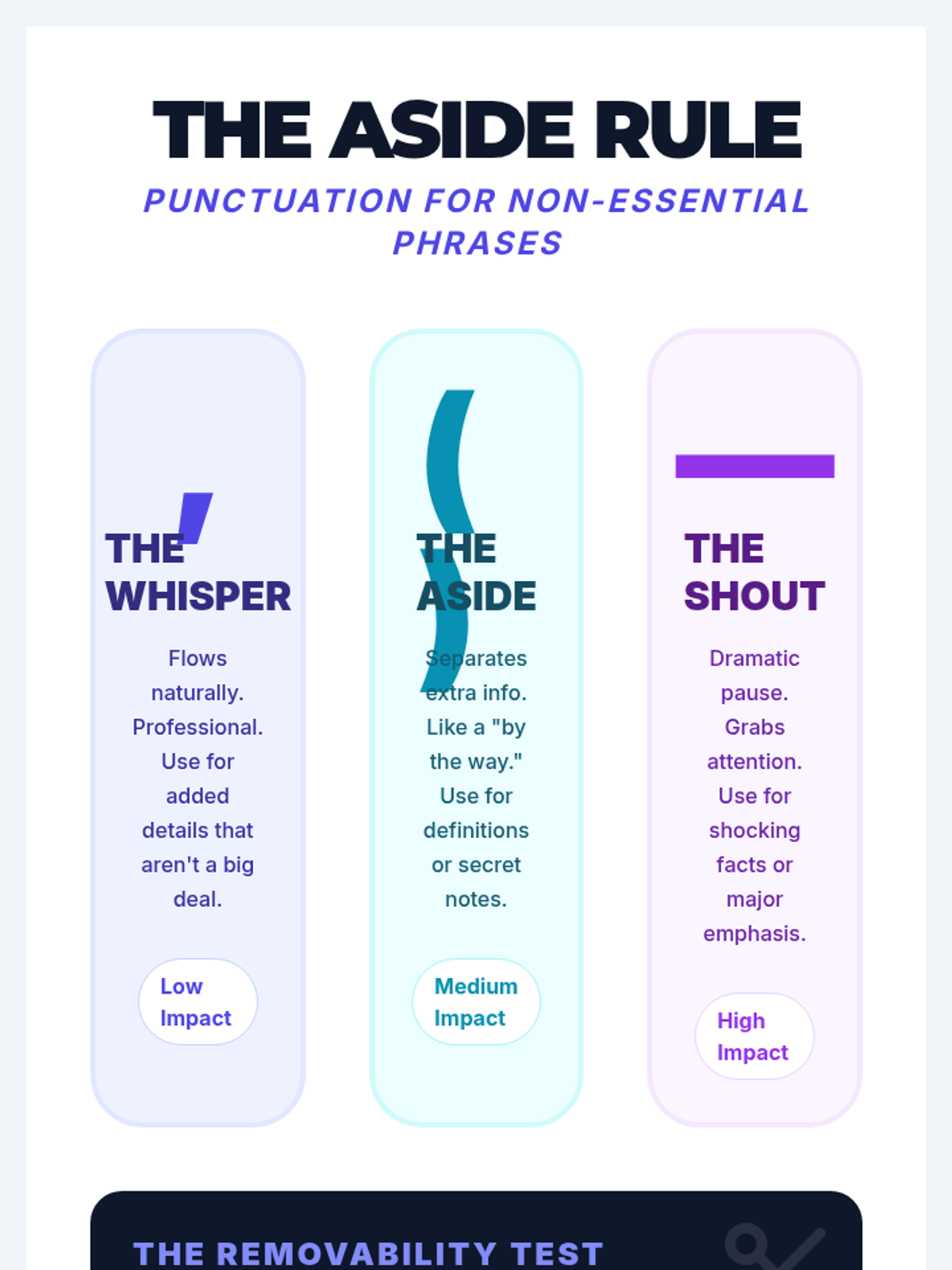
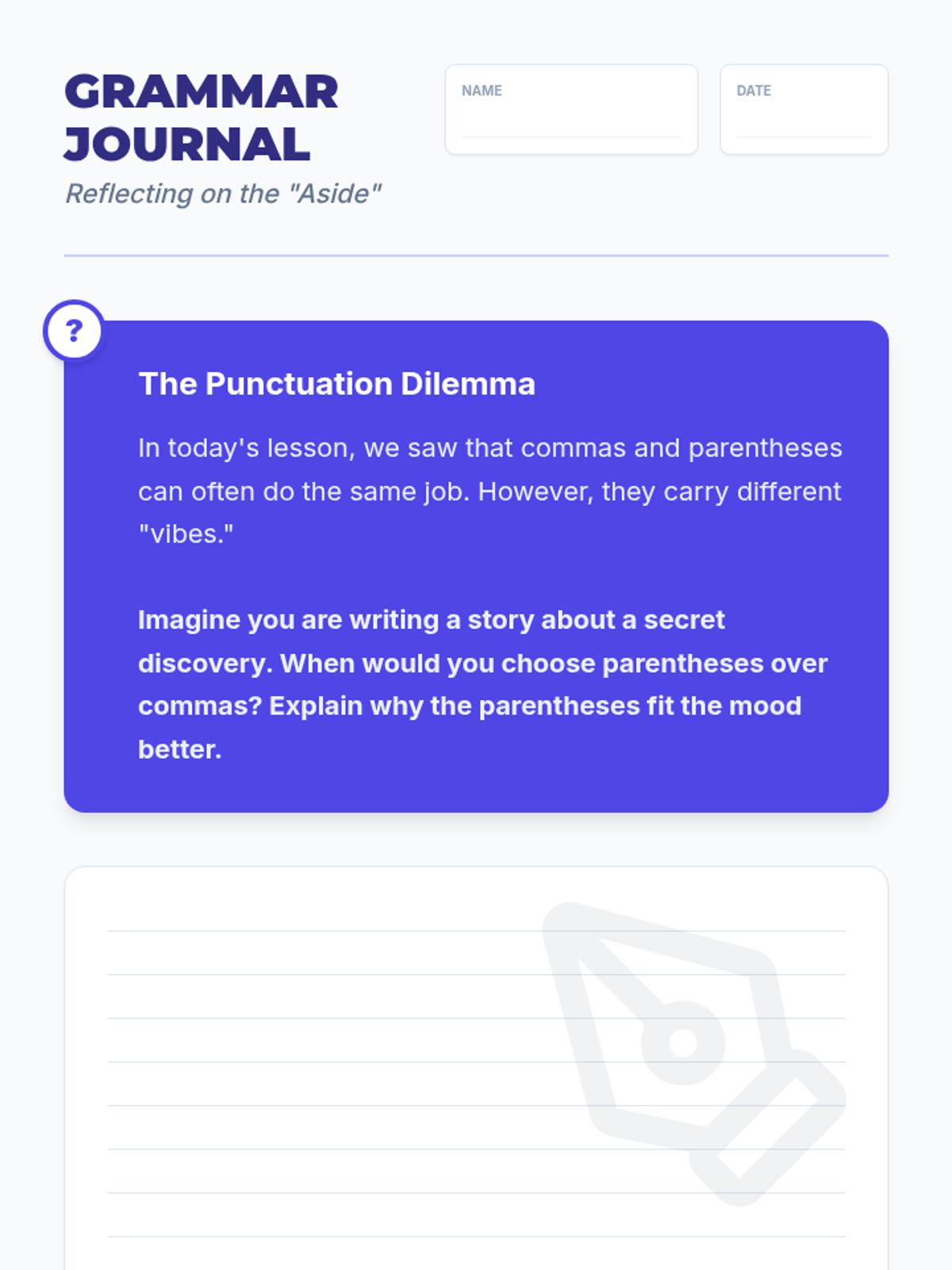
A lesson focusing on the subtle differences in tone and emphasis when using commas, dashes, and parentheses to set off non-essential information. Students explore the 'vibe' of each punctuation mark through a hook activity, a instructional video, and a collaborative 'Punctuation Battles' challenge.
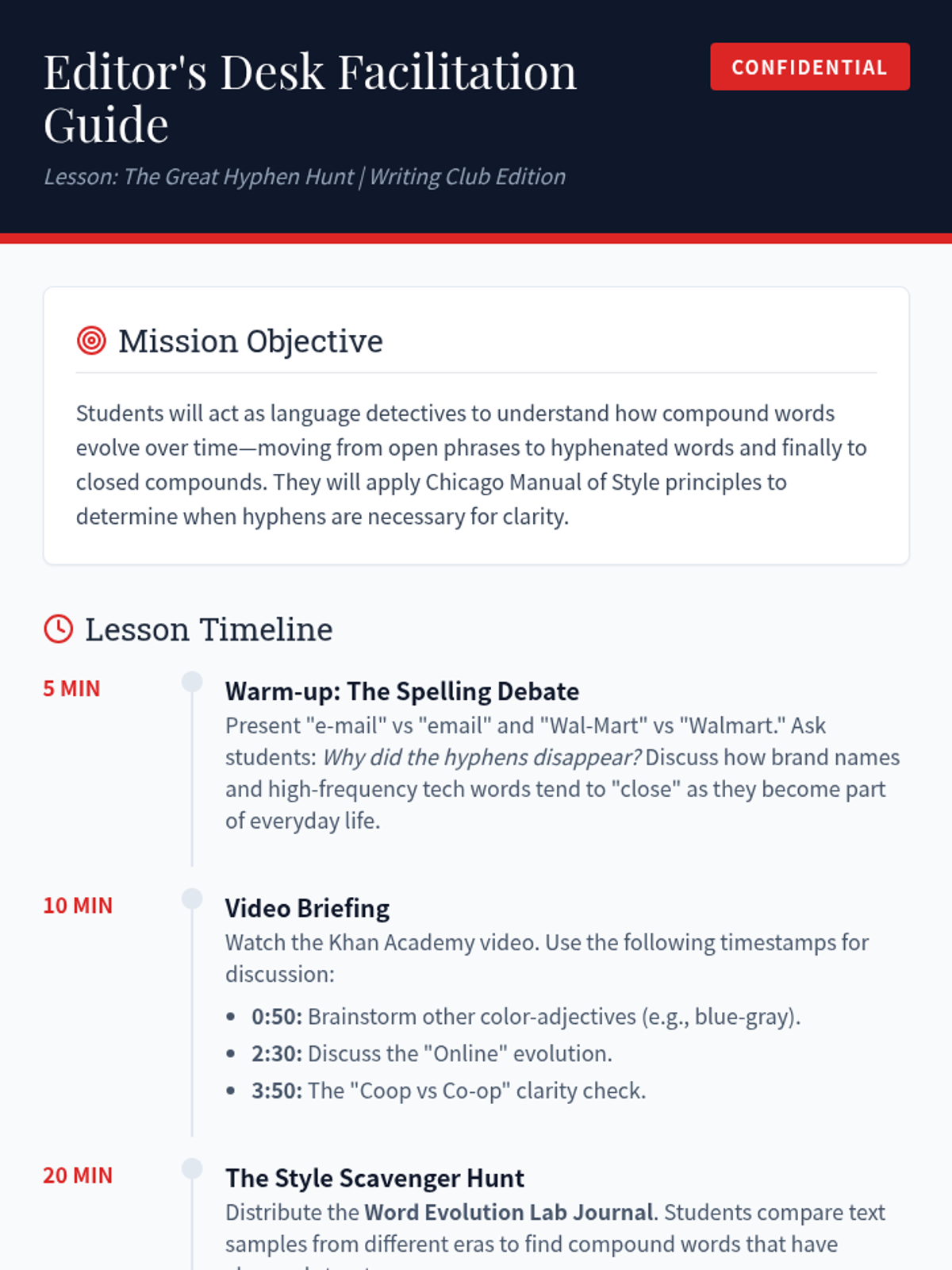
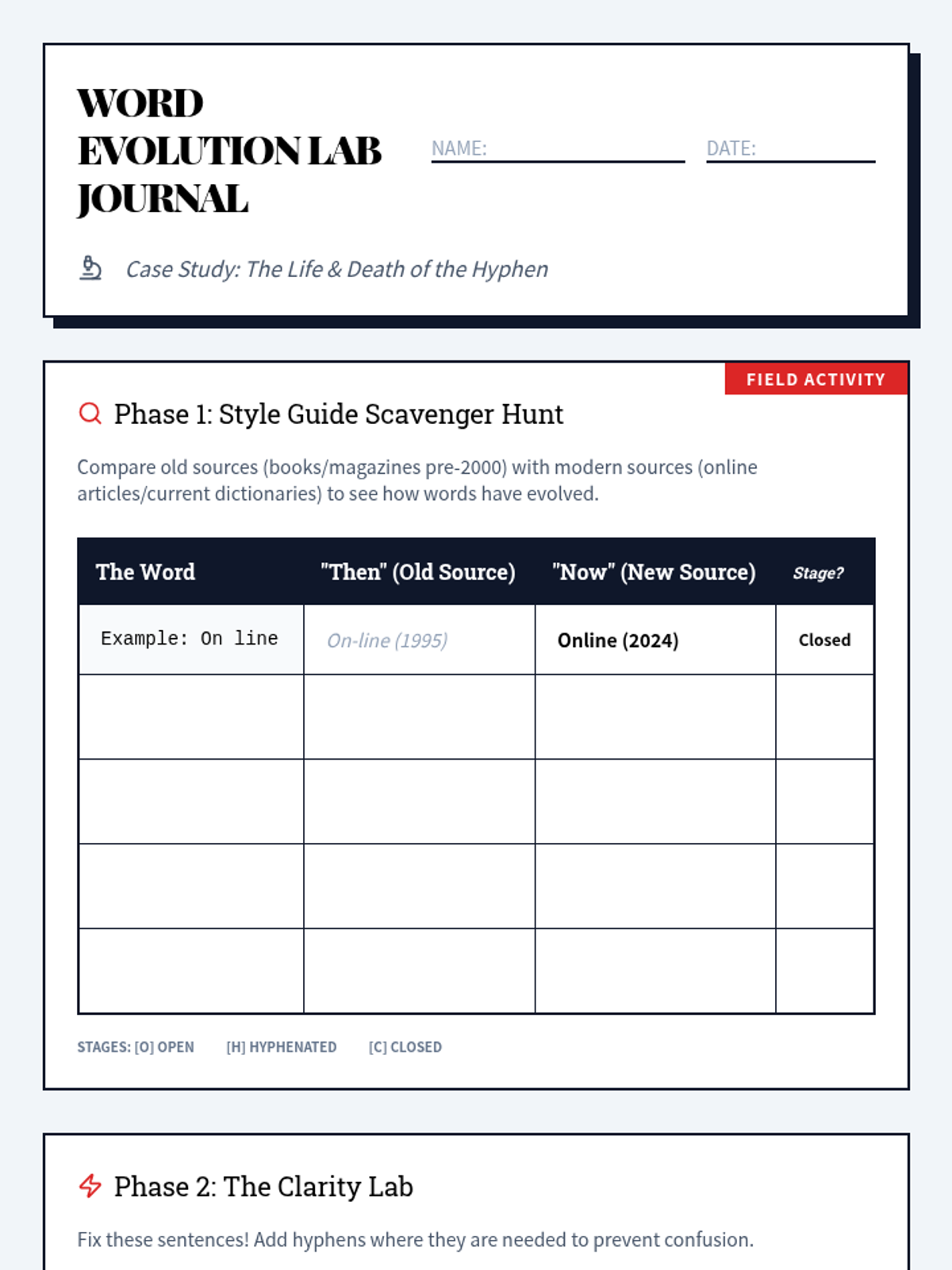
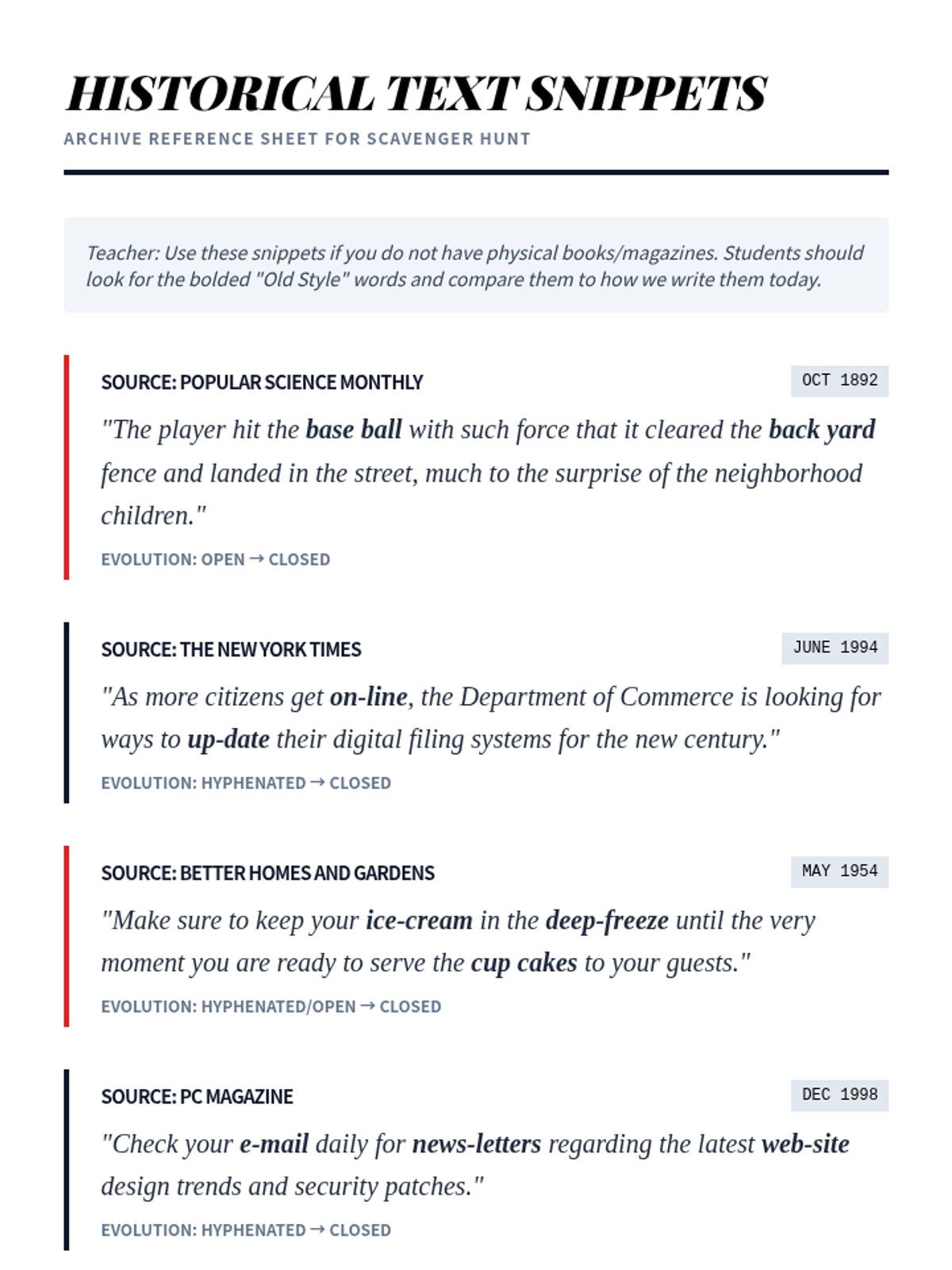
A creative lesson for Writing Club focused on the evolution of compound words and the stylistic rules of hyphenation, featuring a 'Then vs. Now' scavenger hunt.
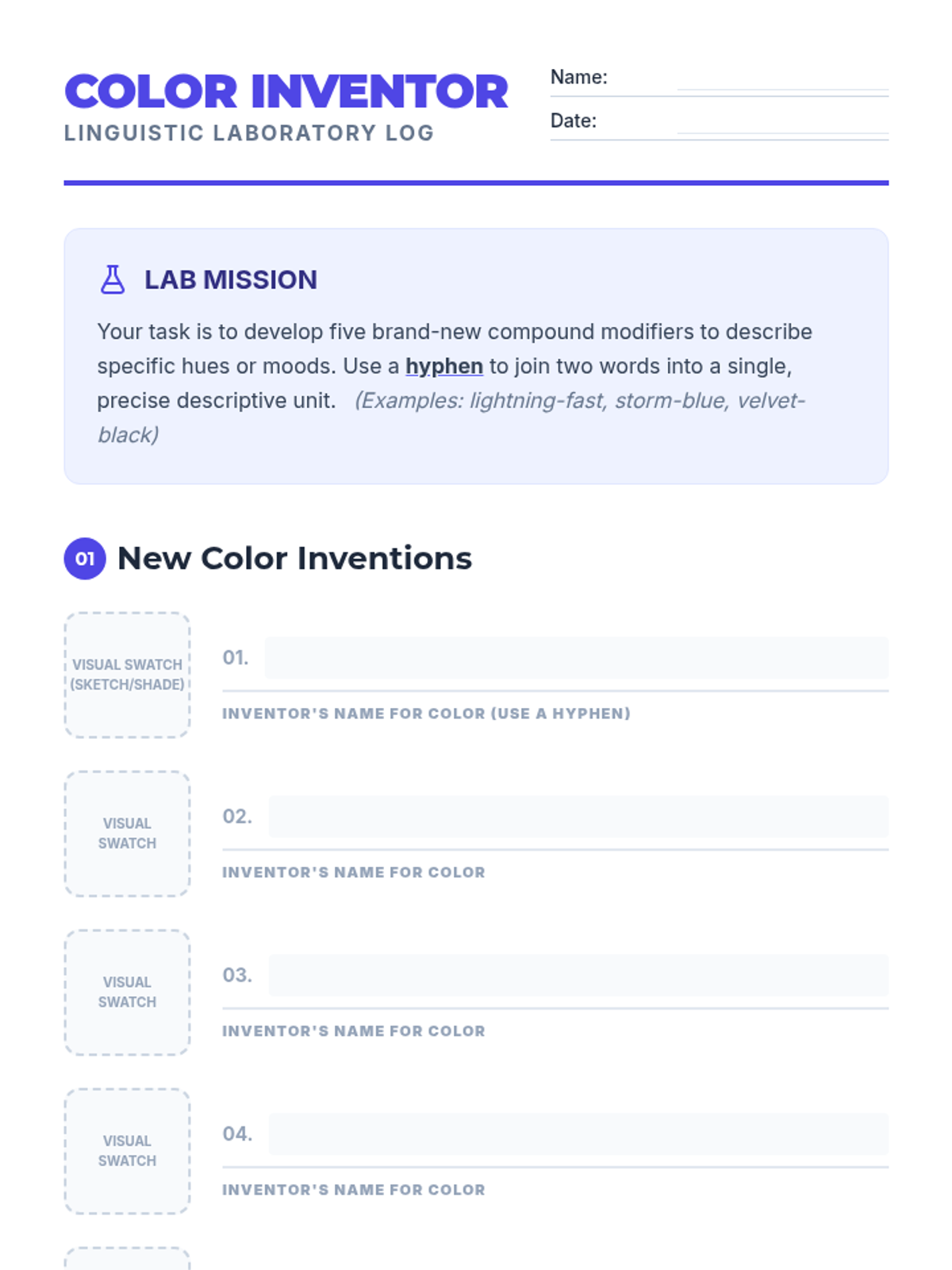
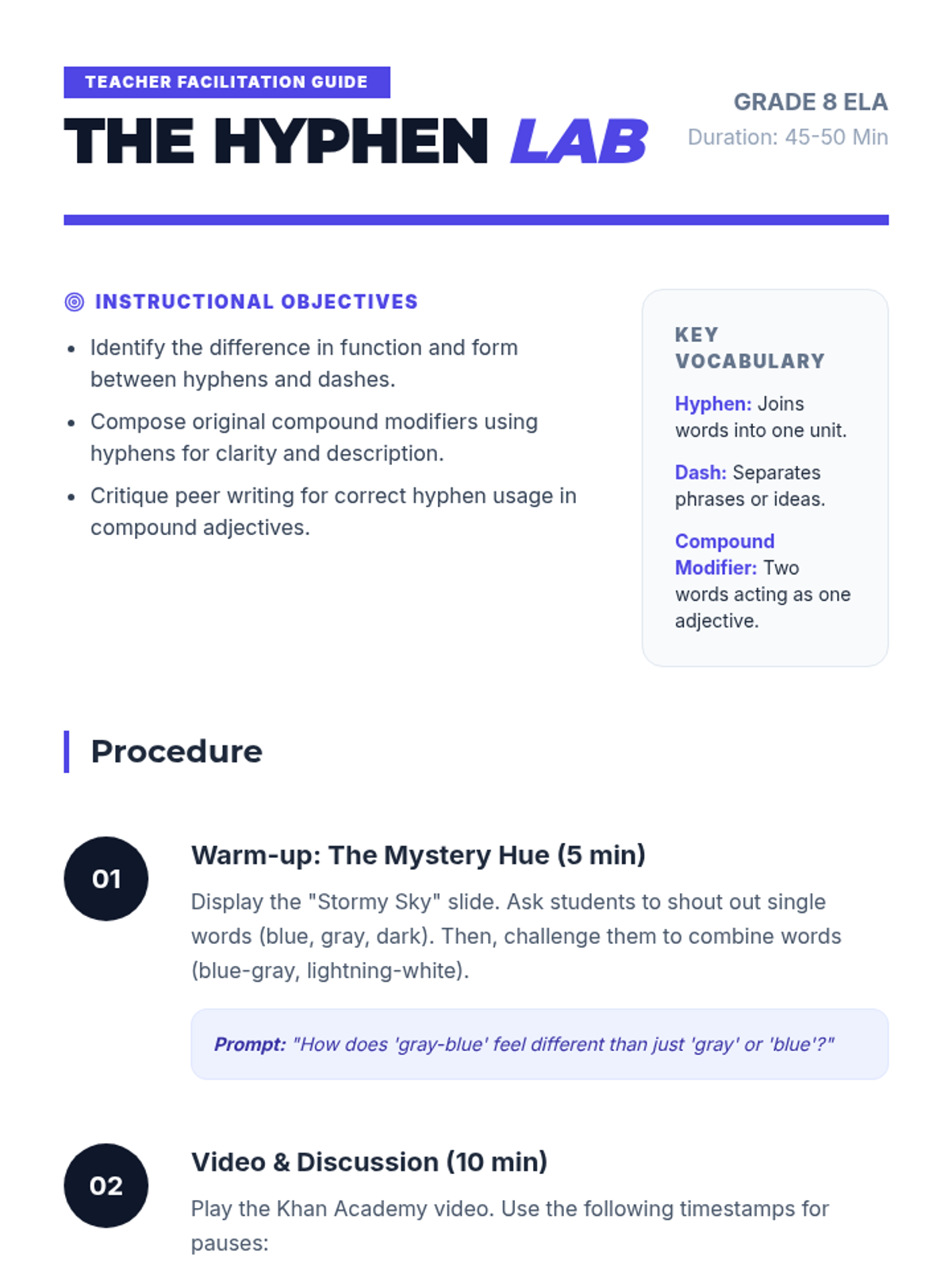
Students will explore the function of hyphens in compound modifiers, specifically focusing on descriptive adjectives and color naming. Through a video analysis and a creative writing activity, they will learn how to join words for clarity and enhanced imagery.
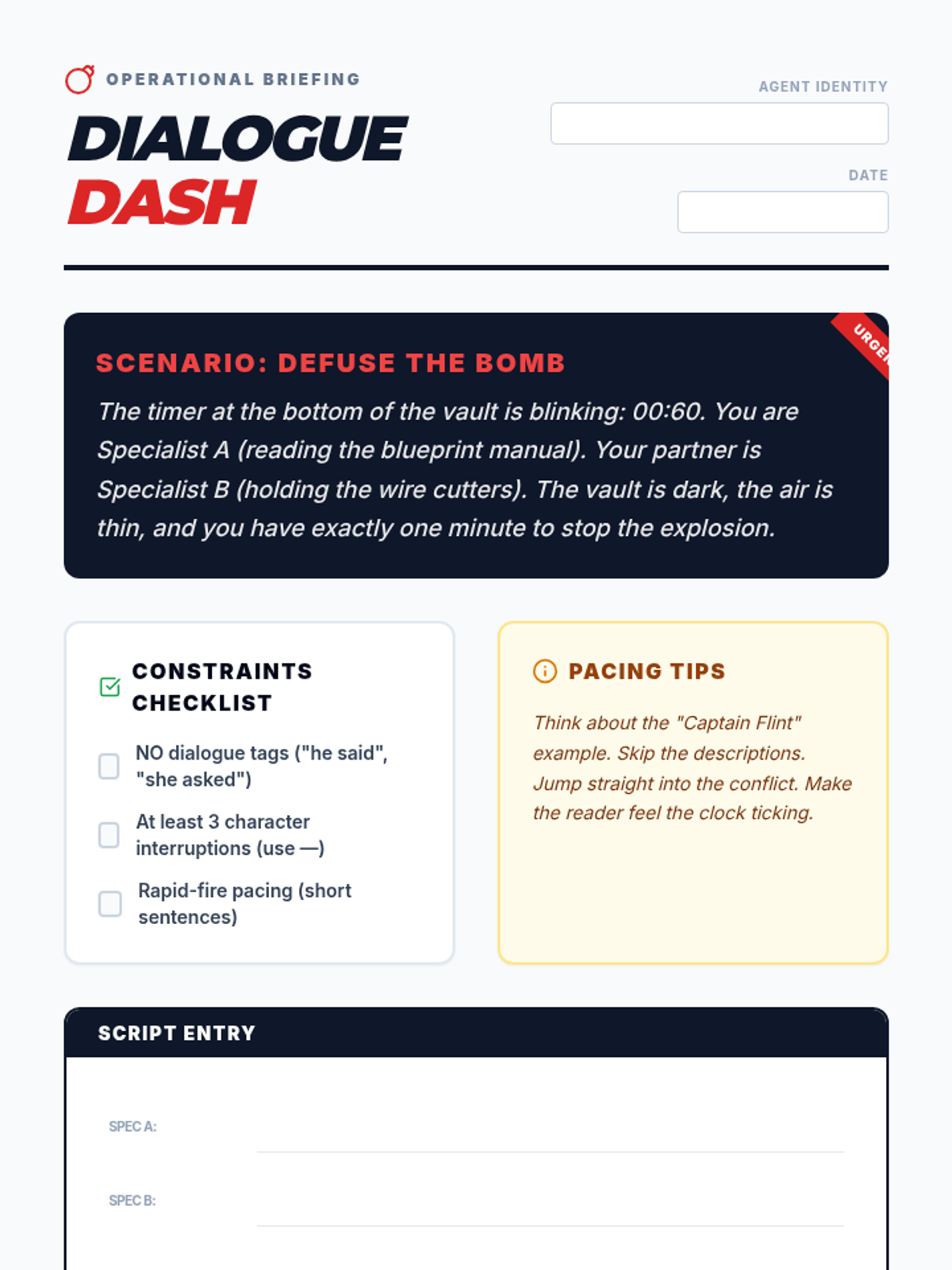
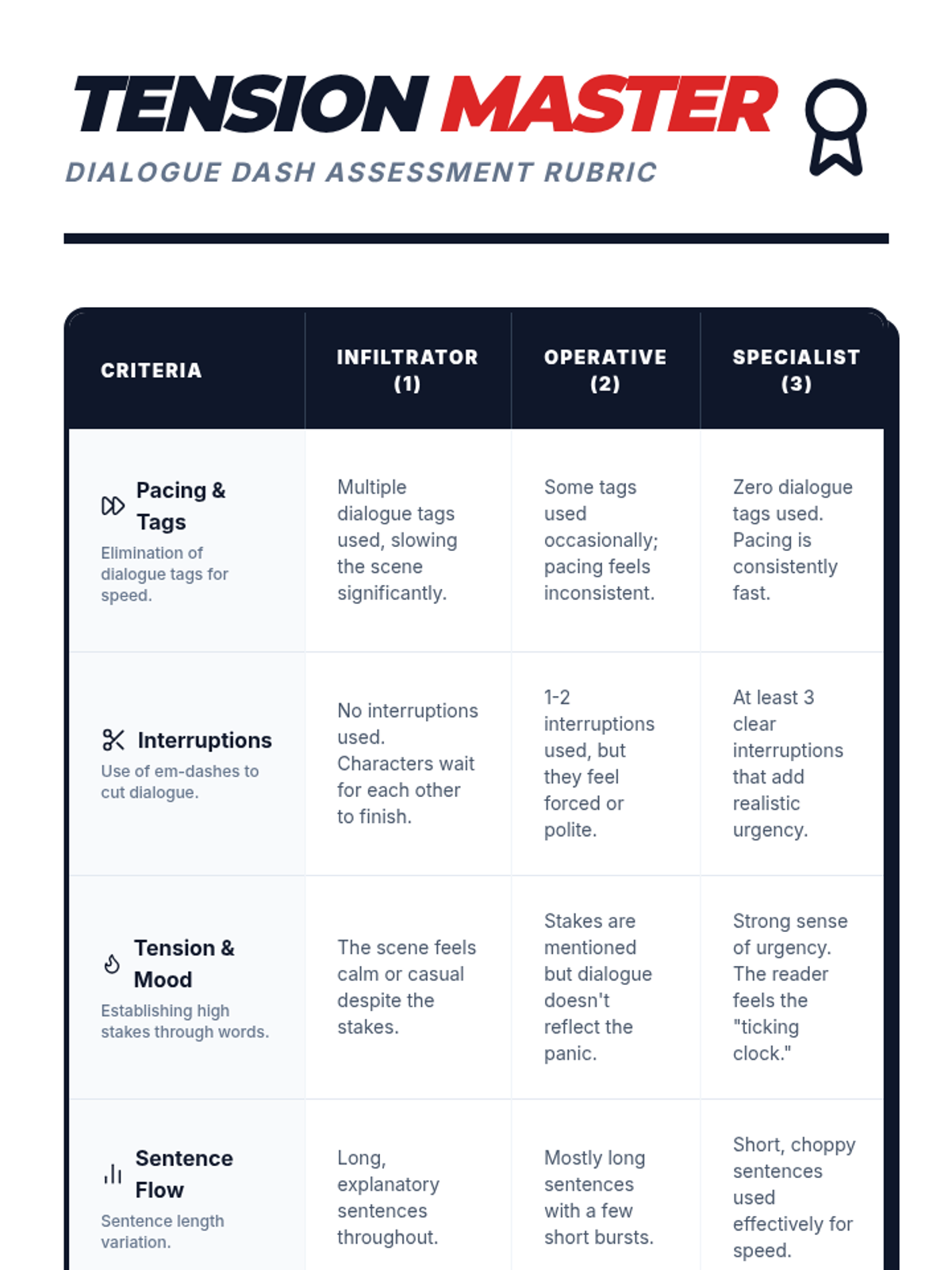
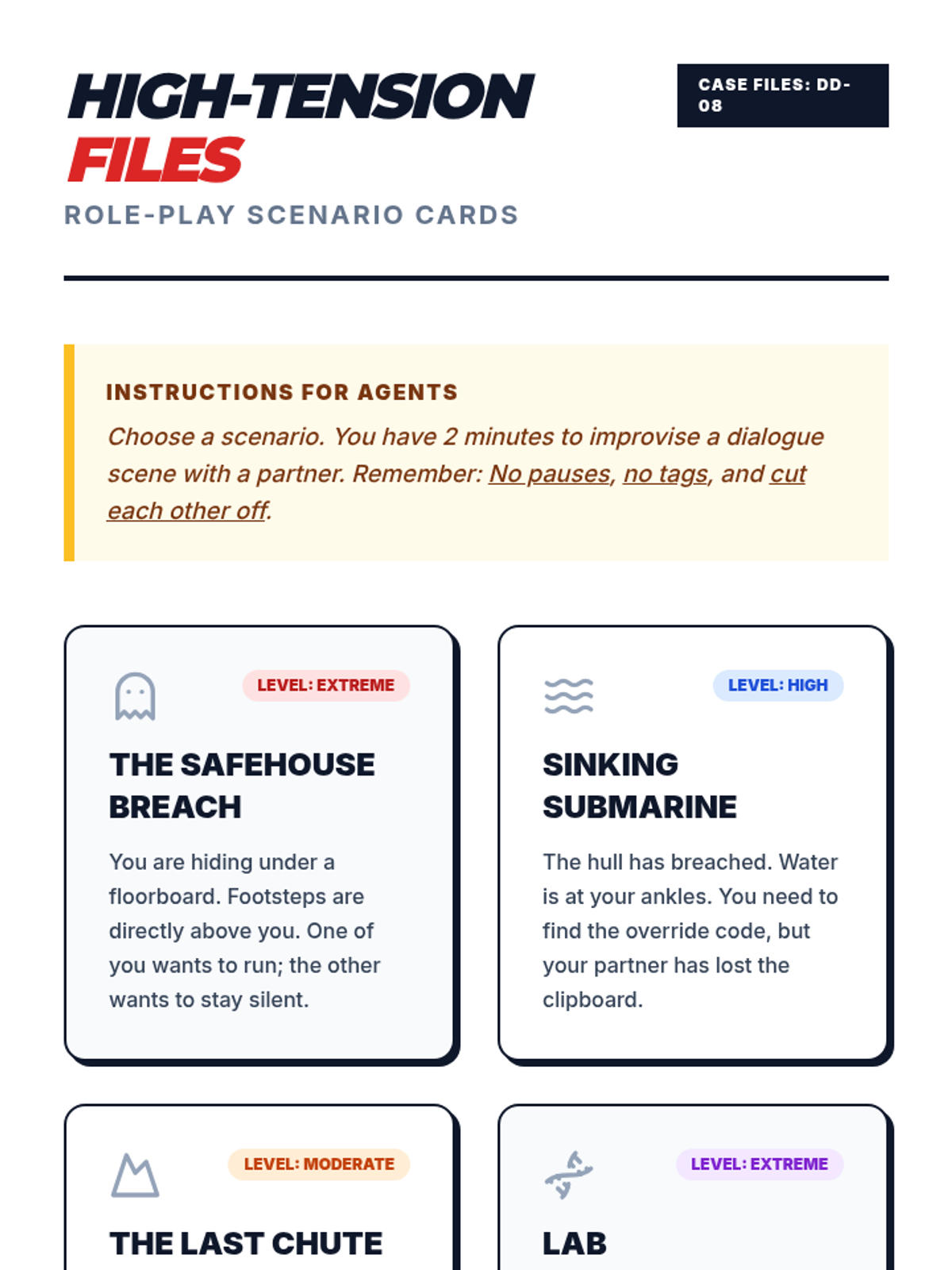
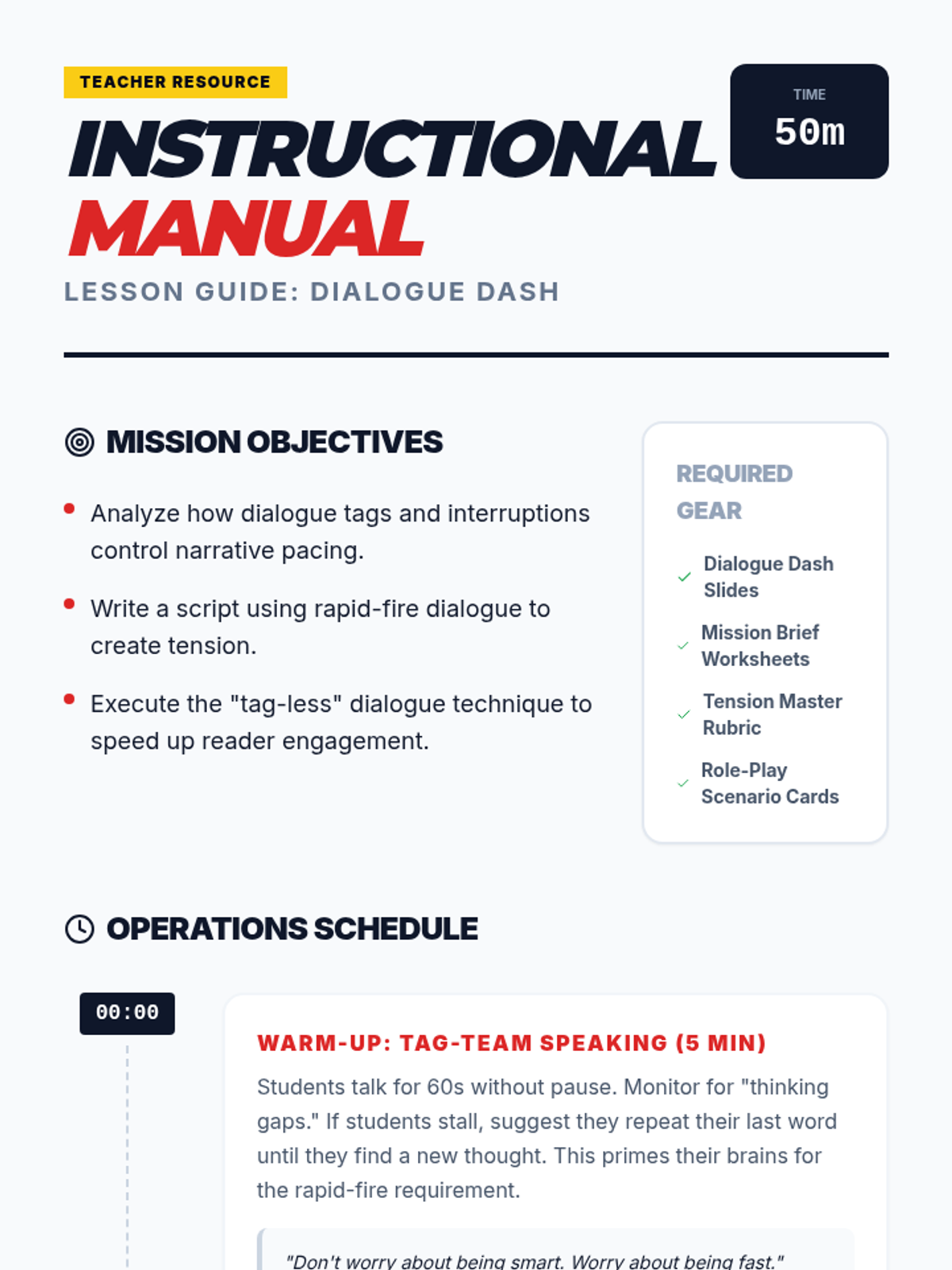
A fast-paced creative writing lesson where Grade 7-8 students master the art of rapid-fire dialogue to create tension. Students analyze video examples of pacing, practice tag-less dialogue, and script a high-stakes bomb defusal scene.
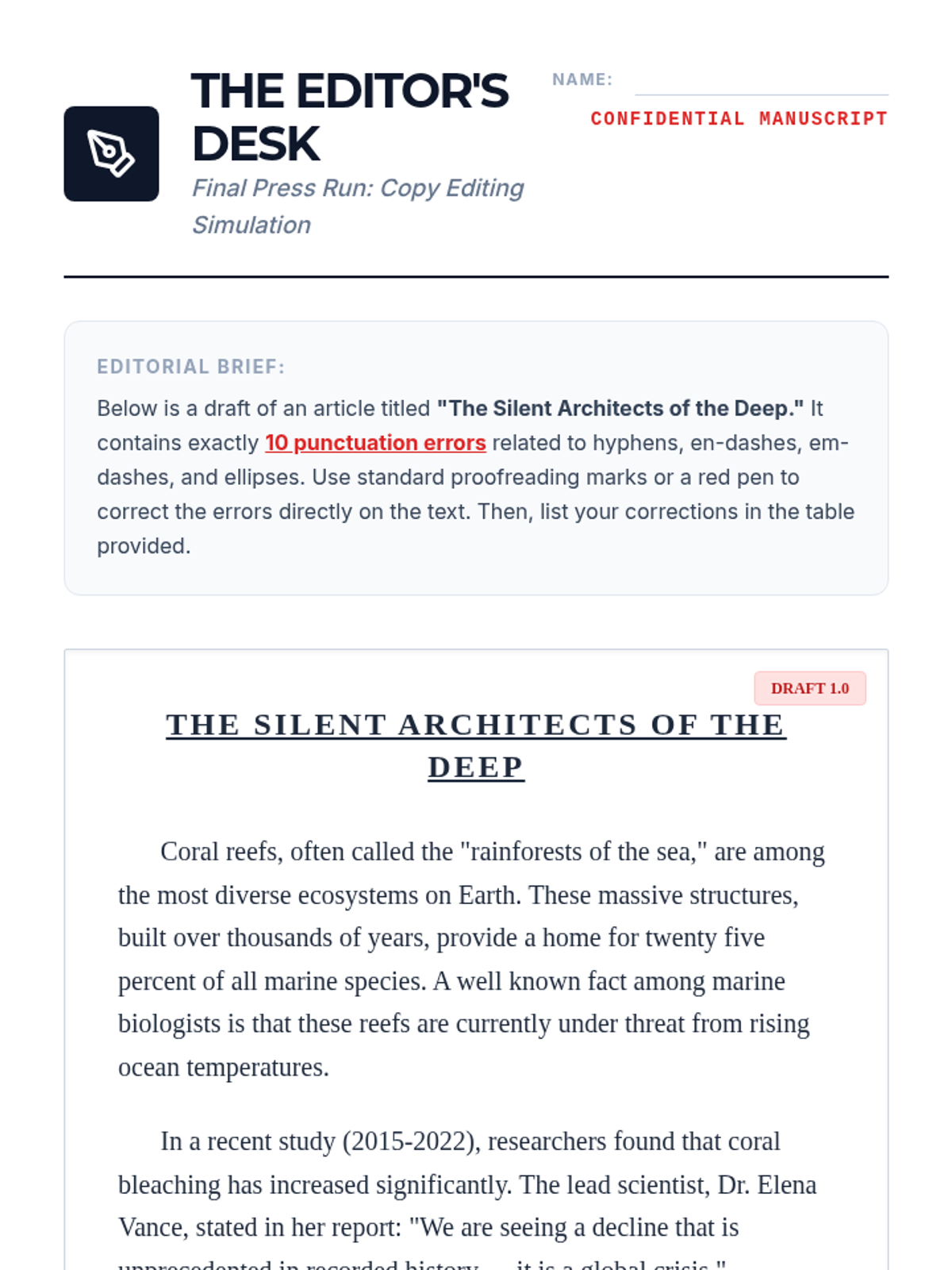
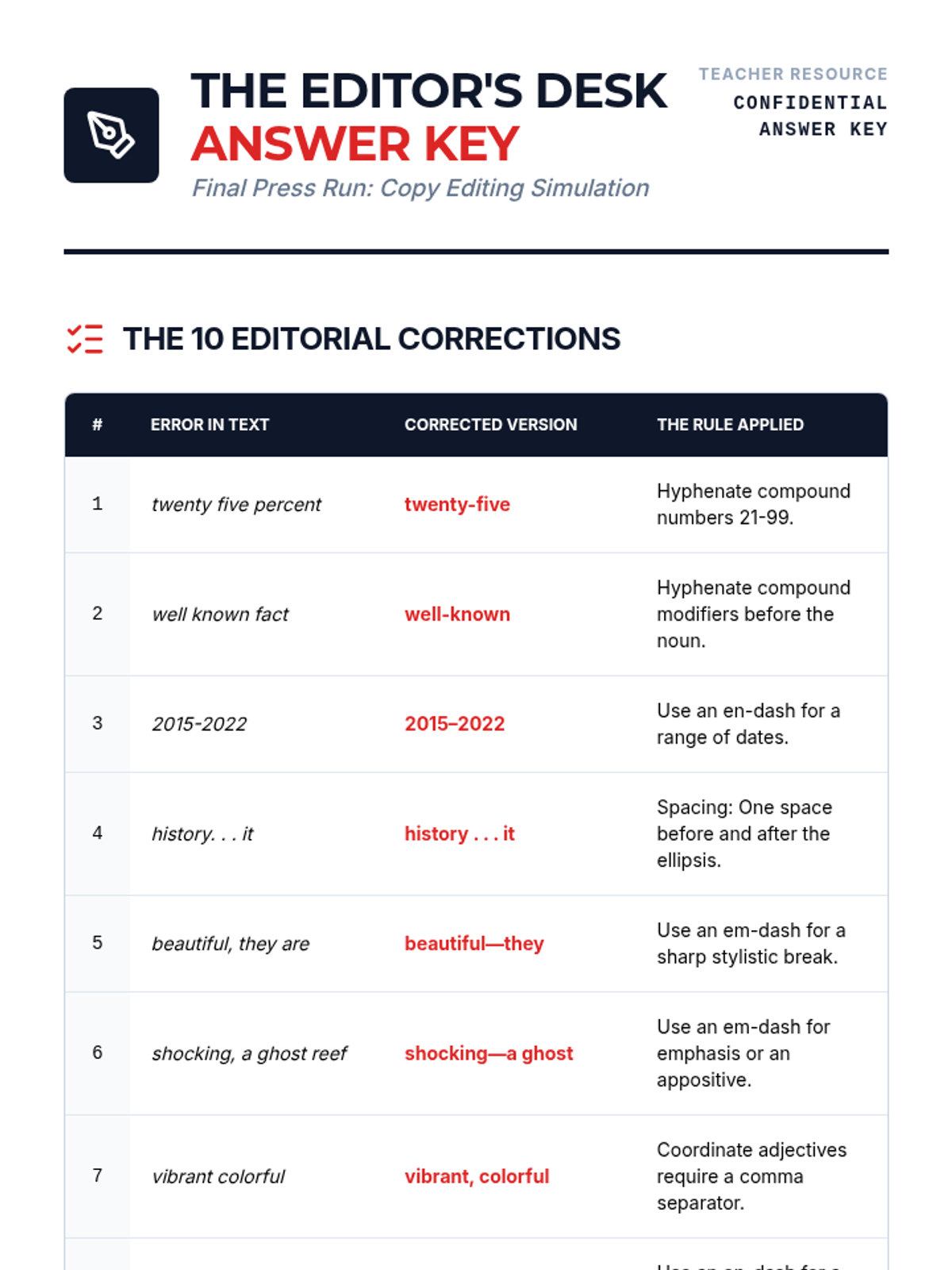
A cumulative proofreading simulation where students function as copy editors to correct advanced punctuation errors in a formal document.
Teaches the academic and ethical use of ellipses to omit text in citations without distorting the original author's intent.
Compares commas, parentheses, and em-dashes for setting off non-essential info, emphasizing the stylistic impact of each.
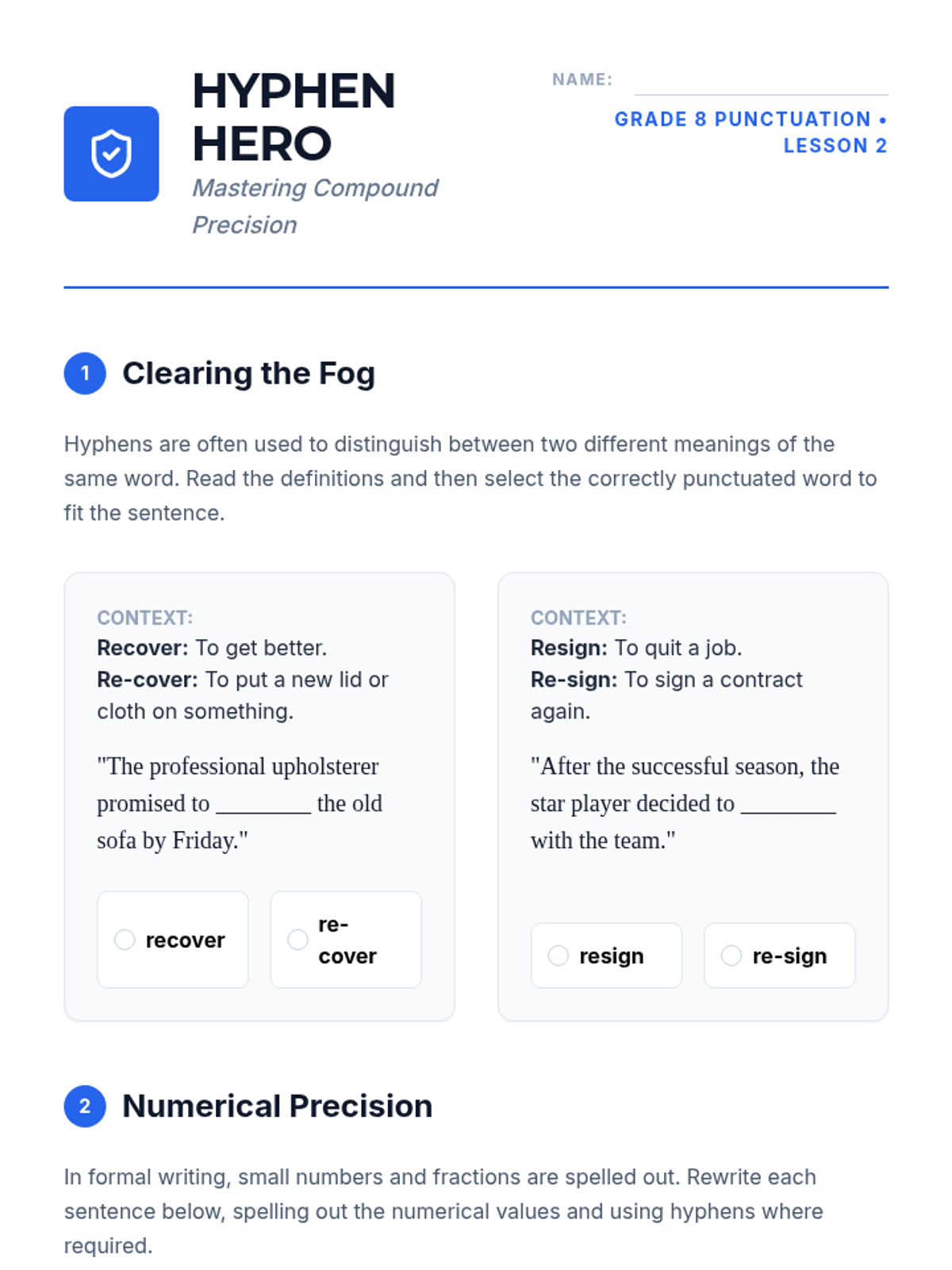
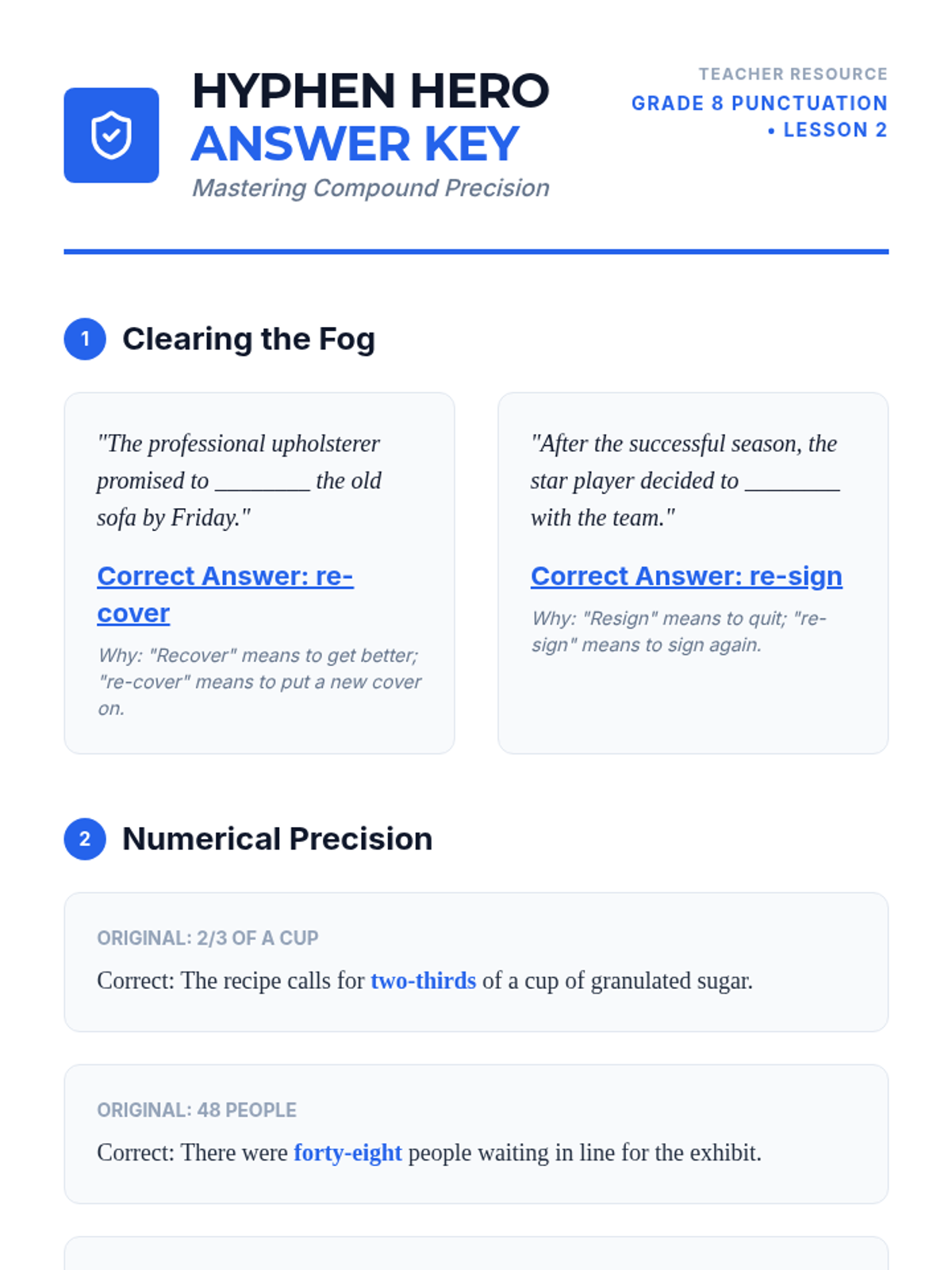
Focuses on the hyphen's role in compound numbers, fractions, and resolving meaning in ambiguous compound words.
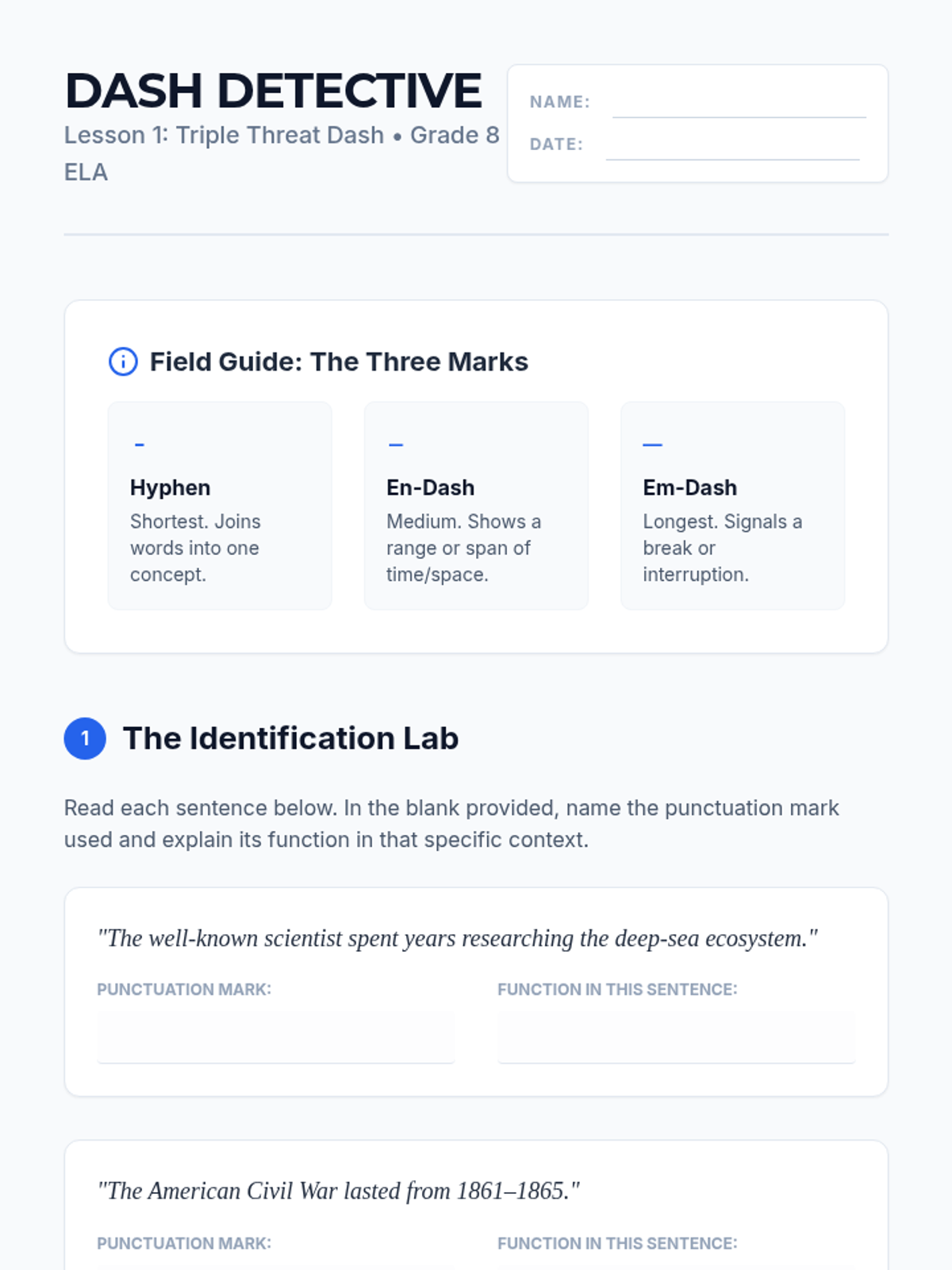
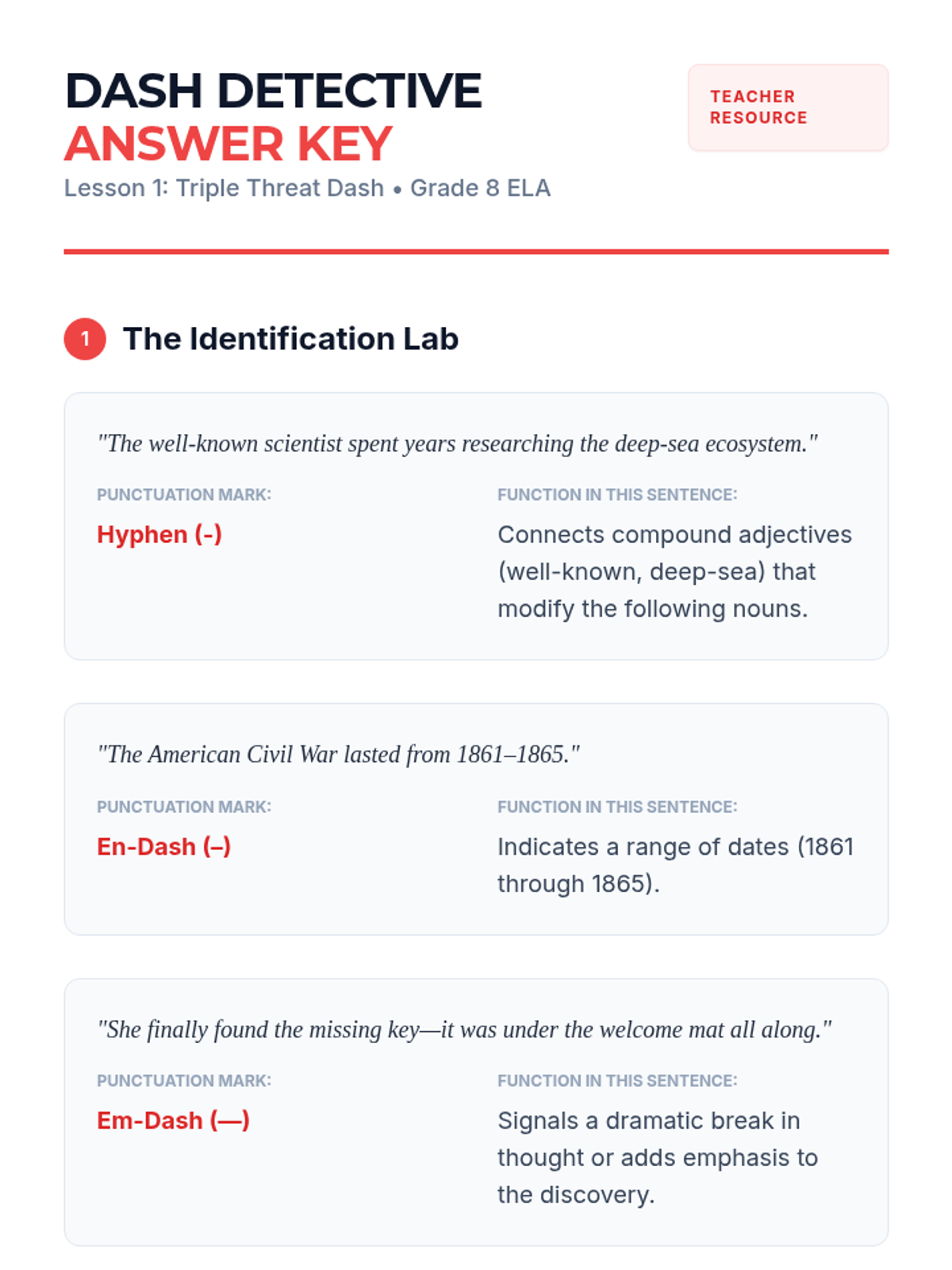
Students learn the visual and functional hierarchy of hyphens, en-dashes, and em-dashes, practicing their use through identification and sorting.
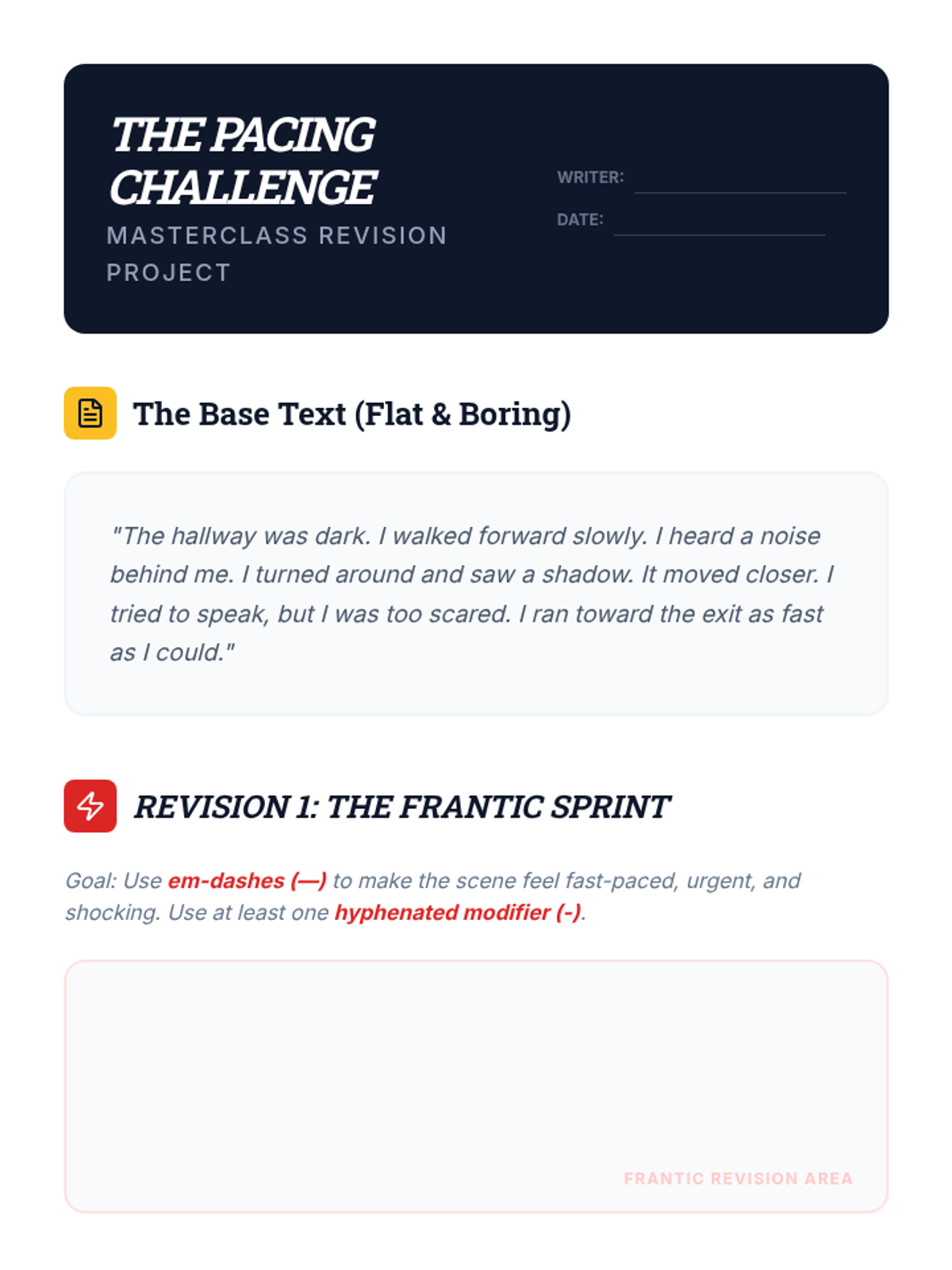
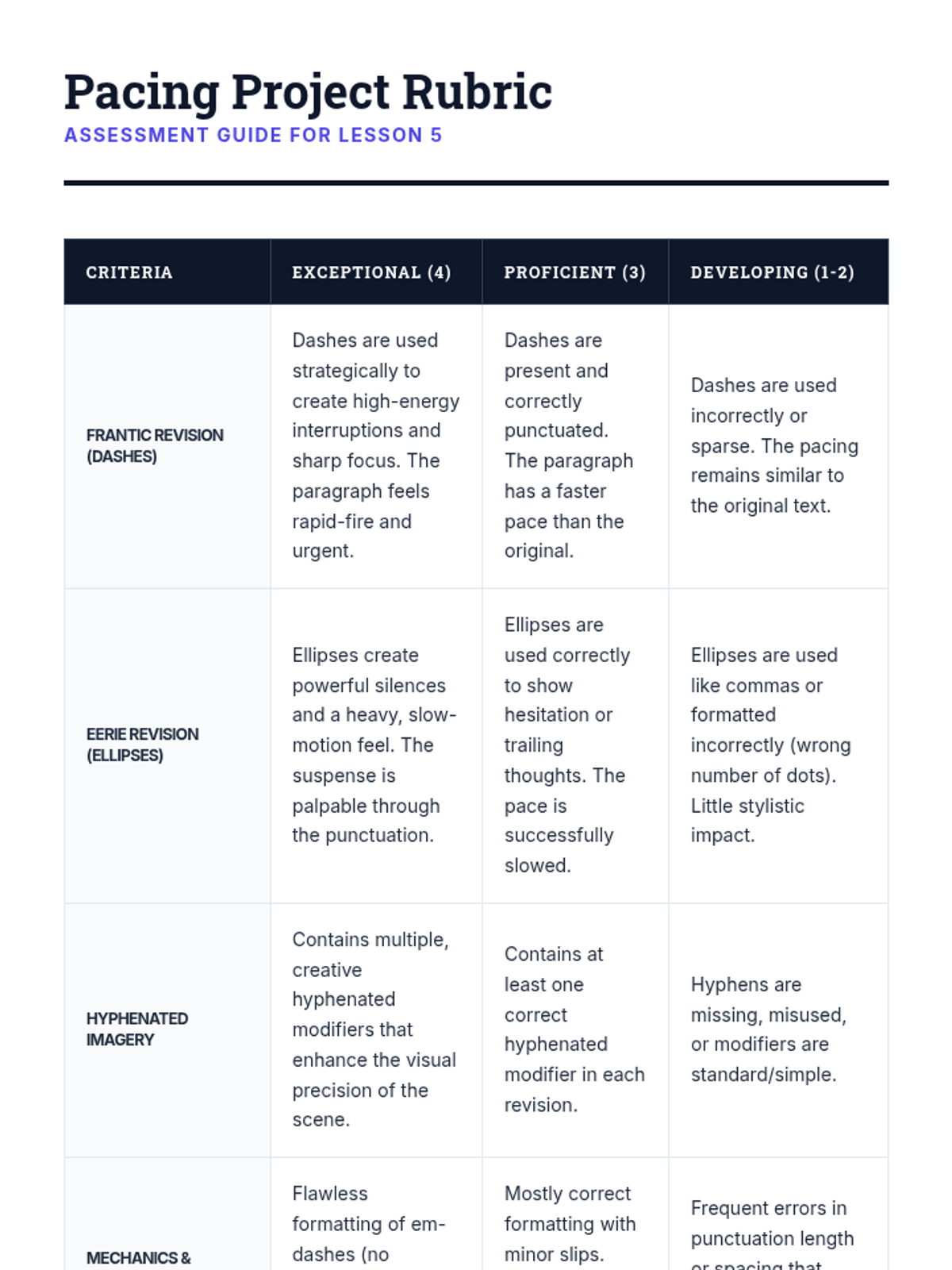
In this culminating workshop, students revise a flat piece of writing two different ways: once to make it fast and frantic using dashes, and once to make it slow and eerie using ellipses.
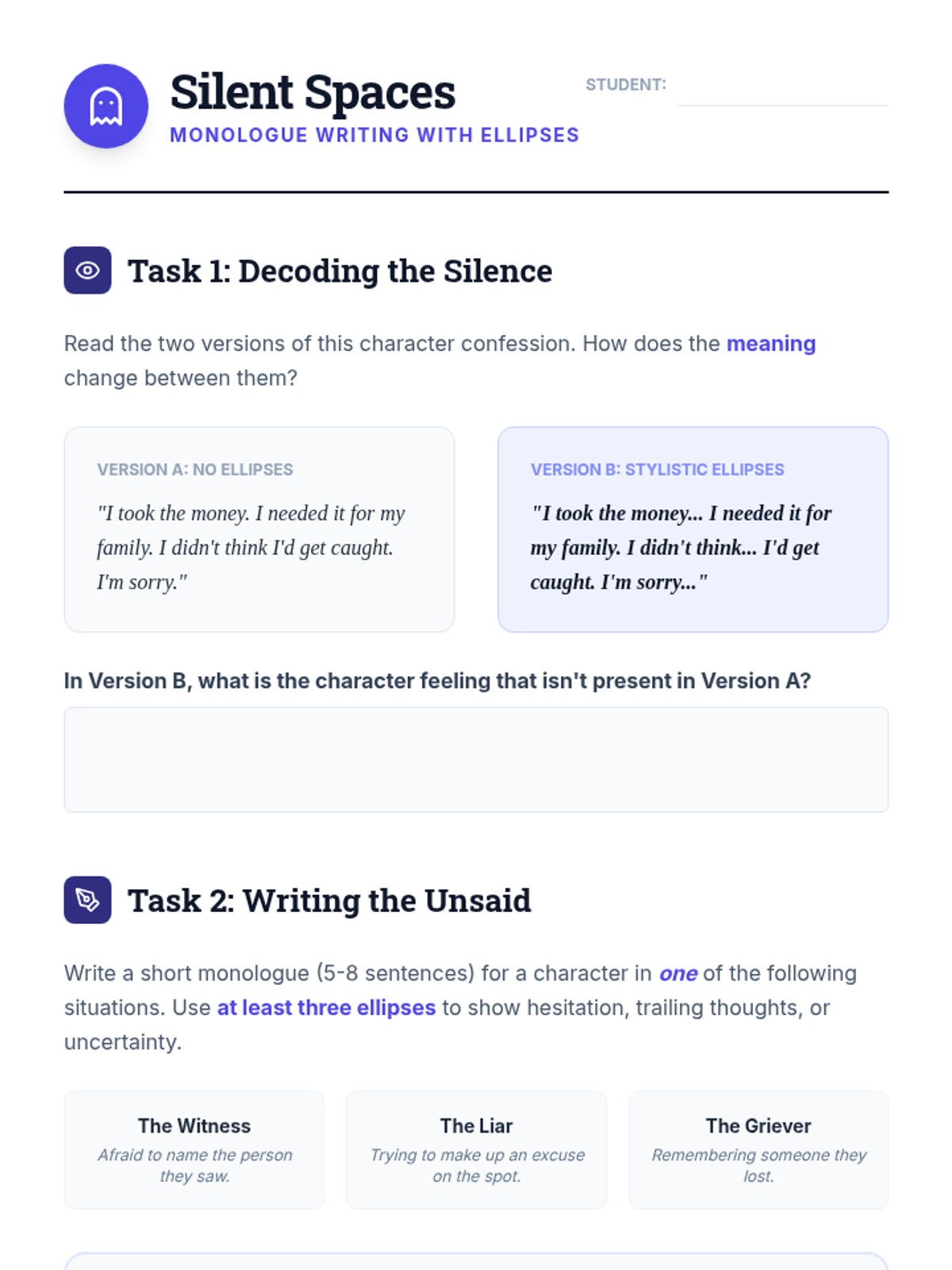
This lesson distinguishes the stylistic use of ellipses to show hesitation, trailing thoughts, or silence. Students write short monologue scripts utilizing ellipses to convey uncertainty.
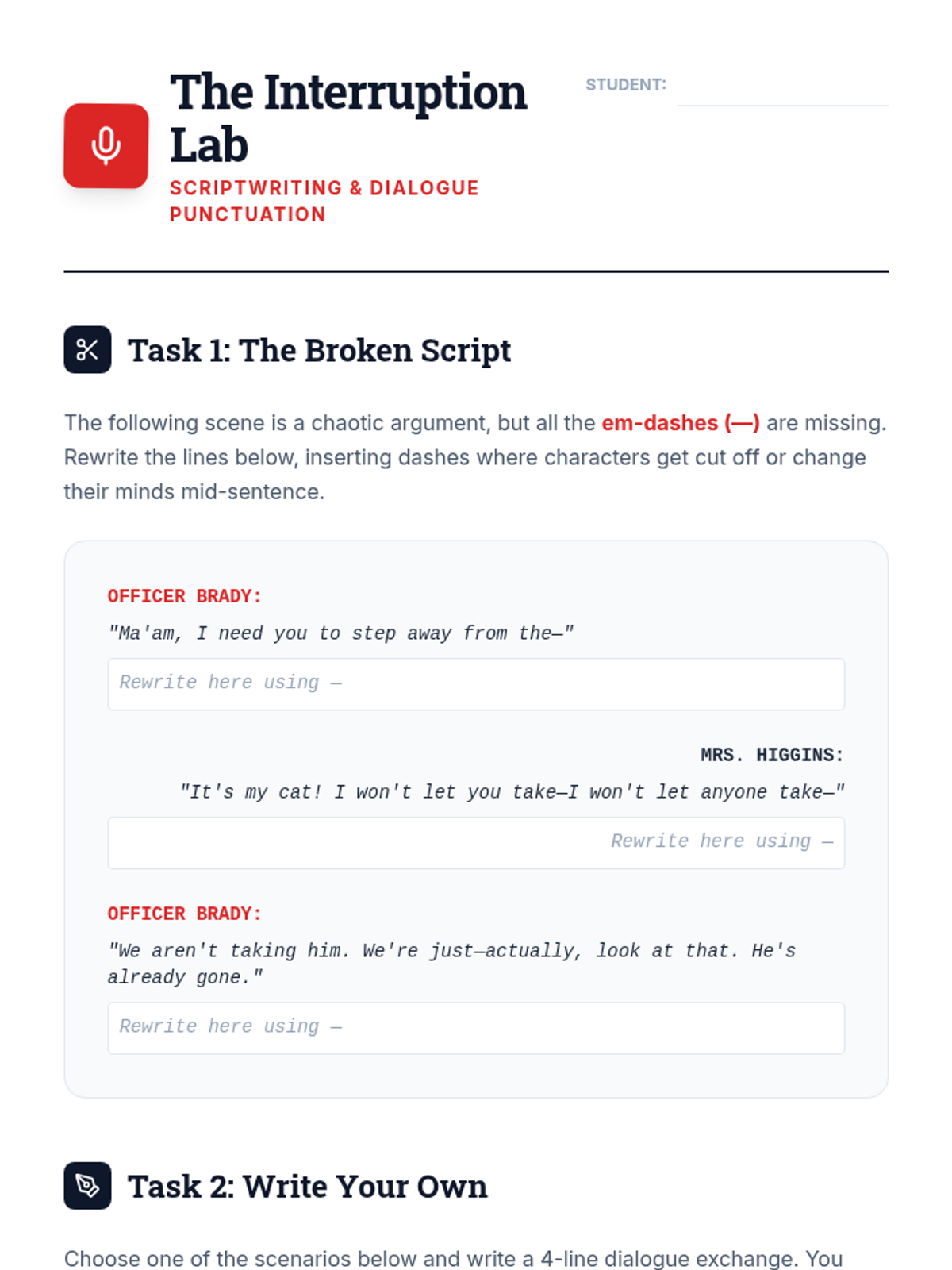
Students learn the specific rules for using em-dashes to signal sudden breaks in thought or dialogue interruptions. They practice rewriting sentences to change energy and emphasis.
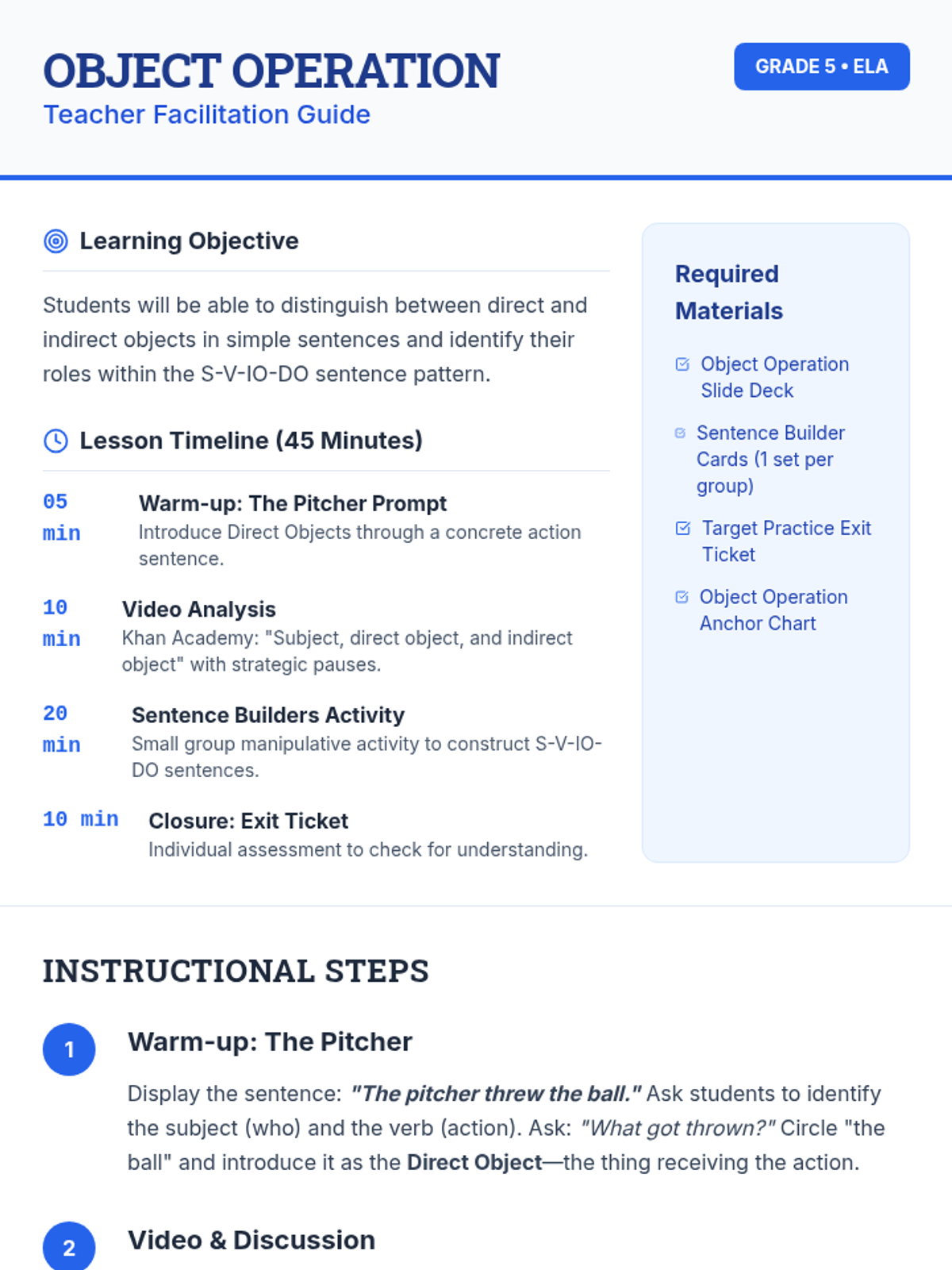
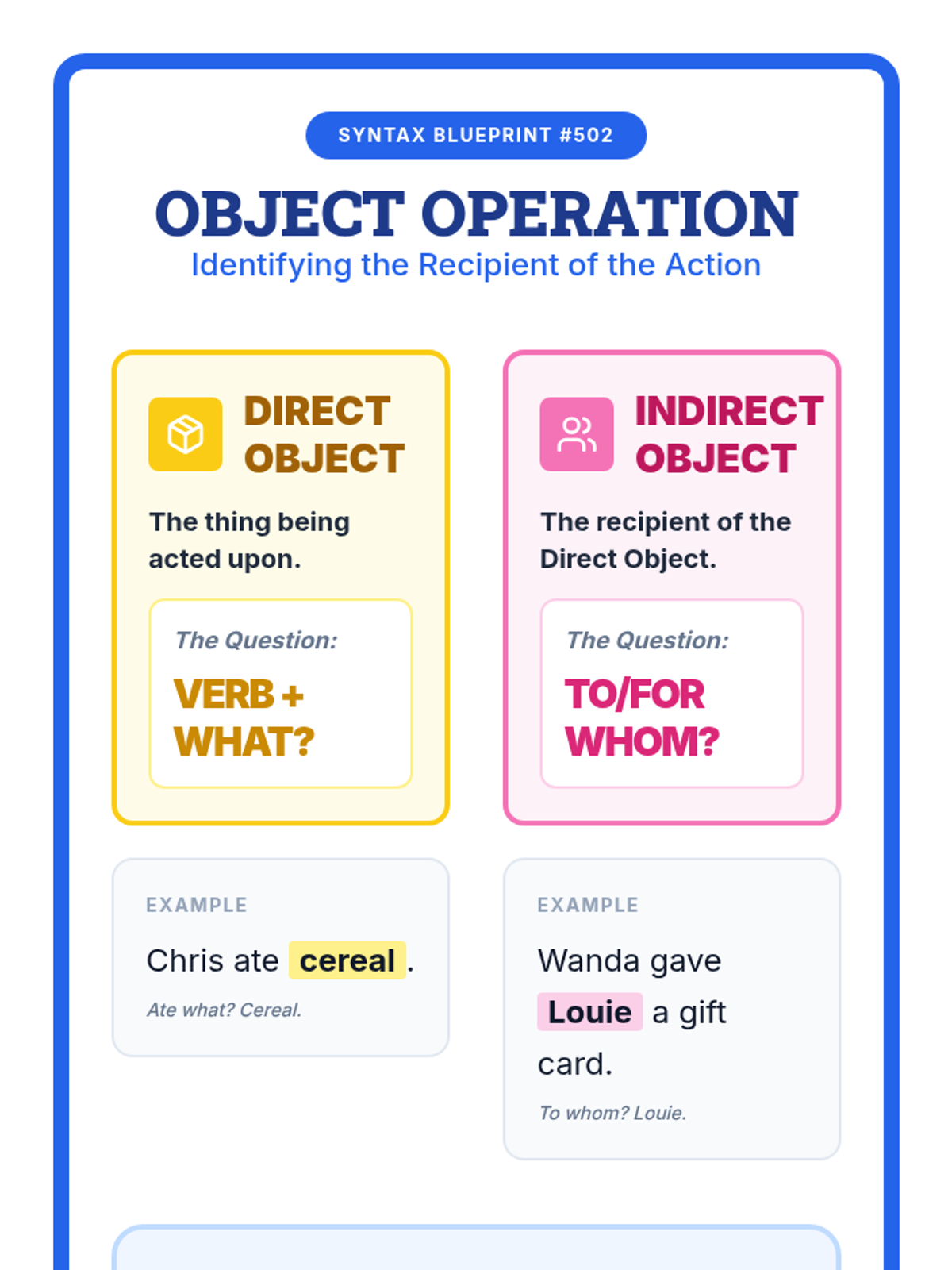
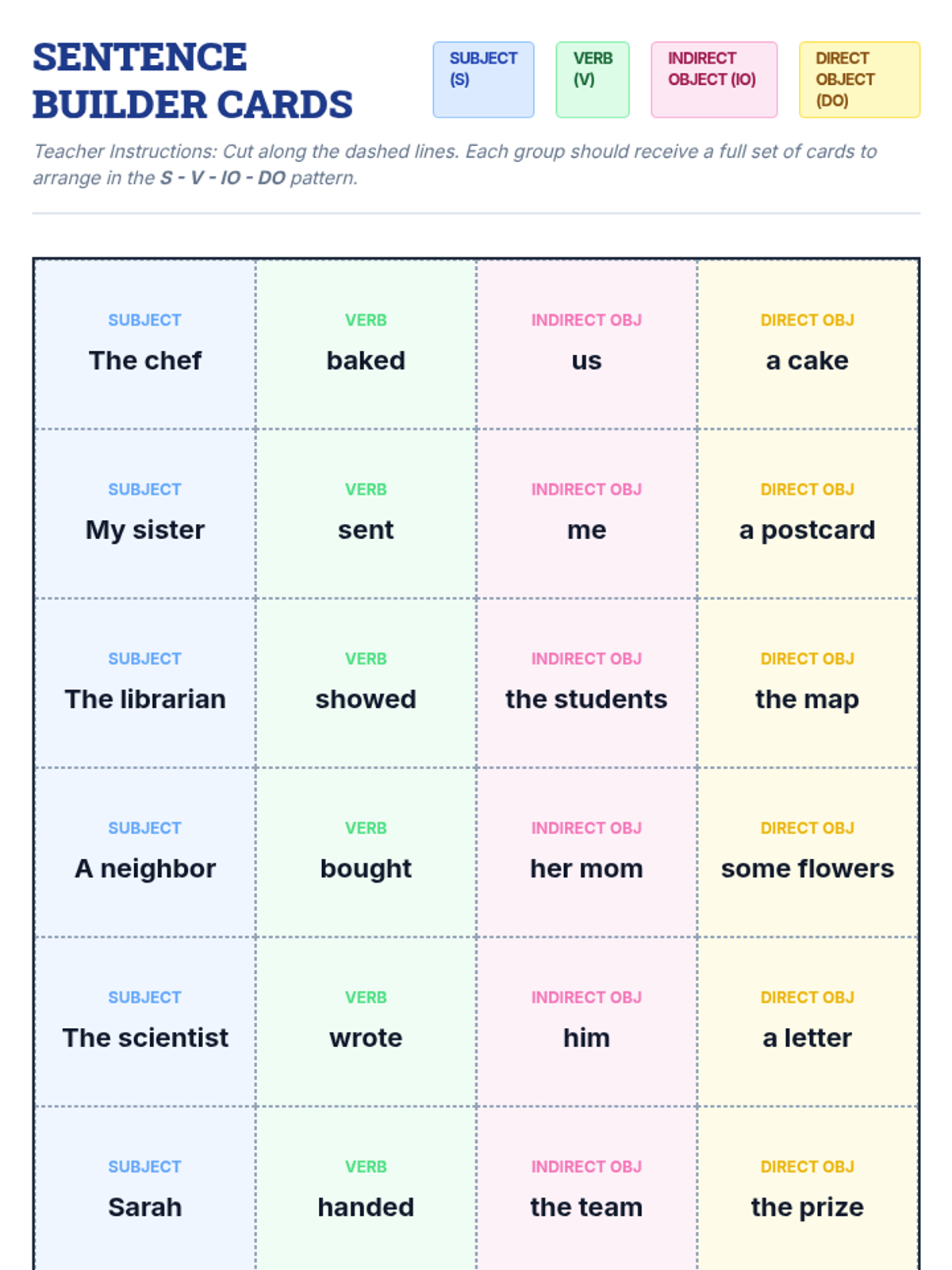
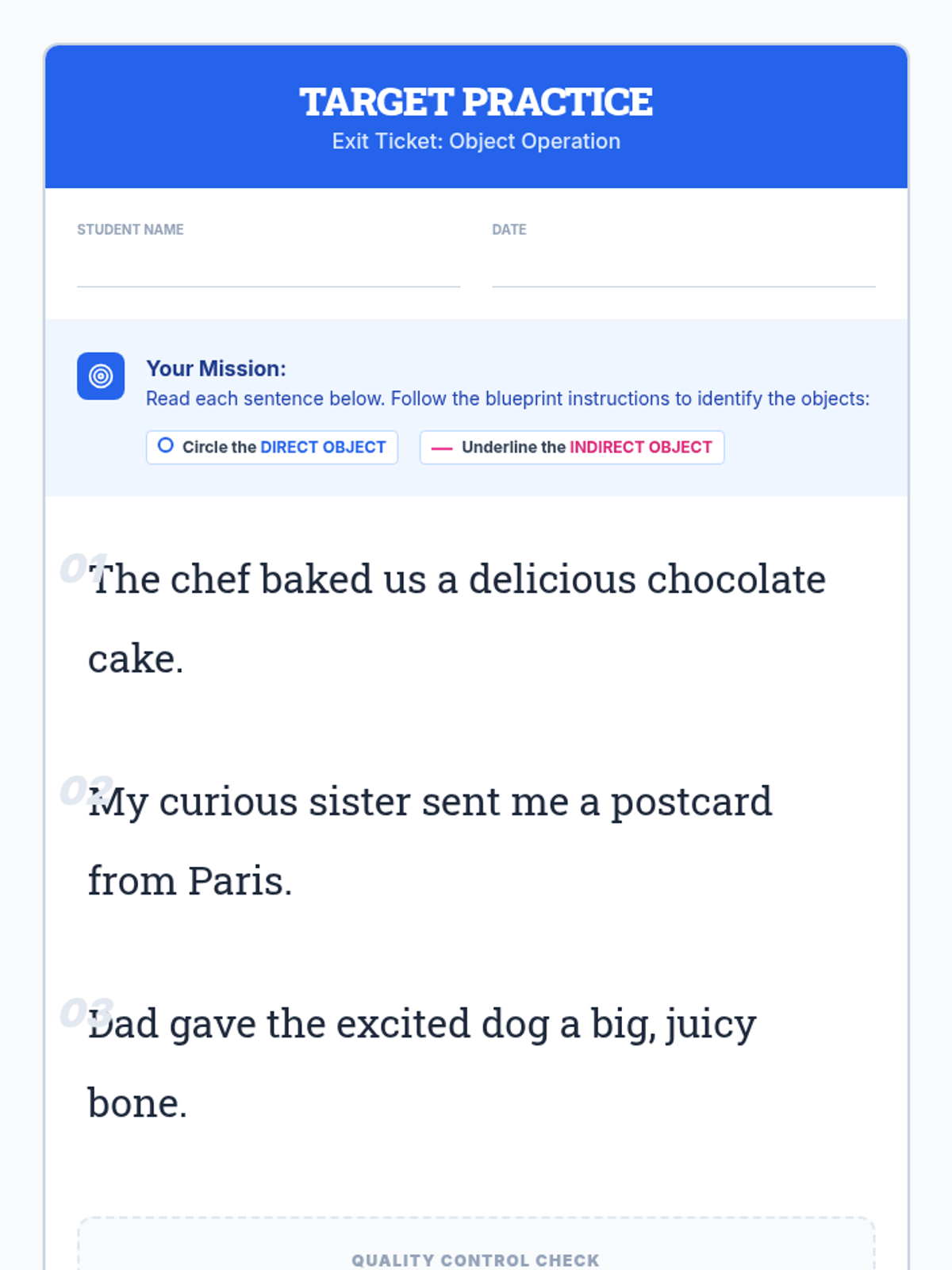
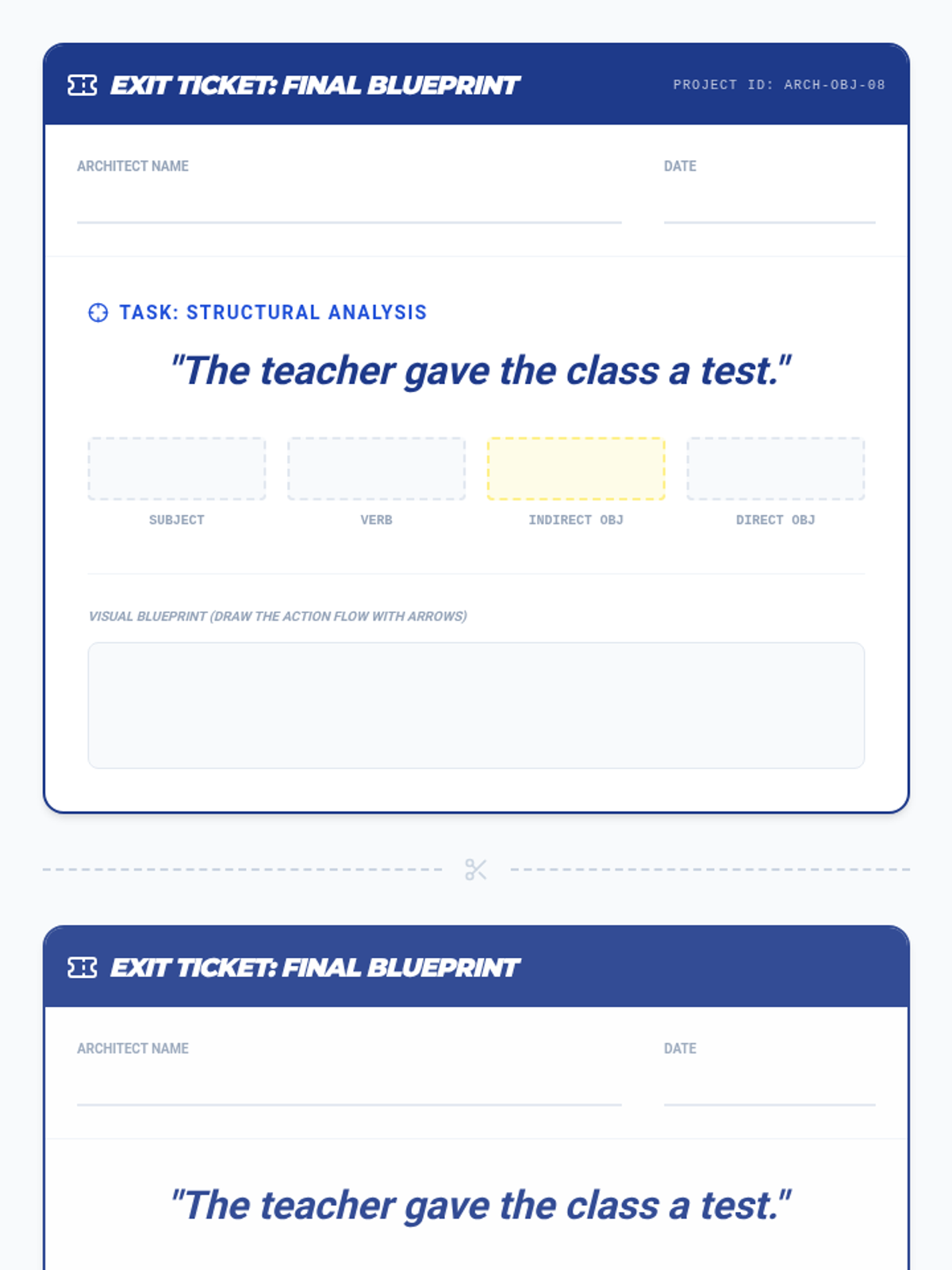
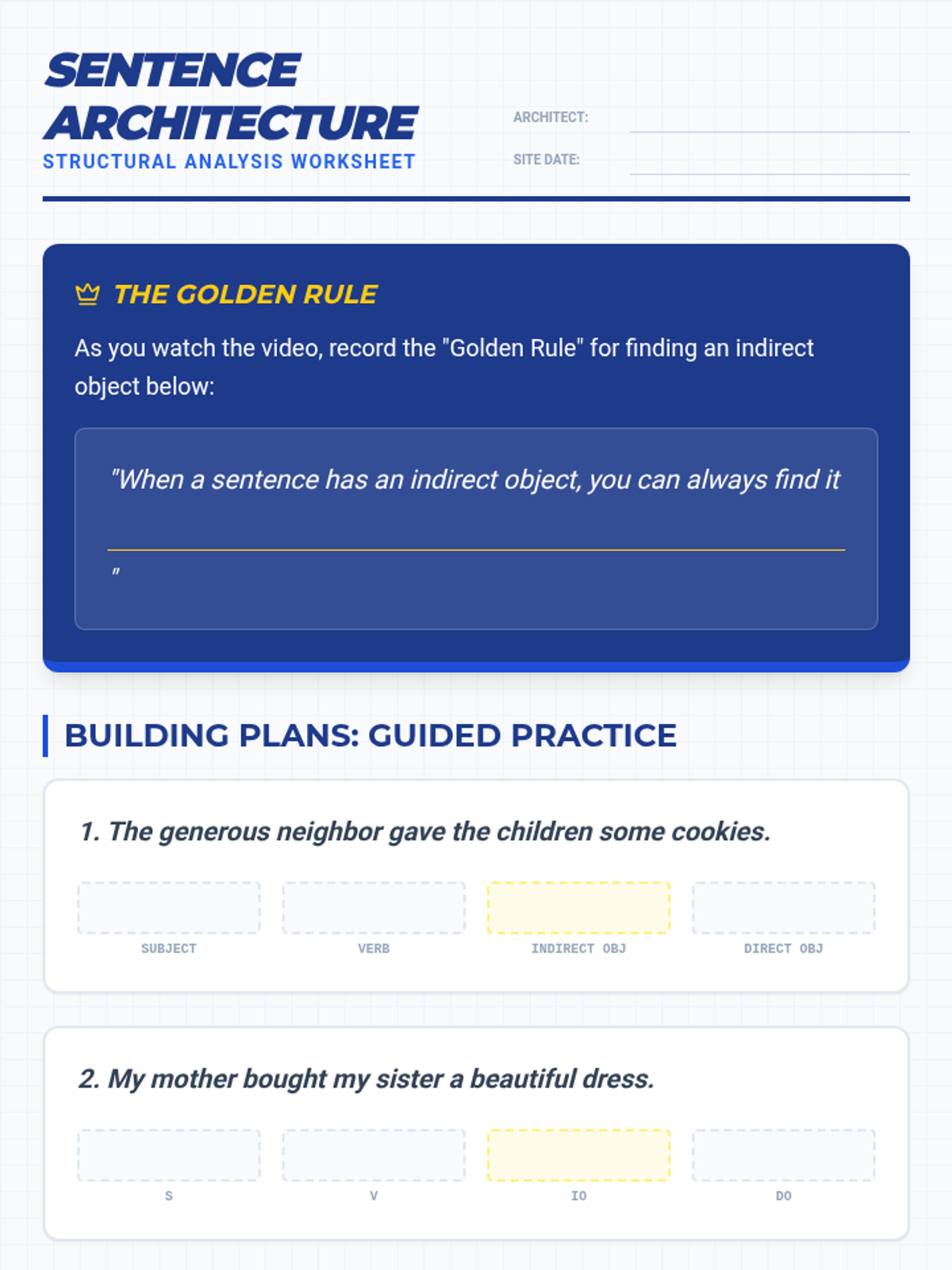
A 5th-grade grammar lesson focusing on identifying and distinguishing between direct and indirect objects using a construction-themed approach. Students explore sentence structure through video analysis, hands-on building, and guided practice.
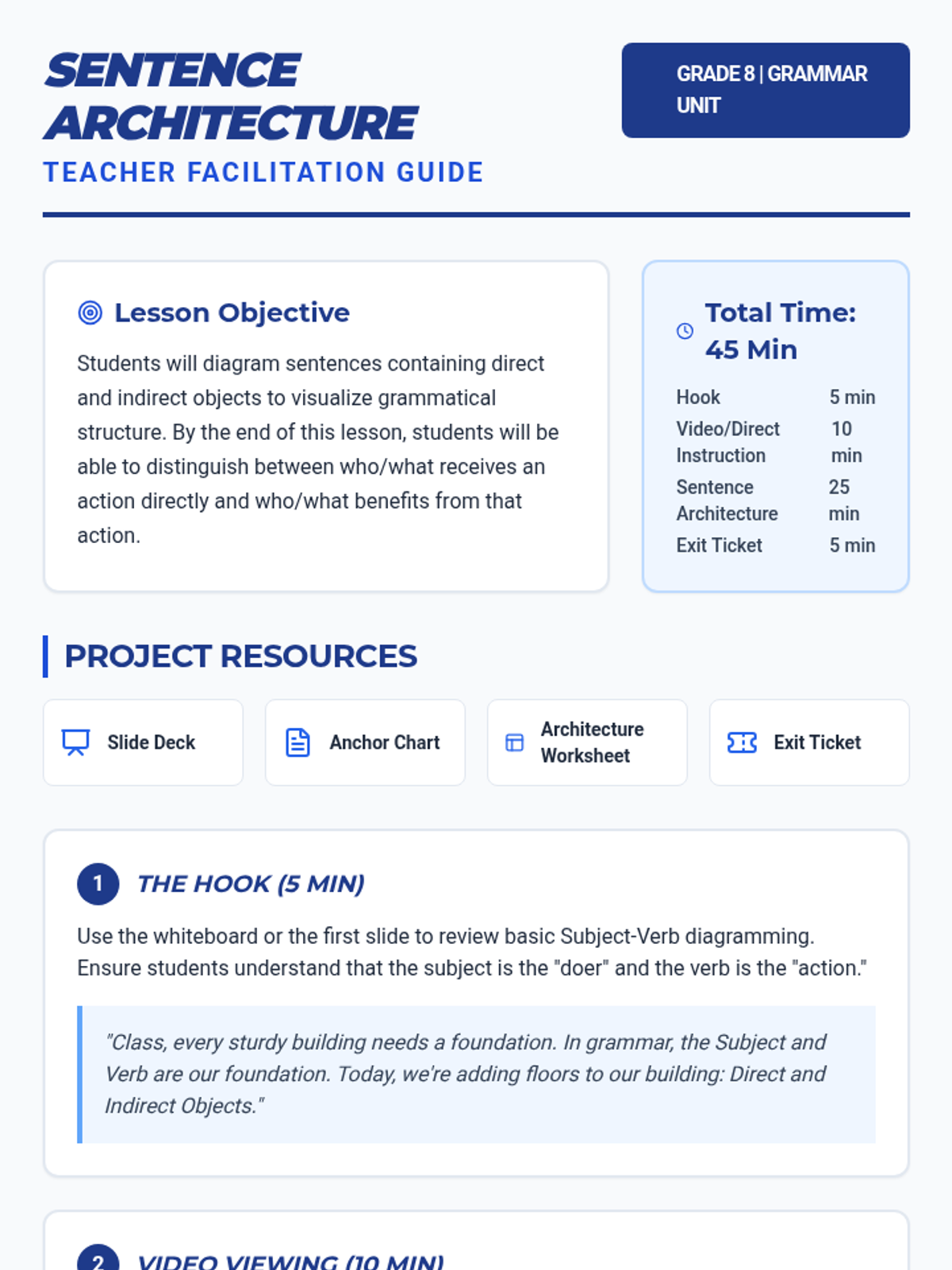
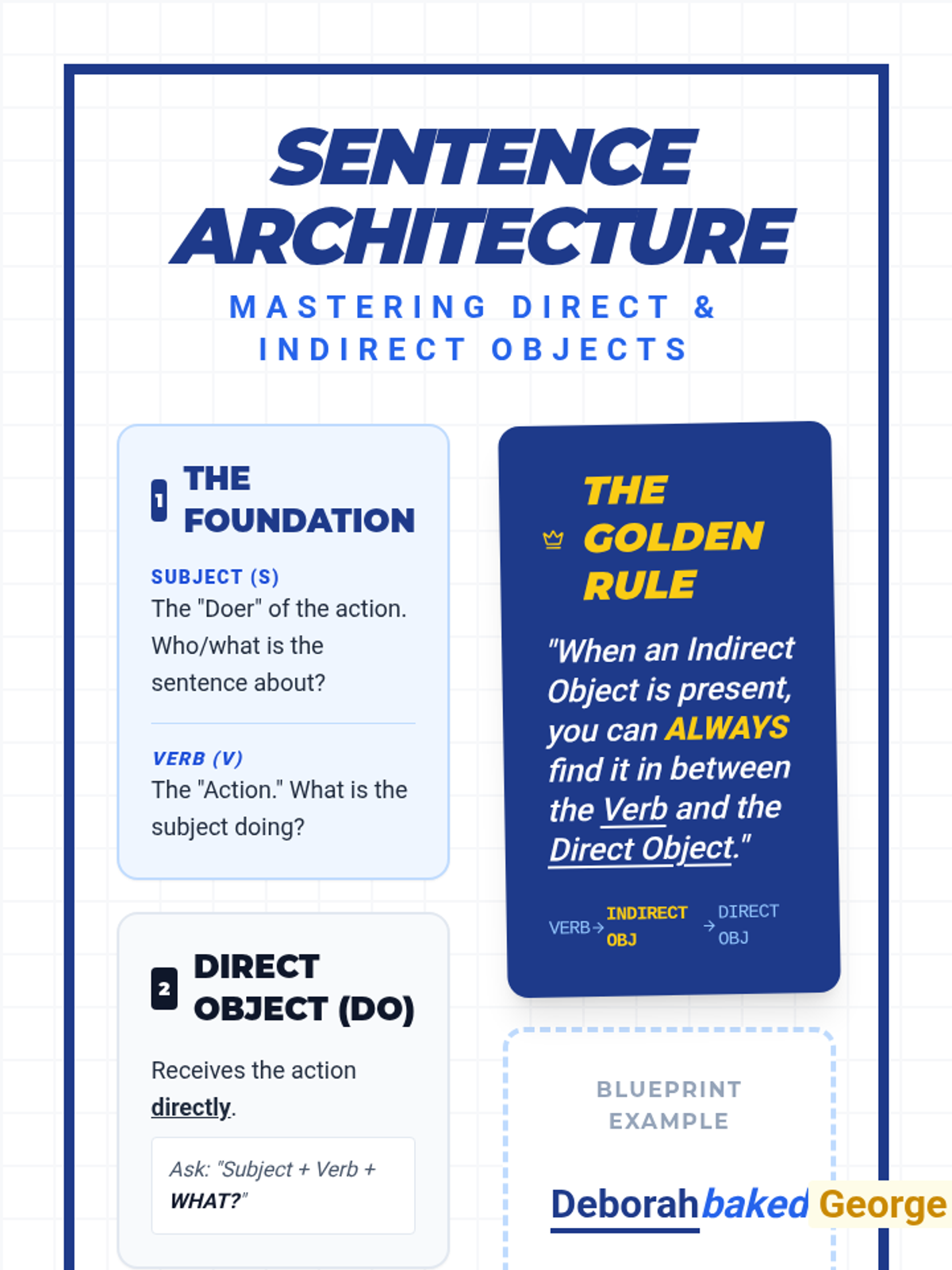
Students will learn to identify and diagram direct and indirect objects using a 'Sentence Architecture' framework, visualizing how objects receive and benefit from actions.
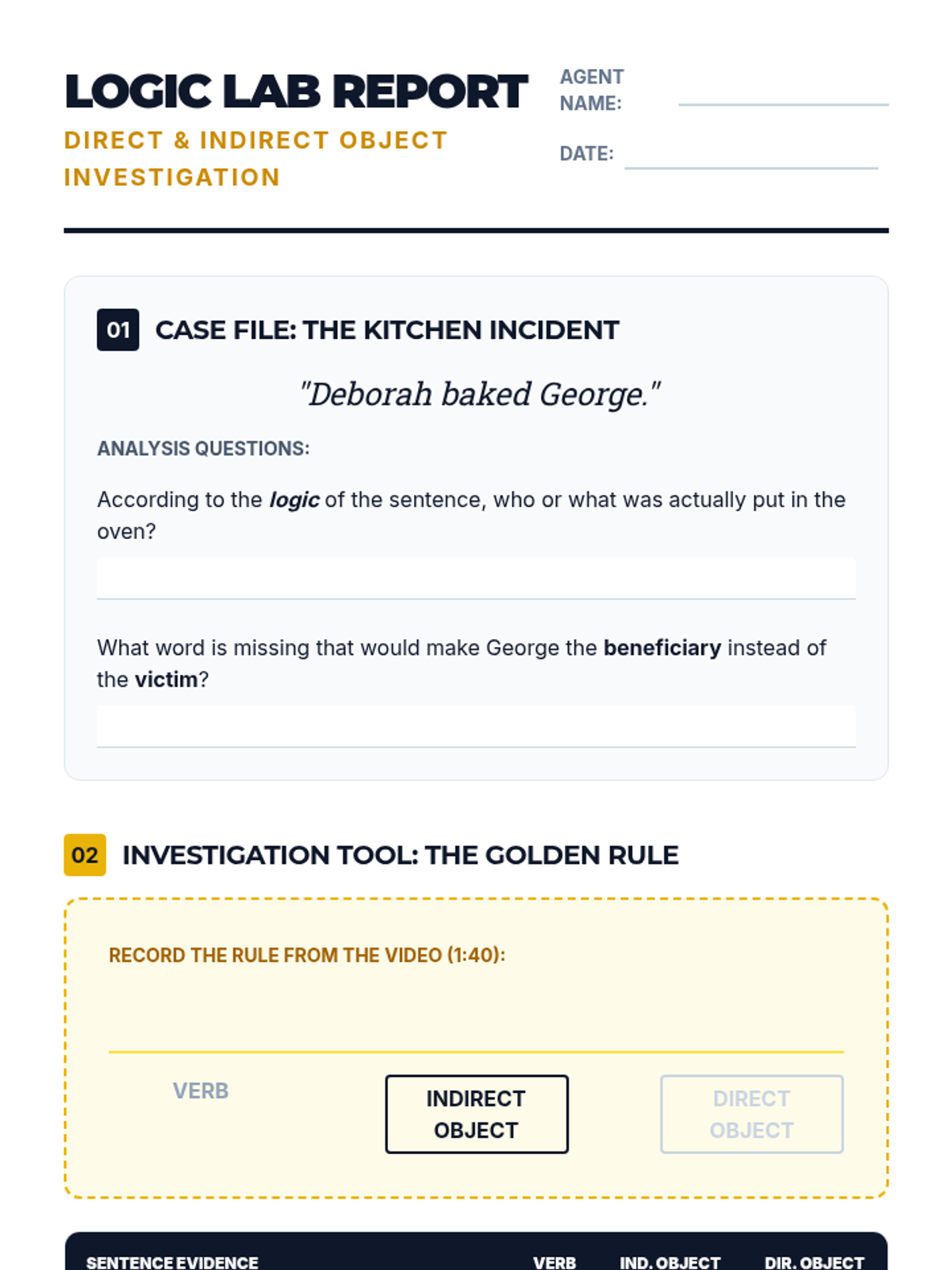
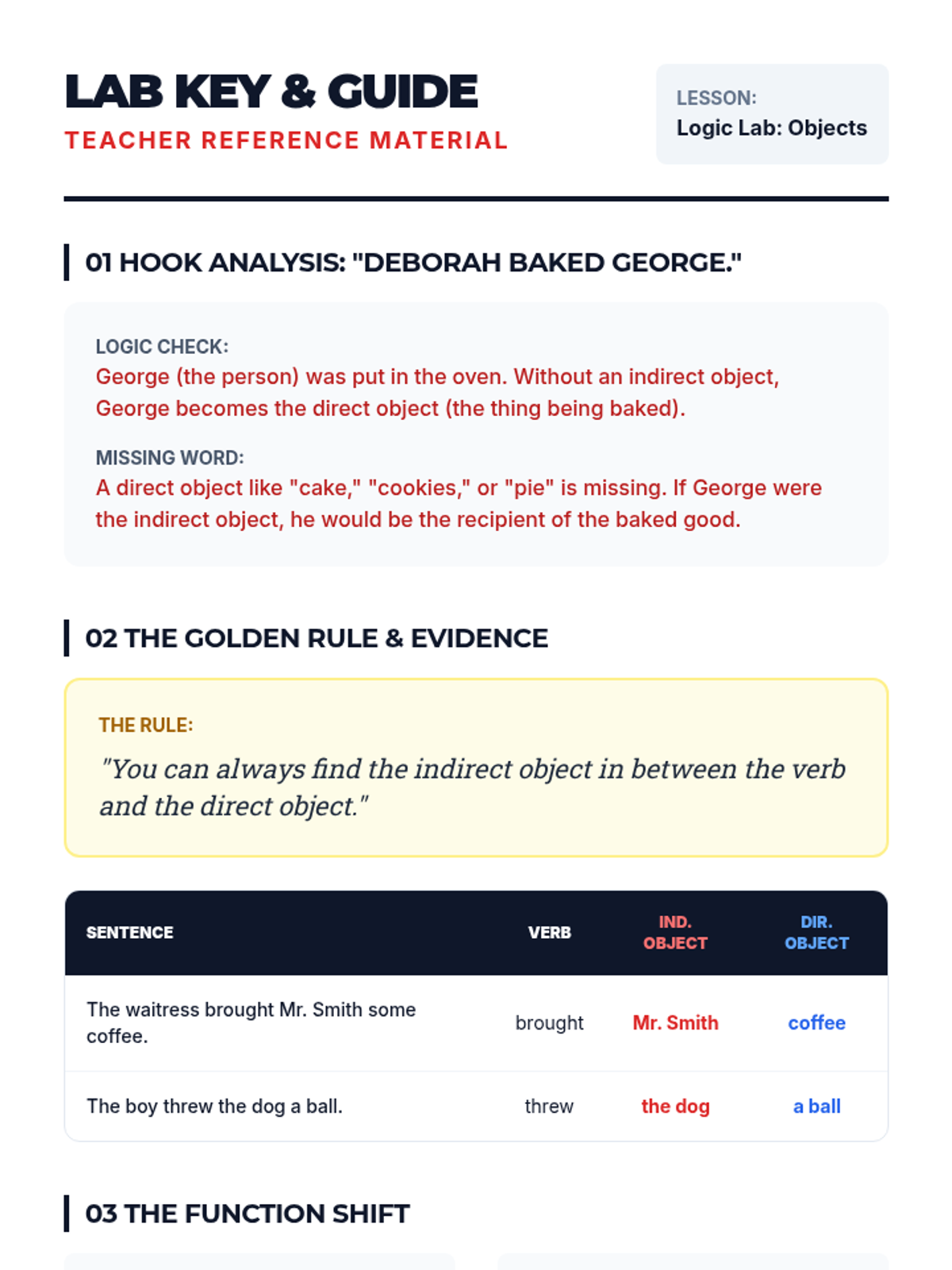
Students will use logic and the 'Golden Rule' of placement to distinguish between direct and indirect objects, investigating sentences where a lack of an indirect object leads to humorous or impossible scenarios.
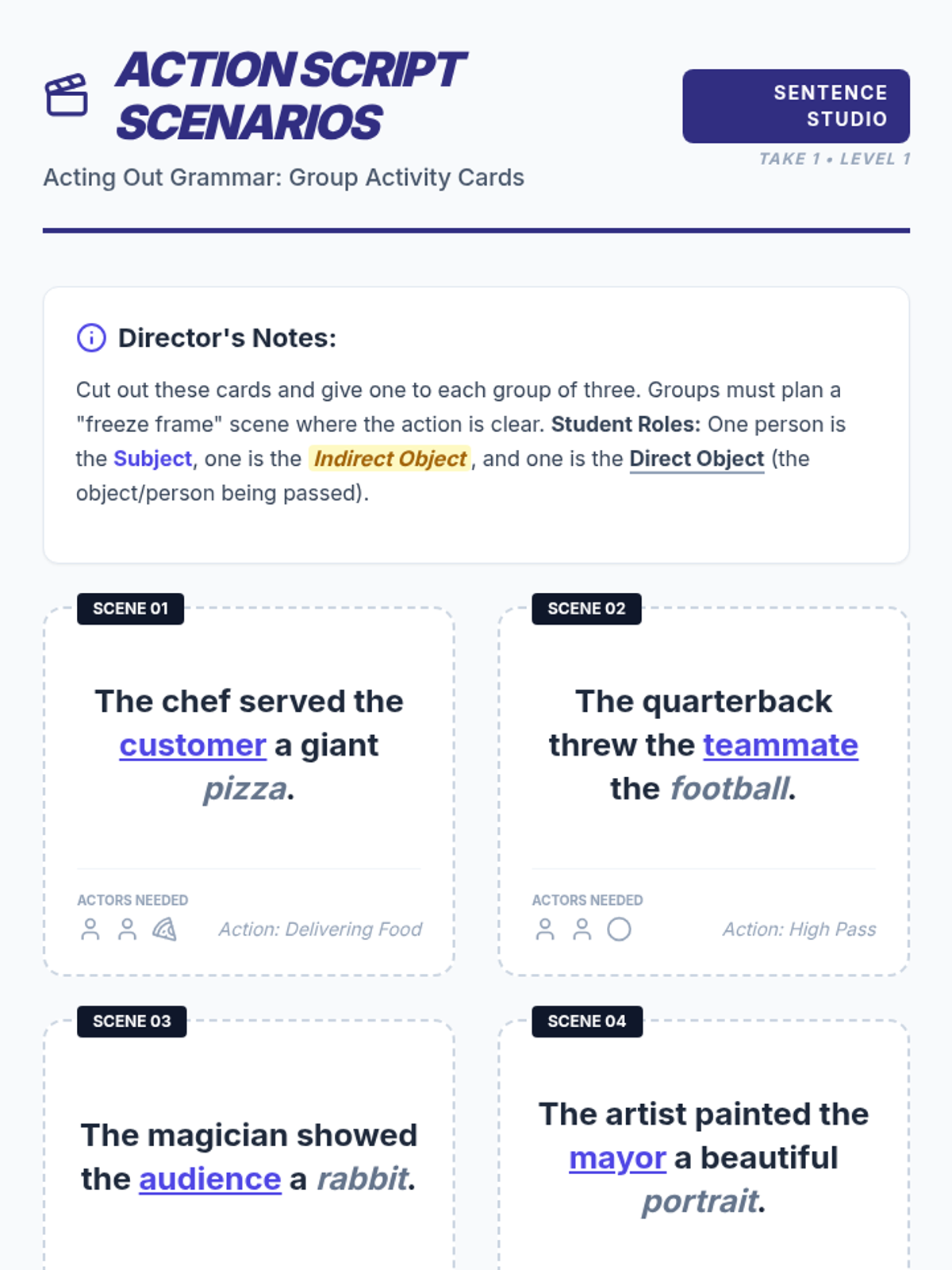
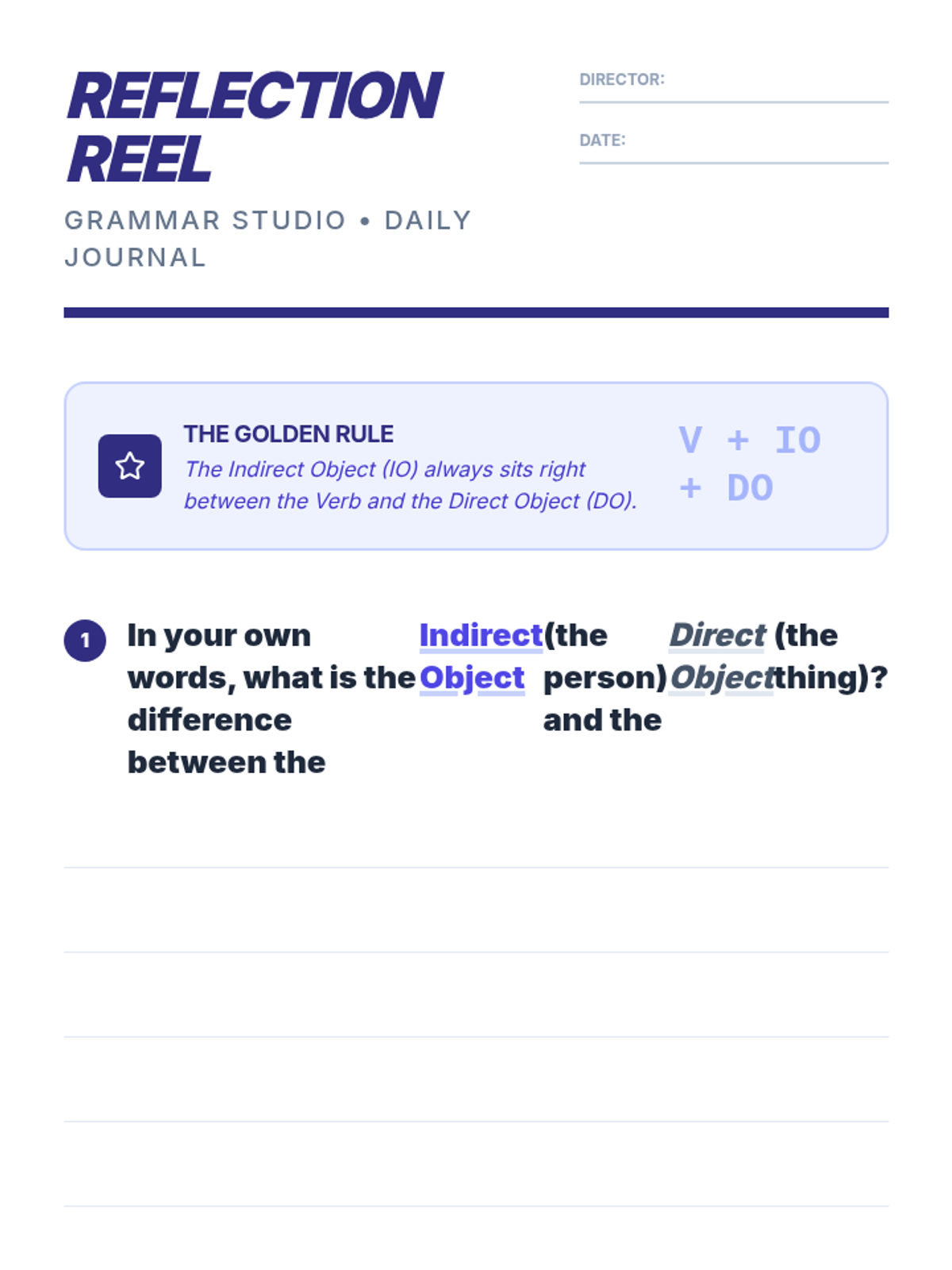
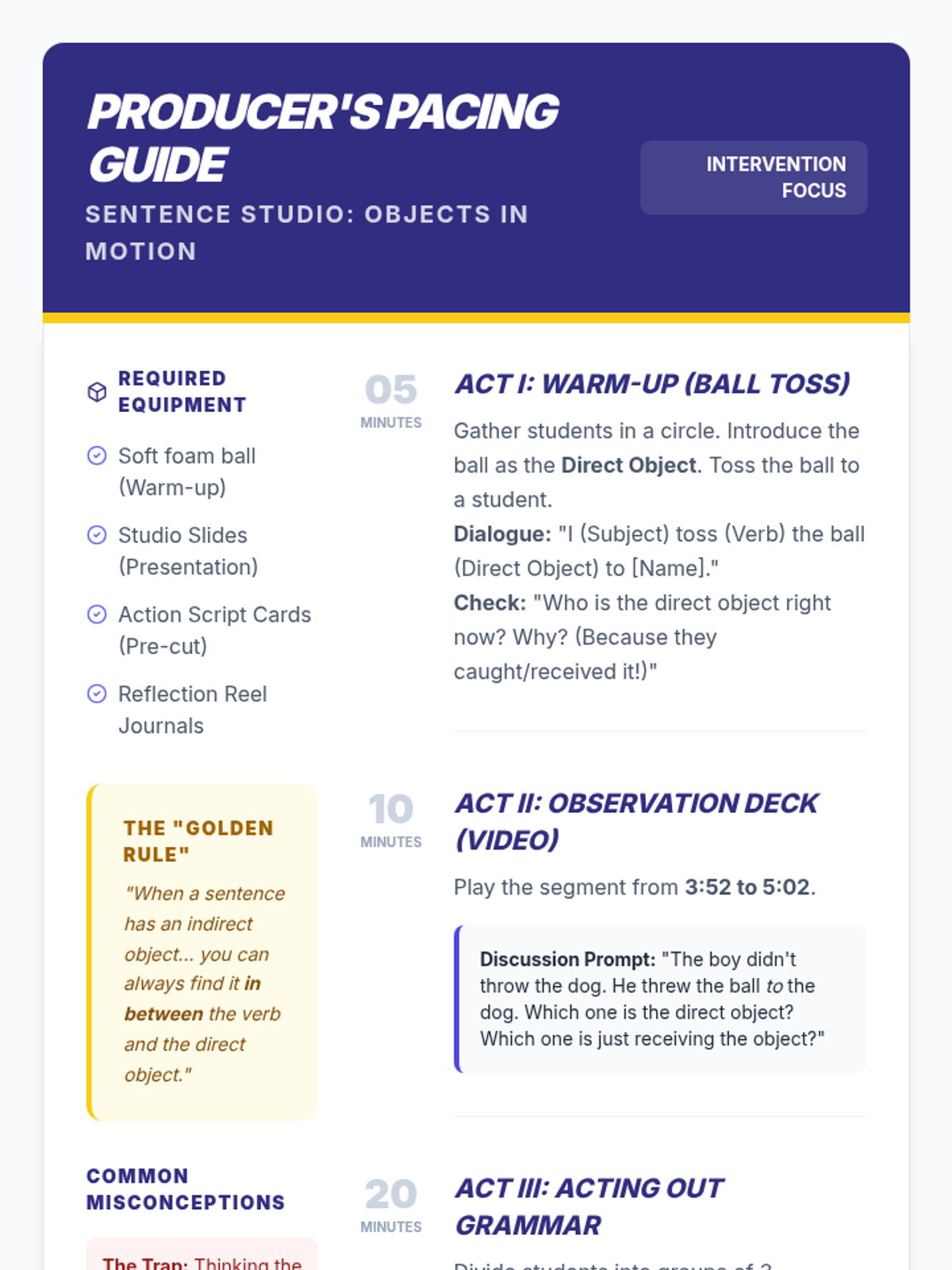
A kinesthetic grammar lesson for 6th-8th grade intervention students to master direct and indirect objects through movement and role-play.
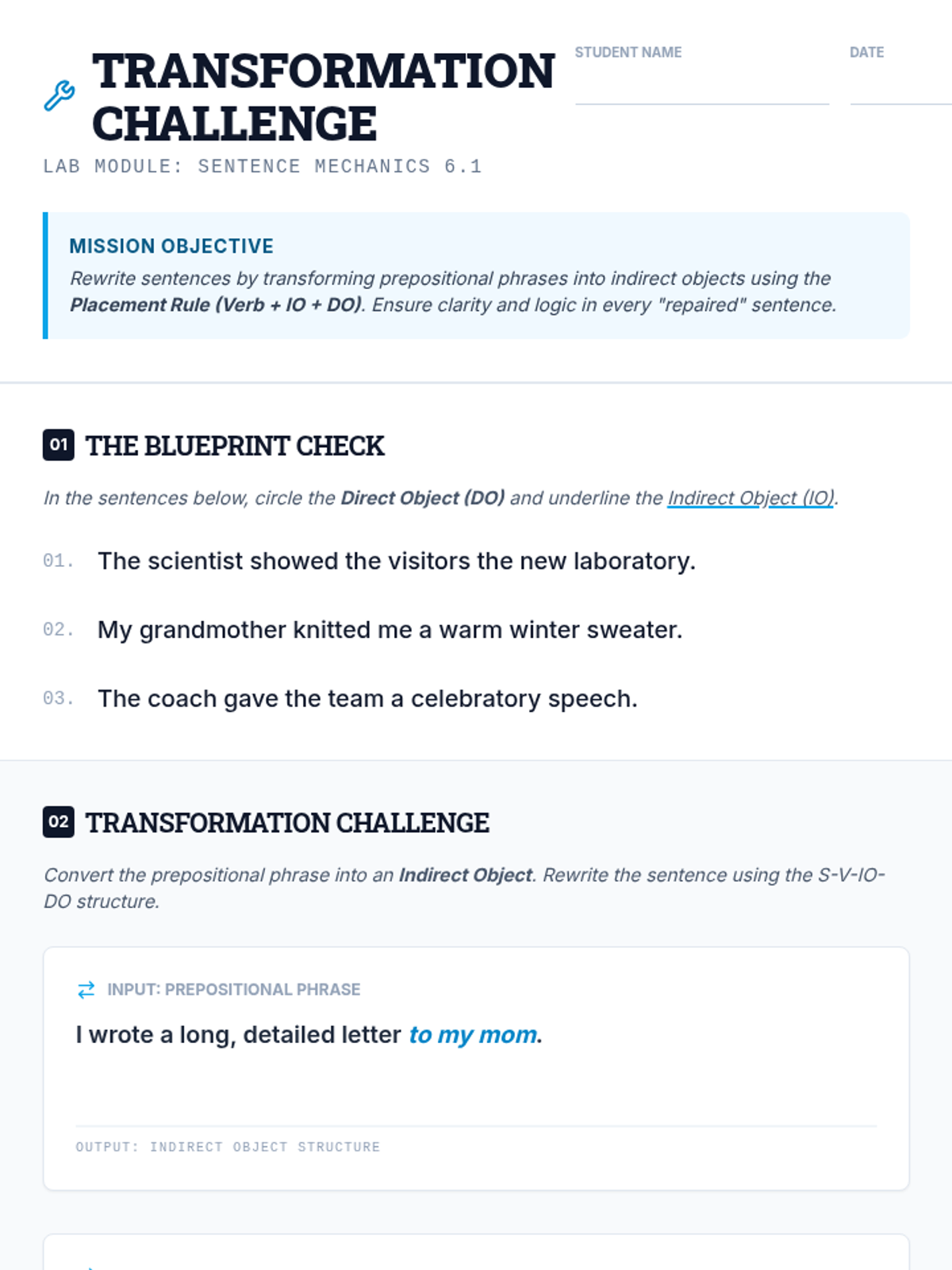
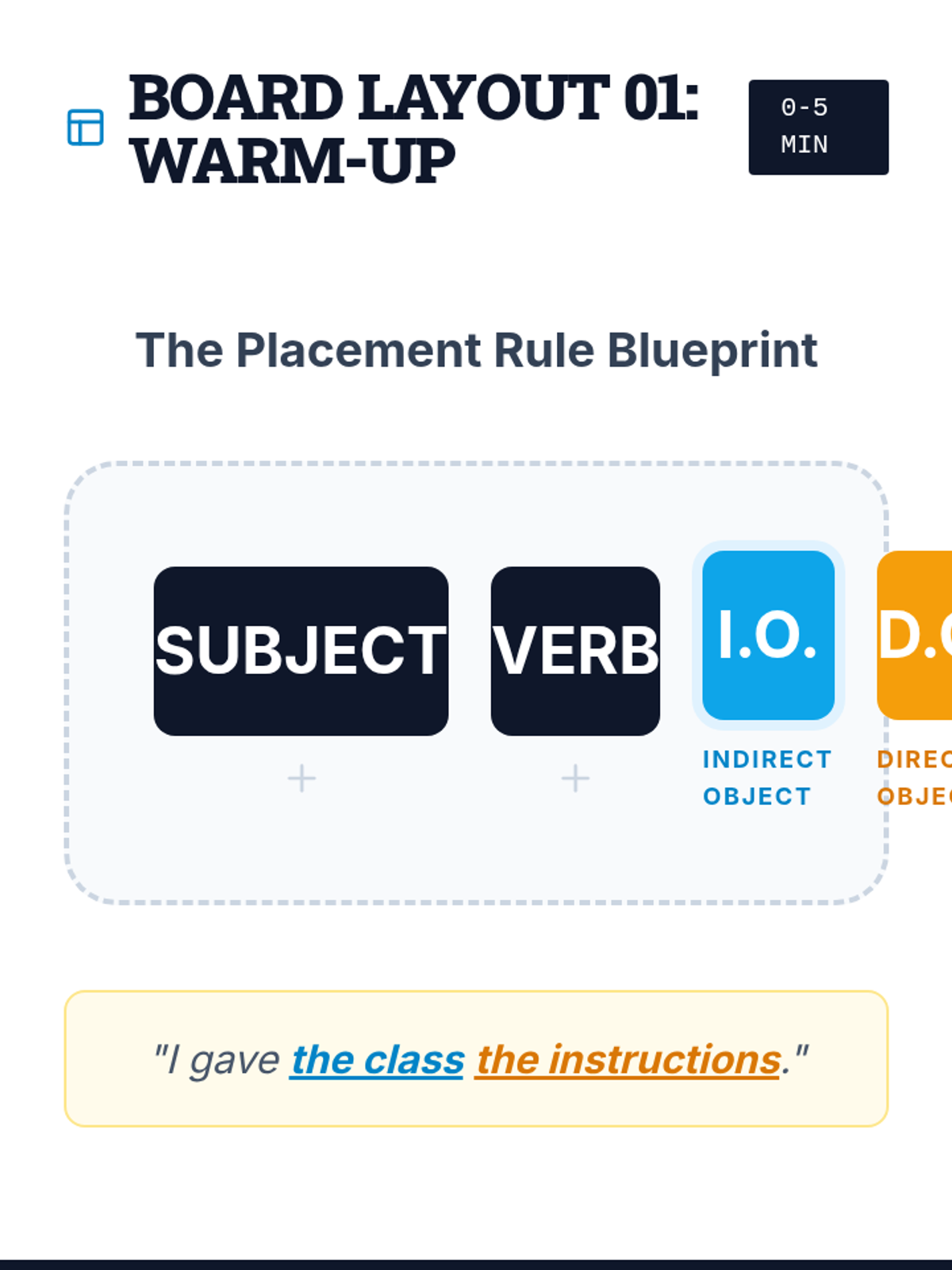
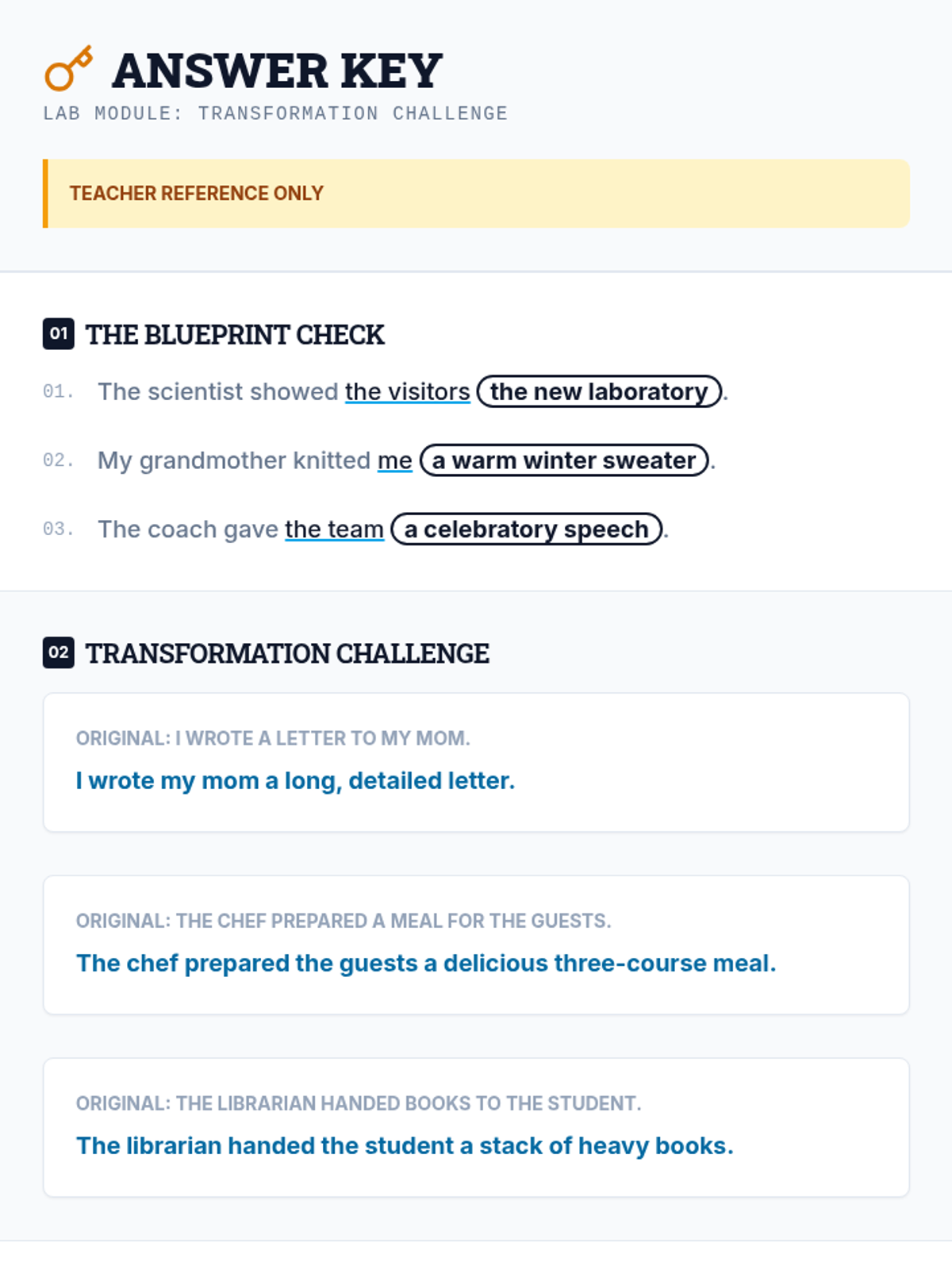
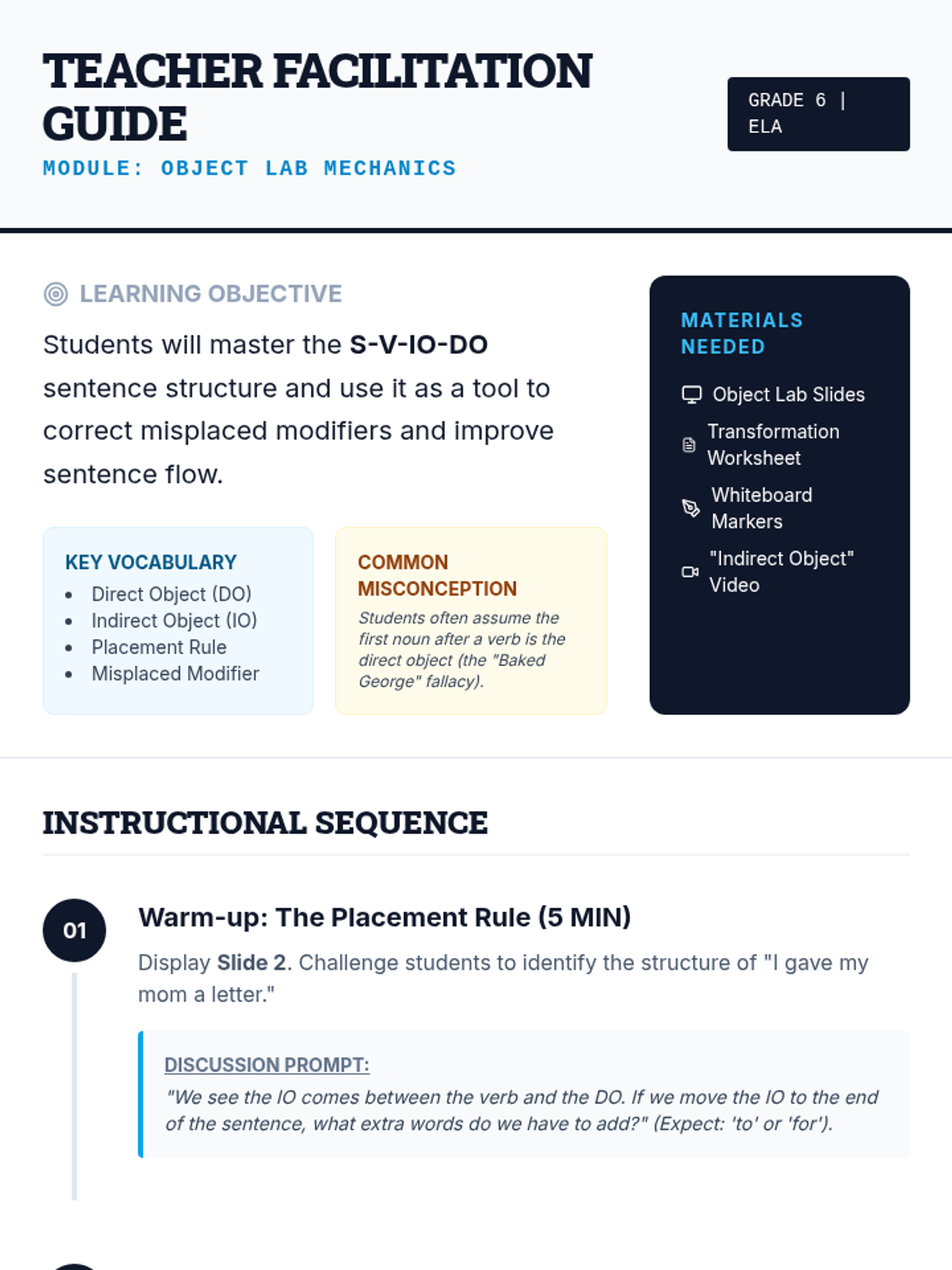
A lesson focused on the mechanics of indirect objects and sentence structure. Students will master the placement rule (S-V-IO-DO) and learn to transform prepositional phrases into indirect objects while avoiding misplaced modifiers.
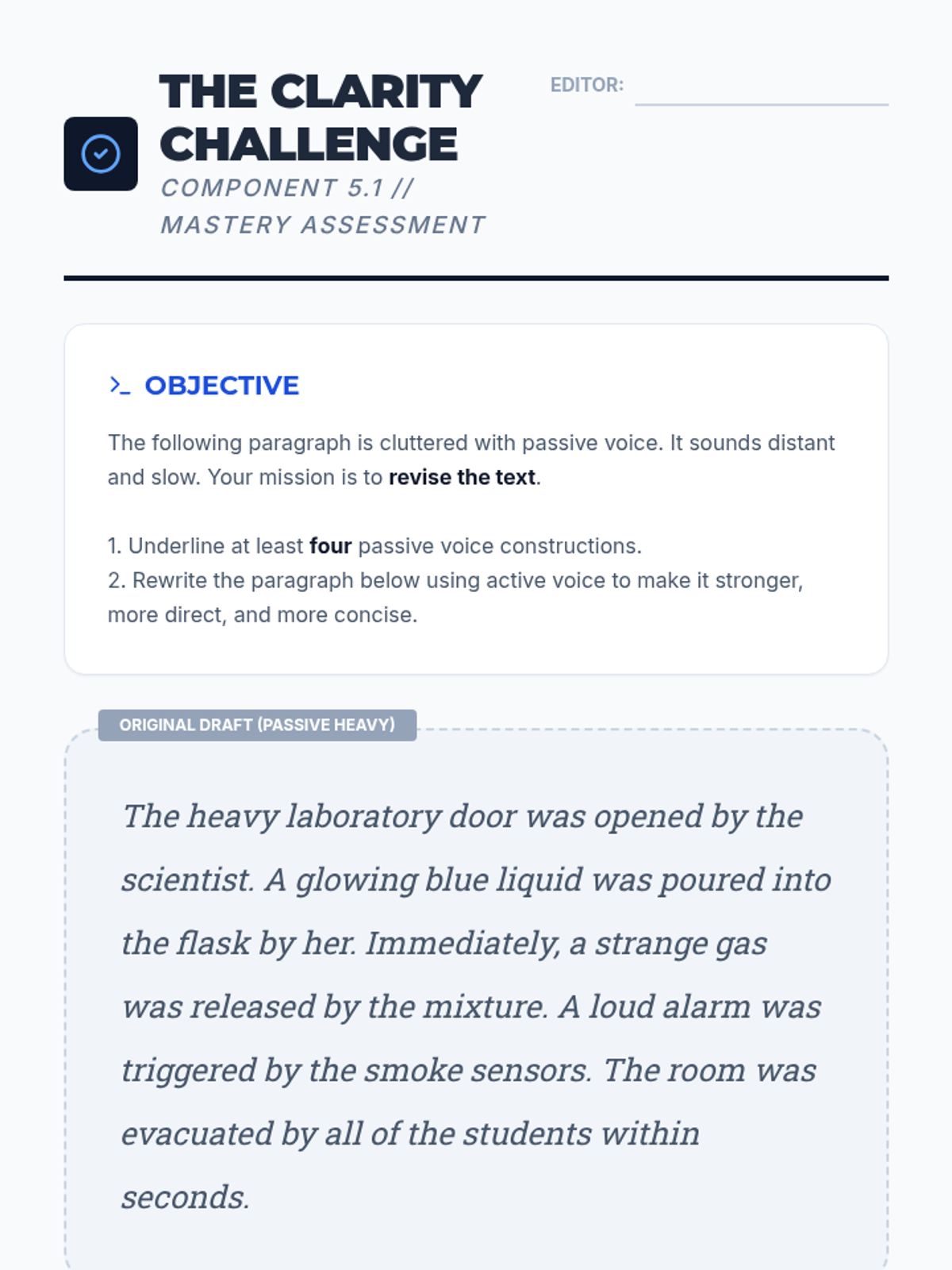
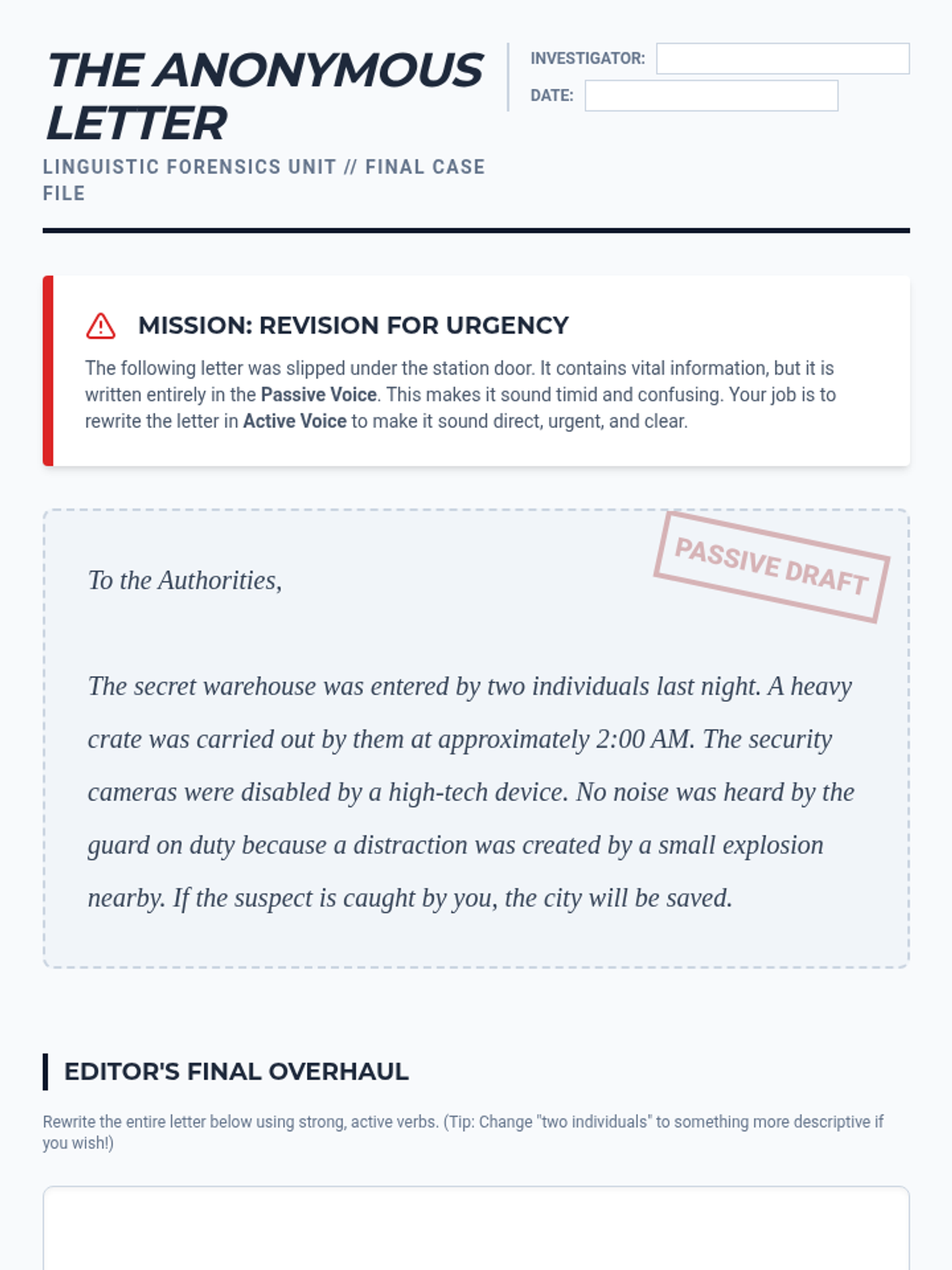
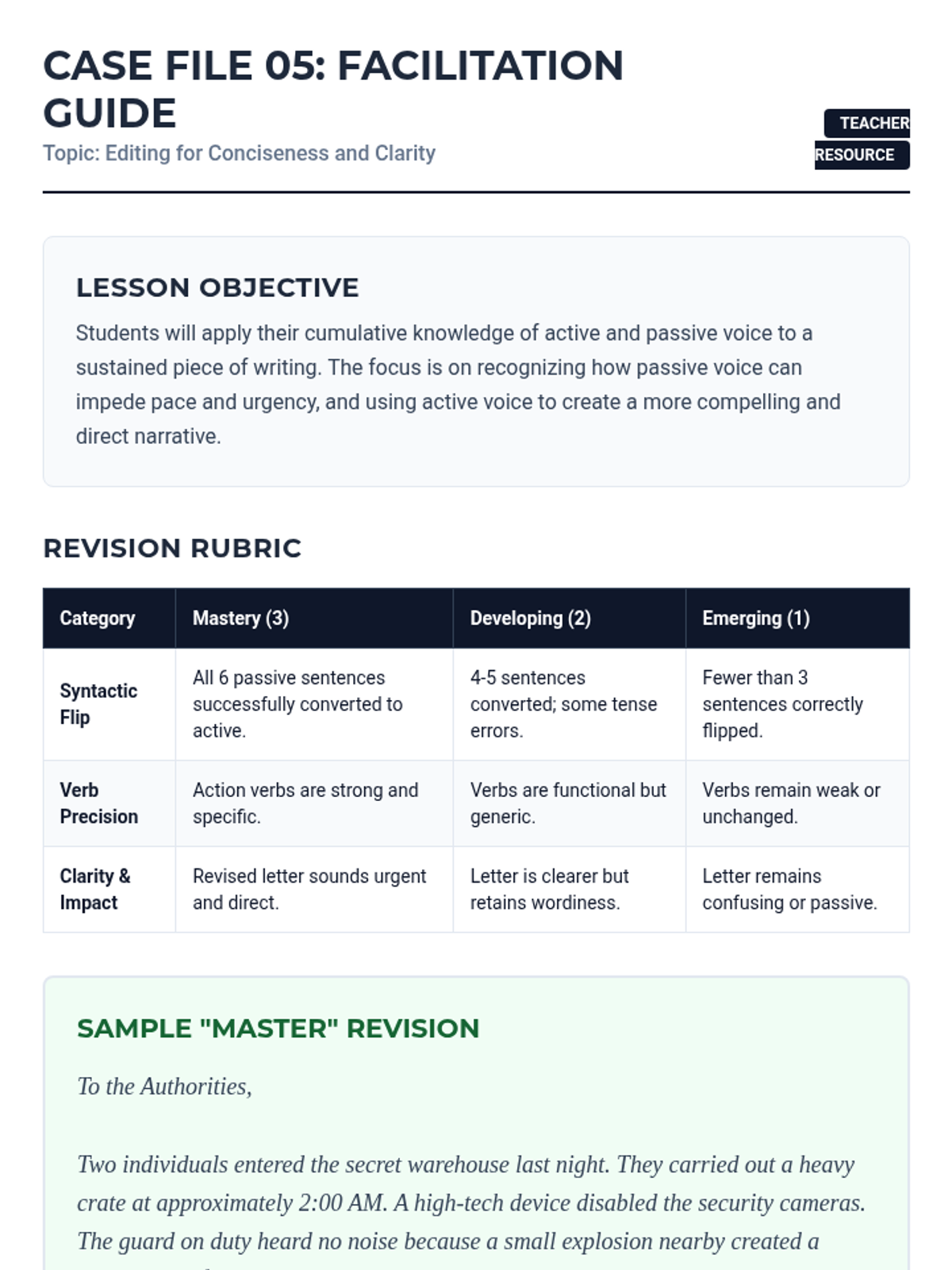
In this culminating workshop, students apply their knowledge to a paragraph-length editing task. They analyze a text heavy with passive voice, determine where active voice would improve flow, and edit for conciseness. Students reflect on how these changes affect the overall tone.
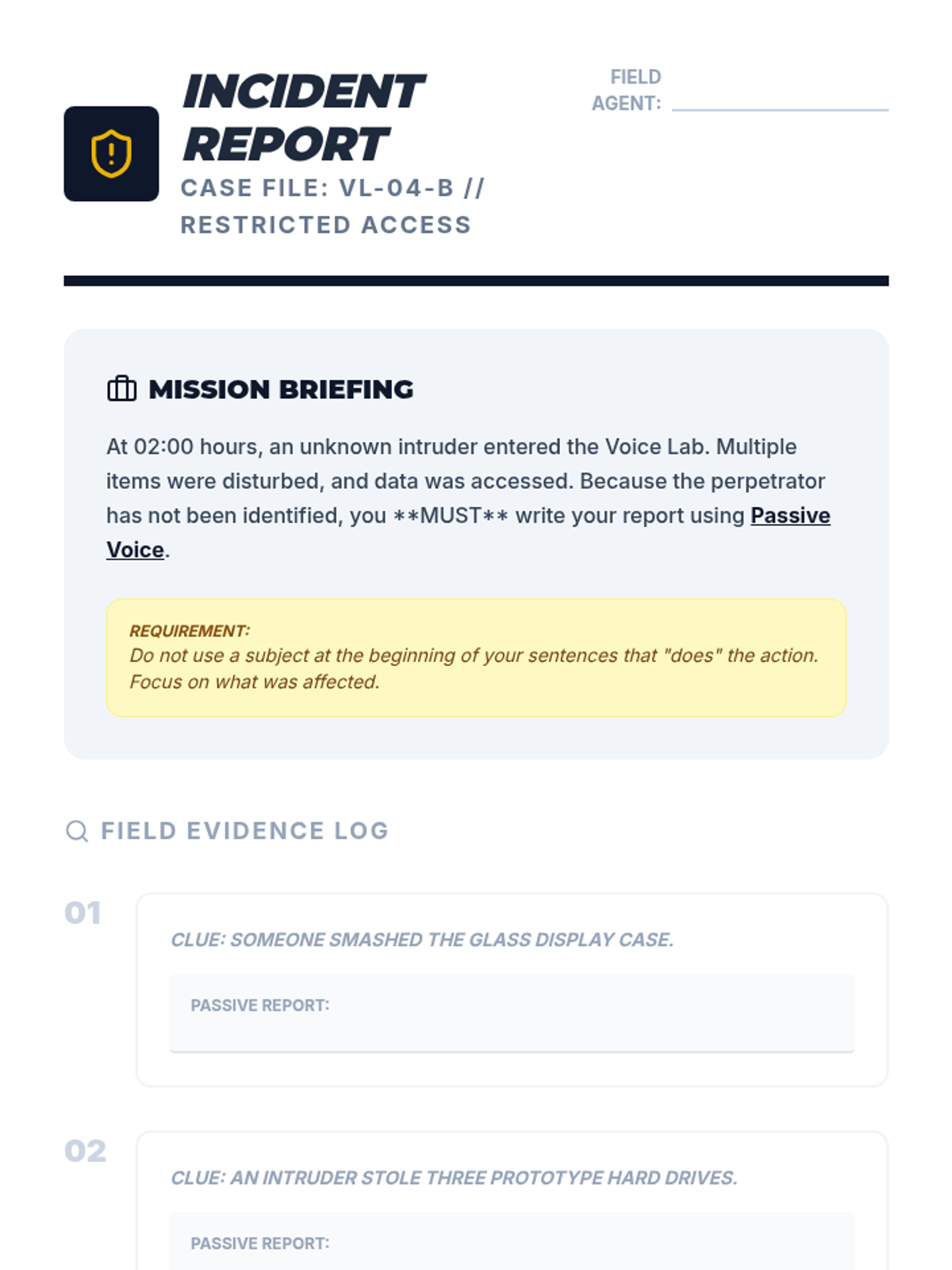
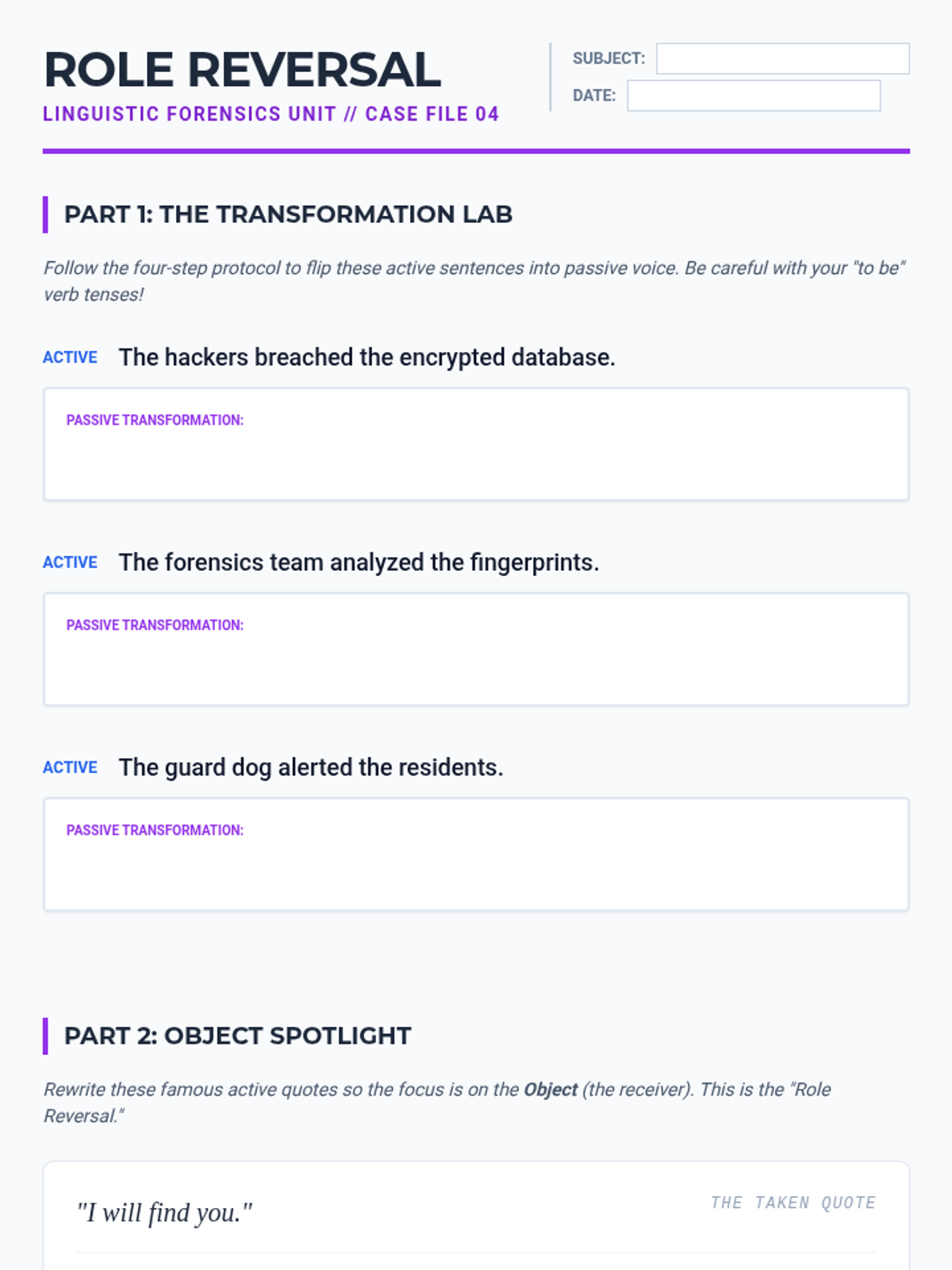
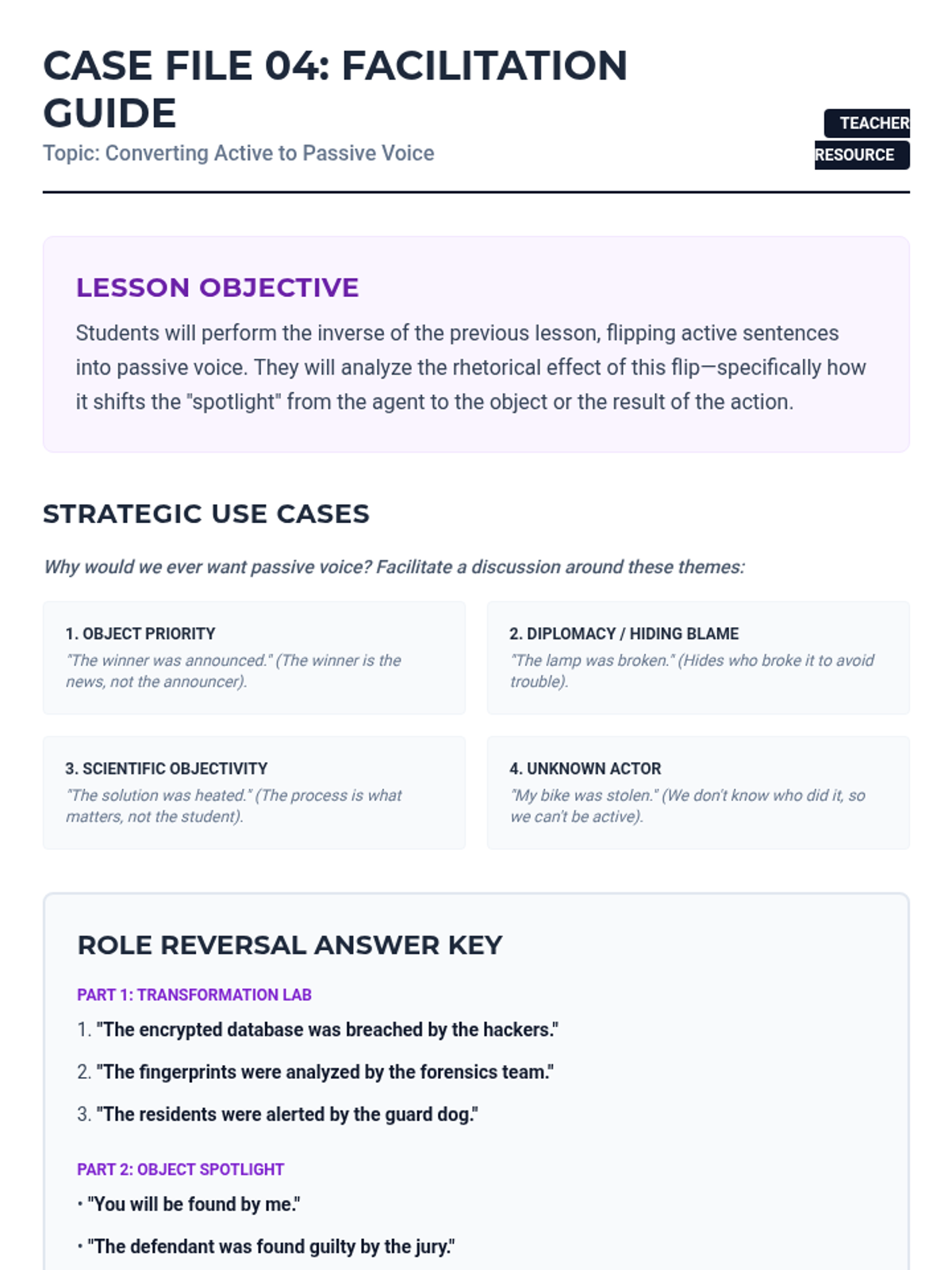
Students learn how to intentionally construct passive sentences when the actor is unknown or less important than the result. They reverse the process from the previous lesson, focusing on shifting the object to the subject position. This ensures mastery of the structural manipulation in both directions.
Students practice the mechanics of flipping sentence structures to make the actor the subject. They work through guided examples to eliminate 'to be' verbs and prepositional phrases that clutter the sentence. The lesson emphasizes writing with directness and vigor.
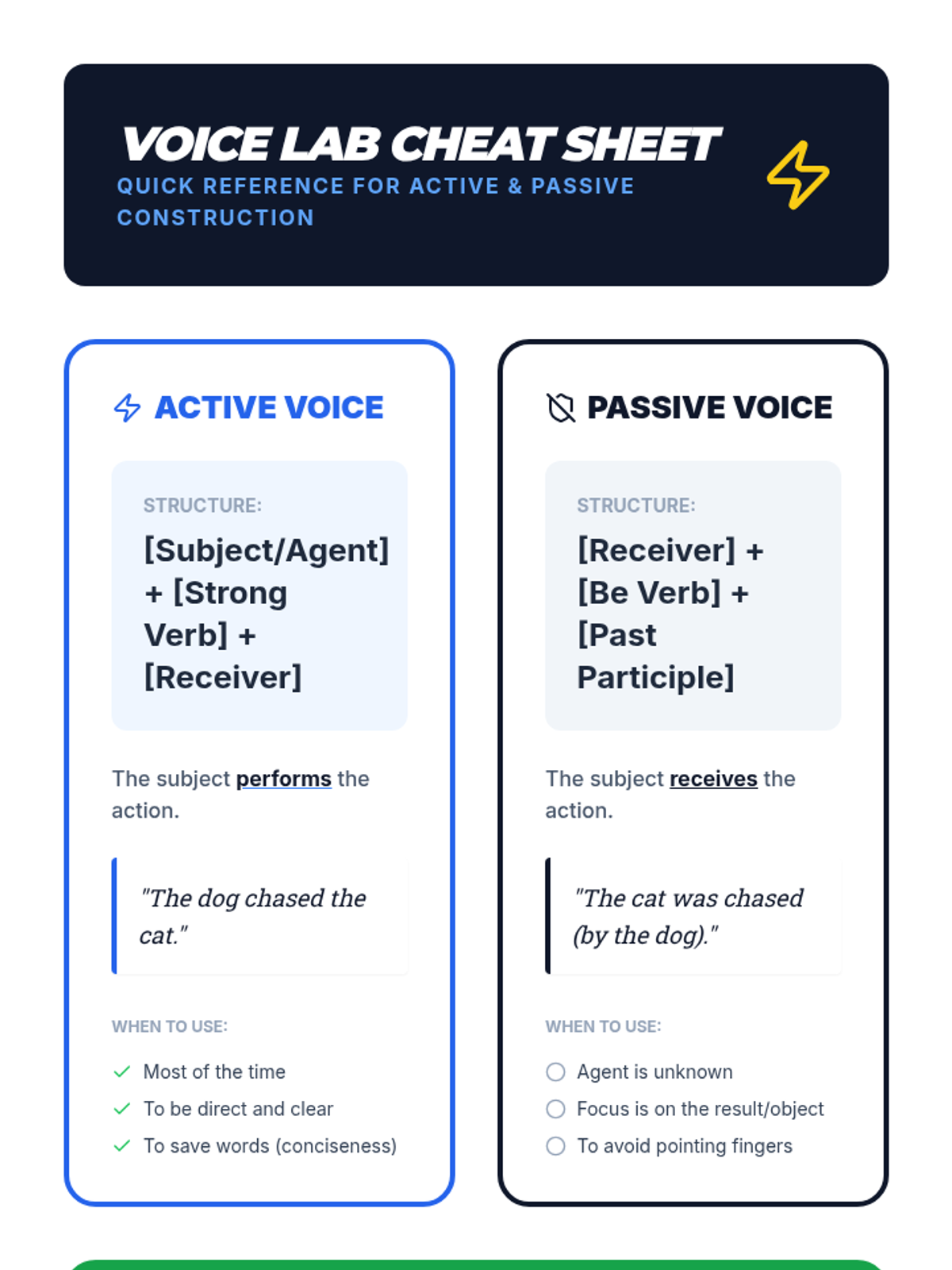
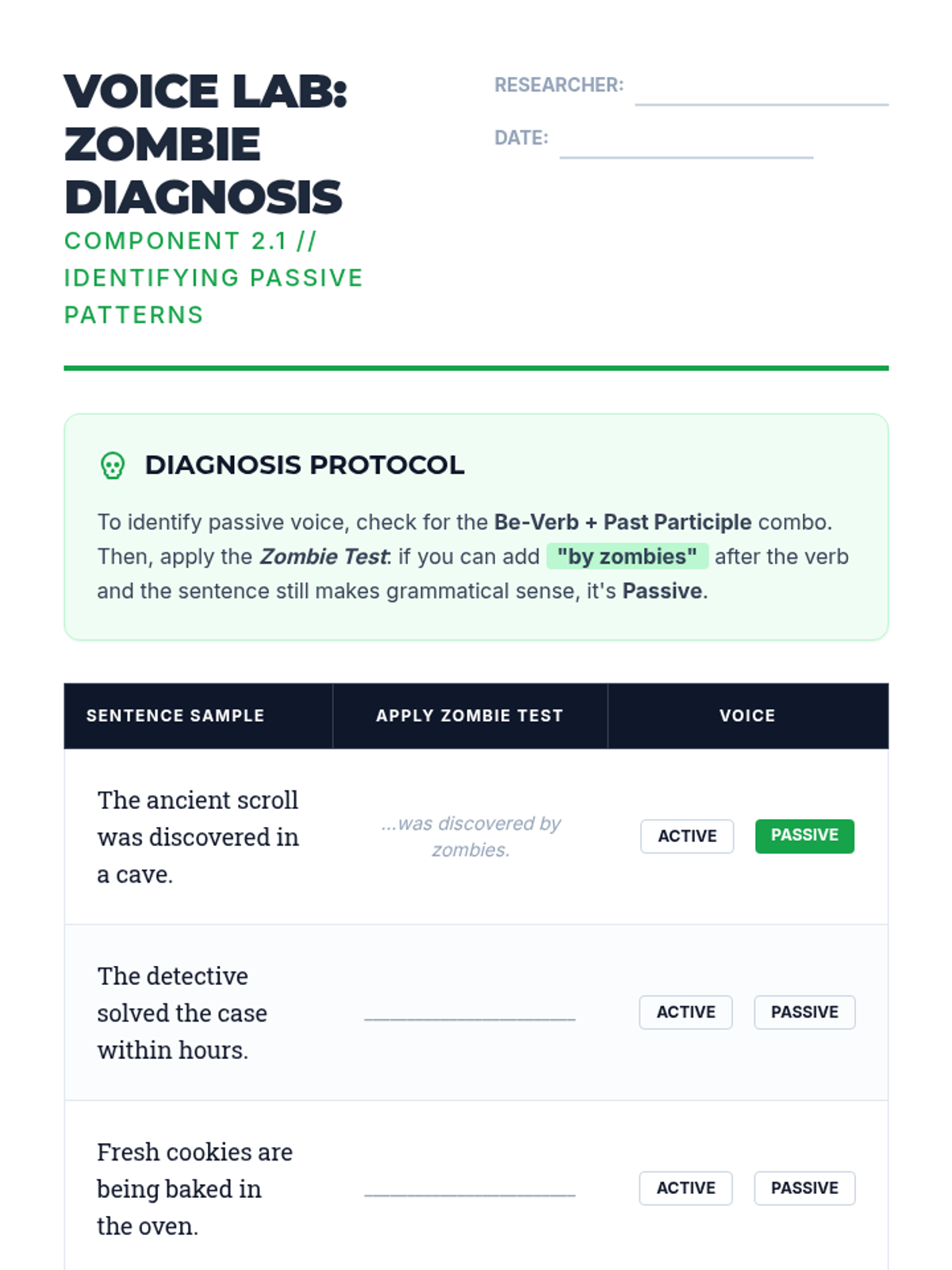
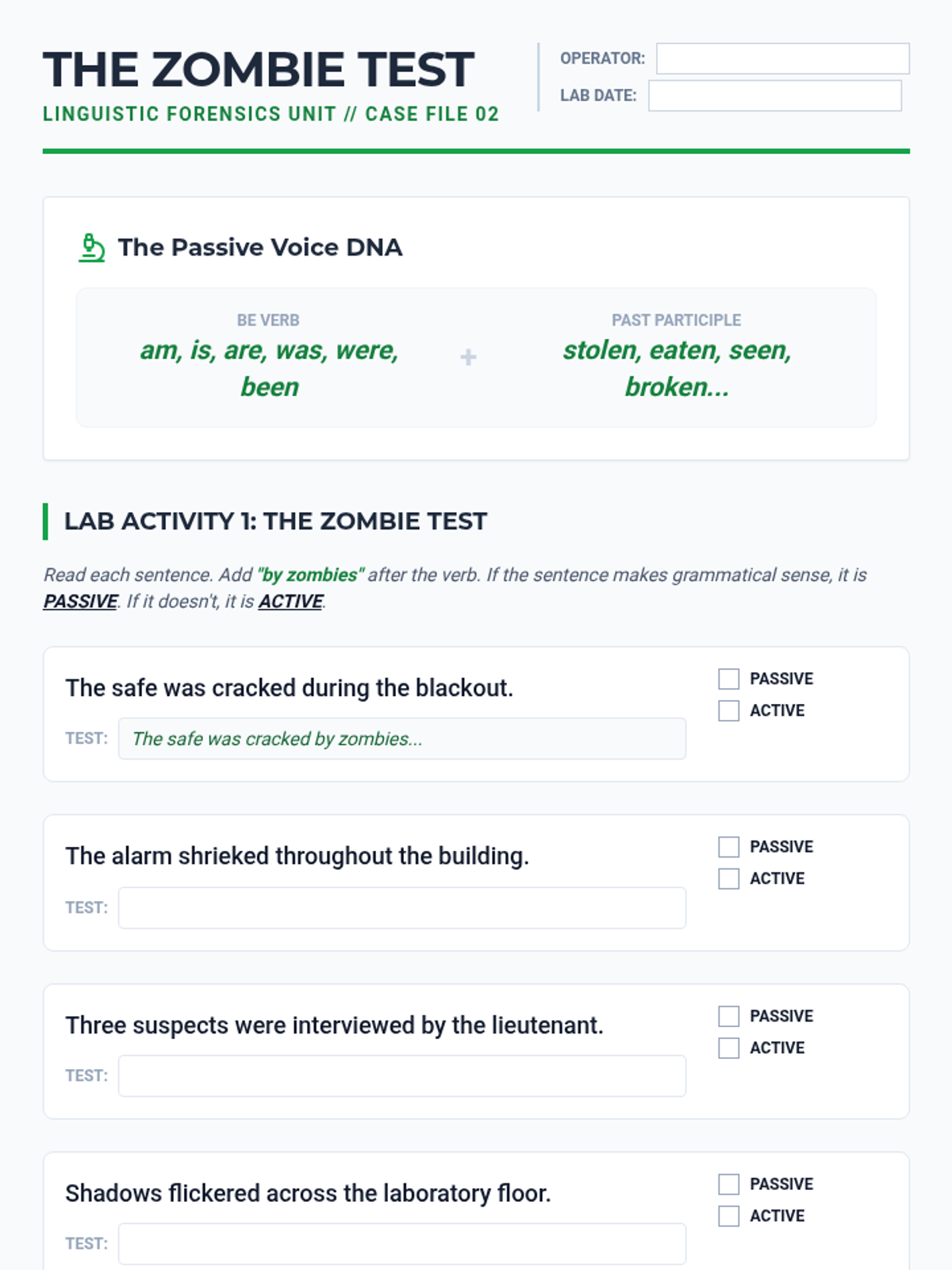
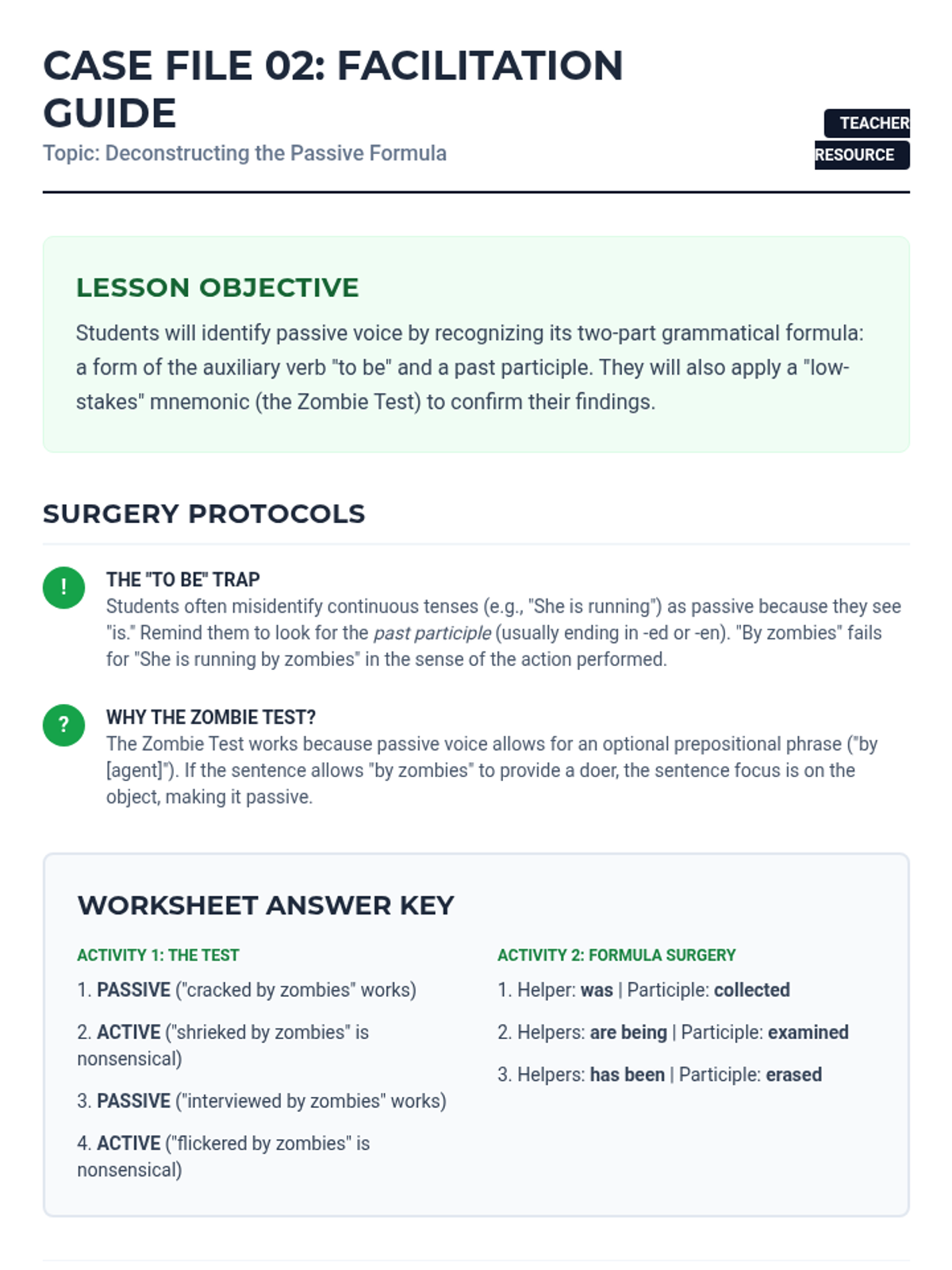
This lesson introduces specific grammatical markers of passive voice, such as forms of 'to be' combined with past participles and the 'by [noun]' phrase. Students use the 'Zombie Test' to identify passive structures in sample sentences.
In this culminating workshop, students apply their knowledge to a rough draft containing a mix of voice issues. They identify where passive voice creates vagueness or wordiness and revise the text to demonstrate command of standard English conventions.
Students learn to flip active sentences into passive voice, understanding the mechanical changes required. The lesson emphasizes how this transformation shifts focus away from the actor and onto the object or result.
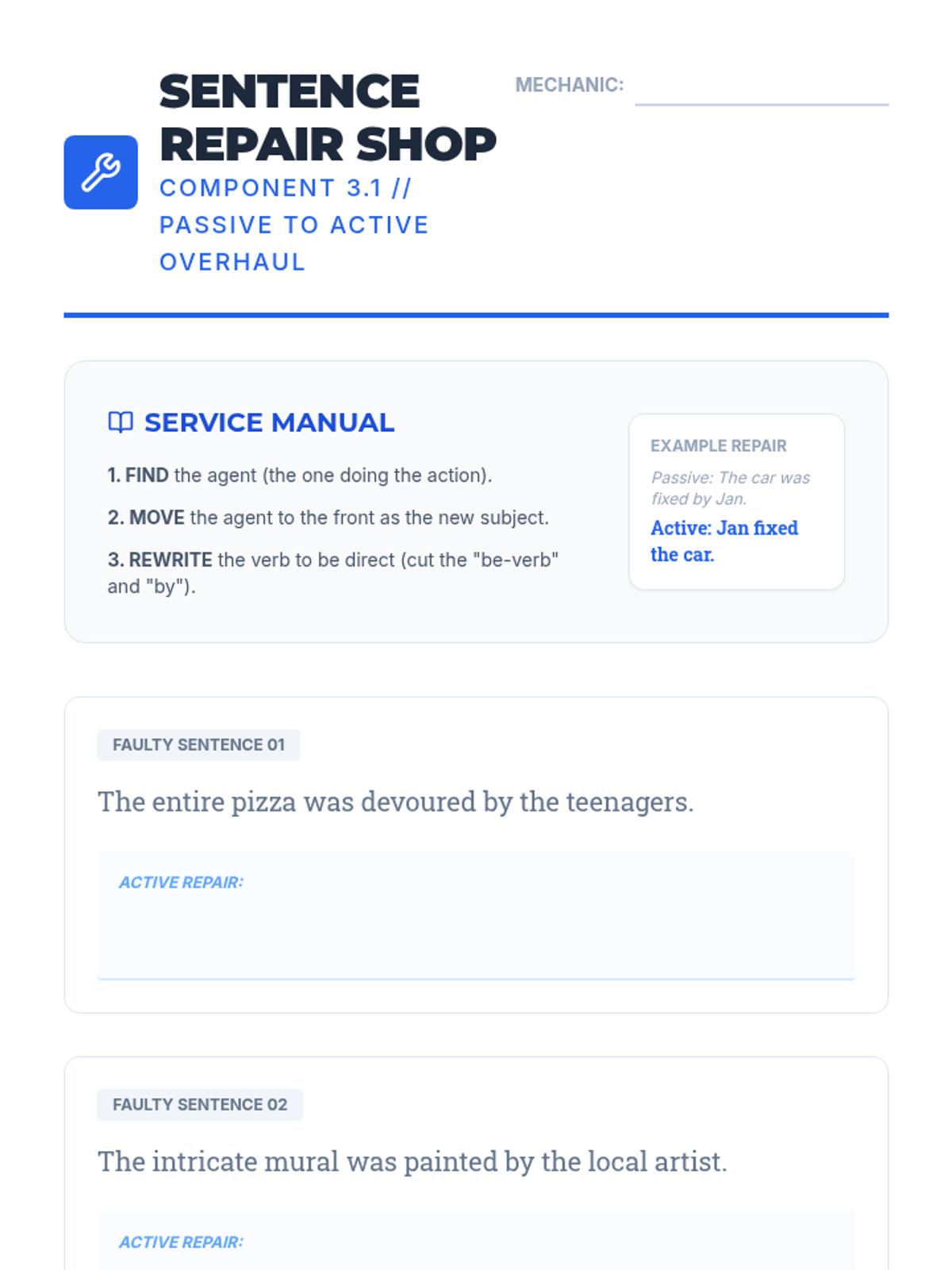
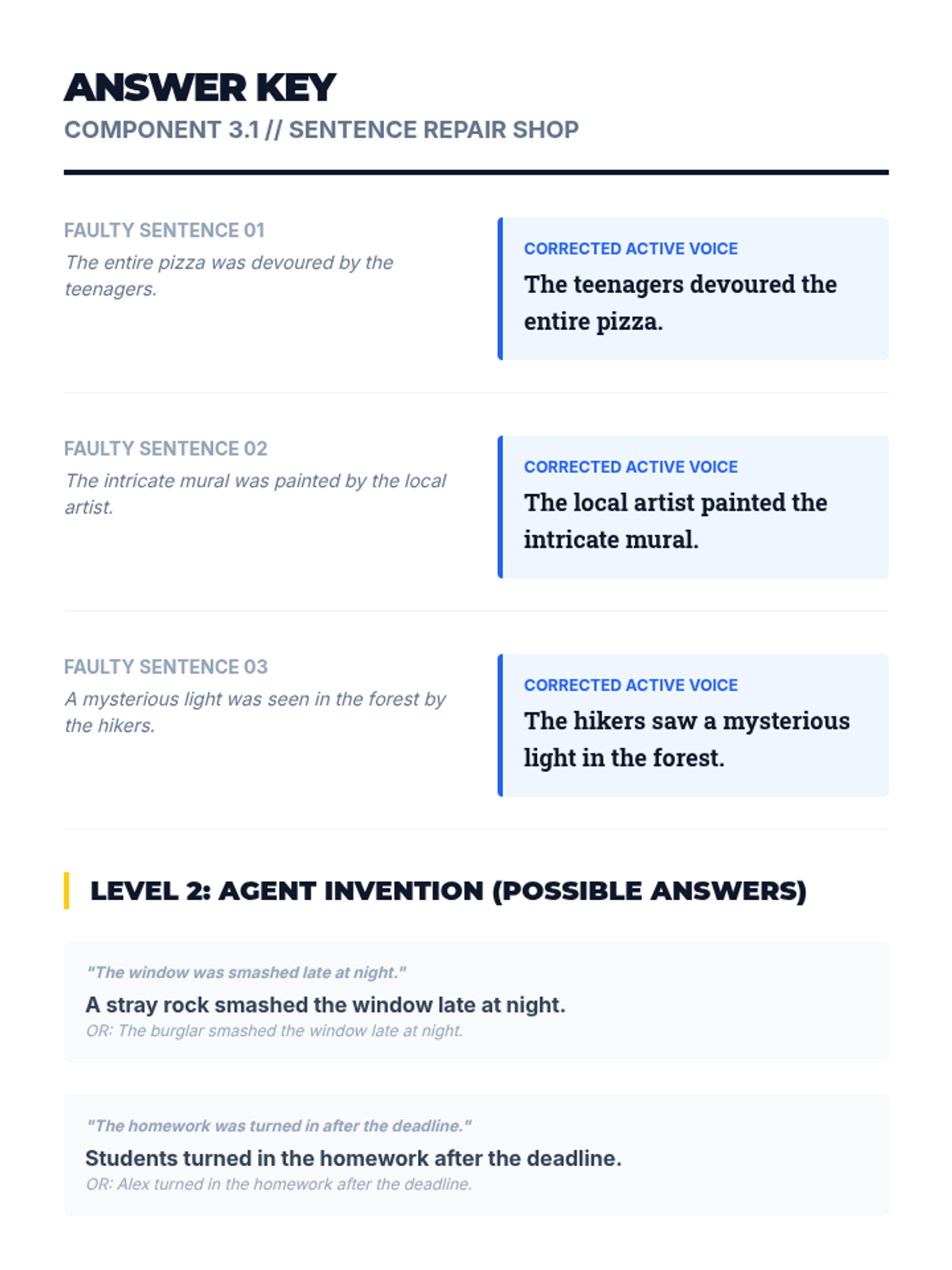
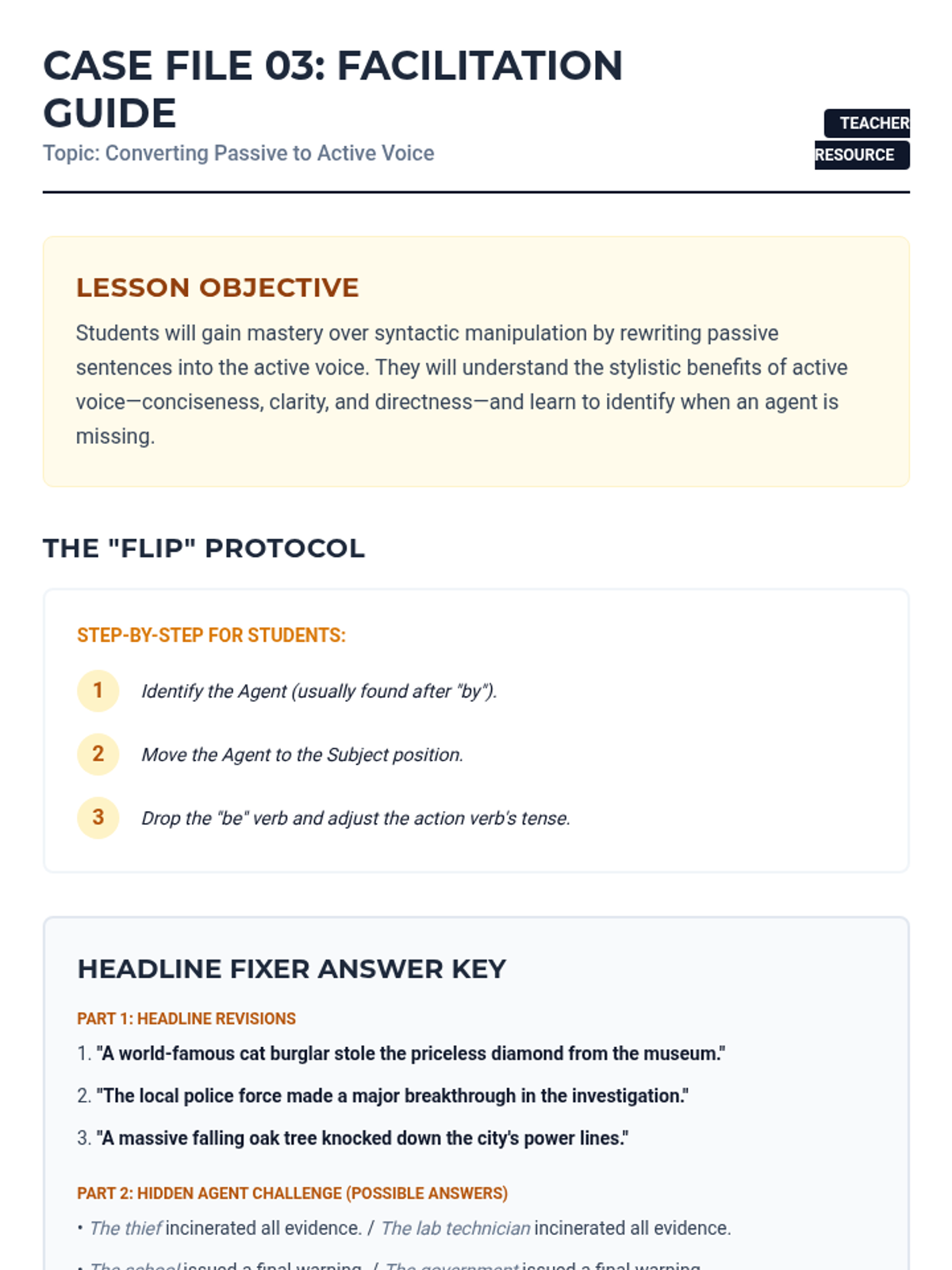
Focusing on clarity and conciseness, students practice rewriting passive sentences into active voice. They learn to locate the buried agent in a prepositional phrase and move it to the subject position to create stronger, more direct sentences.
This lesson breaks down the specific grammatical components of passive voice: a form of the verb 'to be' plus a past participle. Students practice 'sentence surgery' to locate these components and add the 'by [agent]' phrase to test for passive construction.
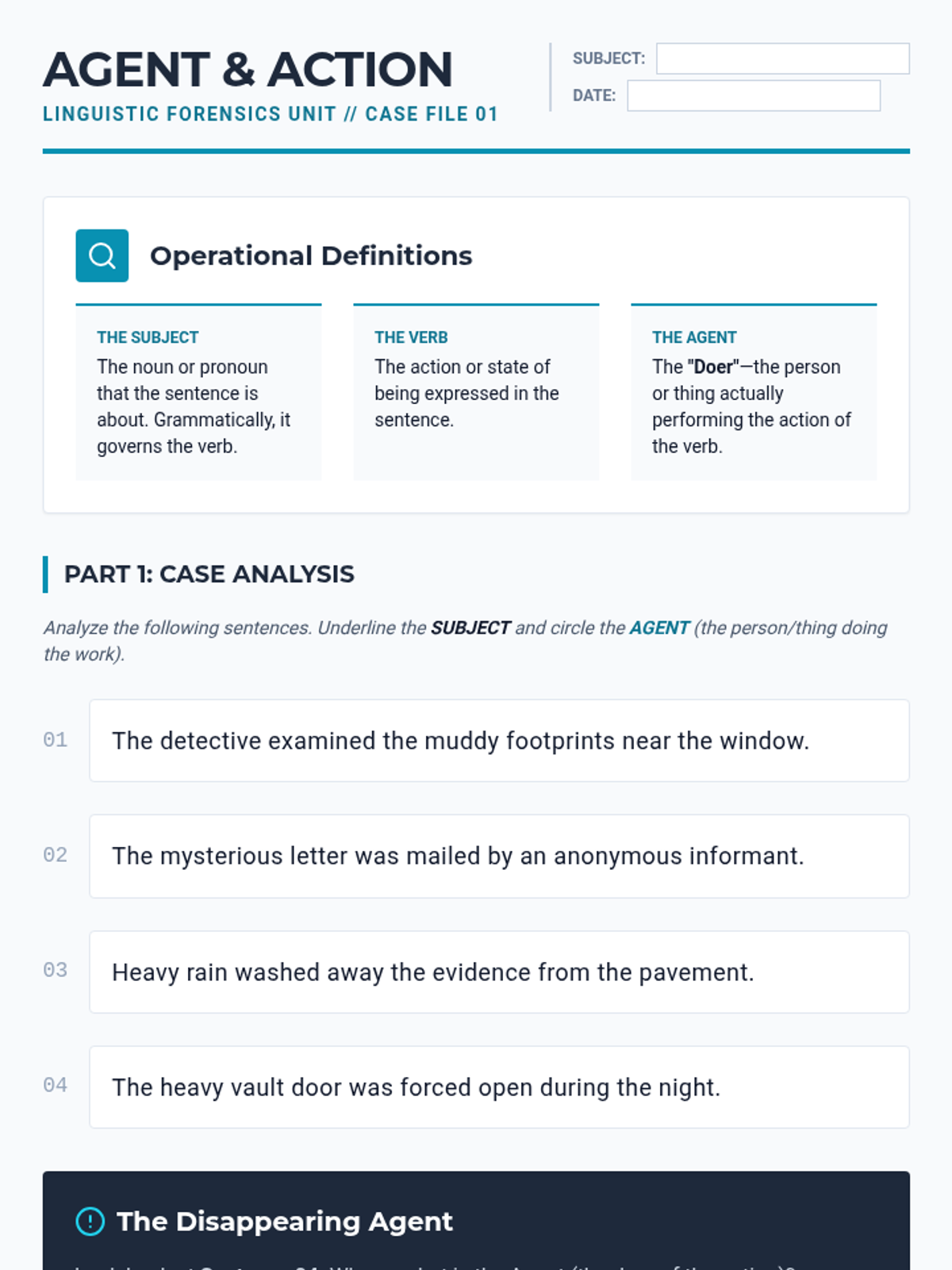
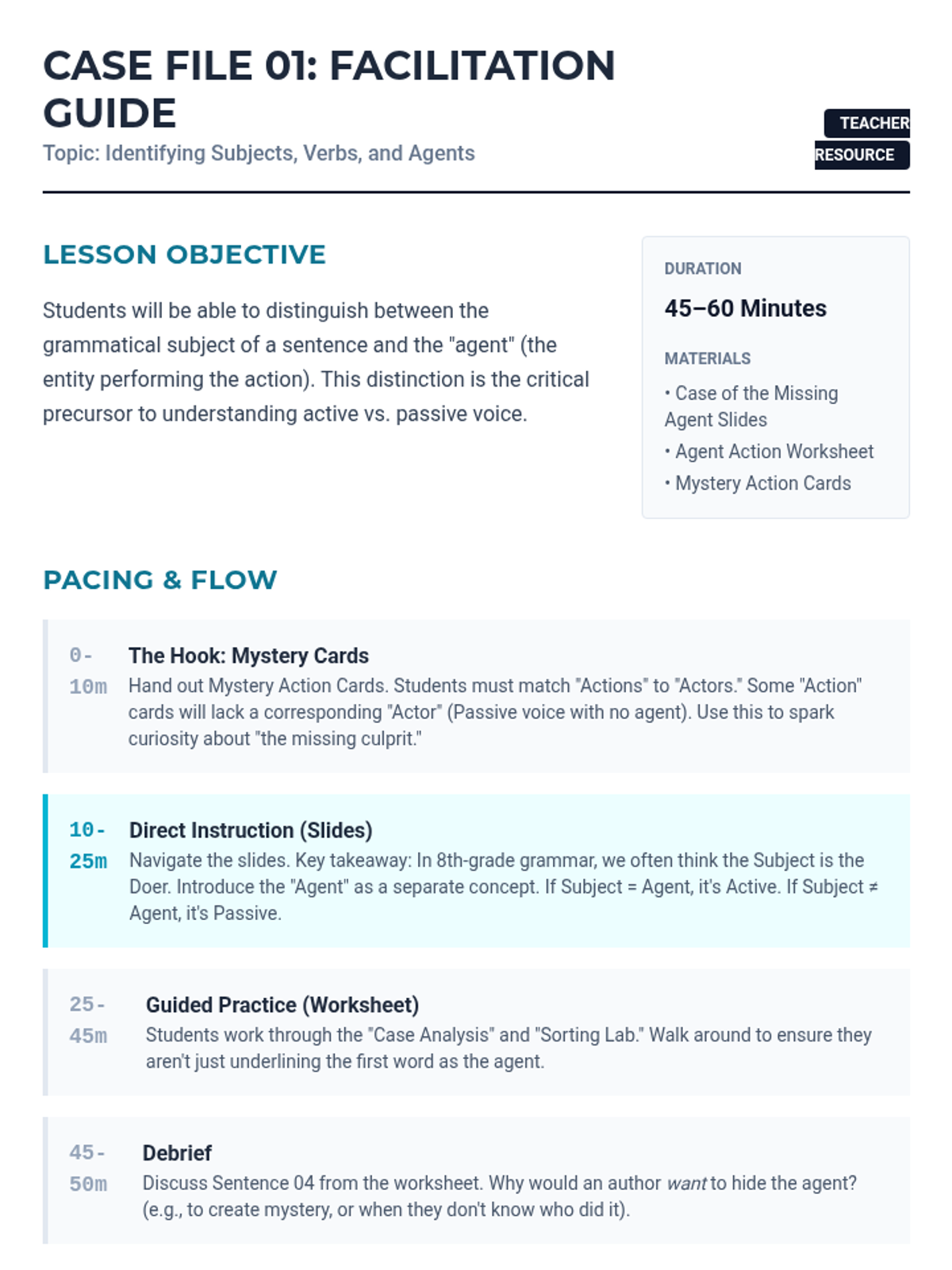
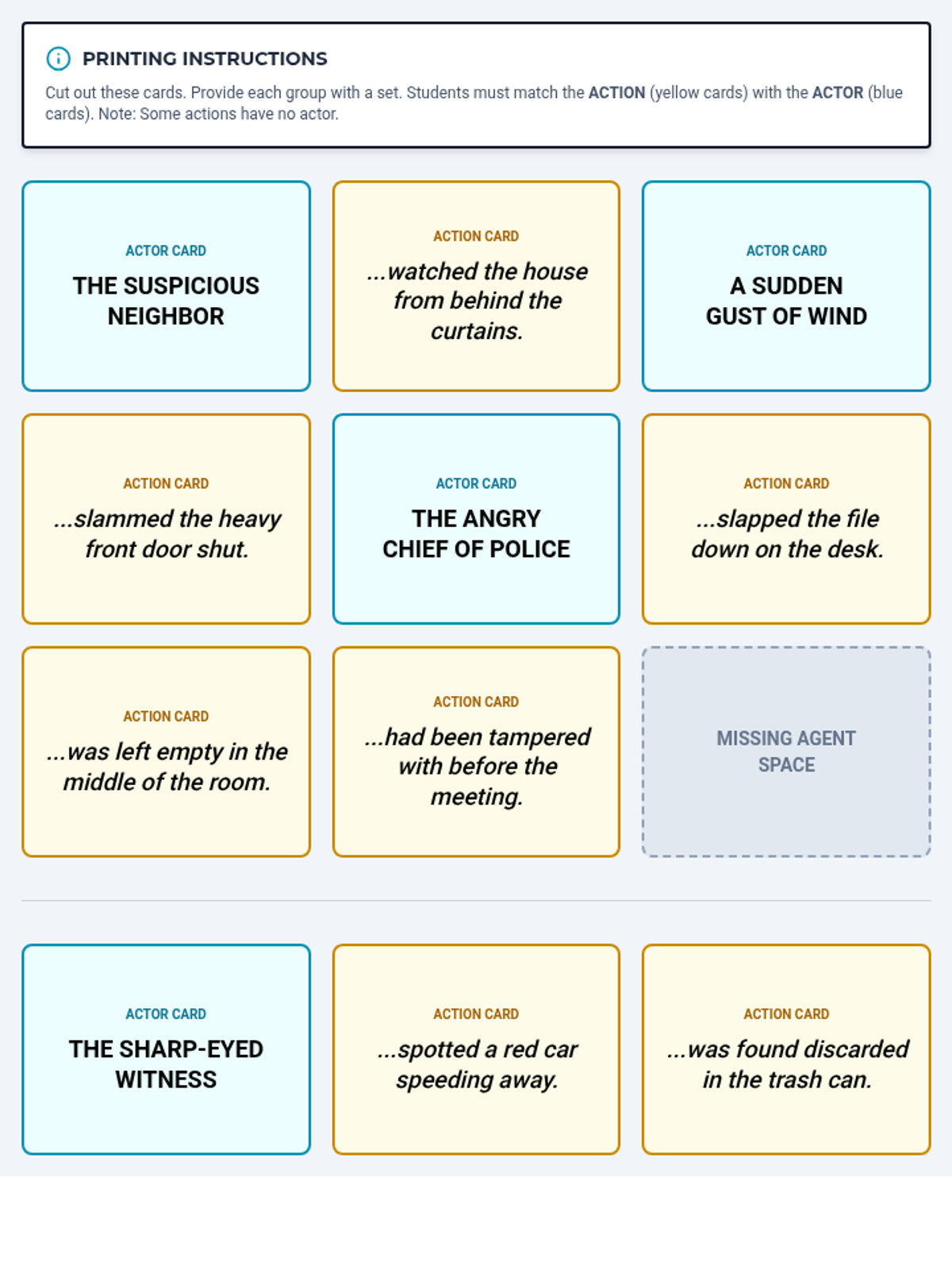
Students review sentence structure to identify the subject, the verb, and the 'agent' (the doer of the action). Through sentence sorting activities, they distinguish between sentences where the subject performs the action and sentences where the subject receives it.
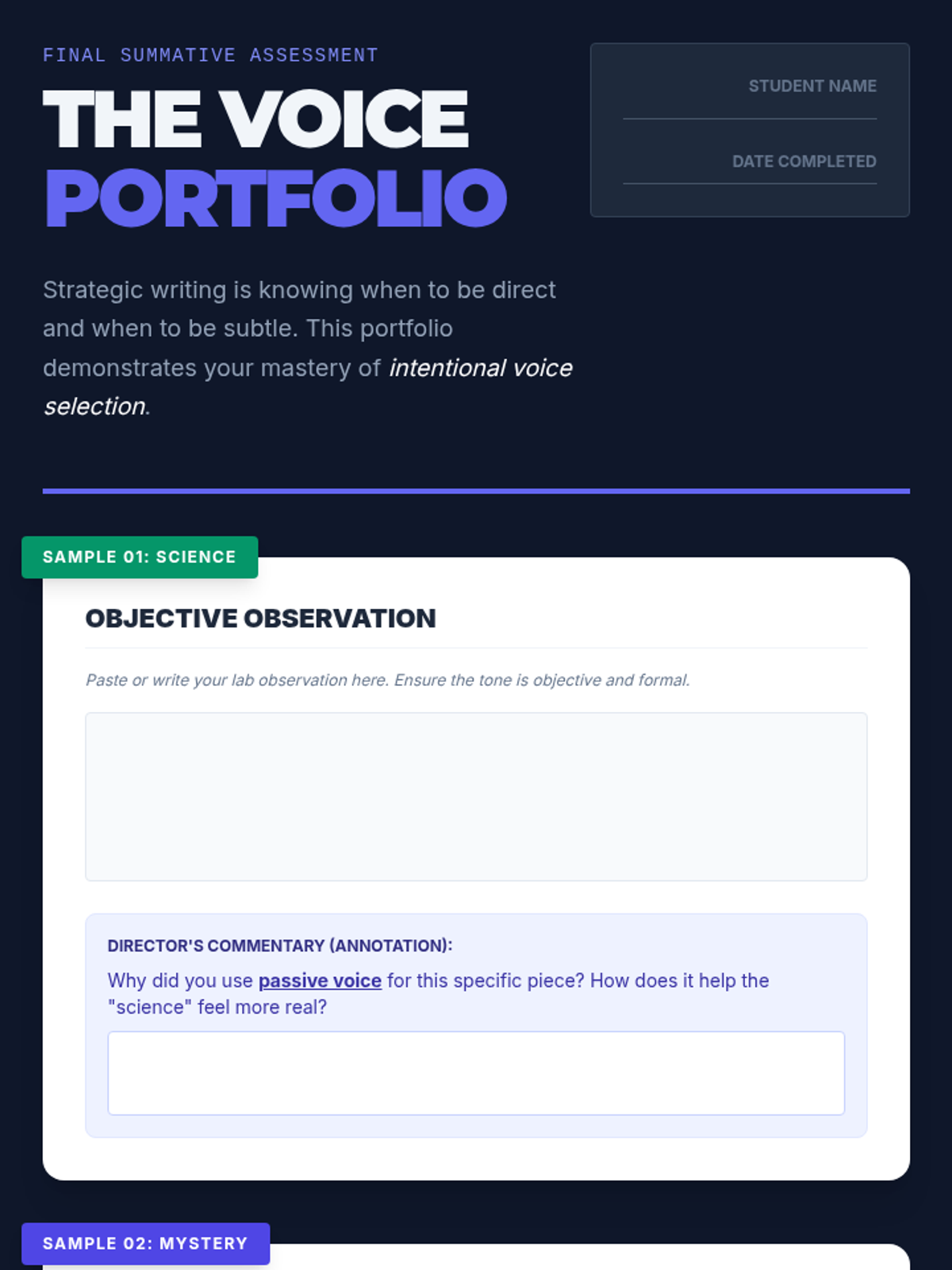
Students assemble a portfolio of three writing samples (science, mystery, and argument). They annotate their work, explaining their stylistic choices for voice.
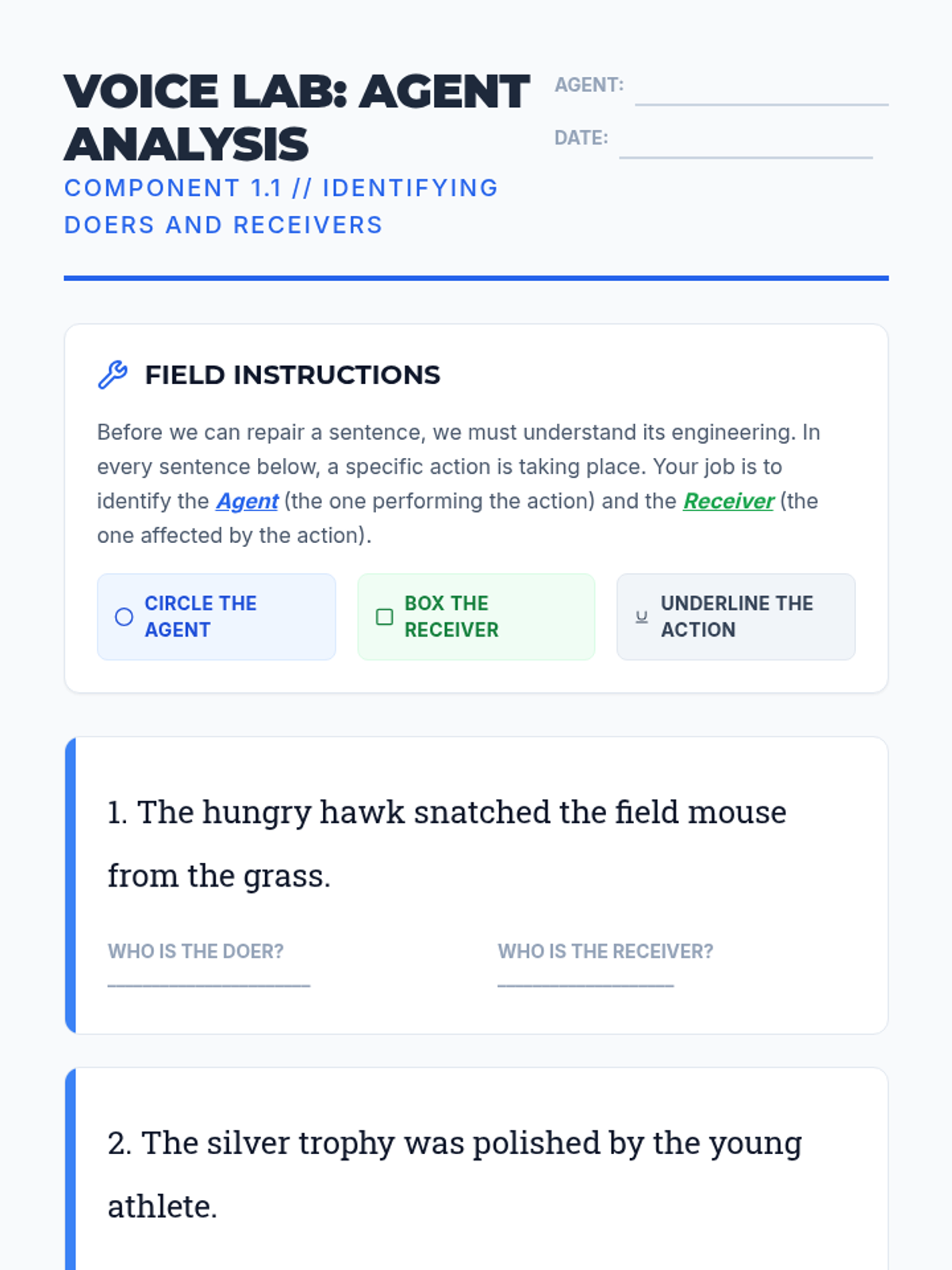
Students identify the subject, verb, and agent in sentences to distinguish between who performs the action and who receives it. This lesson builds the grammatical foundation necessary for understanding voice.
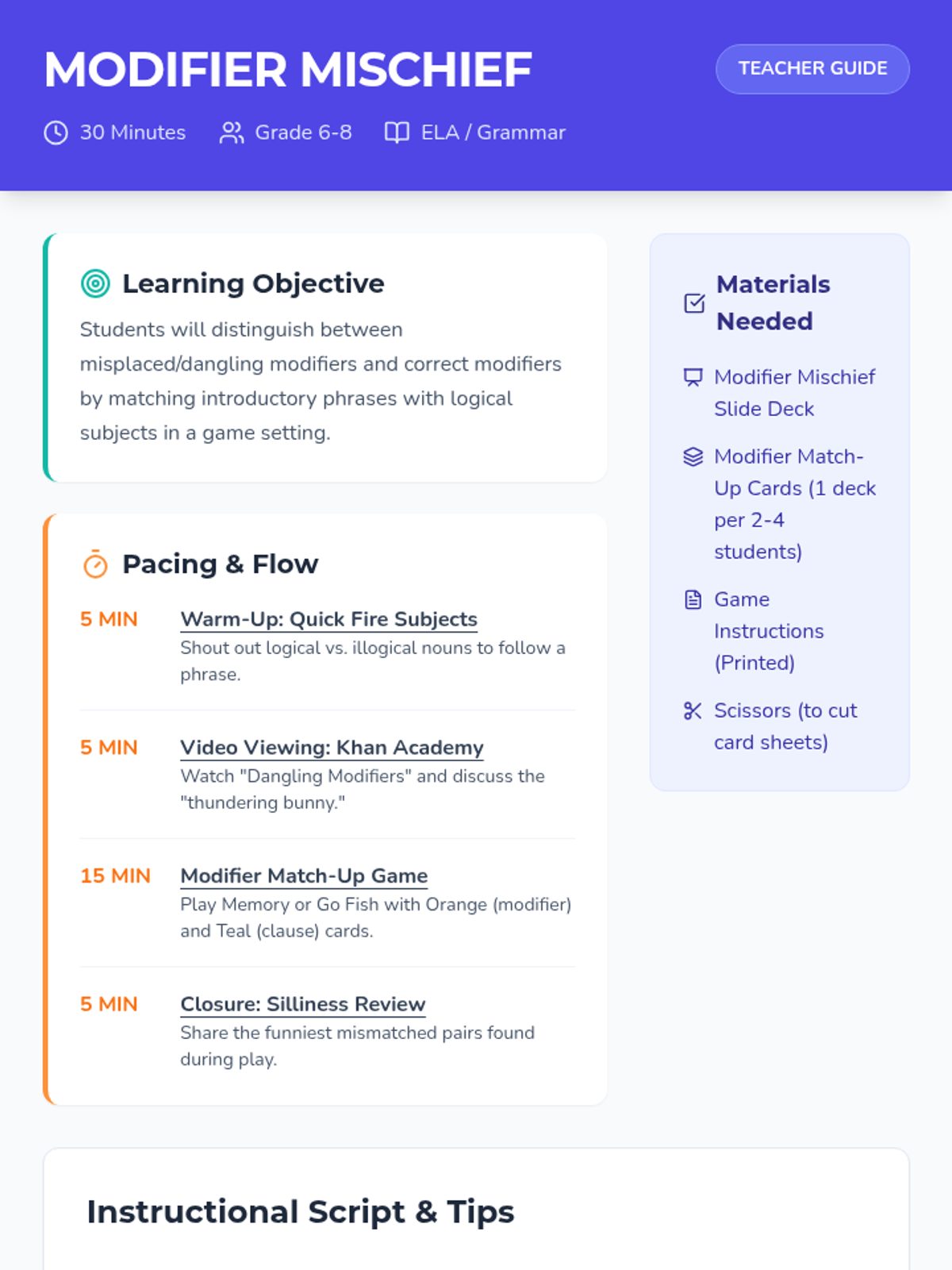
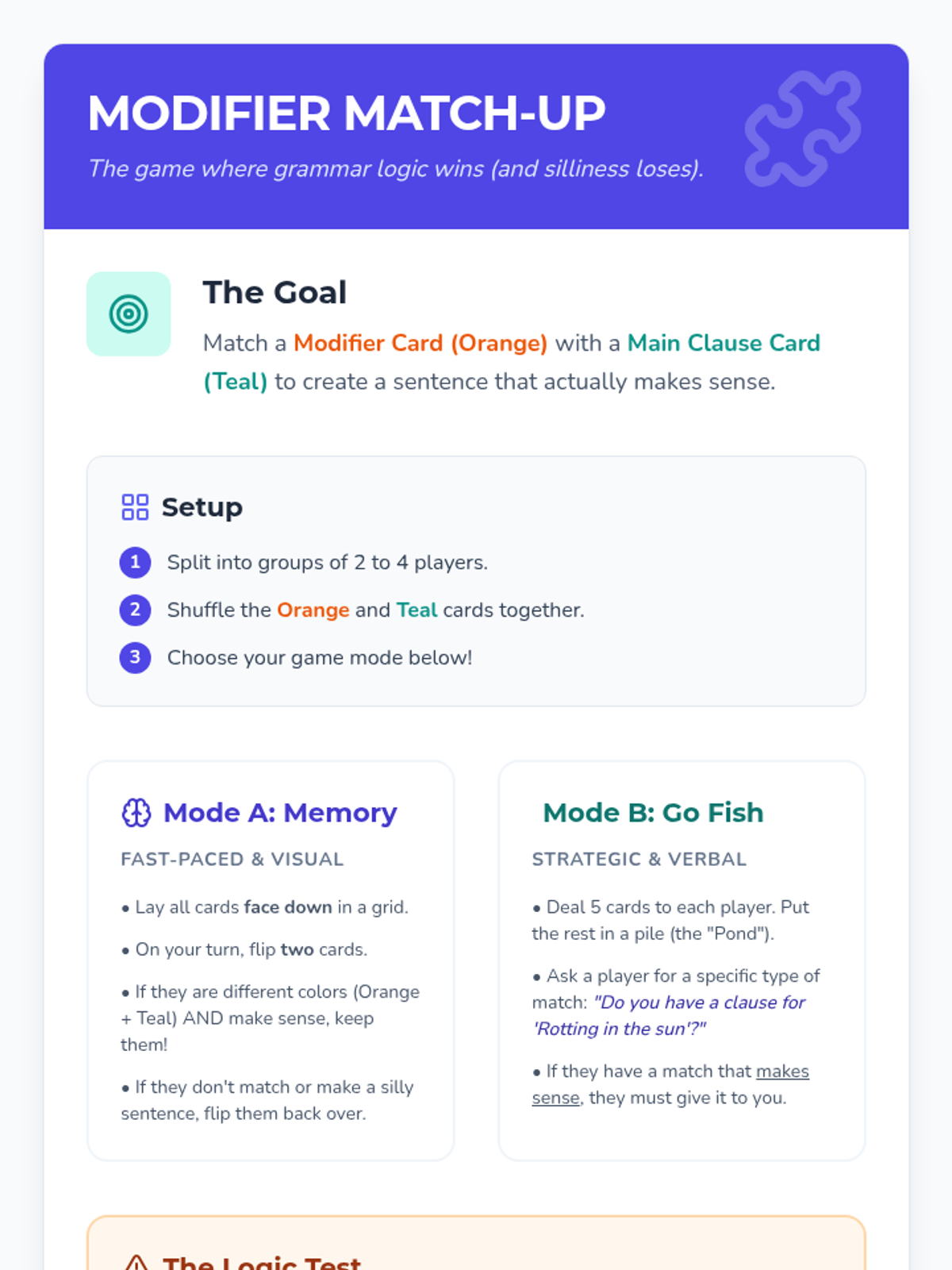
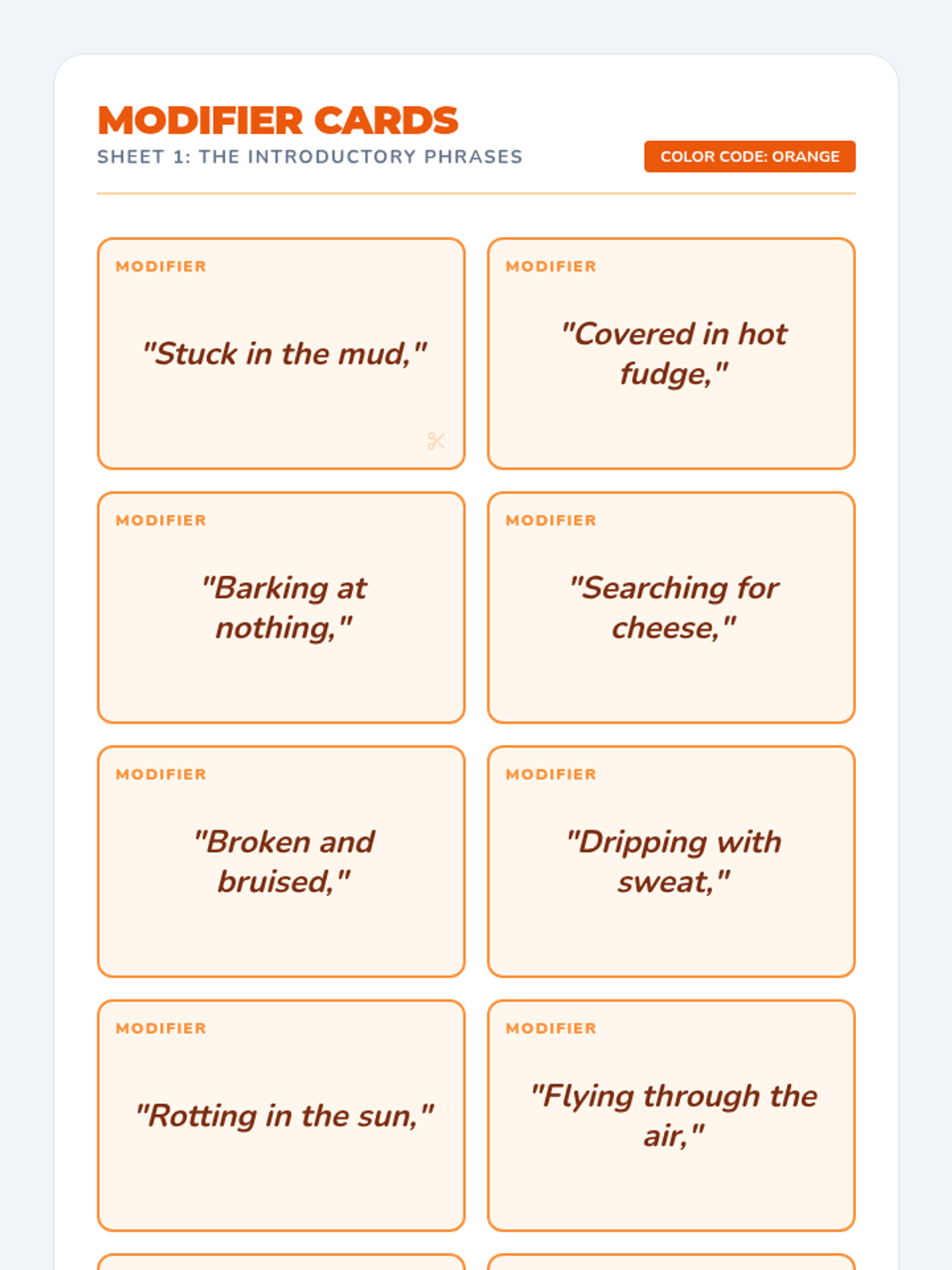
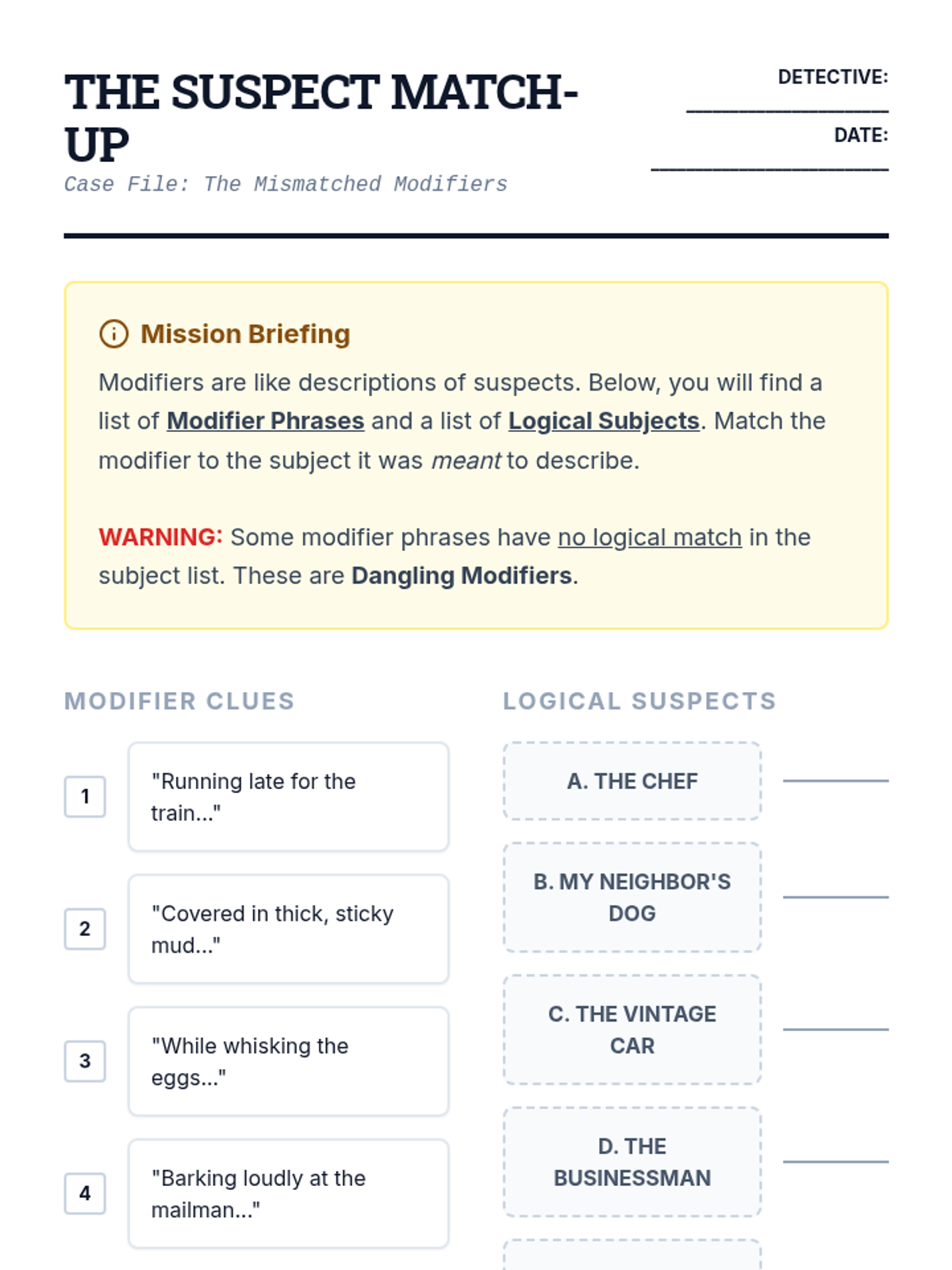
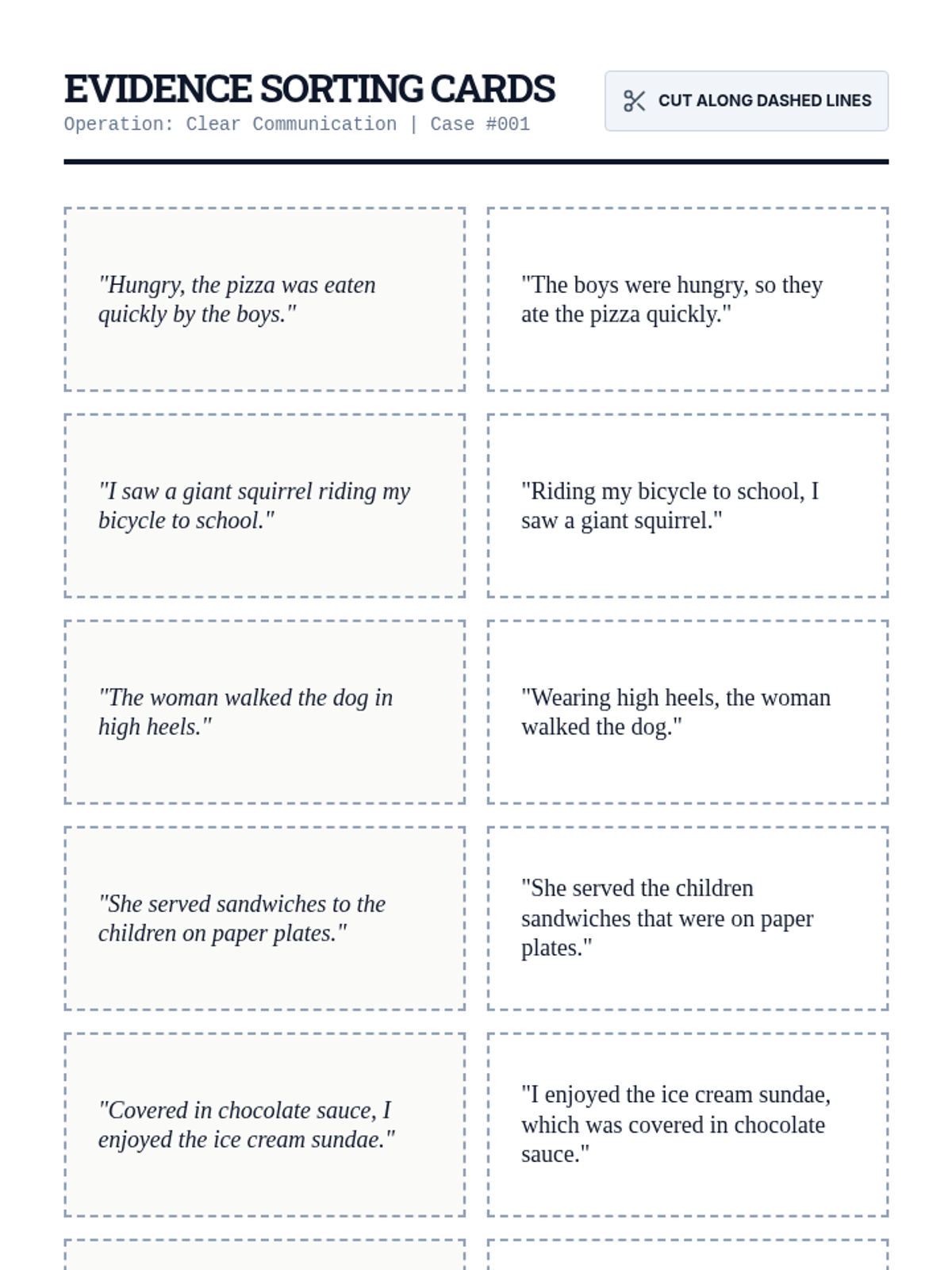
A high-energy grammar lesson where students identify and fix dangling and misplaced modifiers through a video-based discussion and a "Modifier Match-Up" card game. Students learn to ensure modifiers are placed next to the nouns they actually describe to avoid "silly" sentence meanings.
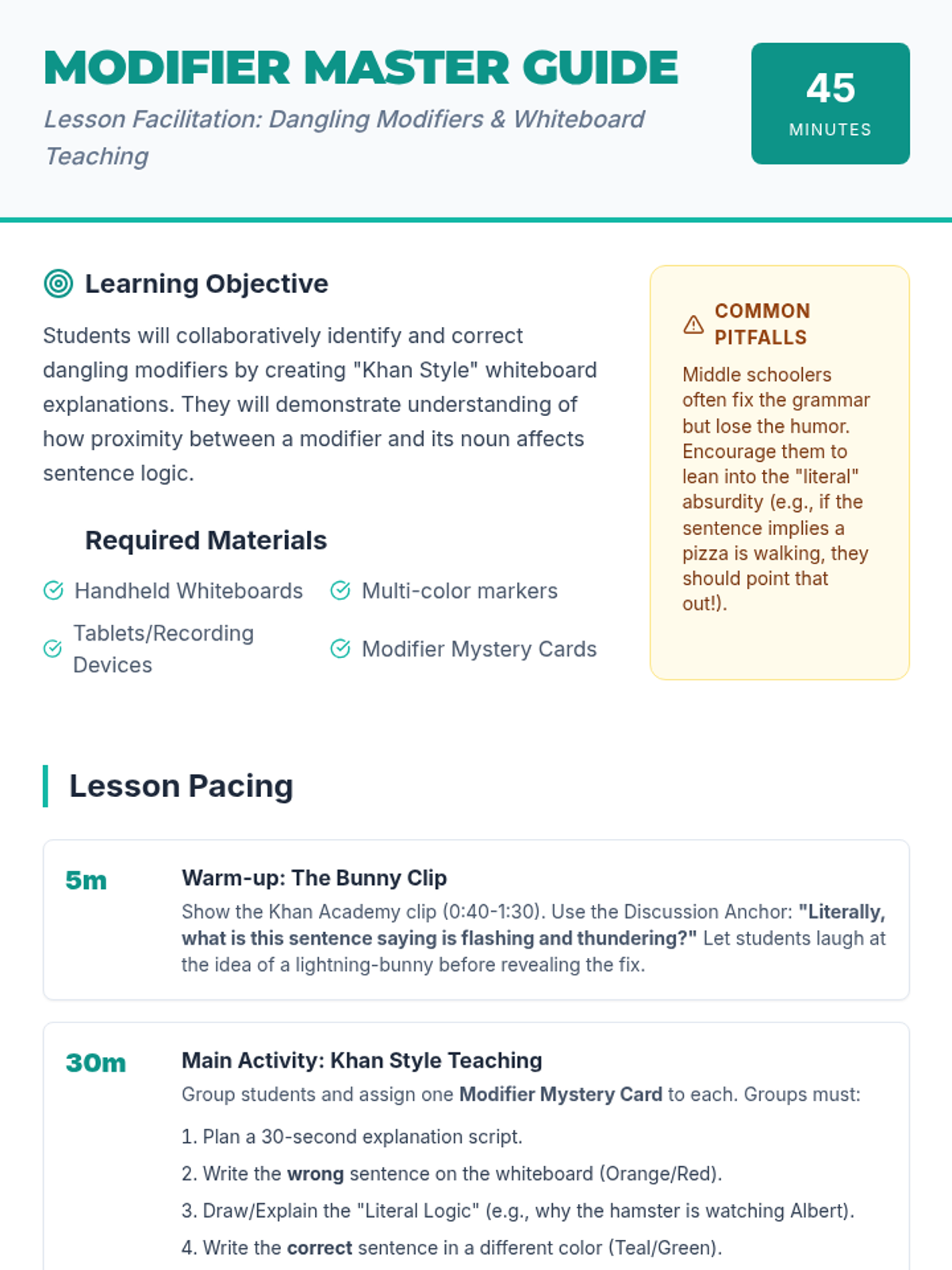
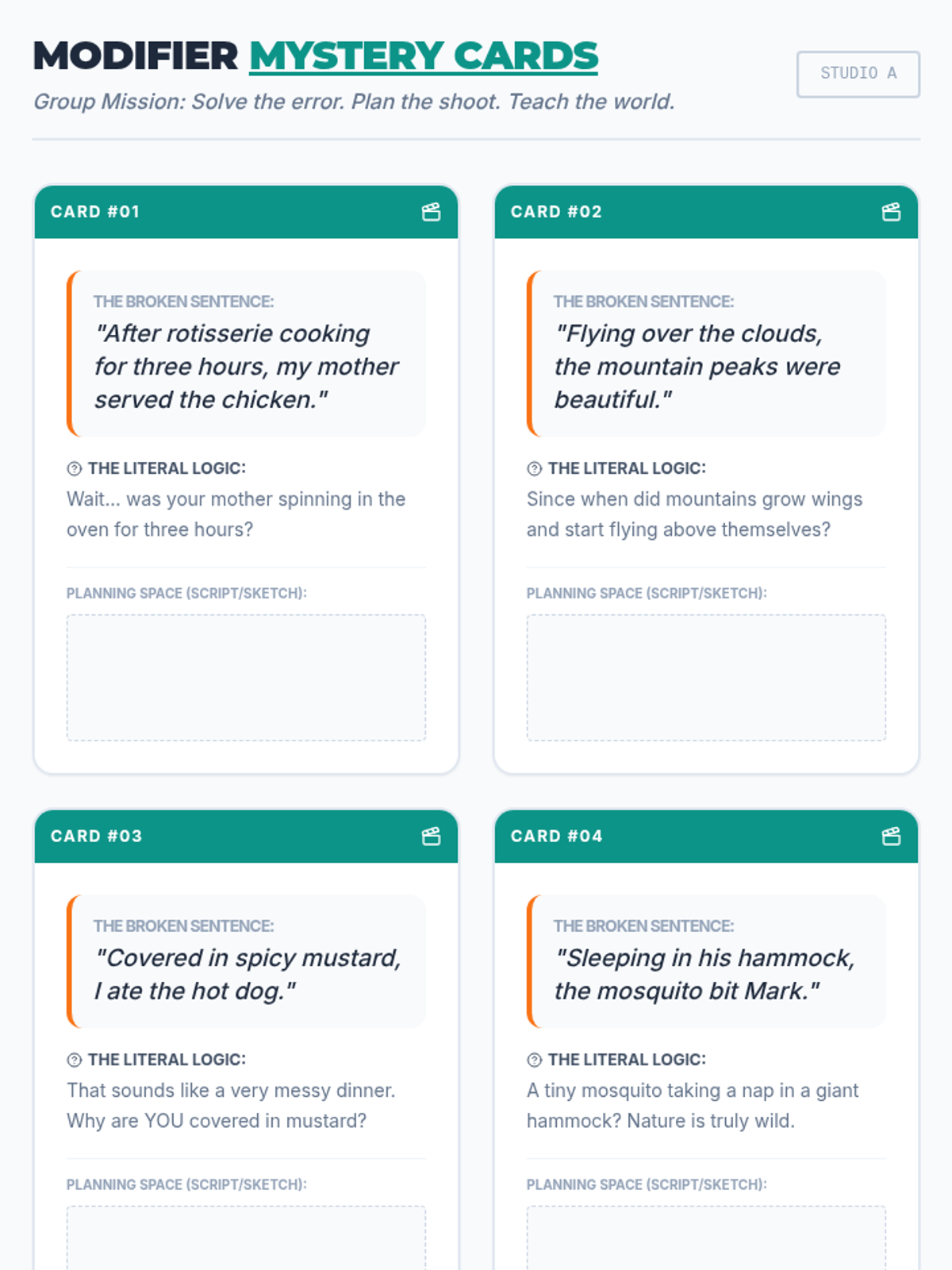
A collaborative grammar lesson where students use whiteboards and tablets to explain and correct dangling modifiers in a 'Khan Academy' style. Students analyze humorous errors, record short teaching clips, and present their work to the class.
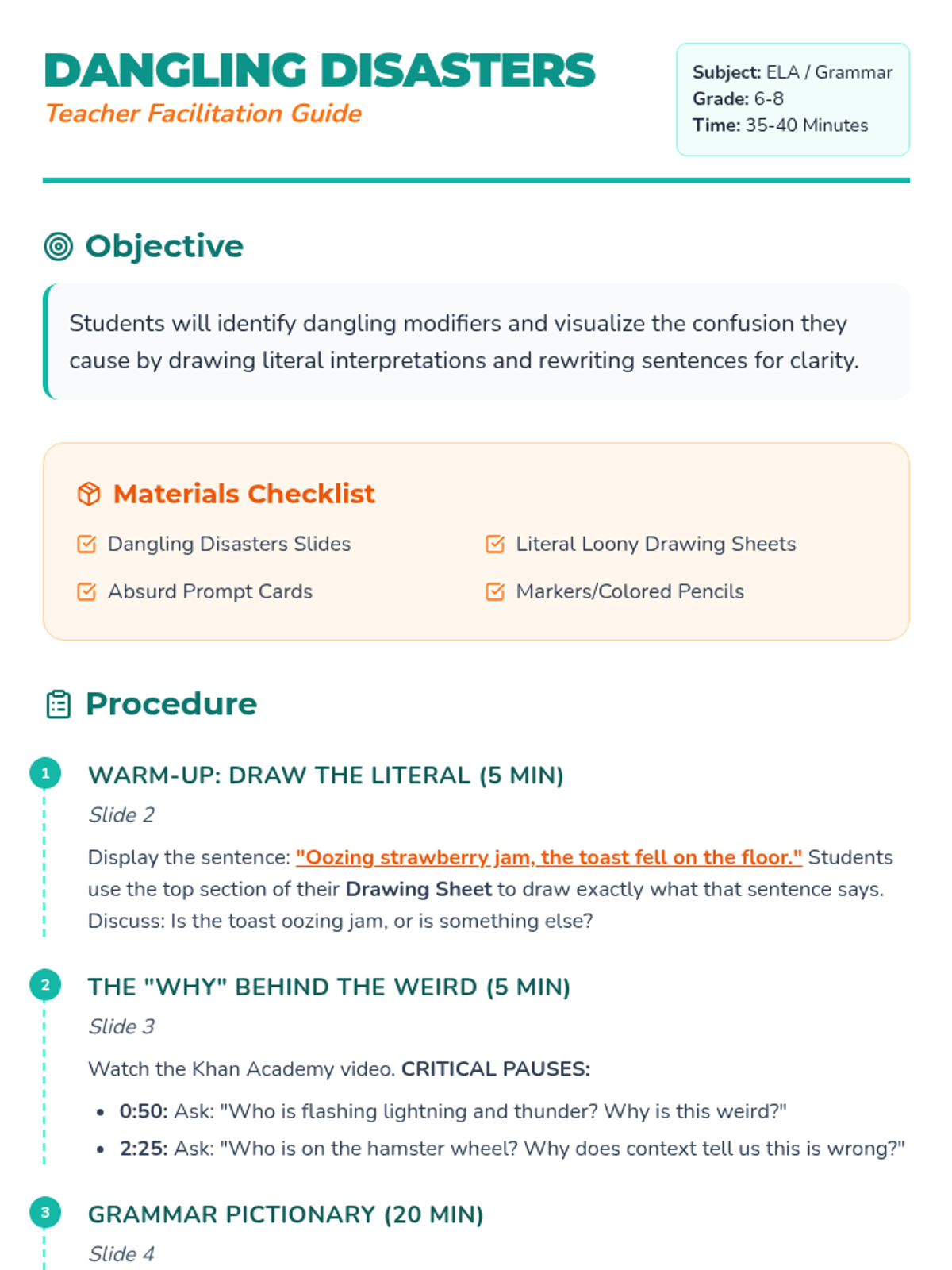
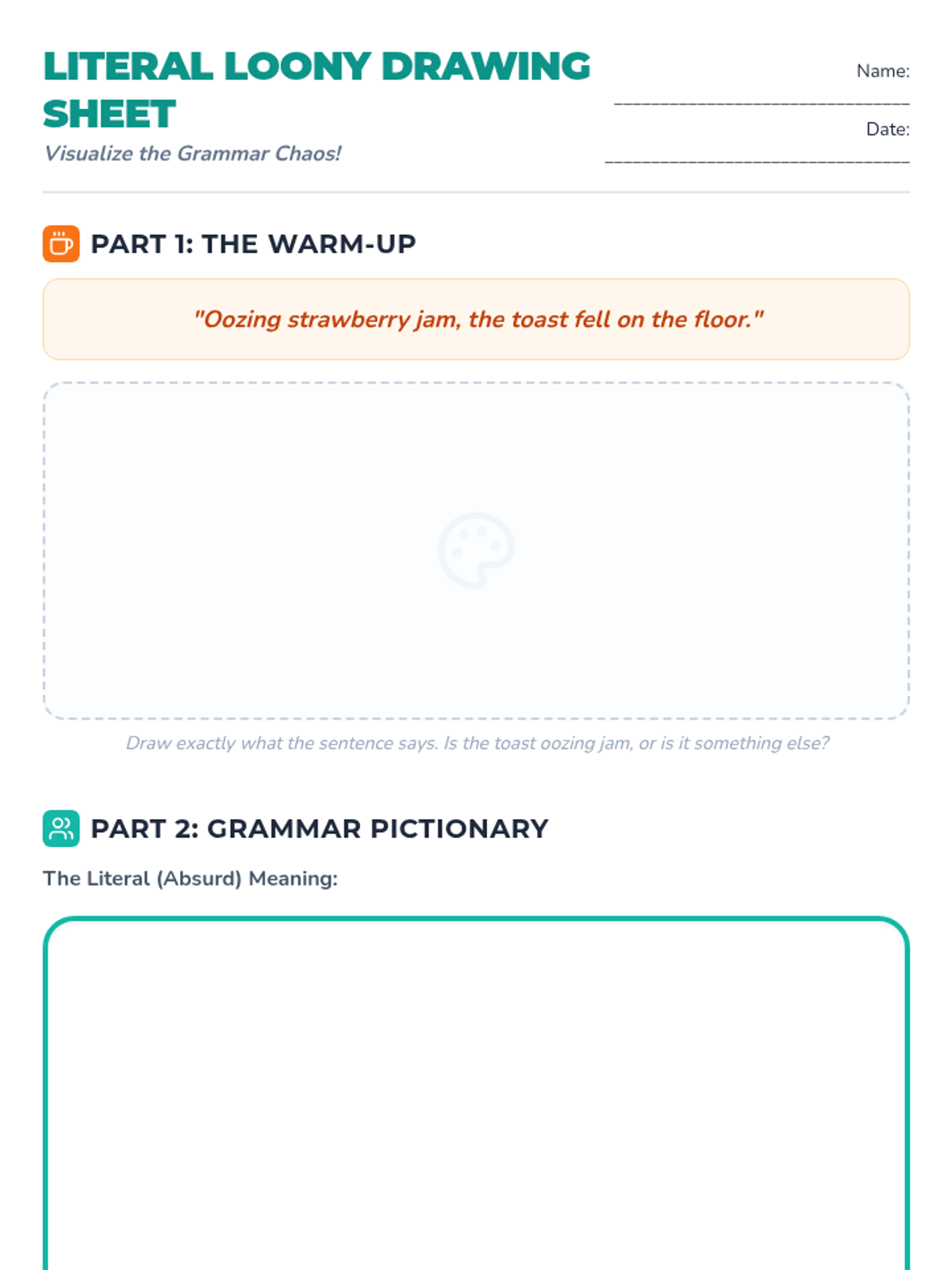
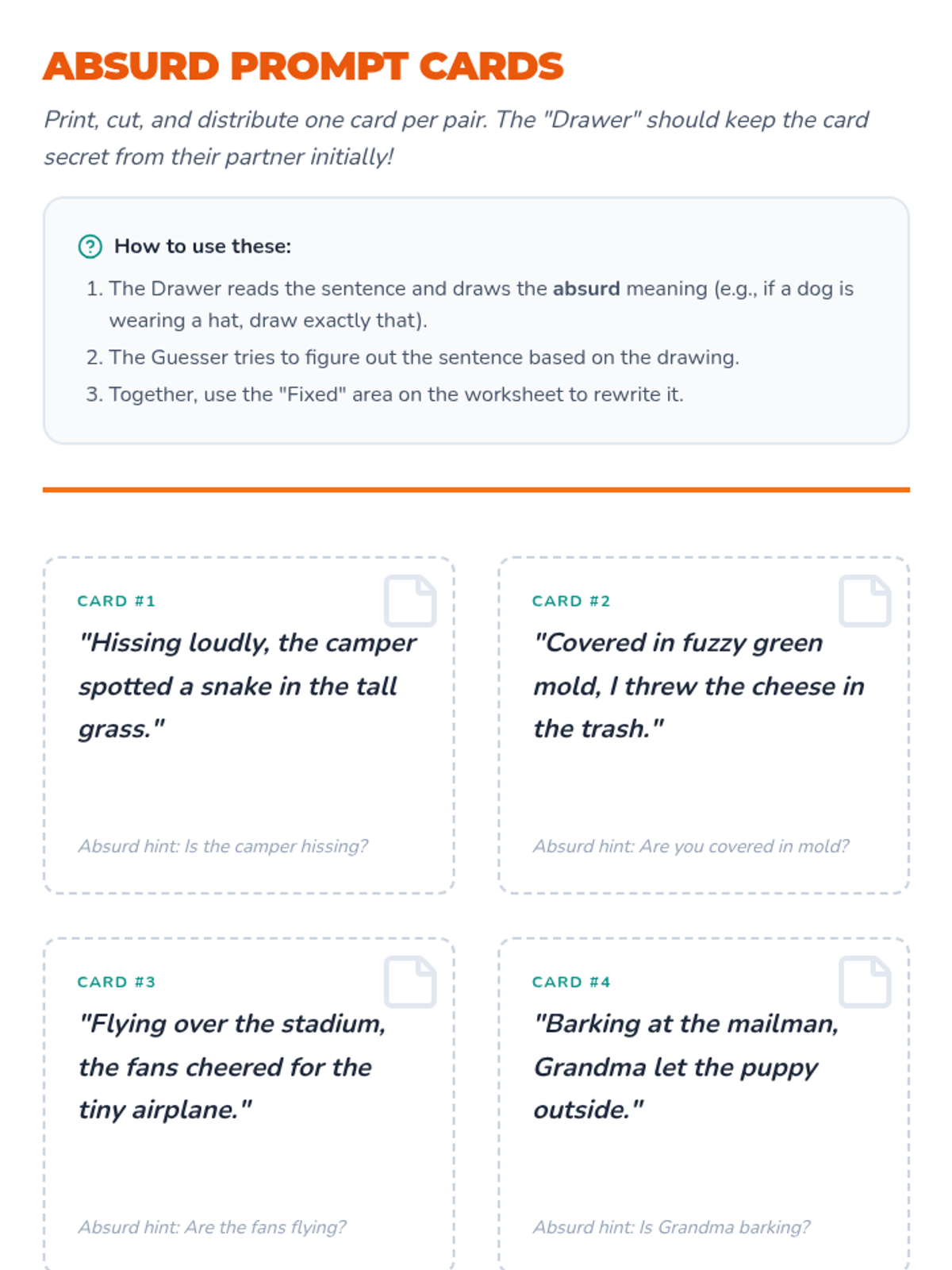
A visualization-heavy lesson where students draw the 'absurd' literal meanings of dangling modifiers to understand syntax errors. Includes a slide deck, teacher guide, activity cards, and drawing worksheets.
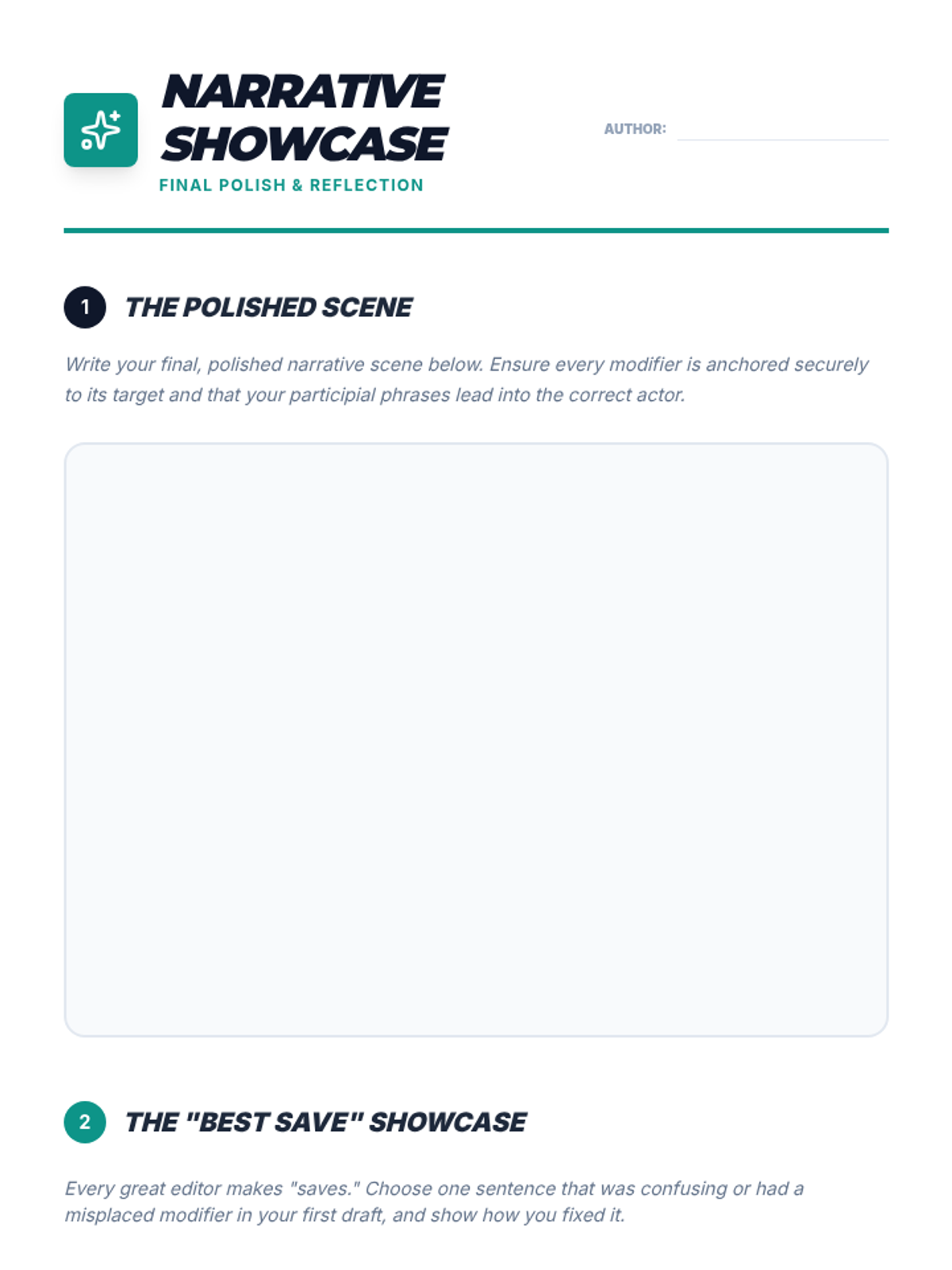
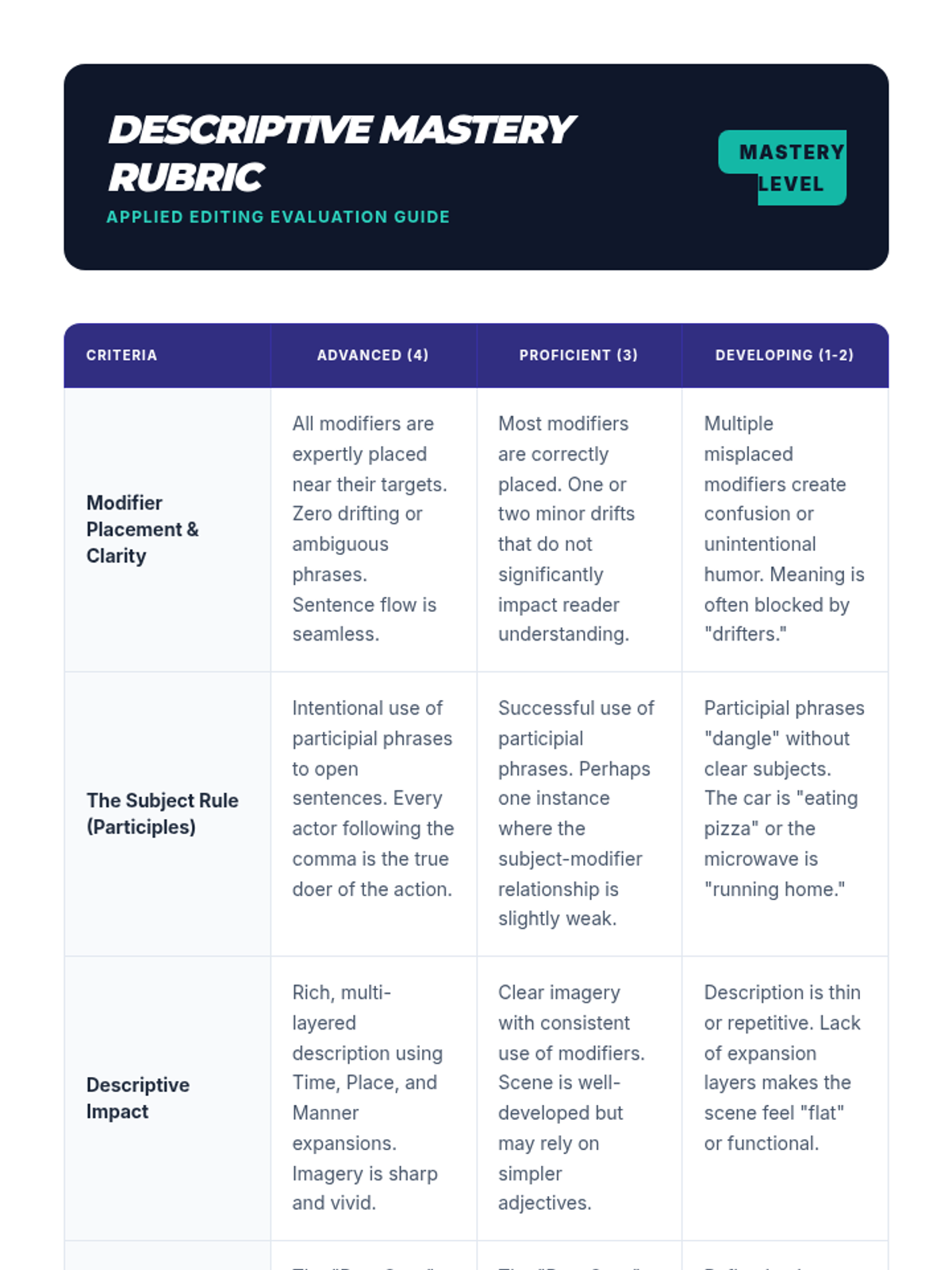
Students finalize a descriptive scene, applying all feedback. They produce a 'before and after' showcase, highlighting one sentence where moving a modifier significantly improved the imagery or clarity.
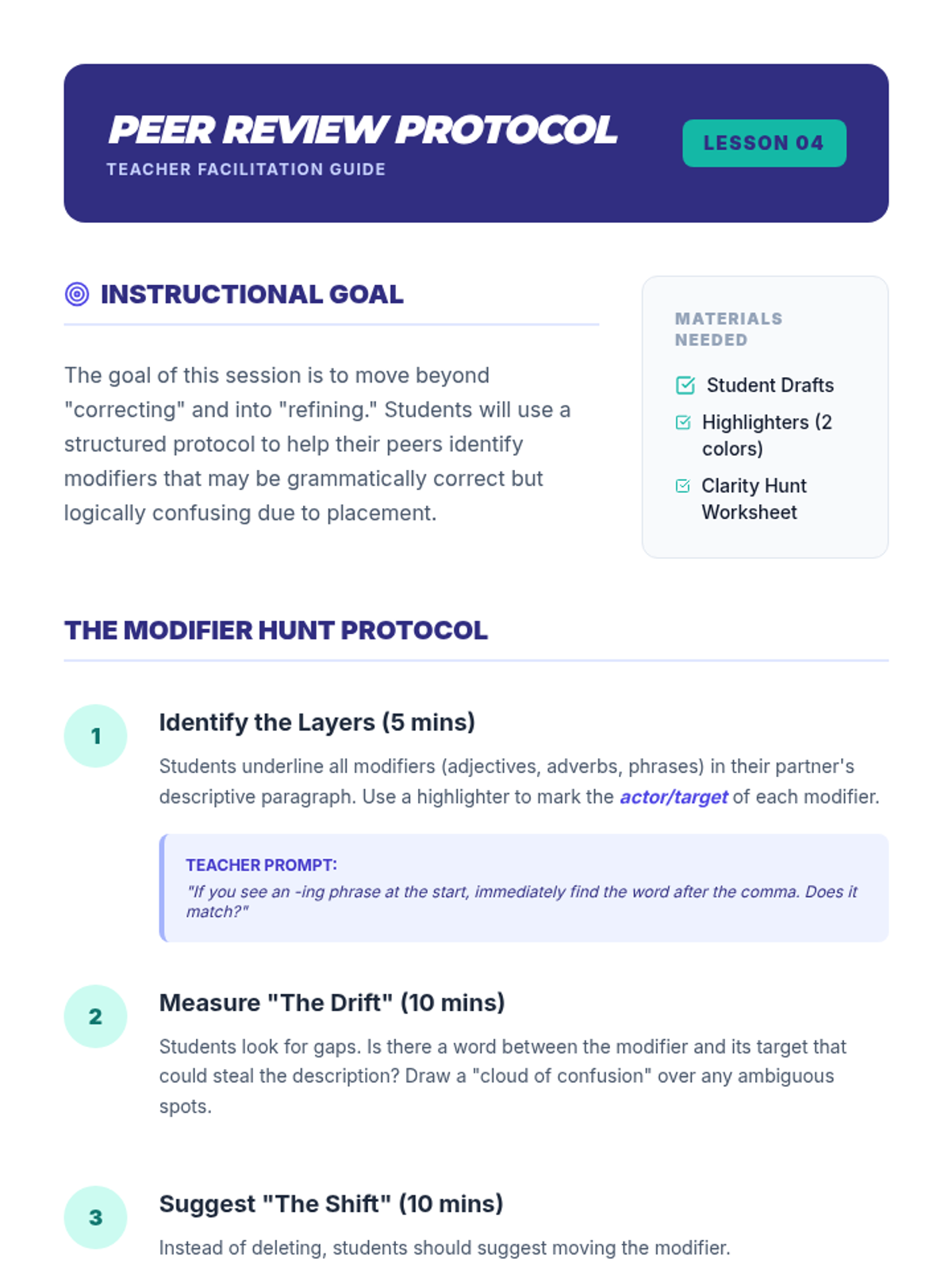
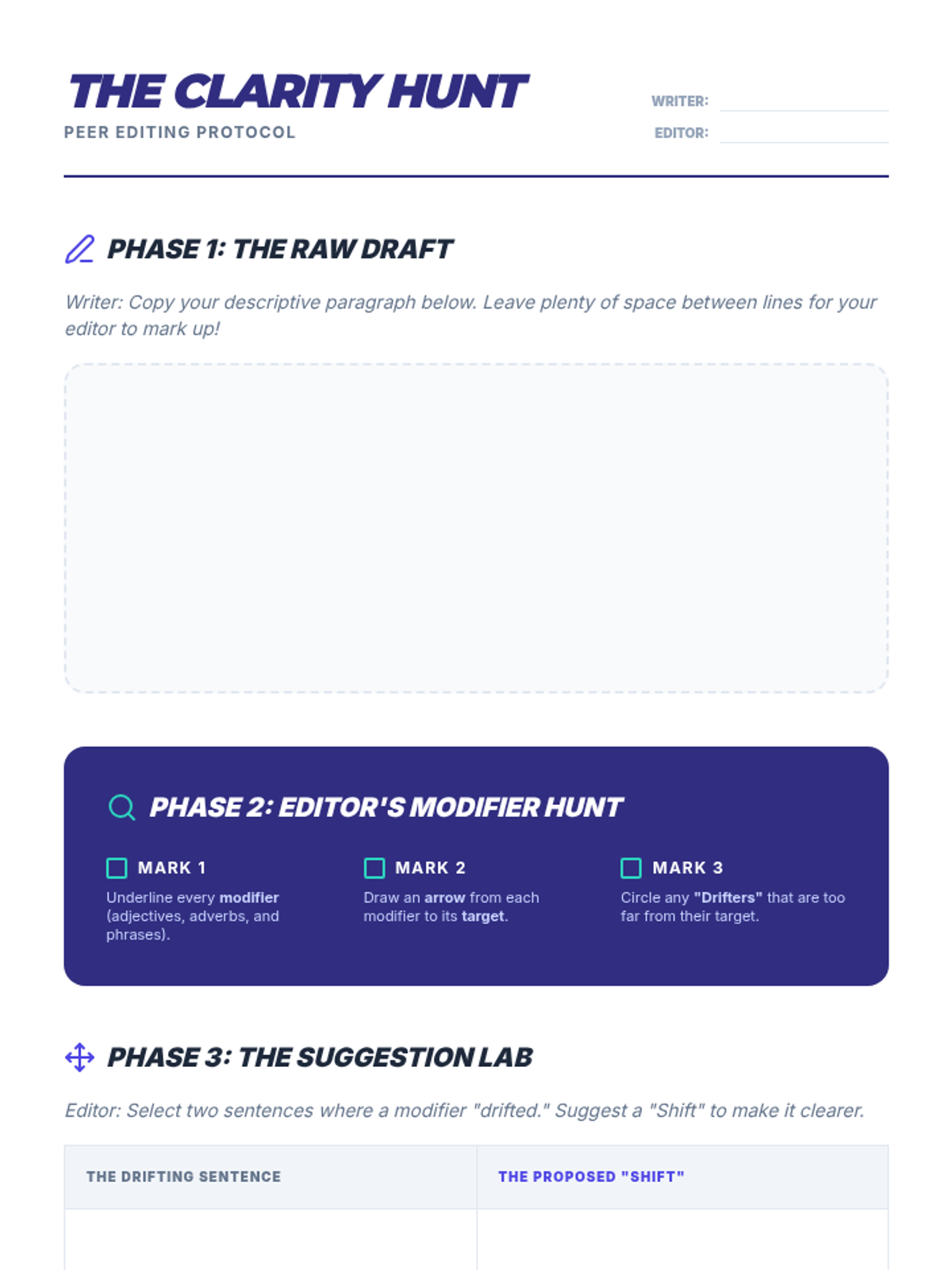
Students swap their descriptive drafts with a partner. Using a specific protocol, they hunt for modifiers that are too far from their subjects or ambiguous, offering suggestions for movement rather than deletion.
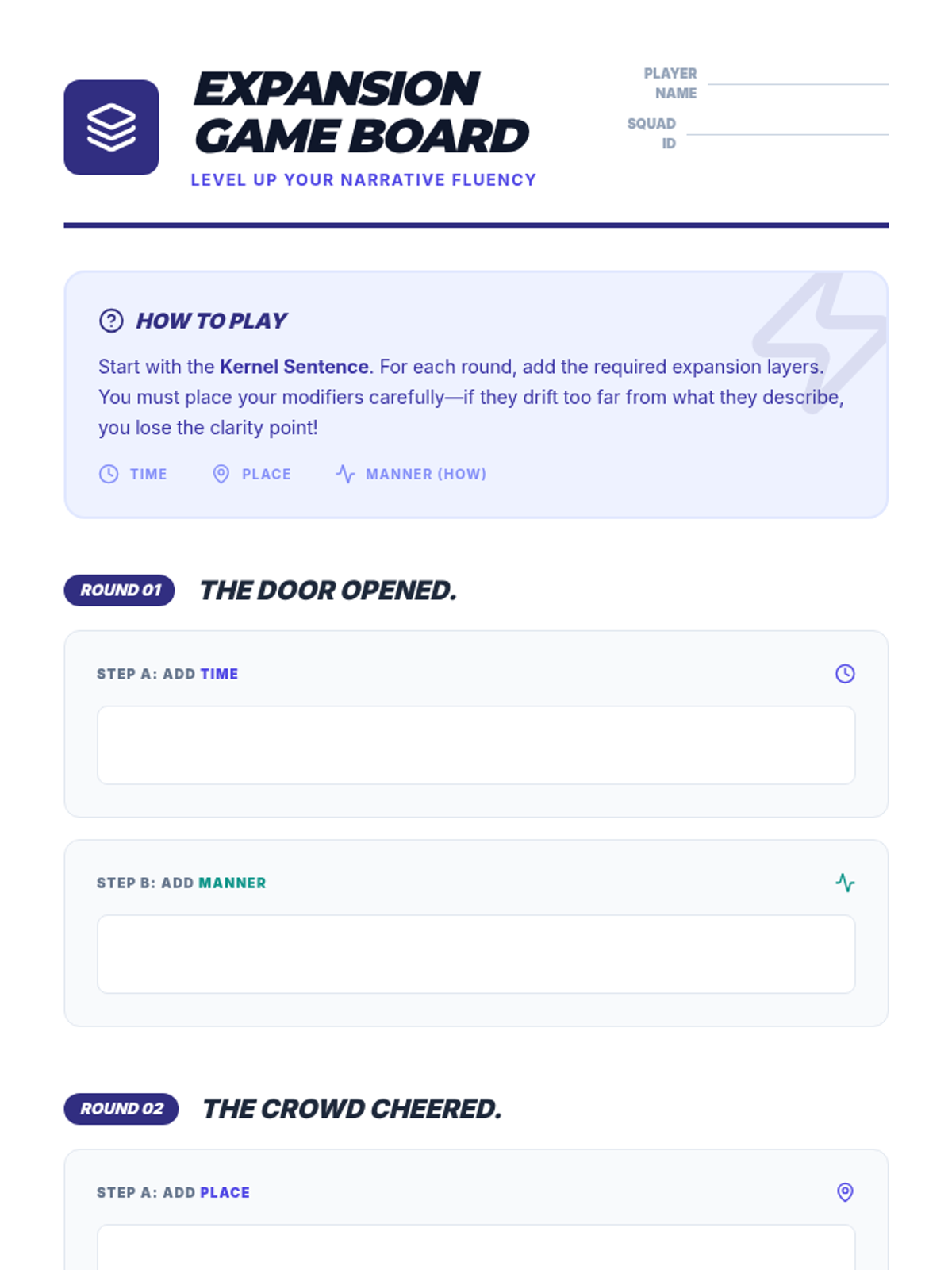
Starting with simple kernel sentences (e.g., 'The dog barked'), students add layers of modifiers. They must place time, place, and manner phrases in positions that maintain the sentence's logical flow.
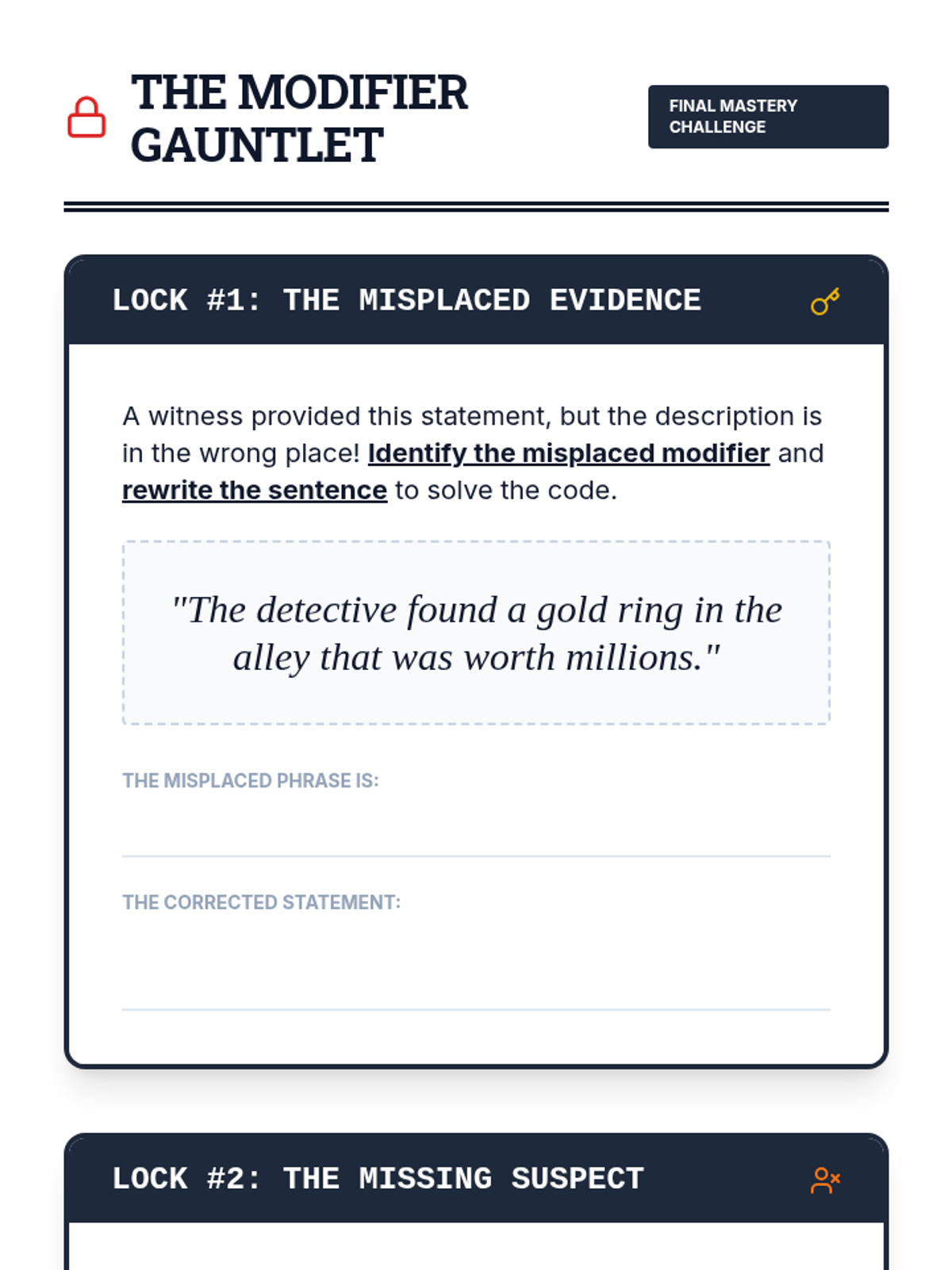
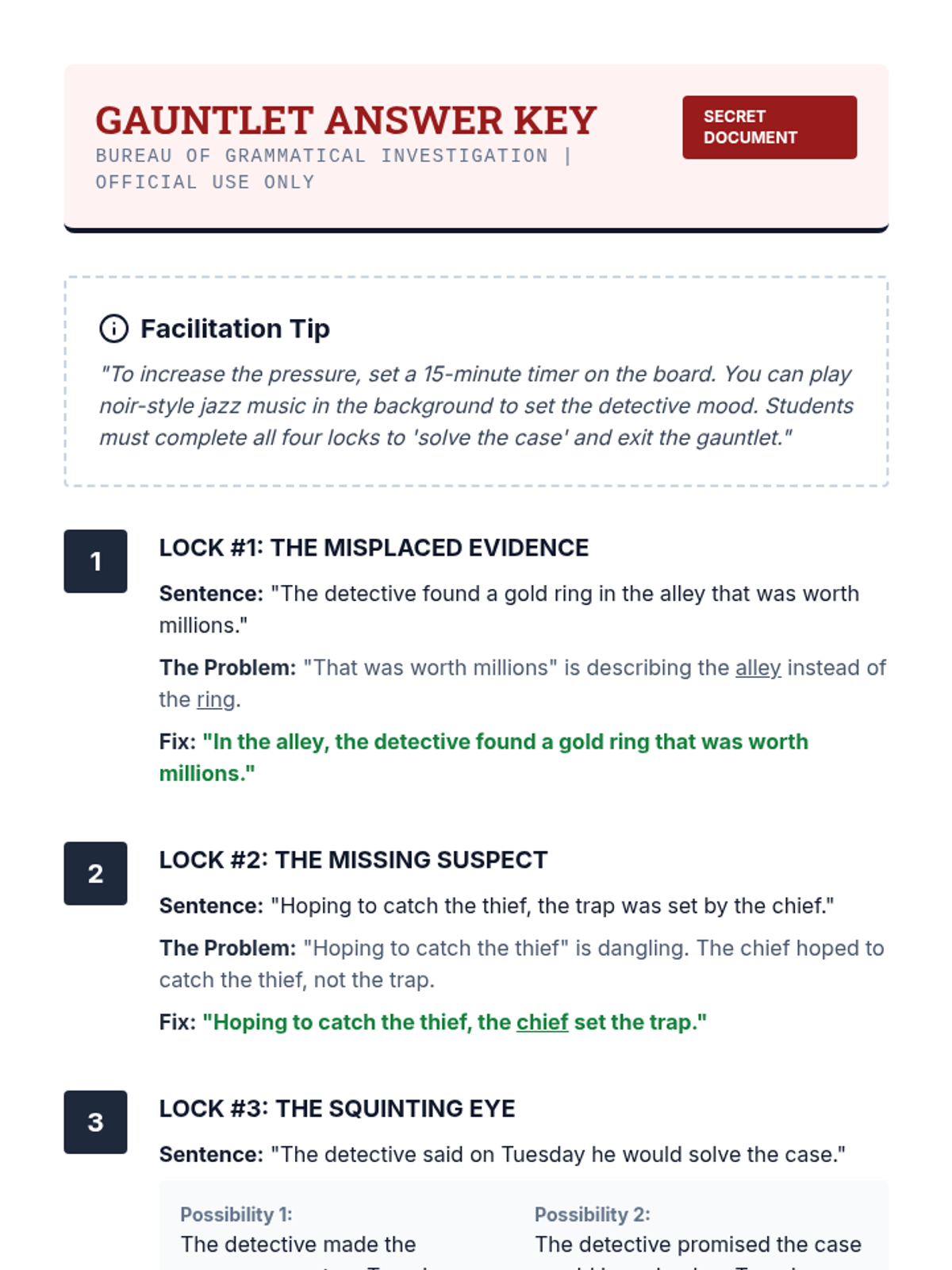
A mixed review challenge where students diagnose and fix misplaced, dangling, and squinting modifiers in a timed 'escape room' environment.
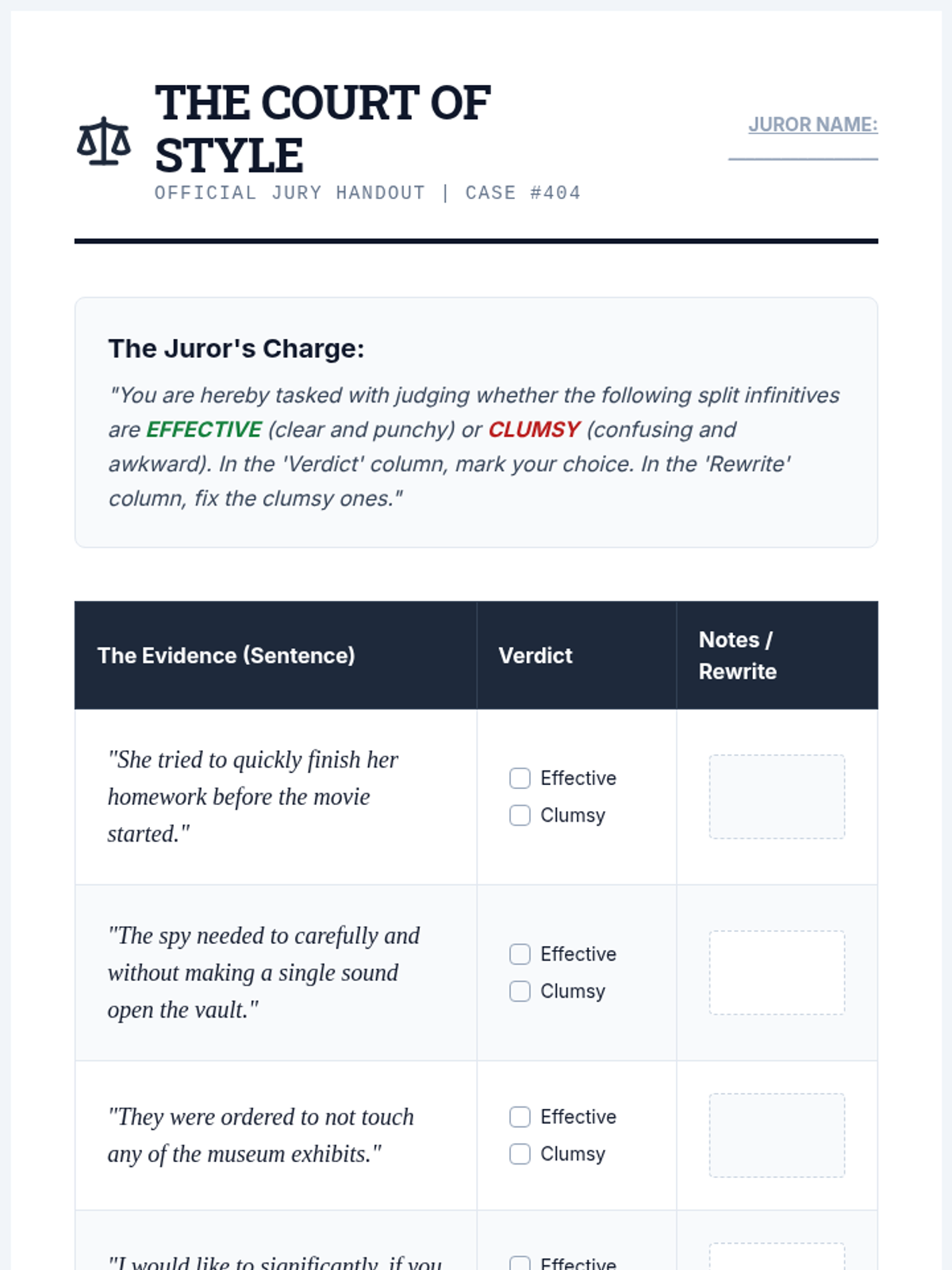
An exploration of split infinitives as a specific case of modifier usage, focusing on the balance between prescriptive grammar and stylistic power.
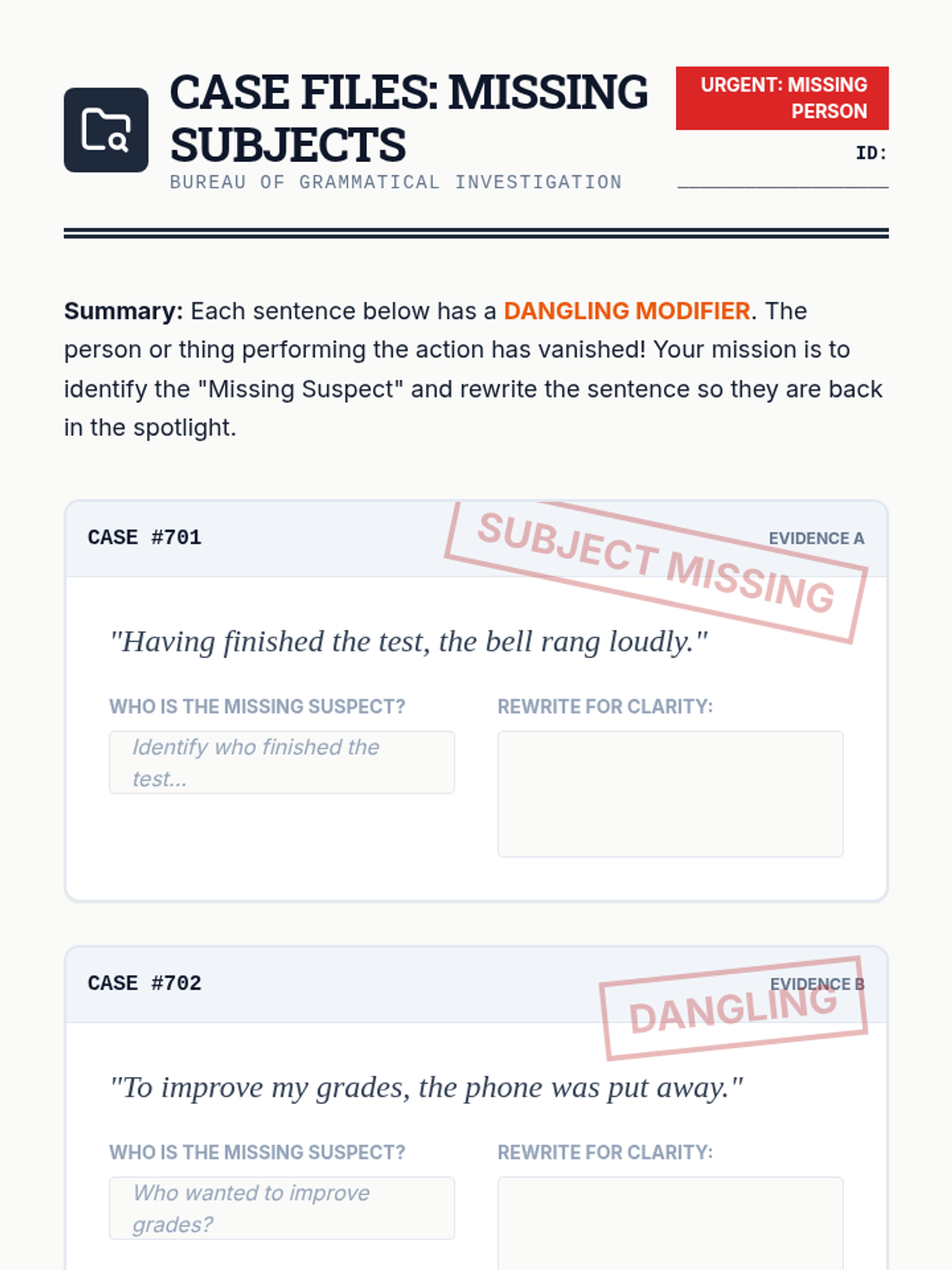
A deep dive into dangling modifiers where students act as detectives to find the missing subjects in sentences and rewrite them for clarity.
Students define and distinguish between misplaced modifiers (syntax errors) and dangling modifiers (logical errors) through a matching game and instructional slides.
Students use their 'grammatical ear' to identify awkward sentences before learning technical terms. They sort clear and confusing sentences to discover patterns of misplacement.
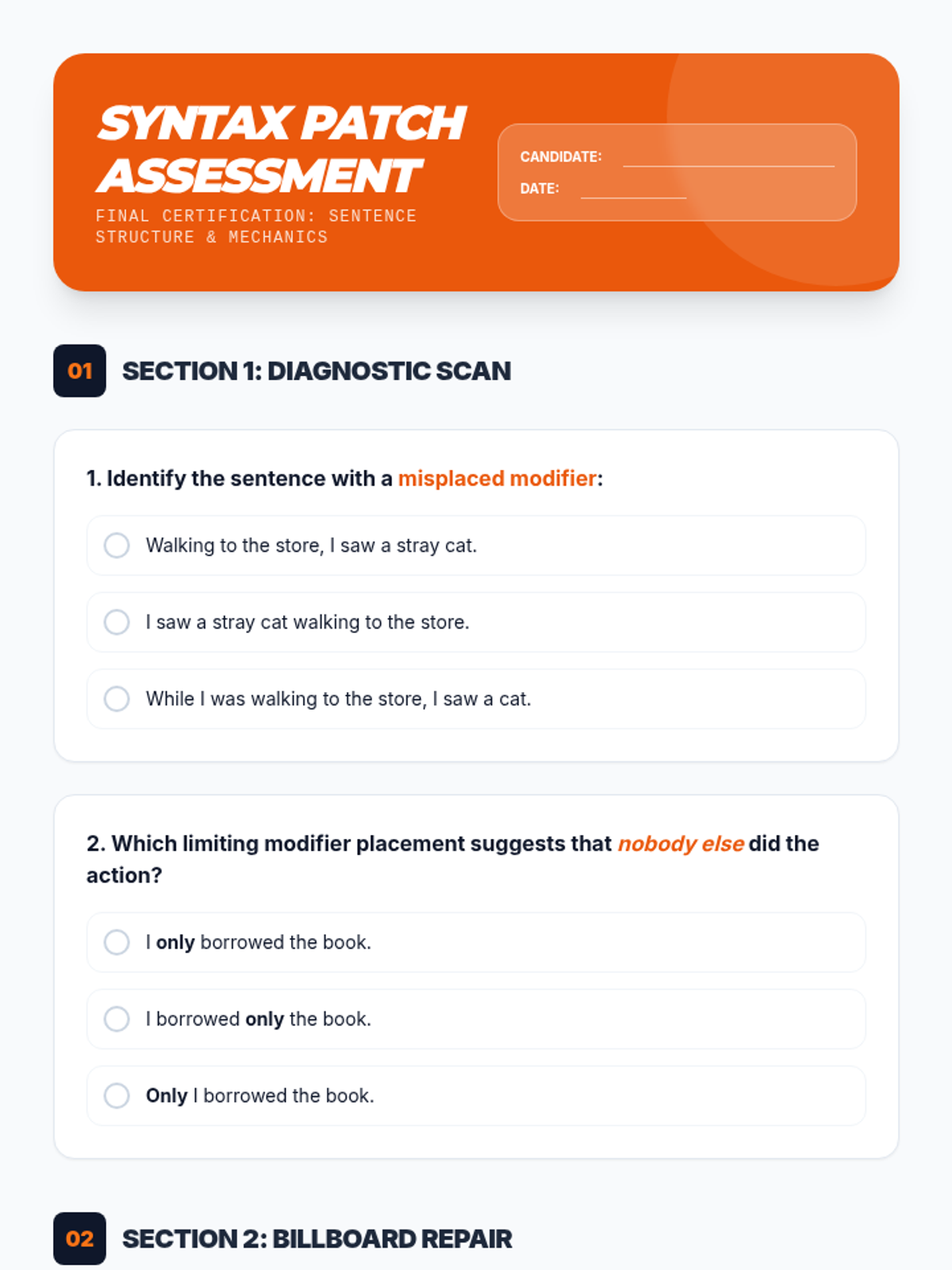
A mastery-based assessment where students identify misplaced modifiers in visual texts and provide architectural 'patches' to fix them.
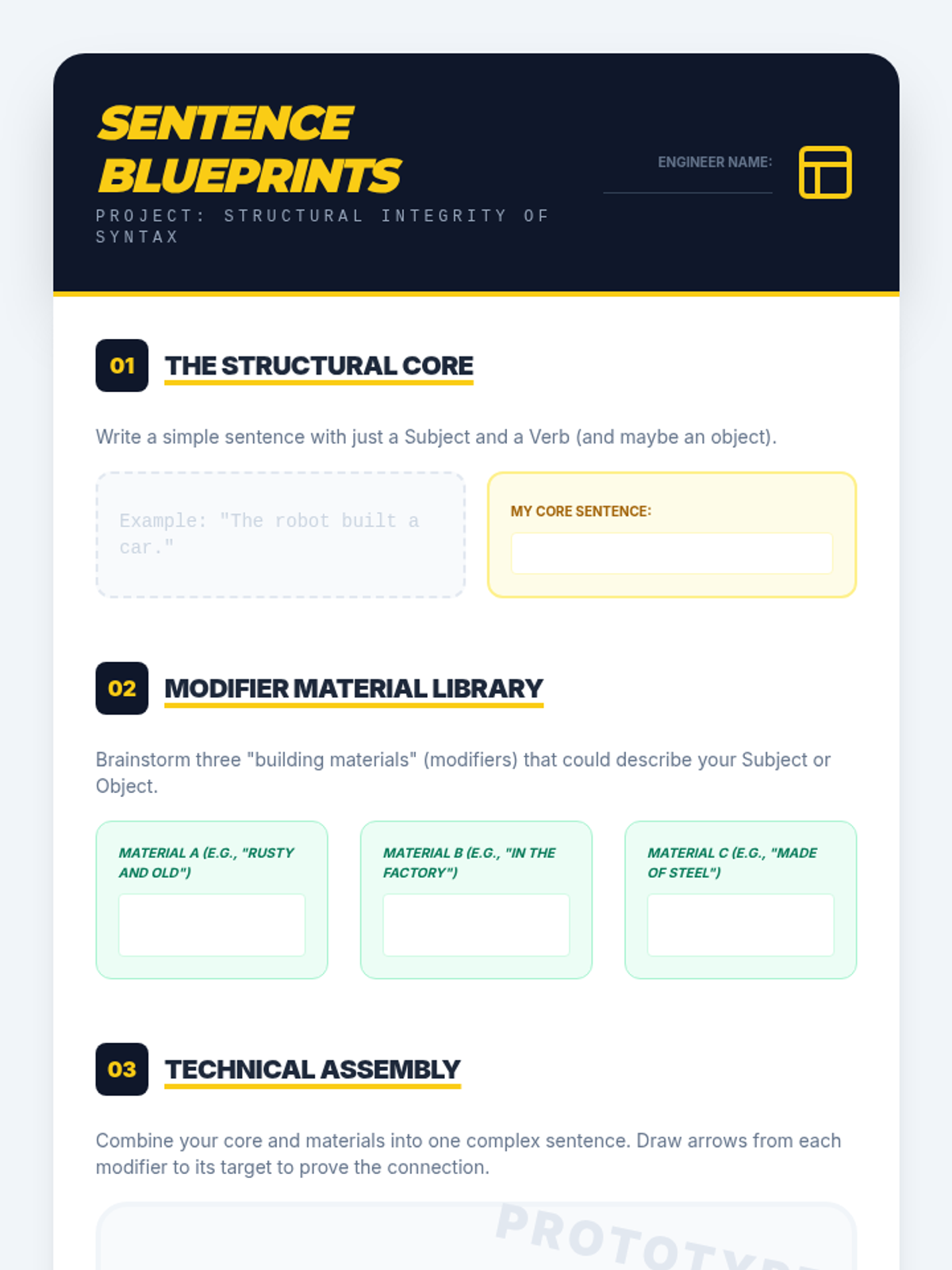
Students apply their knowledge to construct original, multi-phrase sentences using a 'construction block' method to ensure clarity.
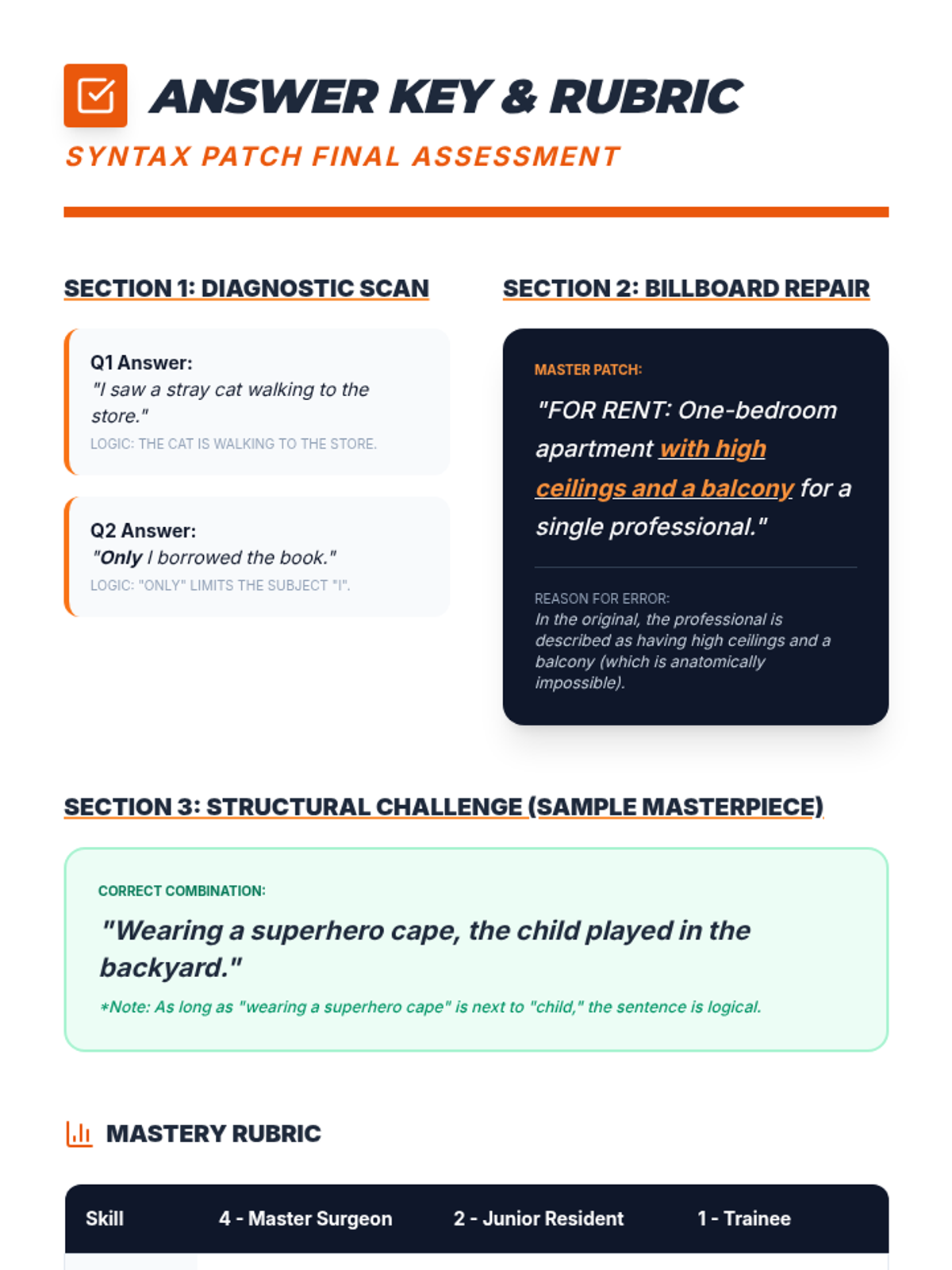
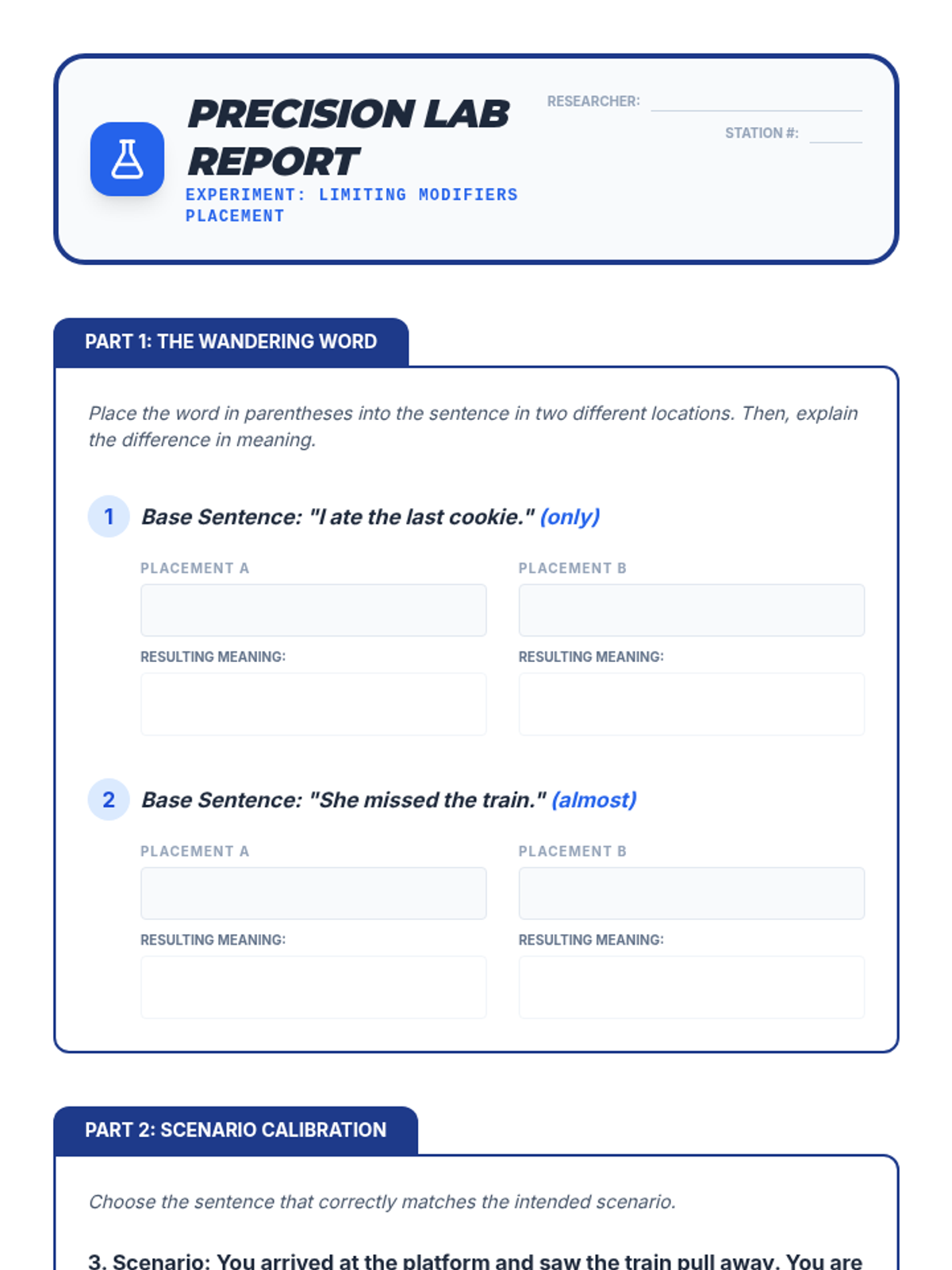
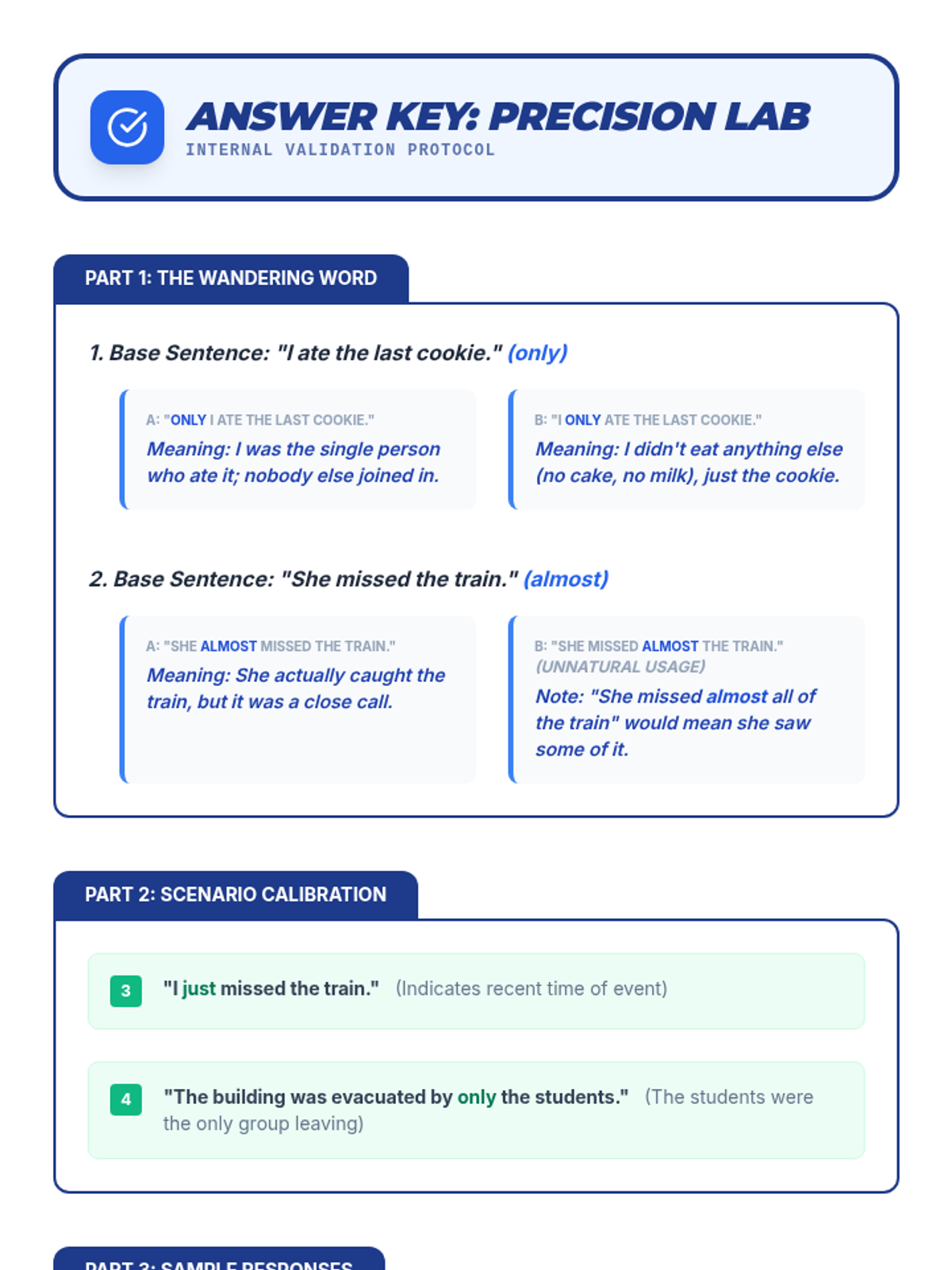
An inquiry into how small words like 'only' and 'just' change sentence meaning based on their placement, focusing on semantic precision.
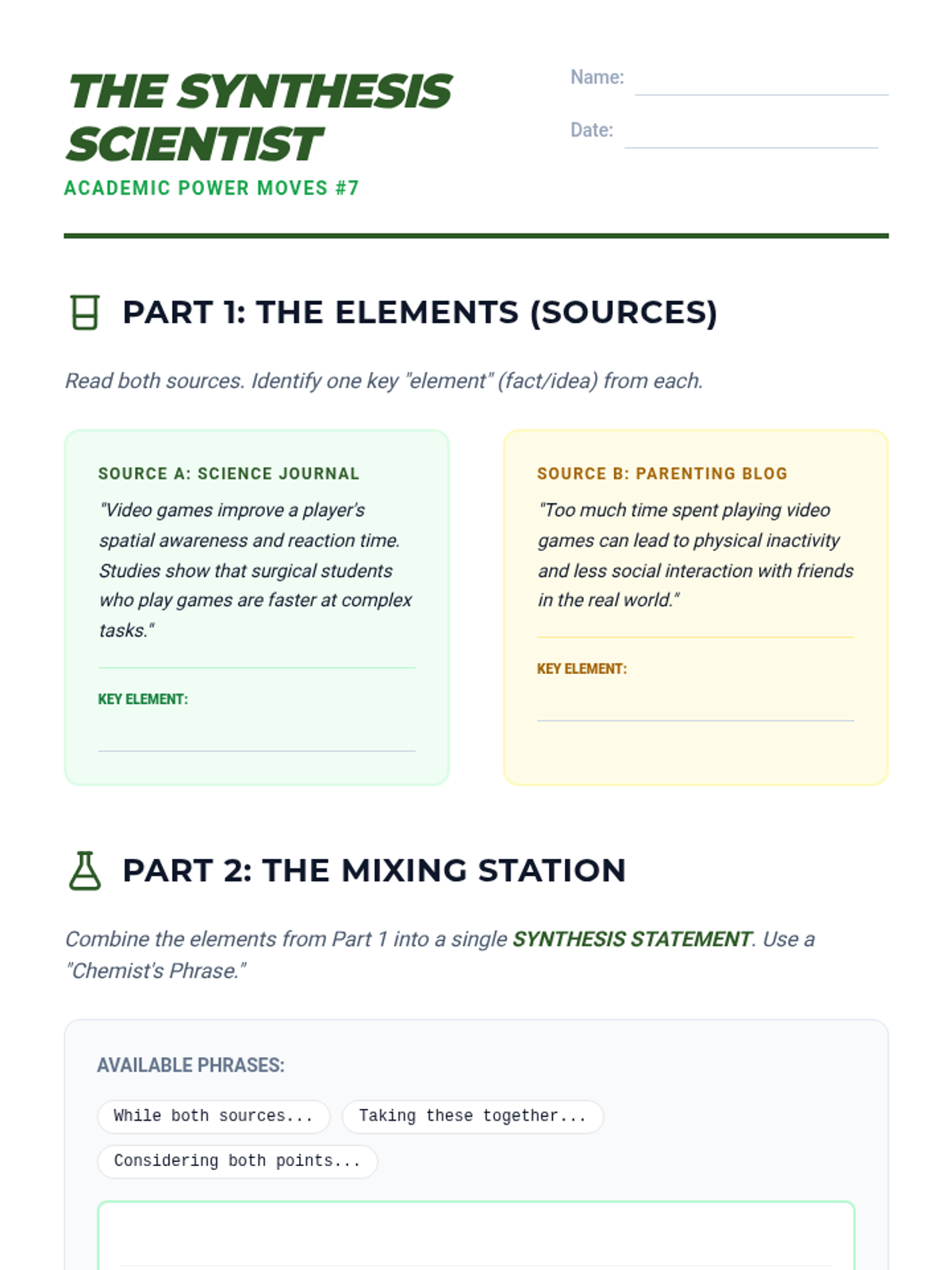
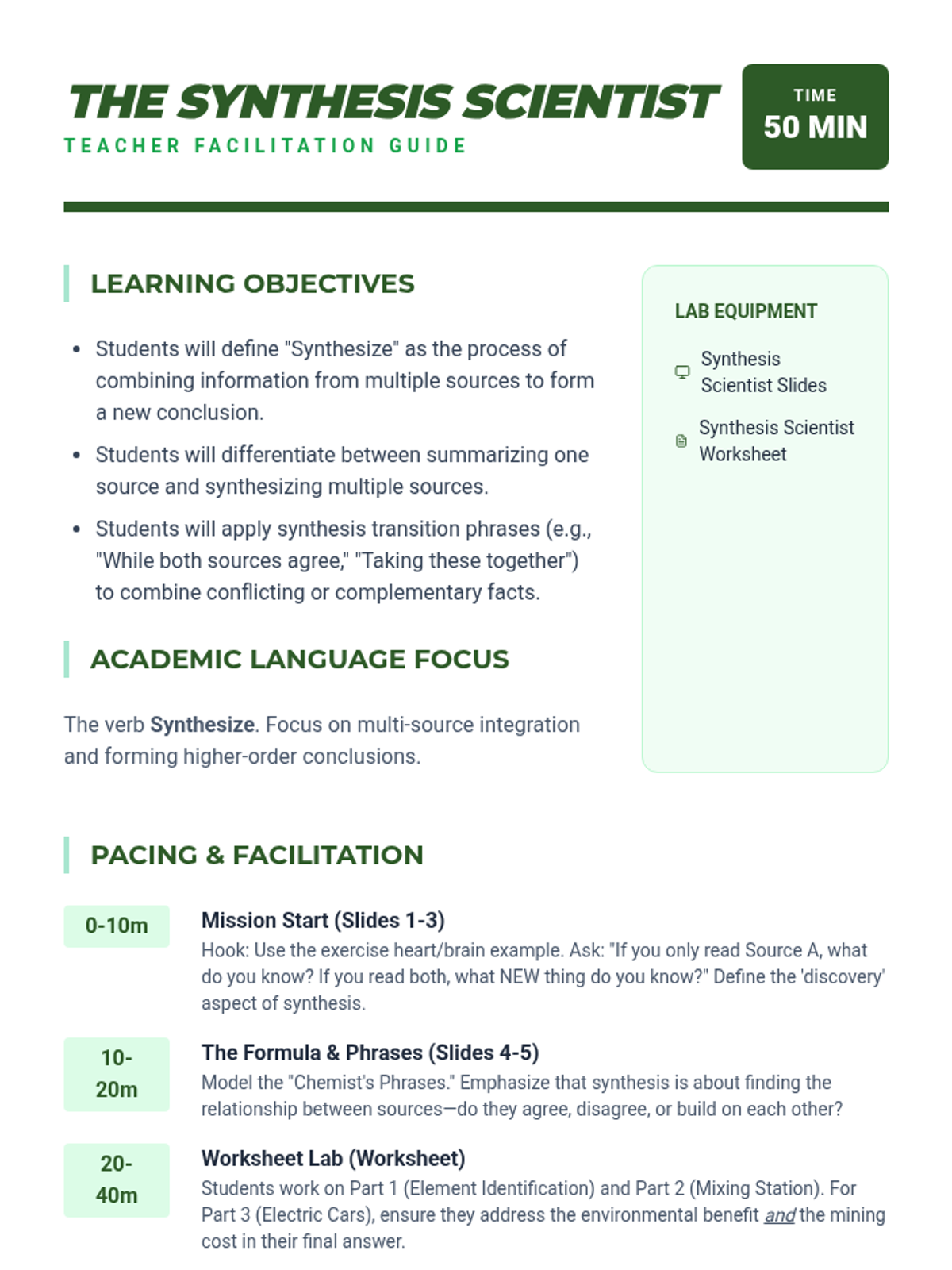
A 50-minute lesson on the academic action verb 'Synthesize.' Students learn to combine information from multiple sources to create a new, original conclusion using the 'Laboratory Mix' method.
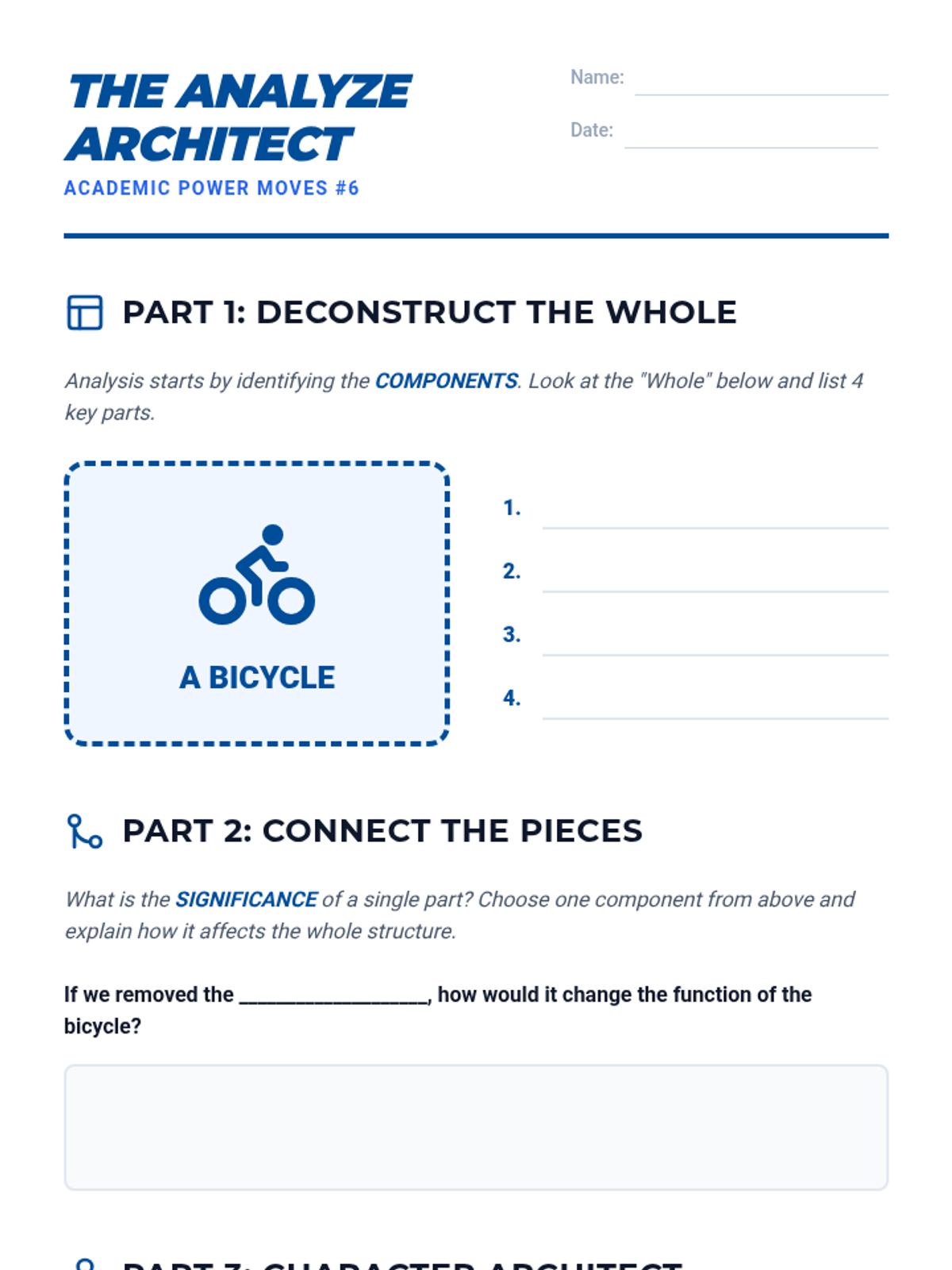
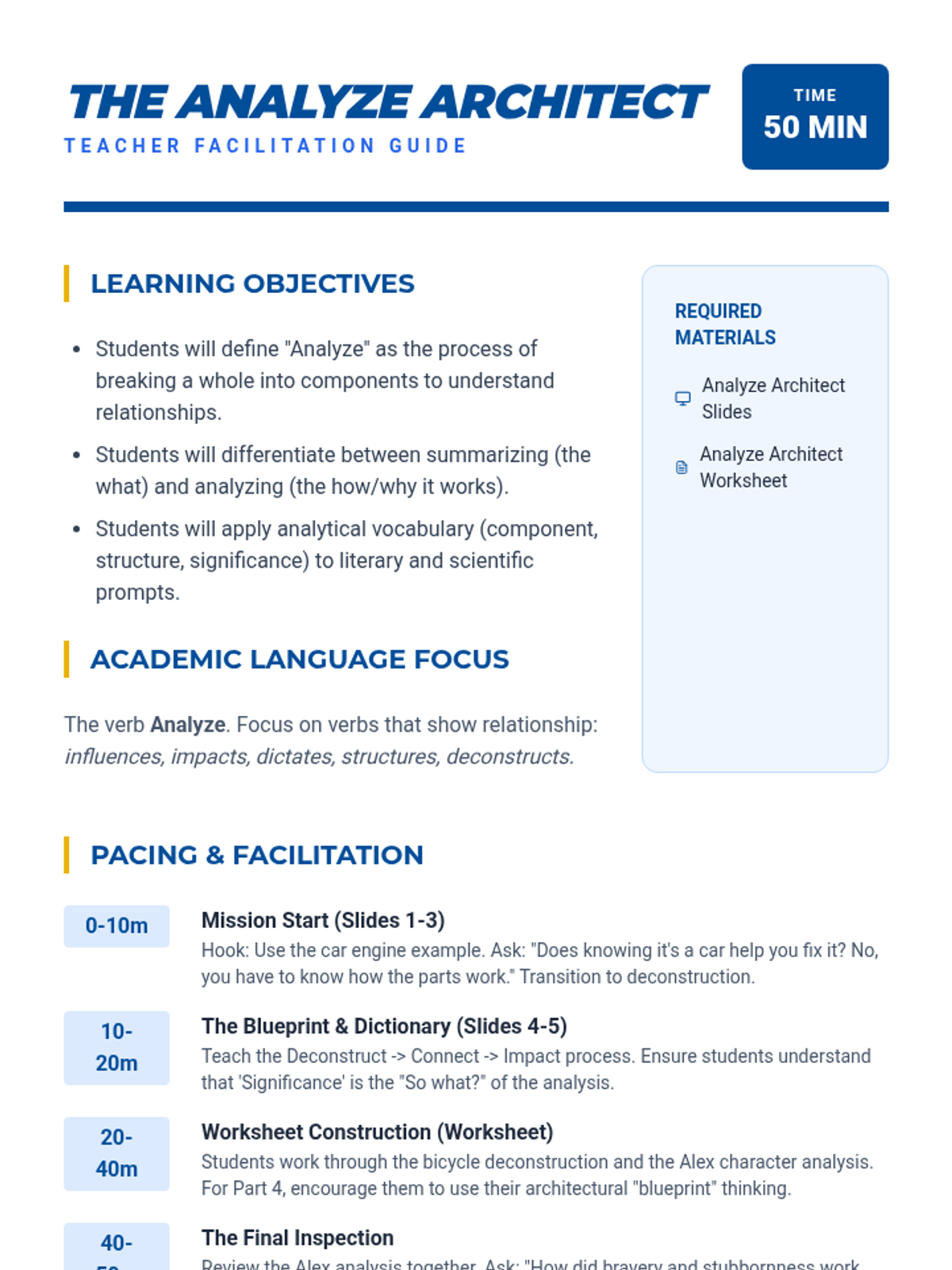
A 50-minute lesson on the academic action verb 'Analyze.' Students learn to break complex topics into smaller parts to understand how they work together using the 'Architect's Blueprint' method.
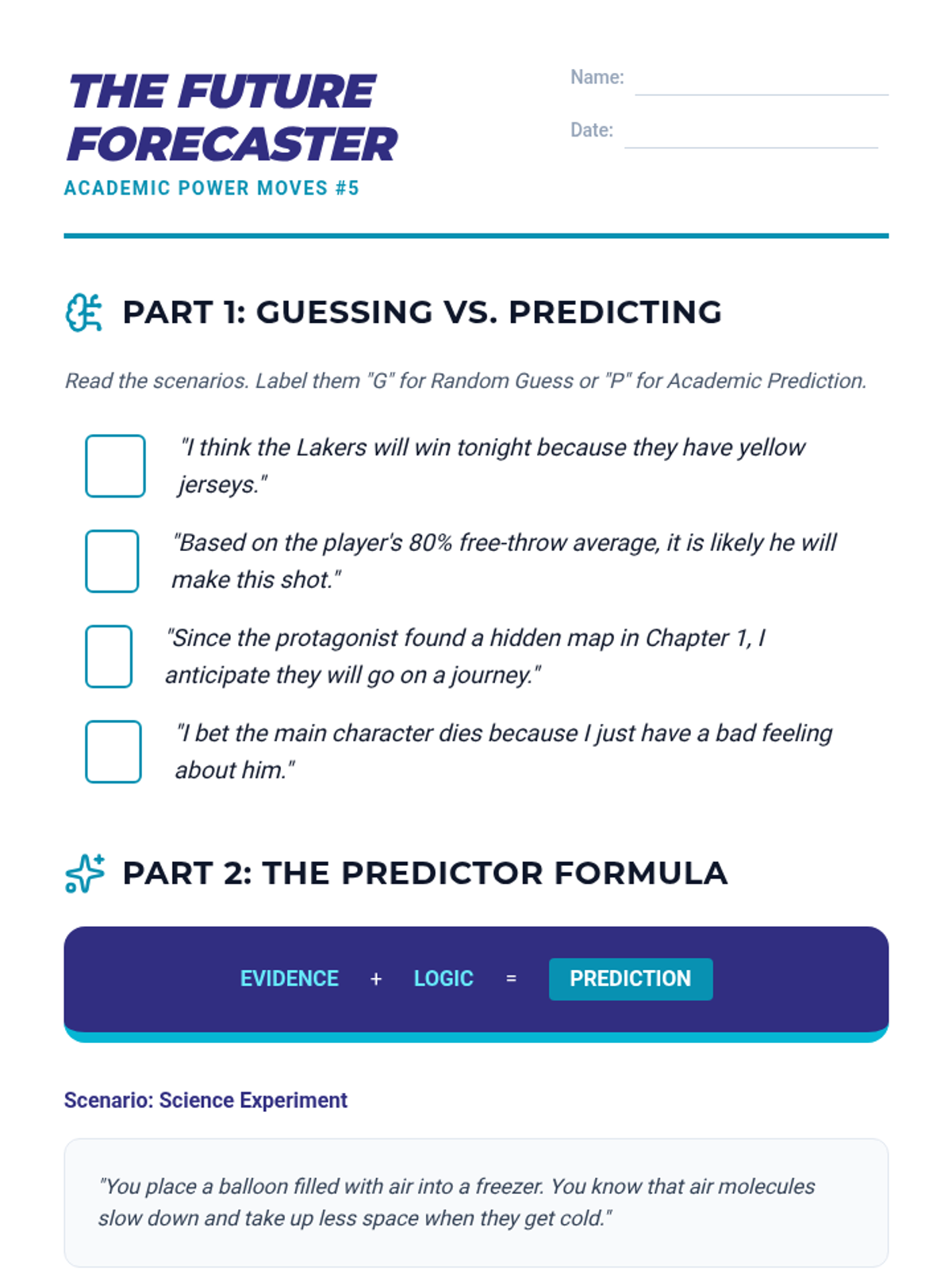
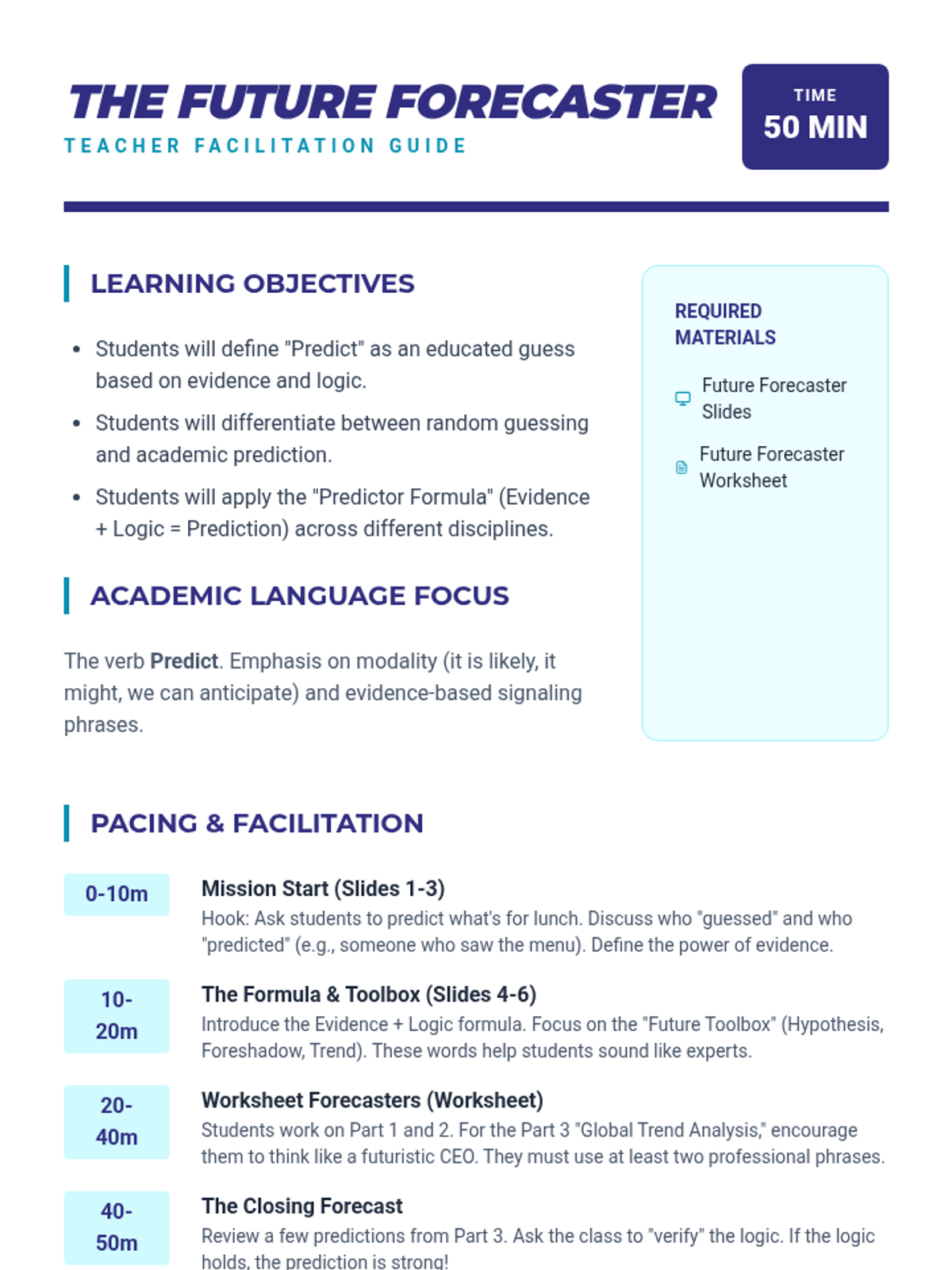
A 50-minute lesson on the academic action verb 'Predict.' Students learn to use evidence and logic to make educated guesses about future outcomes in various subjects.
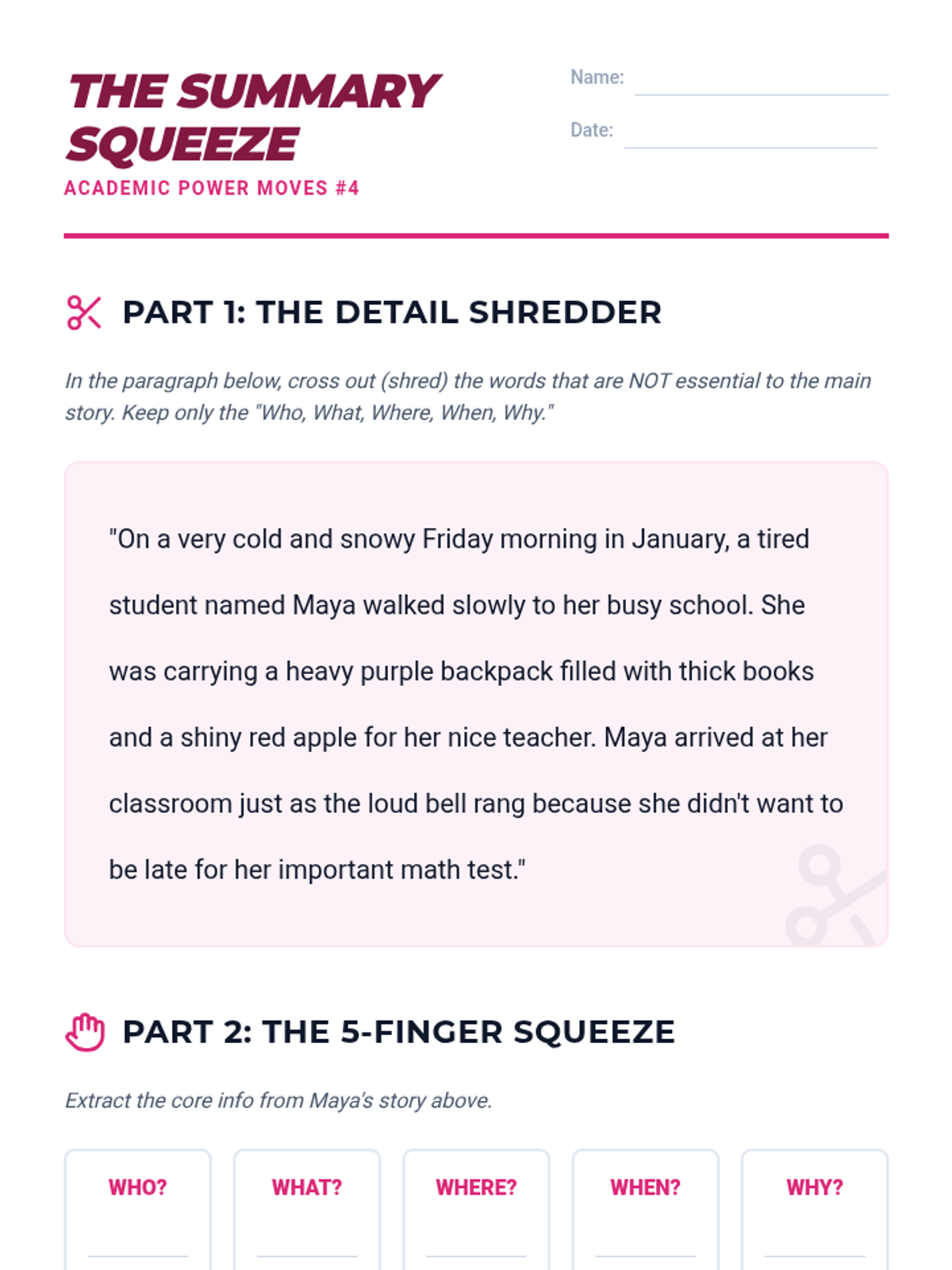
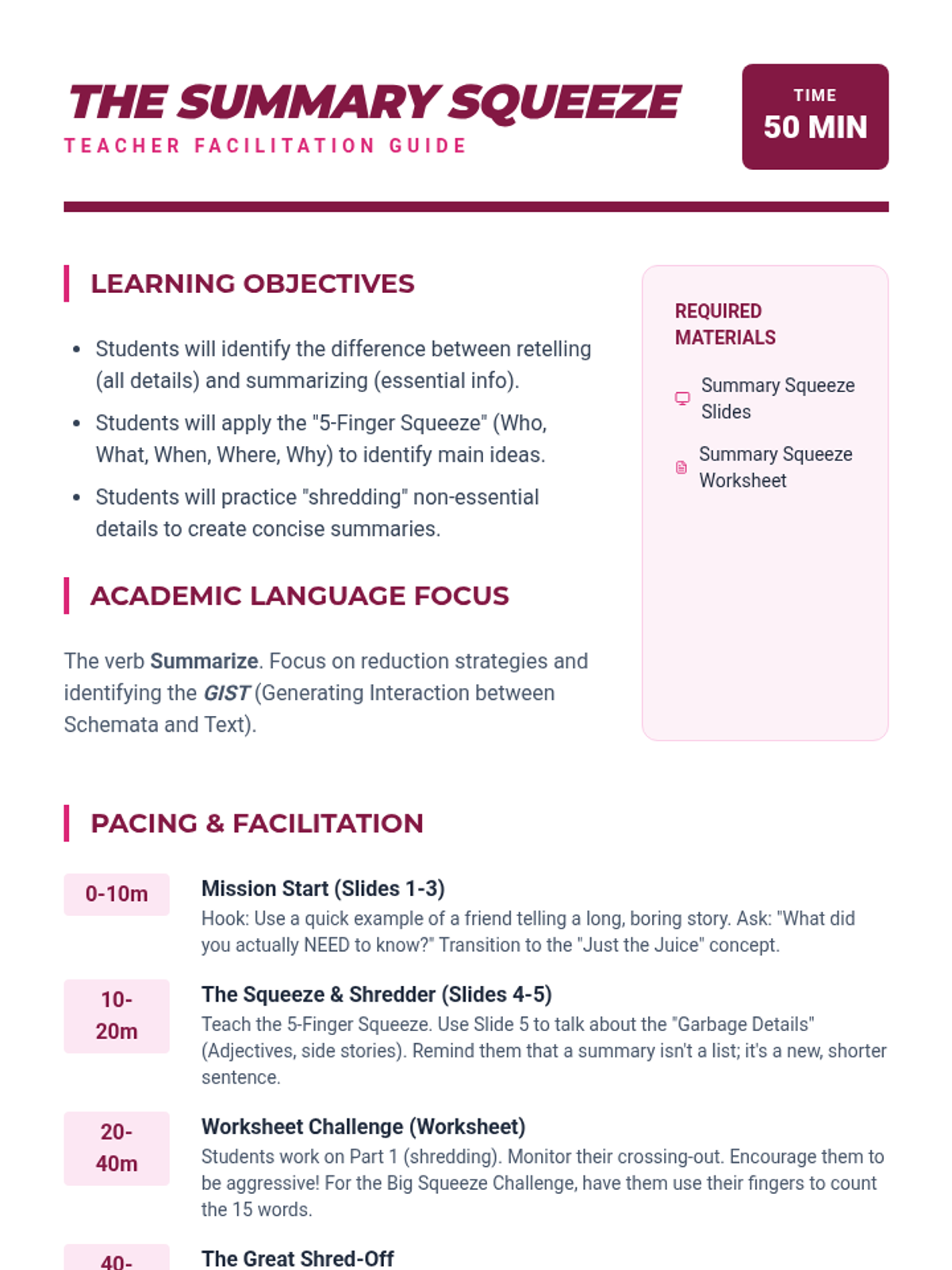
A 50-minute lesson on the academic action verb 'Summarize.' Students learn to identify main ideas and key details while removing unnecessary information using 'The Squeeze' method.
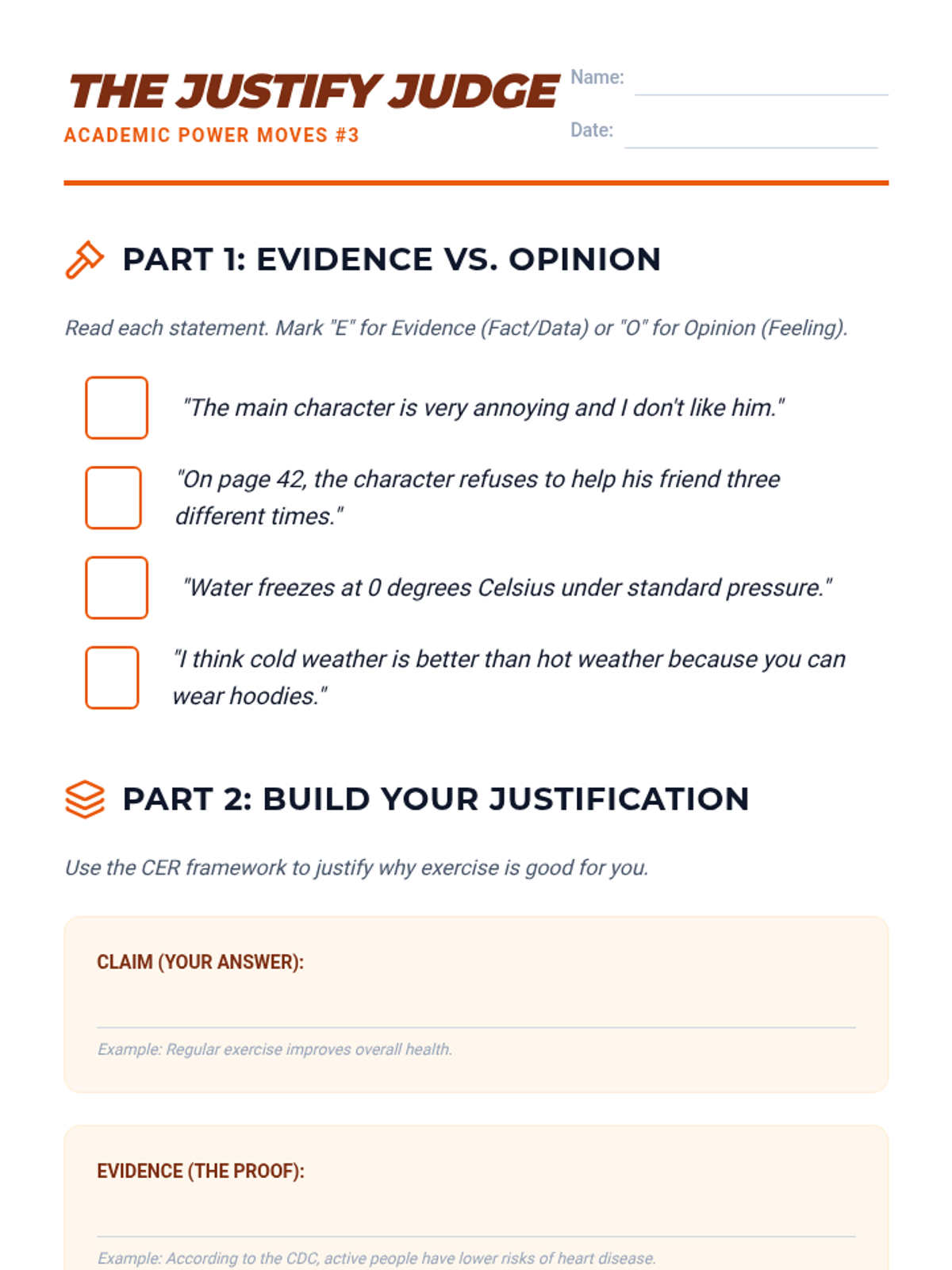
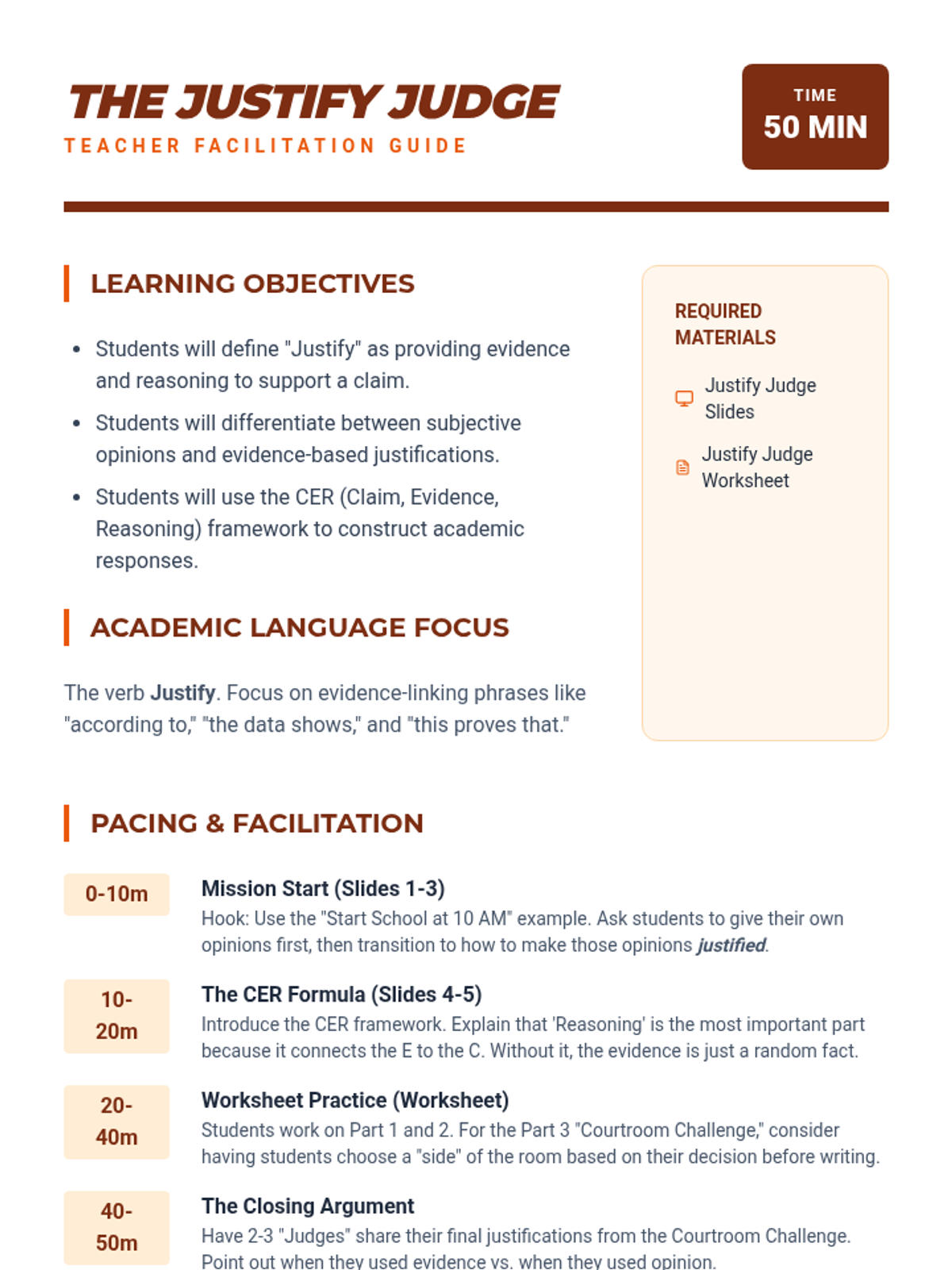
A 50-minute lesson on the academic action verb 'Justify.' Students learn to support their claims with evidence and reasoning using the 'Claim-Evidence-Reasoning' (CER) framework.
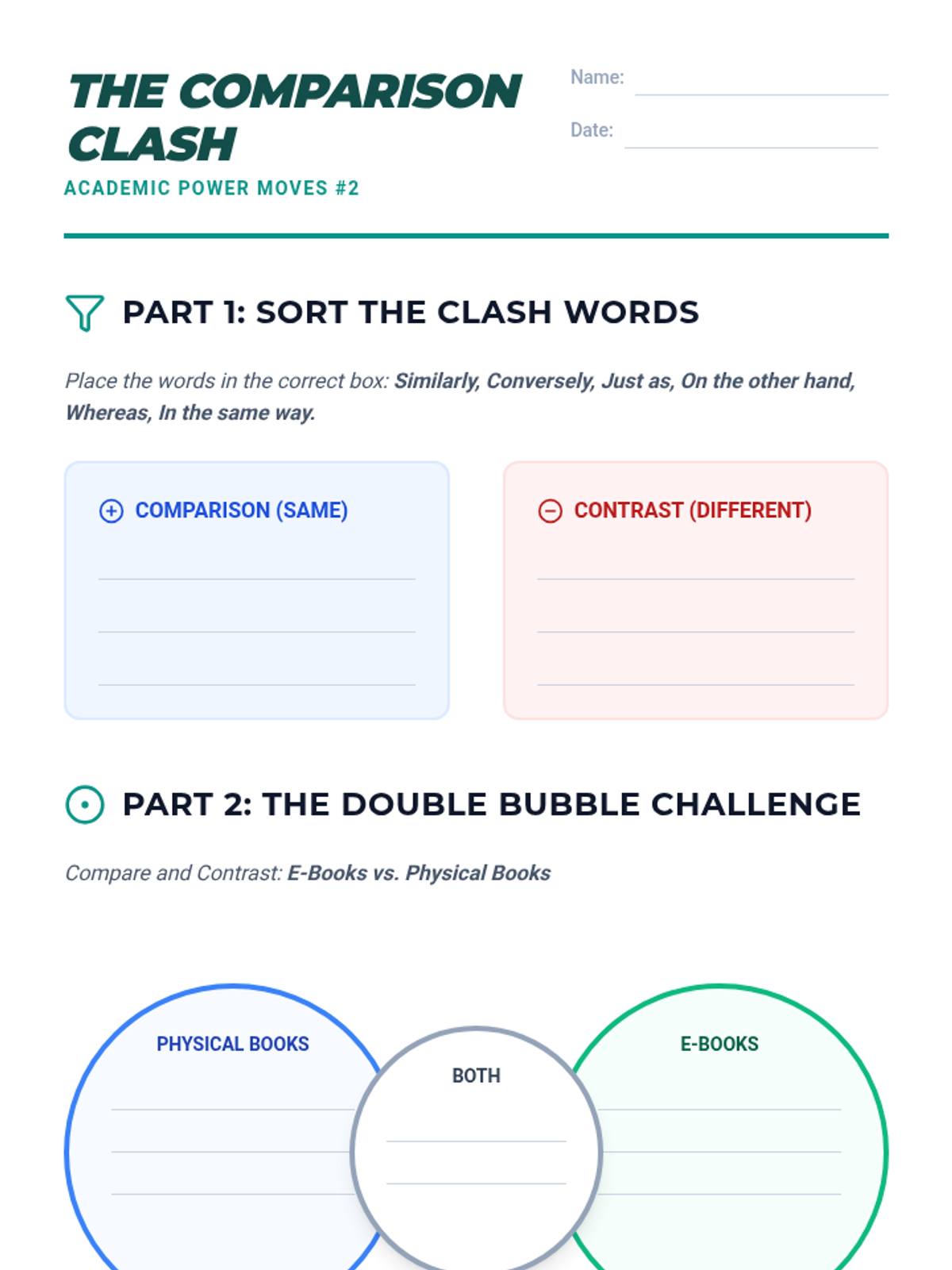
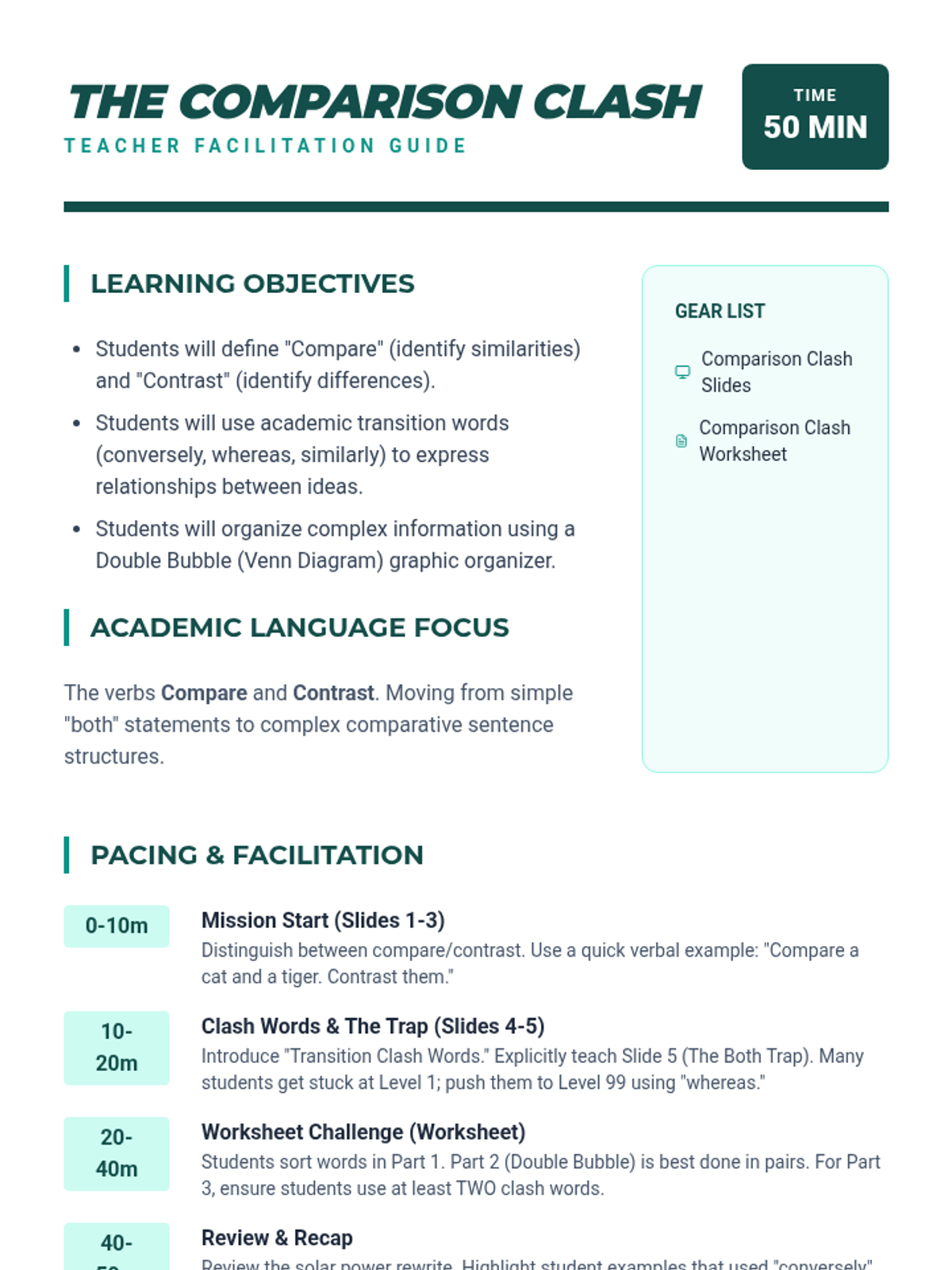
A 50-minute lesson on 'Compare' and 'Contrast.' Students learn to identify similarities and differences using academic language and structured organizers.
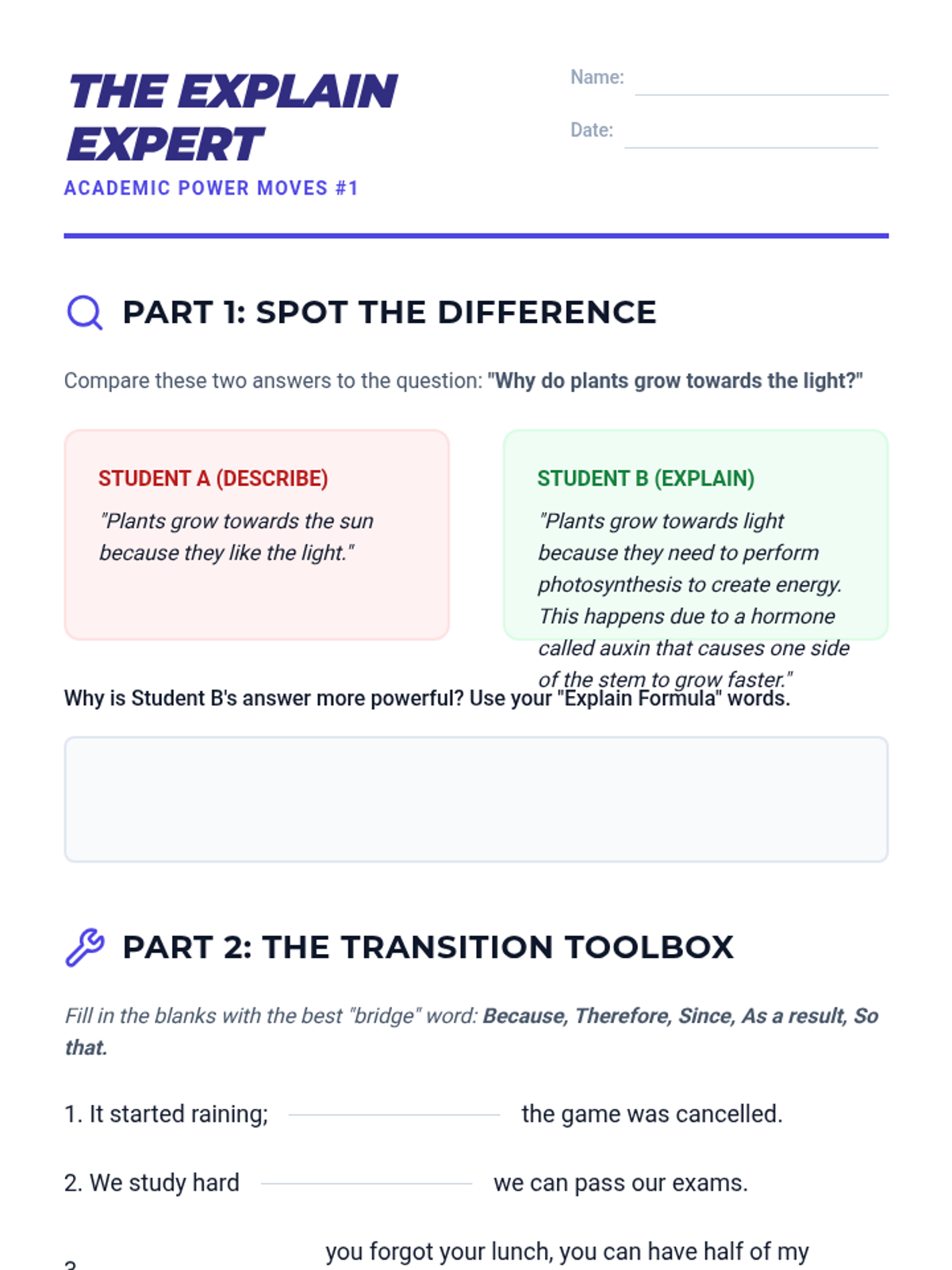
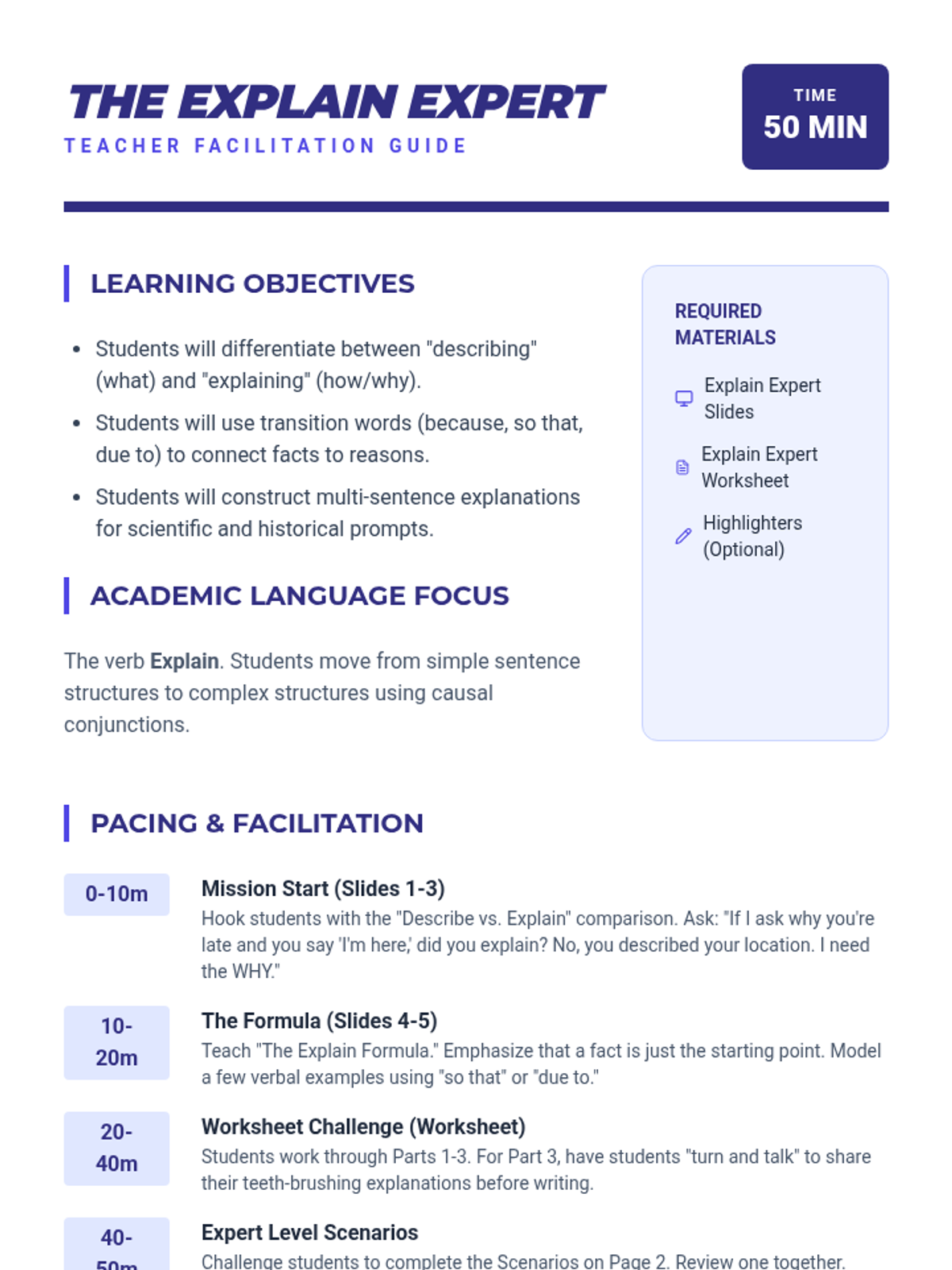
A 50-minute lesson on the academic action verb 'Explain.' Students learn to go beyond 'what' to 'how' and 'why' using clear steps and transition words.
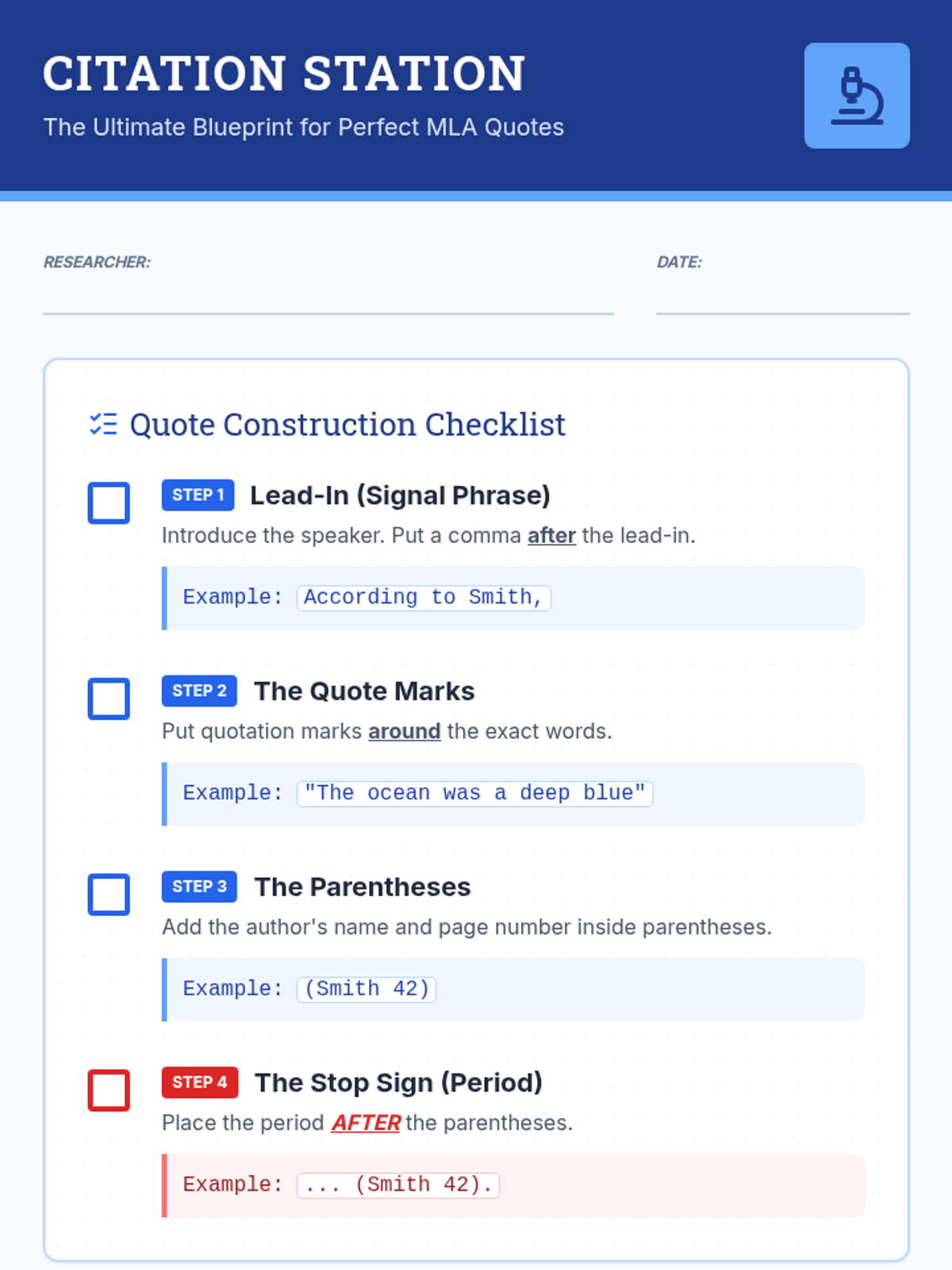
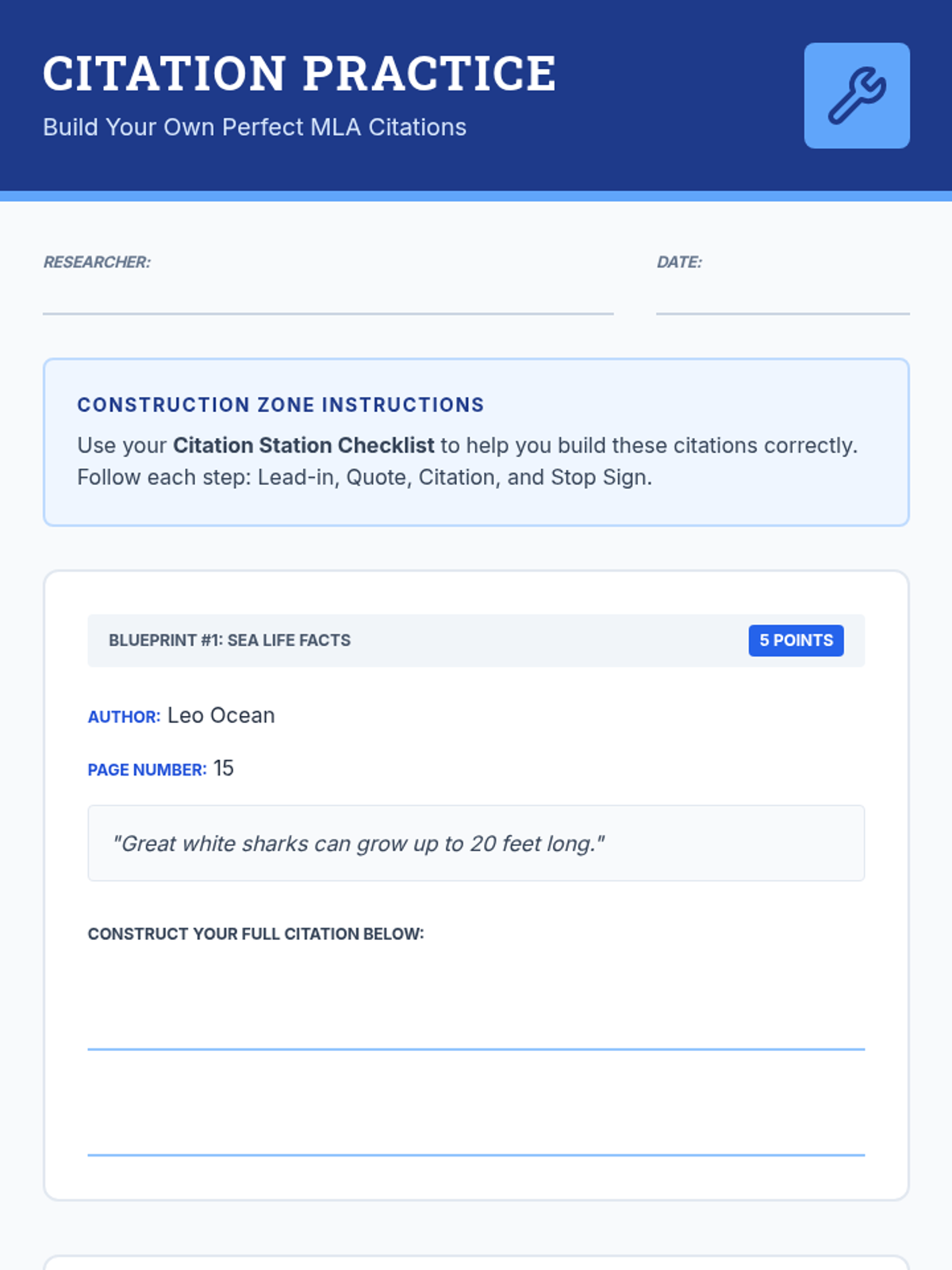
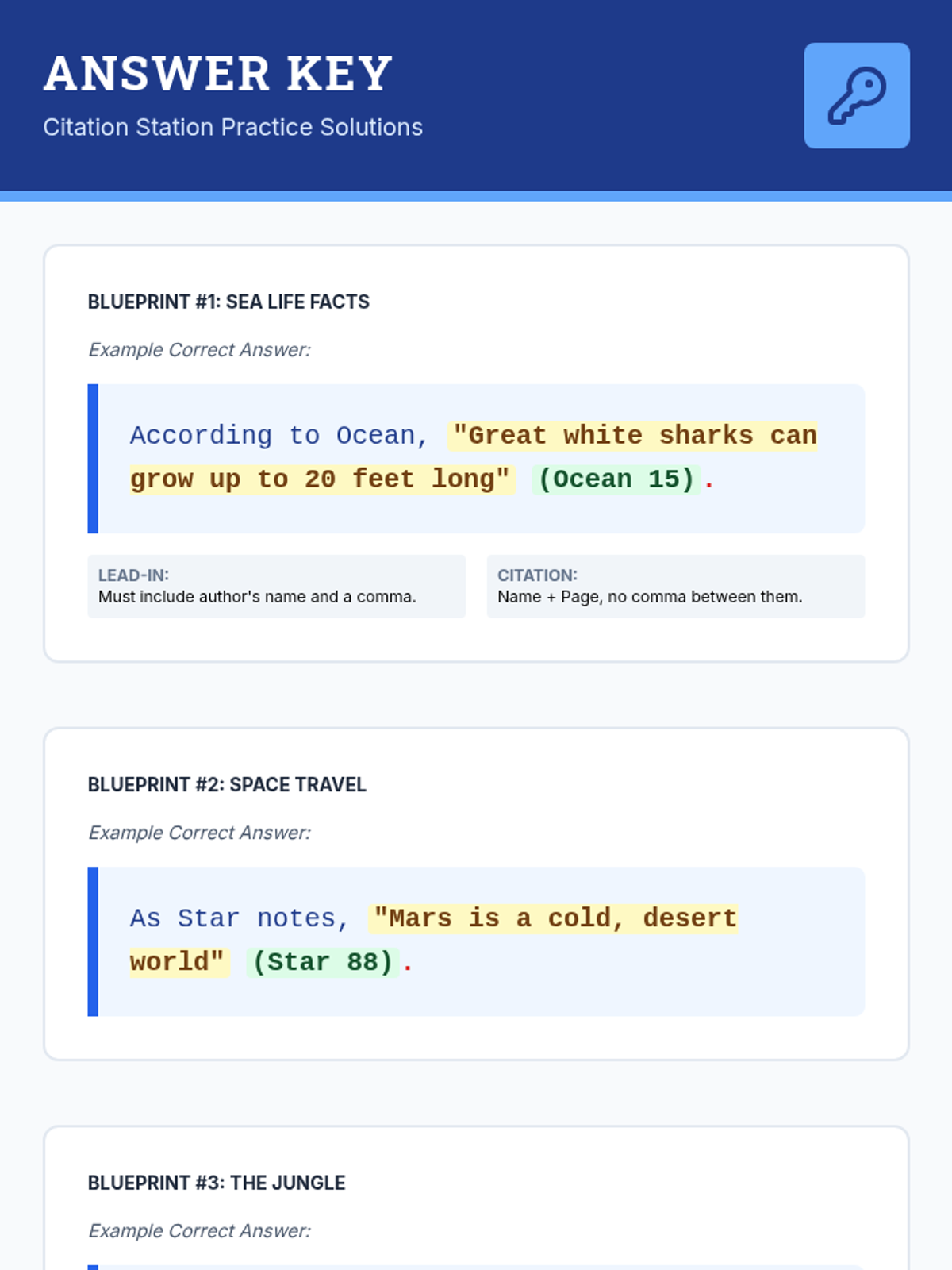
A targeted lesson for 7th-grade students, particularly those with IEP writing goals, focusing on the mechanics of MLA in-text citations and quote integration using a highly visual, step-by-step approach.
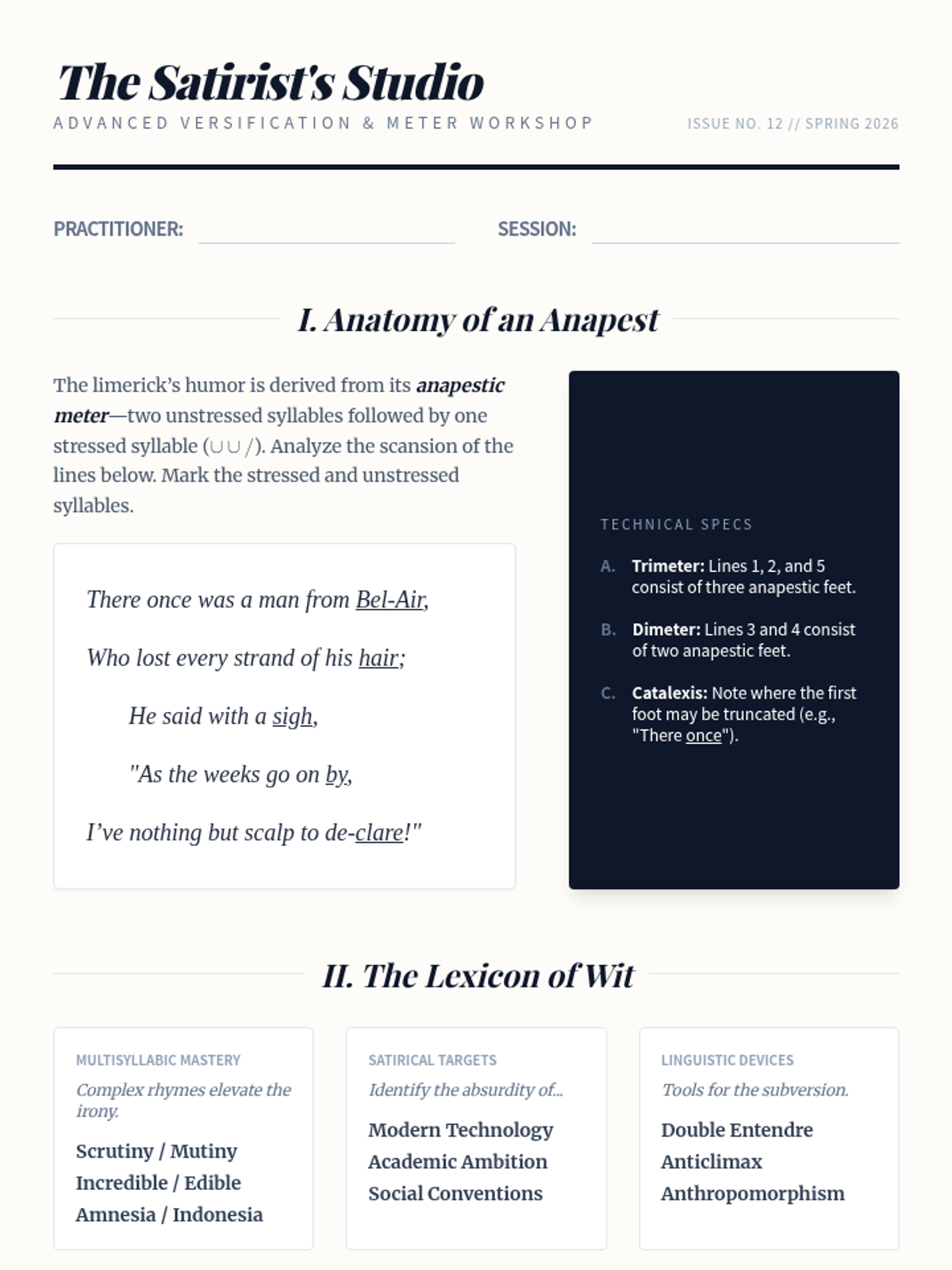
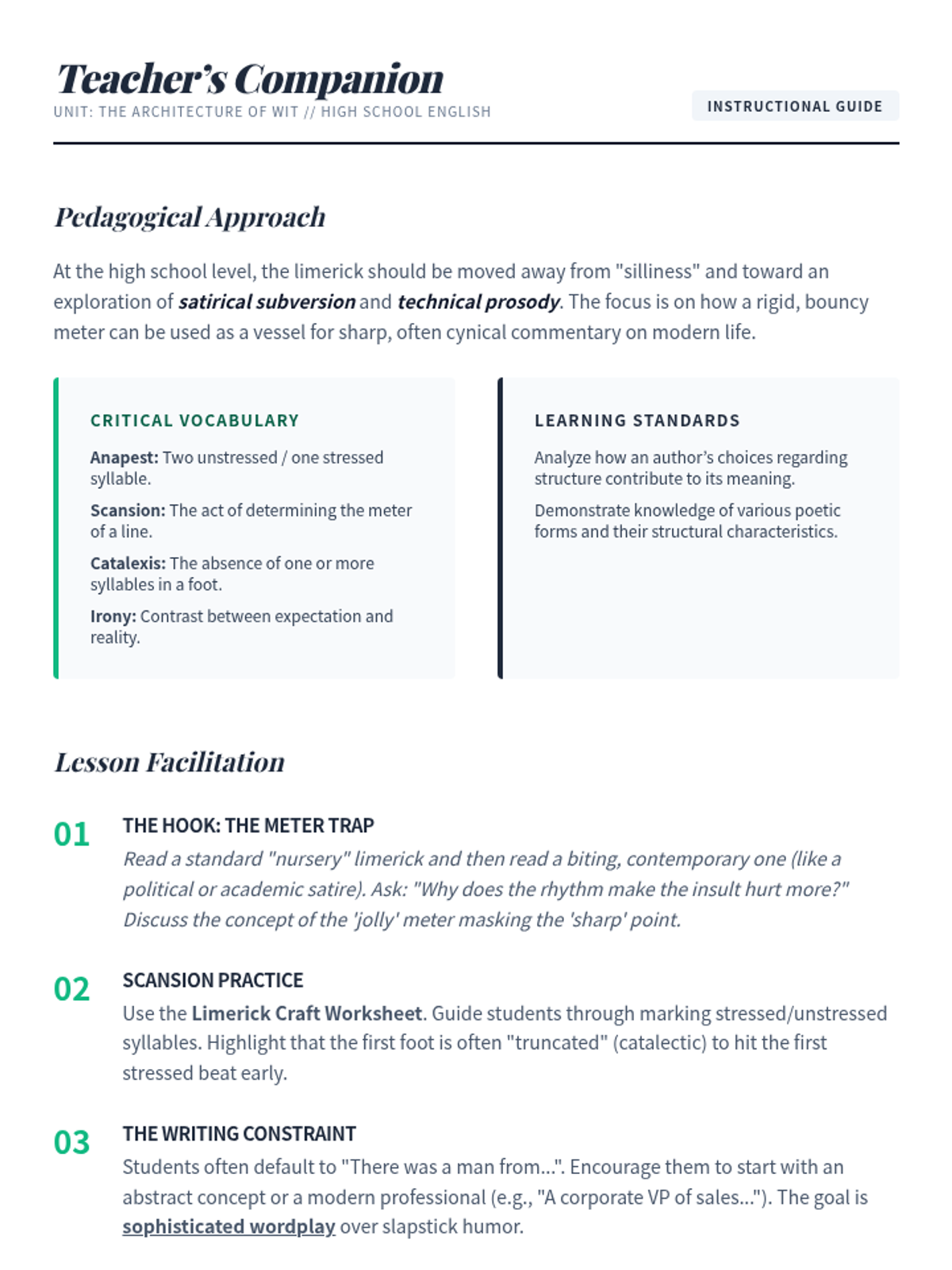
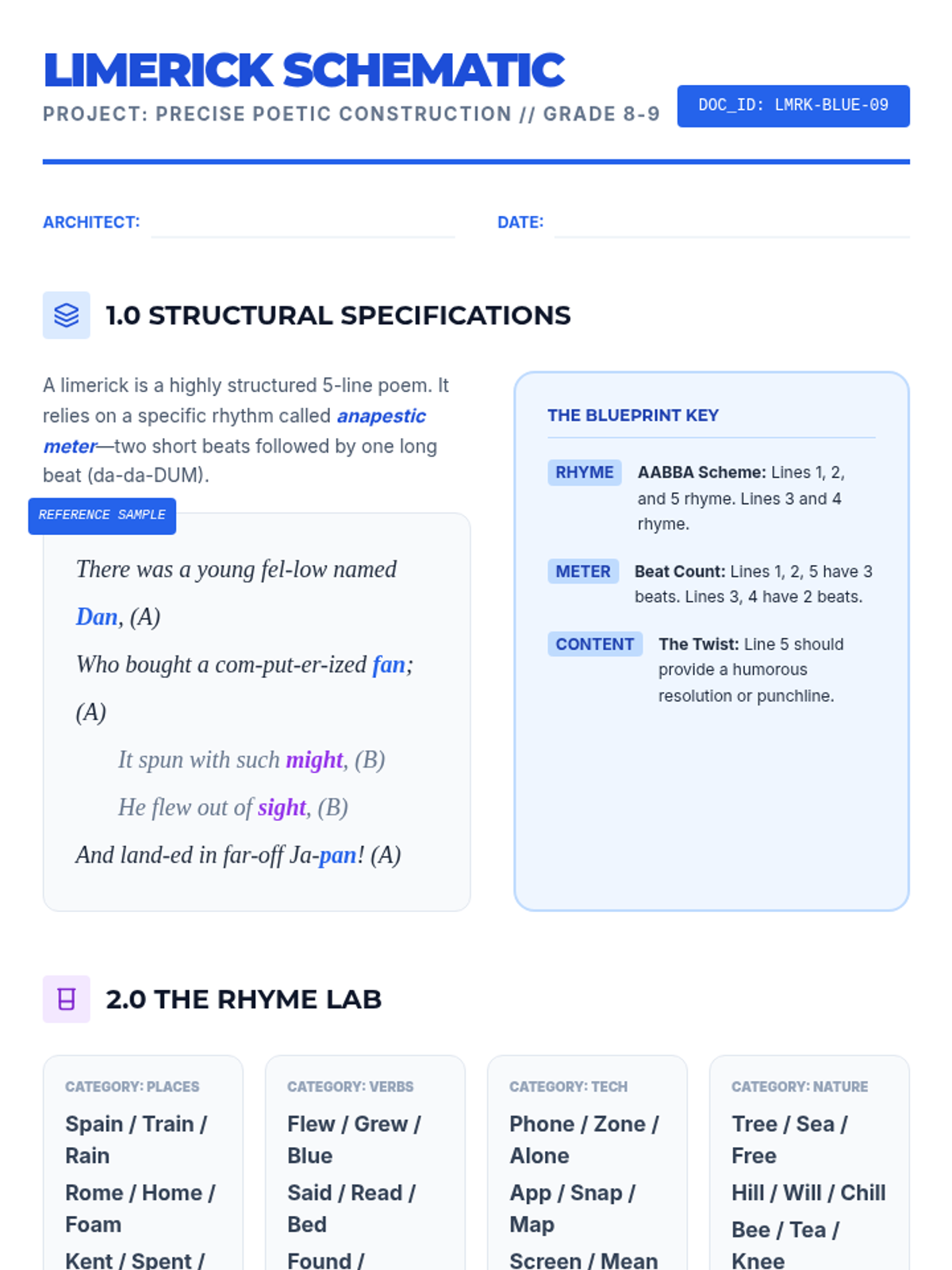
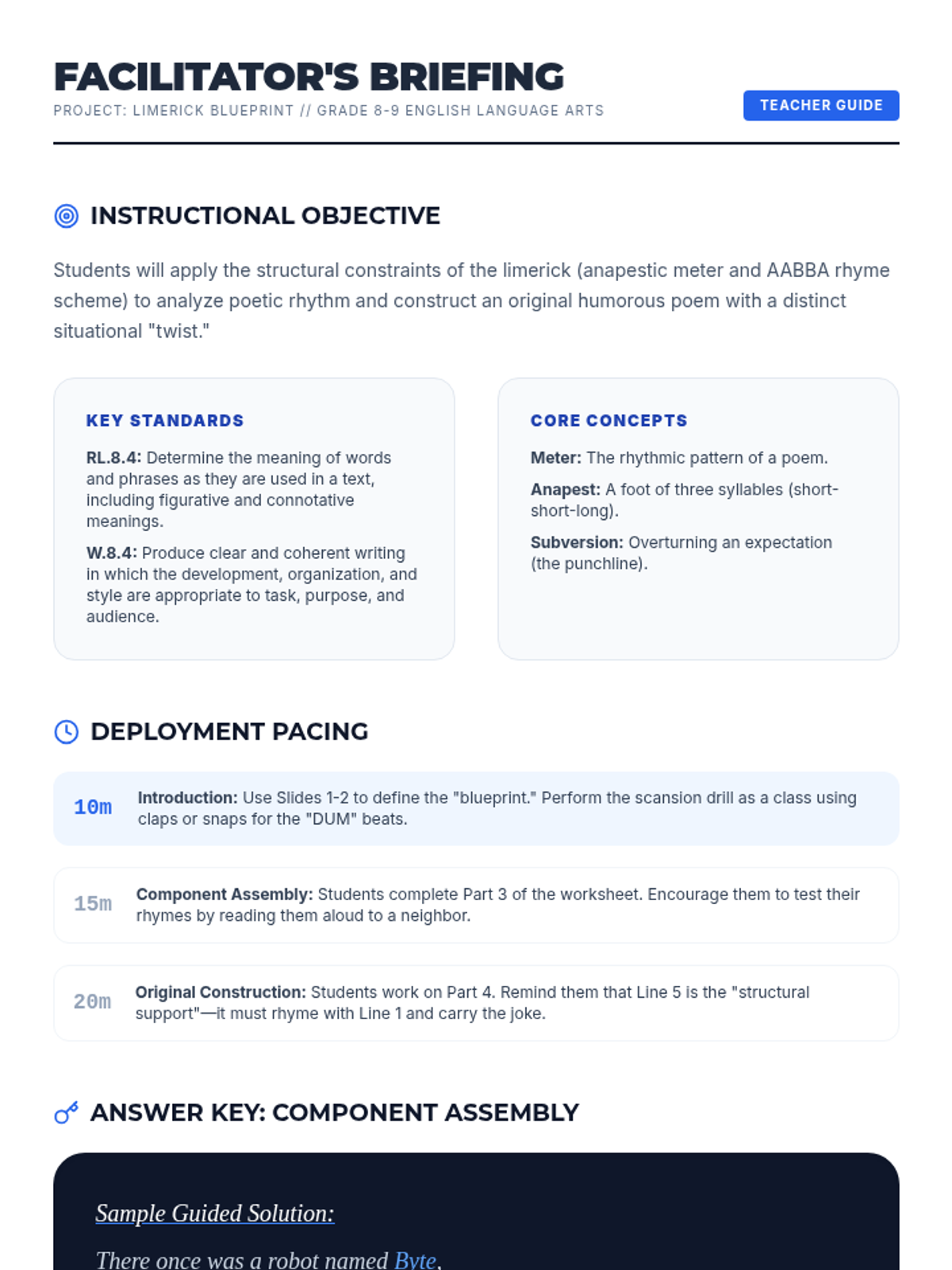
A sophisticated exploration of the limerick's structure, focusing on anapestic meter, satirical subversion, and the craft of witty wordplay.
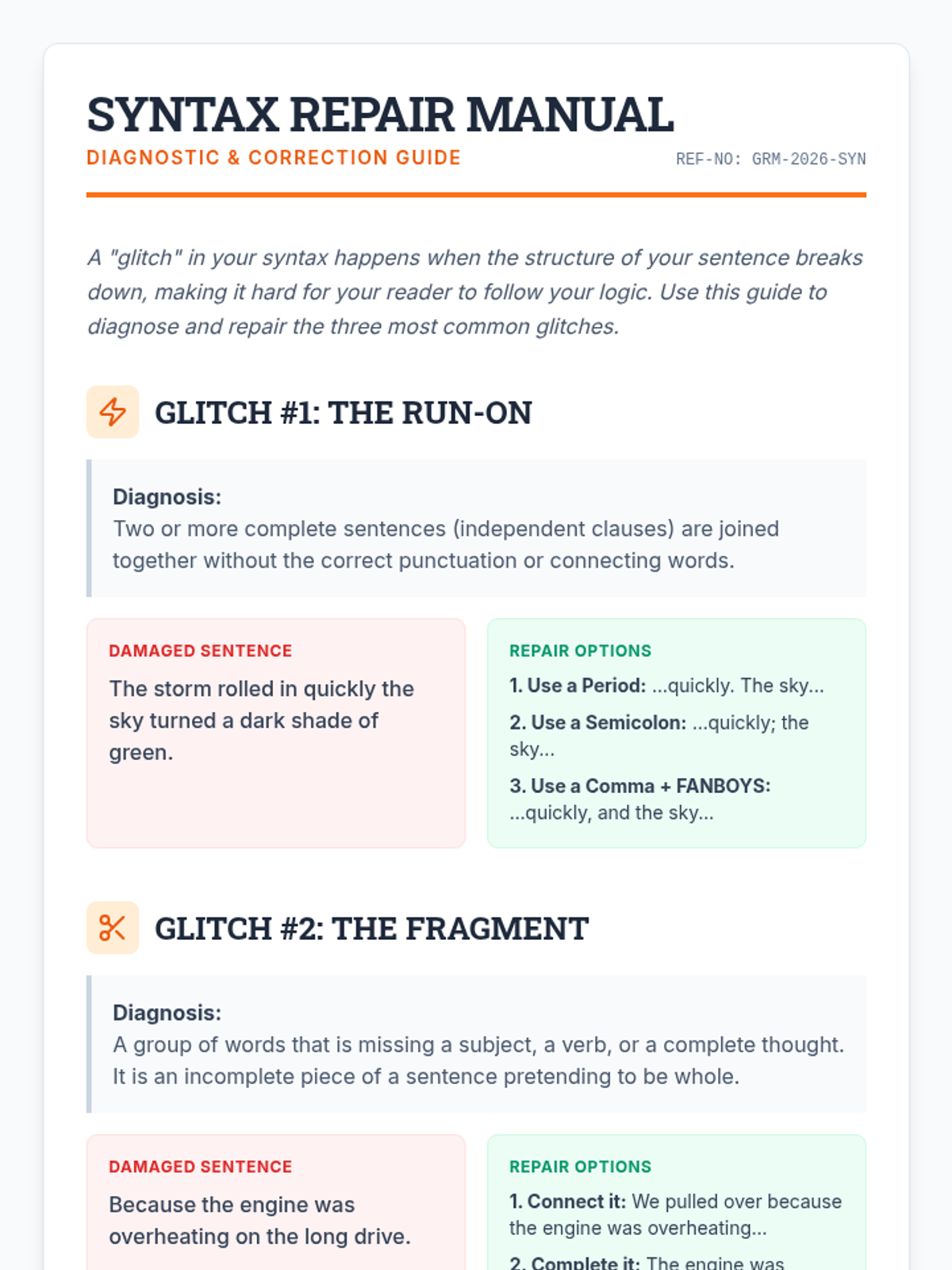
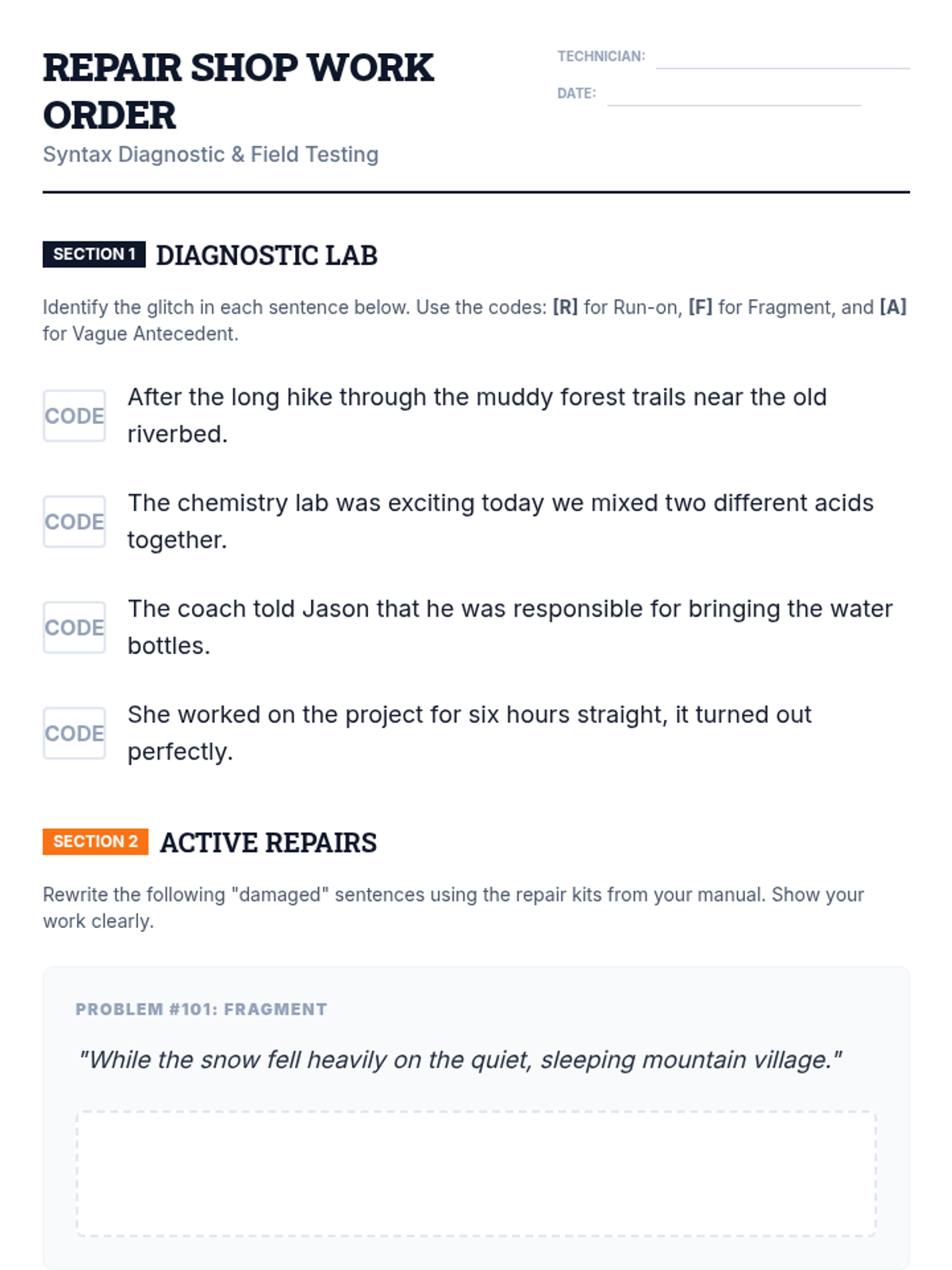
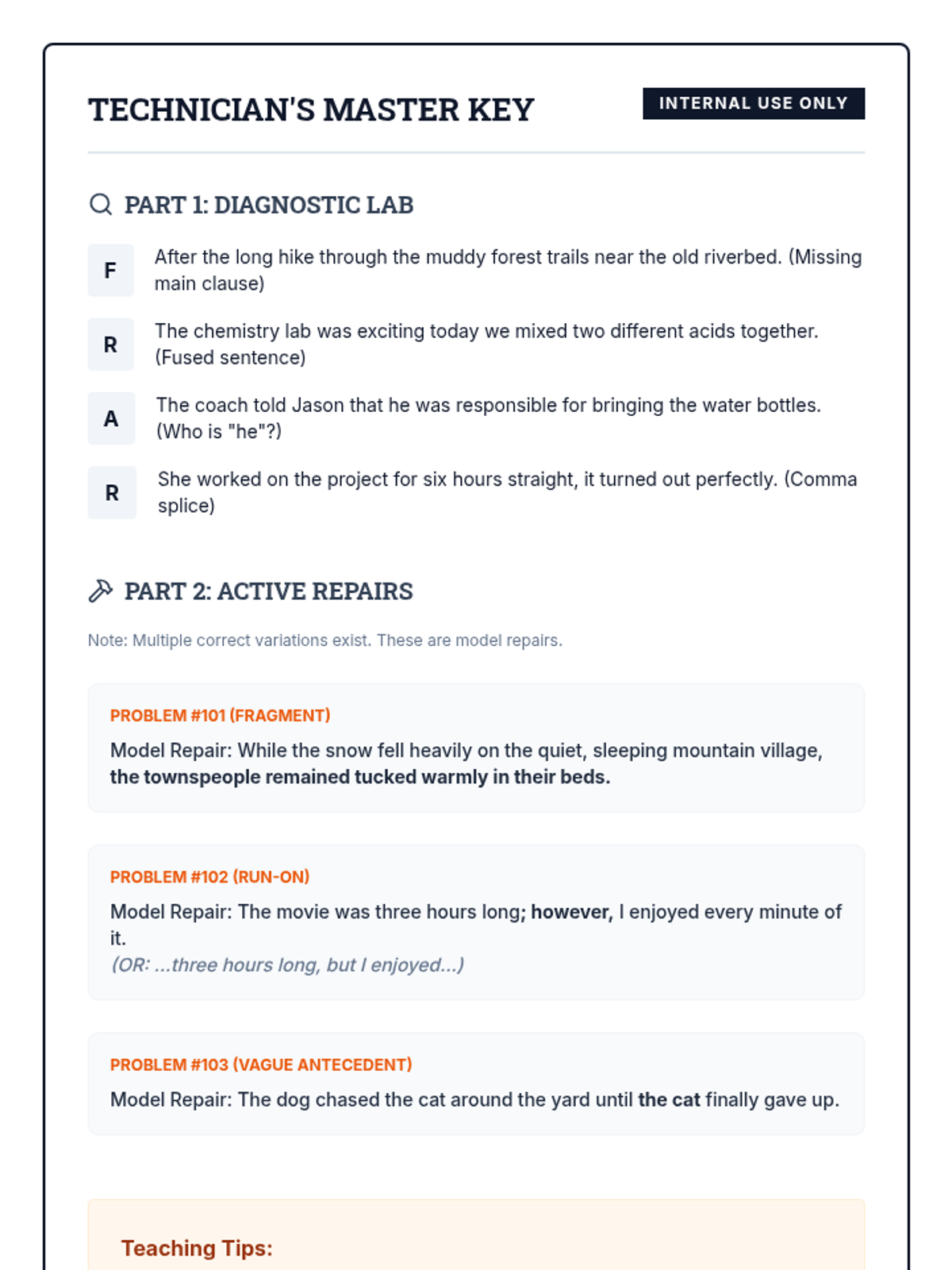
A 15-minute high-impact session focusing on identifying and repairing run-on sentences, sentence fragments, and vague pronoun-antecedent relationships. This lesson provides students with a 'repair manual' for common syntax glitches.
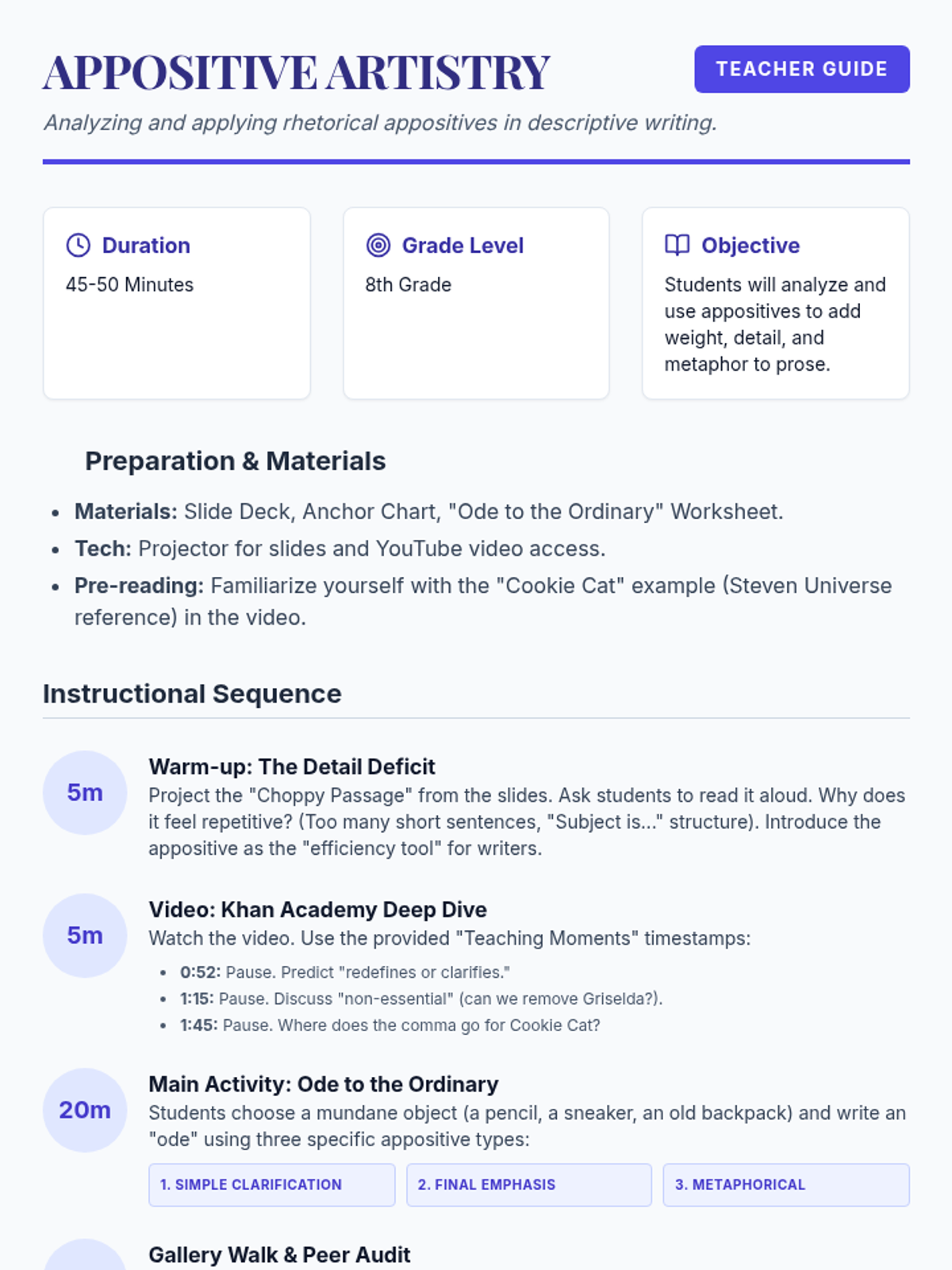
A lesson focusing on the rhetorical power of appositives in descriptive writing, guiding students from basic identification to sophisticated stylistic application.
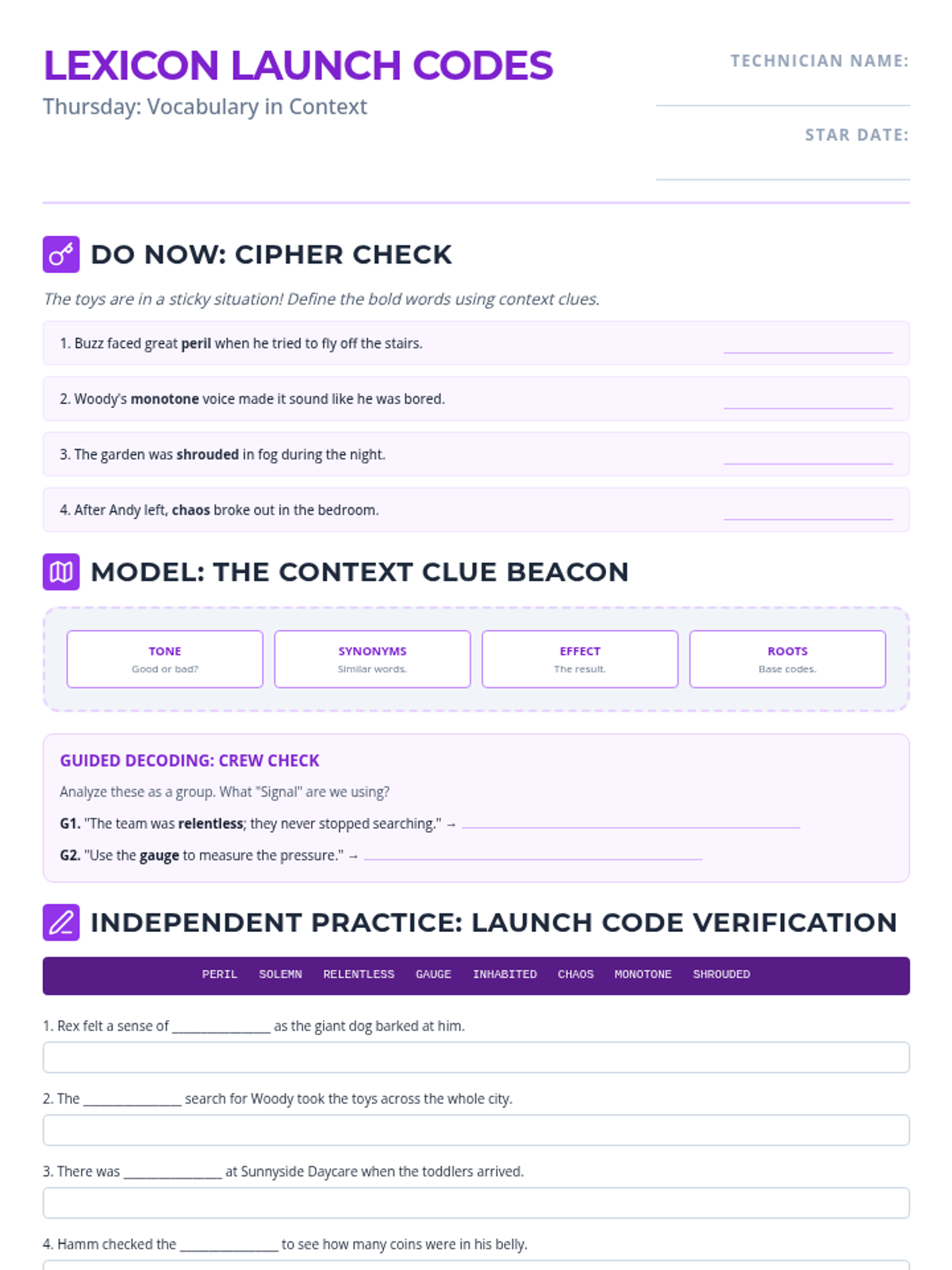
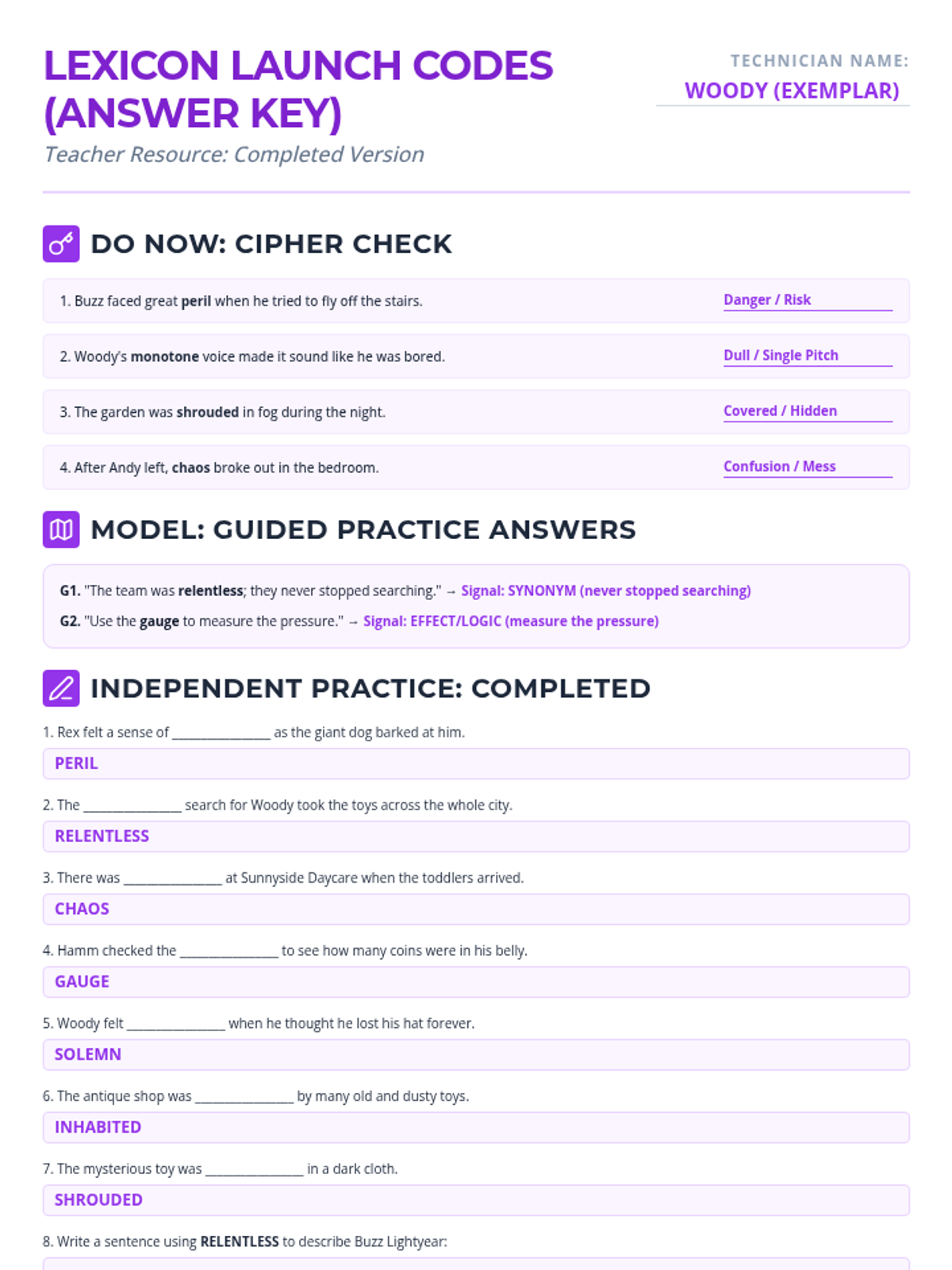
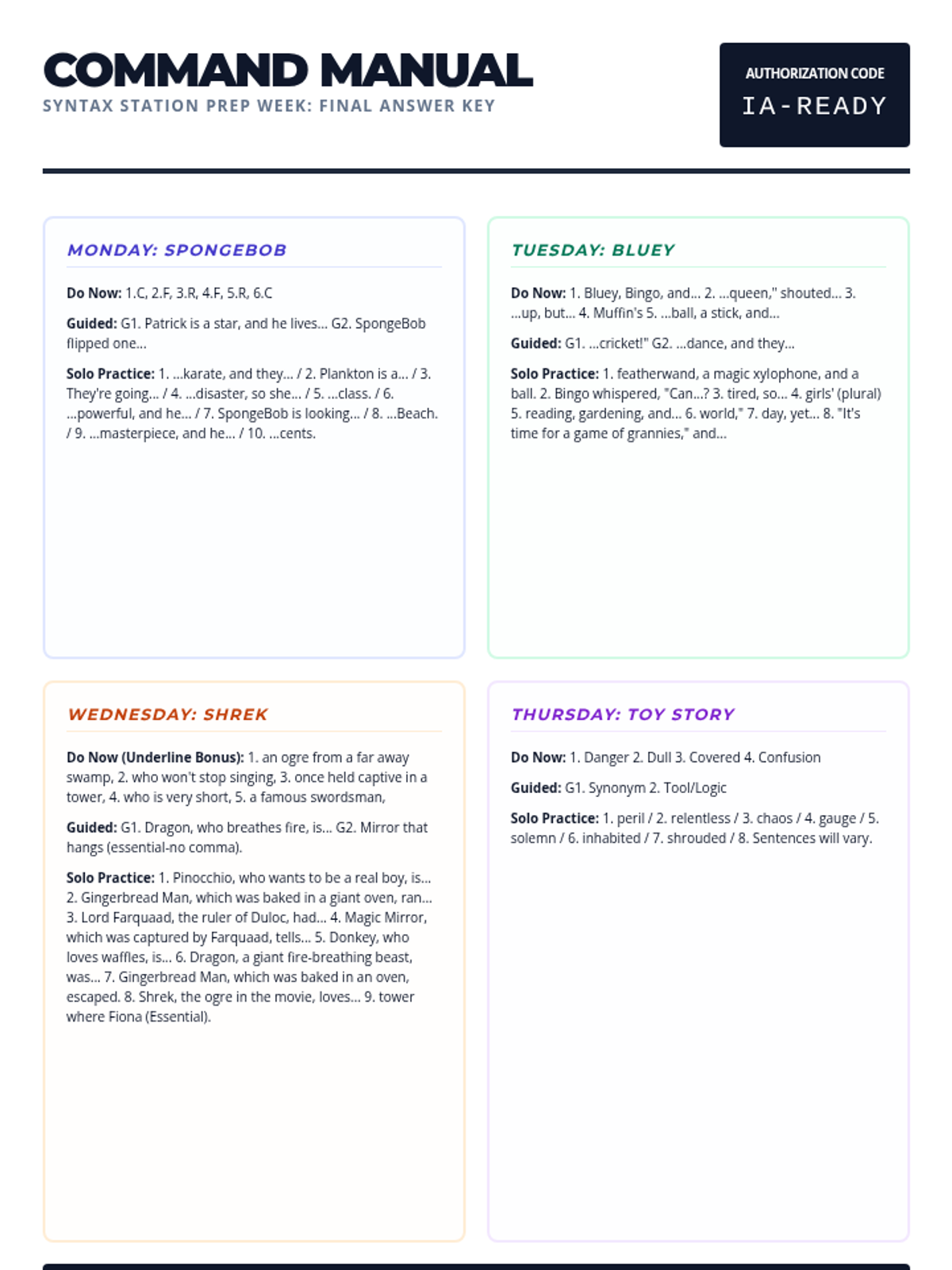
Focuses on using context clues to determine the meaning of complex vocabulary words from the IA exam word bank and applying them correctly in sentences.
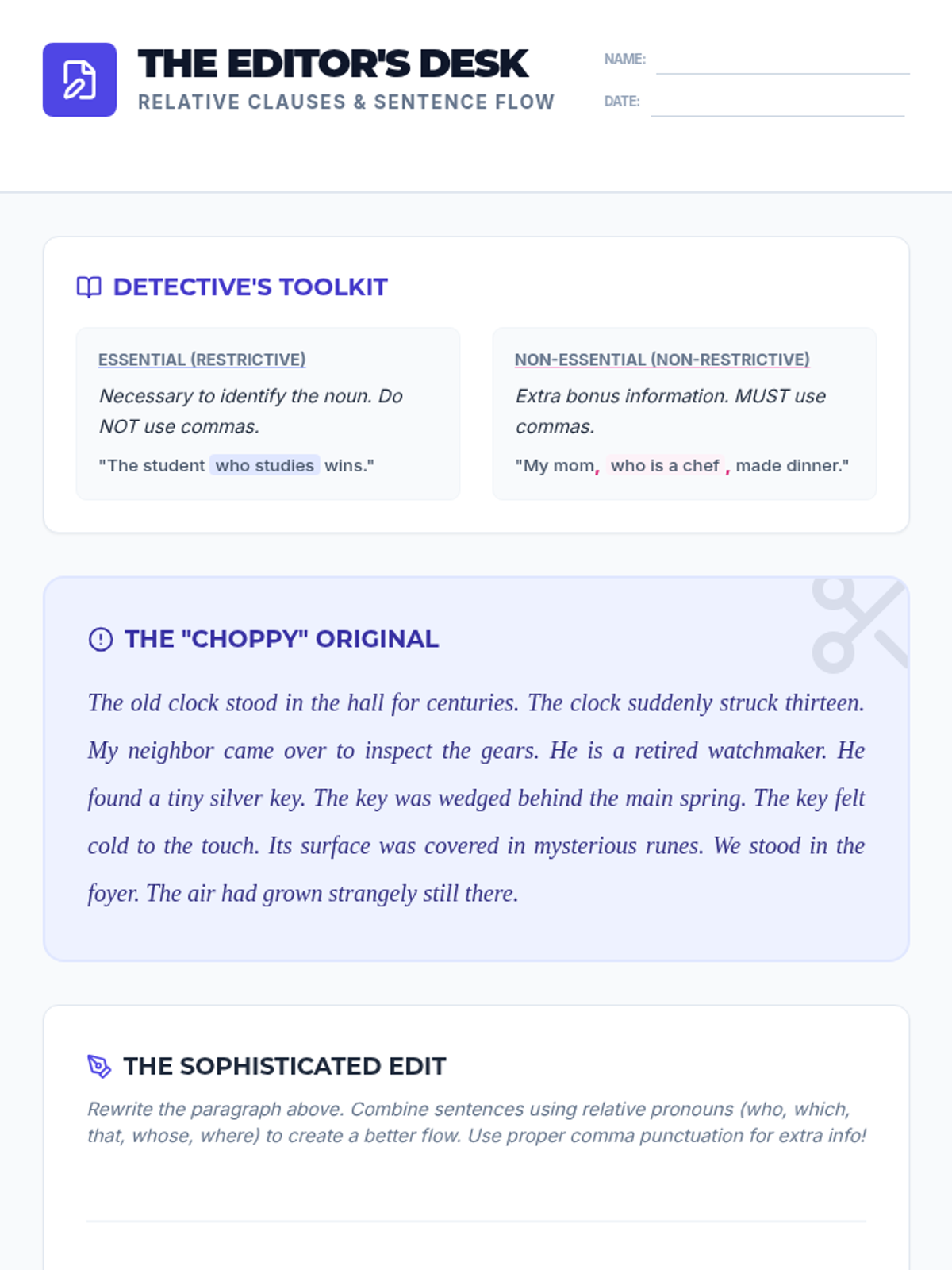
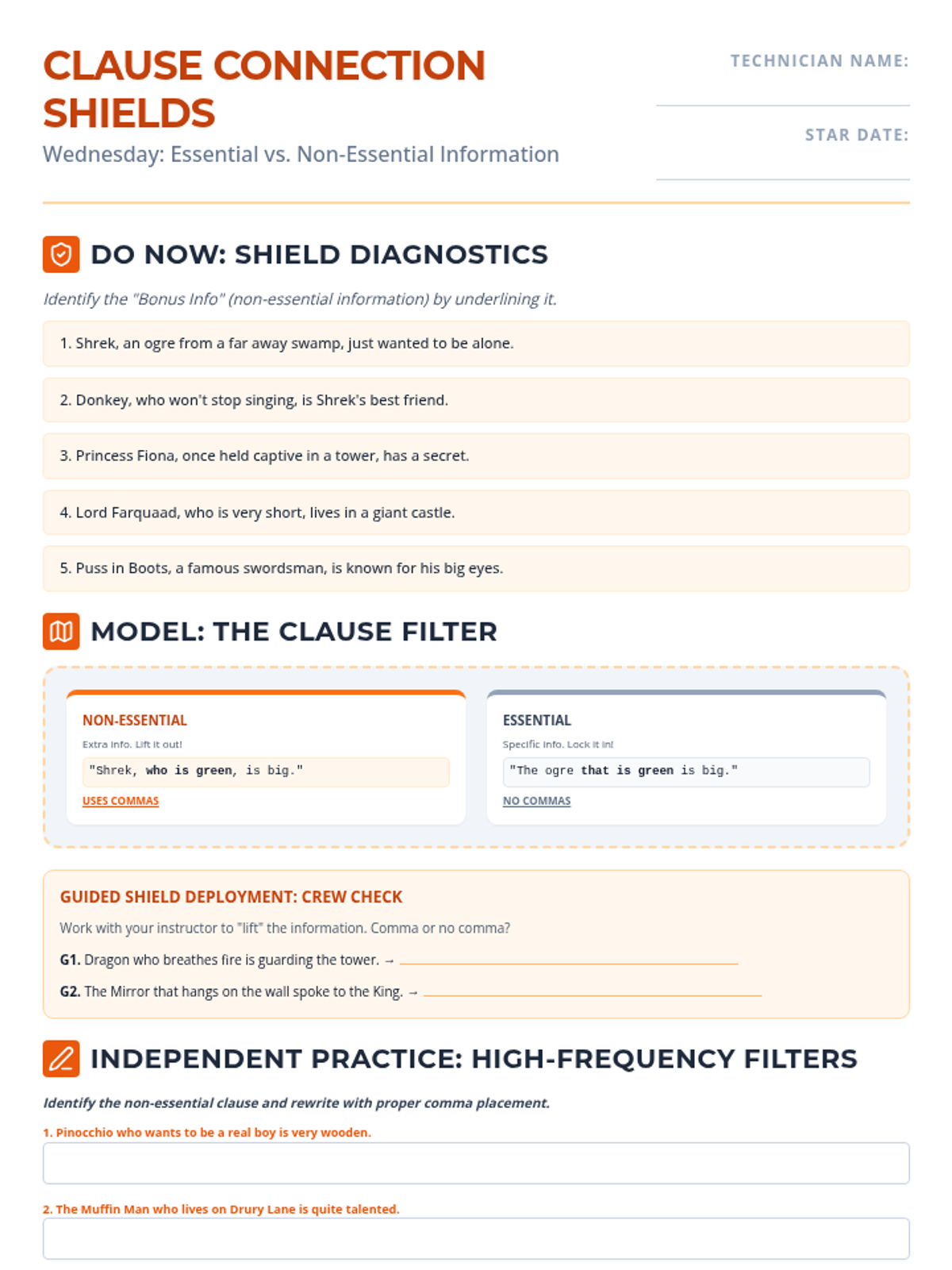
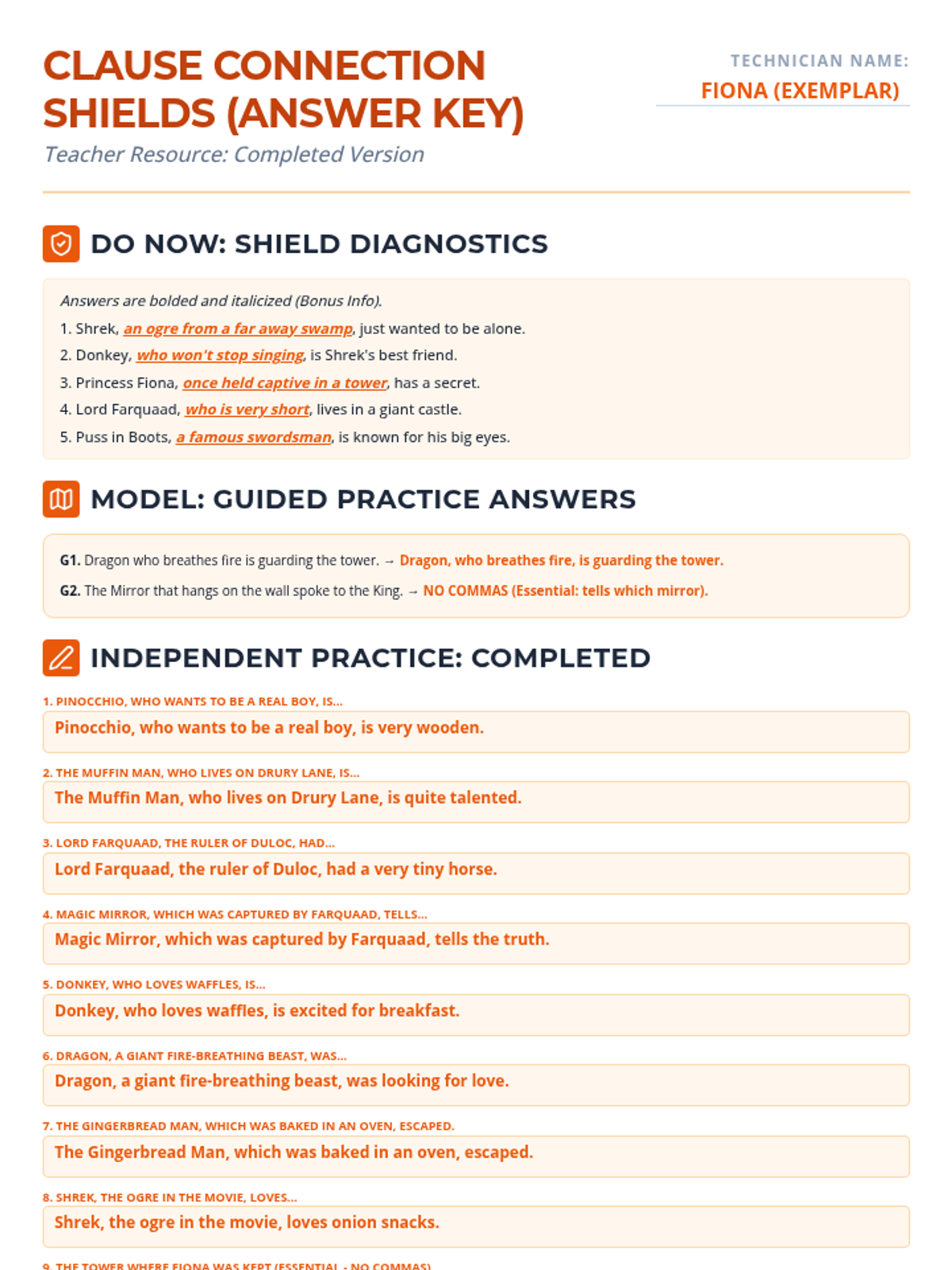
Differentiates between essential and non-essential clauses, focusing on the identification and punctuation of relative clauses and appositives.
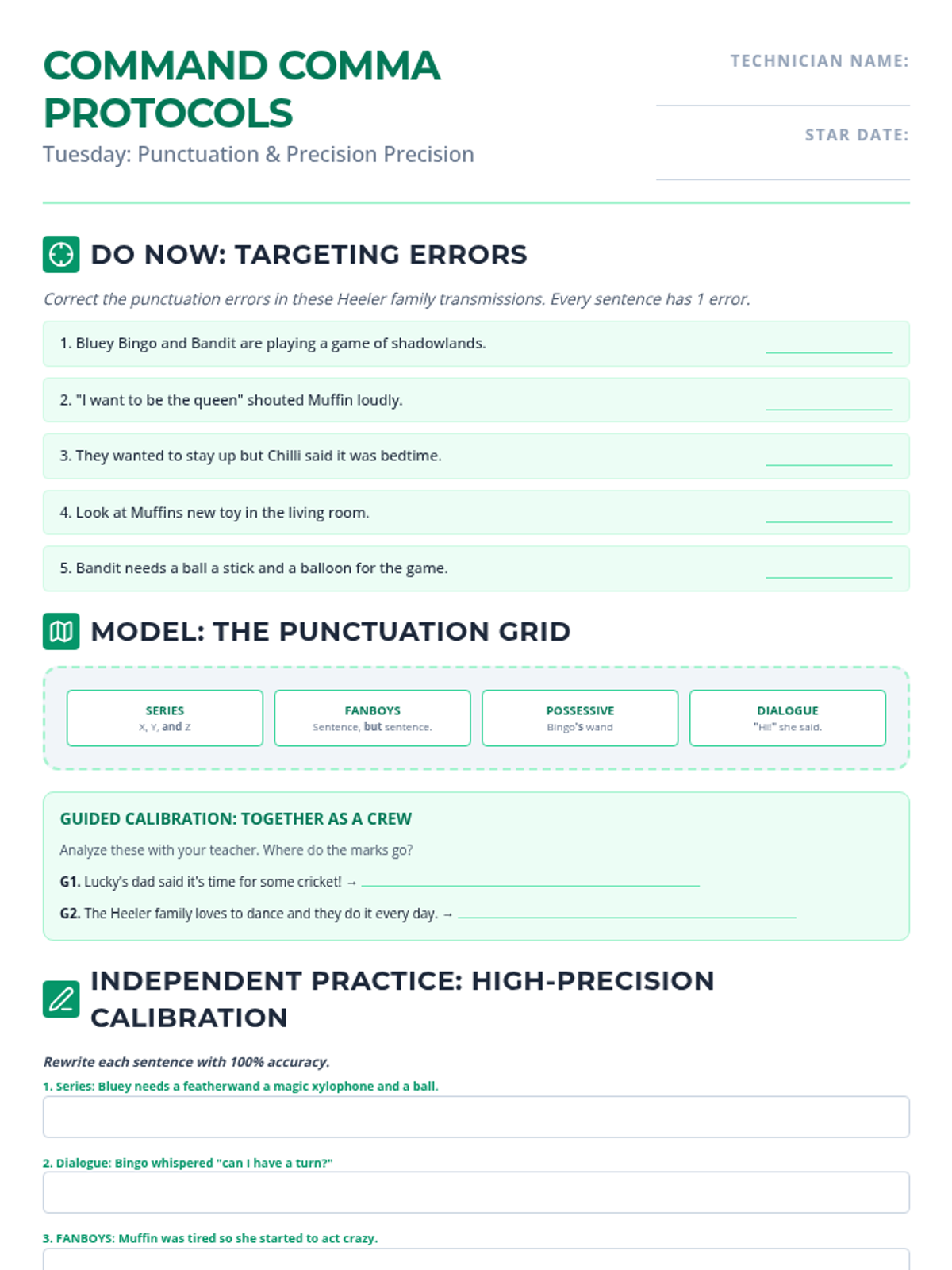
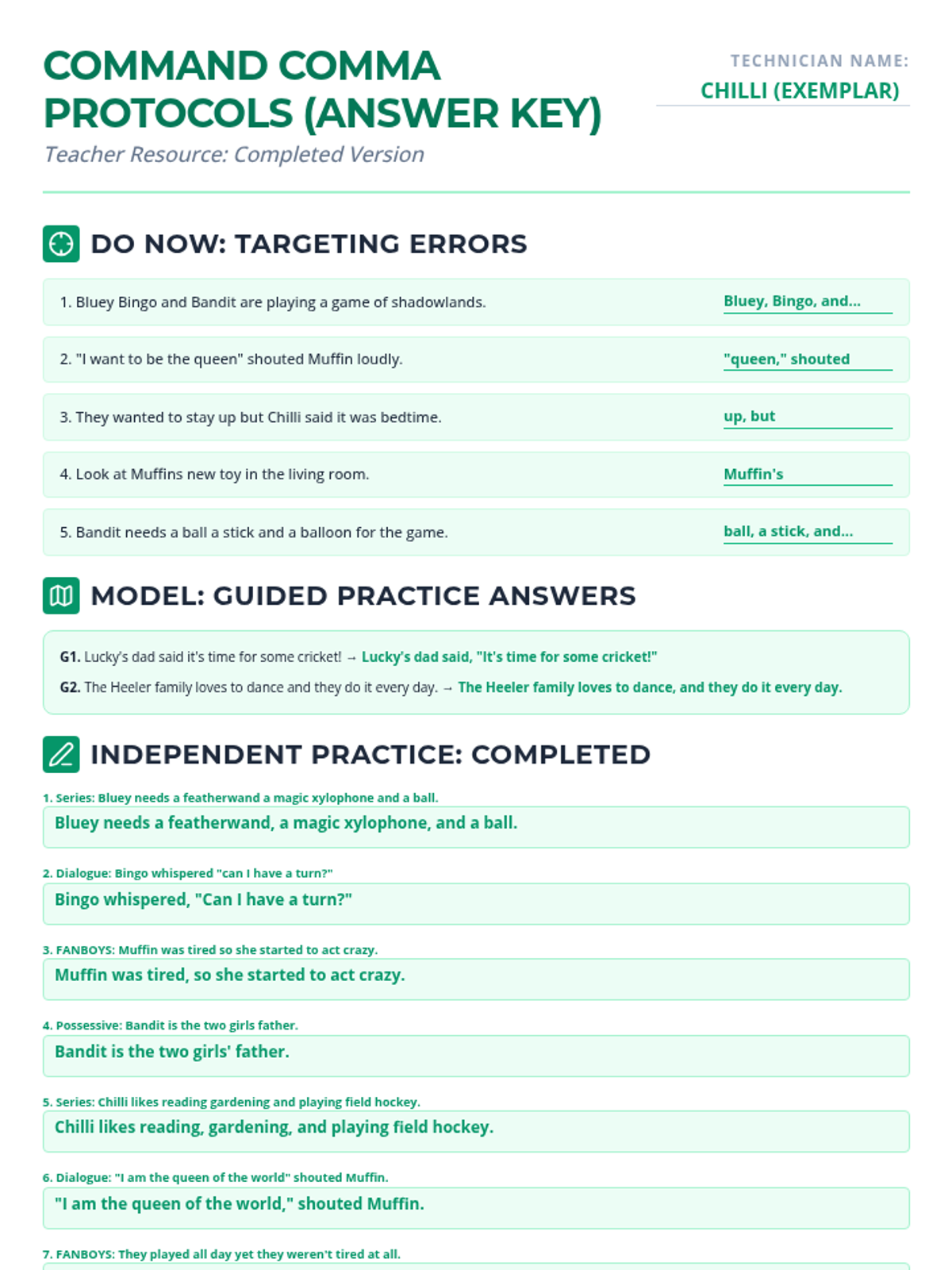
Focuses on the correct use of commas in series, commas with coordinating conjunctions, possessive nouns, and punctuation within quotations as seen in the IA exam.
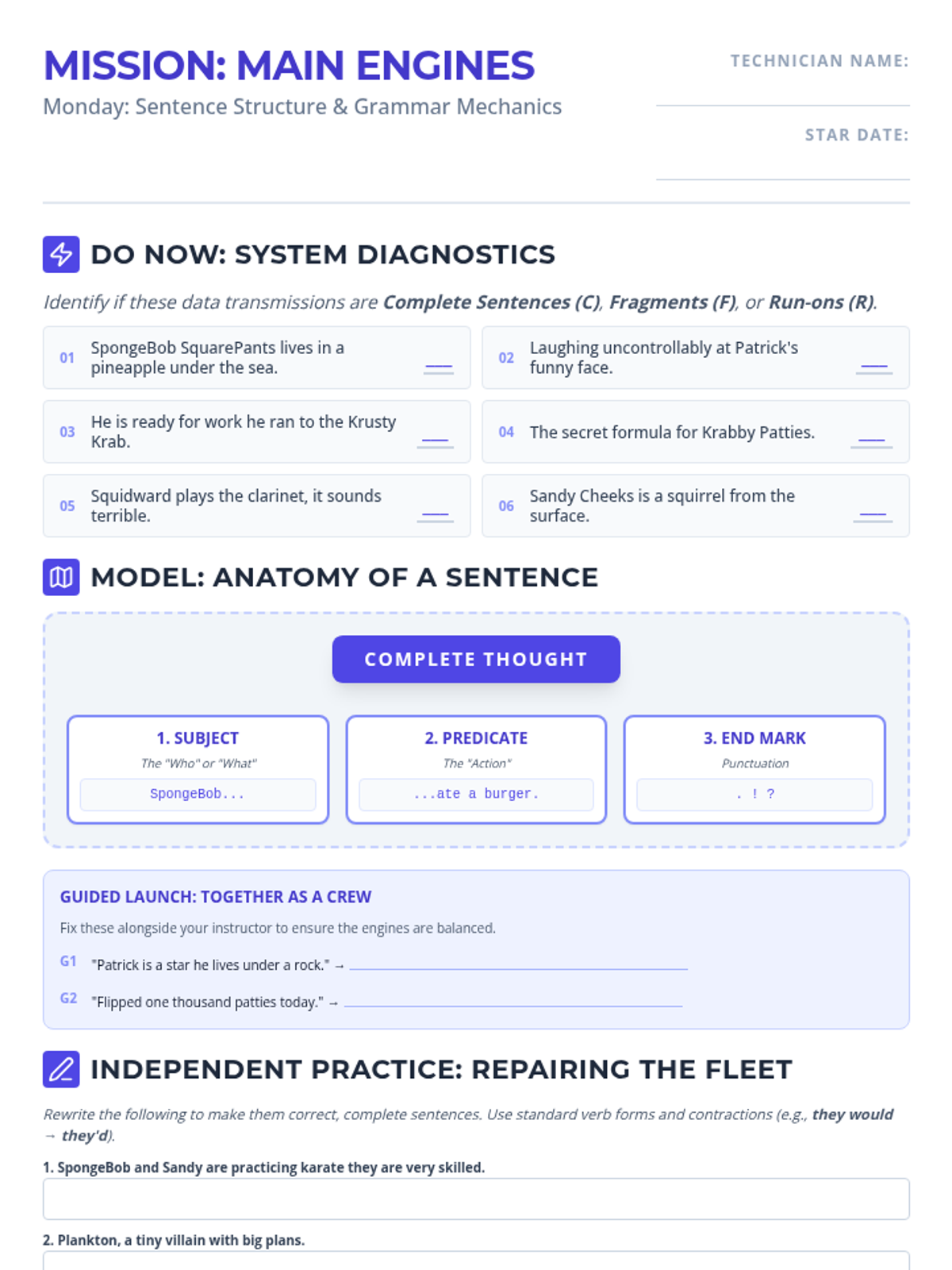
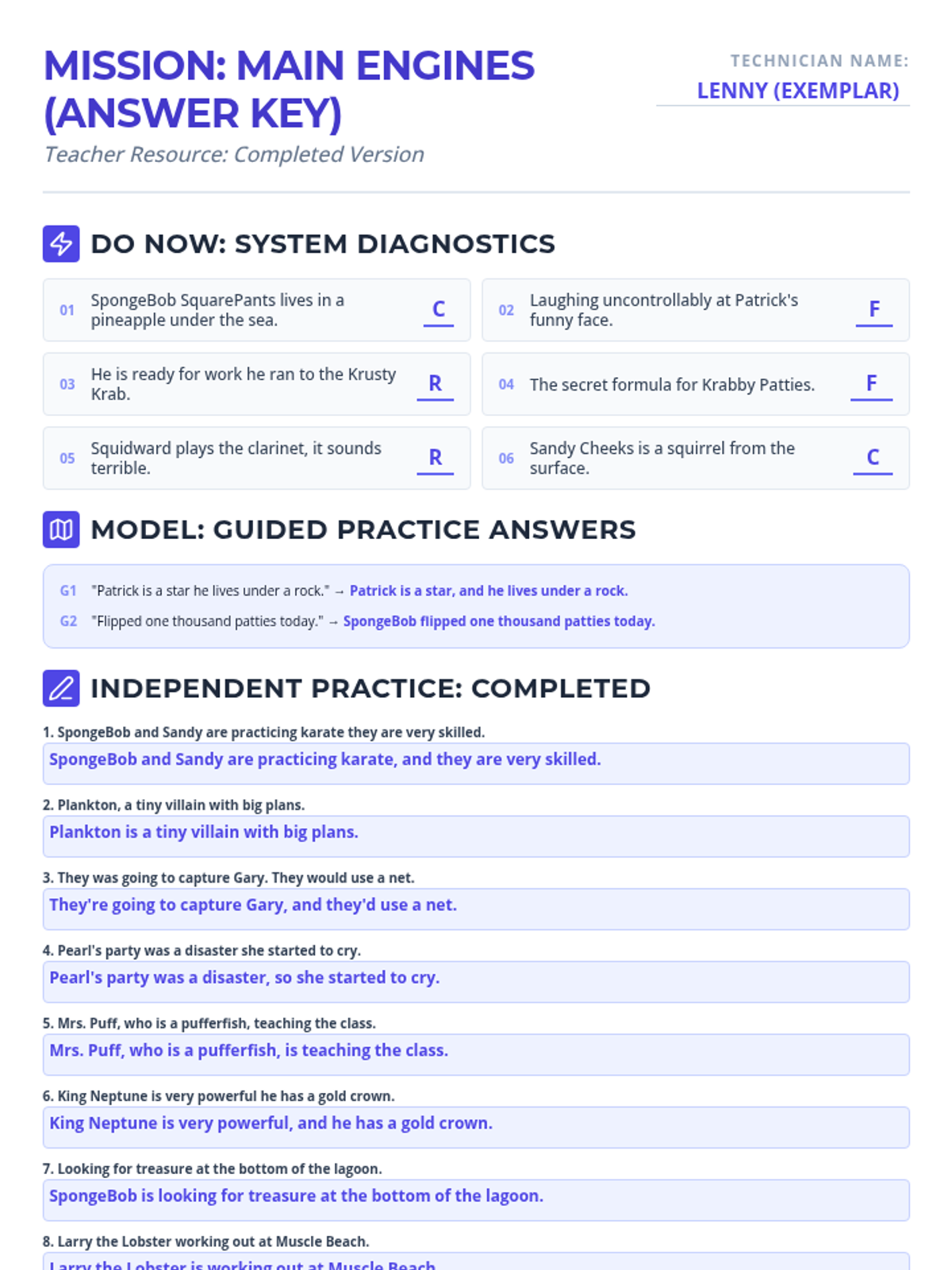
Focuses on identifying complete sentences, avoiding fragments and run-ons, and mastering standard verb forms and contractions as seen in the IA exam.
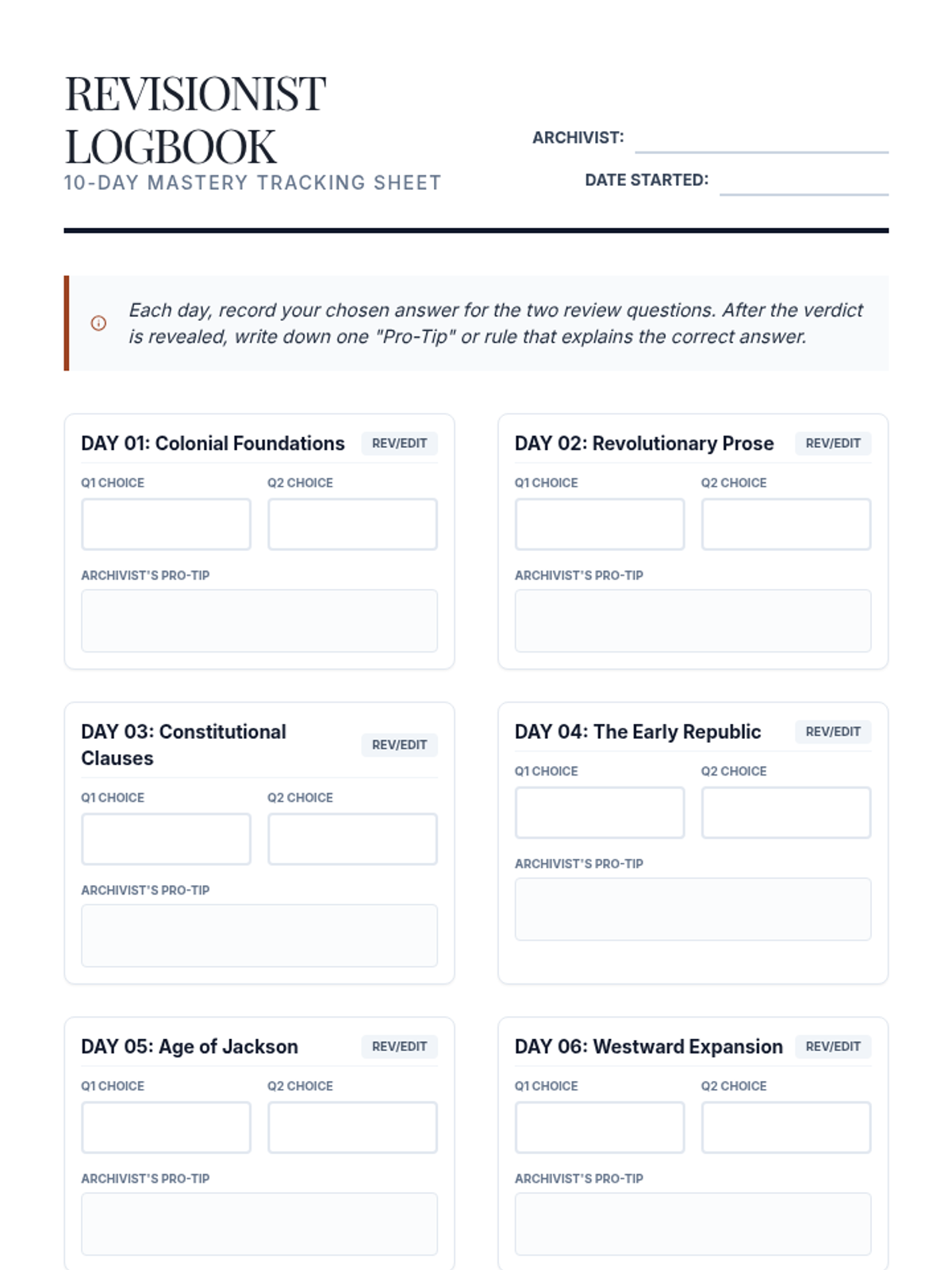
A ten-day daily review program where students refine their revising and editing skills using passages about US History from exploration through Reconstruction.
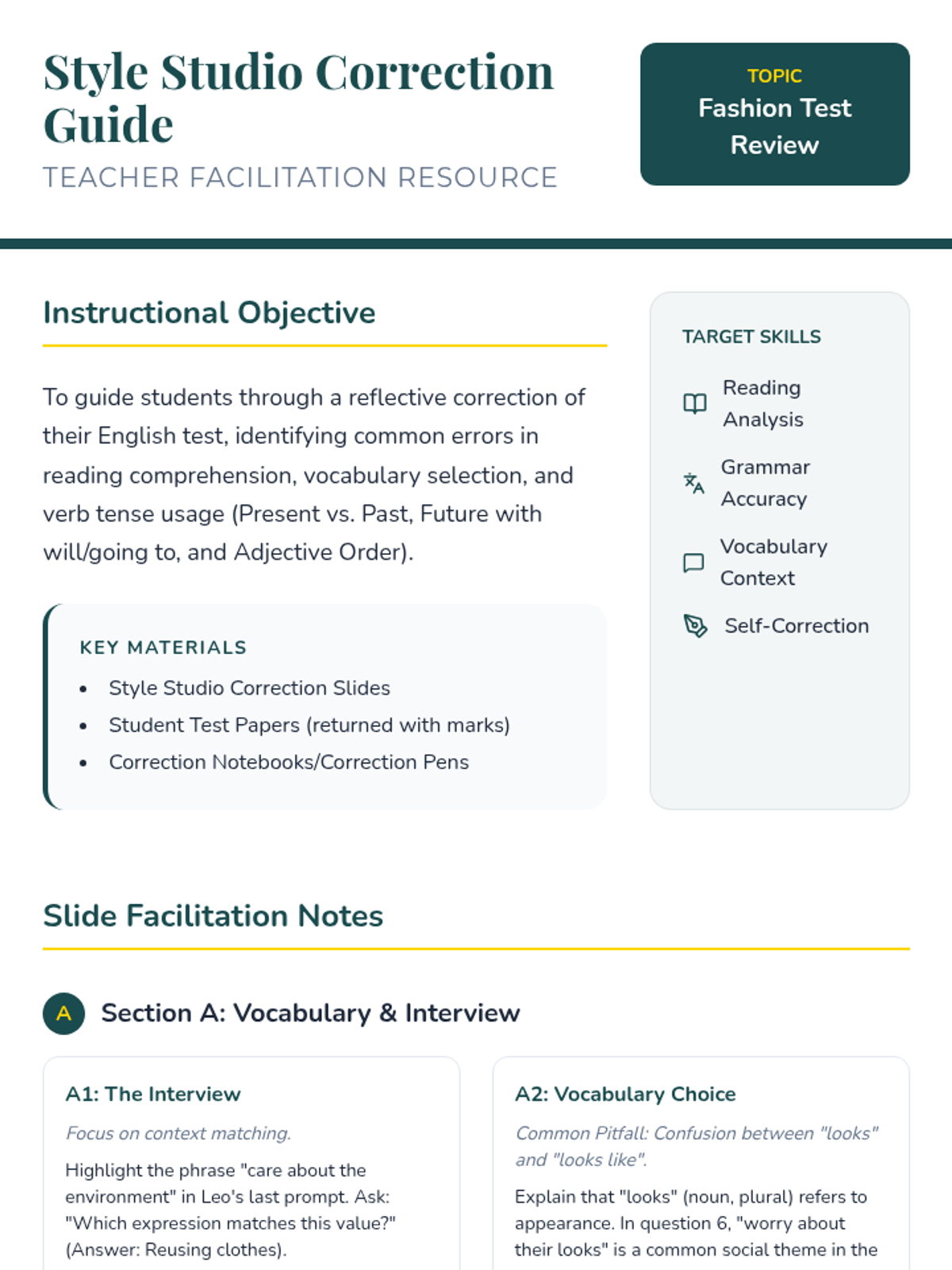
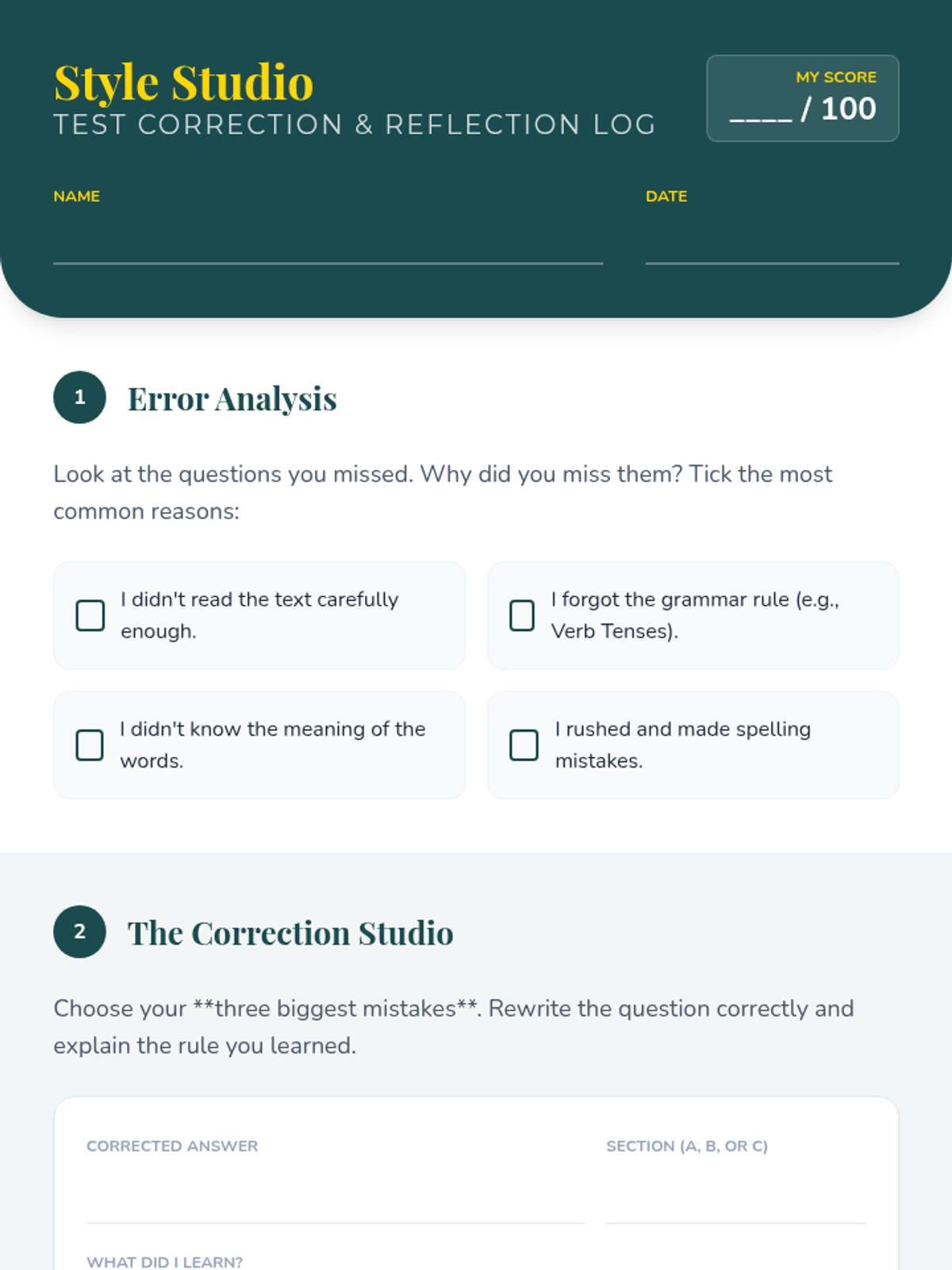
A comprehensive review lesson designed to guide students through the correction of their English fashion test, focusing on reading comprehension, grammar tenses, and vocabulary.
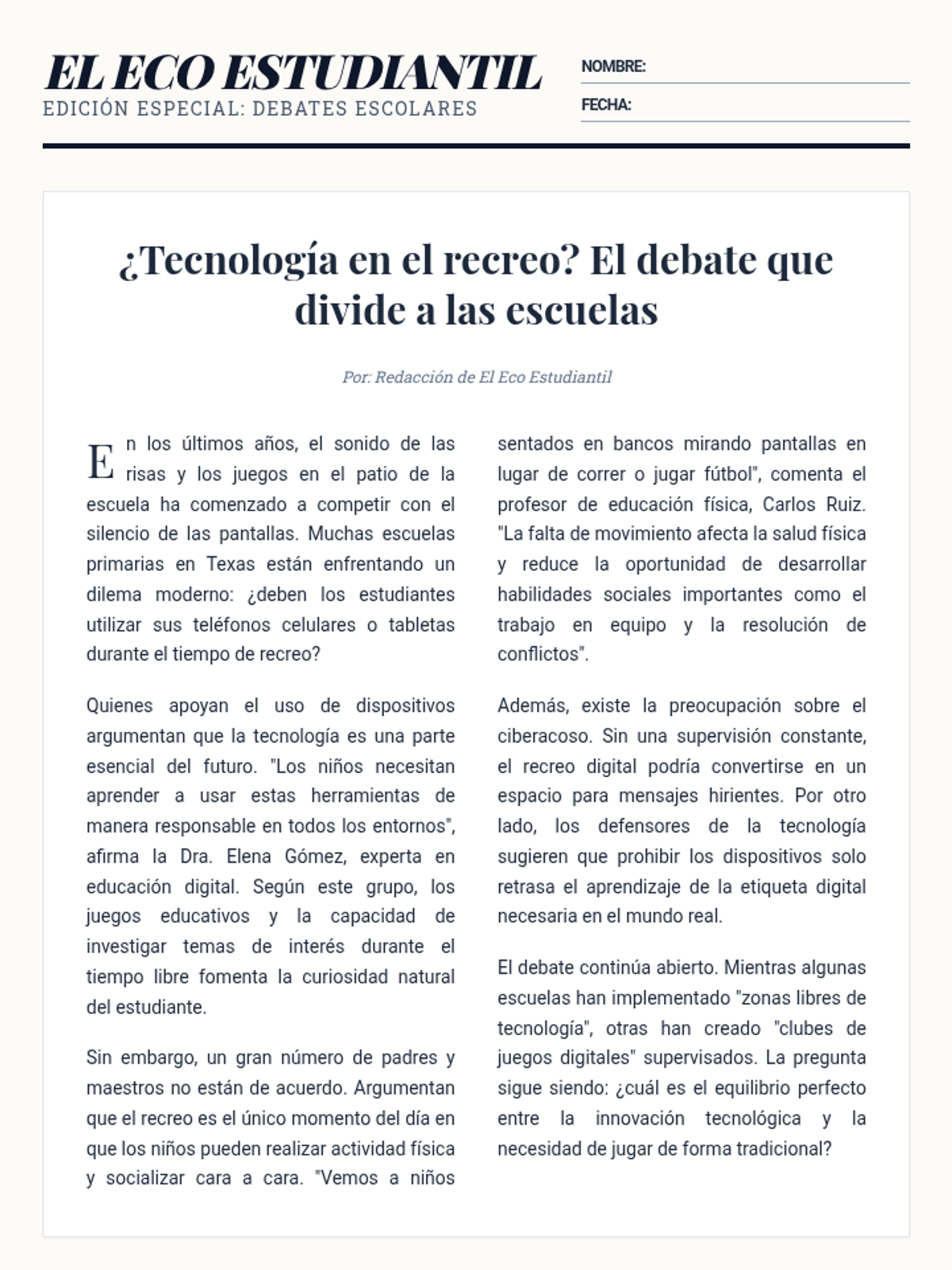
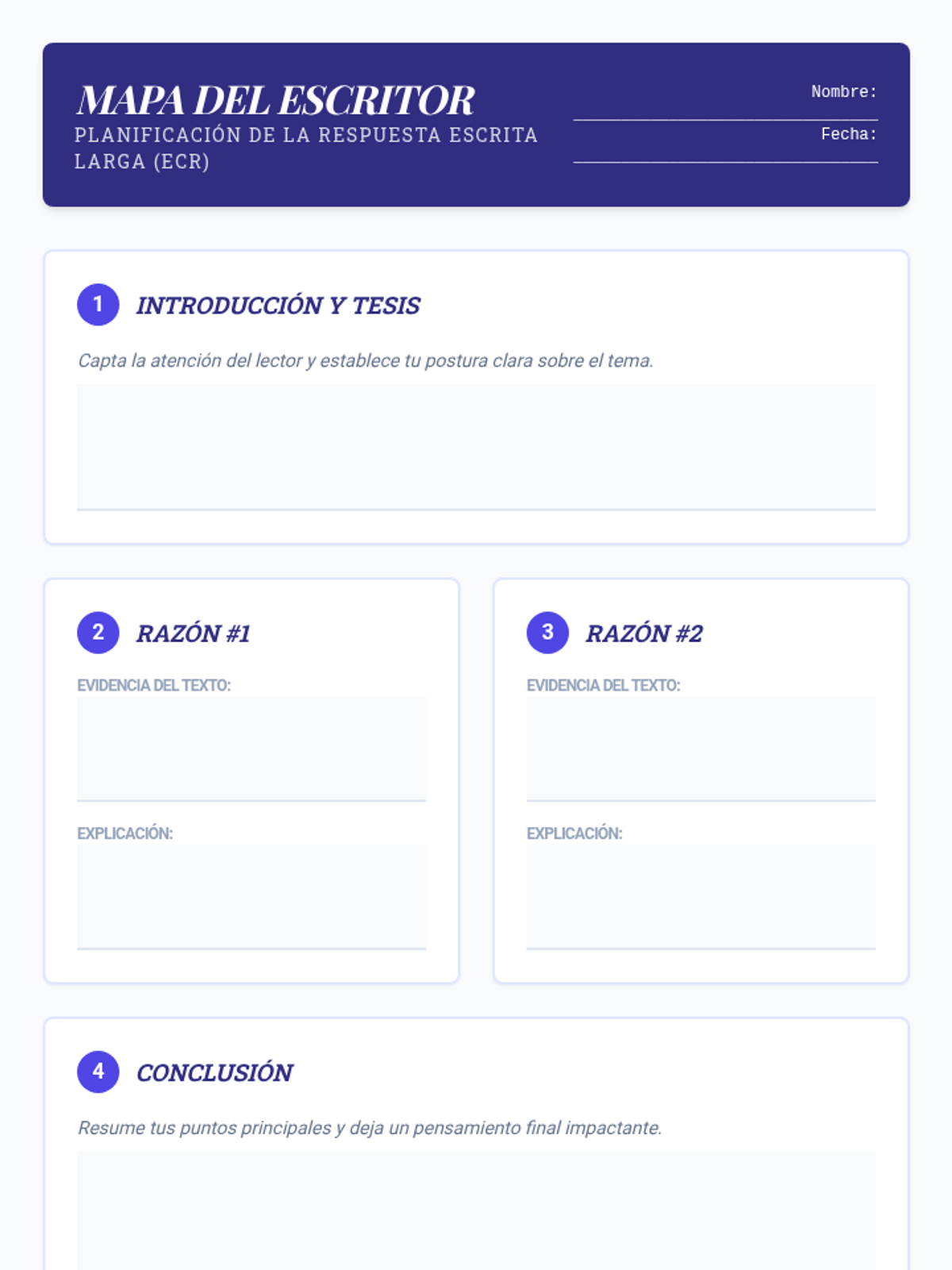
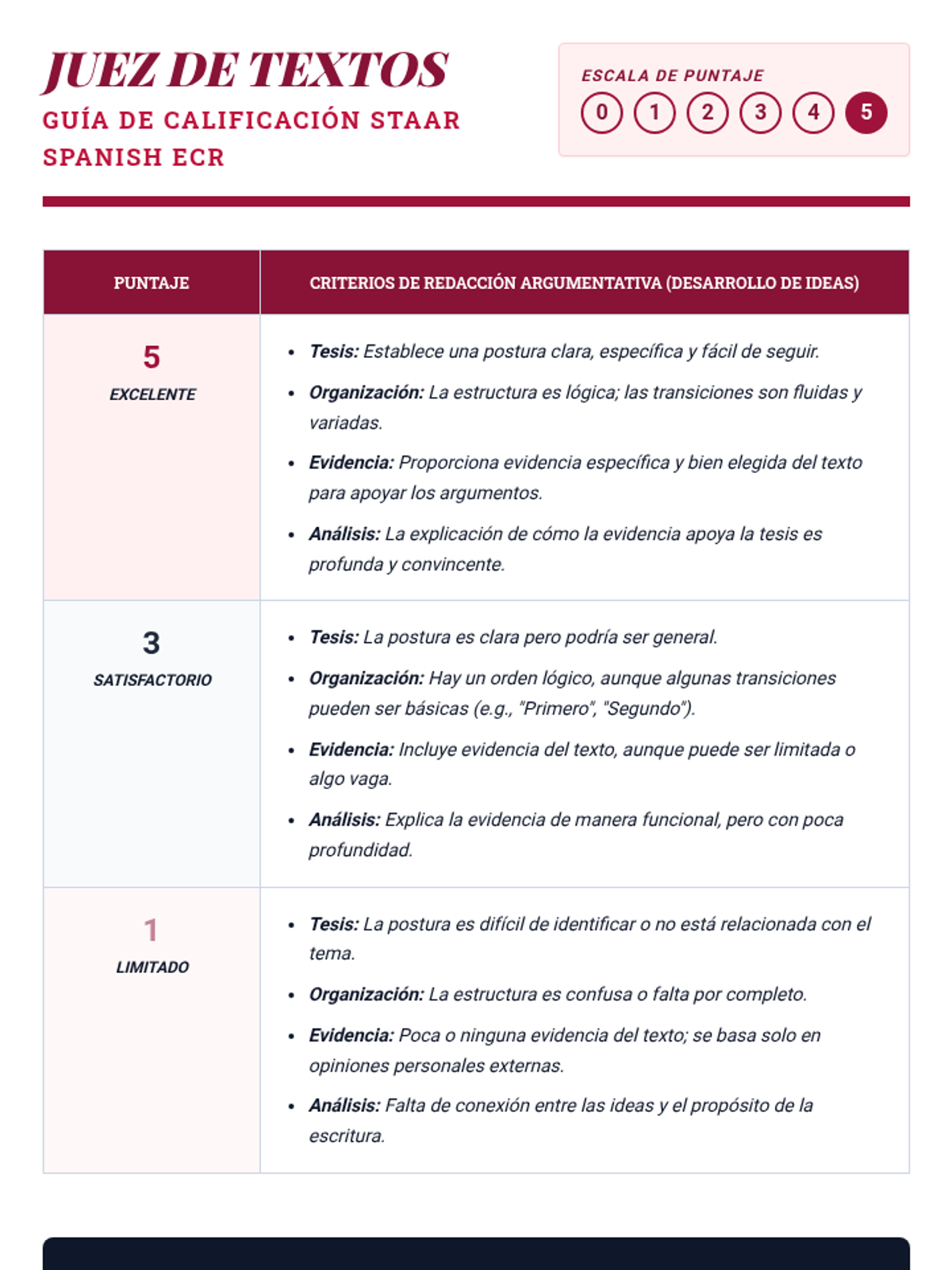
Una lección enfocada en desarrollar habilidades para la Respuesta Escrita Larga (ECR) en español, centrada en el género argumentativo para la prueba STAAR. Incluye un pasaje de lectura, un organizador gráfico de planificación y una guía de calificación detallada.
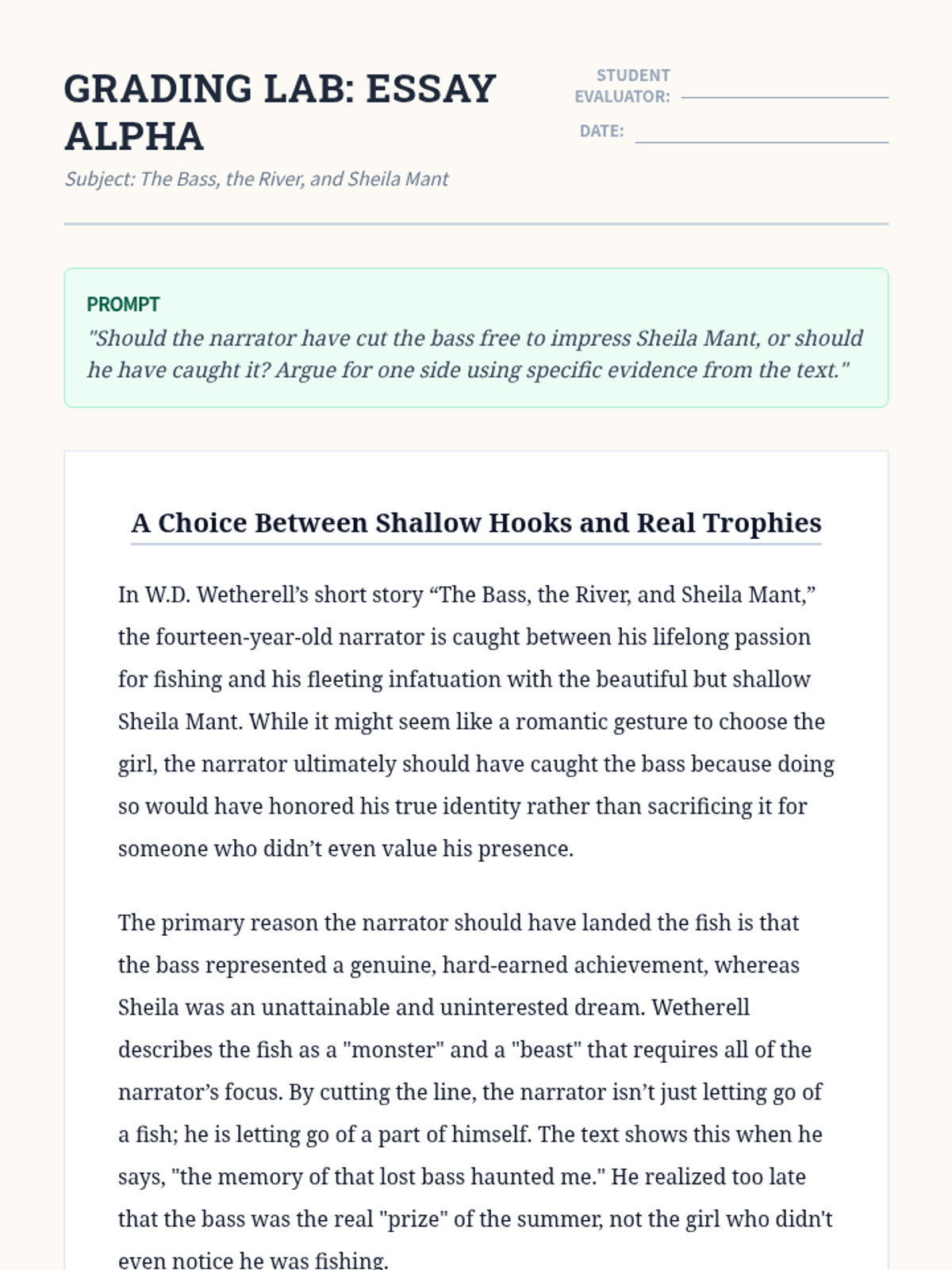
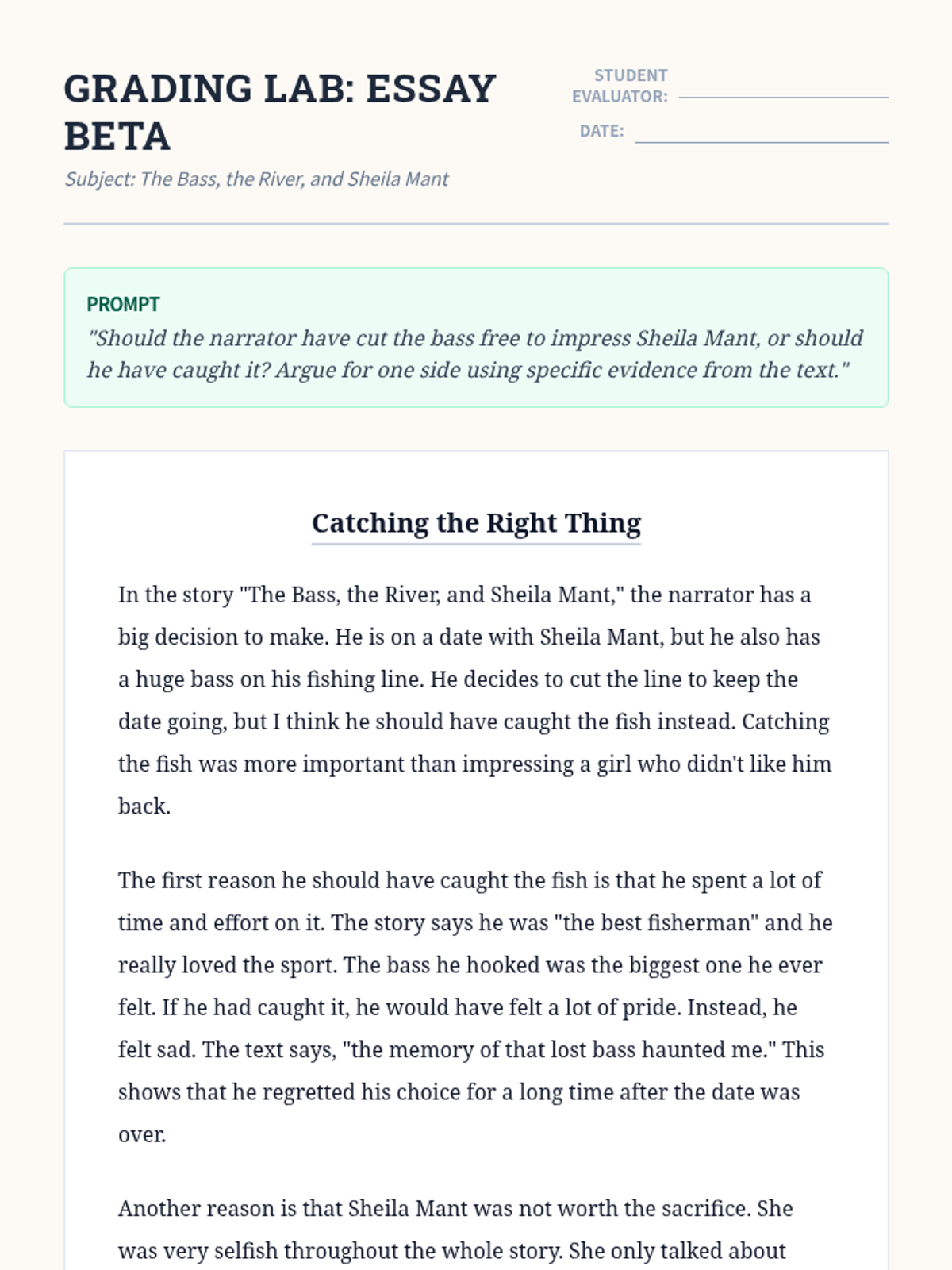
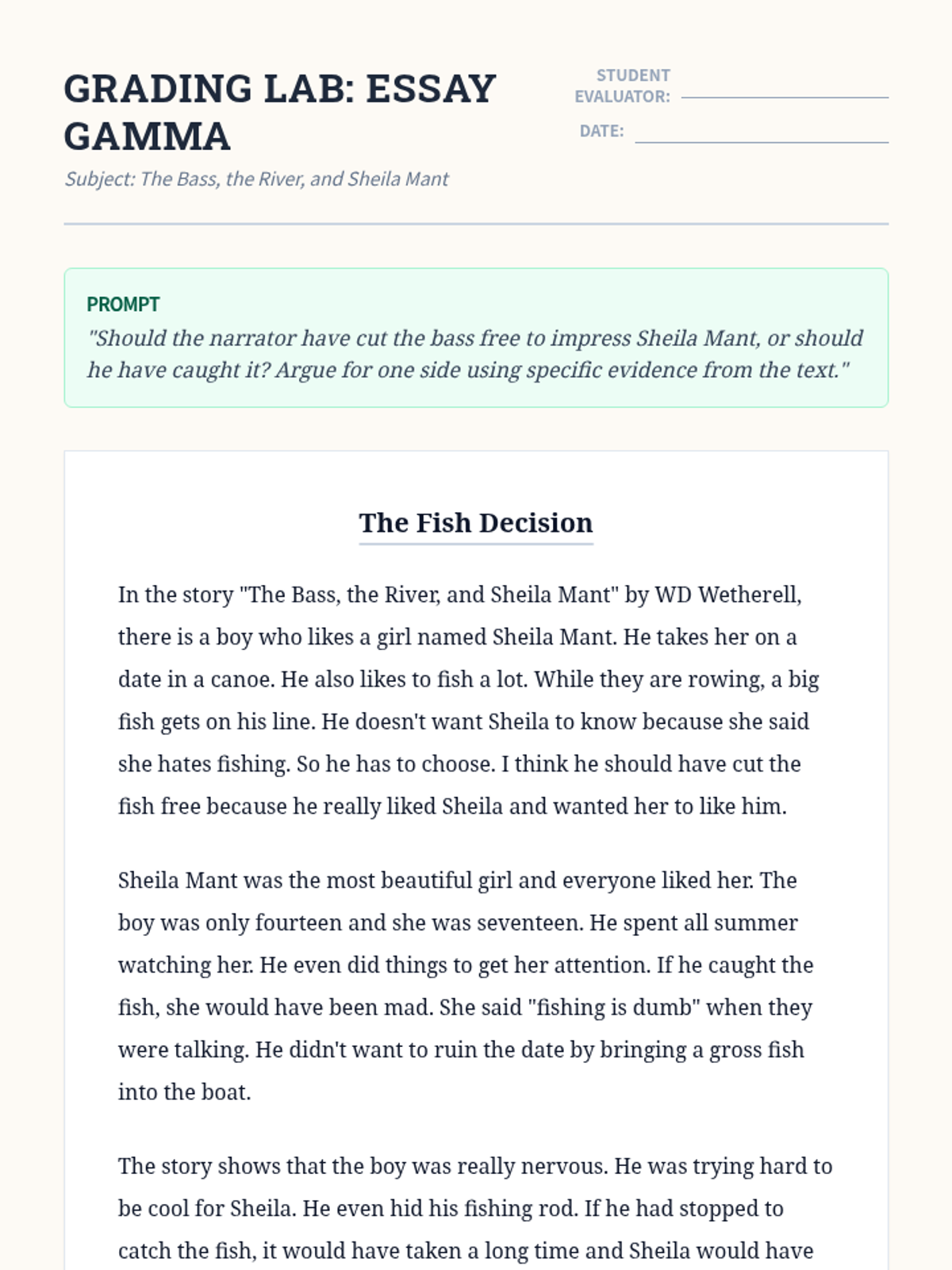
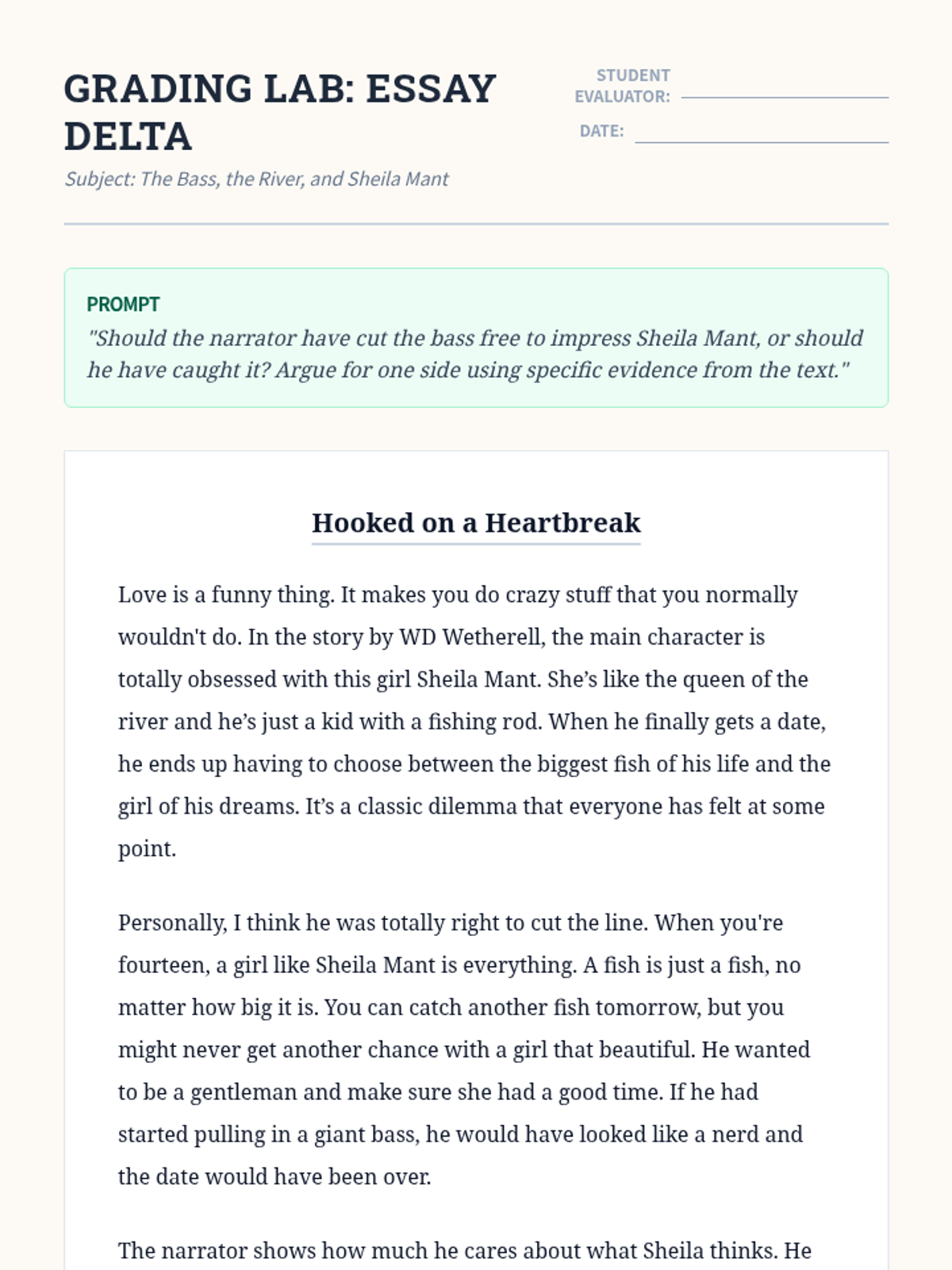
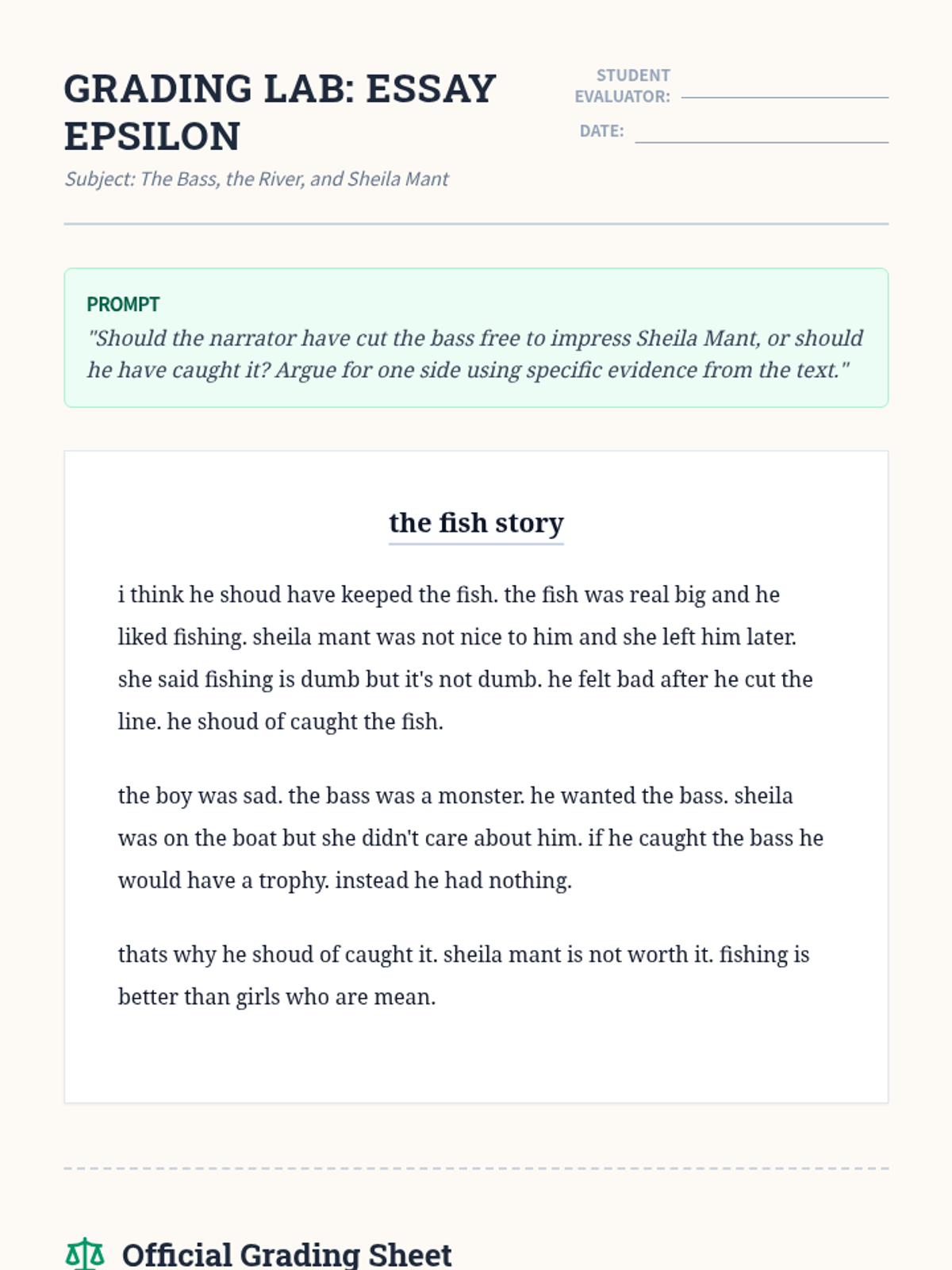
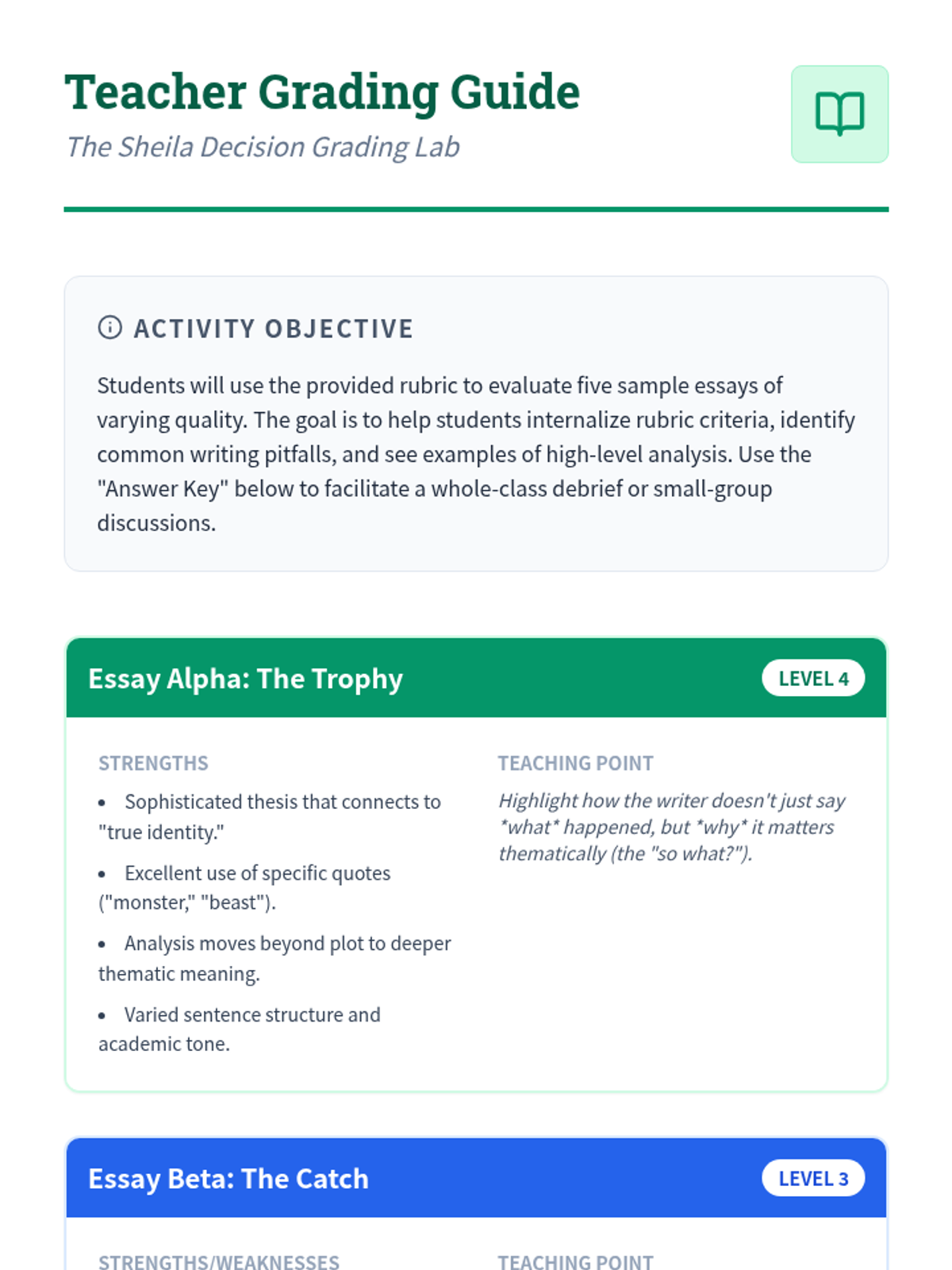
A hands-on grading lab where students evaluate five student-written argumentative essays on W.D. Wetherell's 'The Bass, the River, and Sheila Mant,' using a standardized rubric to develop their own writing and analysis skills.
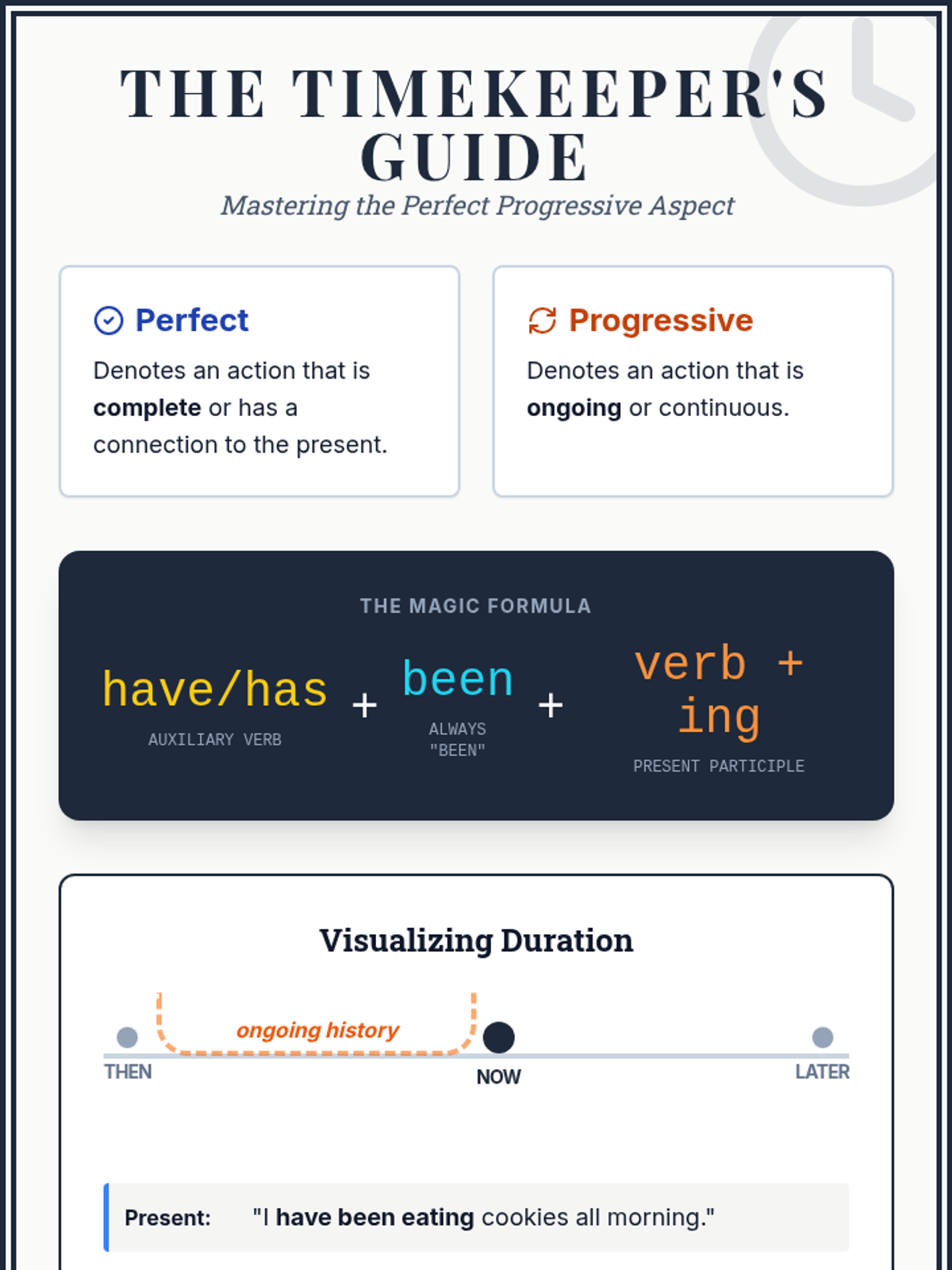
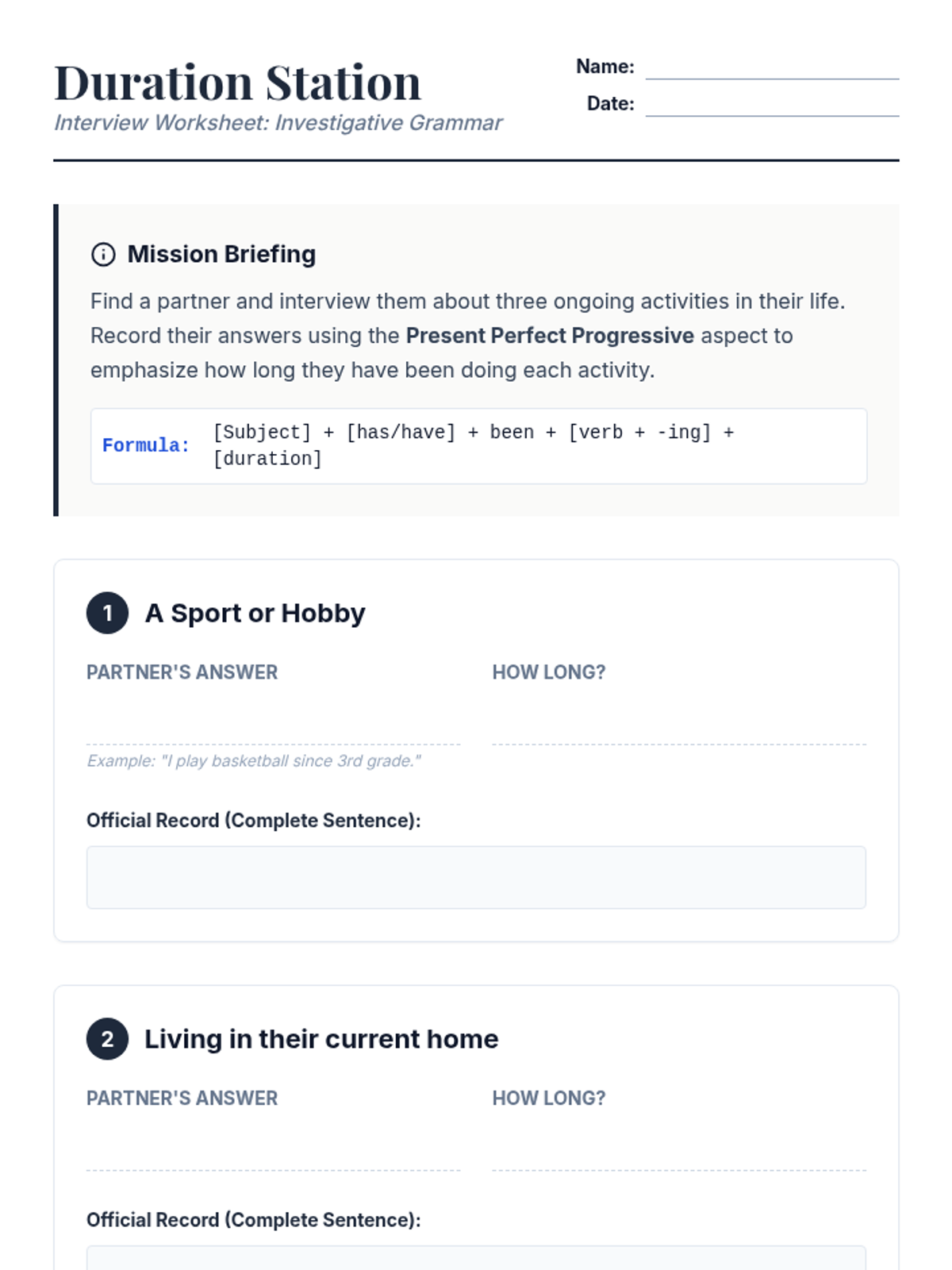
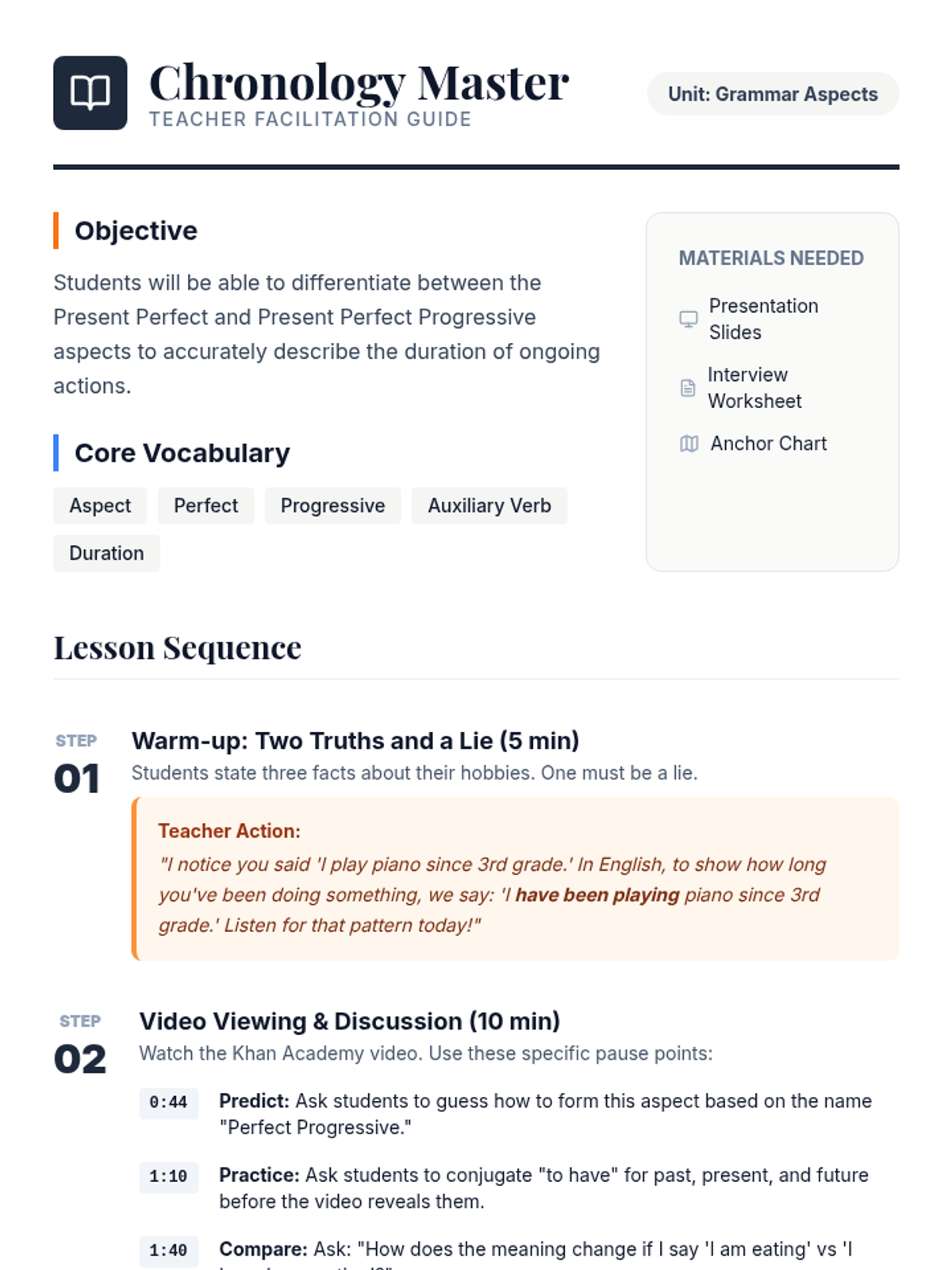
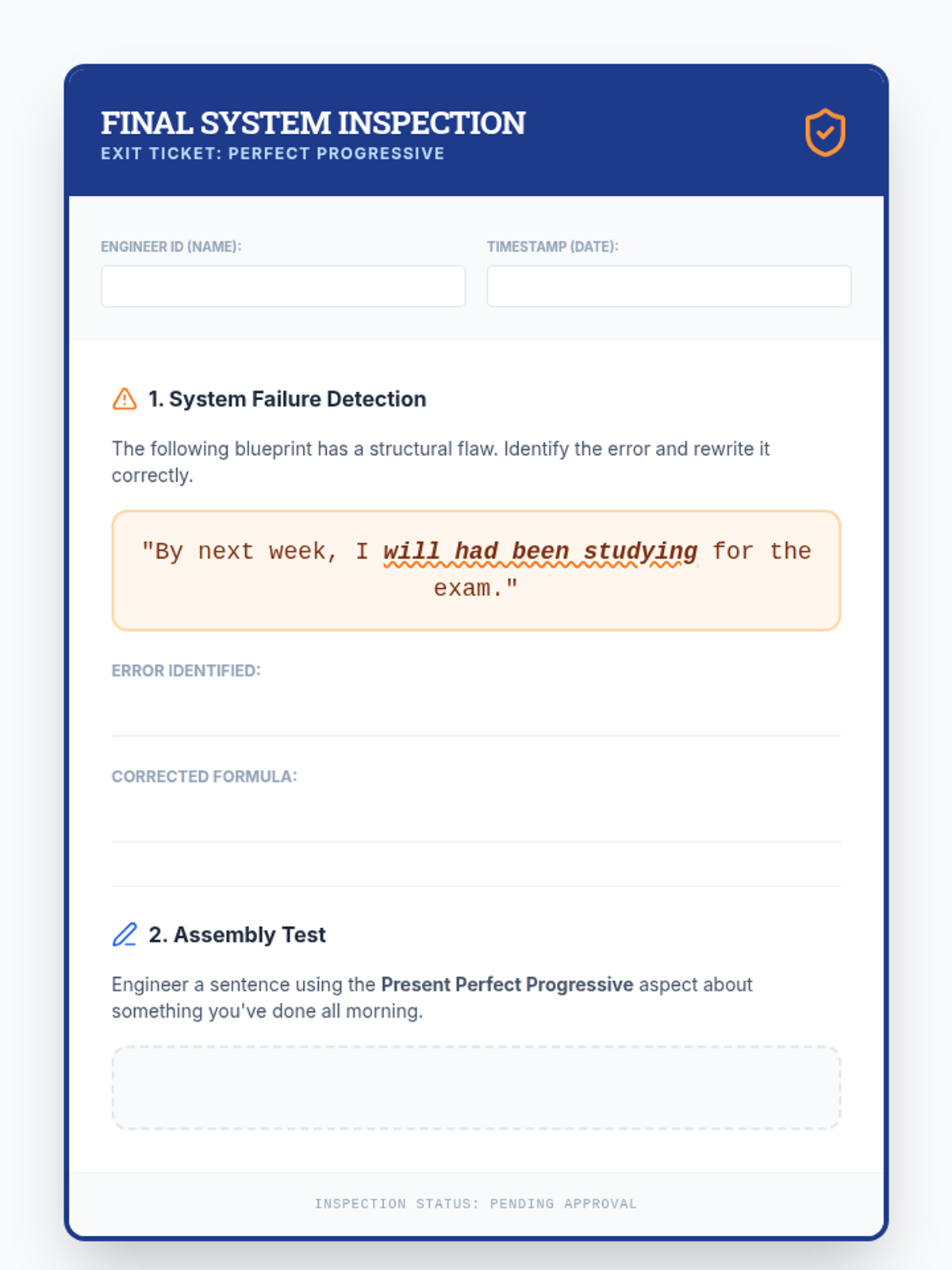
A middle school ELA lesson focused on mastering the Present Perfect Progressive aspect to describe duration, featuring a Khan Academy video, an interview activity, and a visual anchor chart.
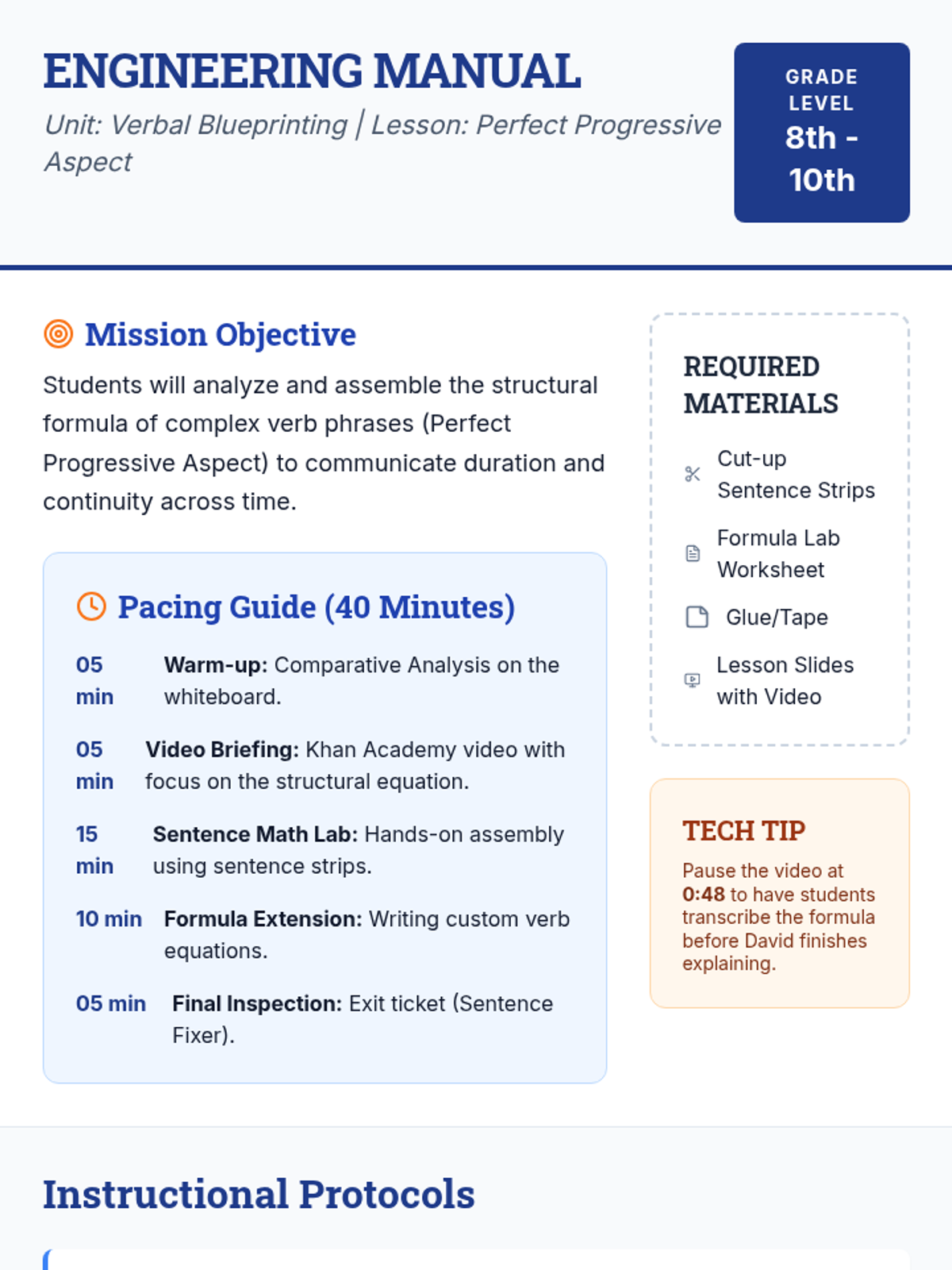
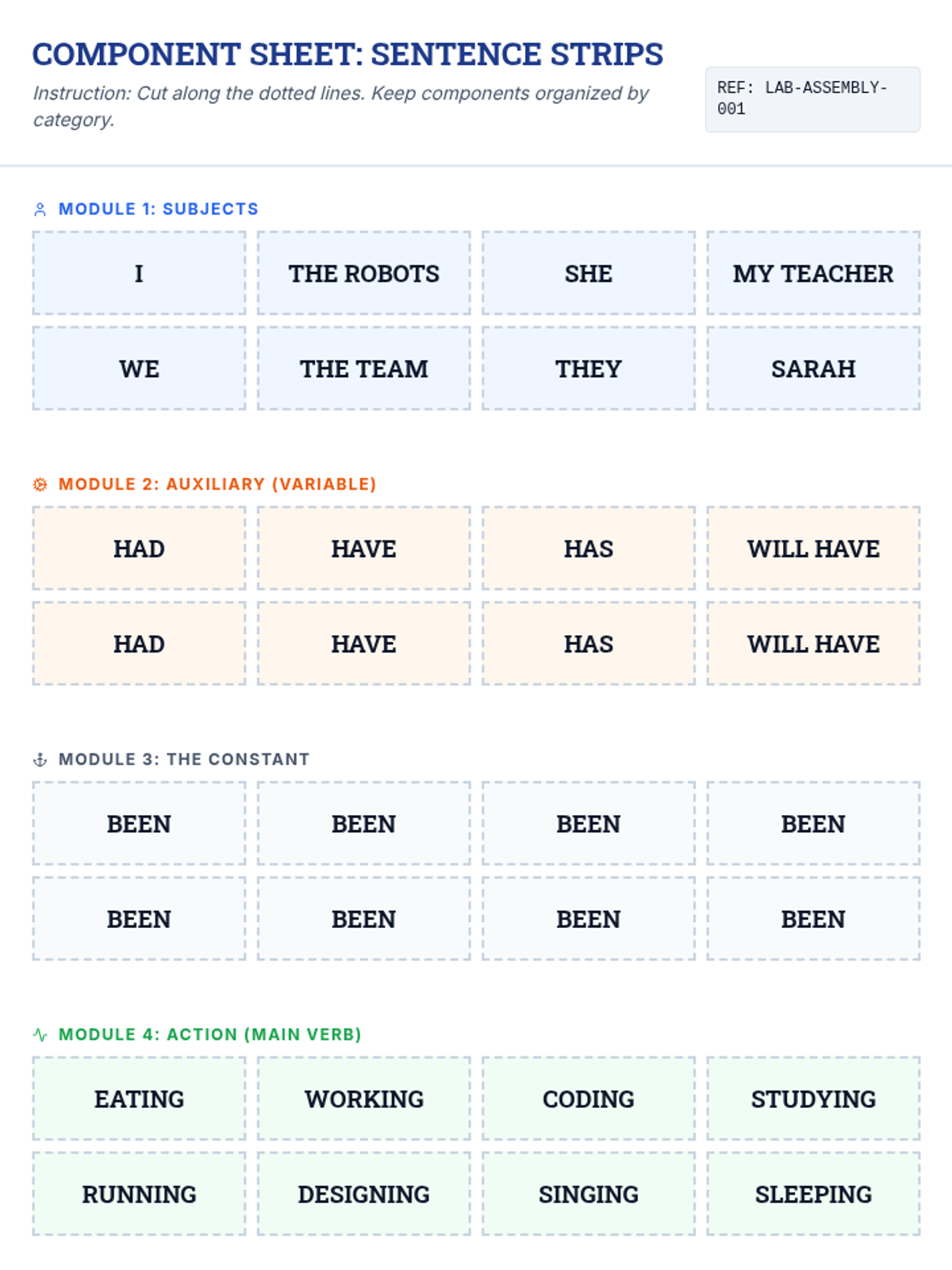
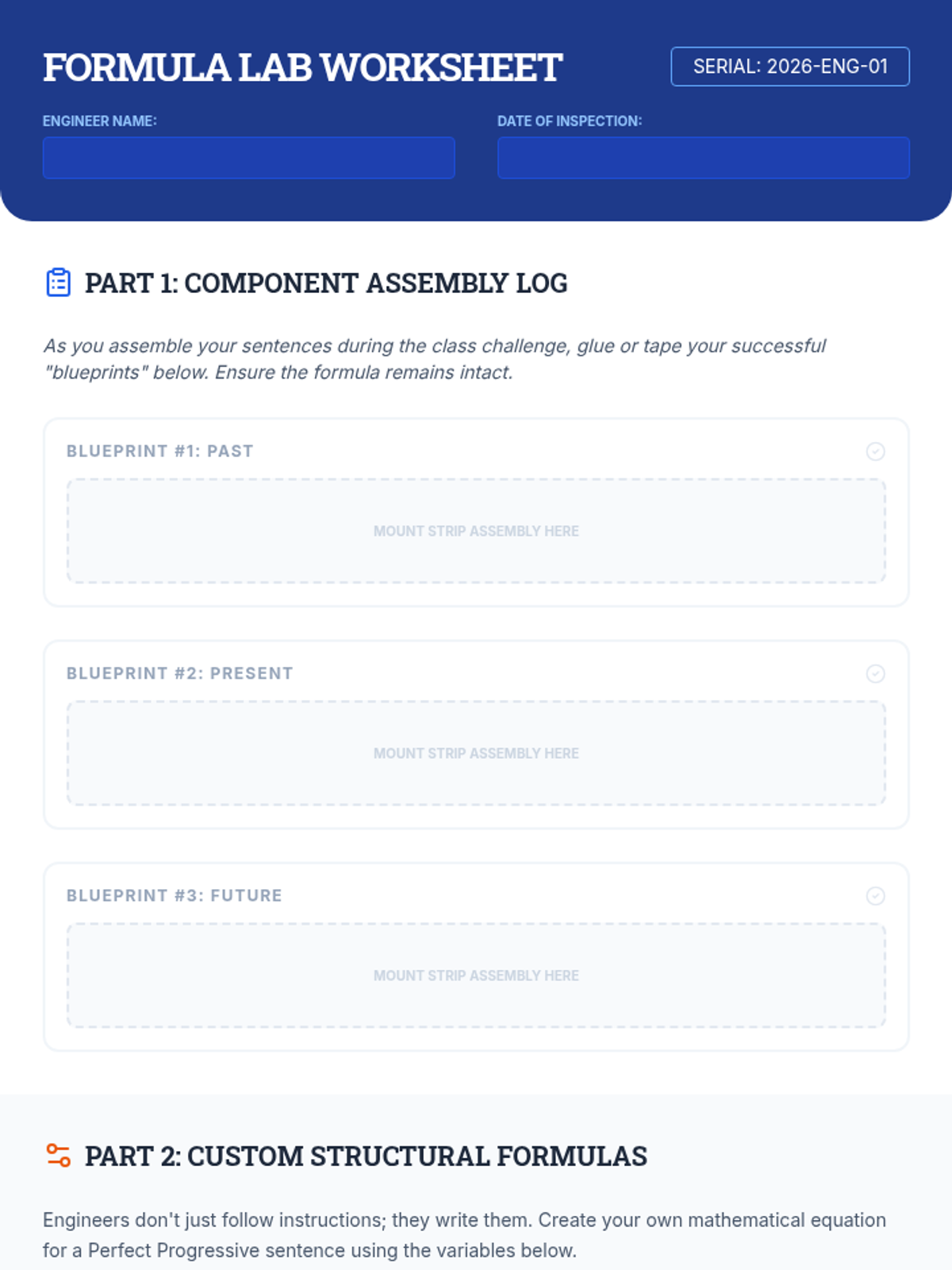
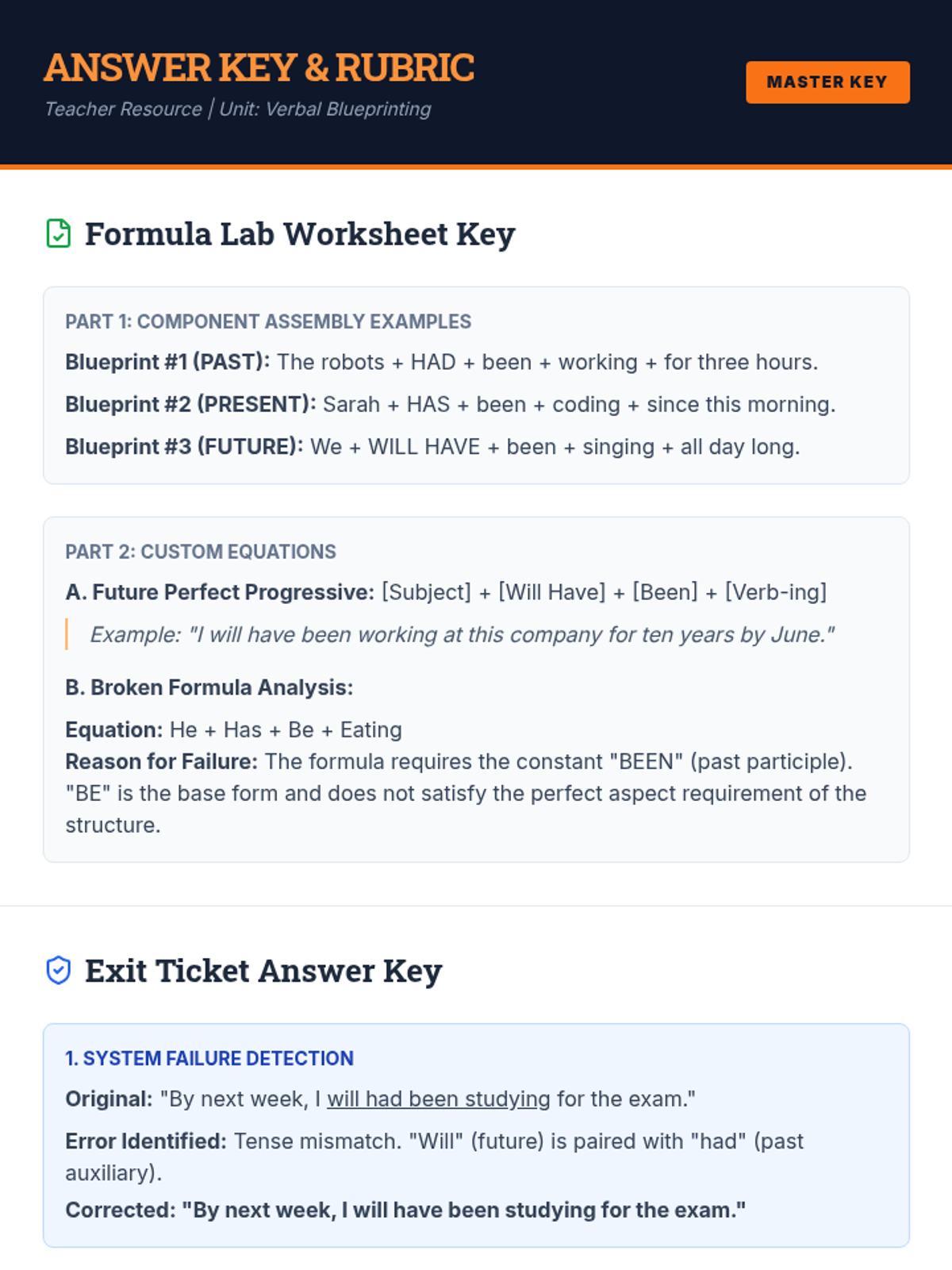
A technical, 'Sentence Engineering' approach to the perfect progressive aspect. Students use physical formulas and mathematical structures to build complex verb phrases across past, present, and future tenses.
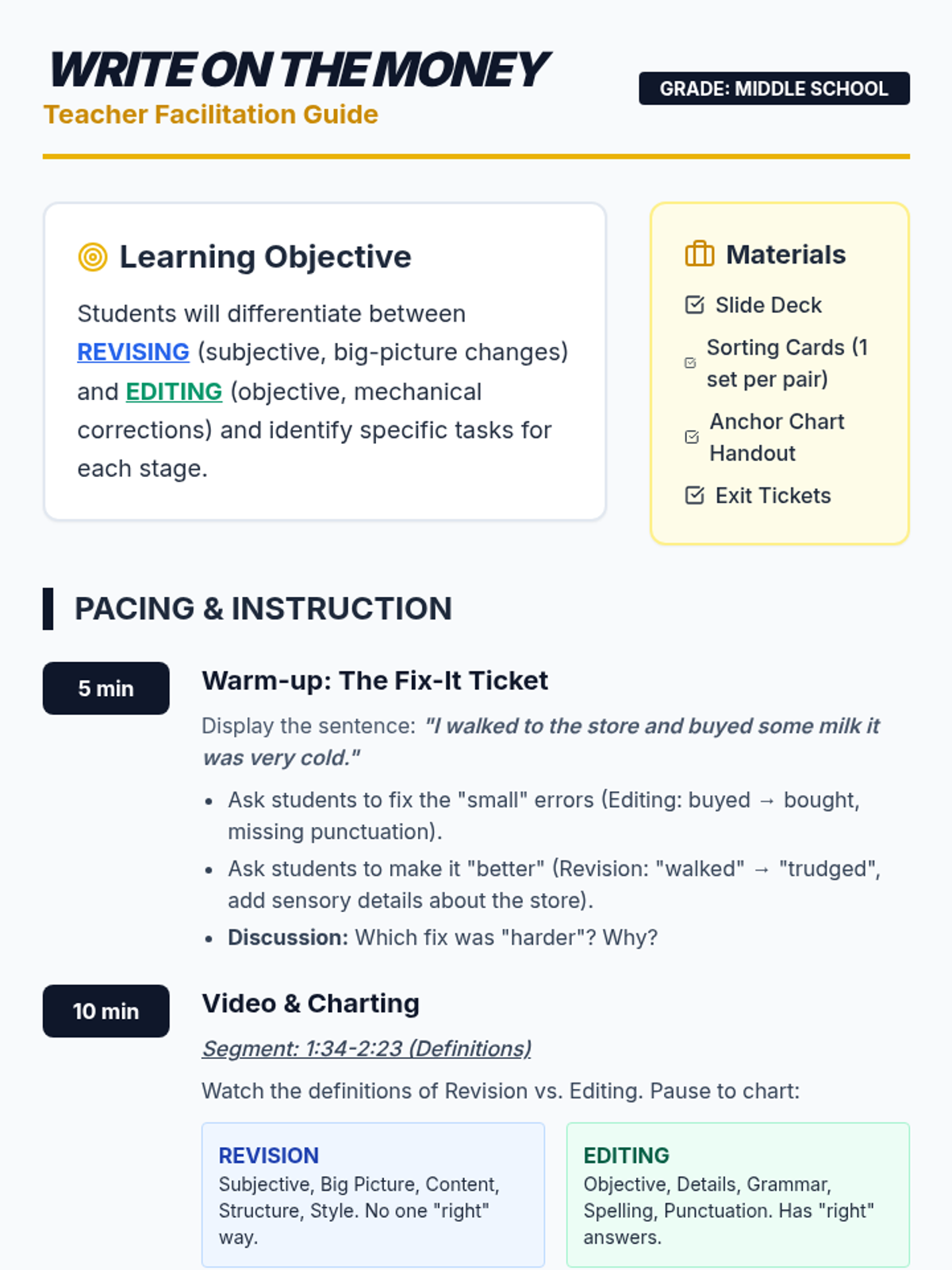
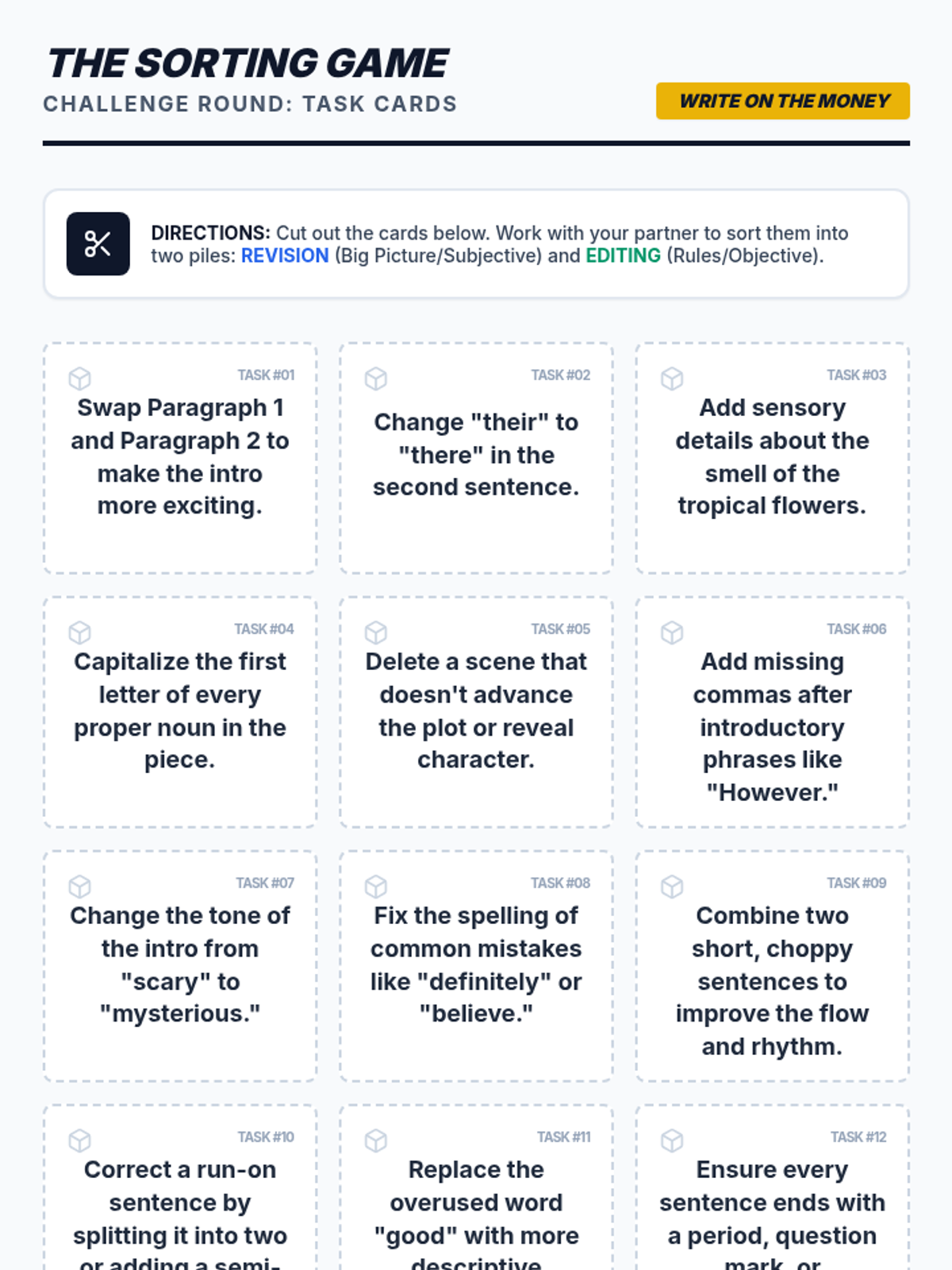
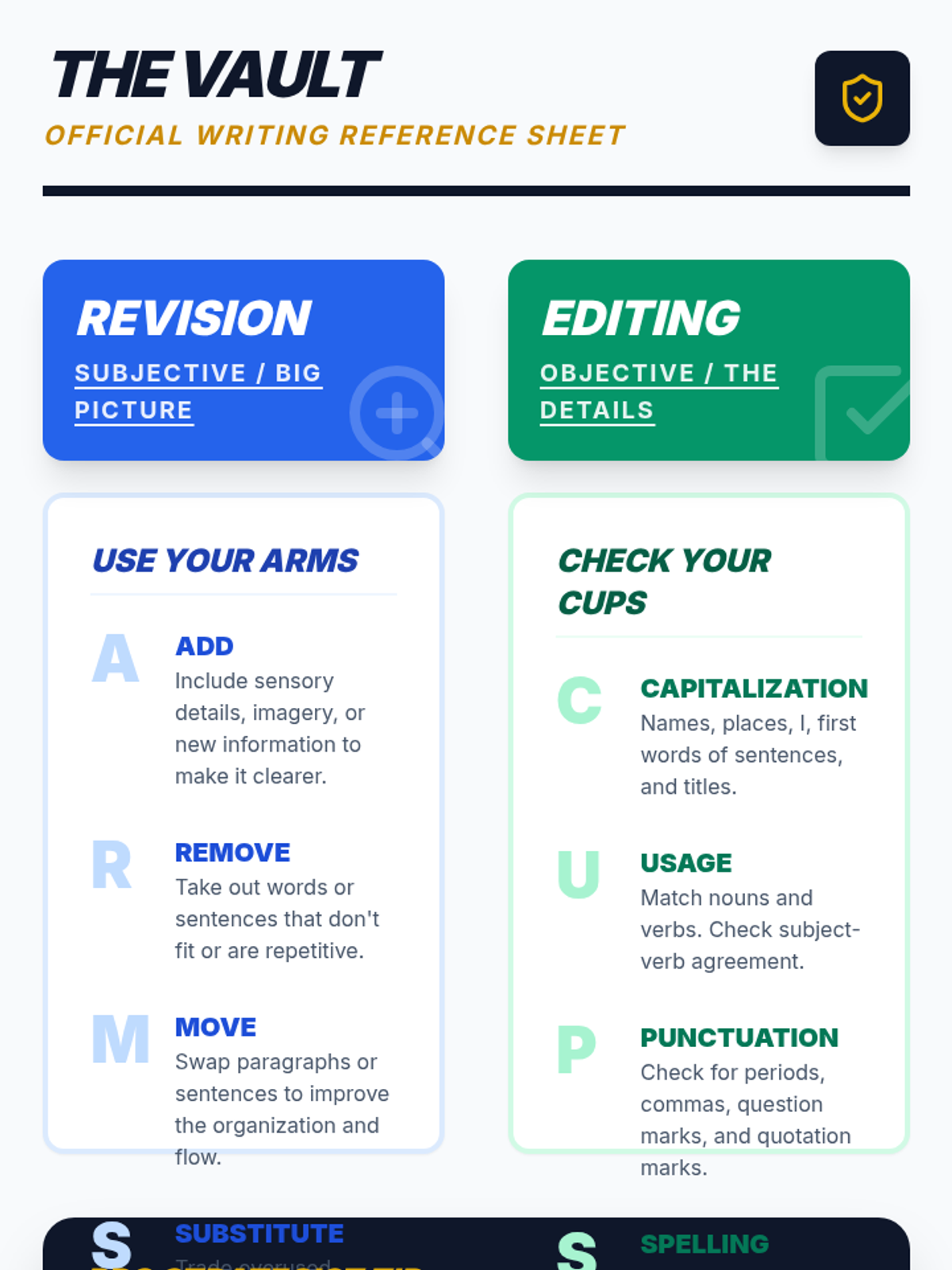
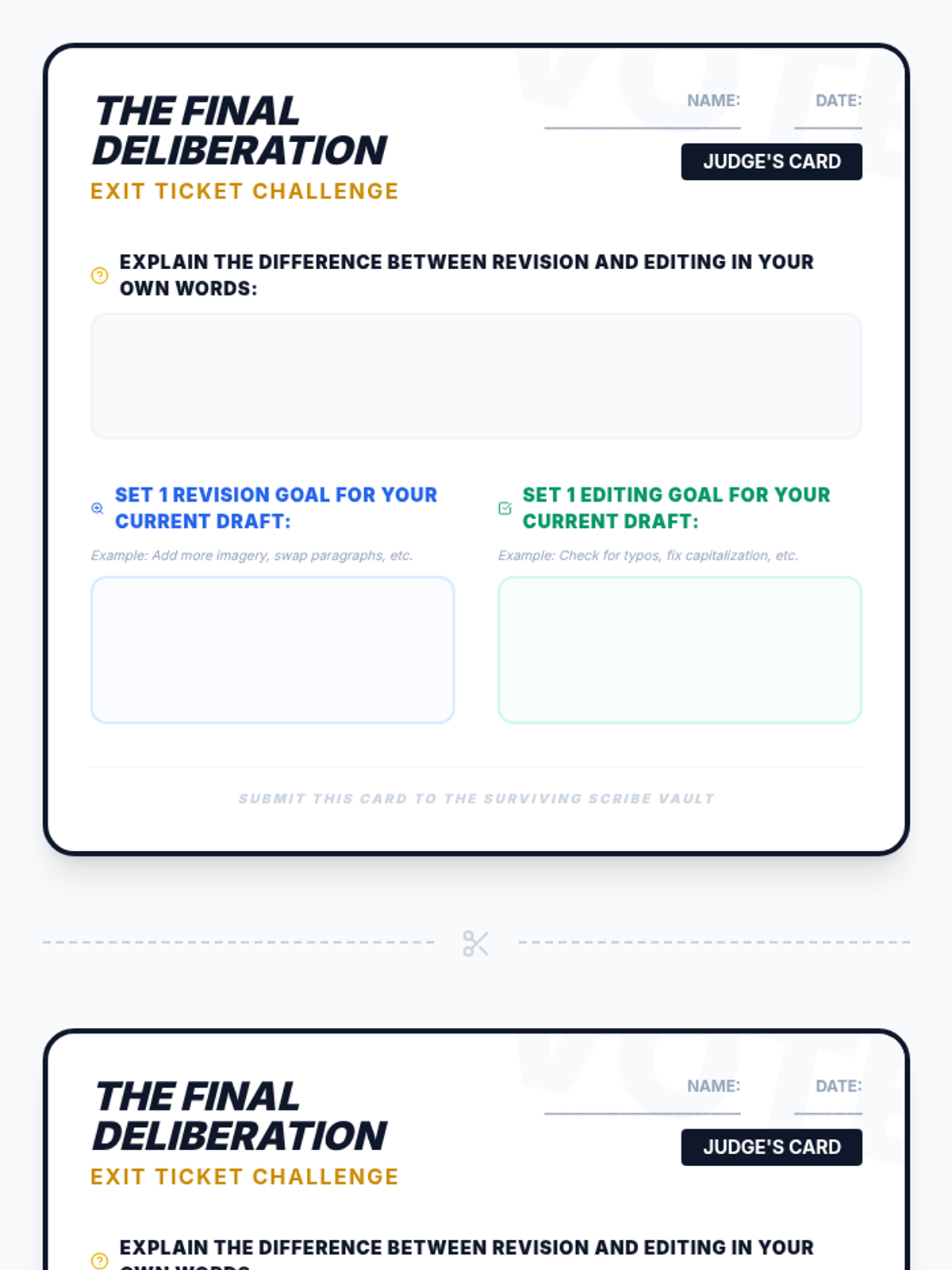
A high-stakes, reality TV-themed lesson where students compete to understand the difference between 'Big Picture' revision and 'Detail-oriented' editing. Based on the 'Write on the Money' workshop video, students will sort tasks and set goals for their own writing.
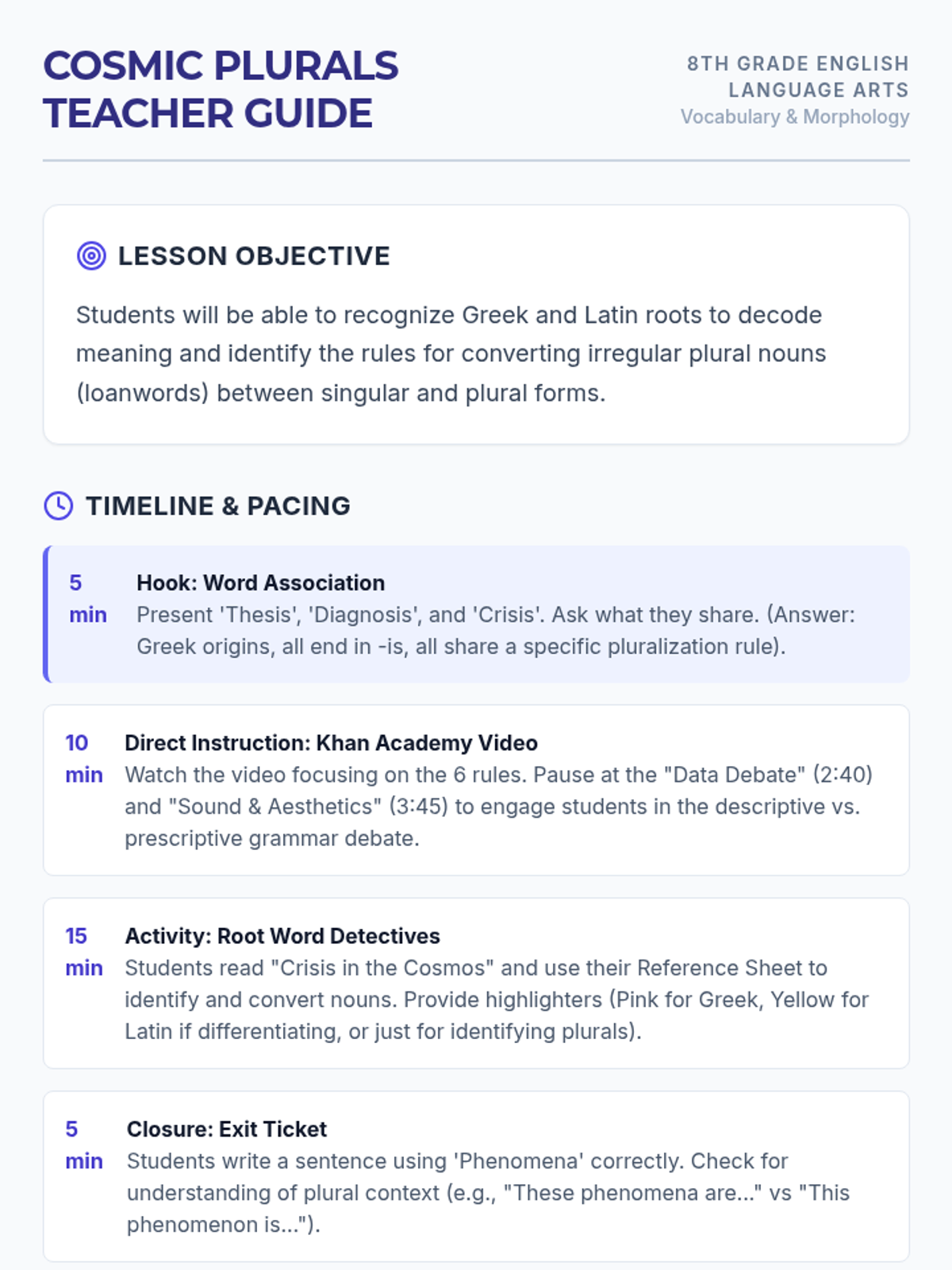
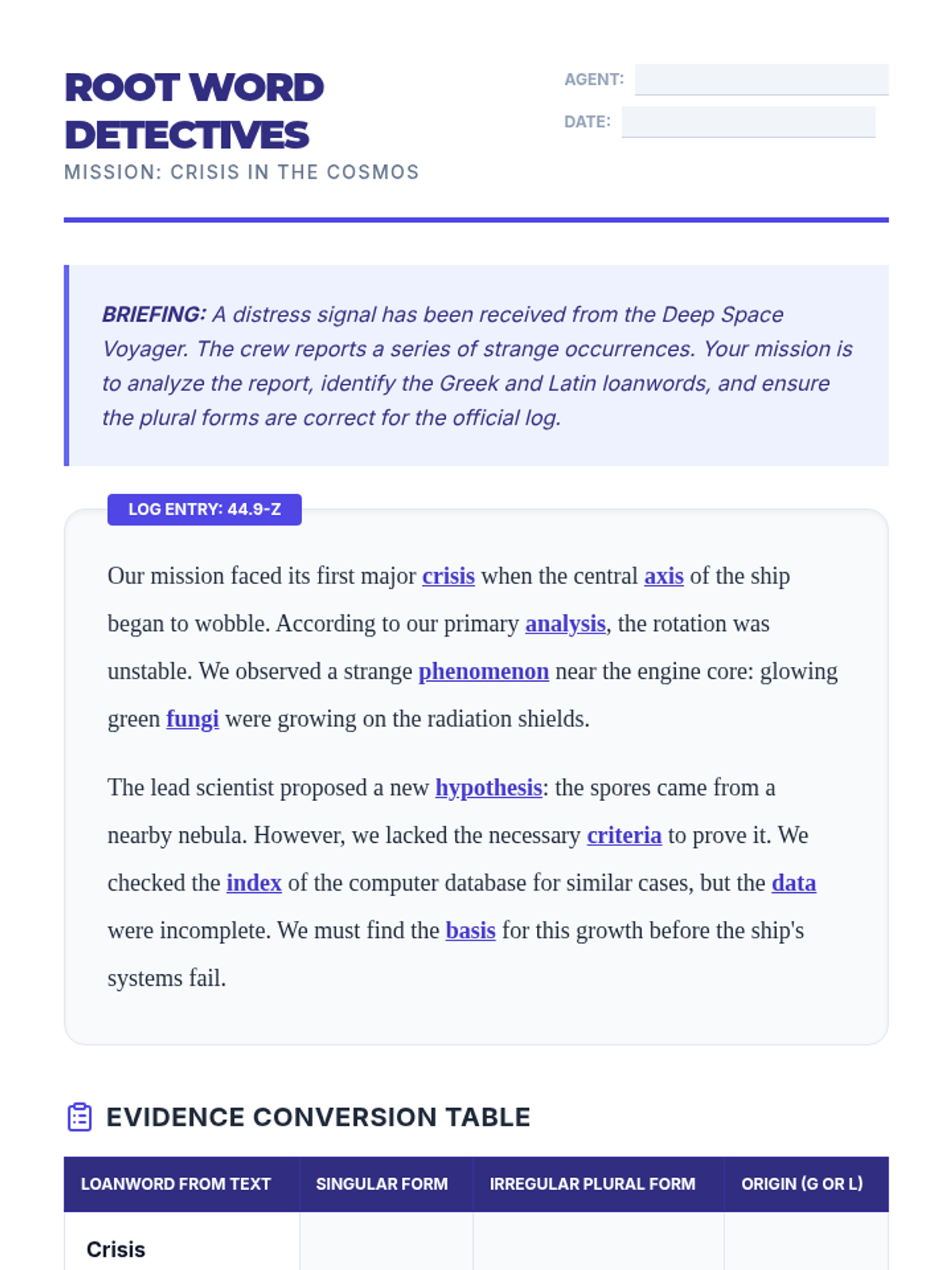
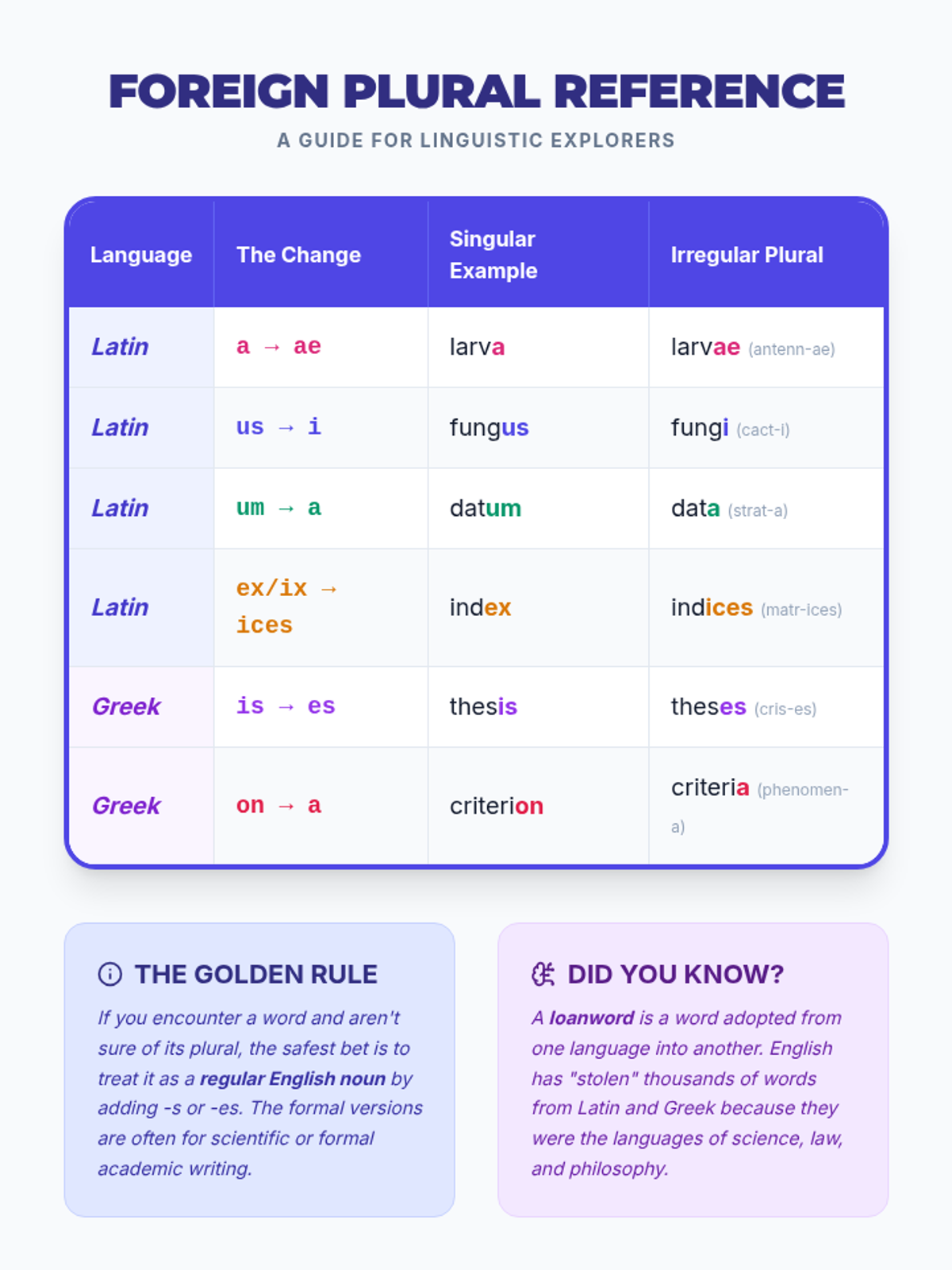
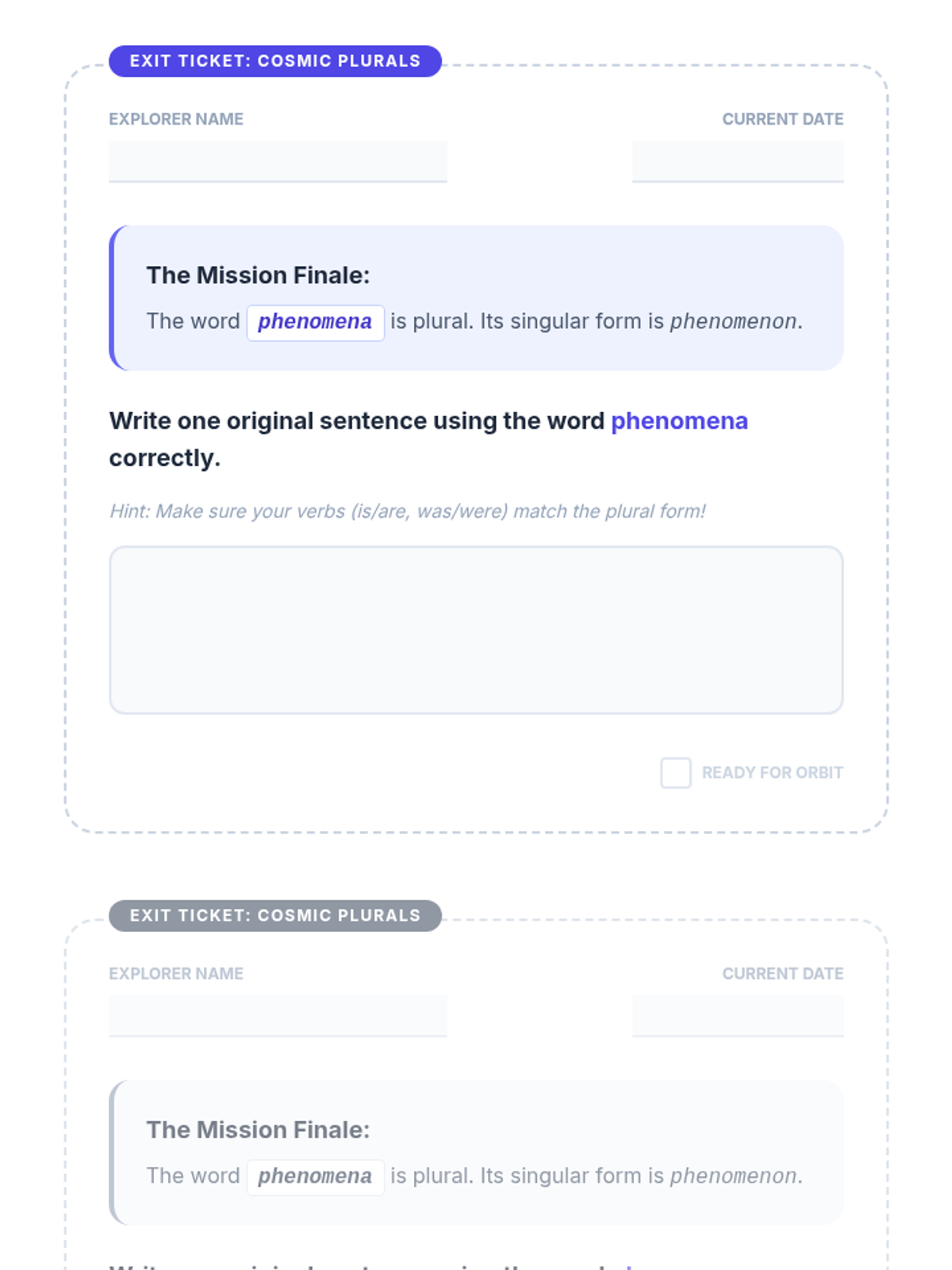
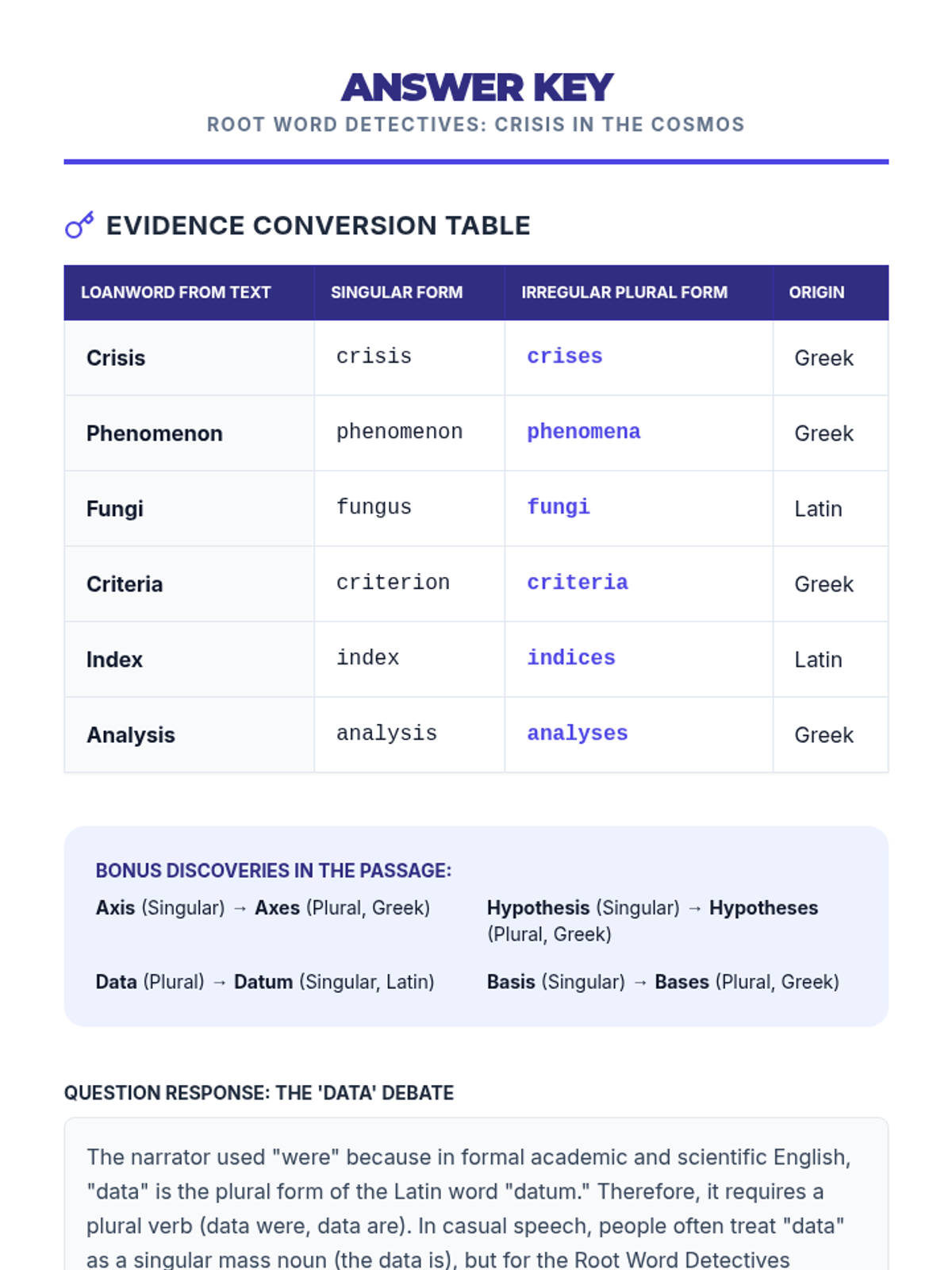
A lesson for 8th-grade students focusing on recognizing and converting Greek and Latin irregular plural nouns (loanwords) through a cosmic detective theme.
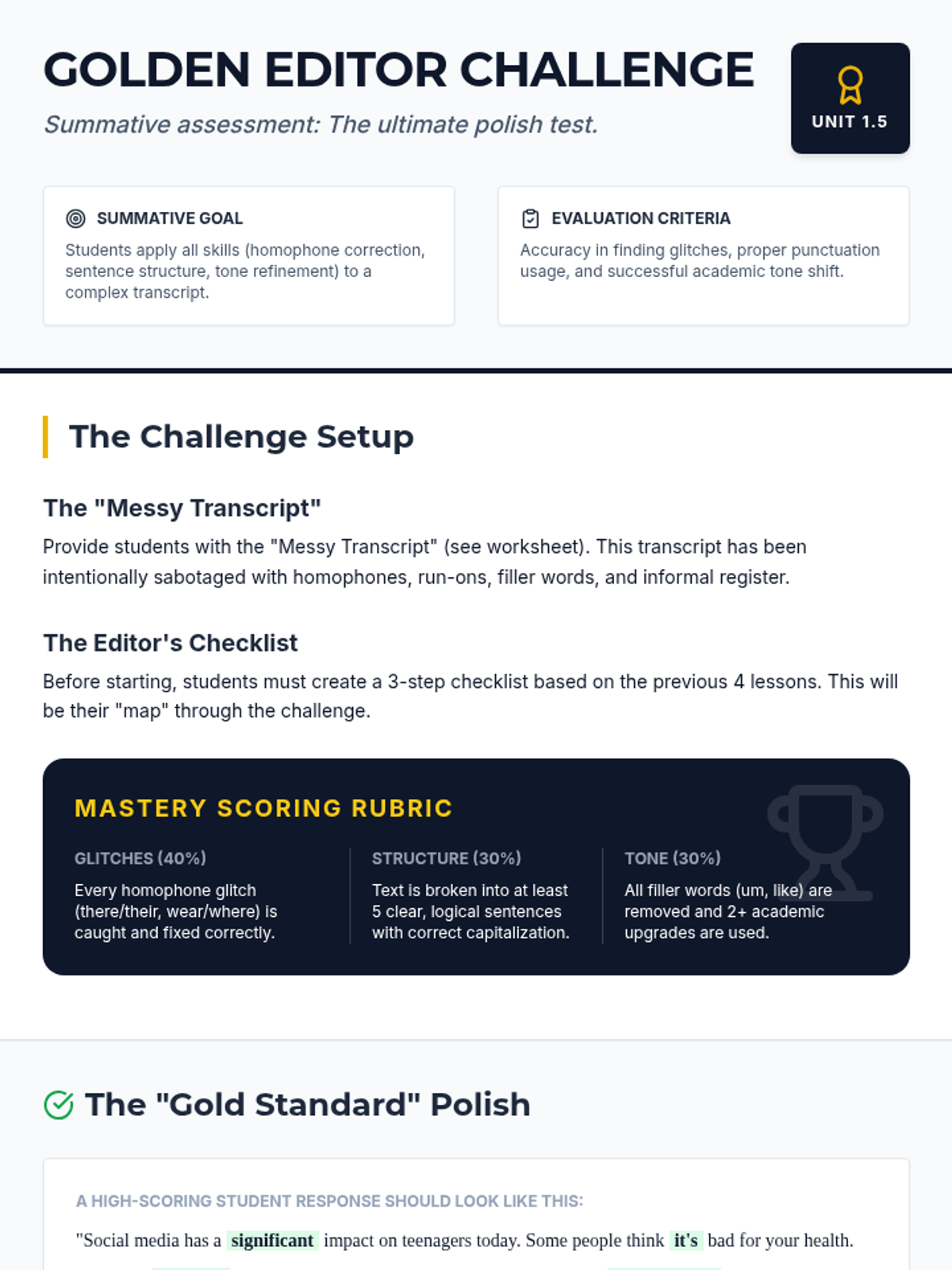
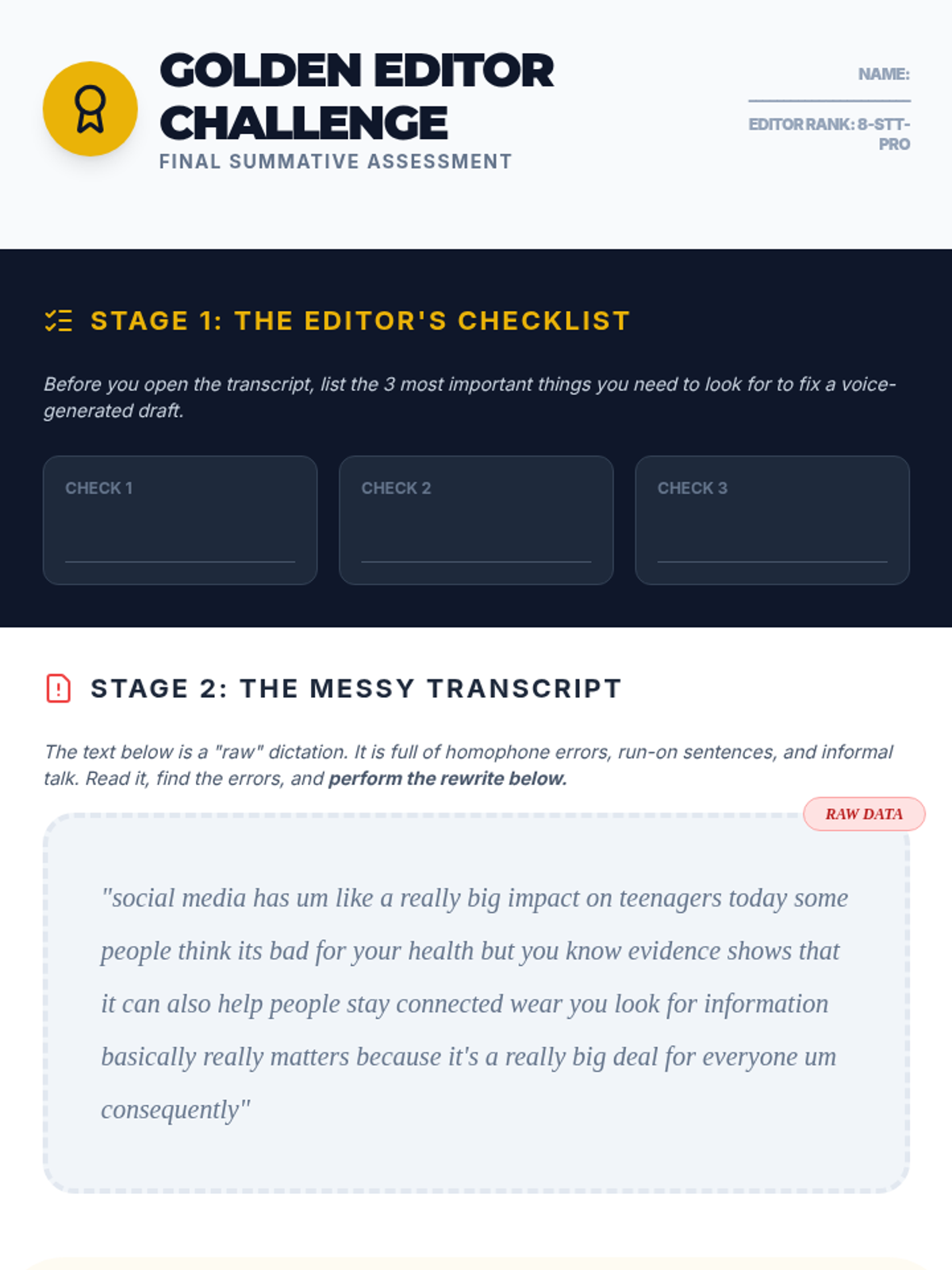
A summative assessment where students apply all editing skills to a messy, error-ridden transcript to produce a final, polished piece of writing.
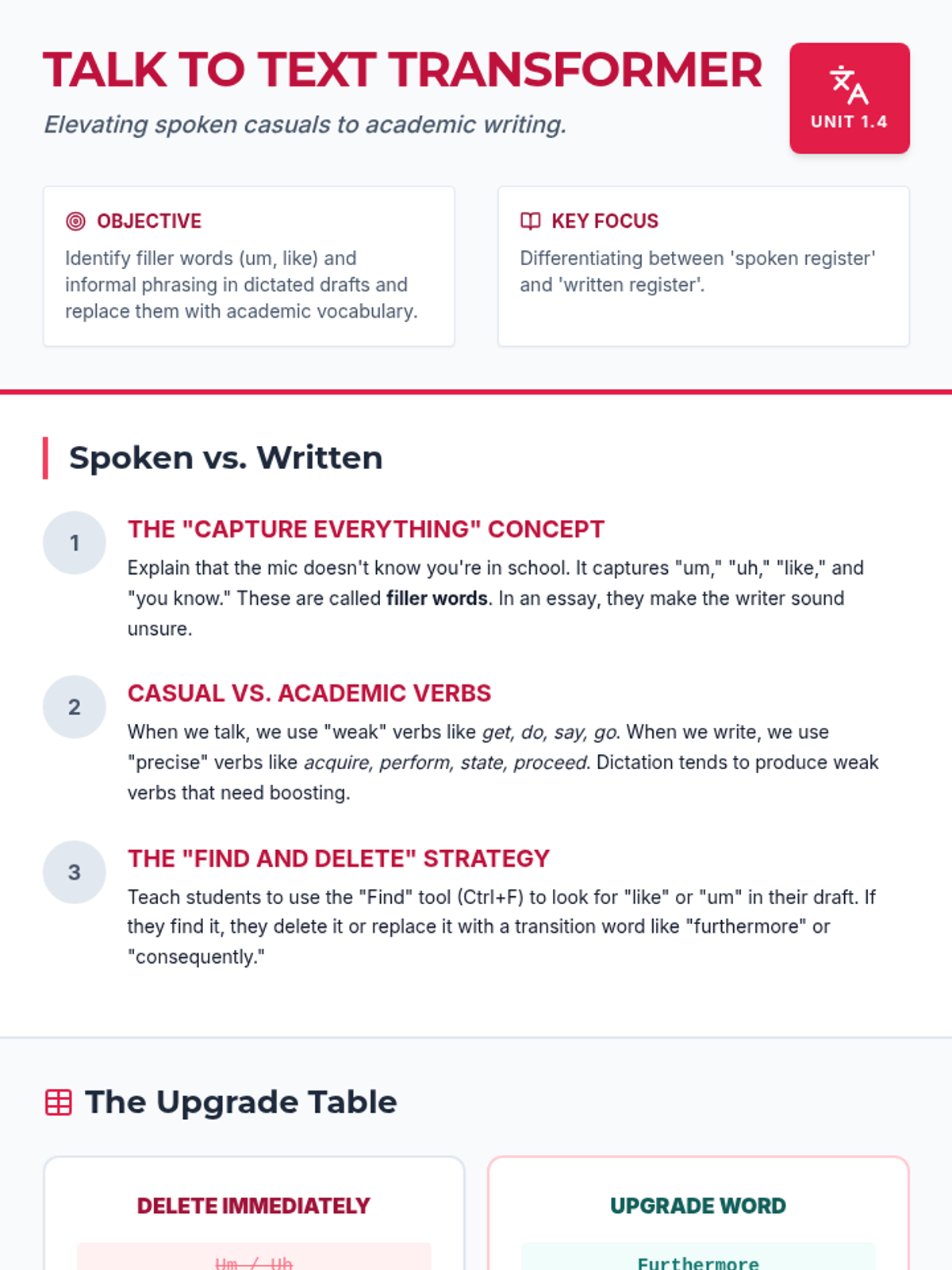
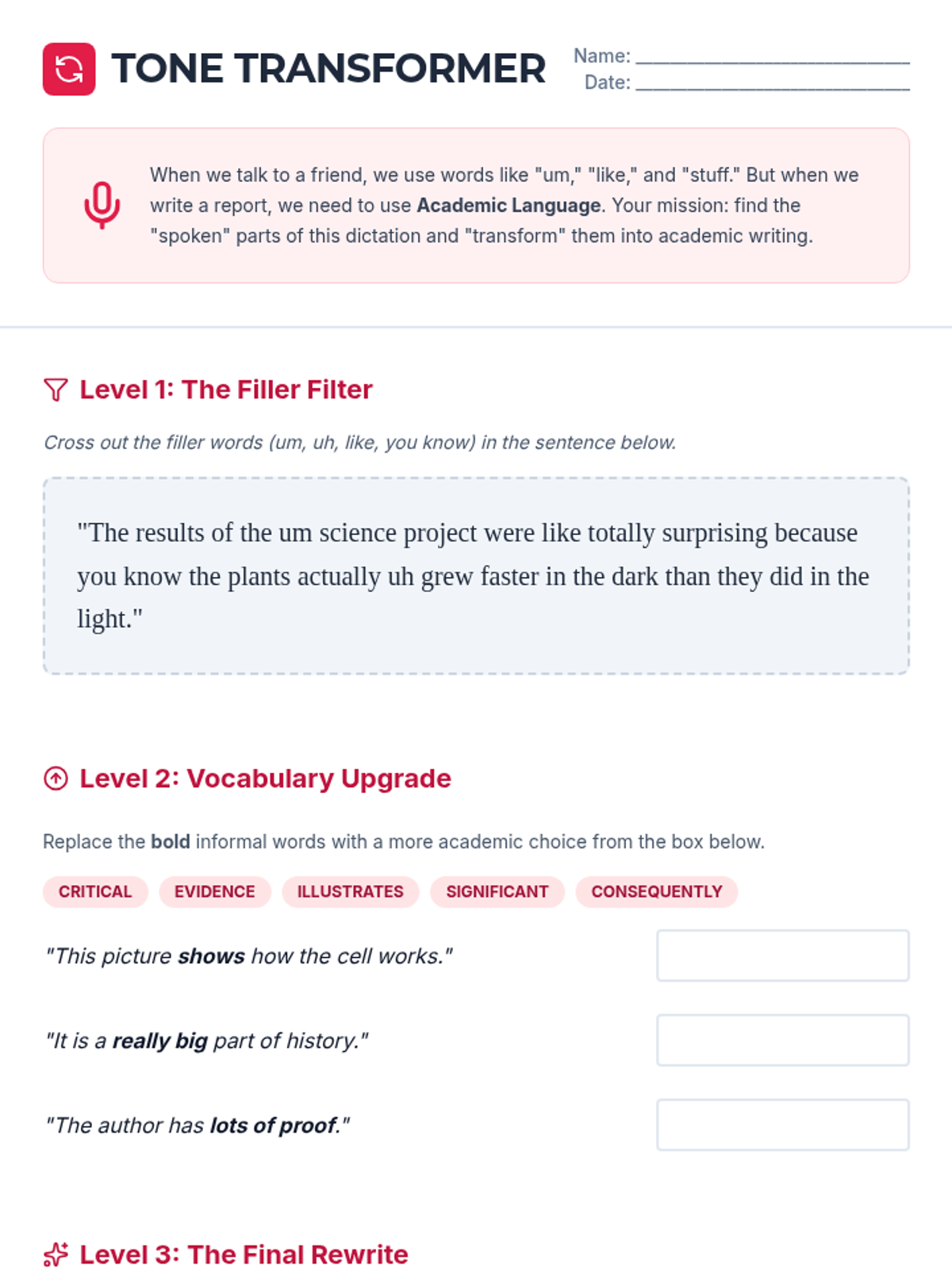
Teaches students to bridge the gap between spoken casual language and formal academic writing by identifying filler words and elevating vocabulary in their dictated drafts.
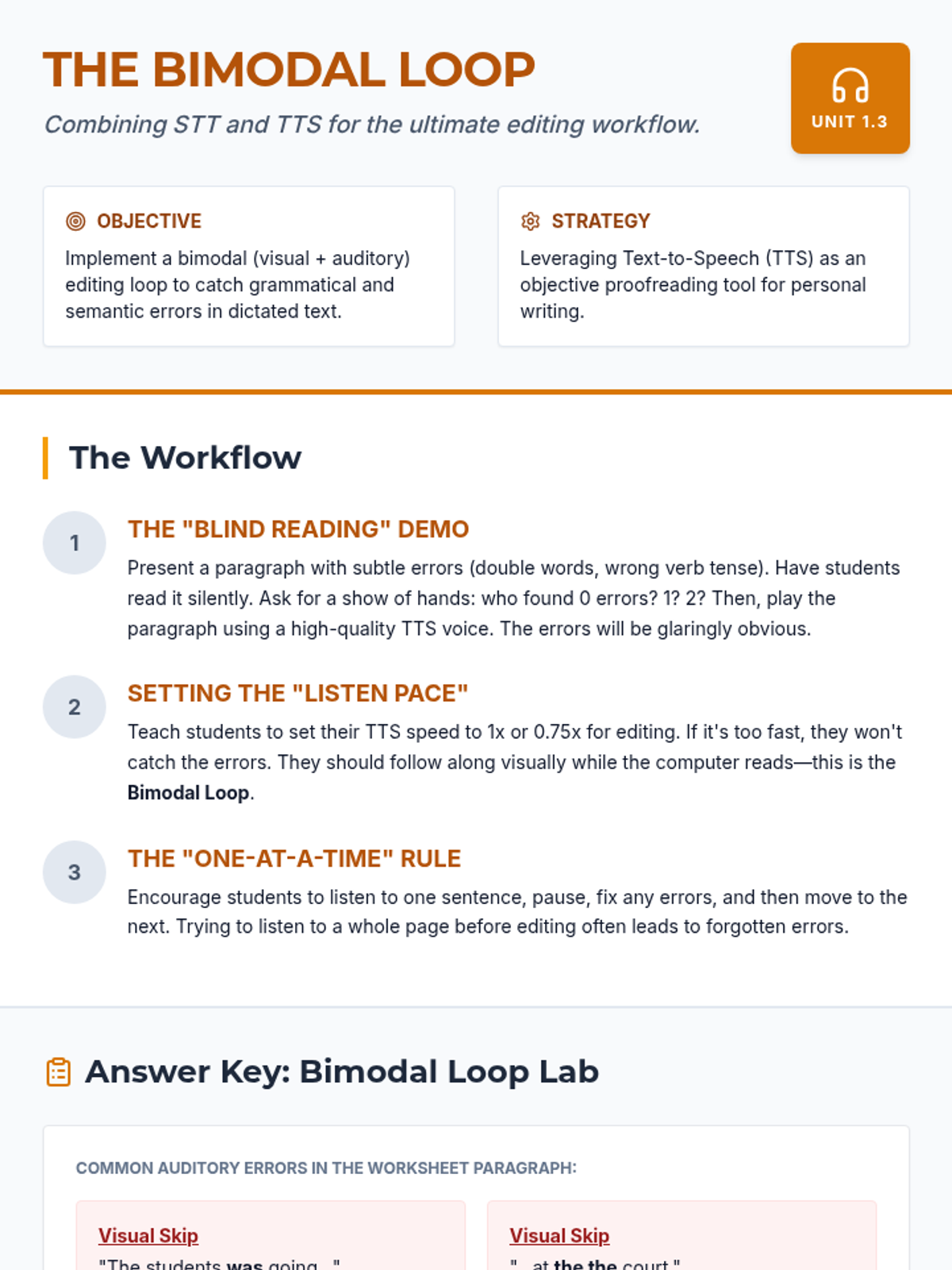
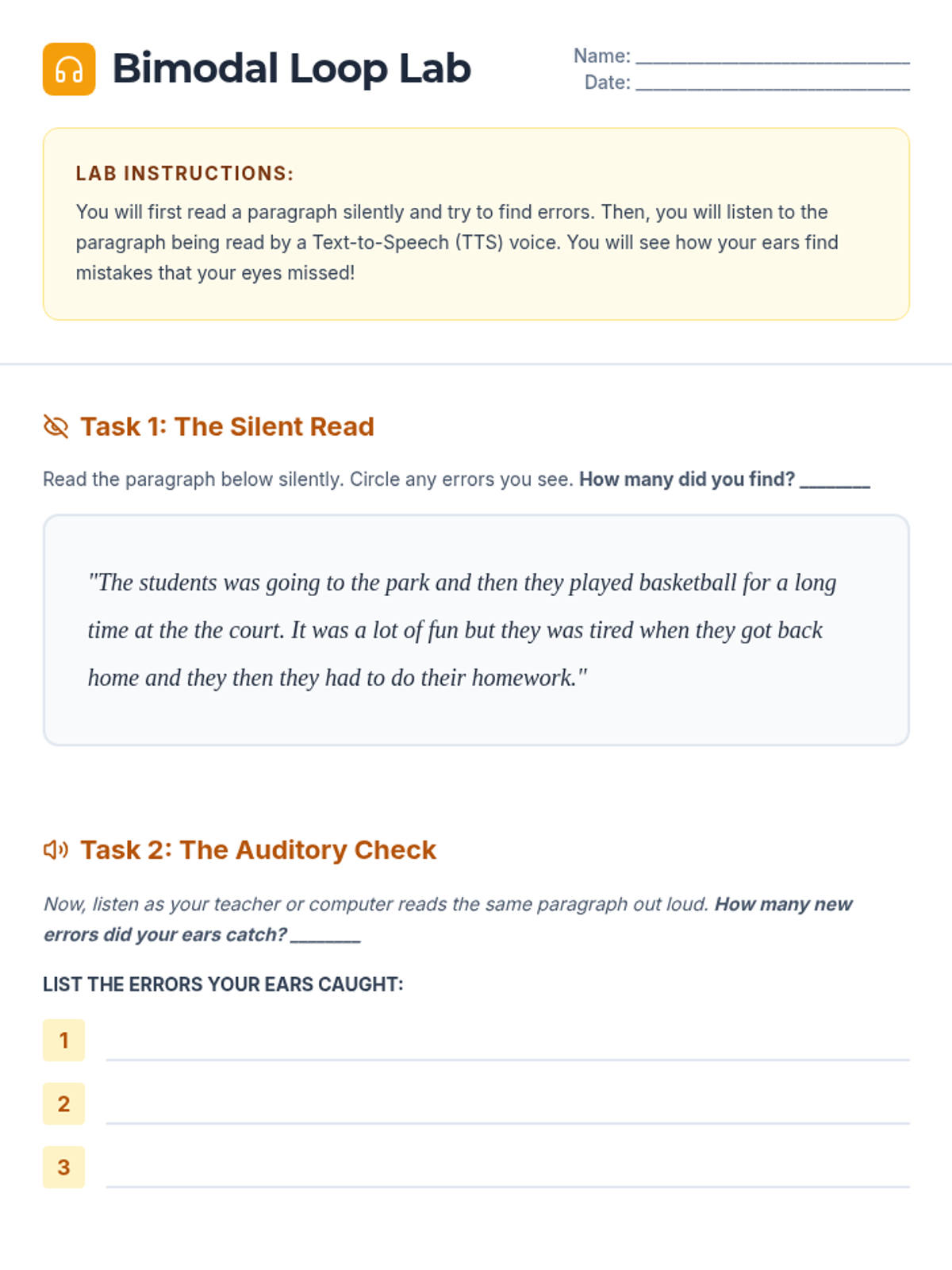
Introduces the bimodal loop of using text-to-speech technology to listen to dictated work, leveraging auditory processing to catch errors that are easily missed during visual proofreading.
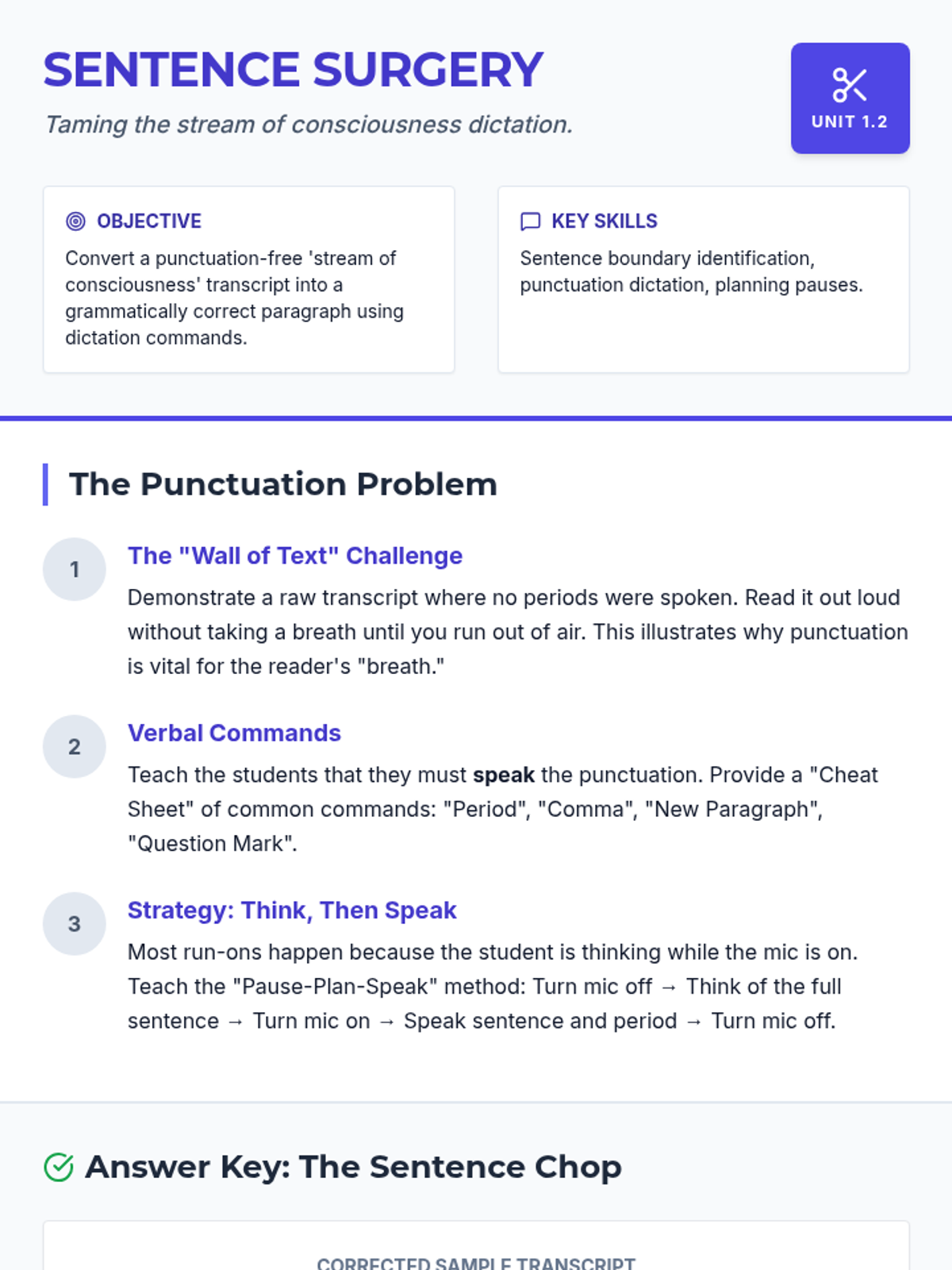
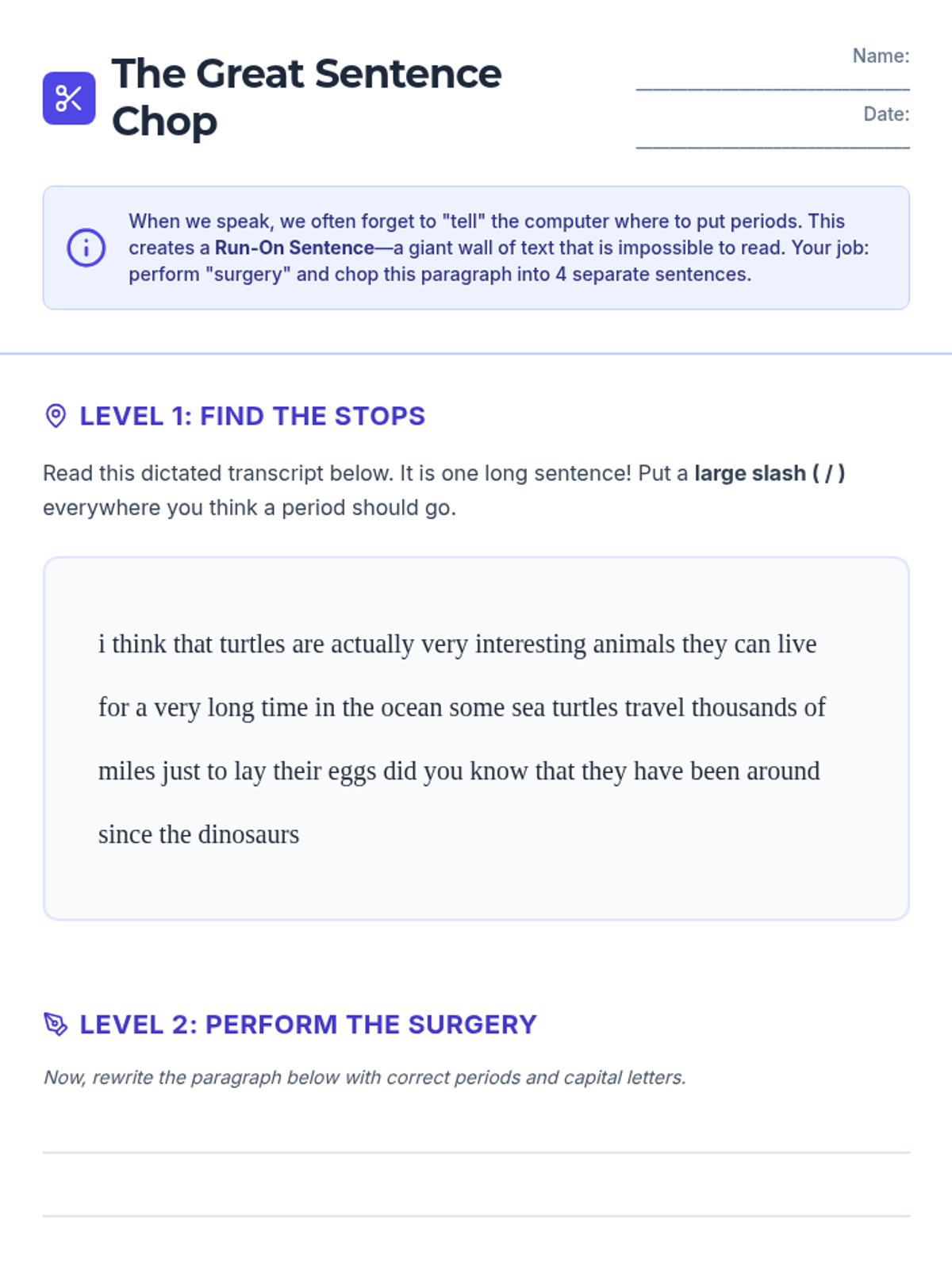
Focuses on the structural issues of dictated text, specifically the lack of punctuation and the tendency for run-on sentences, teaching students to impose order on 'stream of consciousness' transcripts.
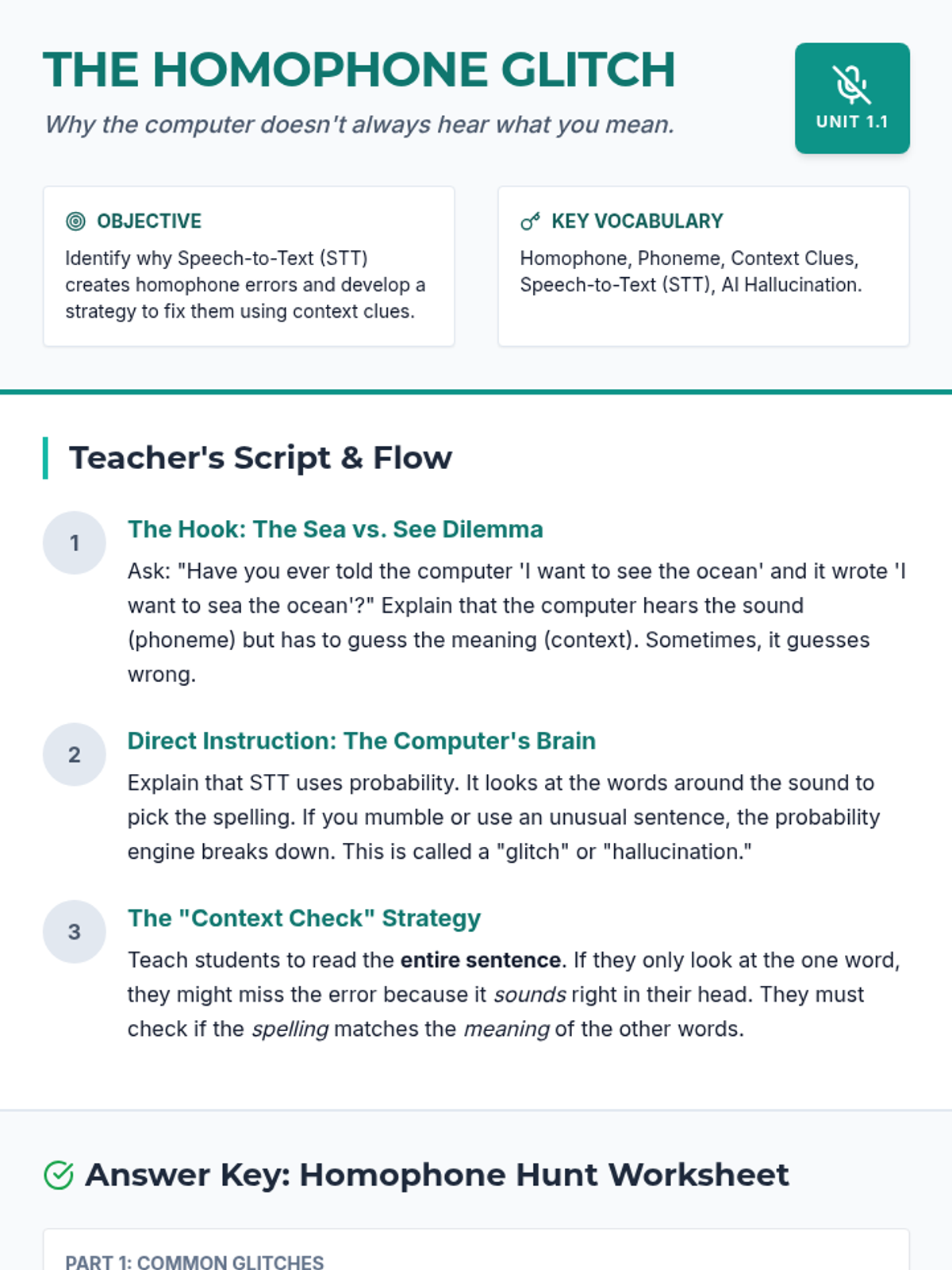
Explores why speech-to-text software confuses homophones and teaches students how to use context clues to identify and fix these common errors.
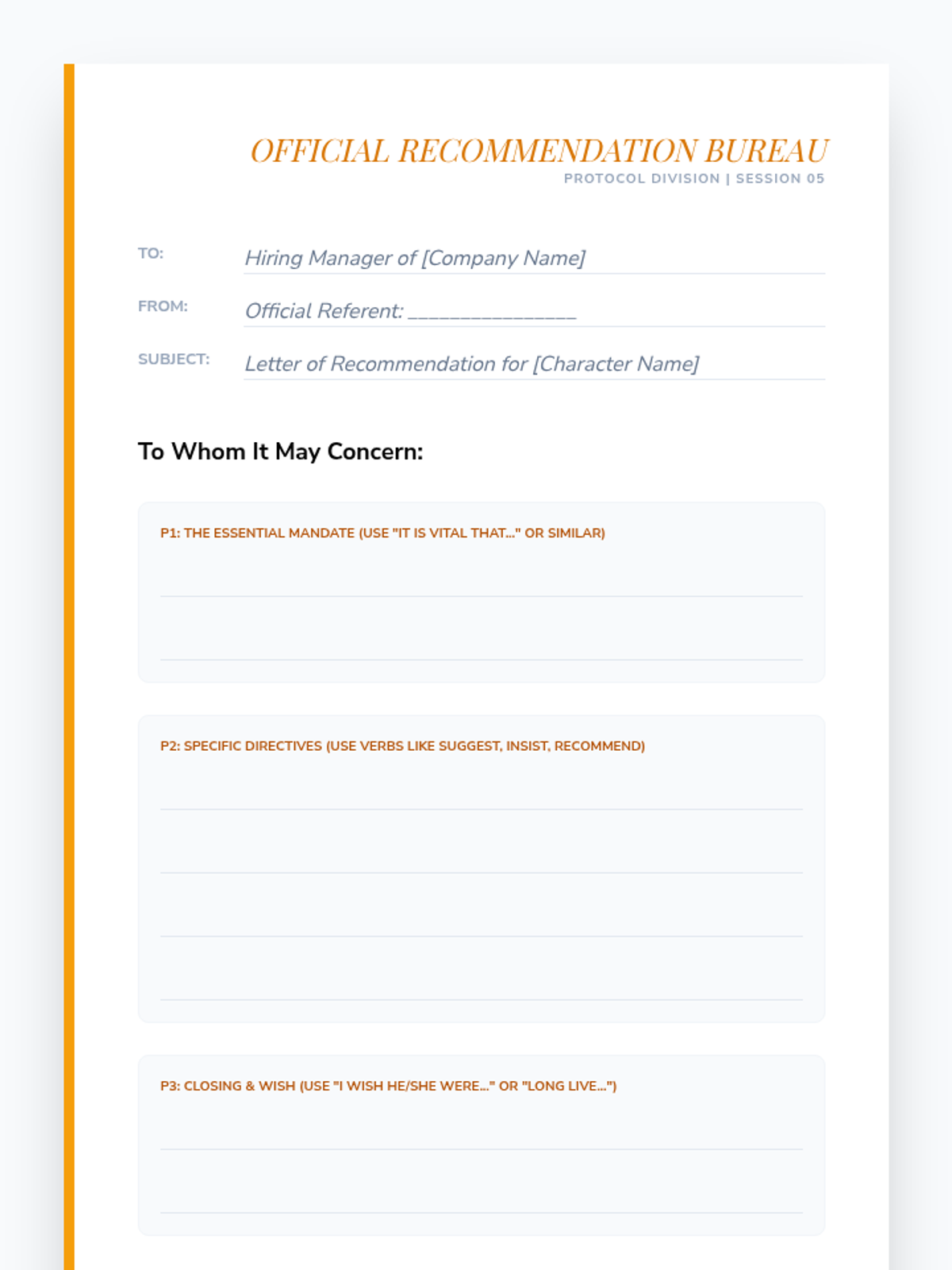
Students apply their knowledge by writing a formal letter of recommendation for a fictional character, using advanced subjunctive structures.
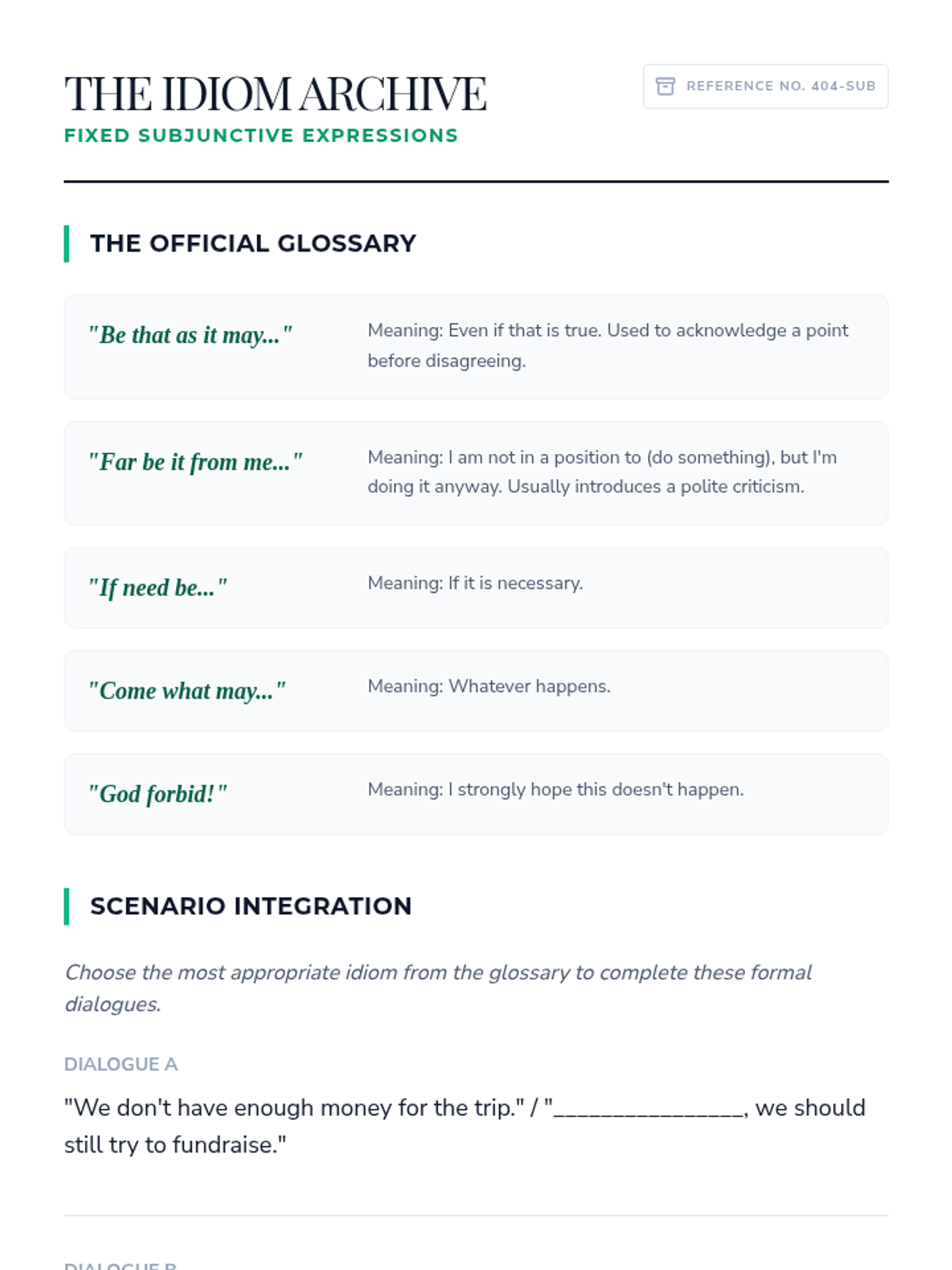
Explores common fixed phrases in English that use the subjunctive mood, such as 'God bless America' and 'Far be it from me.'
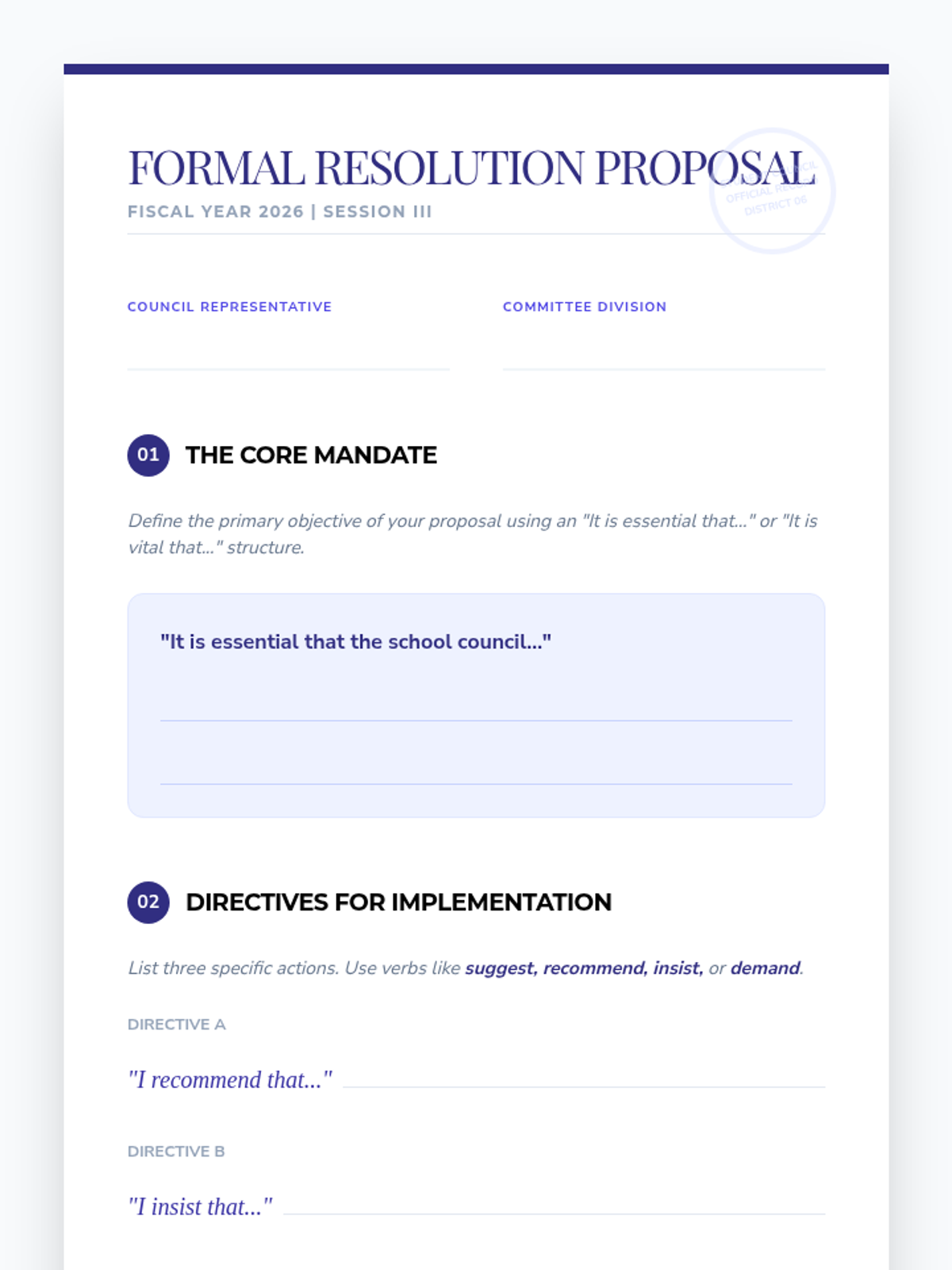
A role-play simulation where students use the structure 'It is essential that...' to debate and propose changes to school policies.
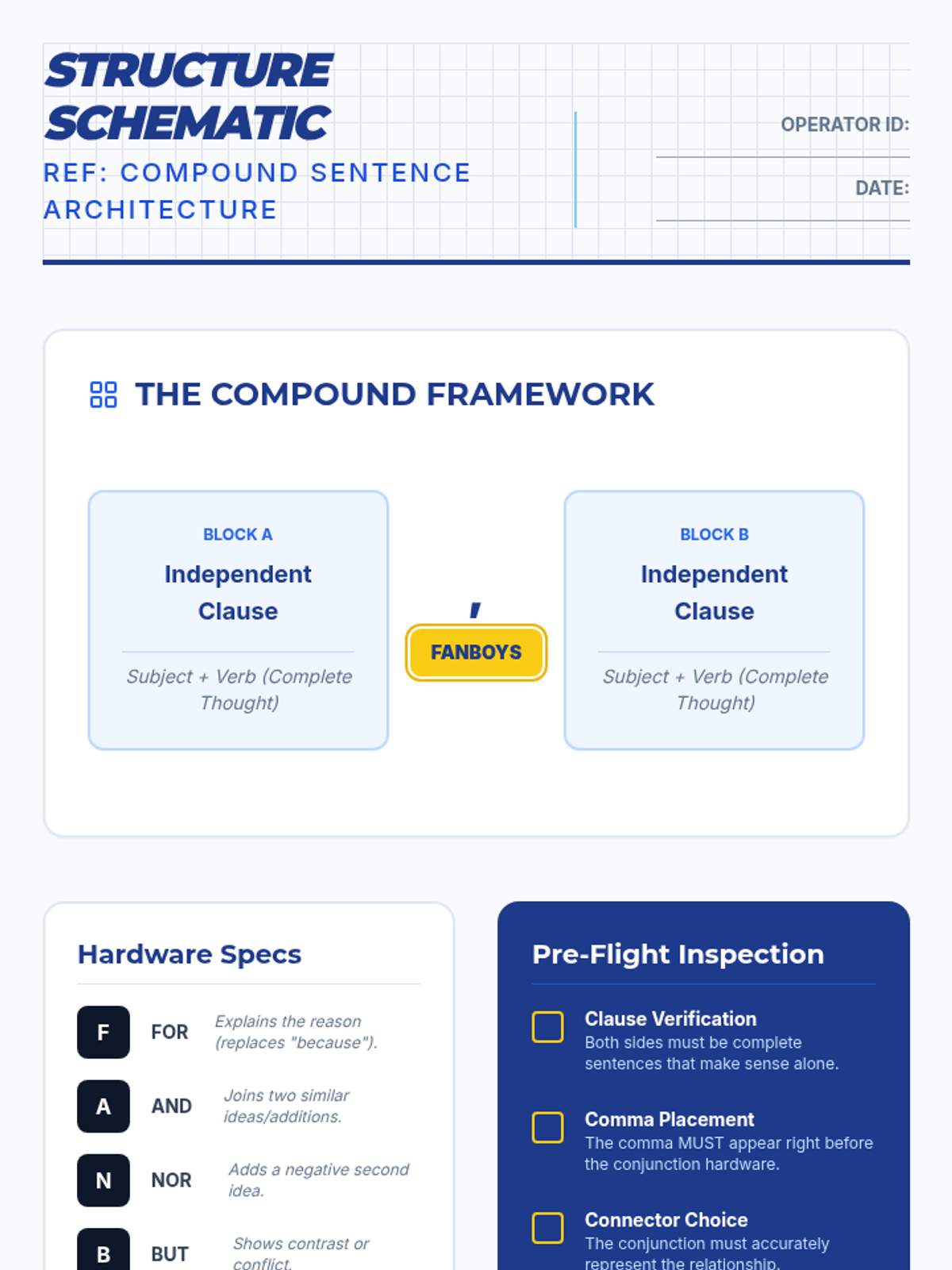
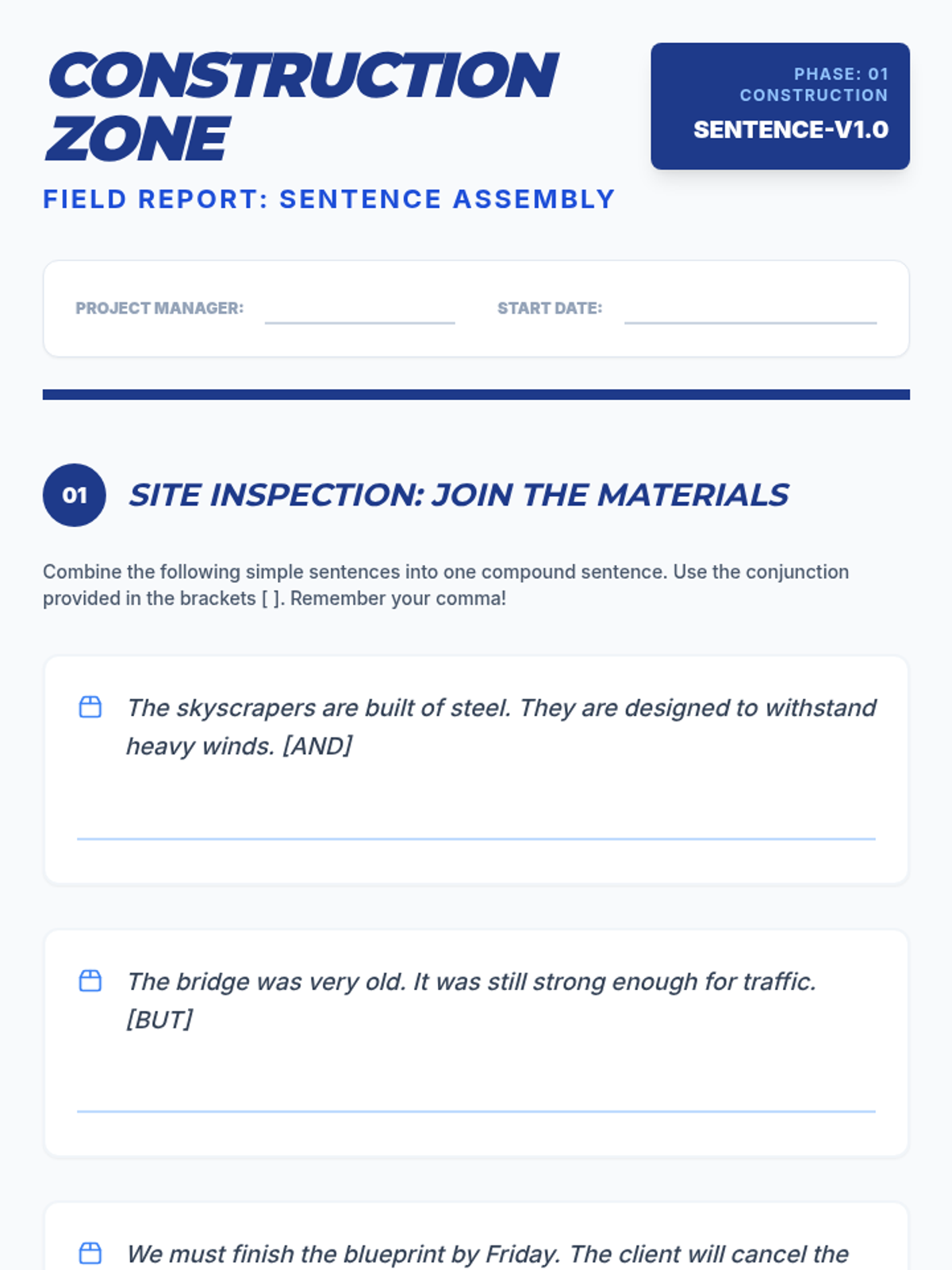
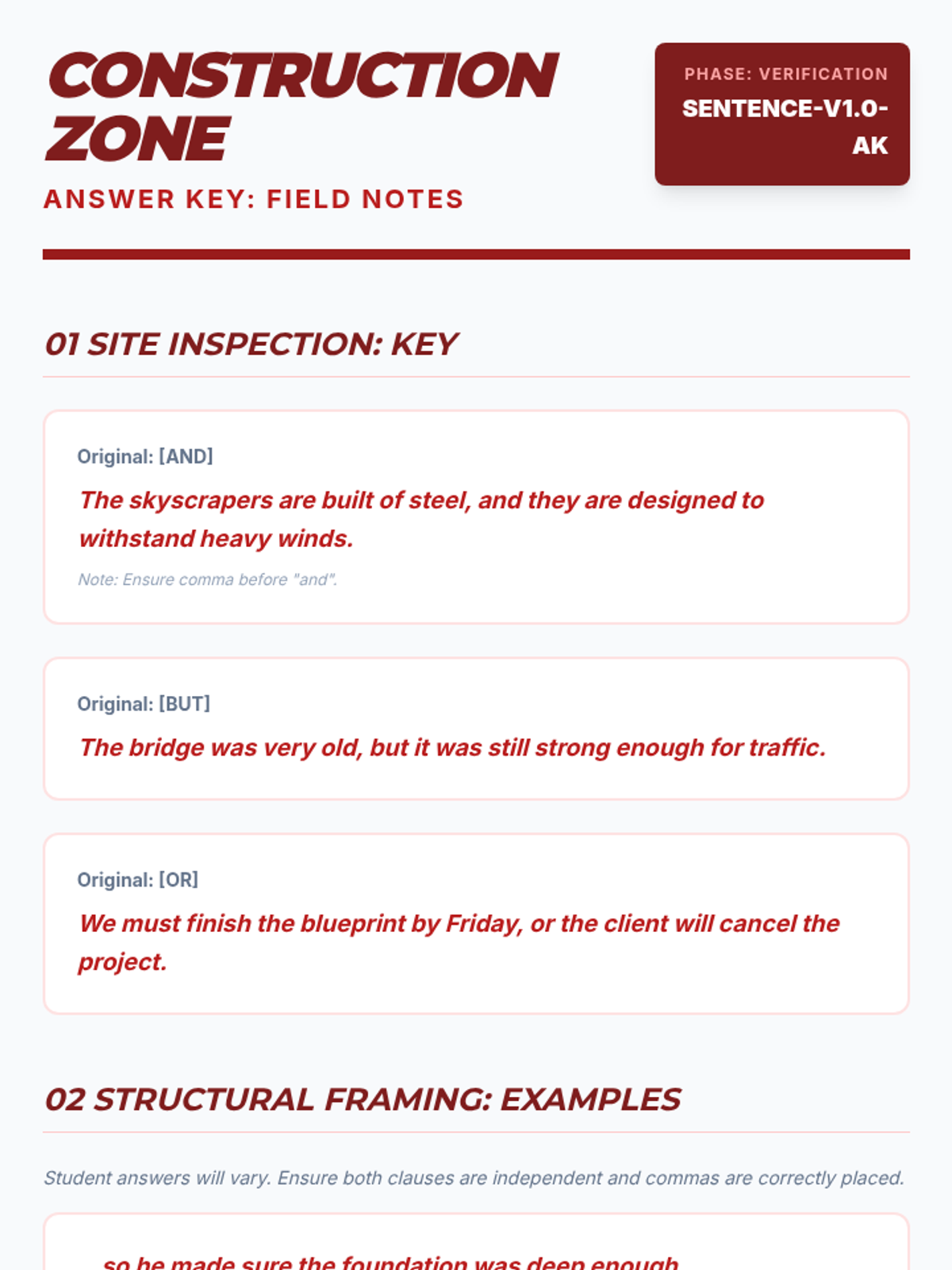
A structured intervention focused on mastering compound sentences using FANBOYS (coordinating conjunctions) through the lens of architectural design and engineering.
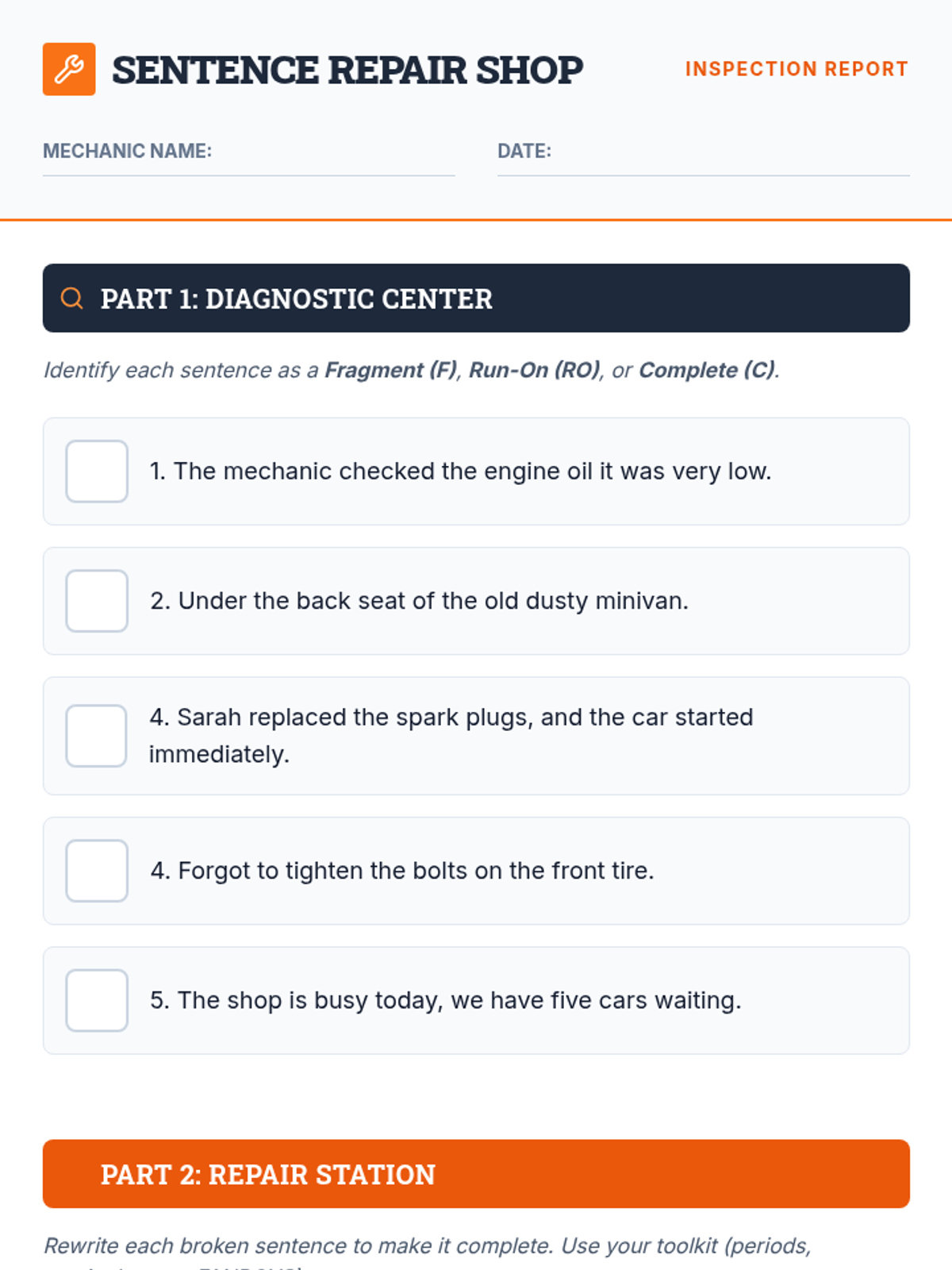
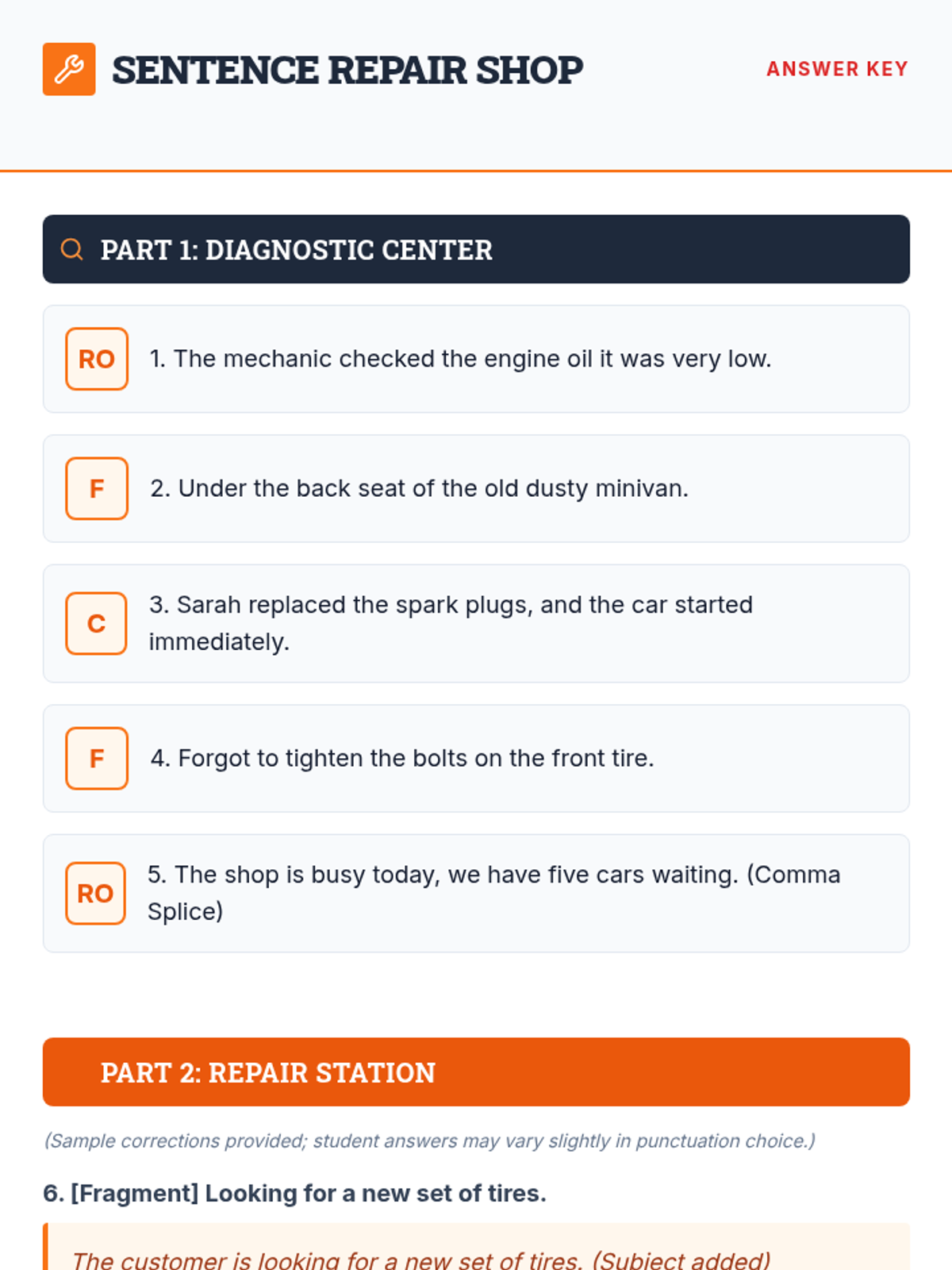
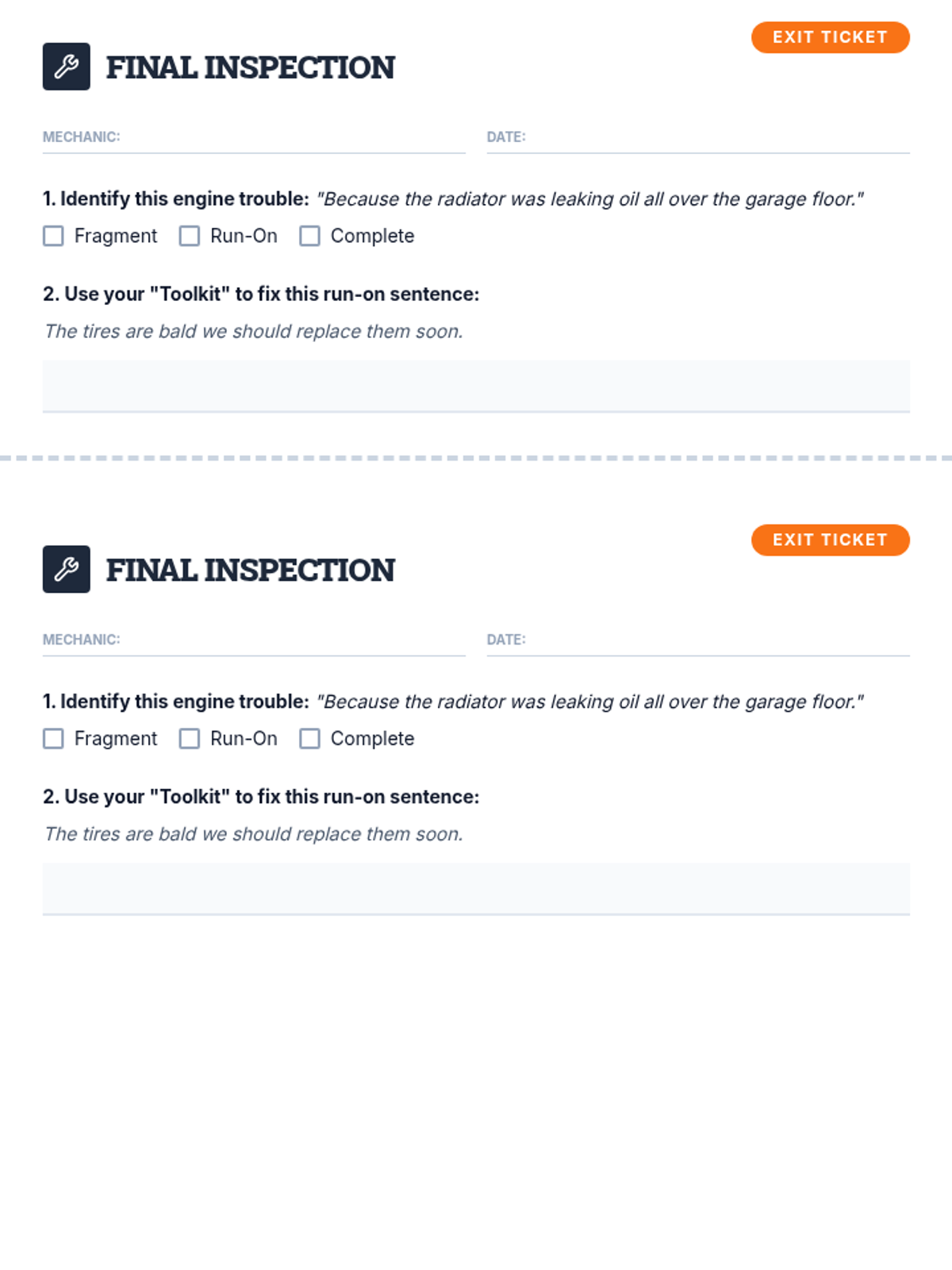
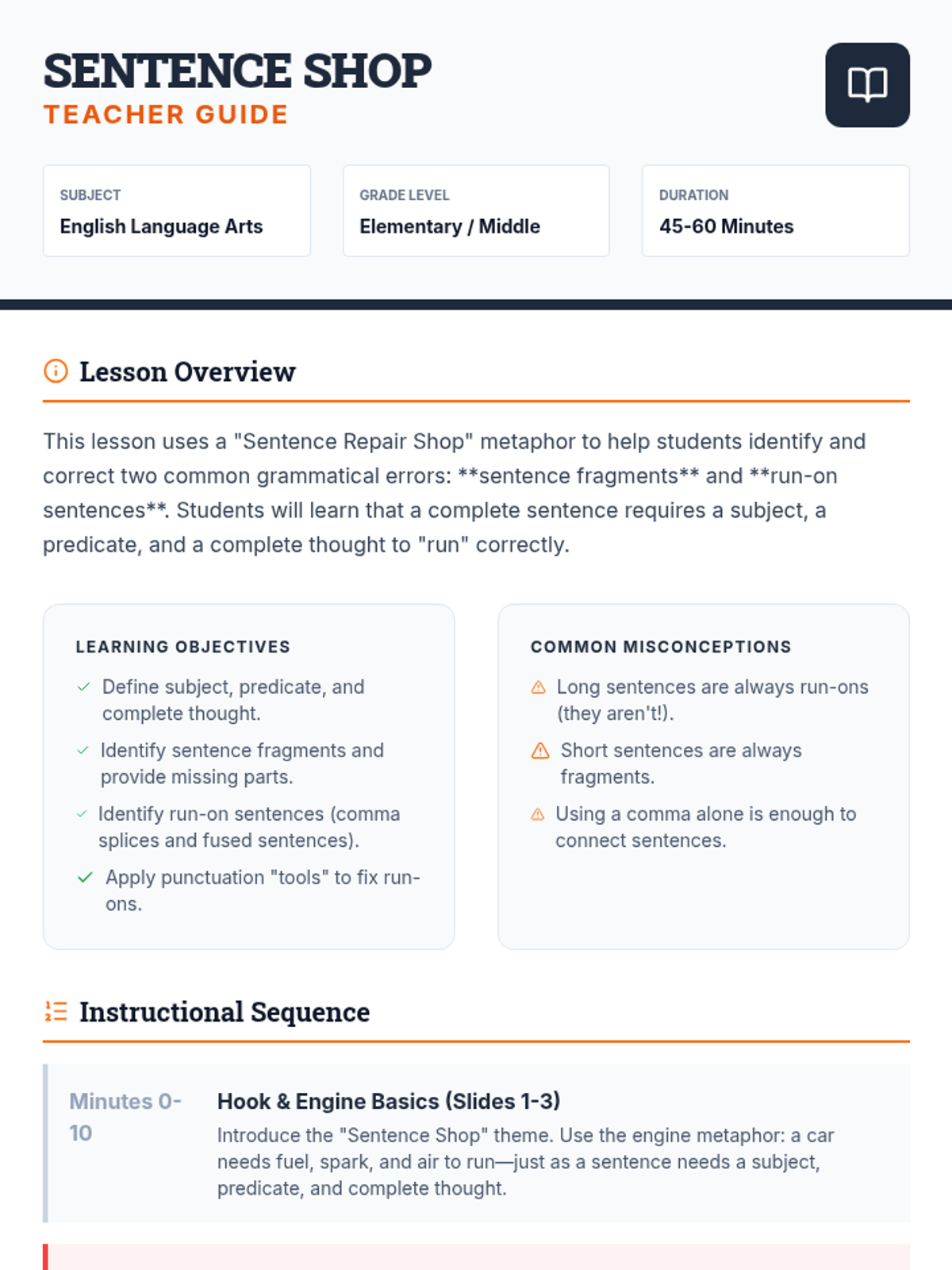
An introductory lesson on identifying and fixing sentence fragments and run-on sentences, themed around a 'Sentence Shop' repair garage.
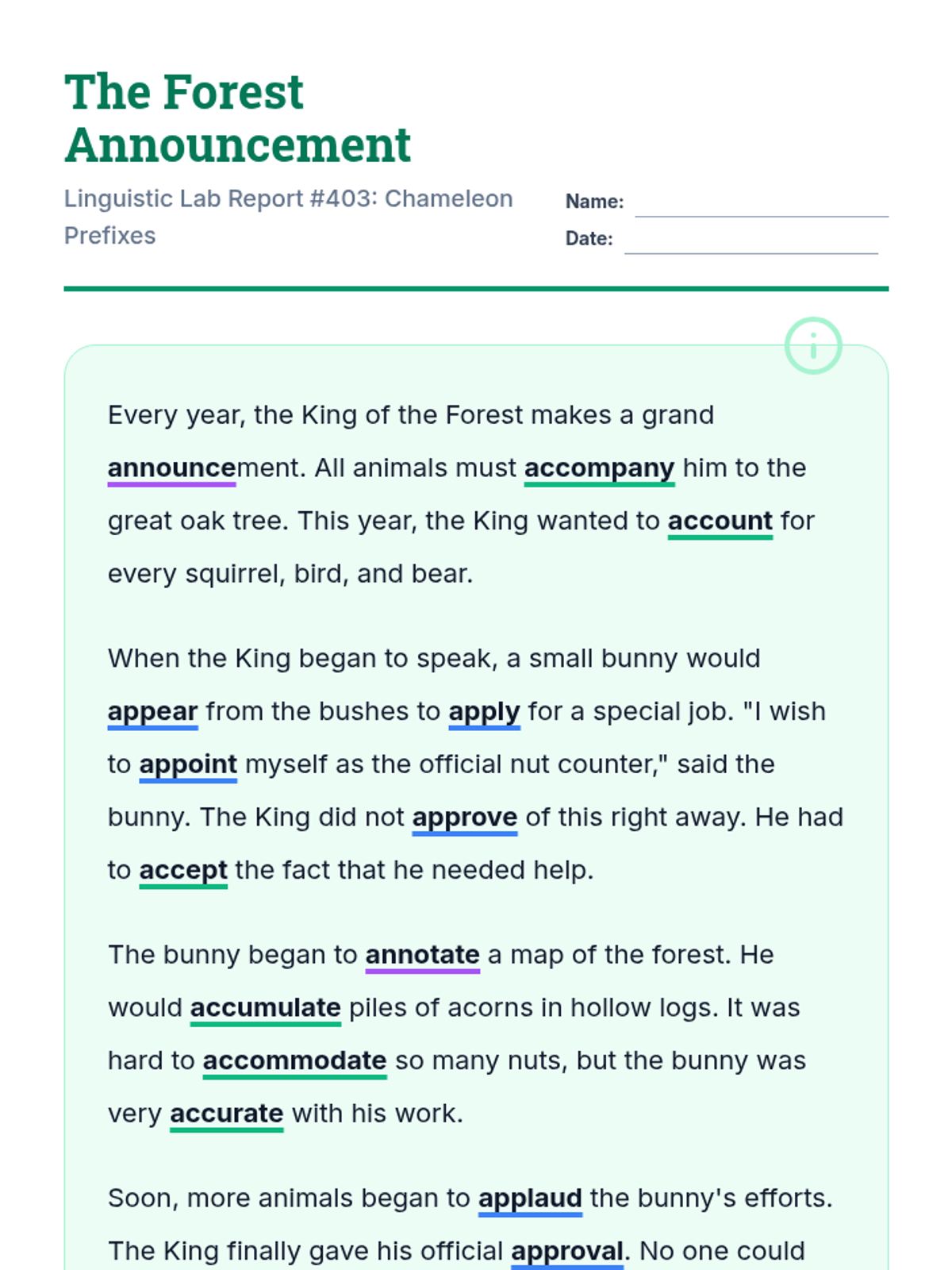
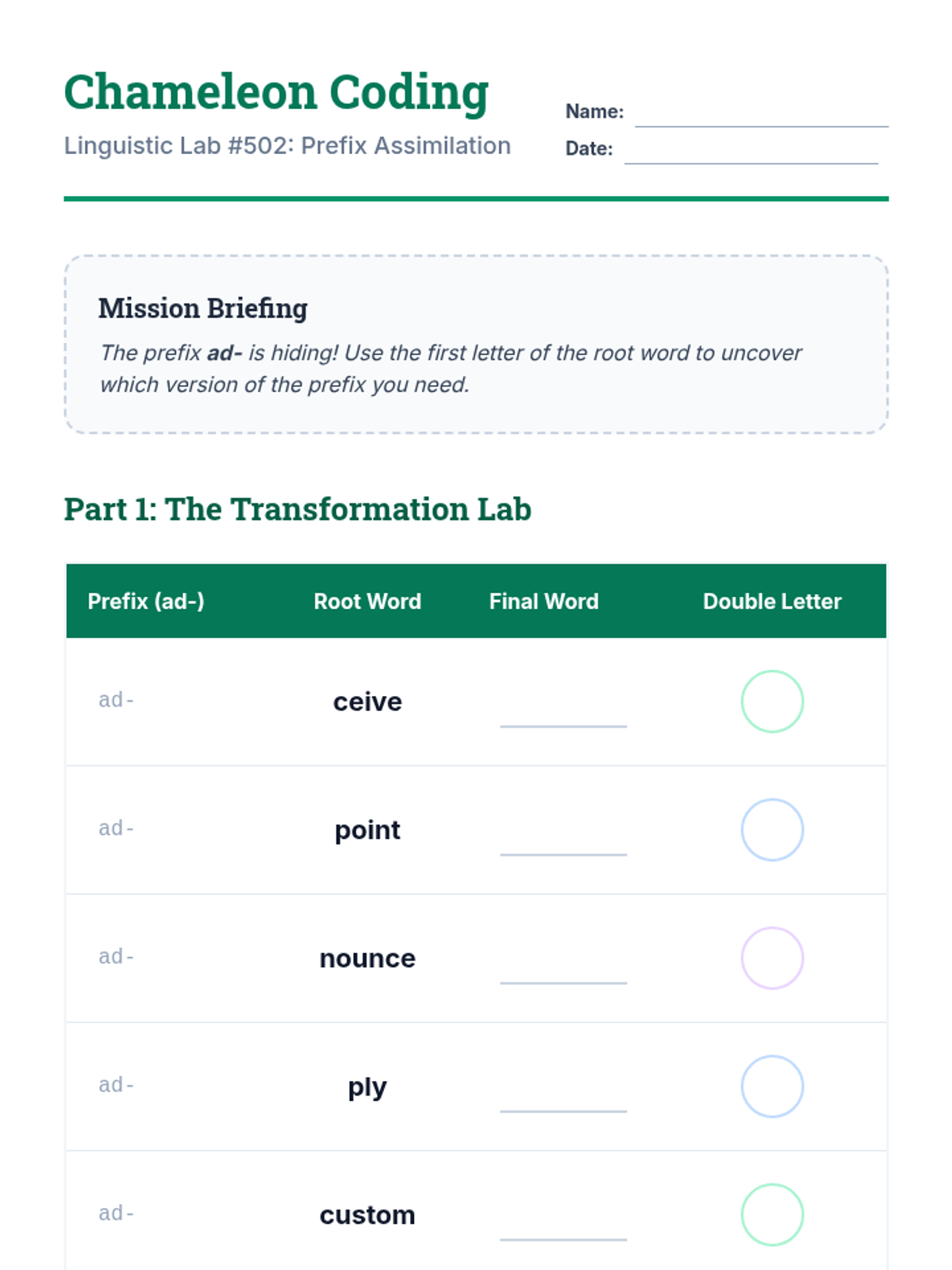
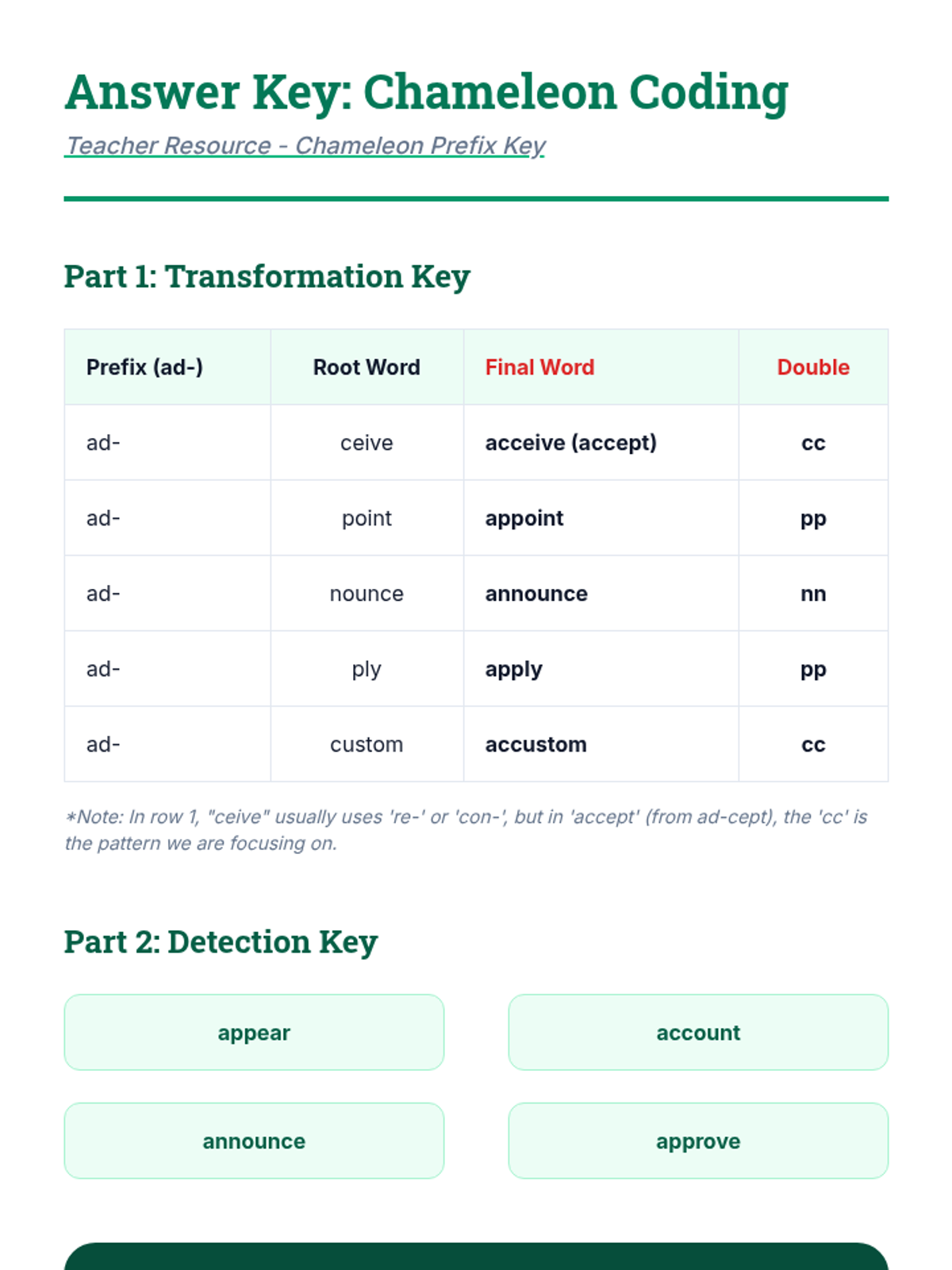
A lesson on "chameleon prefixes" (assimilated prefixes), specifically focusing on how the prefix 'ad-' changes to 'ac-', 'ap-', and 'an-' to match the root word.
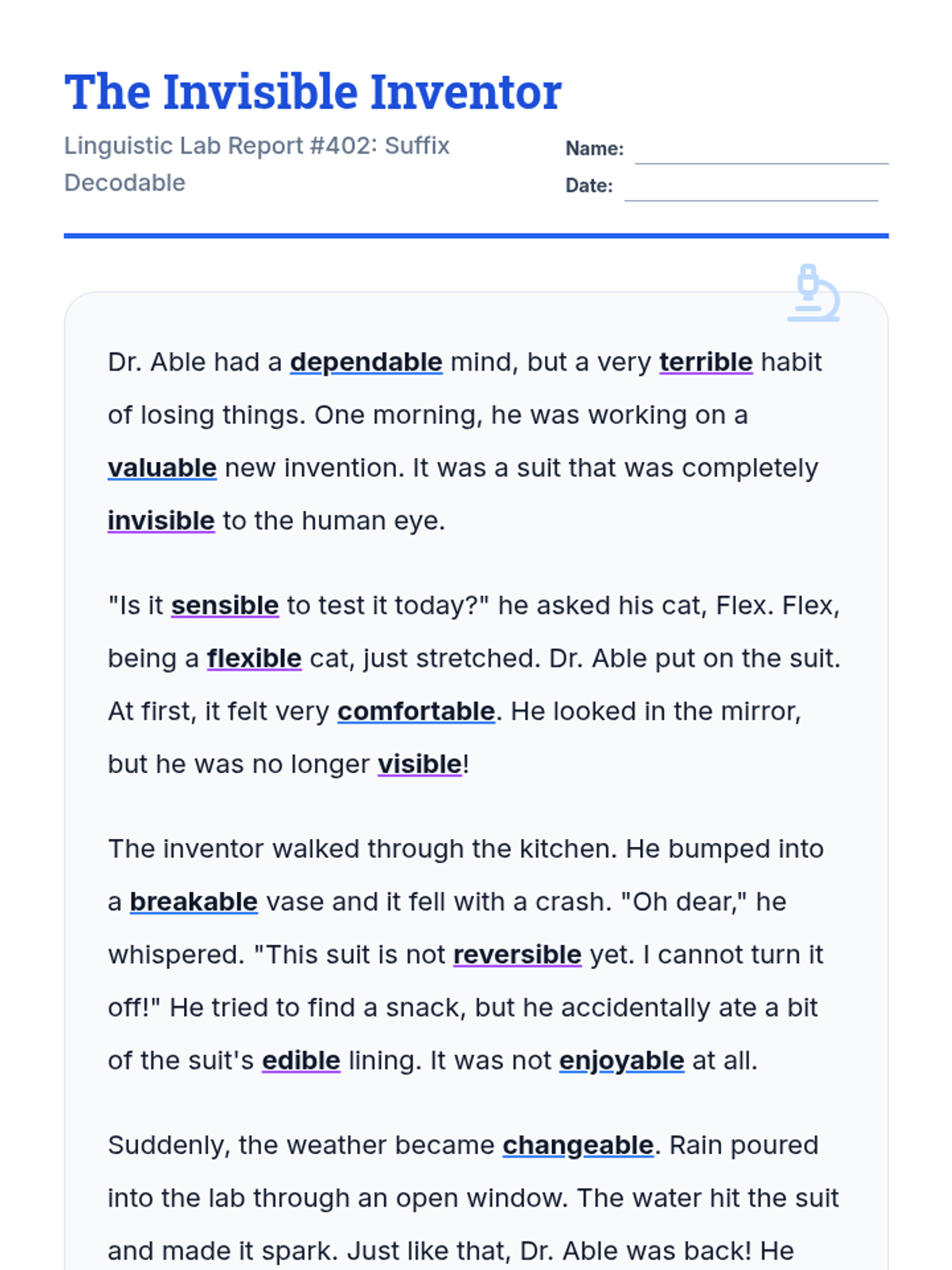
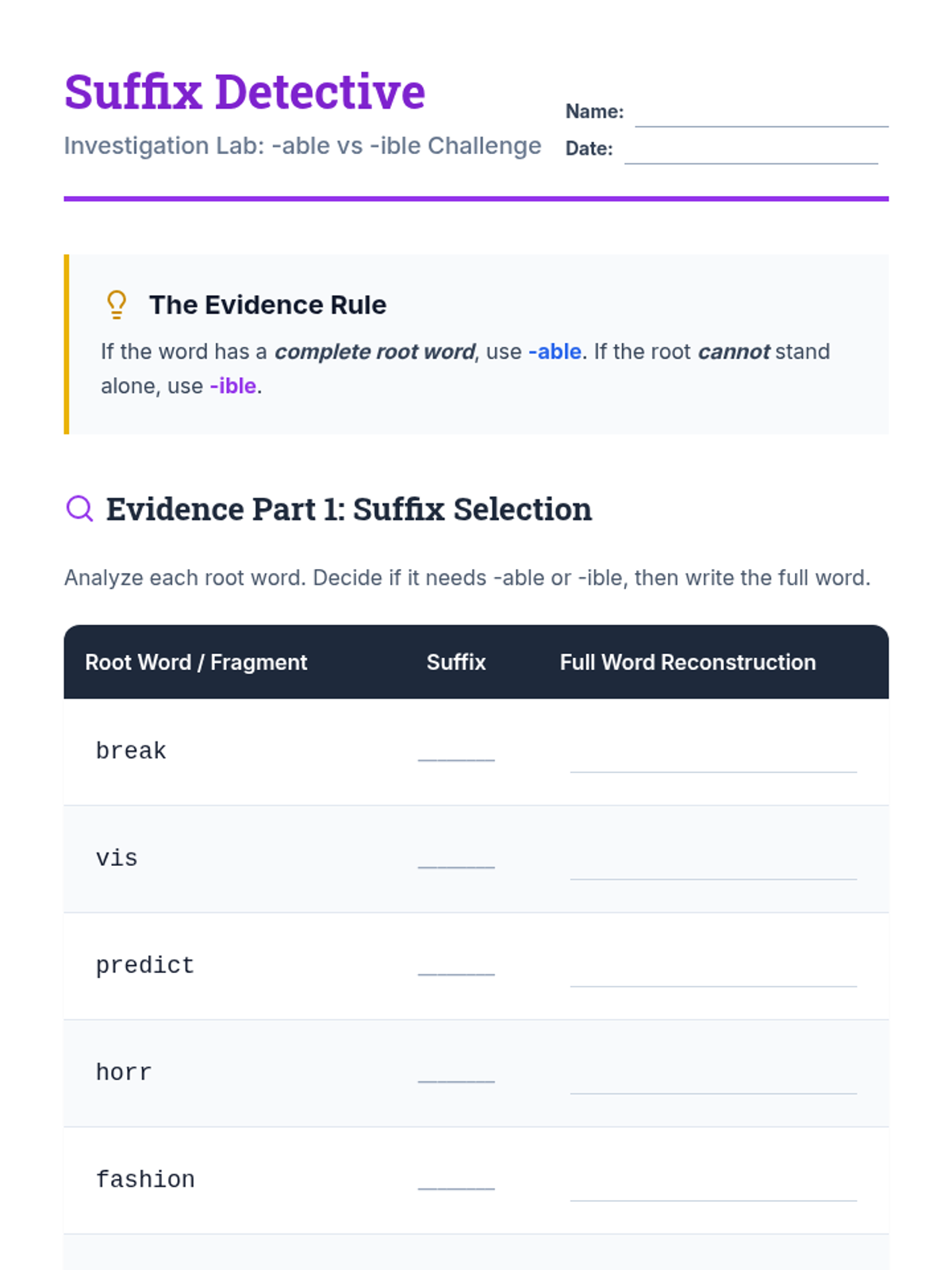
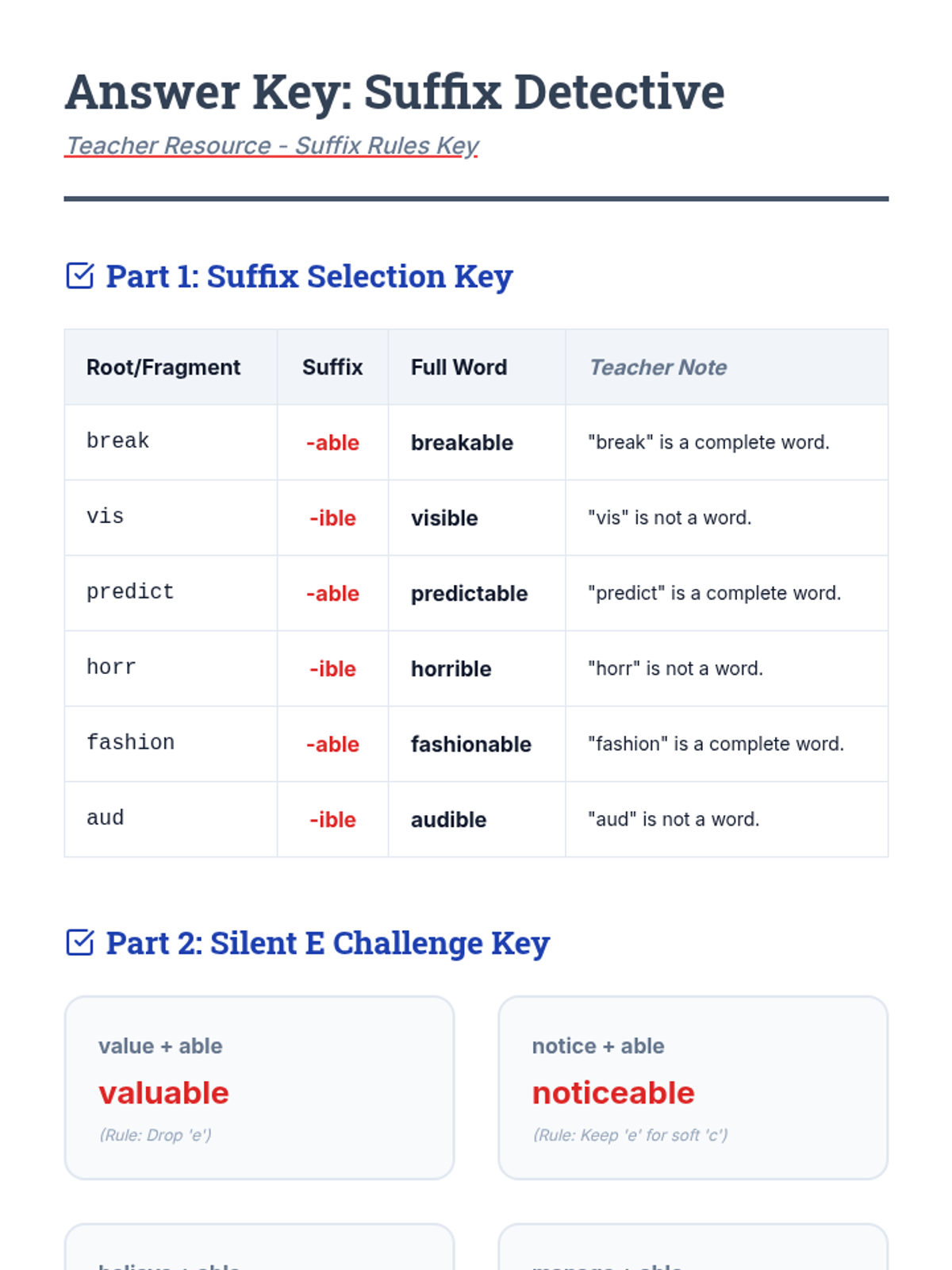
A lesson focused on the spelling rules for the assimilated suffixes -ible and -able, teaching students how to identify complete root words to determine the correct spelling.
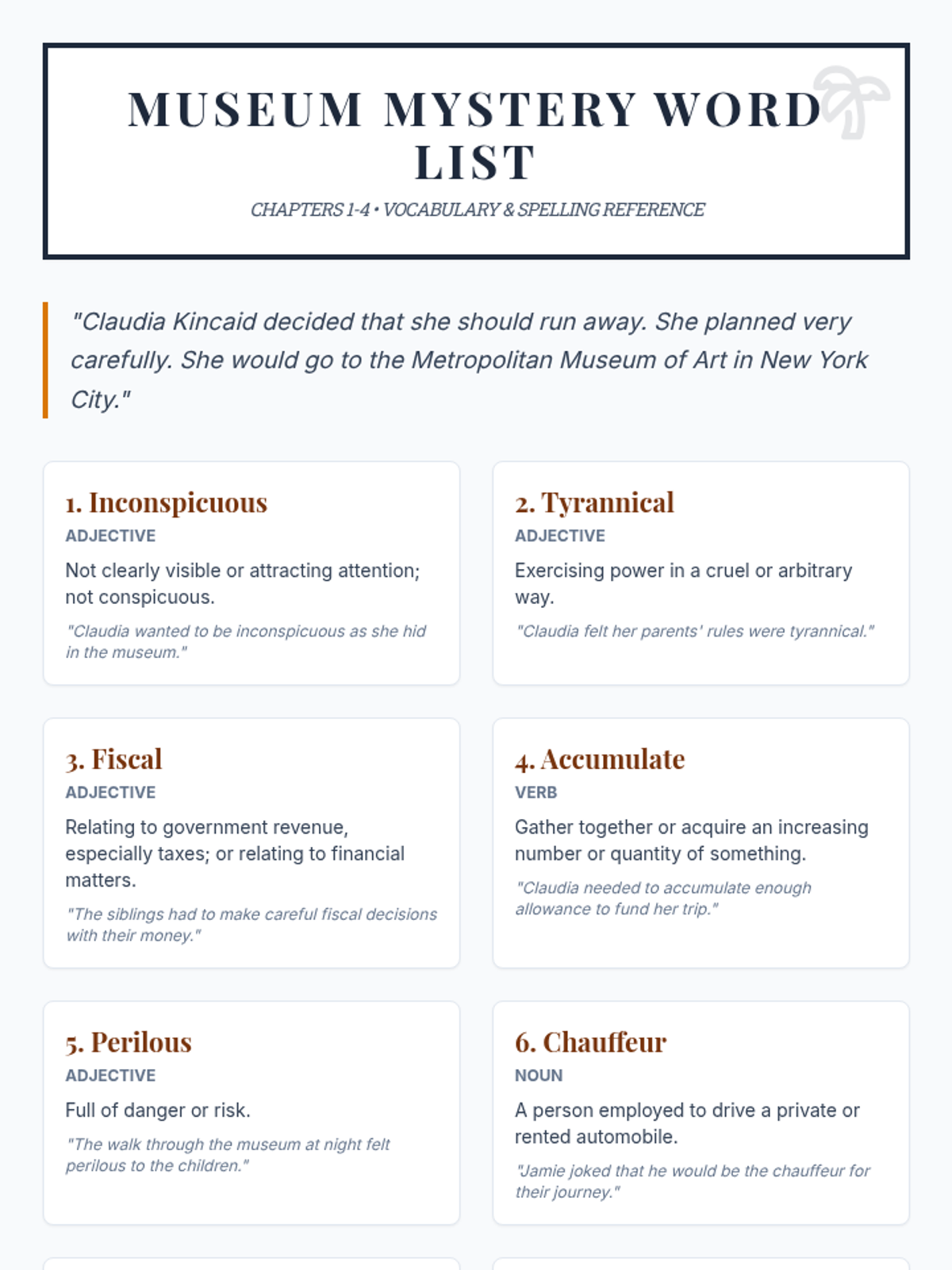
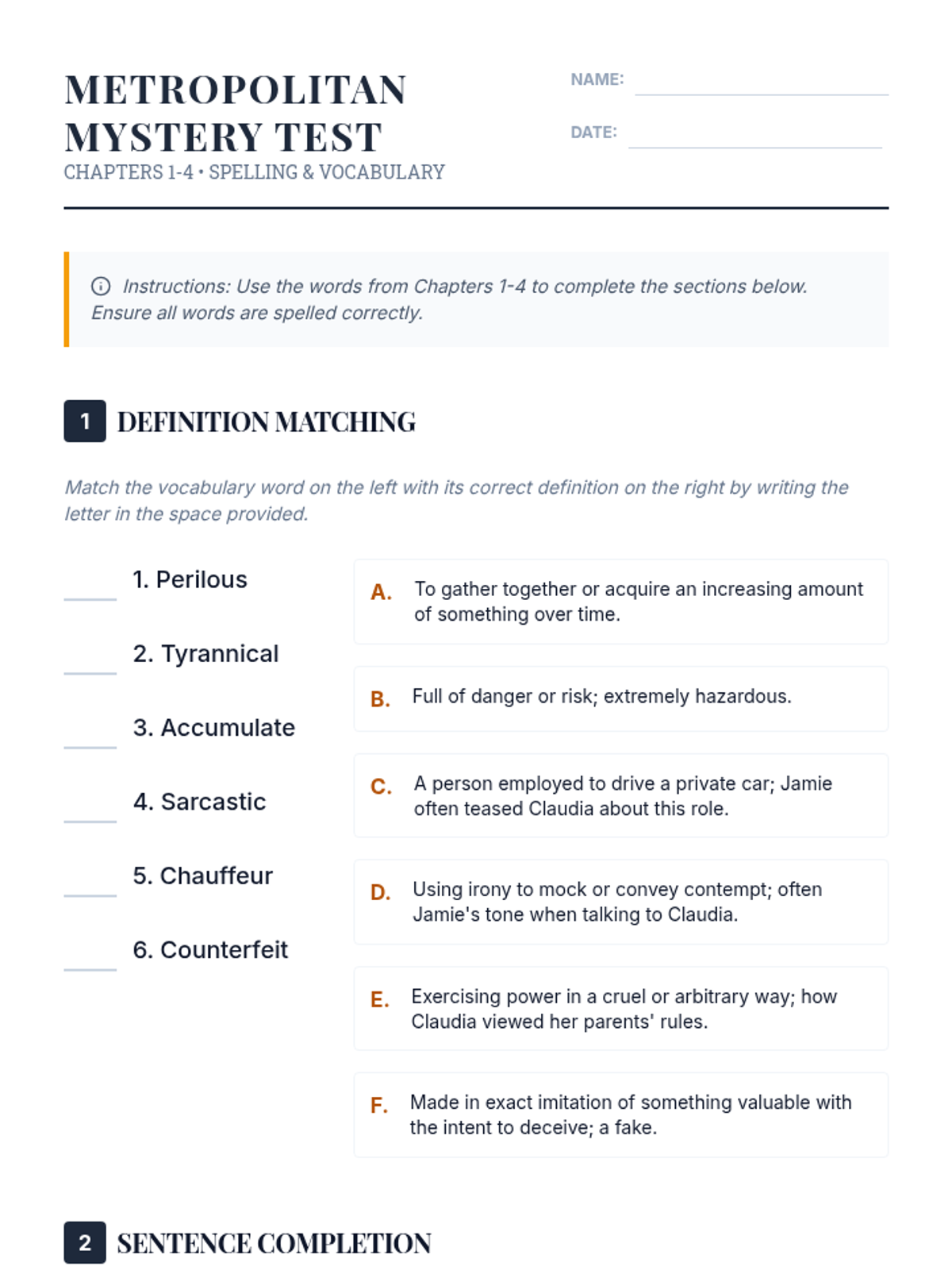
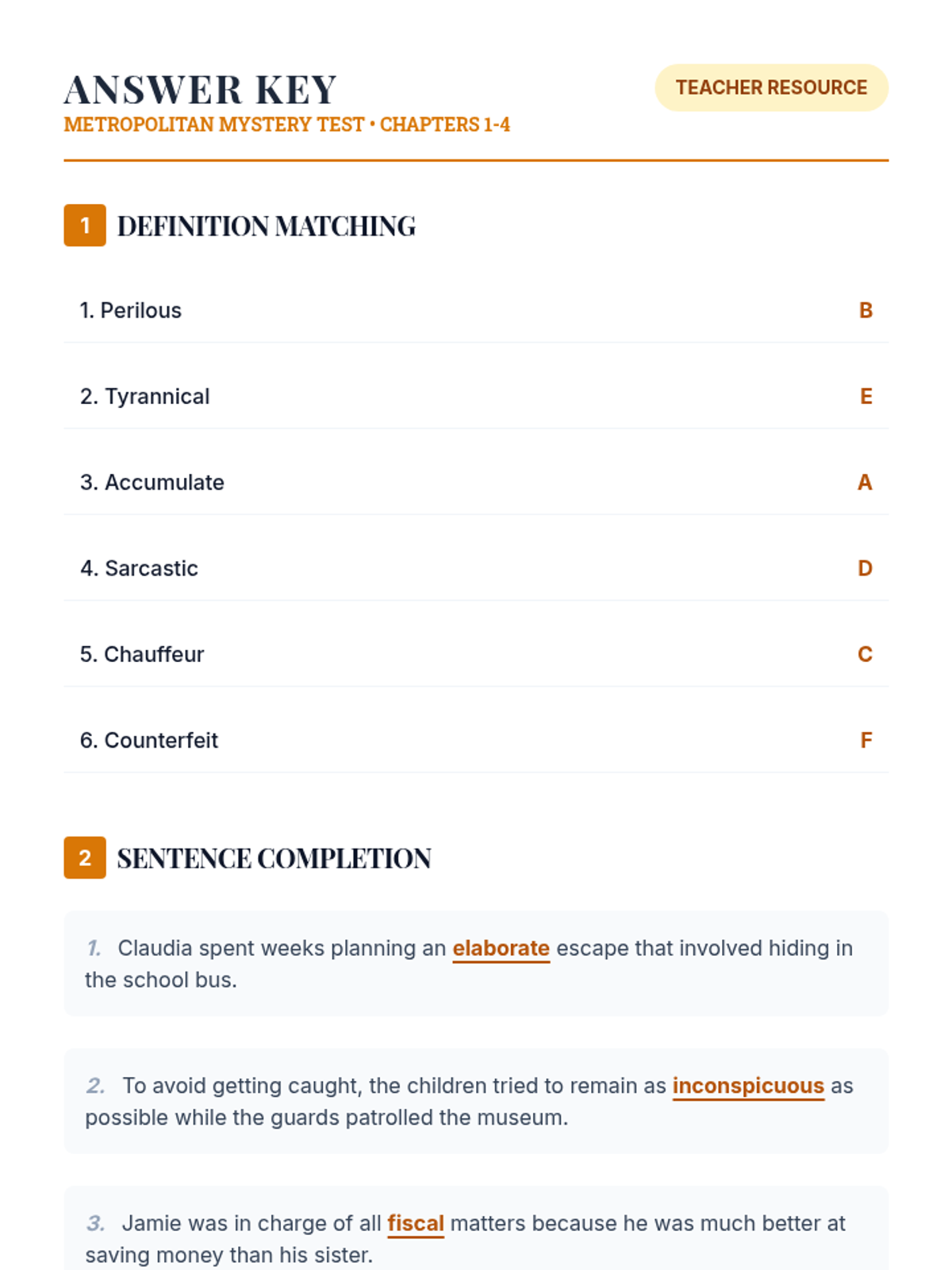
A spelling and vocabulary unit based on Chapters 1-4 of 'From the Mixed-Up Files of Mrs. Basil E. Frankweiler', focusing on Claudia and Jamie's secret adventure in the Metropolitan Museum of Art.
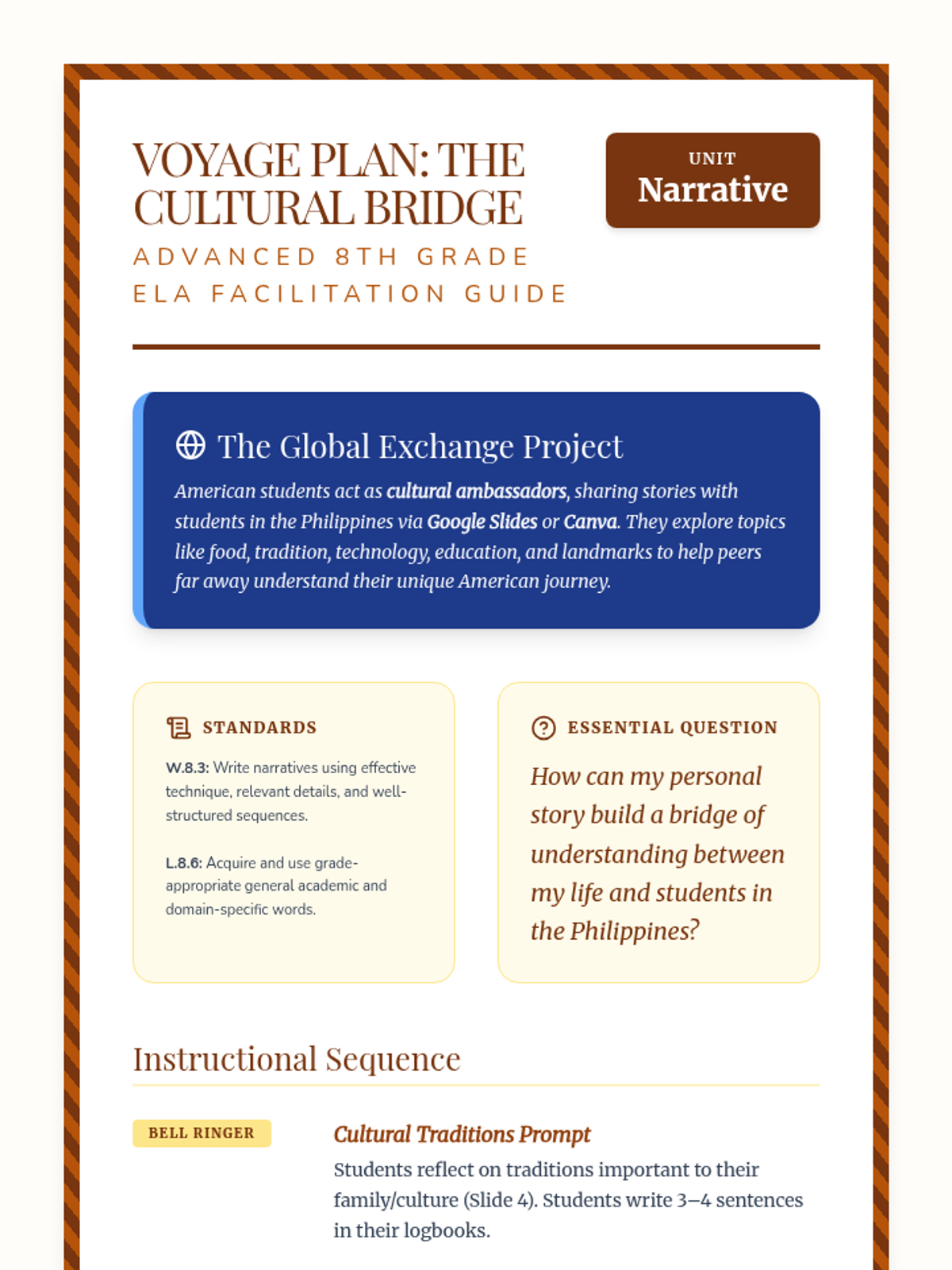
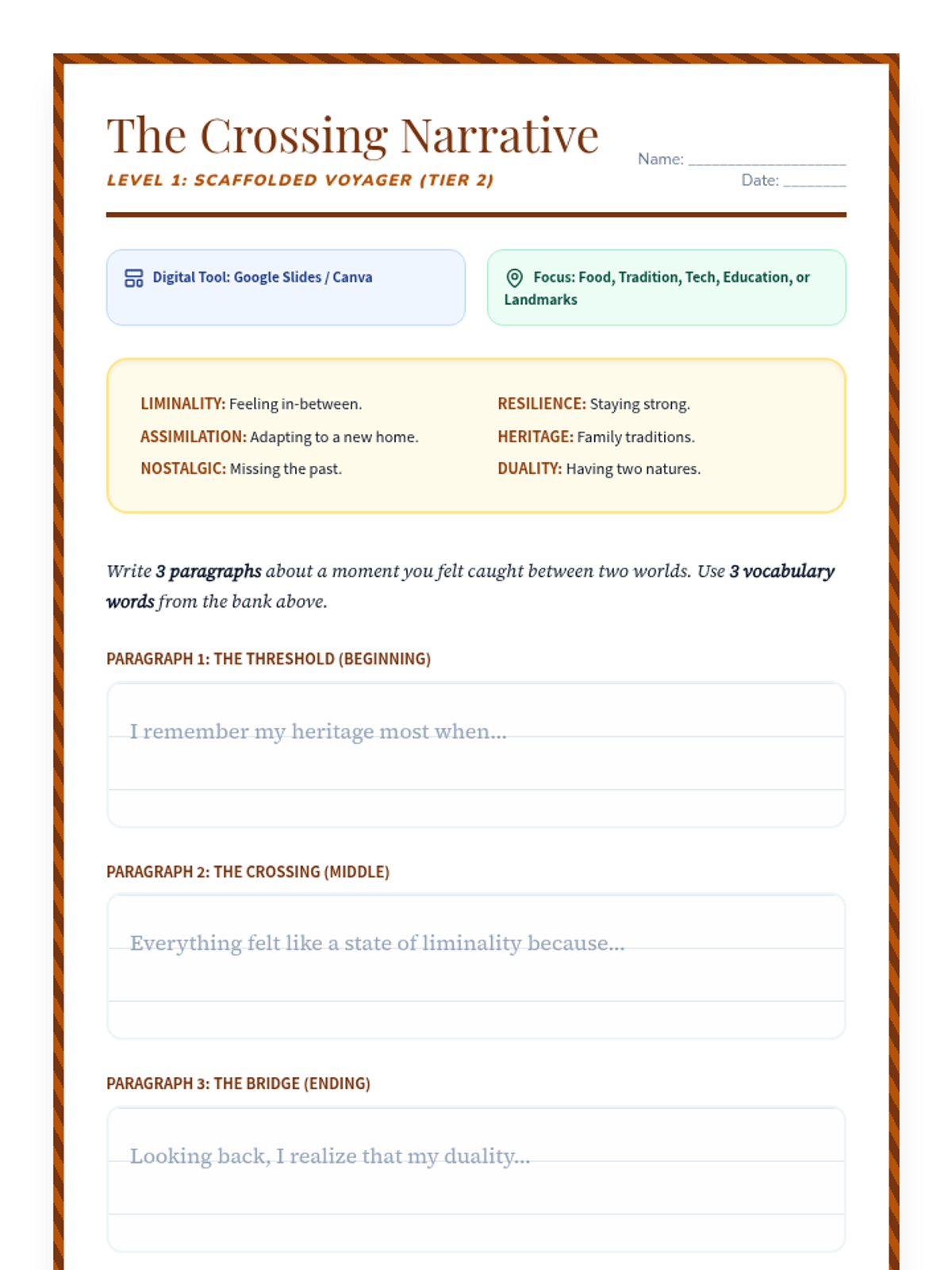
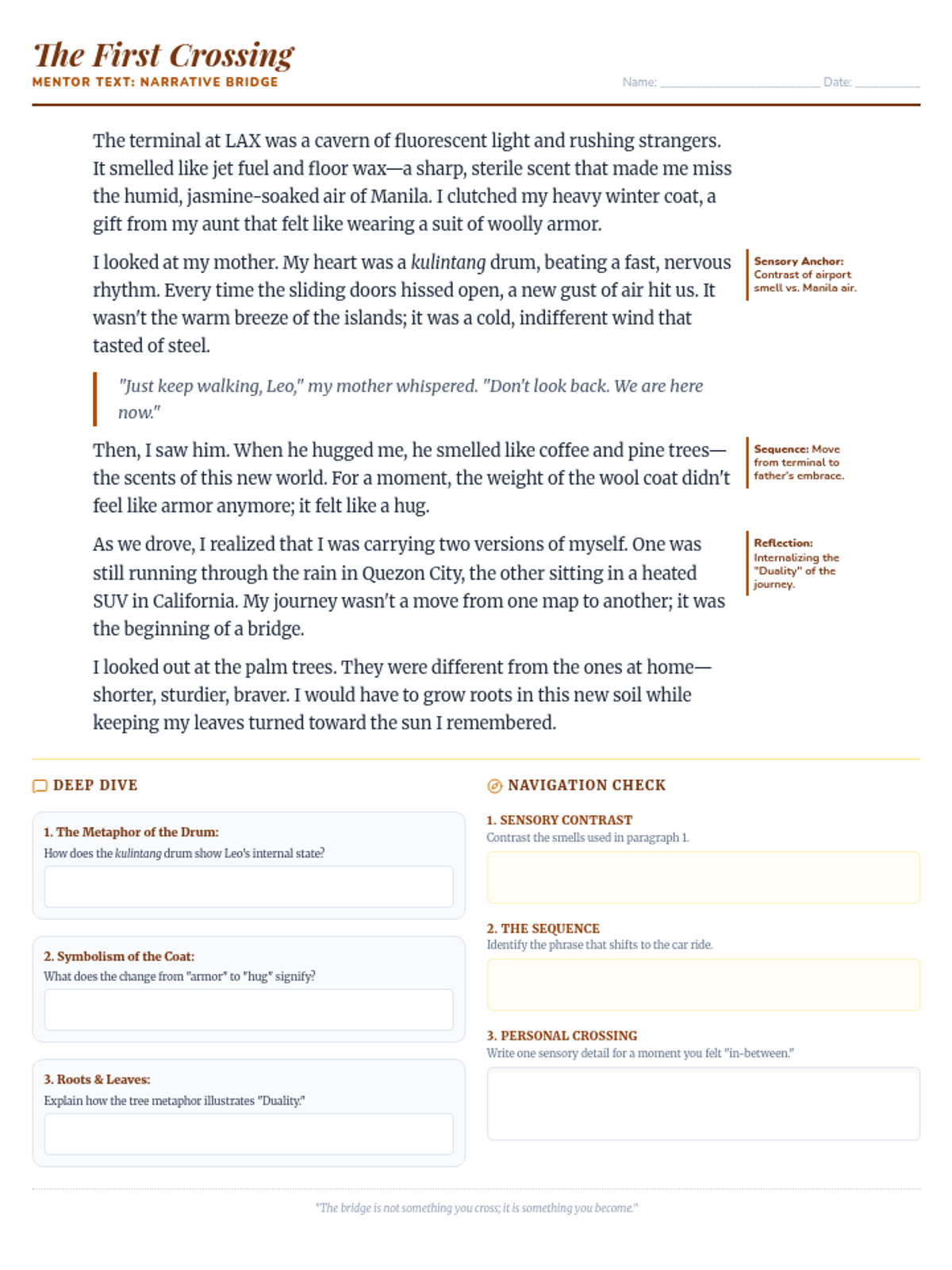
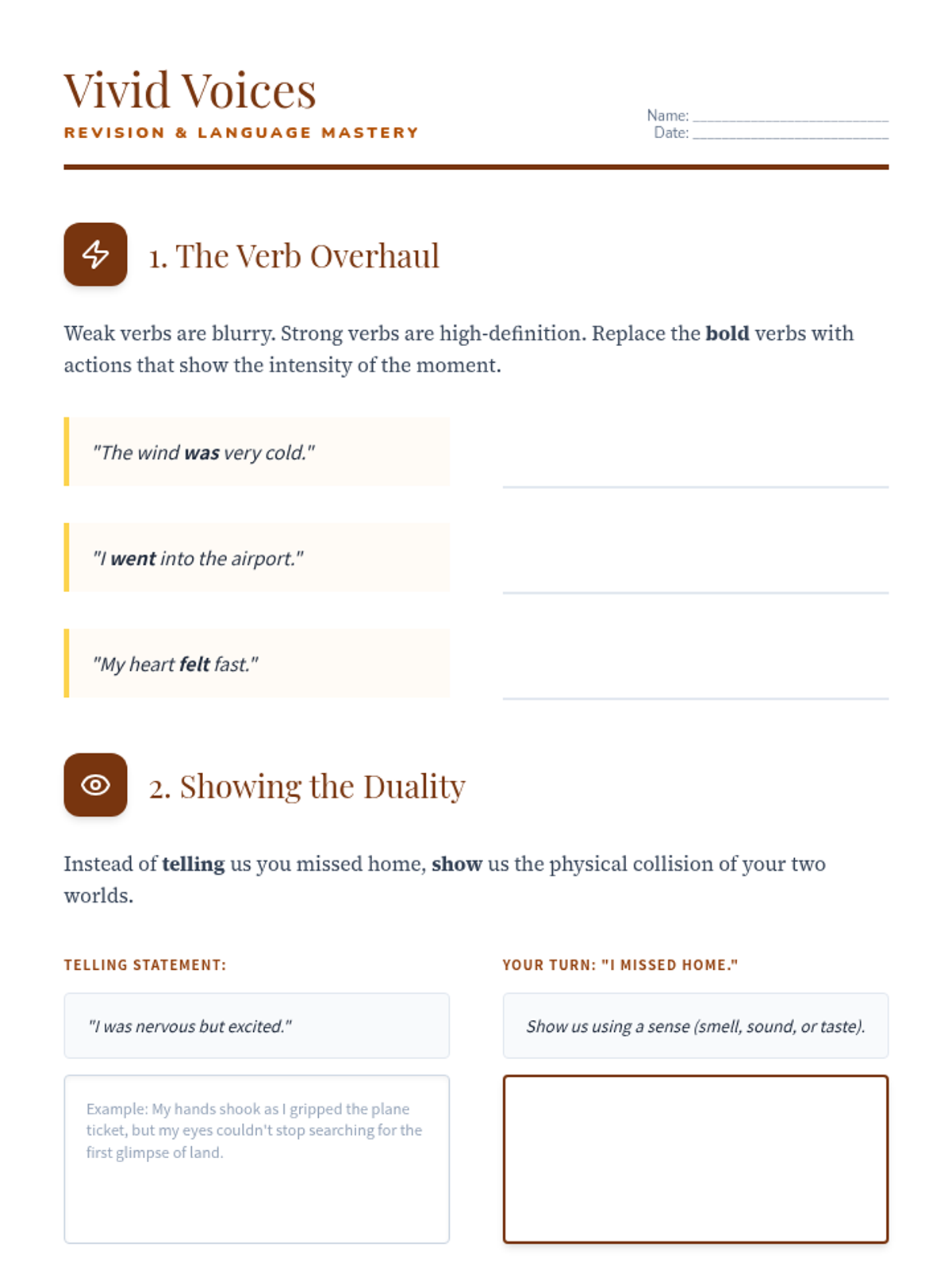
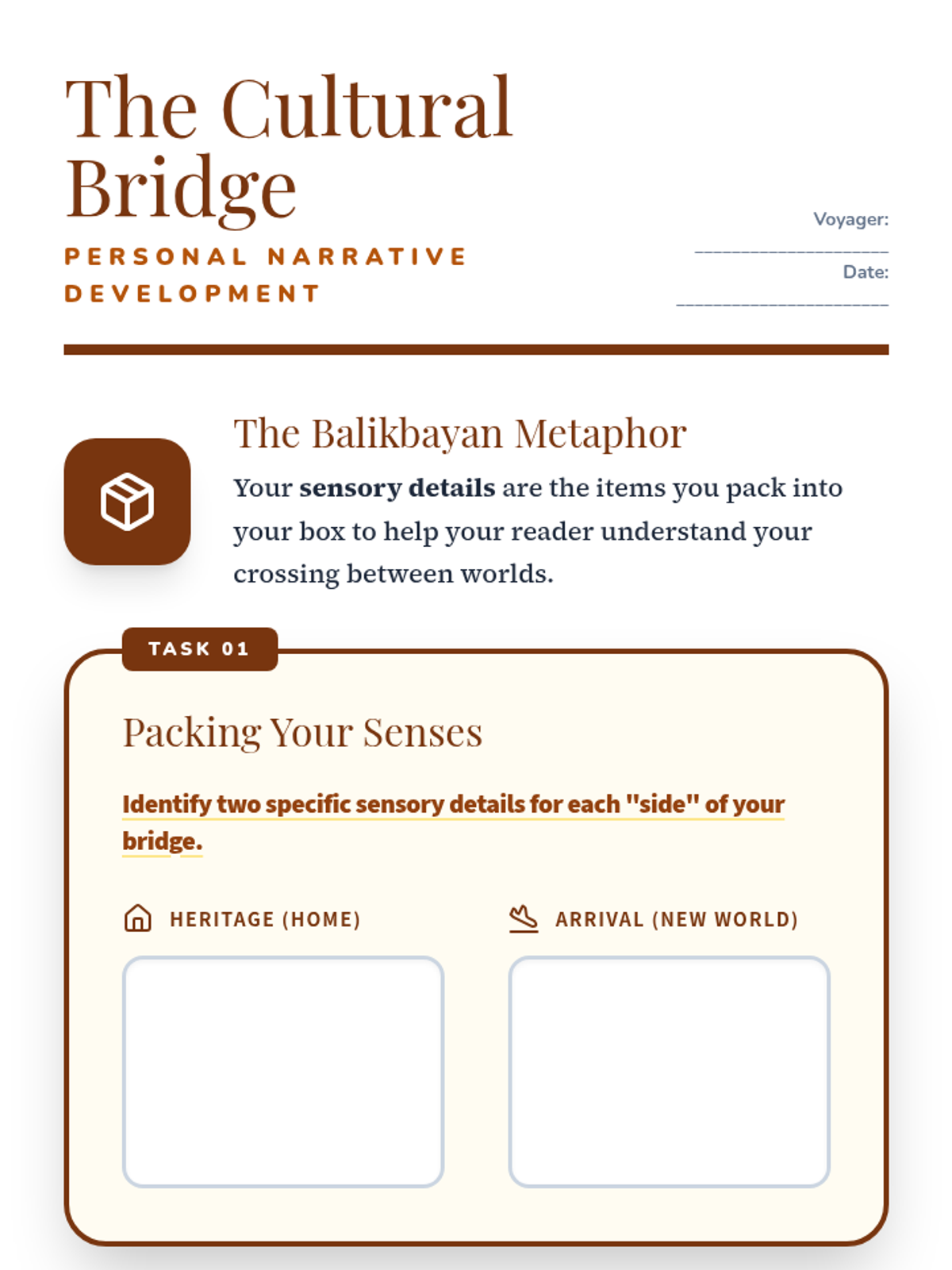
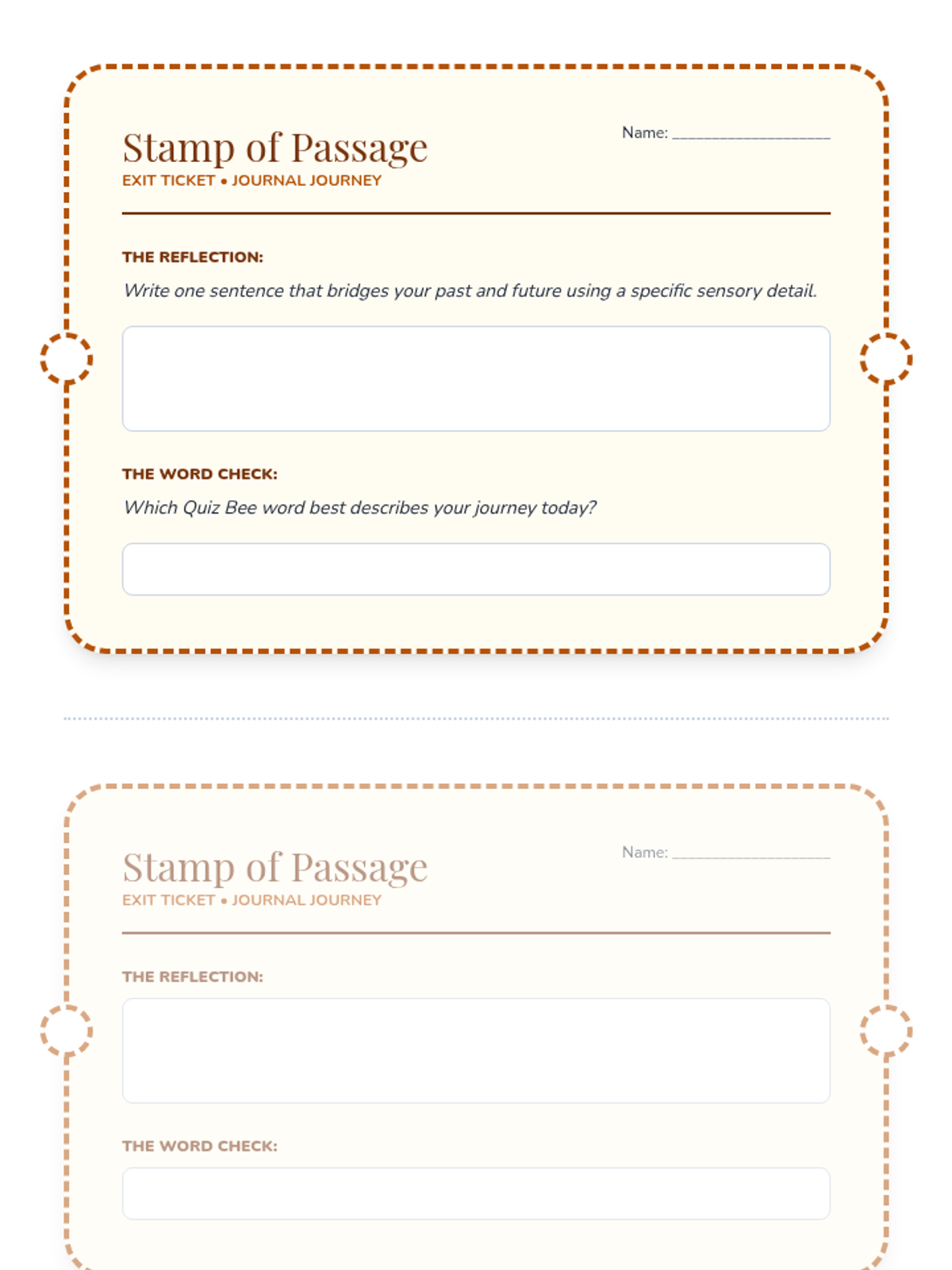
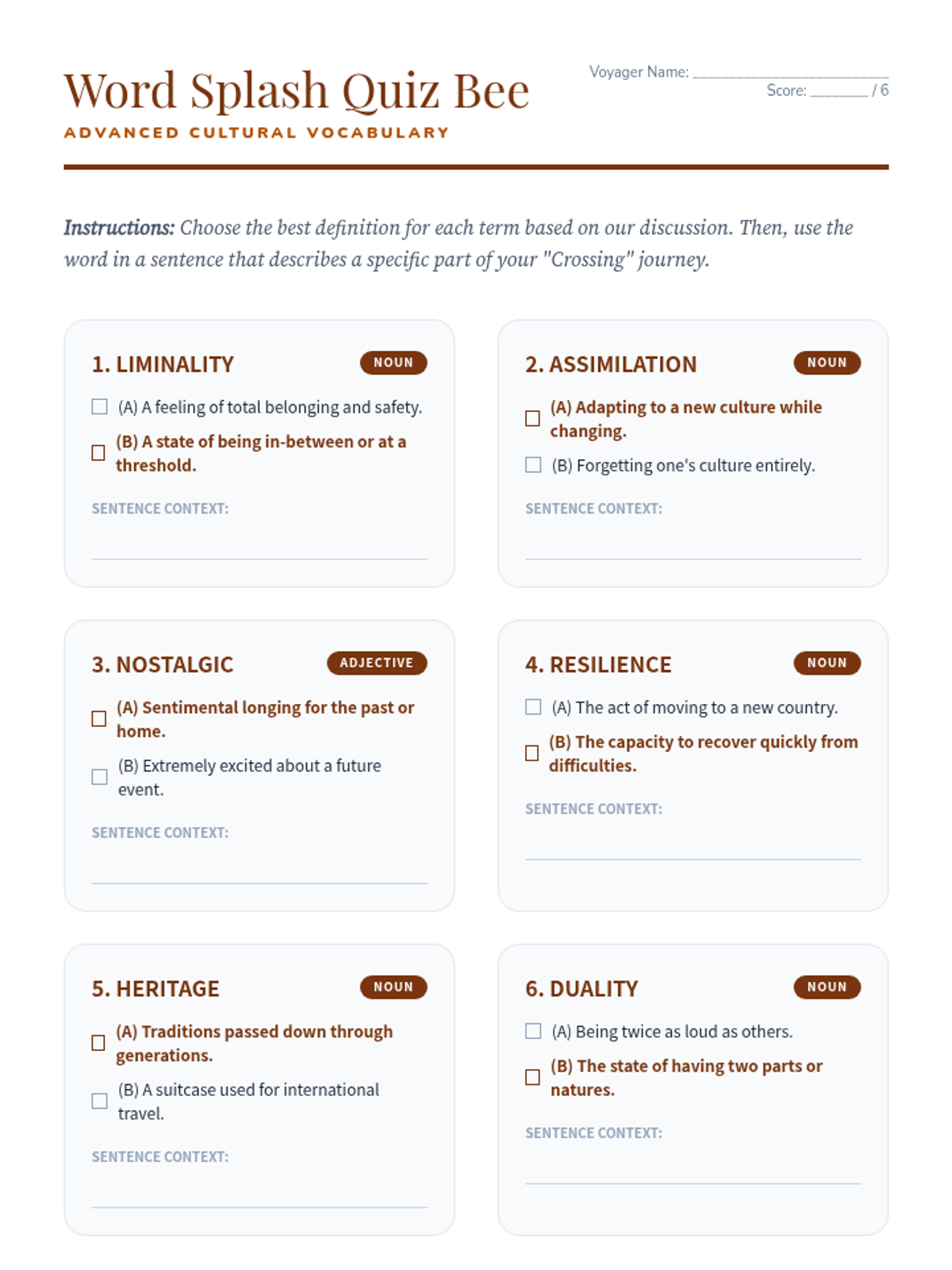
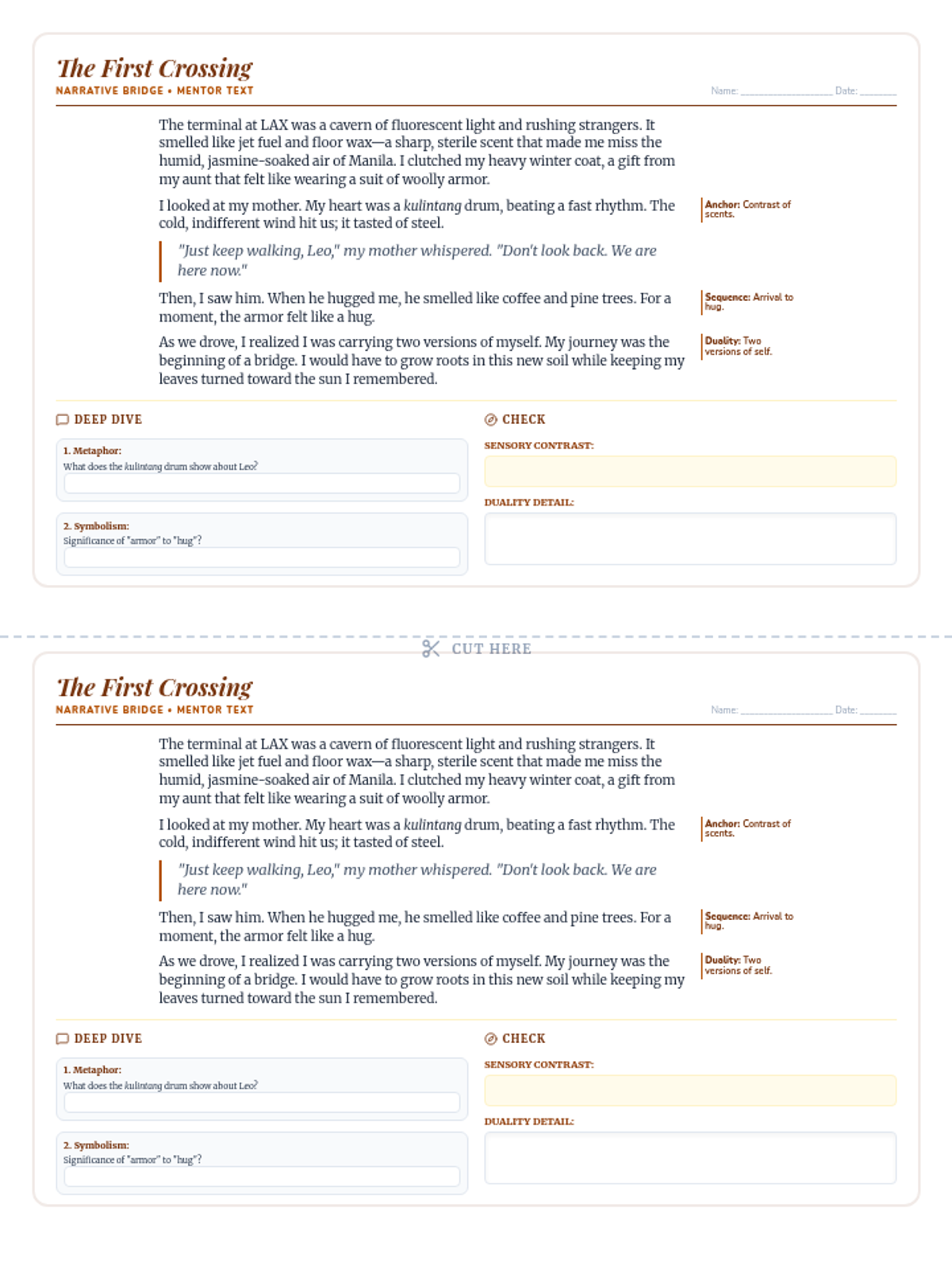
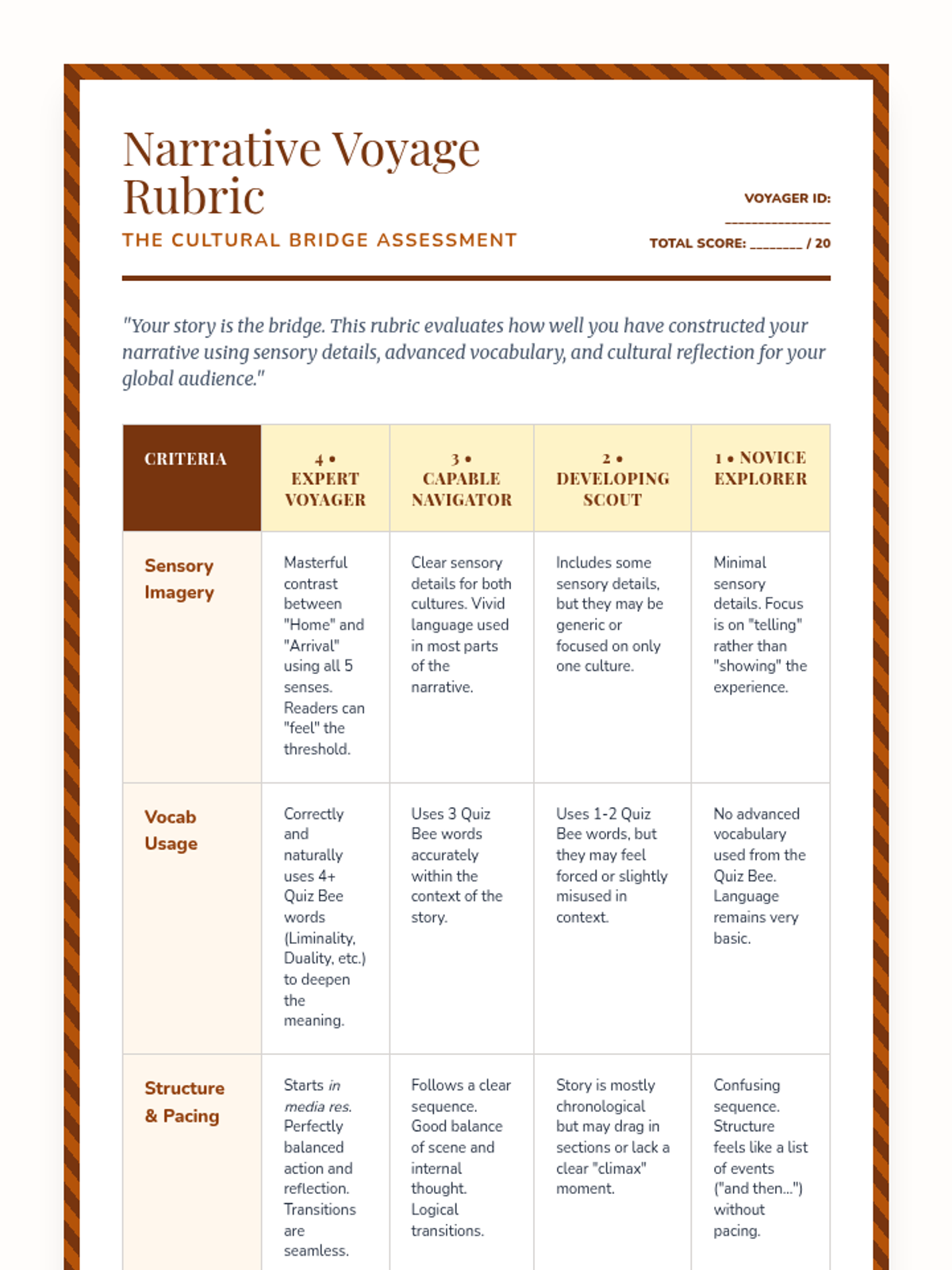
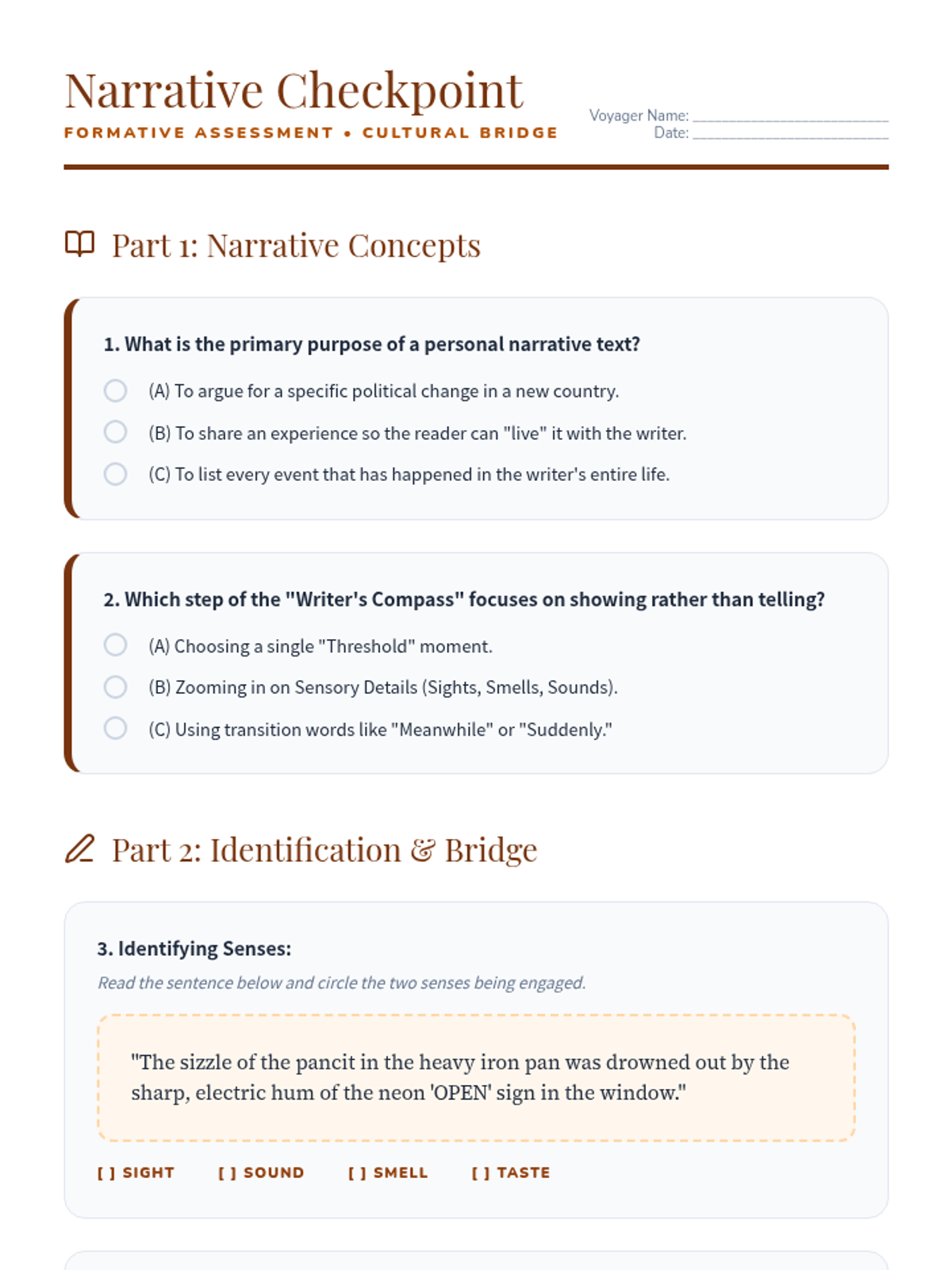
An advanced 8th-grade ELA lesson exploring the intersection of Filipino and American identities through personal narrative. Students analyze the immigrant experience, master advanced vocabulary via a 'Quiz Bee,' and draft narratives that bridge their cultural heritage with their current journey.
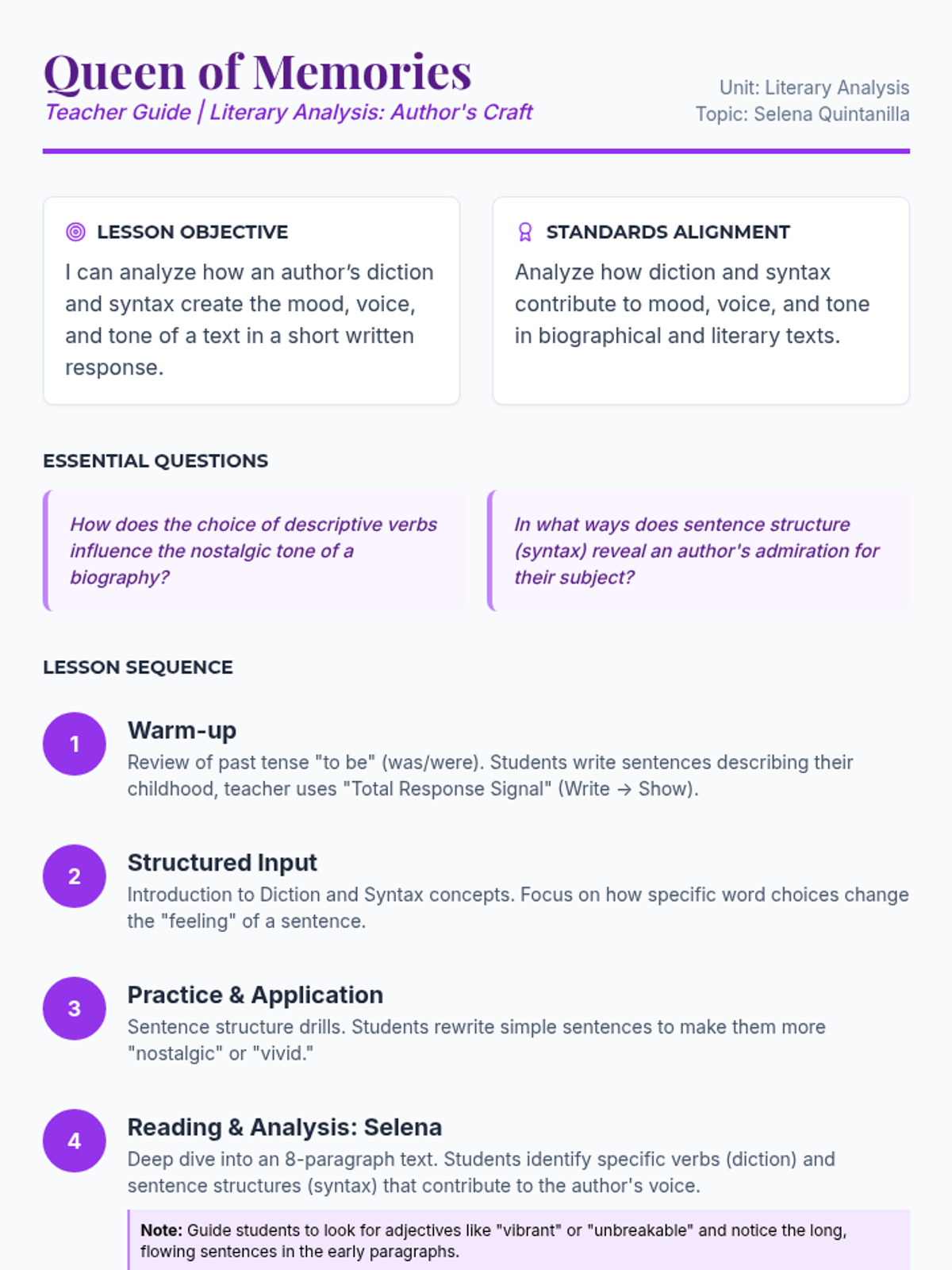
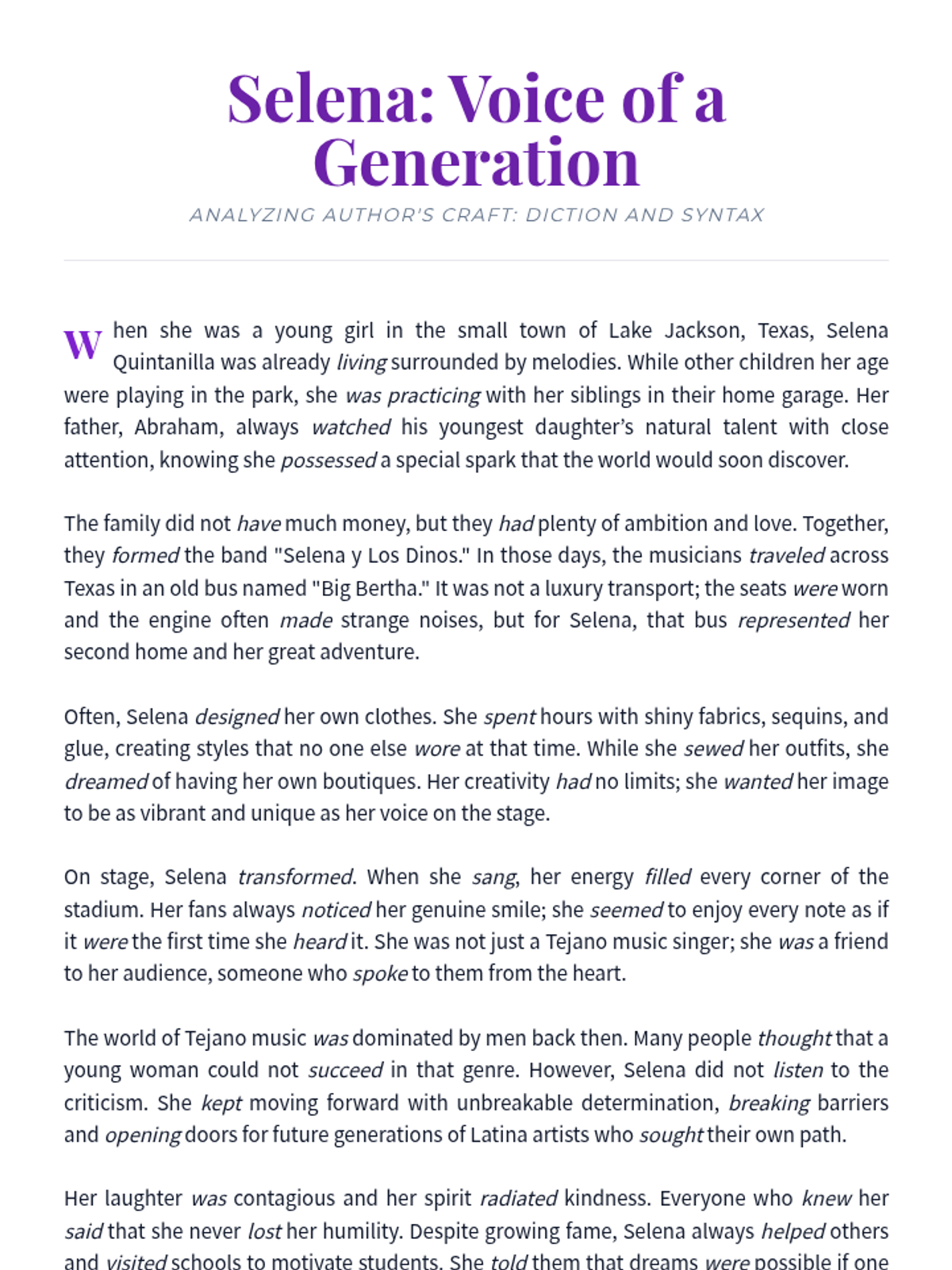
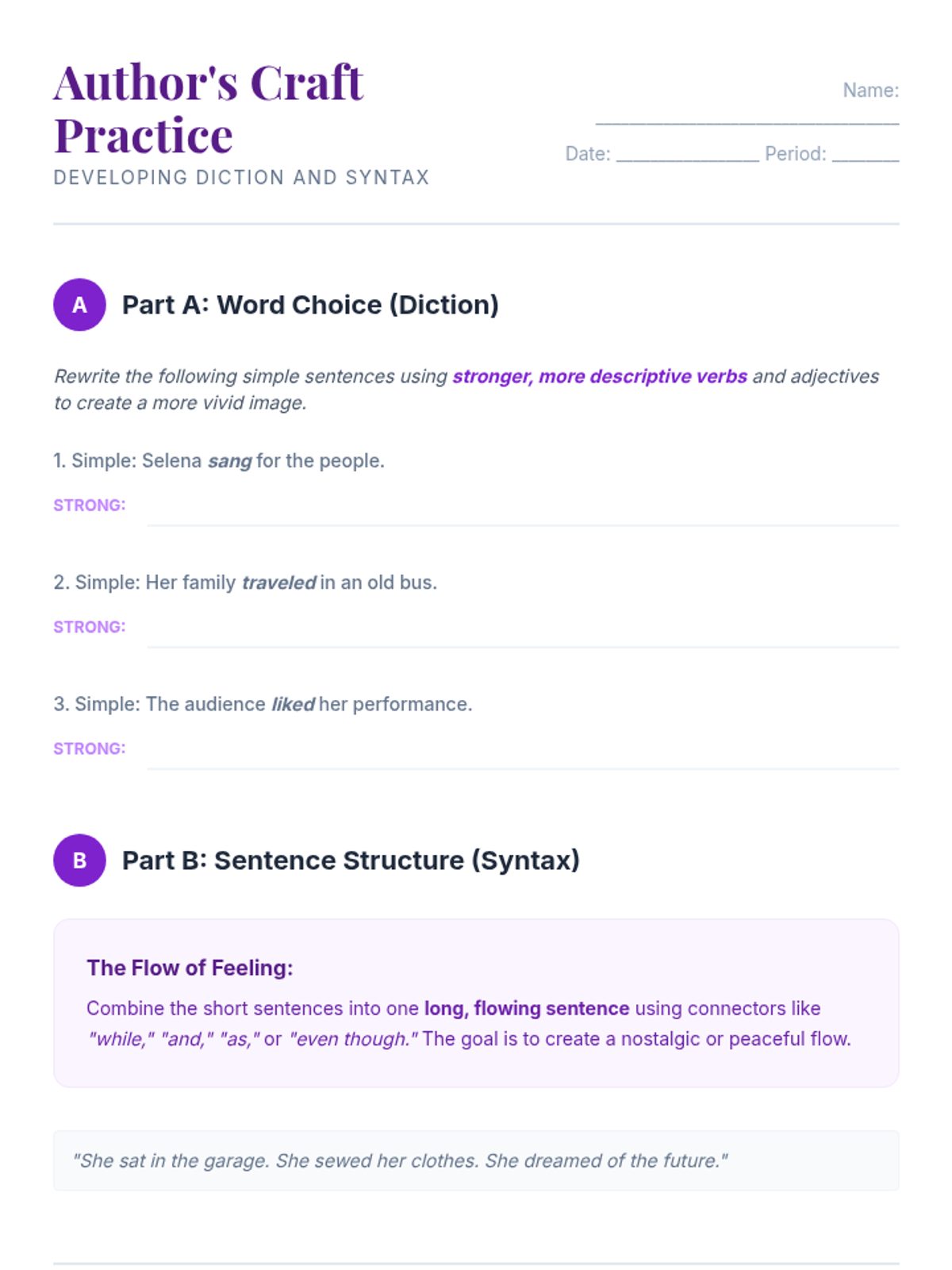
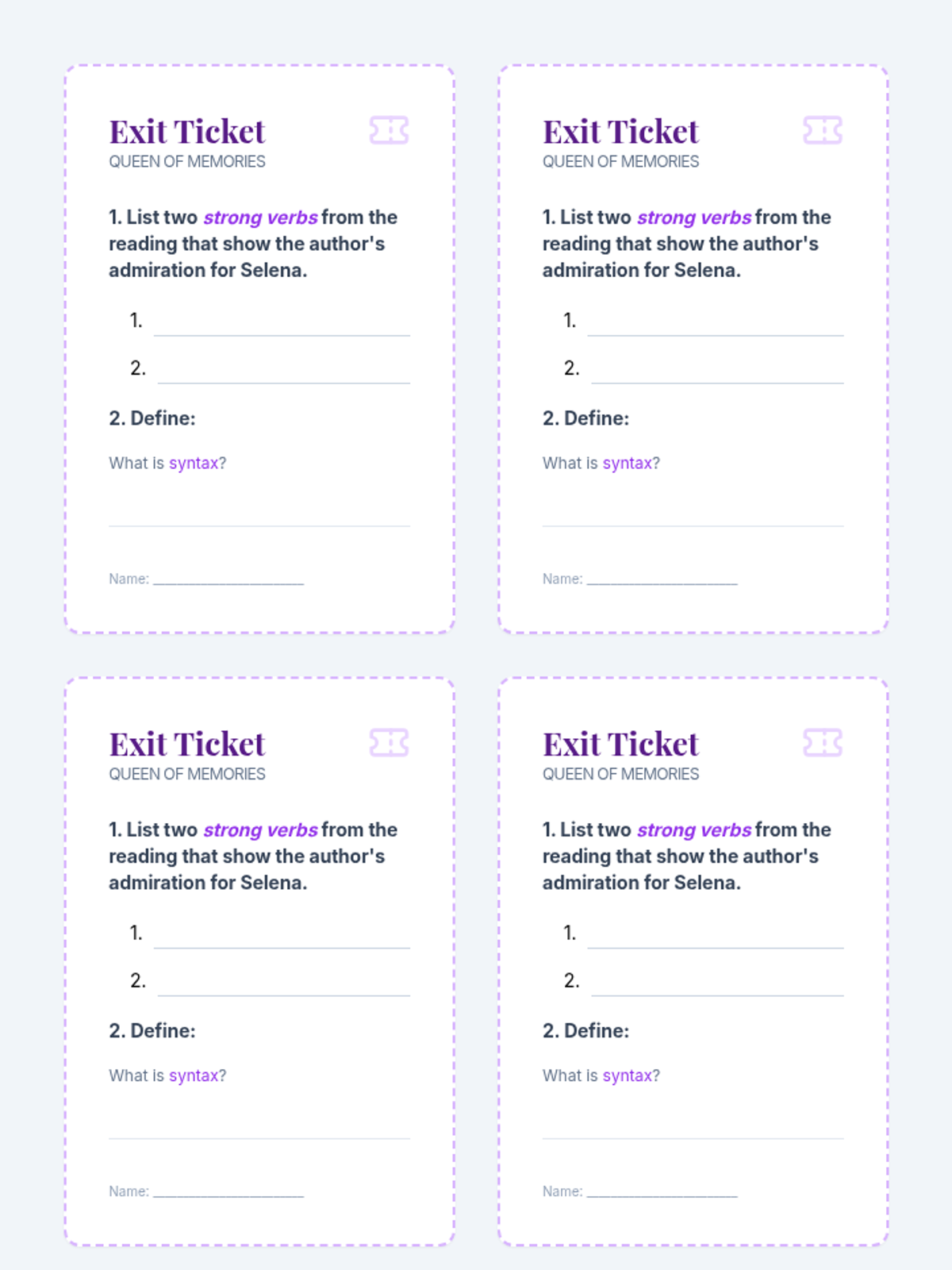
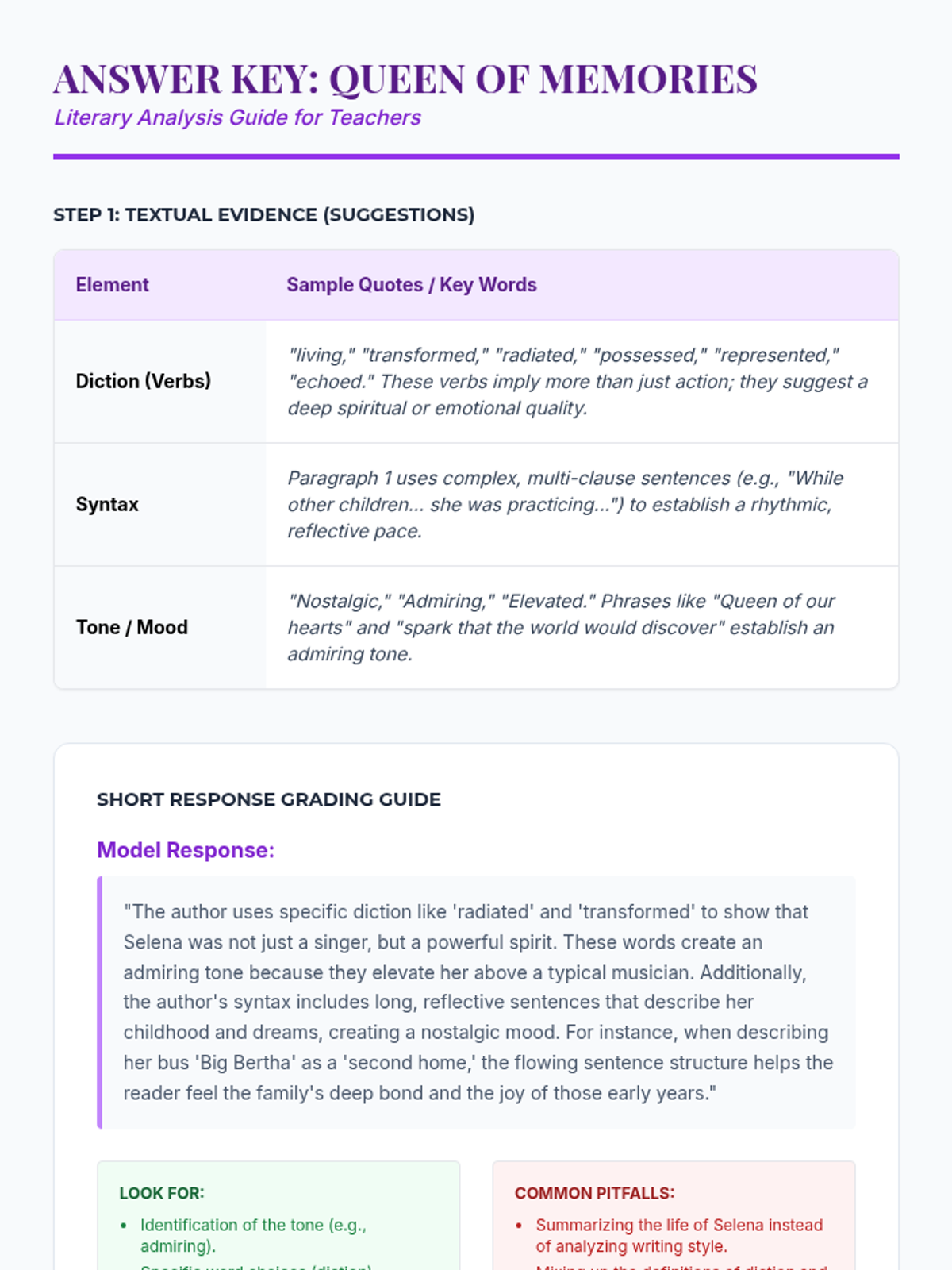
A lesson focused on the life of Selena Quintanilla, using the past tense to analyze how an author's diction and syntax build mood and tone in a biographical text.
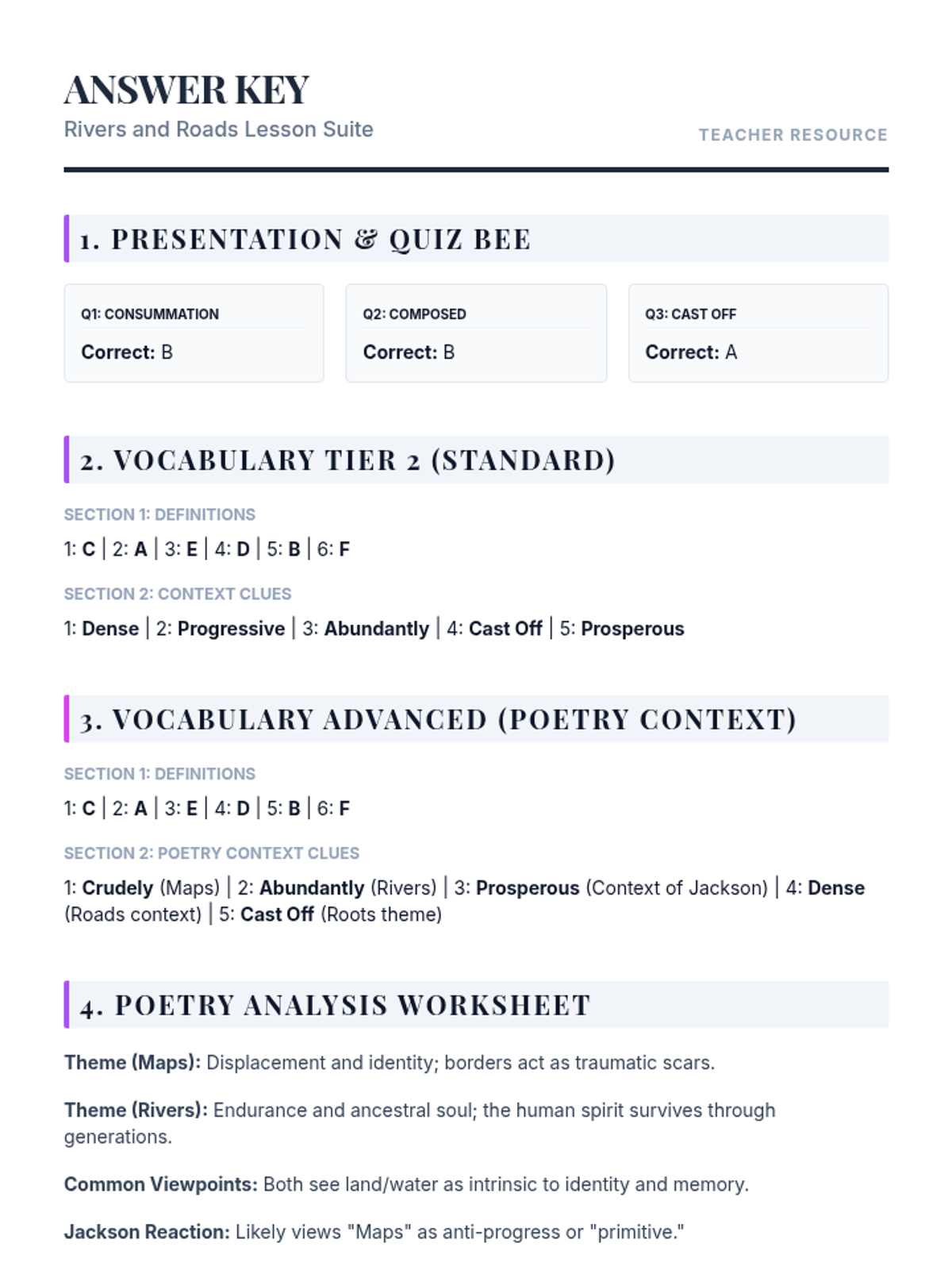
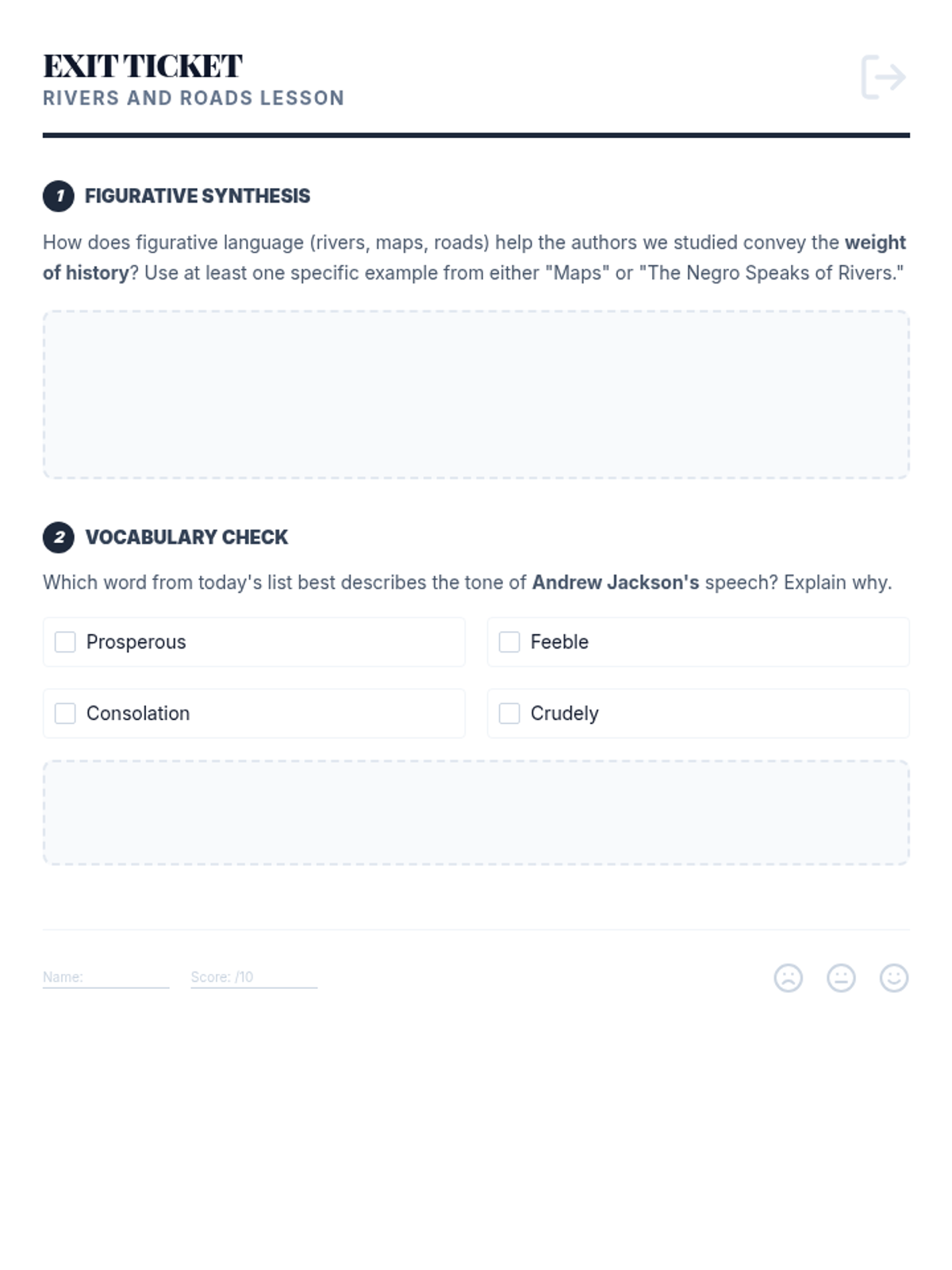
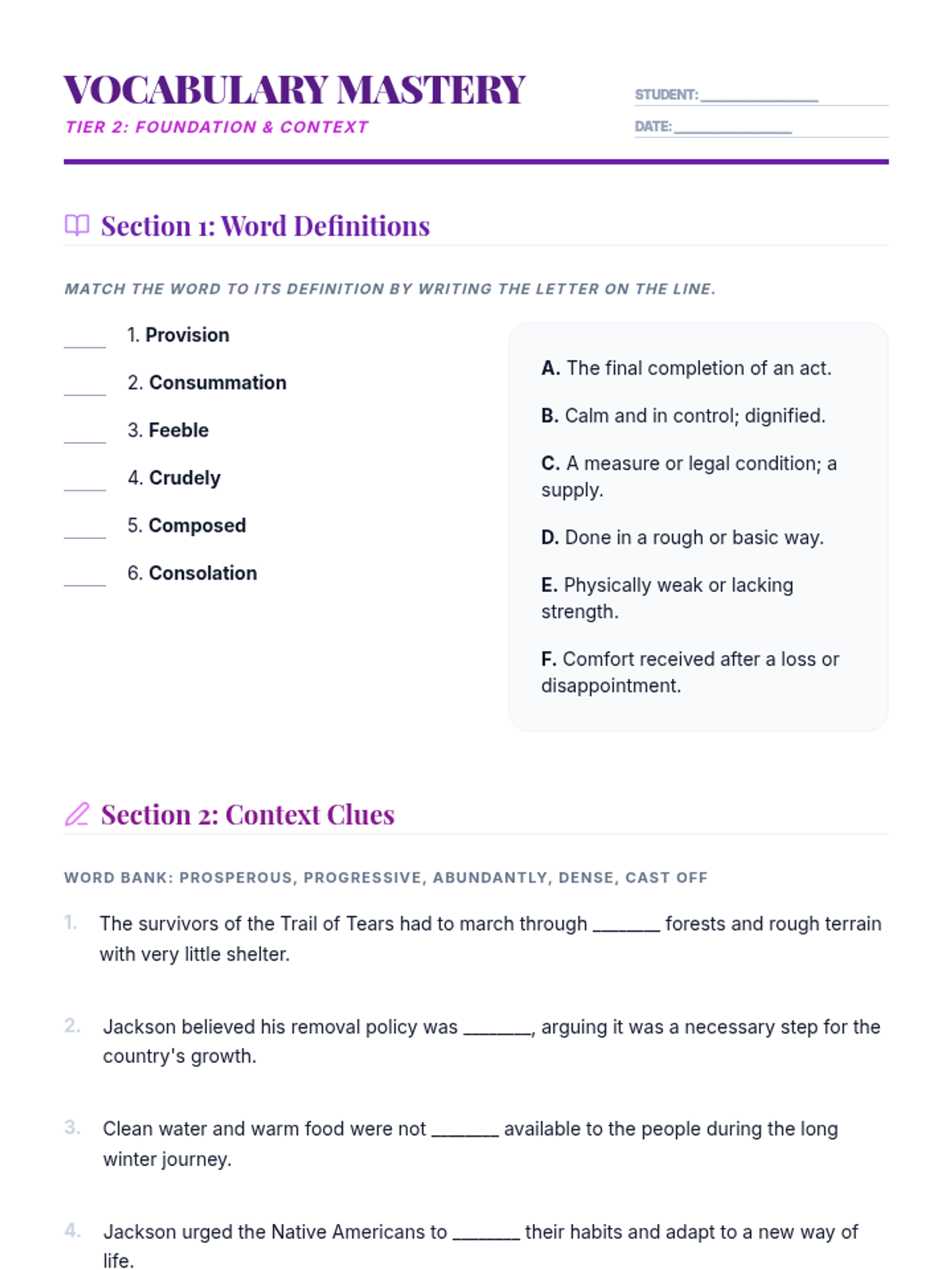
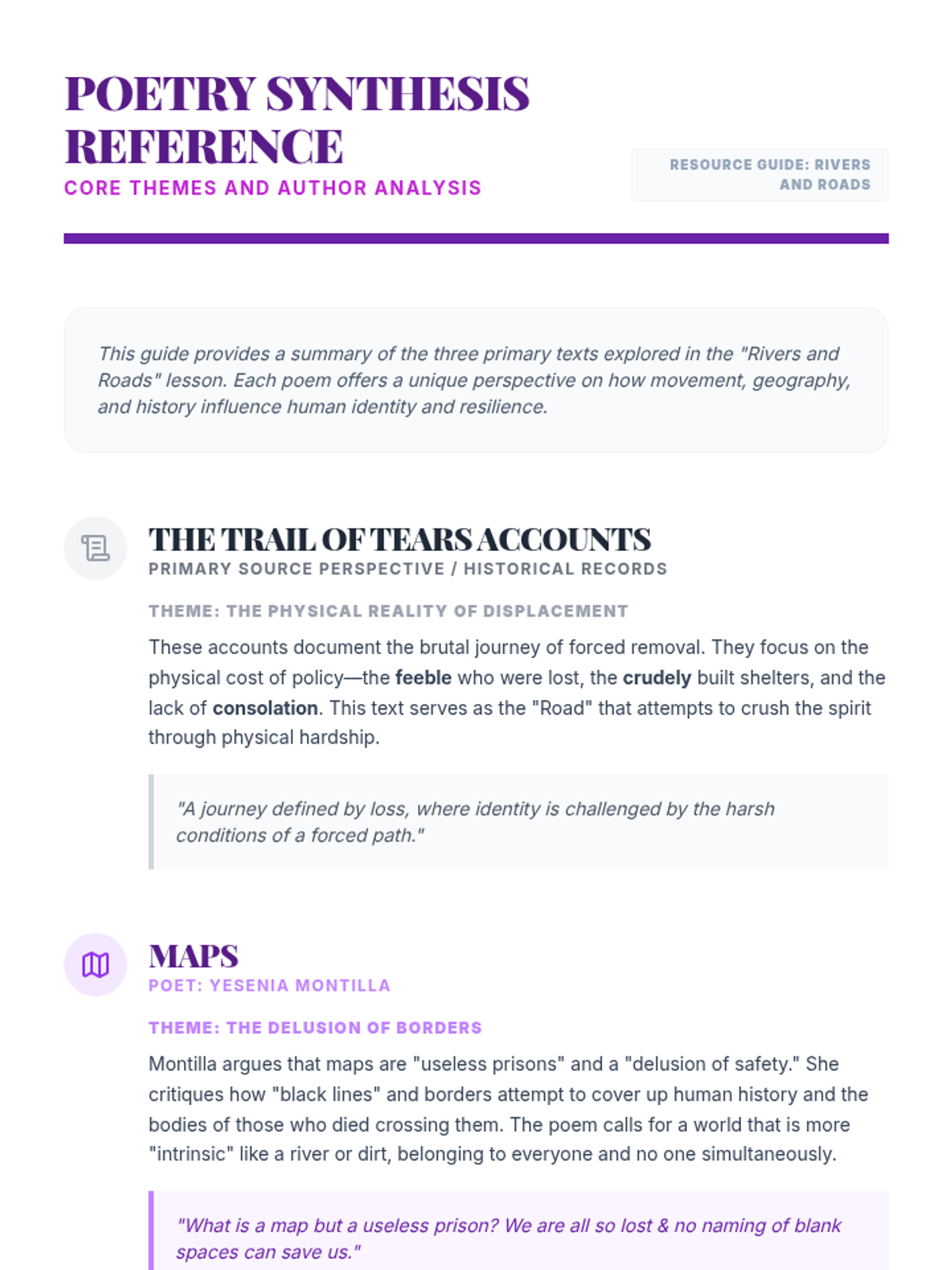
A comprehensive ELA lesson for 8th grade exploring themes of displacement, identity, and resilience through the analysis of Andrew Jackson's Indian Removal Speech, a Trail of Tears diary entry, and the poems 'Maps' and 'The Negro Speaks of Rivers'. Students engage with Tier 2 and advanced vocabulary, comparative analysis, and a creative choice board.
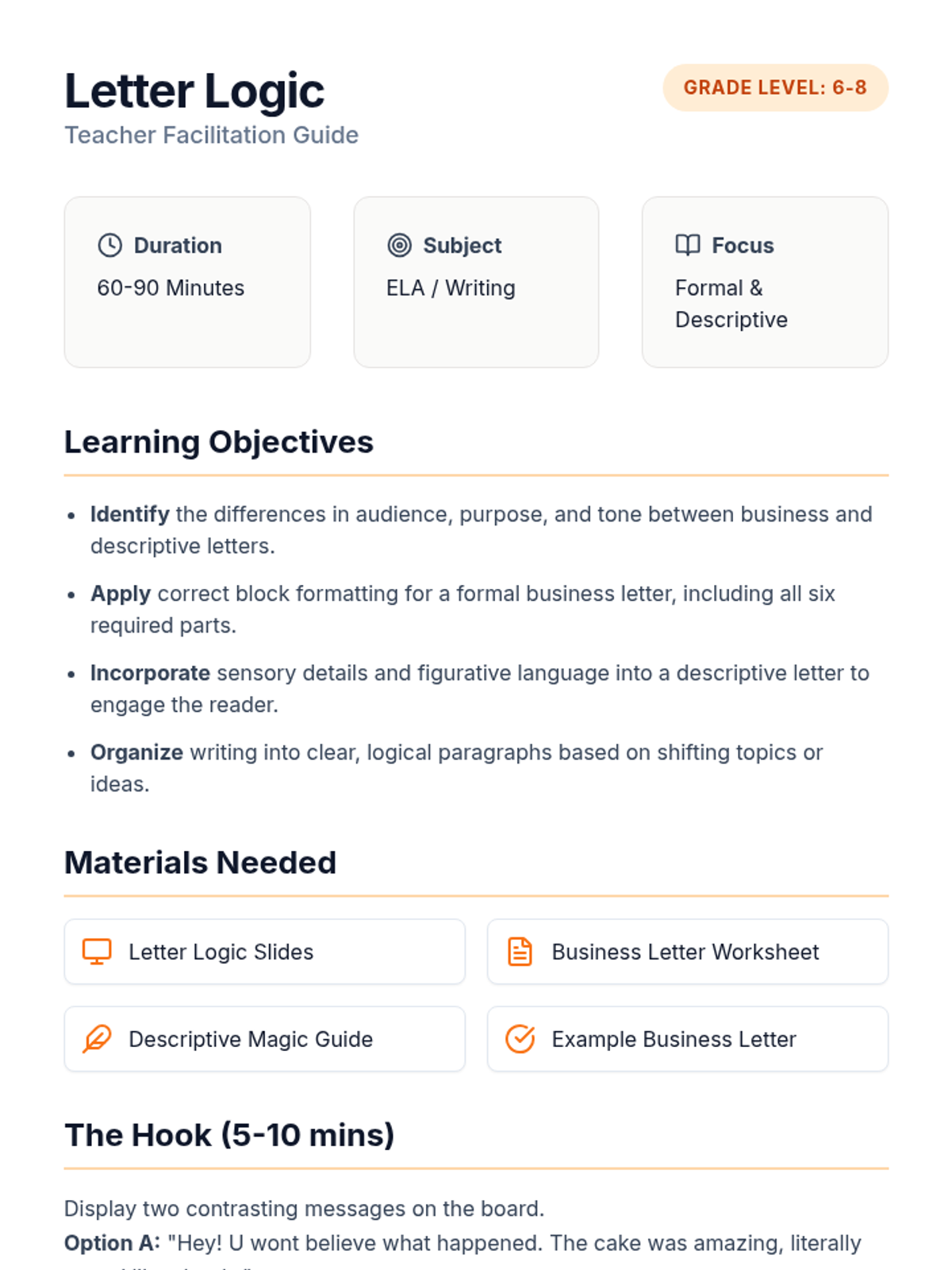
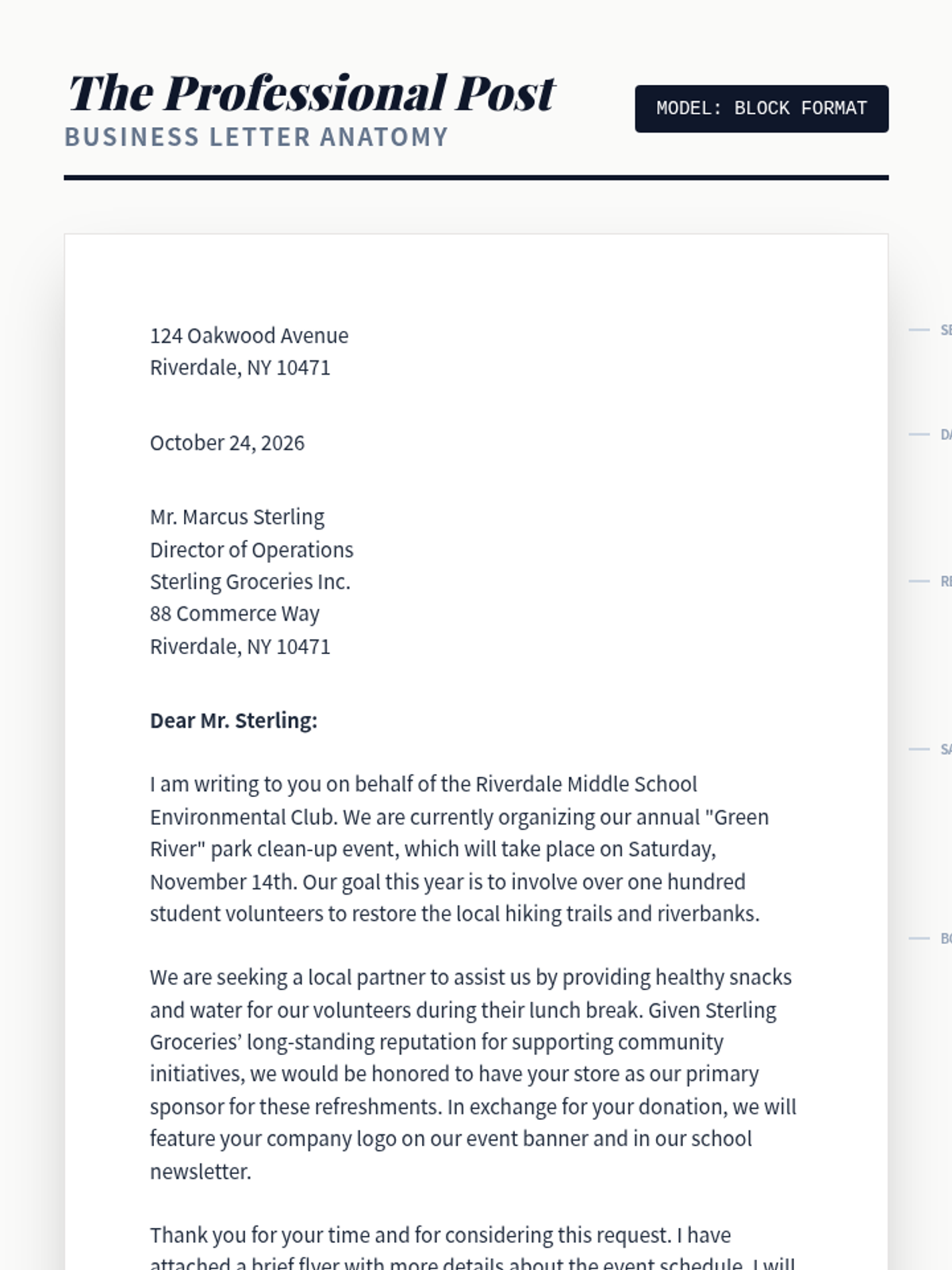
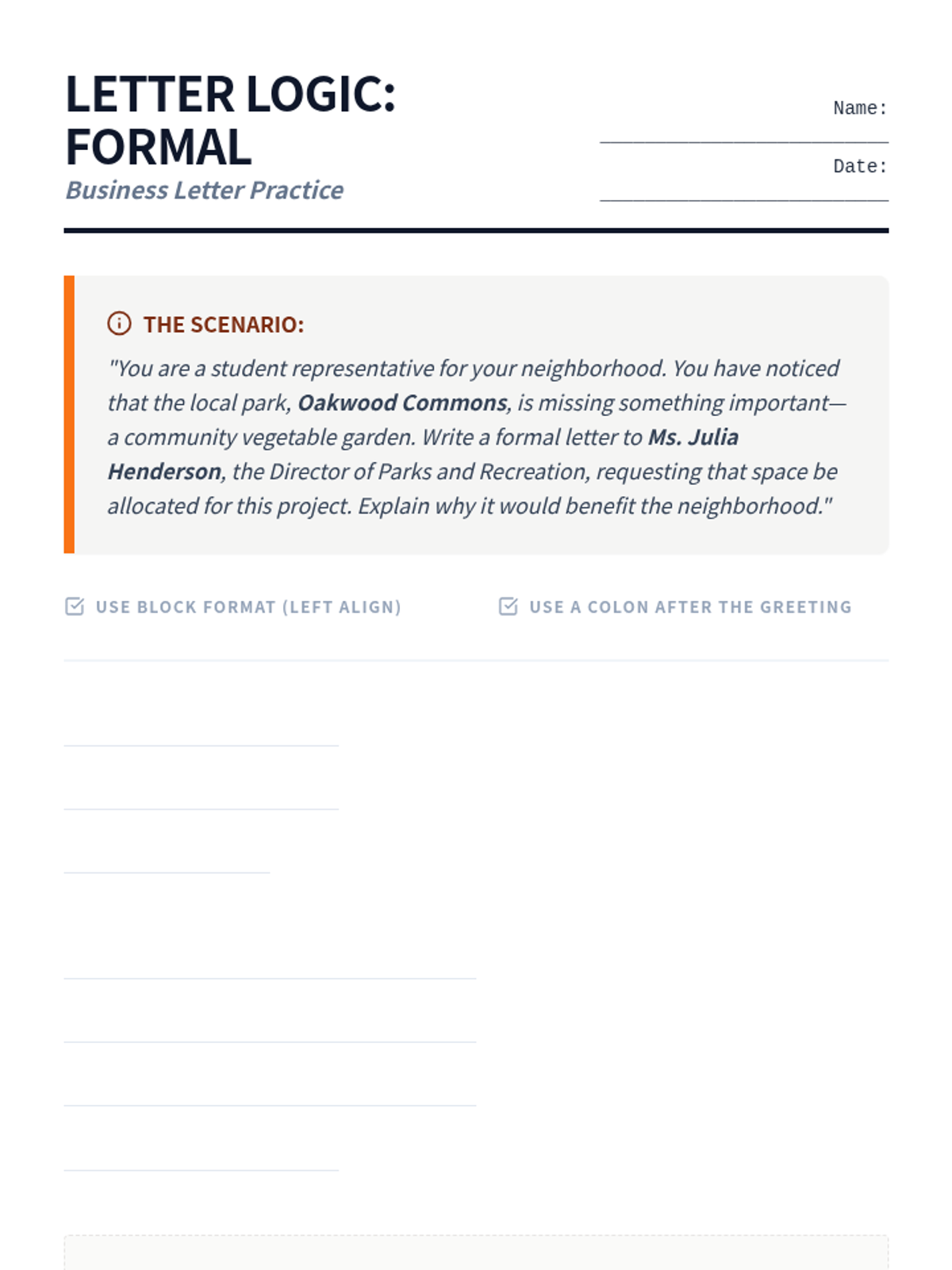
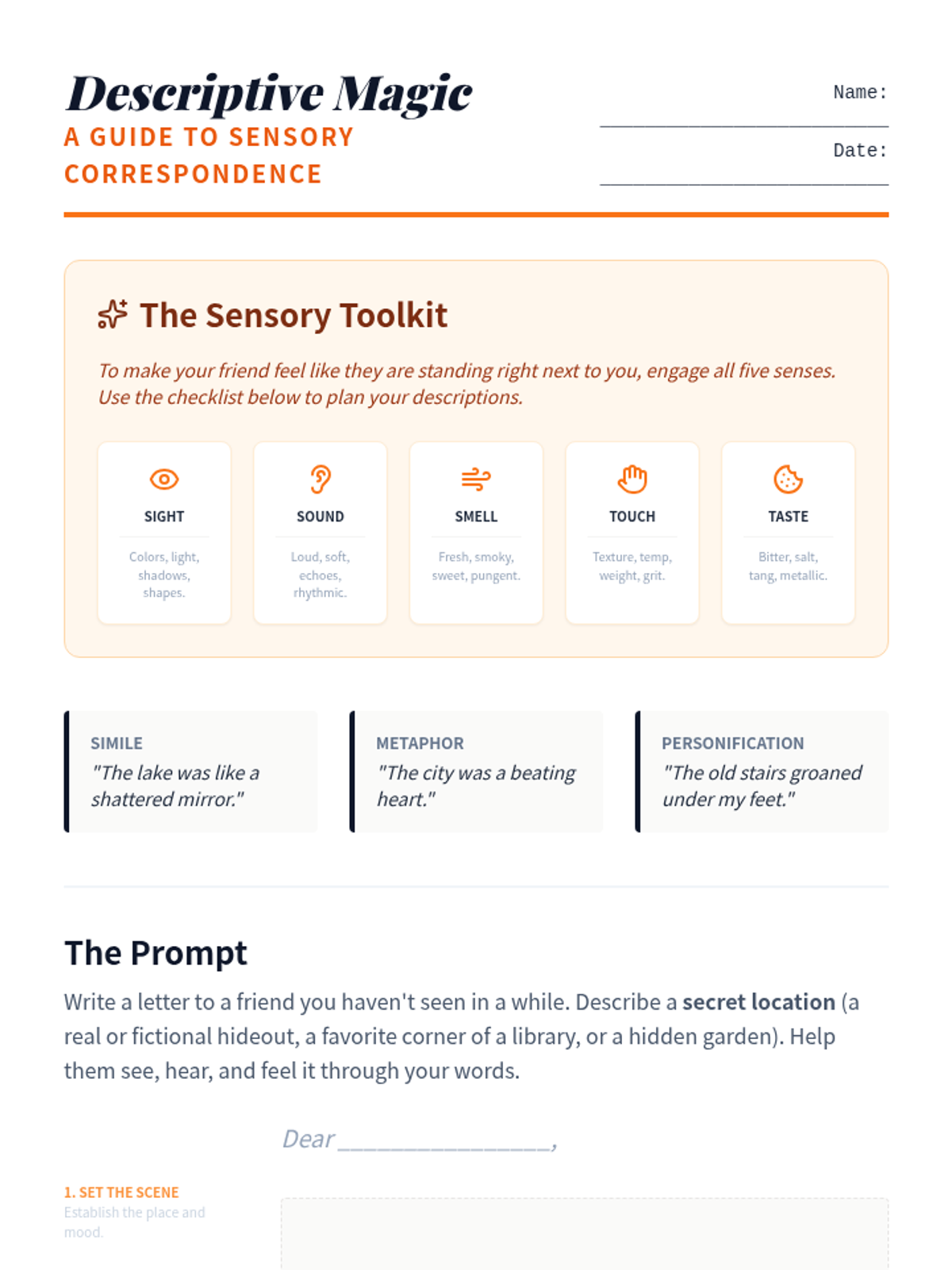
A comprehensive lesson on mastering the art of letter writing, covering the formal structures of business correspondence and the expressive techniques of descriptive personal letters. Students explore audience, purpose, and sensory language through guided practice and real-world examples.