Syllogisms, deductive validity, and the principles of inductive probability for evaluating evidence-based claims. Targets common logical fallacies and the construction of sound, persuasive arguments.
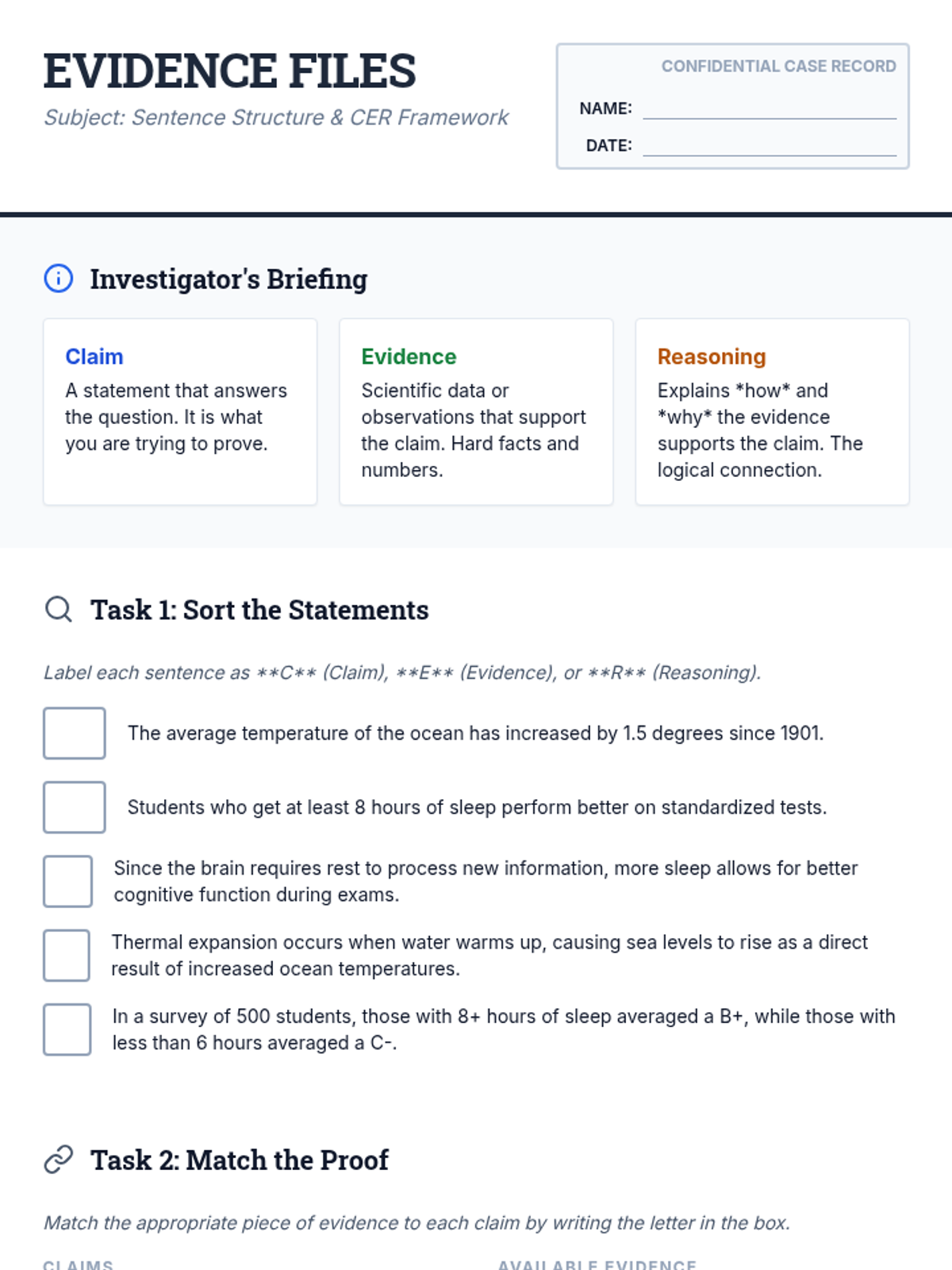
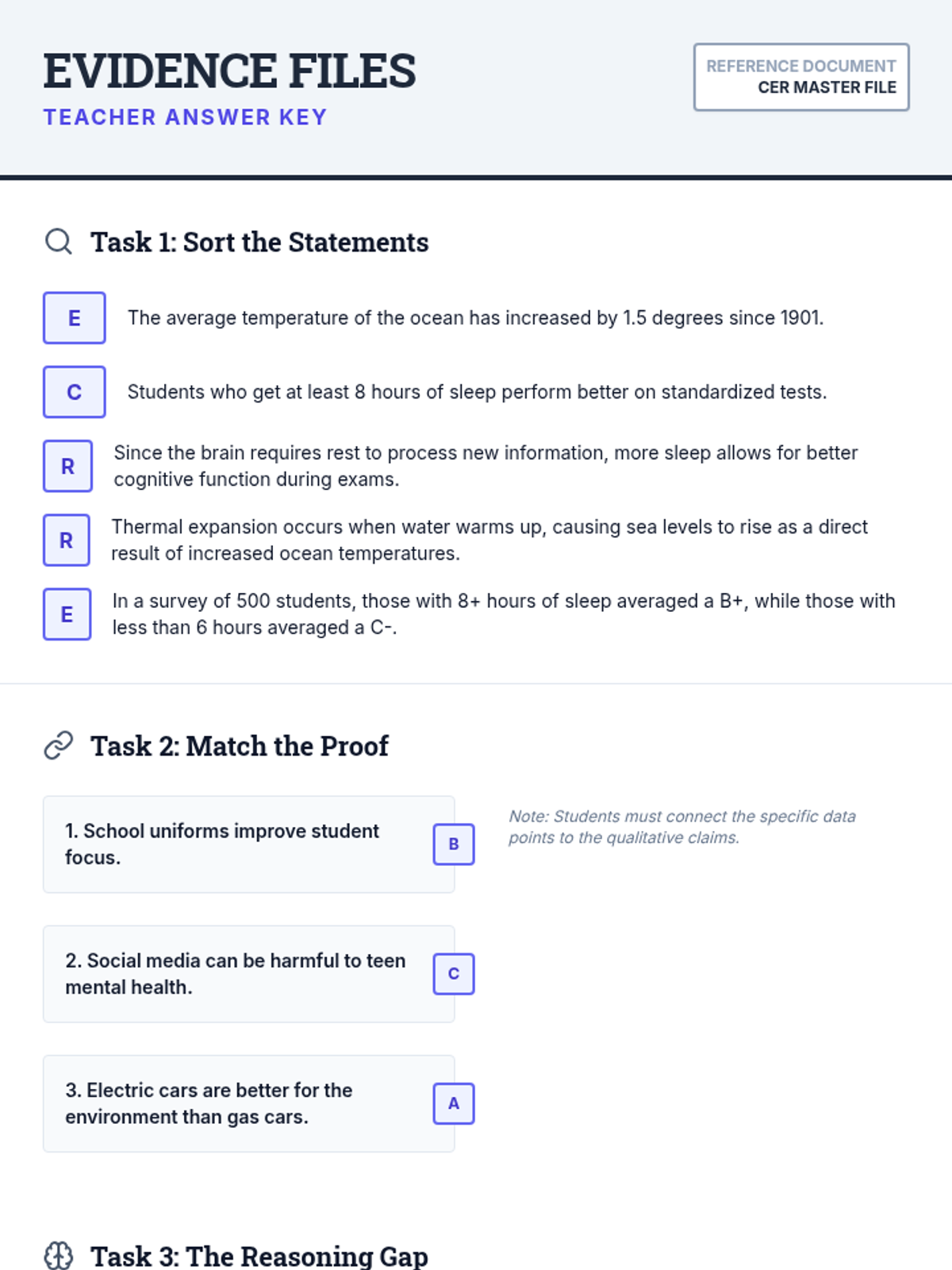
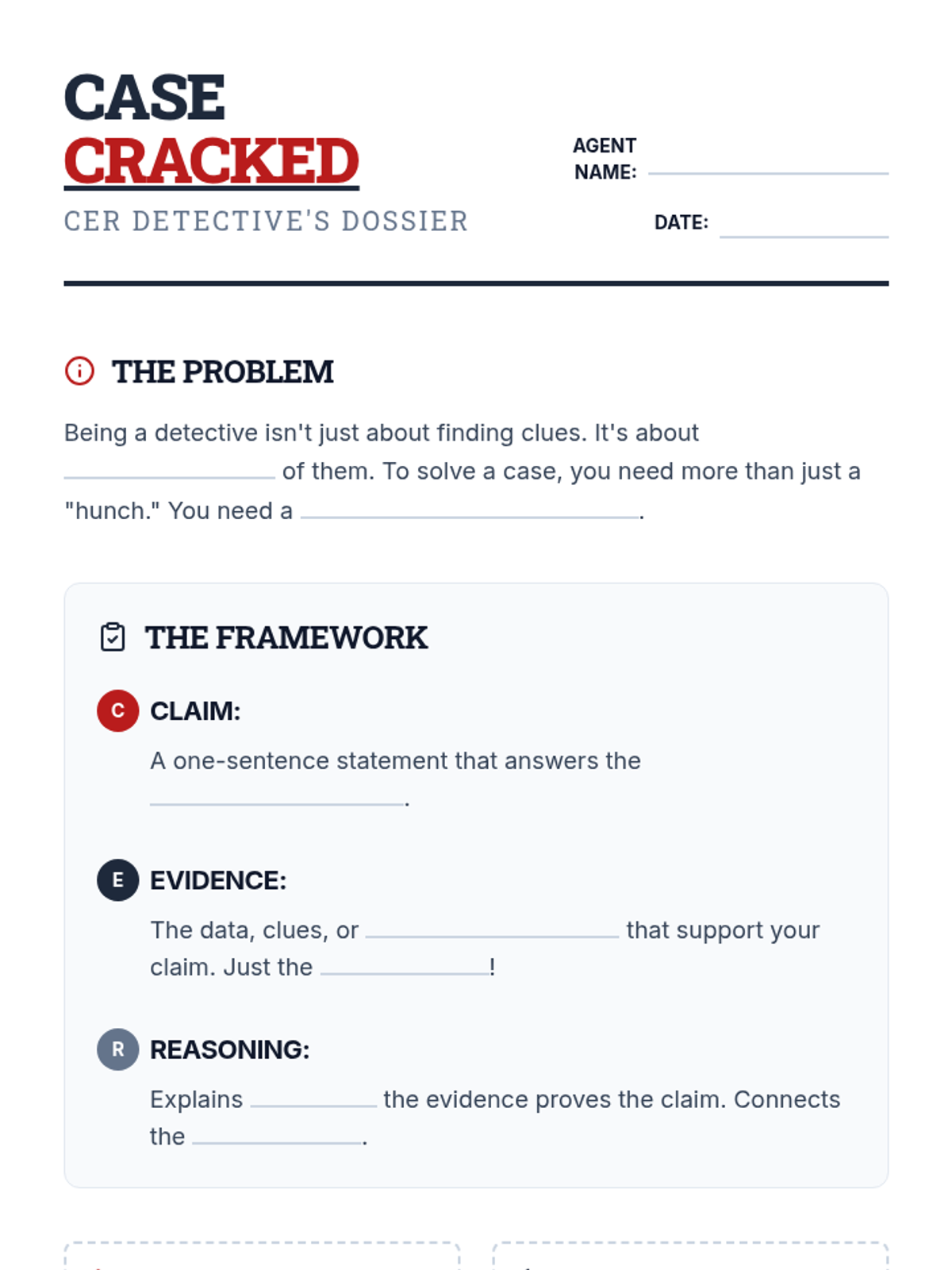
A lesson focused on mastering the Claim, Evidence, and Reasoning (CER) framework through investigative practice and sentence structure analysis.
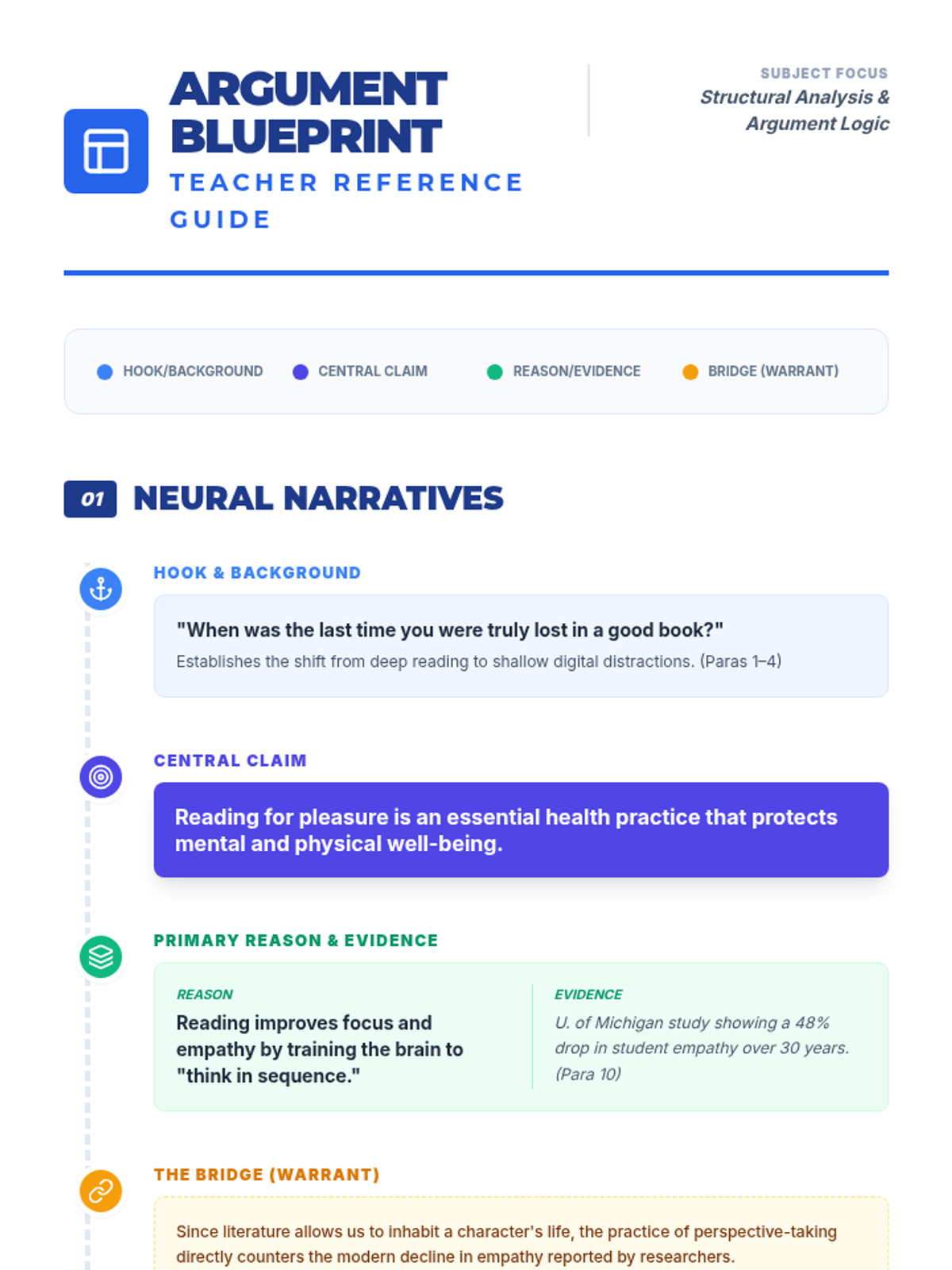
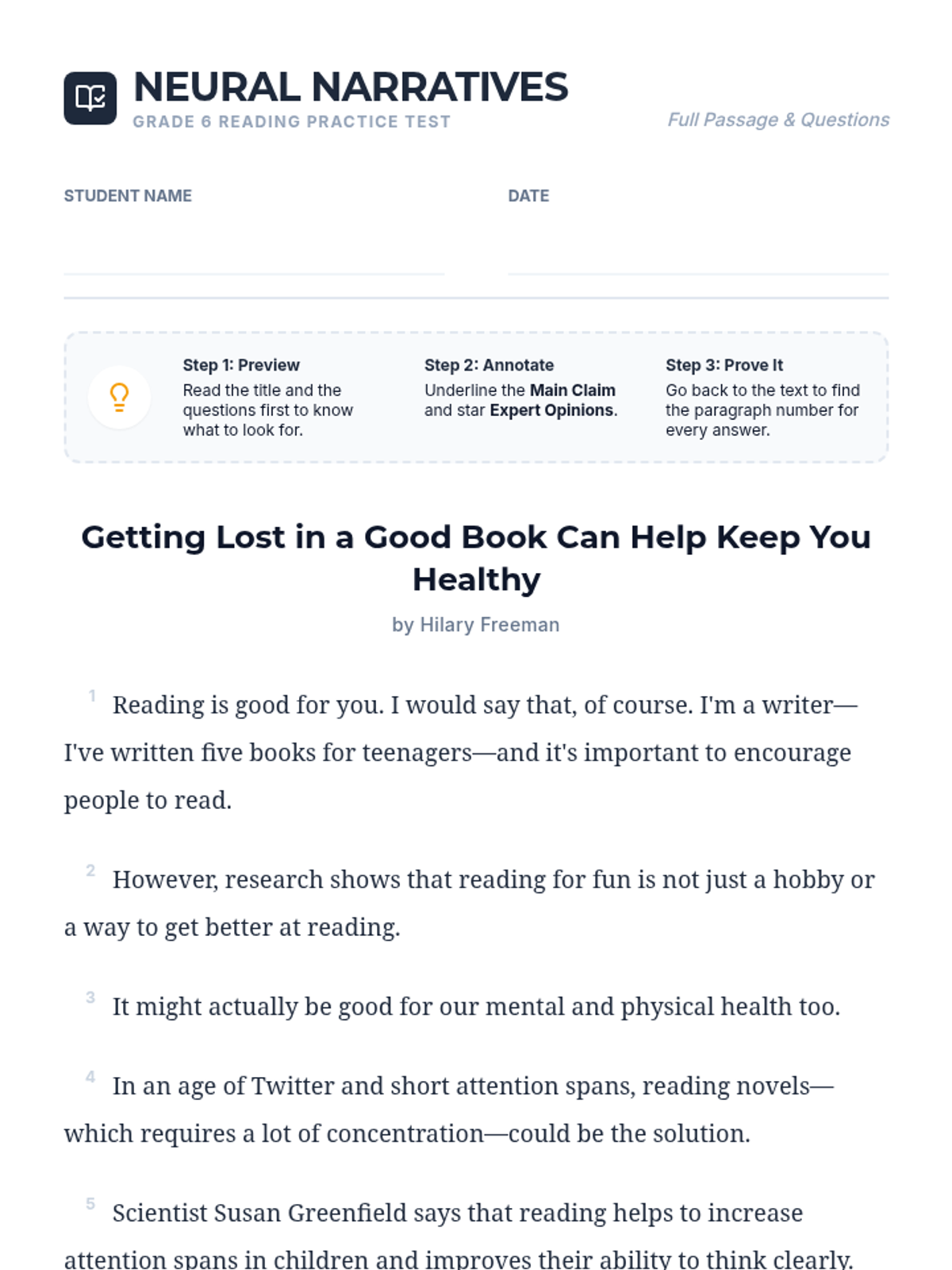
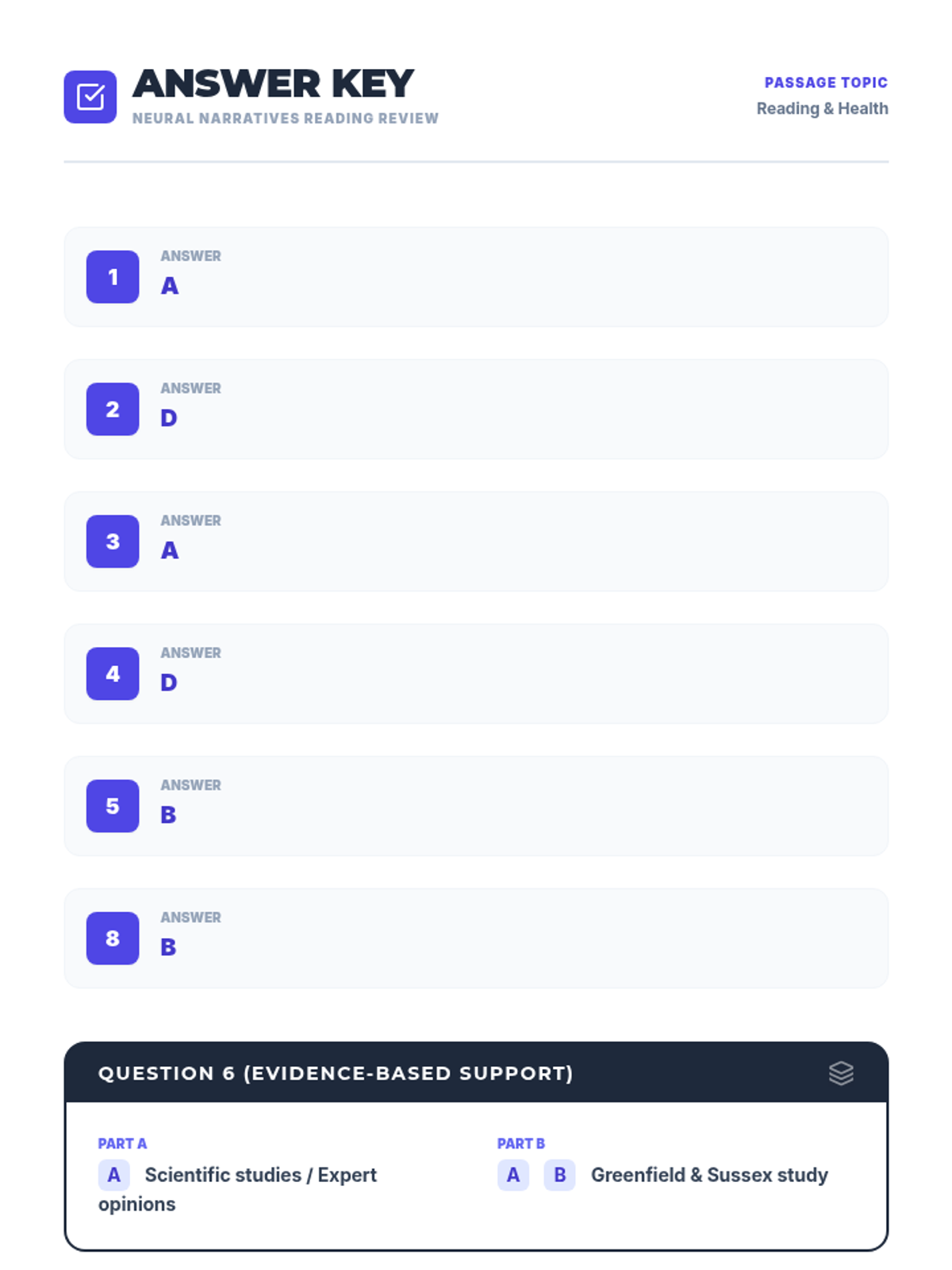
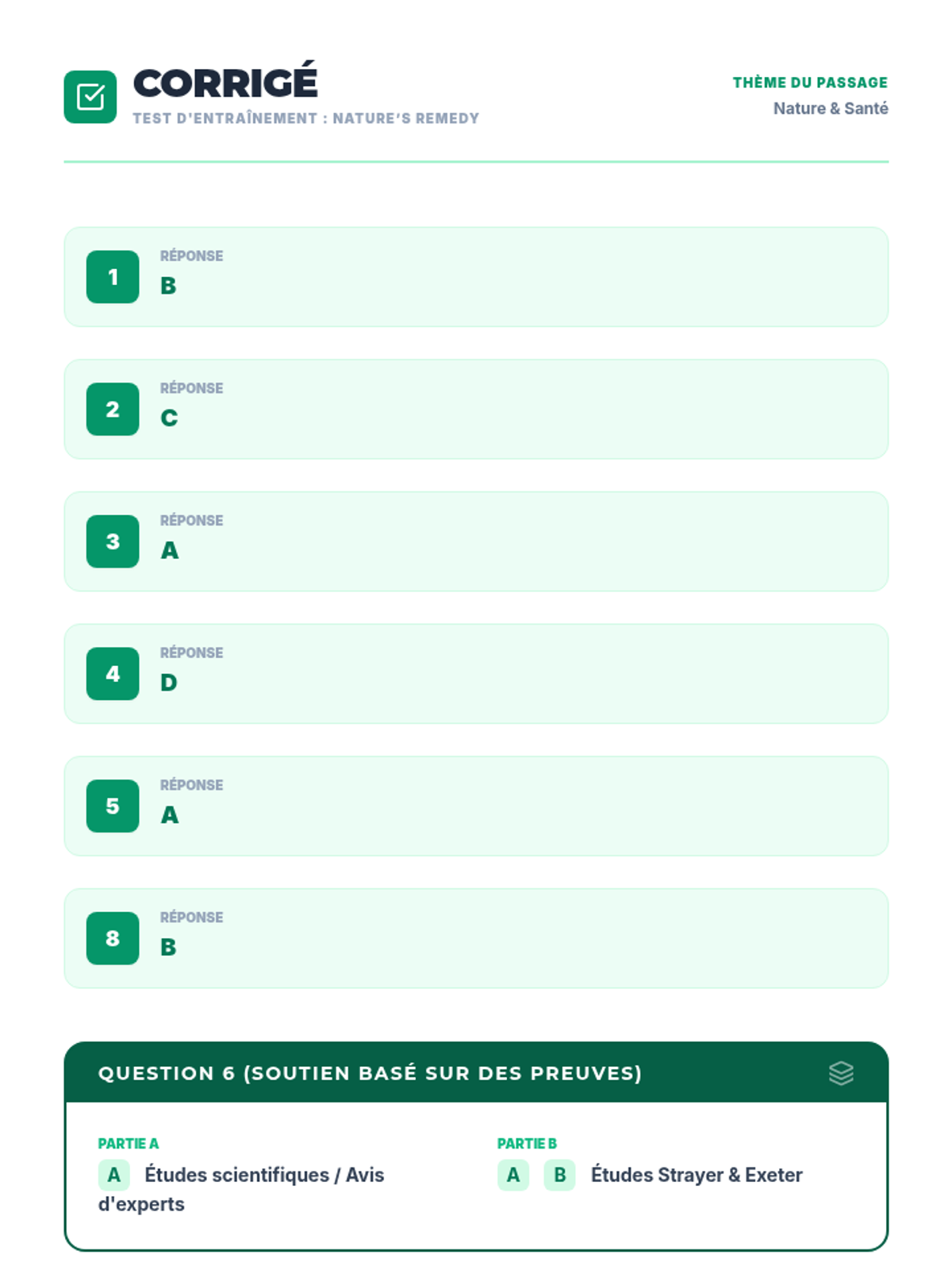
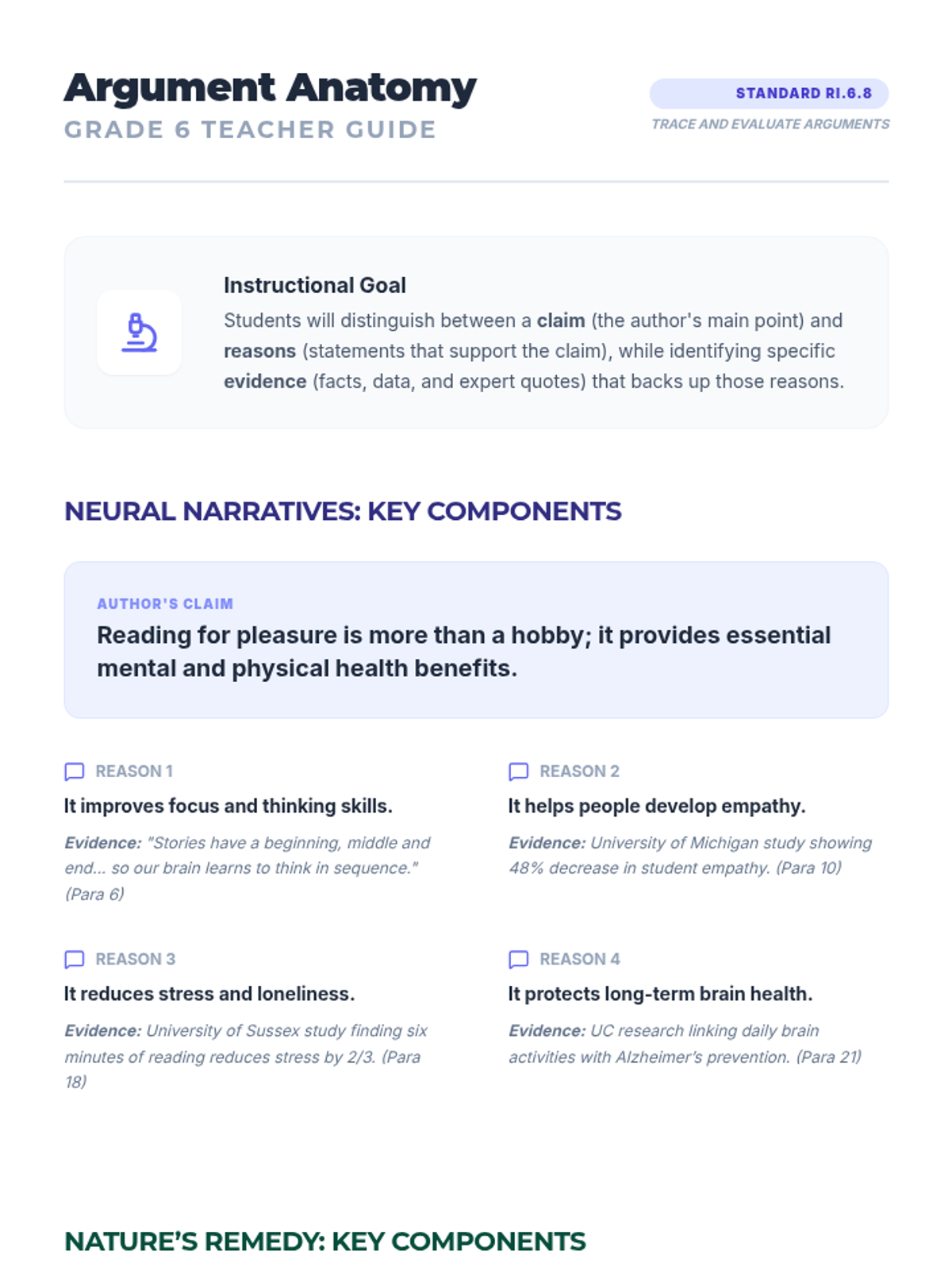
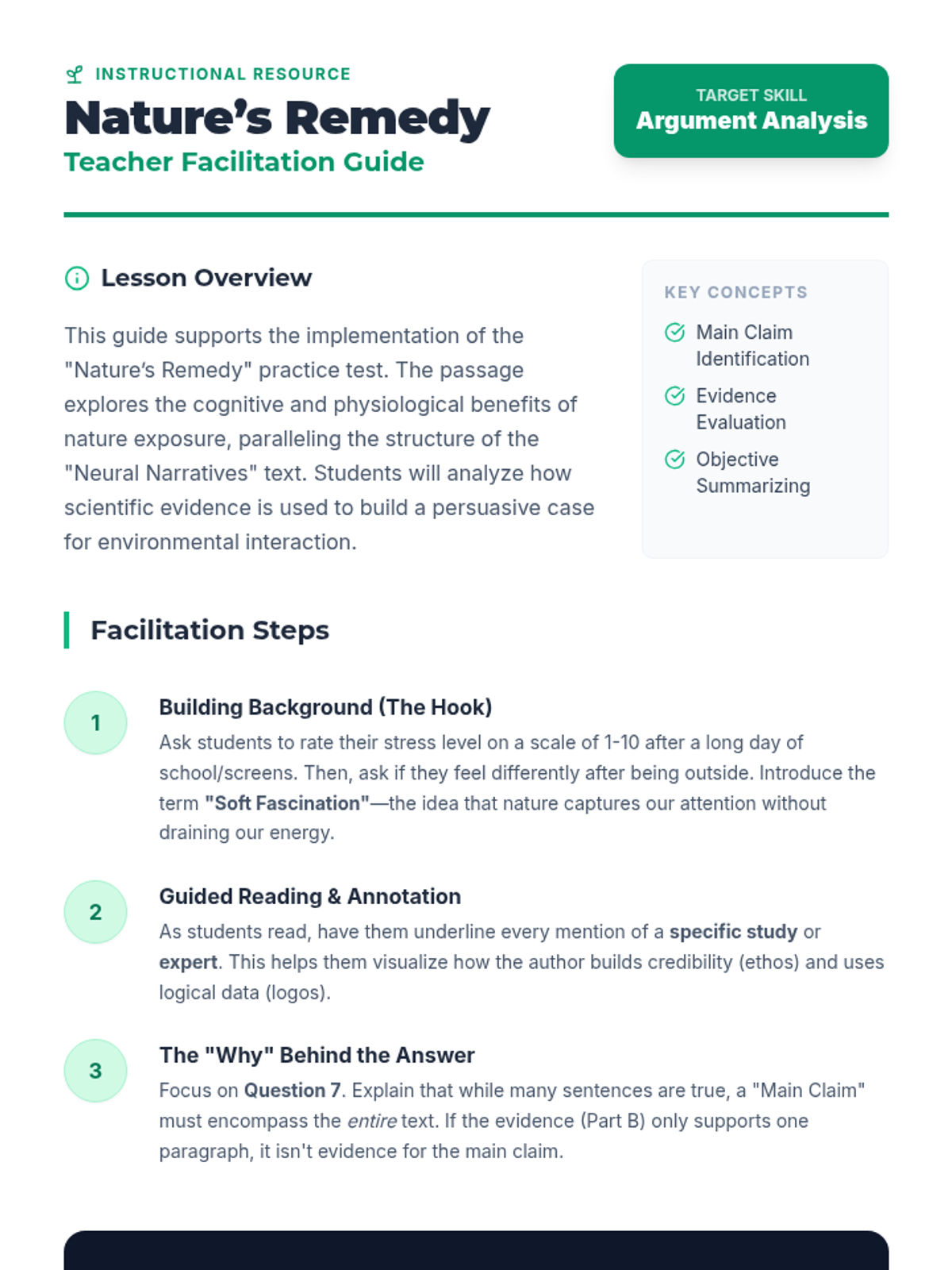
A practice test and answer key based on the passage 'Getting Lost in a Good Book Can Help Keep You Healthy' by Hilary Freeman, focusing on reading comprehension, vocabulary in context, and analyzing claims.
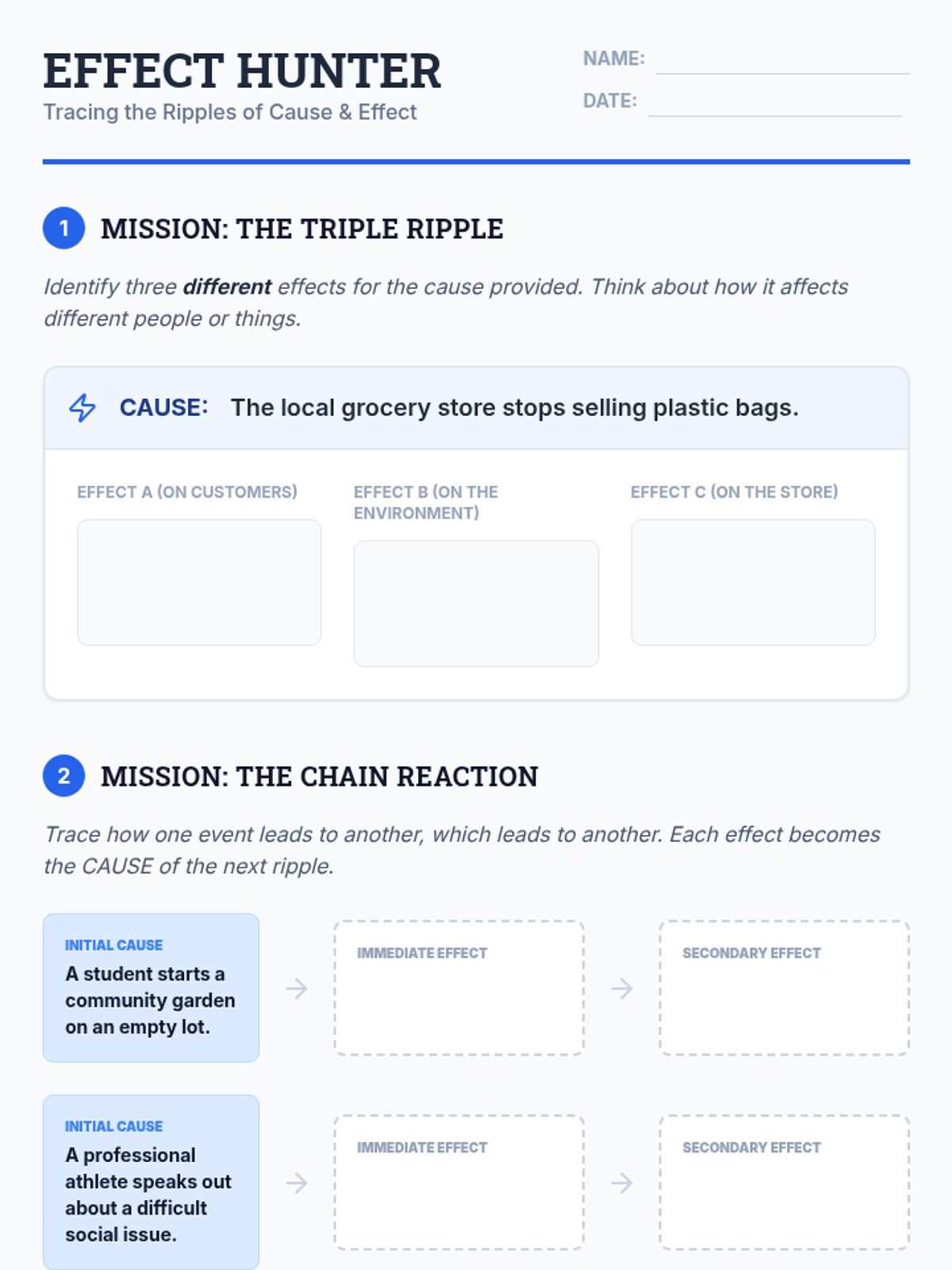
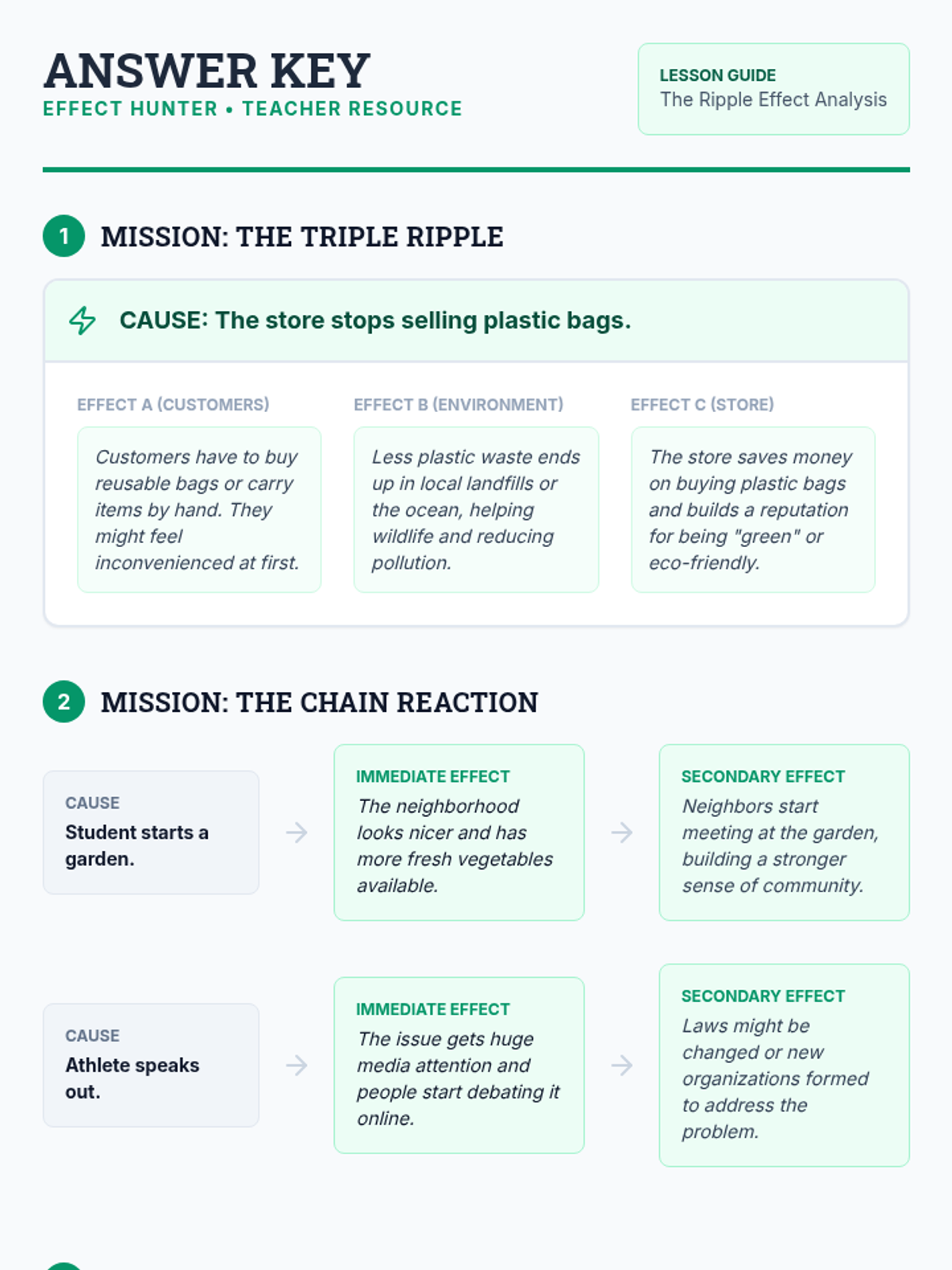
This lesson focuses on helping students move beyond simple one-to-one cause and effect relationships to explore multiple, cascading, and long-term effects of a single event. It uses the 'Ripple Map' visual to help students trace consequences.
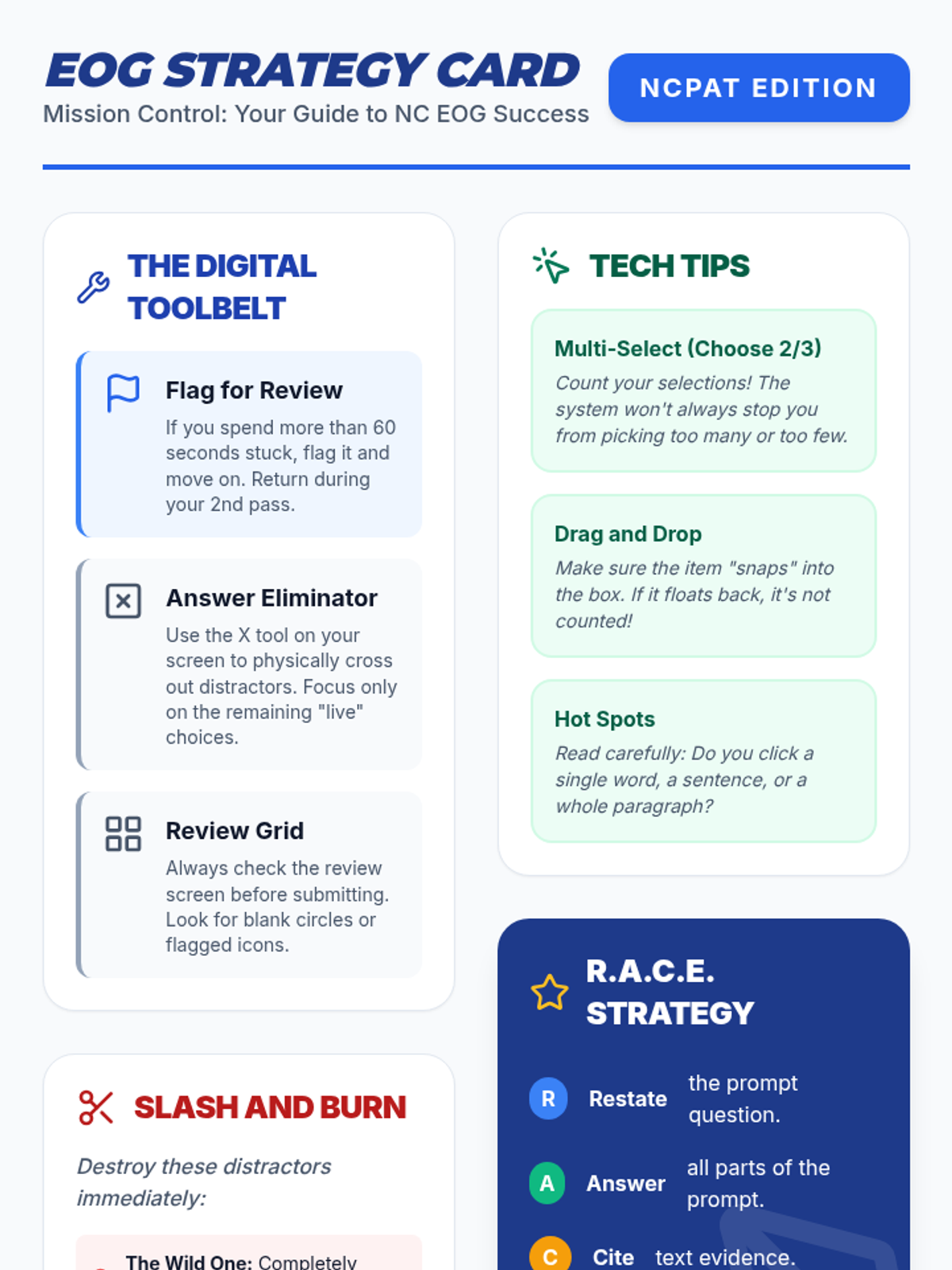
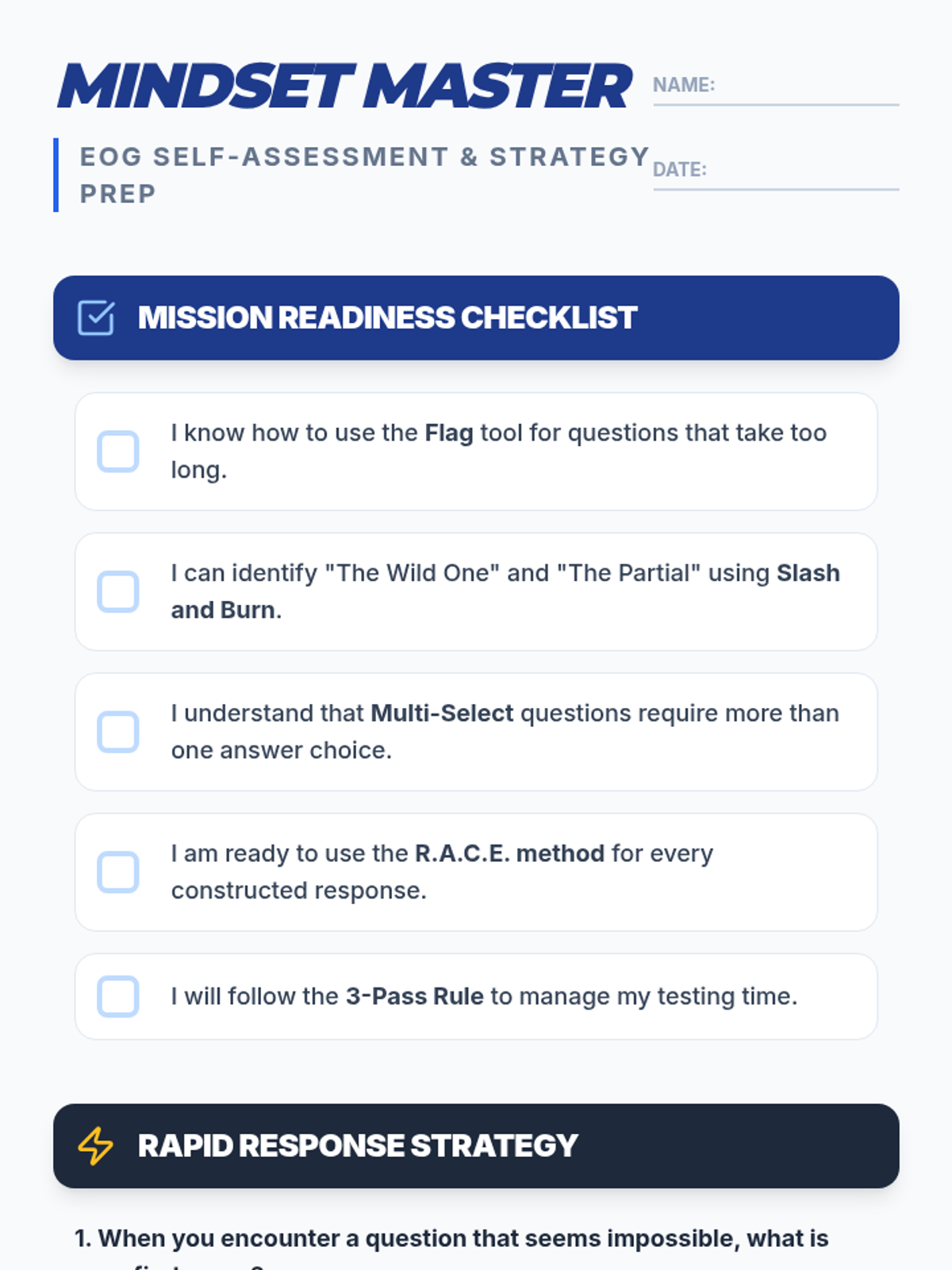
A comprehensive guide to mastering the NC EOG using NCPAT-specific digital tools, pacing techniques, and the RACE method for constructed responses.
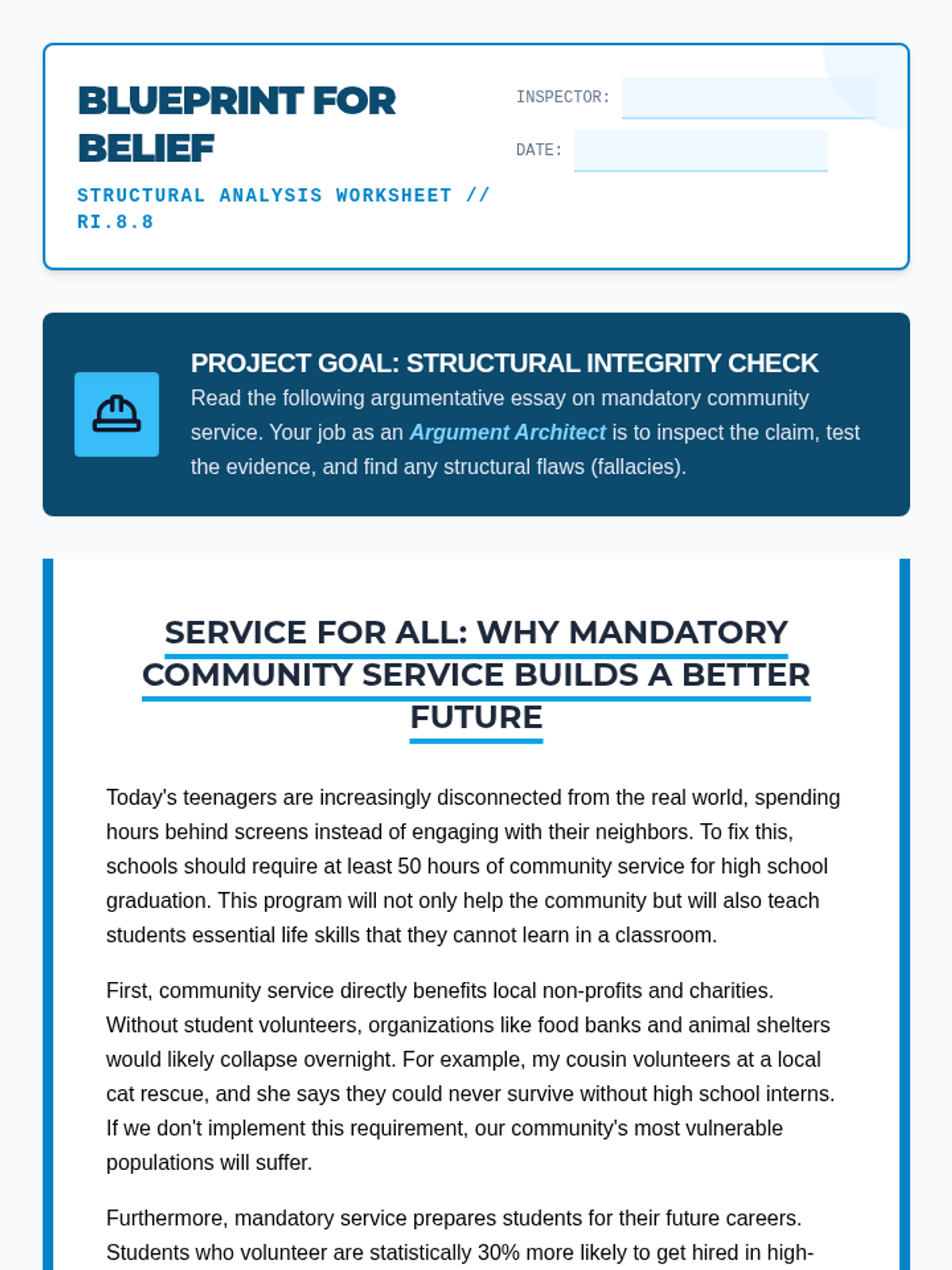
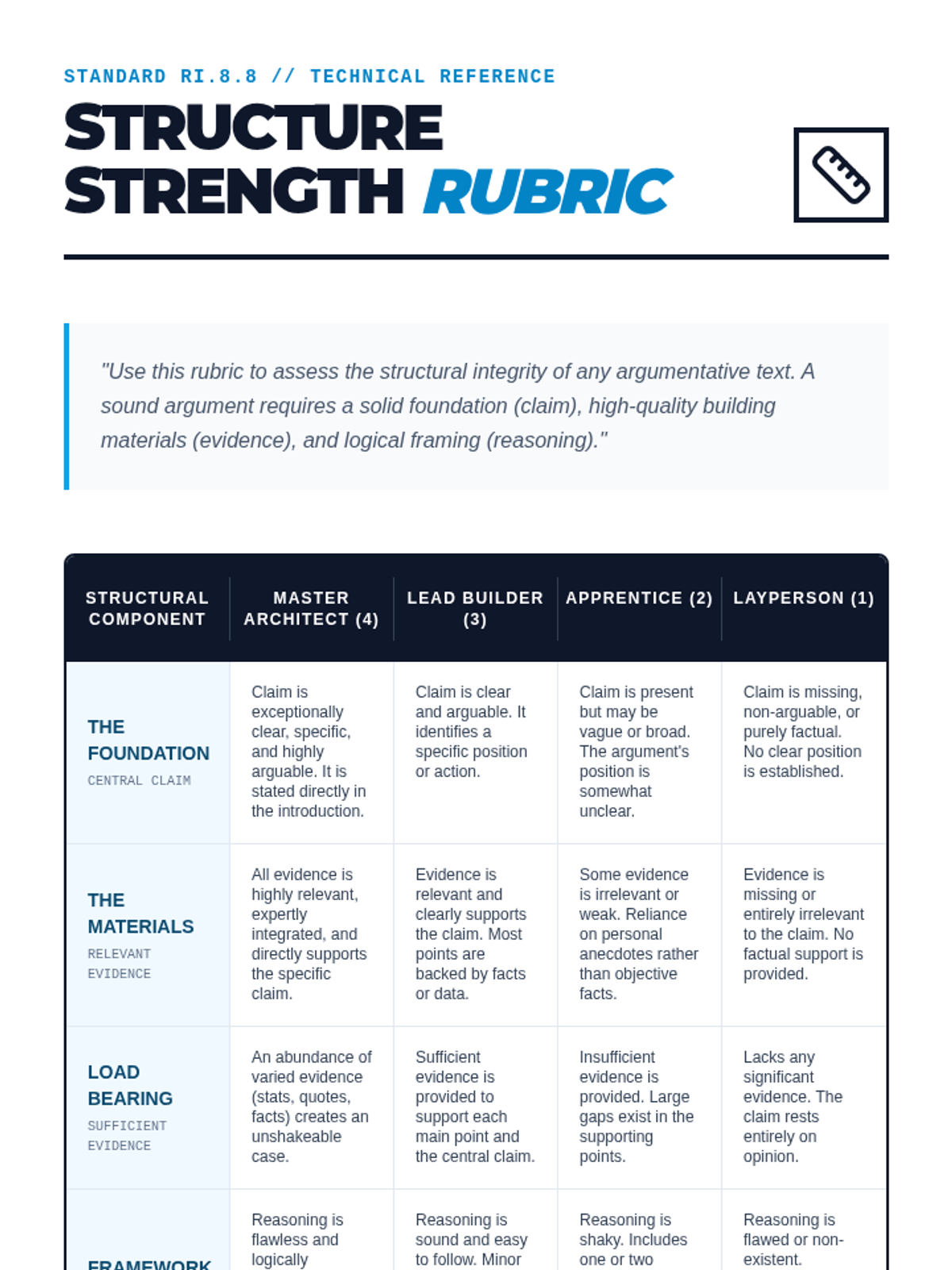
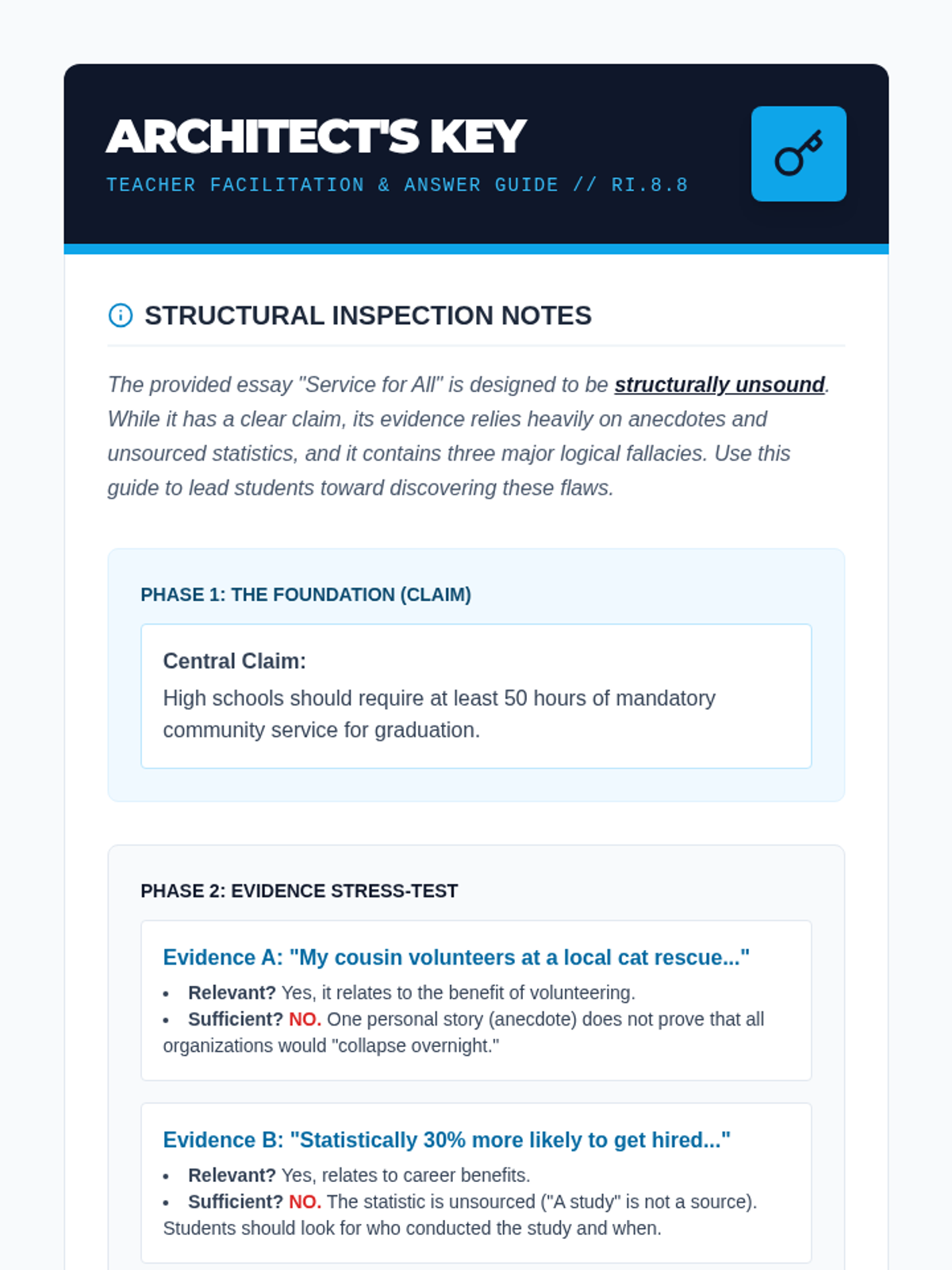
This Grade 8 ELA lesson guides students through RI.8.8 by analyzing the structural integrity of arguments regarding mandatory community service. Students will evaluate claim strength, assess evidence quality, and identify logical fallacies using an architectural blueprint theme.
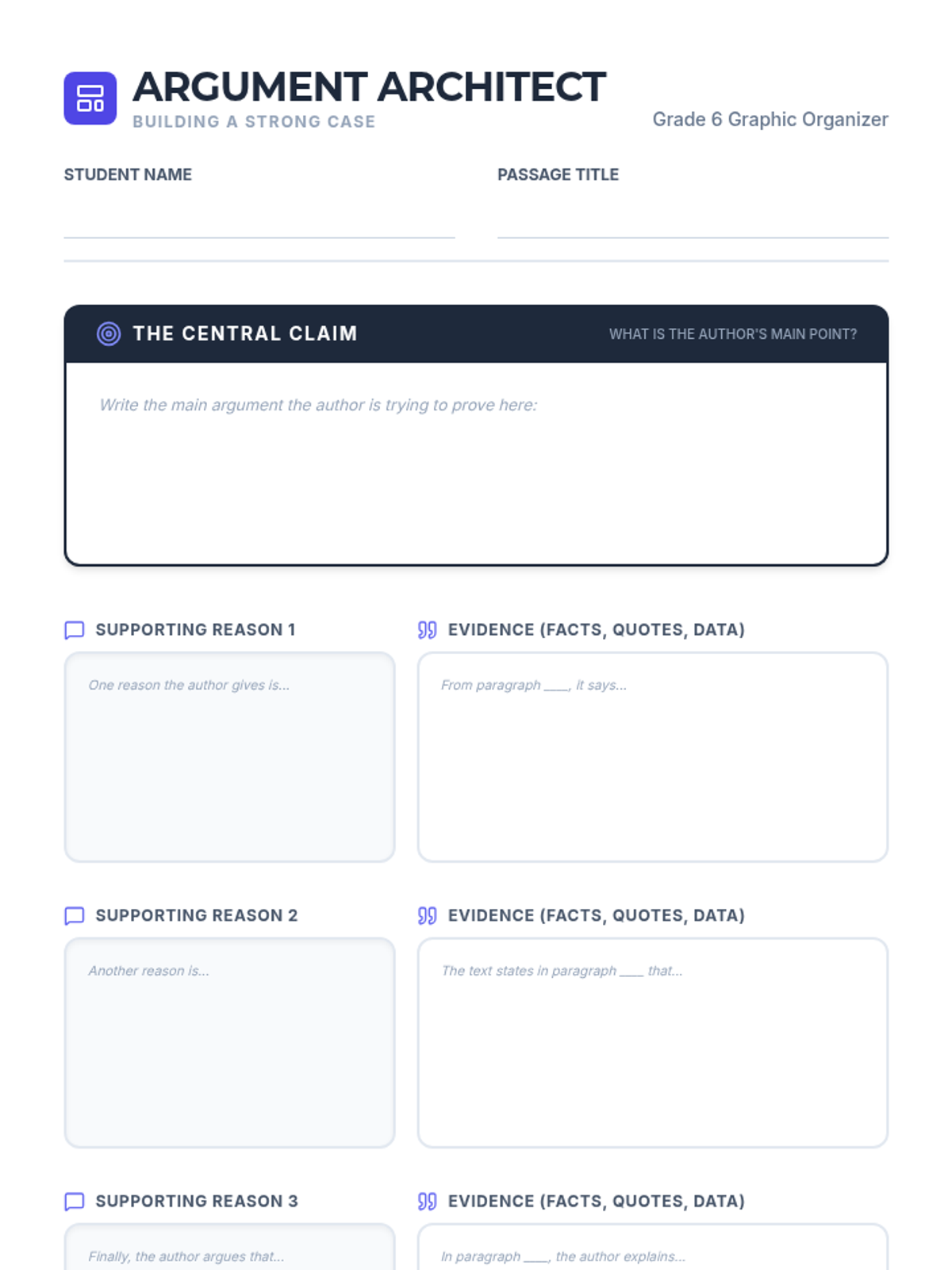
A comprehensive ELA lesson focused on NCSCOS RI.8.8, where students act as 'Argument Architects' to deconstruct and evaluate the structural integrity of persuasive texts through claims, reasoning, and evidence.
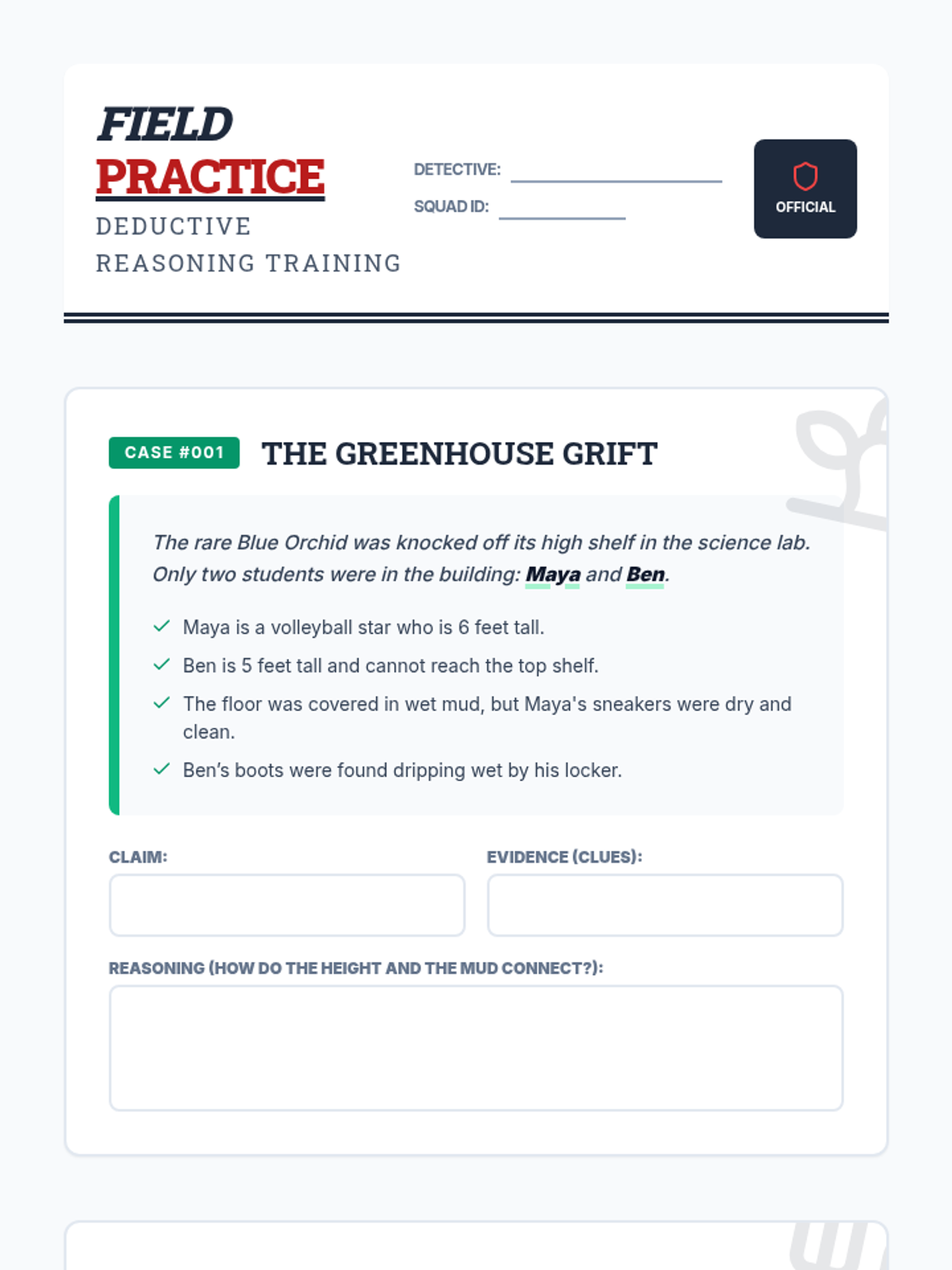
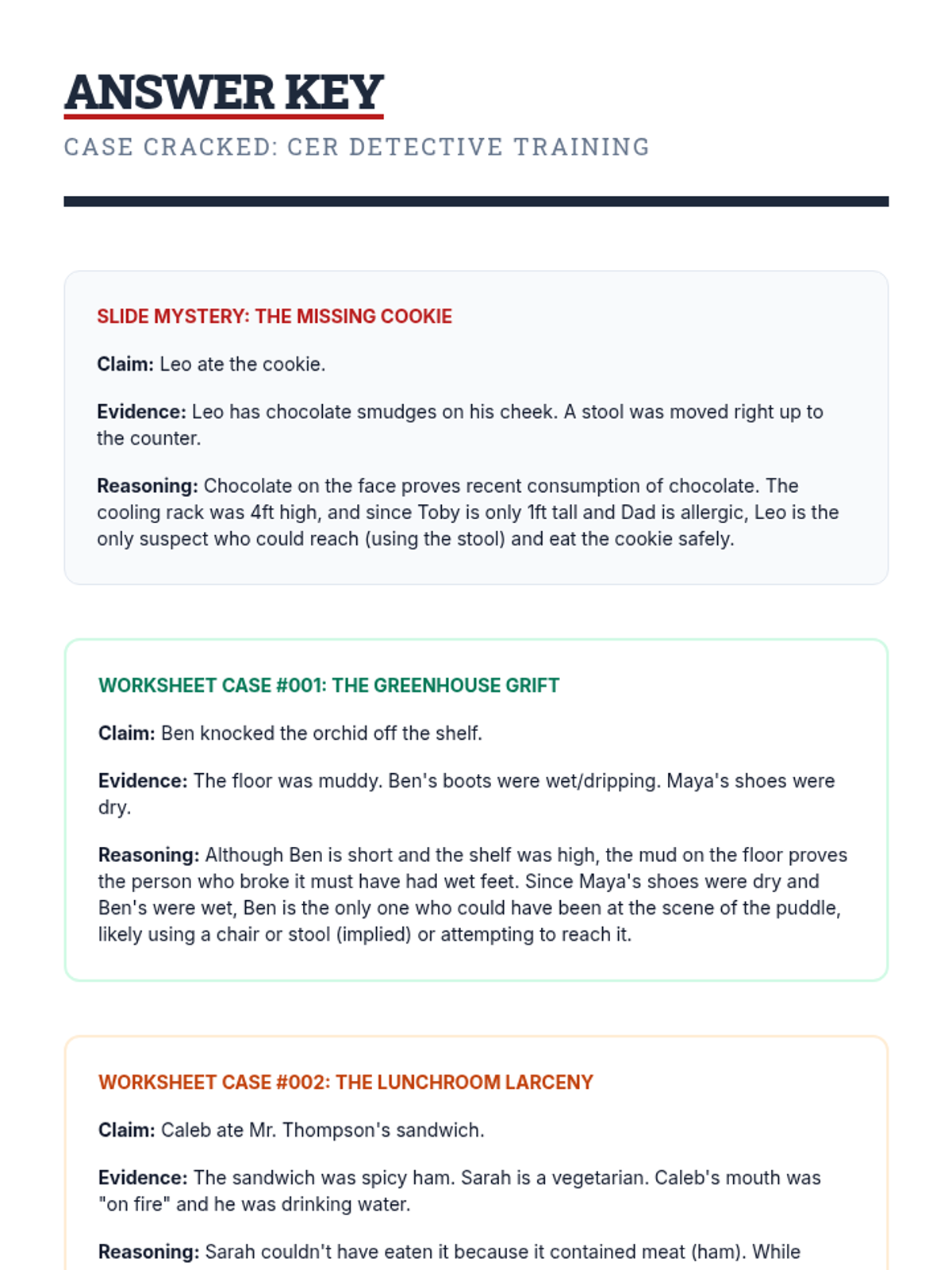
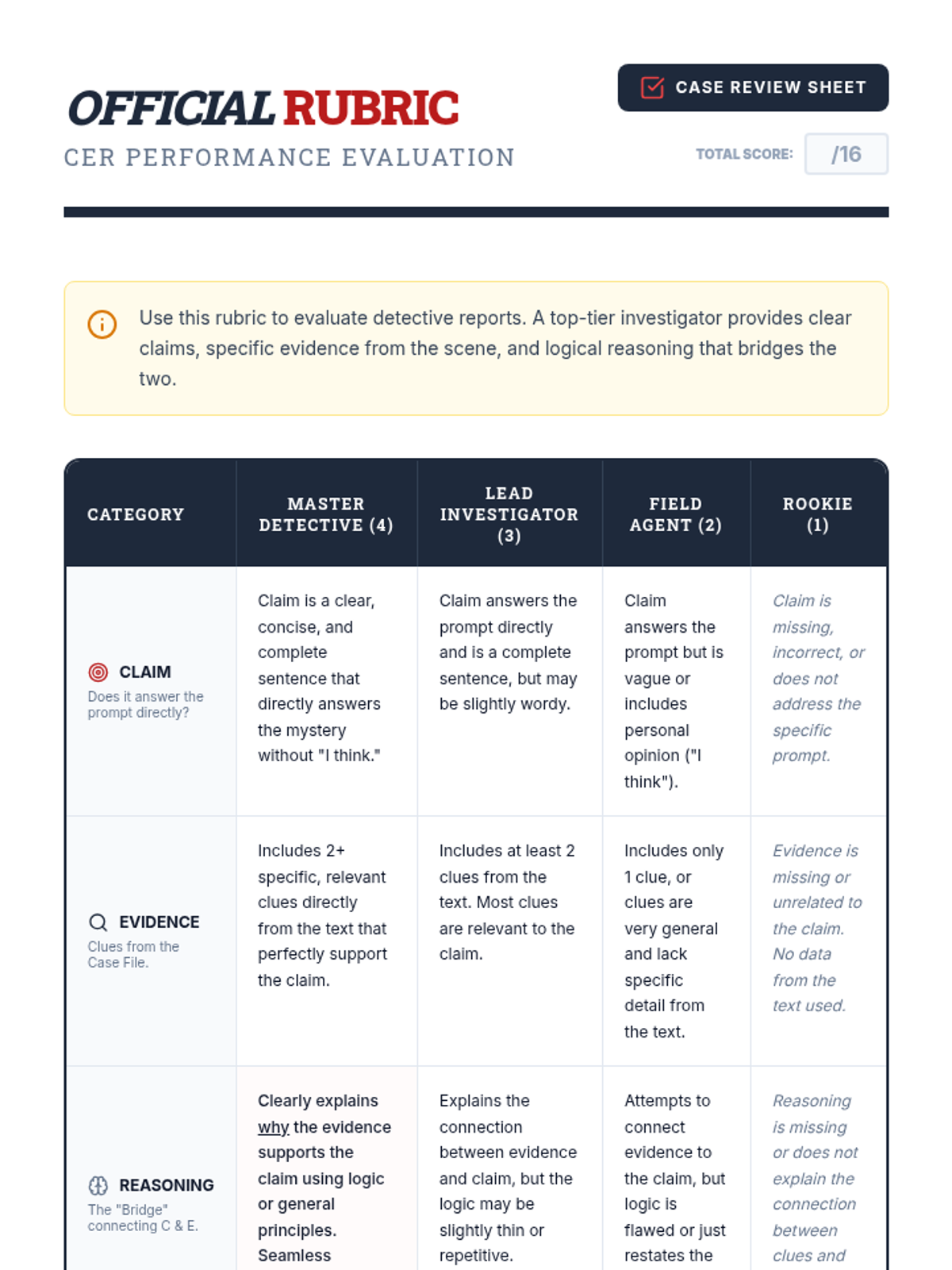
A detective-themed introduction to Claim, Evidence, and Reasoning (CER) using short mystery scenarios to develop critical thinking and argumentative writing skills for junior high students.
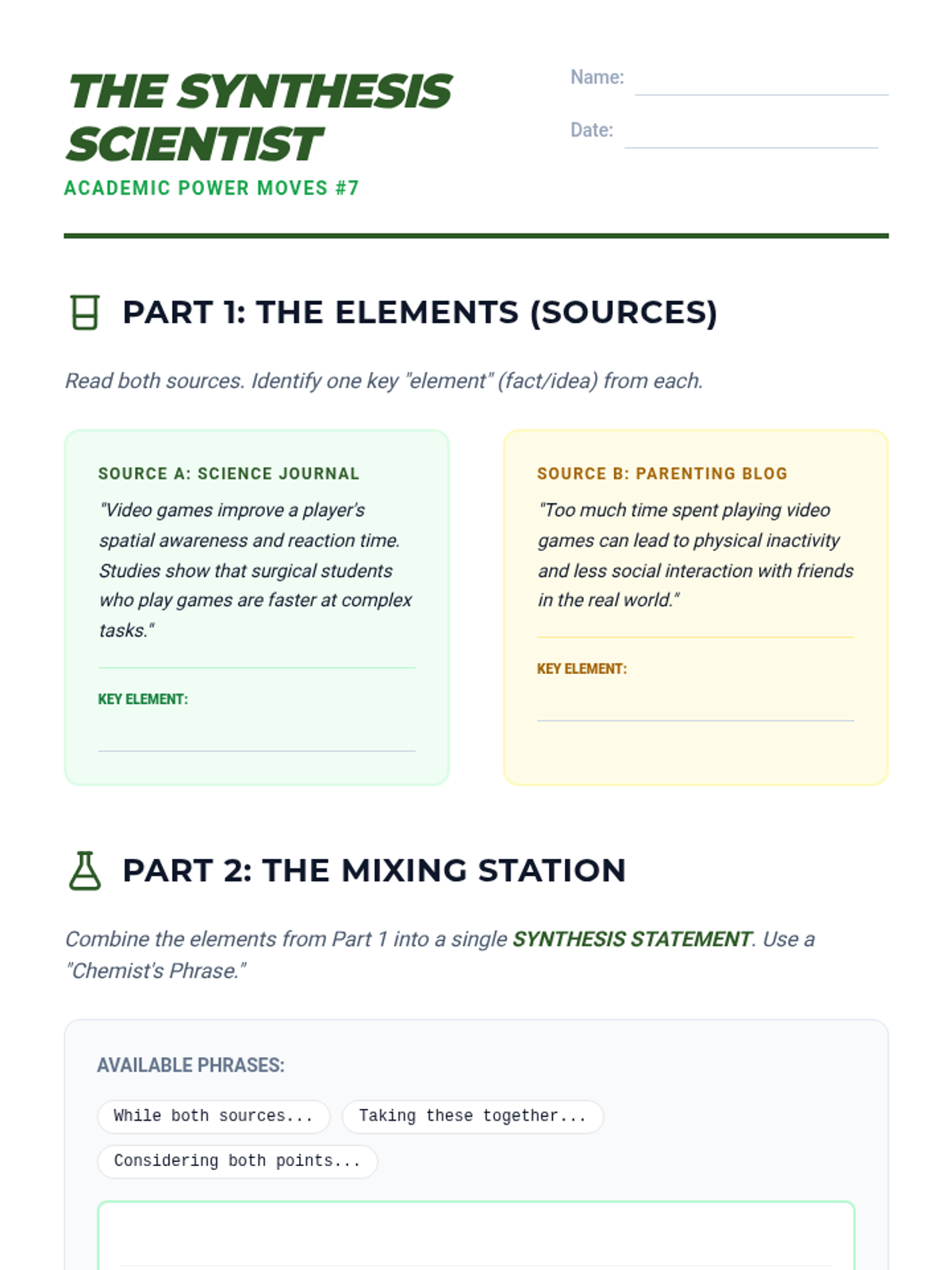
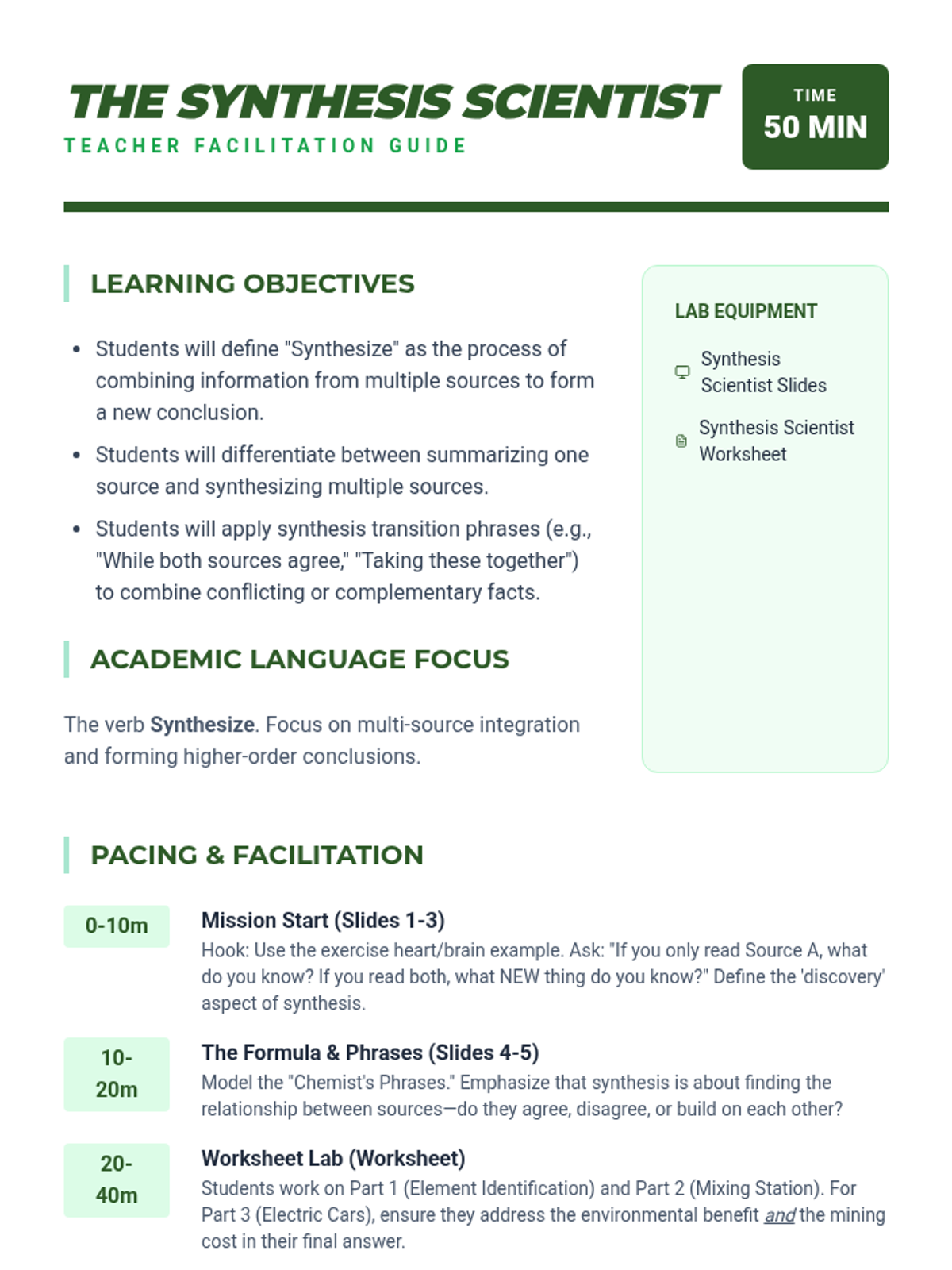
A 50-minute lesson on the academic action verb 'Synthesize.' Students learn to combine information from multiple sources to create a new, original conclusion using the 'Laboratory Mix' method.
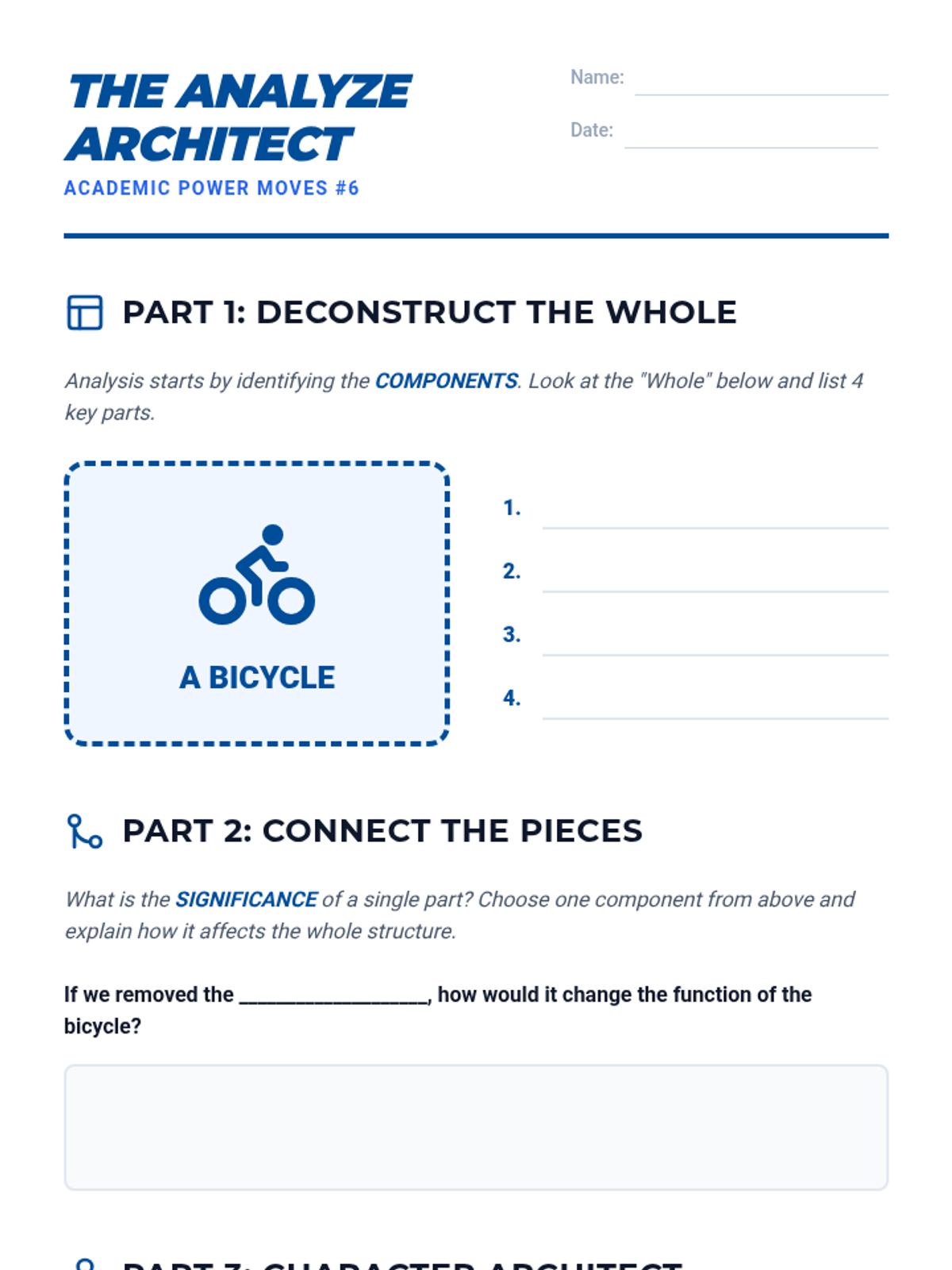
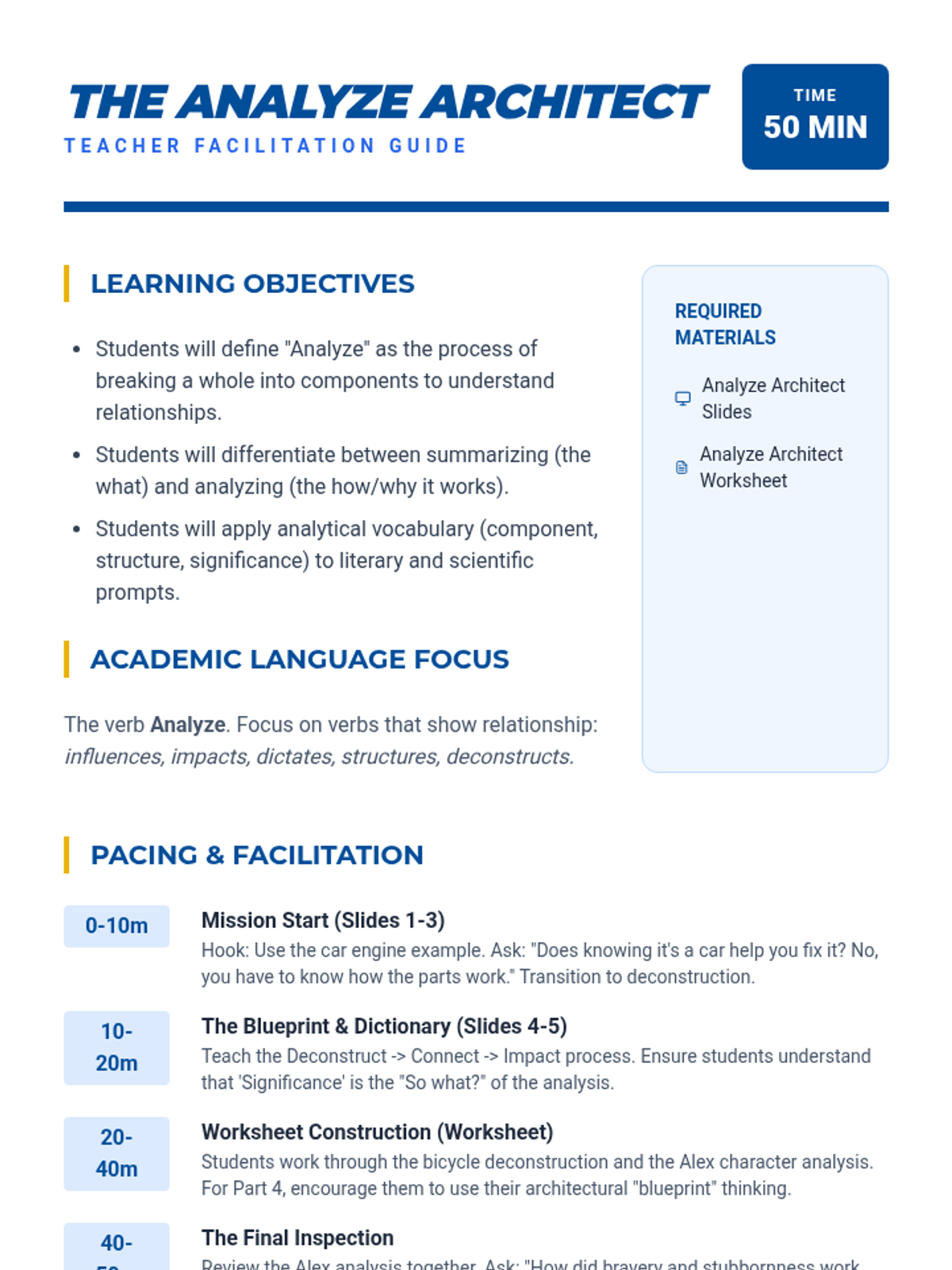
A 50-minute lesson on the academic action verb 'Analyze.' Students learn to break complex topics into smaller parts to understand how they work together using the 'Architect's Blueprint' method.
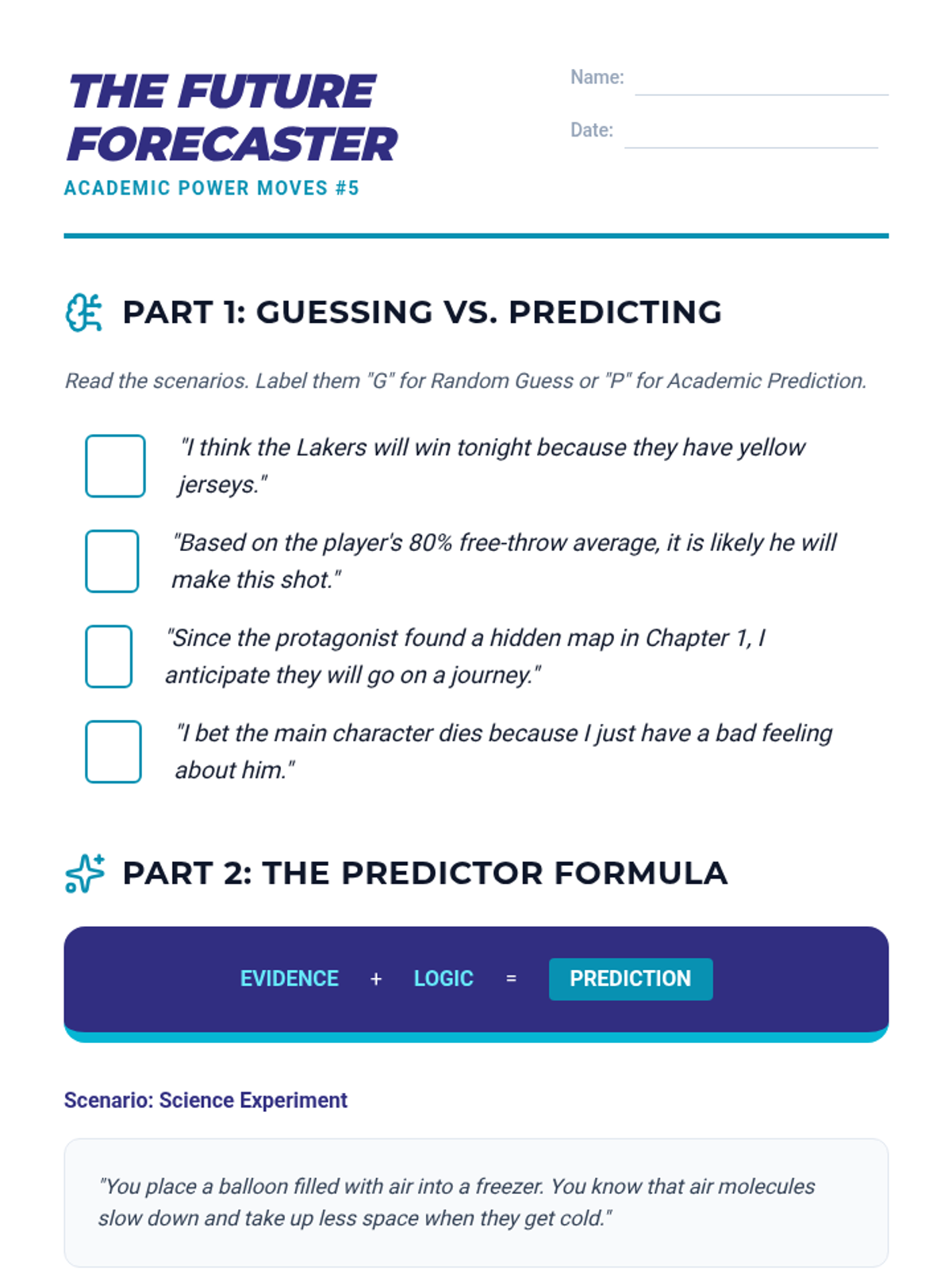
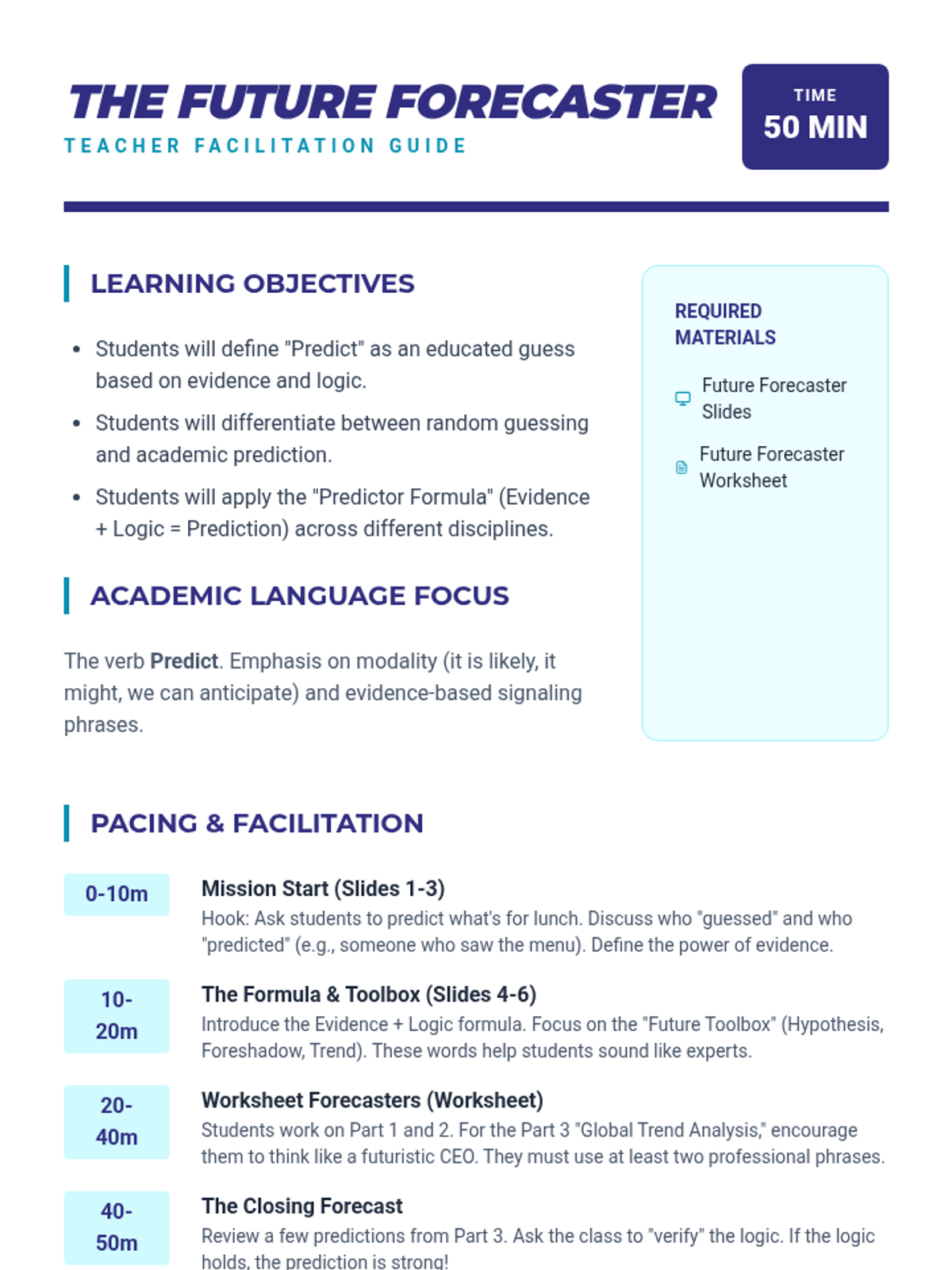
A 50-minute lesson on the academic action verb 'Predict.' Students learn to use evidence and logic to make educated guesses about future outcomes in various subjects.
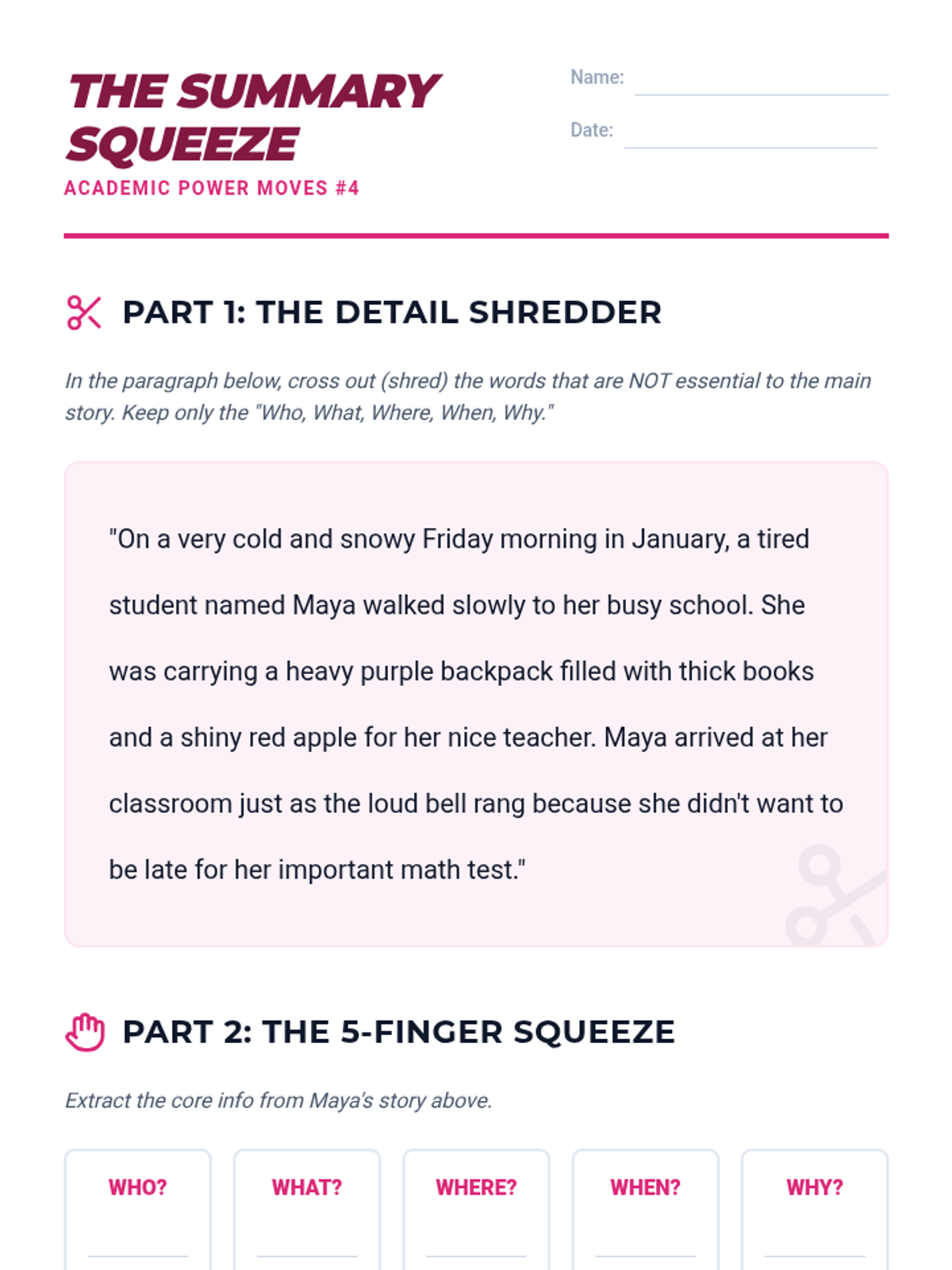
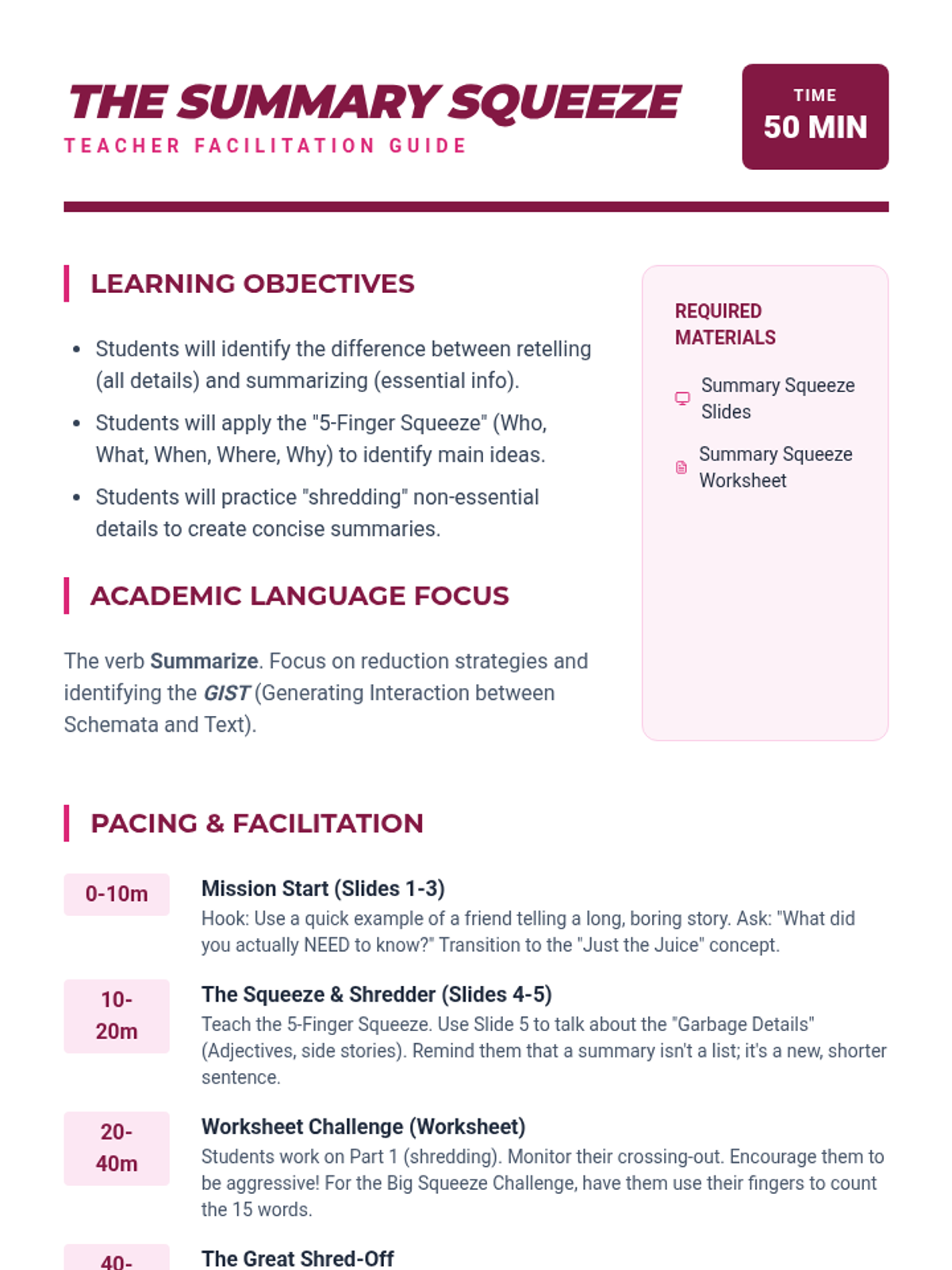
A 50-minute lesson on the academic action verb 'Summarize.' Students learn to identify main ideas and key details while removing unnecessary information using 'The Squeeze' method.
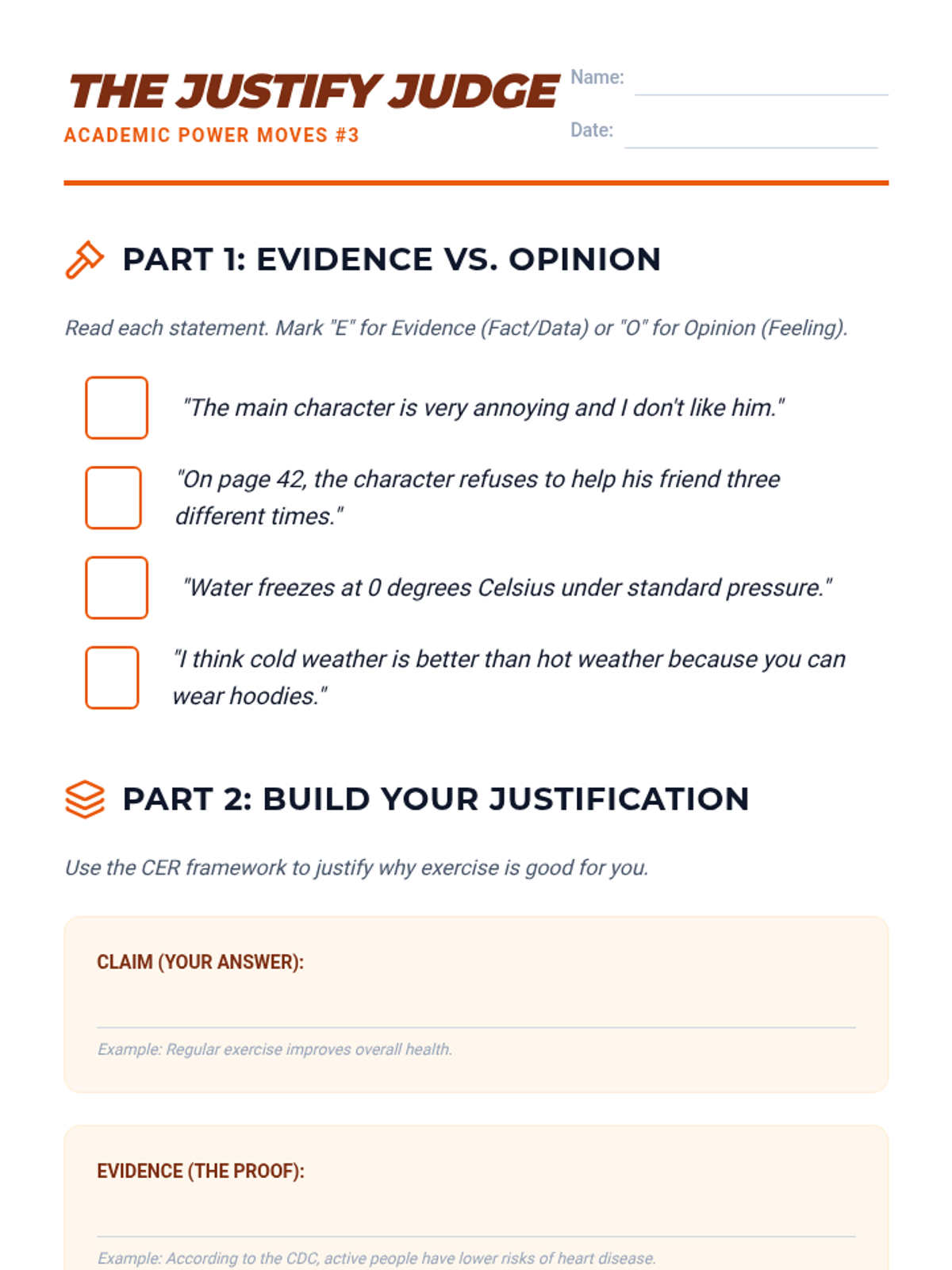
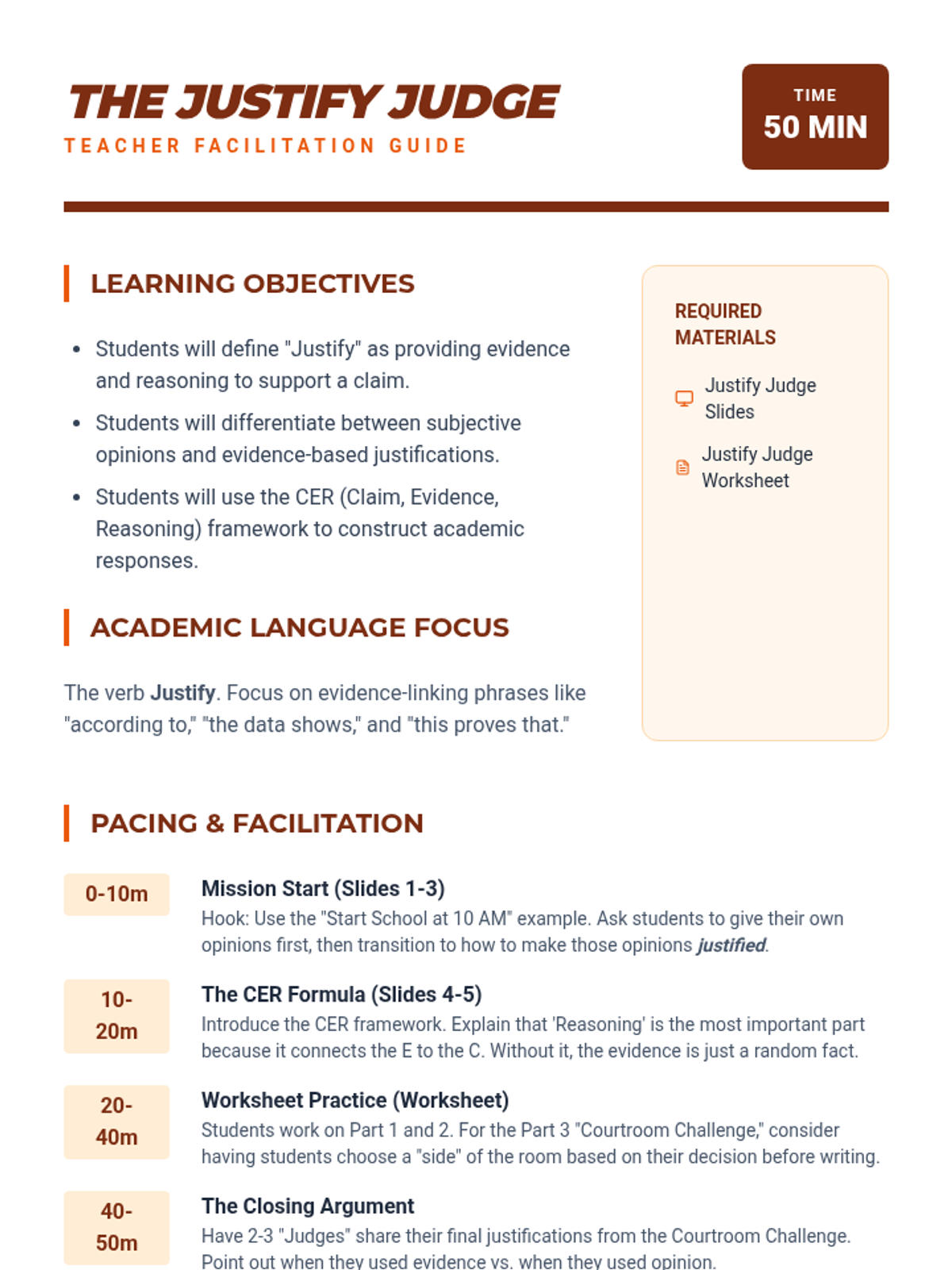
A 50-minute lesson on the academic action verb 'Justify.' Students learn to support their claims with evidence and reasoning using the 'Claim-Evidence-Reasoning' (CER) framework.
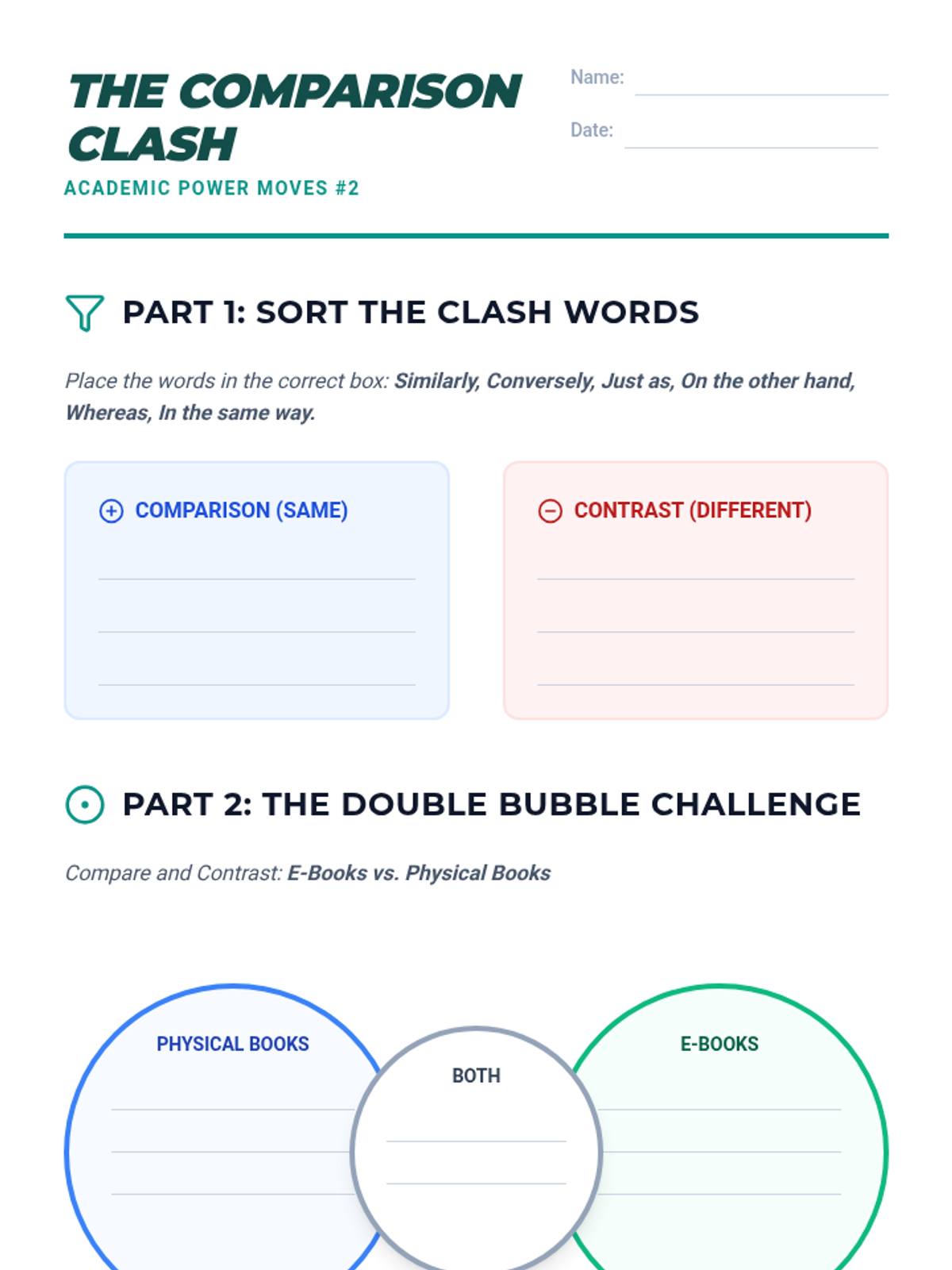
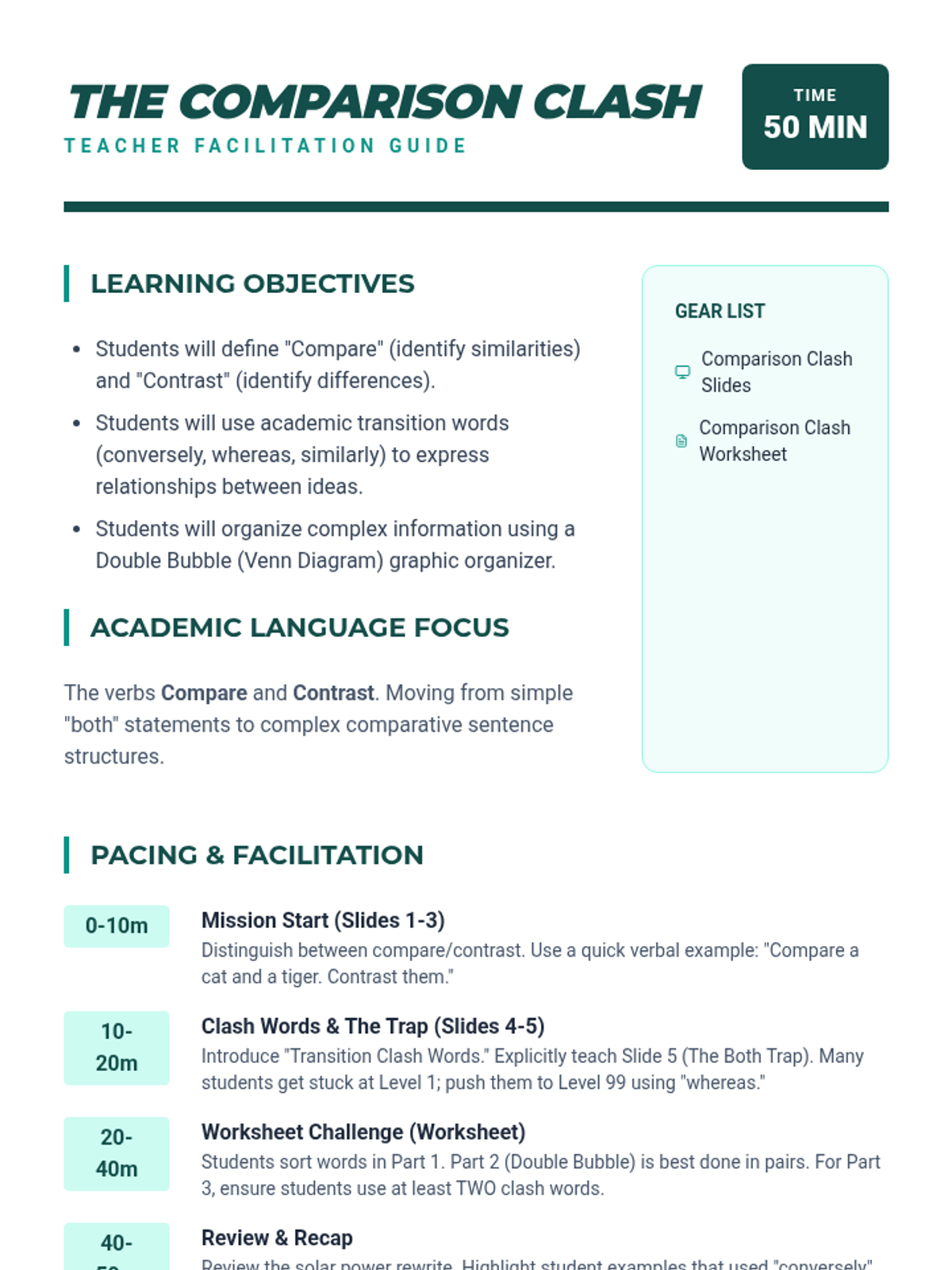
A 50-minute lesson on 'Compare' and 'Contrast.' Students learn to identify similarities and differences using academic language and structured organizers.
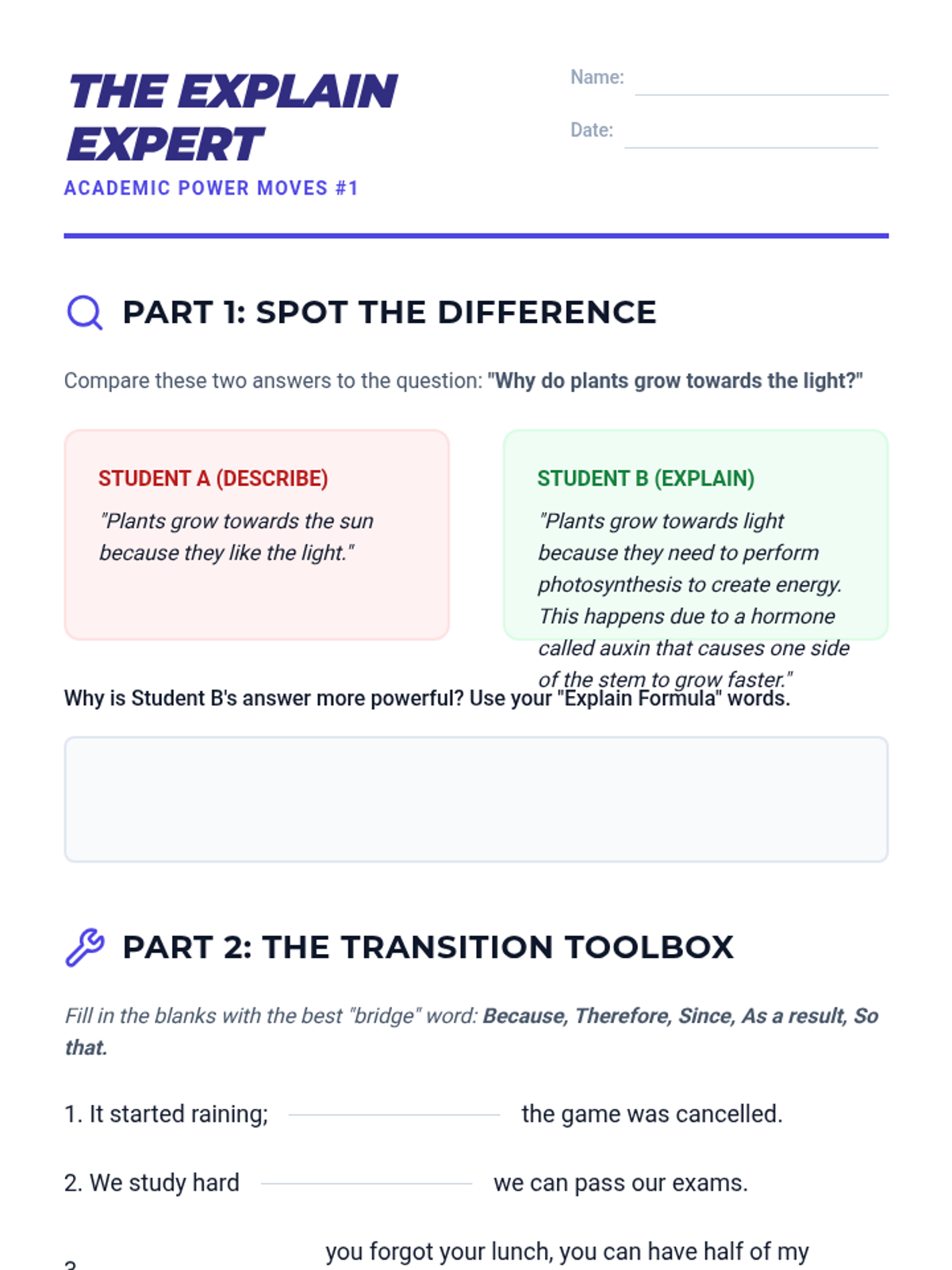
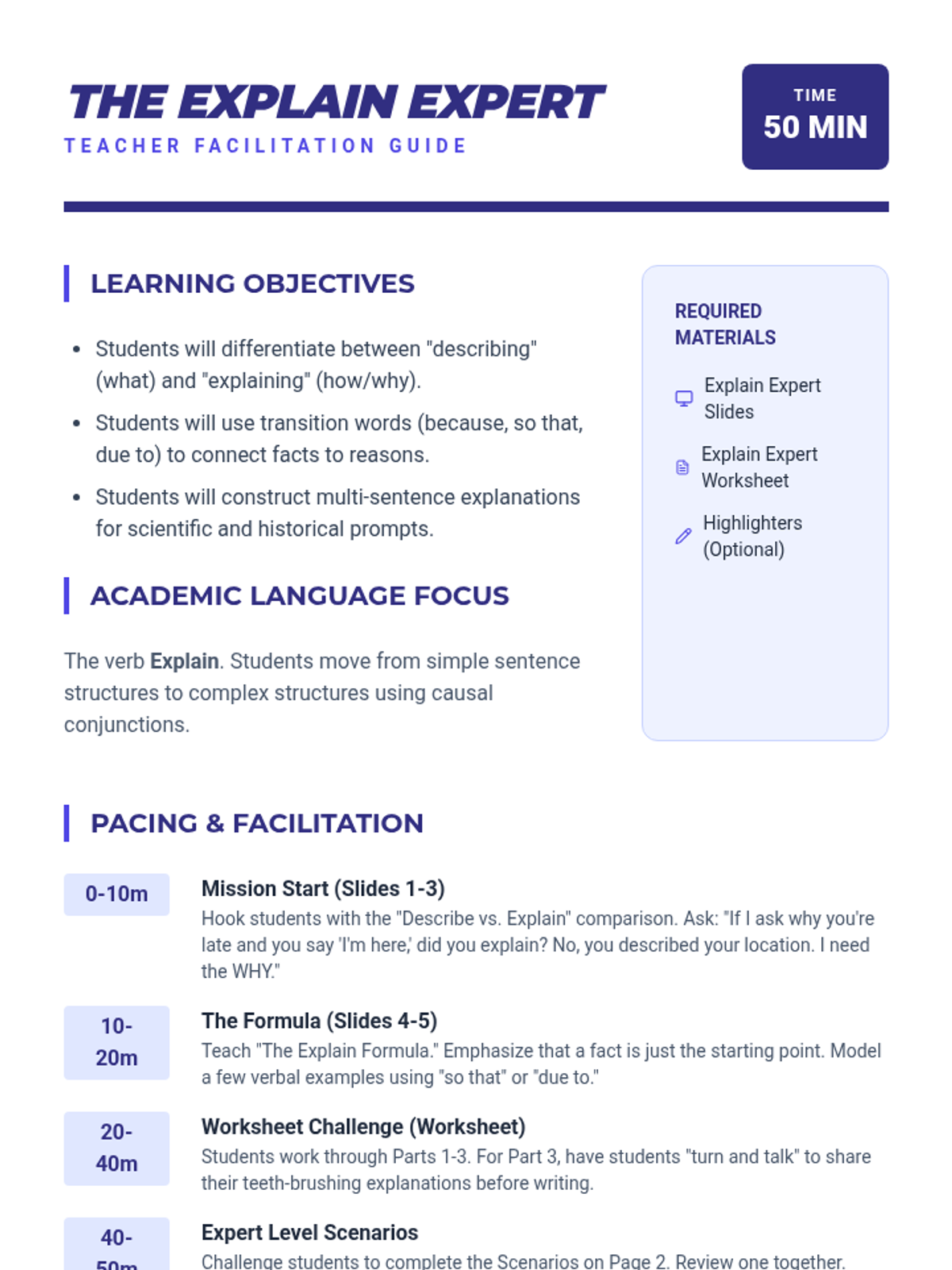
A 50-minute lesson on the academic action verb 'Explain.' Students learn to go beyond 'what' to 'how' and 'why' using clear steps and transition words.
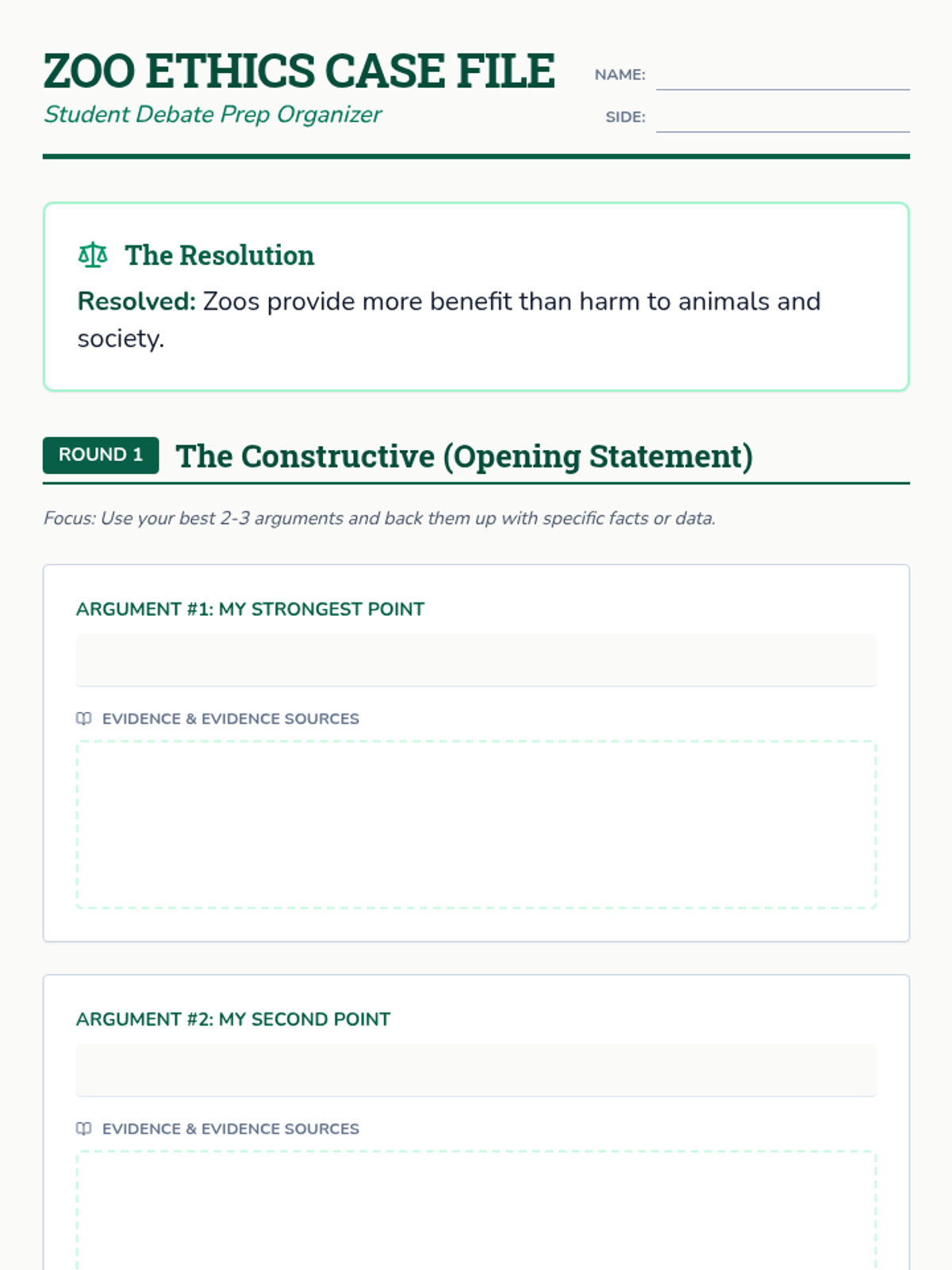
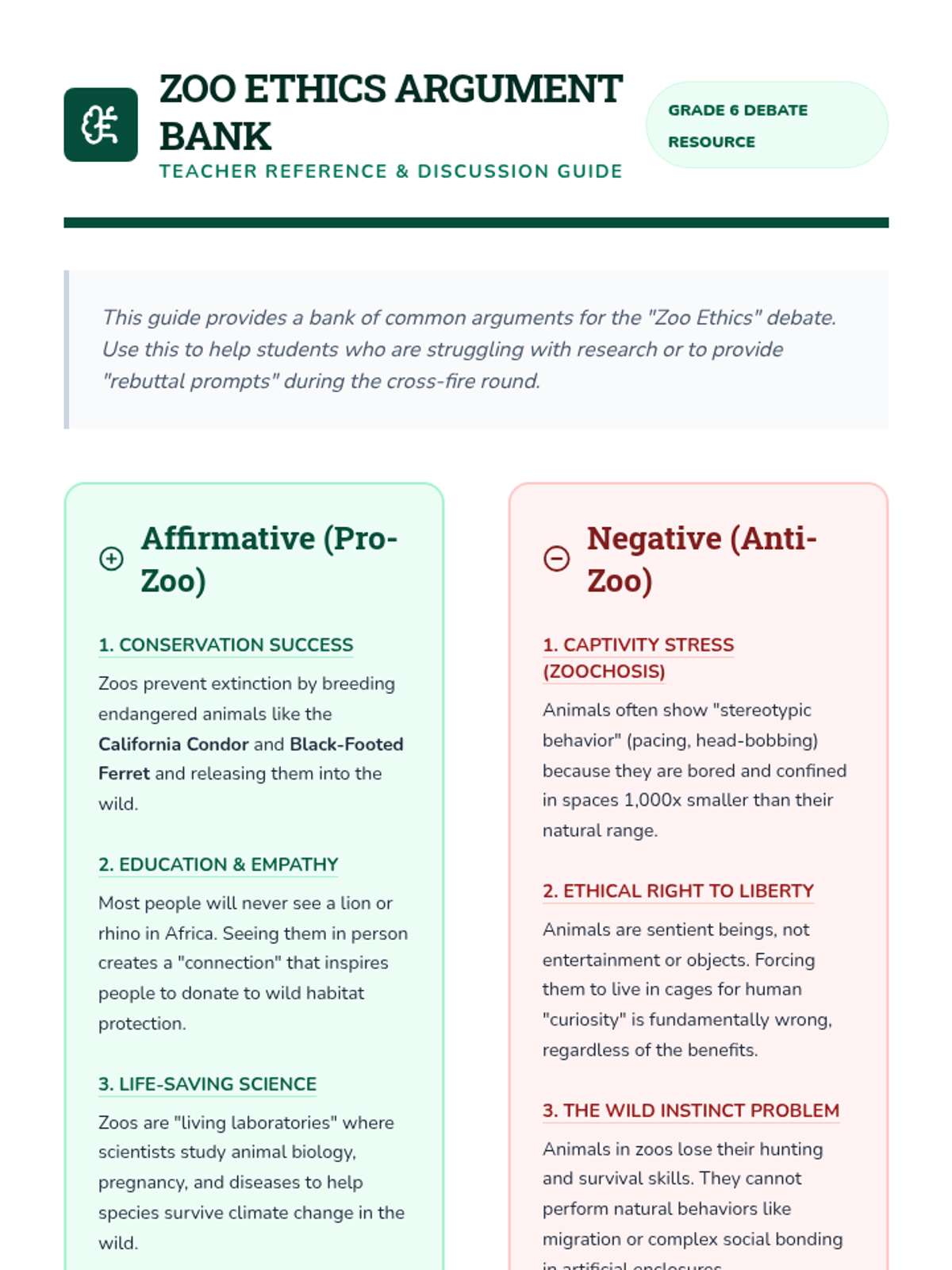
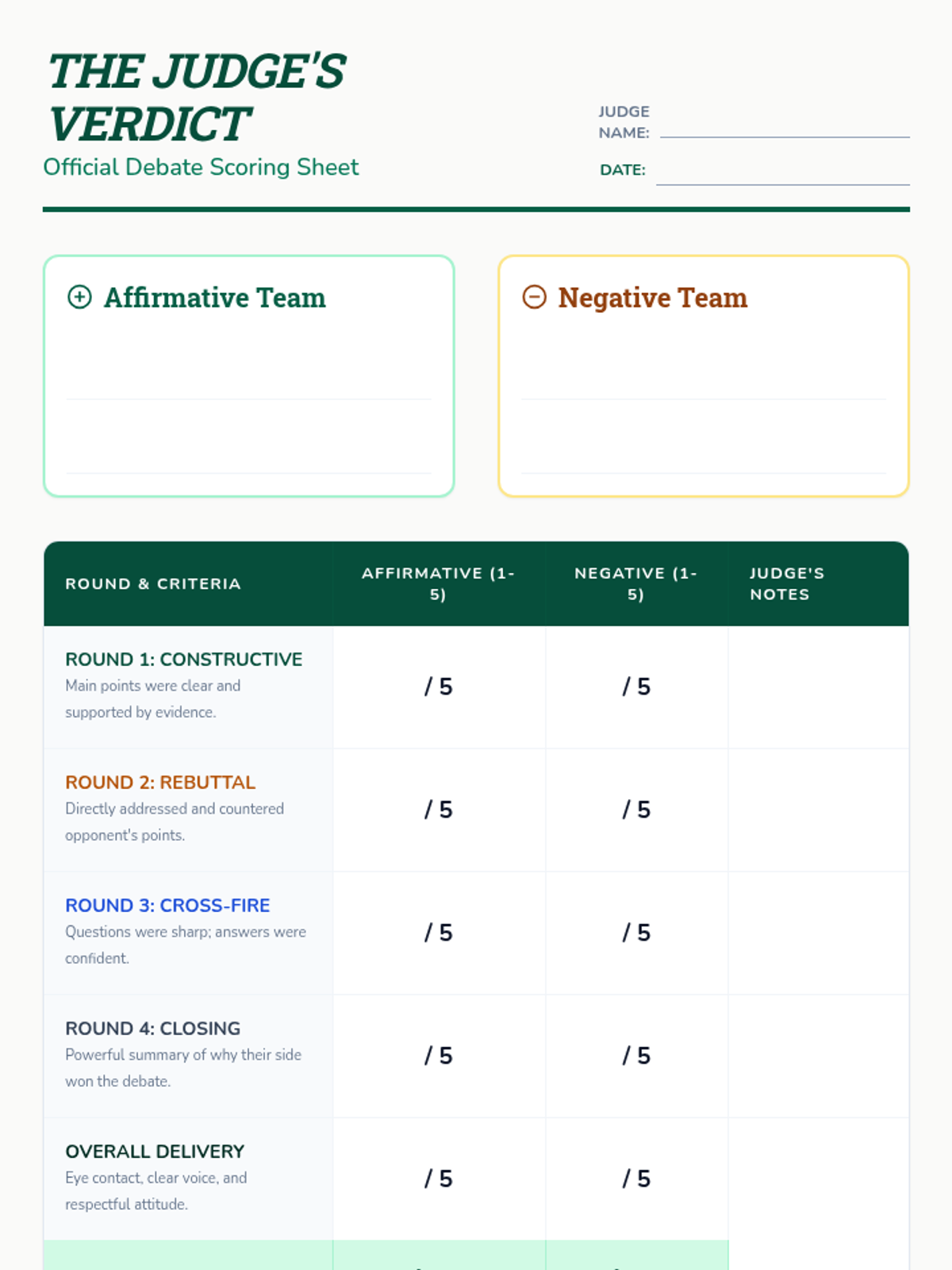
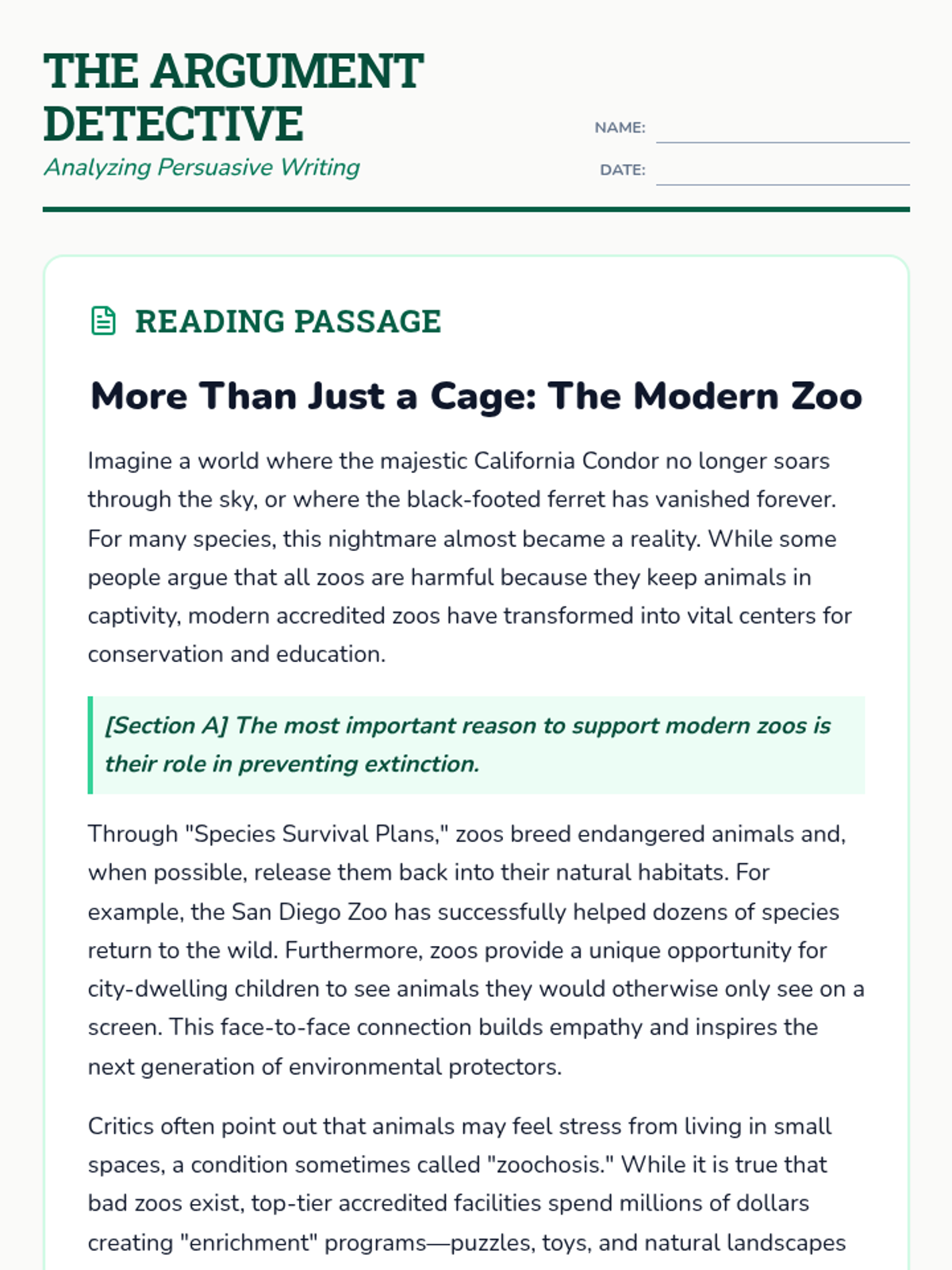
A comprehensive guide and set of tools for 6th-grade students to prepare for and execute a formal debate on the ethics of zoos. This lesson introduces the four-round debate structure, research techniques, and rebuttal strategies.
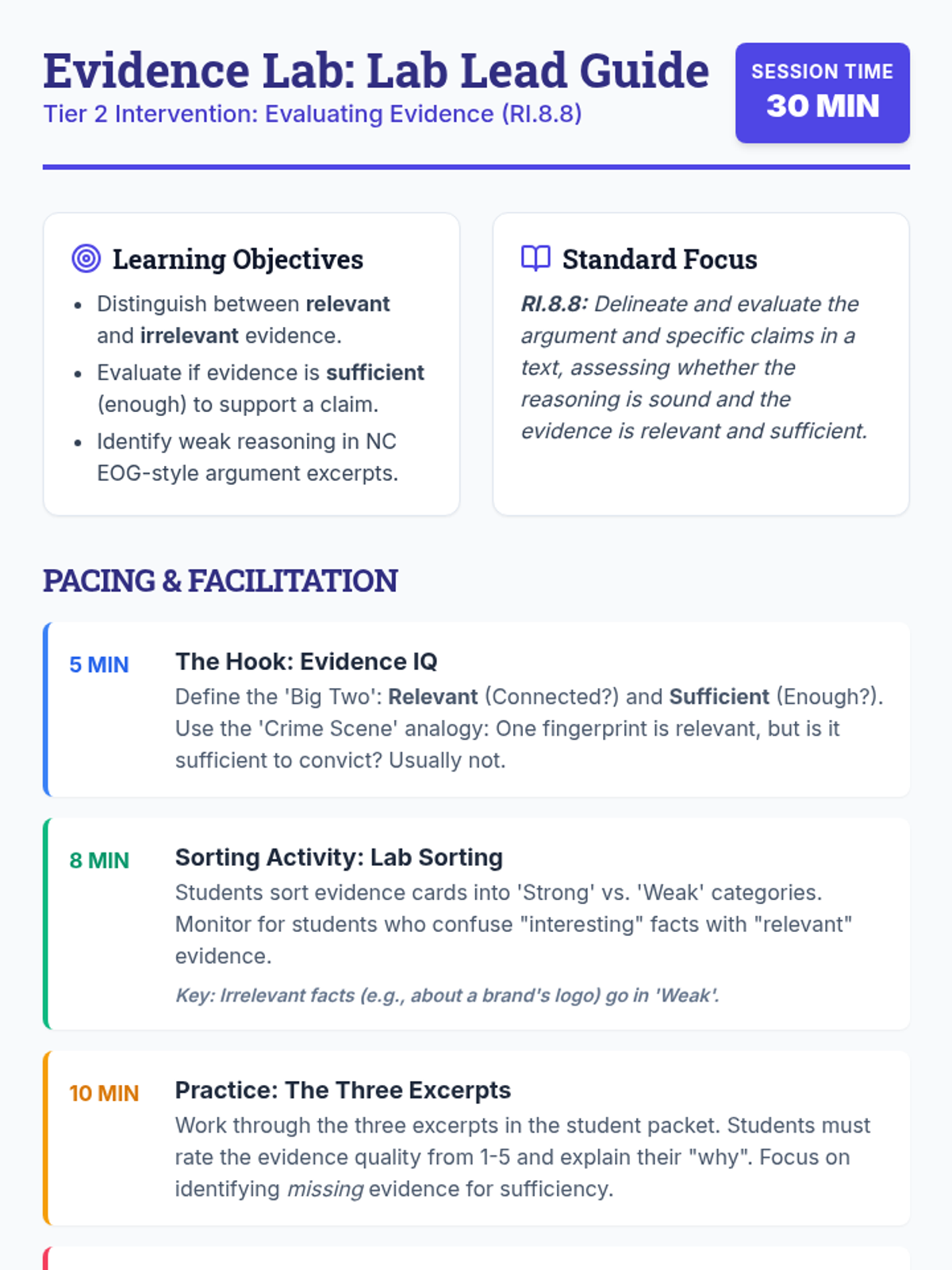
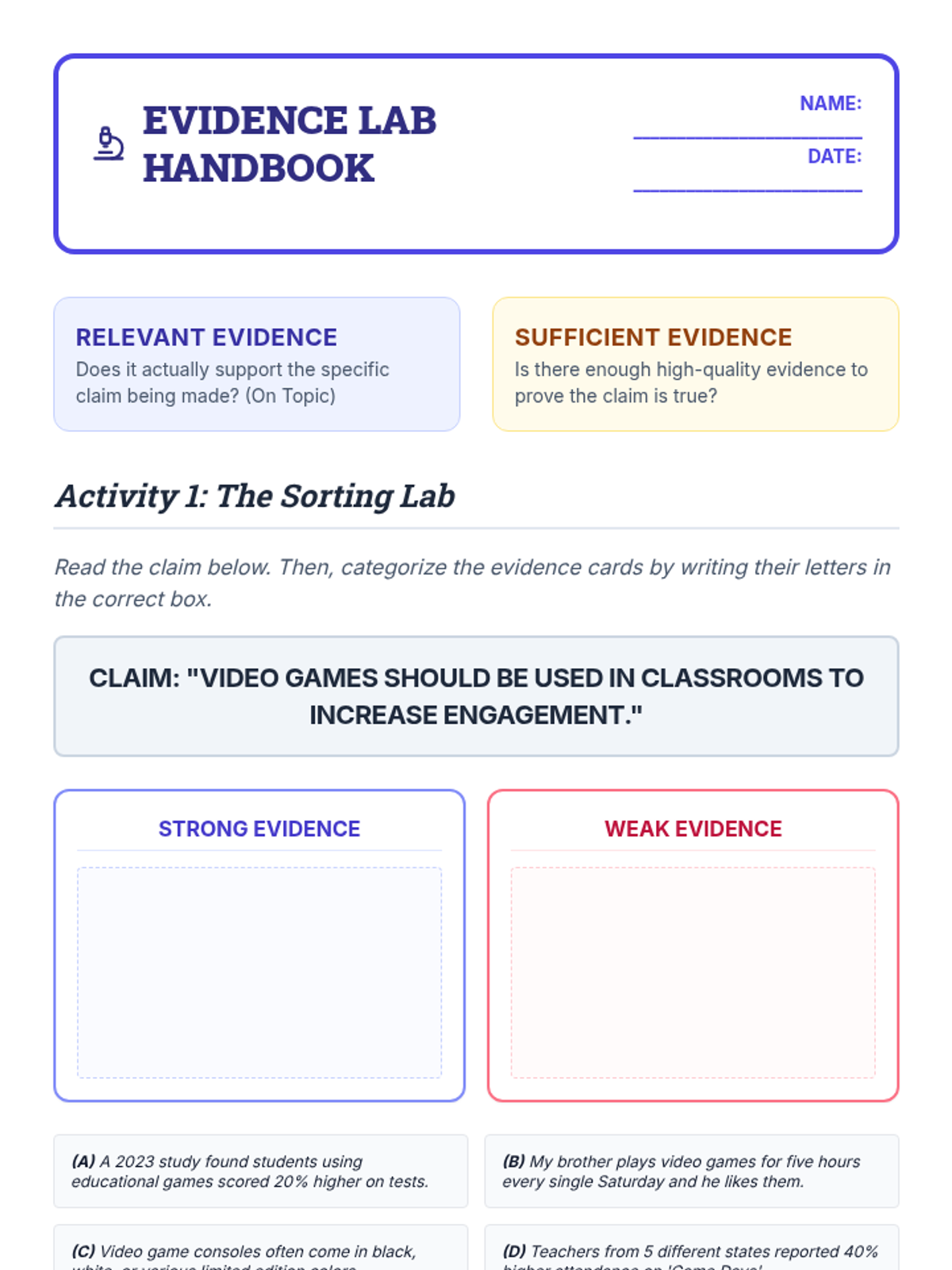
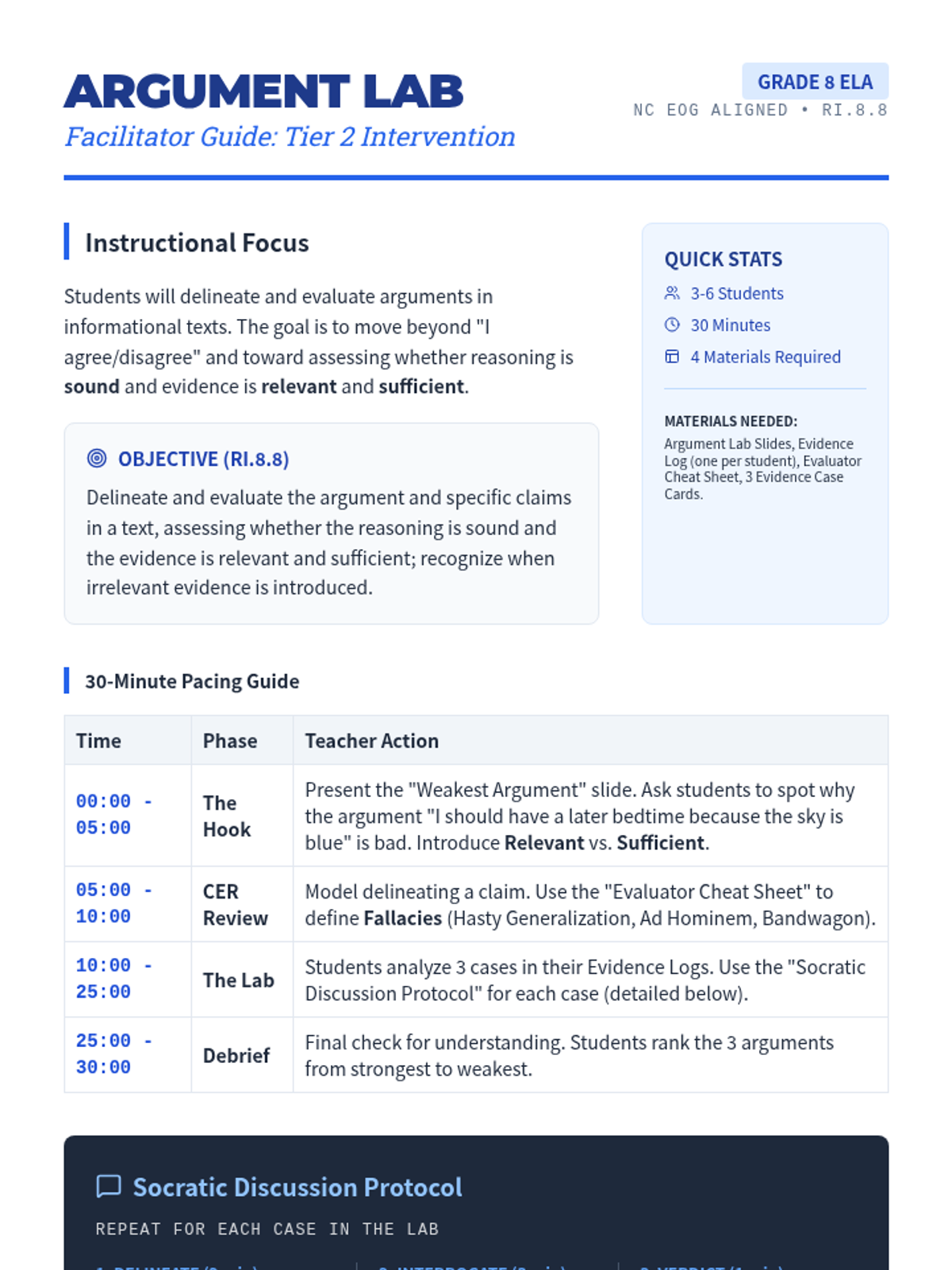
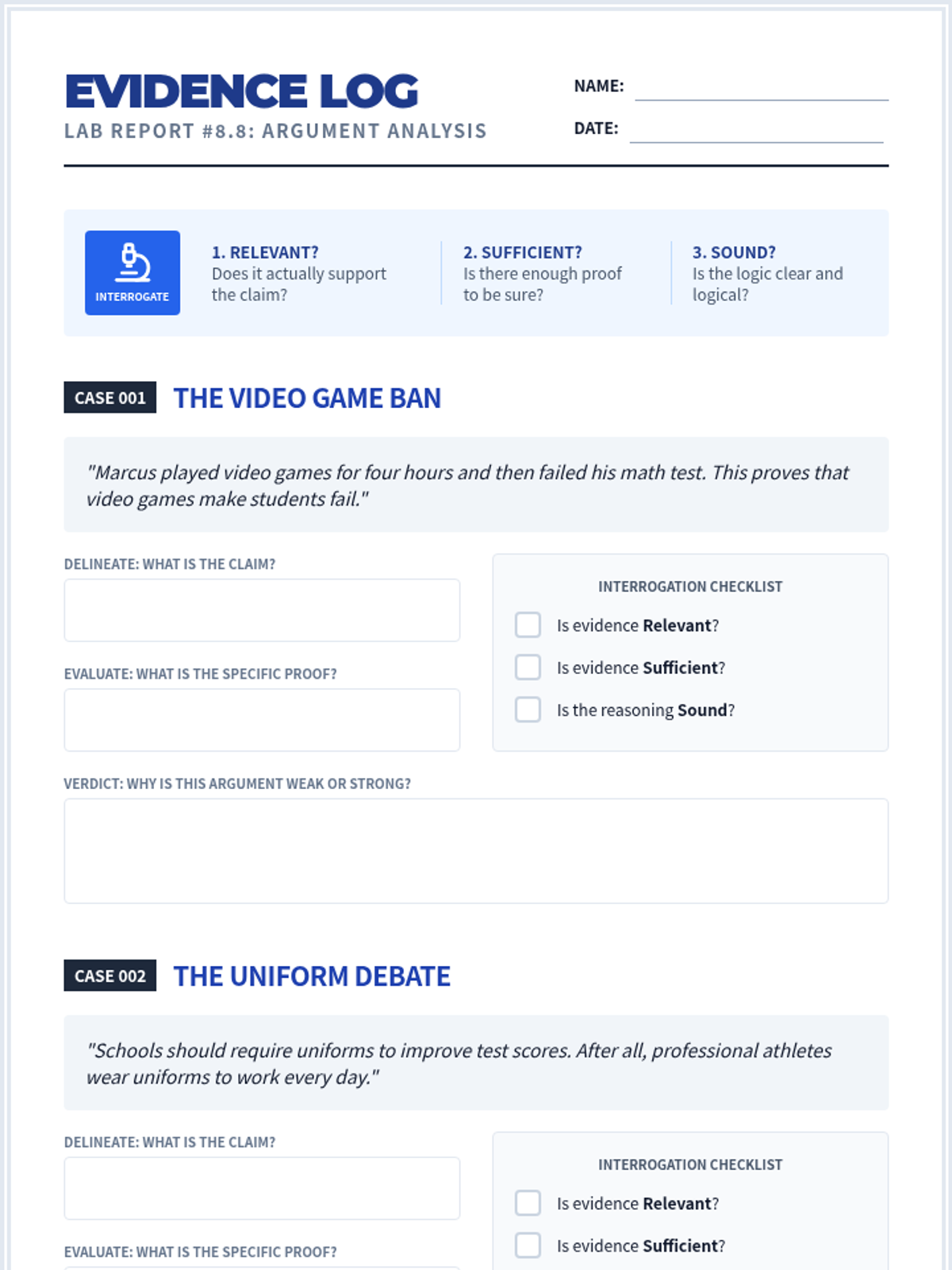
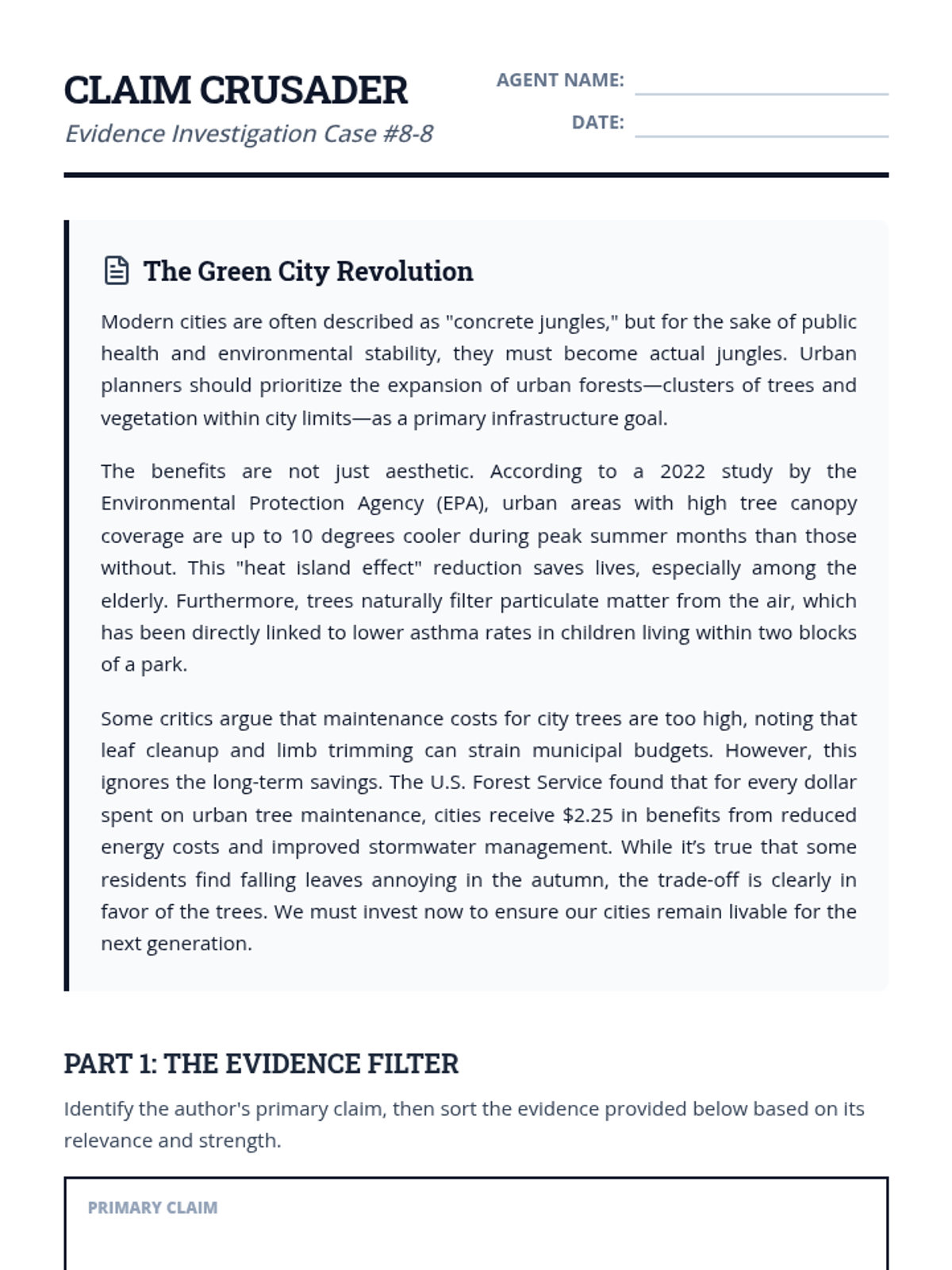
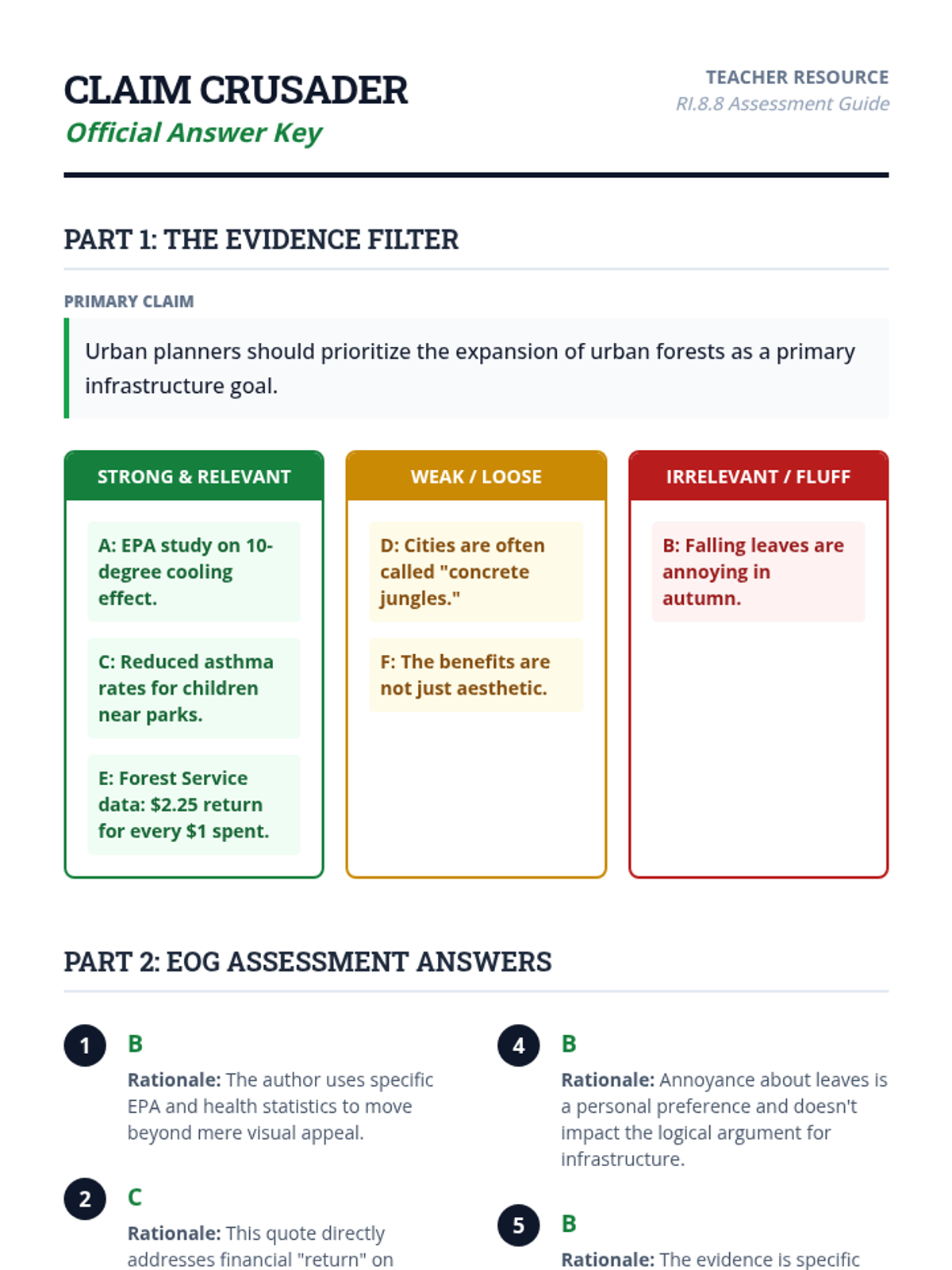
A 30-minute Tier 2 intervention for Grade 8 students to master evaluating evidence relevance and sufficiency. Students will analyze argument excerpts, sort evidence types, and participate in a mini-debate to apply their skills in a high-stakes NC EOG prep format.
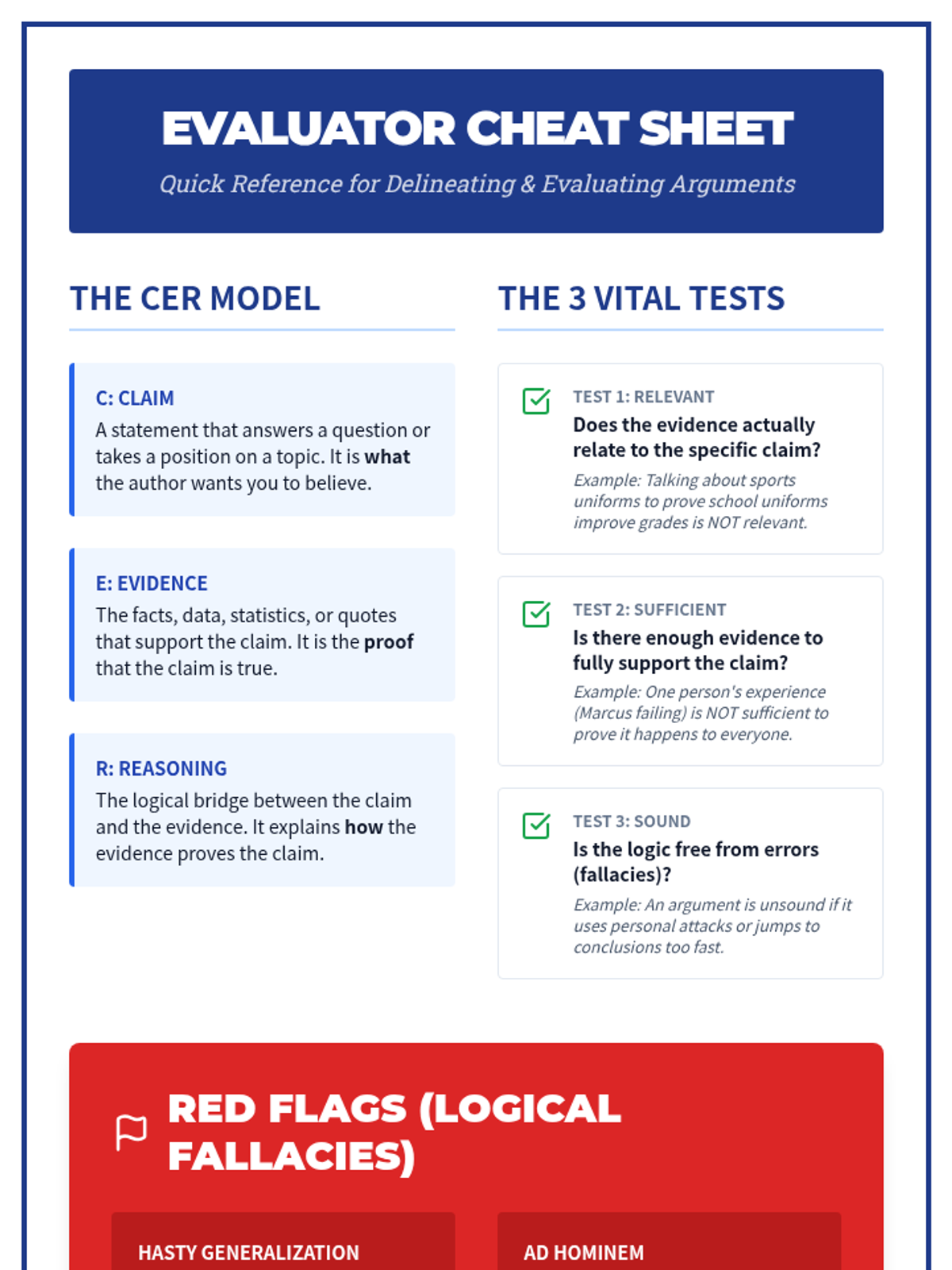
A 30-minute Tier 2 intervention for 8th grade ELA focused on RI.8.8. Students use the CER framework to dismantle arguments, identify logical fallacies, and evaluate the strength of evidence across three real-world scenarios.
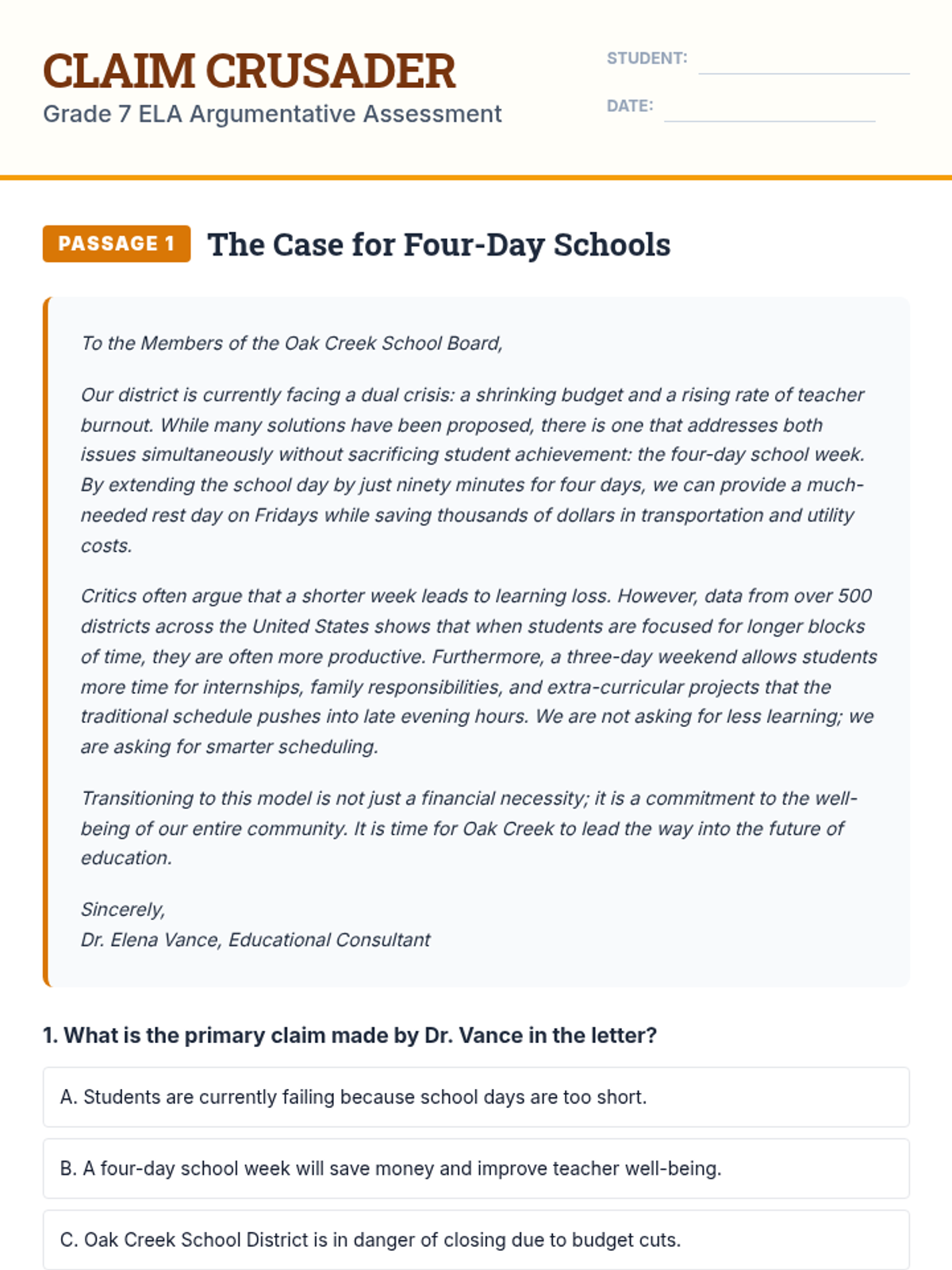
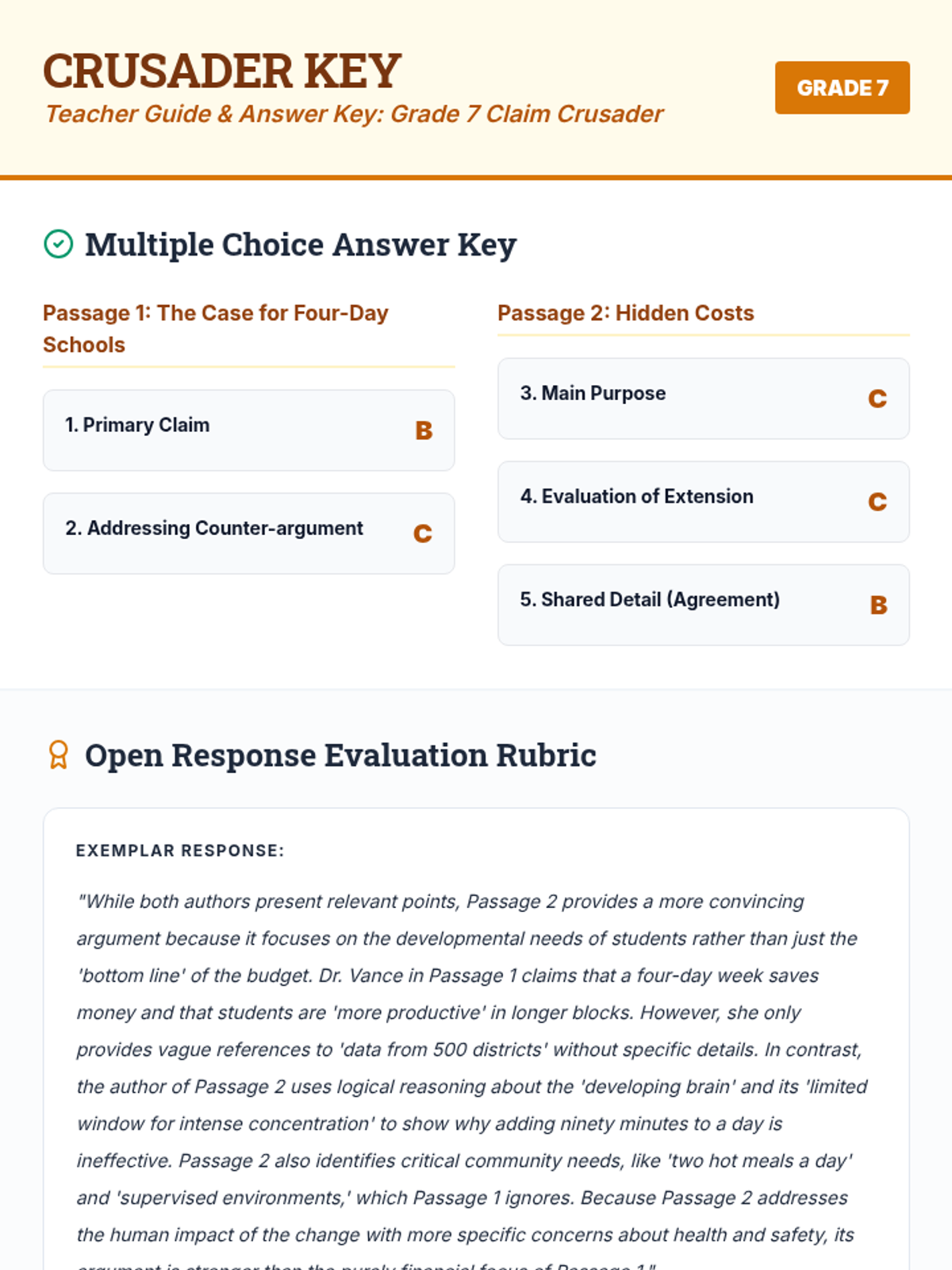
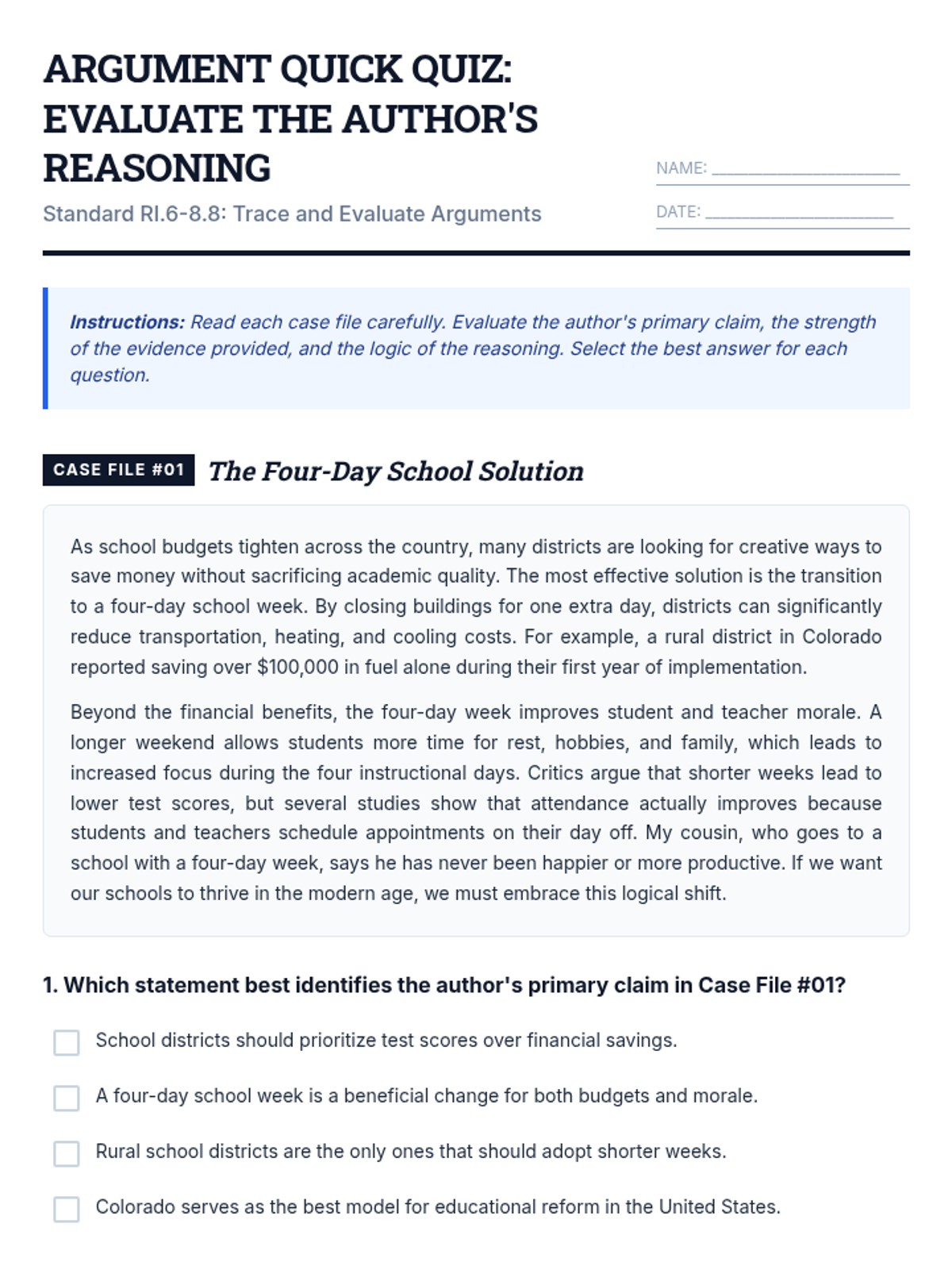
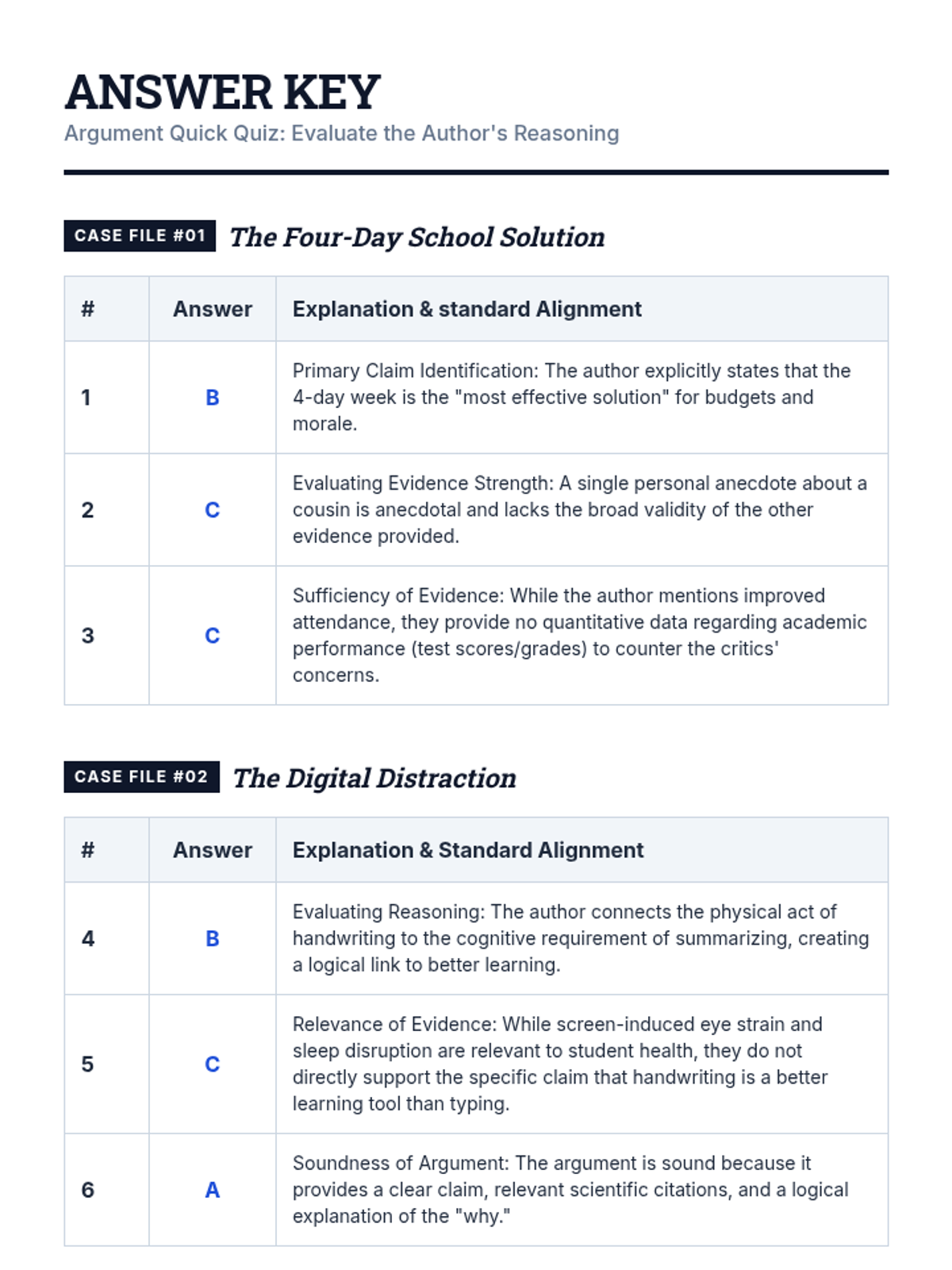
A focused Grade 7 ELA practice session on analyzing arguments, identifying claims, and evaluating evidence in persuasive texts. Features a practice test with multiple-choice questions and a claim-evaluation open response.
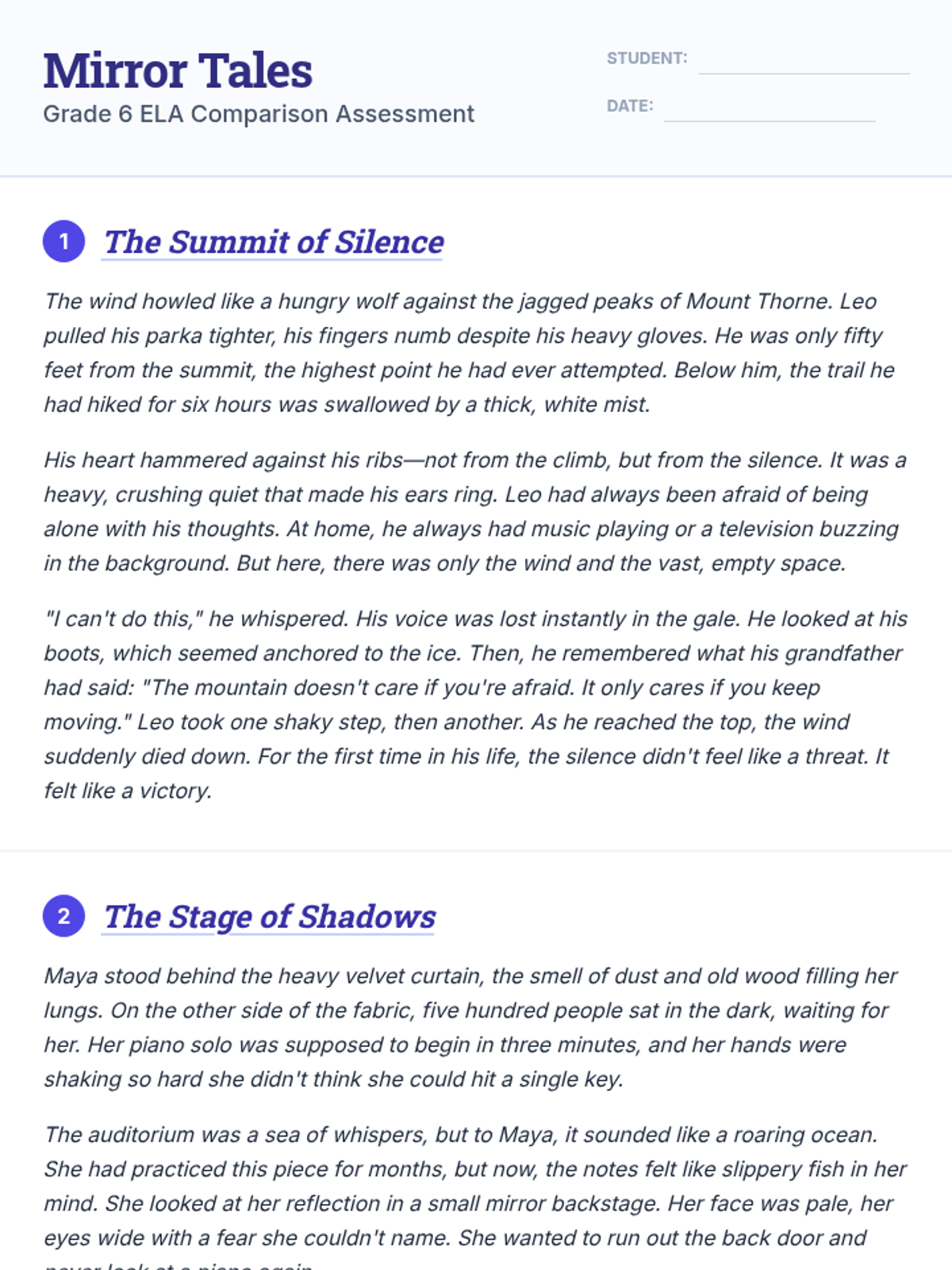
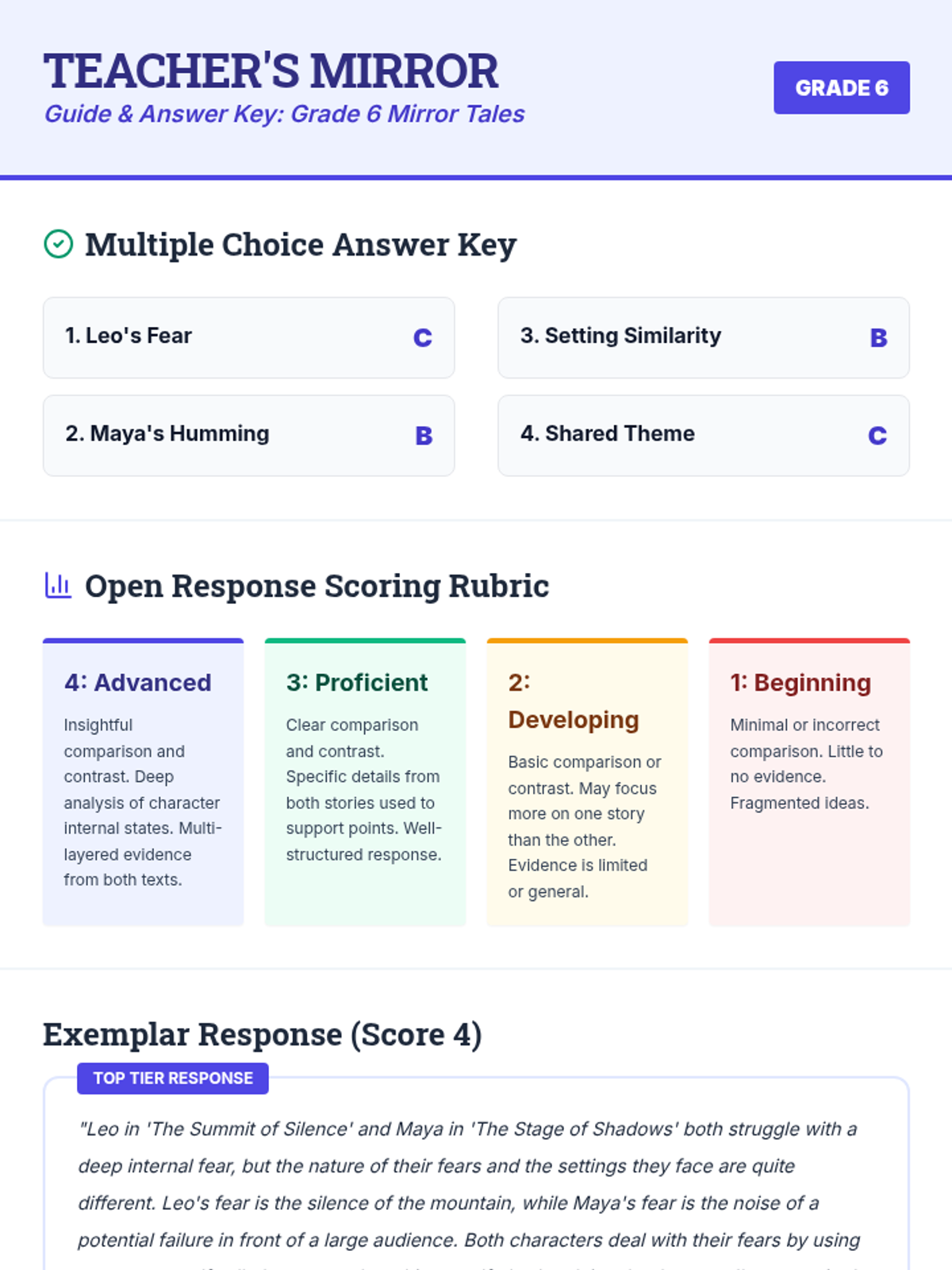
A focused practice session for Grade 6 students on comparing and contrasting characters and themes across two fictional stories. Includes a practice test with an MCAS-style open response question.
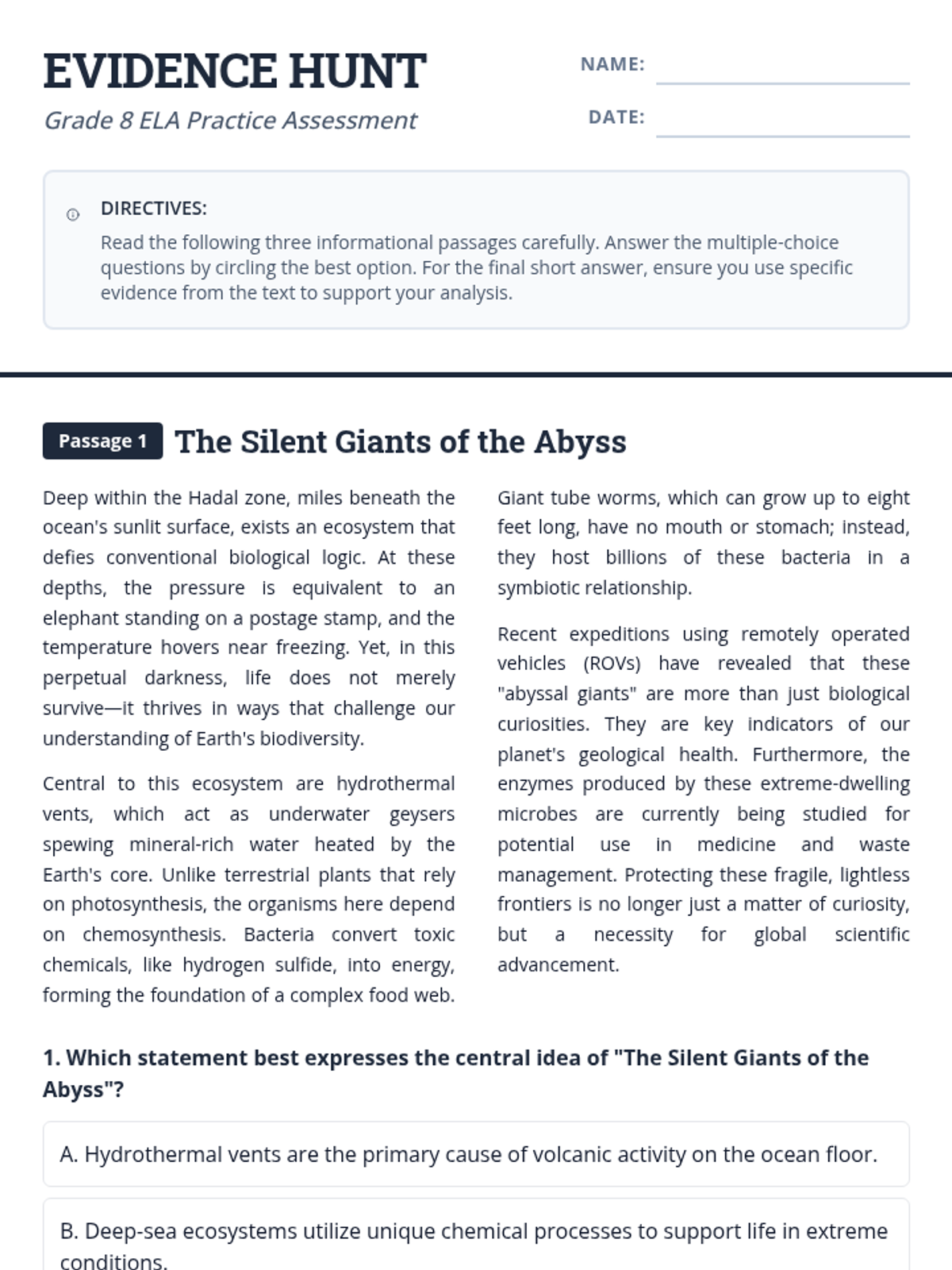
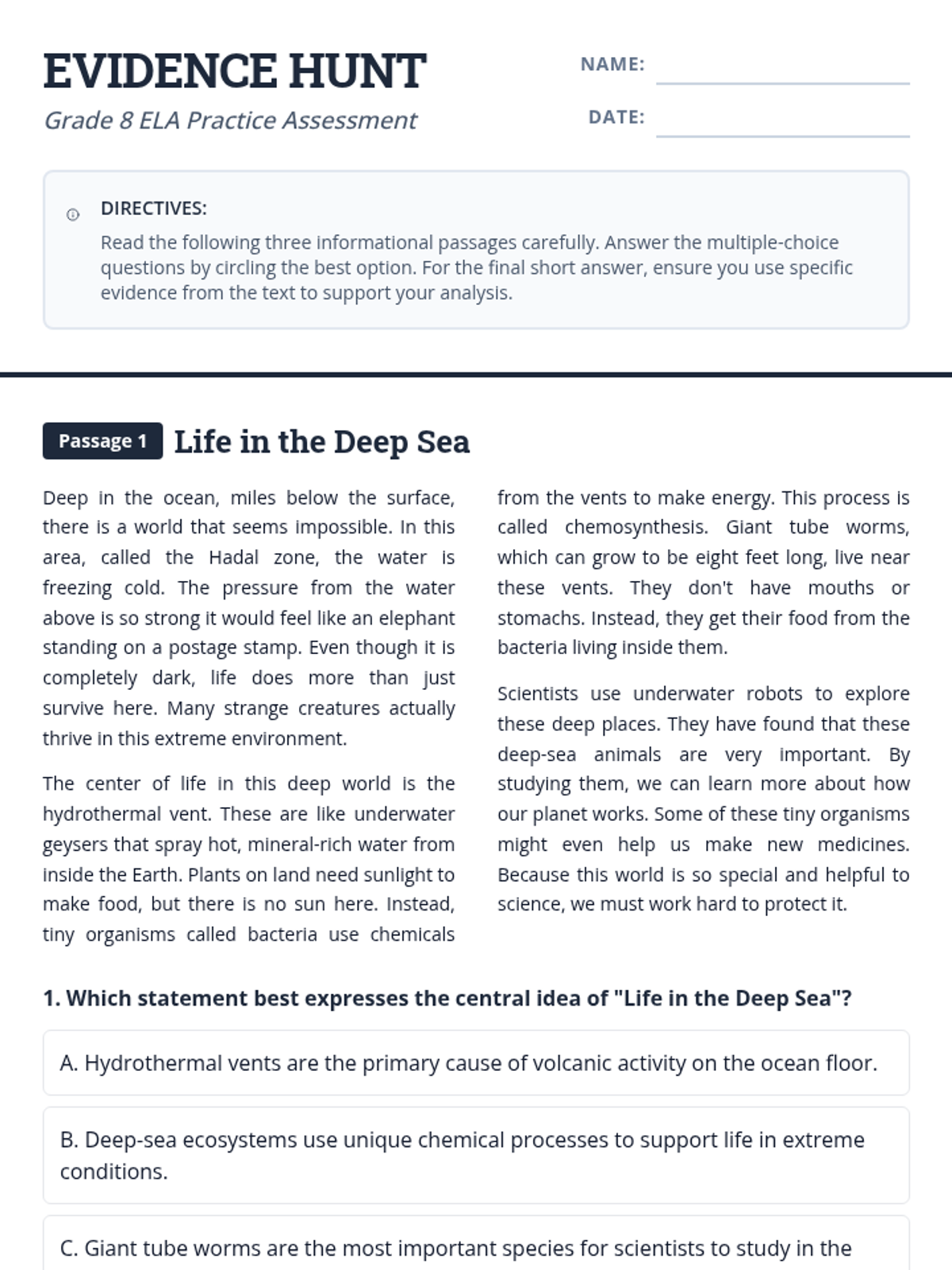
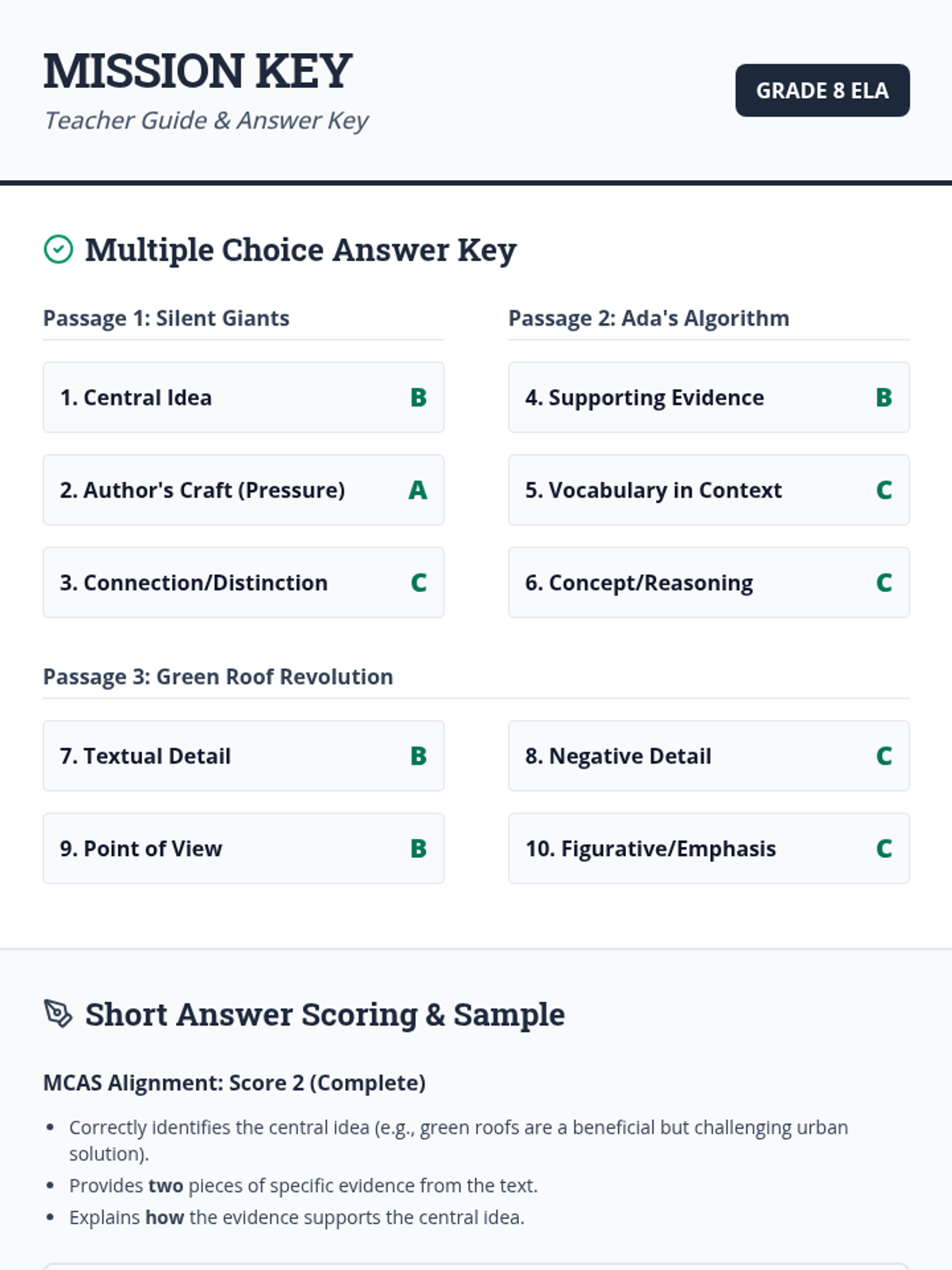
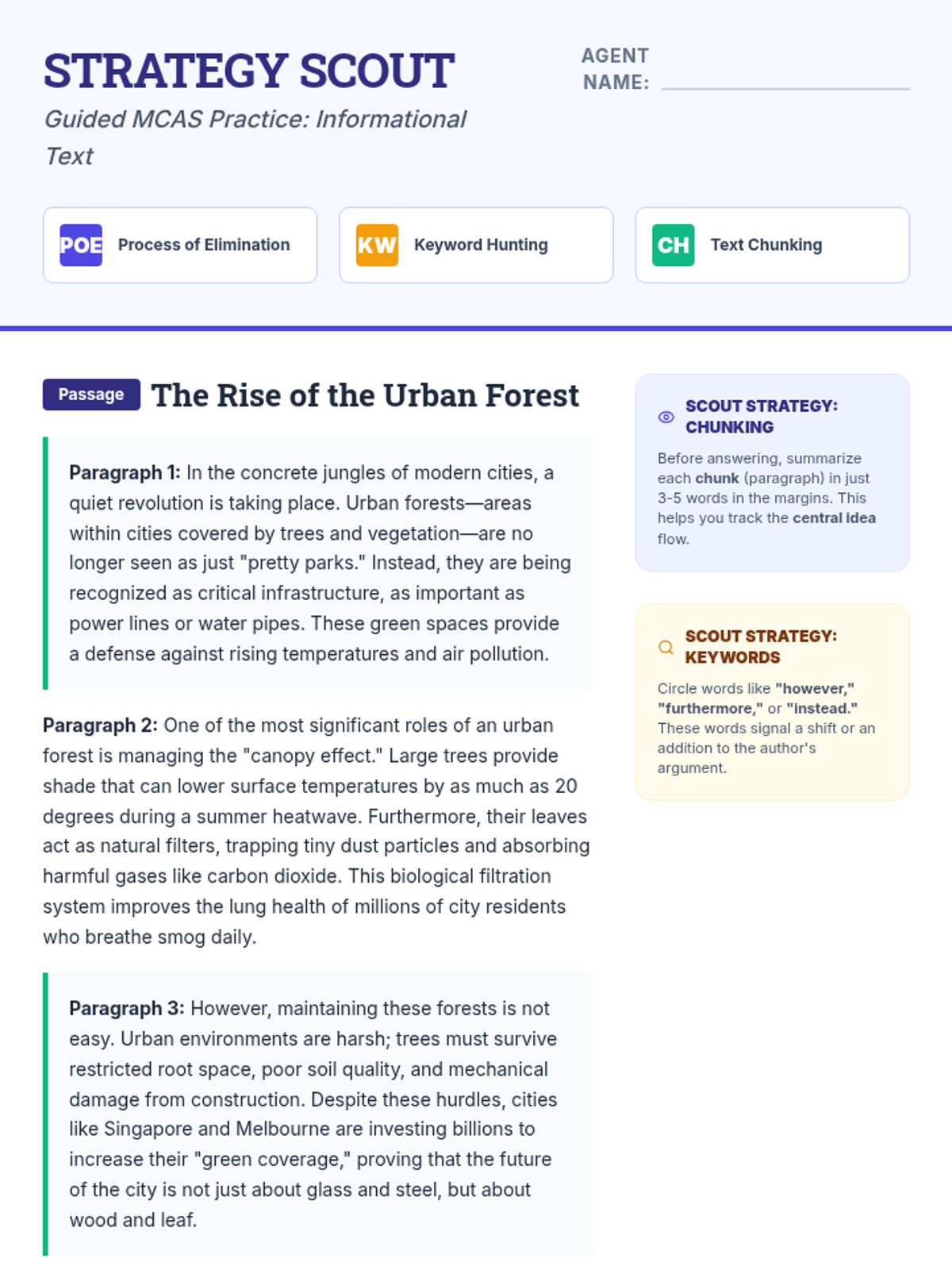
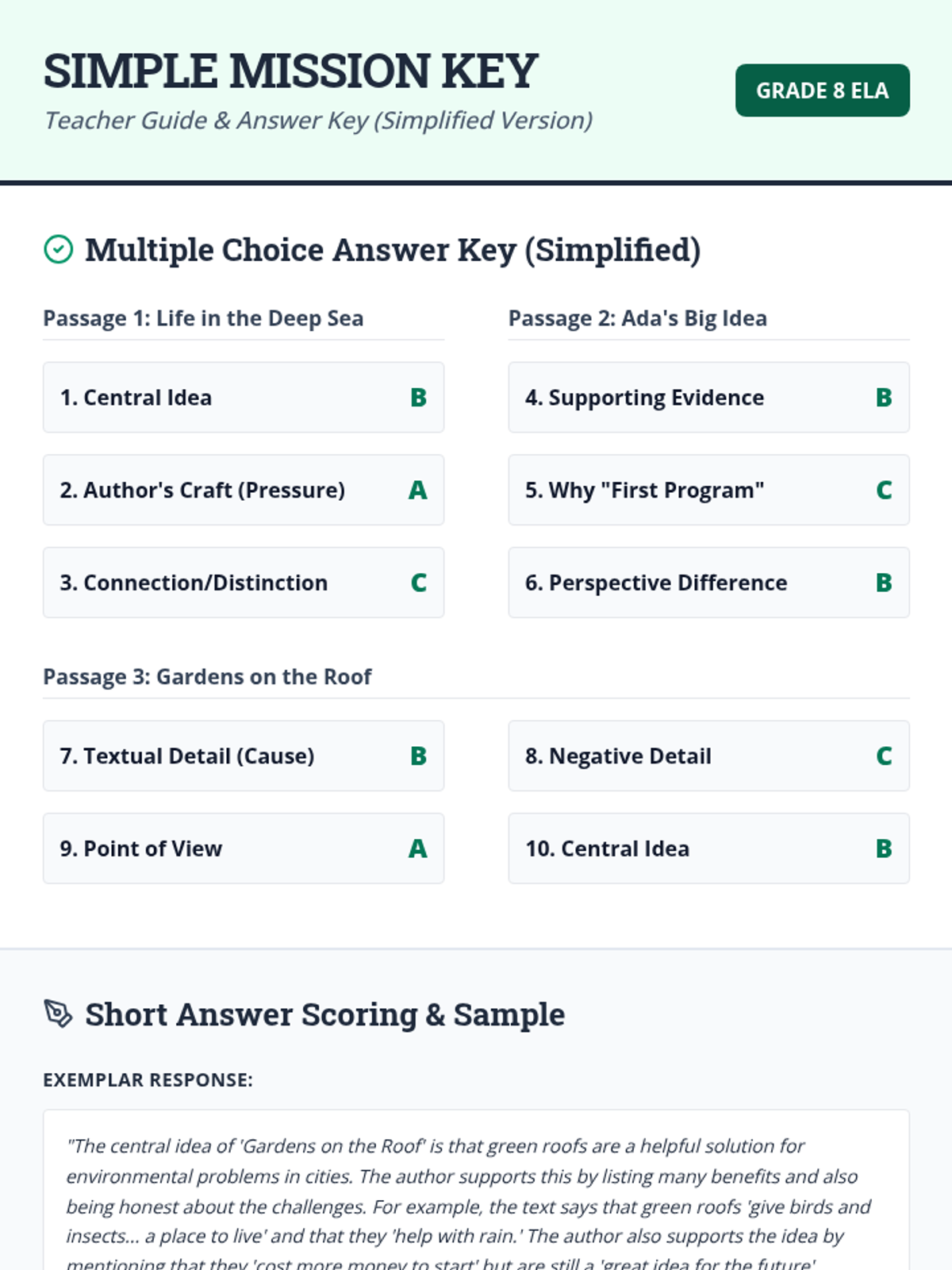
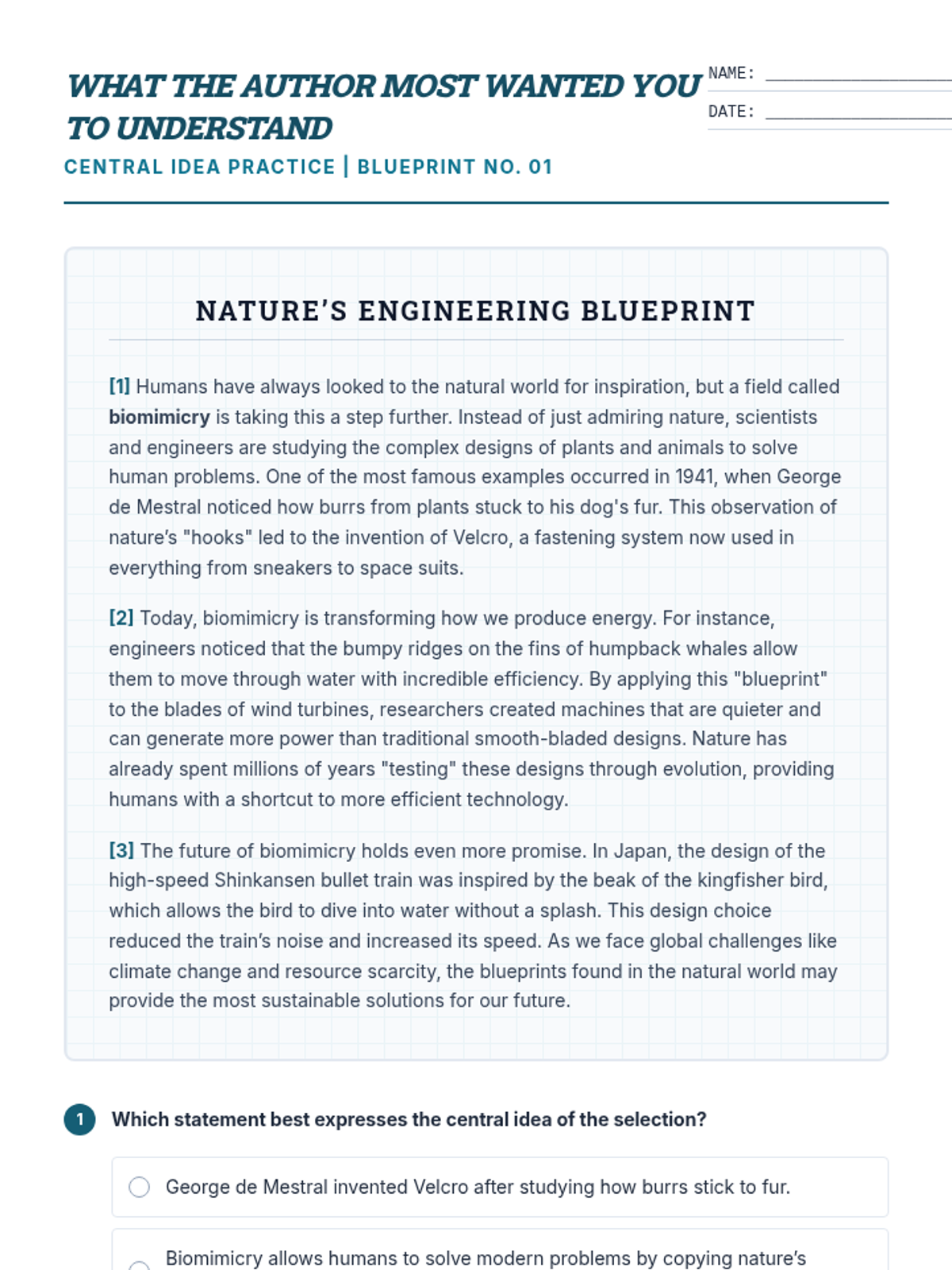
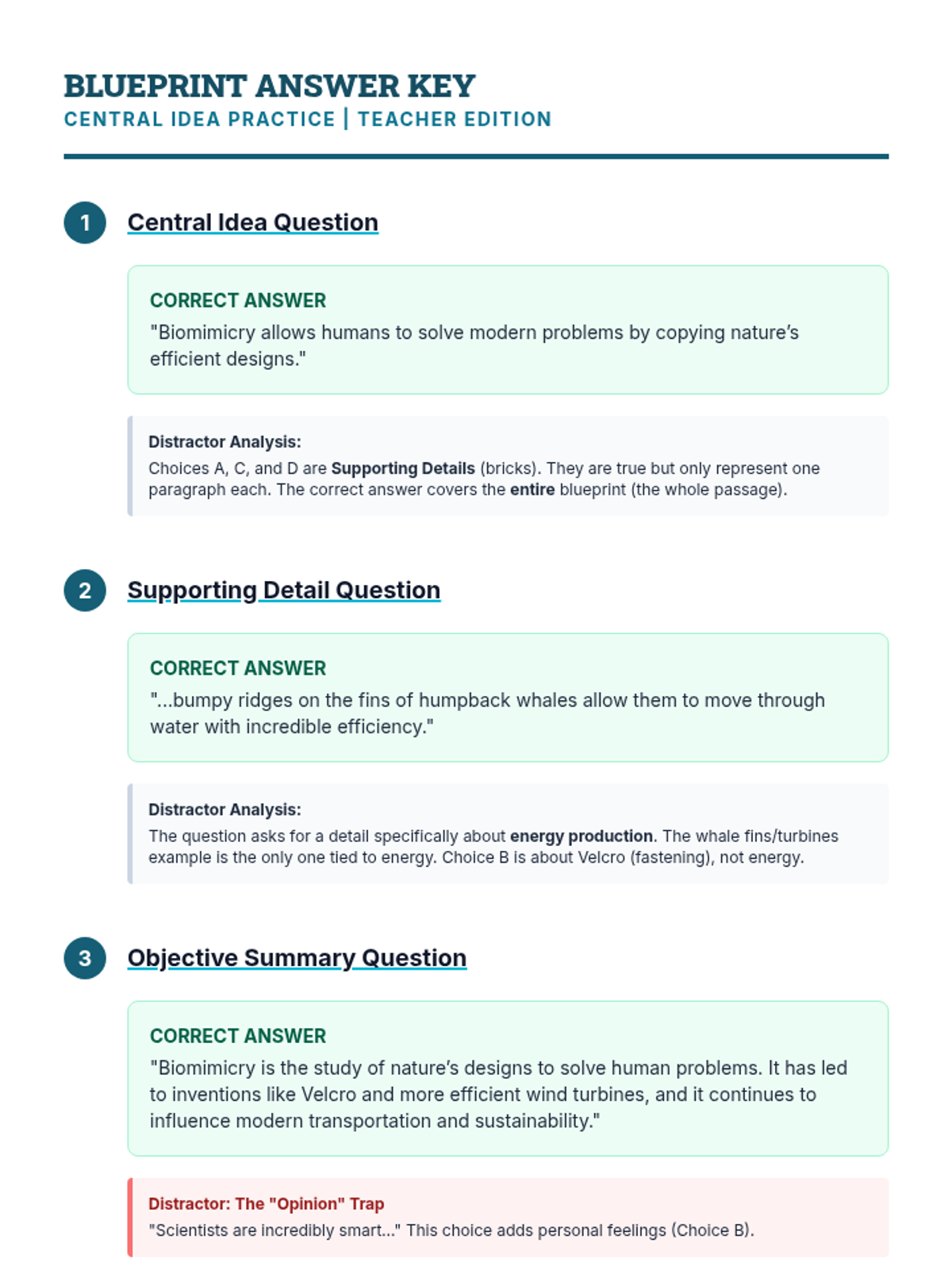
A comprehensive practice session focused on identifying central ideas, analyzing supporting details, and synthesizing information across three distinct informational texts. Students will practice MCAS-style multiple choice and a text-based short answer response.
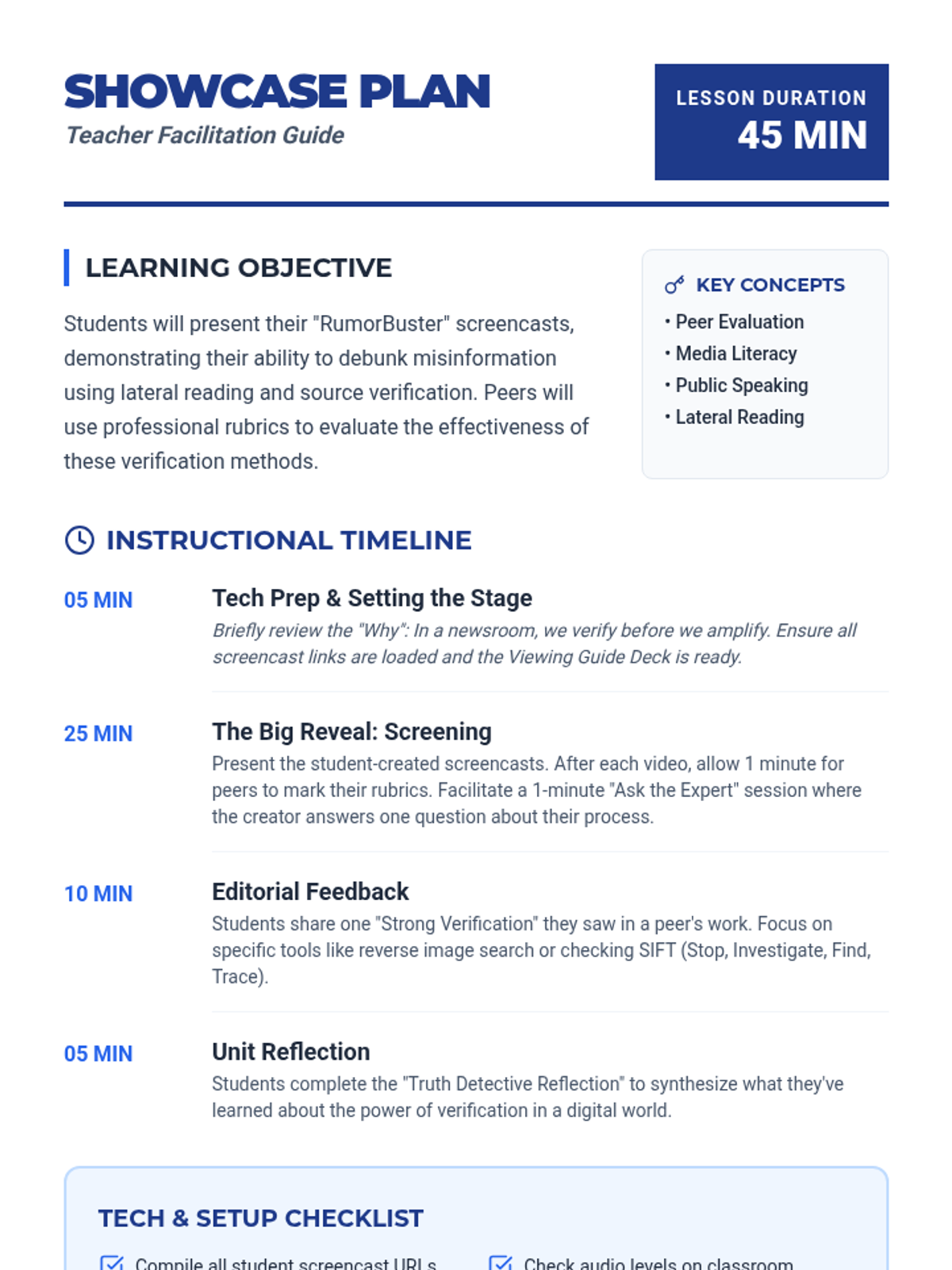
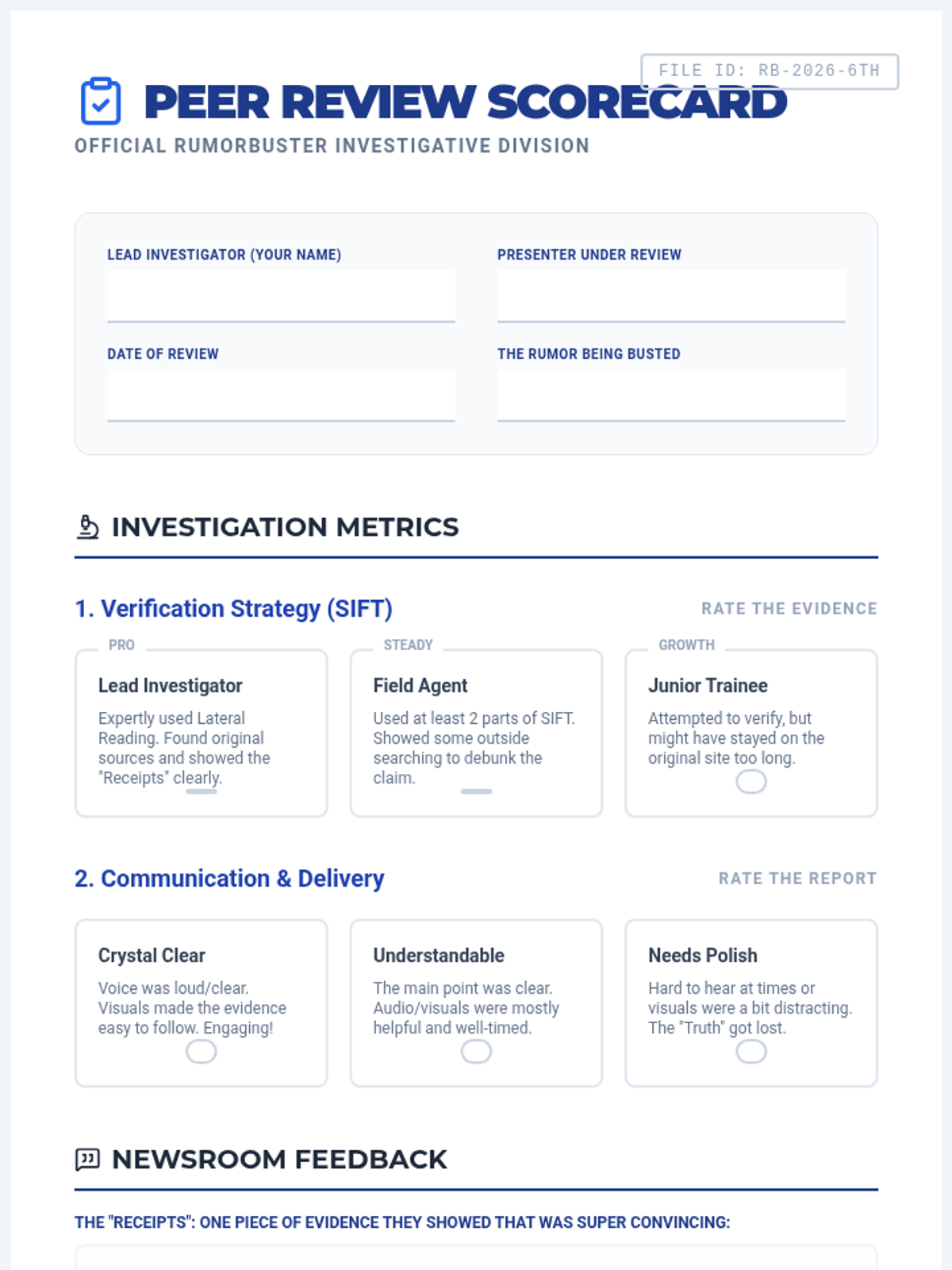
A 45-minute lesson where students showcase their media literacy investigations through screencasts, engage in peer evaluation using a professional rubric, and reflect on their growth as digital fact-checkers.
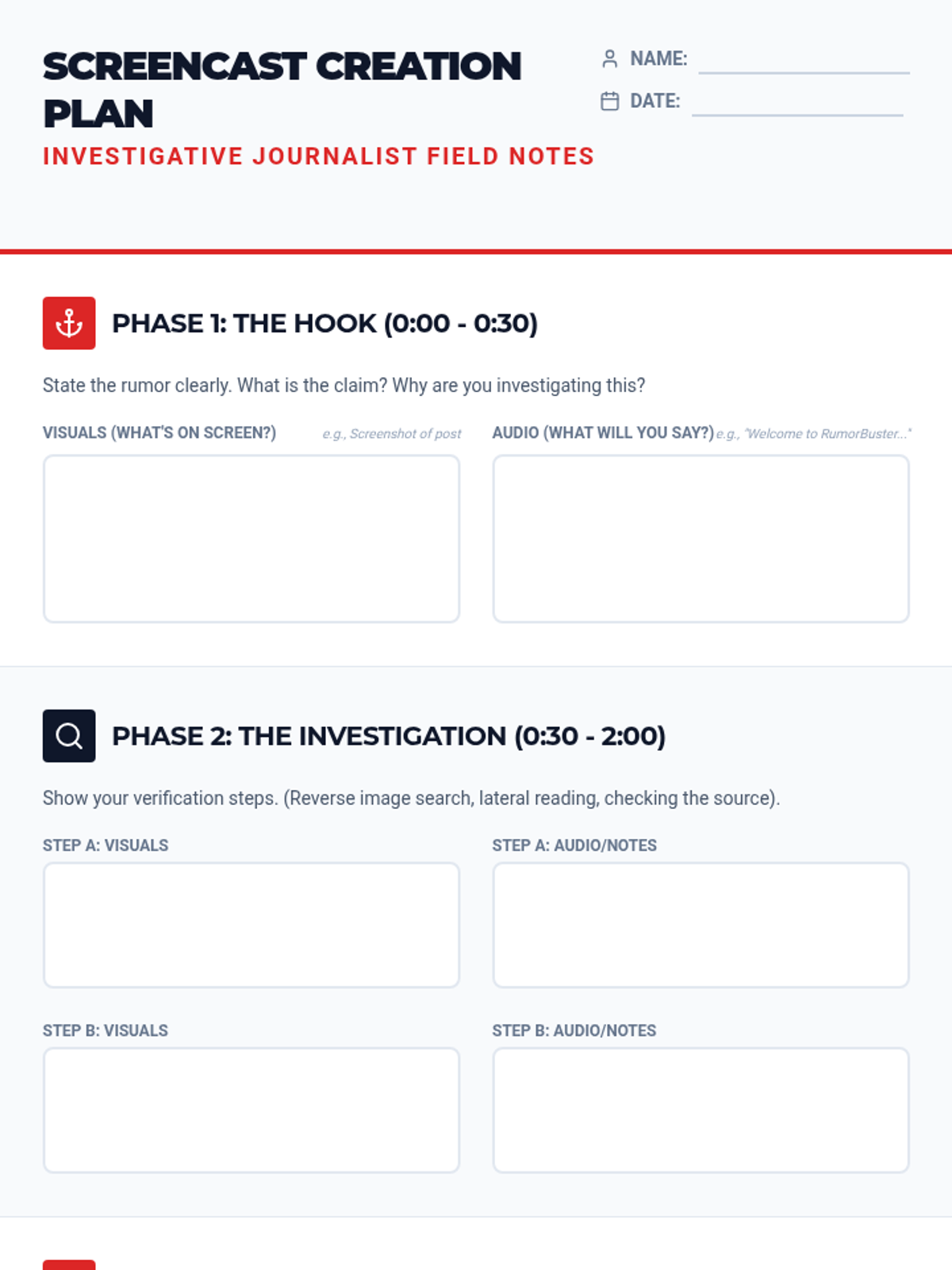
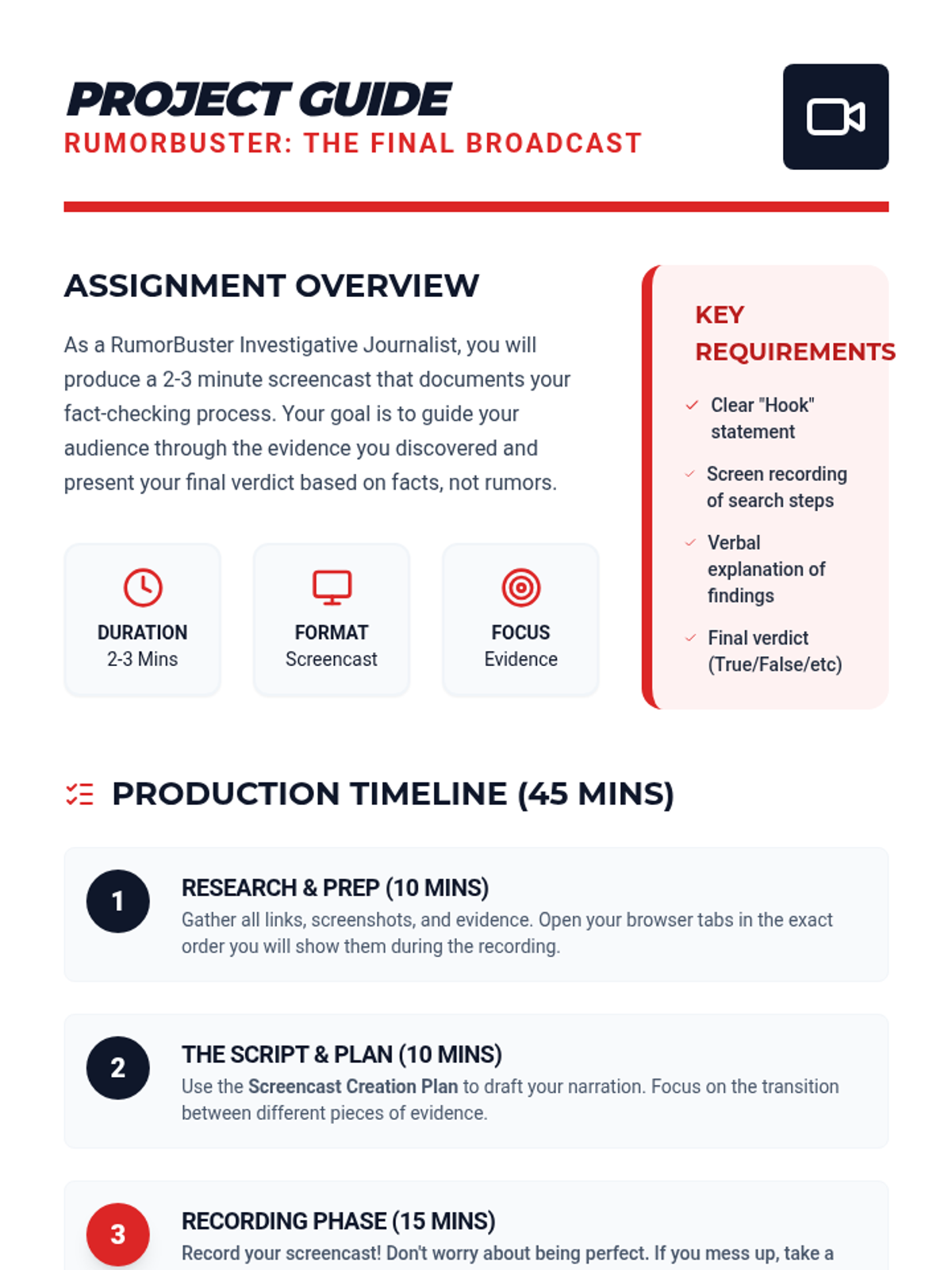
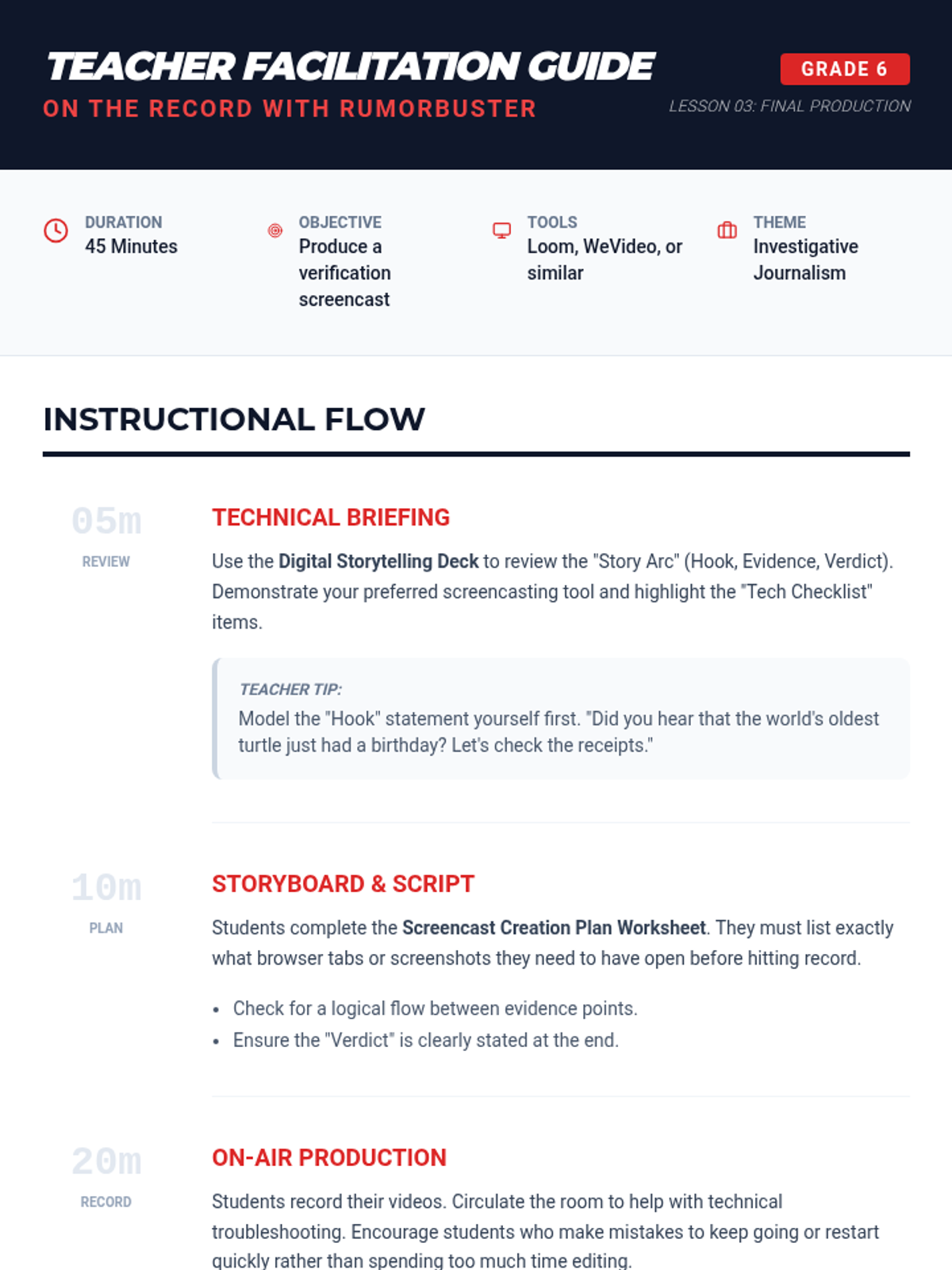
In this lesson, students step into the role of investigative journalists to create a screencast that documents their fact-checking process and final findings. They will learn to combine digital storytelling with technical screencasting skills to present evidence clearly and convincingly.
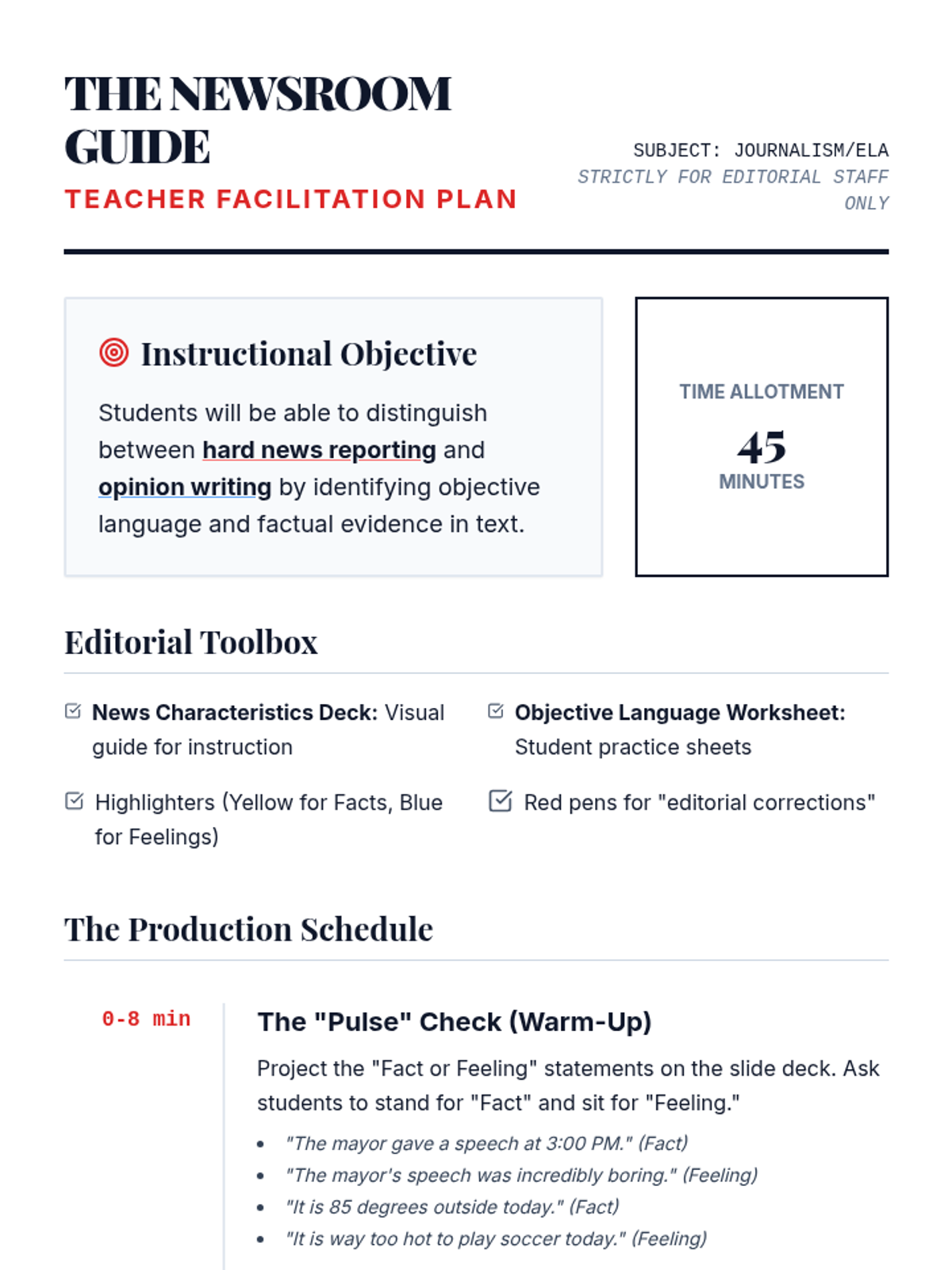
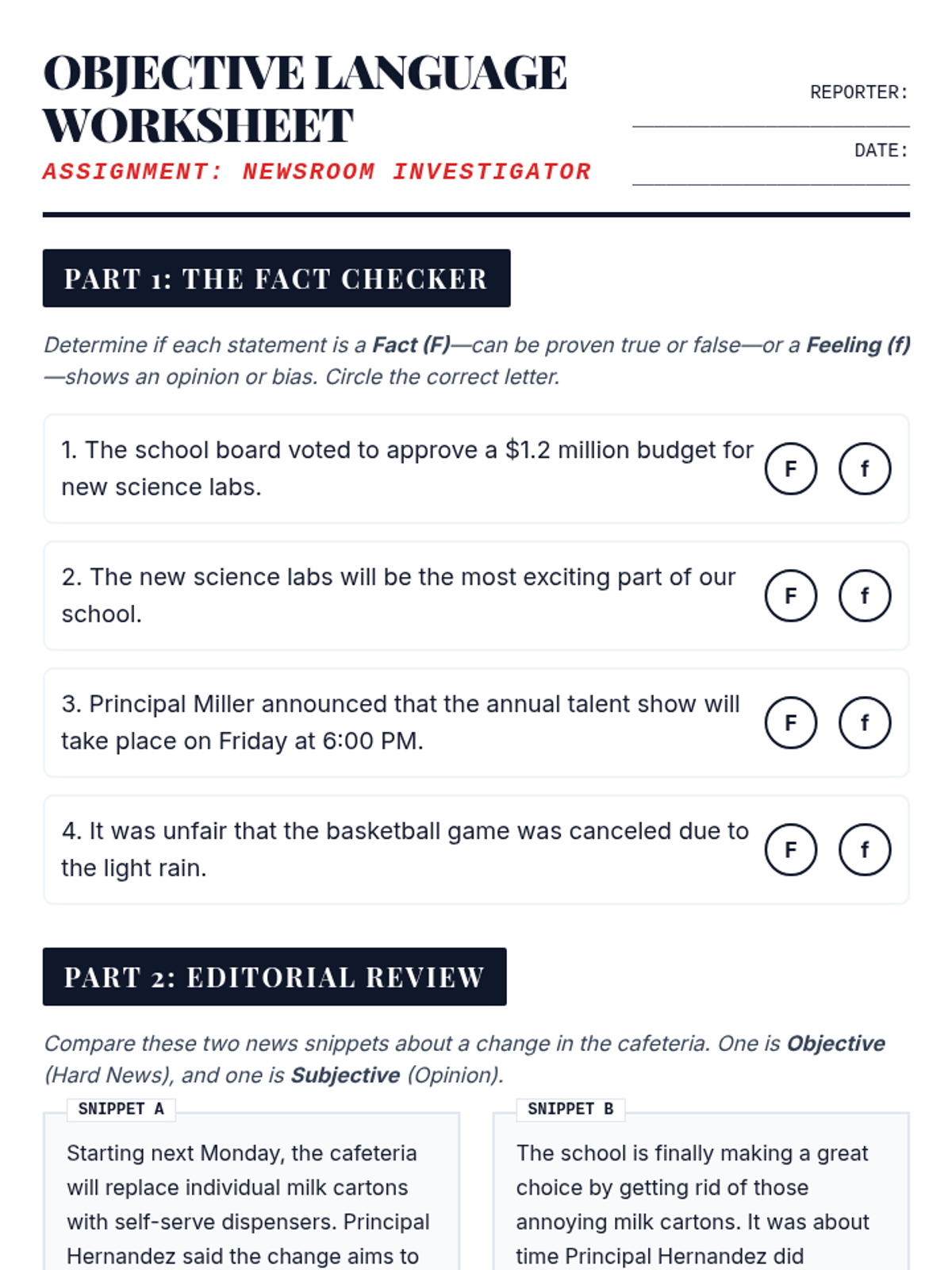
A 45-minute lesson where students become newsroom investigators, learning to distinguish between objective hard news reporting and subjective opinion pieces through hands-on analysis and writing practice.
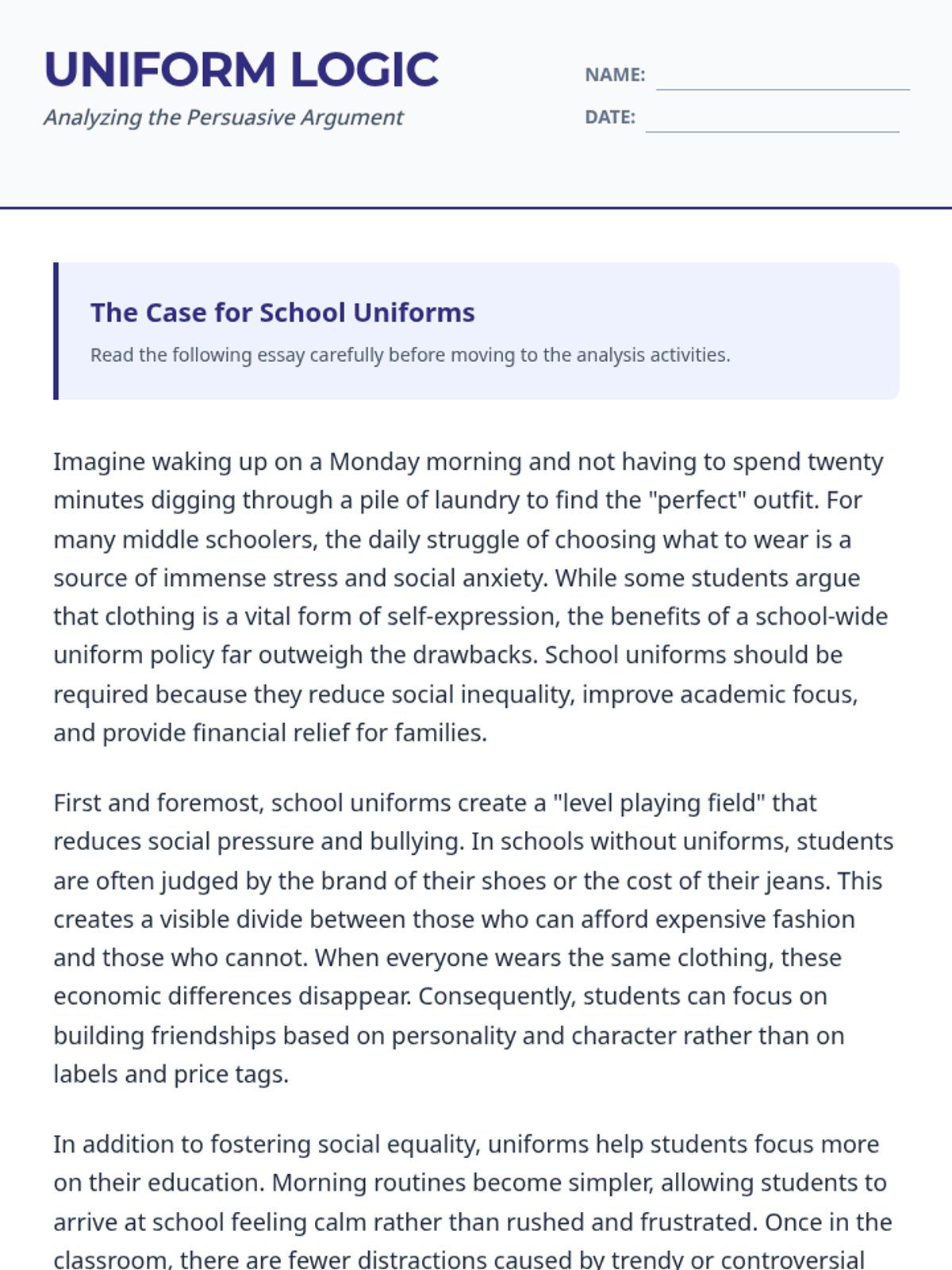
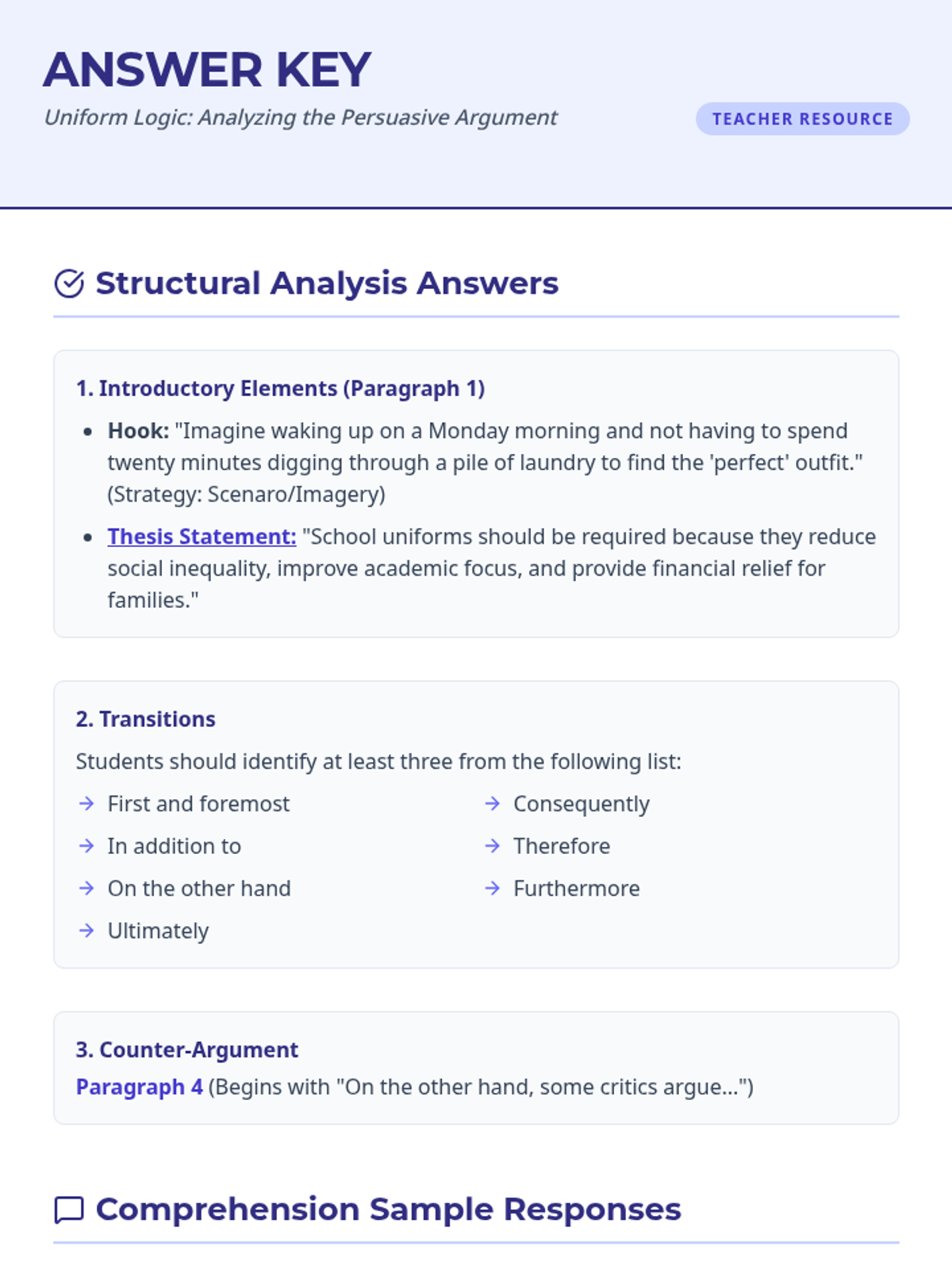
A lesson focused on analyzing the structure and content of a persuasive essay regarding school uniforms, helping students identify key argumentative components.
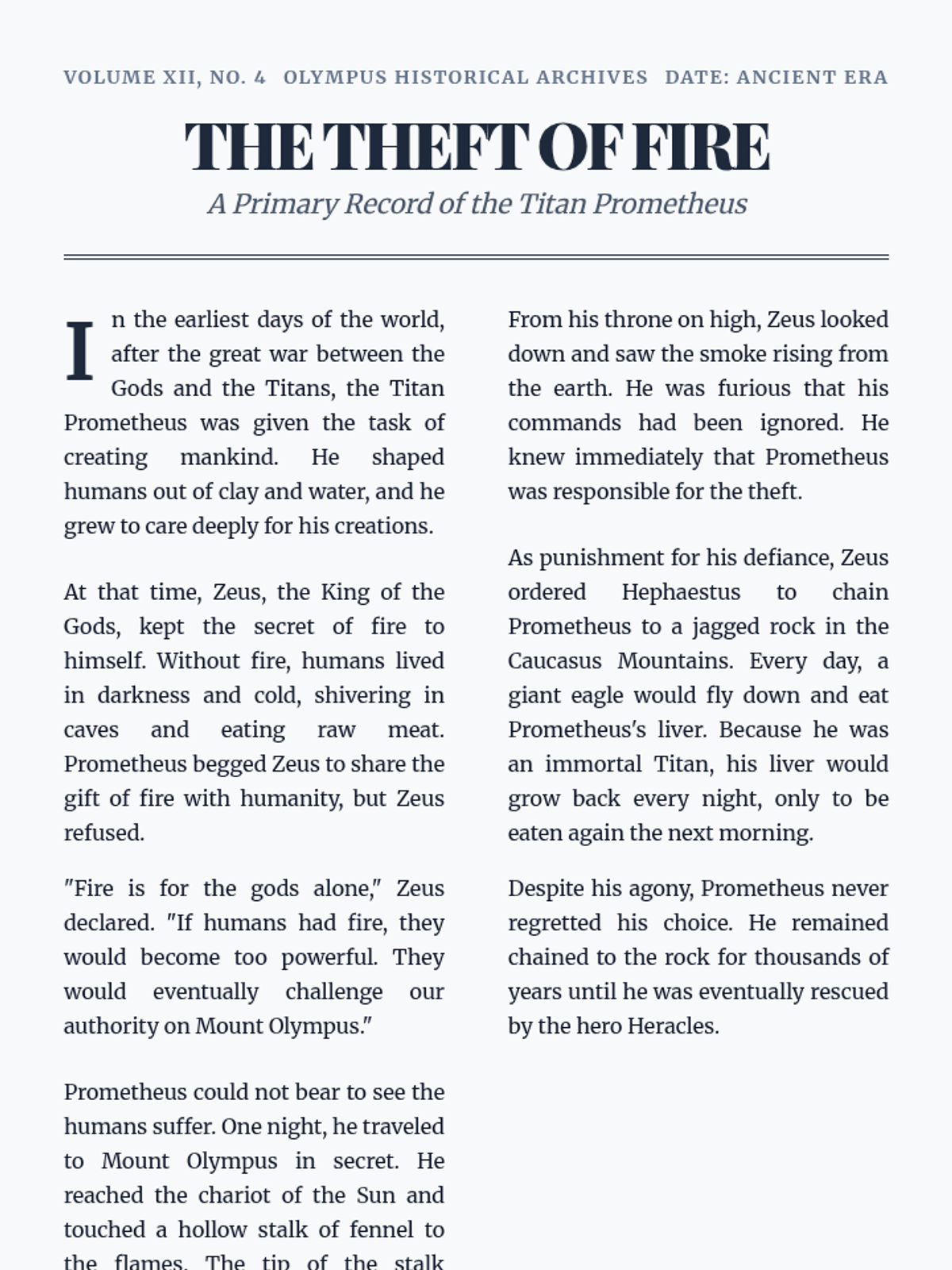
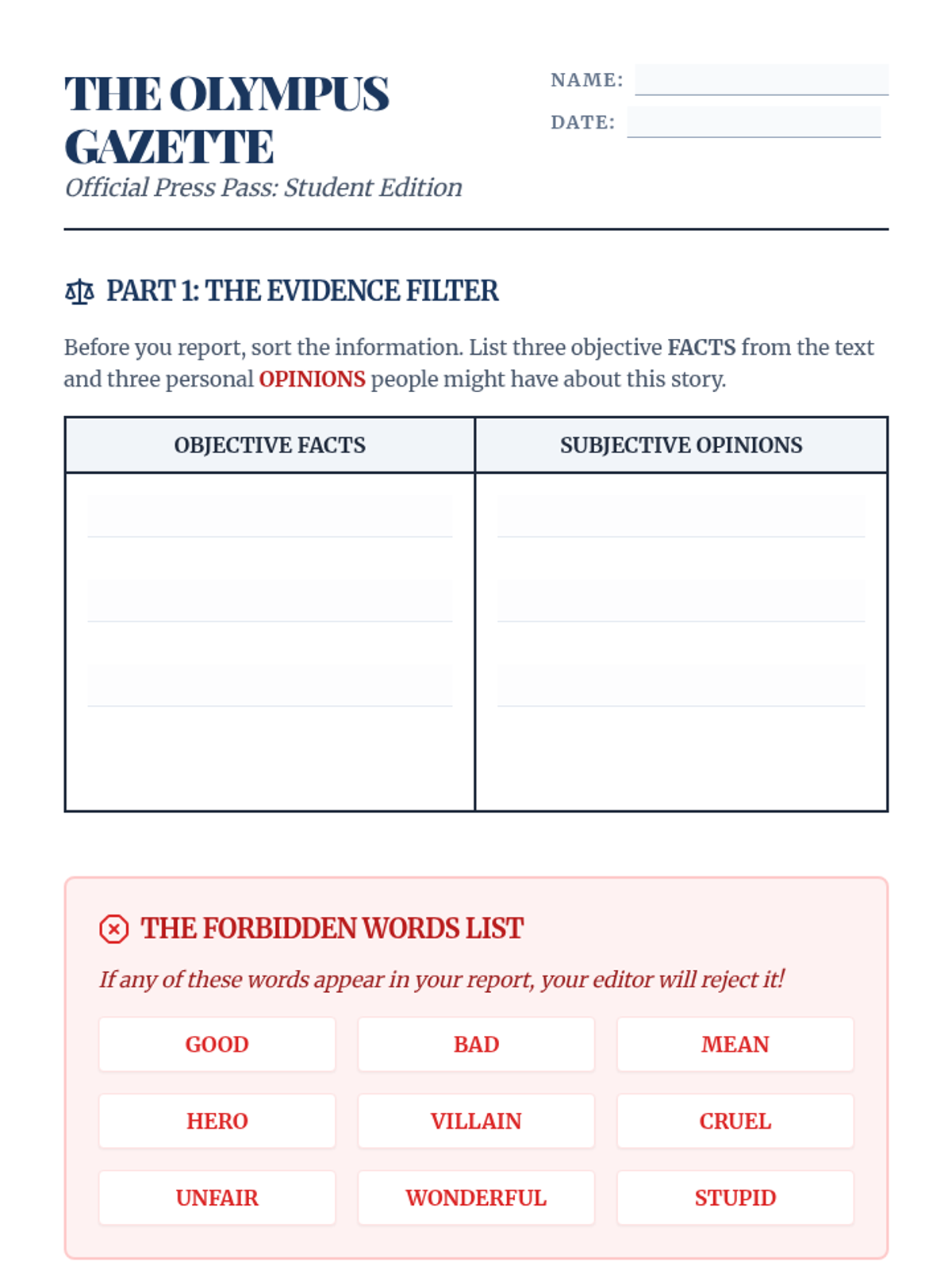
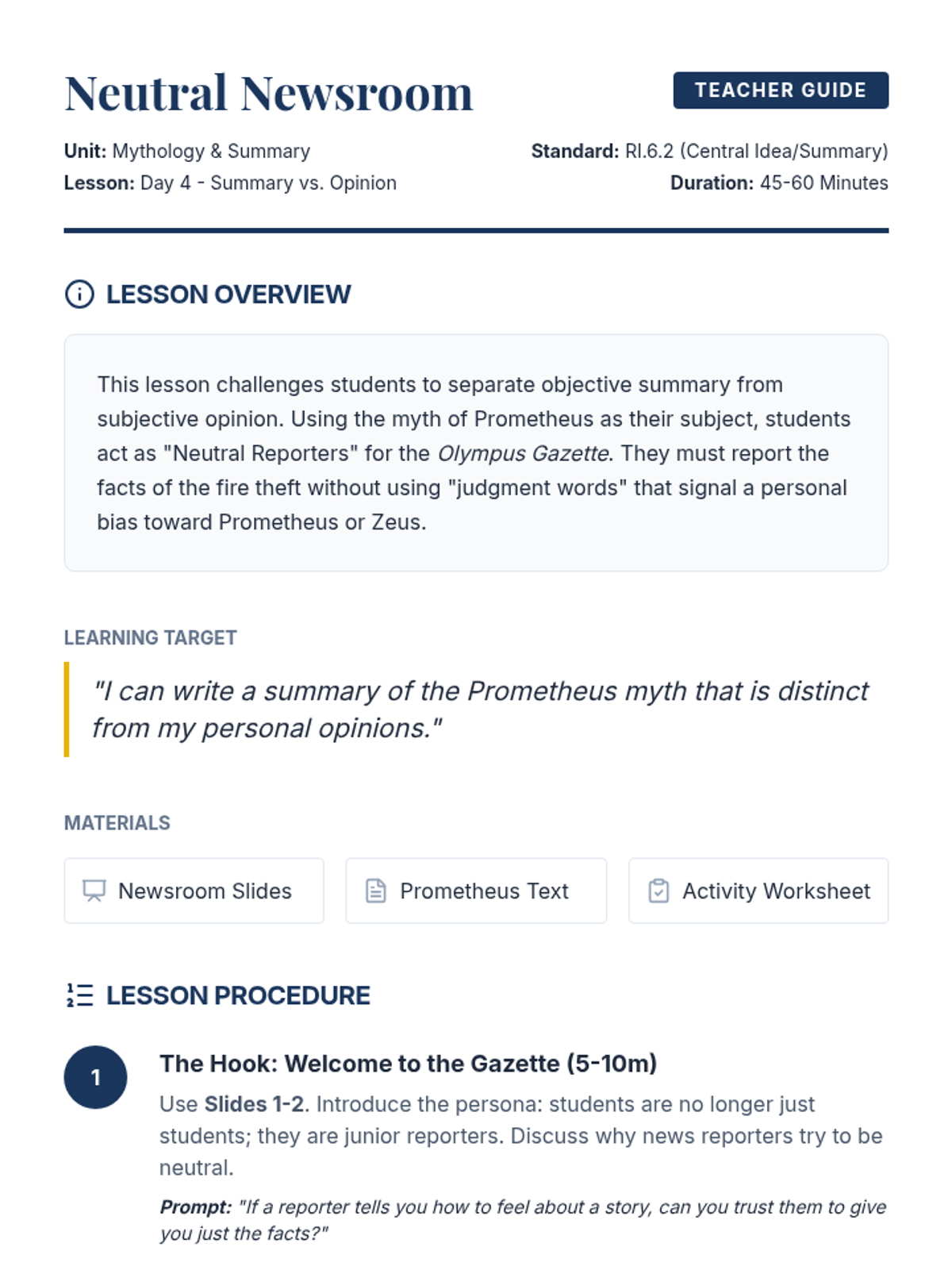
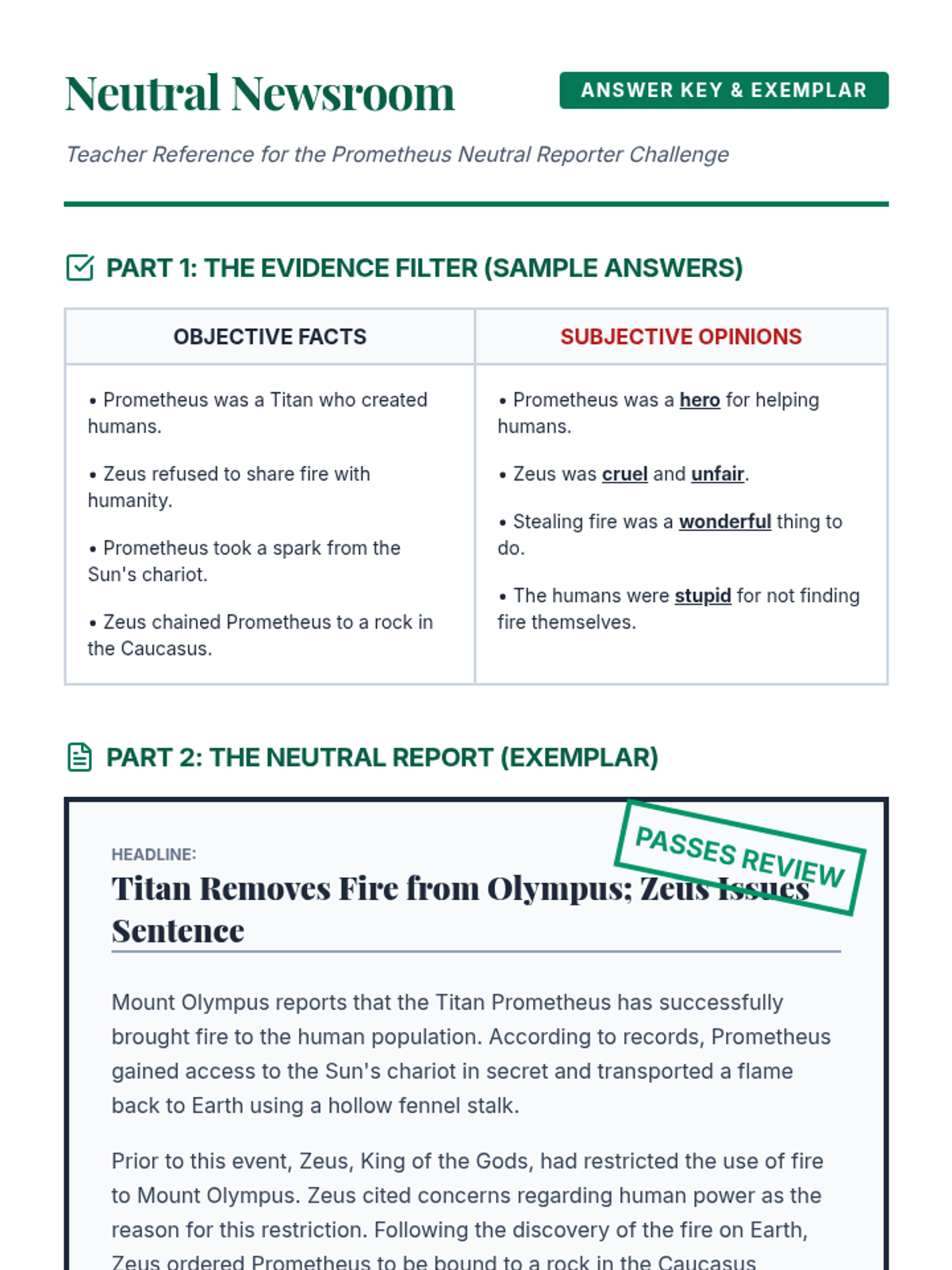
A lesson focused on distinguishing summary from opinion through the lens of the Prometheus myth, featuring a neutral news reporting activity.
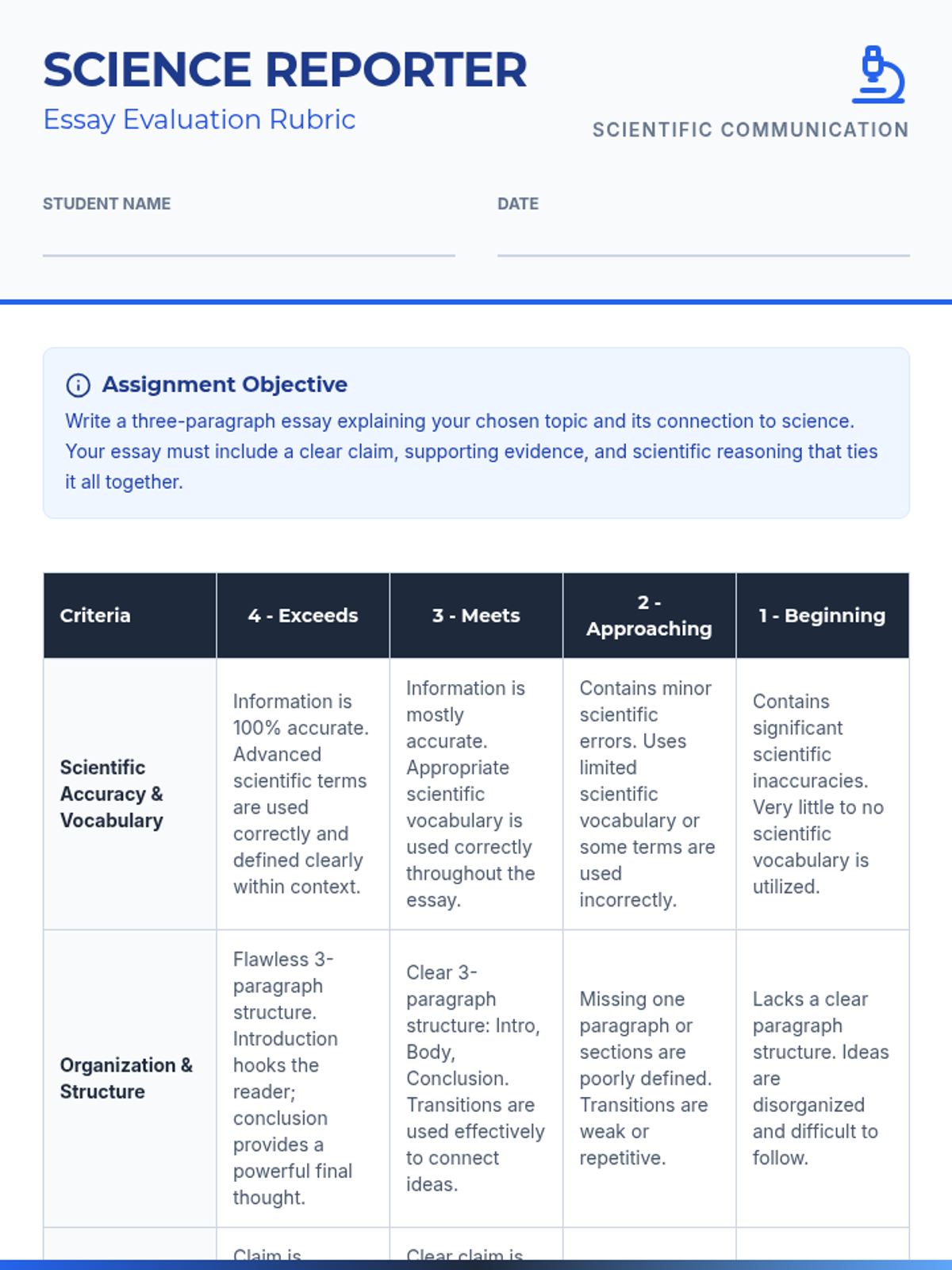
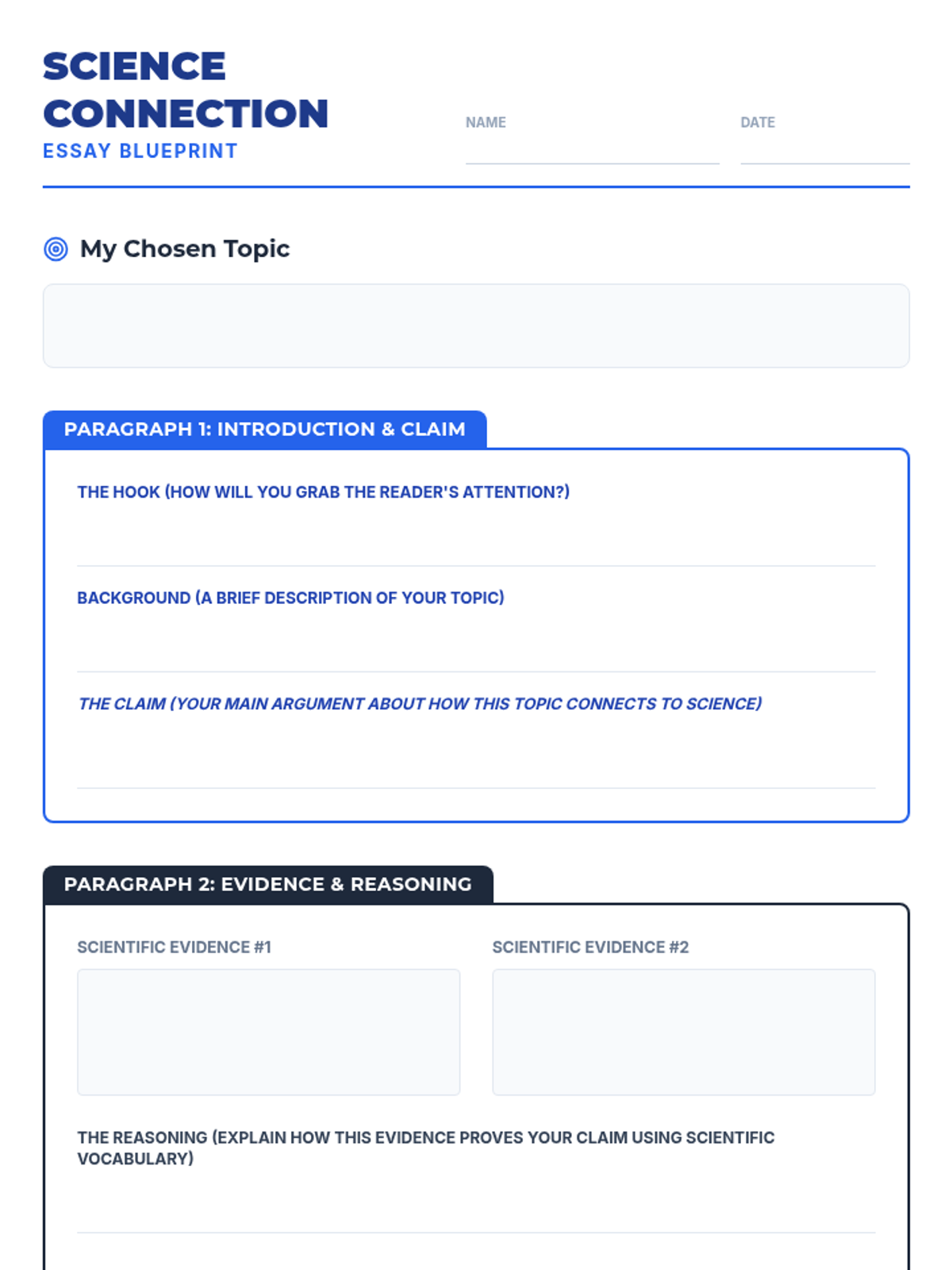
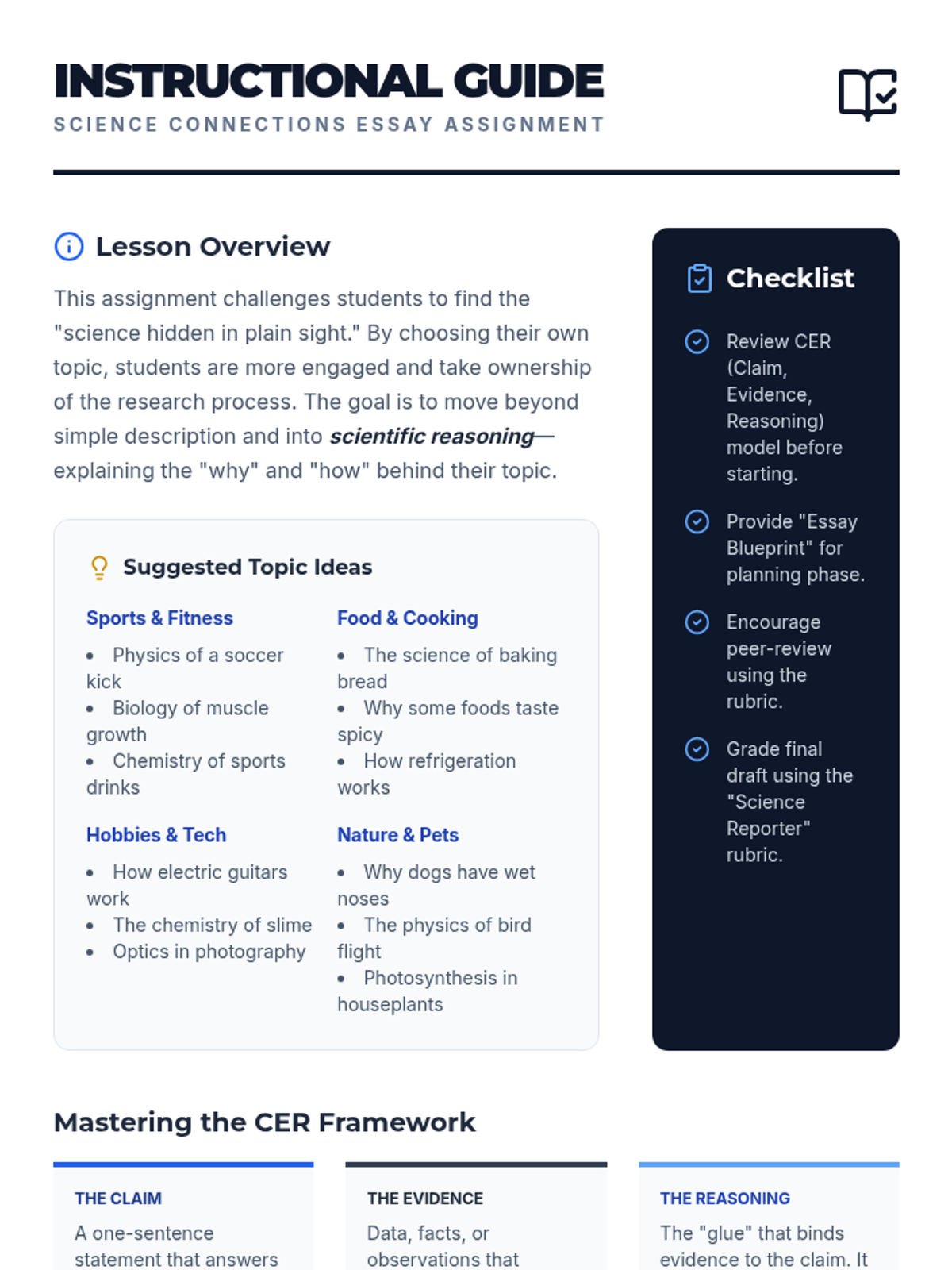
A lesson focused on helping students write a structured three-paragraph essay connecting a self-chosen topic to scientific principles.
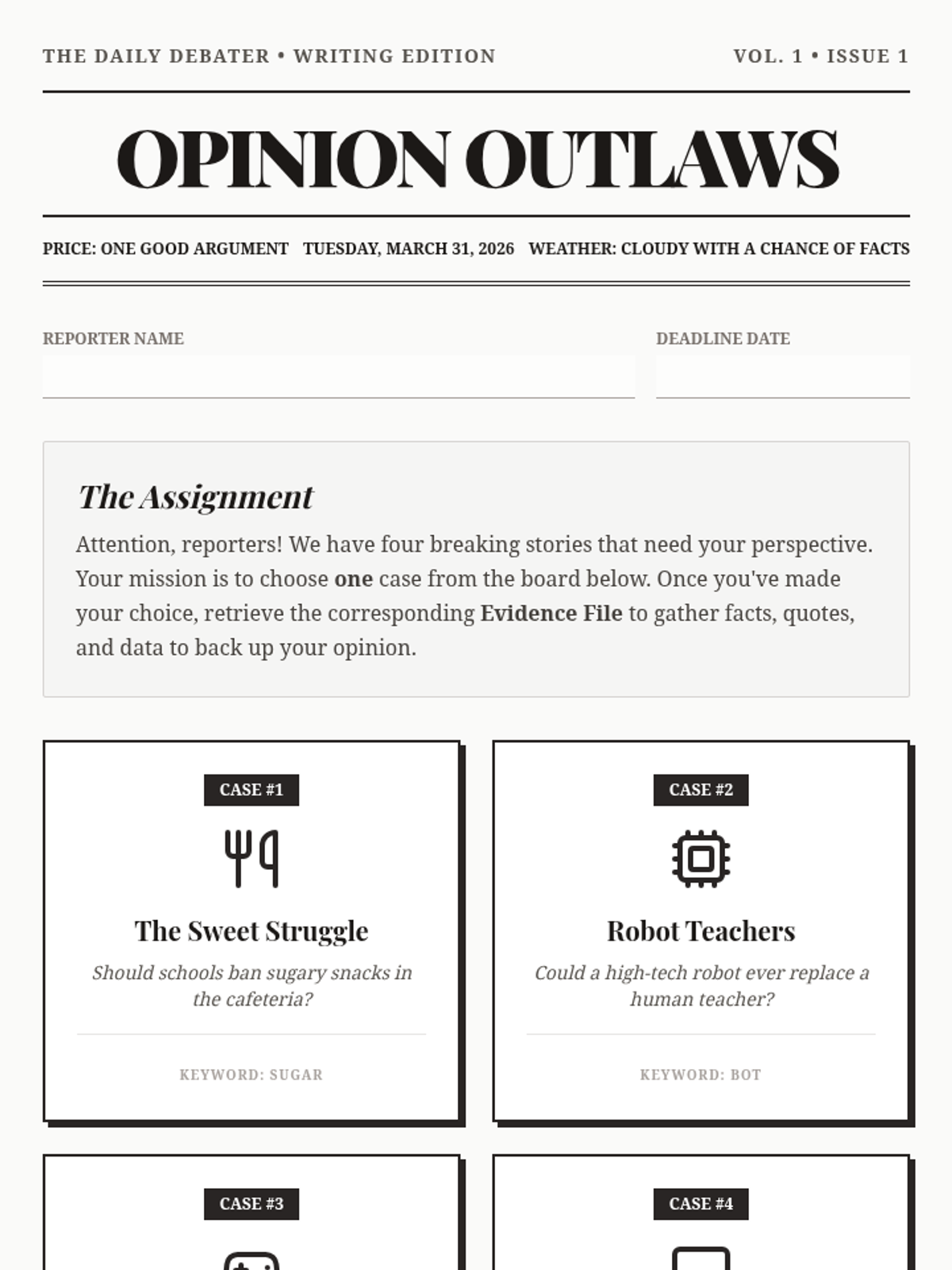
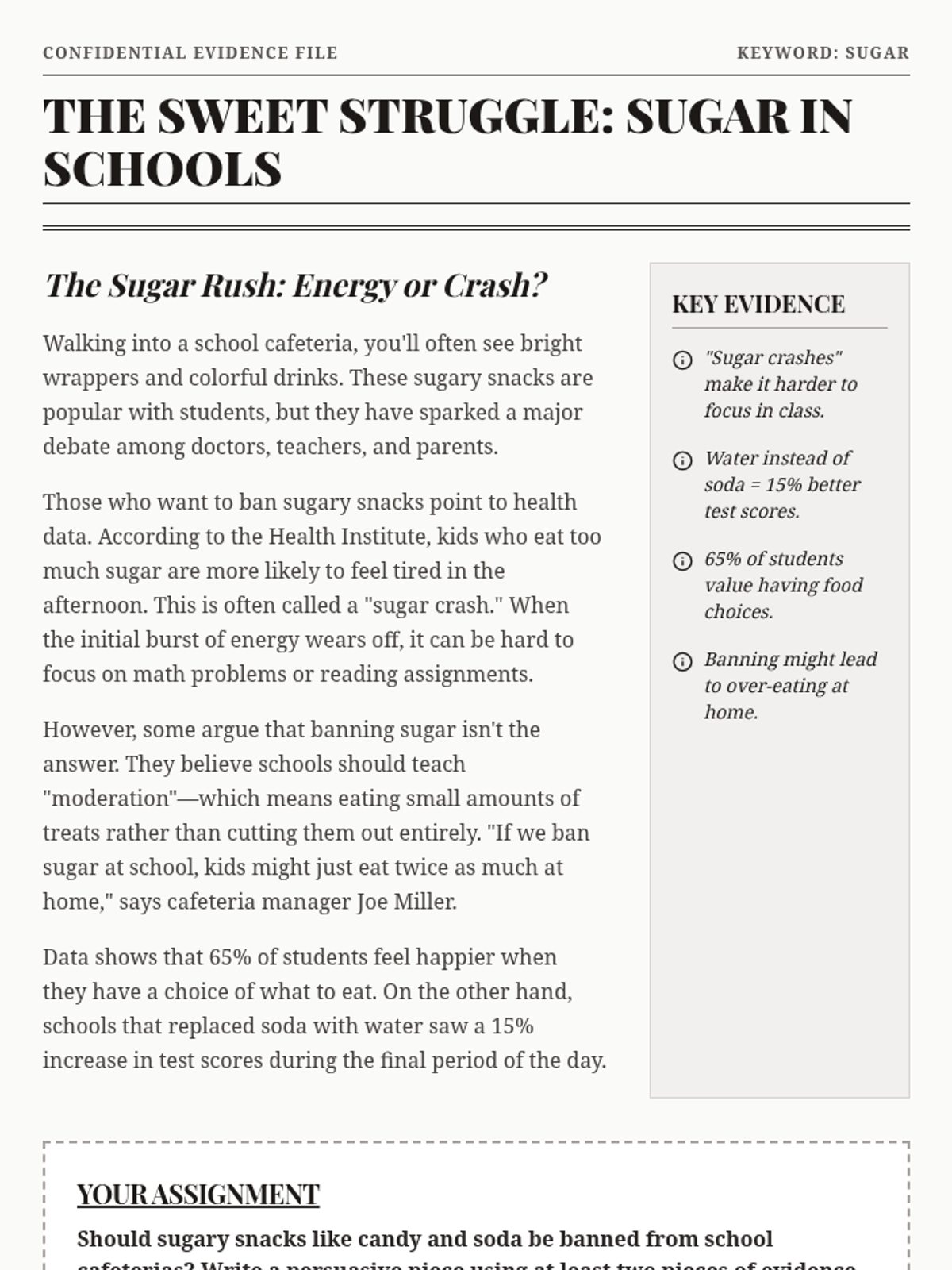
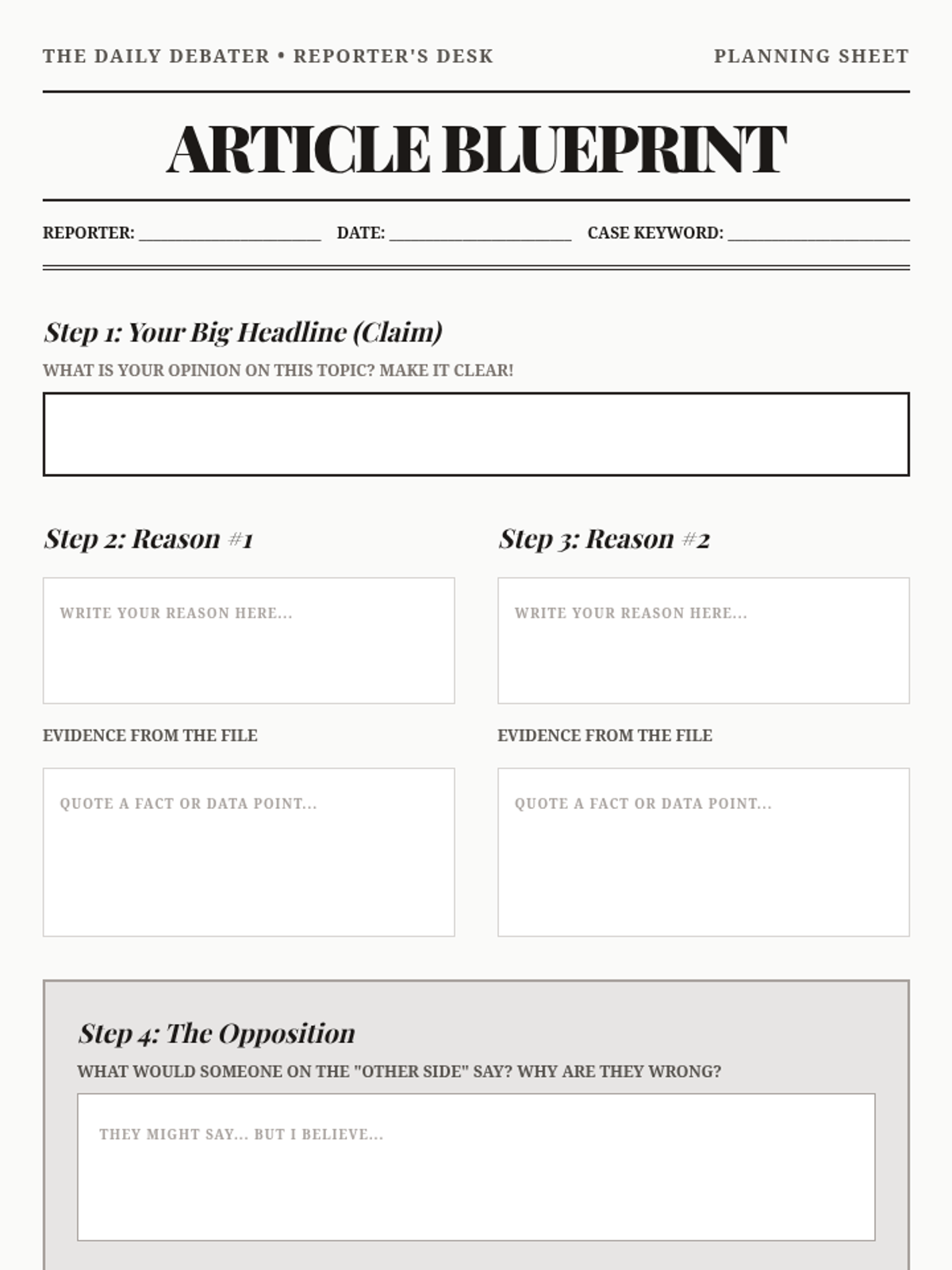
A choice-based writing lesson where students select an opinion prompt and use provided short articles to gather evidence for their persuasive pieces.
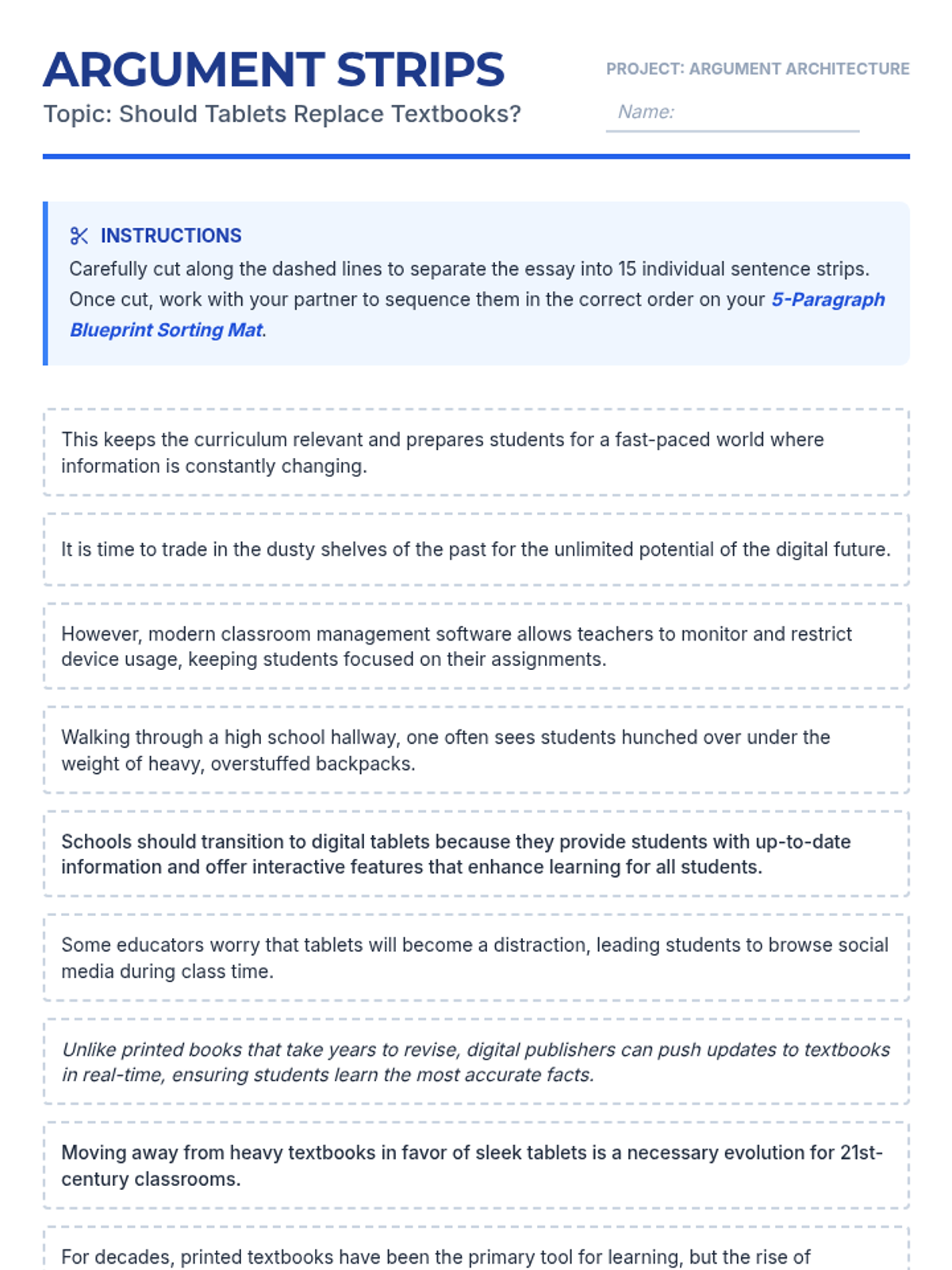
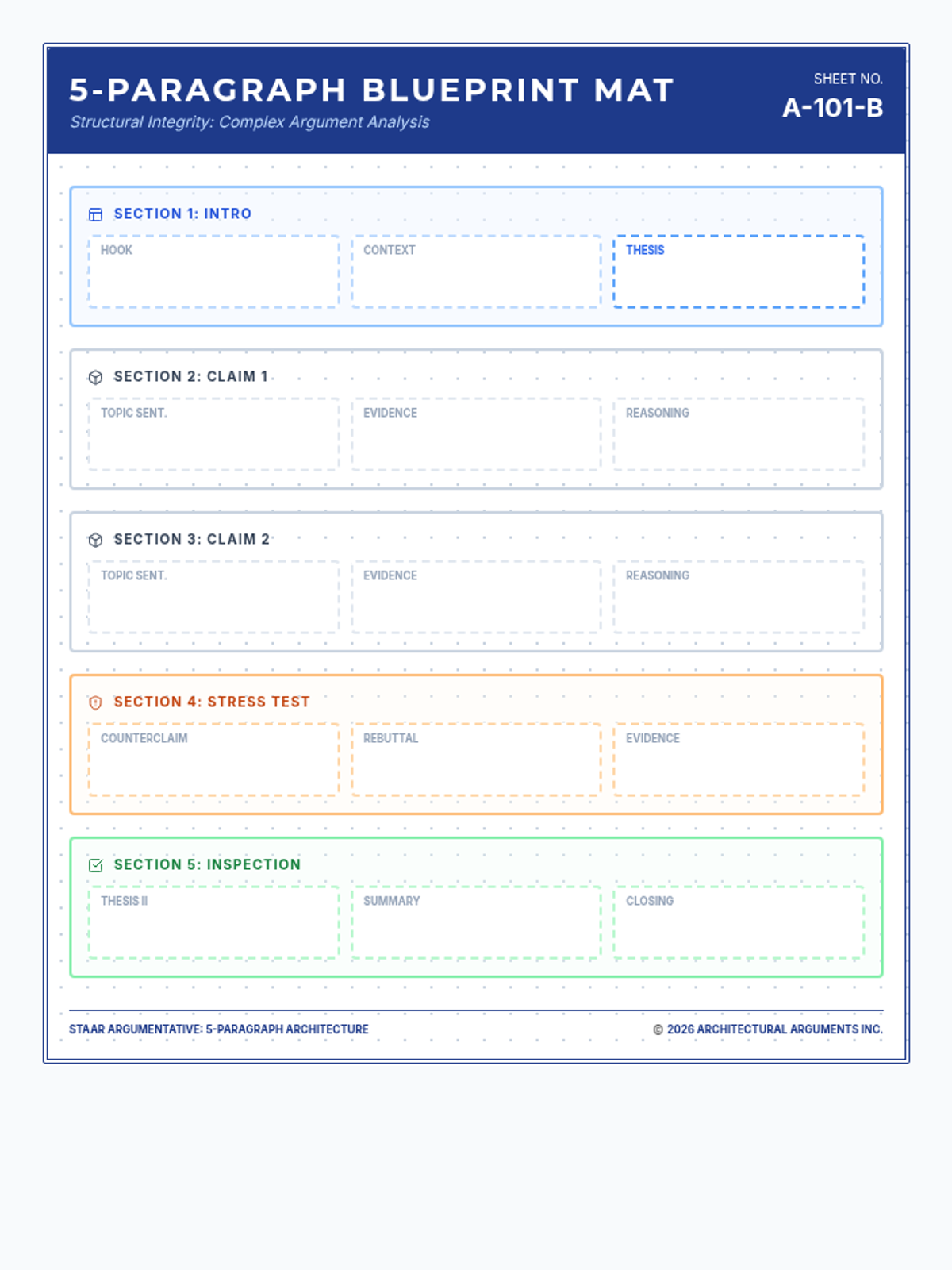
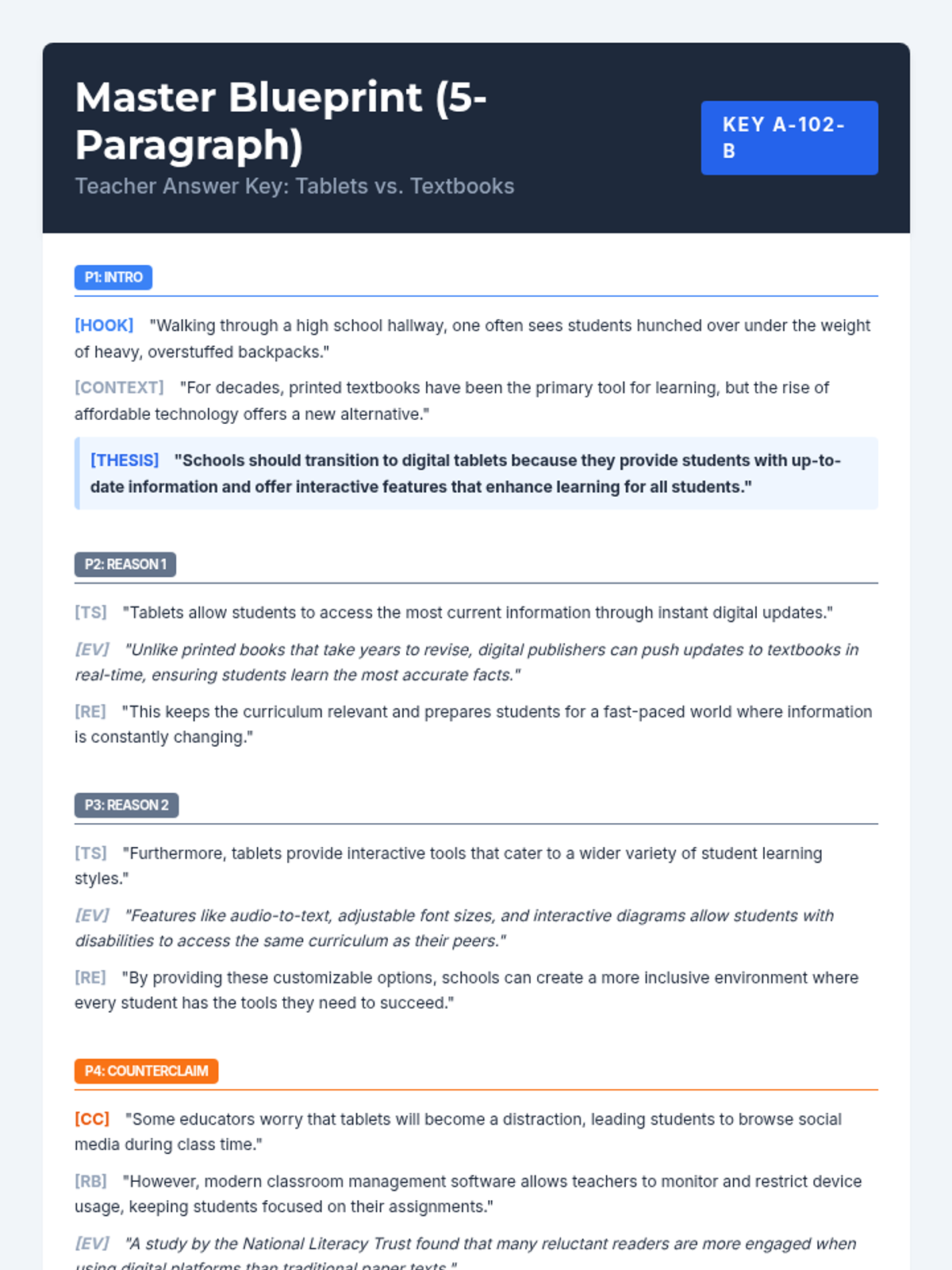
A lesson focused on understanding the structural components of an argumentative essay through a hands-on sorting and sequencing activity.
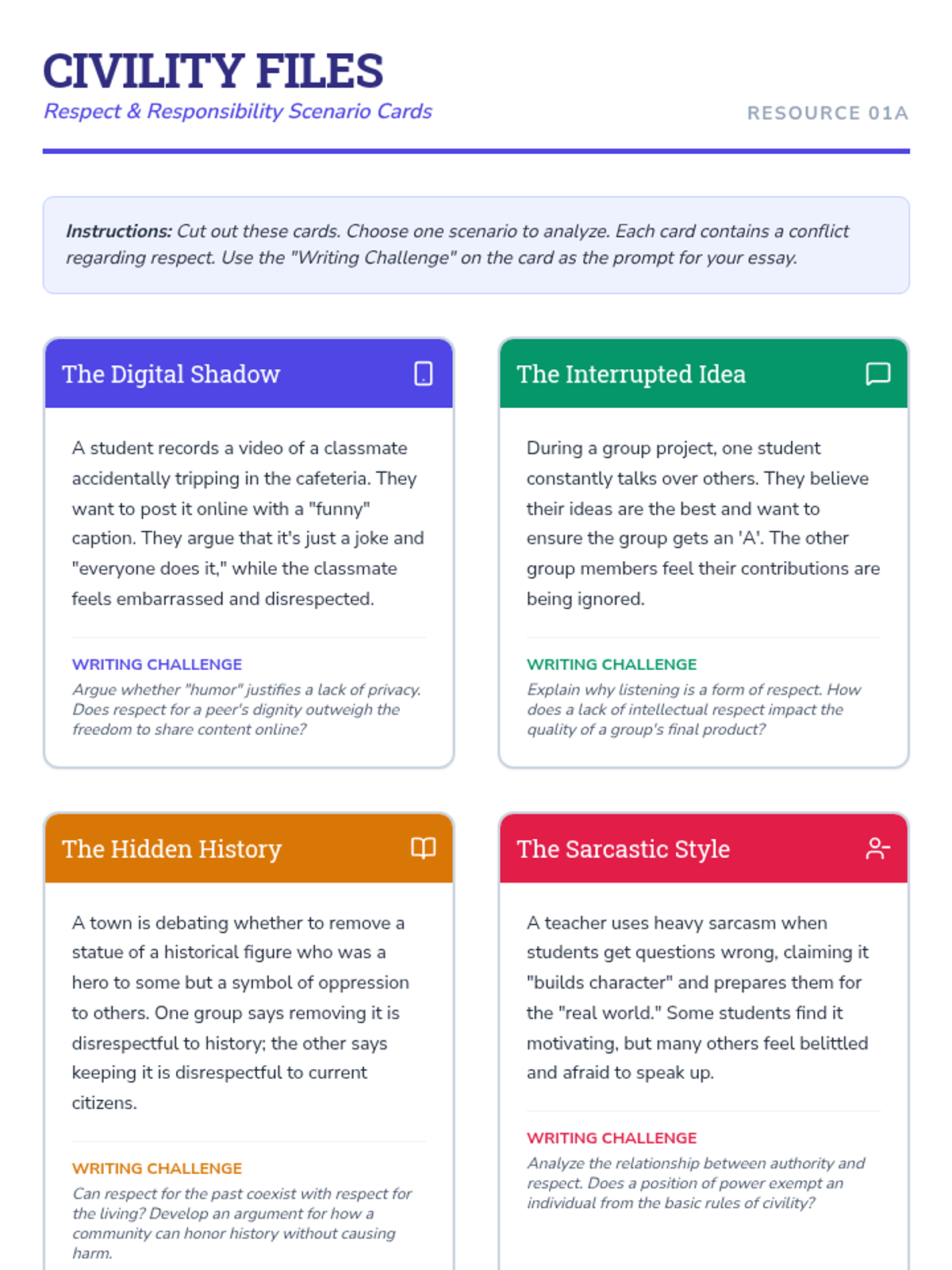
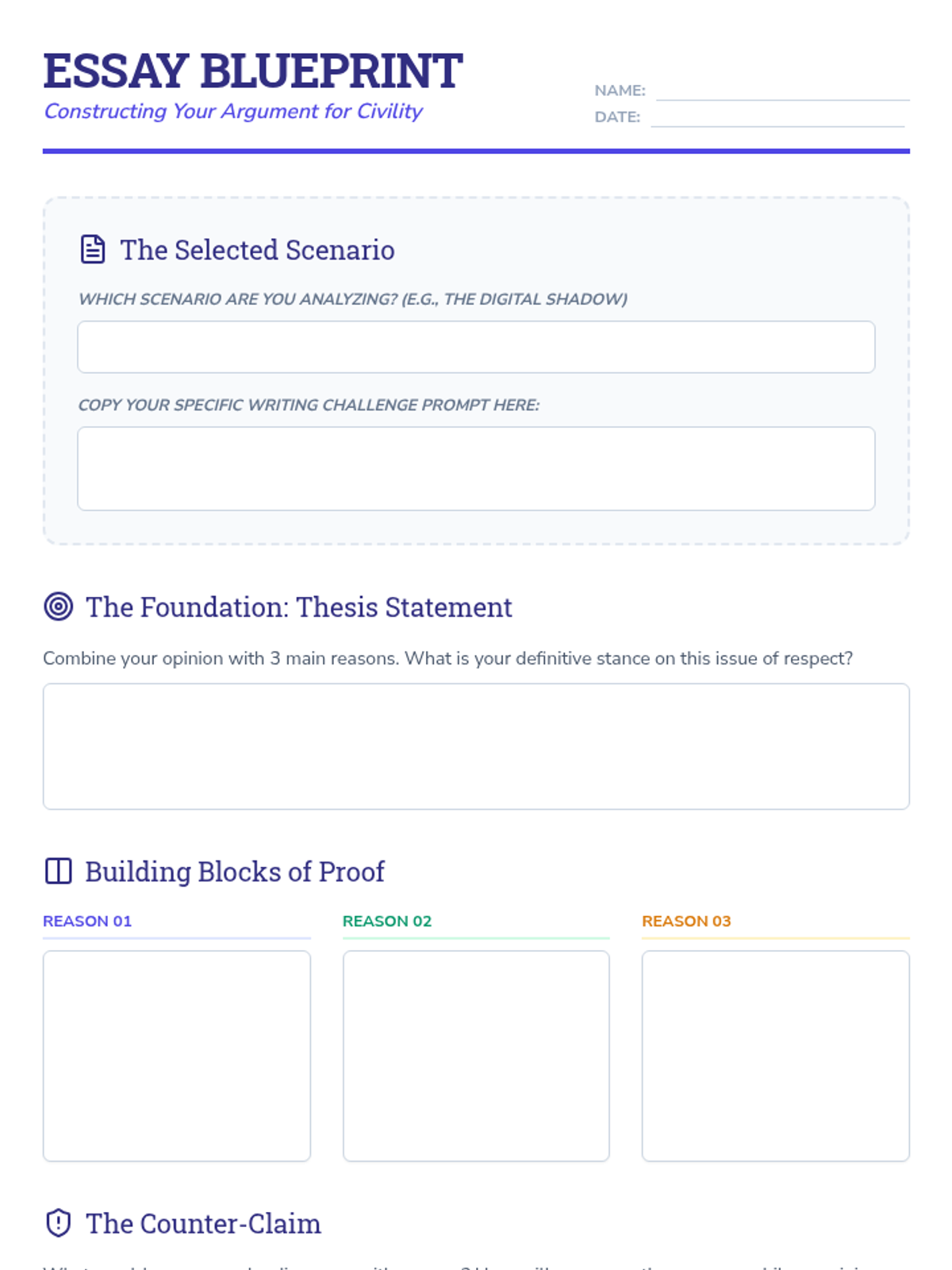
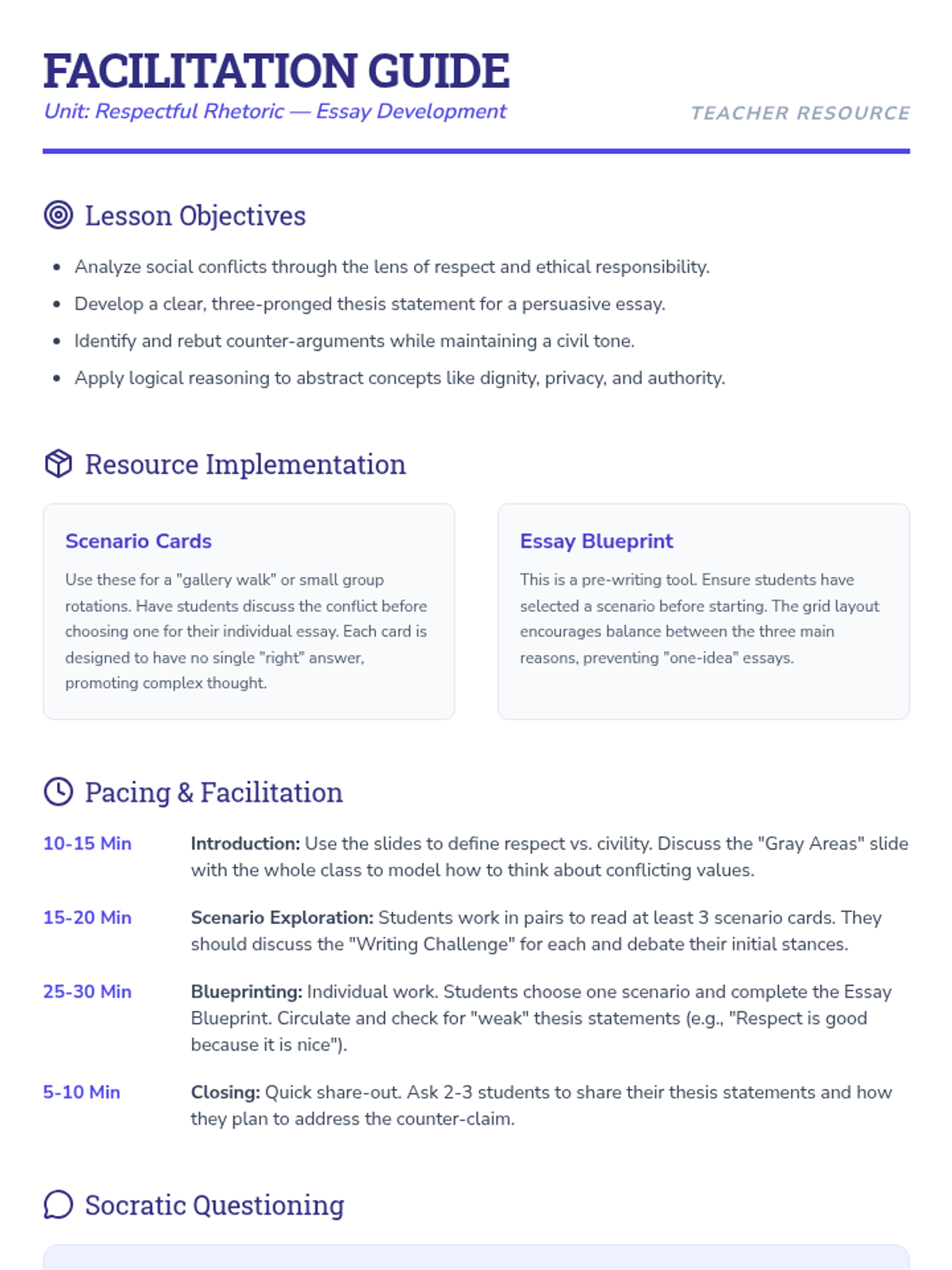
A lesson focused on analyzing complex social situations involving respect and translating those analyses into persuasive or argumentative essays. Students will evaluate different perspectives and build logical arguments.
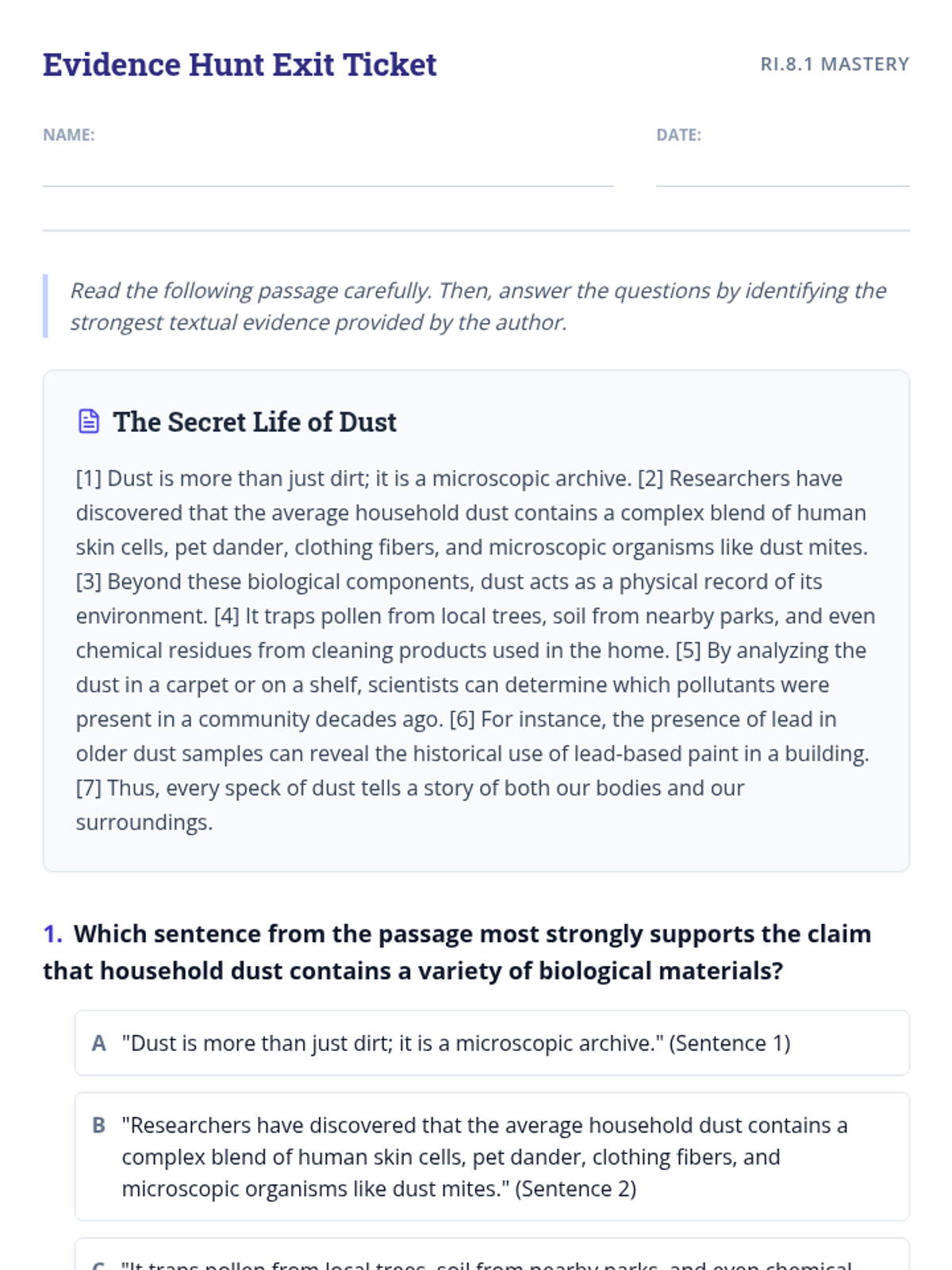
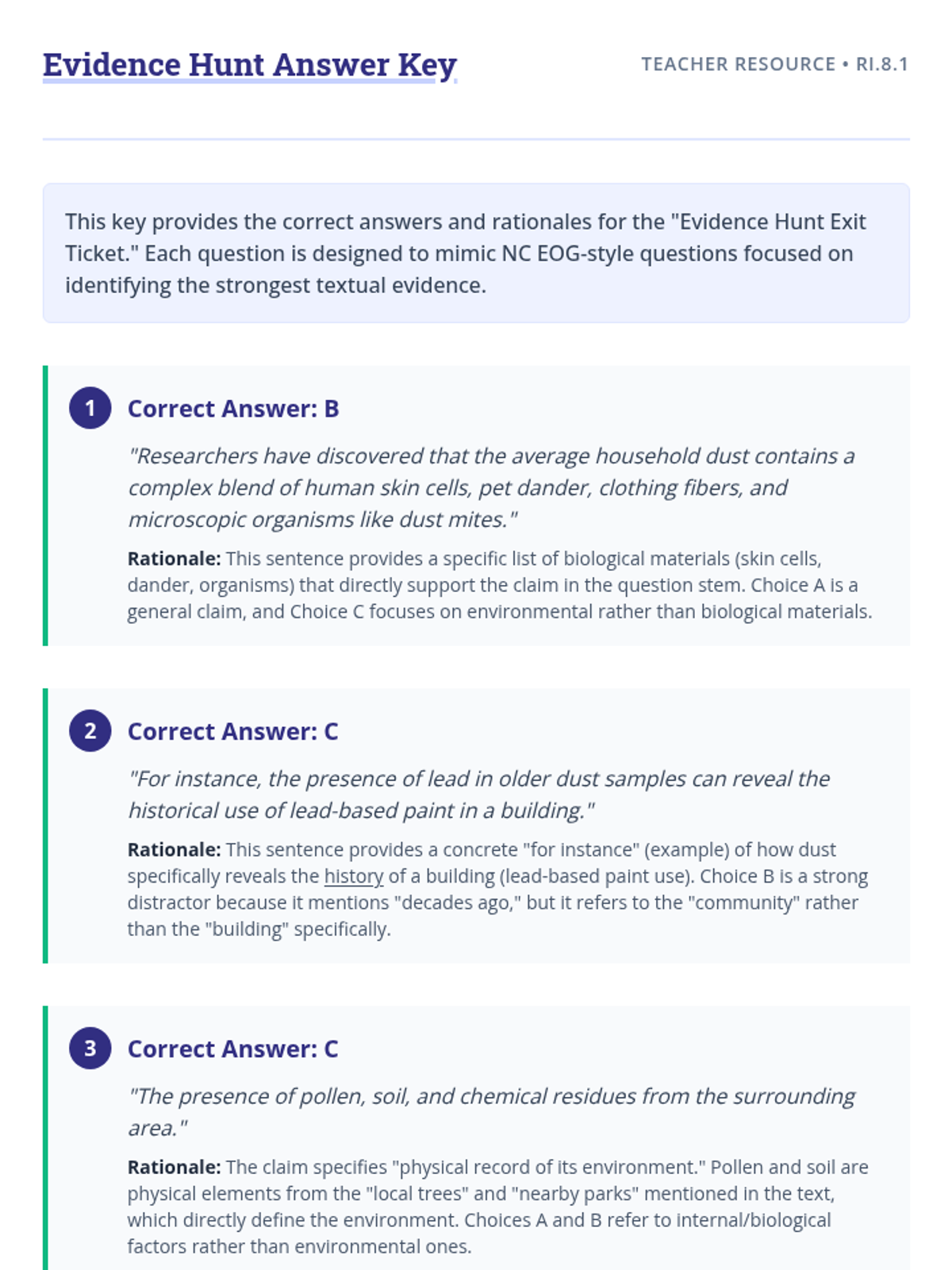
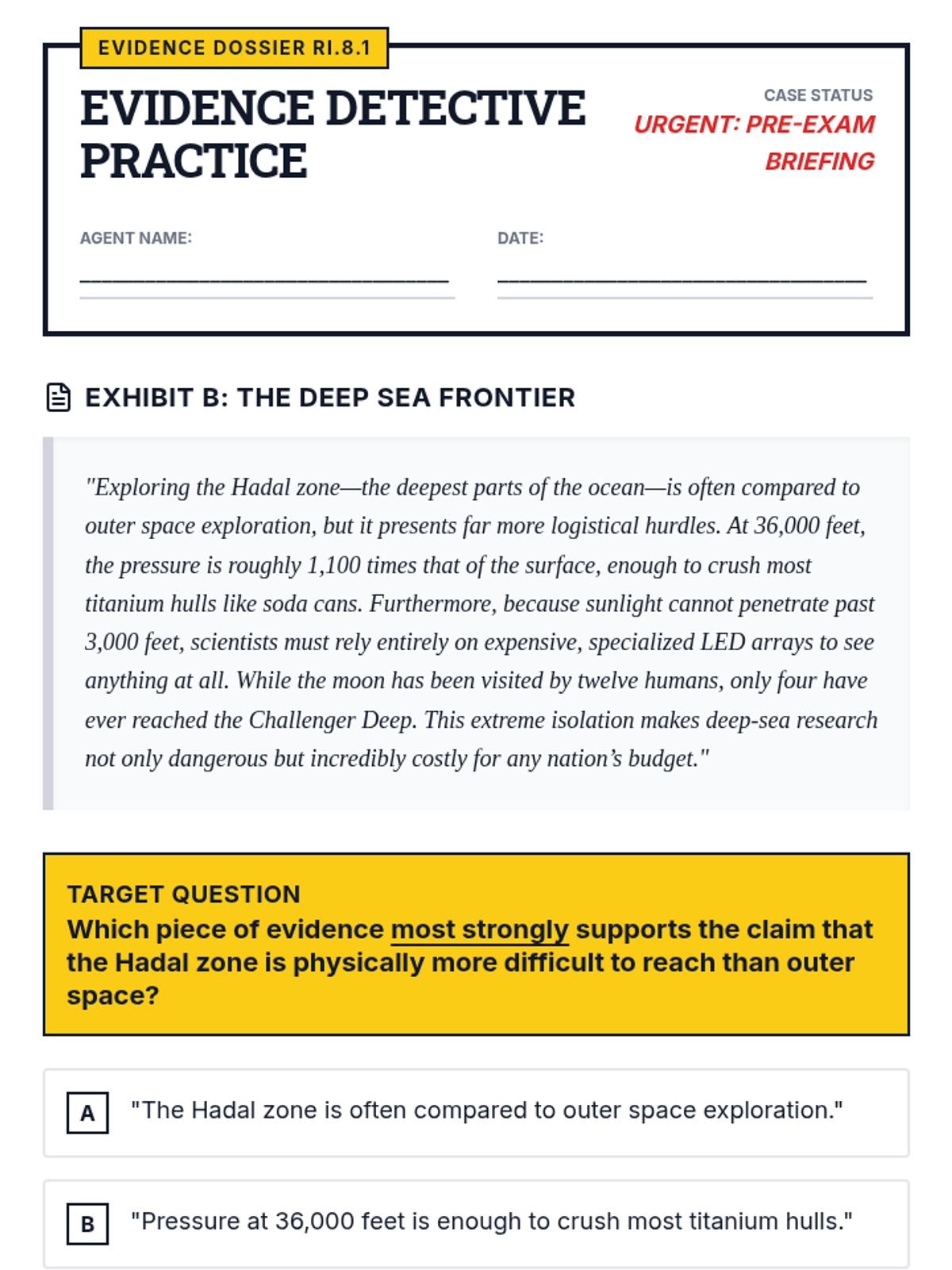
A targeted formative assessment focused on RI.8.1, where students identify the strongest textual evidence to support claims and inferences in a nonfiction passage.
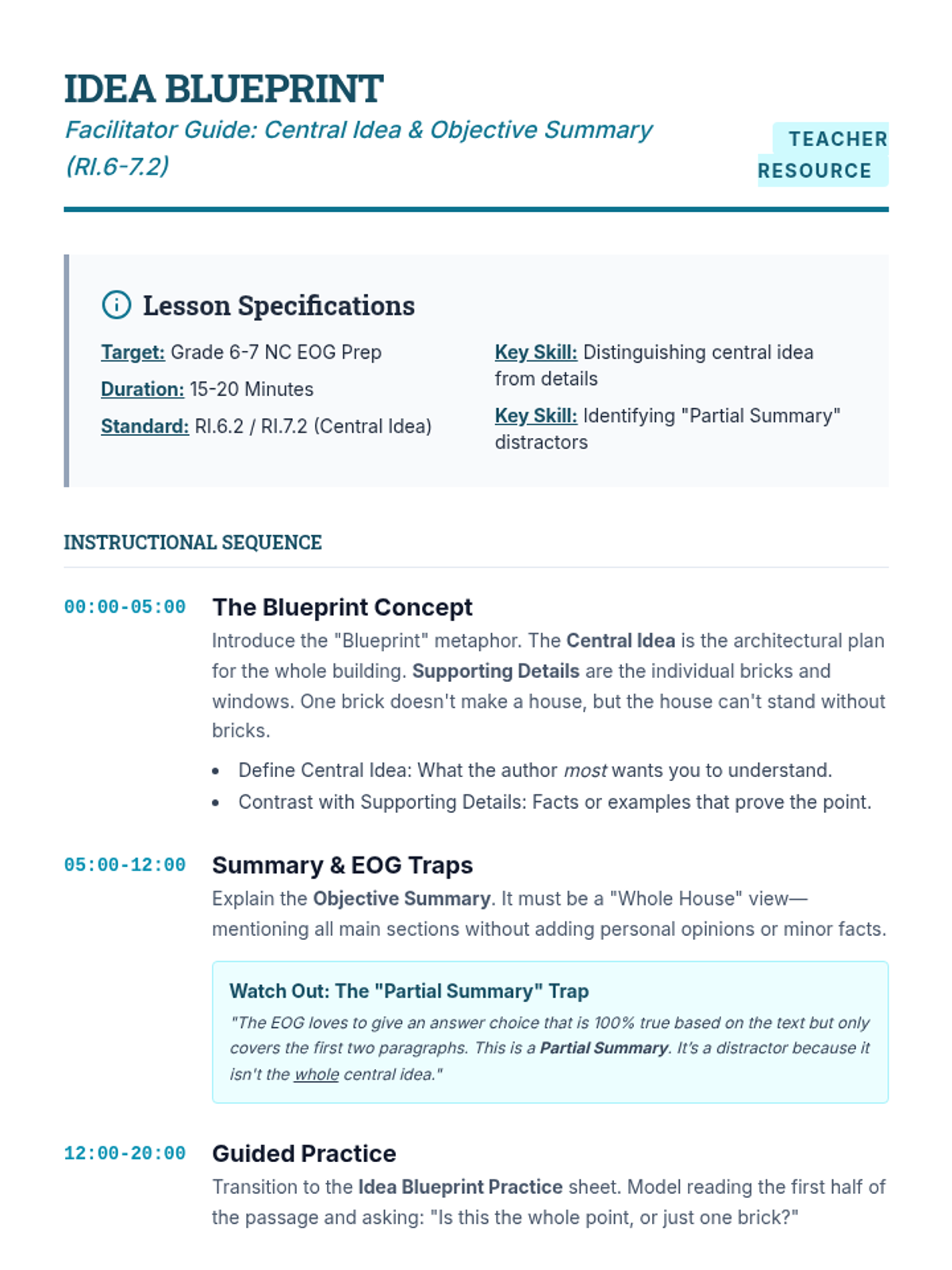
A targeted 20-minute mini-lesson for grades 6-7 focused on NC EOG standard RI.2 (Central Idea). Students learn to distinguish central ideas from supporting details, craft objective summaries, and identify common EOG distractor patterns like partial summaries.
A rigorous assessment focused on evaluating arguments, claims, evidence, and reasoning in informational texts for middle school students.
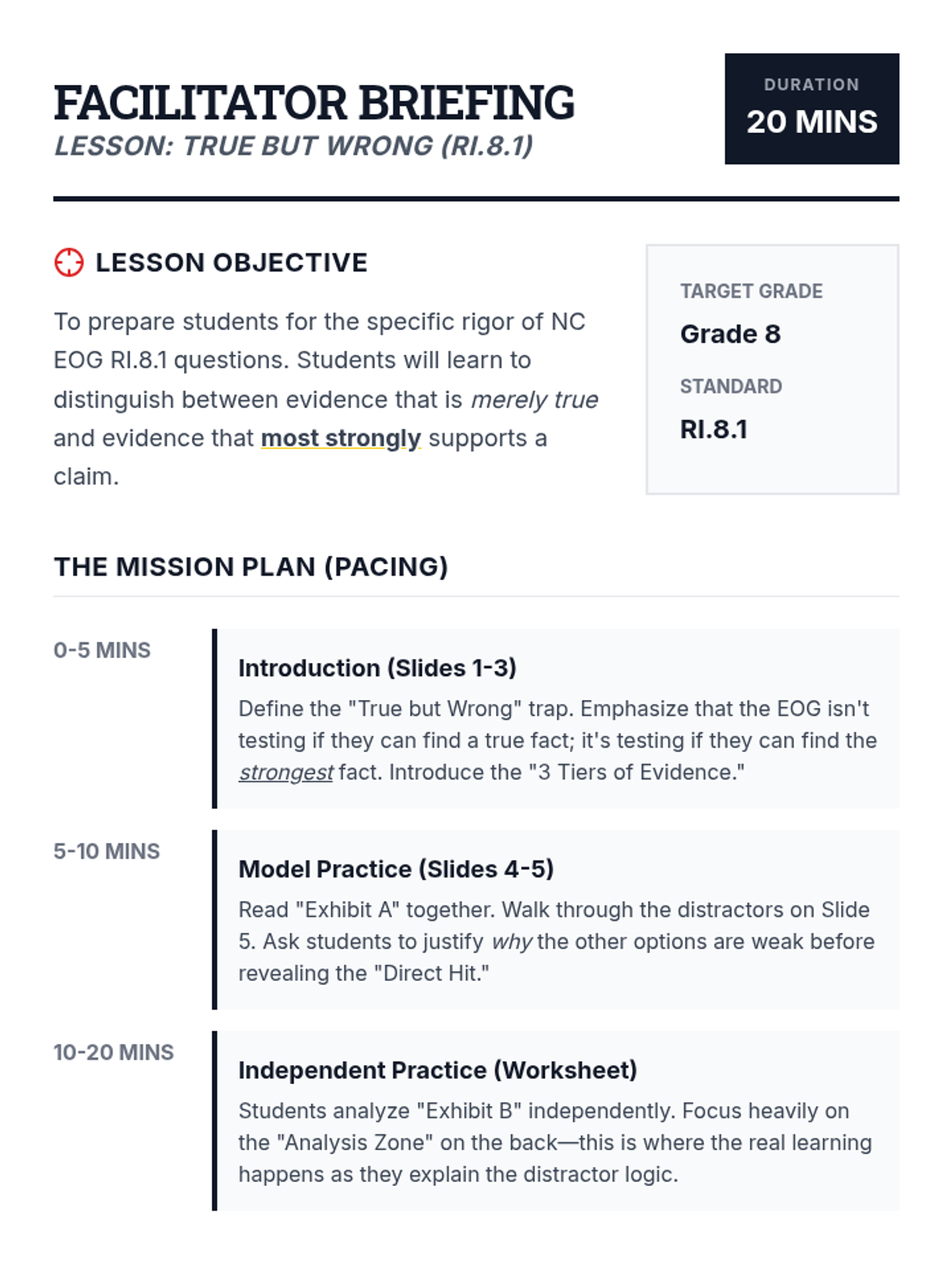
A targeted 15-20 minute mini-lesson for 8th grade students focusing on RI.8.1. It teaches students how to distinguish between 'true but weak' evidence and the 'most strongly' supporting evidence typically found on the NC EOG.
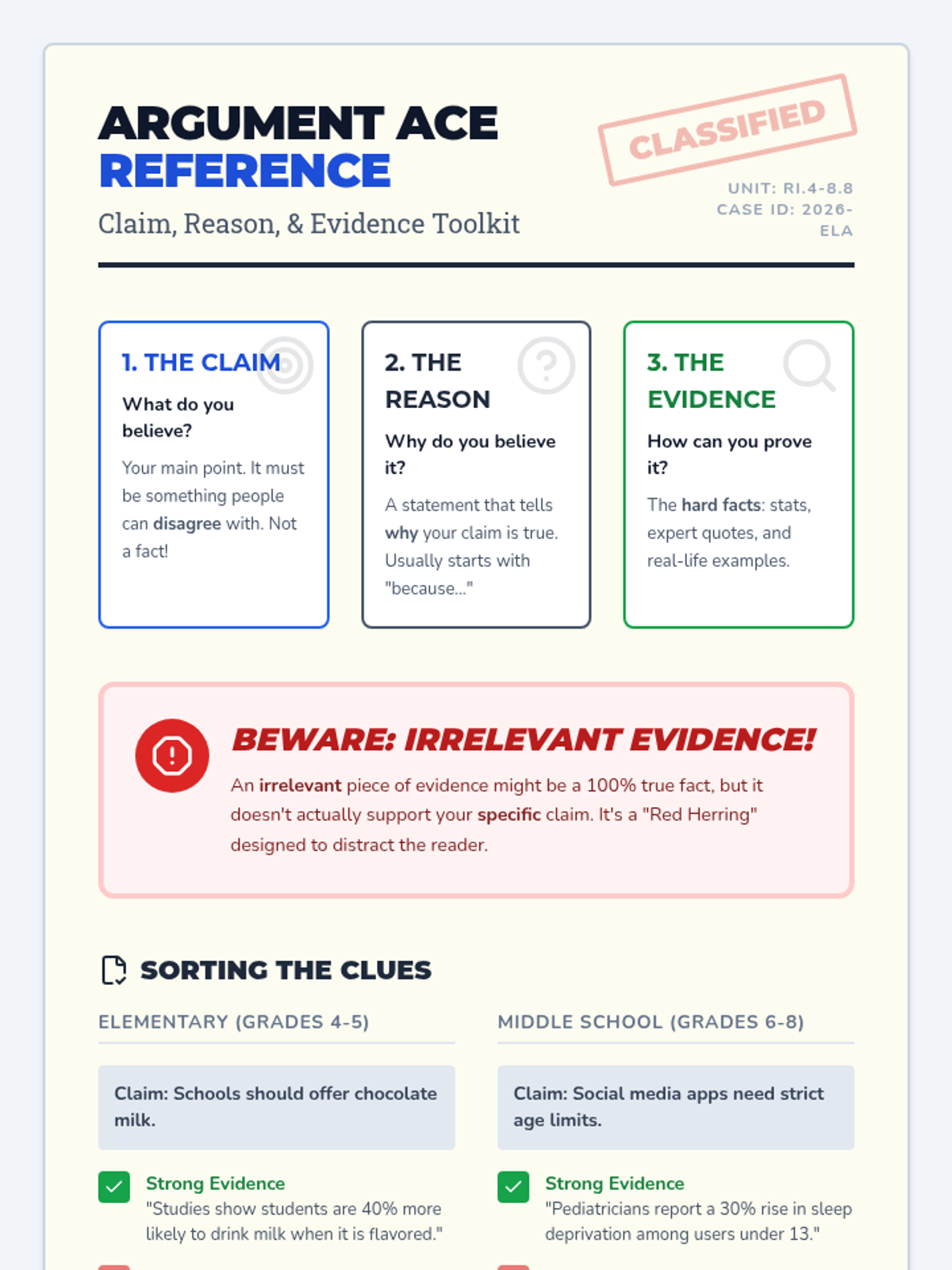
A lesson focused on identifying and evaluating claims, reasons, and evidence in argumentative texts for grades 4-8. Students learn to distinguish between strong evidence and irrelevant information.
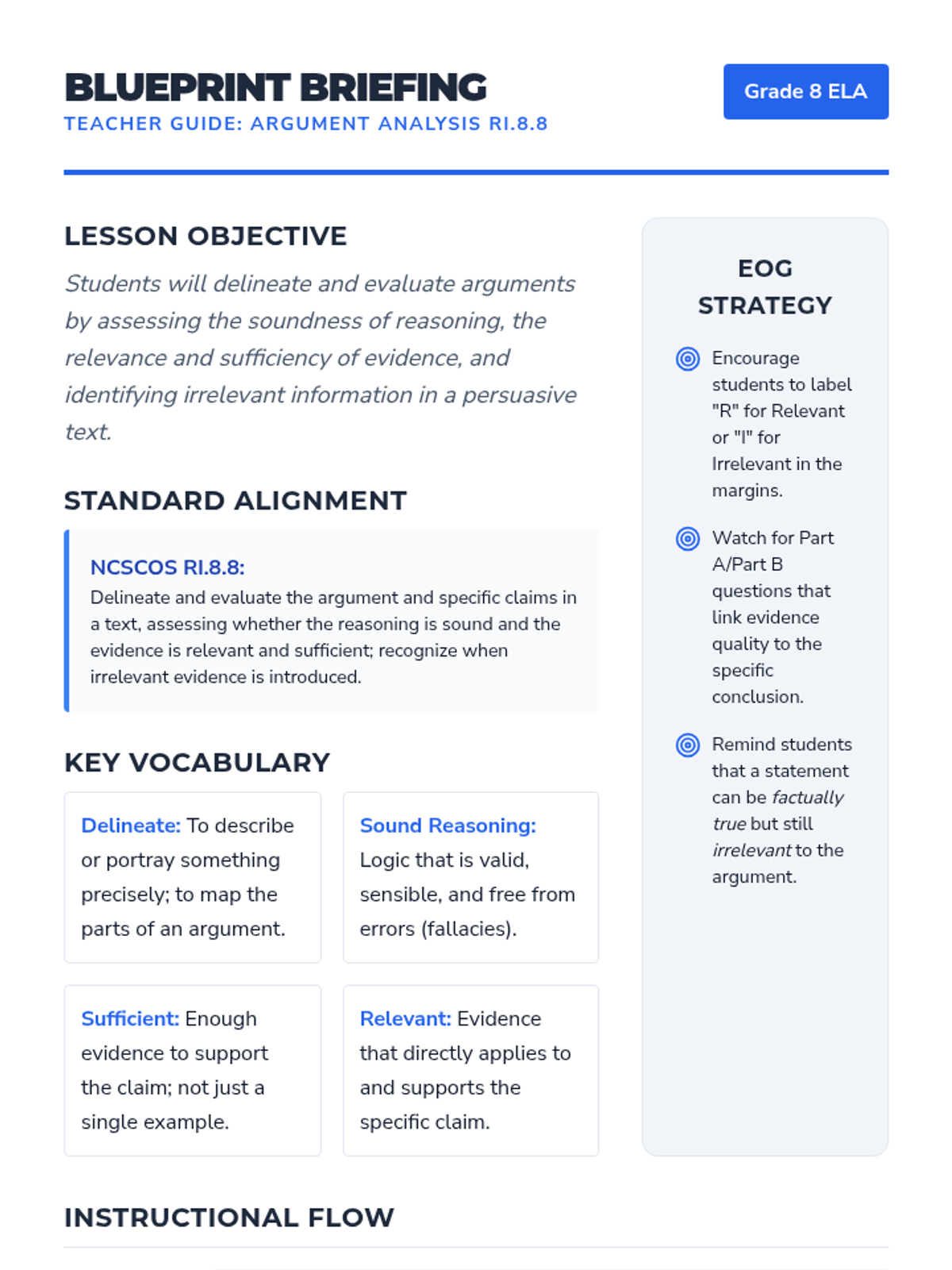
A guided practice set focused on NC EOG standard RI.8.8, helping students delineate and evaluate arguments through a scaffolded evidence-sorting approach.
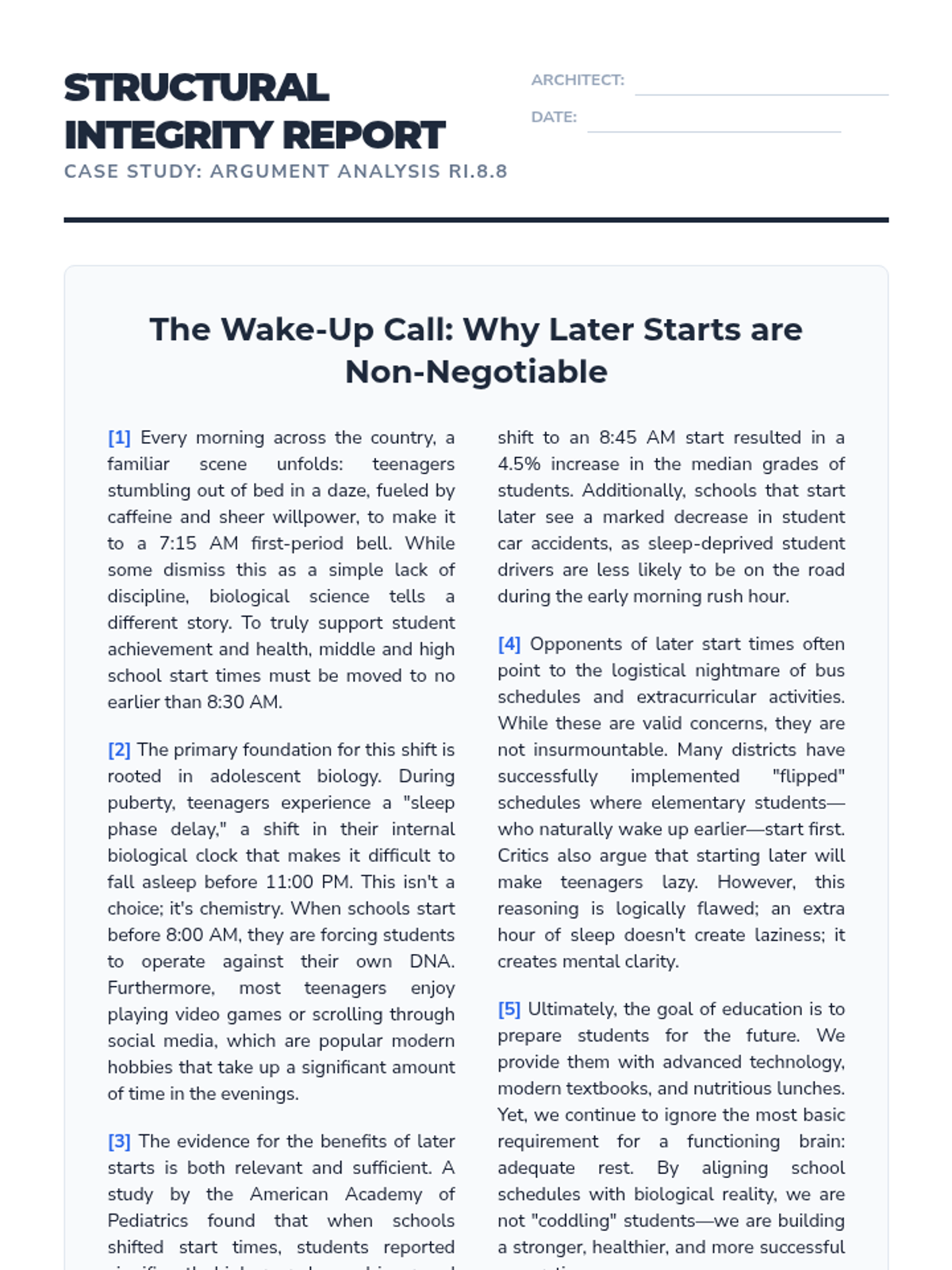
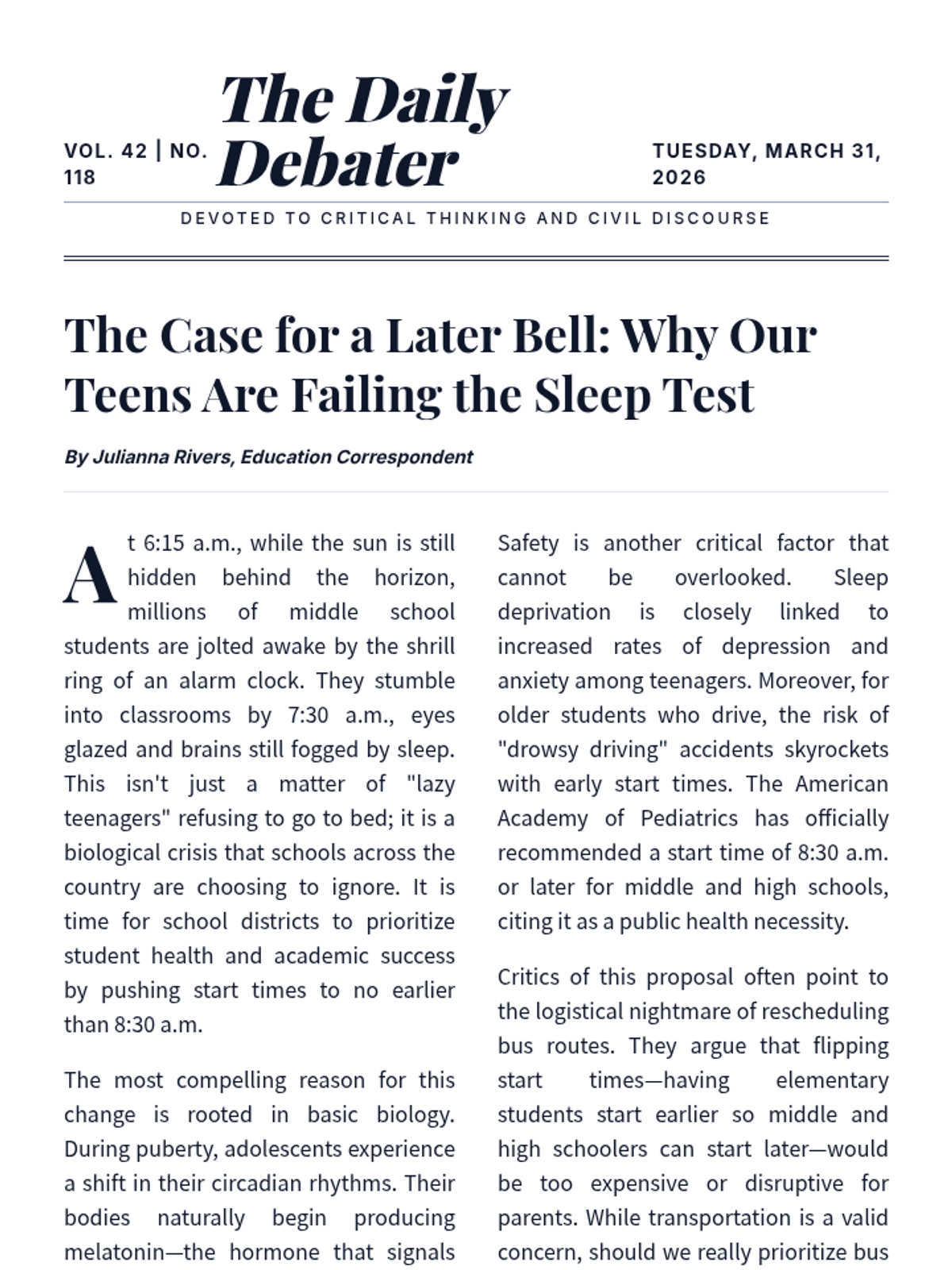
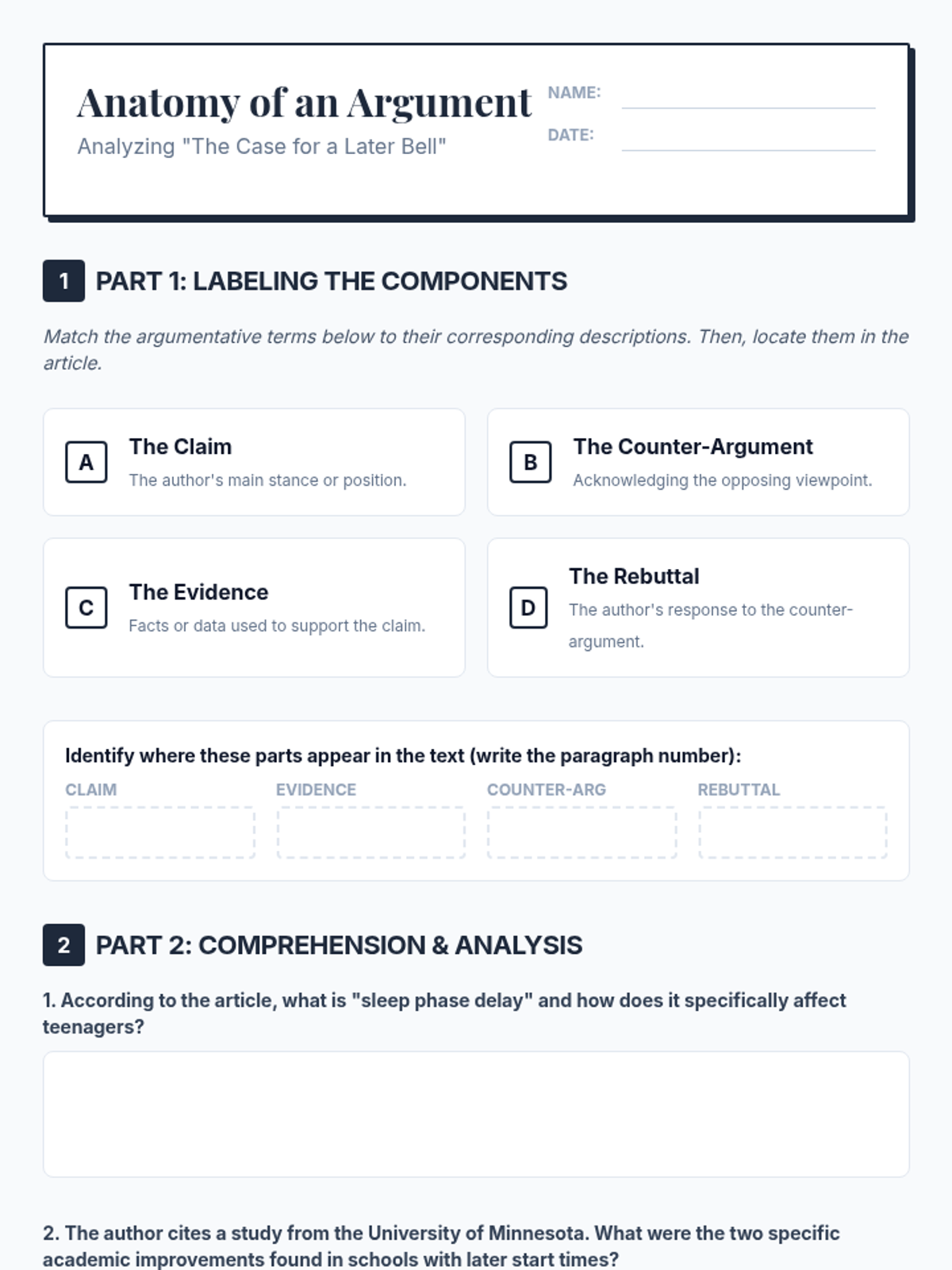
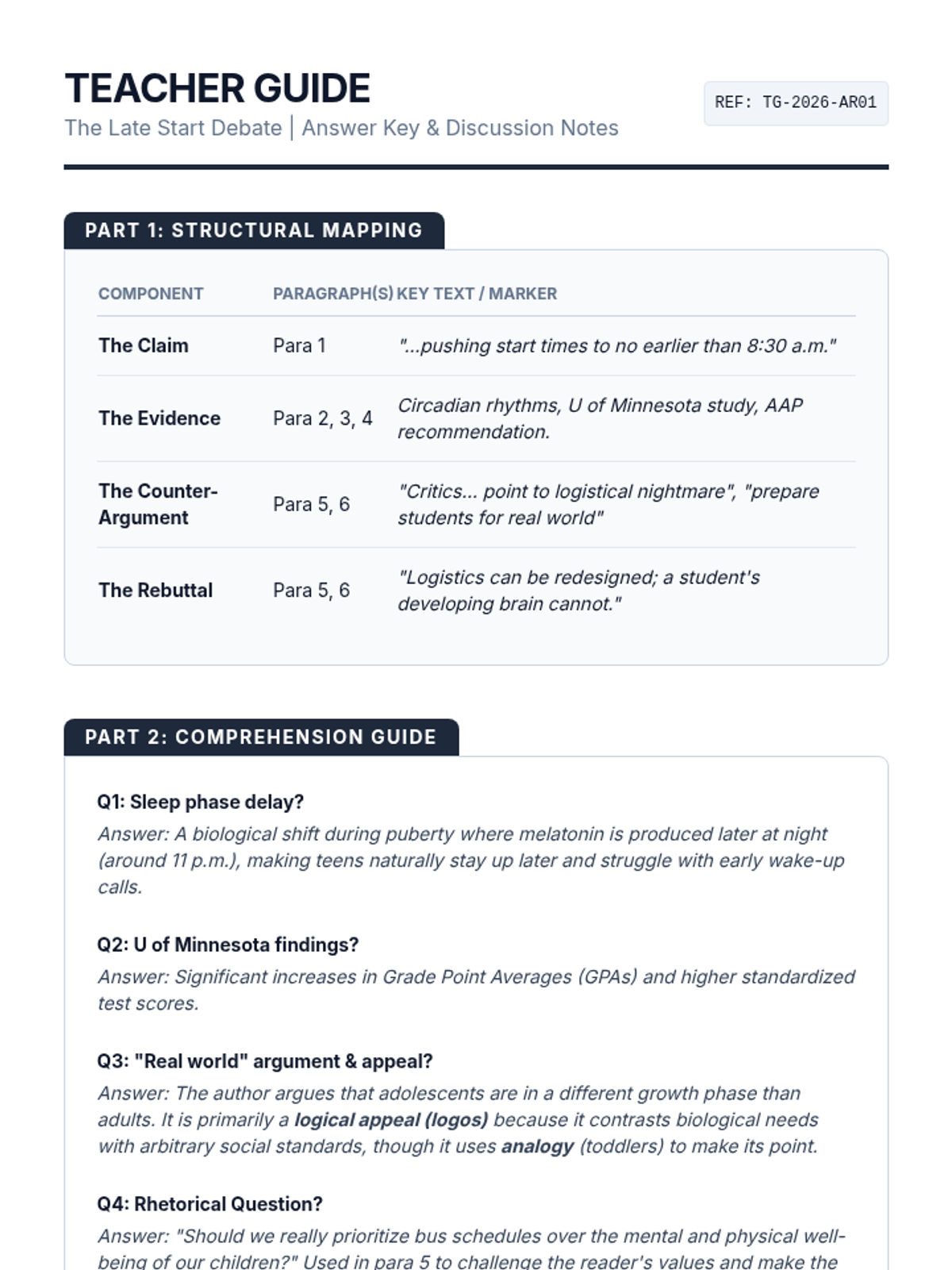
A middle school lesson focused on analyzing the structure and rhetorical devices of a persuasive article regarding school start times. Students will identify claims, evidence, and counter-arguments while assessing the overall effectiveness of the author's persuasion.
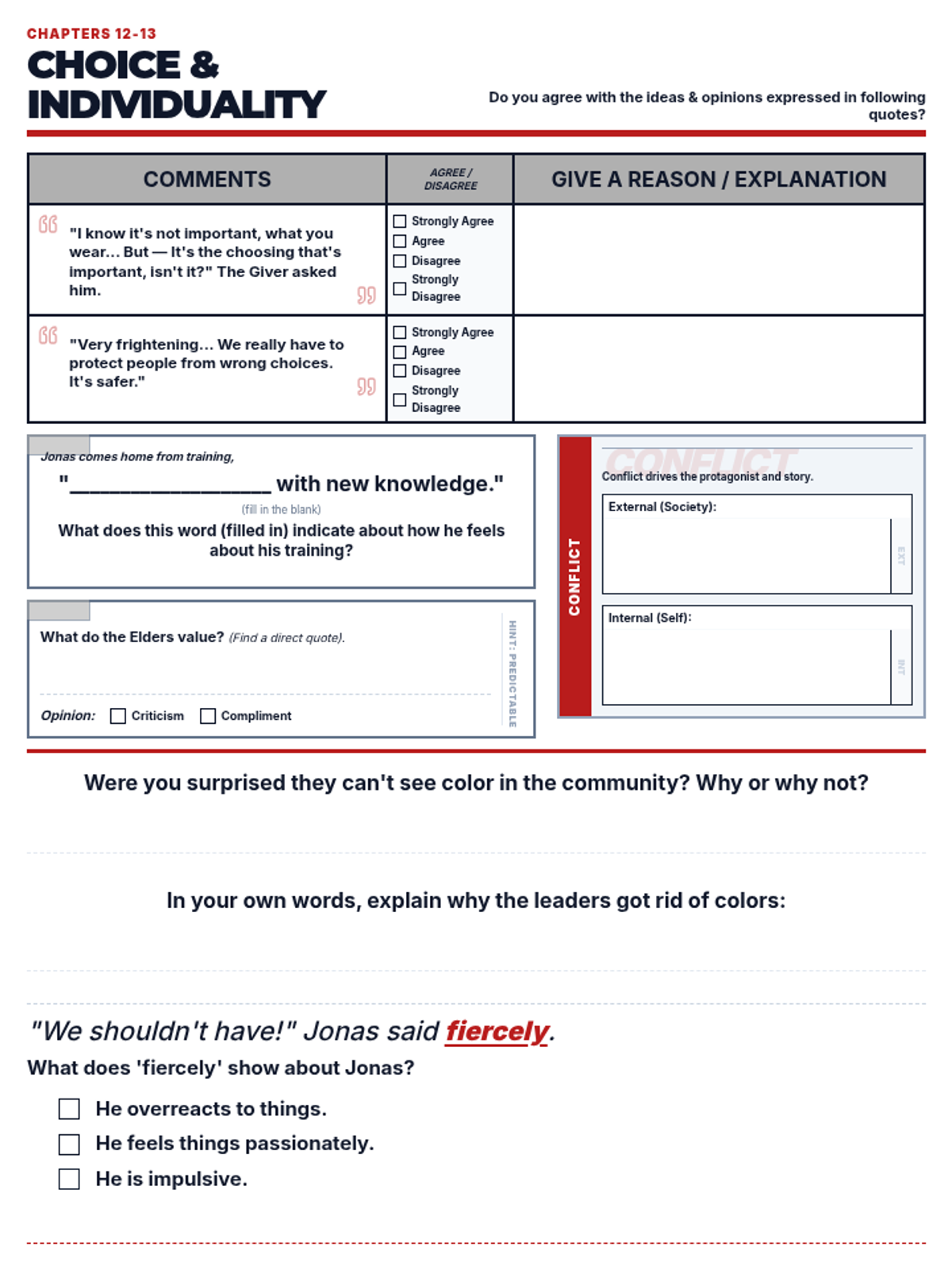
Focuses on the emergence of color and the ethical dilemmas of choice and individuality in Chapters 12 and 13 of The Giver.