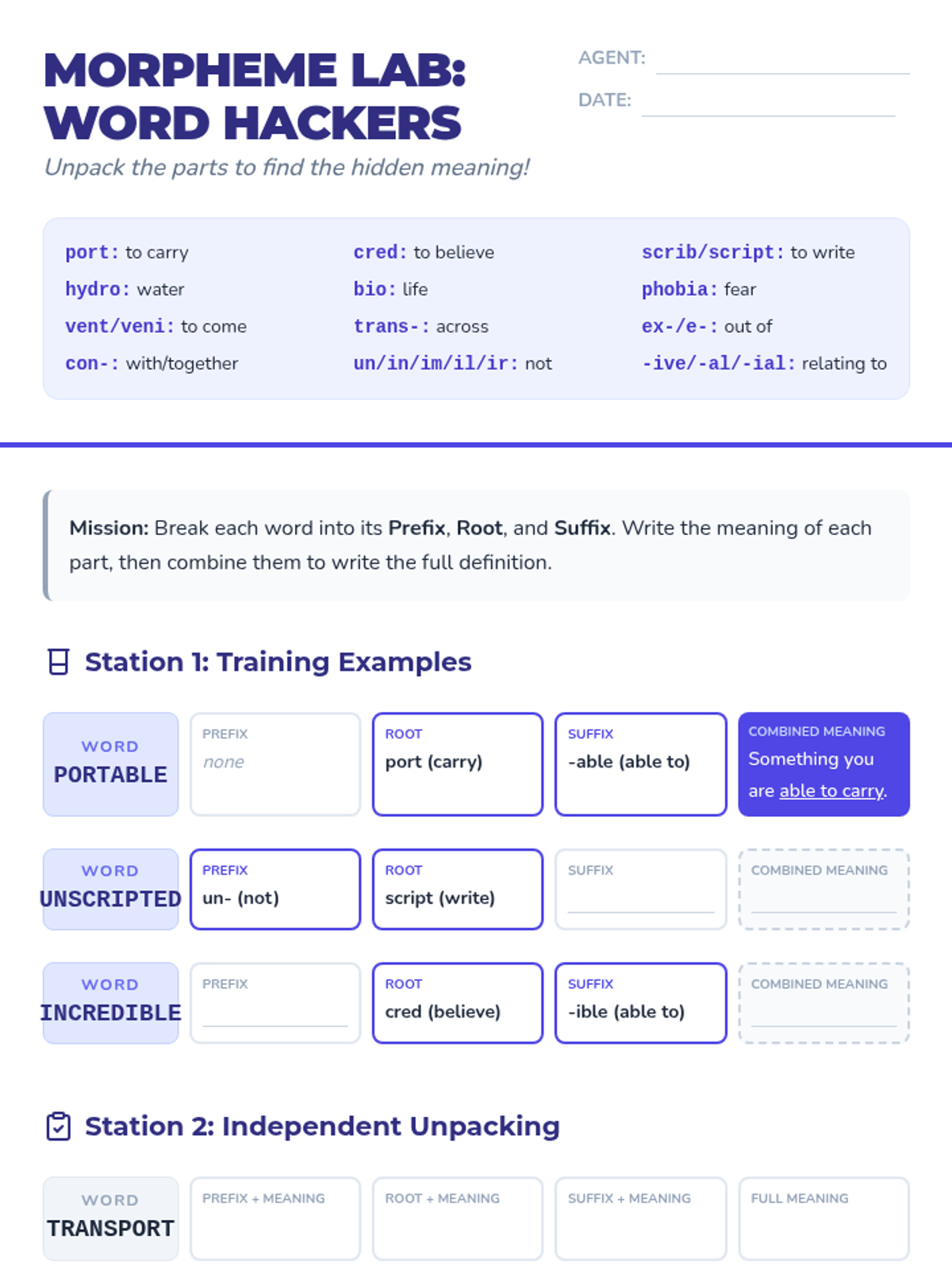
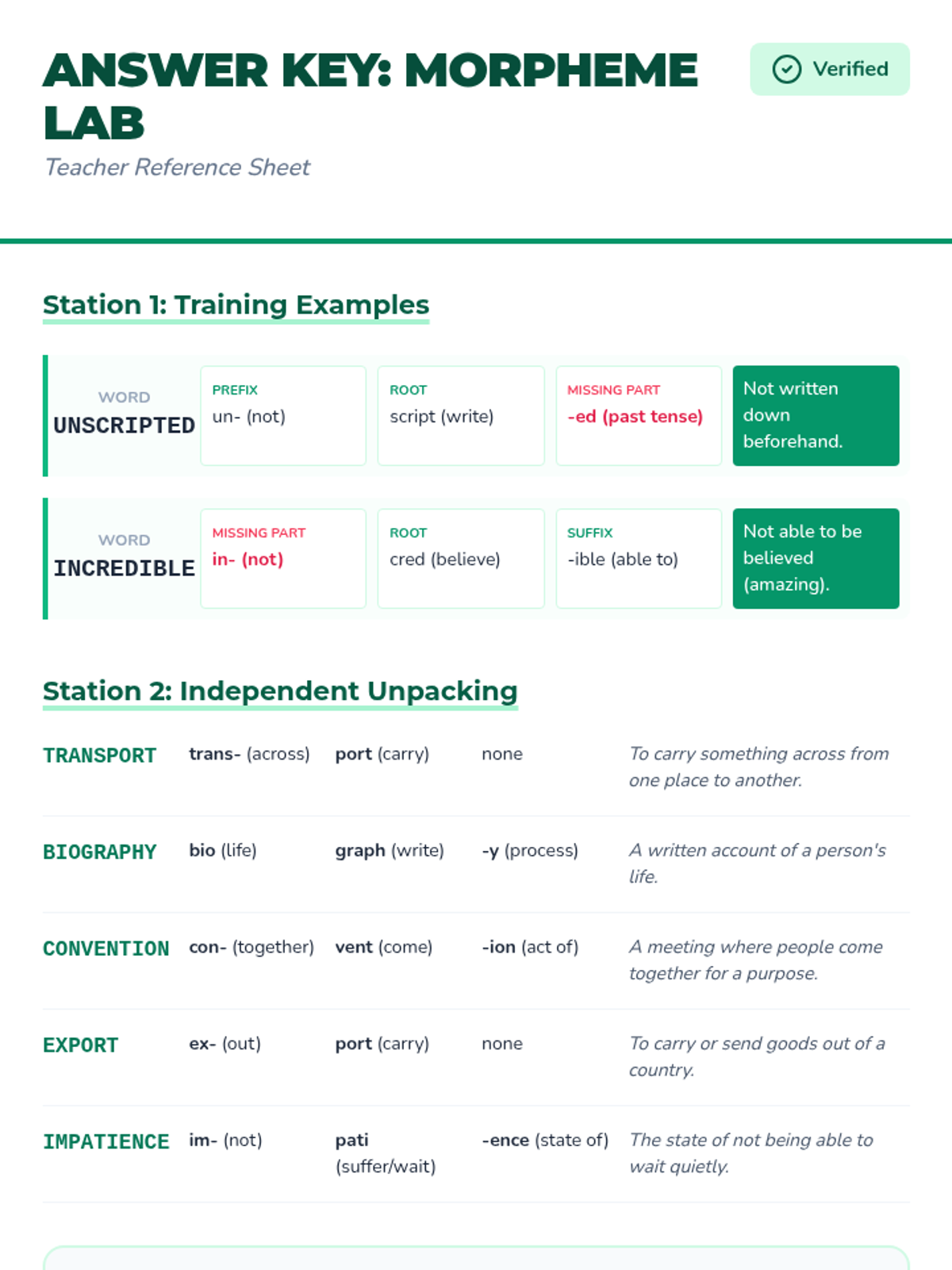
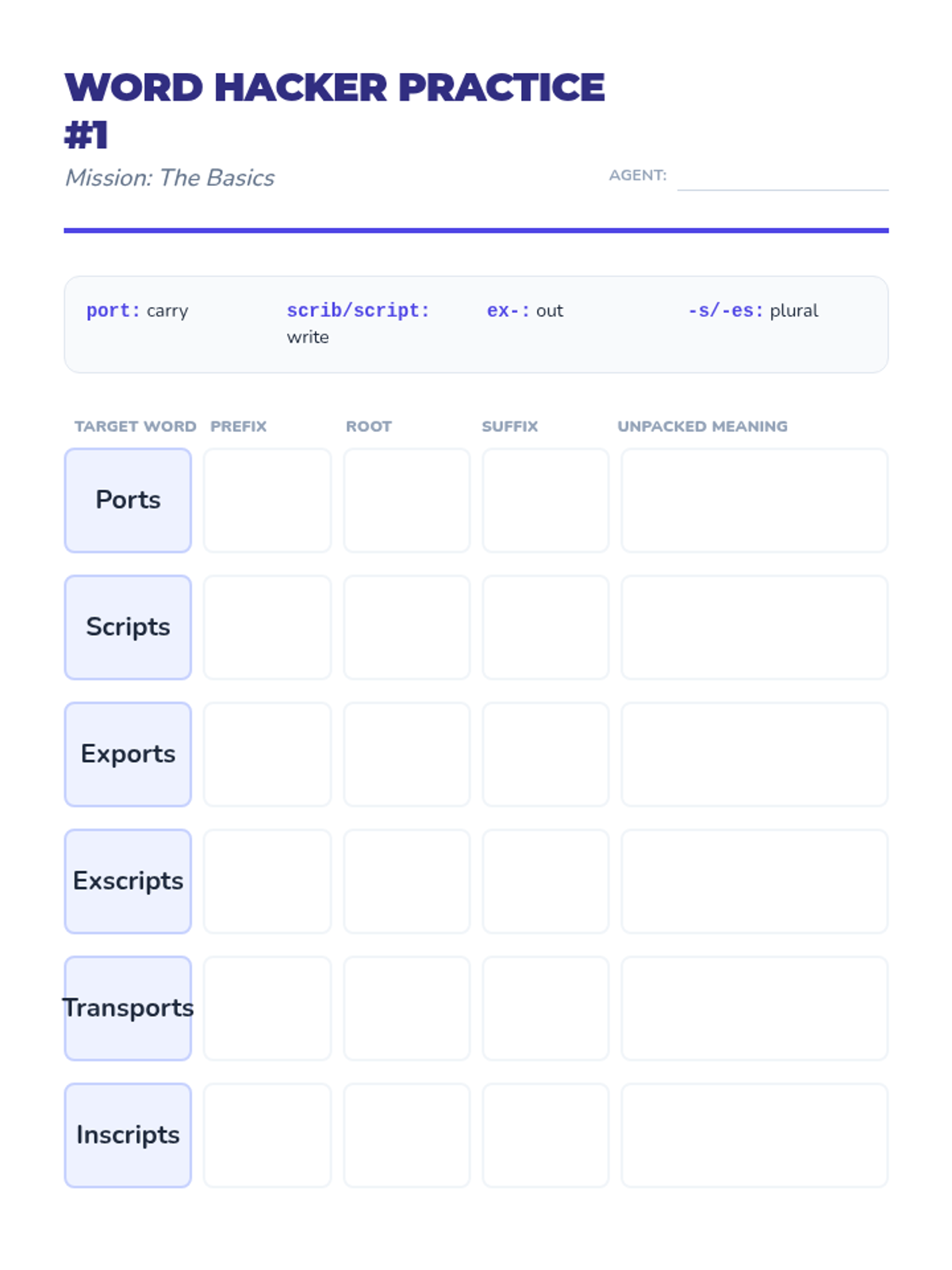
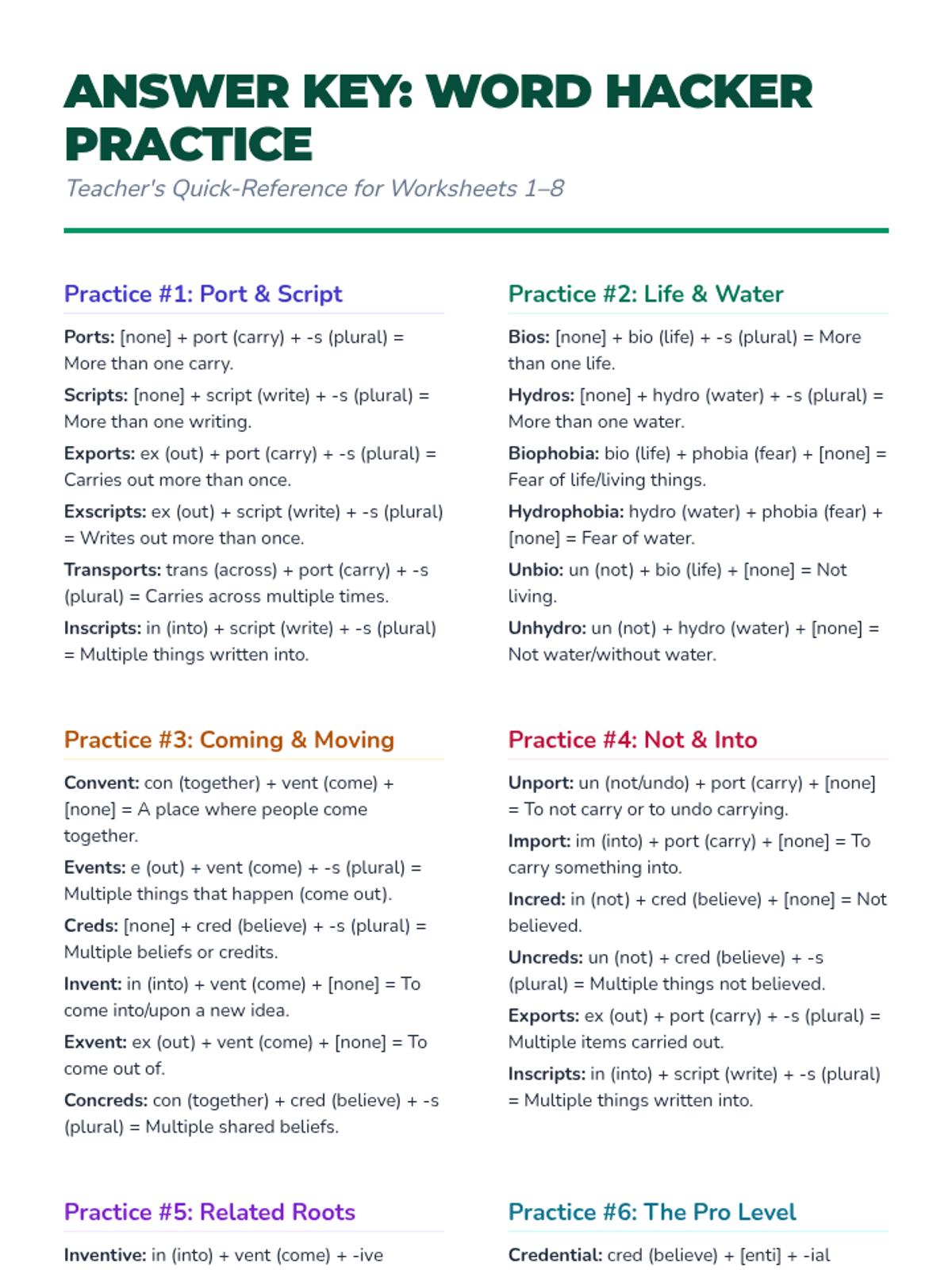
Builds word mastery through parts of speech, Greek and Latin roots, and morphological analysis of prefixes and suffixes. Develops nuanced comprehension using context clues, shades of meaning, and idiomatic expressions.
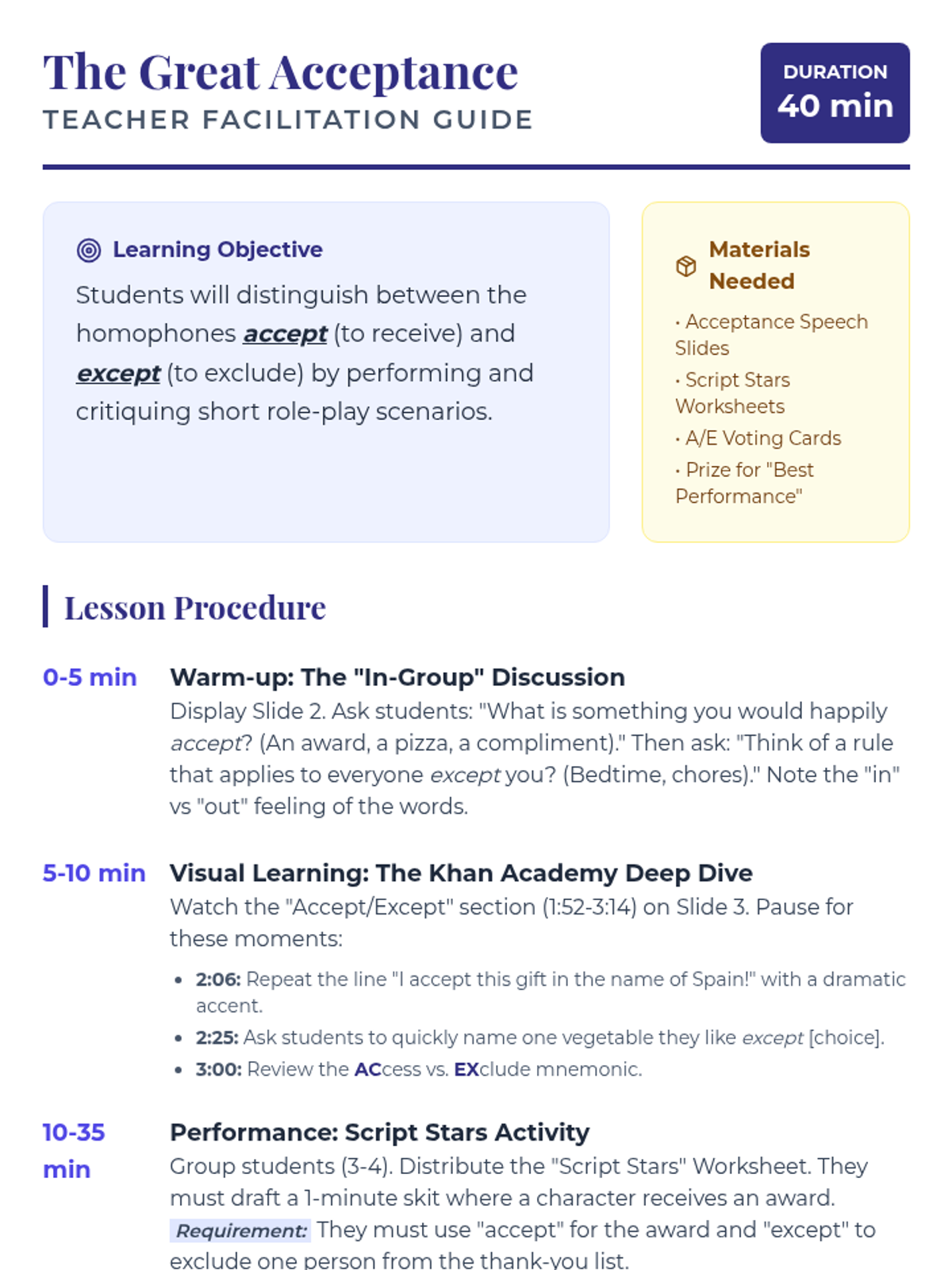
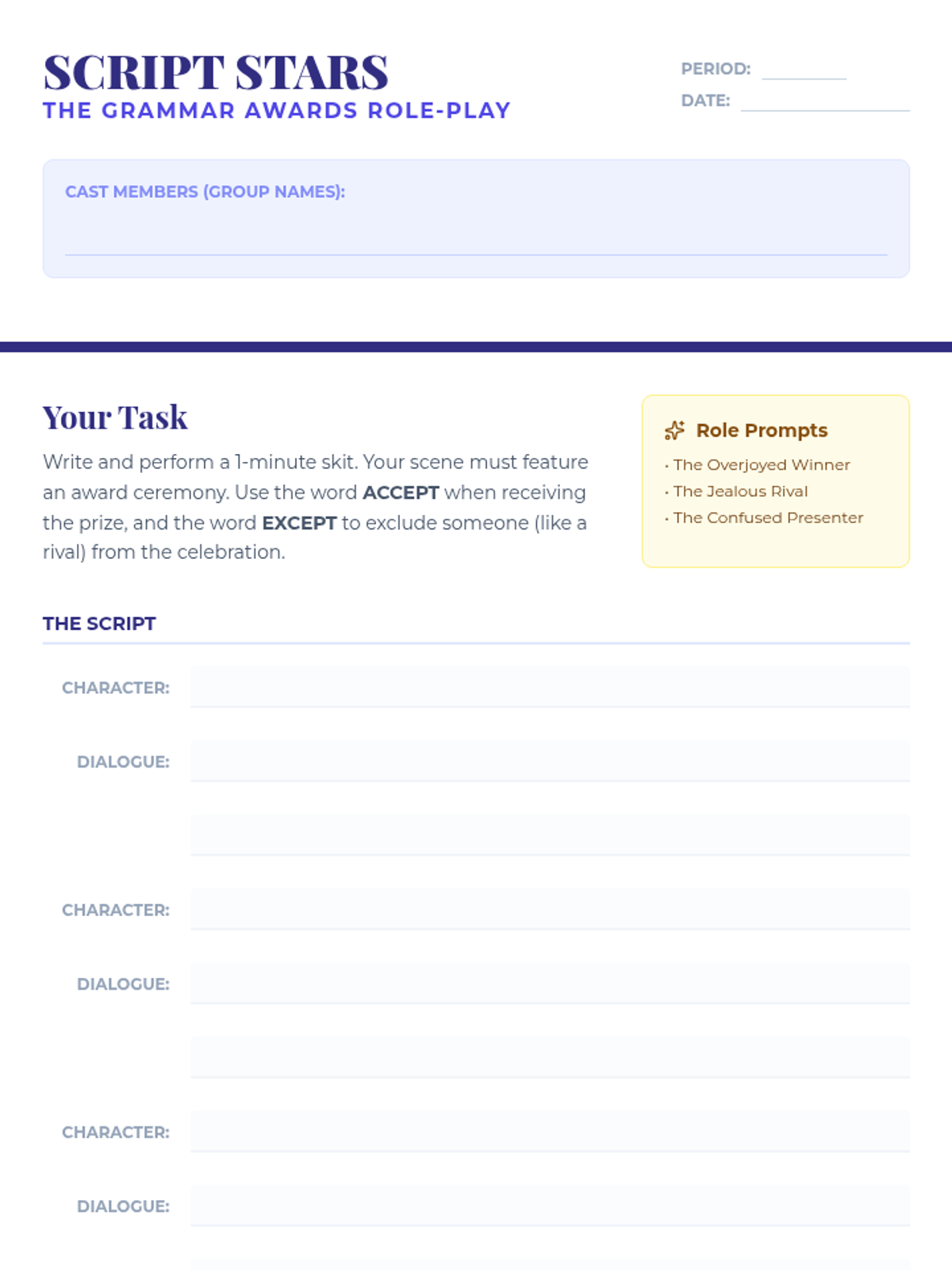
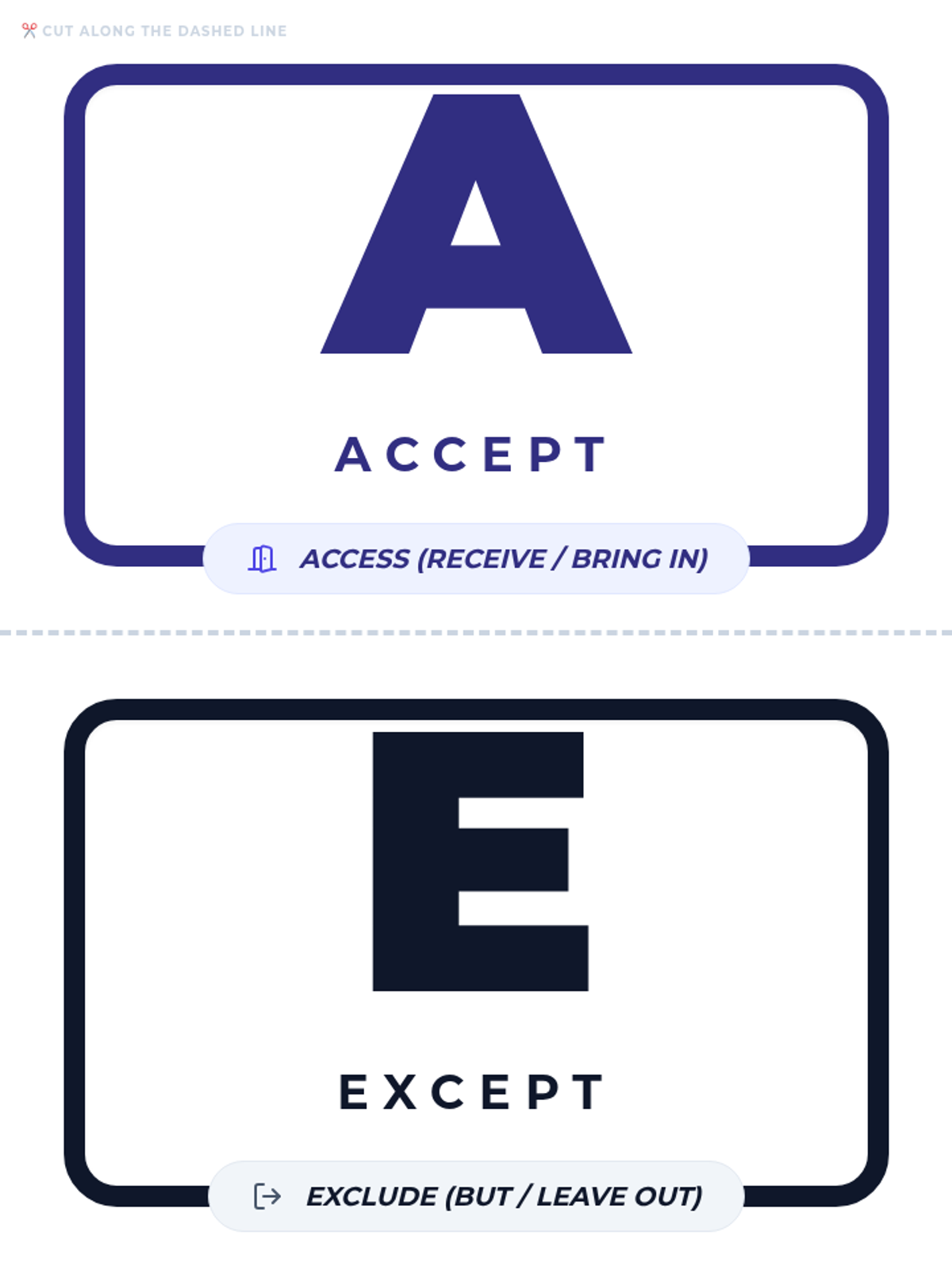
A grammar lesson focusing on the homophones 'accept' and 'except' through an award-show-themed role-play activity and video analysis.
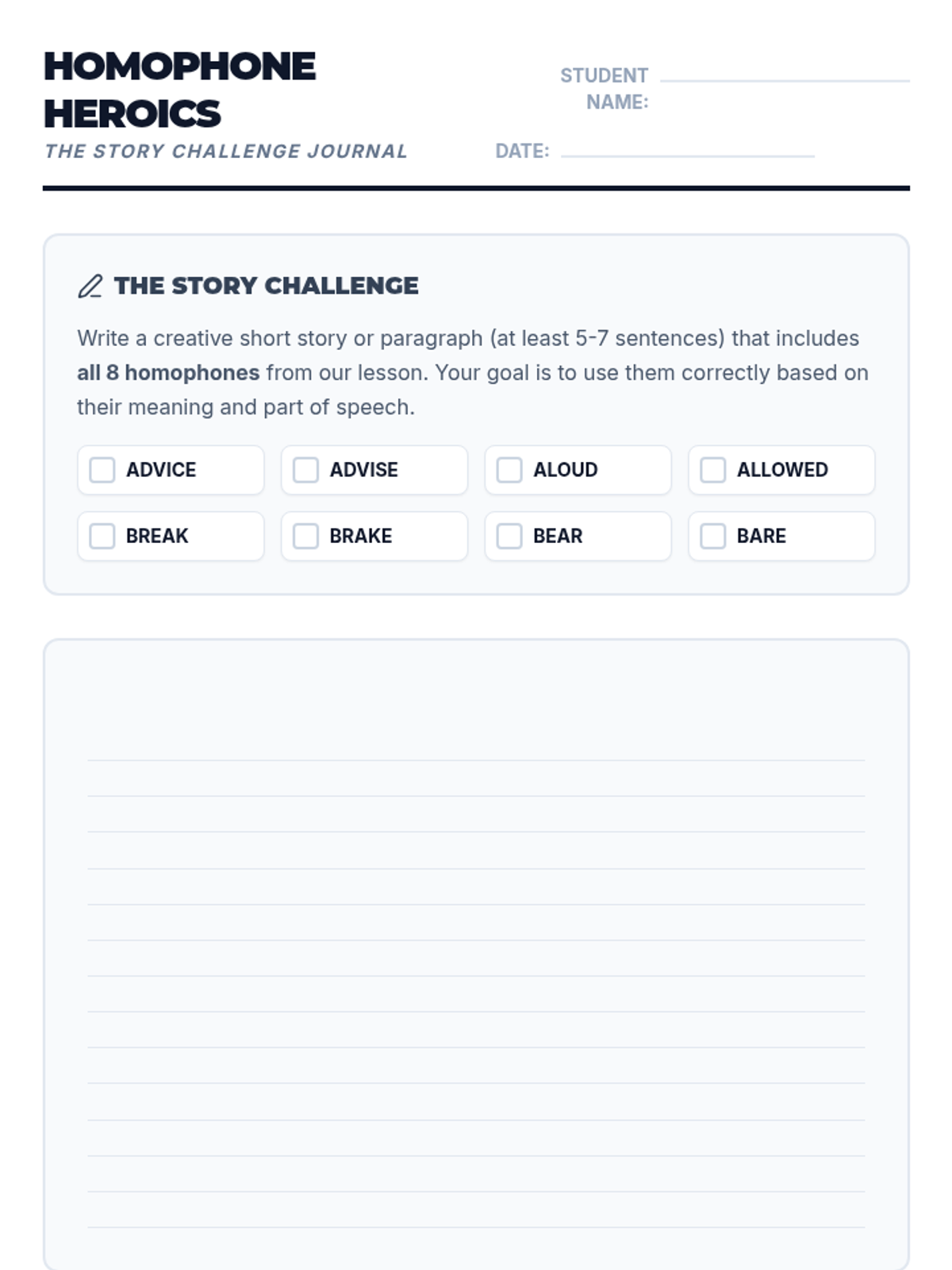
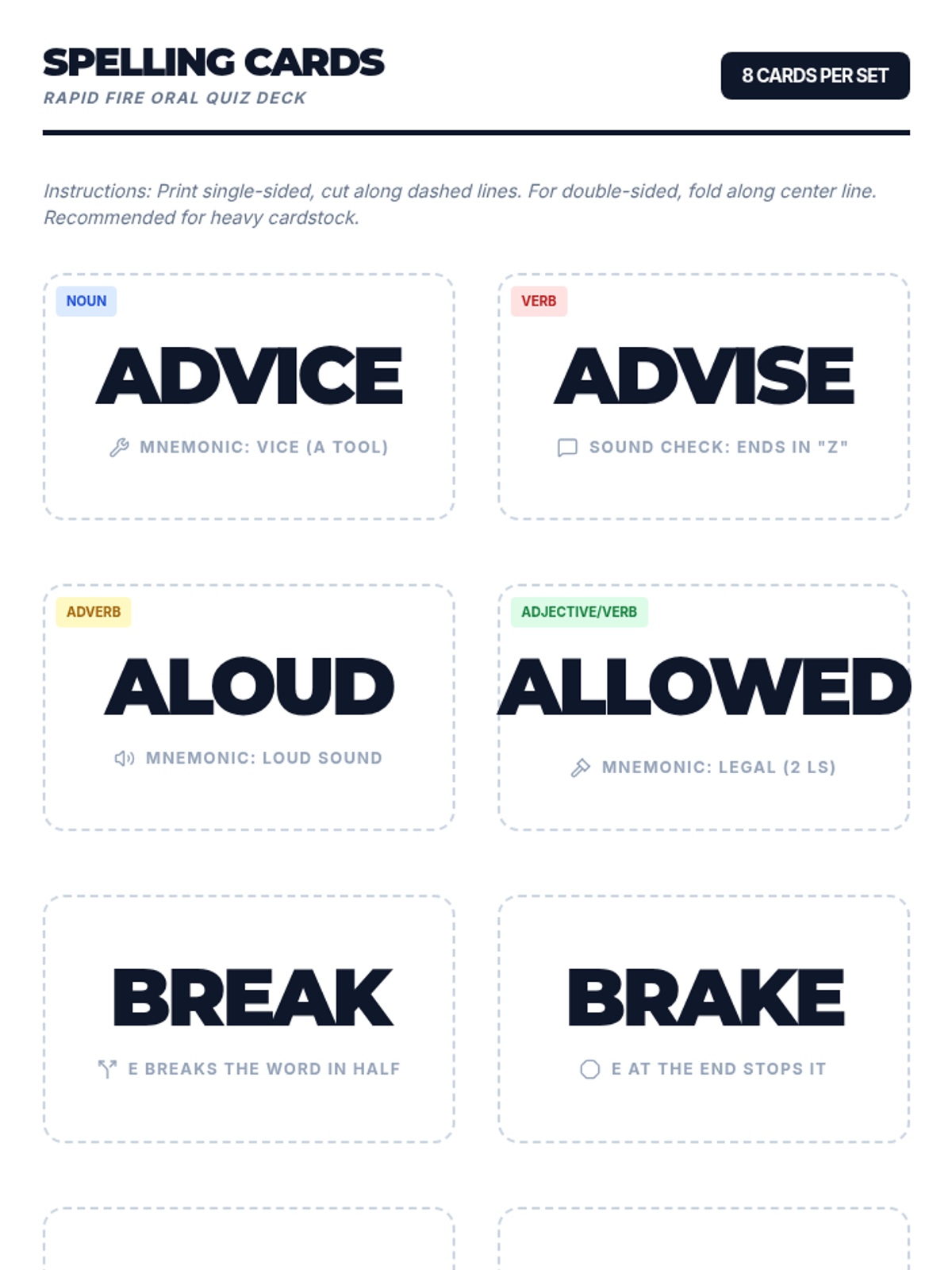
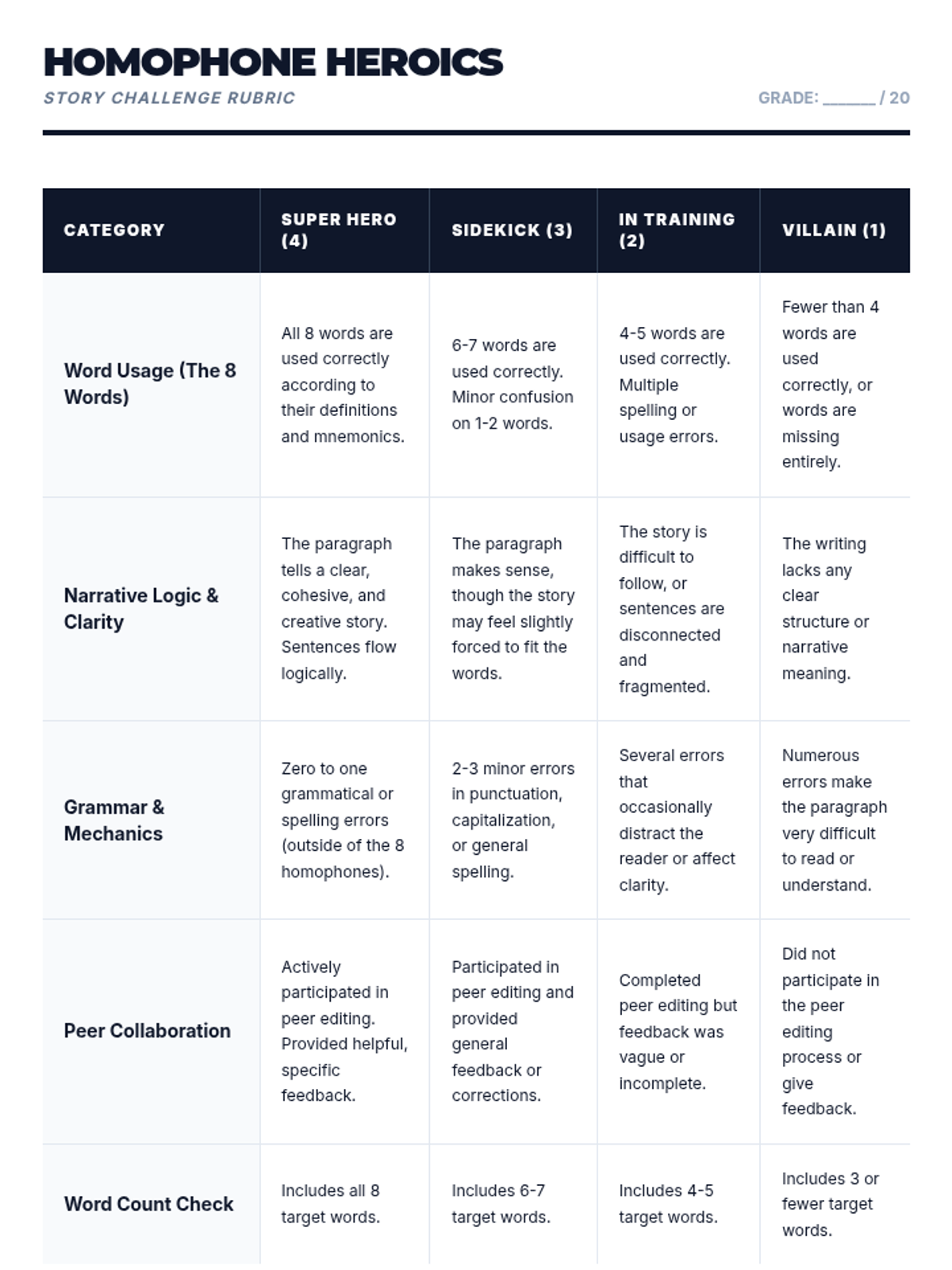
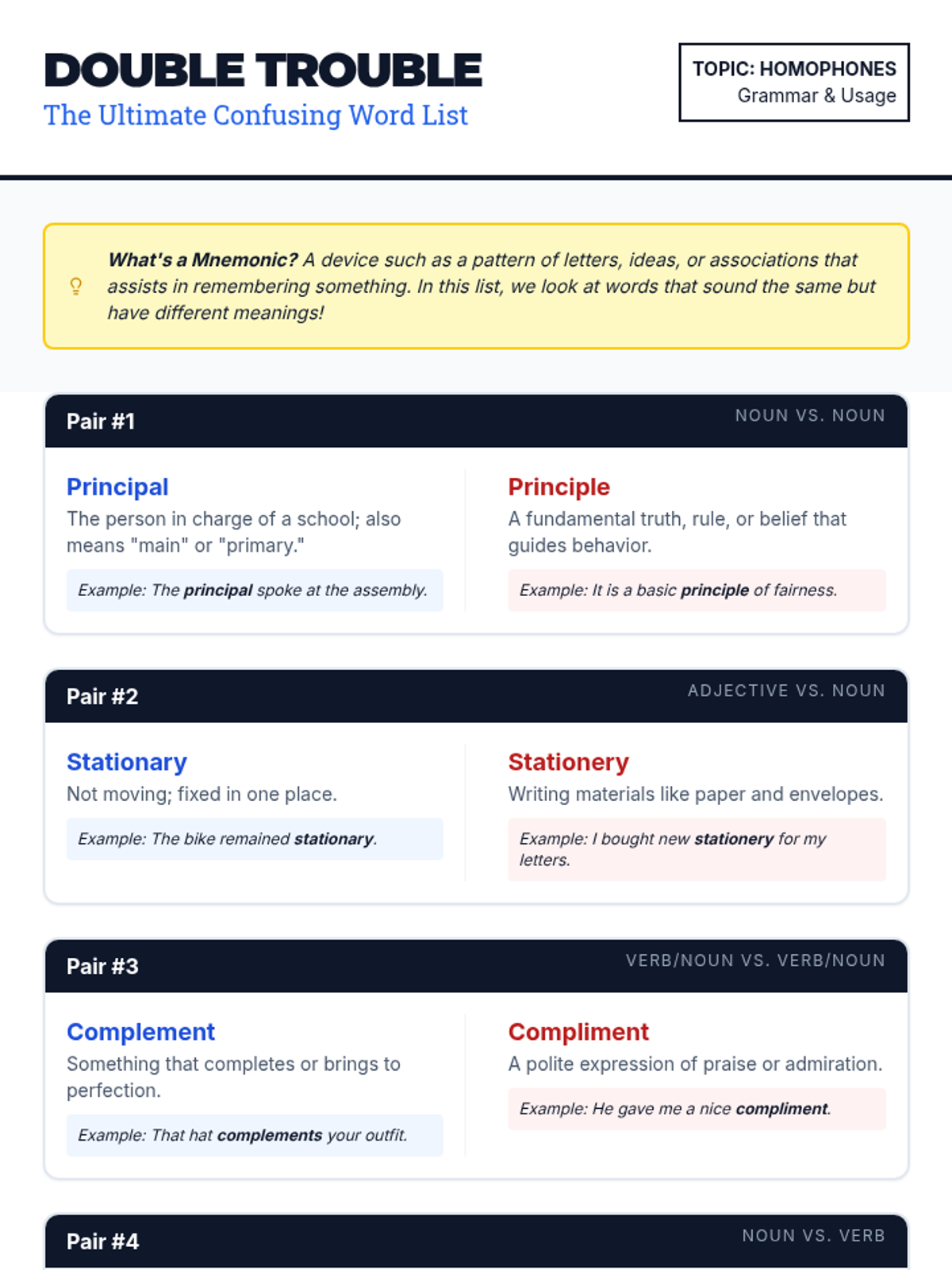
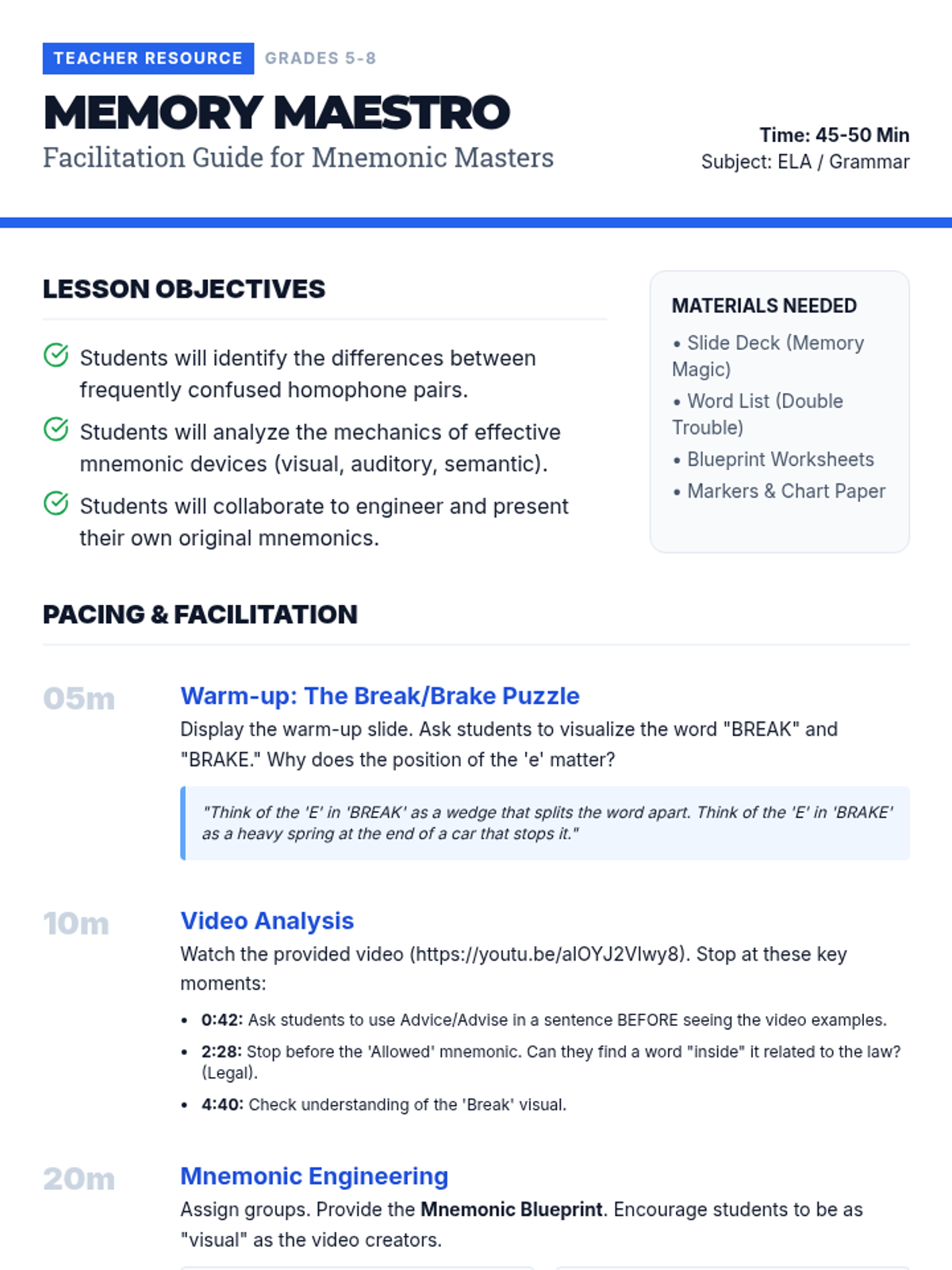
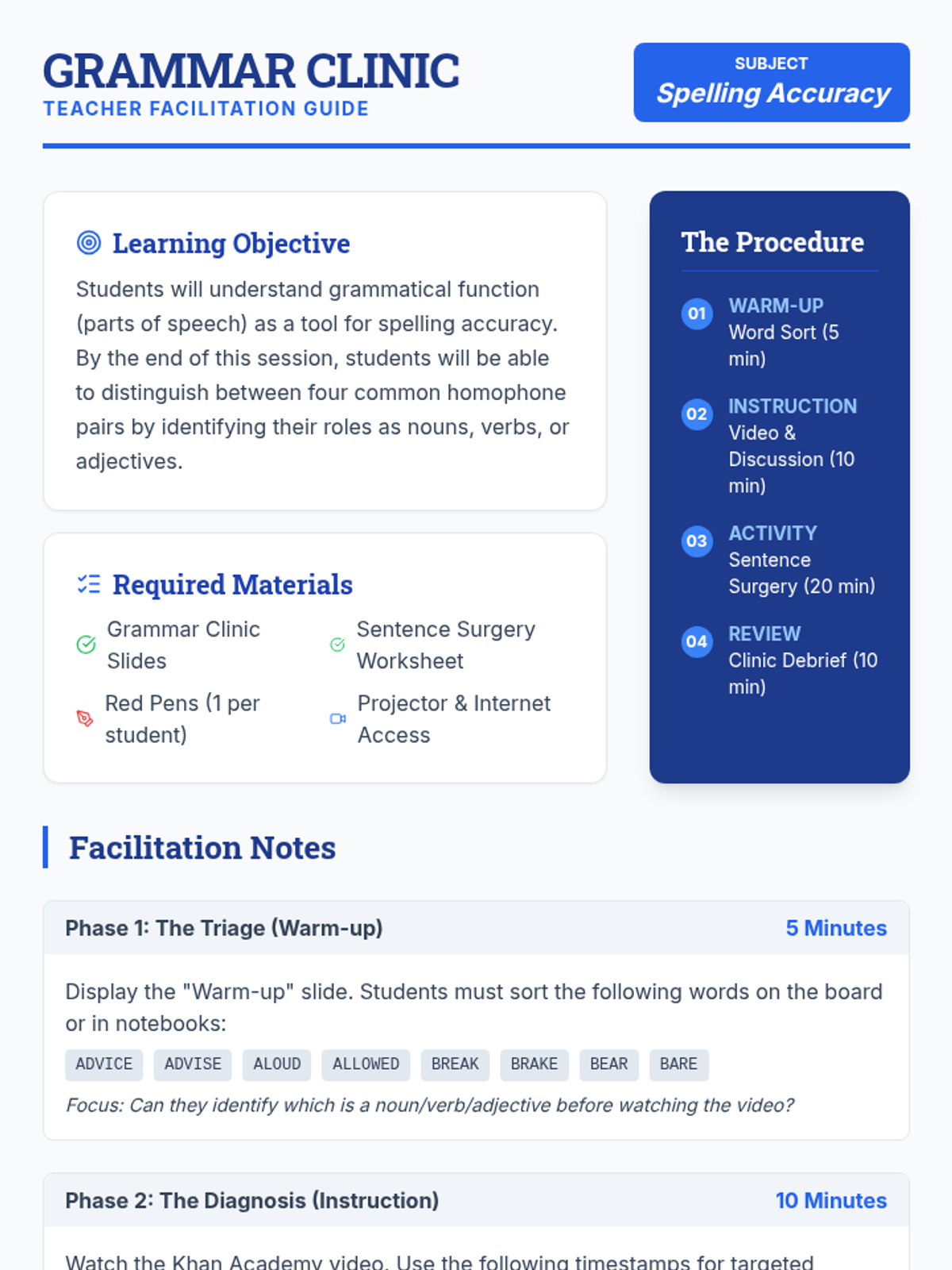
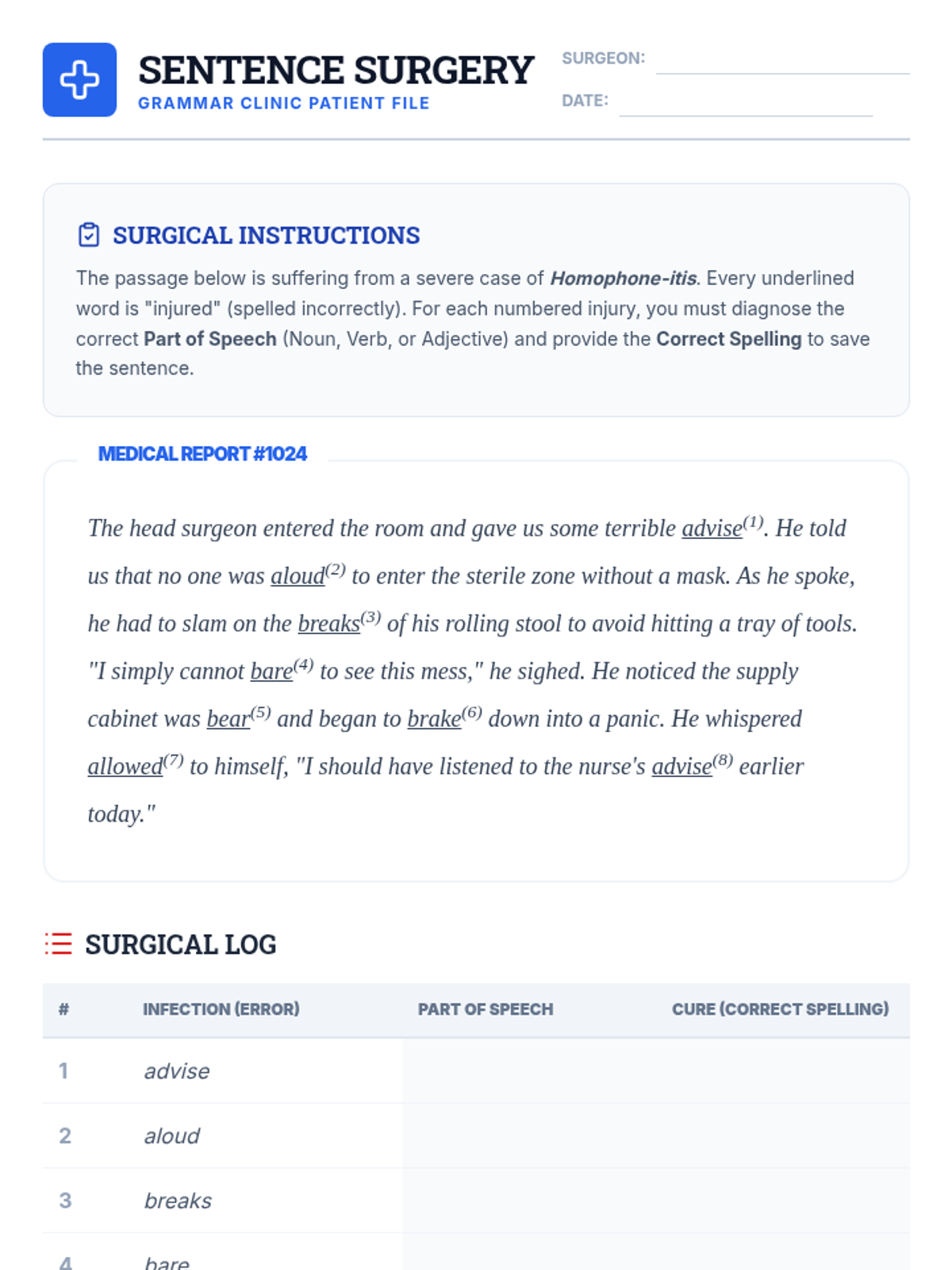
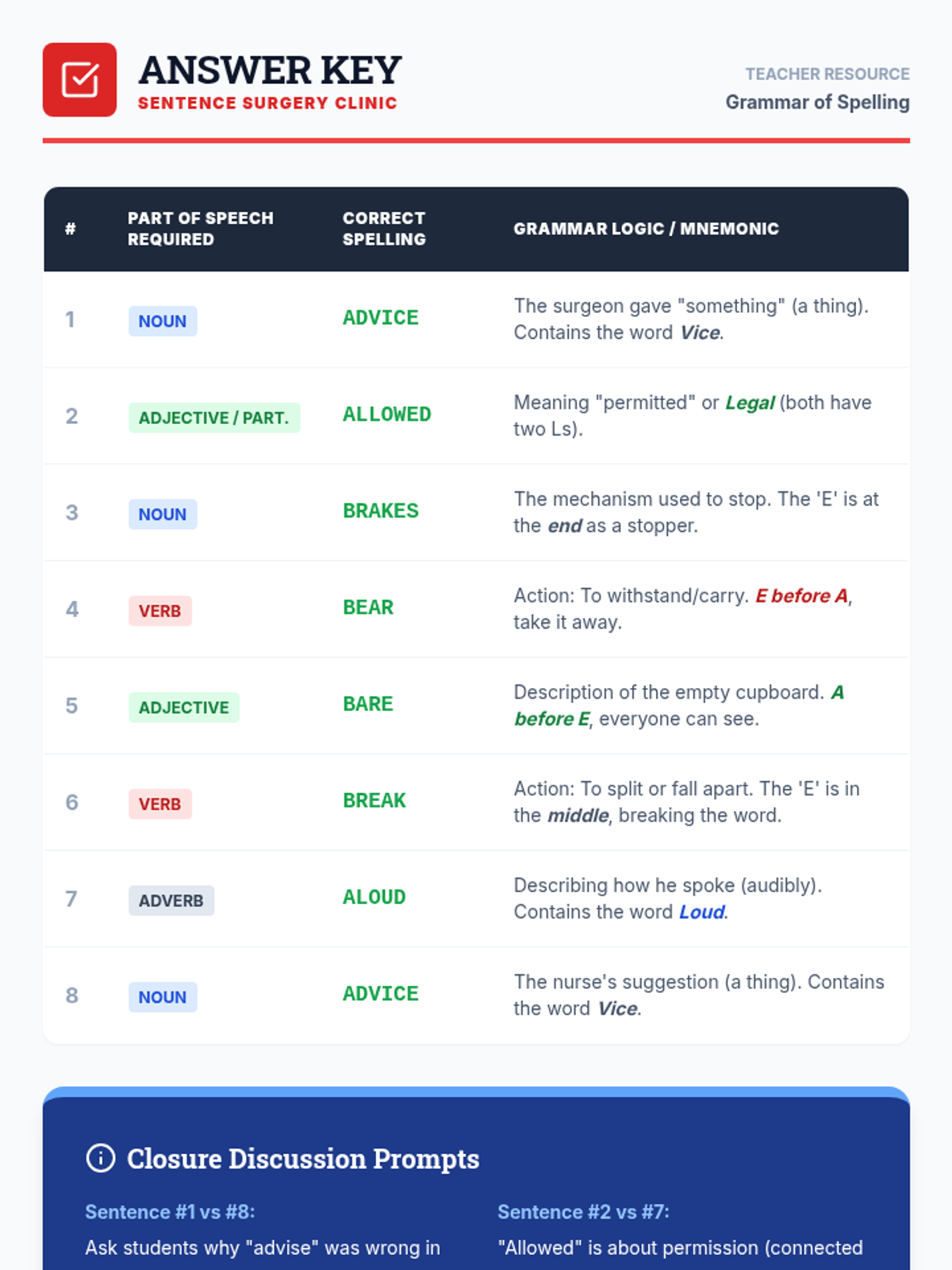
A dynamic lesson for middle schoolers to master four sets of commonly confused homophones: advice/advise, aloud/allowed, break/brake, and bear/bare using mnemonics and creative writing.
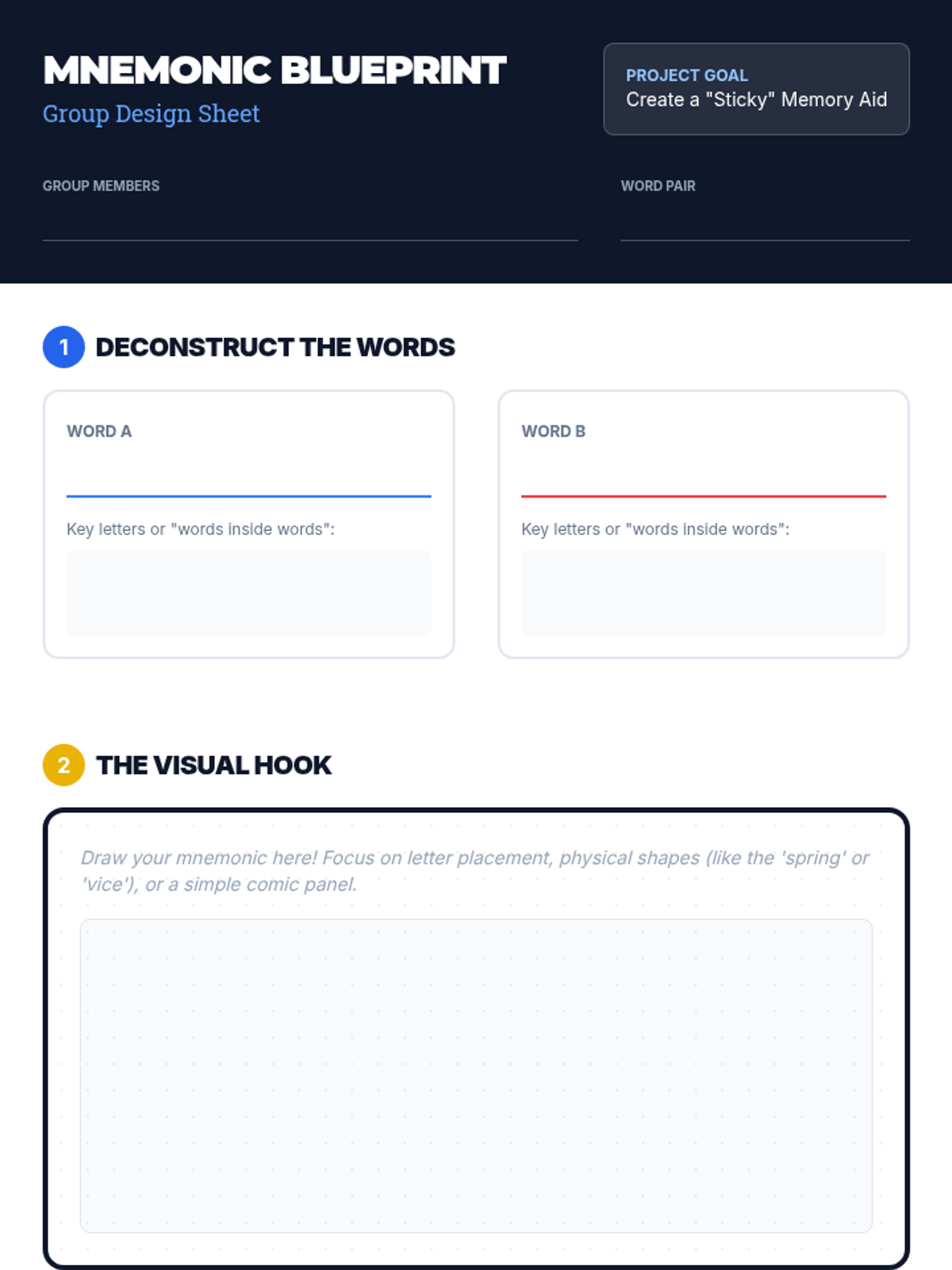
Students will analyze the 'how' behind effective mnemonic devices for confusing homophones and then work in groups to engineer their own visual and rhyming memory aids for a new set of tricky word pairs.
A grammar-focused spelling lesson for 7th-8th graders exploring how identifying a word's part of speech (noun, verb, or adjective) is the key to choosing the correct spelling for frequently confused homophones.
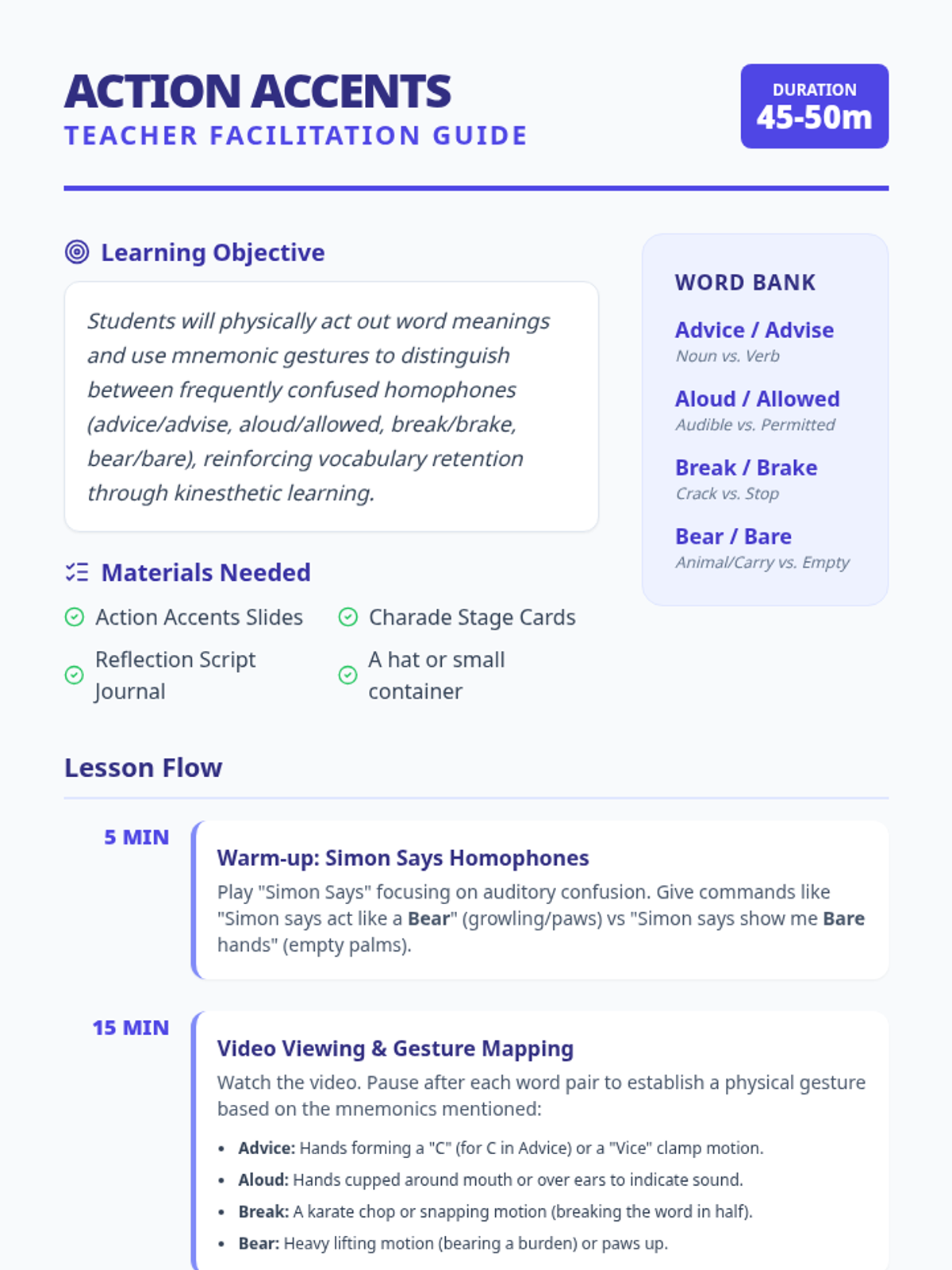
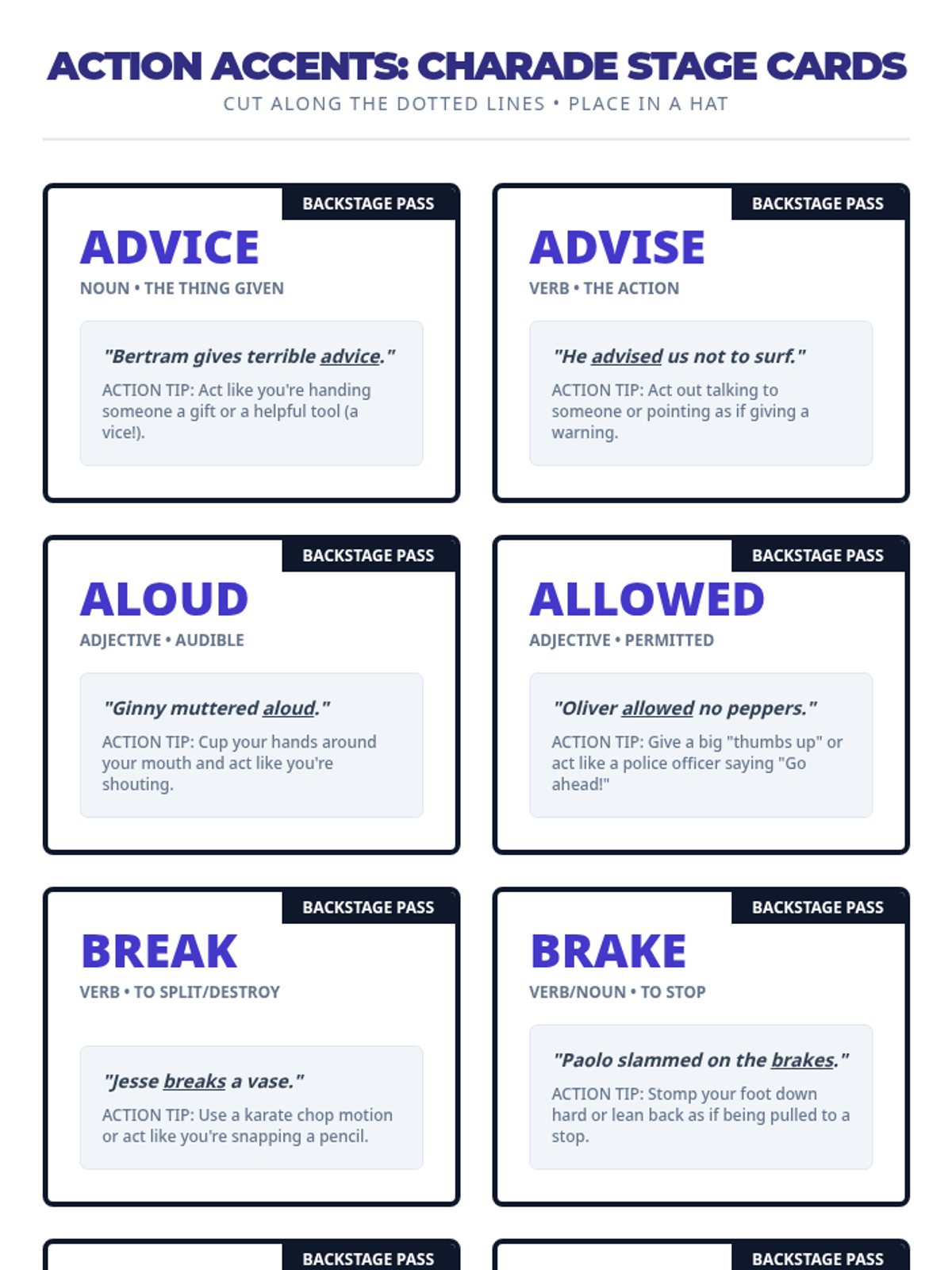
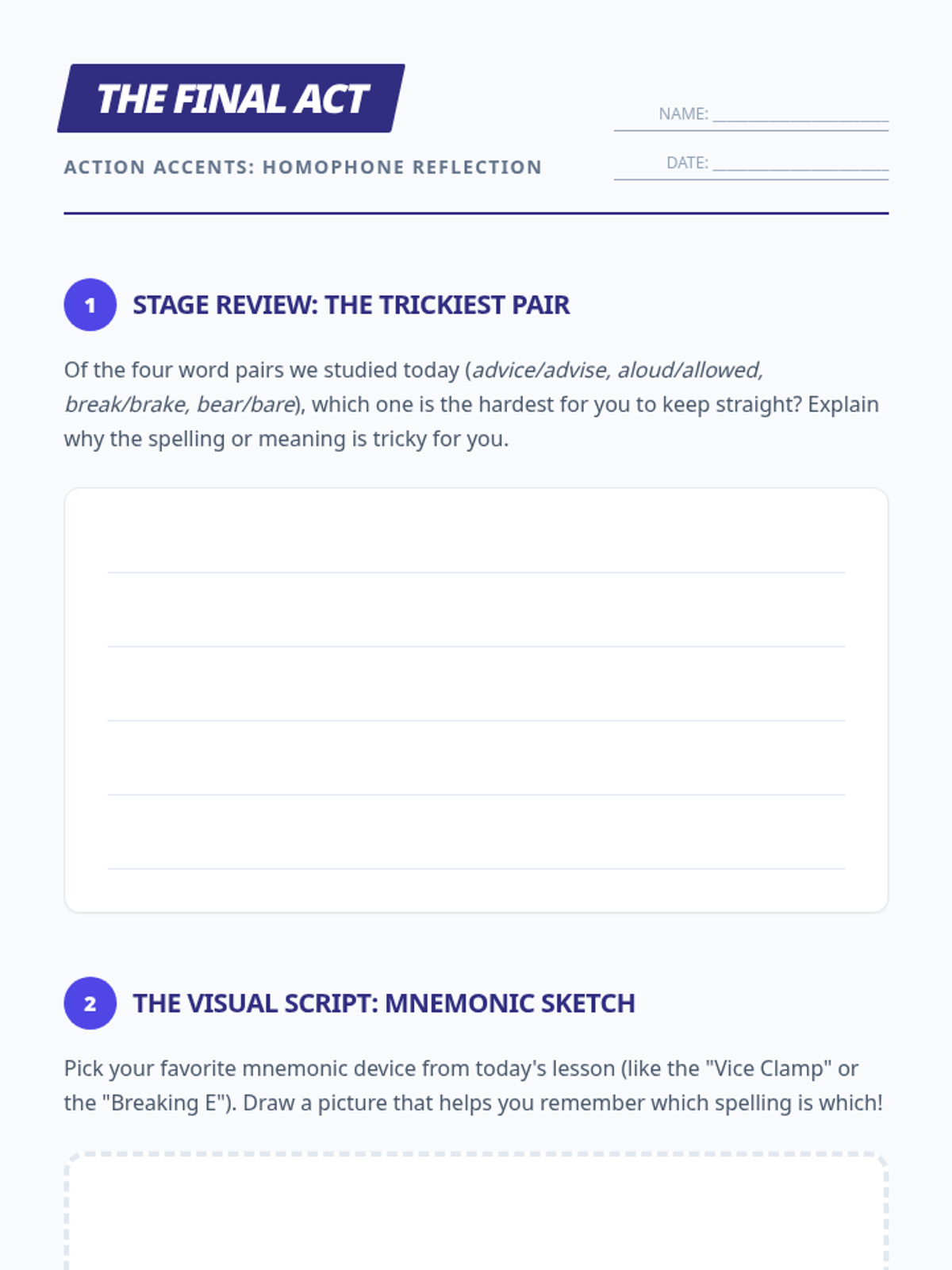
Students will physically act out word meanings for commonly confused homophones (advice/advise, aloud/allowed, break/brake, bear/bare) to reinforce spelling and retention through movement and mnemonics.
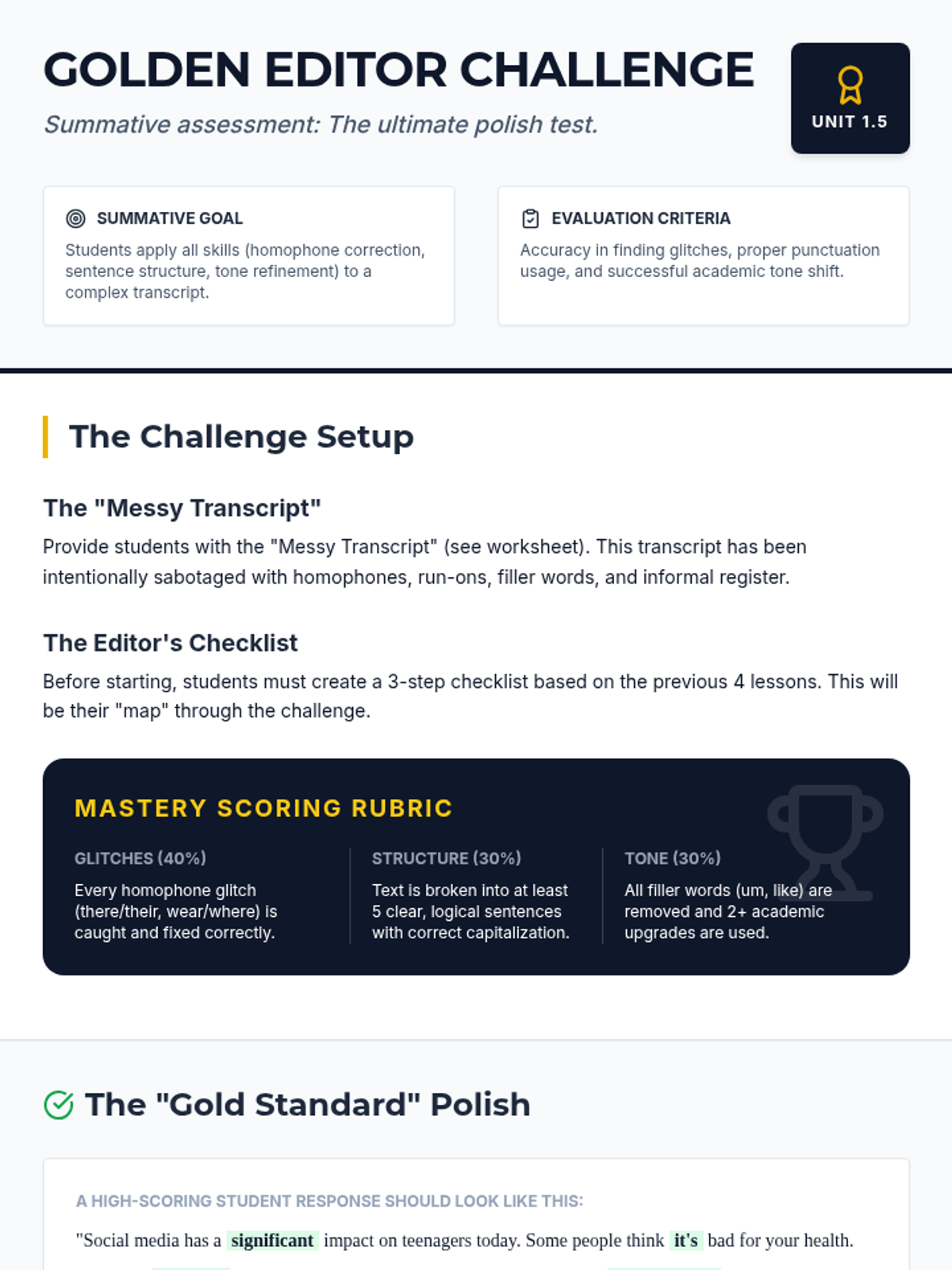
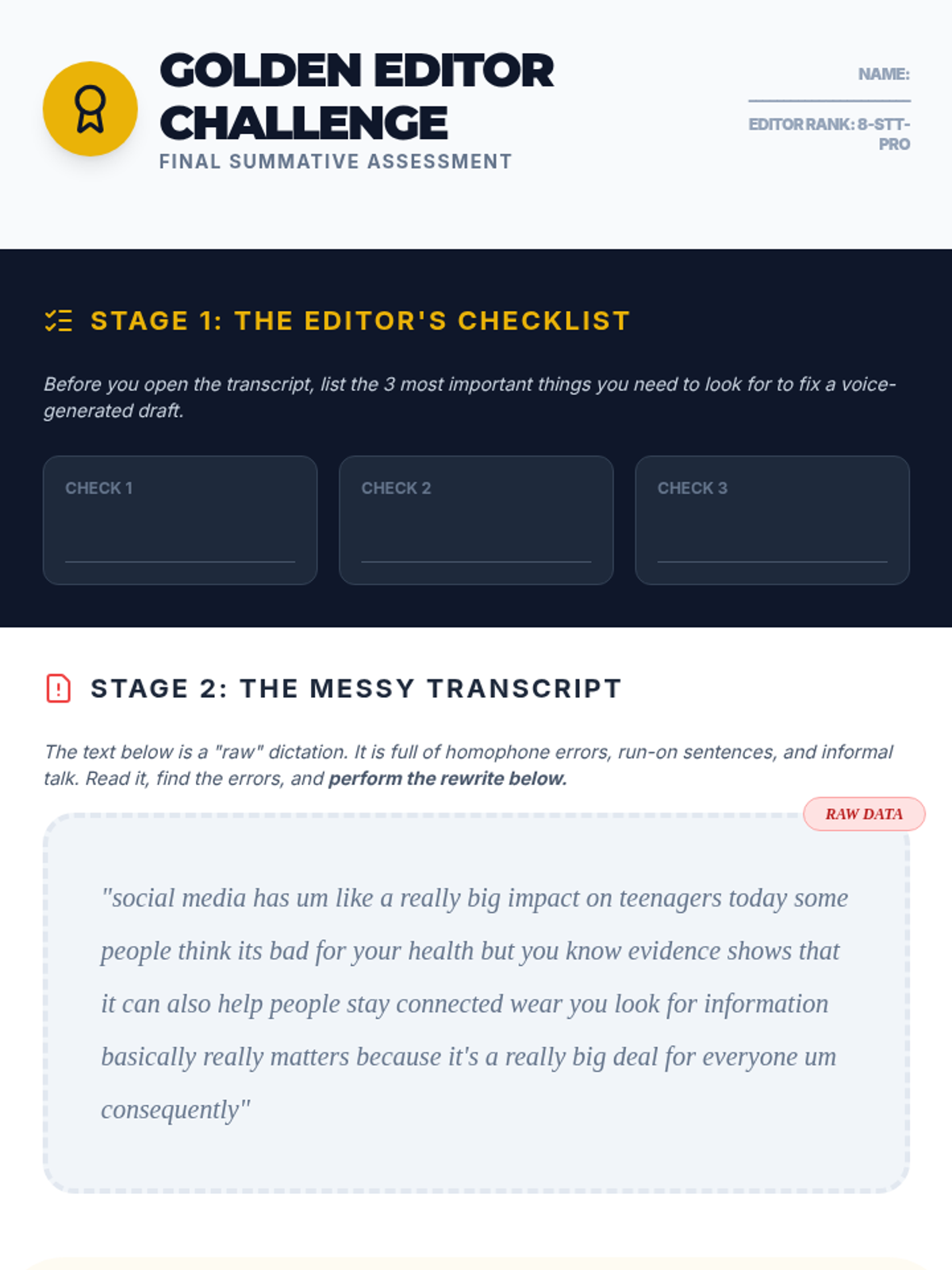
A summative assessment where students apply all editing skills to a messy, error-ridden transcript to produce a final, polished piece of writing.
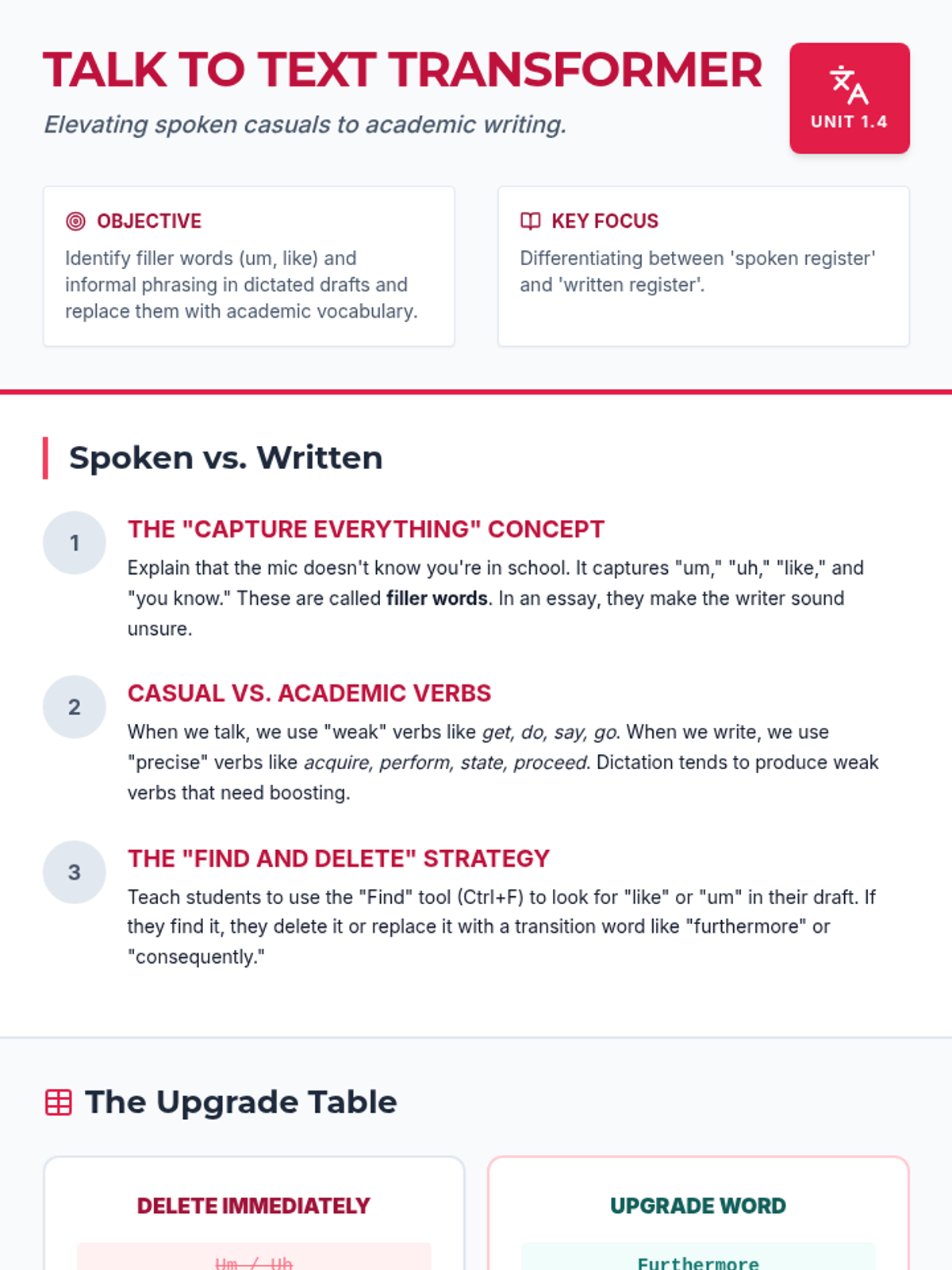
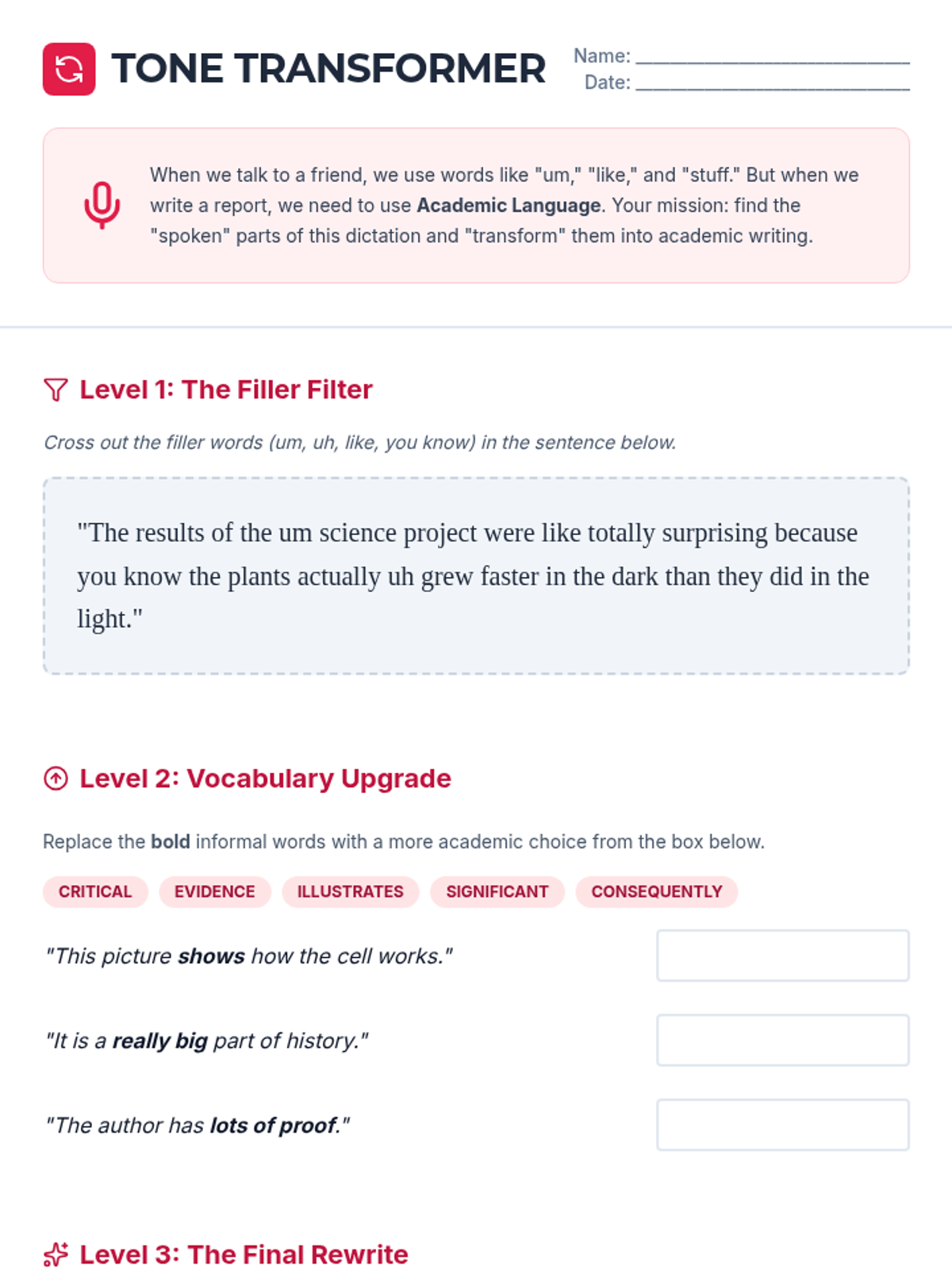
Teaches students to bridge the gap between spoken casual language and formal academic writing by identifying filler words and elevating vocabulary in their dictated drafts.
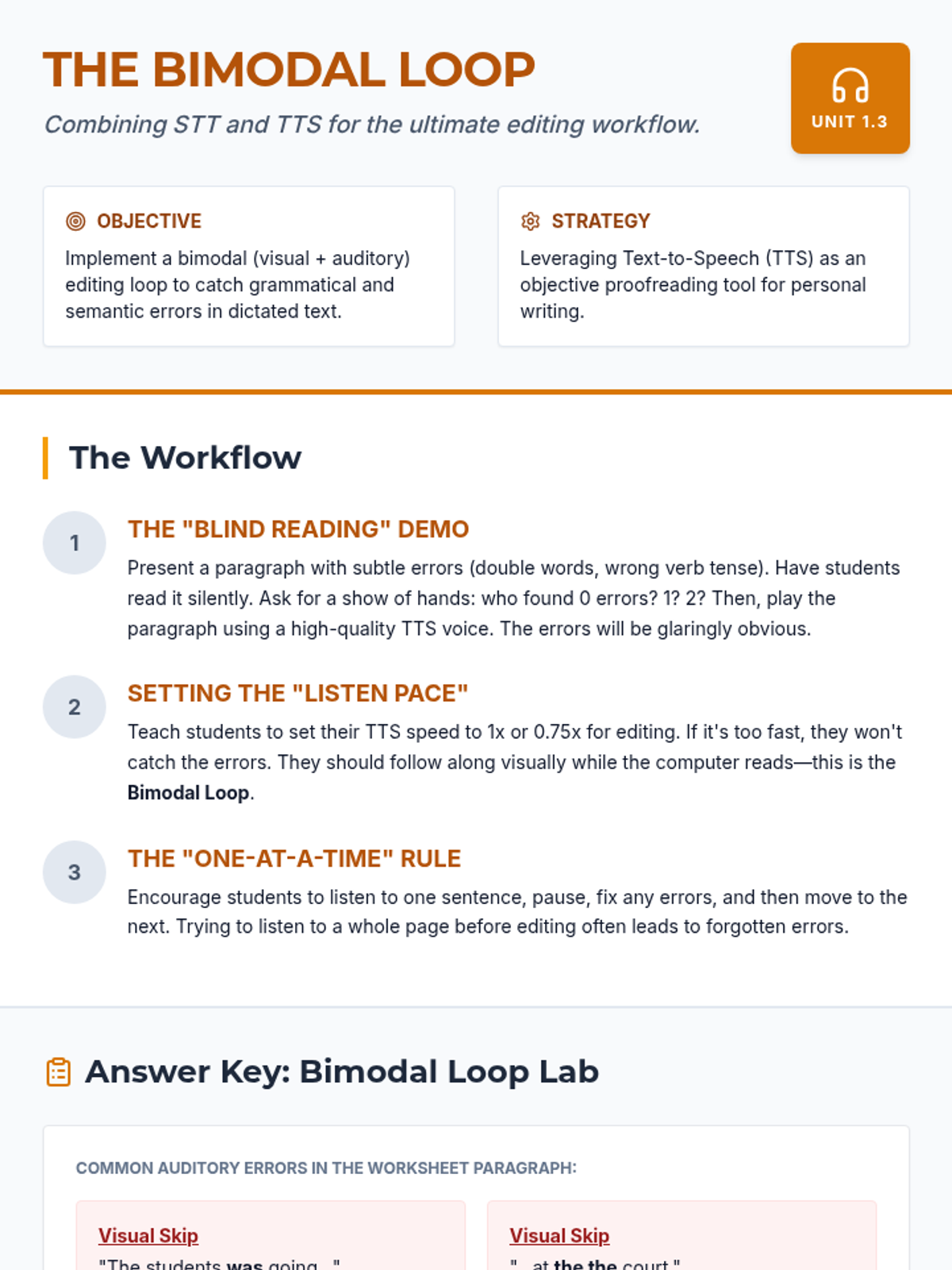
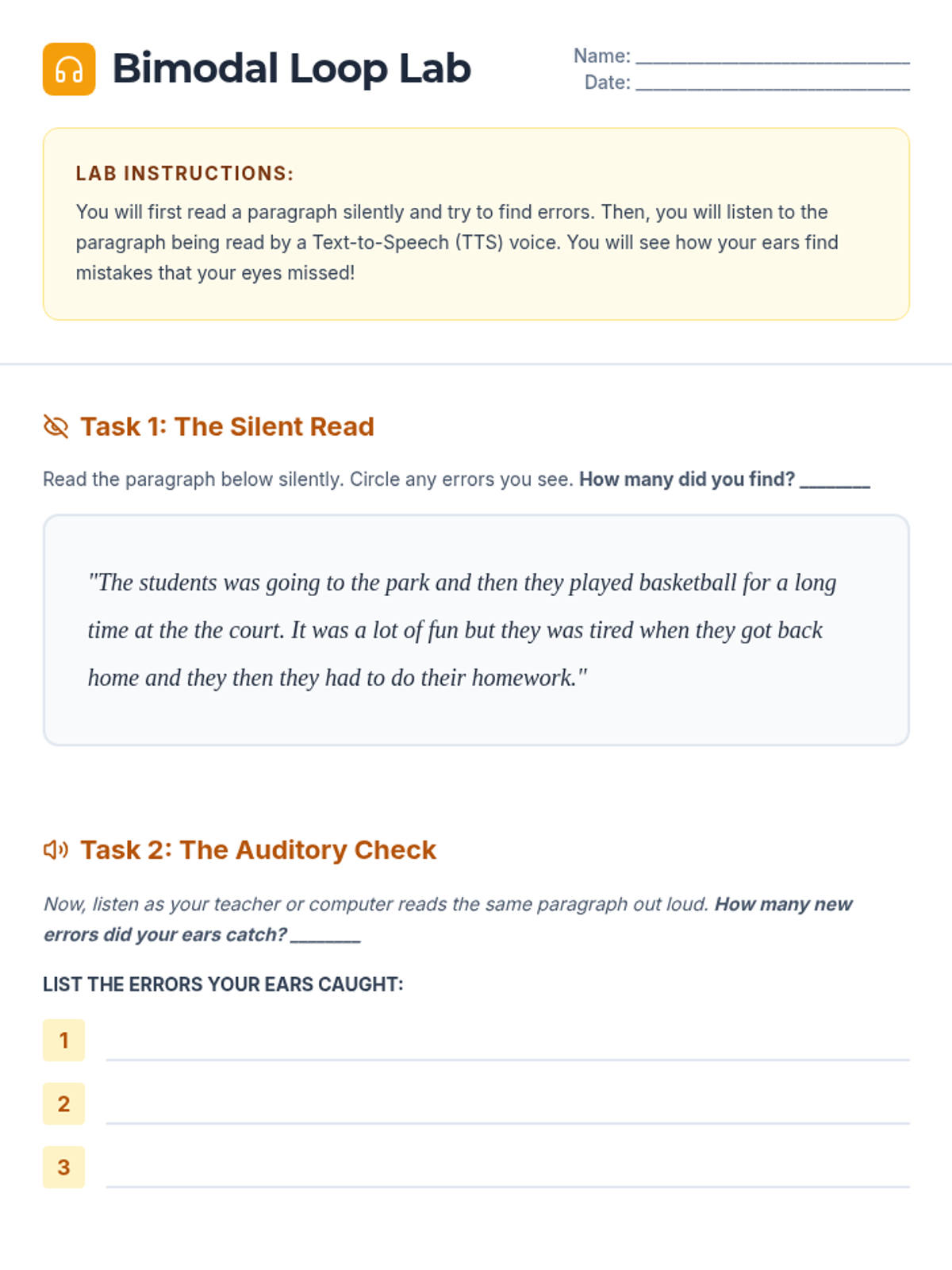
Introduces the bimodal loop of using text-to-speech technology to listen to dictated work, leveraging auditory processing to catch errors that are easily missed during visual proofreading.
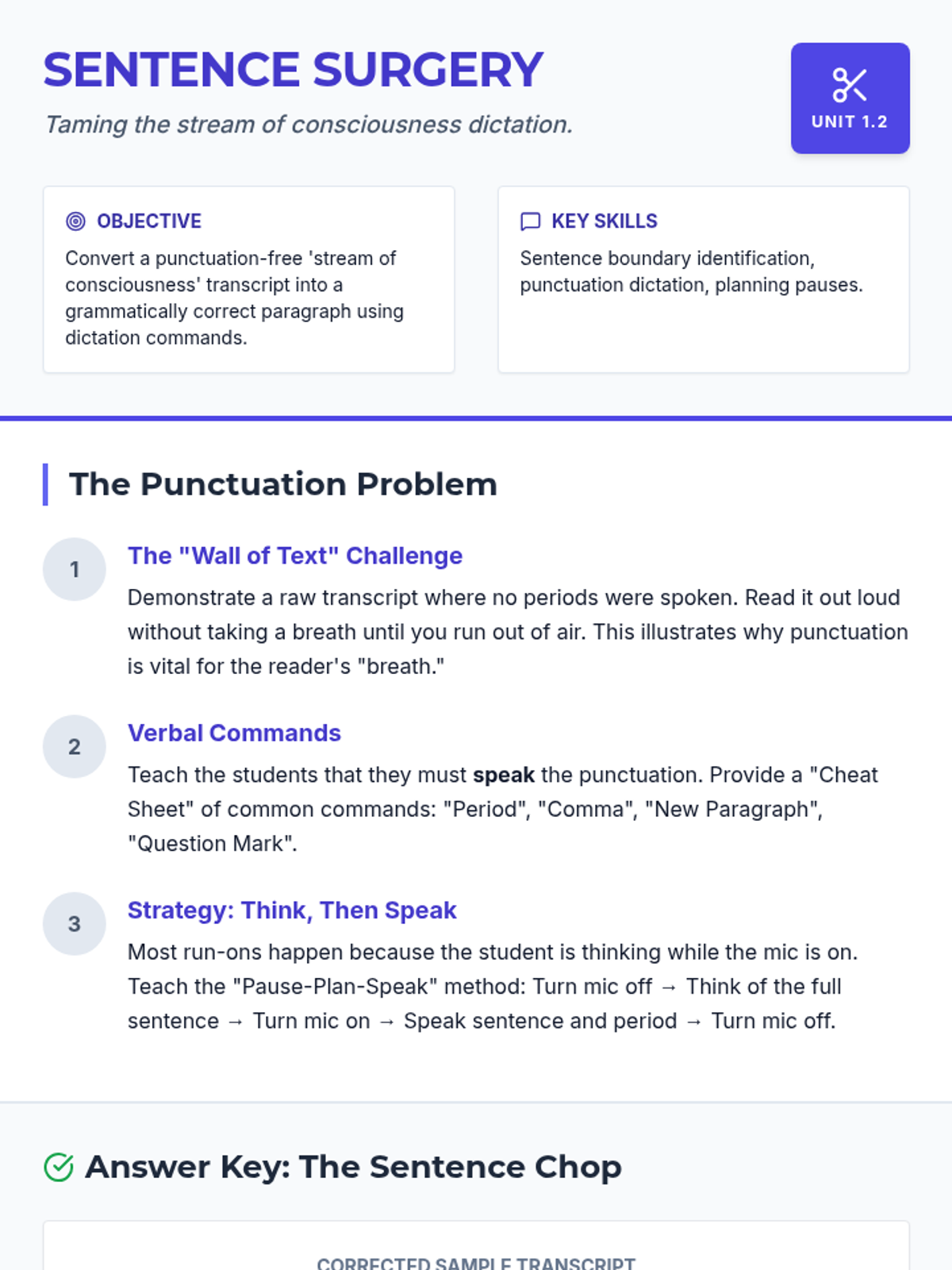
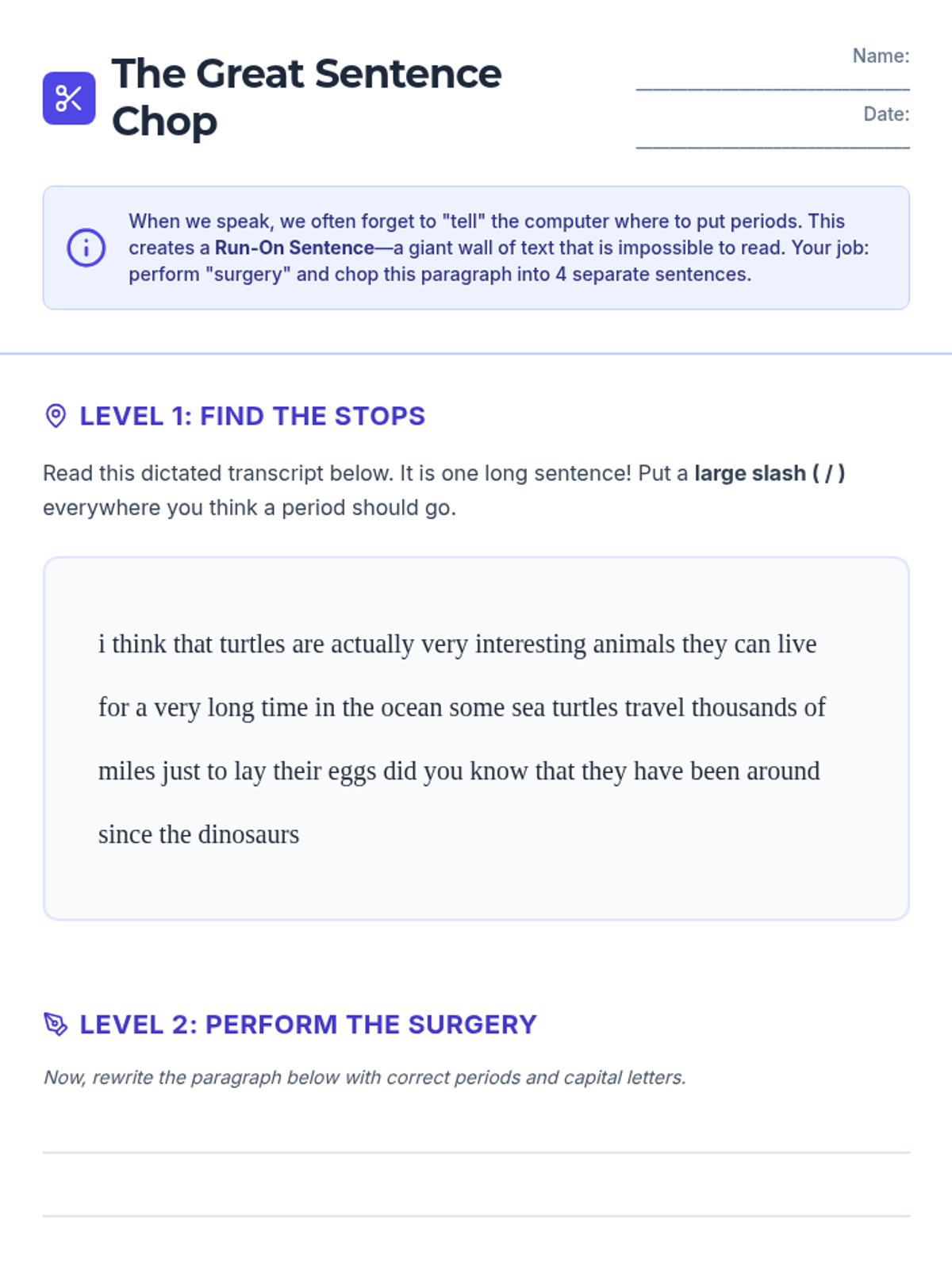
Focuses on the structural issues of dictated text, specifically the lack of punctuation and the tendency for run-on sentences, teaching students to impose order on 'stream of consciousness' transcripts.
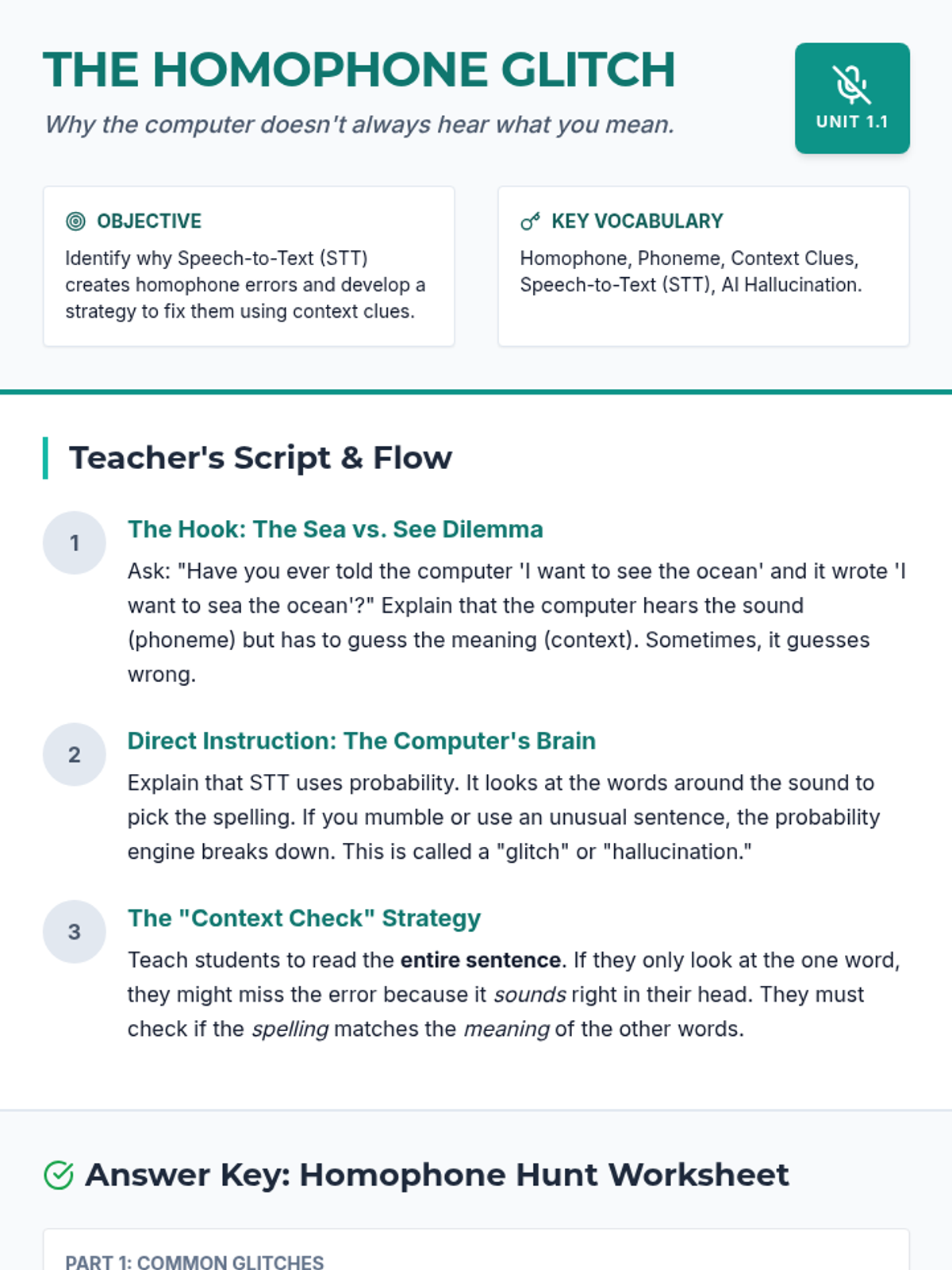
Explores why speech-to-text software confuses homophones and teaches students how to use context clues to identify and fix these common errors.
Students present their best jokes, riddles, or slogans to the class in a 'Comedy Club' or 'Ad Pitch' format. The audience must identify the specific homophones or homonyms used in each presentation.
Students draft their own riddles where the answer hinges on a homophone or homonym. They practice guiding the reader toward the wrong meaning before revealing the correct one.
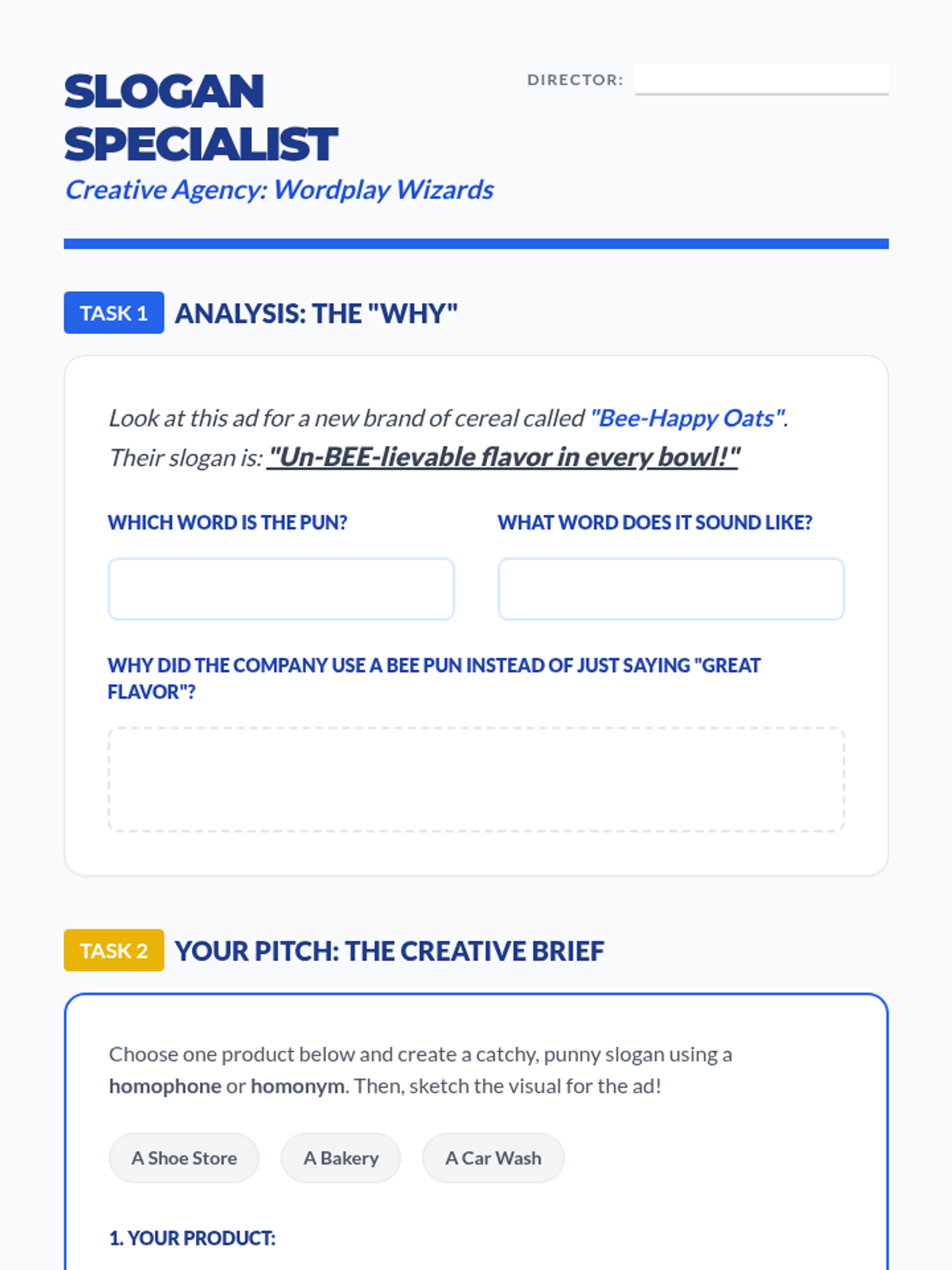
Students analyze real-world advertisements that use homophones to catch attention. They evaluate the effectiveness of this wordplay and brainstorm their own catchy slogans for common products.
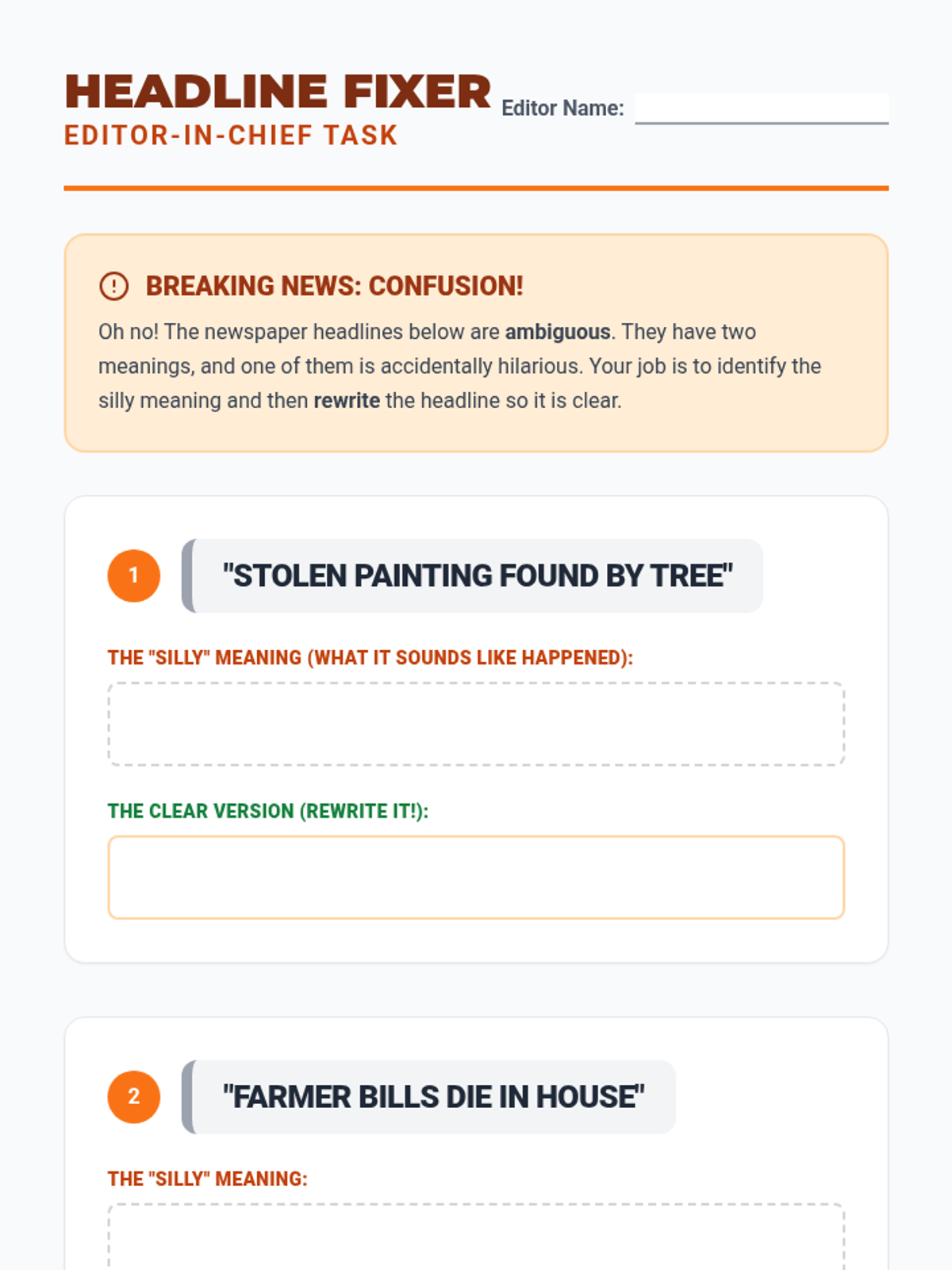
Students look at headlines and newspaper clippings that are accidentally funny due to homonyms and sentence structure. They discuss how word choice can lead to unintended meanings.
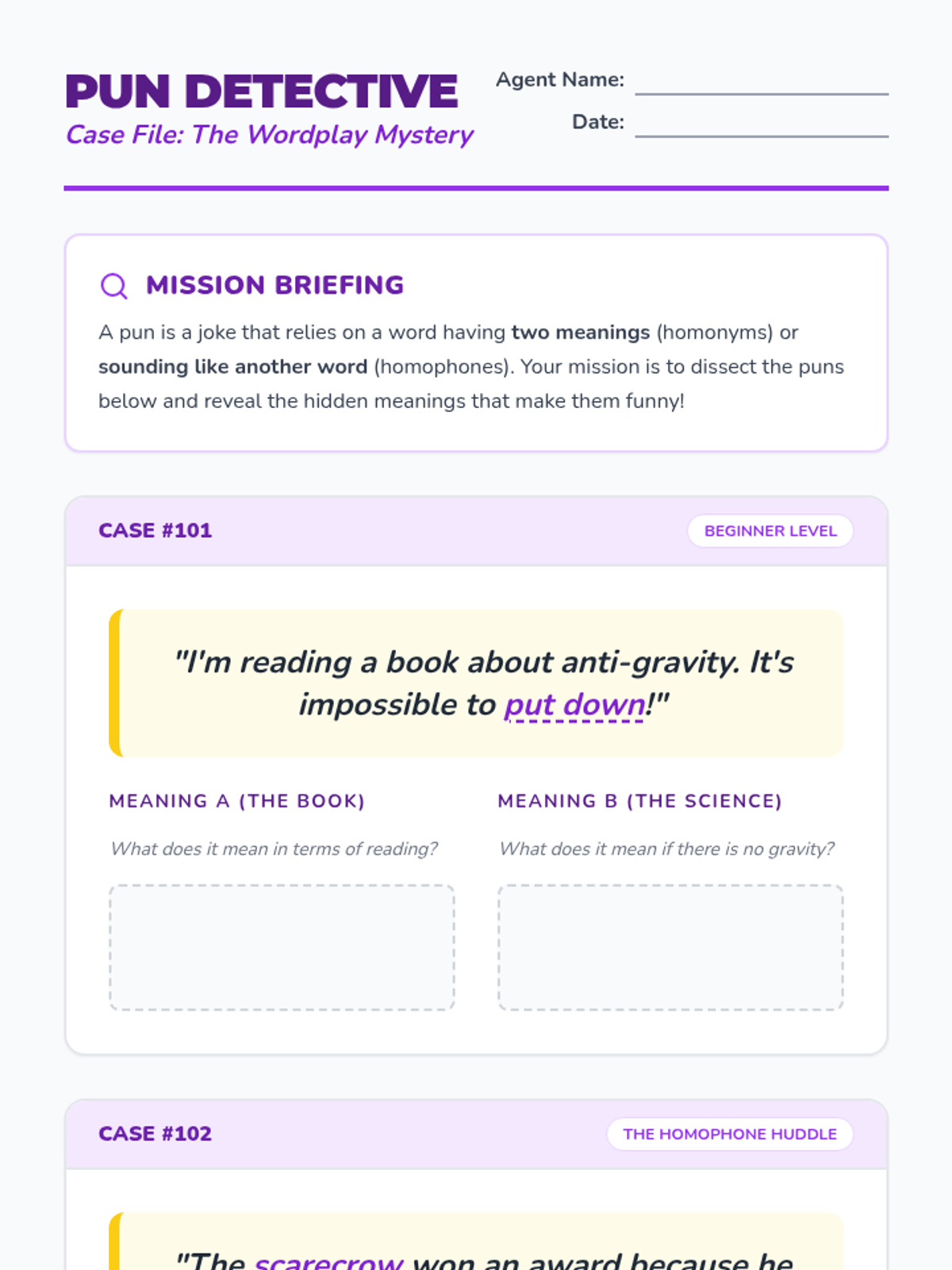
Students dissect puns and jokes to understand how homophones and multiple-meaning words create humor. They identify the conflicting meanings that lead to a punchline.
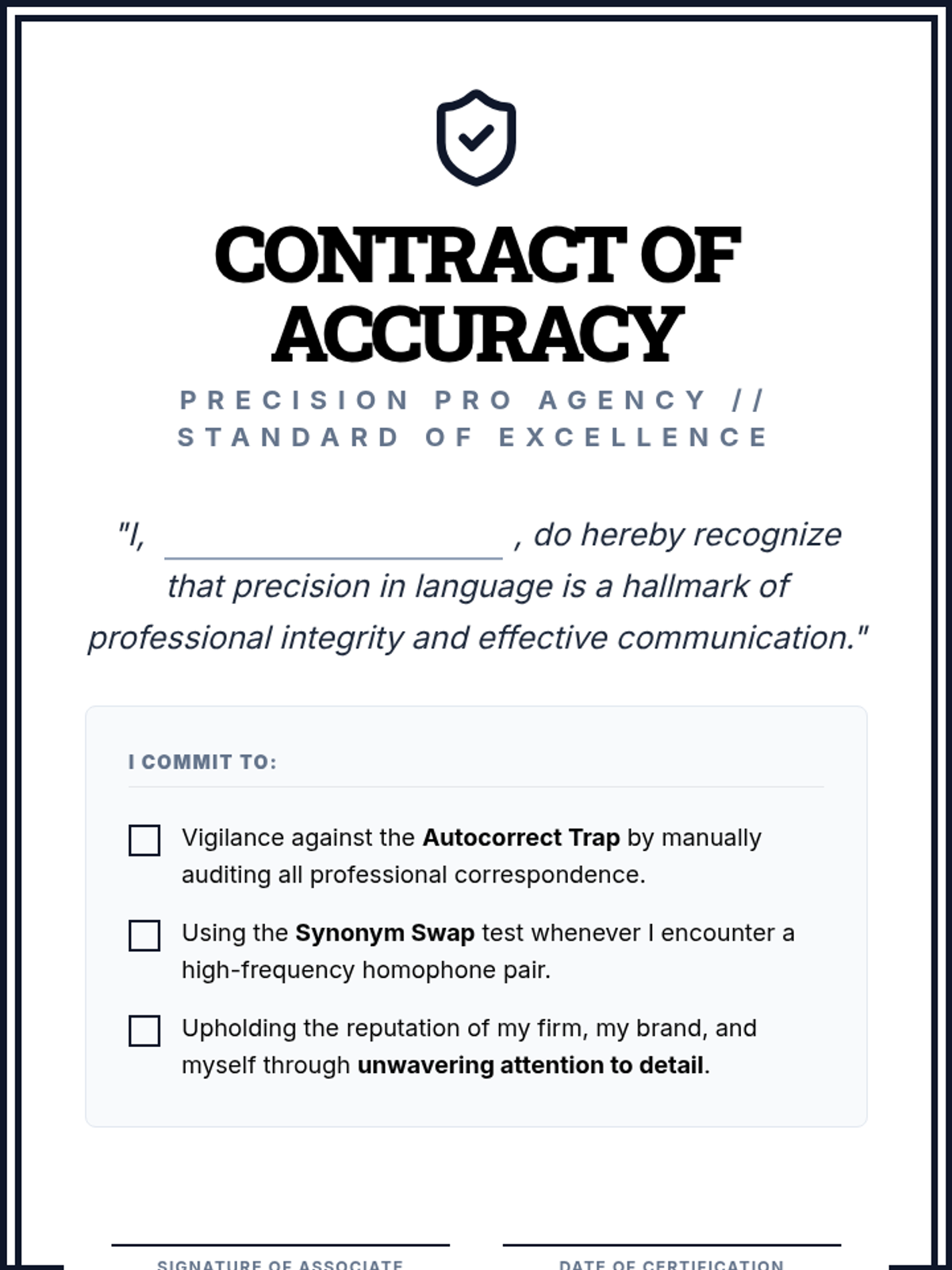
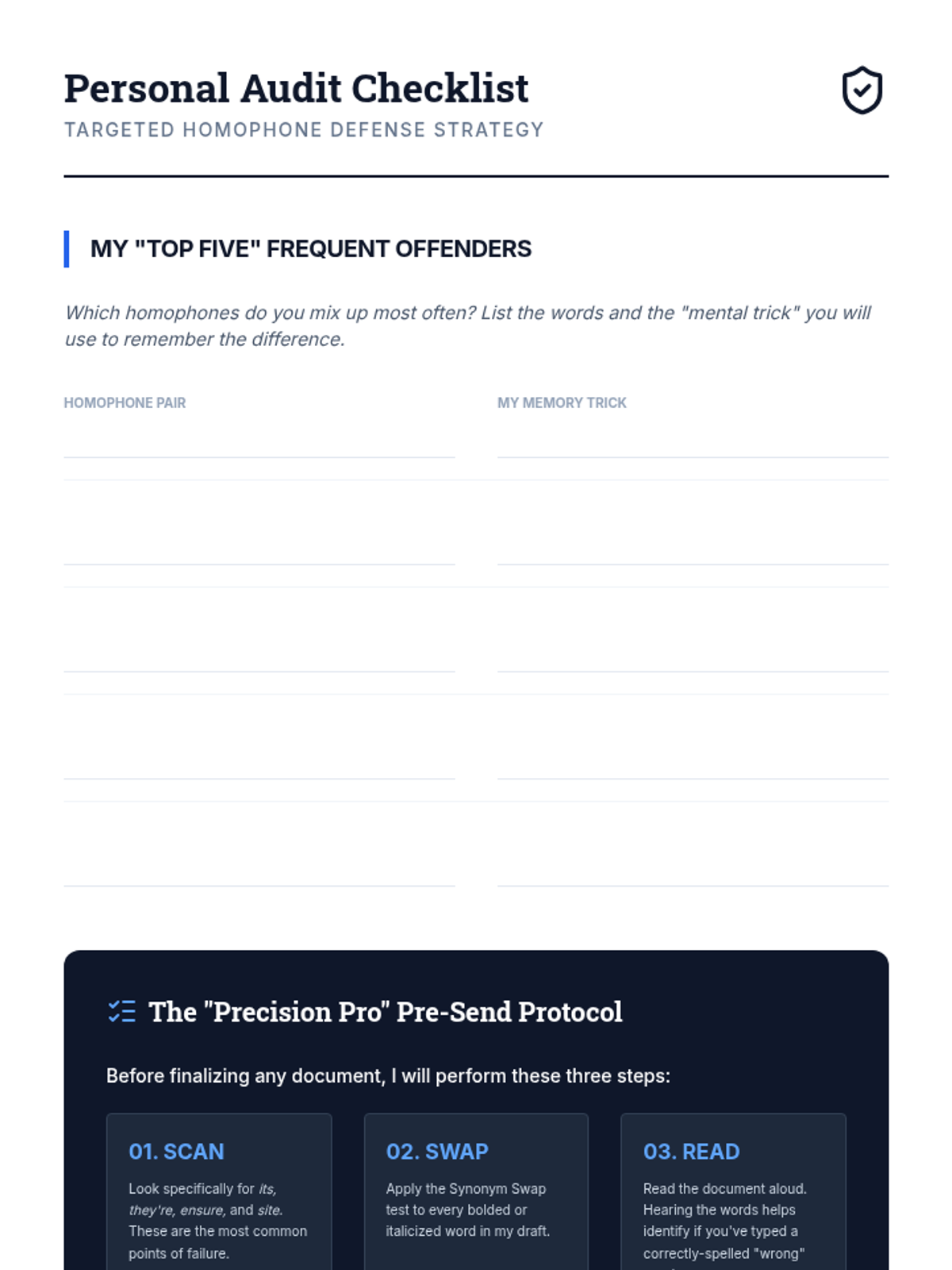
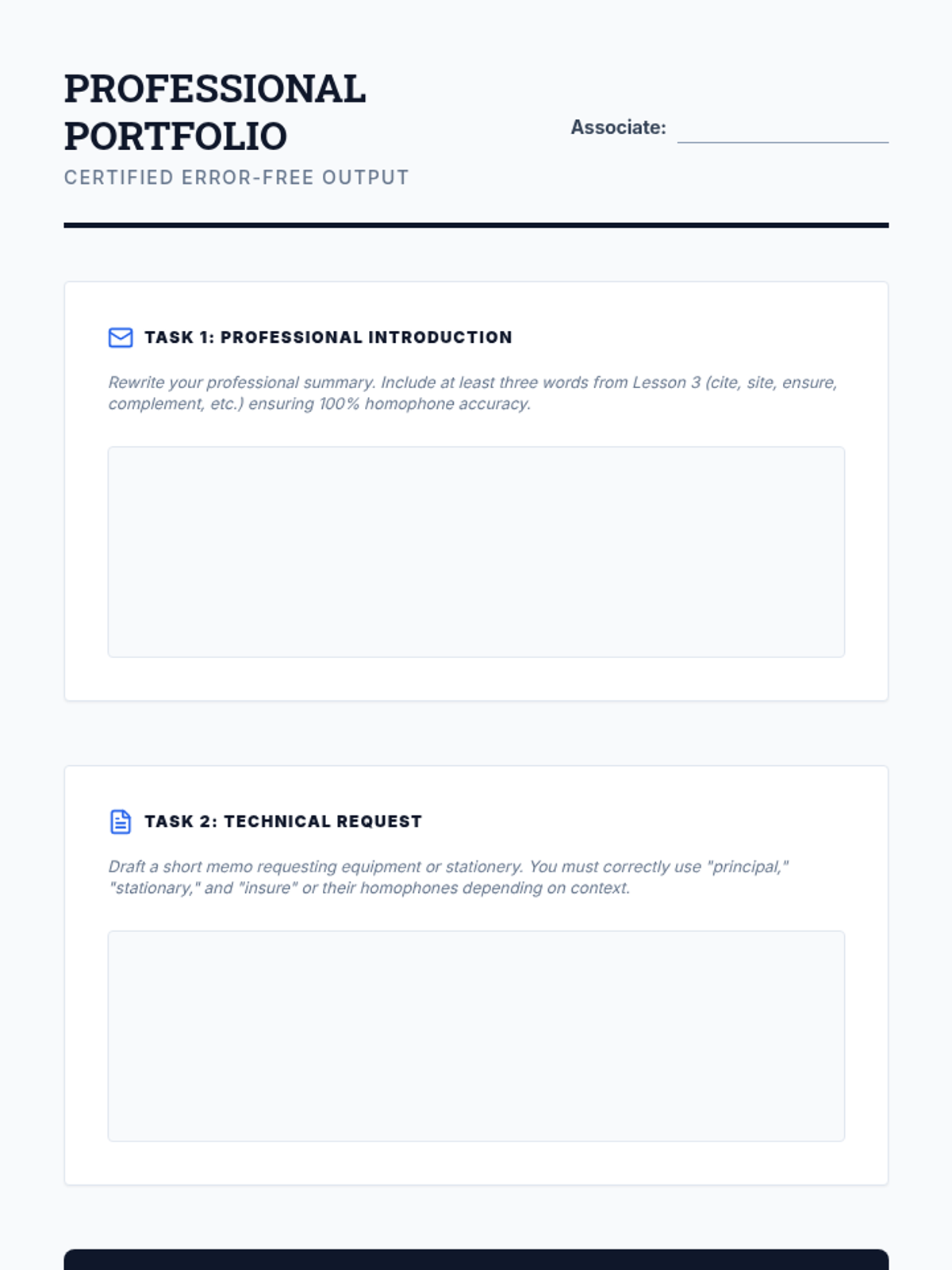
Students compile a professional portfolio of their work and sign a formal 'Contract of Accuracy' to solidify their commitment to professional standards.
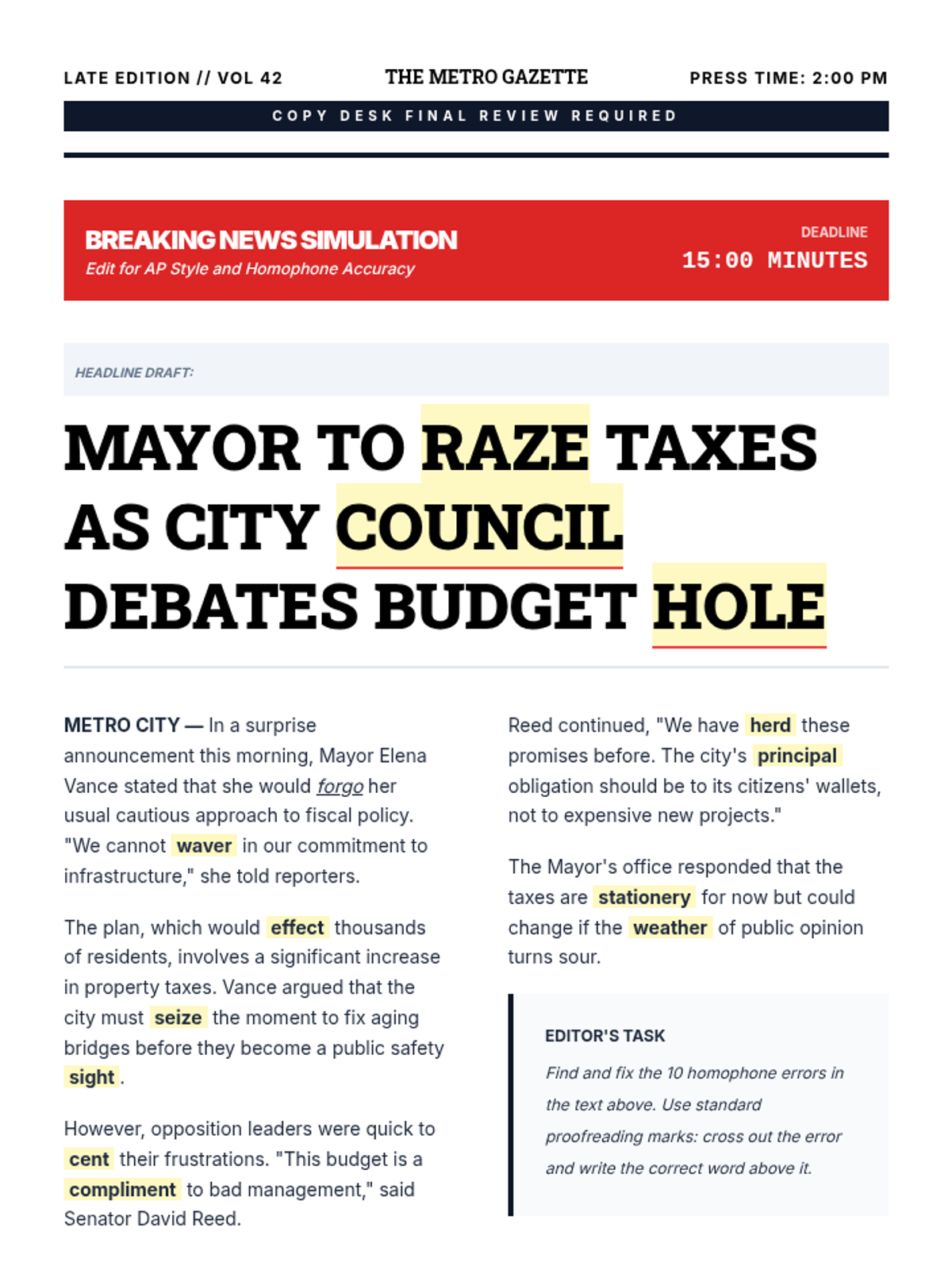
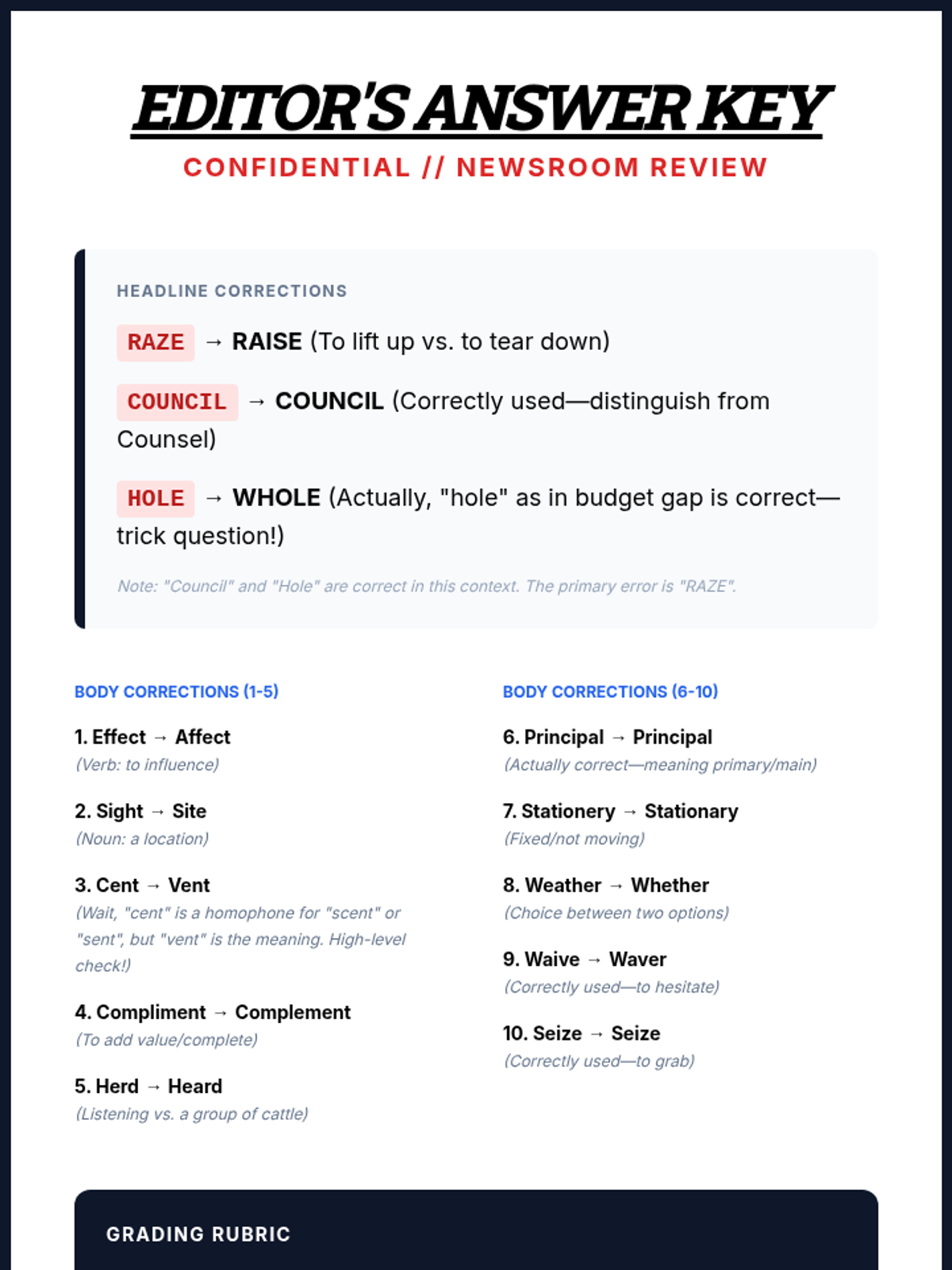
A high-stakes newsroom simulation where students edit breaking news articles for homophone accuracy and AP style under time pressure.
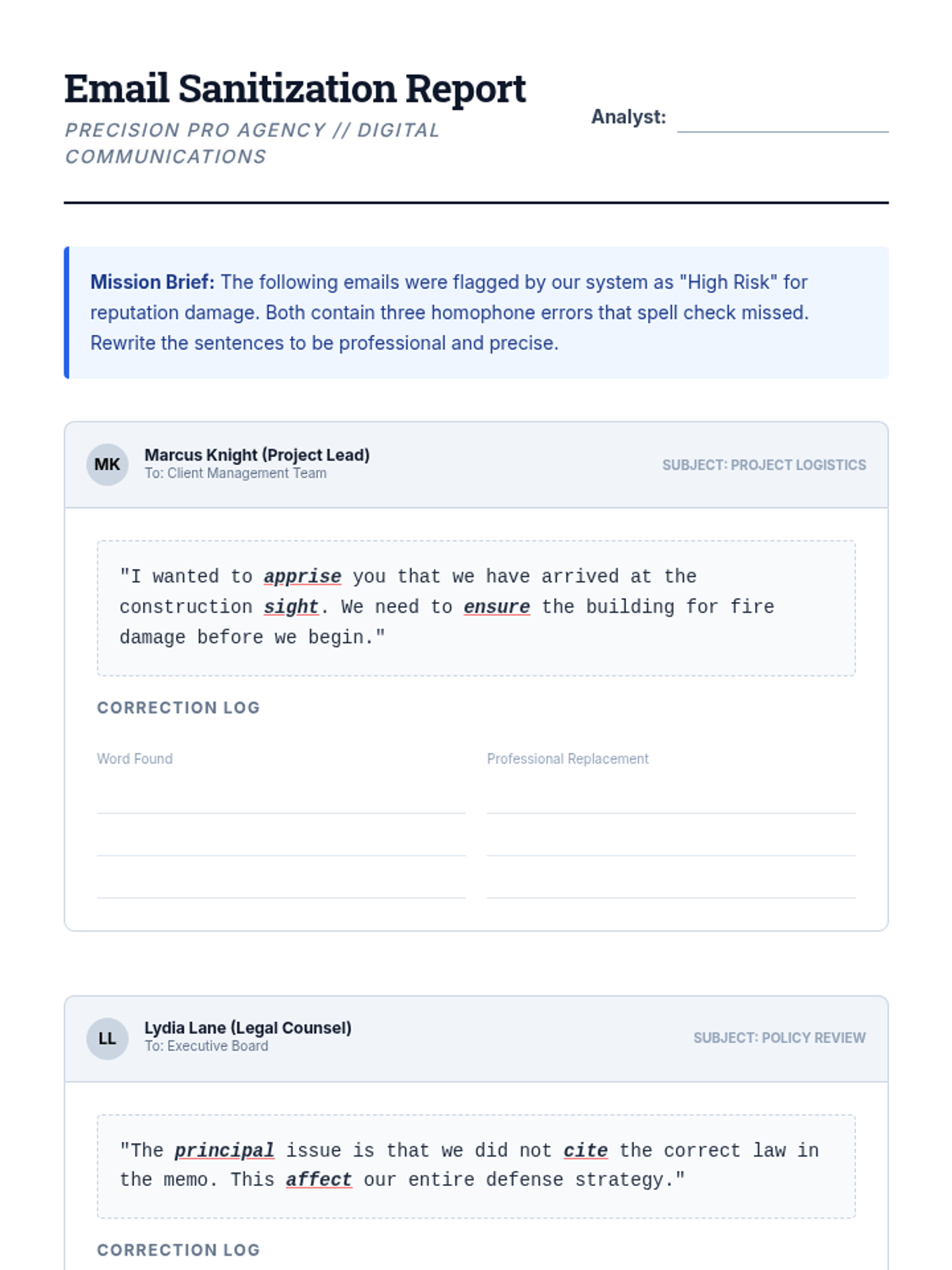
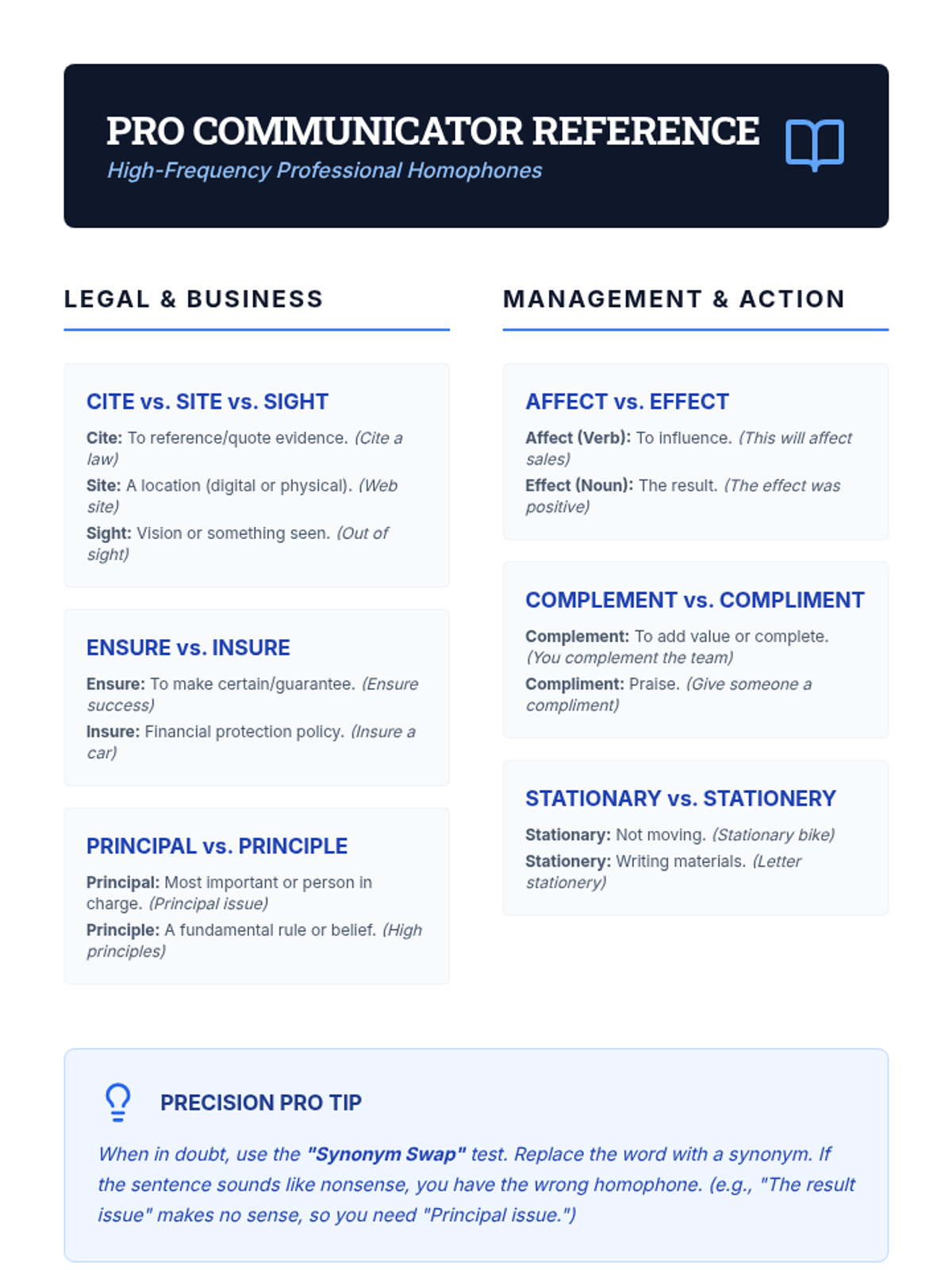
Students investigate the 'autocorrect trap' and practice professional email communication, focusing on commonly confused homophones like ensure/insure and cite/site/sight.
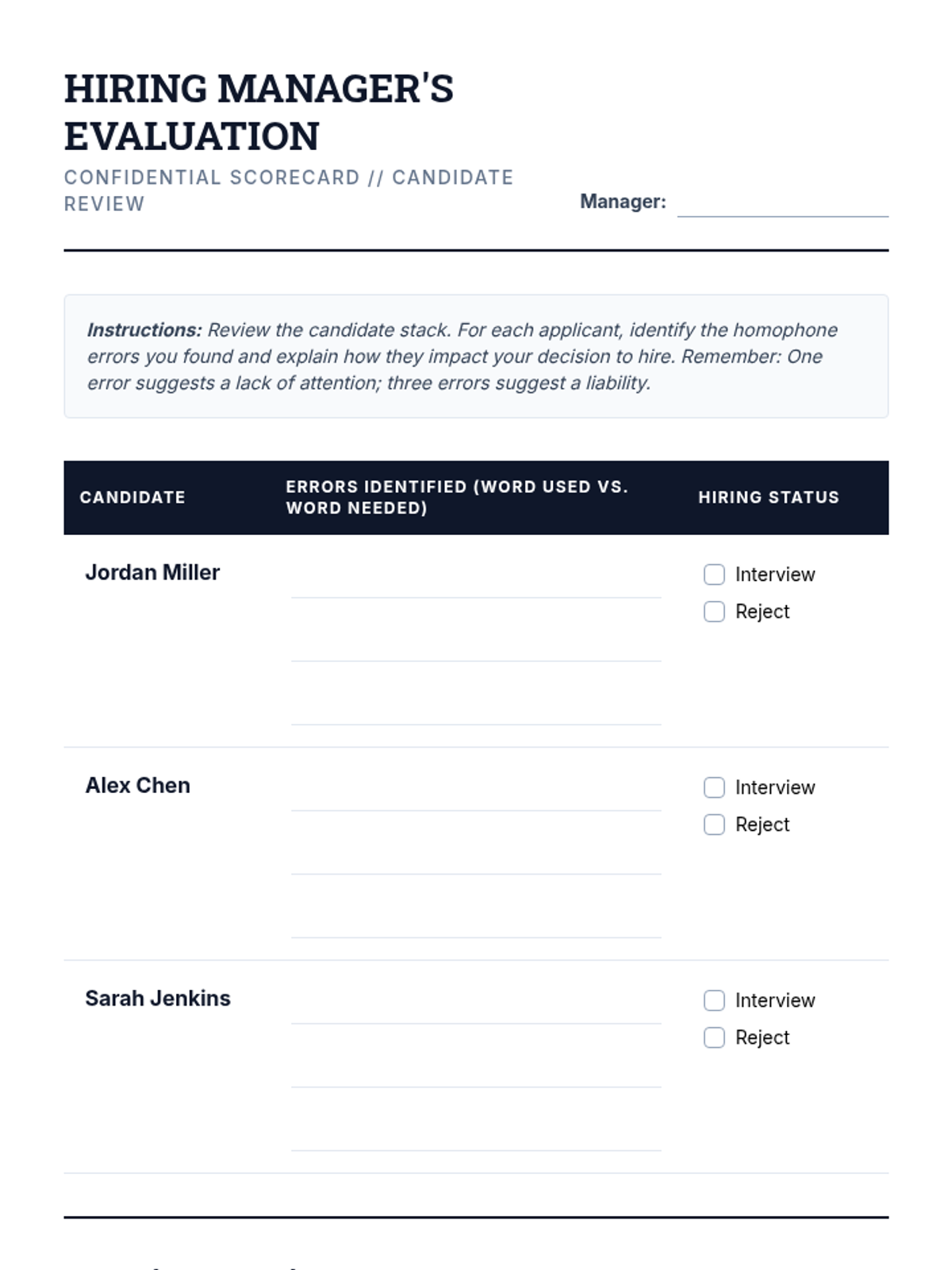
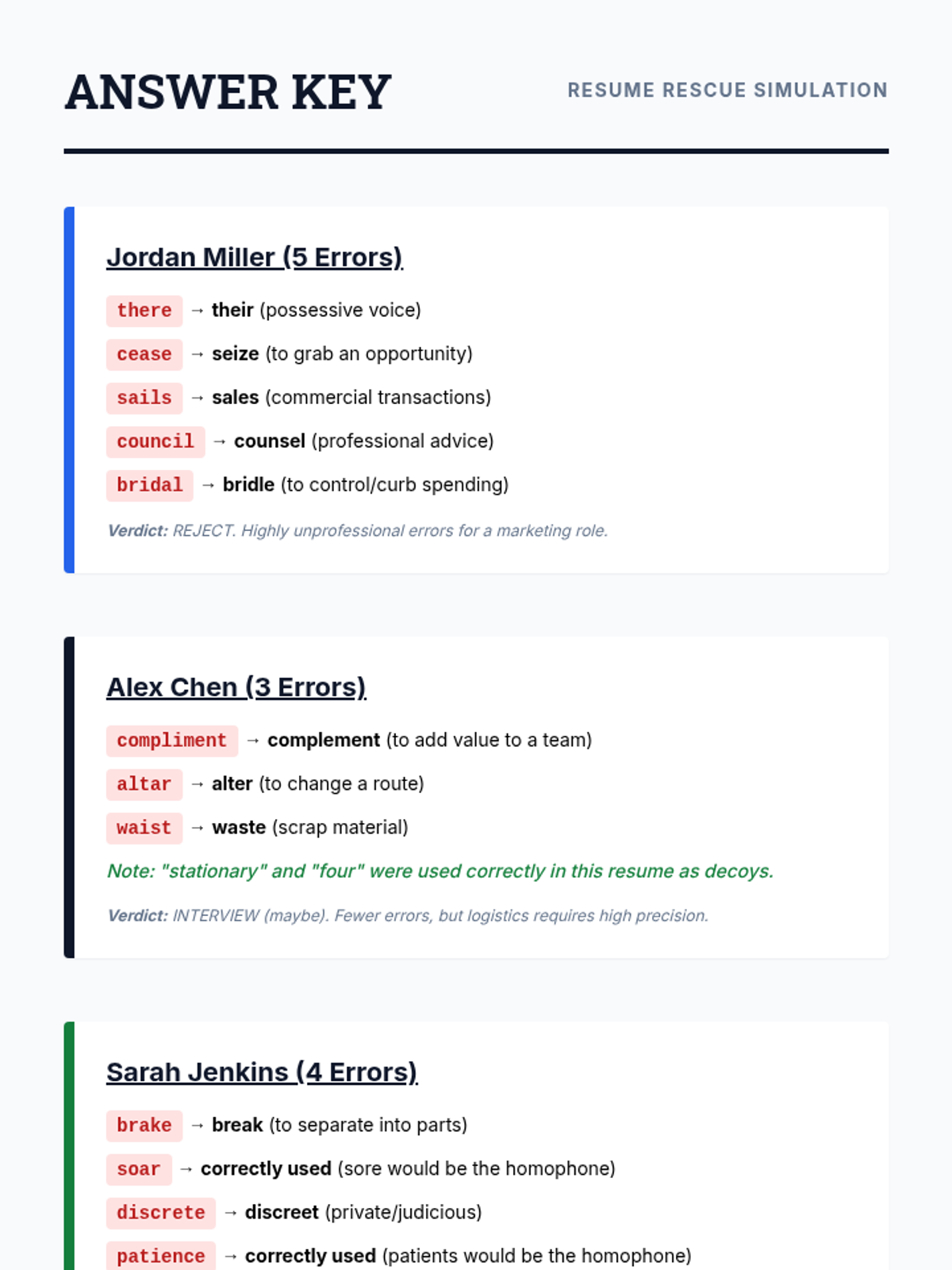
Students act as hiring managers, reviewing resumes to identify how homophone errors impact professional credibility and hiring decisions.
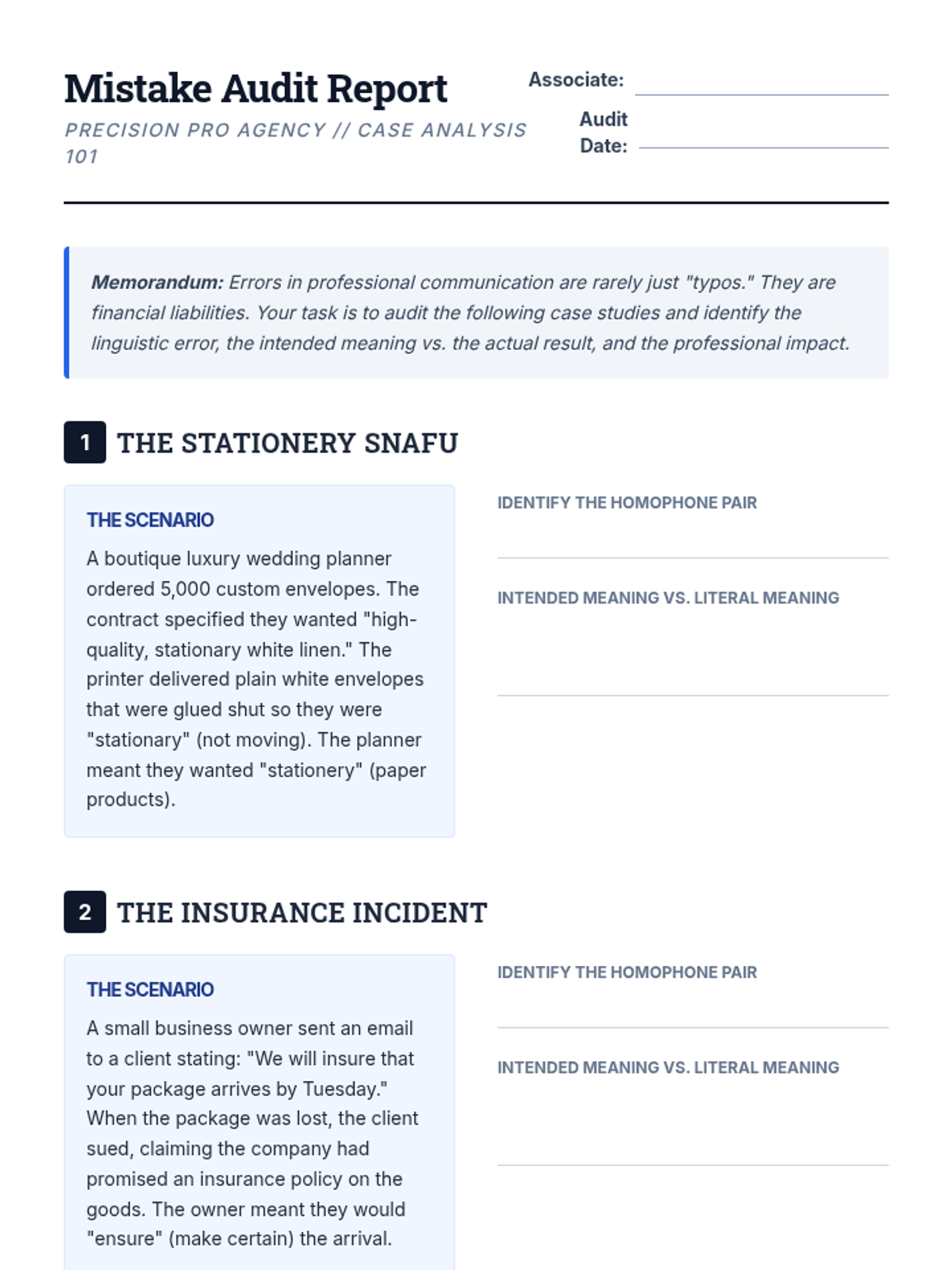
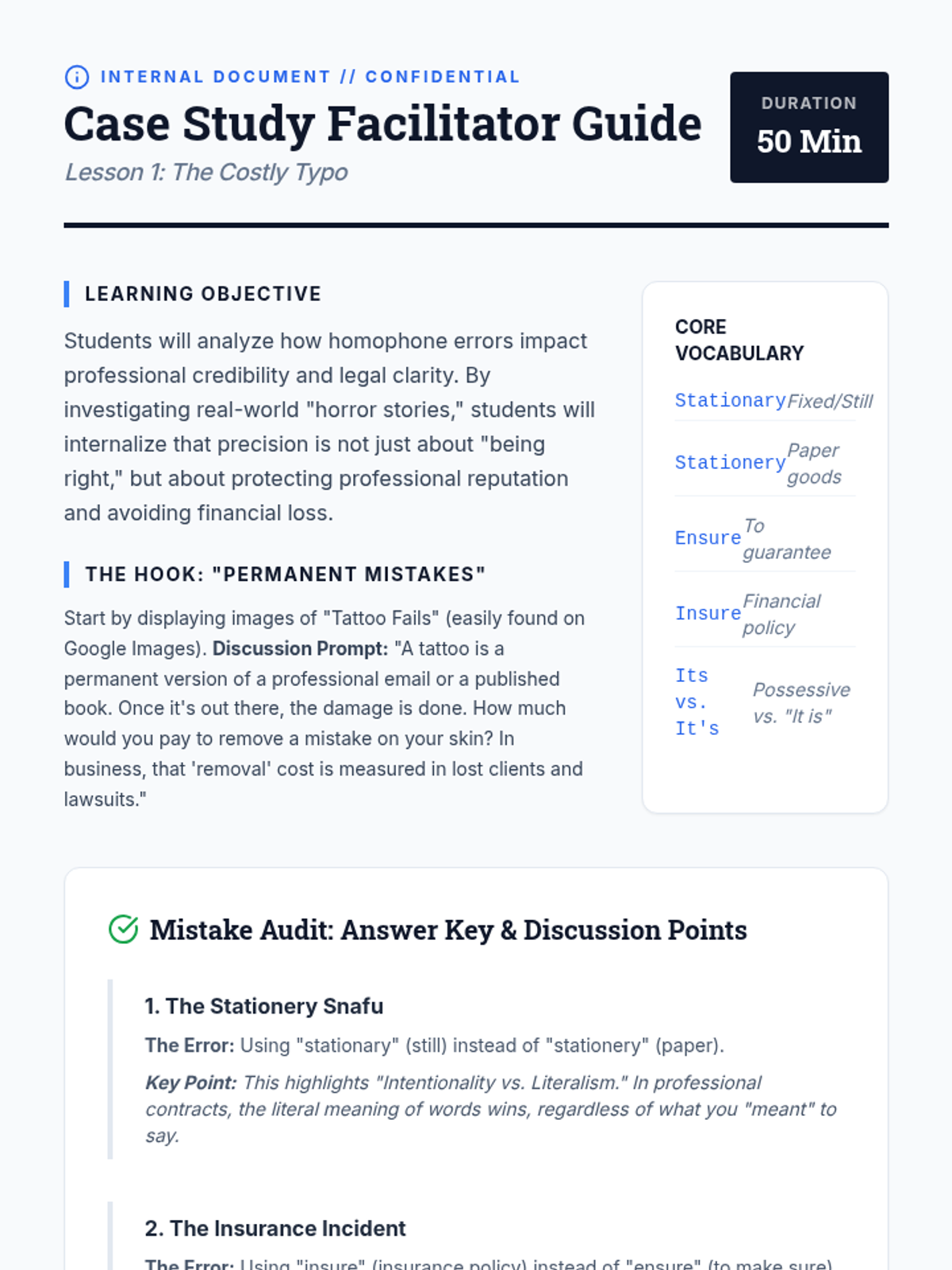
Students explore the real-world consequences of homophone errors in marketing, legal documents, and branding to understand why precision matters.
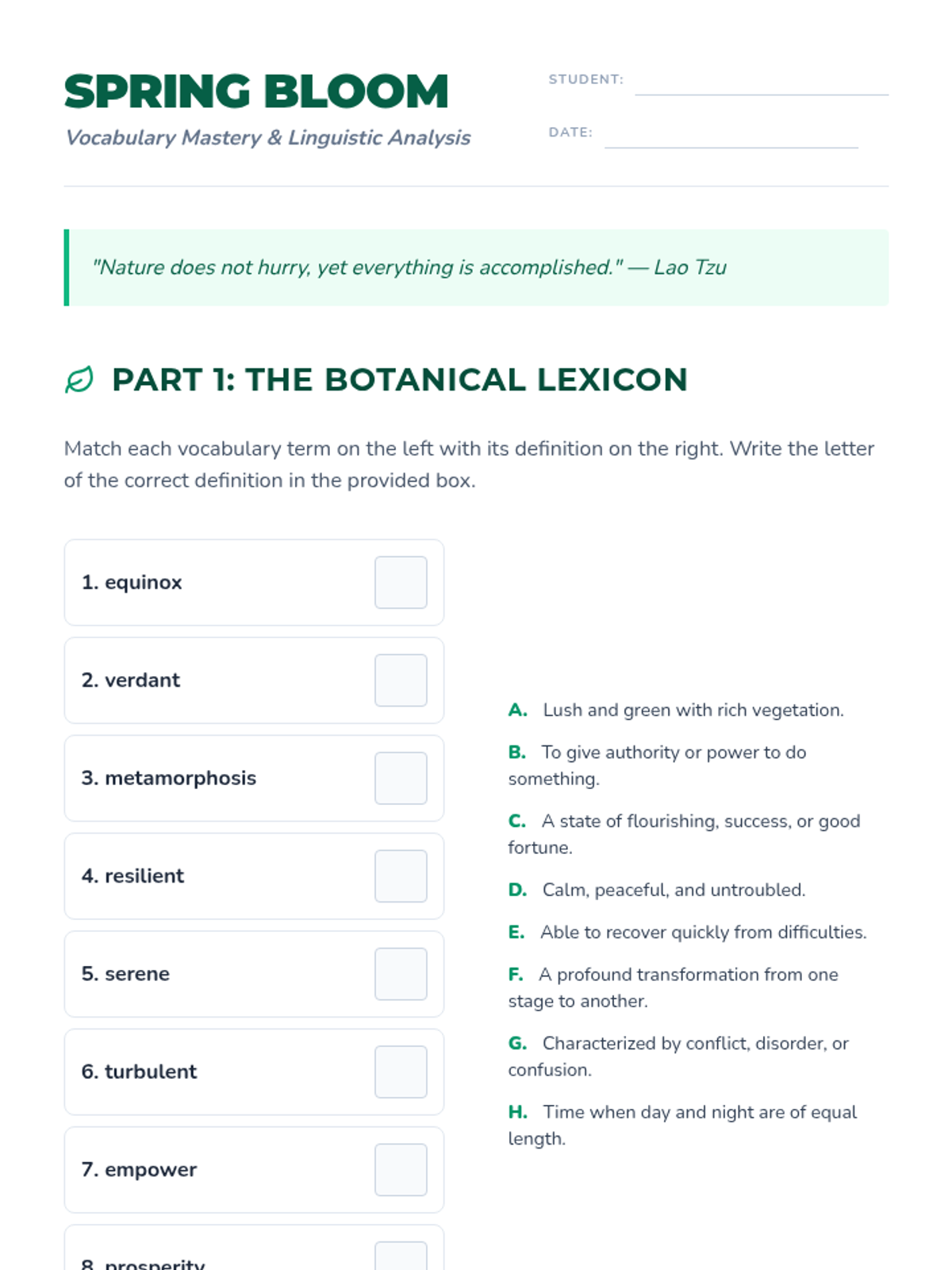
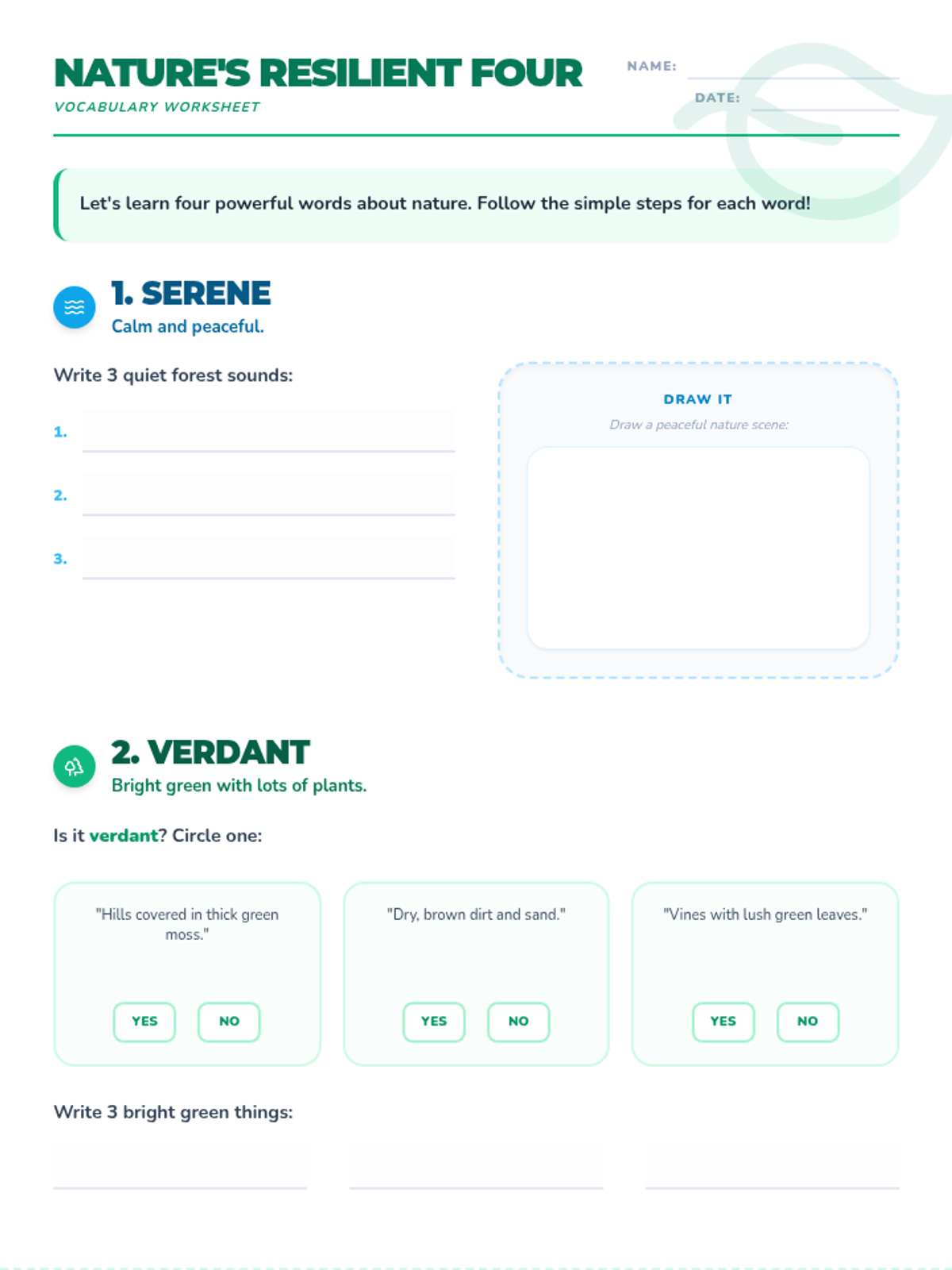
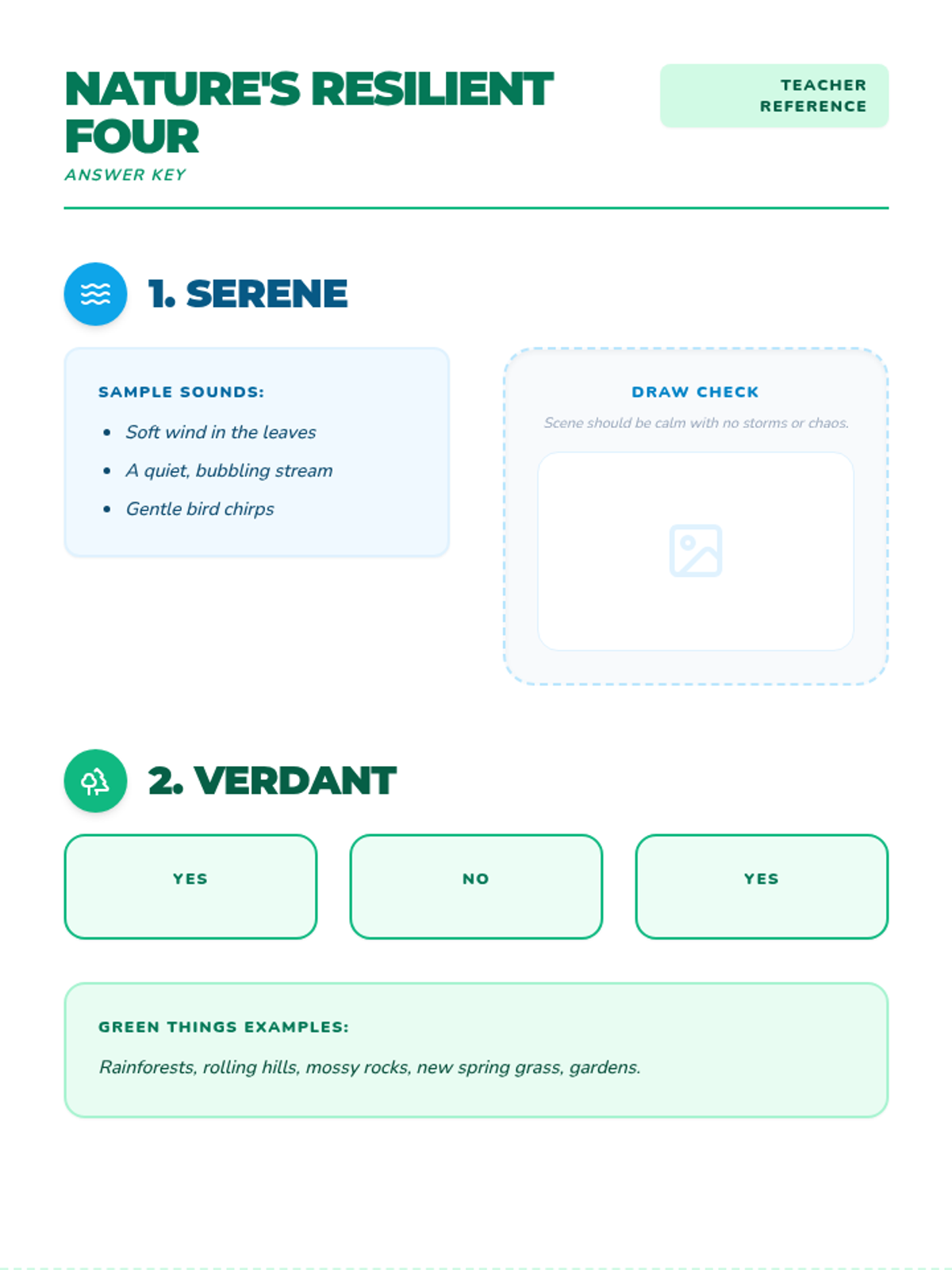
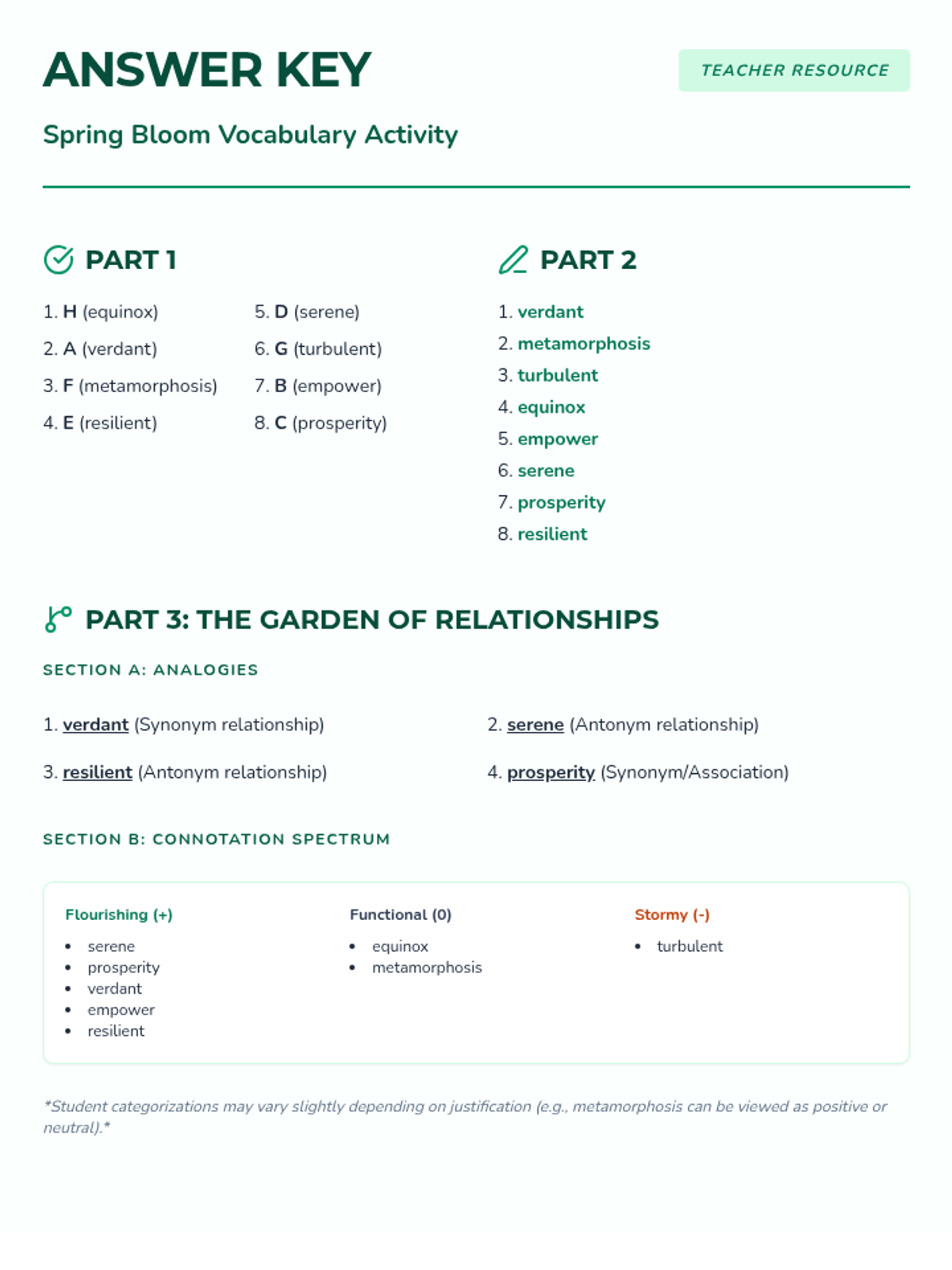
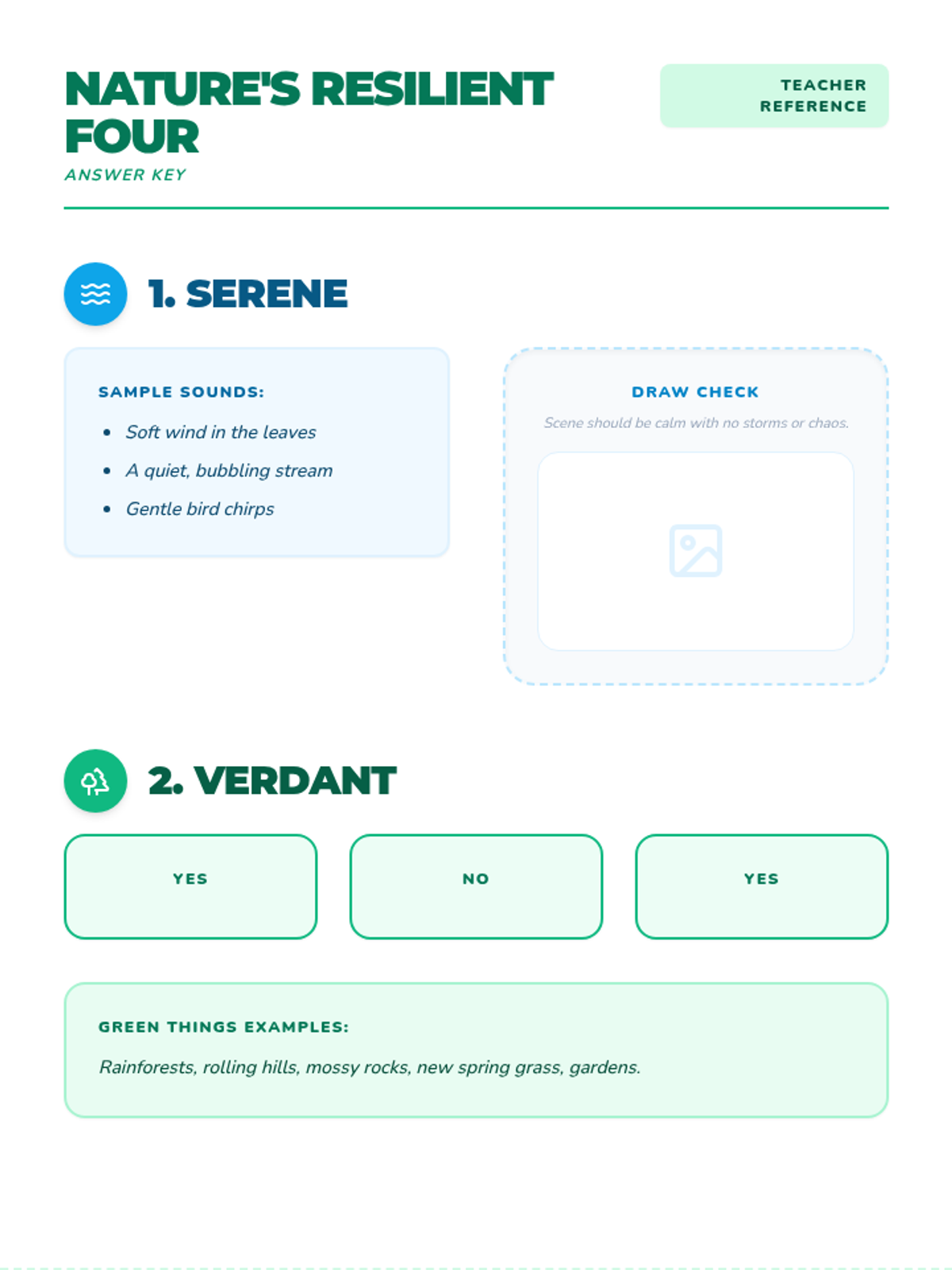
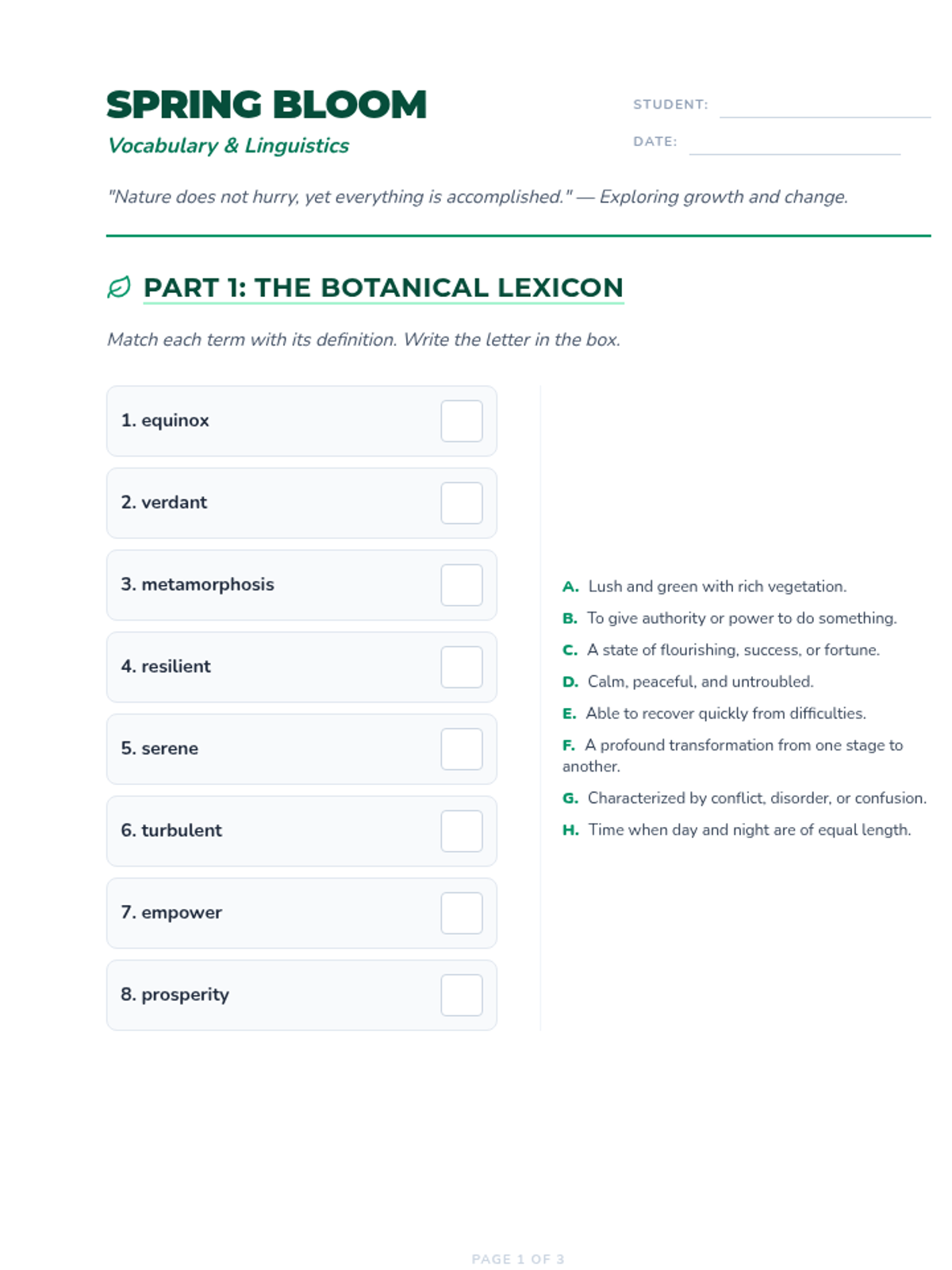
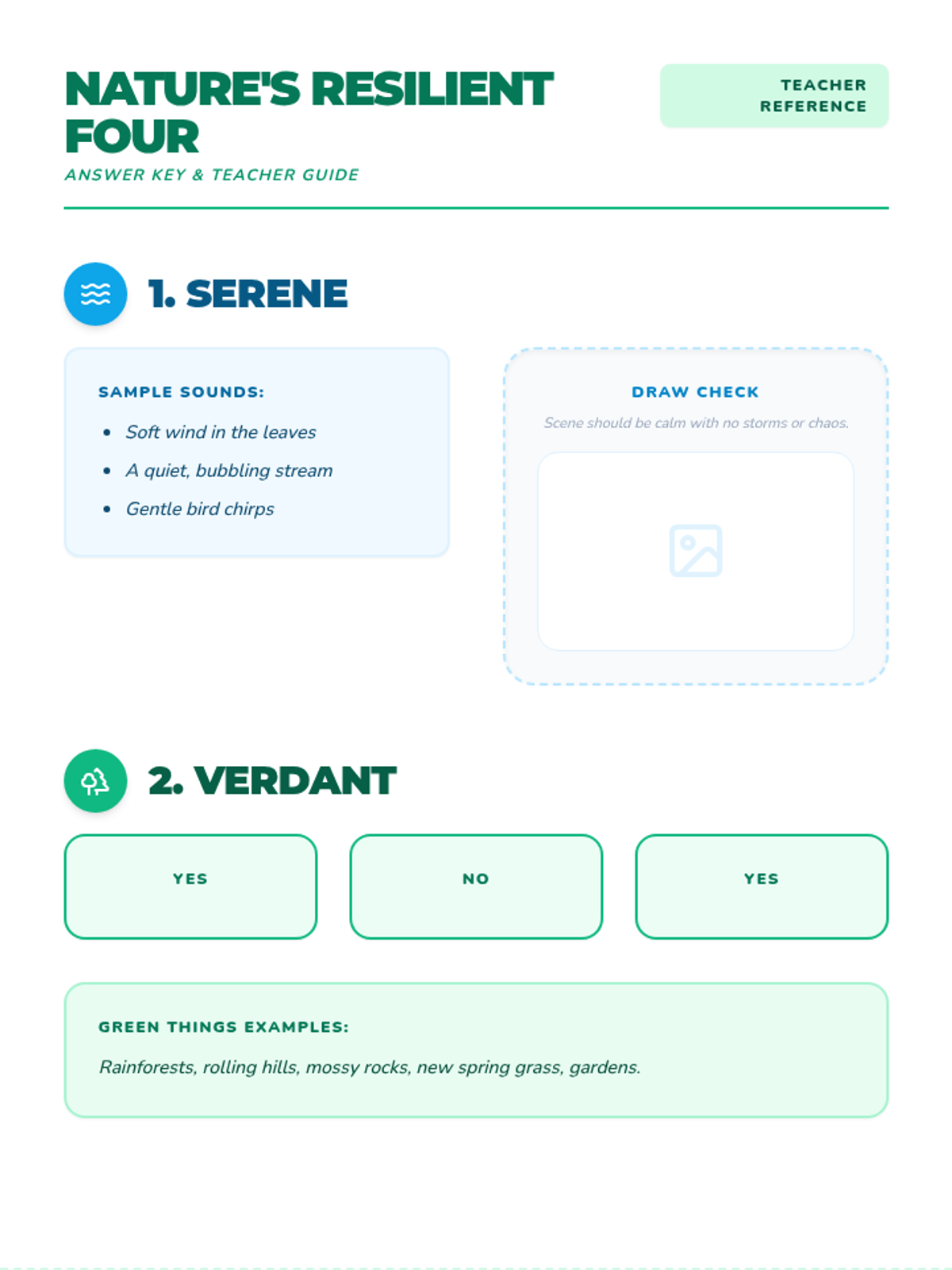
A vocabulary and linguistics lesson exploring themes of transition, growth, and strength. Students master eight high-level terms—equinox, verdant, metamorphosis, resilient, serene, turbulent, empower, and prosperity—through context analysis and creative application.
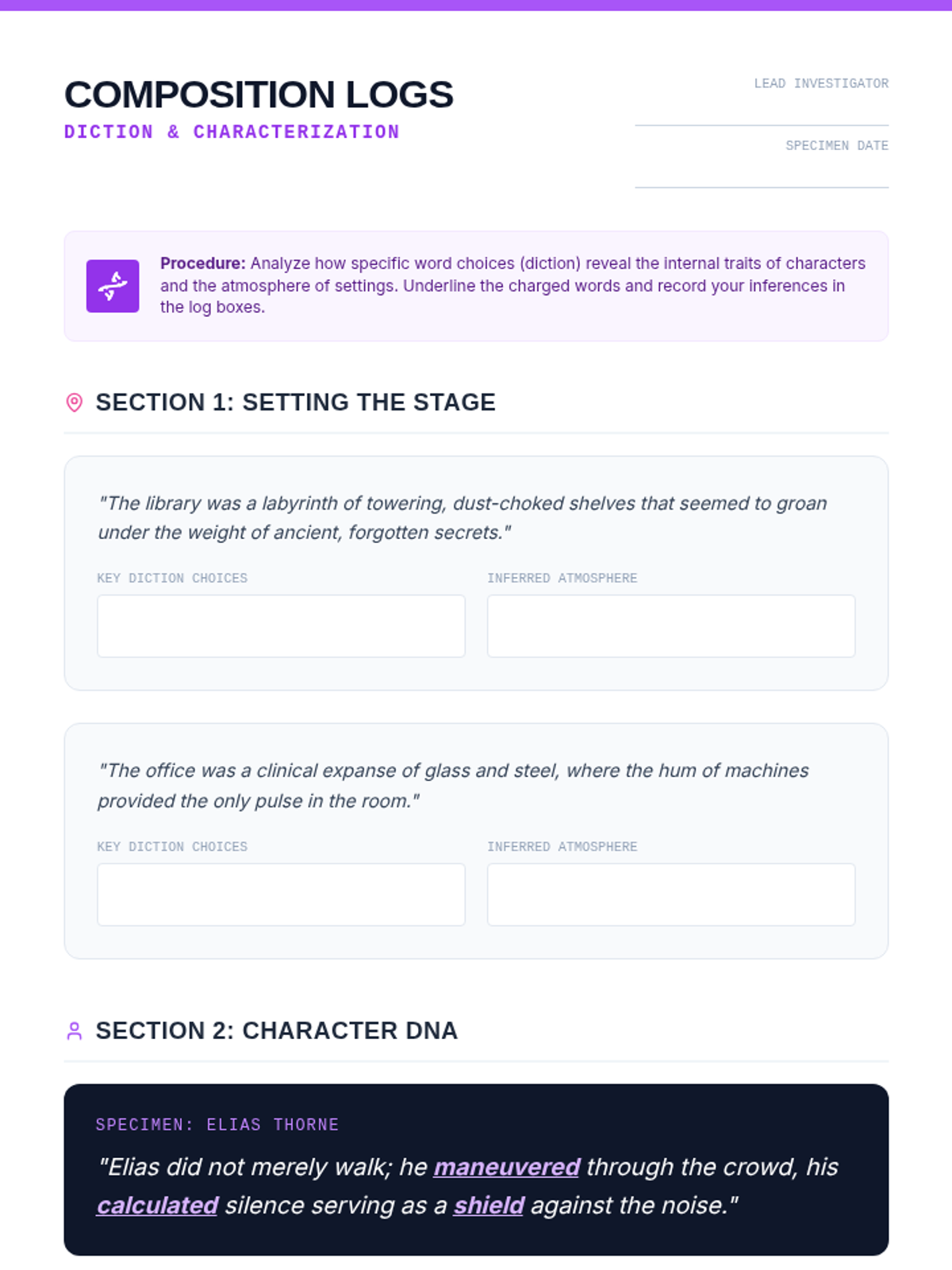
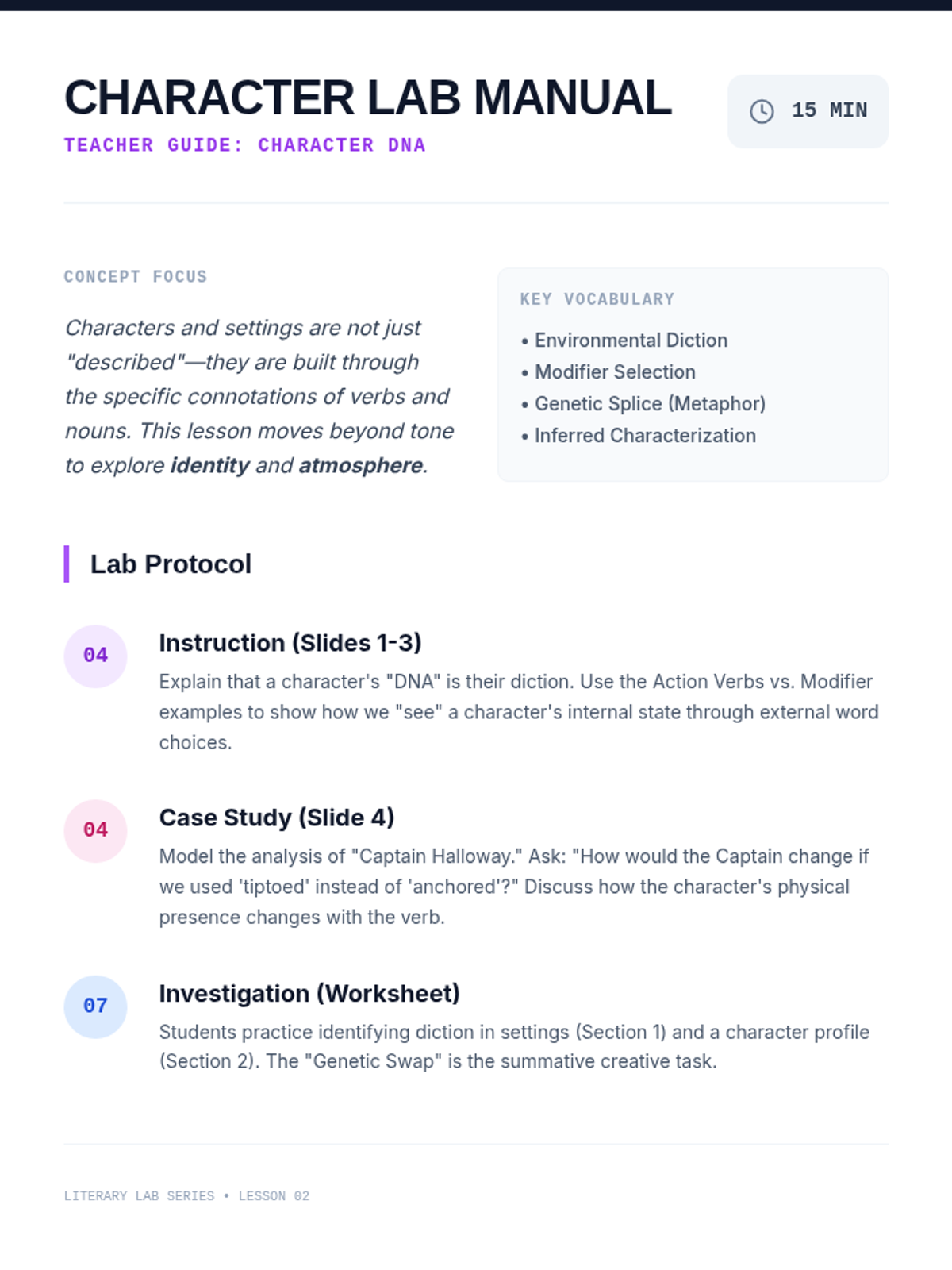
A 15-minute mini-lesson exploring how diction acts as the 'genetic material' of a story, building vivid settings and complex characters through precise word choice.
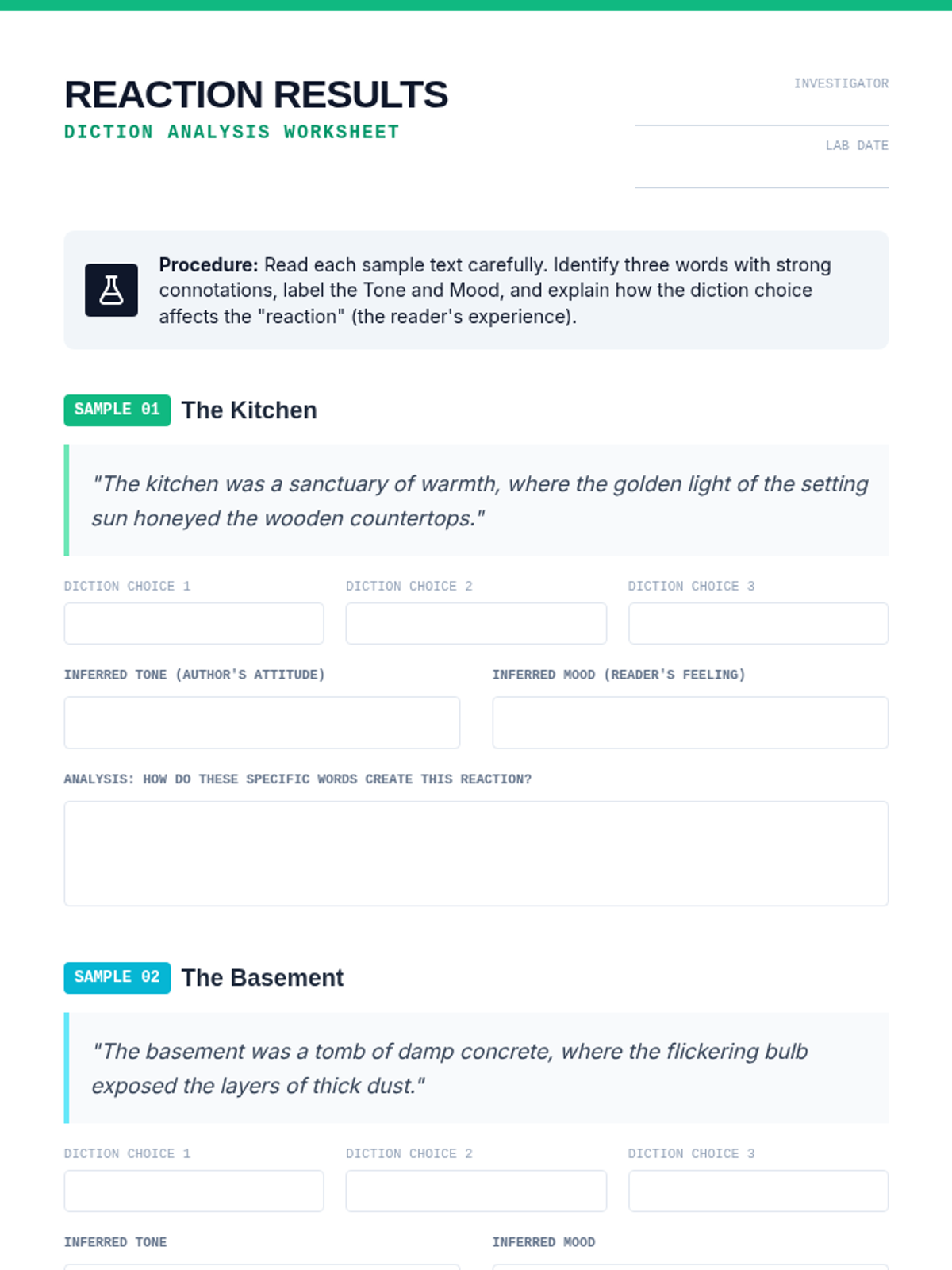
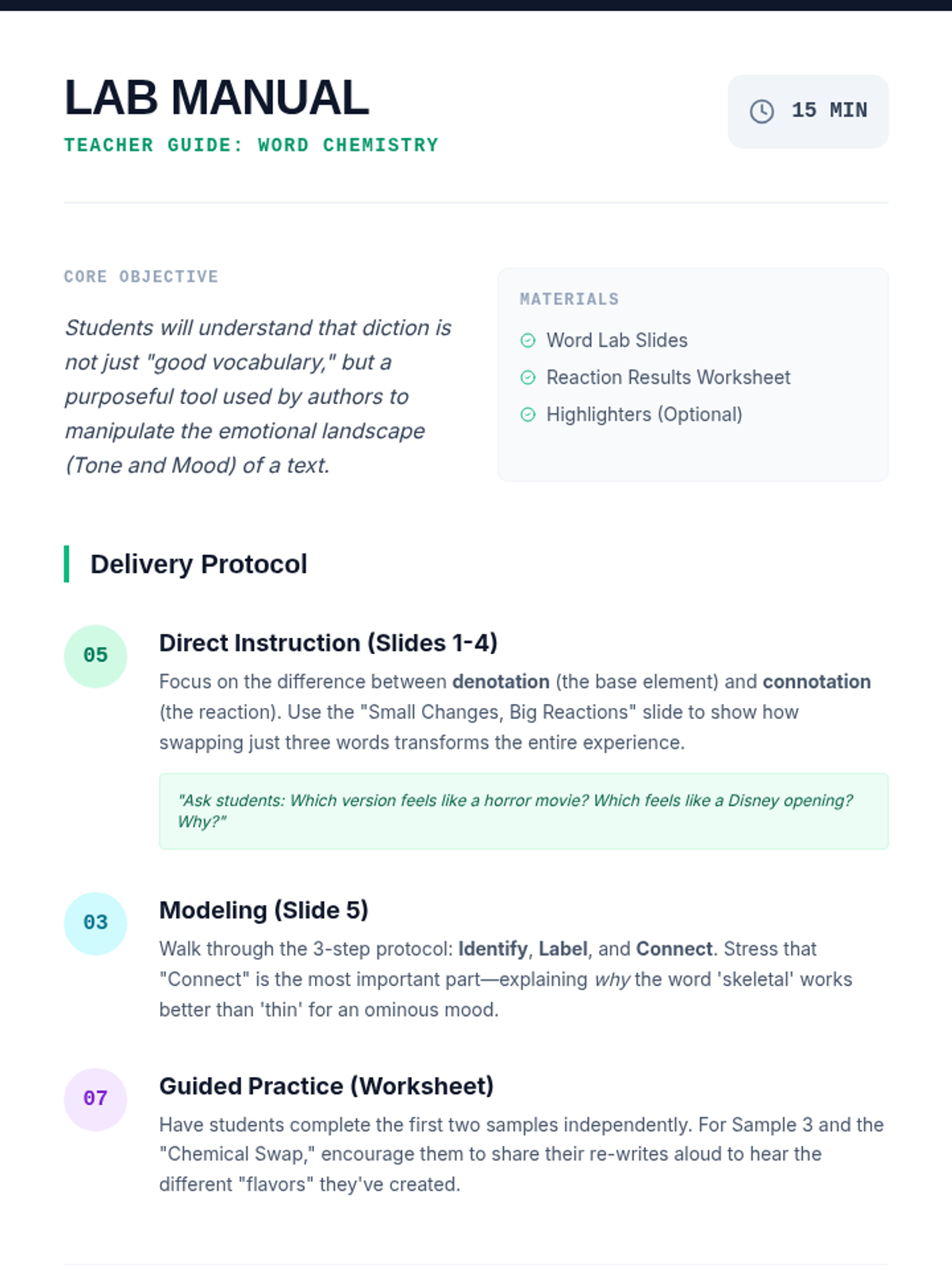
A 15-minute mini-lesson exploring how specific word choices (diction) create distinct tones and moods in literature, framed through a 'Word Lab' investigation.
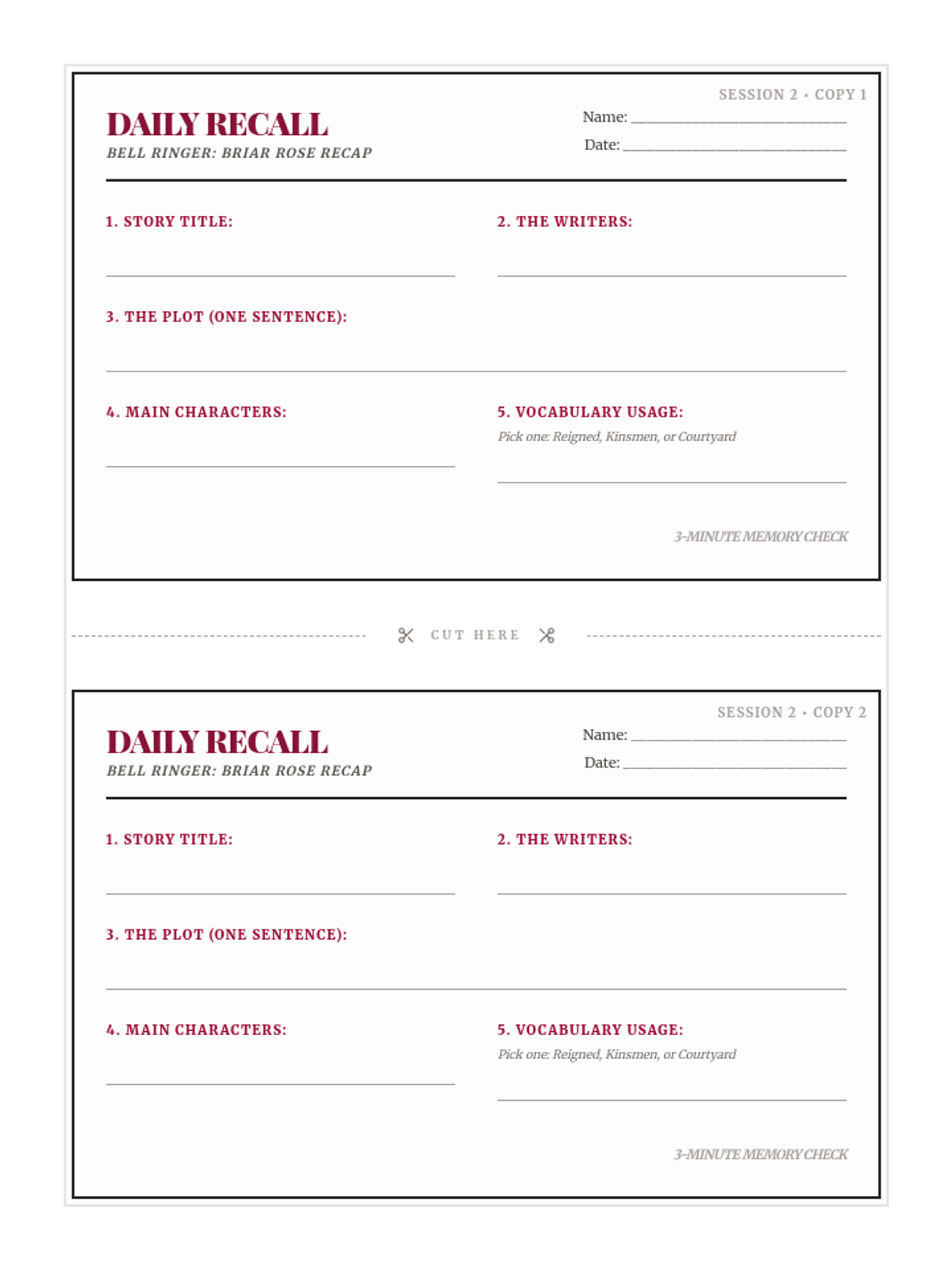
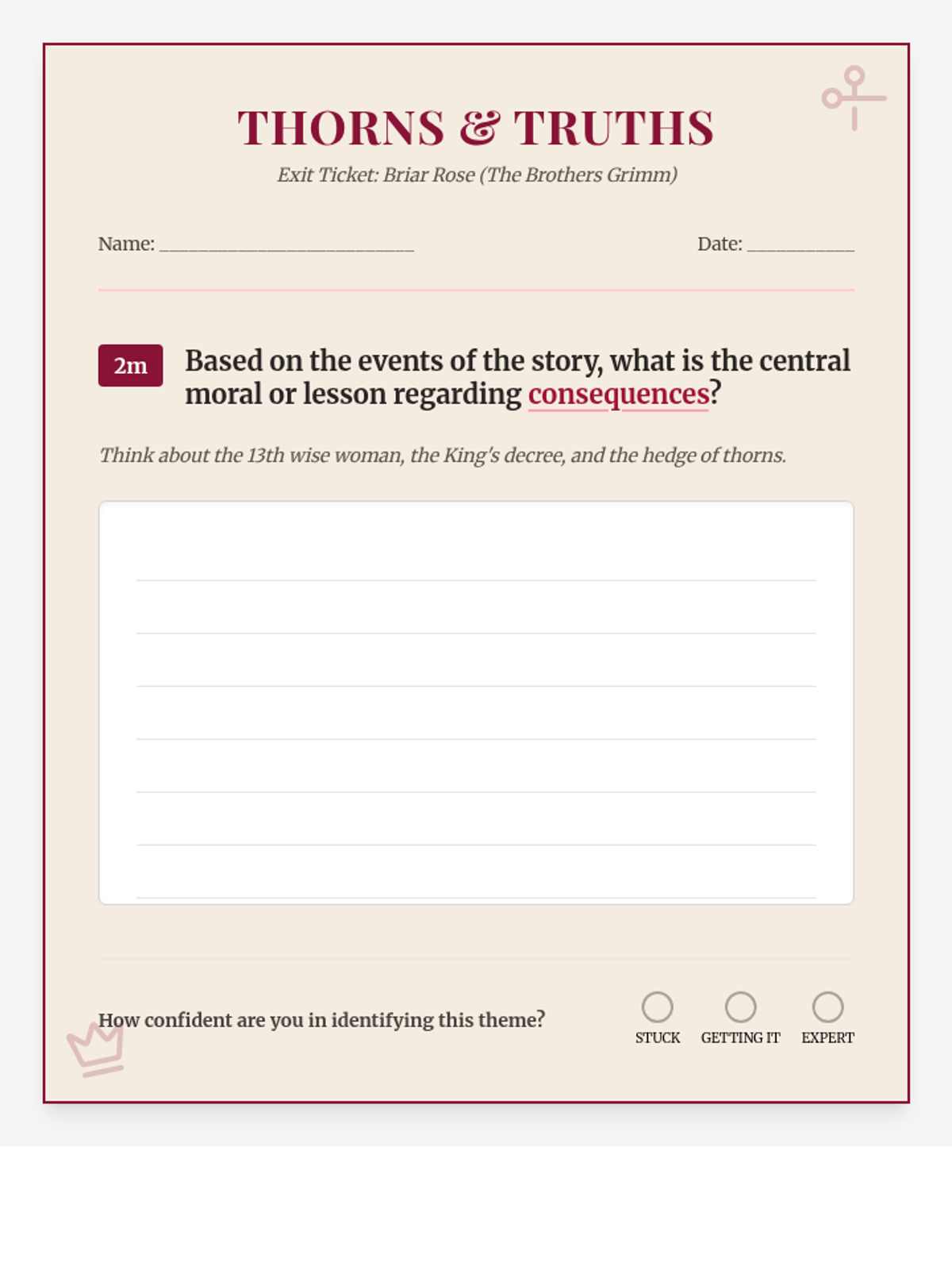
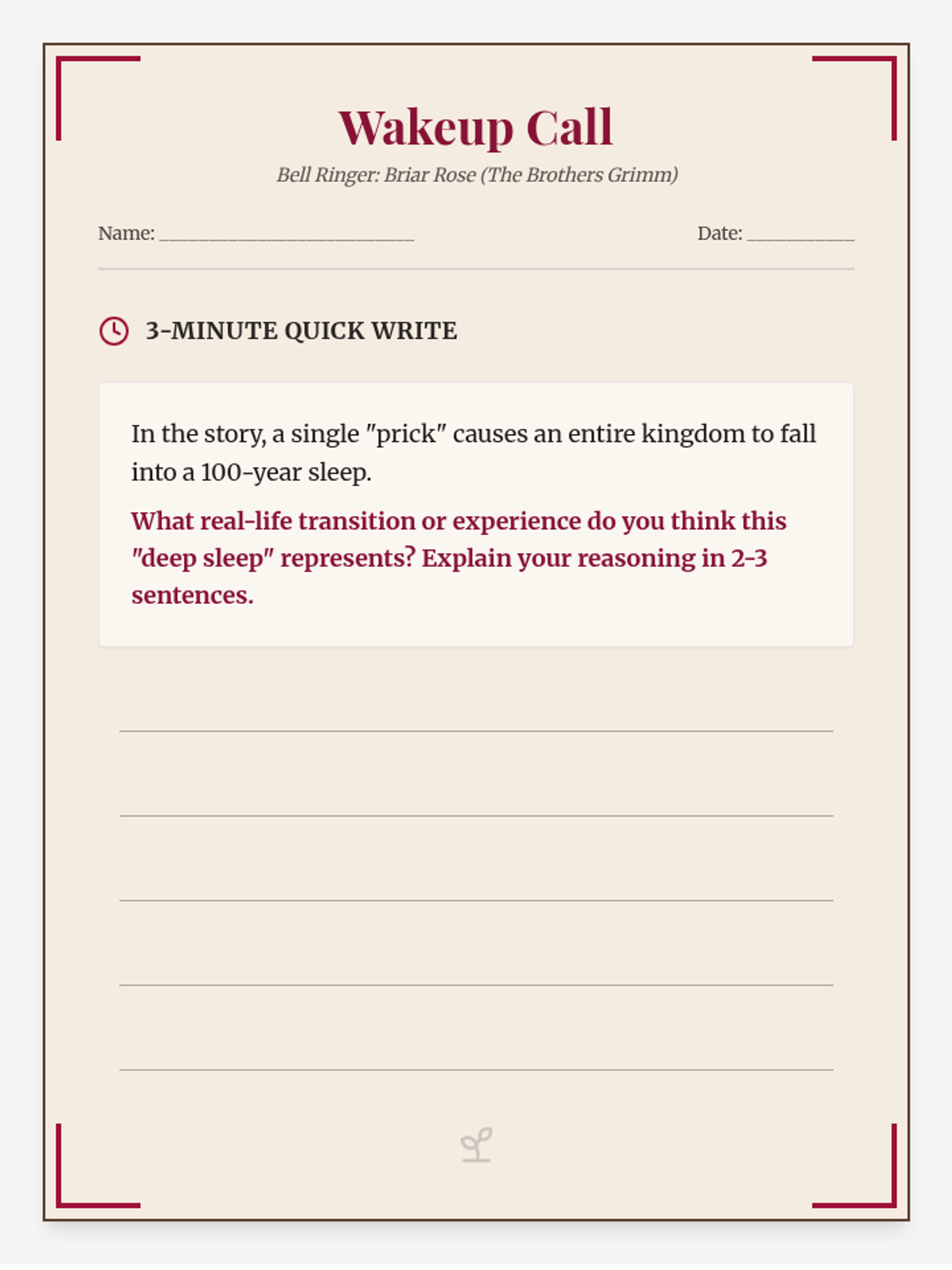
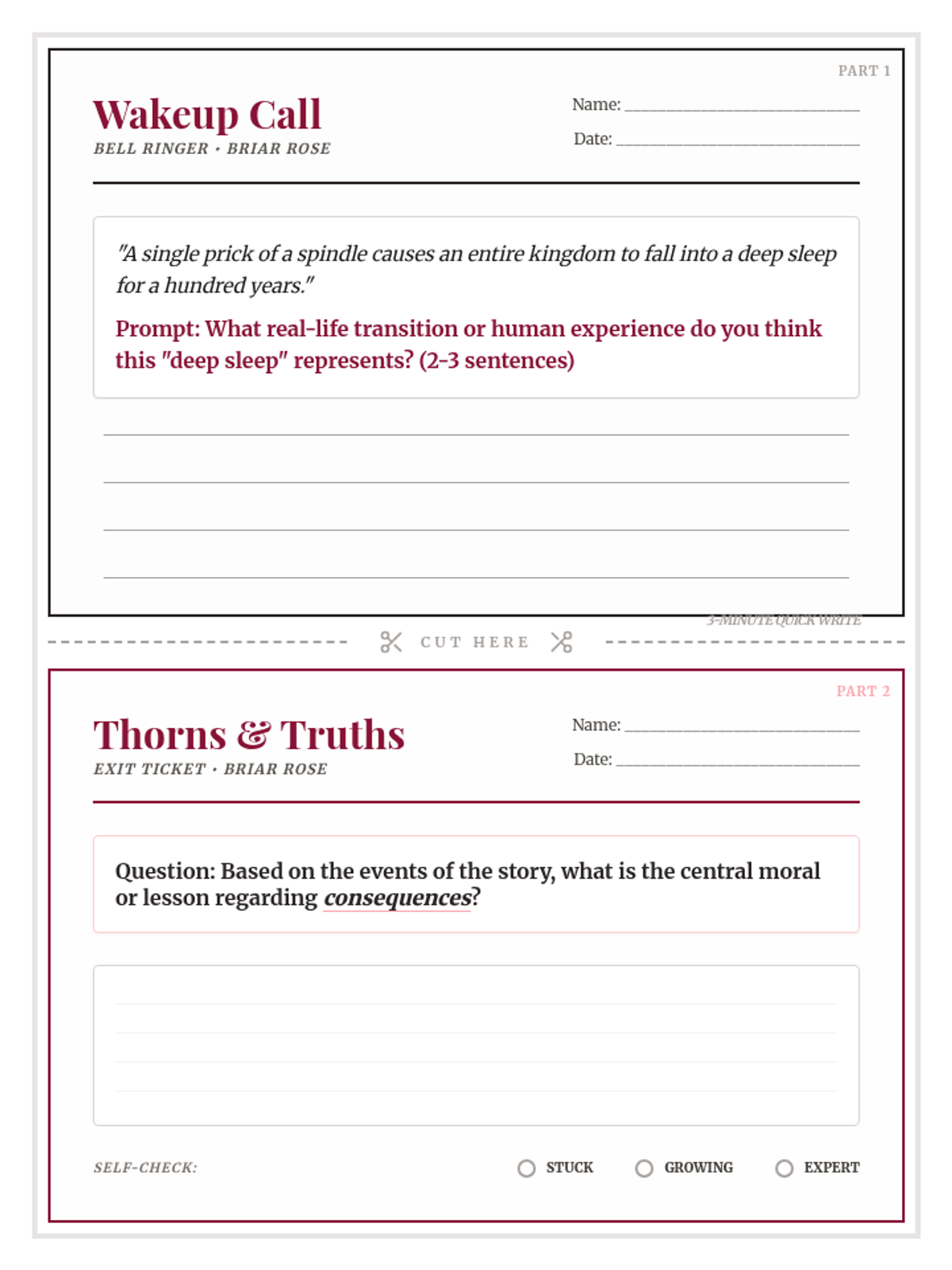
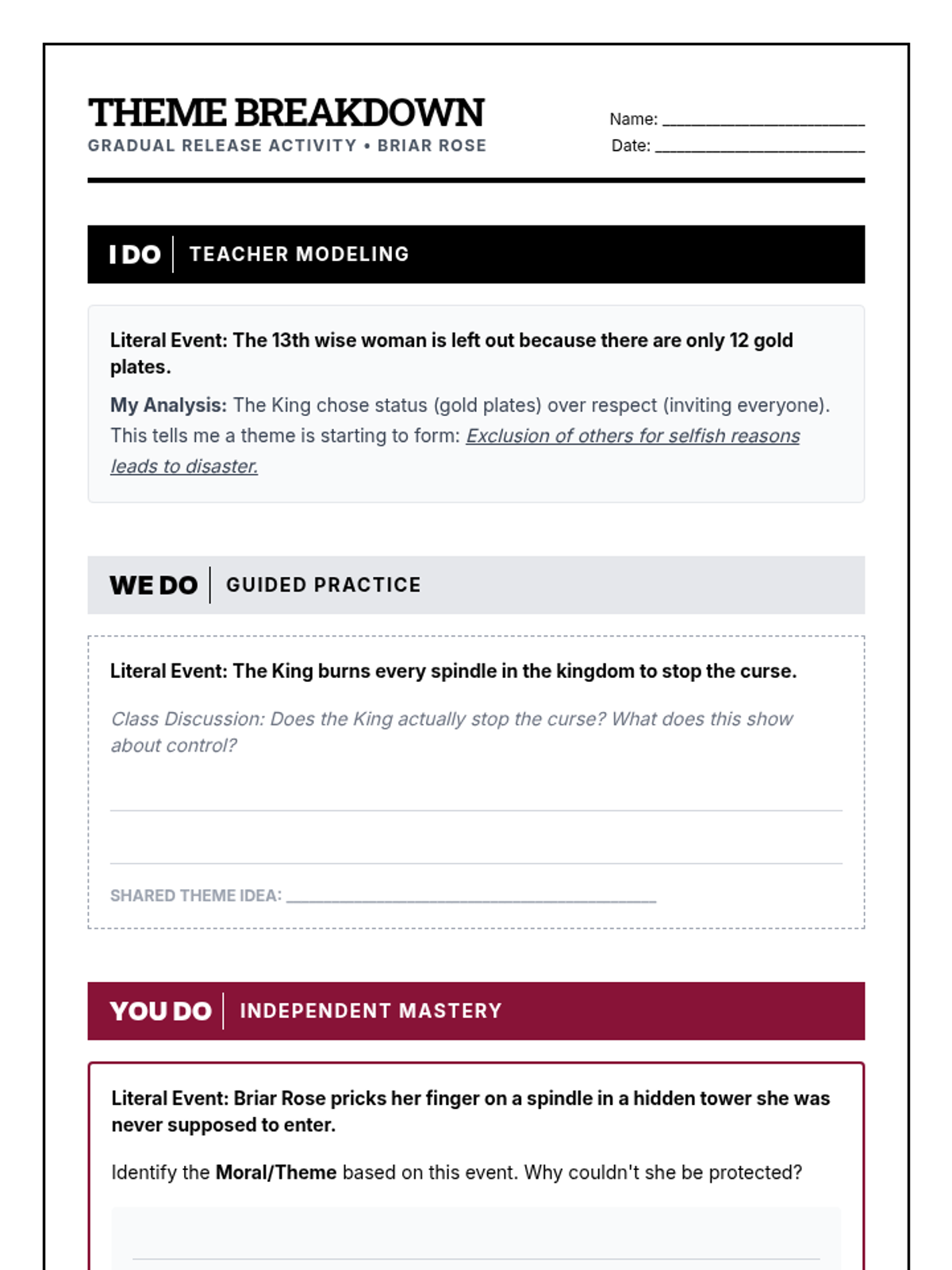
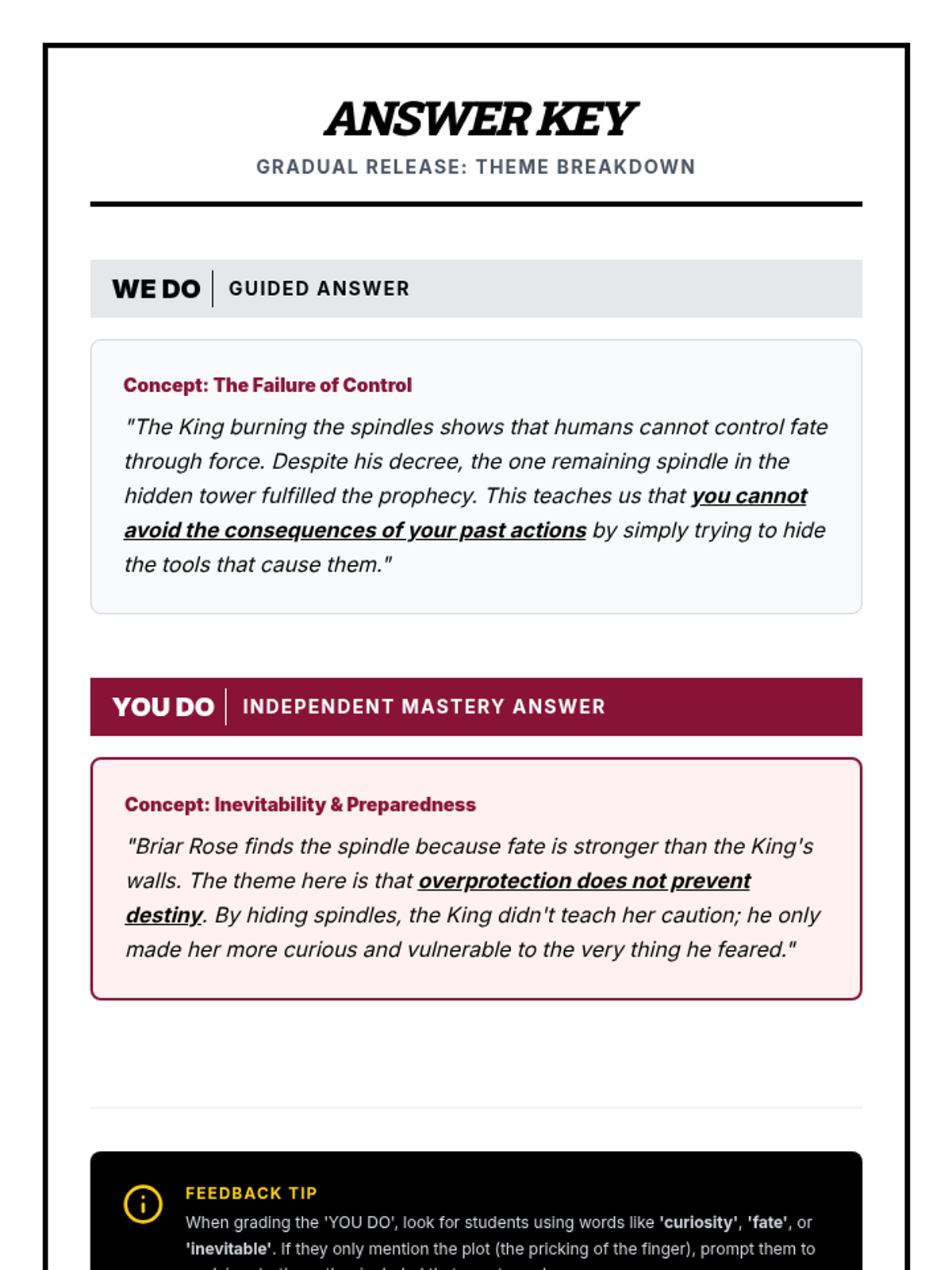
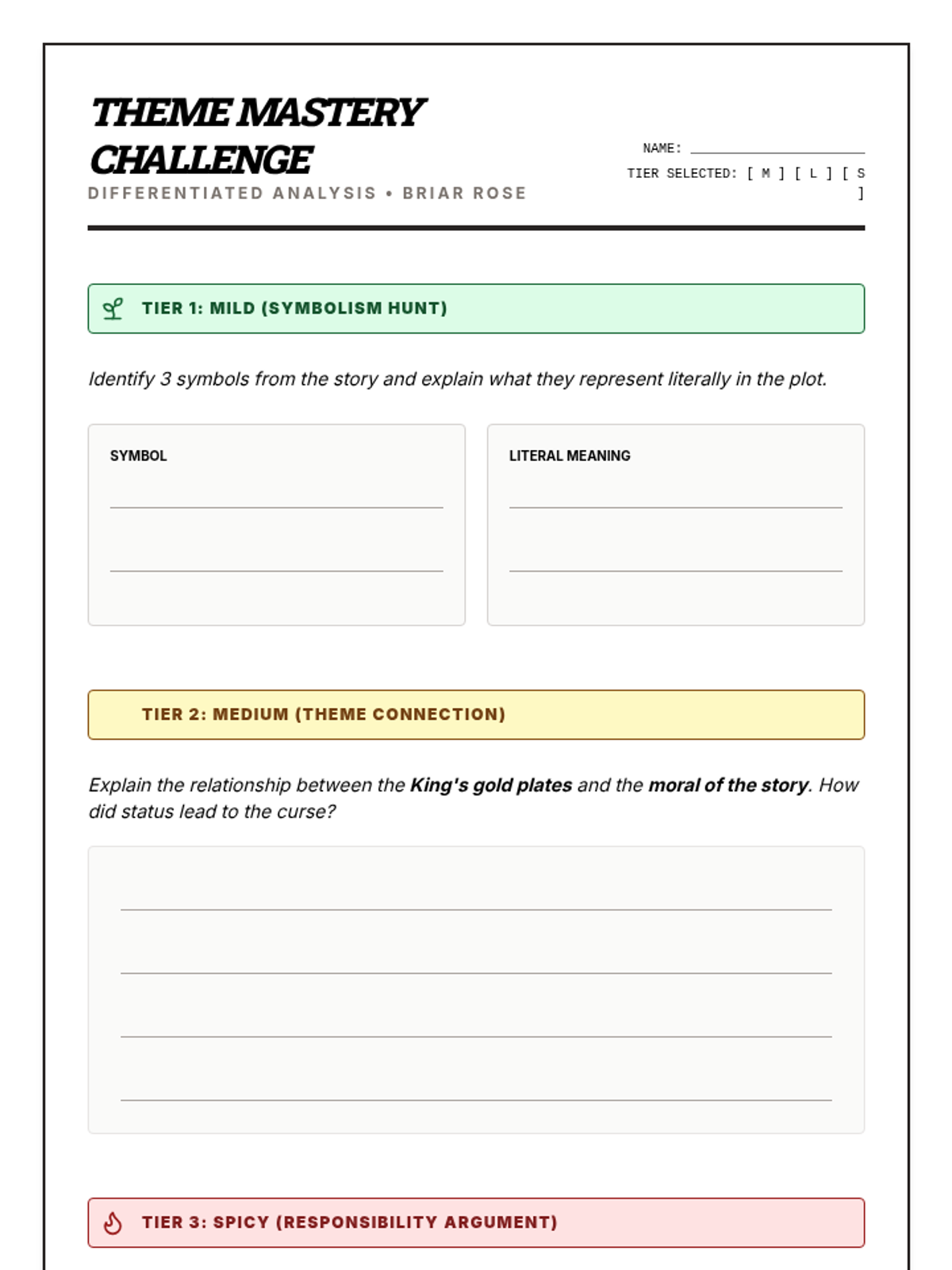
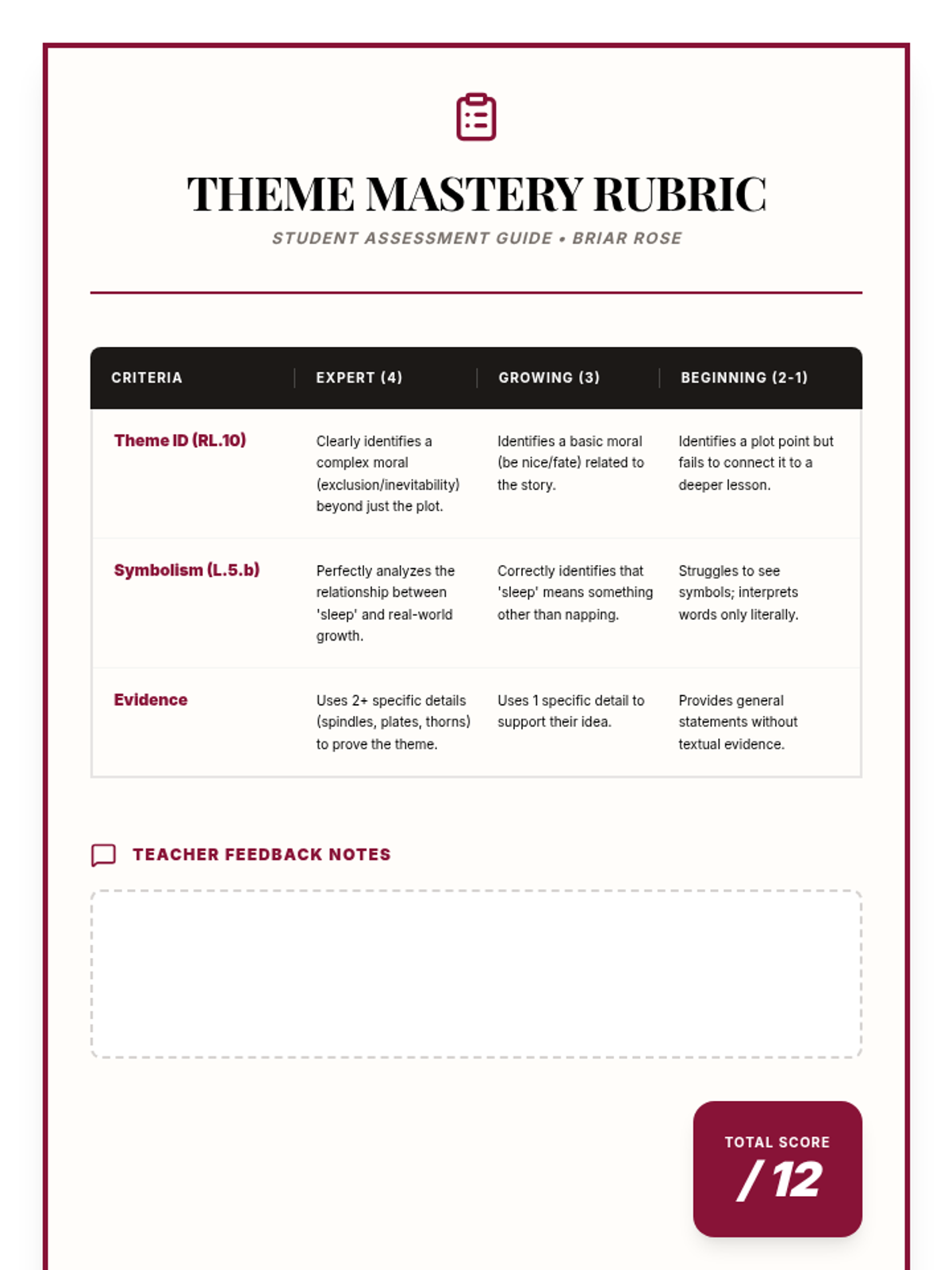
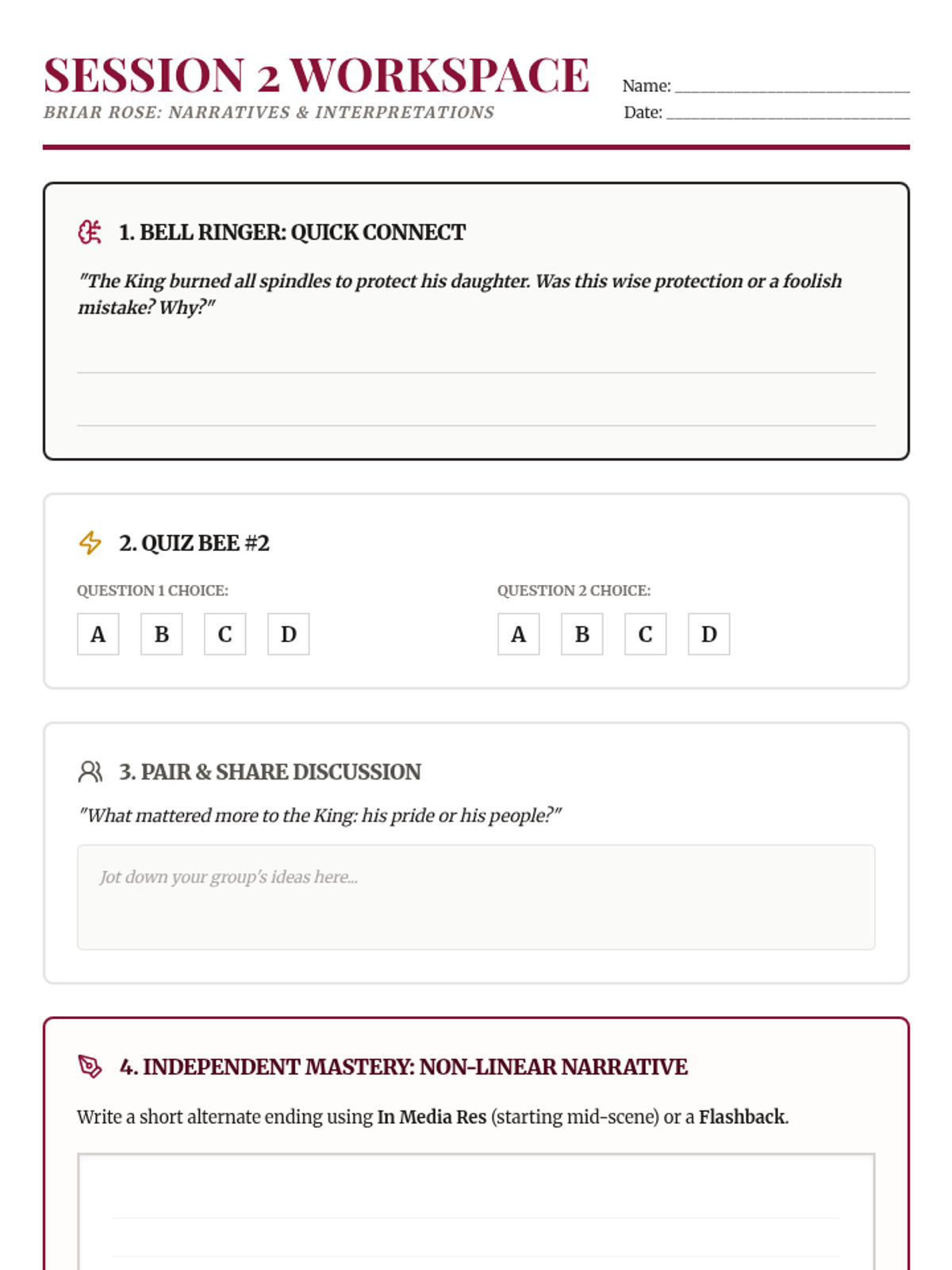
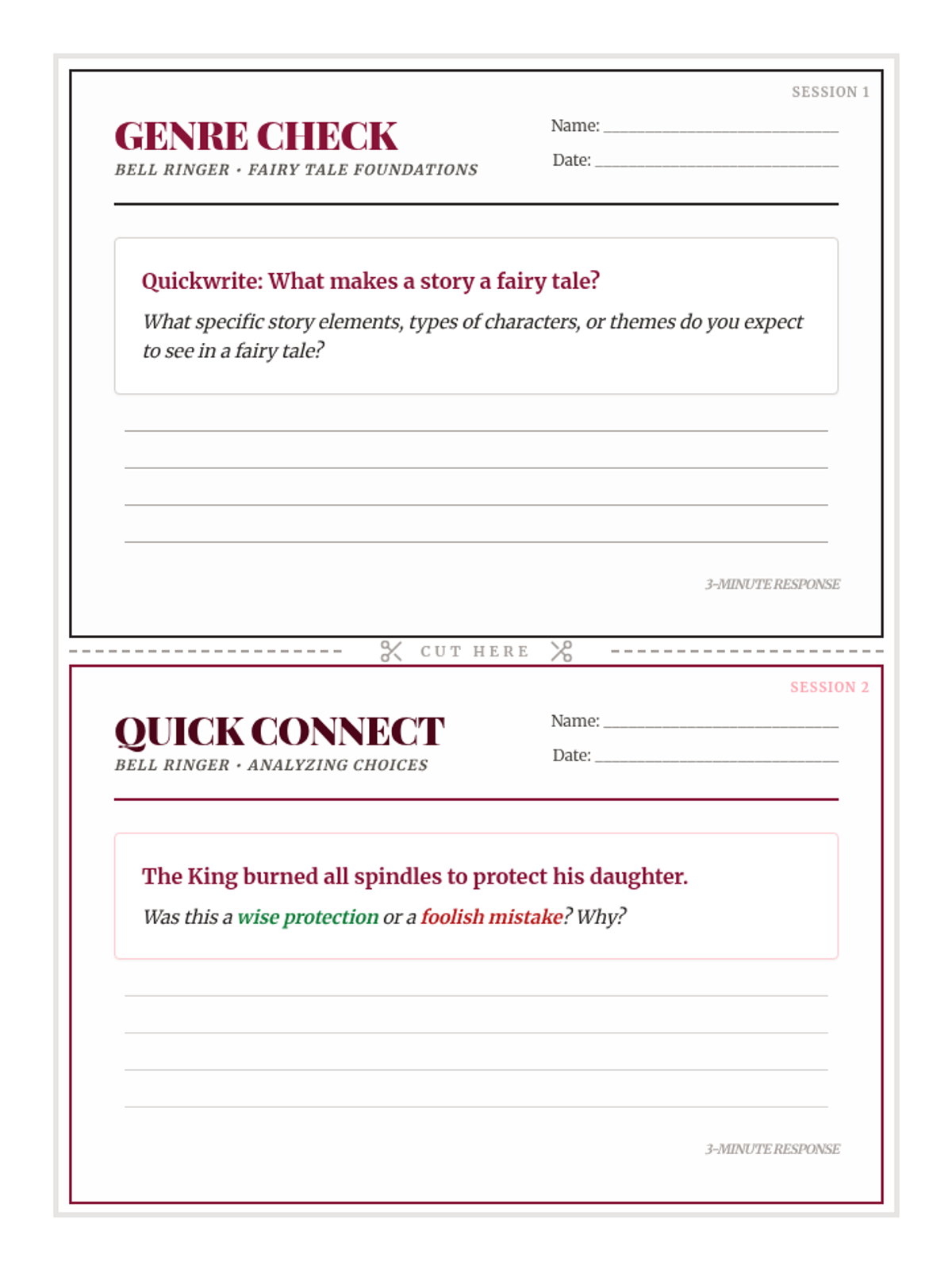
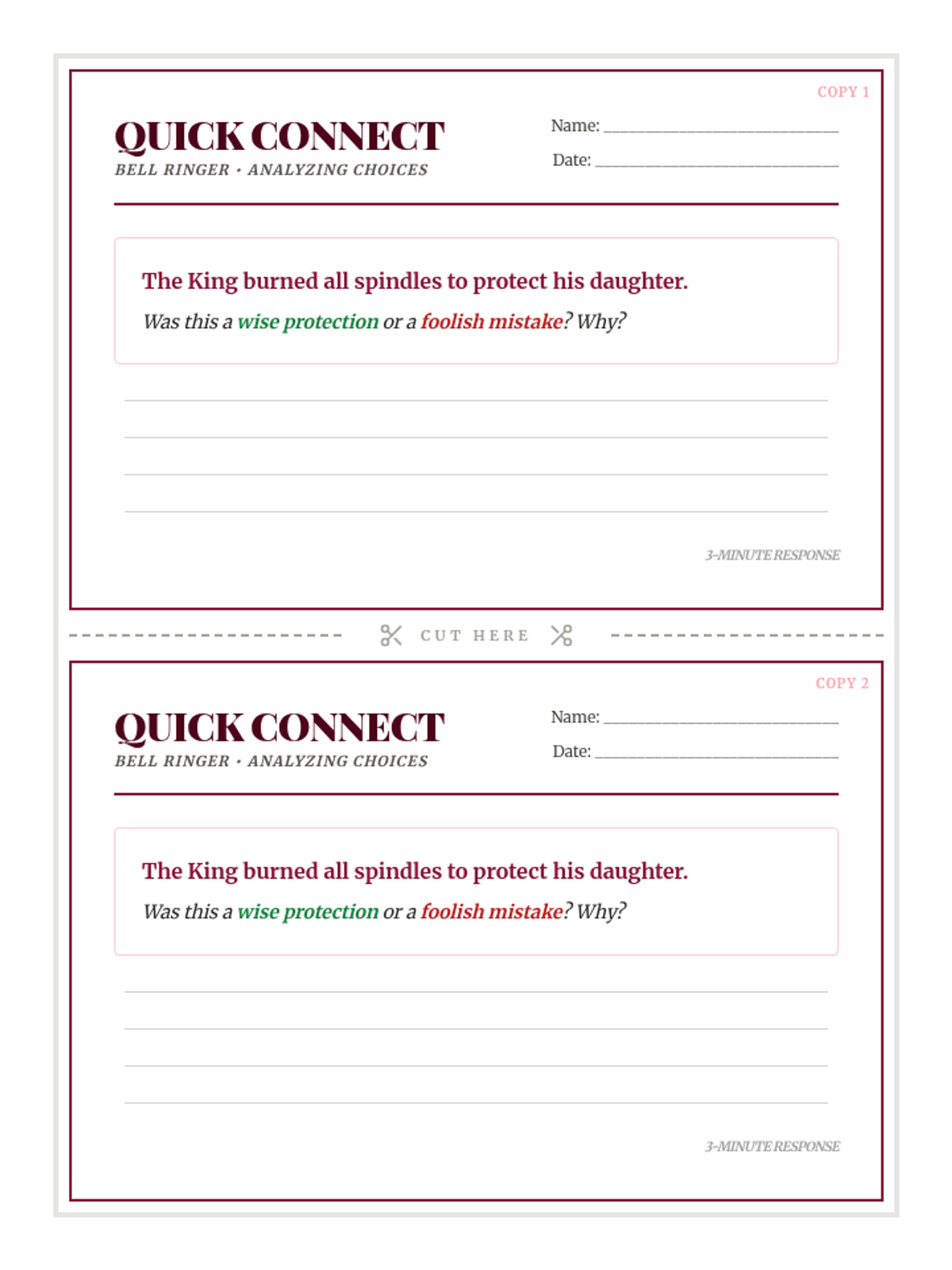
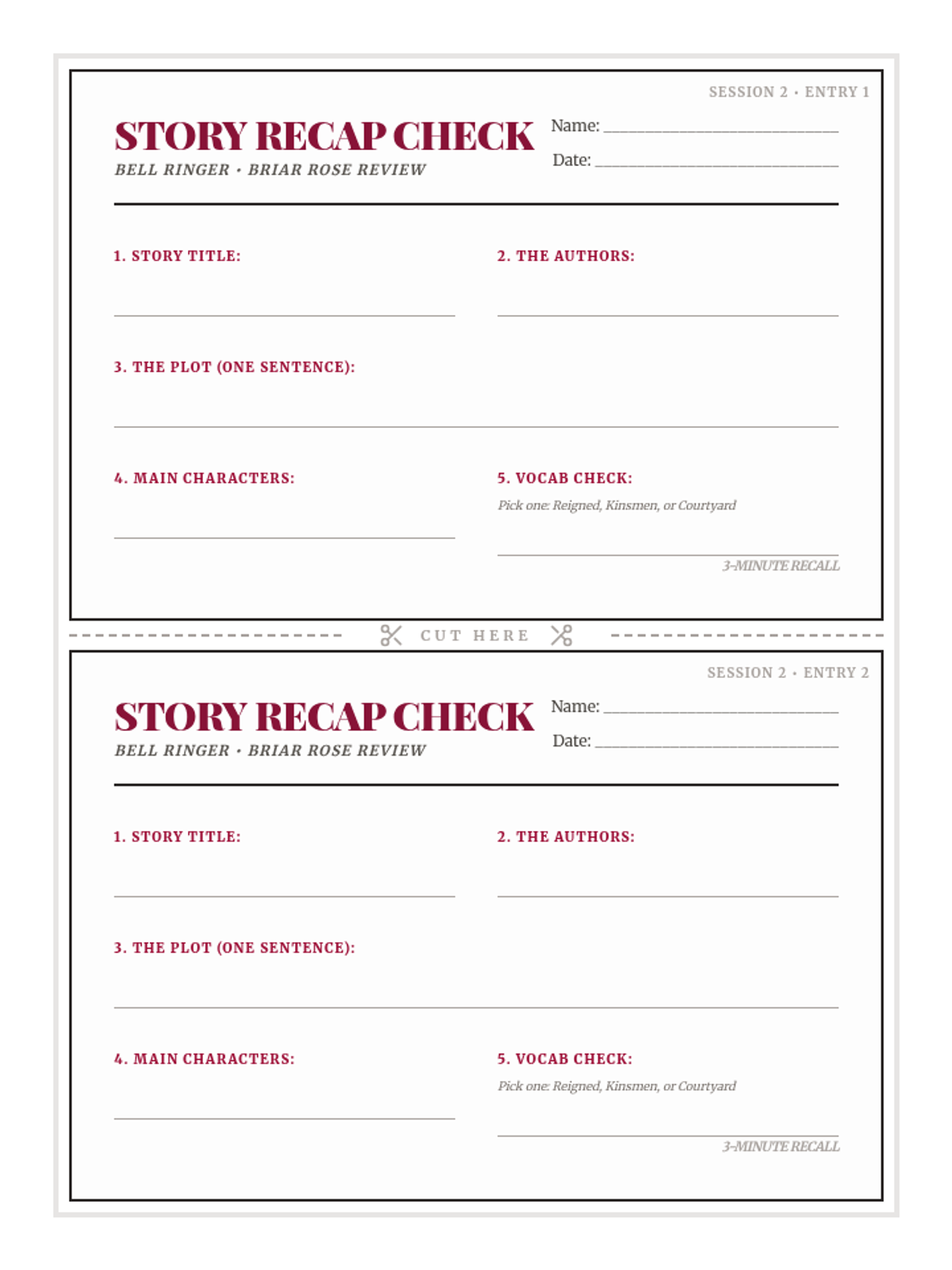
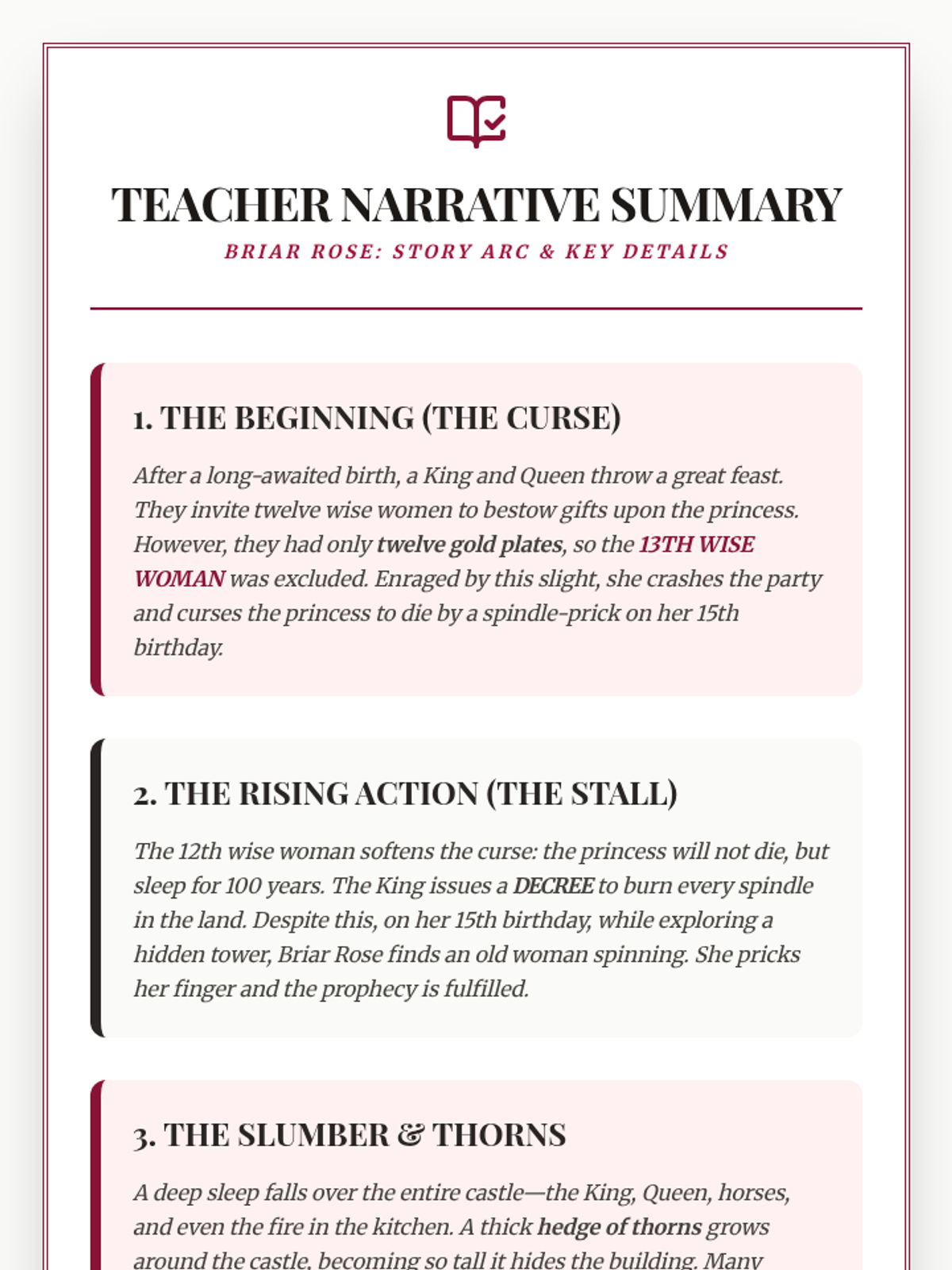
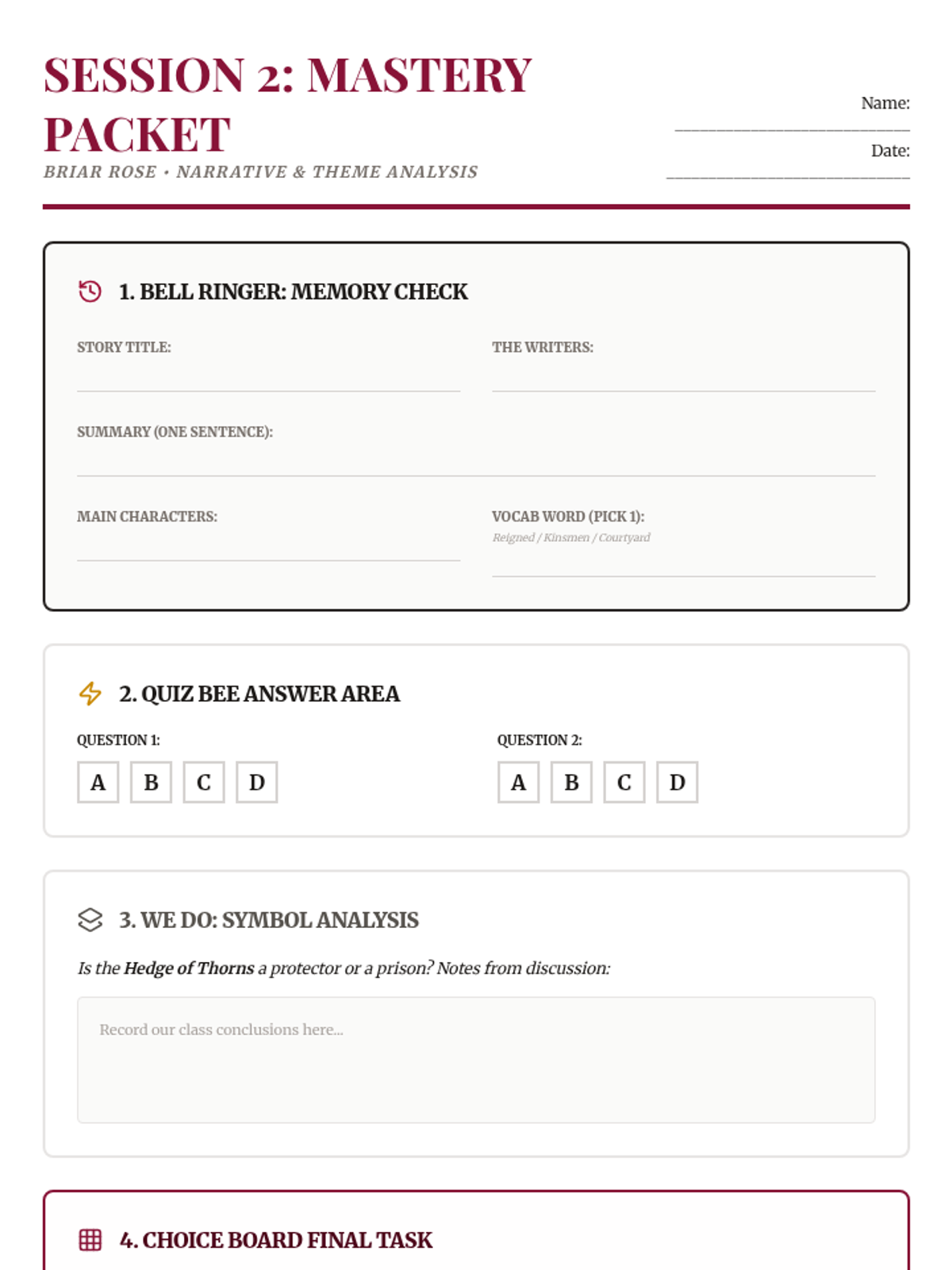
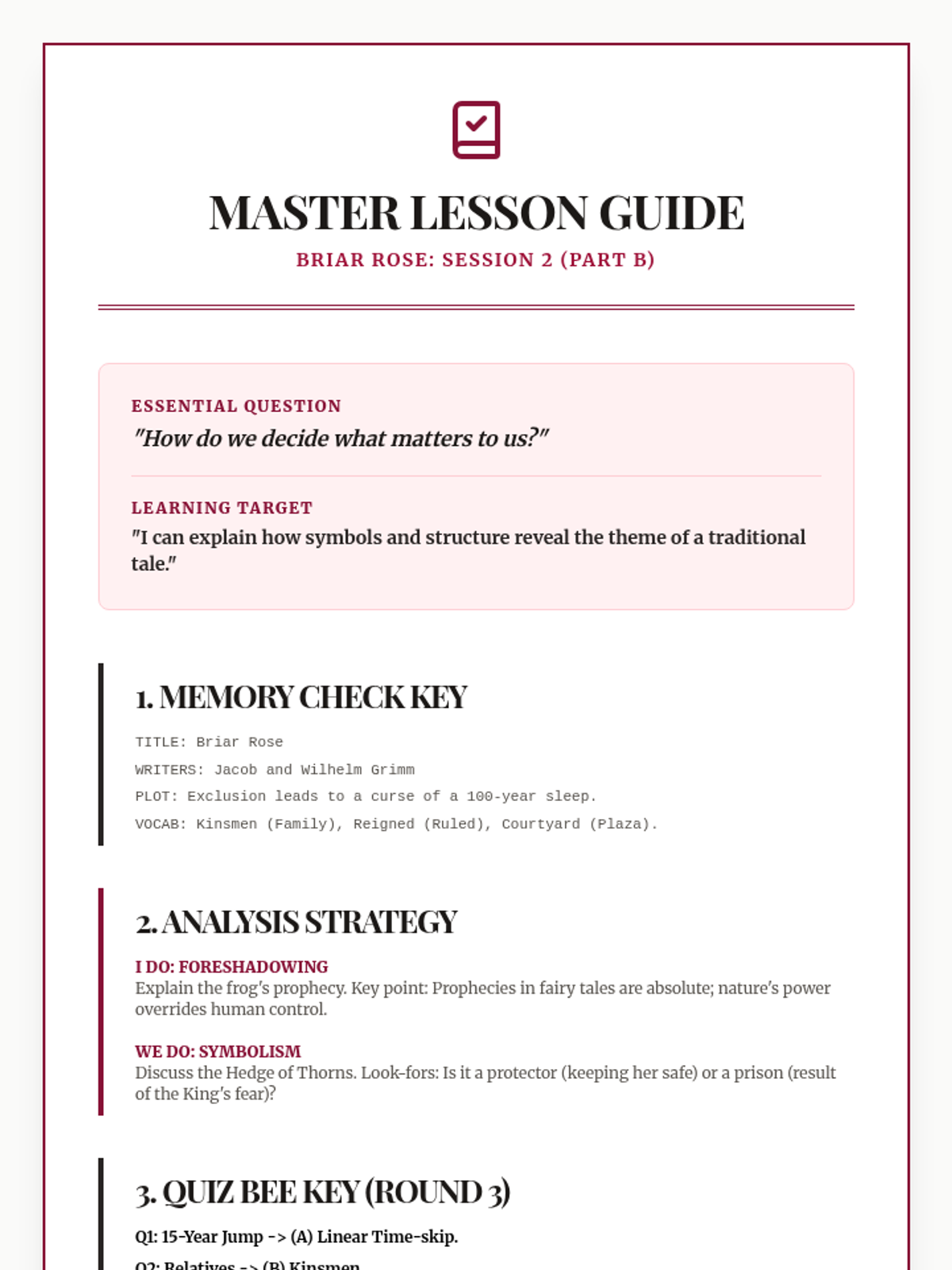
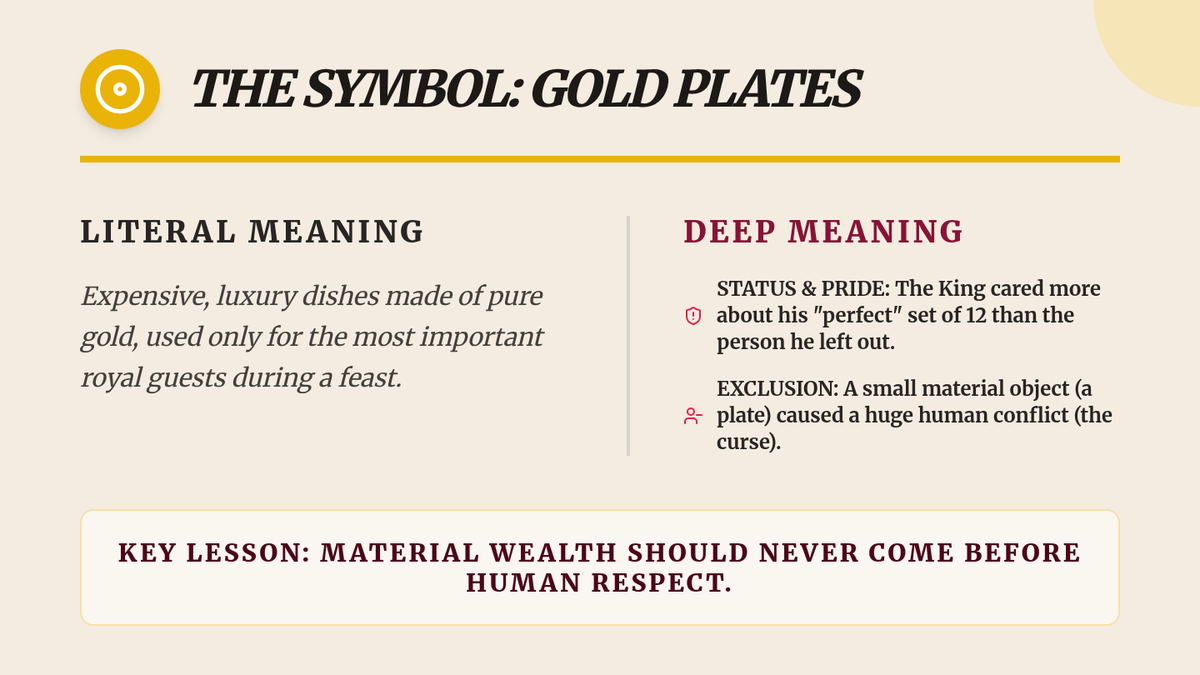
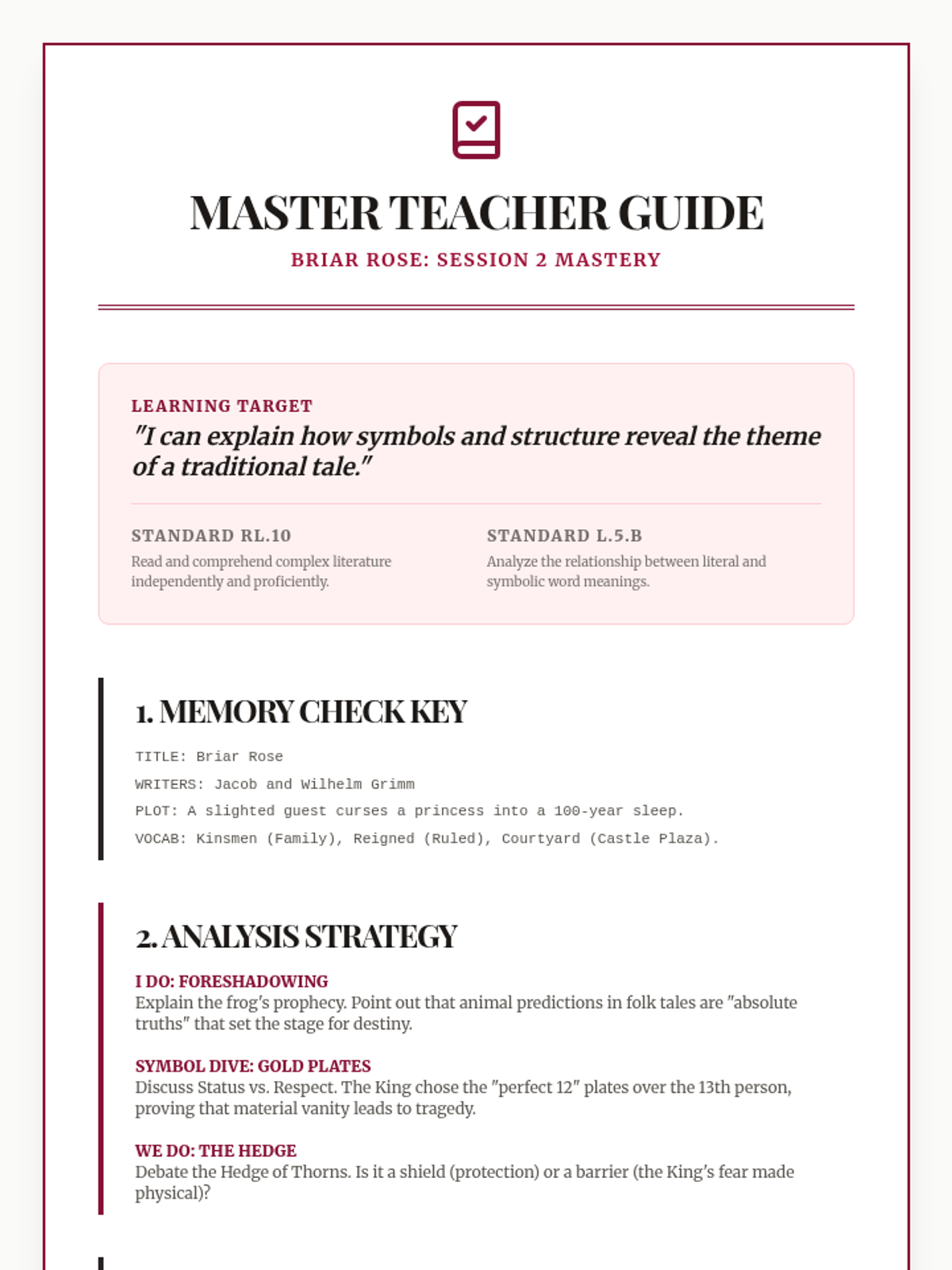
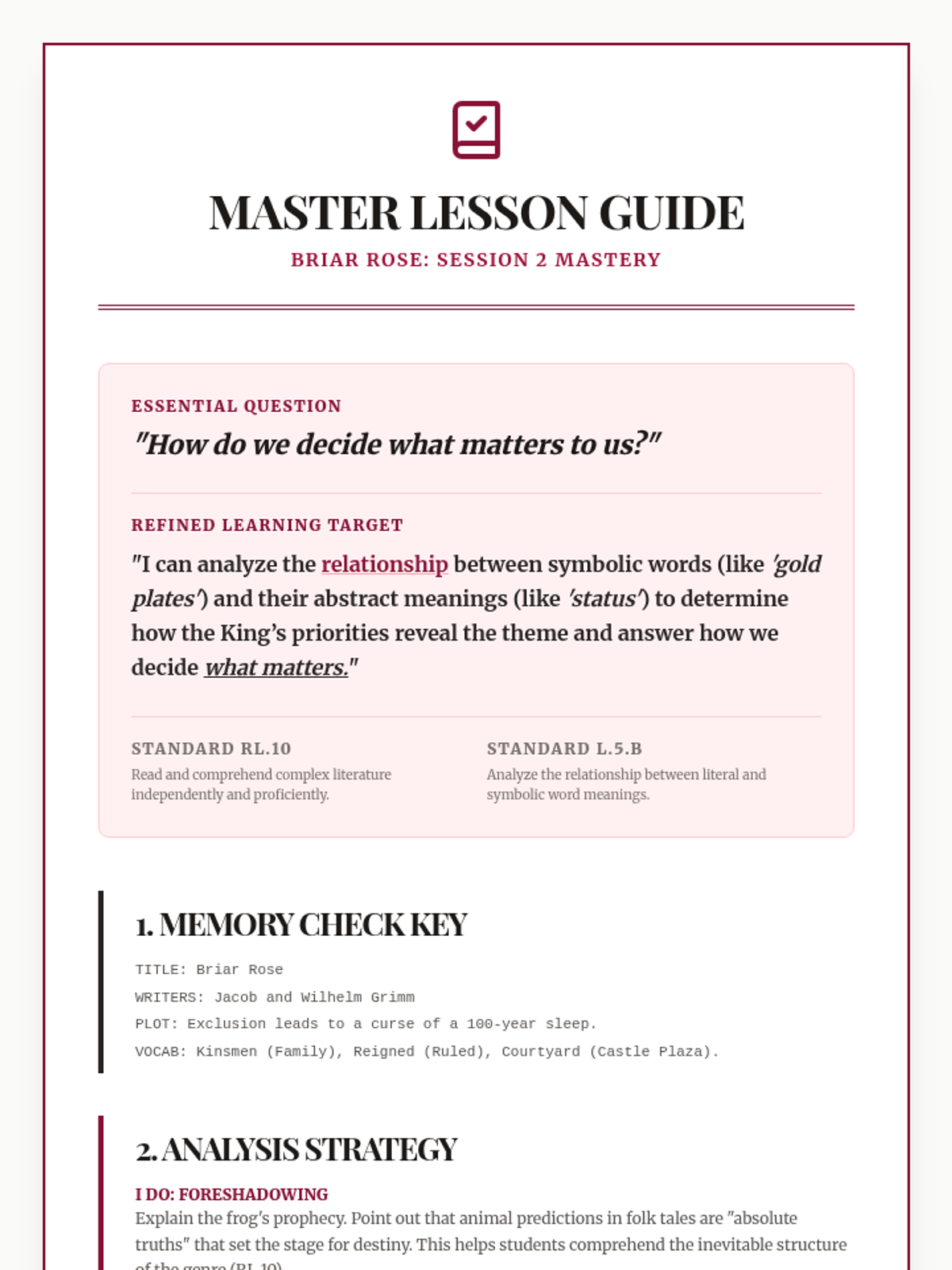
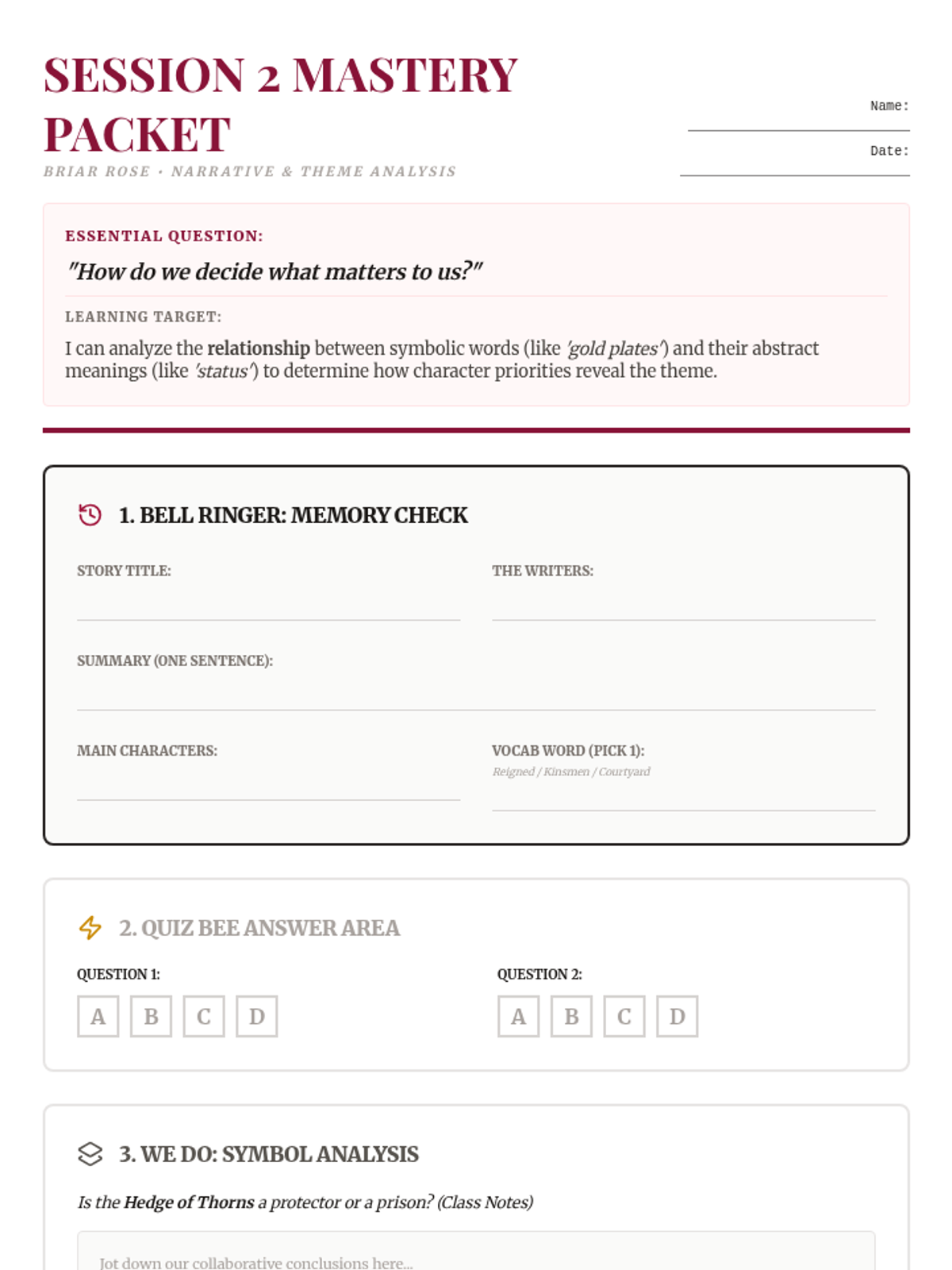
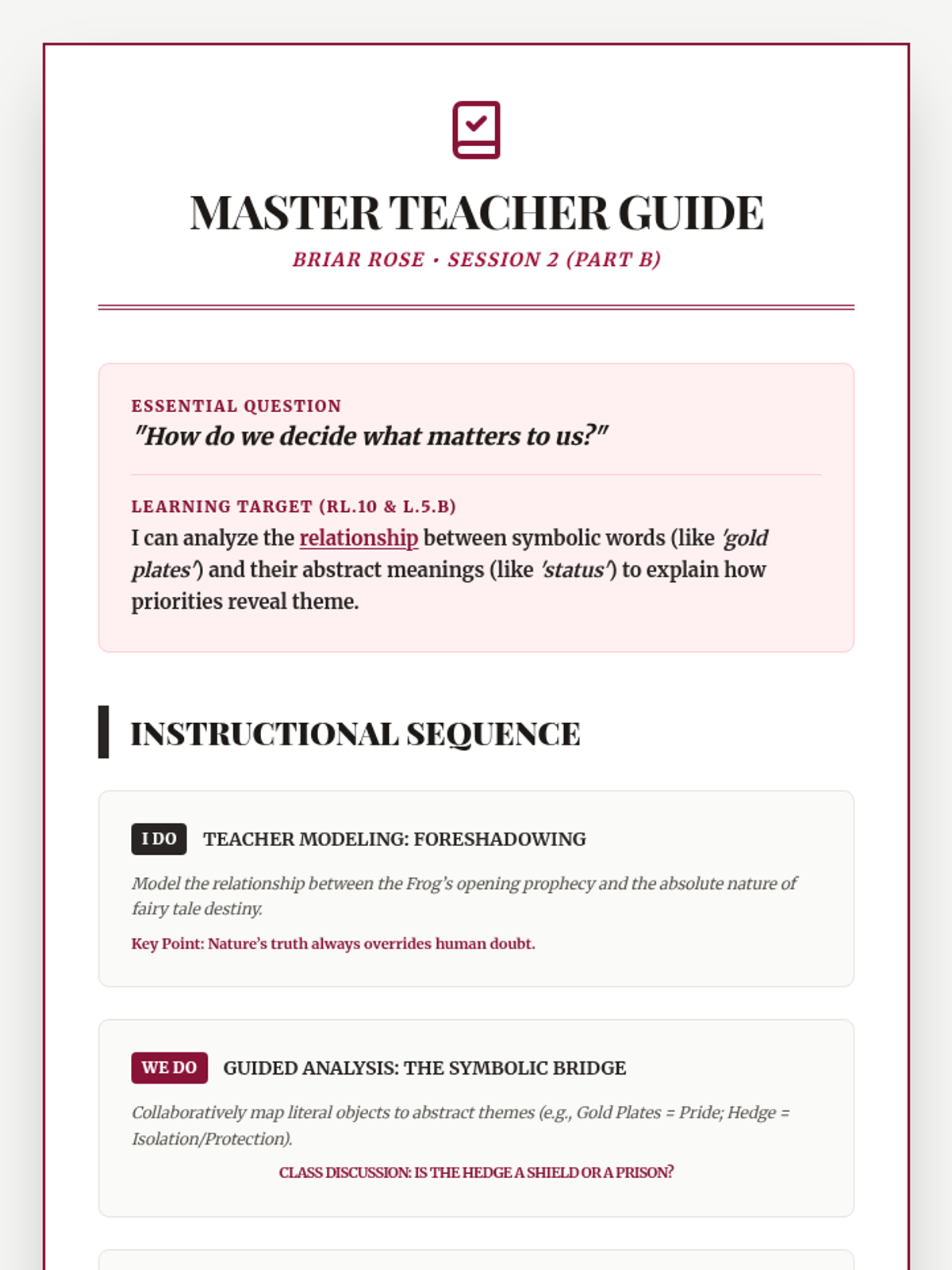
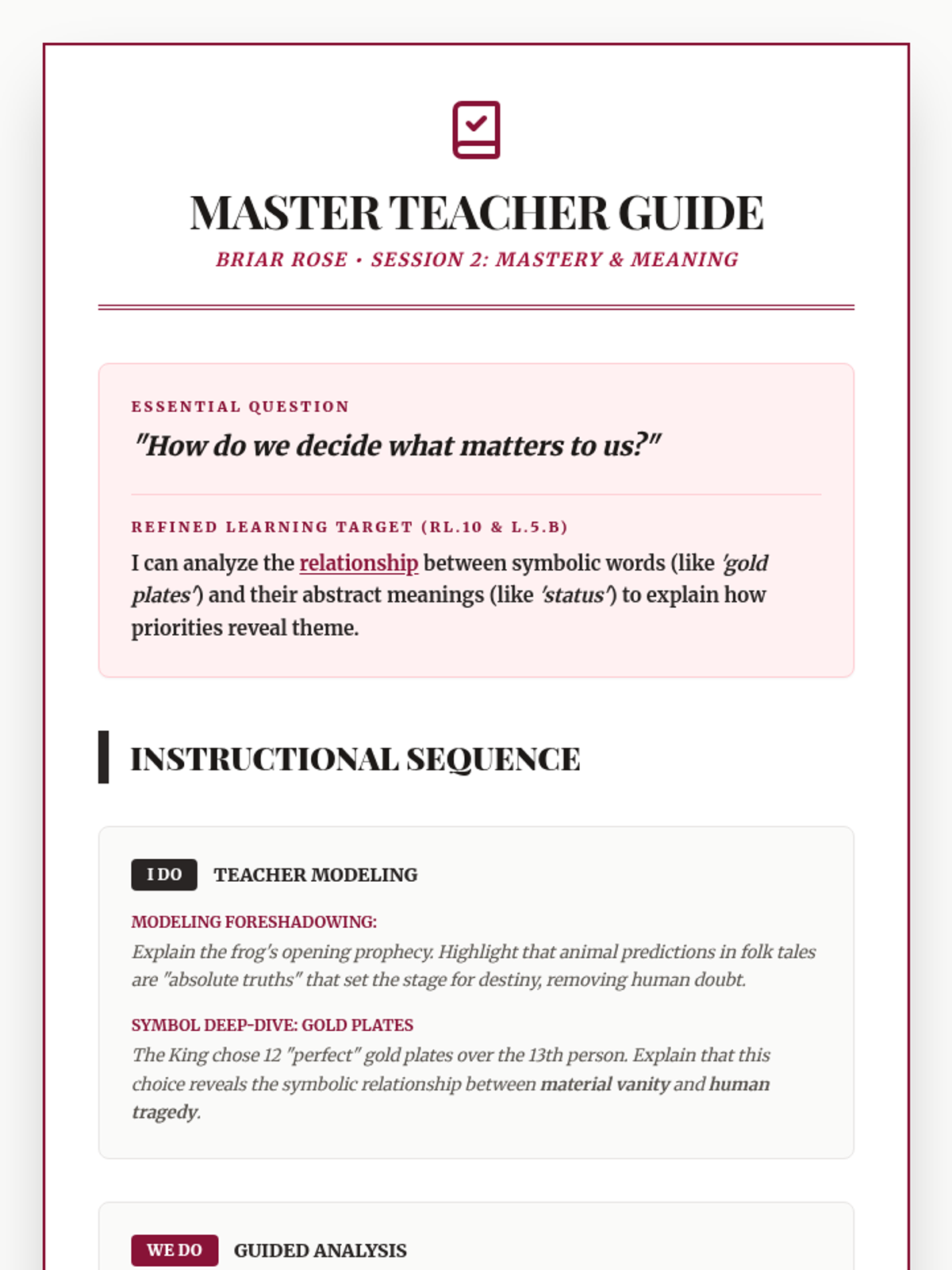
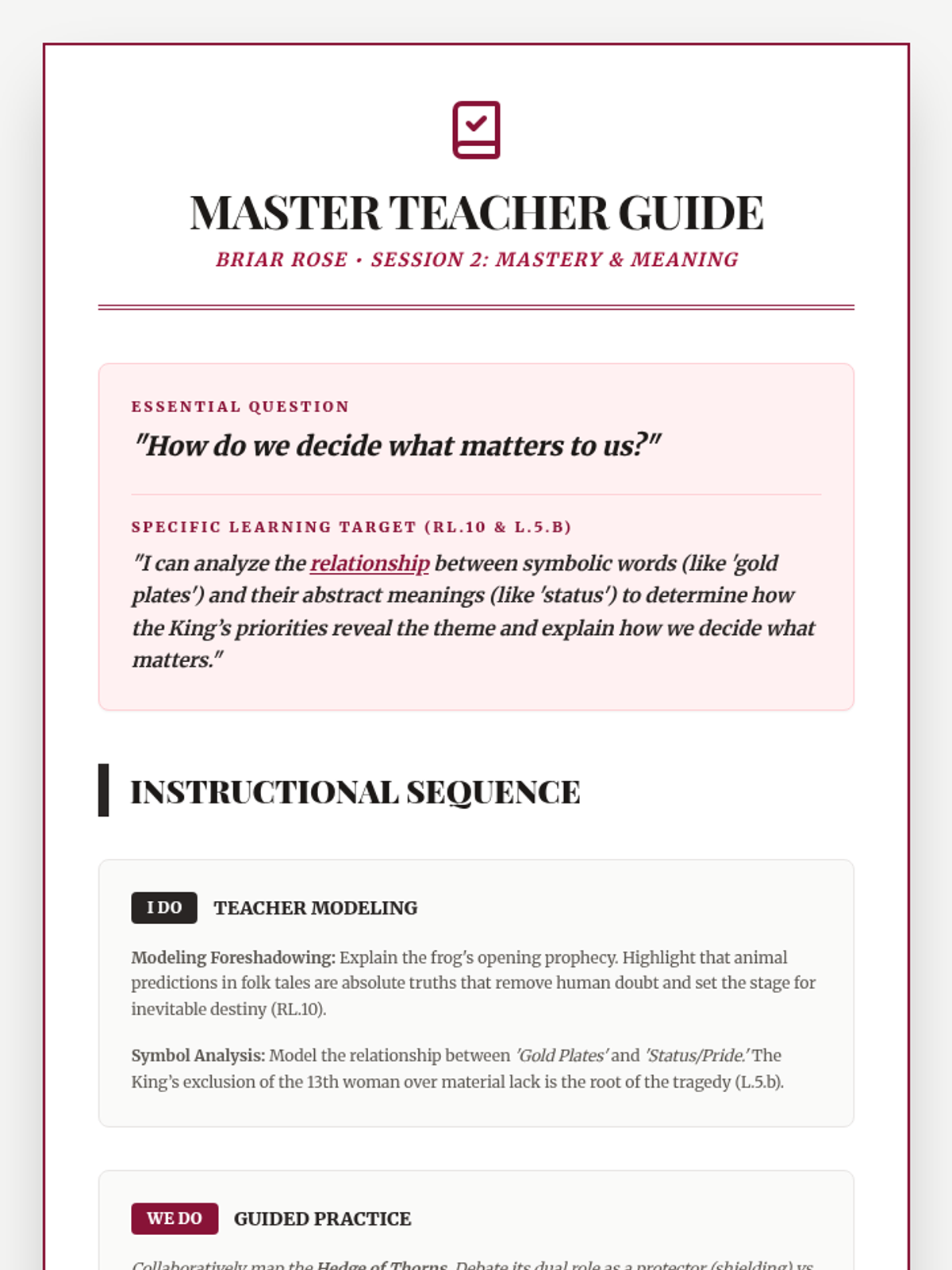
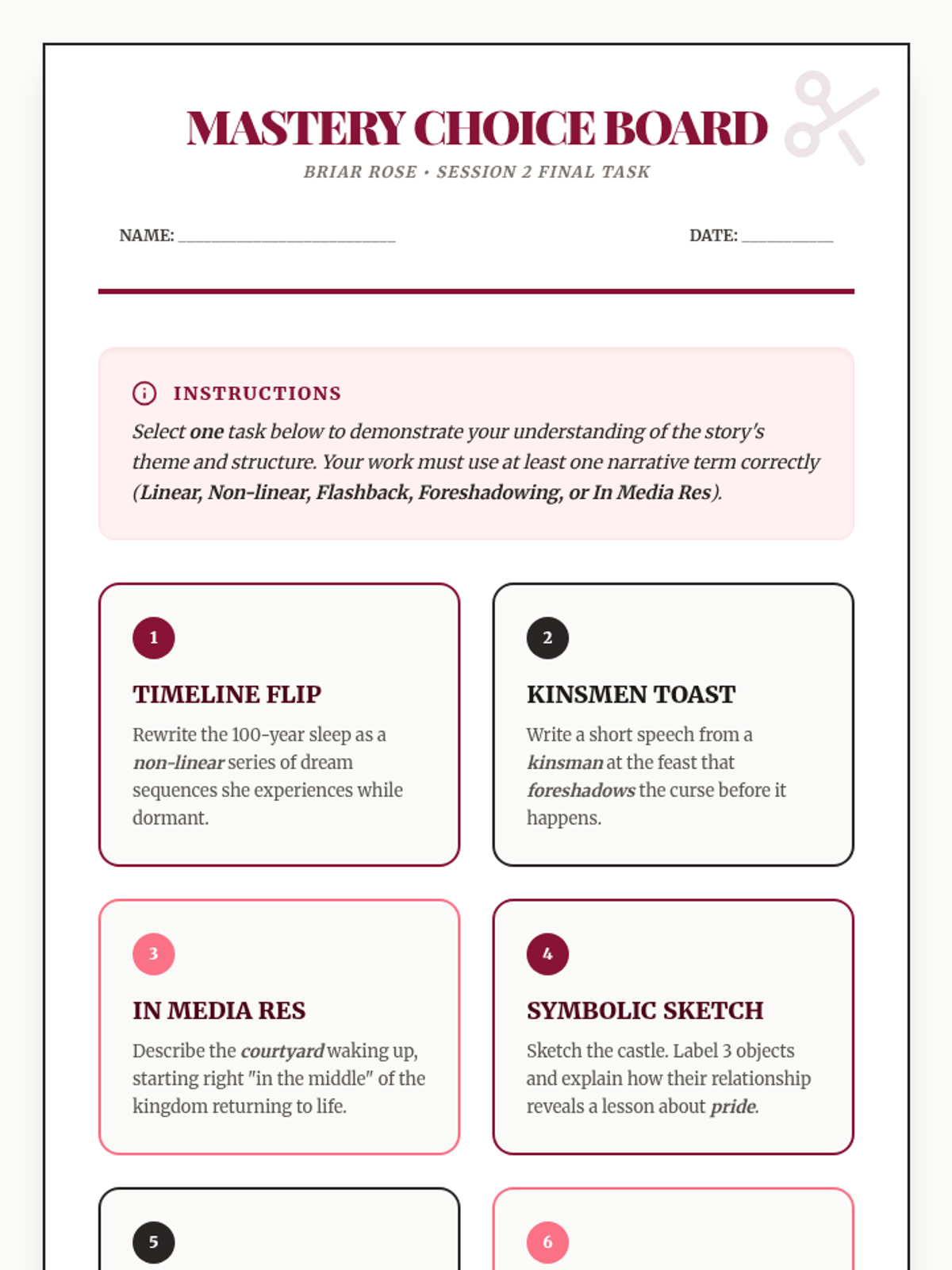
A quick exploration of theme and moral within the classic Brothers Grimm tale 'Briar Rose', featuring a focused bell ringer and exit ticket.
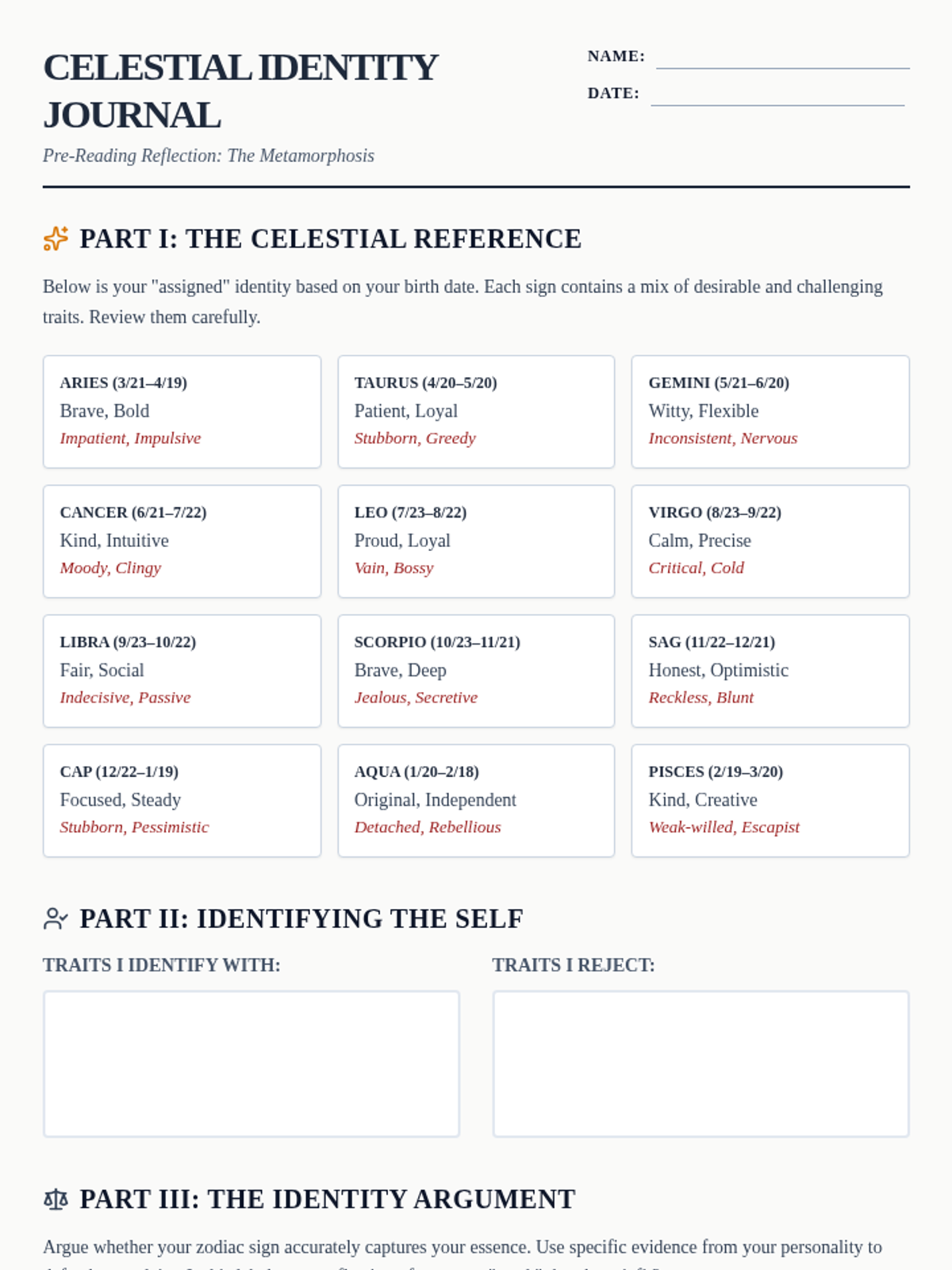
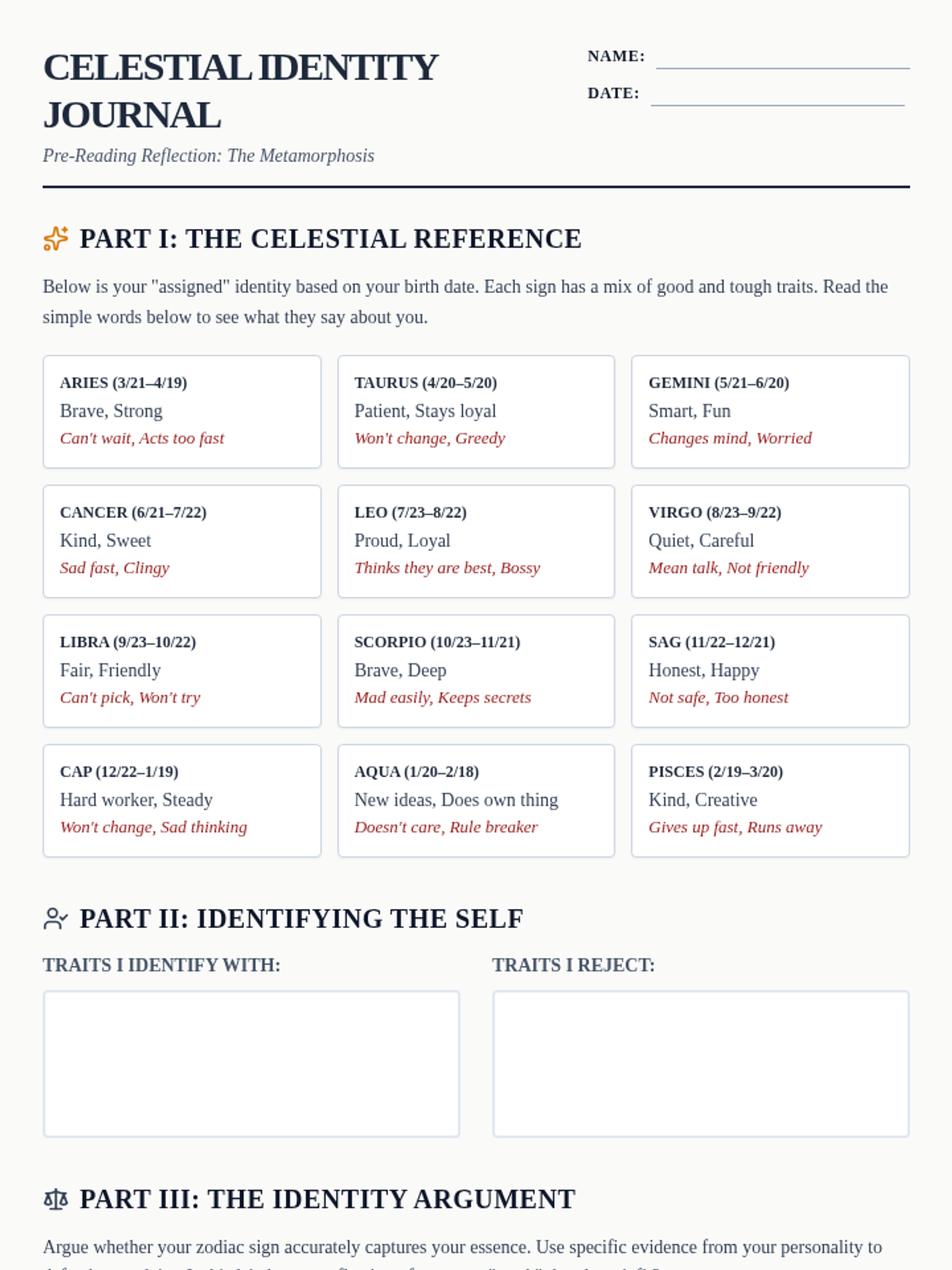
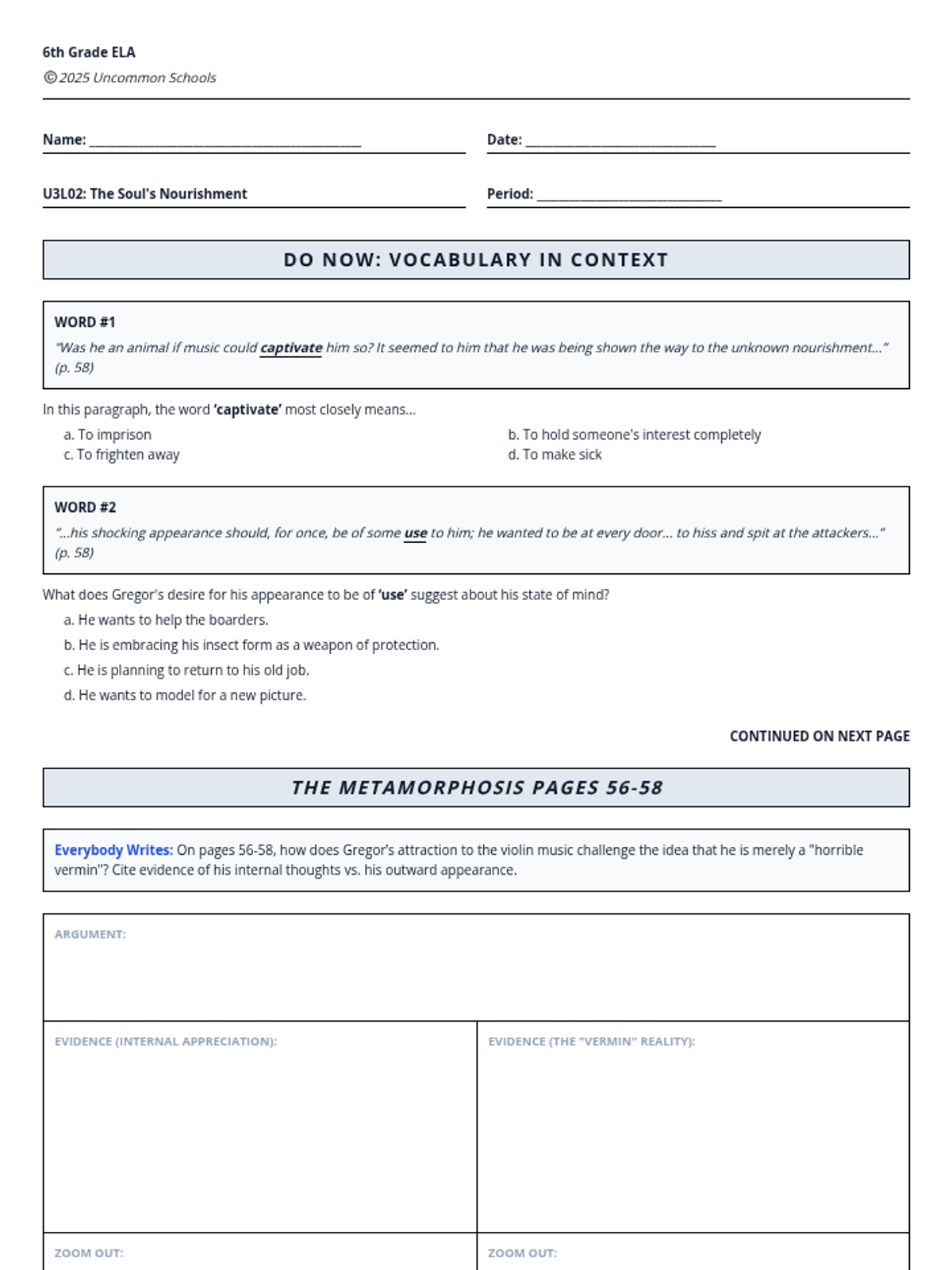
An introductory lesson for Kafka's 'The Metamorphosis' that explores themes of identity, external labels, and transformation through the lens of astrology and personal argumentation.
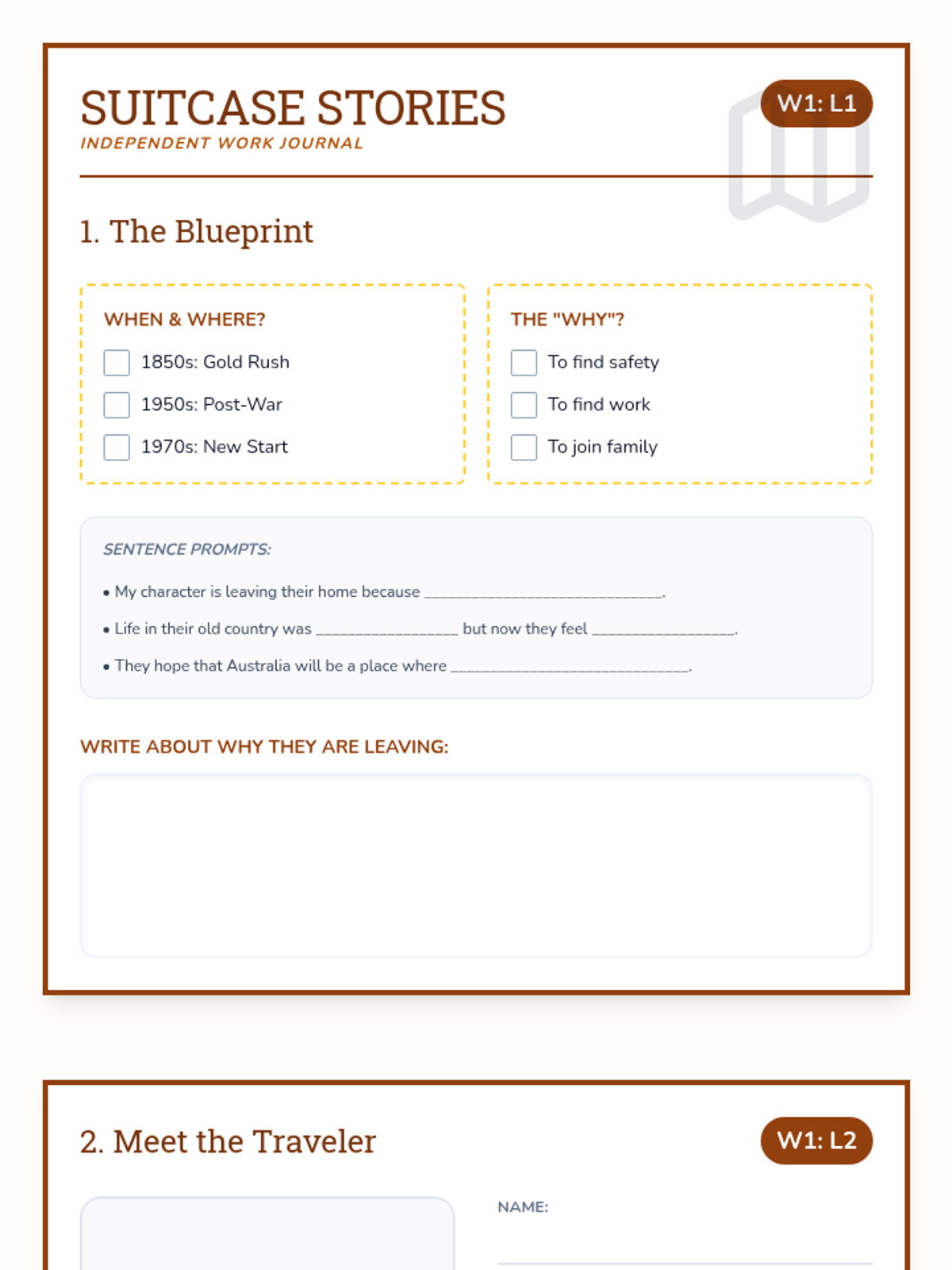
A 4-week historical narrative writing project focused on Australian migration, specifically designed to scaffold imagination and structure for students with ASD.
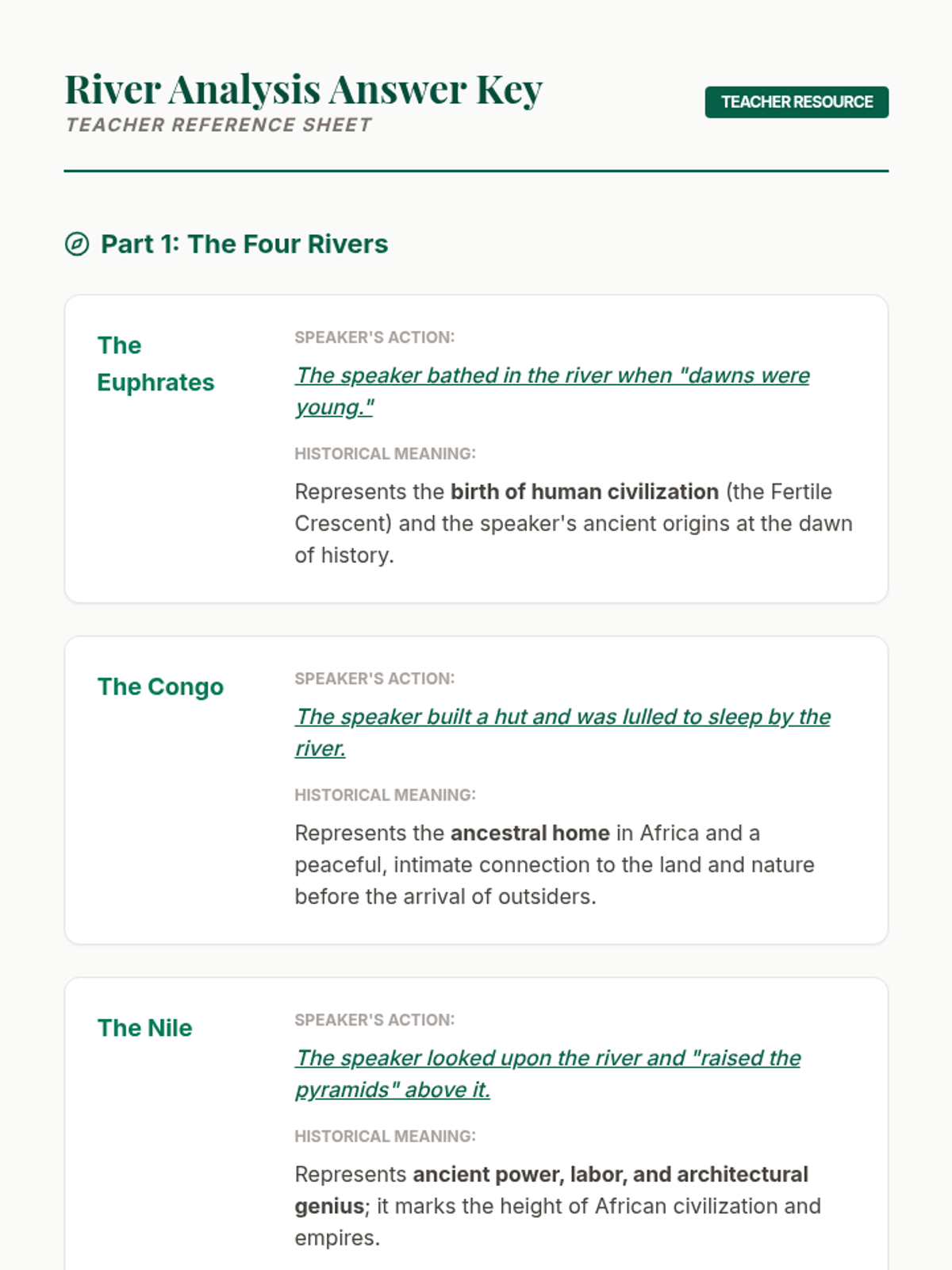
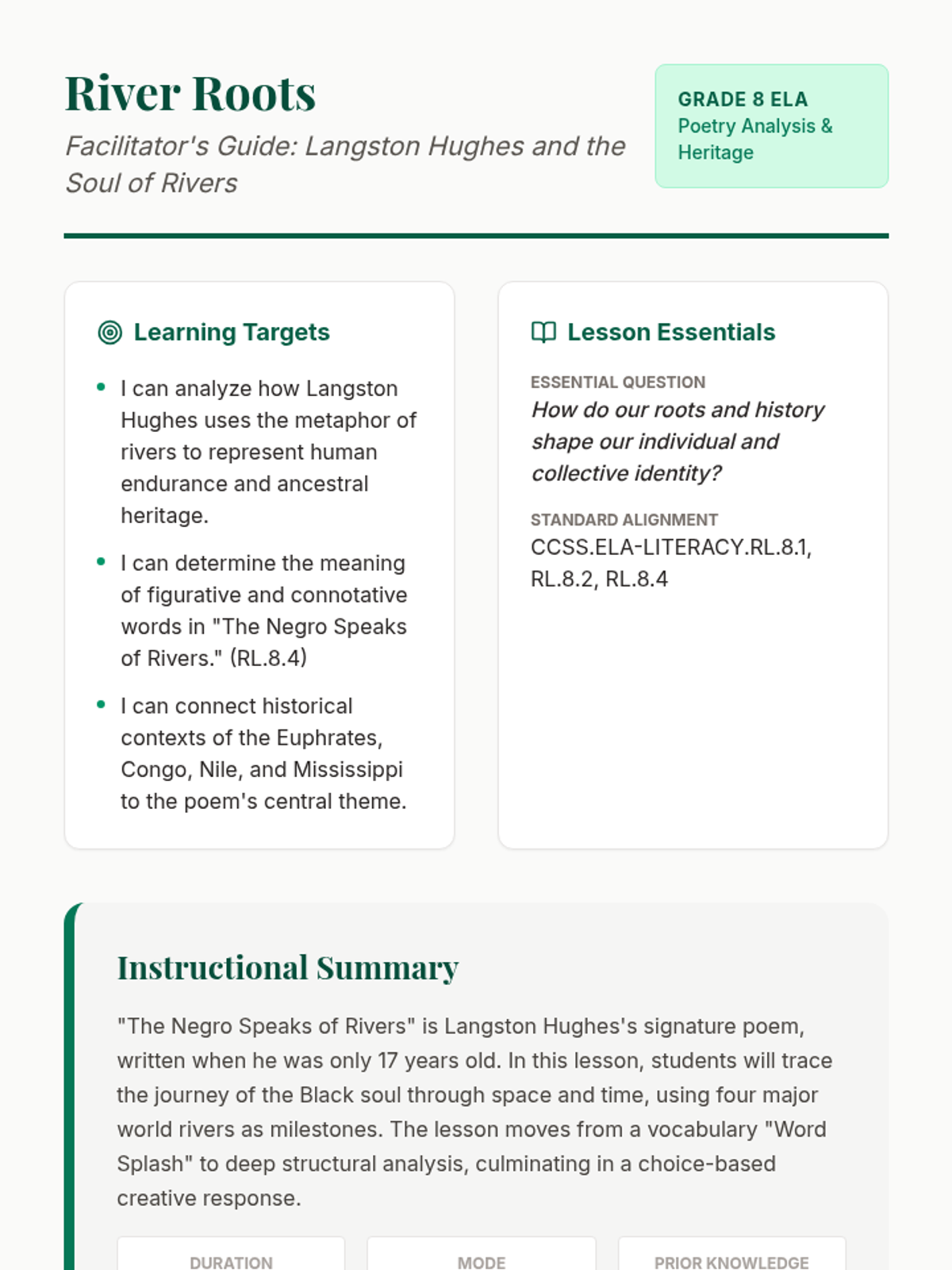
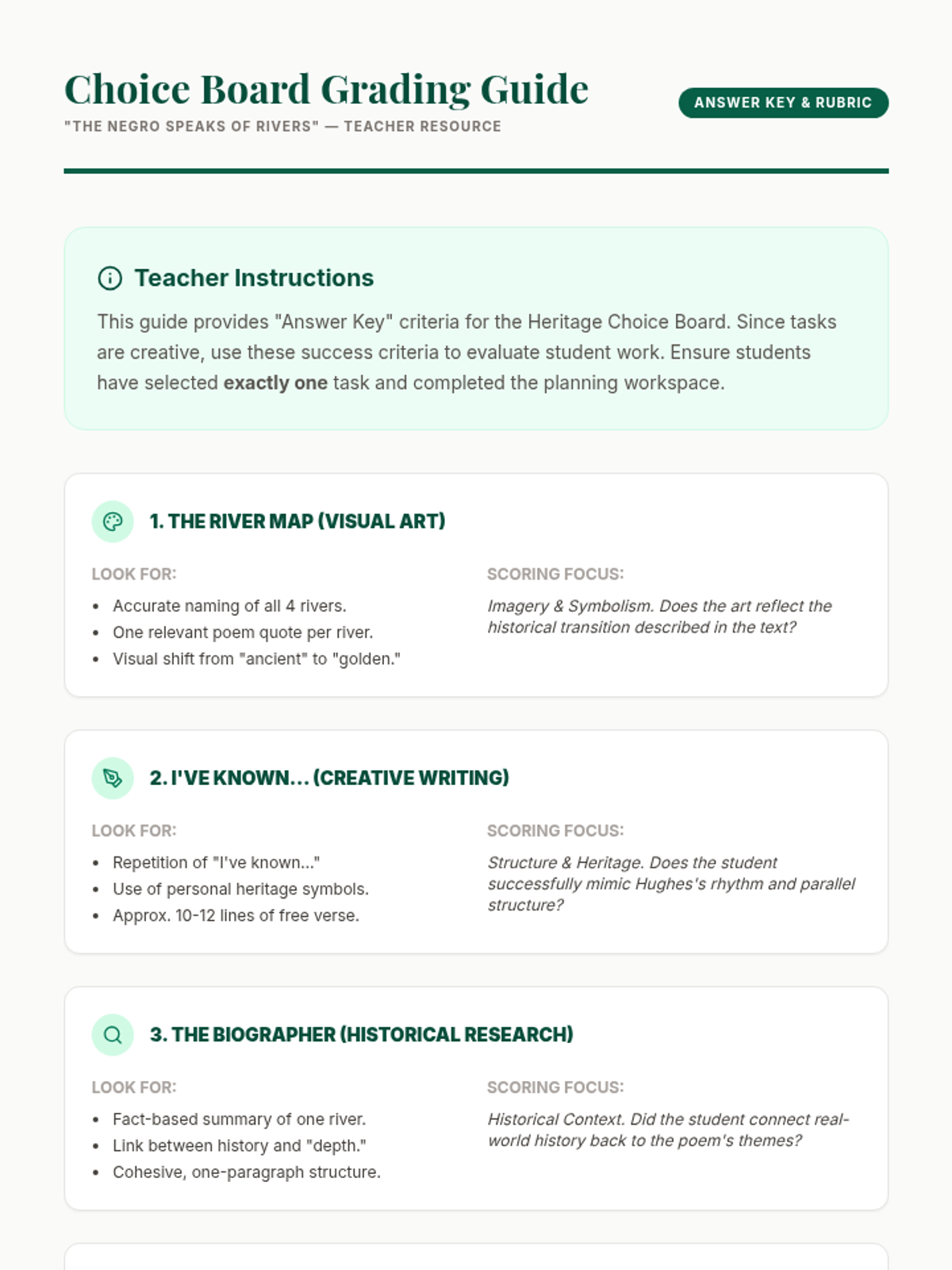
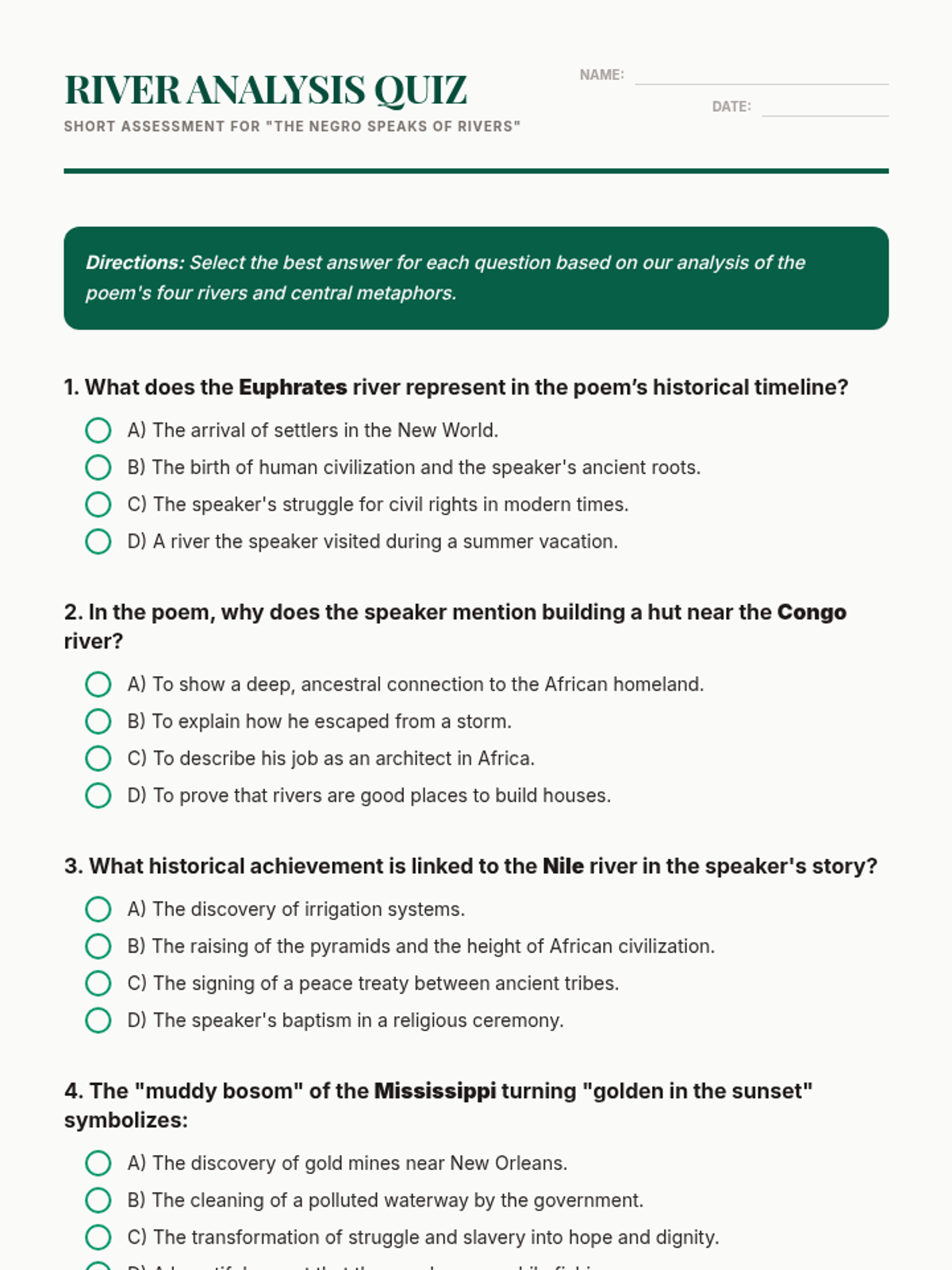
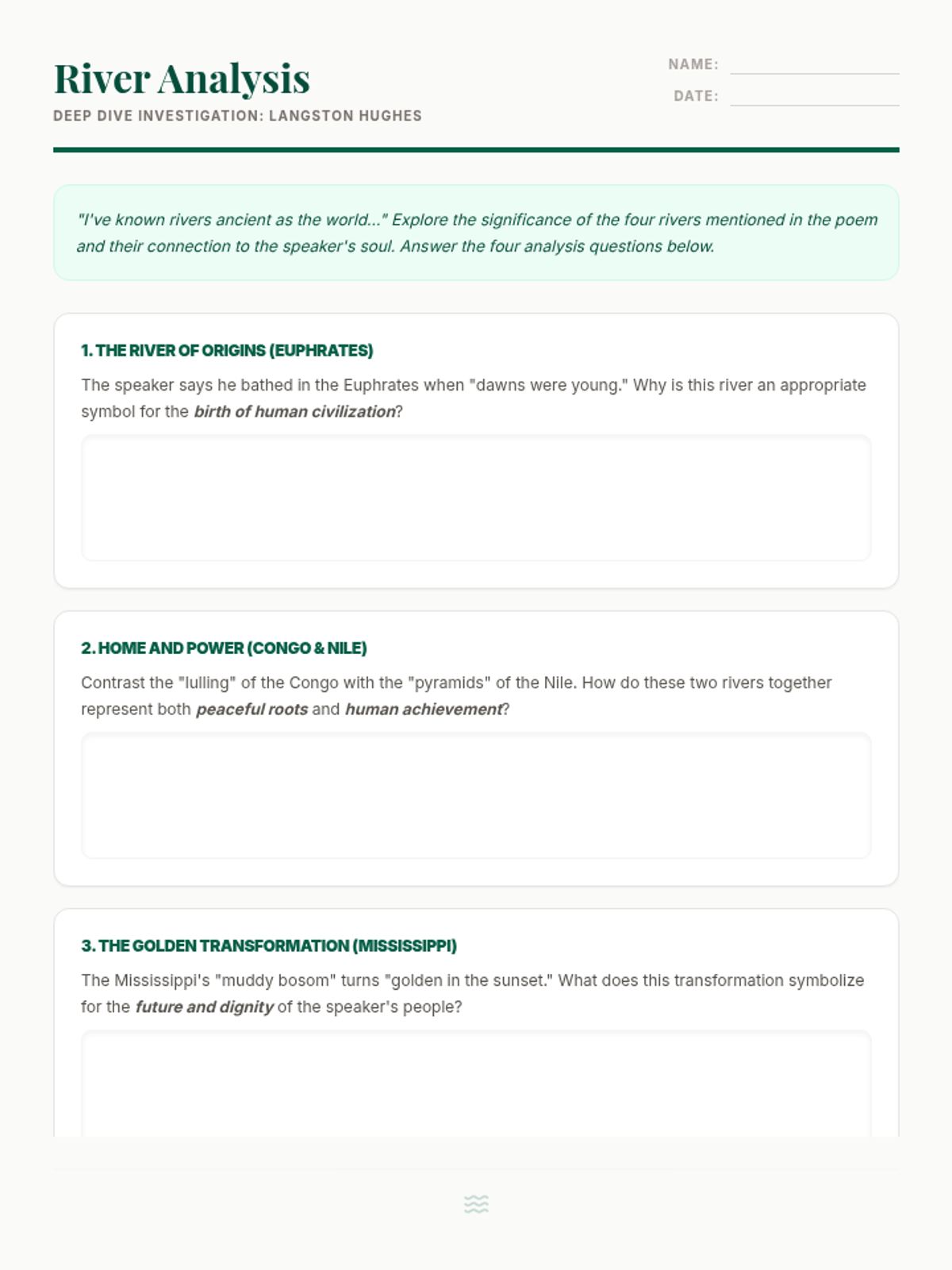
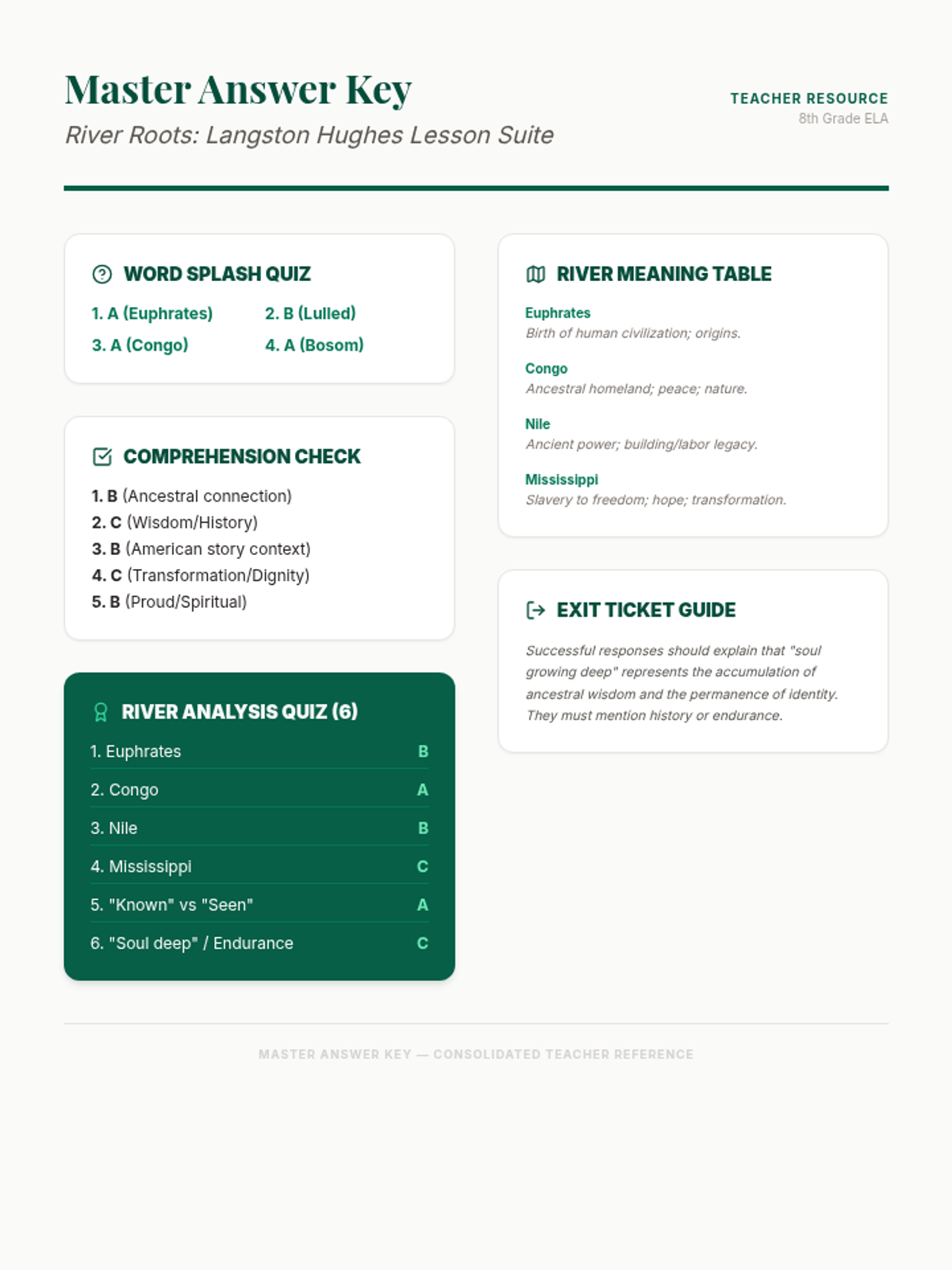
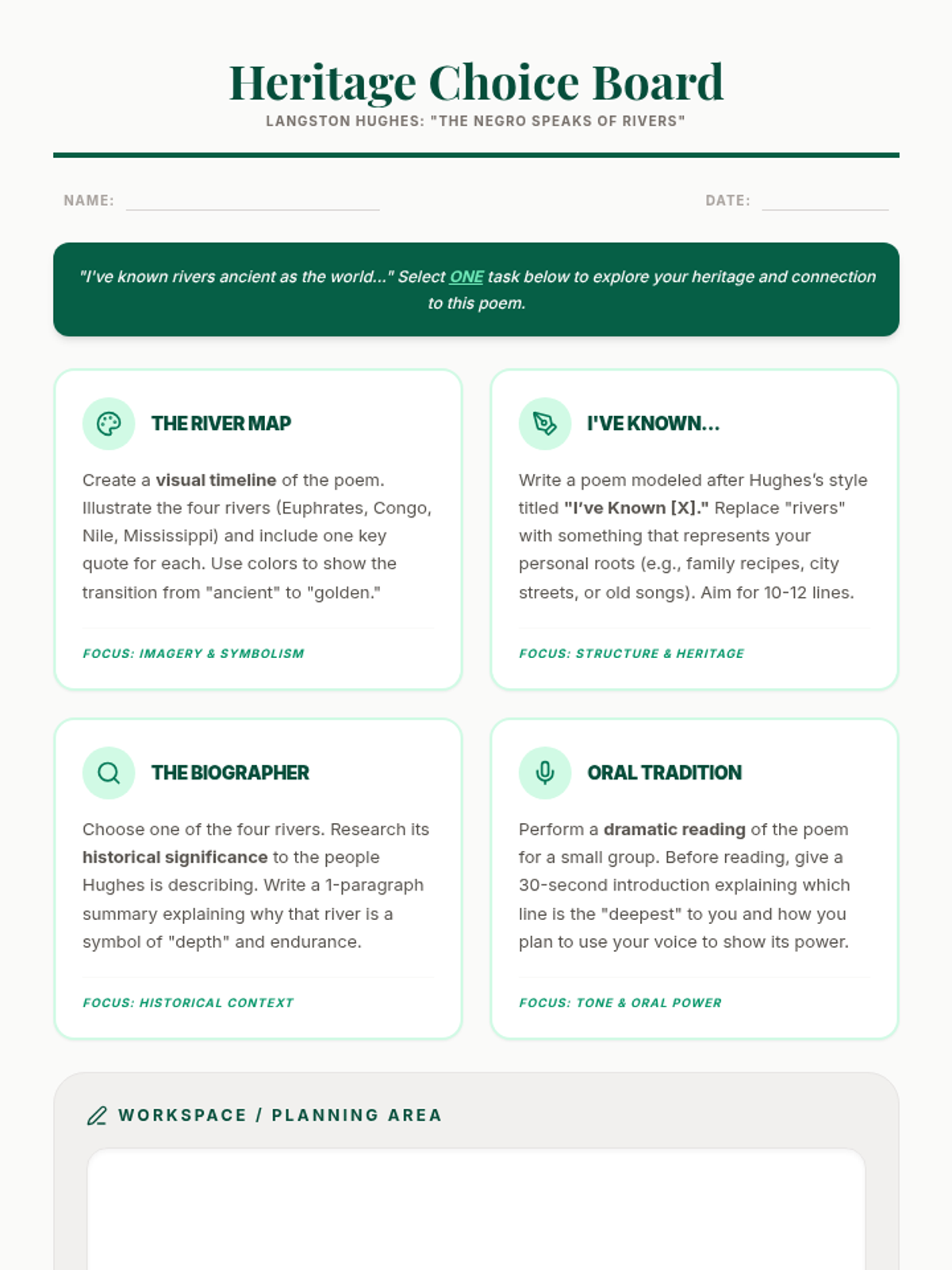
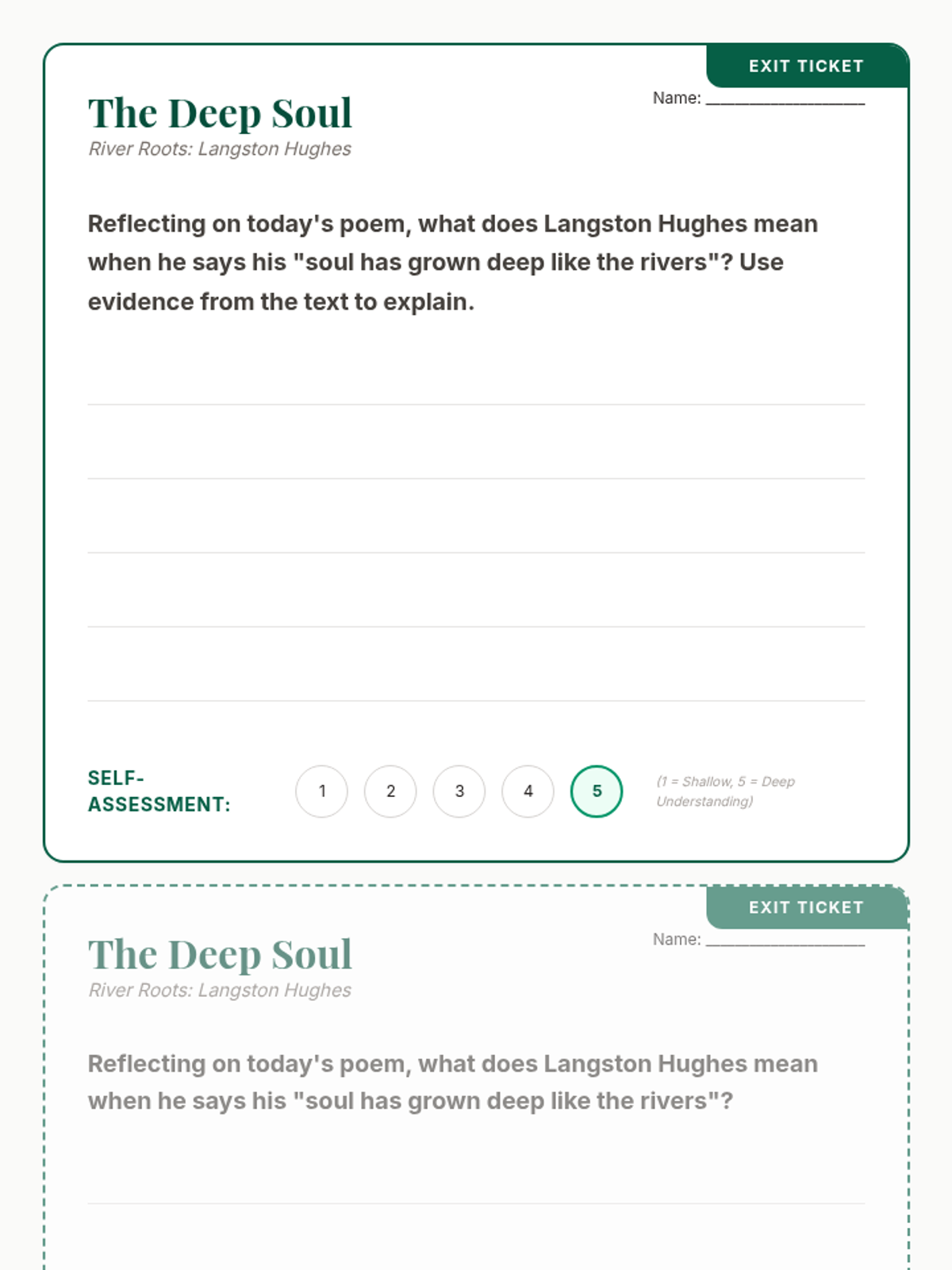
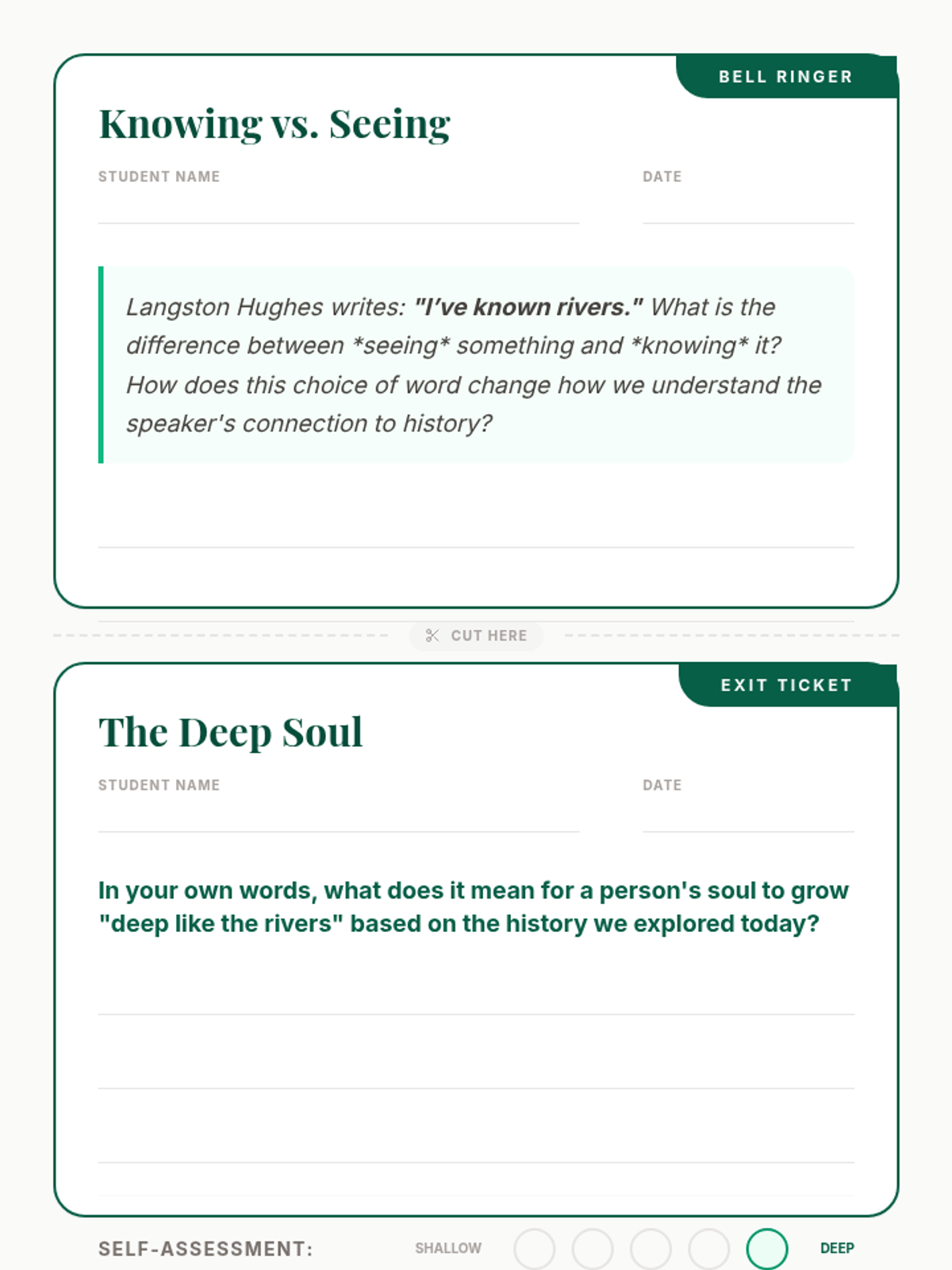
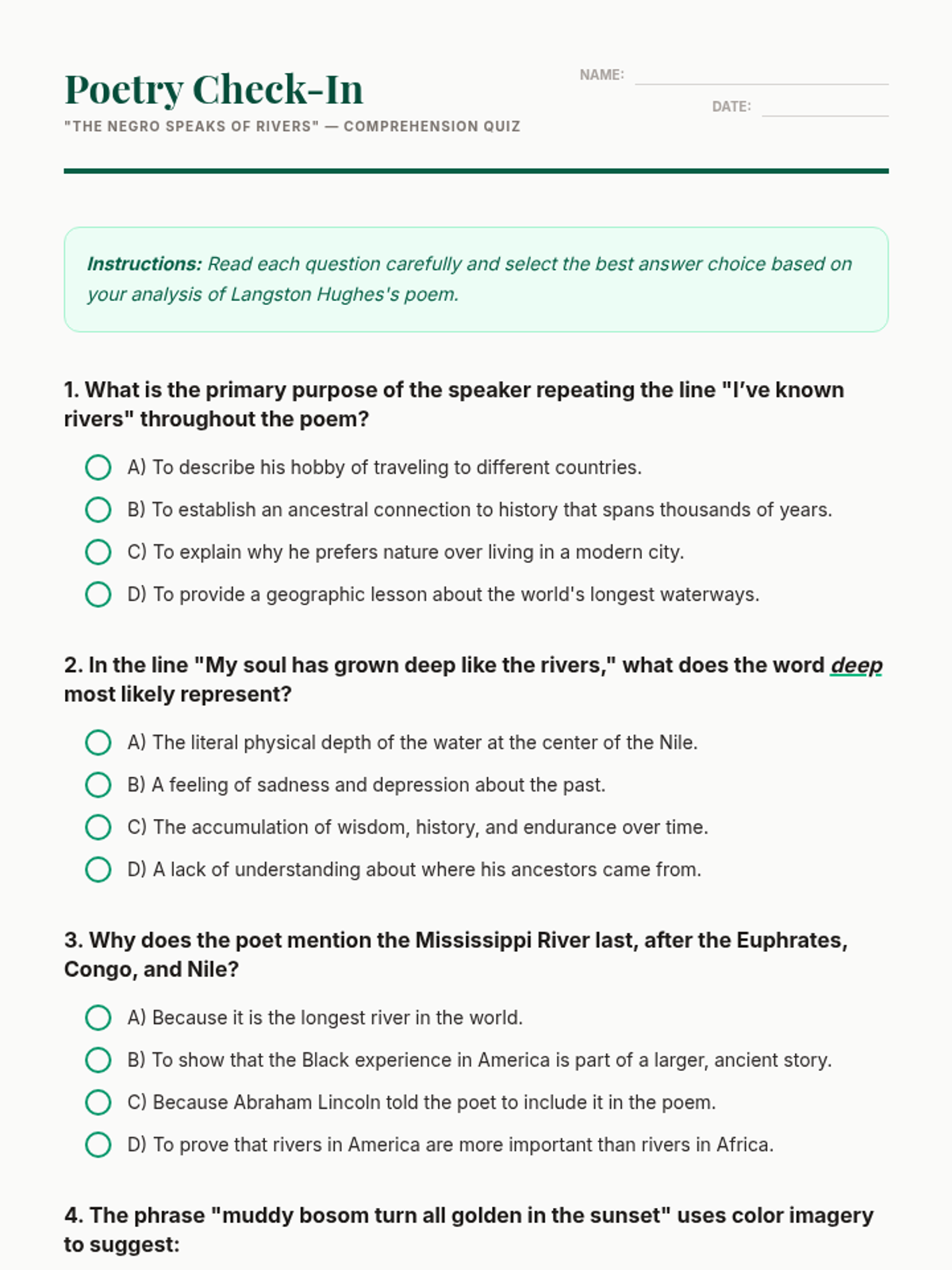
A comprehensive 8th-grade ELA lesson on Langston Hughes's 'The Negro Speaks of Rivers,' exploring themes of heritage, endurance, and identity through the metaphor of ancient rivers. The lesson includes a vocabulary quiz bee, poem analysis, and differentiated choice boards.
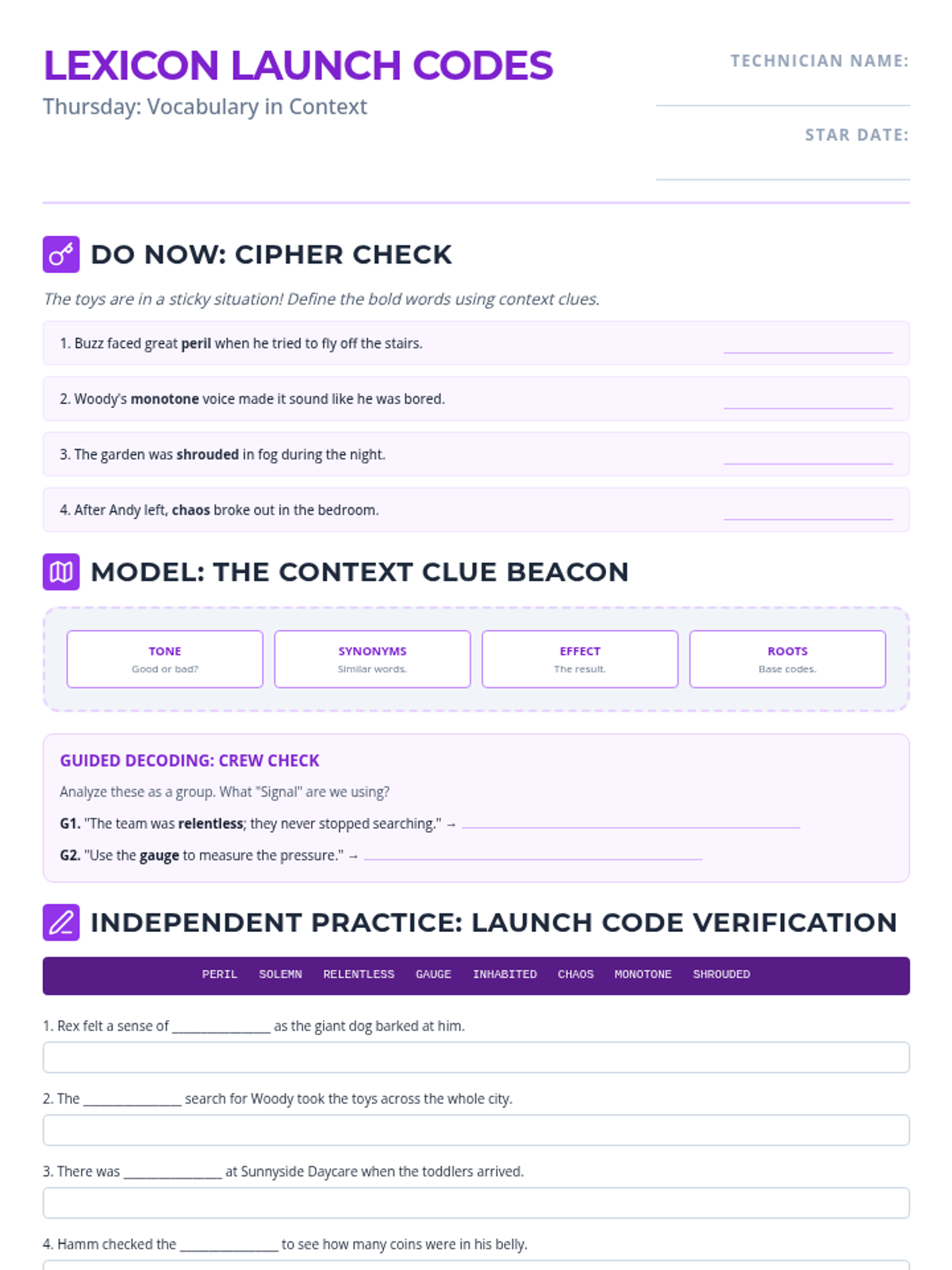
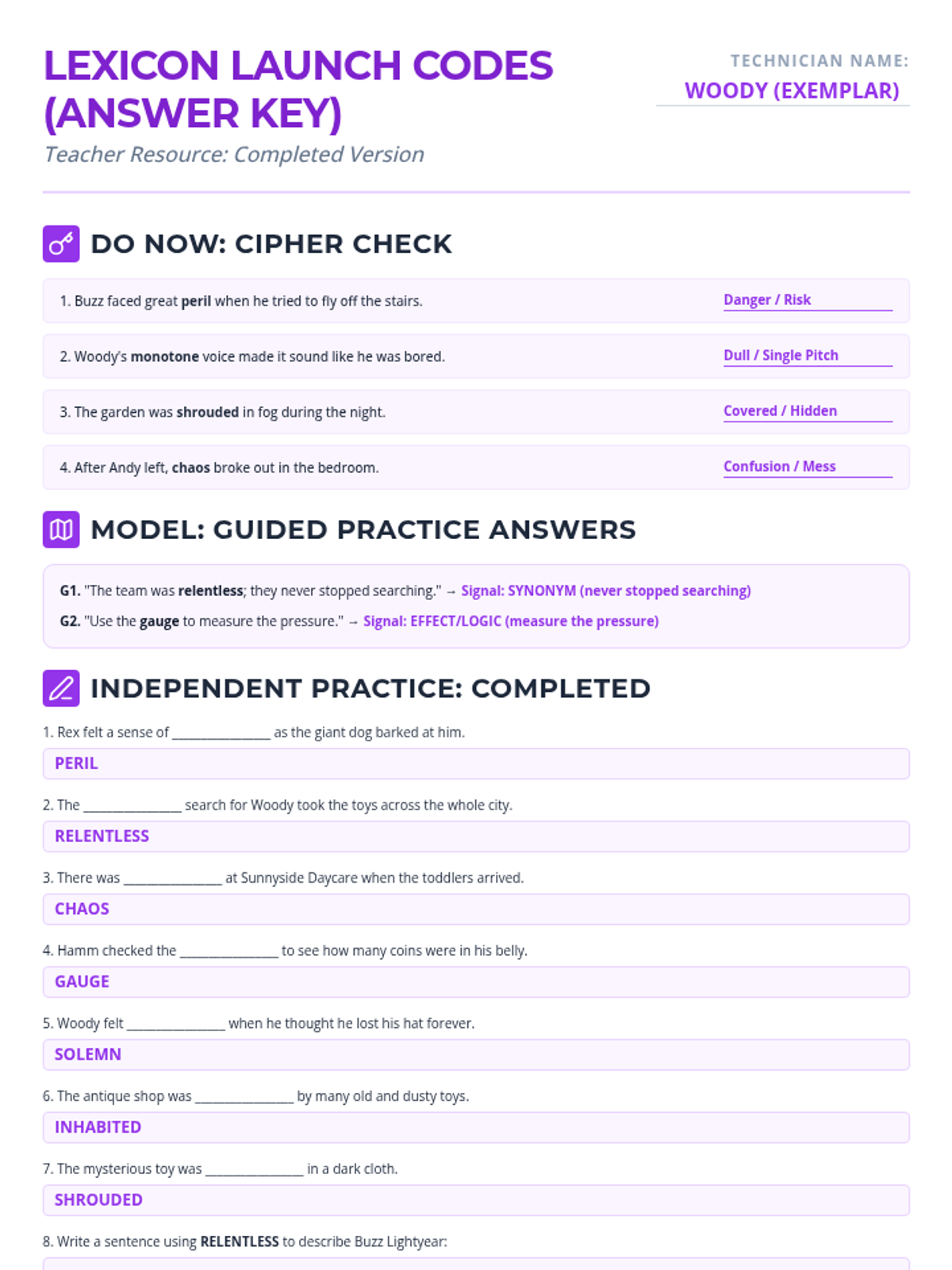
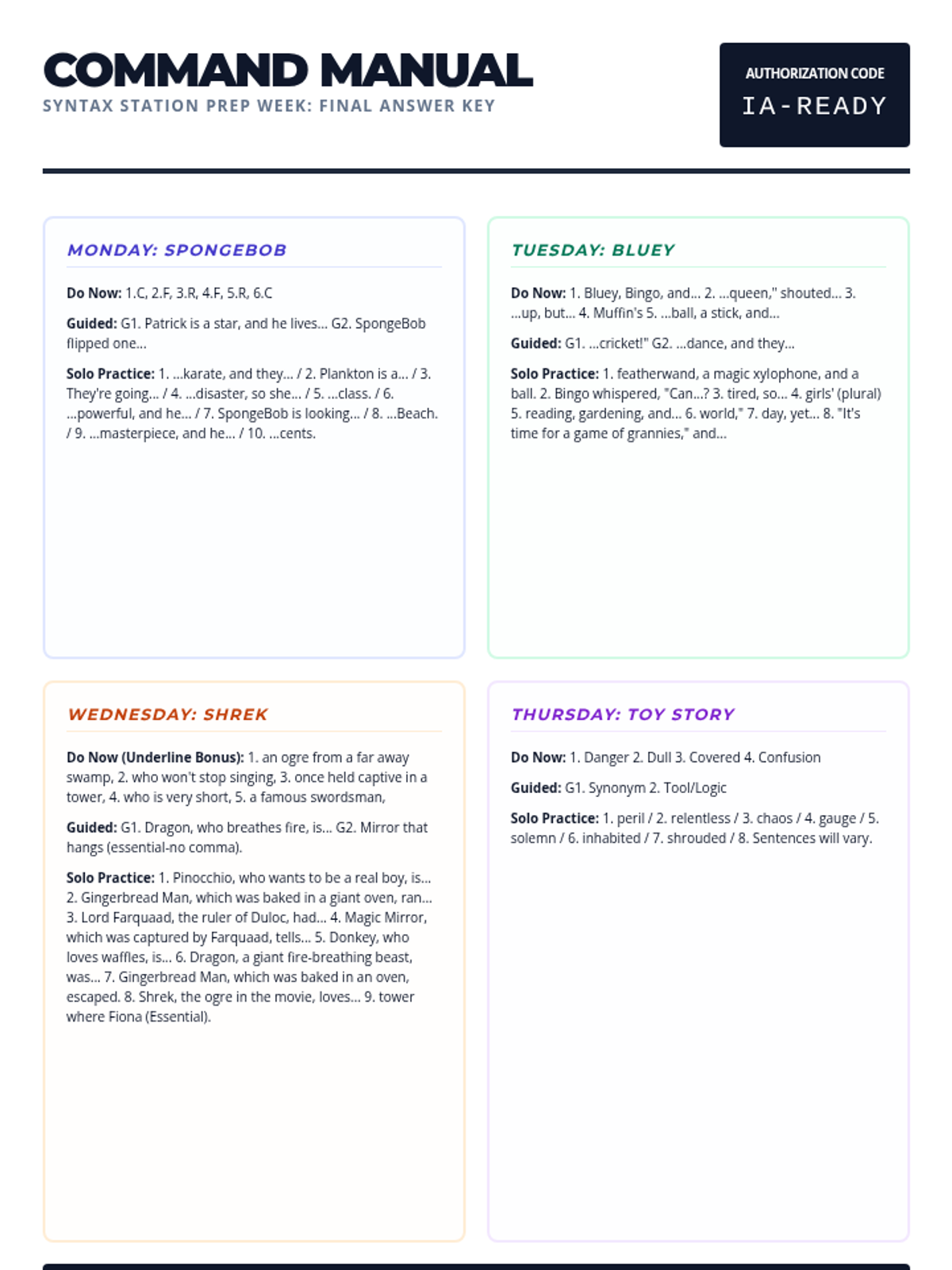
Focuses on using context clues to determine the meaning of complex vocabulary words from the IA exam word bank and applying them correctly in sentences.
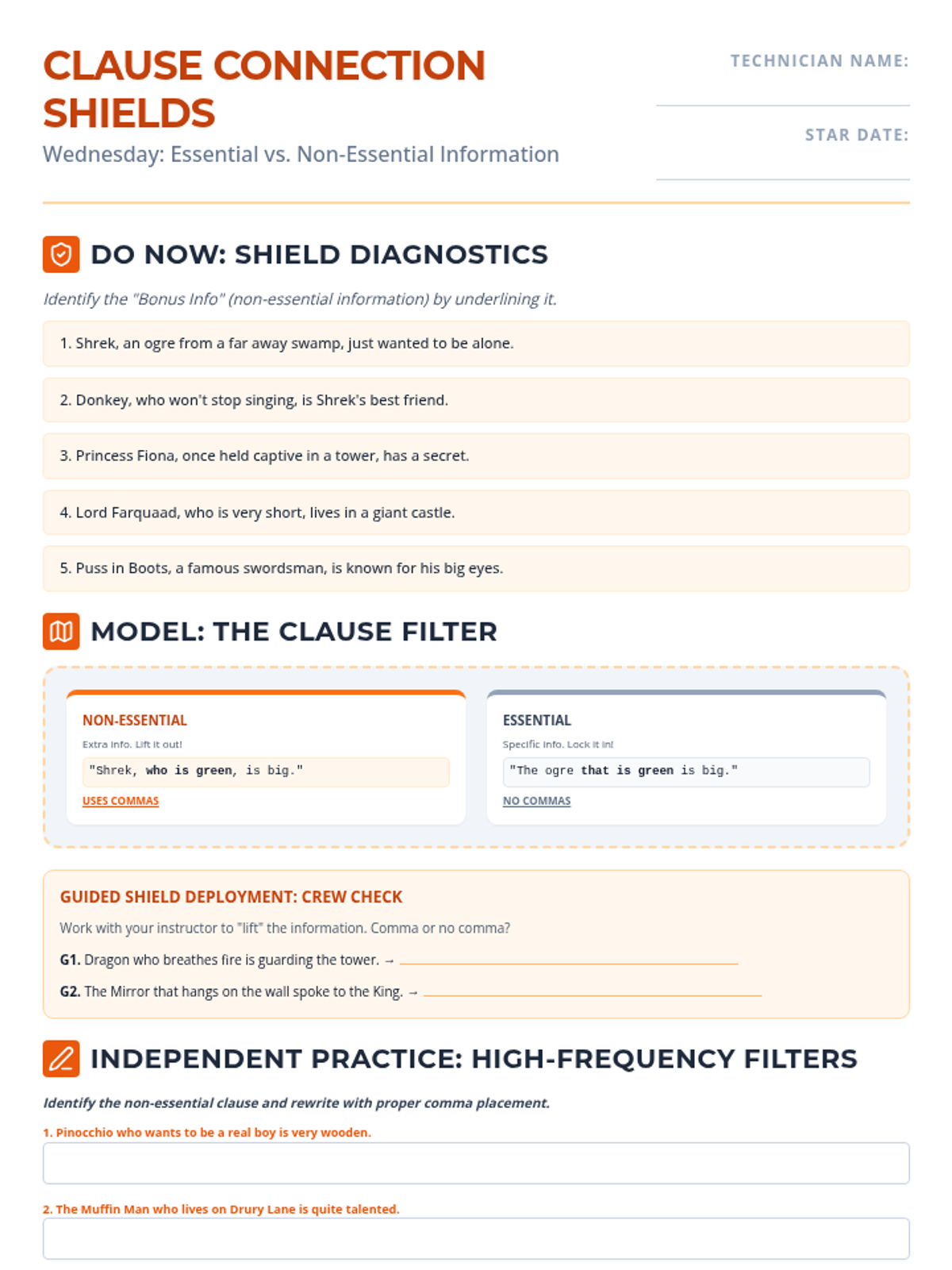
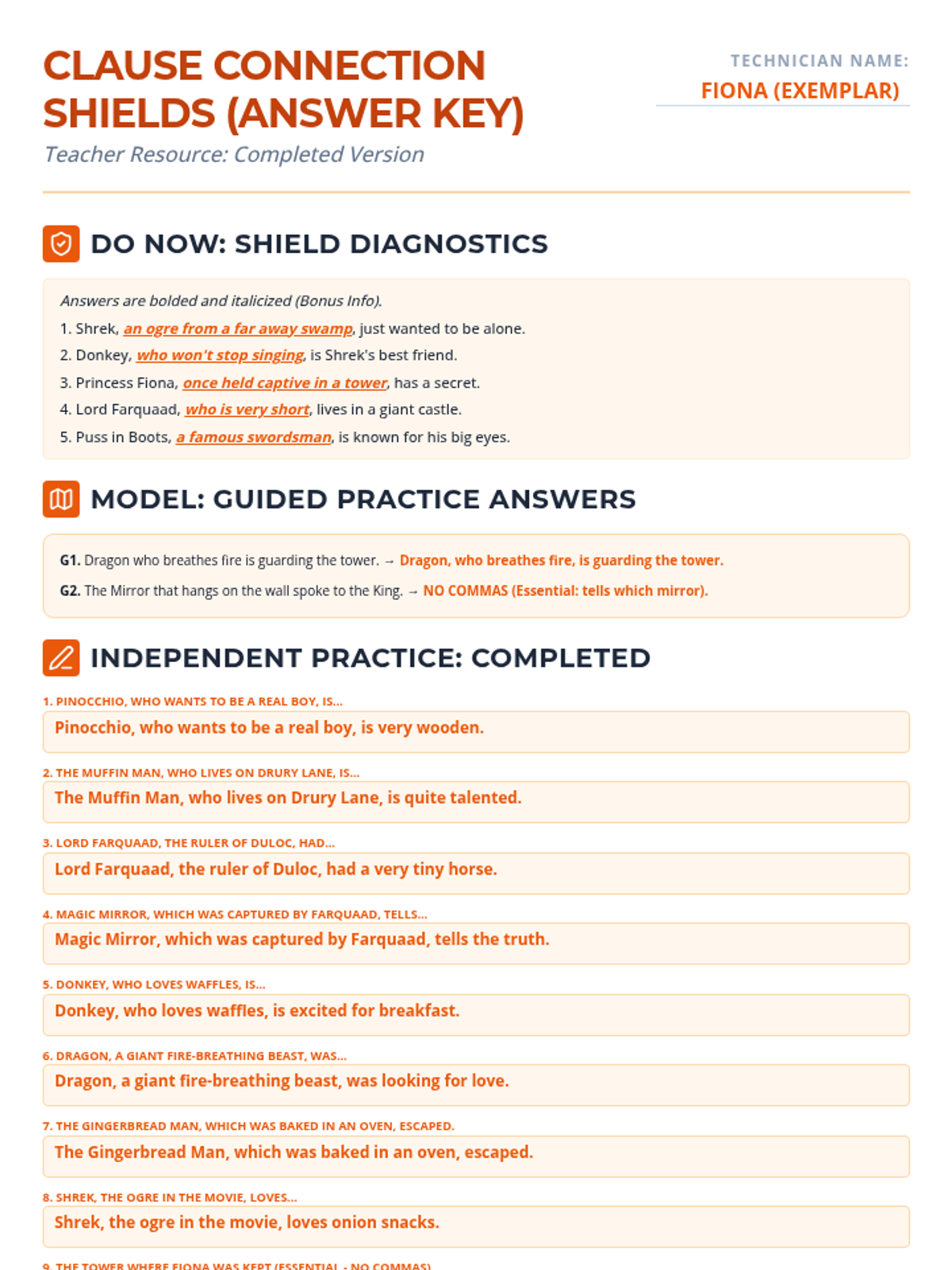
Differentiates between essential and non-essential clauses, focusing on the identification and punctuation of relative clauses and appositives.
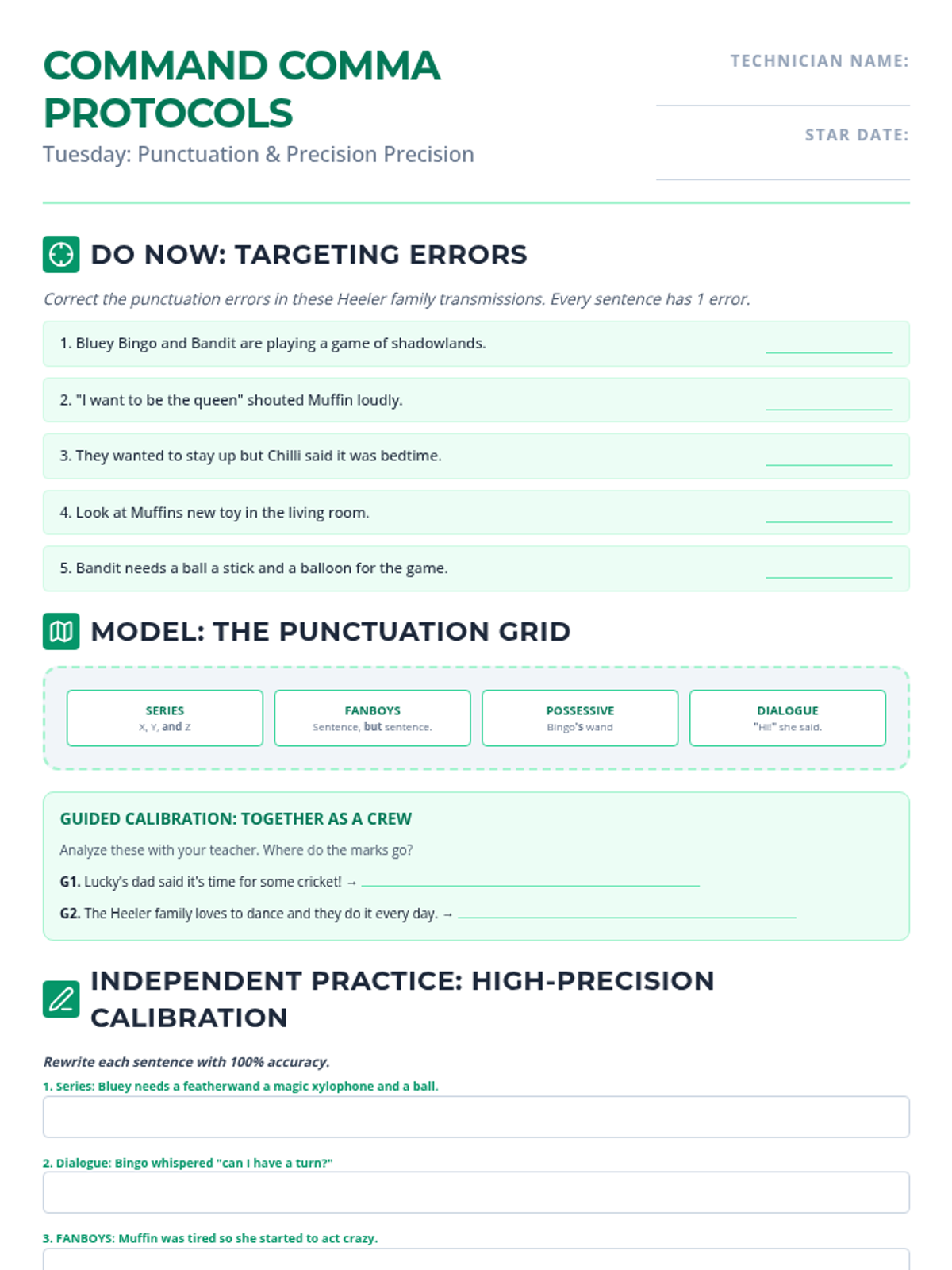
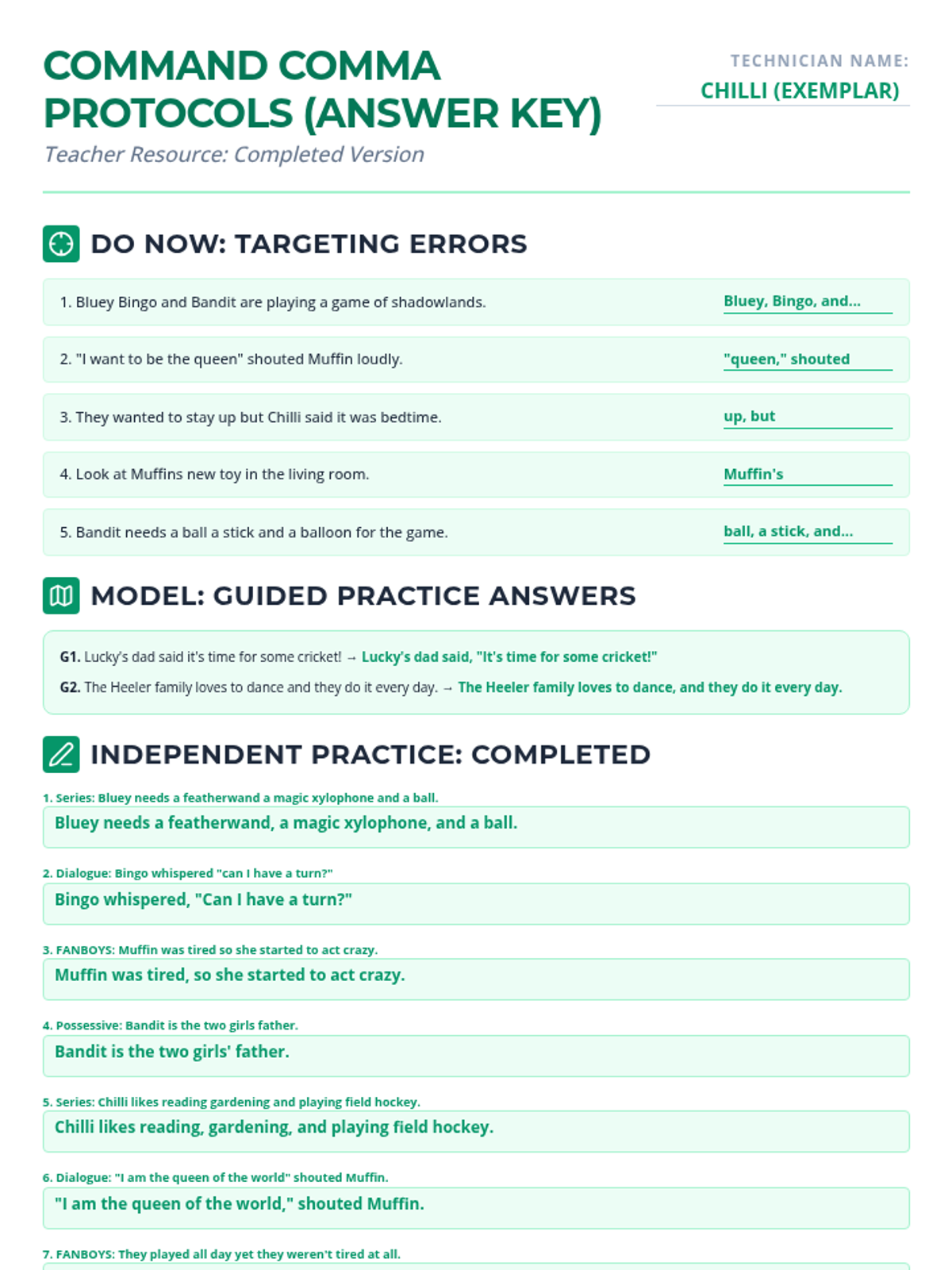
Focuses on the correct use of commas in series, commas with coordinating conjunctions, possessive nouns, and punctuation within quotations as seen in the IA exam.
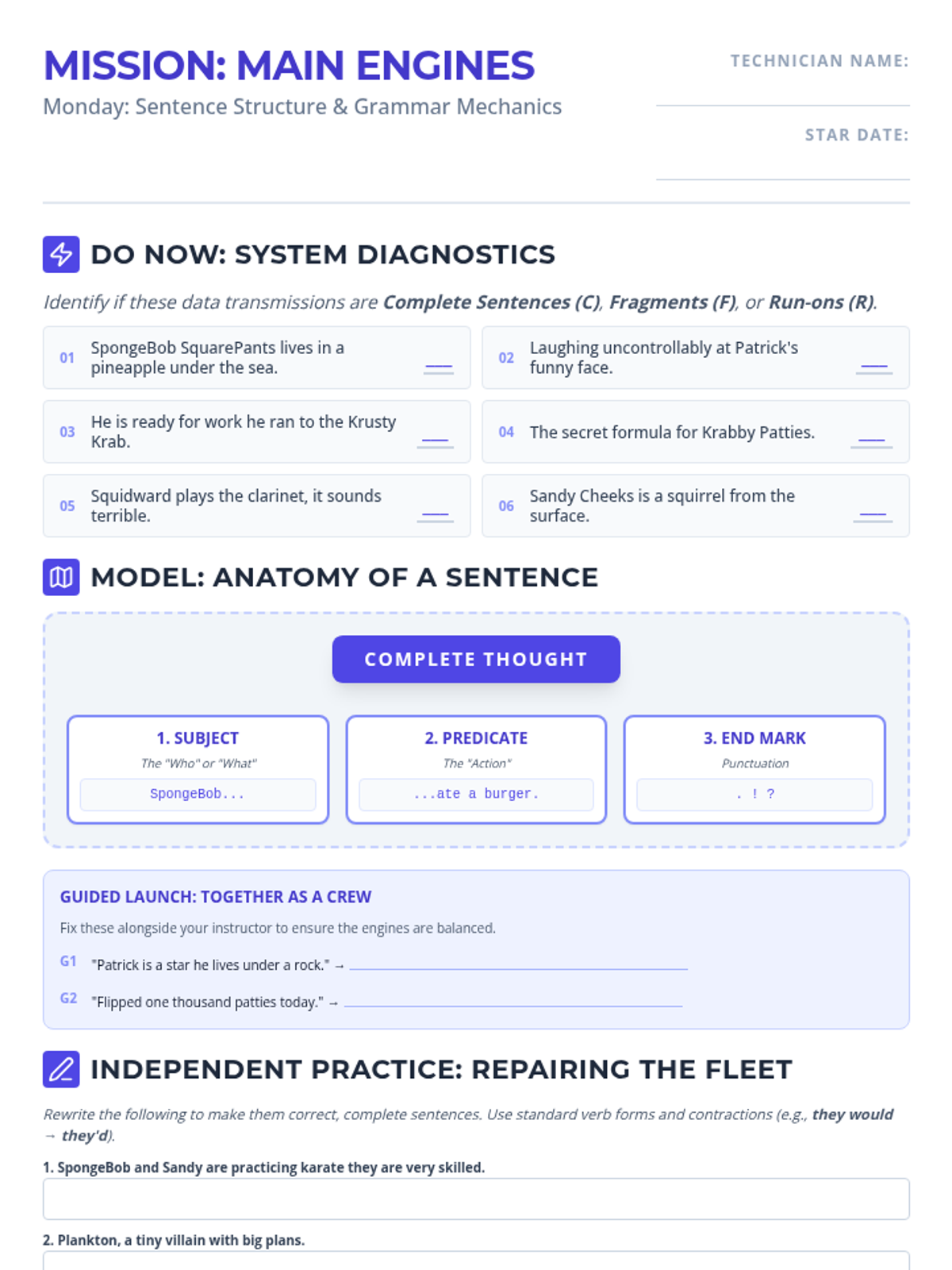
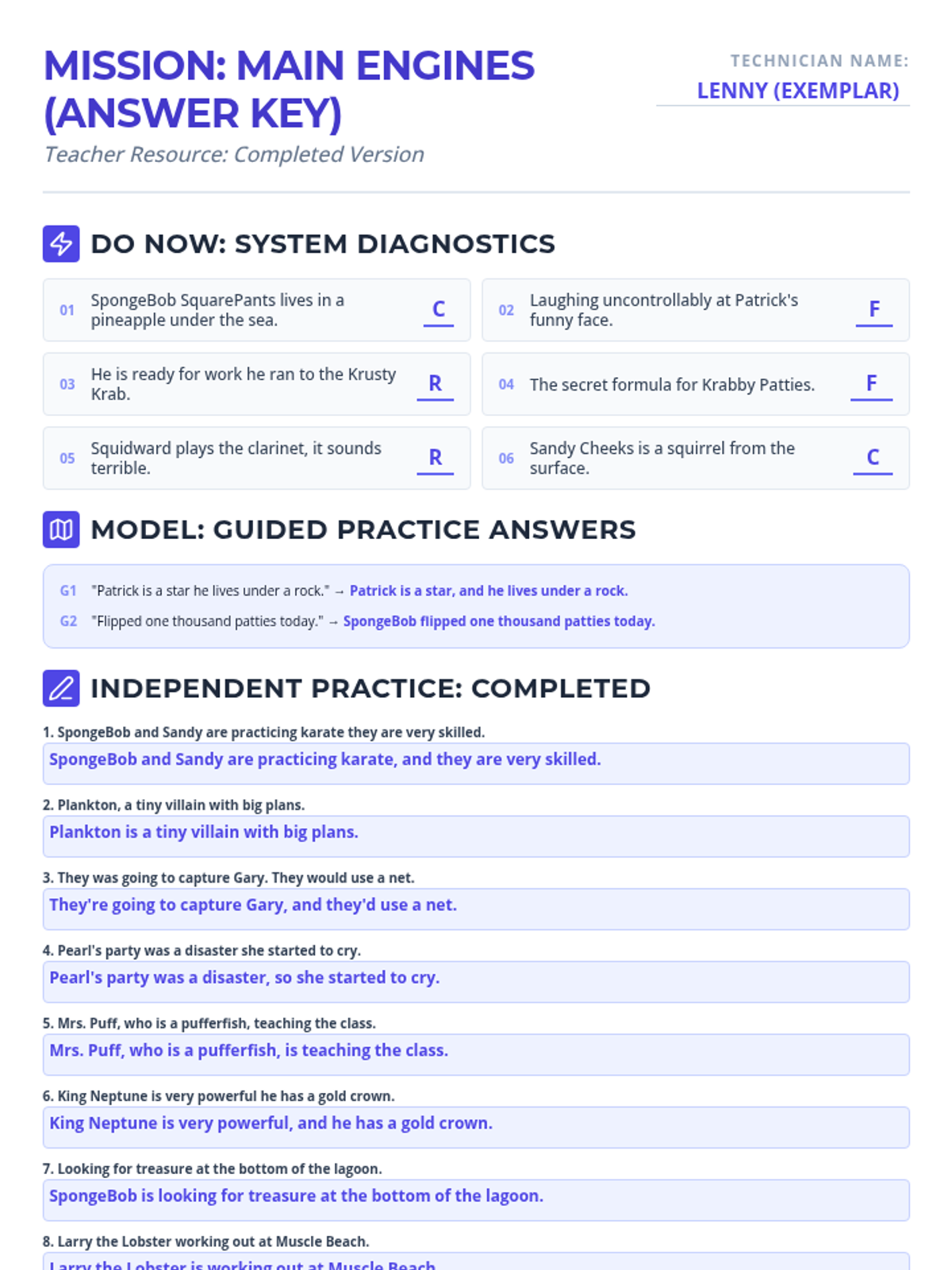
Focuses on identifying complete sentences, avoiding fragments and run-ons, and mastering standard verb forms and contractions as seen in the IA exam.
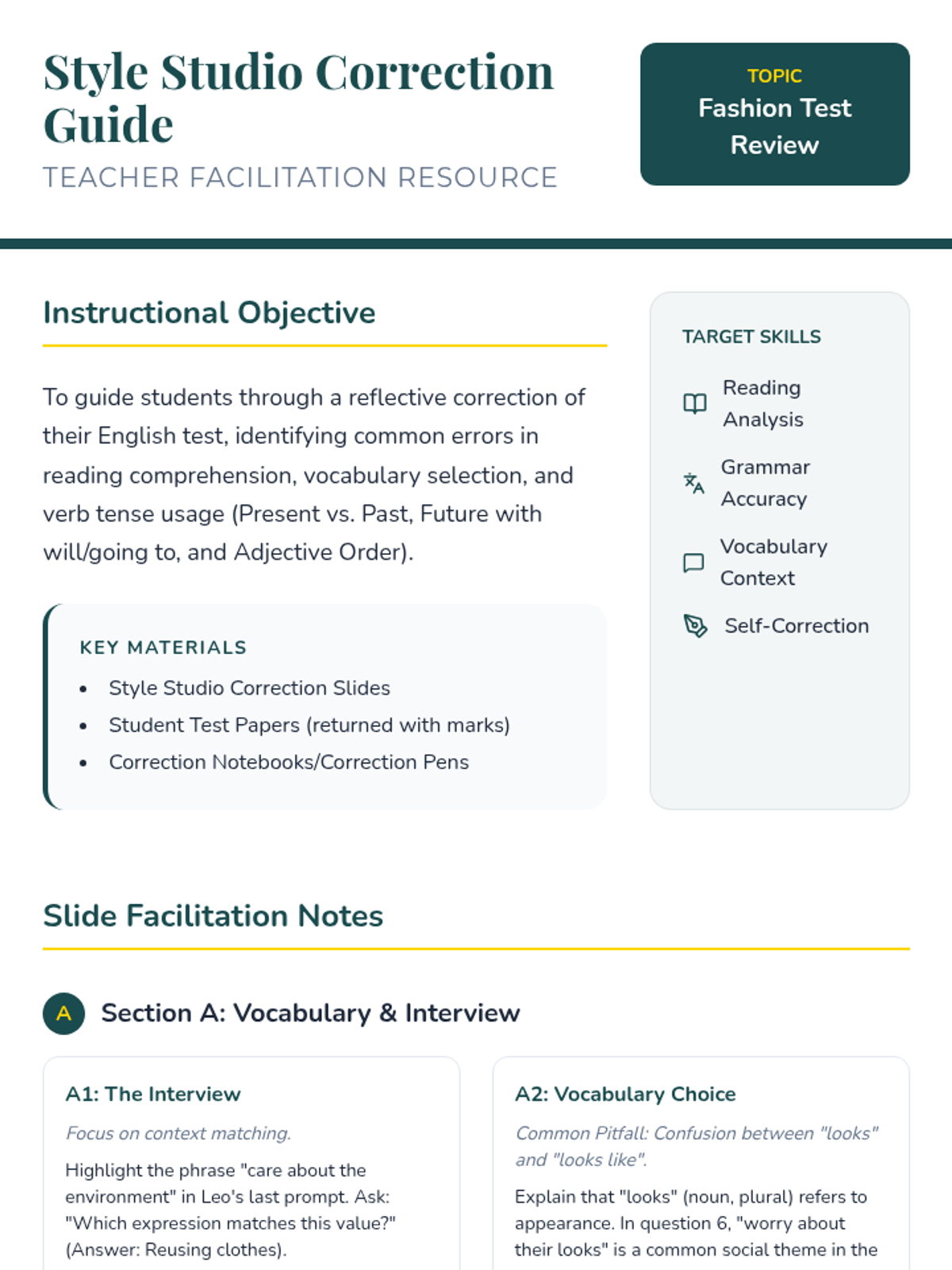
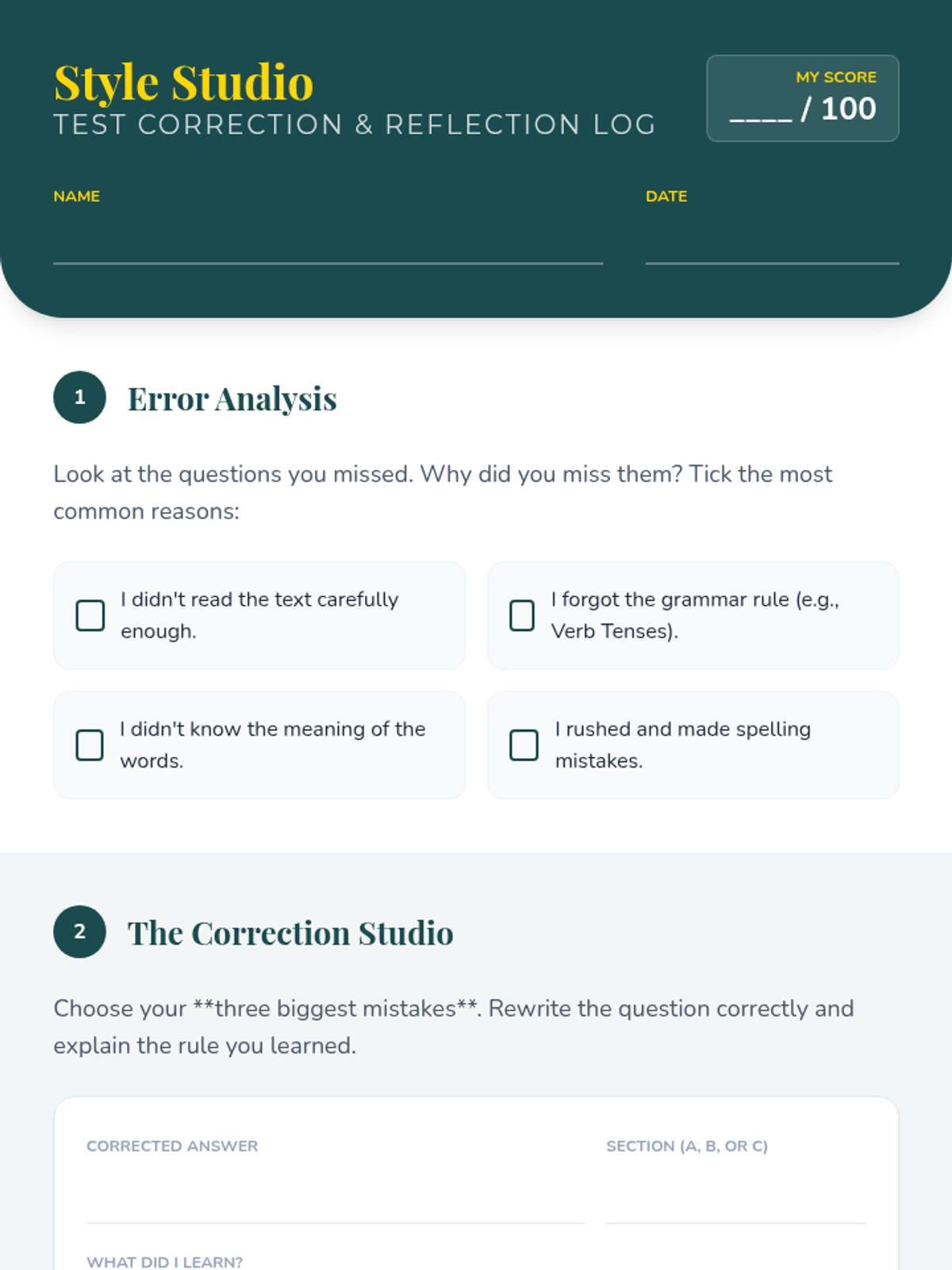
A comprehensive review lesson designed to guide students through the correction of their English fashion test, focusing on reading comprehension, grammar tenses, and vocabulary.
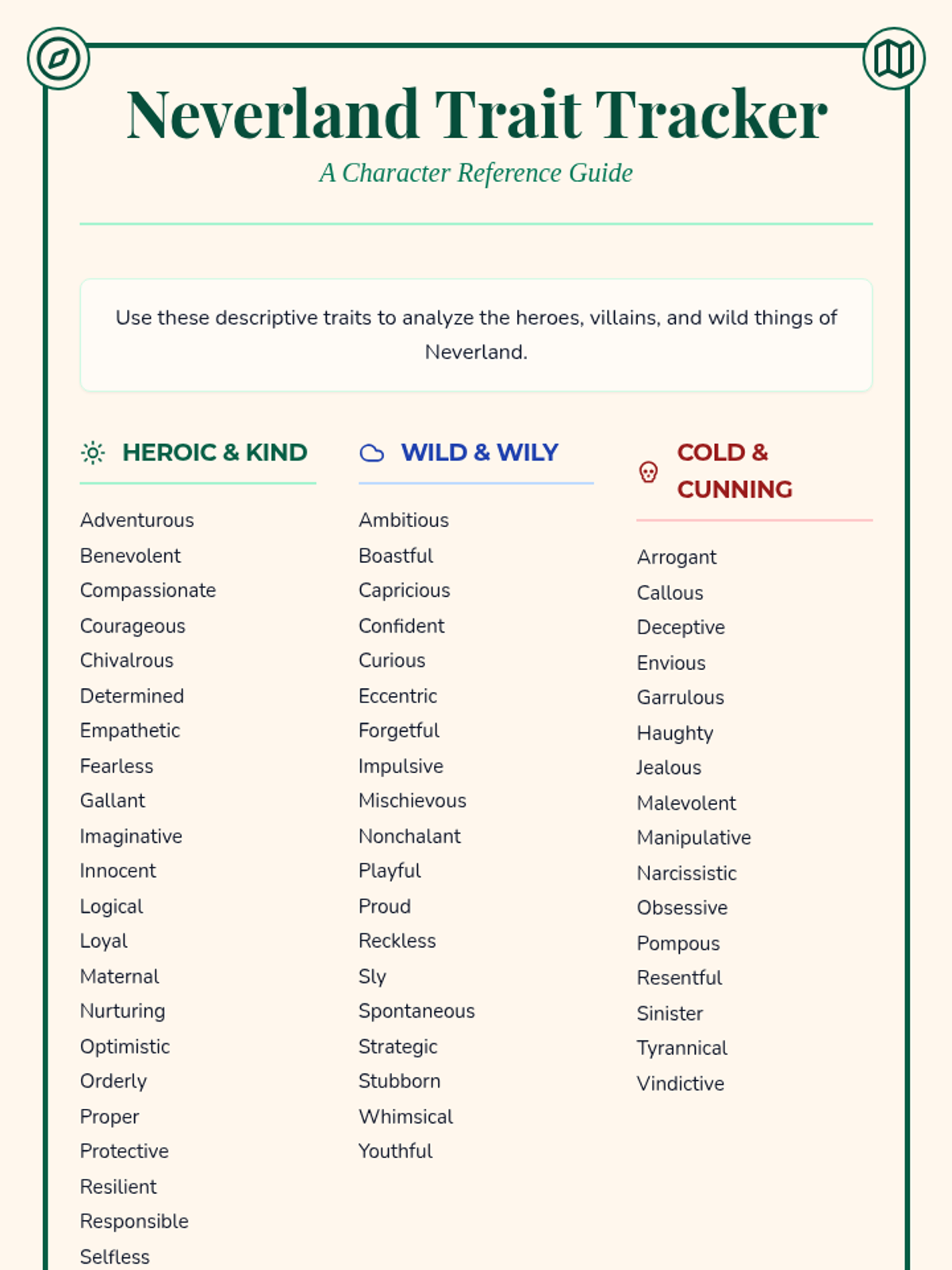
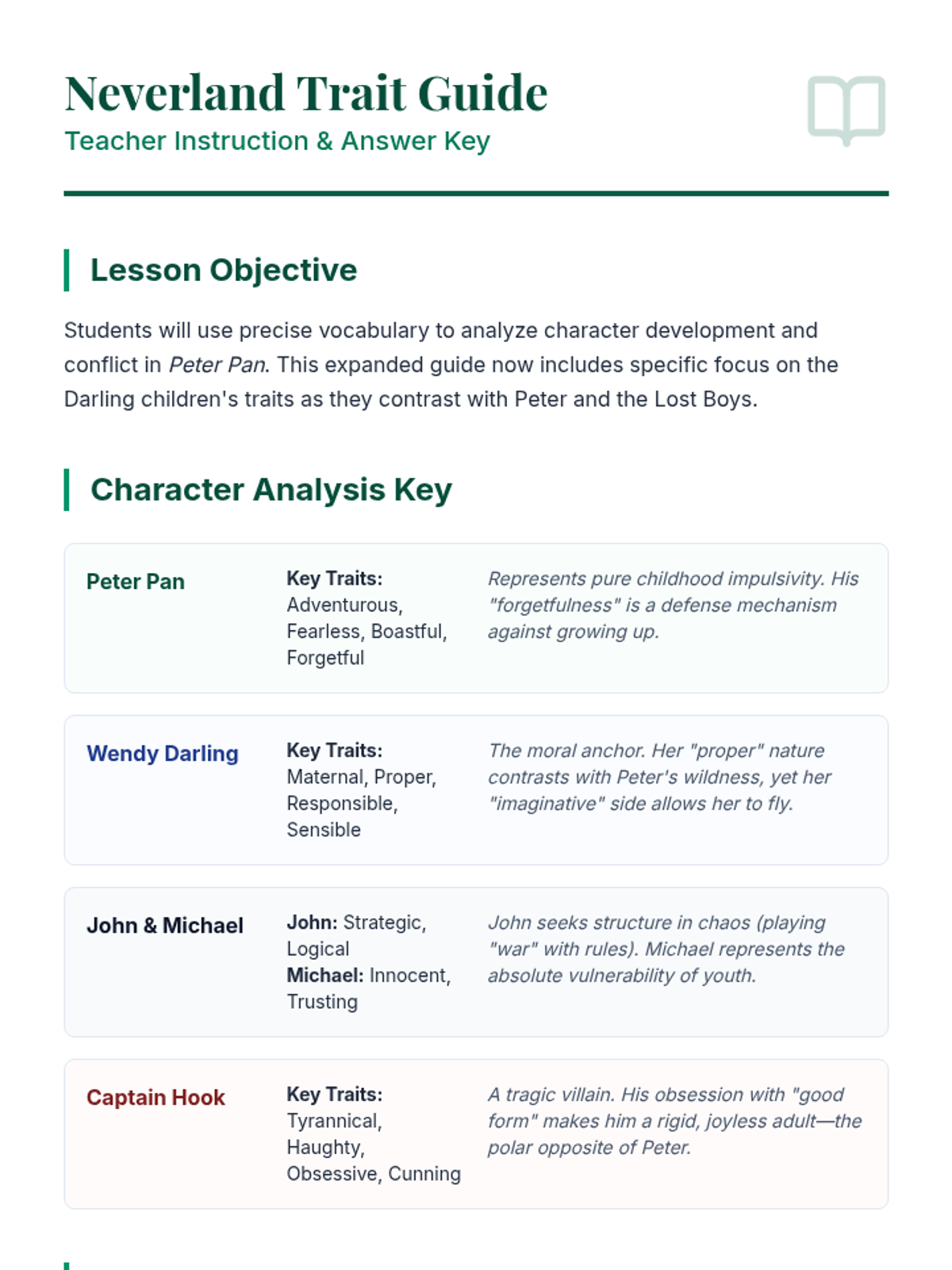
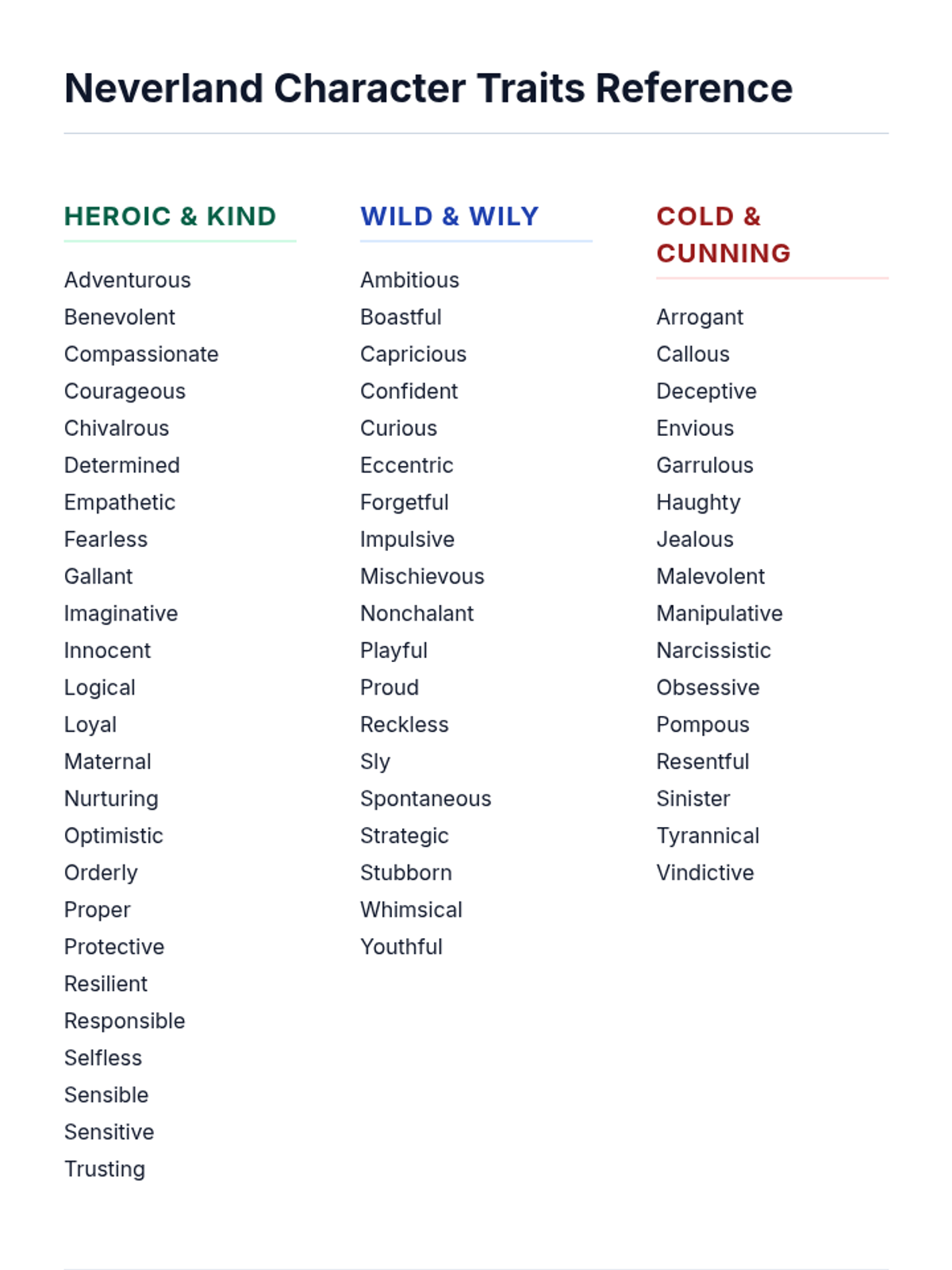
A collection of resources focused on character analysis and literary elements within J.M. Barrie's Peter Pan.
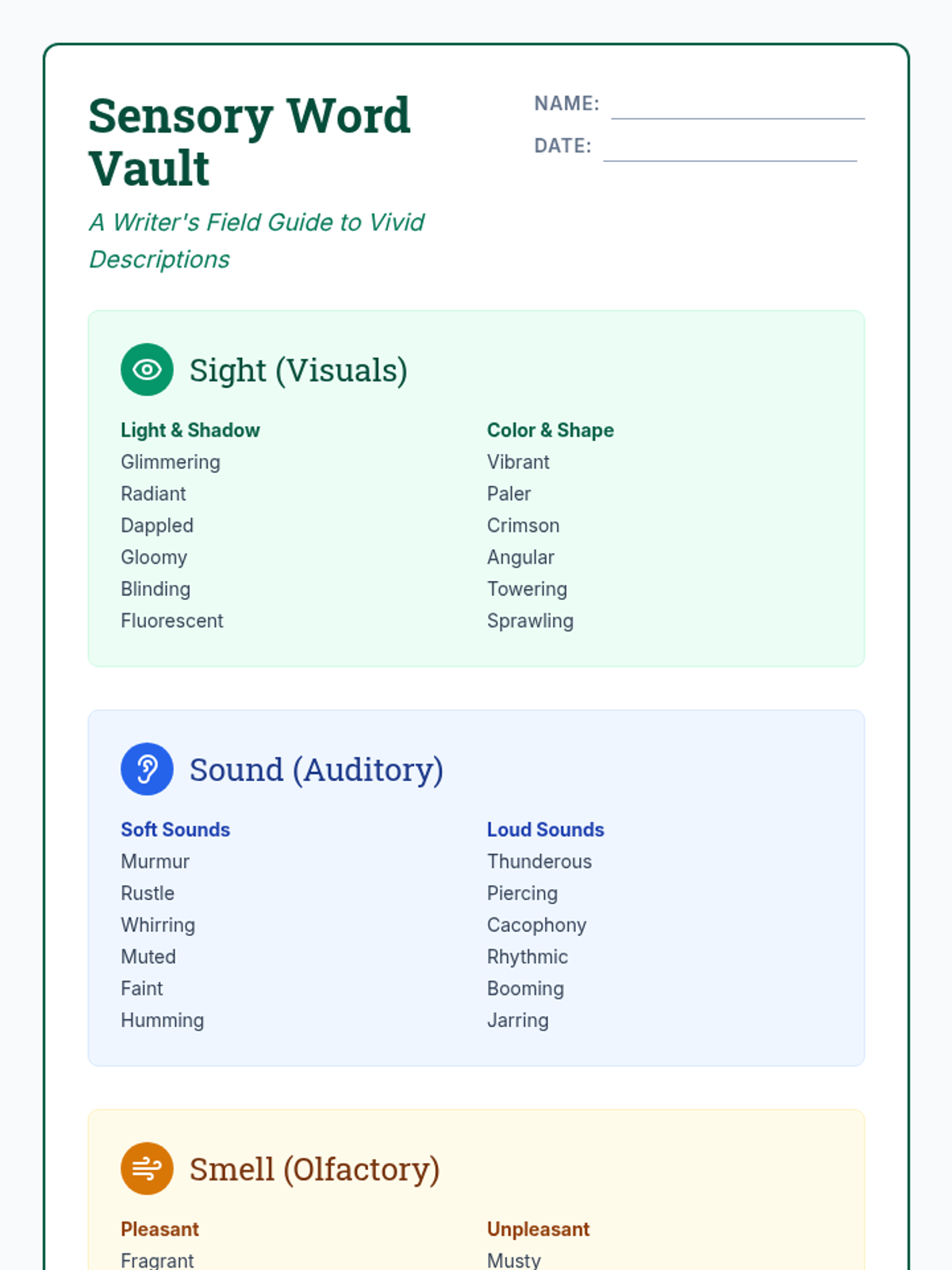
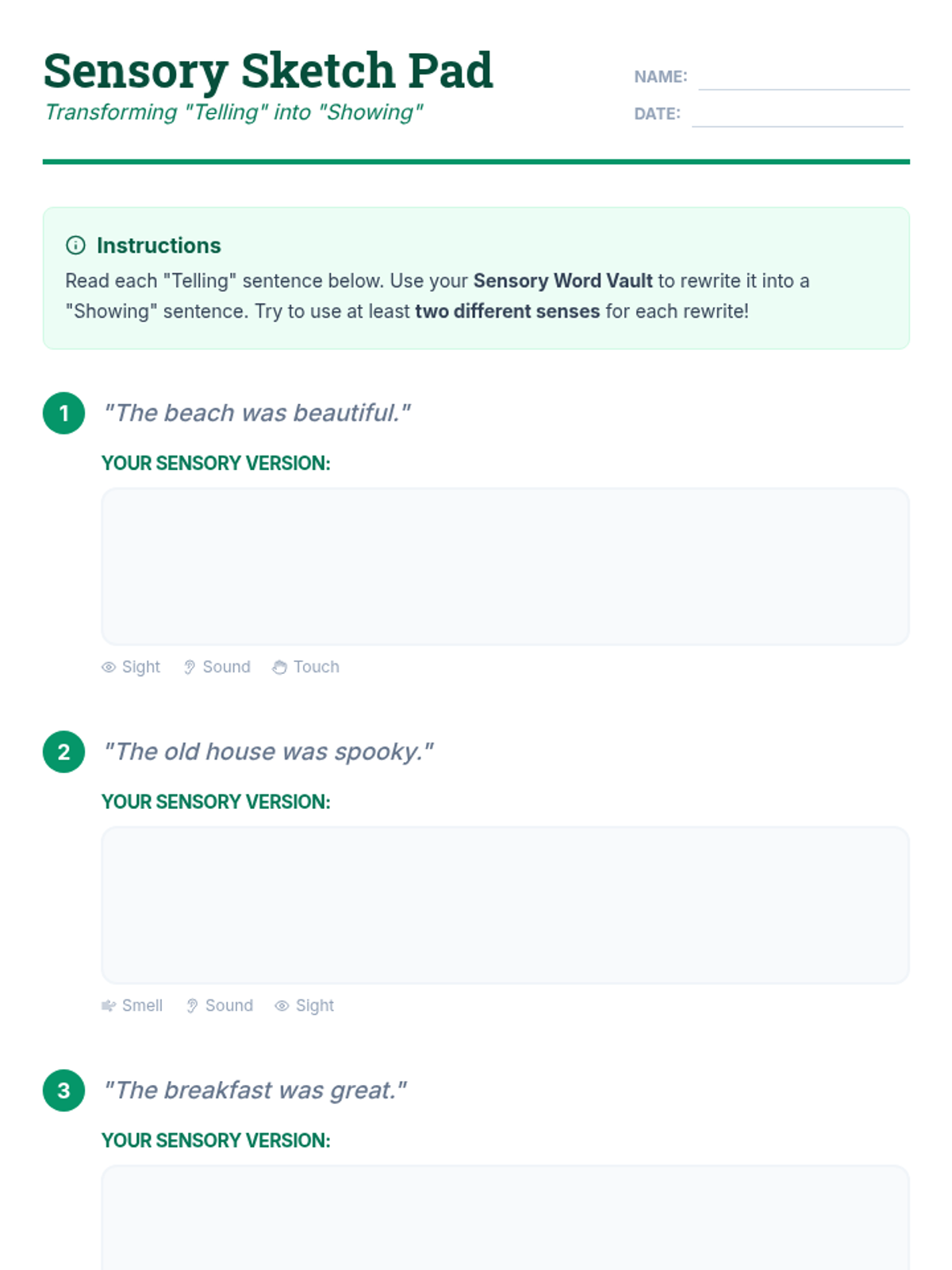
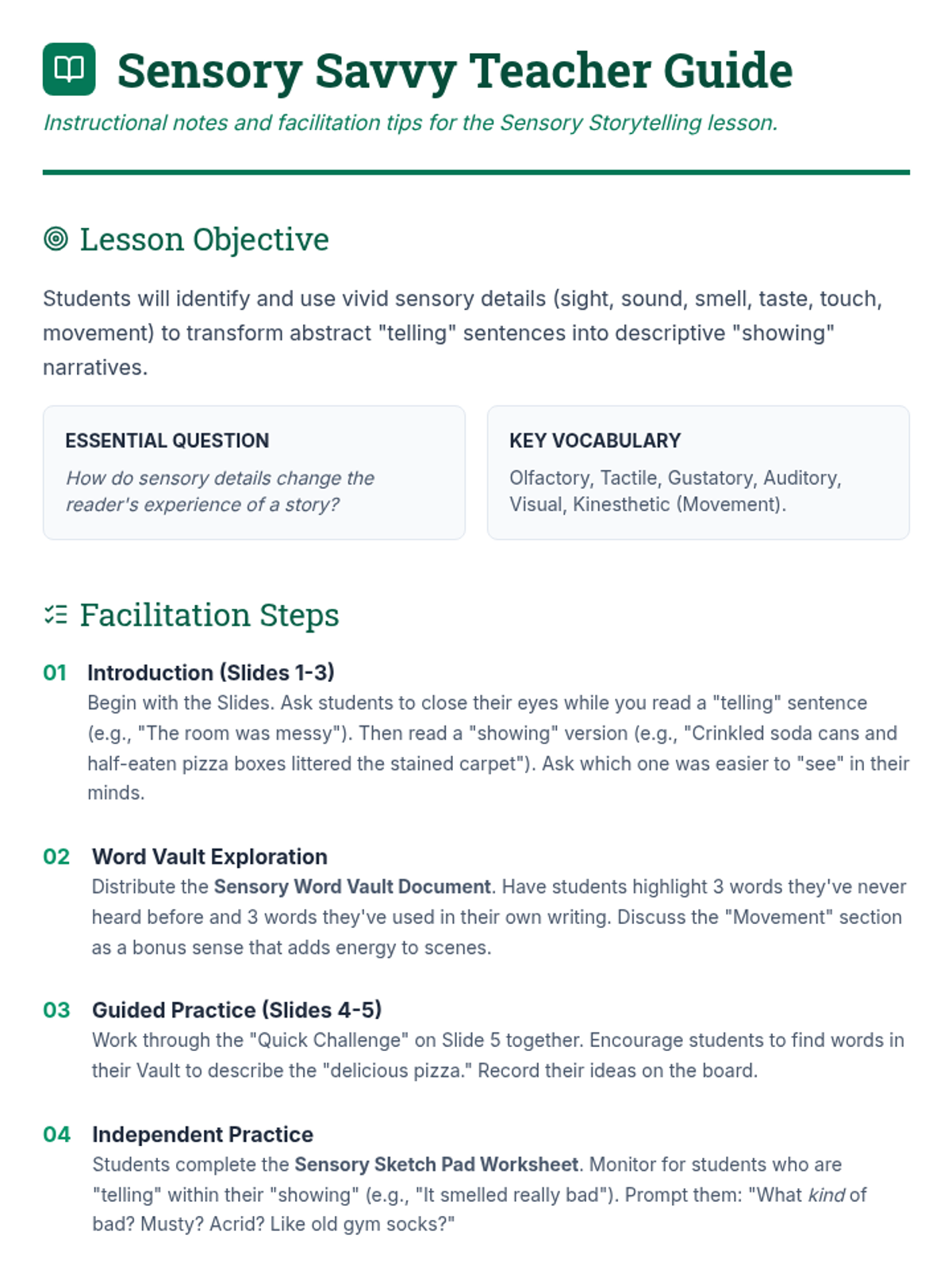
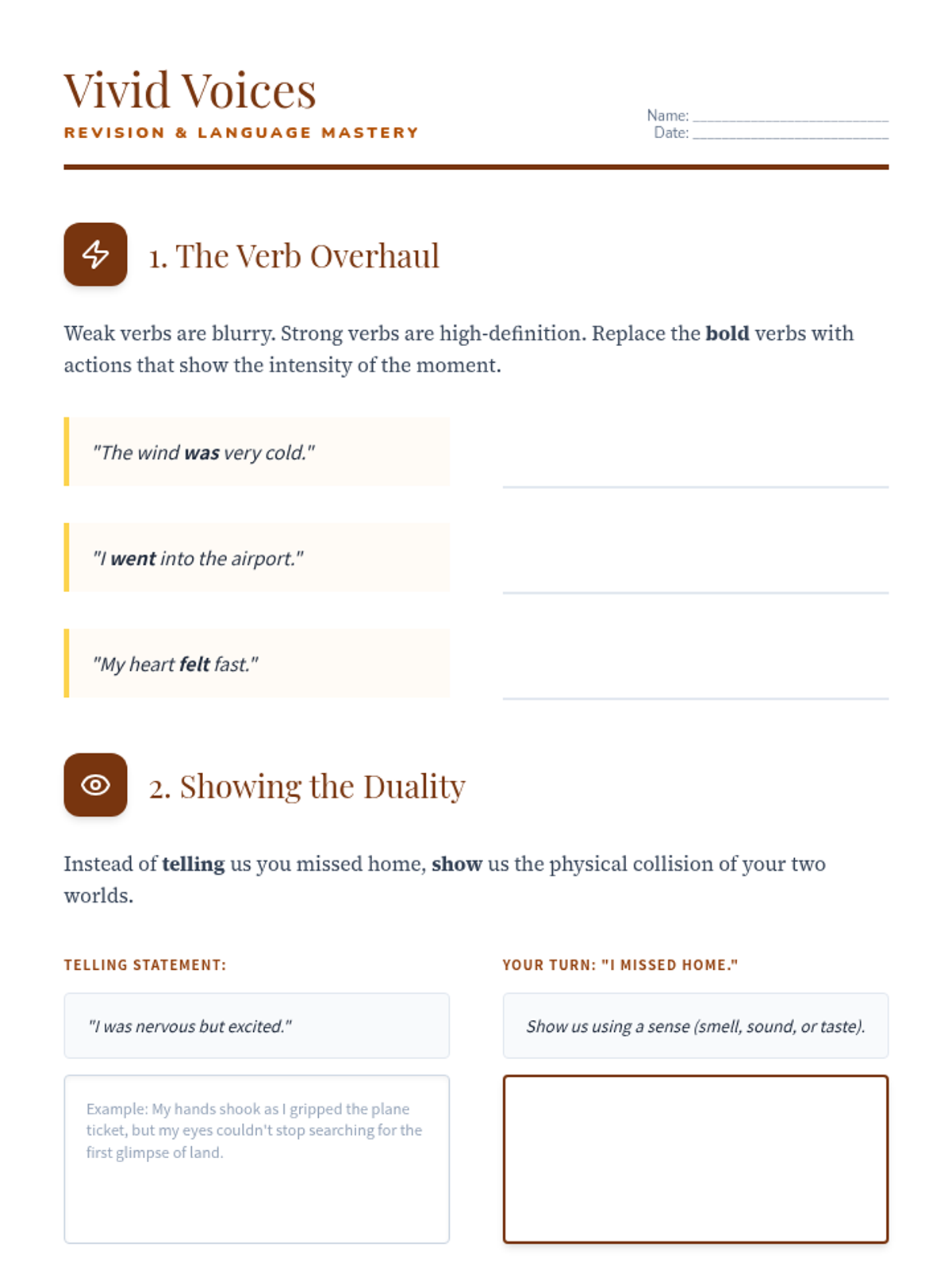
A lesson designed to help students enhance their narrative writing through the use of vivid sensory details. Includes a comprehensive word bank, practice activities, and instructional slides.
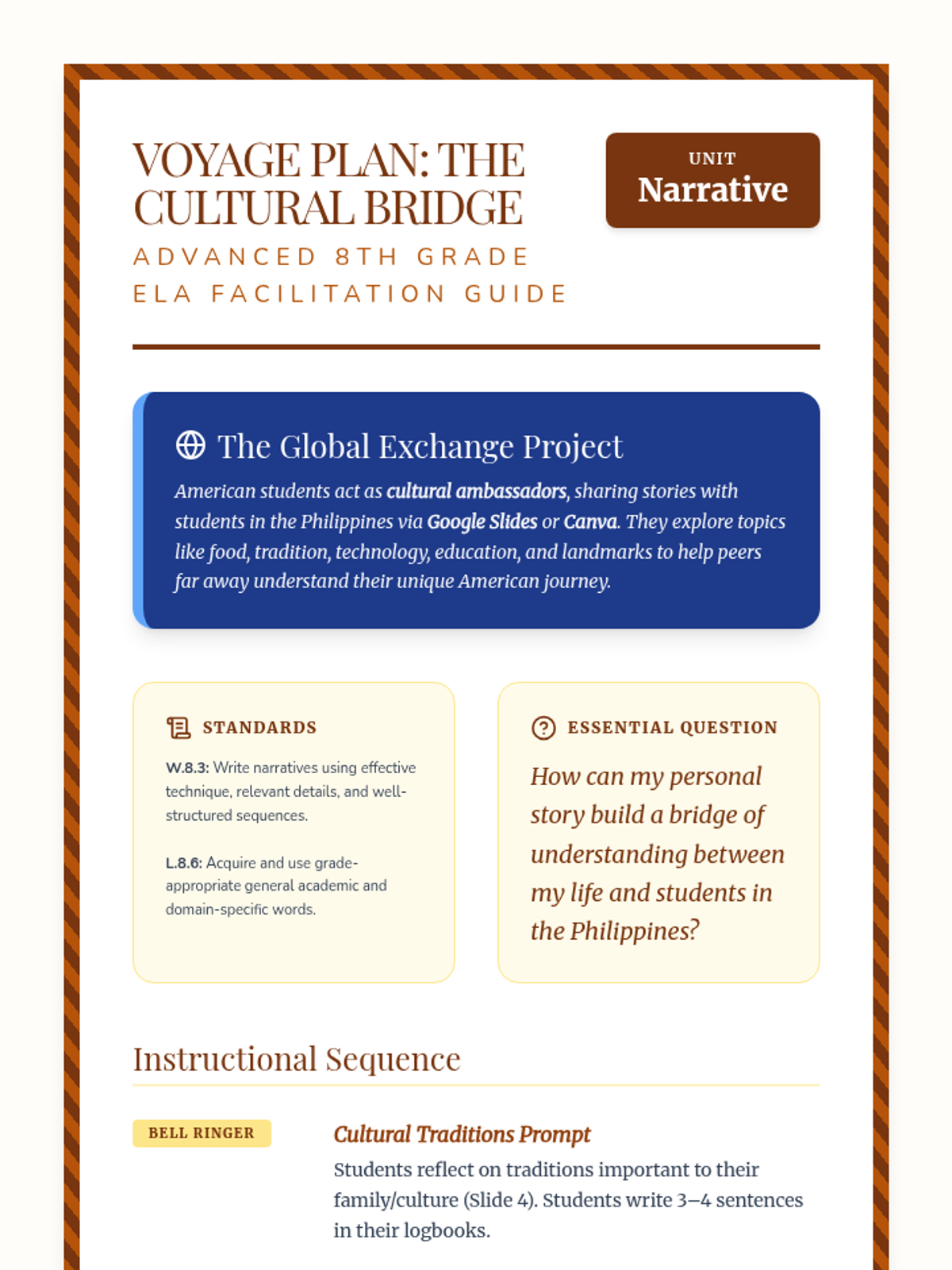
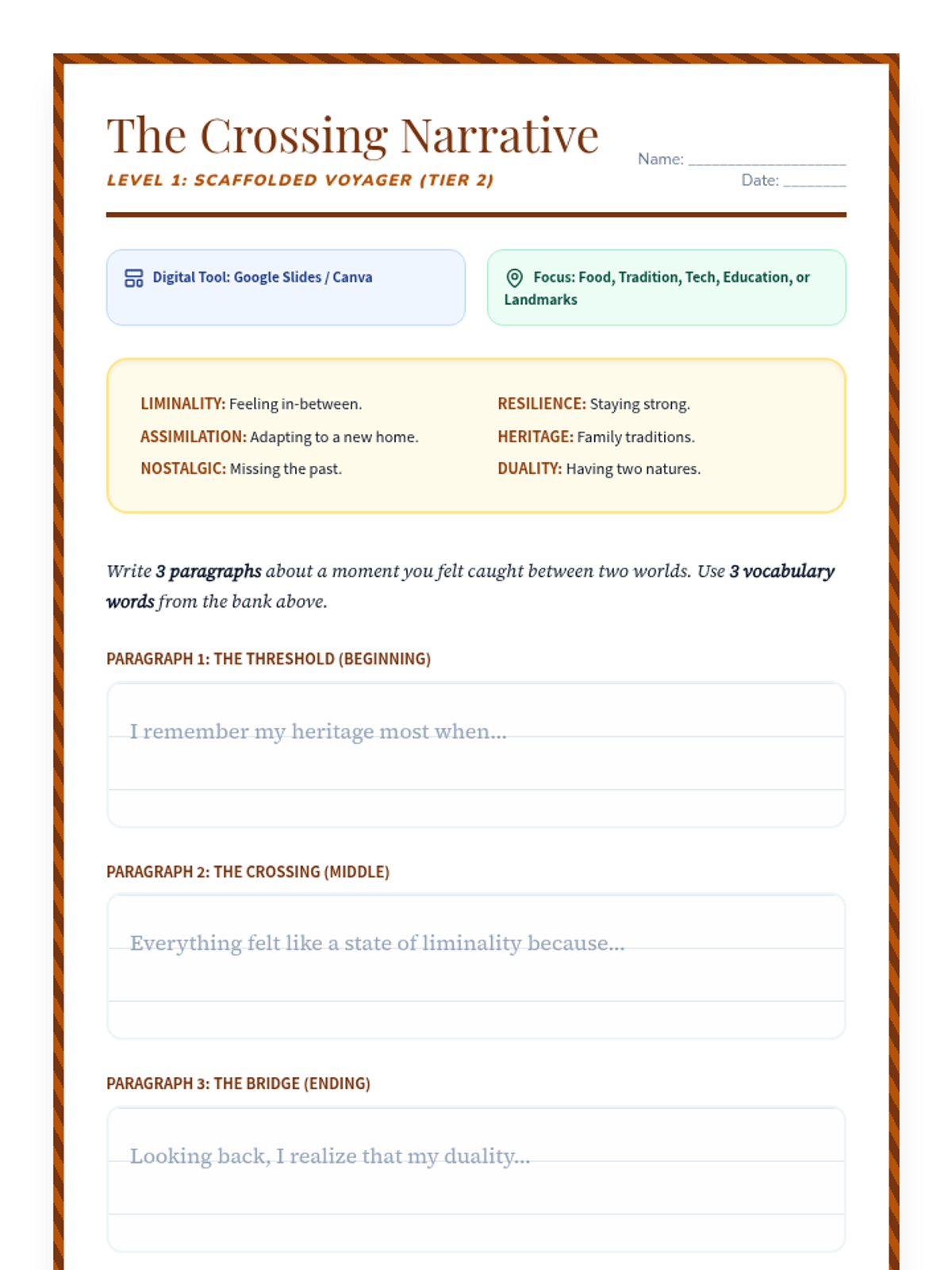
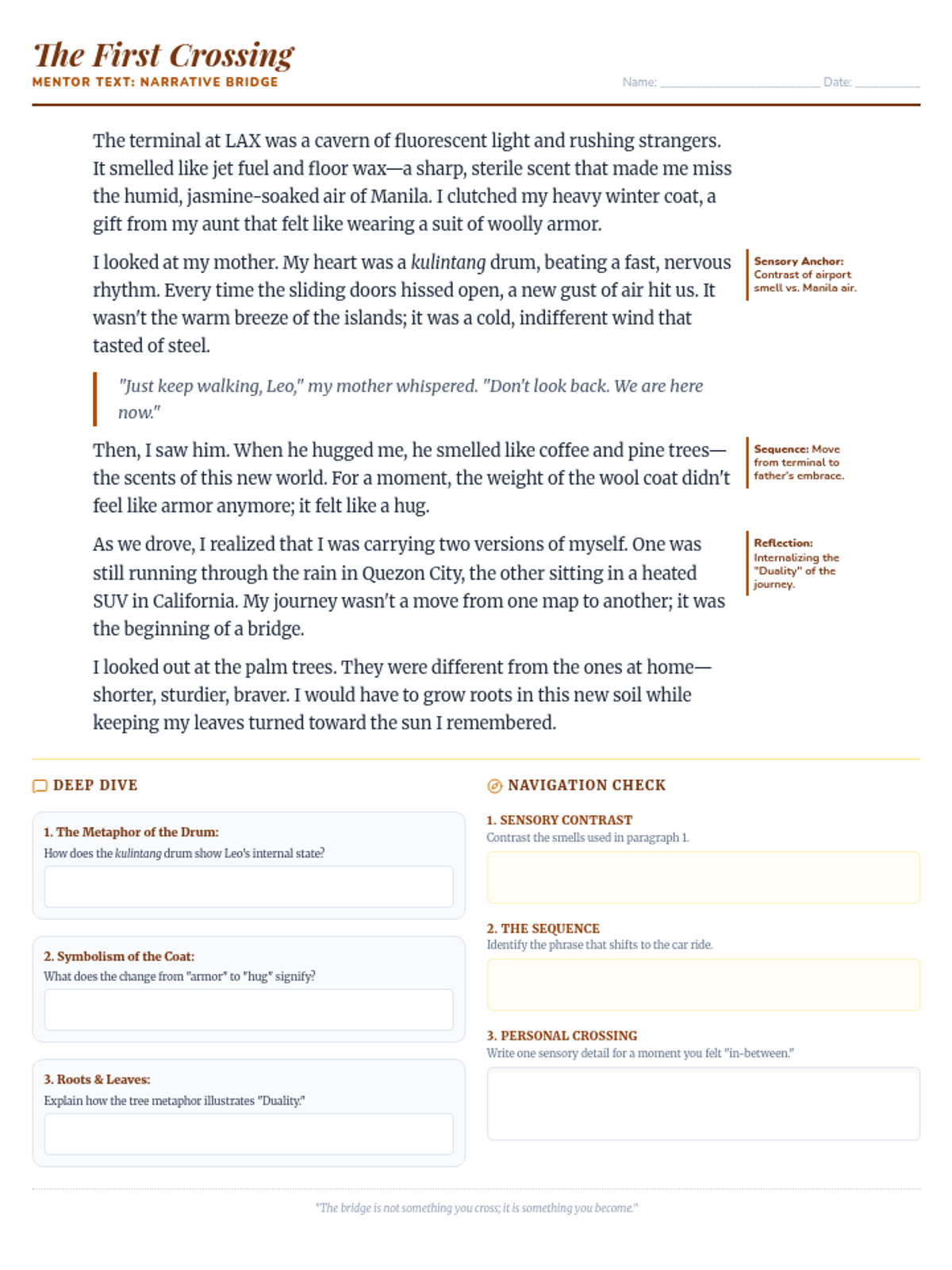
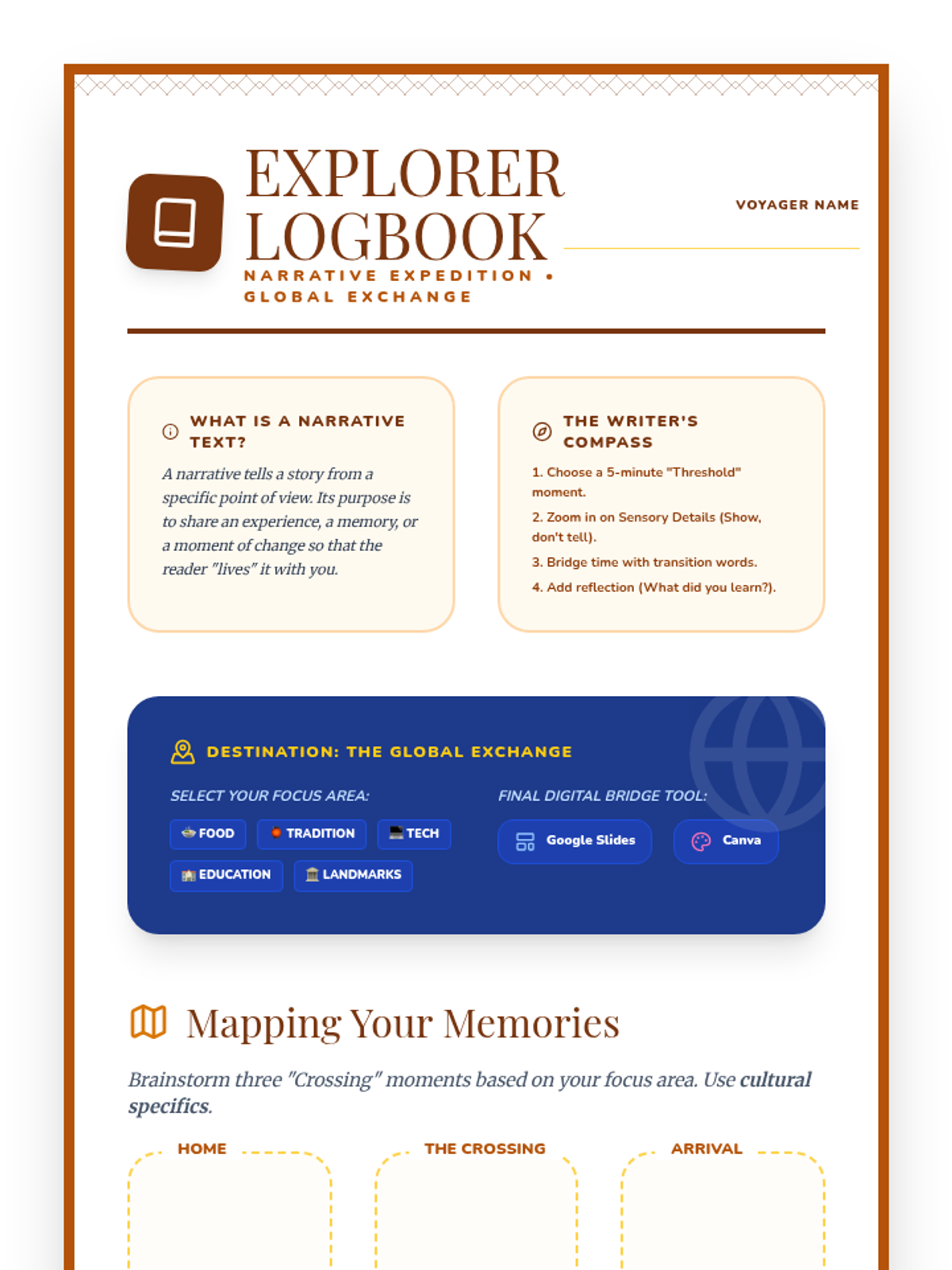
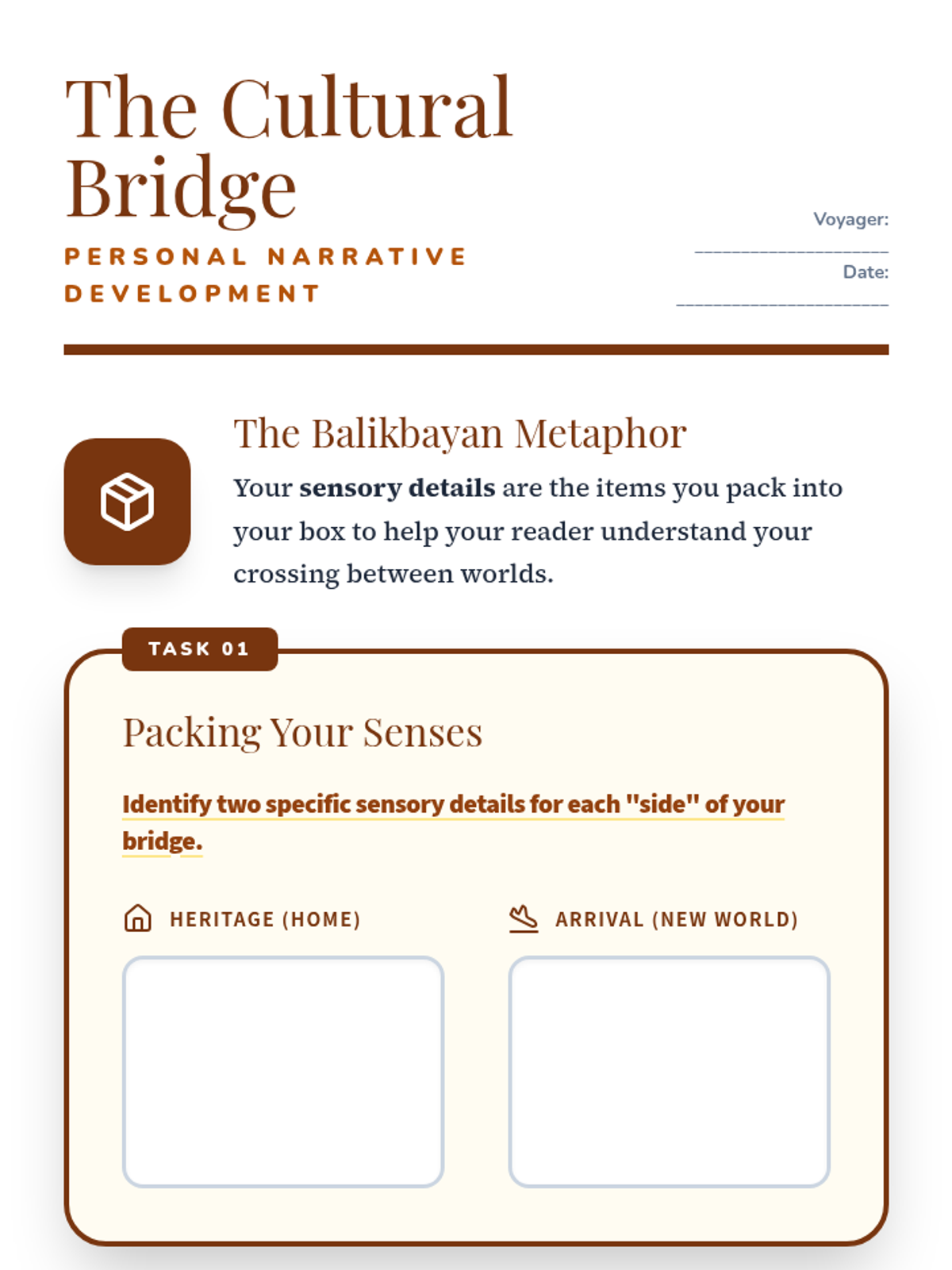
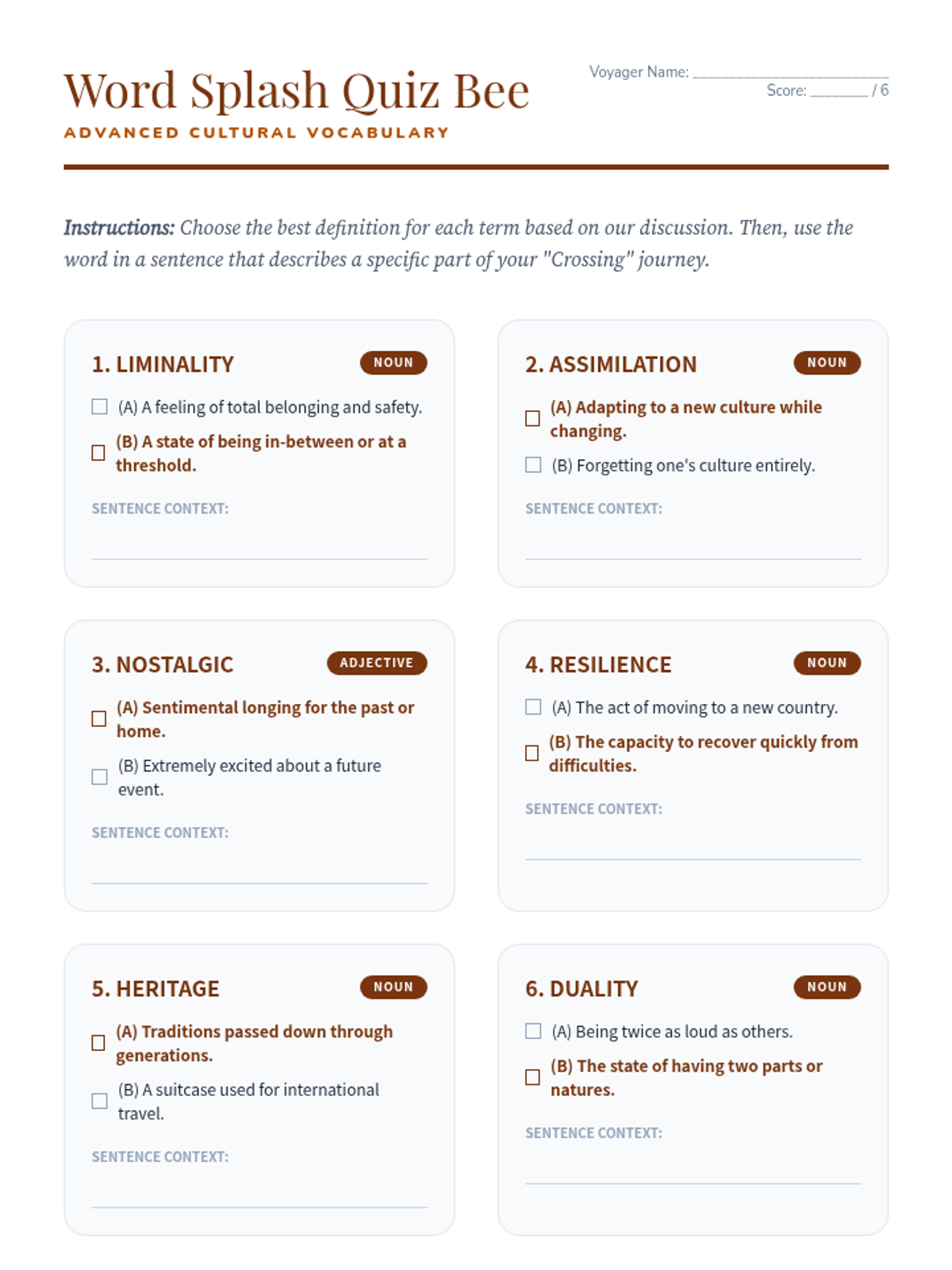
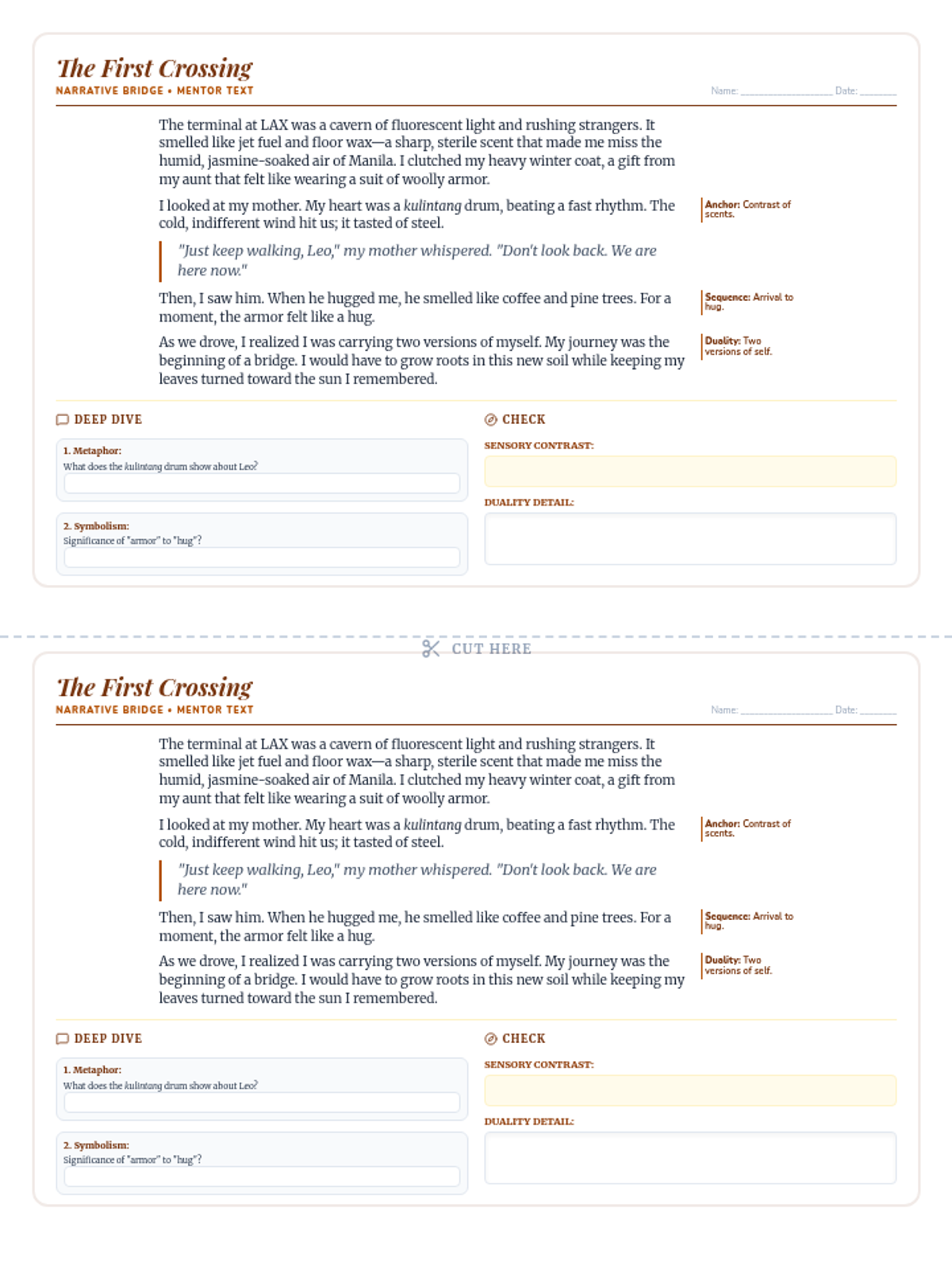
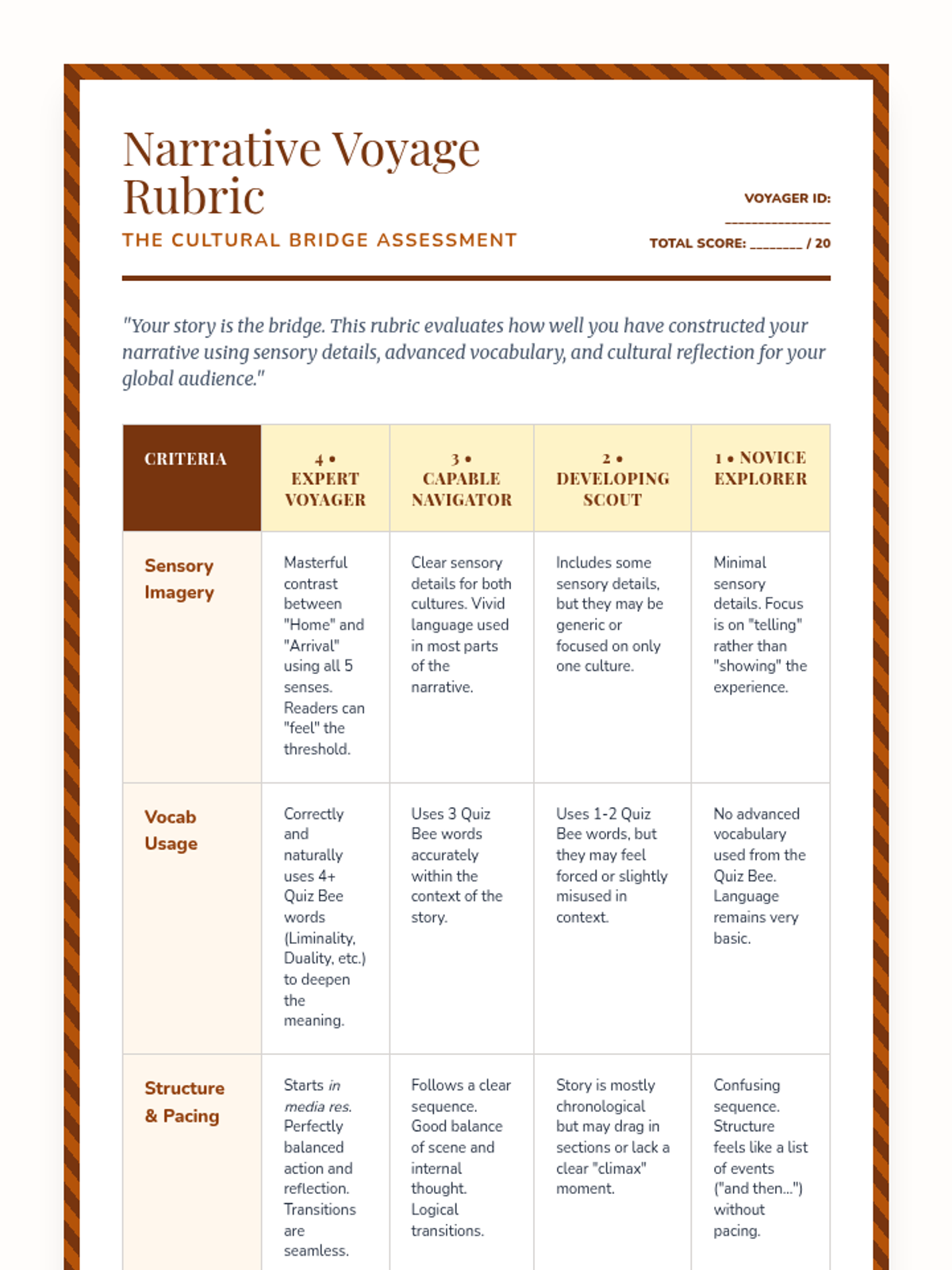
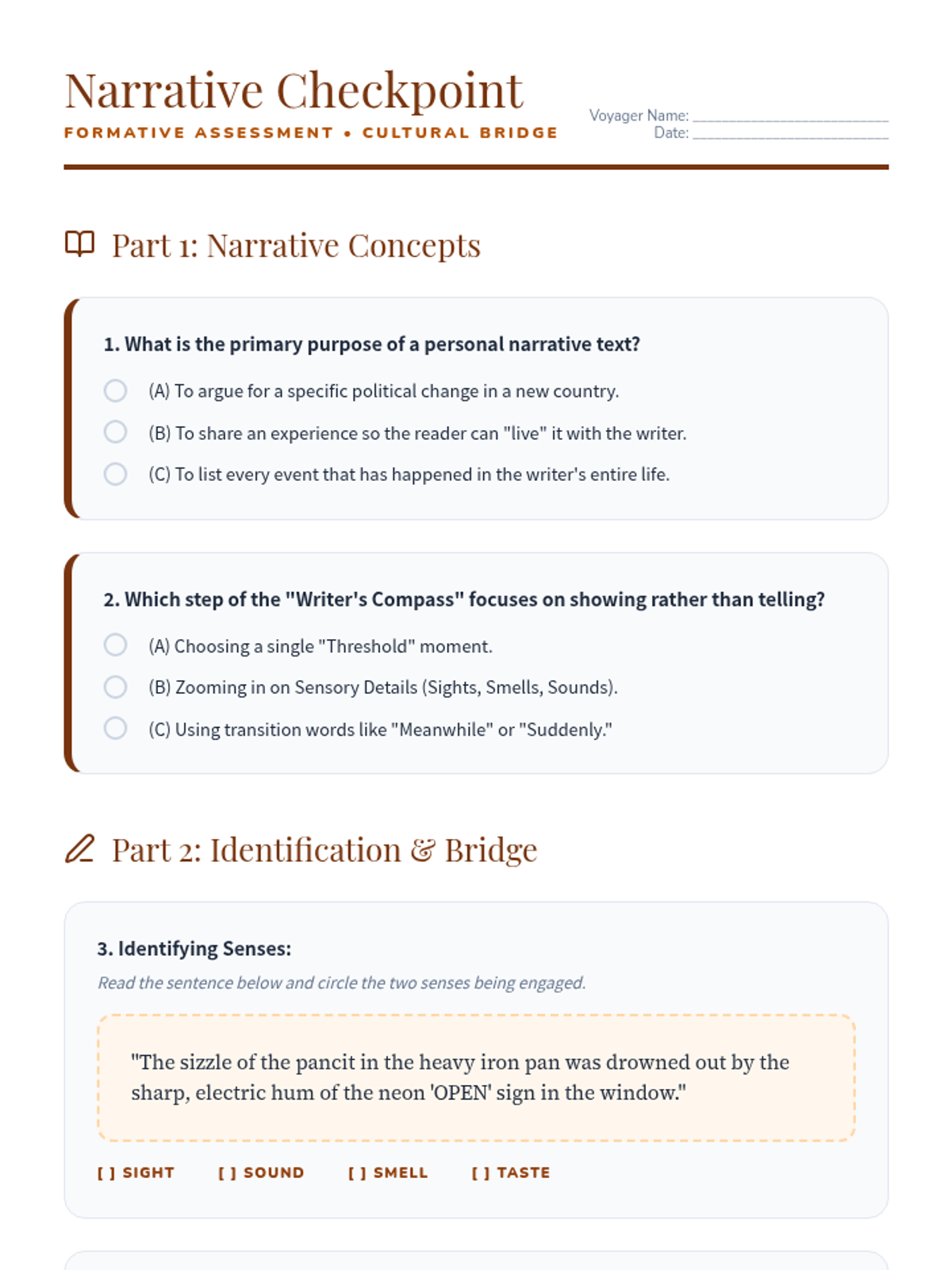
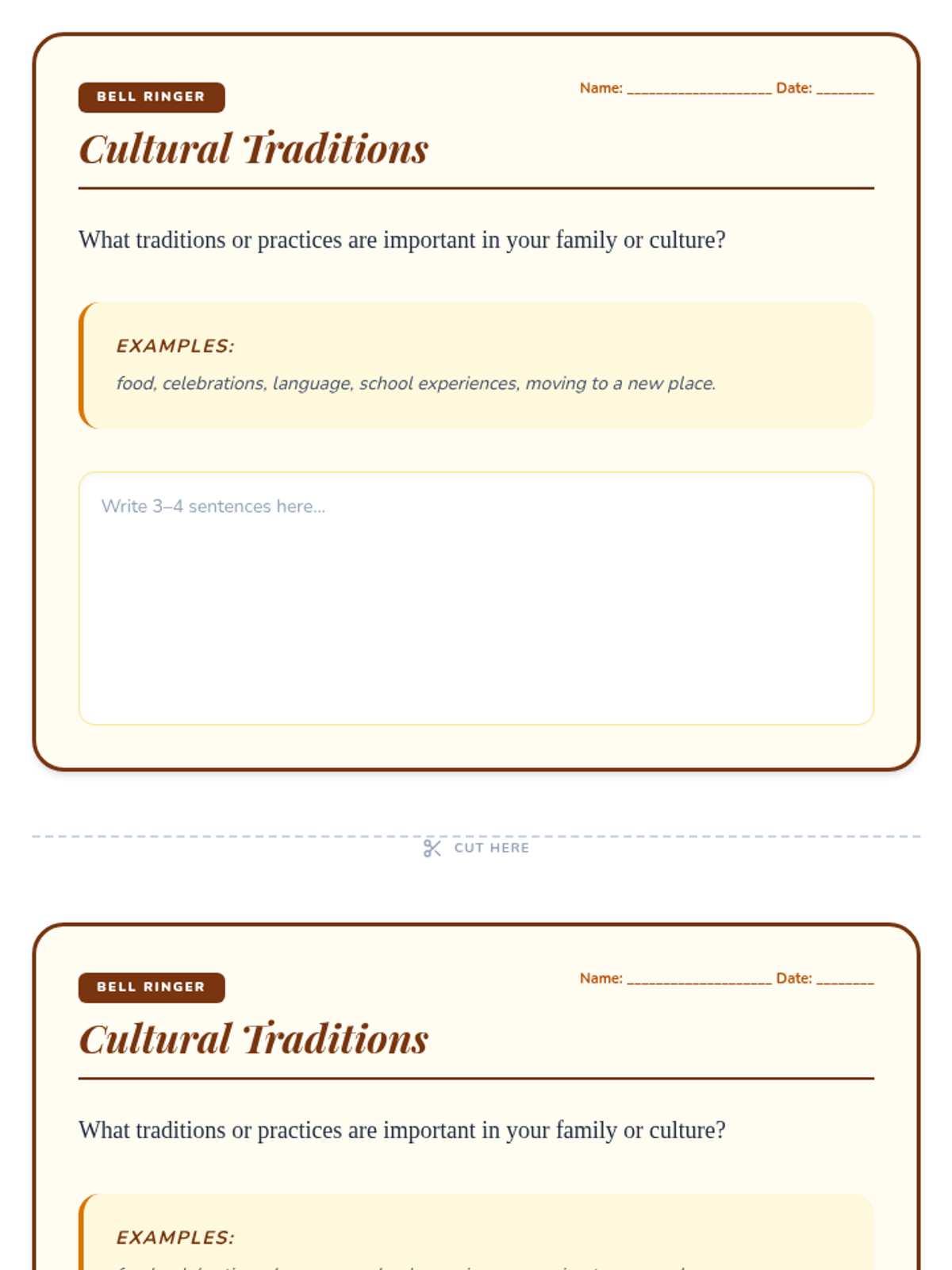
An advanced 8th-grade ELA lesson exploring the intersection of Filipino and American identities through personal narrative. Students analyze the immigrant experience, master advanced vocabulary via a 'Quiz Bee,' and draft narratives that bridge their cultural heritage with their current journey.
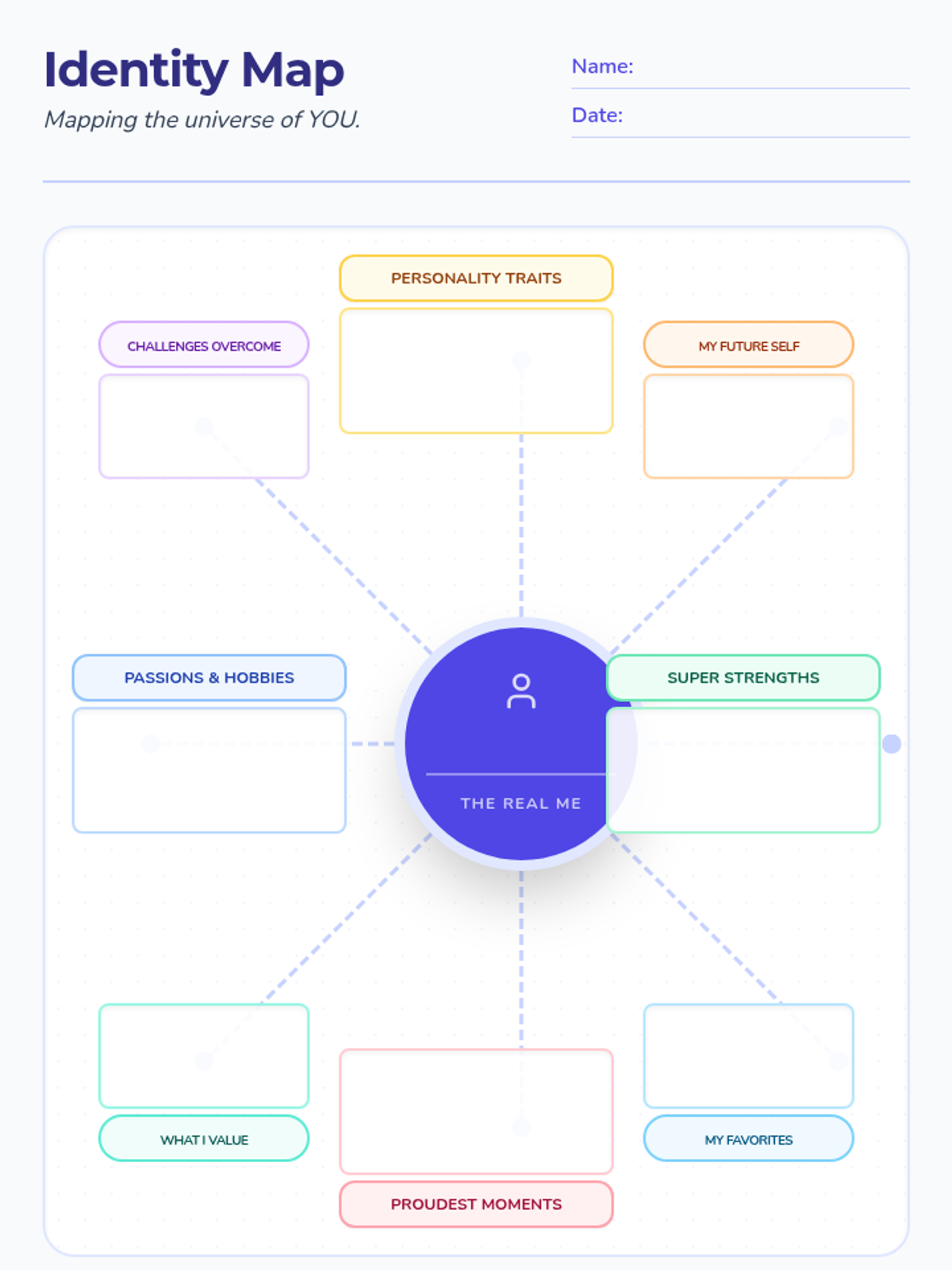
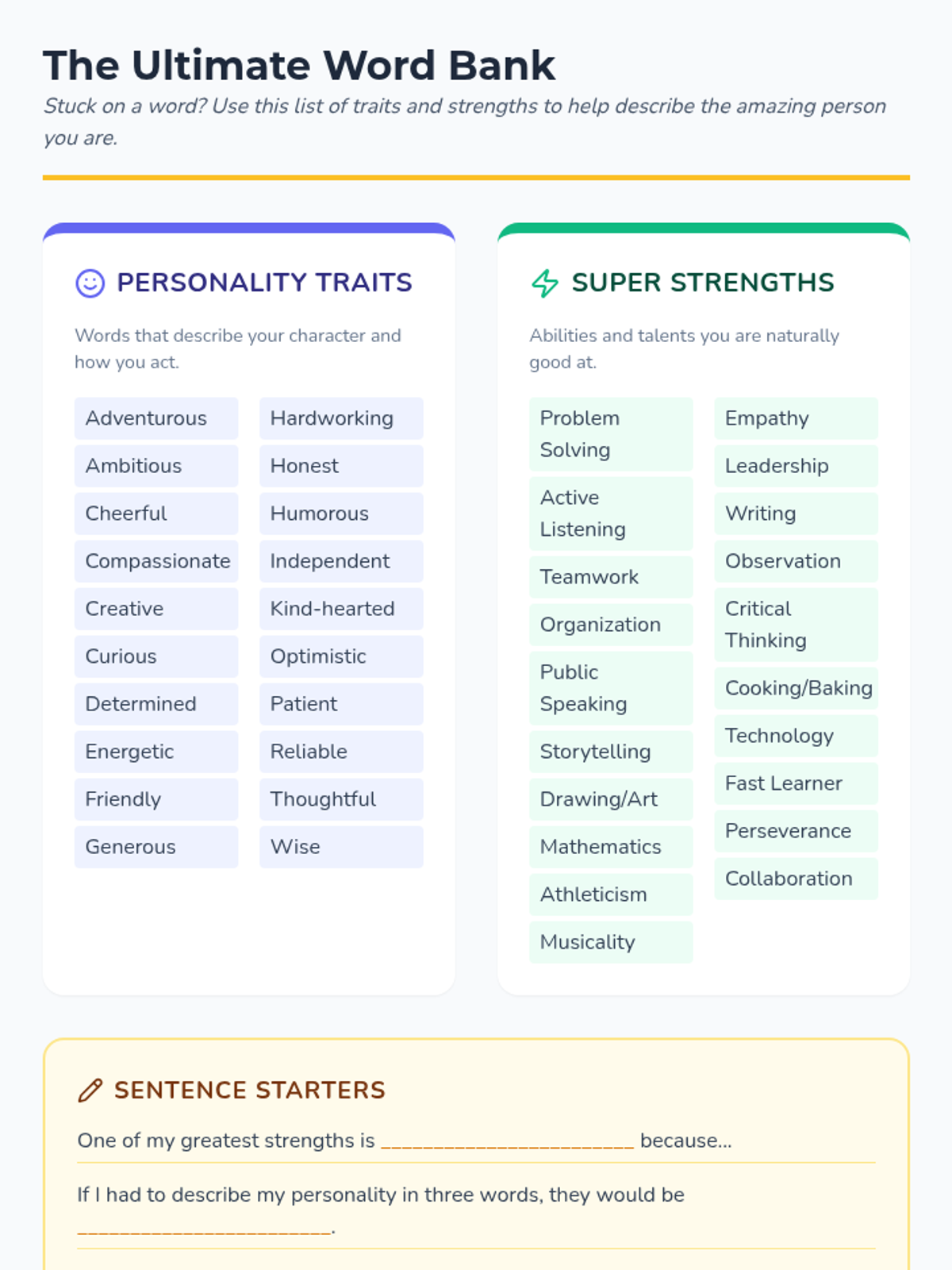
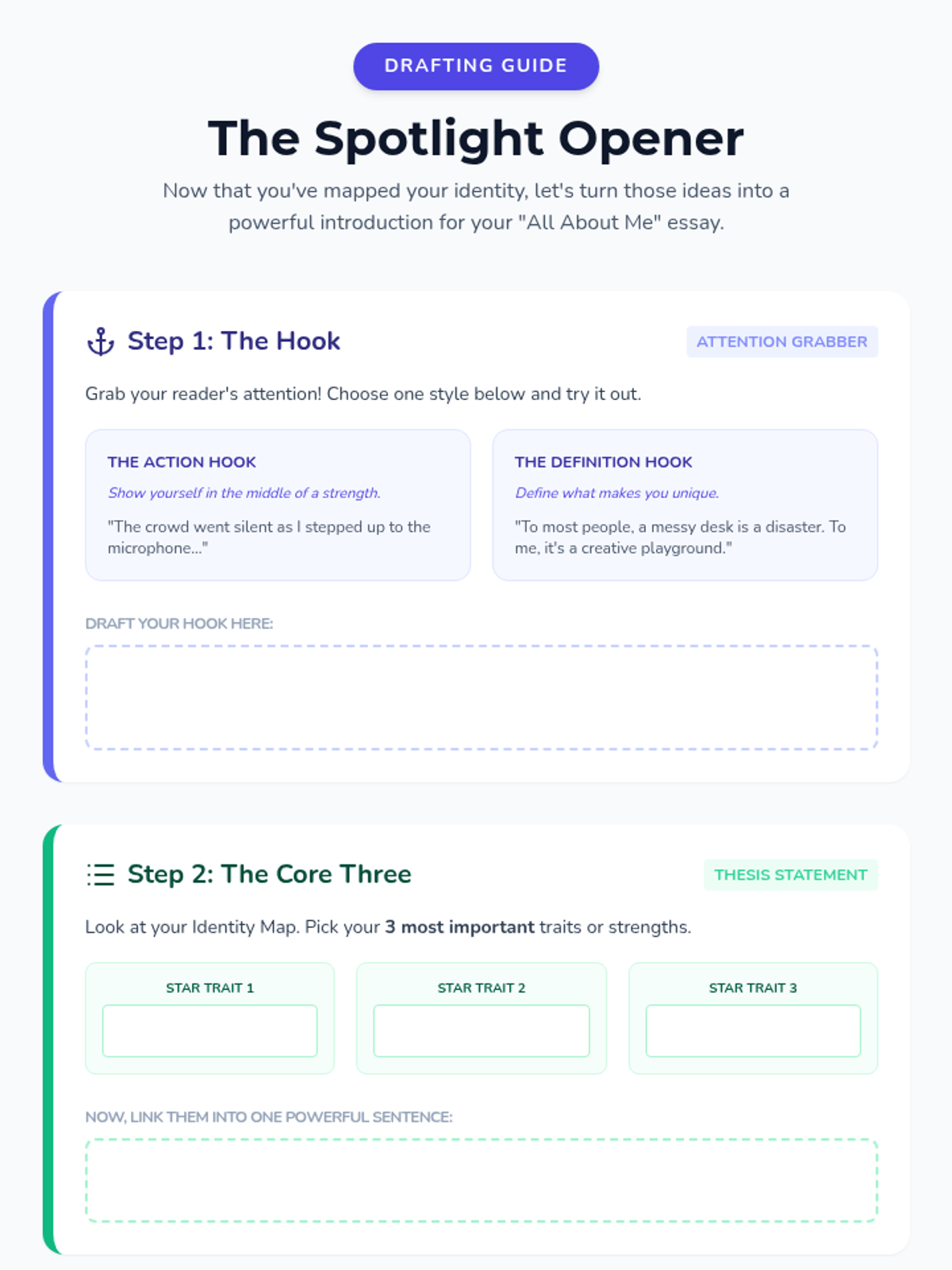
Students explore their unique personality traits and strengths to prepare for an 'All About Me' essay using a visual brainstorming web.
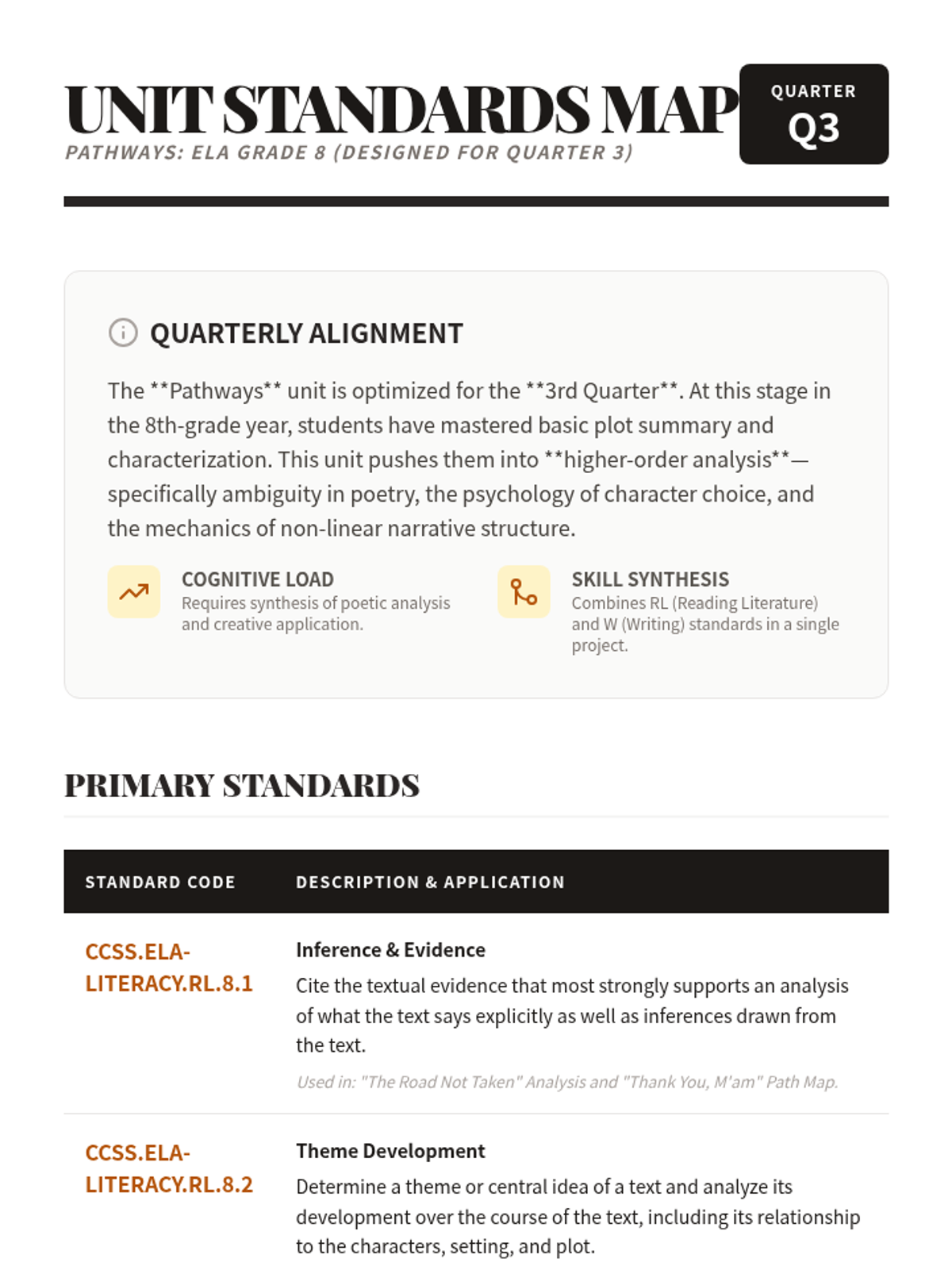
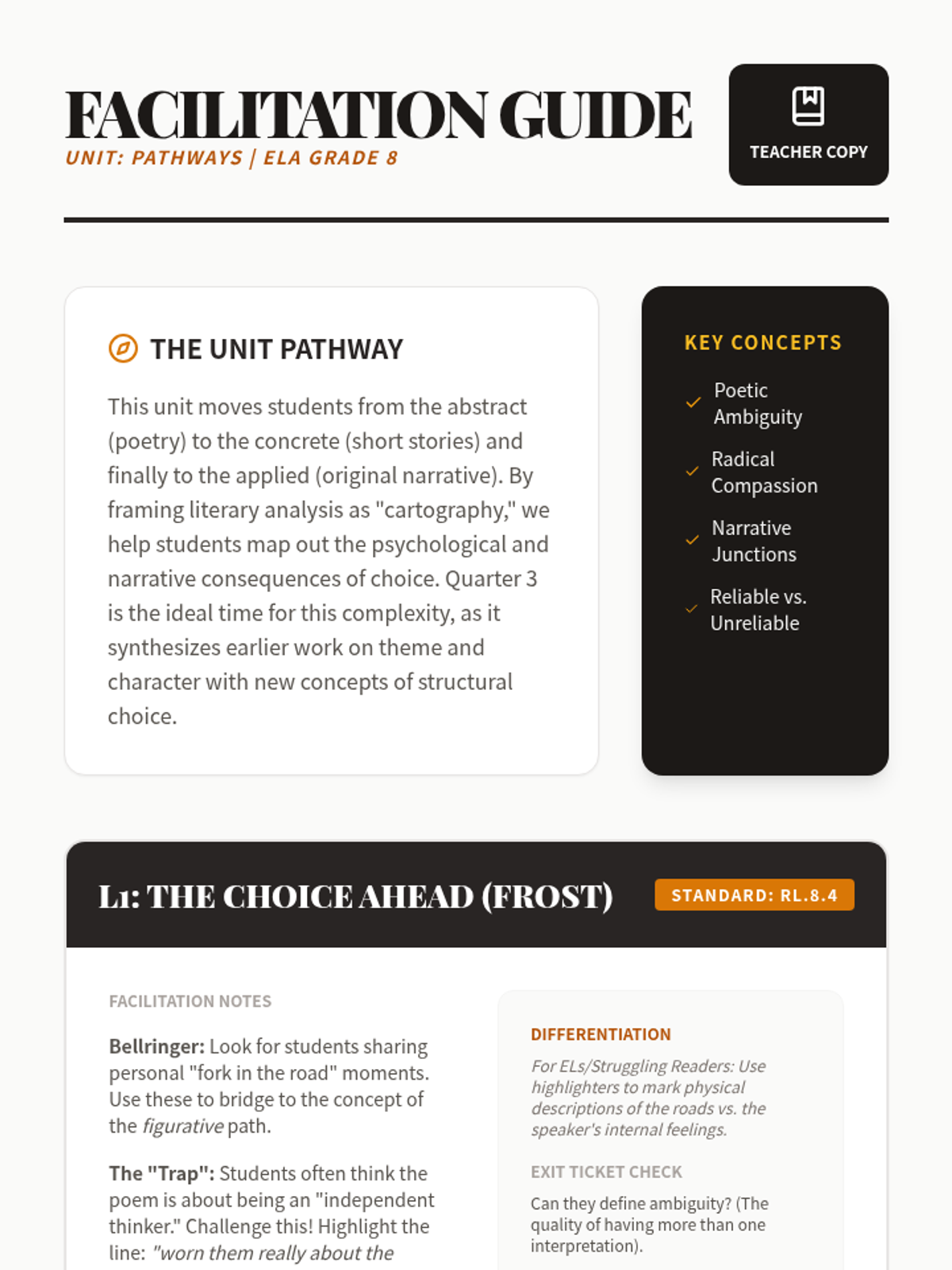
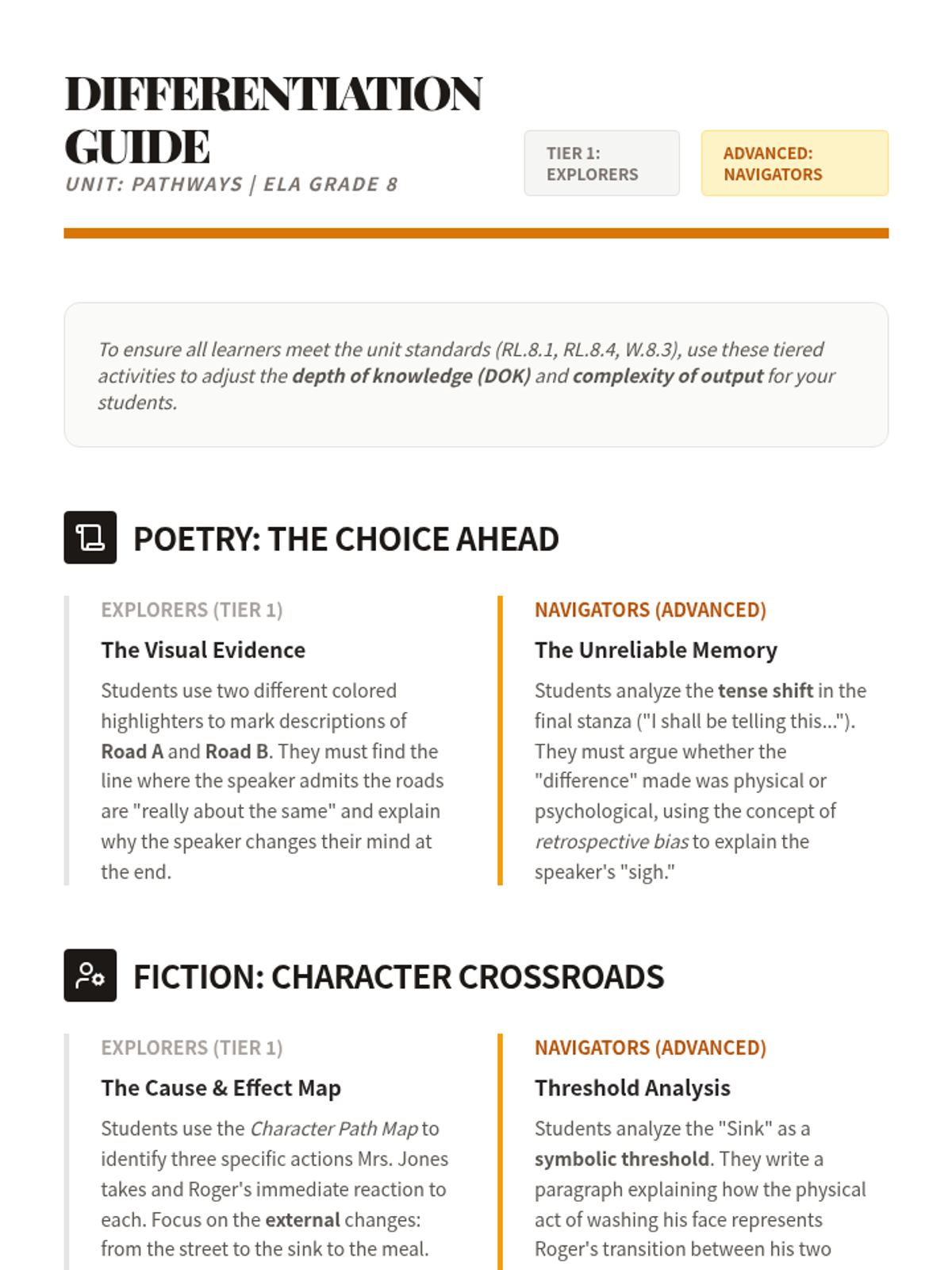
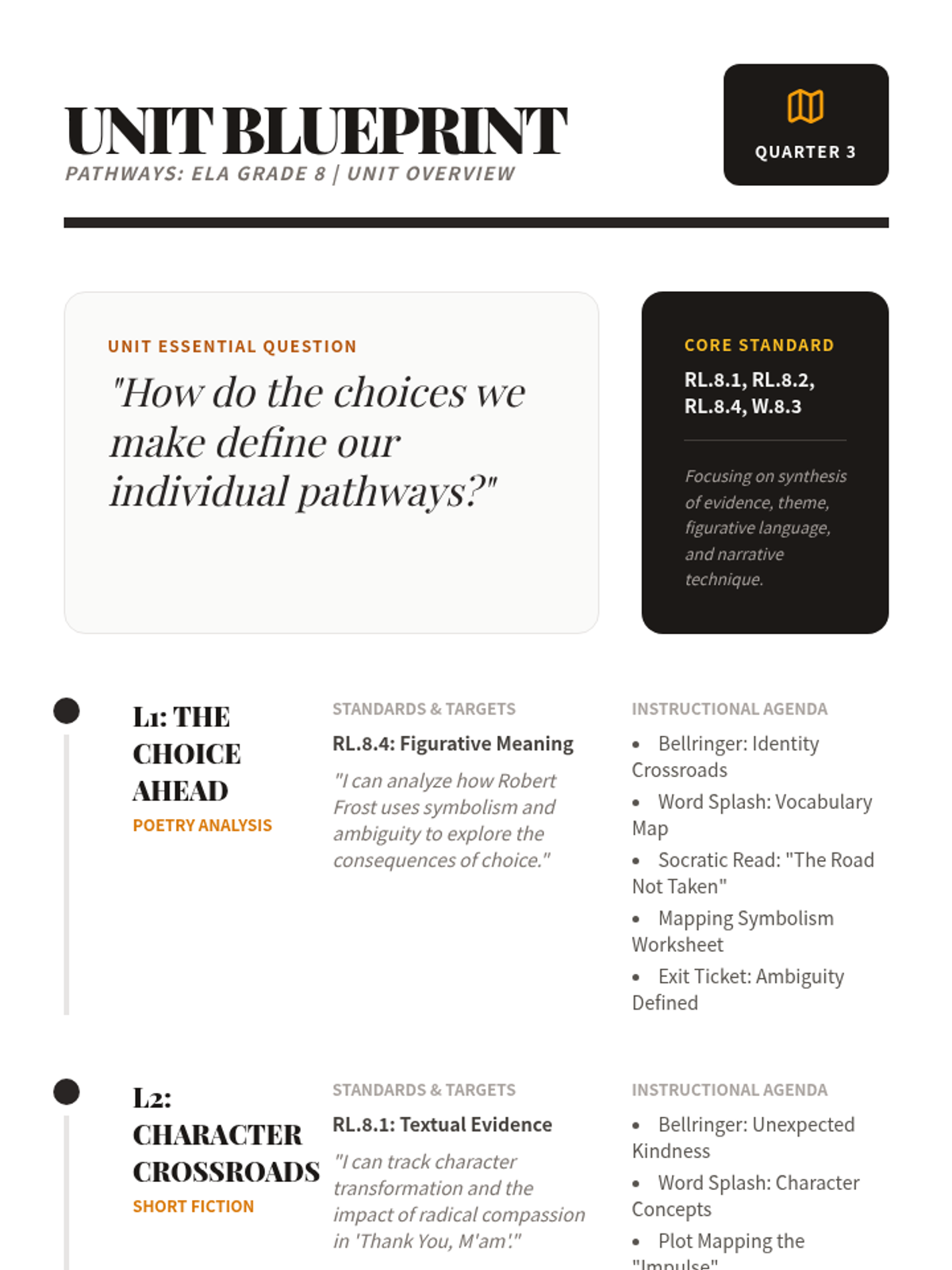
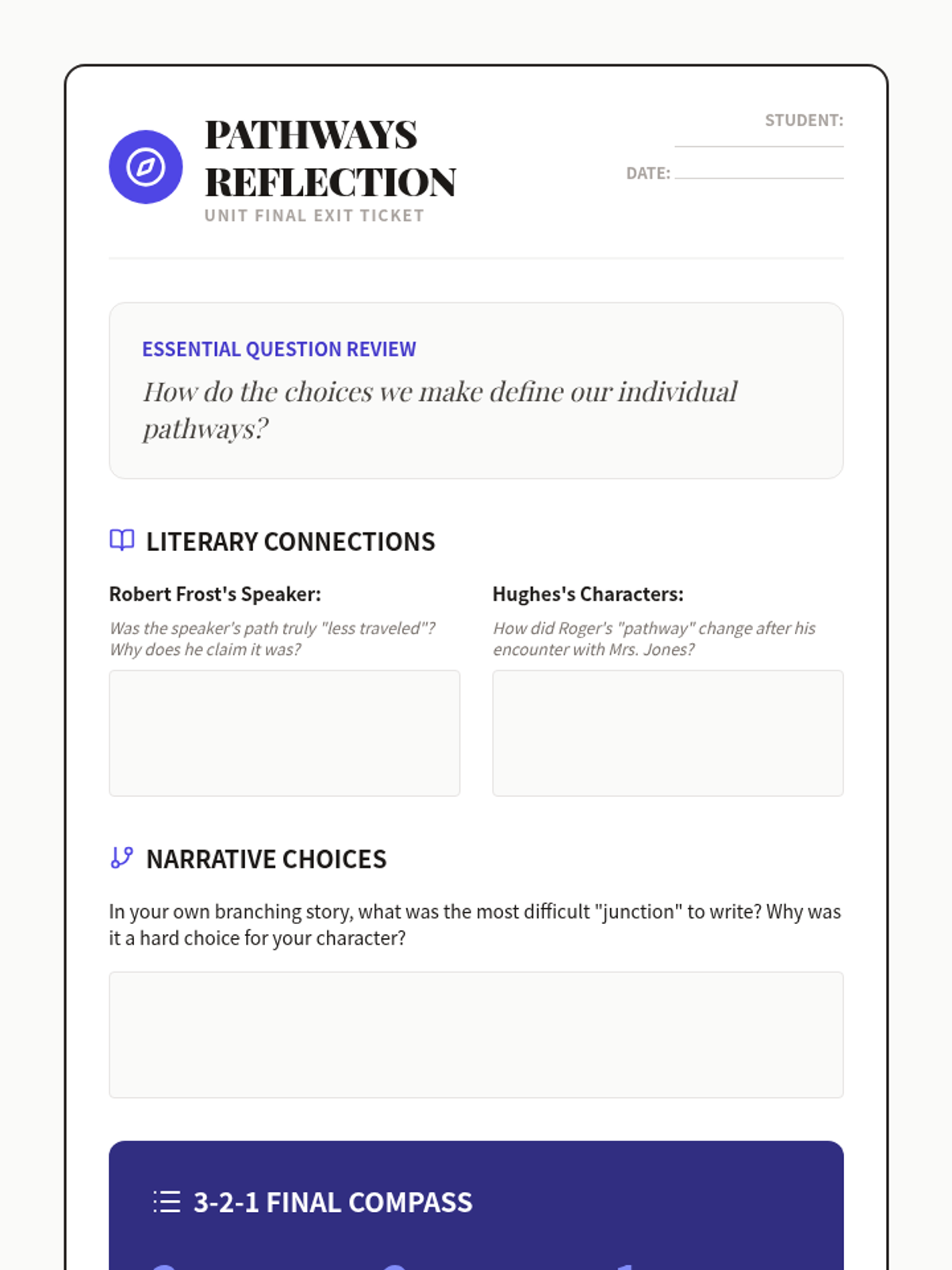
Teacher-facing resources for standards alignment, quarterly planning, and unit overview.
Exploring how different perspectives shape the 'path' of a story. Students compare multiple points of view on the same event.
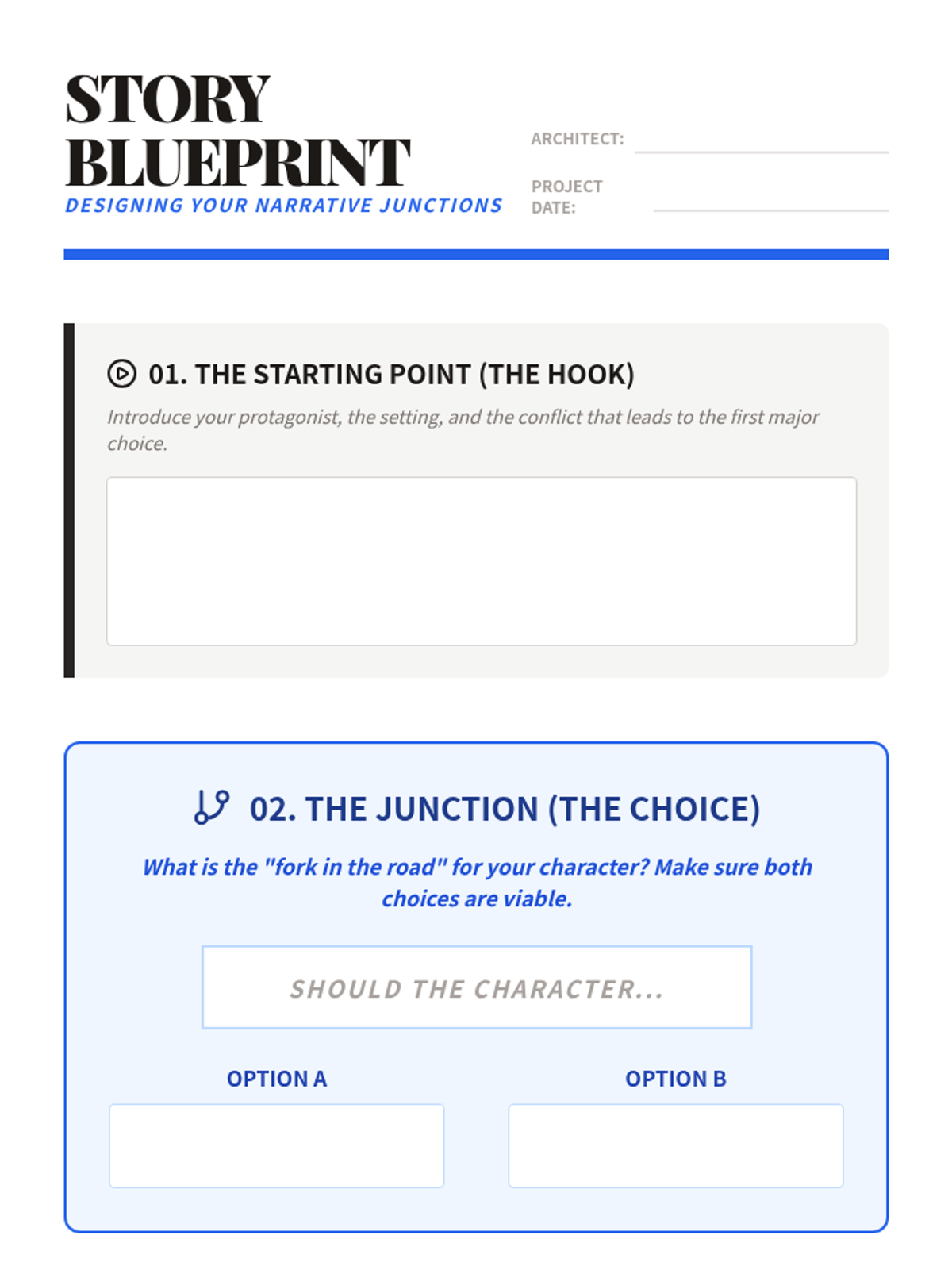
Students experiment with branching narratives and the impact of plot choices on reader experience.
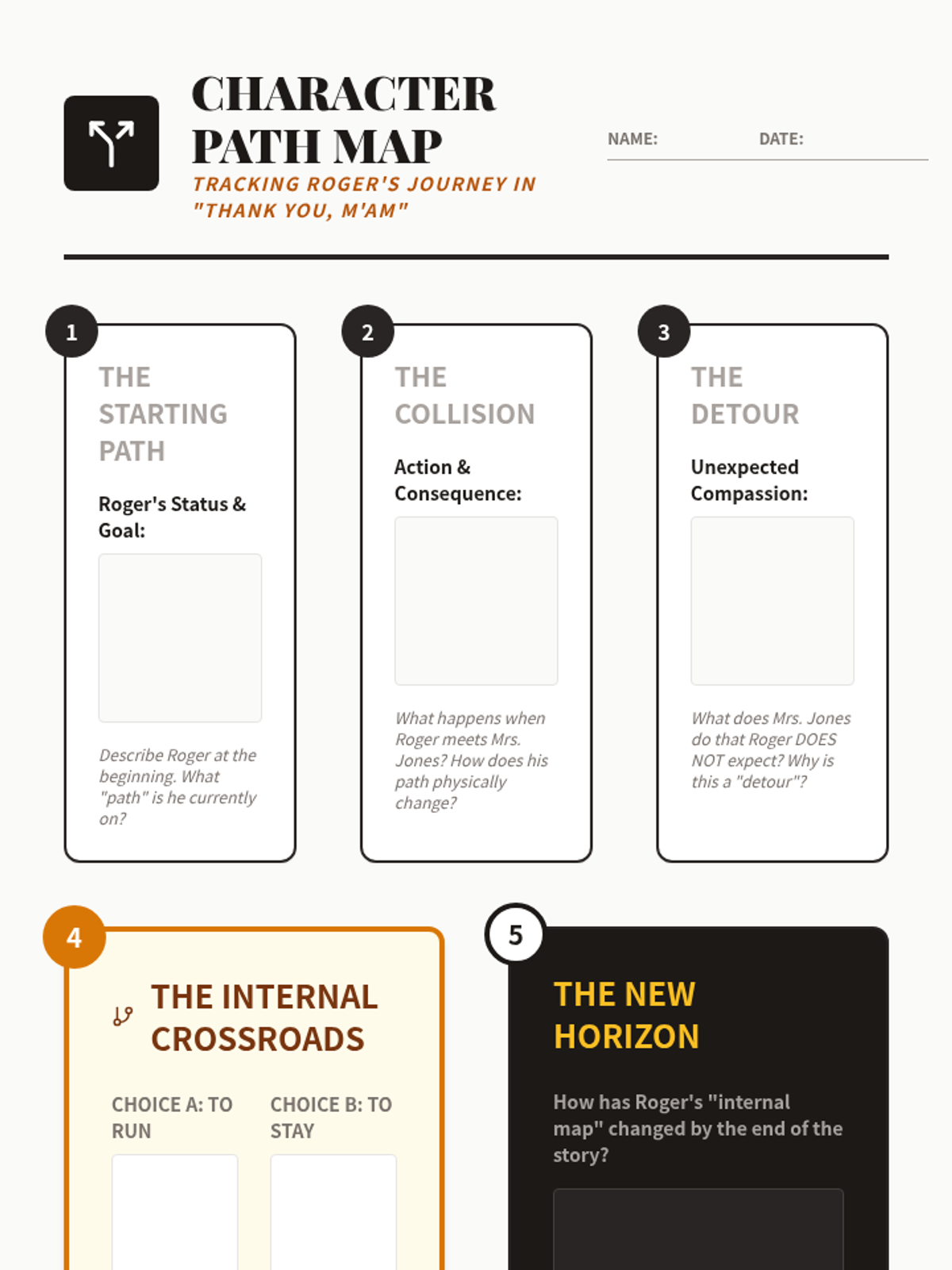
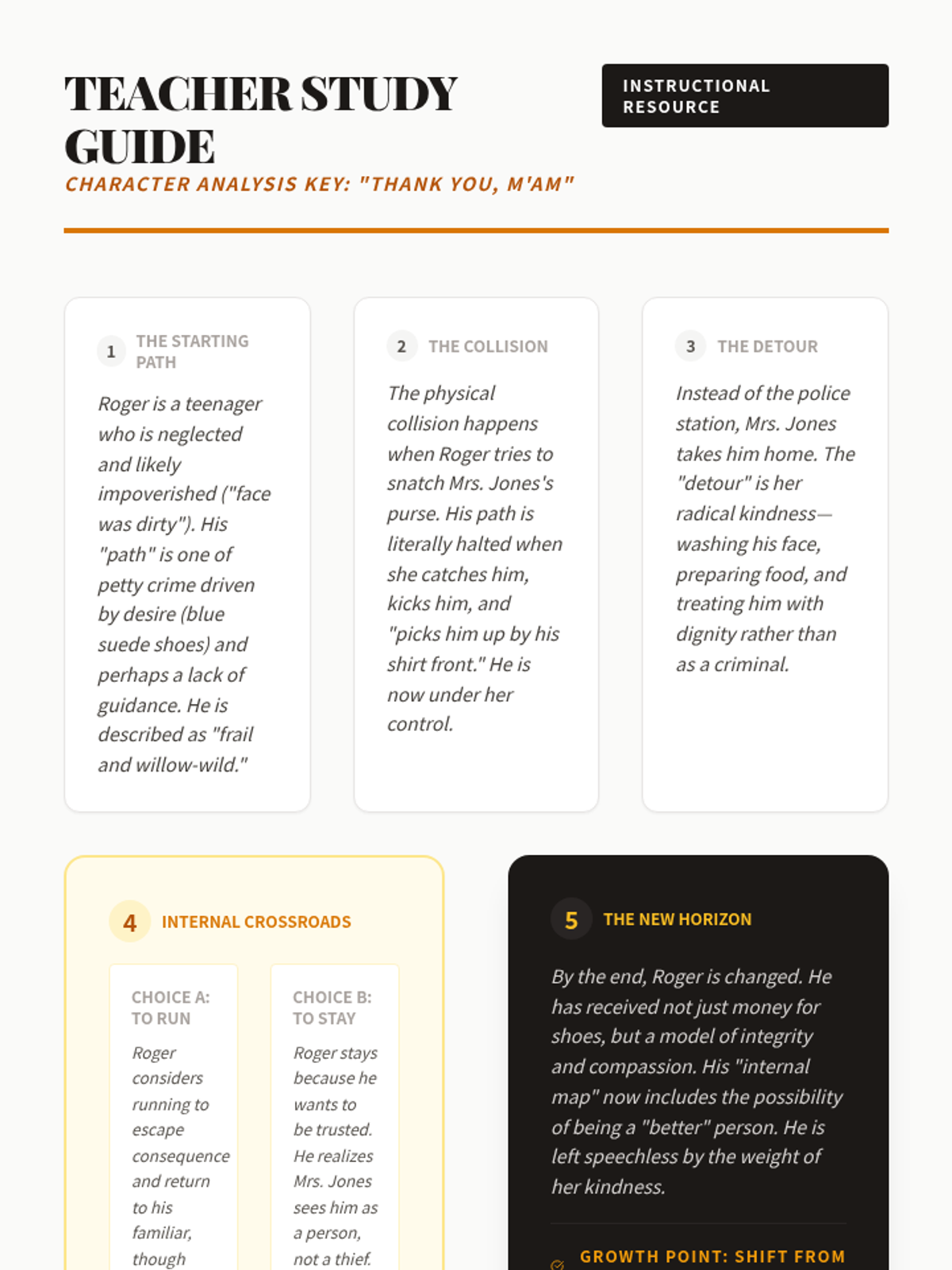
Analyzing character decisions and turning points in Langston Hughes's 'Thank You, M'am'. Students map out the 'pathways' characters choose.
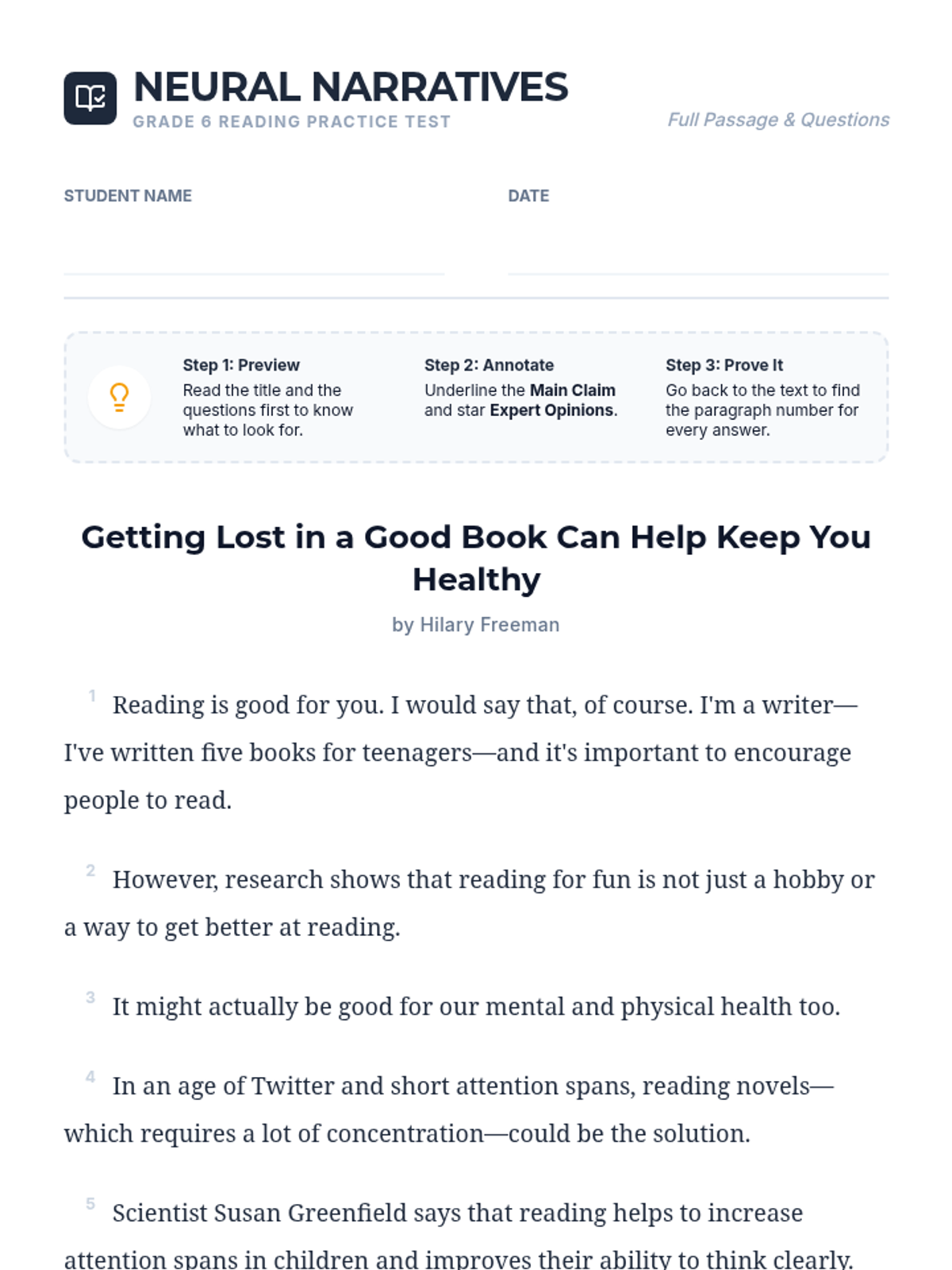
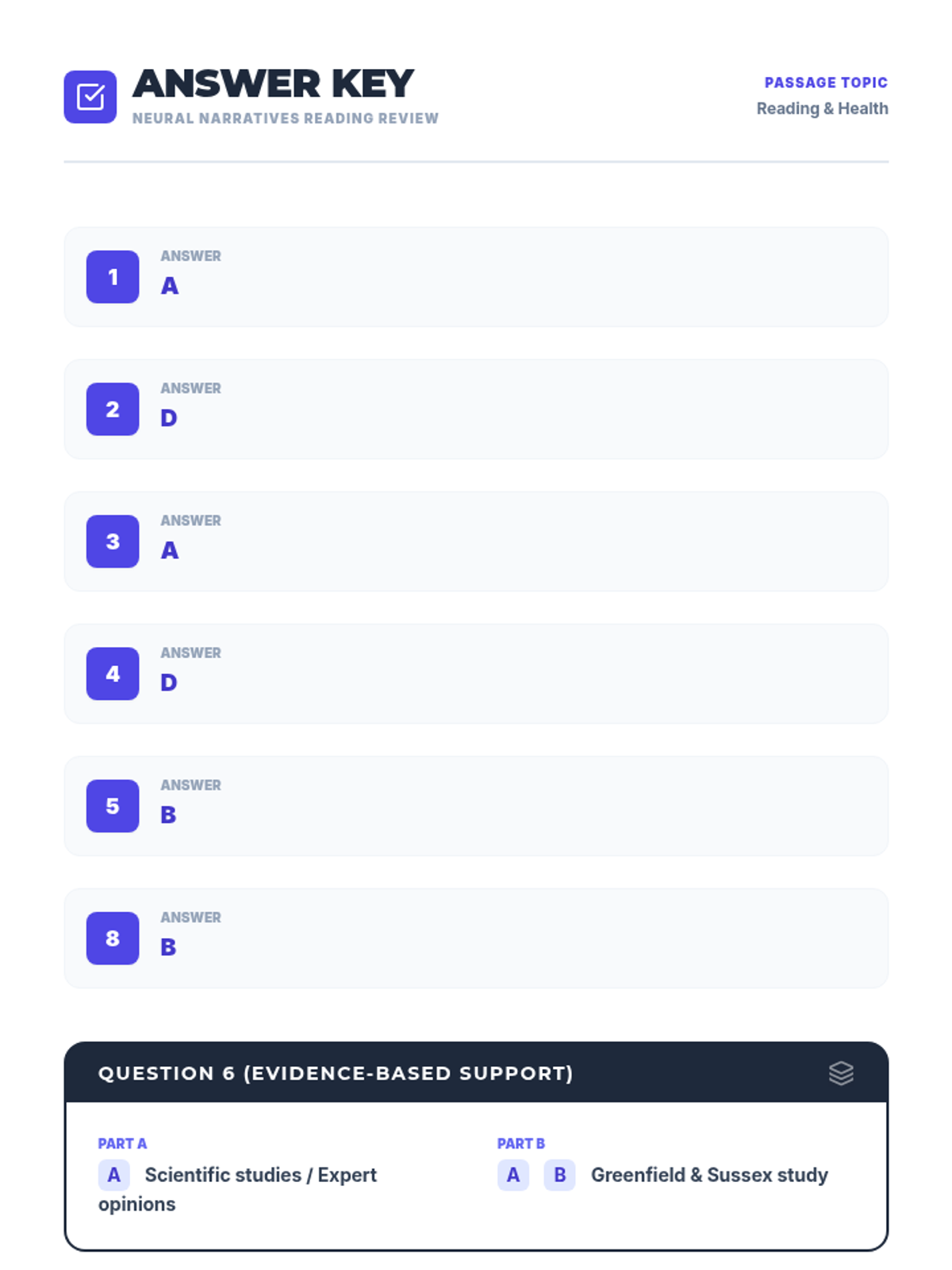
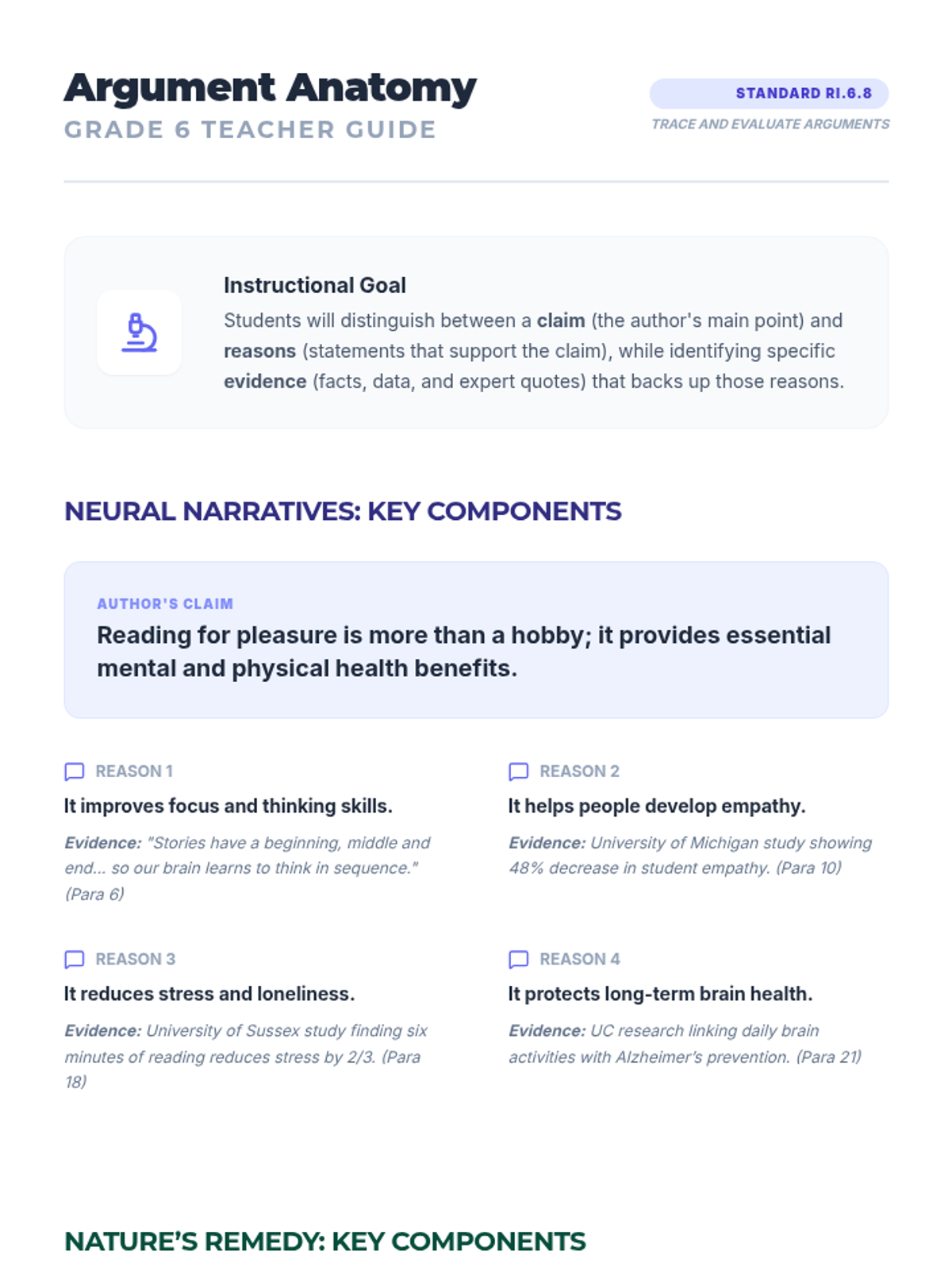
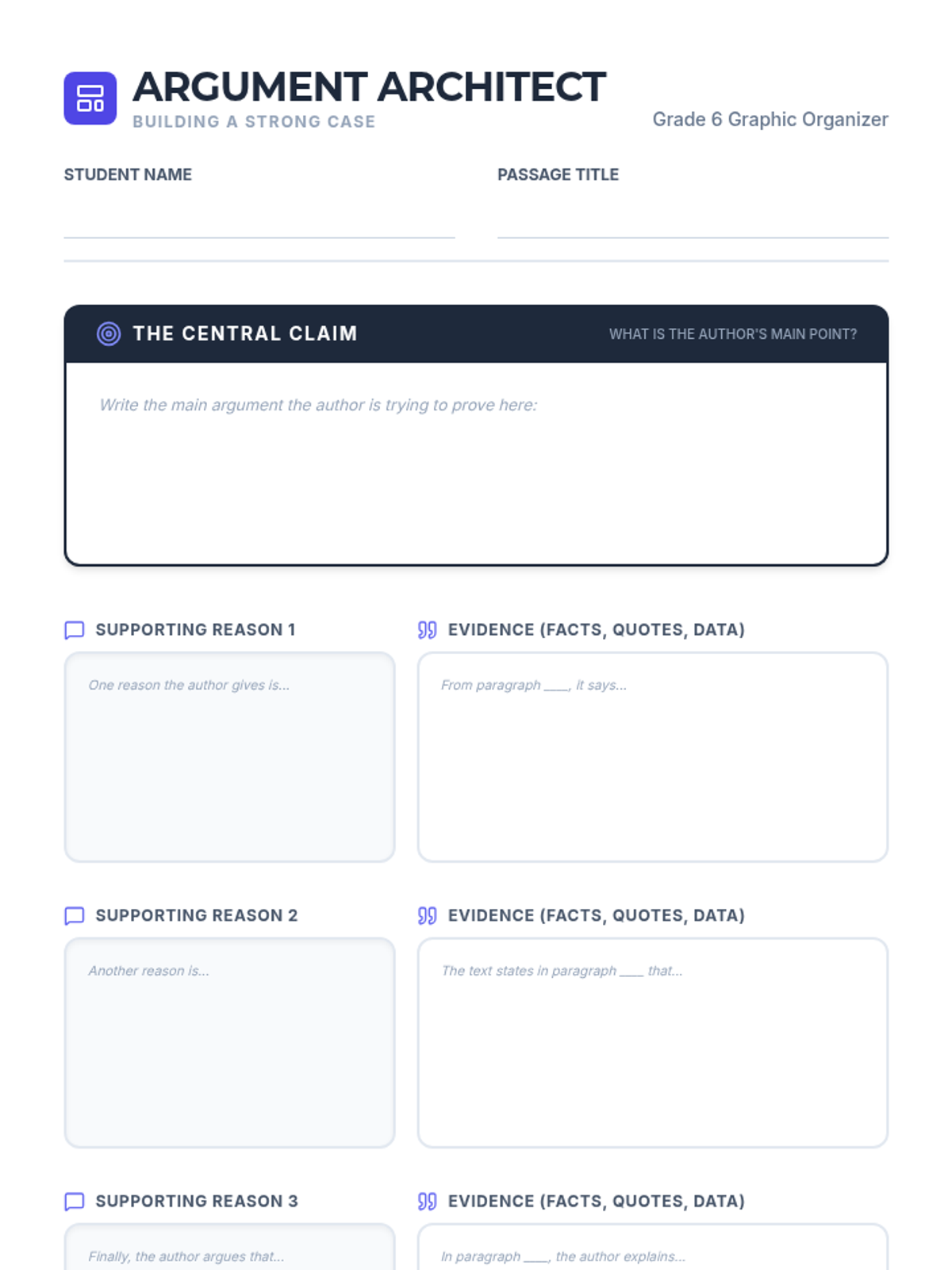
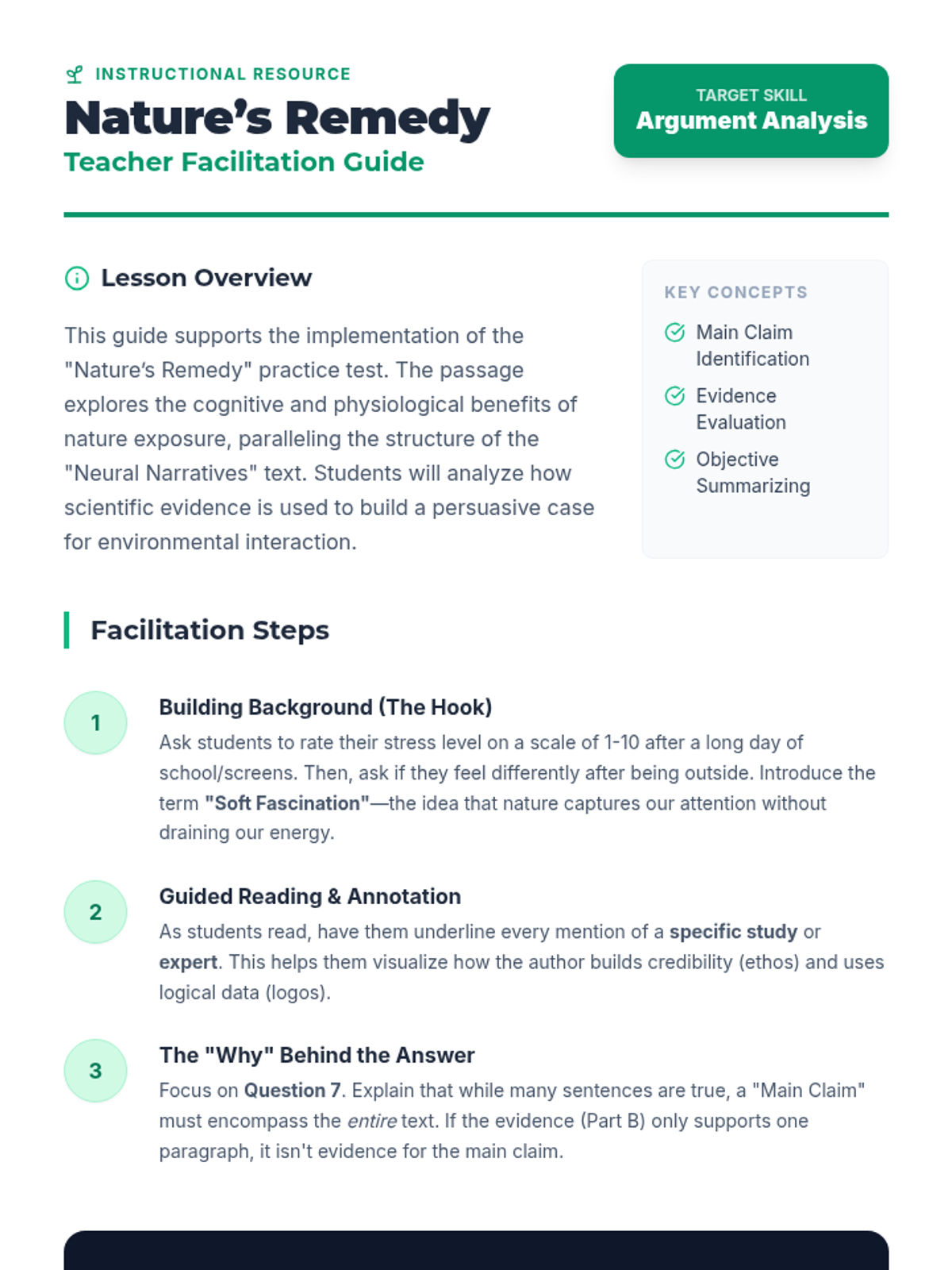
A practice test and answer key based on the passage 'Getting Lost in a Good Book Can Help Keep You Healthy' by Hilary Freeman, focusing on reading comprehension, vocabulary in context, and analyzing claims.
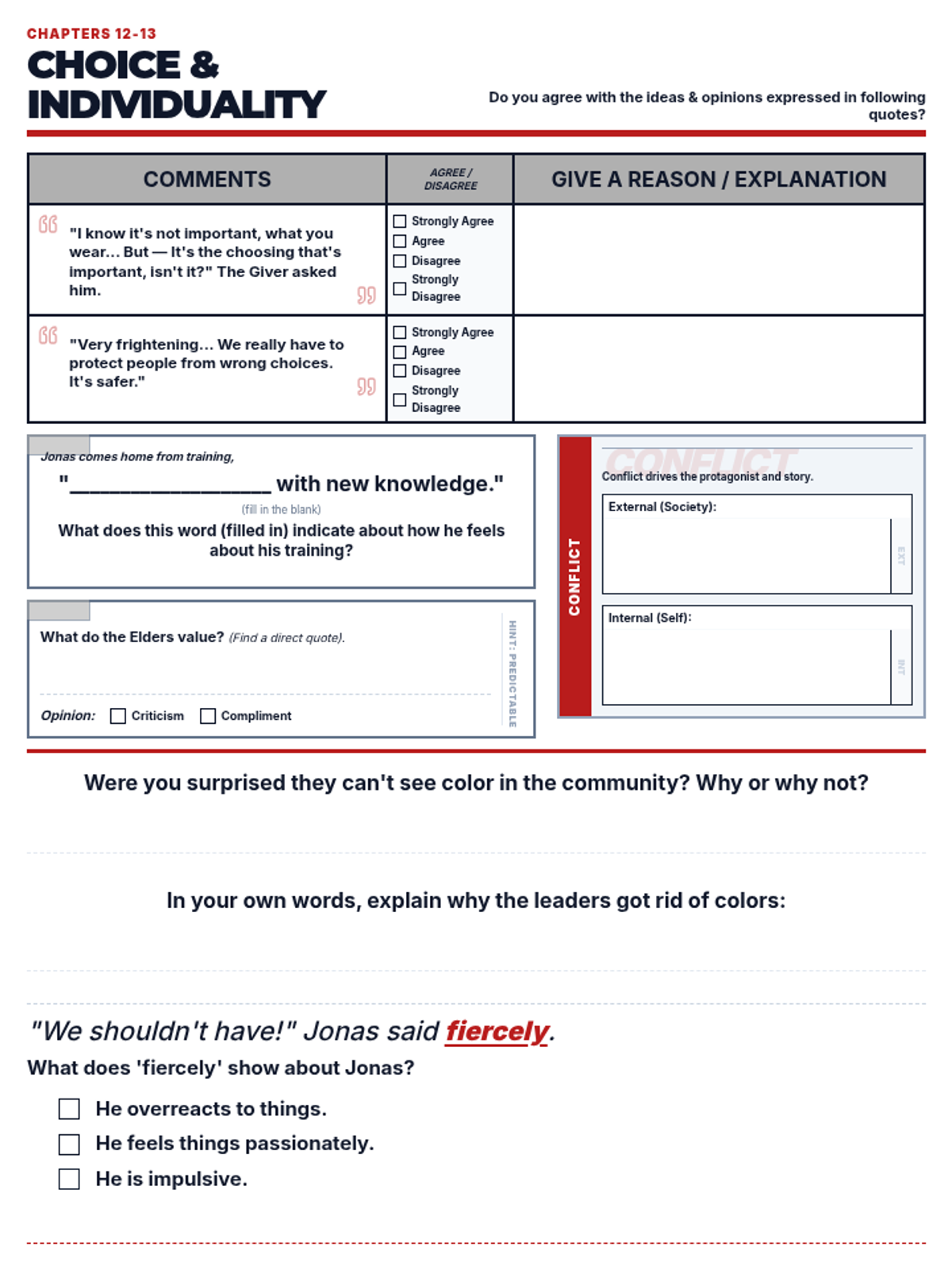
Focuses on the emergence of color and the ethical dilemmas of choice and individuality in Chapters 12 and 13 of The Giver.
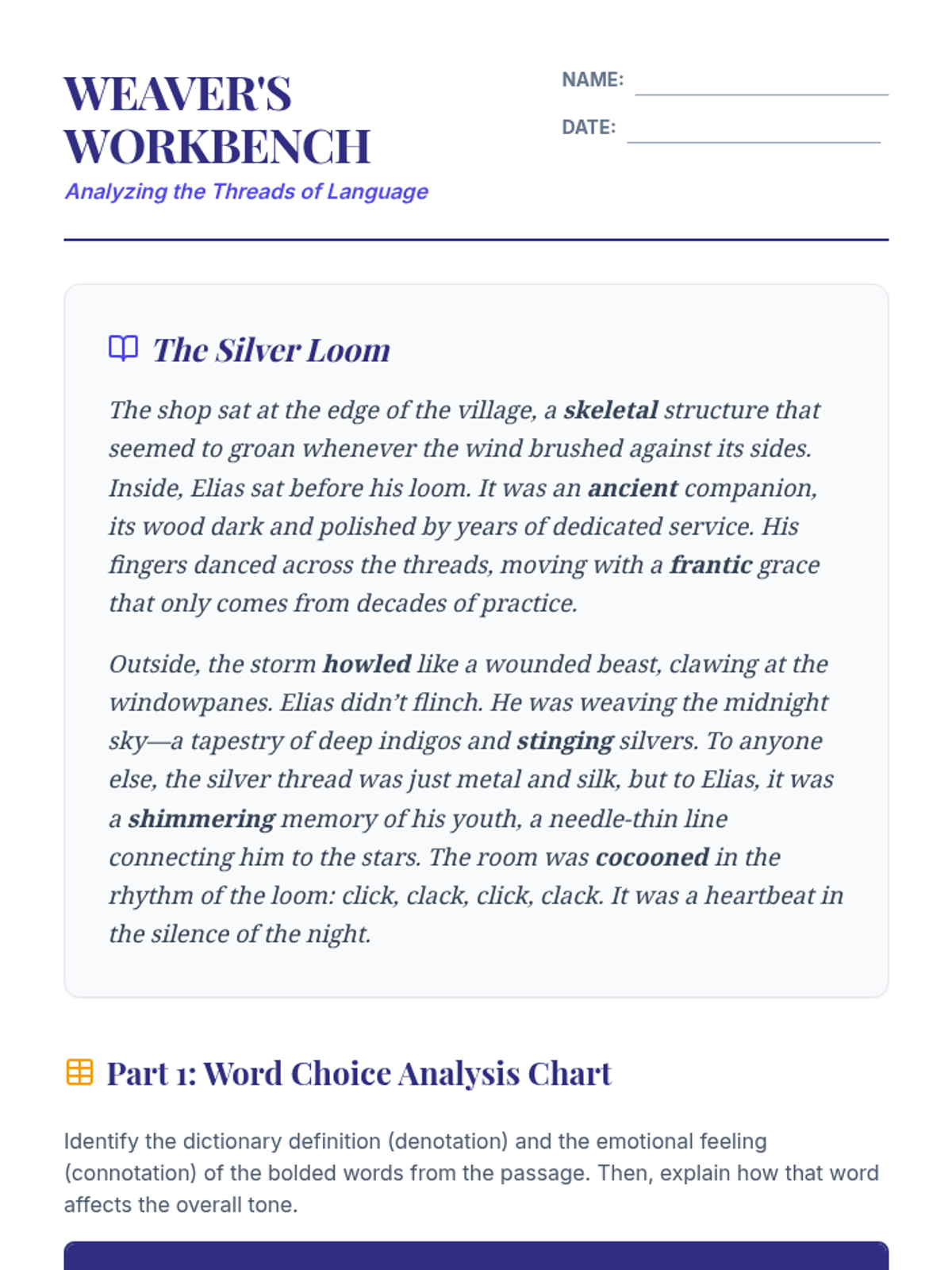
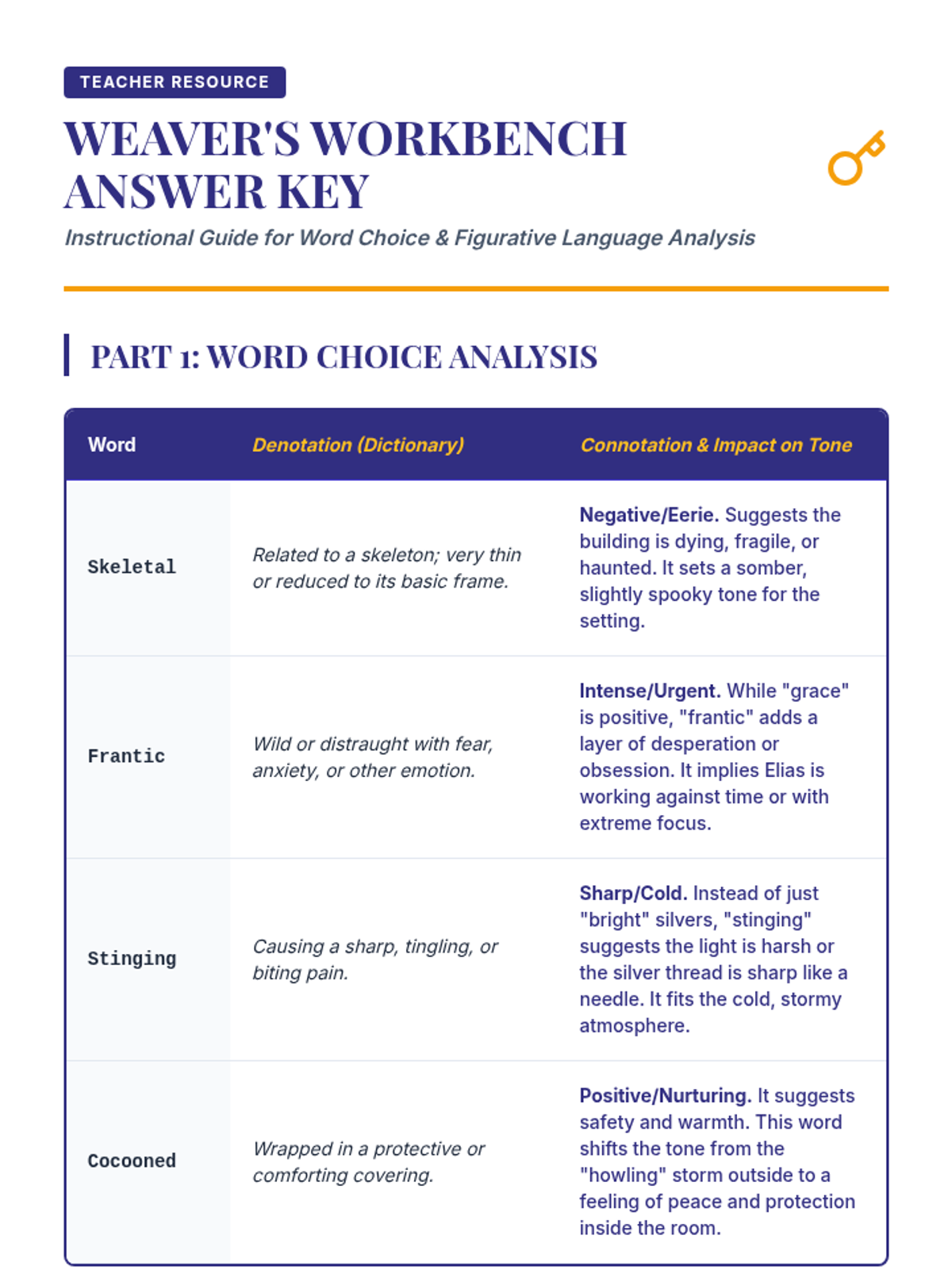
A comprehensive Grade 6 ELA lesson focused on NCSCOS standards RL.6.4 and L.6.5, where students explore the nuances of word choice, connotation, and figurative language through literary analysis.
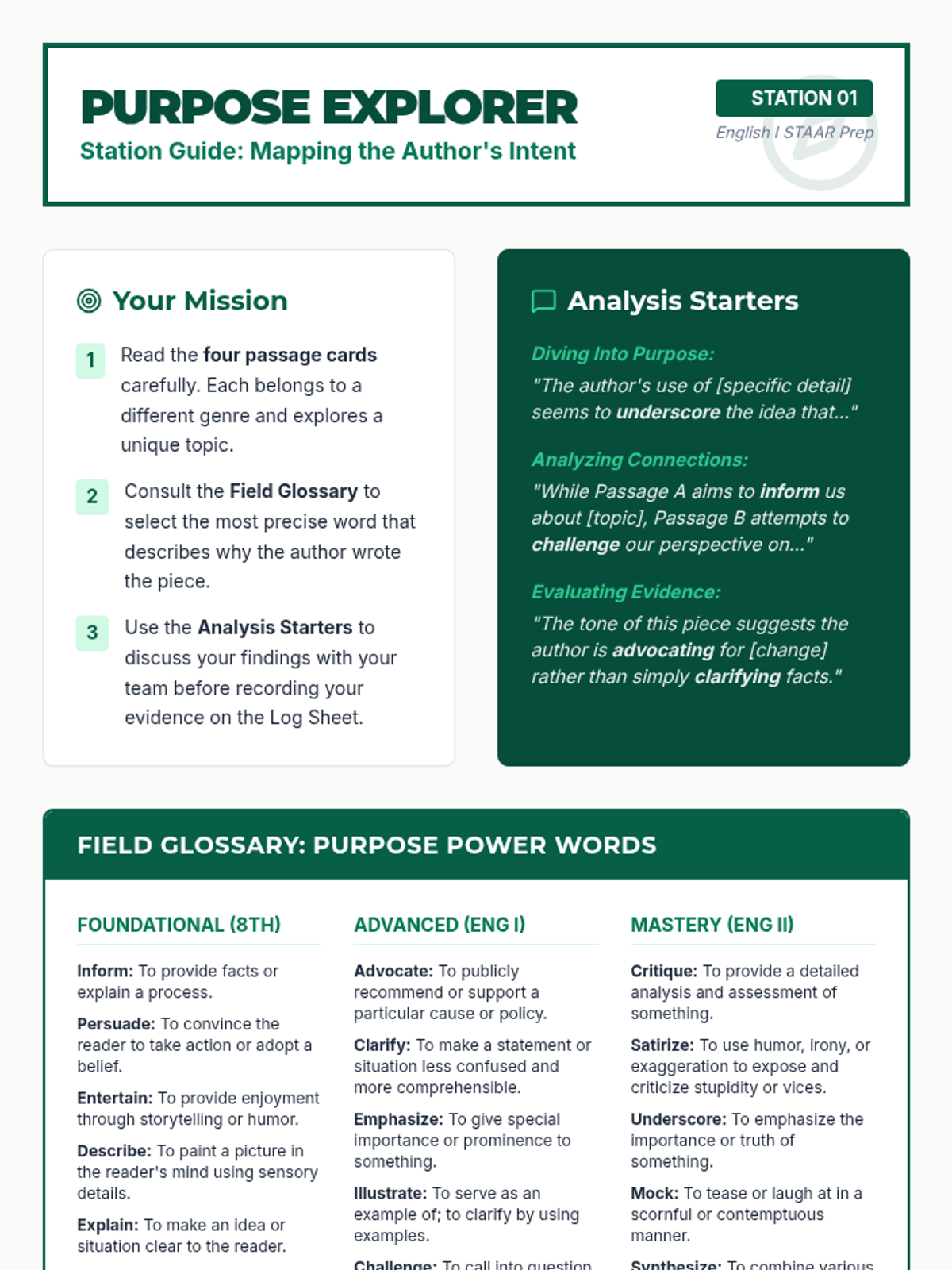
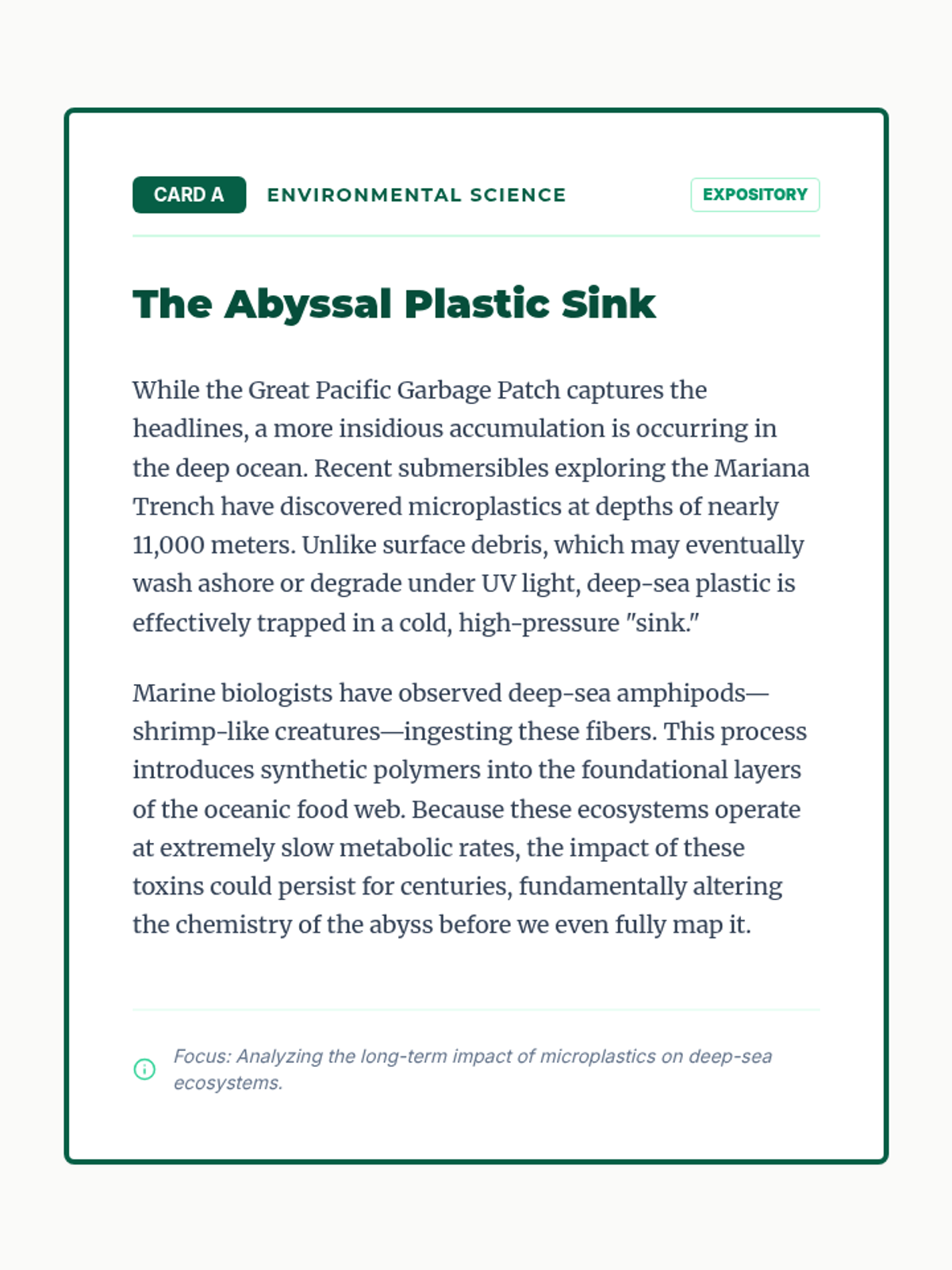
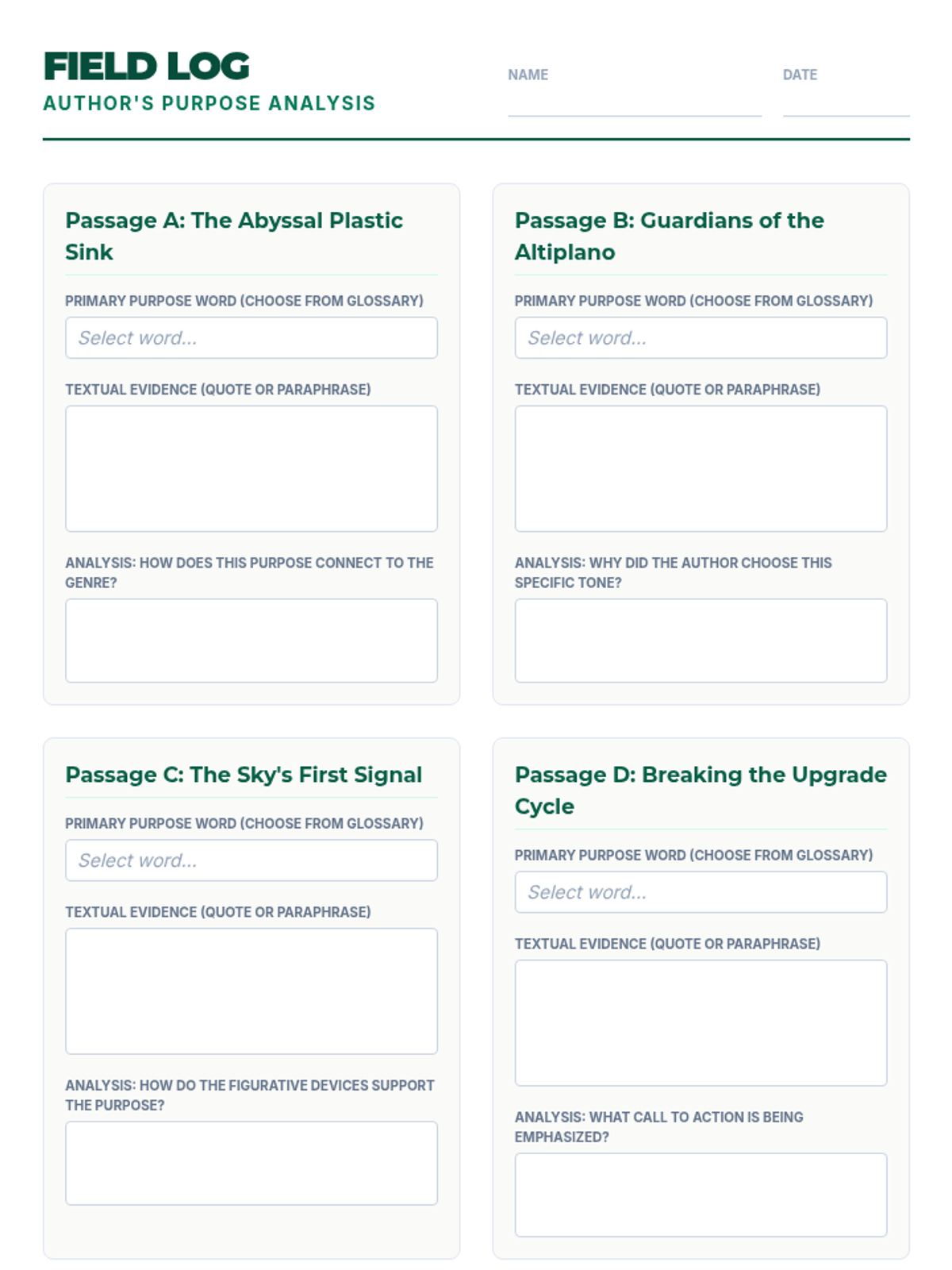
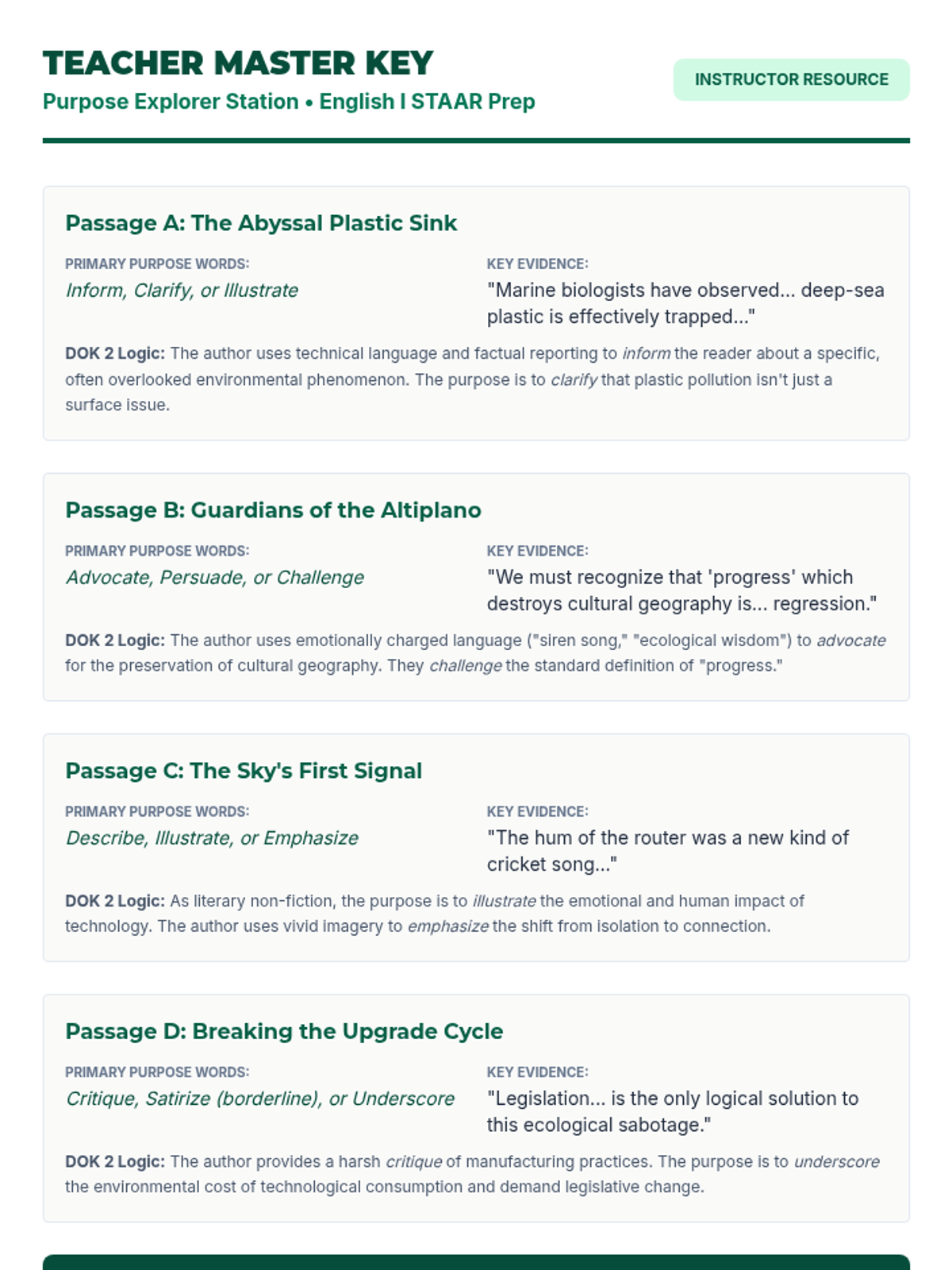
A comprehensive student-led station focused on identifying and analyzing author's purpose across multiple genres and topics (Environmental Science, World Geography, Technology) for English I STAAR preparation. Students use high-level academic vocabulary and sentence starters to collaborate and analyze texts at DOK levels 2 and 3.
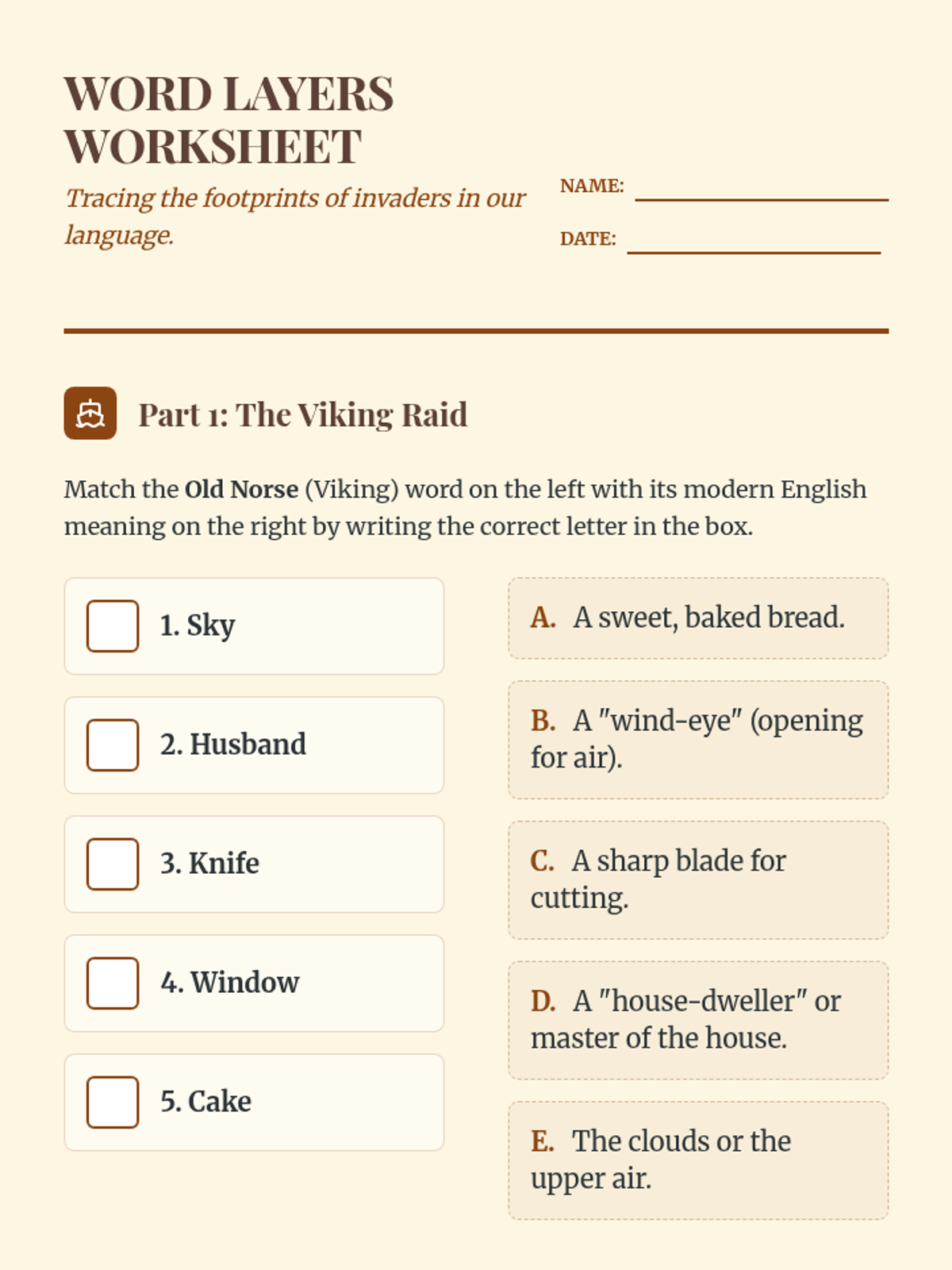
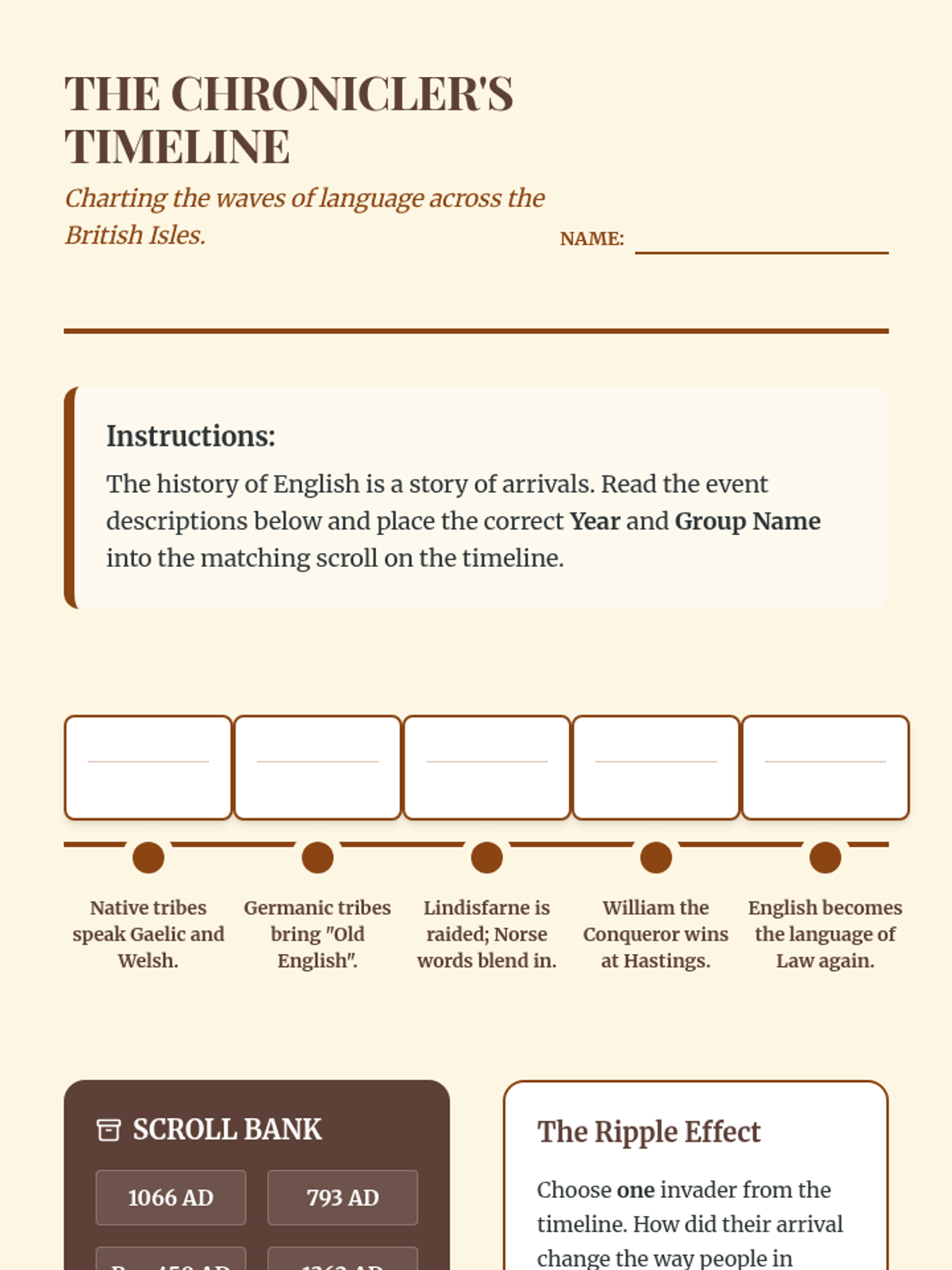
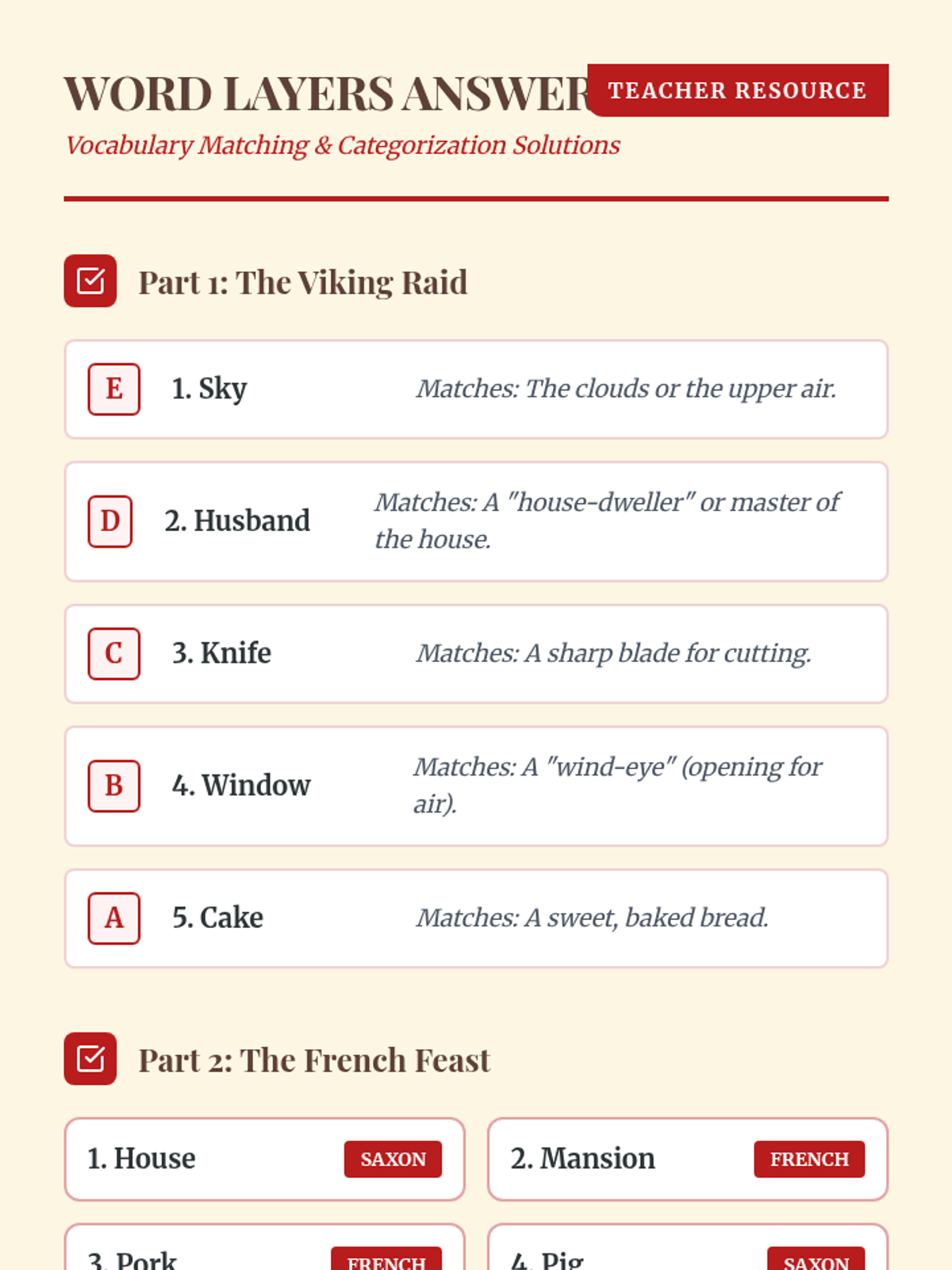
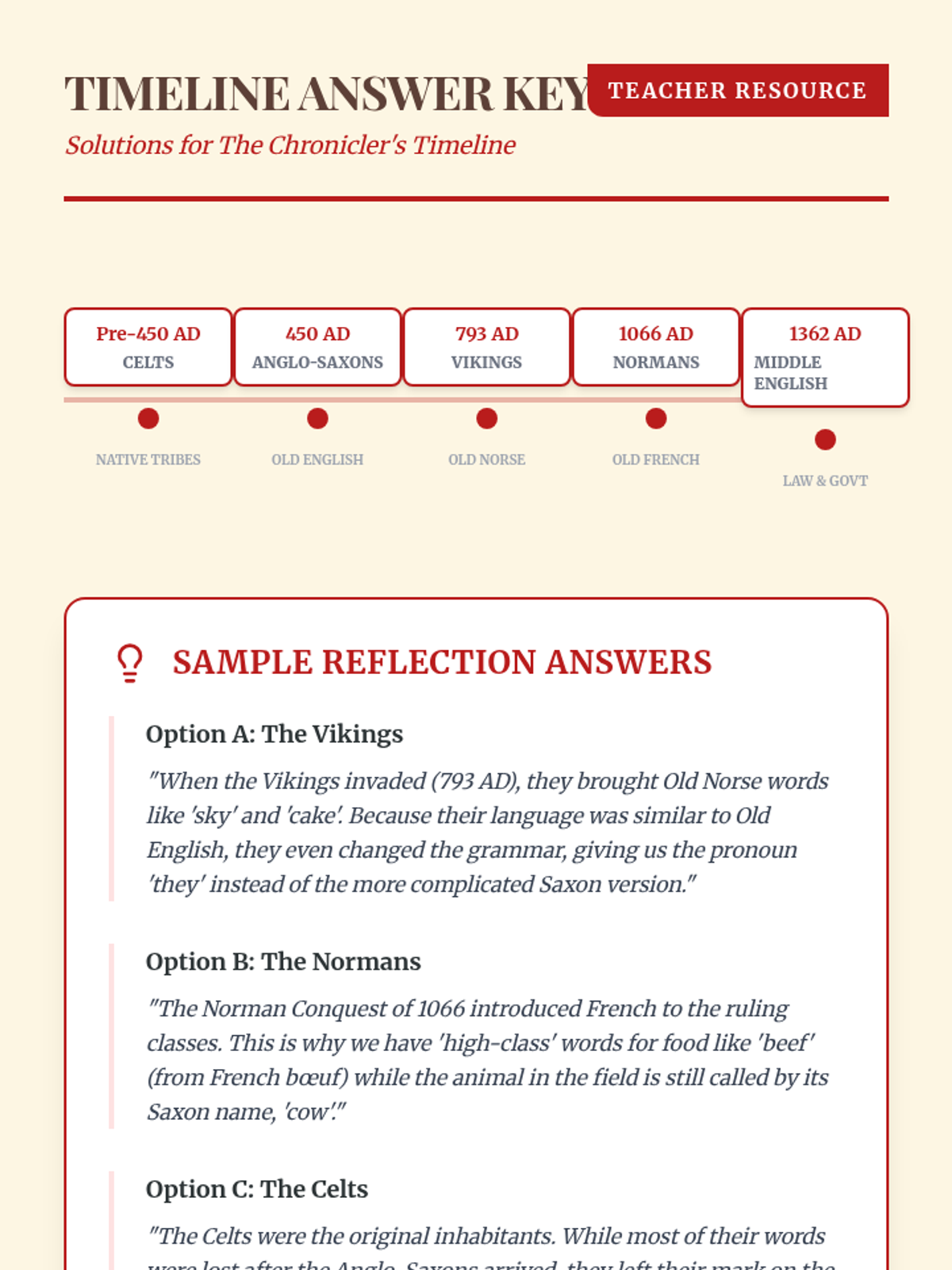
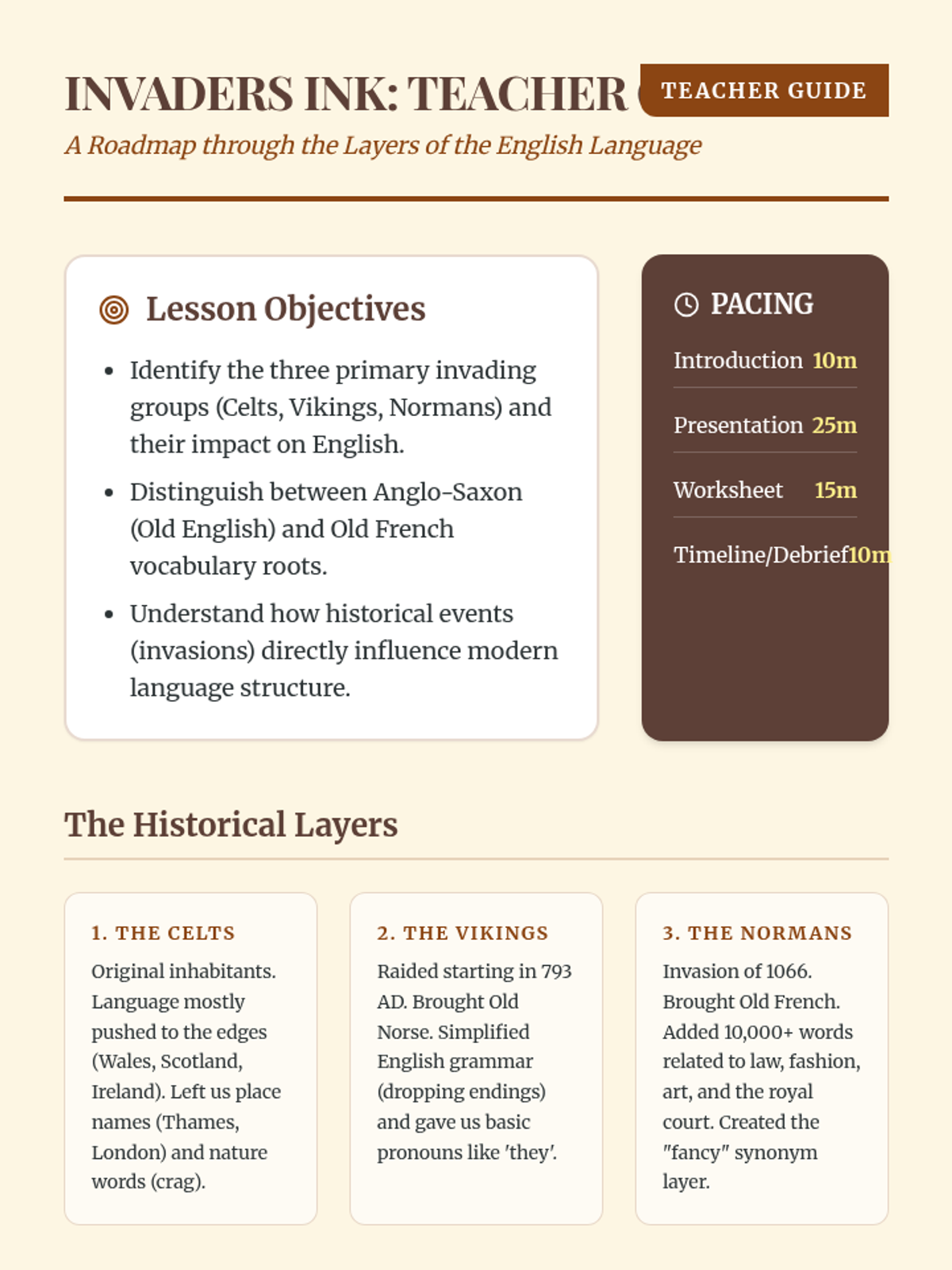
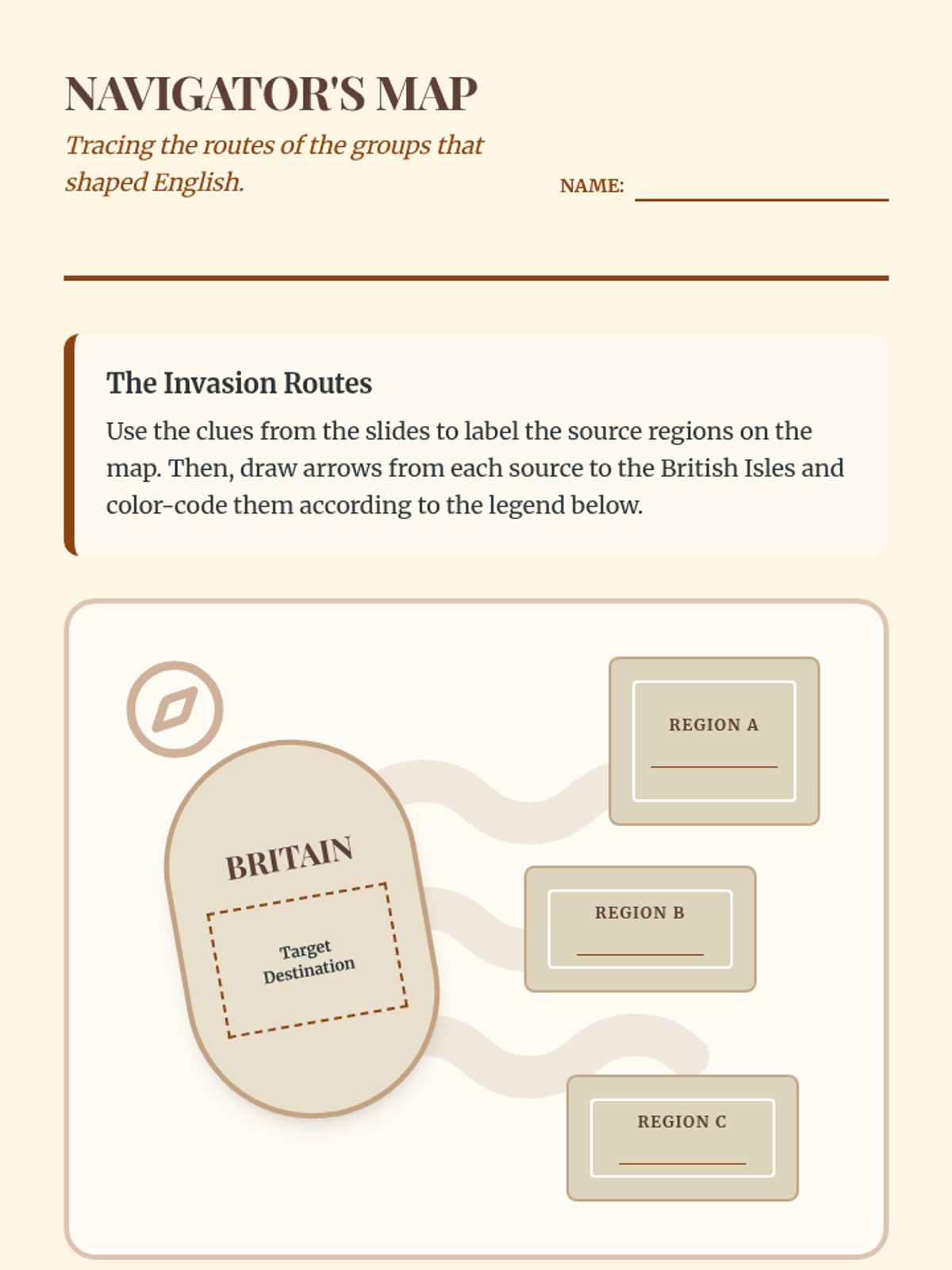
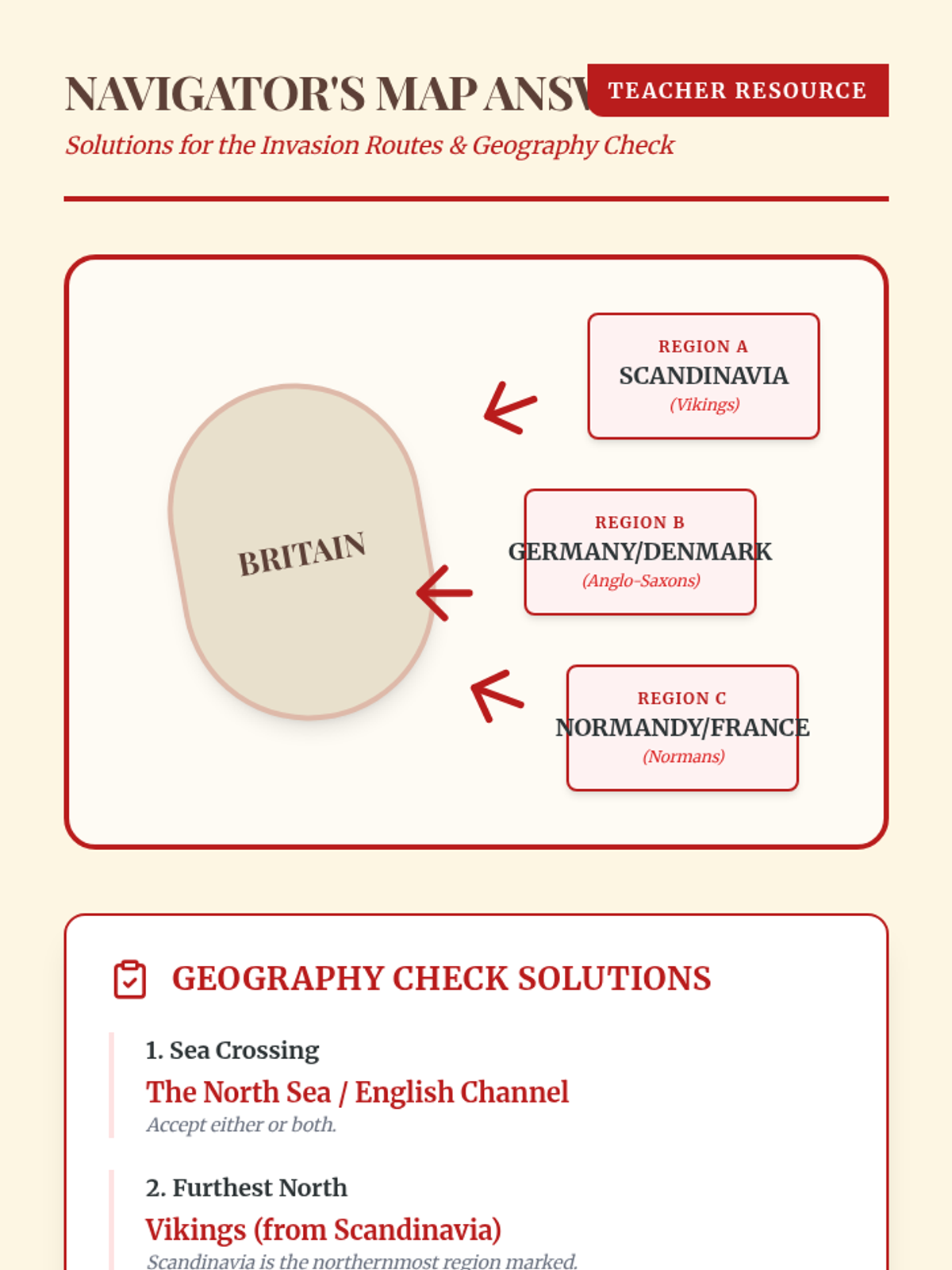
This lesson explores the historical layers of the English language, focusing on how invasions by the Celts, Vikings, and French shaped the vocabulary and grammar we use today. Students will trace the timeline from Old English to the Norman Conquest.
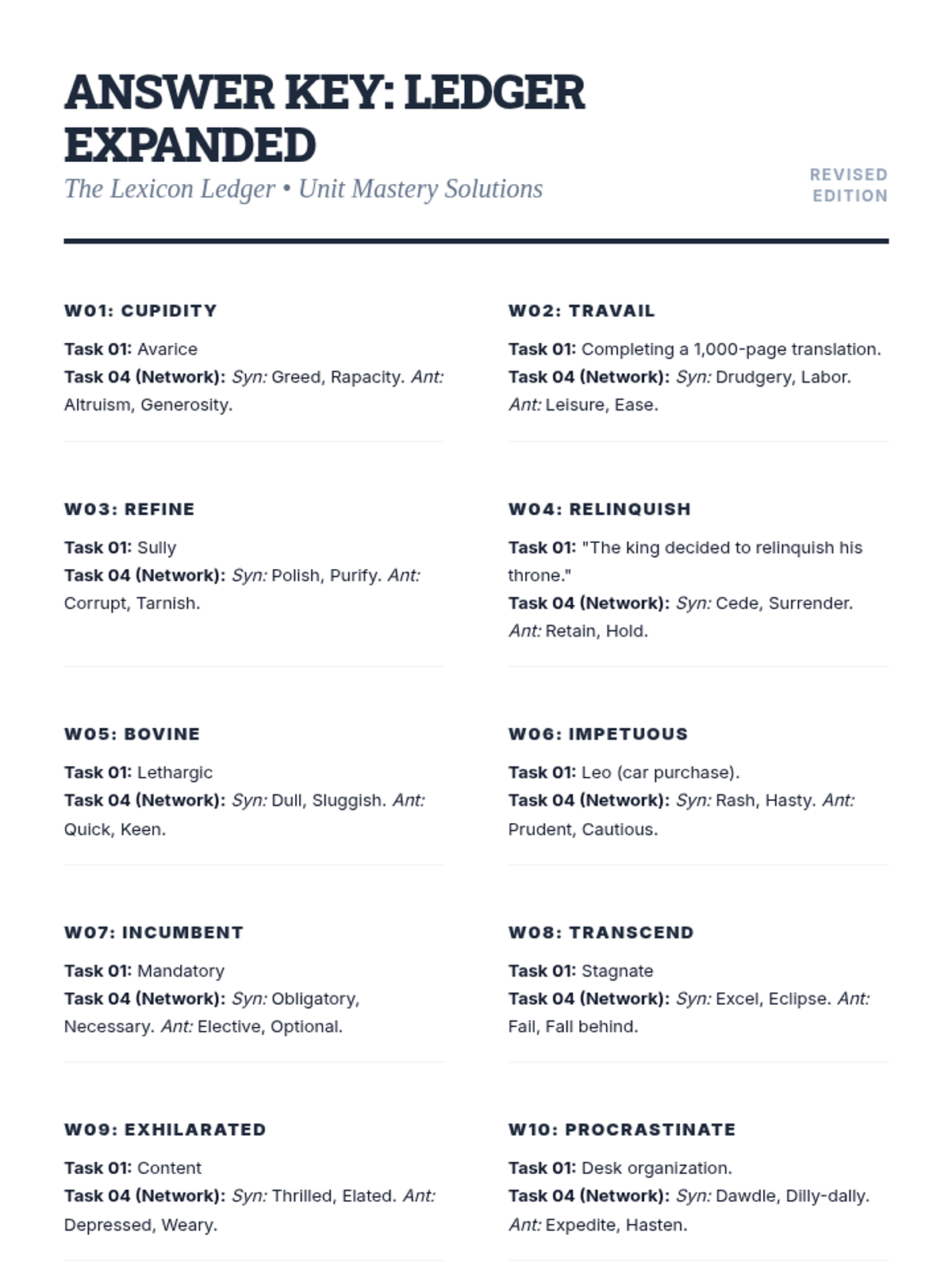
A comprehensive vocabulary building course designed to master fifteen sophisticated words through weekly deep-dives, context analysis, and creative application.
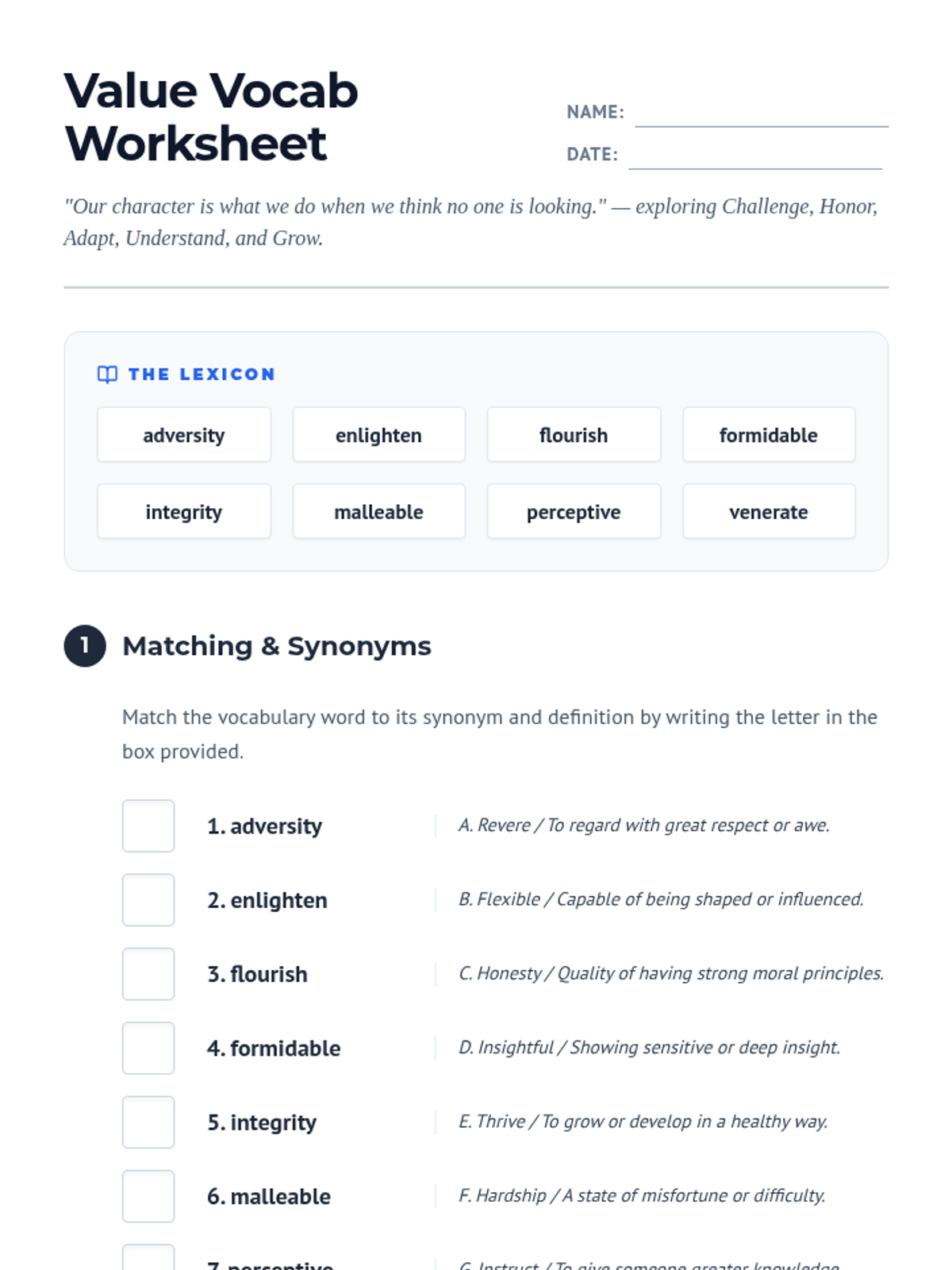
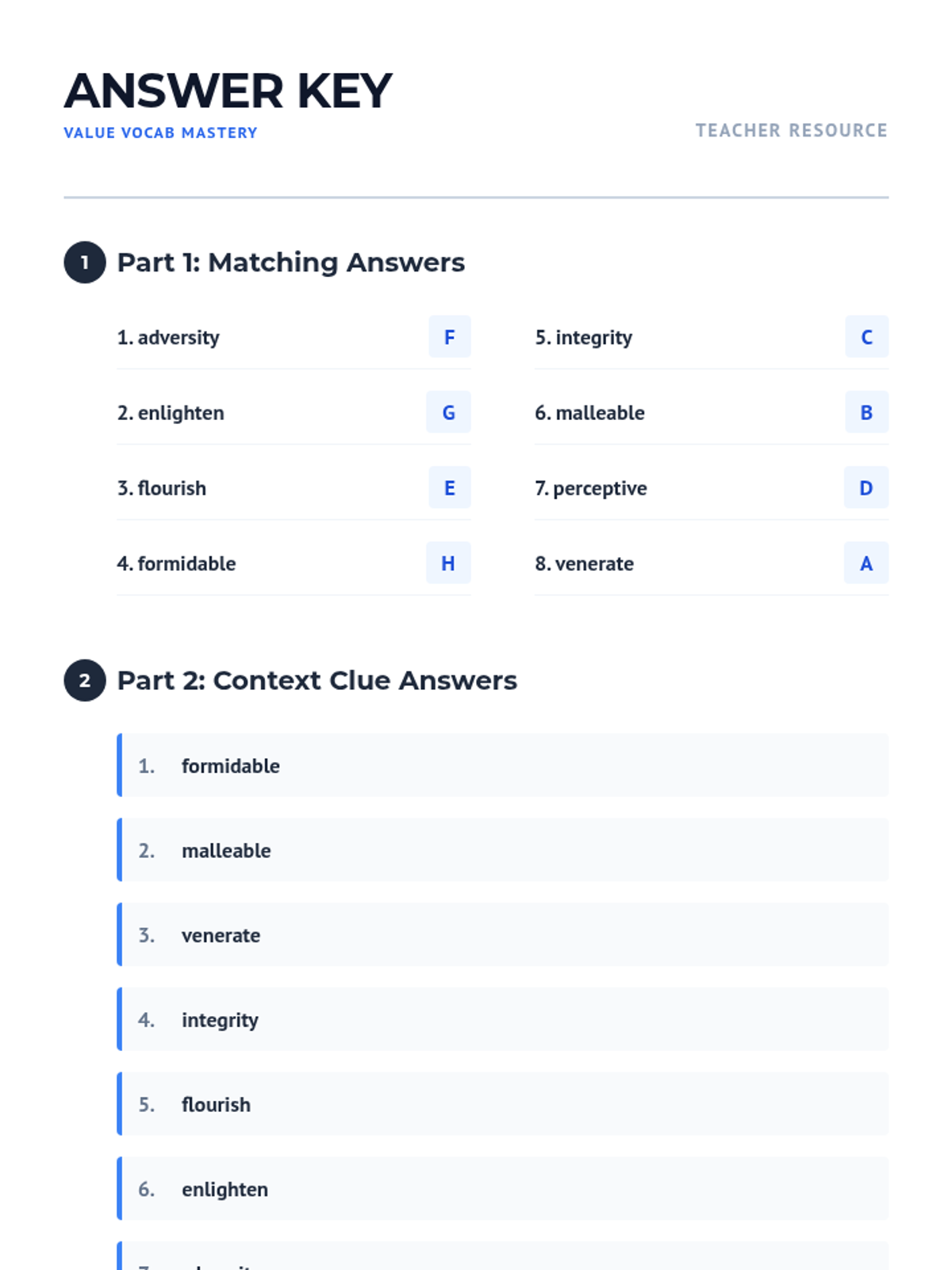
A vocabulary lesson focusing on eight high-level words aligned with the school's core values: Challenge, Honor, Adapt, Understand, and Grow. Students engage with definitions, synonyms, and context clues.
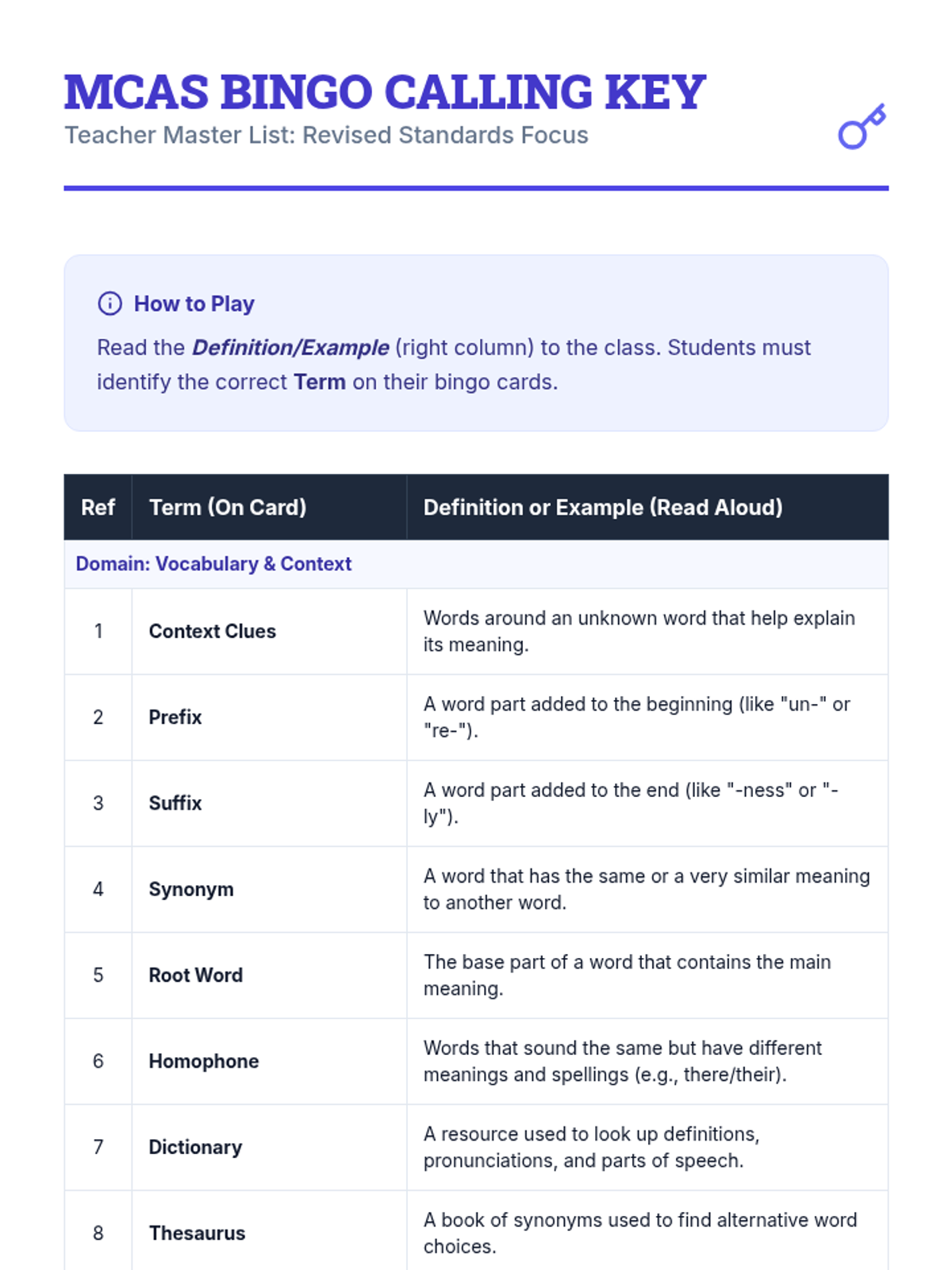
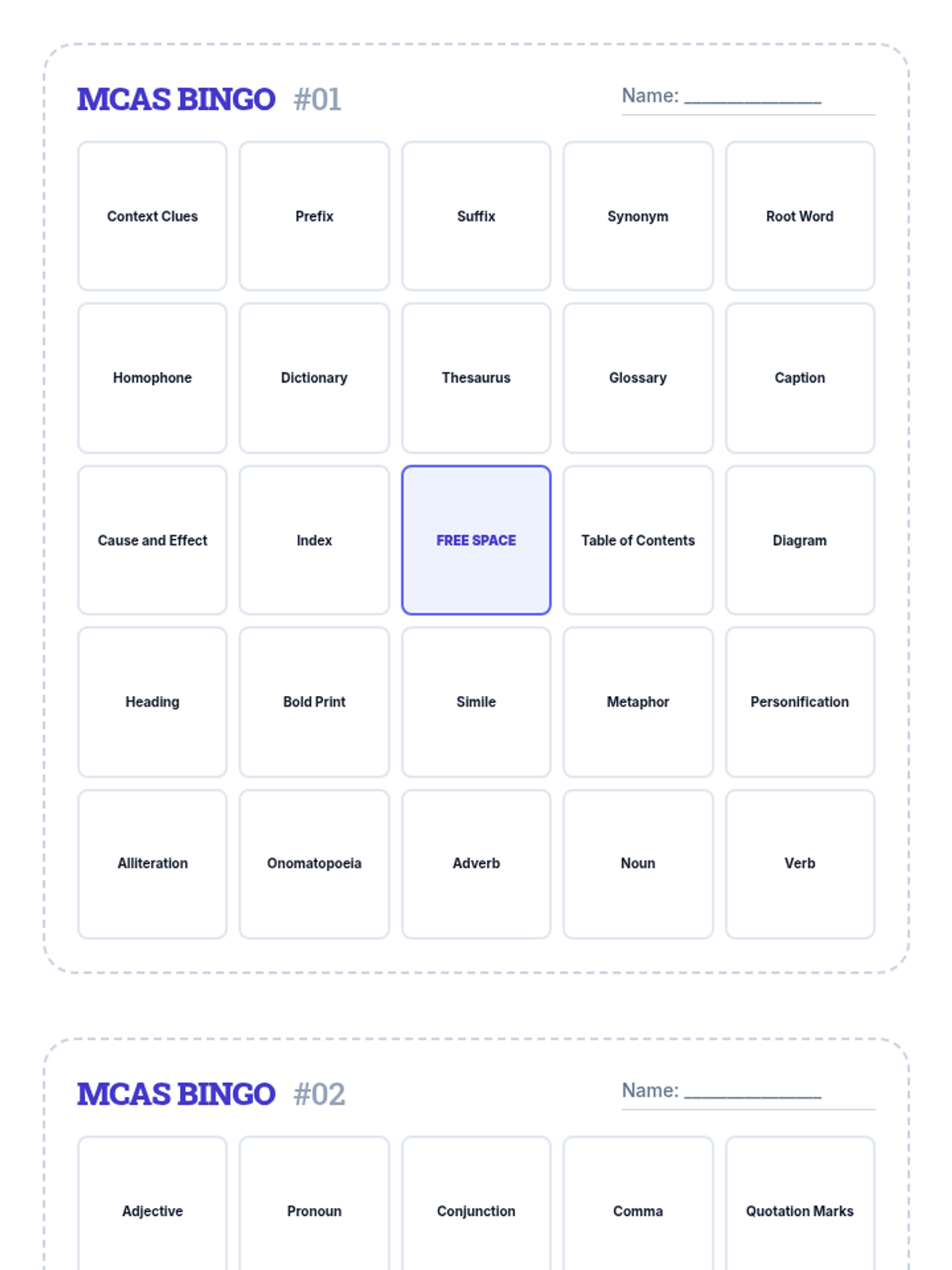
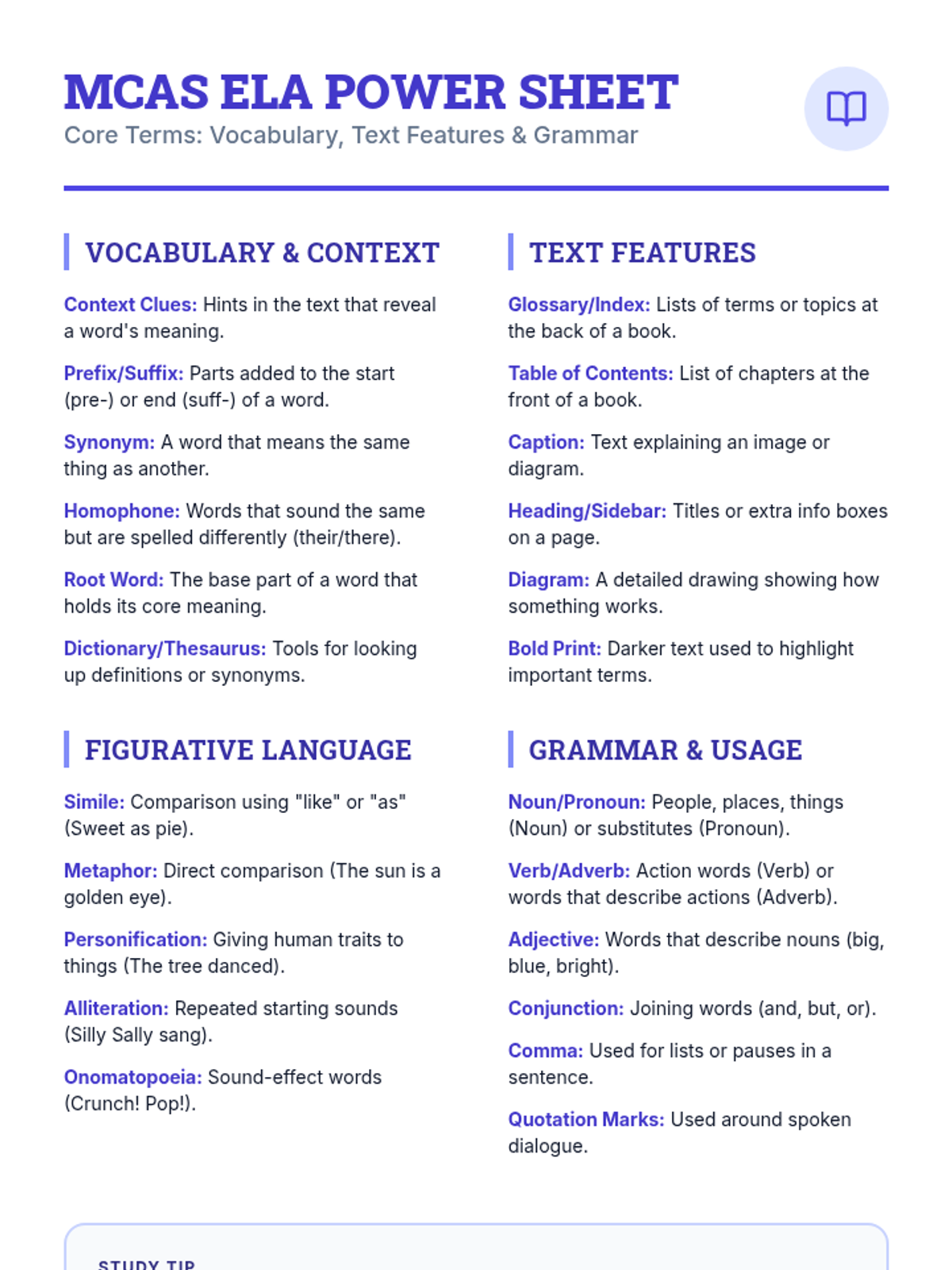
A comprehensive ELA review game designed to help students master MCAS standards through a competitive and engaging bingo format. The lesson covers vocabulary, literary elements, text structures, and grammar.
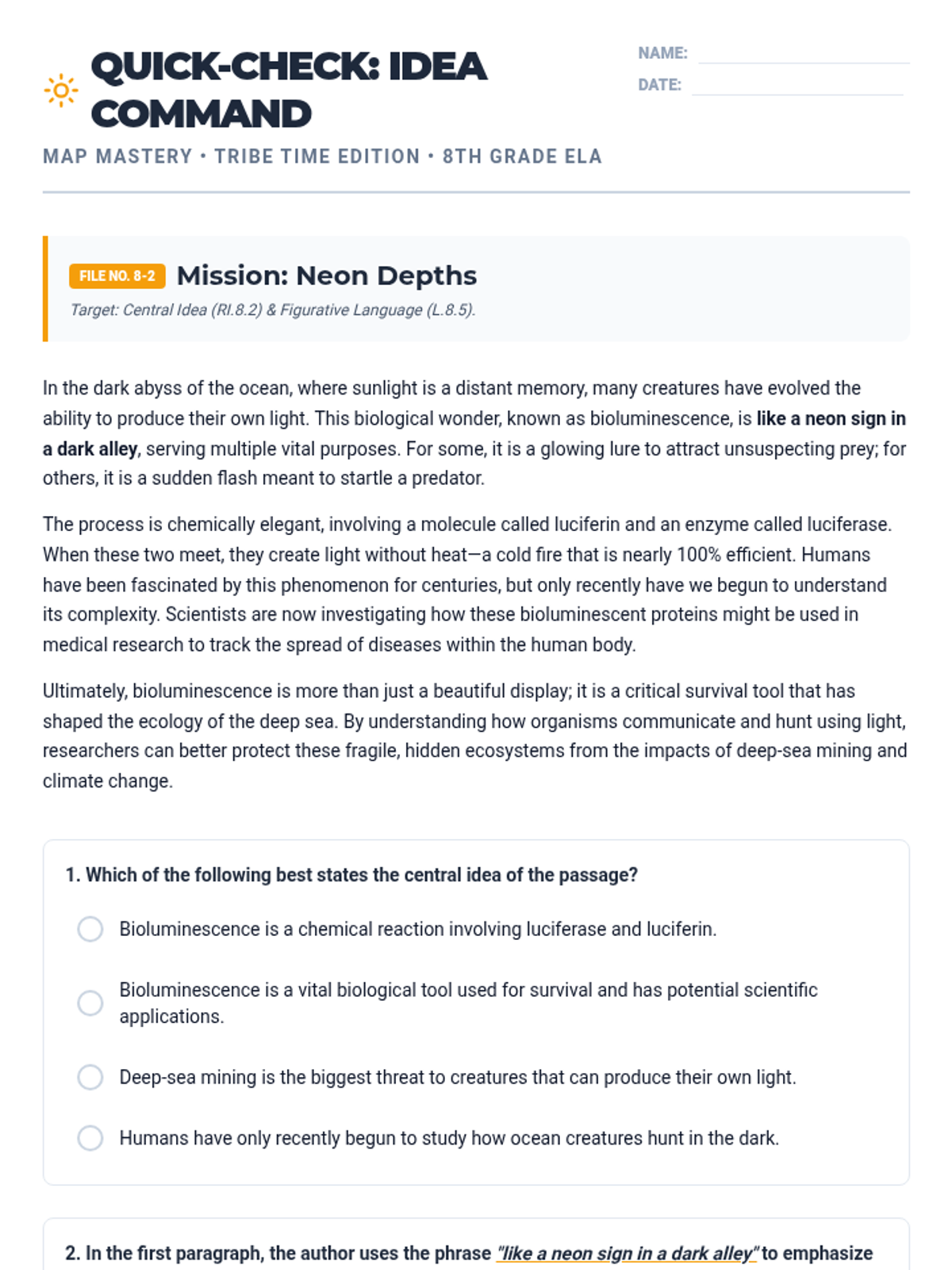
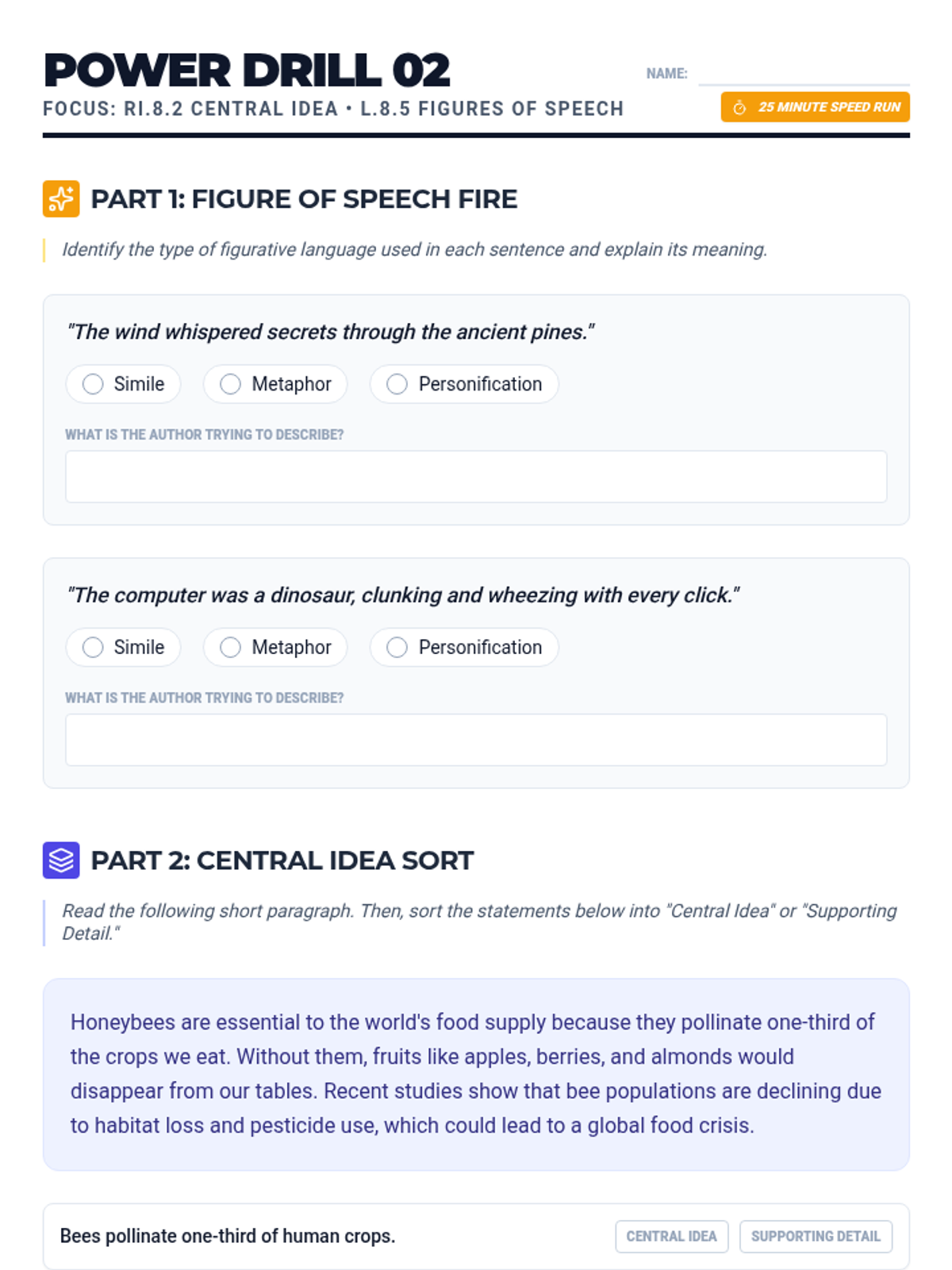
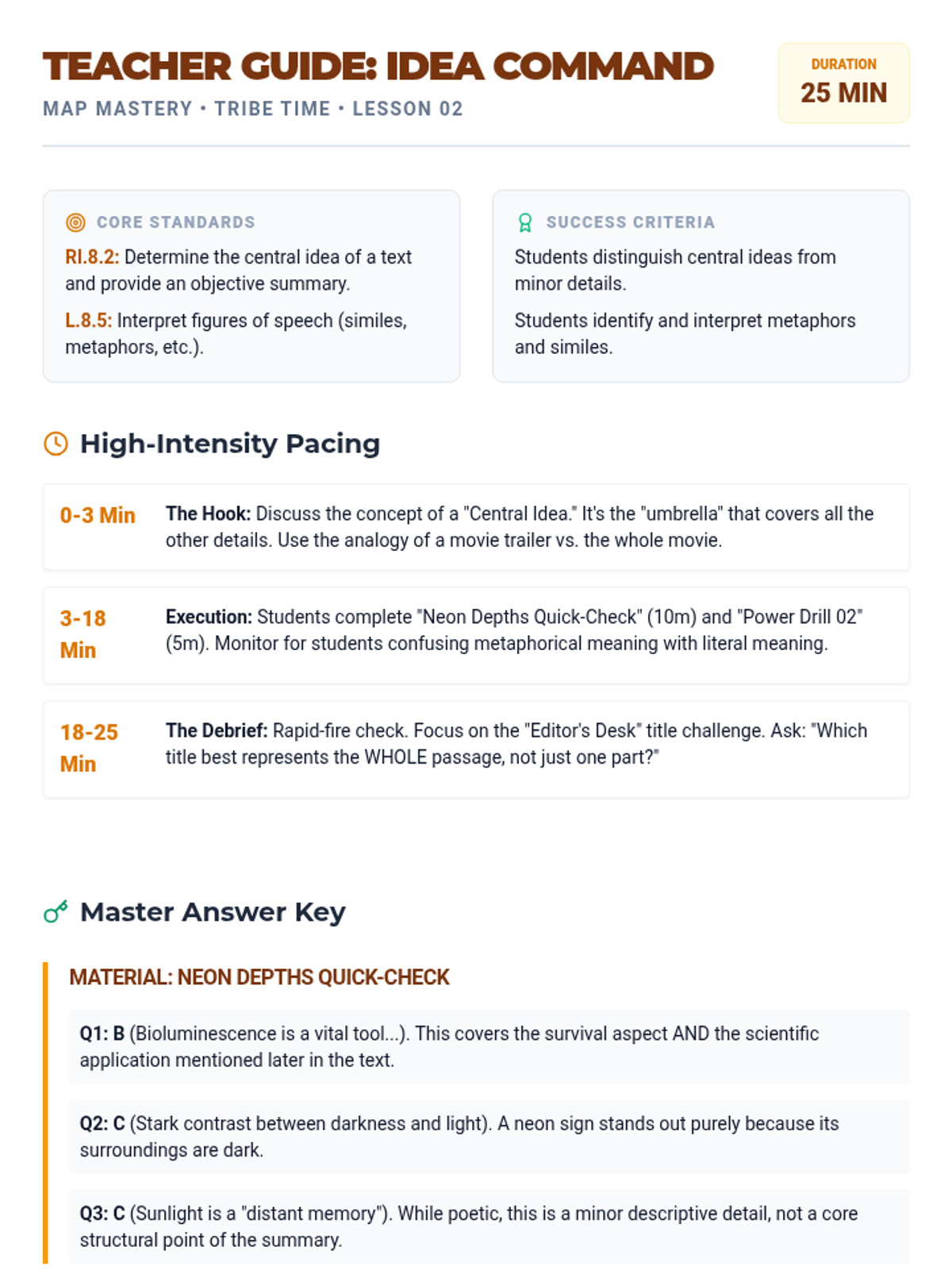
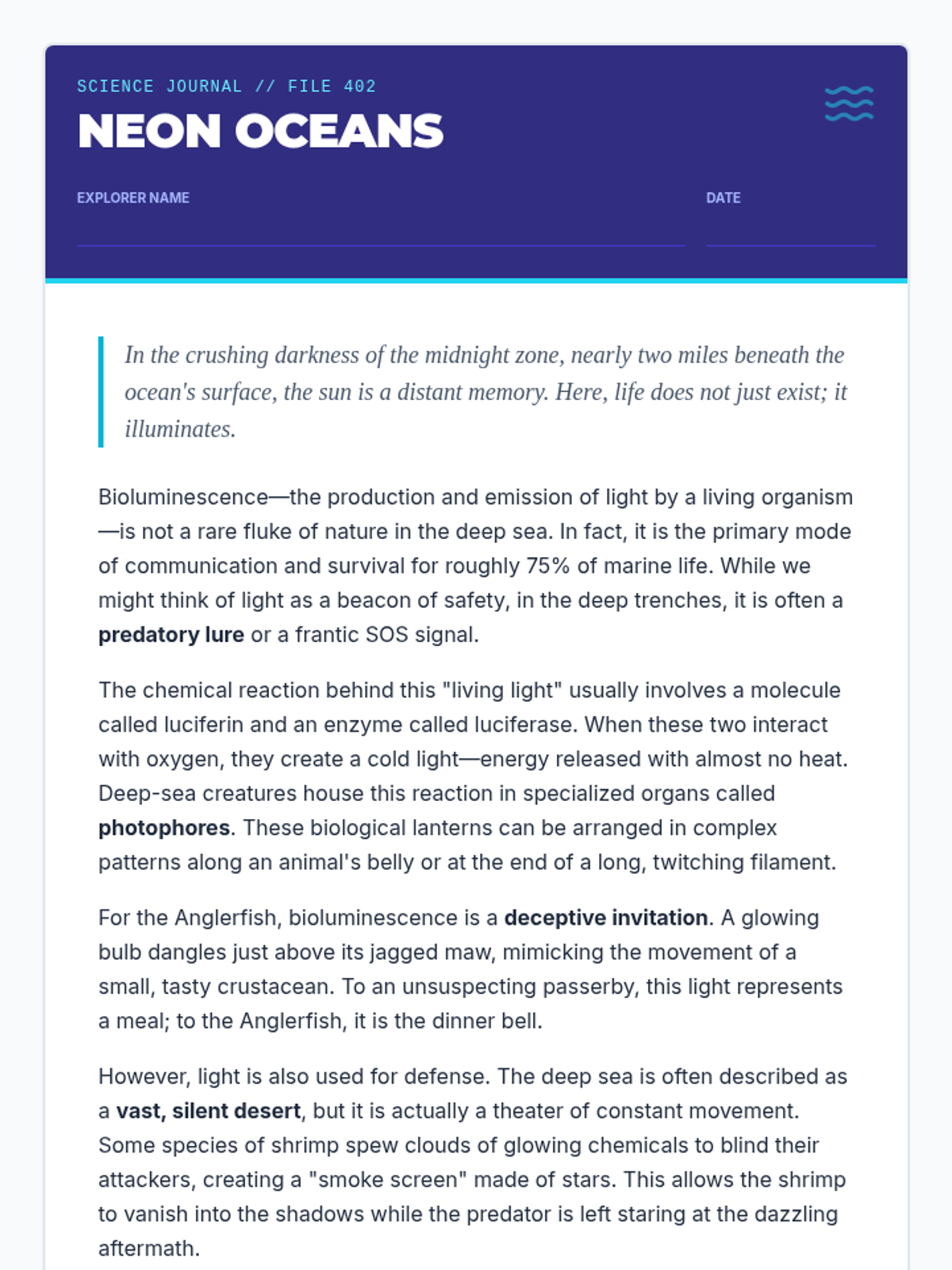
A high-intensity 25-minute ELA session targeting Central Idea and Summary (RI.8.2) and Figures of Speech (L.8.5). Features a bioluminescence passage and a detail-sorting drill.
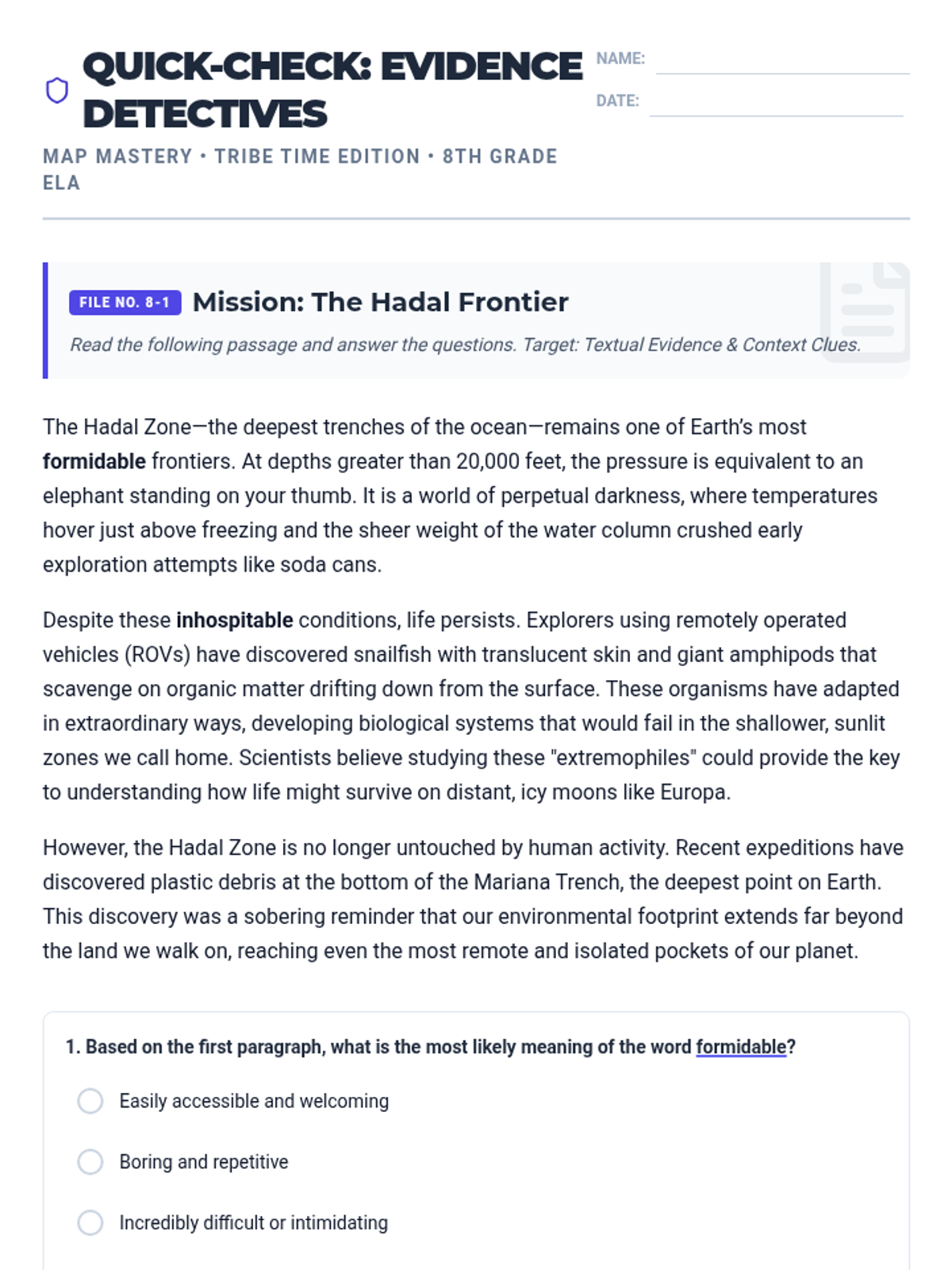
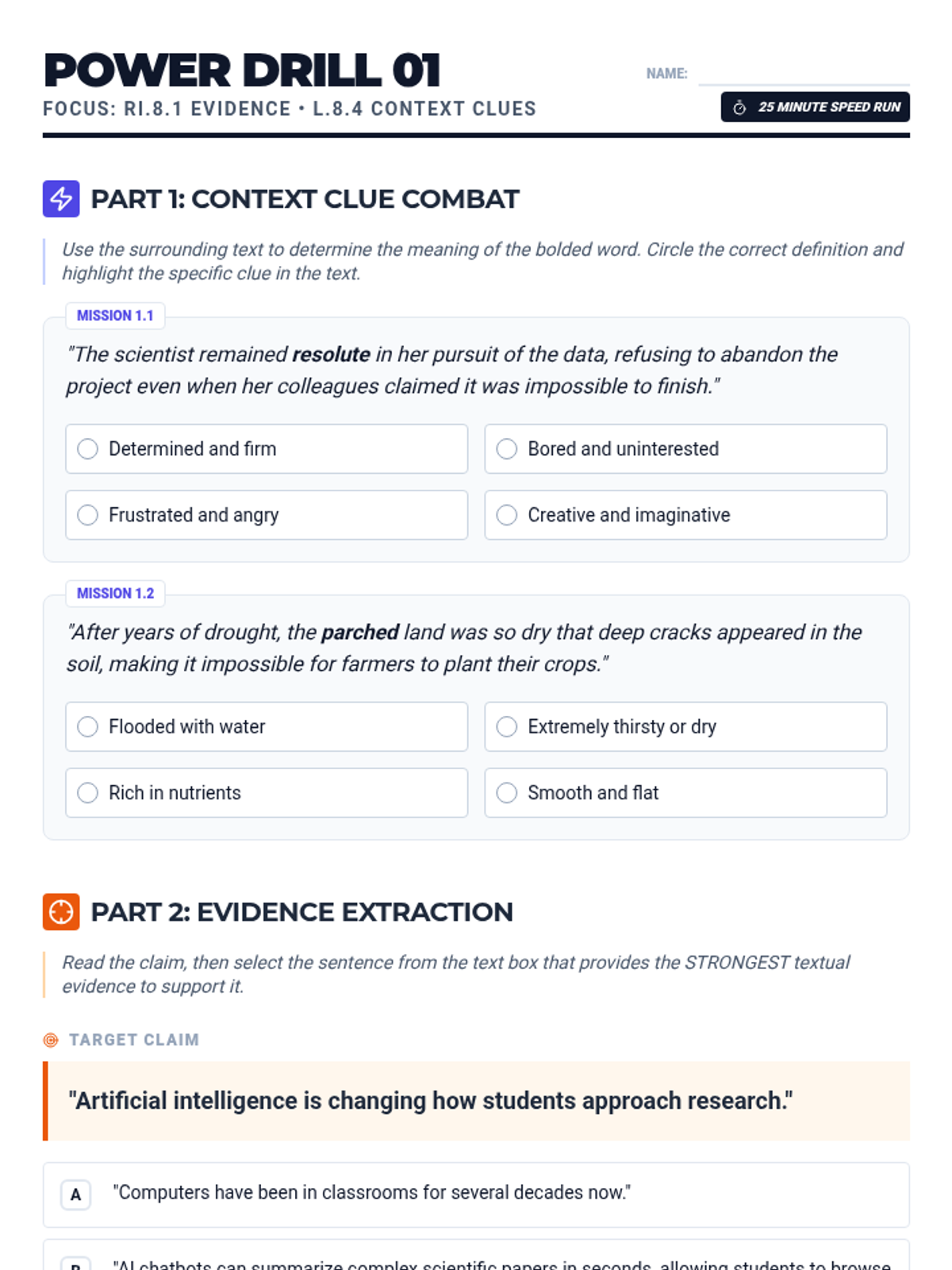
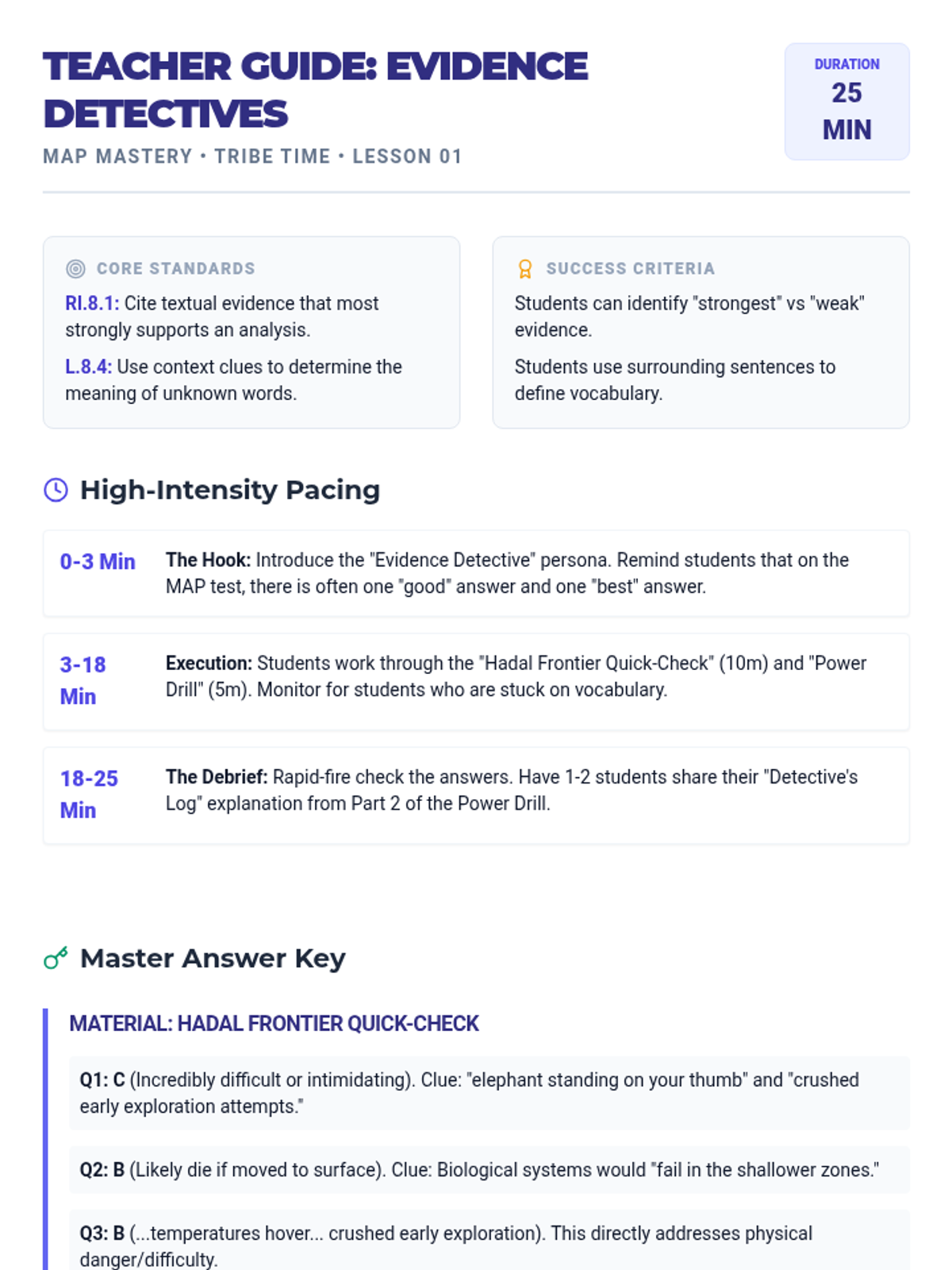
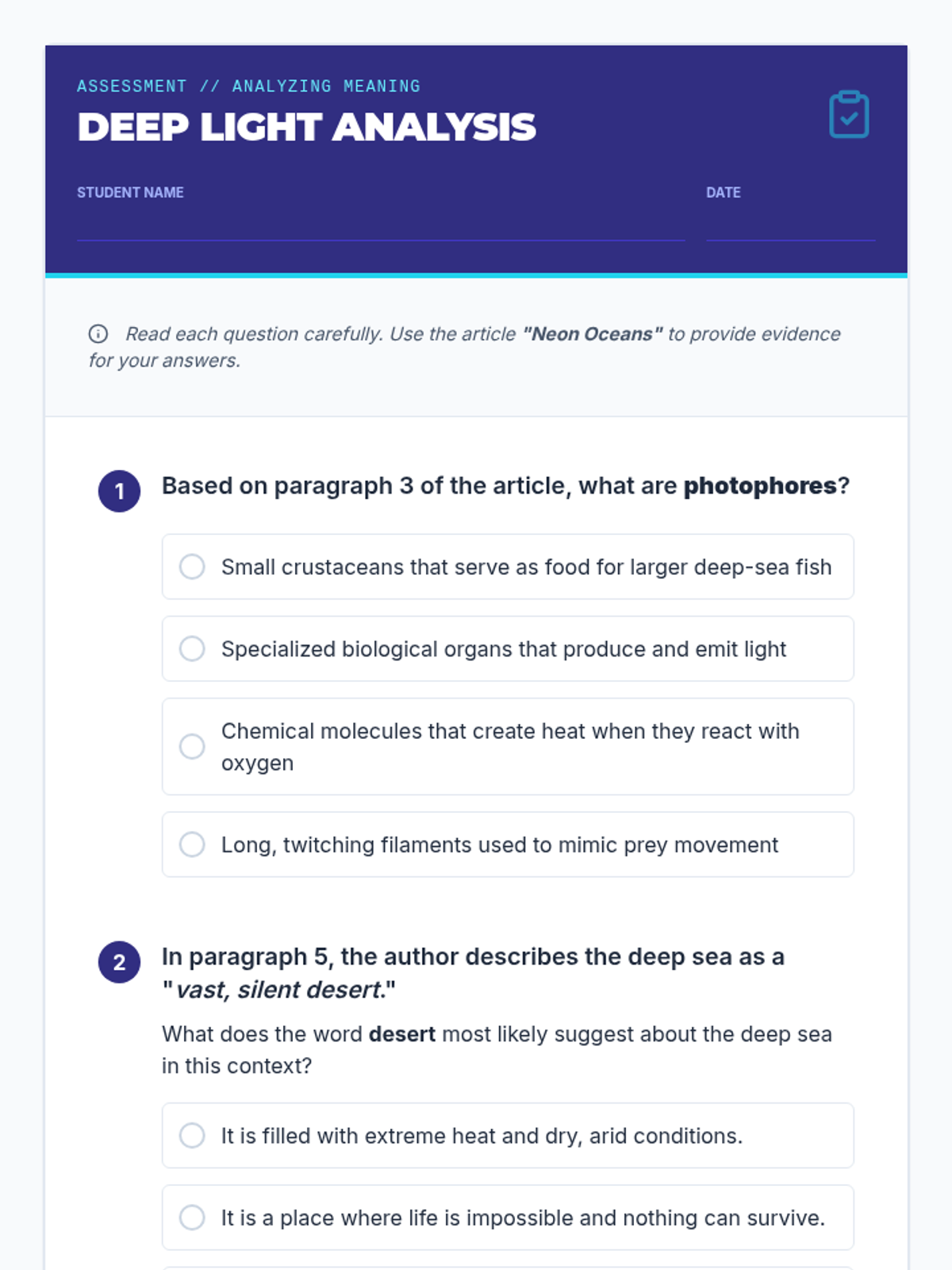
High-intensity 25-minute ELA exercises focused on textual evidence, inference, and context clues (RI.8.1, L.8.4). Includes a passage-based quick-check and a skills-focused power drill.
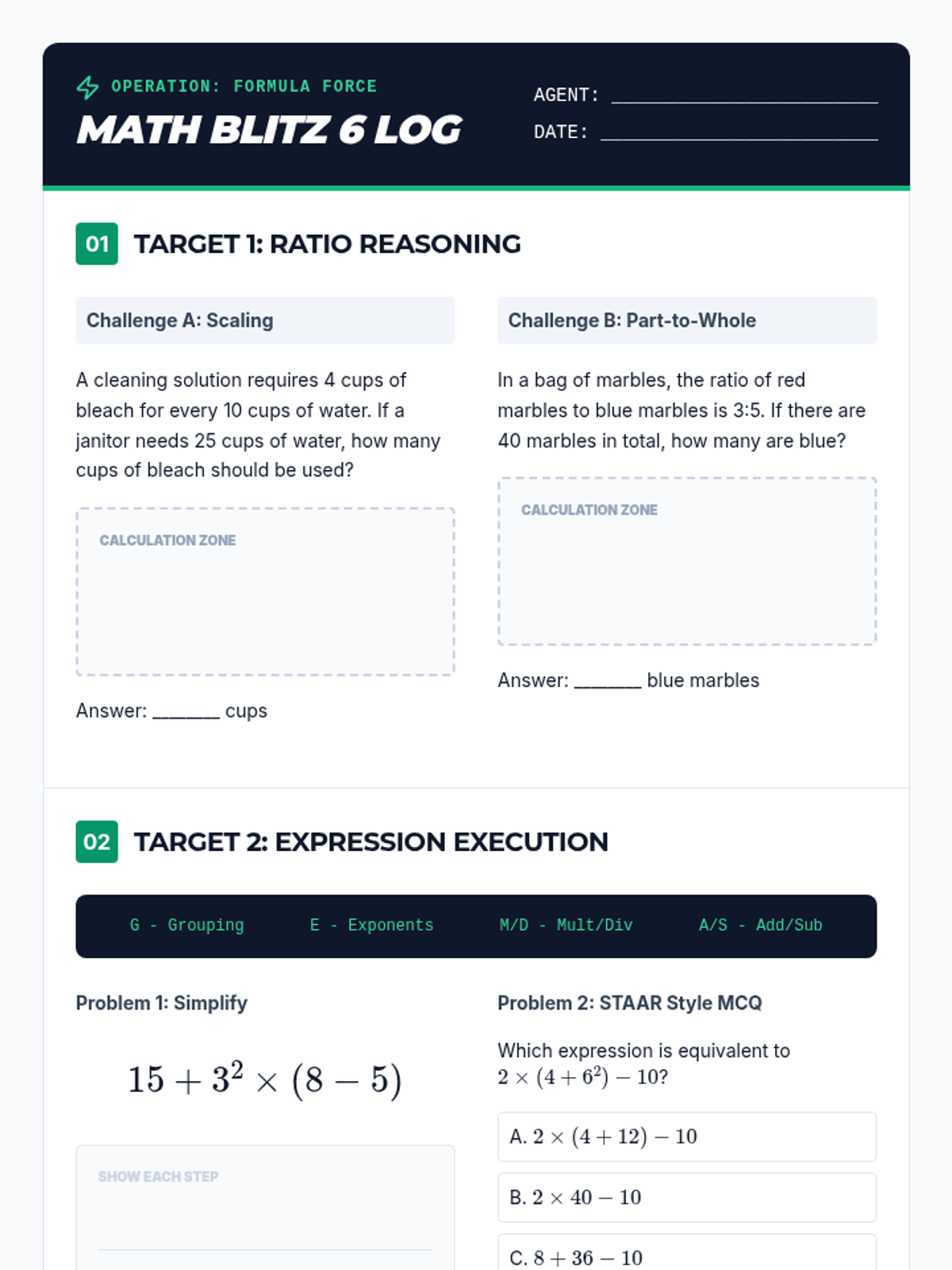
A high-intensity 45-minute STAAR Math Blitz focusing on the highest-tested 6th-grade TEKS, featuring tactical strategy slides and a targeted CFU worksheet.
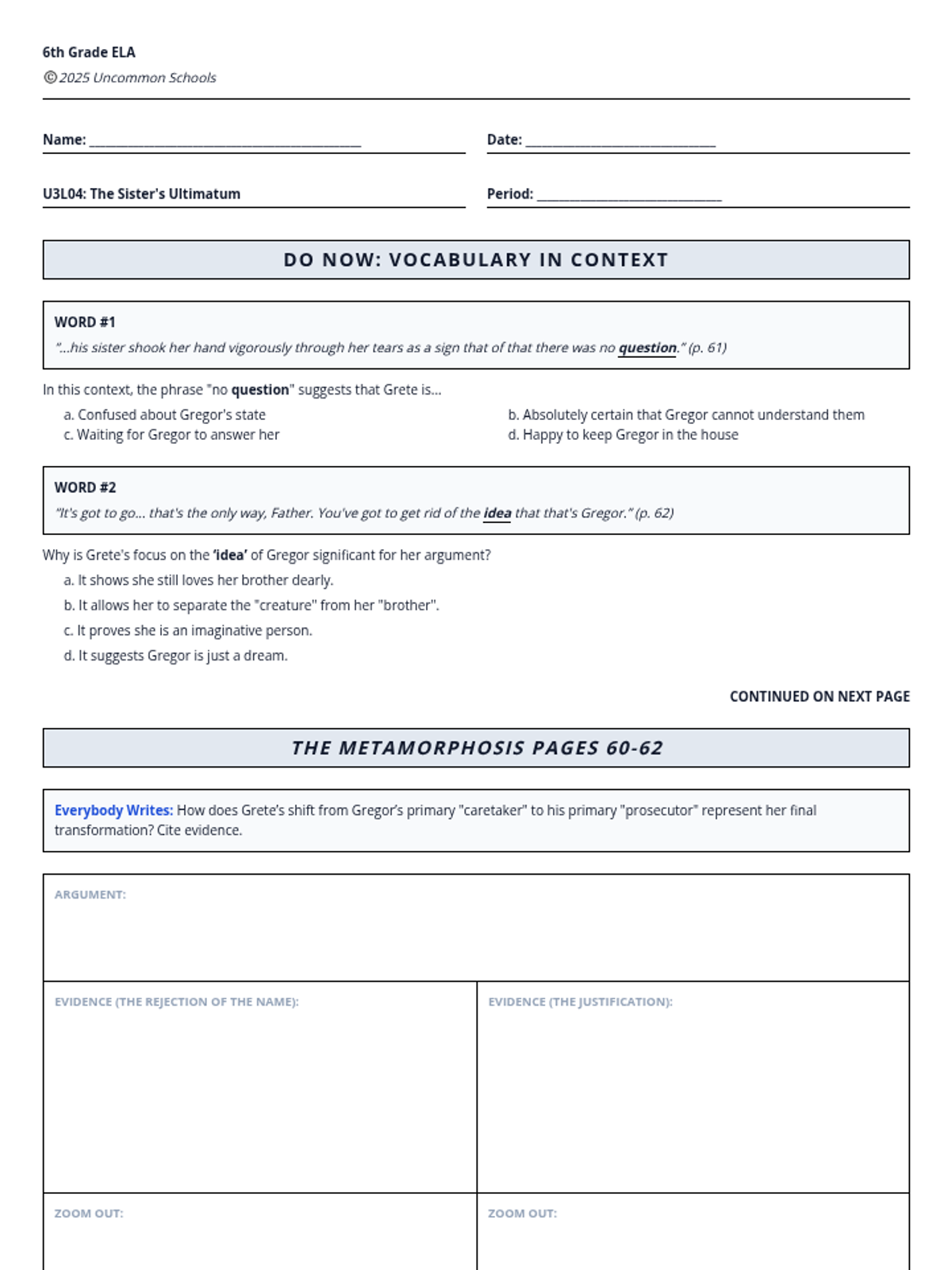
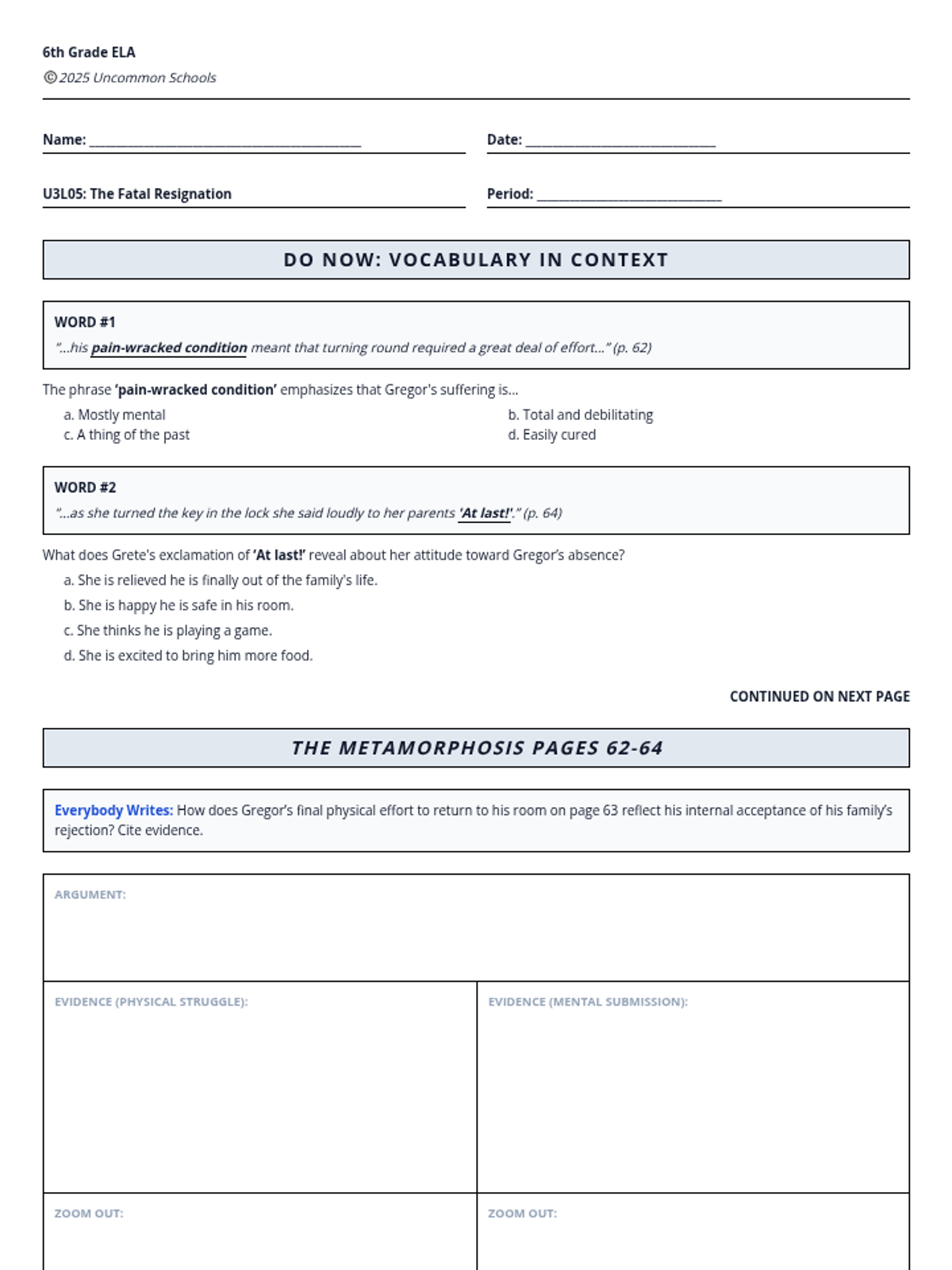
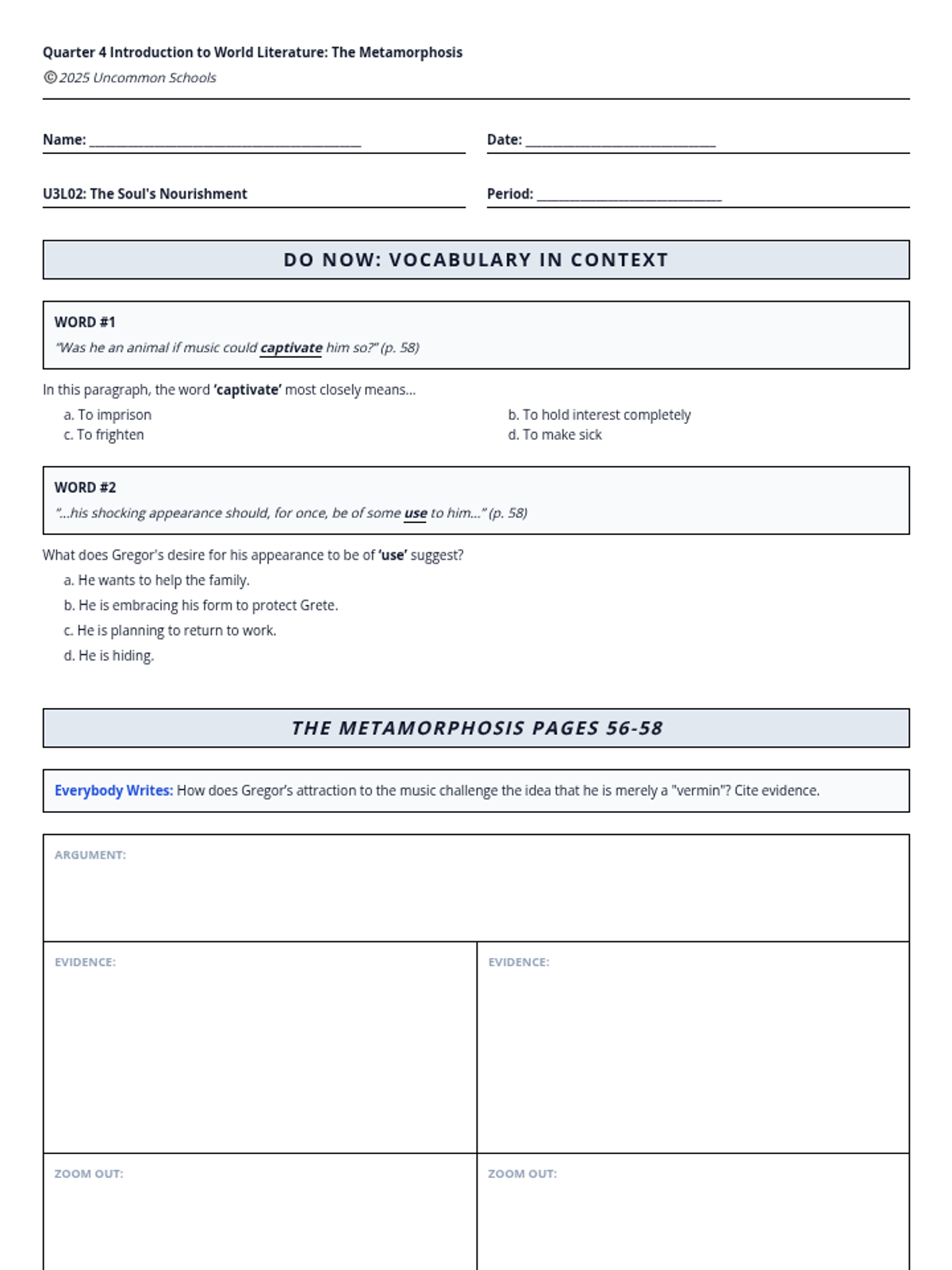
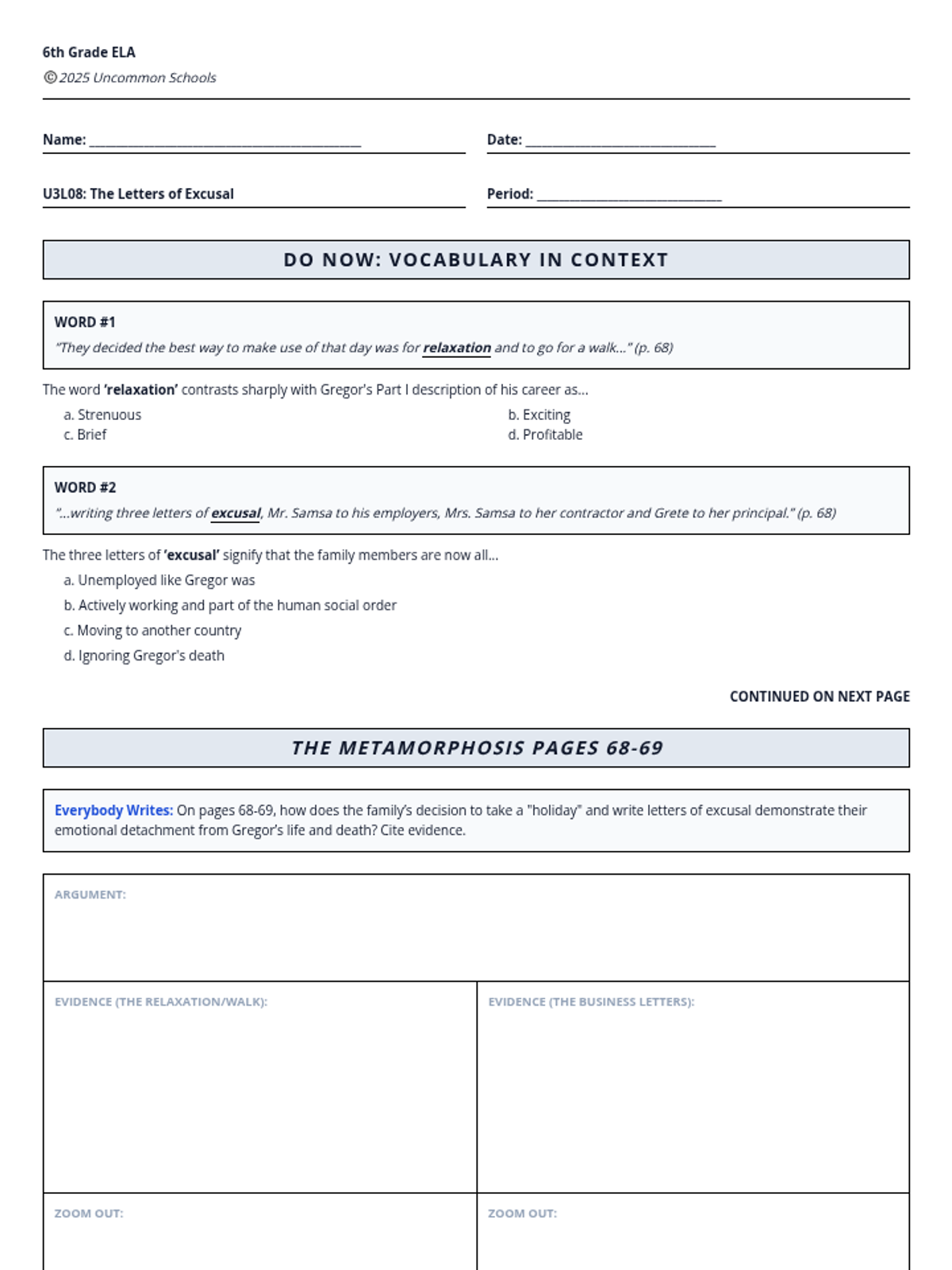
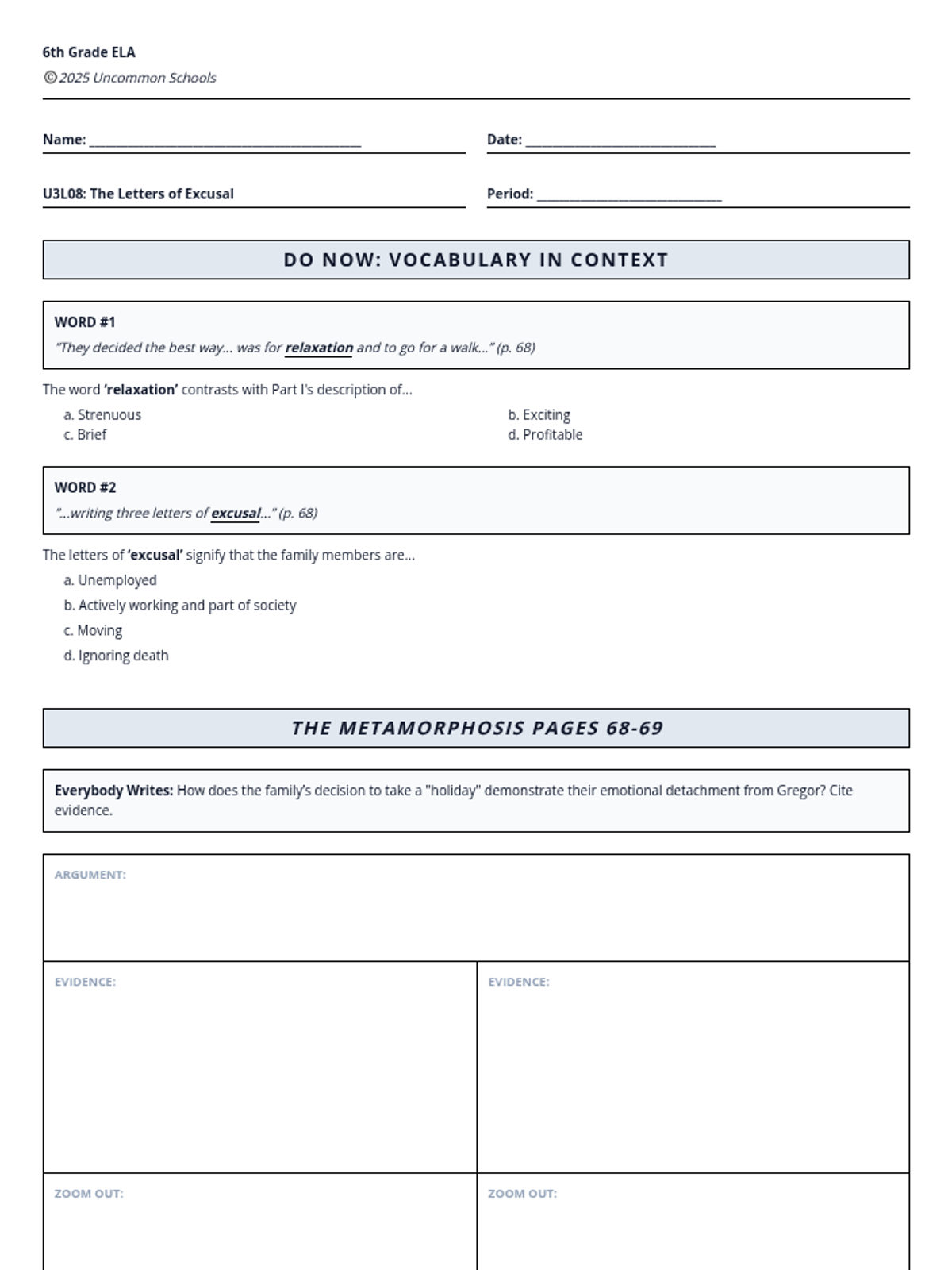
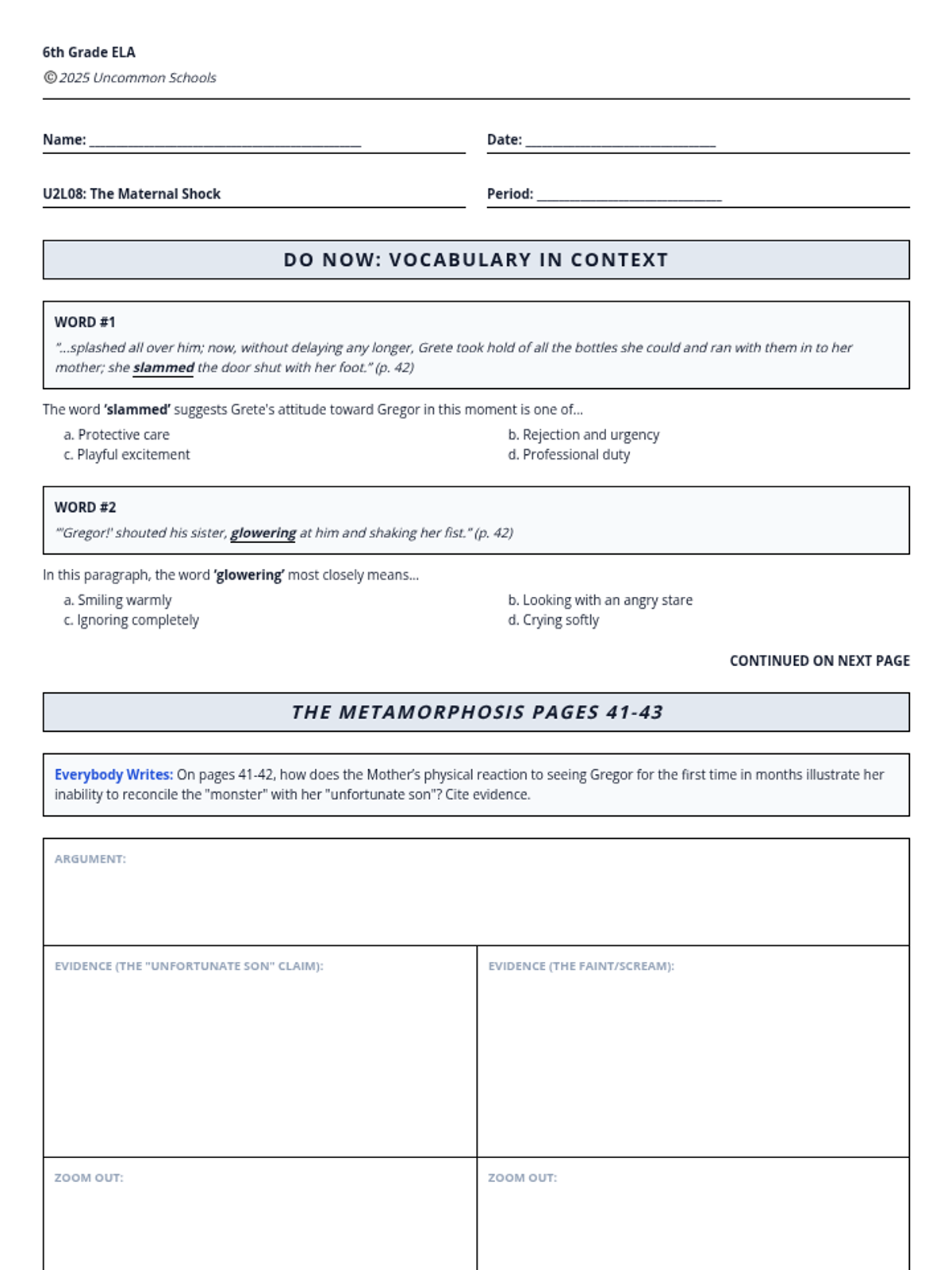
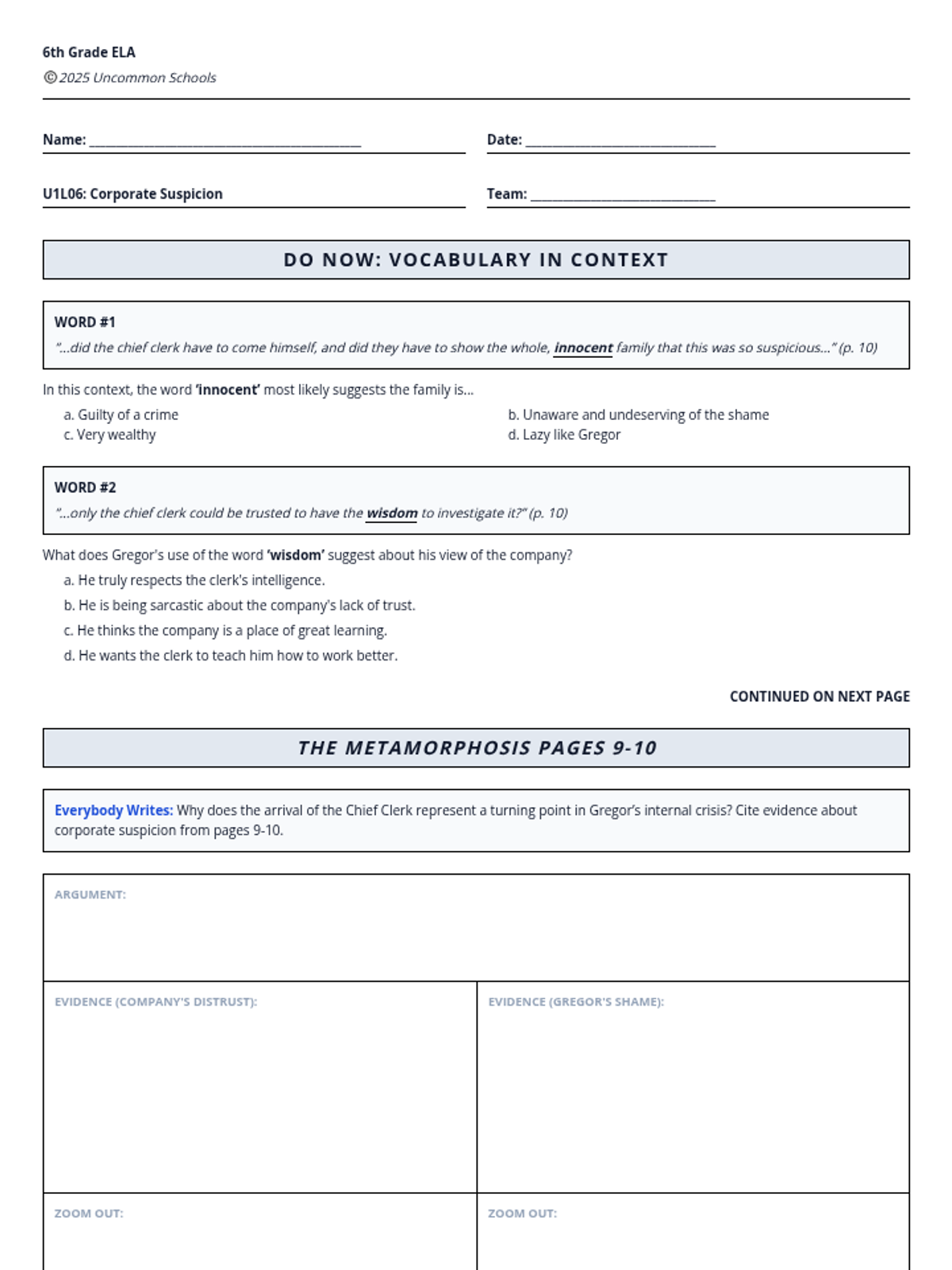
Analyzes the family's final rejection of Gregor and his subsequent physical and mental decline.
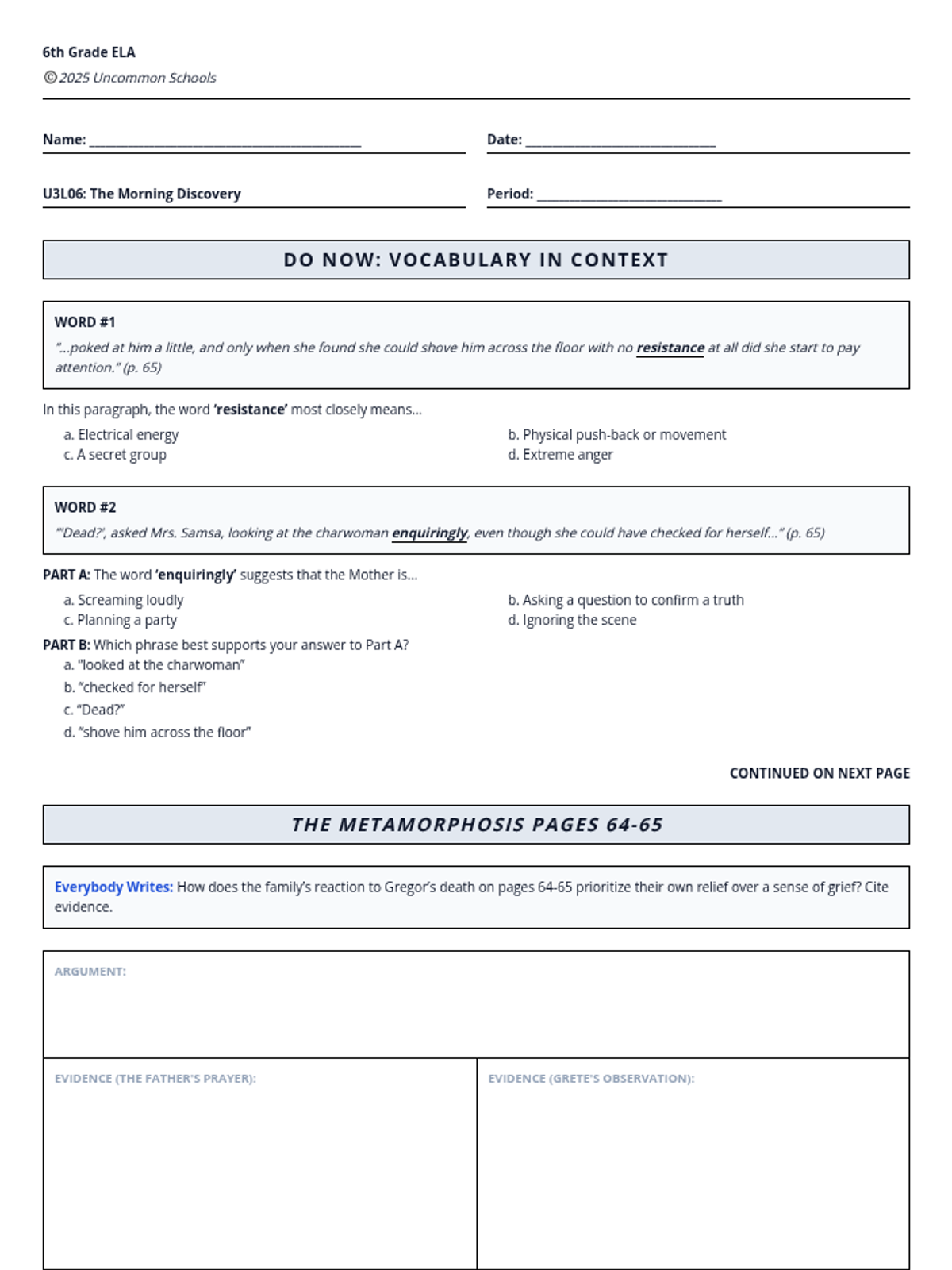
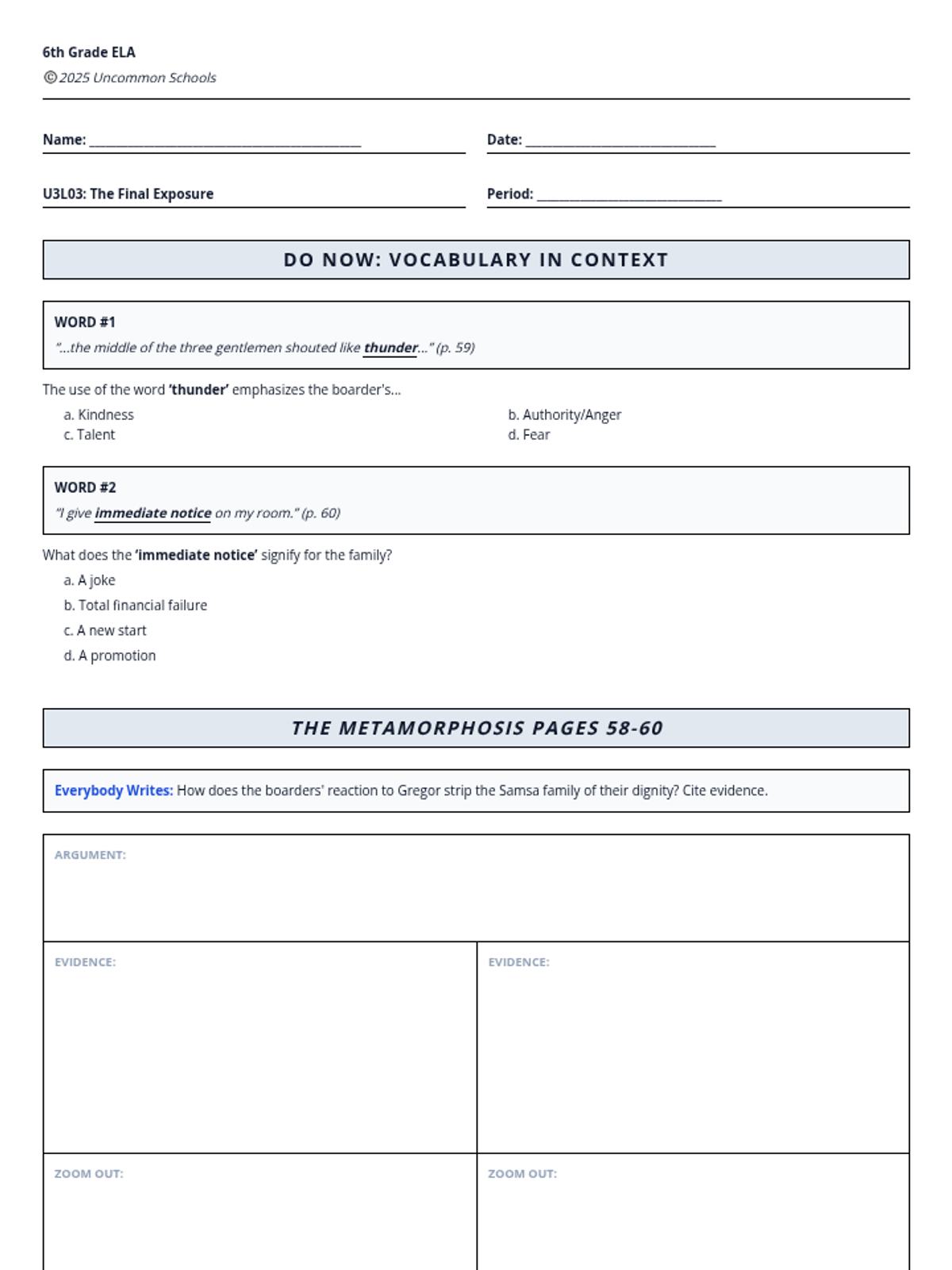
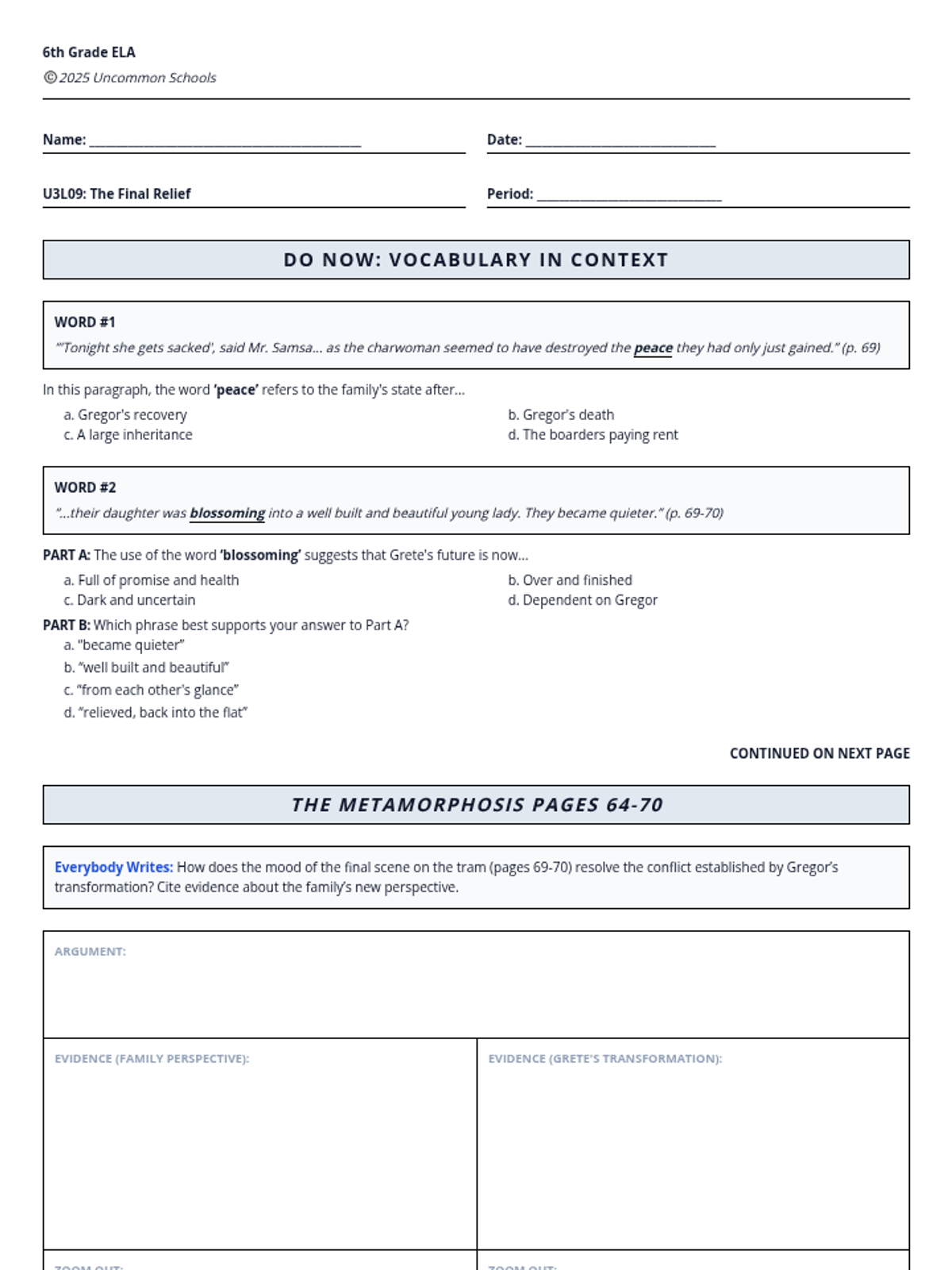
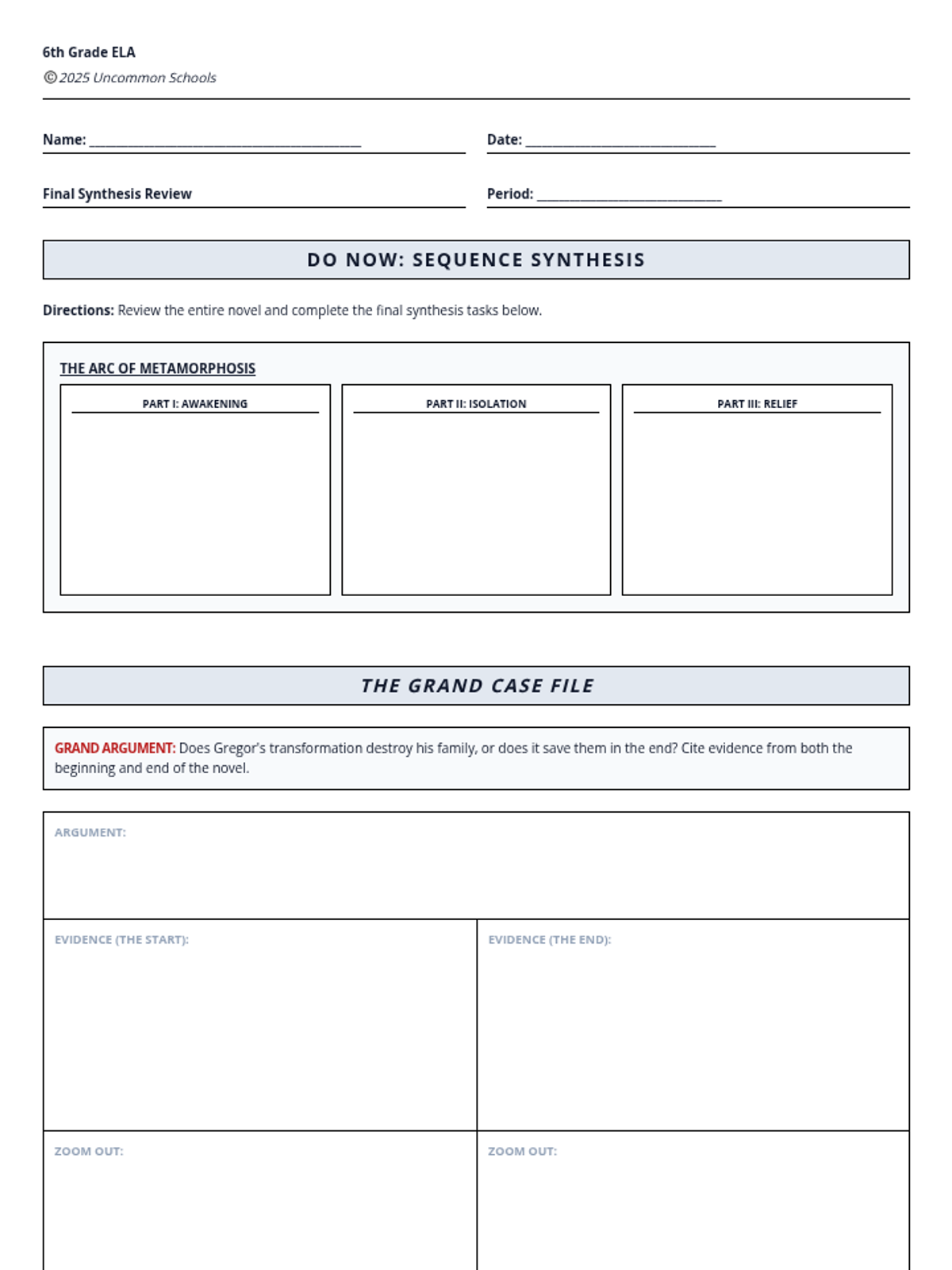
Focuses on Gregor's death and the family's ultimate relief and transformation after his passing.
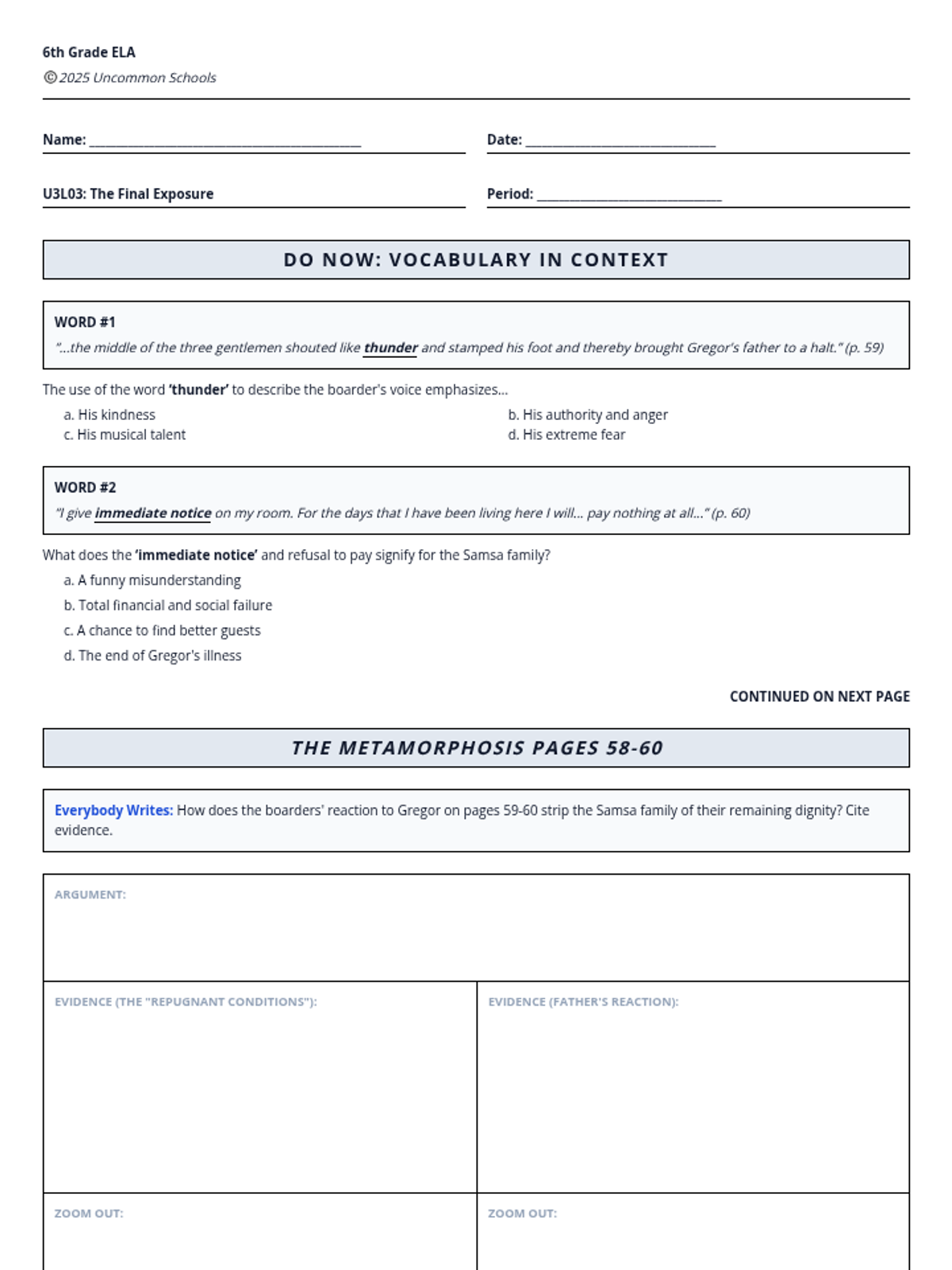
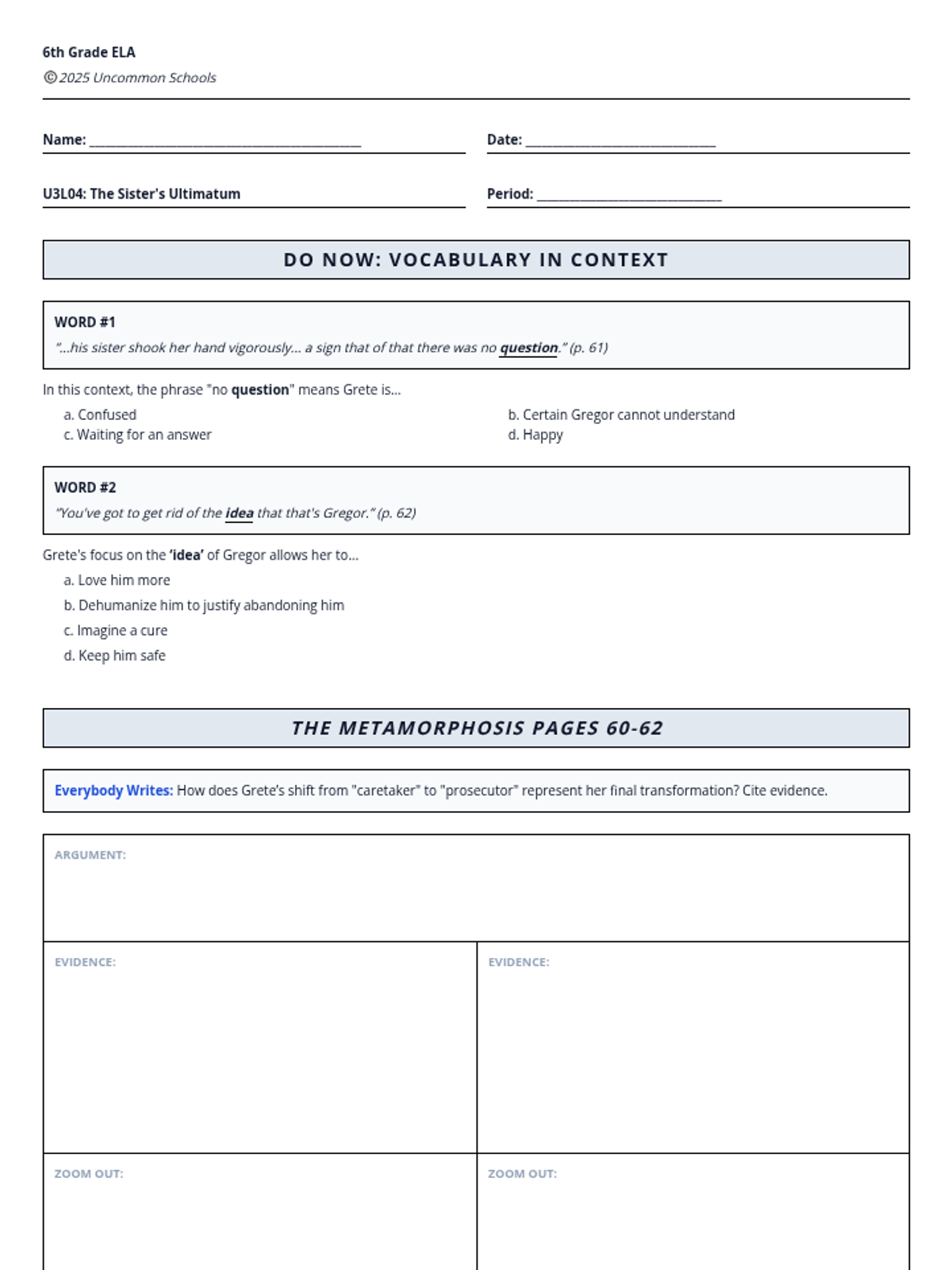
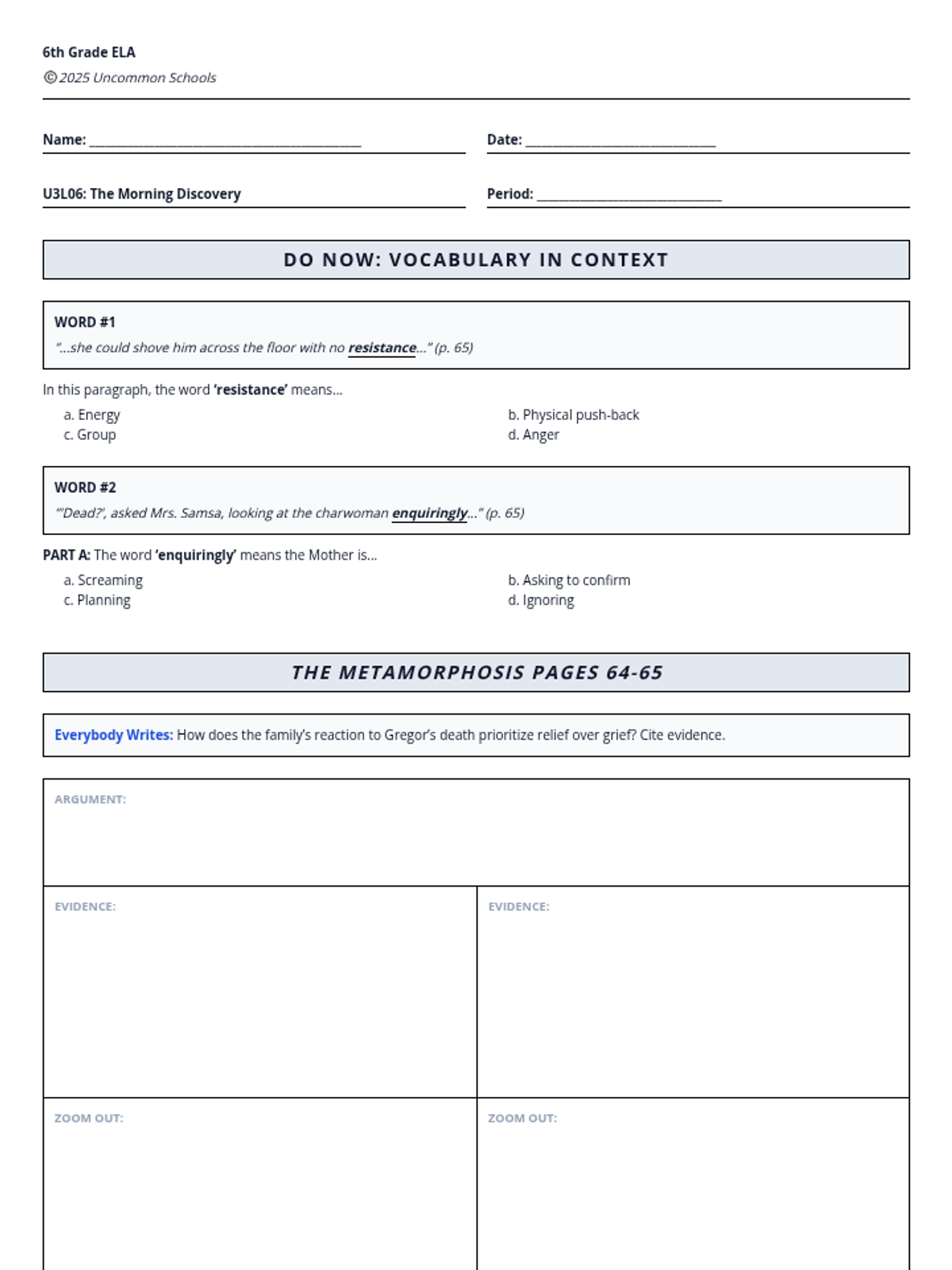
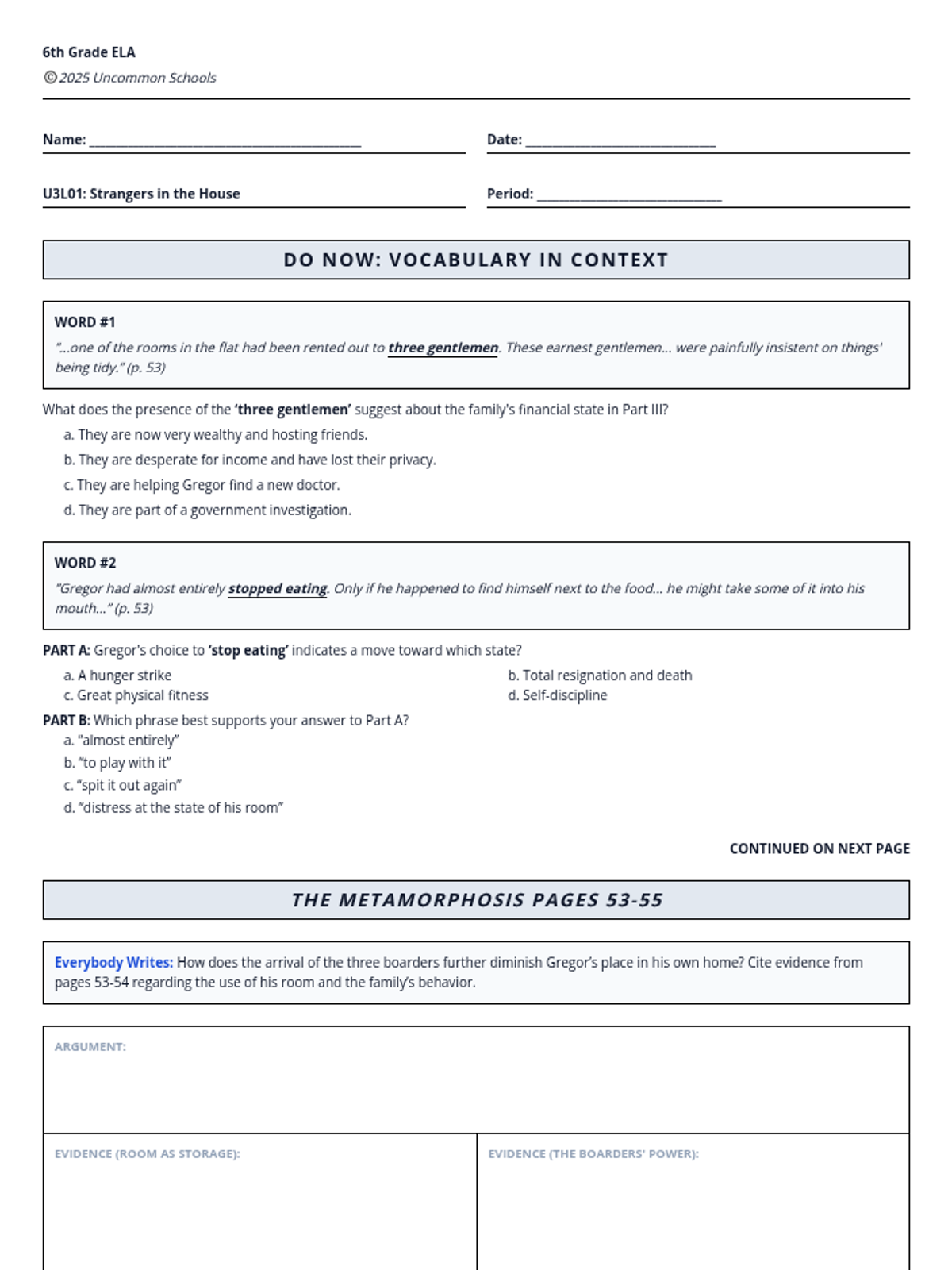
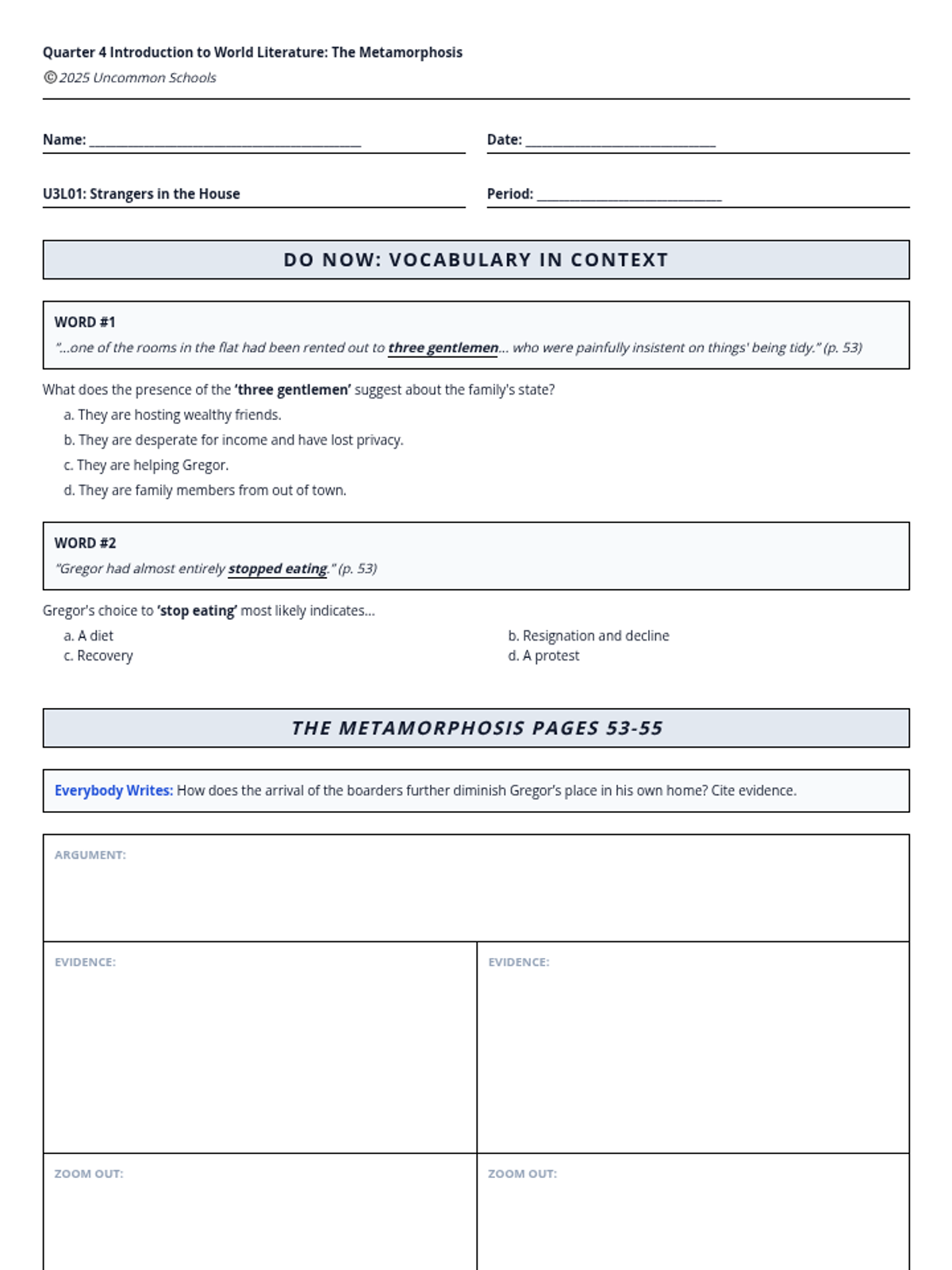
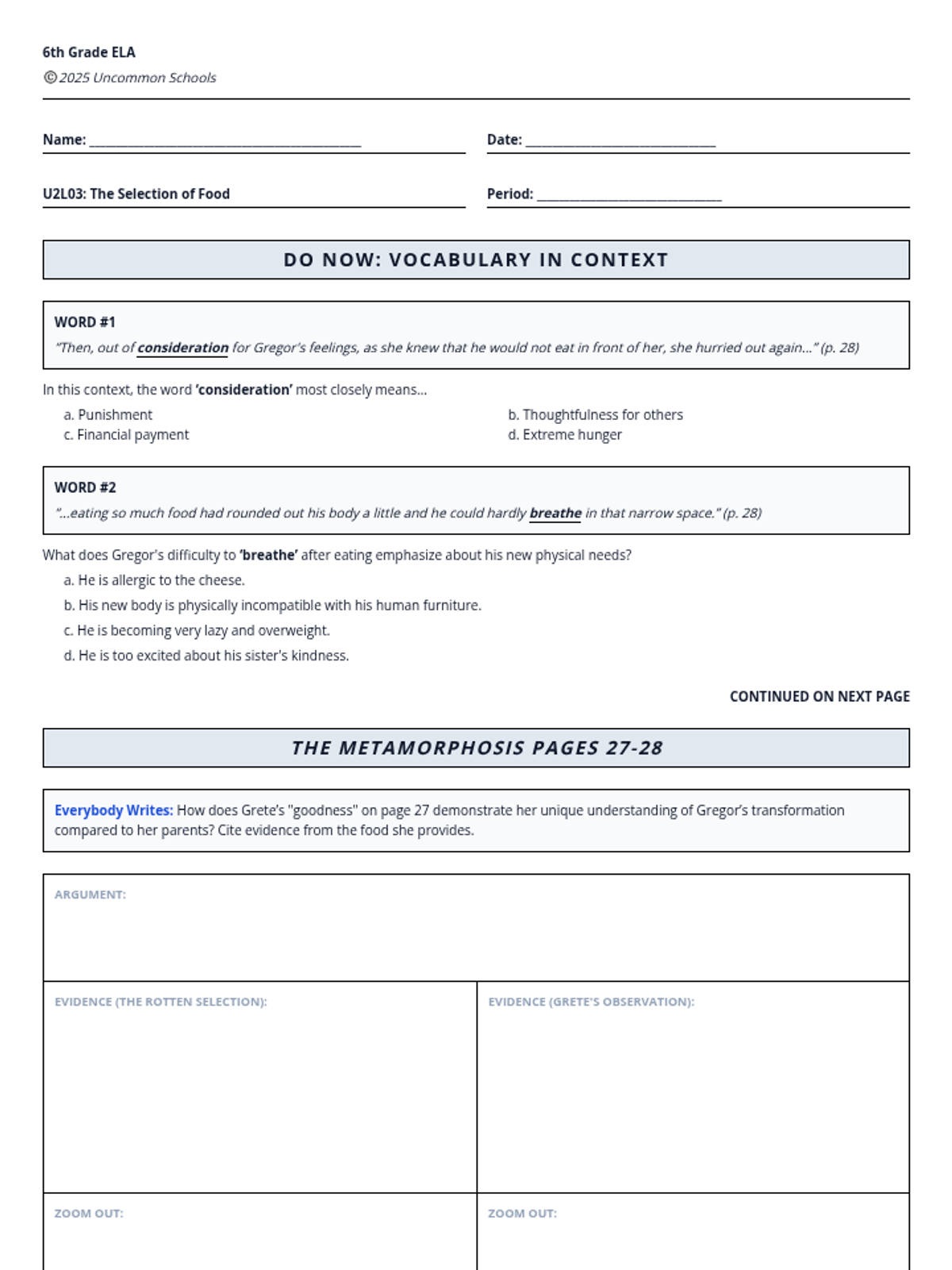
Introduces the new characters (the boarders and the charwoman) and explores Gregor's deteriorating physical and mental health.
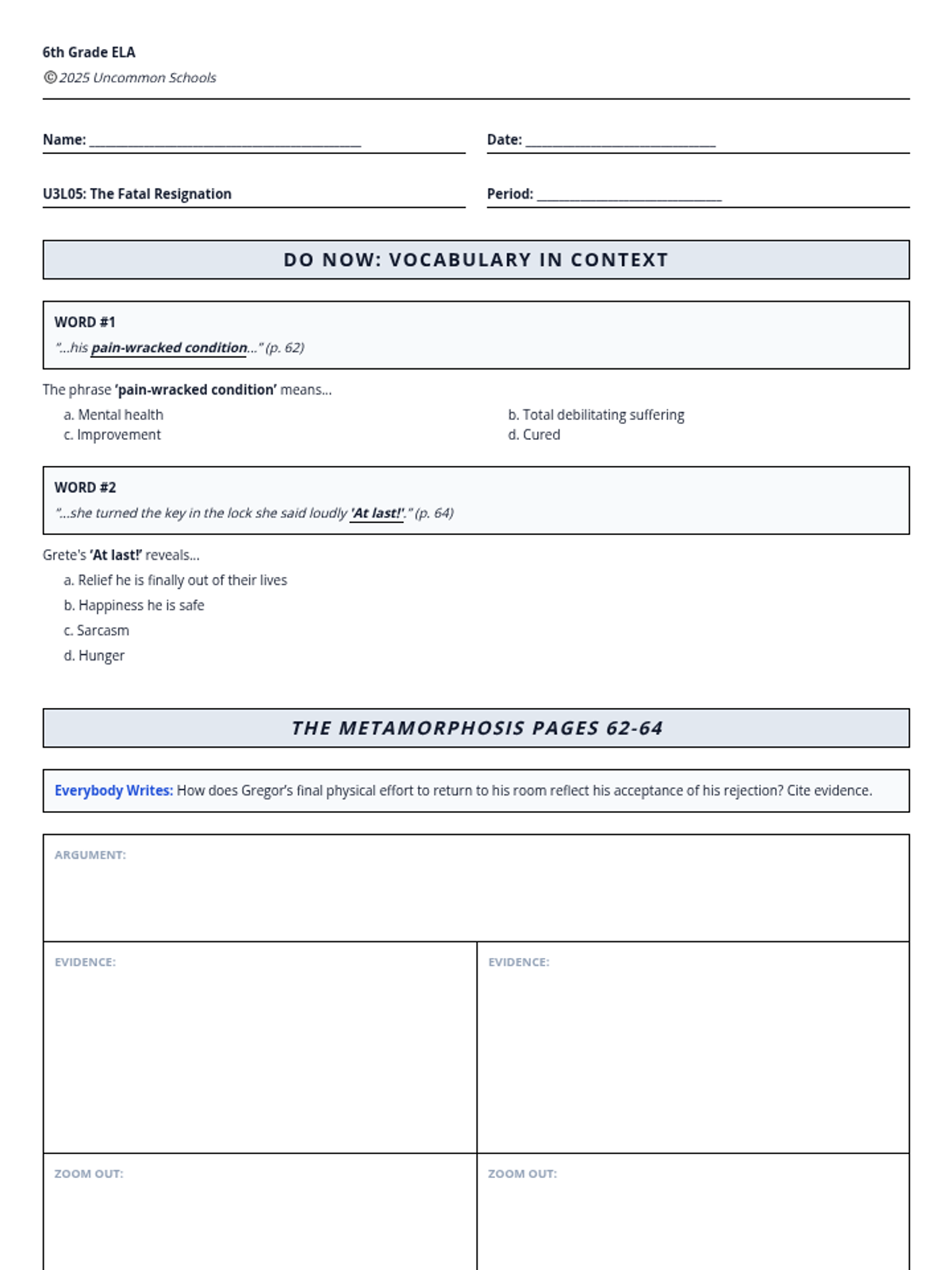
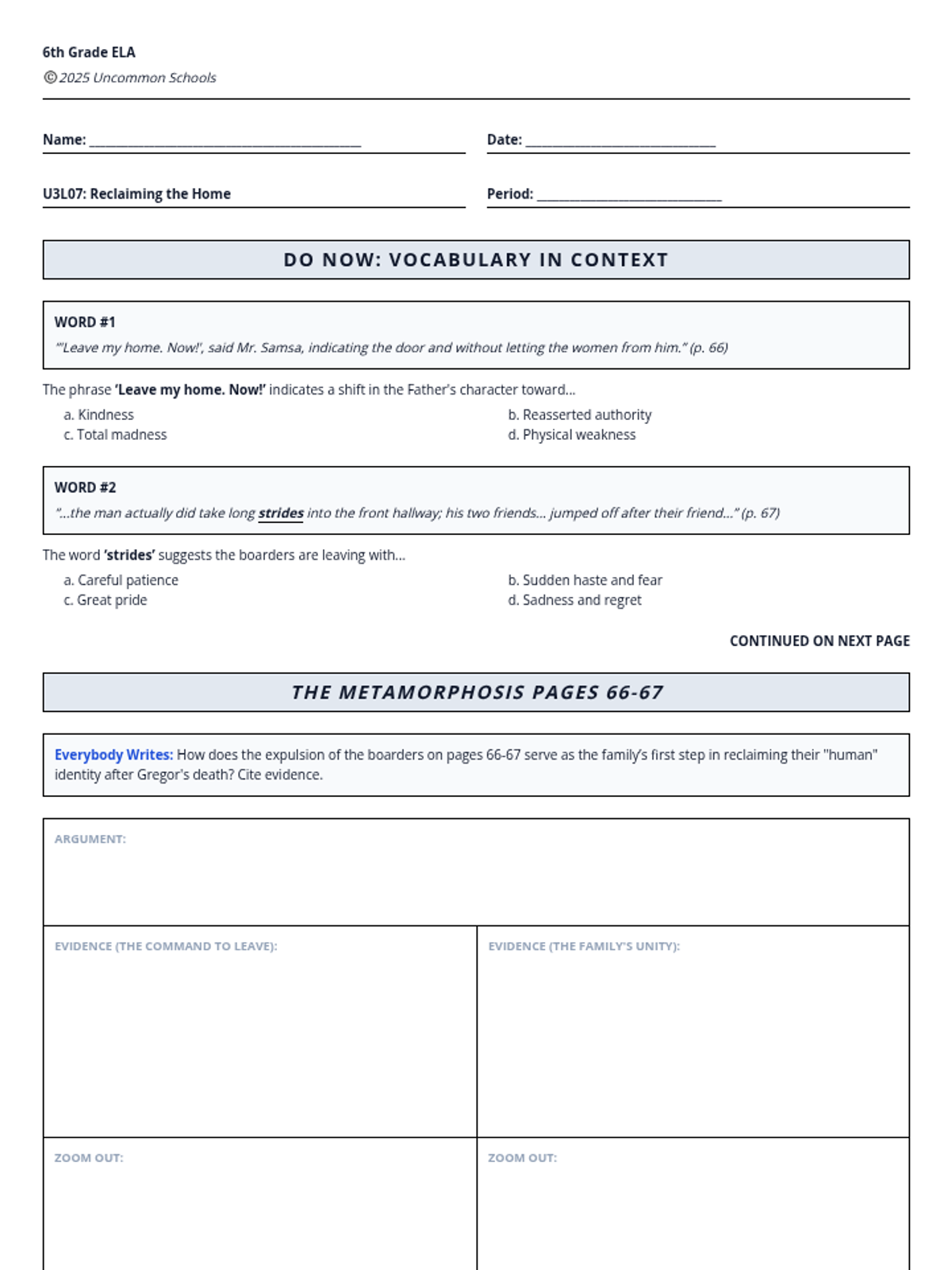
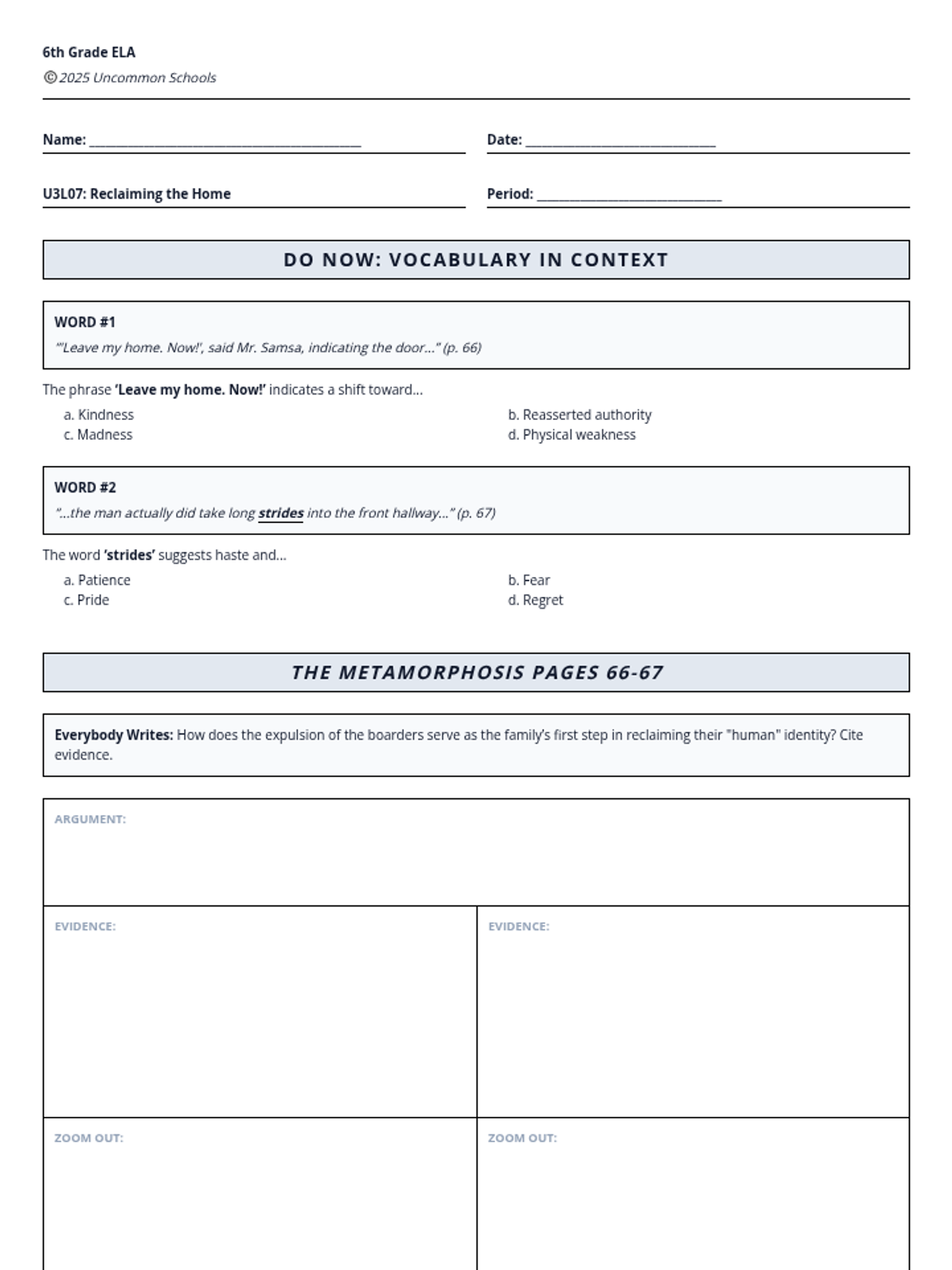
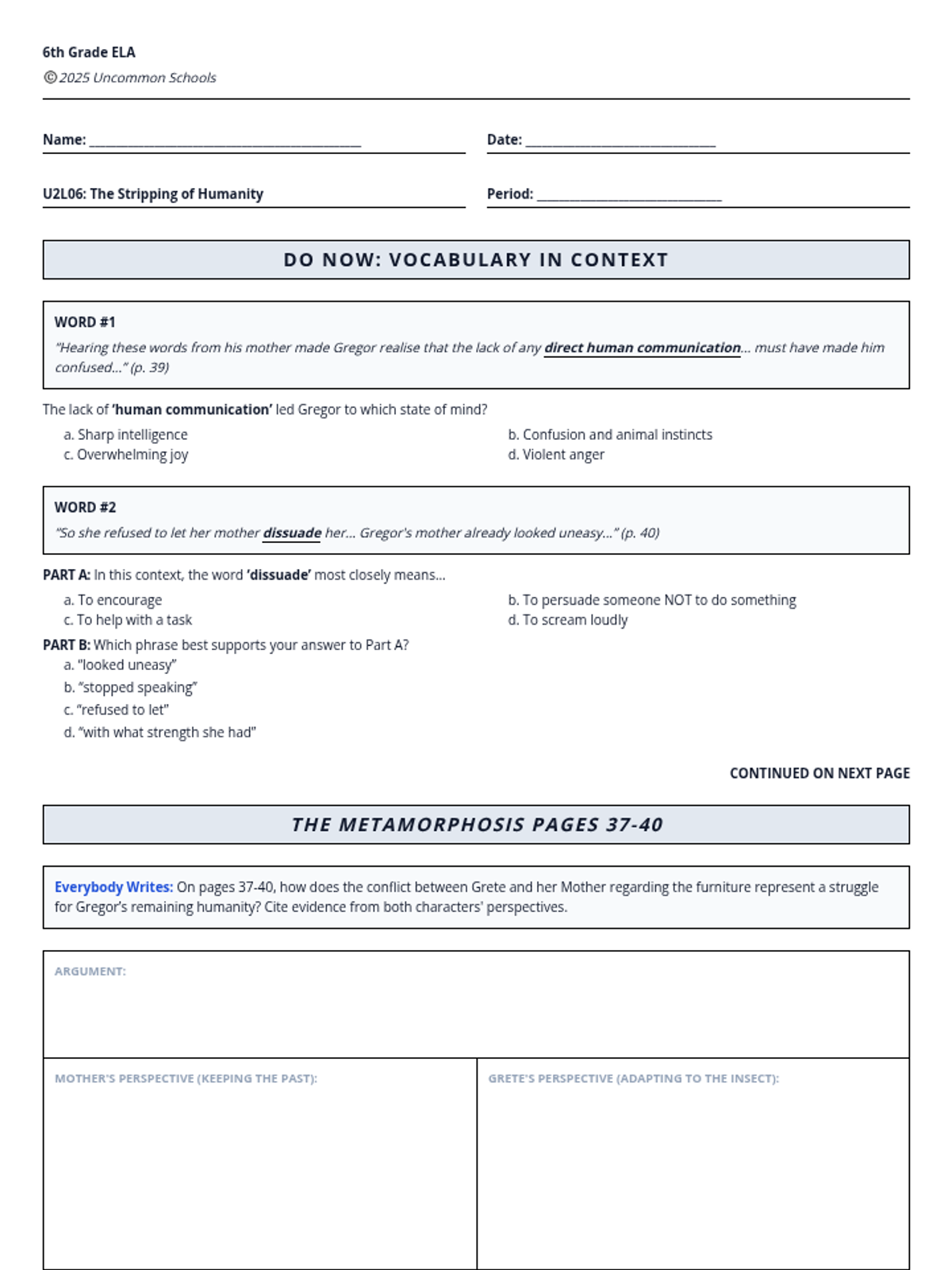
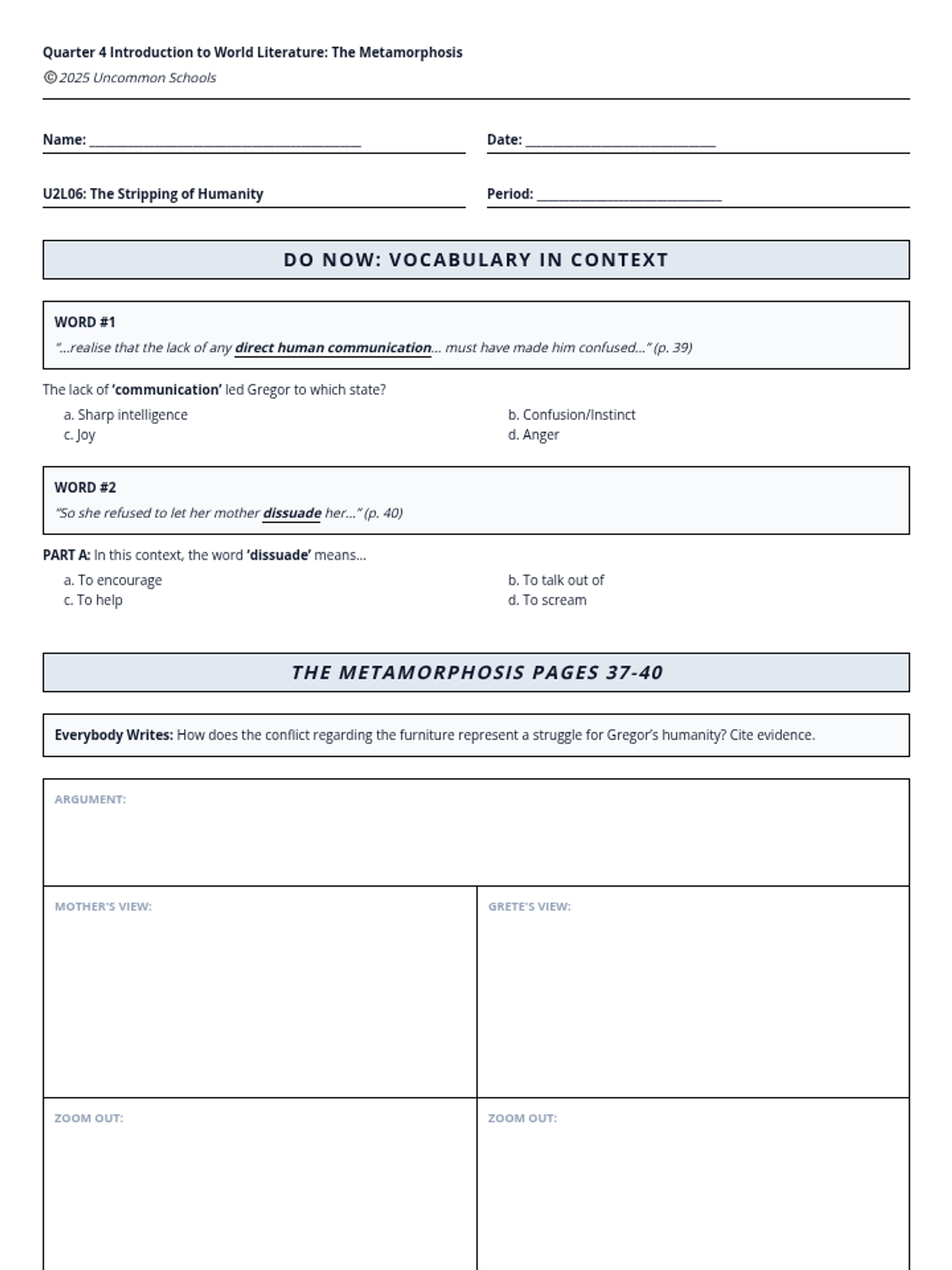
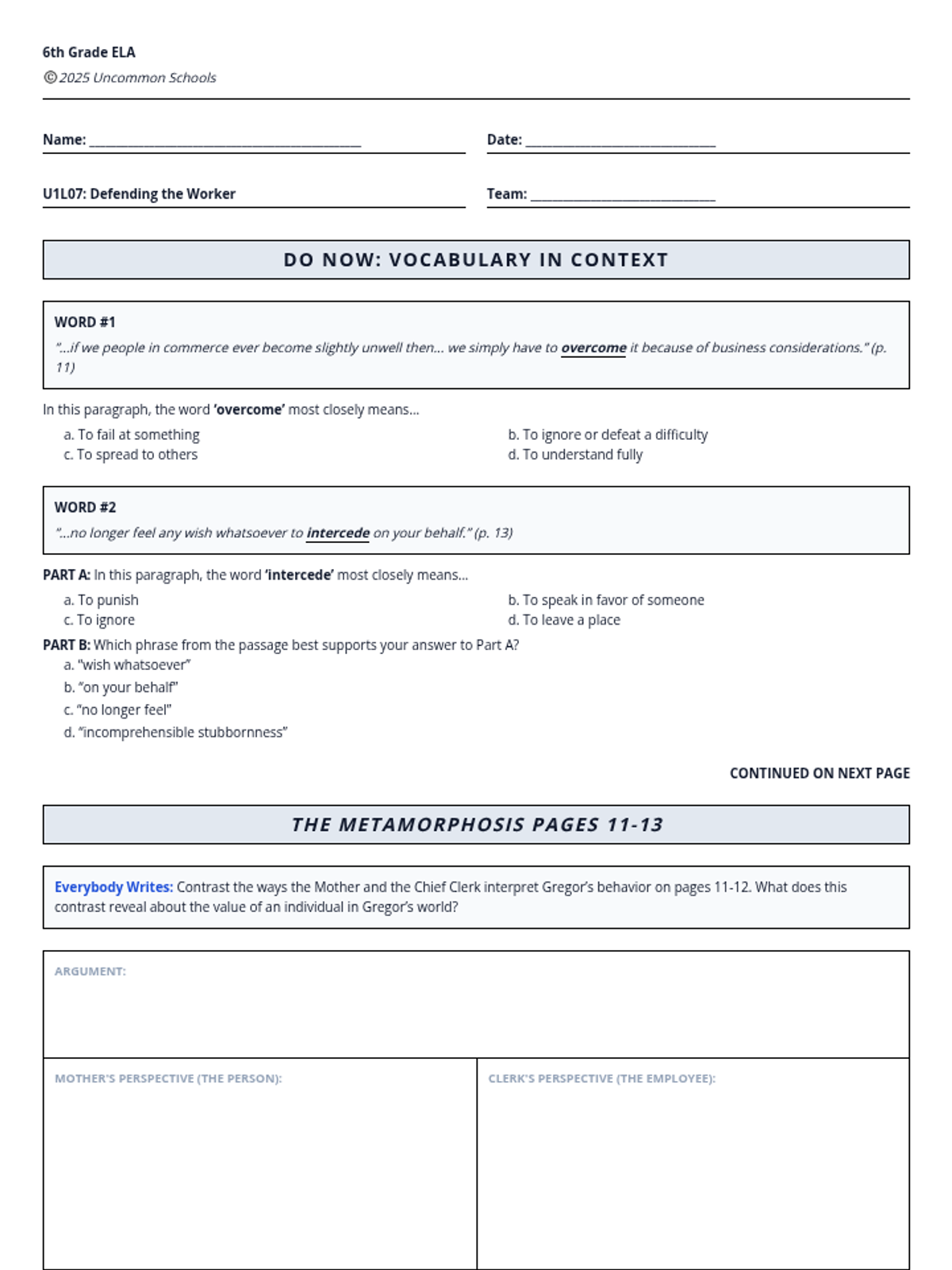
Focuses on the conflict over Gregor's furniture and the first violent confrontation with his father in Part II.
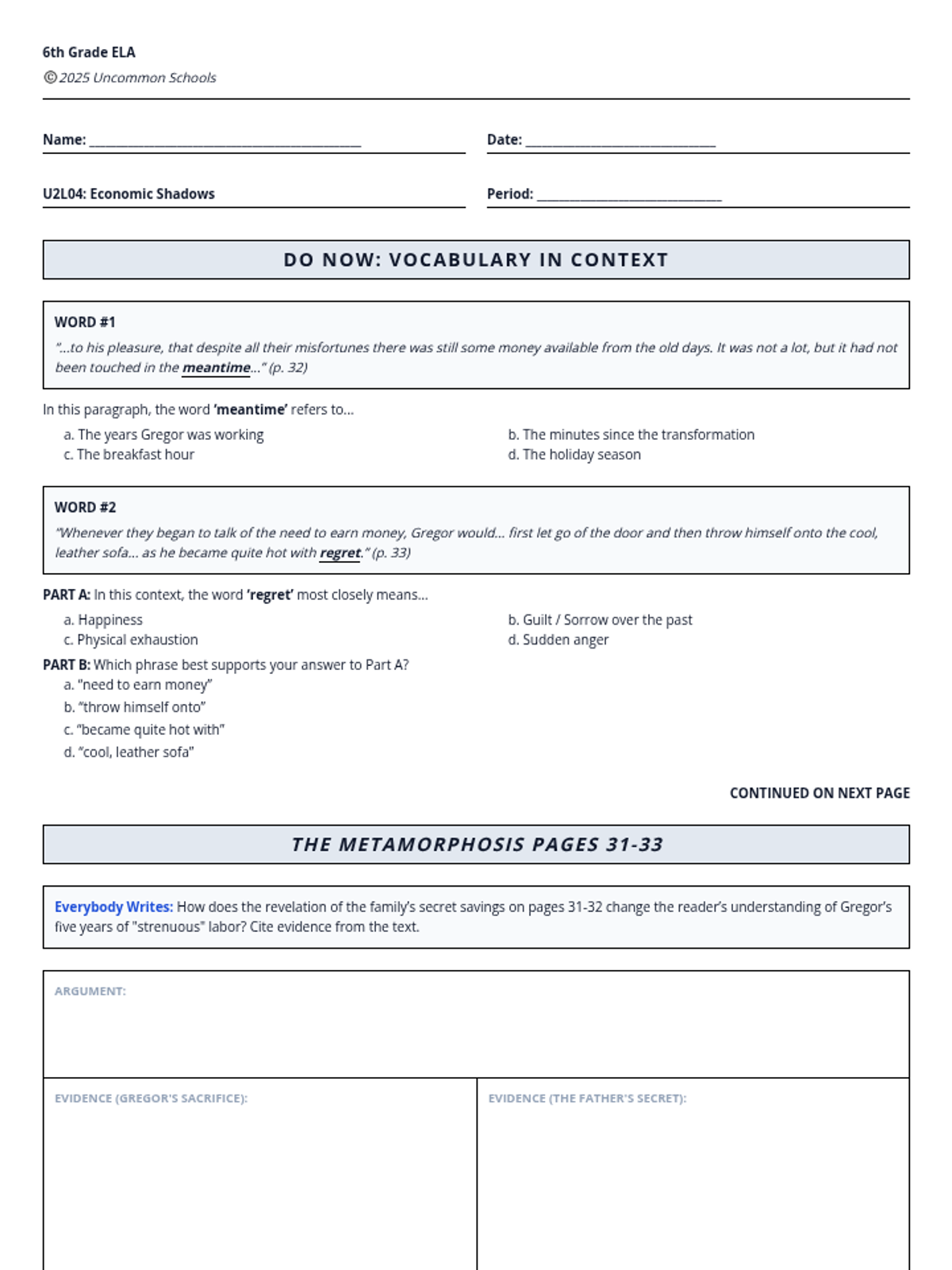
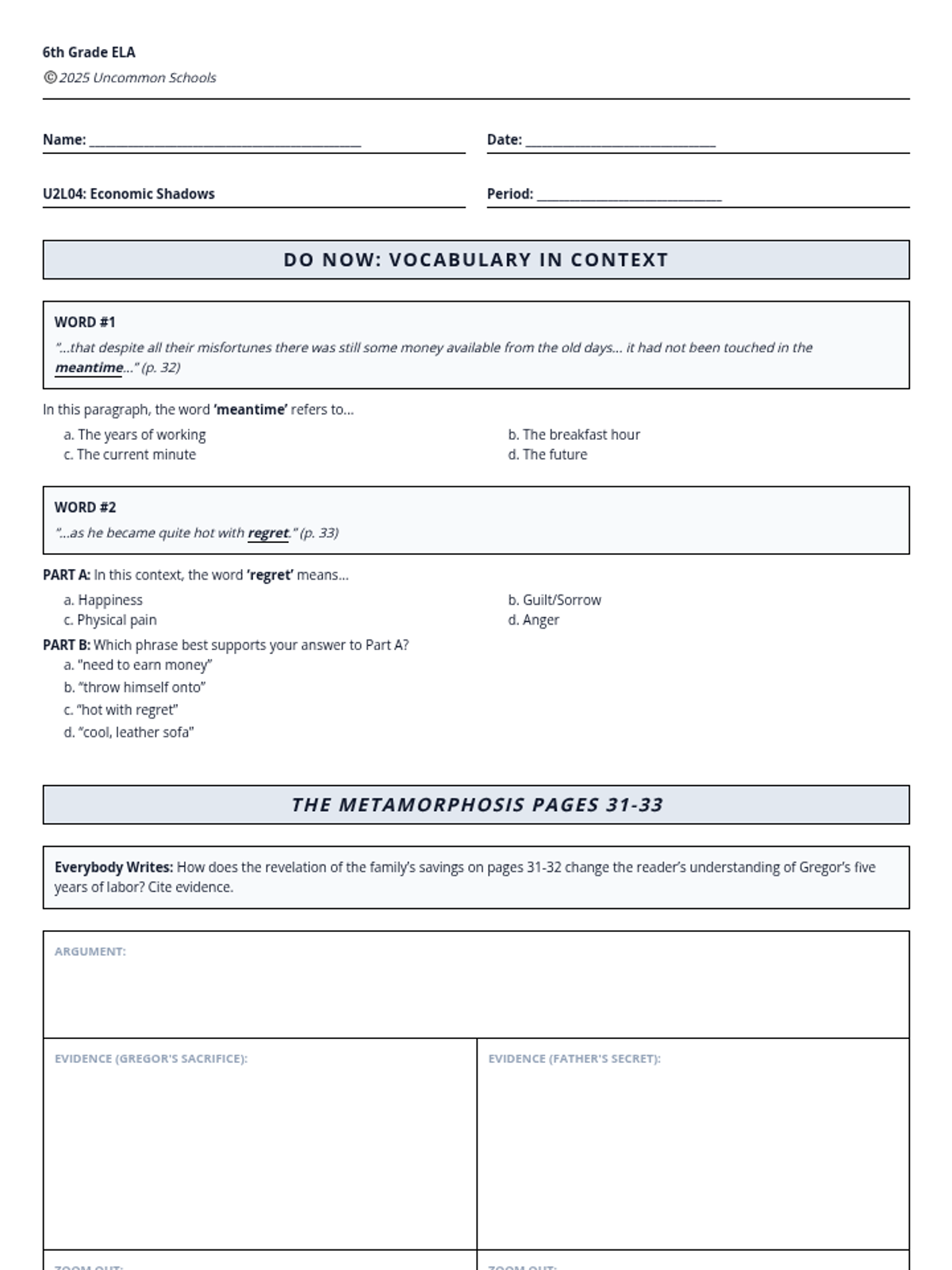
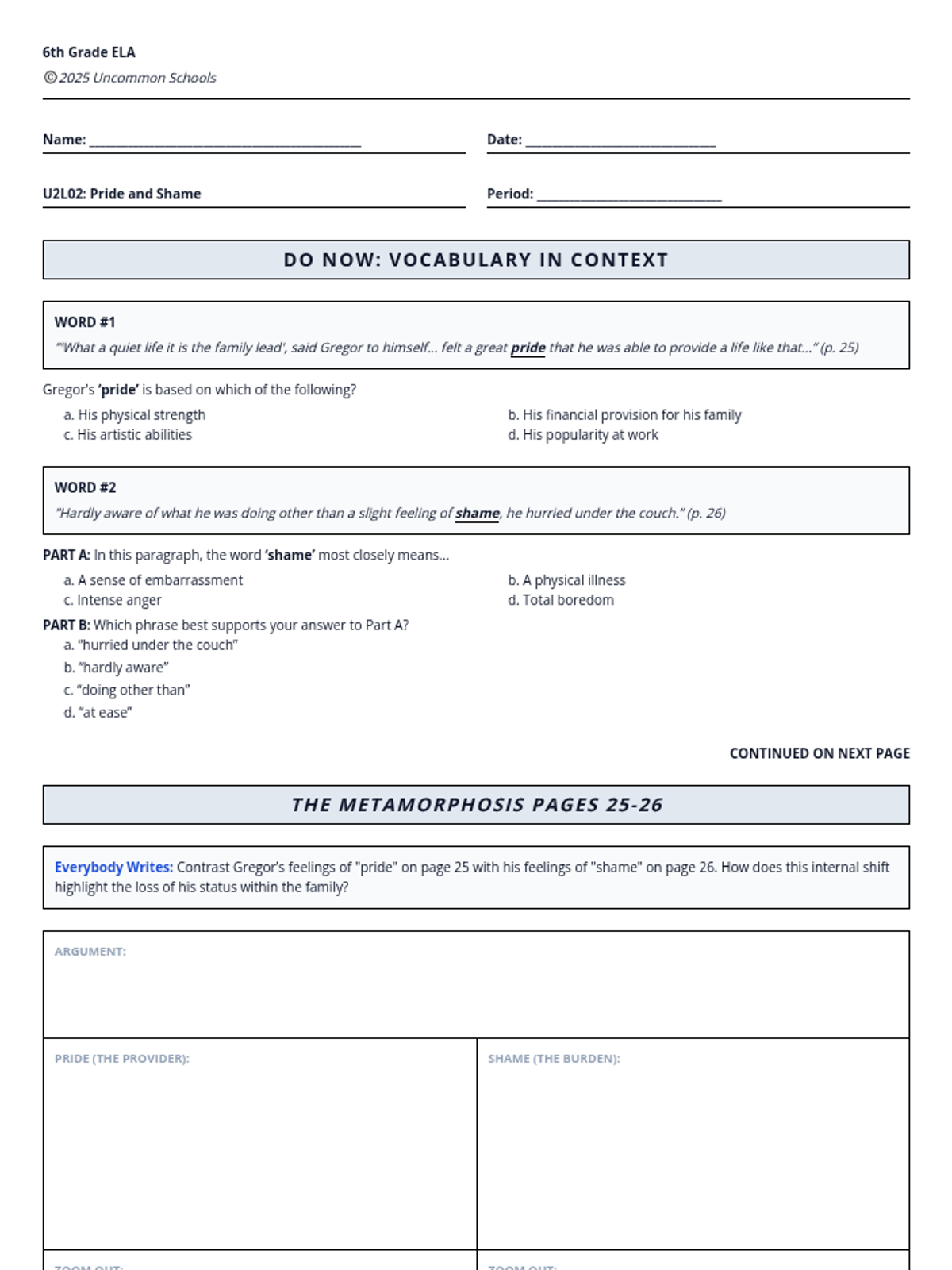
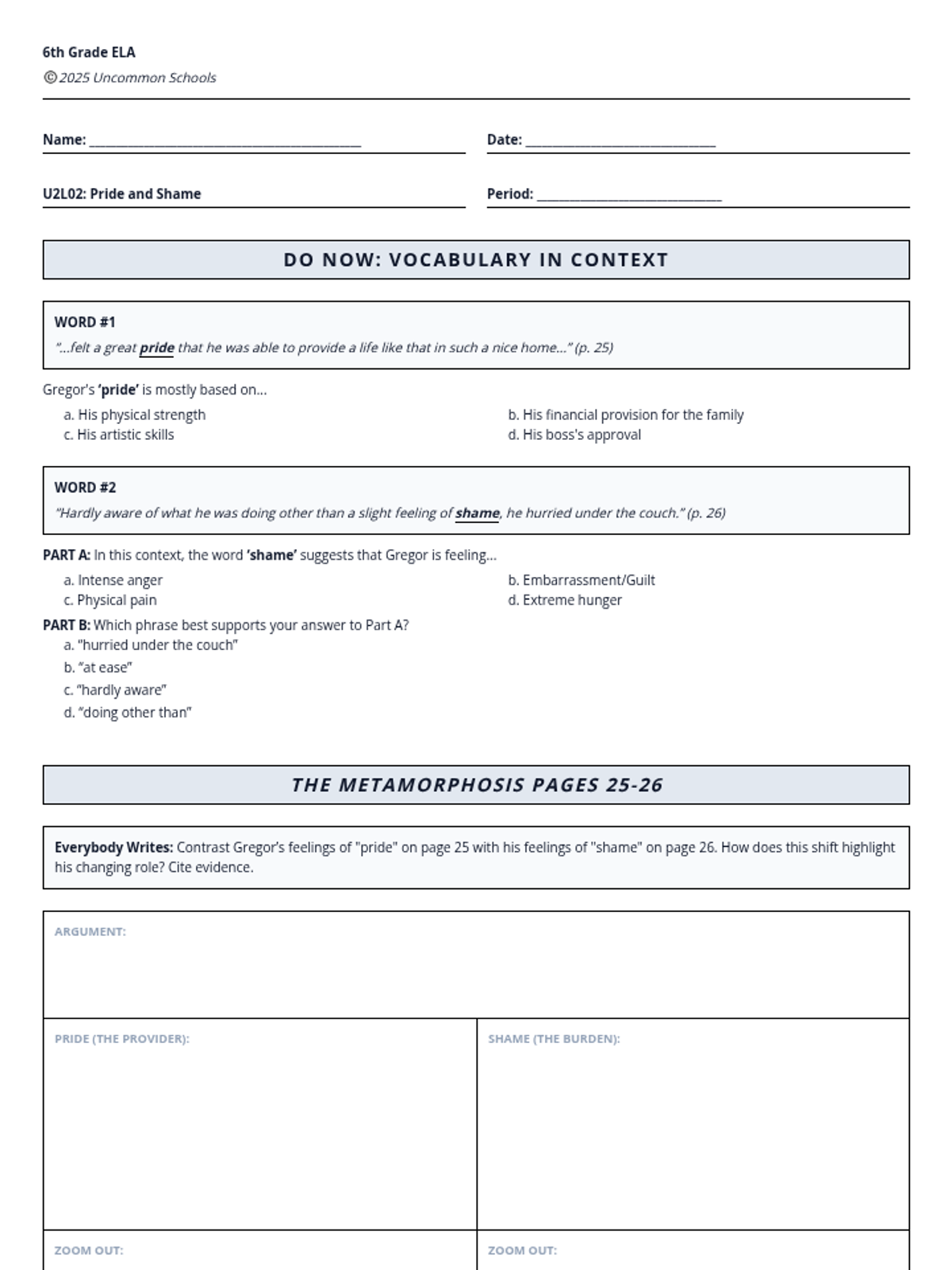
Analyzes the family's financial state and the psychological toll of isolation on Gregor.
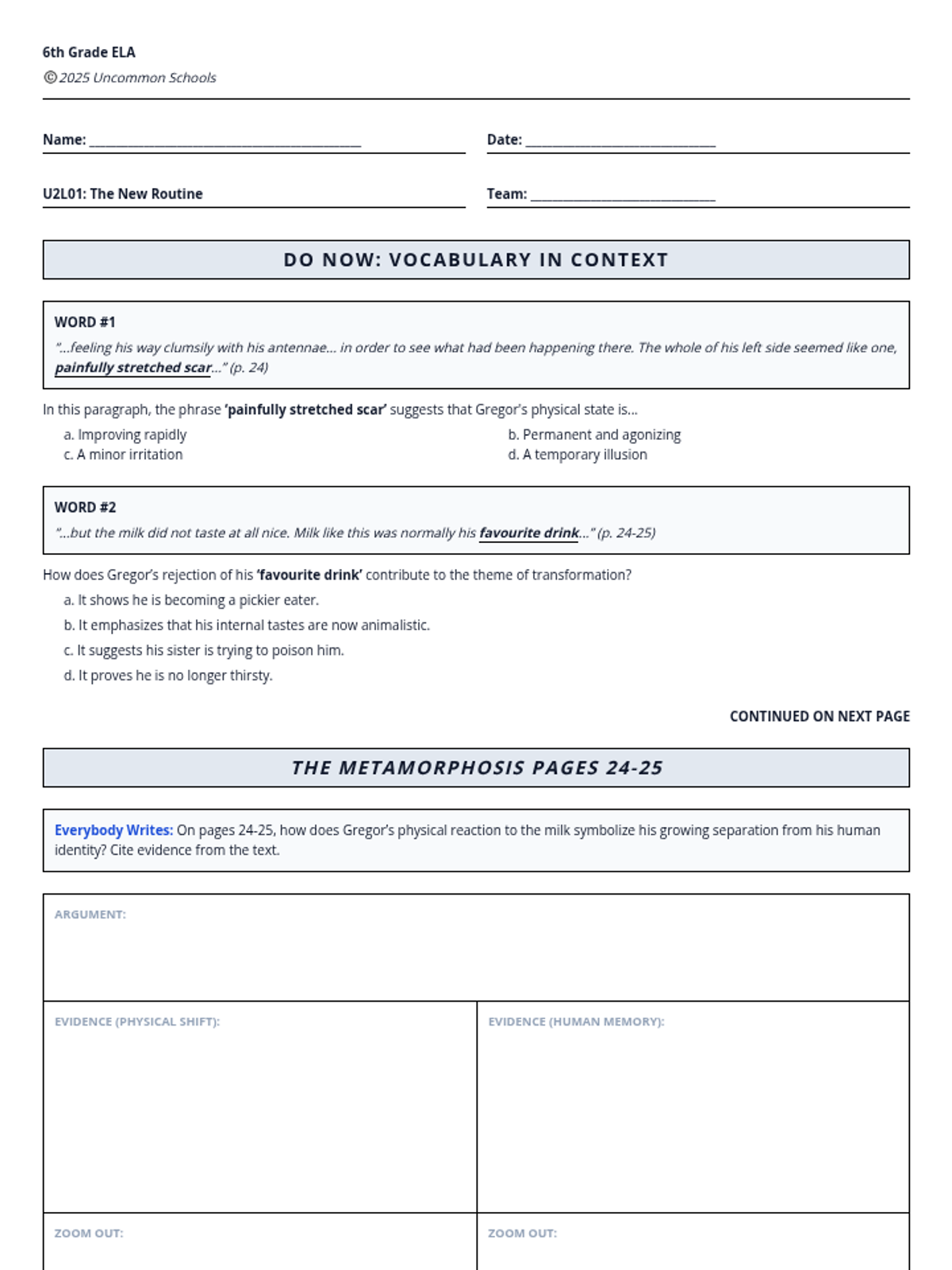
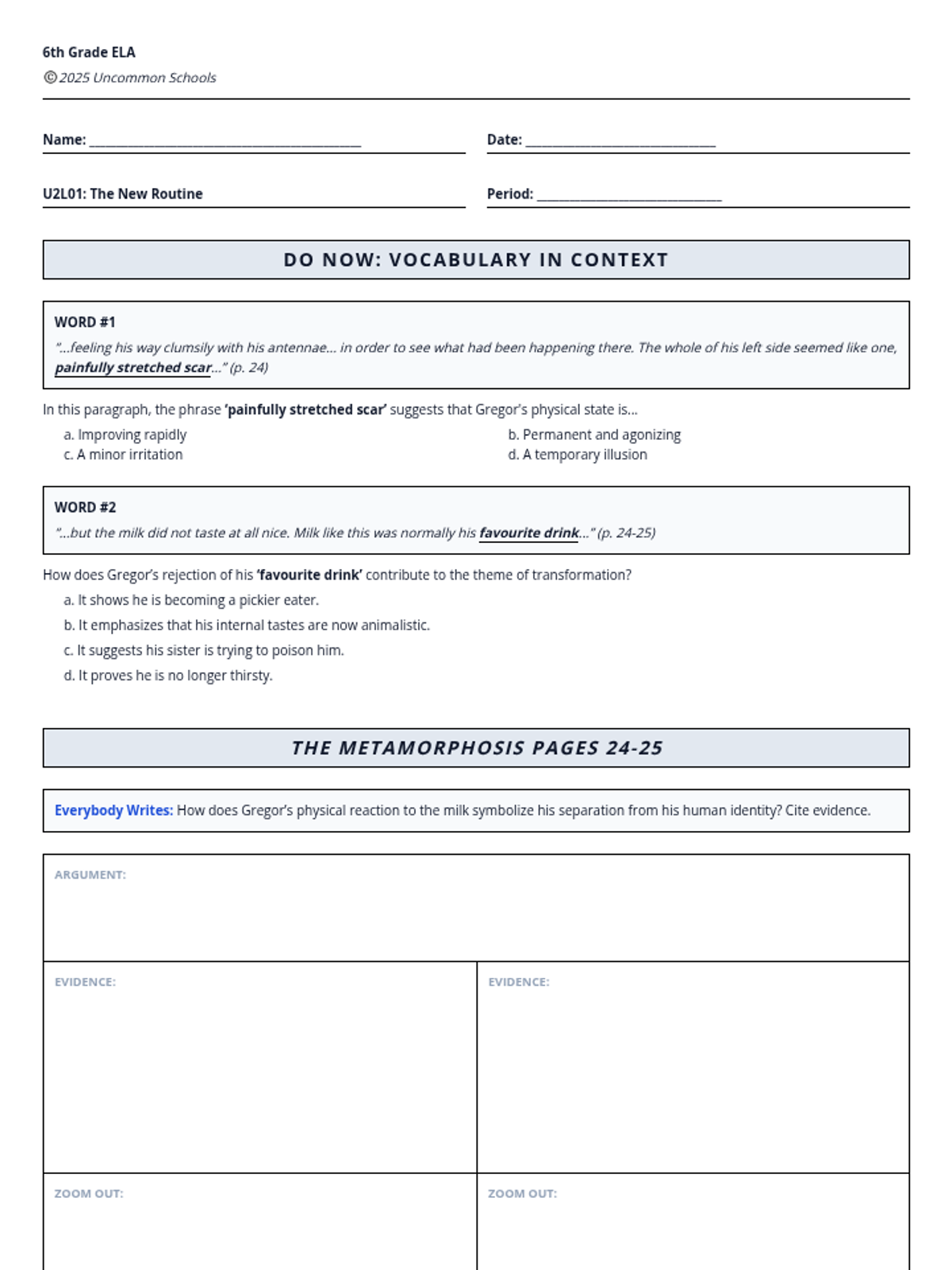
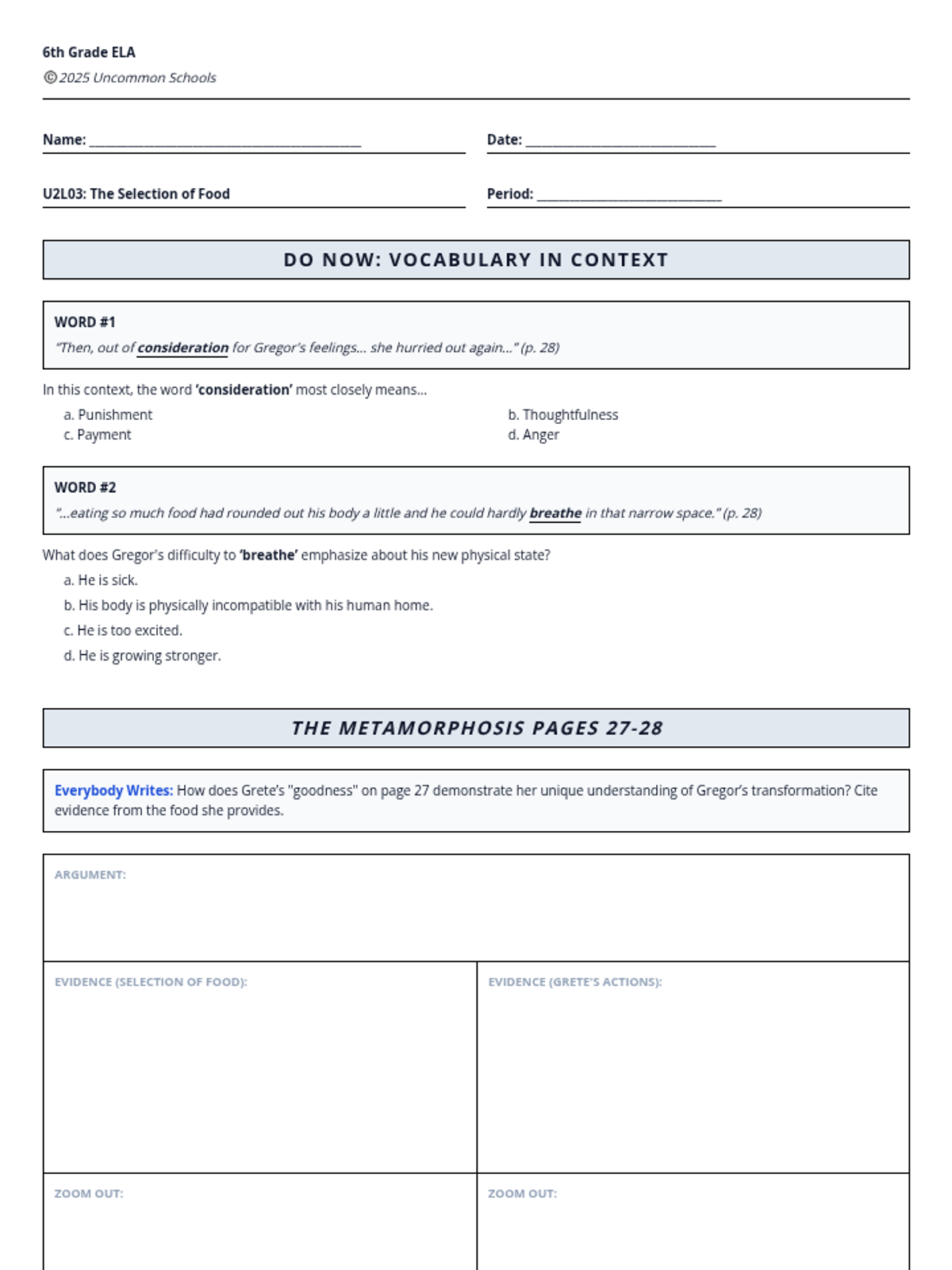
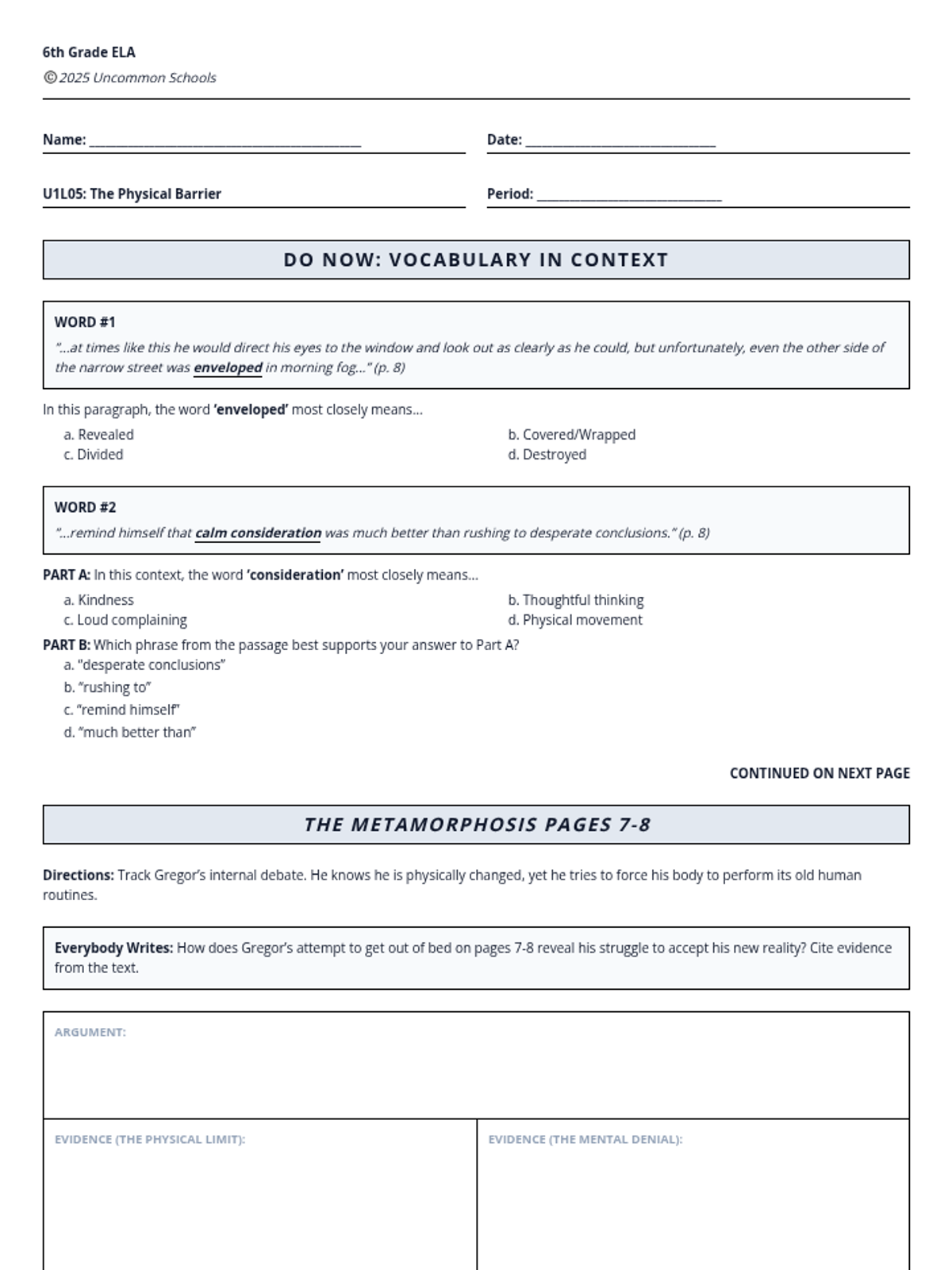
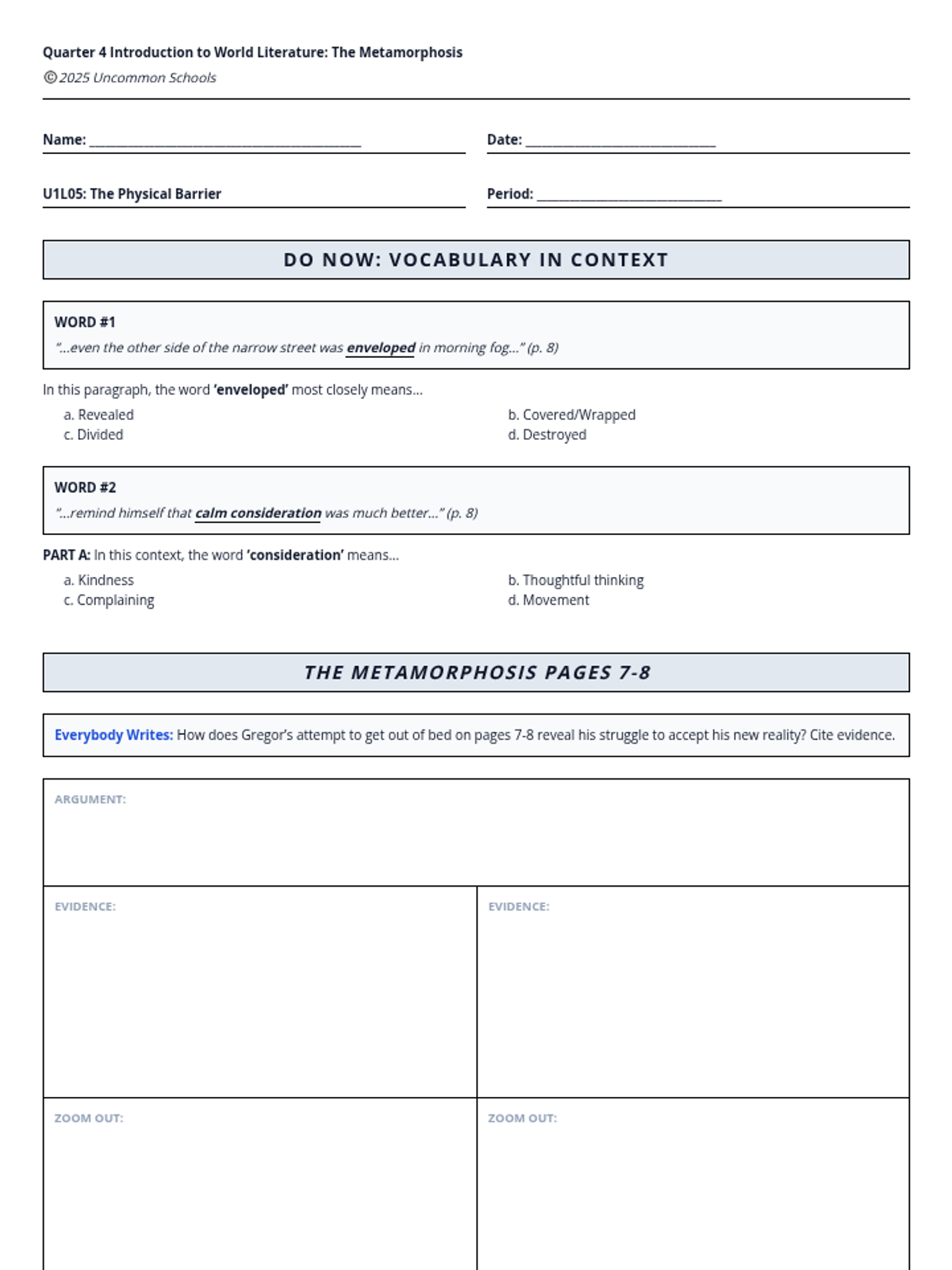
Covers the beginning of Part II, exploring Gregor's physical adjustment to his room and his family's initial attempts to care for him.
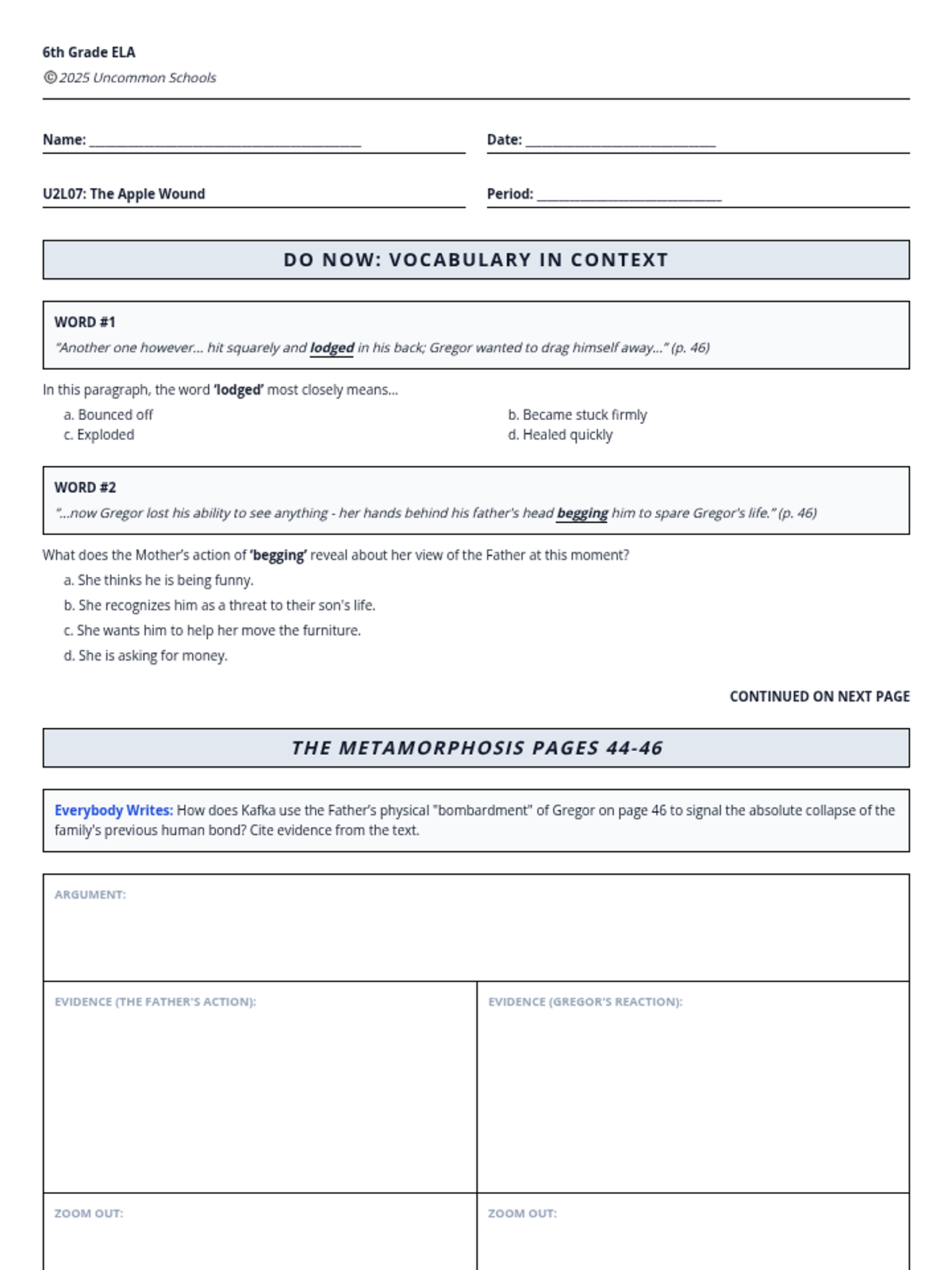
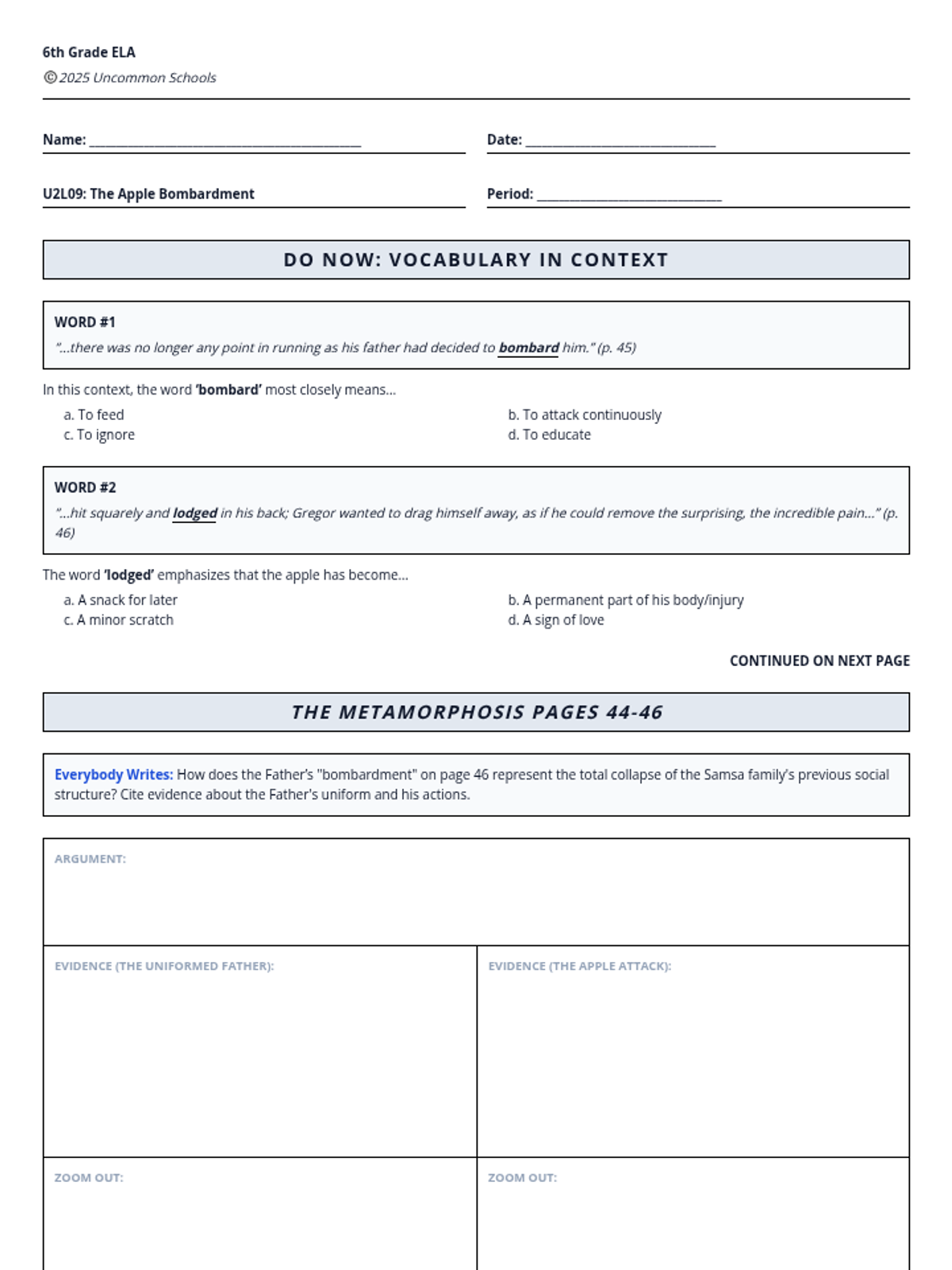
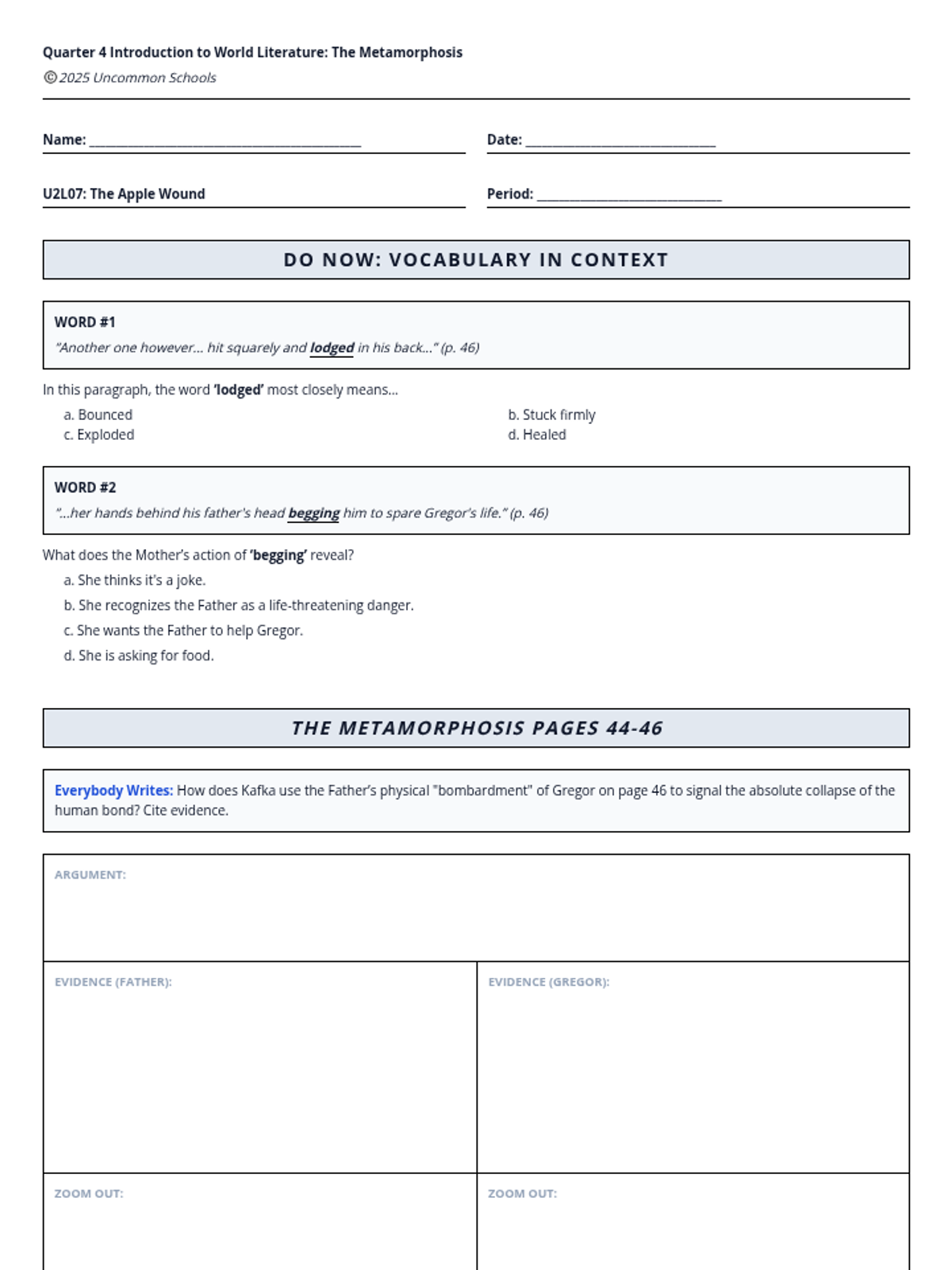
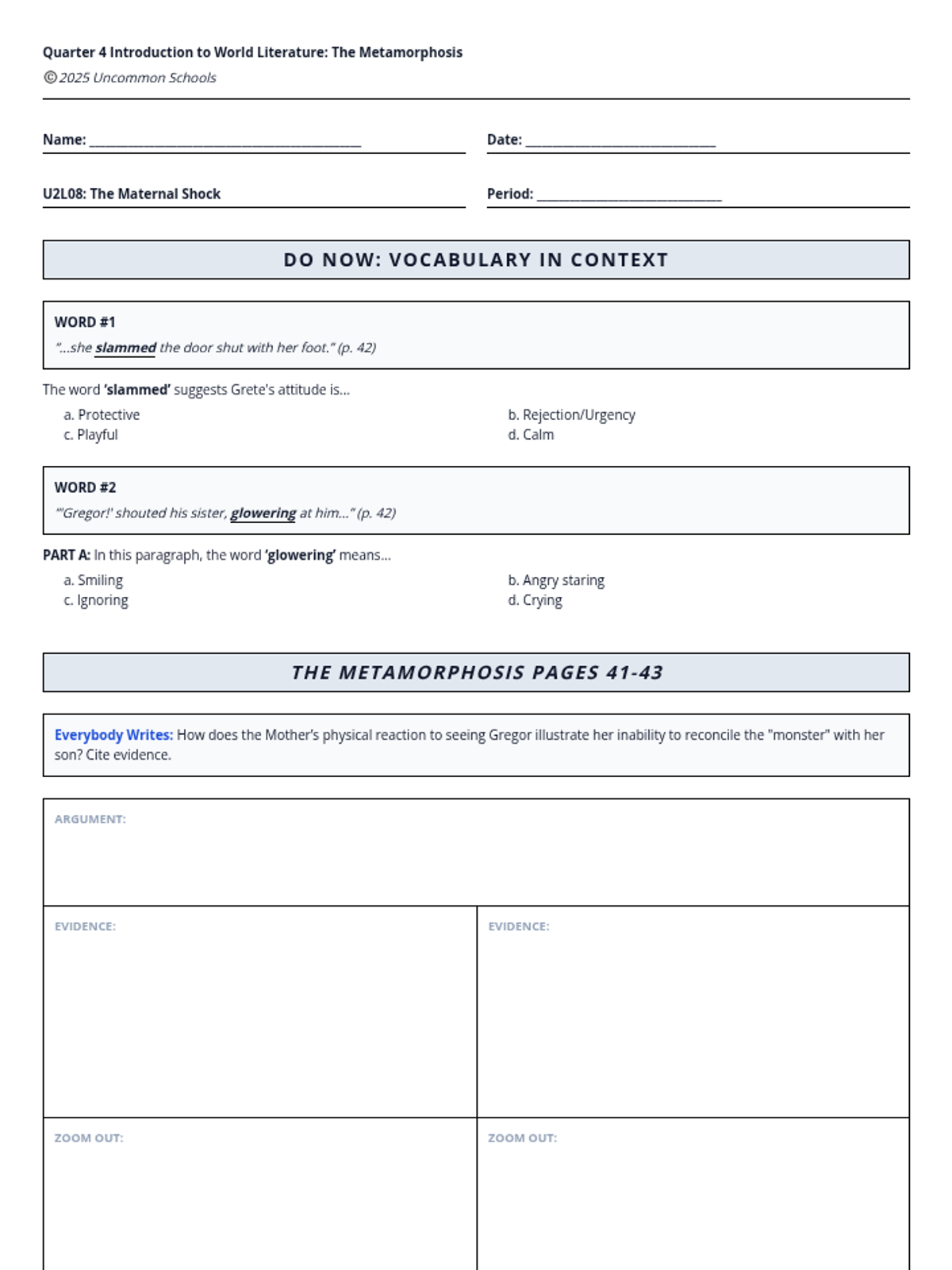
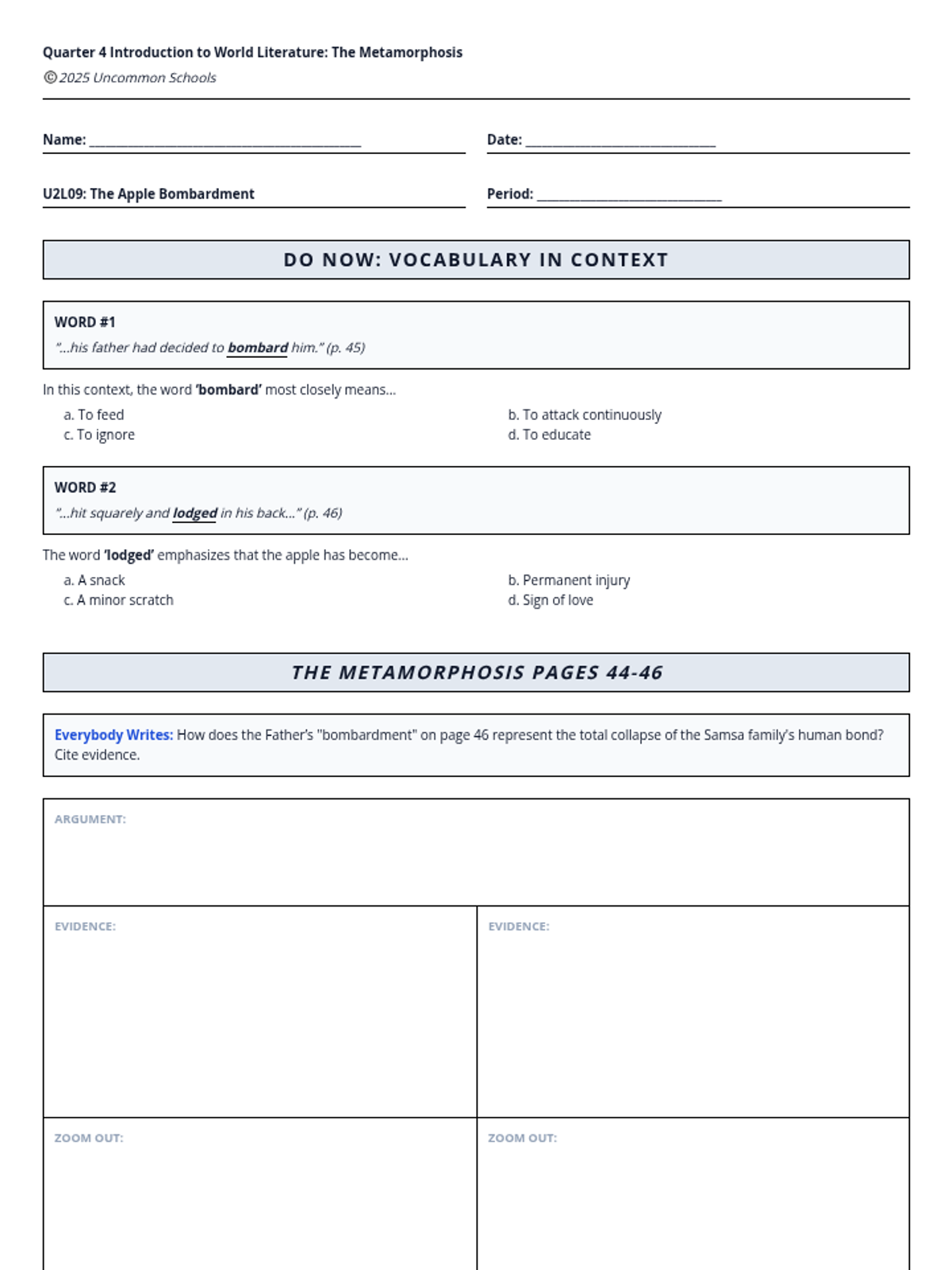
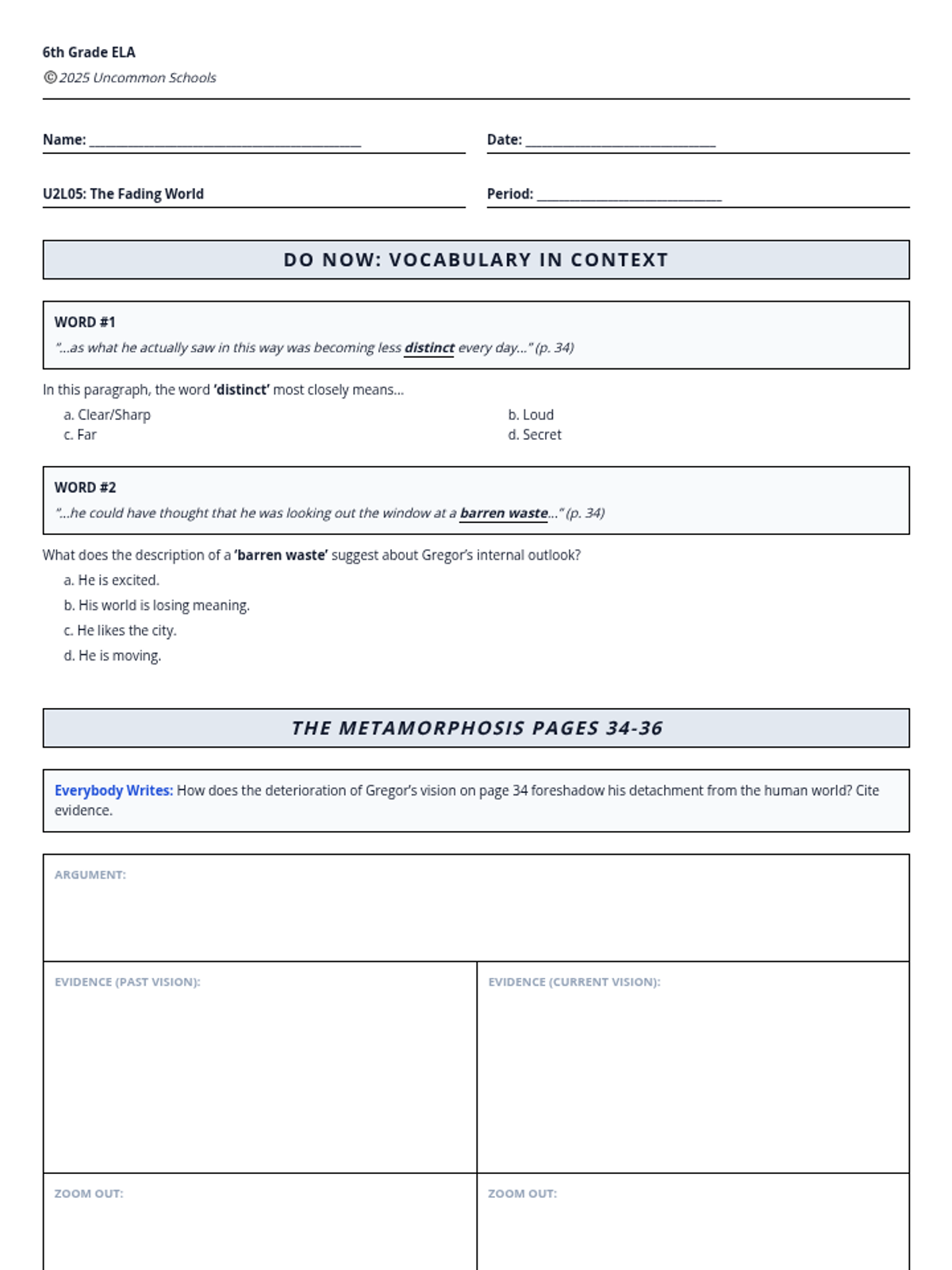
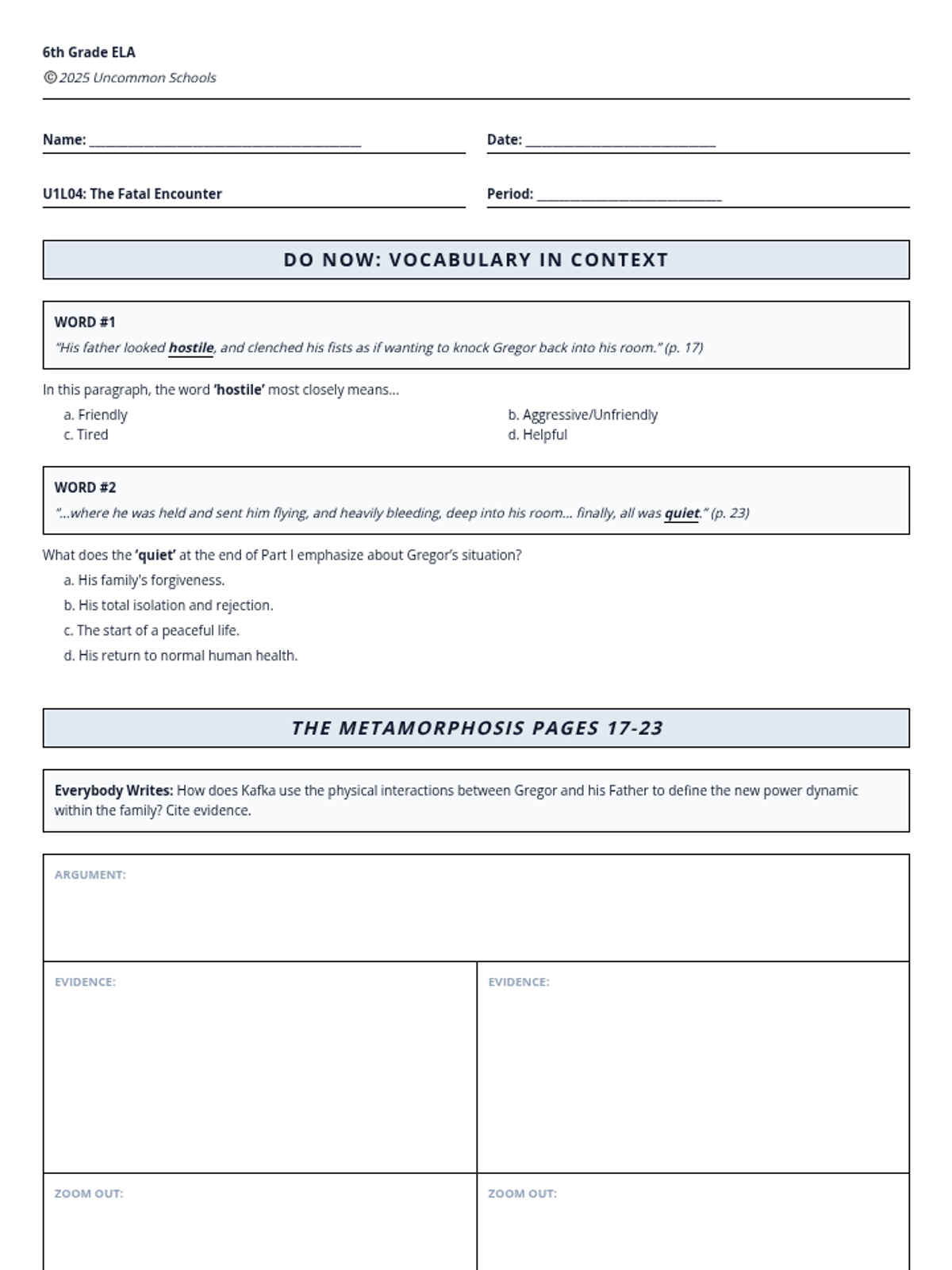
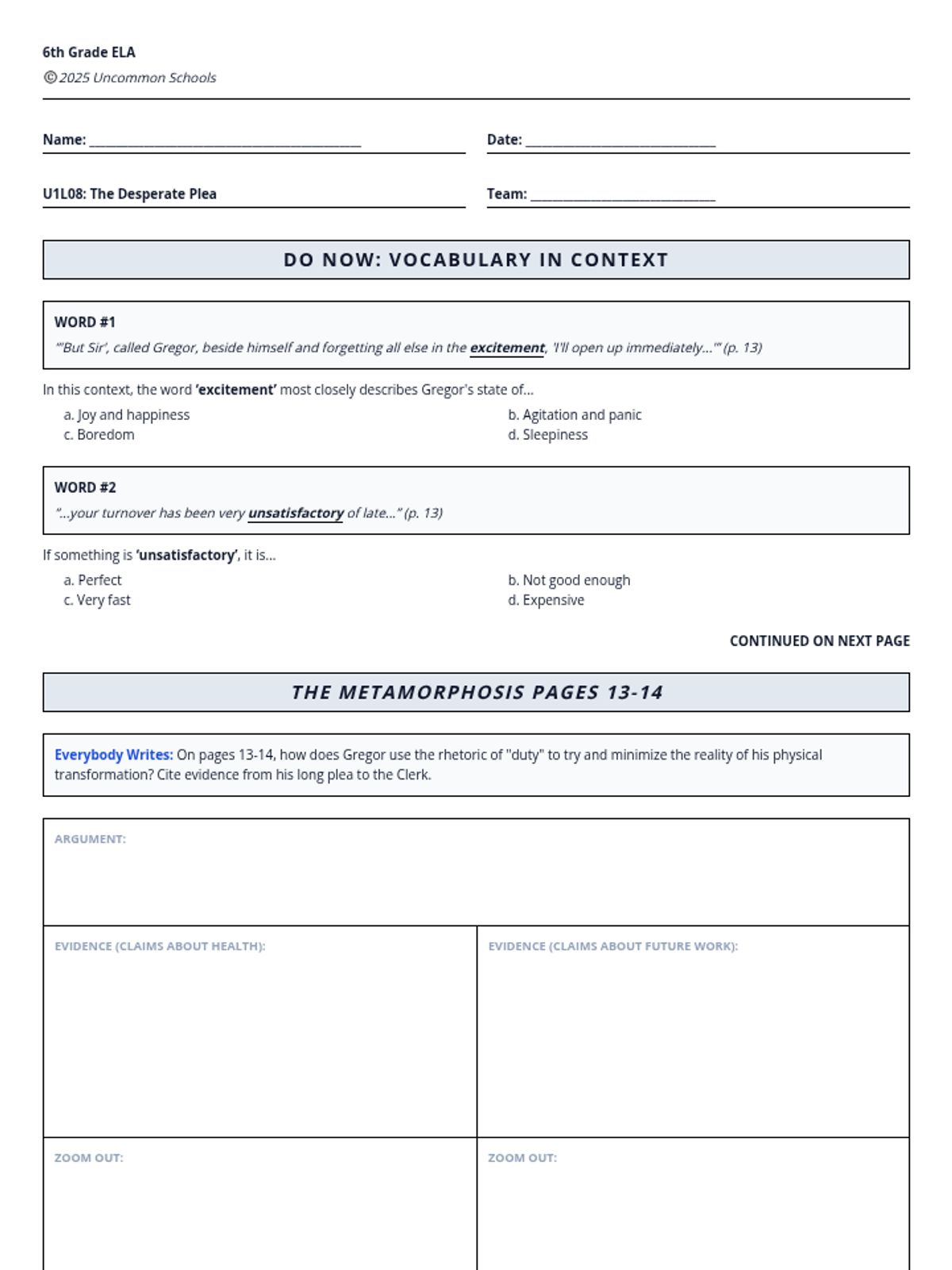
Analyzes the first visual encounter between the family and Gregor in his new form, culminating in the Father's violent rejection.
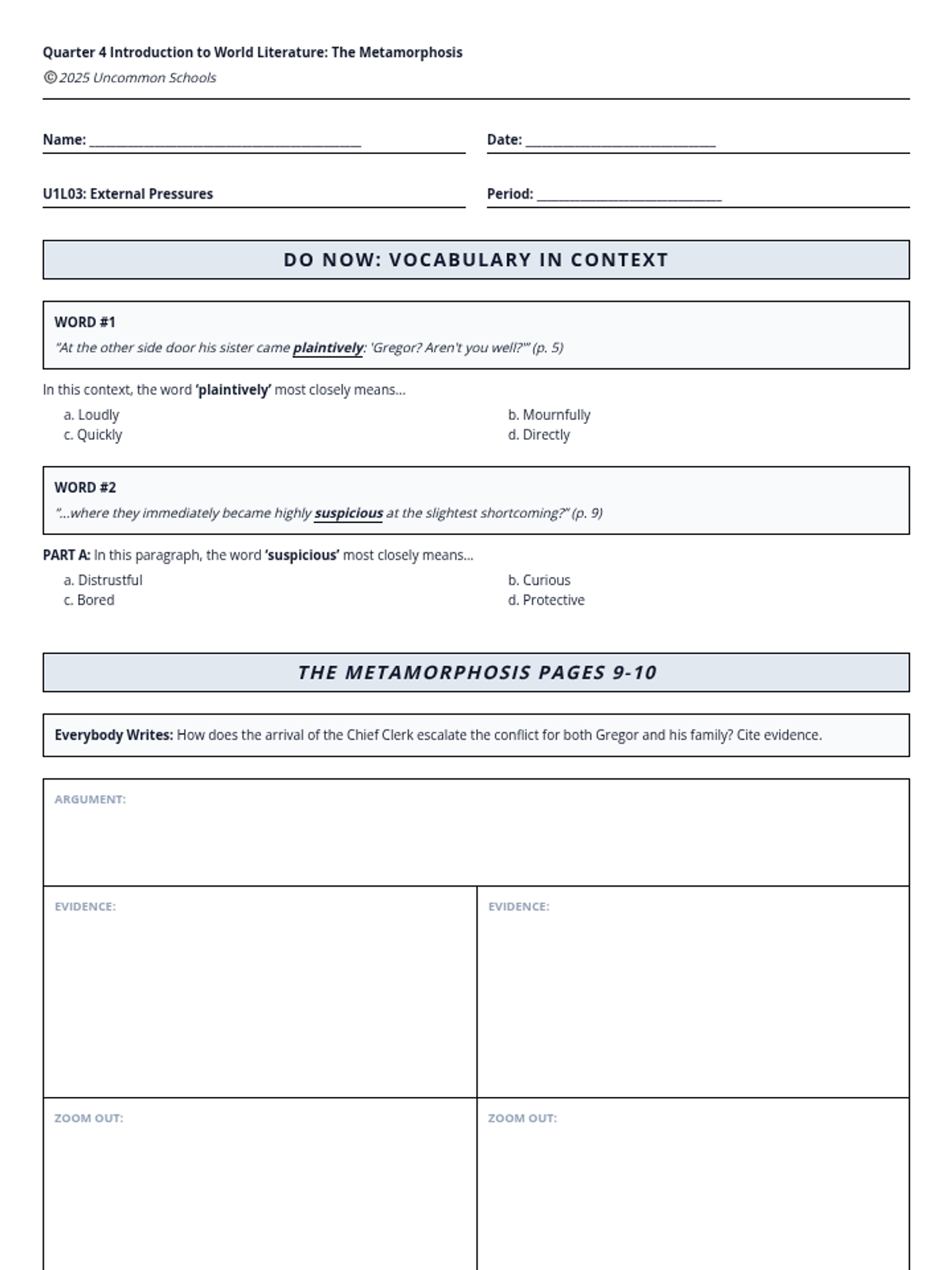
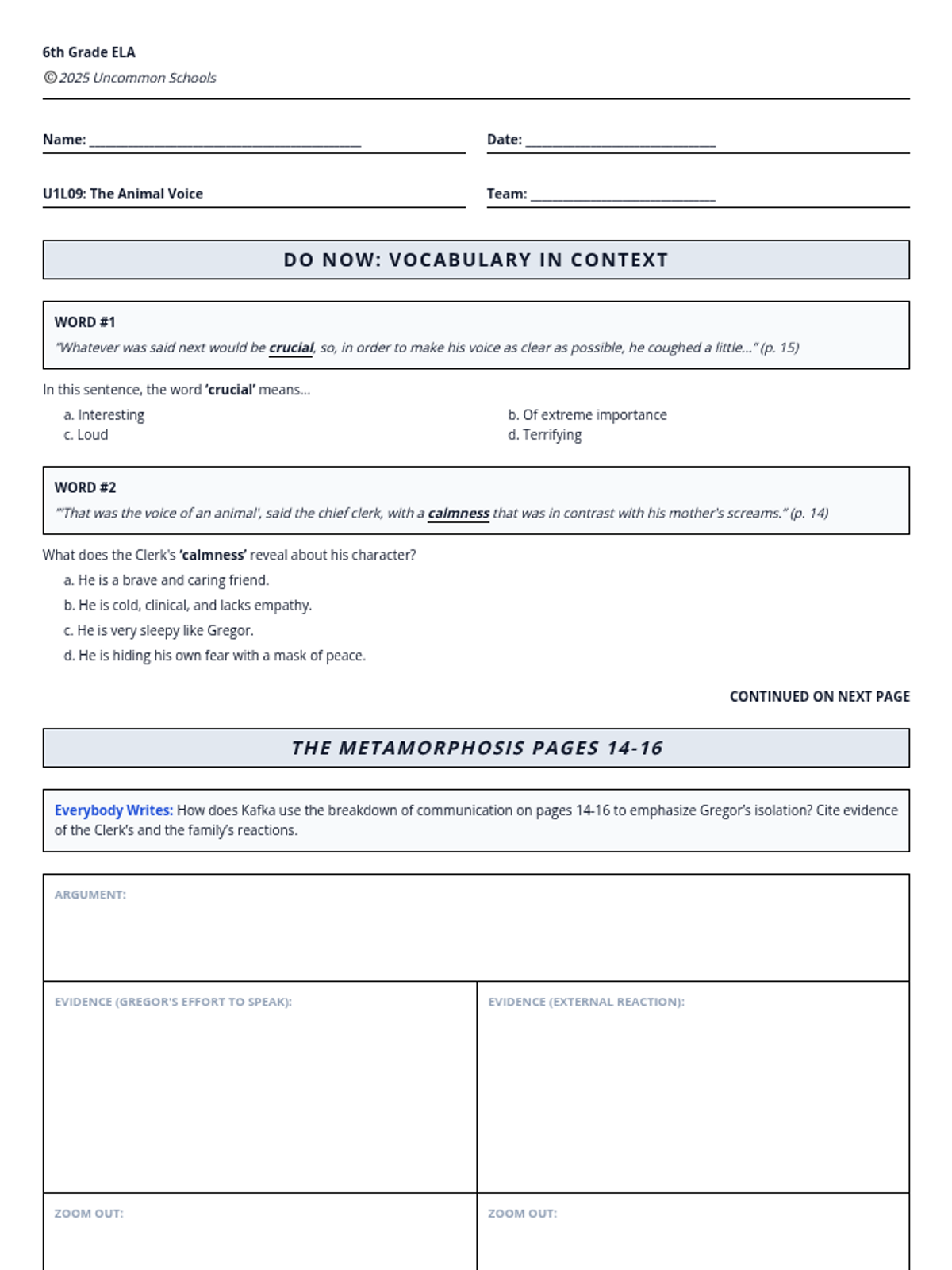
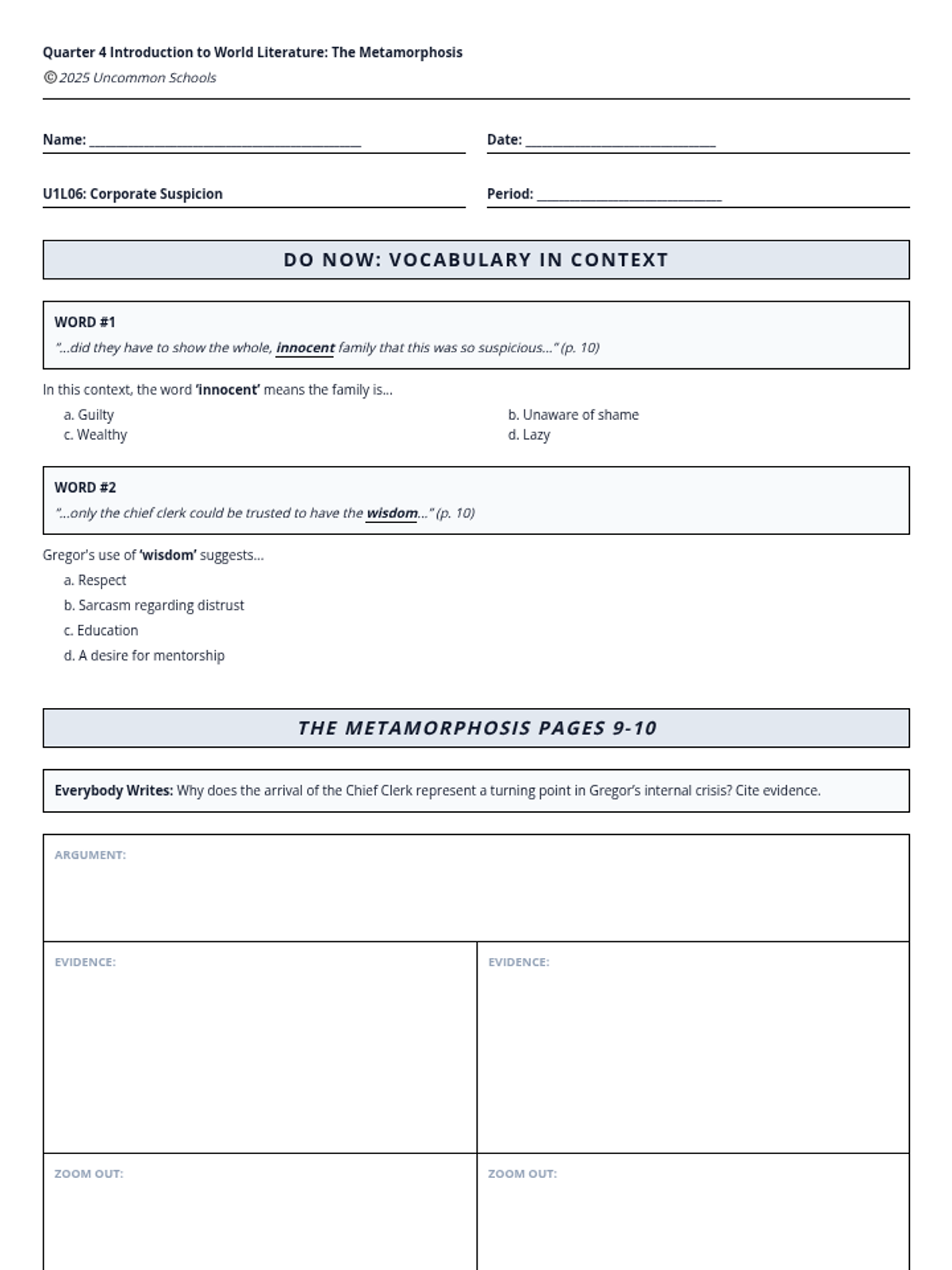
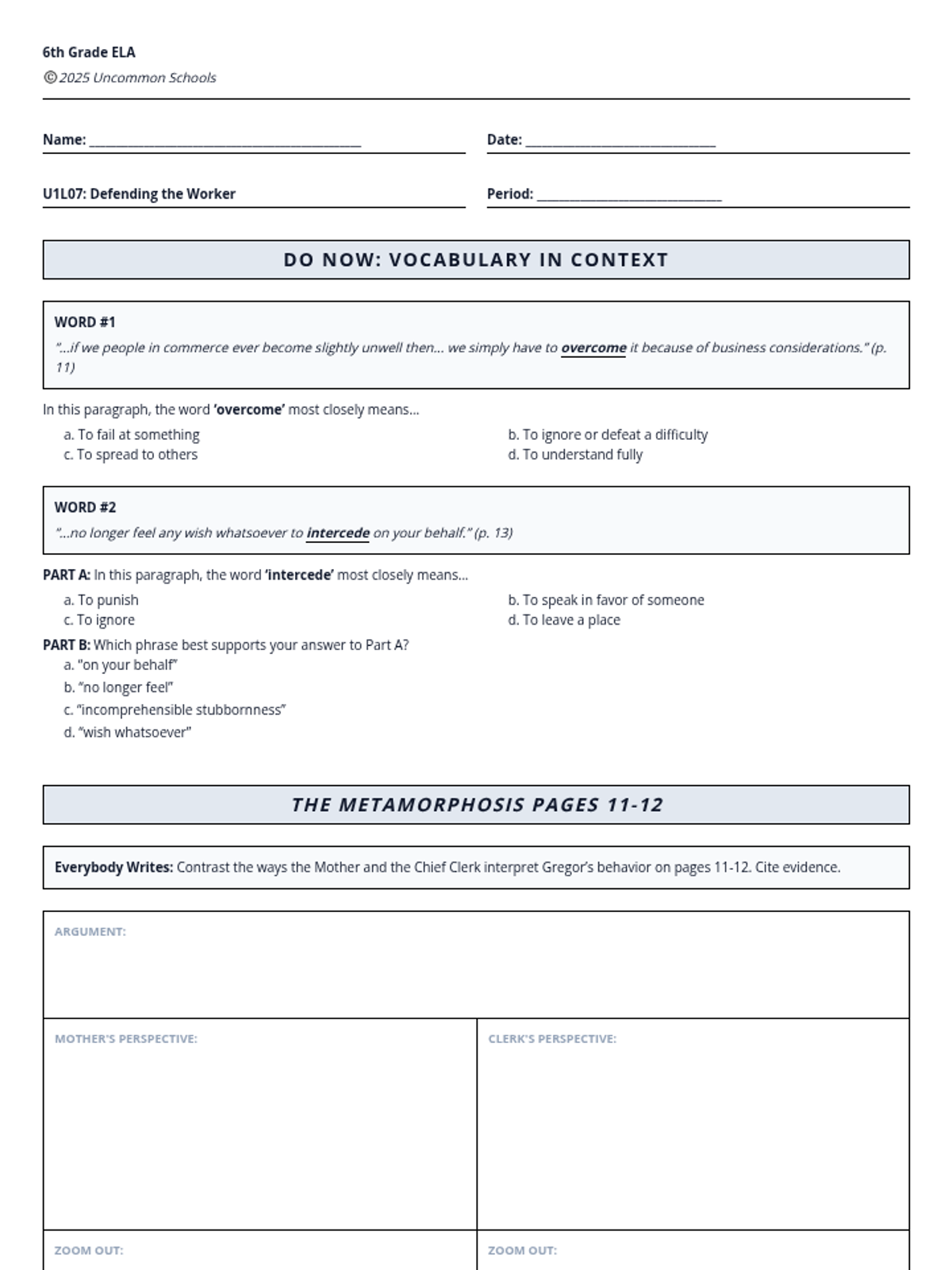
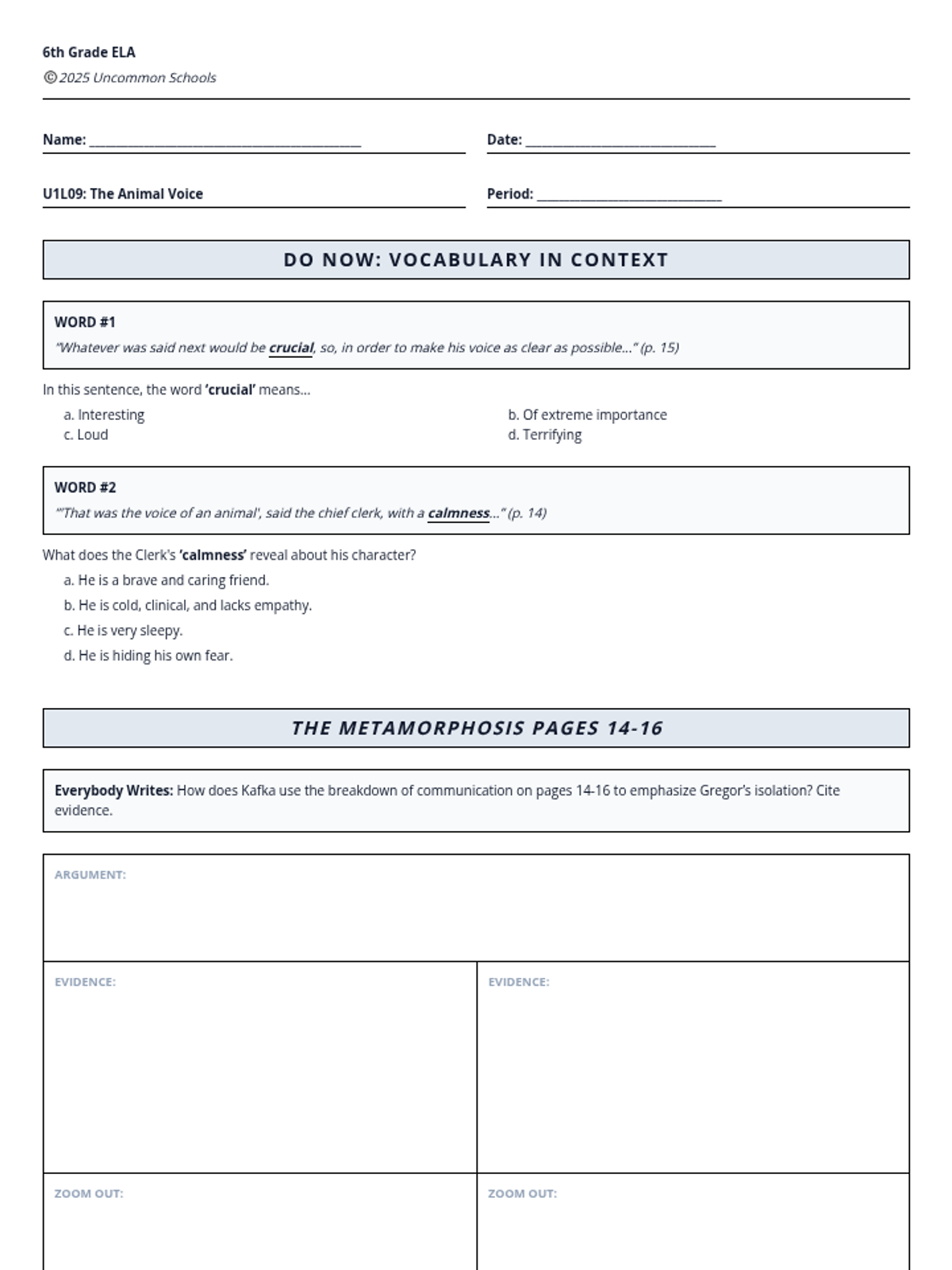
Focuses on the immediate external pressure as the family and the Chief Clerk demand entry to Gregor's room.
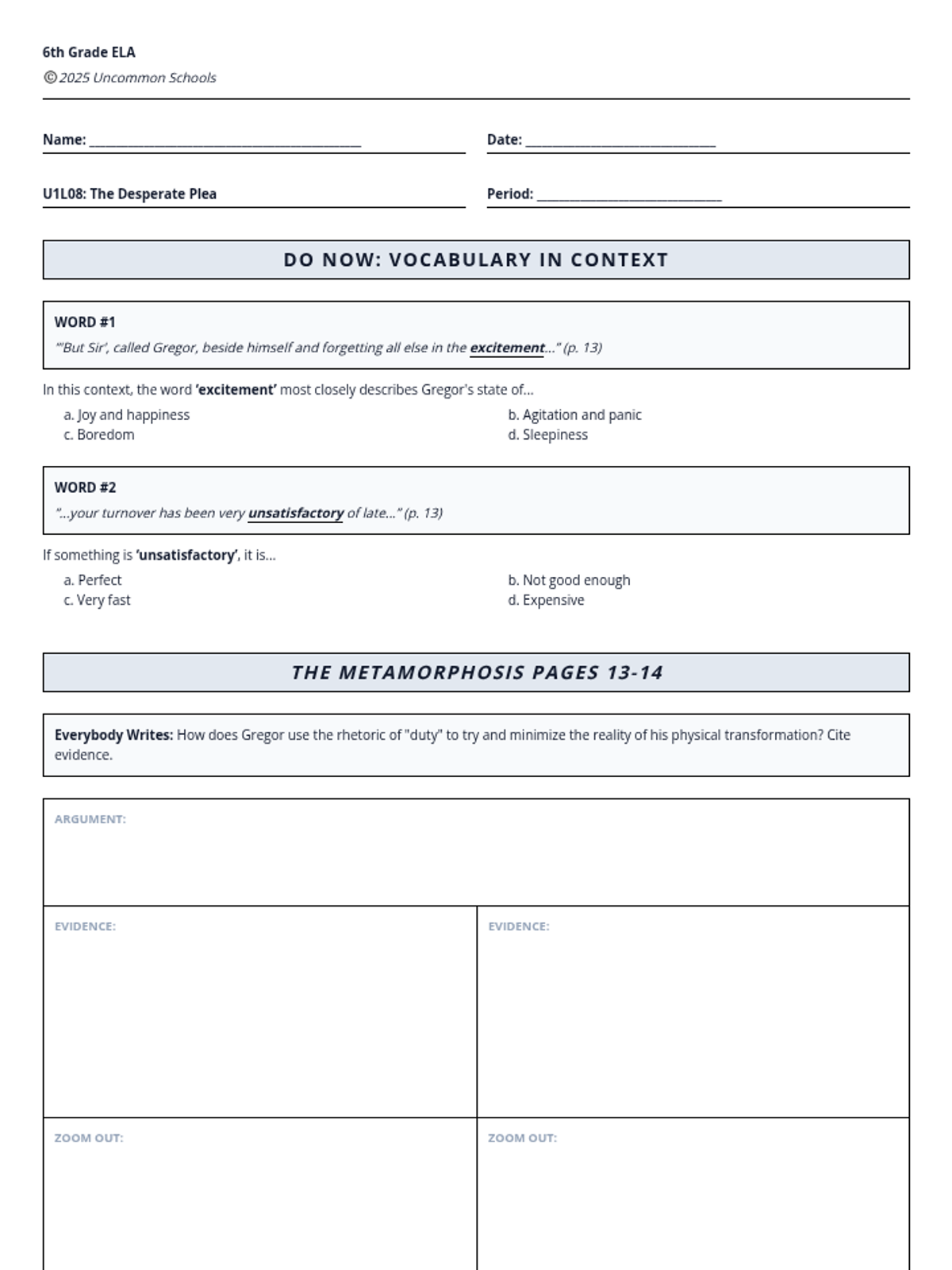
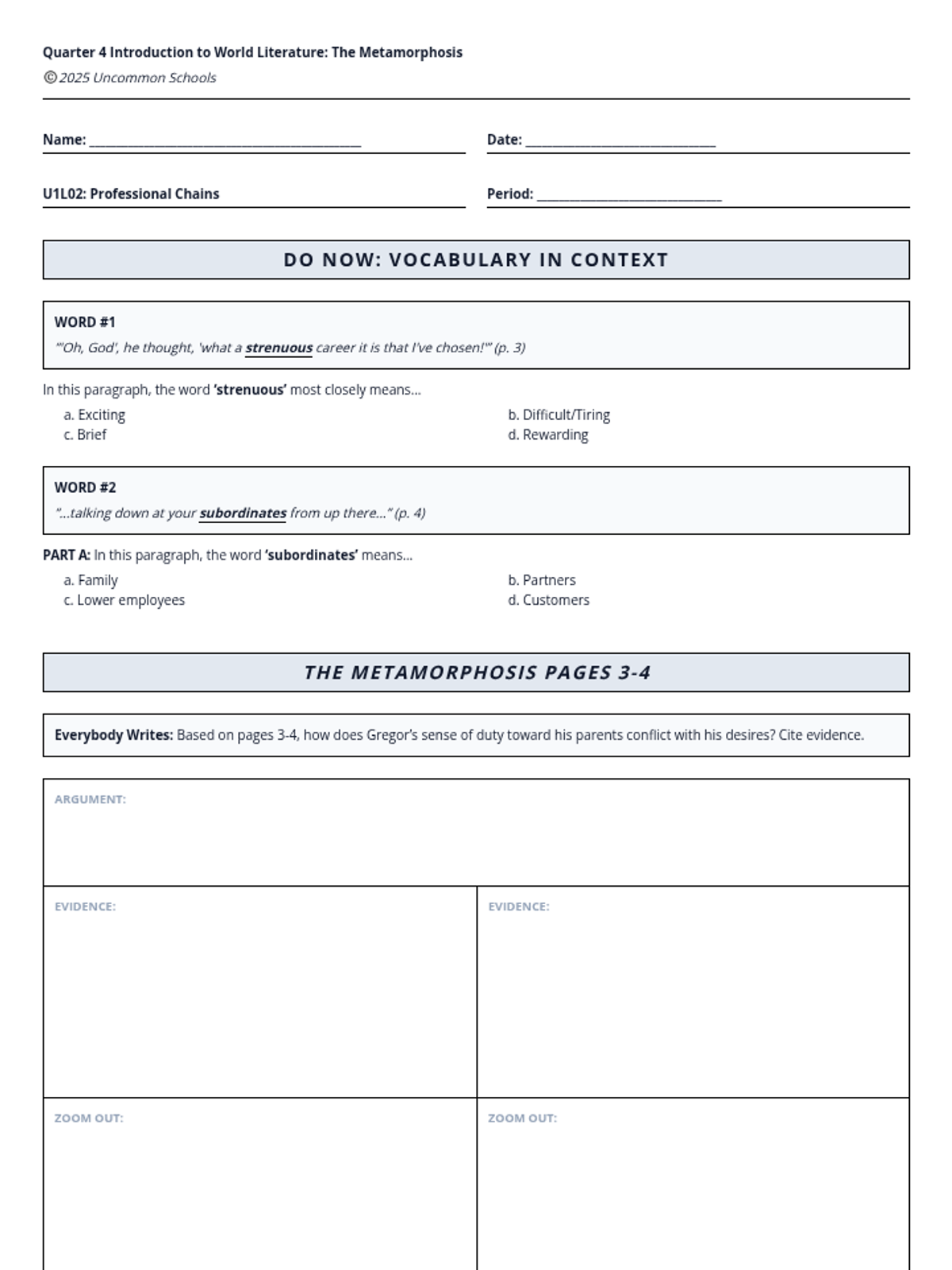
Explores Gregor's dissatisfaction with his job and the professional pressures that dictate his life even during his transformation.
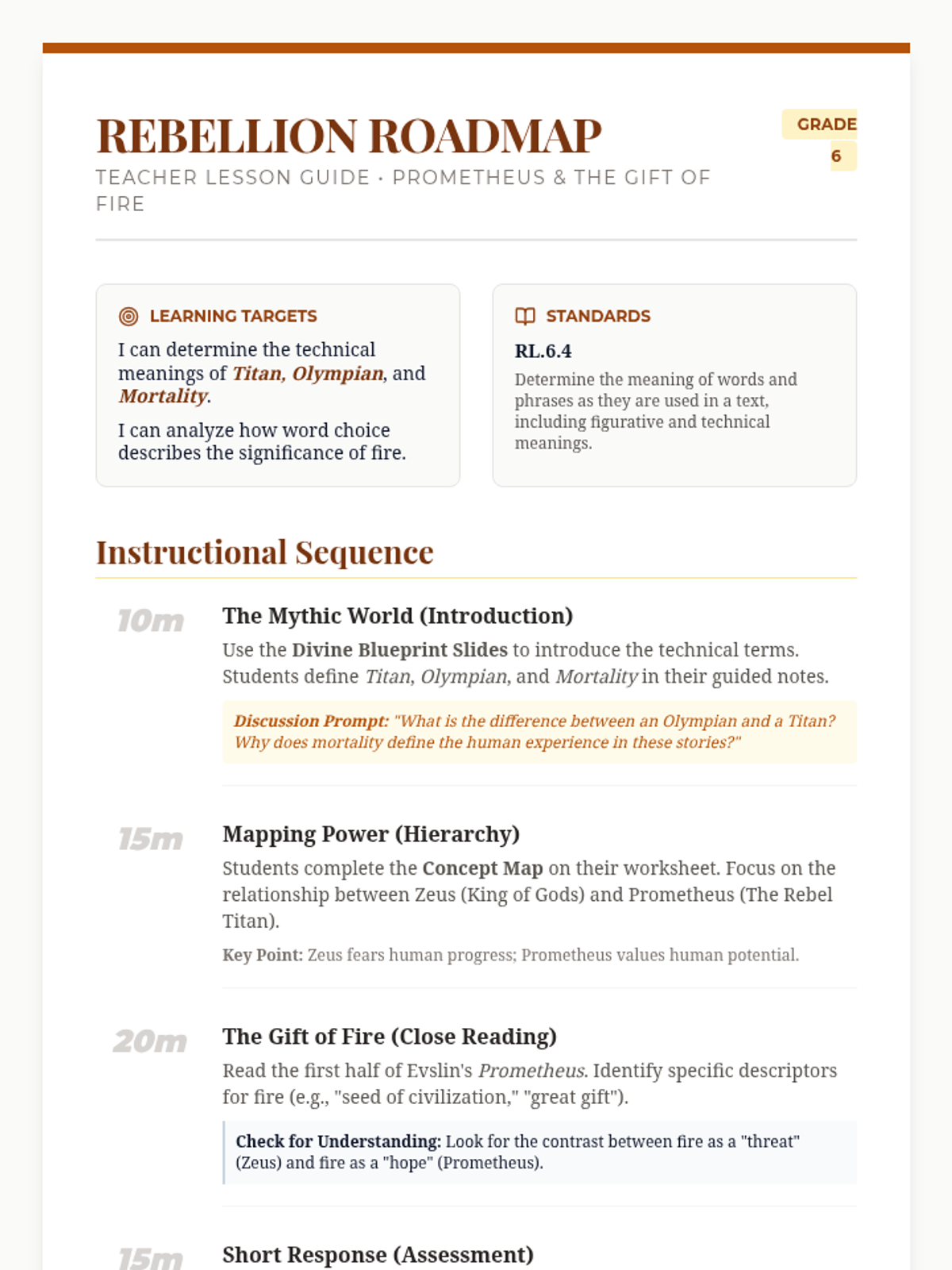
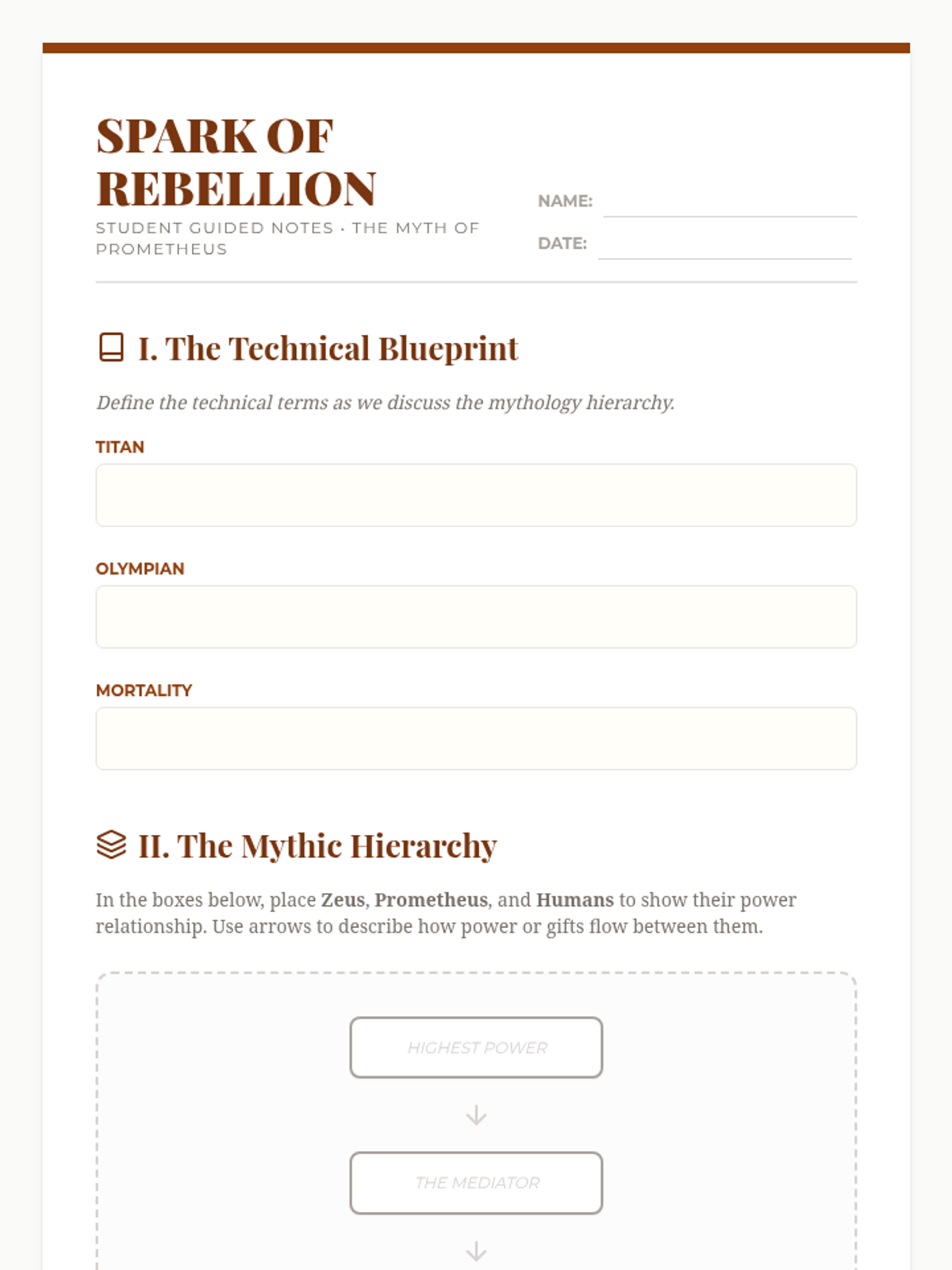
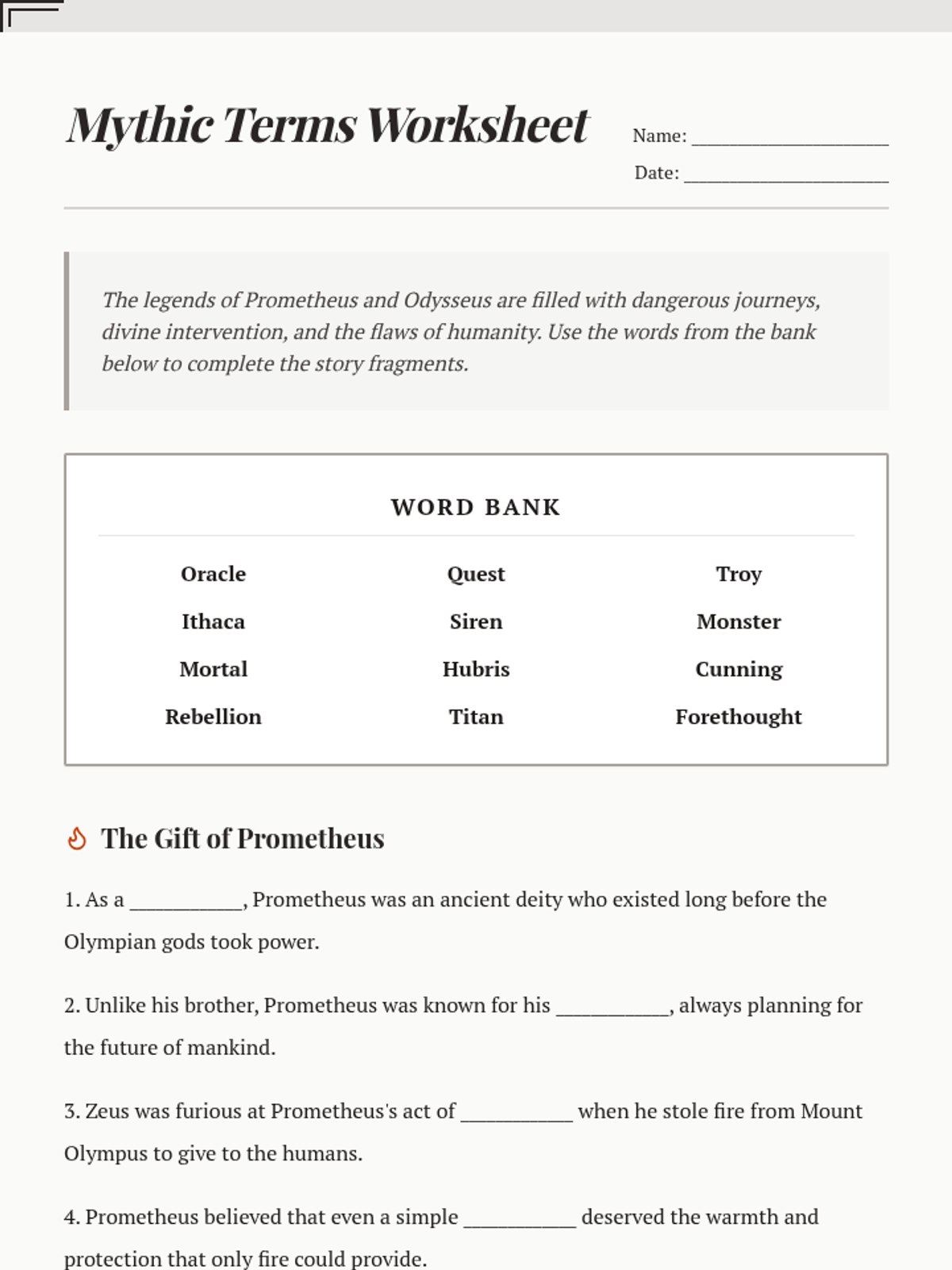
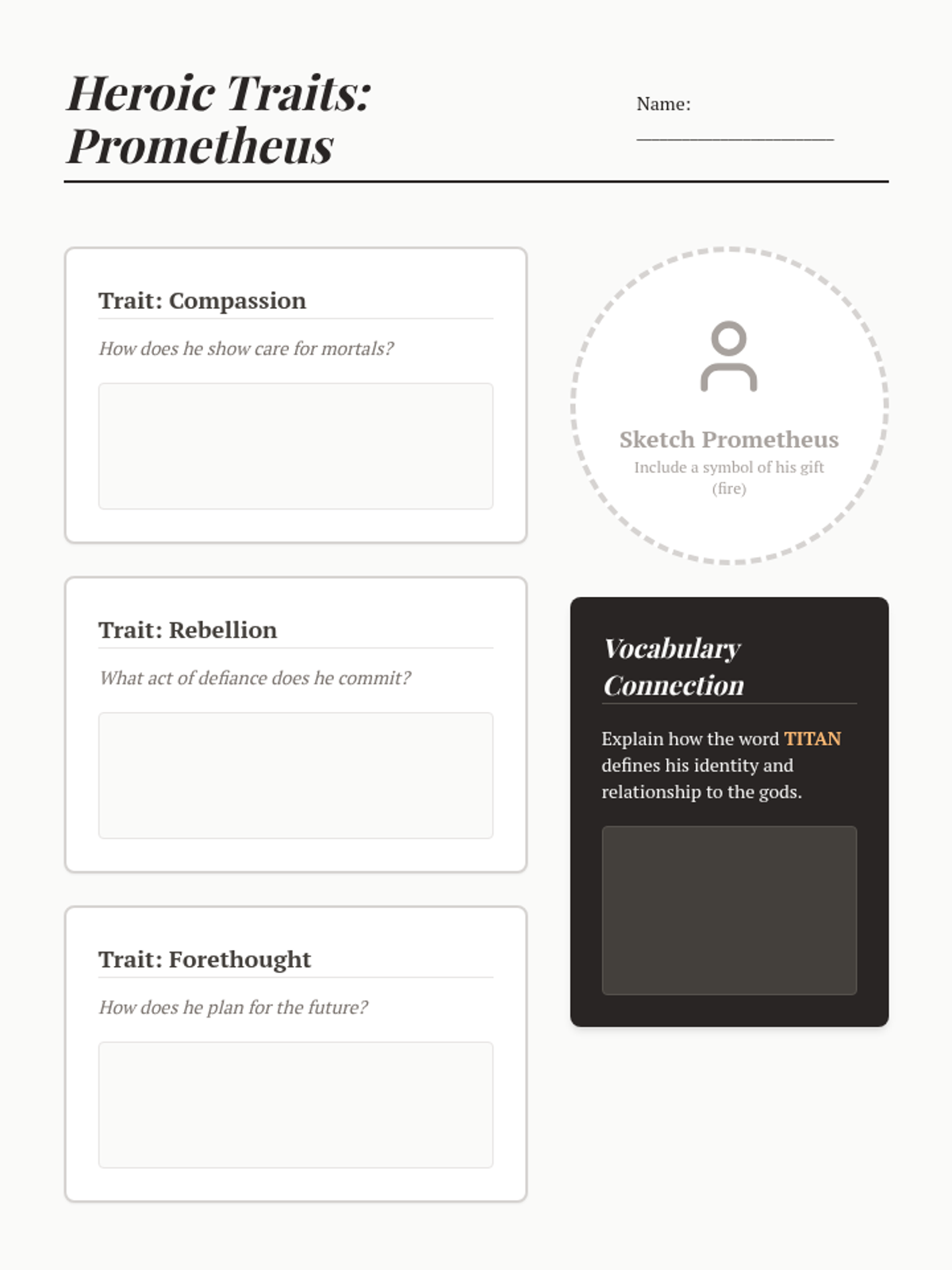
A comprehensive lesson combining the introduction to Greek mythology hierarchies with the analysis of Prometheus's gift of fire, focusing on technical vocabulary and word choice.
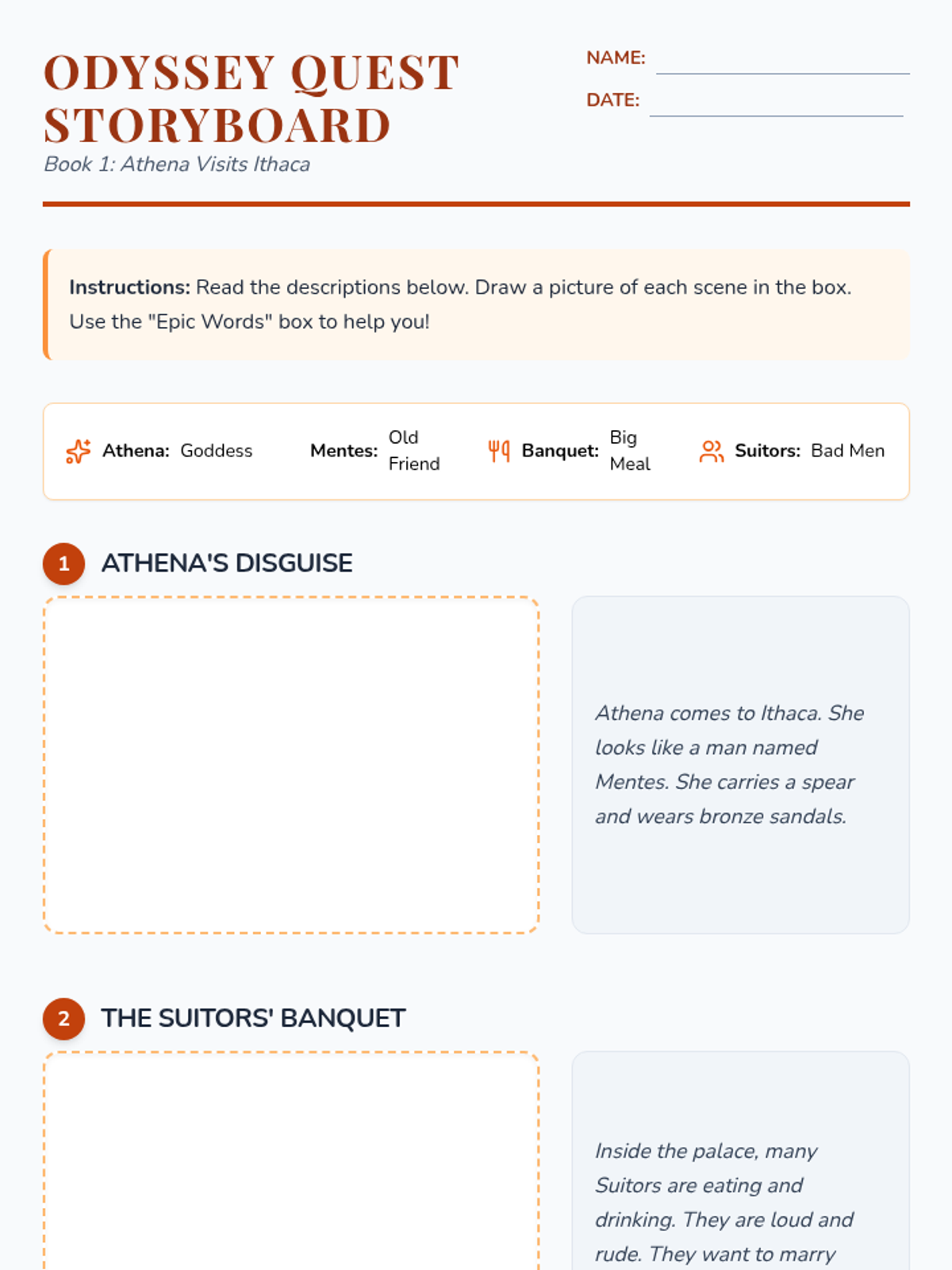
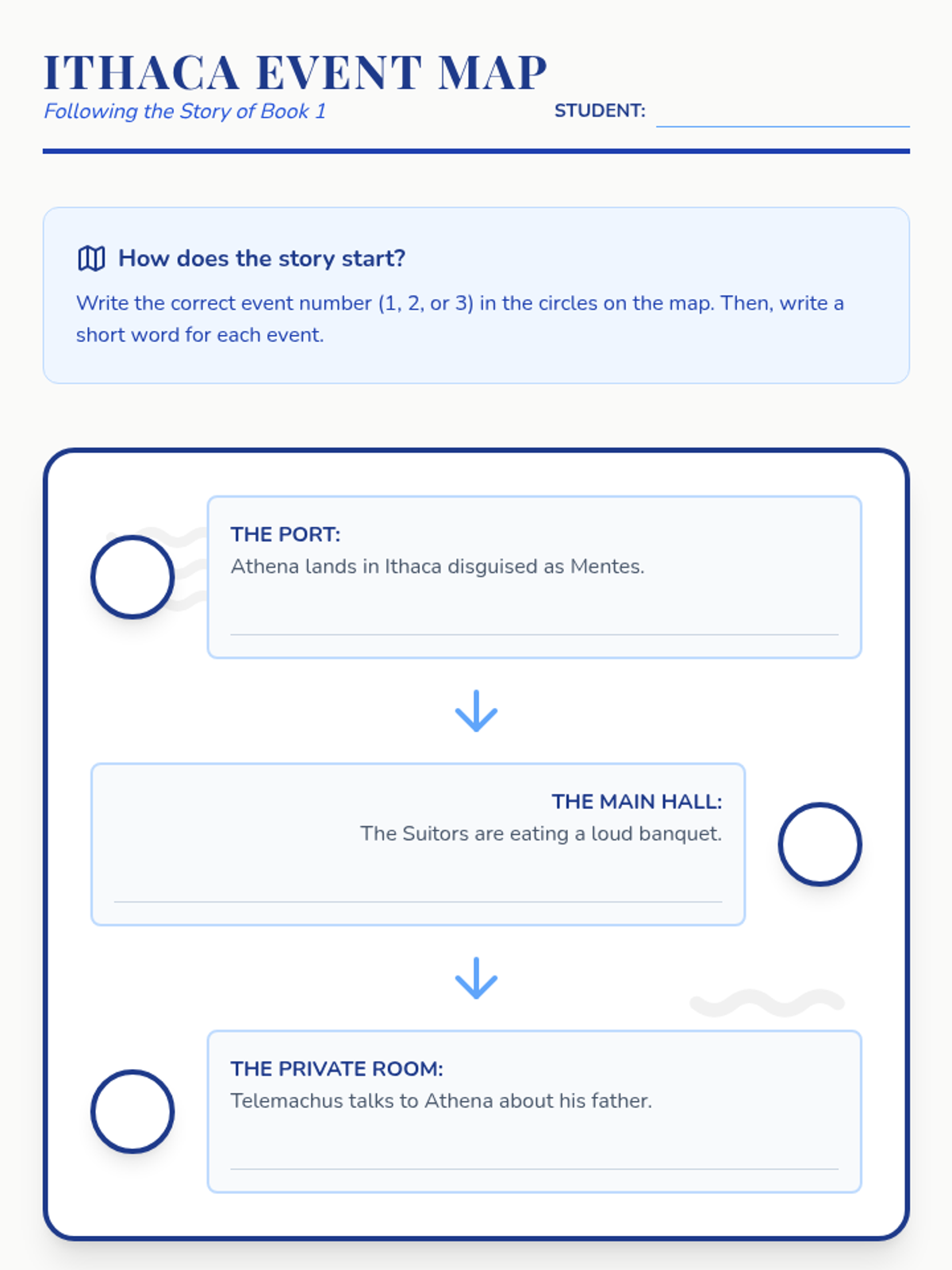
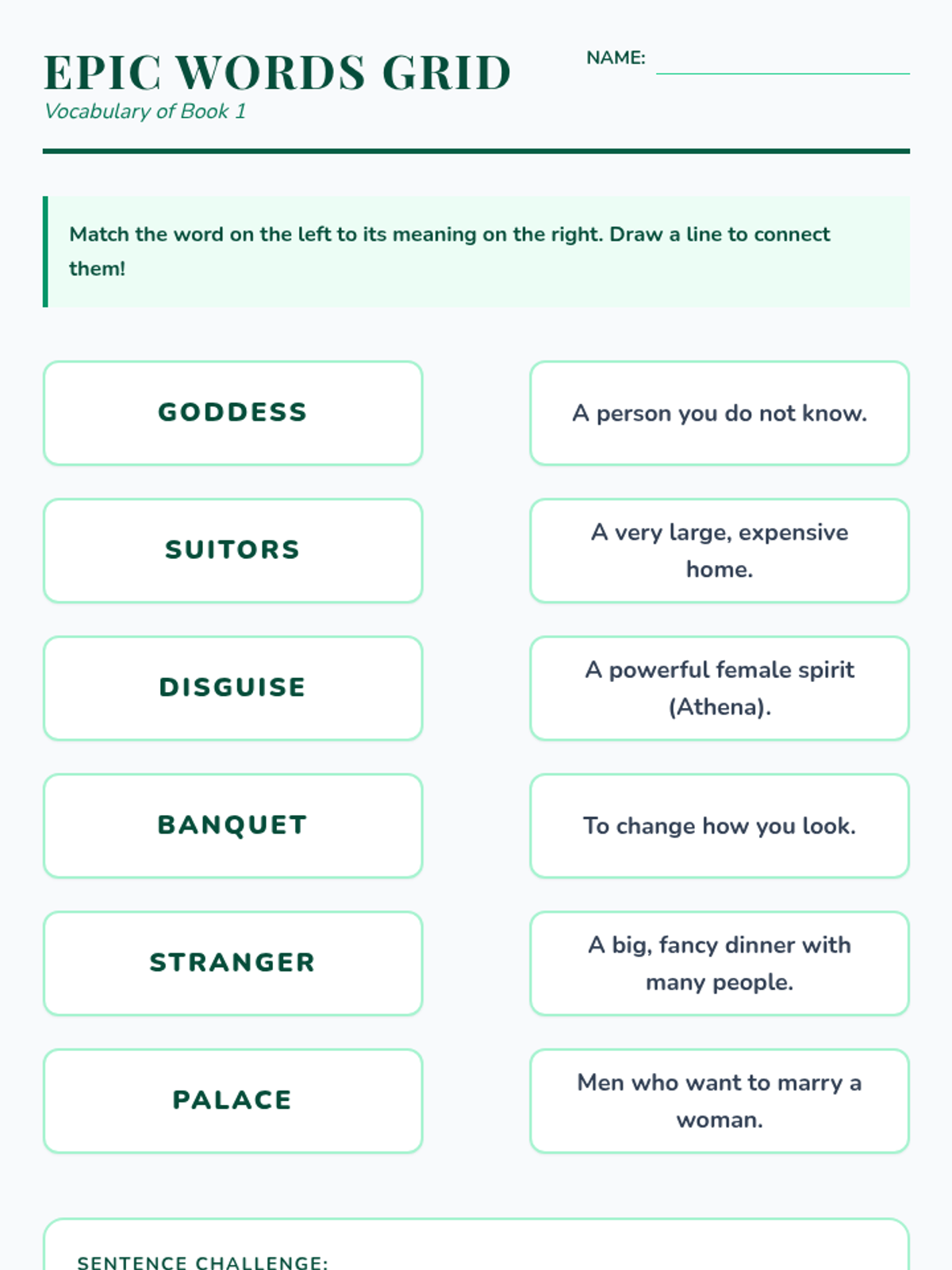
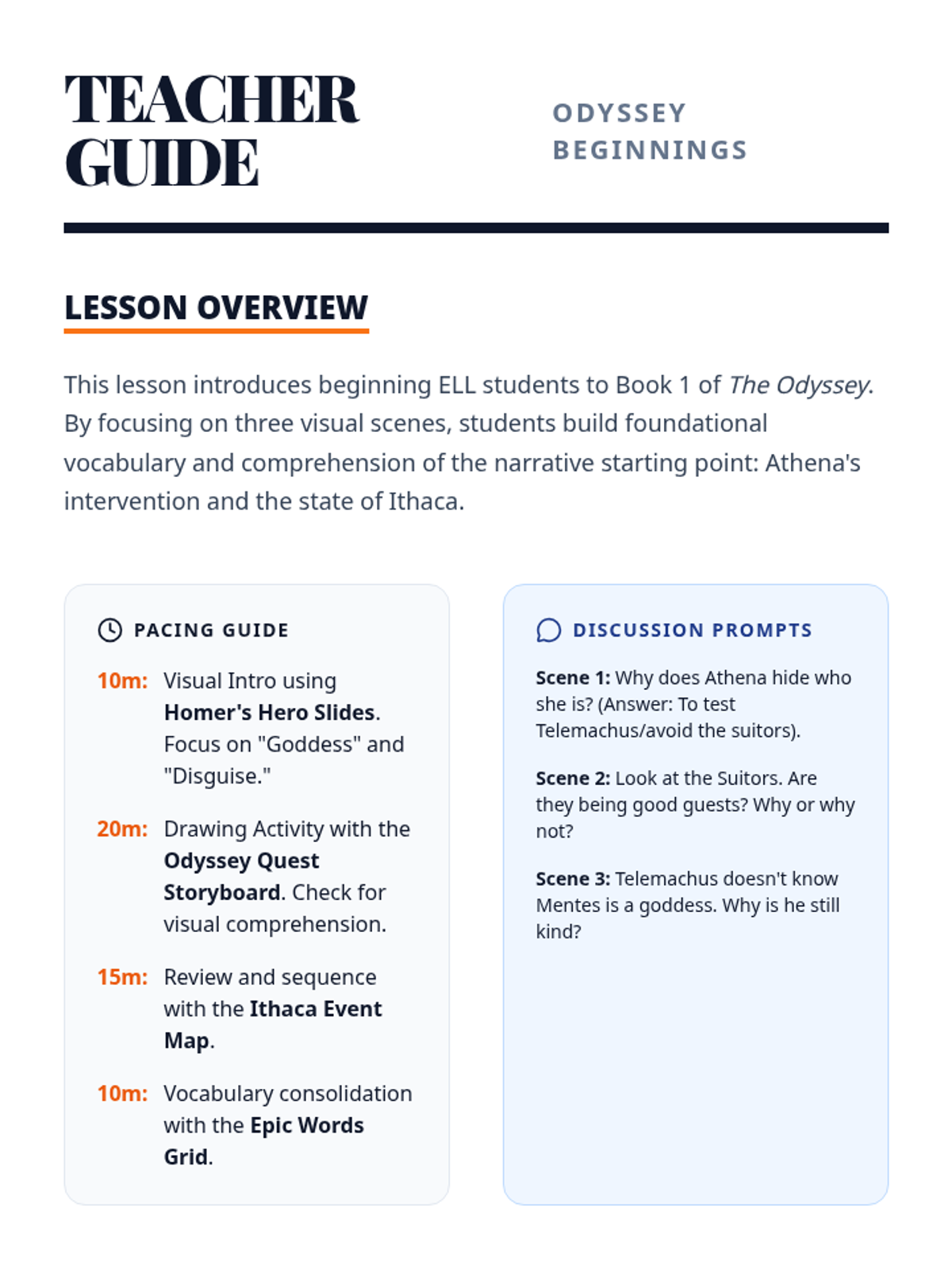
A foundational lesson for beginning ELL students to understand the opening of Homer's Odyssey through visual storytelling and simplified vocabulary focusing on Athena's arrival in Ithaca and her interaction with Telemachus.
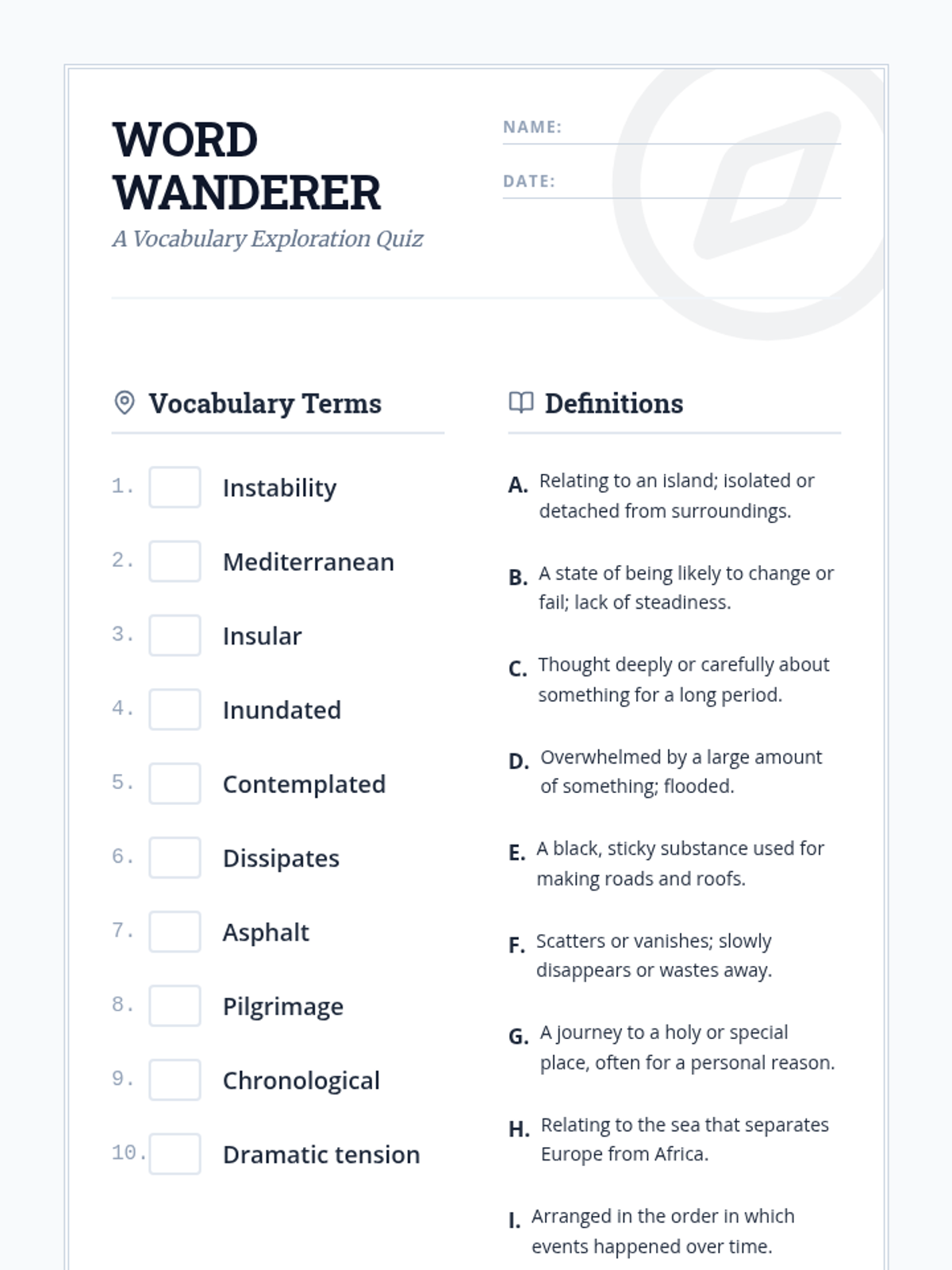
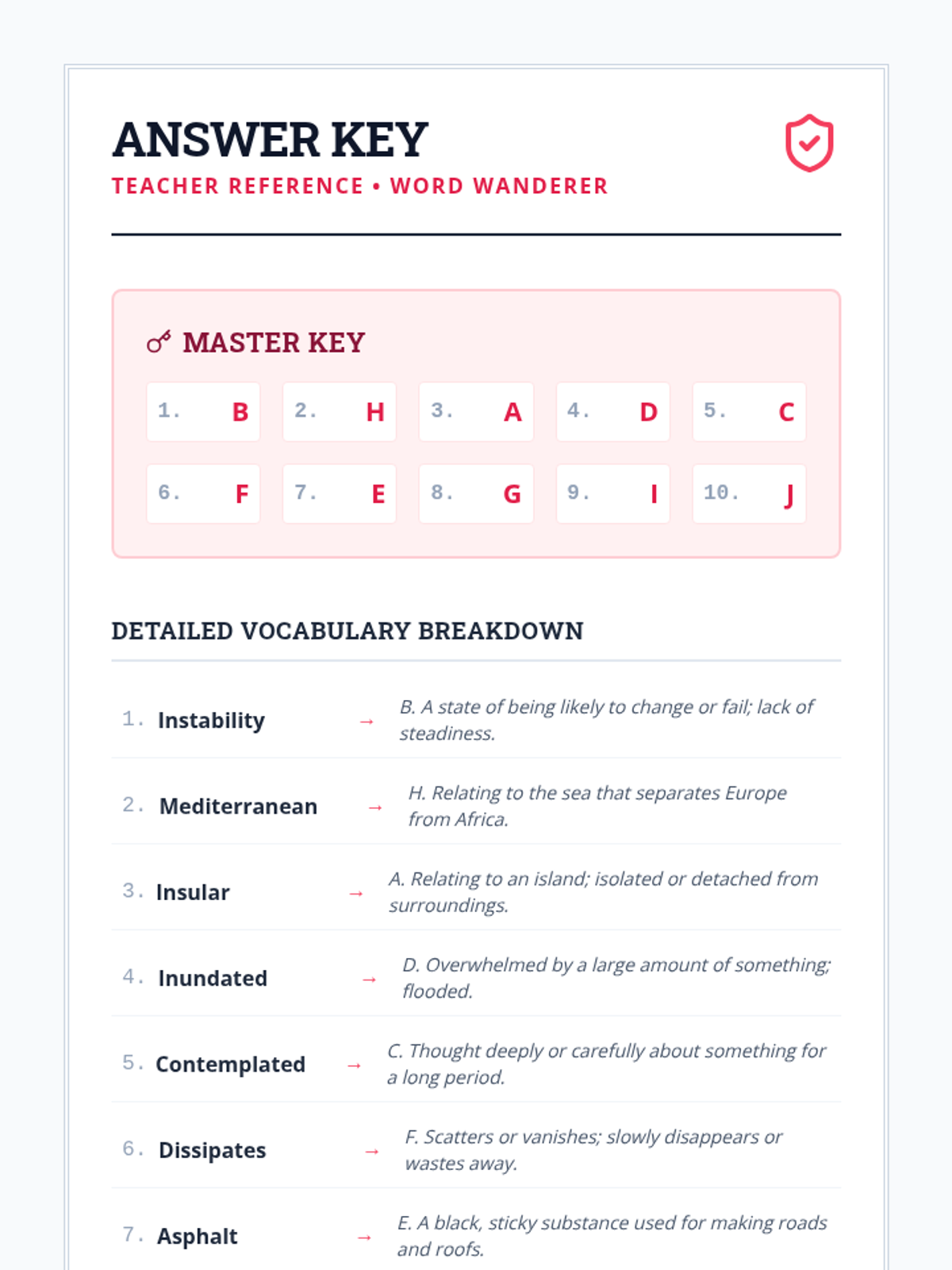
A vocabulary lesson focused on specific challenging words, featuring a matching quiz and answer key designed with a maritime, cartography-inspired theme.
A comprehensive vocabulary lesson focusing on 14 multisyllabic words, their definitions, usage, and application in a reading comprehension context.
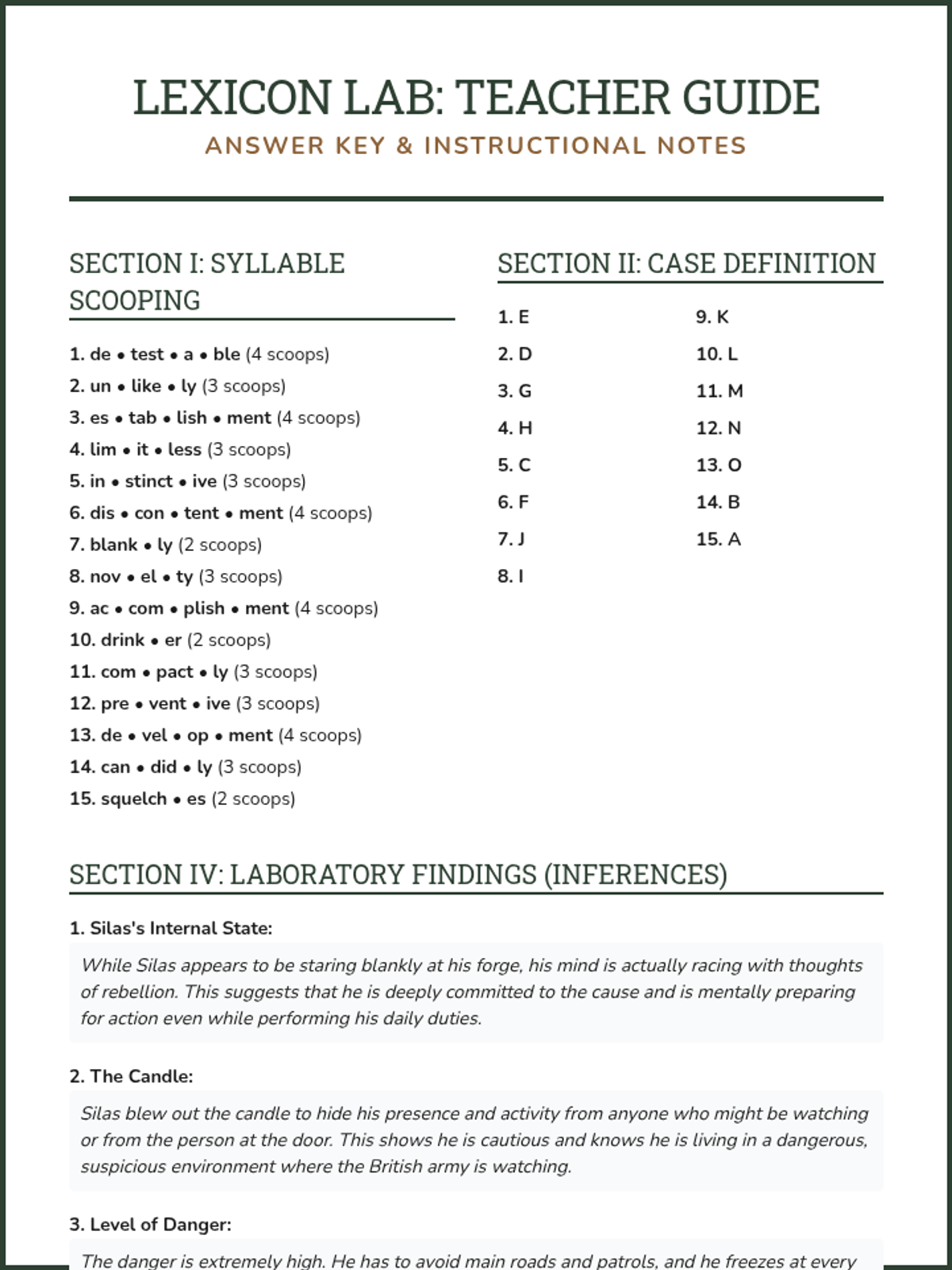
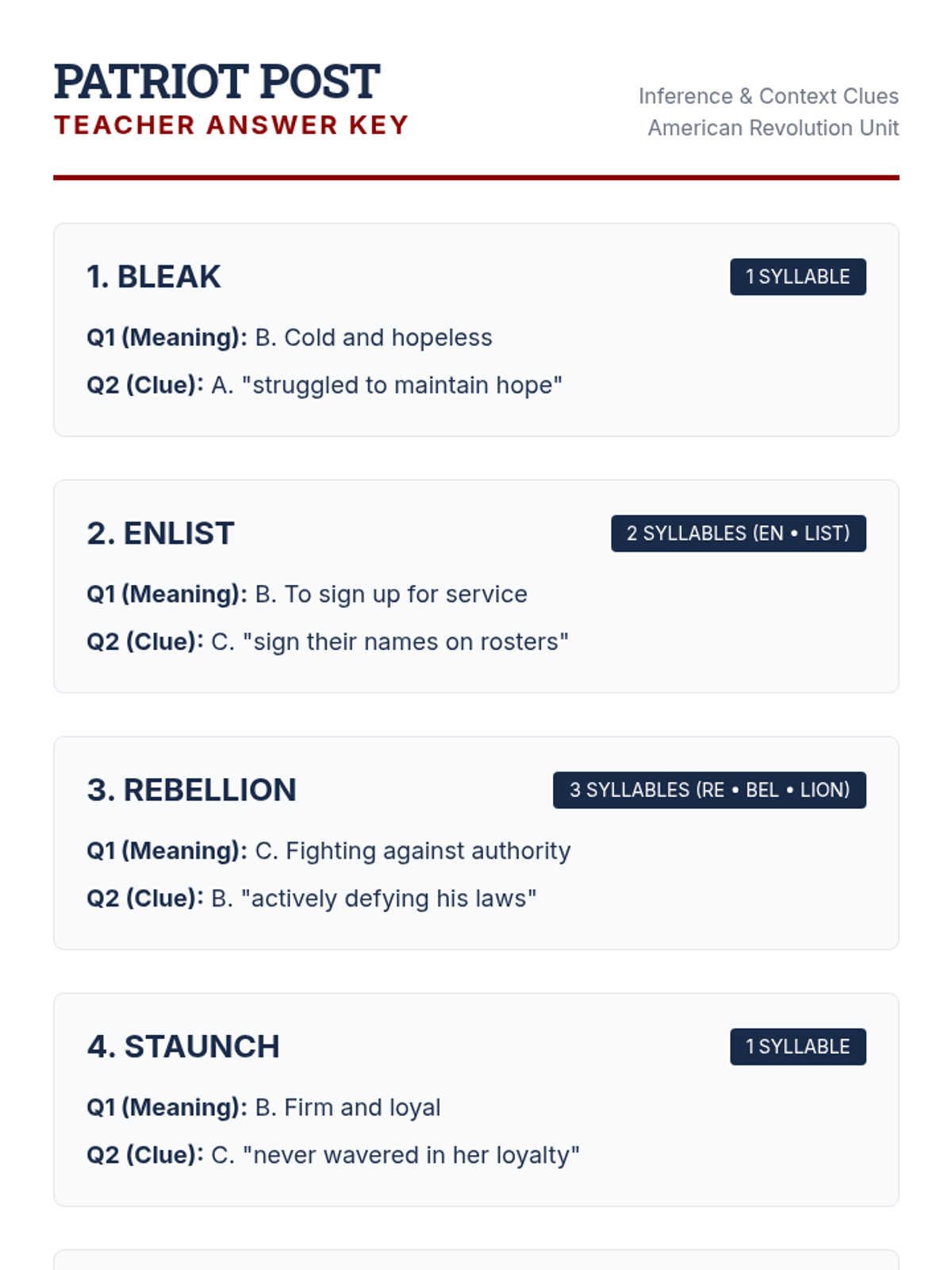
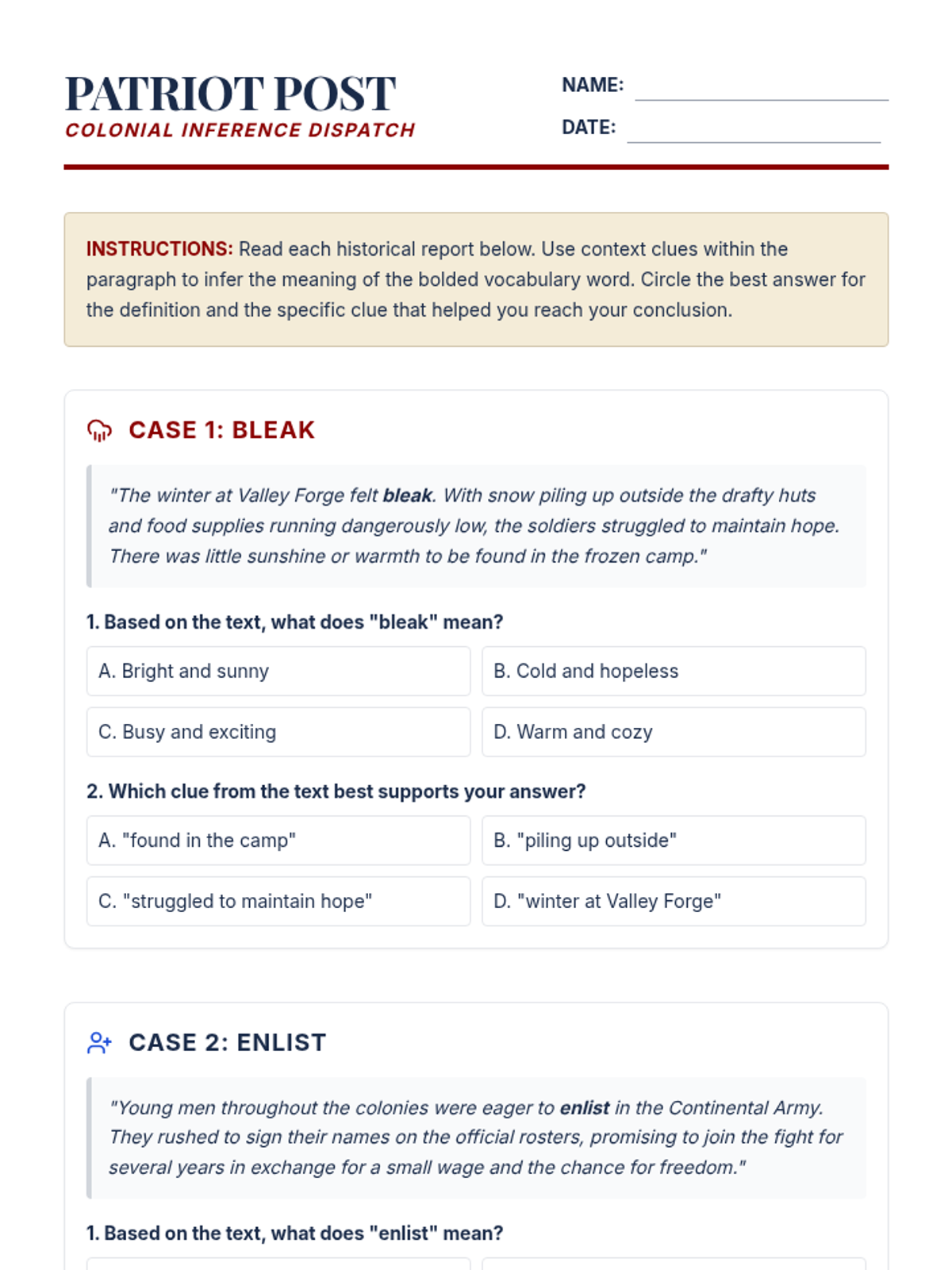
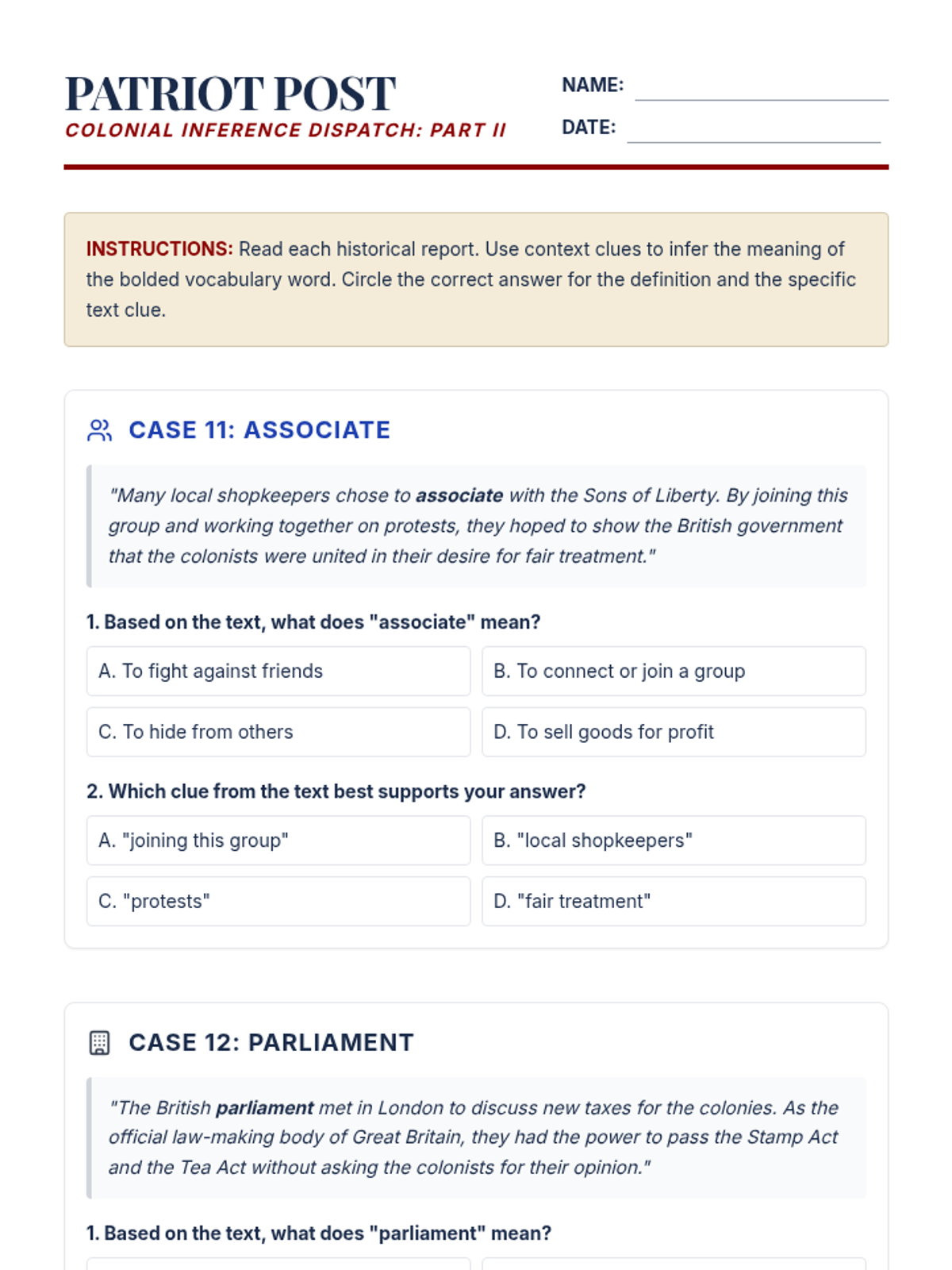
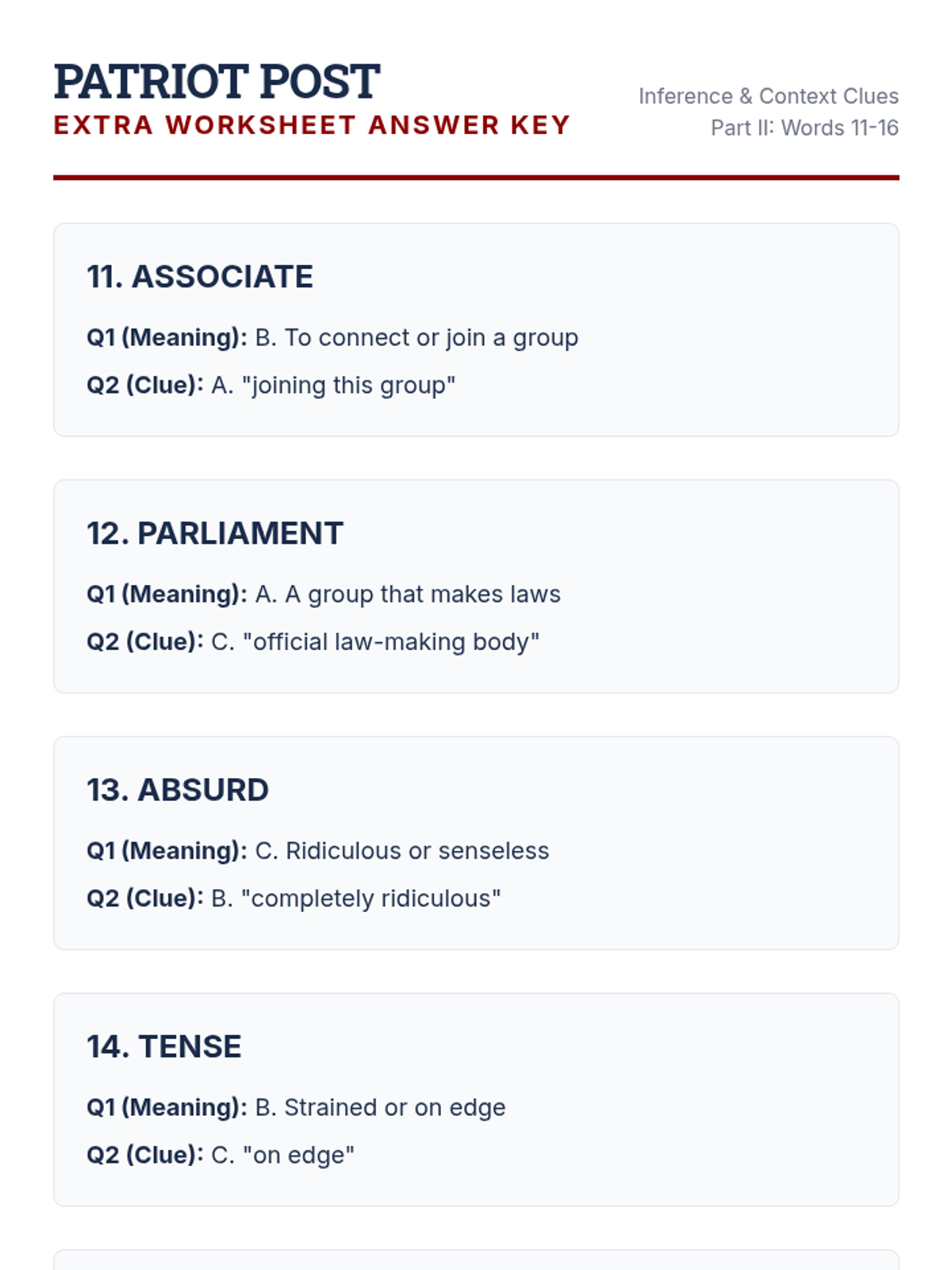
A lesson focused on building inference skills through the lens of American Revolution history, using context clues to decode high-level vocabulary.
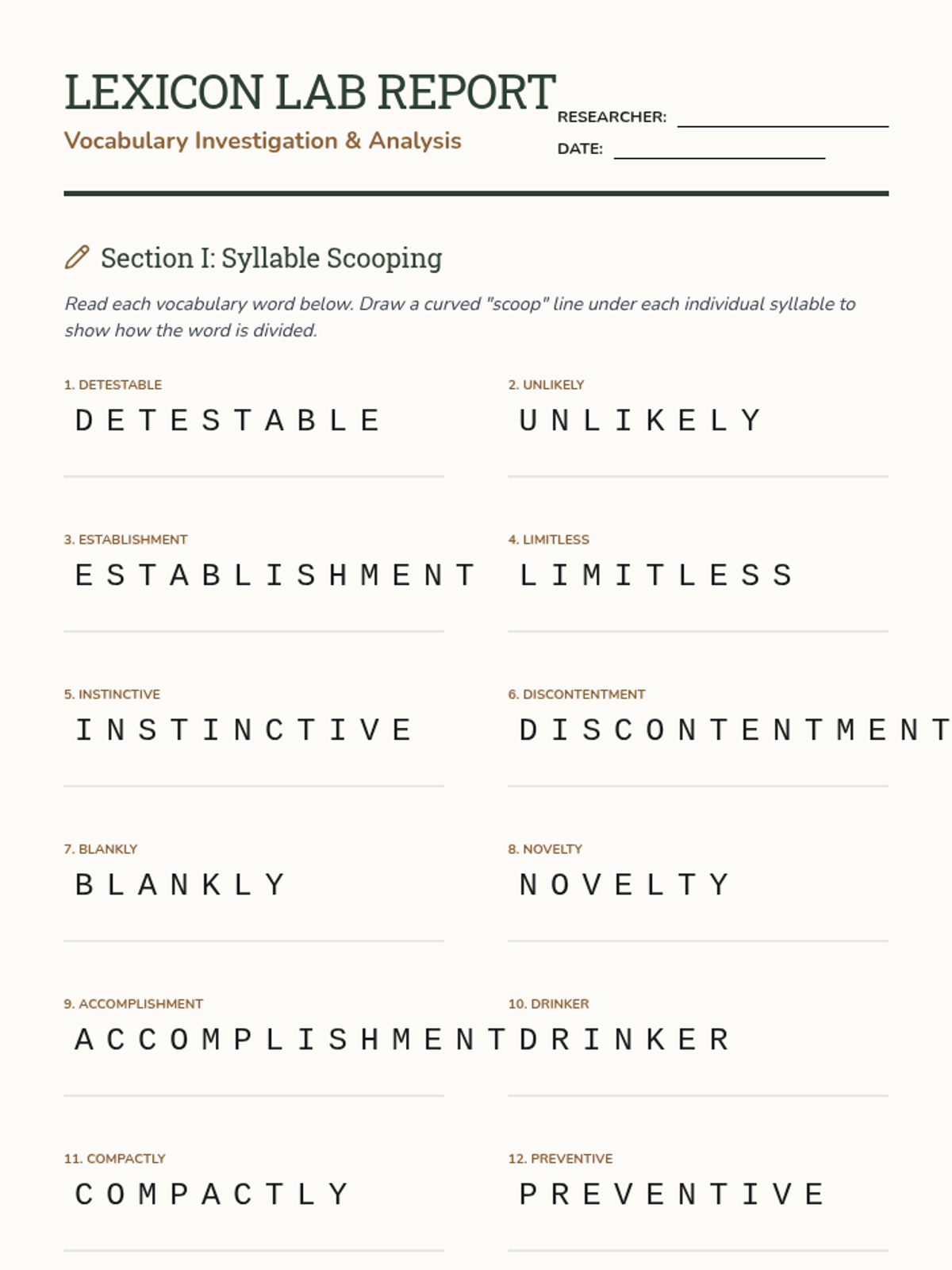
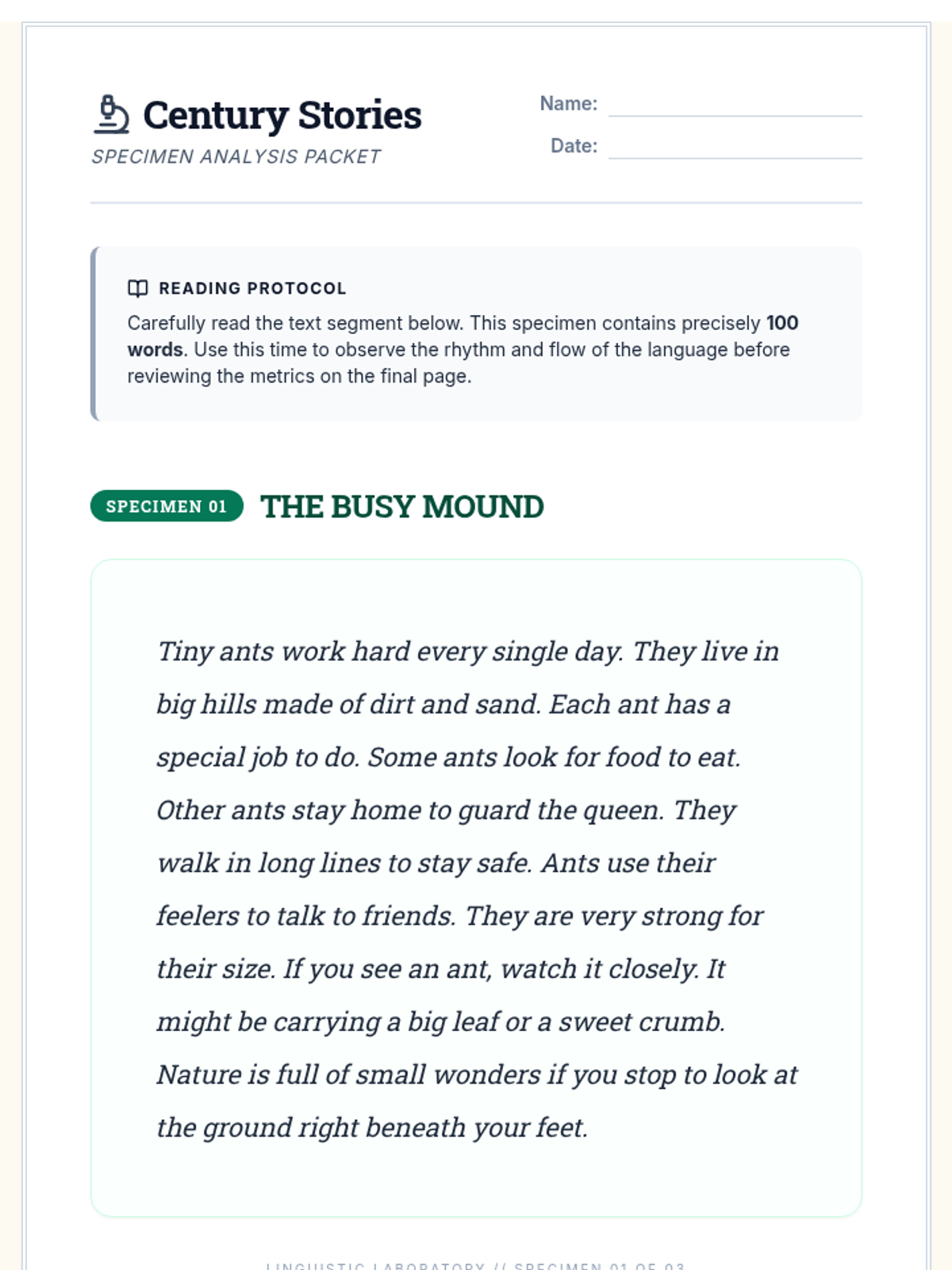
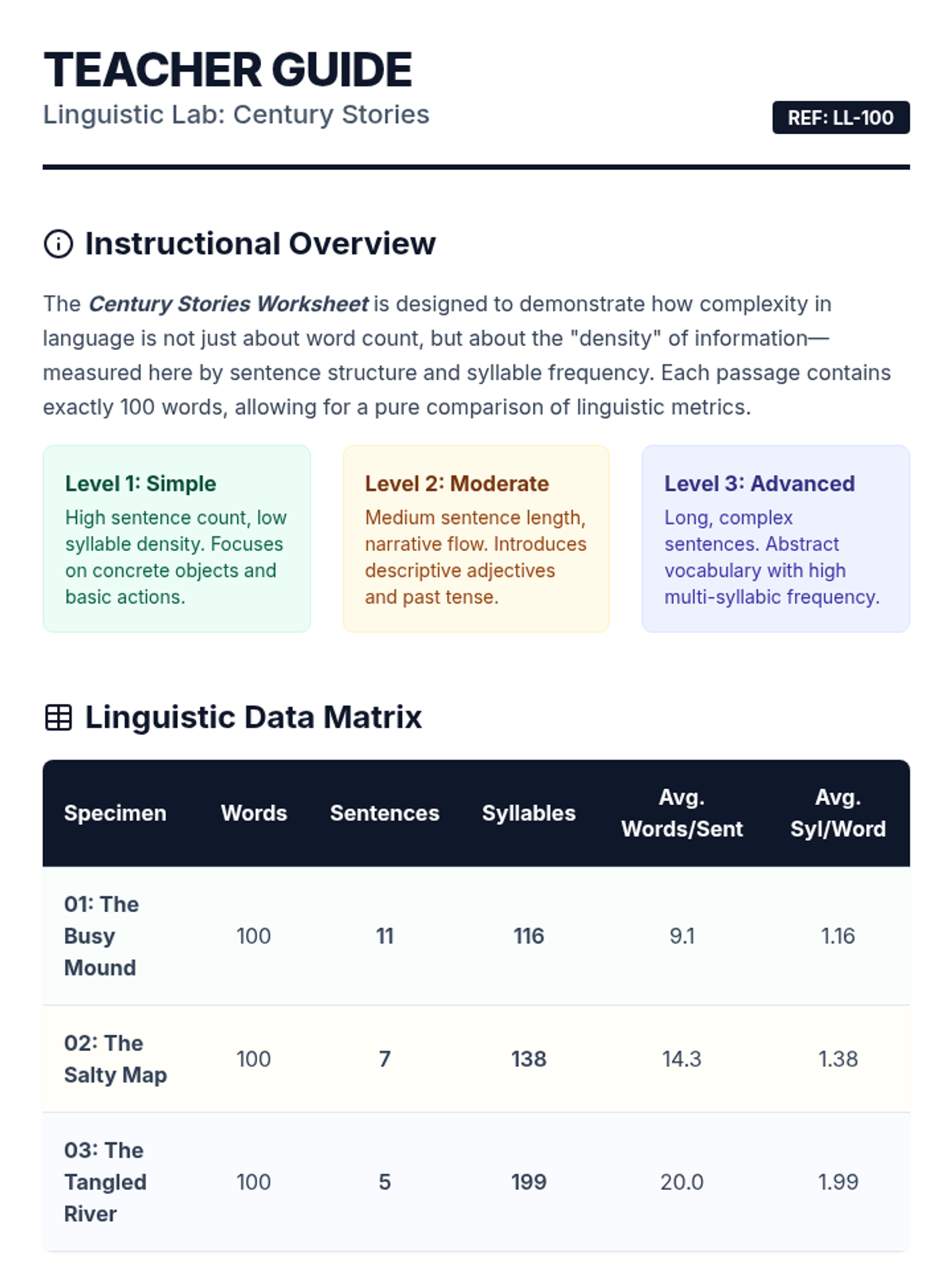
A collection of reading passages designed to challenge students' comprehension and linguistic awareness by analyzing word counts, sentence structures, and syllable patterns.
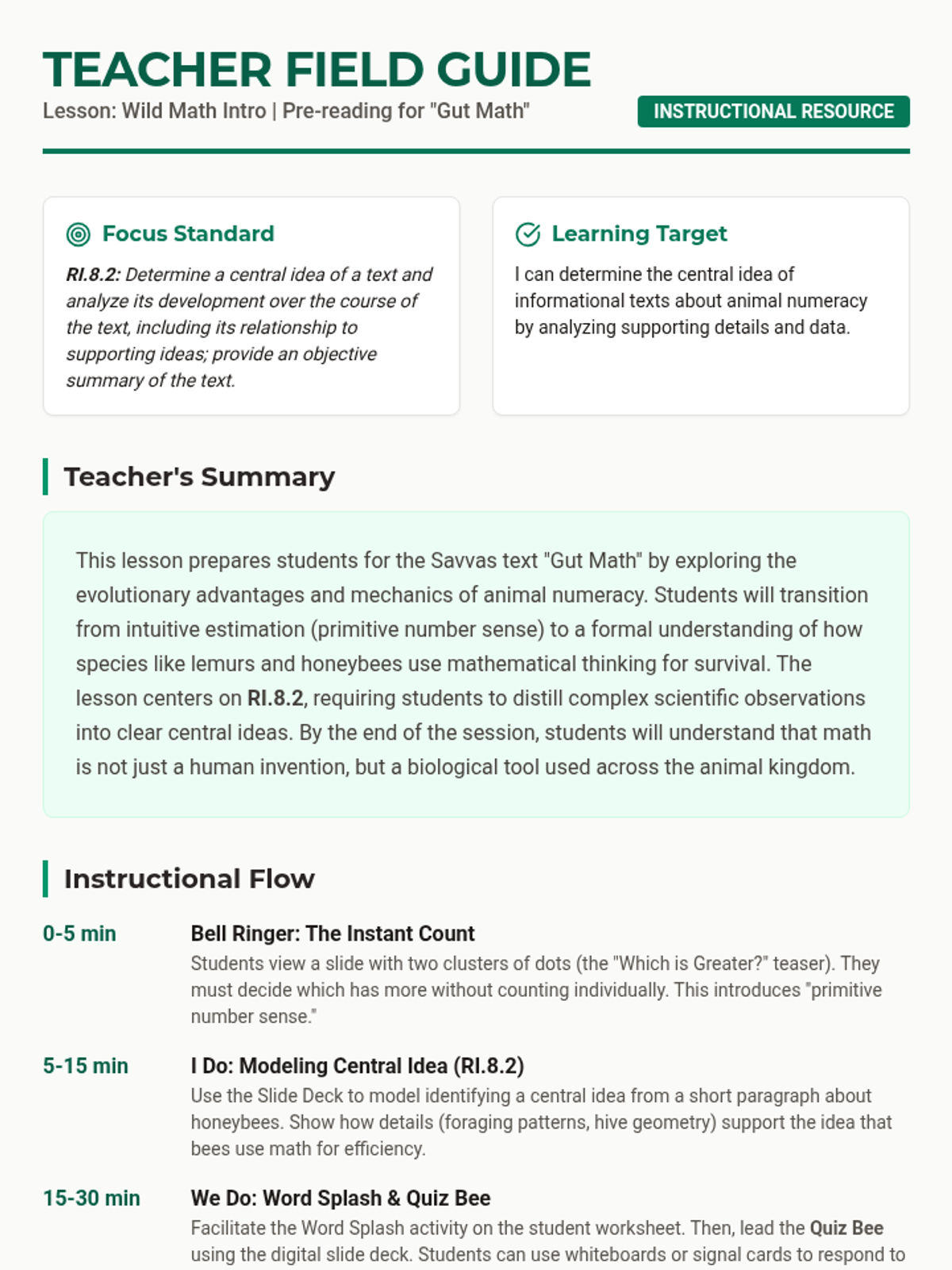
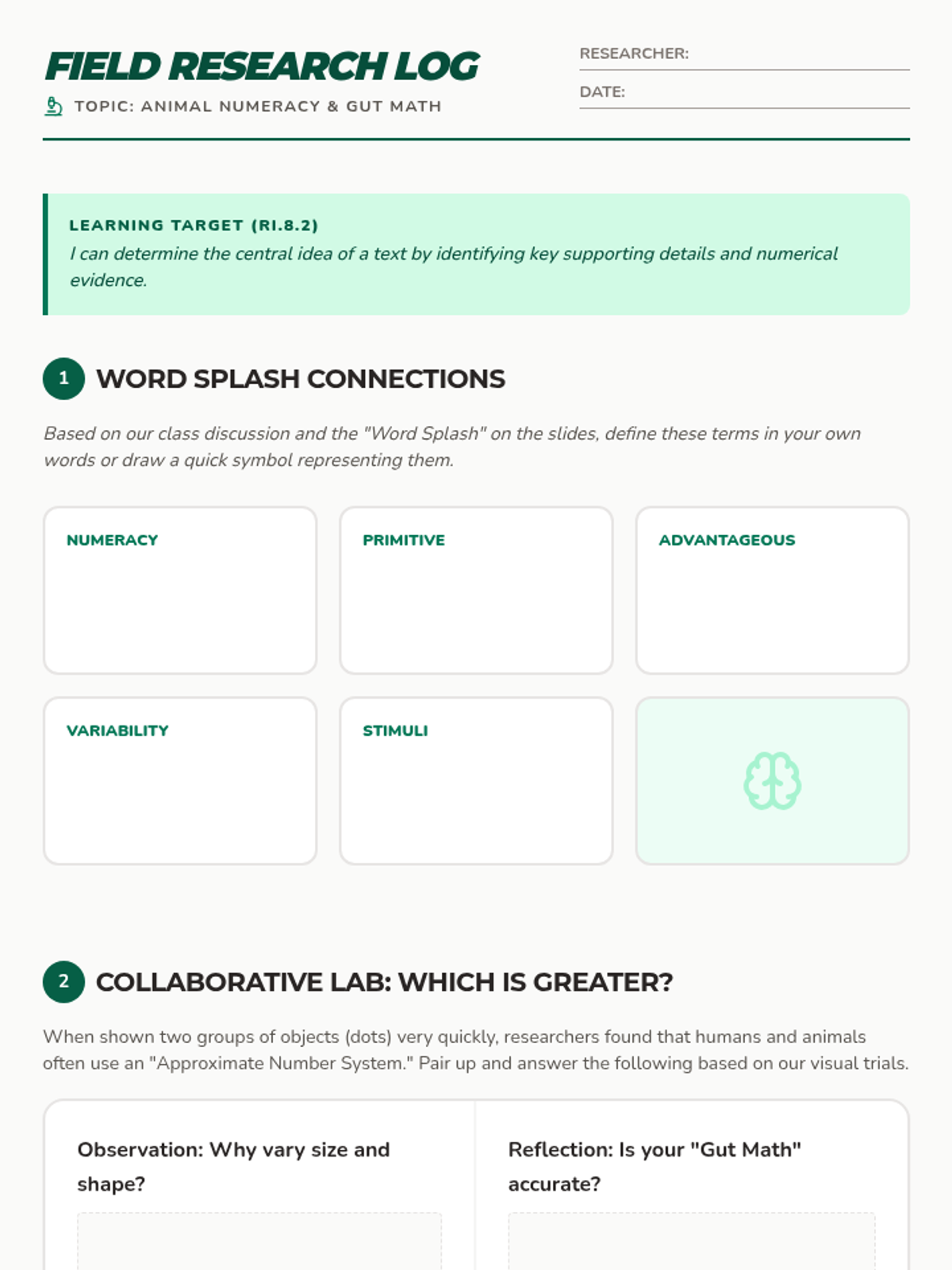
Students determine central ideas about how animals perceive numbers through a digital quiz bee and collaborative estimation activities.
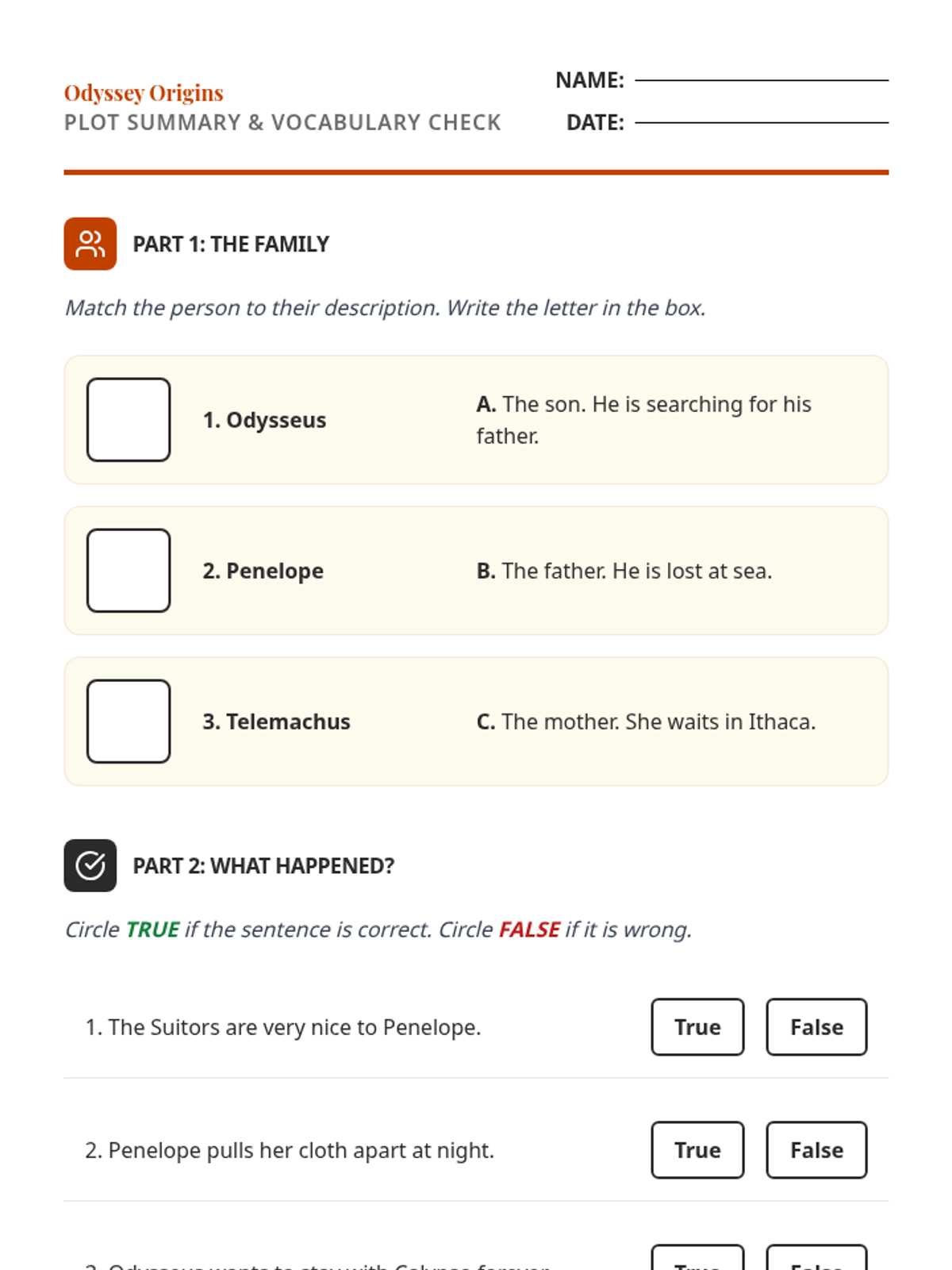
A visual introduction to the first five books of The Odyssey, focusing on Telemachus's struggle in Ithaca and Odysseus's departure from Calypso's island, designed for beginning English Language Learners.
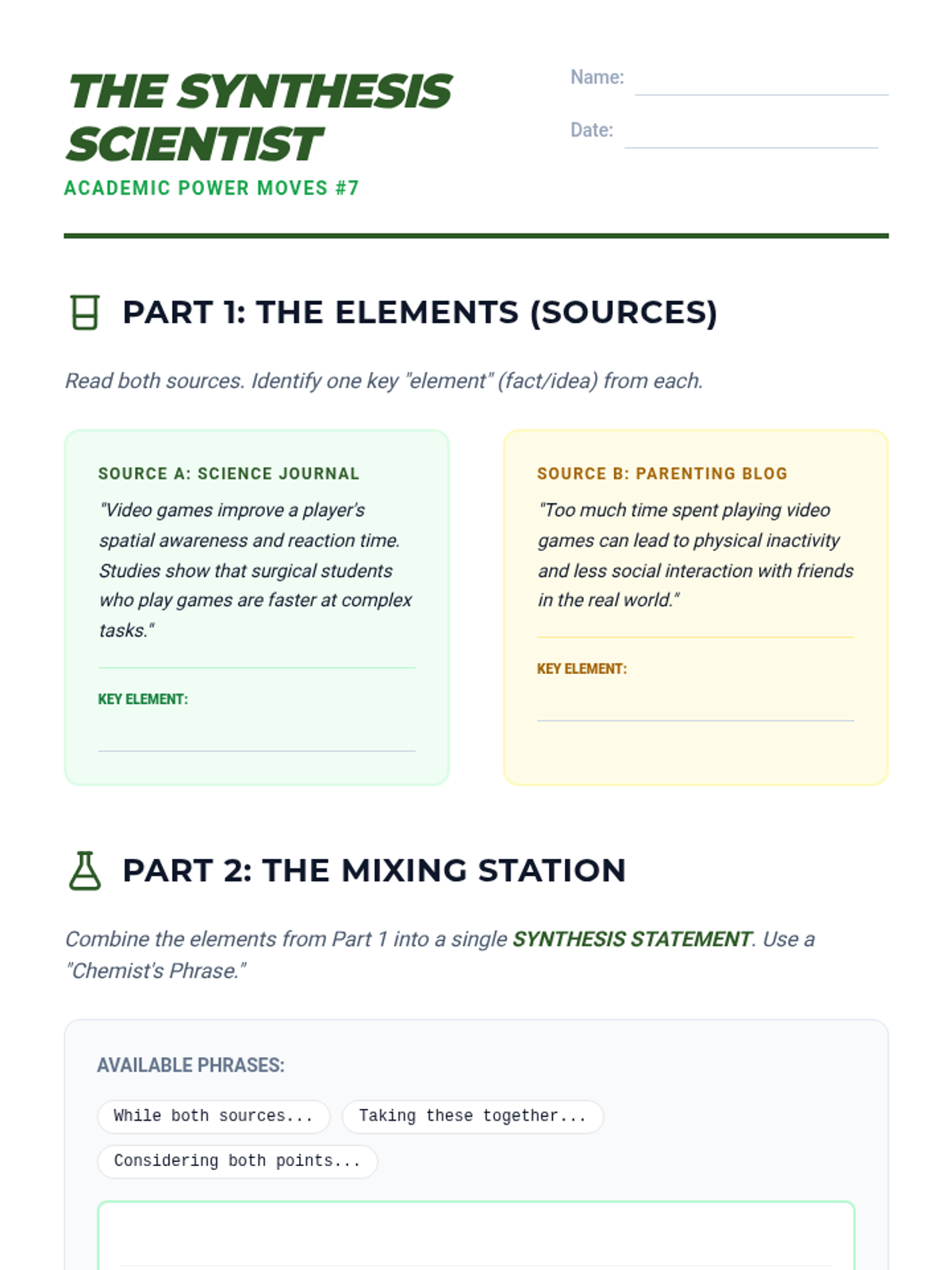
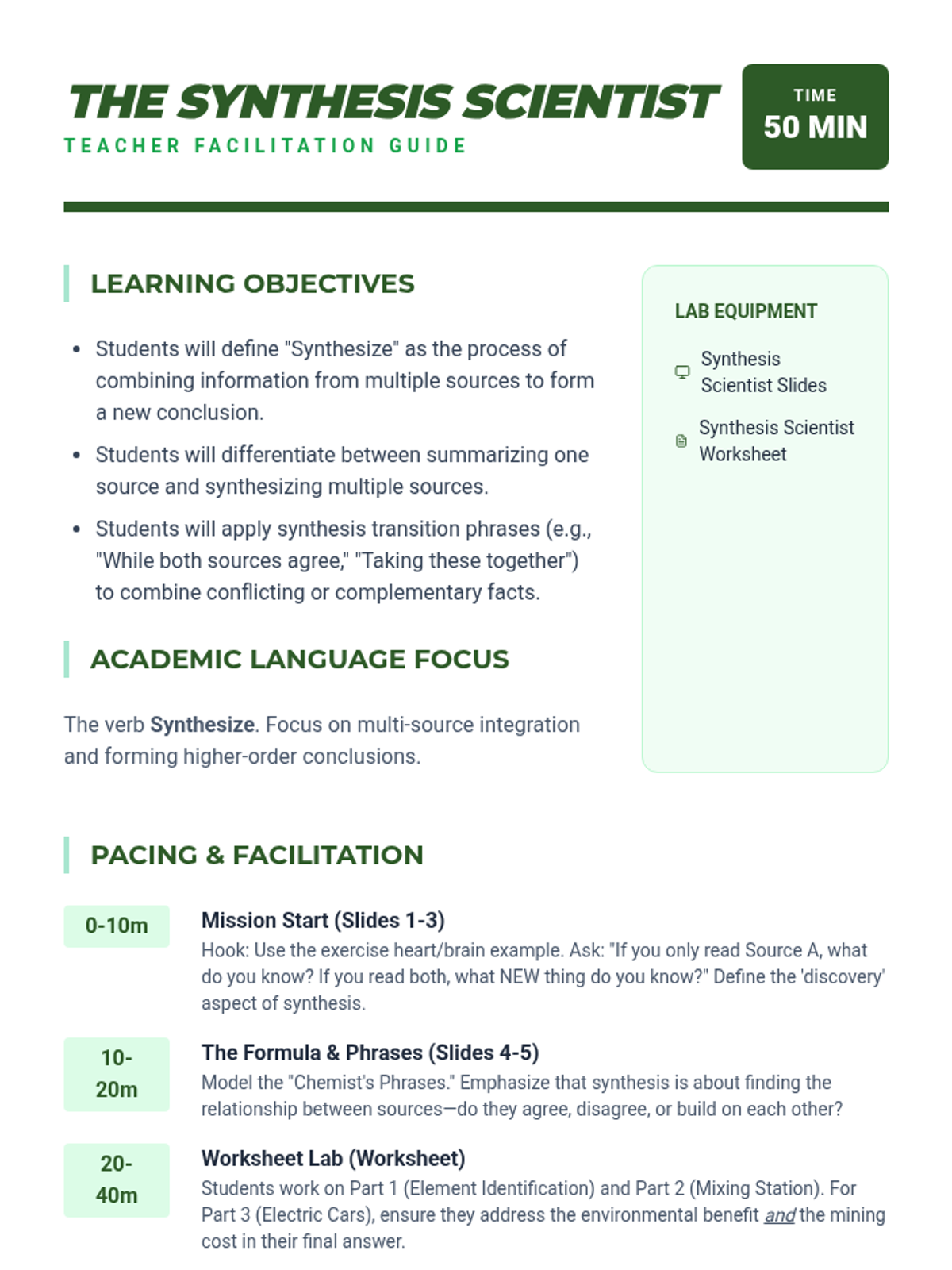
A 50-minute lesson on the academic action verb 'Synthesize.' Students learn to combine information from multiple sources to create a new, original conclusion using the 'Laboratory Mix' method.
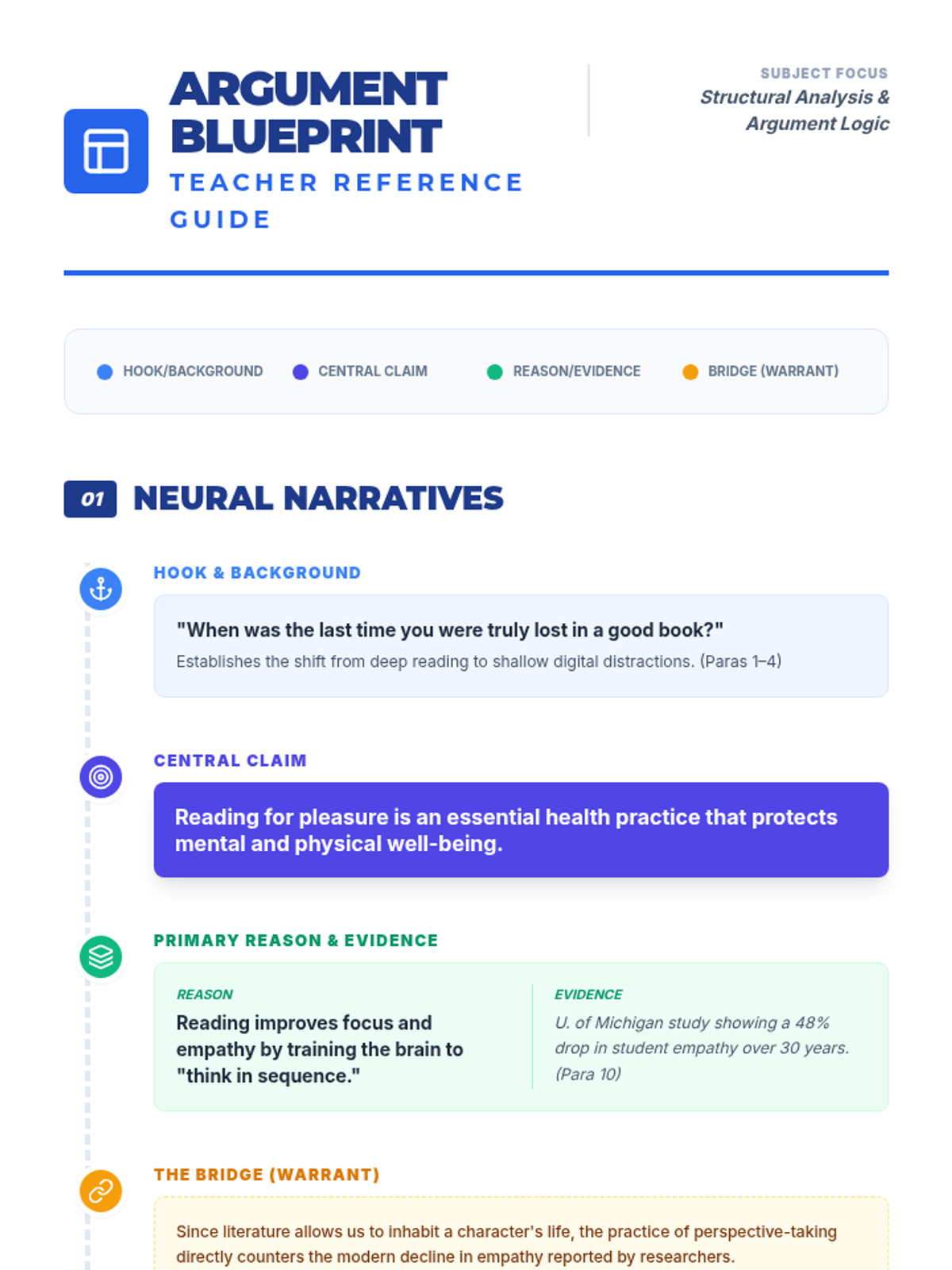
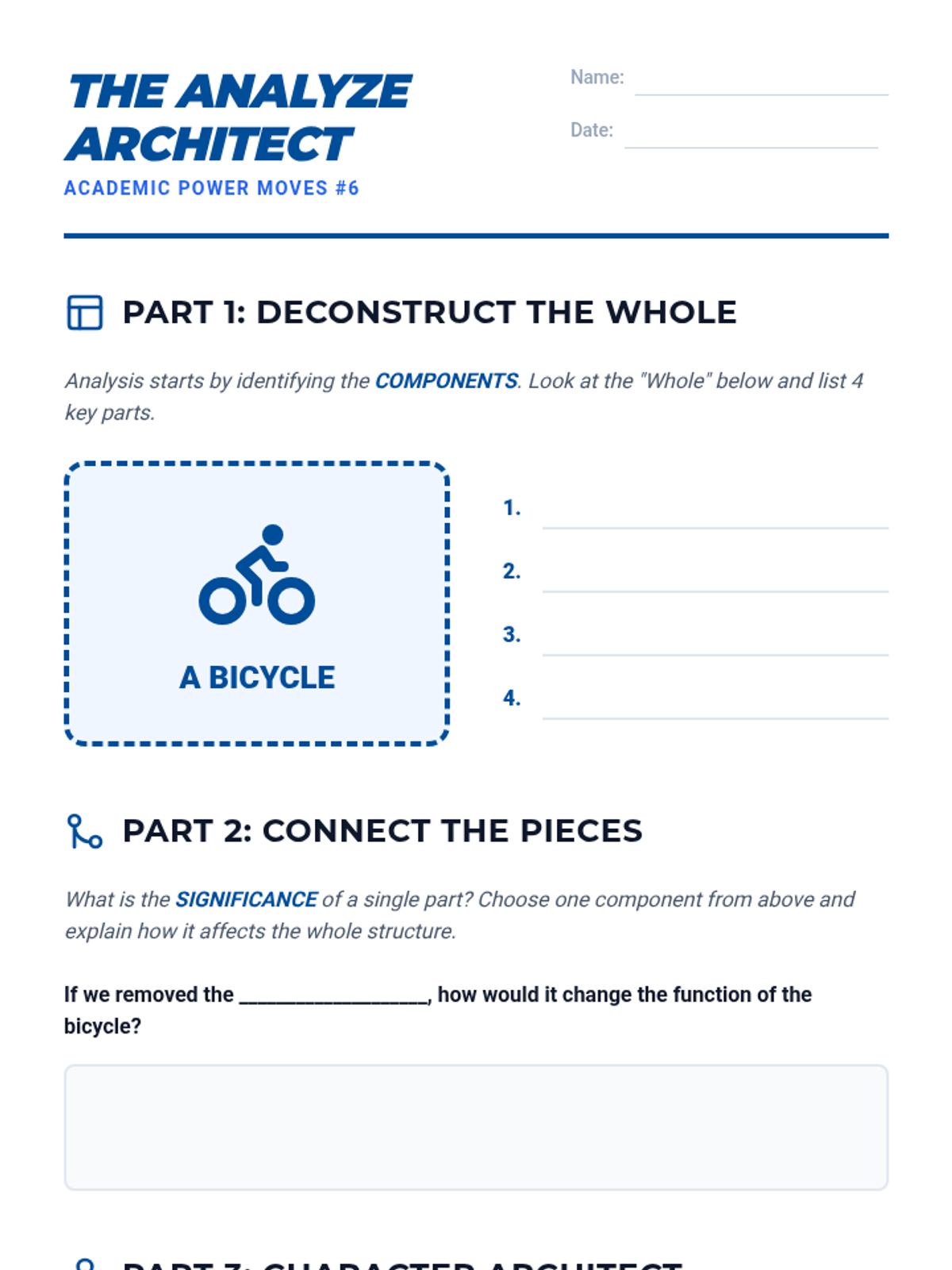
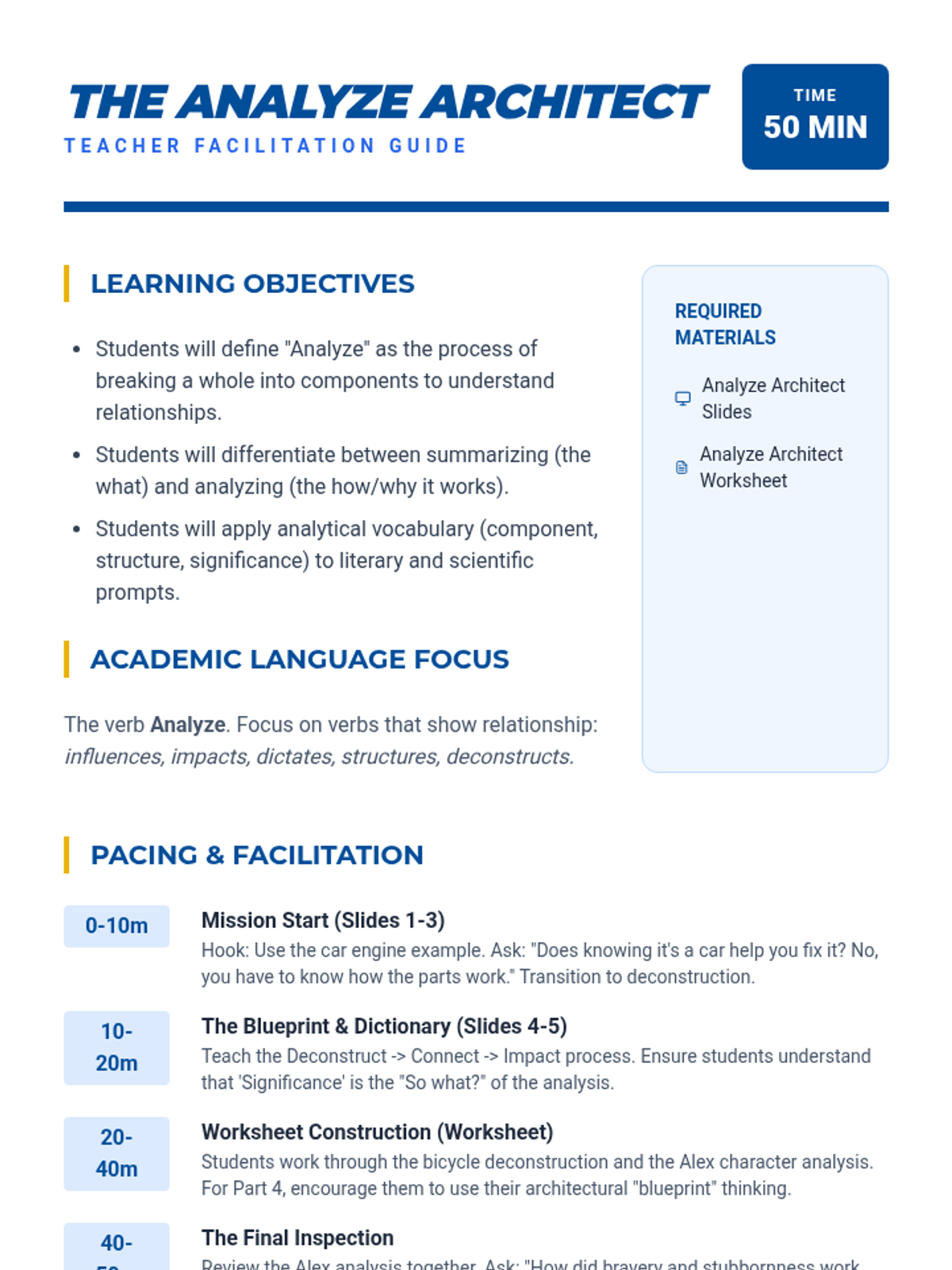
A 50-minute lesson on the academic action verb 'Analyze.' Students learn to break complex topics into smaller parts to understand how they work together using the 'Architect's Blueprint' method.
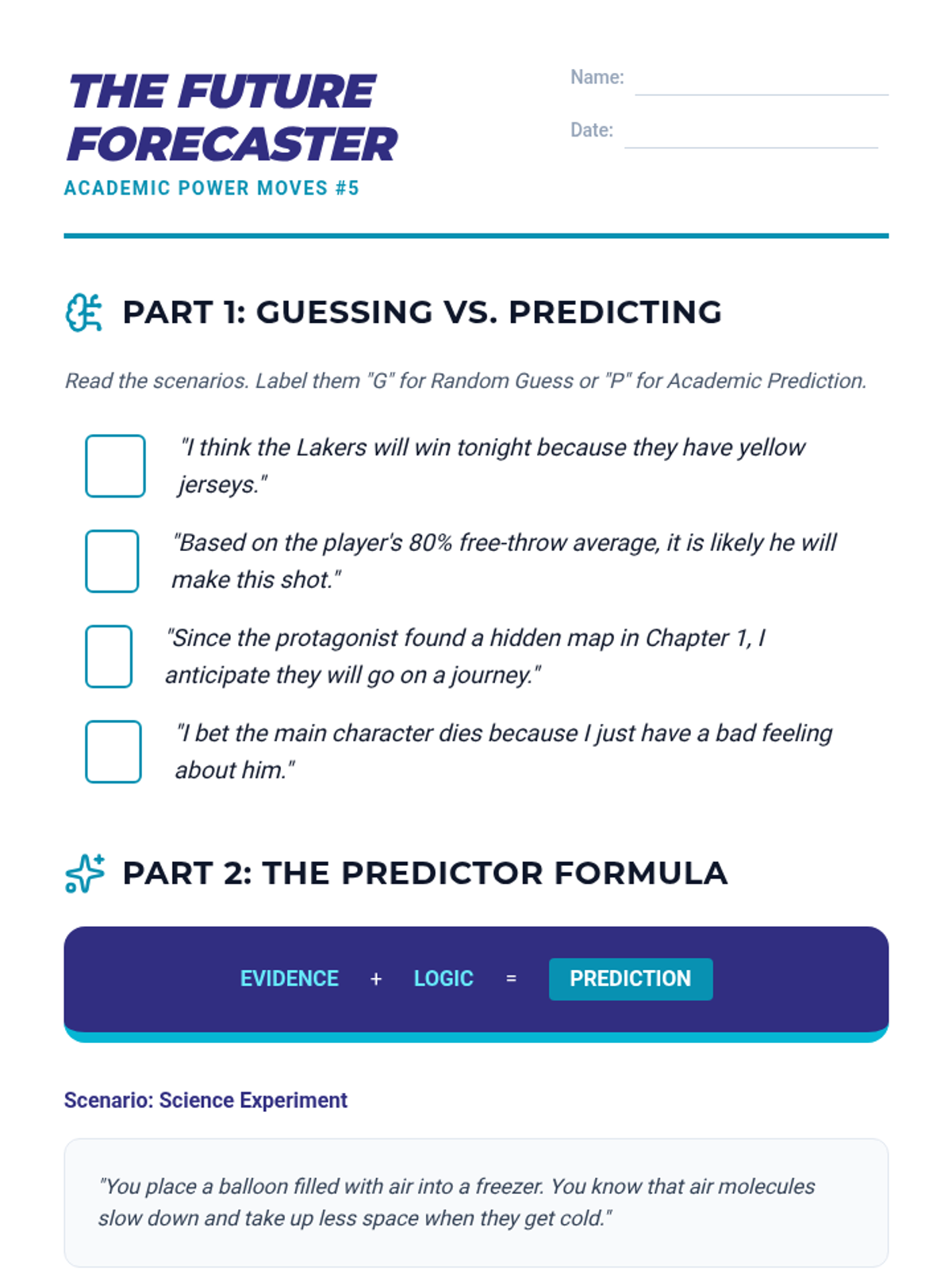
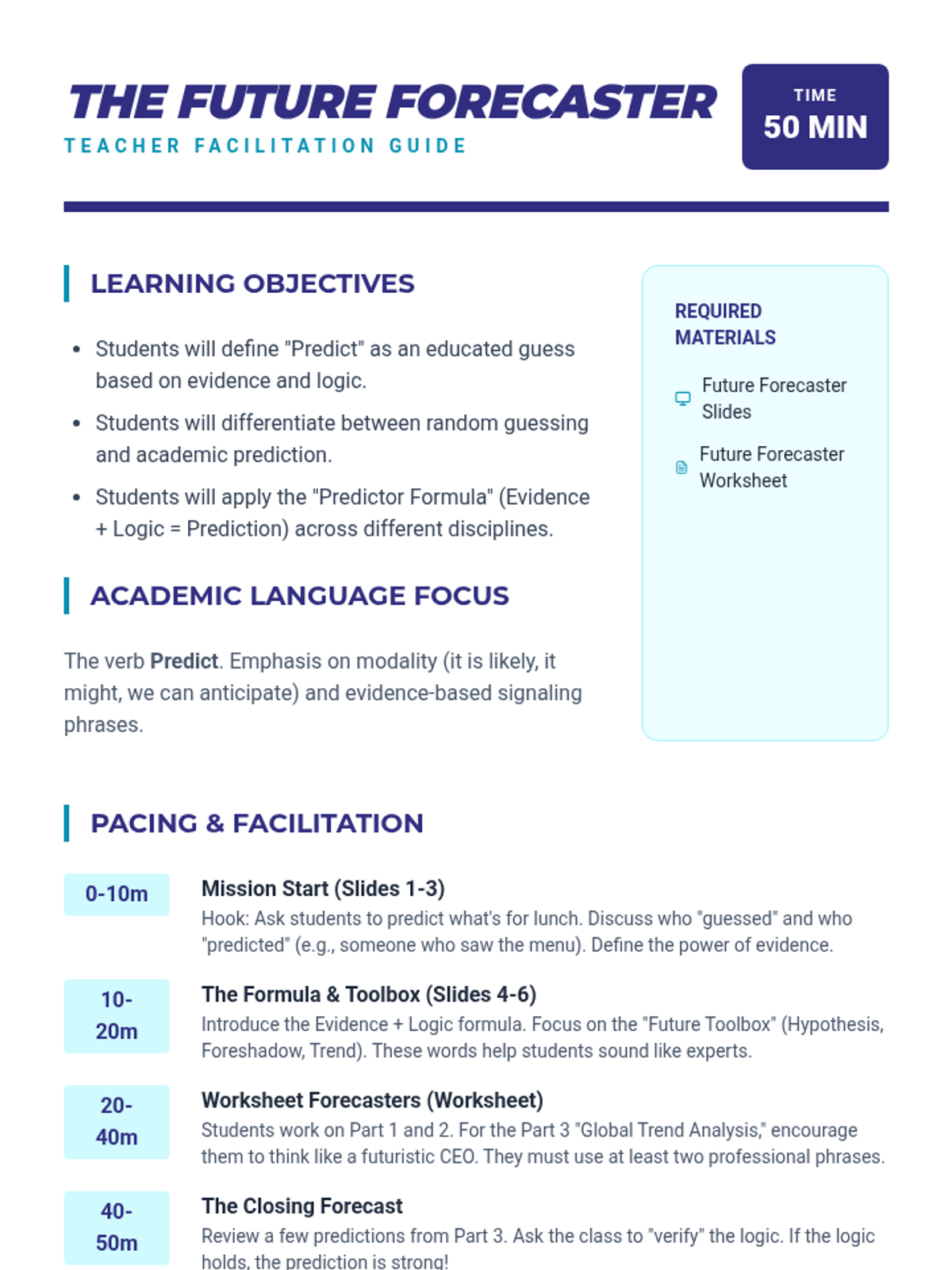
A 50-minute lesson on the academic action verb 'Predict.' Students learn to use evidence and logic to make educated guesses about future outcomes in various subjects.
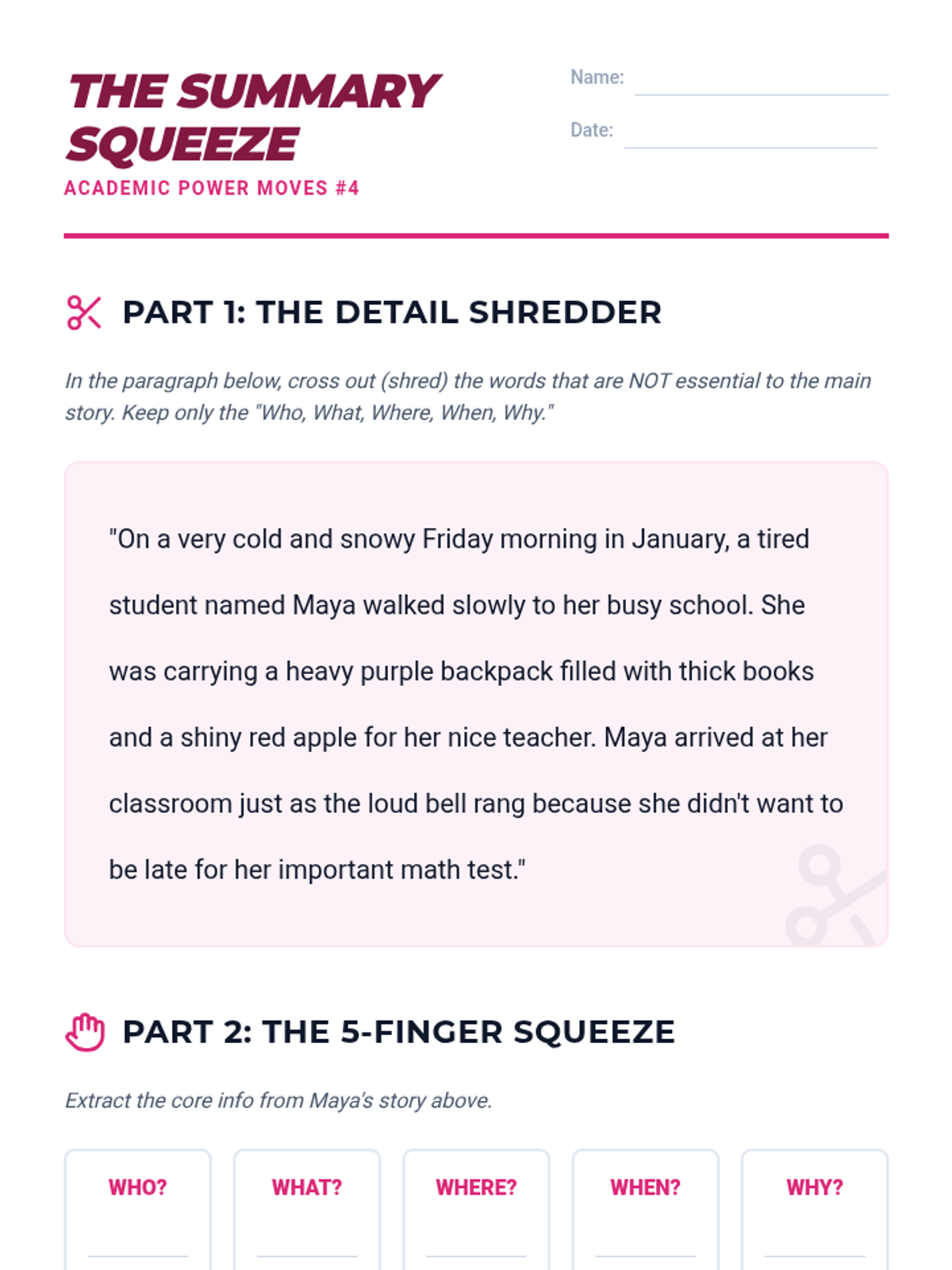
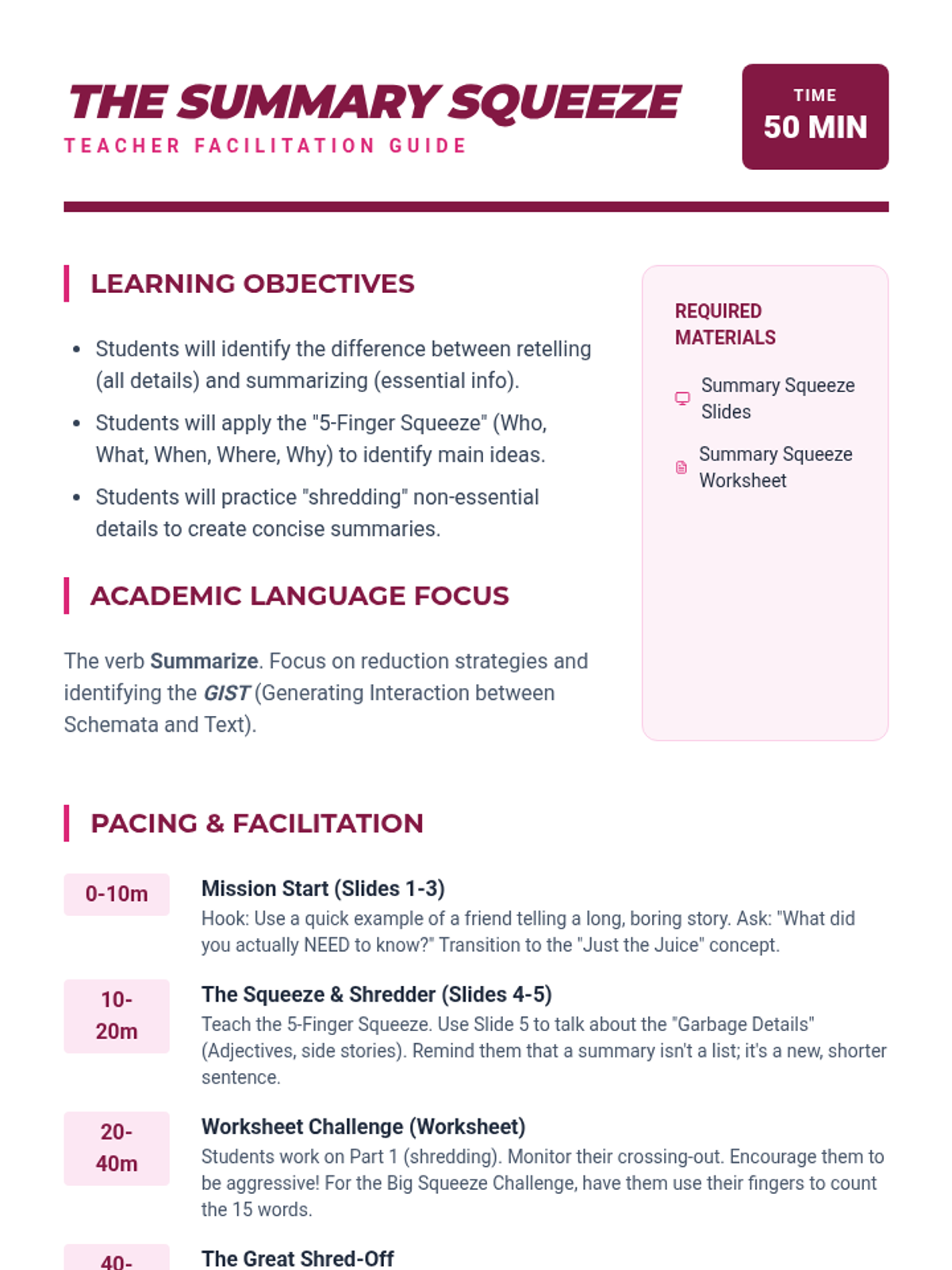
A 50-minute lesson on the academic action verb 'Summarize.' Students learn to identify main ideas and key details while removing unnecessary information using 'The Squeeze' method.
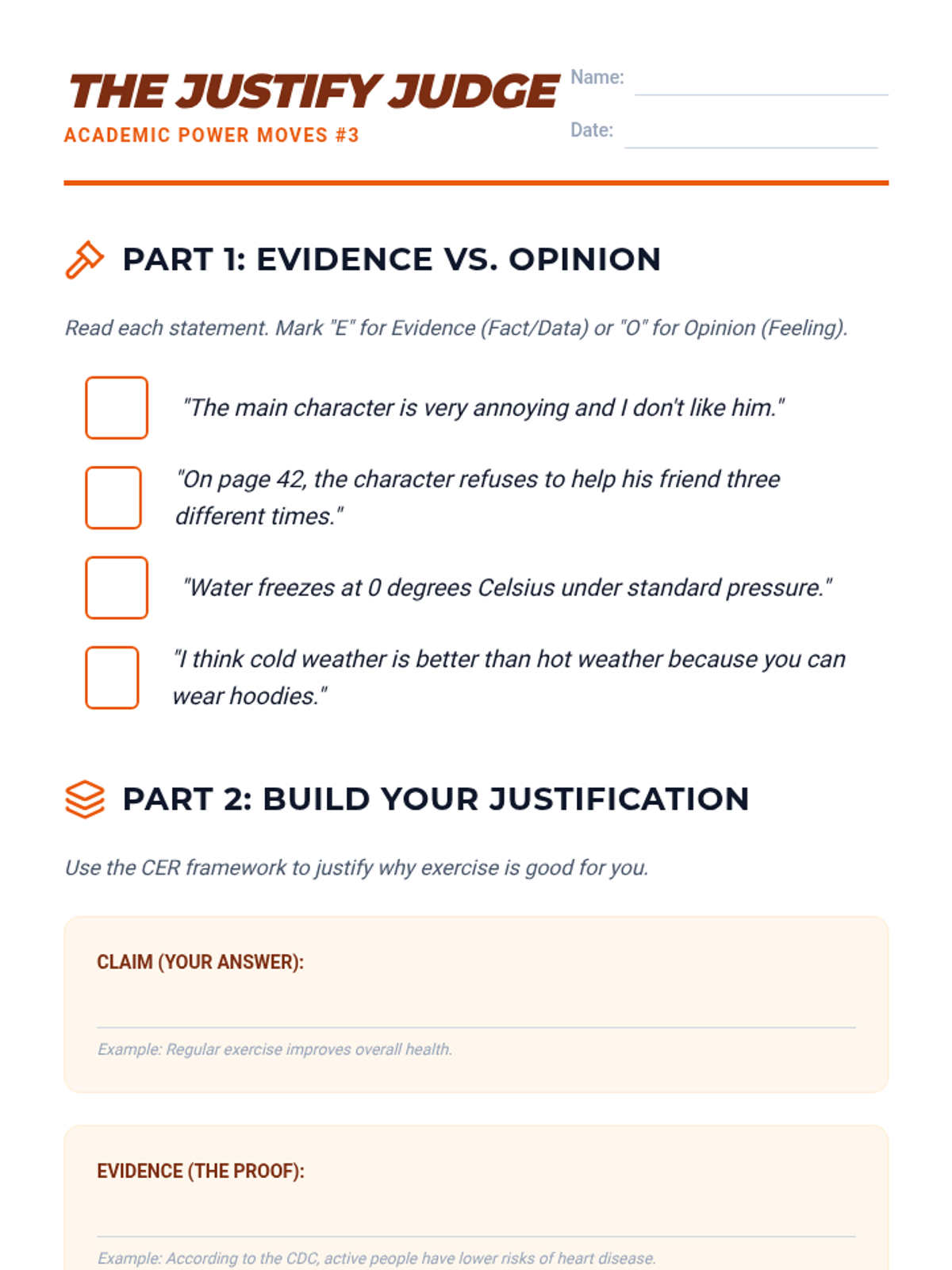
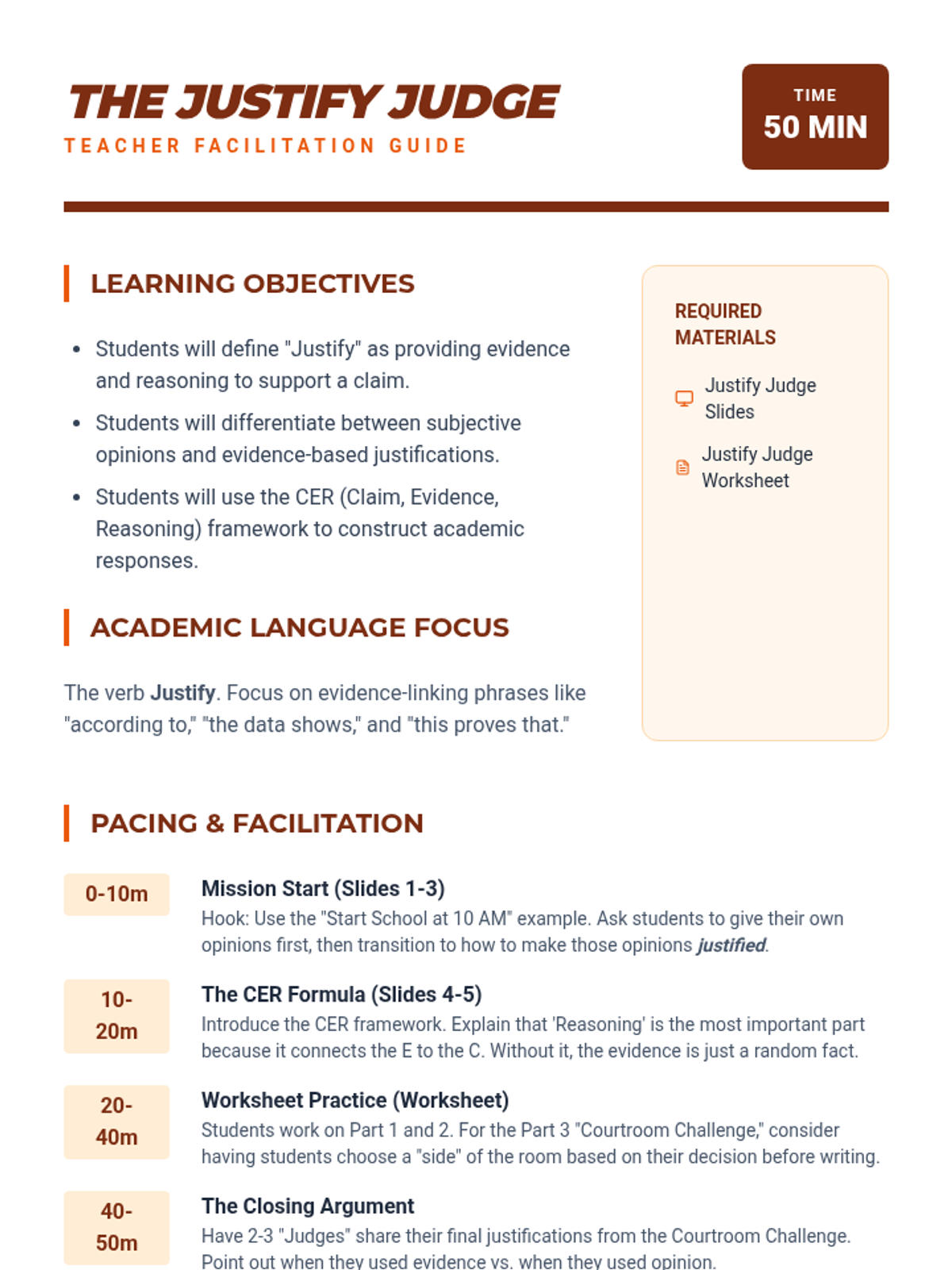
A 50-minute lesson on the academic action verb 'Justify.' Students learn to support their claims with evidence and reasoning using the 'Claim-Evidence-Reasoning' (CER) framework.
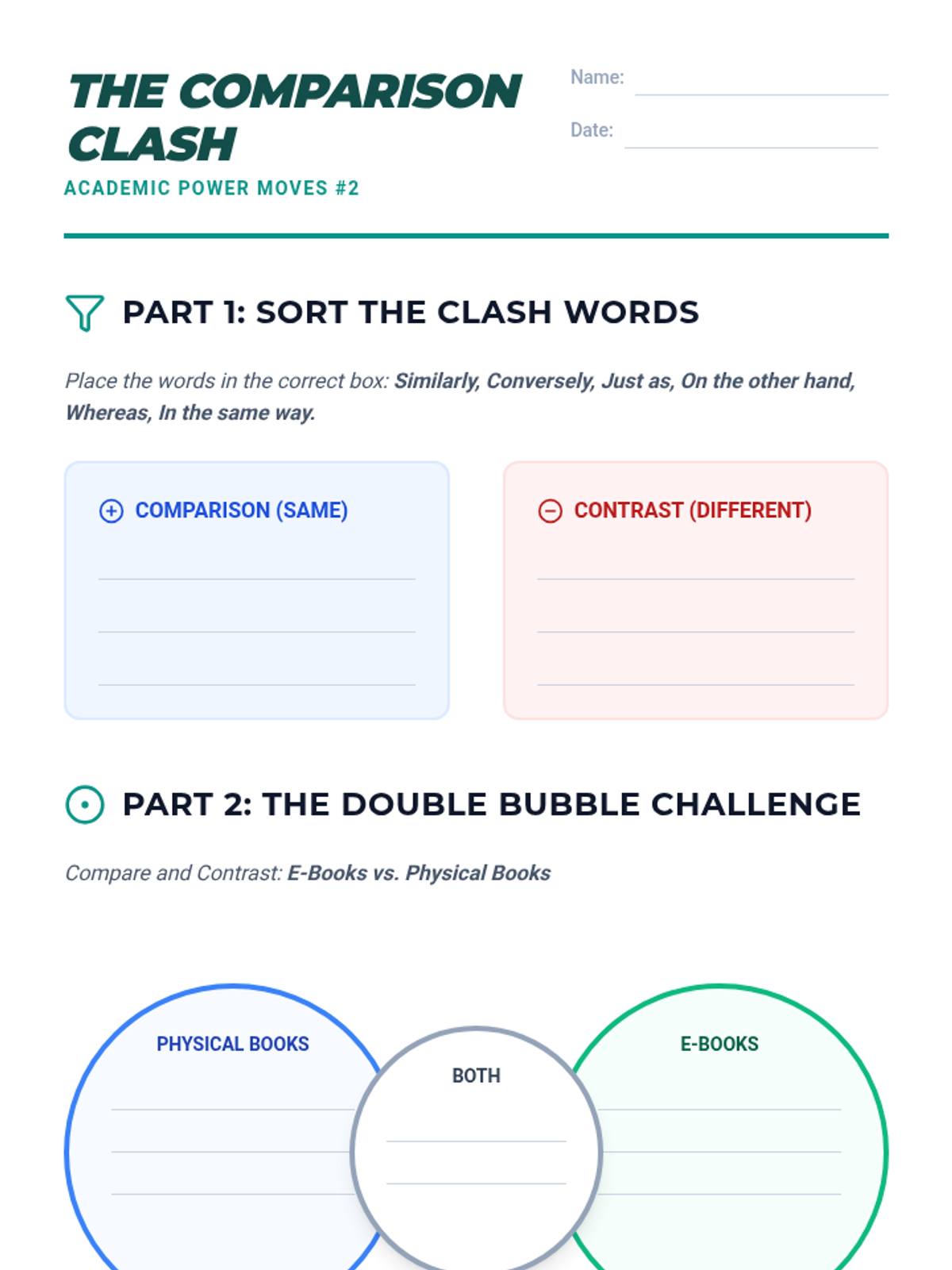
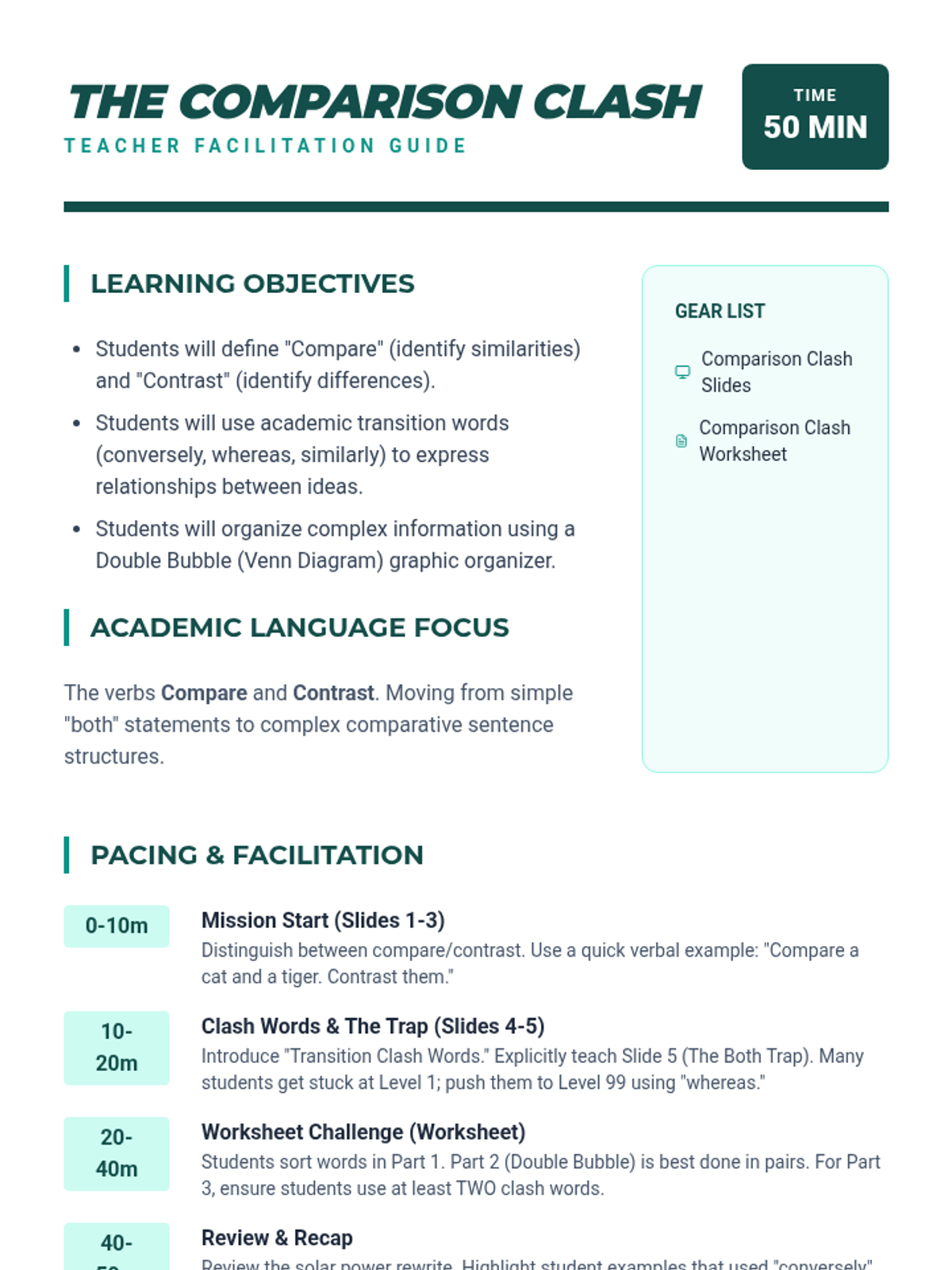
A 50-minute lesson on 'Compare' and 'Contrast.' Students learn to identify similarities and differences using academic language and structured organizers.
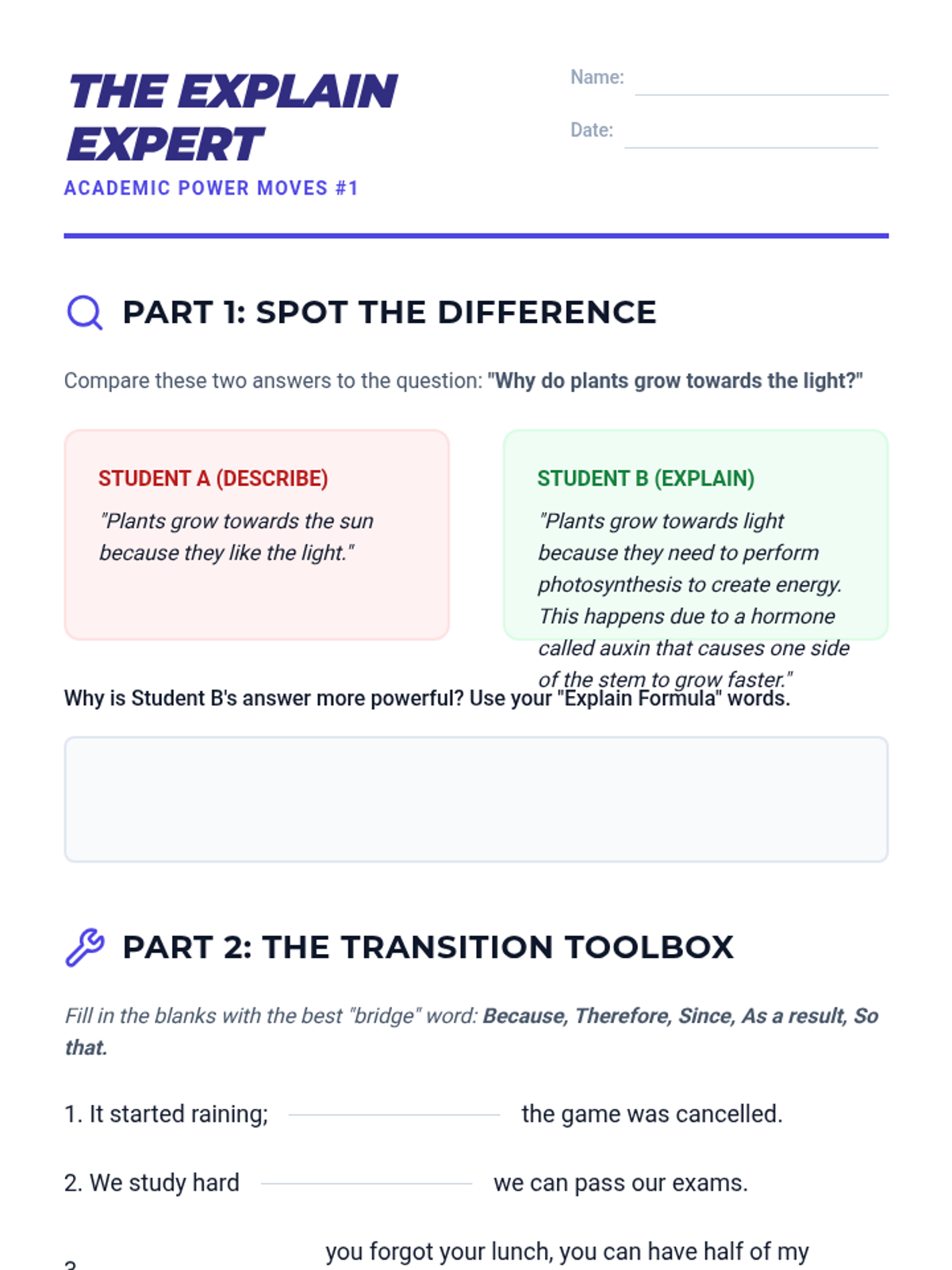
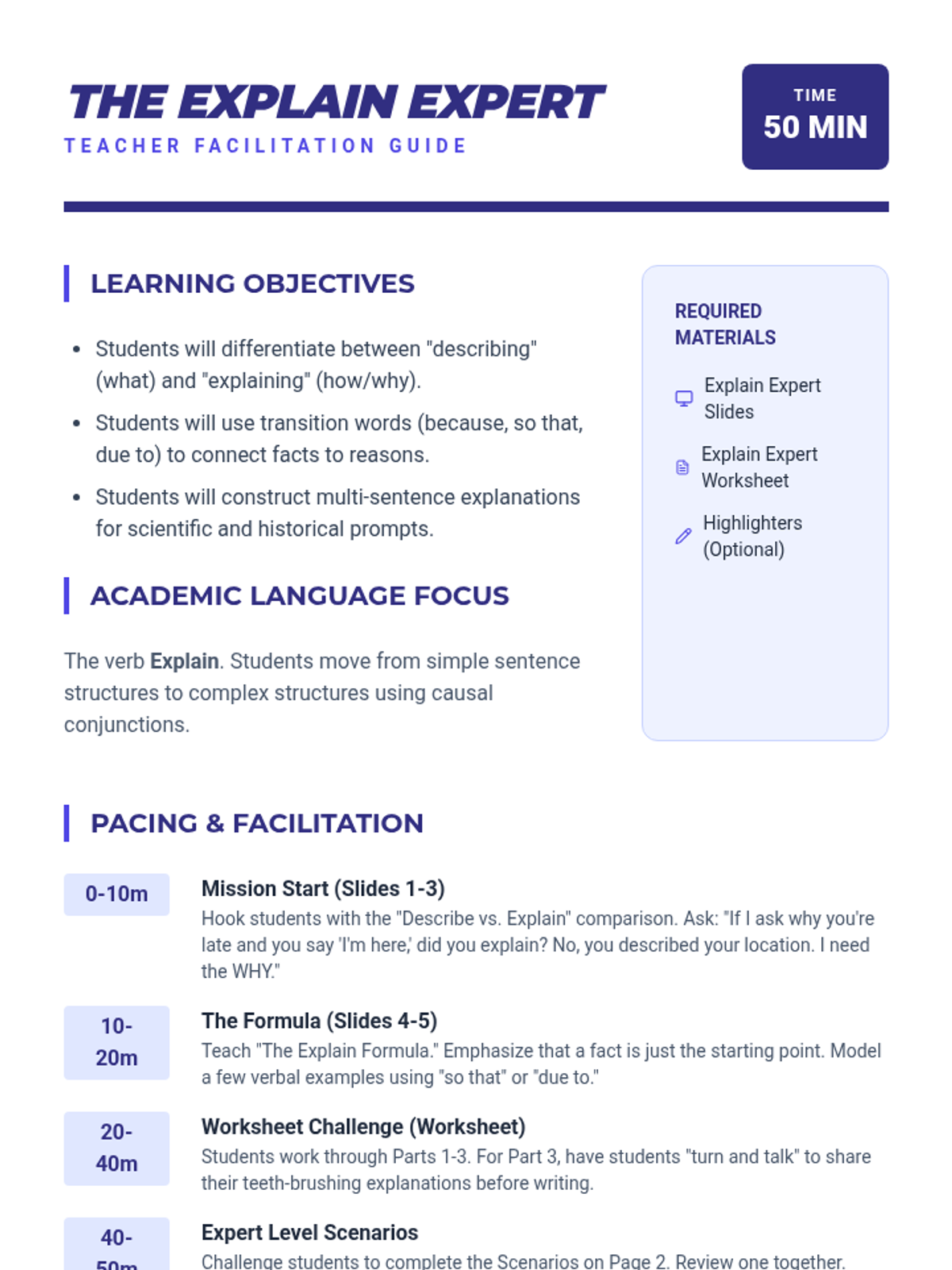
A 50-minute lesson on the academic action verb 'Explain.' Students learn to go beyond 'what' to 'how' and 'why' using clear steps and transition words.
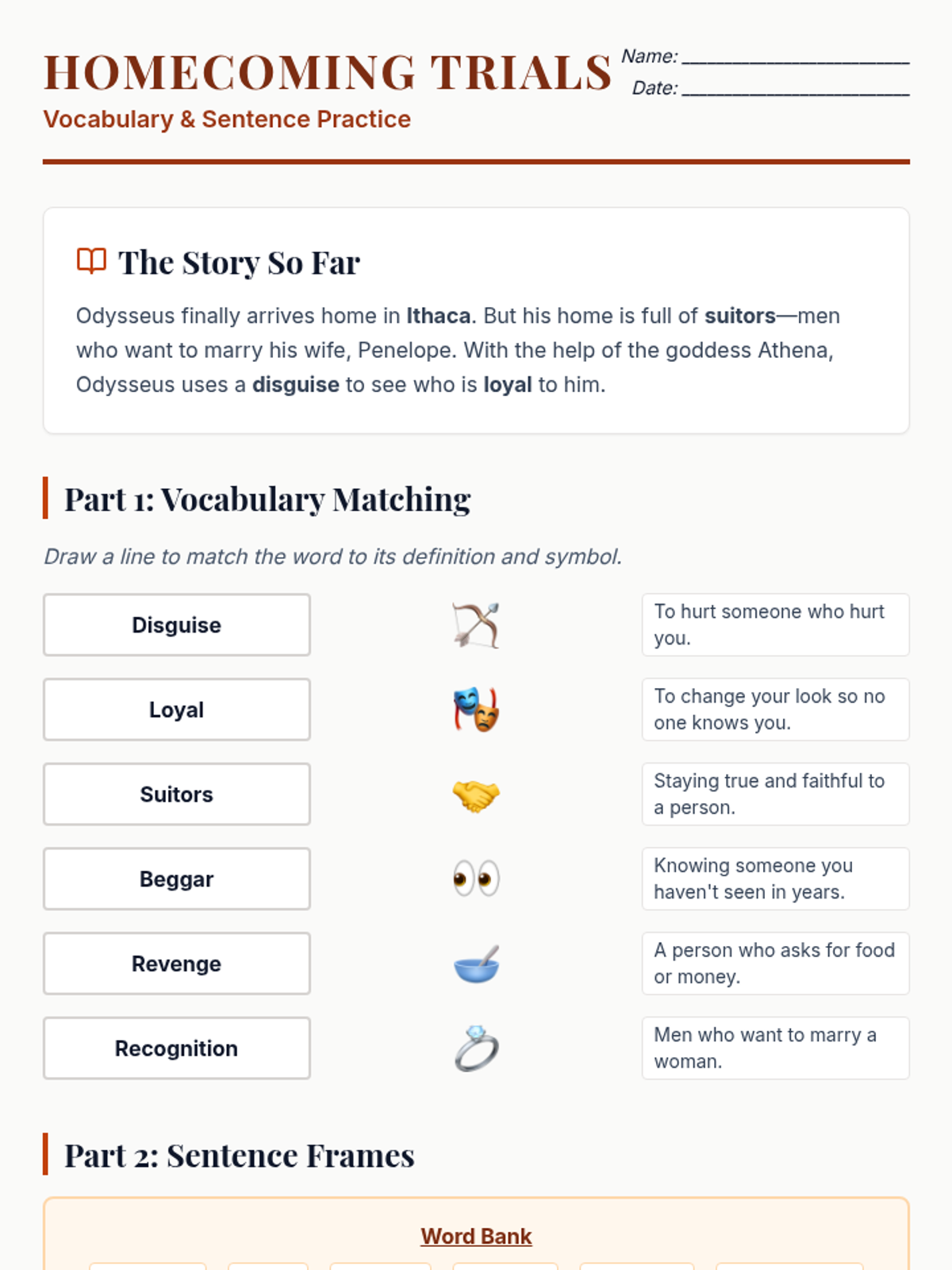
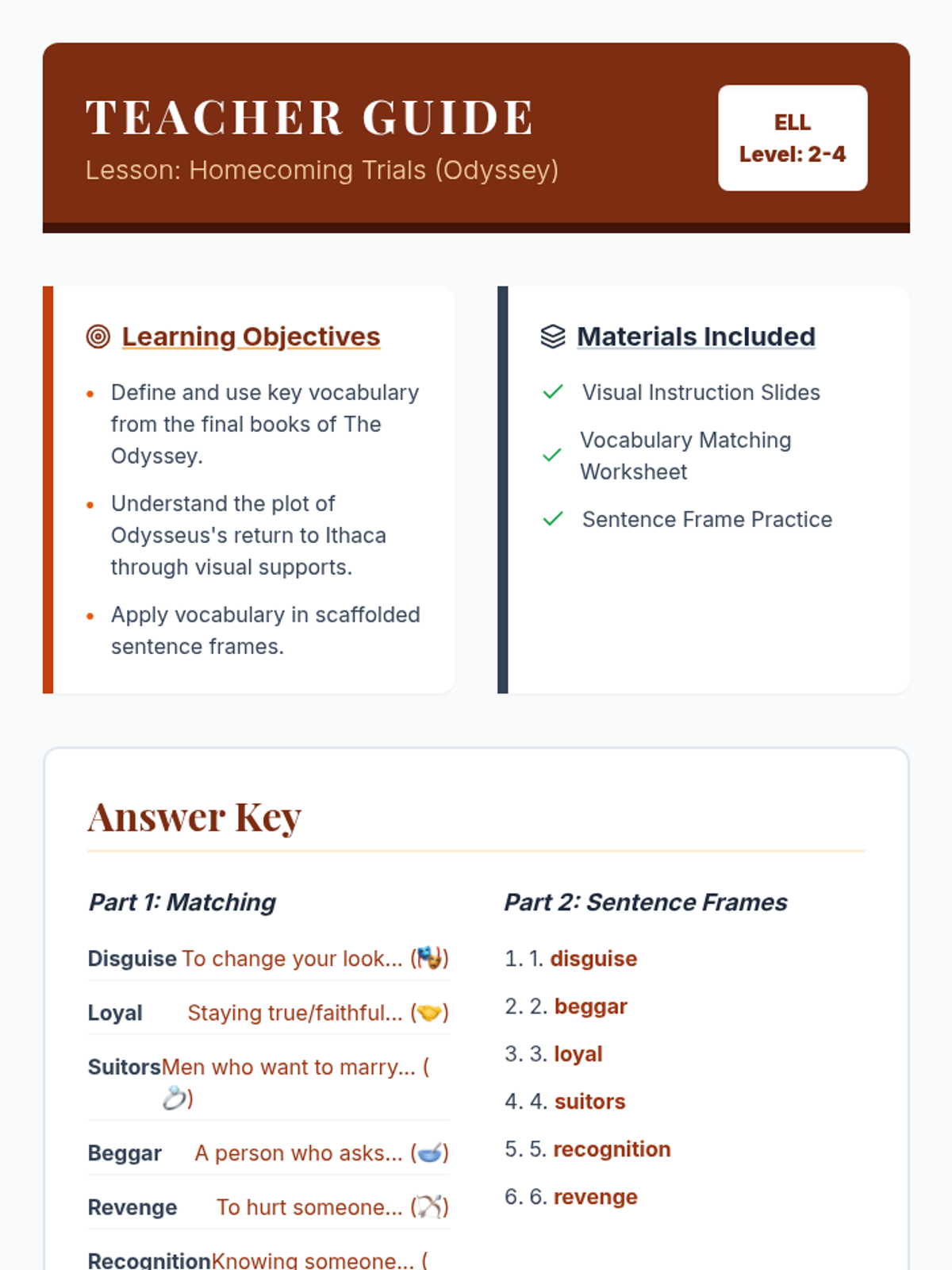
A lesson focused on Odysseus's return to Ithaca, designed specifically for ELL students. Includes vocabulary building through matching and sentence frames to support language acquisition and comprehension of the epic's climax.
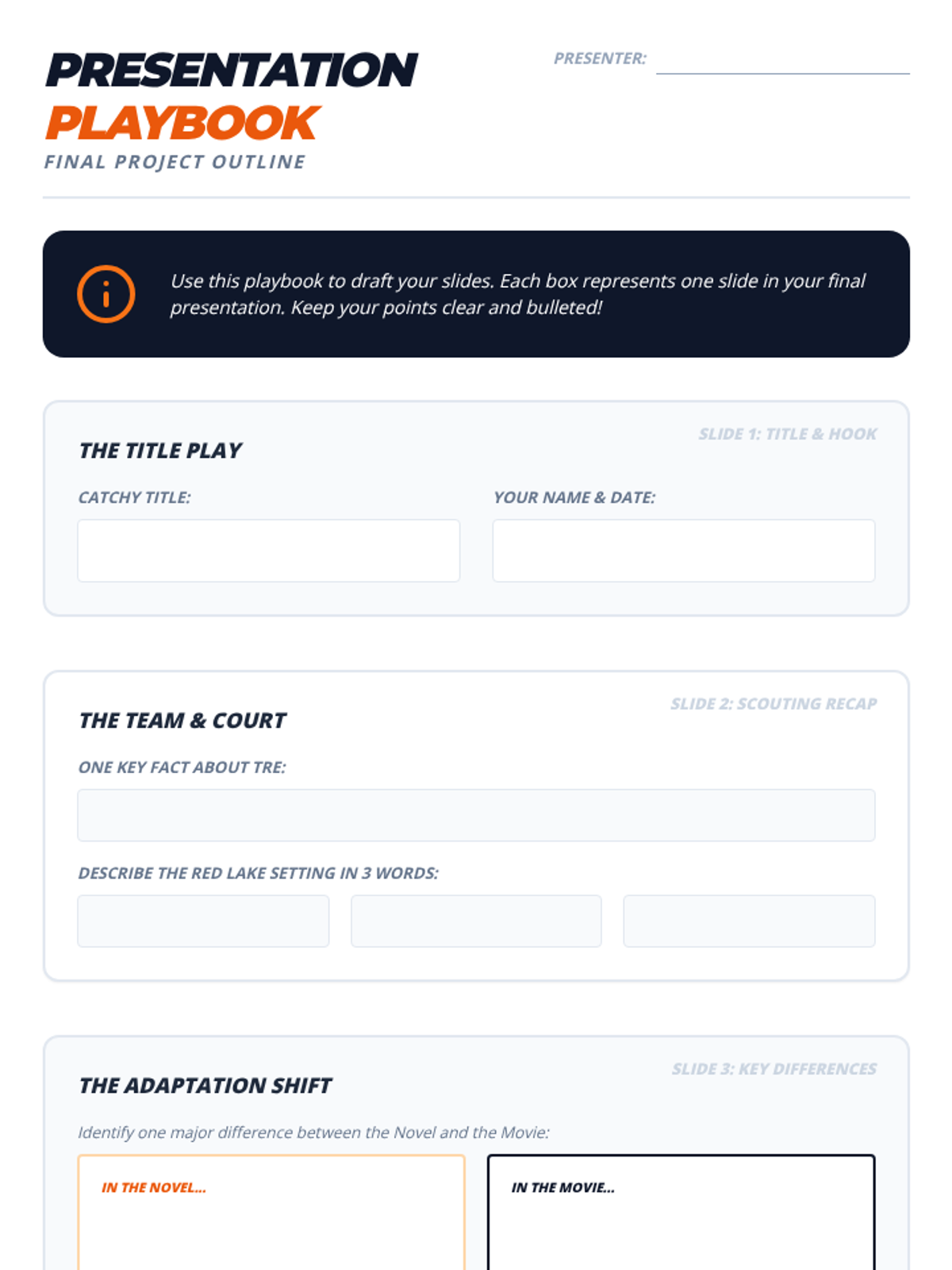
Culminating project-based assessment where students create and present their own comparison analysis using a structured playbook outline.
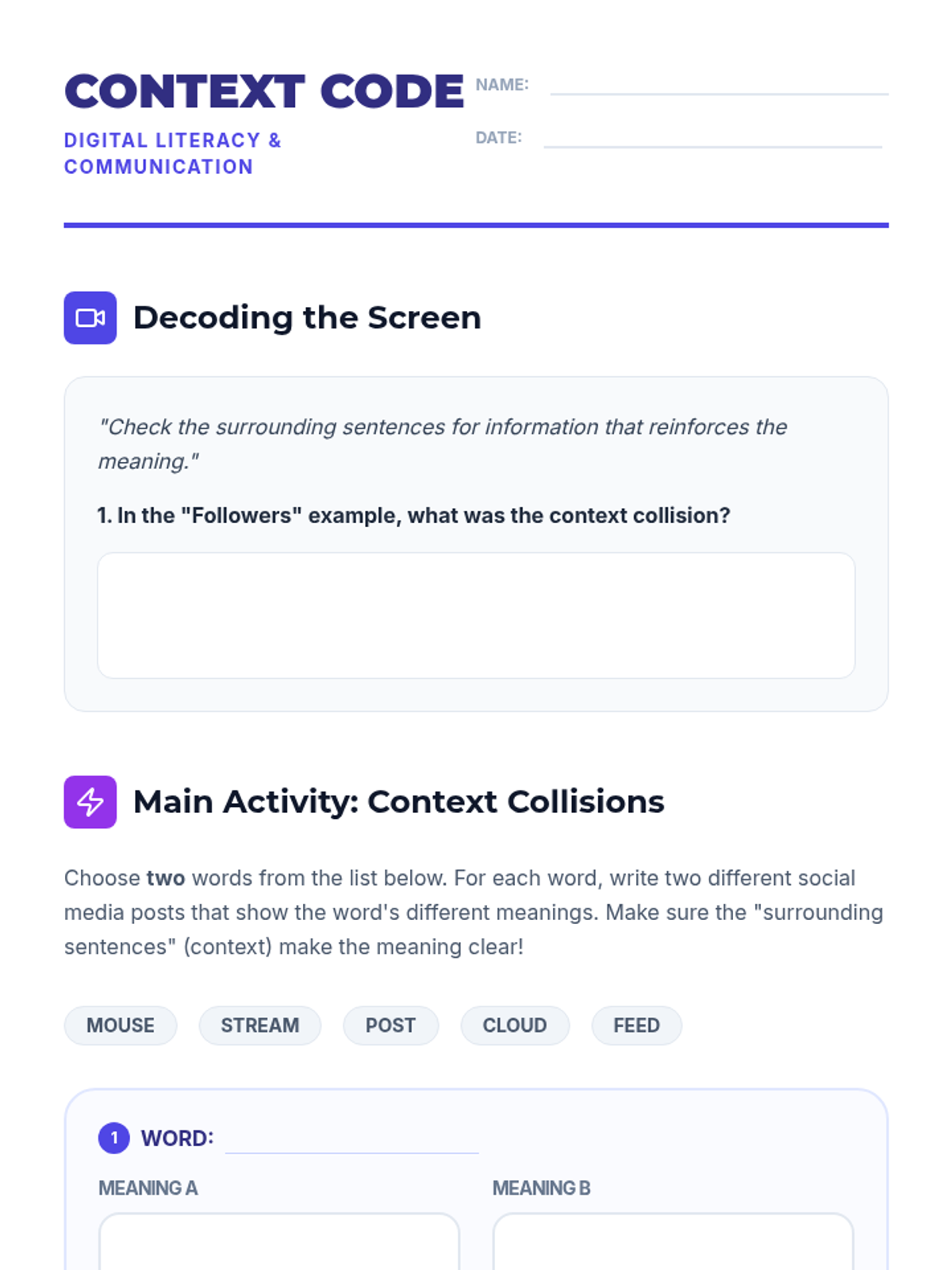
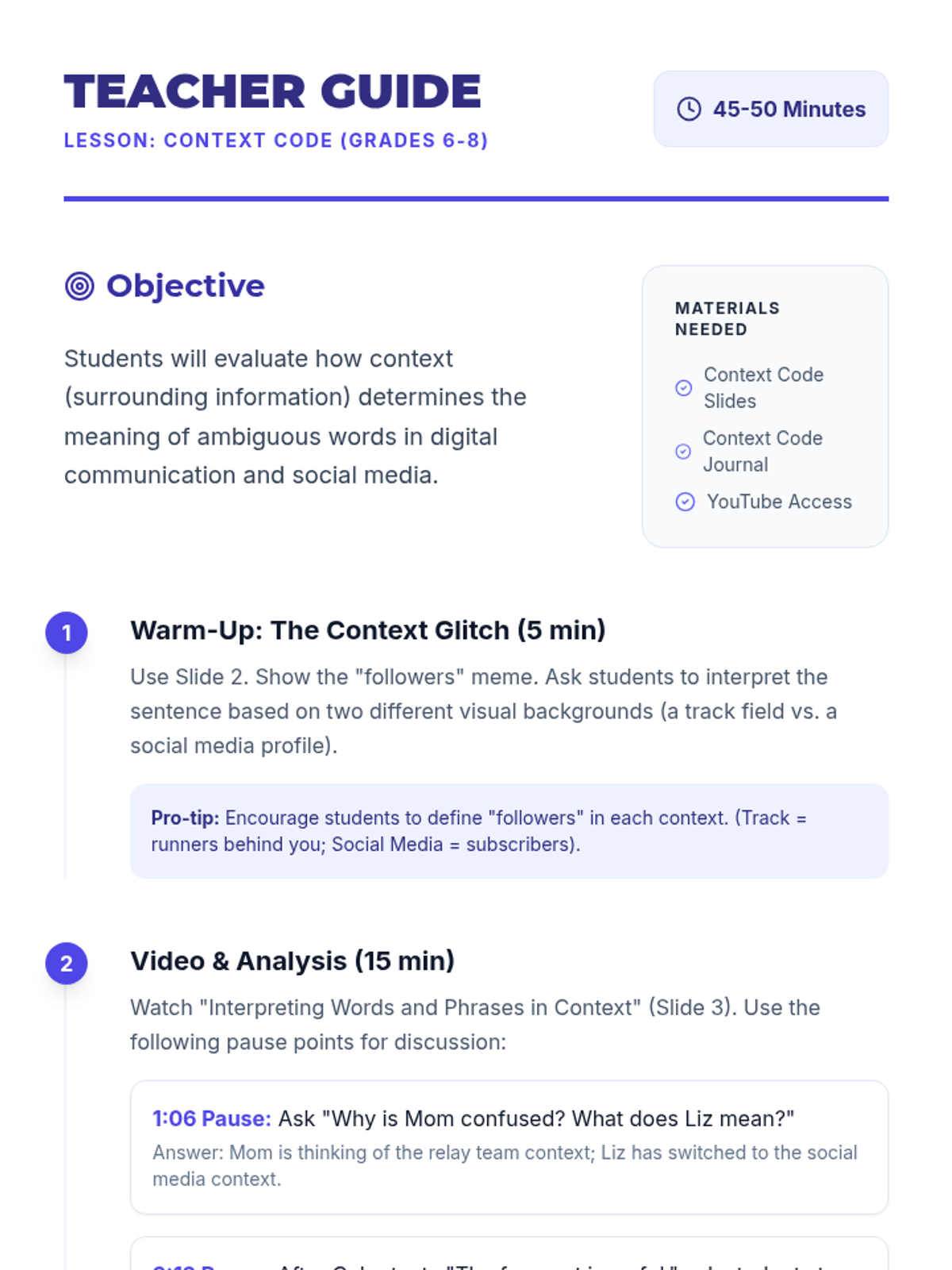
A digital literacy lesson for middle schoolers focusing on the role of context in social media and online communication. Students analyze viral misunderstandings and create their own 'context collisions' to understand how surroundings change meaning.
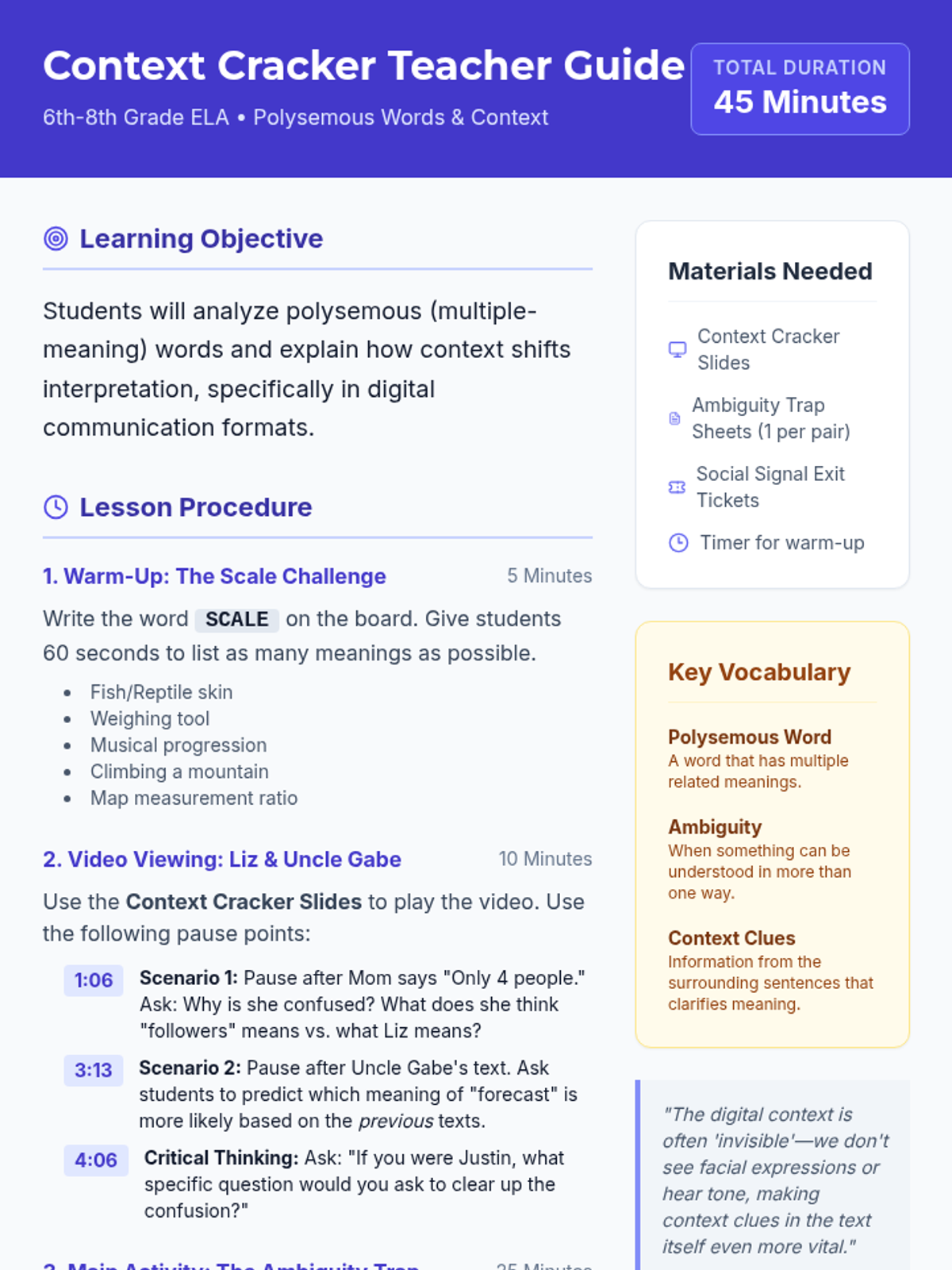
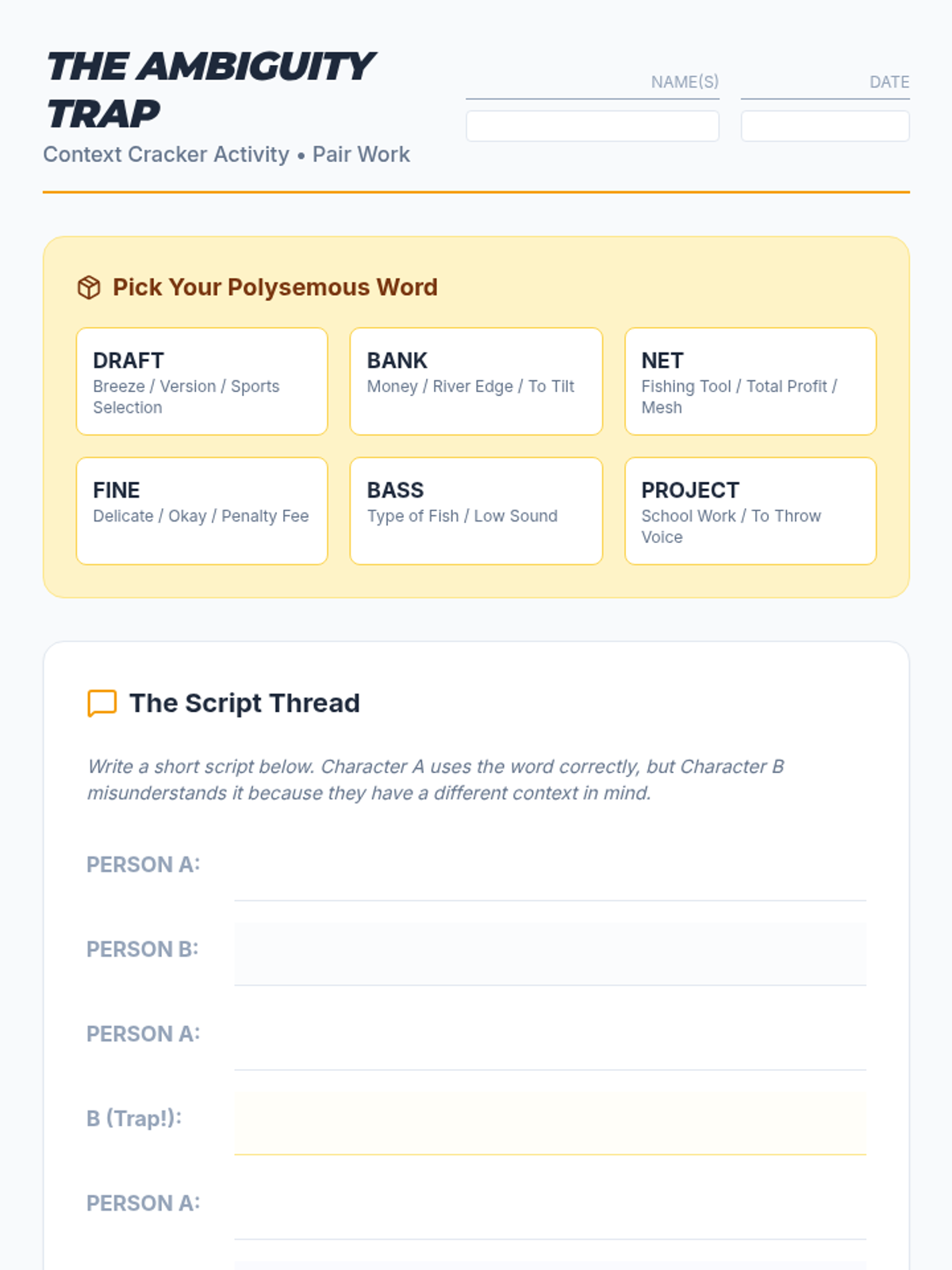
A lesson where students explore polysemous words and the importance of context in digital and face-to-face communication, featuring video analysis and role-play activities.
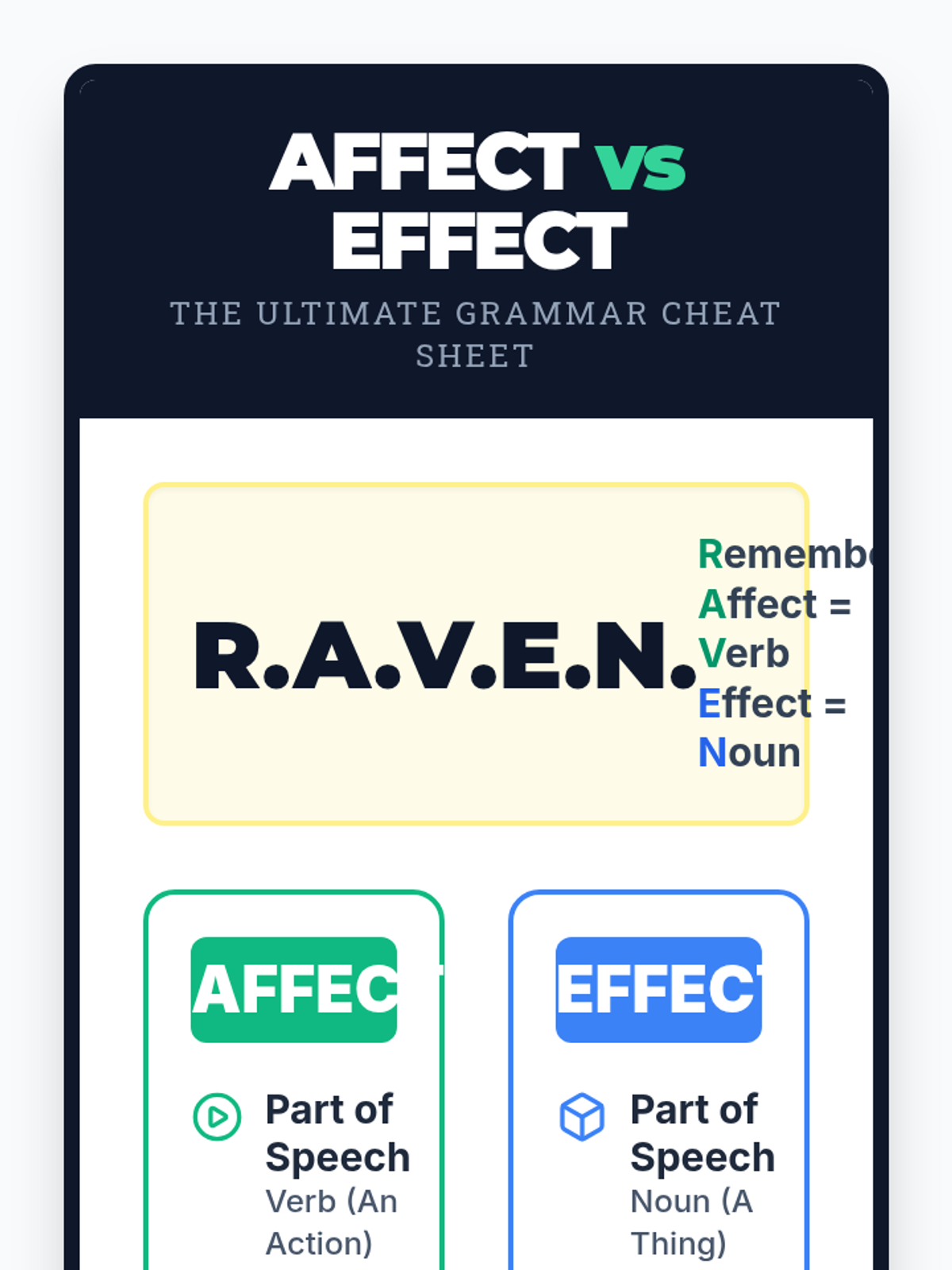
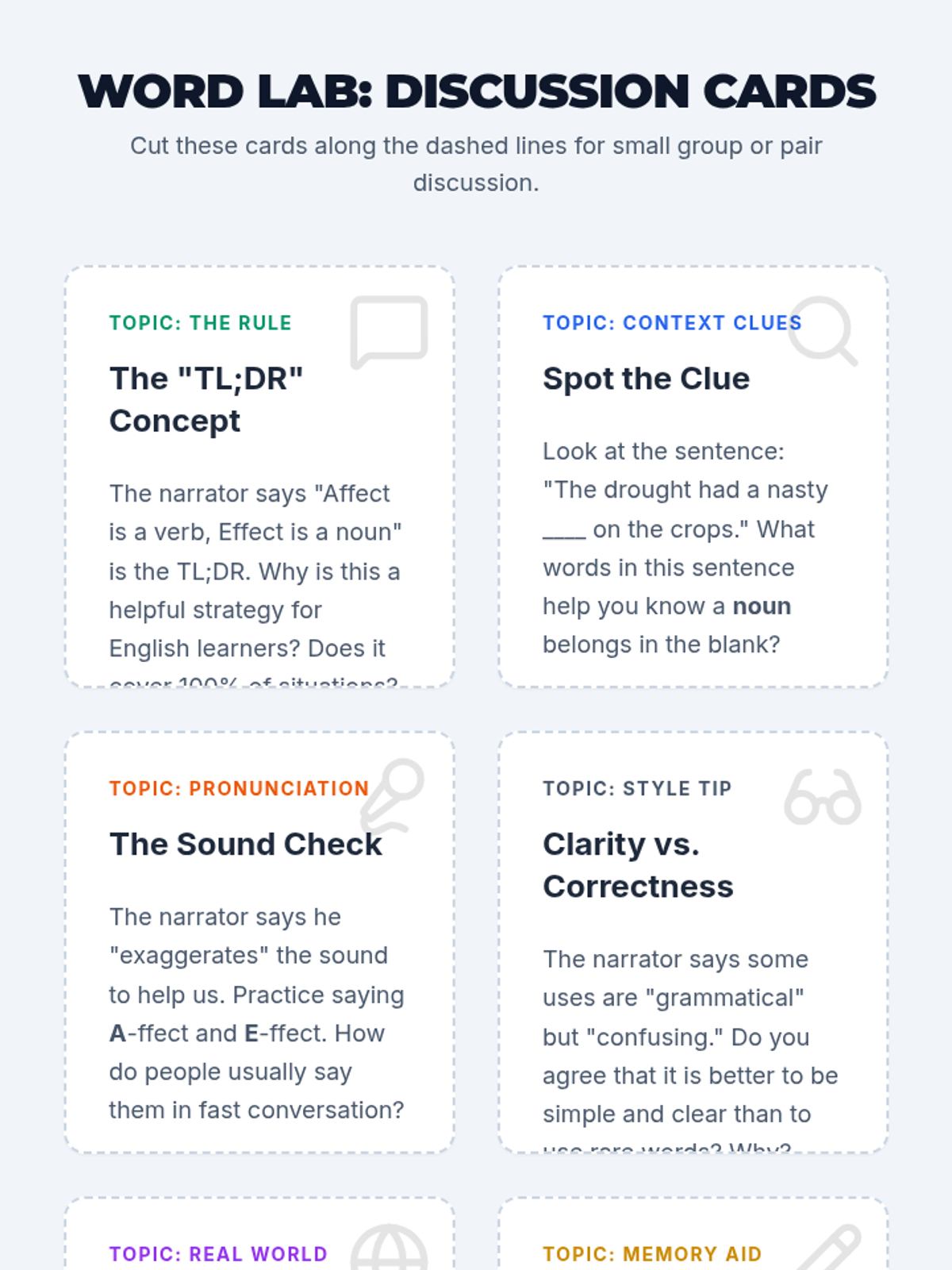
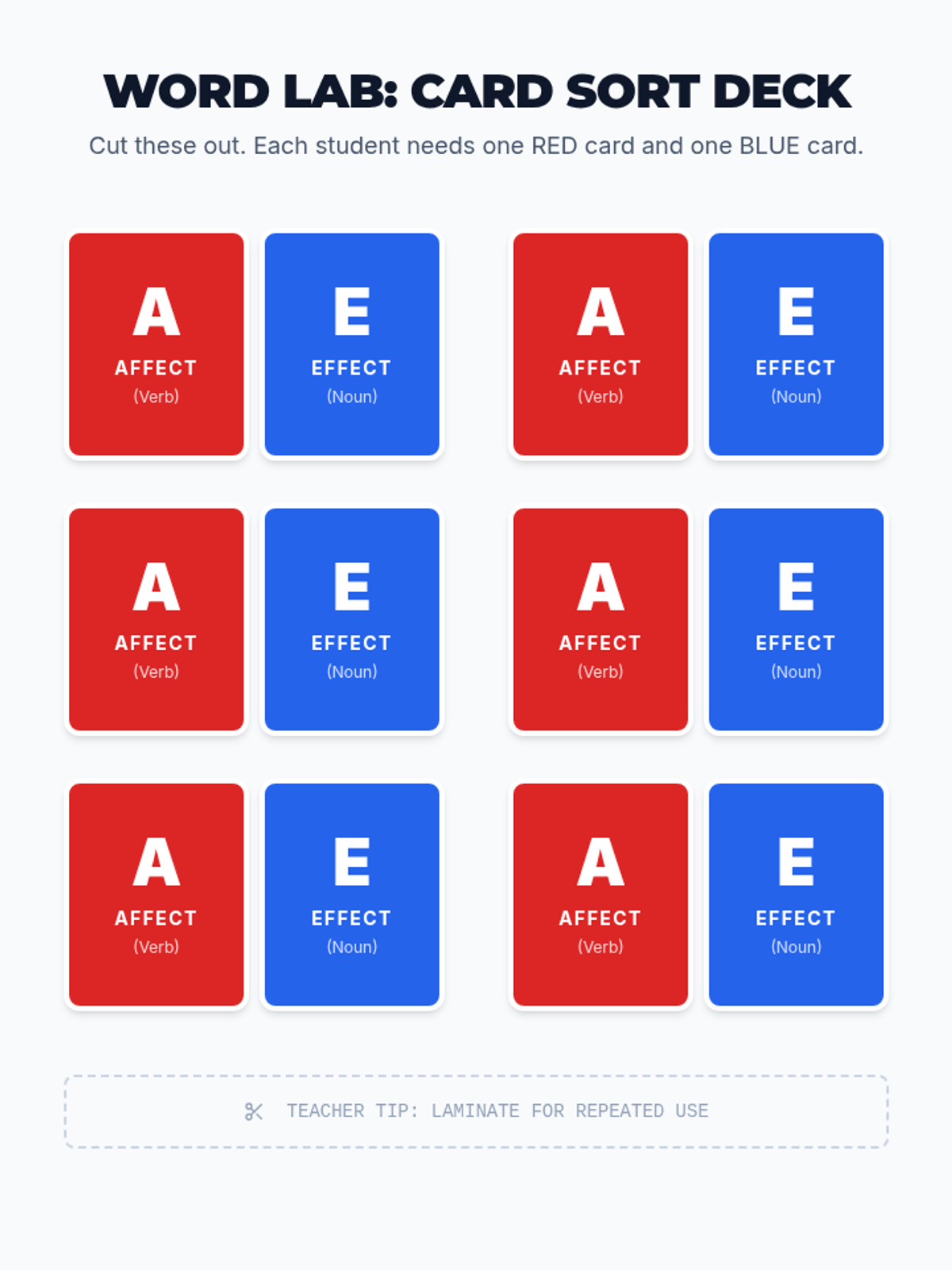
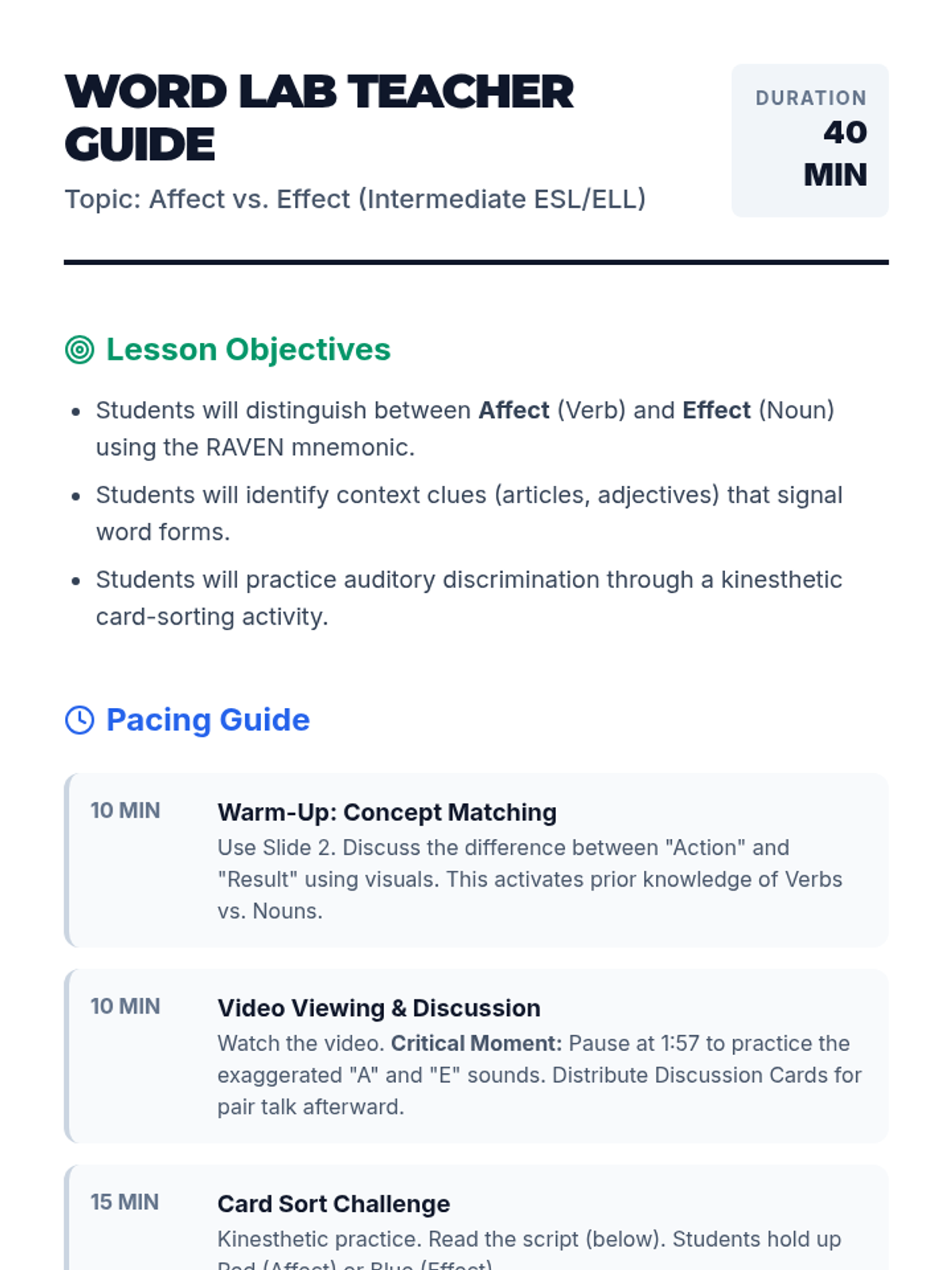
An intermediate ESL/ELL lesson focused on distinguishing between 'affect' and 'effect' using word forms, context clues, and a visual mnemonic. Includes a video-based discussion, a kinesthetic card-sorting activity, and a visual anchor chart.
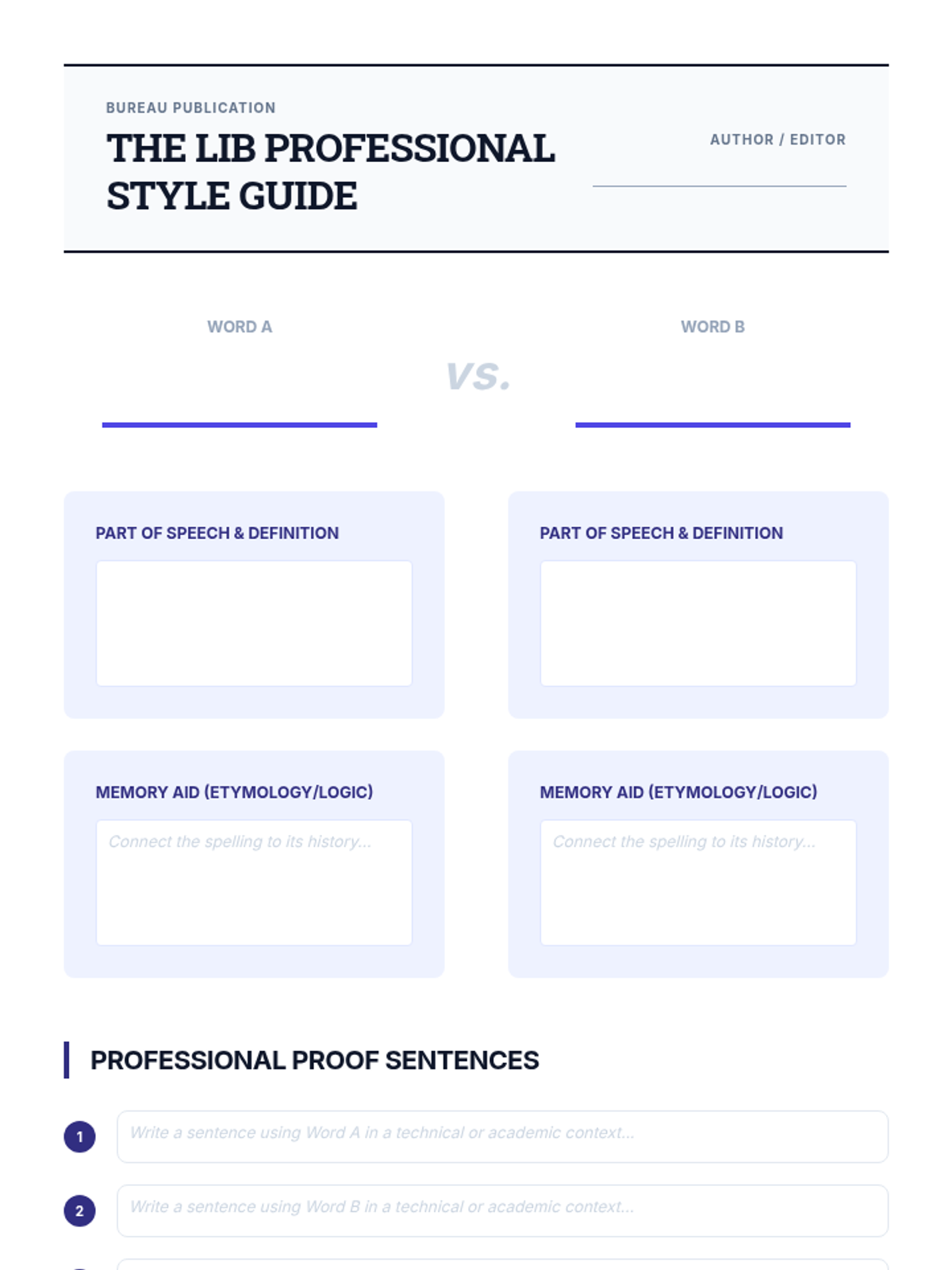
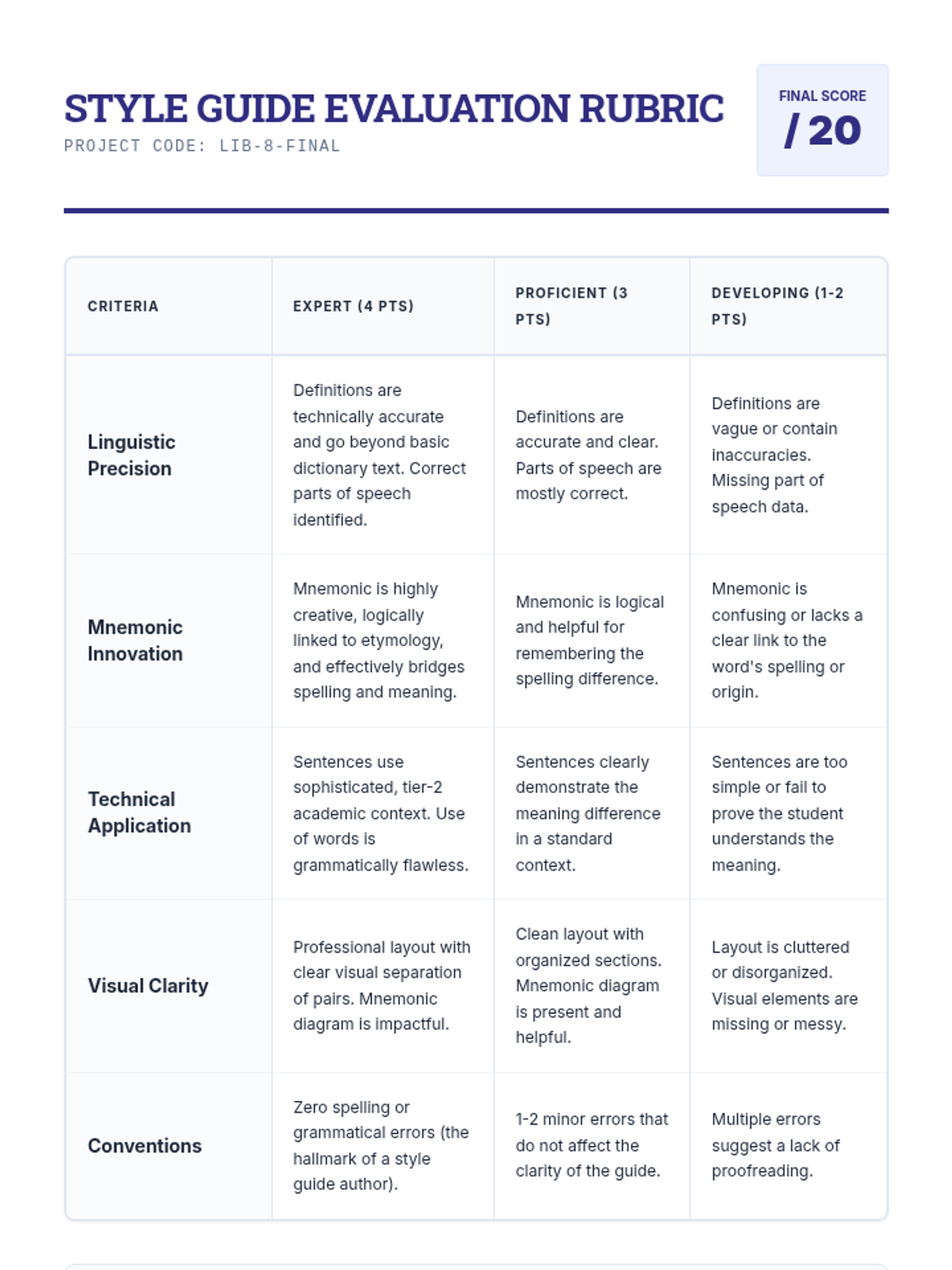
Students synthesize their knowledge by designing a professional style guide entry for a homophone pair, focusing on clear definitions, technical examples, and original memory aids.
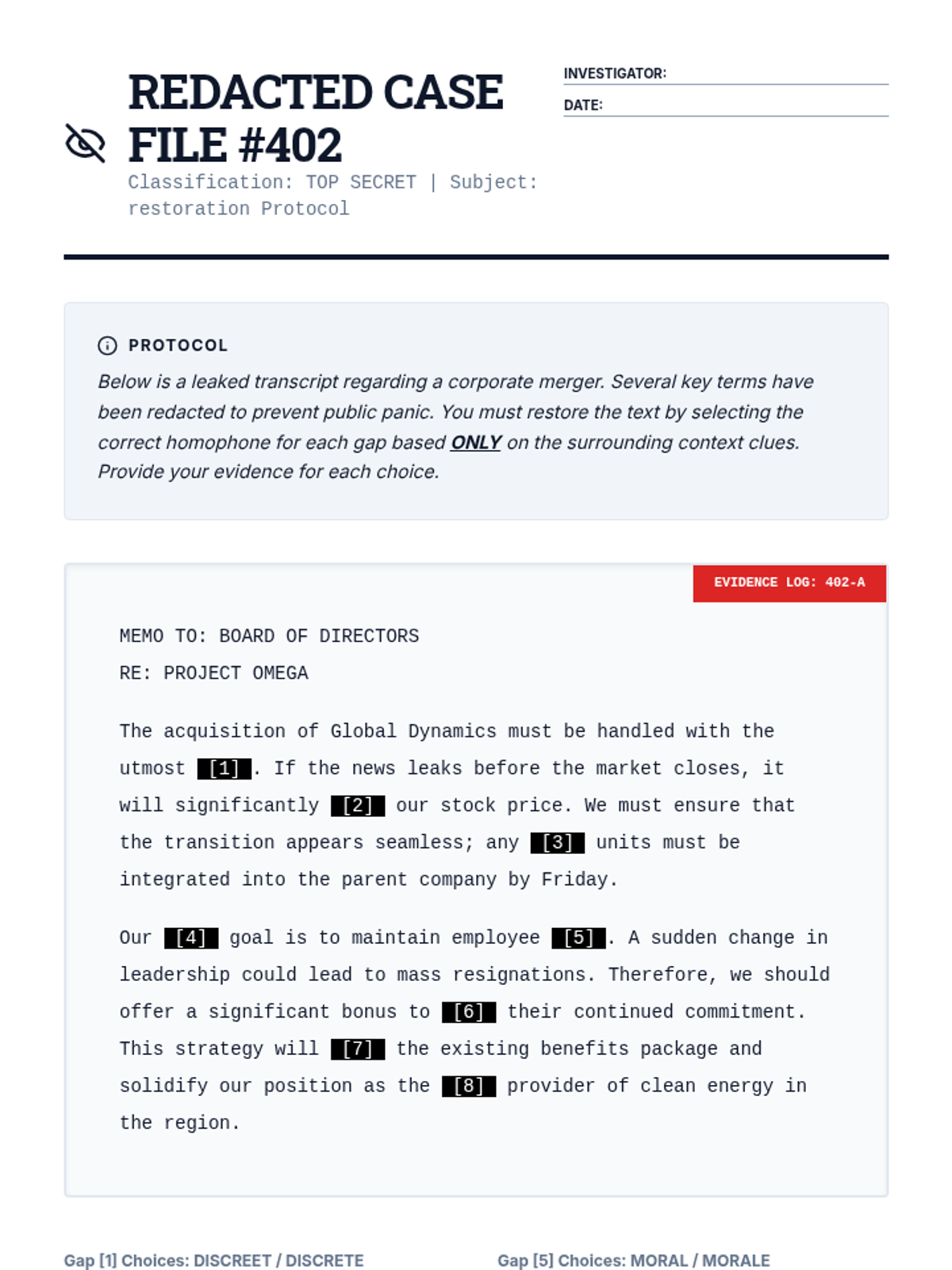
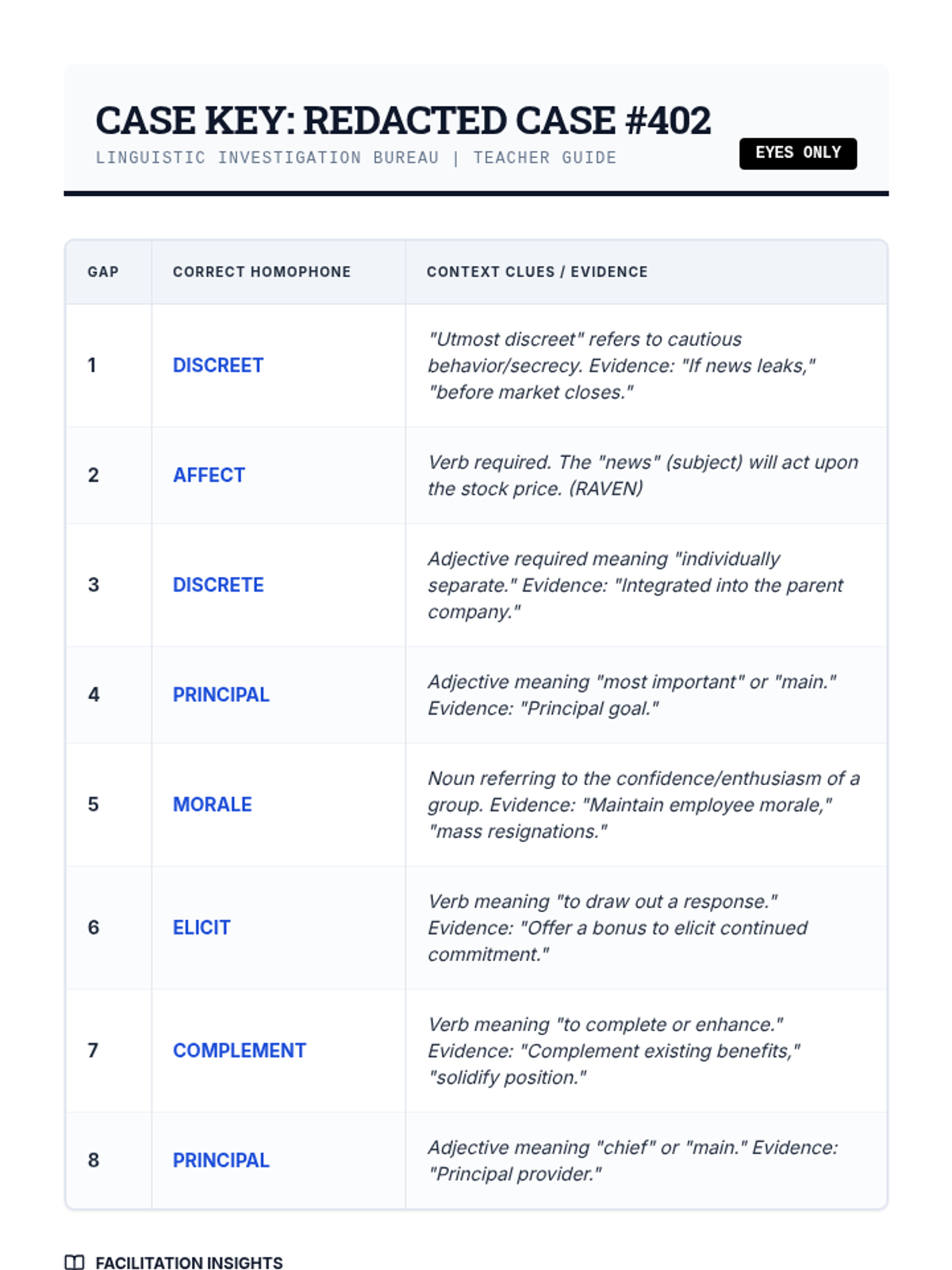
Students act as detectives to solve 'Redacted Document' cases. They use close reading and evidence-based reasoning to determine the correct homophones in complex non-fiction texts.
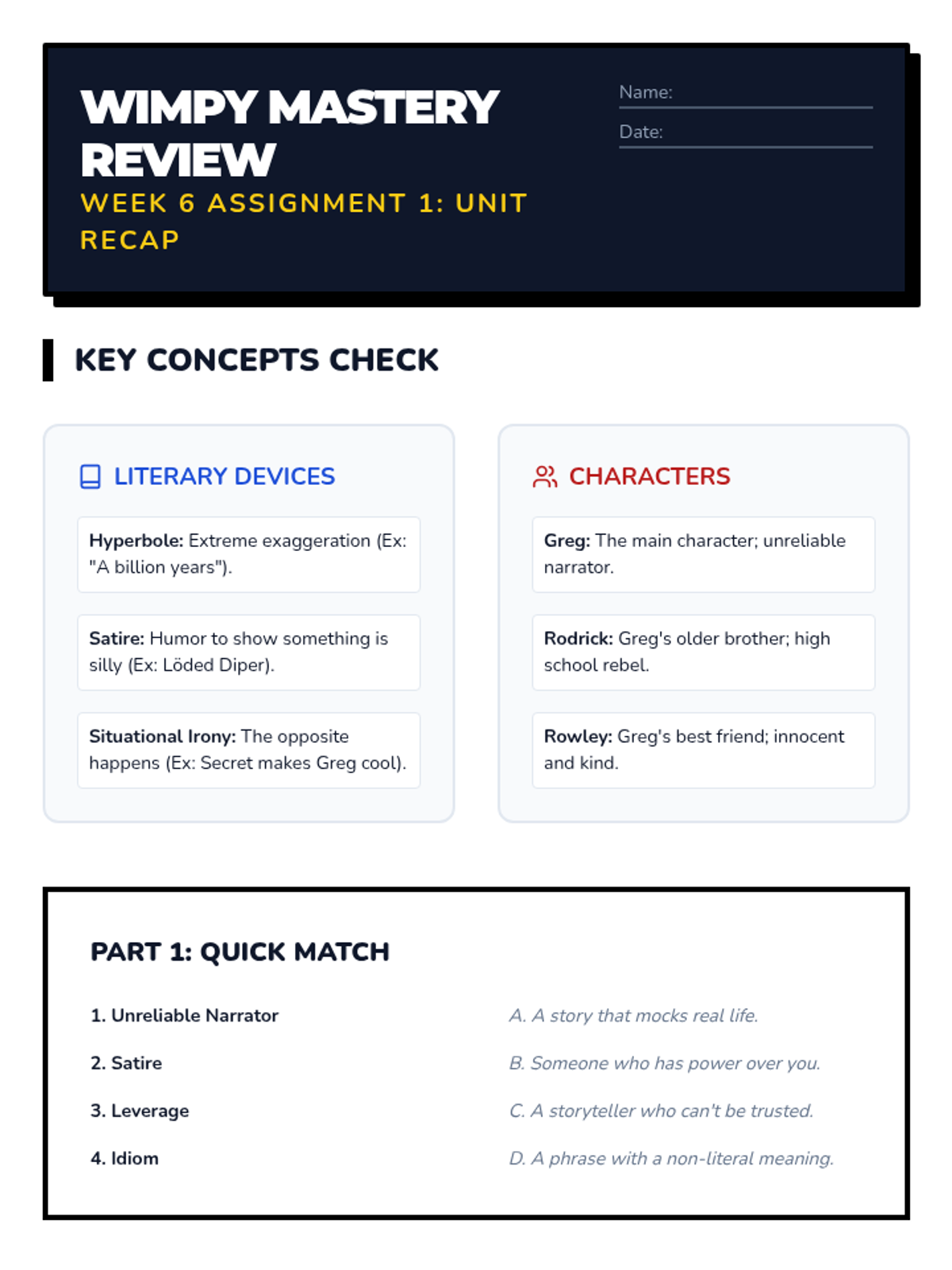
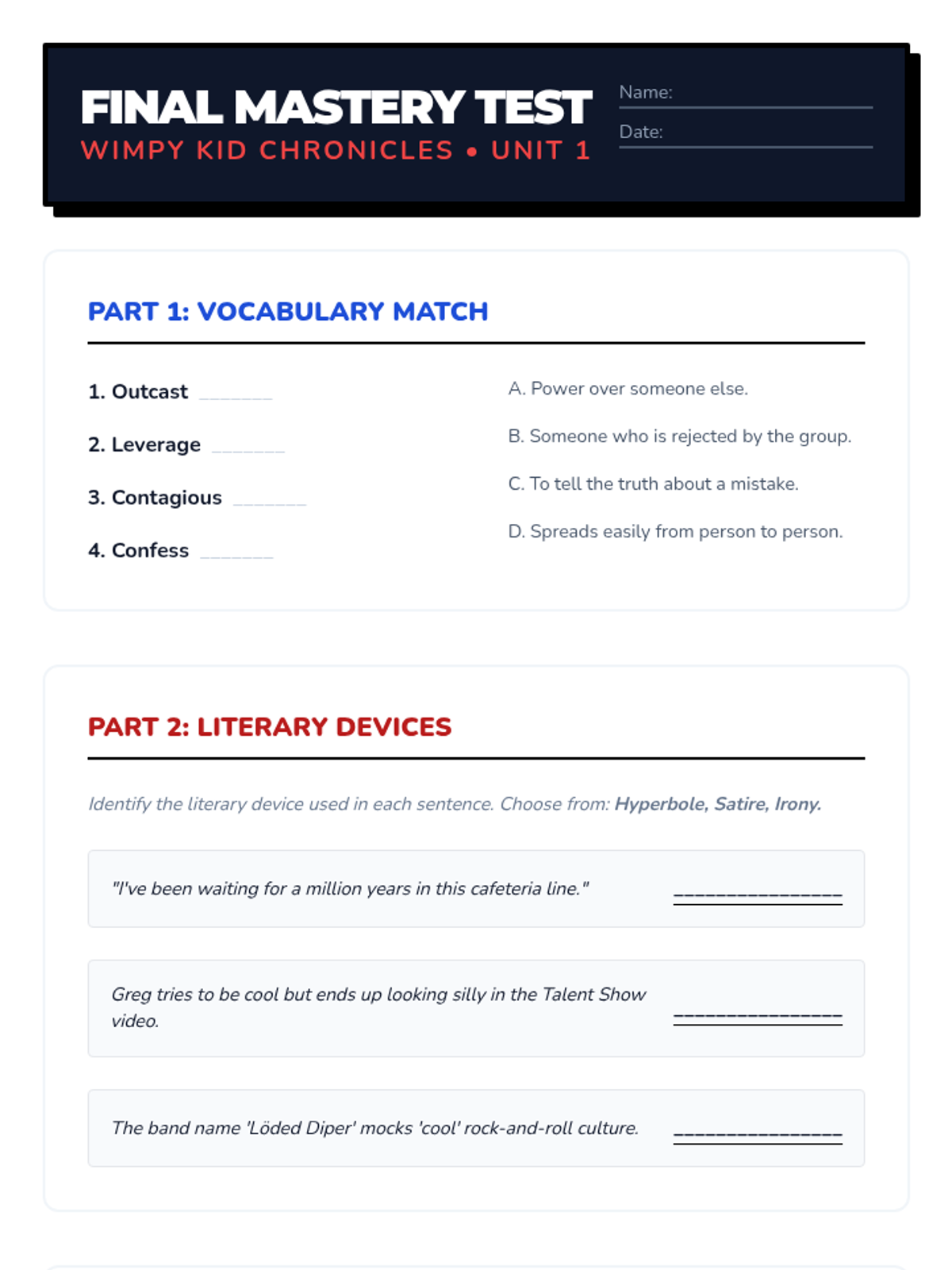
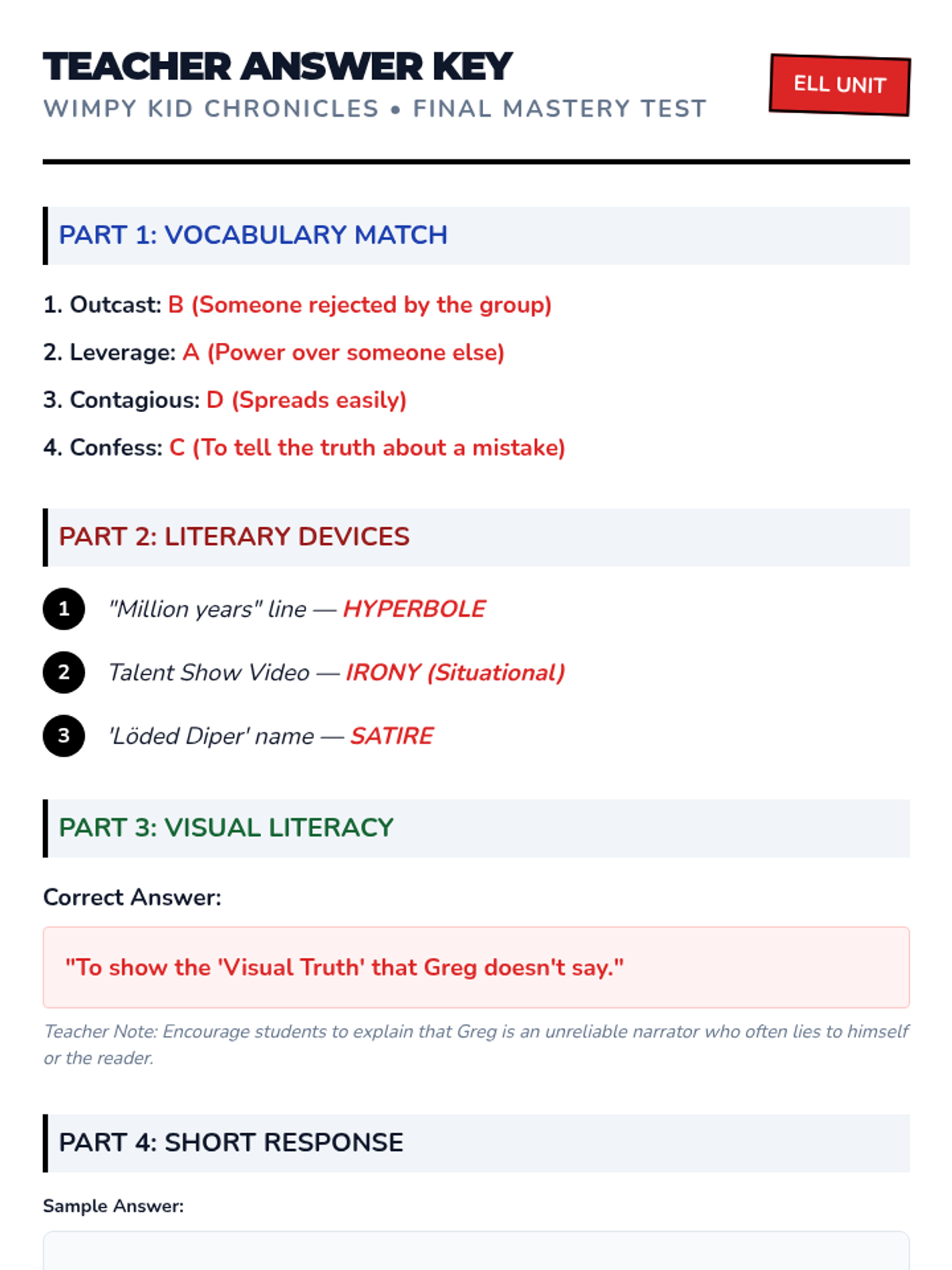
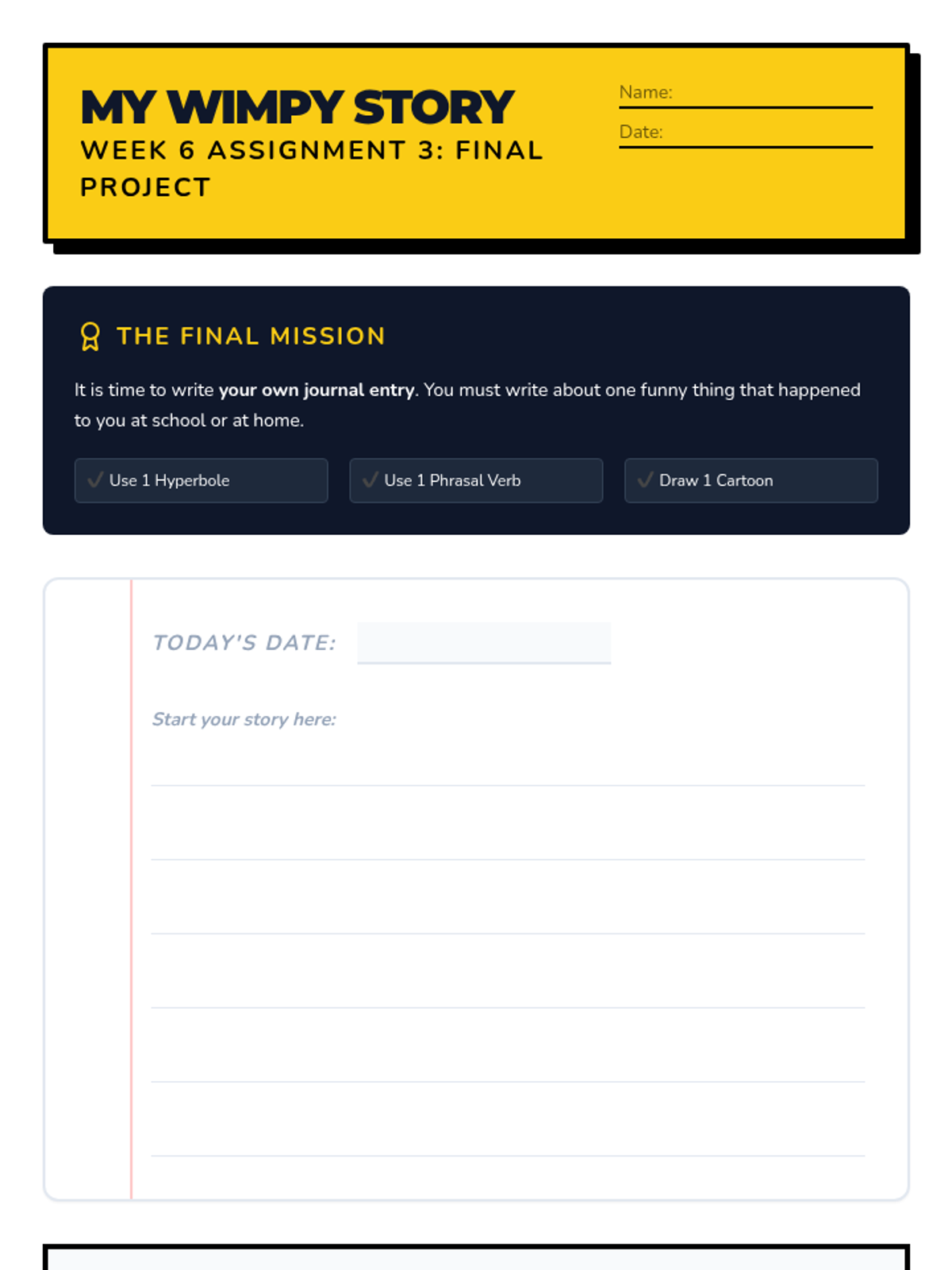
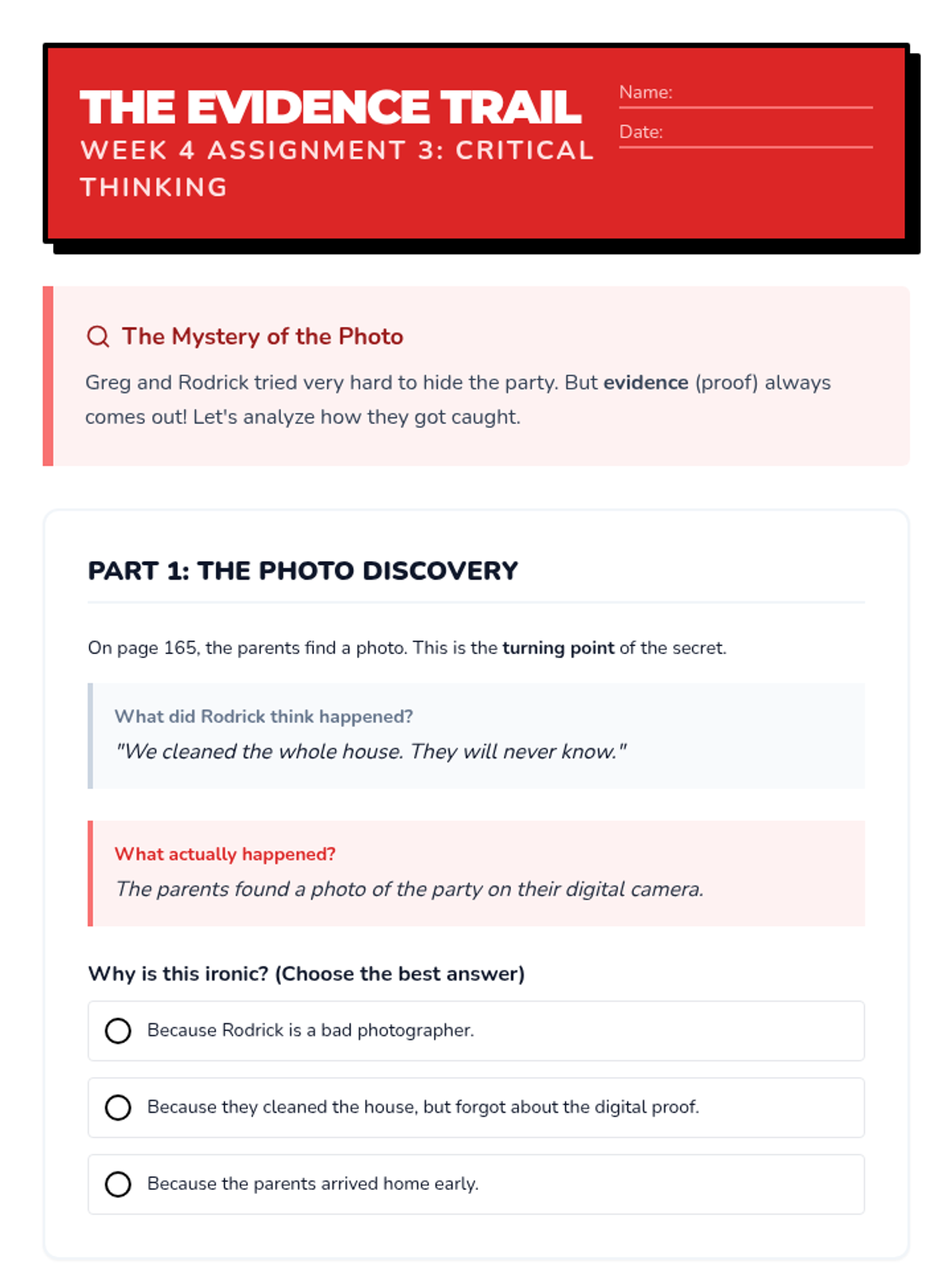
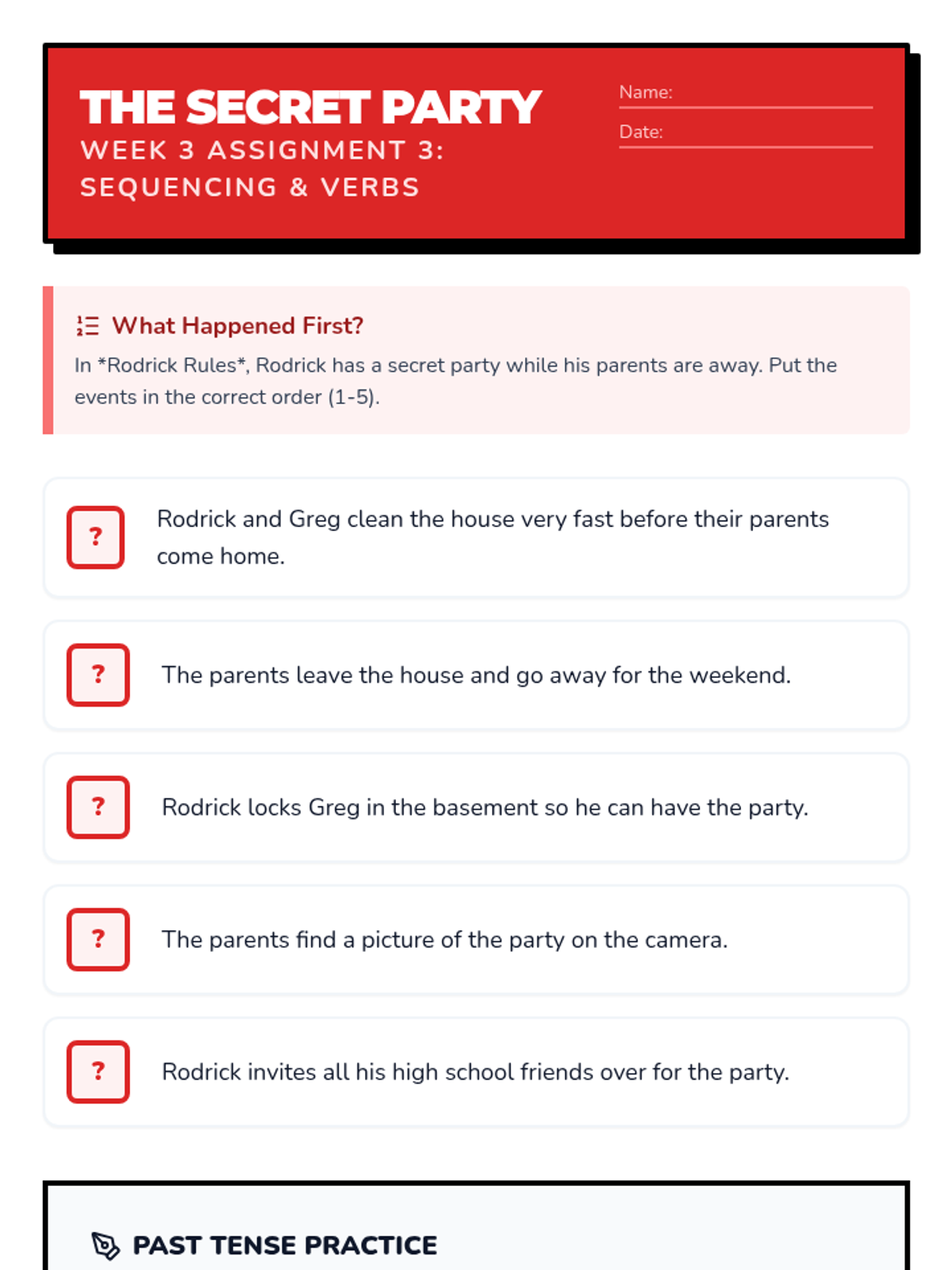
Final analysis of the secret party and Greg's growth. Comprehensive review of literary terms followed by the final unit assessment and creative project.
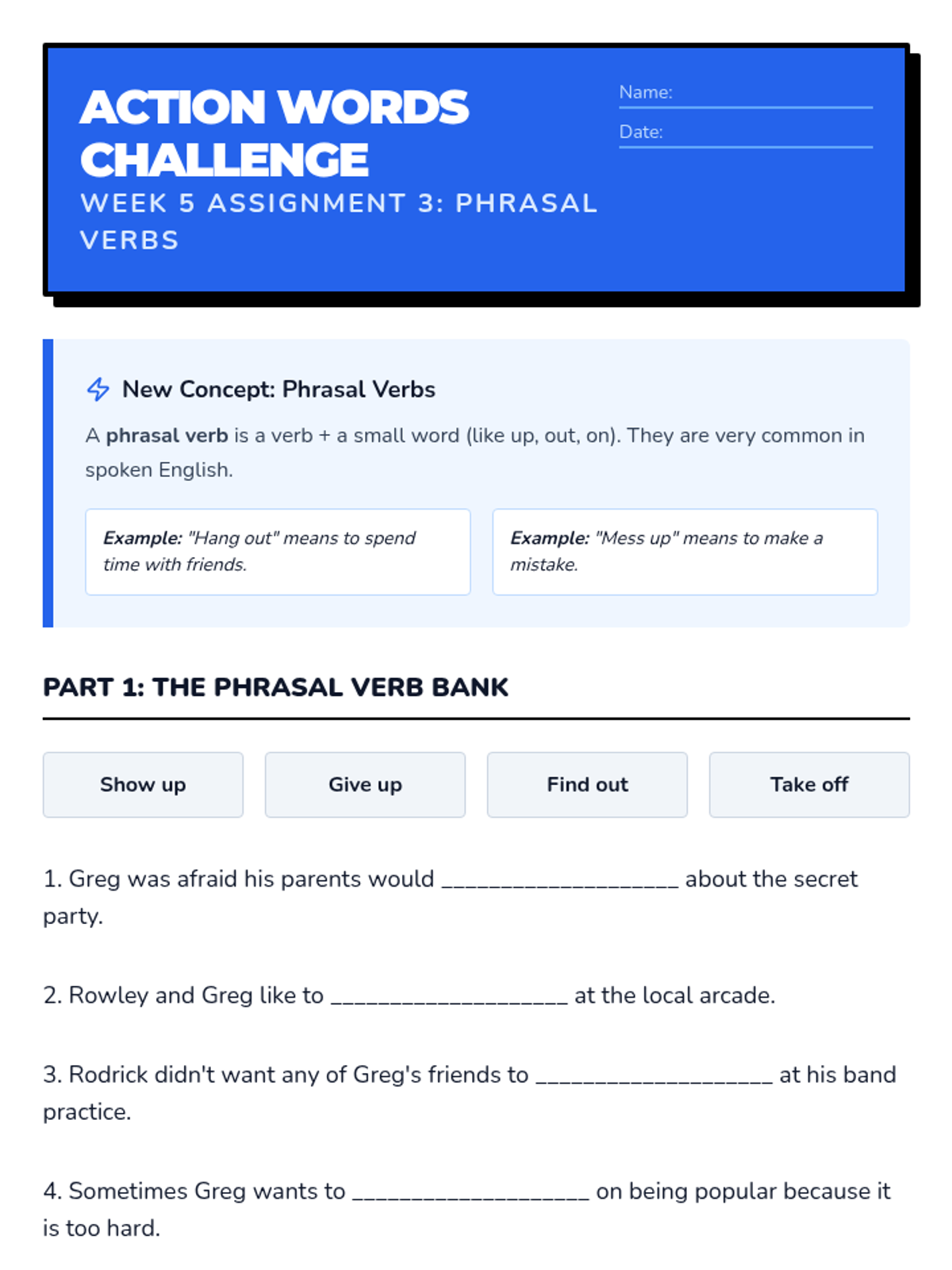
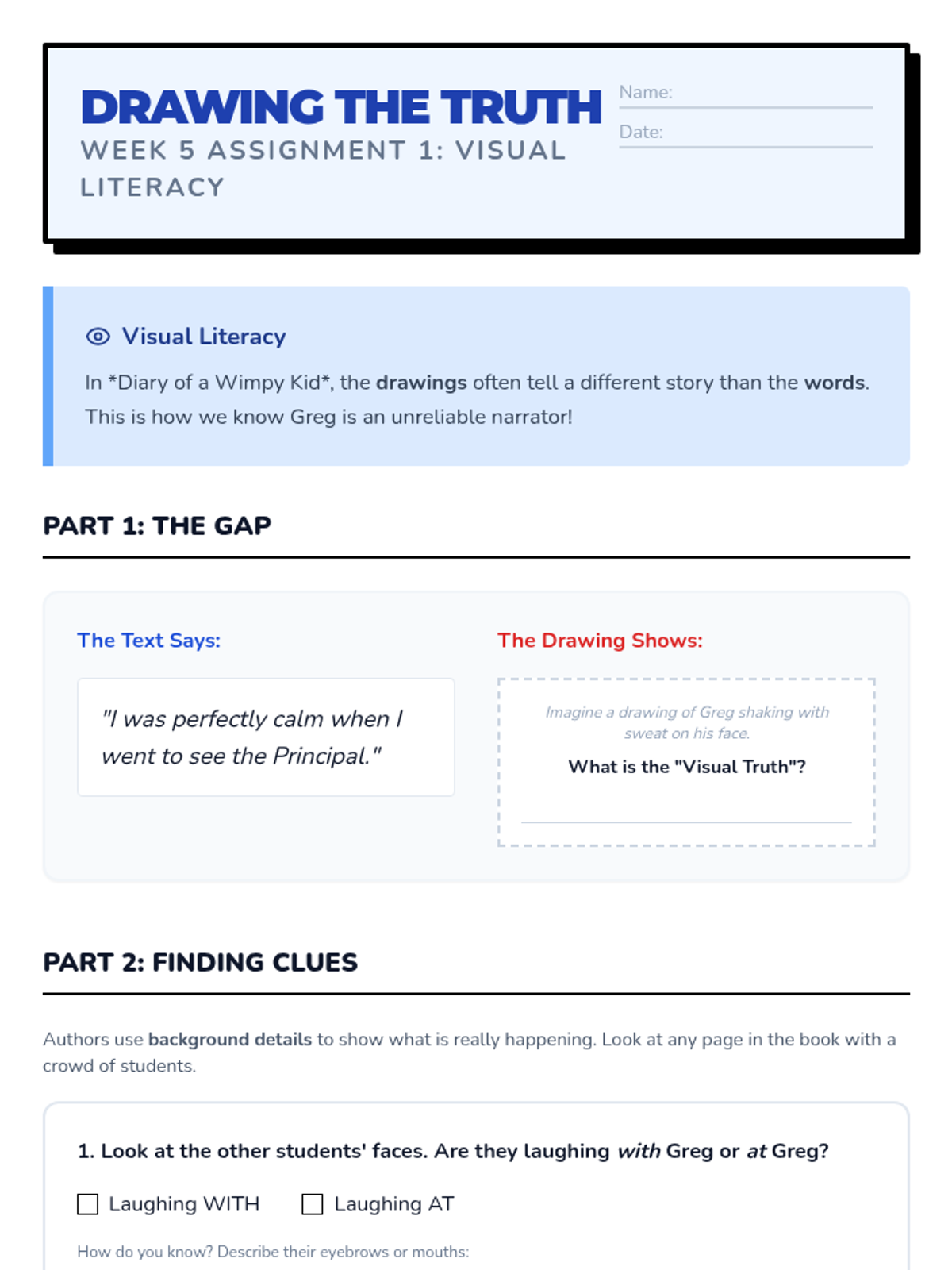
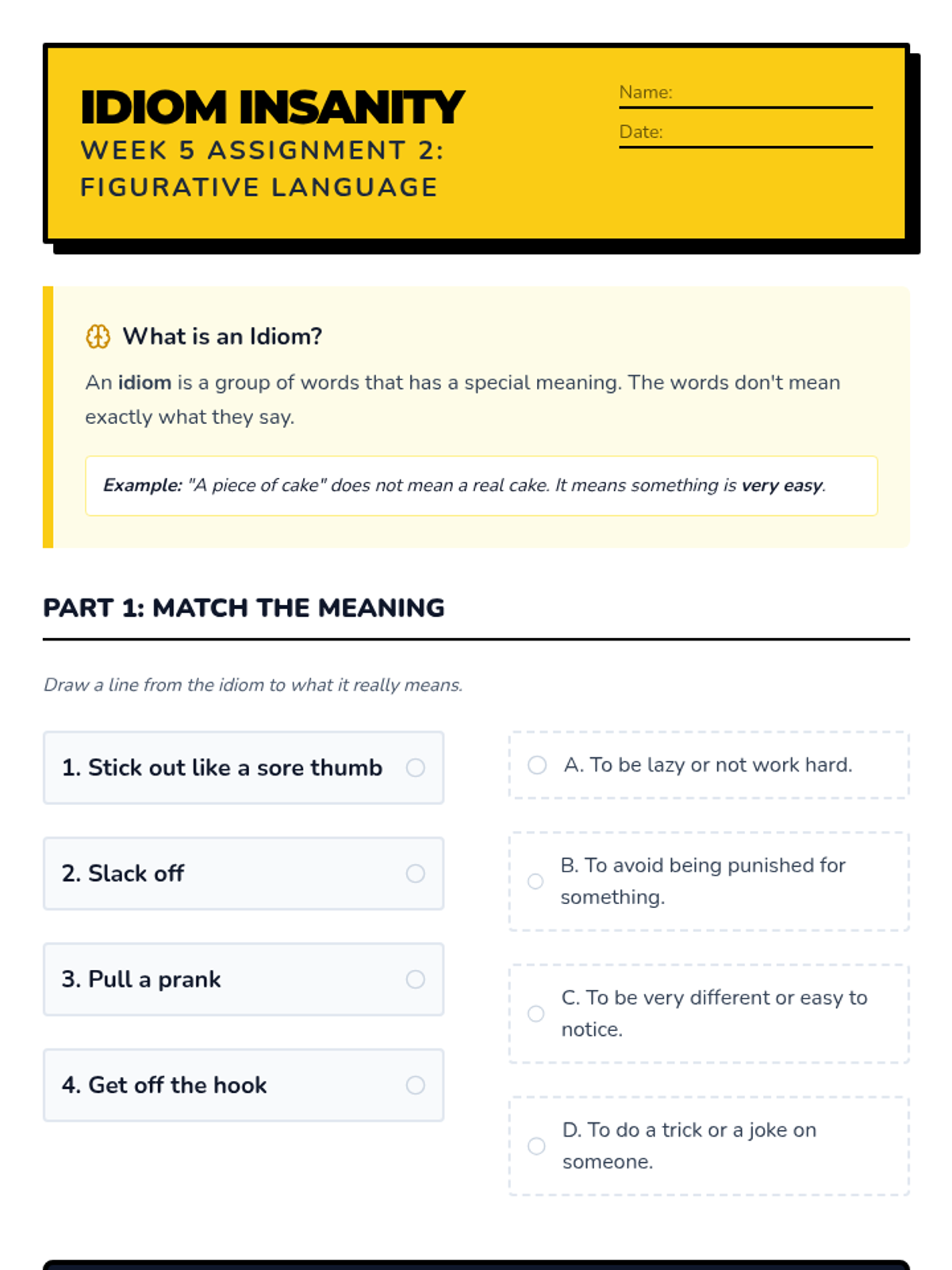
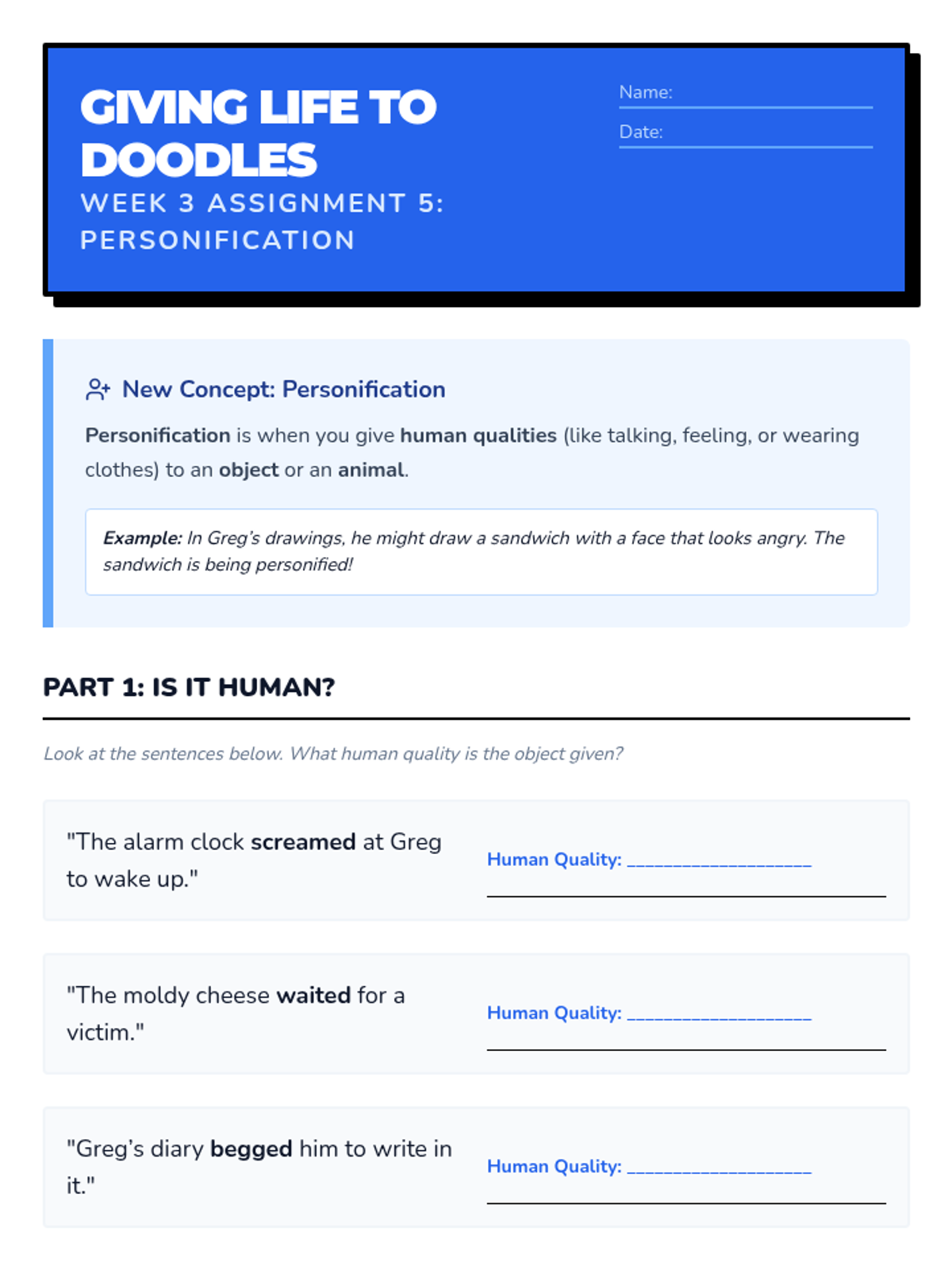
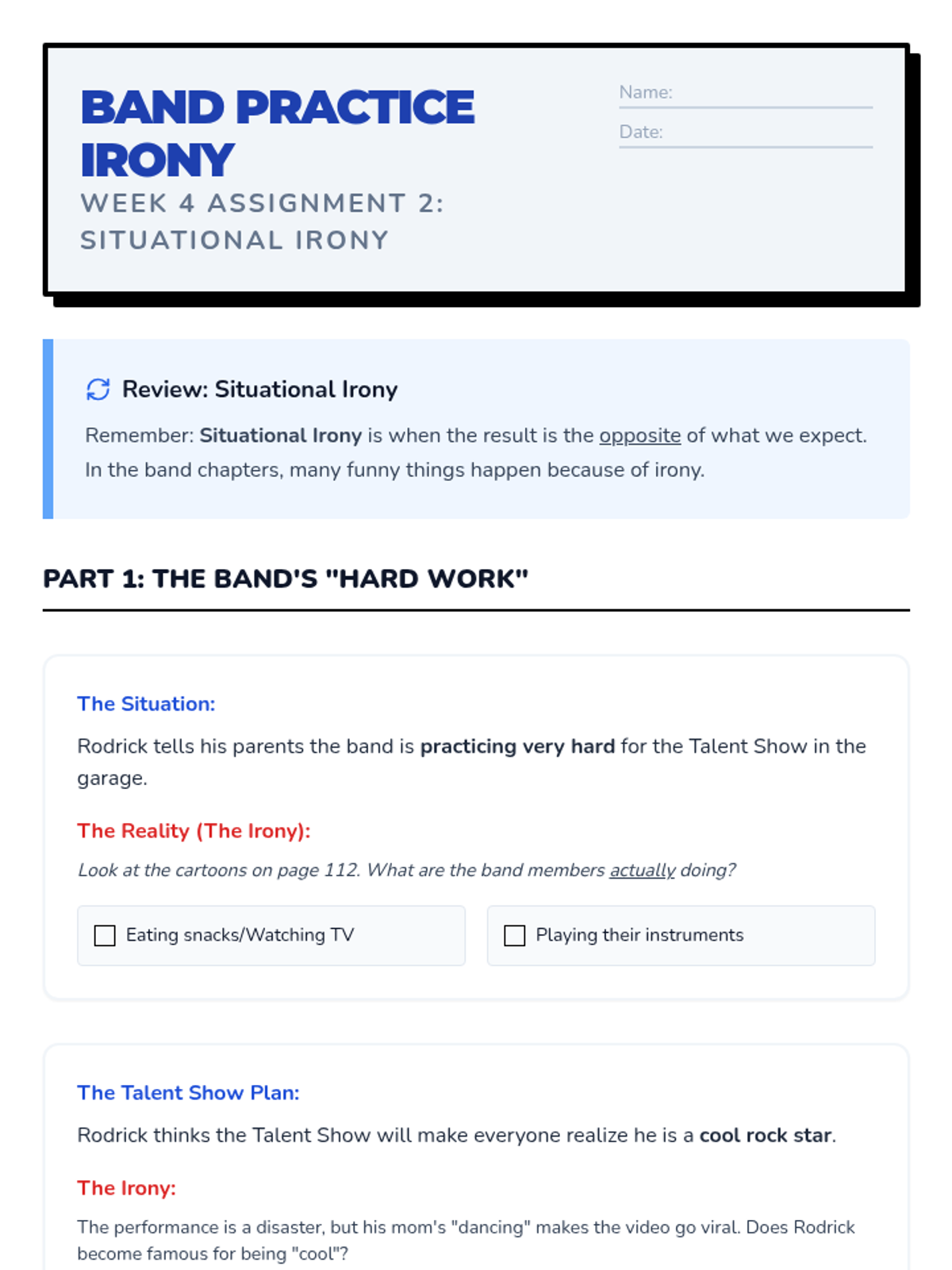
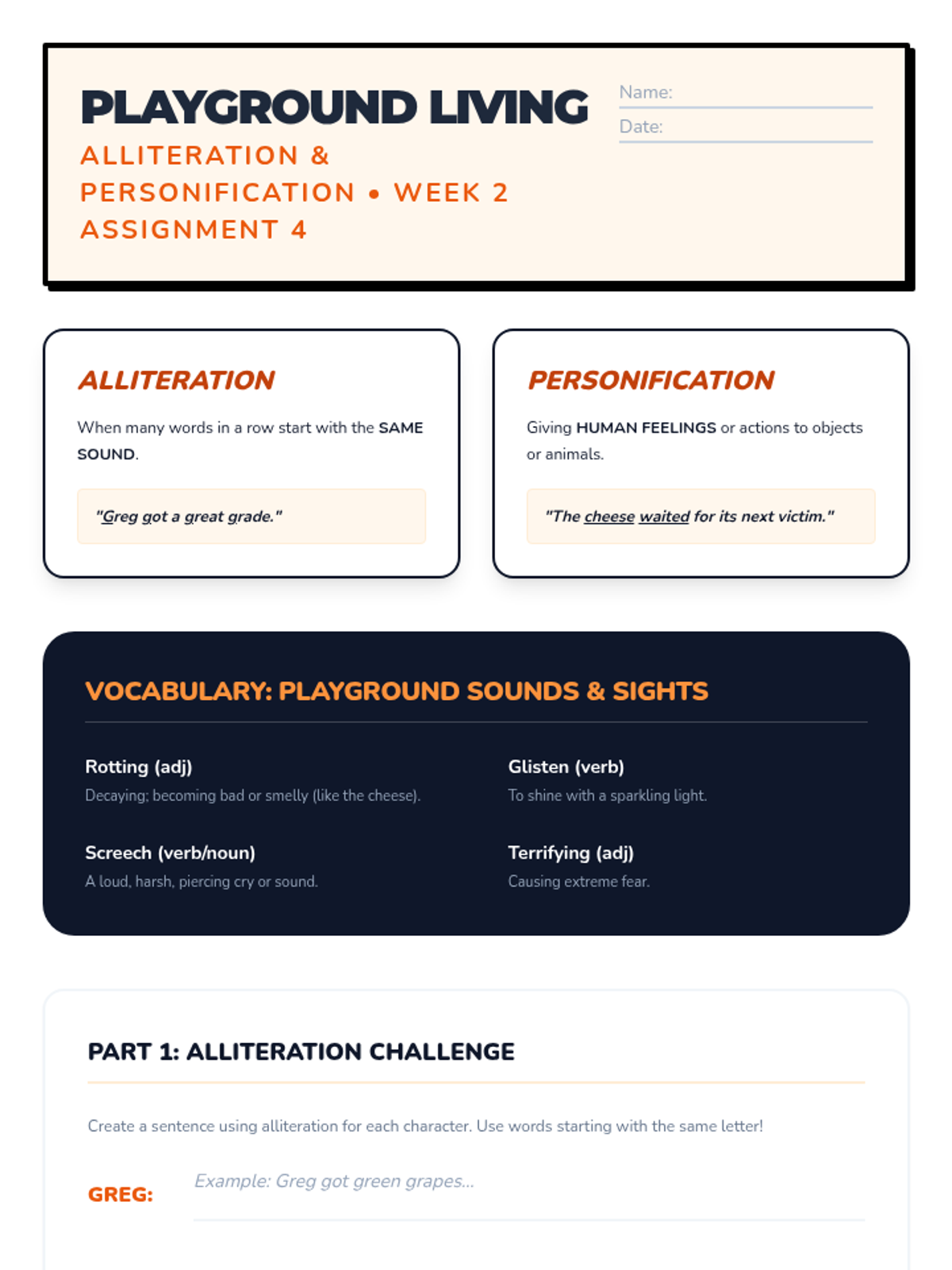
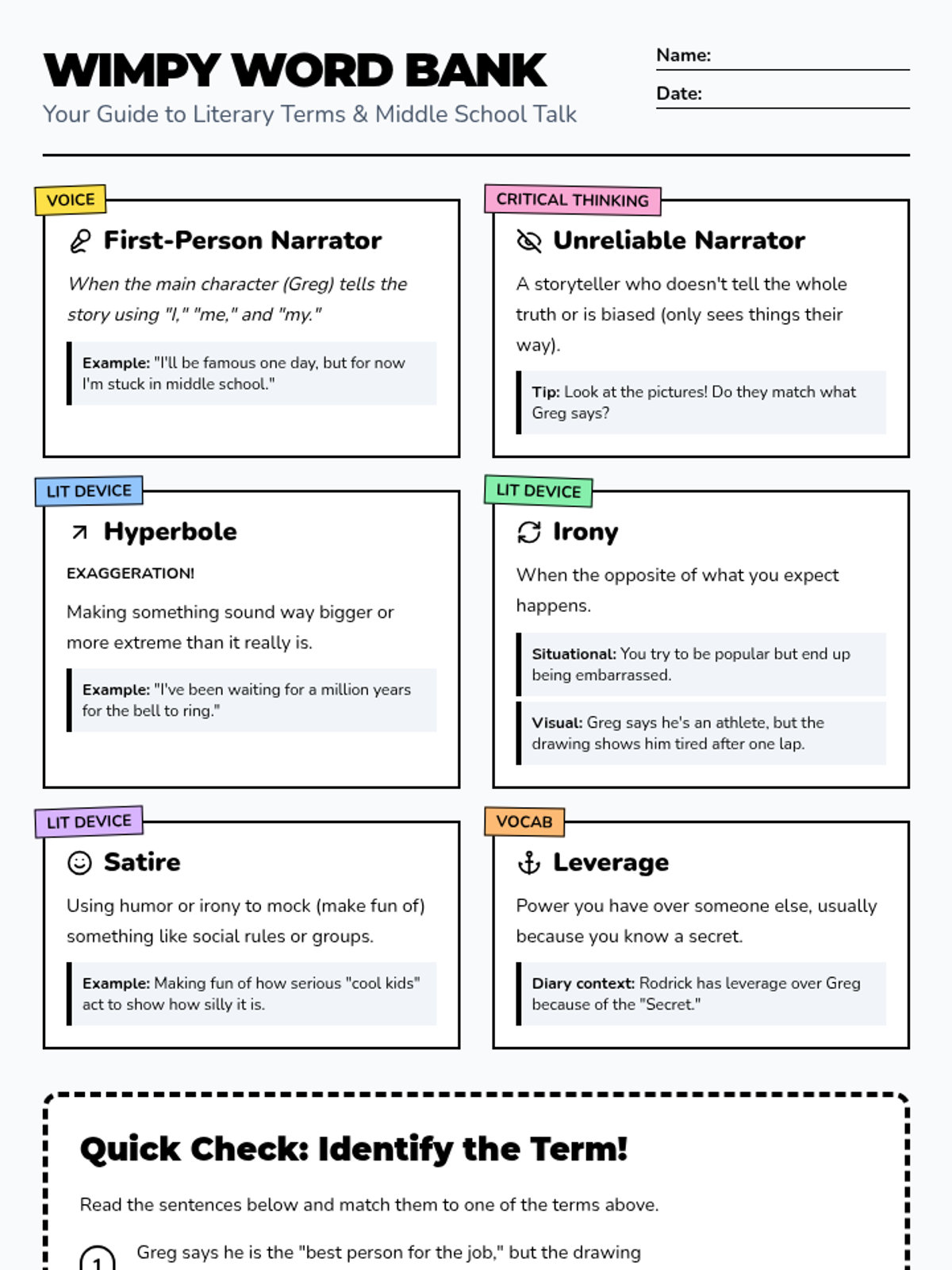
Wrapping up Book 1 with calls back to Greg's early mistakes. Introduction of Personification in Greg's doodles and a deep dive into Visual Irony. Focus on Phrasal Verbs and Idioms to bridge into Book 2.
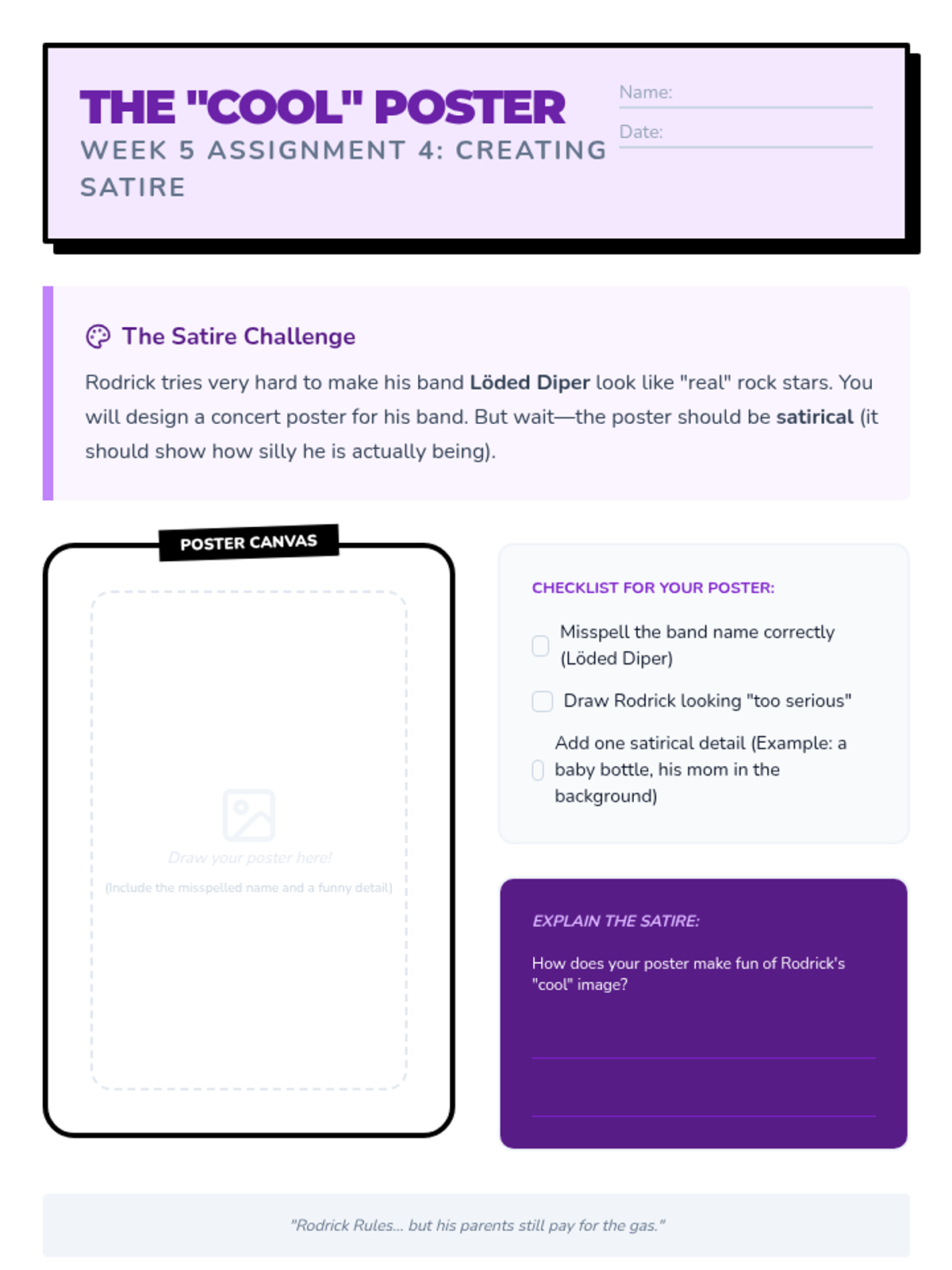
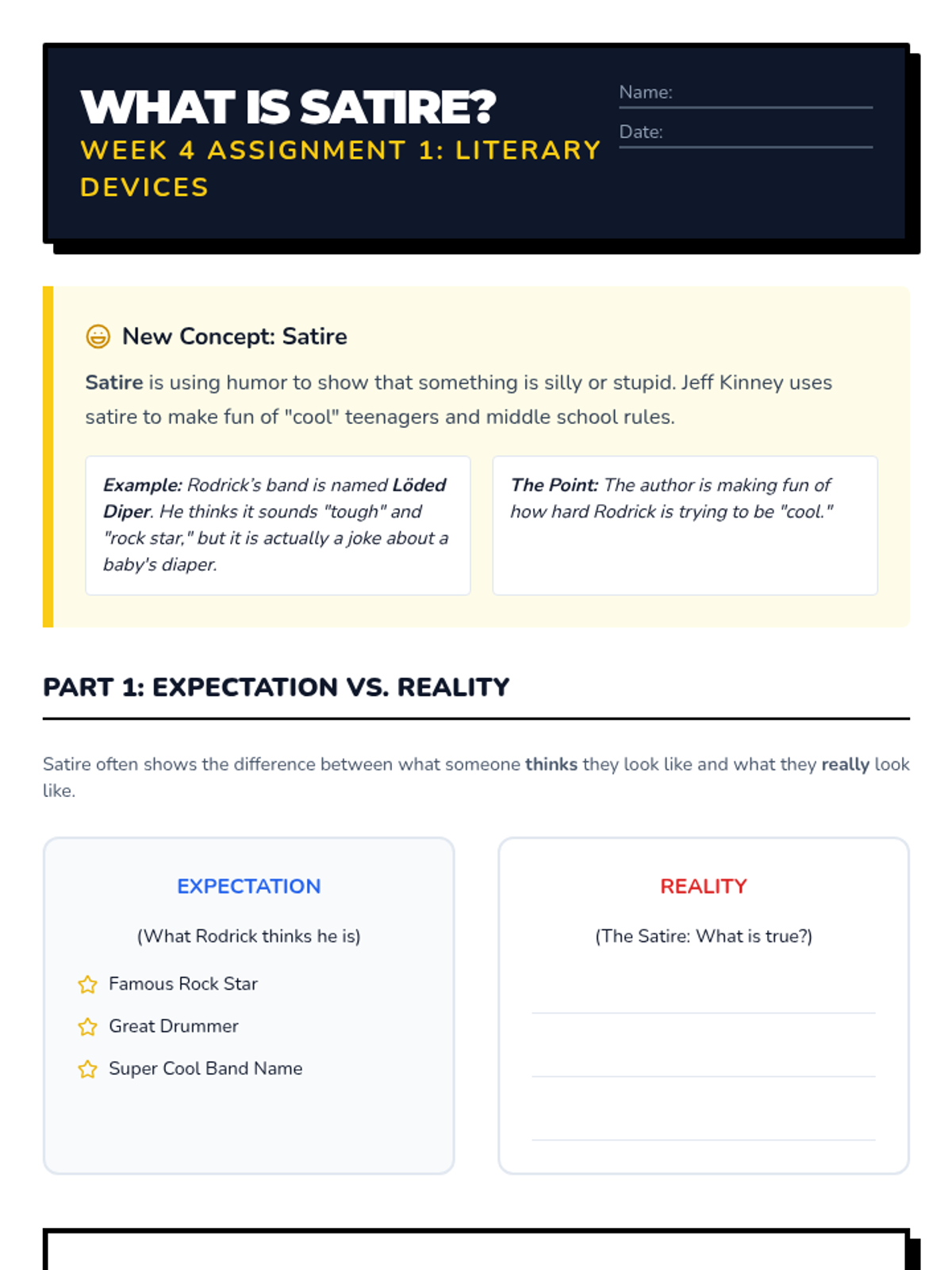
In-depth look at Rodrick's band Löded Diper. Students explore satire and how irony is used to mock social stereotypes.
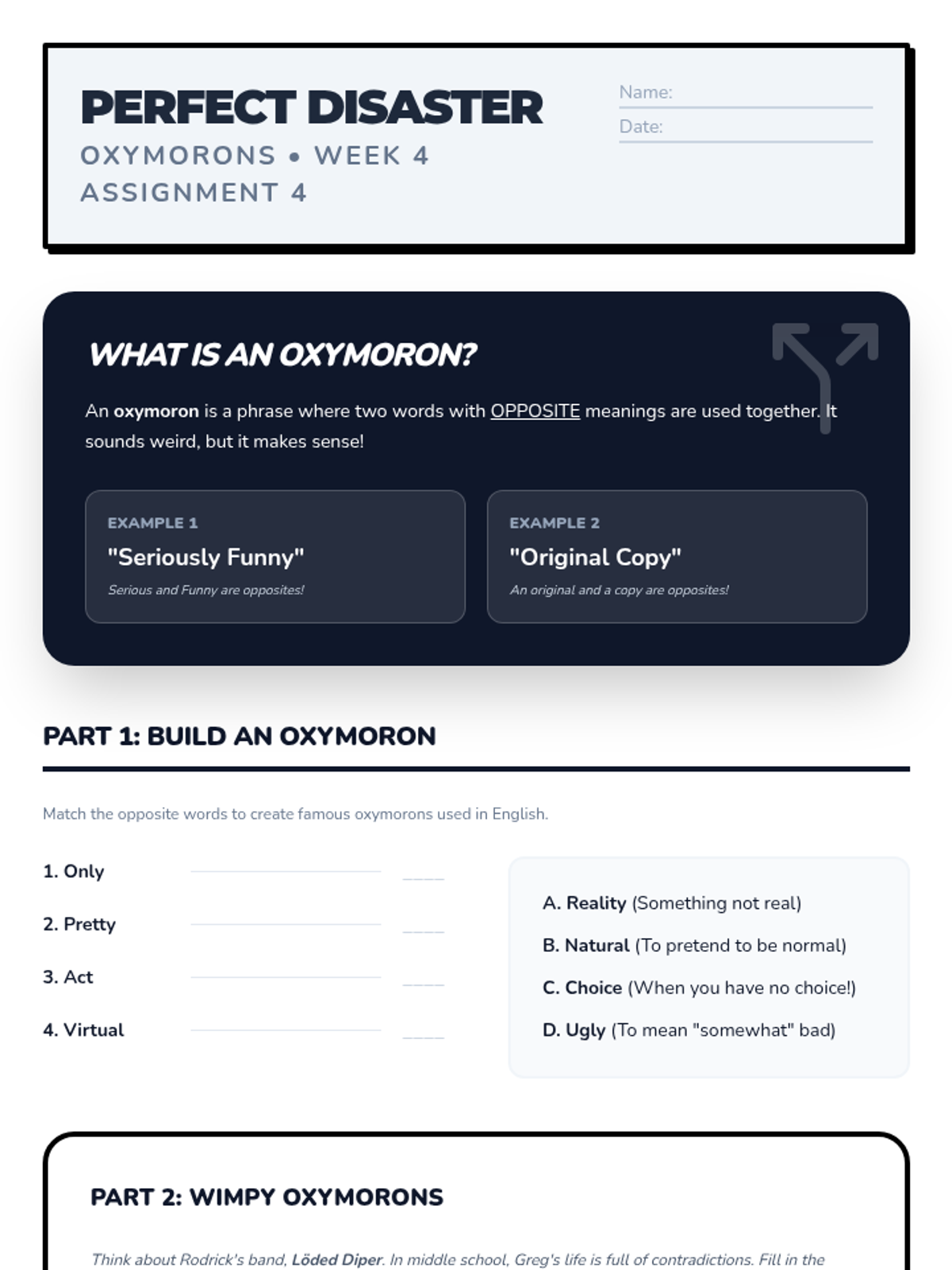
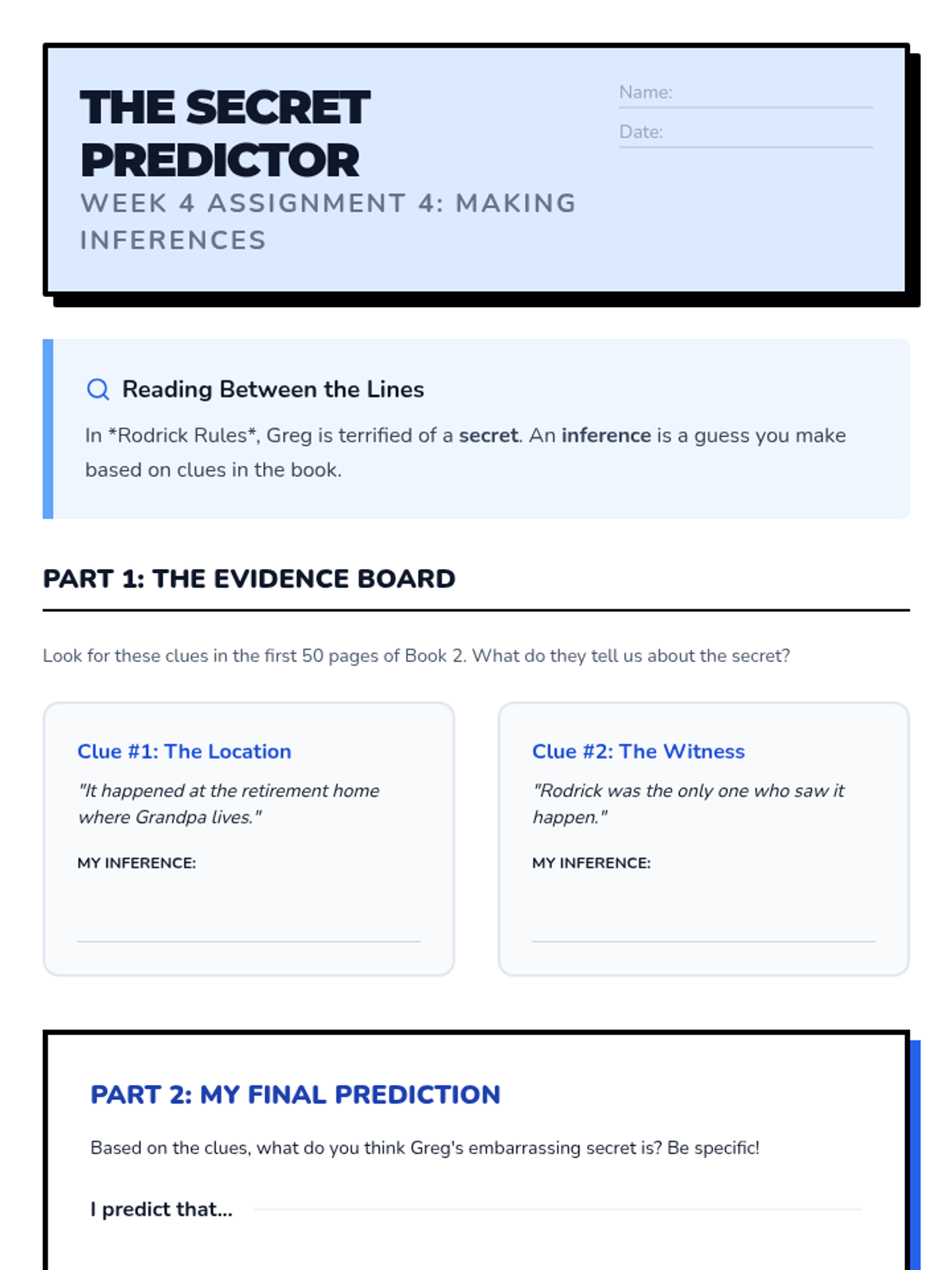
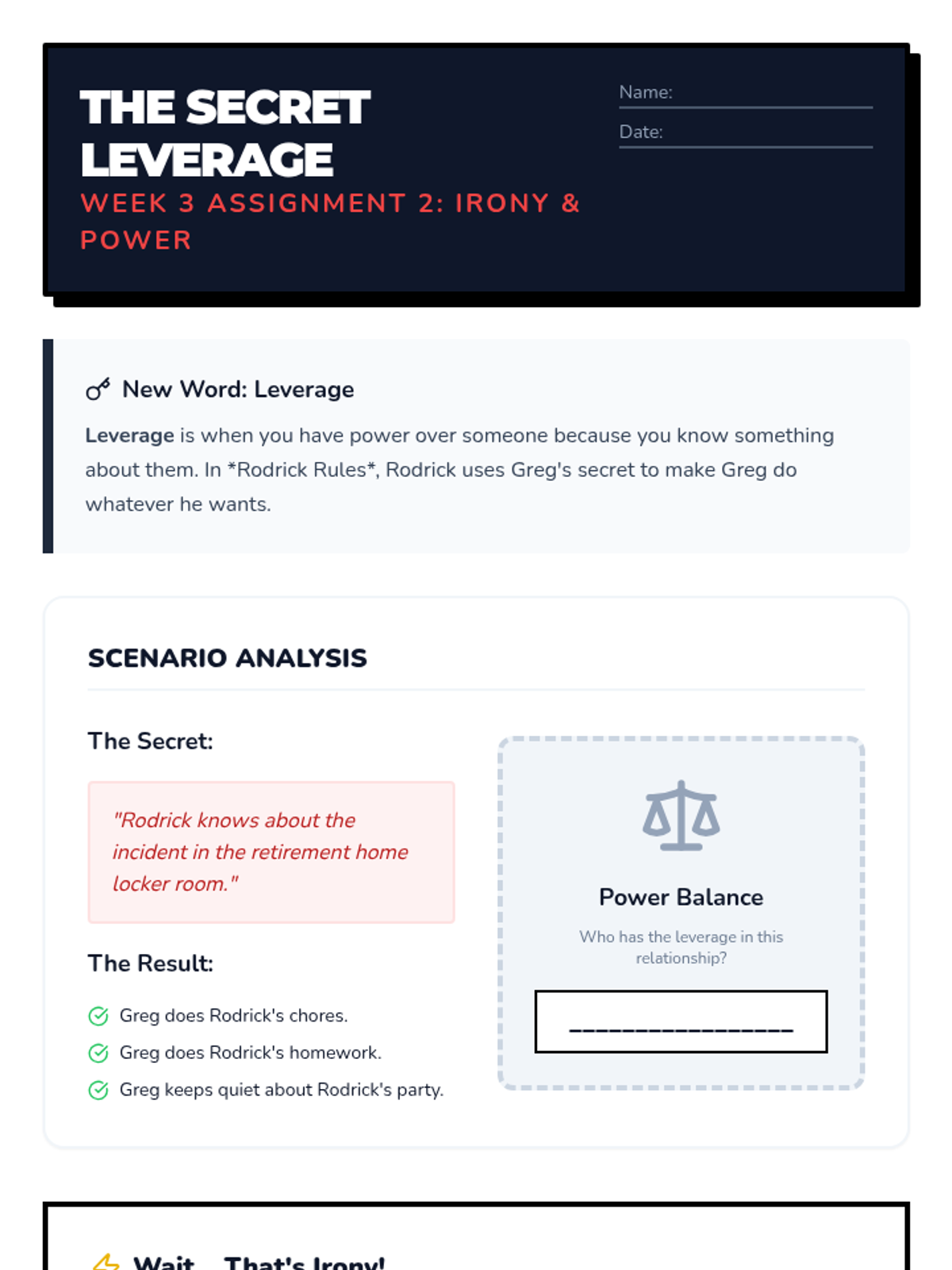
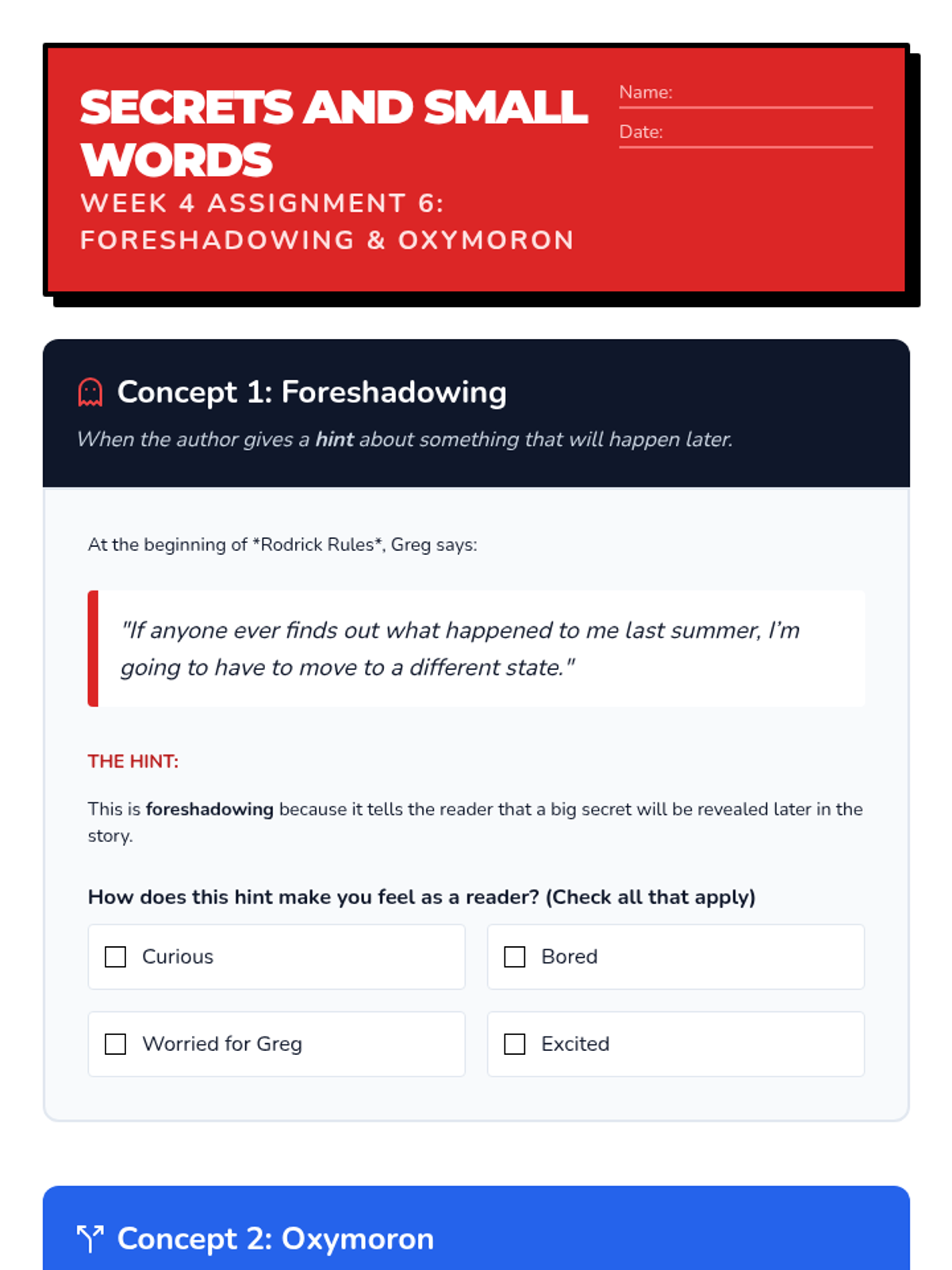
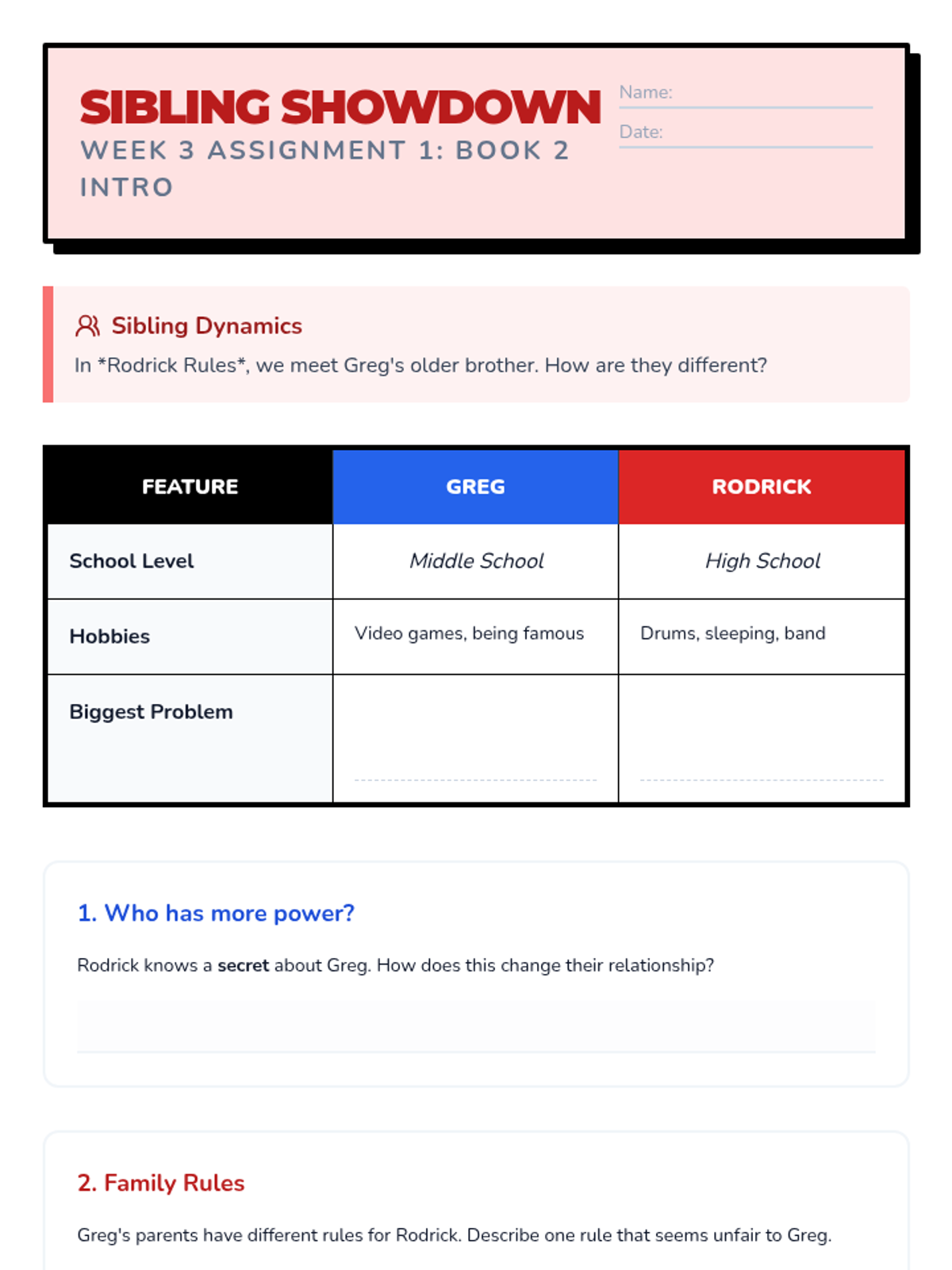
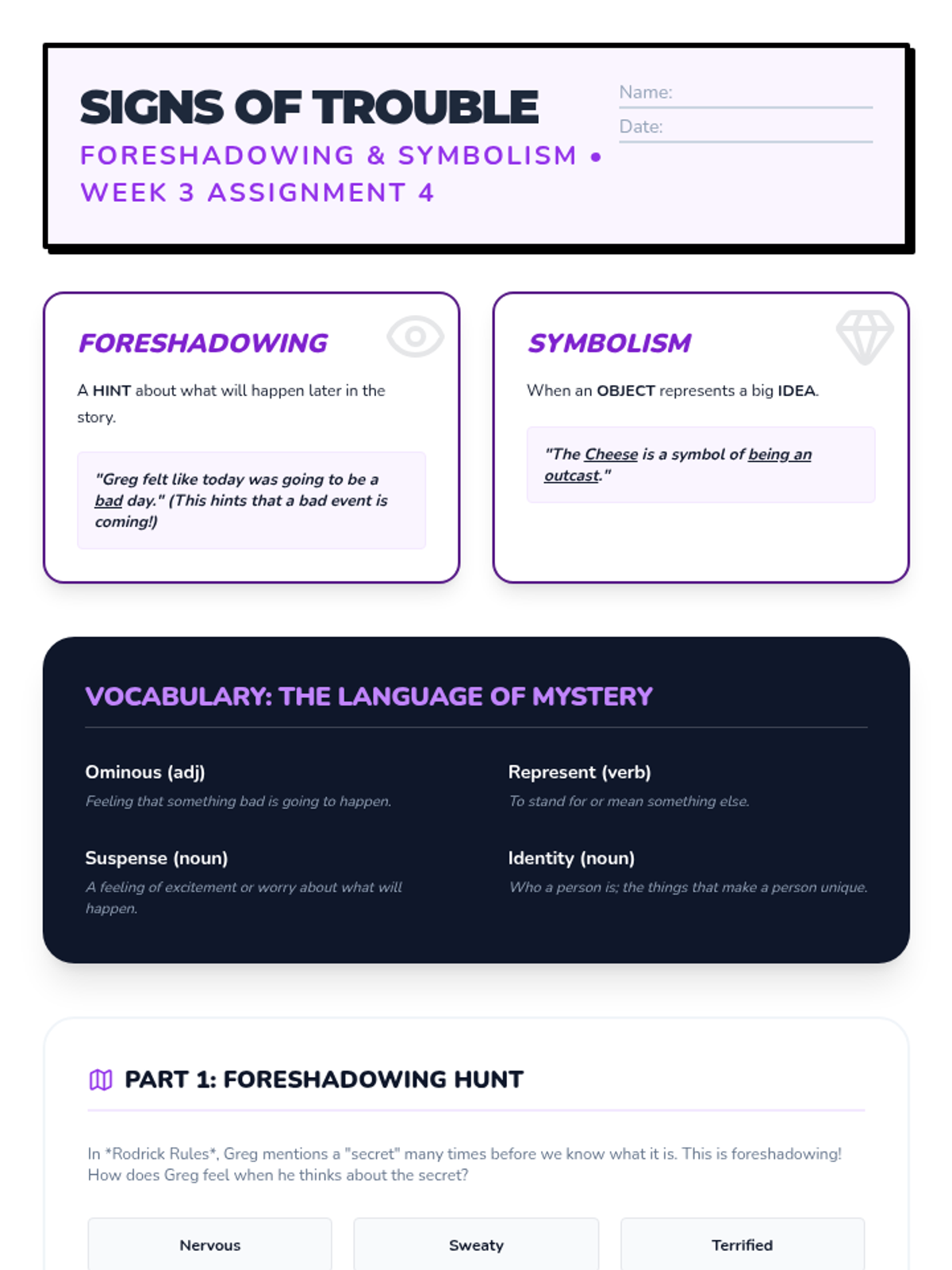
Transitioning to 'Rodrick Rules'. Focus on Foreshadowing (the embarrassing secret) and Oxymoron (Löded Diper). Sibling rivalry vocabulary and the concept of 'Leverage'.
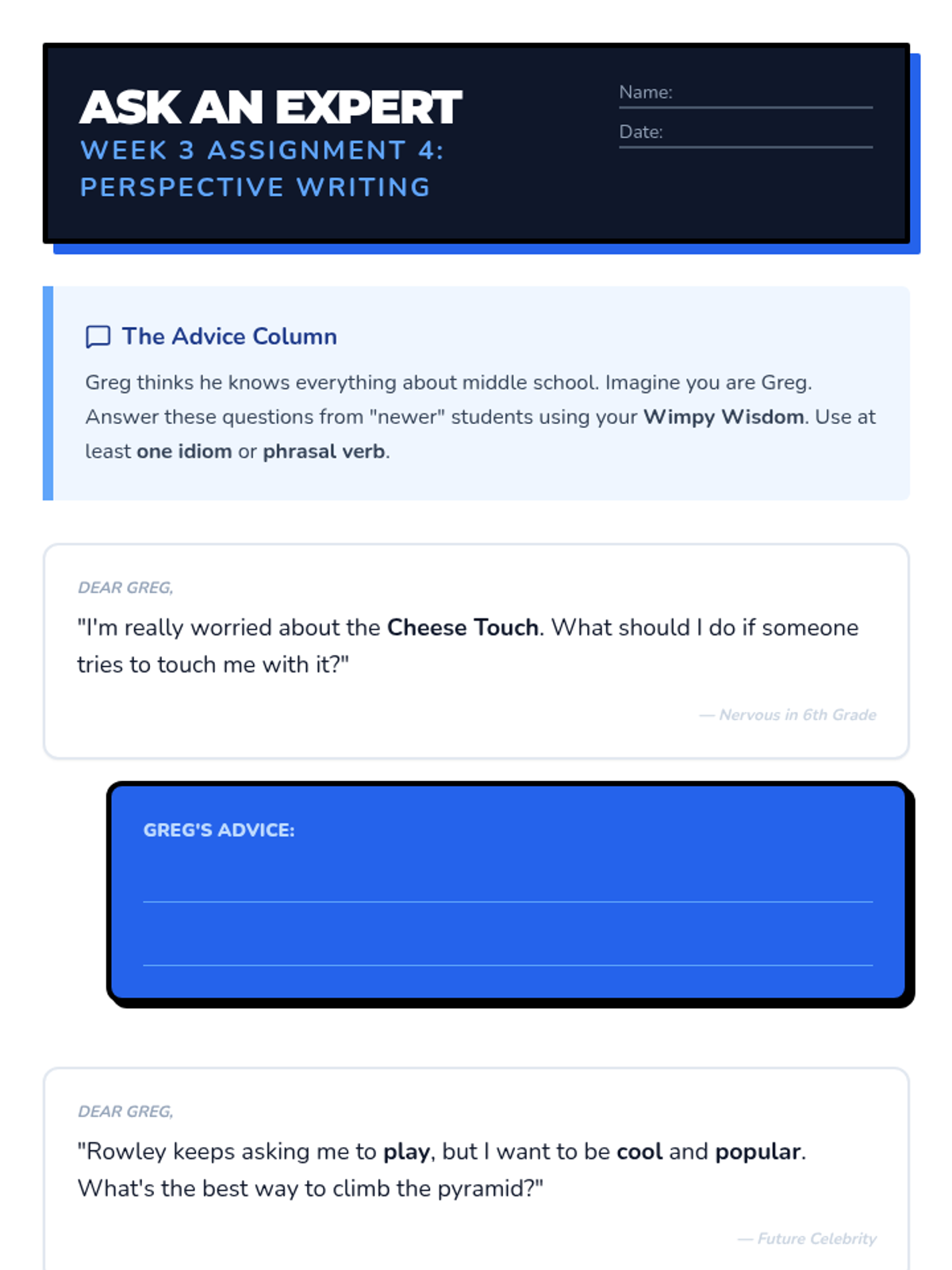
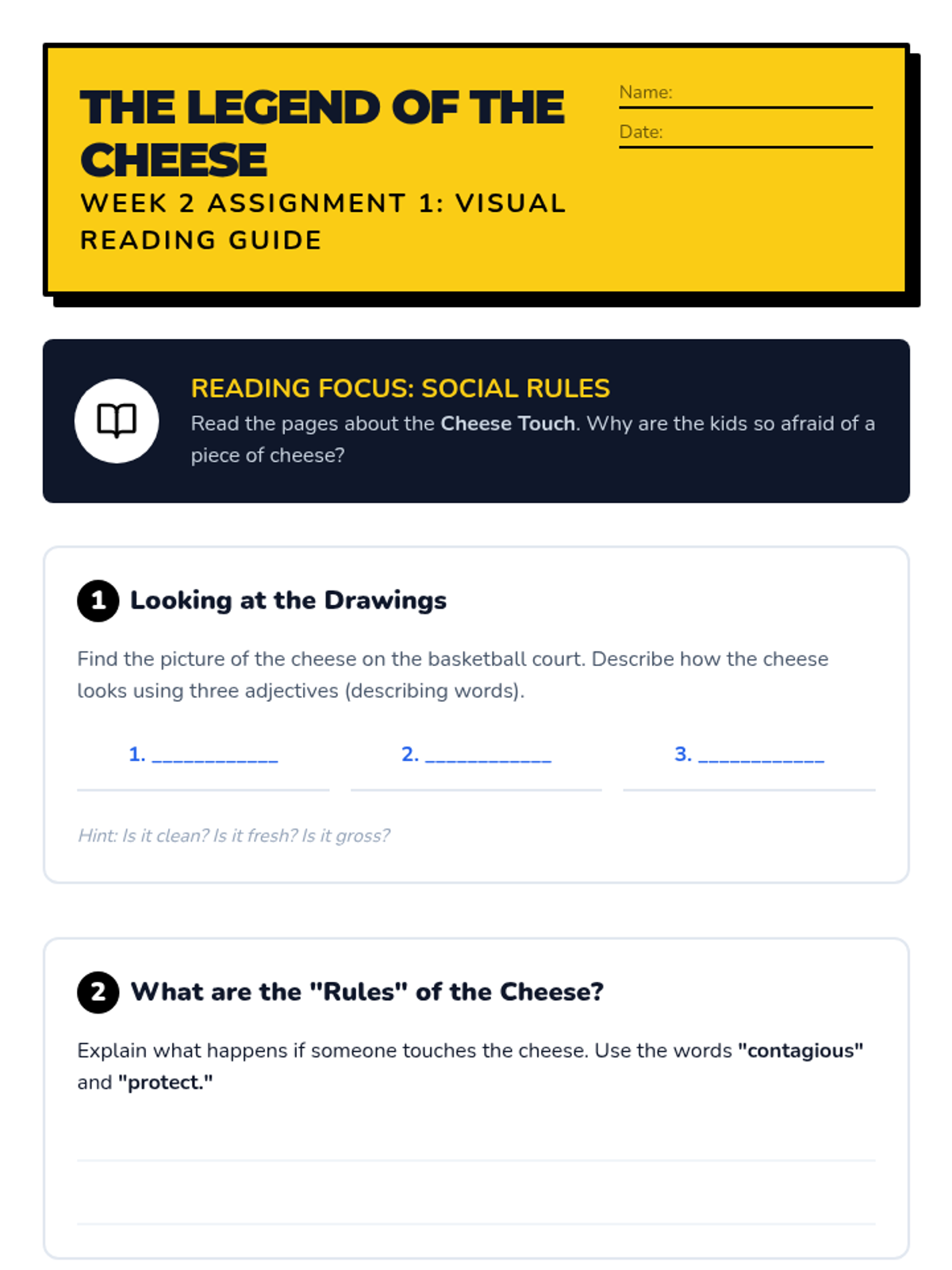
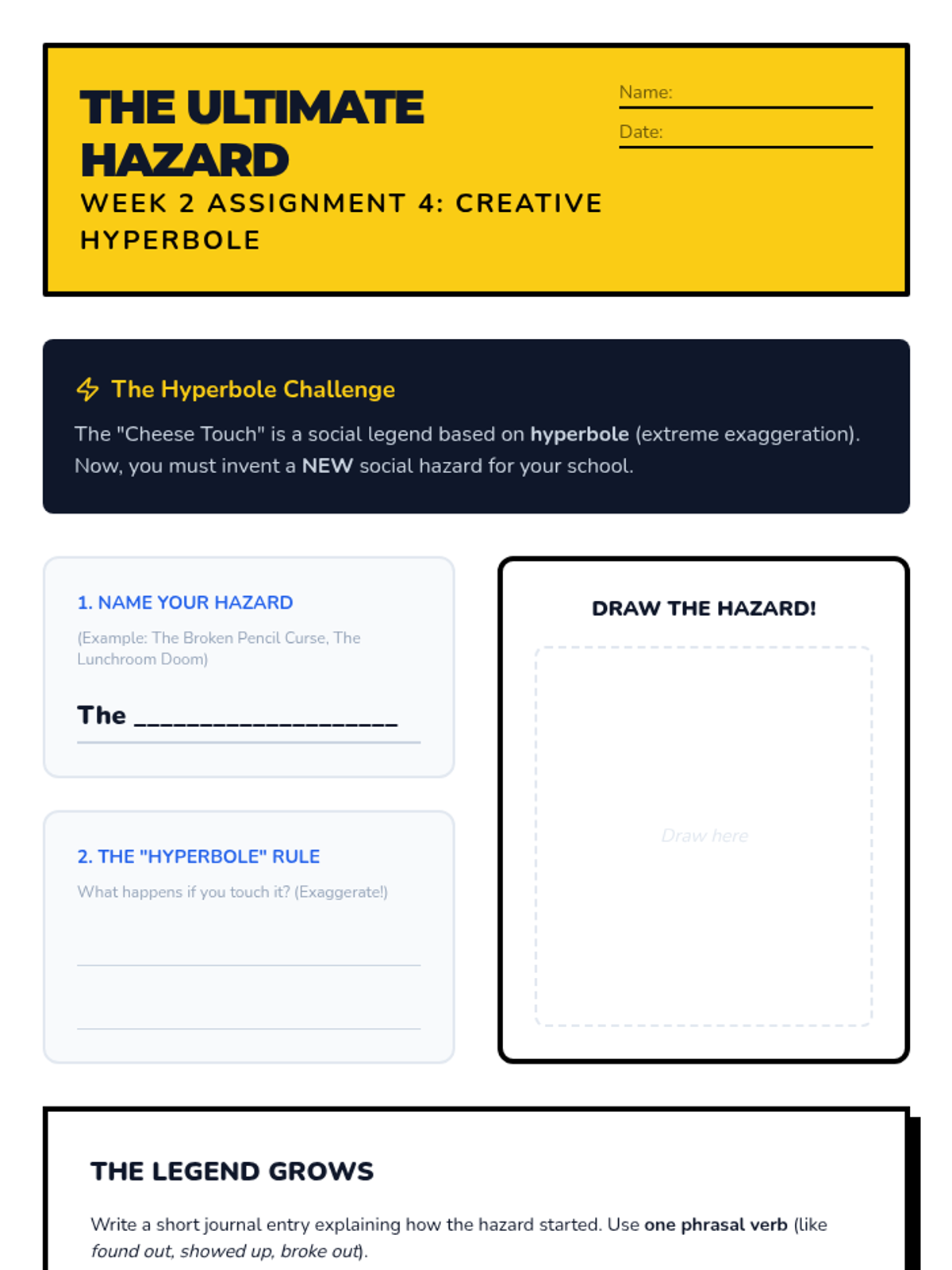
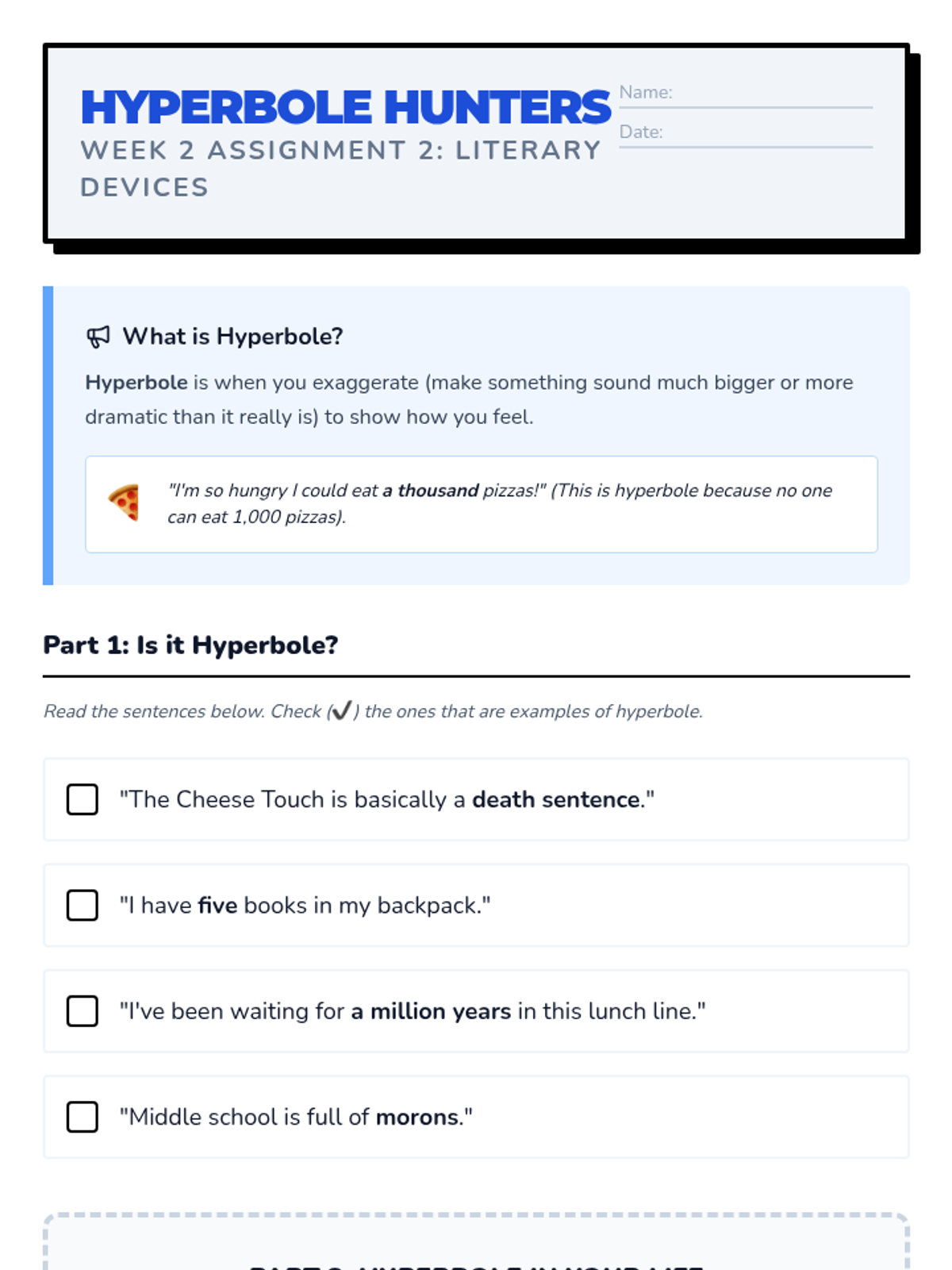
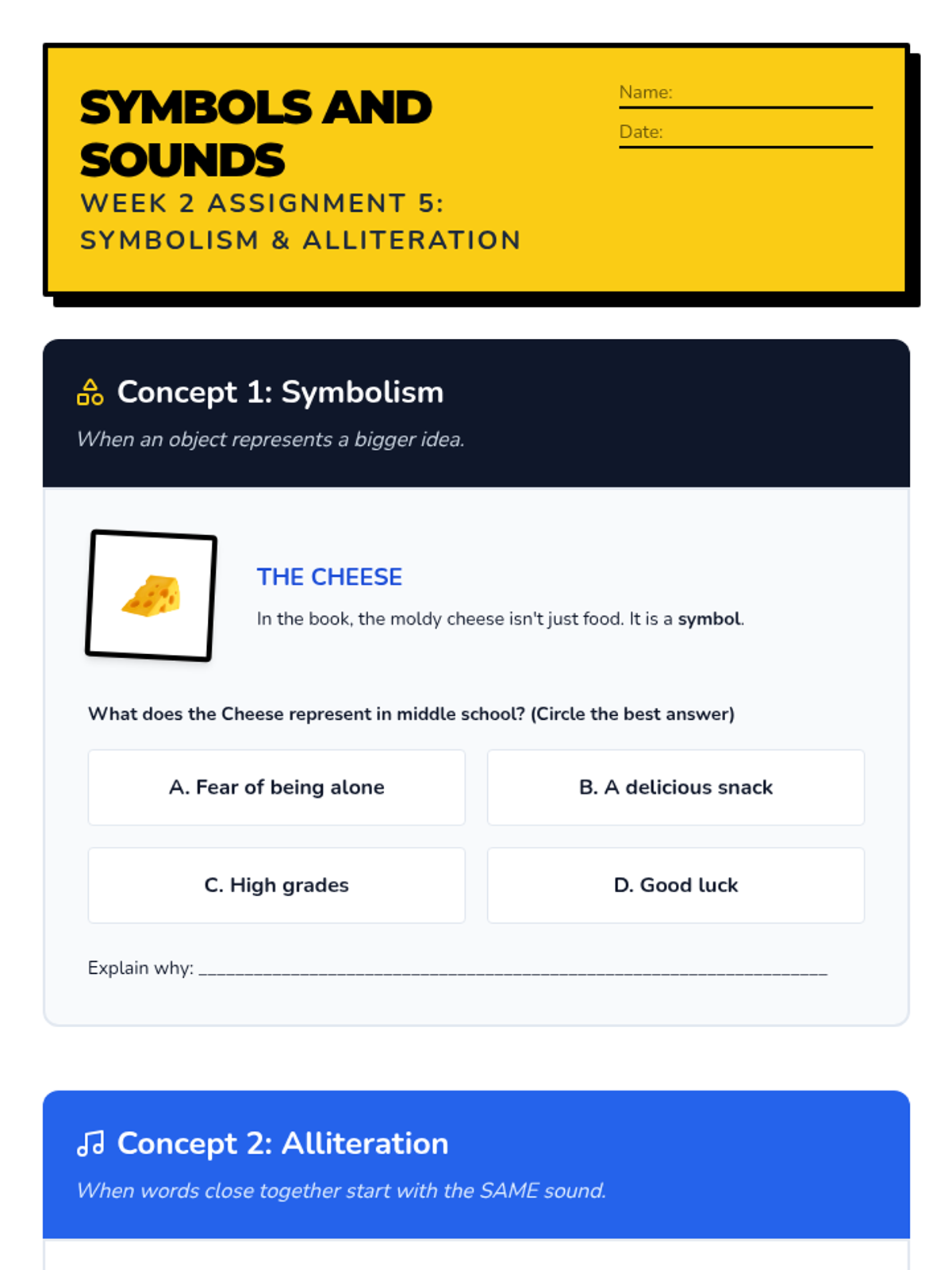
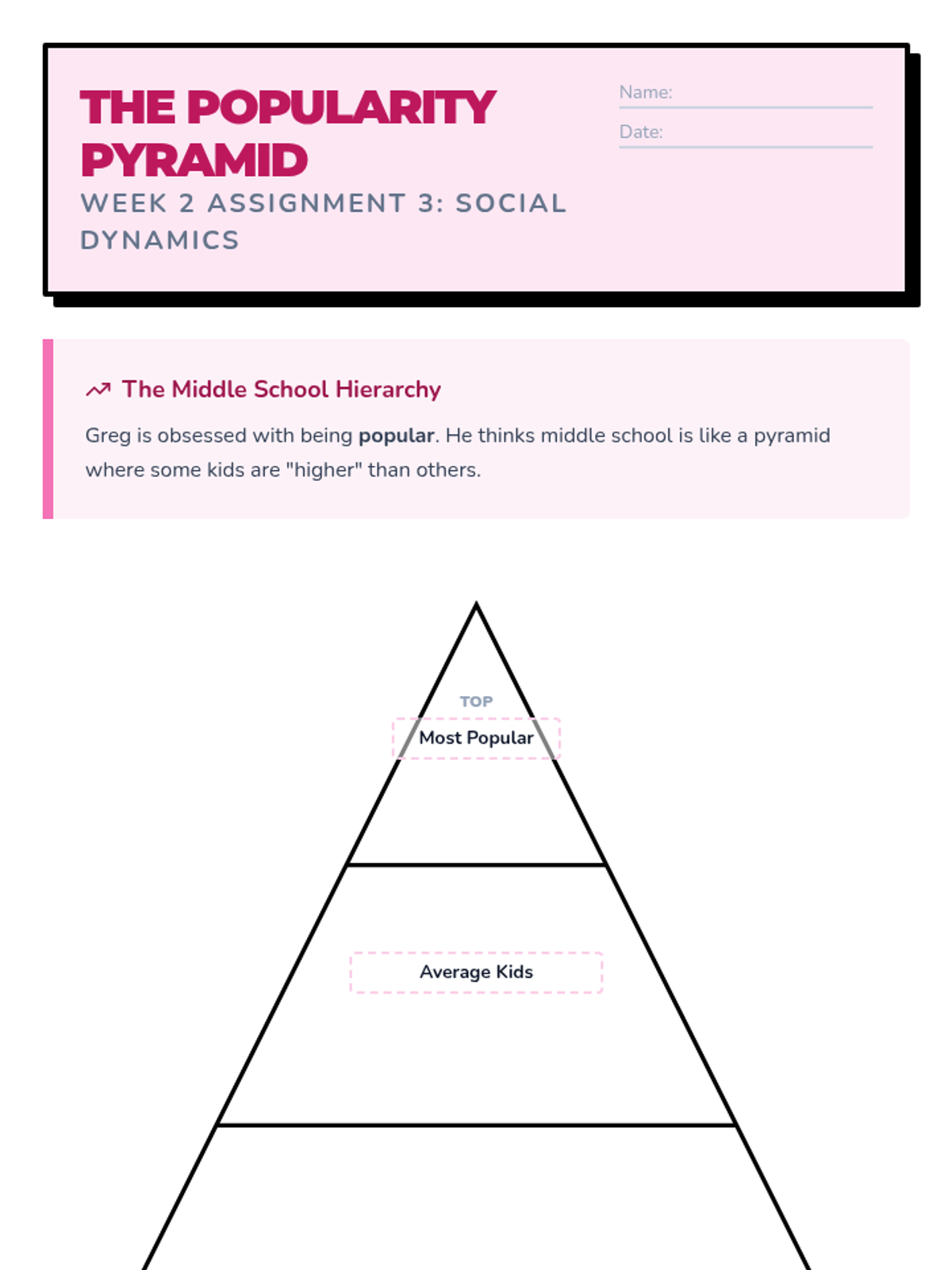
Exploring social hierarchies. Focus on Hyperbole (exaggeration), Symbolism (The Cheese), and Alliteration (Greg's insults). Vocabulary focus on 'Social Exclusion' and 'Status' terms.
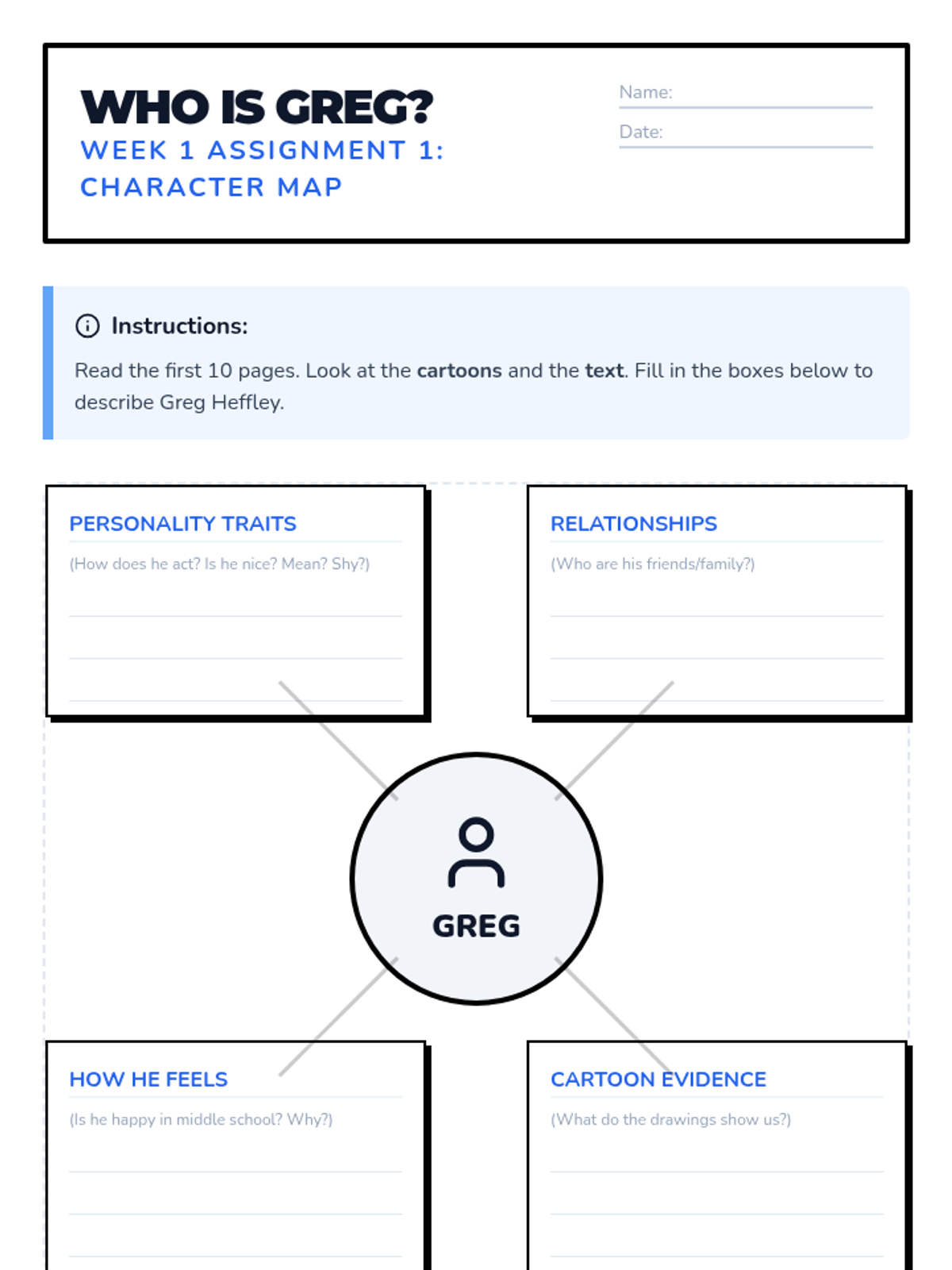
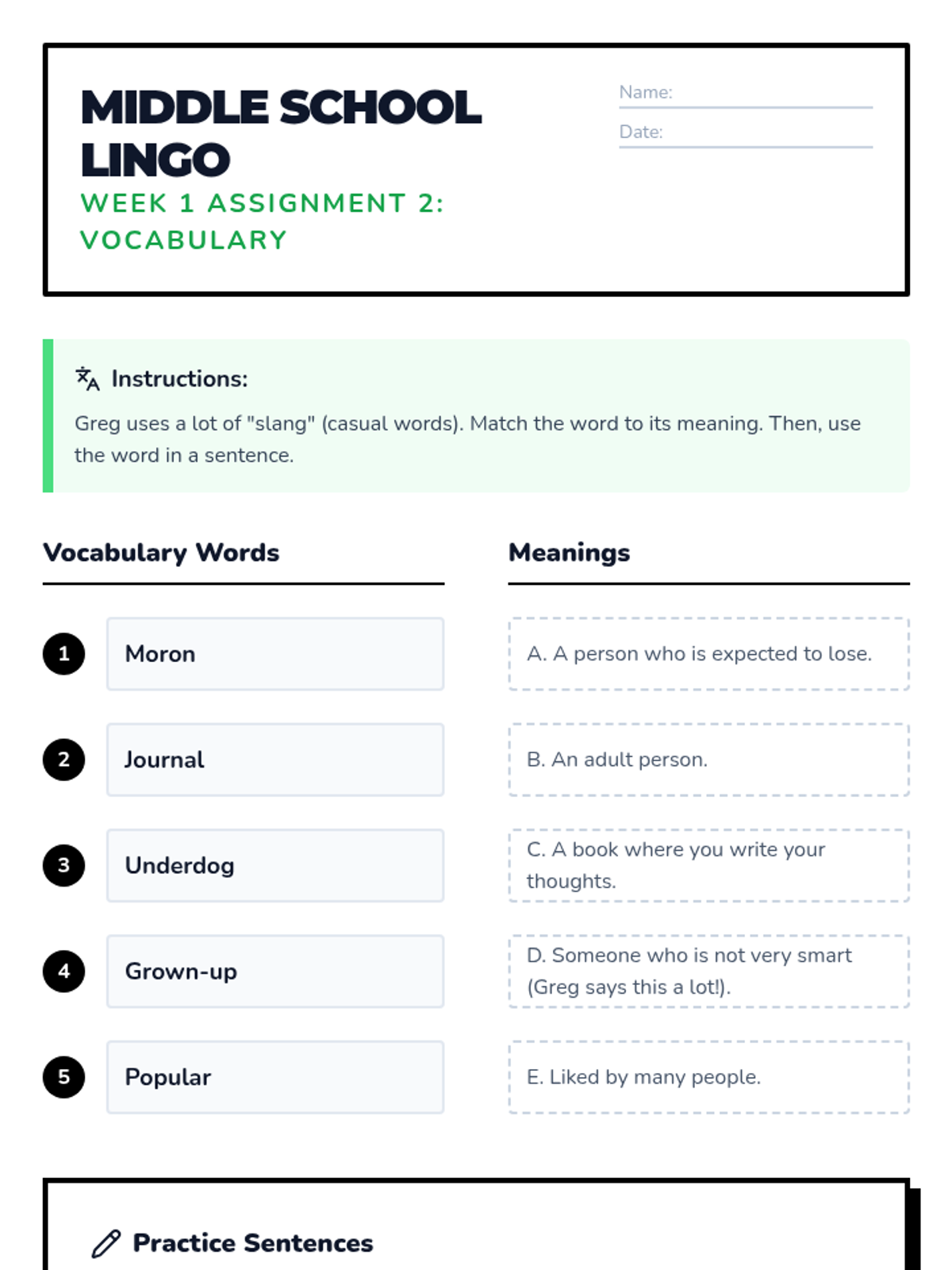
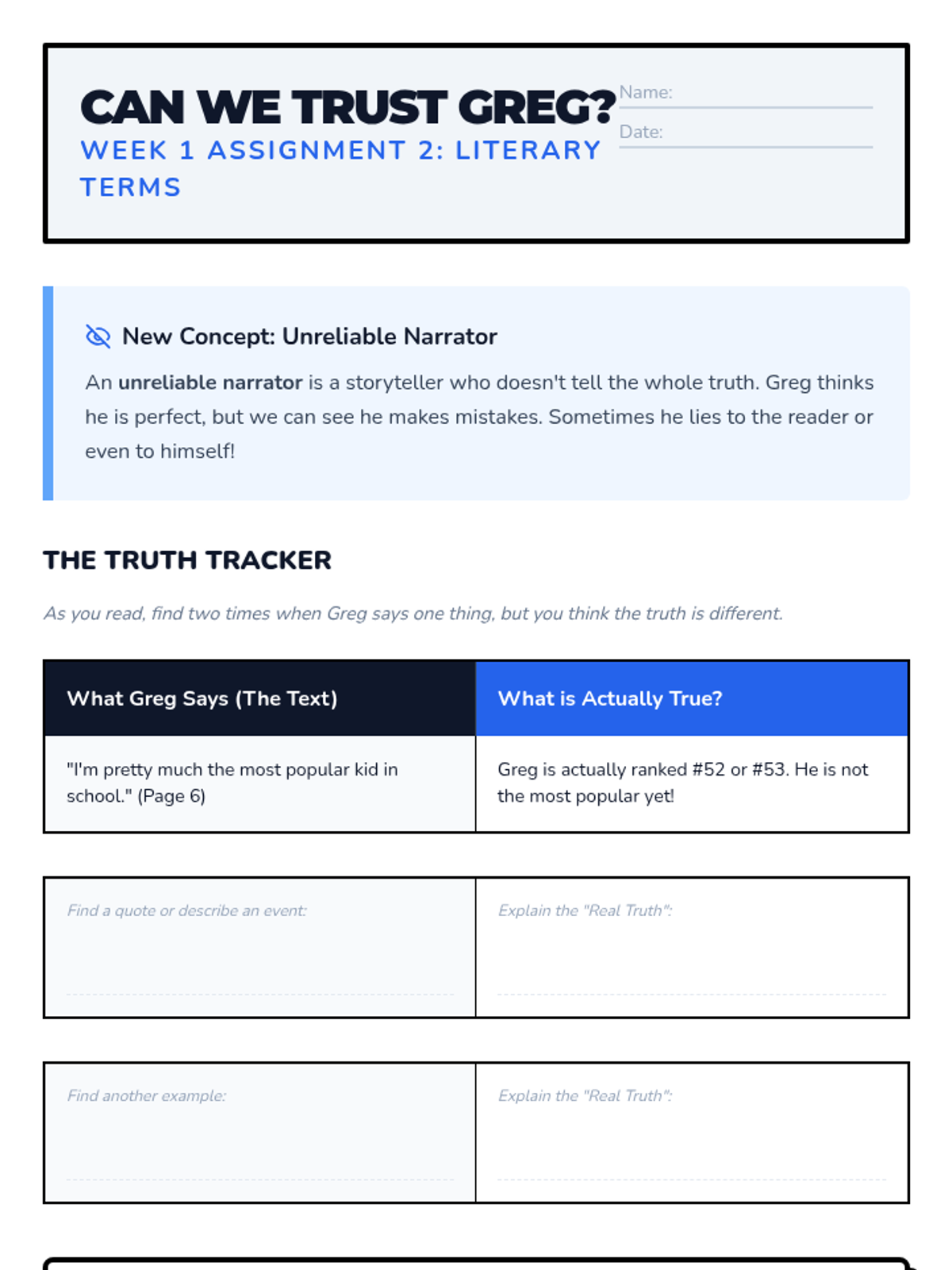
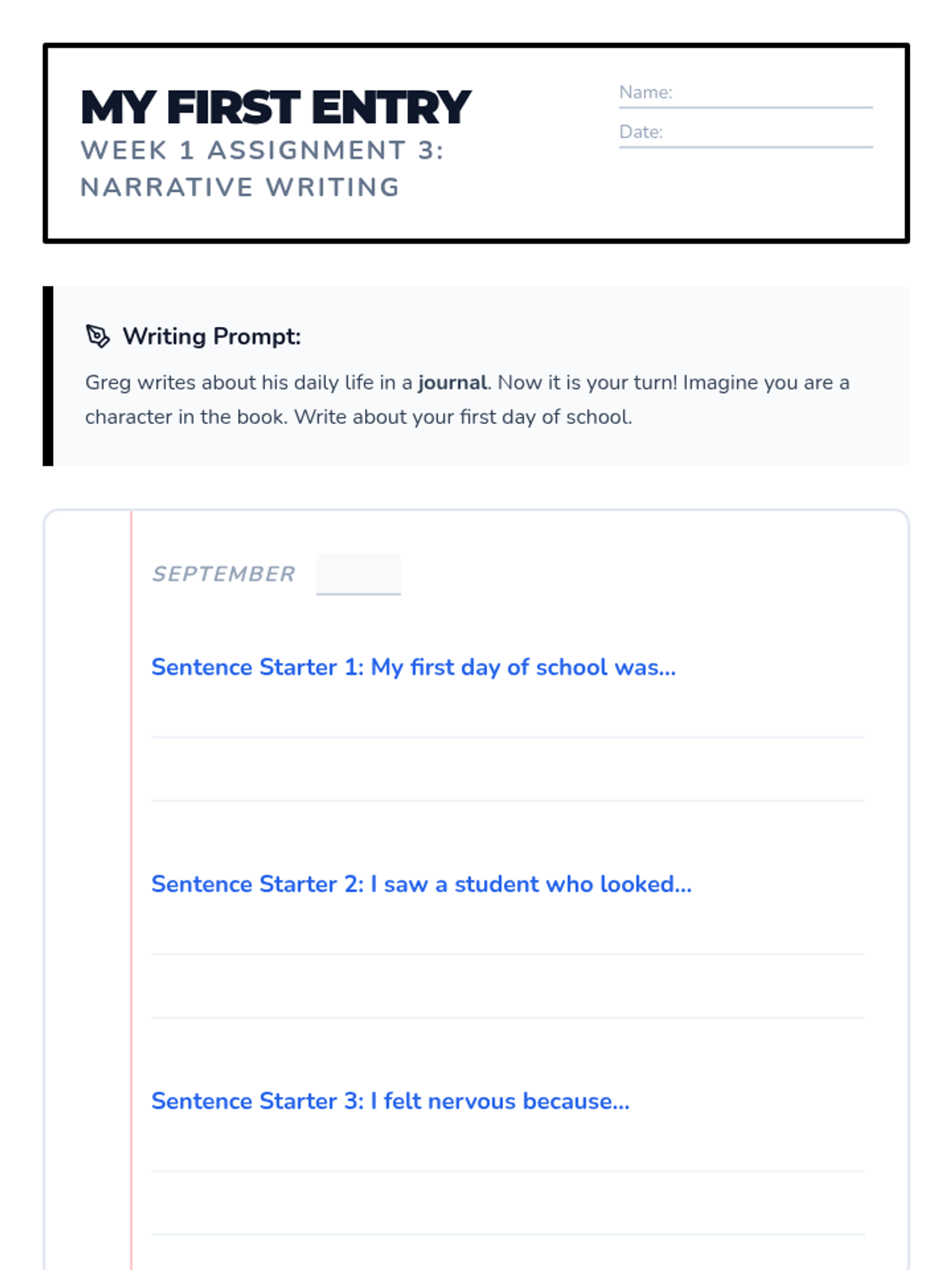
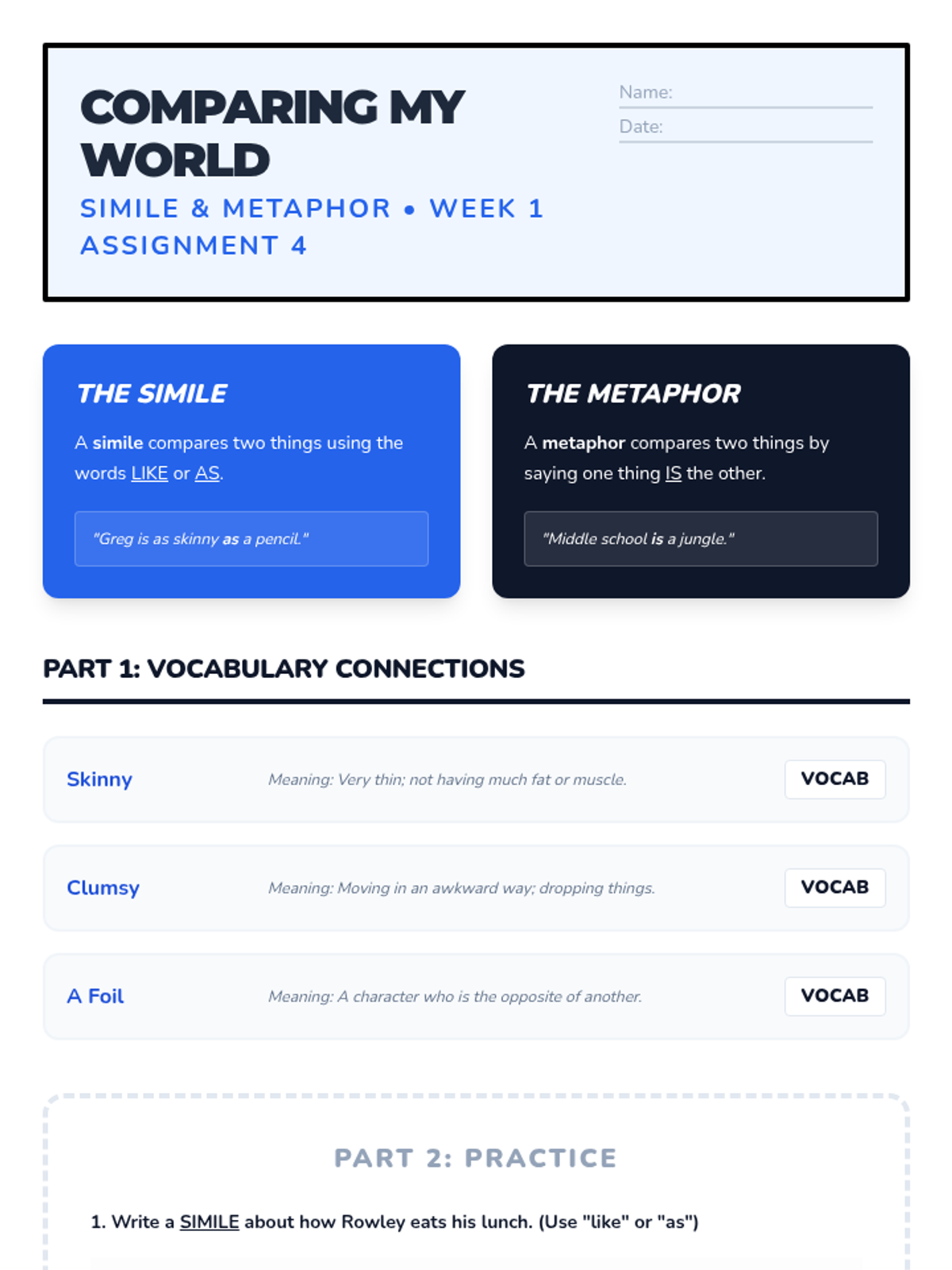
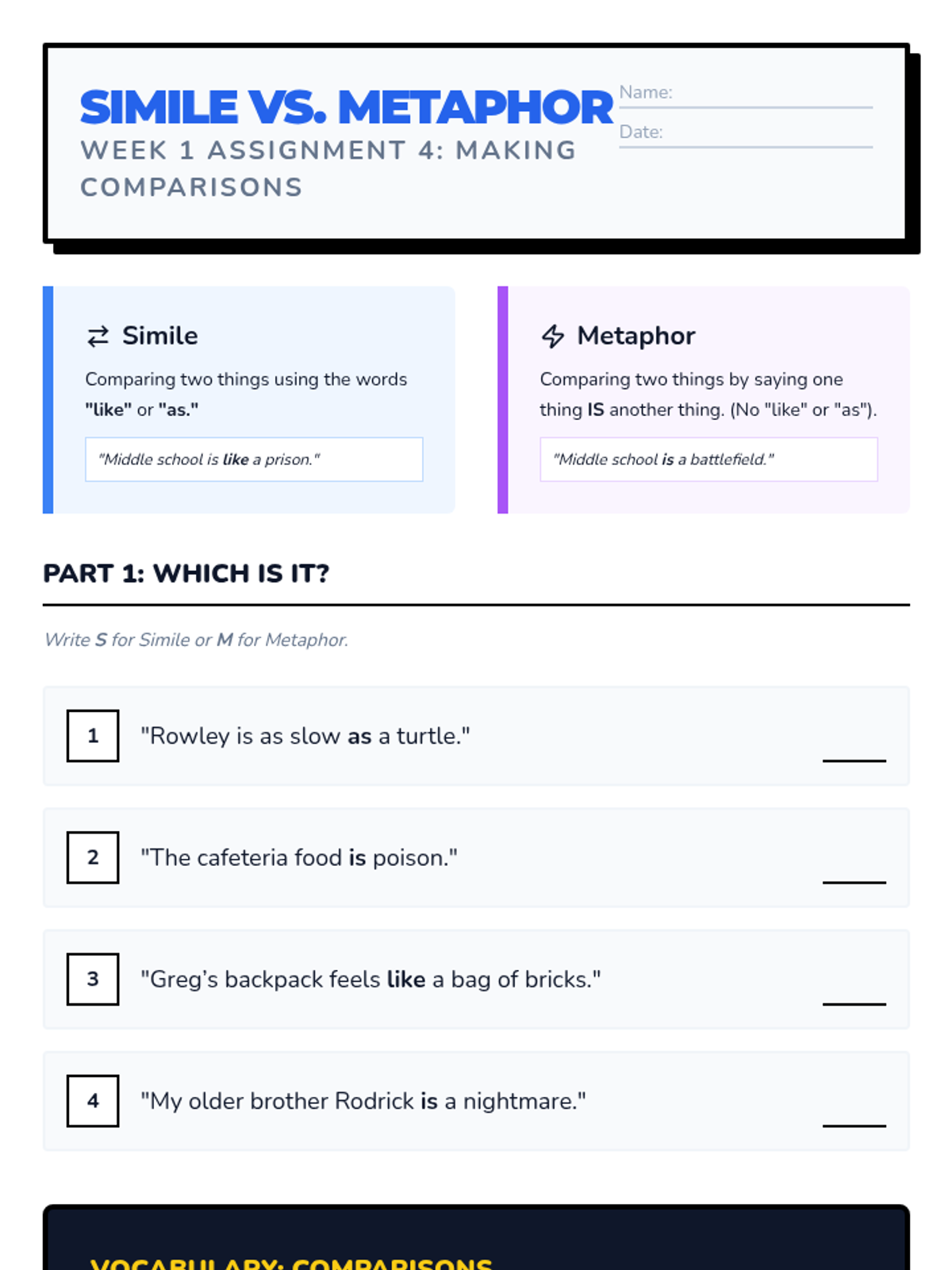
Introduction to Greg Heffley and narrative voice. Students master First-Person Narrator and Unreliable Narrator concepts while learning Simile and Metaphor through Greg's school comparisons. Focus on 'Middle School Lingo' vocabulary.
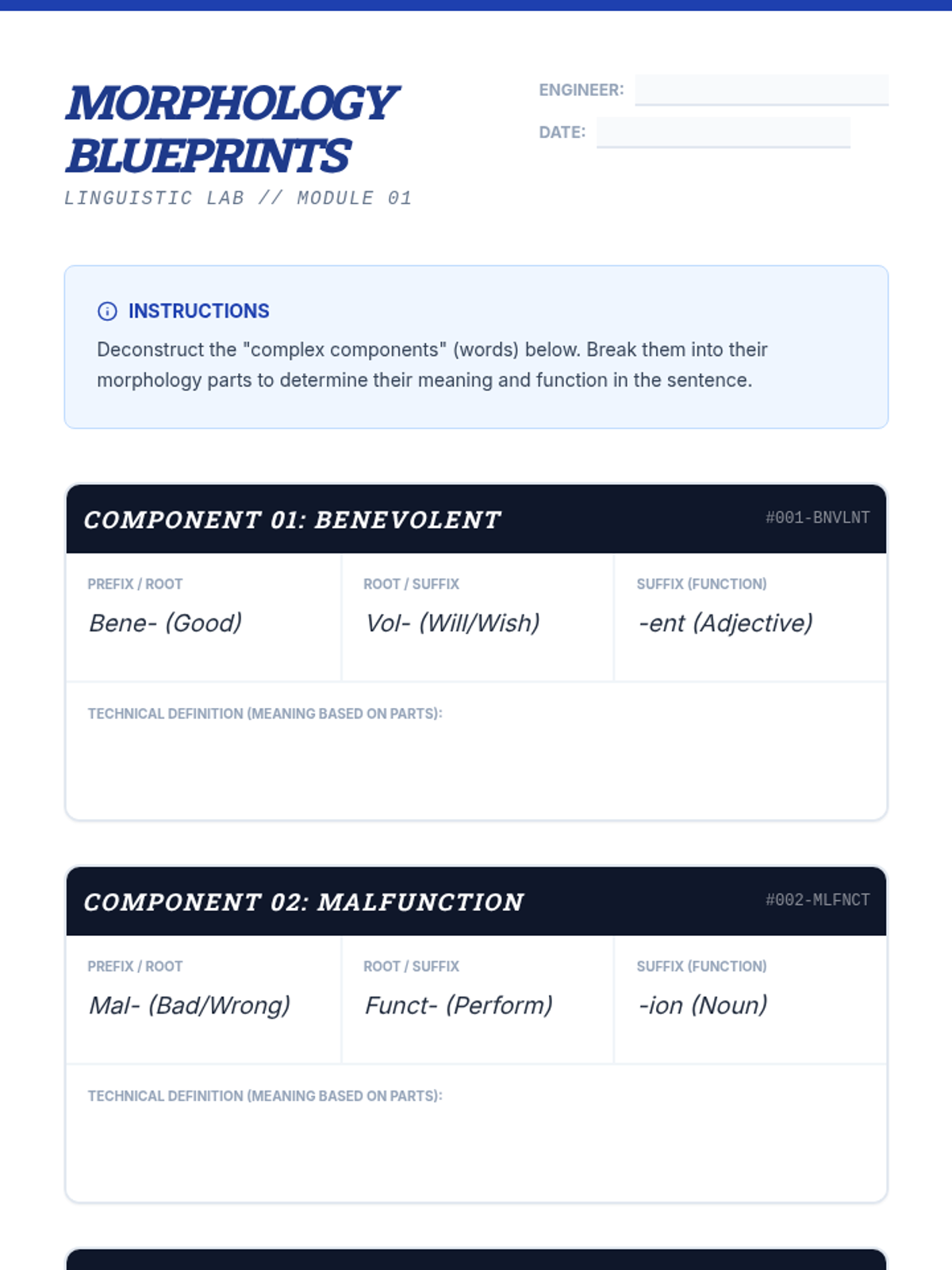
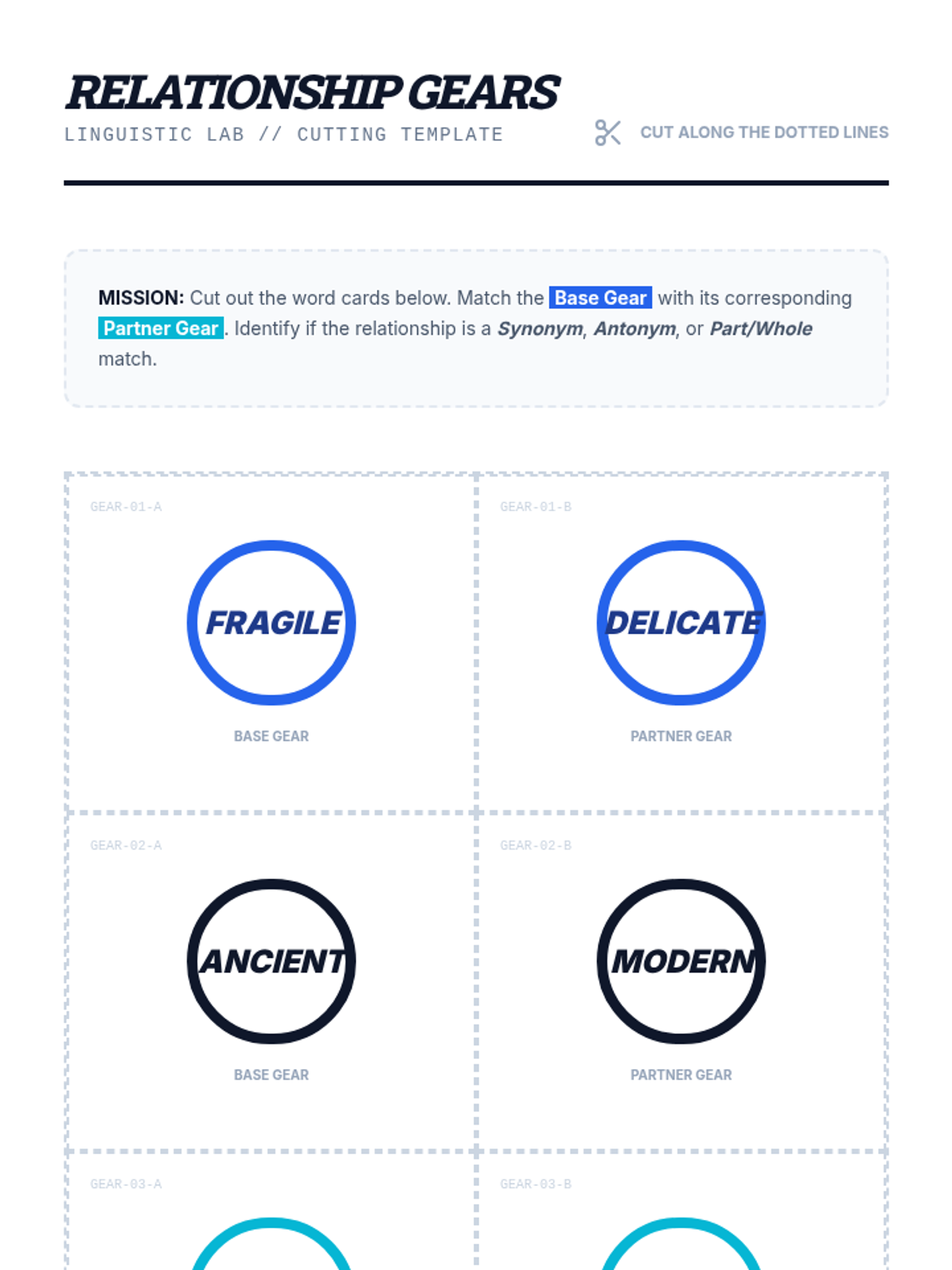
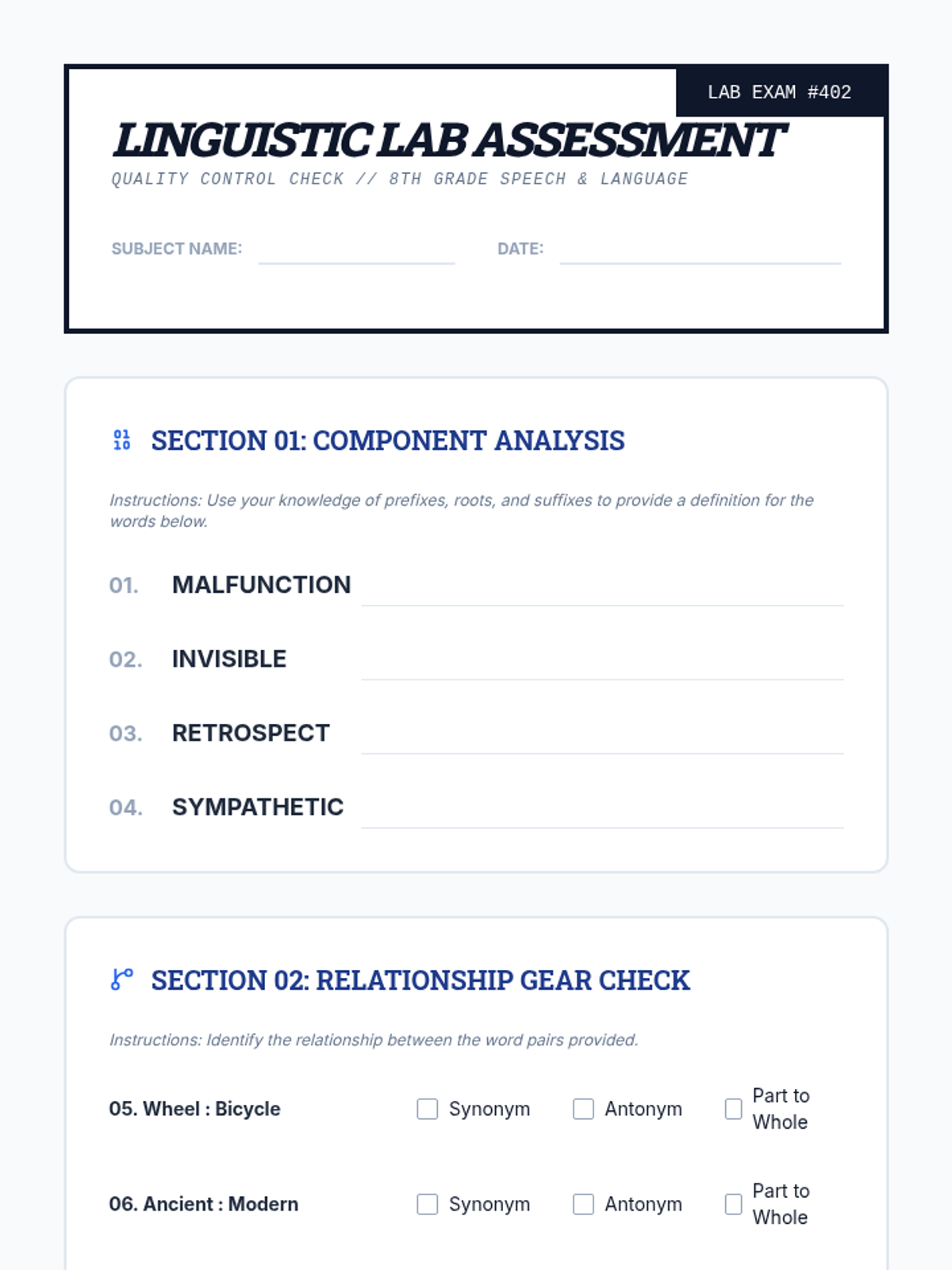
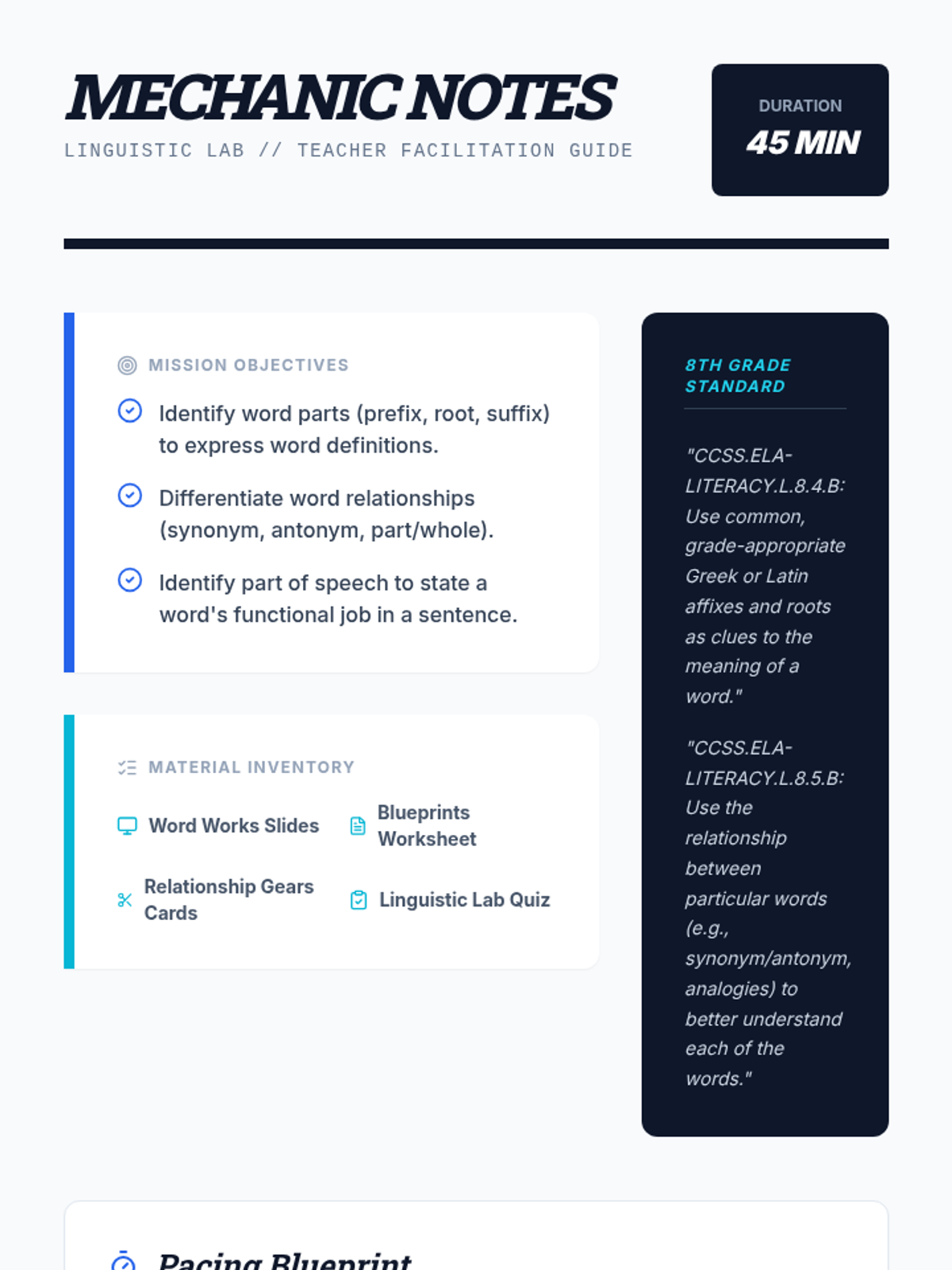
A comprehensive speech and language lesson for 8th graders focused on morphology, word relationships, and parts of speech using a 'Linguistic Lab' mechanical theme.
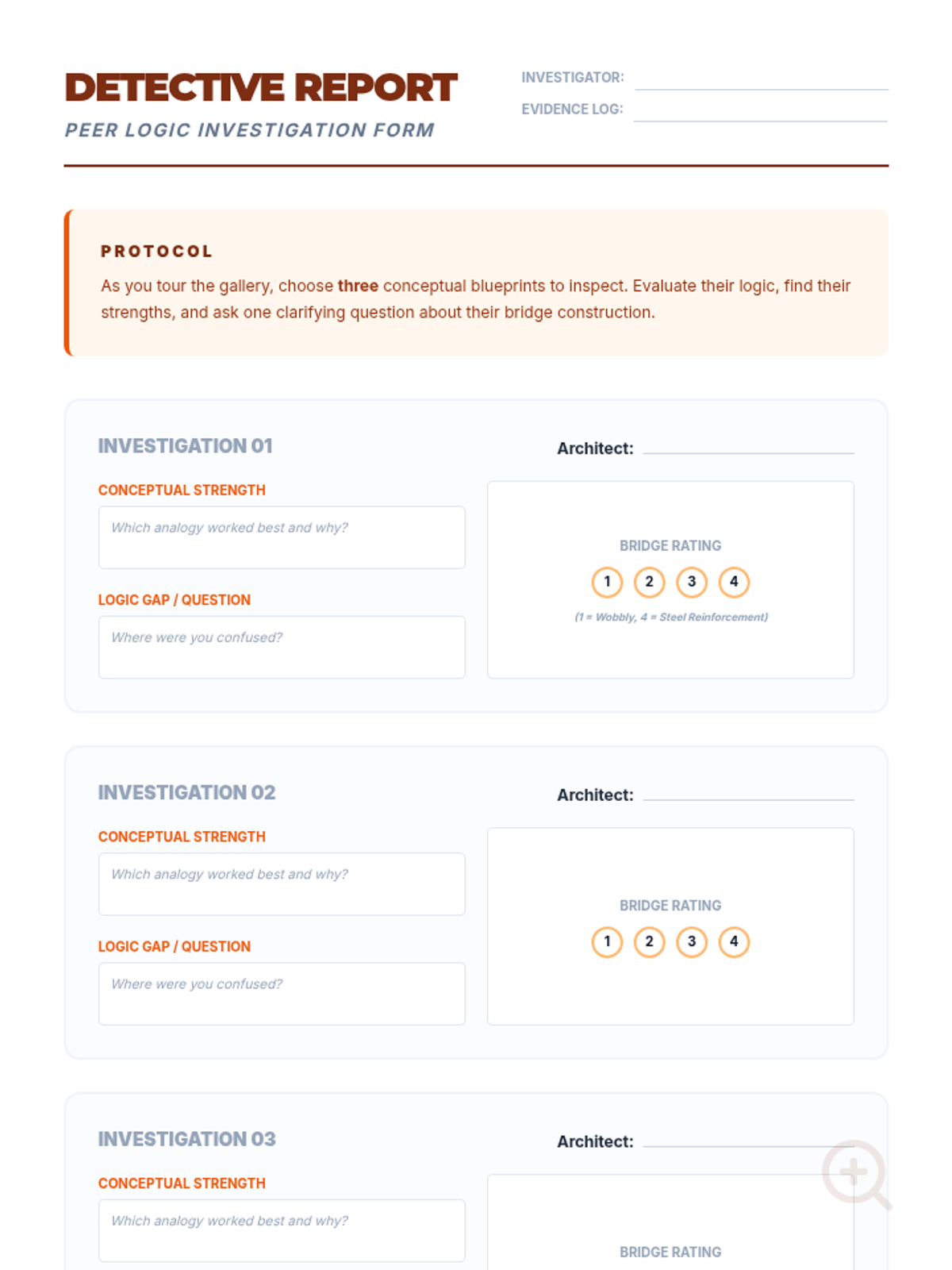
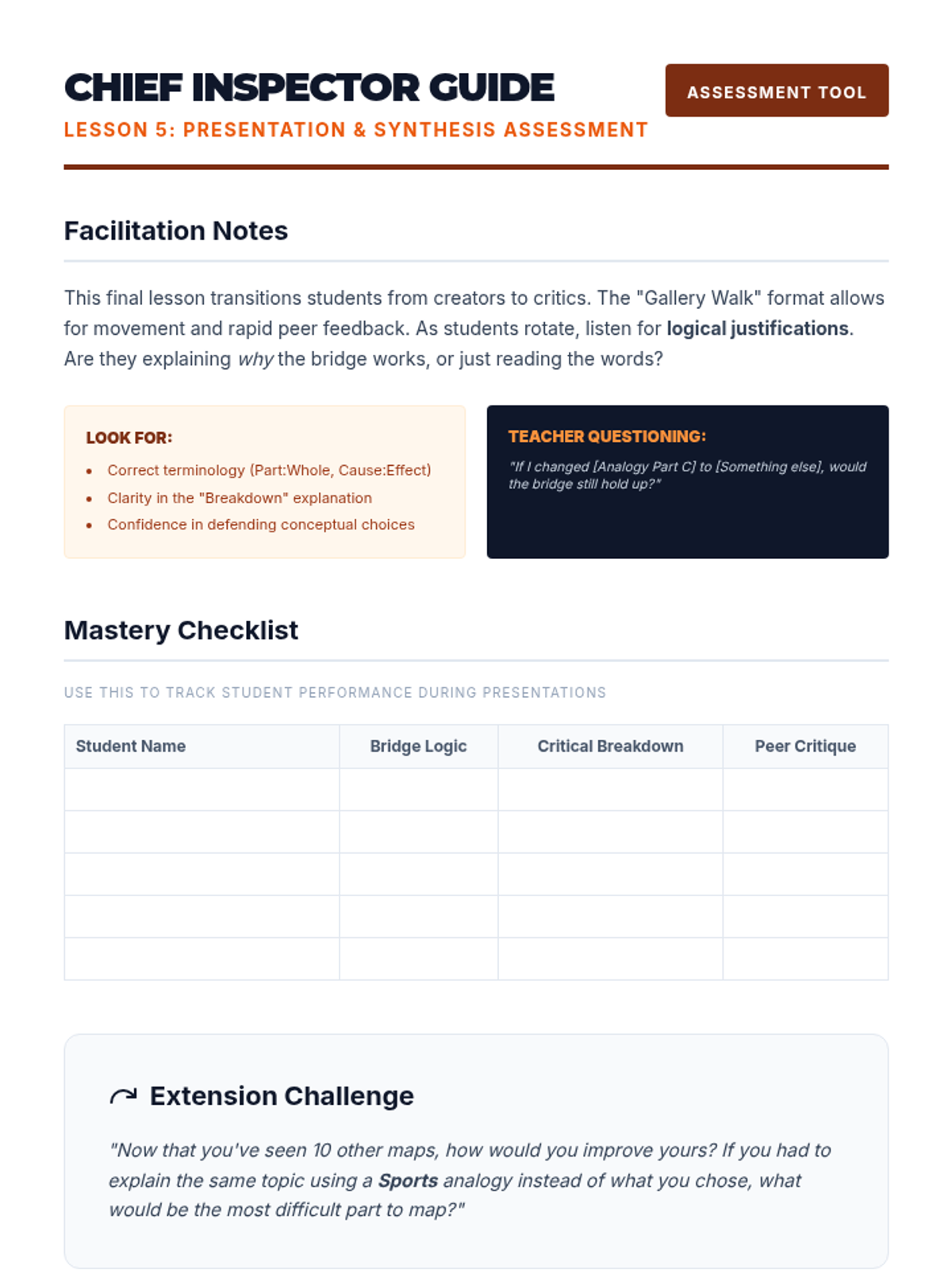
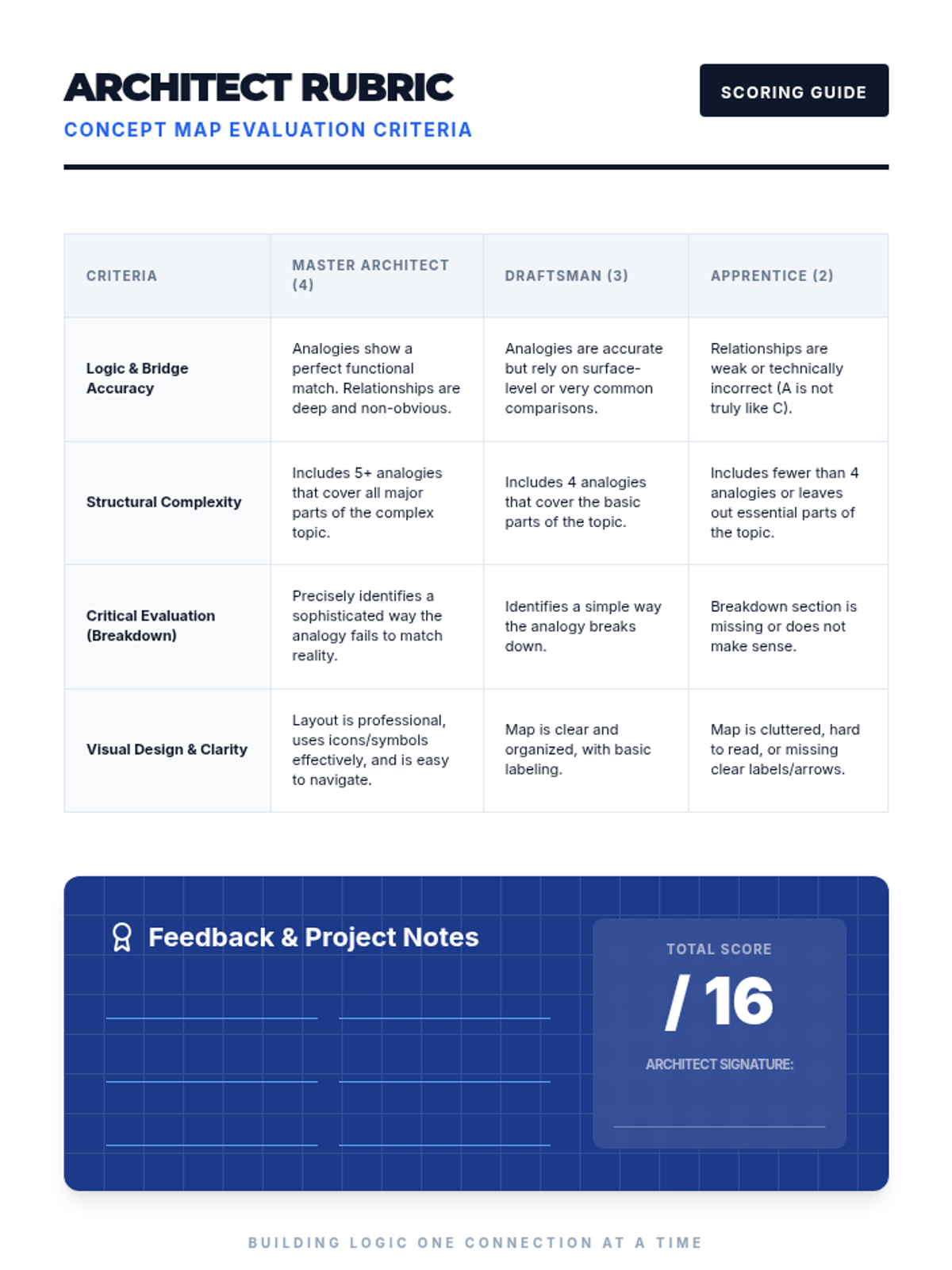
Students present their analogy projects and act as 'Logic Detectives' to evaluate the validity and effectiveness of their peers' conceptual comparisons.
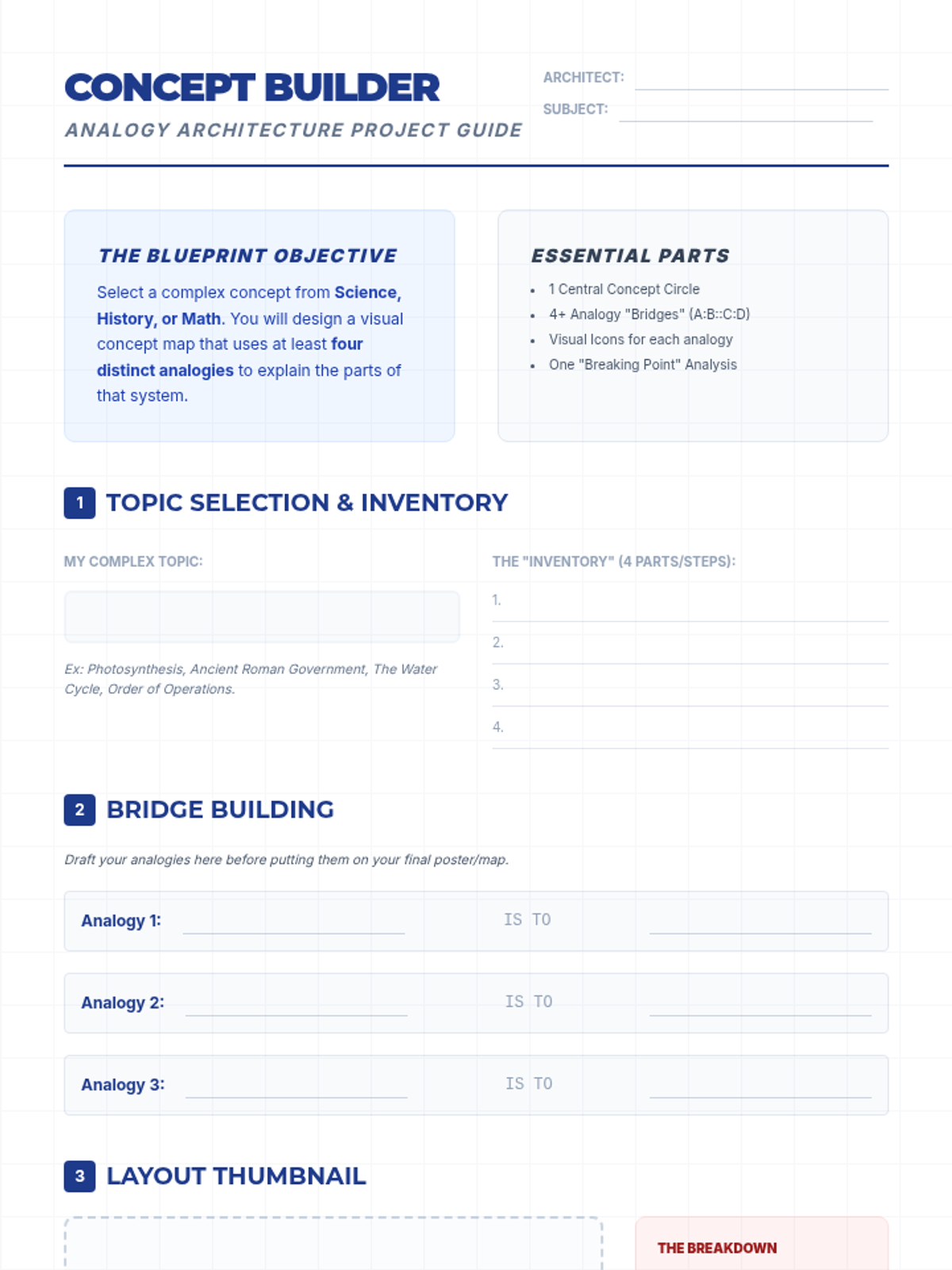
Students apply their understanding of analogy types to create visual concept maps for a topic in another subject area, translating complex ideas into familiar relational structures.
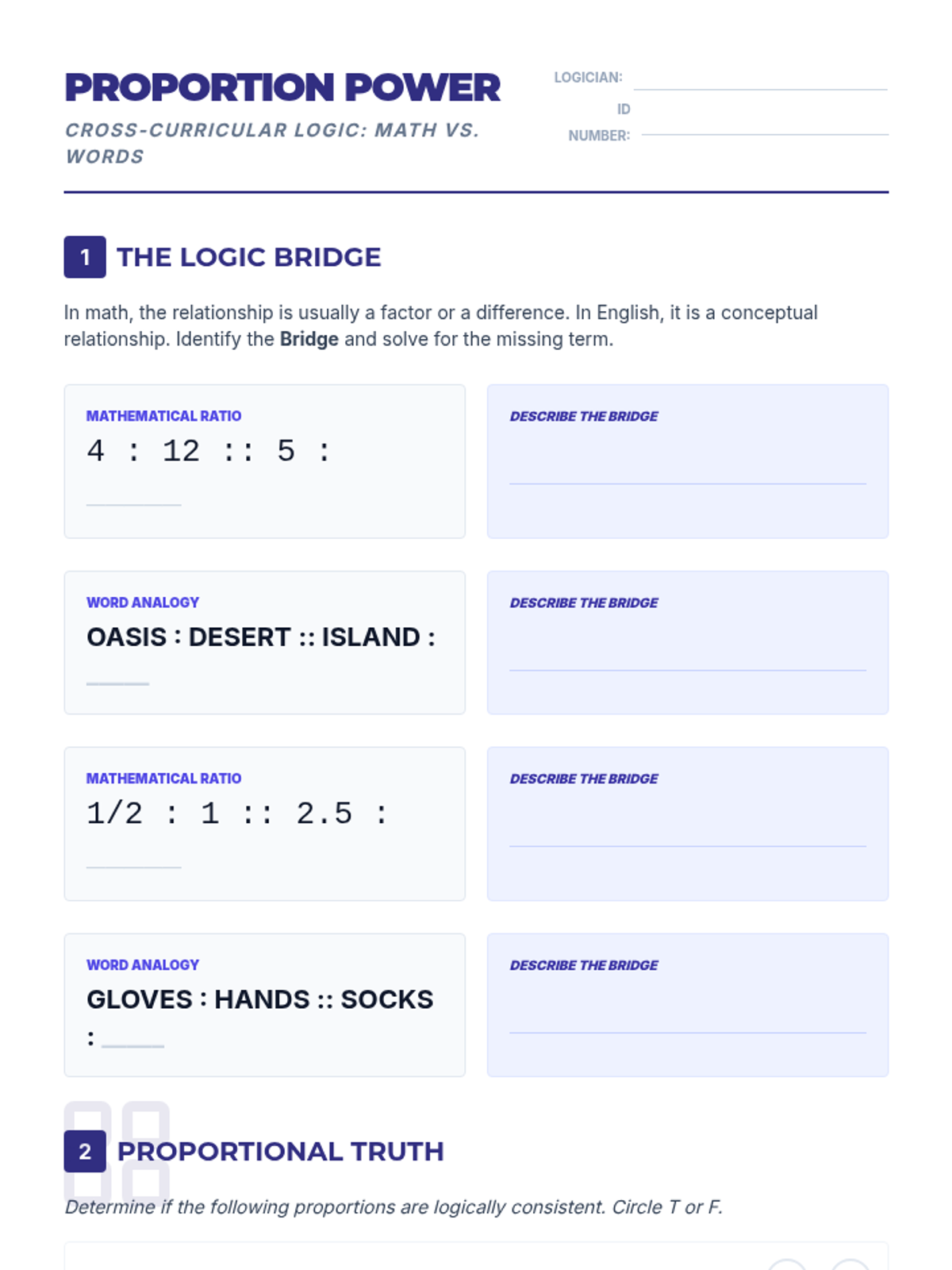
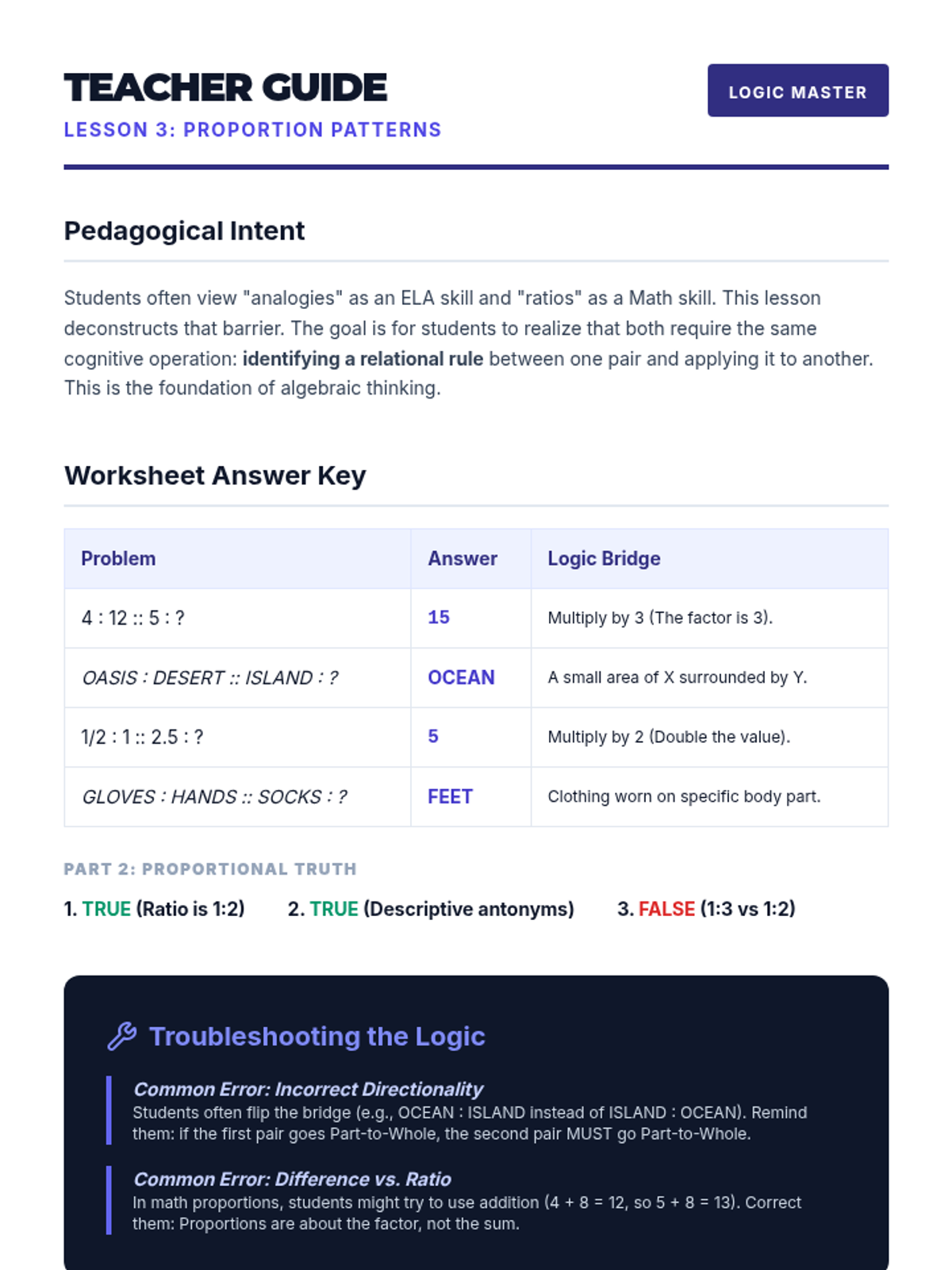
This lesson bridges the gap between verbal logic and mathematical proportions, teaching students that the A:B::C:D structure is the fundamental language of ratio across disciplines.
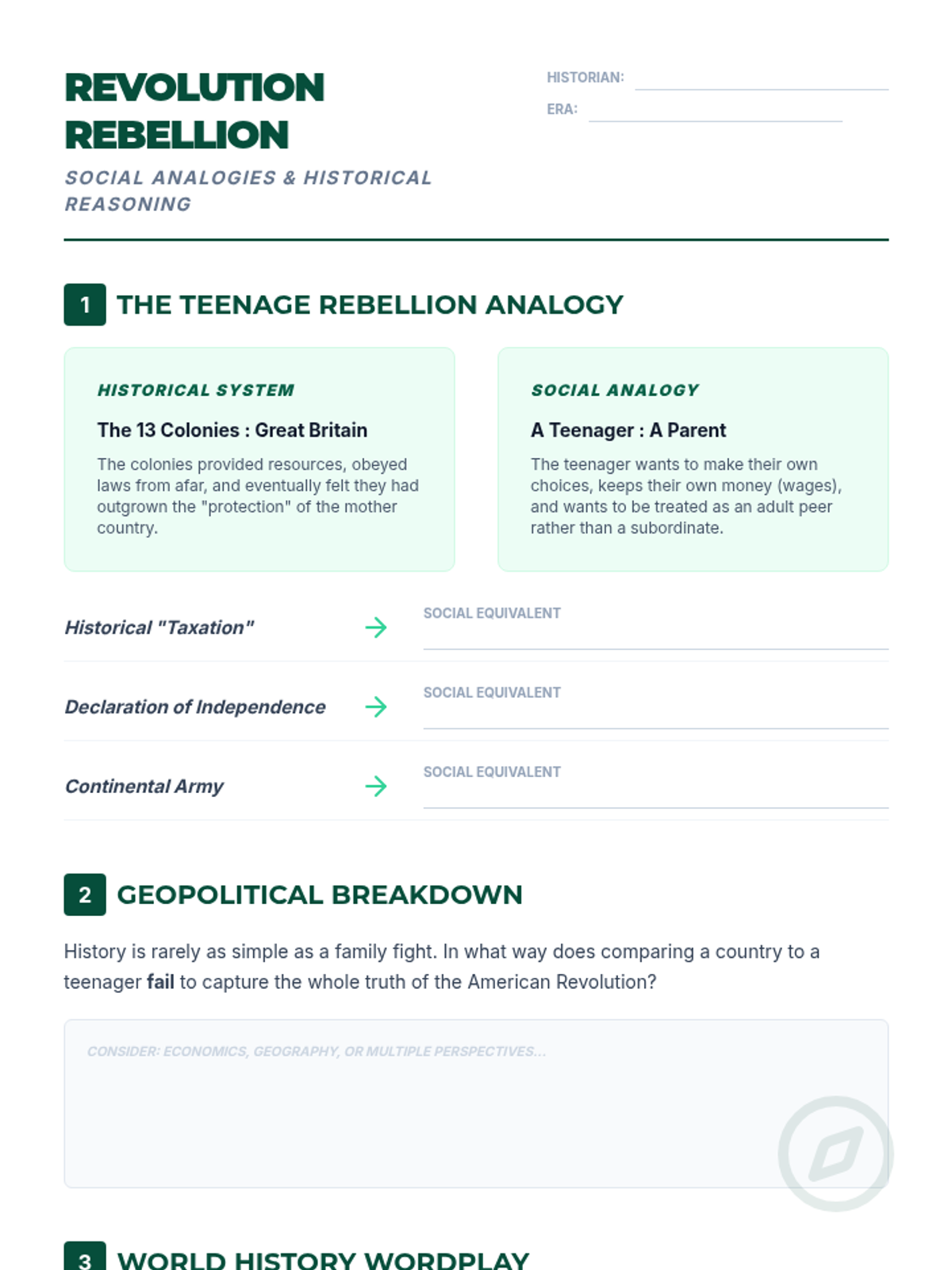
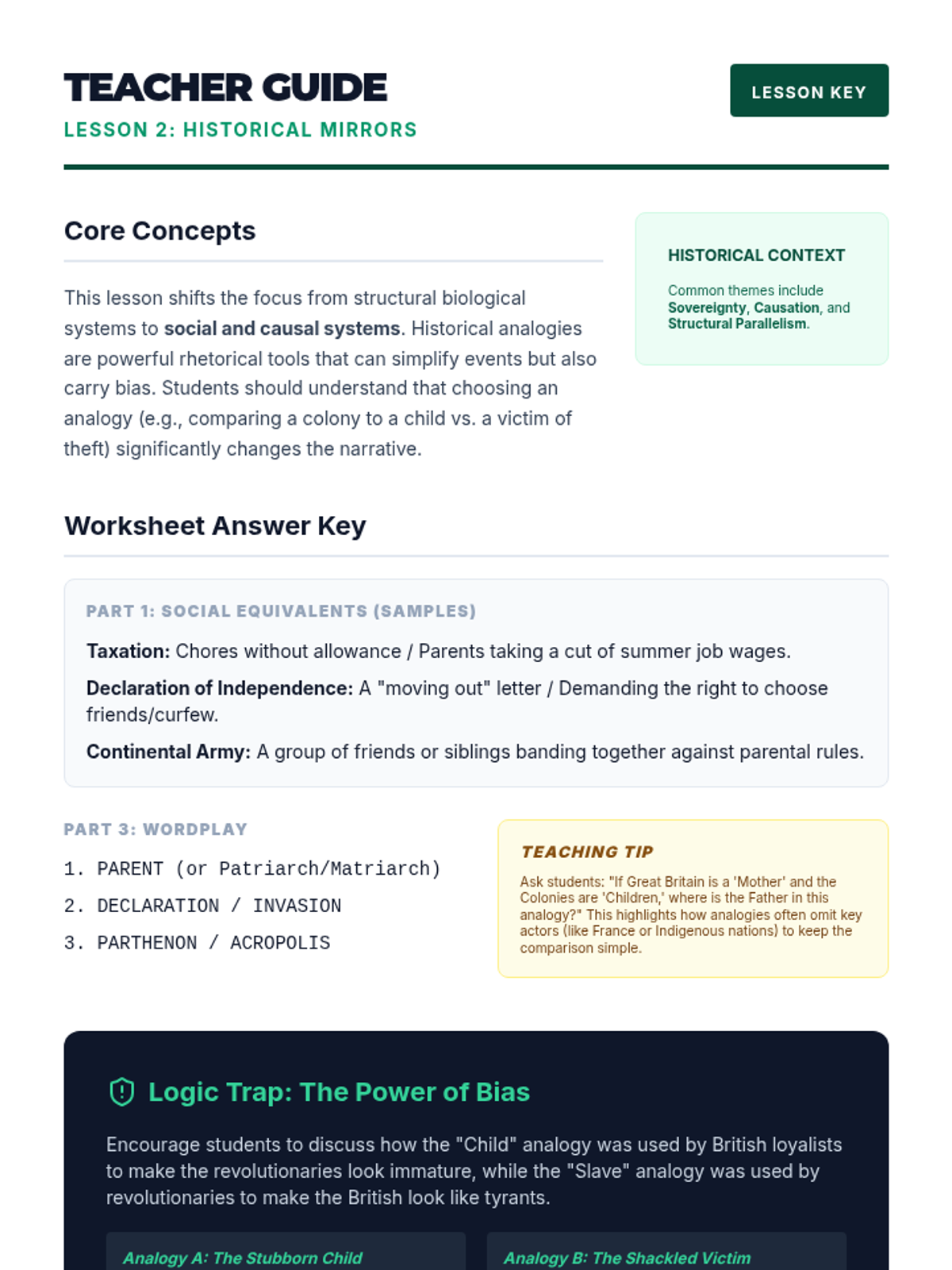
Students analyze historical analogies, such as the American Revolution as a teenager rebelling against a parent, to simplify and understand complex geopolitical relationships and historical causation.
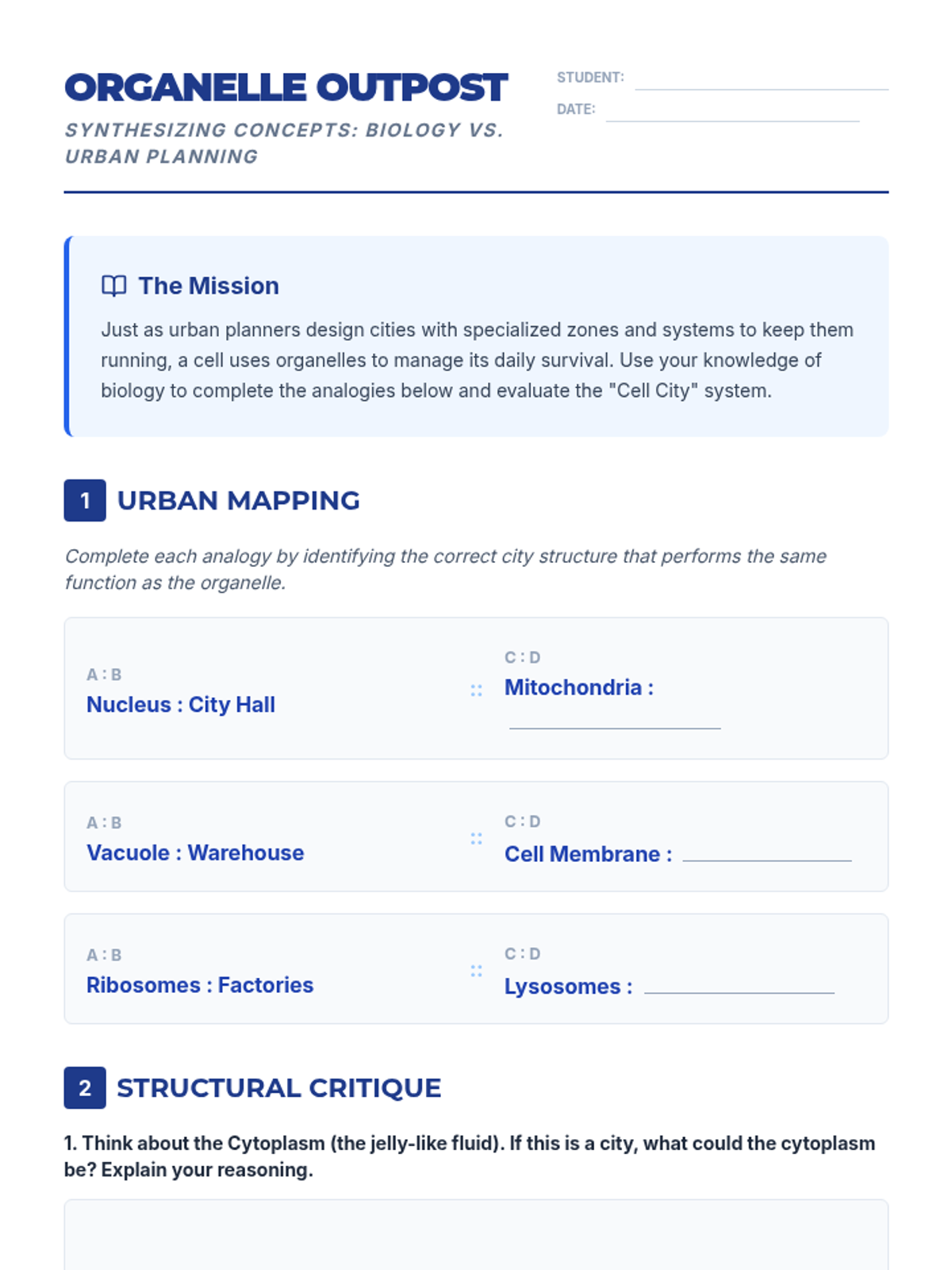
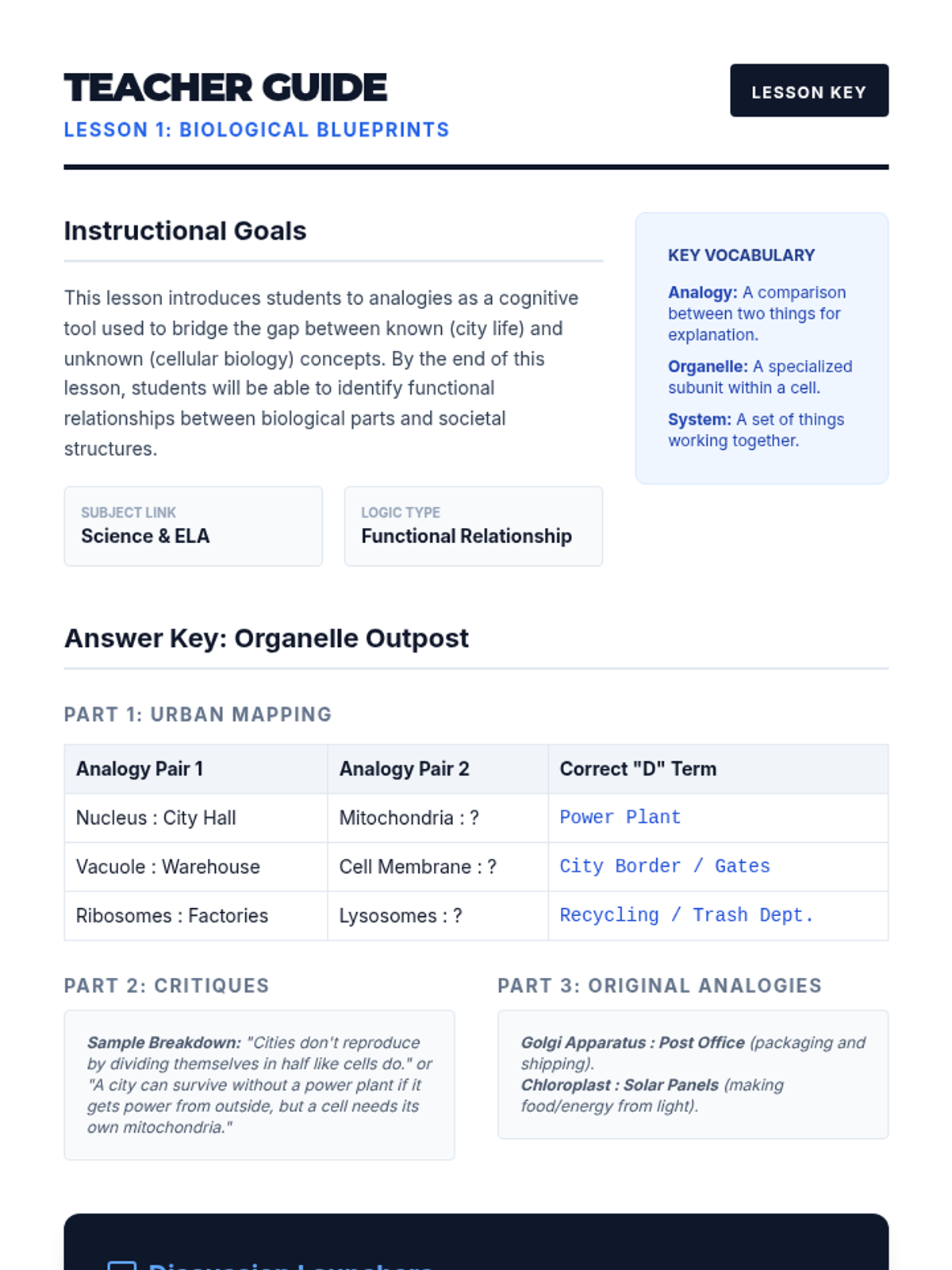
Students explore the classic 'Cell as a City' analogy to understand how structural comparisons help explain biological systems, identifying relationships between organelles and urban infrastructure.
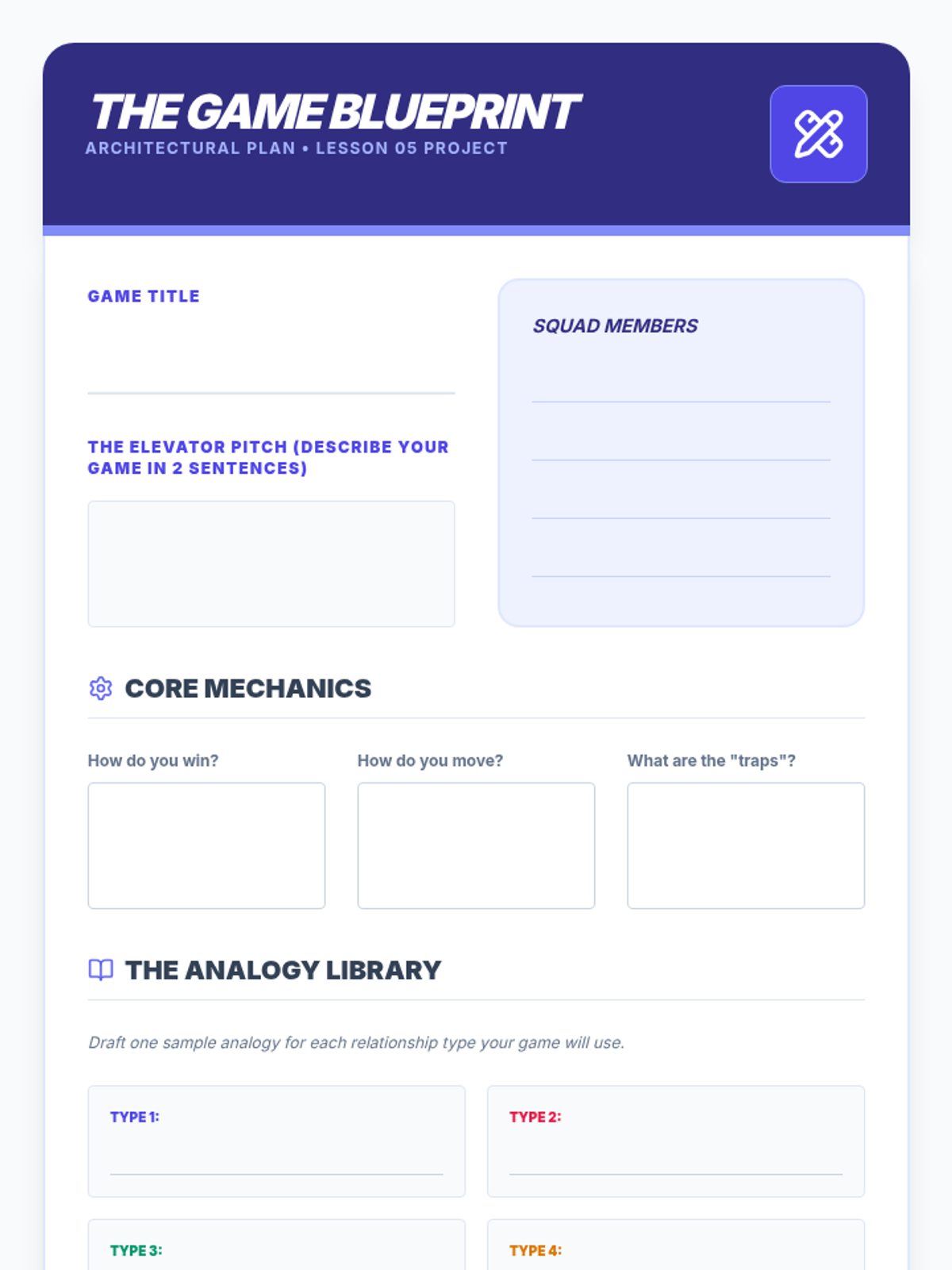
The capstone project where students apply their knowledge by designing, building, and play-testing their own analogy-themed board games.
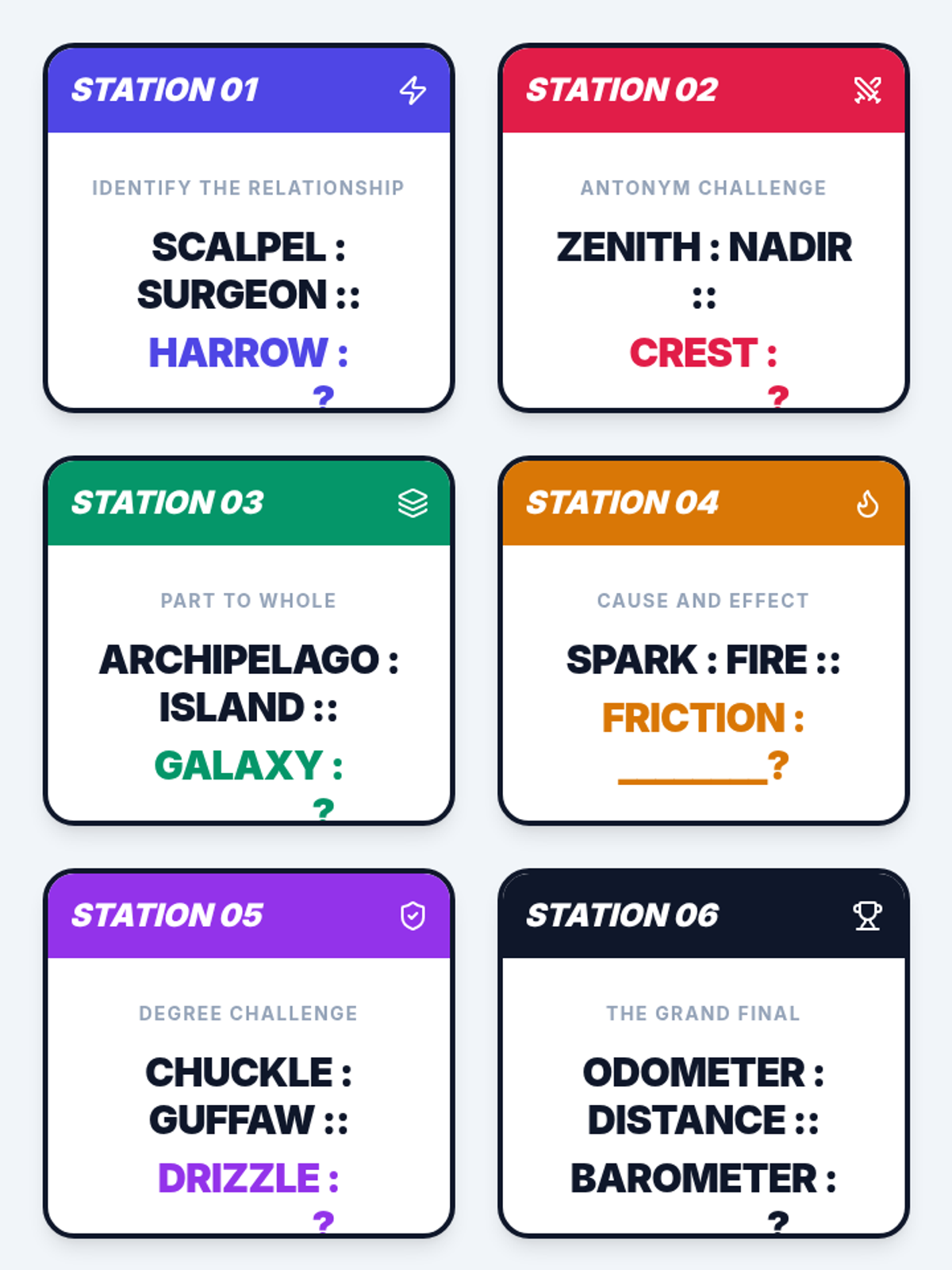
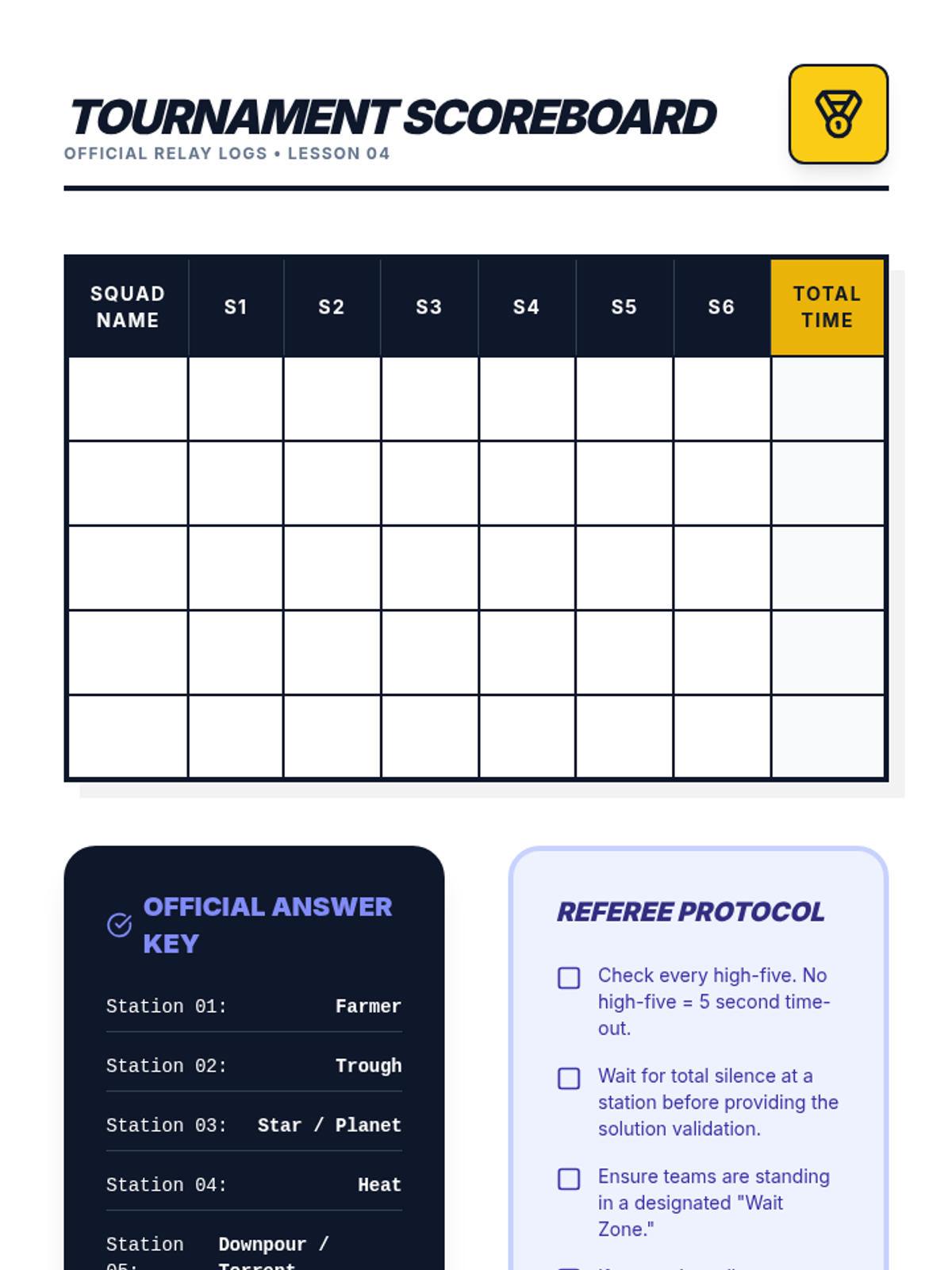
A kinesthetic lesson combining physical movement with mental agility as teams compete in a relay race to solve complex analogies.
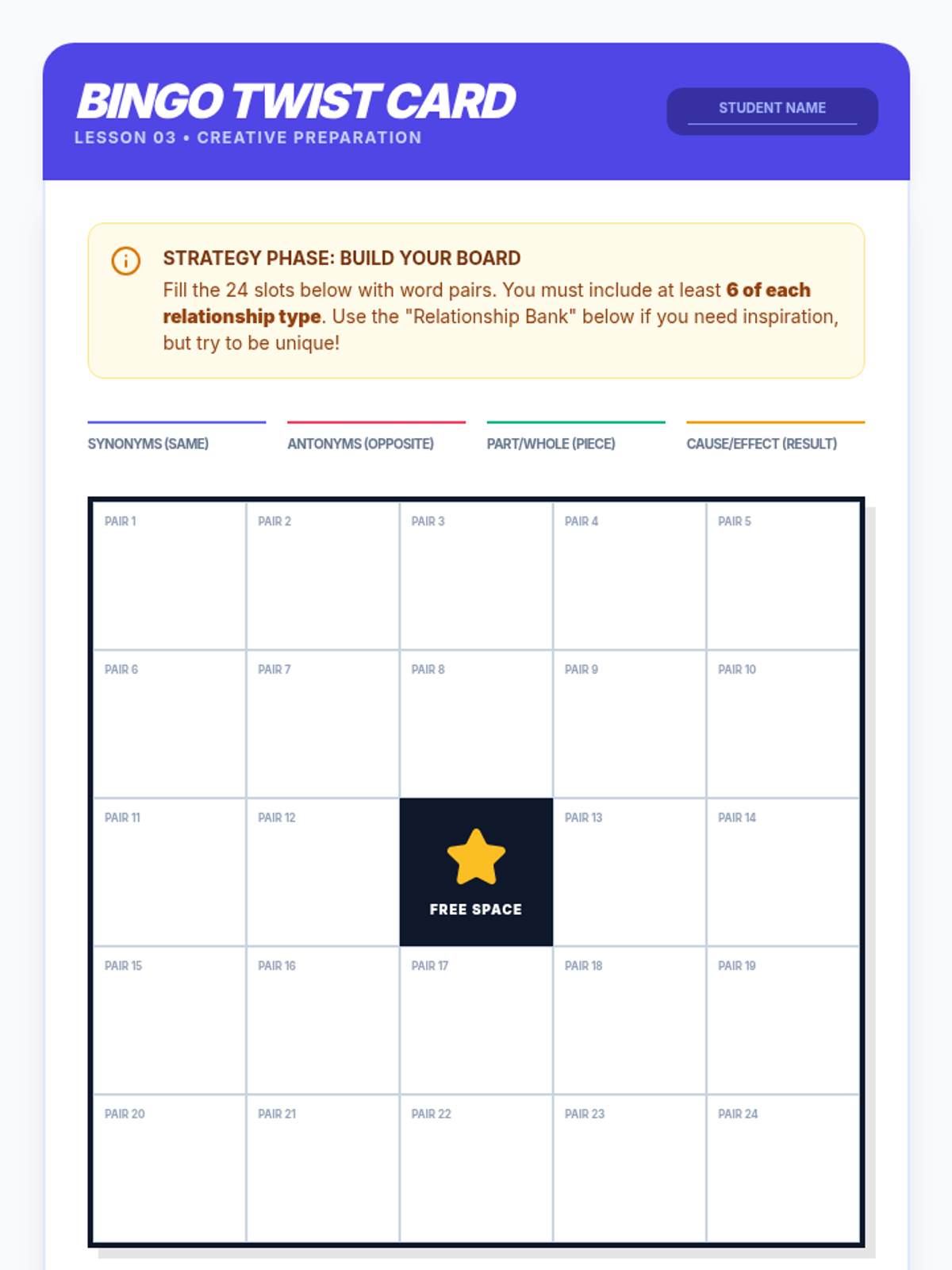
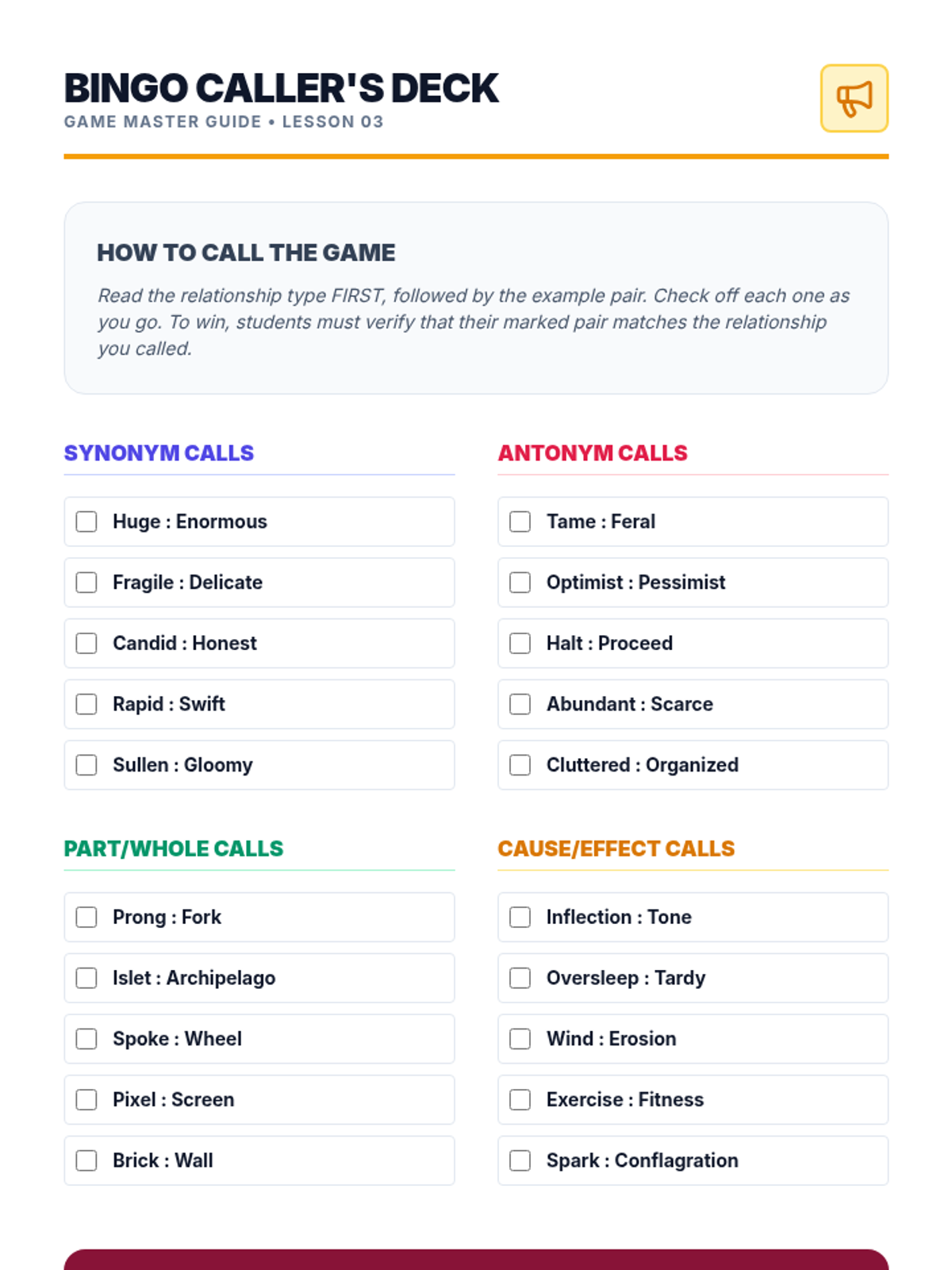
A twist on the classic game where students must match logical relationships rather than just words, reinforcing deeper conceptual understanding.
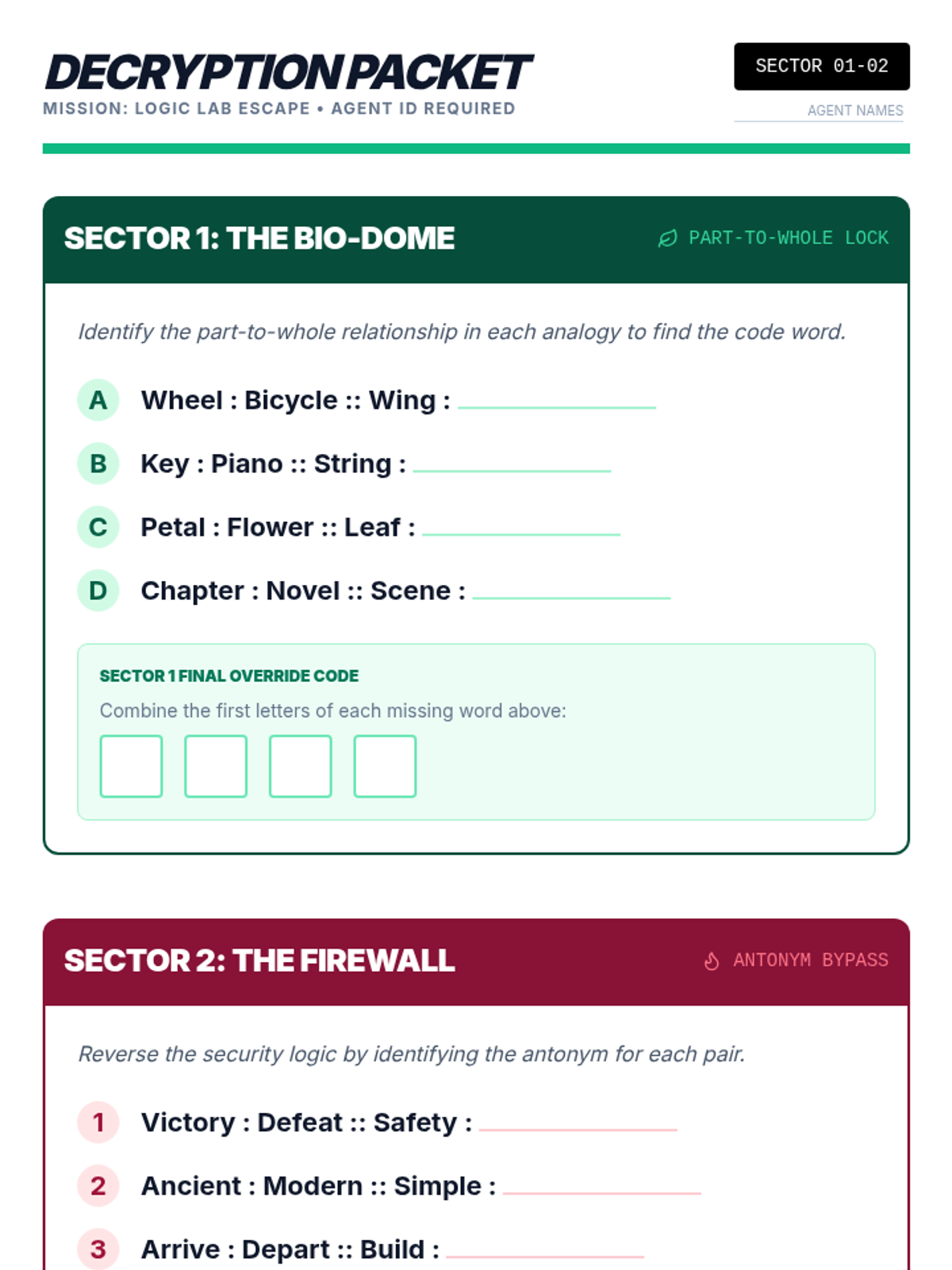
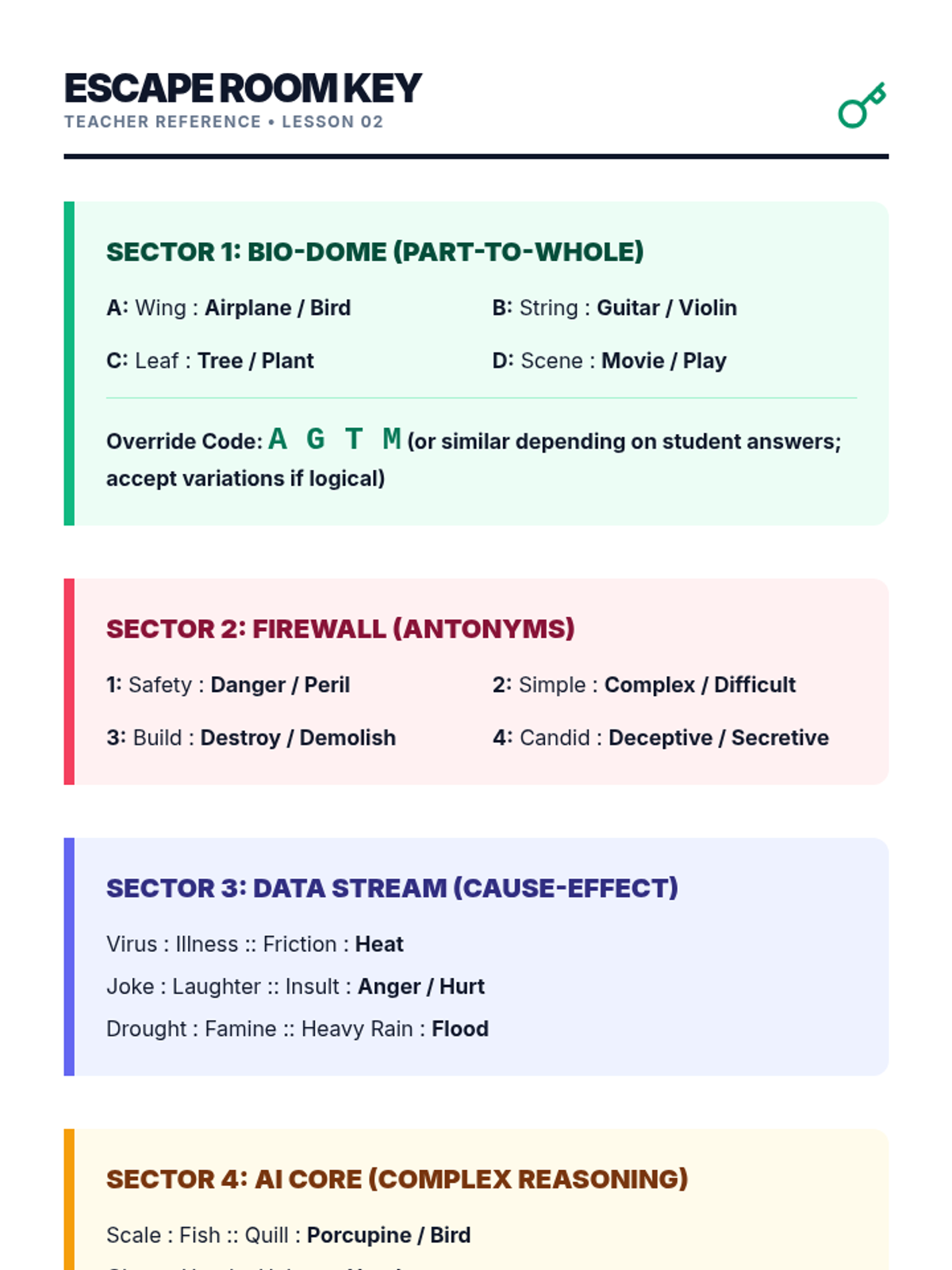
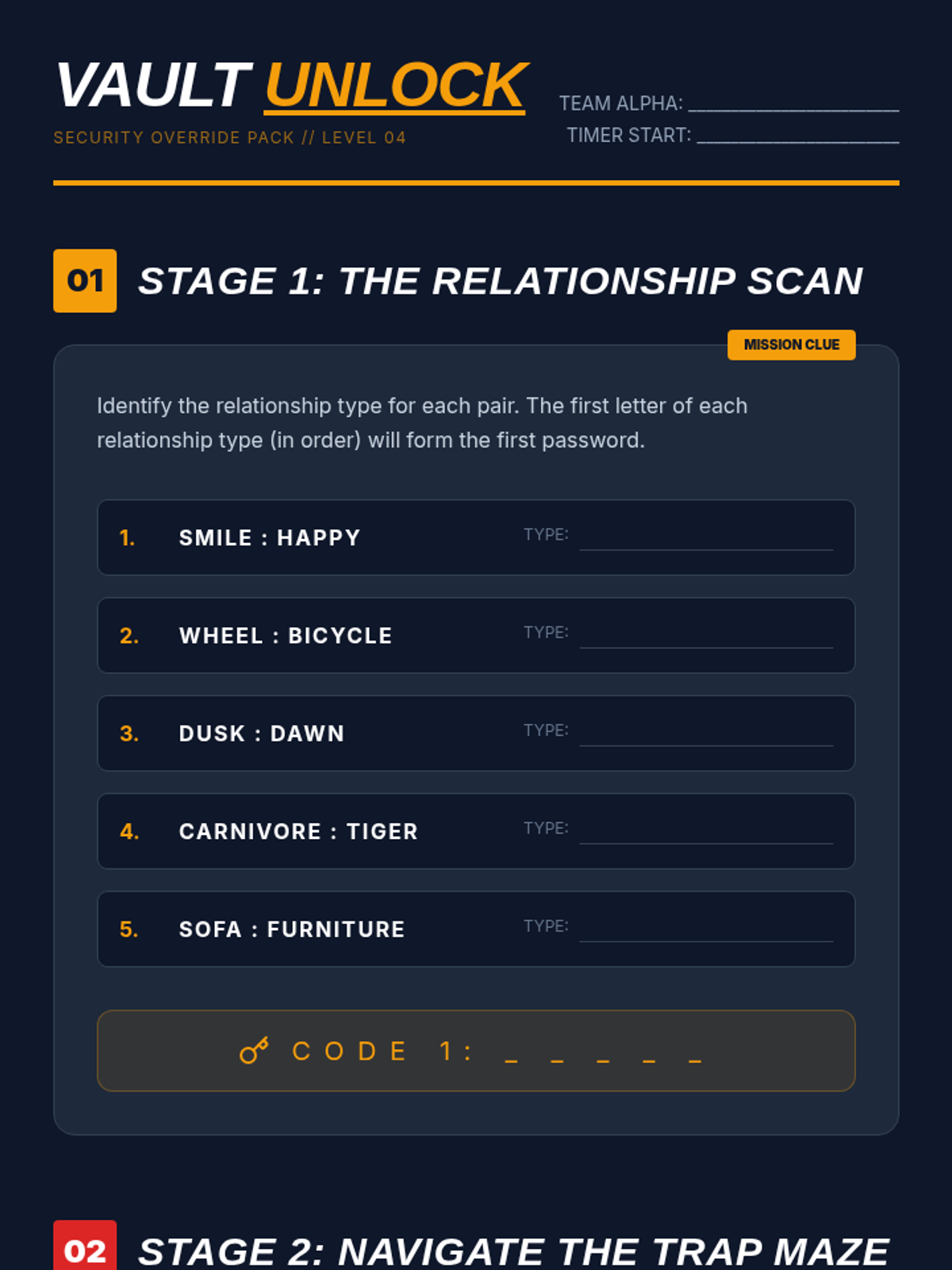
Students work collaboratively to solve a series of analogy-based puzzles to 'unlock' the classroom, emphasizing logical reasoning and narrative engagement.
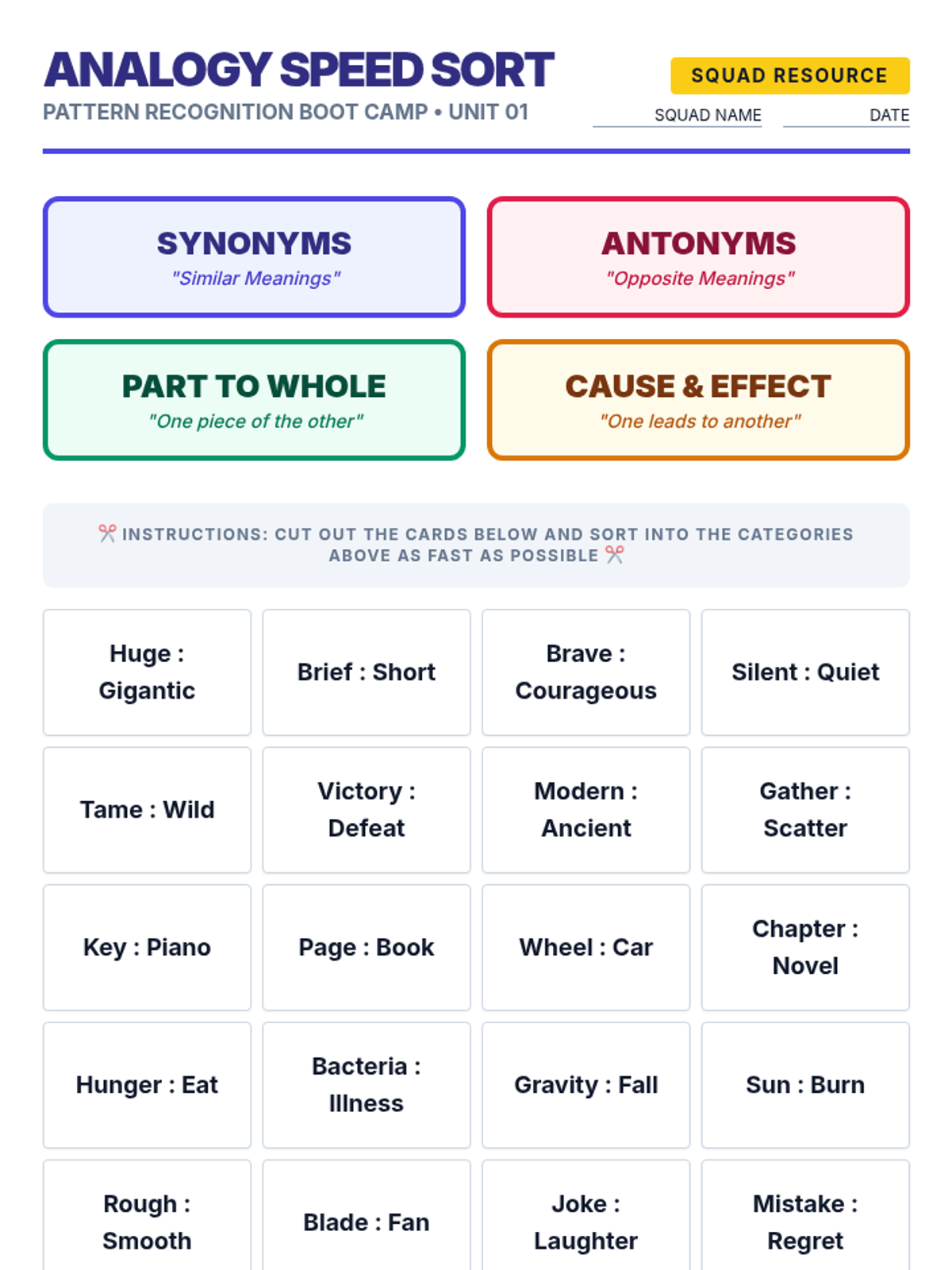
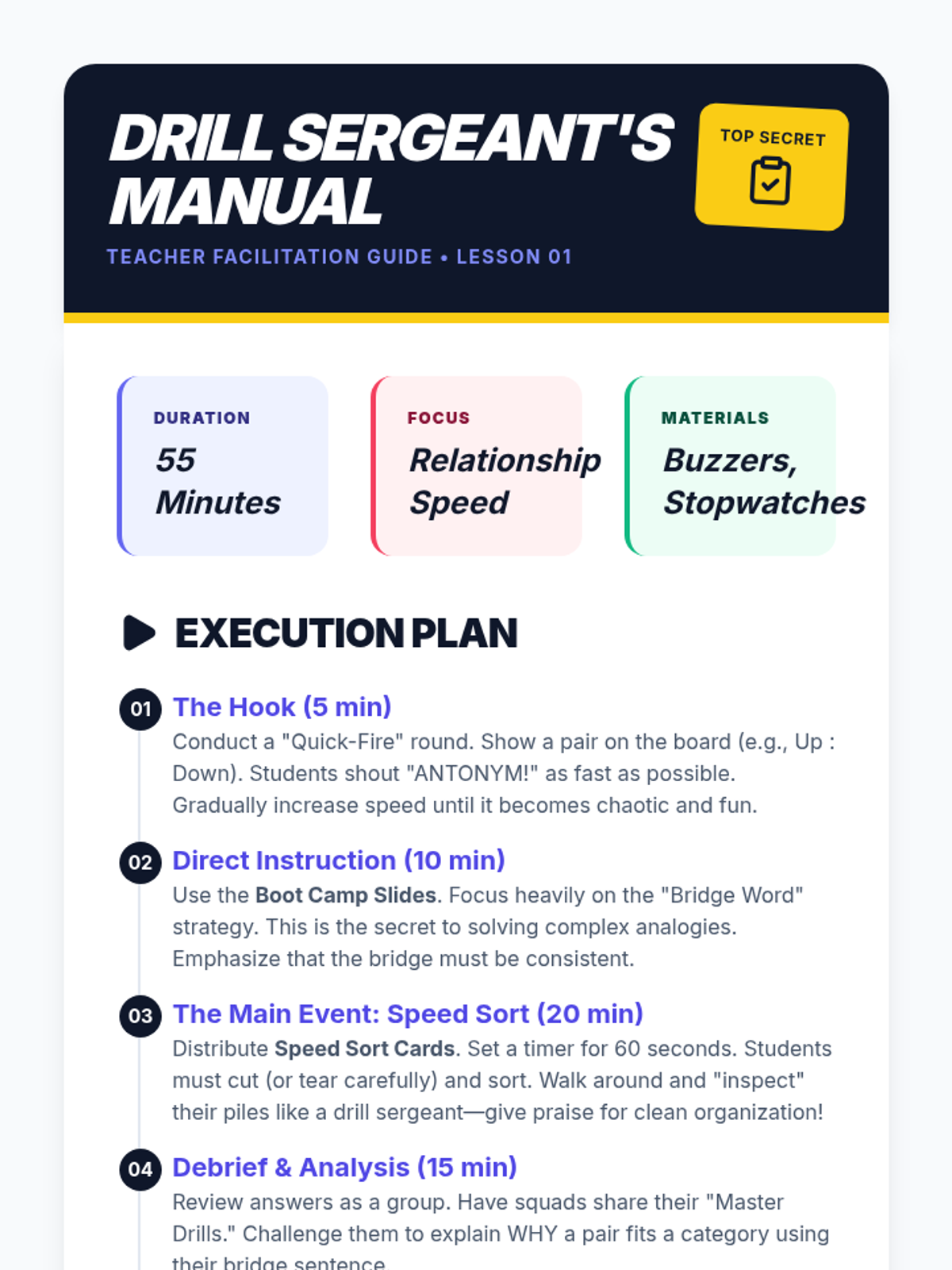
A high-energy introductory lesson focused on identifying different types of analogy relationships (Synonym, Antonym, Part/Whole, etc.) with speed and accuracy.
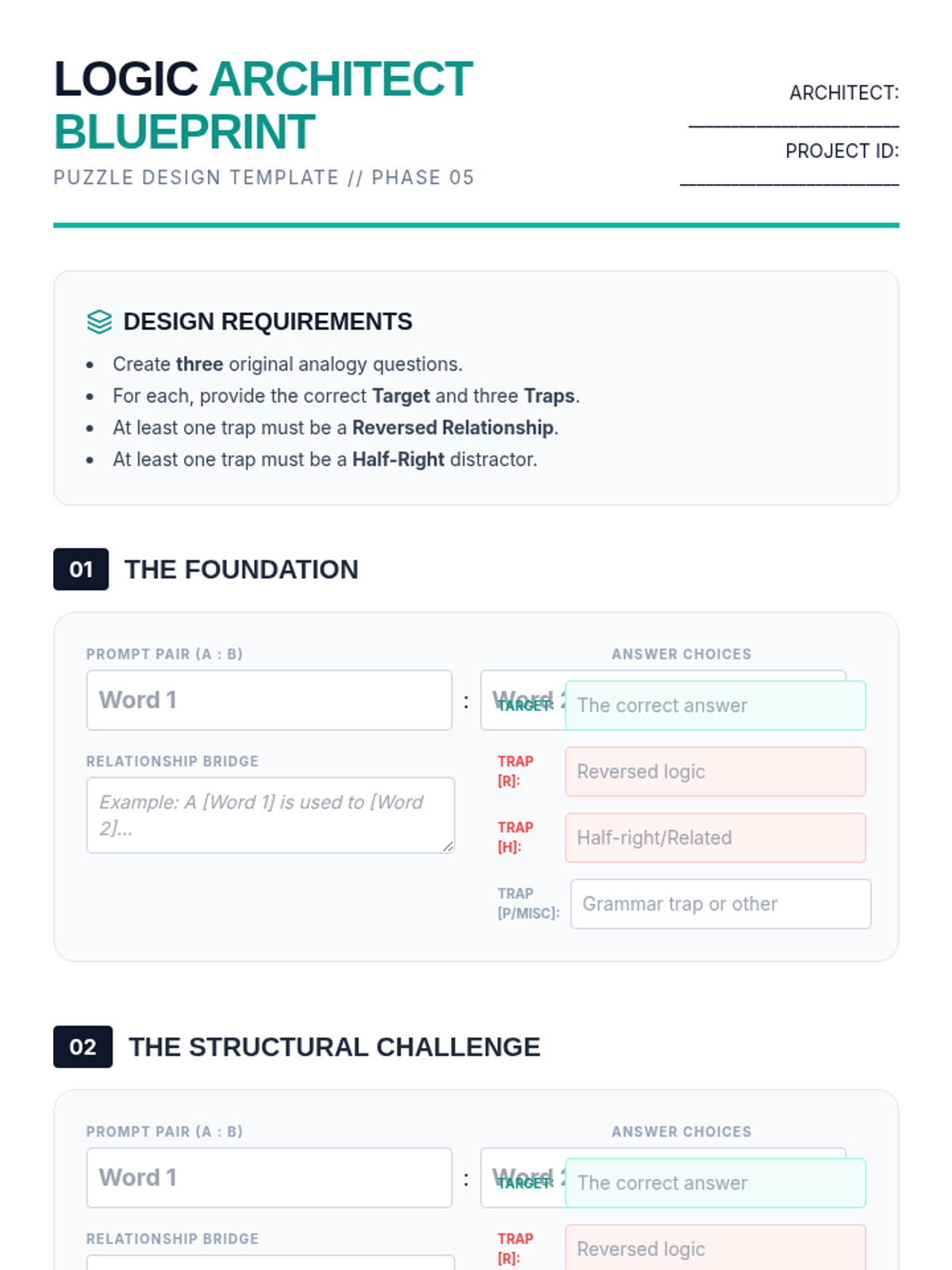
Students reverse-engineer the game mechanics by creating their own analogy puzzles for a partner class. They must create plausible distractors, requiring them to understand the common pitfalls of reasoning.
A comprehensive review activity where unlocking physical or digital boxes requires solving complex, multi-step analogies. Clues are embedded in the vocabulary relationships, requiring deep thinking to proceed.
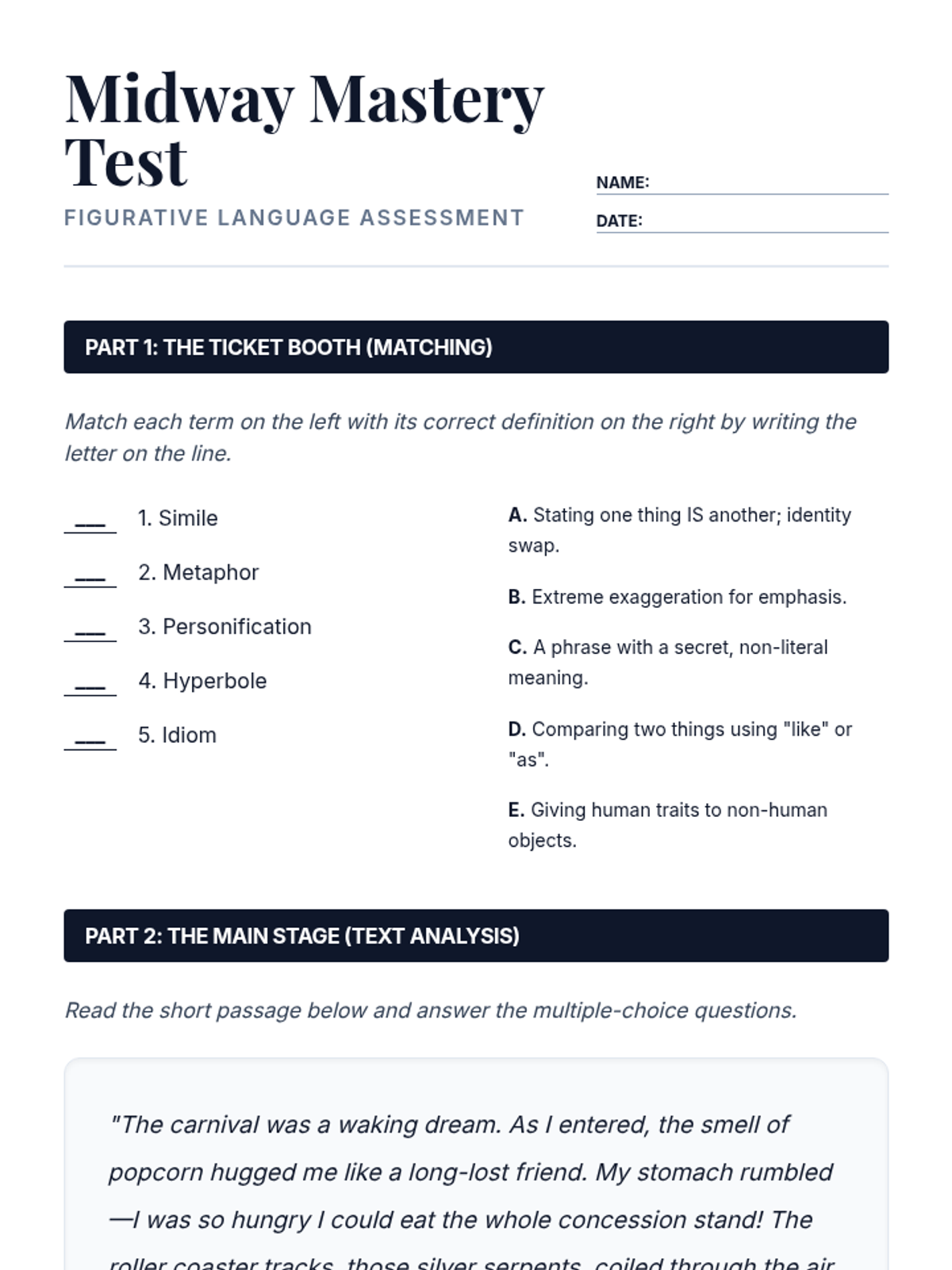
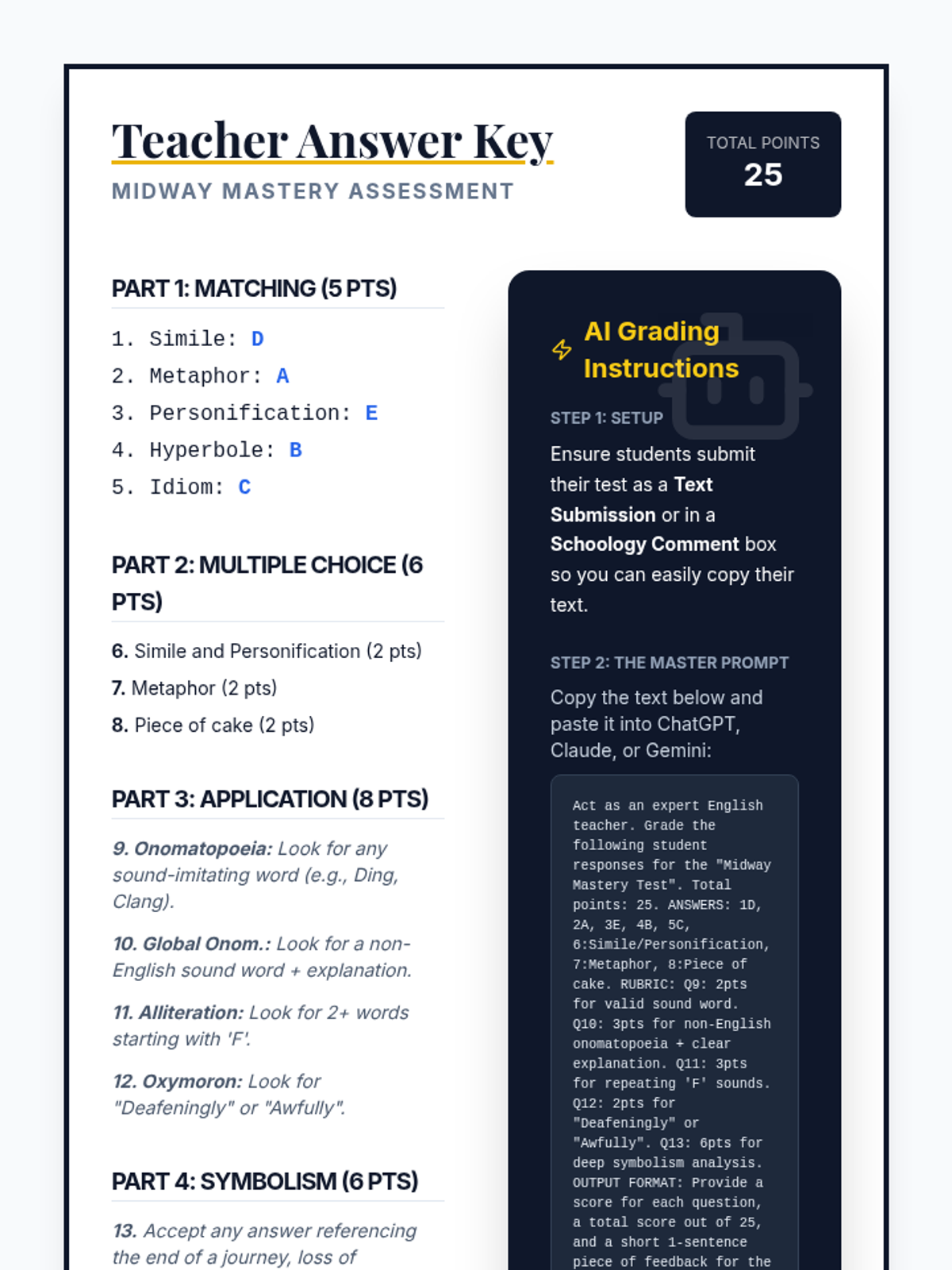
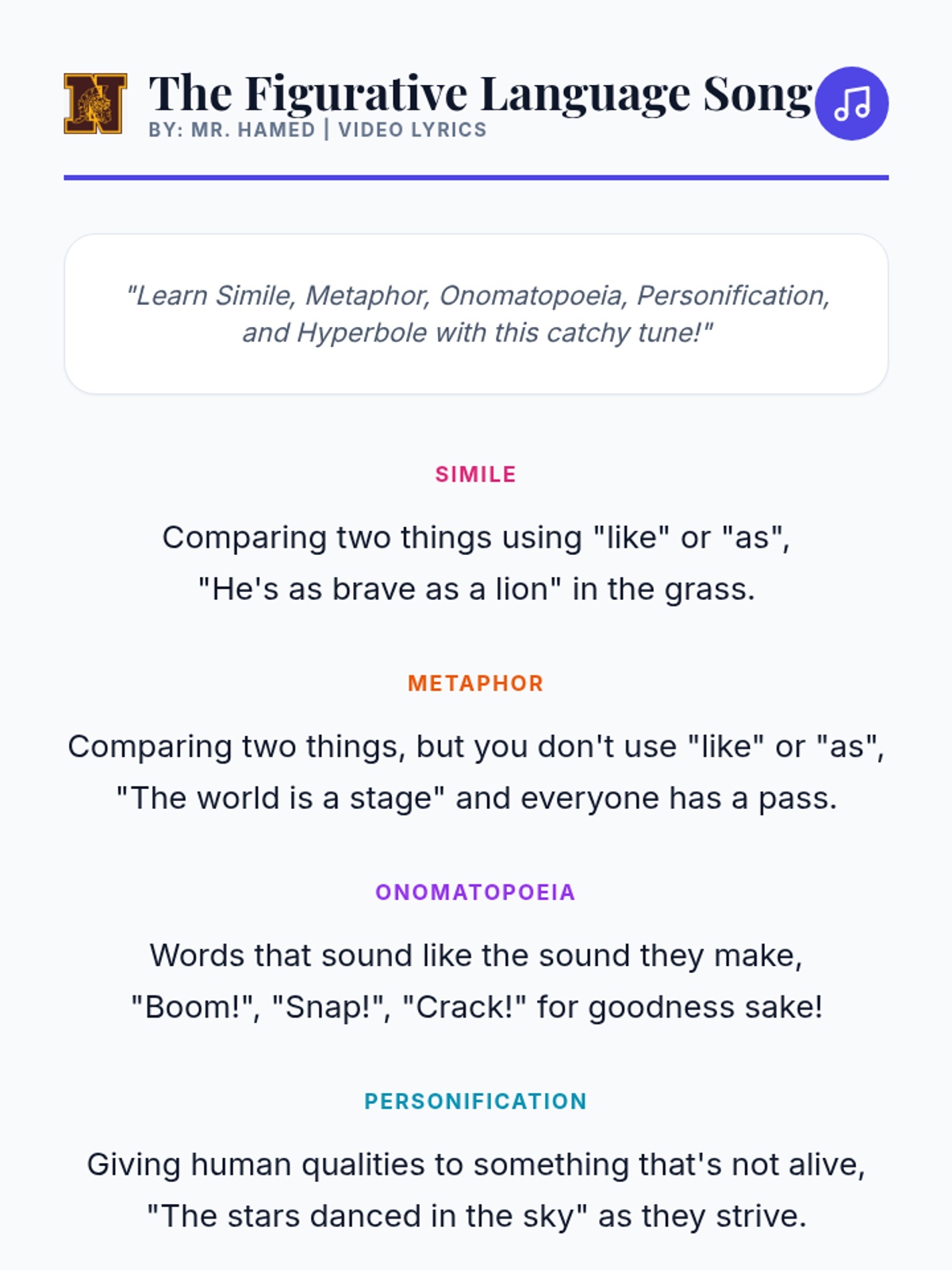
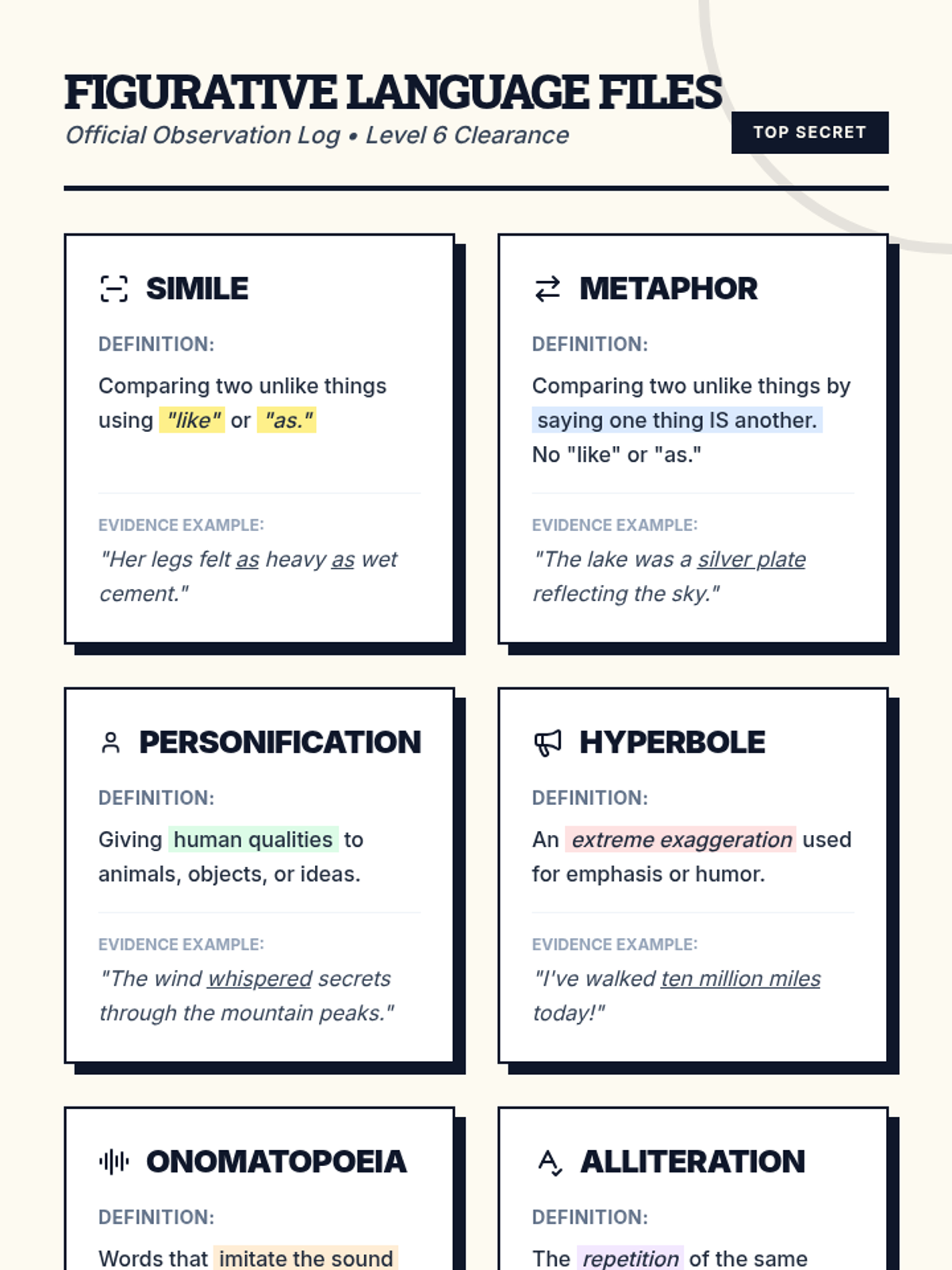
A complete lesson covering similes, metaphors, idioms, personification, hyperbole, onomatopoeia, alliteration, oxymoron, and symbolism through direct instruction and guided practice.
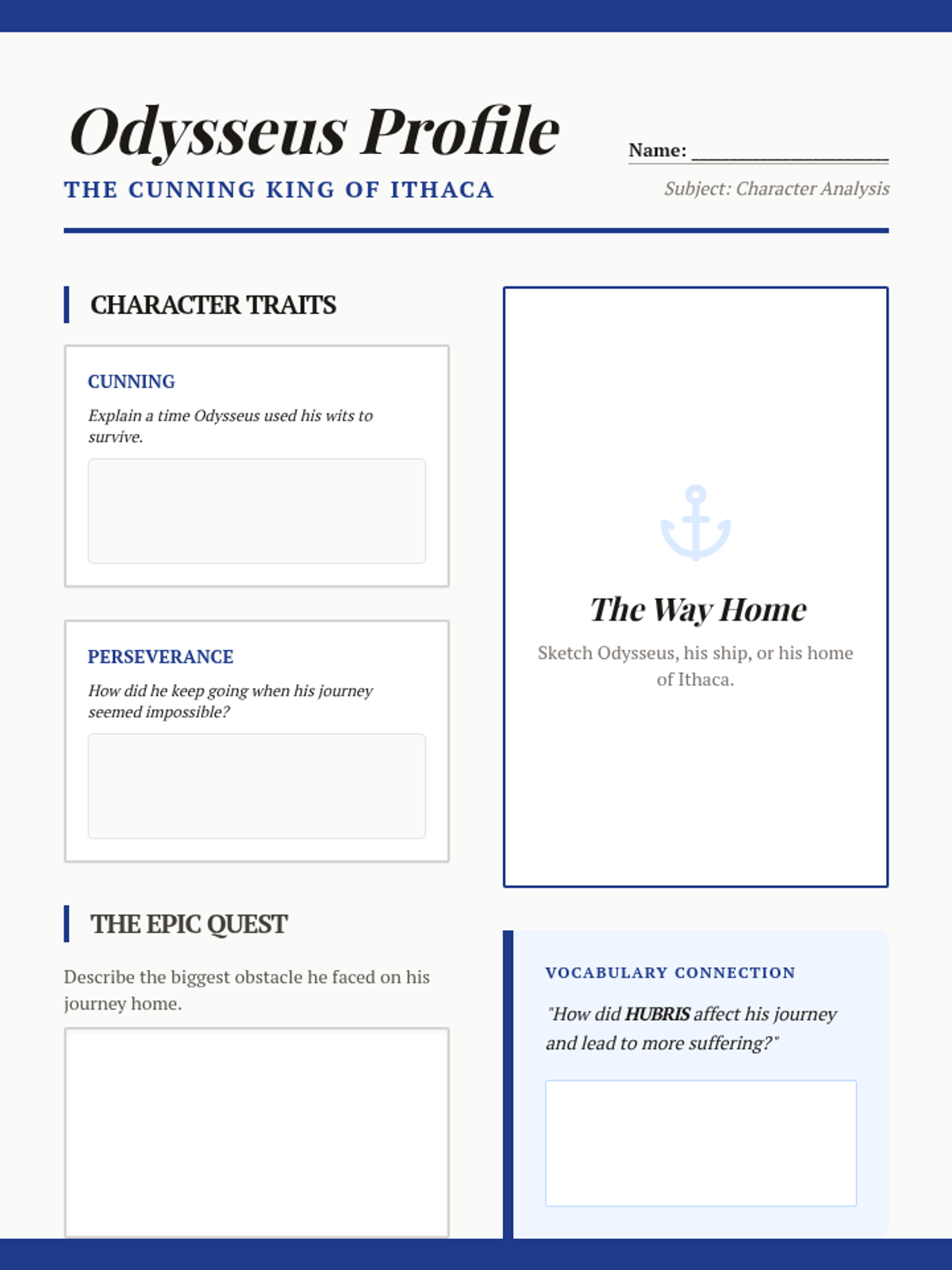
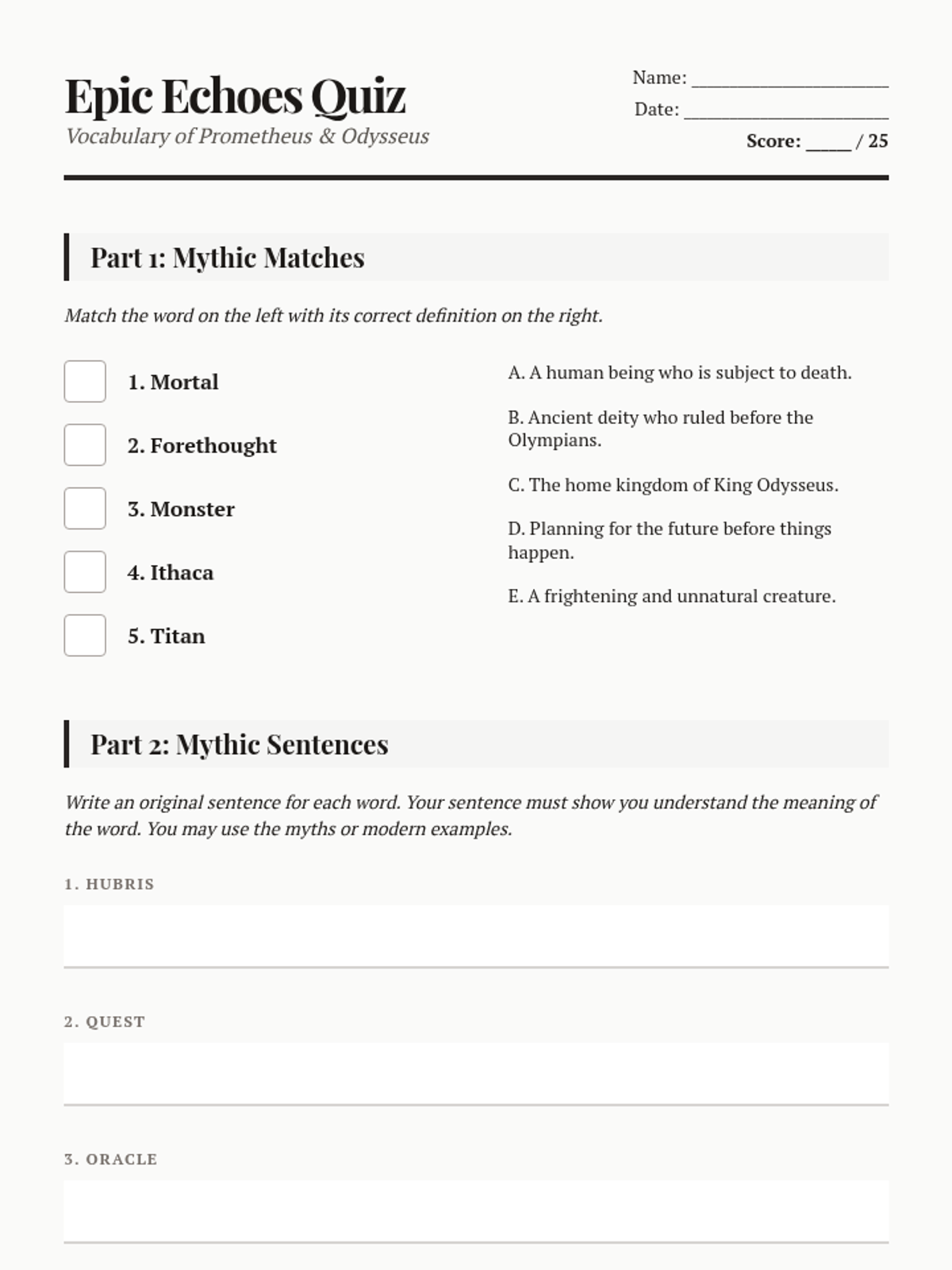
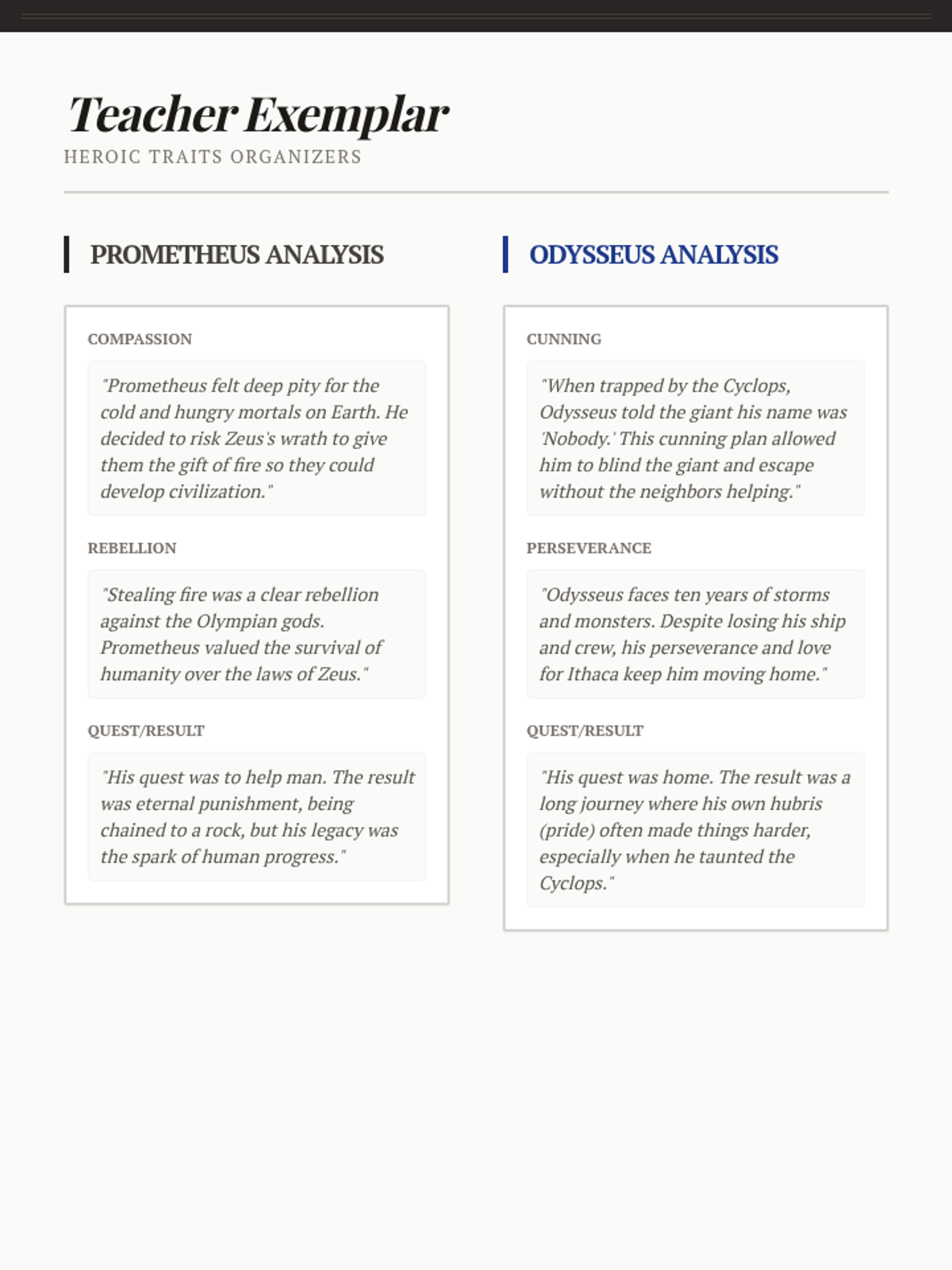
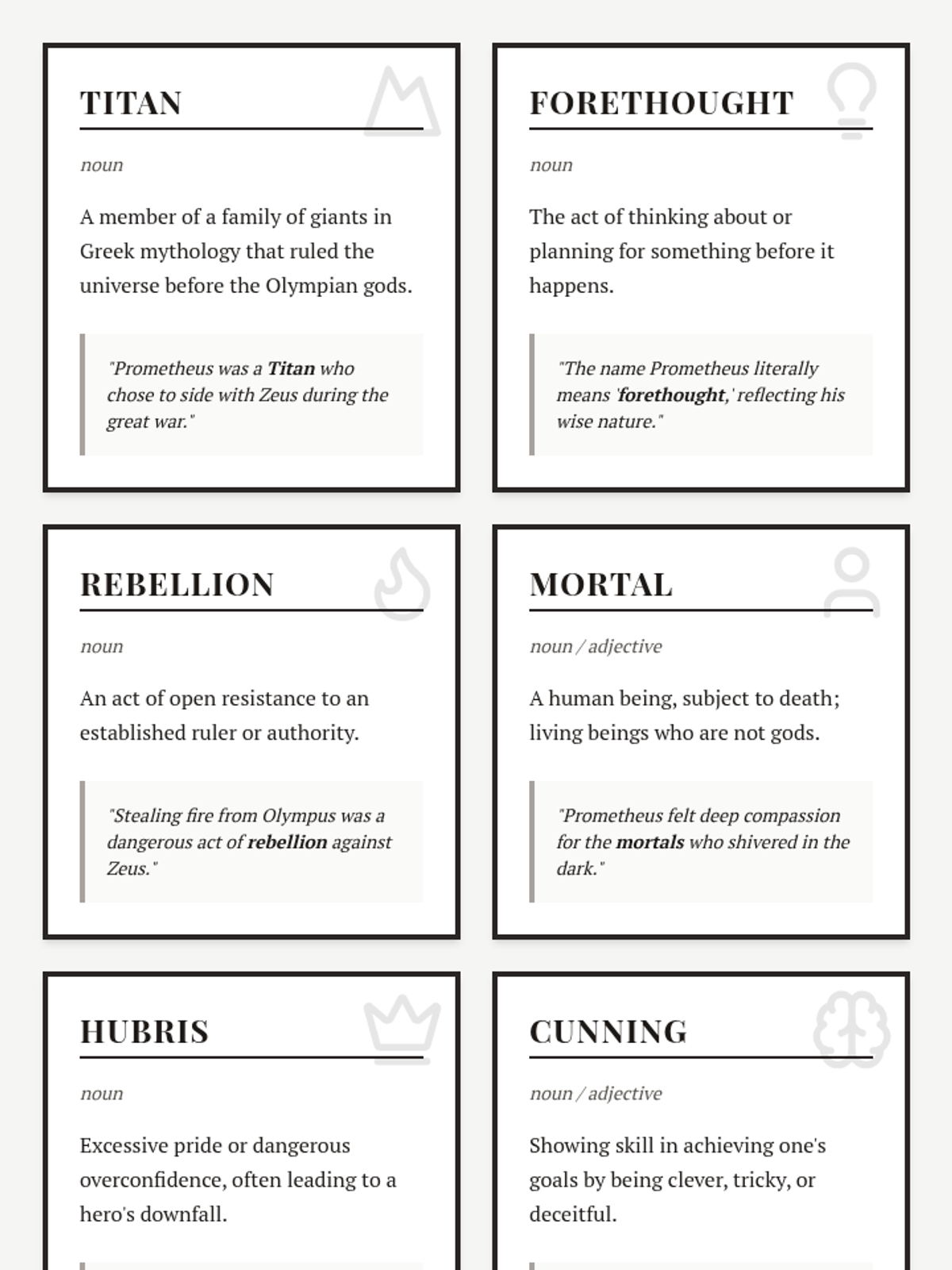
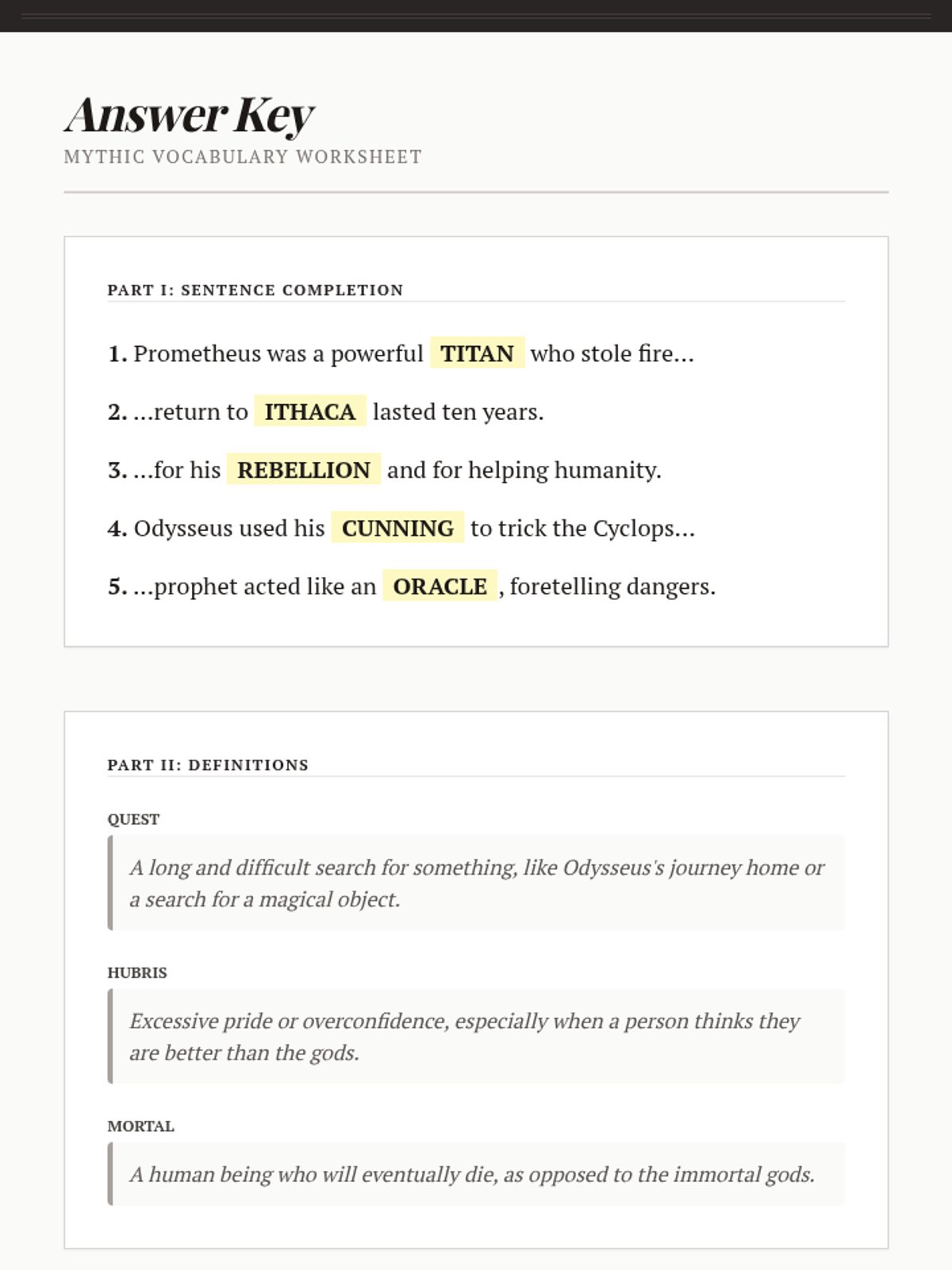
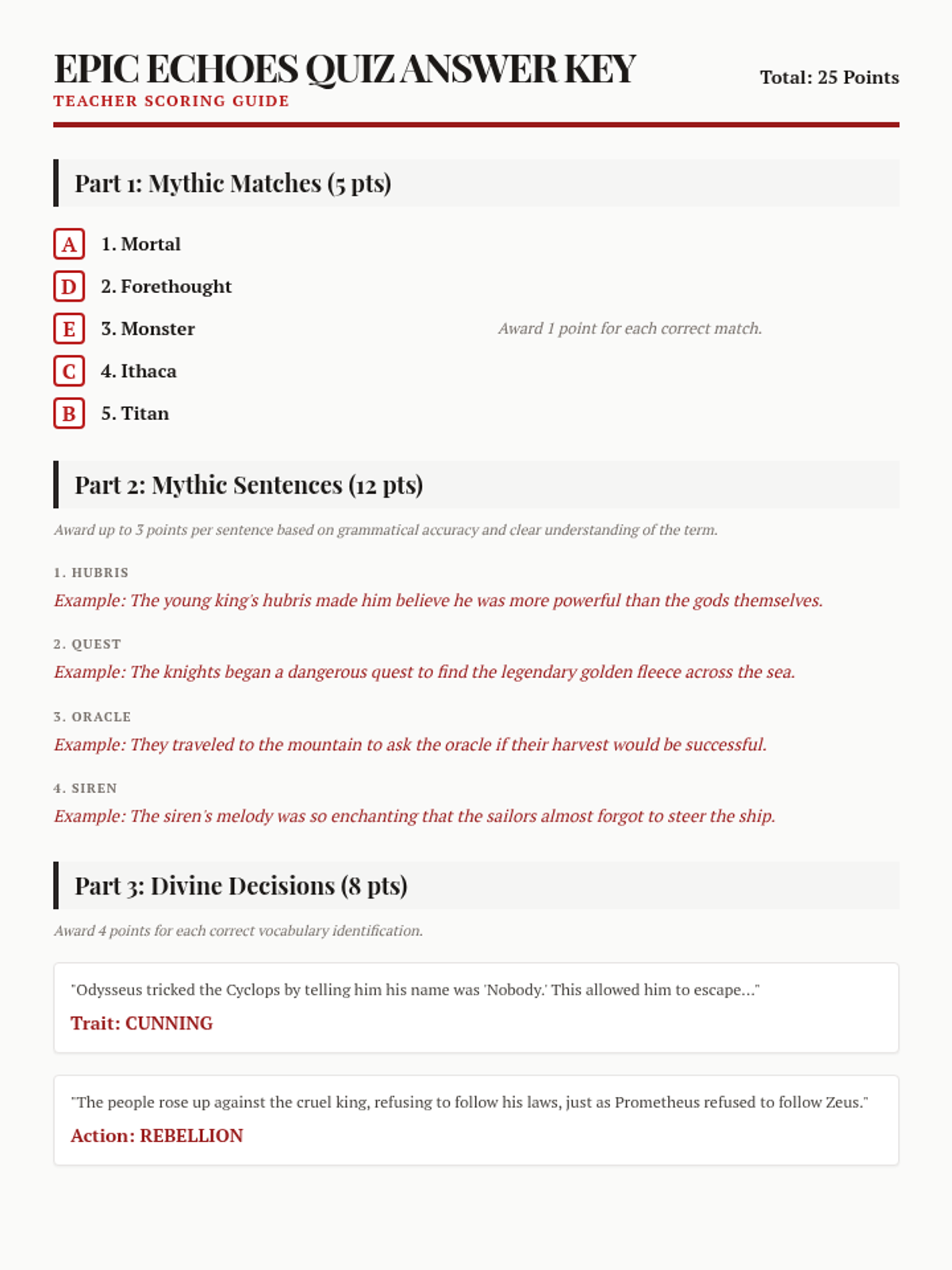
Students explore the stories of Prometheus's rebellion and Odysseus's long journey home, building vocabulary related to Greek mythology, character traits, and epic quests.
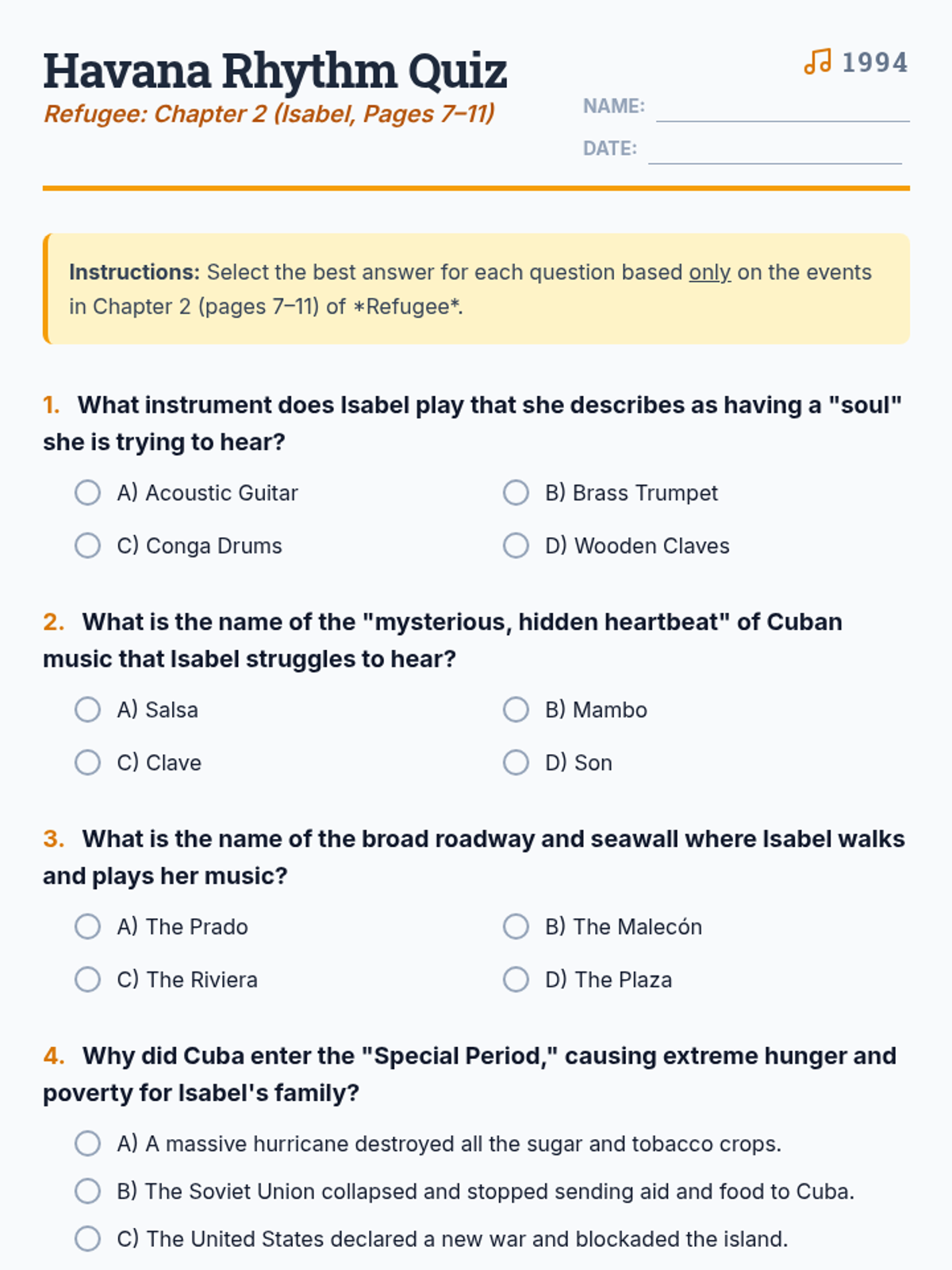
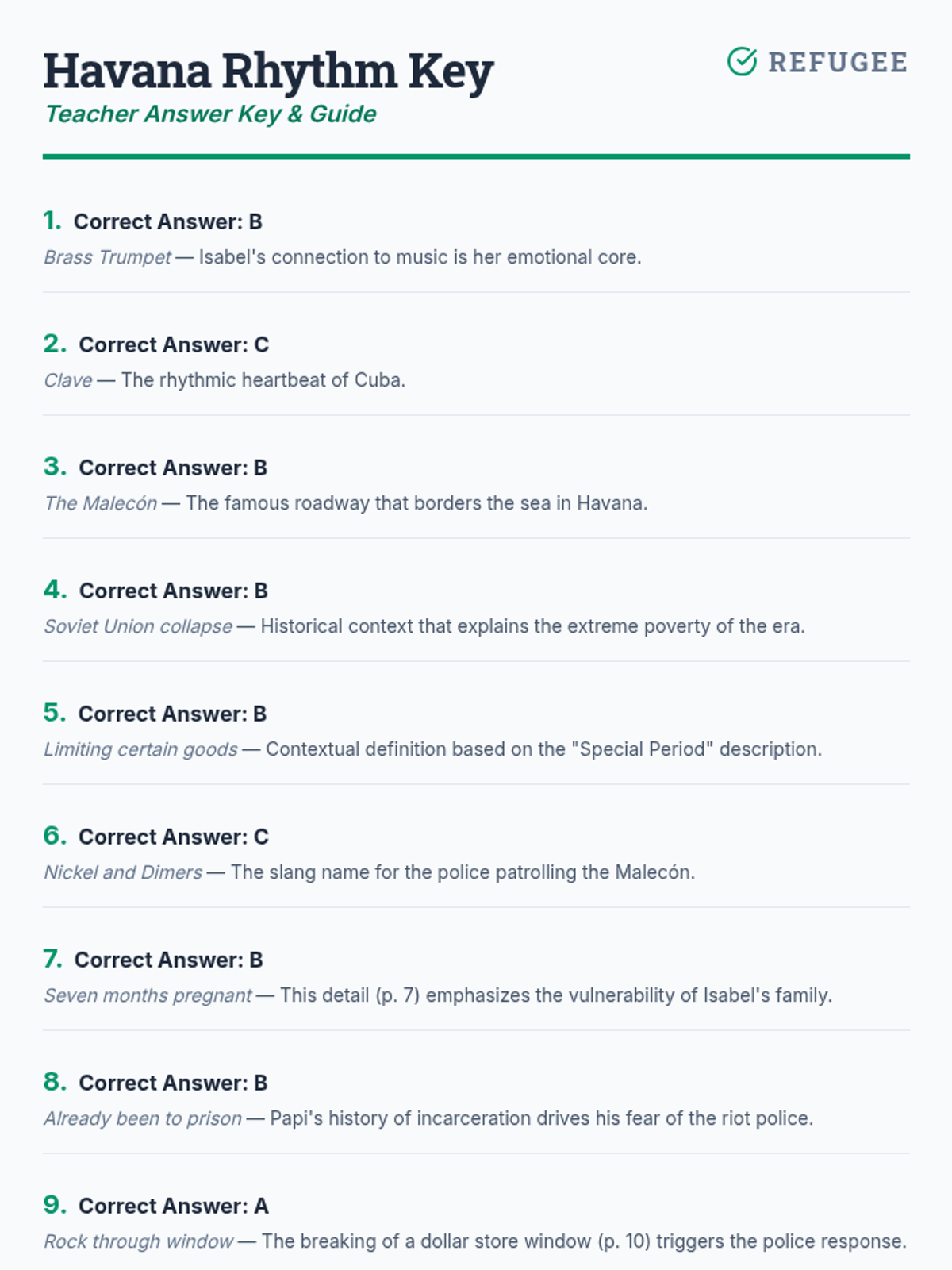
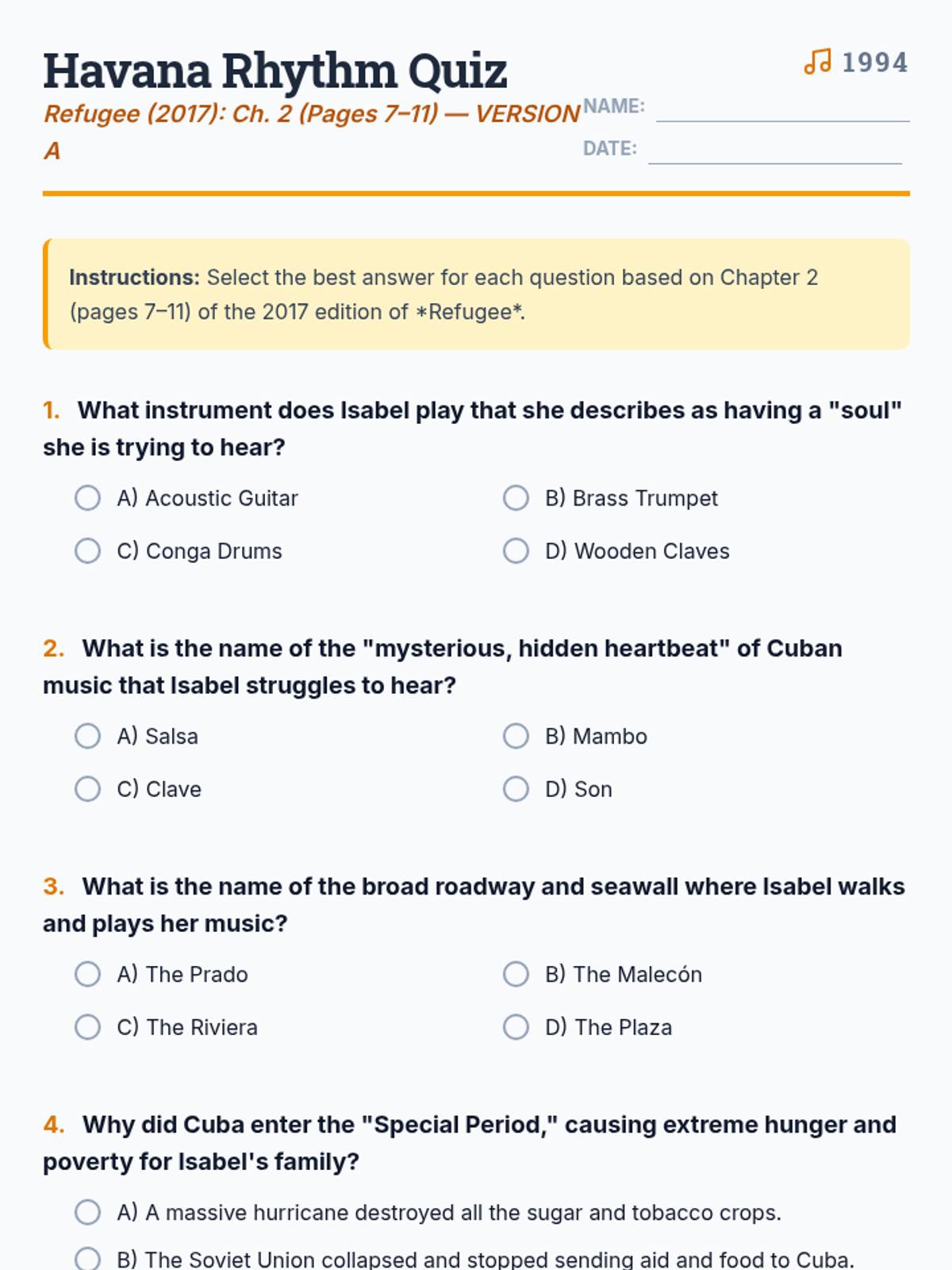
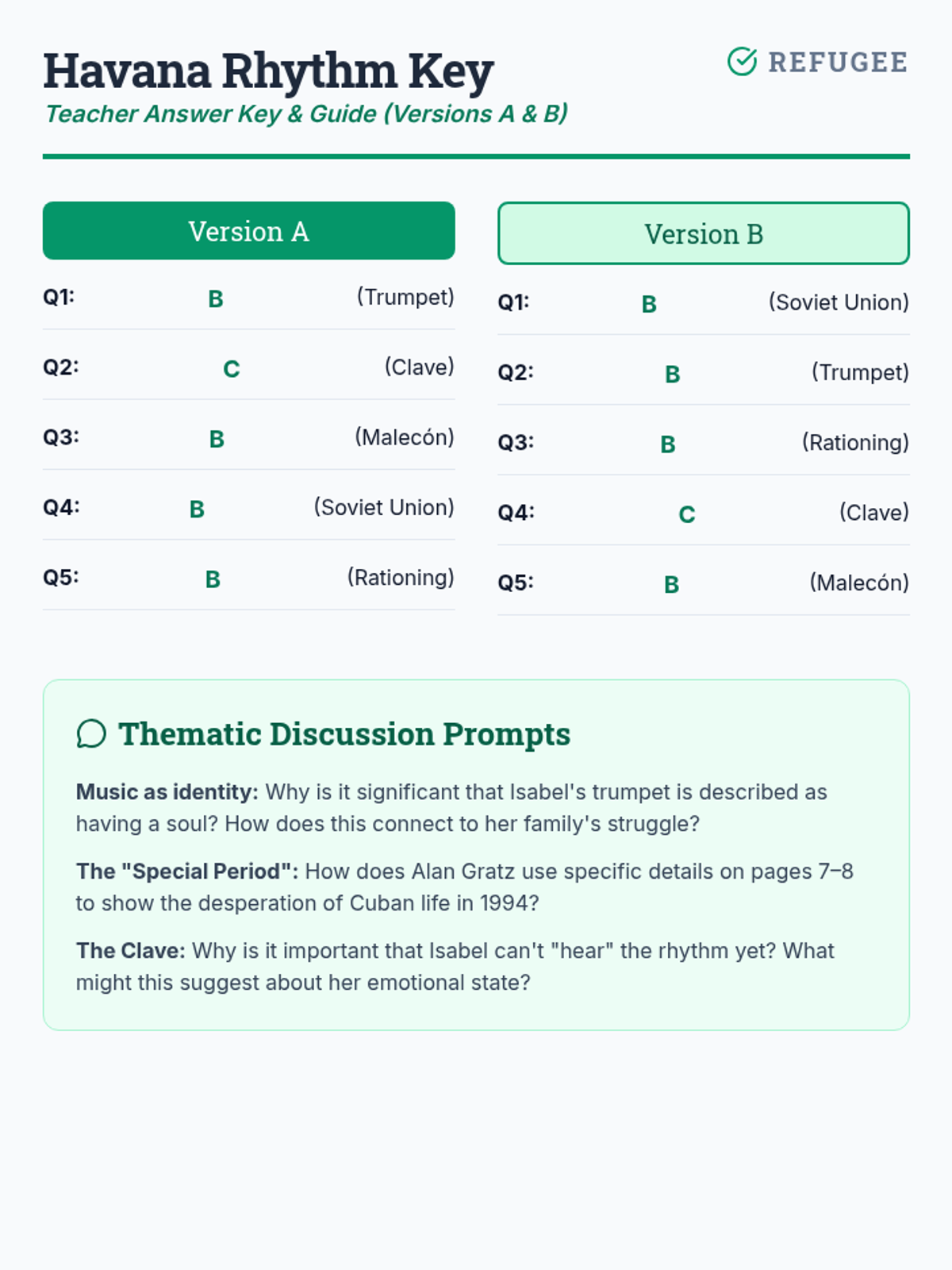
A focused study on Isabel's introduction in Alan Gratz's 'Refugee', exploring the setting of 1994 Cuba and the rising tensions in Havana.
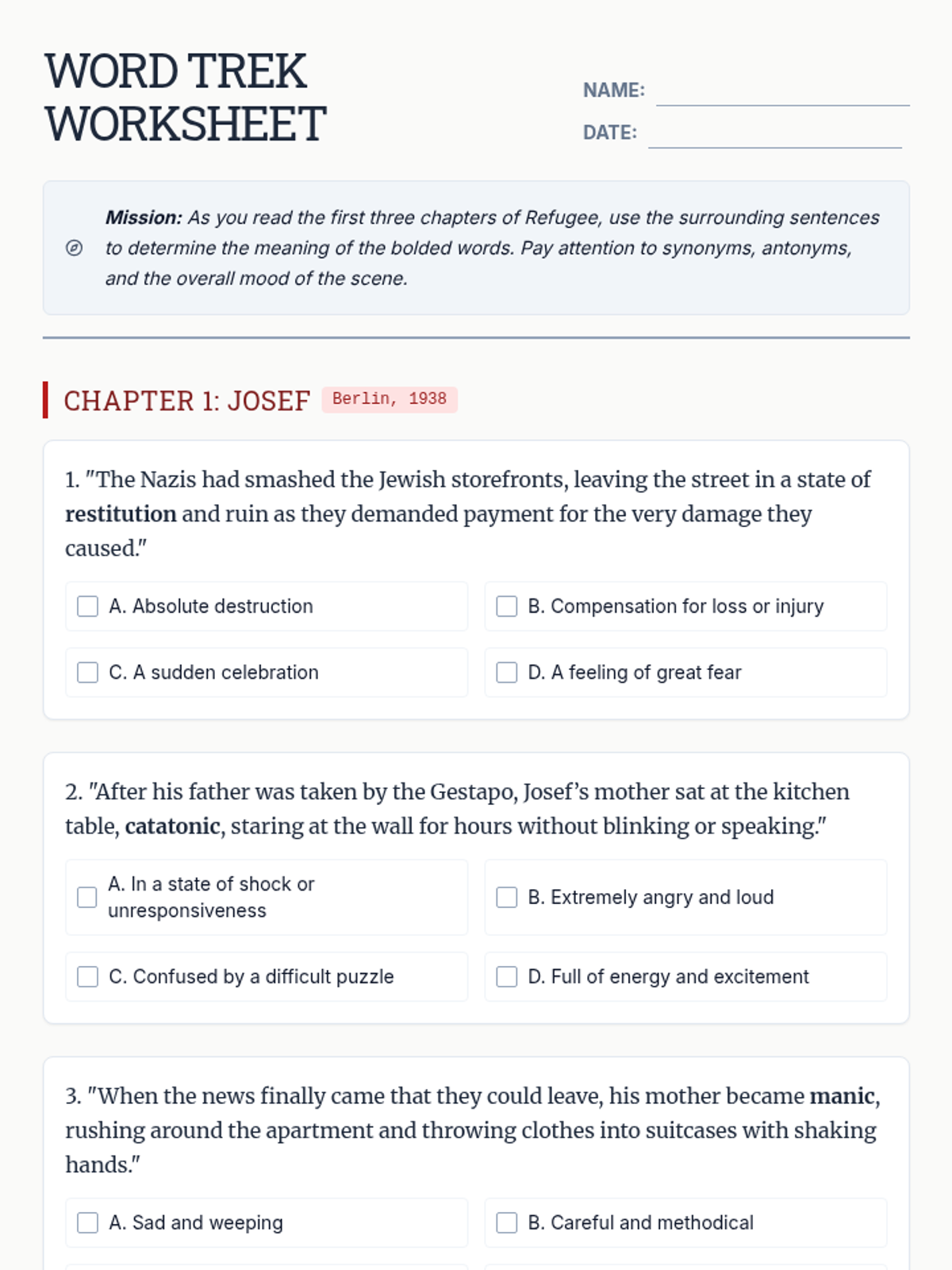
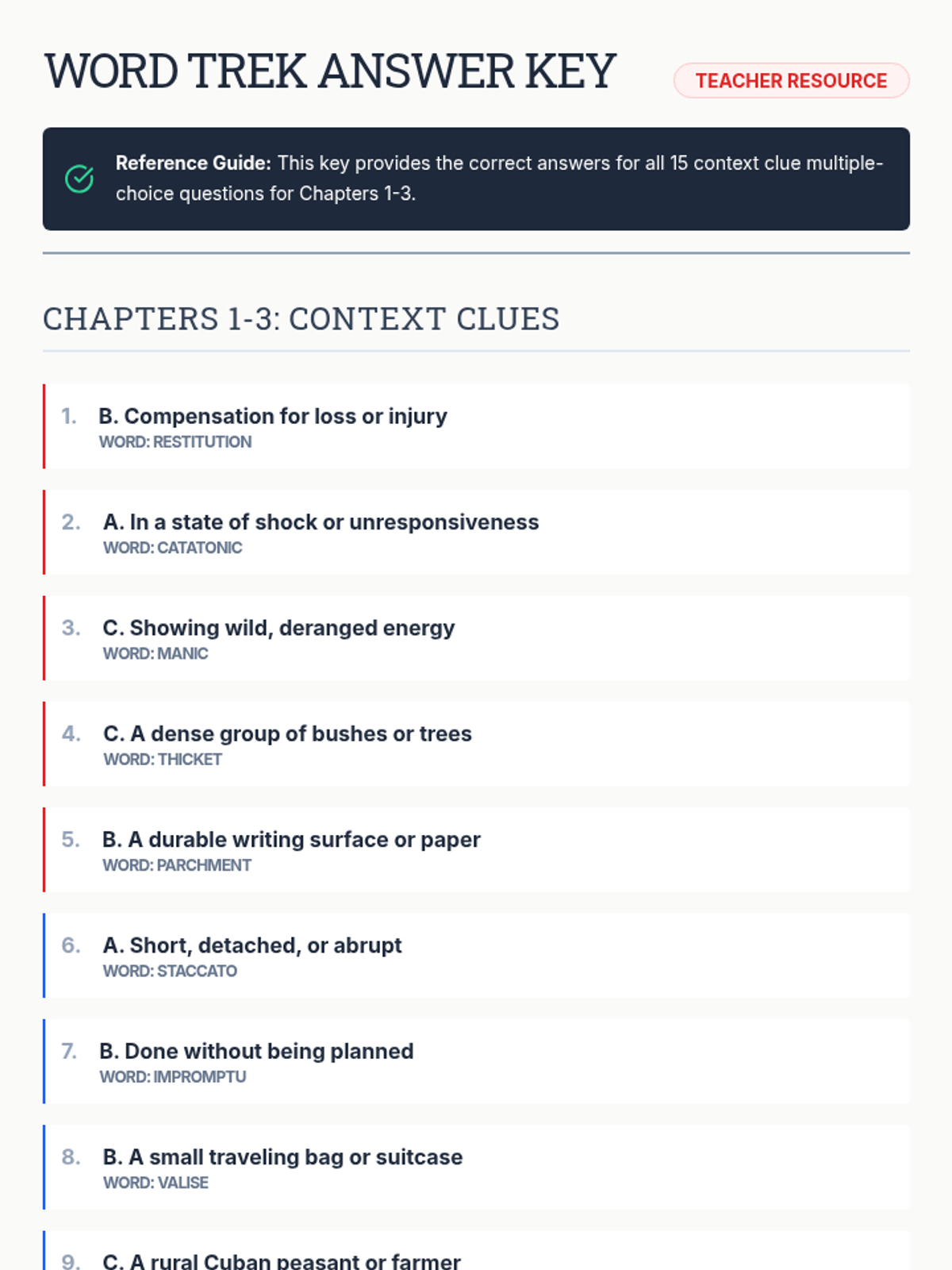
Focusing on vocabulary from the opening chapters of Alan Gratz's Refugee, students use context clues to determine the meaning of key words and apply them in their own writing.
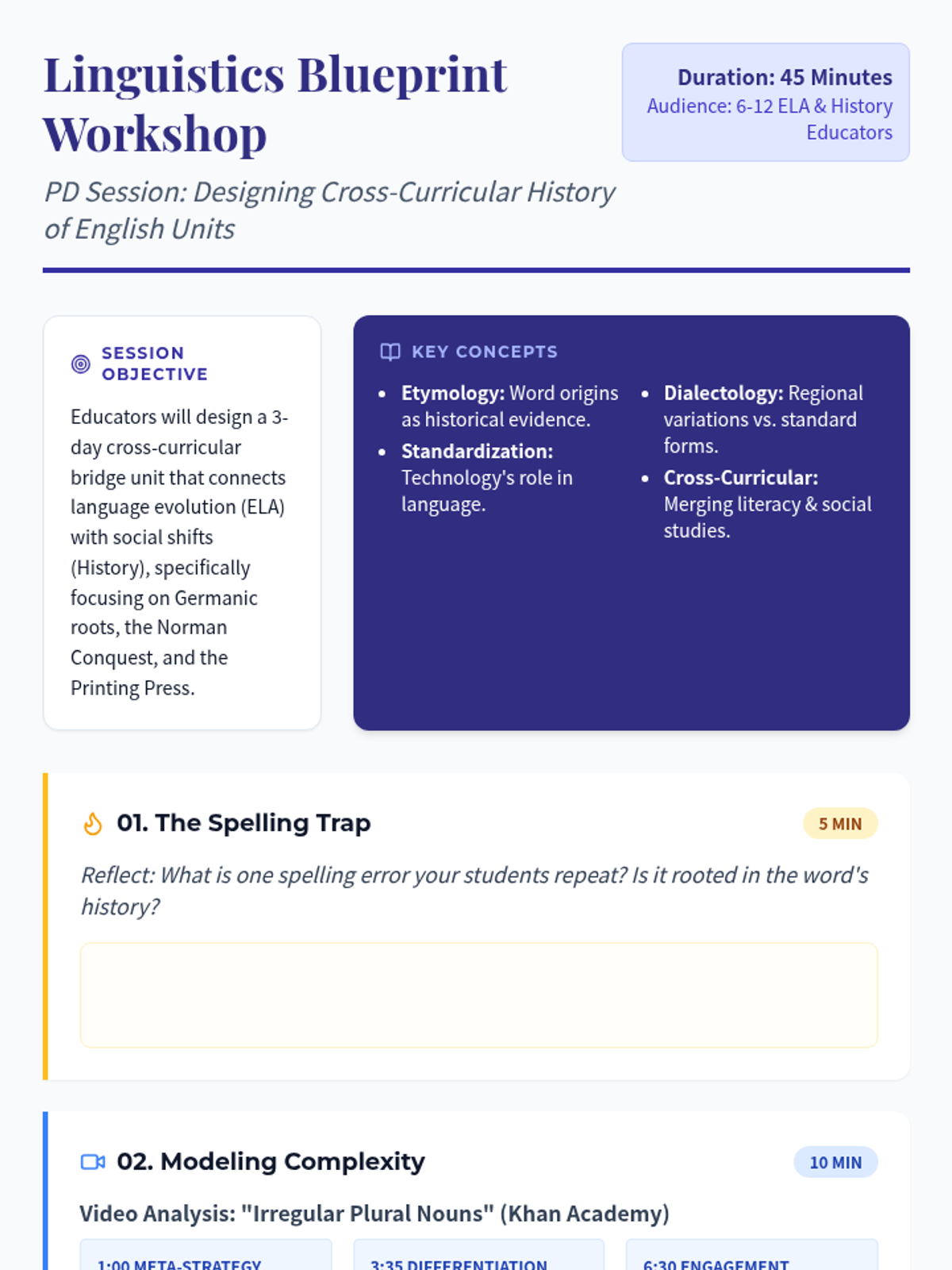
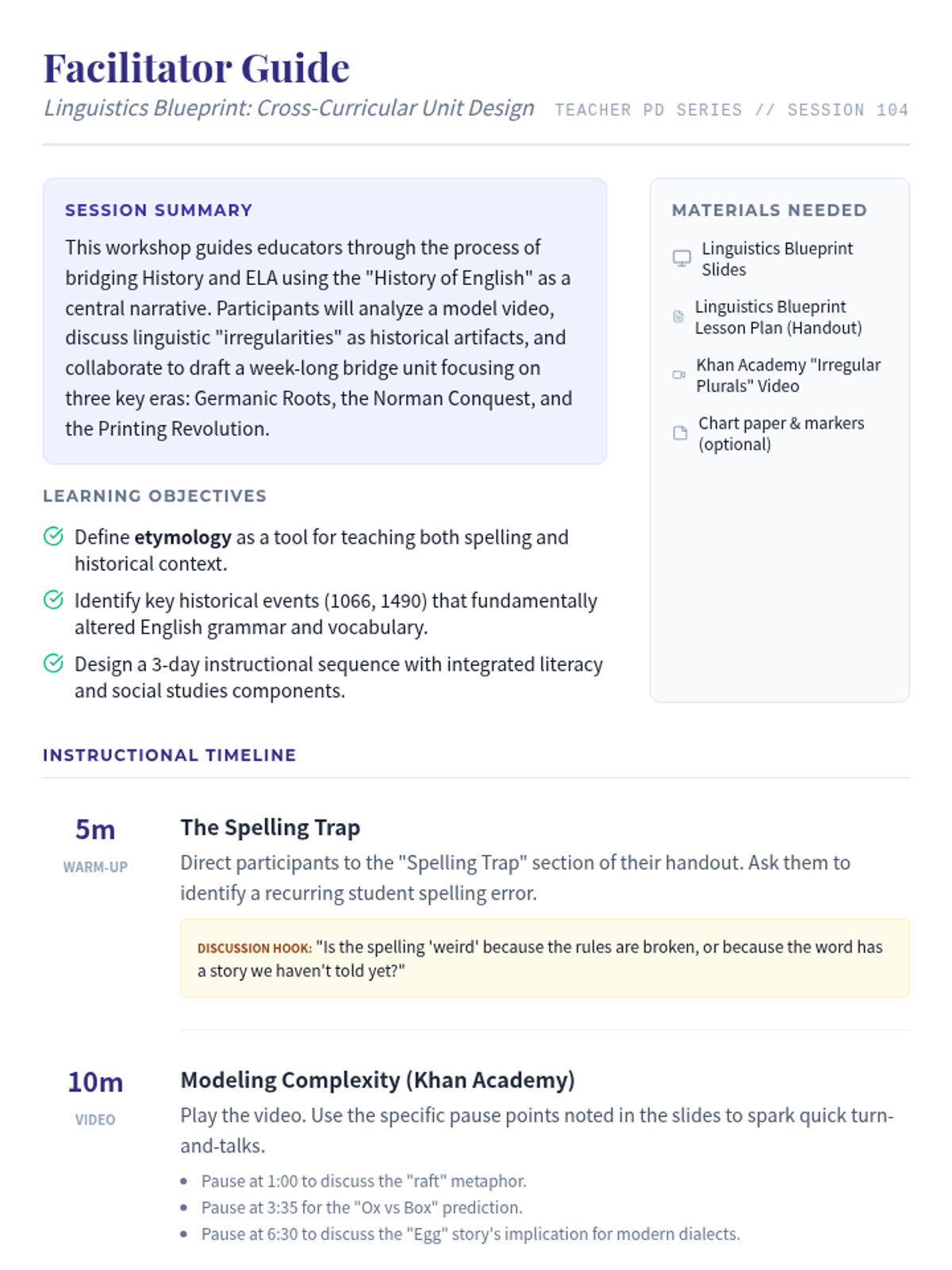
A professional development workshop for educators to design a cross-curricular unit connecting Language Arts and History through the evolution of the English language.
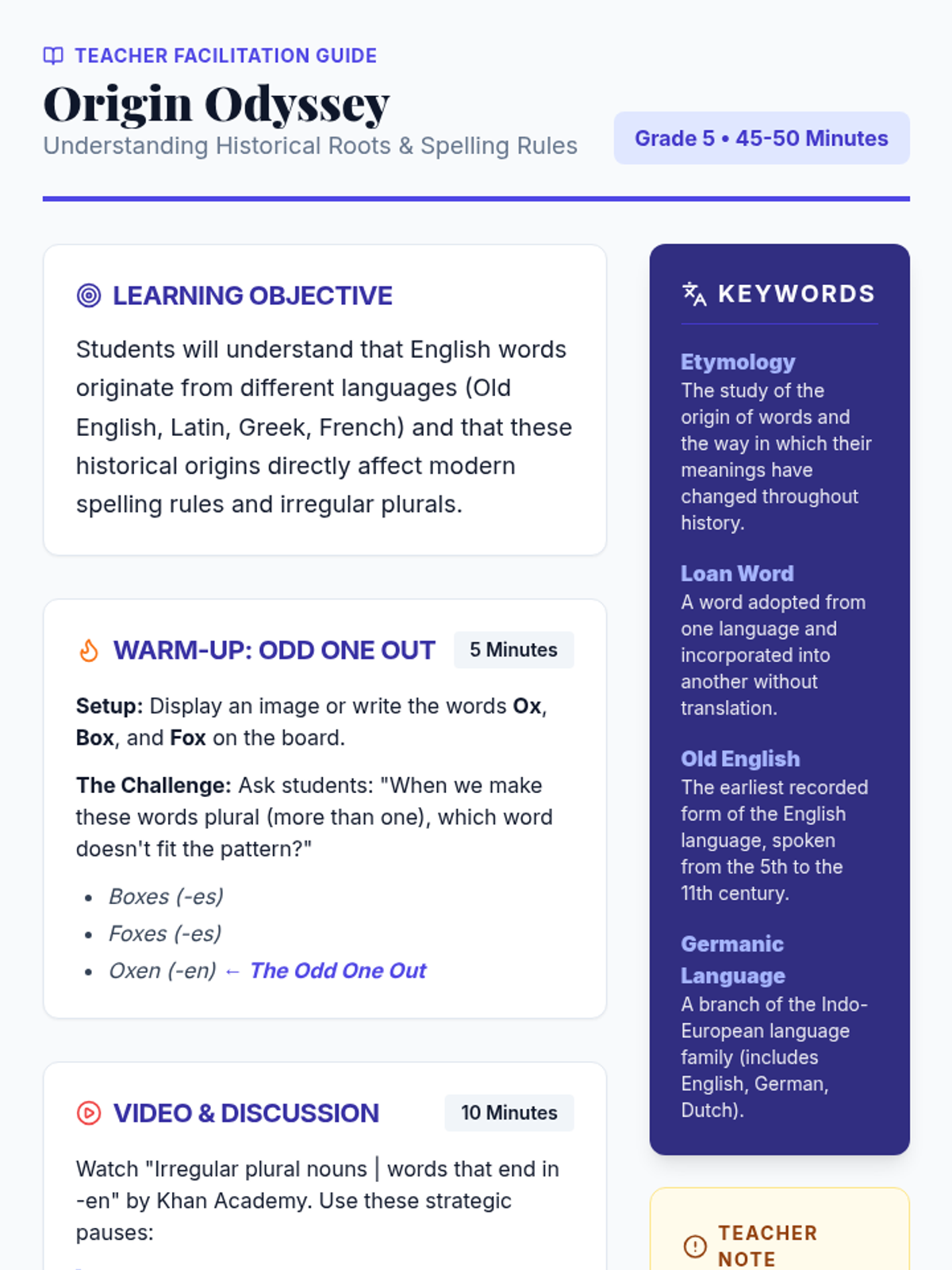
This lesson explores the historical roots of English spelling, focusing on irregular plurals like 'children' and 'oxen'. Students investigate word origins (etymology) to understand why English rules aren't always predictable and how history shaped the modern language.
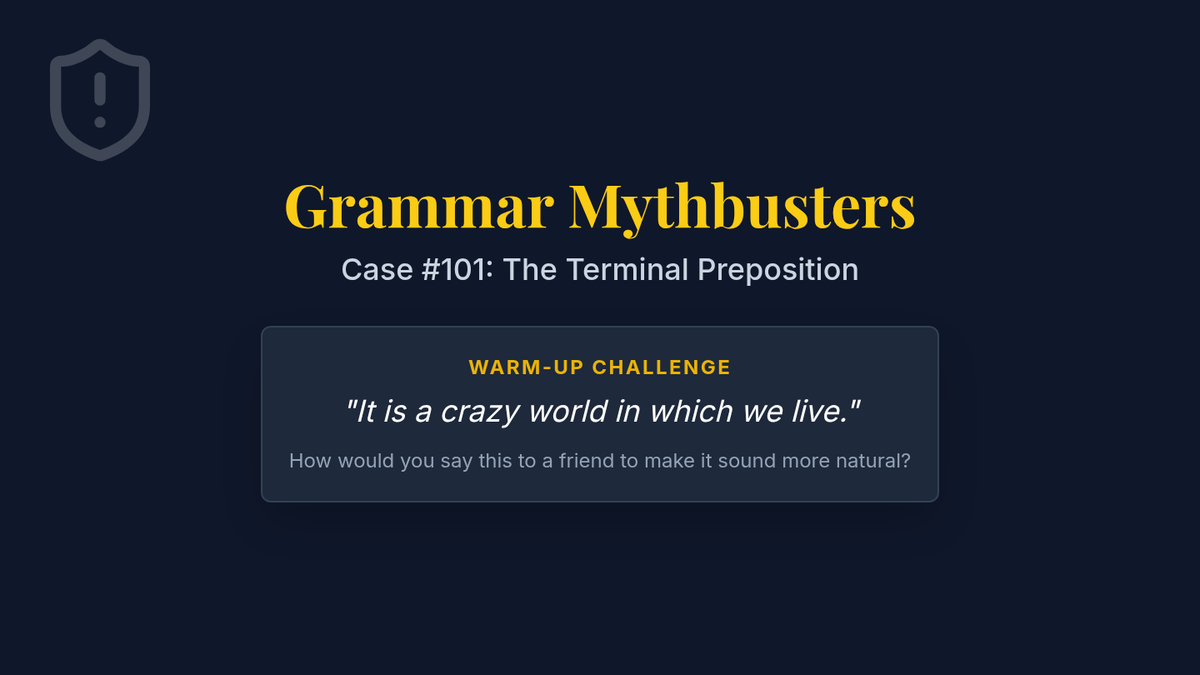
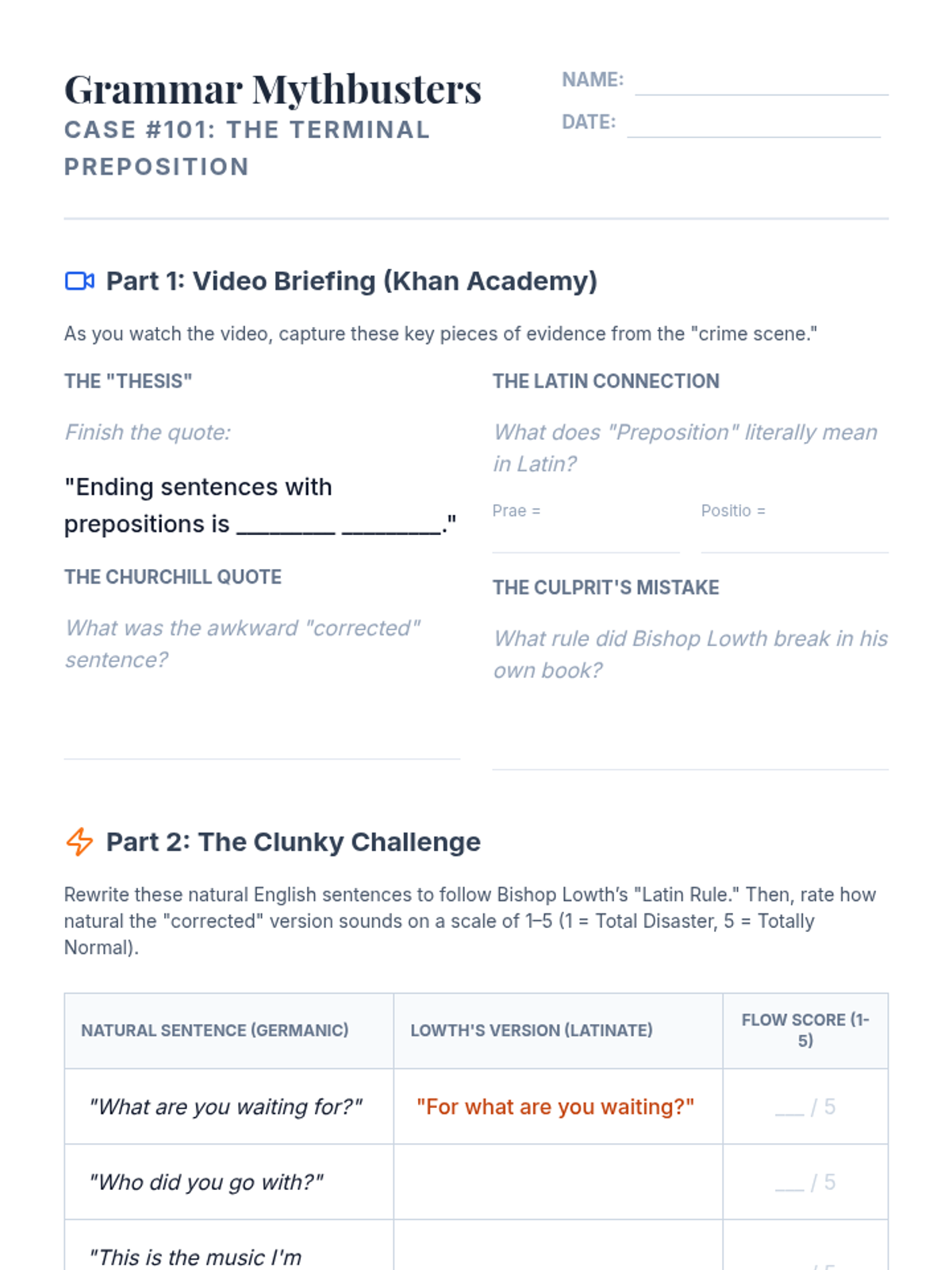
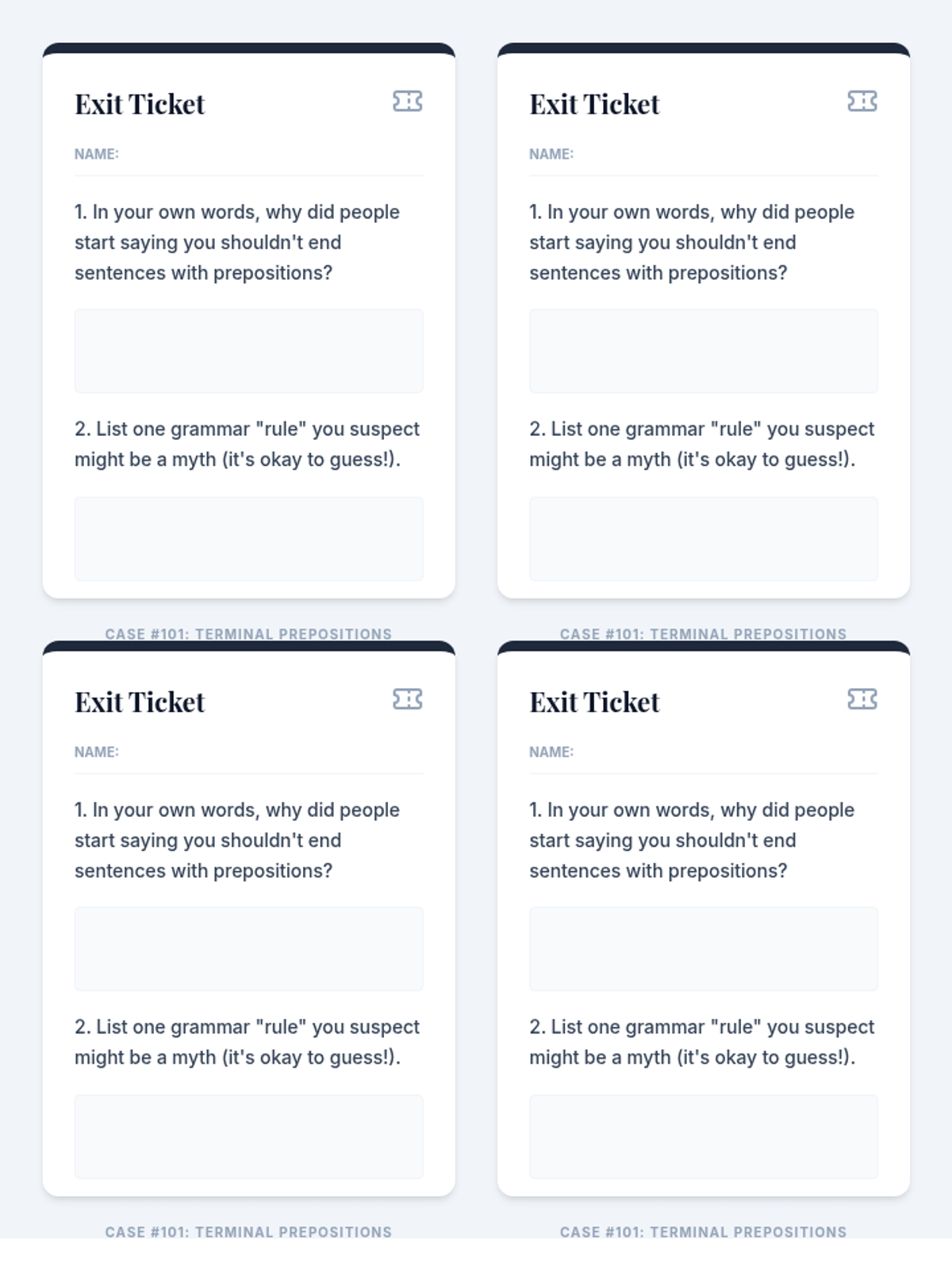
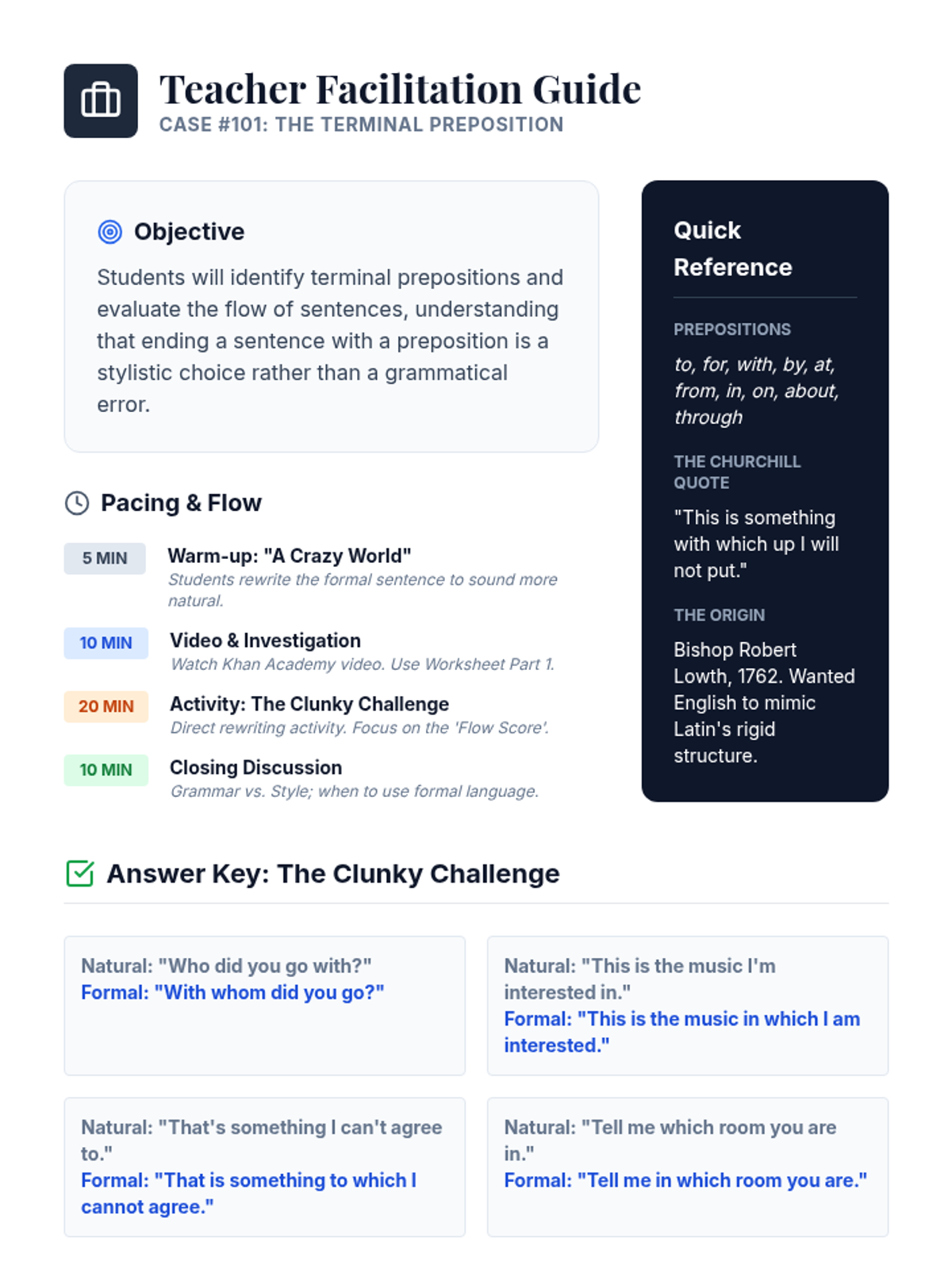
A middle school grammar lesson that deconstructs the myth of the terminal preposition, exploring its Latin origins and the difference between formal style and natural English flow.
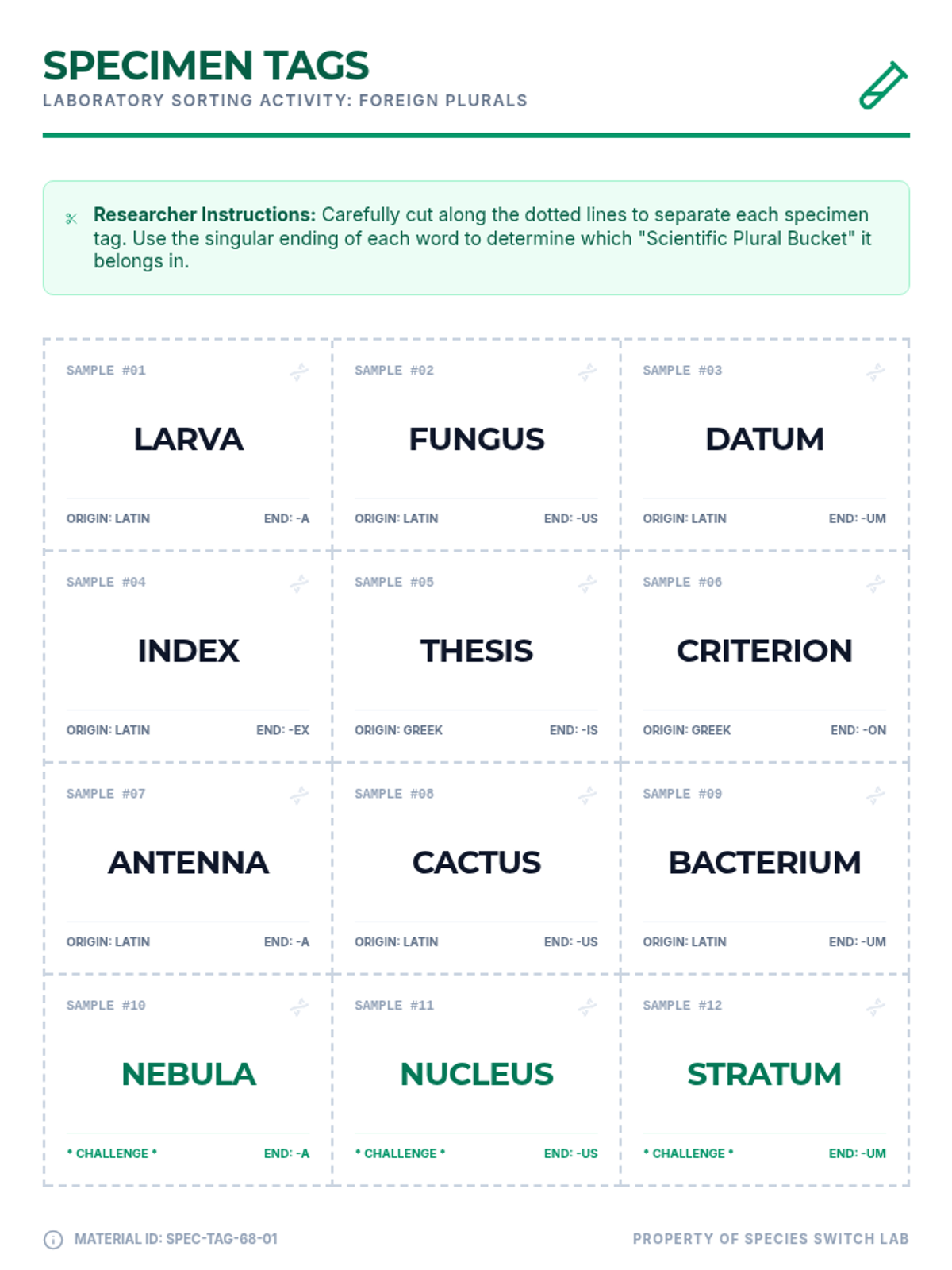
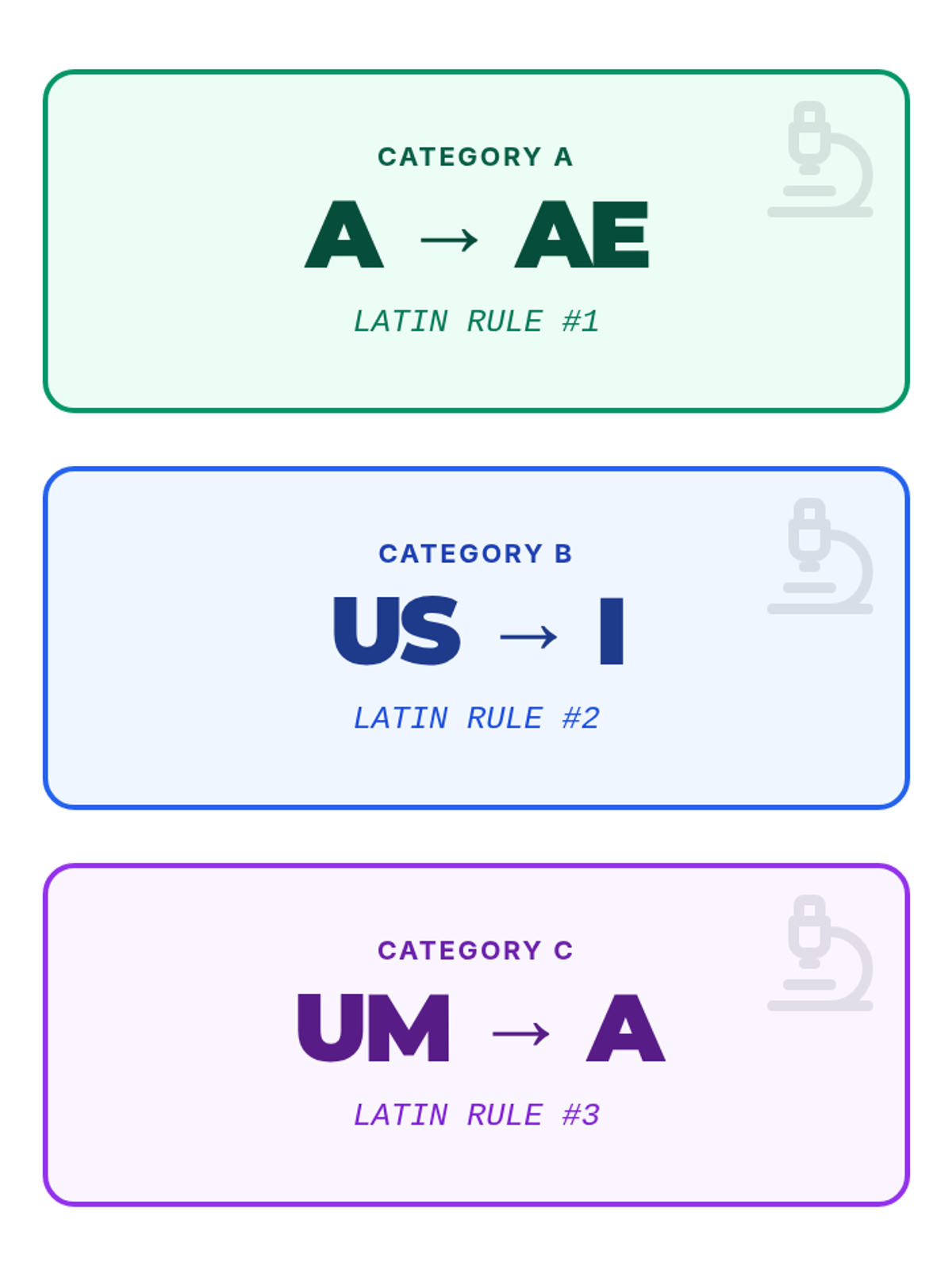
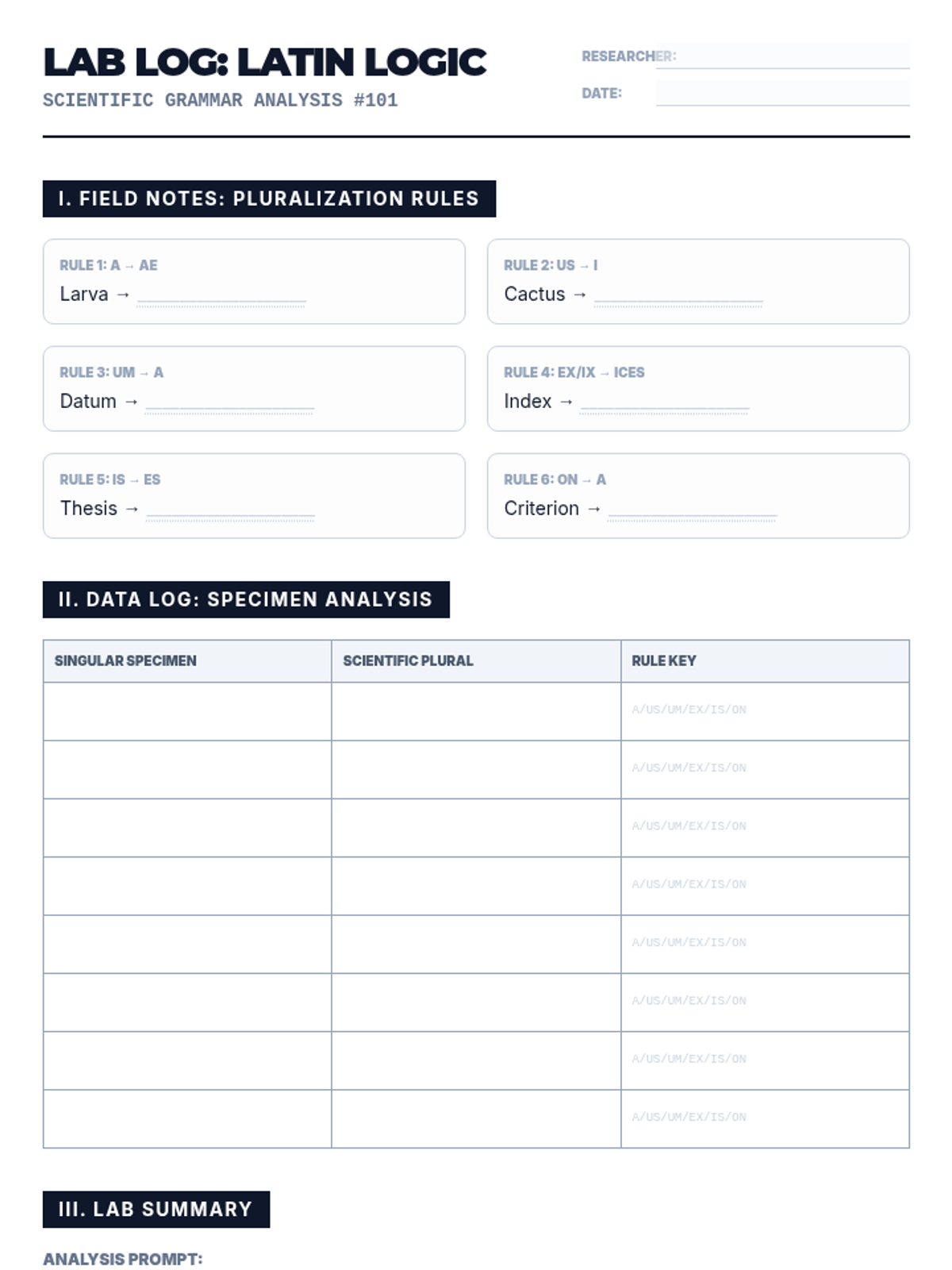
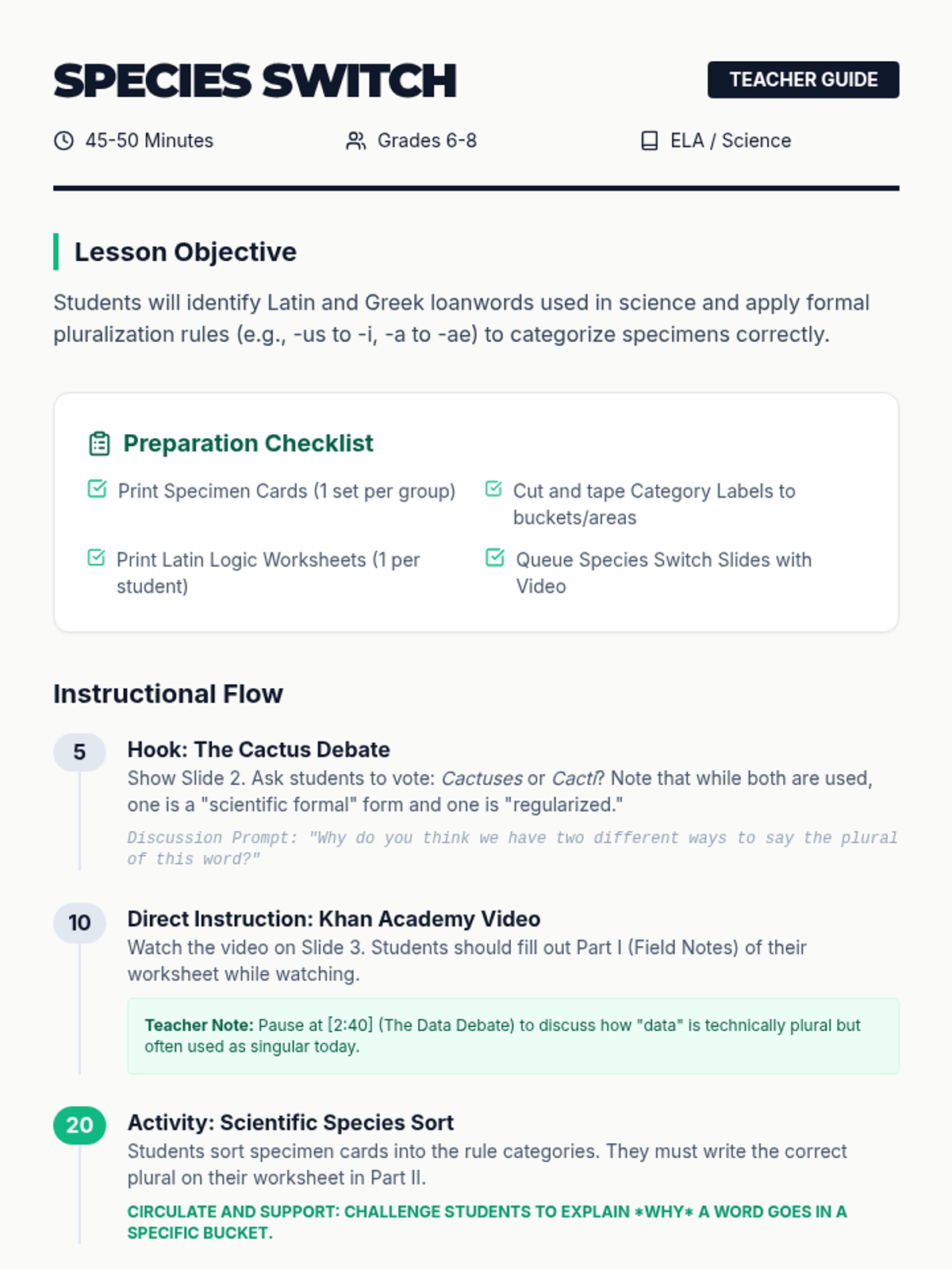
A middle school grammar and science lesson where students learn to pluralize scientific loanwords from Latin and Greek. Students identify rules for ending changes and sort species names into categories.
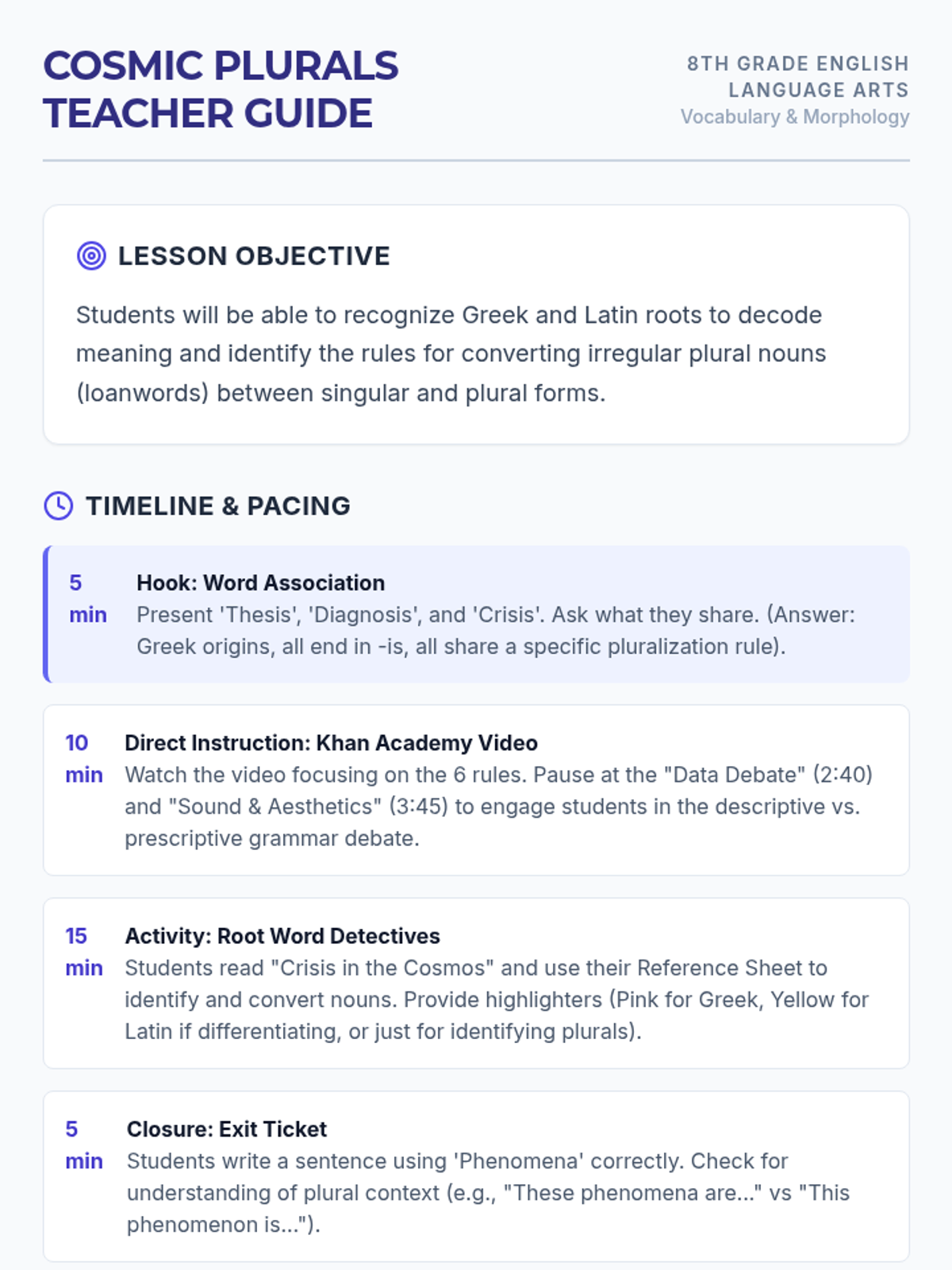
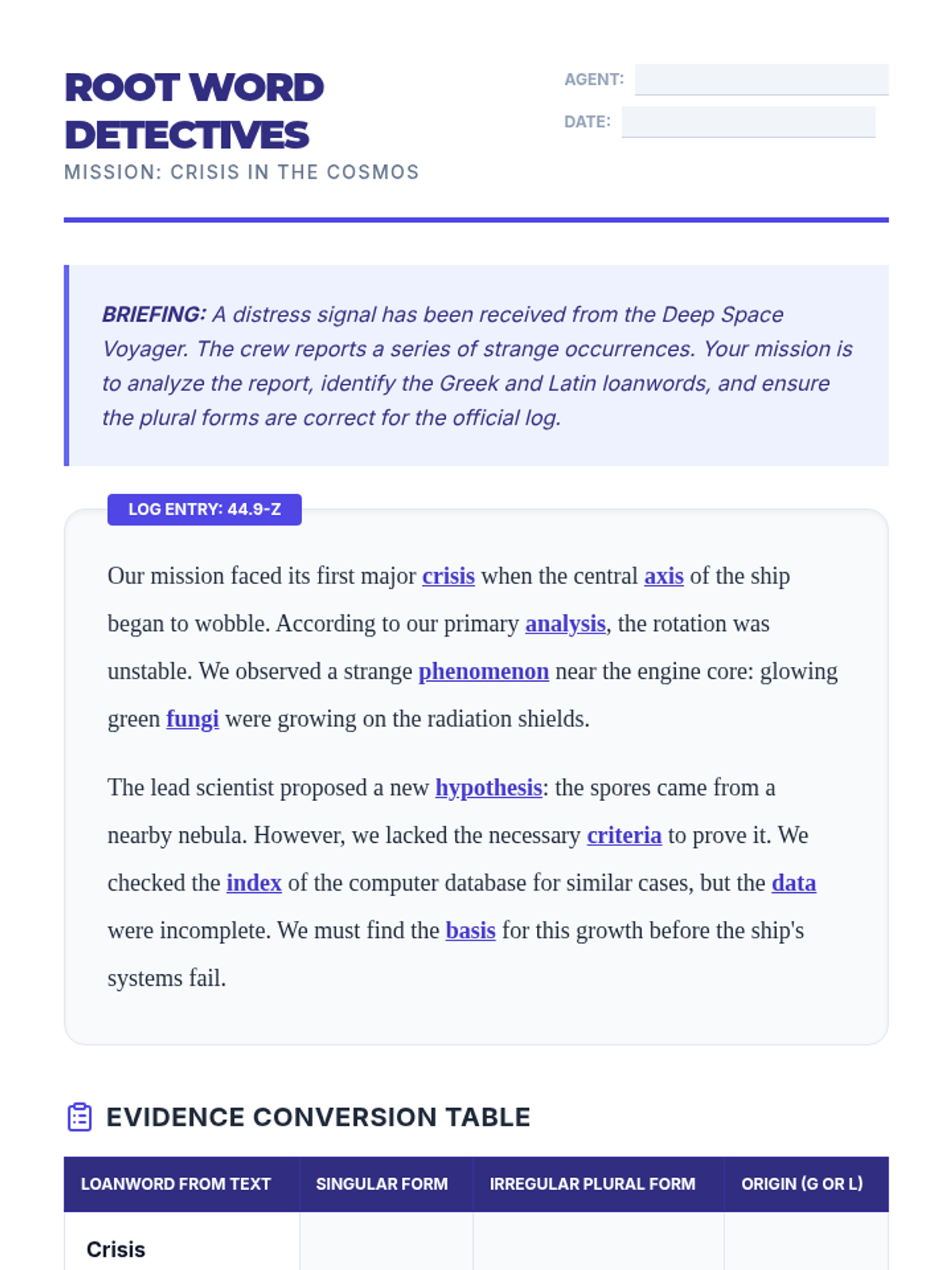
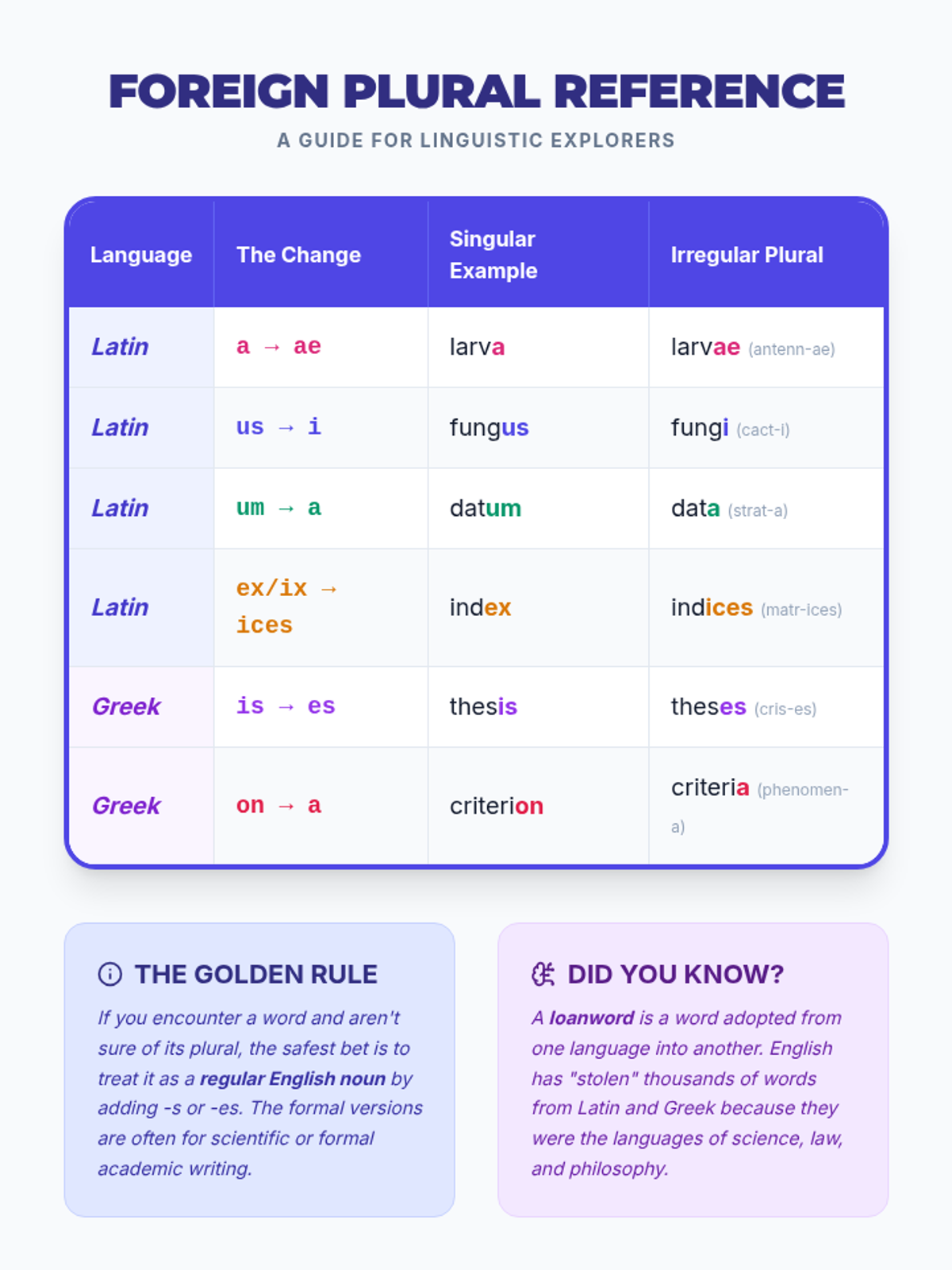
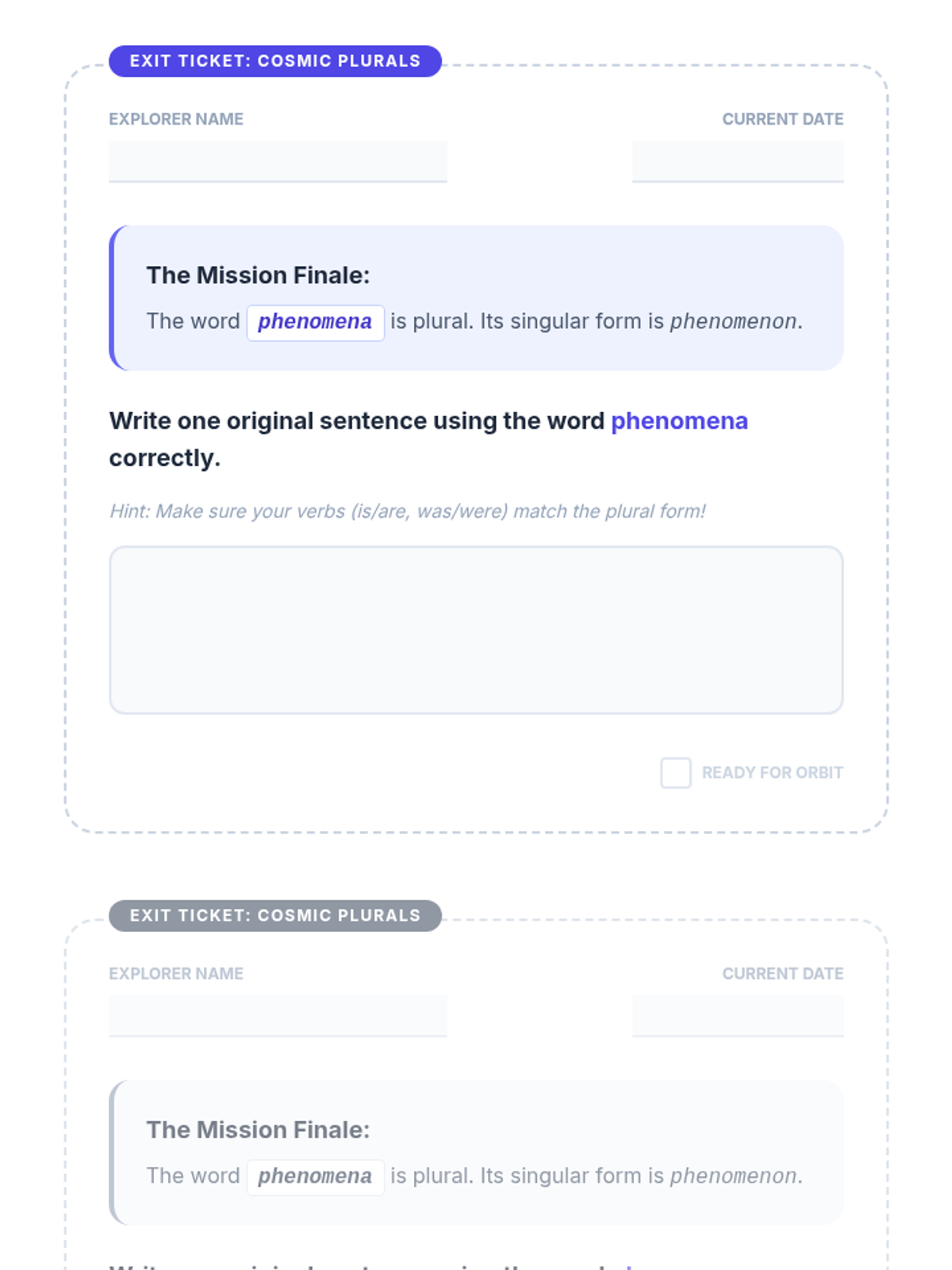
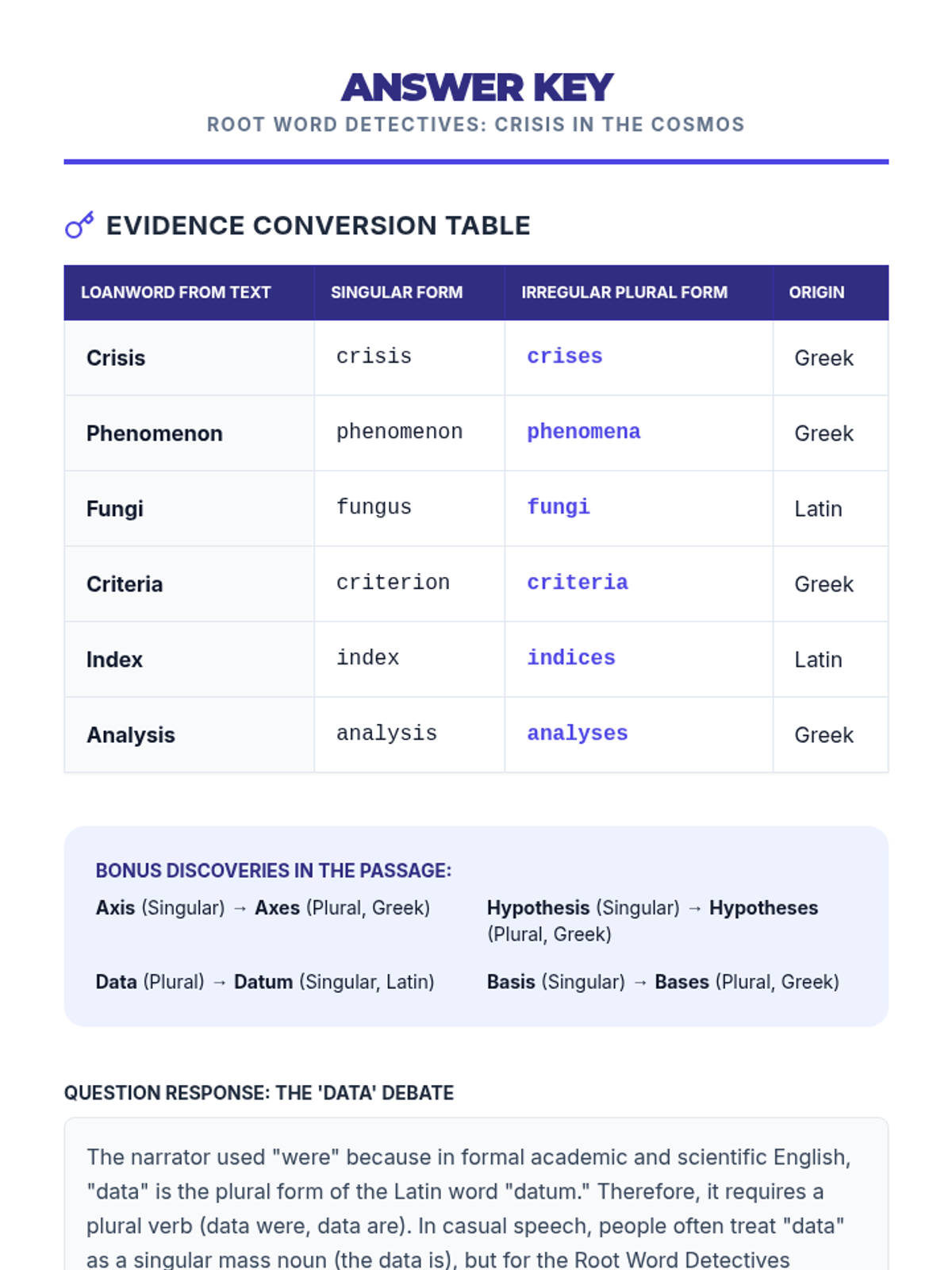
A lesson for 8th-grade students focusing on recognizing and converting Greek and Latin irregular plural nouns (loanwords) through a cosmic detective theme.
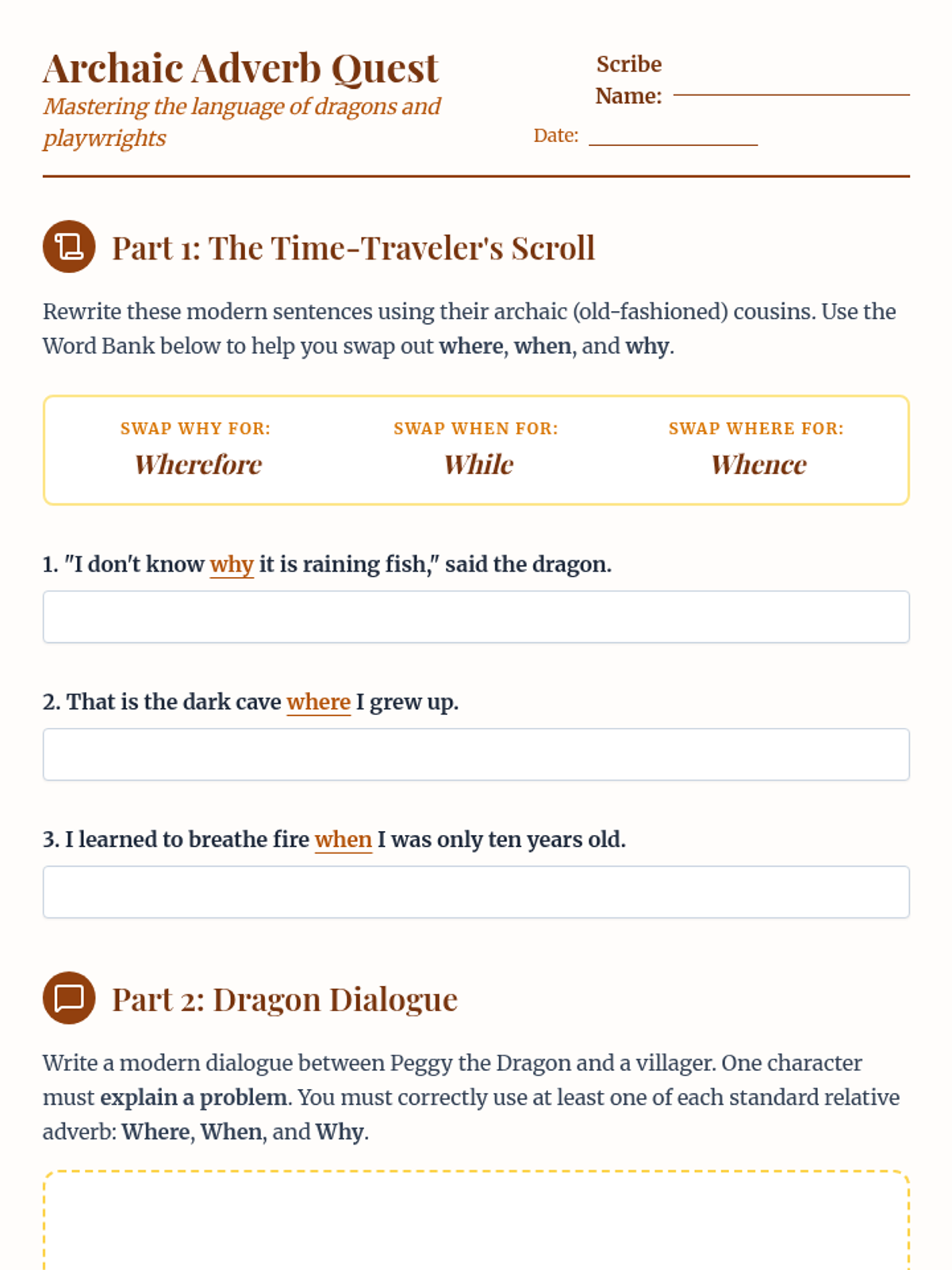
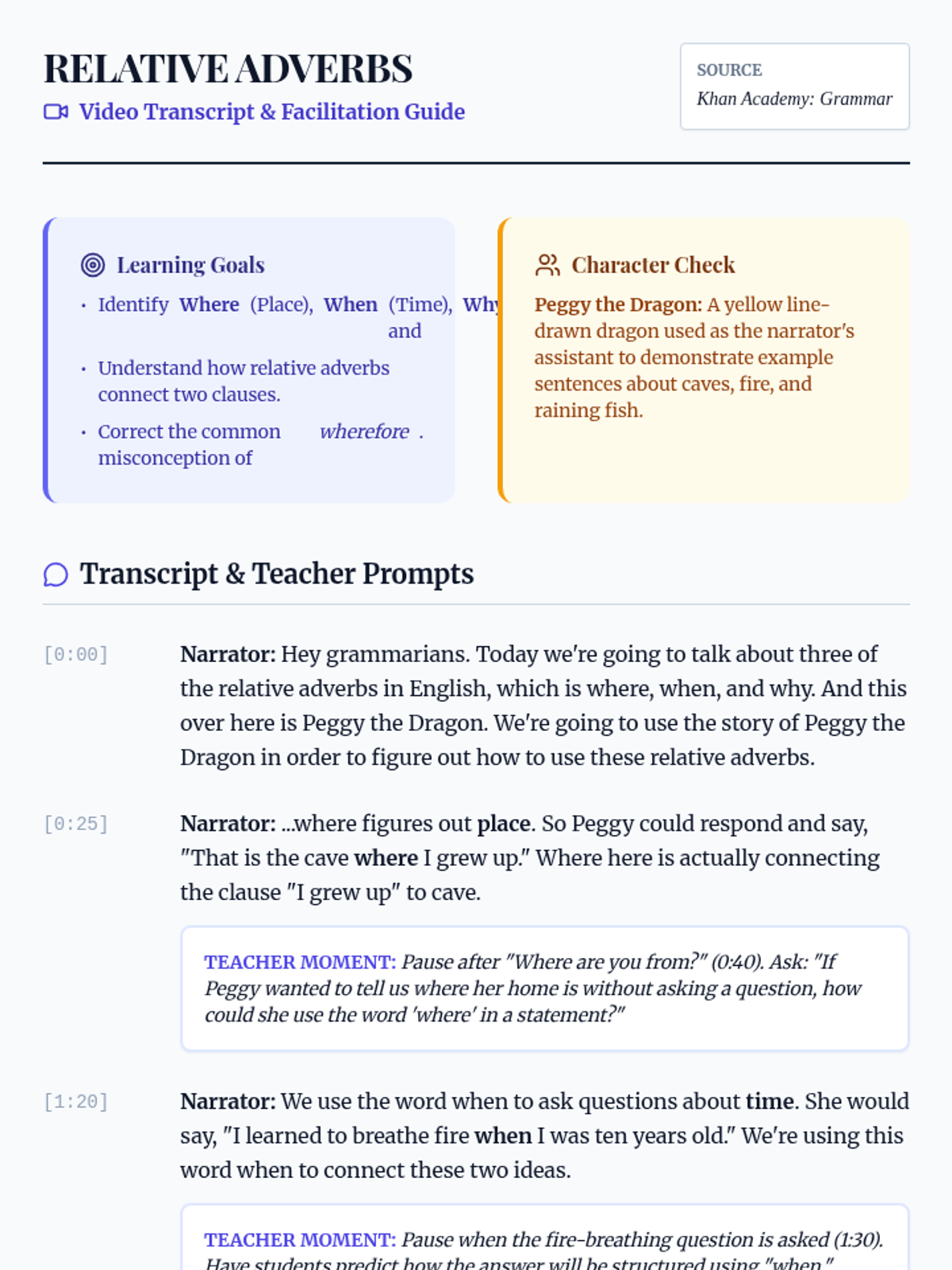
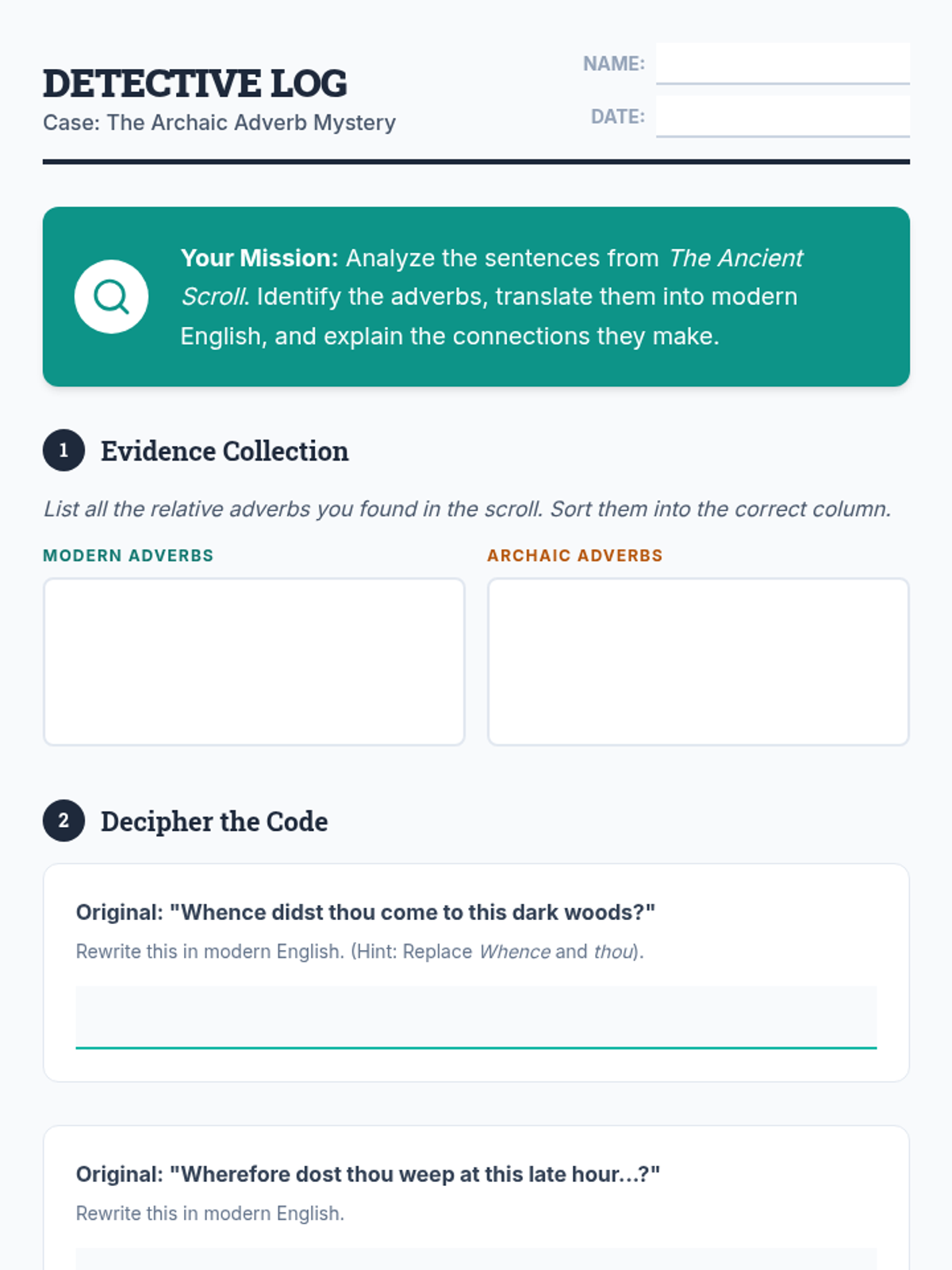
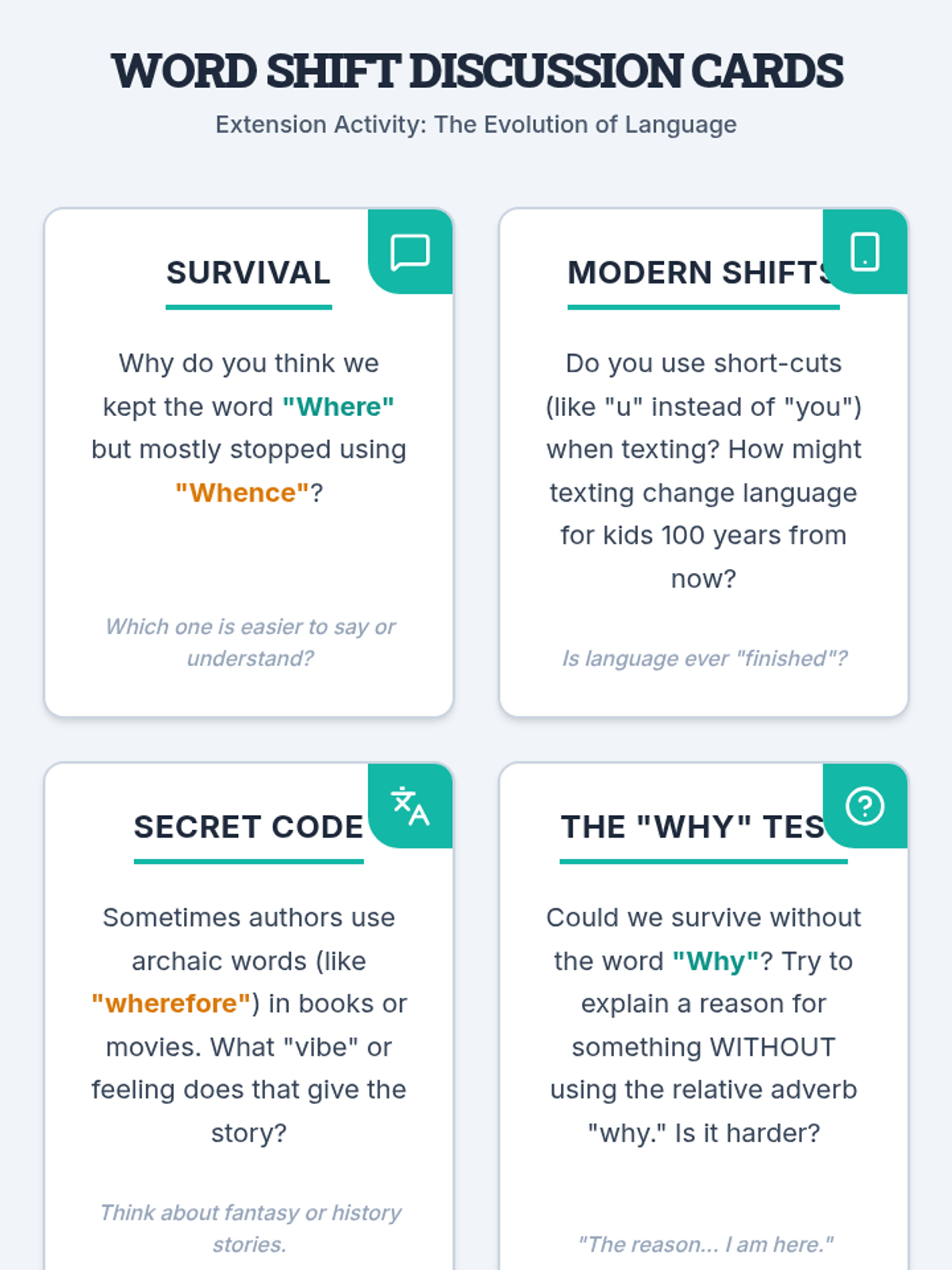
Students explore relative adverbs (where, when, why) through the lens of history and a dragon named Peggy, debunking the 'wherefore' myth along the way.
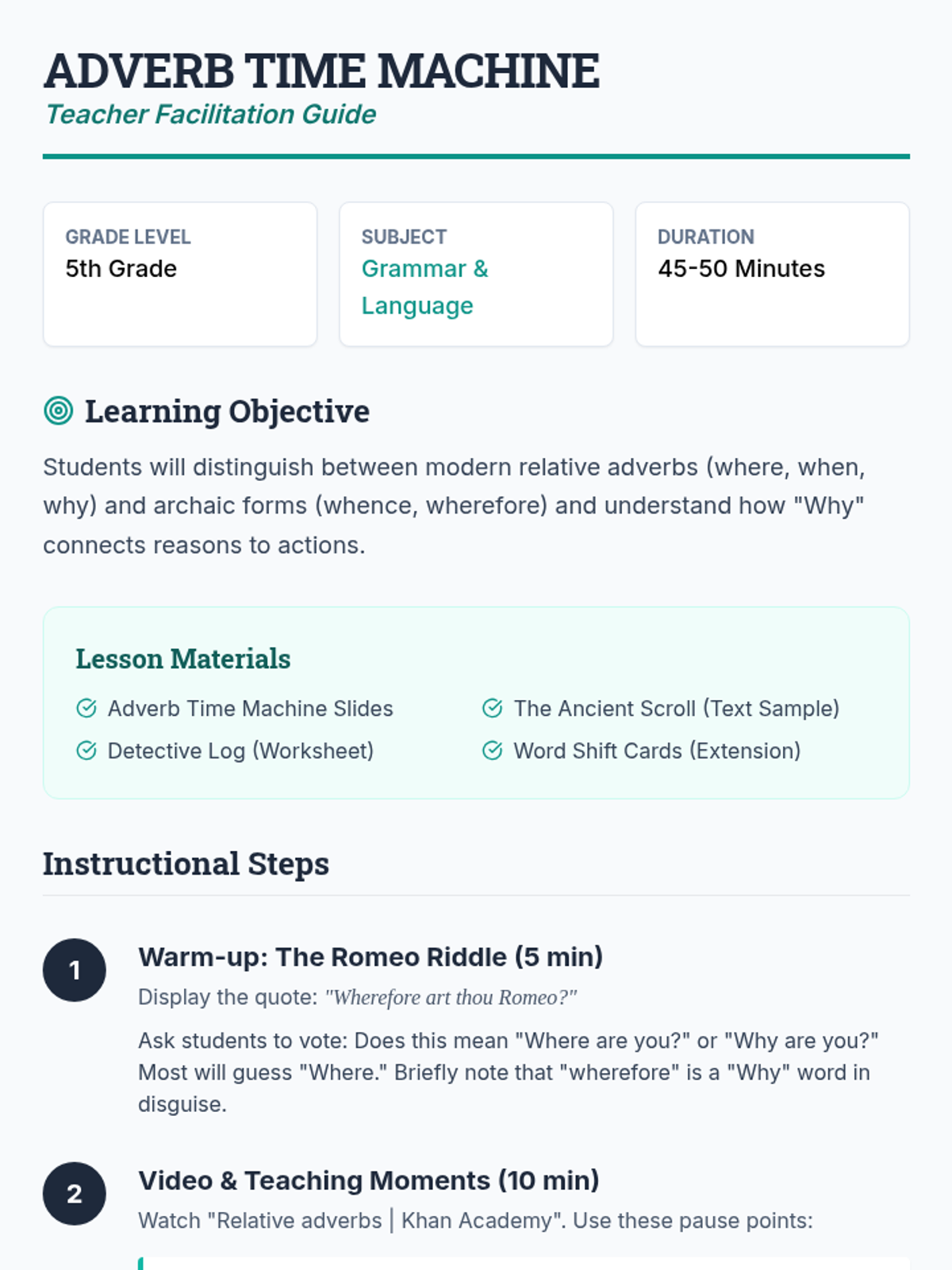
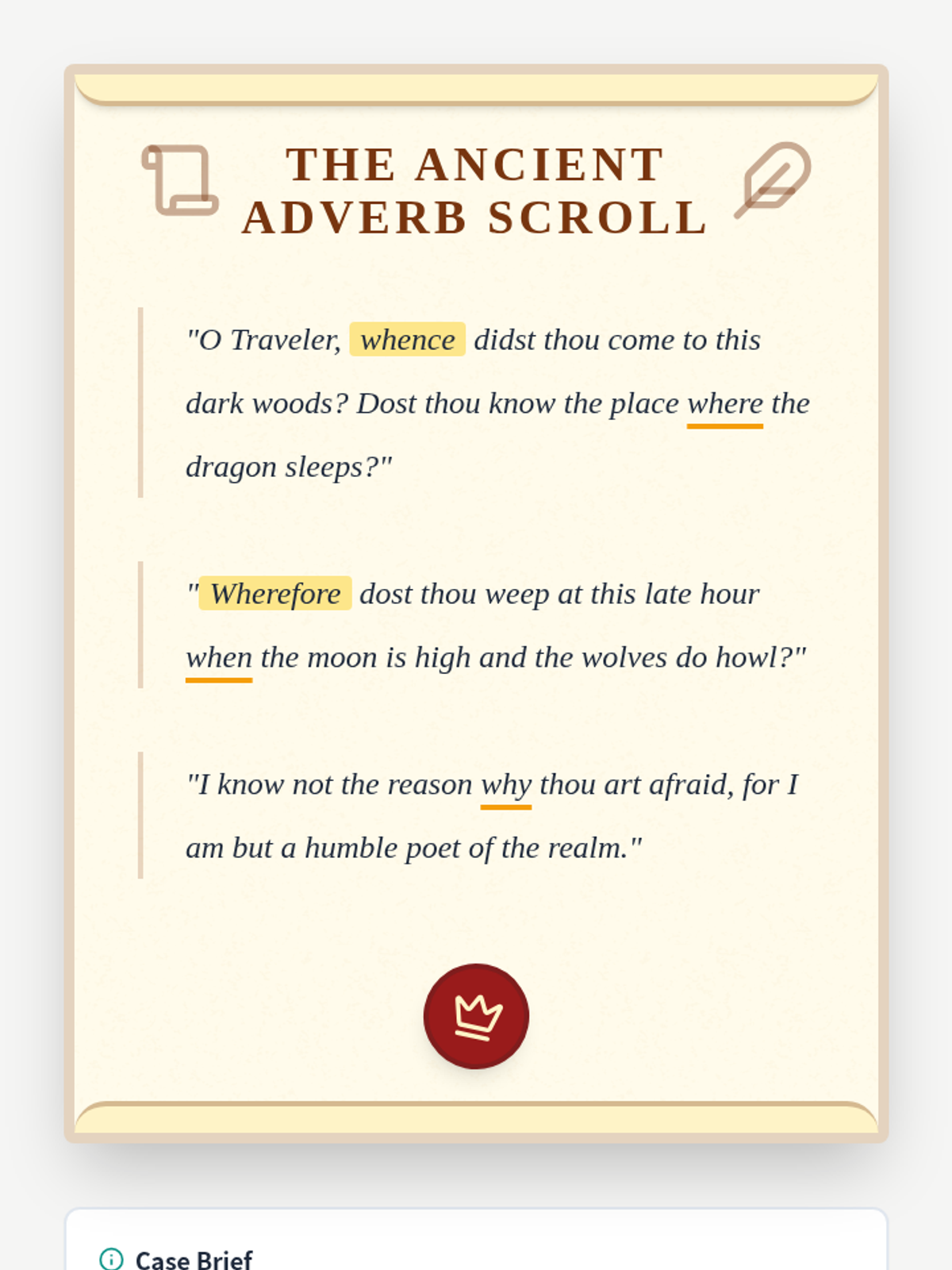
A lesson for 5th-grade students to explore relative adverbs through a historical lens, comparing modern usage with archaic forms like "wherefore" and "whence."
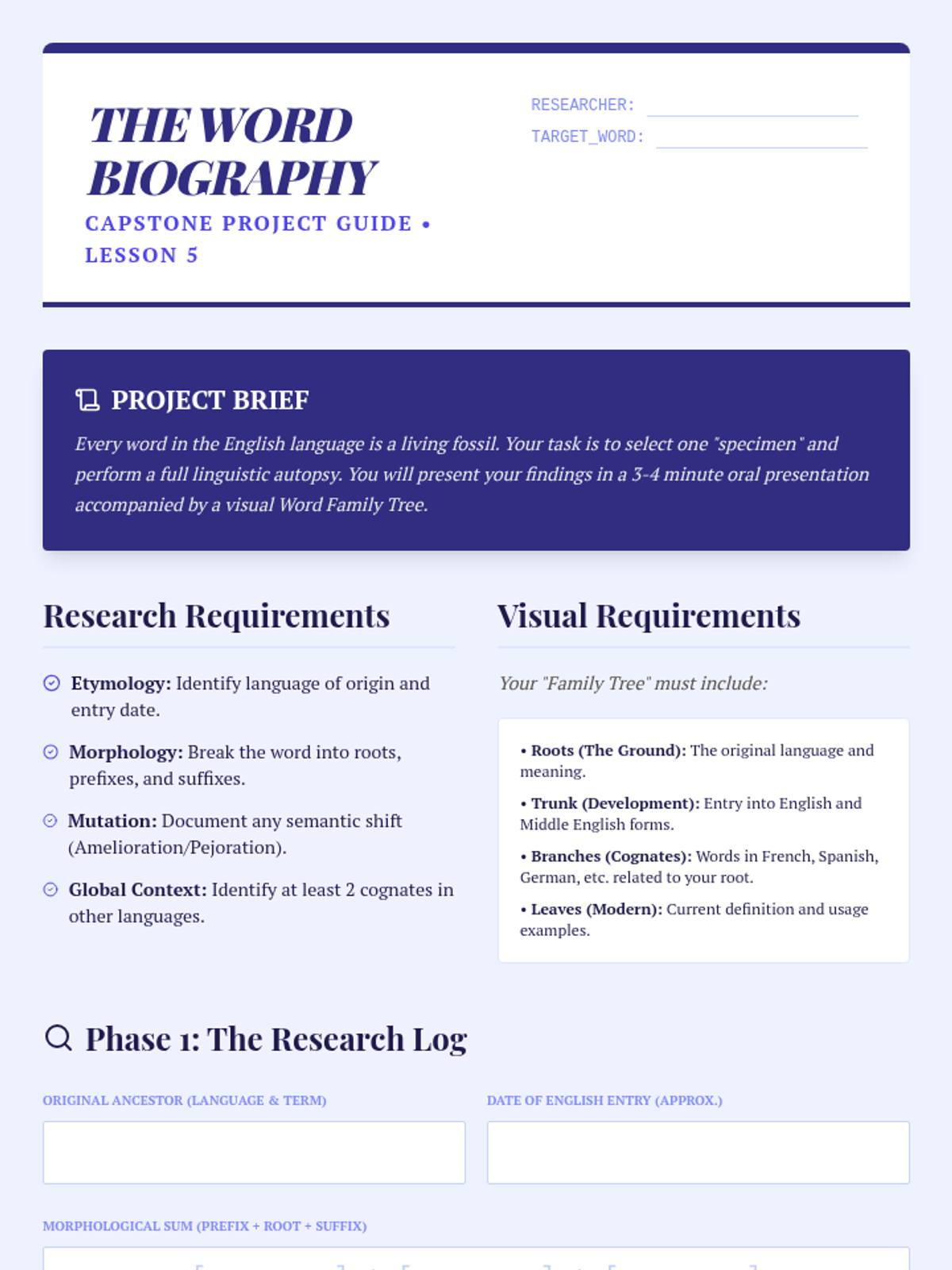
Students synthesize their research skills to present the 'life story' of a specific word, detailing its origin, evolution, and modern usage.
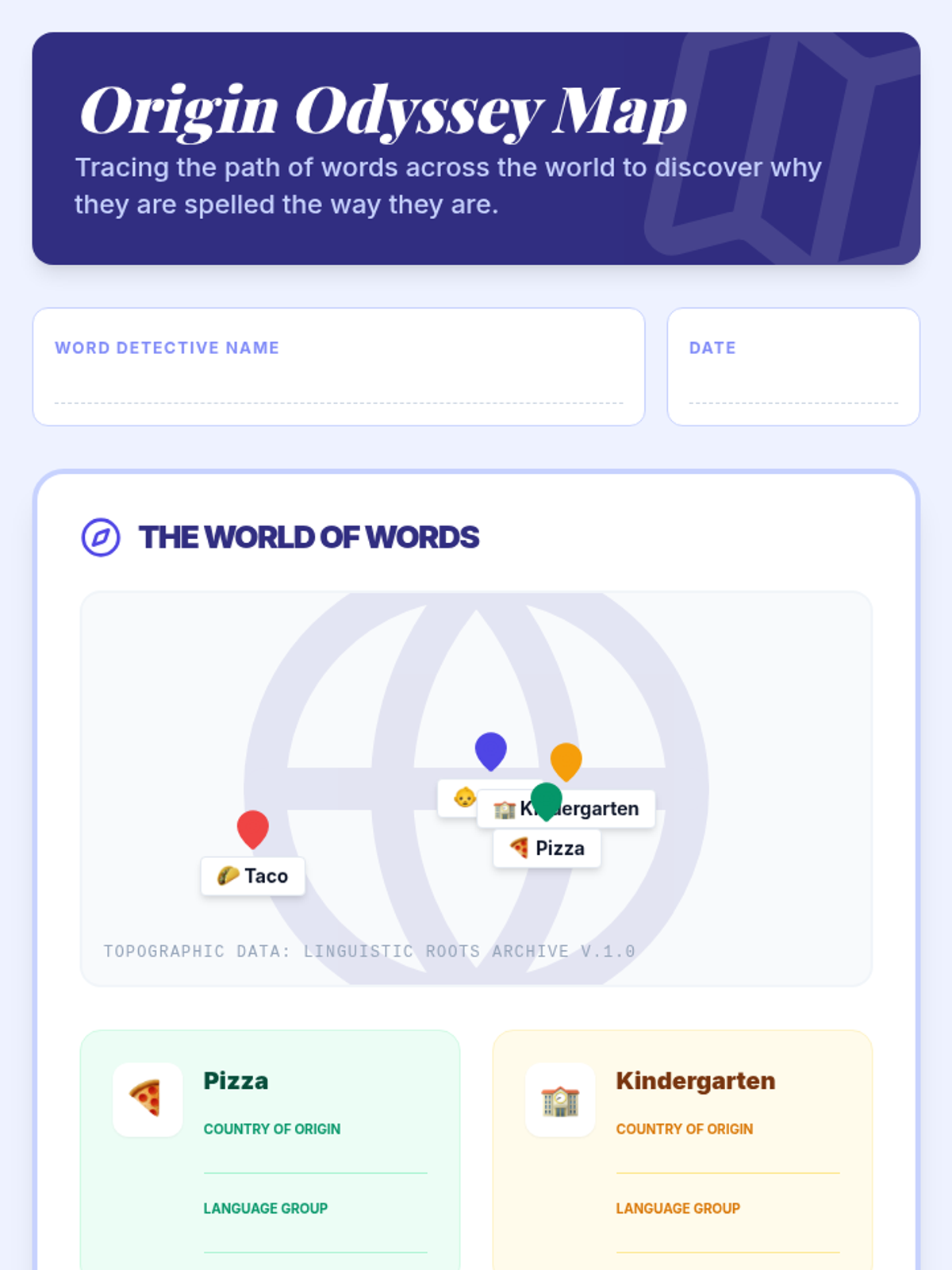
An exploration of loanwords and how English adopts vocabulary through cultural exchange, trade, and conflict.
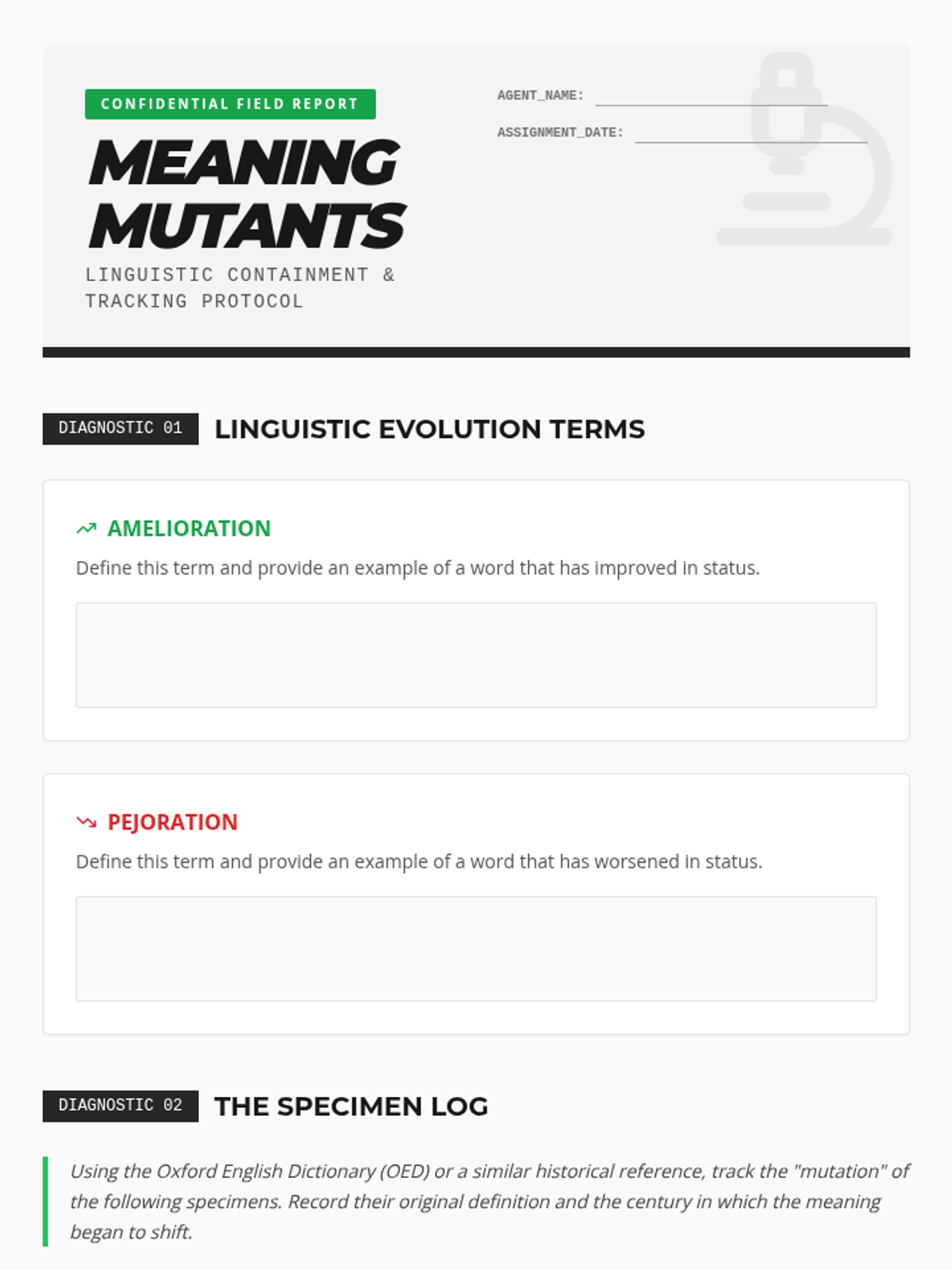
Students investigate semantic shifts, tracking how definitions have changed over centuries using historical dictionary resources.
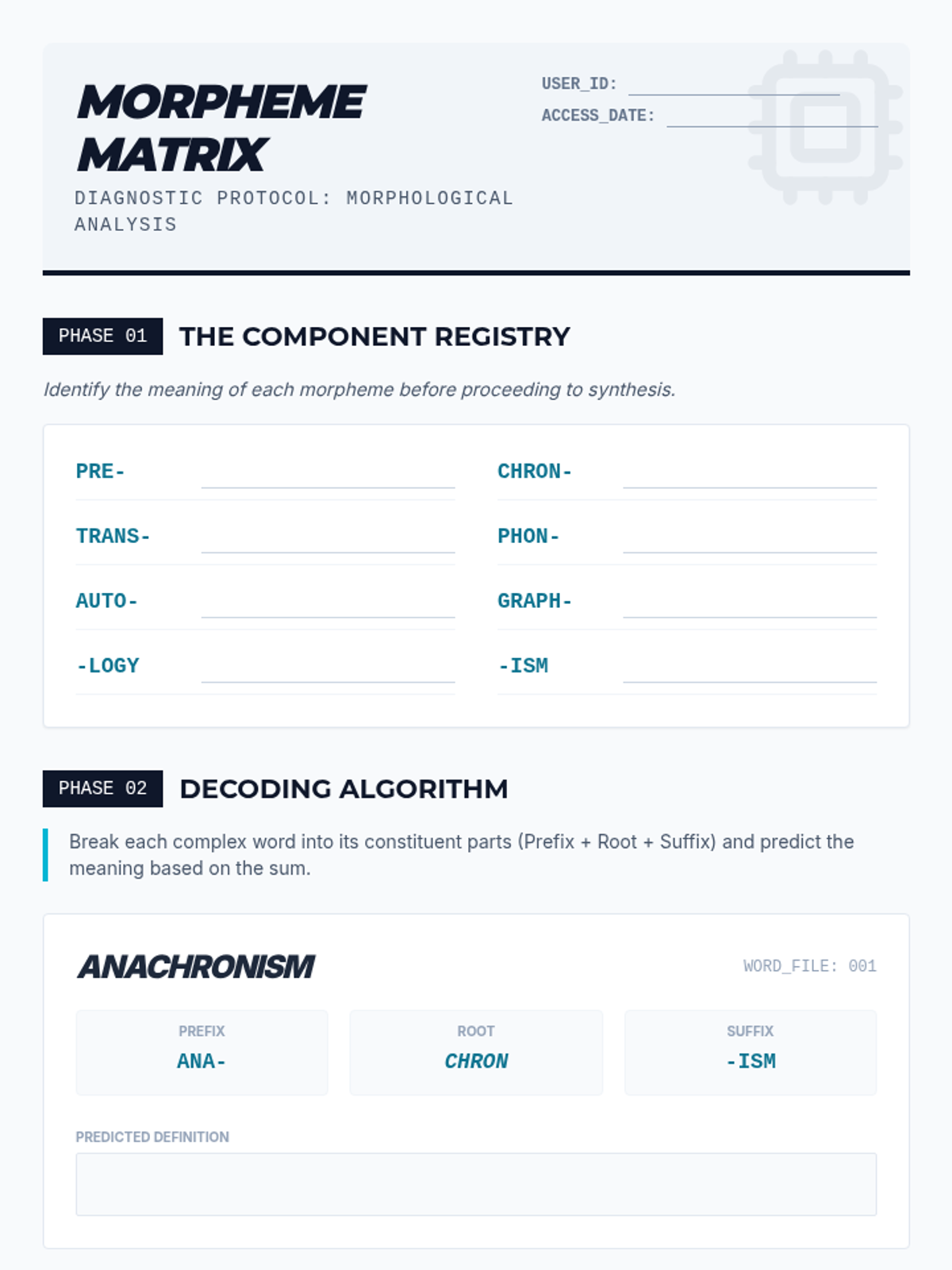
Learners use reference tools to identify Greek and Latin morphemes, practicing morphological analysis to decode academic vocabulary.
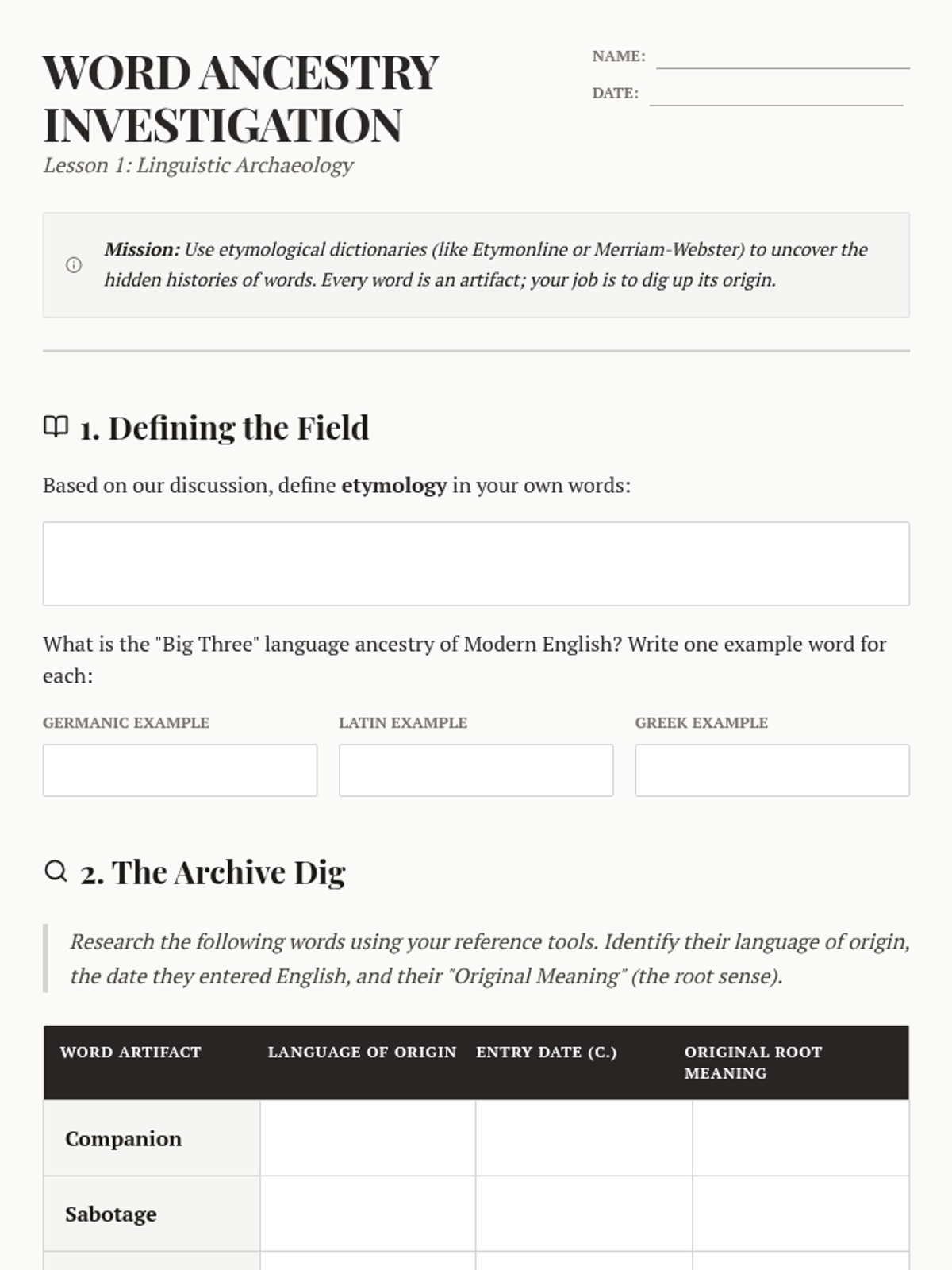
Students are introduced to the concept of etymology and the layout of etymological dictionaries, identifying root languages and word timelines.
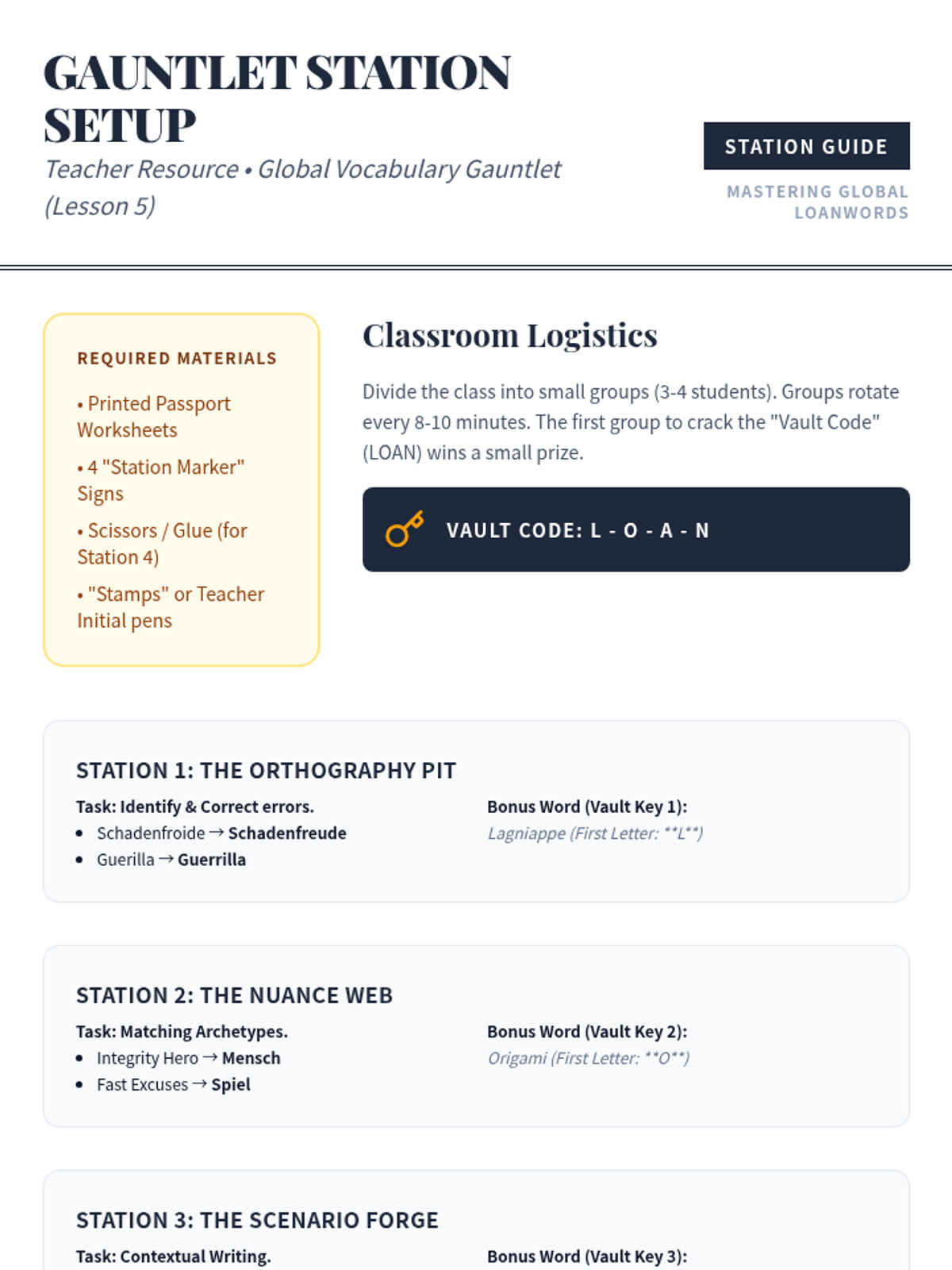
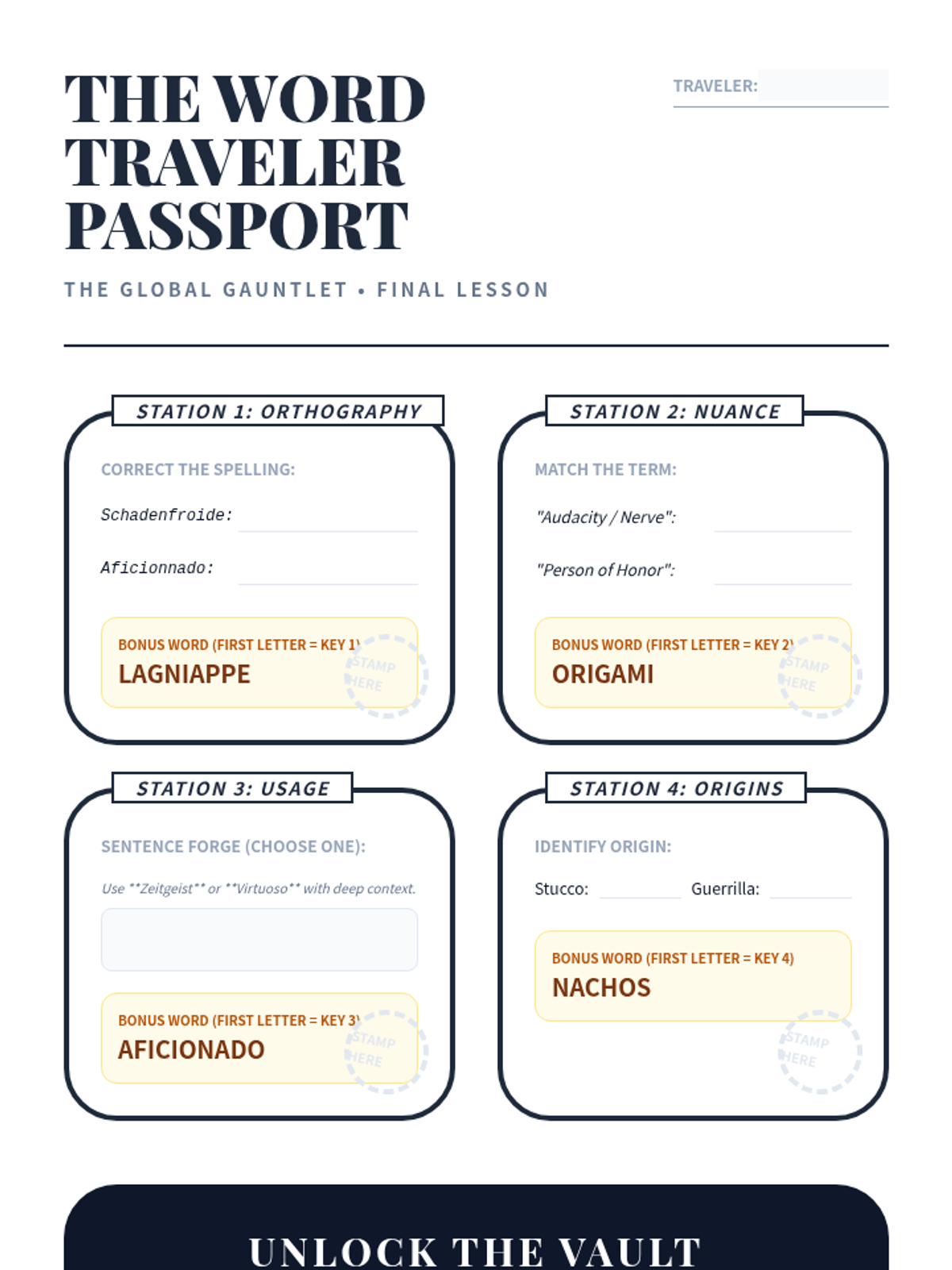
A cumulative review session using an 'Escape Room' style challenge where students must apply their knowledge of spelling, definition, and usage across all language categories.
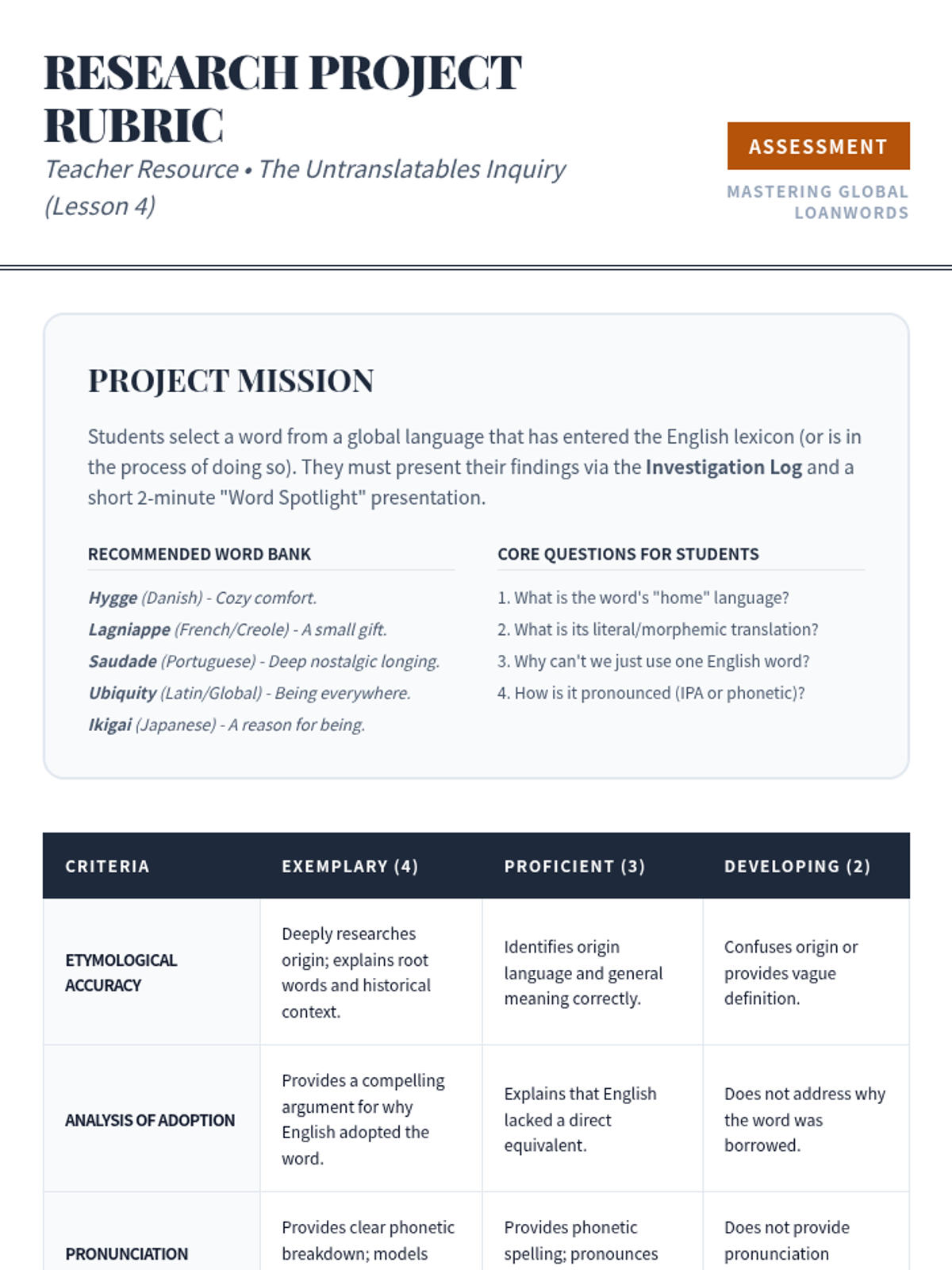
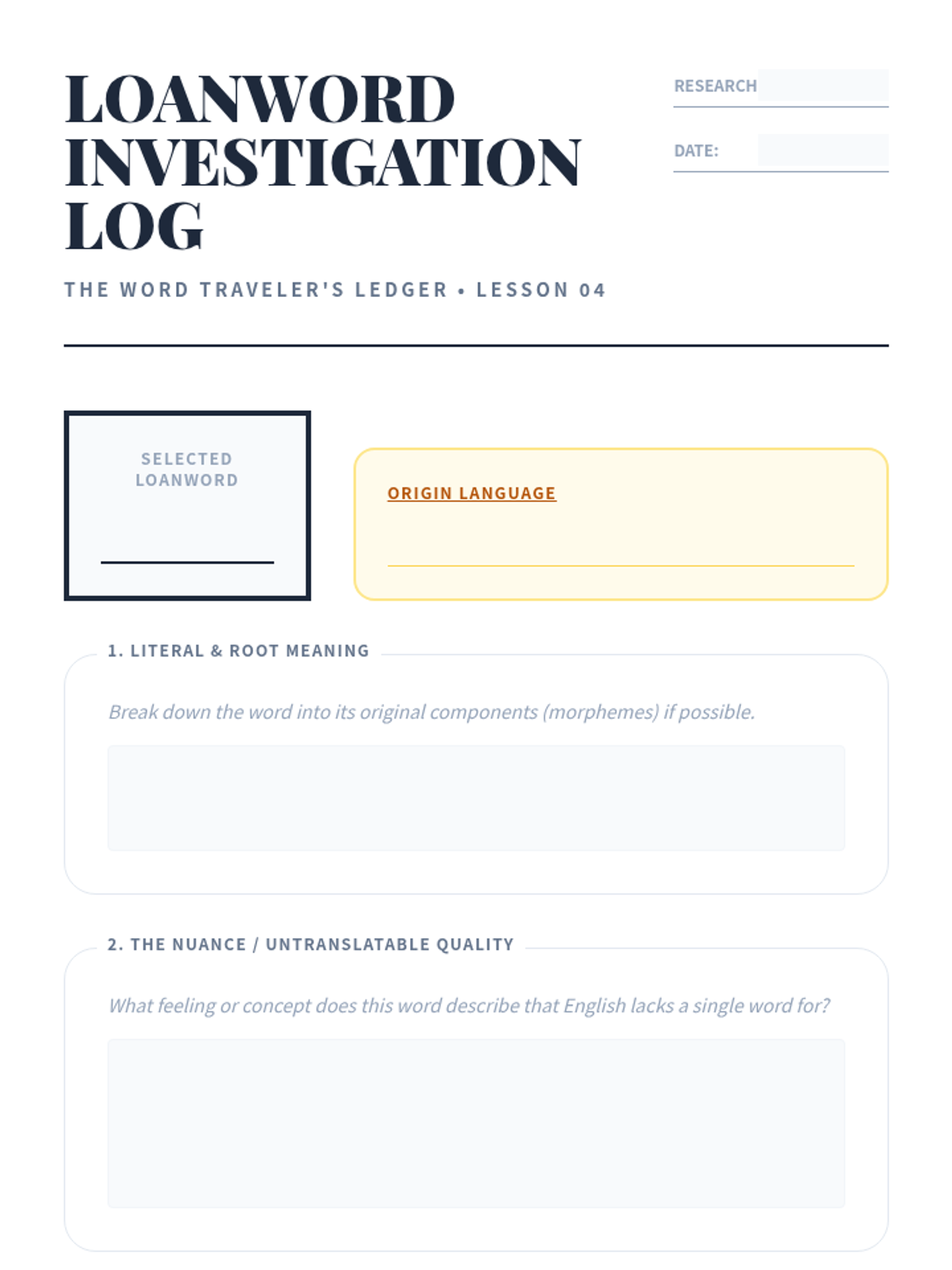
An inquiry-based lesson where students research 'untranslatable' words from around the world, analyzing why English adopts specific foreign terms instead of creating new ones.
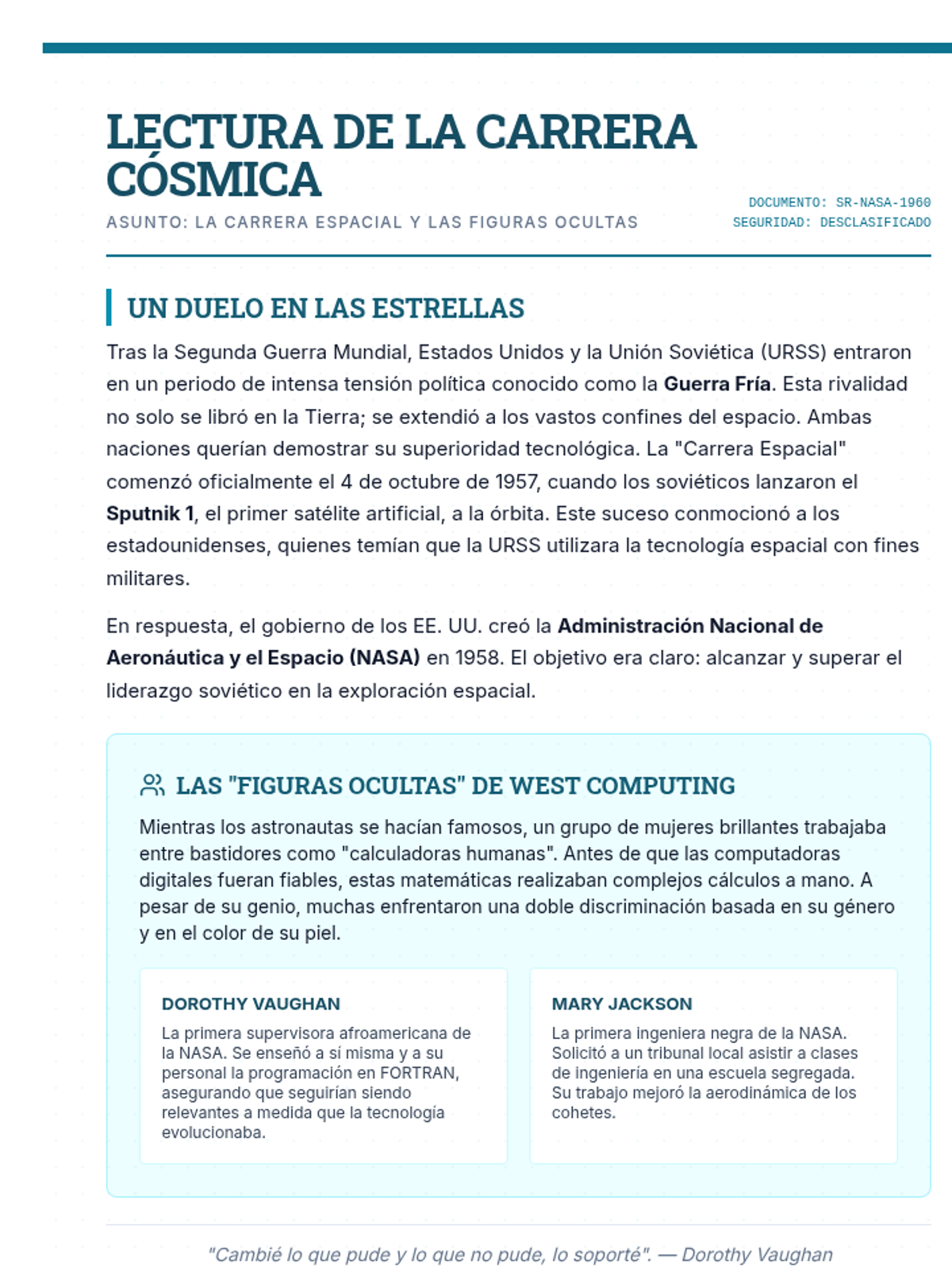
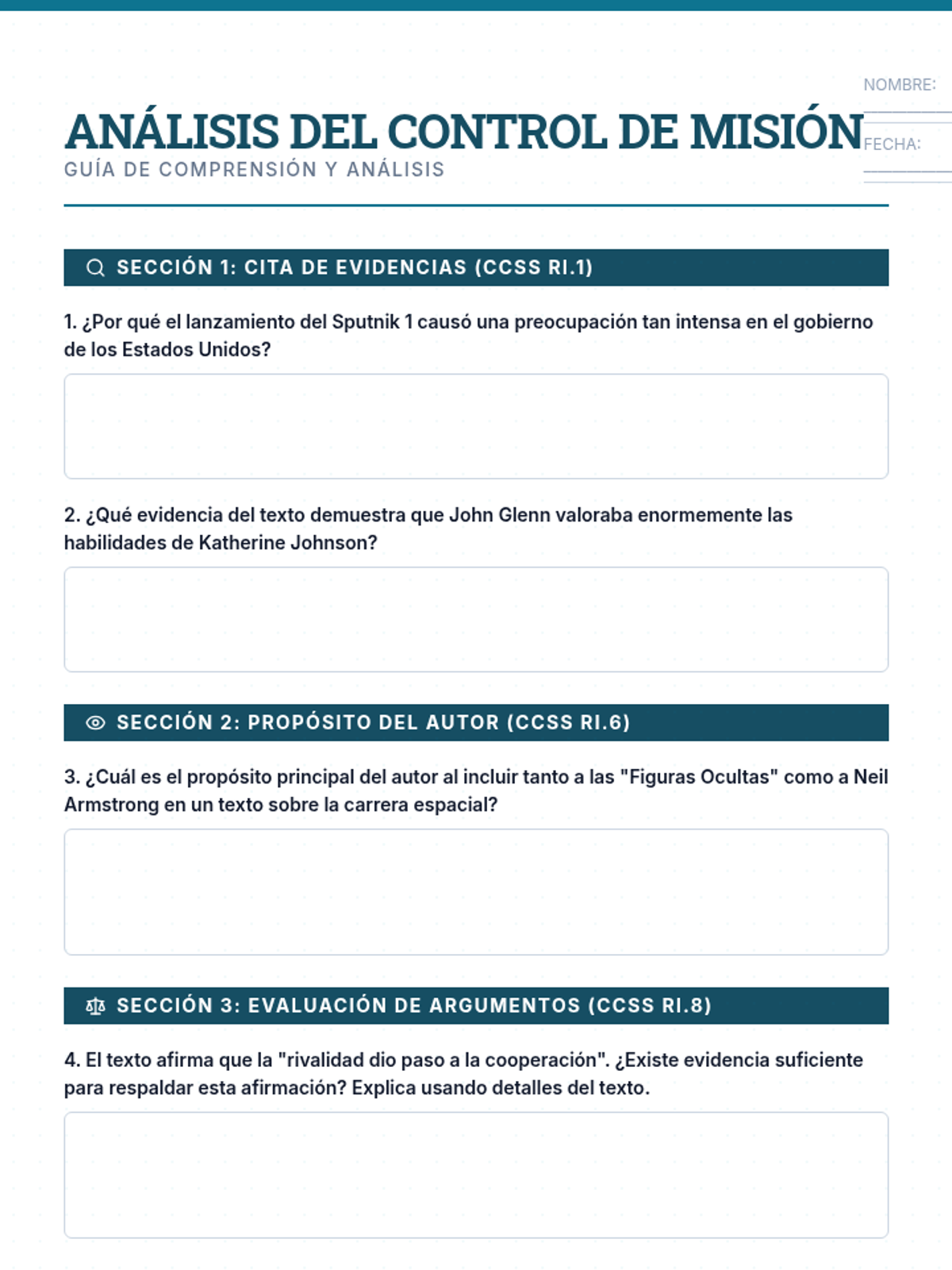
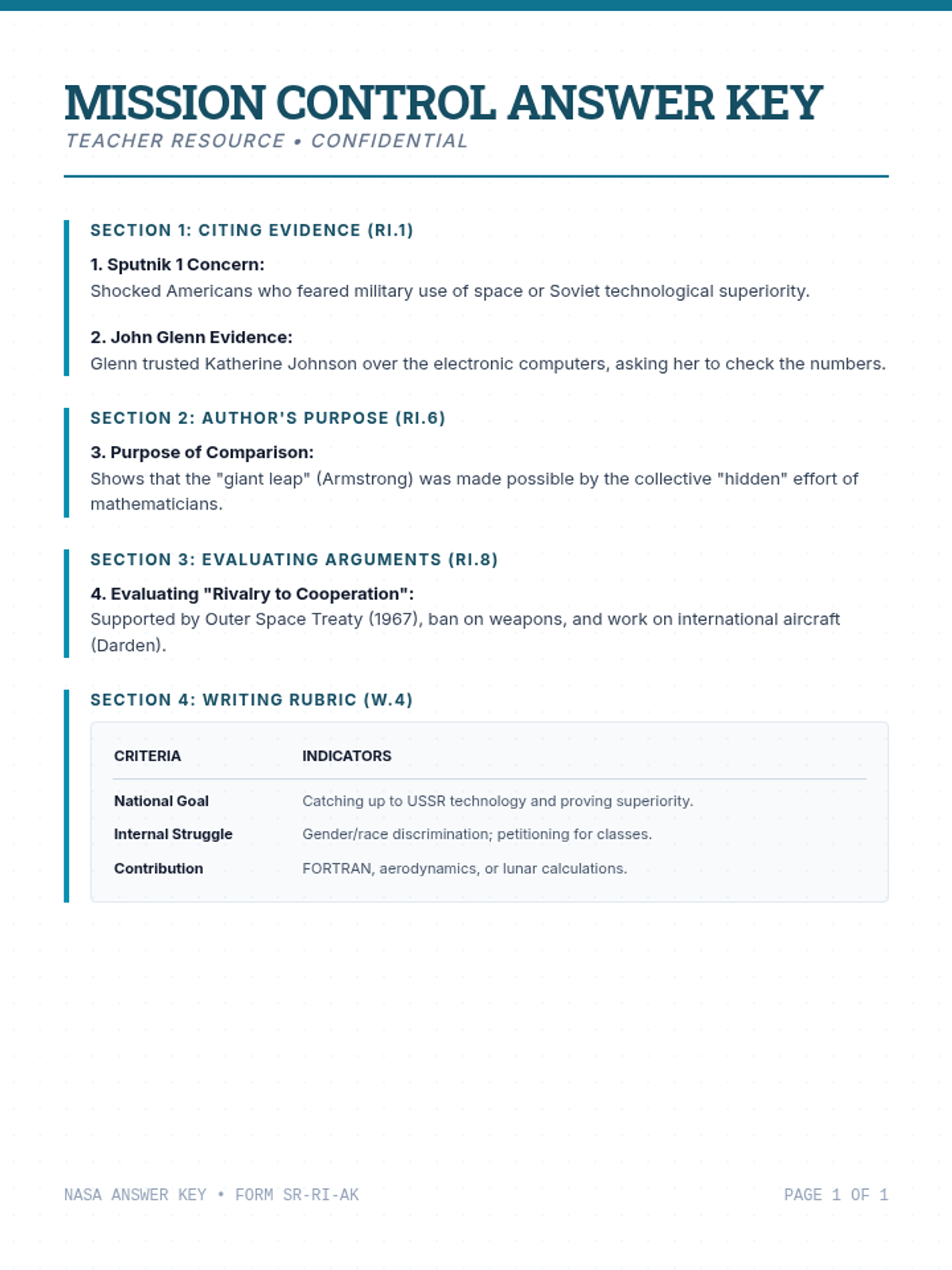
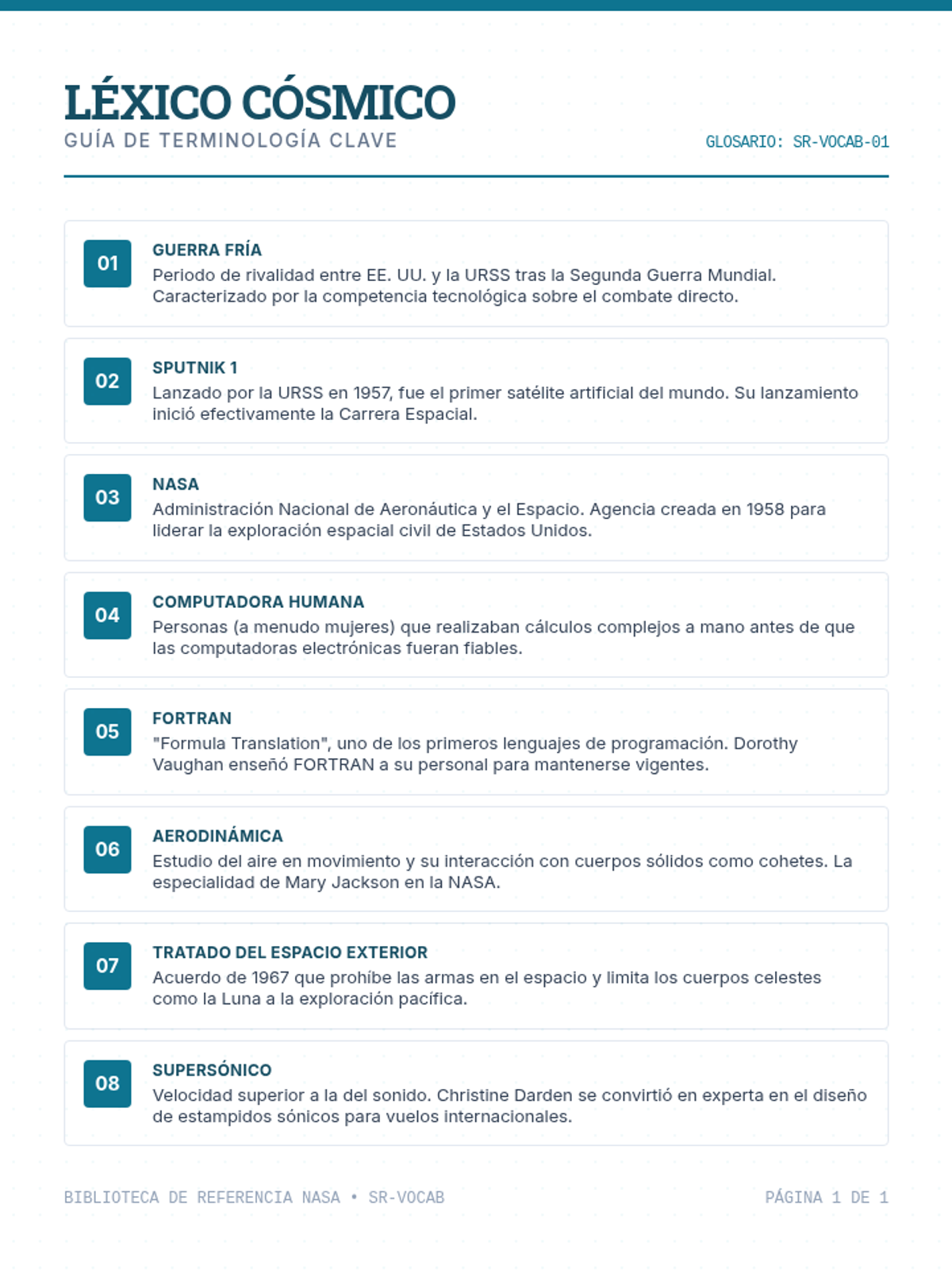
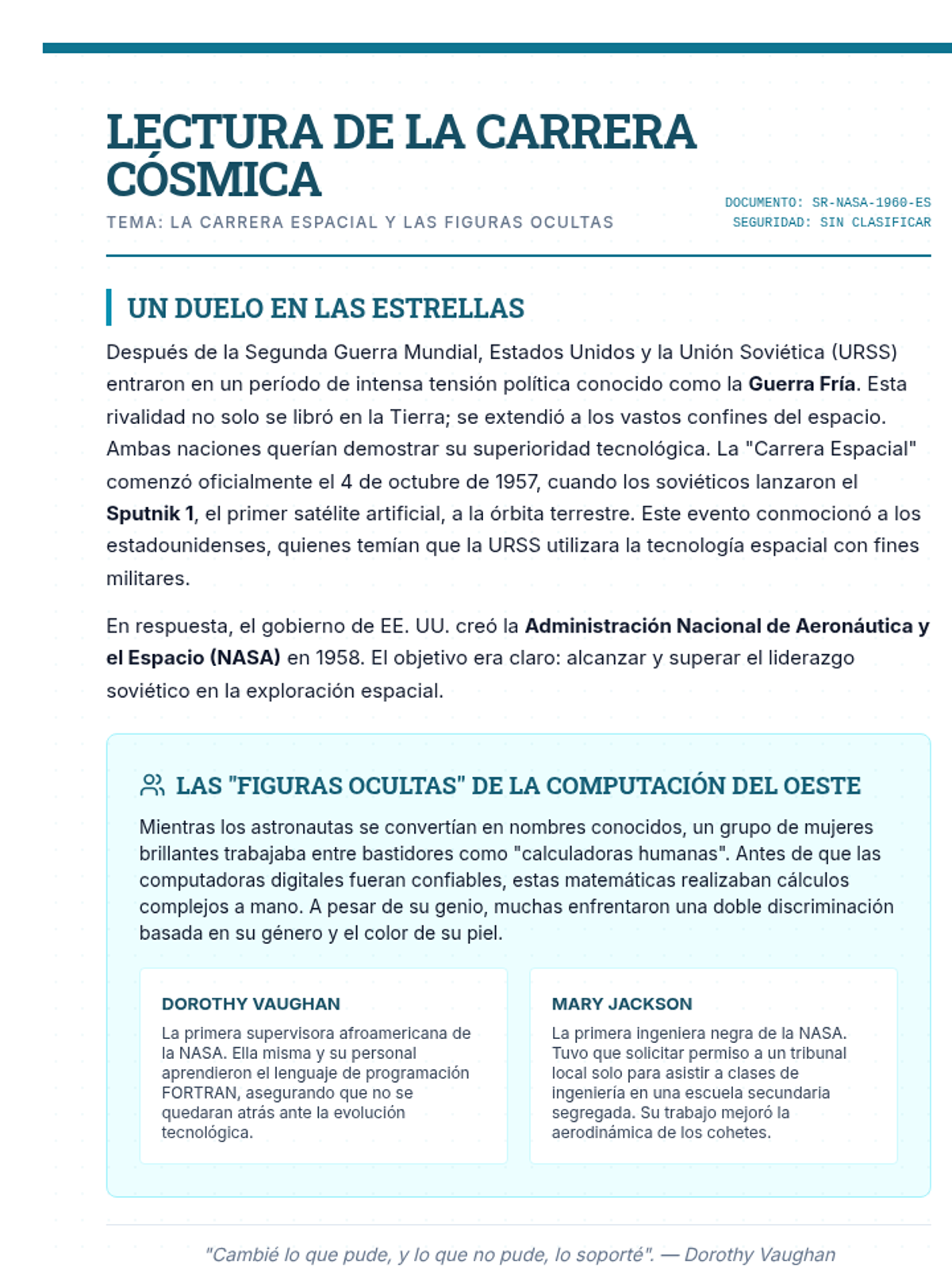
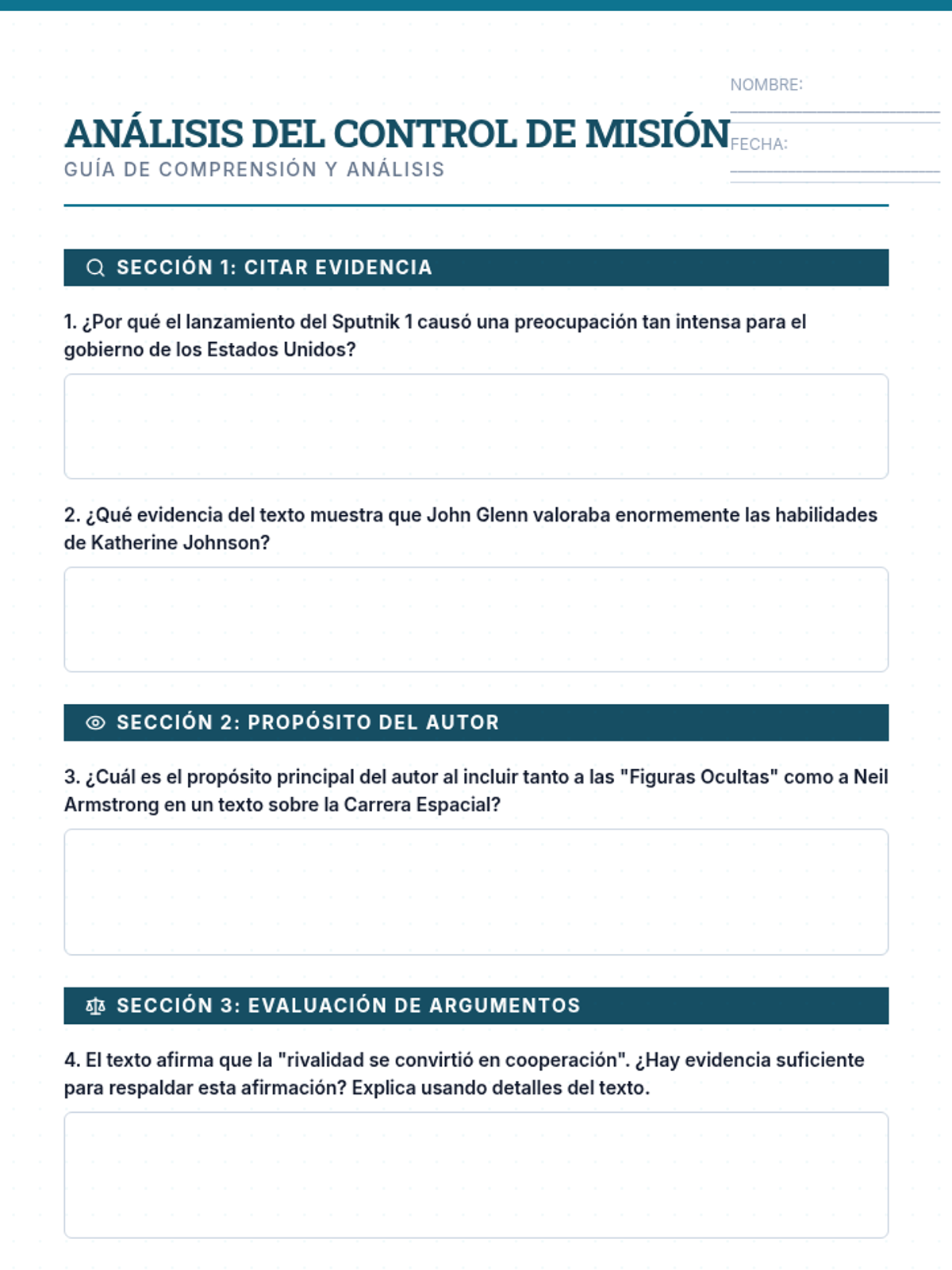
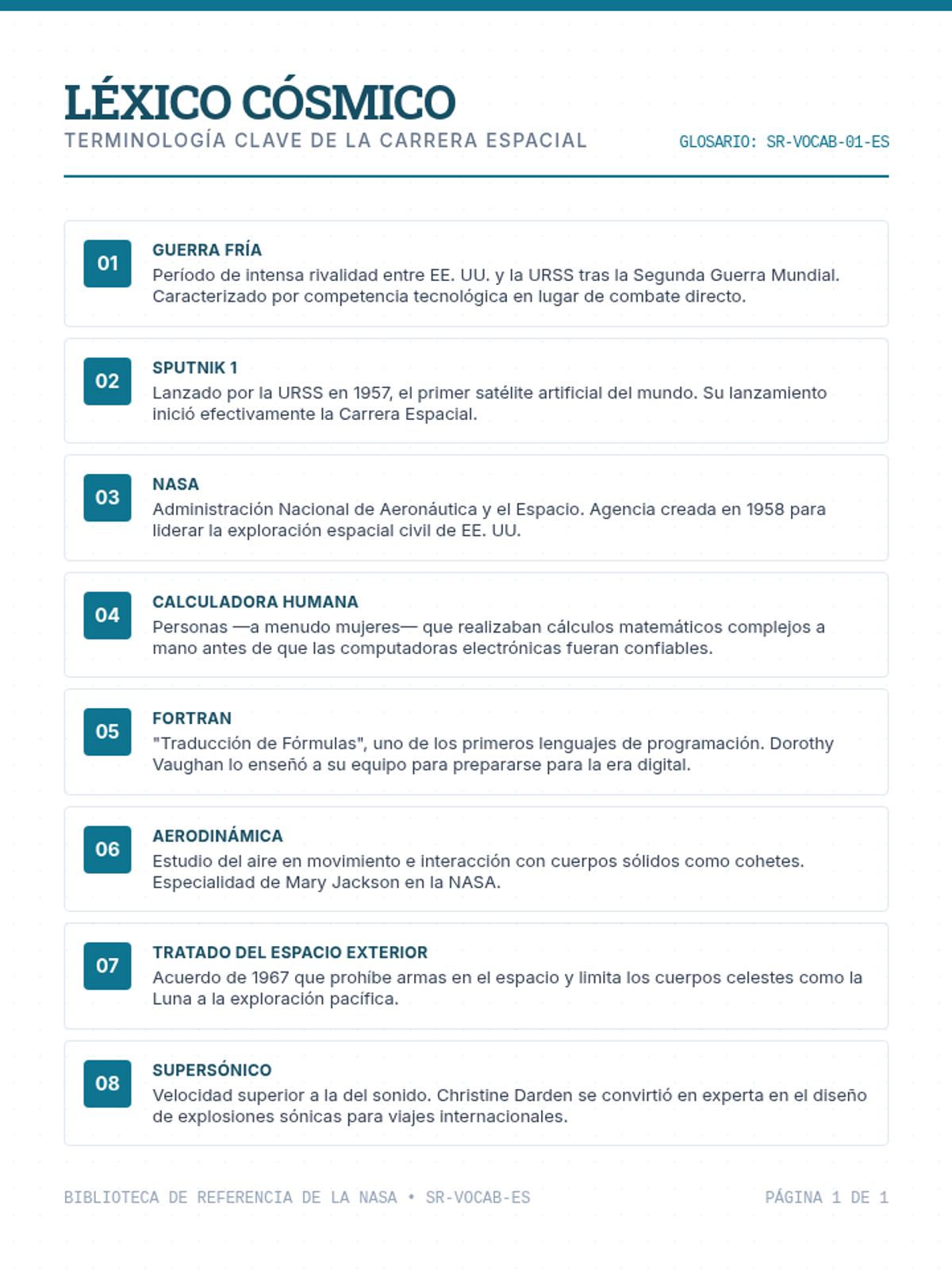
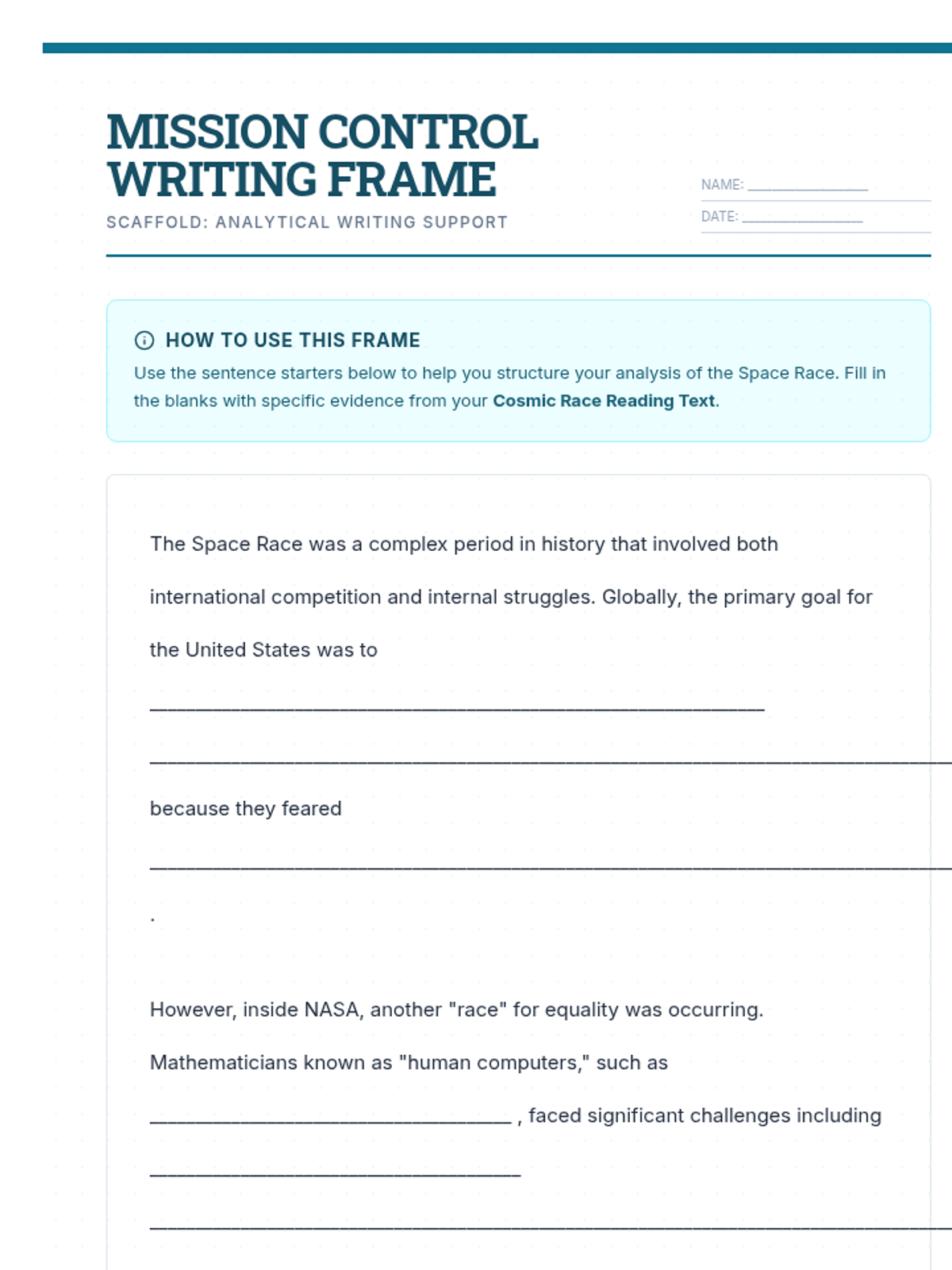
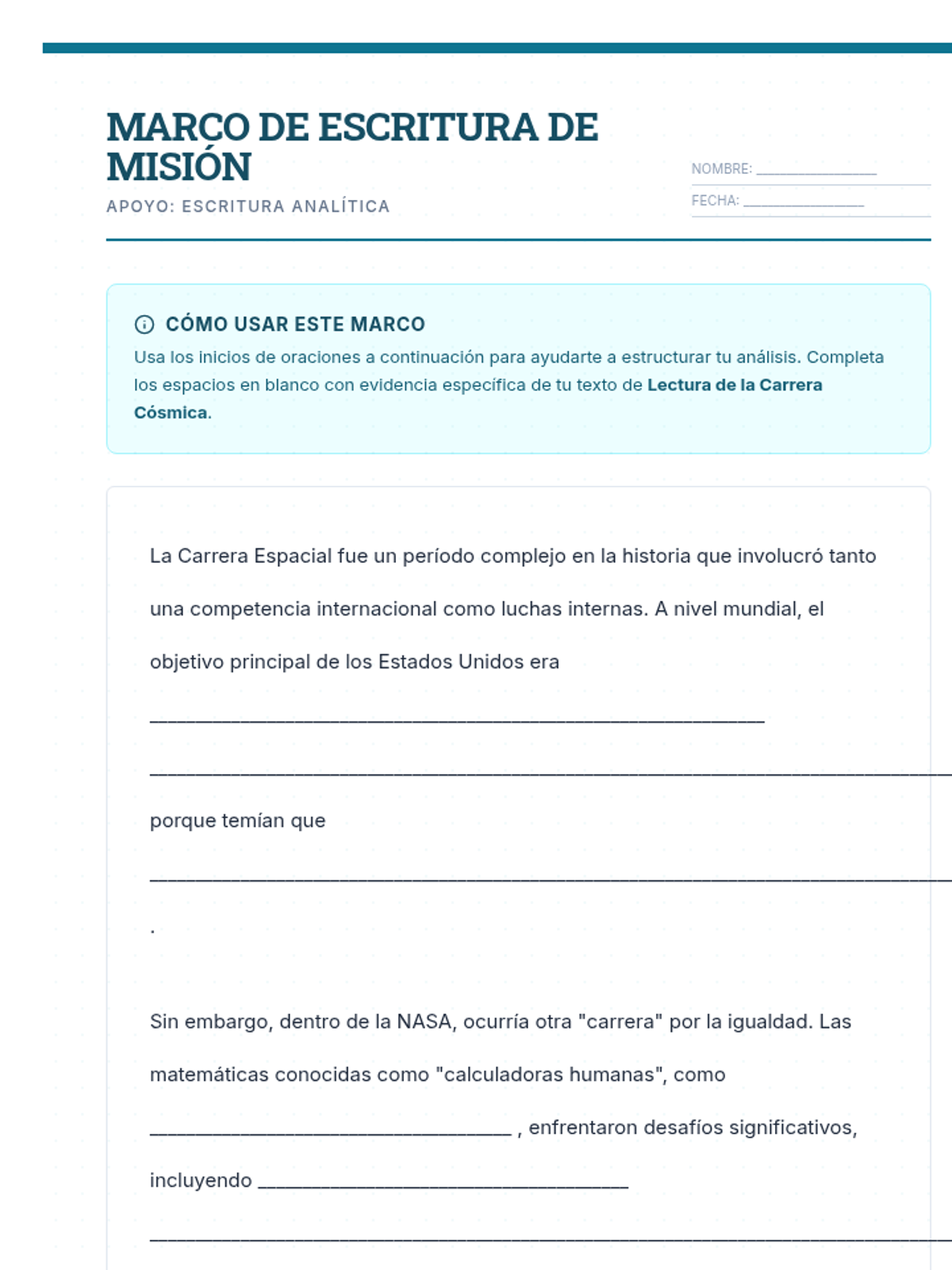
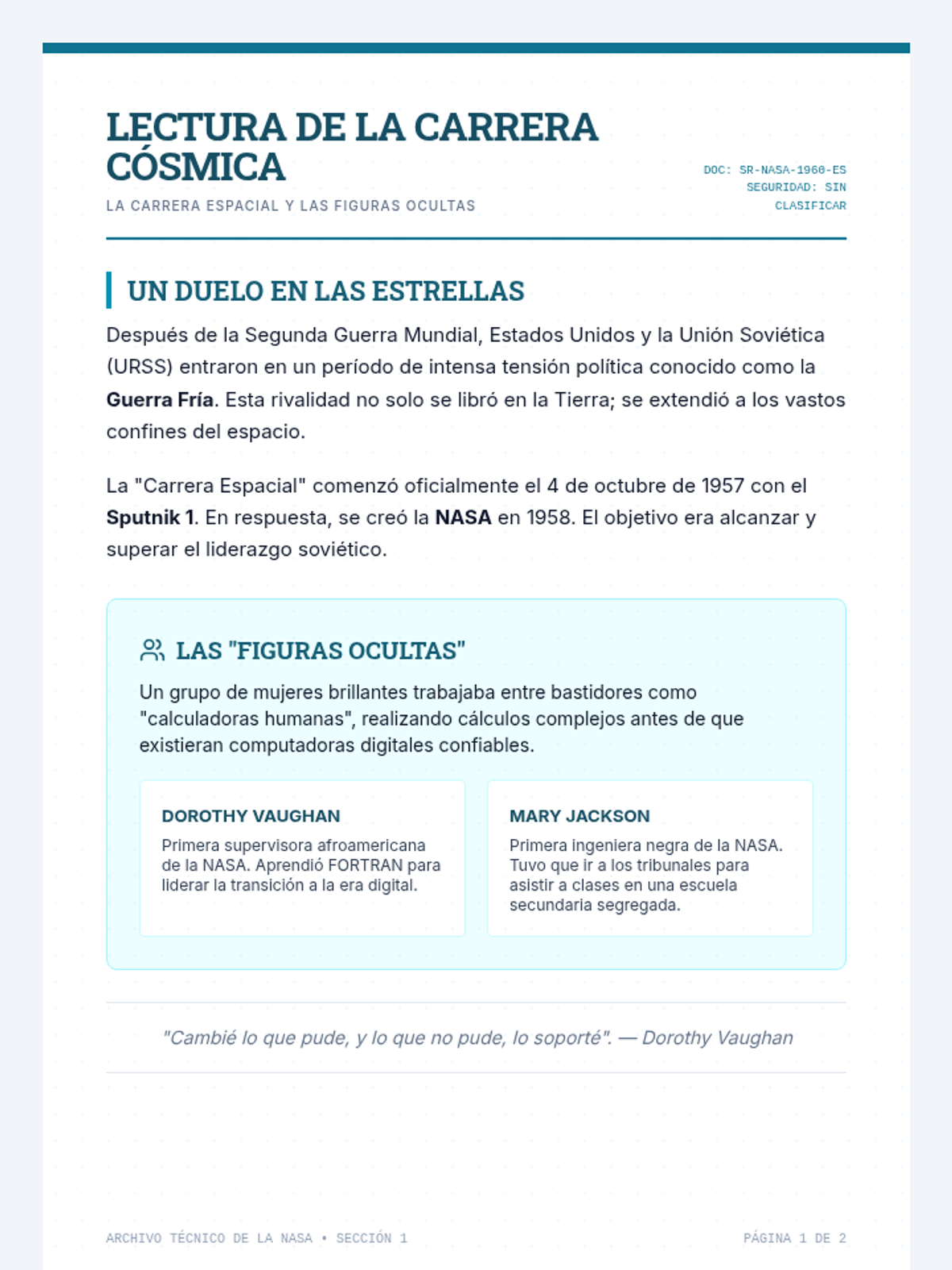
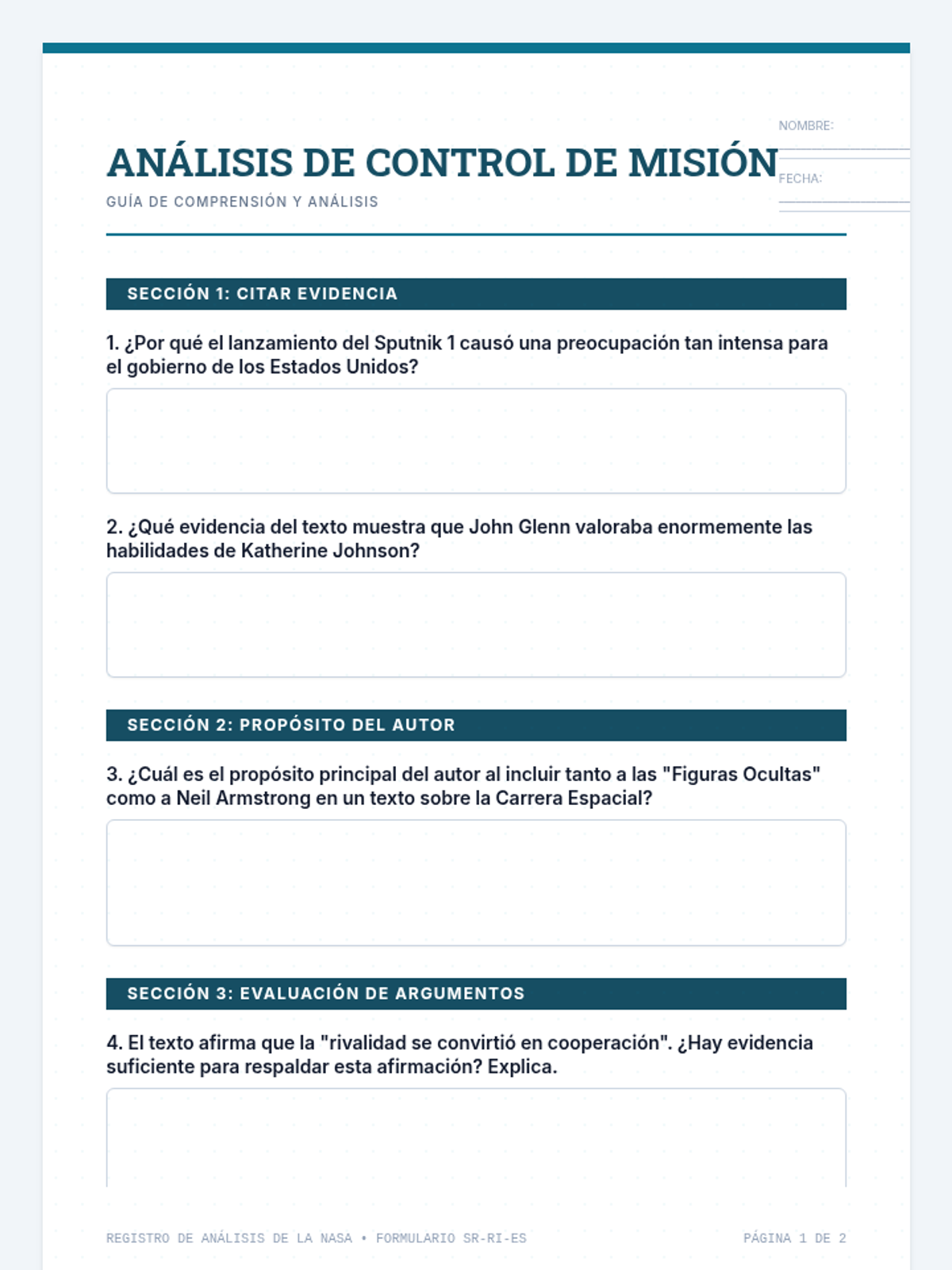
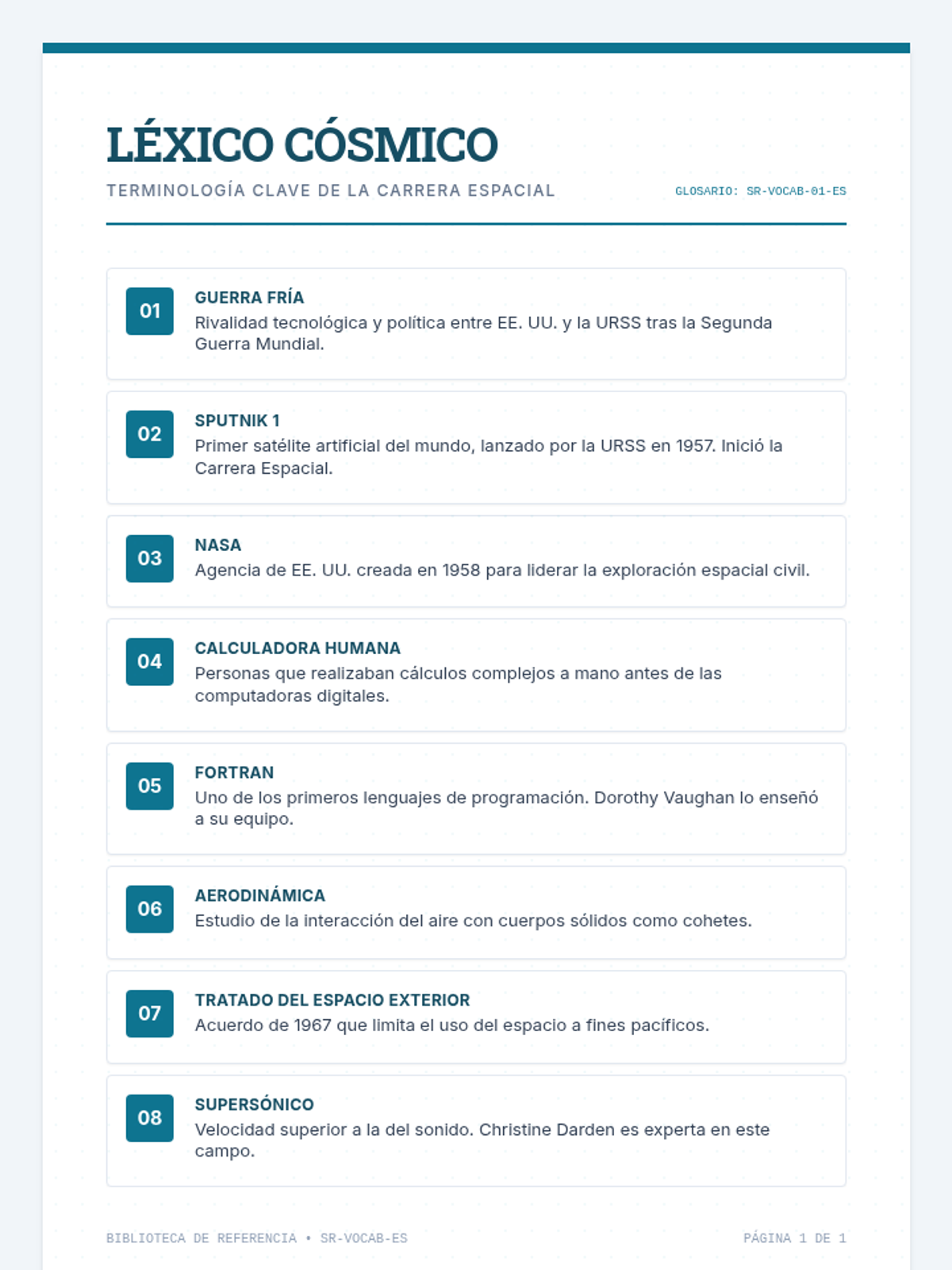
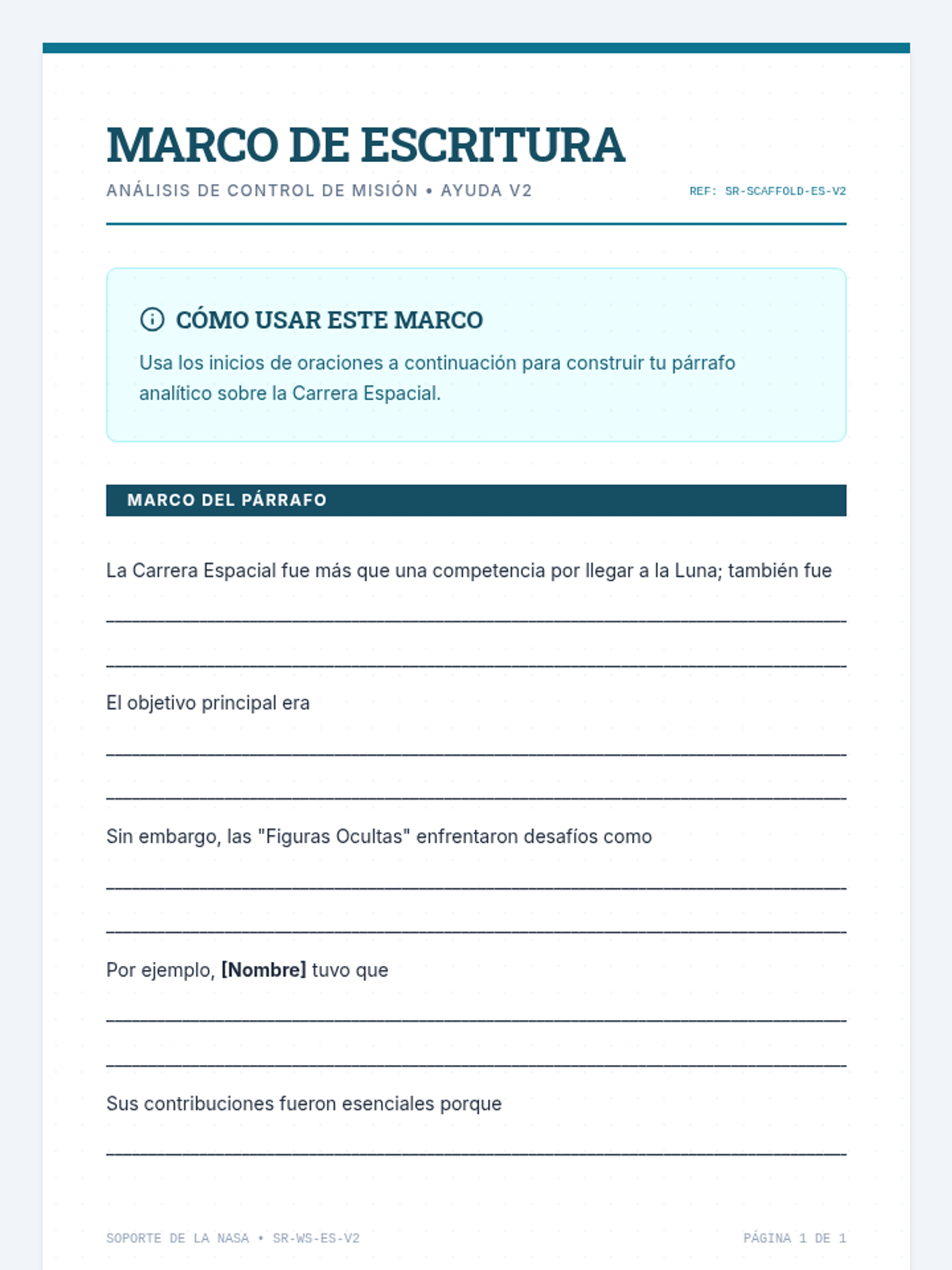
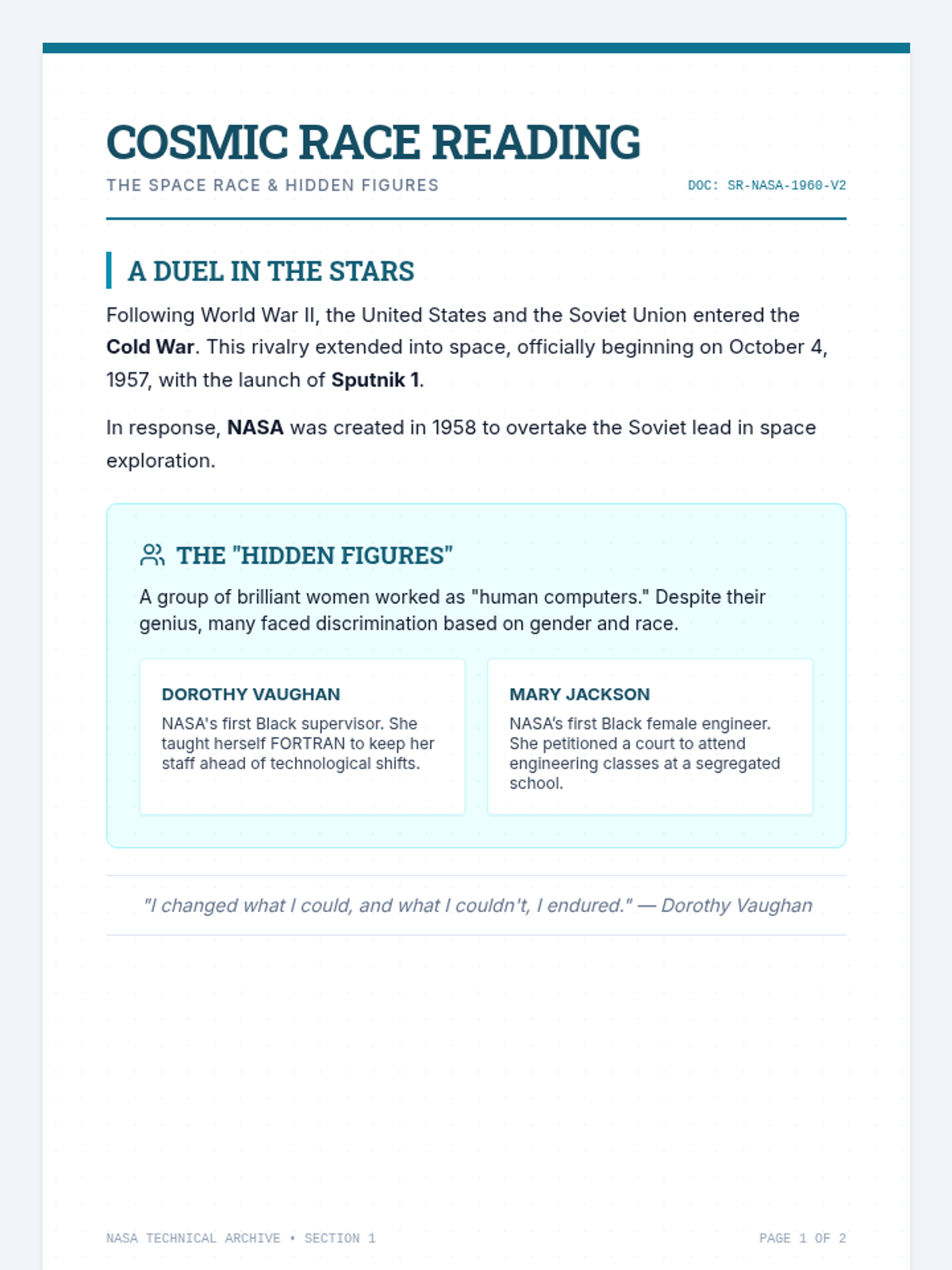
A comprehensive exploration of the Space Race, highlighting the technological competition between the US and USSR, the essential contributions of African American women at NASA, and the international agreements that keep space a peaceful frontier.
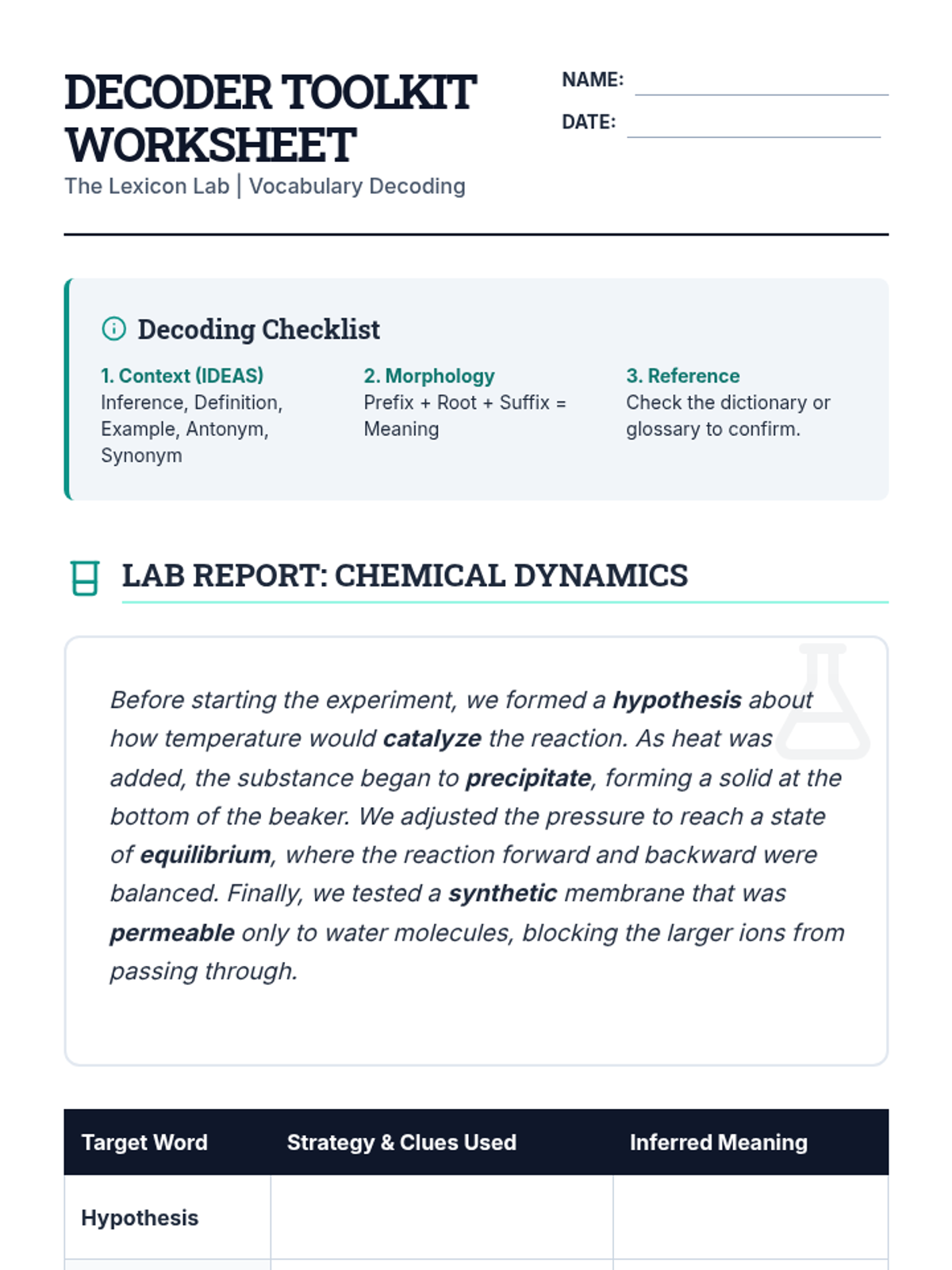
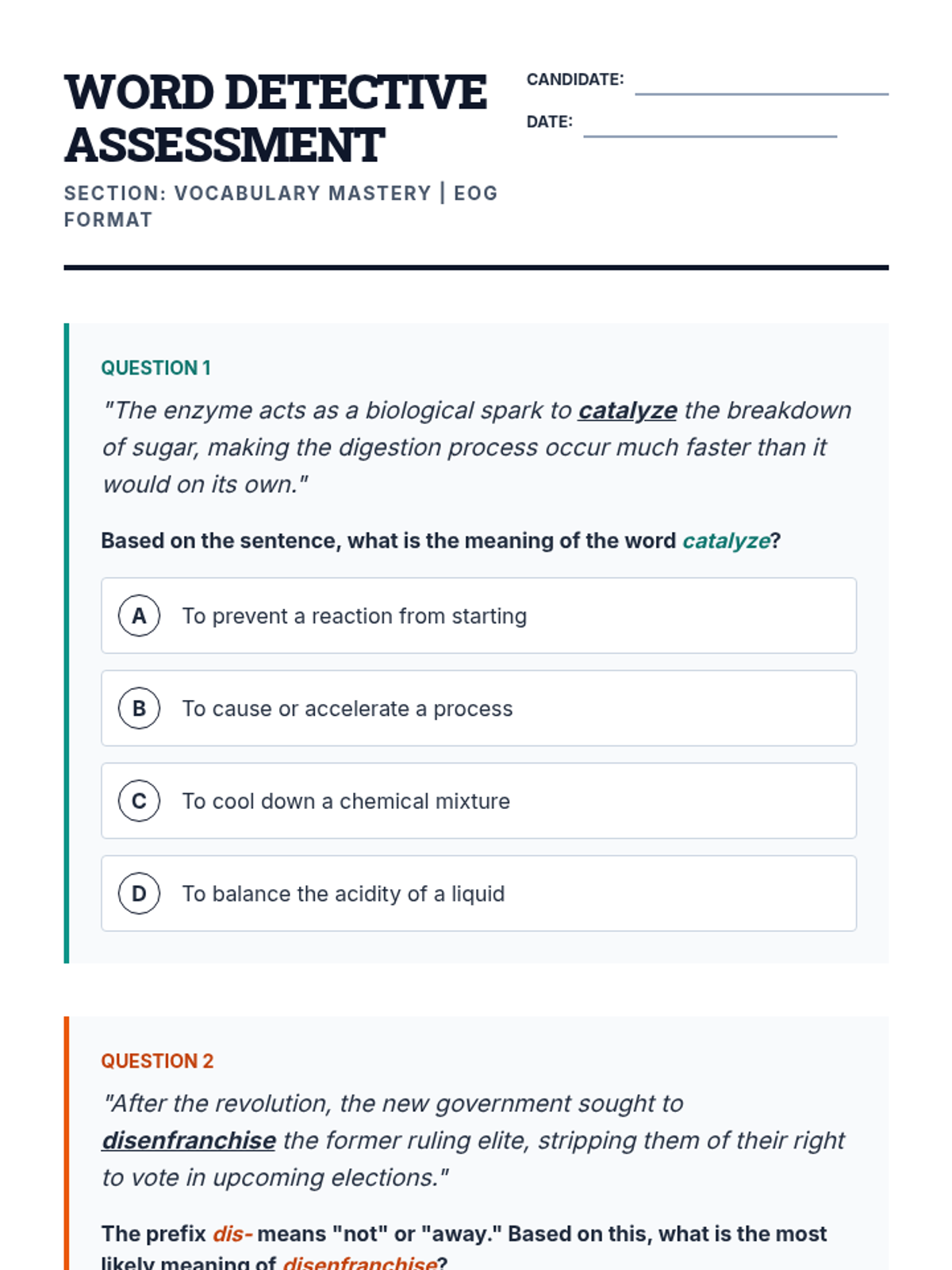
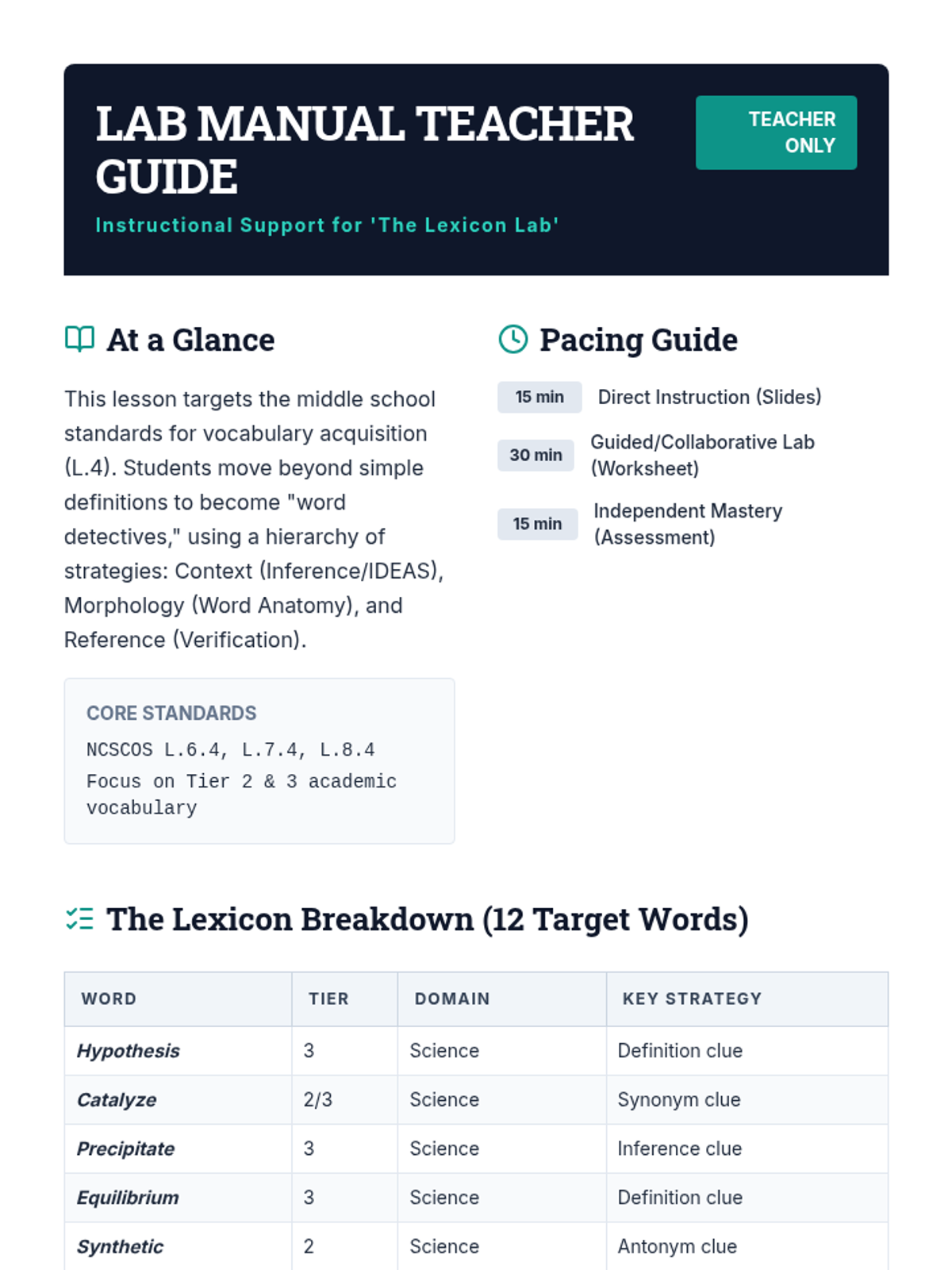
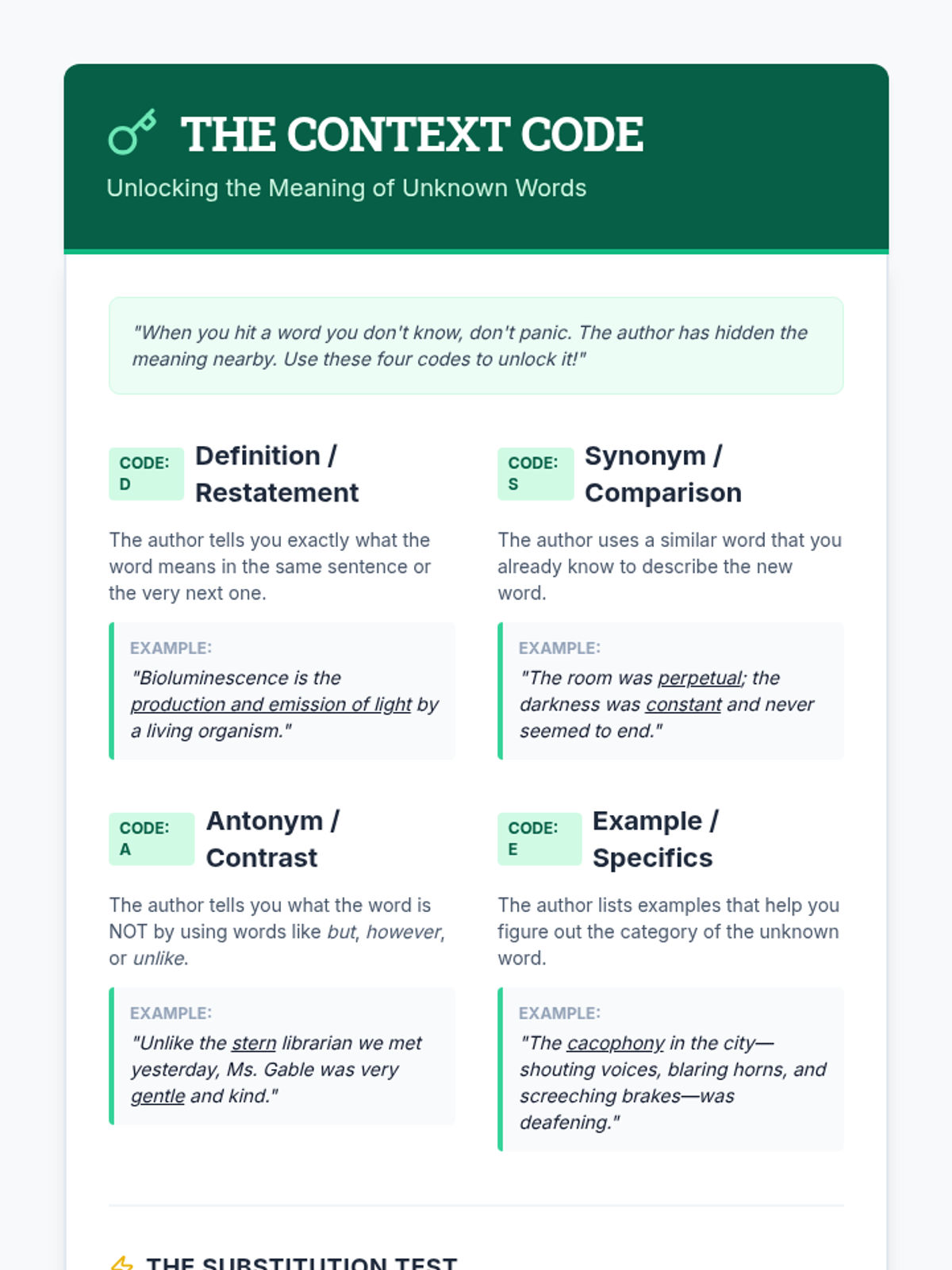
A middle school ELA lesson focused on decoding Tier 2 and Tier 3 vocabulary using context clues, morphology, and reference materials. Students practice these strategies through science and social studies passages and complete an EOG-aligned assessment.
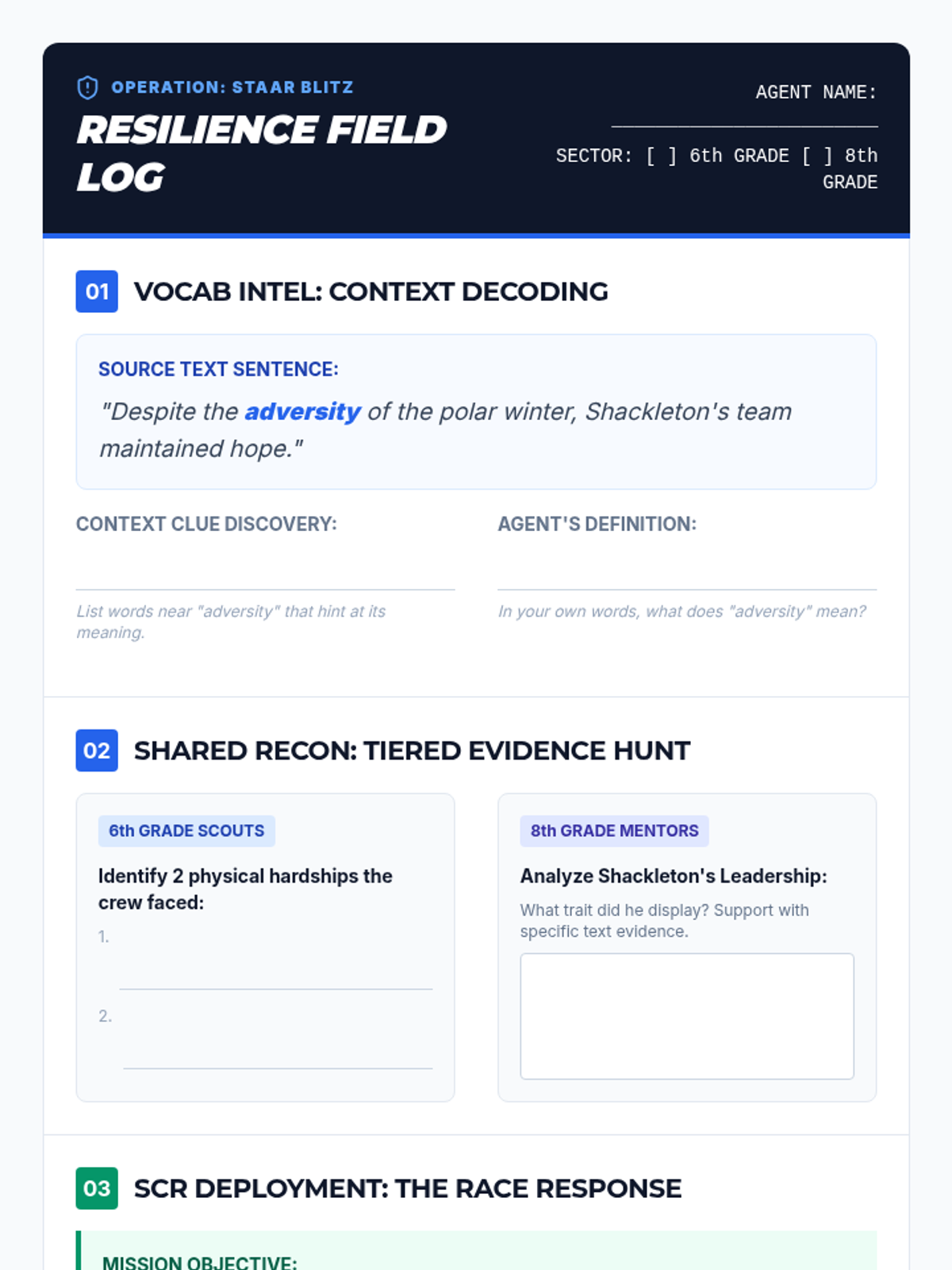
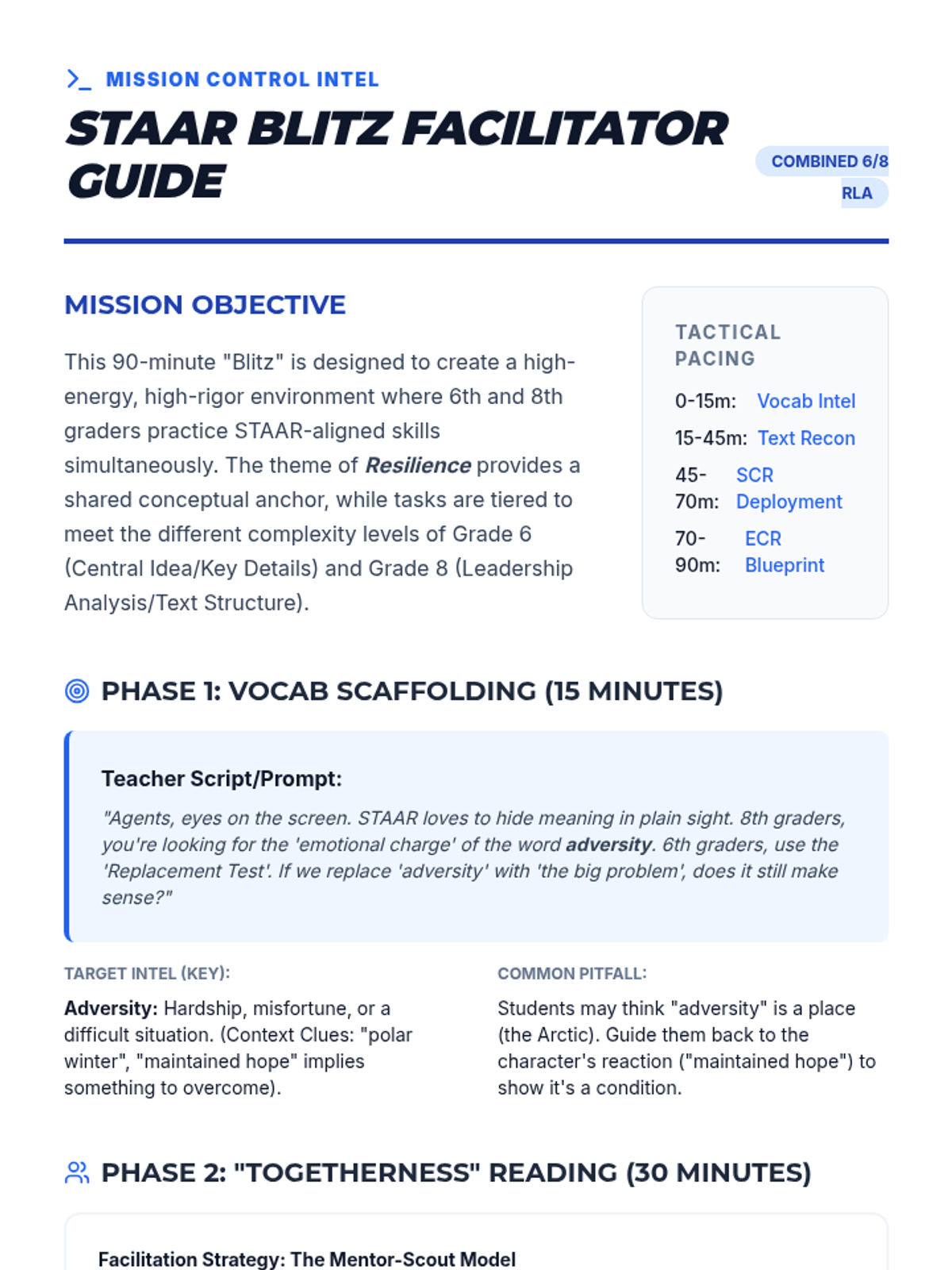
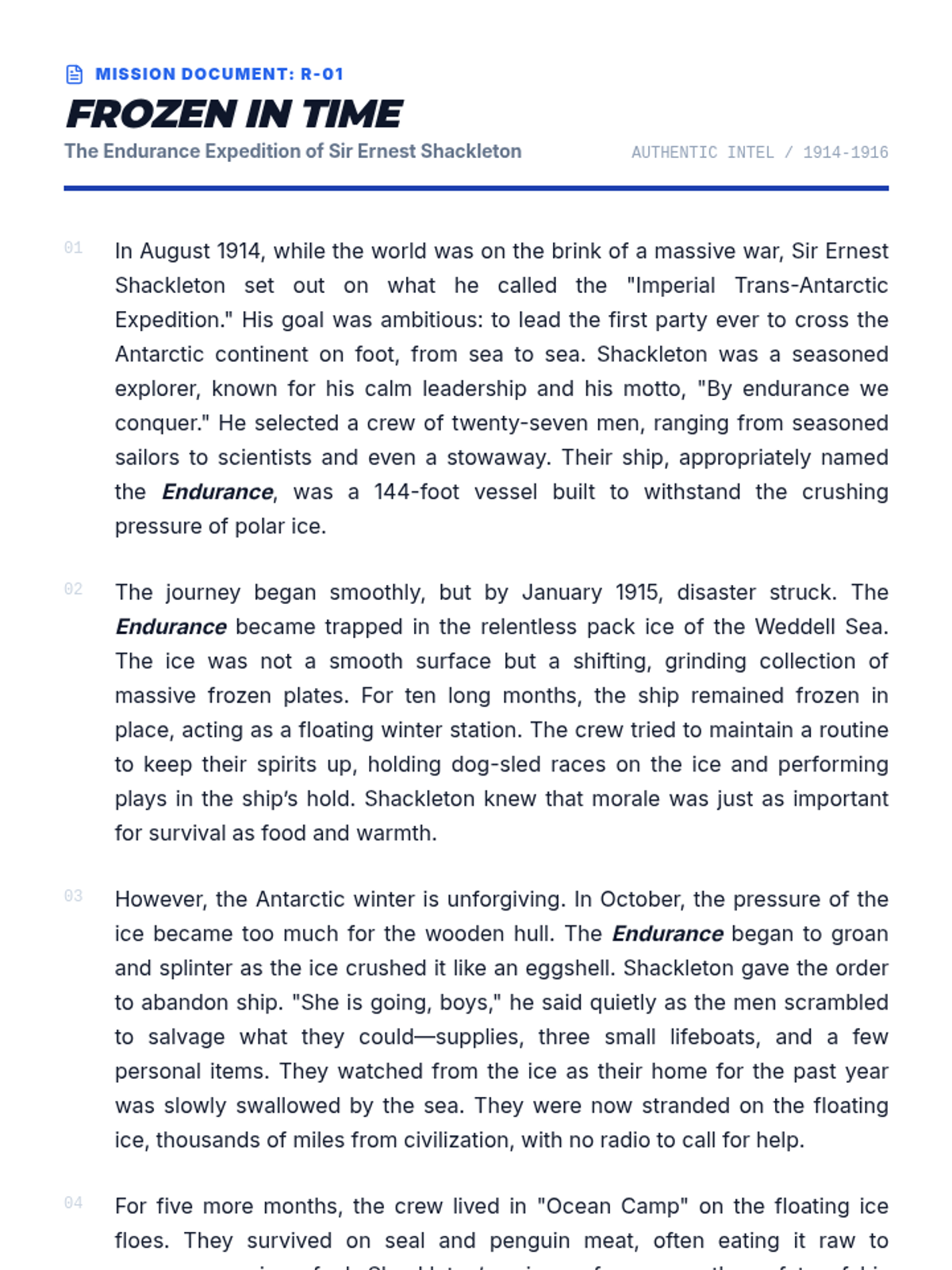
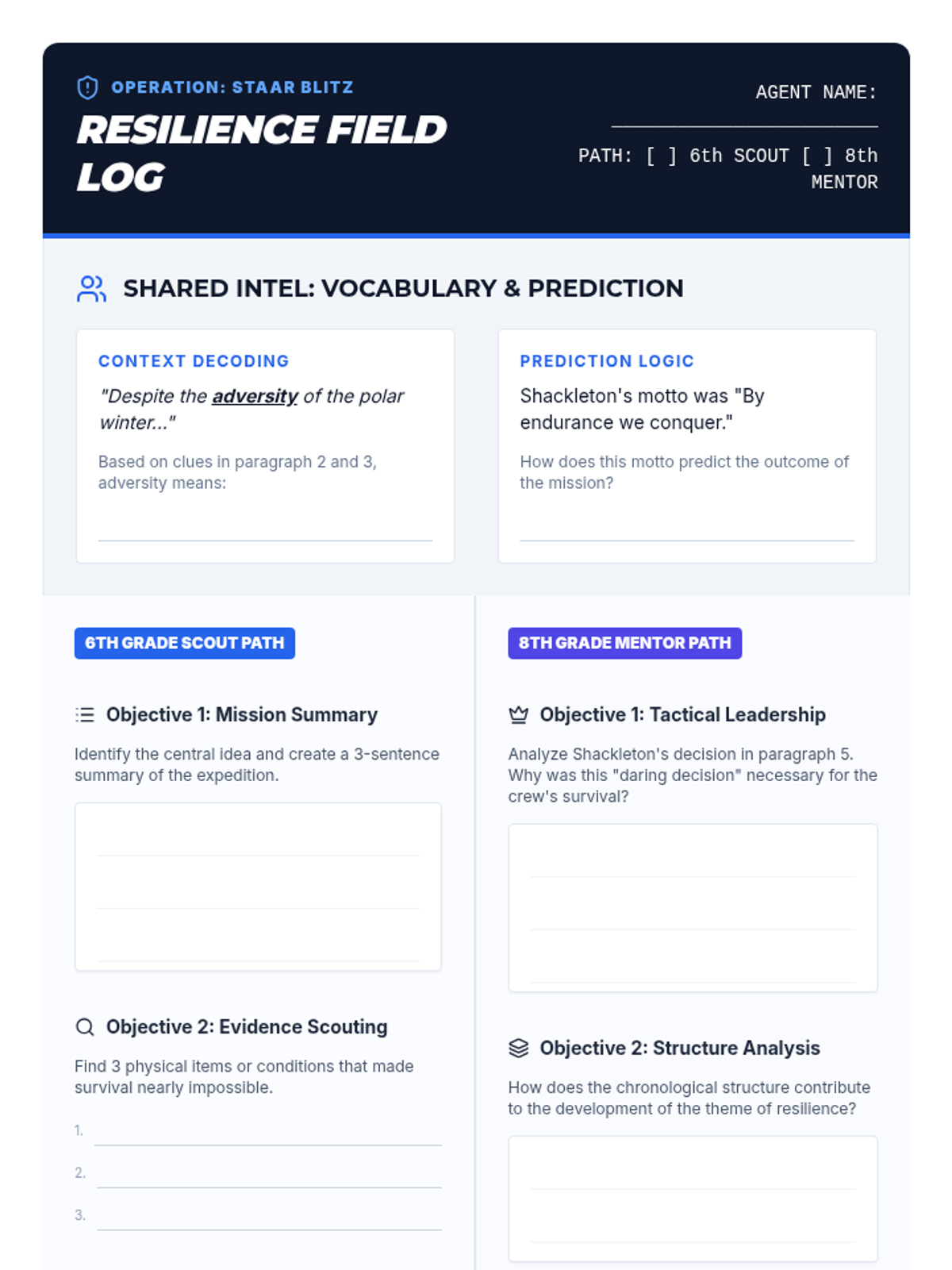
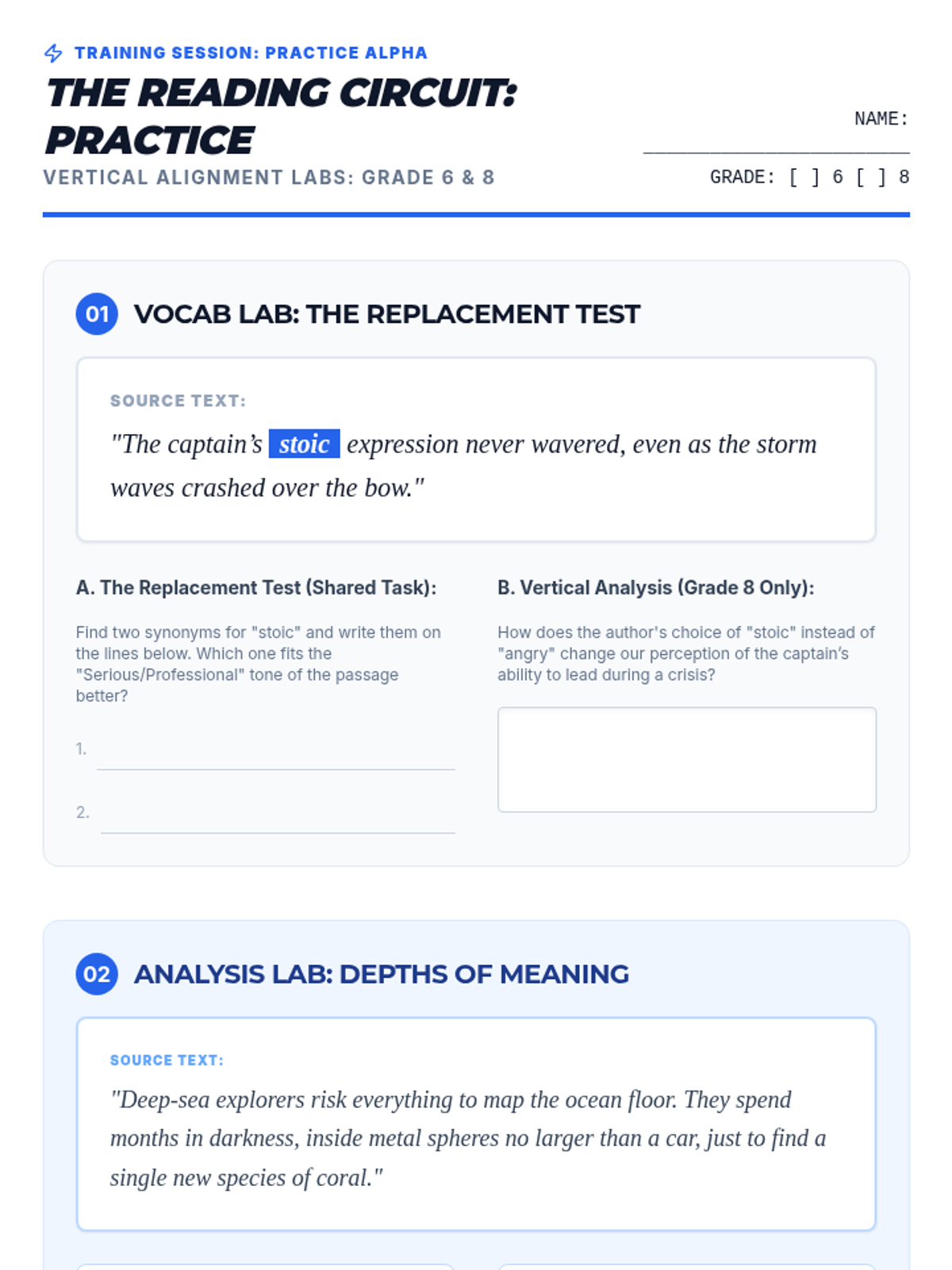
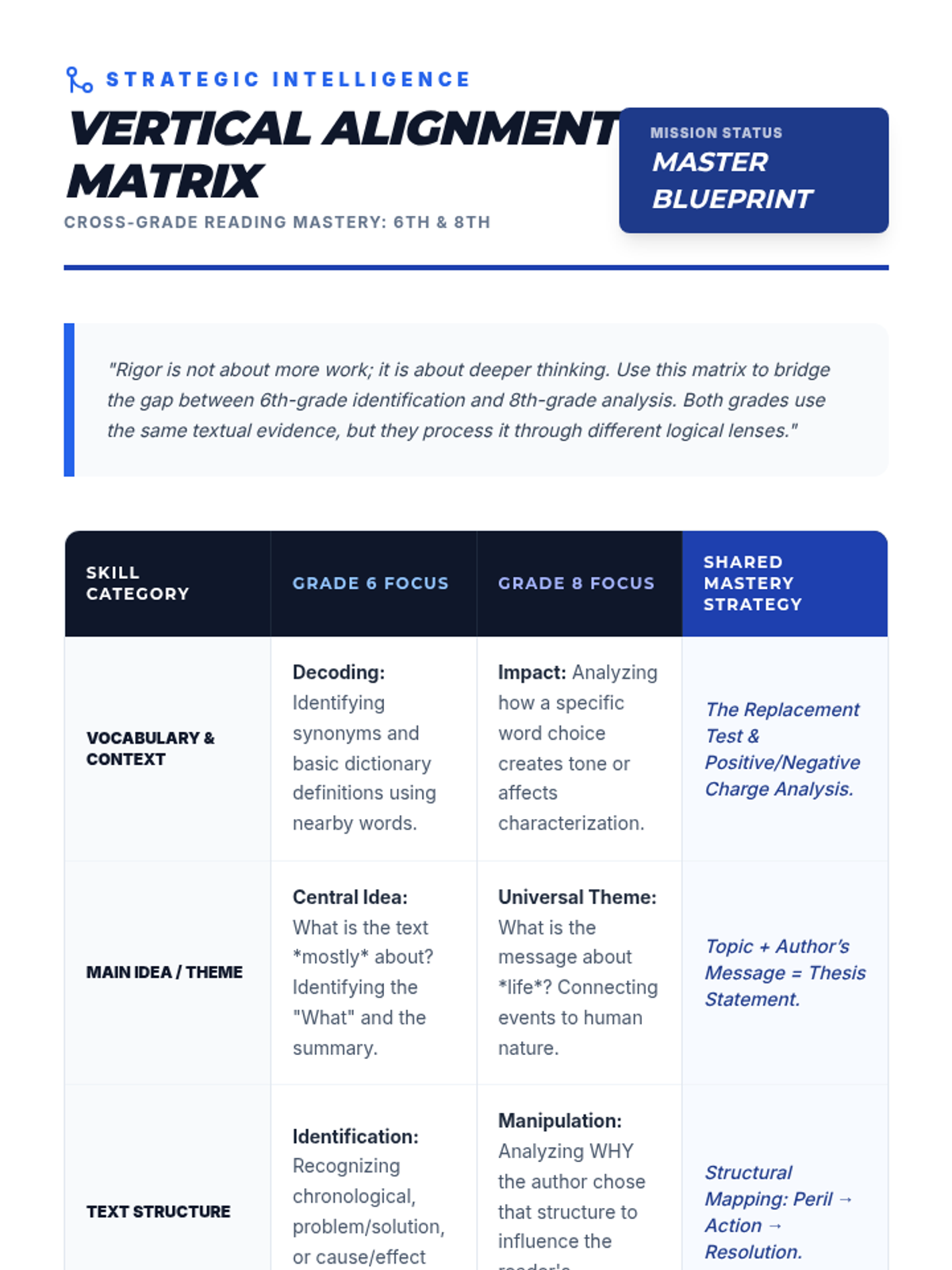
A high-intensity 90-minute STAAR Blitz lesson designed for a combined 6th and 8th-grade reading class, focusing on evidence-based analysis, vocabulary "intel," and SCR/ECR mastery through a "Mission Control" survival theme.
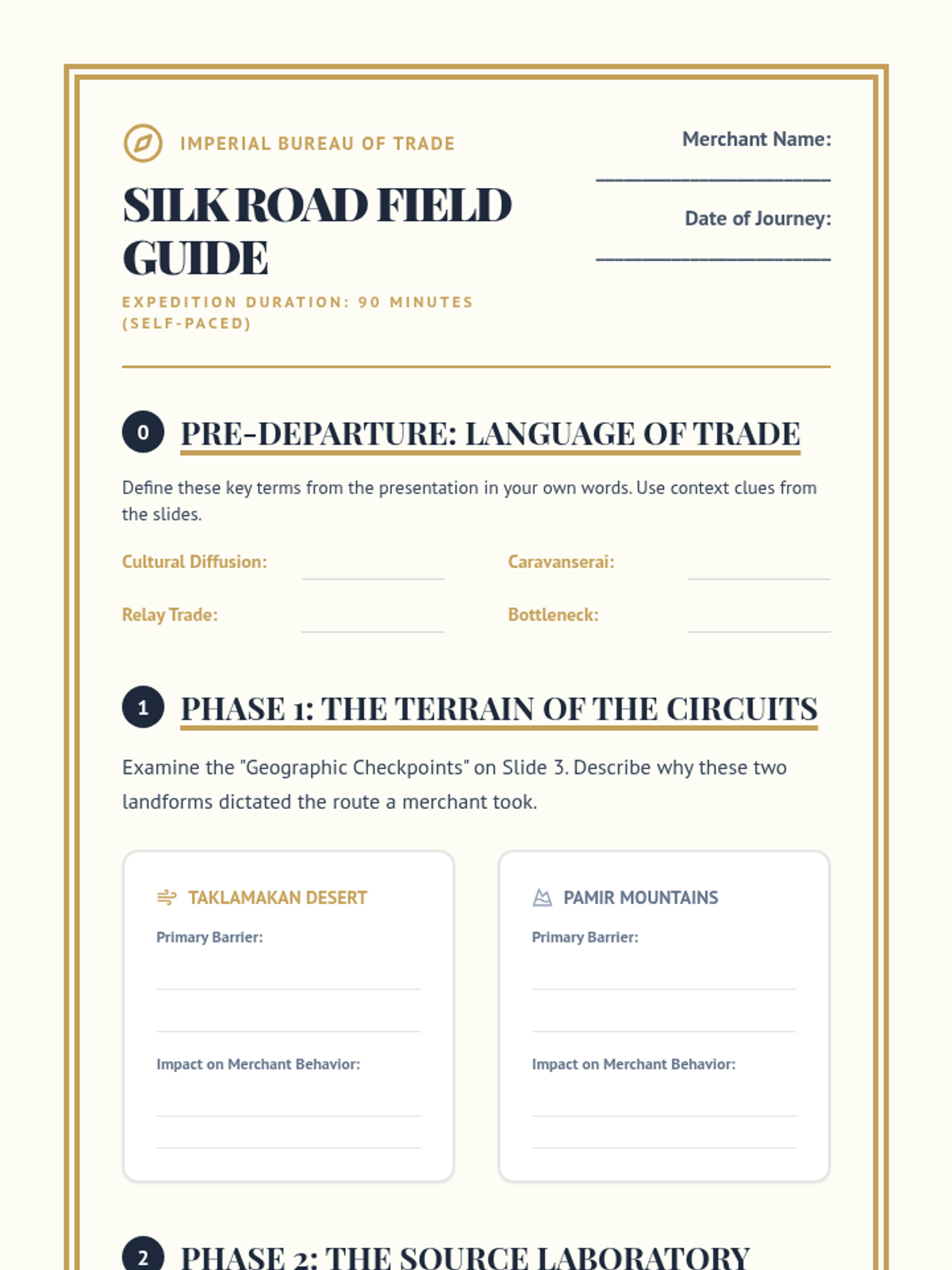
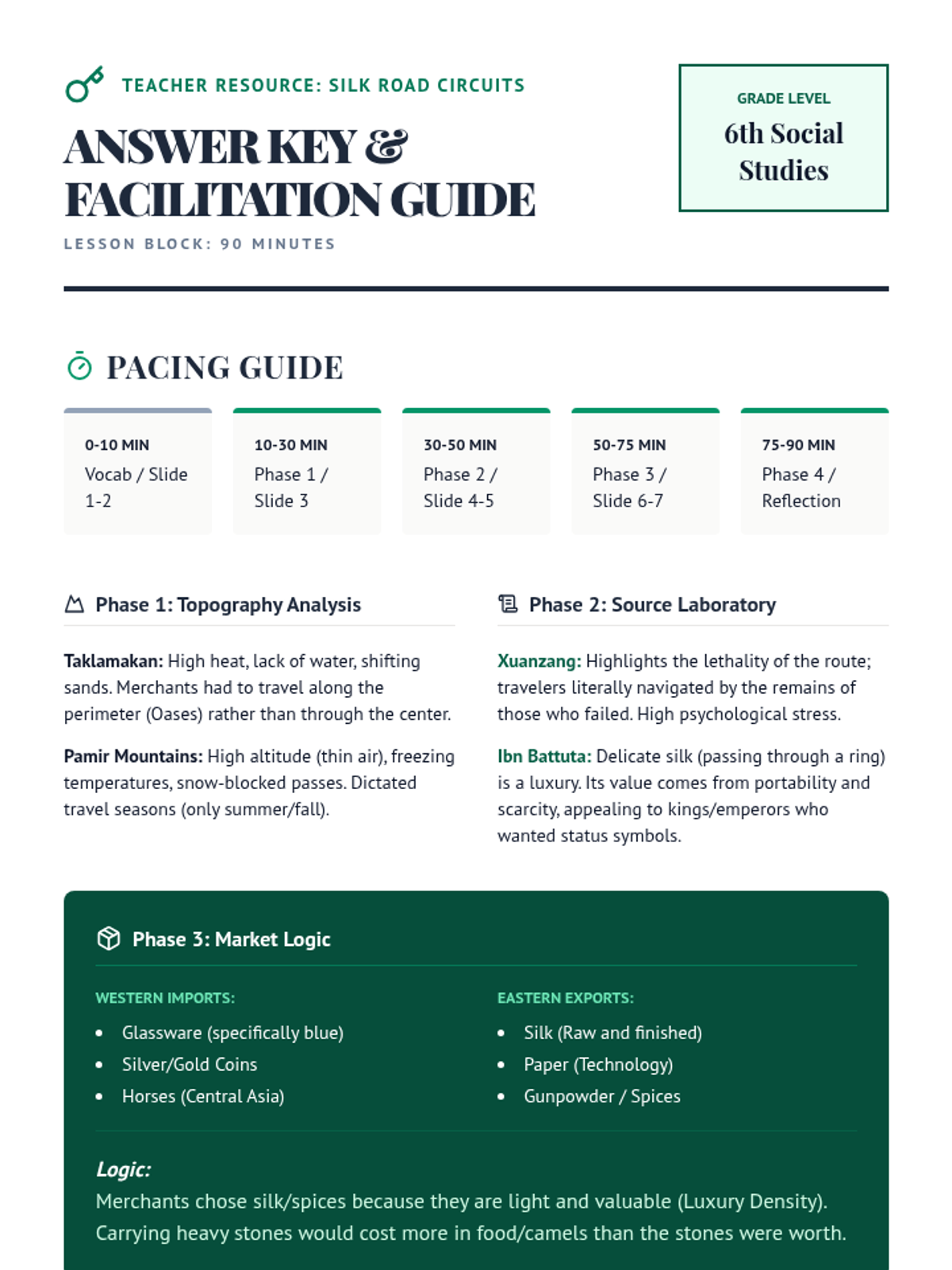
A self-paced Social Studies lesson for 6th grade focused on the Silk Road as an ancient global network, integrating rigorous primary source analysis and geography skills.
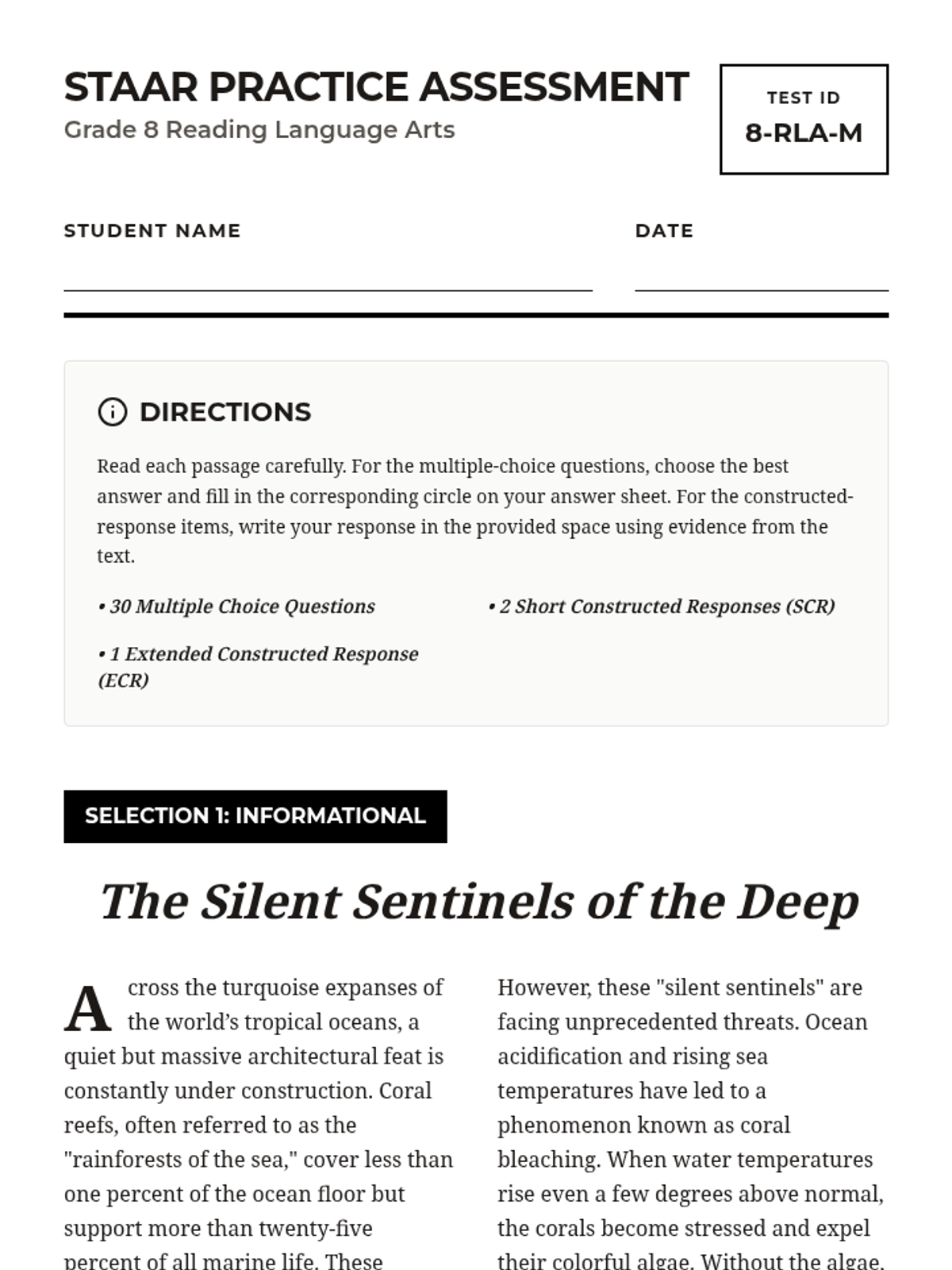
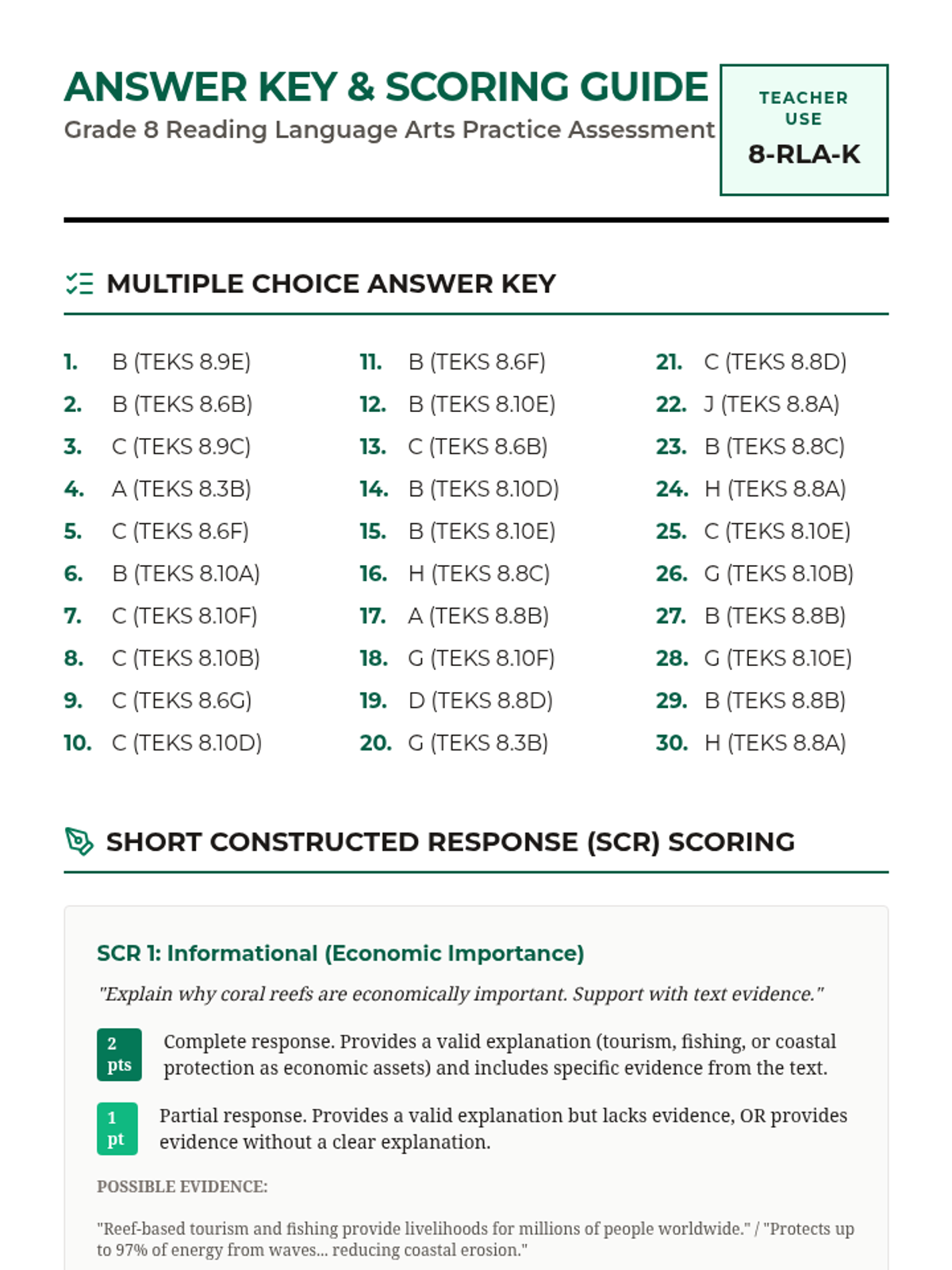
A full-length 8th-grade STAAR reading practice assessment, including 30 multiple-choice questions, two SCRs, and one ECR based on informational and fiction passages.
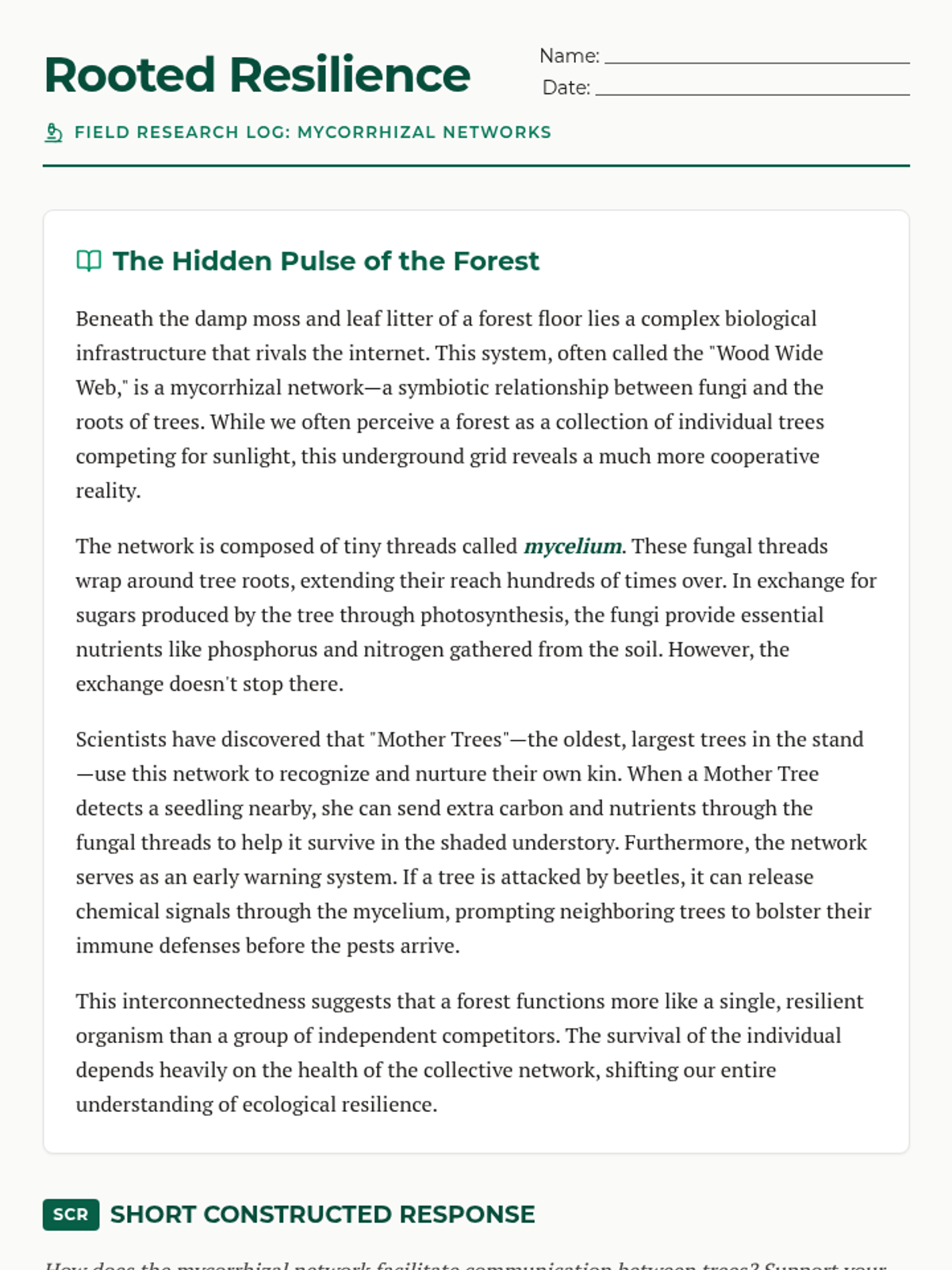
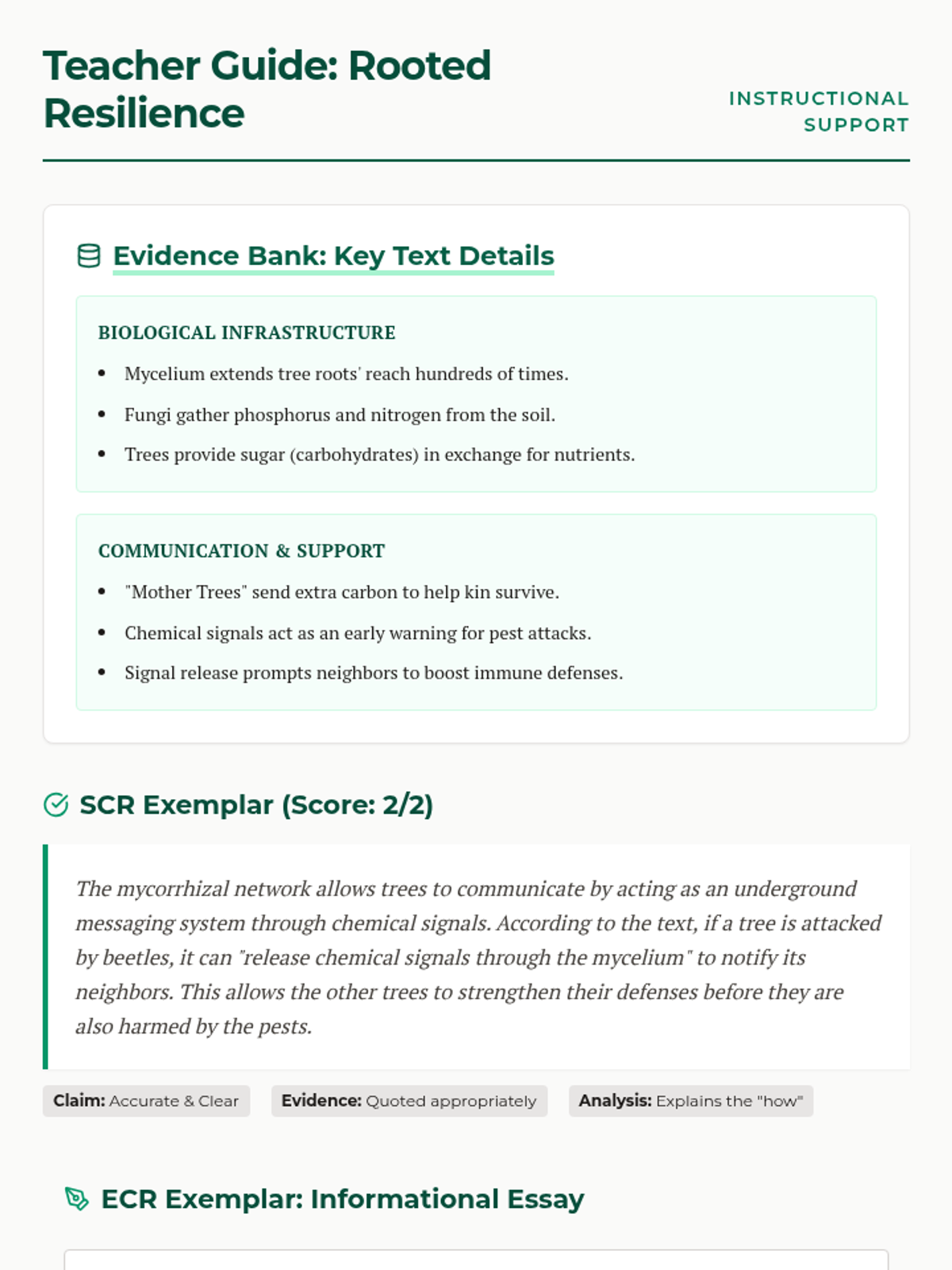
A rigorous informational reading and writing assignment focused on the mycorrhizal network, designed to practice SCR and ECR skills with an emphasis on organization, evidence, and sentence variety.
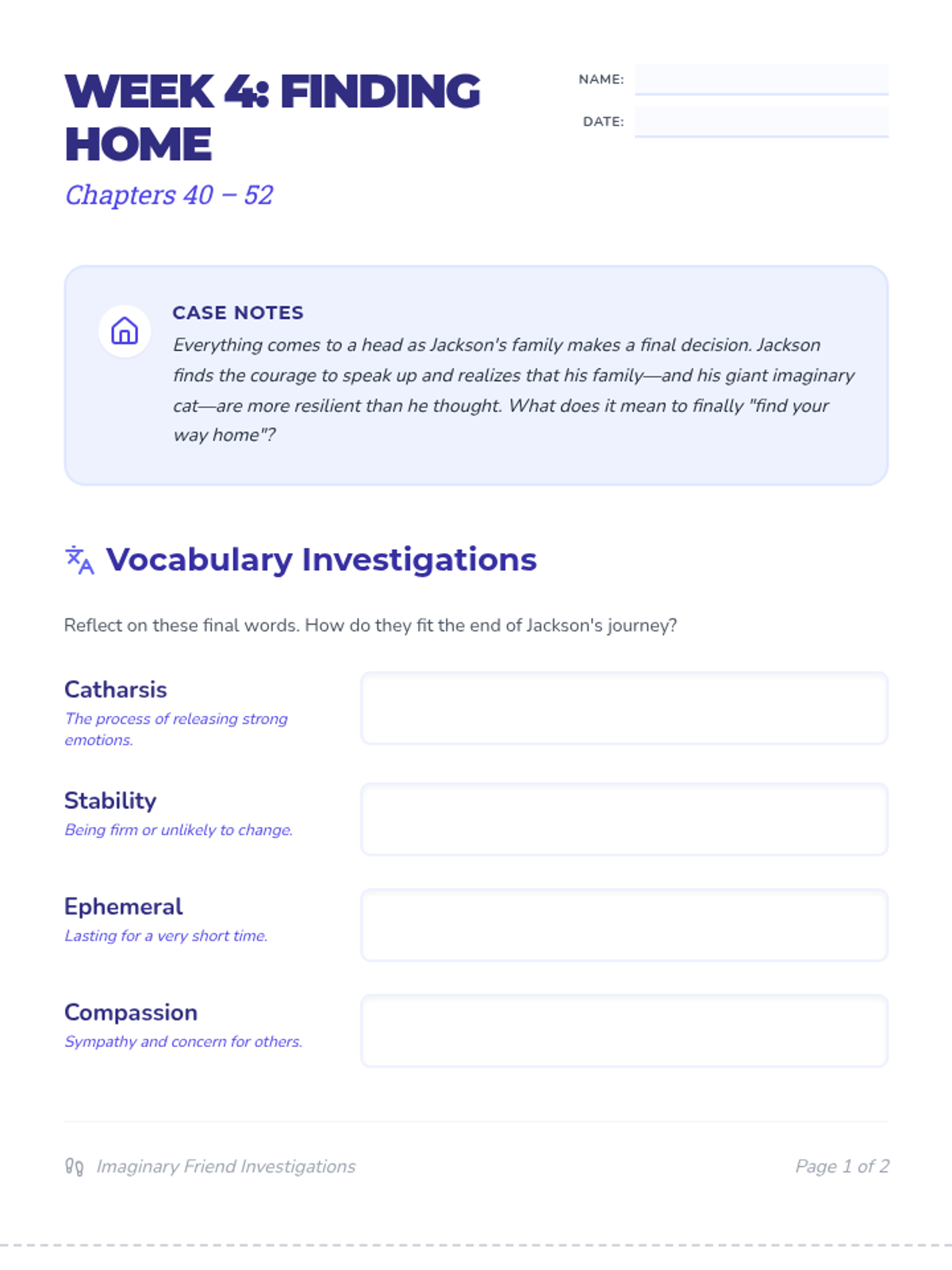
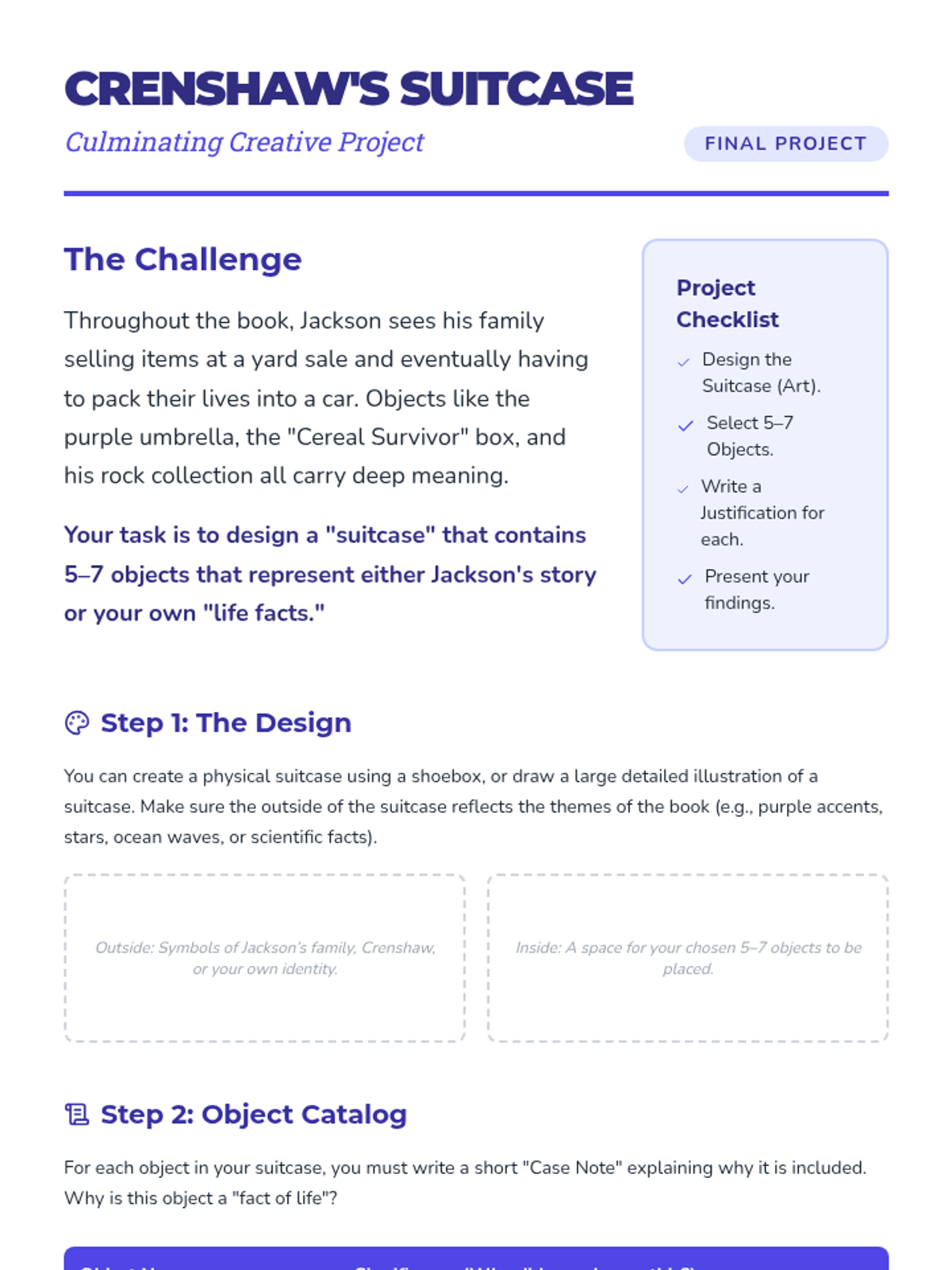
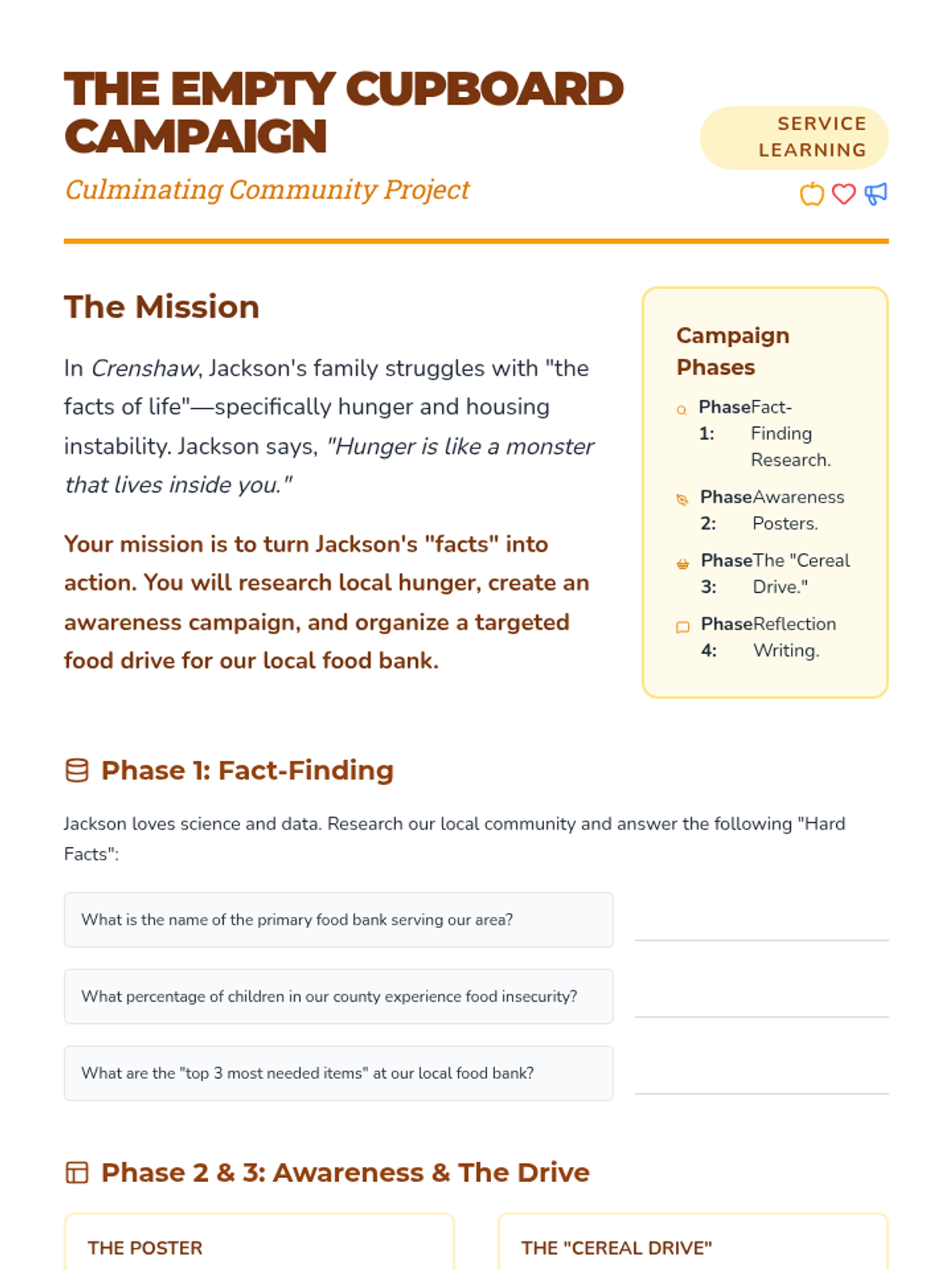
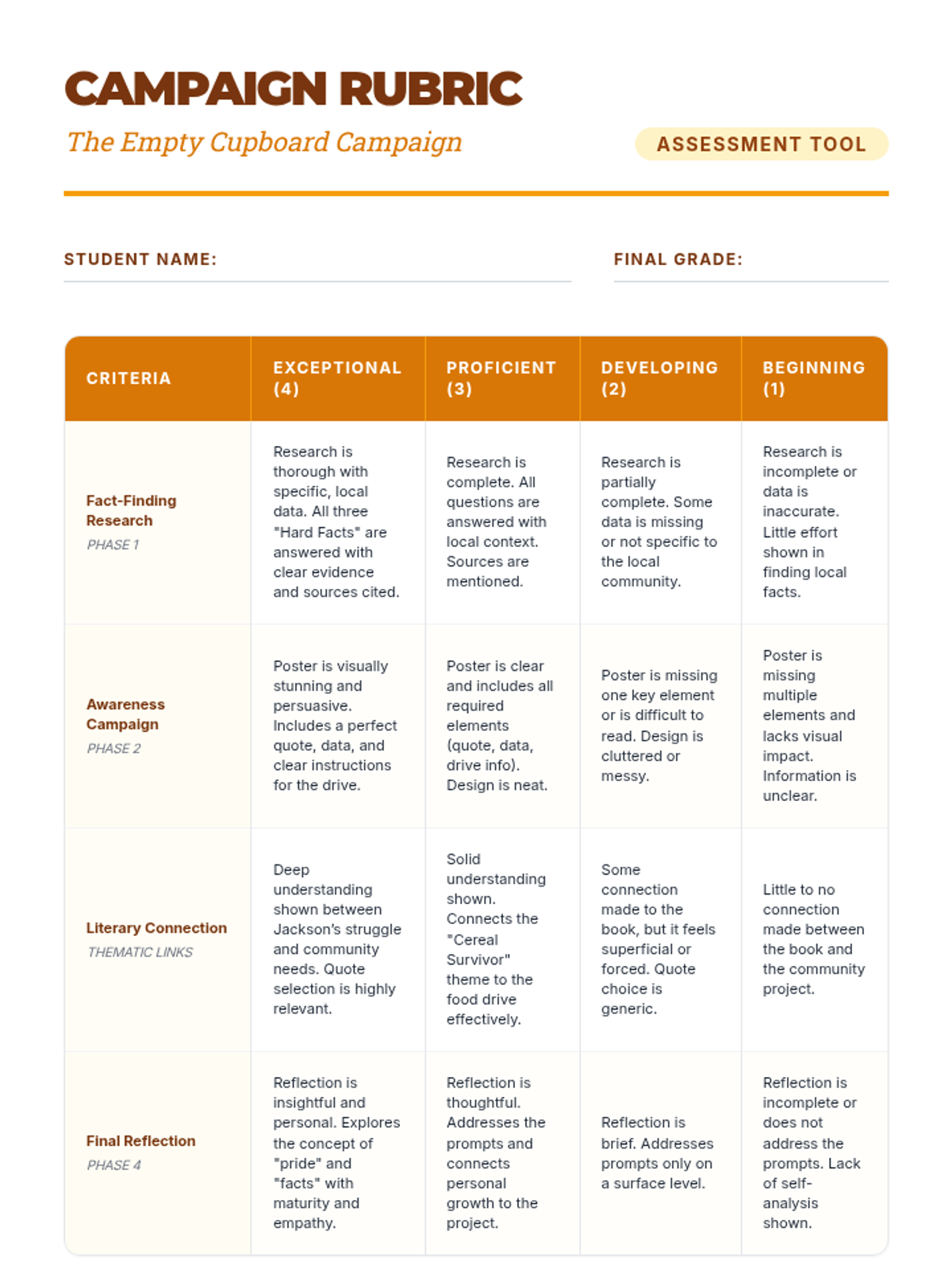
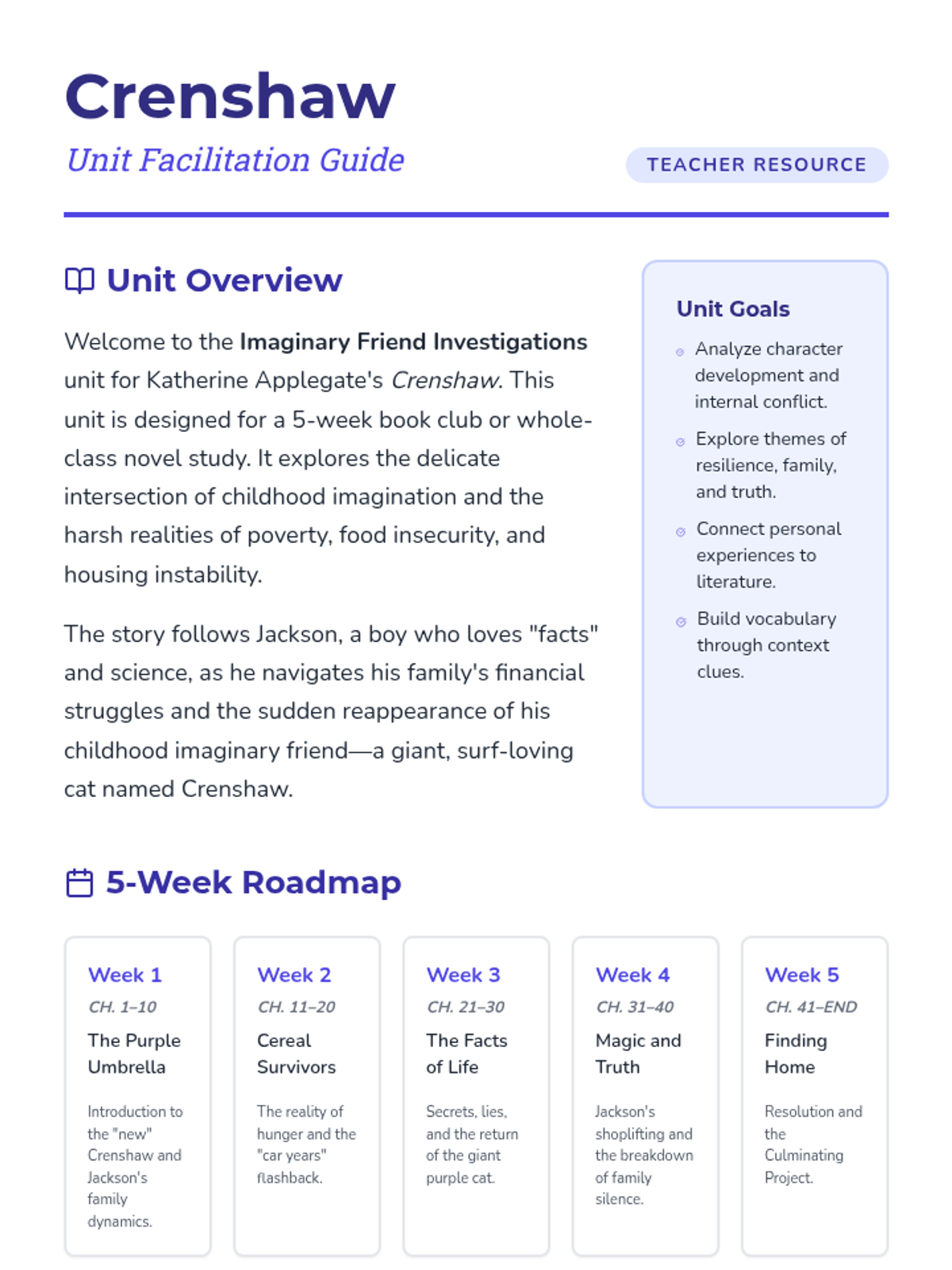
The resolution of Jackson's journey and the culminating creative project. Reading chapters 40-52.
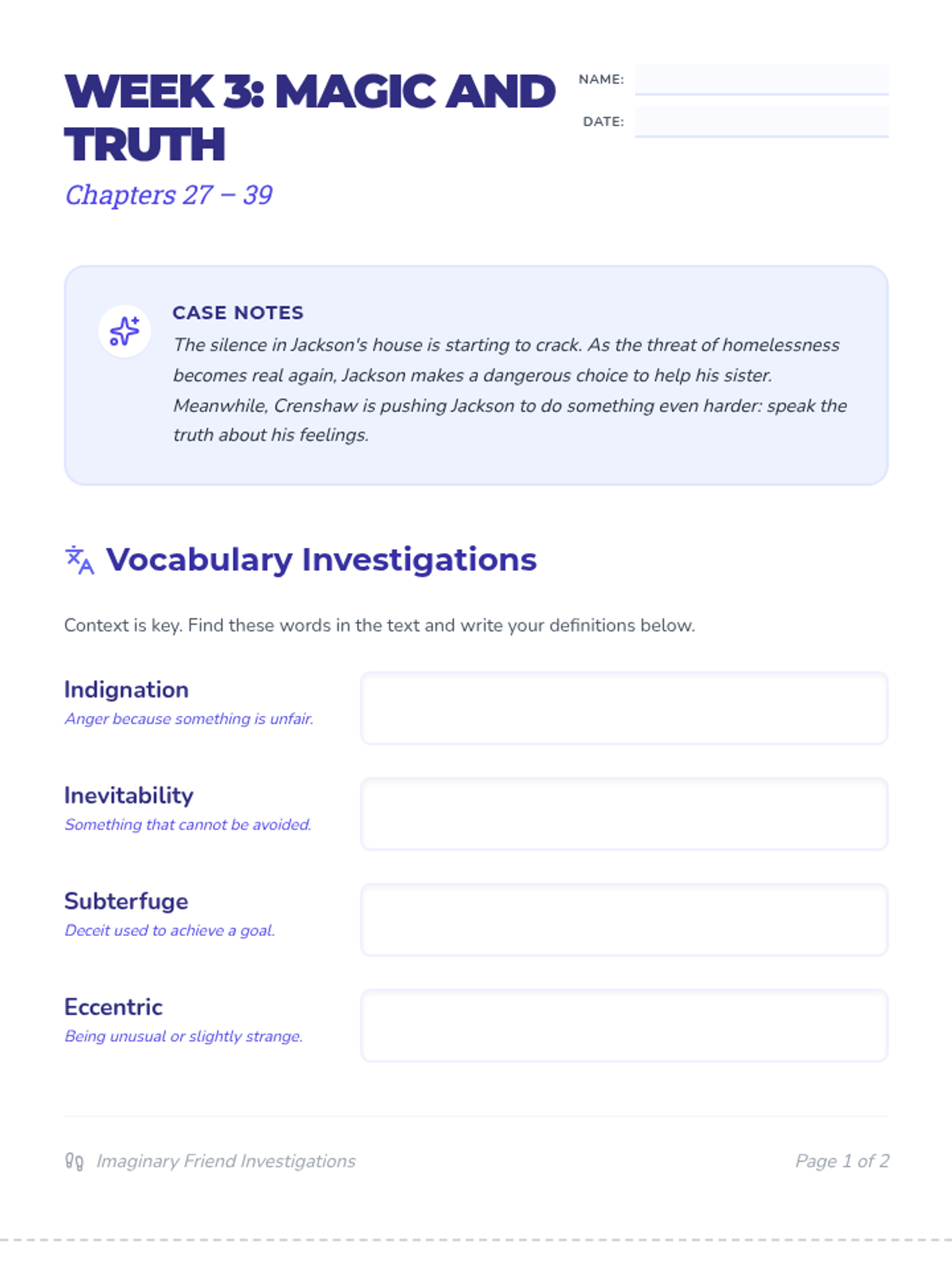
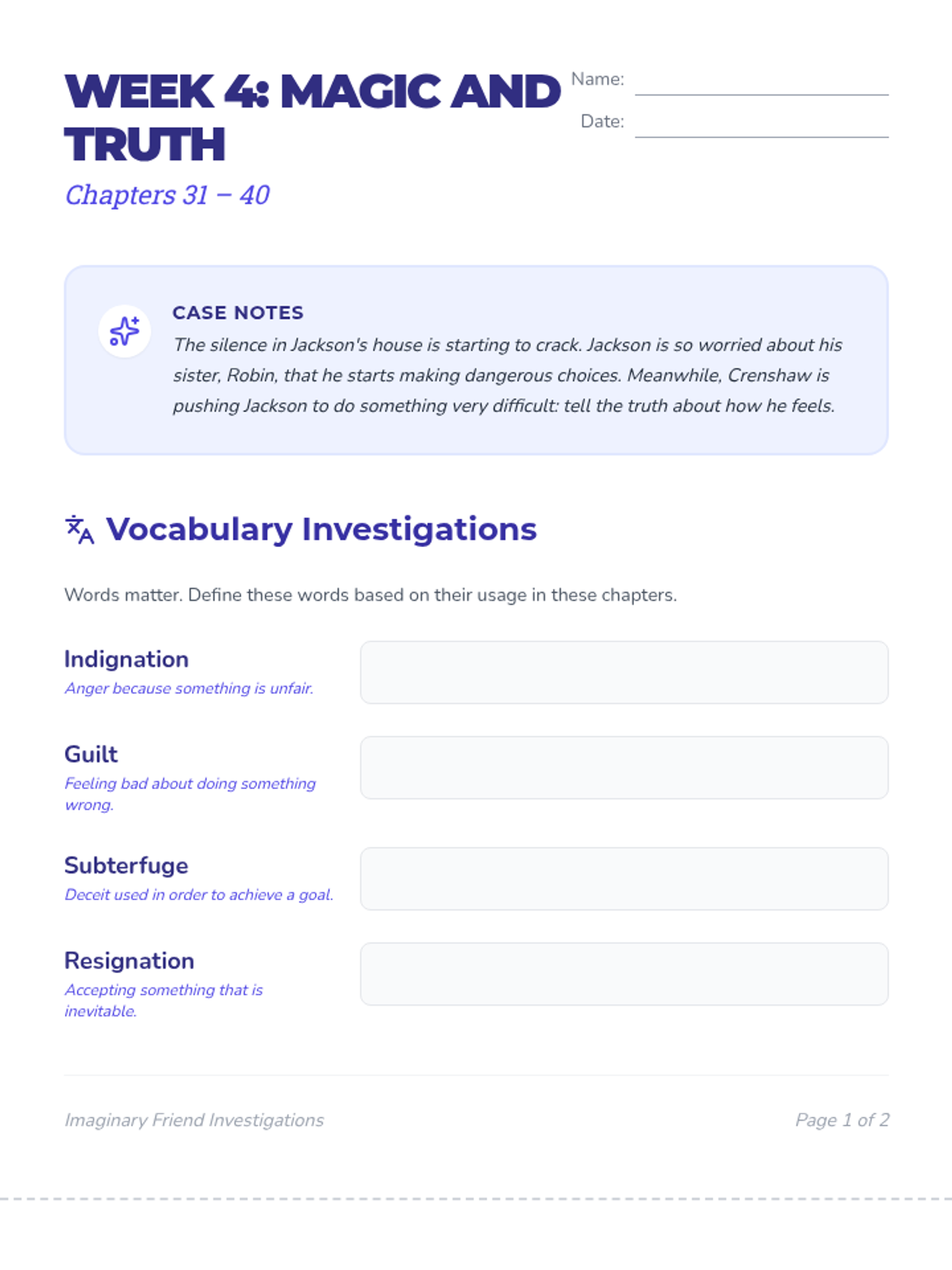
Tensions rise and truths are revealed in chapters 31-40.
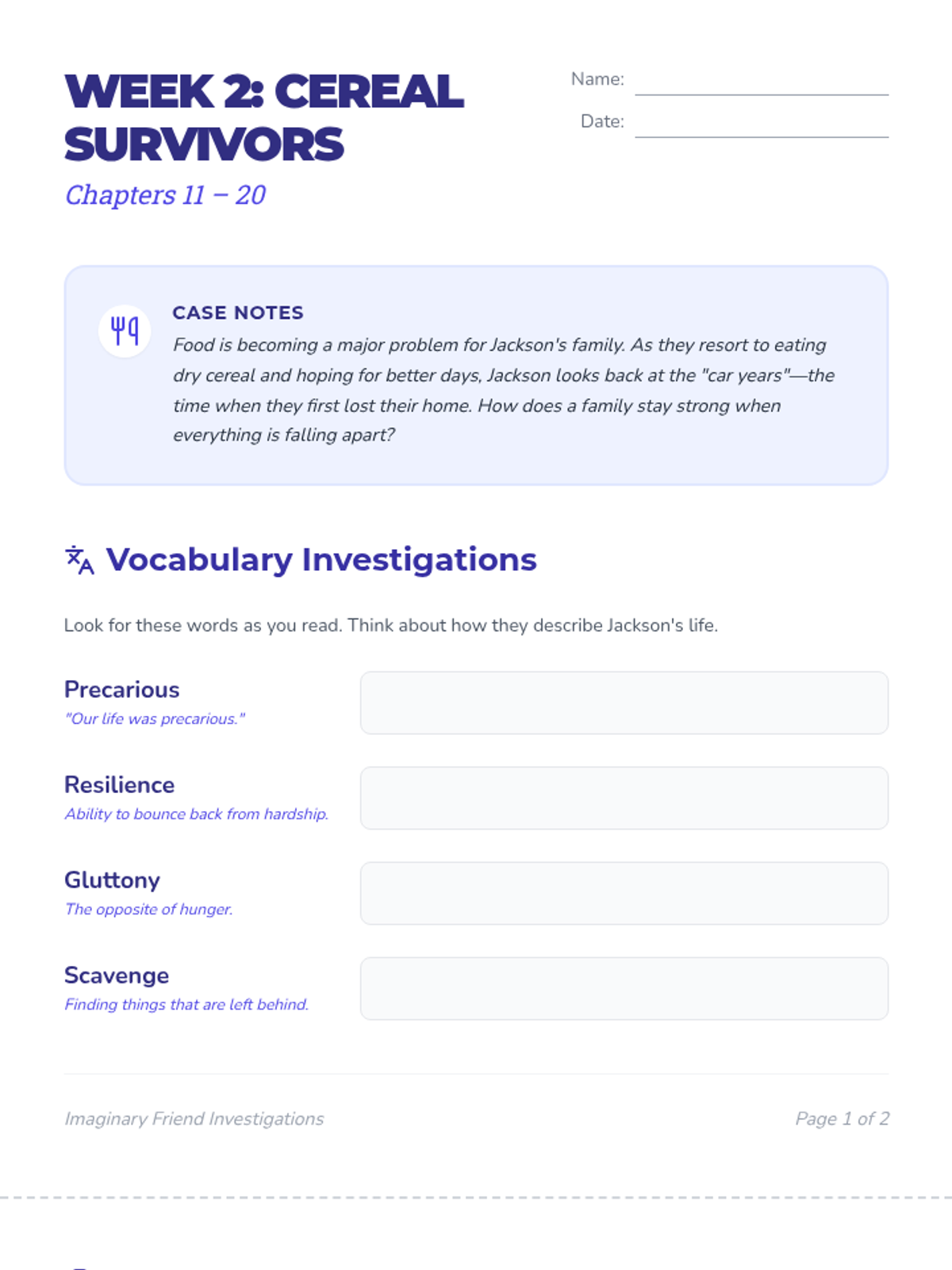
Jackson struggles with his family's financial situation and the "car years" as he reads chapters 14-26.
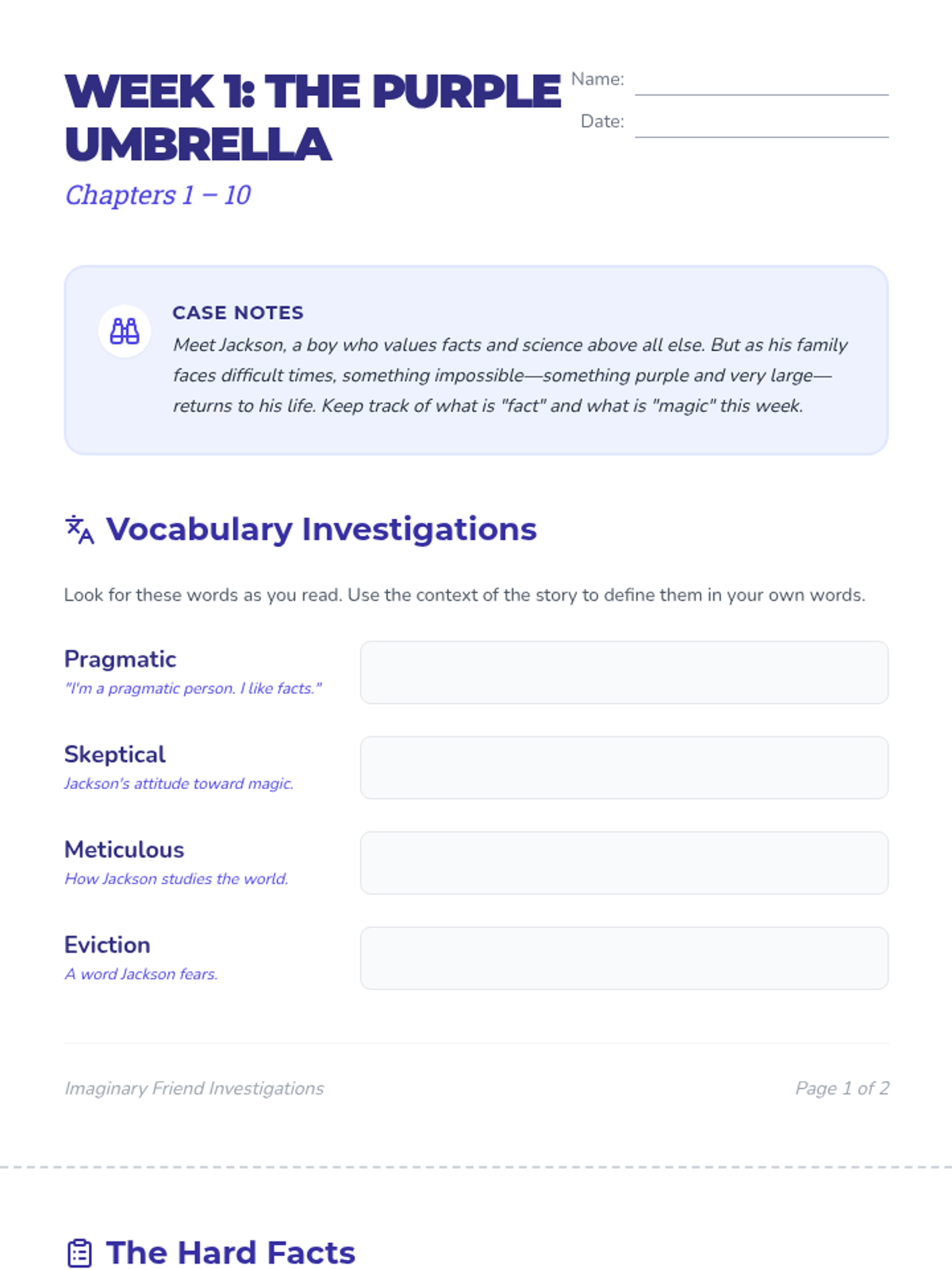
Jackson encounters Crenshaw's return and recalls the first "car year" memory. Reading chapters 1–13.
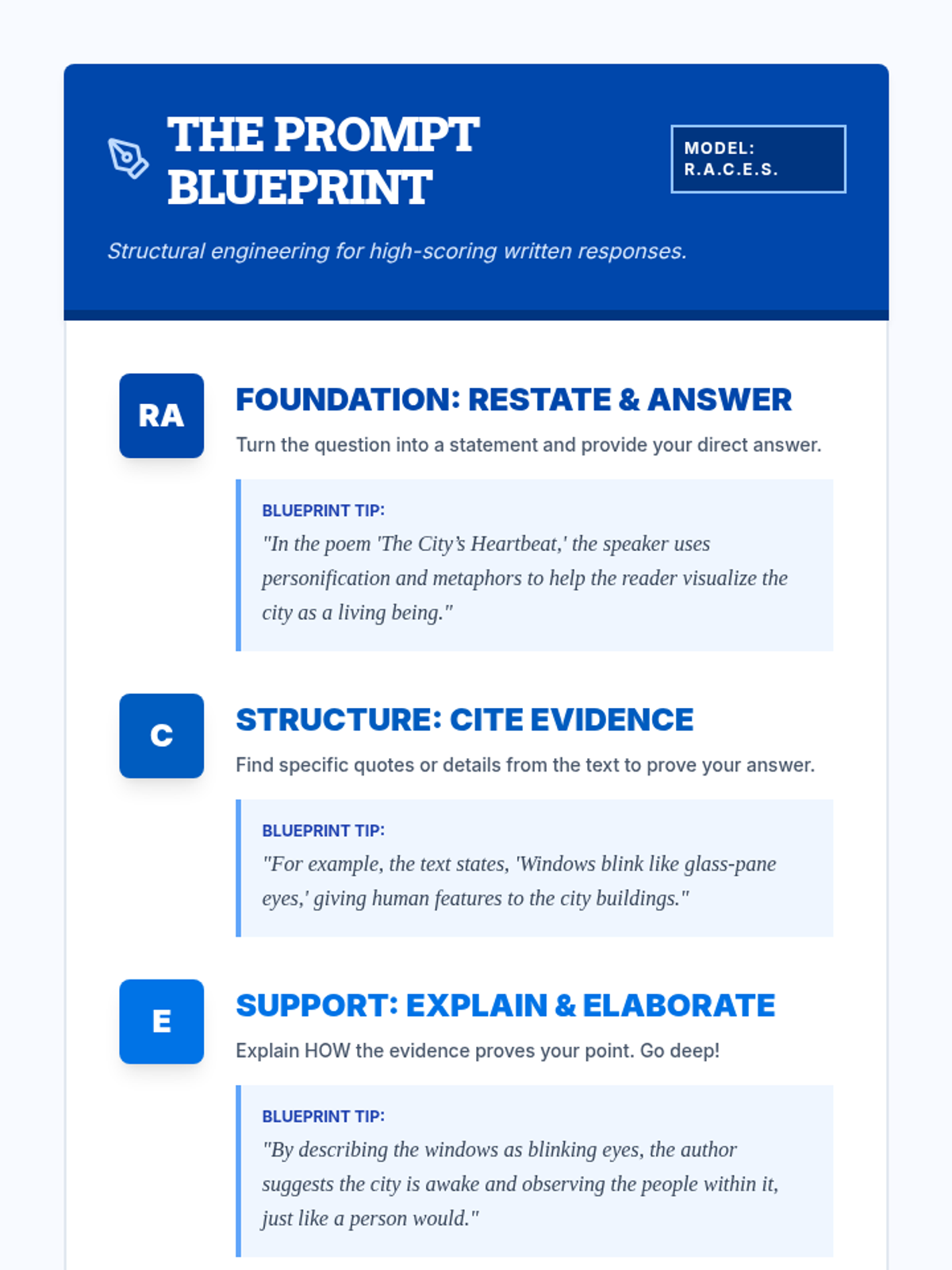
A collection of high-impact reference materials and strategy guides to help students navigate complex texts and construct high-quality written responses.
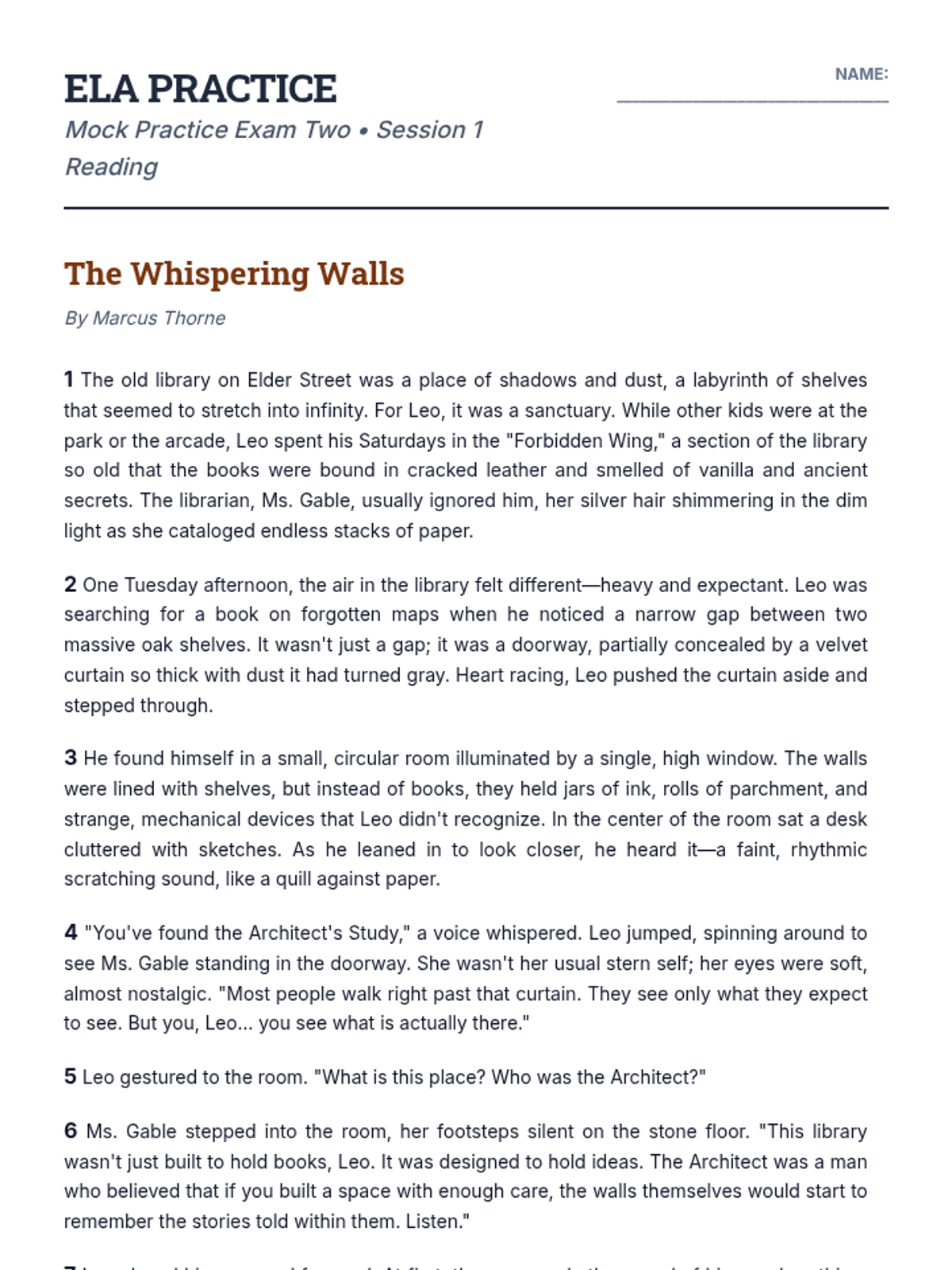
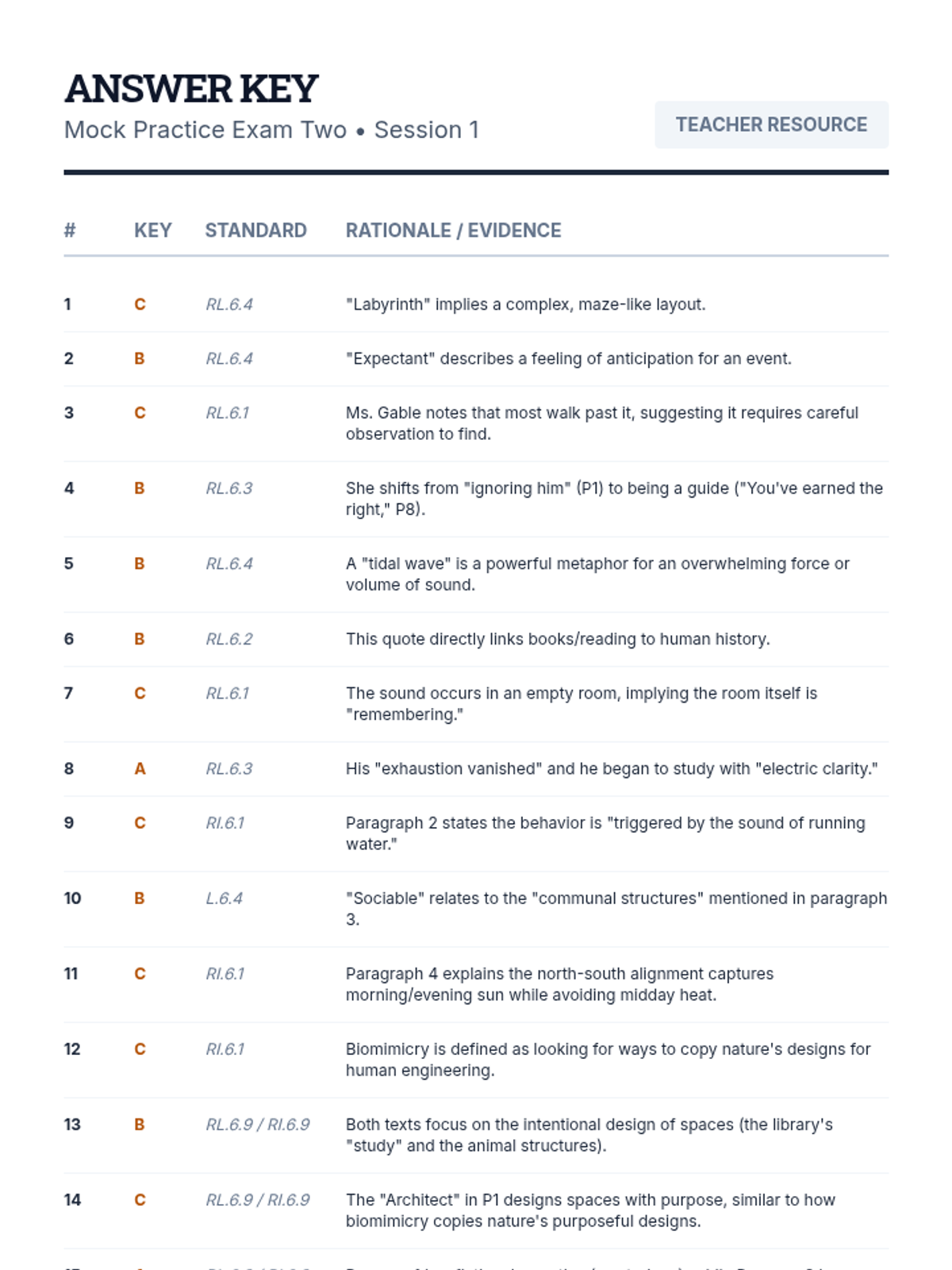
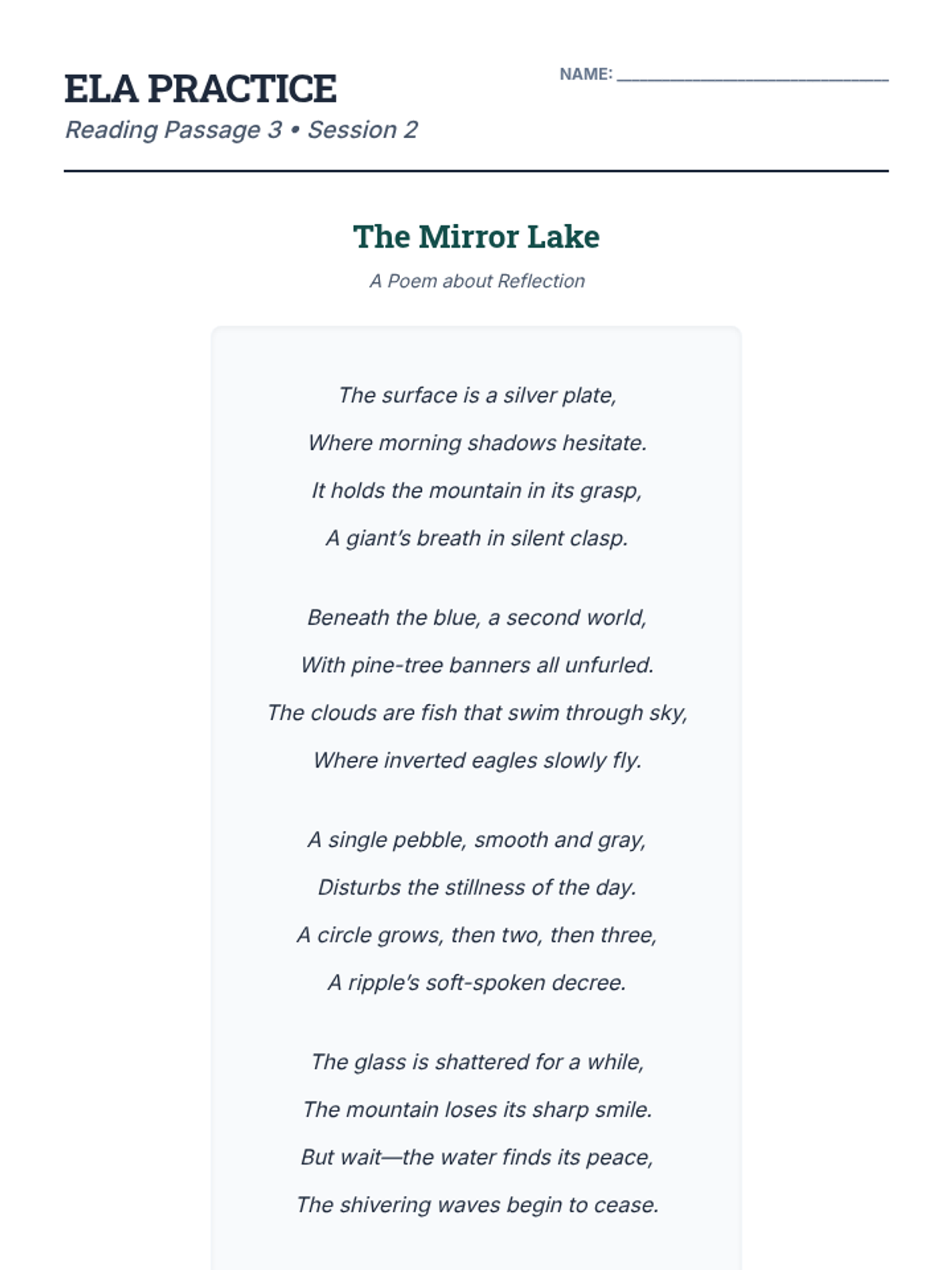
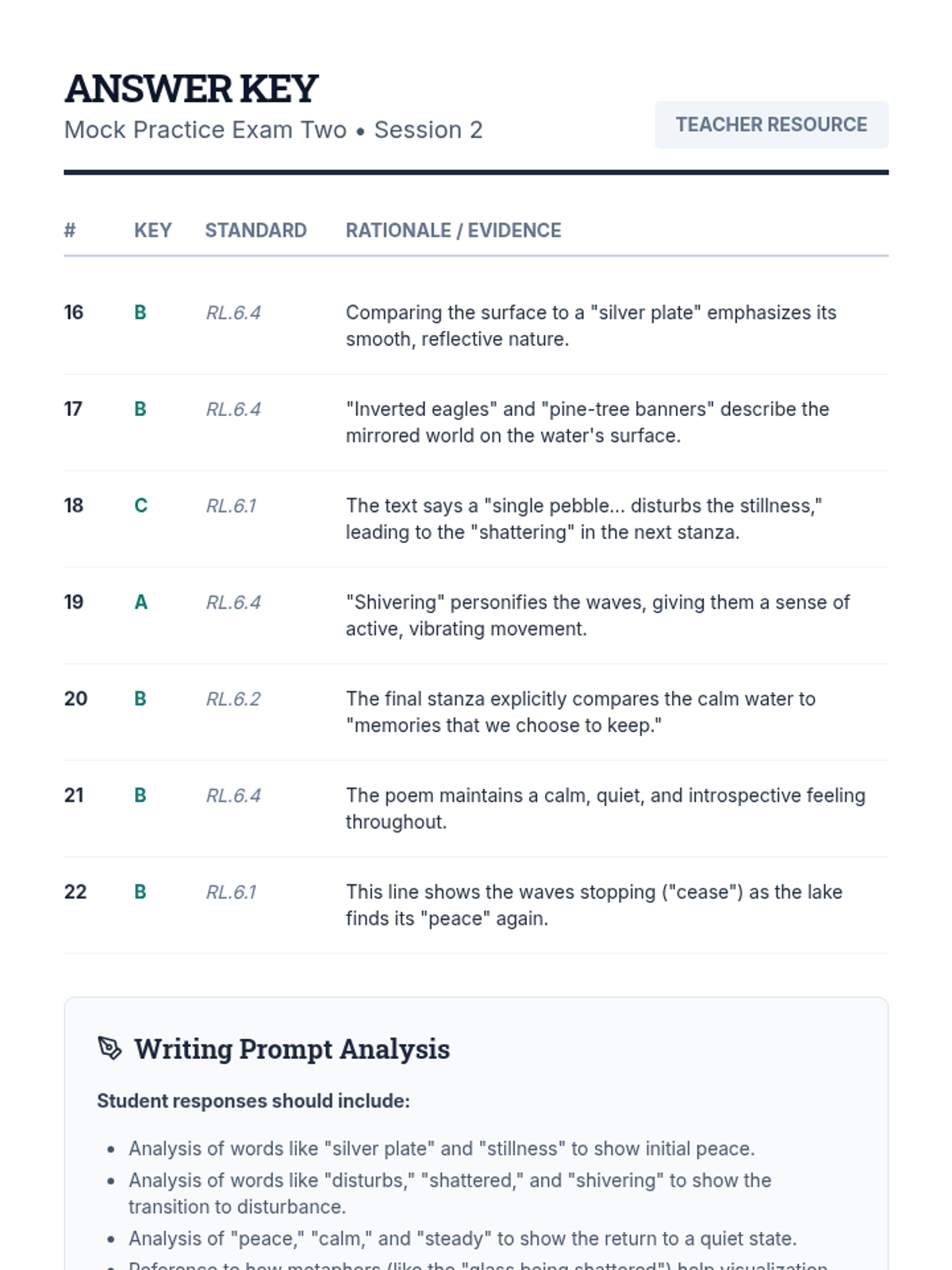
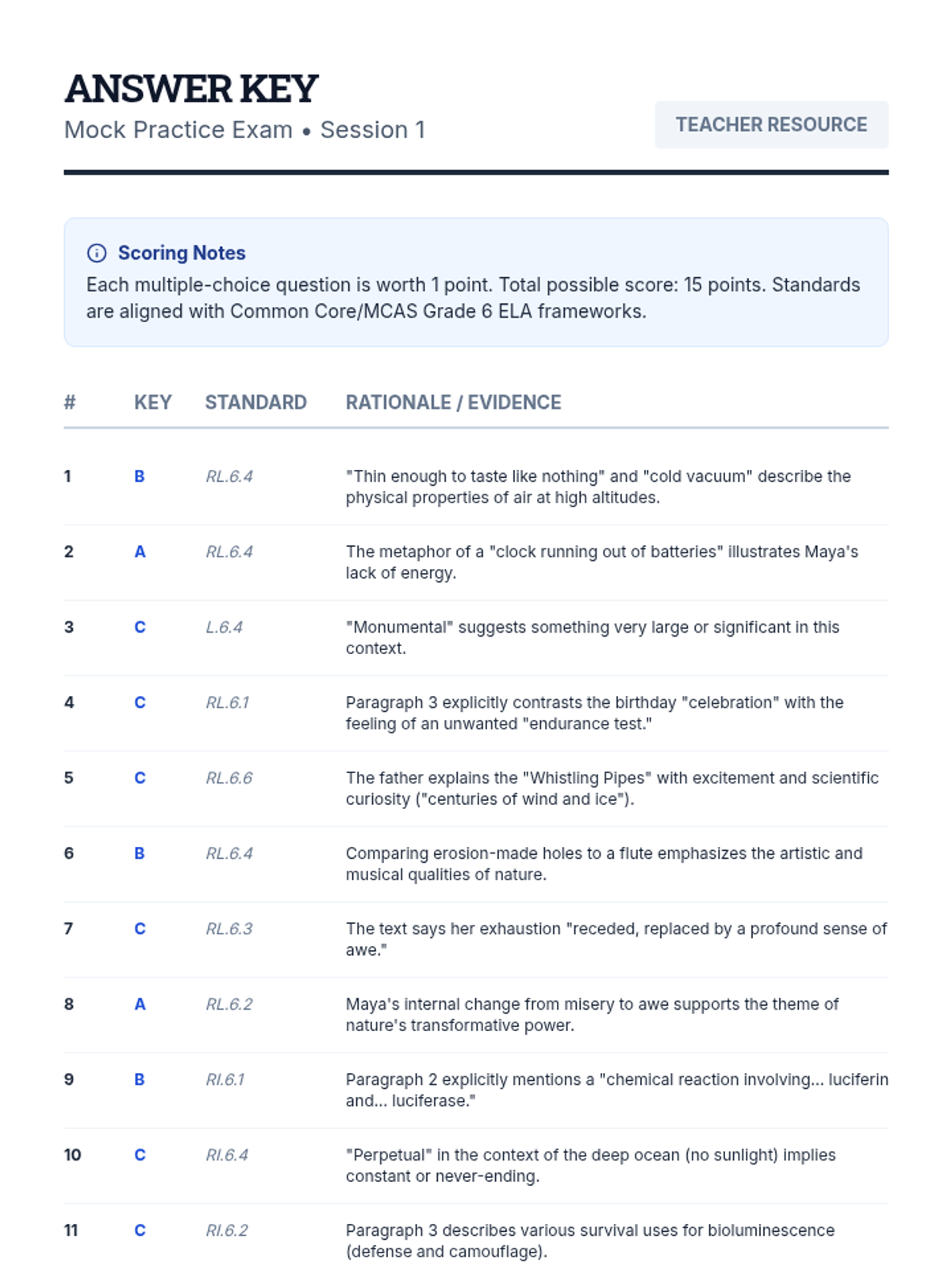
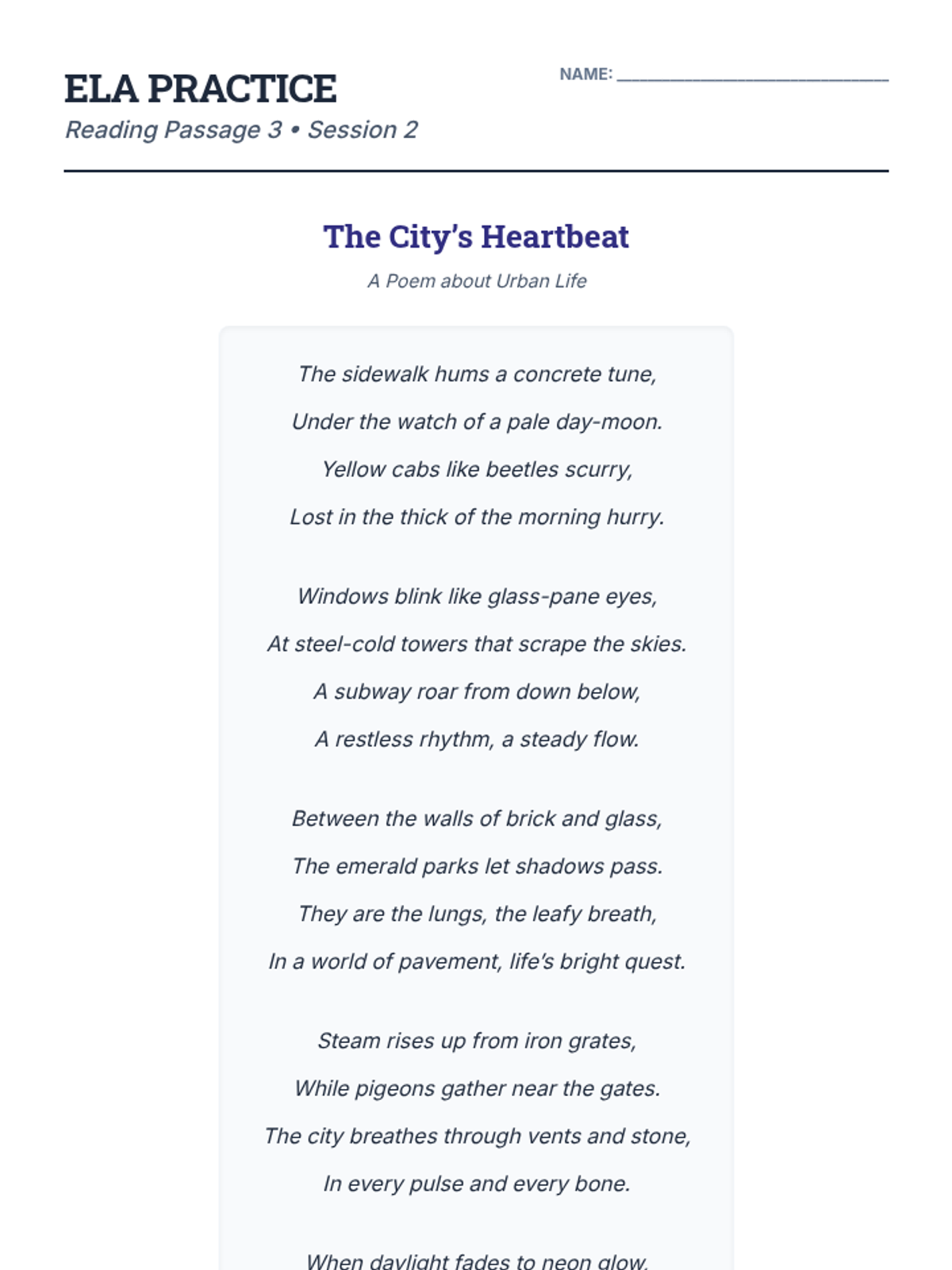
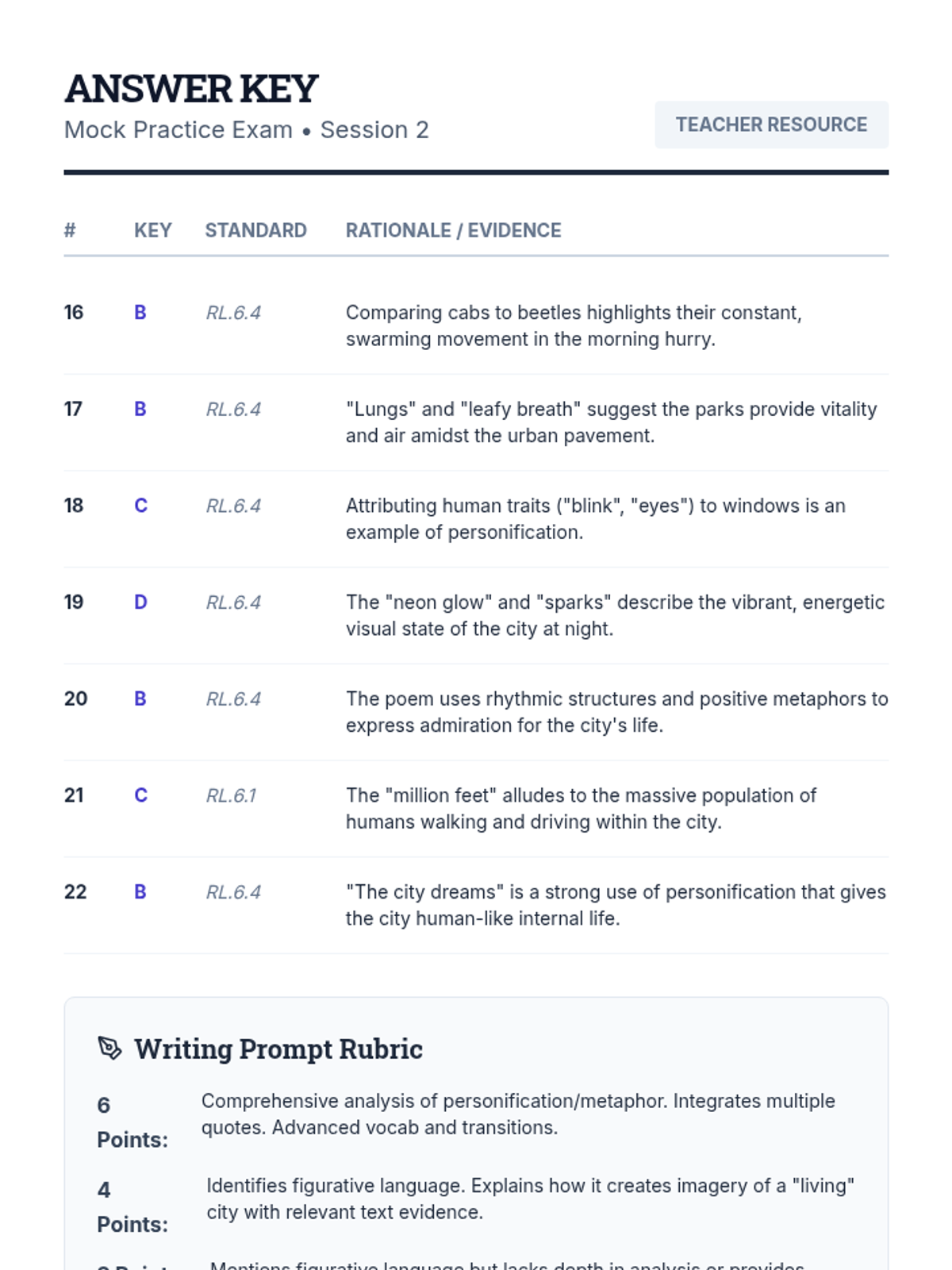
The second full-length mock ELA exam for Grade 6, providing further practice with complex texts and standards-aligned assessments.
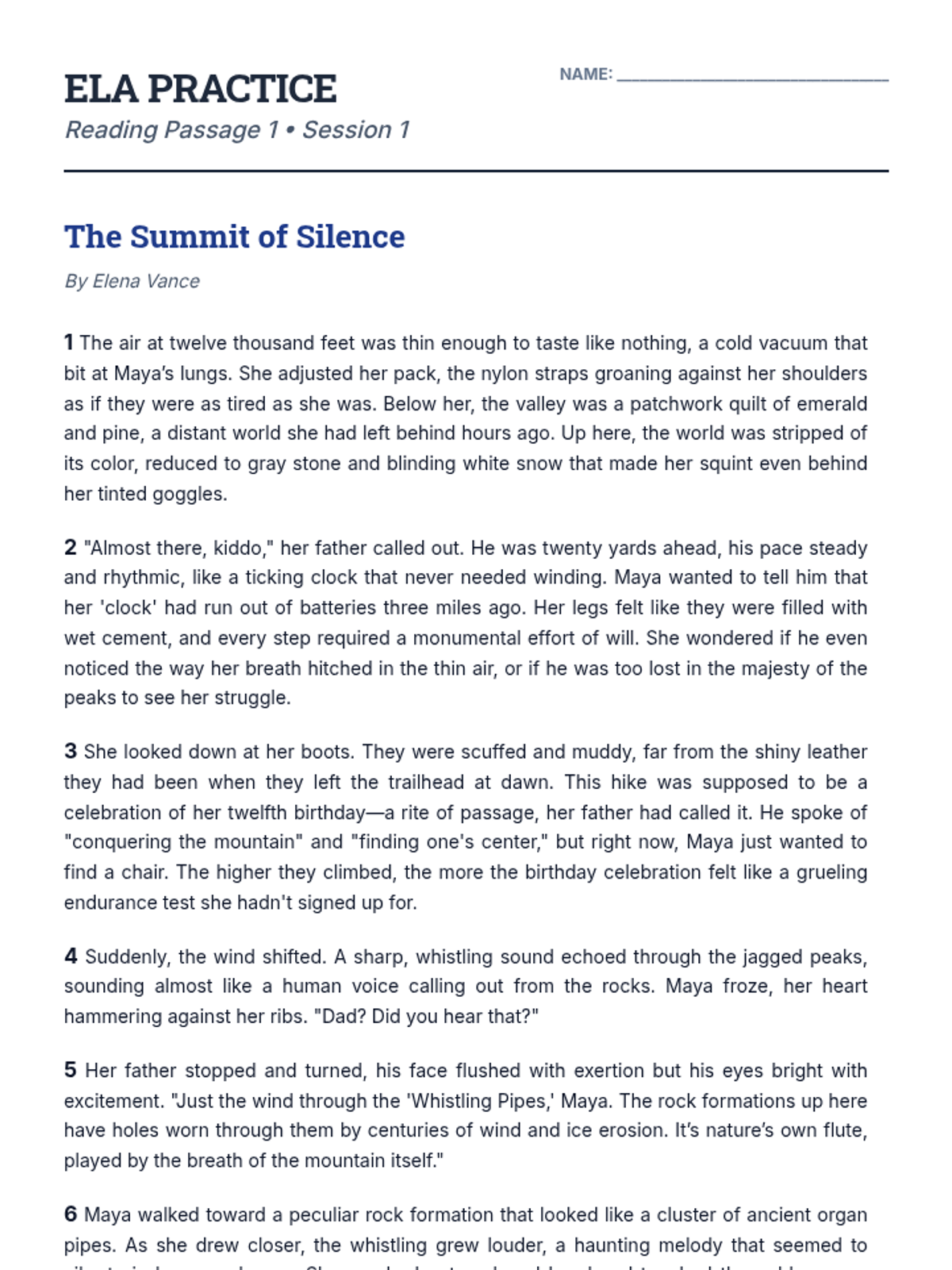
A full-length mock ELA exam for Grade 6, featuring diverse reading passages and multiple-choice questions aligned with state standards.
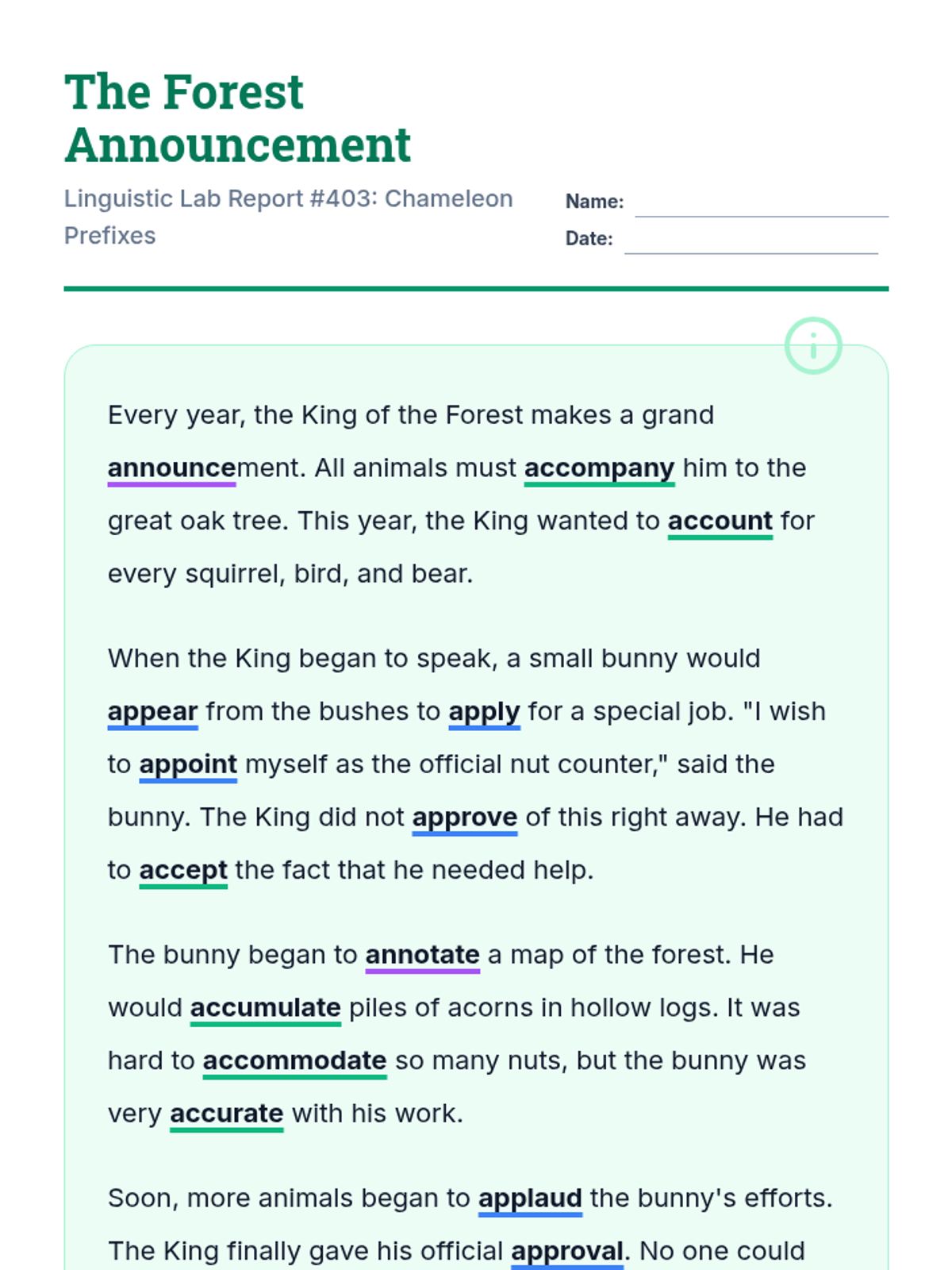
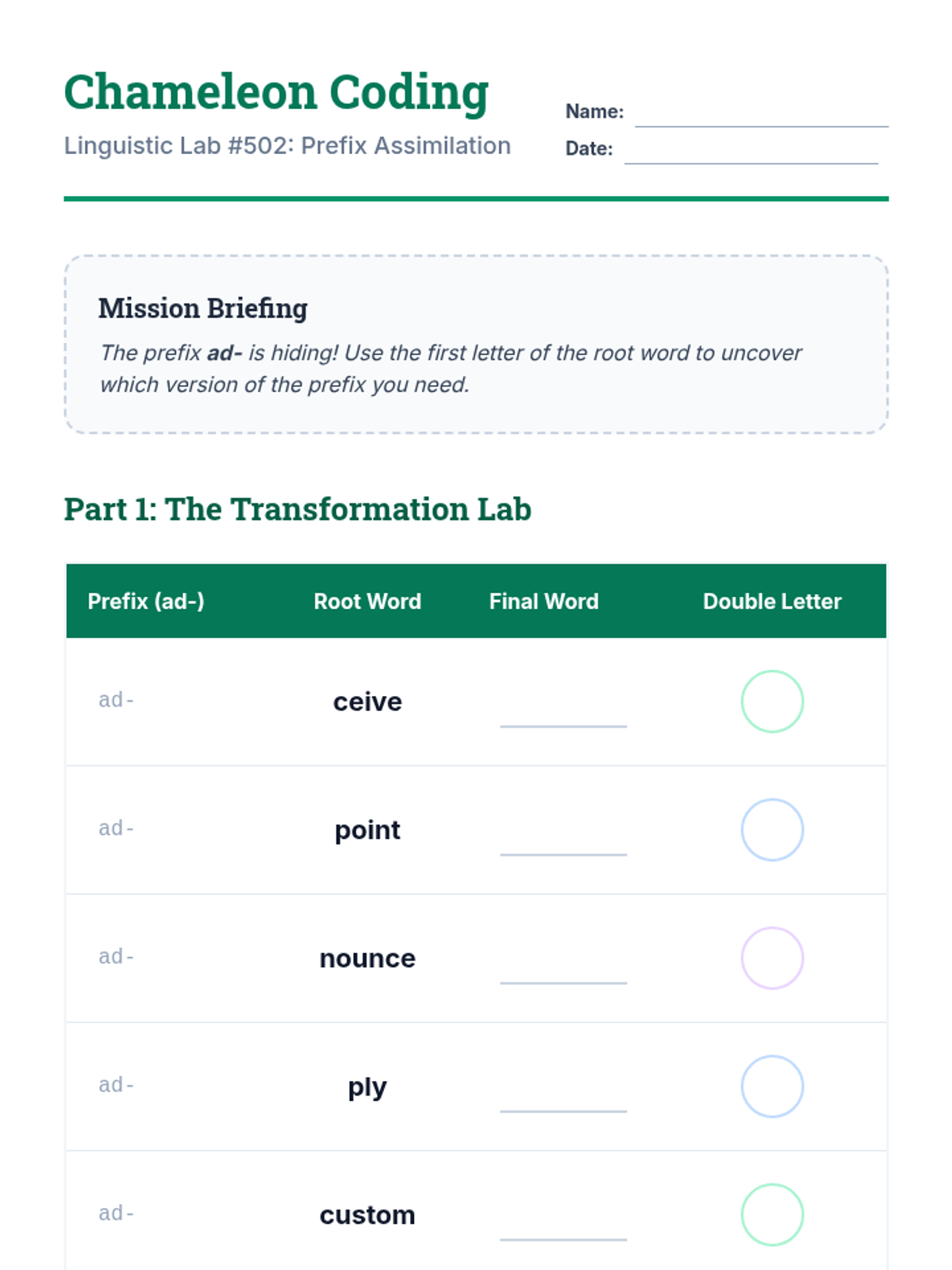
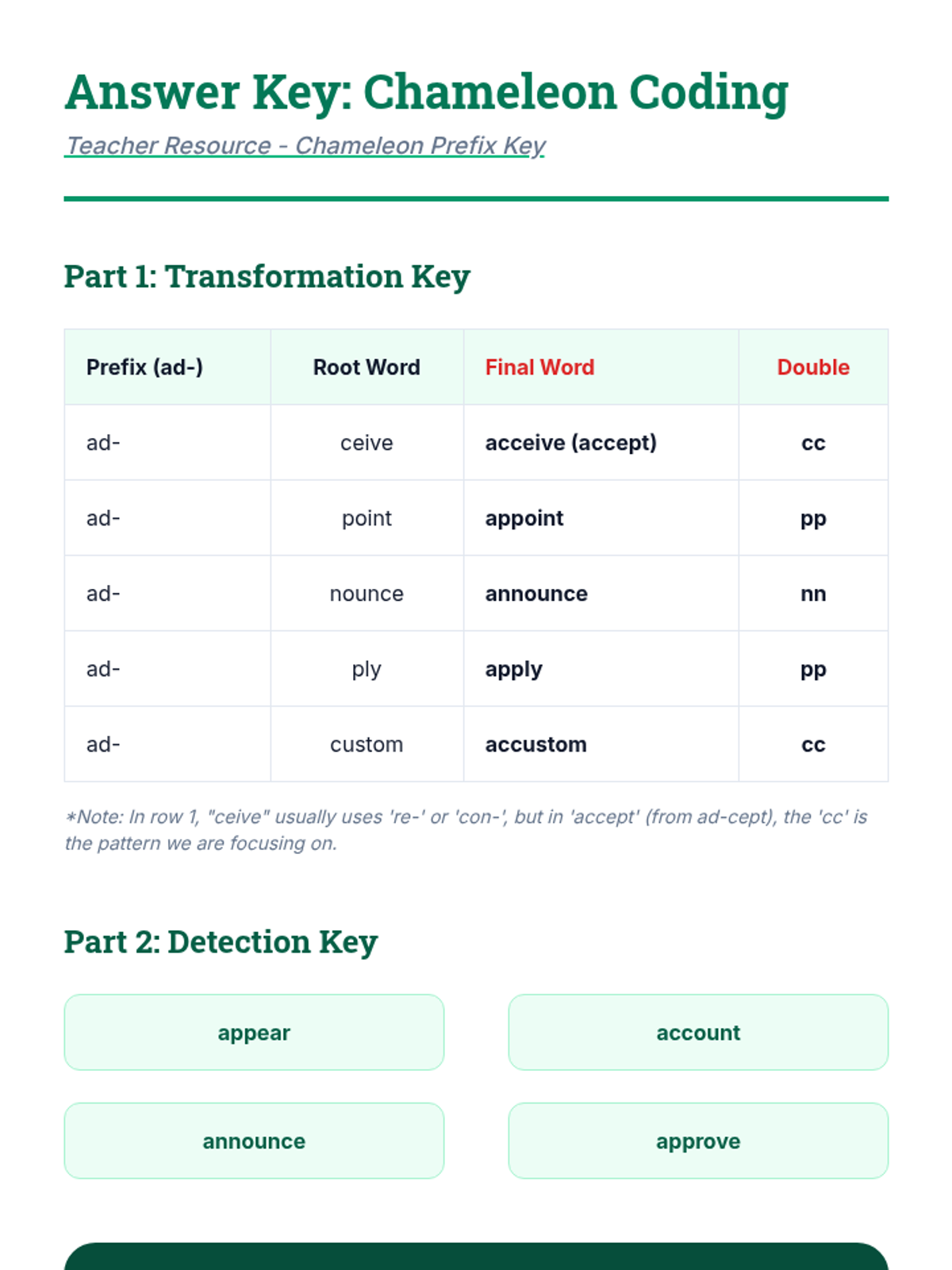
A lesson on "chameleon prefixes" (assimilated prefixes), specifically focusing on how the prefix 'ad-' changes to 'ac-', 'ap-', and 'an-' to match the root word.
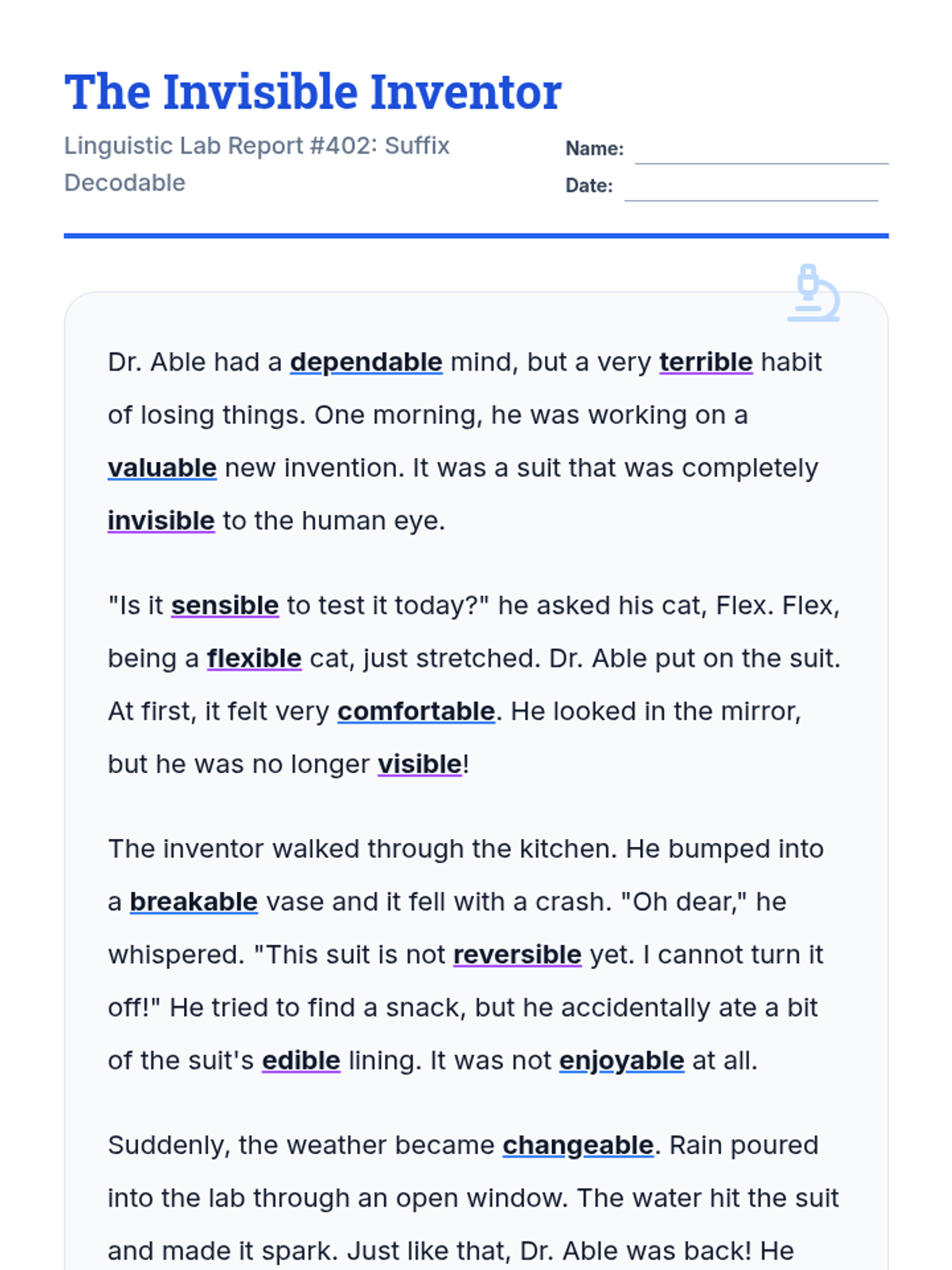
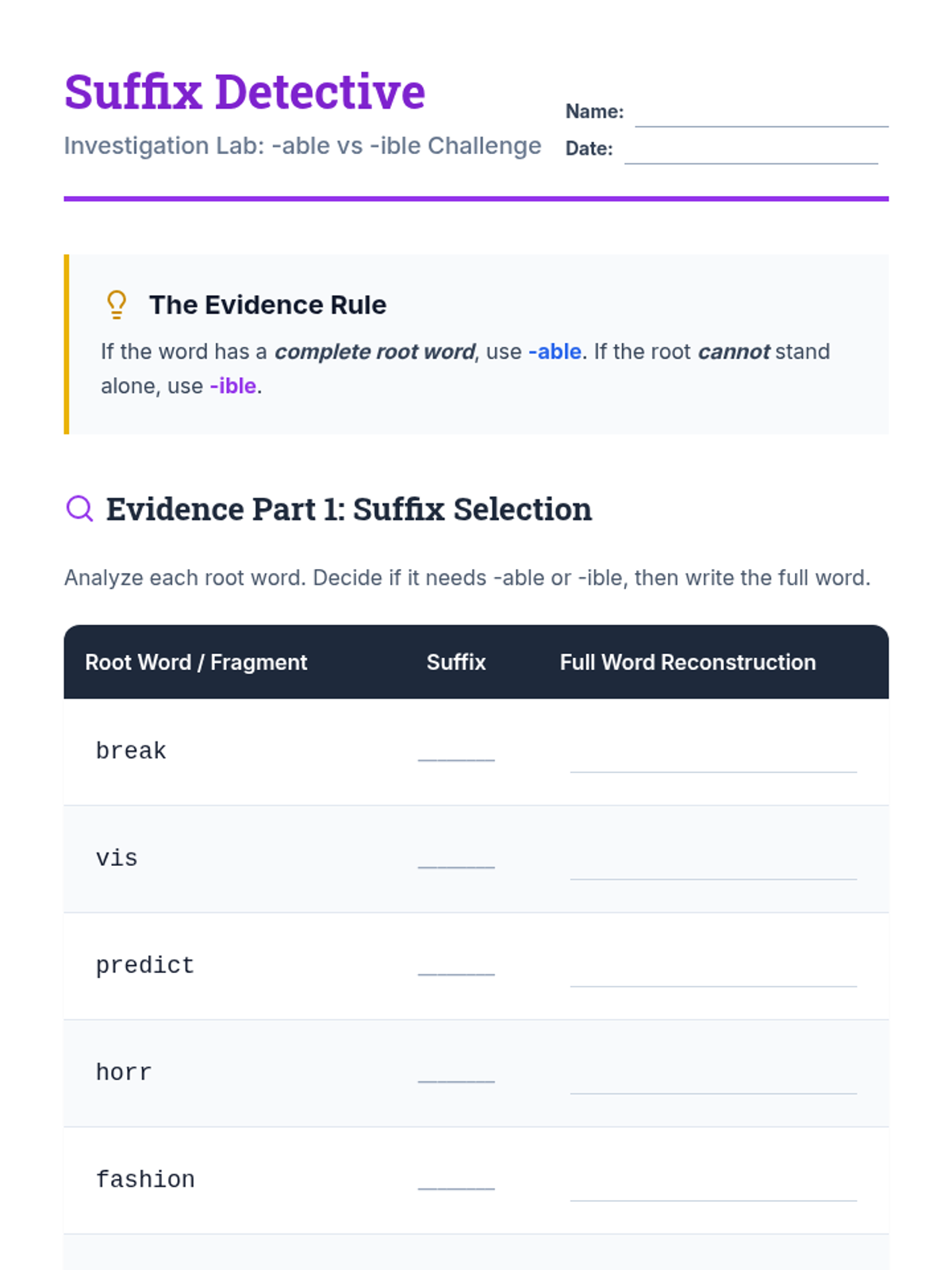
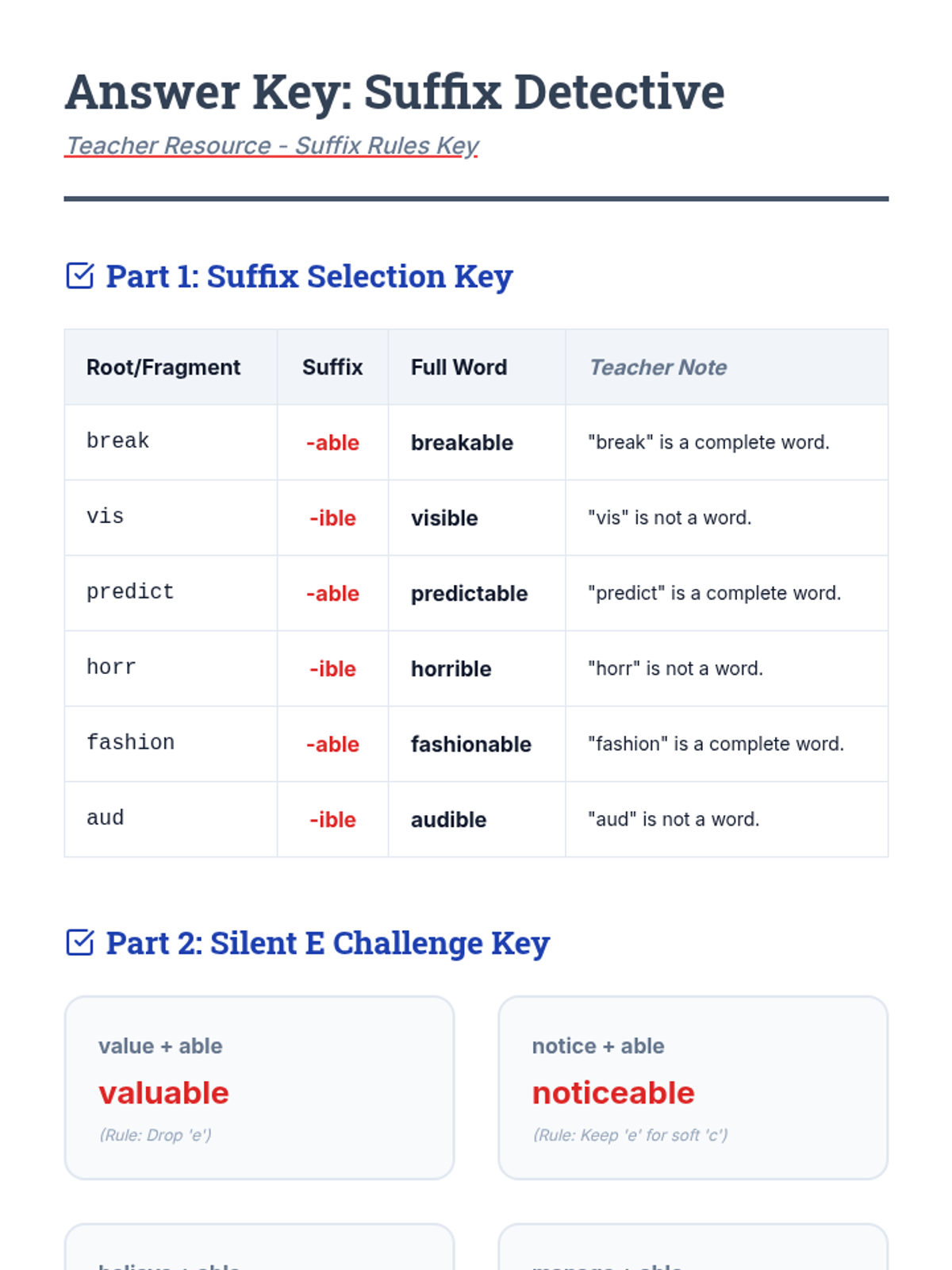
A lesson focused on the spelling rules for the assimilated suffixes -ible and -able, teaching students how to identify complete root words to determine the correct spelling.
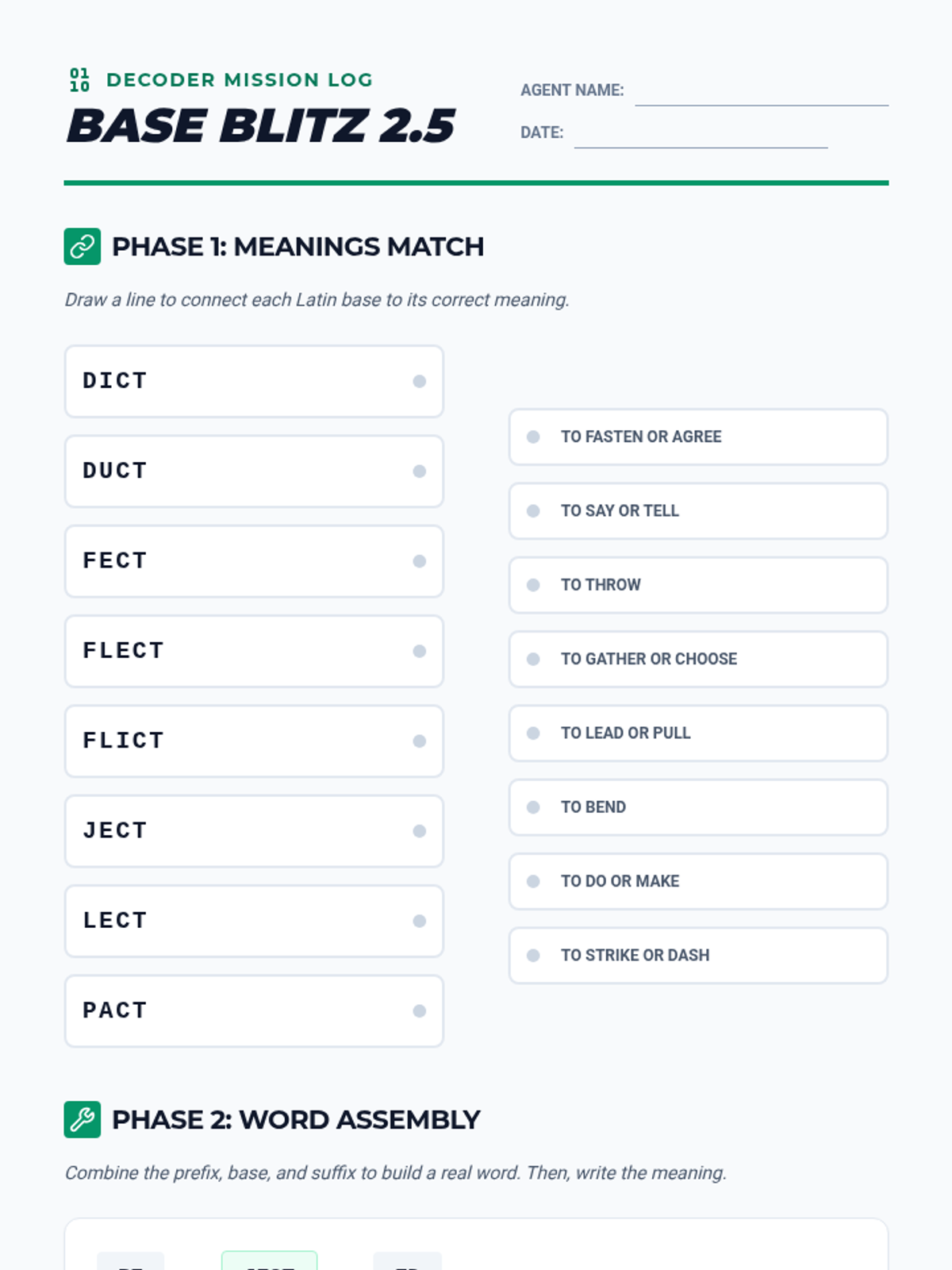
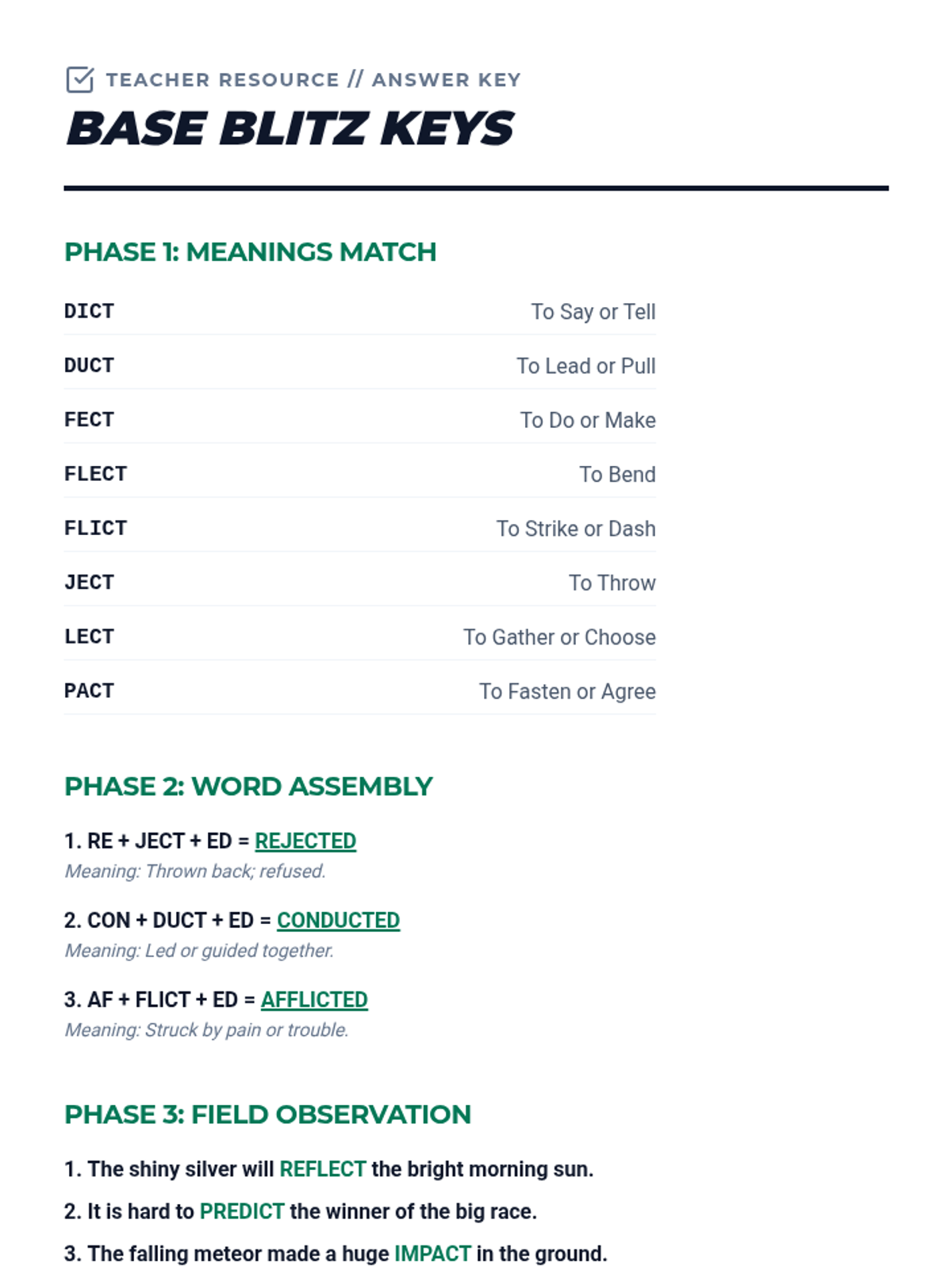
An introduction to Latin bases for word decoding, focusing on common roots found in complex English words. Students will learn the meanings of eight specific bases and practice building and breaking down words.
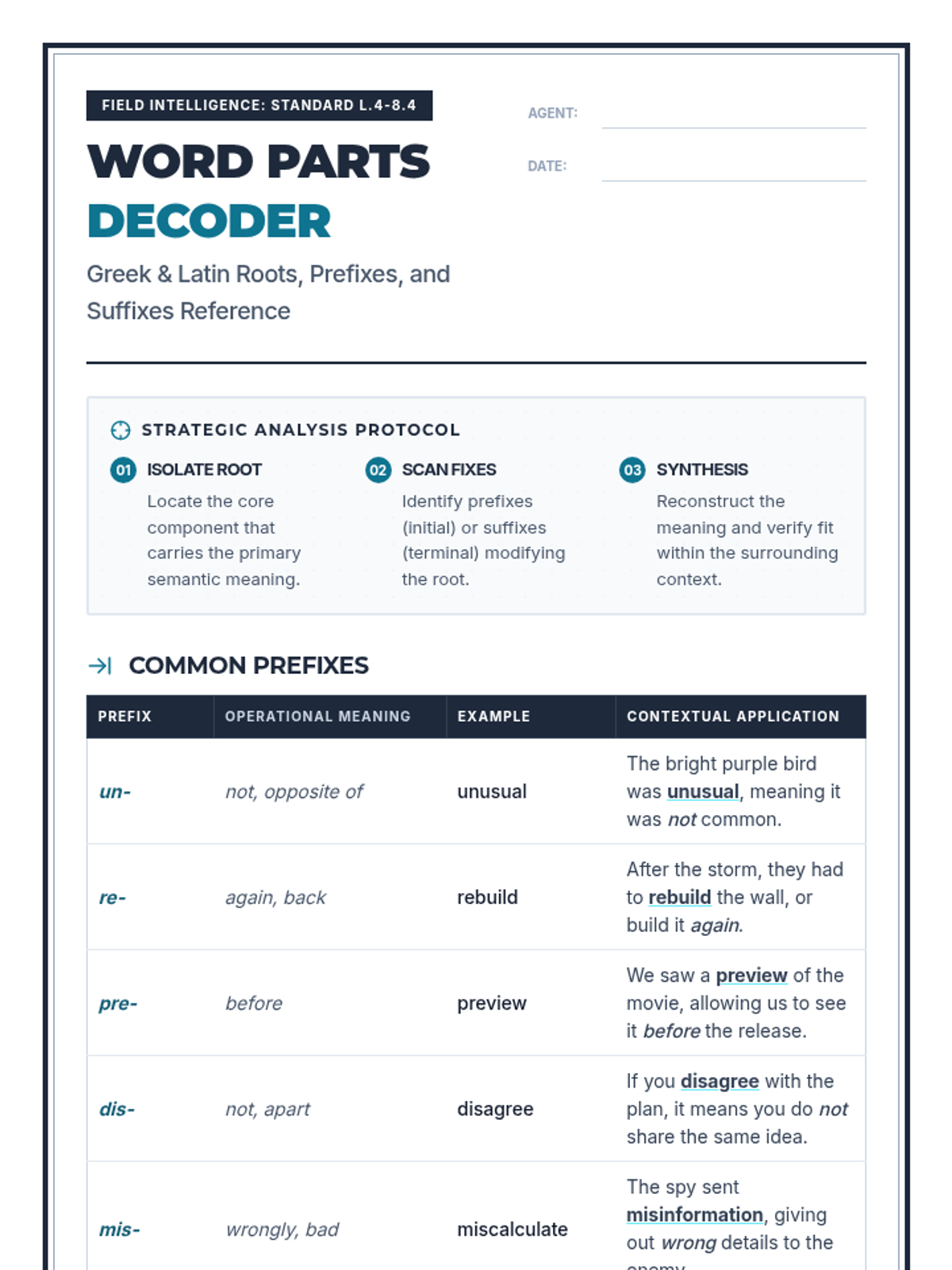
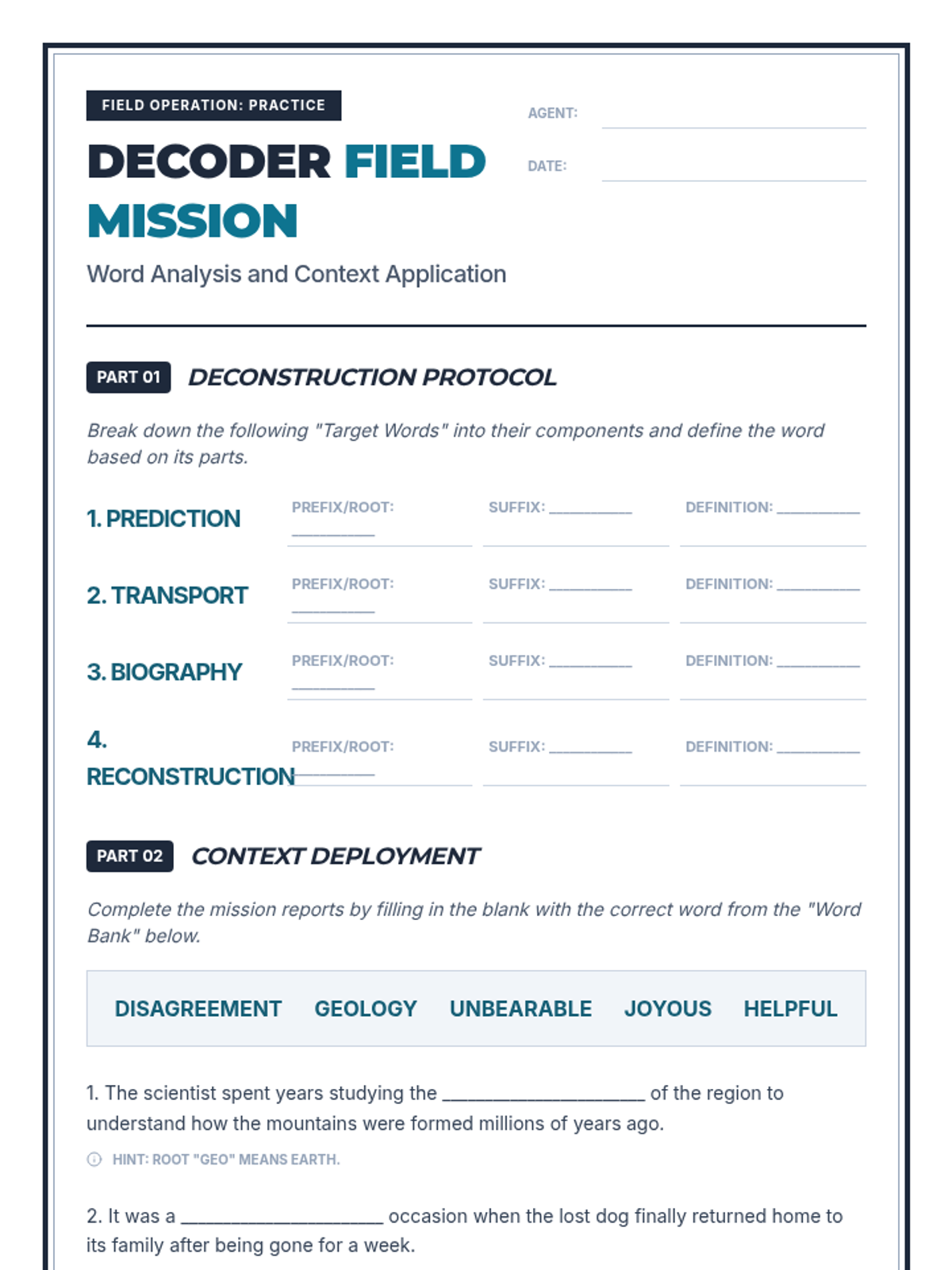
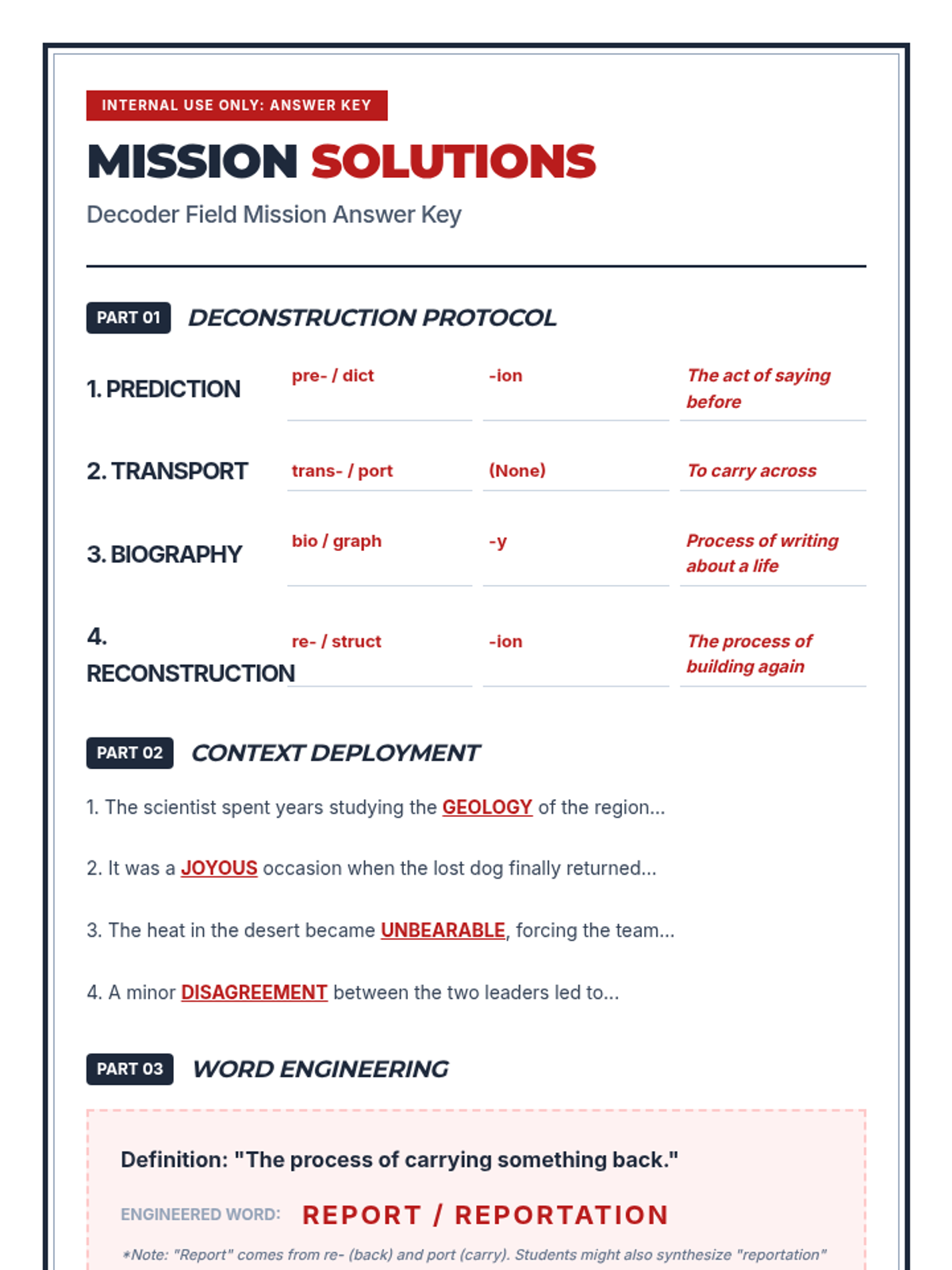
A comprehensive lesson on vocabulary acquisition strategies focusing on Greek and Latin roots, prefixes, and suffixes. Students learn to decode complex words by analyzing their components and using context clues to verify meaning.
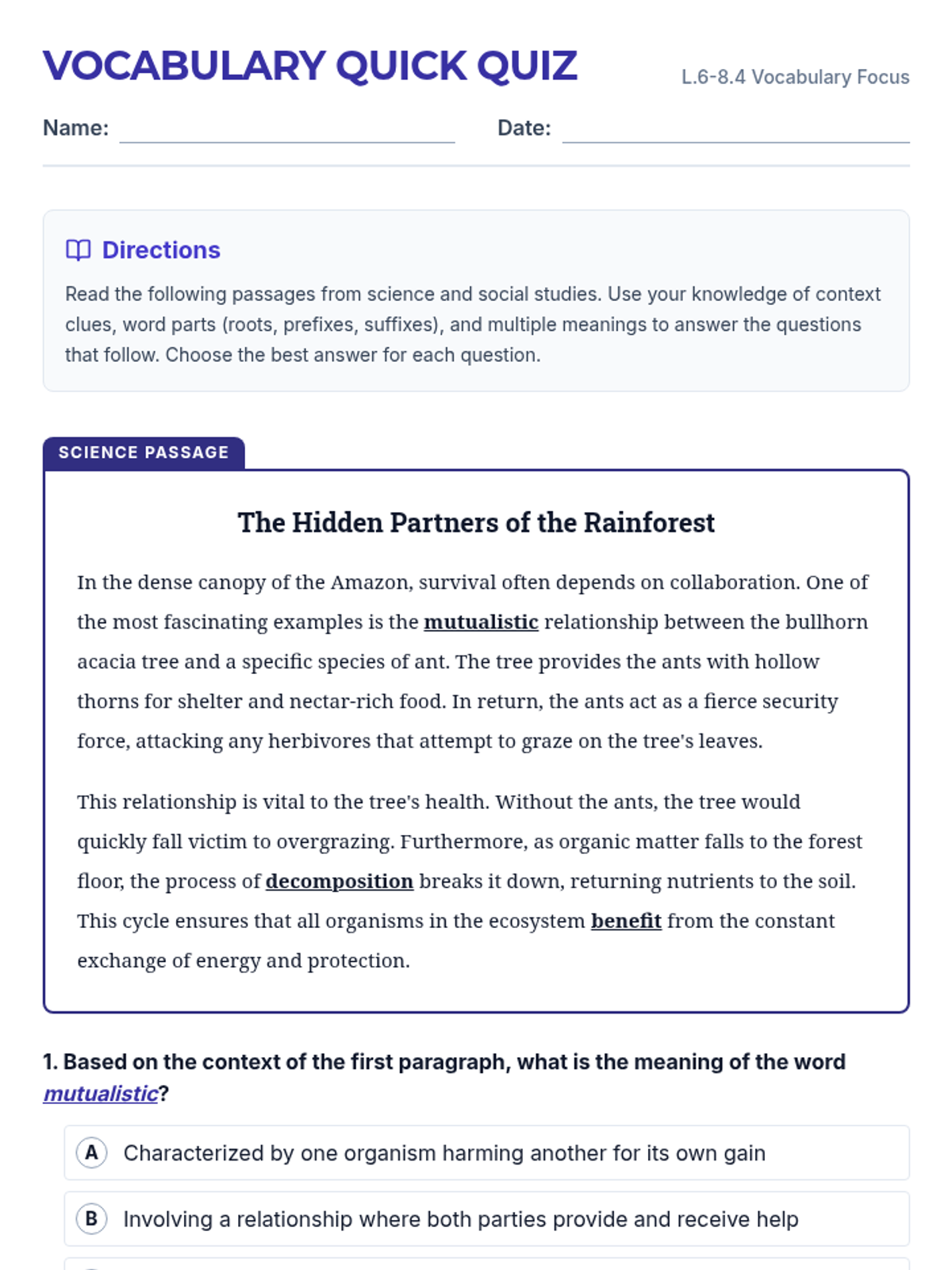
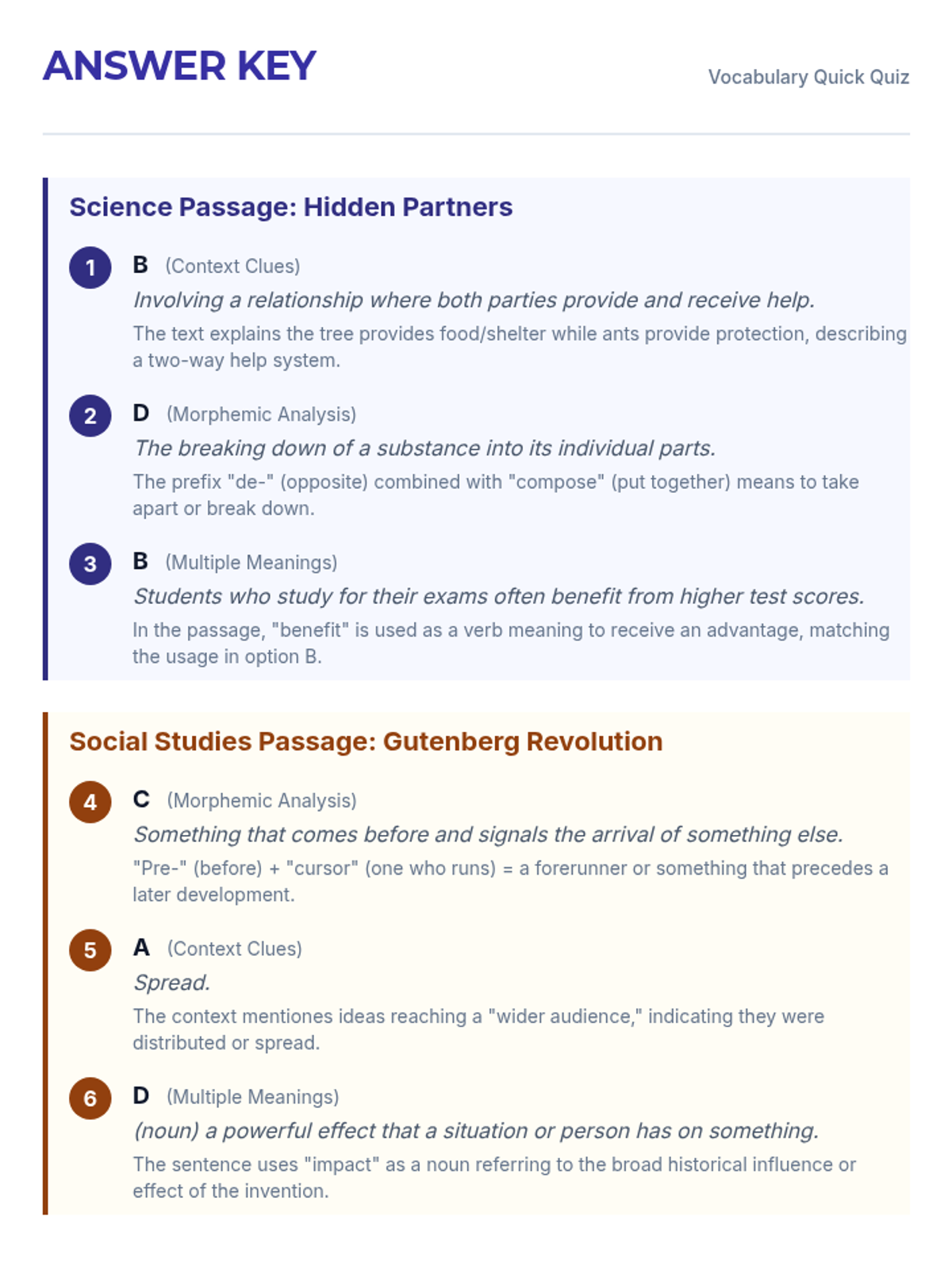
A vocabulary-focused lesson designed to help middle school students master academic vocabulary through cross-curricular passages in Science and Social Studies. This lesson emphasizes context clues, word parts, and multiple meanings in an EOG-style format.
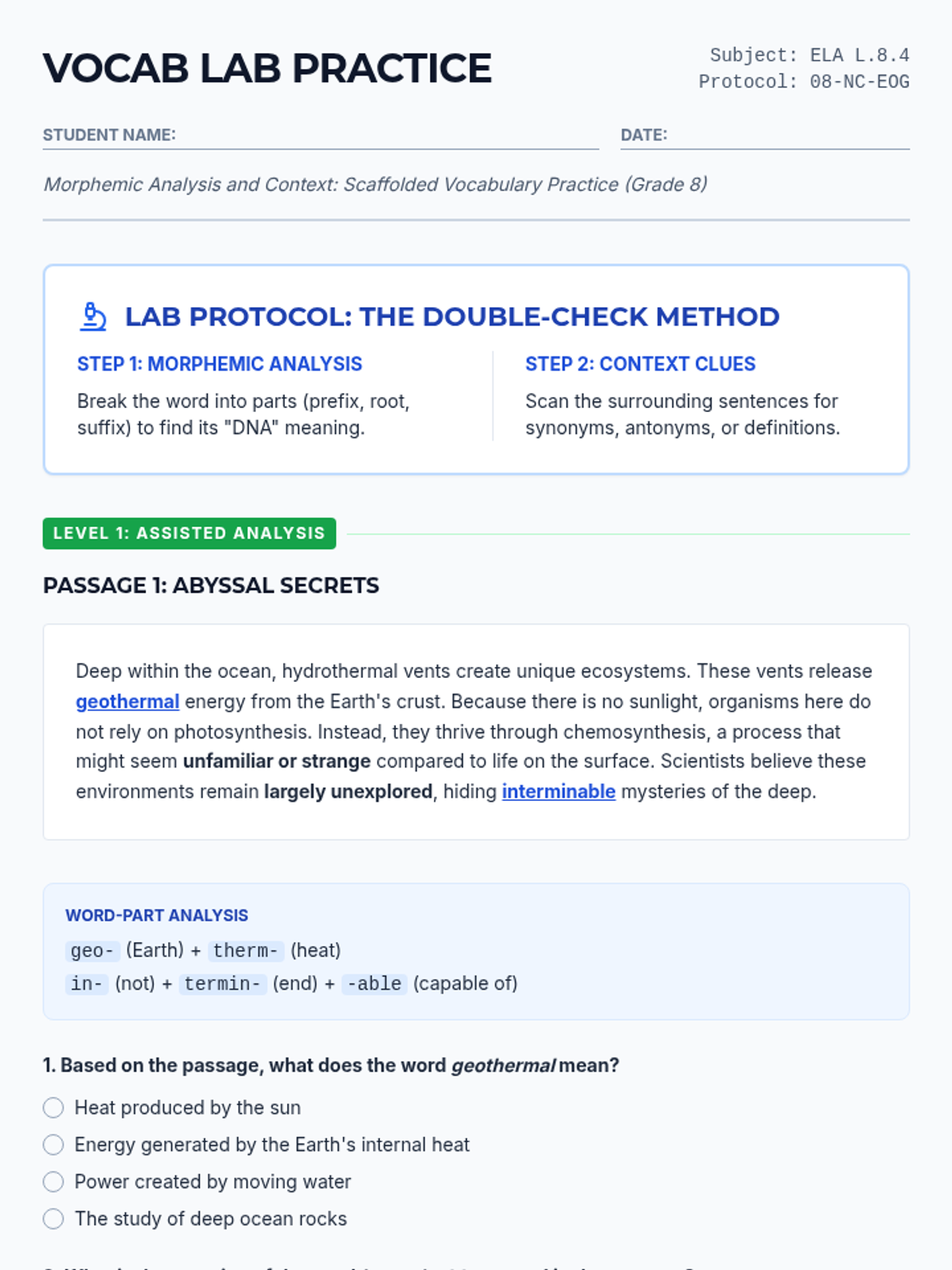
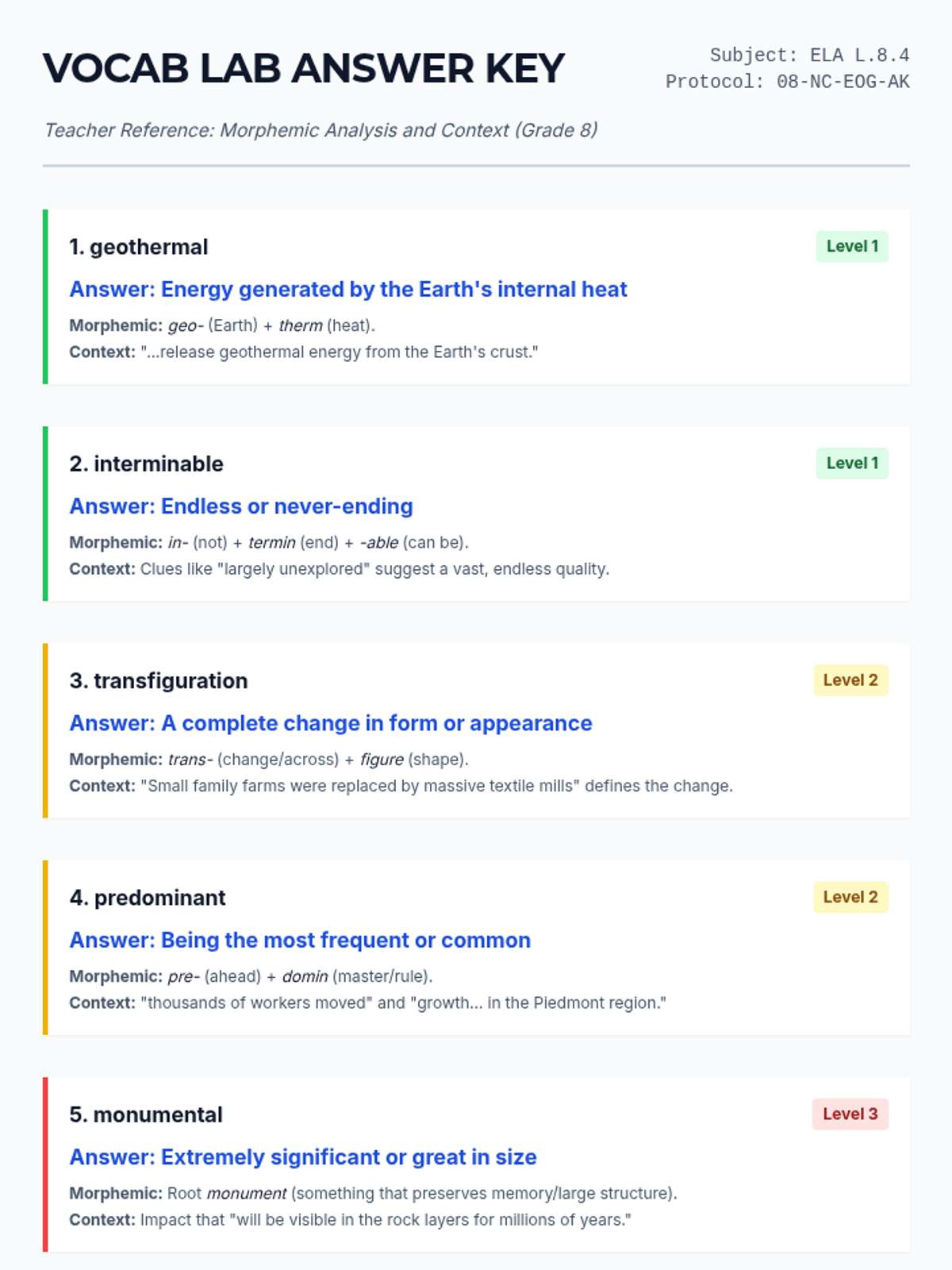
A scaffolded practice set for Grade 8 students to master EOG-style vocabulary questions using morphemic analysis and context clues. Includes science and social studies passages with fading support.
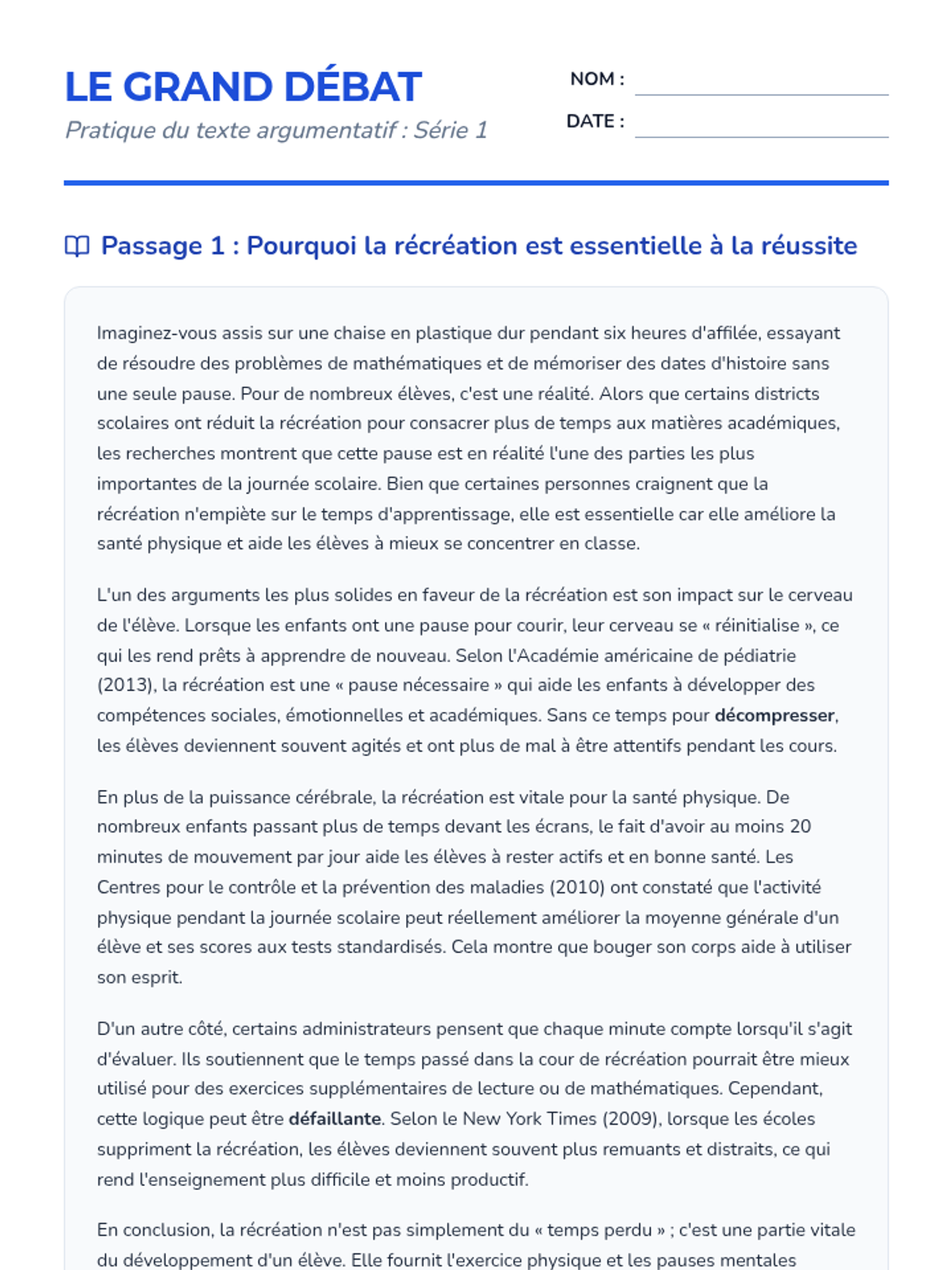
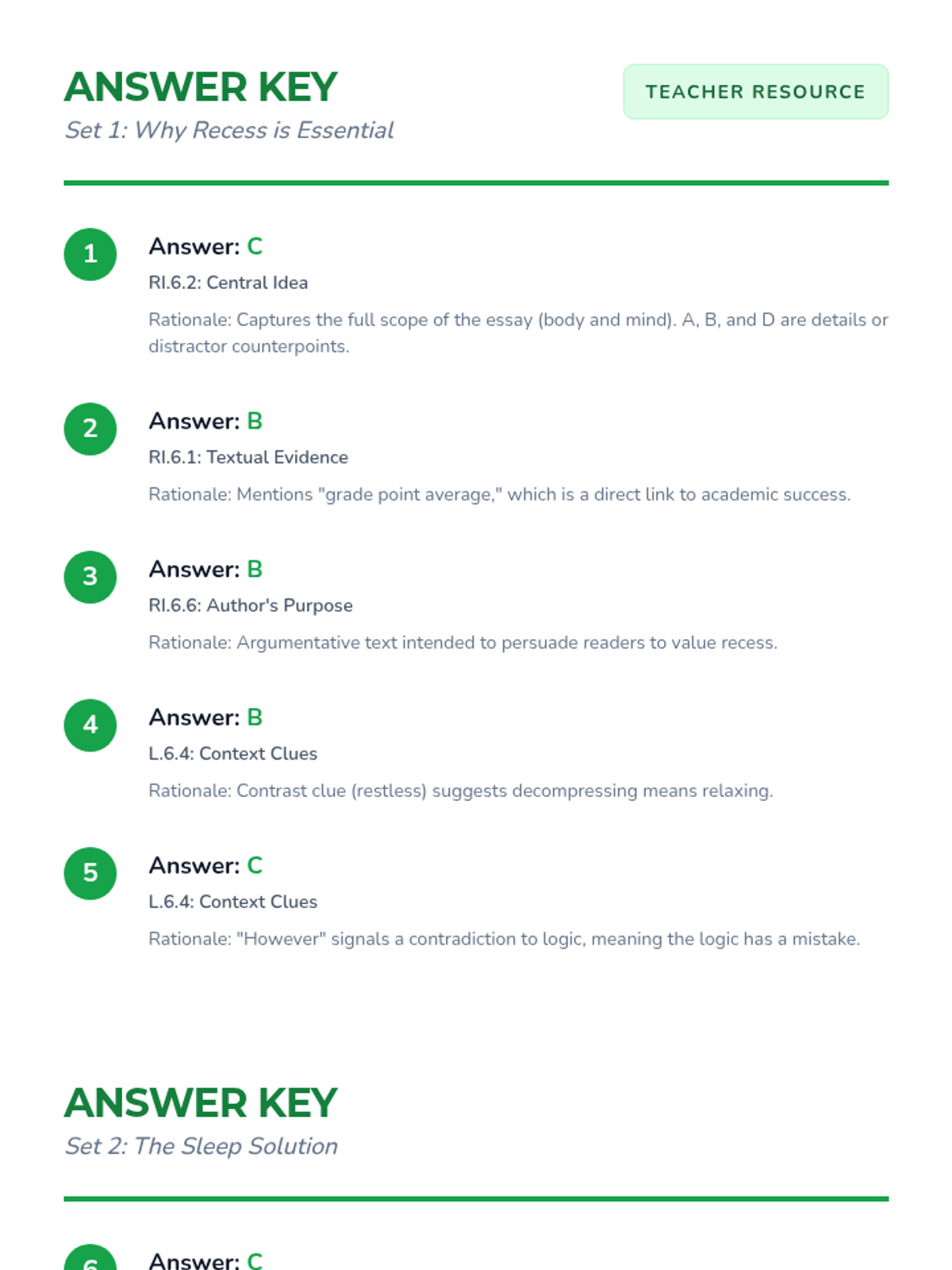
A lesson focused on reviewing comprehension and vocabulary questions for the argumentative text 'The Great Debate: Why Recess is Essential for Success', helping students identify central ideas and analyze textual evidence.
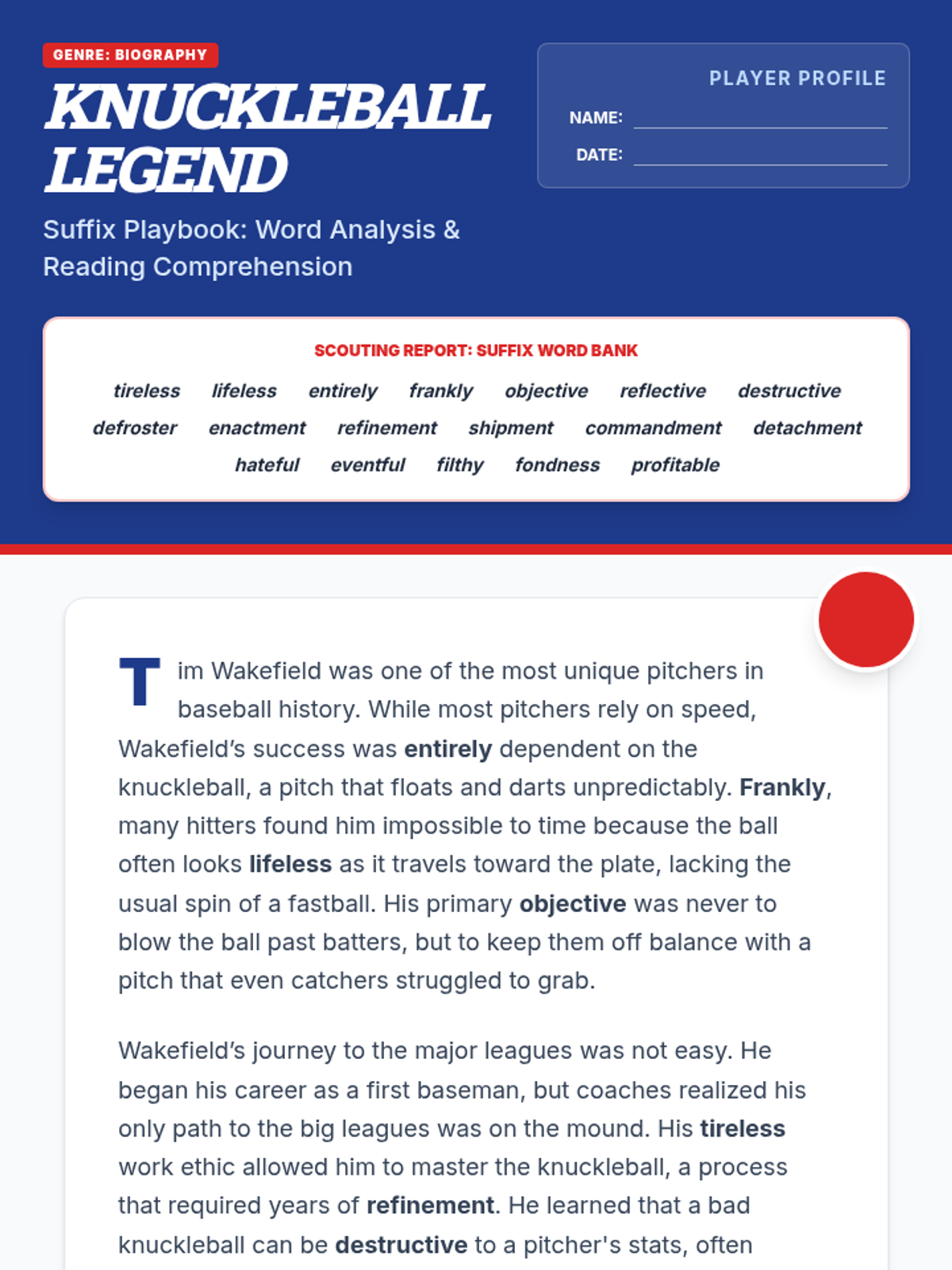
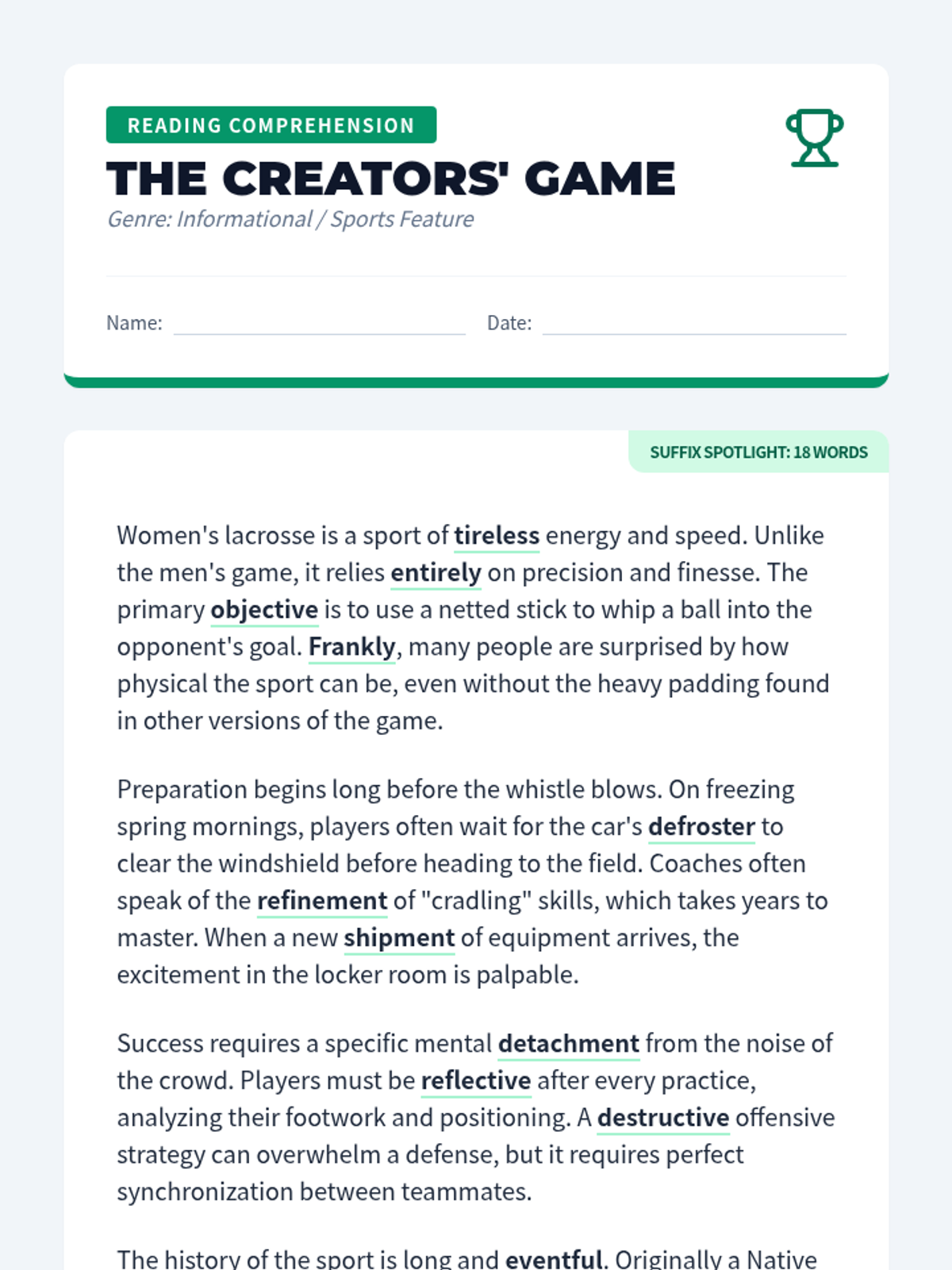
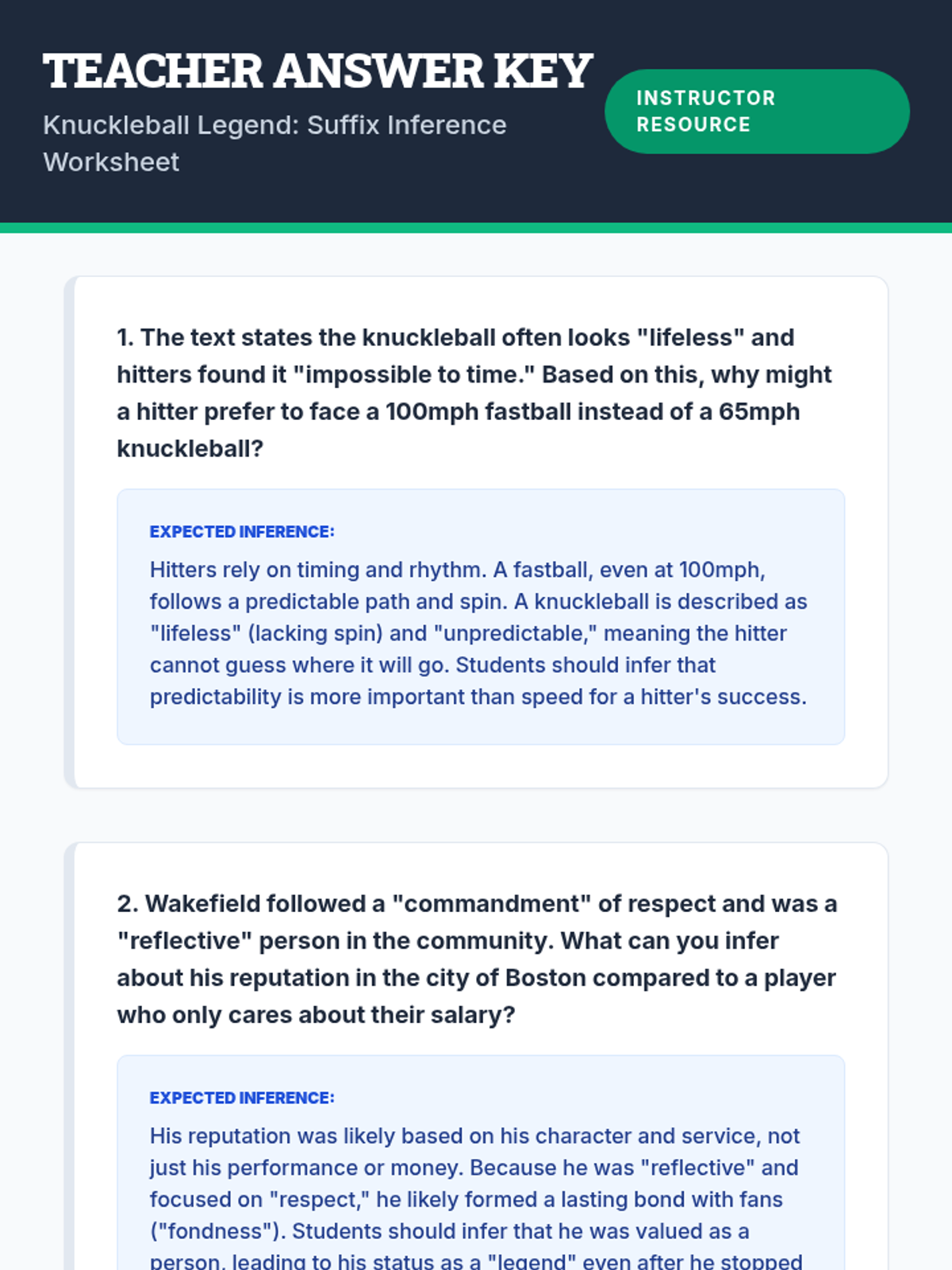
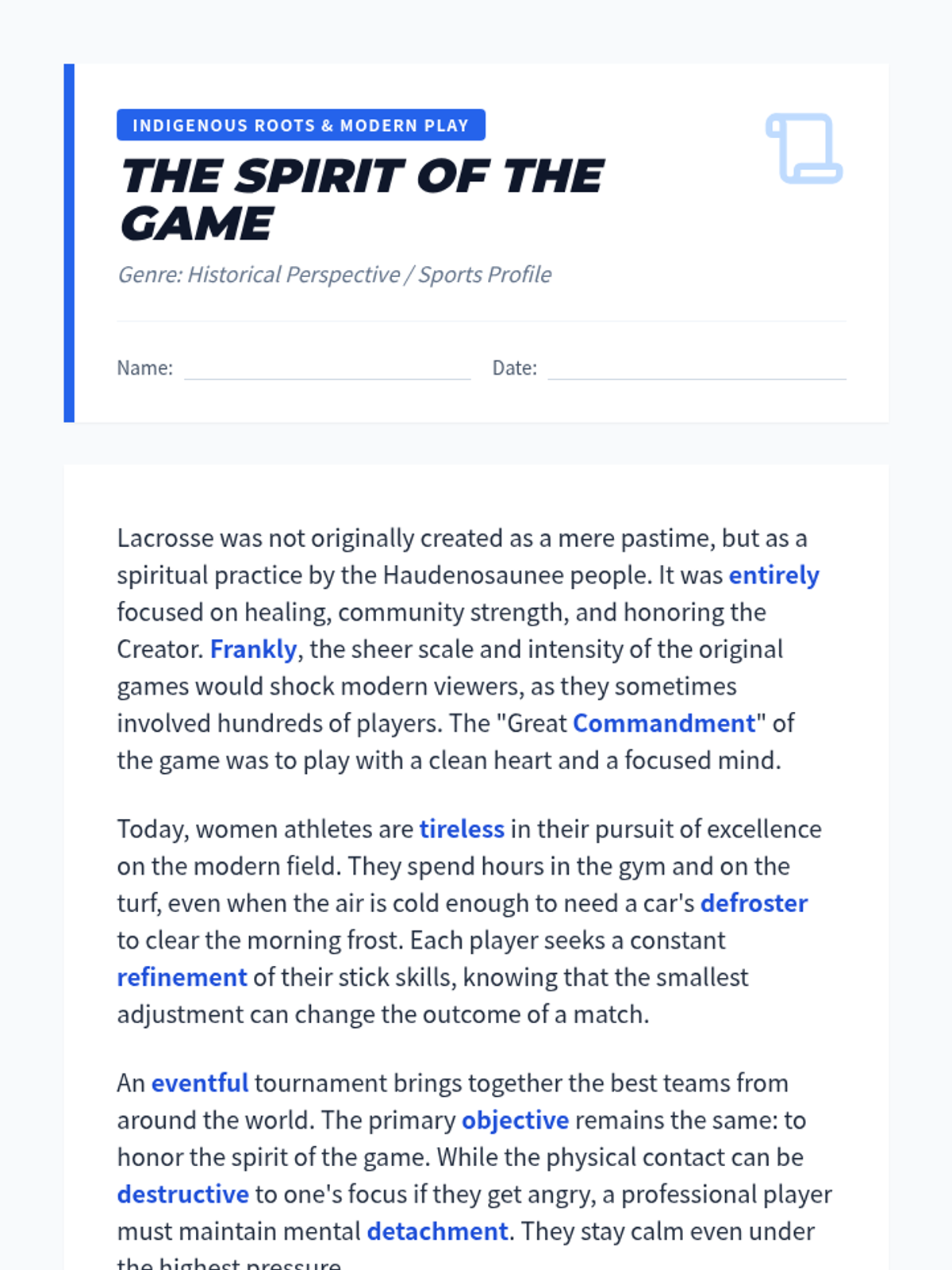
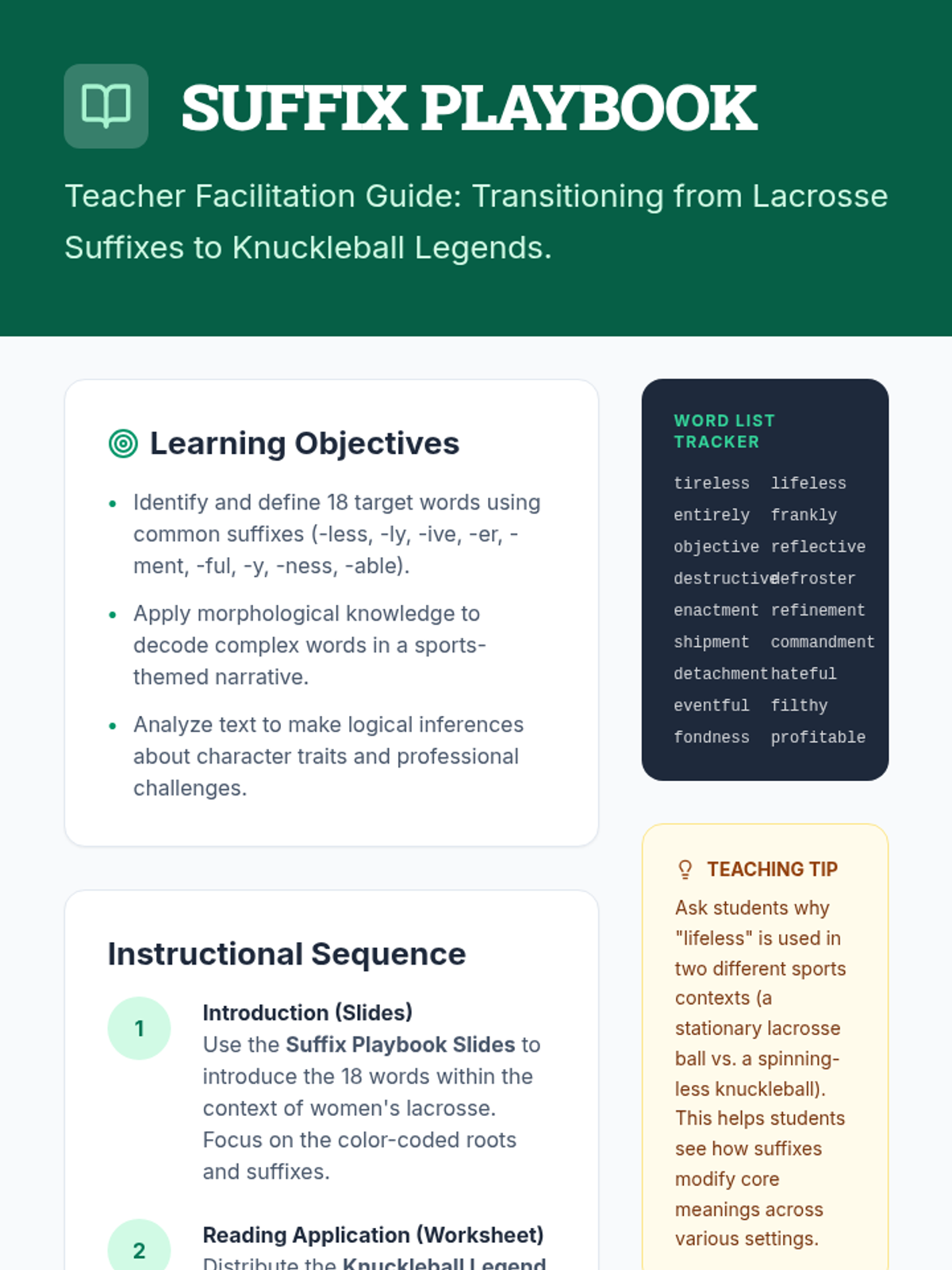
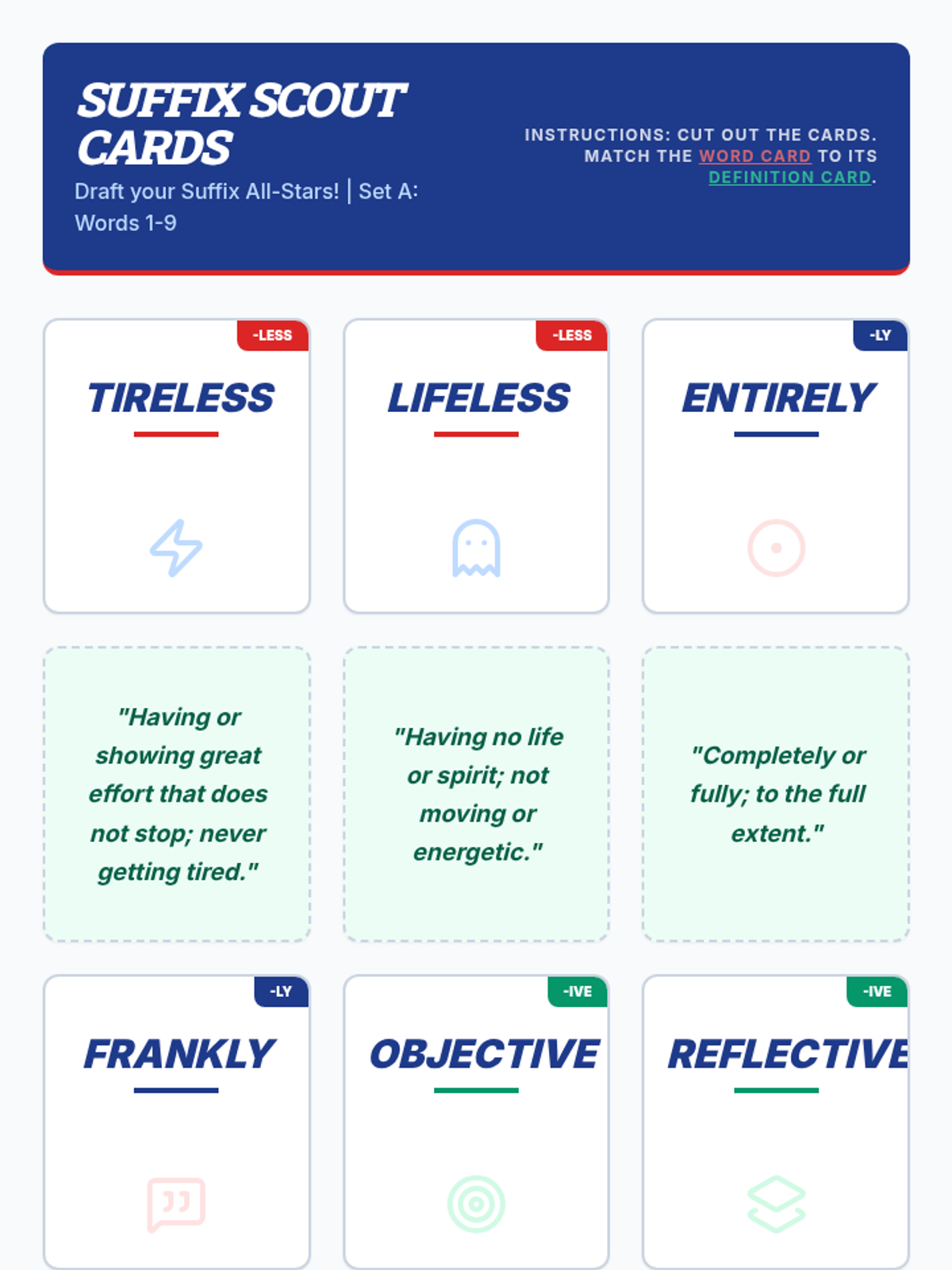
A lesson introducing 18 specific suffixes through a sports-themed lens, featuring a slide deck, a biography (genre focus) of MLB pitcher Tim Wakefield, and inference-based comprehension activities.
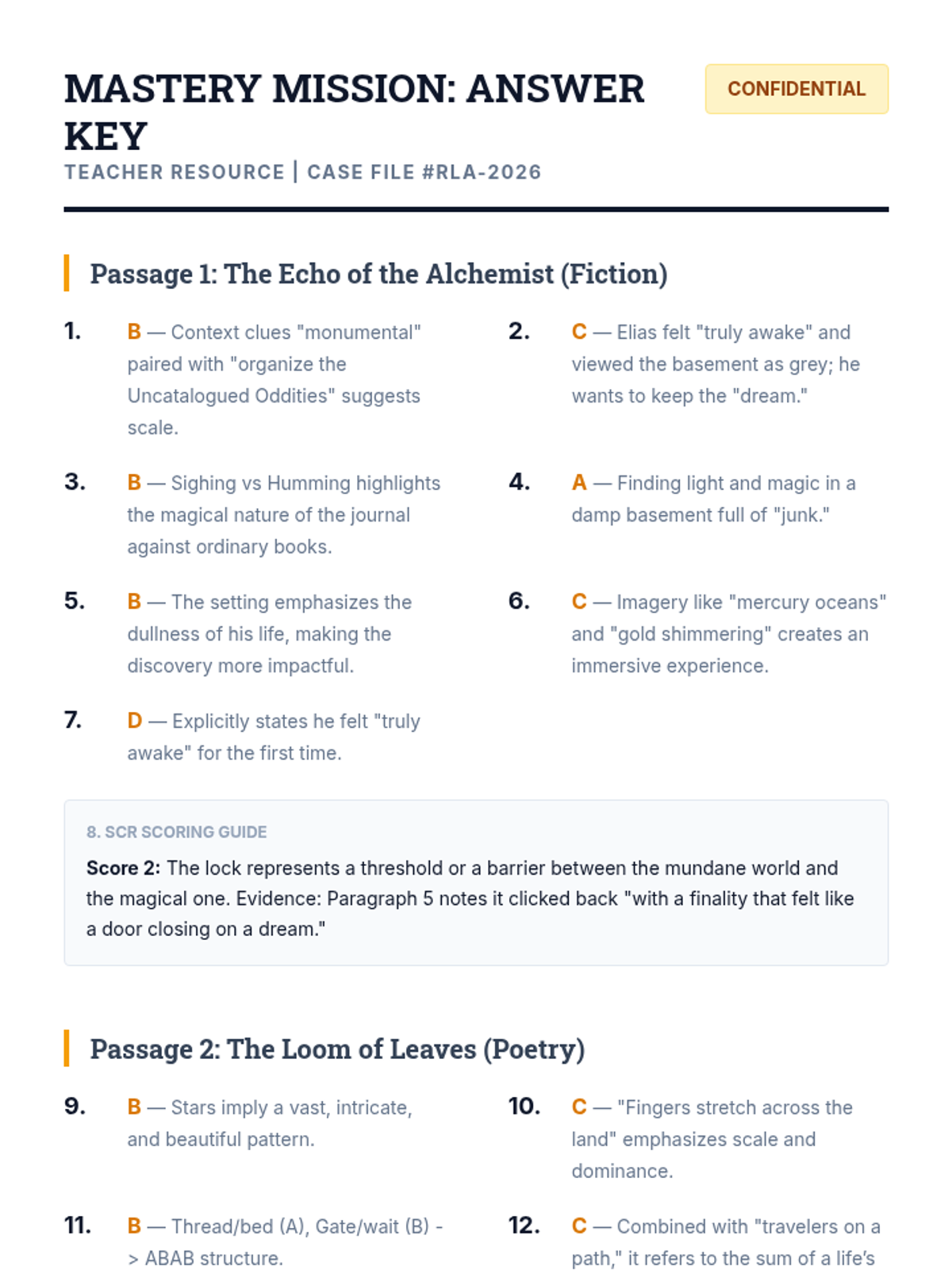
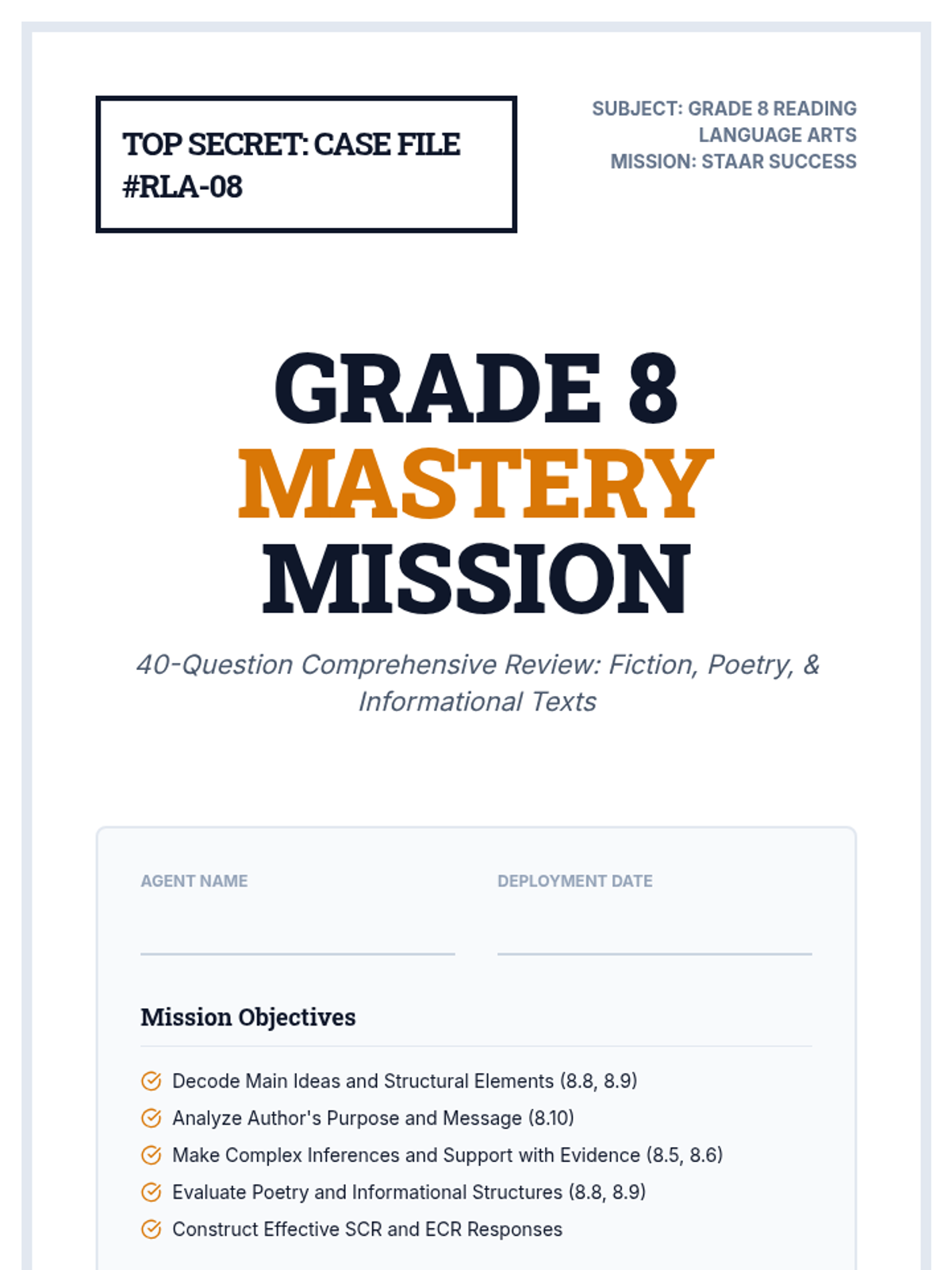
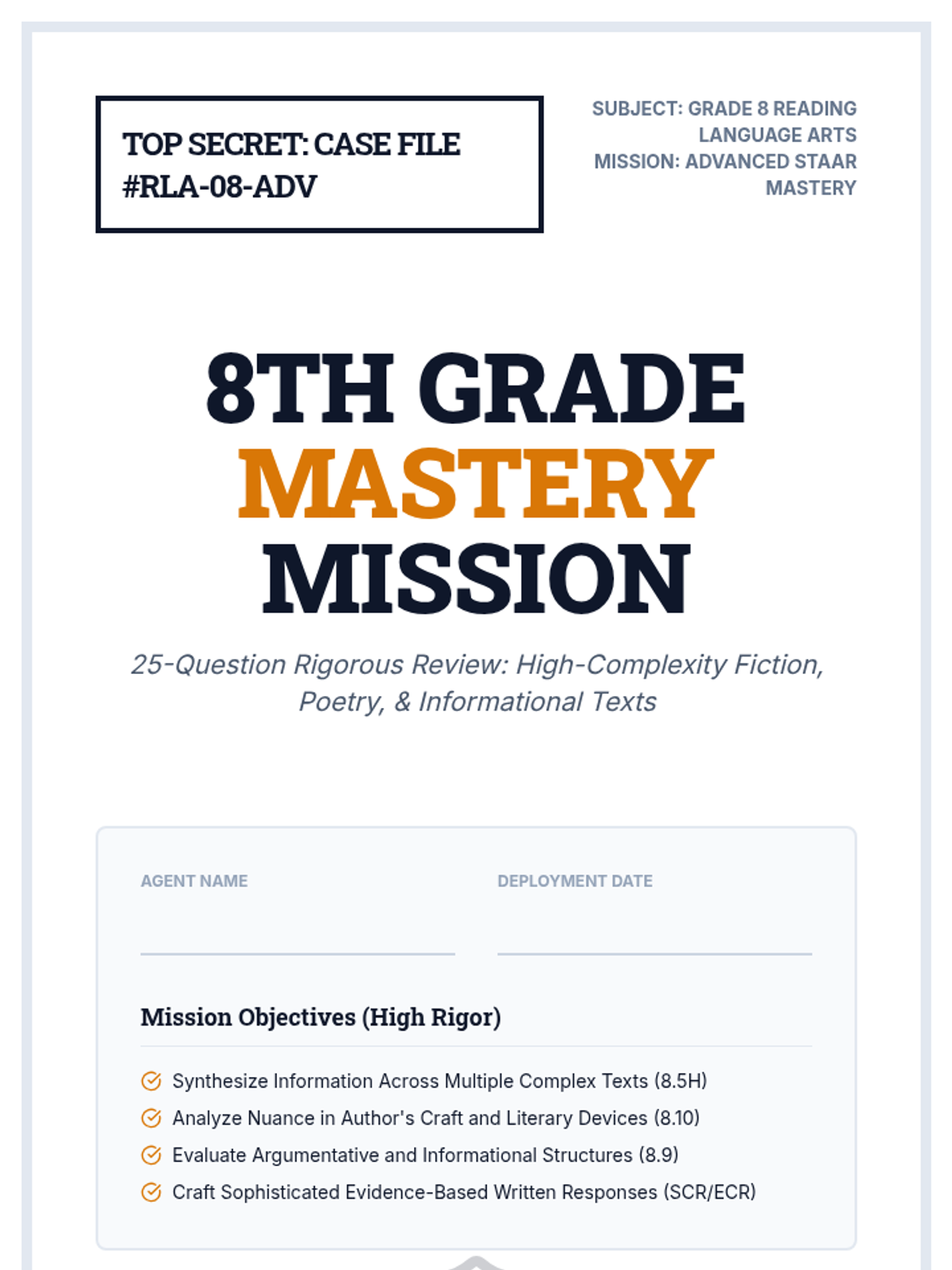
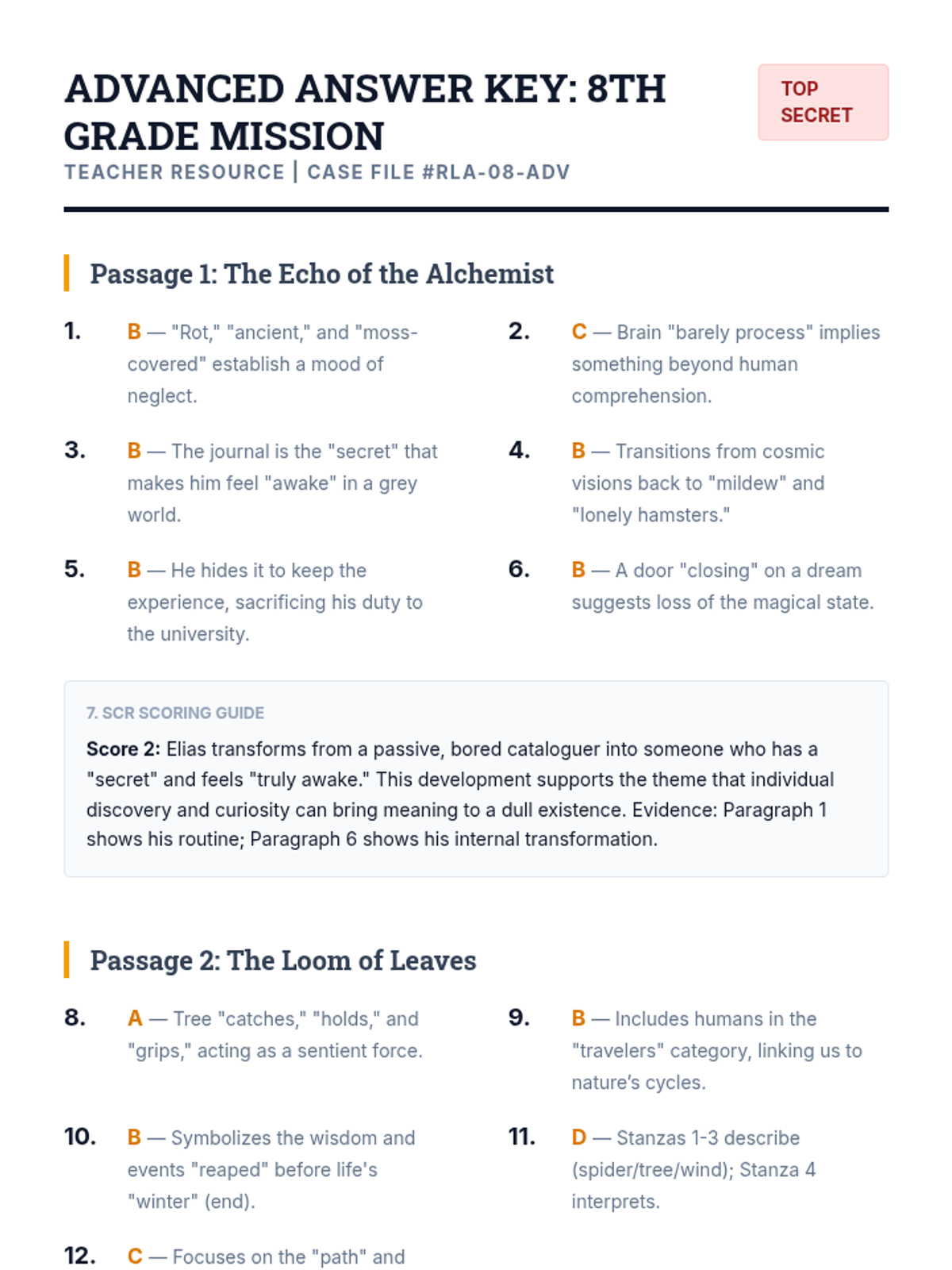
A comprehensive STAAR Reading Language Arts review covering main idea, inferencing, literary devices, poetry, and informational texts through multiple-choice, SCR, and ECR practice.
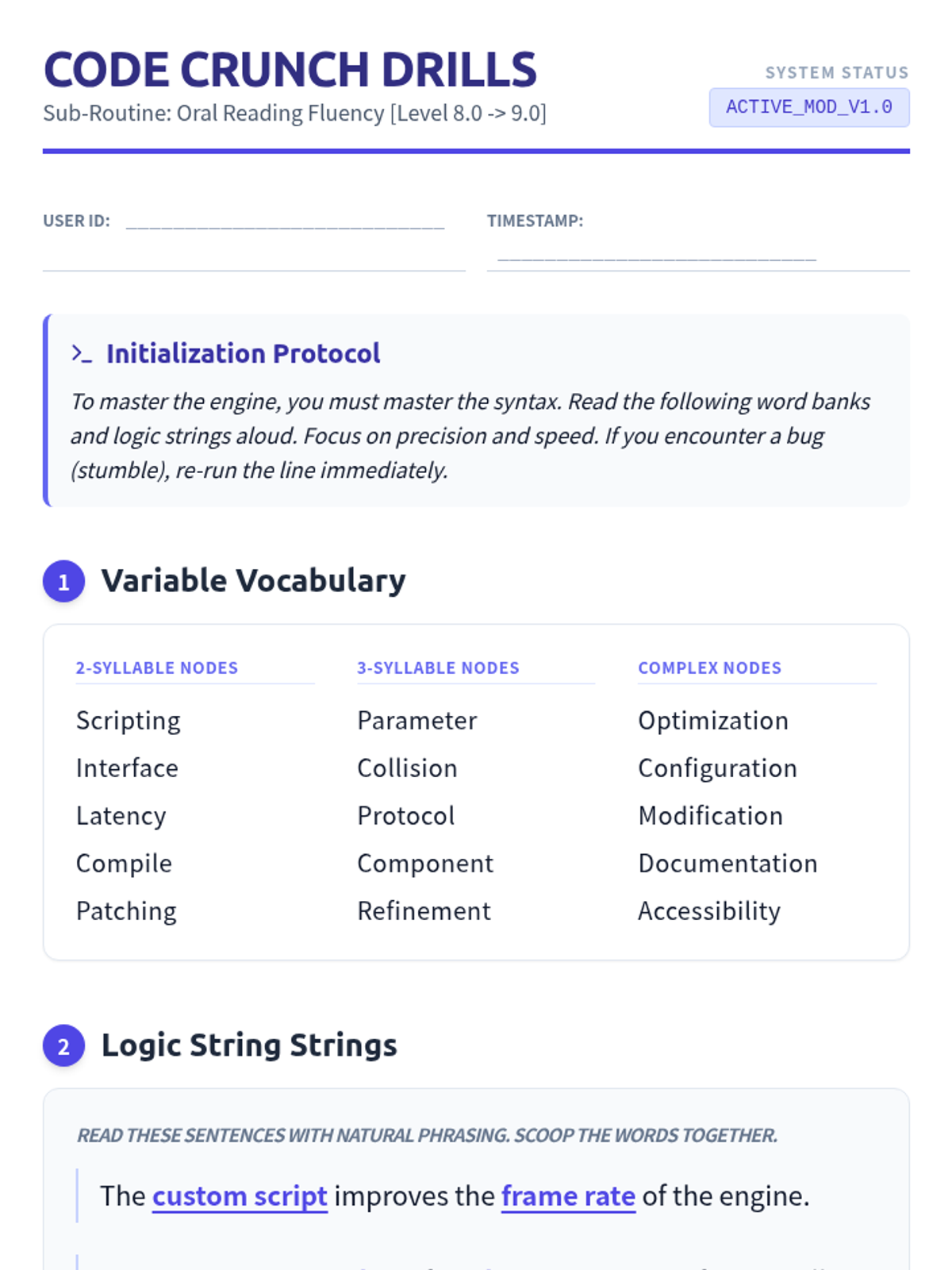
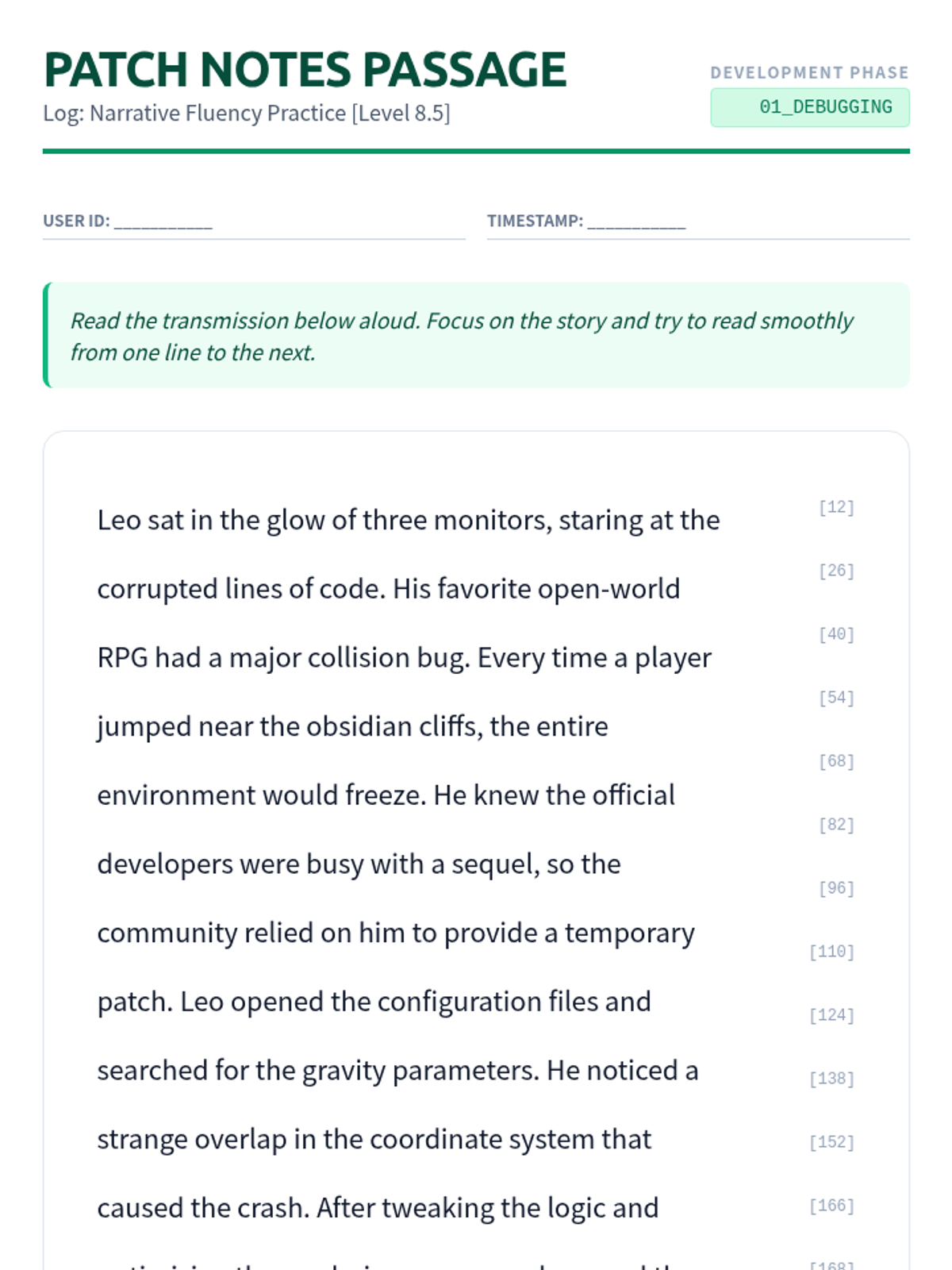
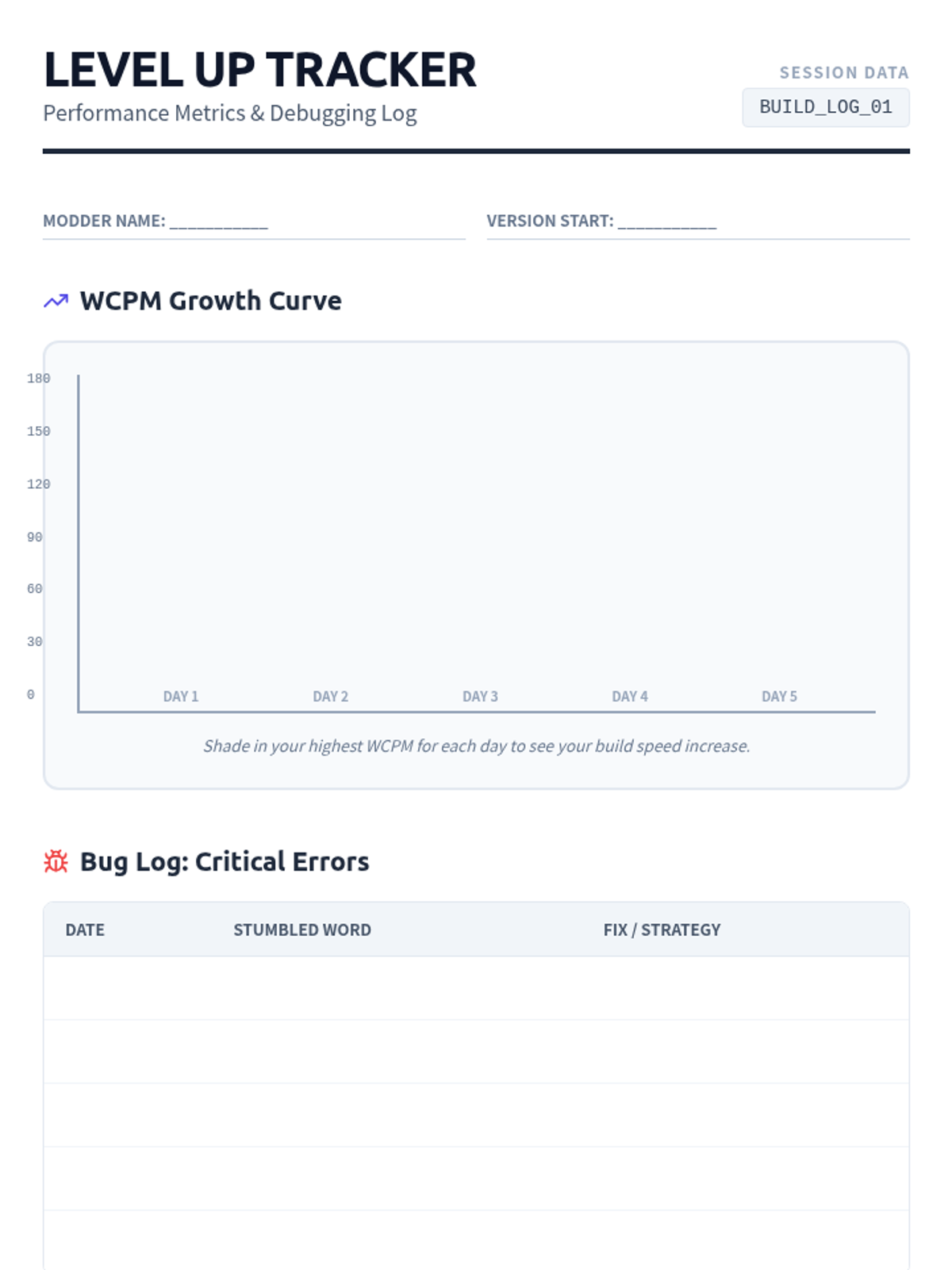
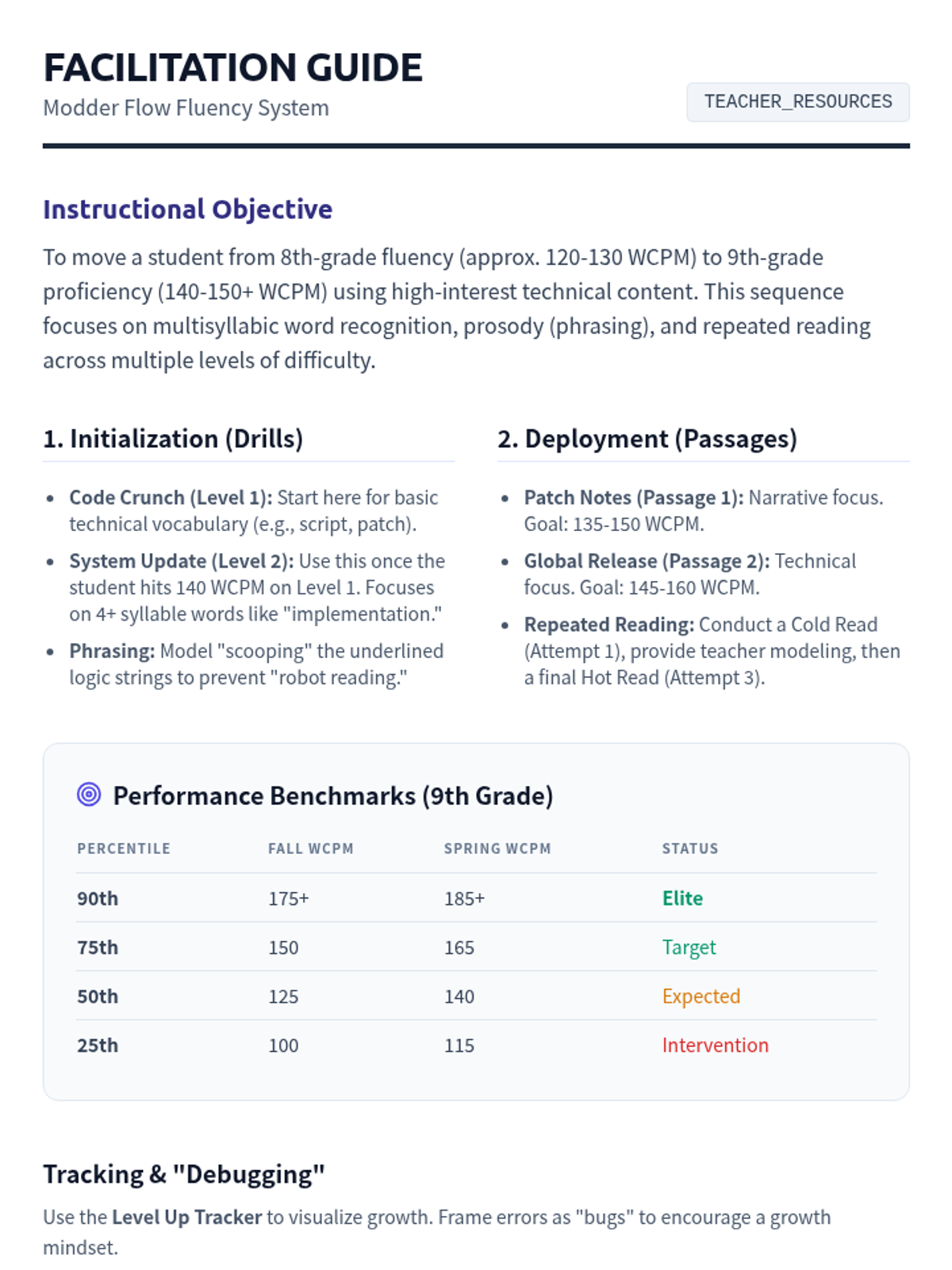
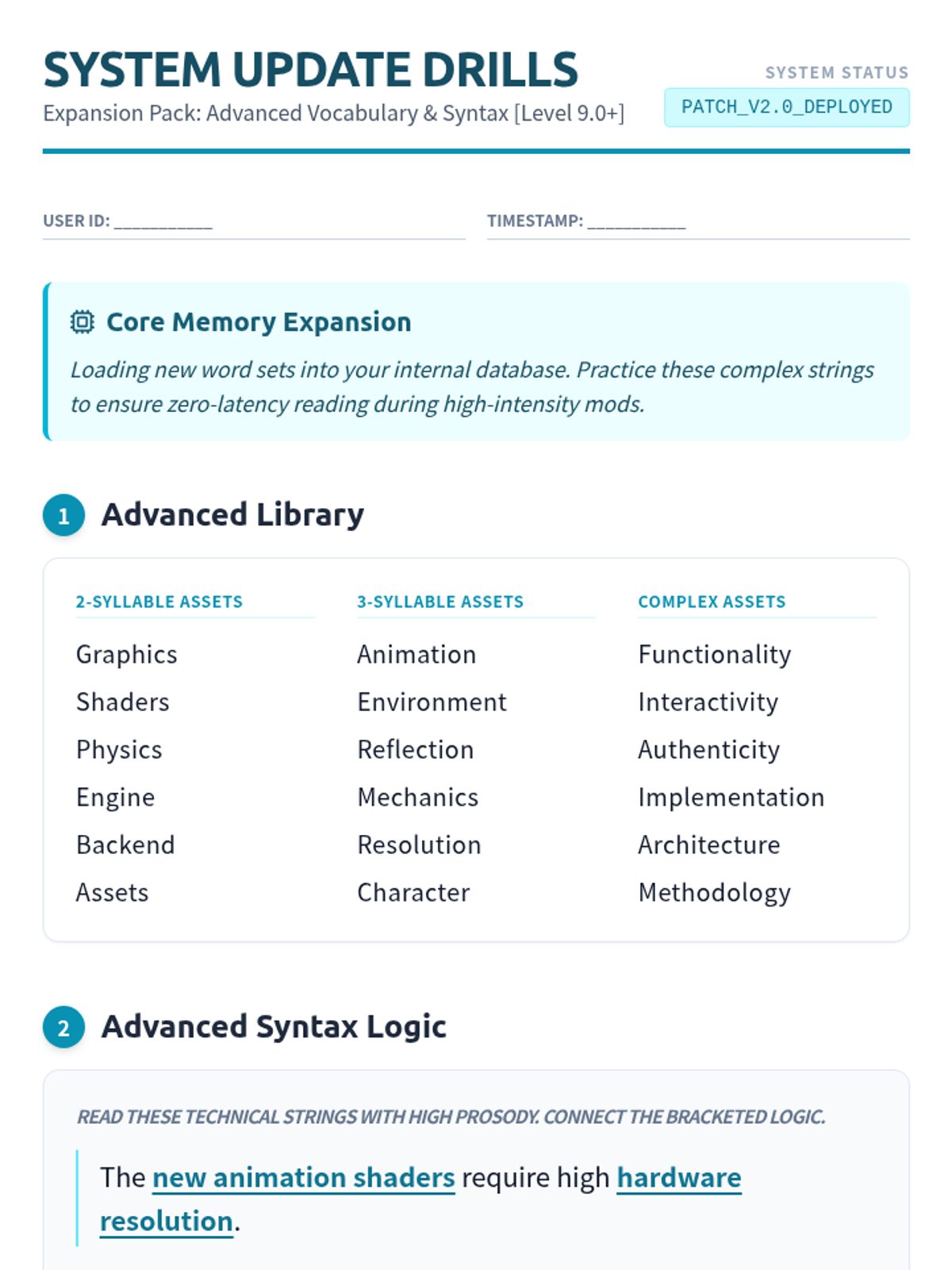
A set of oral reading fluency drills themed around video game modding and software development to engage a 9th grade student reading at an 8th grade level. Includes multisyllabic word lists, phrased sentences, and progress tracking tools.
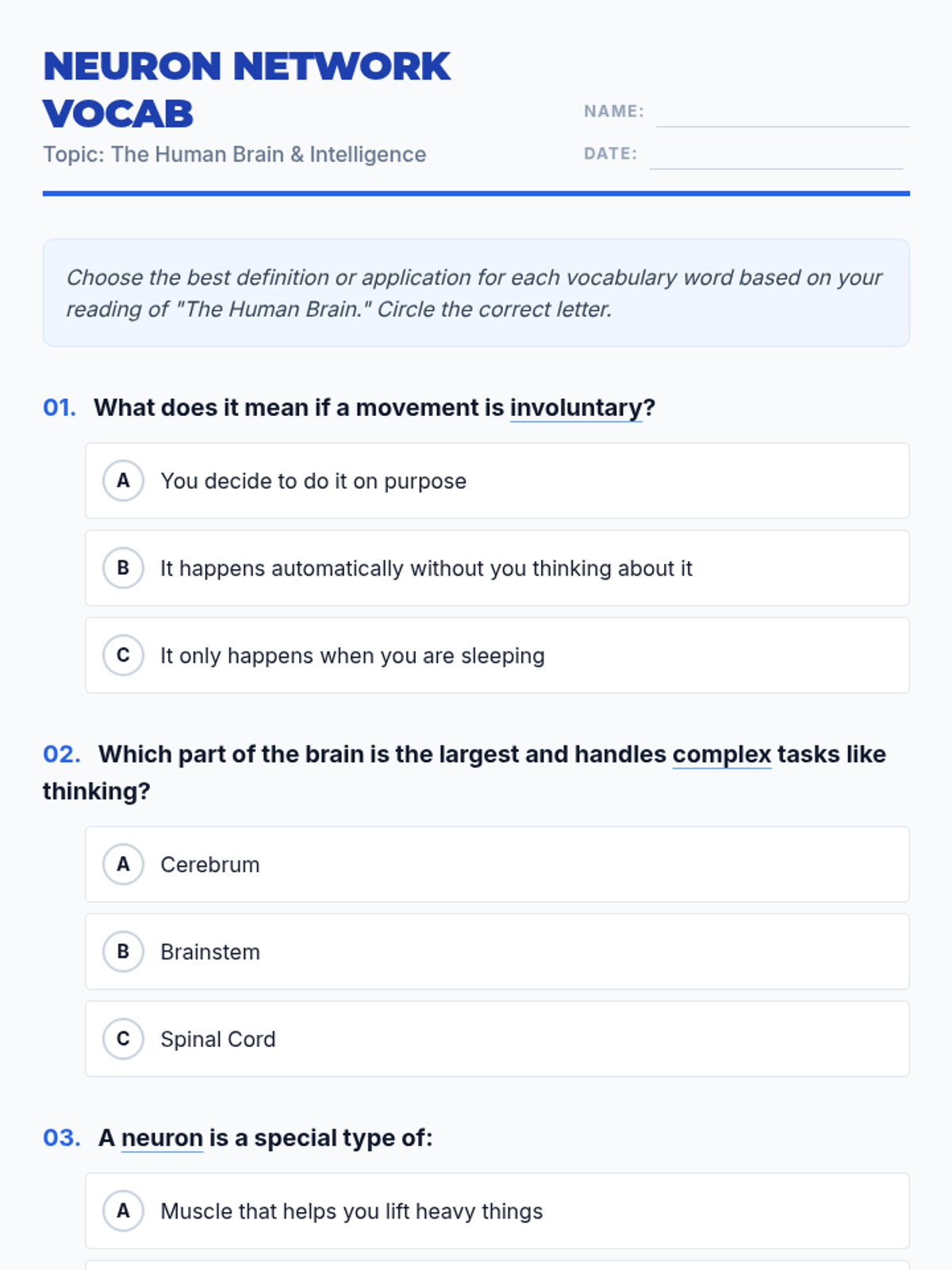
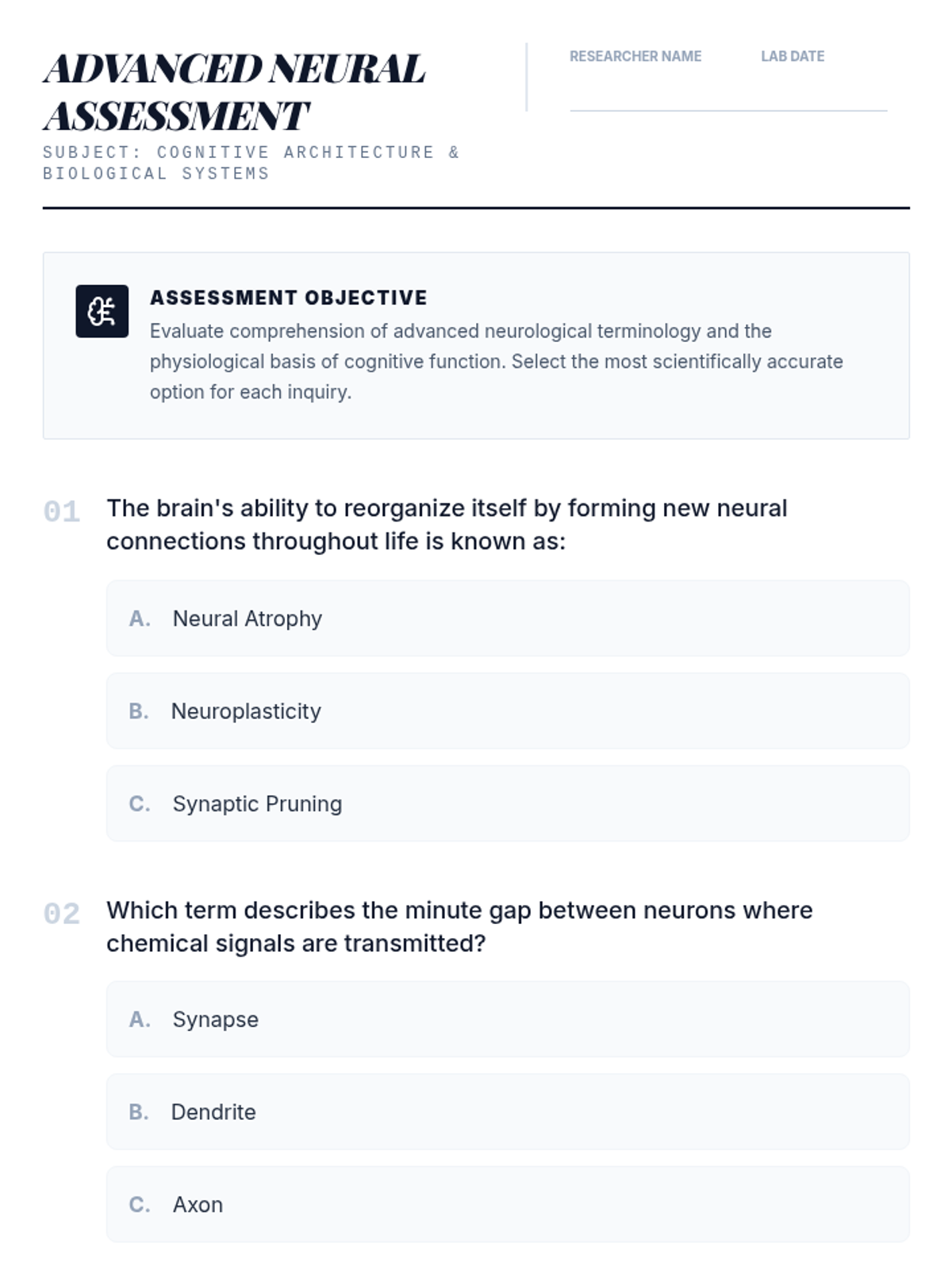
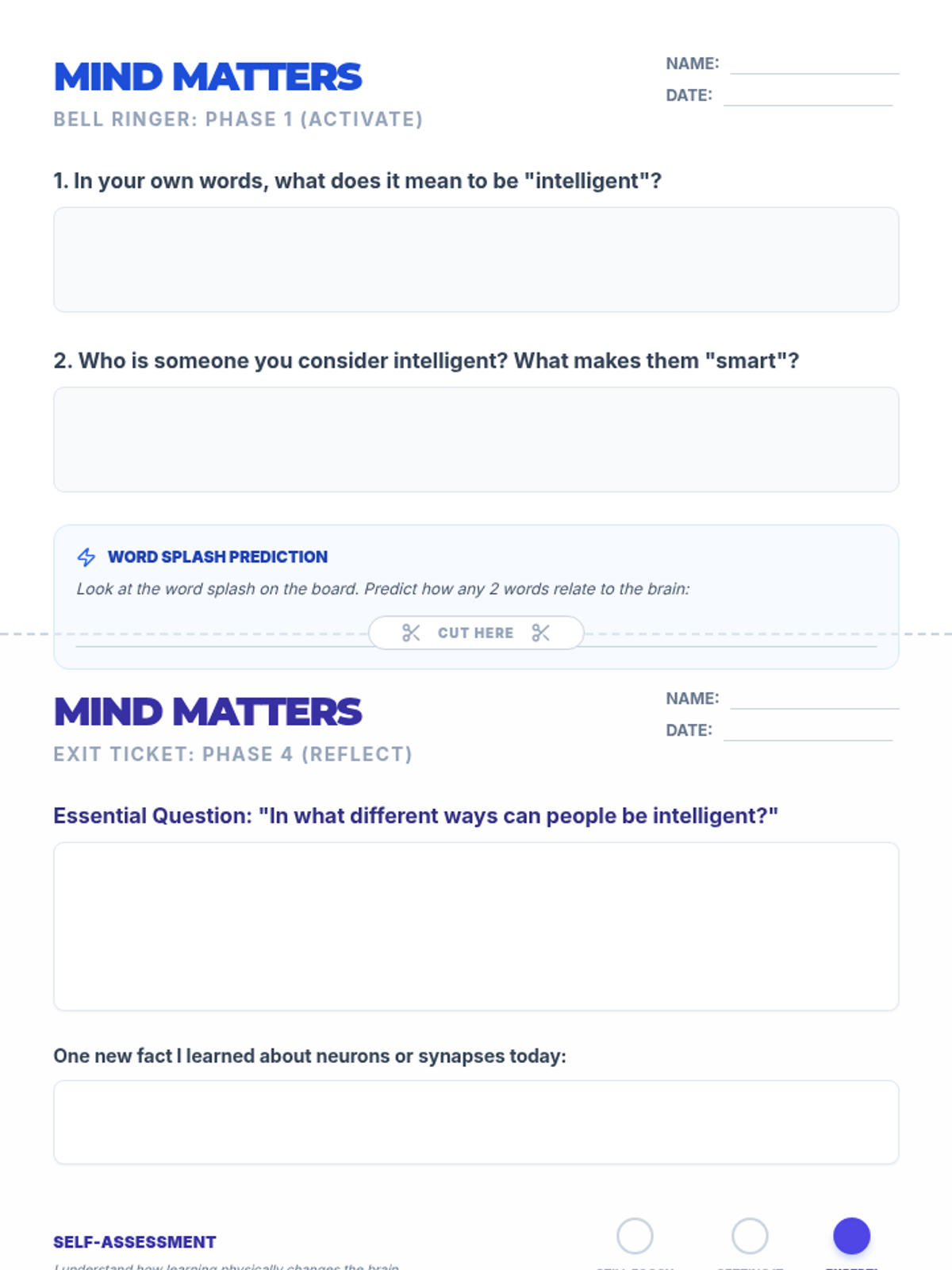
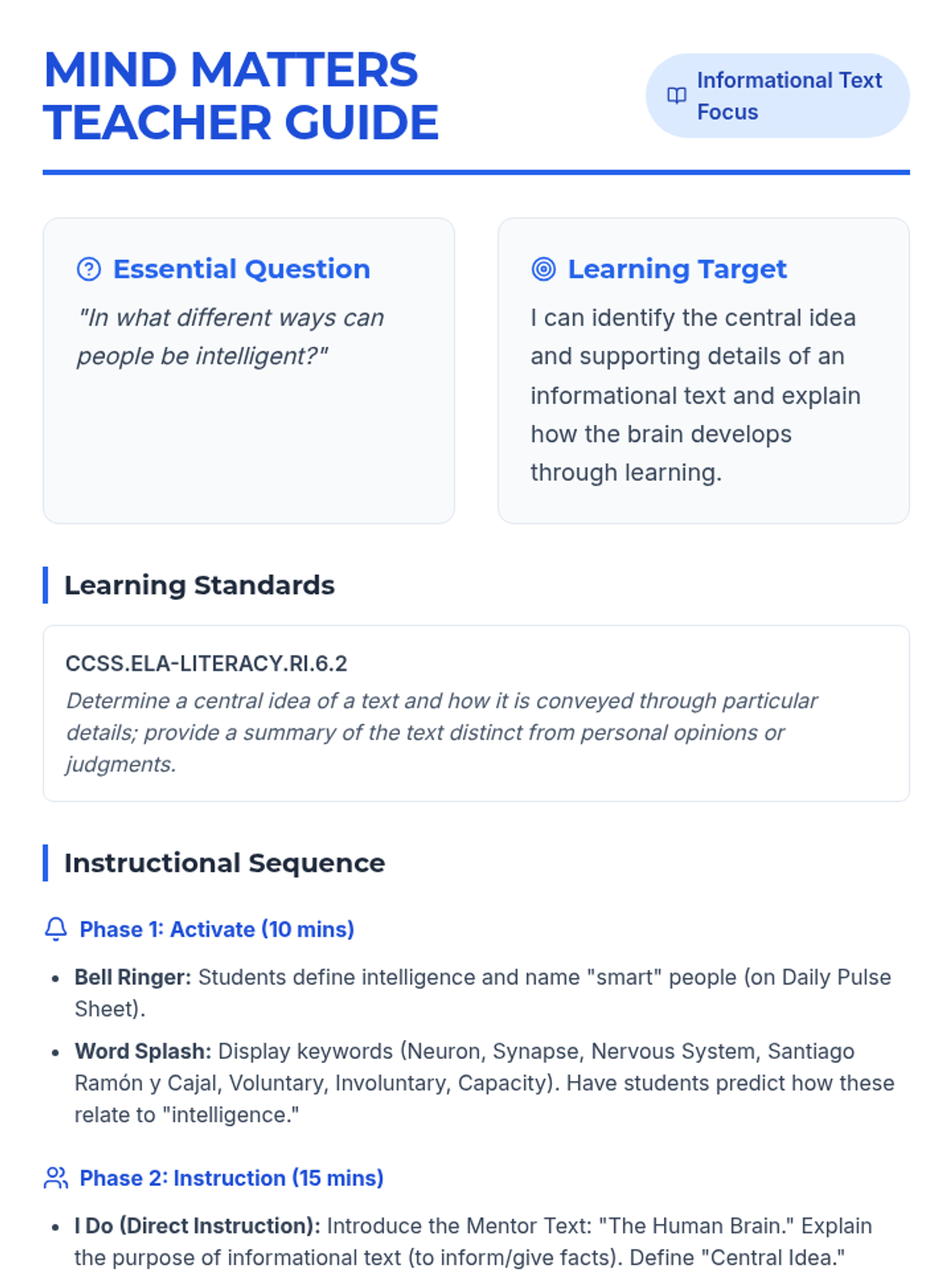
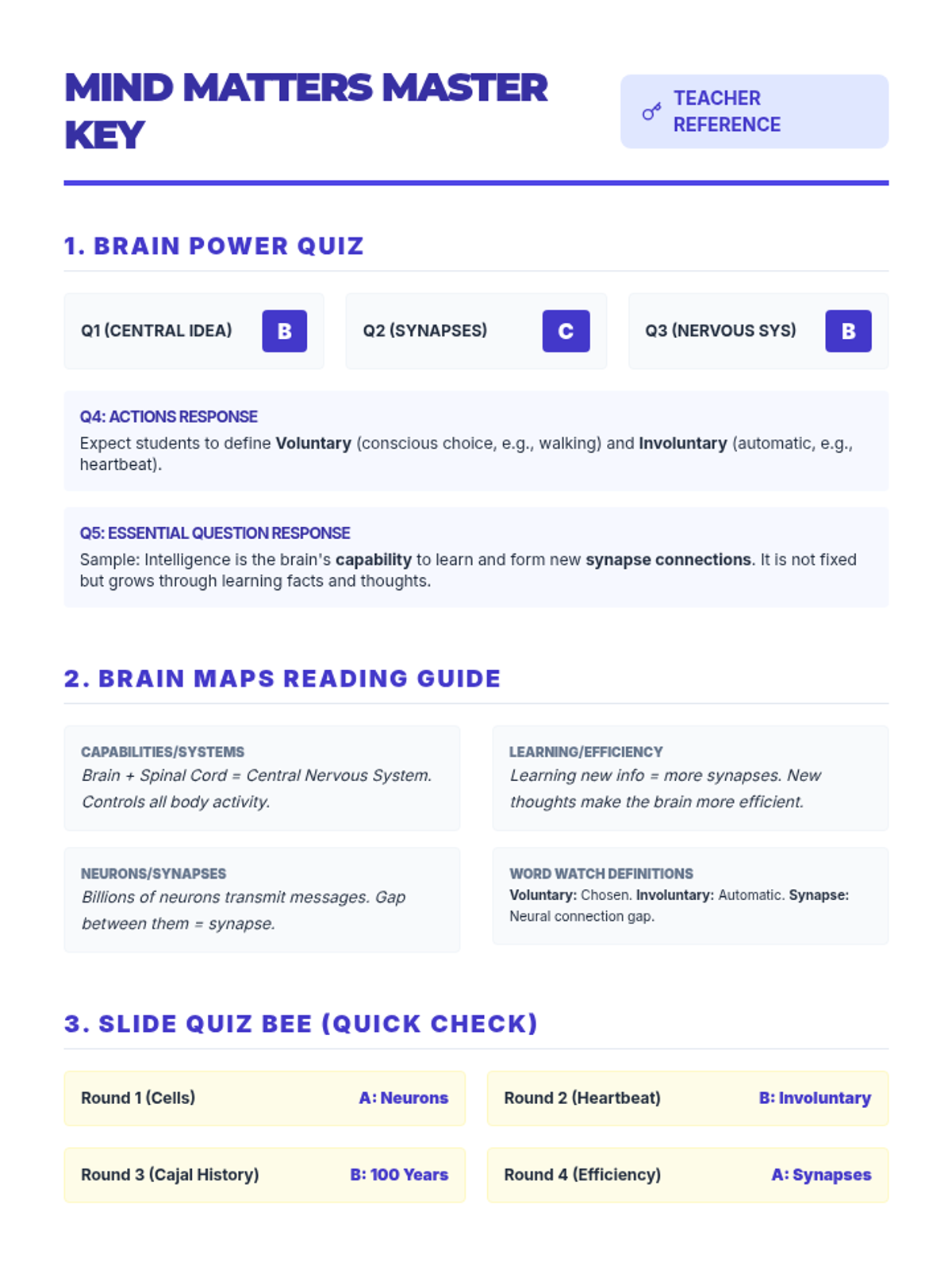
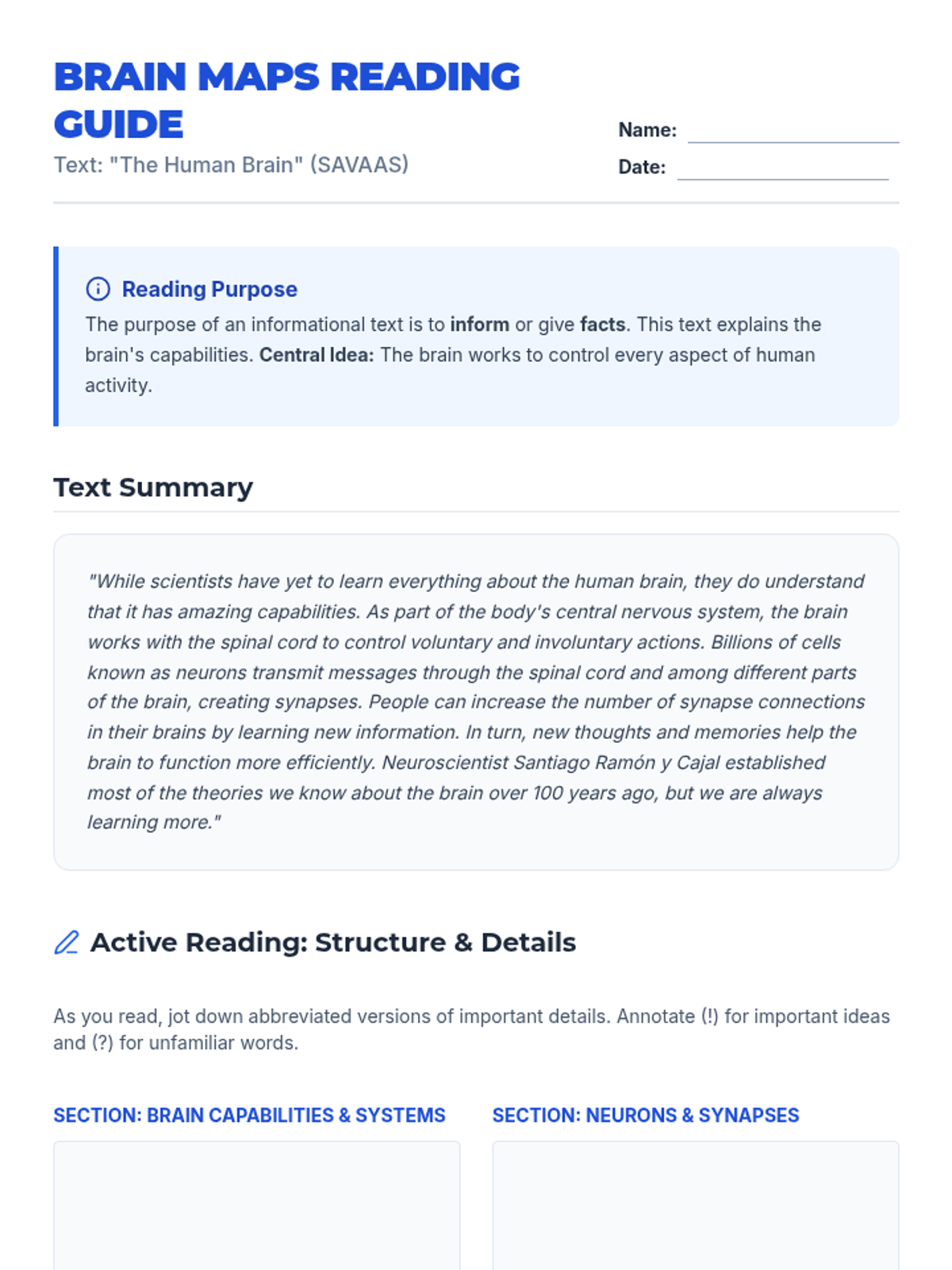
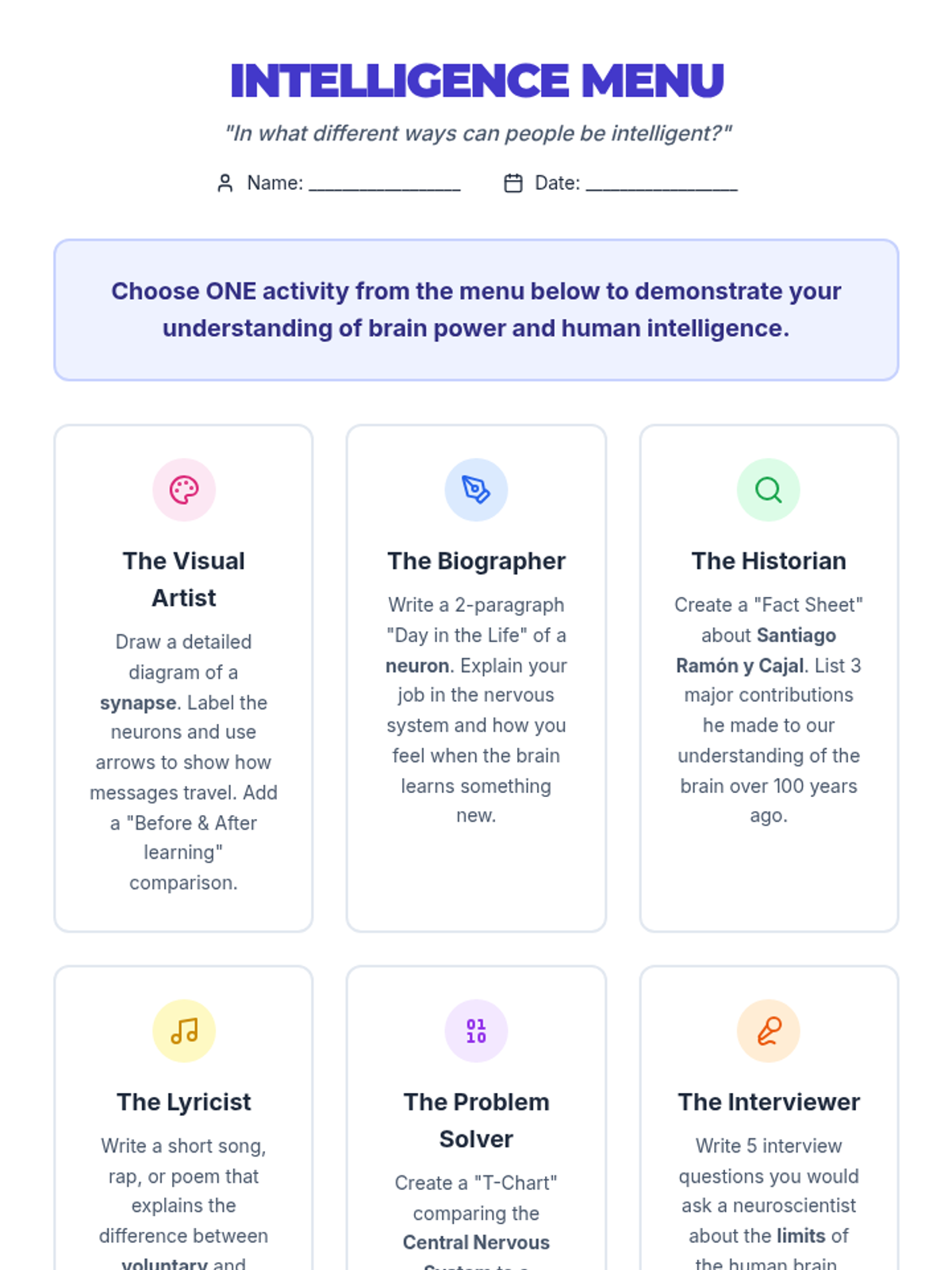
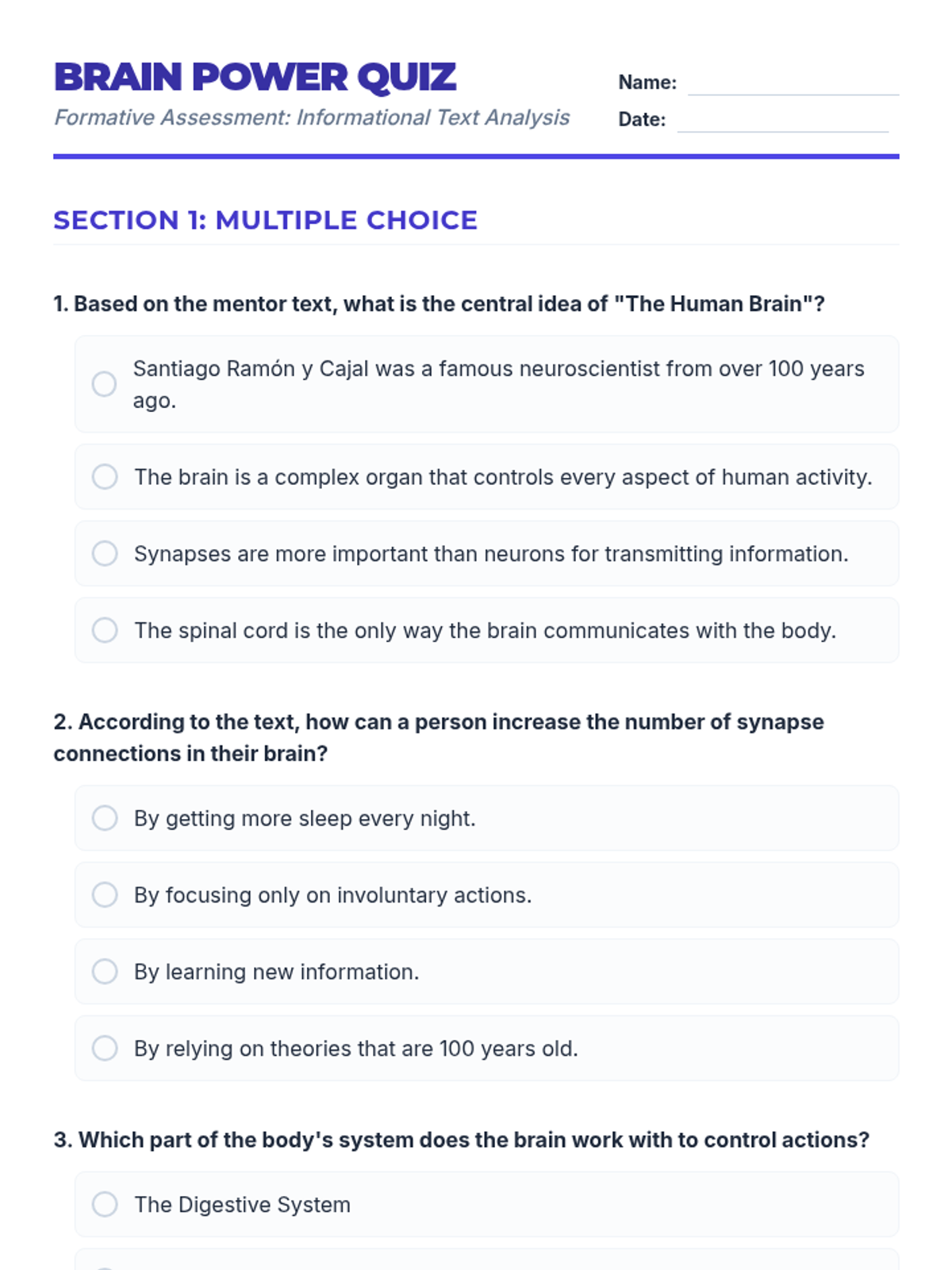
A comprehensive lesson exploring the human brain's capabilities and the nature of intelligence, featuring an informational text analysis and a multiple intelligences choice board.
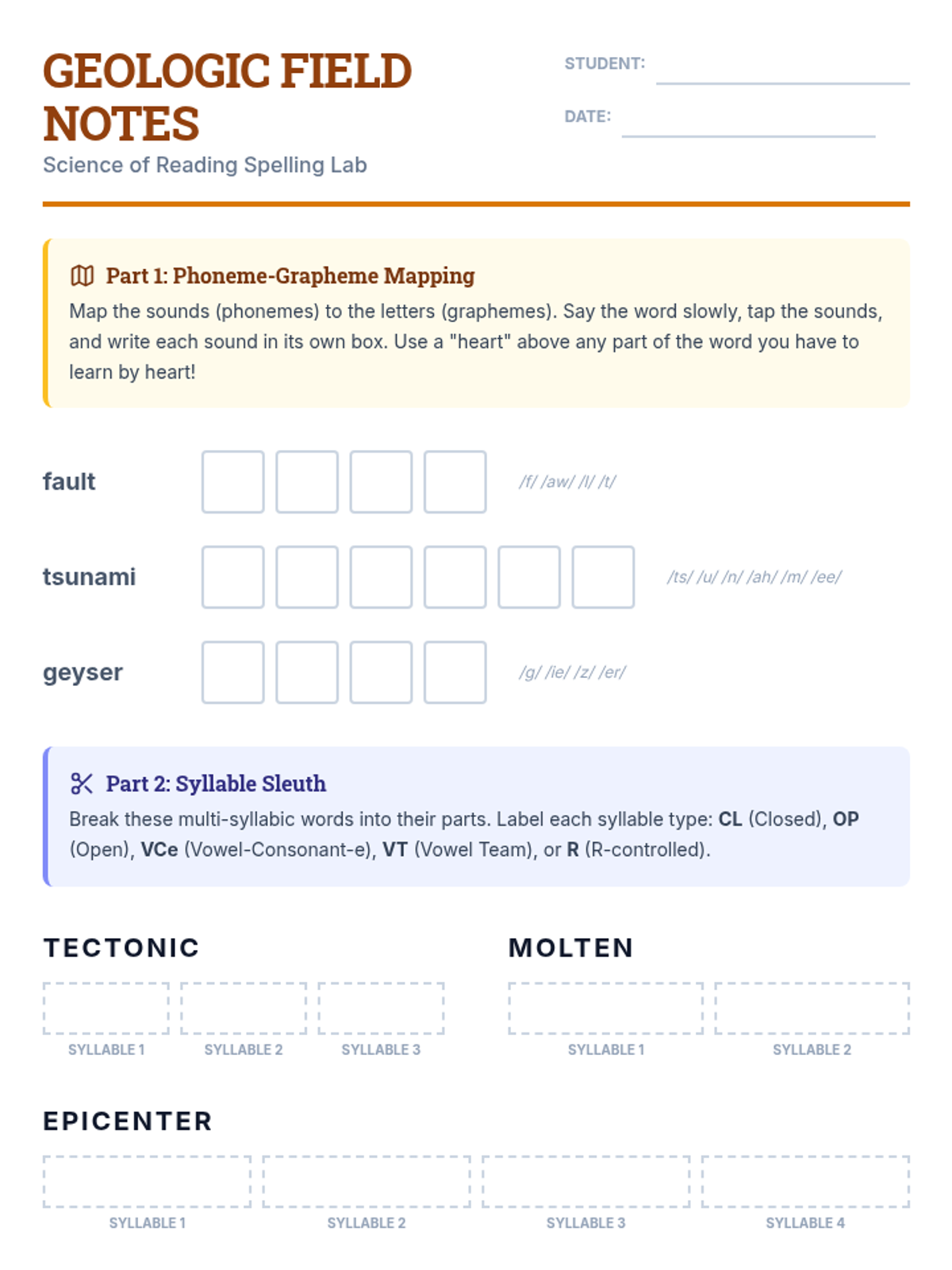
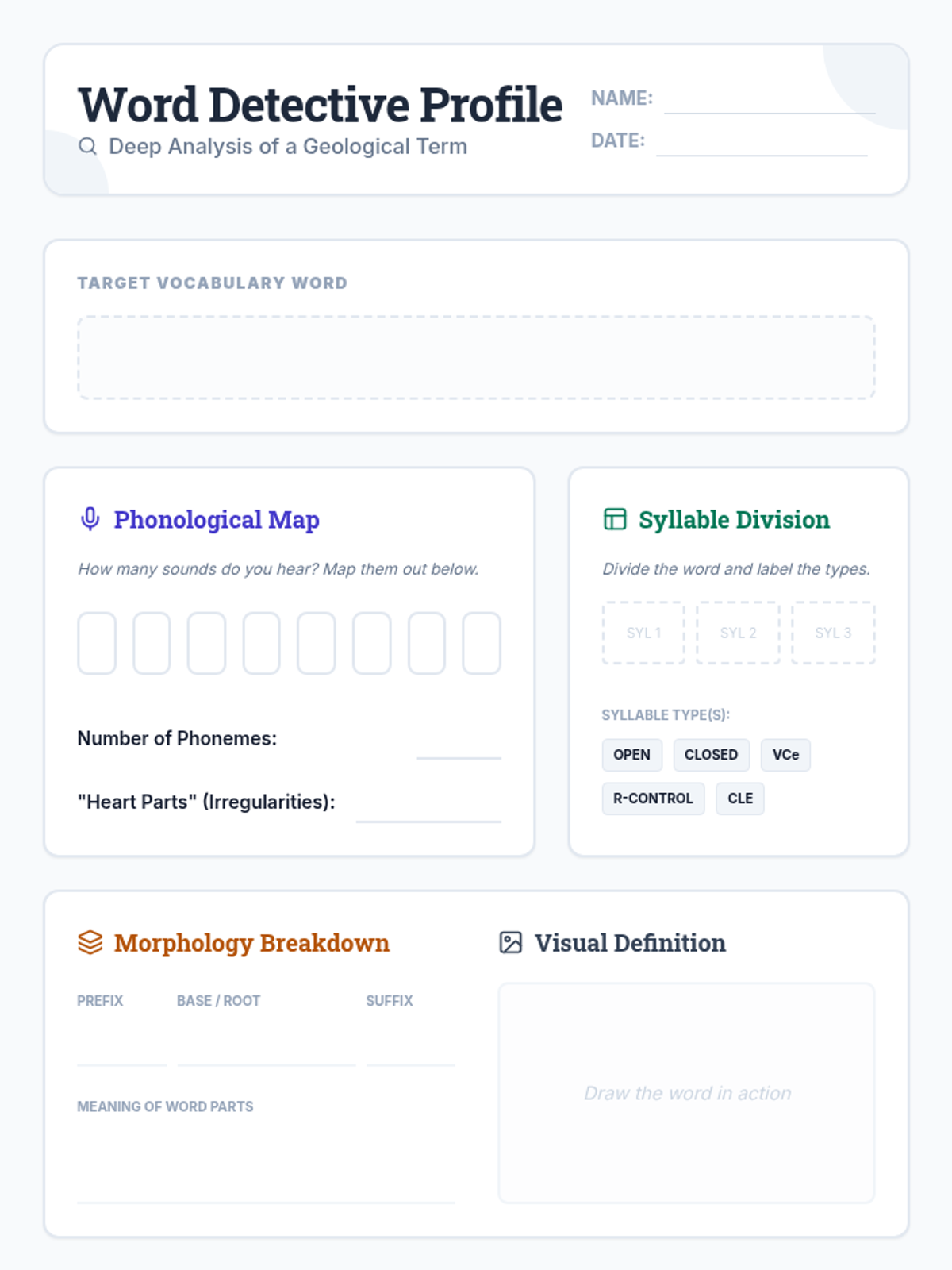
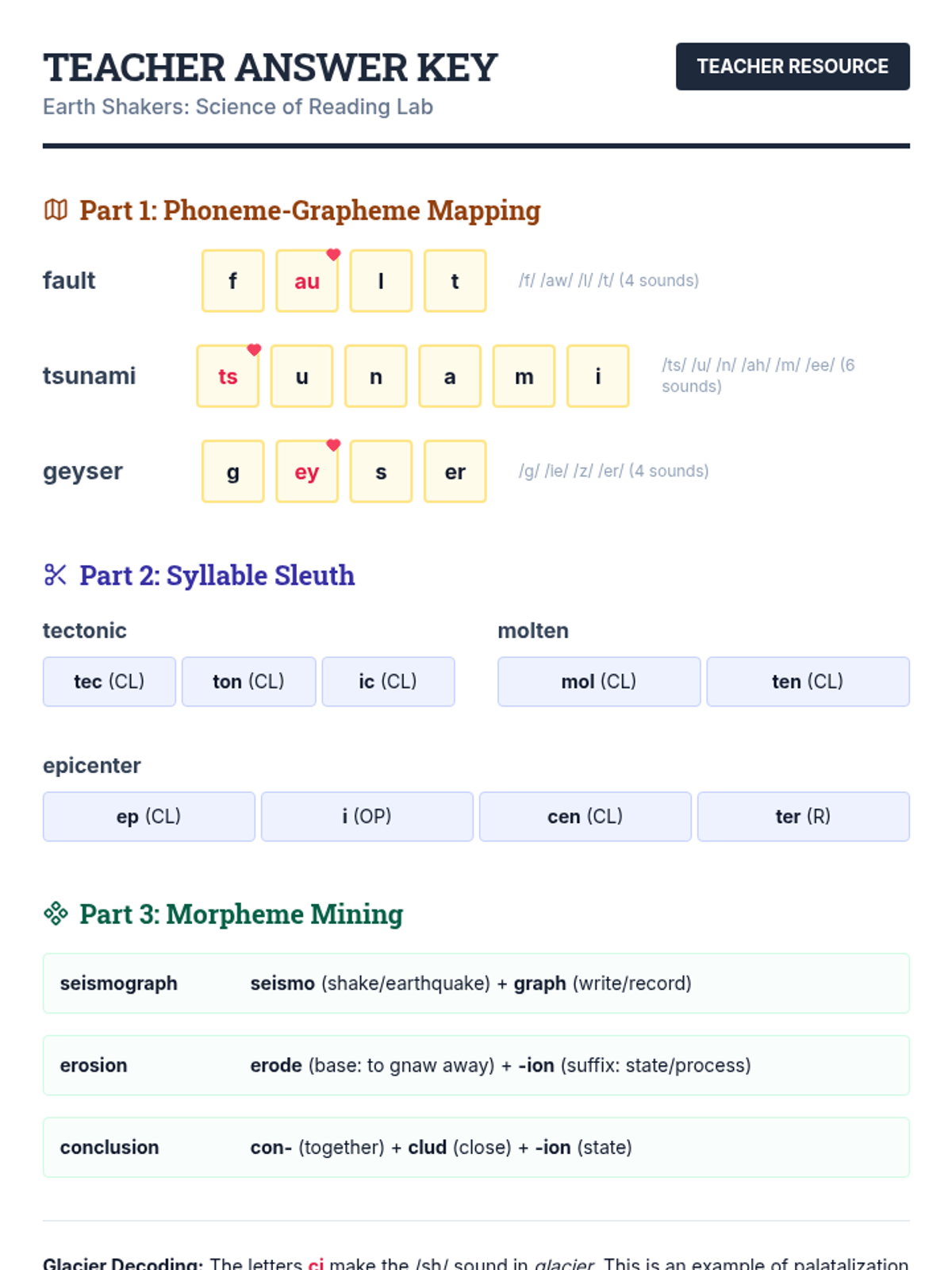
A comprehensive set of Science of Reading based activities focusing on geological vocabulary through phoneme-grapheme mapping, syllable division, and morphological analysis.
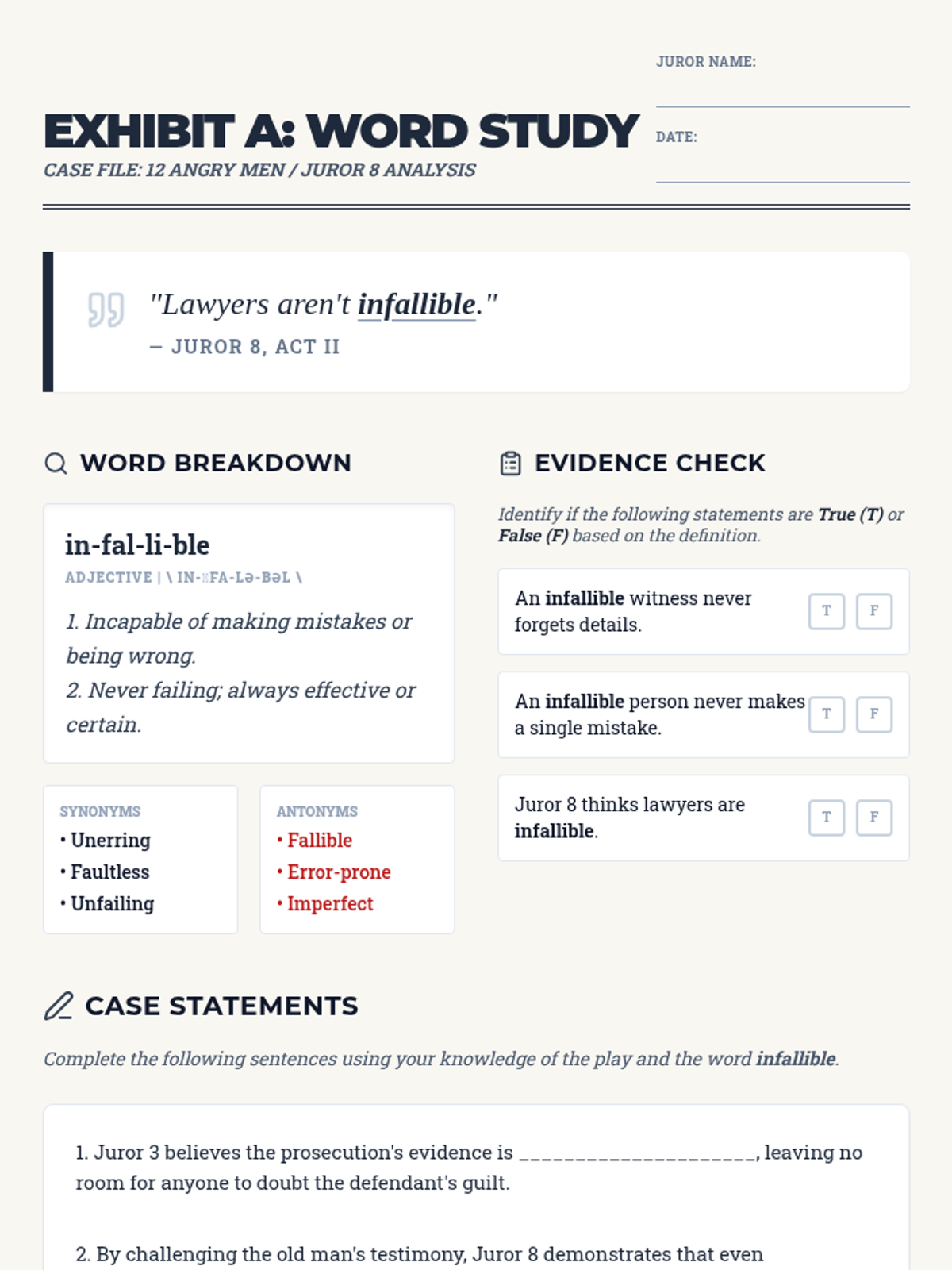
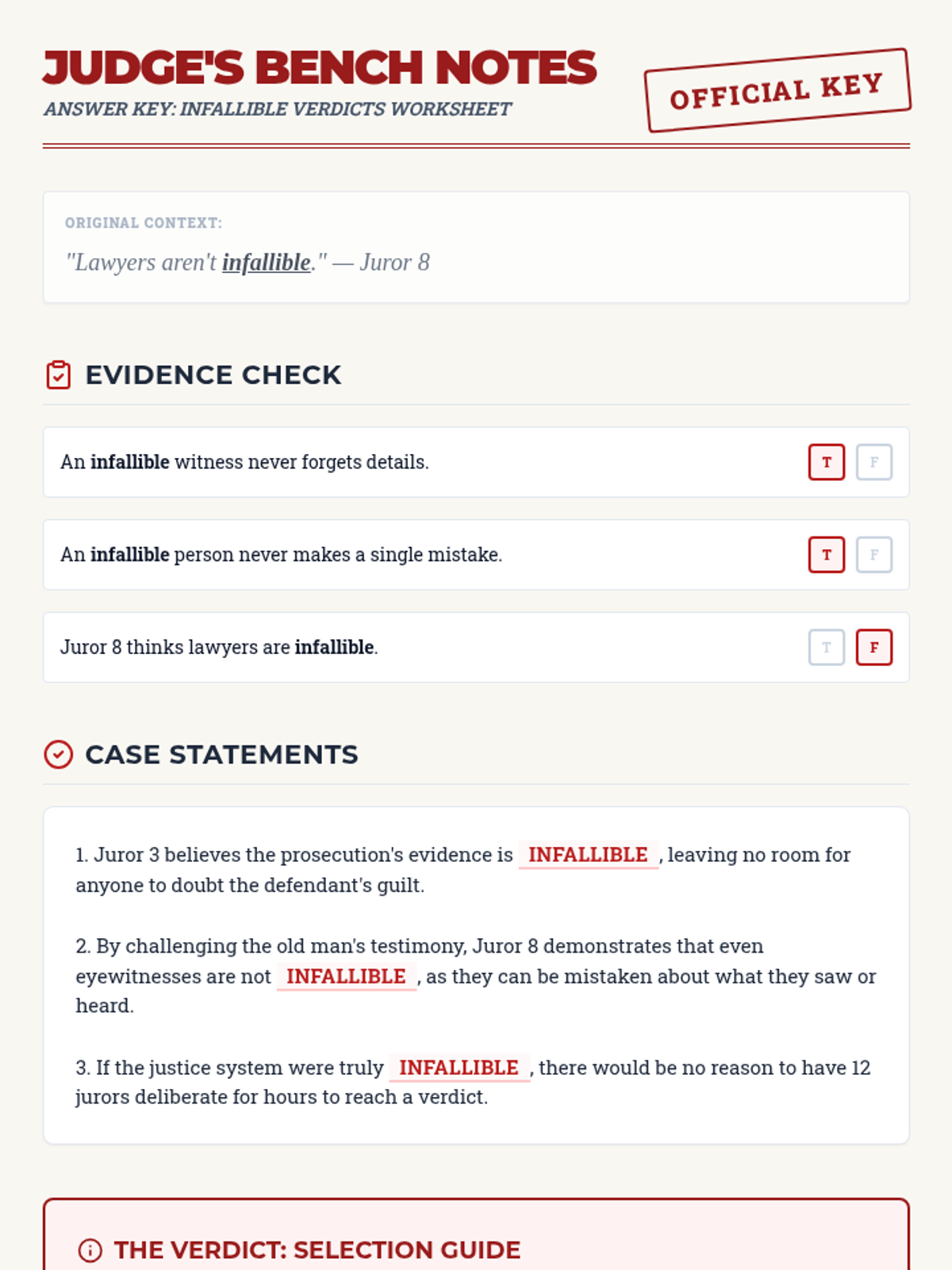
A vocabulary and context-based exploration of Juror 8's arguments in '12 Angry Men', focusing on the concepts of infallibility and reasonable doubt.
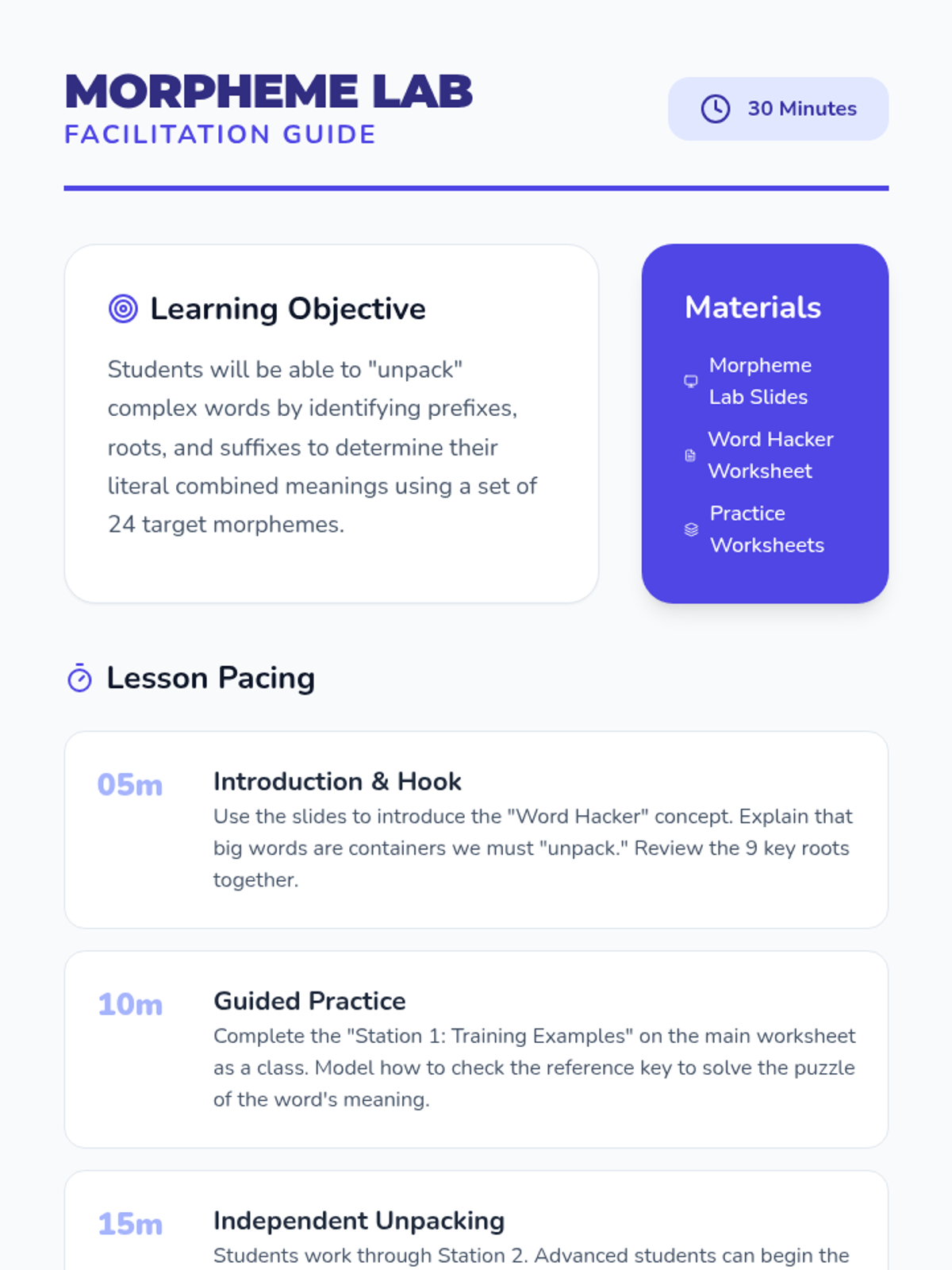
A 30-minute introductory lesson where students learn to decode complex words using a list of 24 common morphemes.
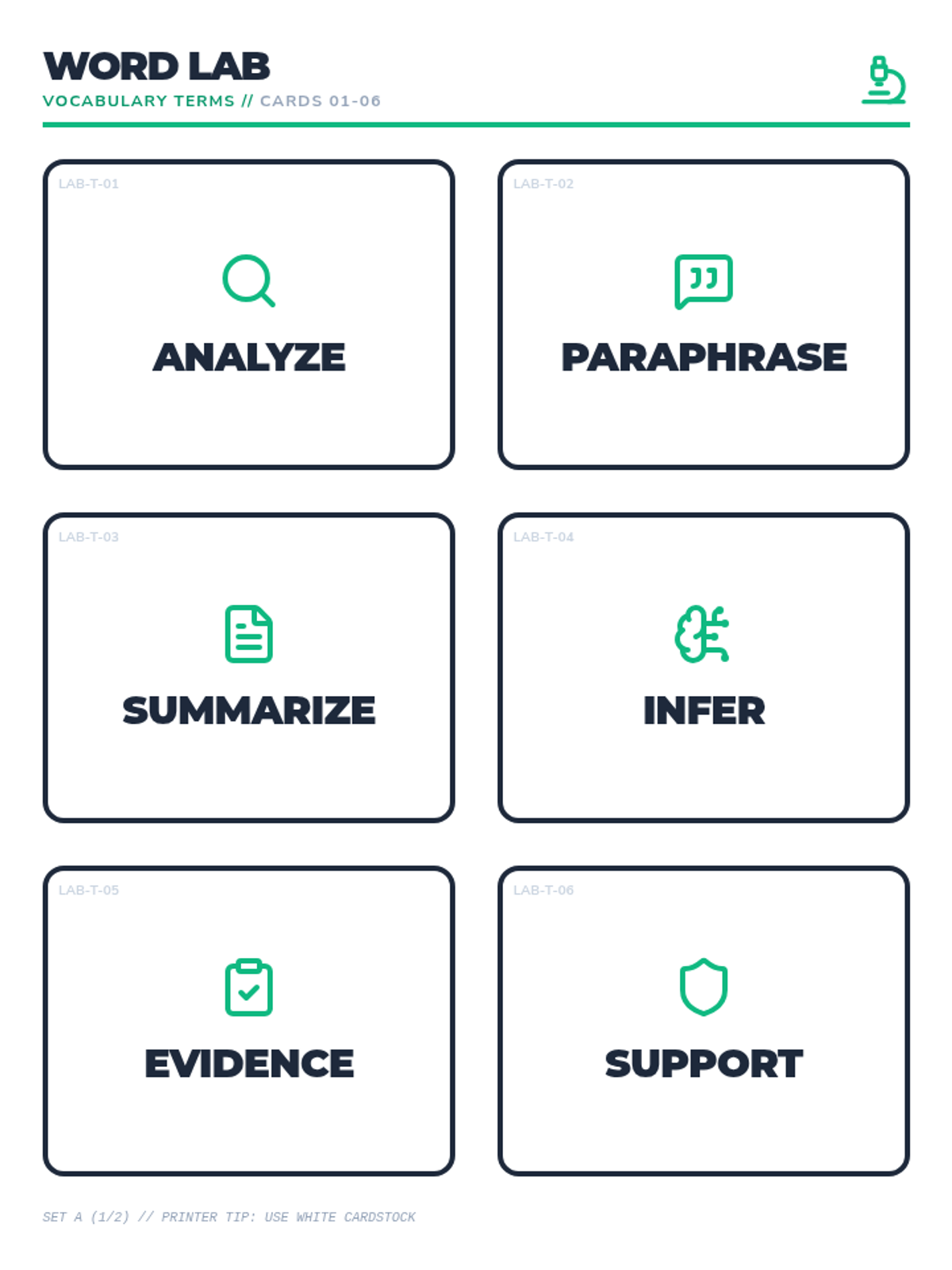
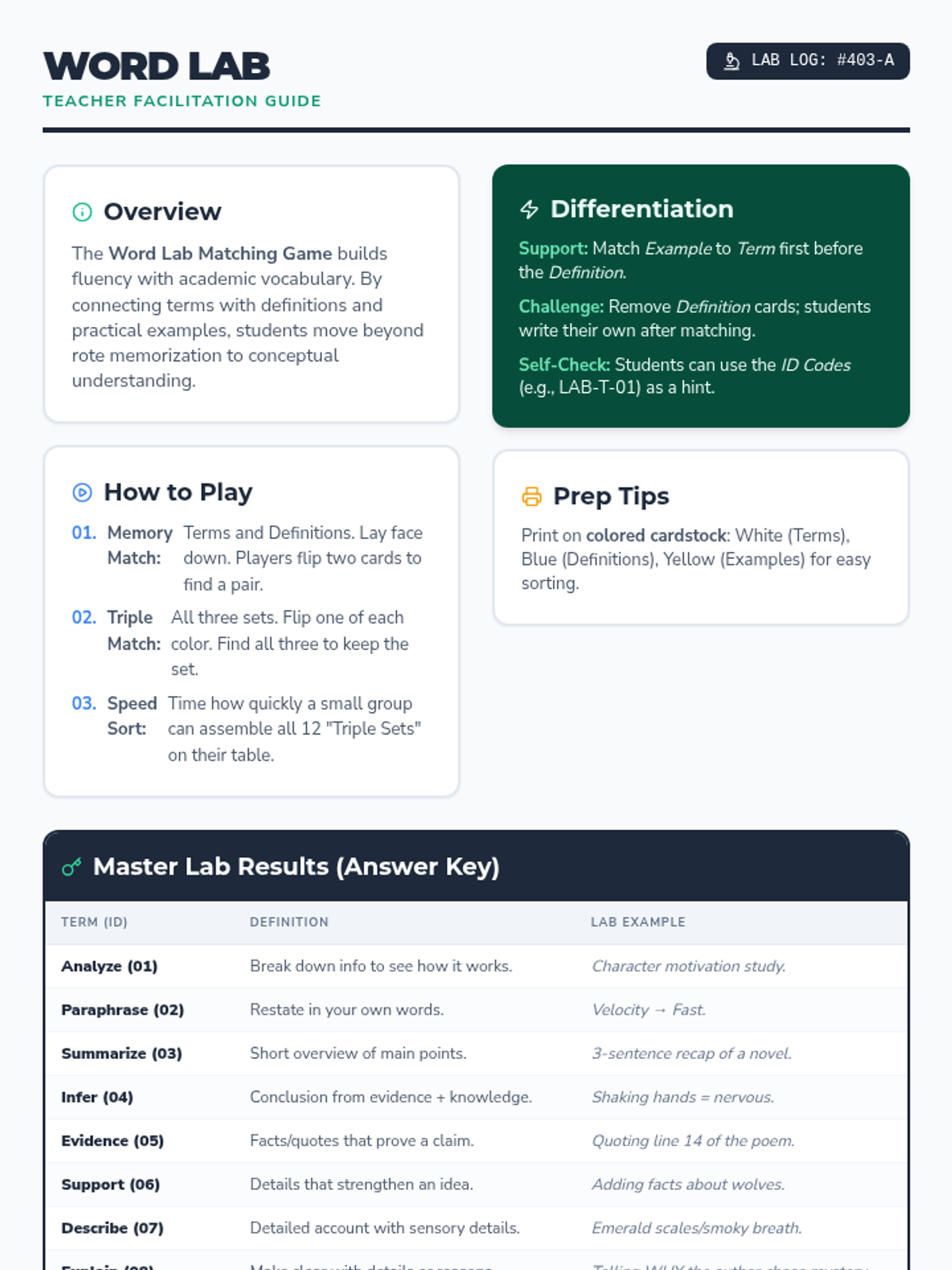
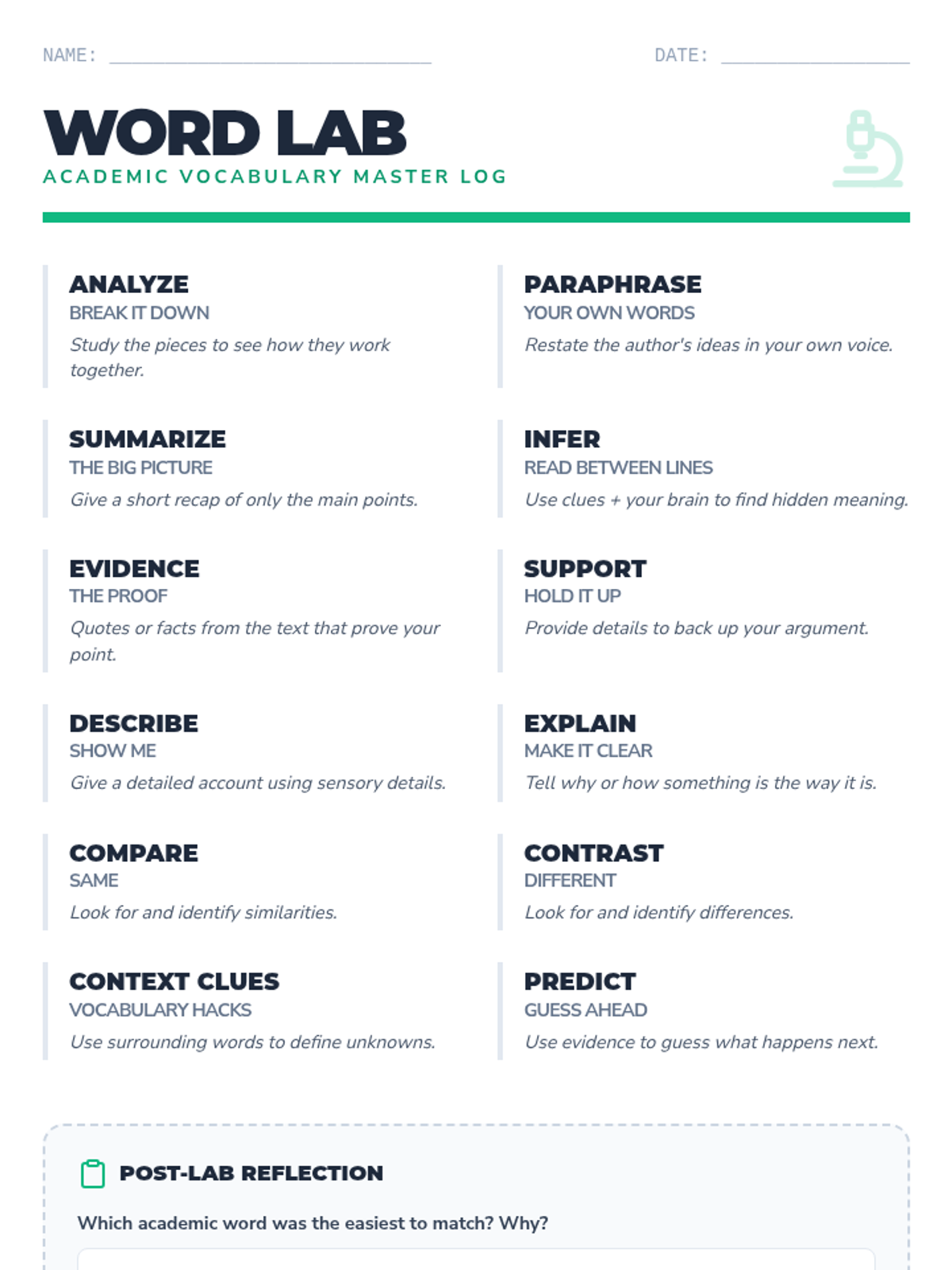
A lesson focused on mastering academic vocabulary used in reading comprehension questions. Students will learn to distinguish between common analytical verbs and concepts through a hands-on matching game and reference guides.
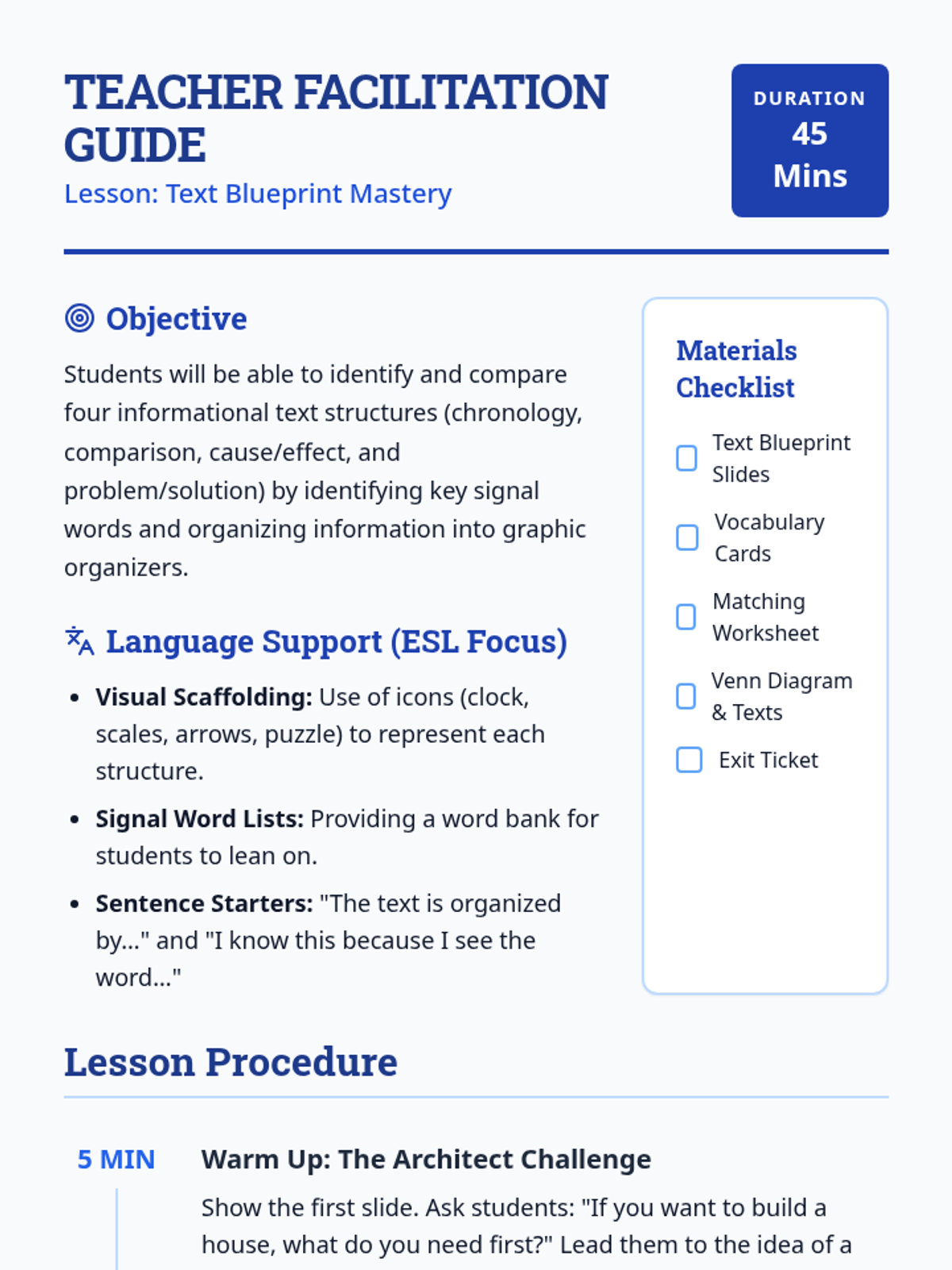
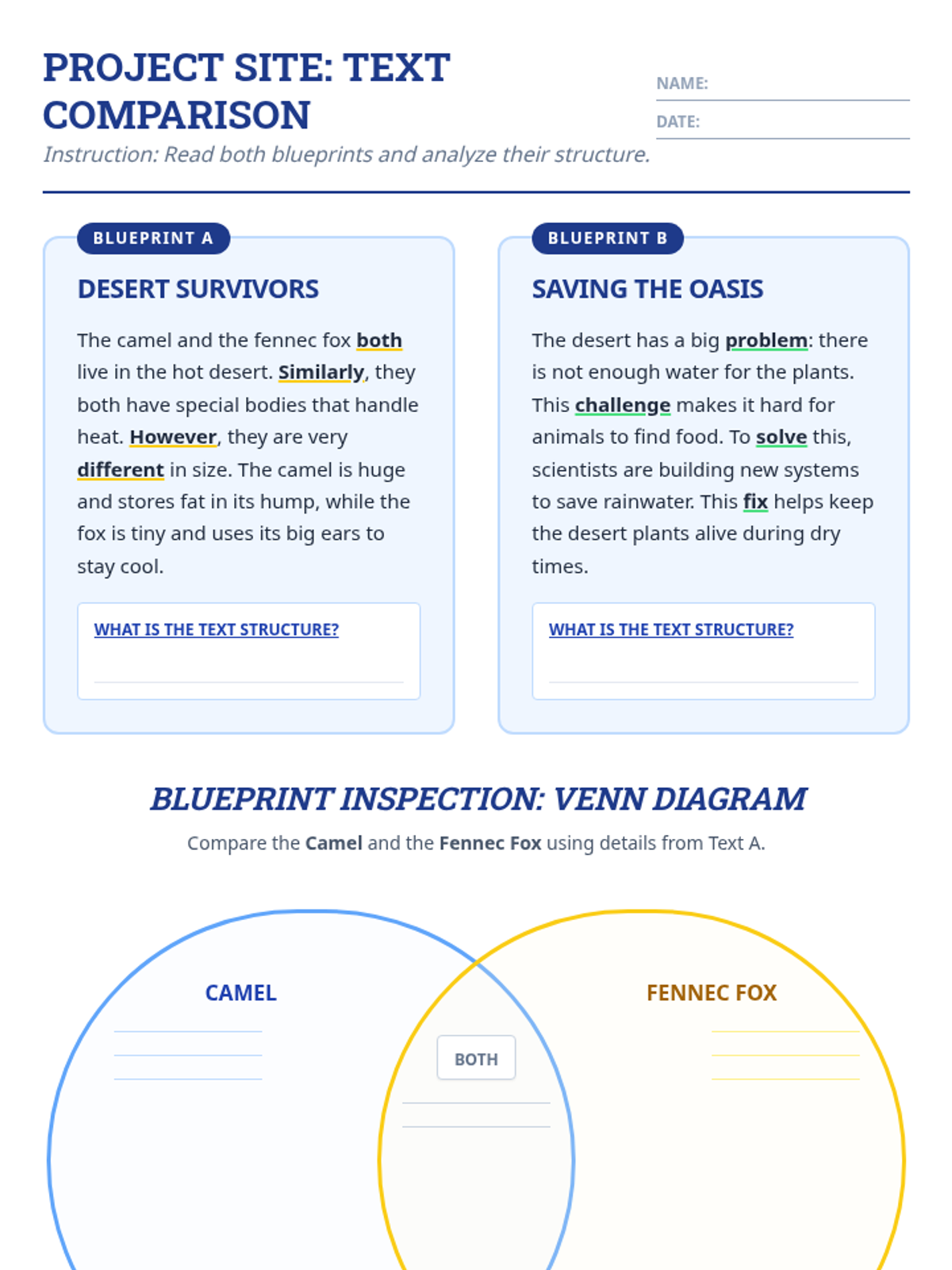
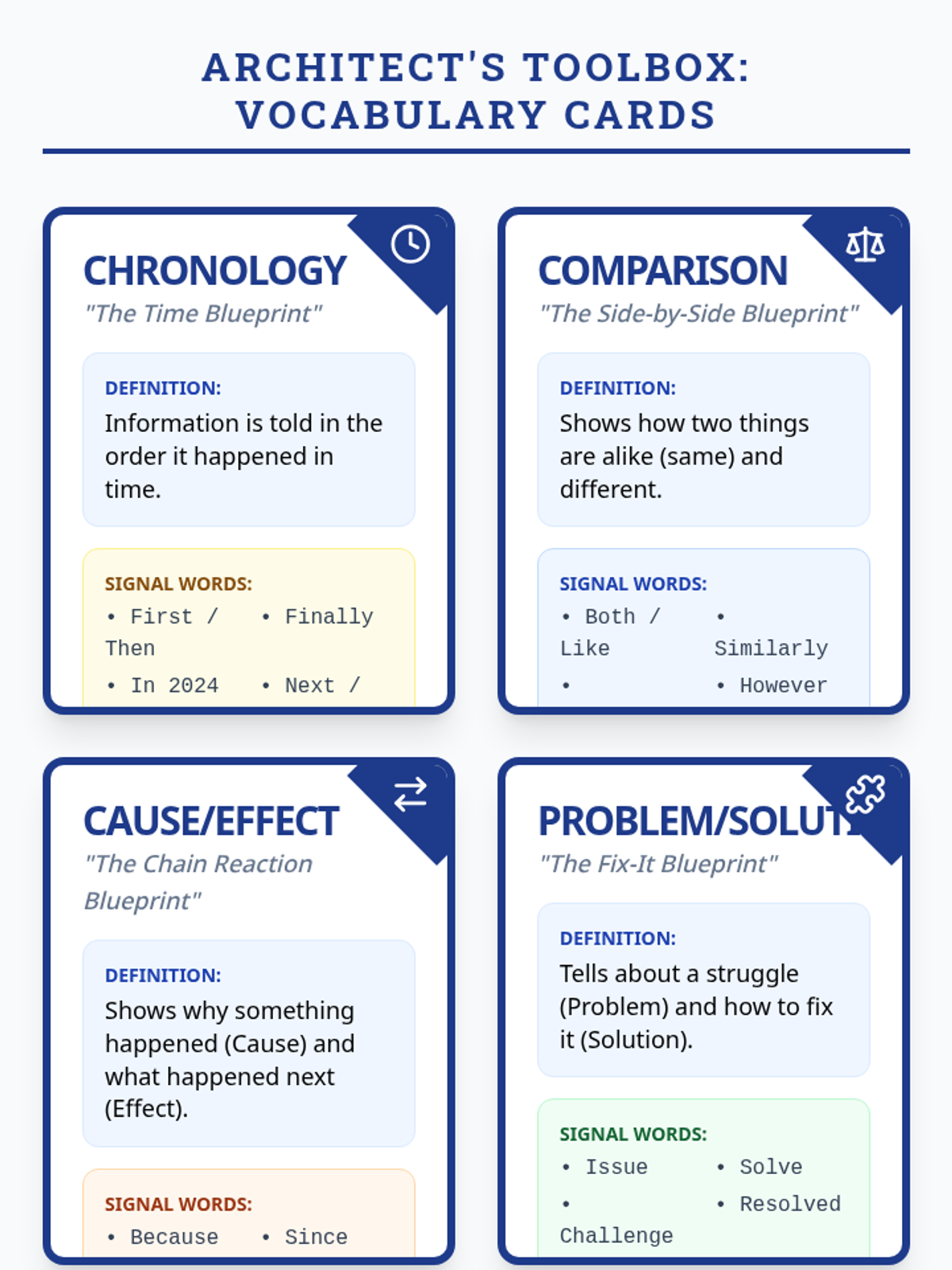
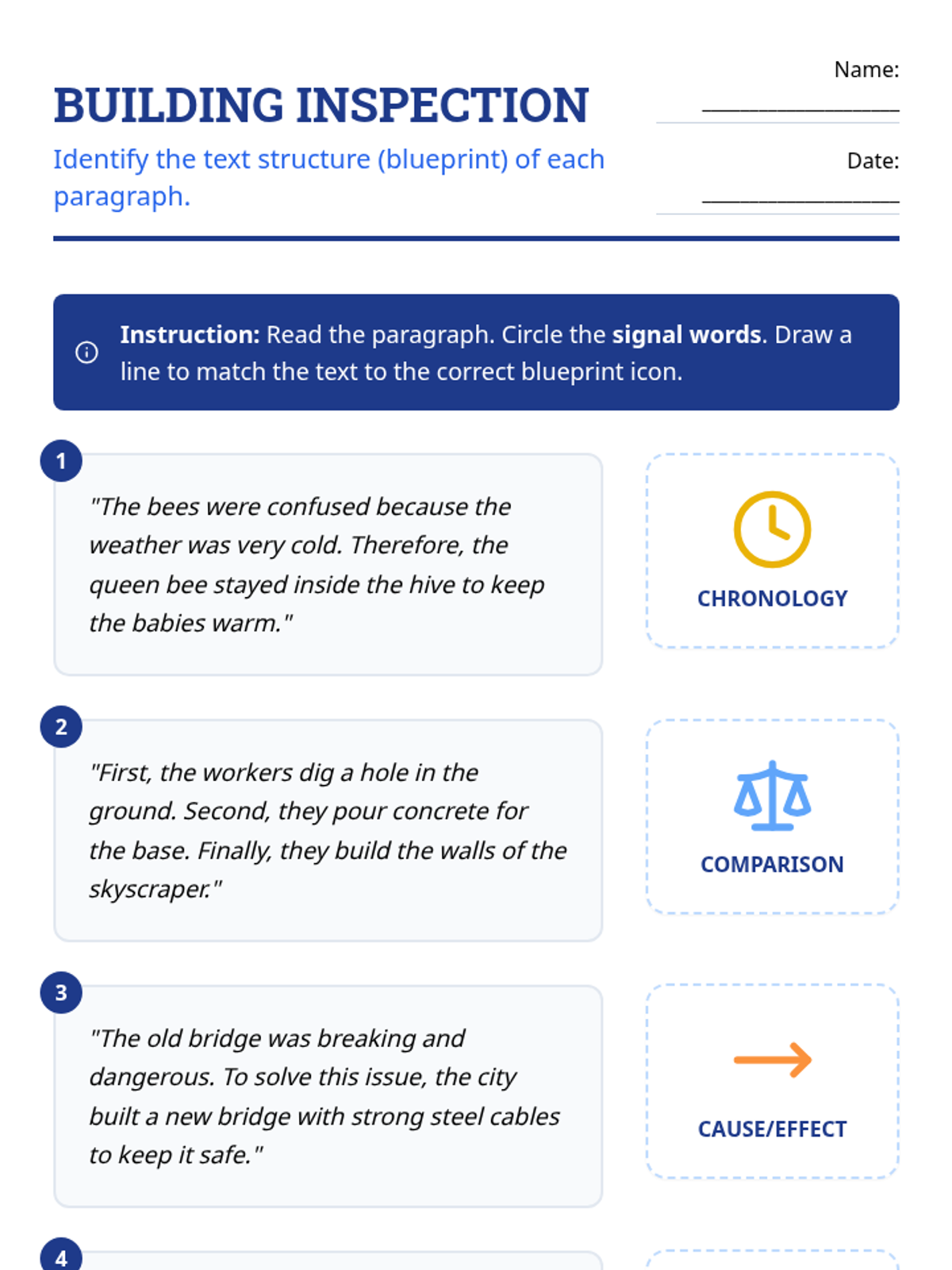
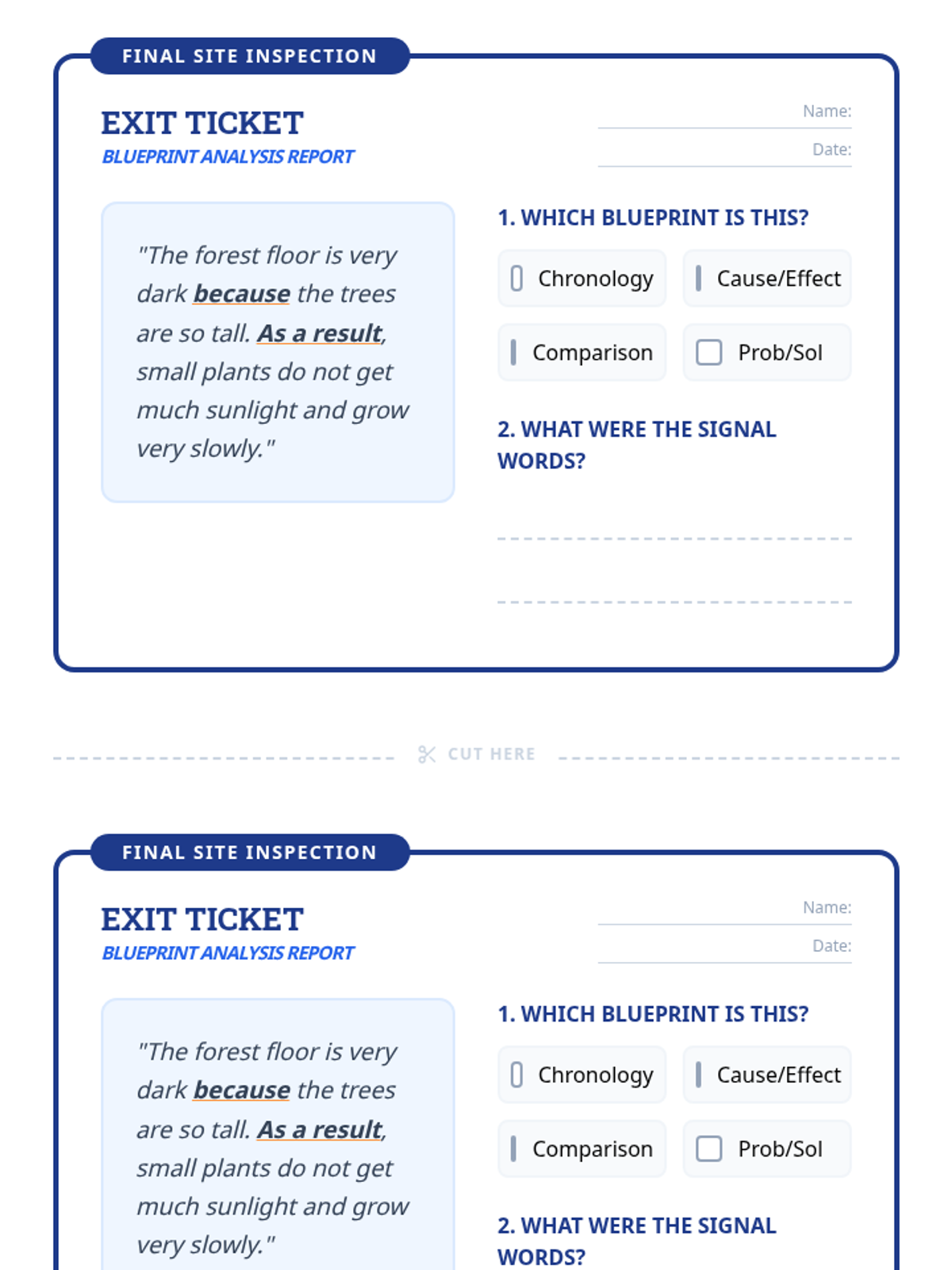
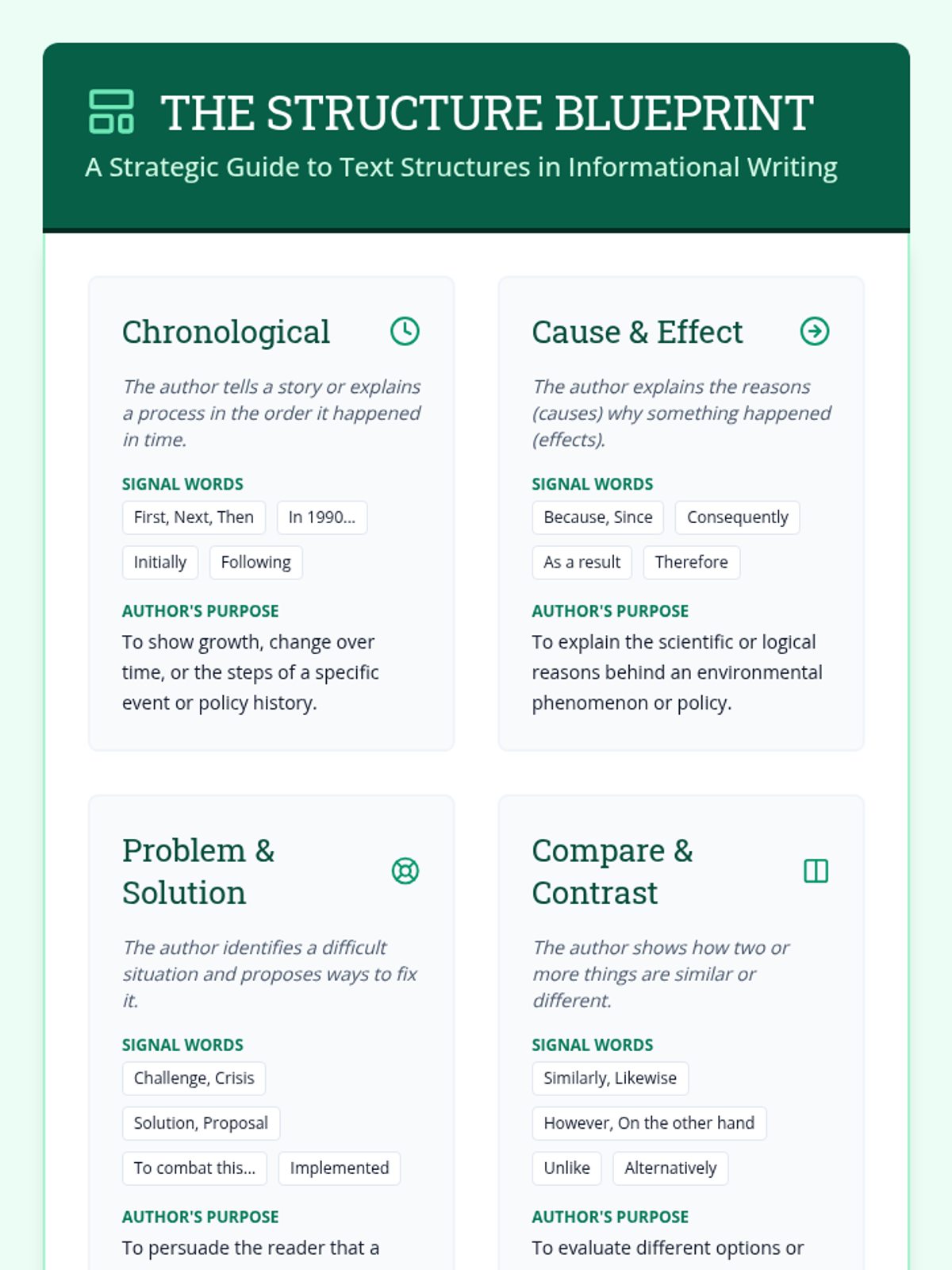
Students will identify and compare four major text structures: chronology, comparison, cause/effect, and problem/solution. Through an architectural 'blueprint' theme, ESL students will learn signal words and structural patterns to improve reading comprehension.
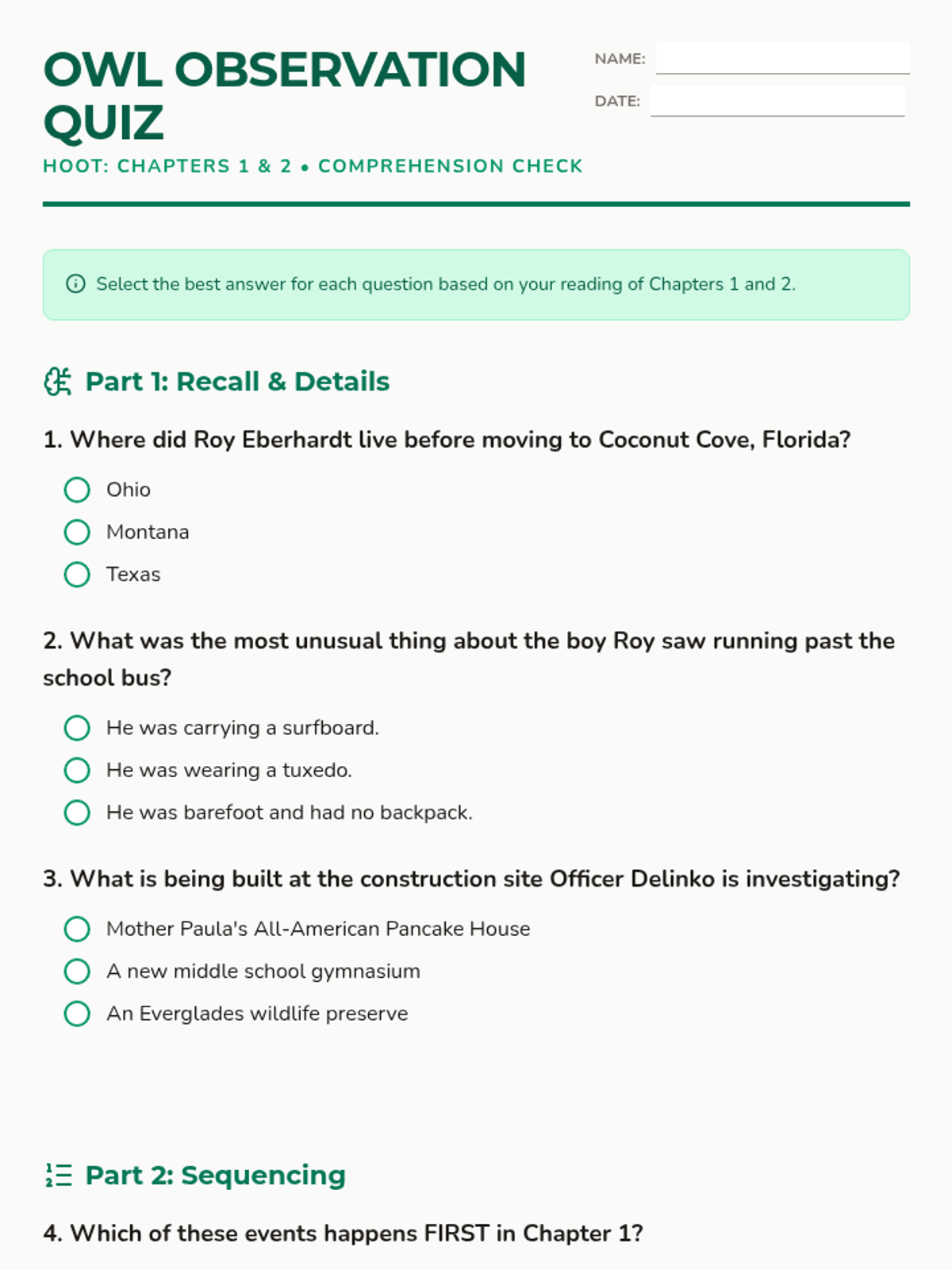
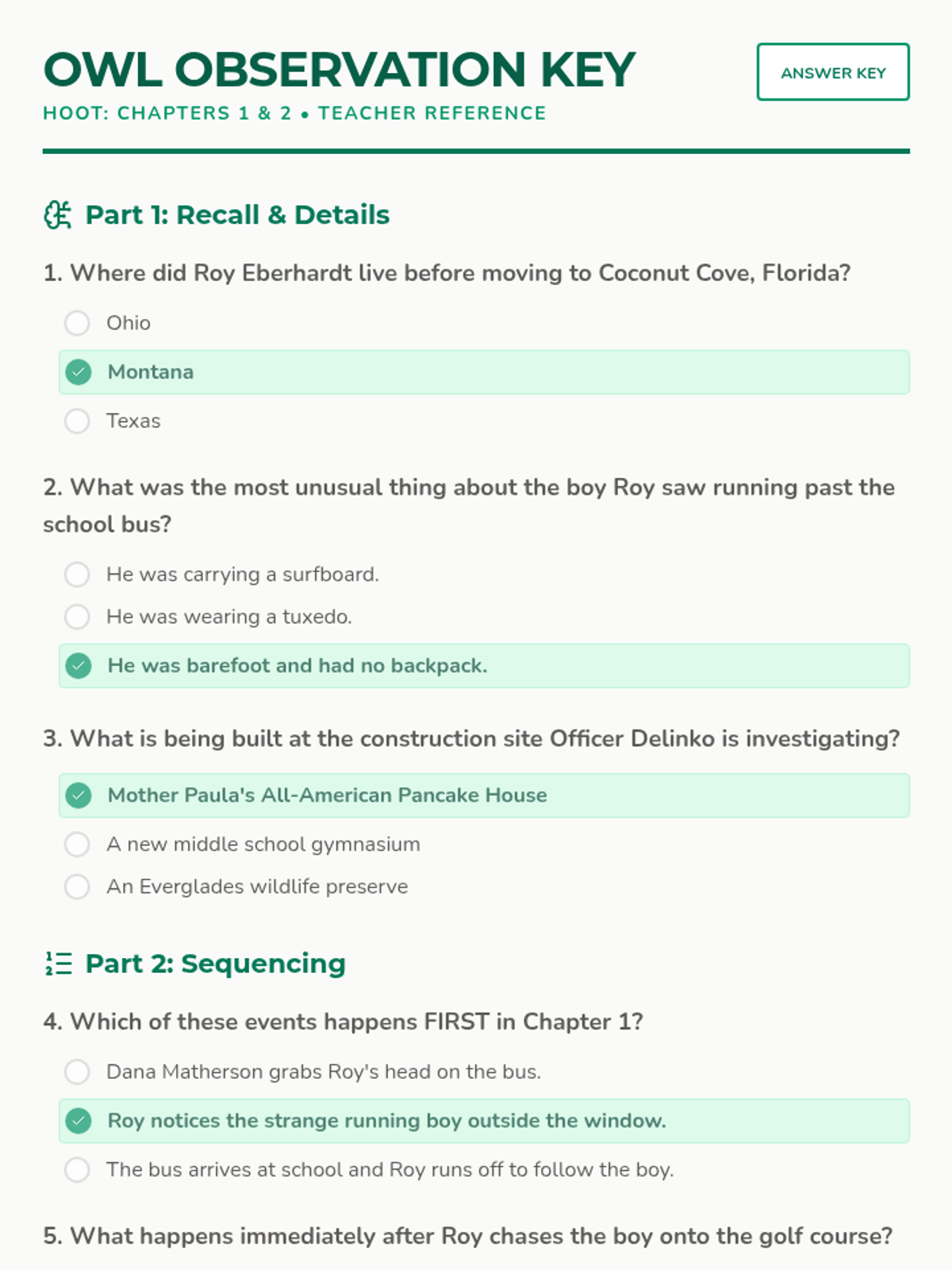
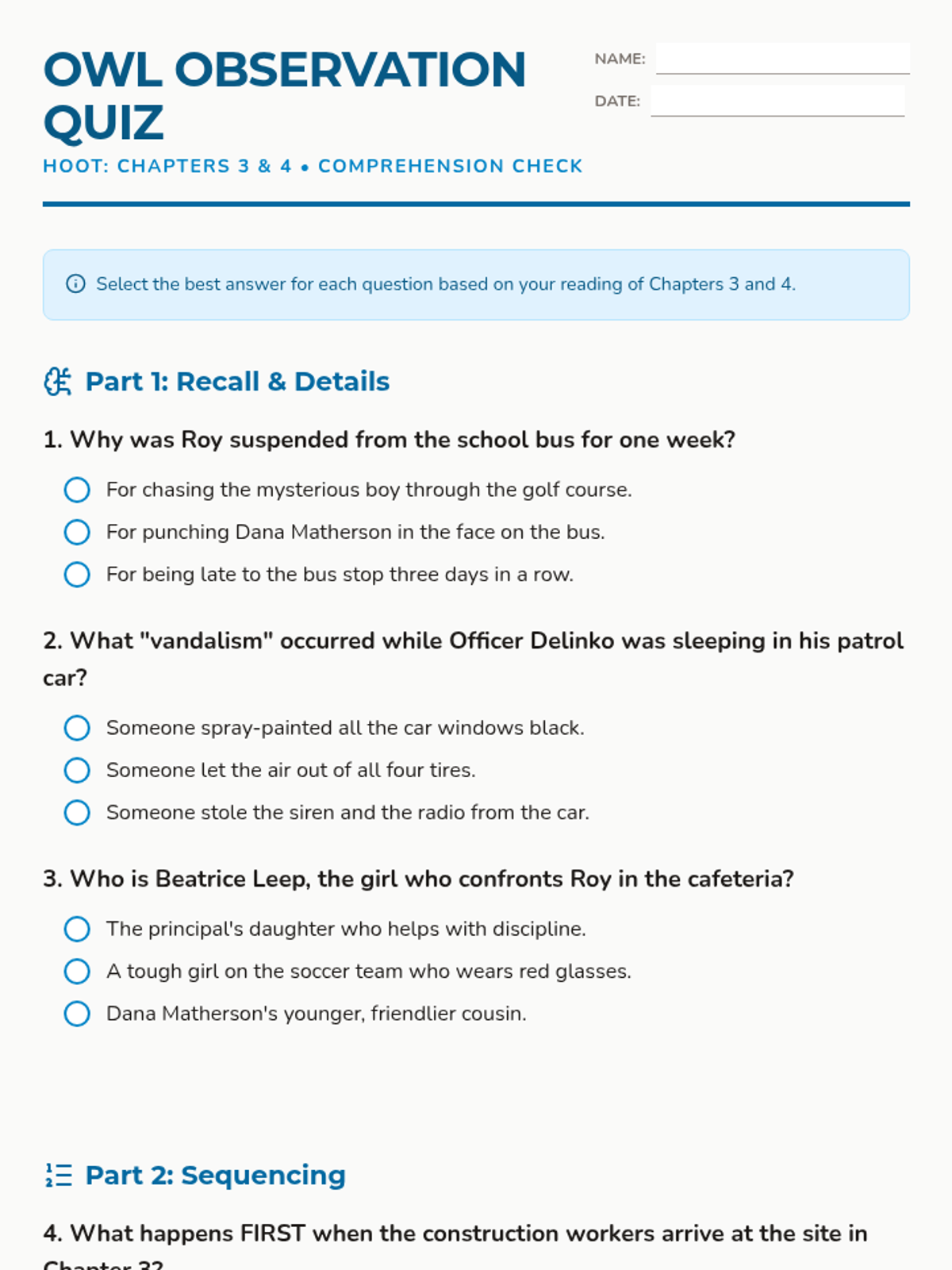
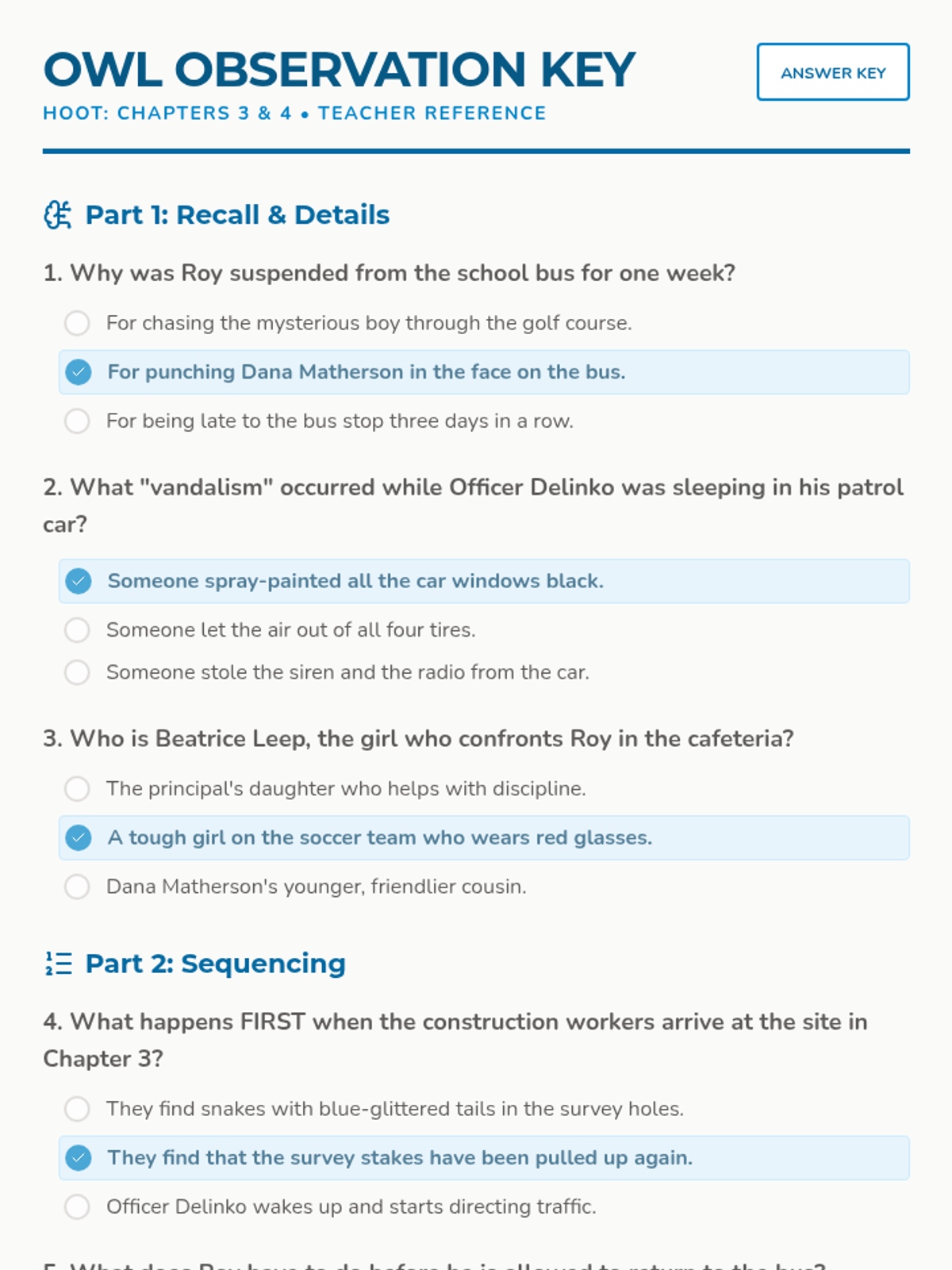
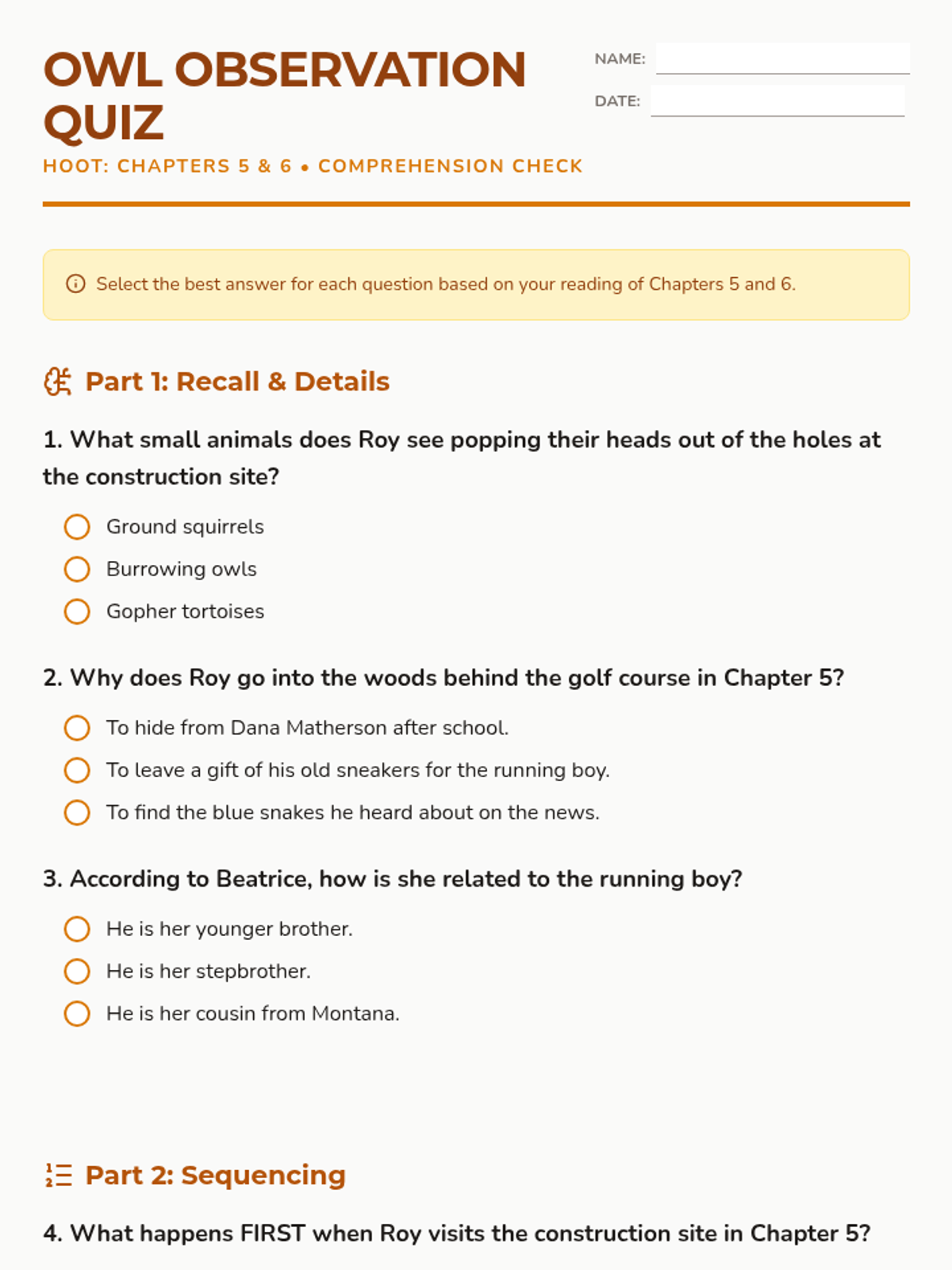
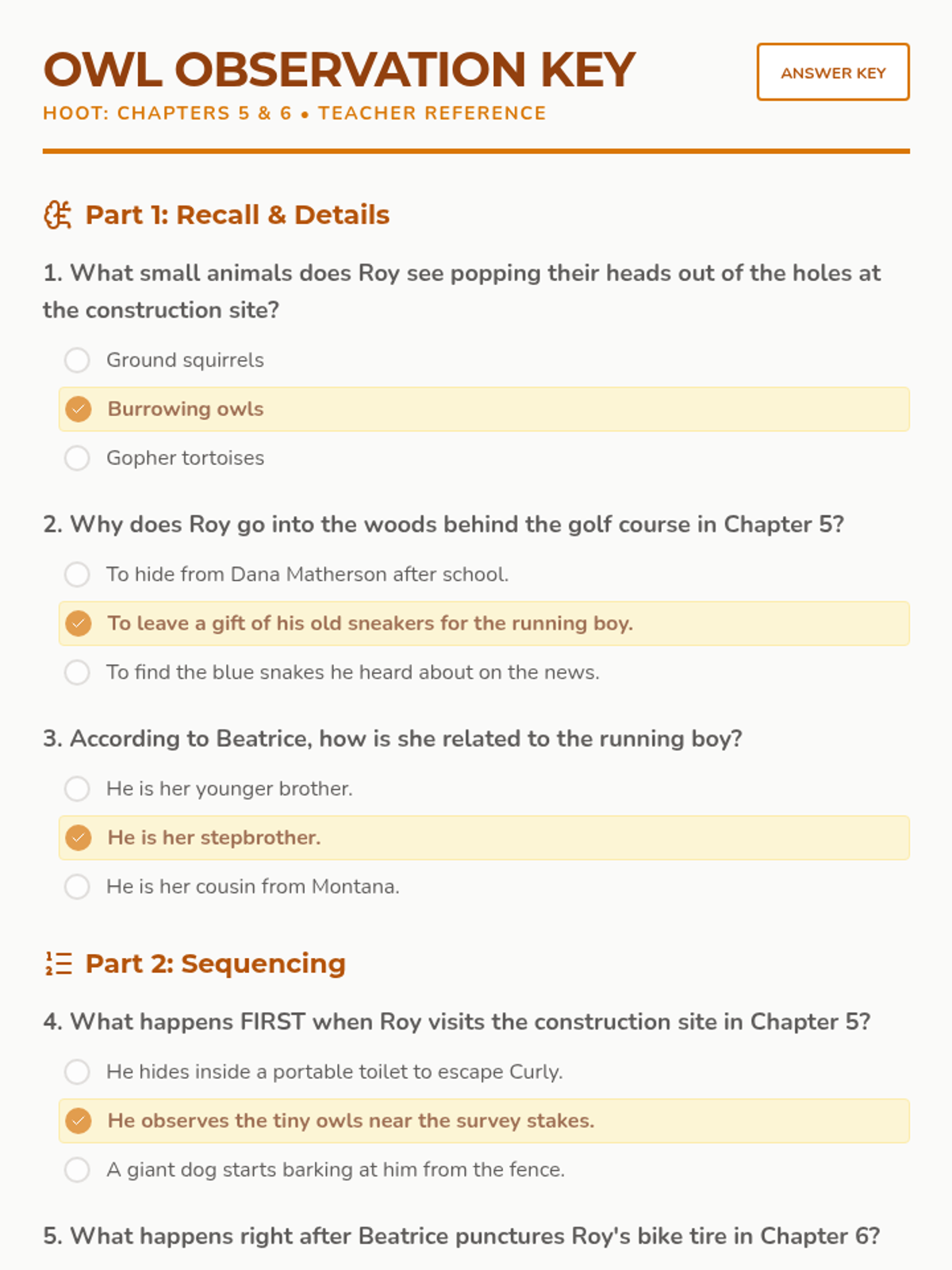
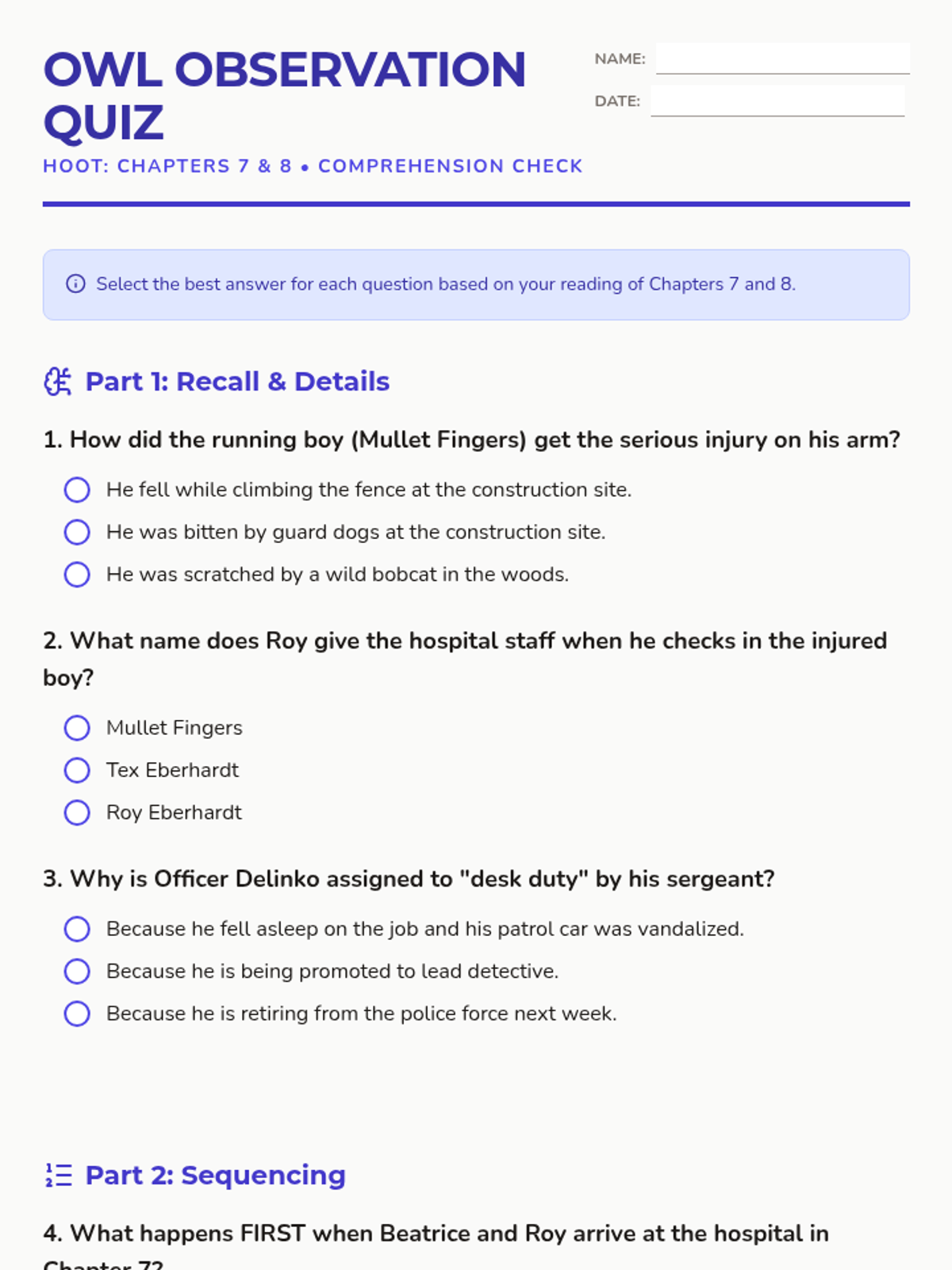
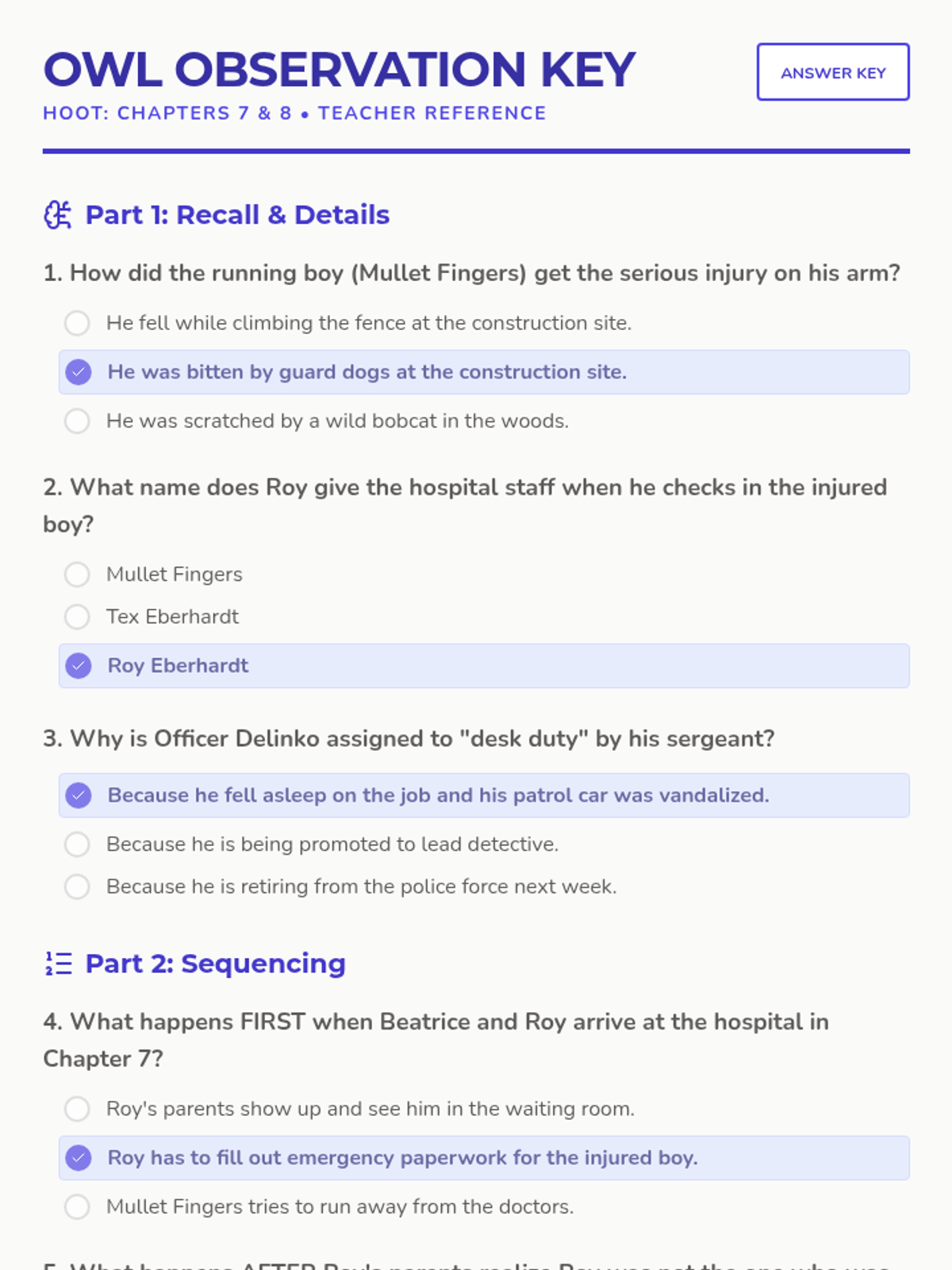
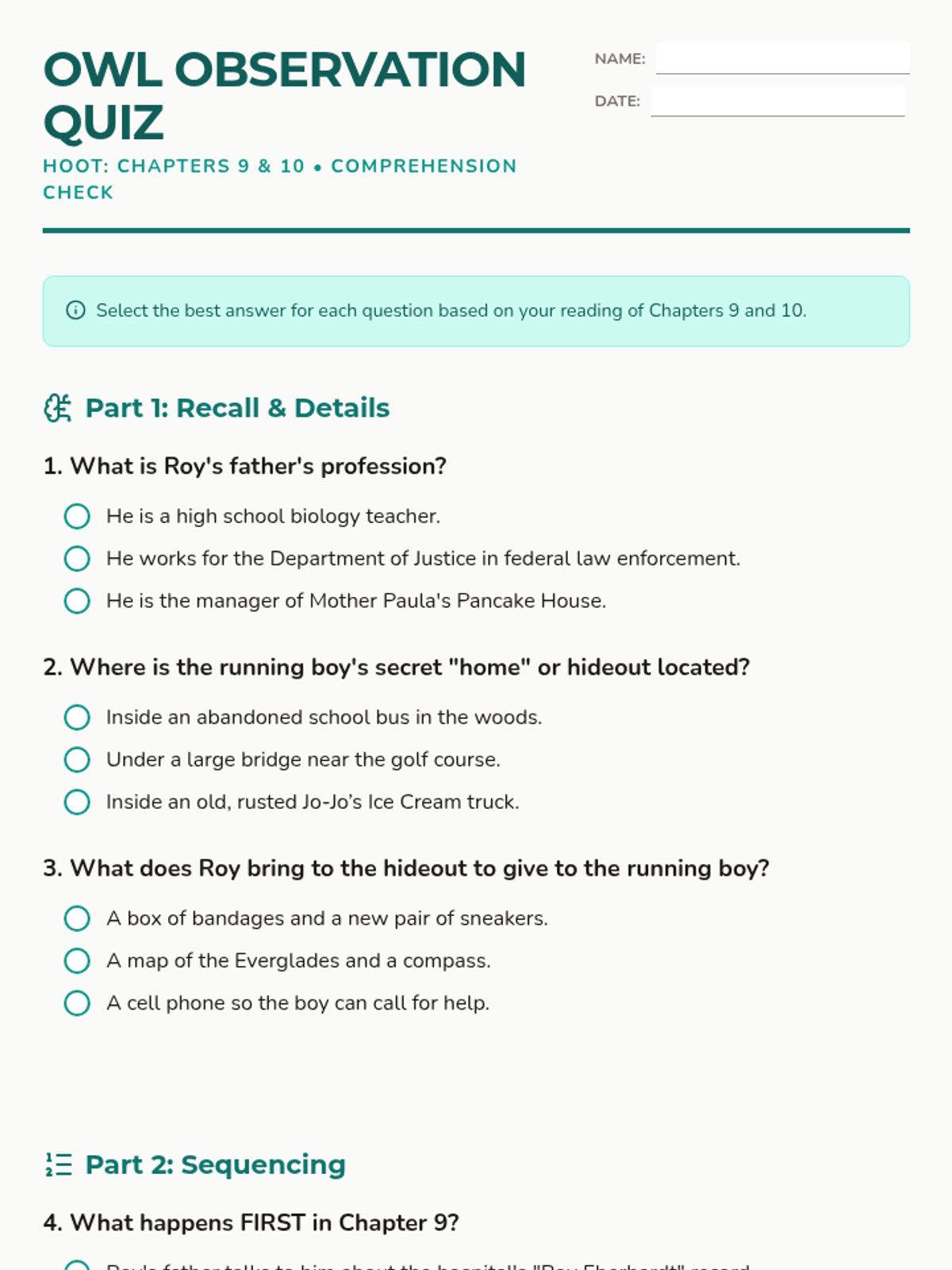
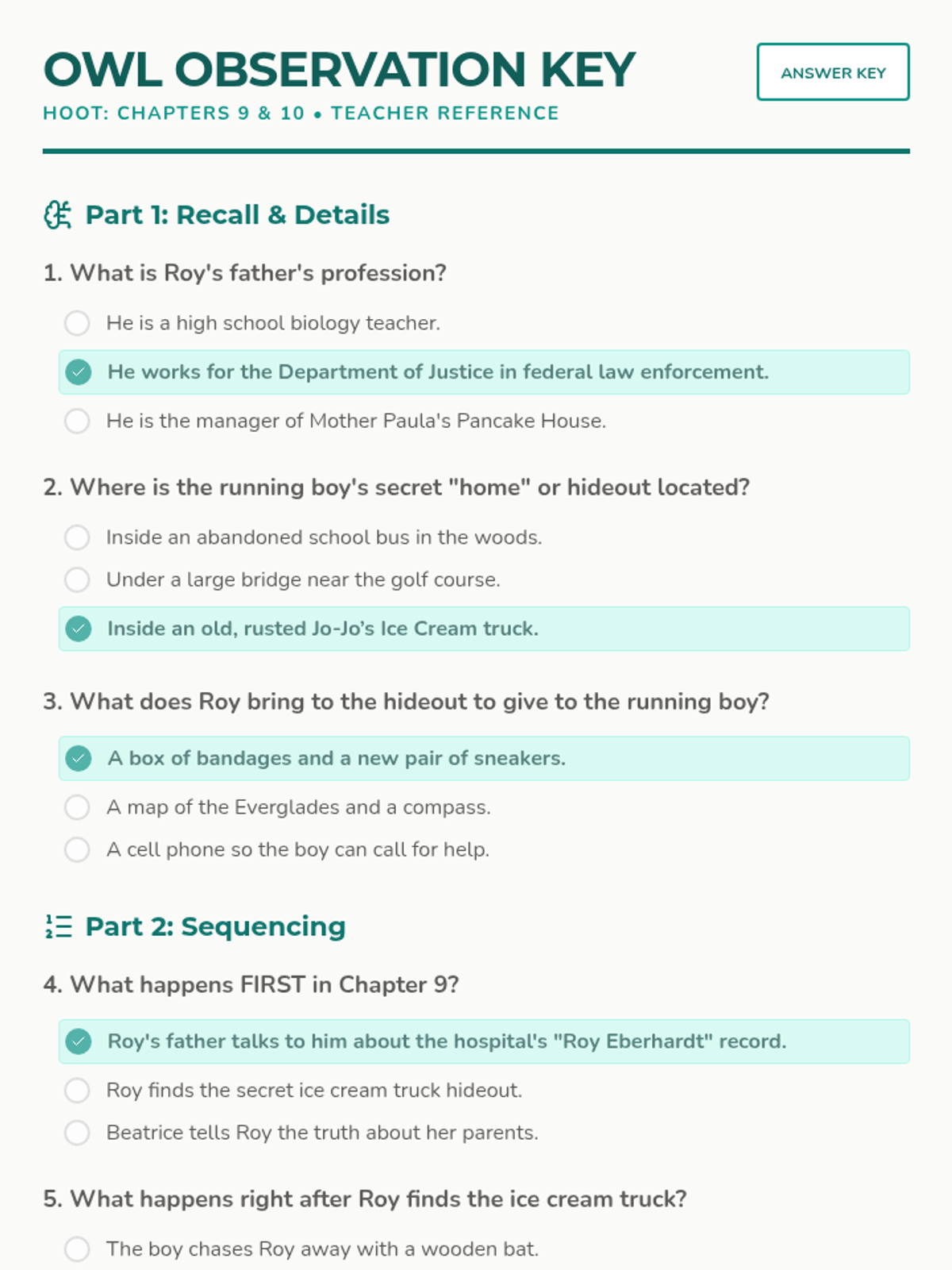
A focused exploration of the opening chapters of Carl Hiaasen's Hoot, introducing Roy Eberhardt, the mysterious running boy, and the conflict at the pancake house construction site.
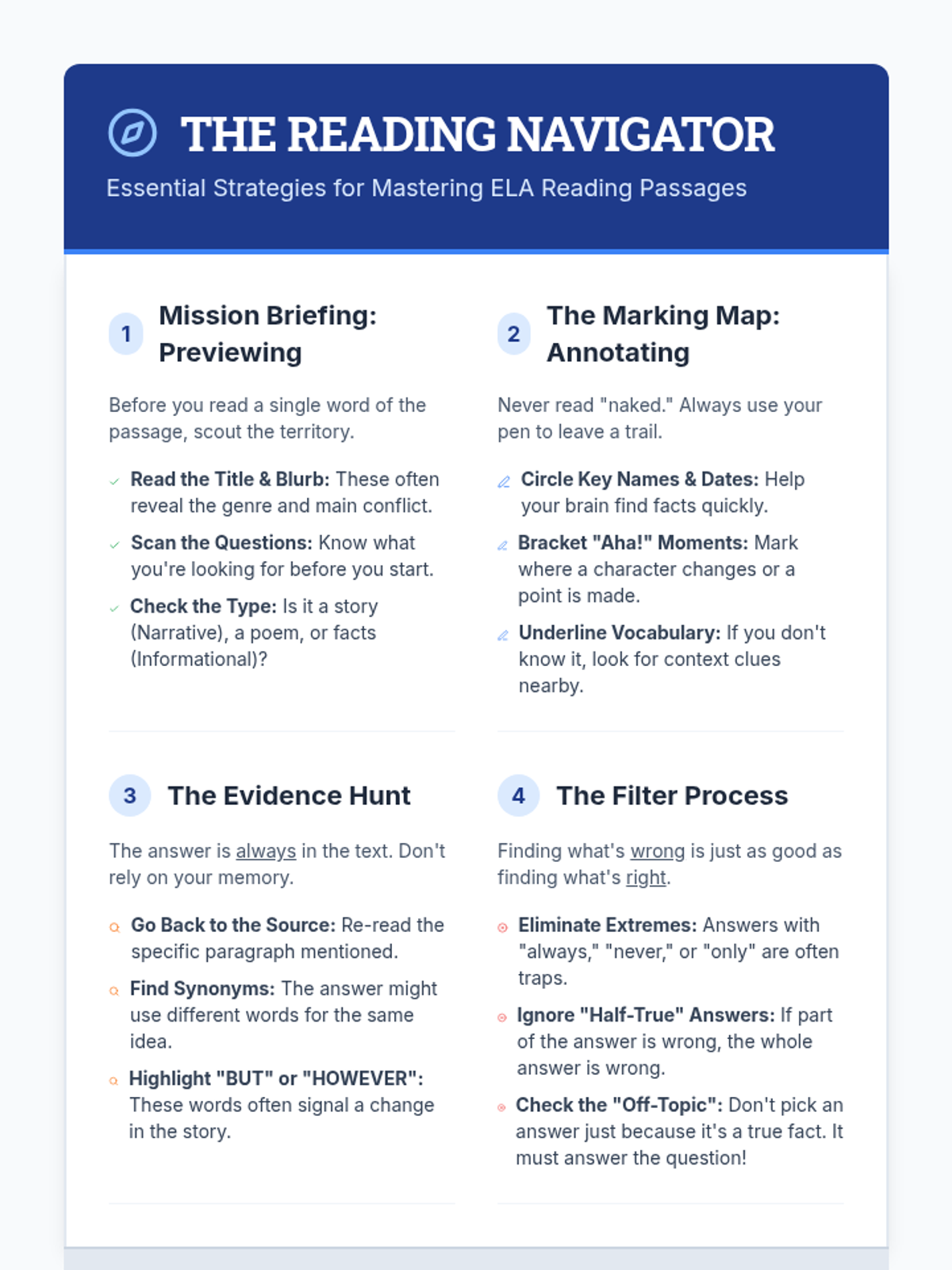
A middle school reading practice lesson focused on evidence-based justification. Students learn to locate and cite specific text evidence before answering EOG-style multiple-choice questions.
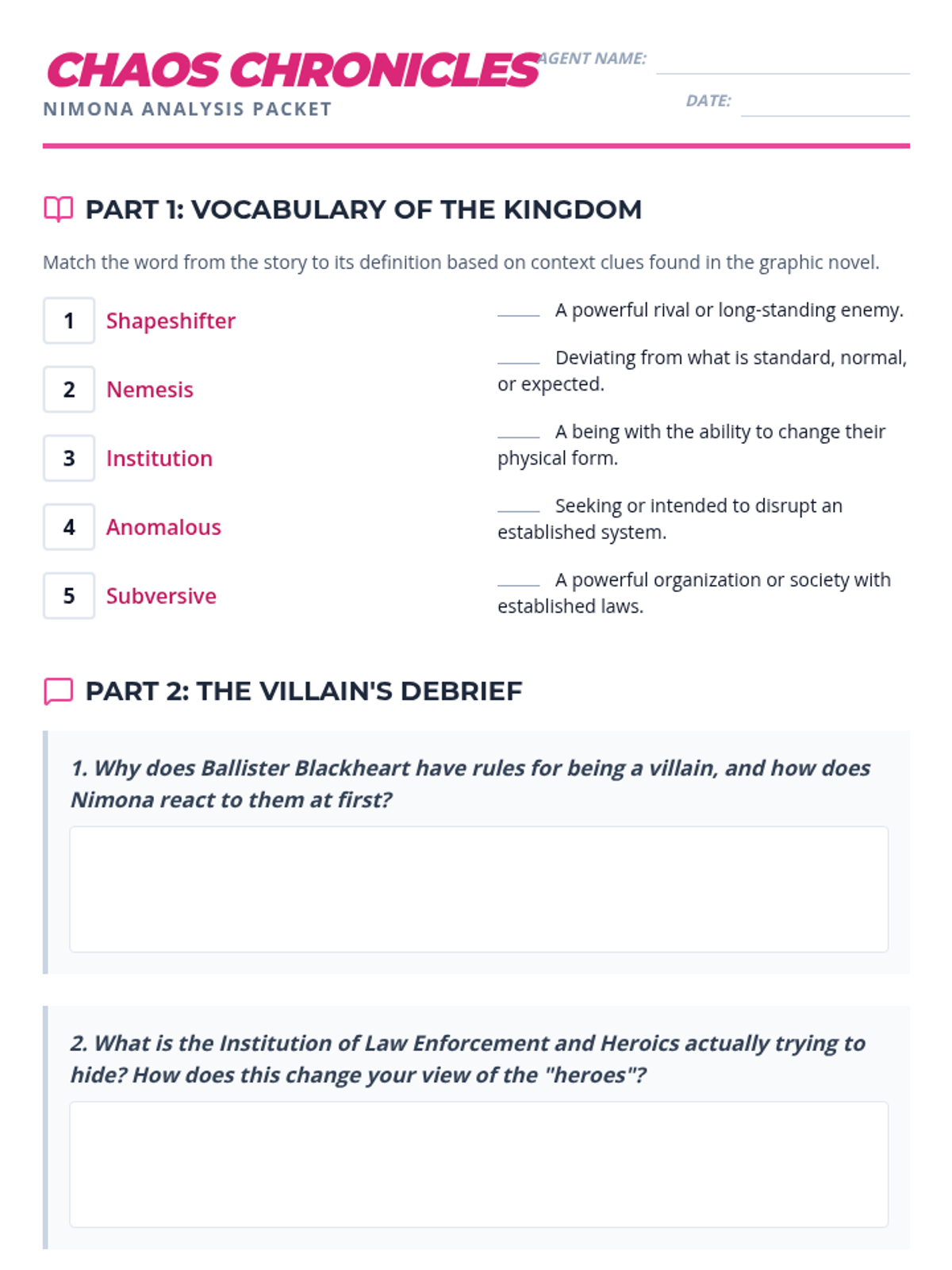
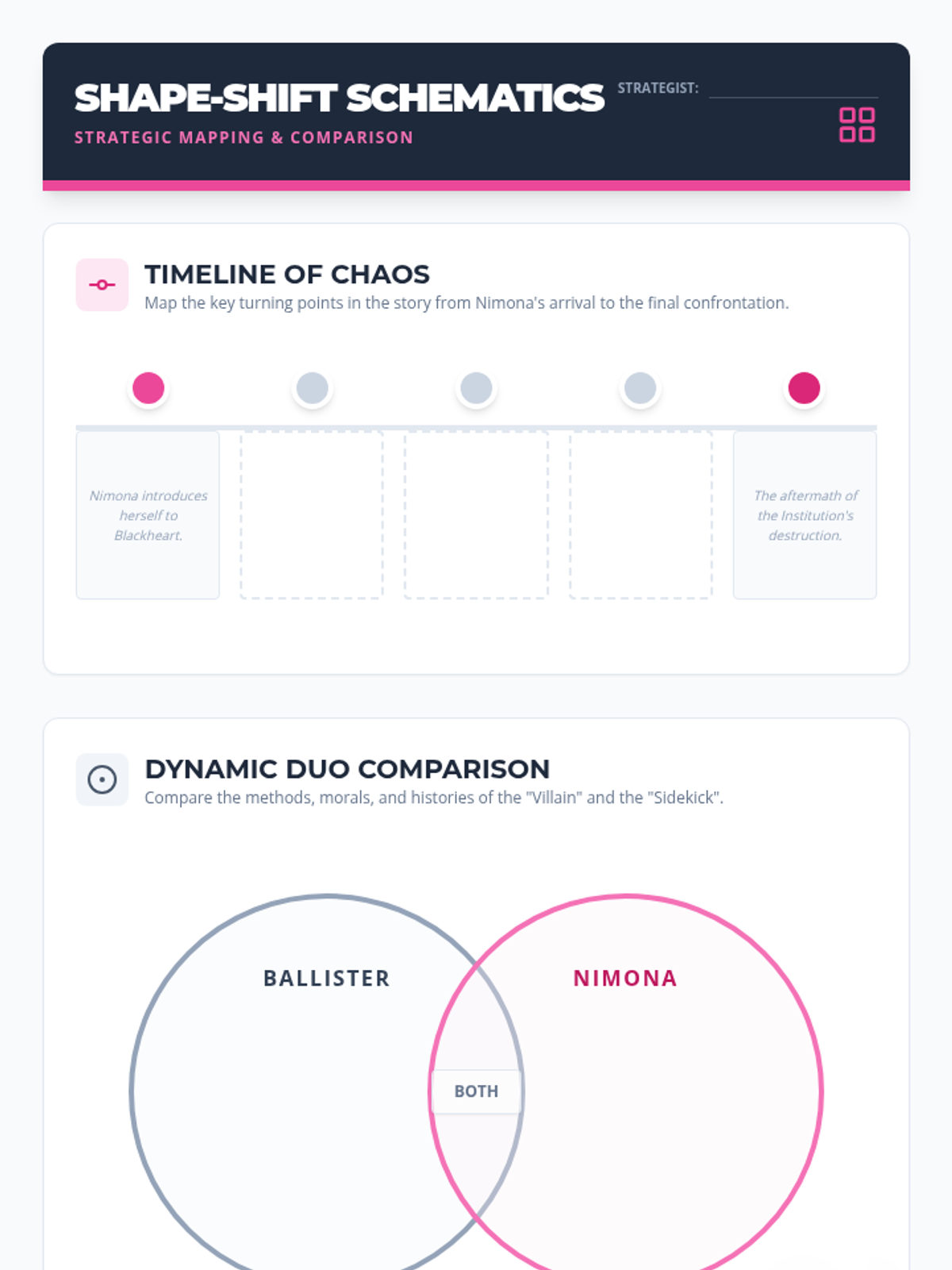
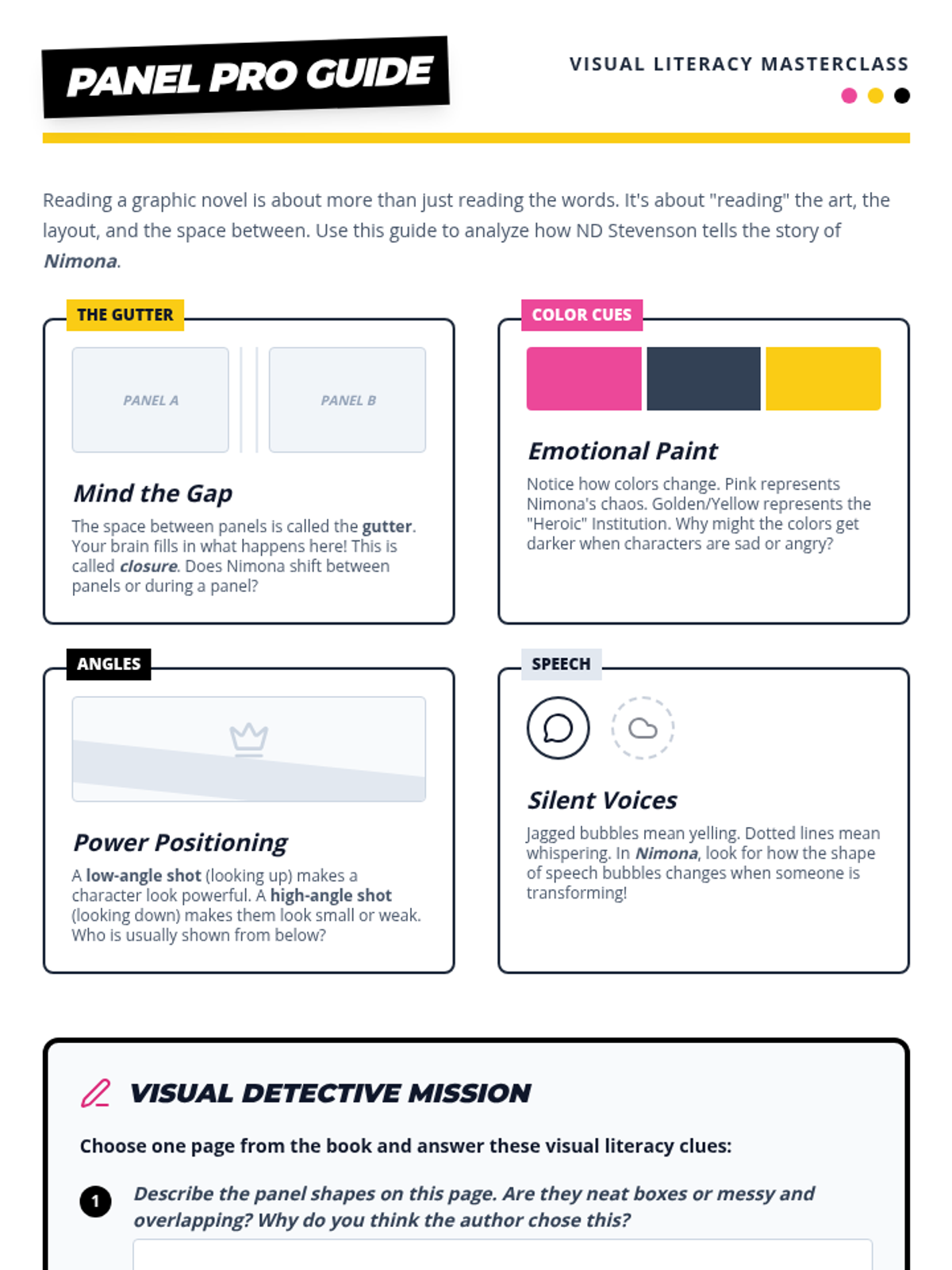
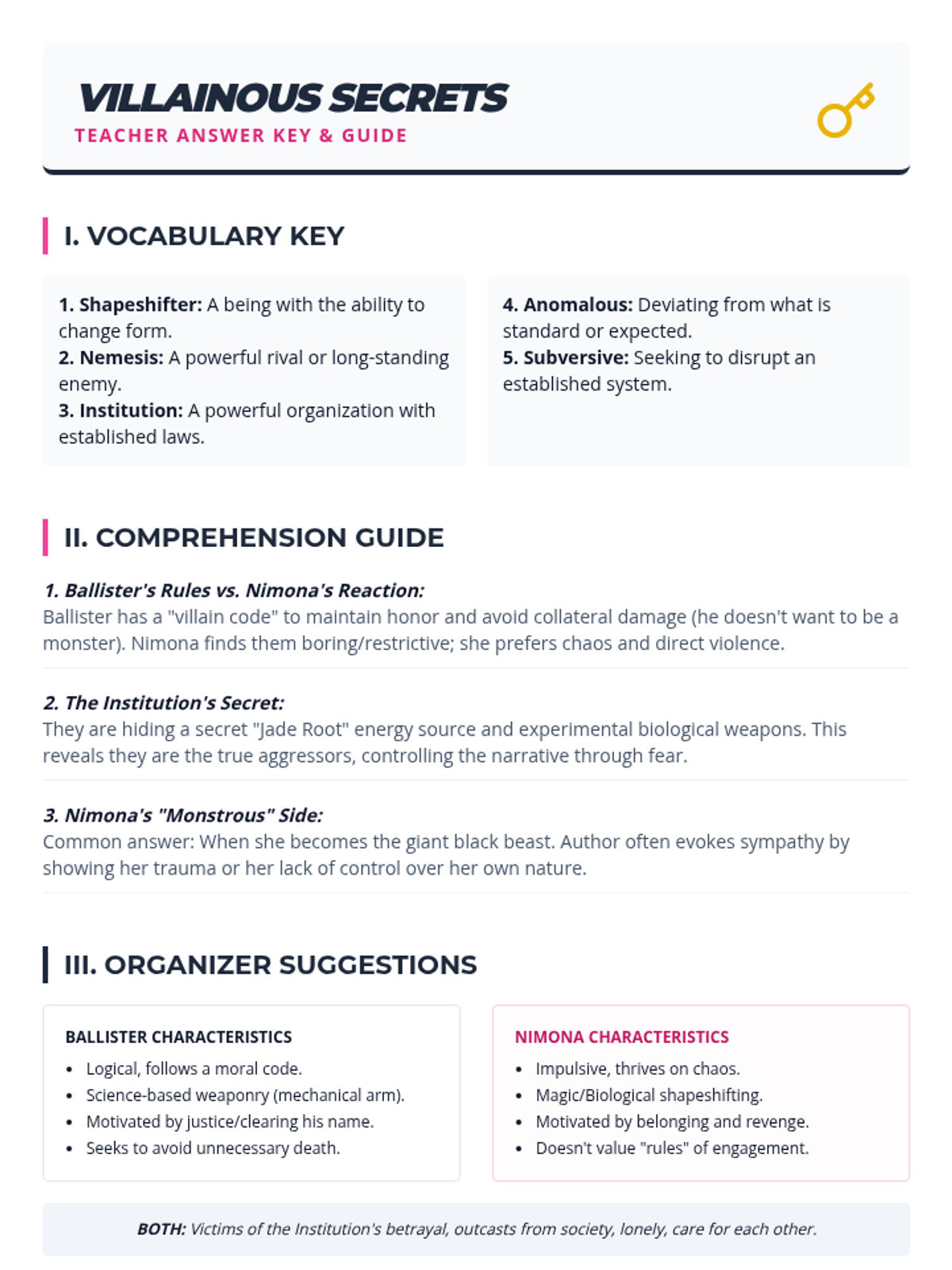
A deep dive into ND Stevenson's 'Nimona', focusing on character dynamics, plot structure, and the unique visual language of graphic novels.
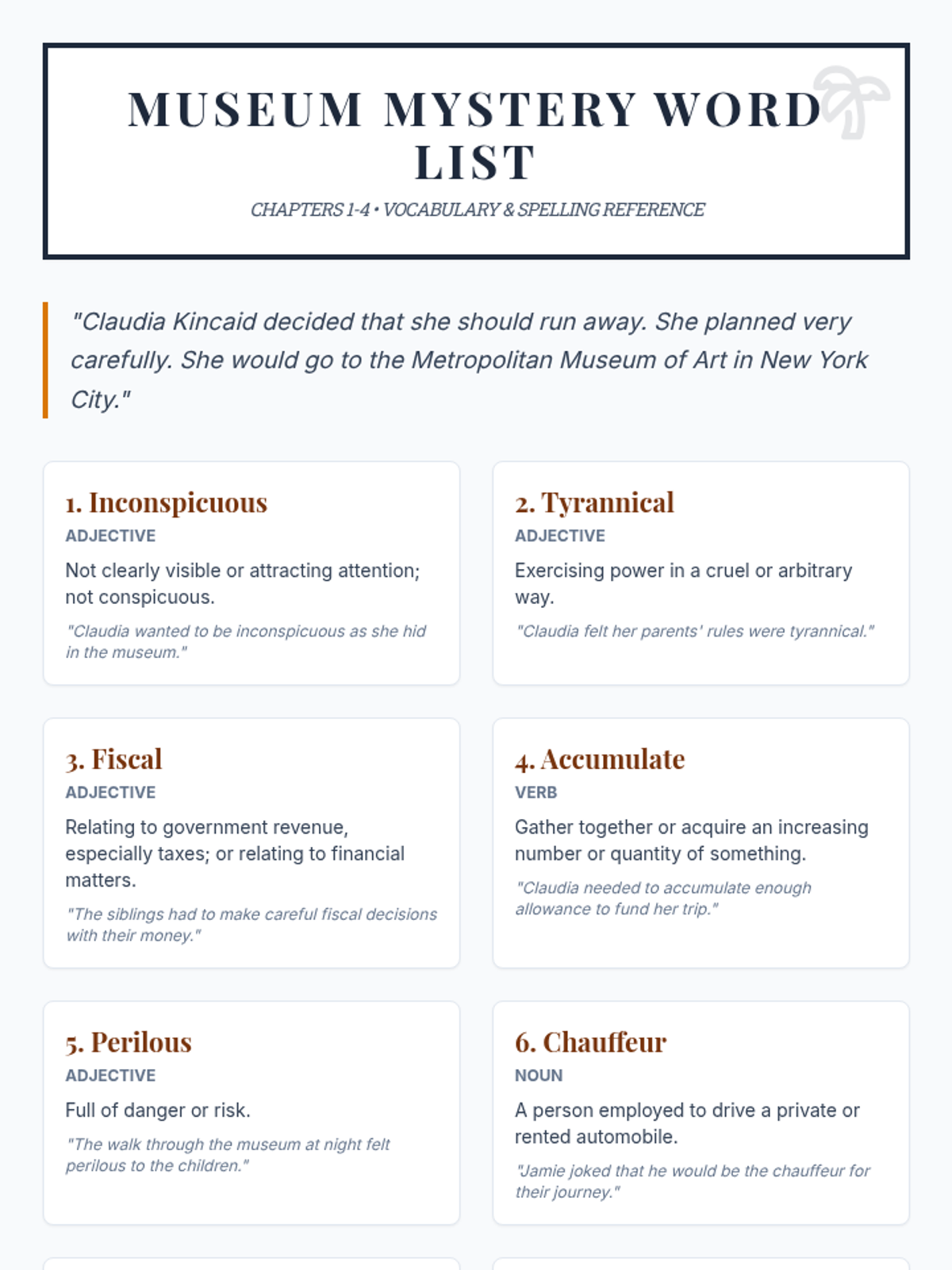
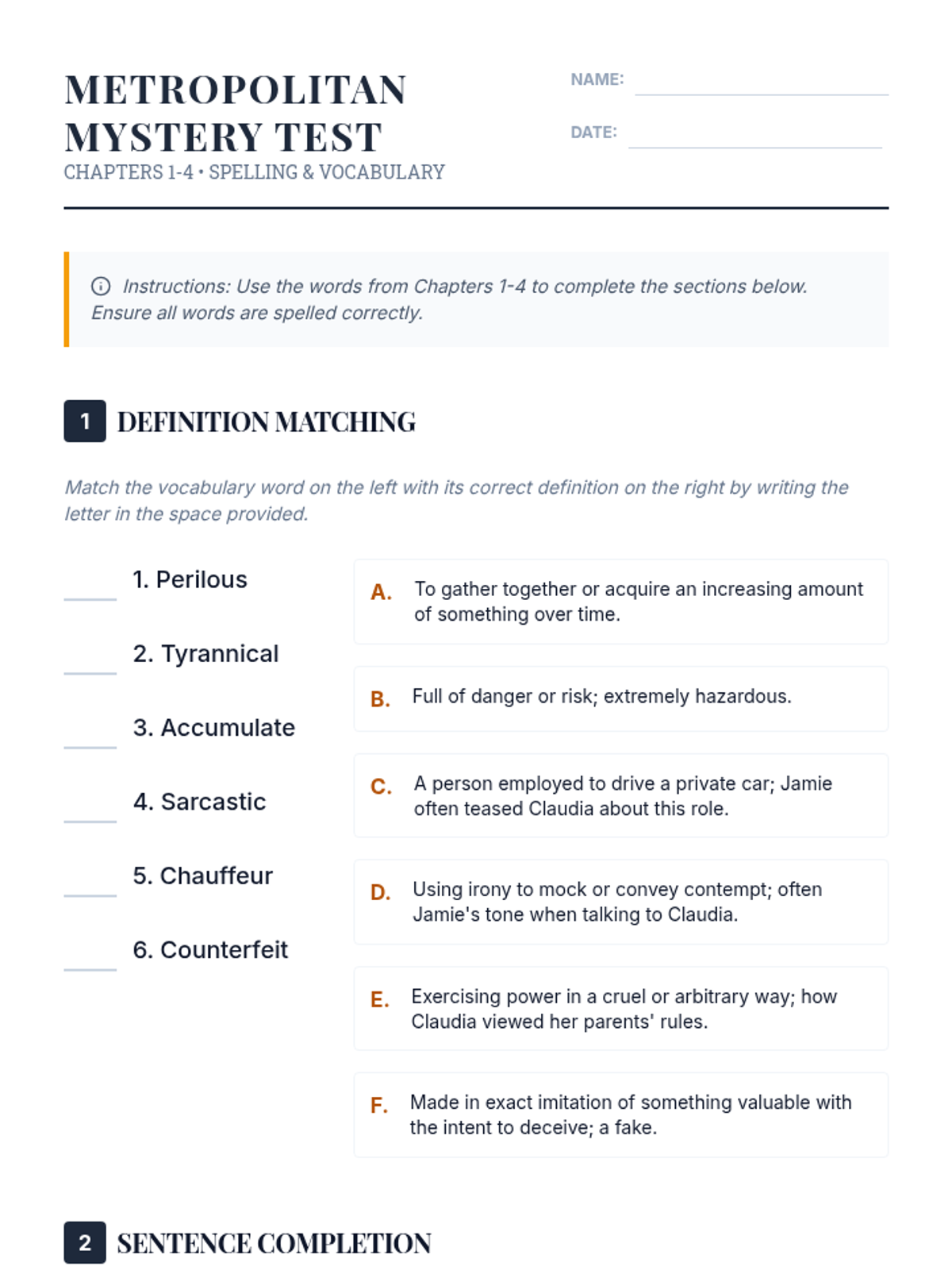
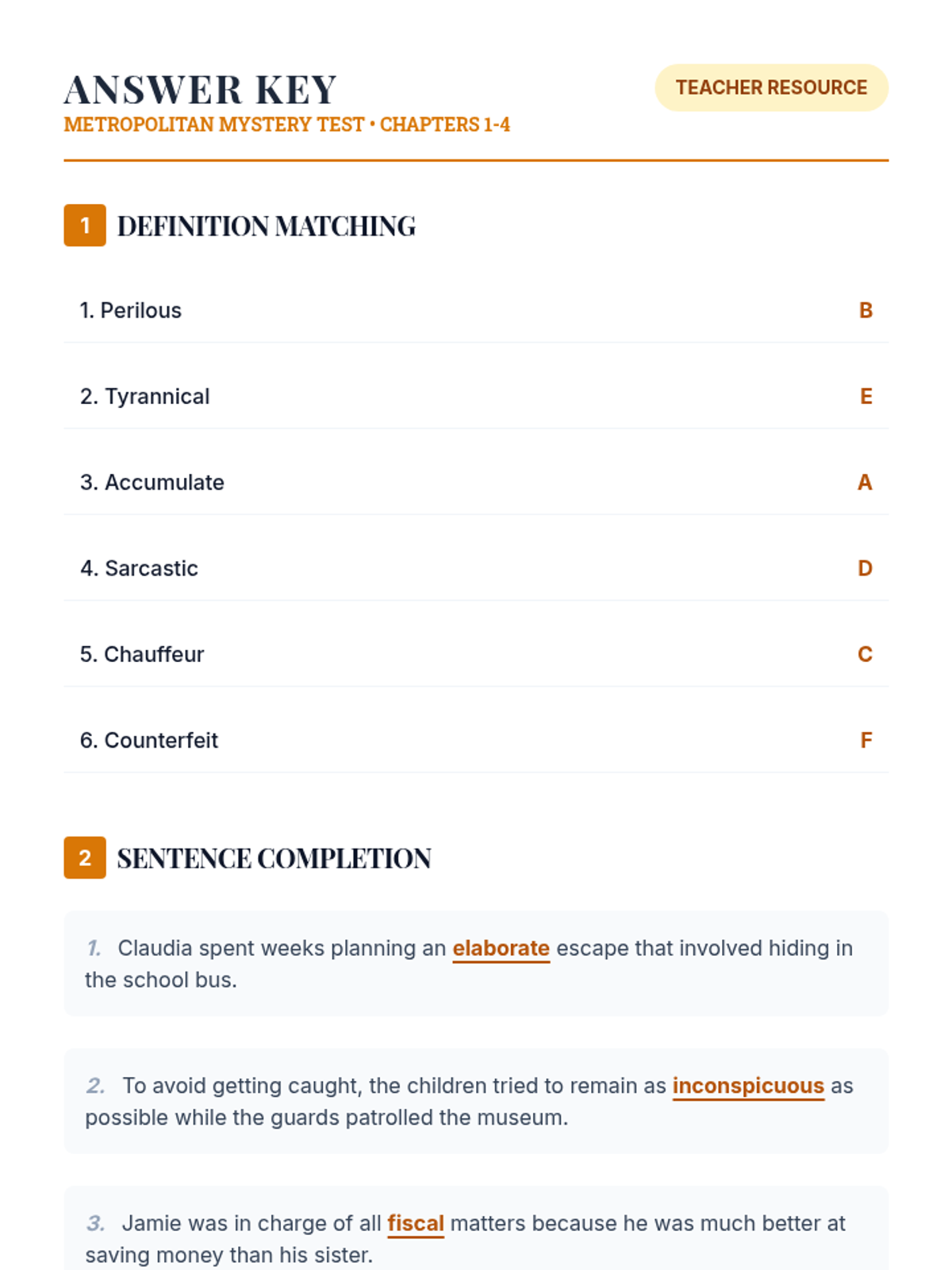
A spelling and vocabulary unit based on Chapters 1-4 of 'From the Mixed-Up Files of Mrs. Basil E. Frankweiler', focusing on Claudia and Jamie's secret adventure in the Metropolitan Museum of Art.
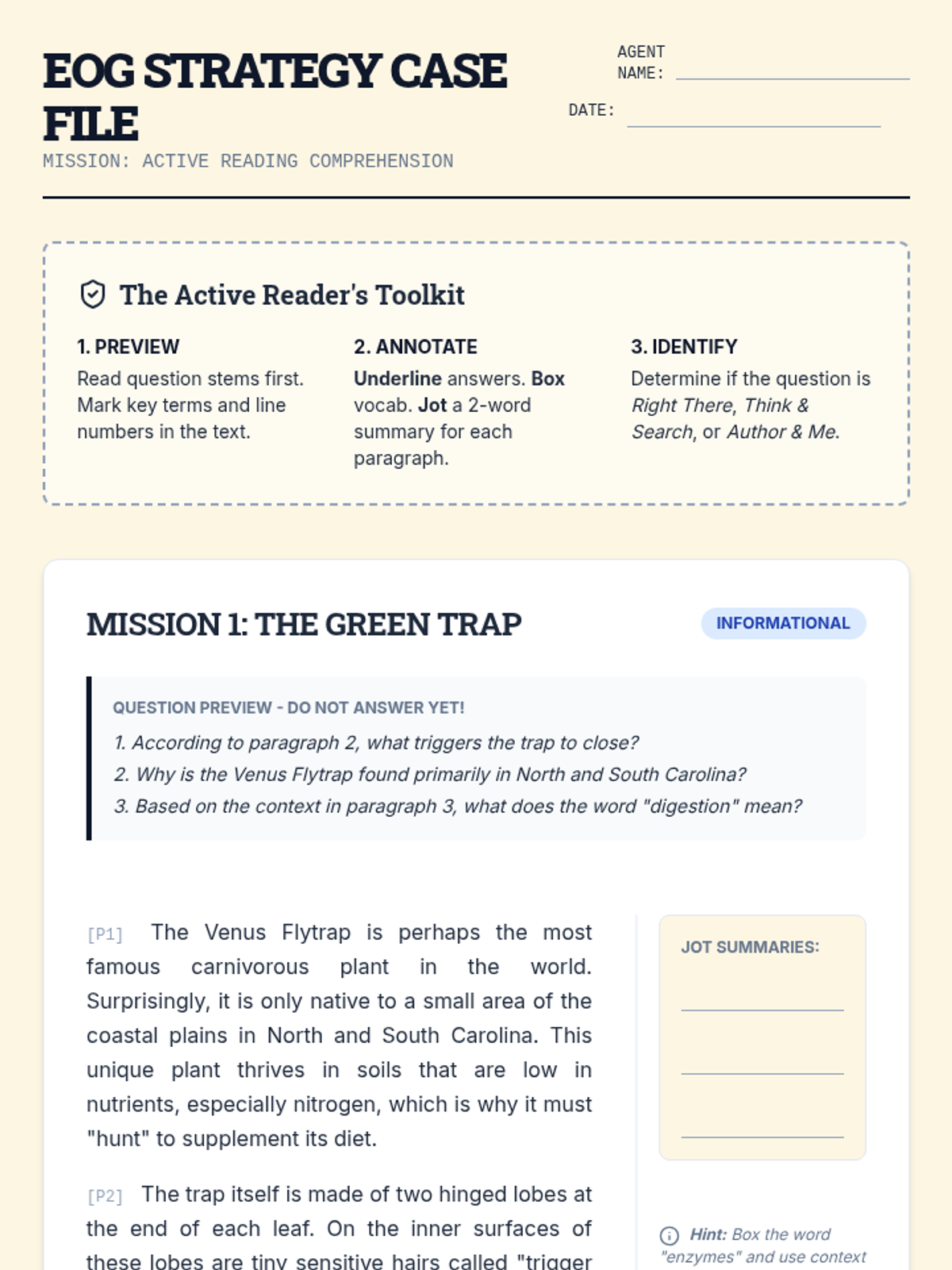
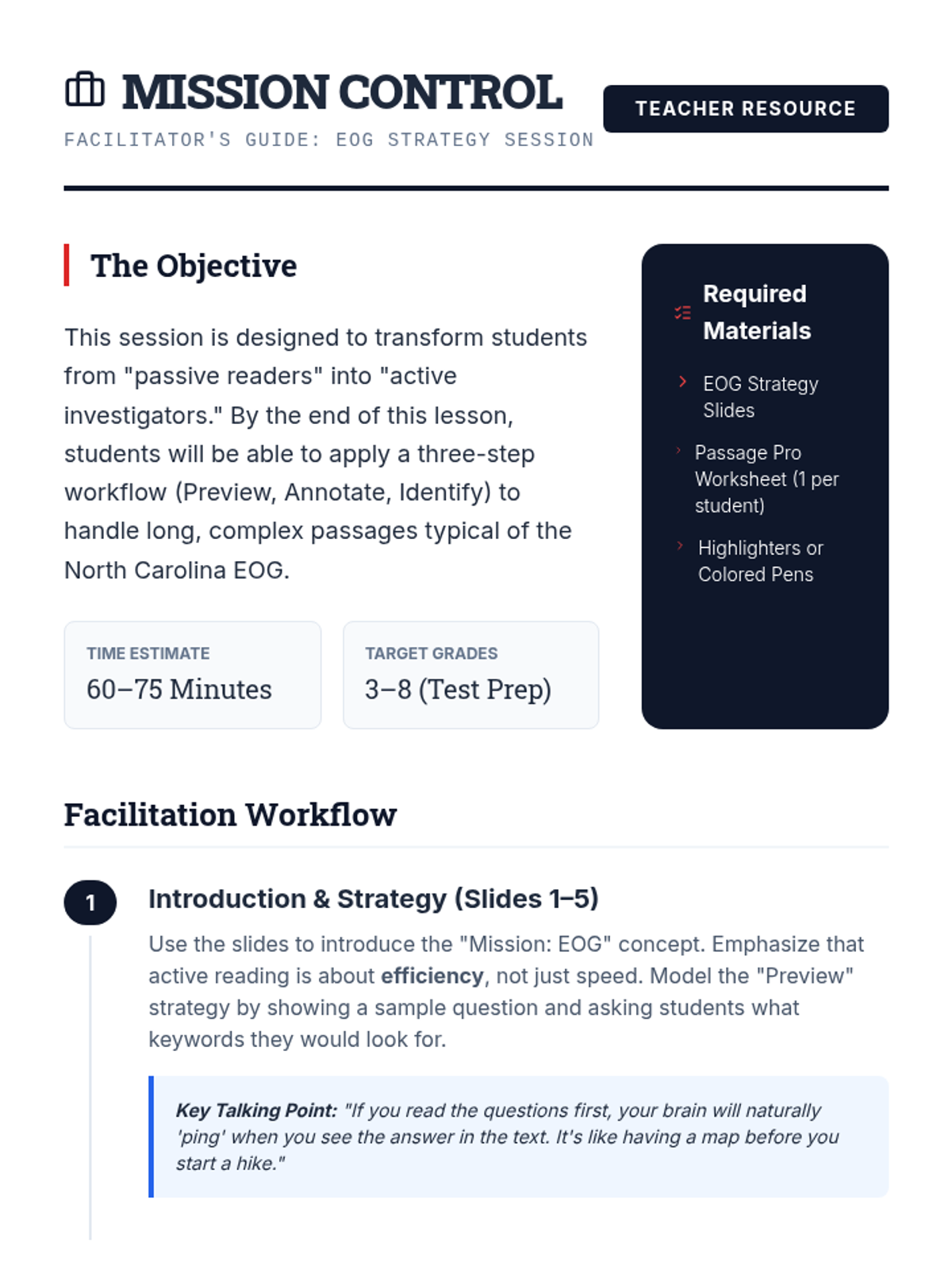
A comprehensive test-prep lesson focusing on active reading strategies for North Carolina EOG-style long passages, featuring question previewing, annotation techniques, and question type identification.
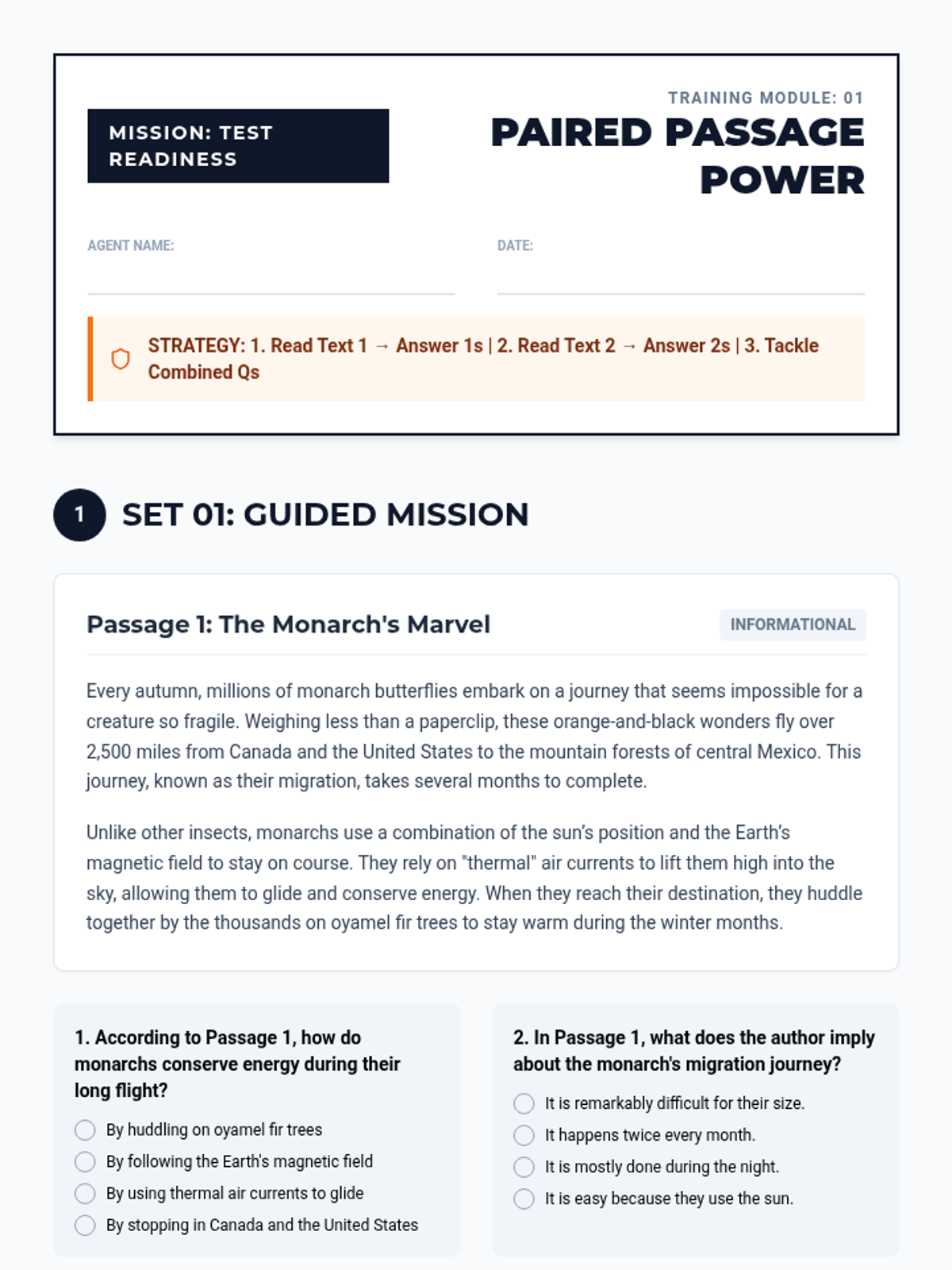
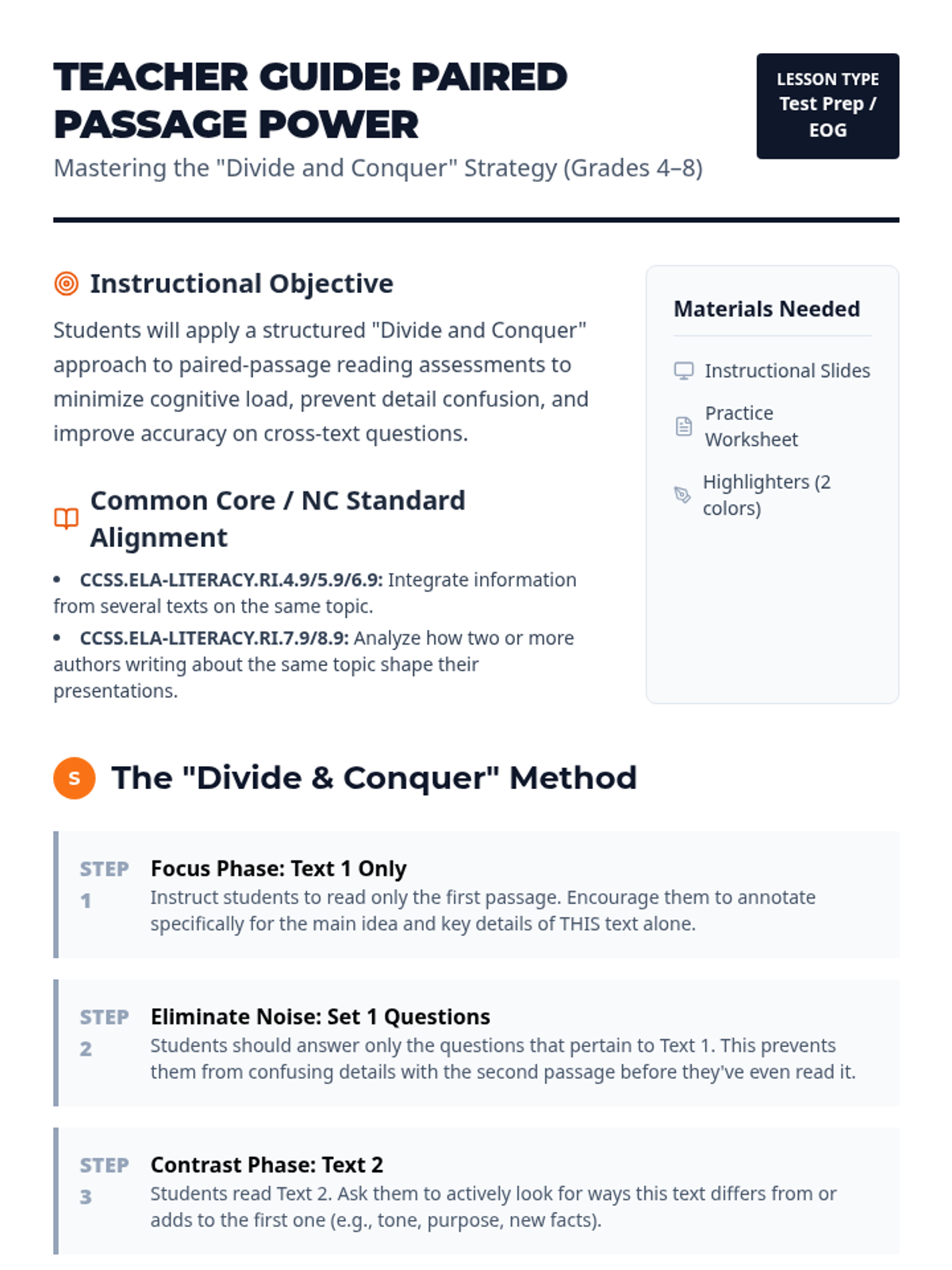
A test-prep lesson focusing on the 'Divide and Conquer' strategy for paired passages, specifically designed for NC EOG preparation for grades 4-8.
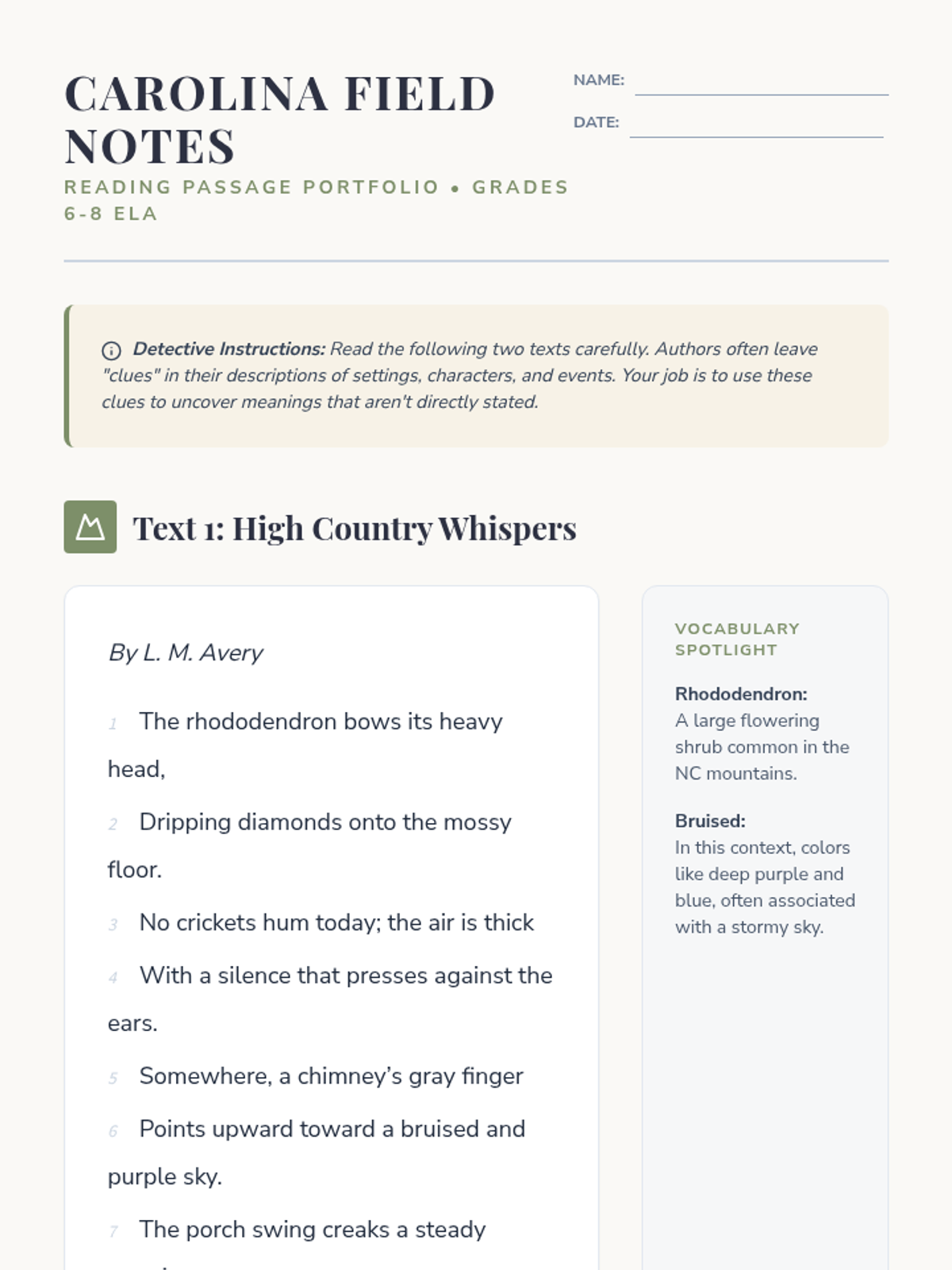
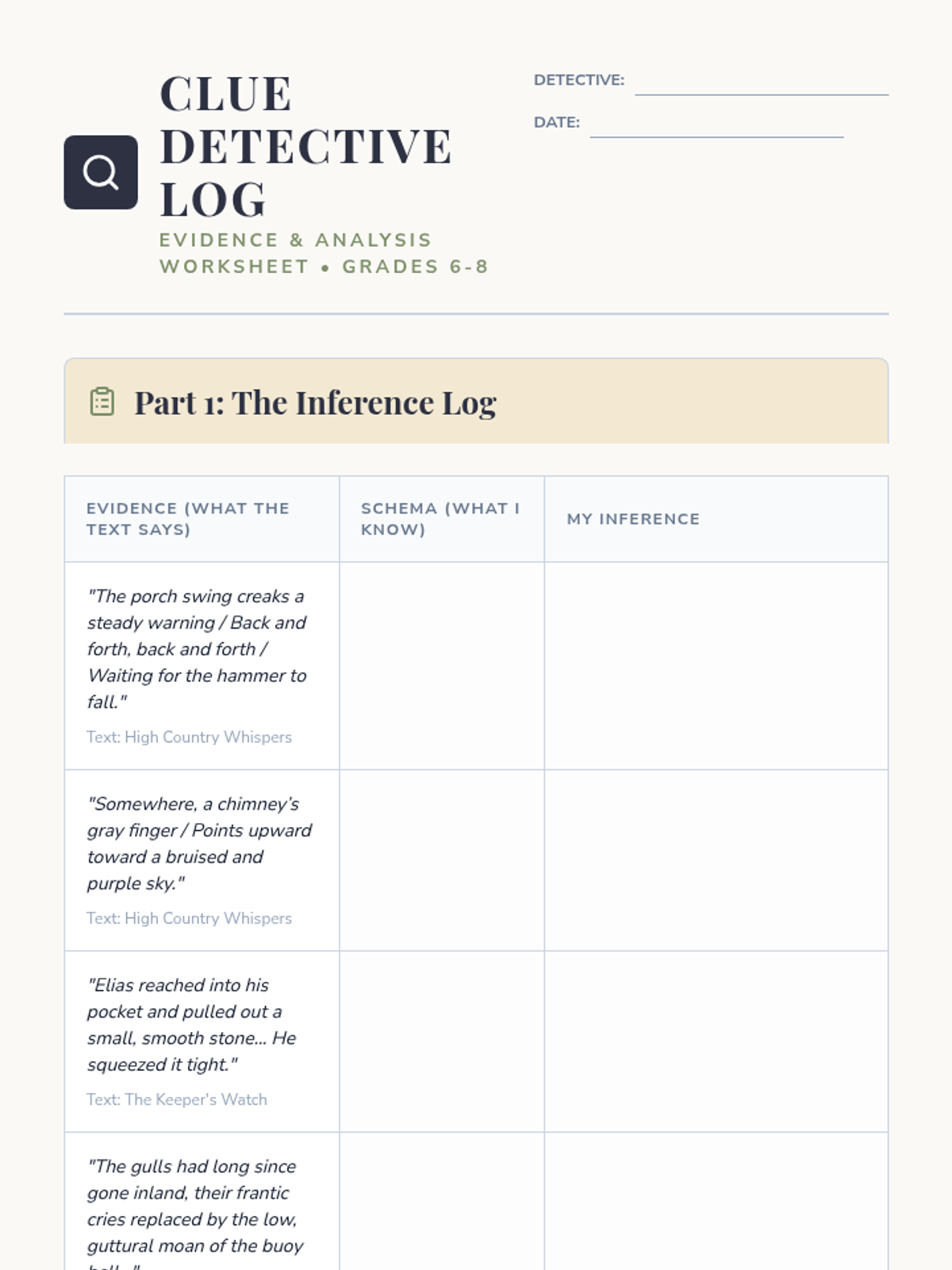
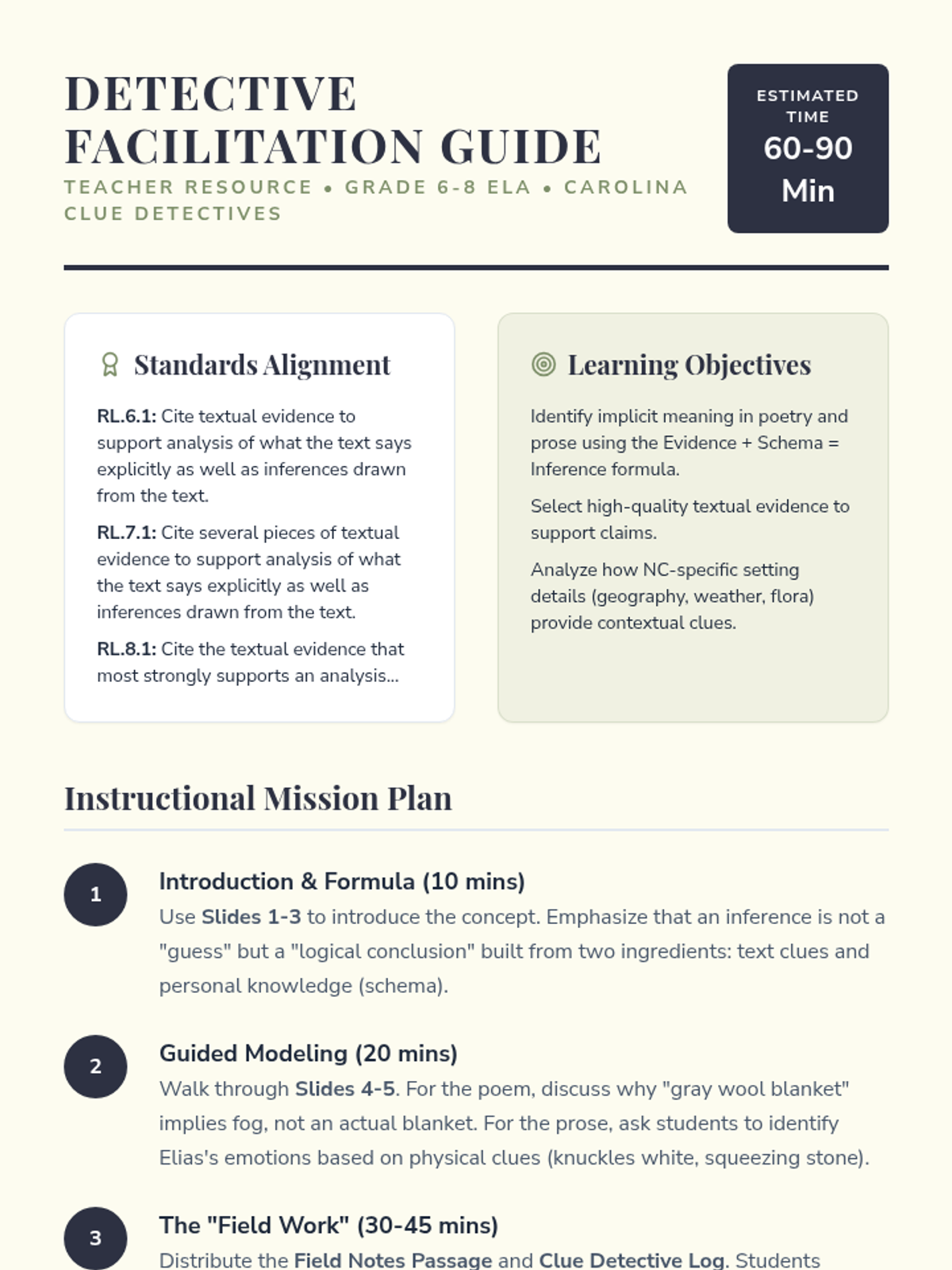
A comprehensive Grades 6-8 ELA lesson focused on mastering inference skills using North Carolina-themed poetry and prose, featuring explicit instruction and EOG-style practice.
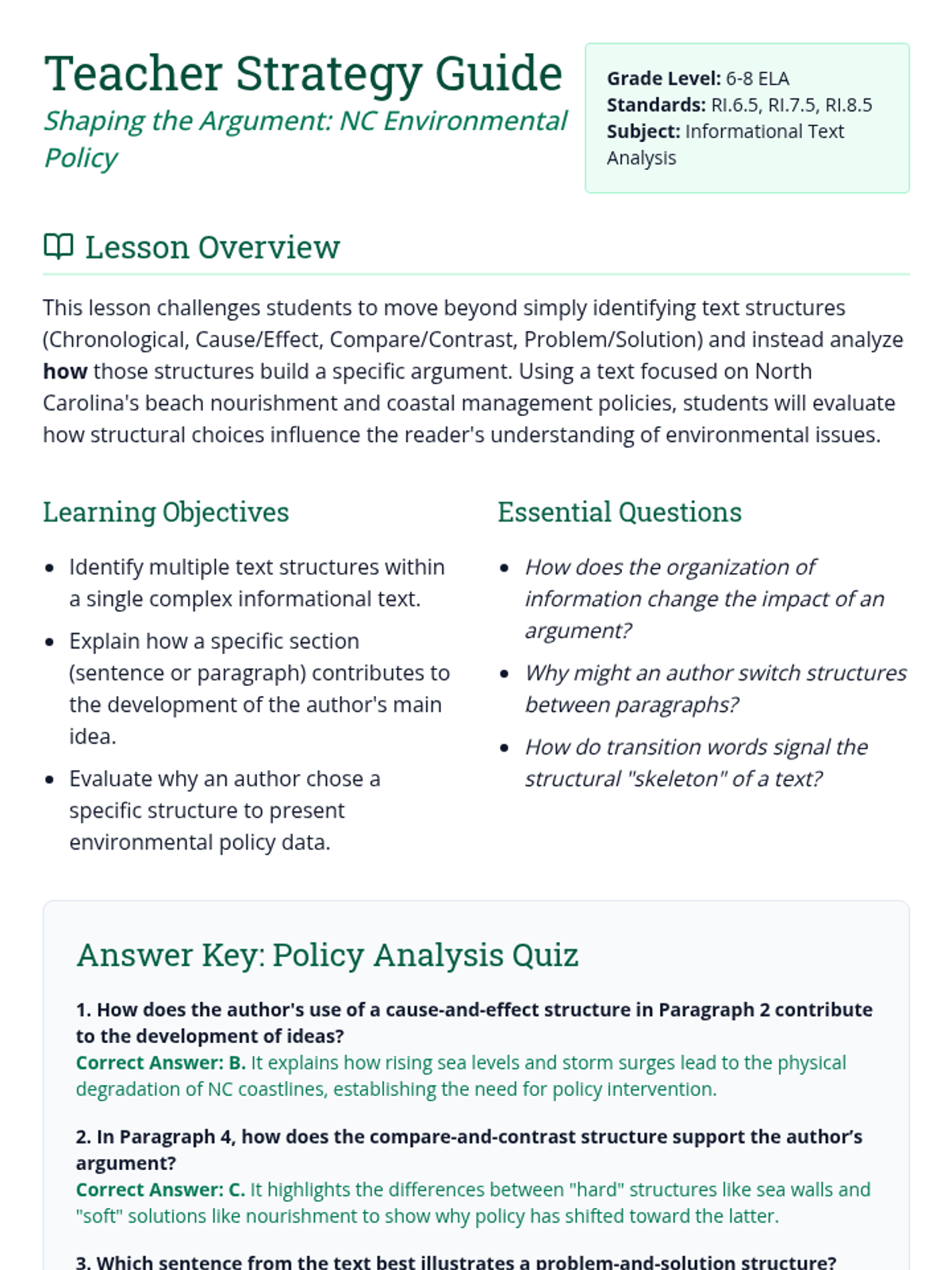
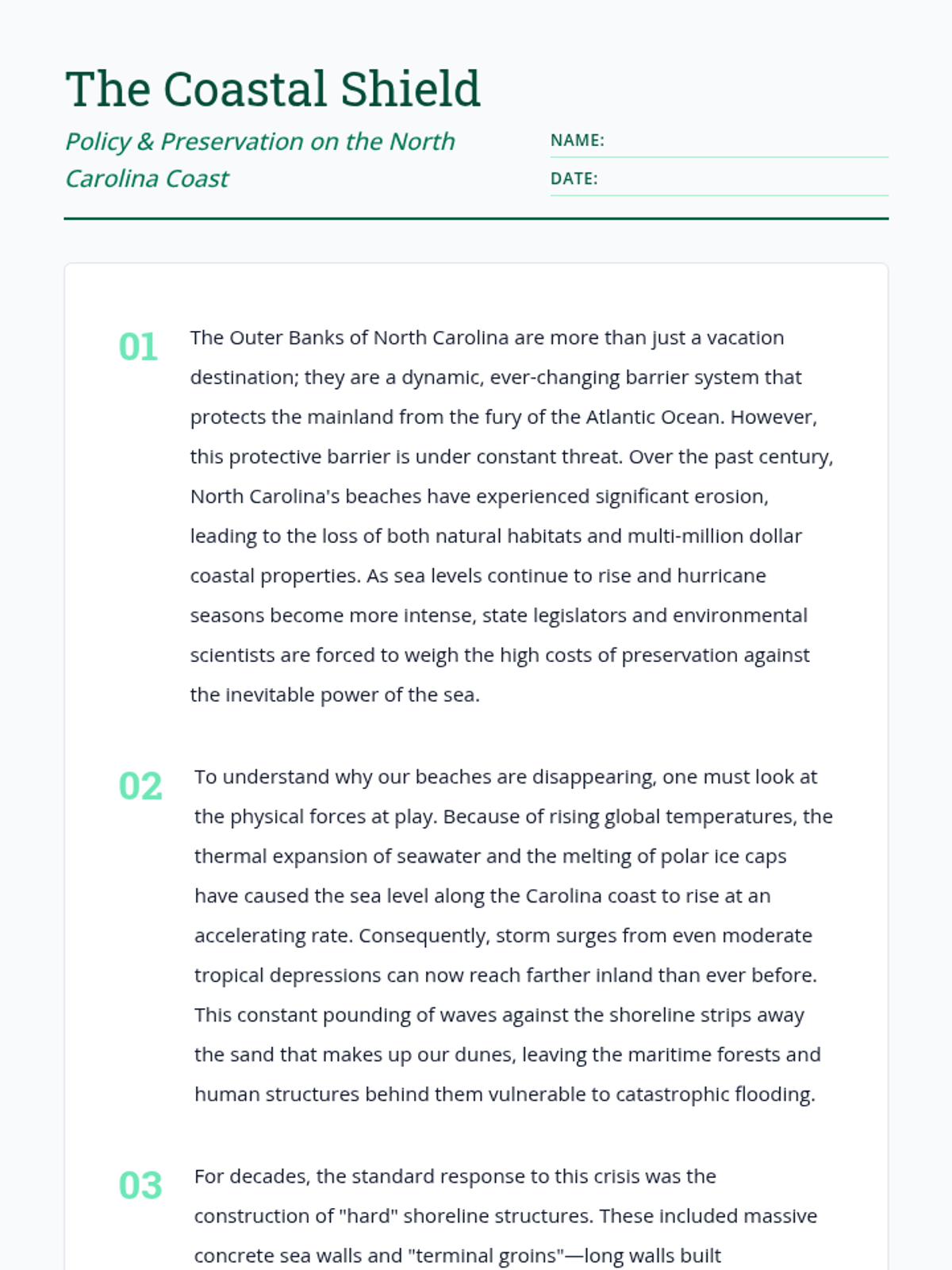
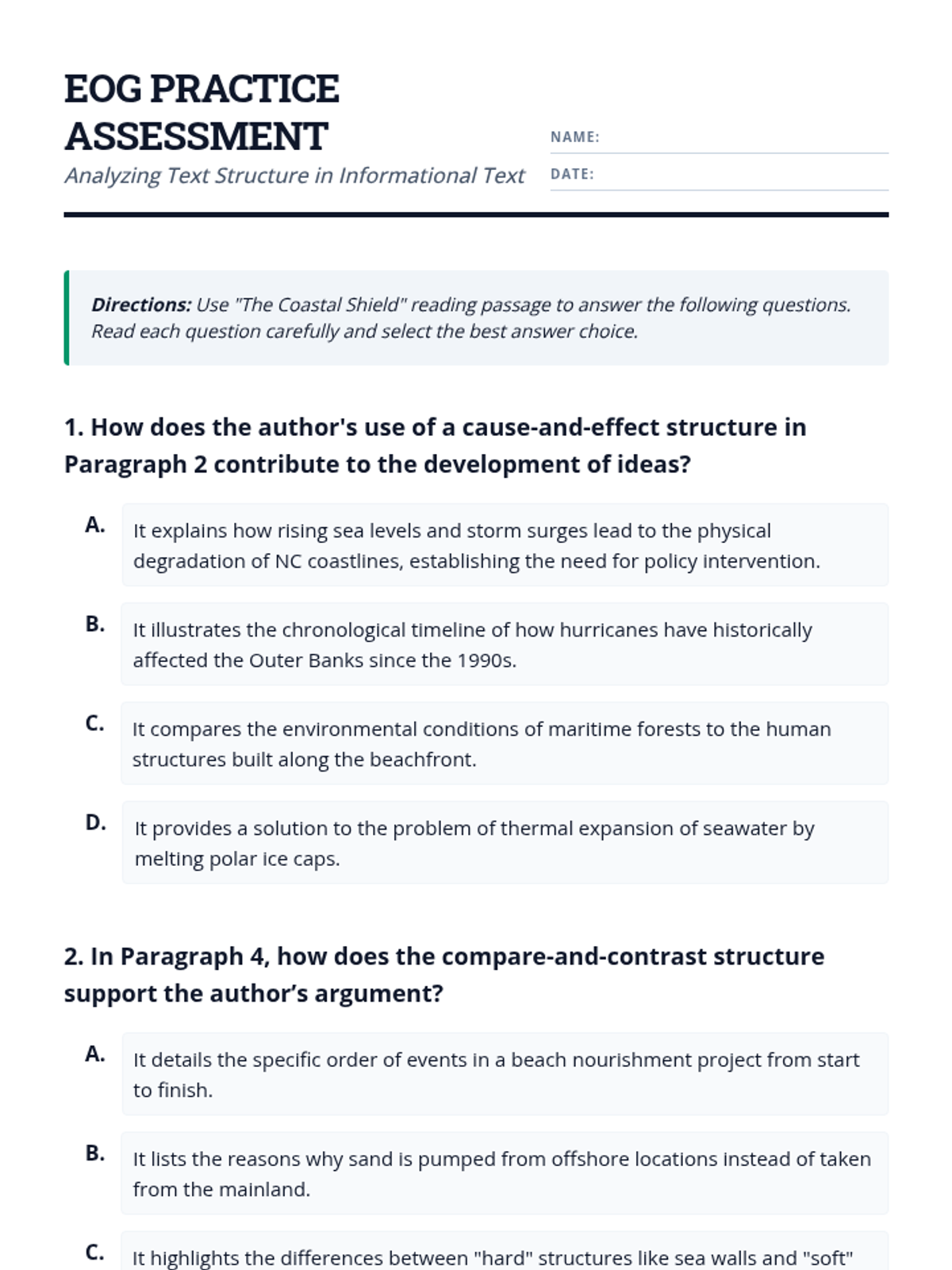
Students analyze how specific text structures in a passage about North Carolina's coastal erosion policies shape the author's argument and contribute to overall meaning.
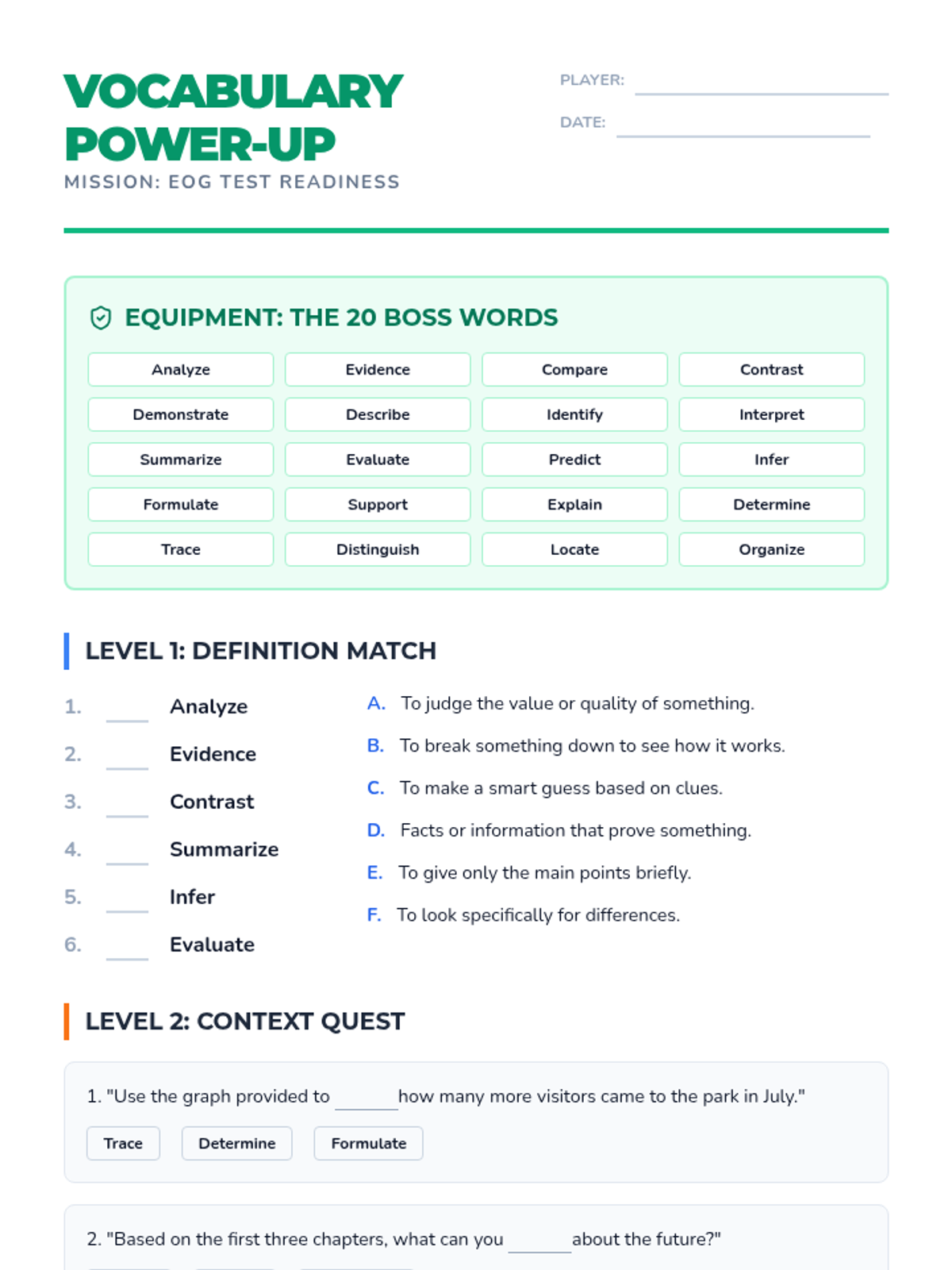
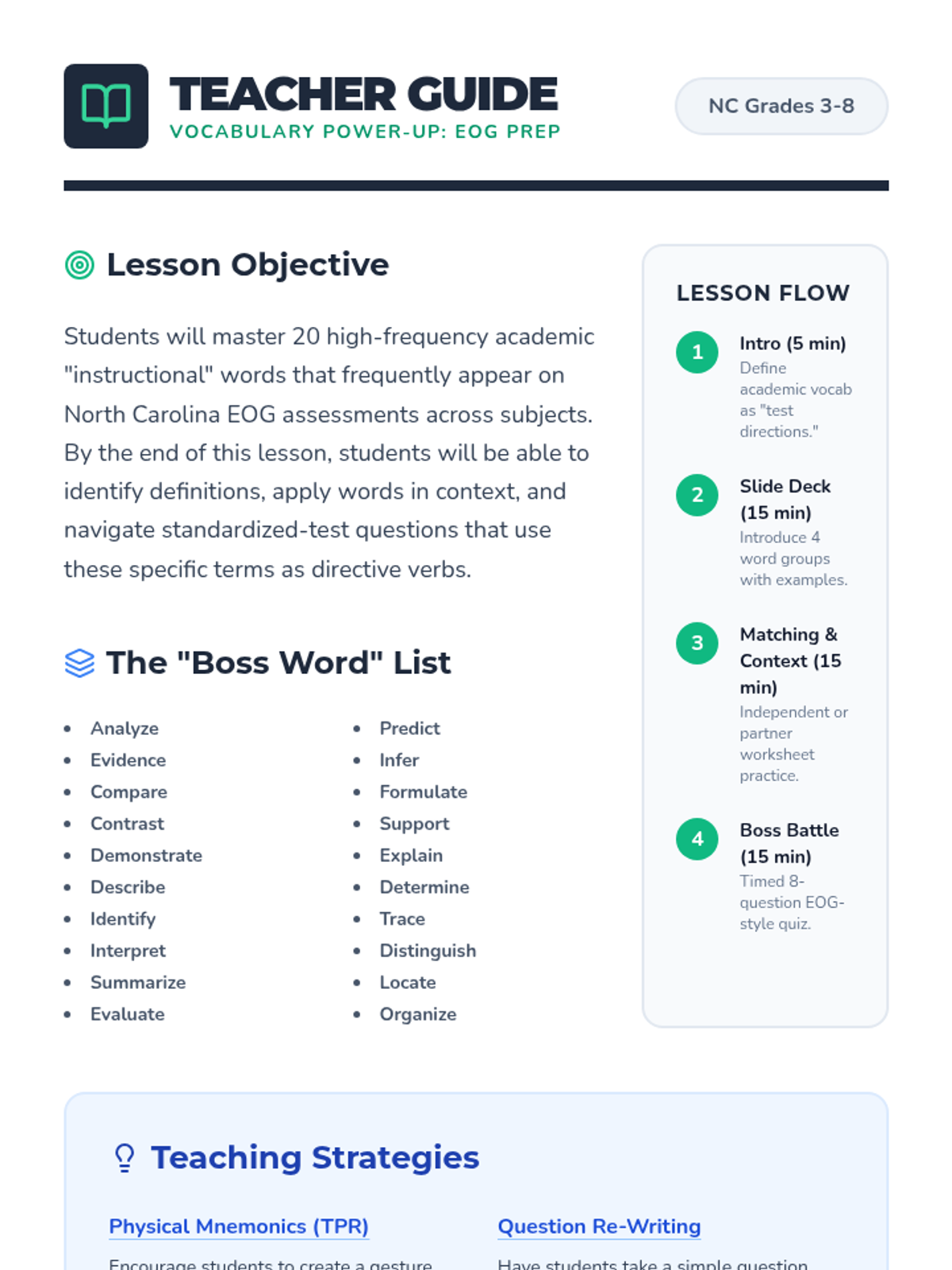
A high-impact vocabulary lesson focused on 20 essential academic terms frequently found on NC EOG assessments. Students will engage with definitions, context clues, and standardized-test-style questions to build 'test-day' confidence.
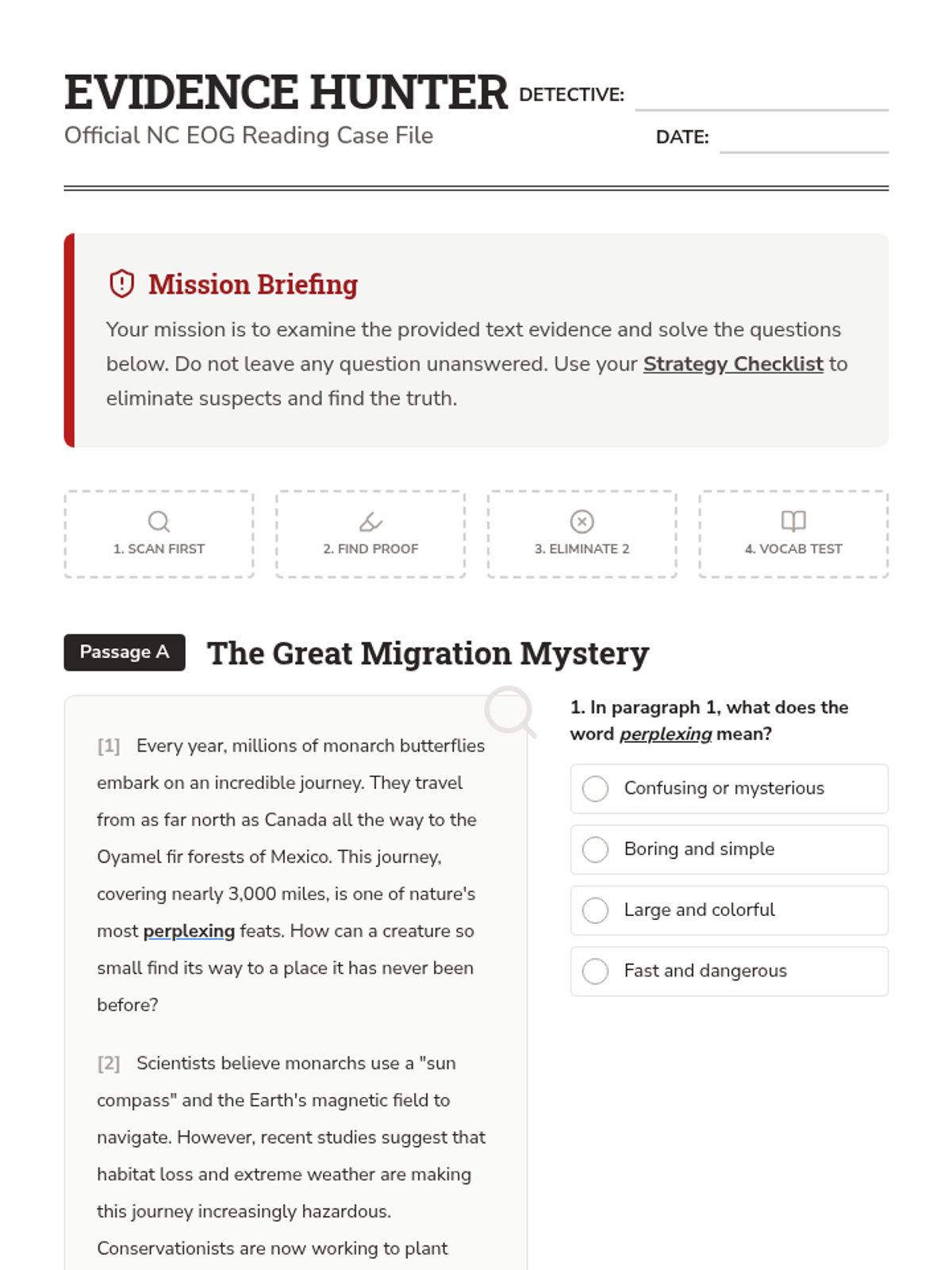
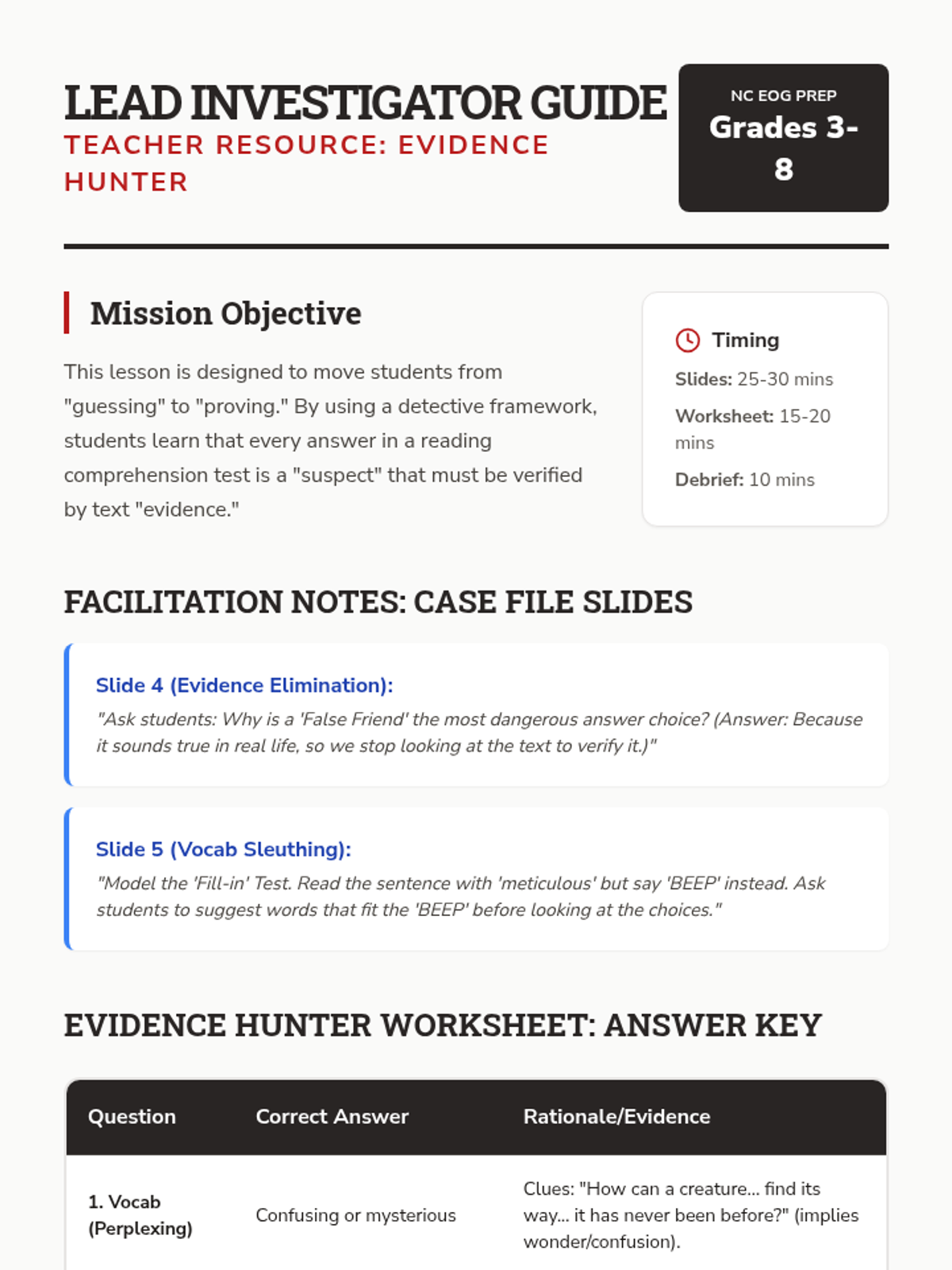
A comprehensive NC EOG preparation lesson focusing on reading comprehension strategies. Students learn to navigate passage-based questions, use text evidence for elimination, master vocabulary-in-context, and compare multiple texts through detective-themed instructional materials and think-aloud practice.
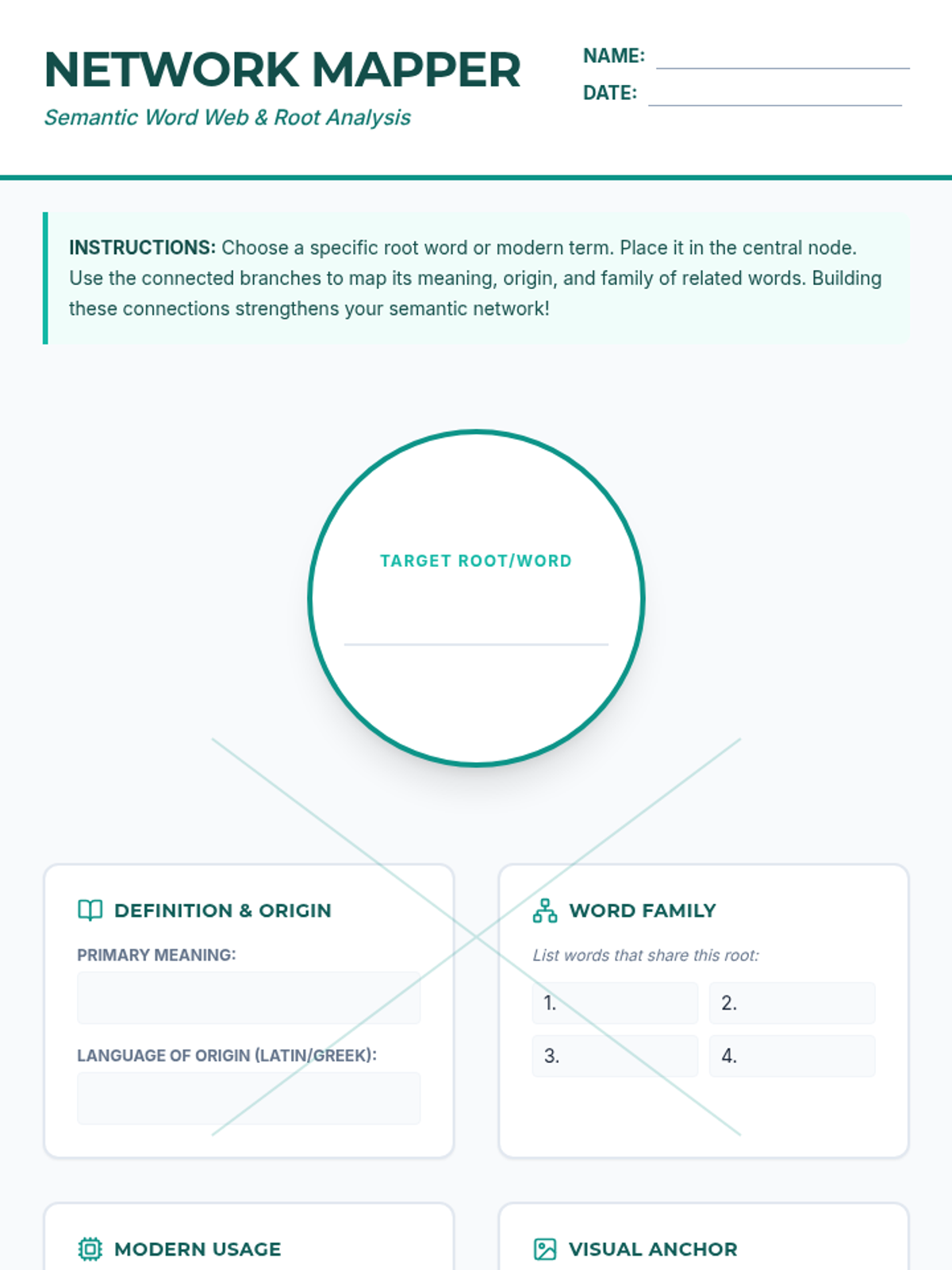
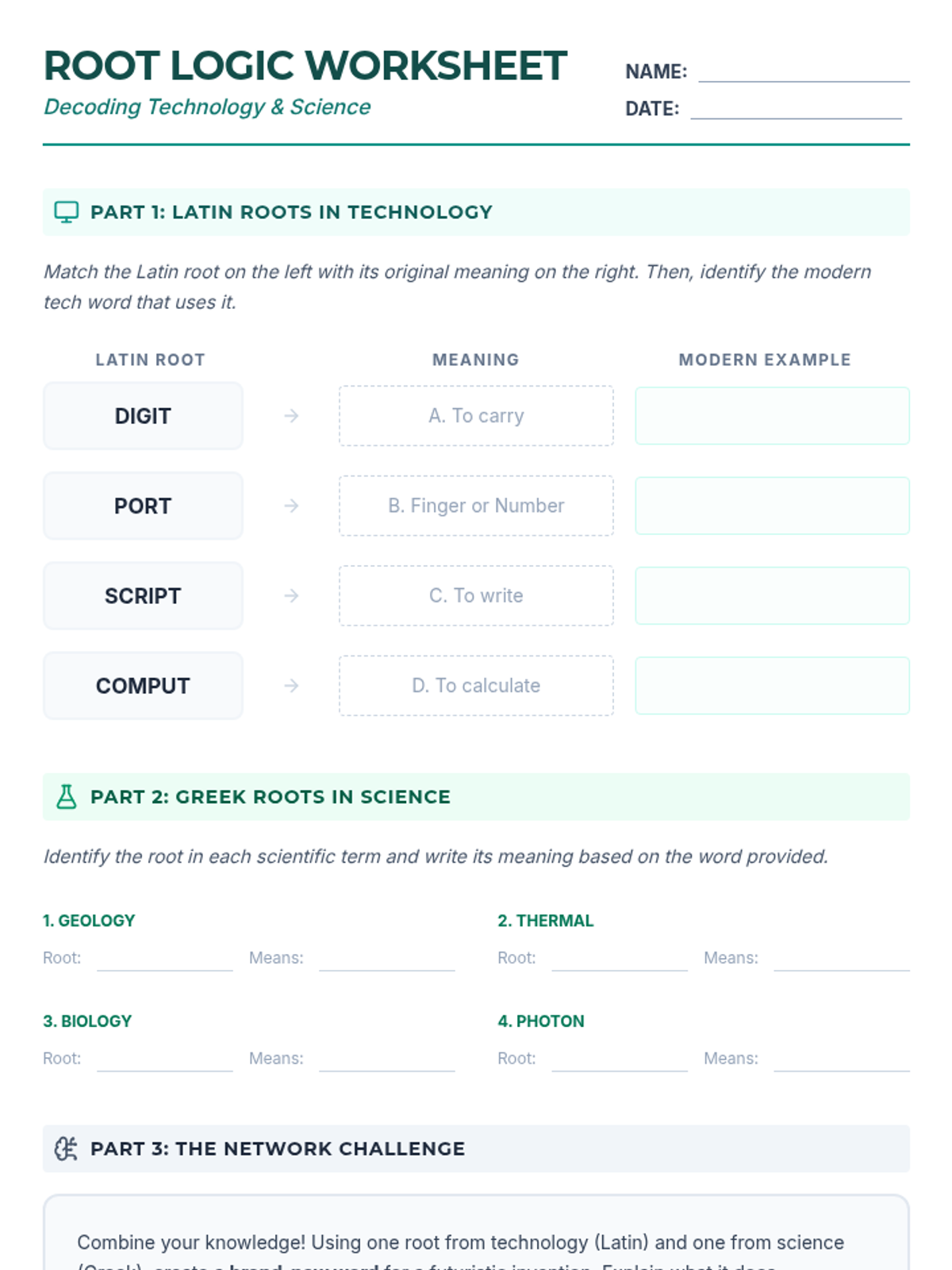
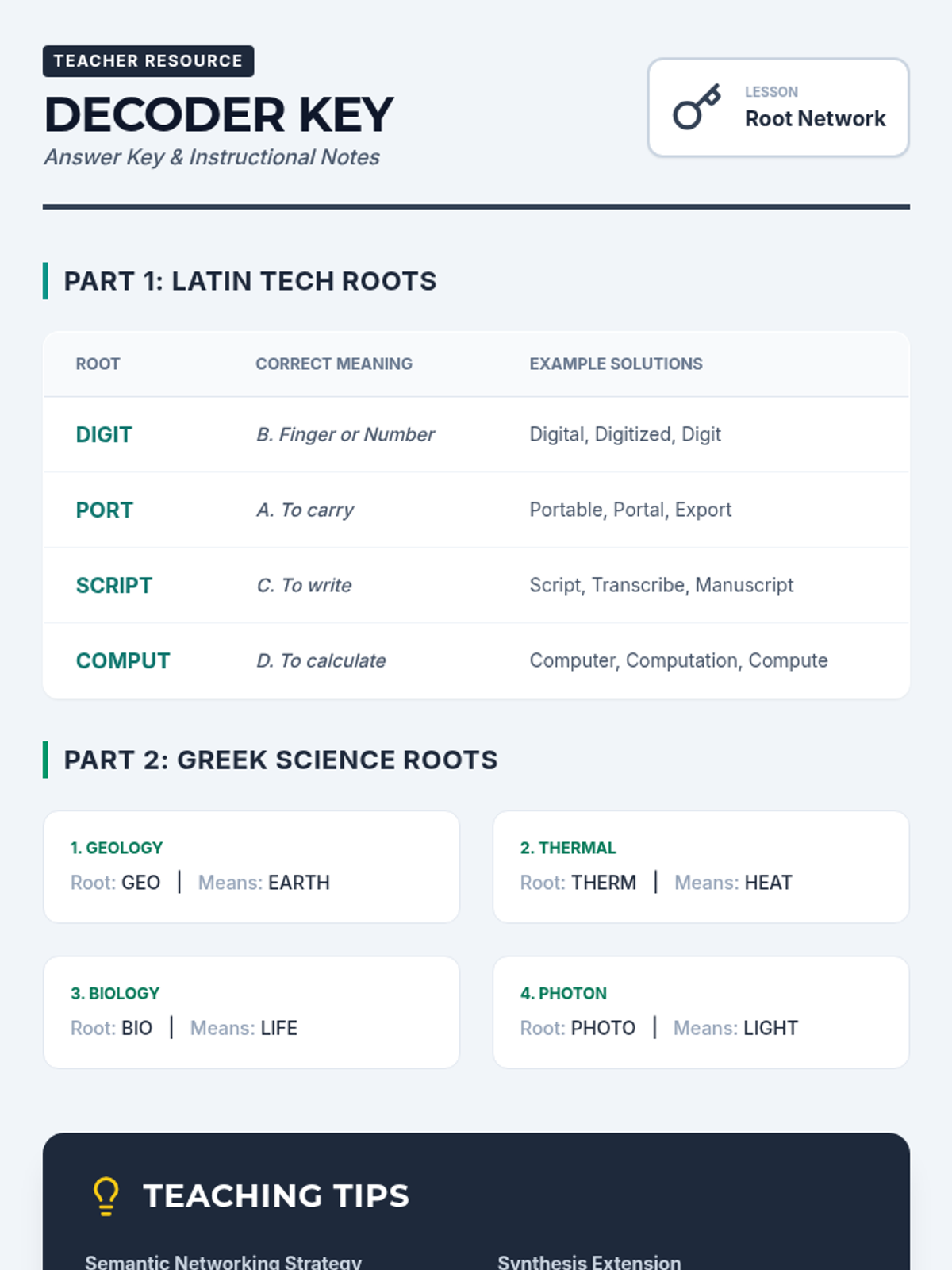
A lesson focused on building semantic networks by exploring Latin roots in technology and Greek roots in science, helping students decode modern terminology.
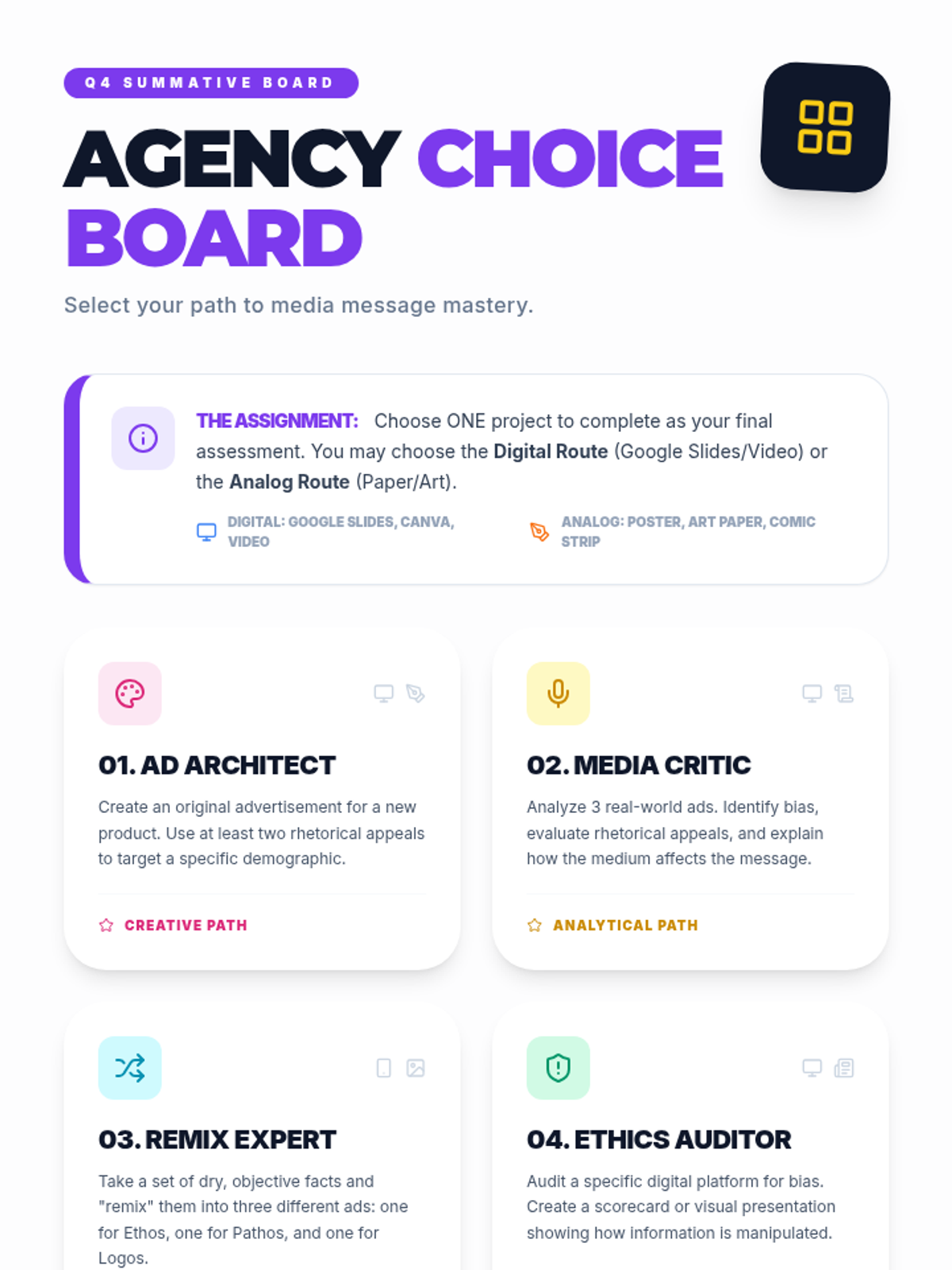
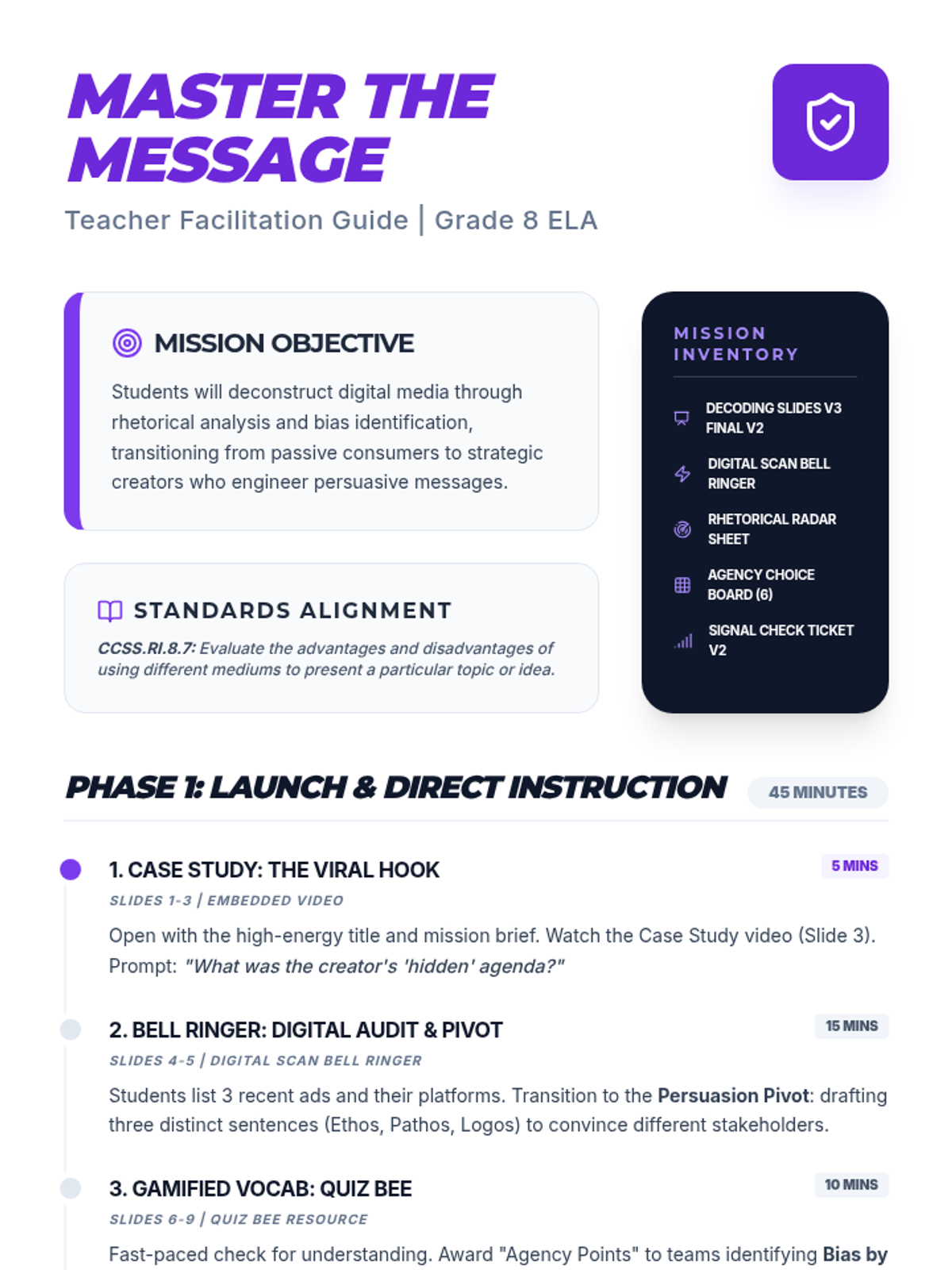
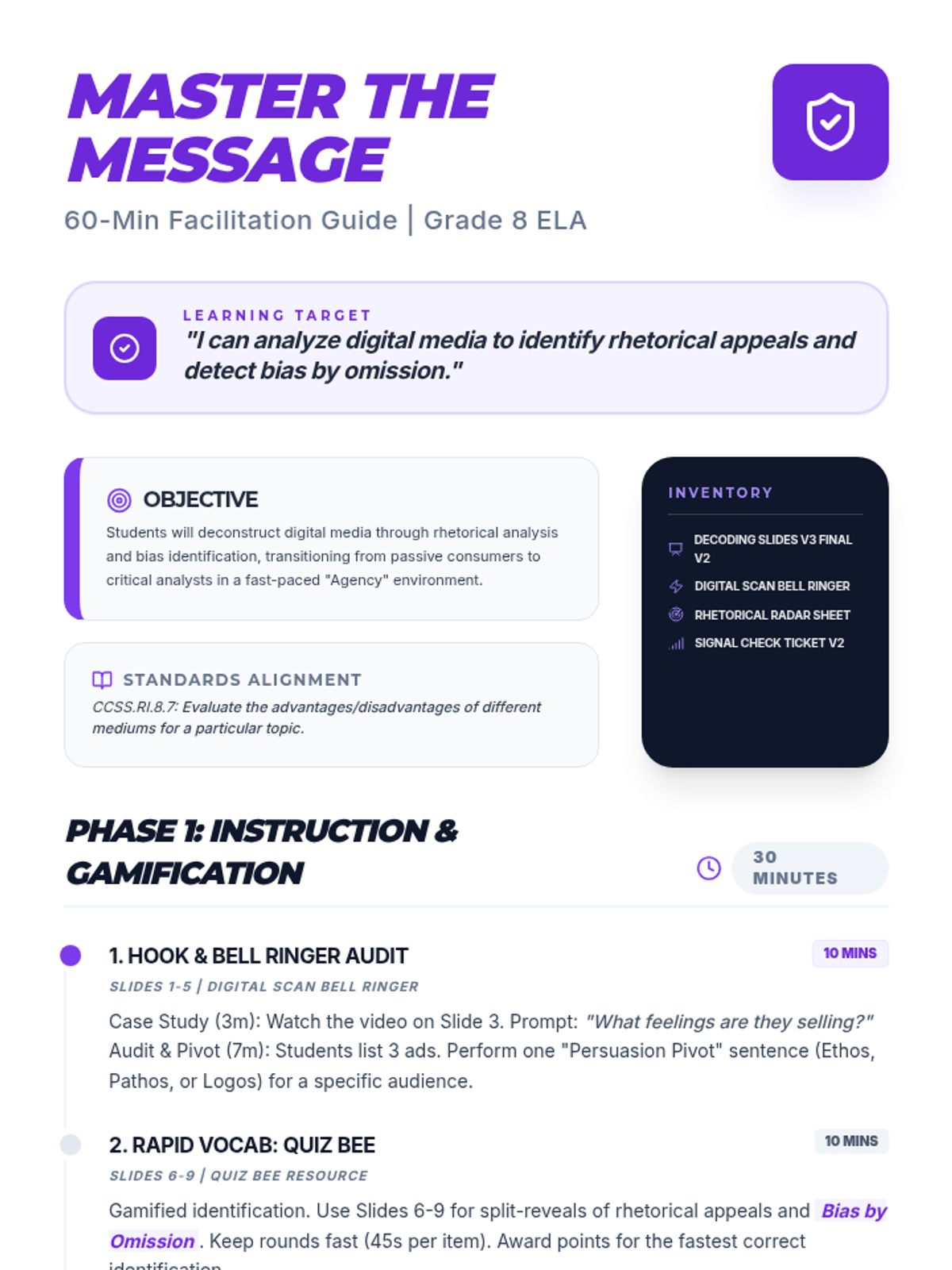
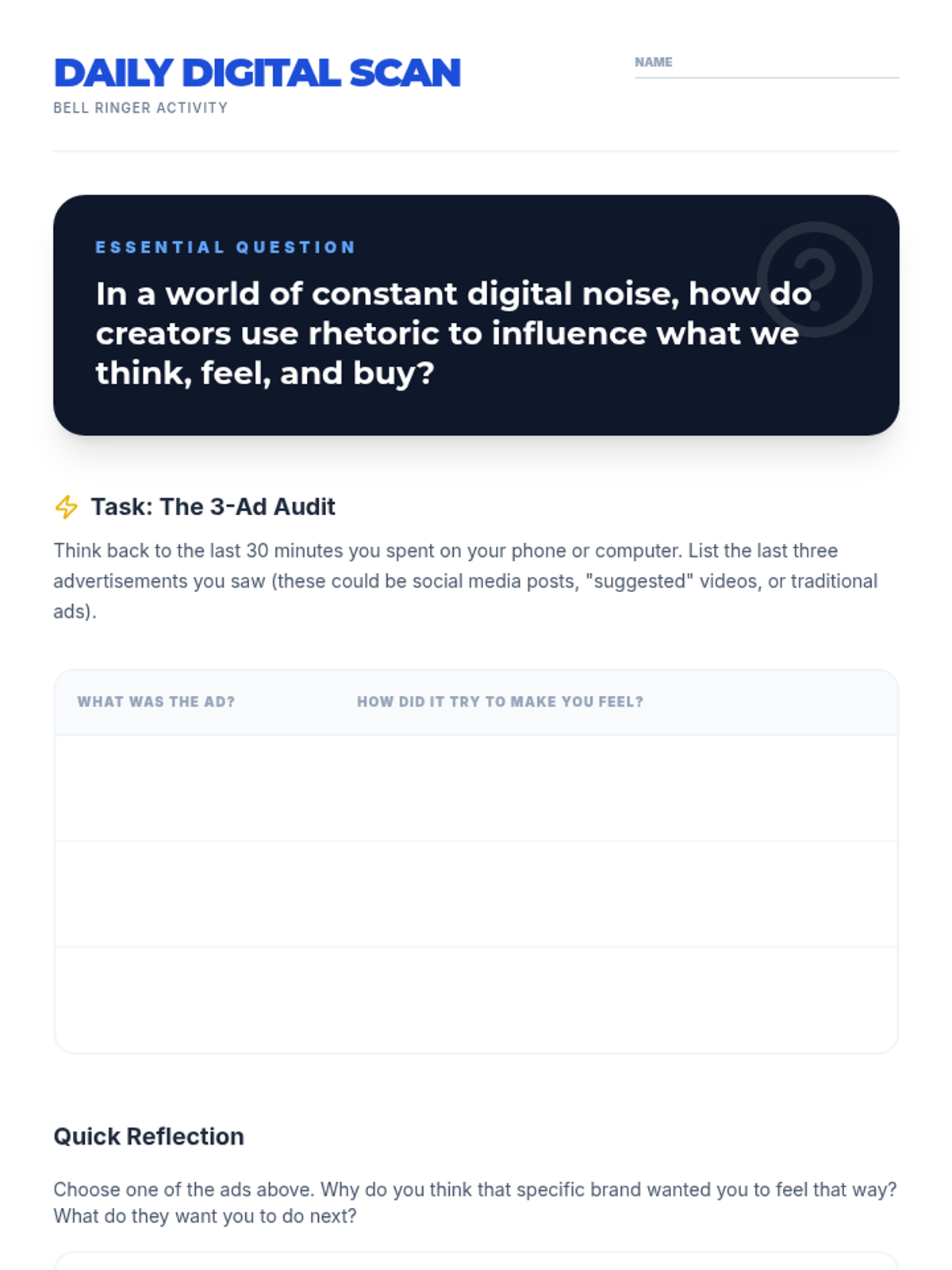
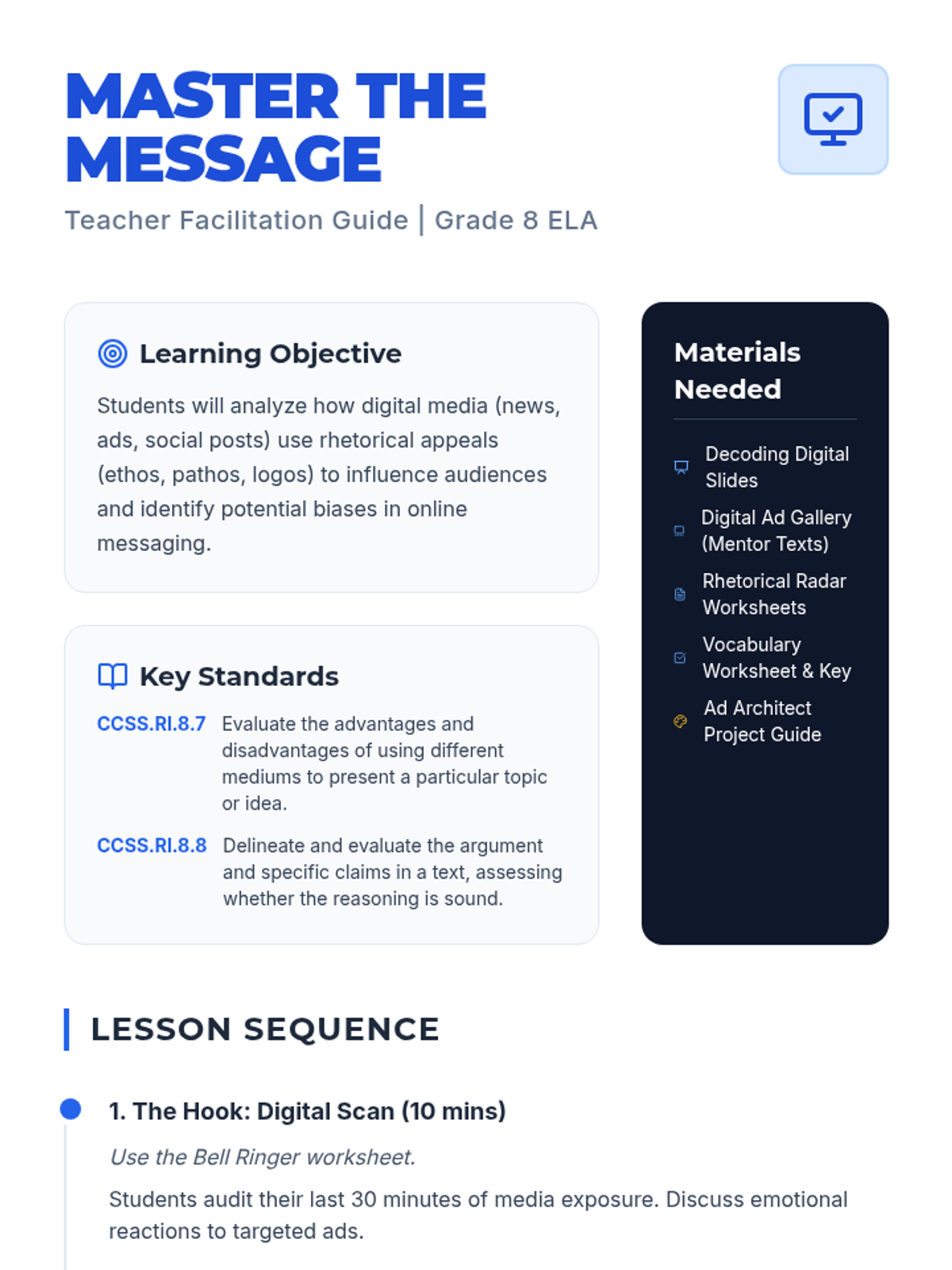
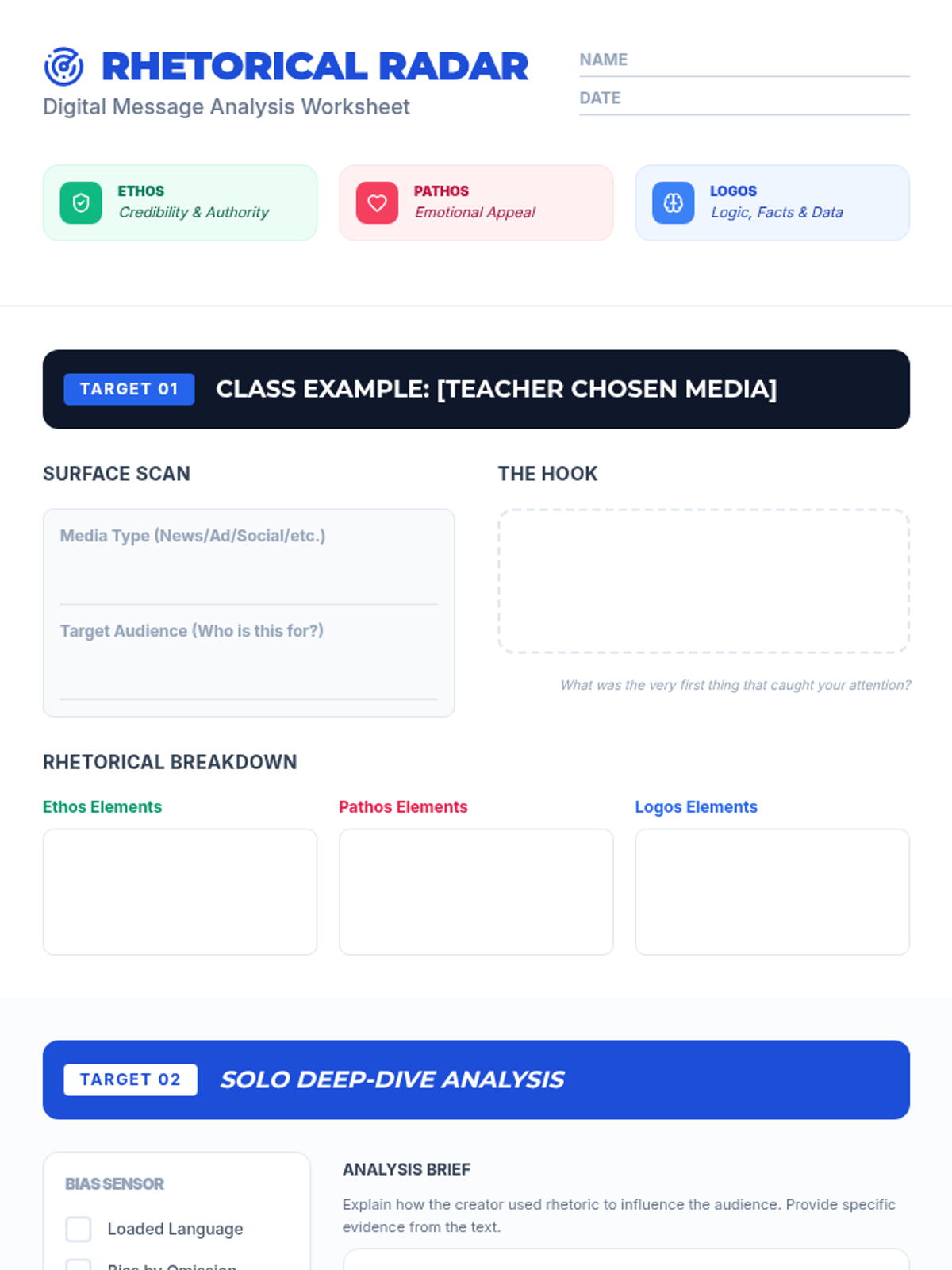
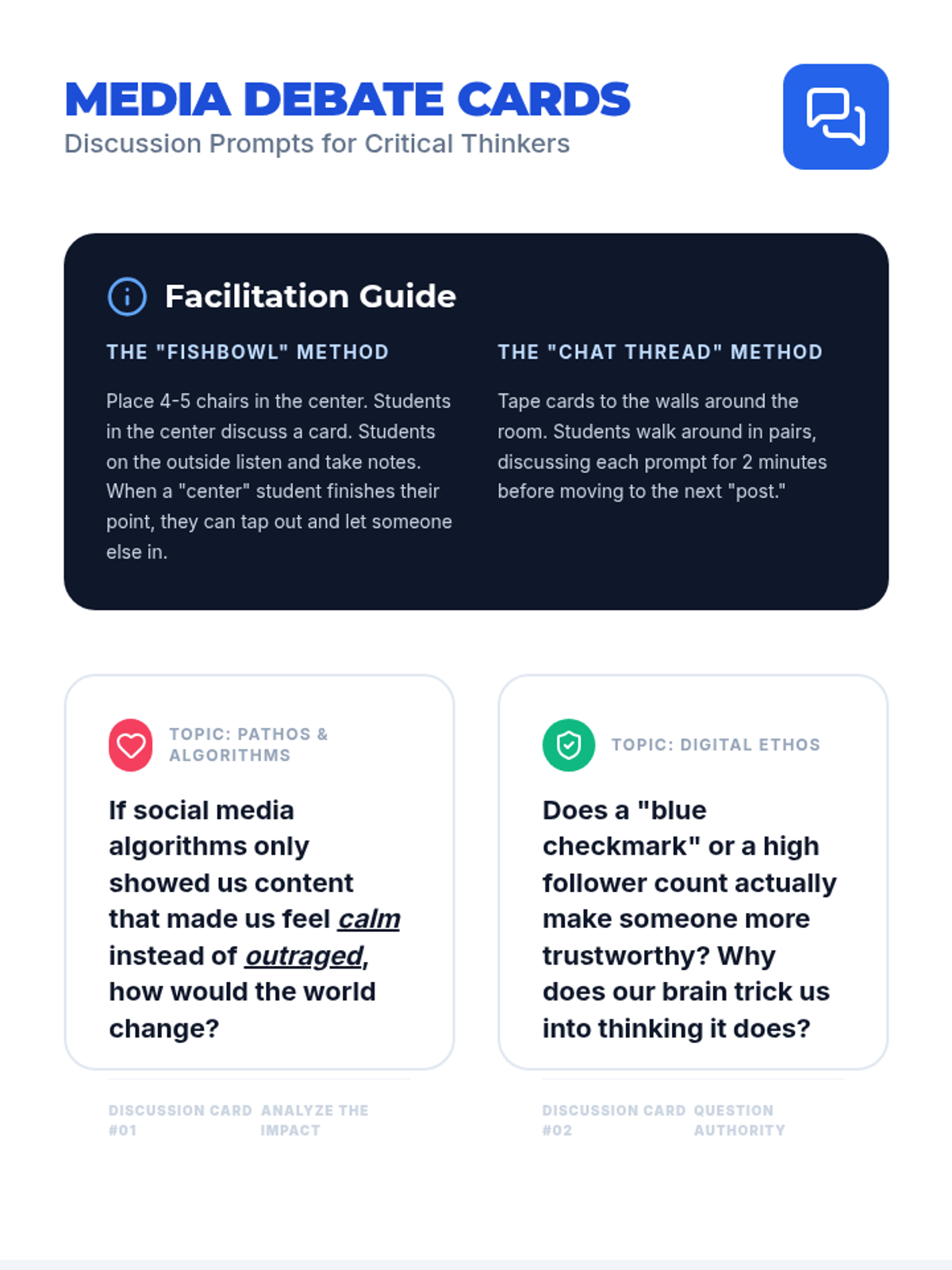
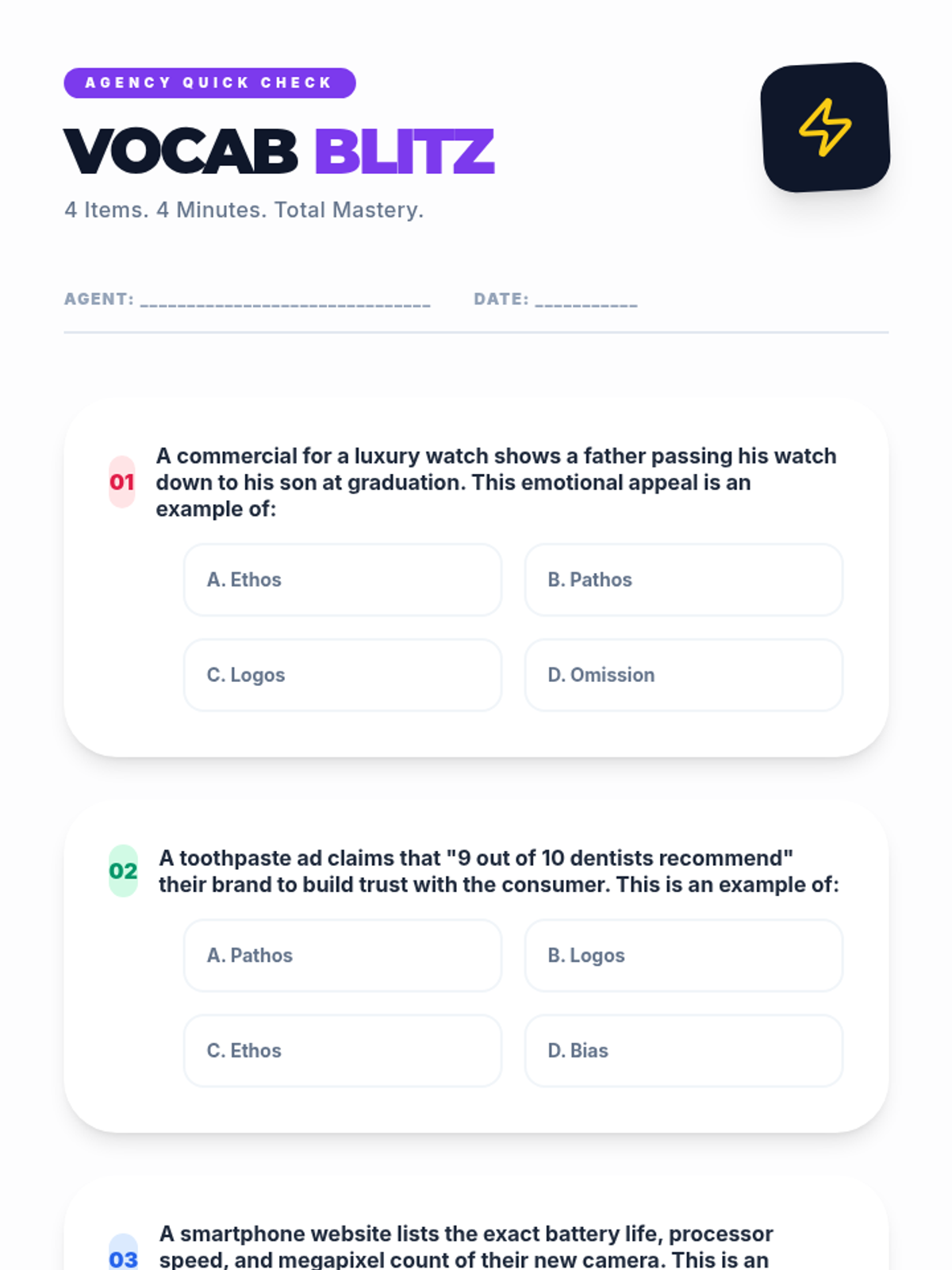
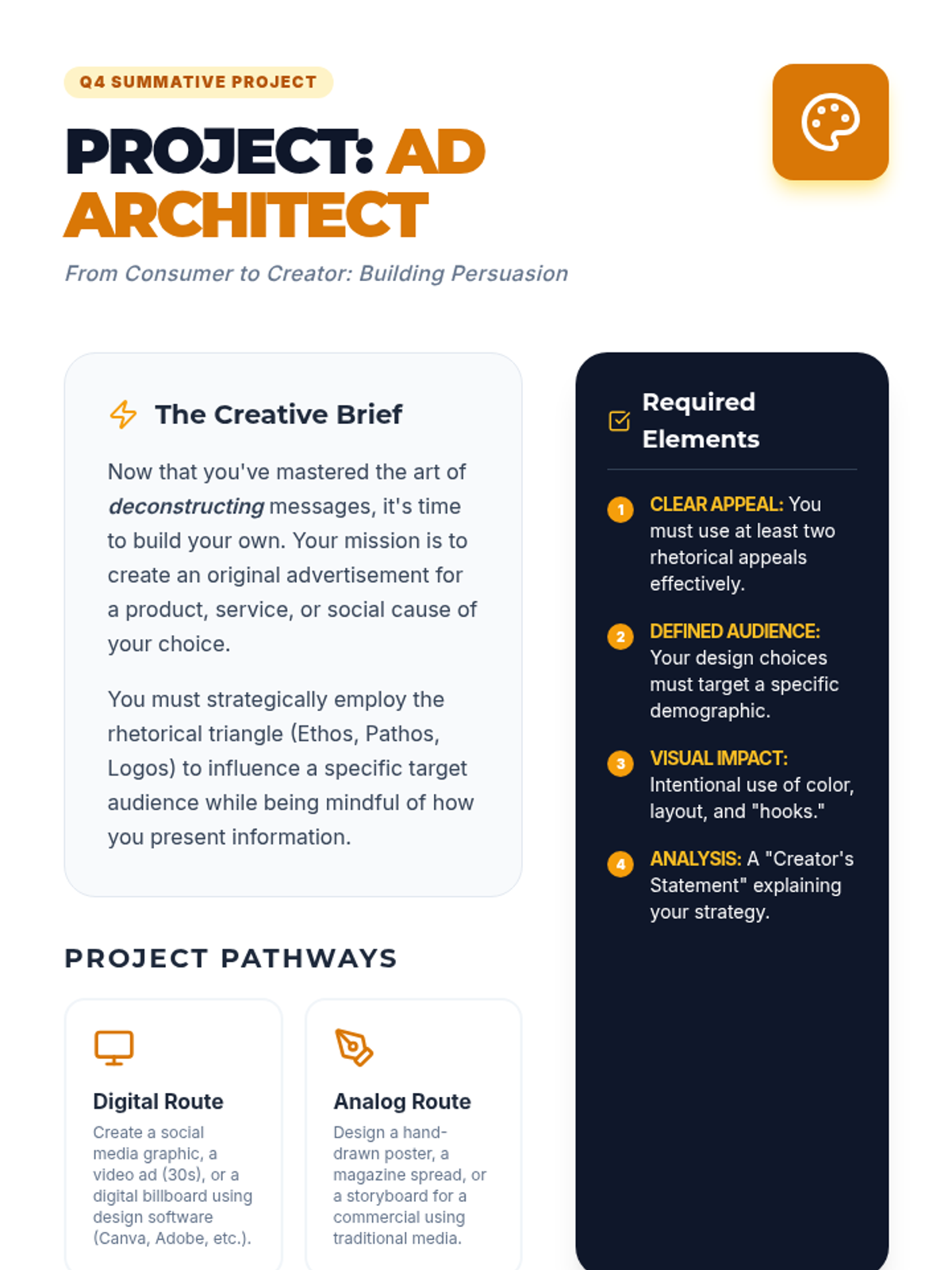
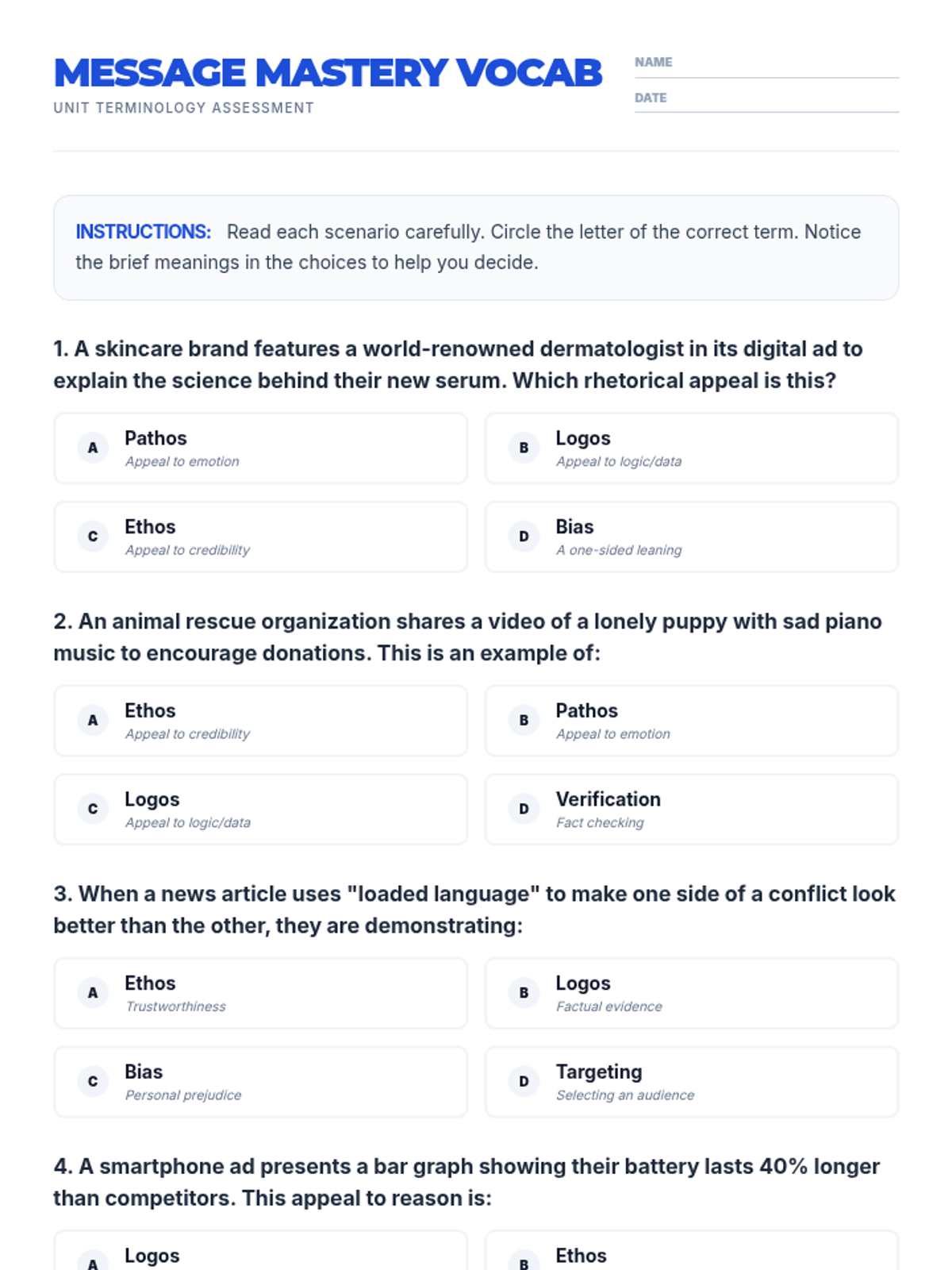
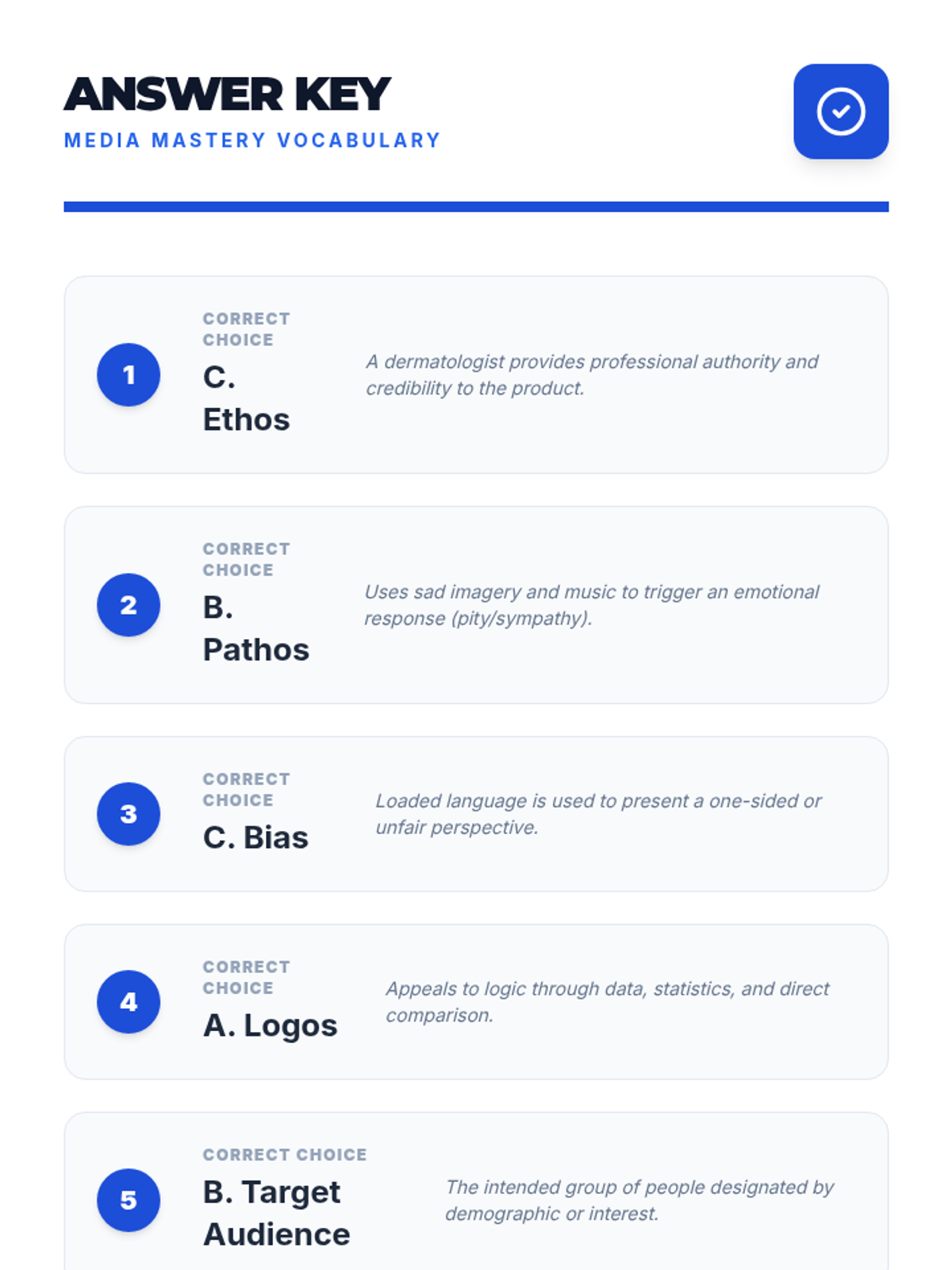
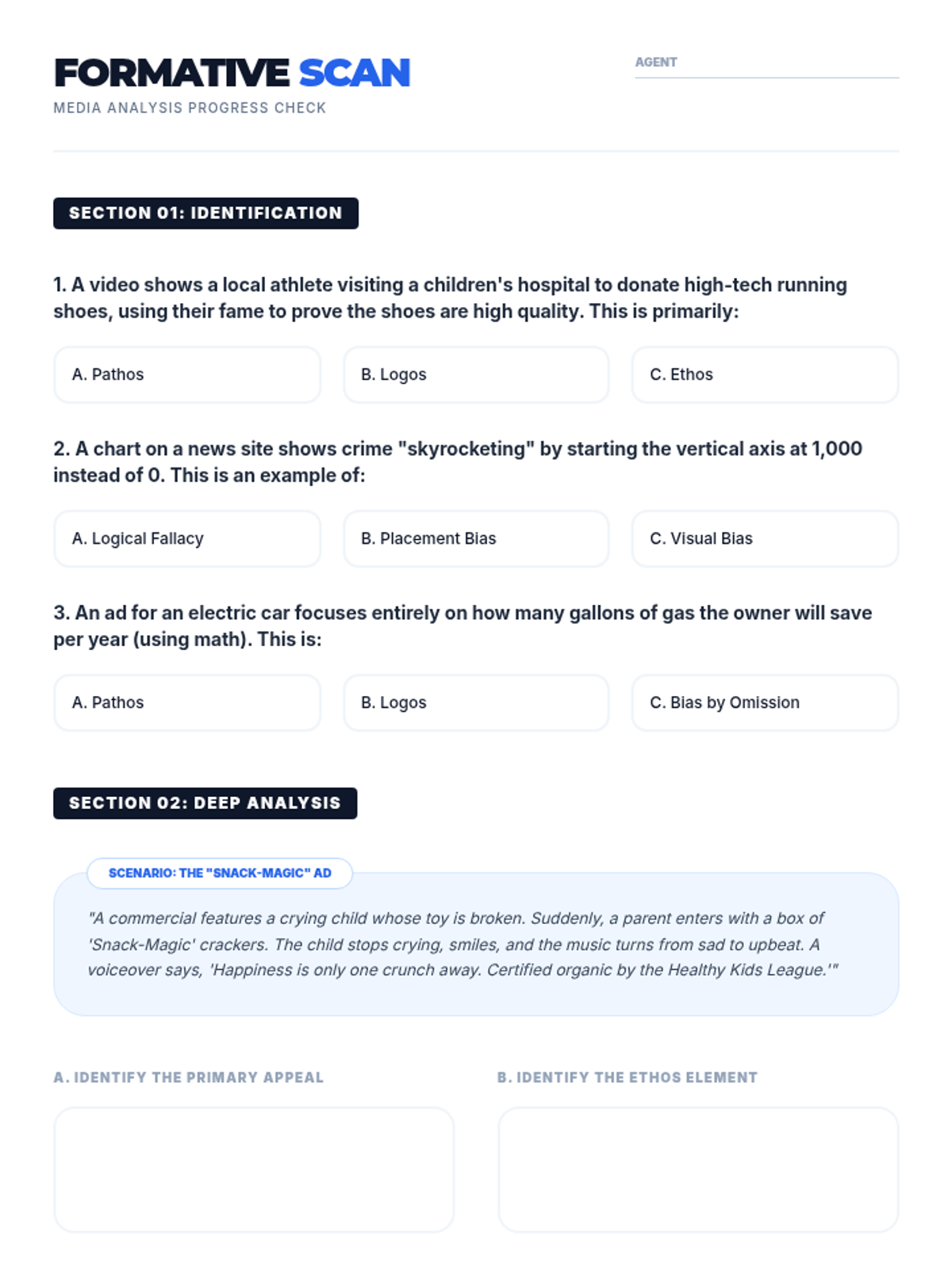
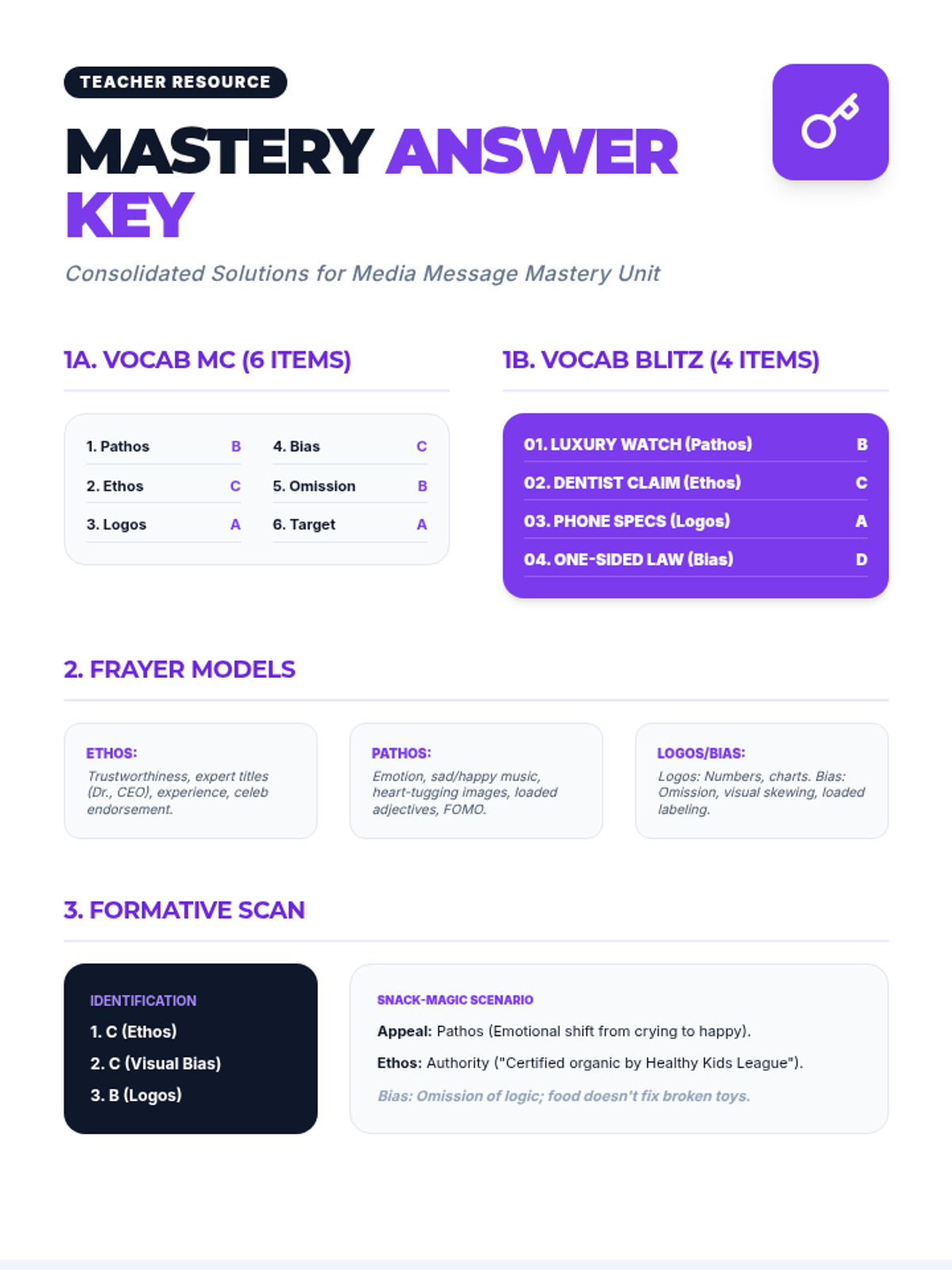
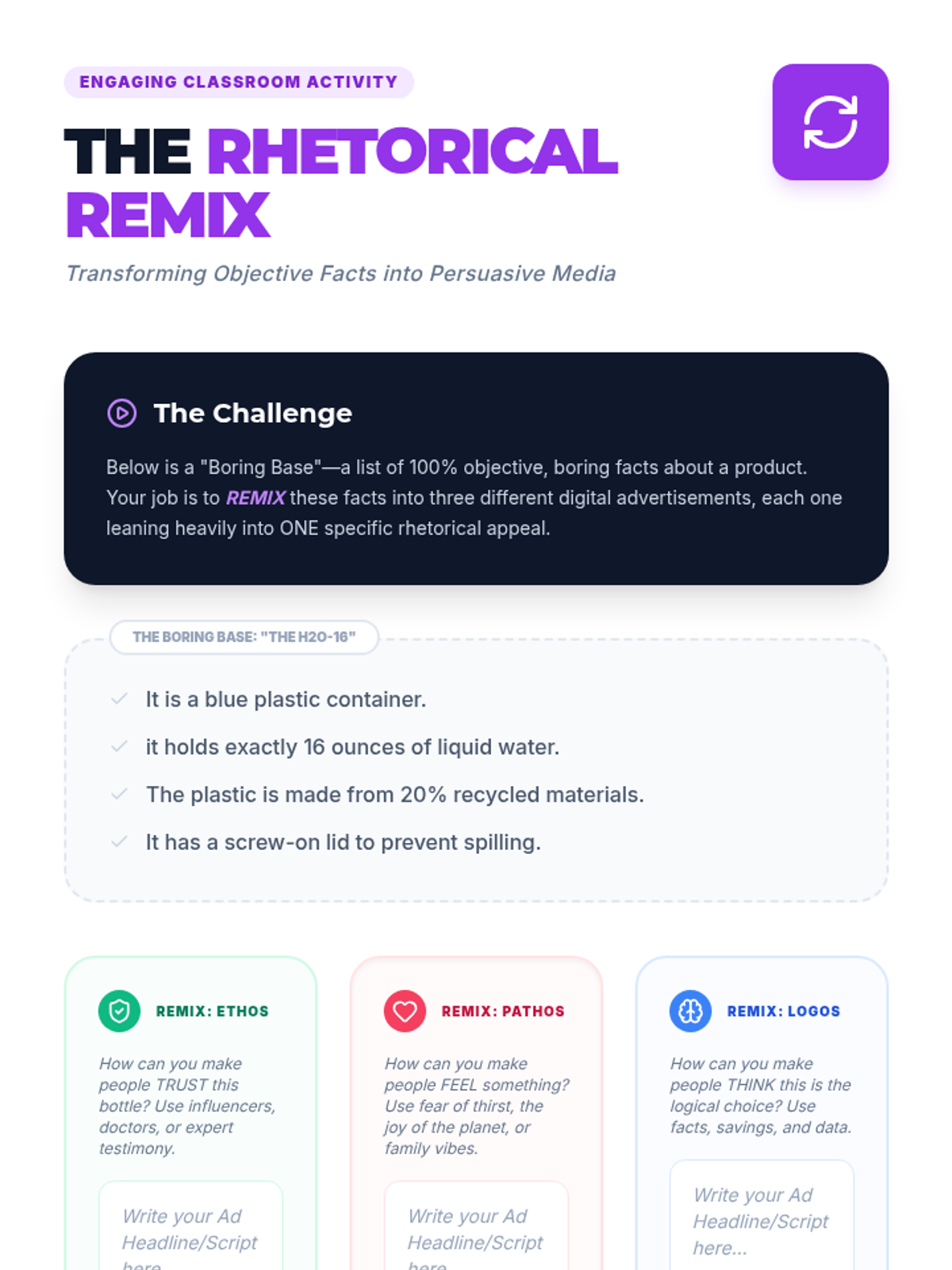
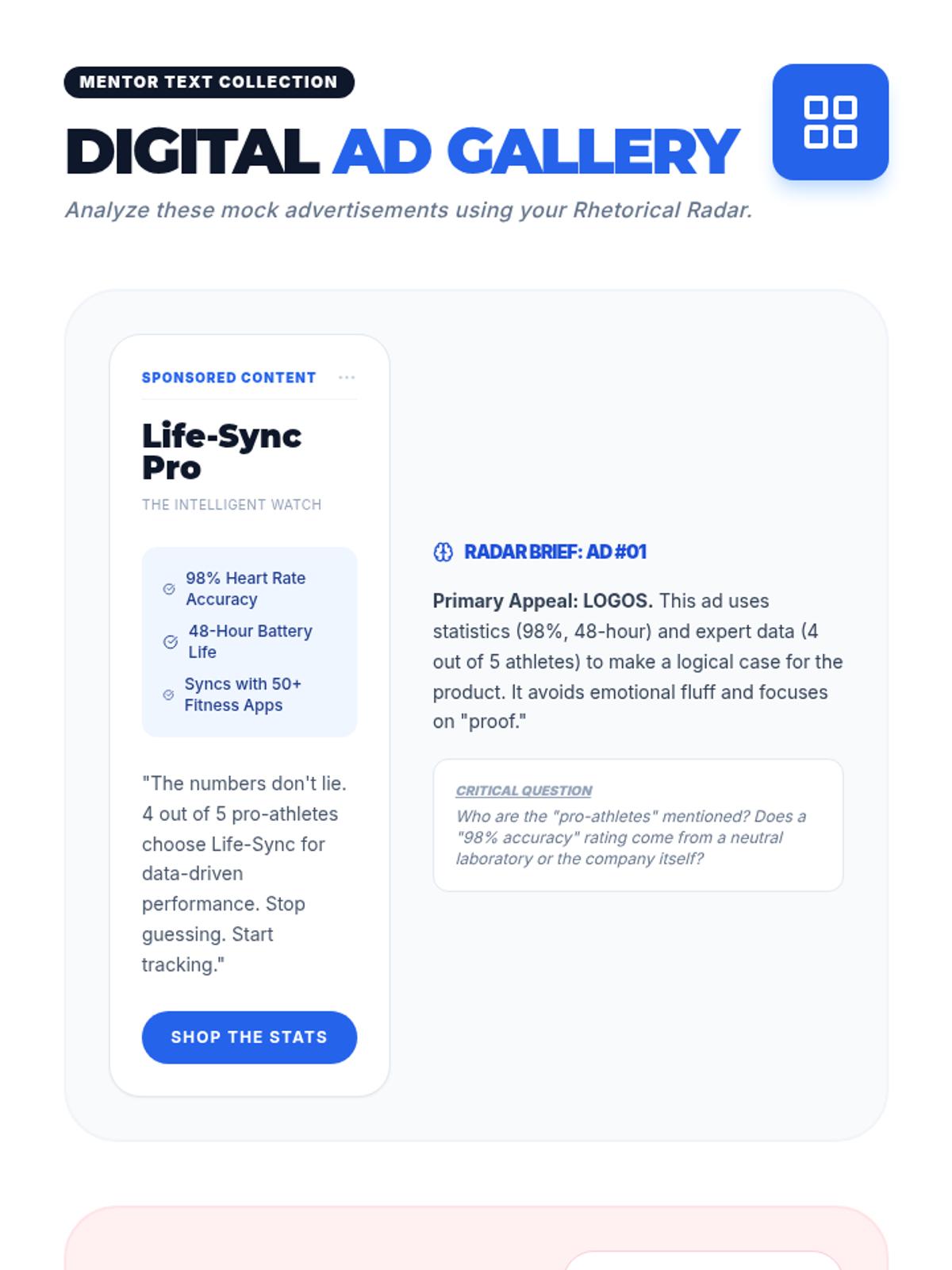
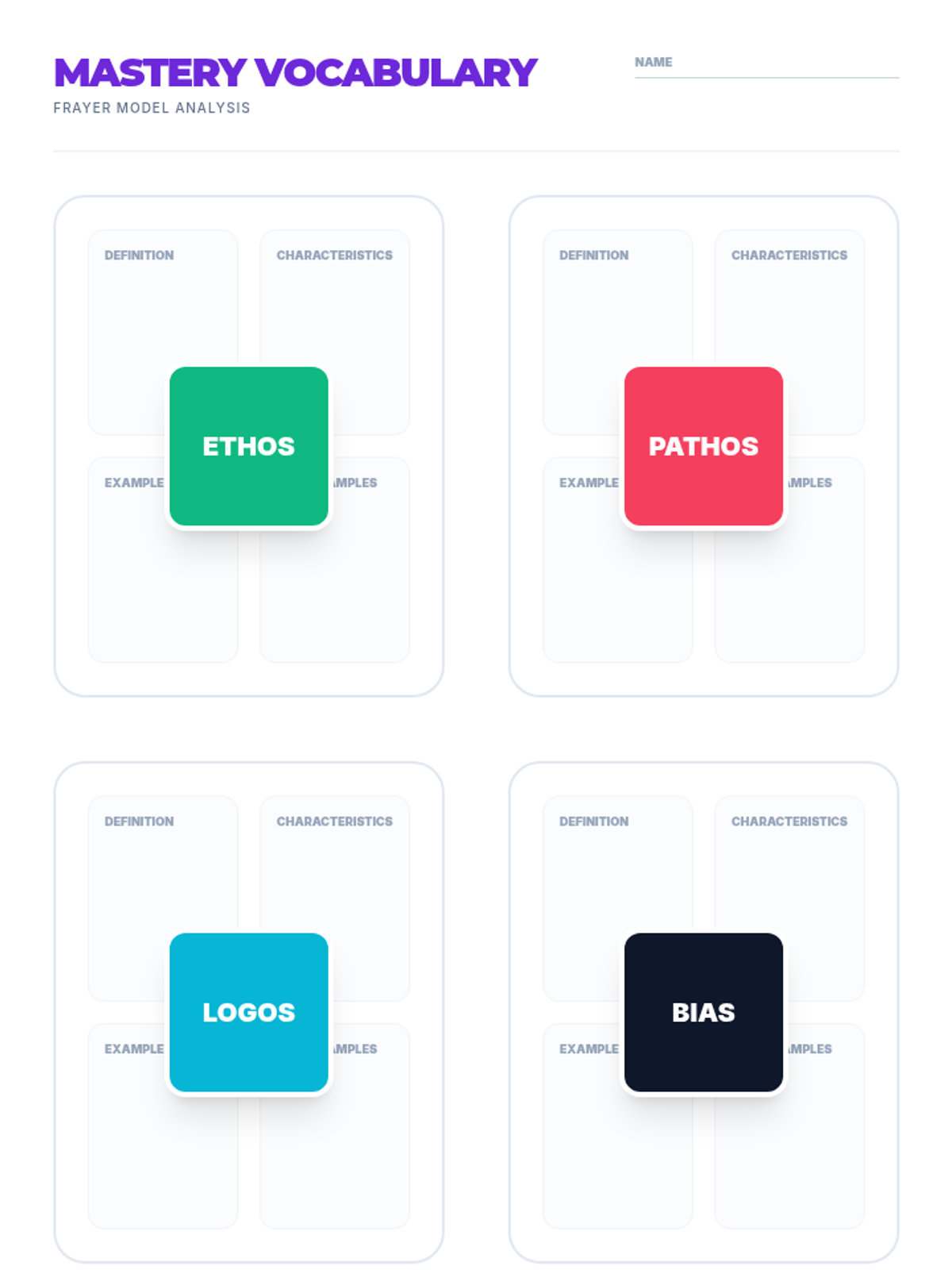
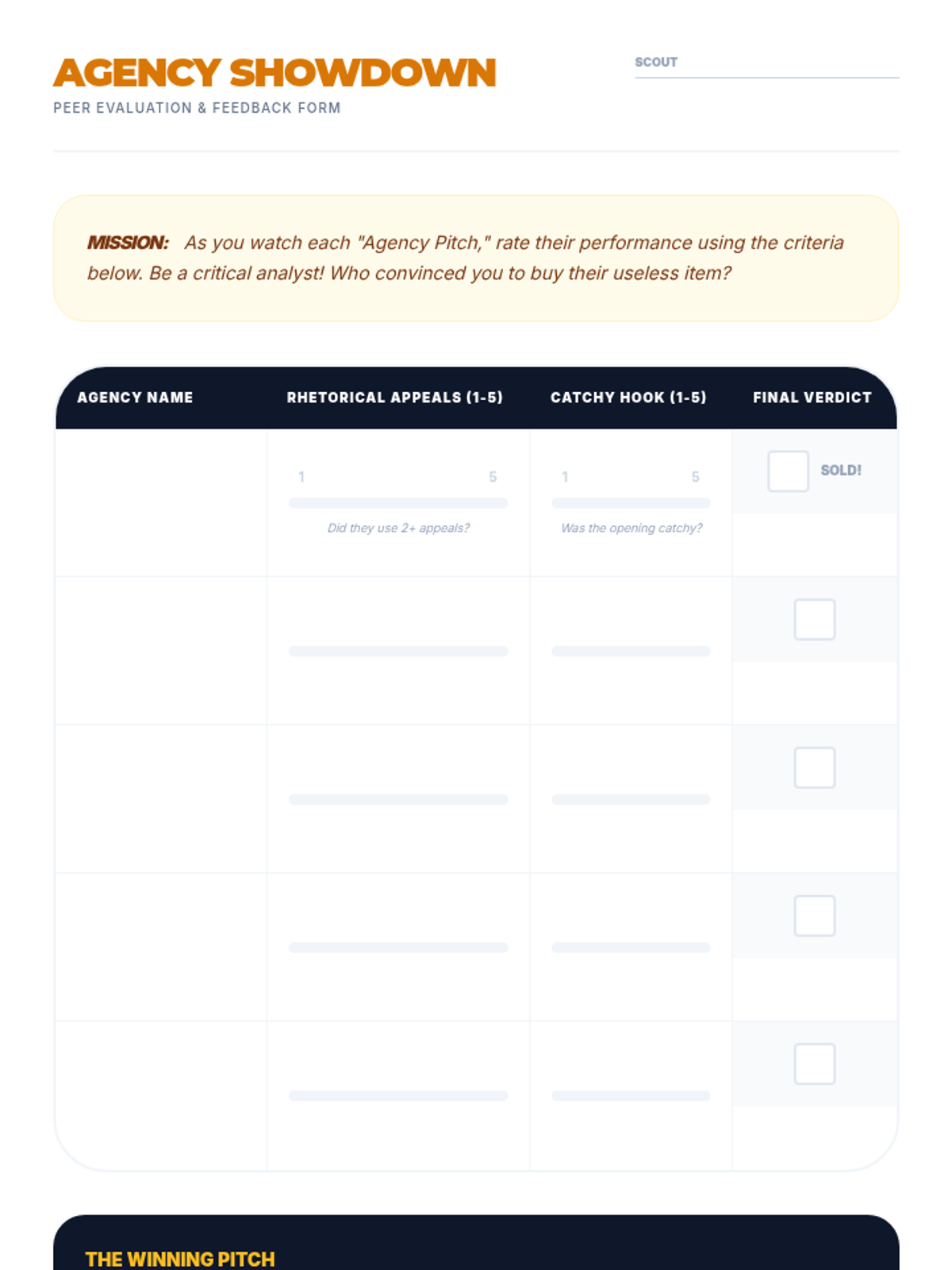
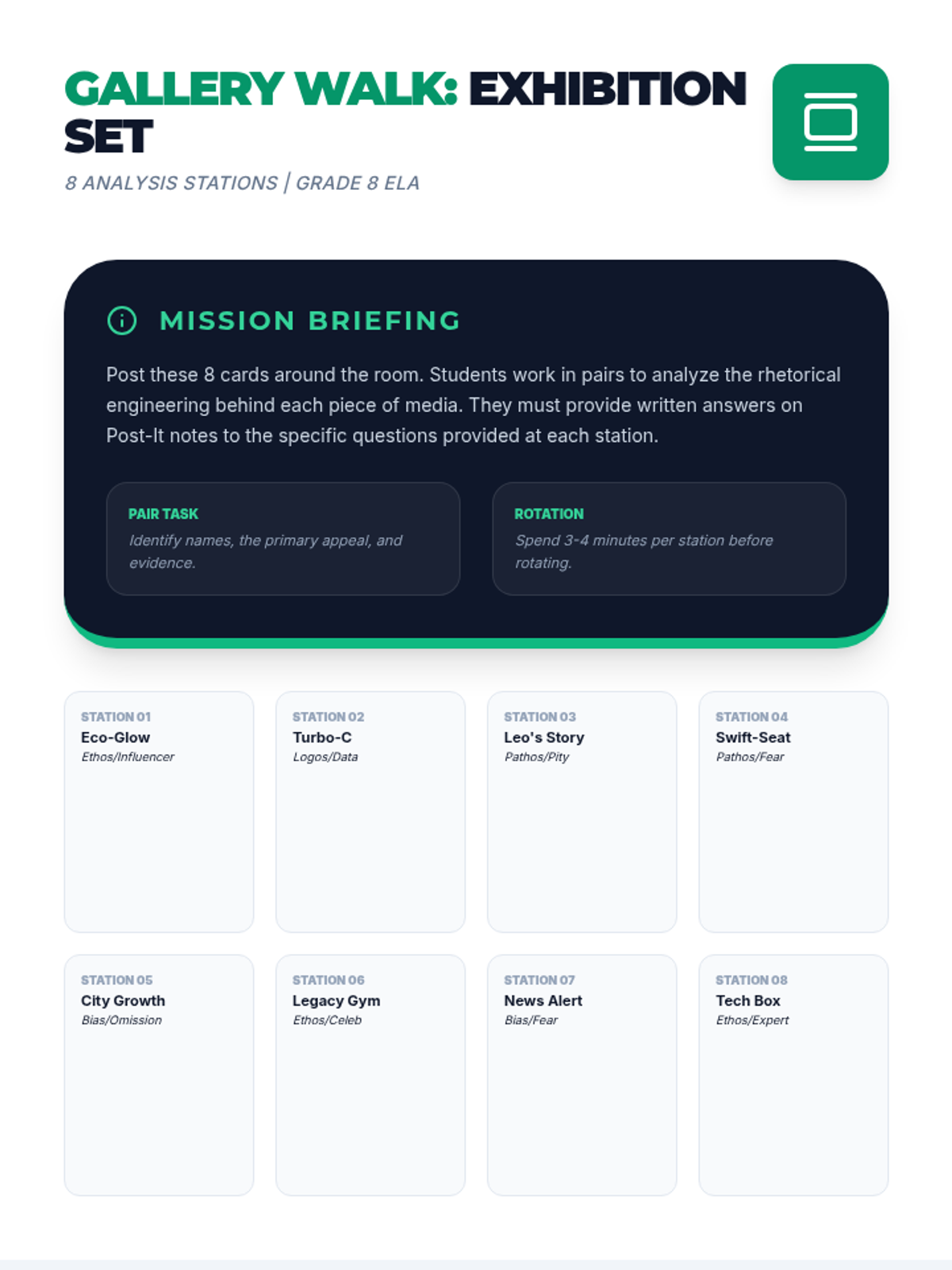
An 8th-grade ELA lesson focused on deconstructing digital media messages through the lens of rhetorical appeals (ethos, pathos, logos) and identifying bias in various online formats. Students transition from passive consumers to critical analysts of news clips, social media, and advertisements.
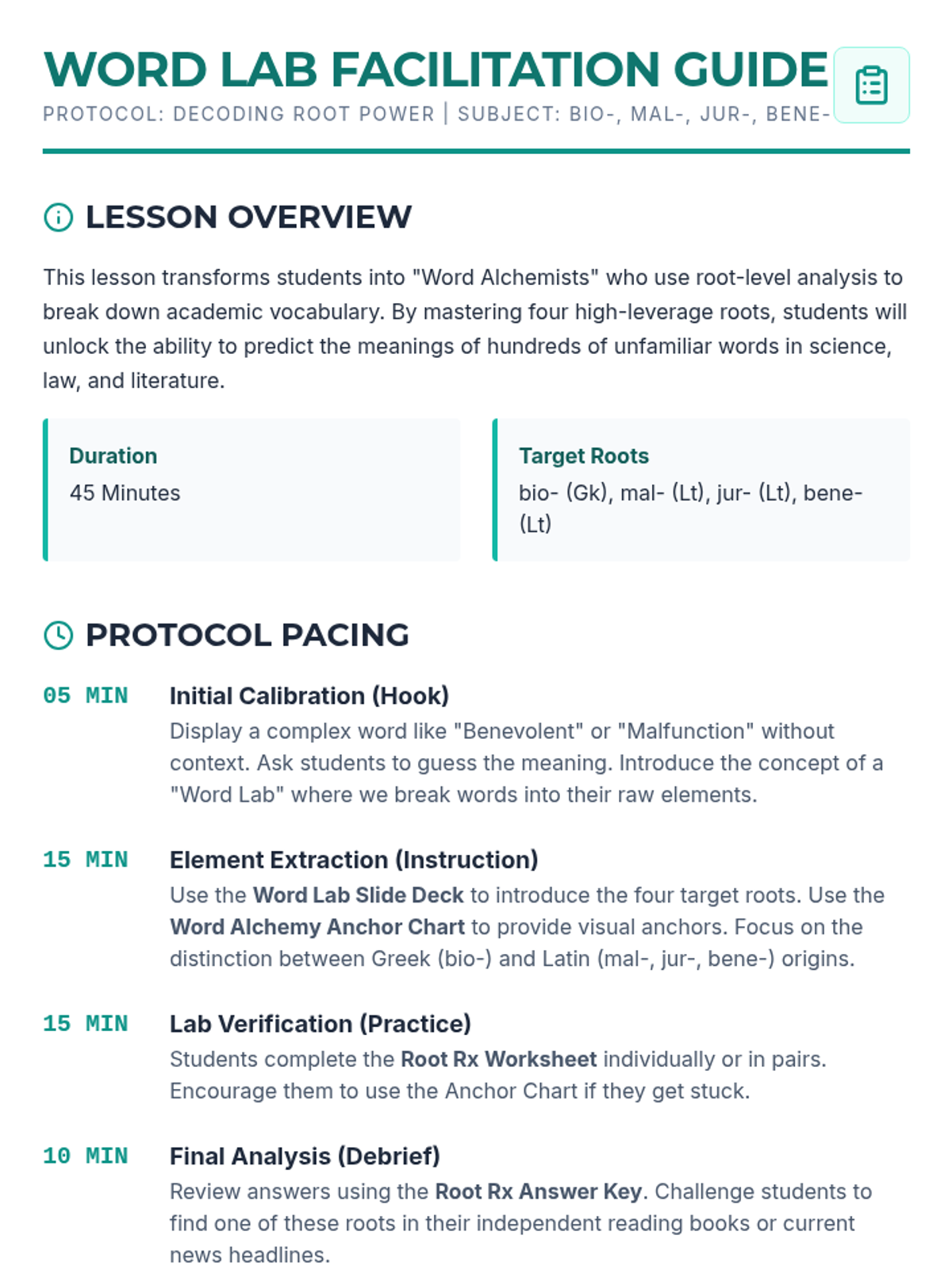
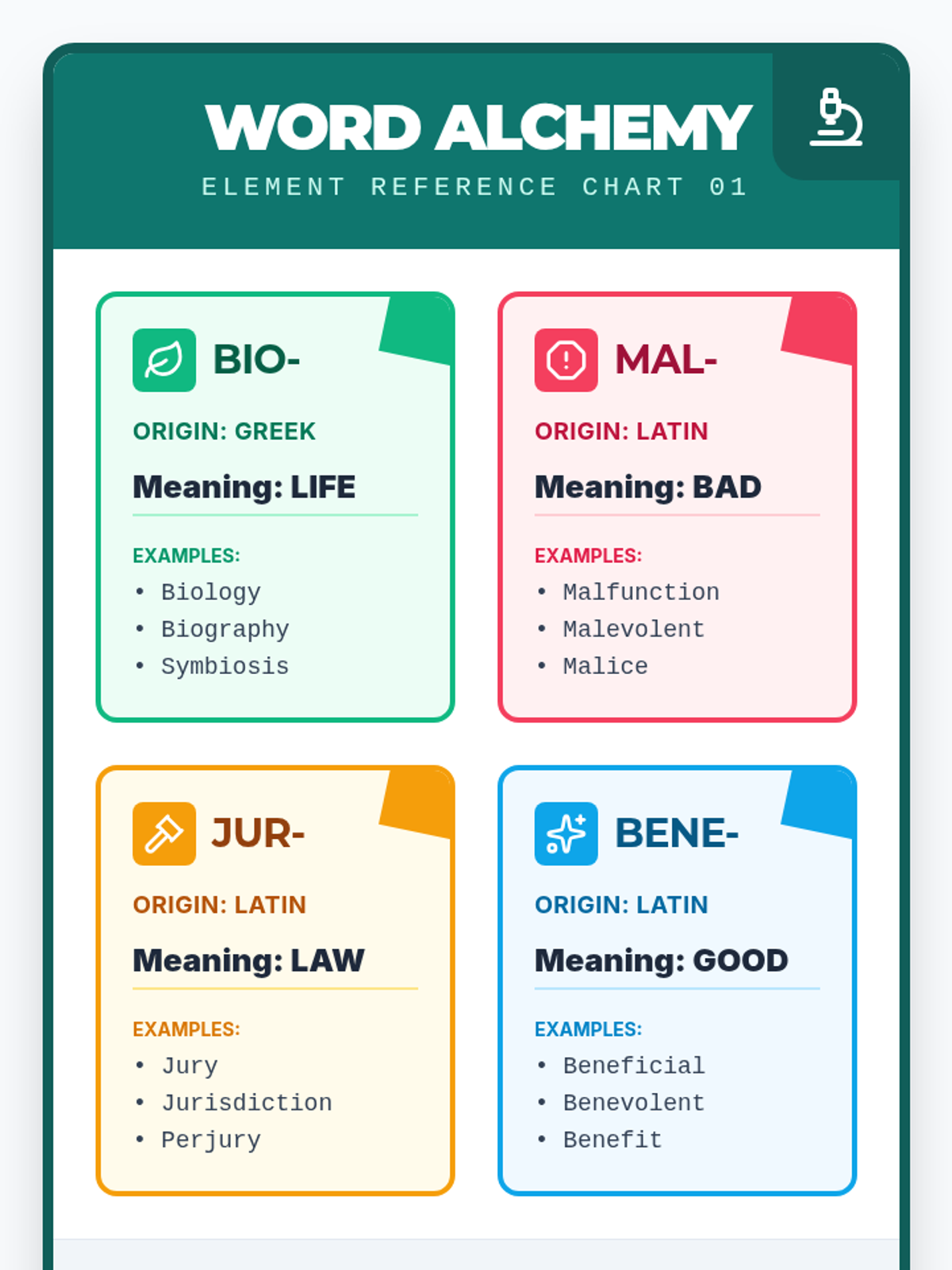
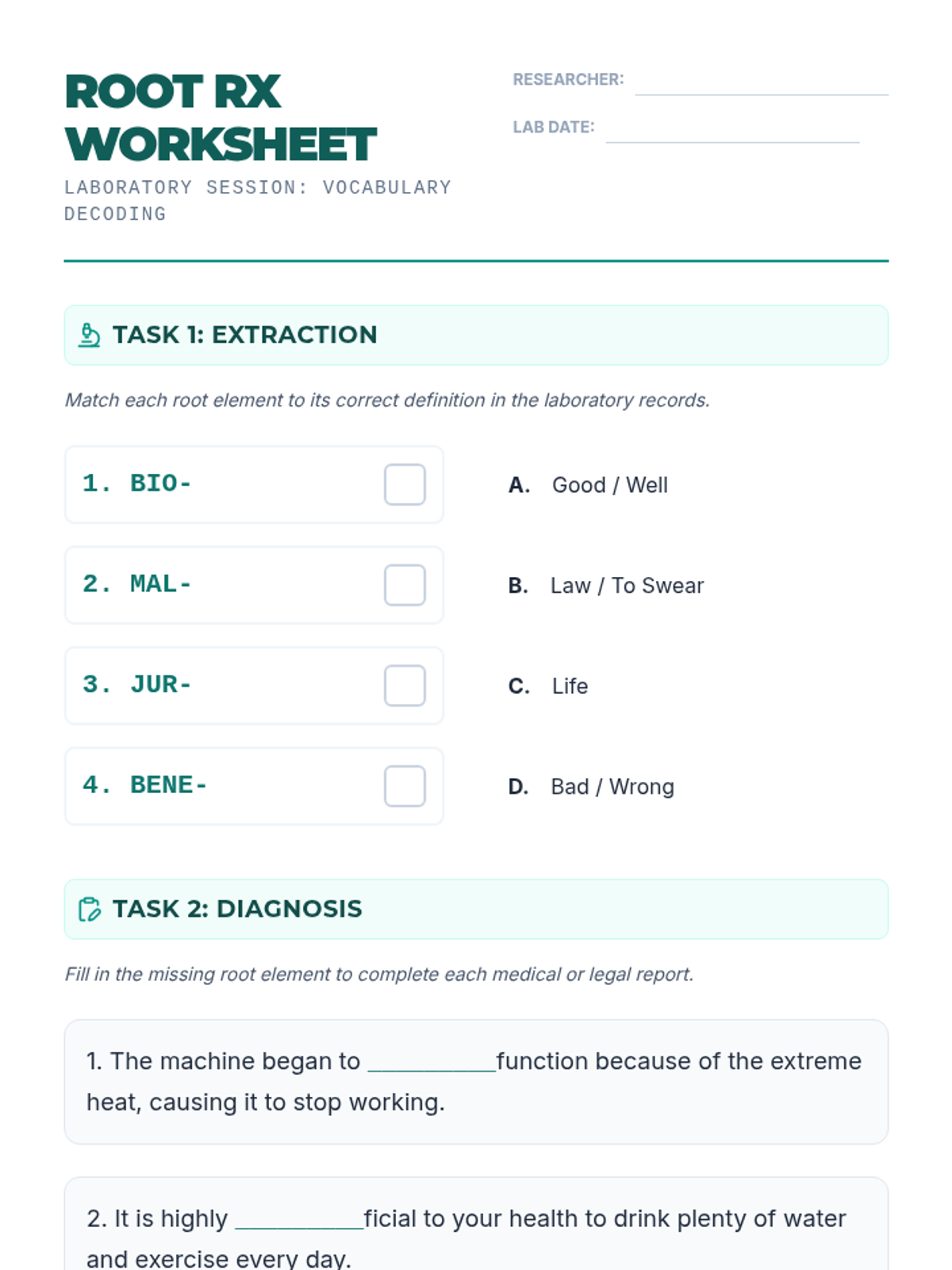
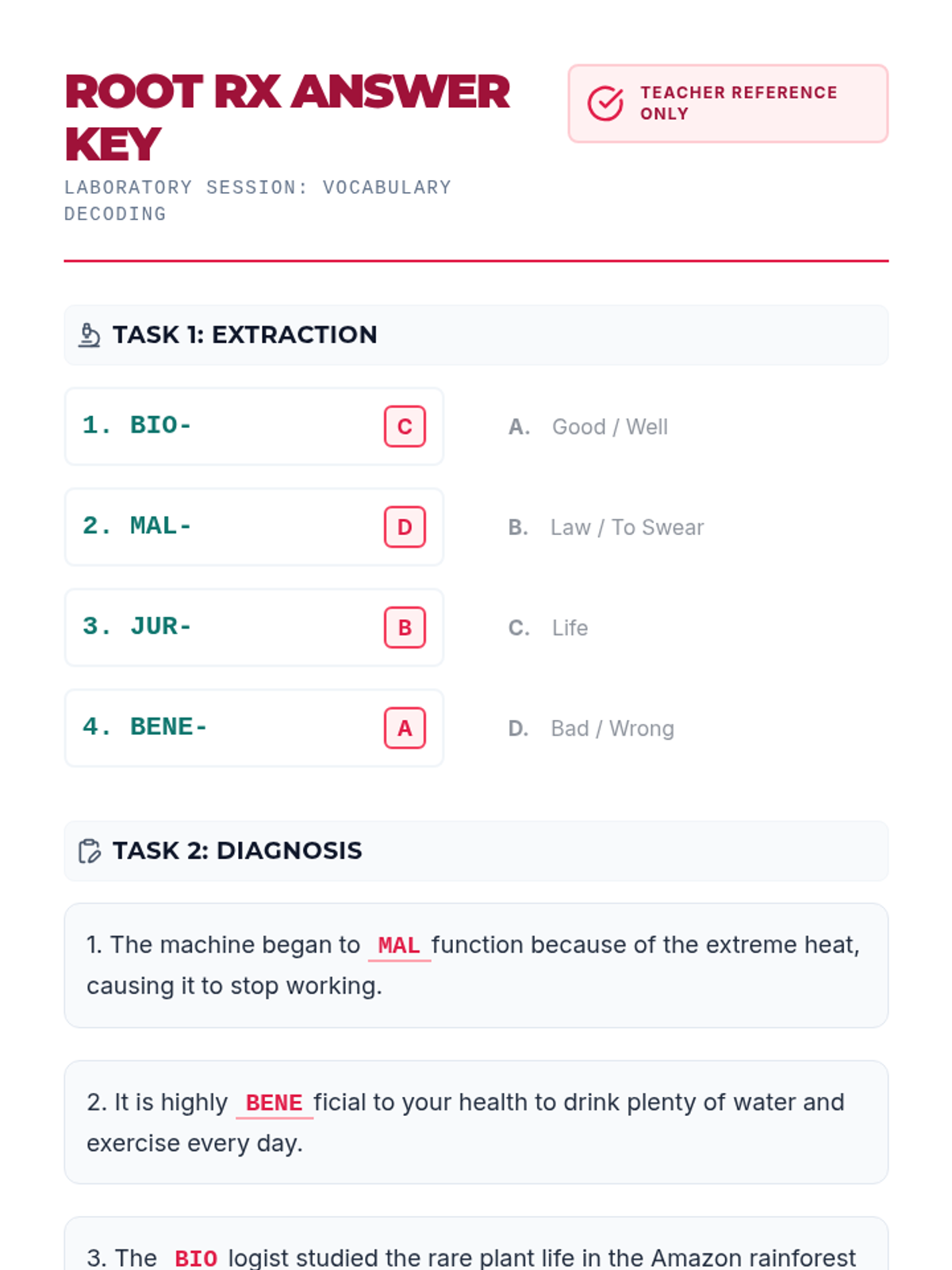
A 45-minute deep dive into the Greek and Latin roots bio-, mal-, jur-, and bene-, designed to help students decode complex academic vocabulary using the 'Word Lab' approach.
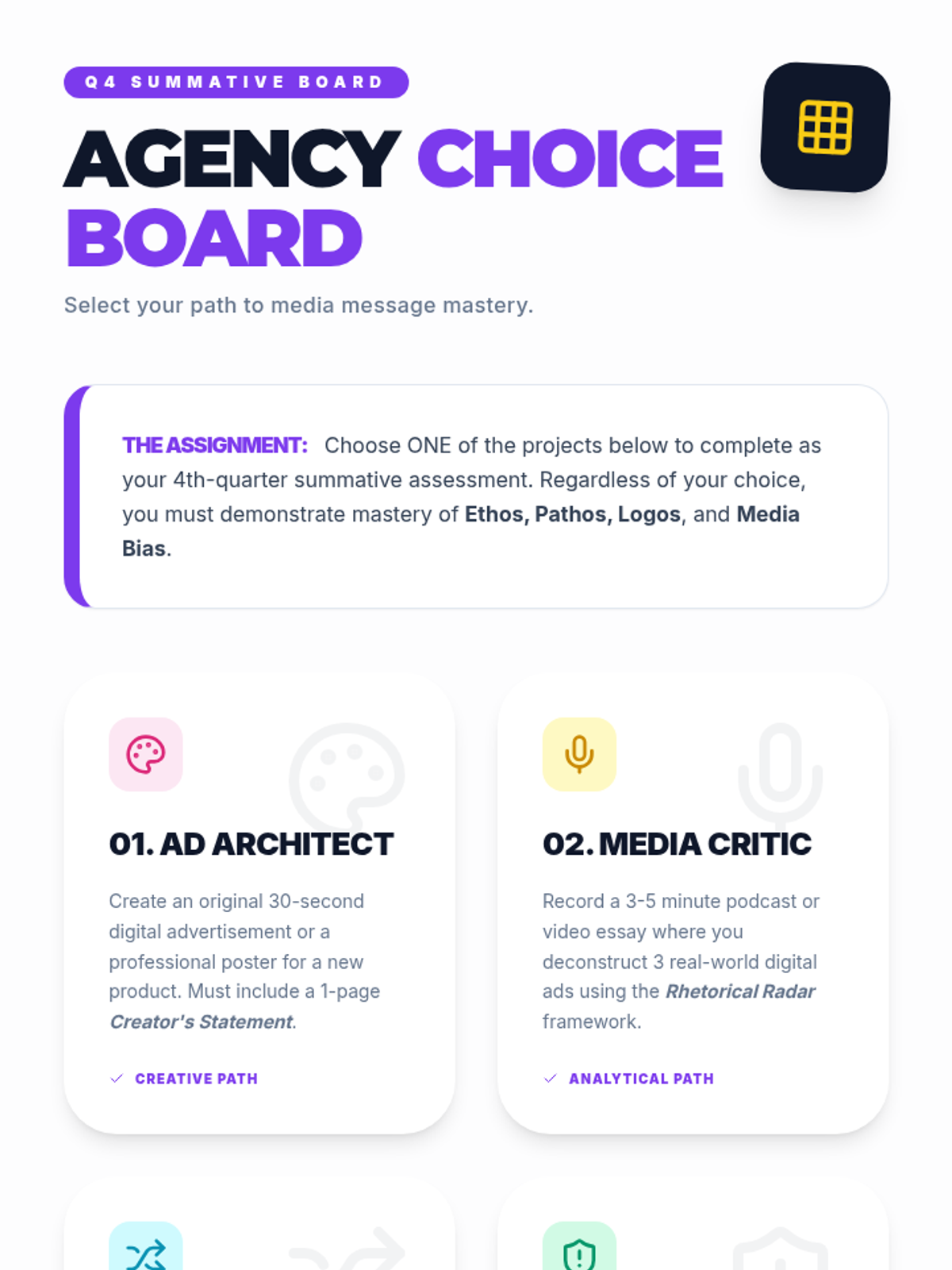
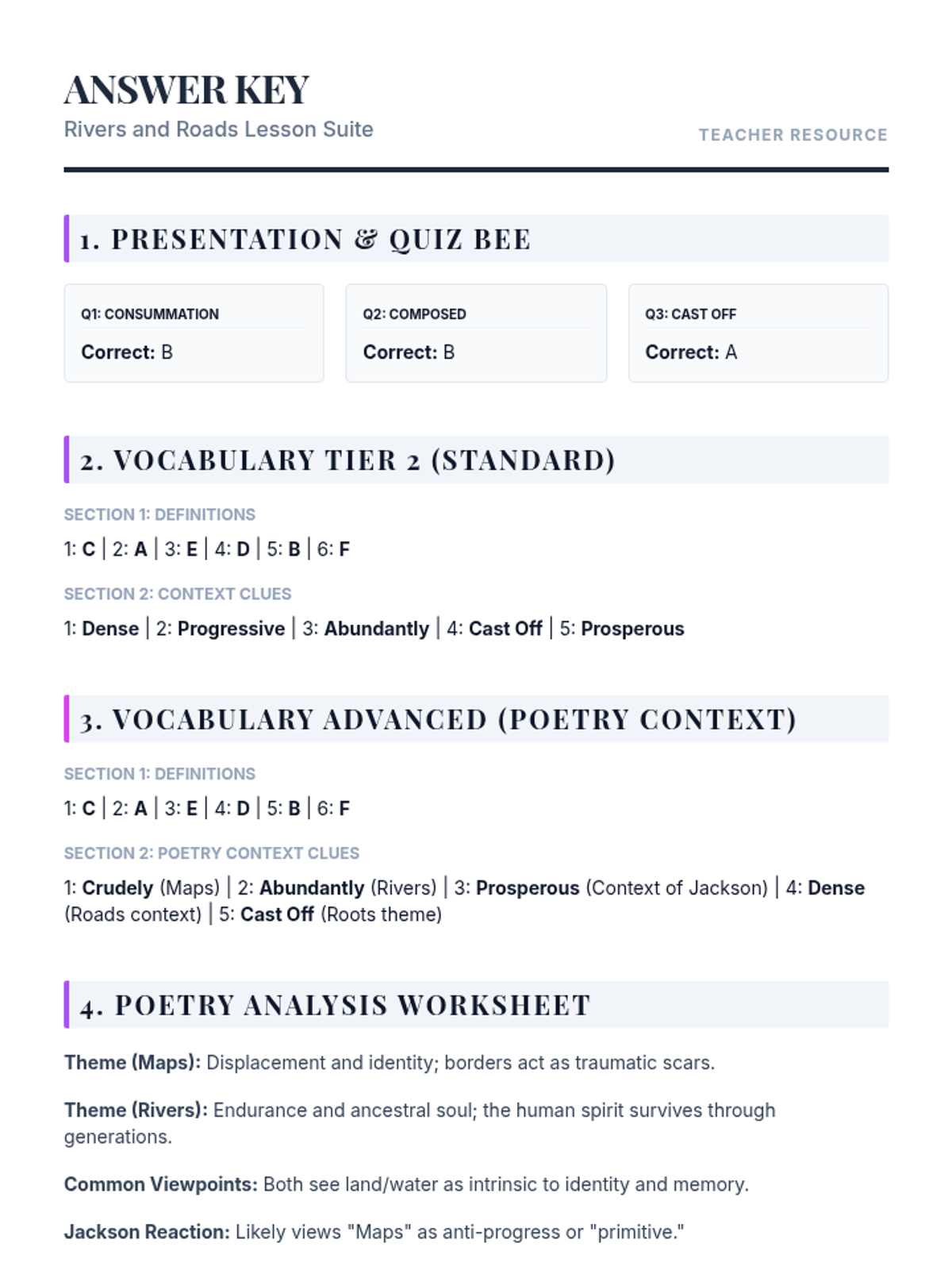
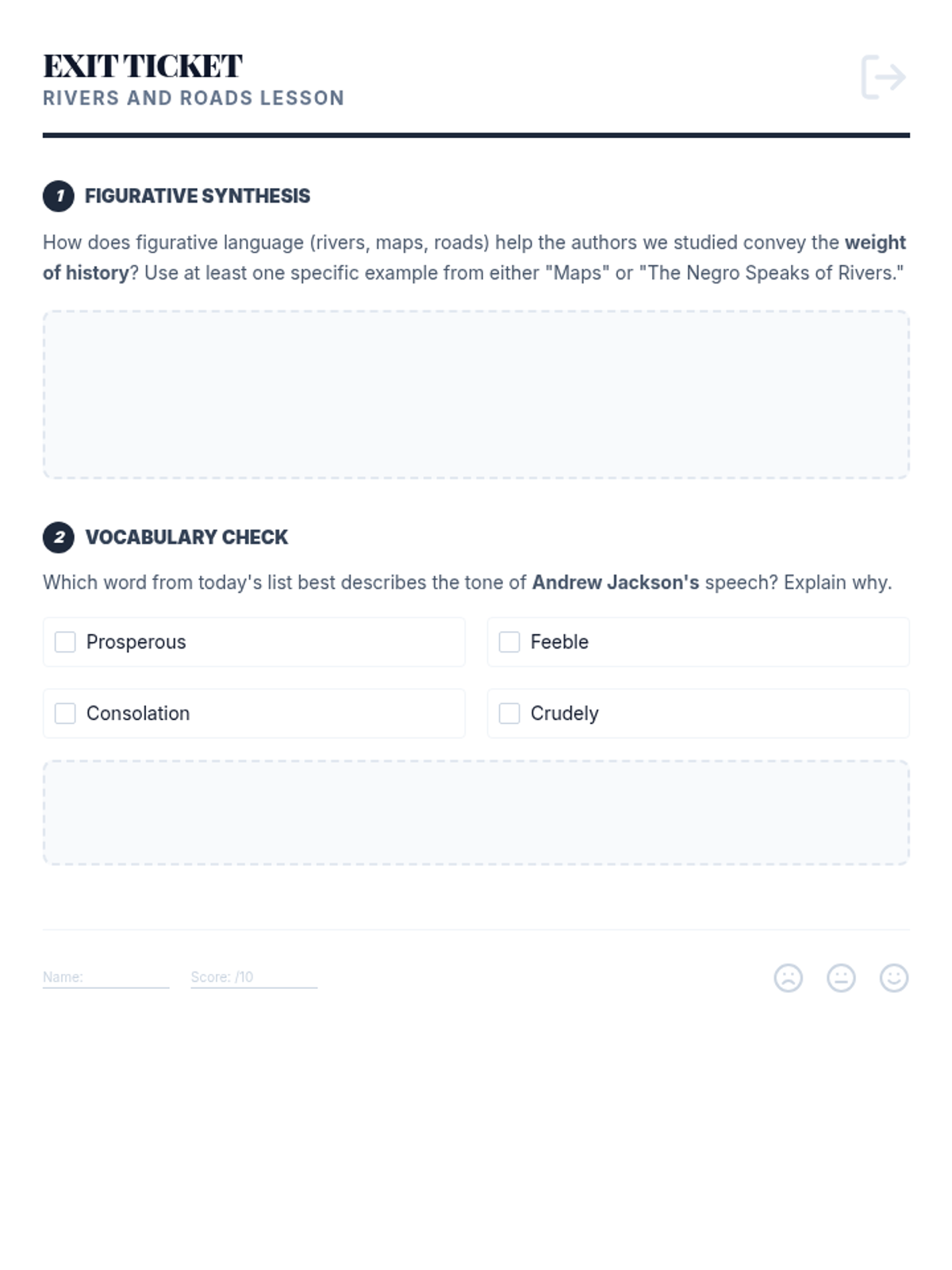
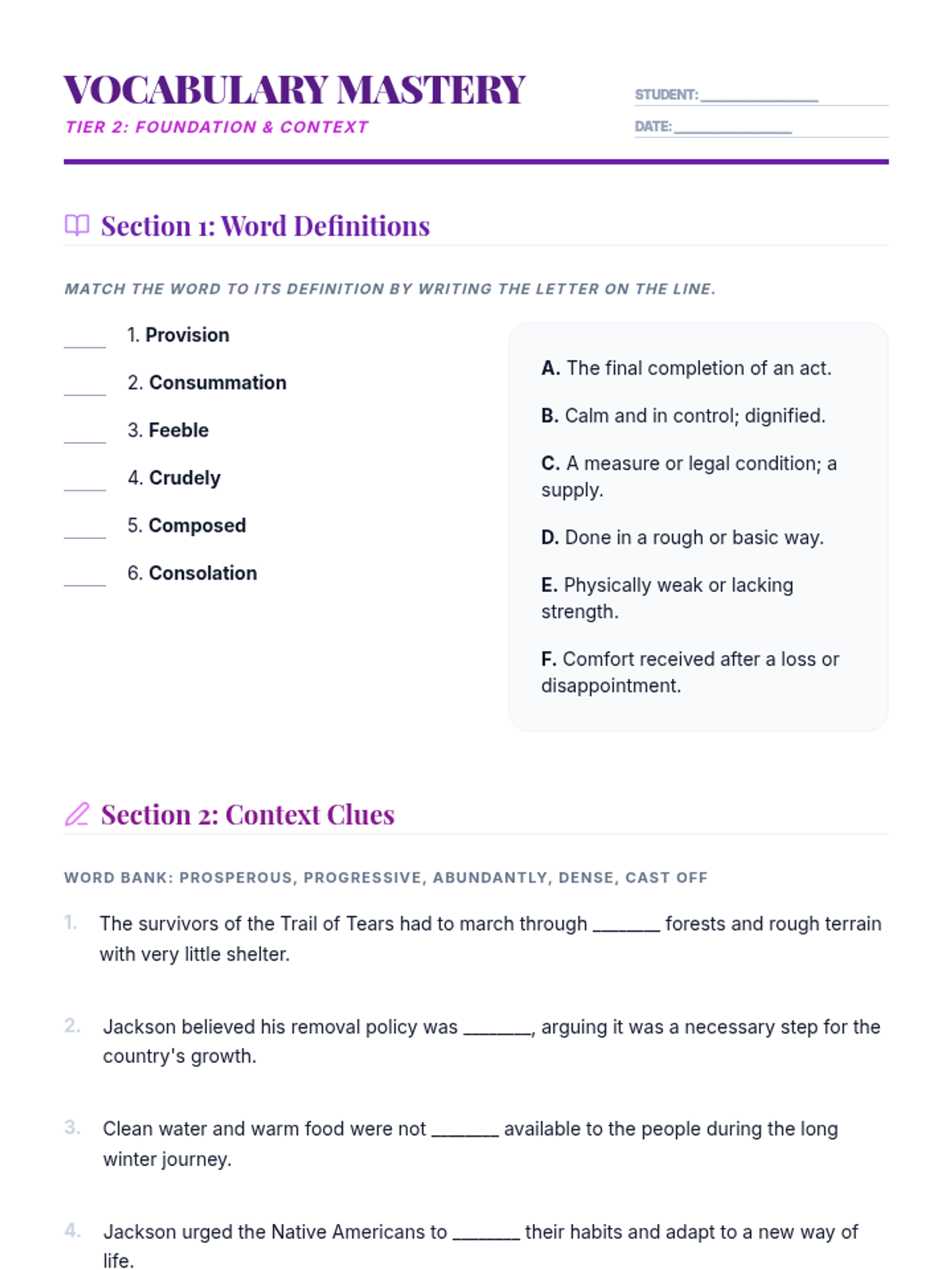
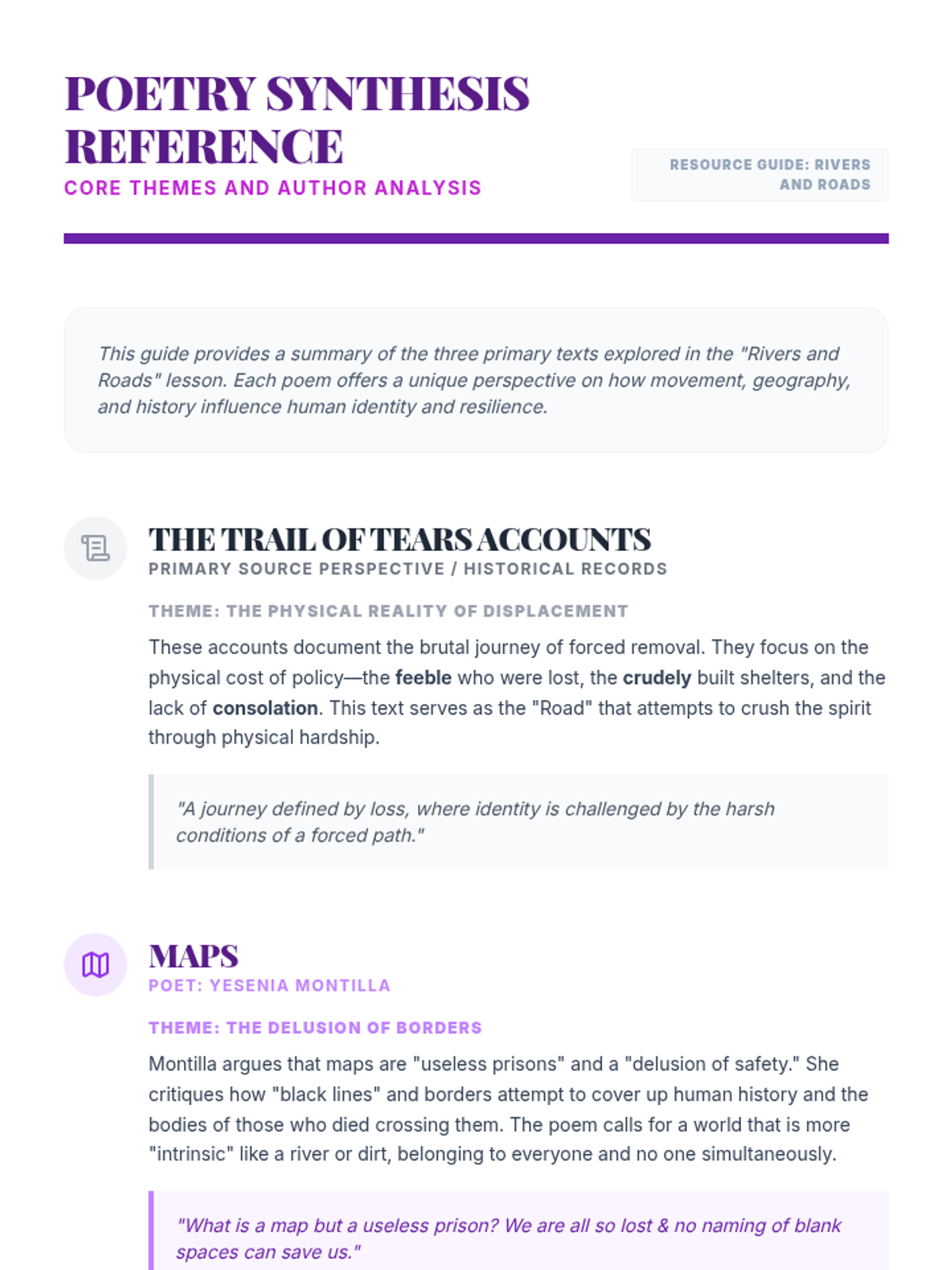
A comprehensive ELA lesson for 8th grade exploring themes of displacement, identity, and resilience through the analysis of Andrew Jackson's Indian Removal Speech, a Trail of Tears diary entry, and the poems 'Maps' and 'The Negro Speaks of Rivers'. Students engage with Tier 2 and advanced vocabulary, comparative analysis, and a creative choice board.
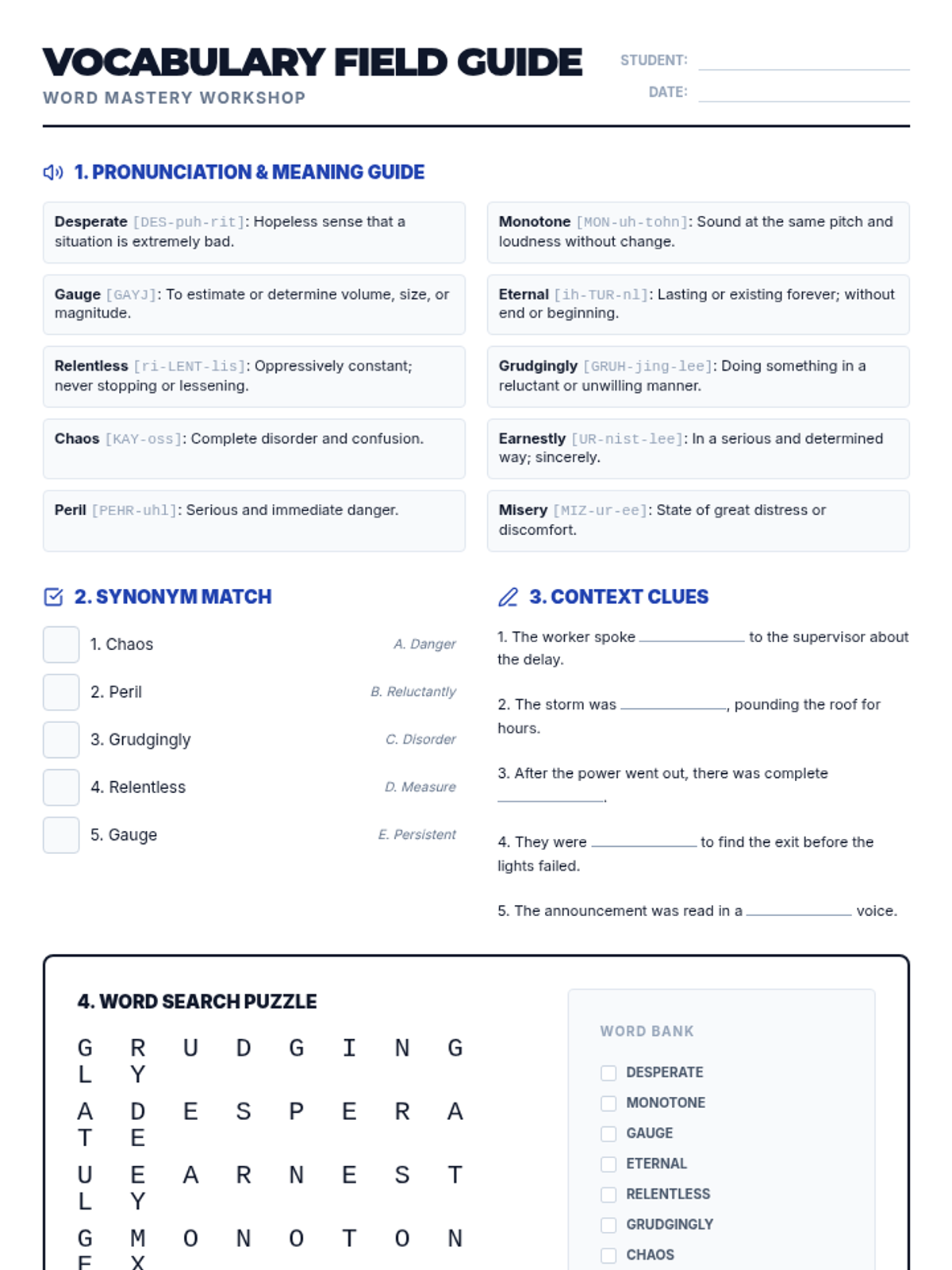
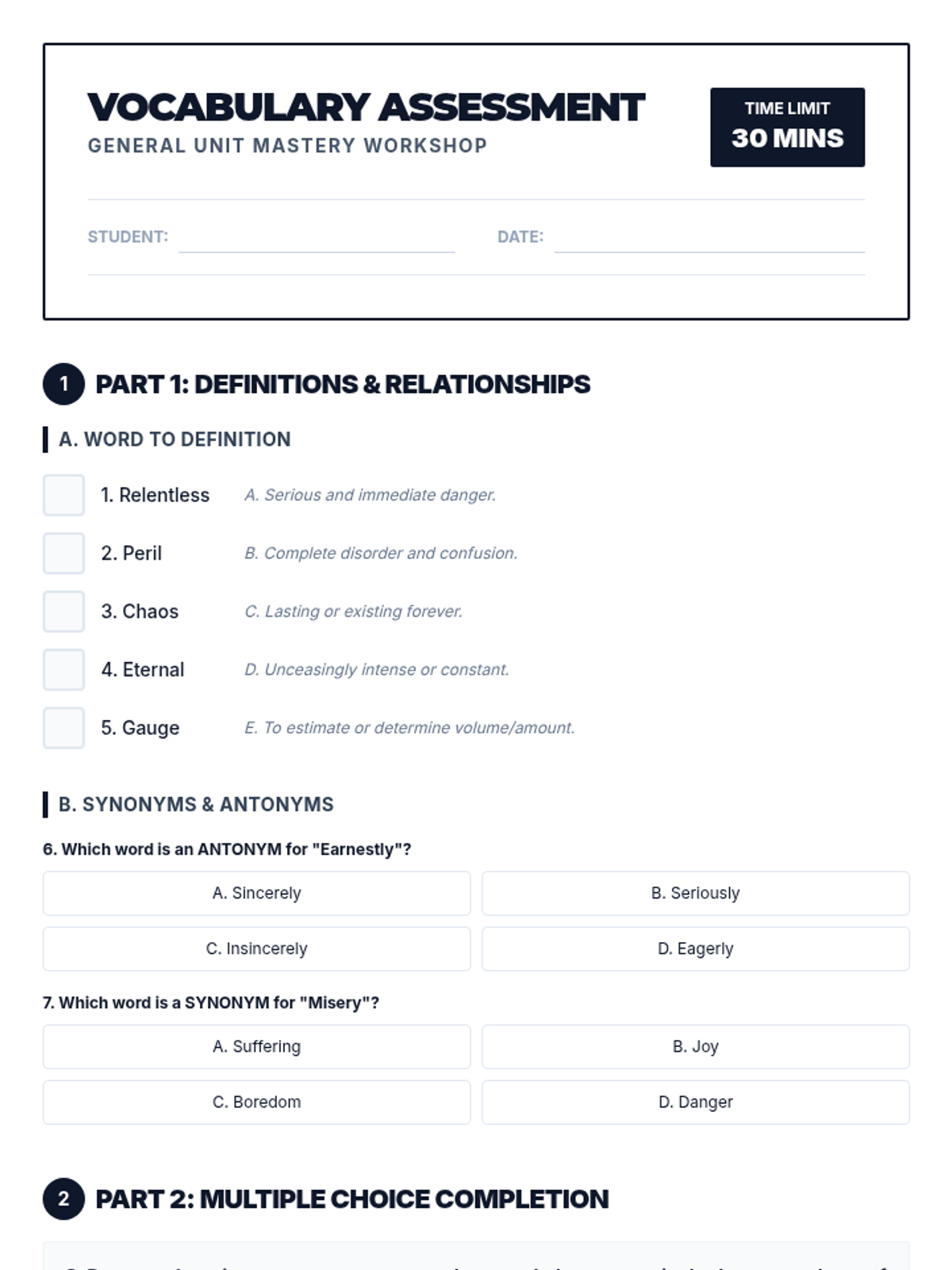
A focused vocabulary lesson covering 10 essential terms, emphasizing word meaning, pronunciation, and contextual application through practice and assessment.
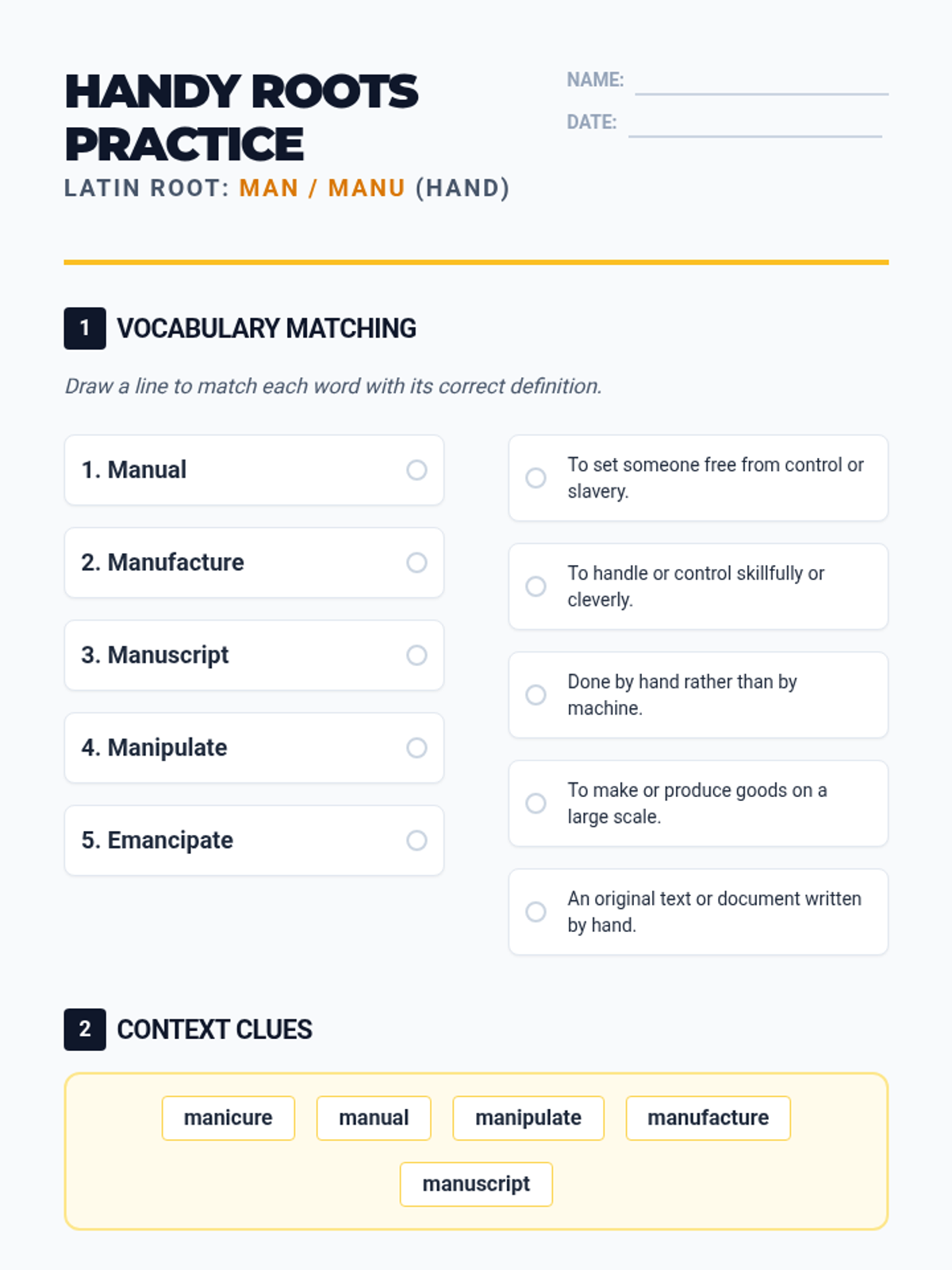
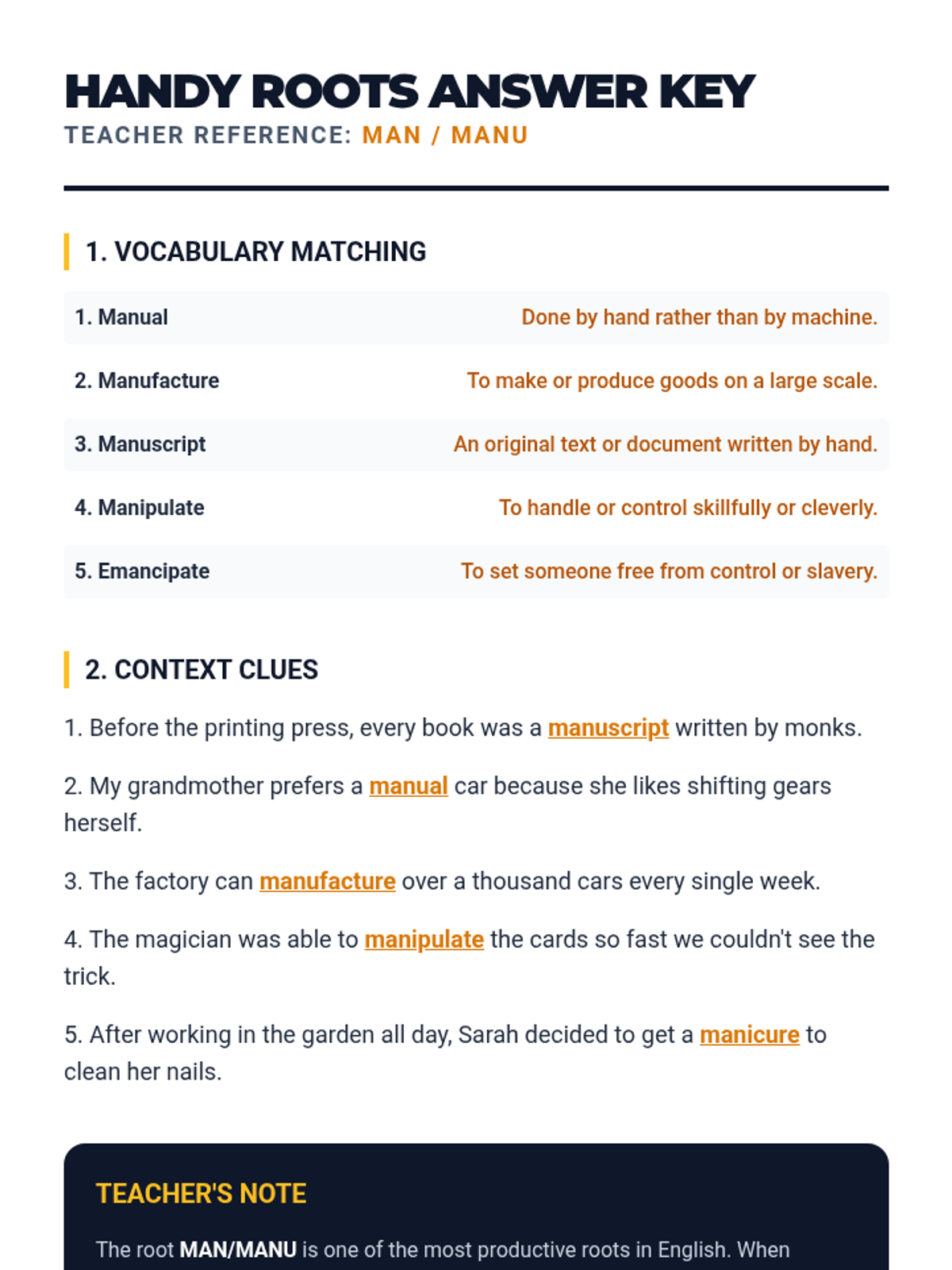
A comprehensive lesson exploring the Latin root 'man/manu' (hand) through visual slides and practical word-building activities.
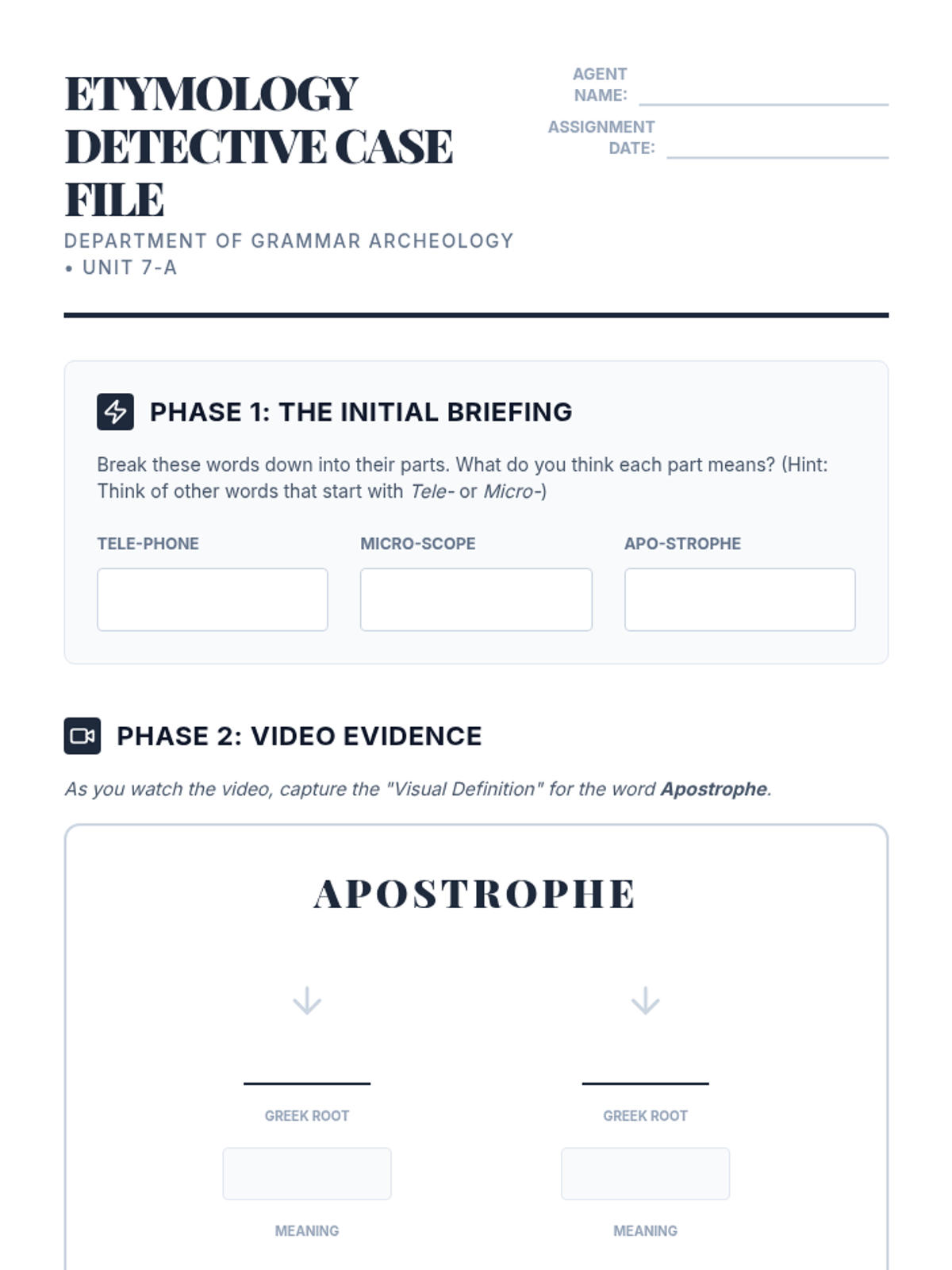
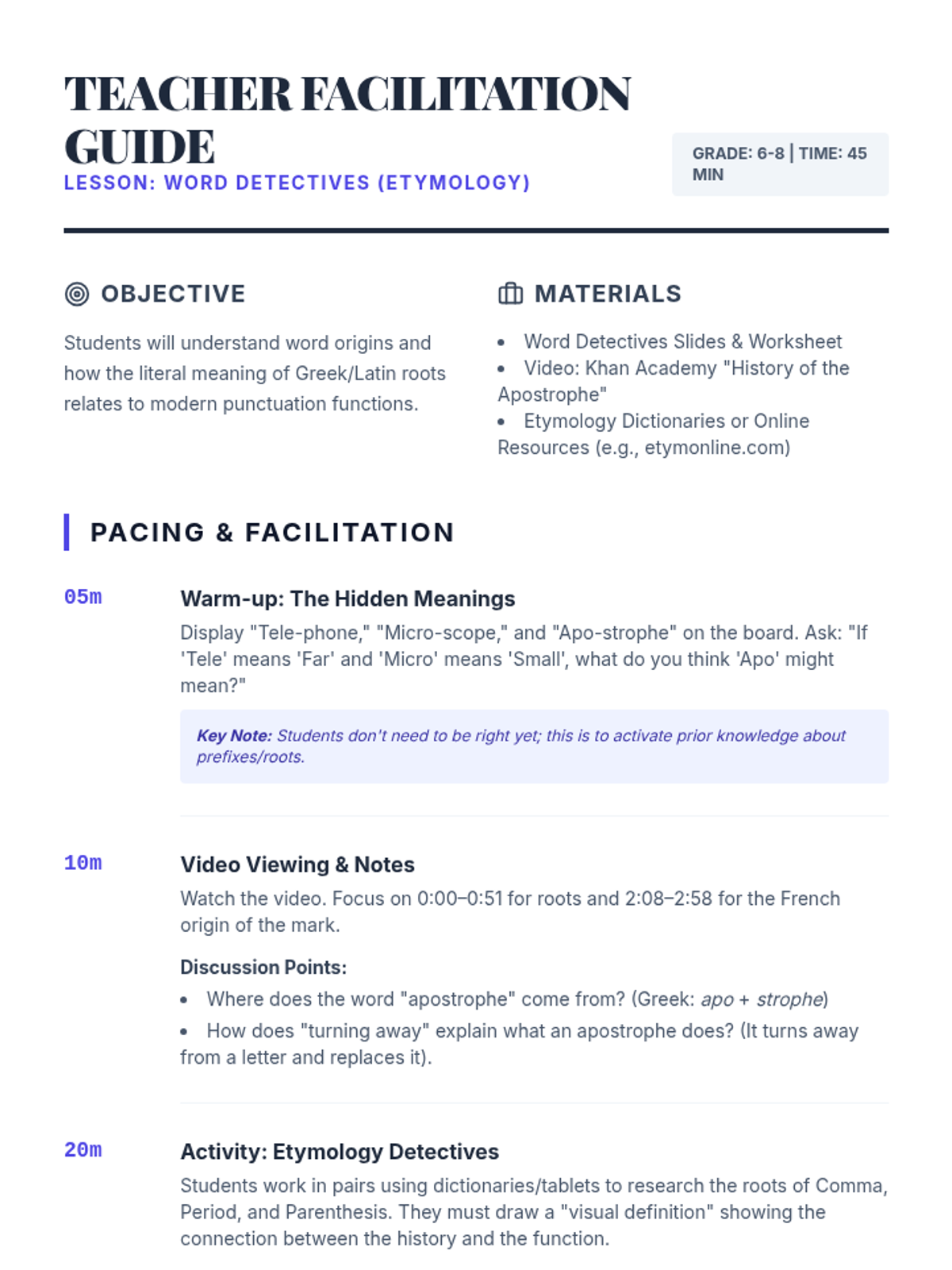
A lesson for grades 6-8 exploring the Greek and Latin origins of grammar terms, specifically focusing on the history of the apostrophe and other punctuation marks. Students act as etymology detectives to connect ancient roots to modern definitions.
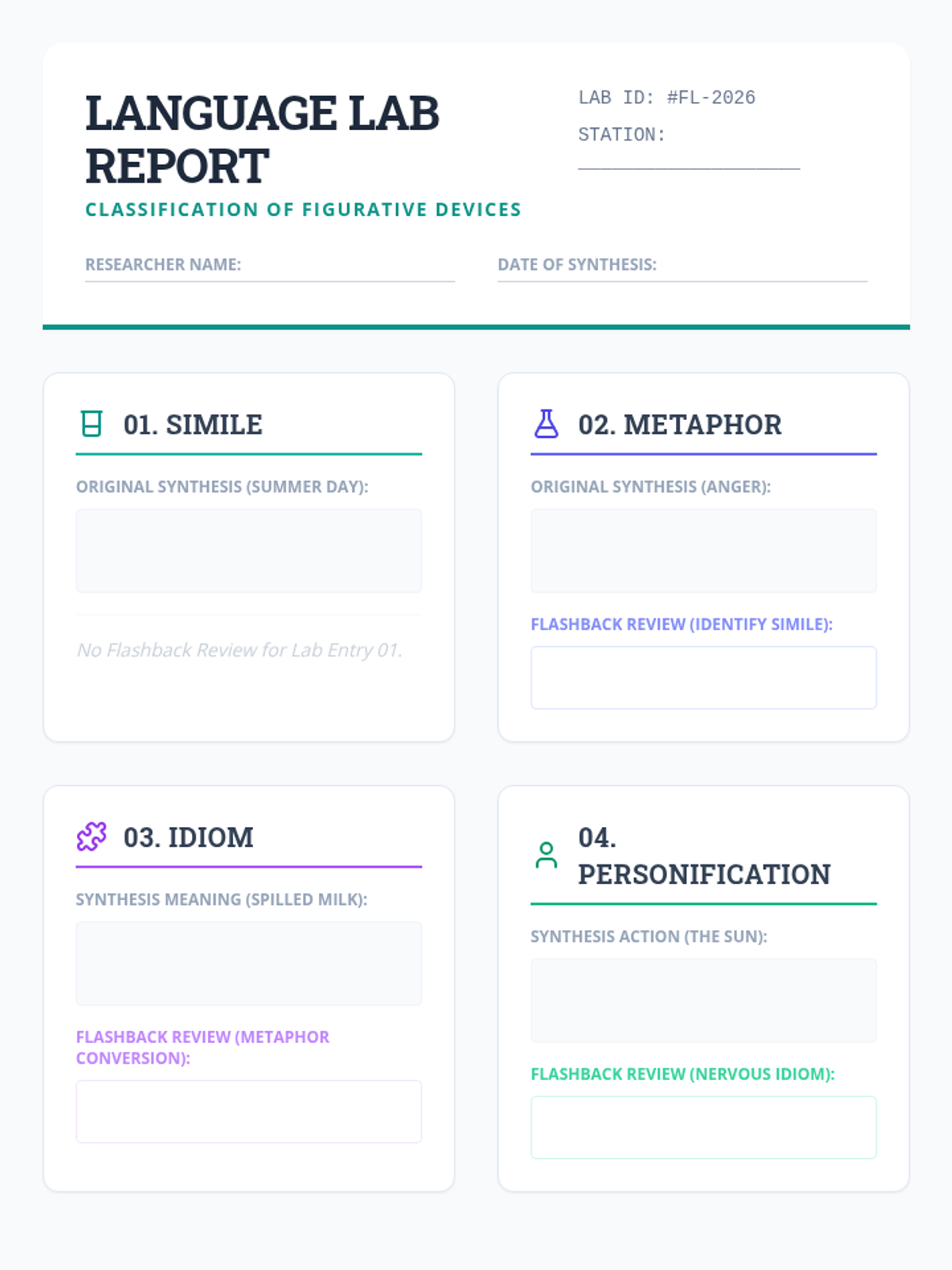
This lesson introduces nine key figurative language devices through interactive slides and practice. Students identify definitions, analyze examples, and create their own original phrases while reviewing previous concepts.
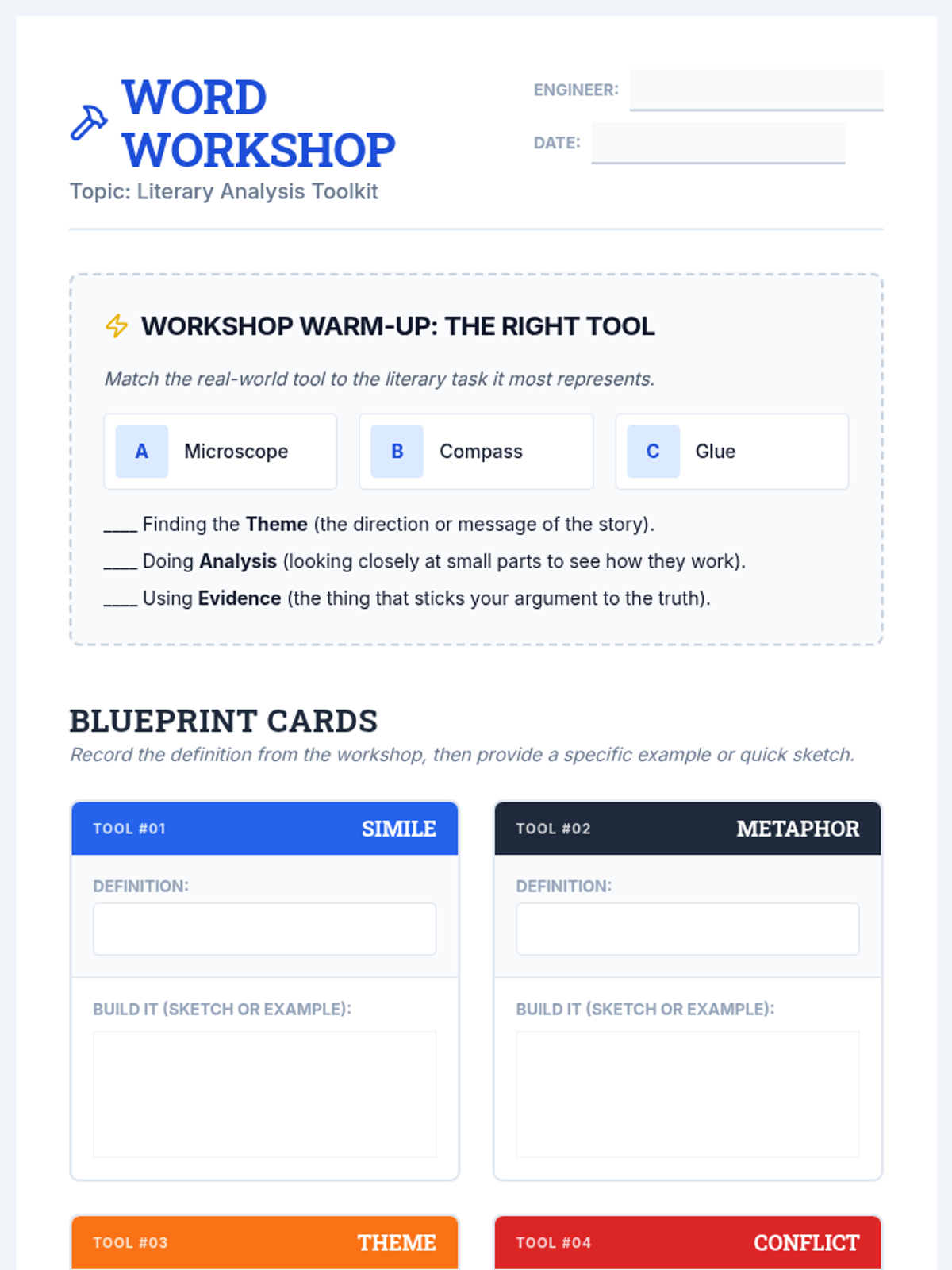
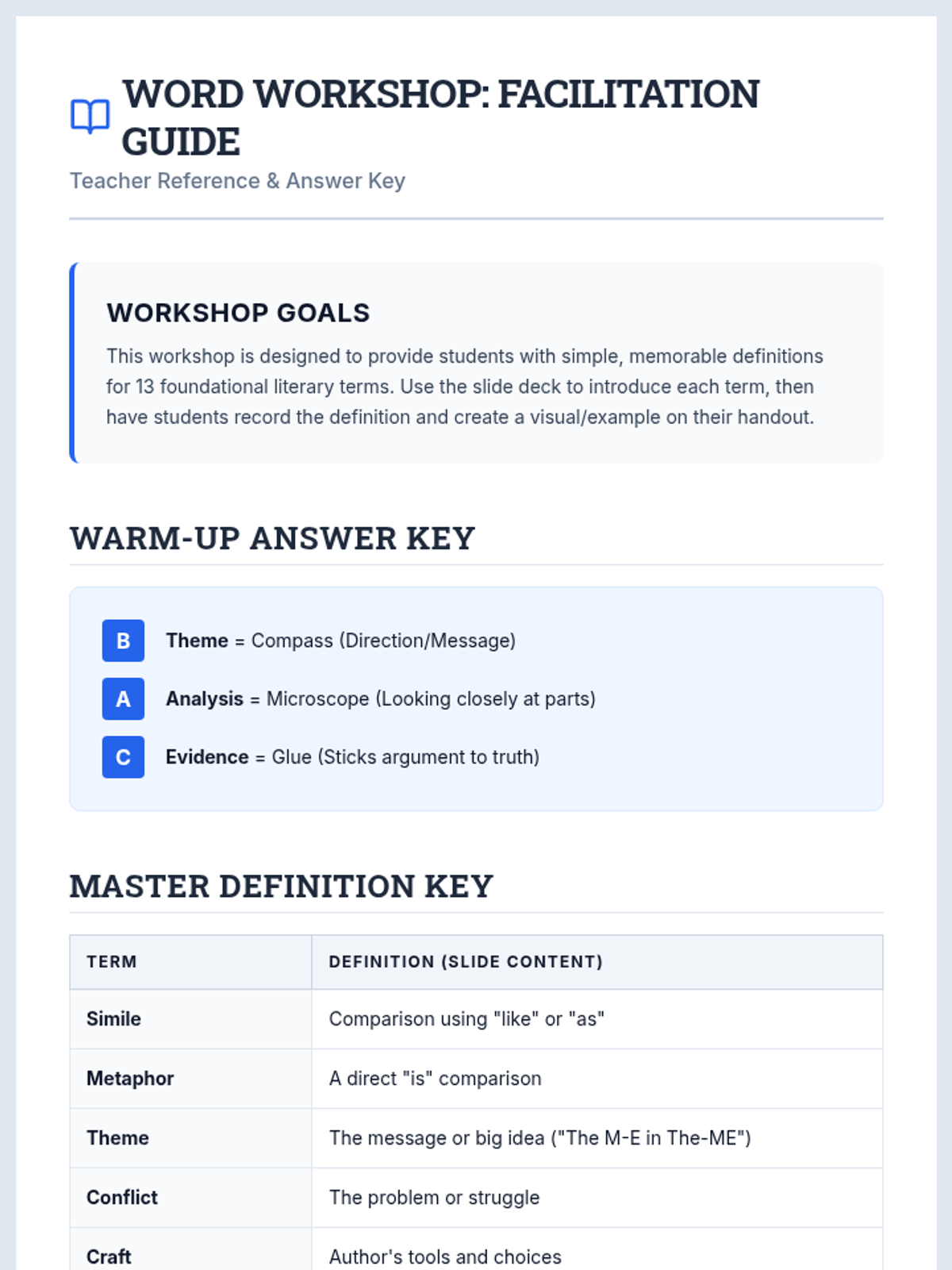
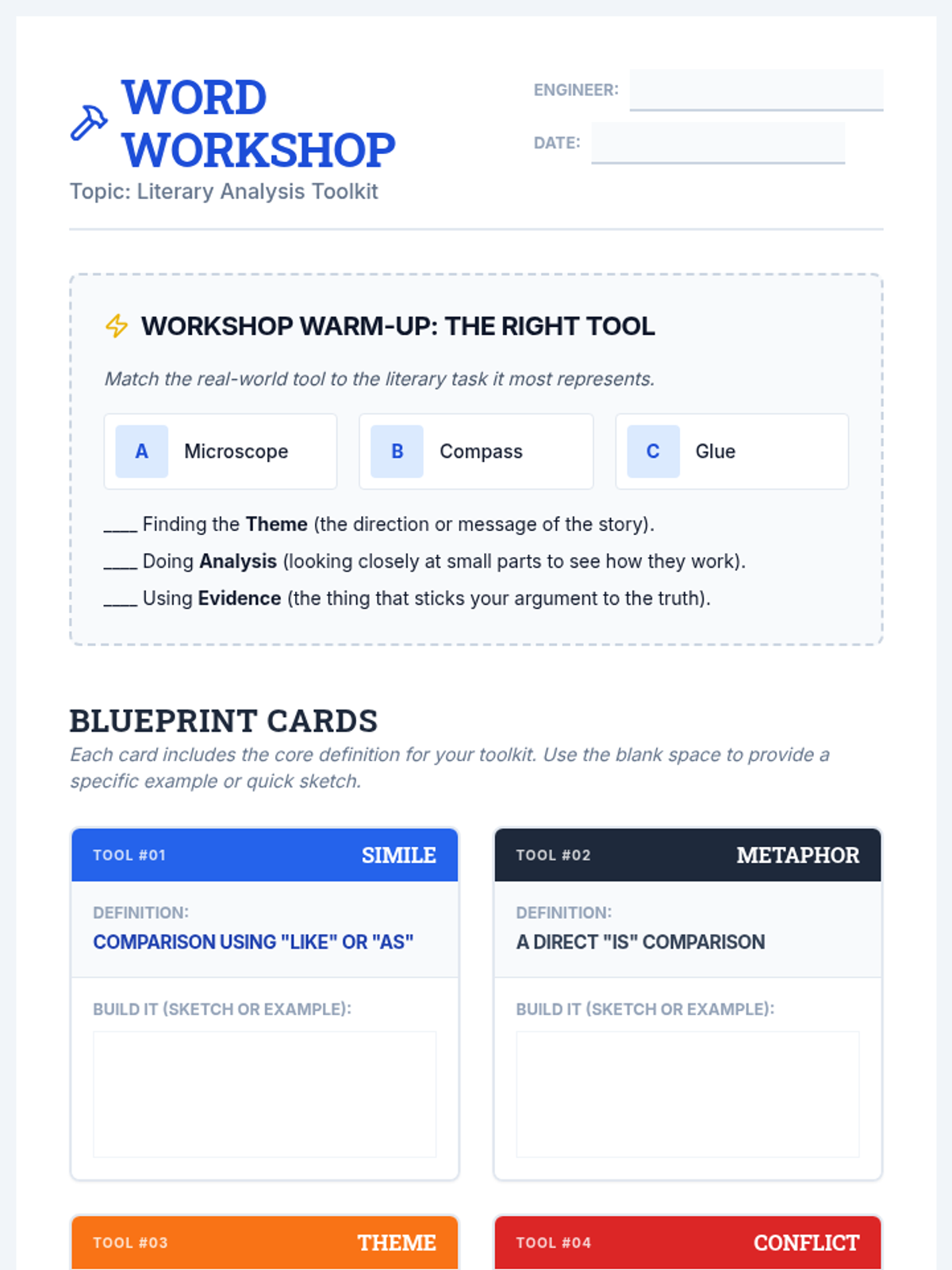
A comprehensive vocabulary workshop focused on 13 essential literary terms, using sticky definitions and graphic organizers to help students master analysis and interpretation.
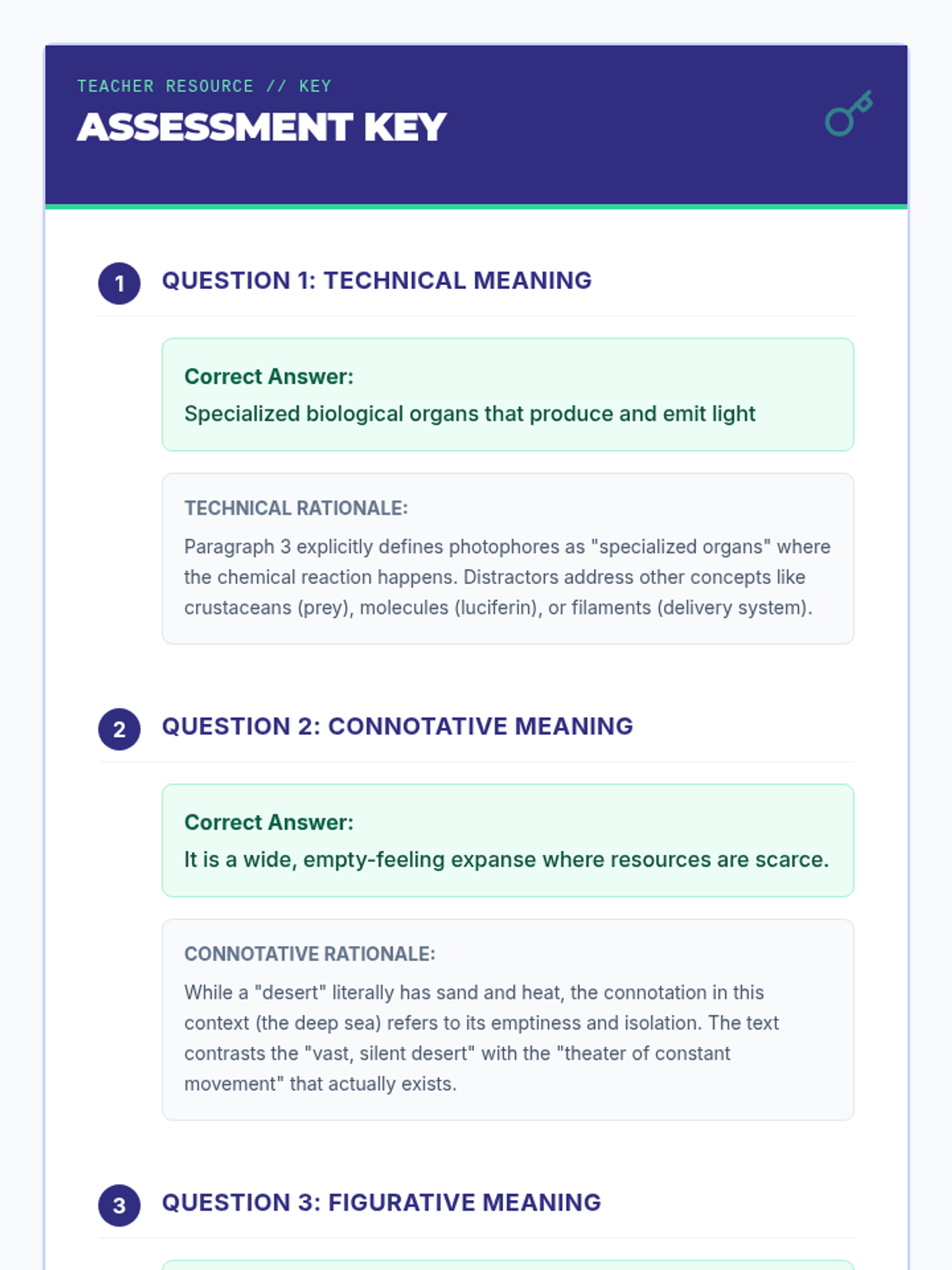
A deep dive into the science of bioluminescence, focusing on identifying technical, connotative, and figurative language in non-fiction texts.
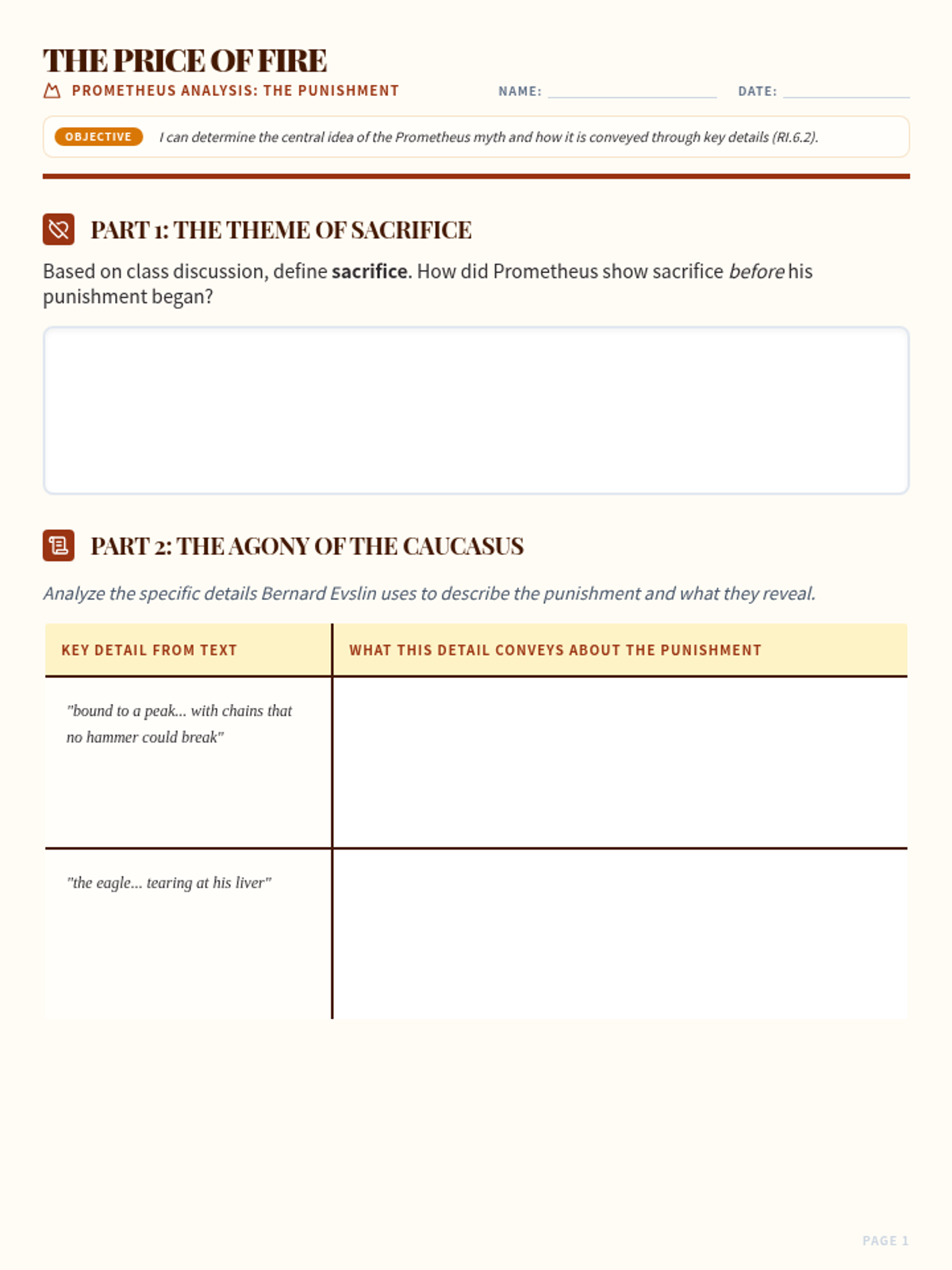
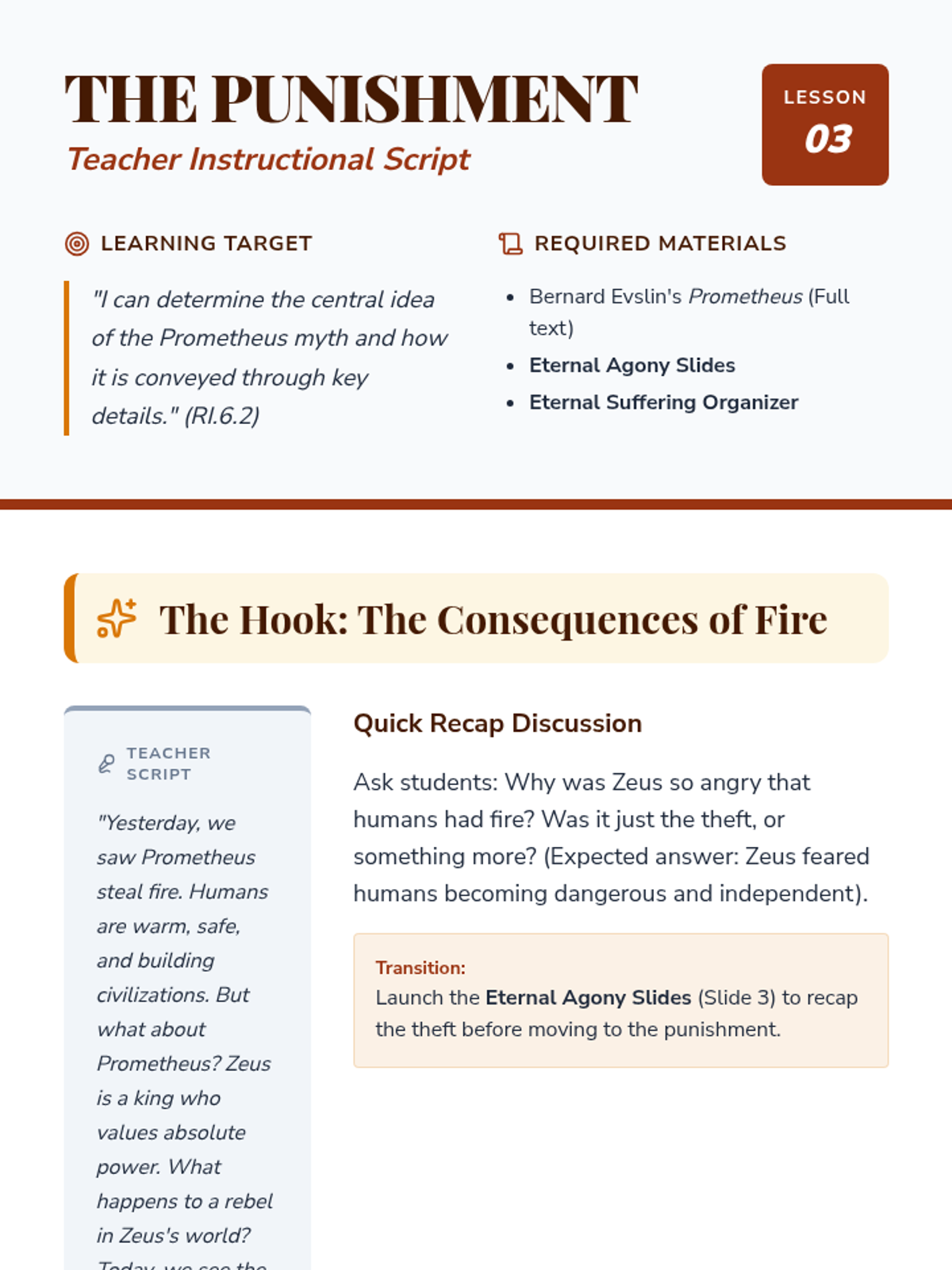
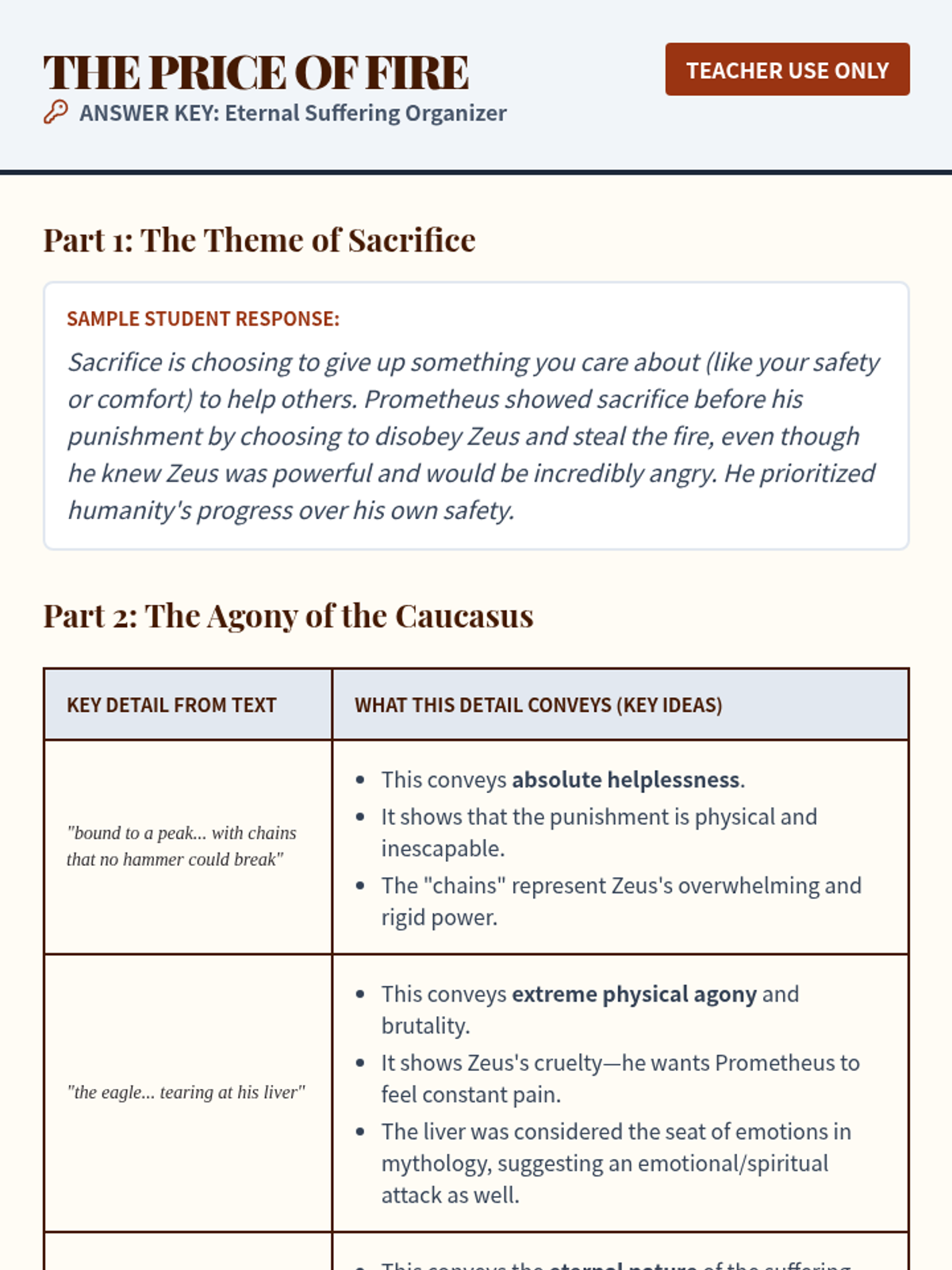
In this lesson, students analyze the climax of the Prometheus myth, focusing on how specific details of his punishment convey the central idea of eternal sacrifice and defiance. Students will use the Bernard Evslin version of the text to identify key details and explain their significance.
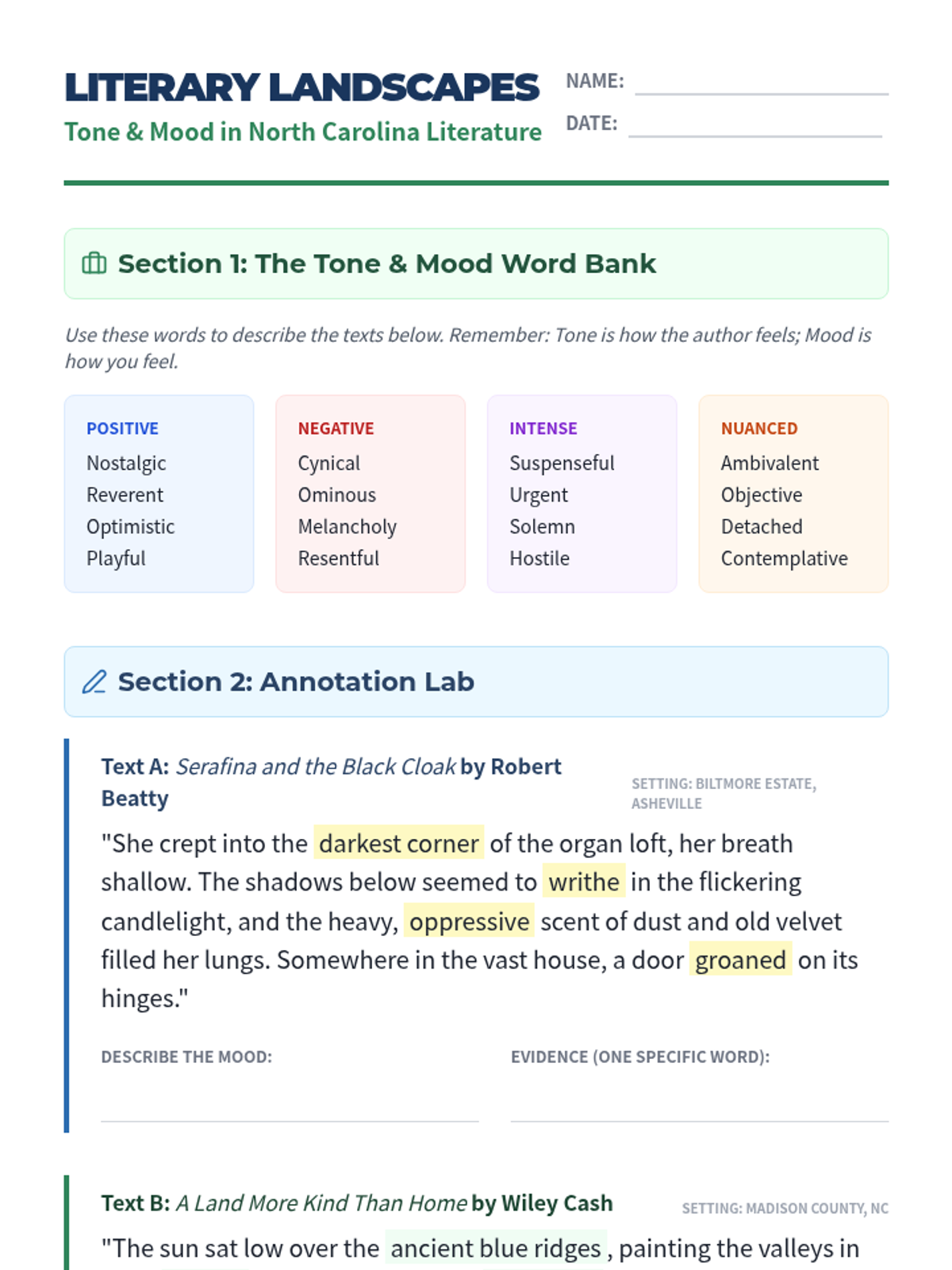
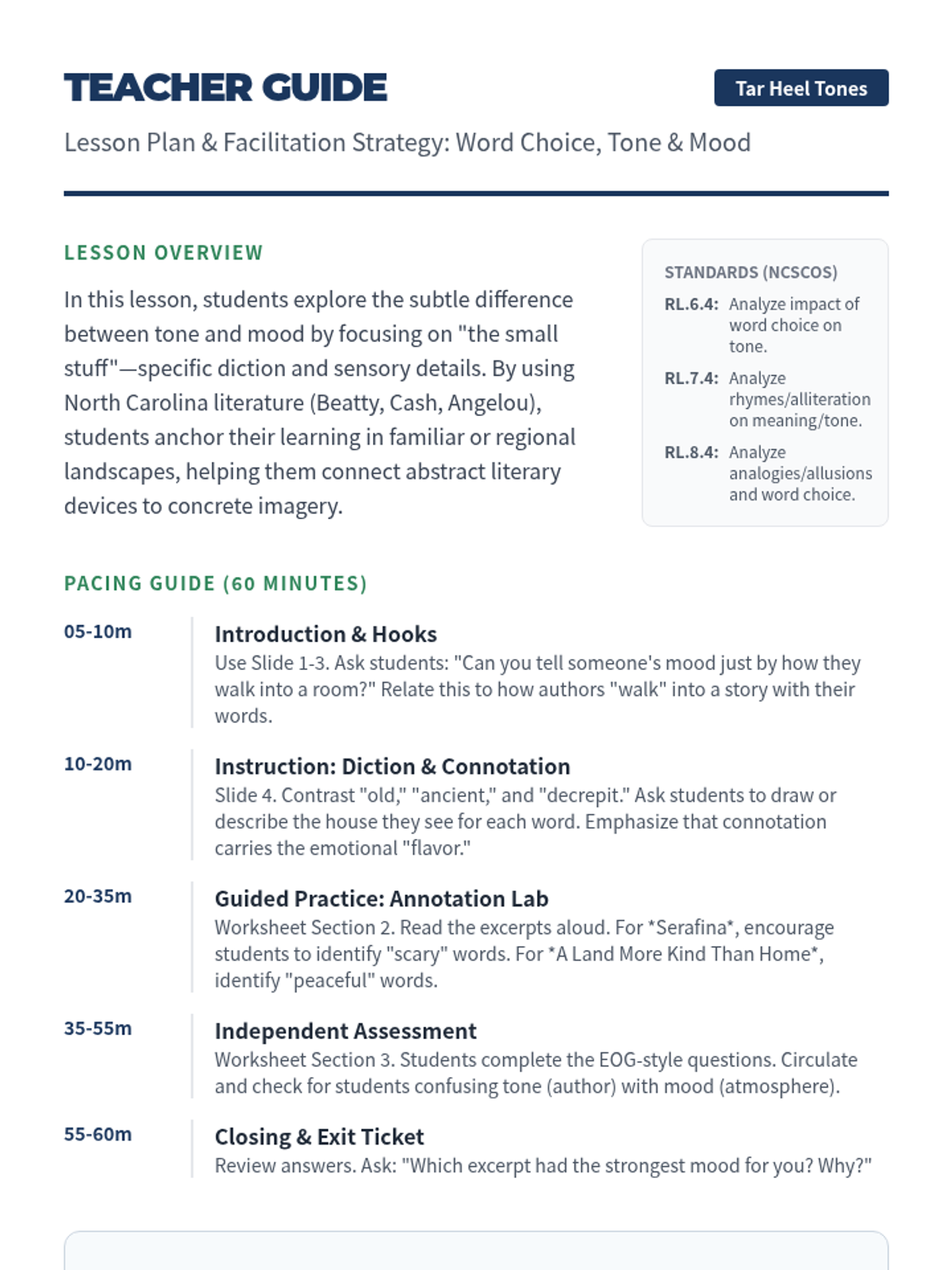
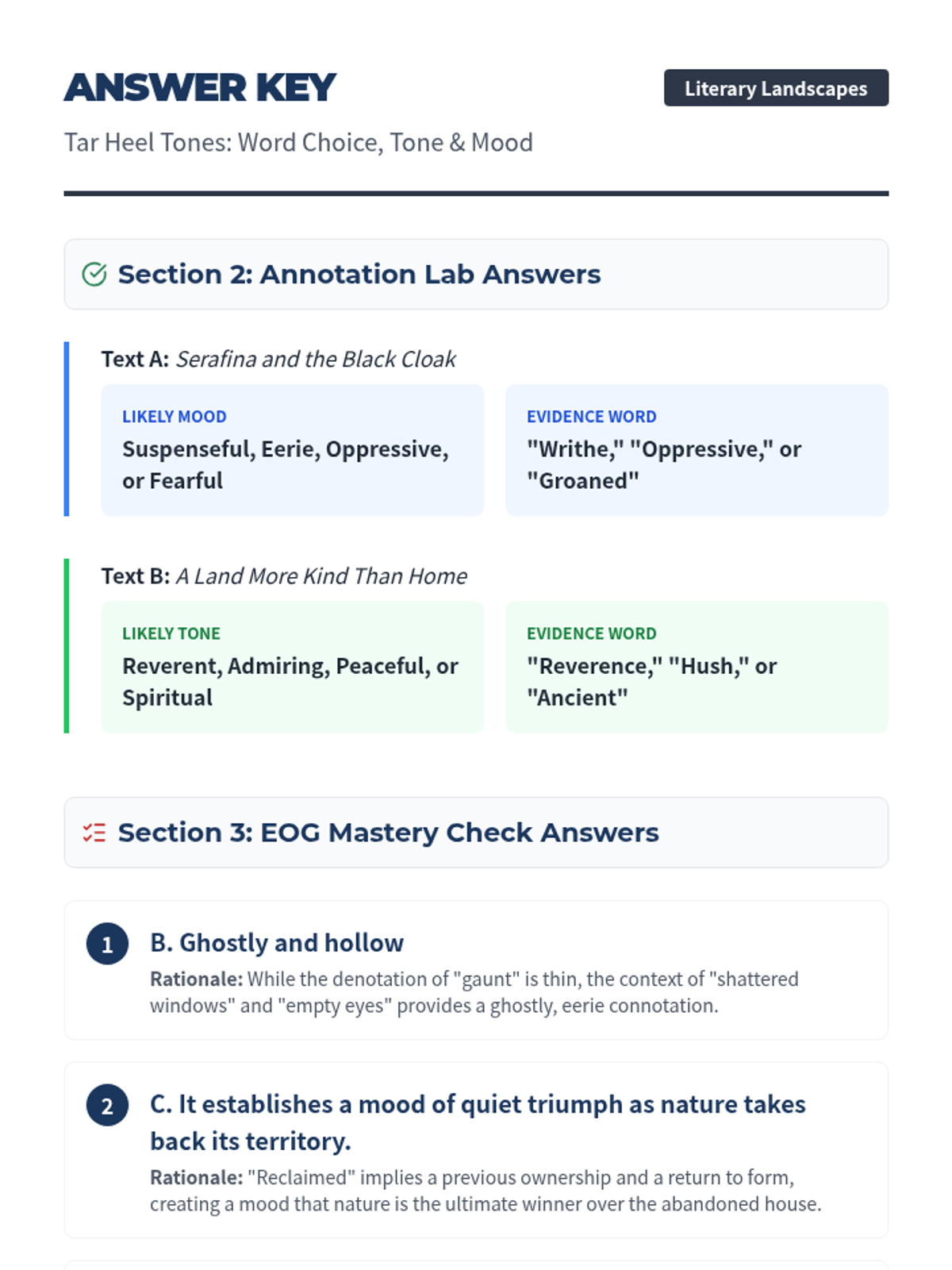
A Grades 6-8 ELA lesson focused on analyzing how specific word choices impact tone and mood, using excerpts from literature set in or written by authors from North Carolina. Aligned to NCSCOS RL.6.4, RL.7.4, and RL.8.4.
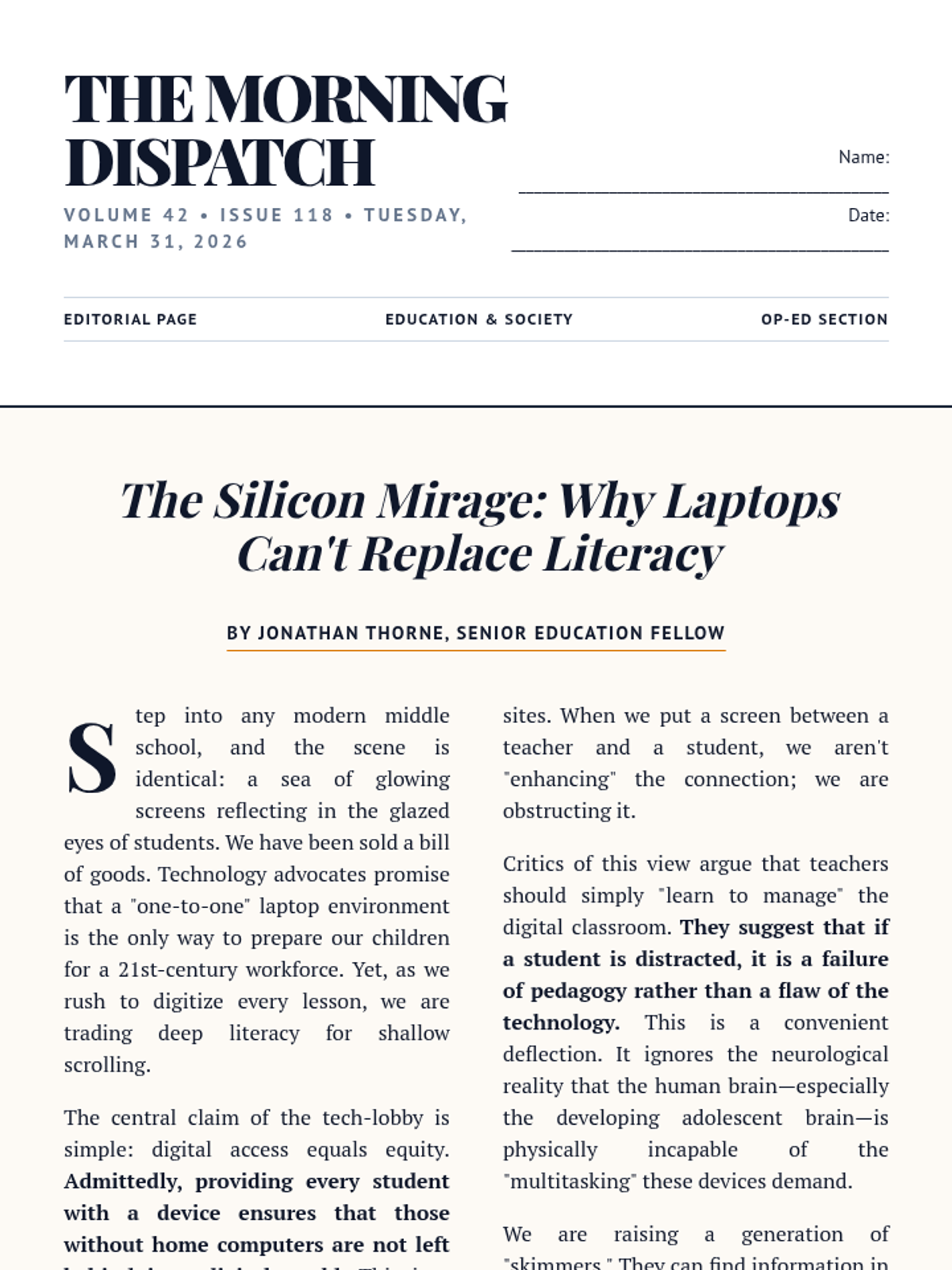
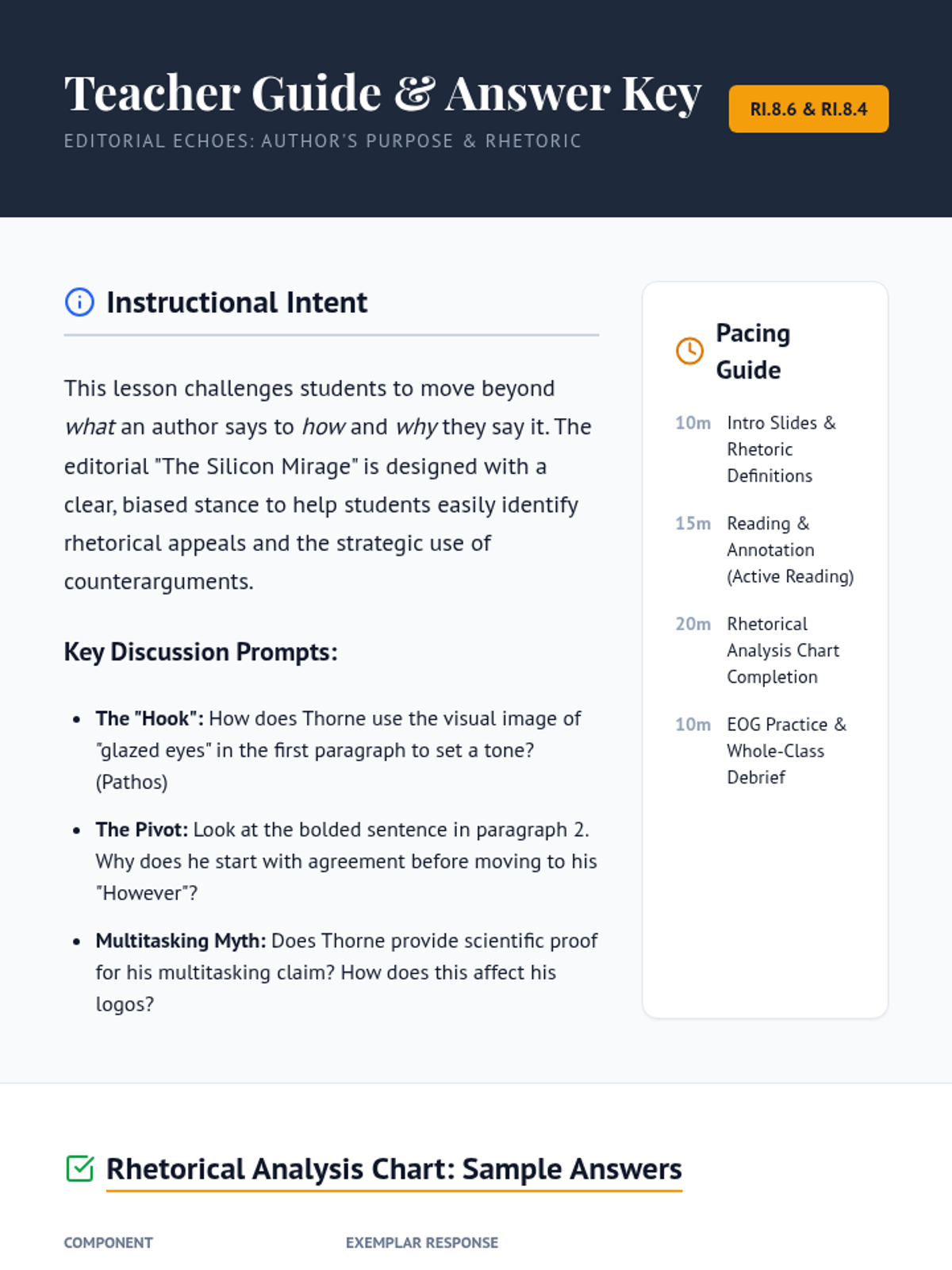
A Grade 8 ELA lesson focusing on analyzing an author's point of view, their response to counterarguments, and the use of rhetorical appeals within a persuasive editorial about technology in the classroom.