A comprehensive Grades 6-8 ELA lesson focused on mastering inference skills using North Carolina-themed poetry and prose, featuring explicit instruction and EOG-style practice.
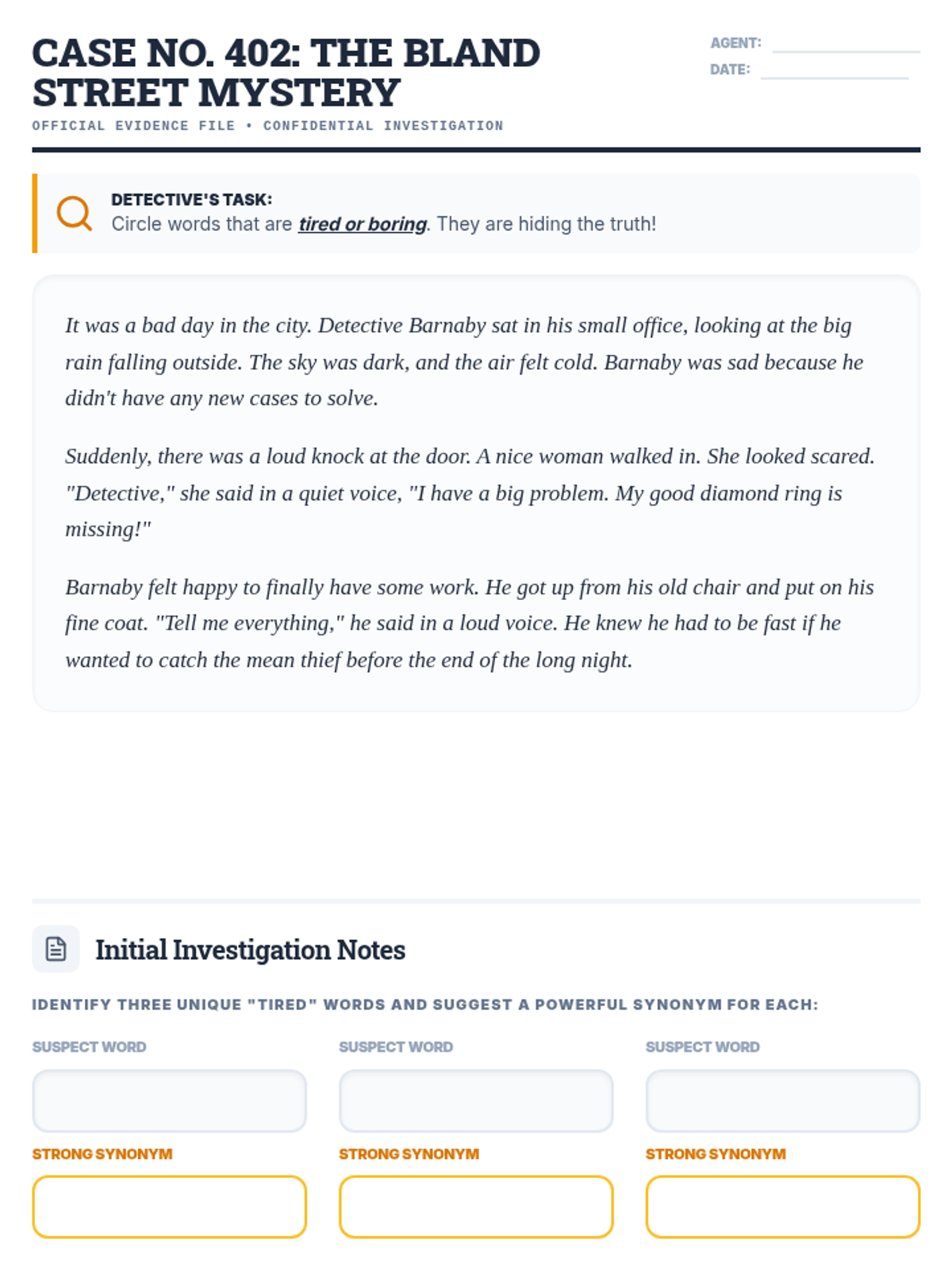
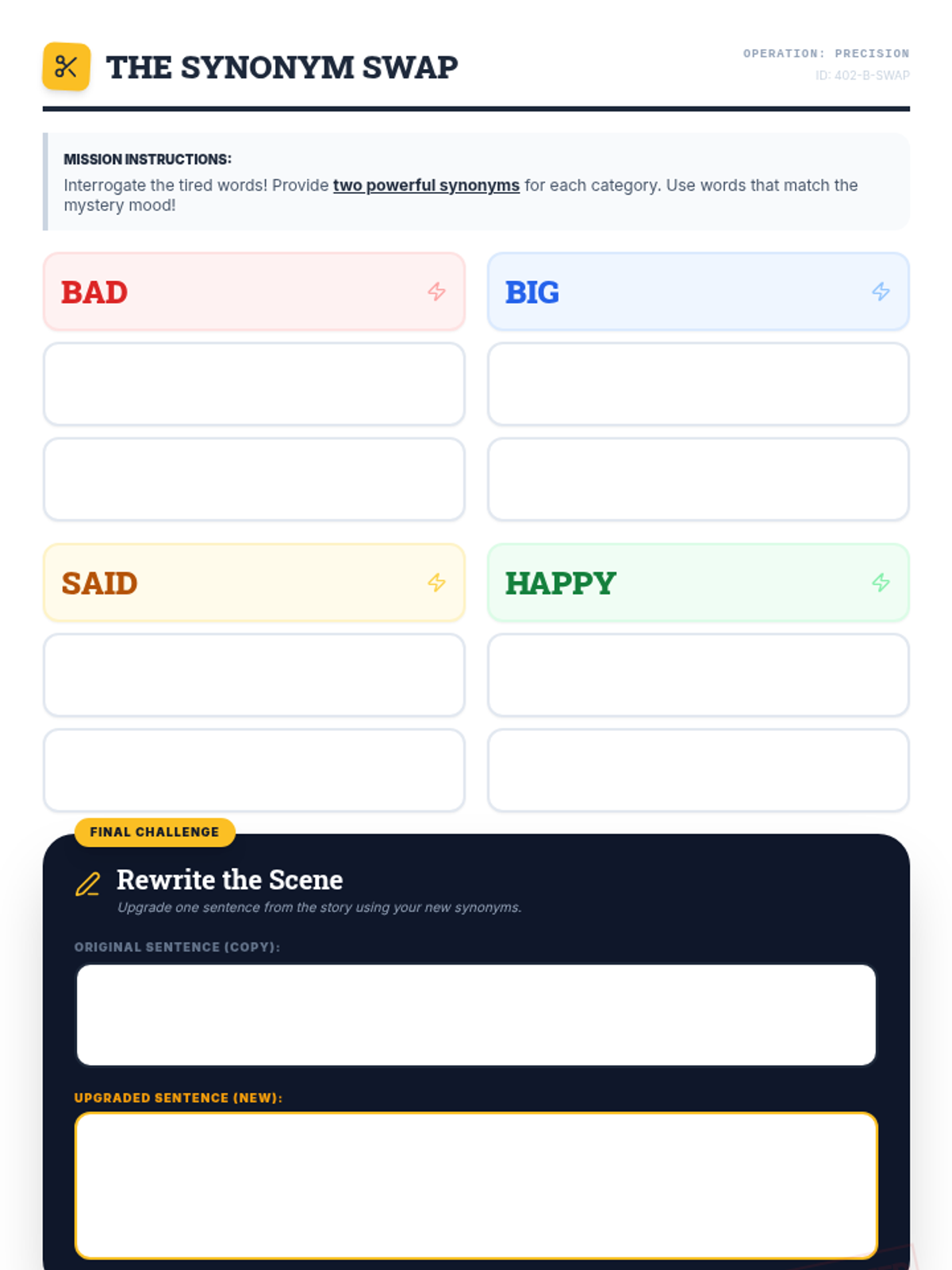
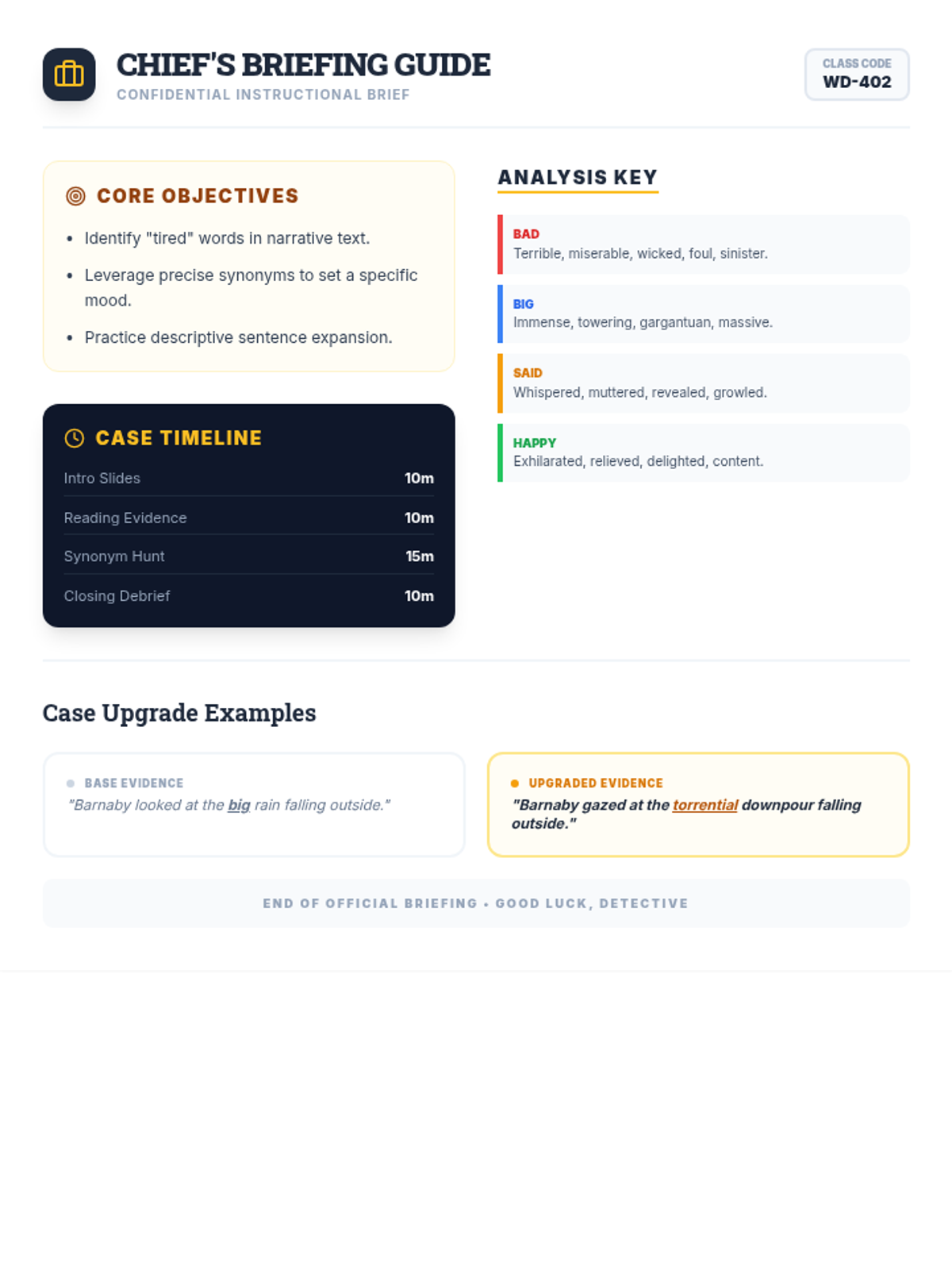
Students will identify overused, 'tired' words in a narrative passage and learn how to replace them with precise synonyms to improve descriptive writing through a detective-themed investigation.
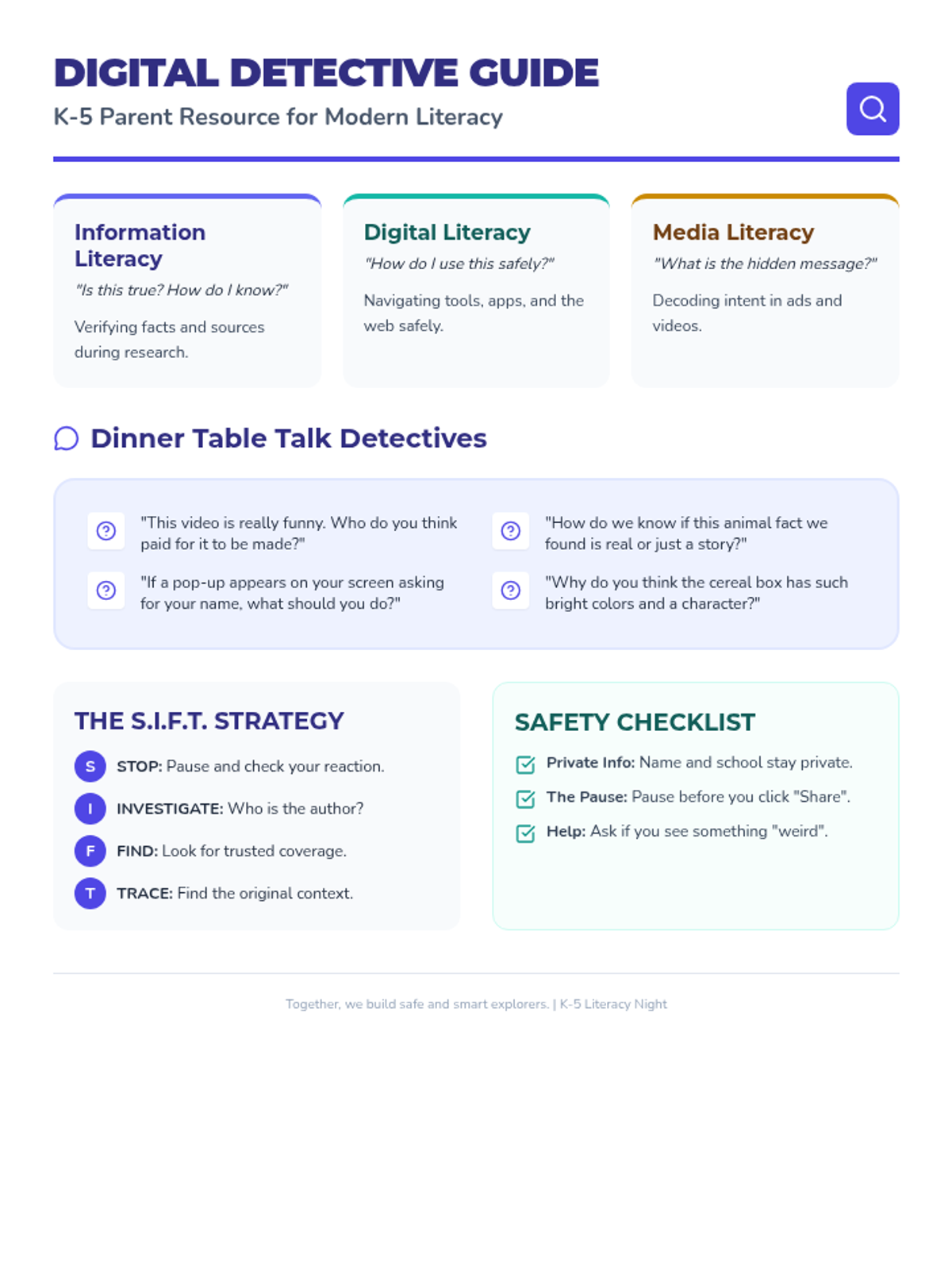
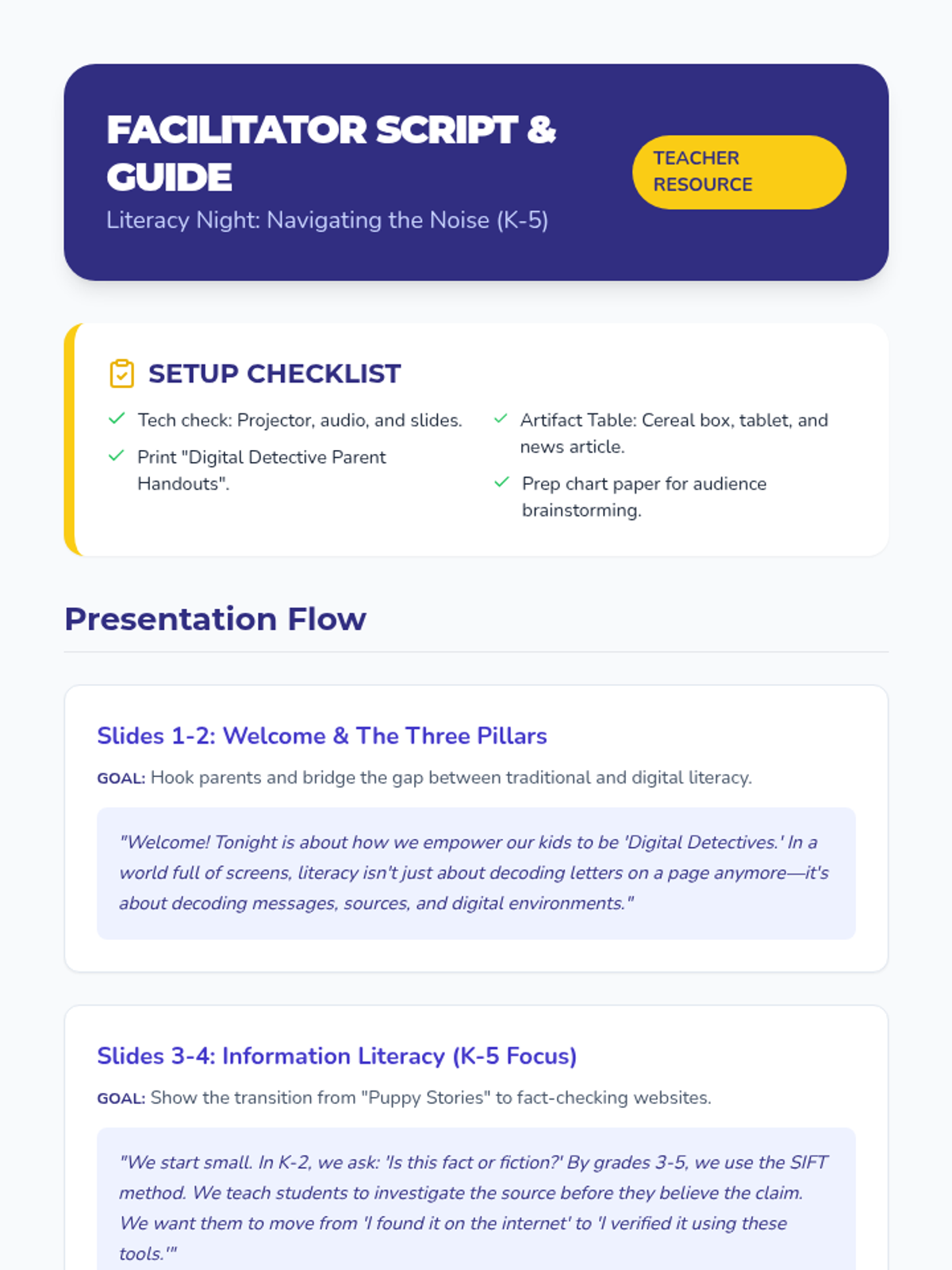
A comprehensive presentation and resource set for a K-5 Literacy Night focused on media, digital, and information literacy. Parents will learn how these skills are integrated into the classroom and how to support their children at home.
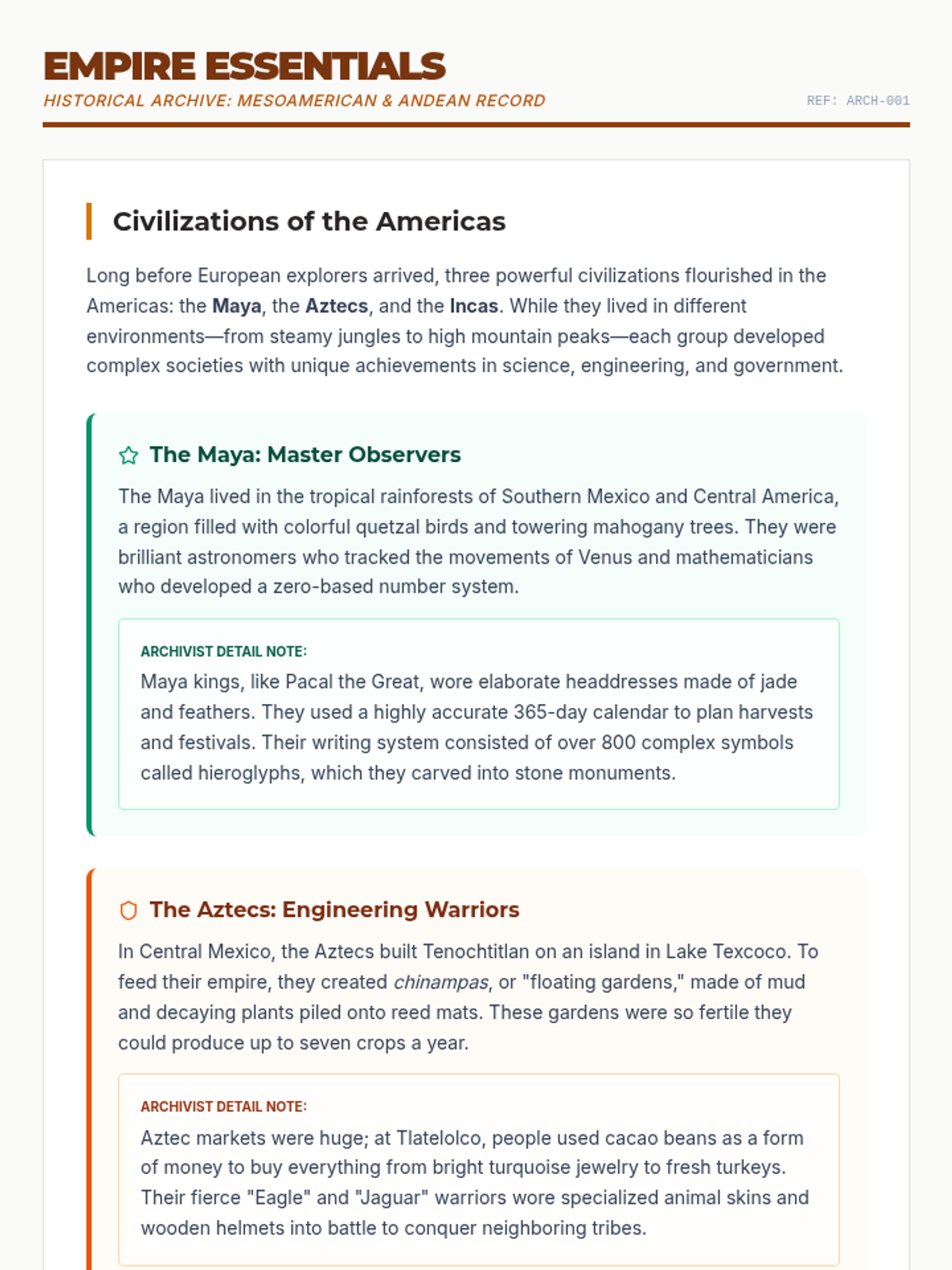
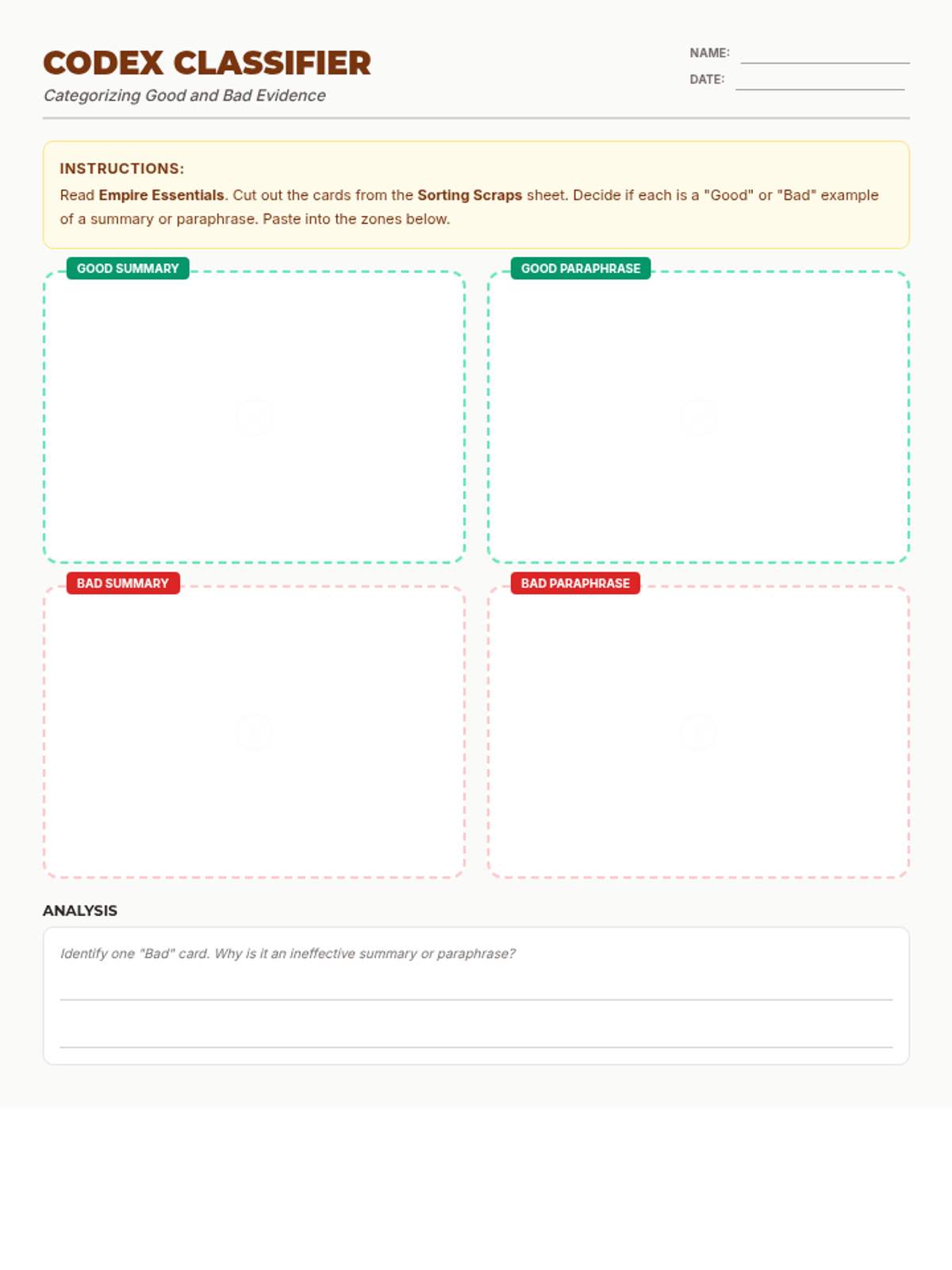
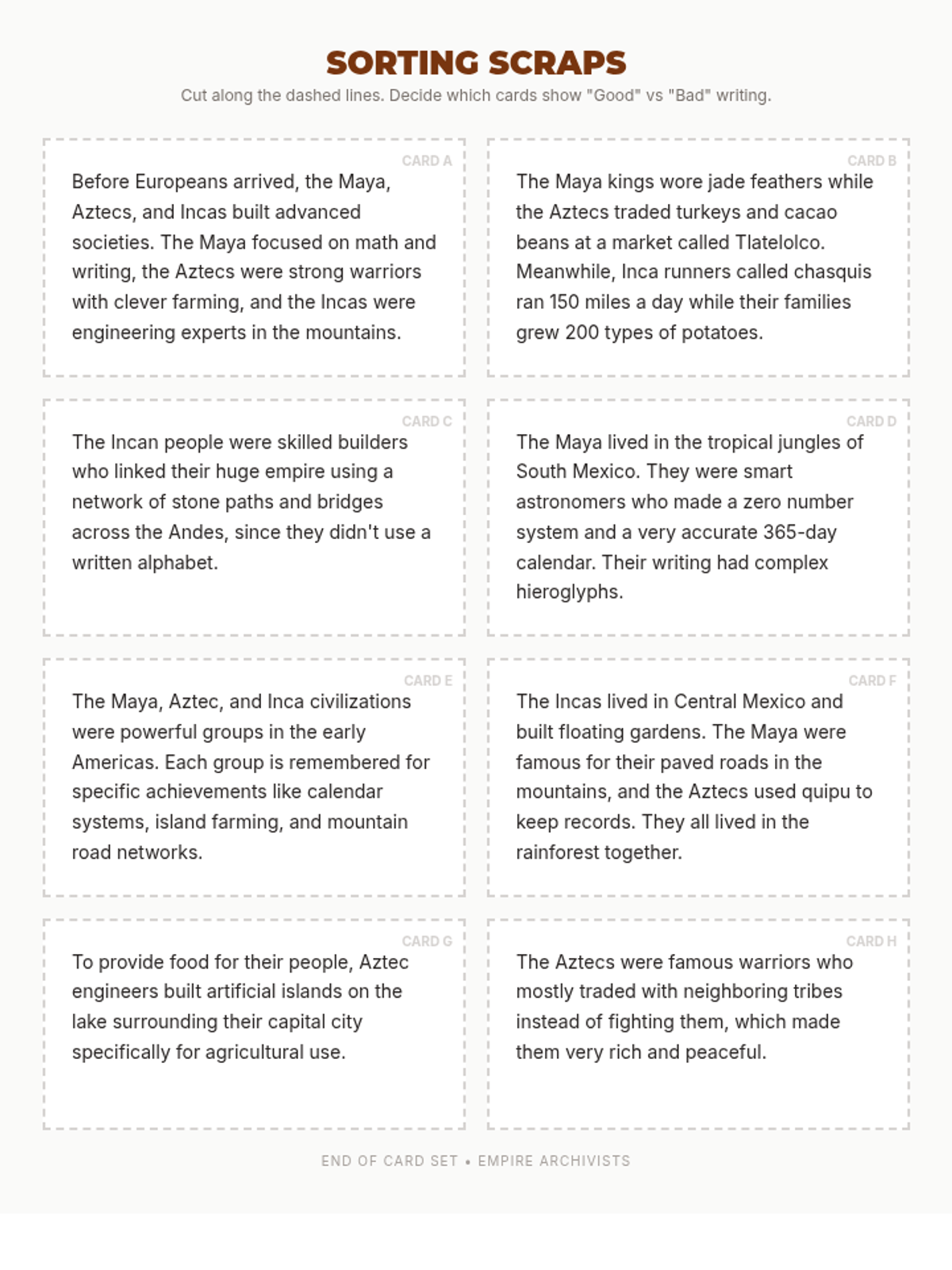
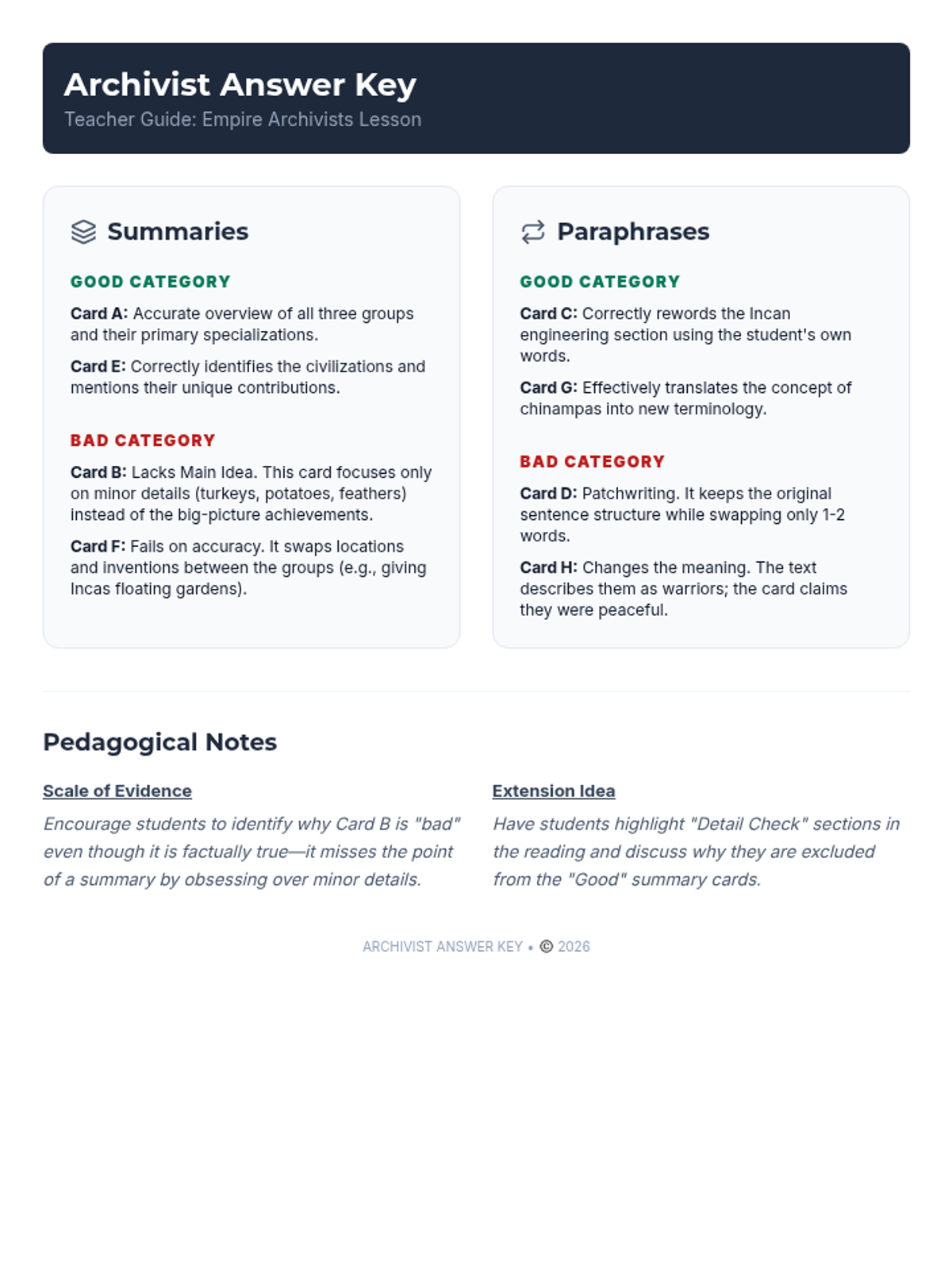
A lesson focused on distinguishing between effective and ineffective paraphrasing and summarizing techniques using the context of the Maya, Aztec, and Inca civilizations. Students will read a short passage and categorize various examples into 'good' or 'bad' buckets.
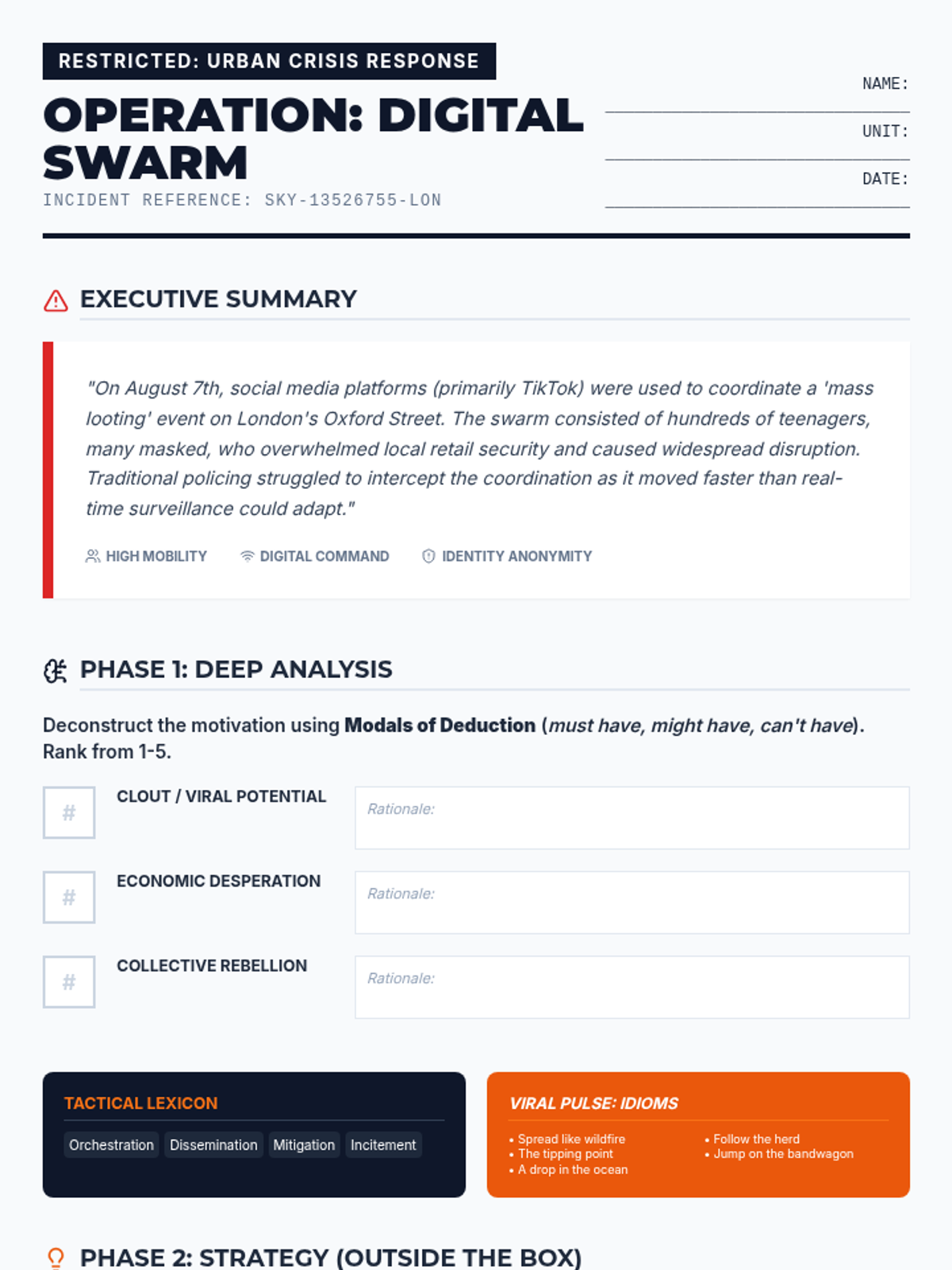
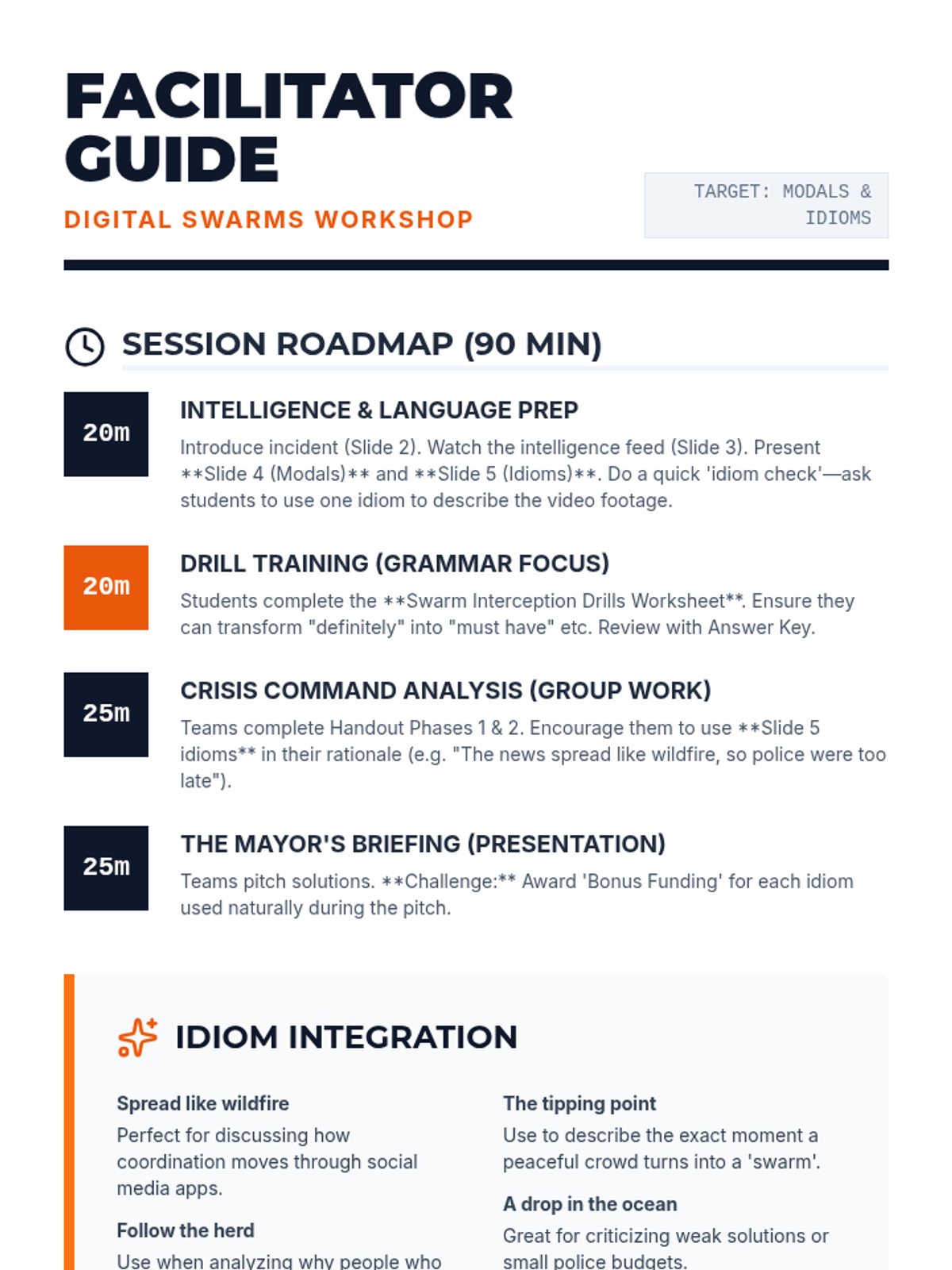
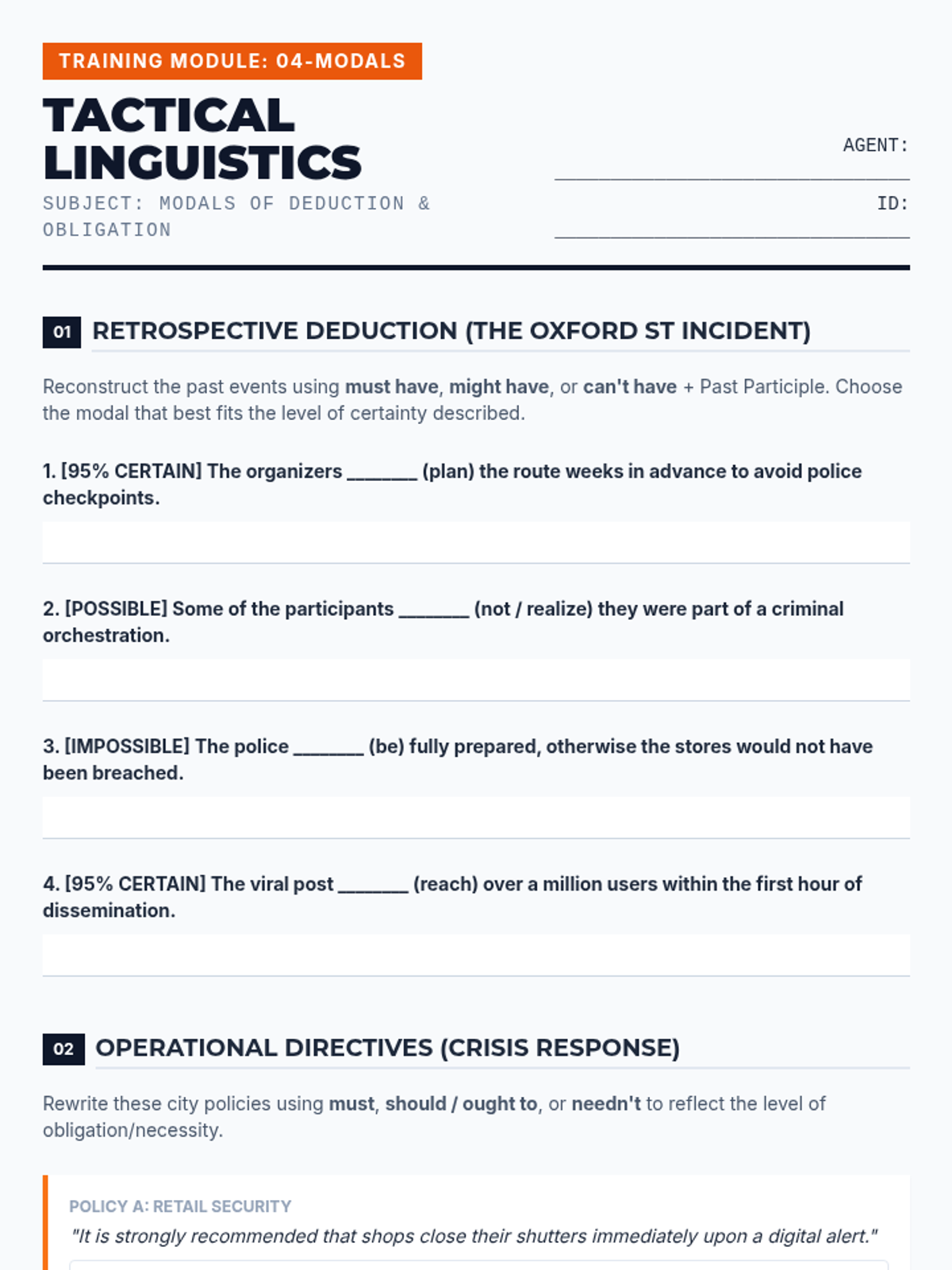
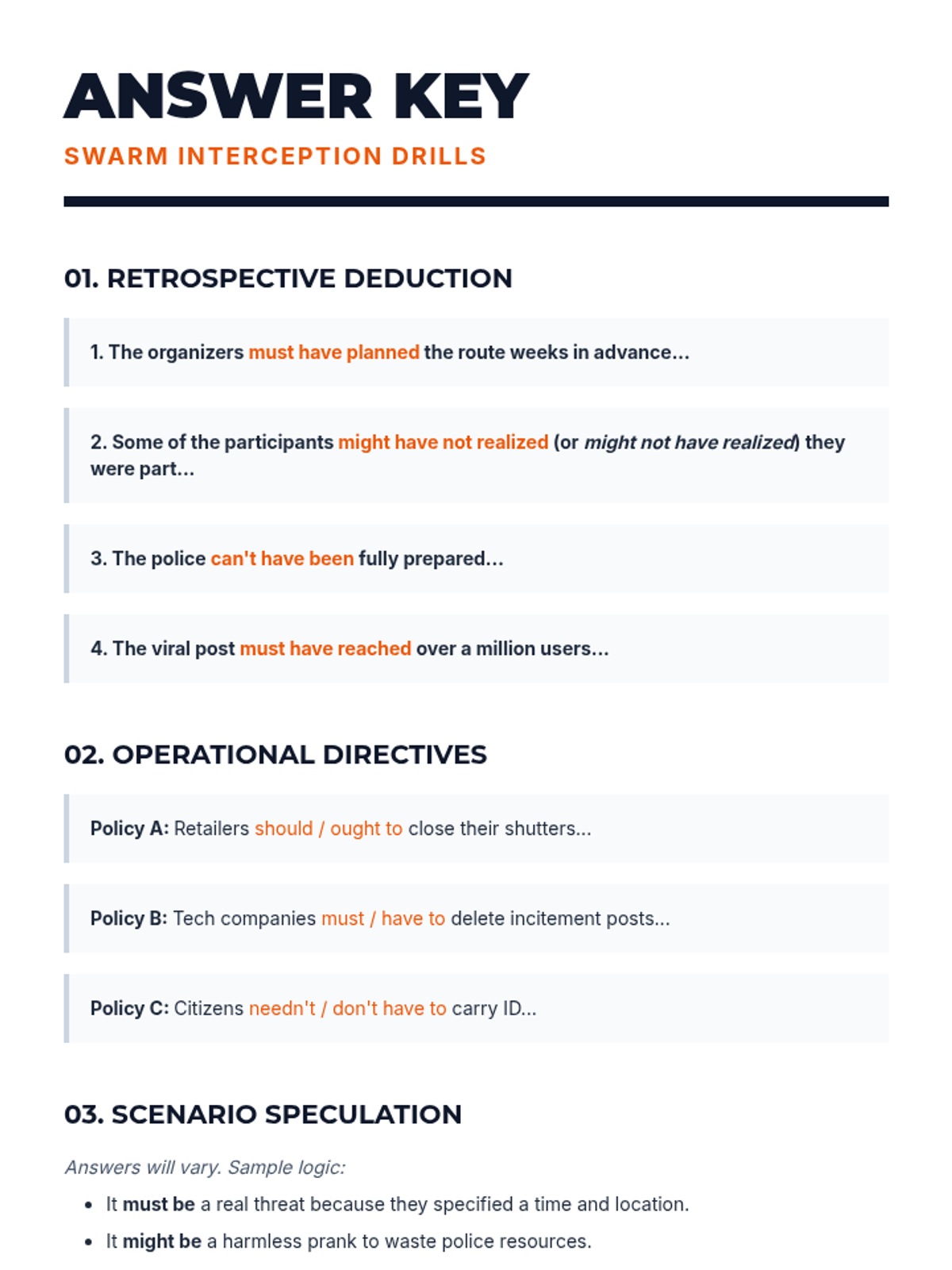
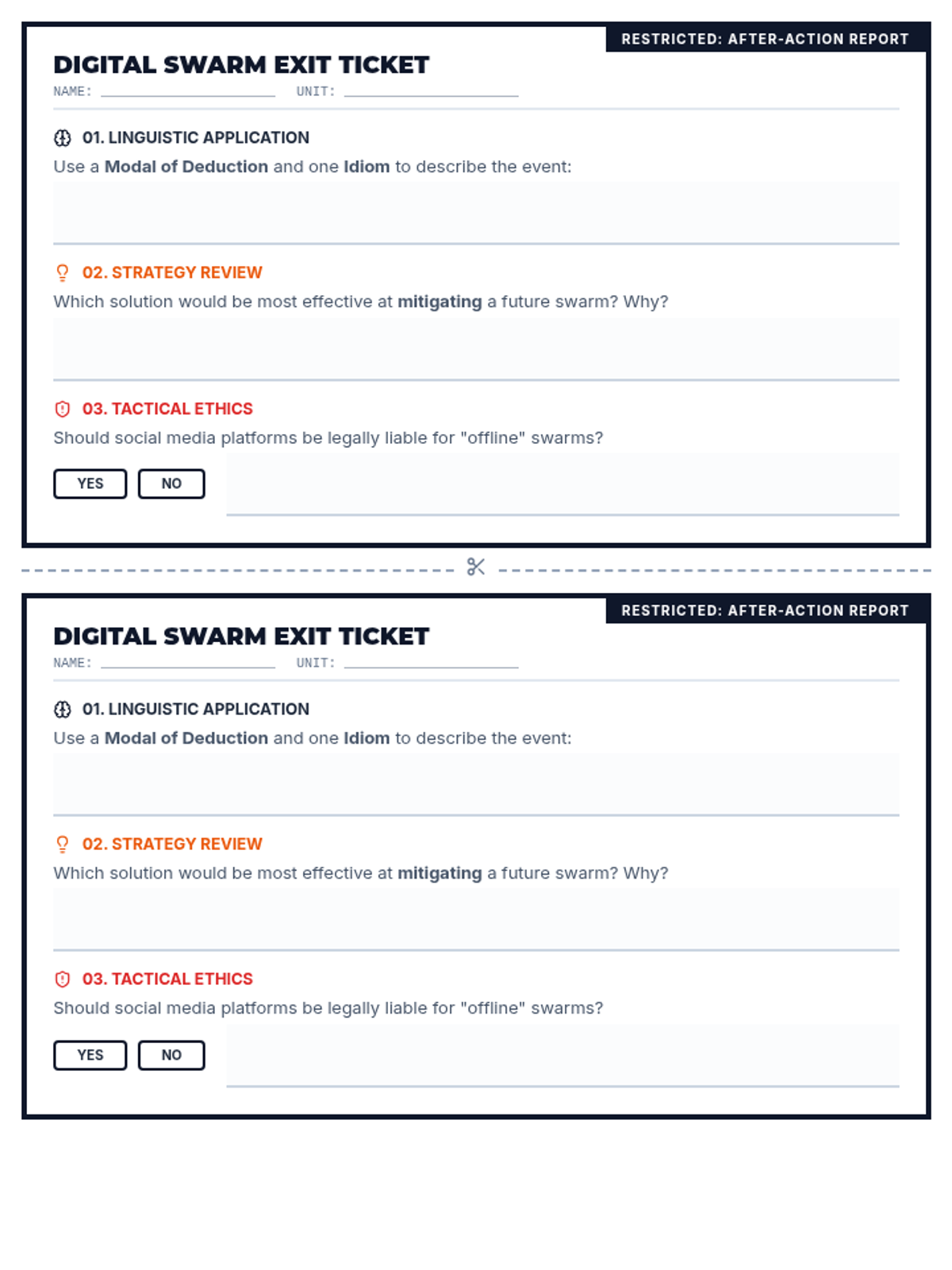
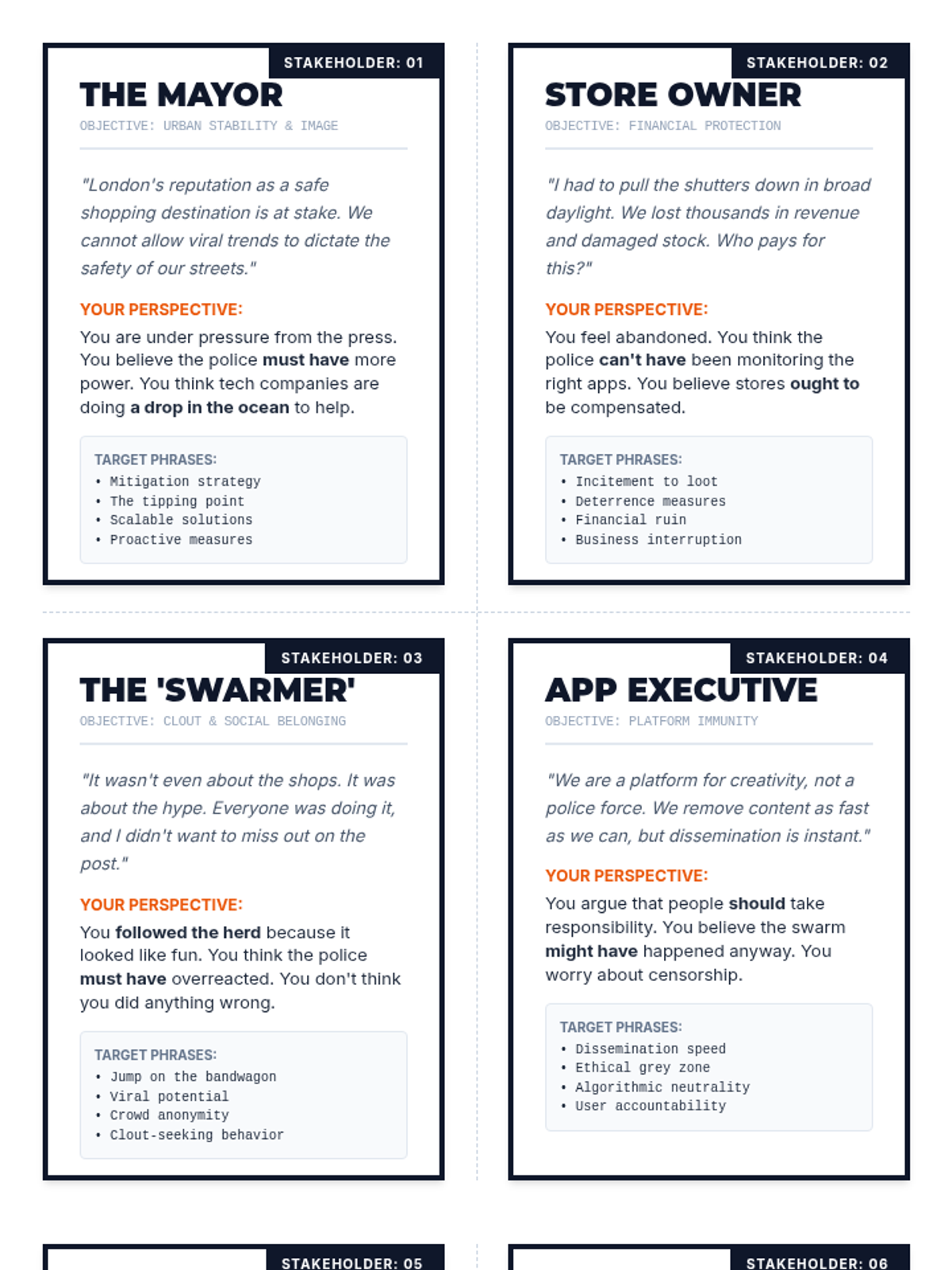
A problem-solving workshop for B2+ students based on social media flash mobs. Students act as a city's 'Digital Response Team' to design innovative solutions for urban chaos triggered by viral trends.
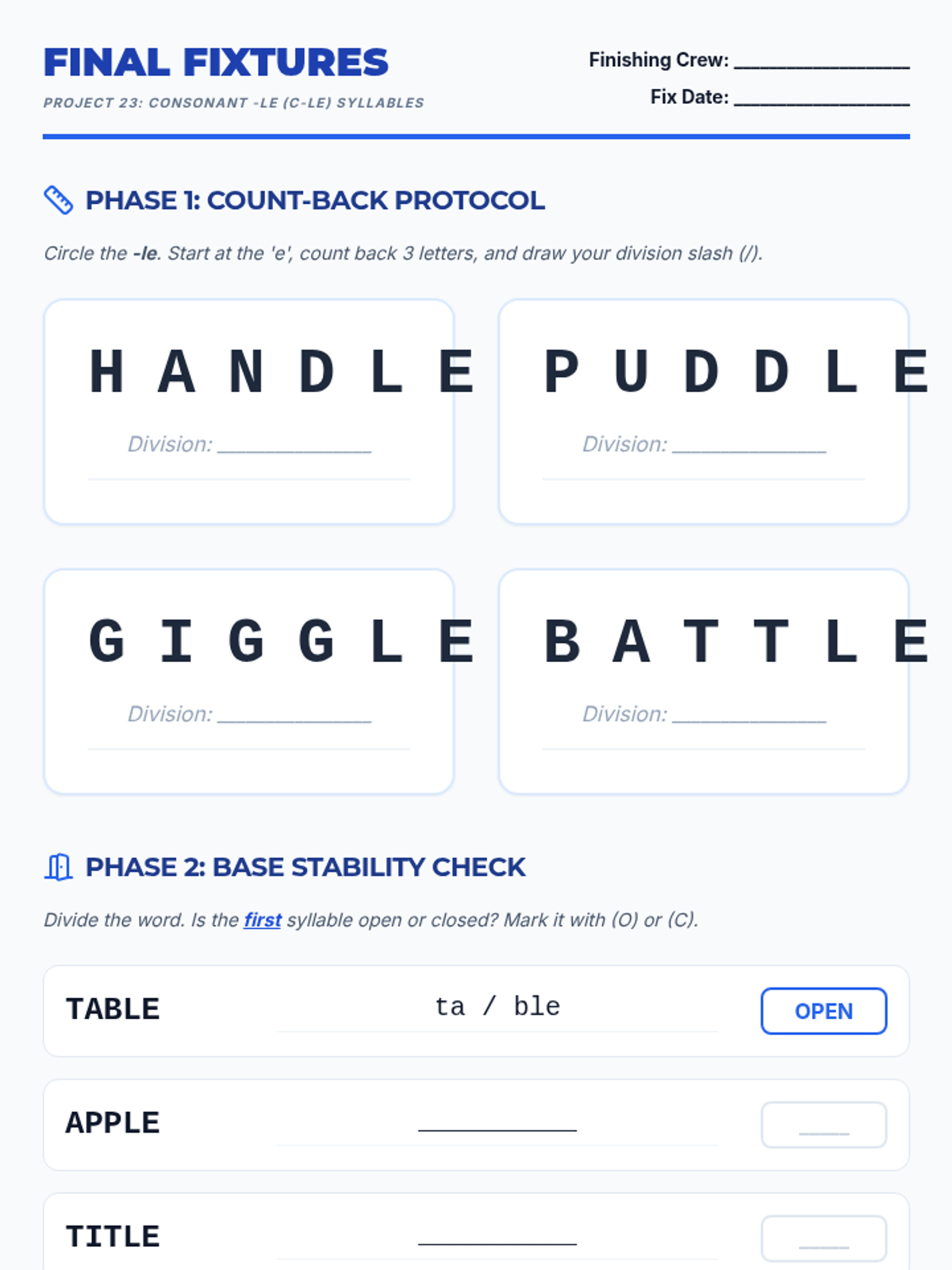
Cumulative review of all consonant-le patterns through mixed word lists, sentence reading, and a final fluency passage.
Practice decoding and encoding consonant-le words that include r-controlled or magic e syllables, such as 'purple' and 'beetle'.
Explore how the first syllable (open or closed) determines the vowel sound in consonant-le words, contrasting pairs like 'apple' and 'maple'.
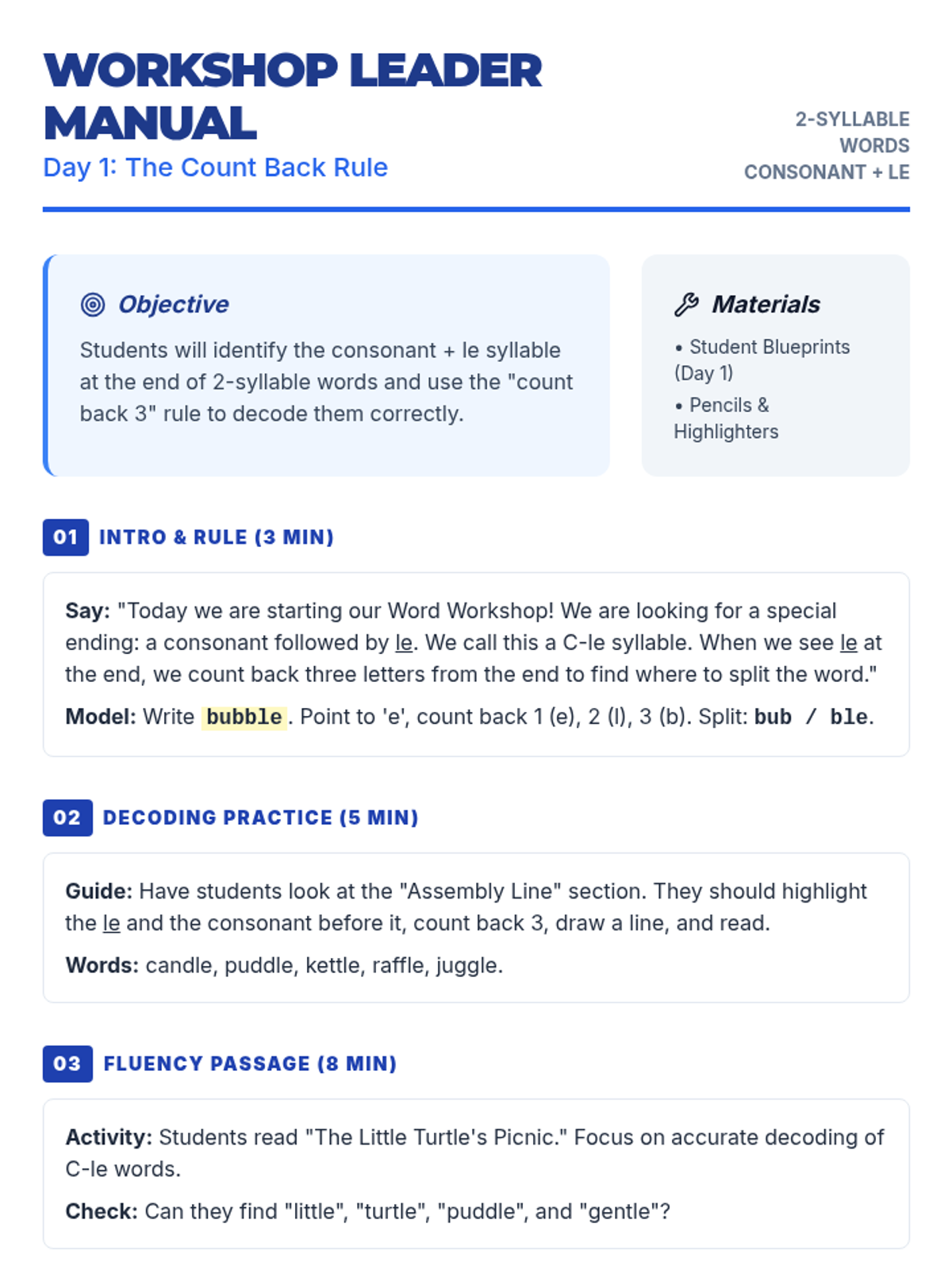
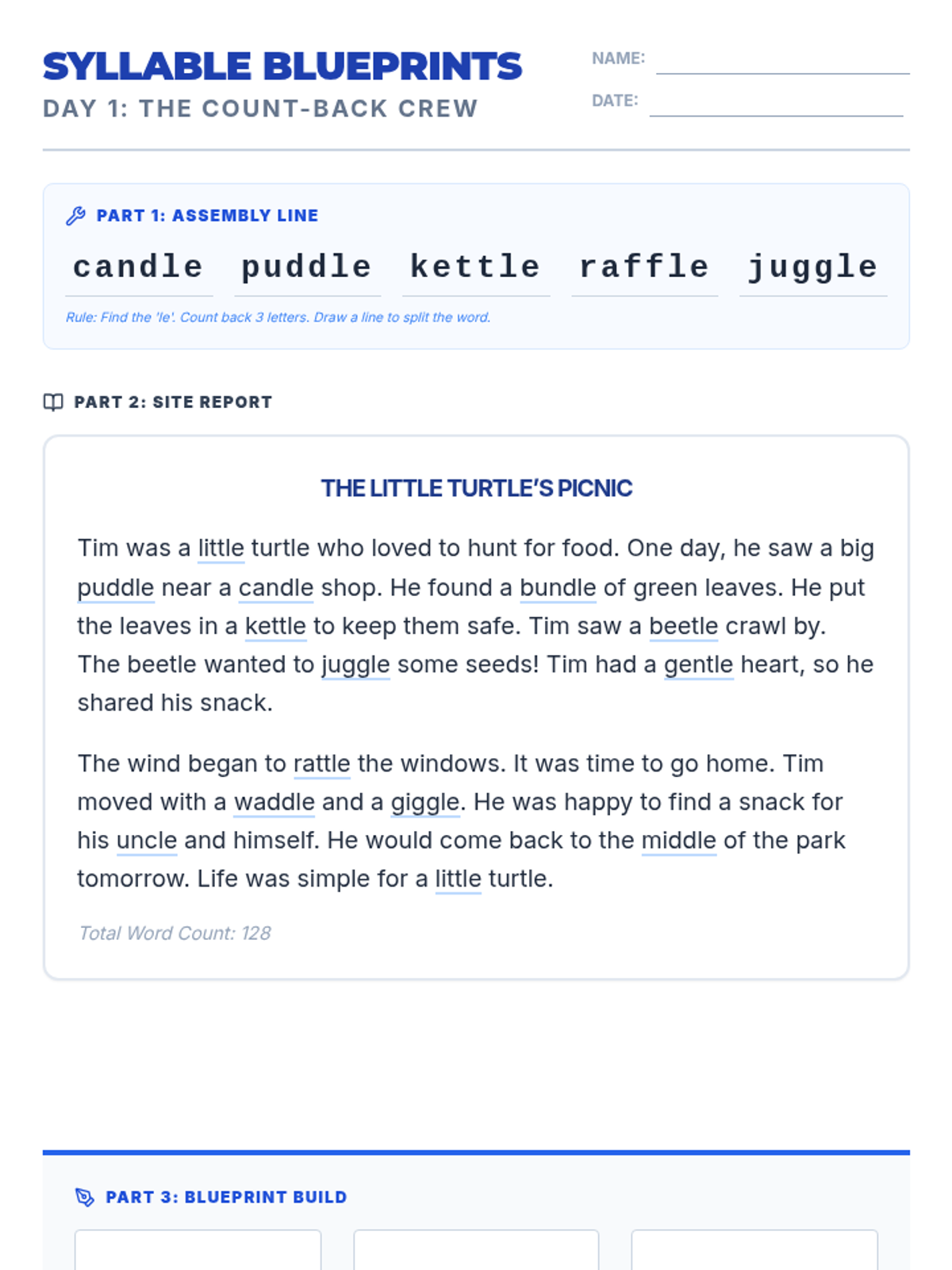
Introduce the consonant-le syllable type and the 'count back 3' rule for dividing words. Focus on words with closed first syllables like 'bubble' and 'candle'.
An introductory lesson exploring various types of figurative language through clear examples and integrated practice questions.
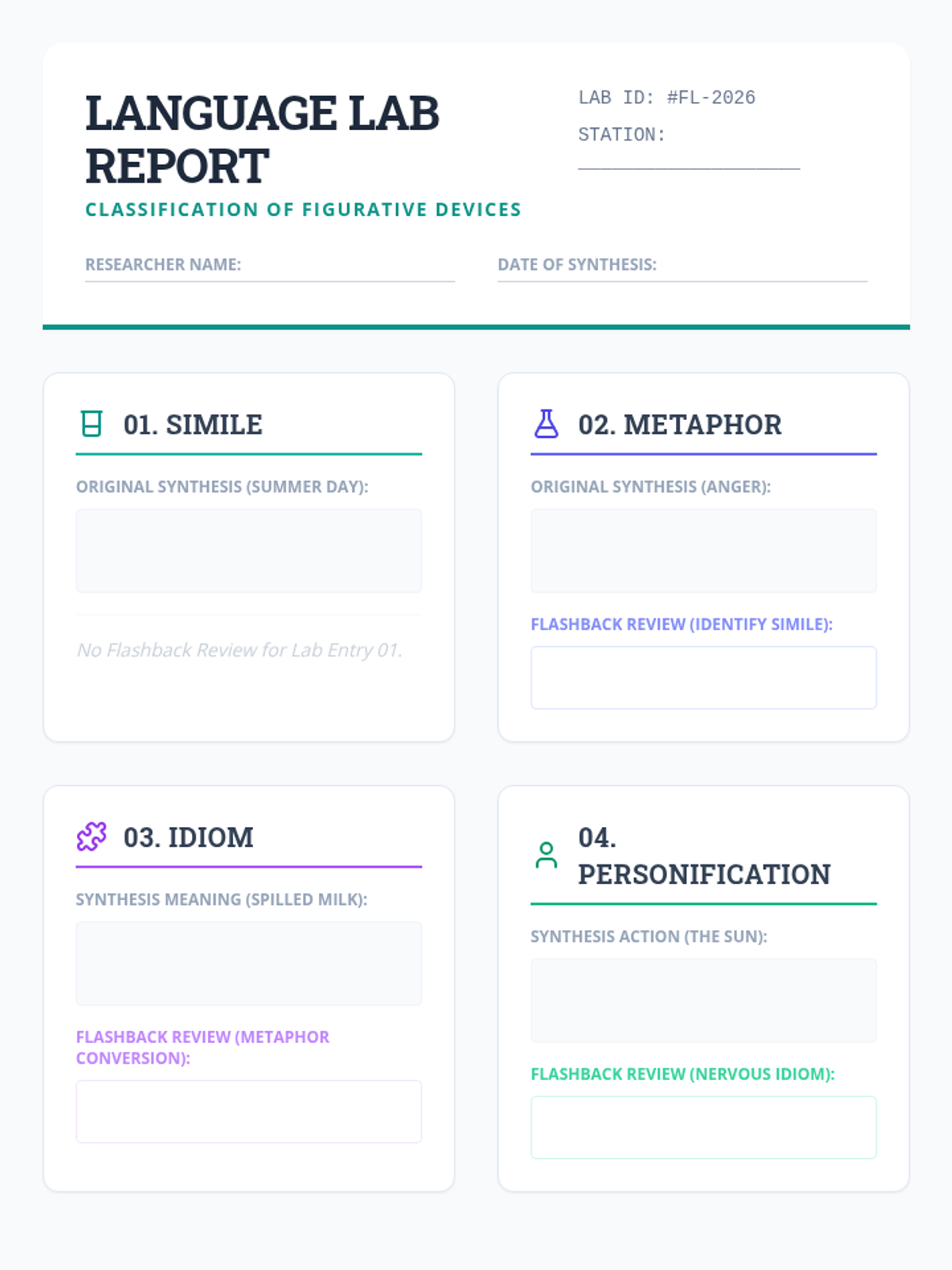
This lesson introduces nine key figurative language devices through interactive slides and practice. Students identify definitions, analyze examples, and create their own original phrases while reviewing previous concepts.
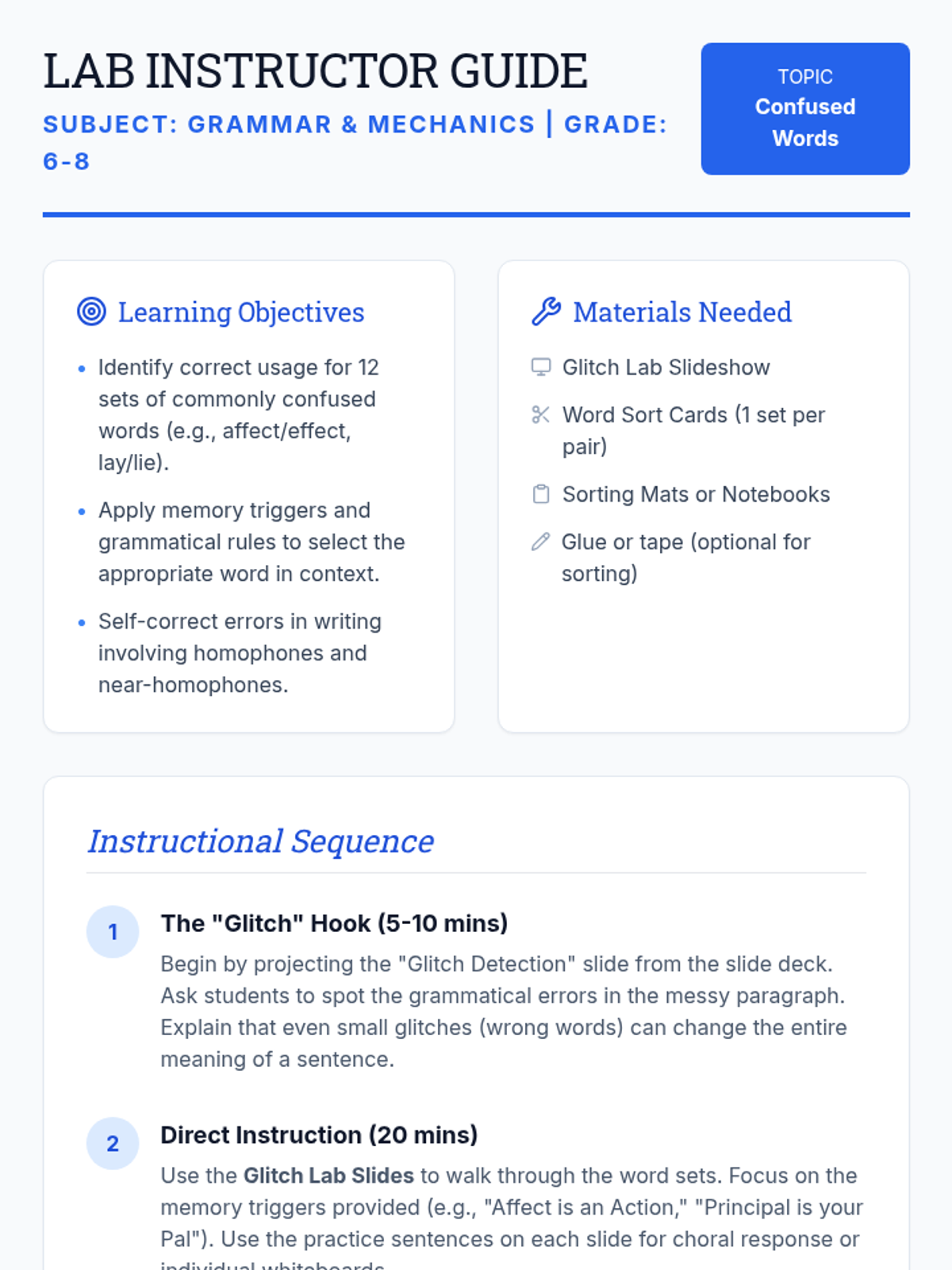
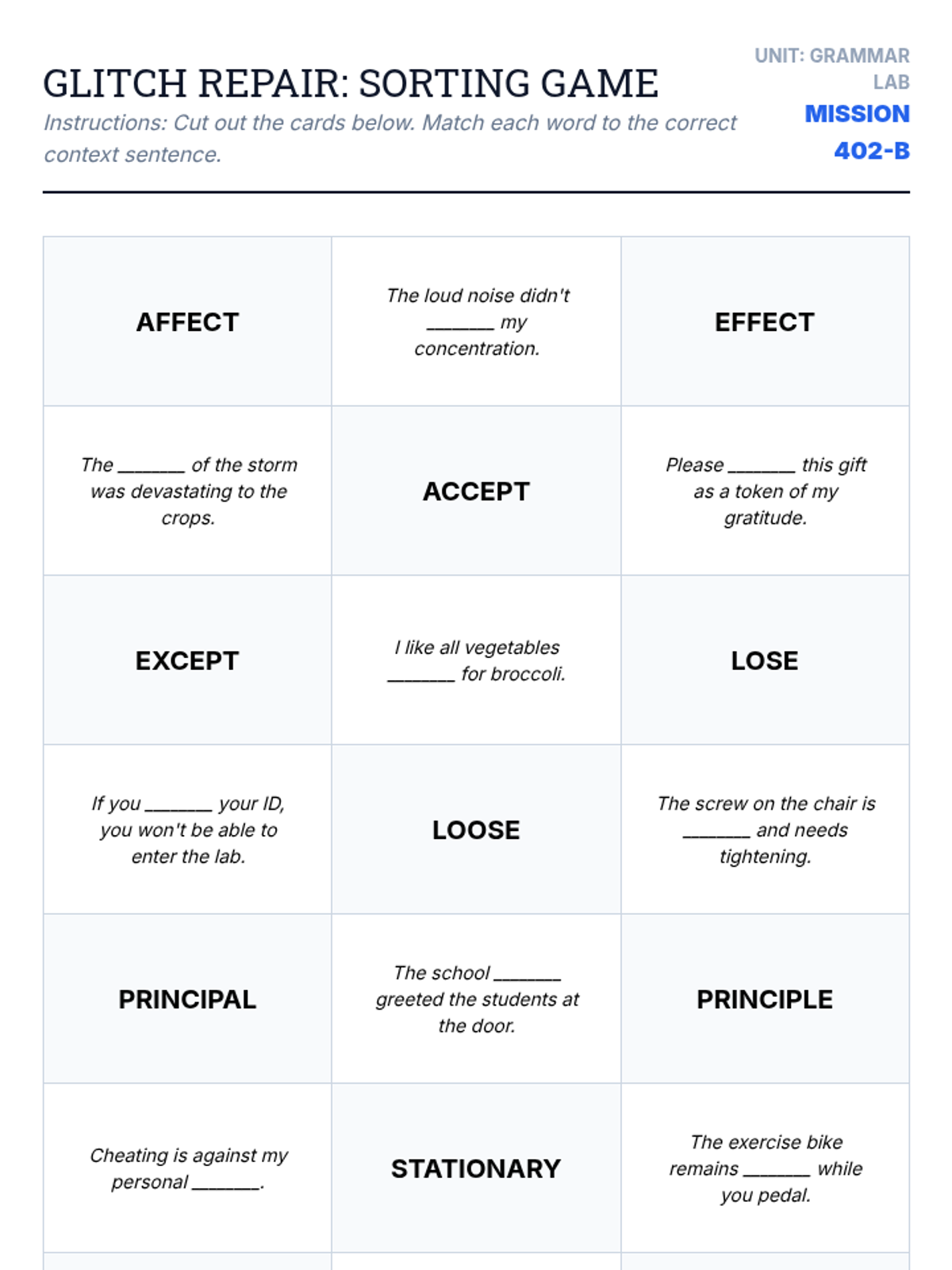
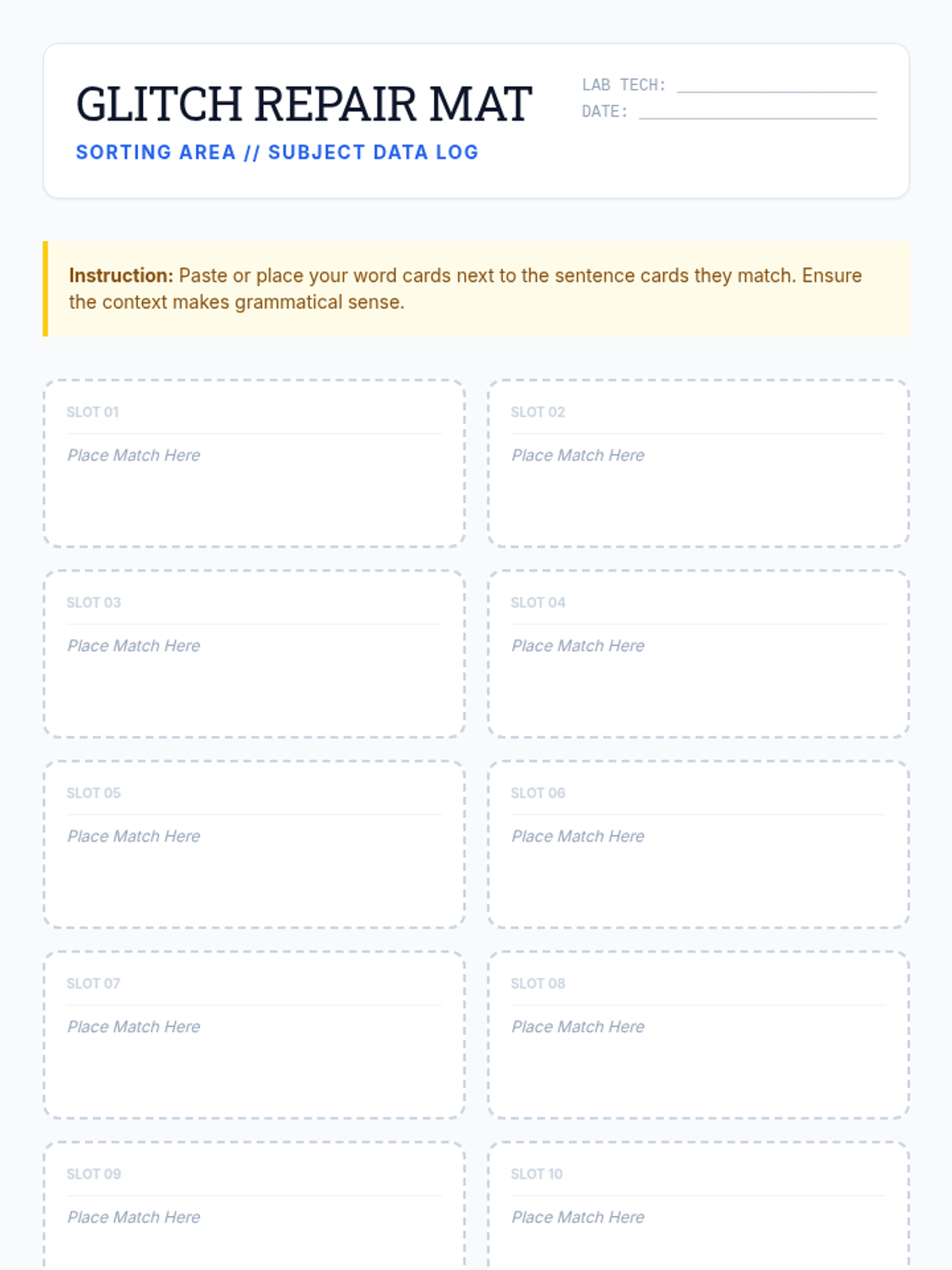
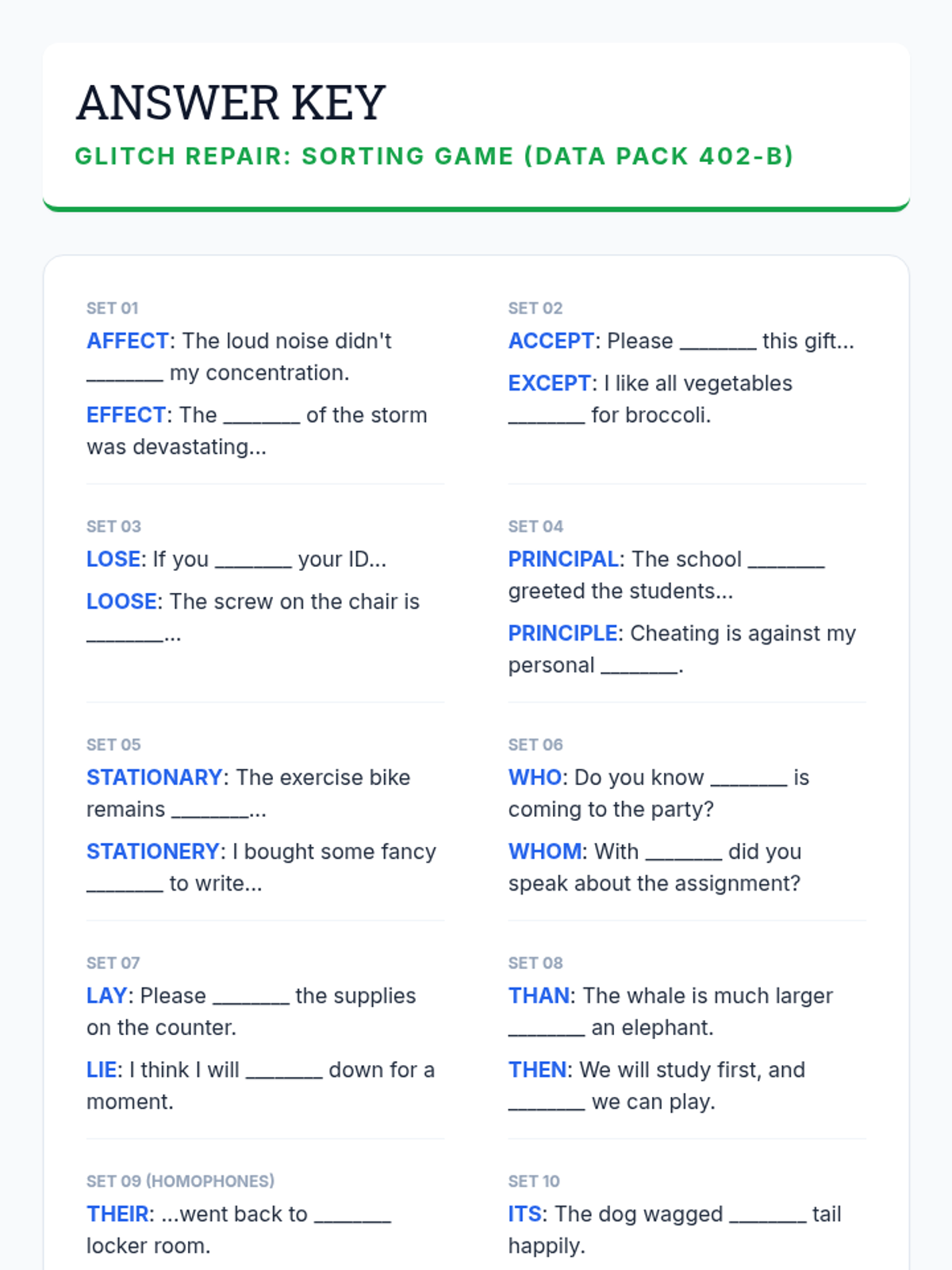
A comprehensive lesson targeting 12 pairs/trios of commonly confused words through a "Grammar Lab" theme. Students will identify, define, and correctly apply homophones and tricky word pairs through direct instruction and a hands-on sorting game.
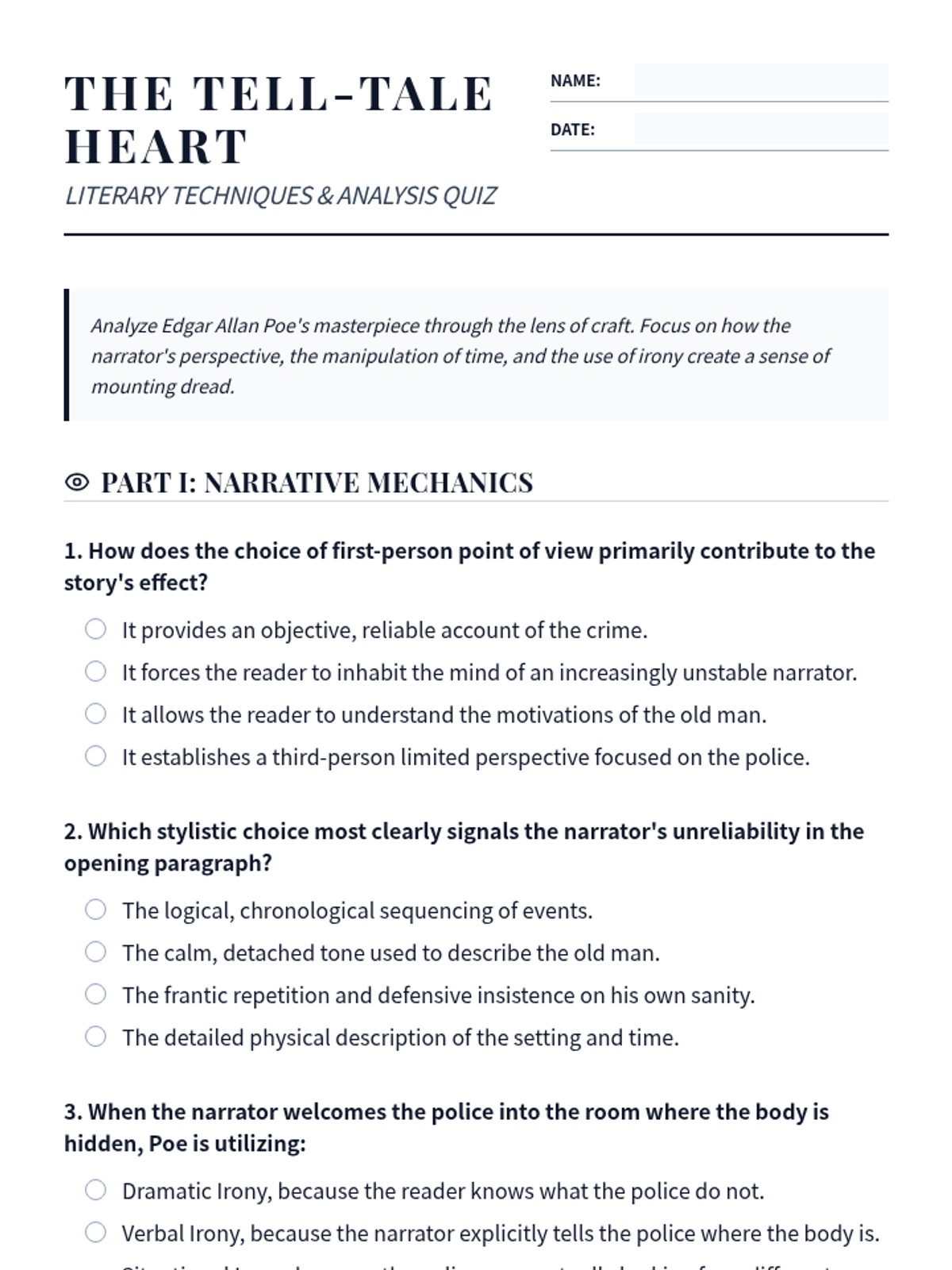
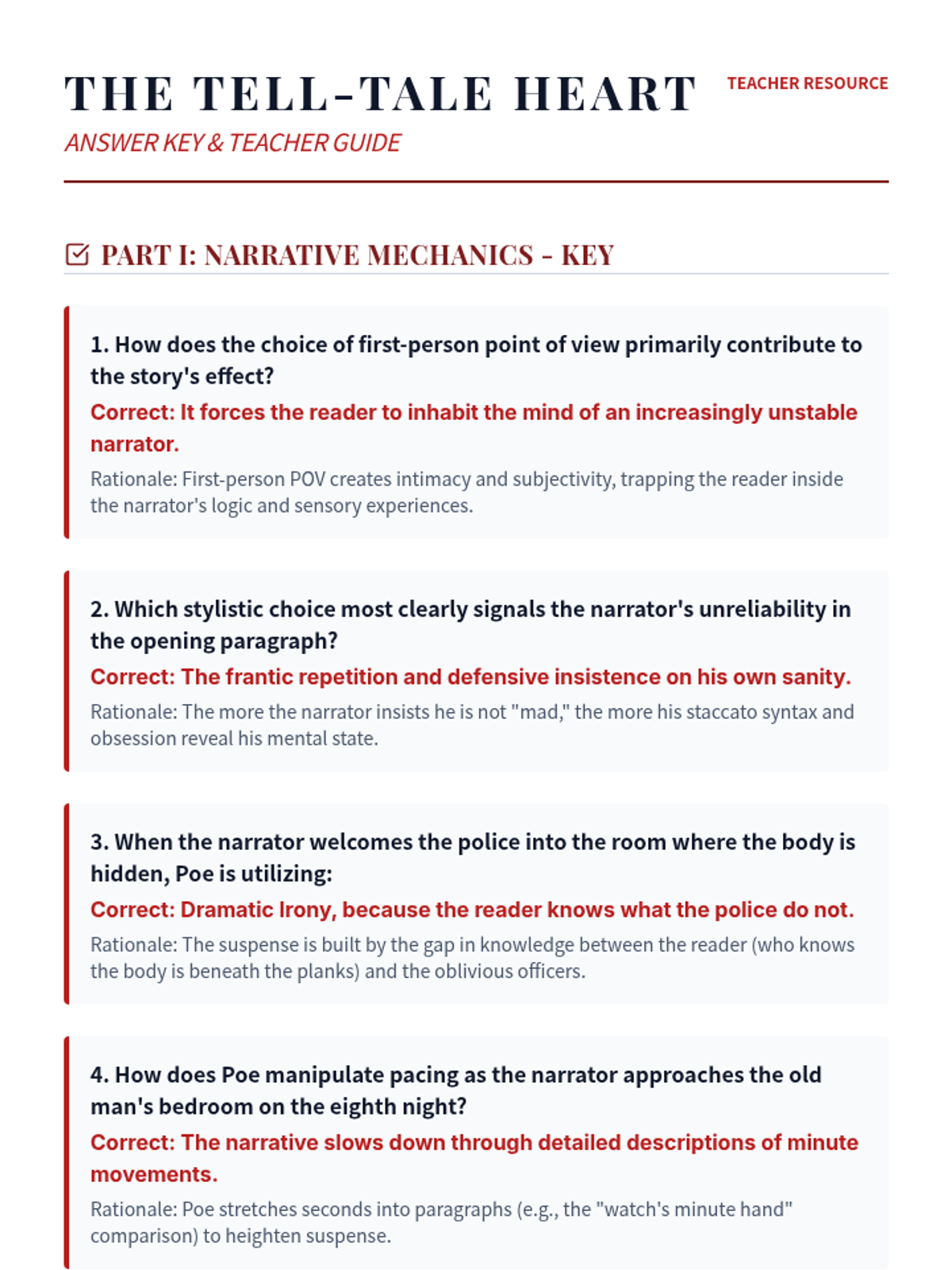
A deep dive into Edgar Allan Poe's 'The Tell-Tale Heart', focusing on the mechanics of suspense, the psychology of the unreliable narrator, and the sharp edge of gothic irony.
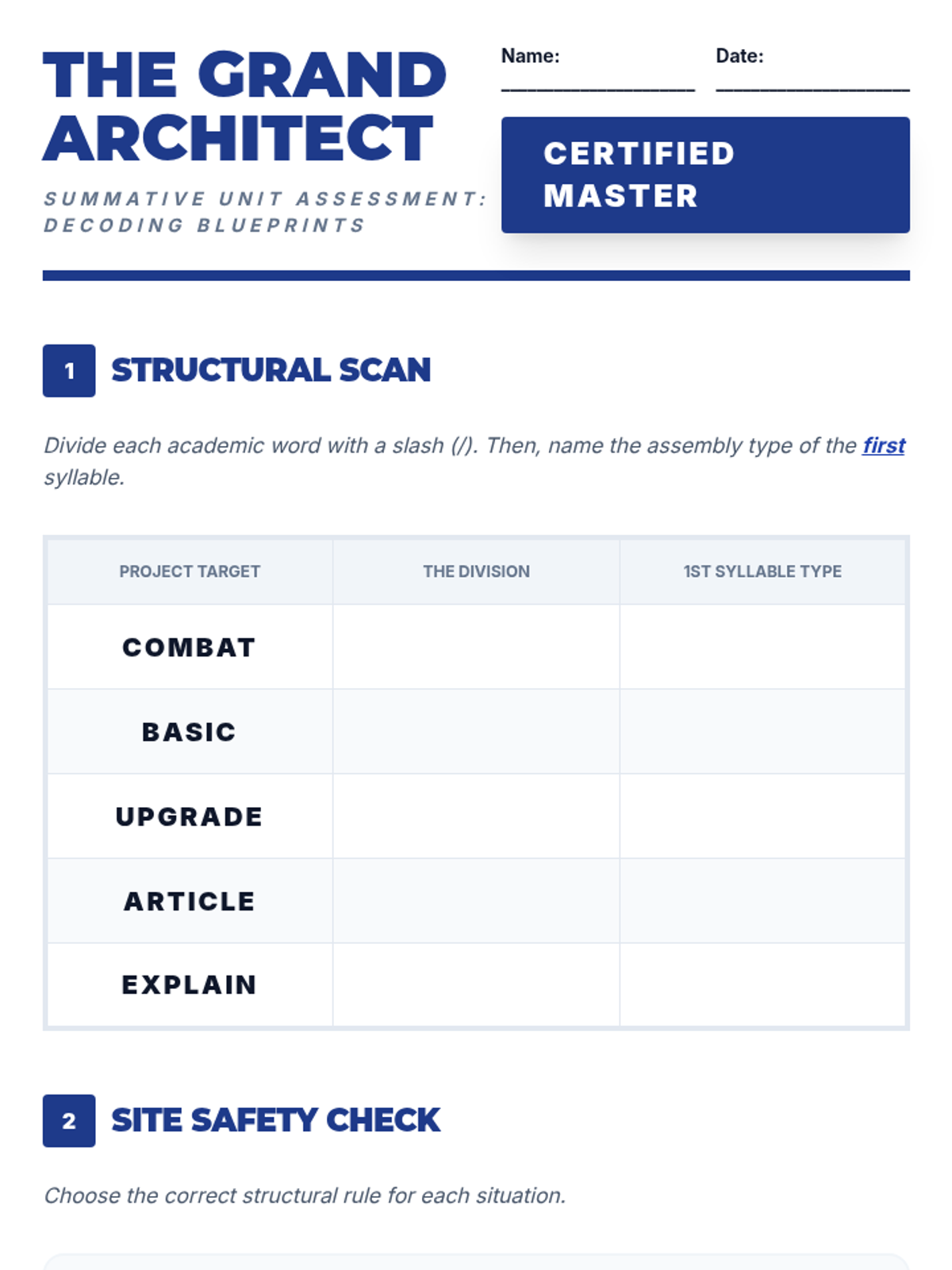
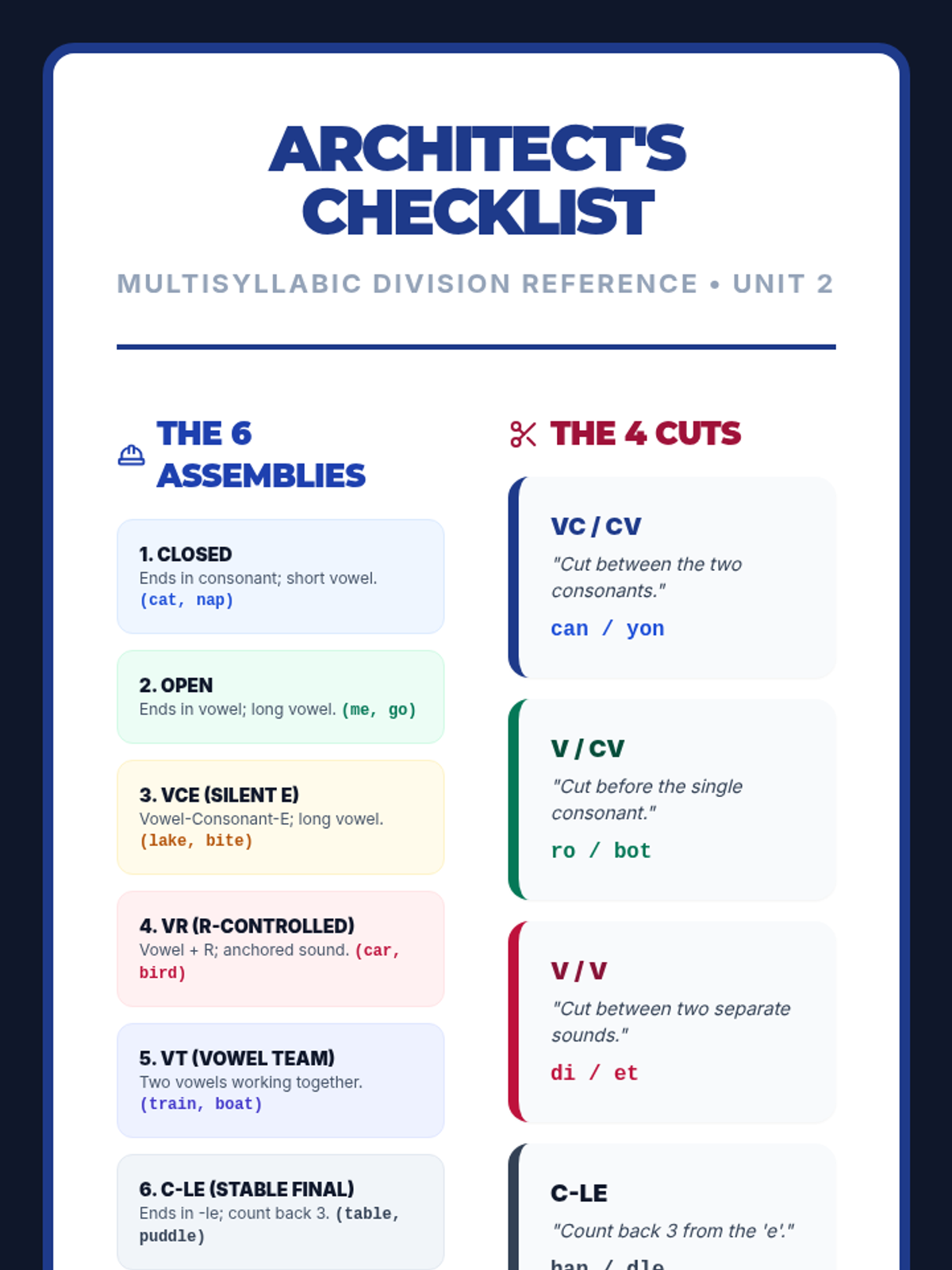
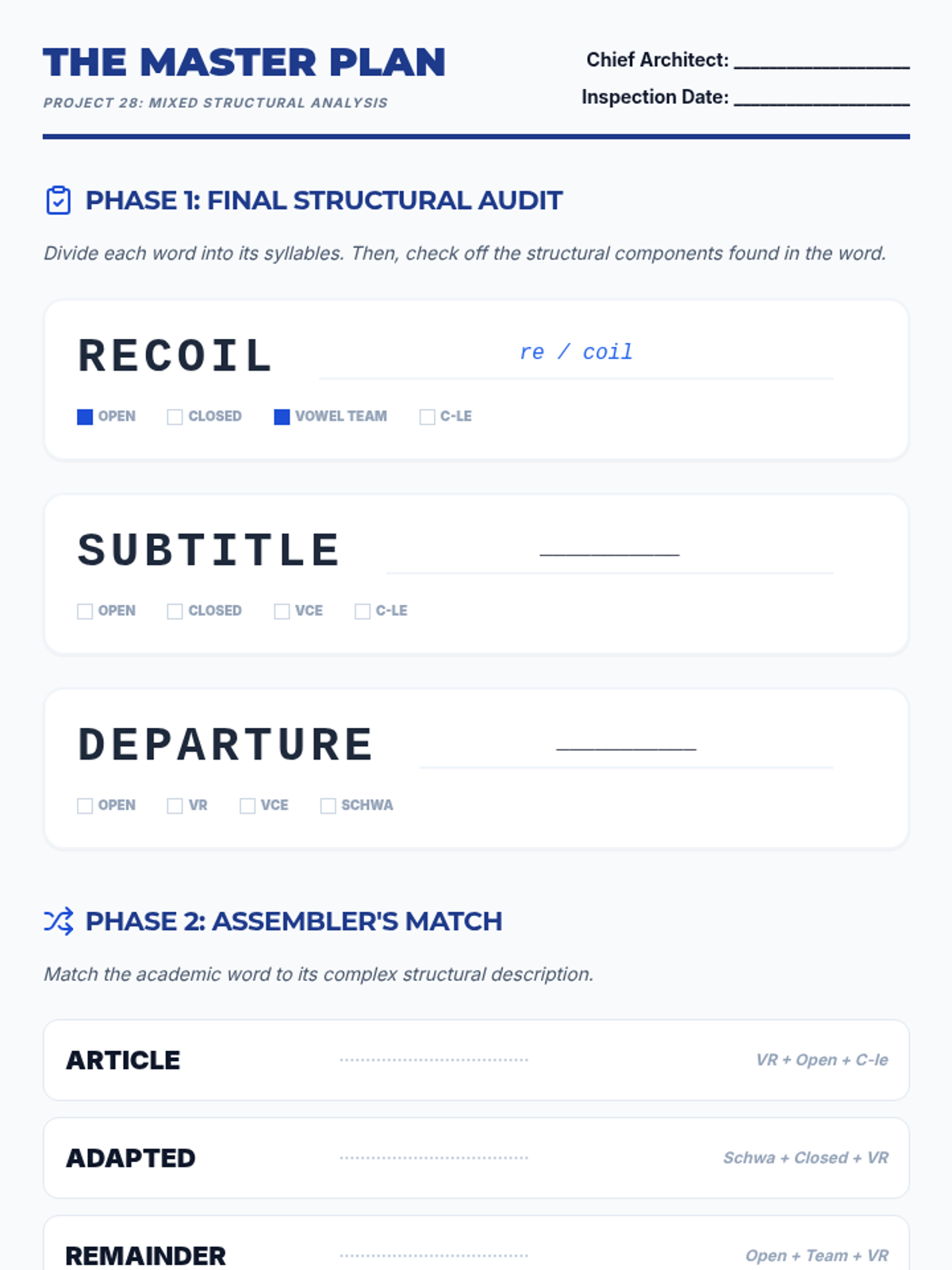
The final summative assessment for the Decoding Blueprints unit, covering all 6 syllable types and 4 division patterns.
Final review and team building activity before the summative project.
Combines all syllable types and division patterns into complex mixed-practice word challenges.
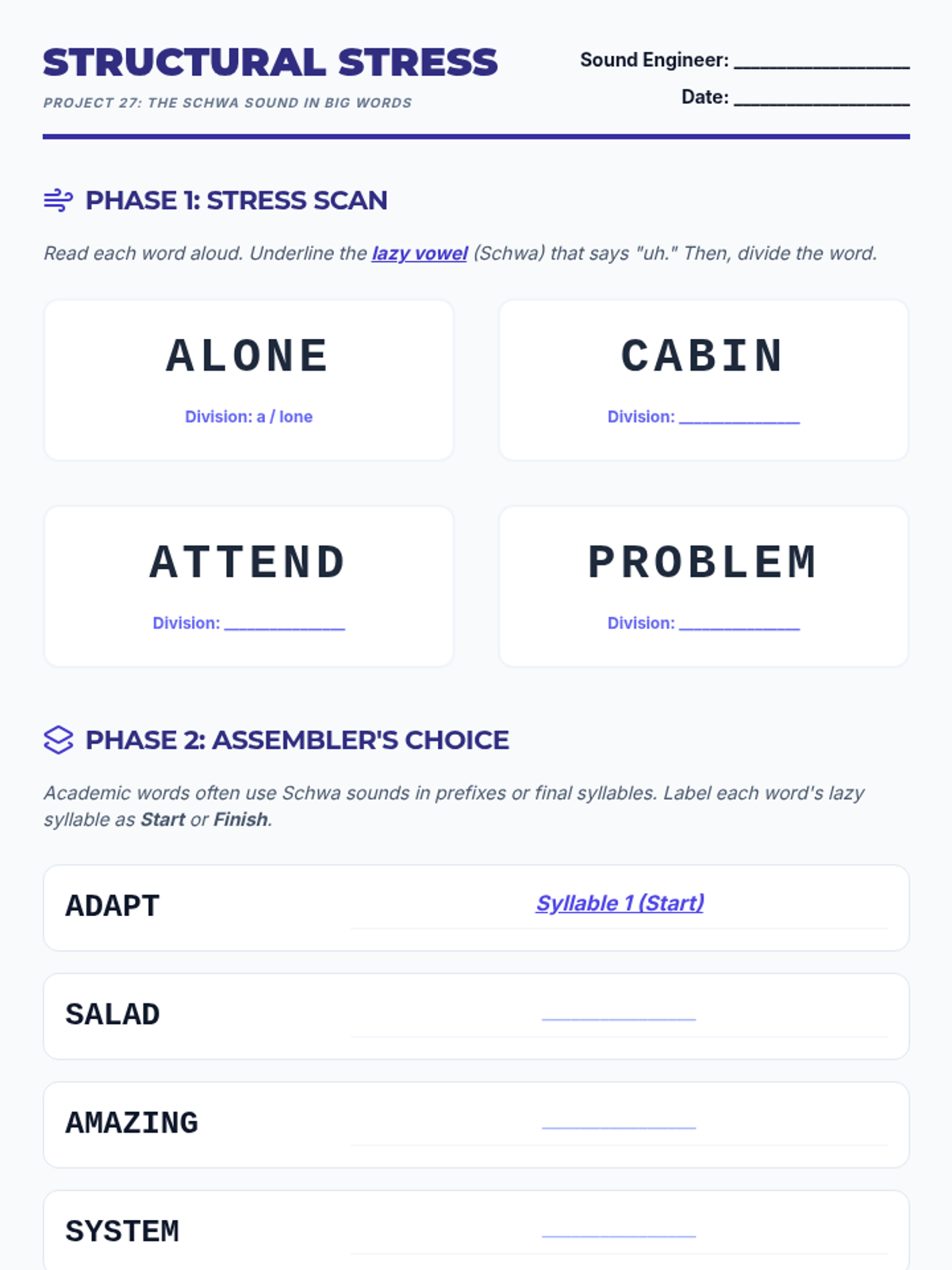
Introduces the 'Schwa' sound in unstressed syllables and how to identify it during structural inspections.
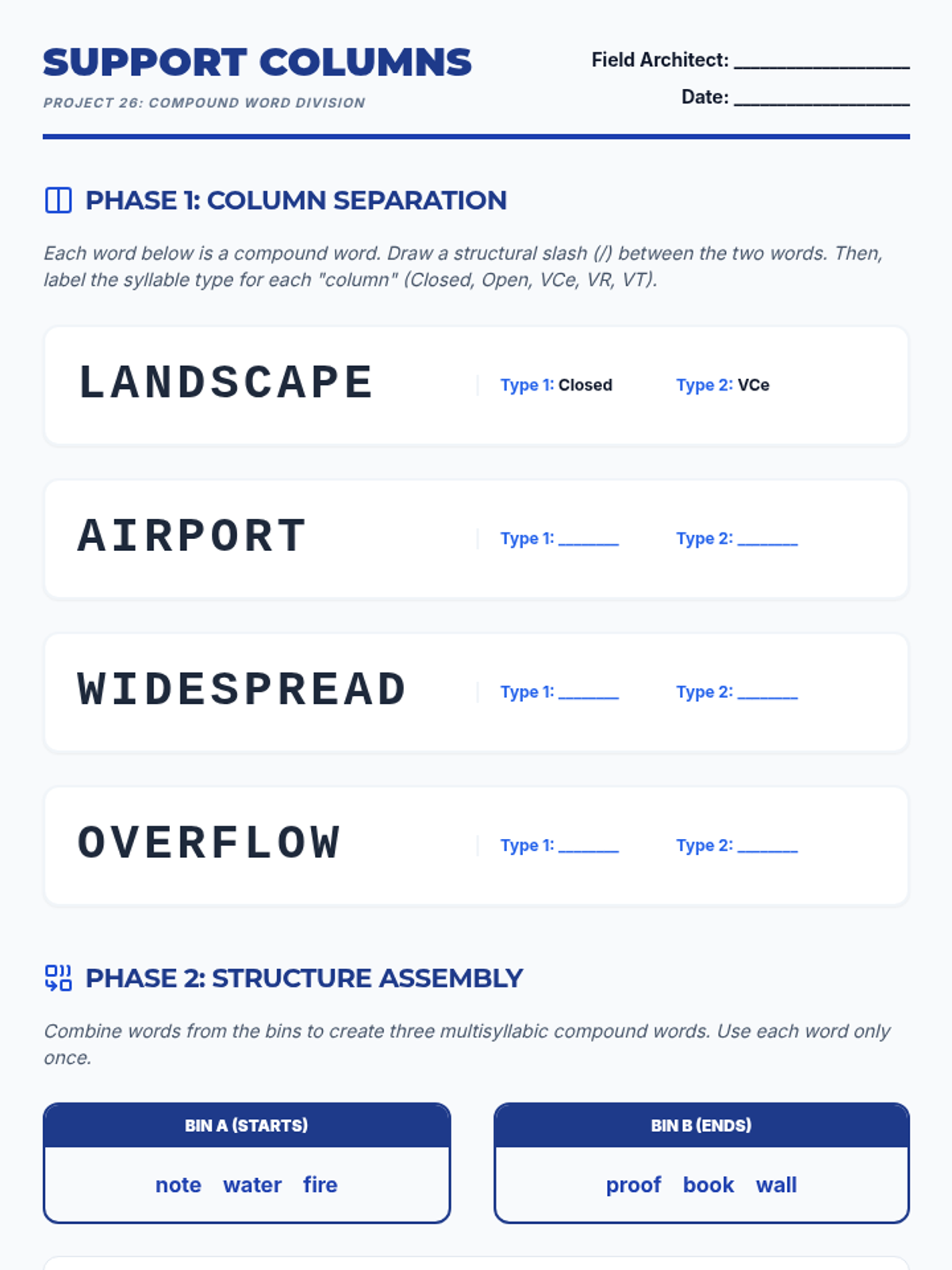
Focuses on compound words and how to divide them as the simplest multisyllabic structure.
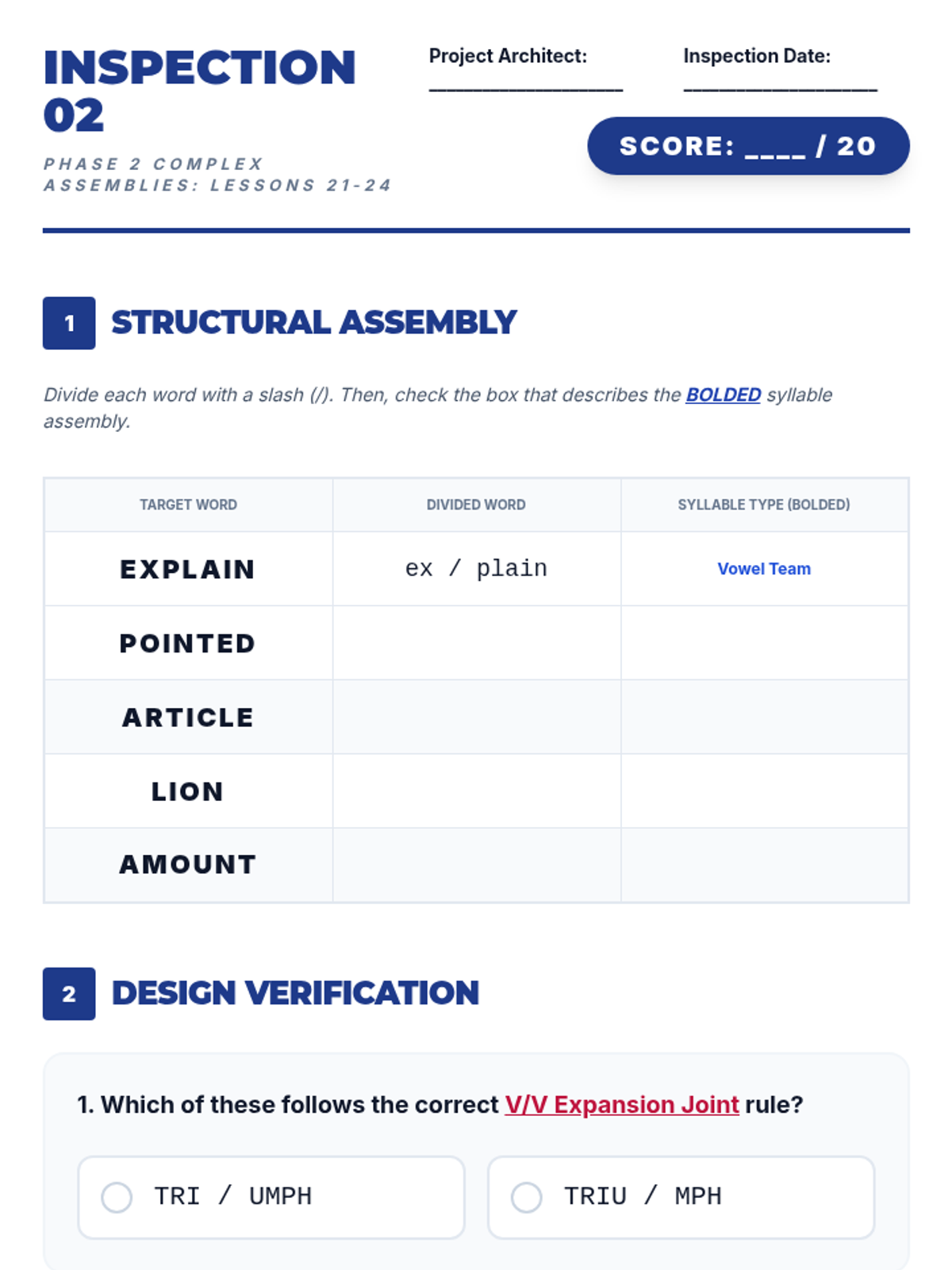
A review of lessons 21-24 with a formal progress monitoring assessment on vowel teams, diphthongs, C-le, and V/V patterns.
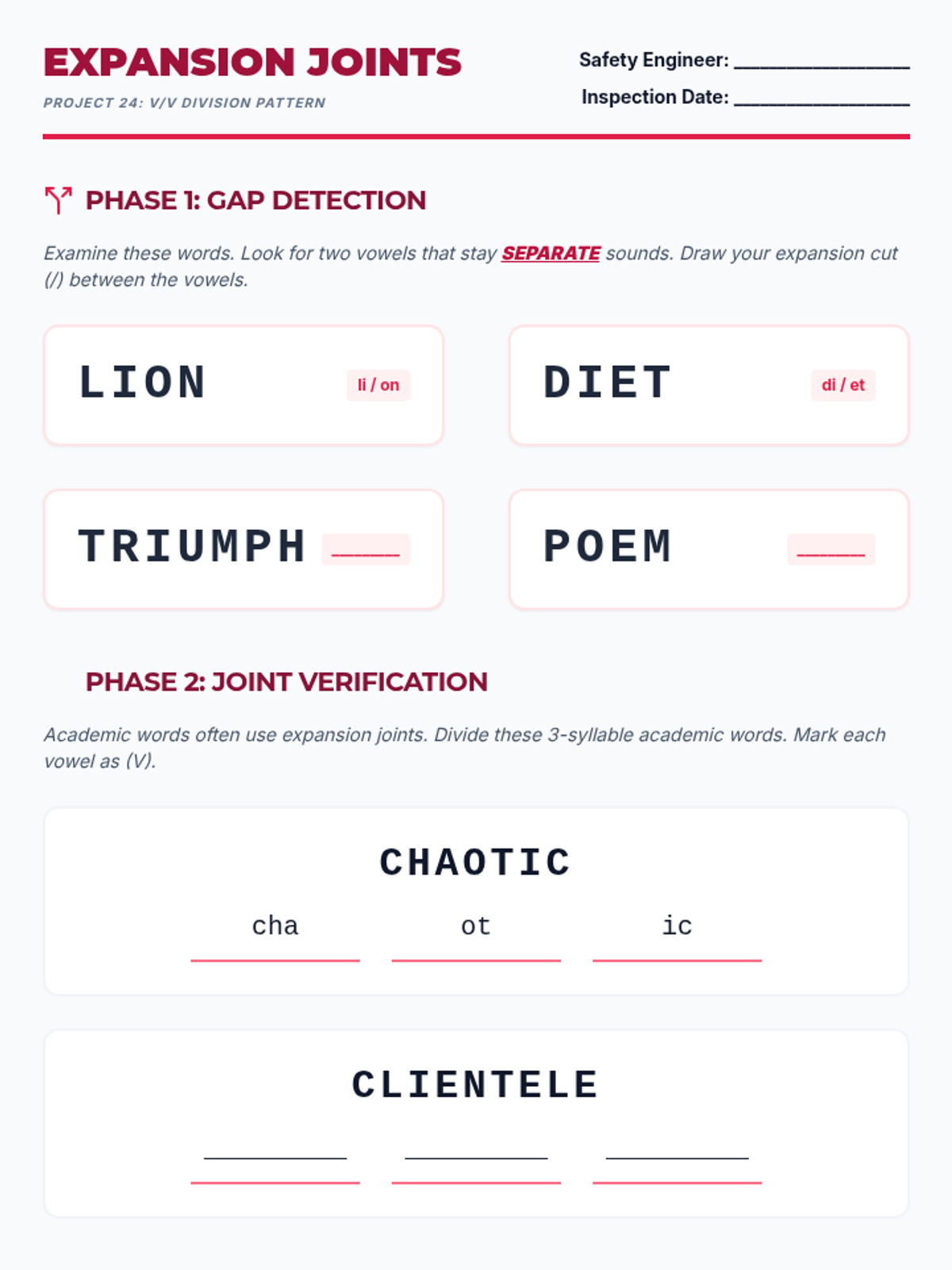
Covers the rare V/V division pattern where two vowels that do not form a team must be split.
Introduces the Final Stable Syllable (Consonant -le) and the rule for dividing before the consonant.
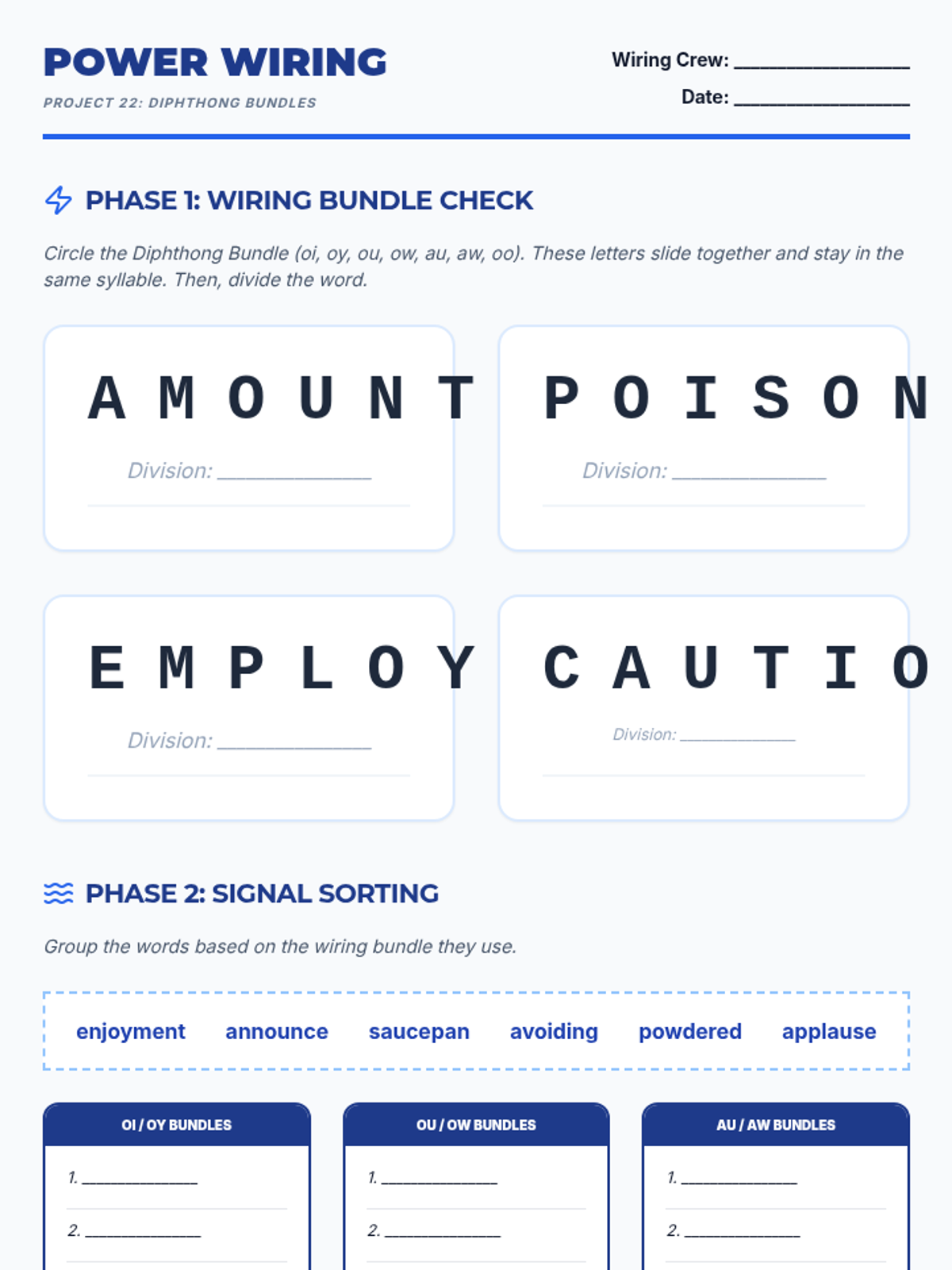
Focuses on diphthongs (OI, OY, OU, OW, AU, AW) in multisyllabic words and their unique sounds.
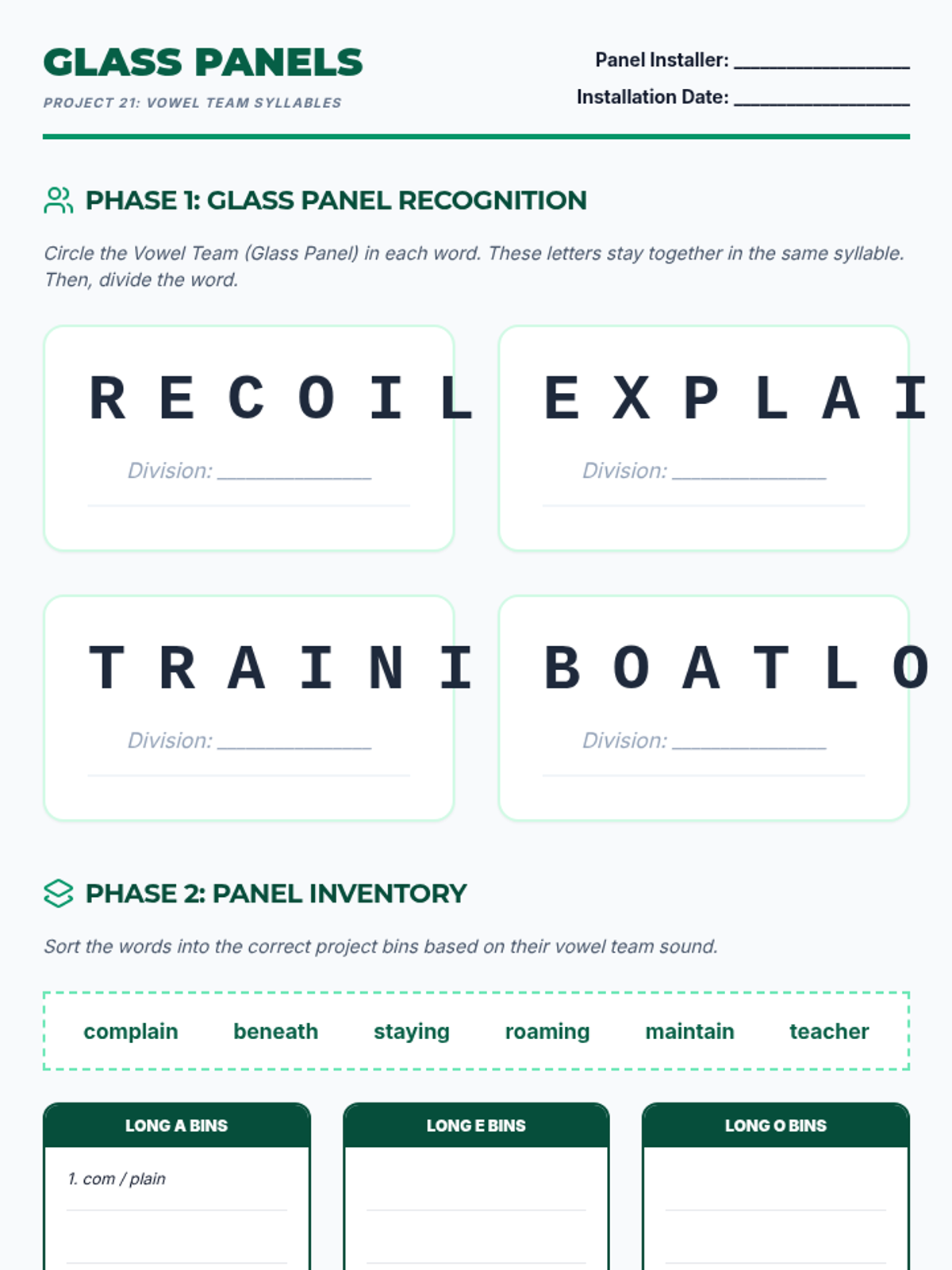
Explores vowel team syllables in multisyllabic words, focusing on how they function as single structural units.
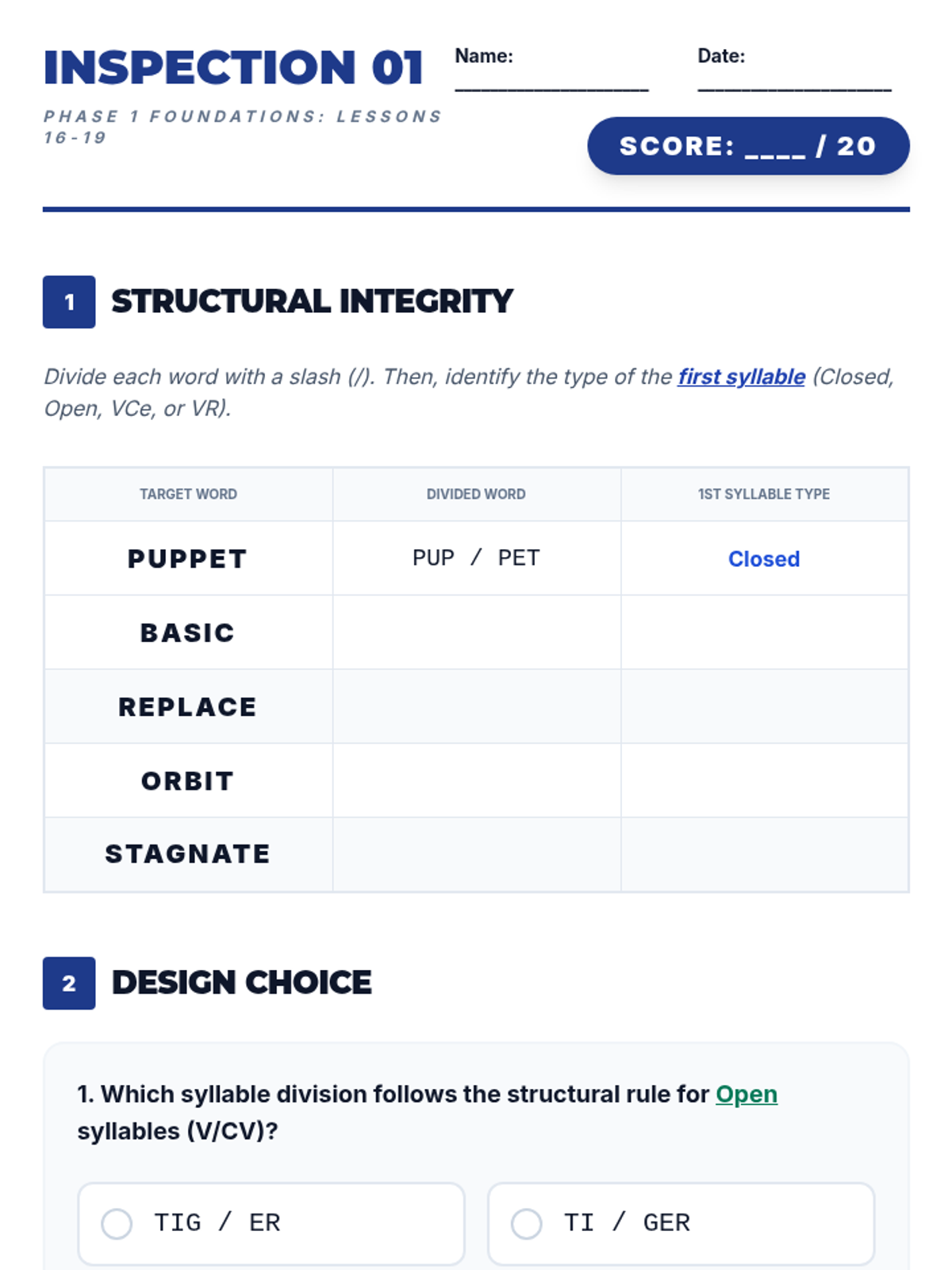
A review of lessons 1-4 with a formal progress monitoring assessment on closed, open, VCe, and R-controlled patterns.
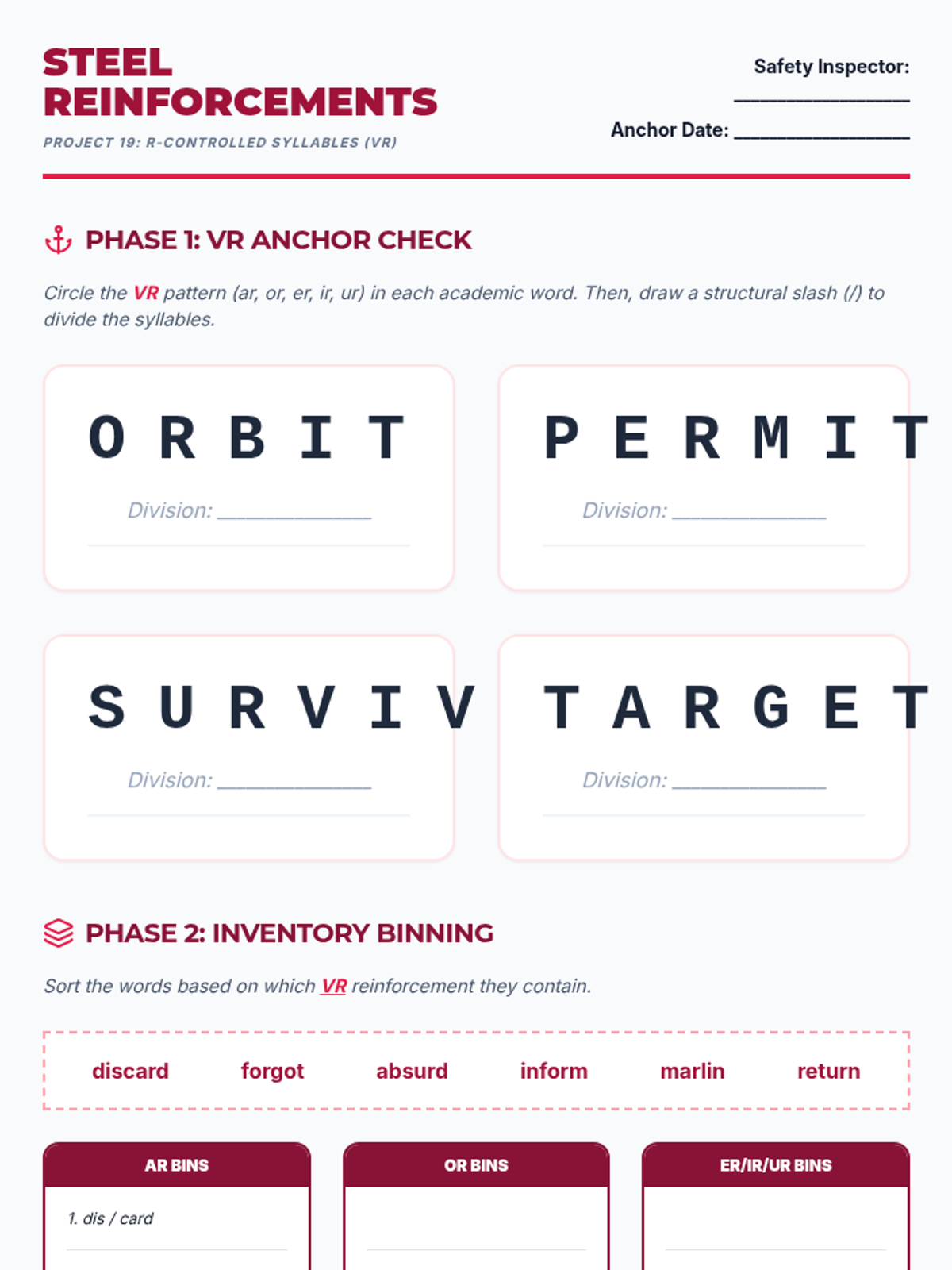
Focuses on R-controlled syllables (AR, ER, IR, OR, UR) and how to divide words containing them.