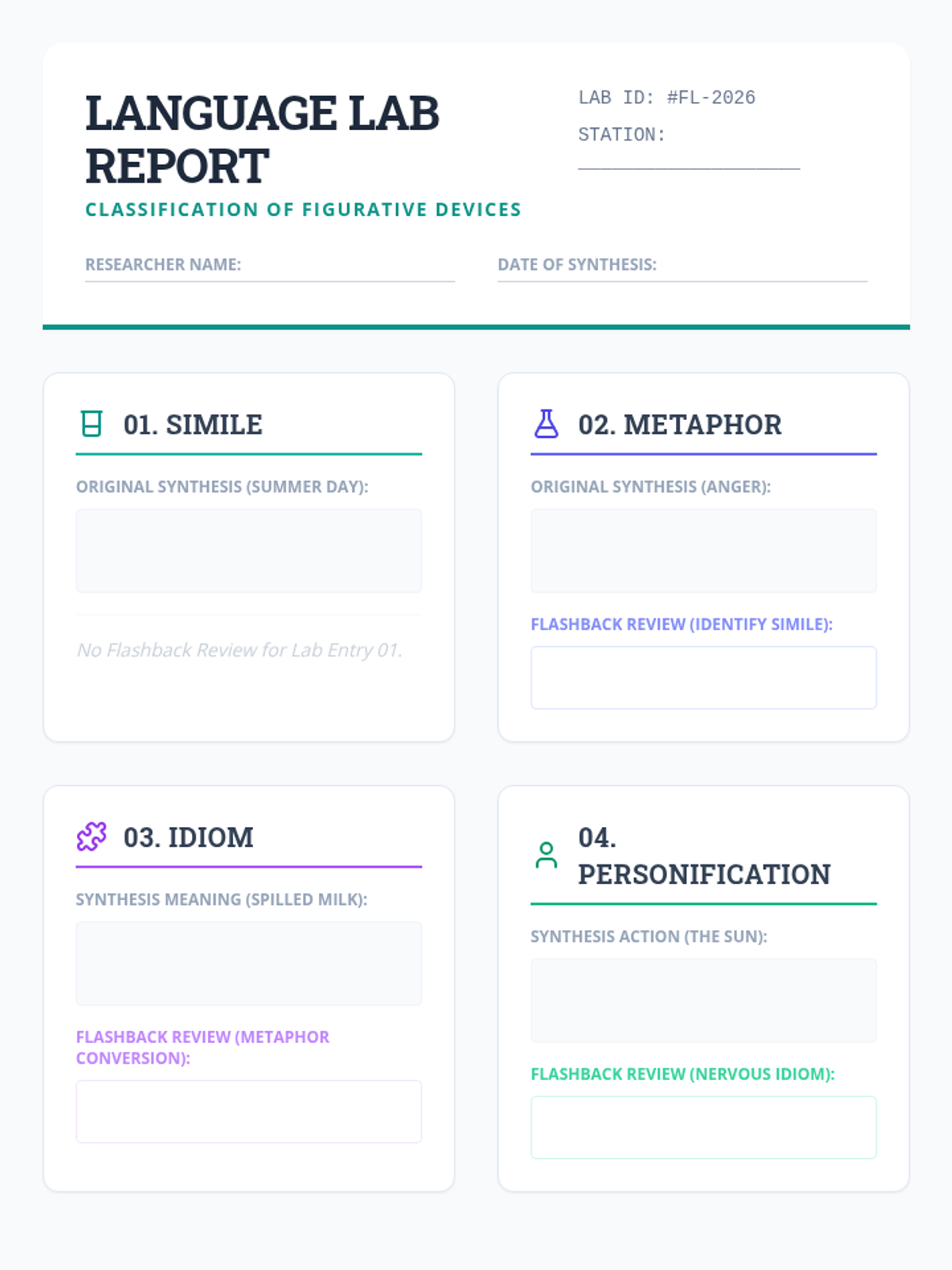
An introductory lesson exploring various types of figurative language through clear examples and integrated practice questions.
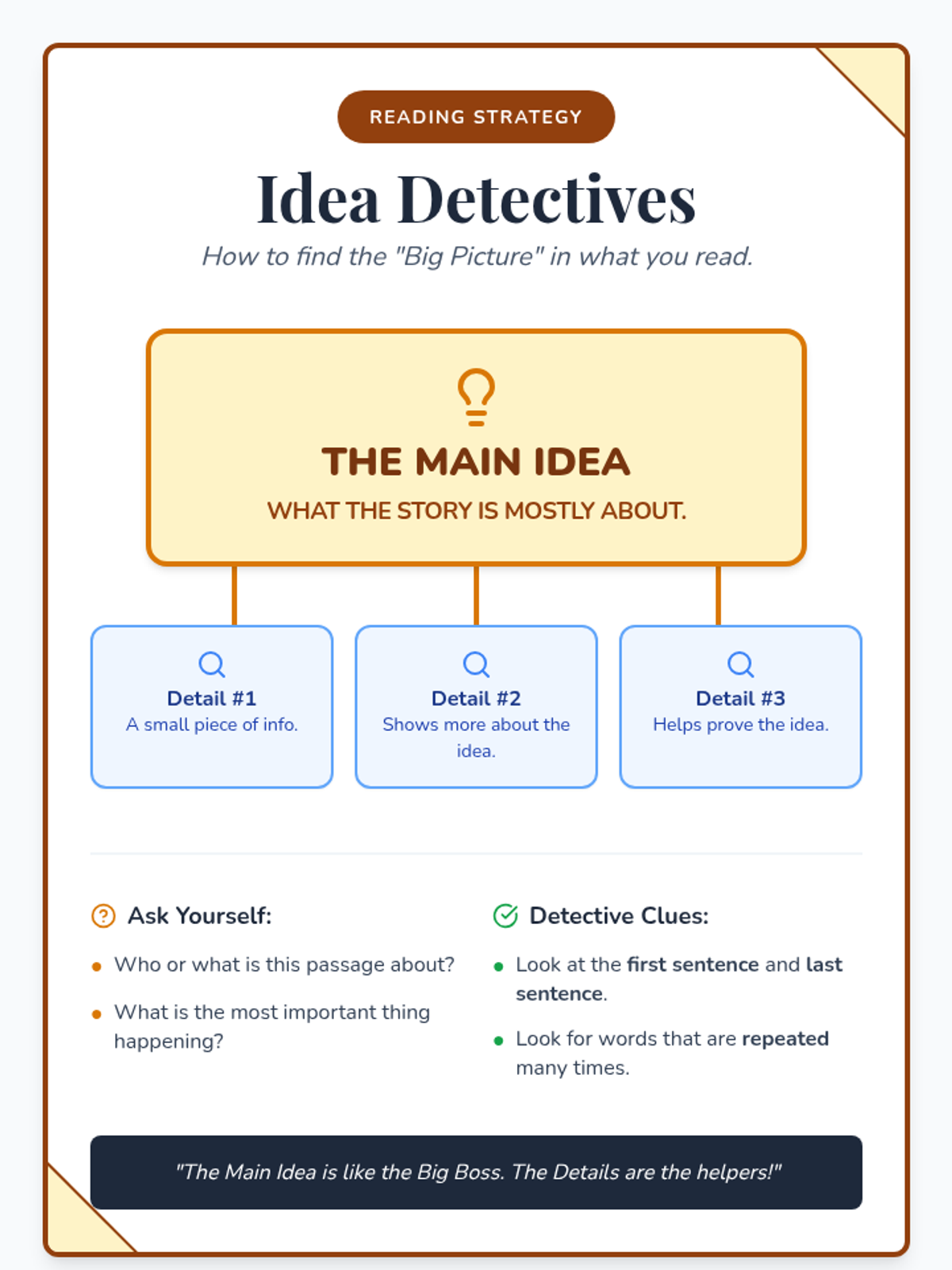
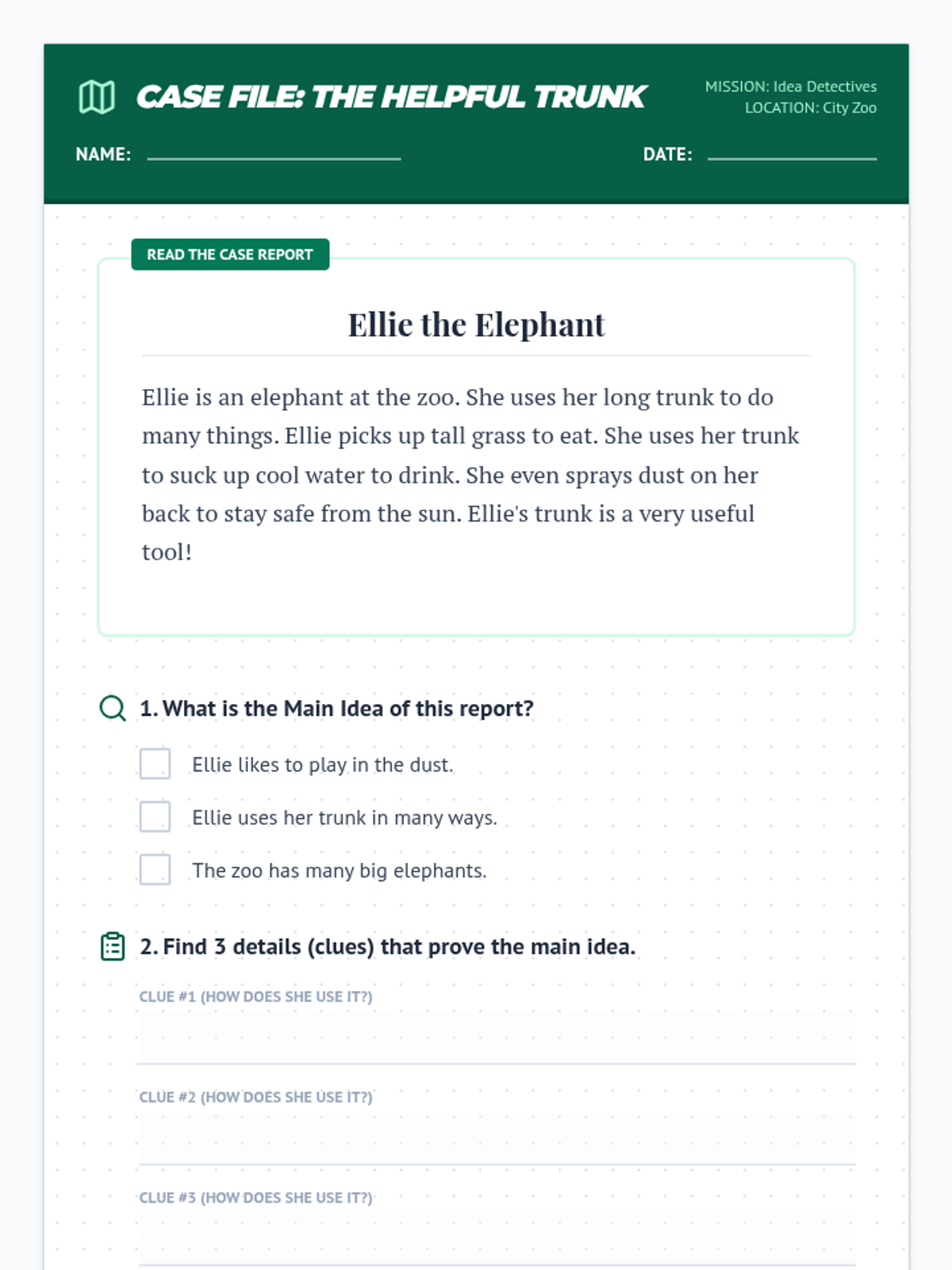
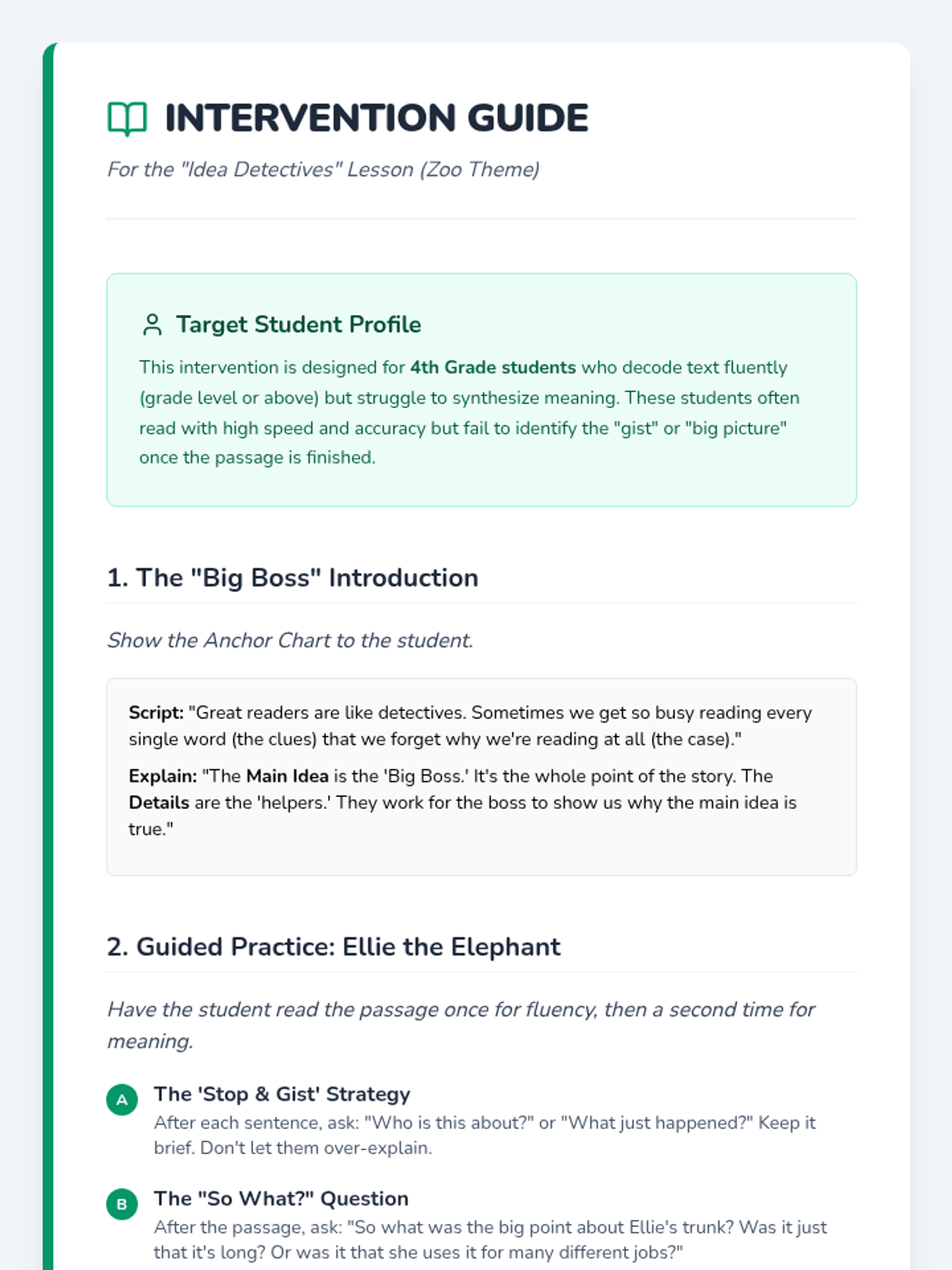
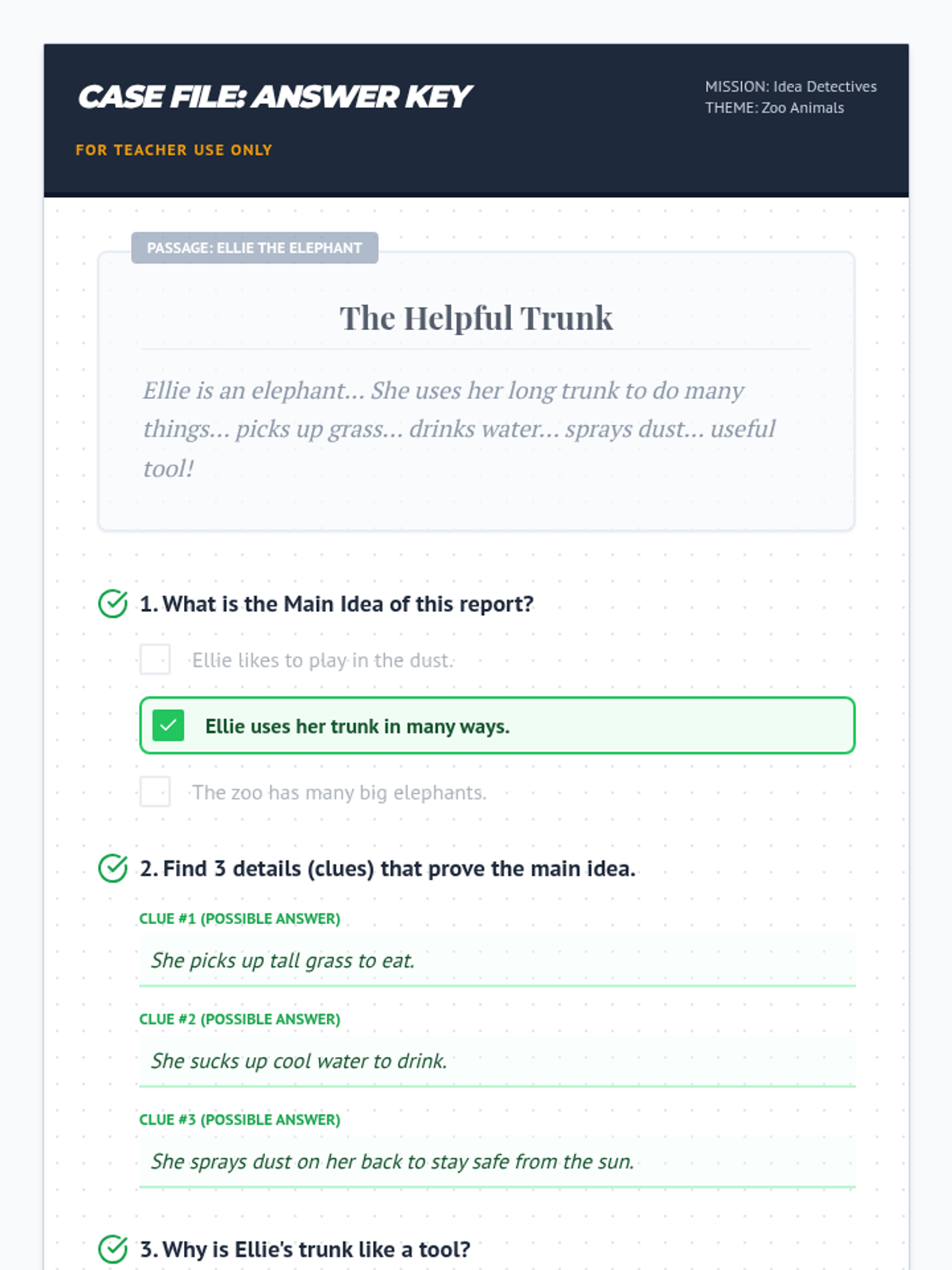
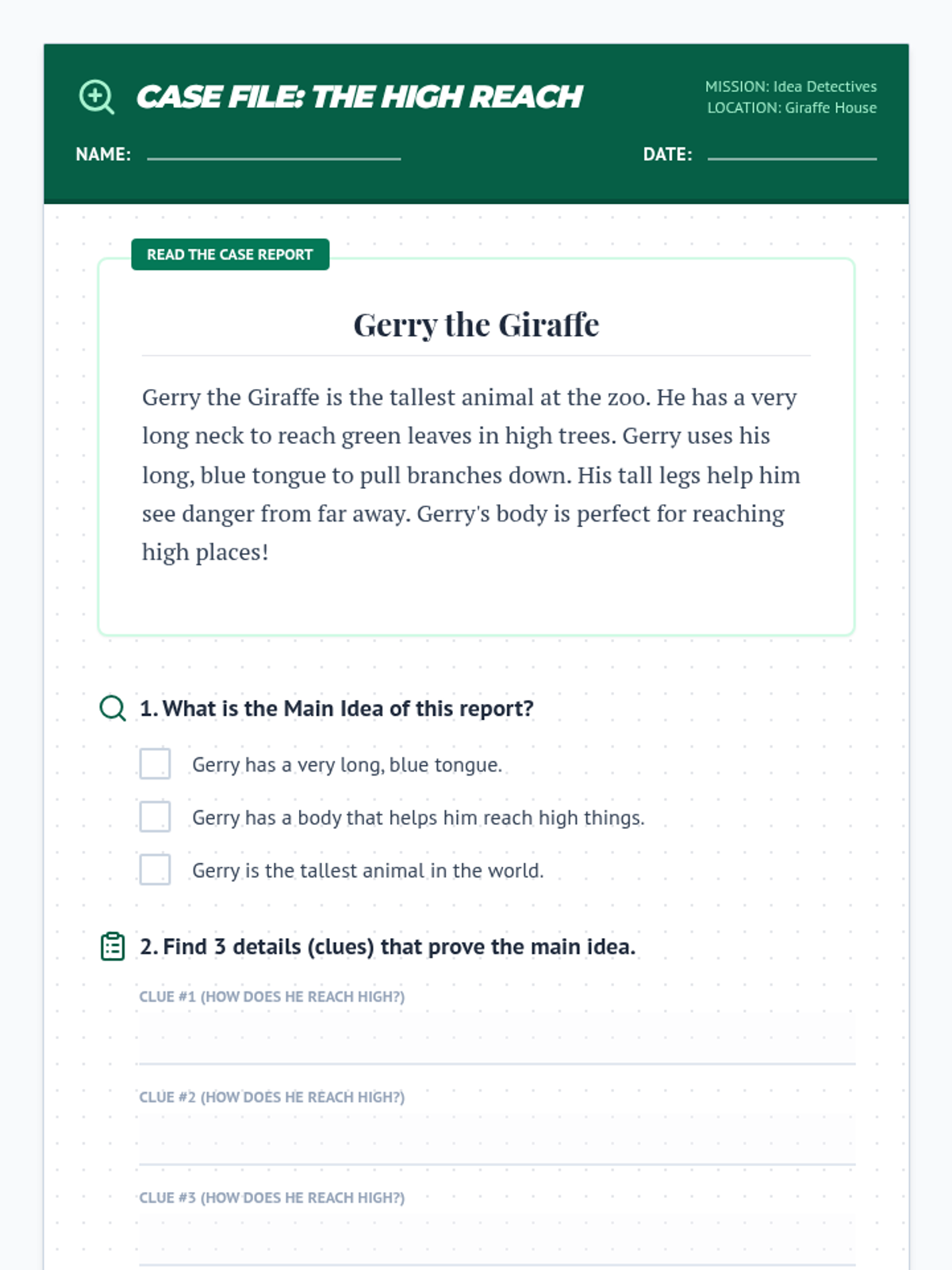
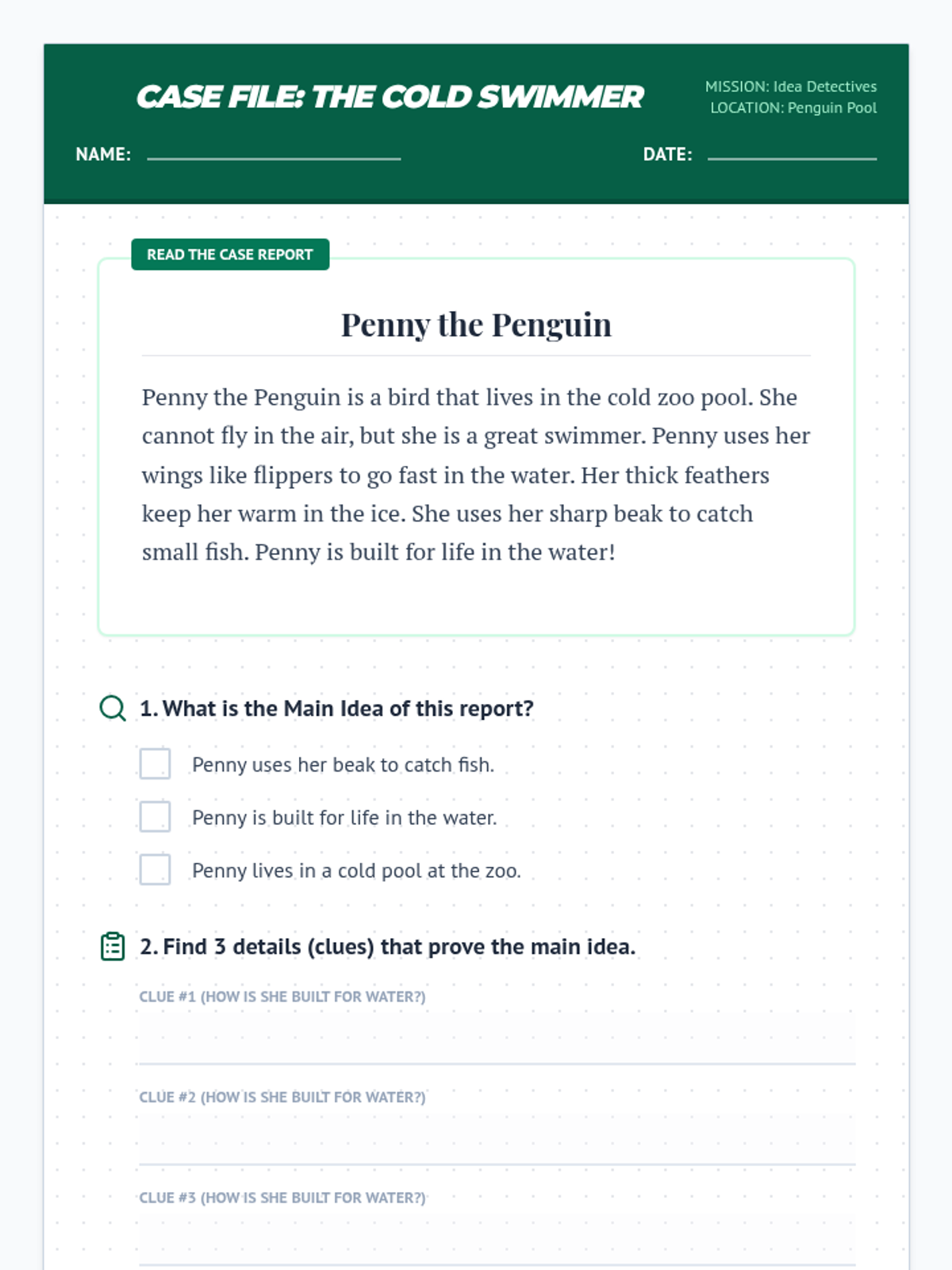
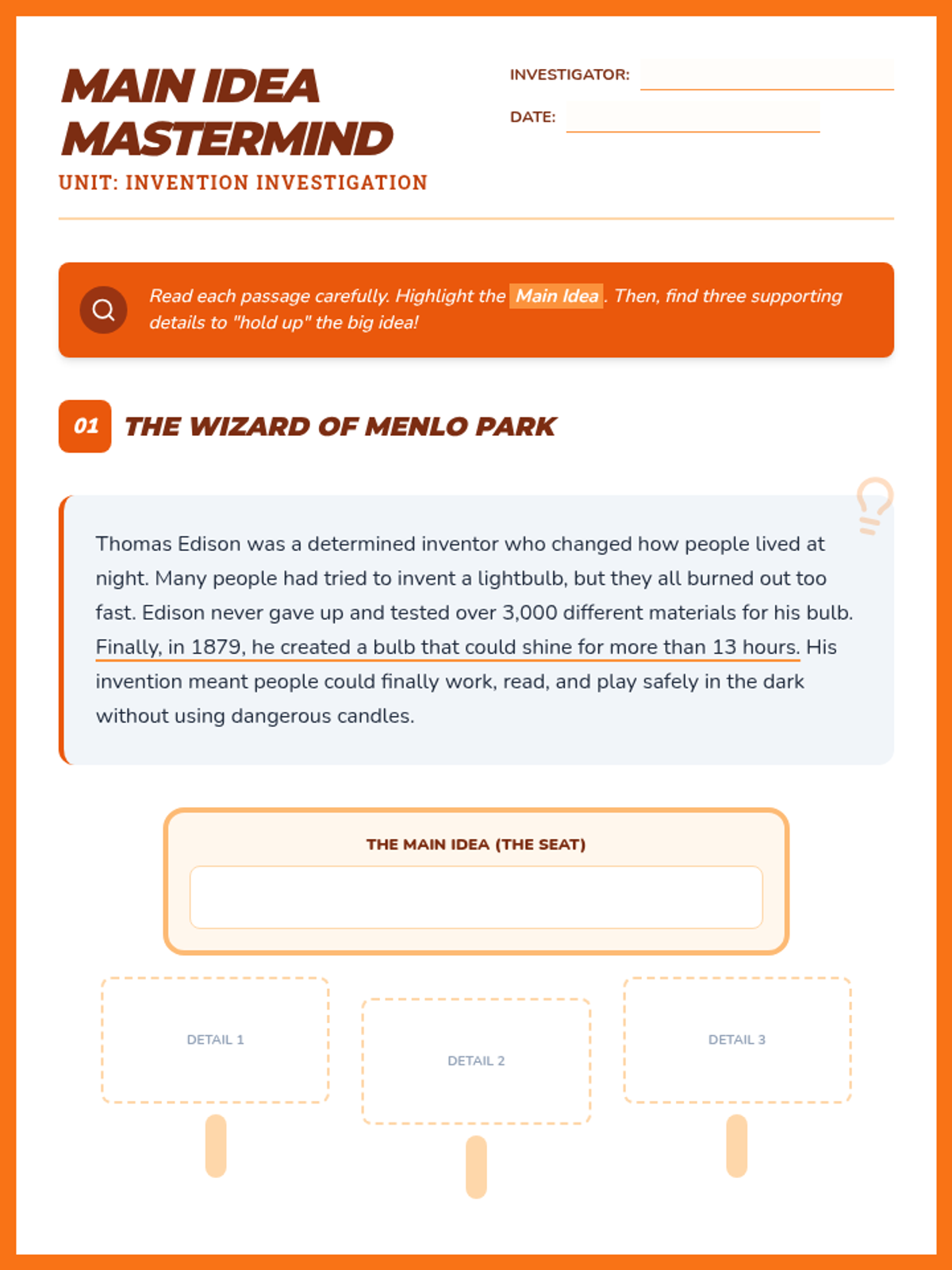
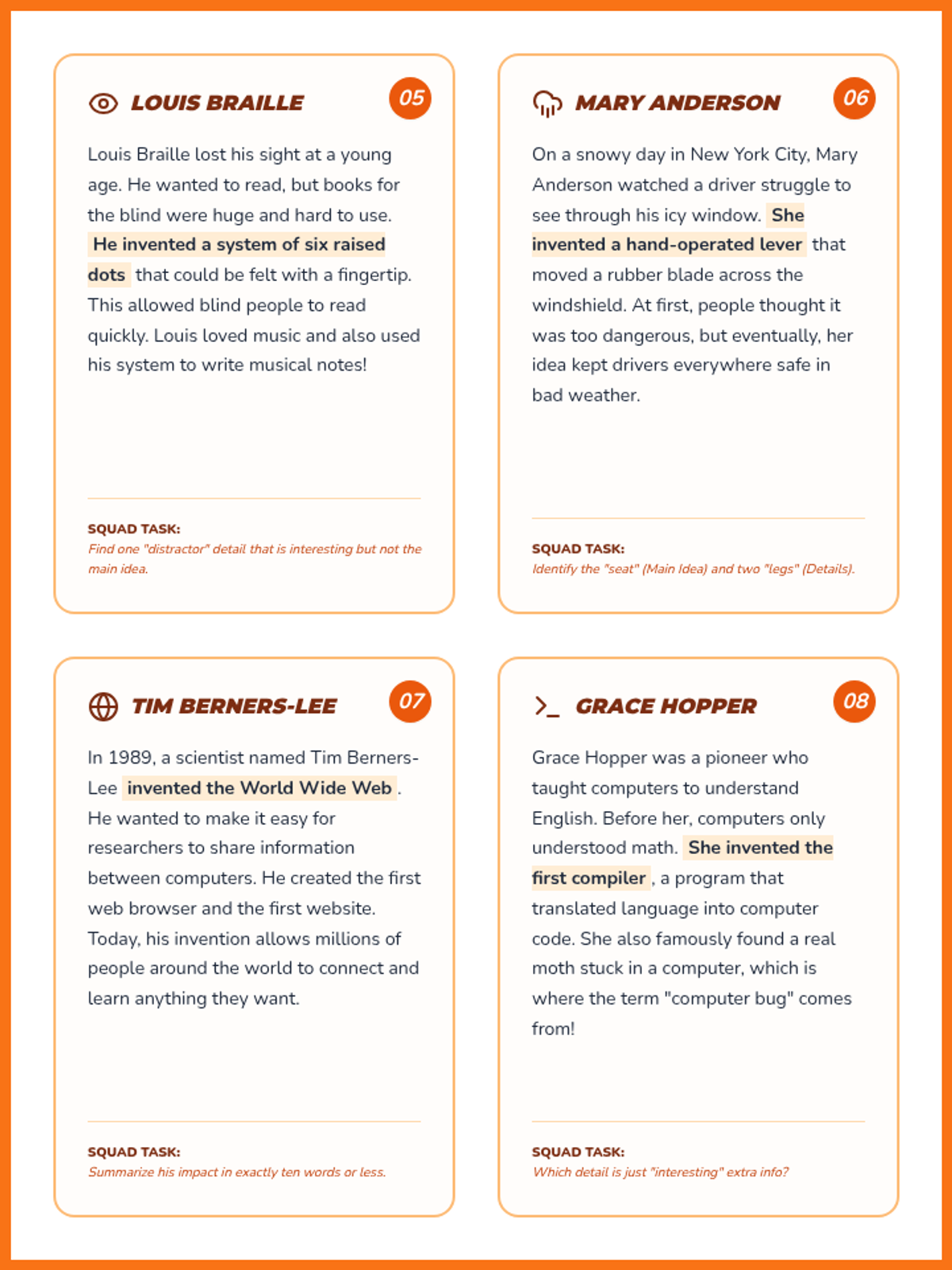
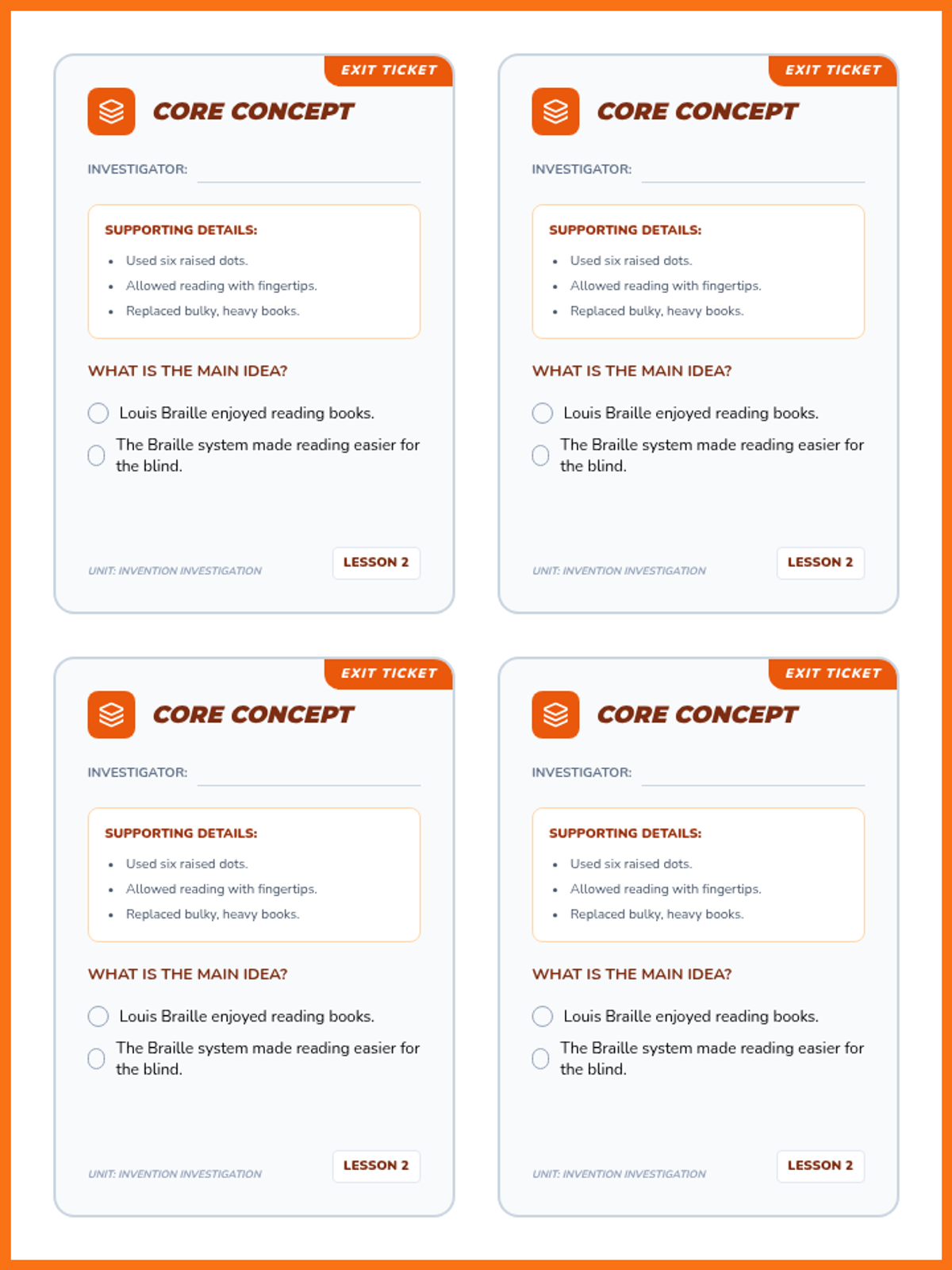
A targeted reading intervention lesson focused on identifying the main idea and supporting details using high-interest, low-readability texts. Designed for students who decode well but struggle with comprehension.
Cumulative review of all consonant-le patterns through mixed word lists, sentence reading, and a final fluency passage.
Practice decoding and encoding consonant-le words that include r-controlled or magic e syllables, such as 'purple' and 'beetle'.
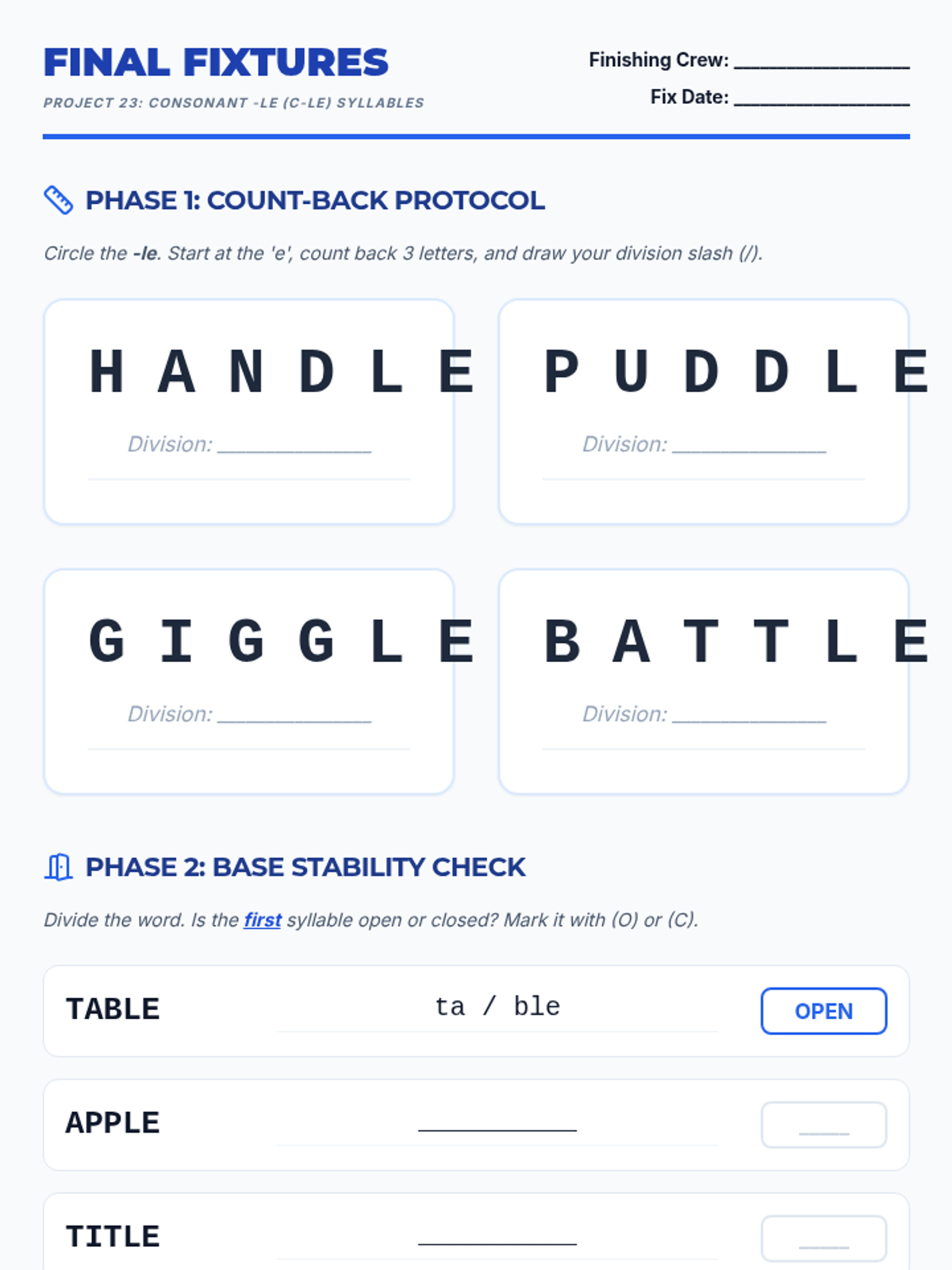
Explore how the first syllable (open or closed) determines the vowel sound in consonant-le words, contrasting pairs like 'apple' and 'maple'.
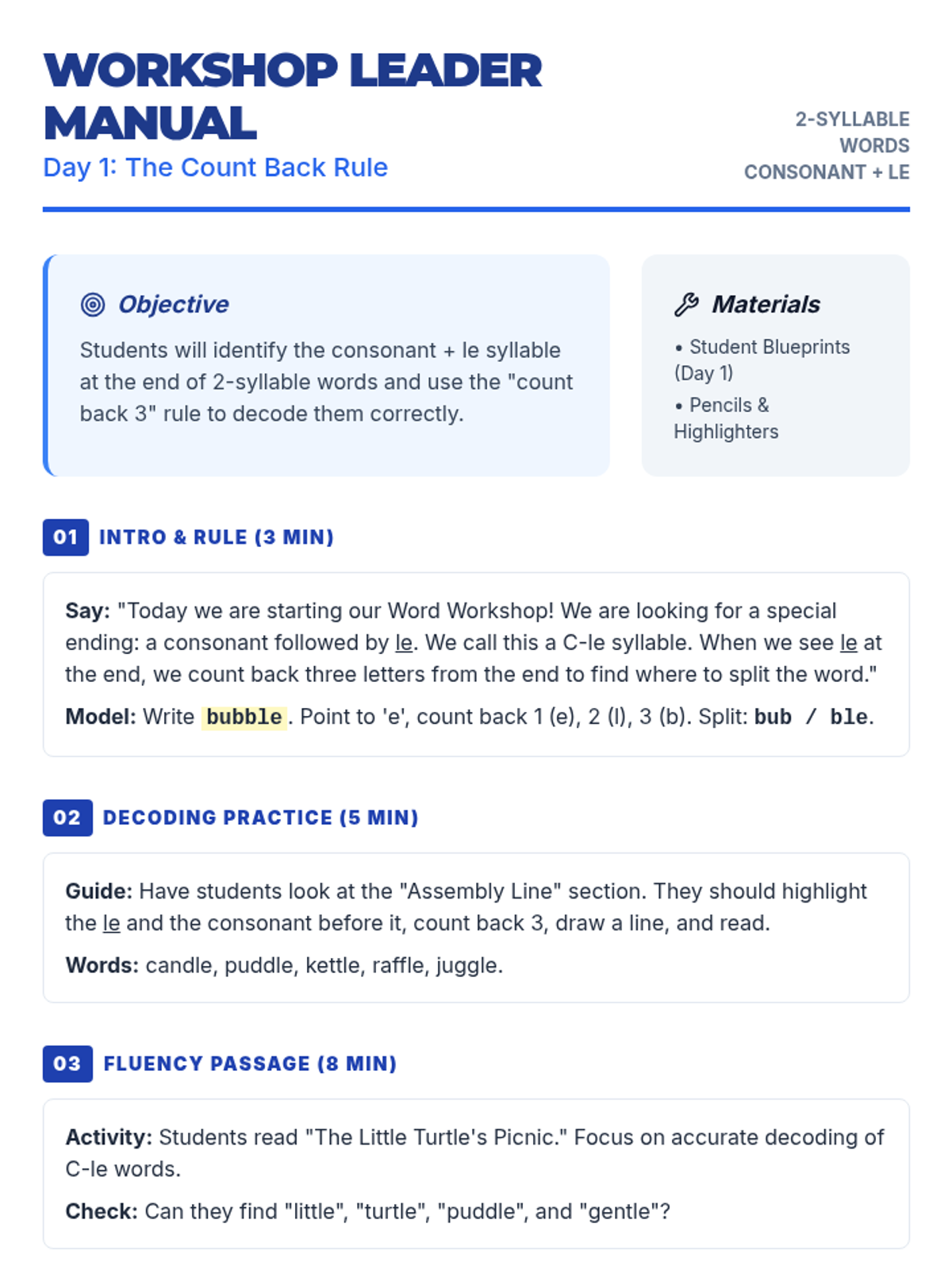
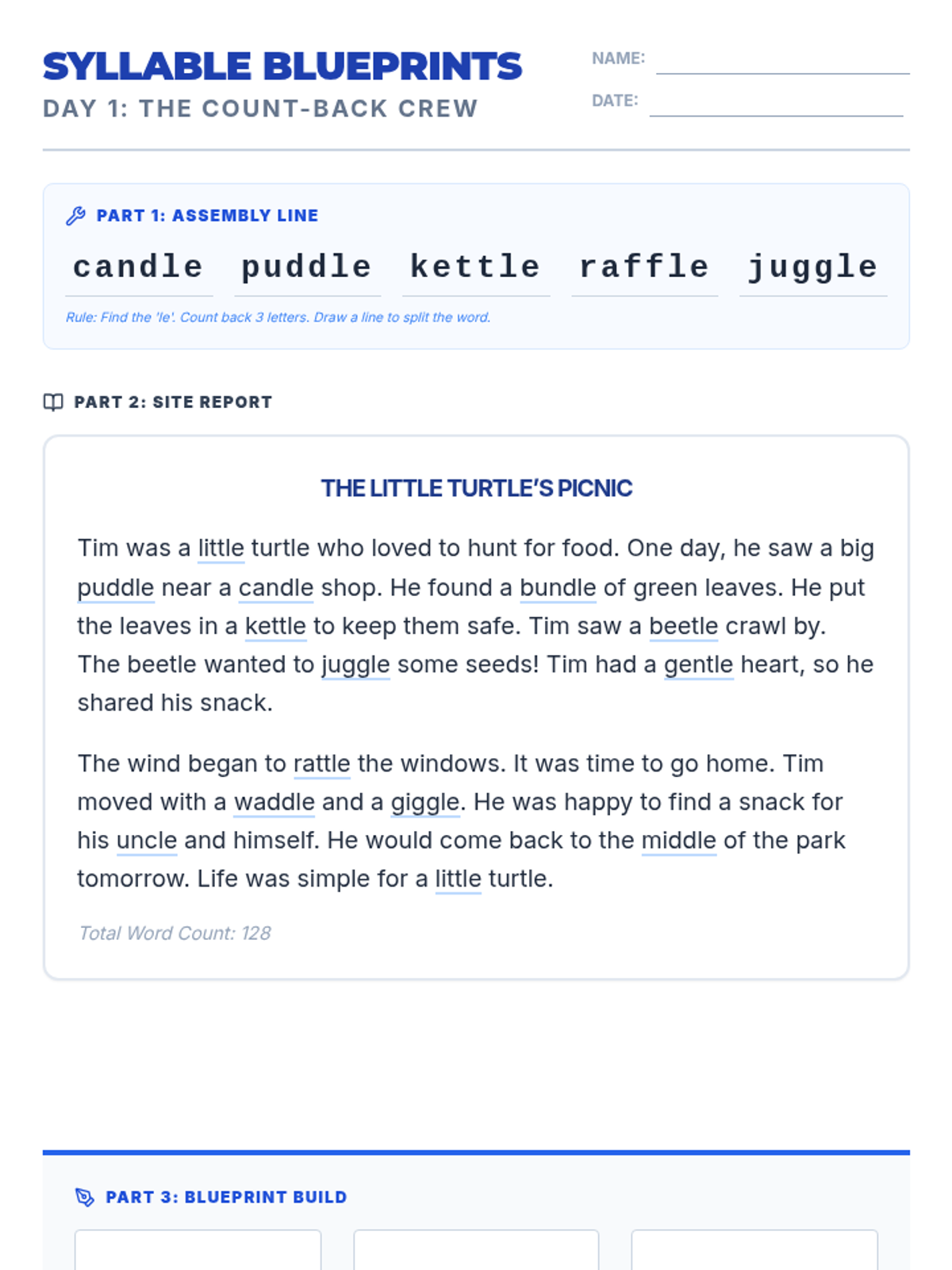
Introduce the consonant-le syllable type and the 'count back 3' rule for dividing words. Focus on words with closed first syllables like 'bubble' and 'candle'.
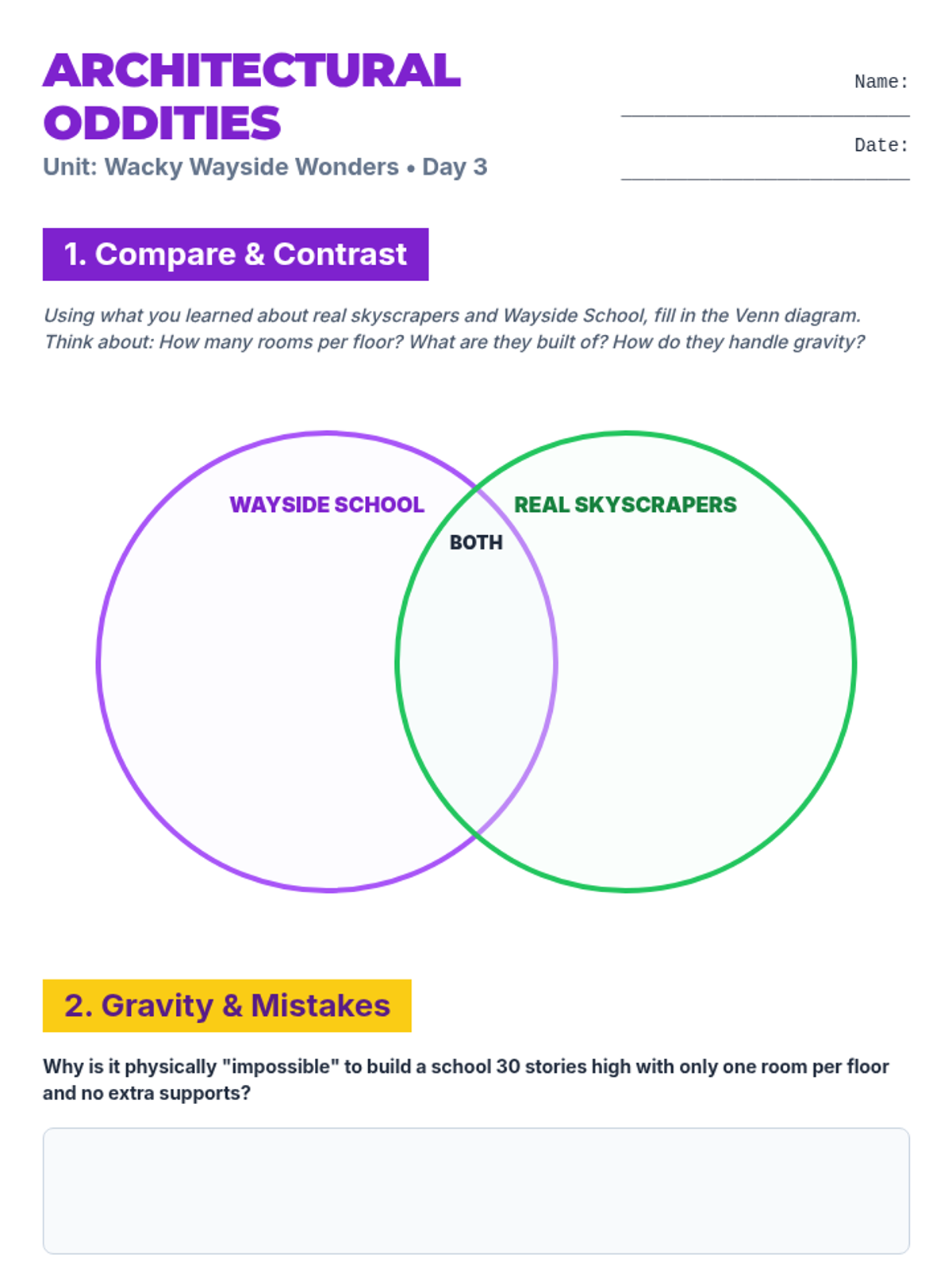
Synthesizes fiction and non-fiction by comparing the architectural impossibility of a 30-story sideways school with real skyscraper engineering and the laws of gravity.
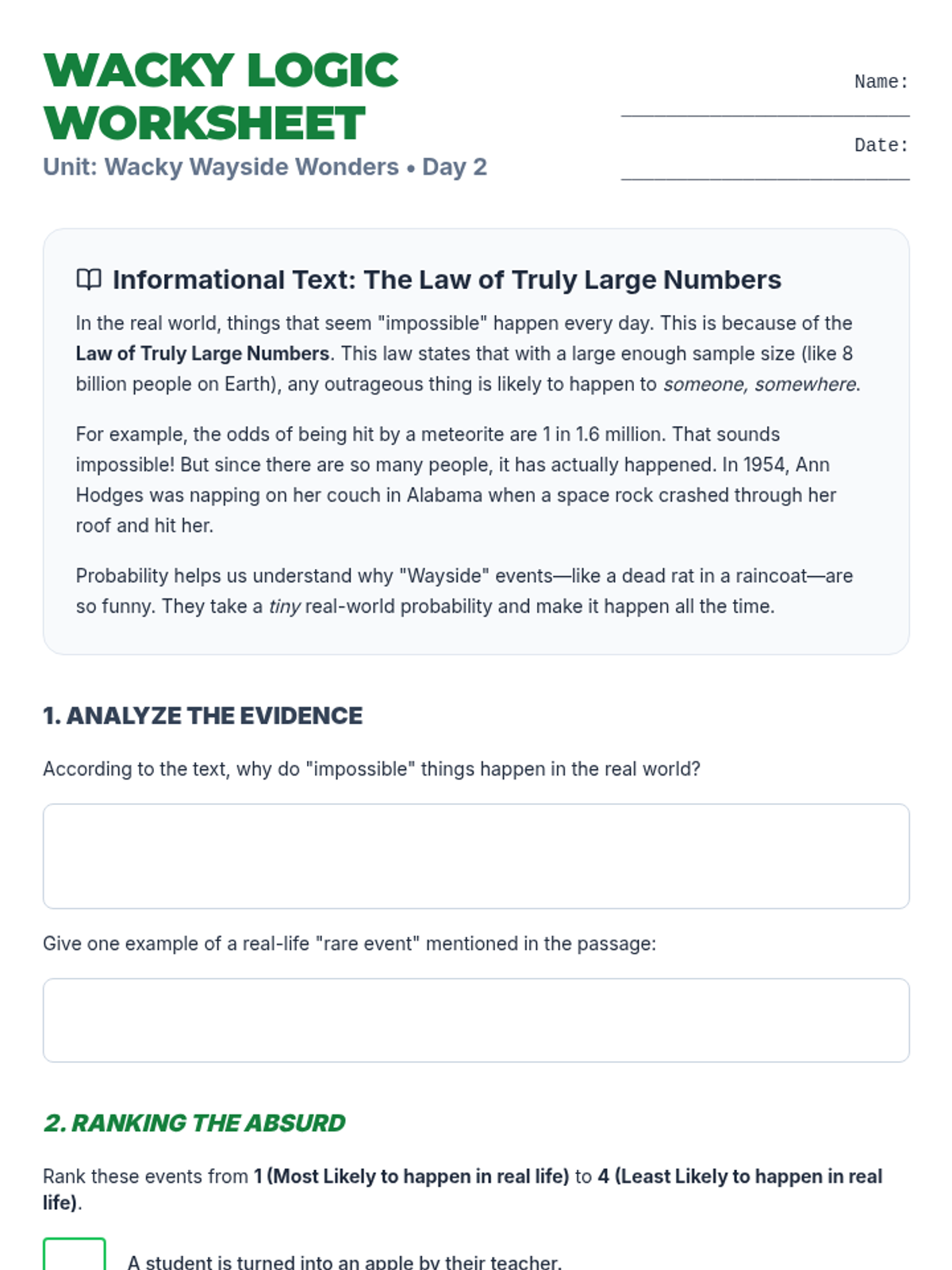
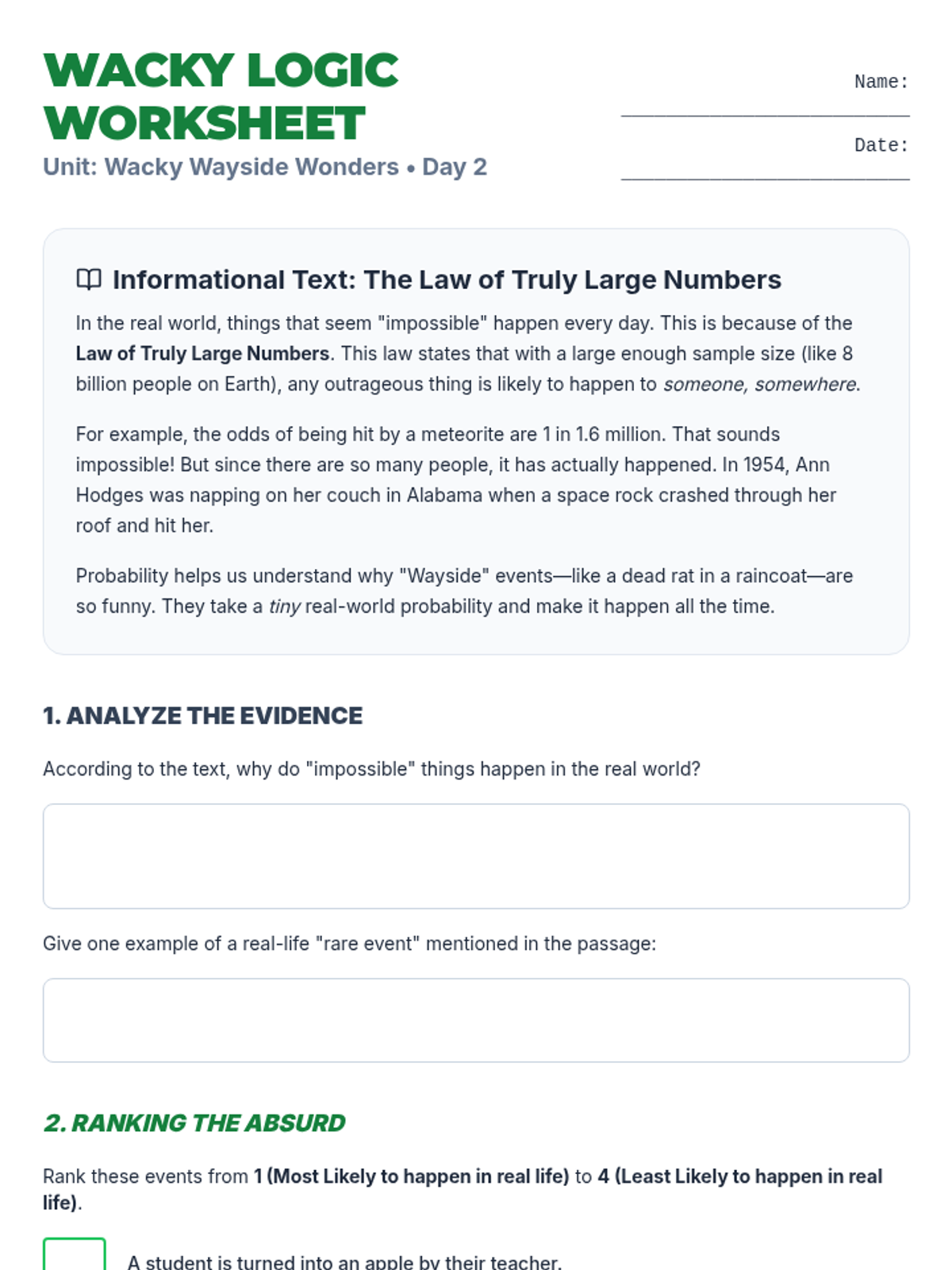
Connects the absurdity of Wayside School to real-world concepts of probability and logic through informational texts about unusual events and 'impossible' occurrences.
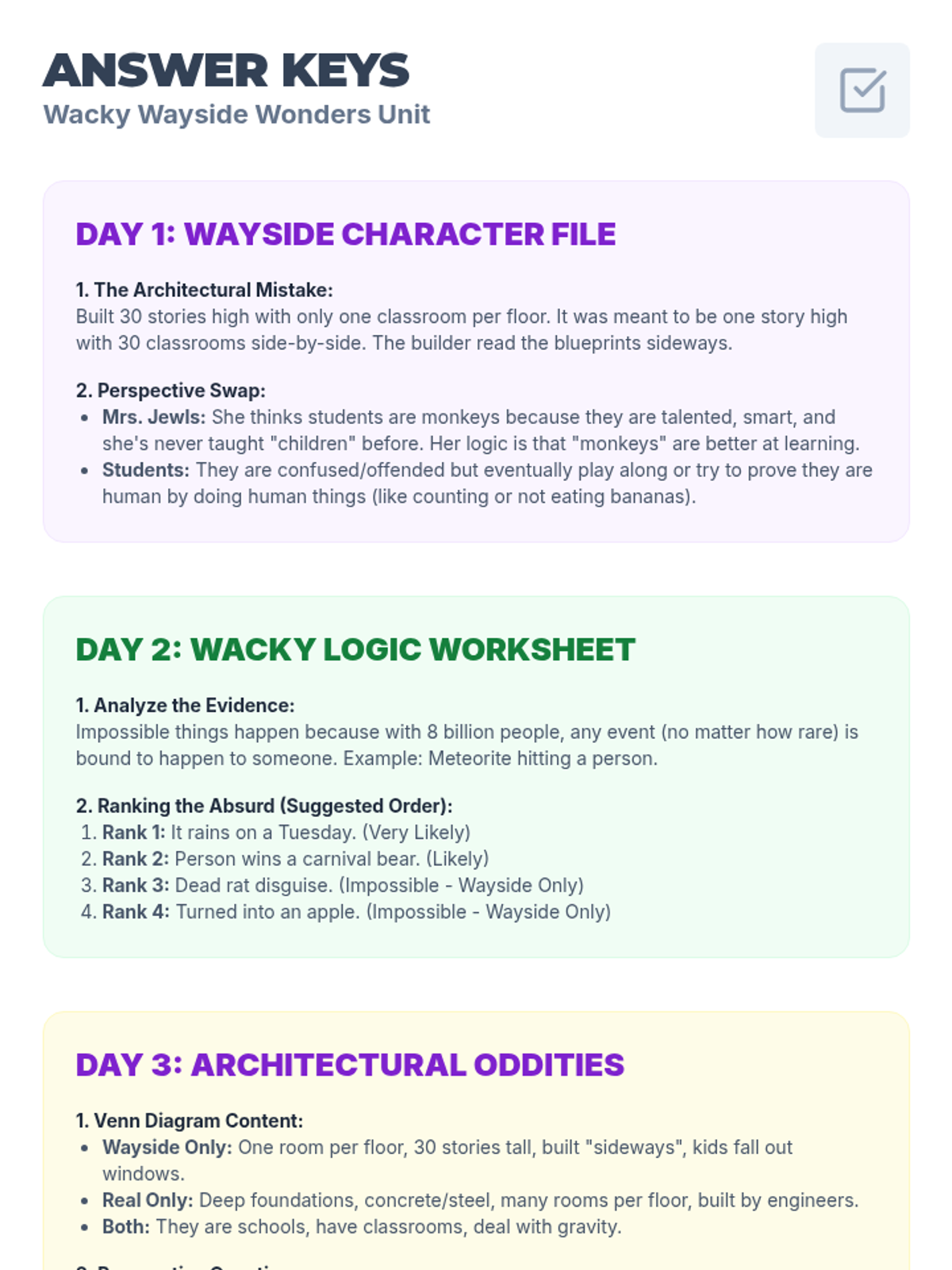
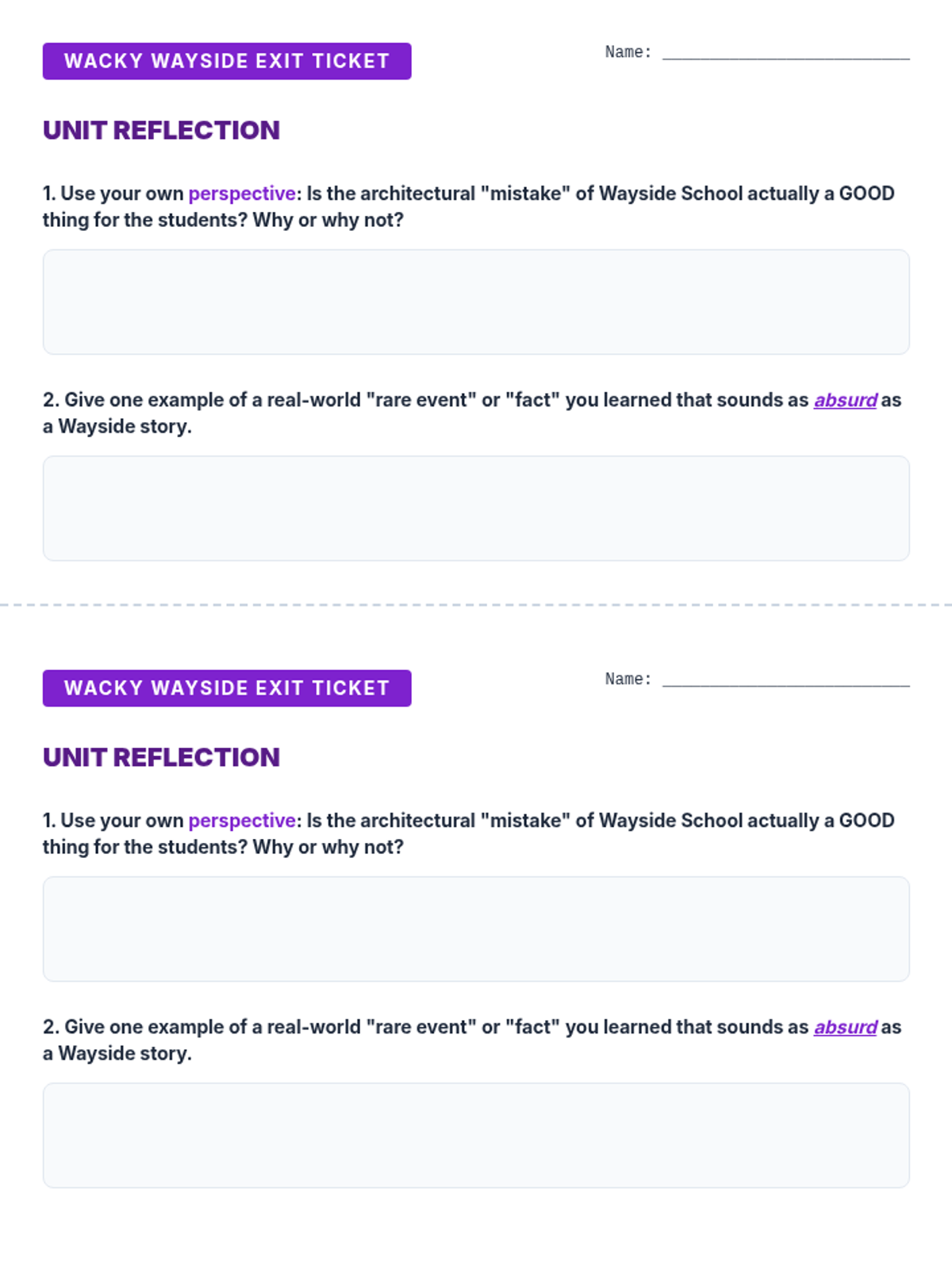
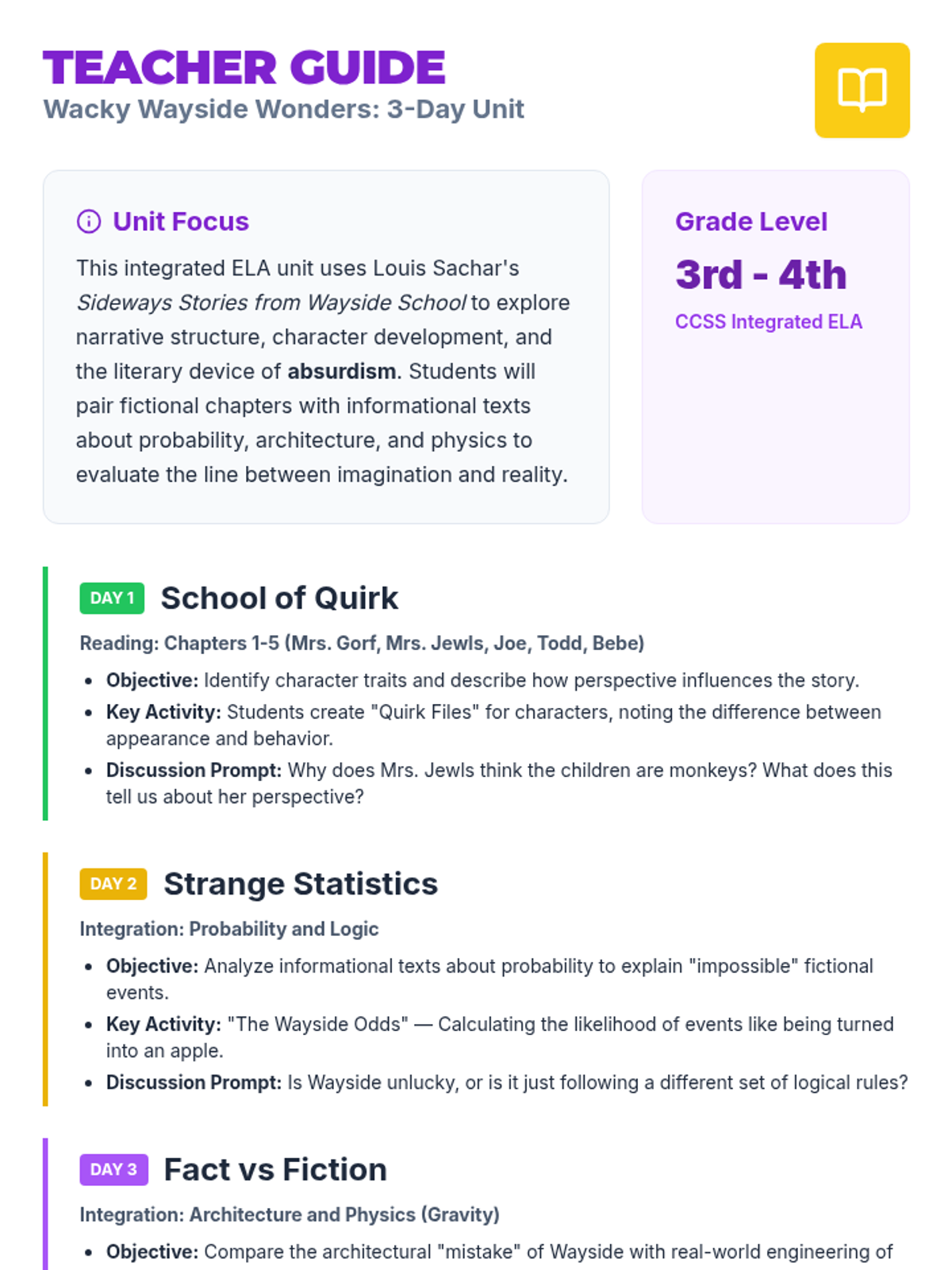
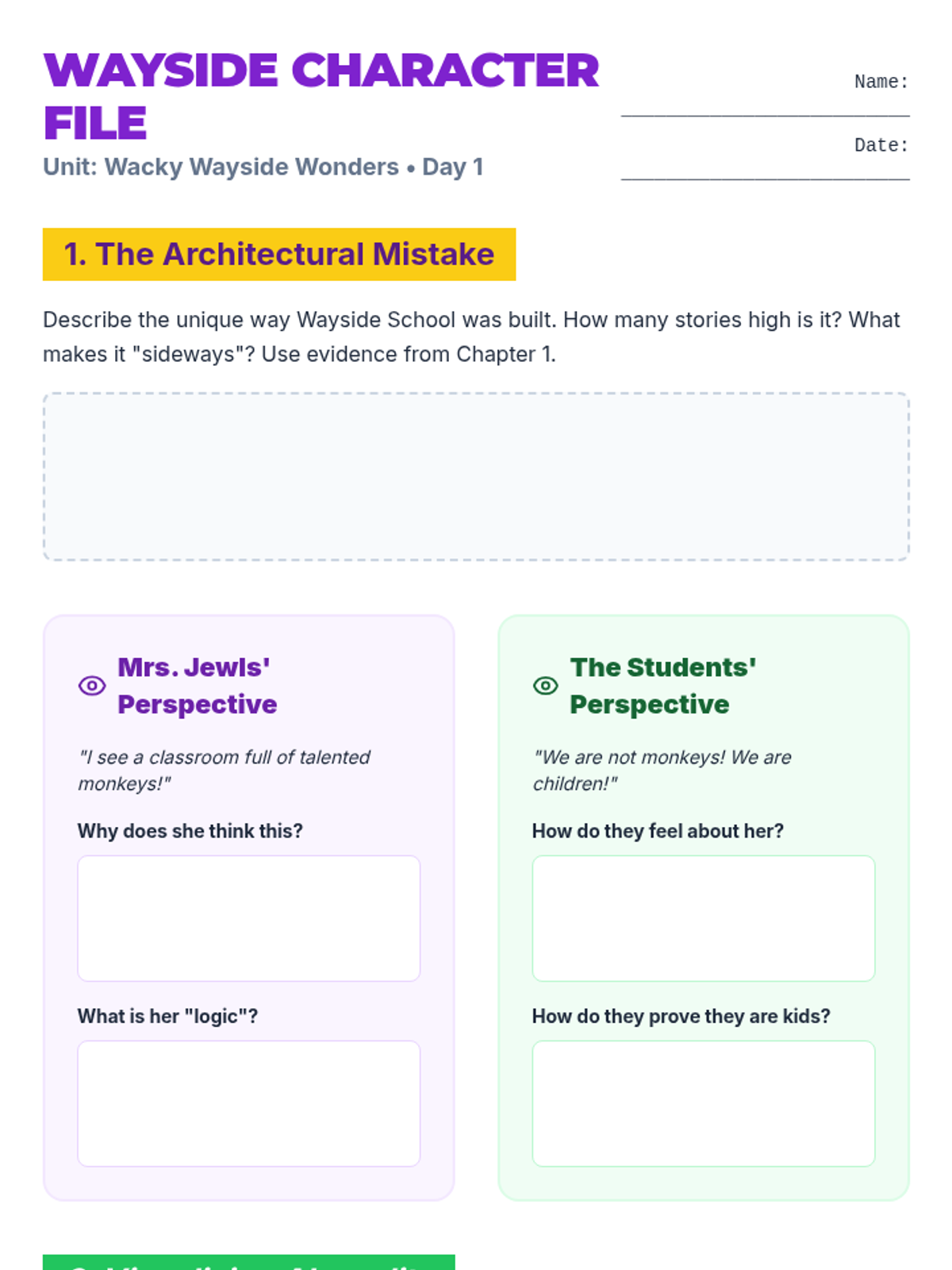
Introduces the unique episodic structure and quirky characters of Wayside School, focusing on identifying perspective and interpreting absurd humor.
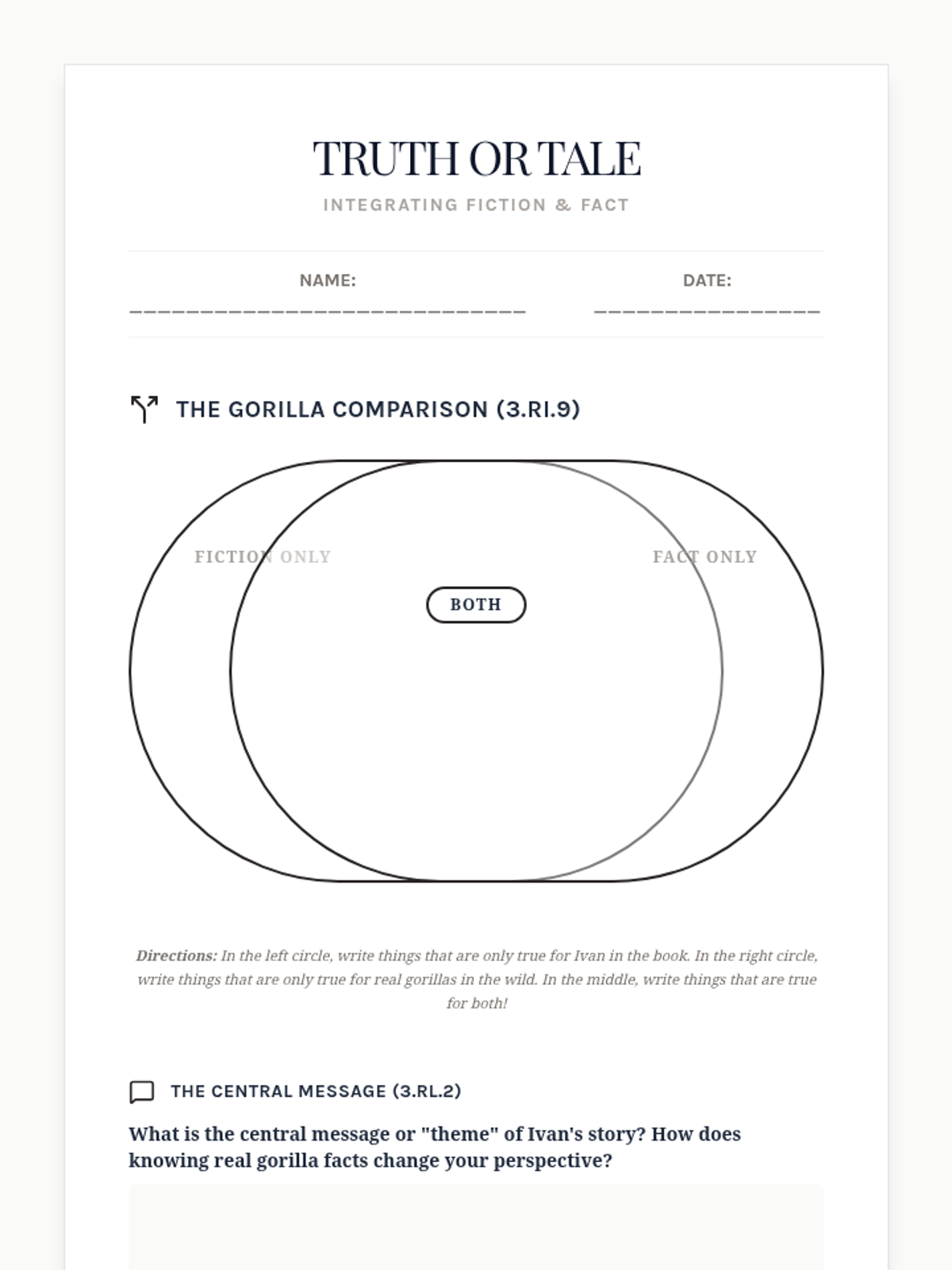
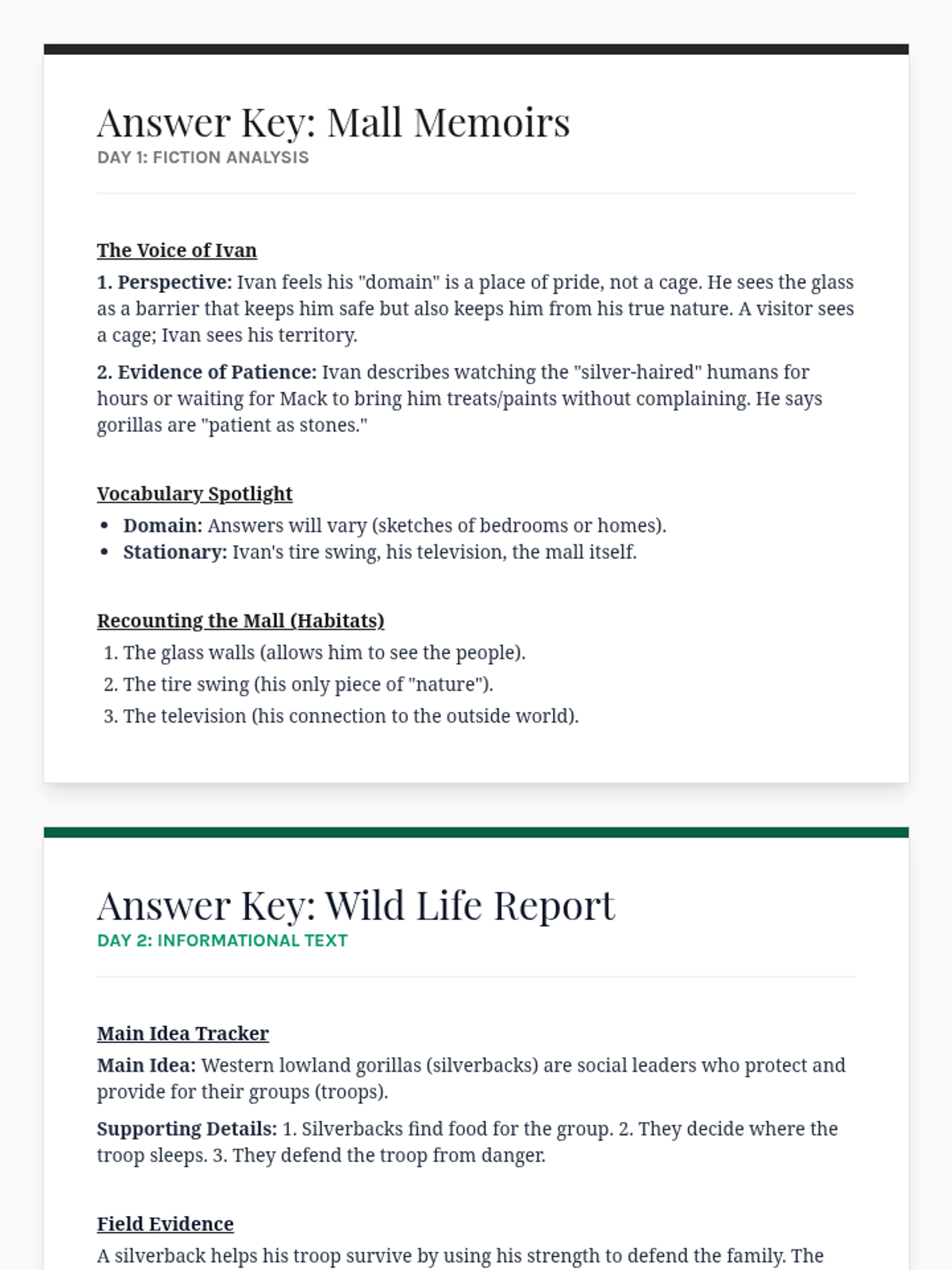
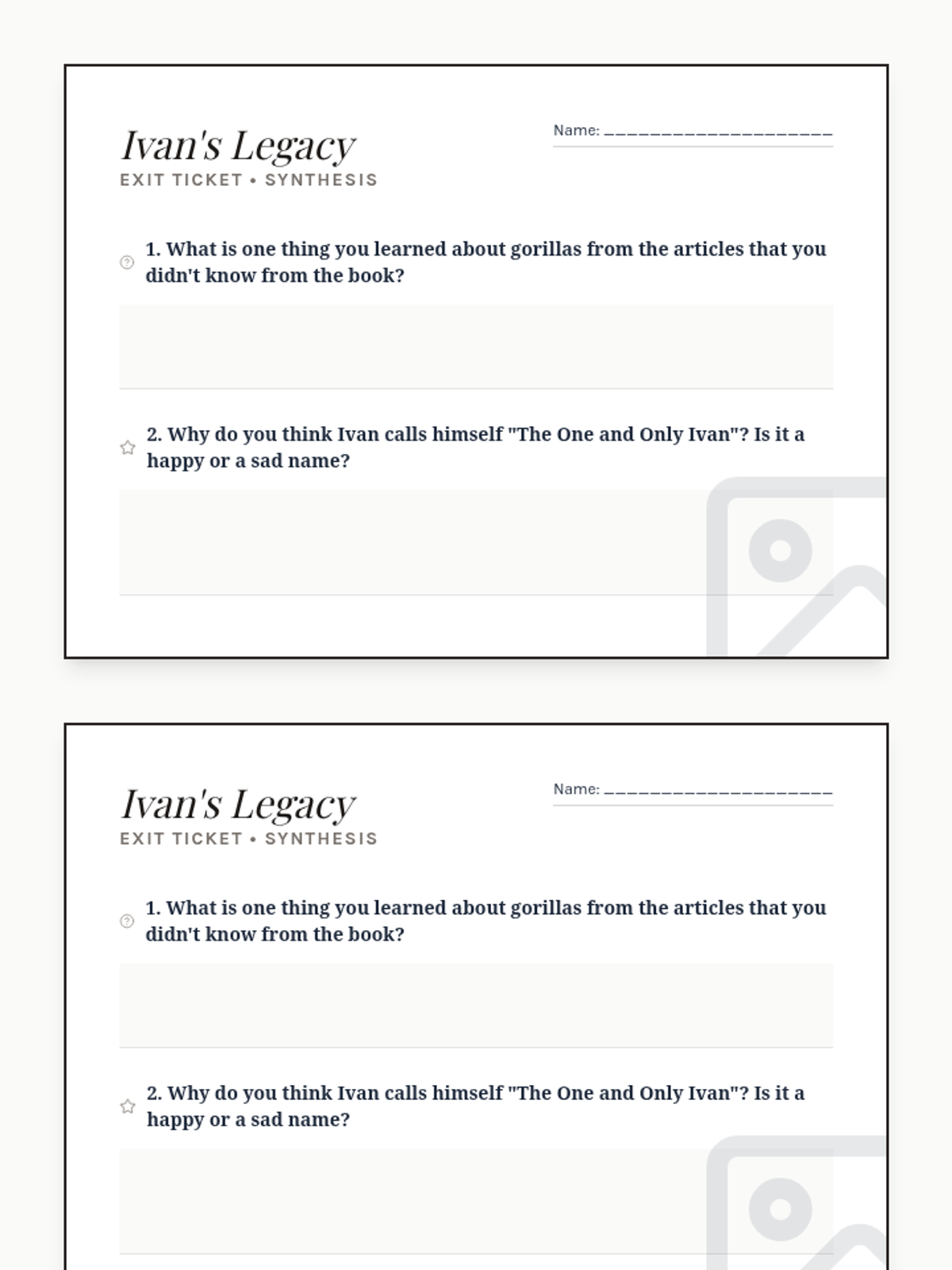
Integrates fiction and non-fiction by comparing Ivan's fictional life at the Exit 8 Big Top Mall with real-world gorilla habitats and behaviors.
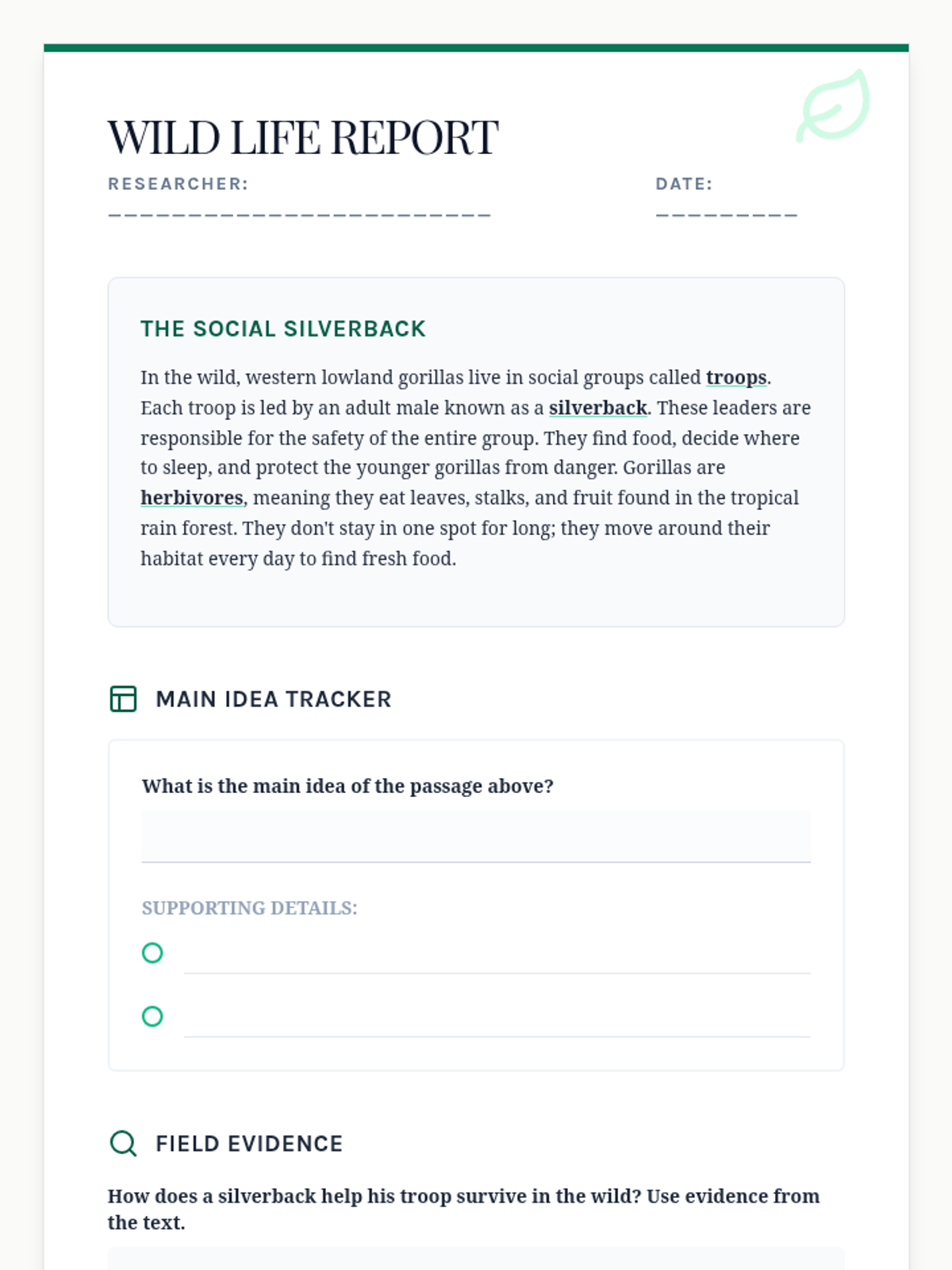
Explores non-fiction texts about gorillas to identify main ideas, key details, and domain-specific vocabulary.
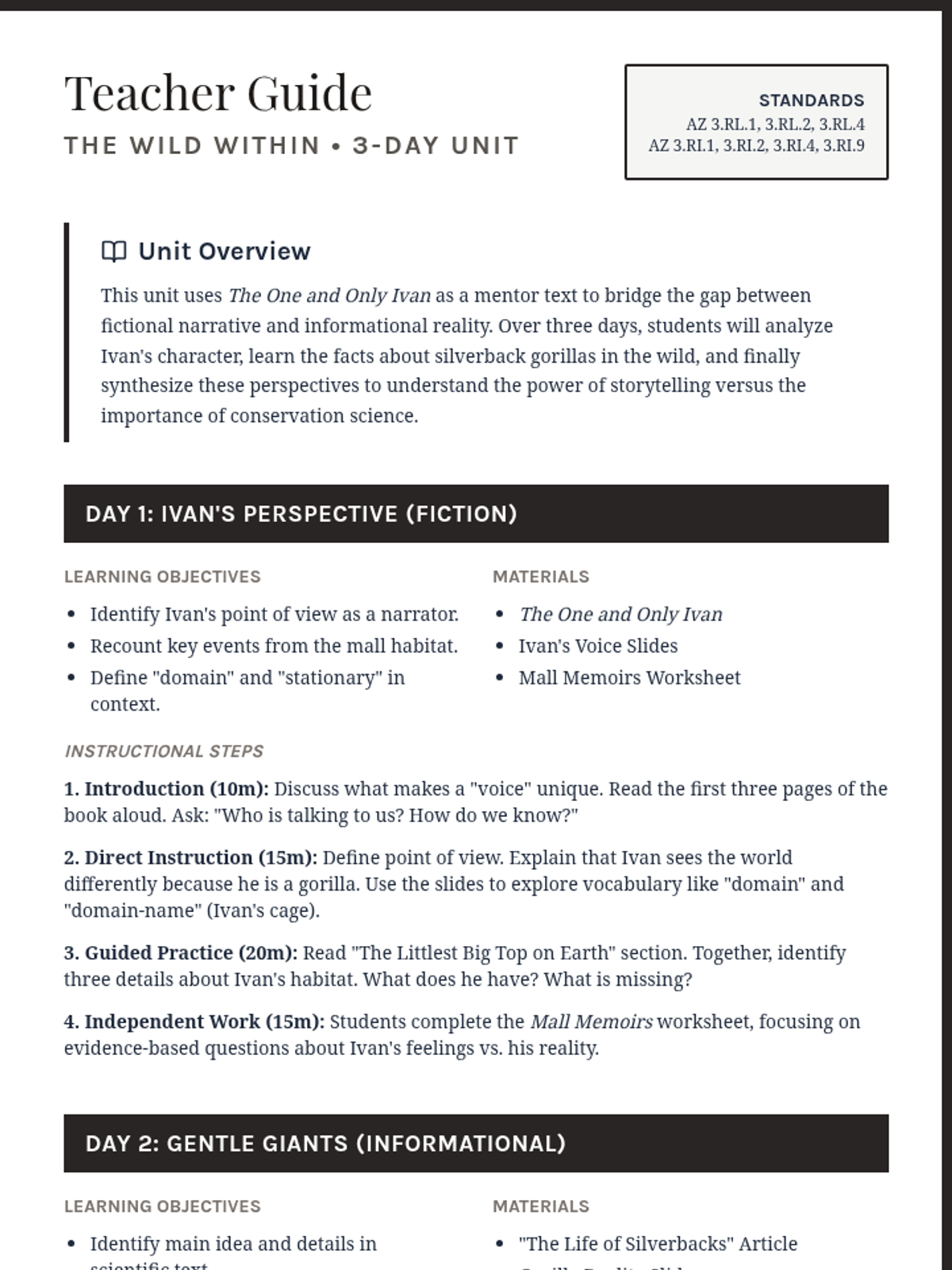
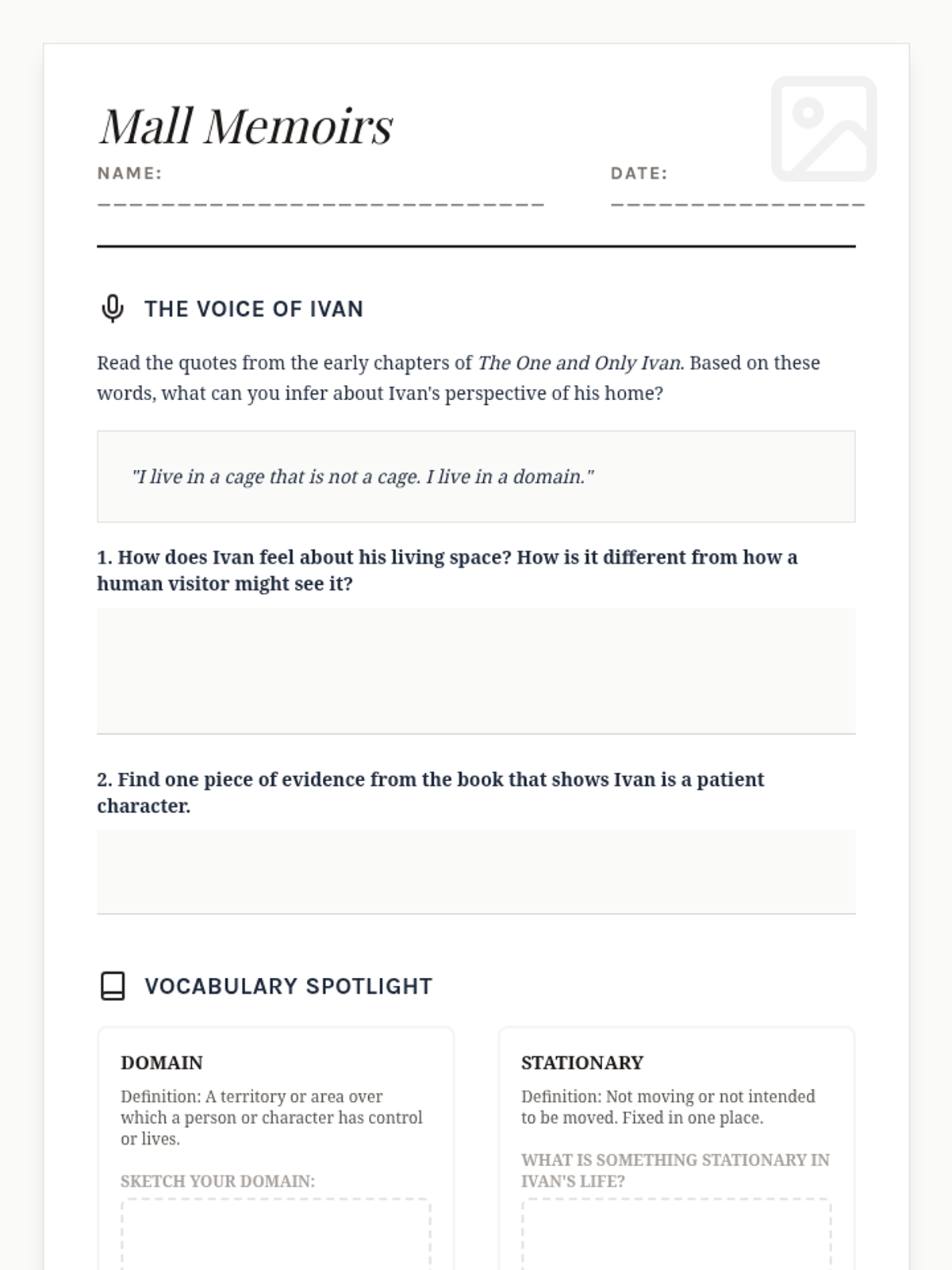
Focuses on identifying Ivan's perspective, recounting key story elements, and understanding character-specific vocabulary in the early chapters of 'The One and Only Ivan'.
This lesson introduces nine key figurative language devices through interactive slides and practice. Students identify definitions, analyze examples, and create their own original phrases while reviewing previous concepts.
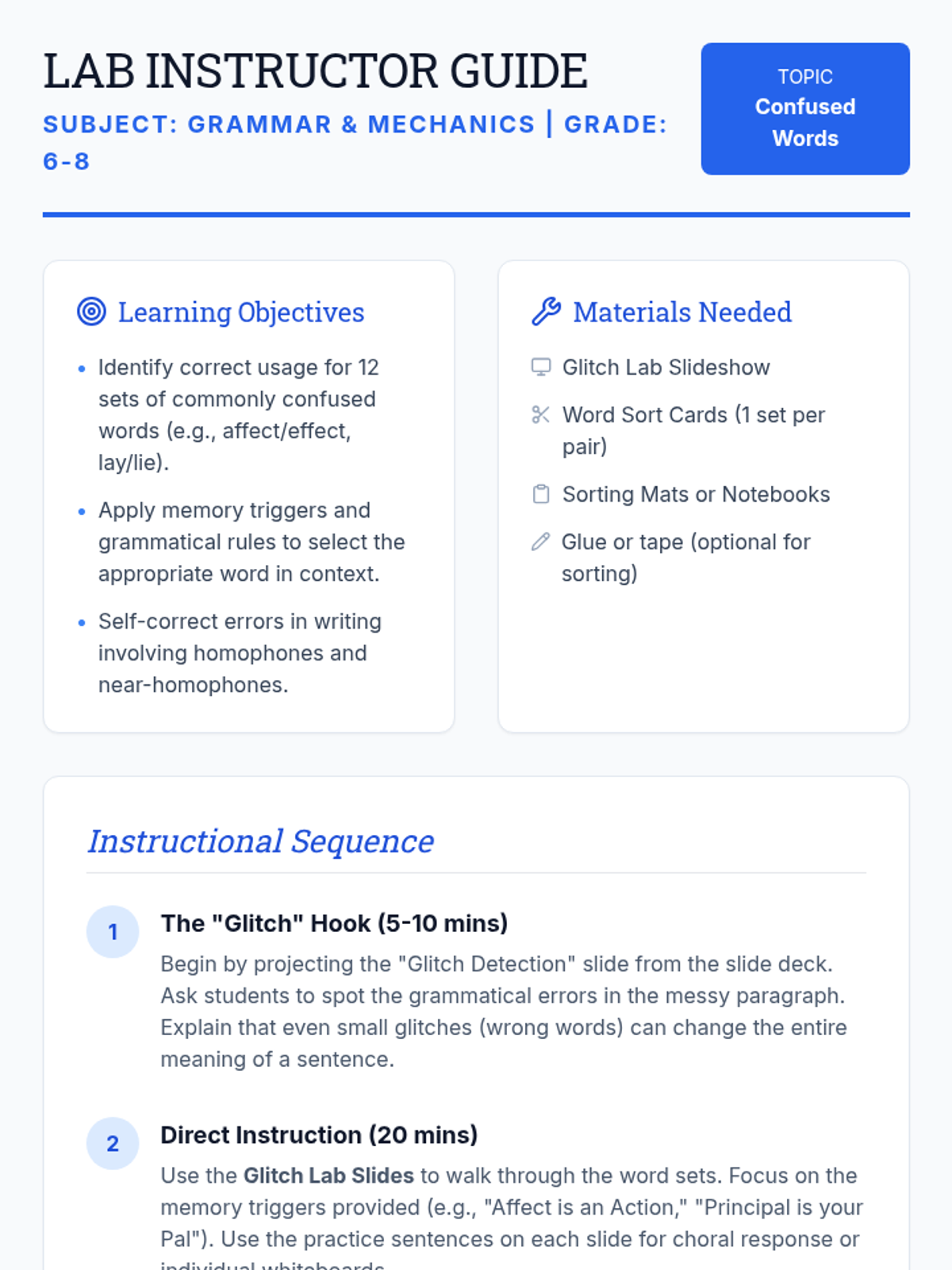
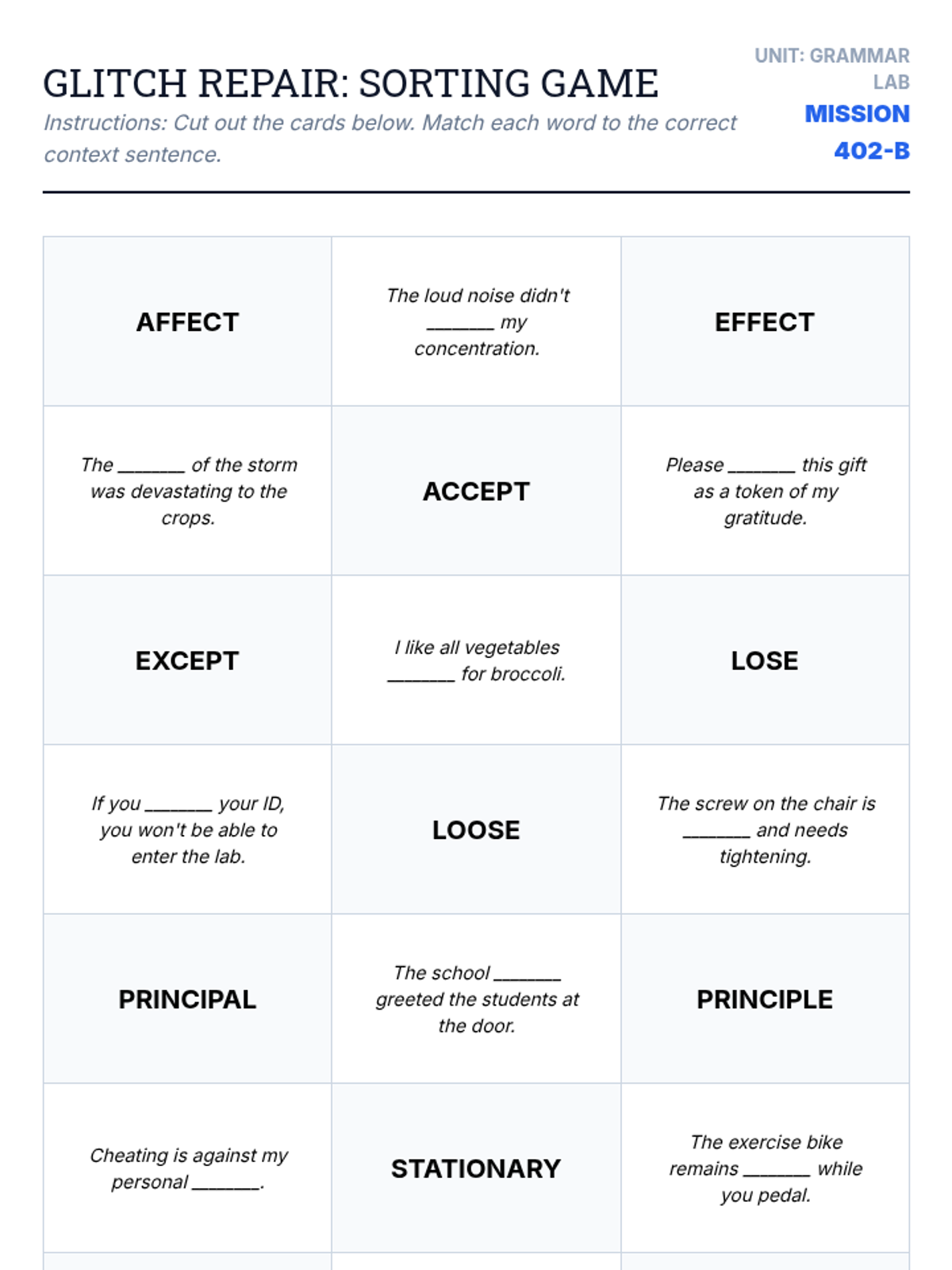
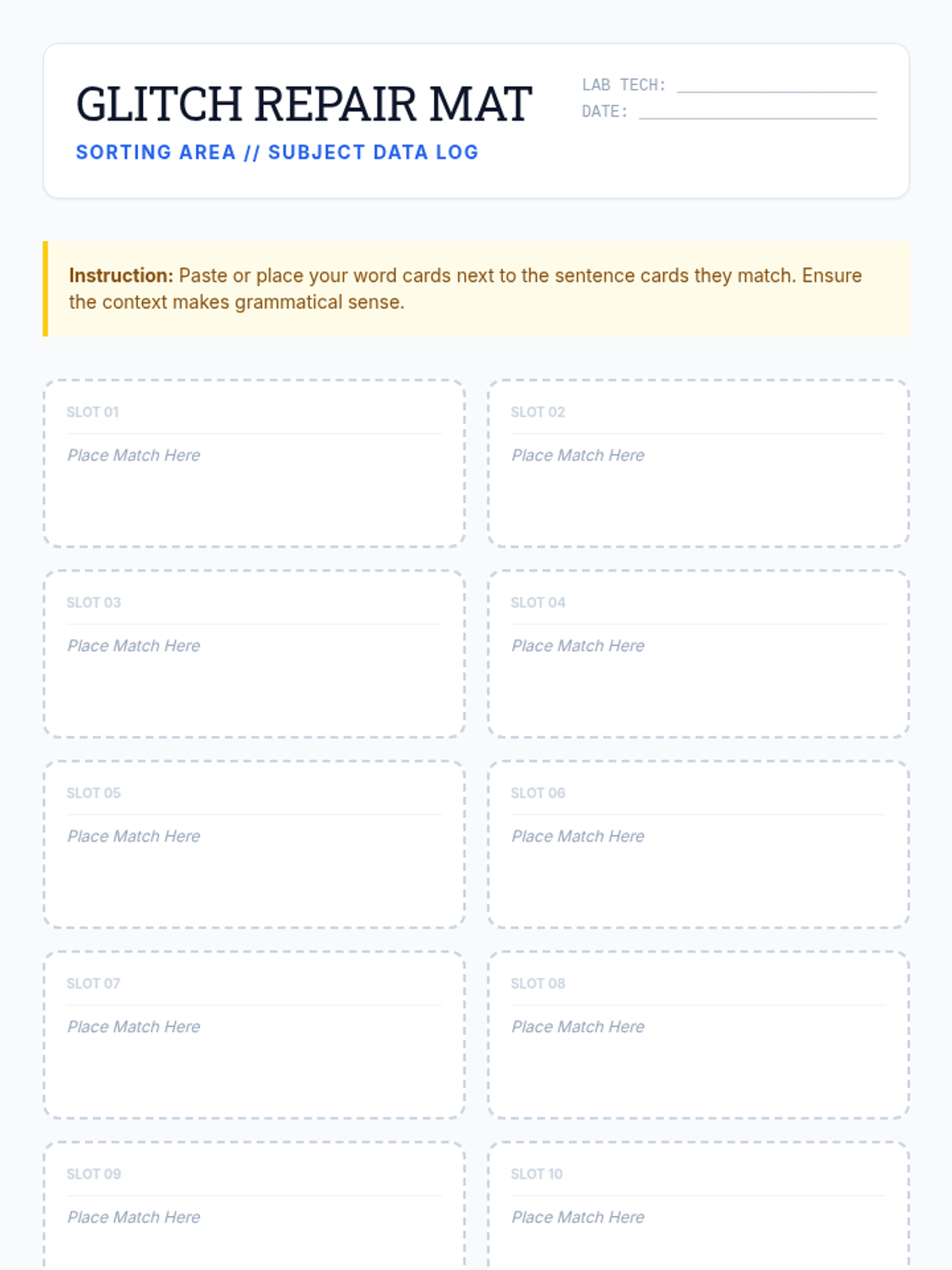
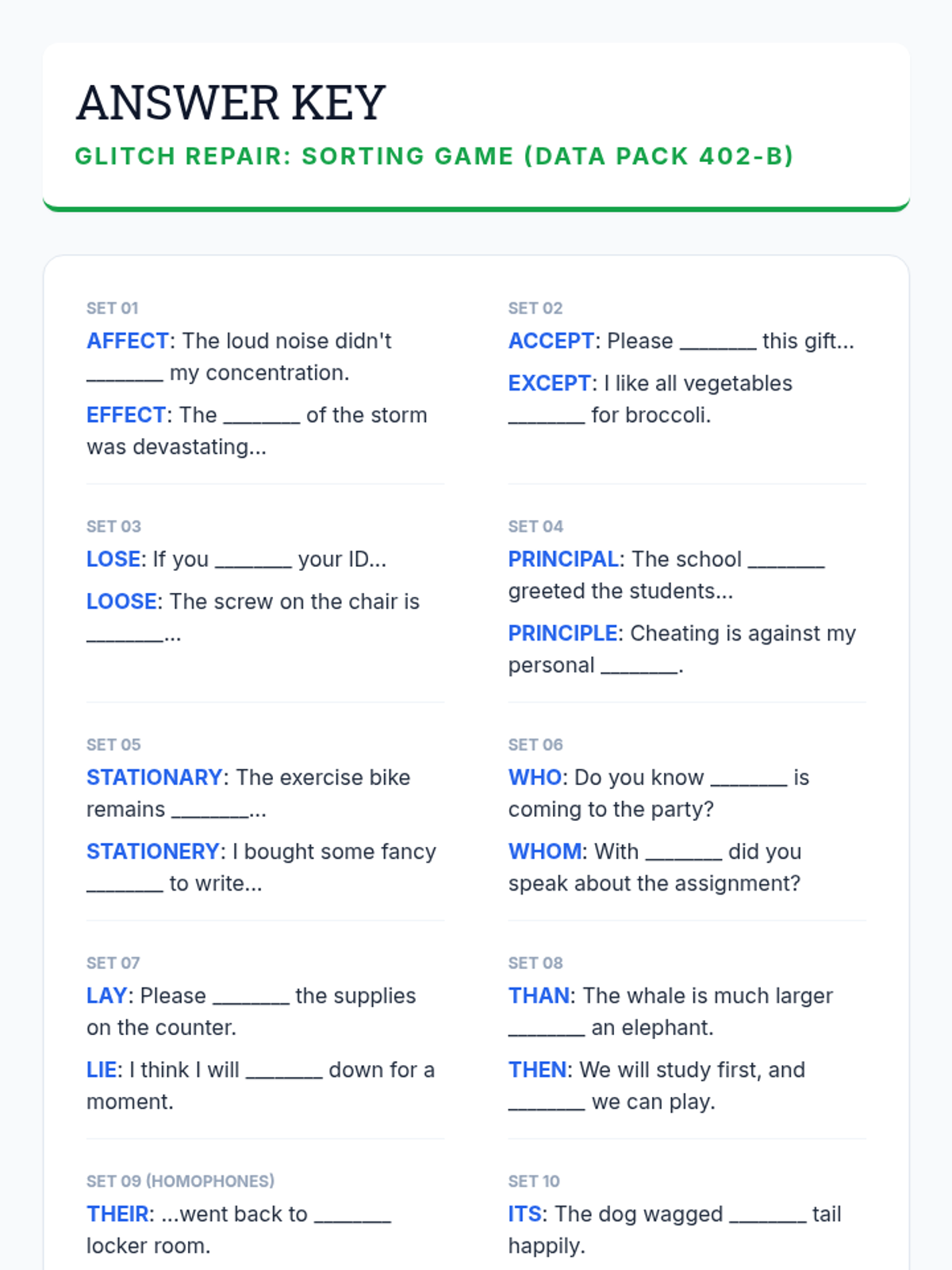
A comprehensive lesson targeting 12 pairs/trios of commonly confused words through a "Grammar Lab" theme. Students will identify, define, and correctly apply homophones and tricky word pairs through direct instruction and a hands-on sorting game.
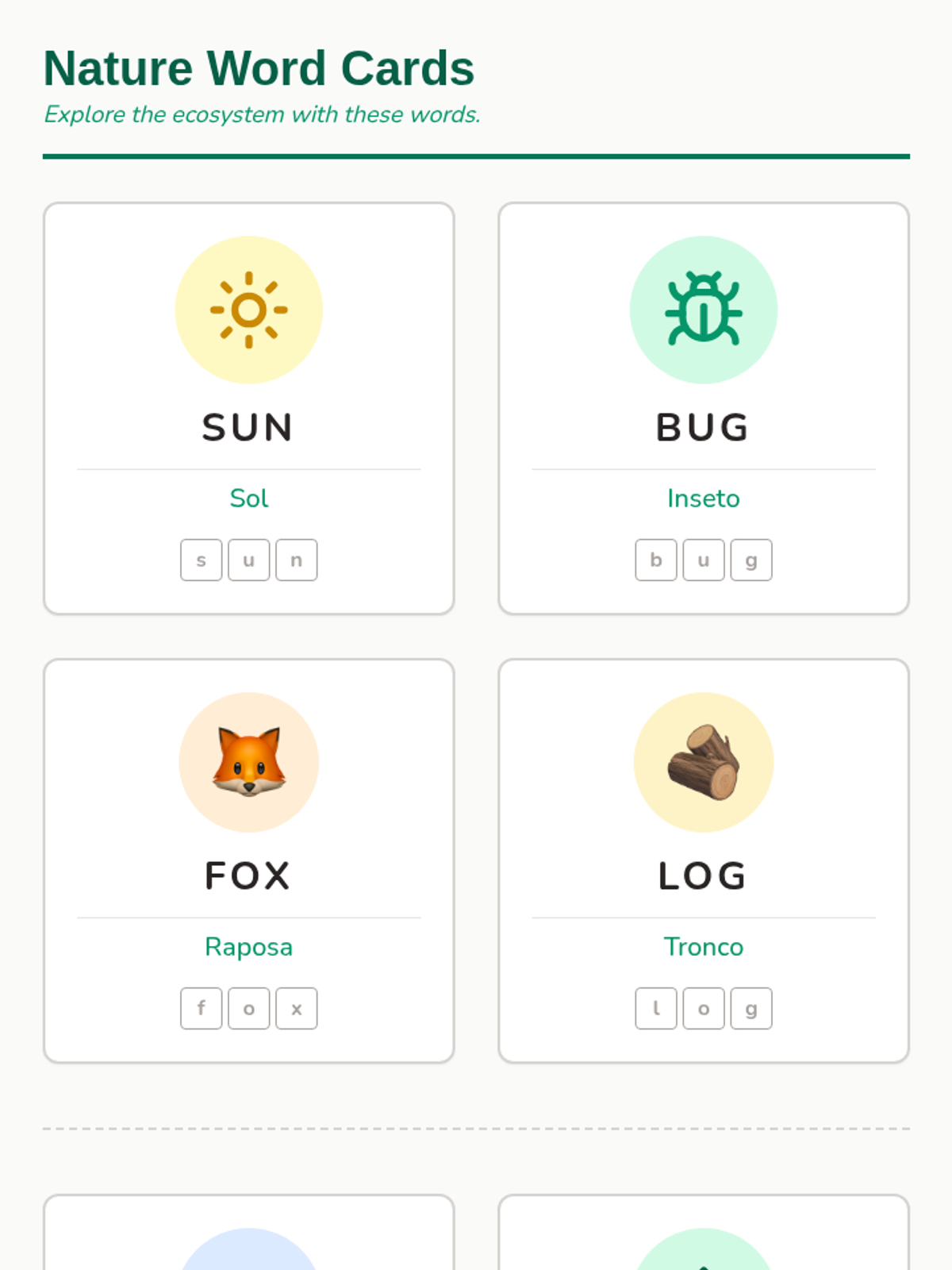
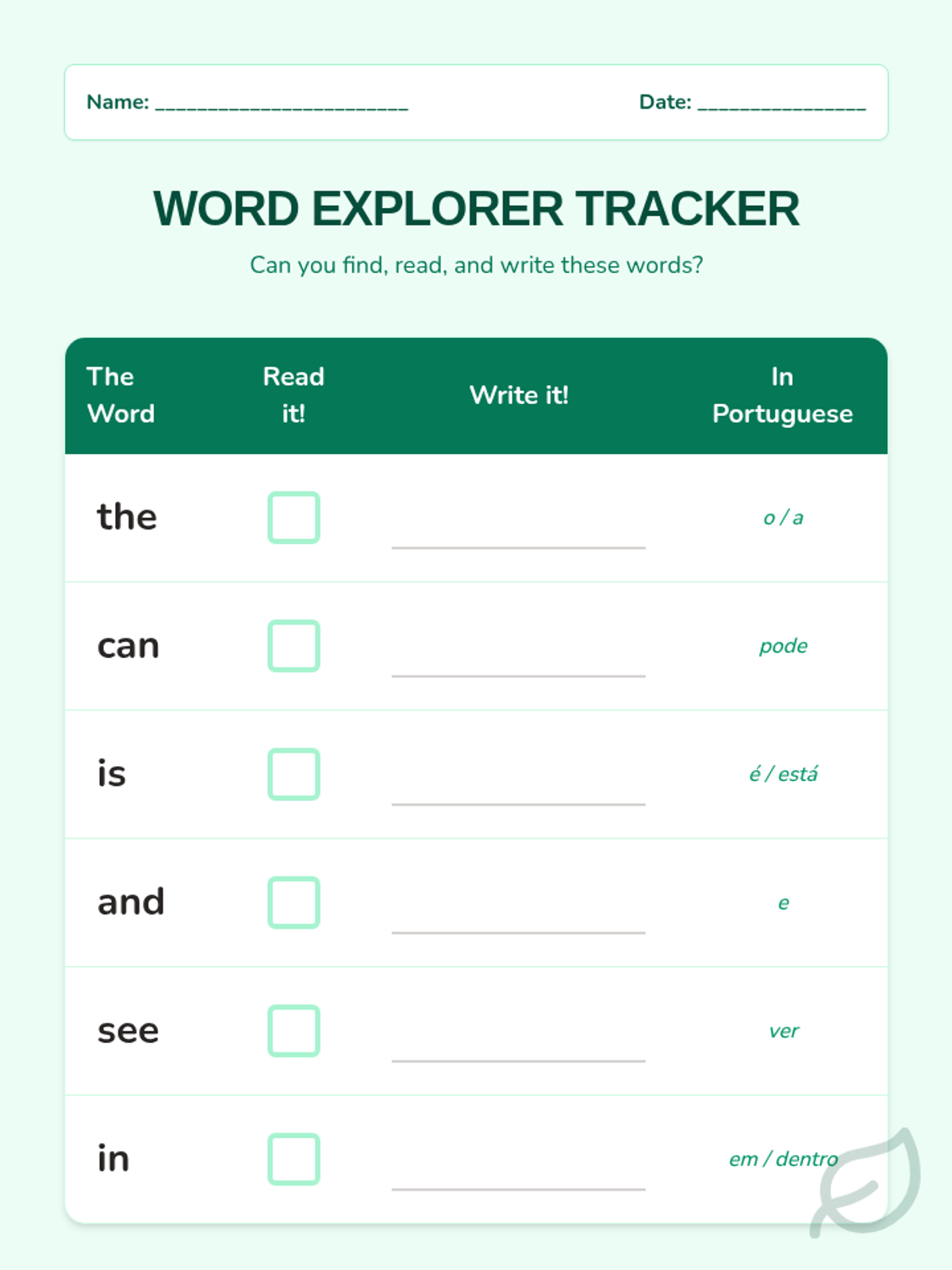
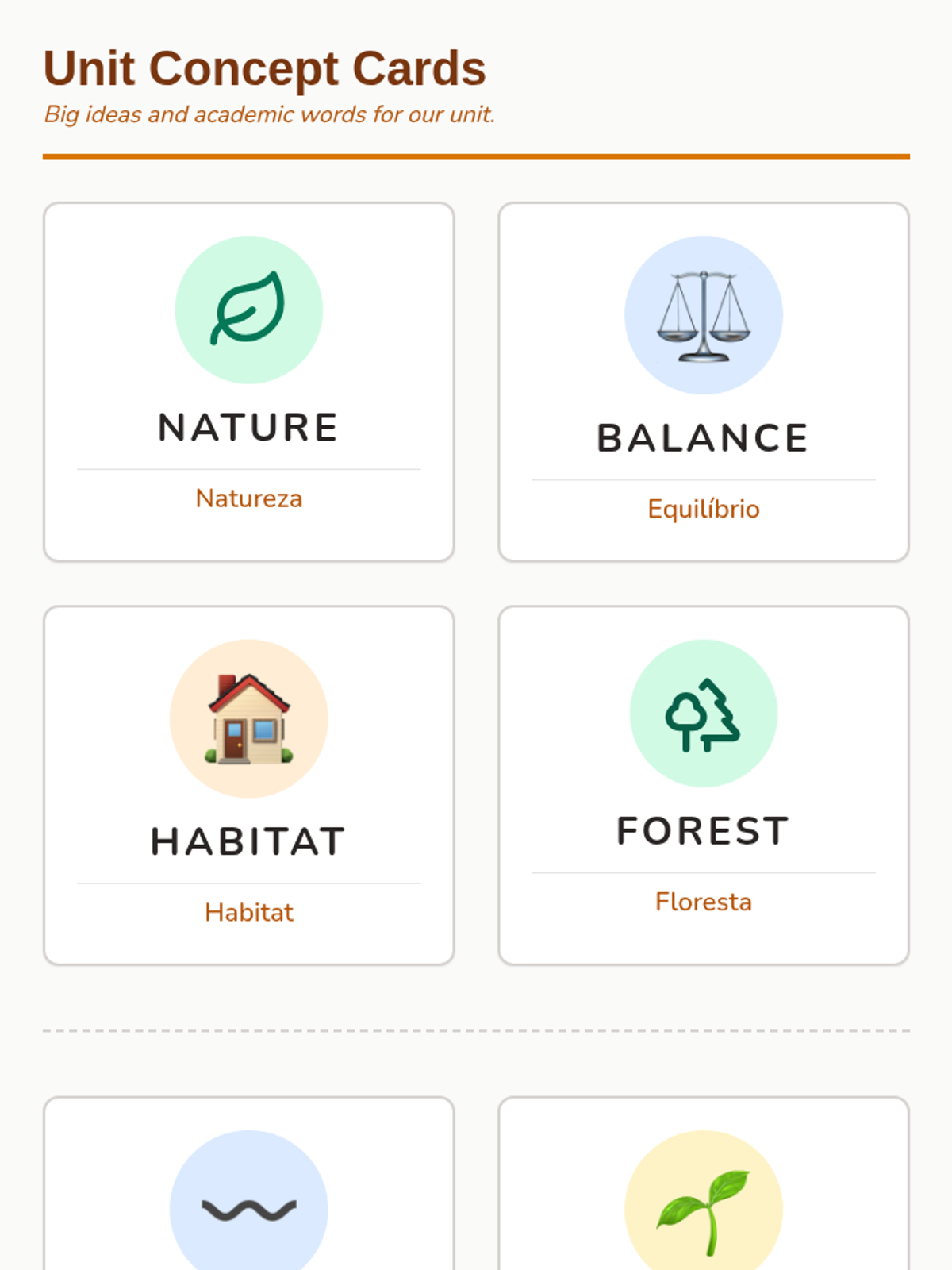
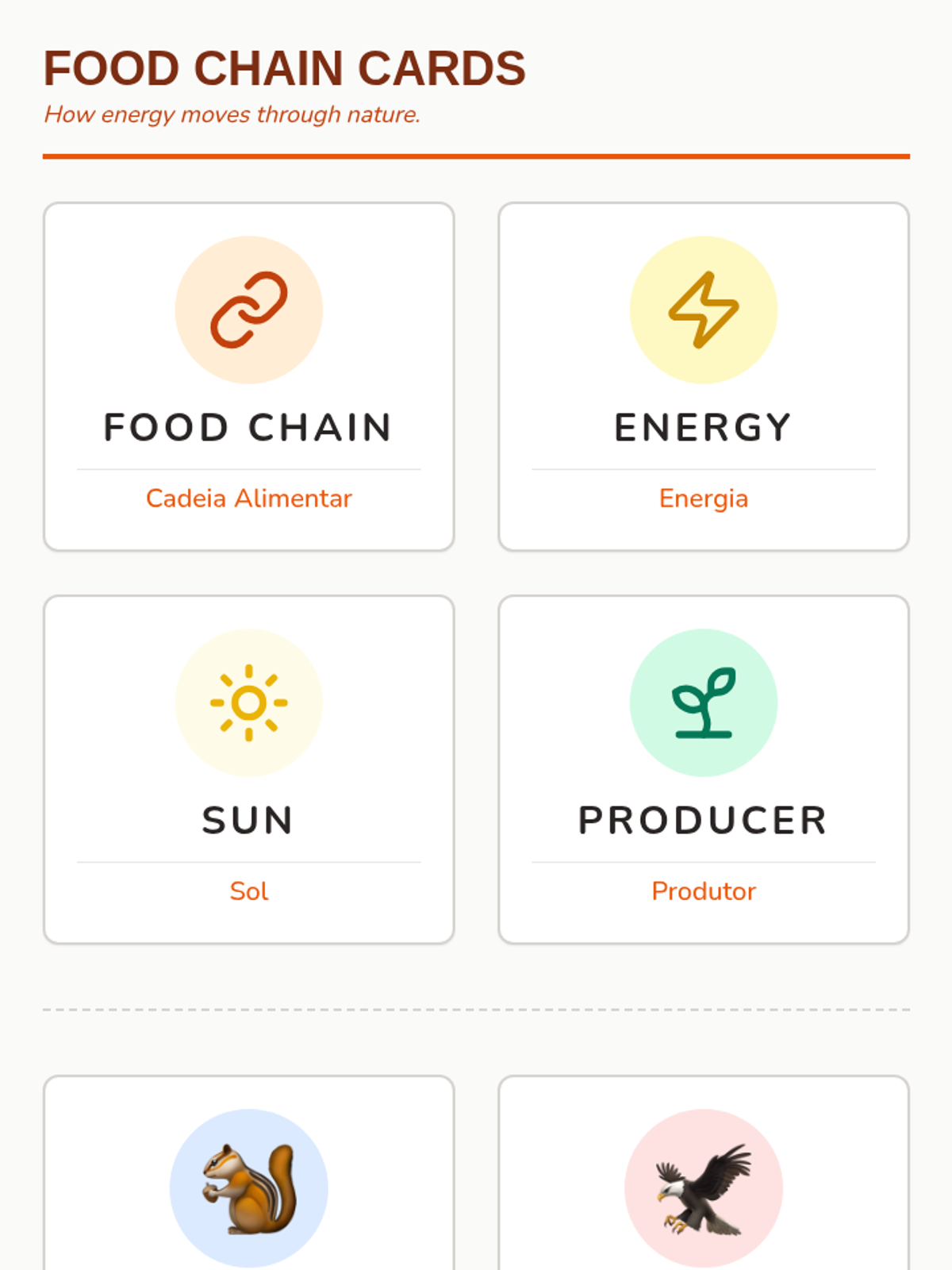
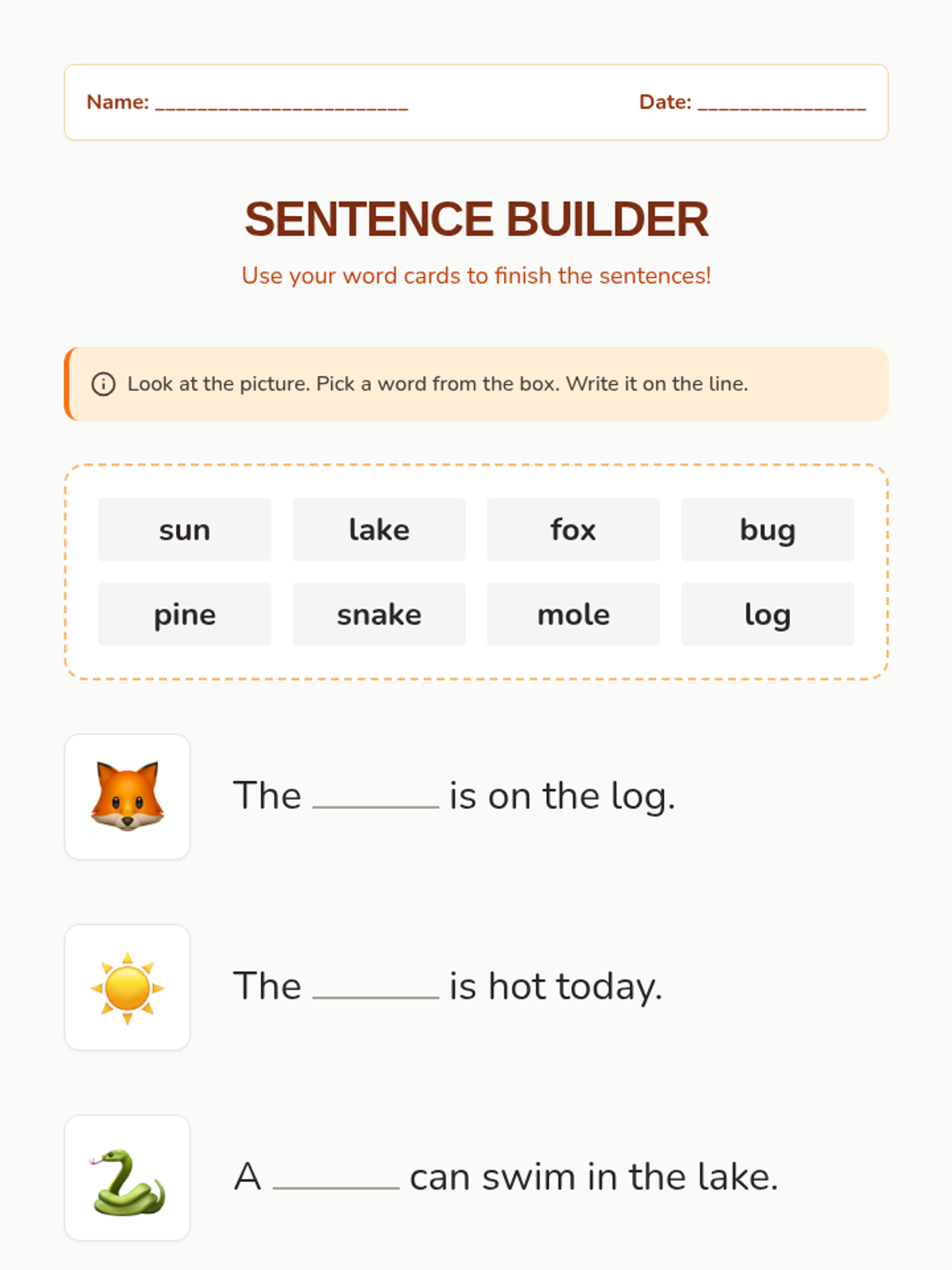
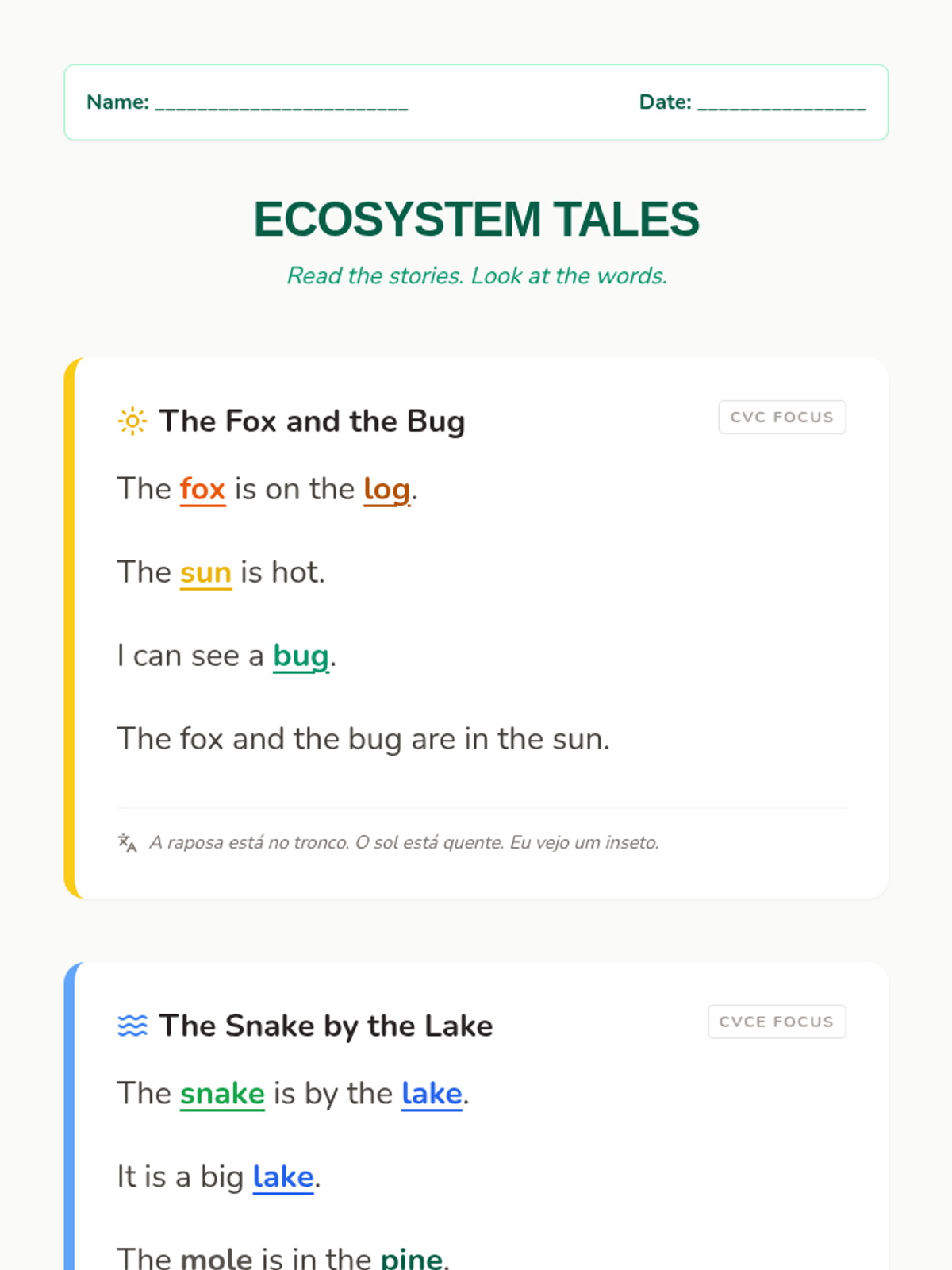
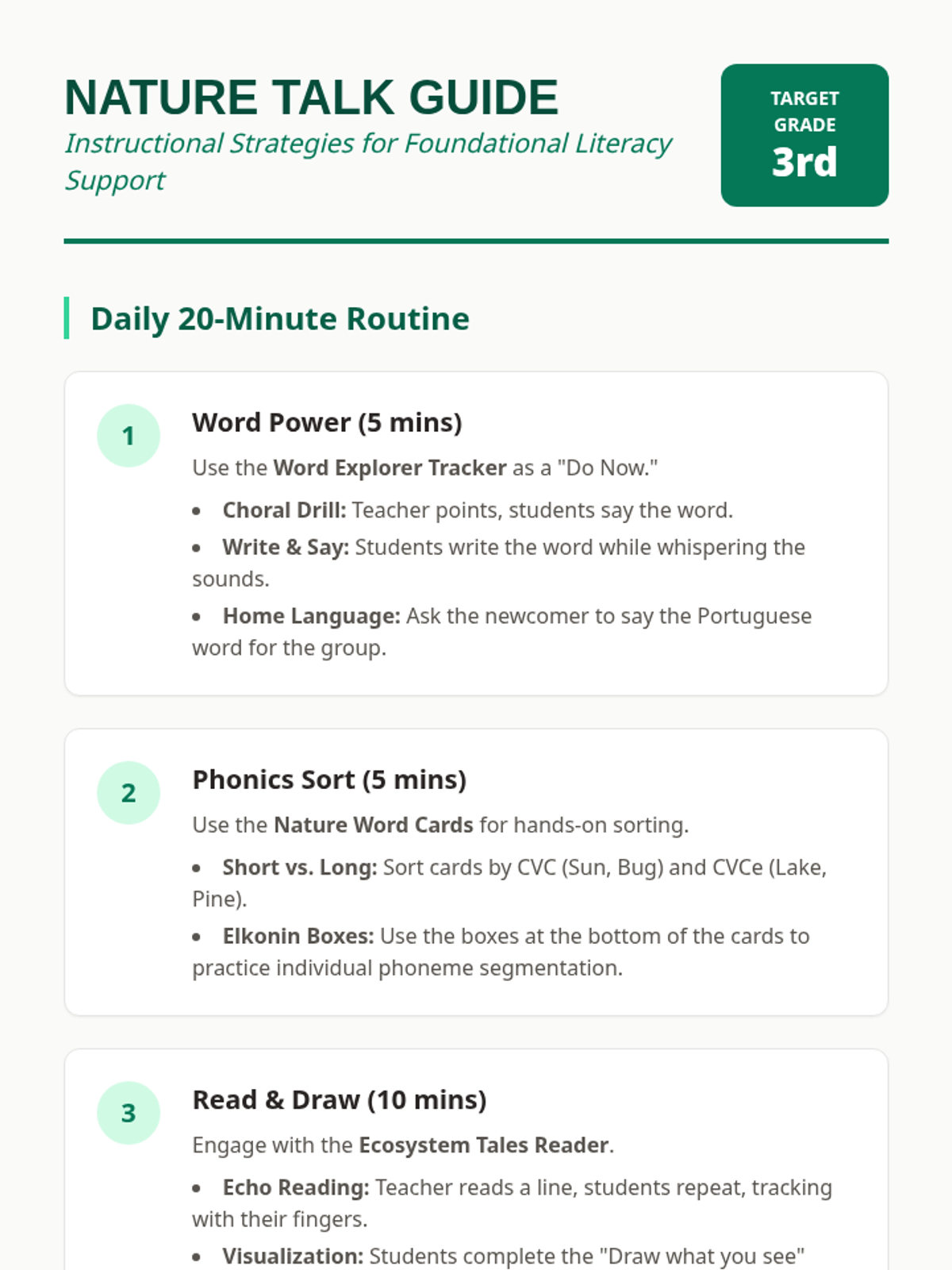
Foundational literacy support for the Nature's Balance unit, focusing on CVC/CVCe blending, unit vocabulary, and sentence frames.
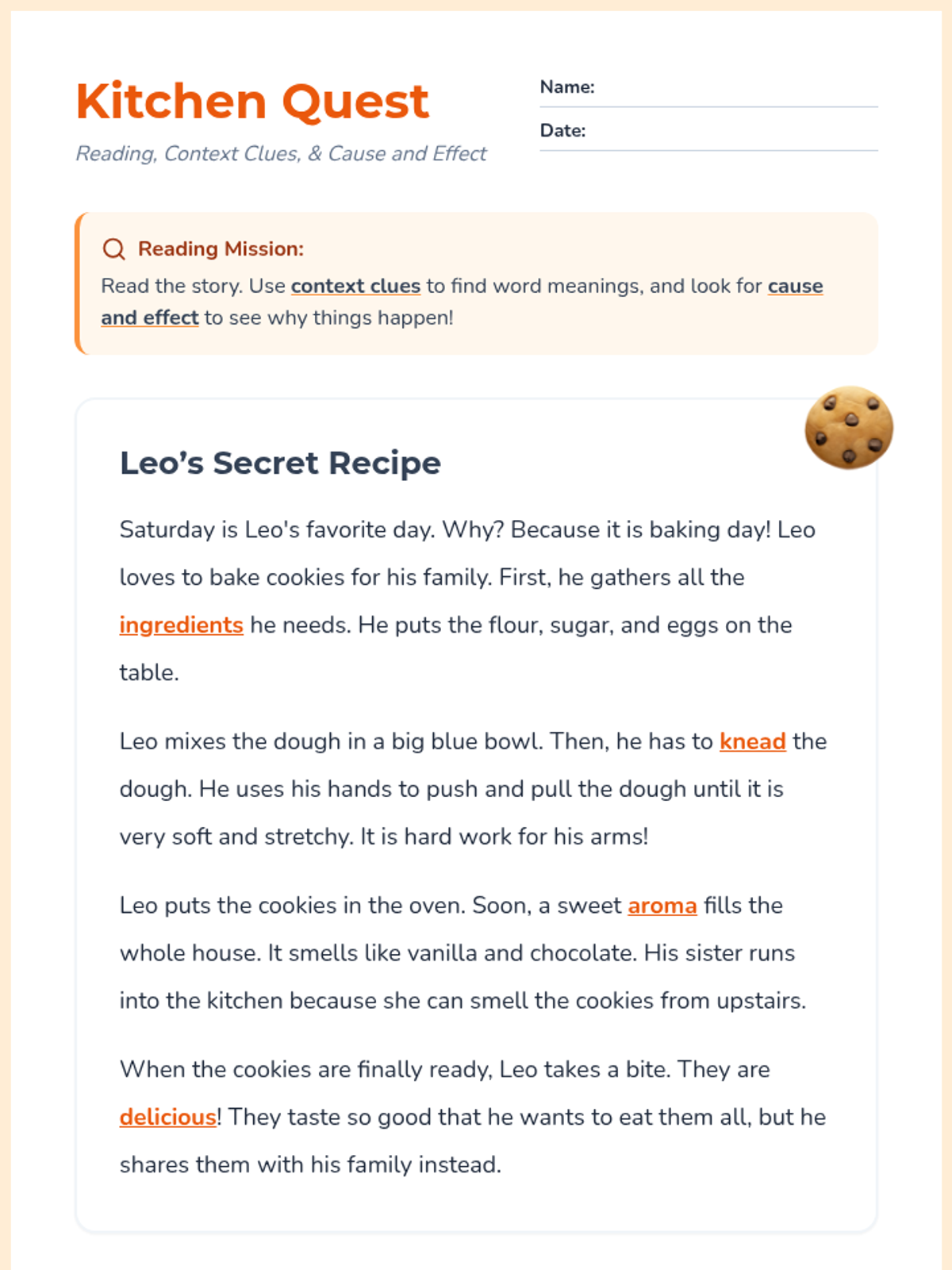
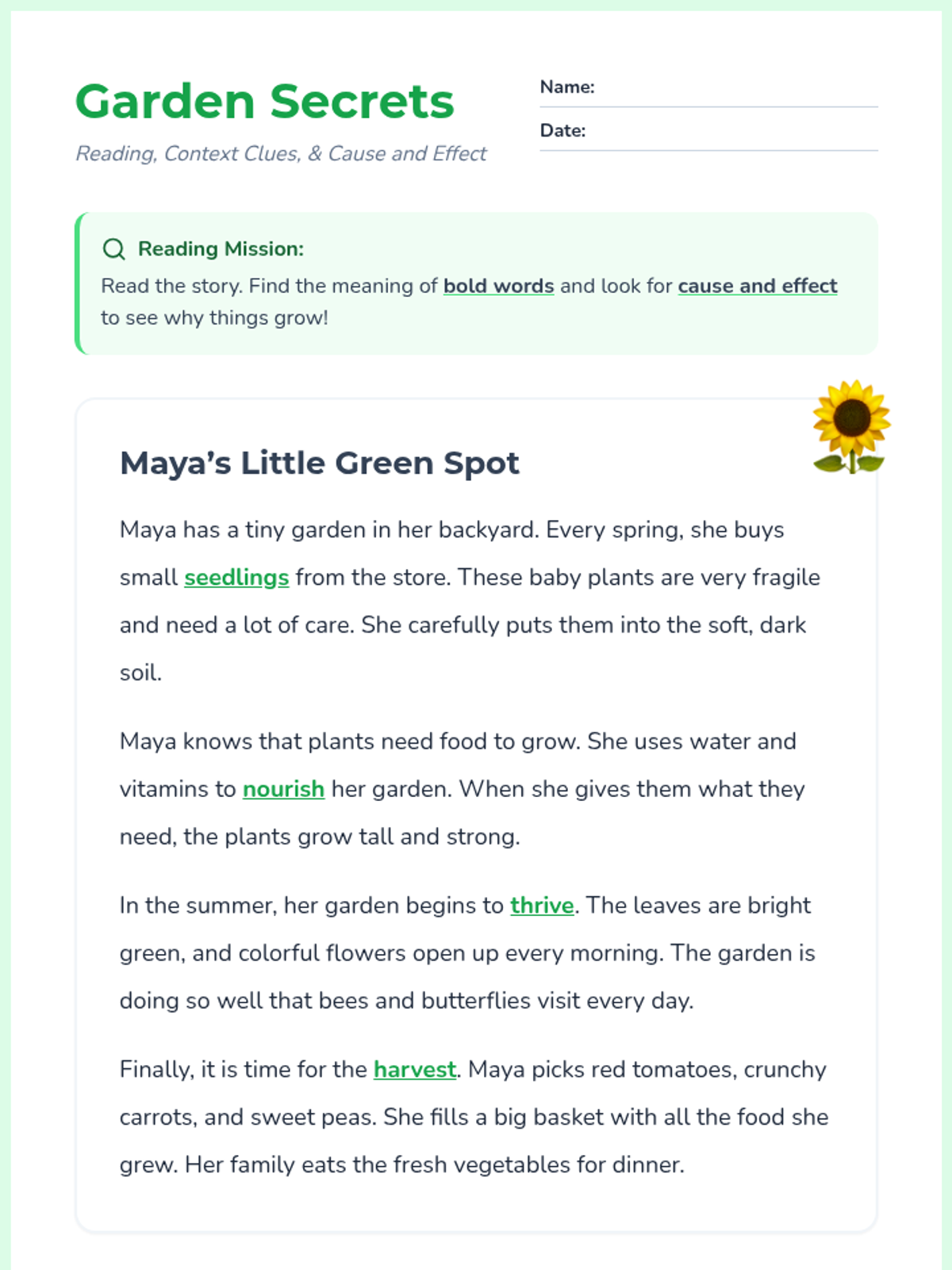
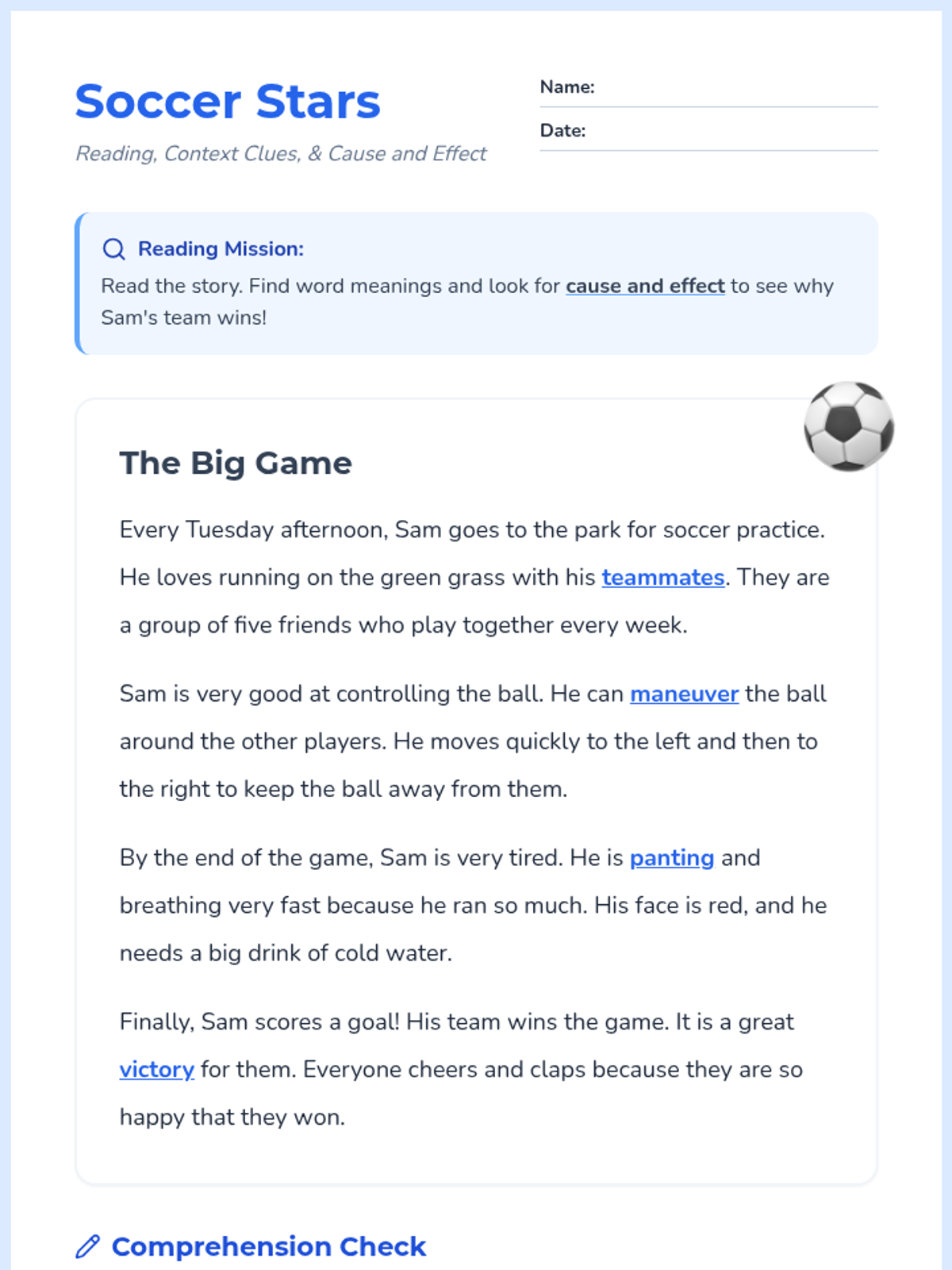
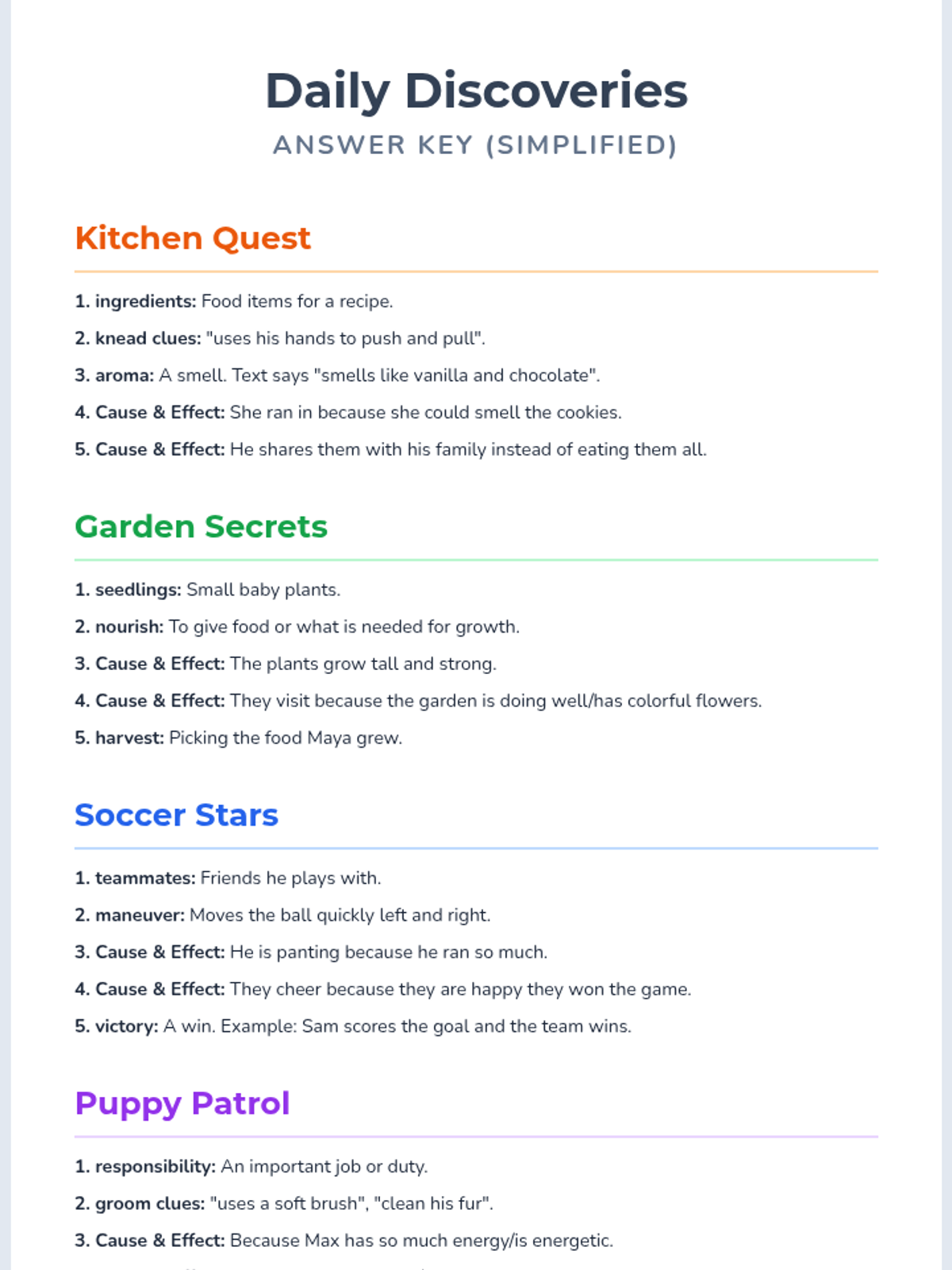
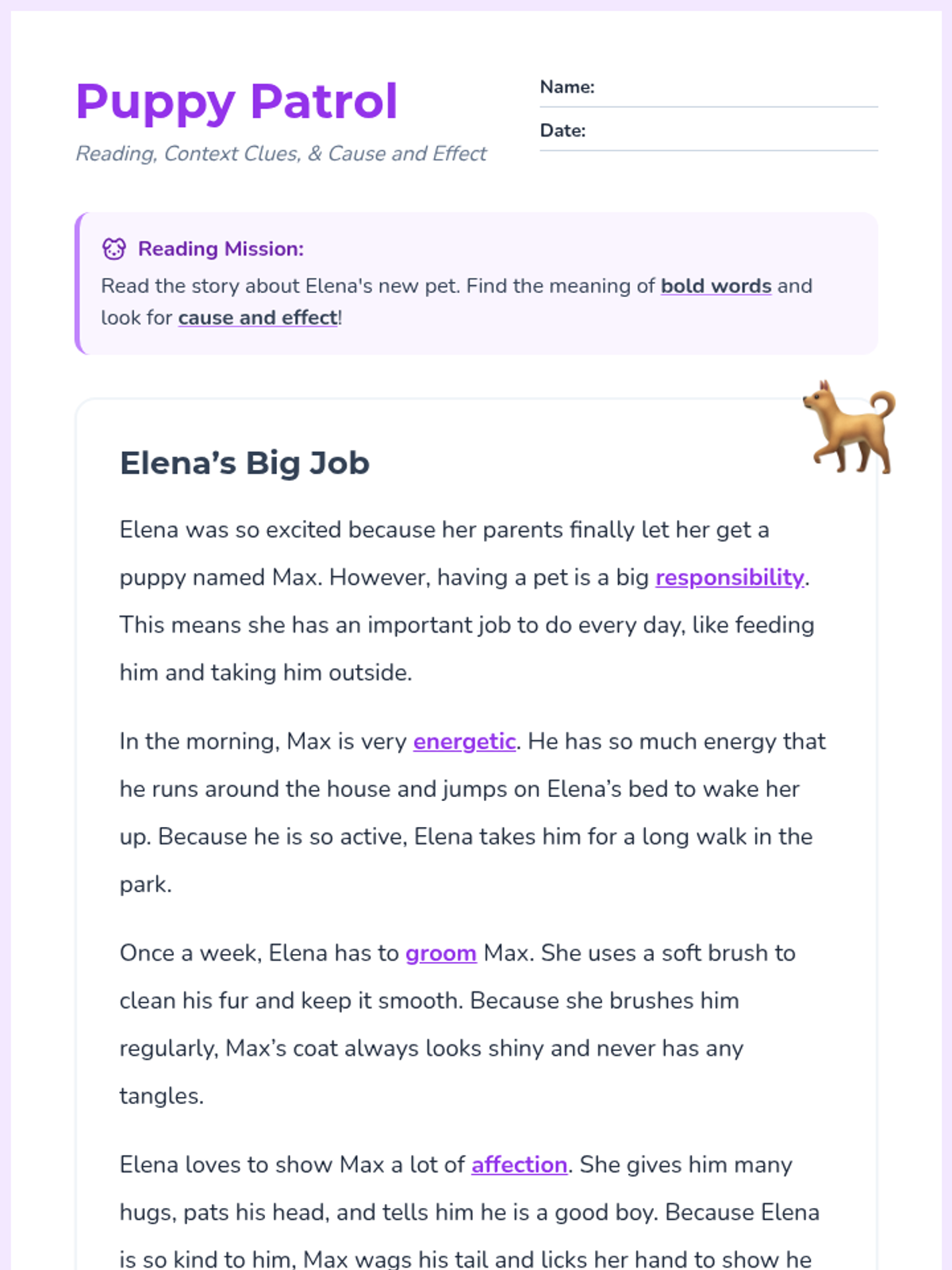
A series of reading comprehension worksheets for 4th grade English Learners focusing on daily life and hobbies. Students practice using context clues to identify the meaning of new vocabulary within engaging, relatable stories.
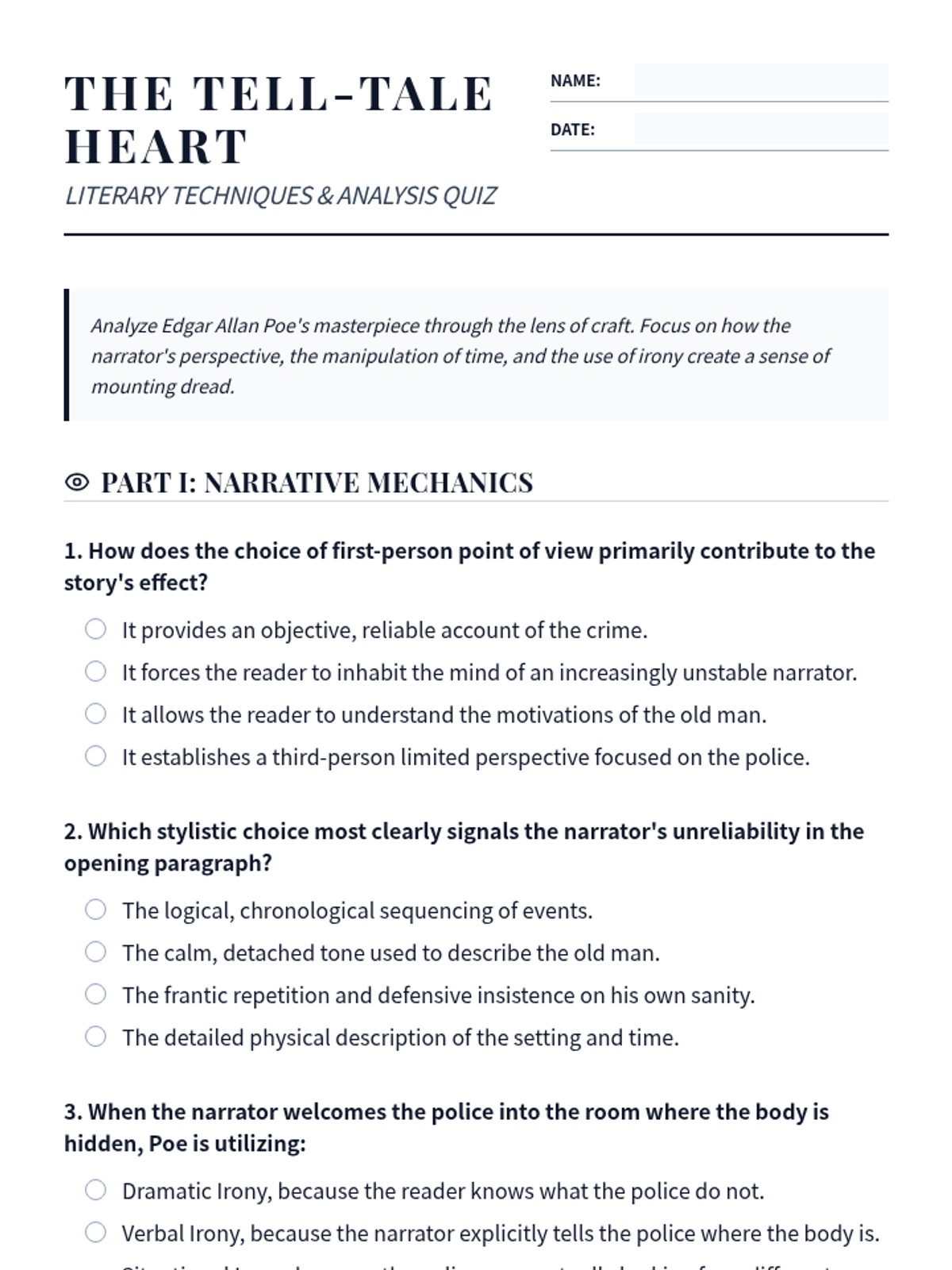
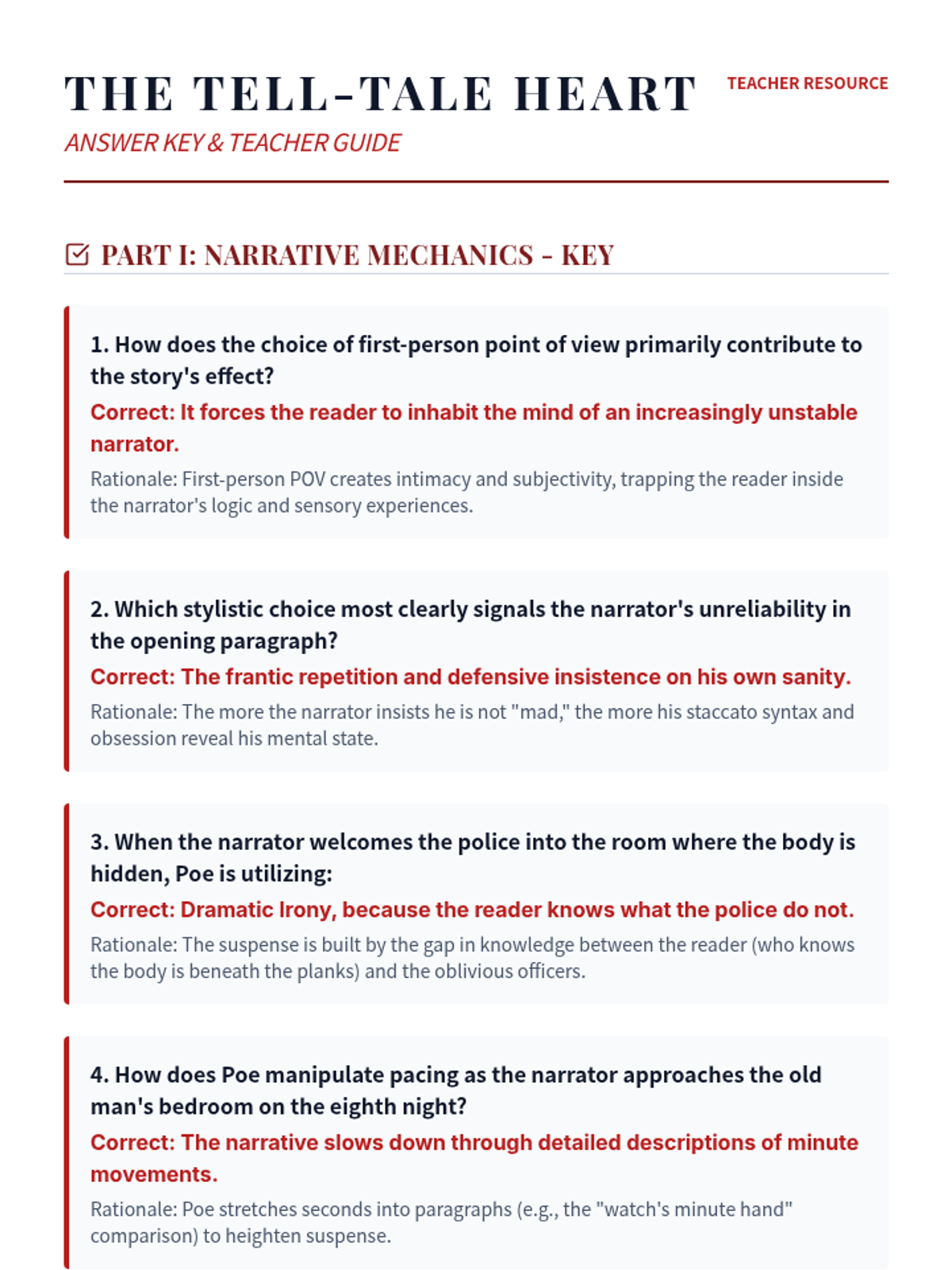
A deep dive into Edgar Allan Poe's 'The Tell-Tale Heart', focusing on the mechanics of suspense, the psychology of the unreliable narrator, and the sharp edge of gothic irony.
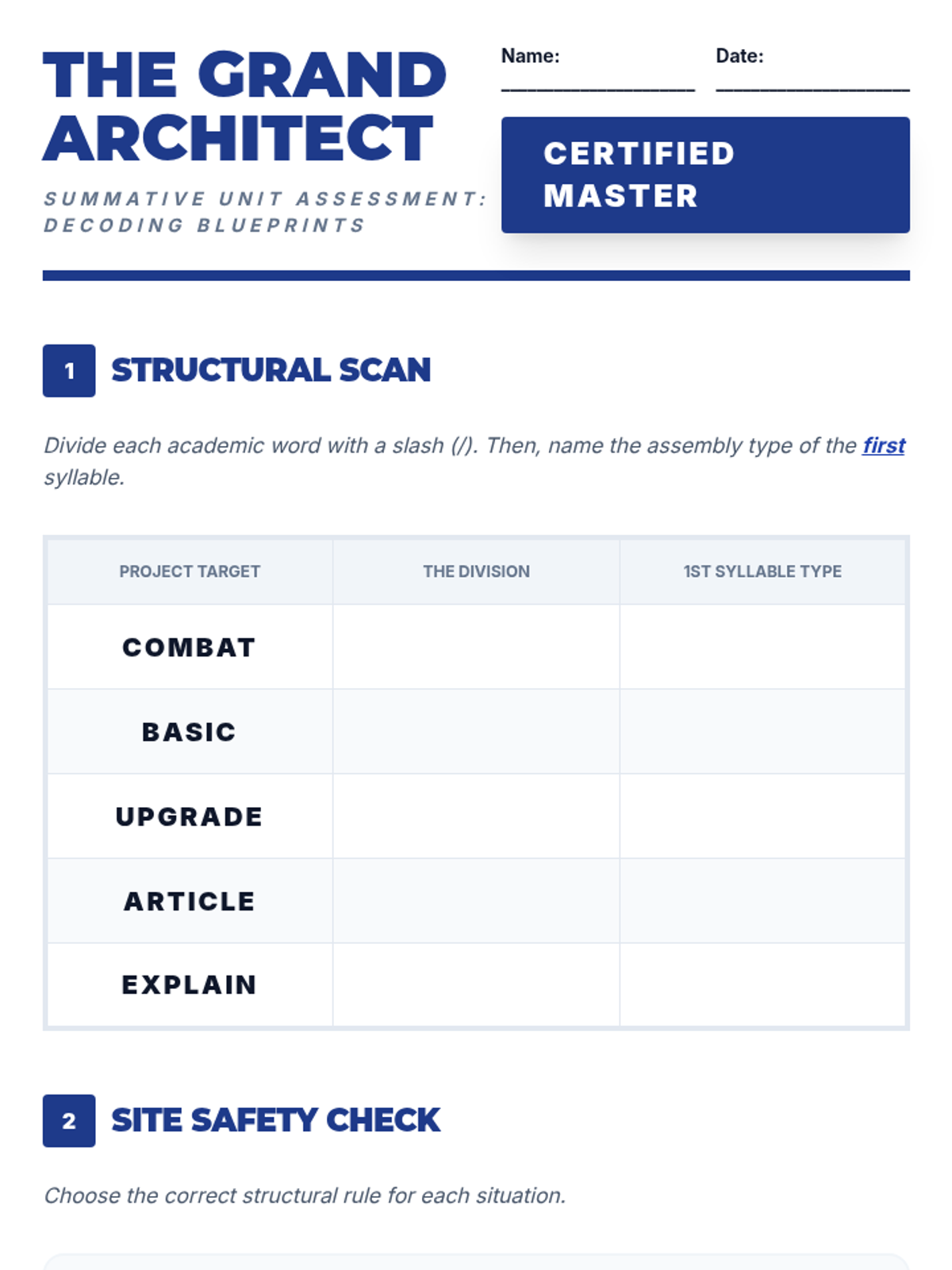
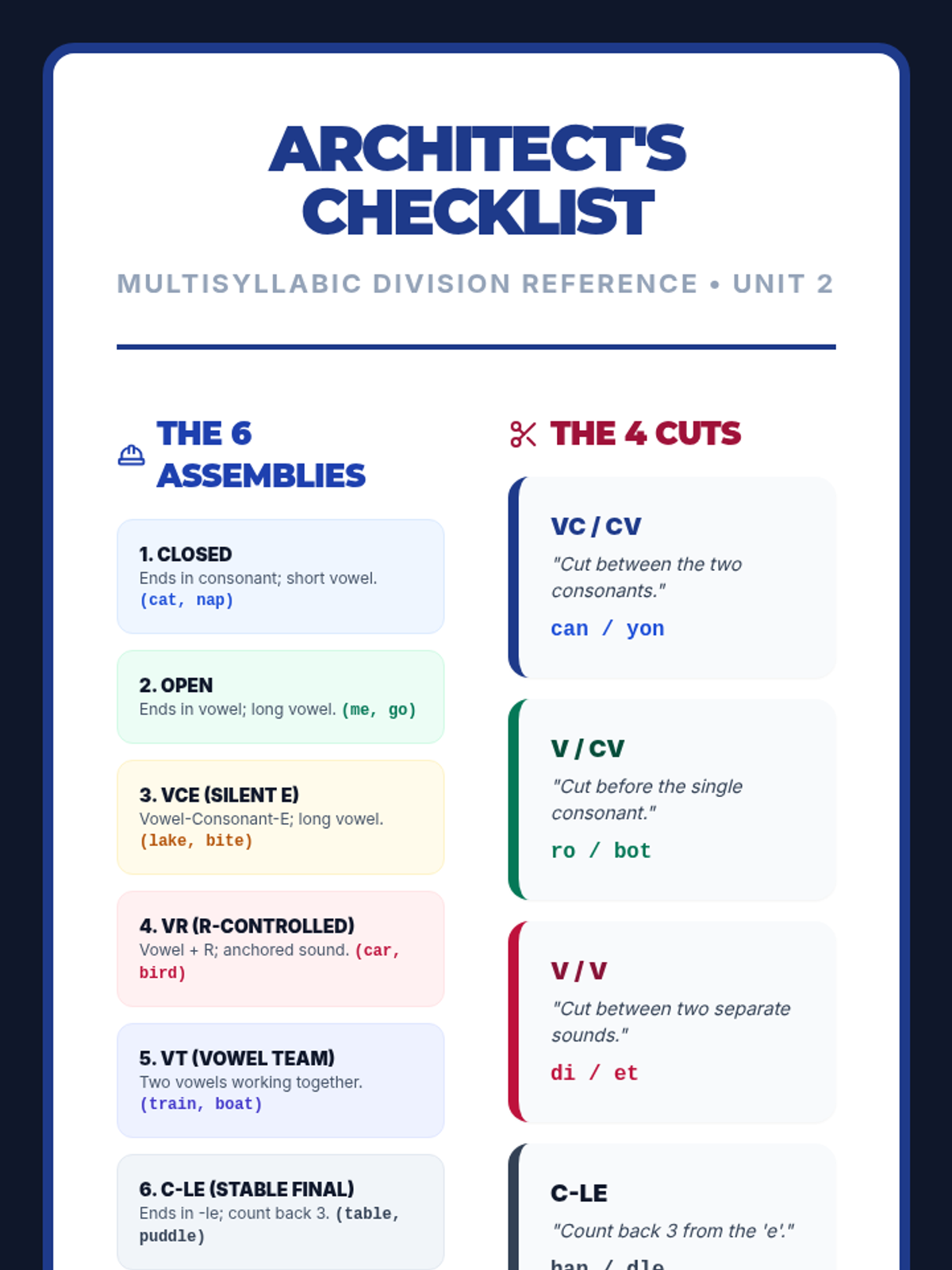
The final summative assessment for the Decoding Blueprints unit, covering all 6 syllable types and 4 division patterns.
Final review and team building activity before the summative project.
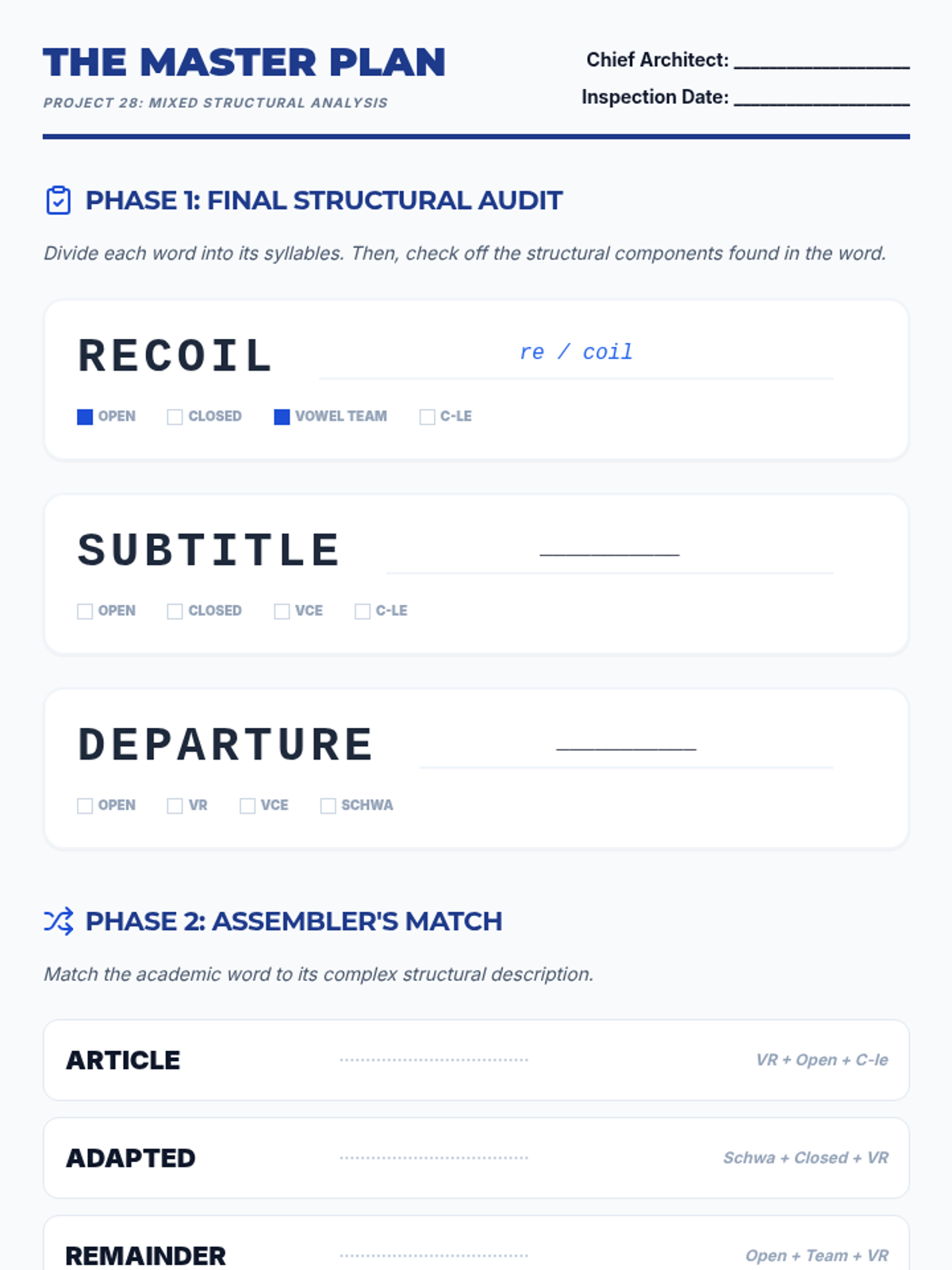
Combines all syllable types and division patterns into complex mixed-practice word challenges.
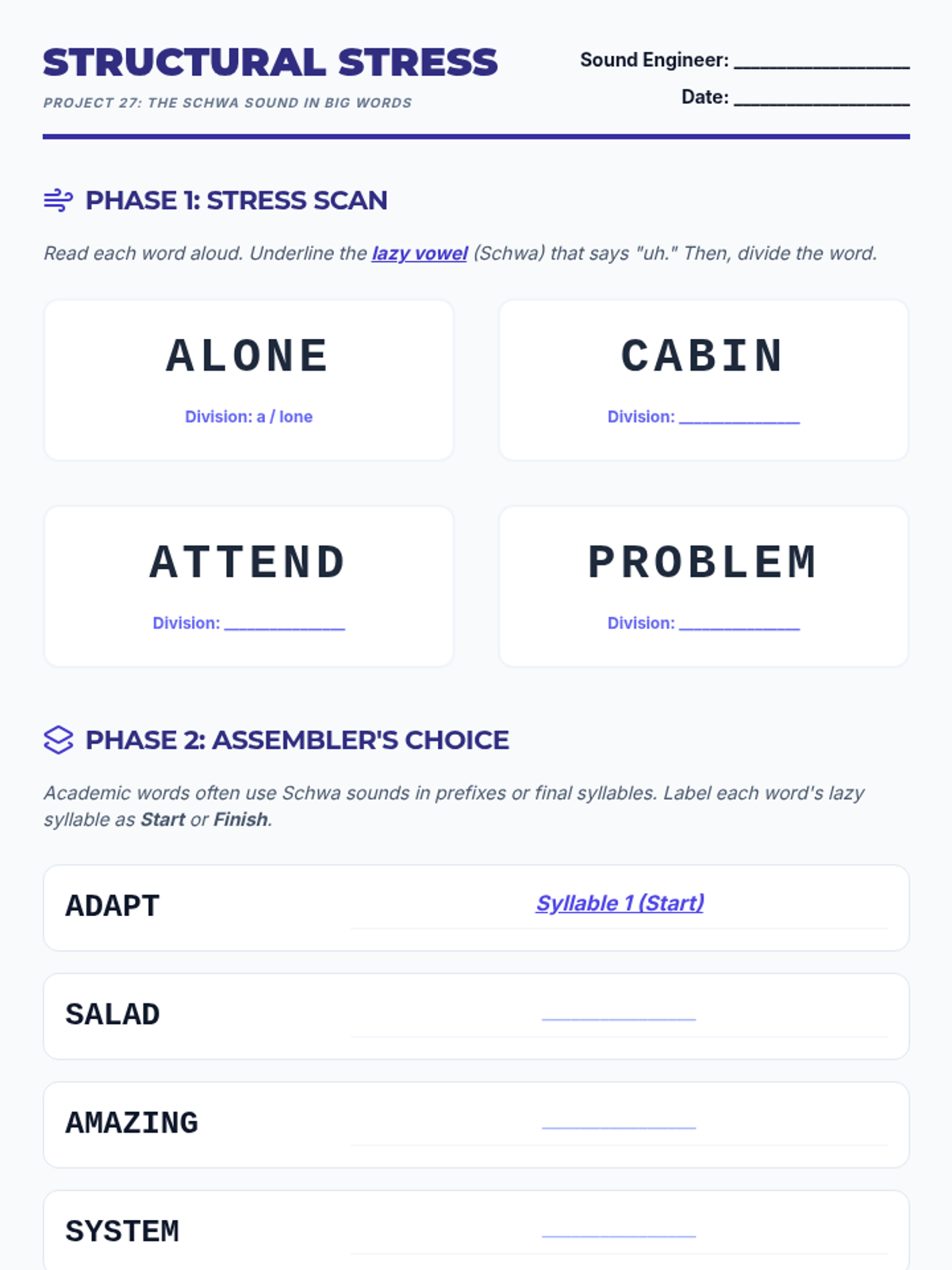
Introduces the 'Schwa' sound in unstressed syllables and how to identify it during structural inspections.
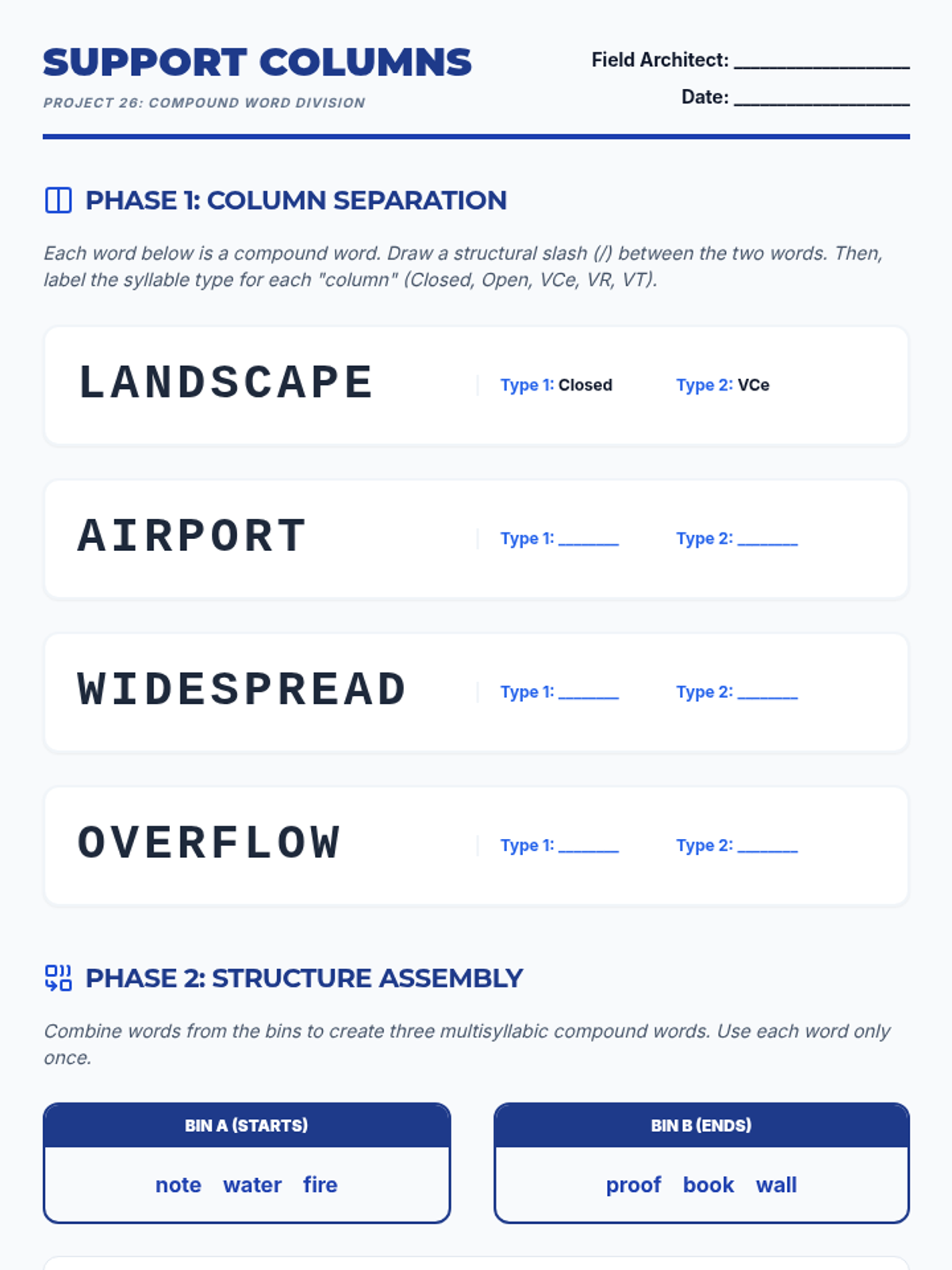
Focuses on compound words and how to divide them as the simplest multisyllabic structure.
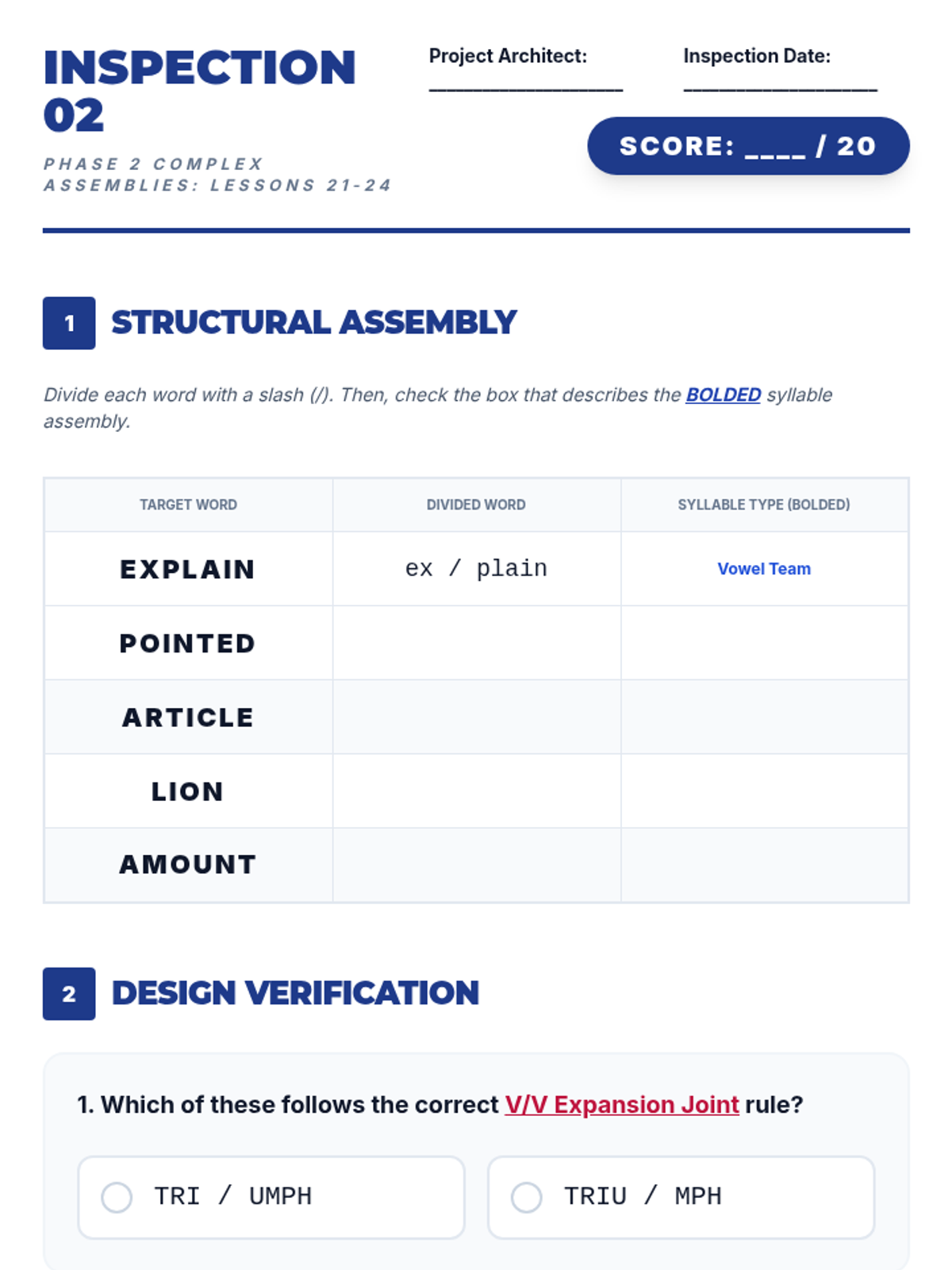
A review of lessons 21-24 with a formal progress monitoring assessment on vowel teams, diphthongs, C-le, and V/V patterns.
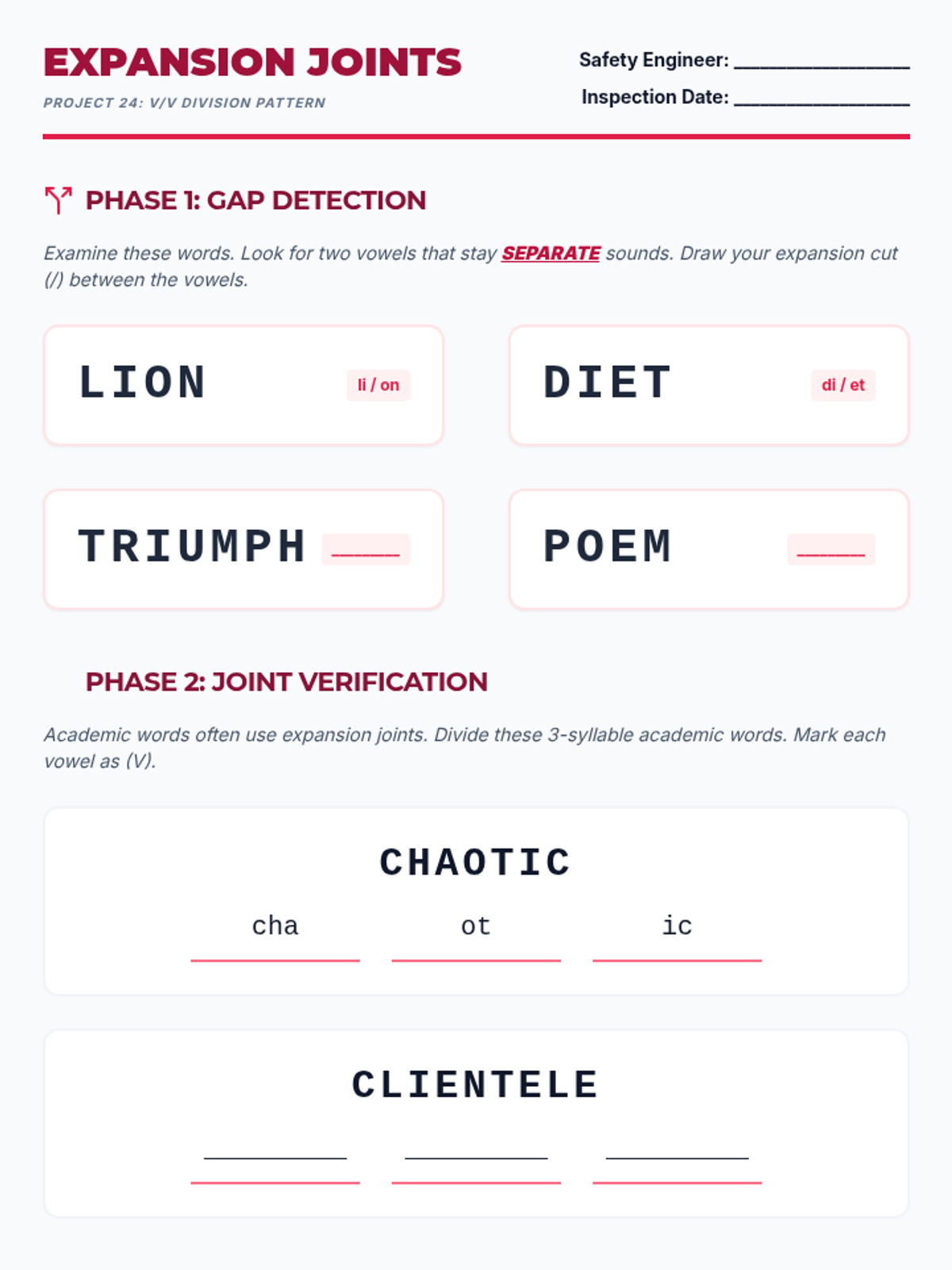
Covers the rare V/V division pattern where two vowels that do not form a team must be split.
Introduces the Final Stable Syllable (Consonant -le) and the rule for dividing before the consonant.
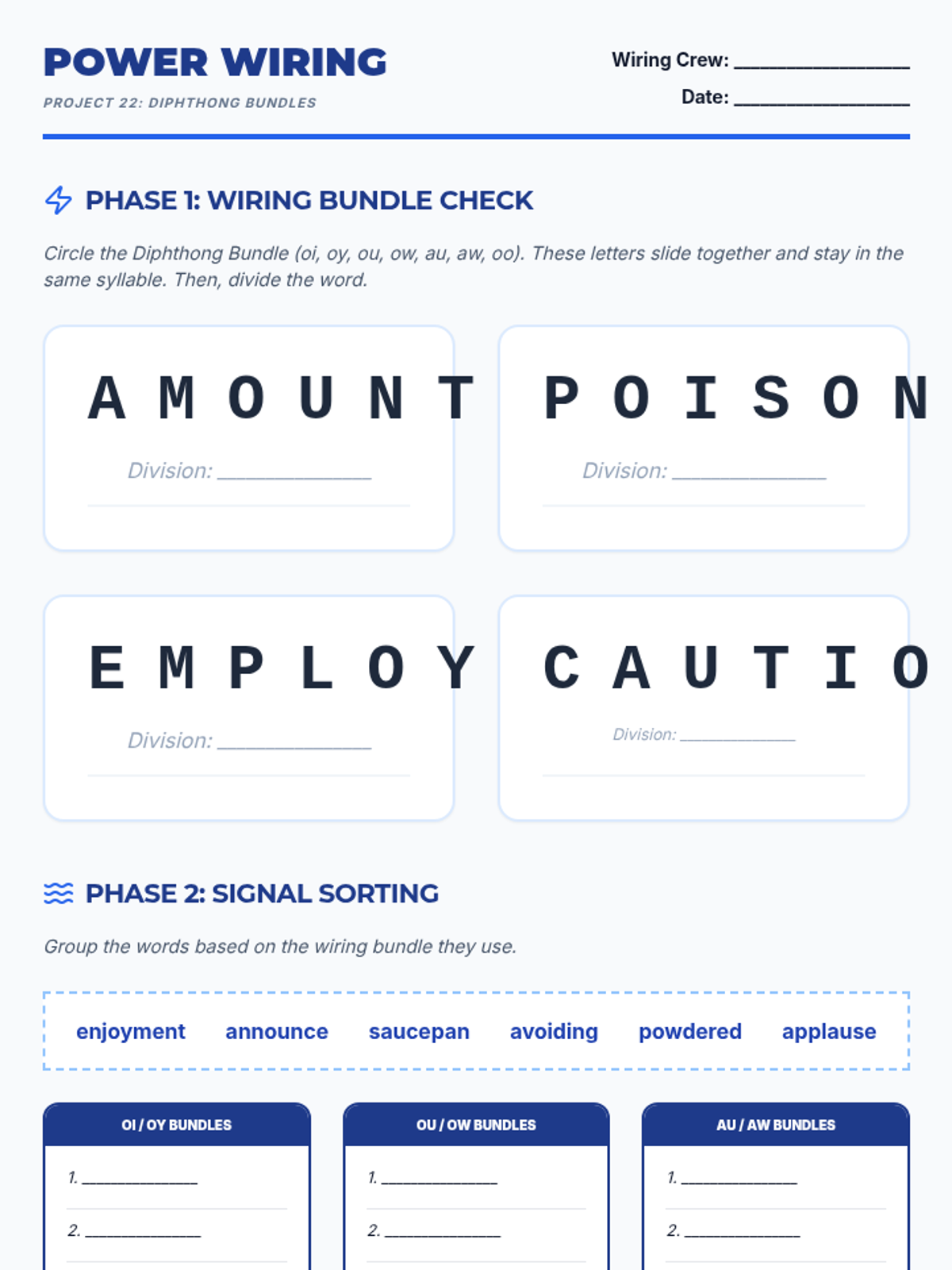
Focuses on diphthongs (OI, OY, OU, OW, AU, AW) in multisyllabic words and their unique sounds.
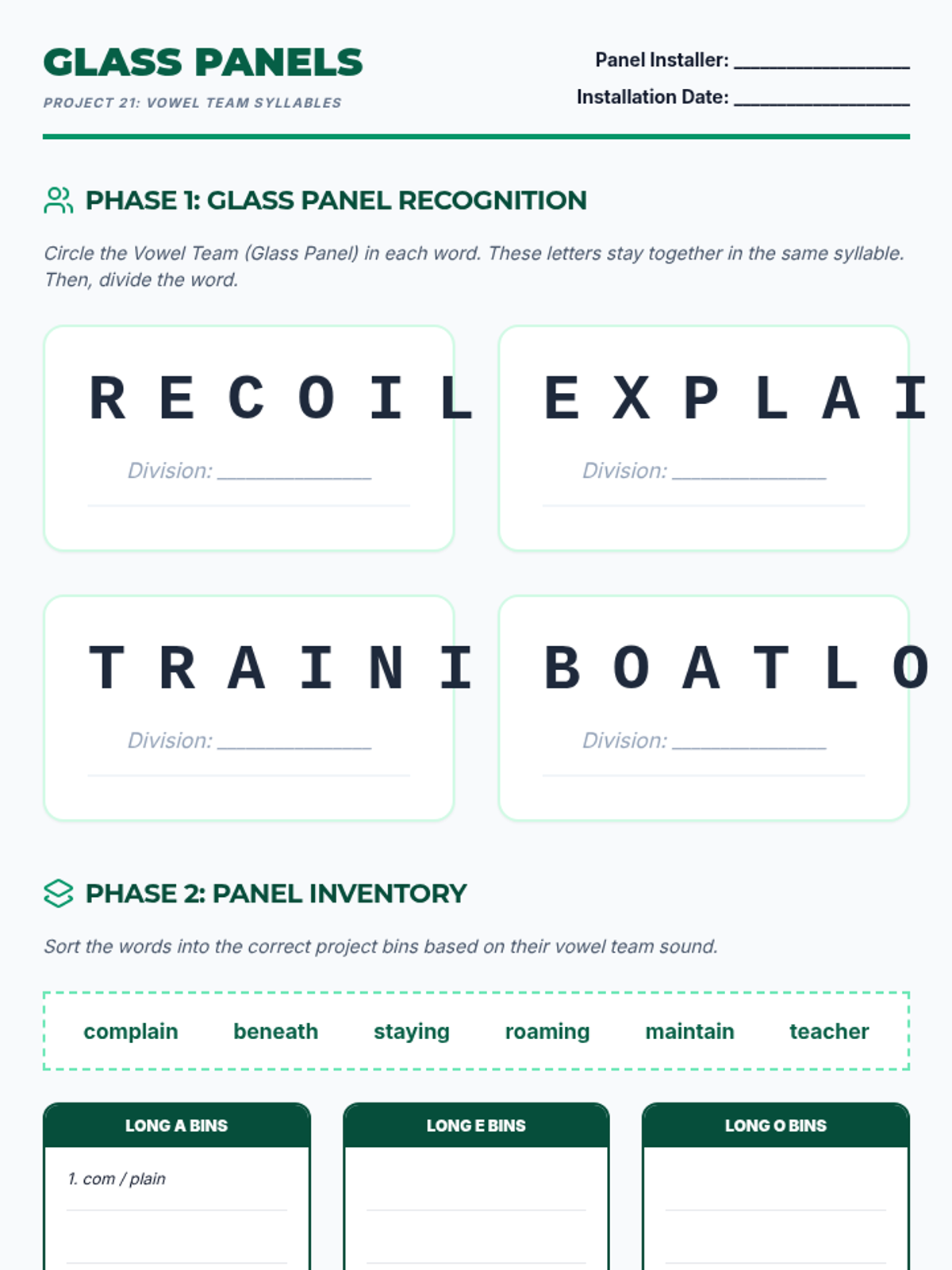
Explores vowel team syllables in multisyllabic words, focusing on how they function as single structural units.
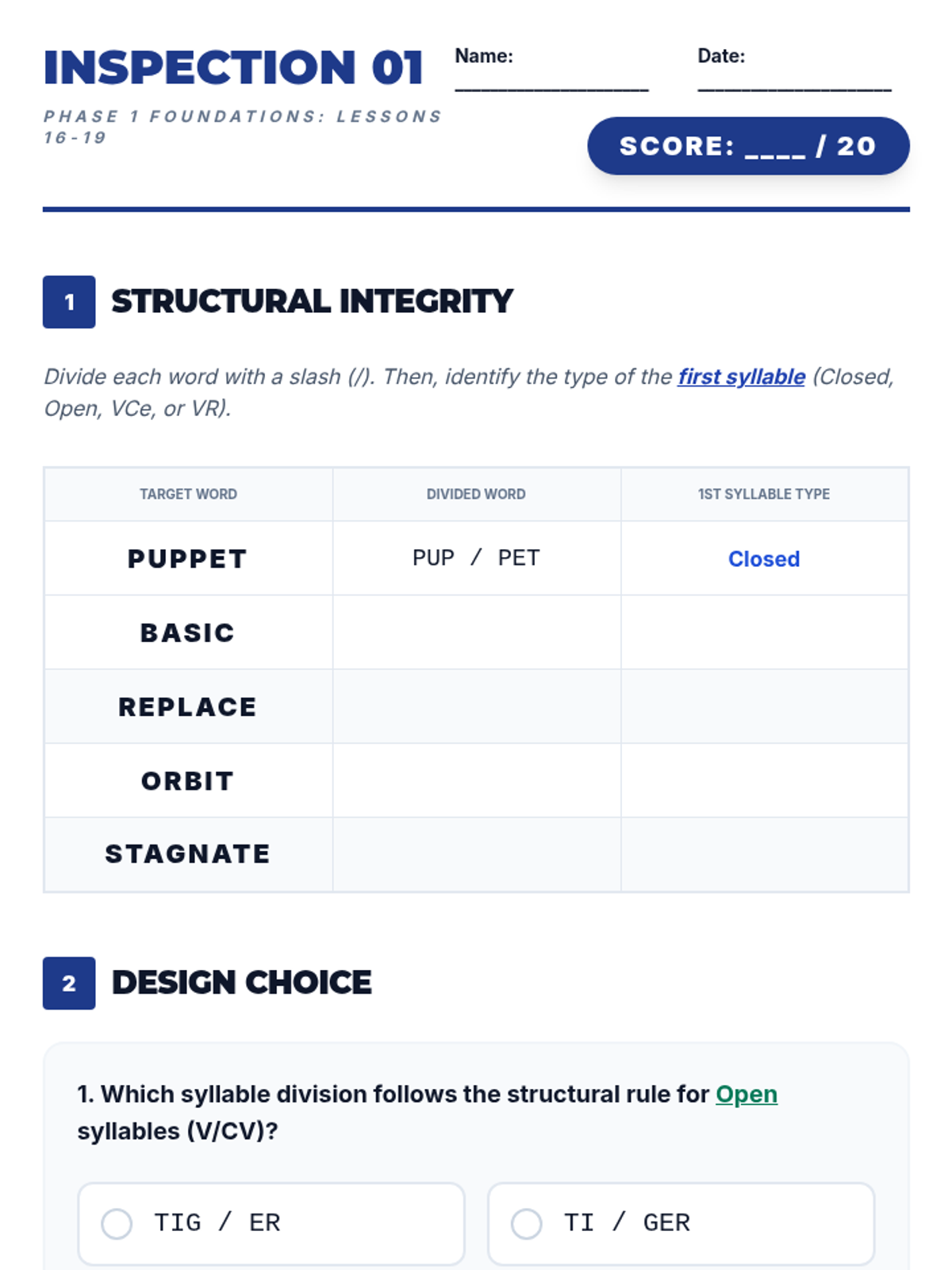
A review of lessons 1-4 with a formal progress monitoring assessment on closed, open, VCe, and R-controlled patterns.
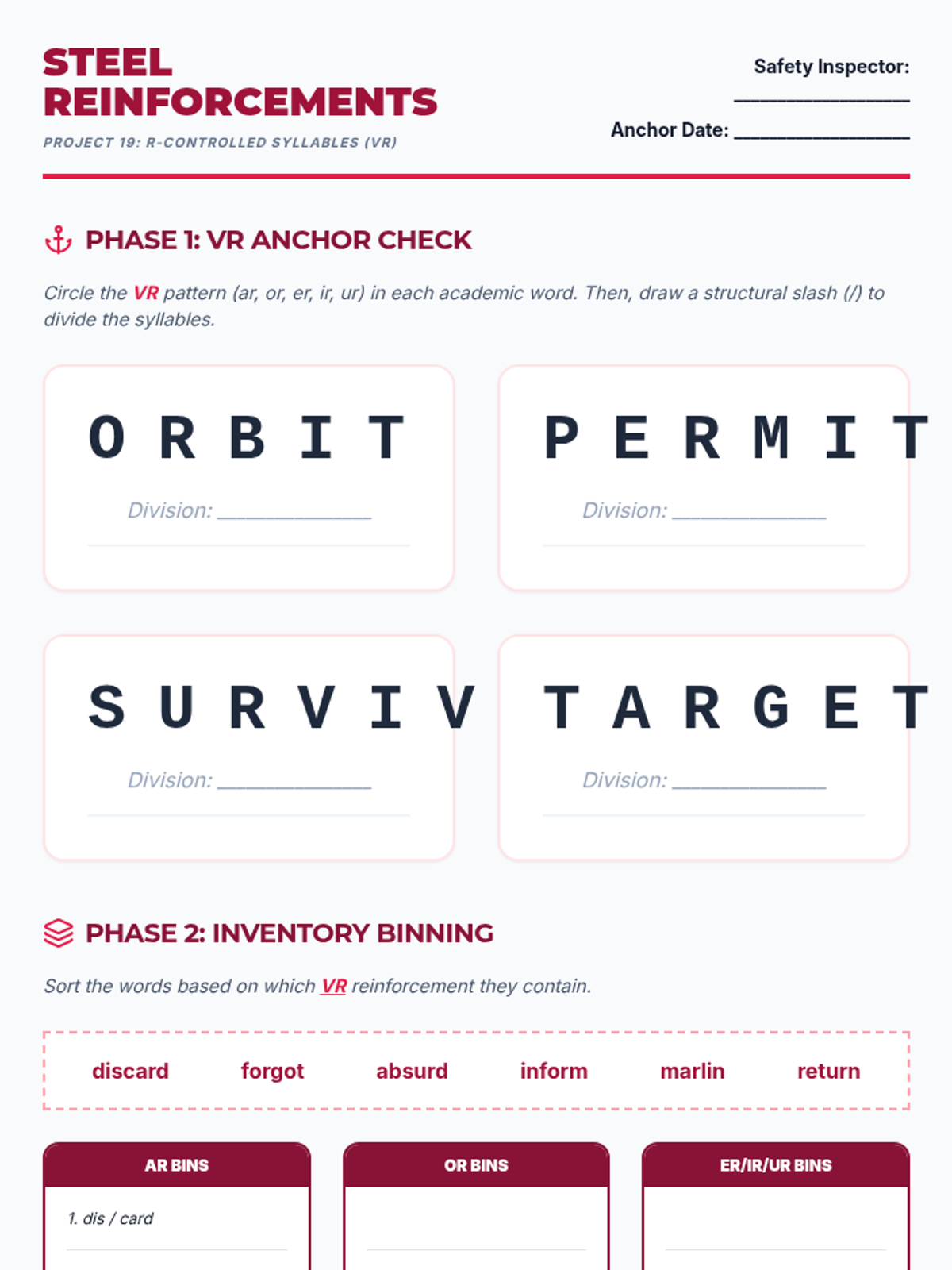
Focuses on R-controlled syllables (AR, ER, IR, OR, UR) and how to divide words containing them.
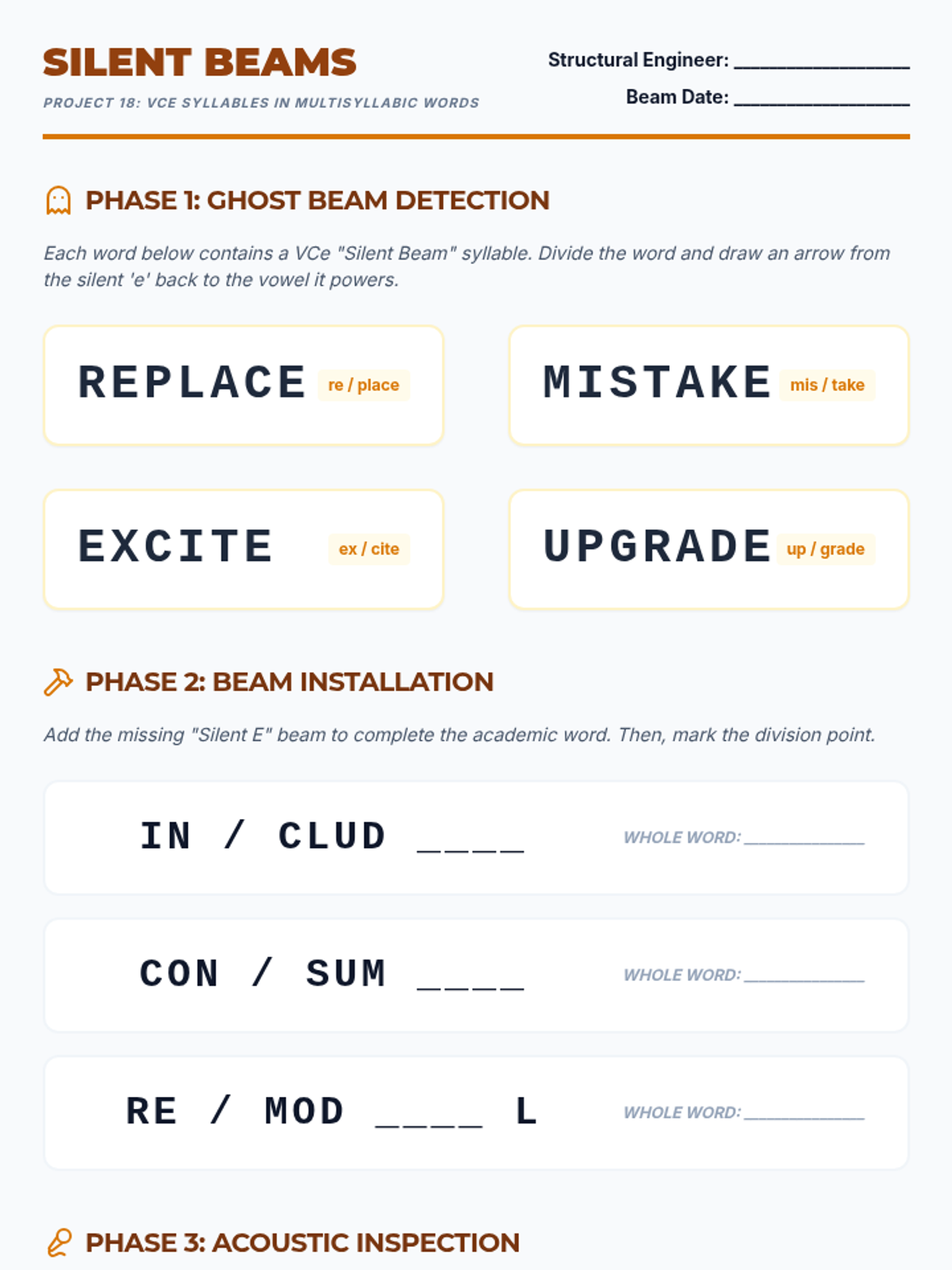
Introduces the VCe (Silent E) syllable type in multisyllabic words and how it affects vowel sound duration.
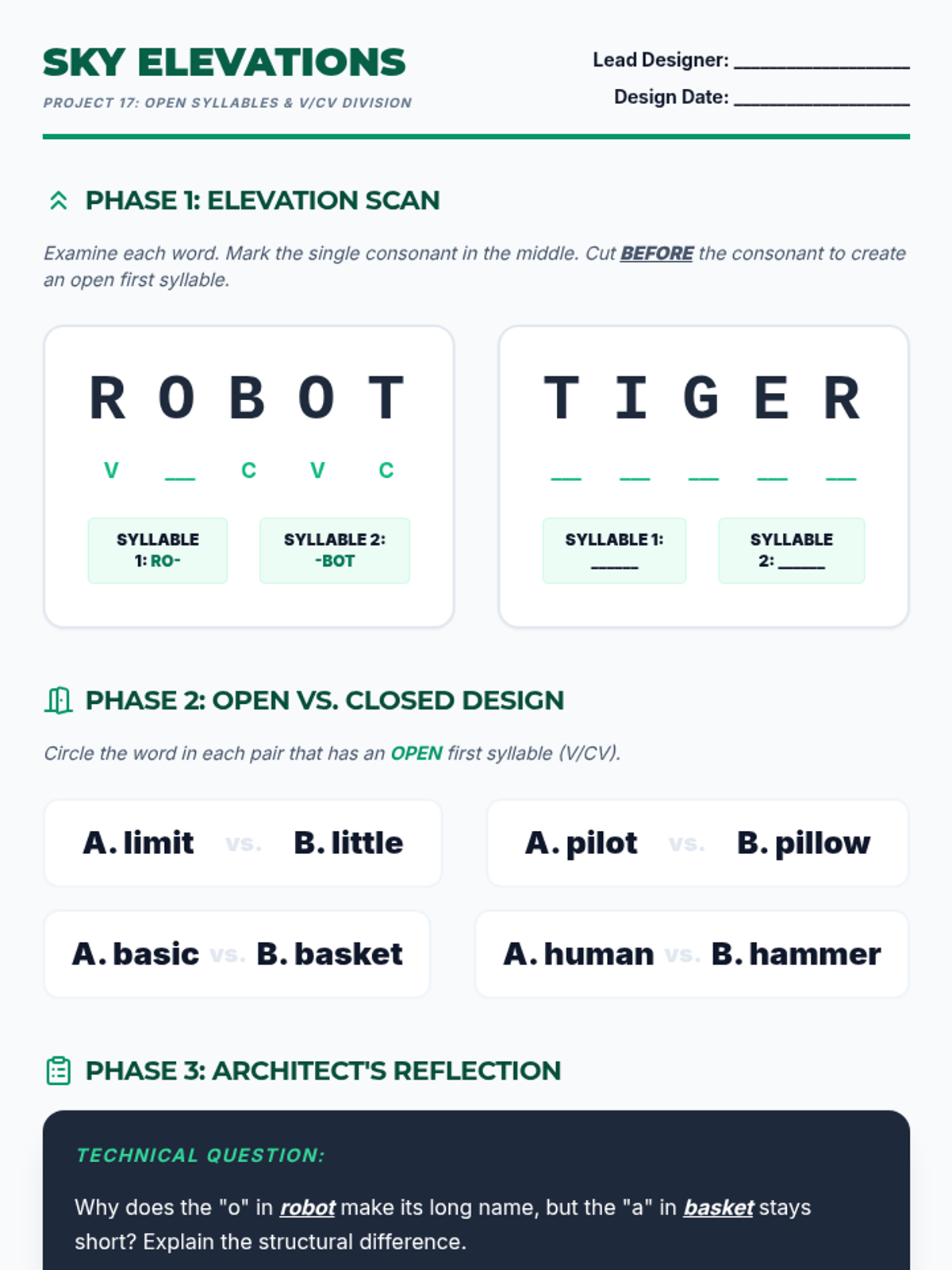
Explores open syllables and the V/CV division pattern in two-syllable academic words.
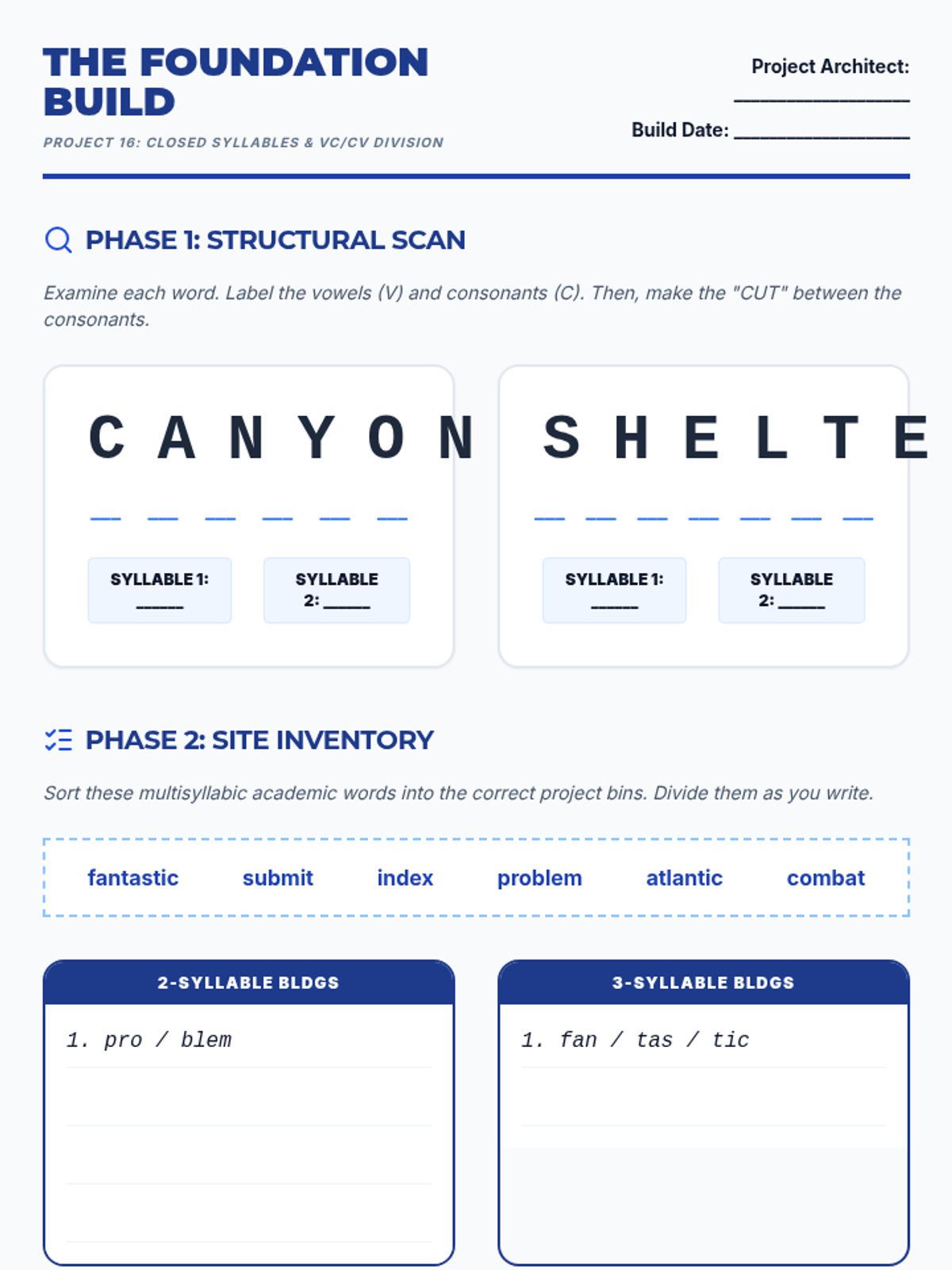
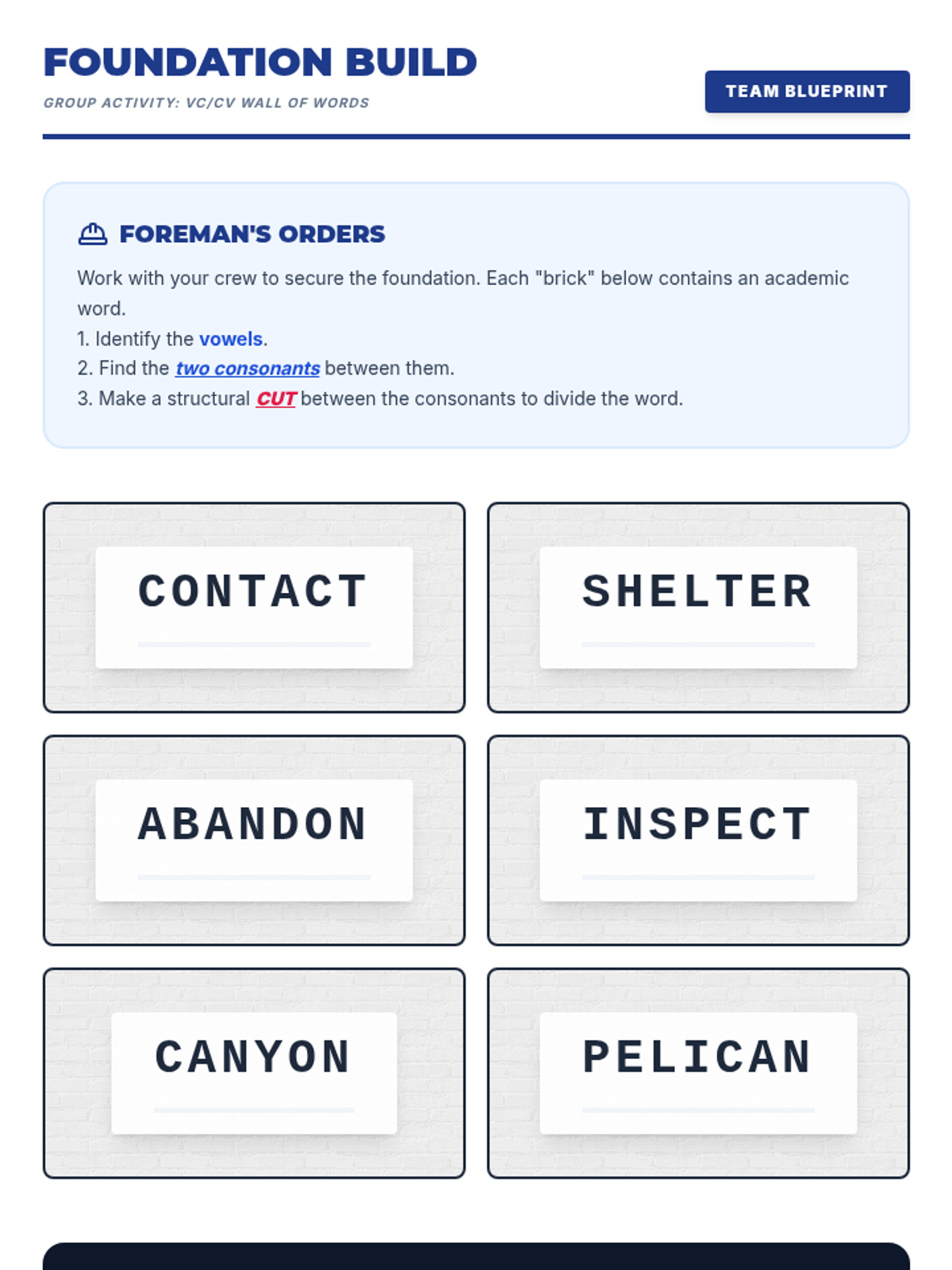
Focuses on closed syllables in multisyllabic words, using the VC/CV division pattern.
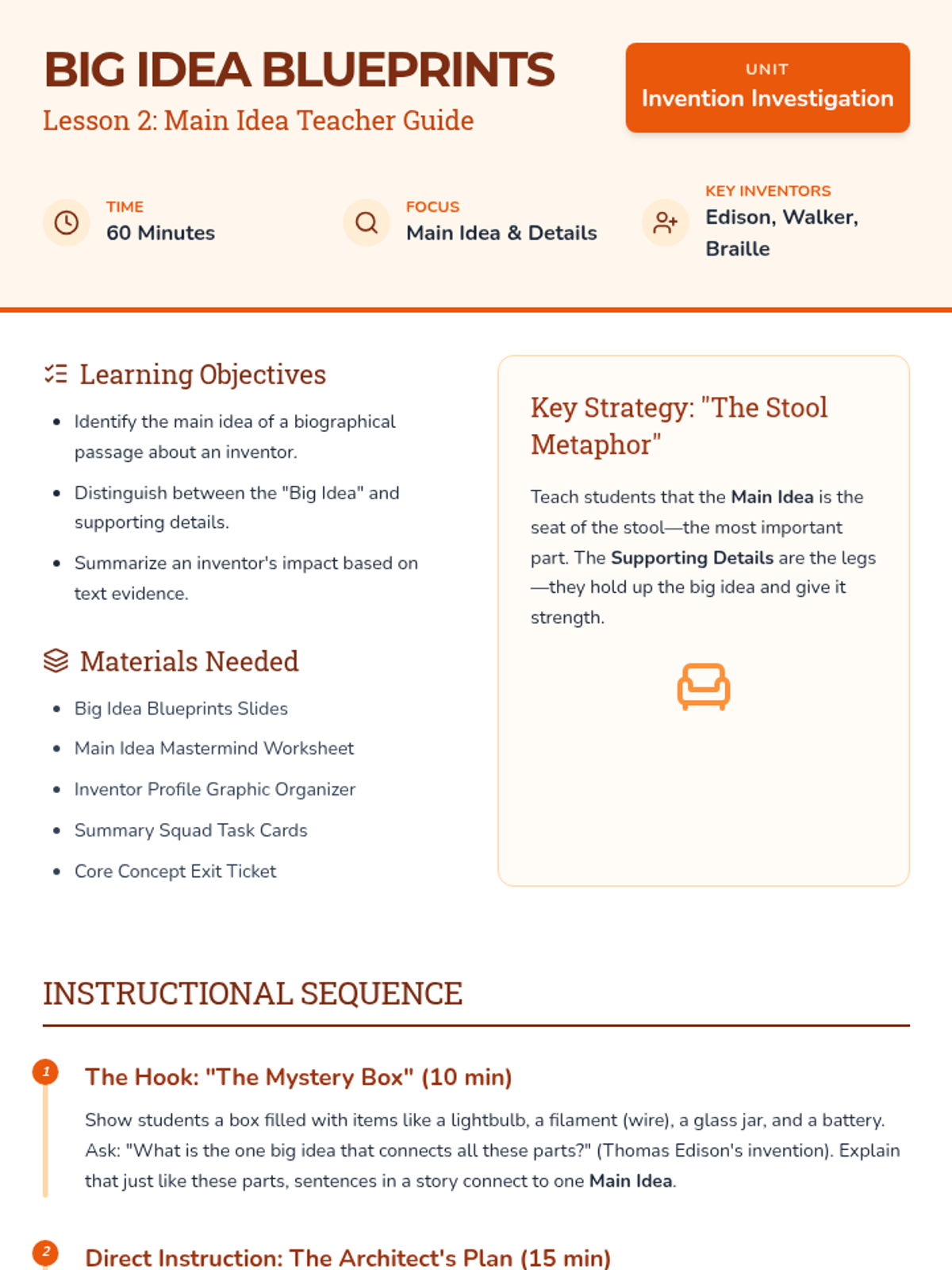
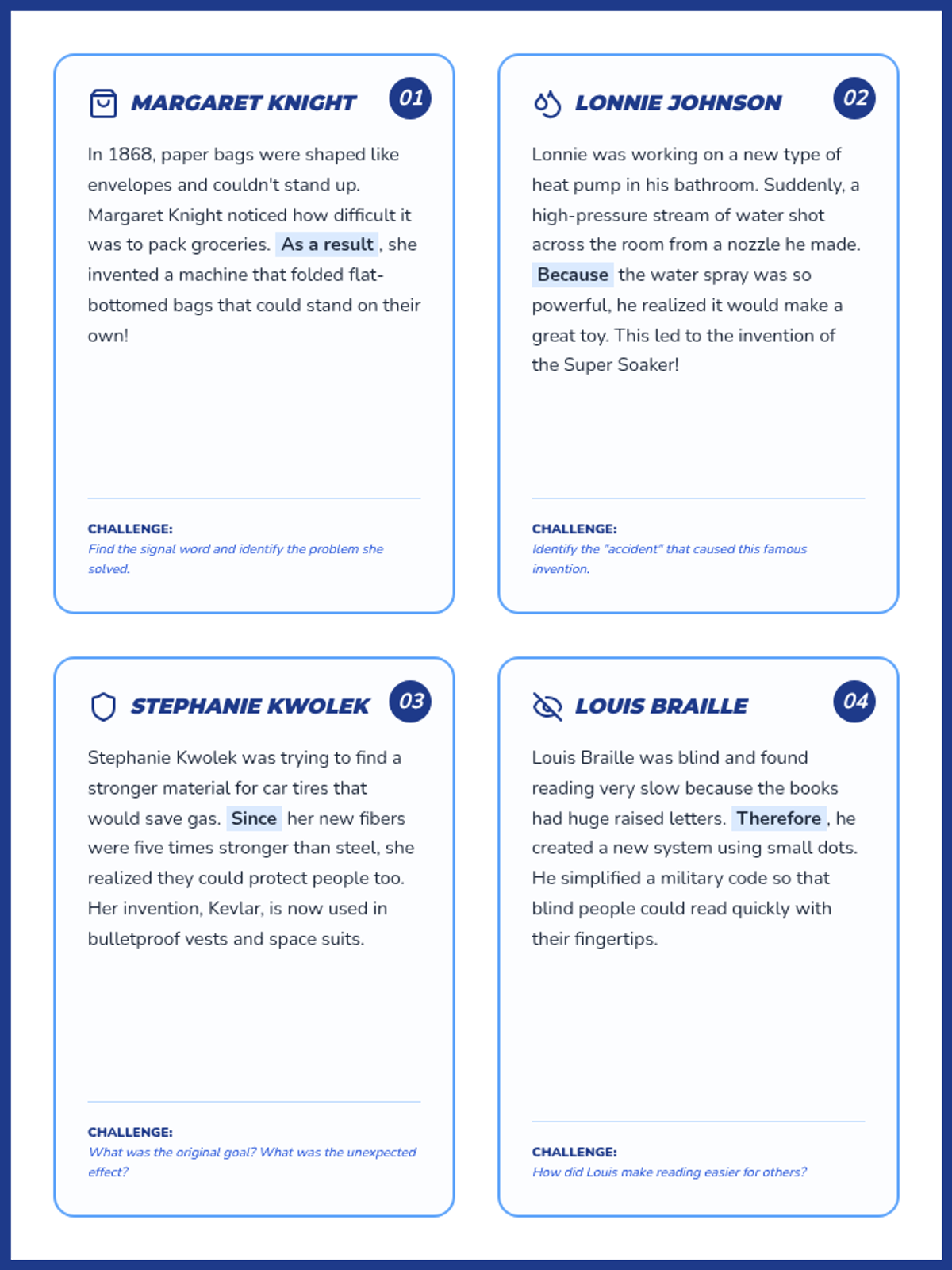
Students will learn to identify the main idea and supporting details in biographical texts about famous inventors, synthesizing information to understand their overall impact.
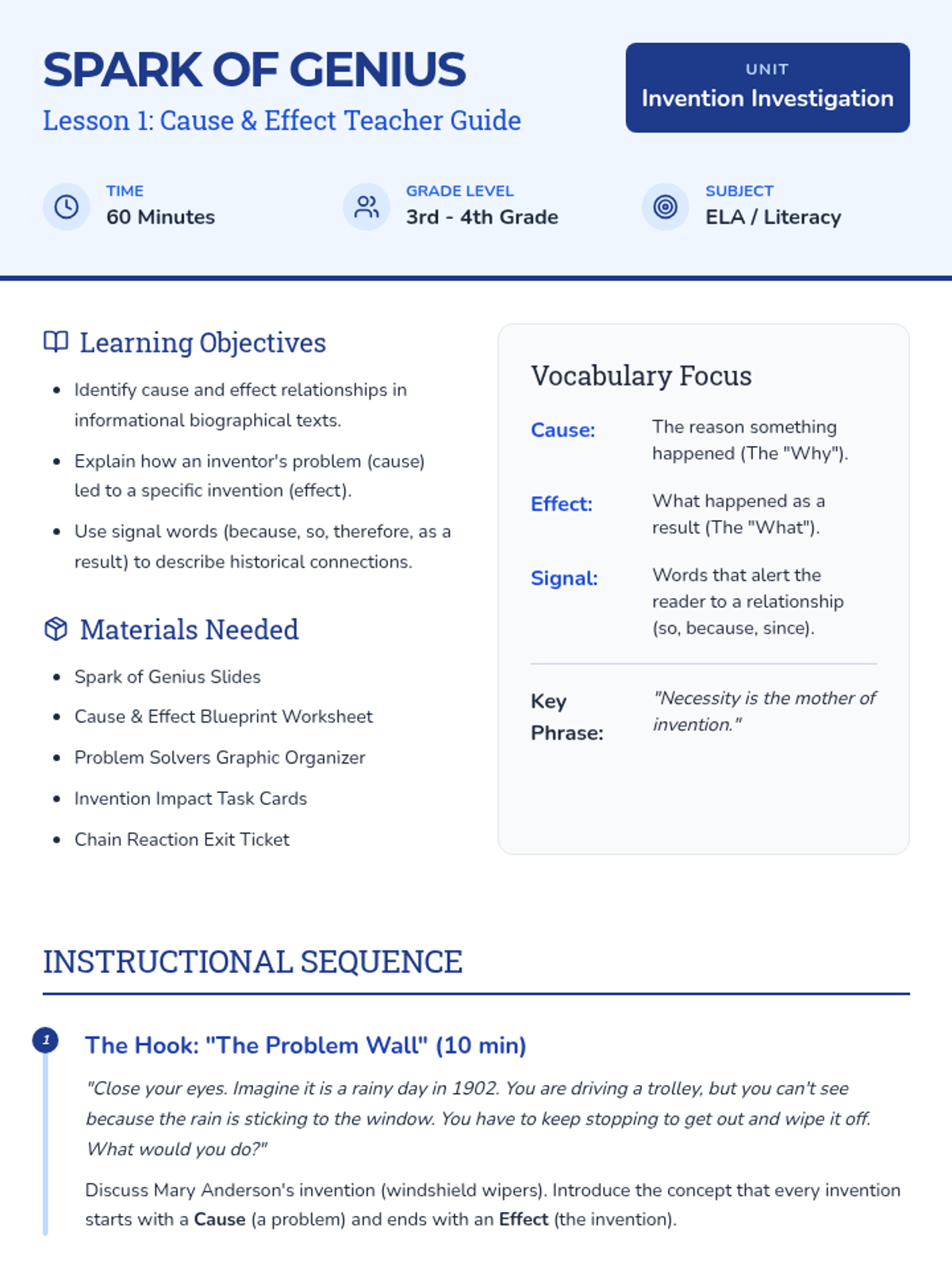
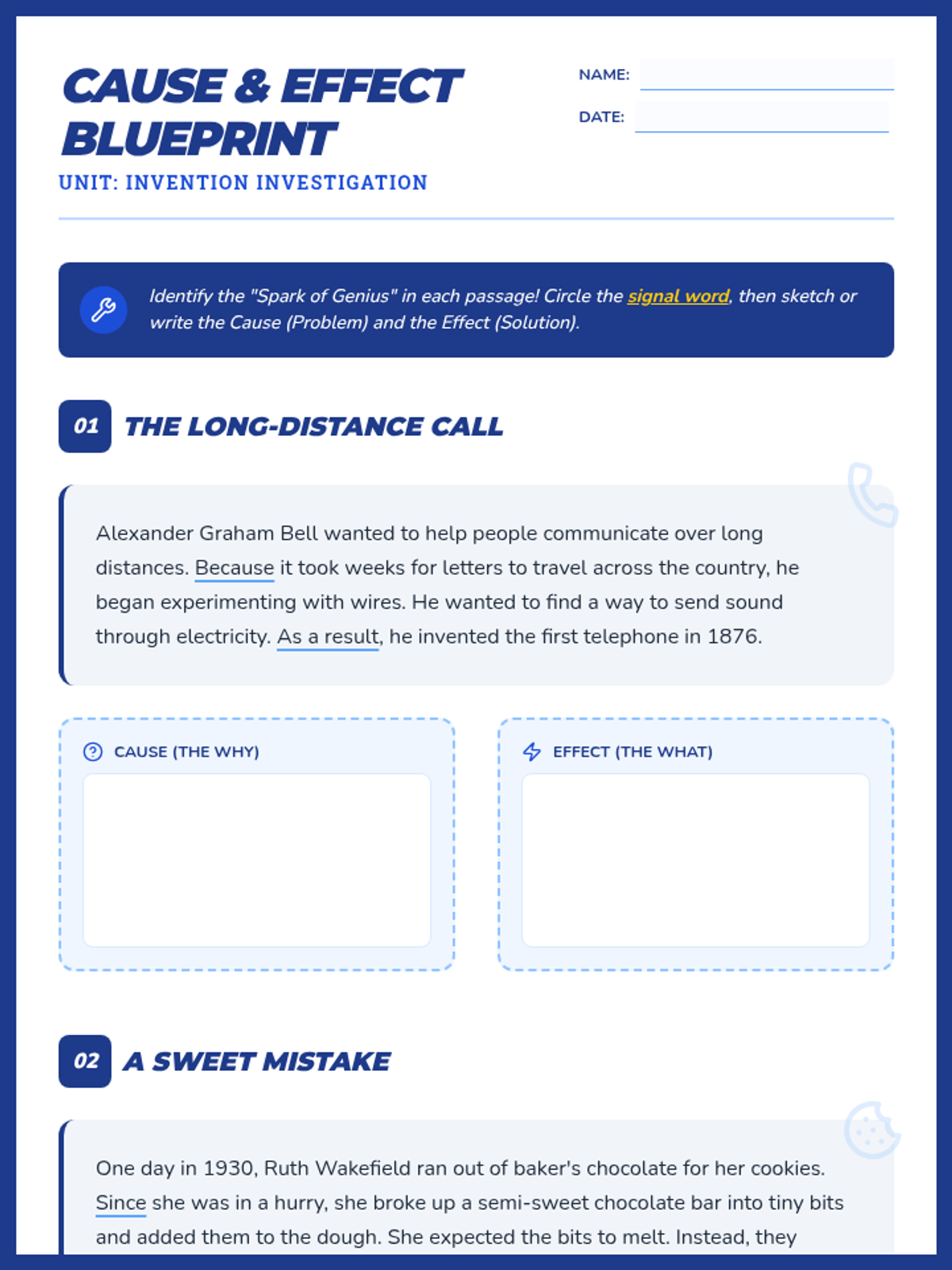
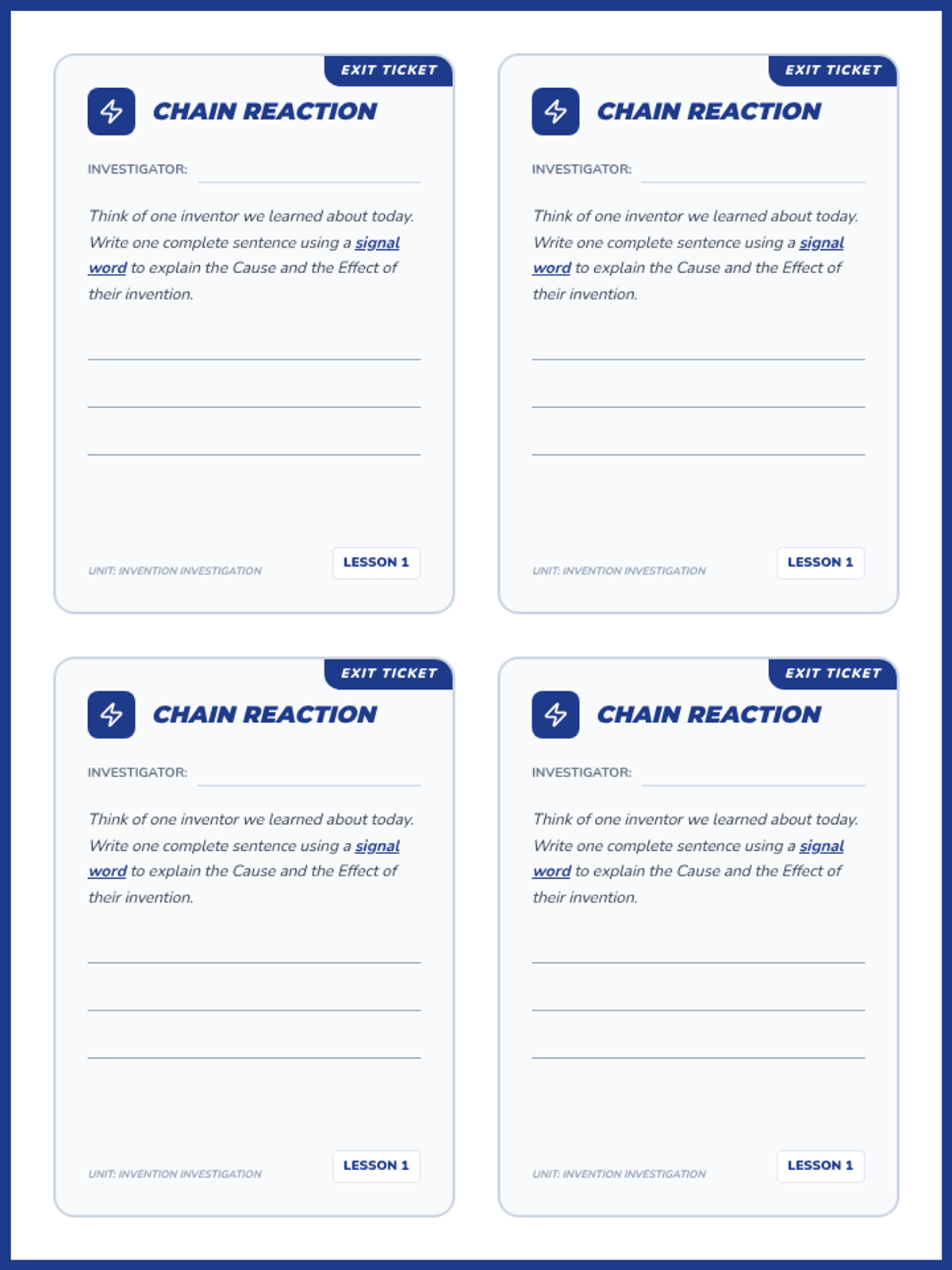
Students will explore how inventors identified problems (causes) and developed solutions (effects), using real-world examples like the lightbulb and the windshield wiper.
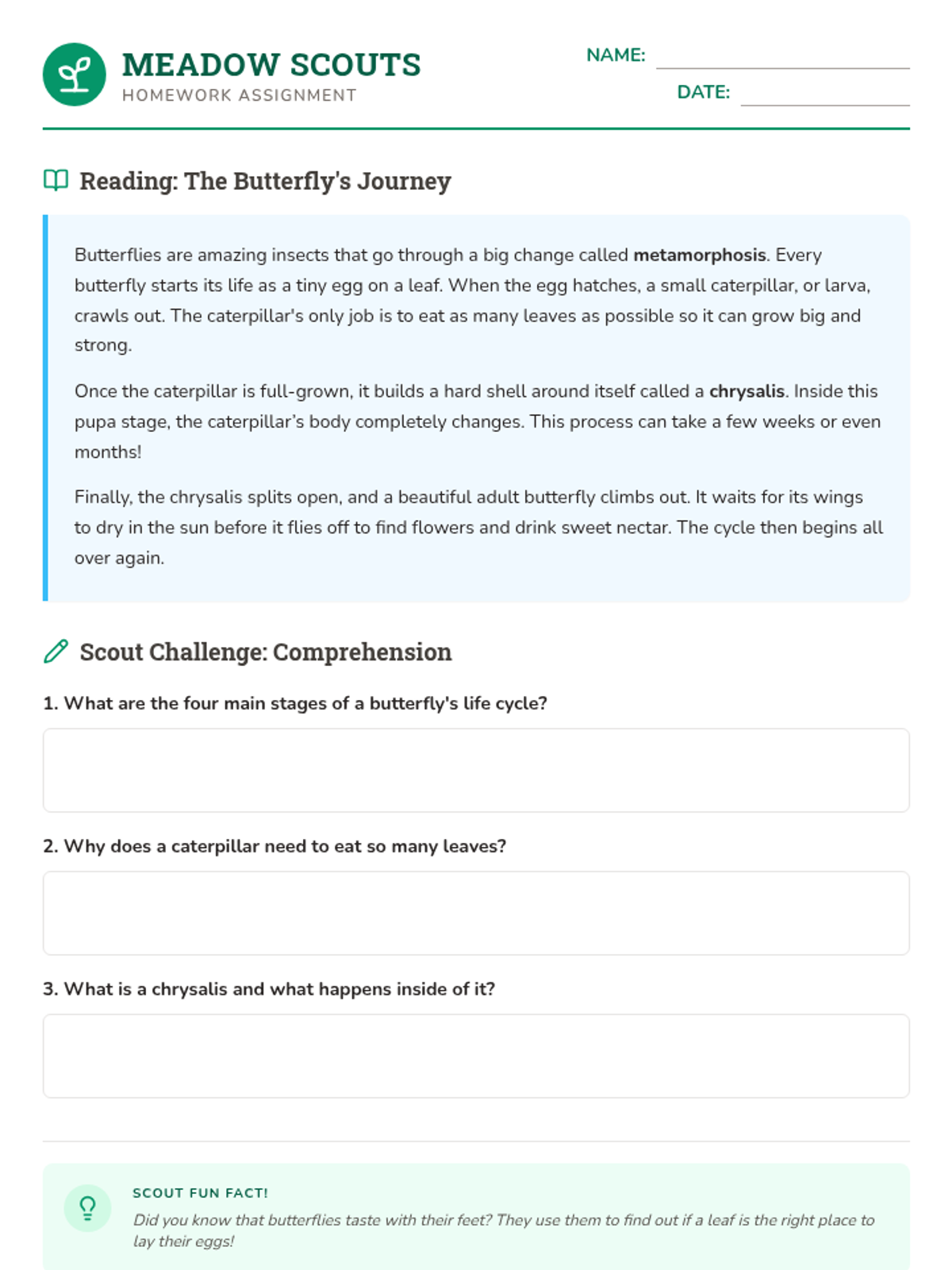
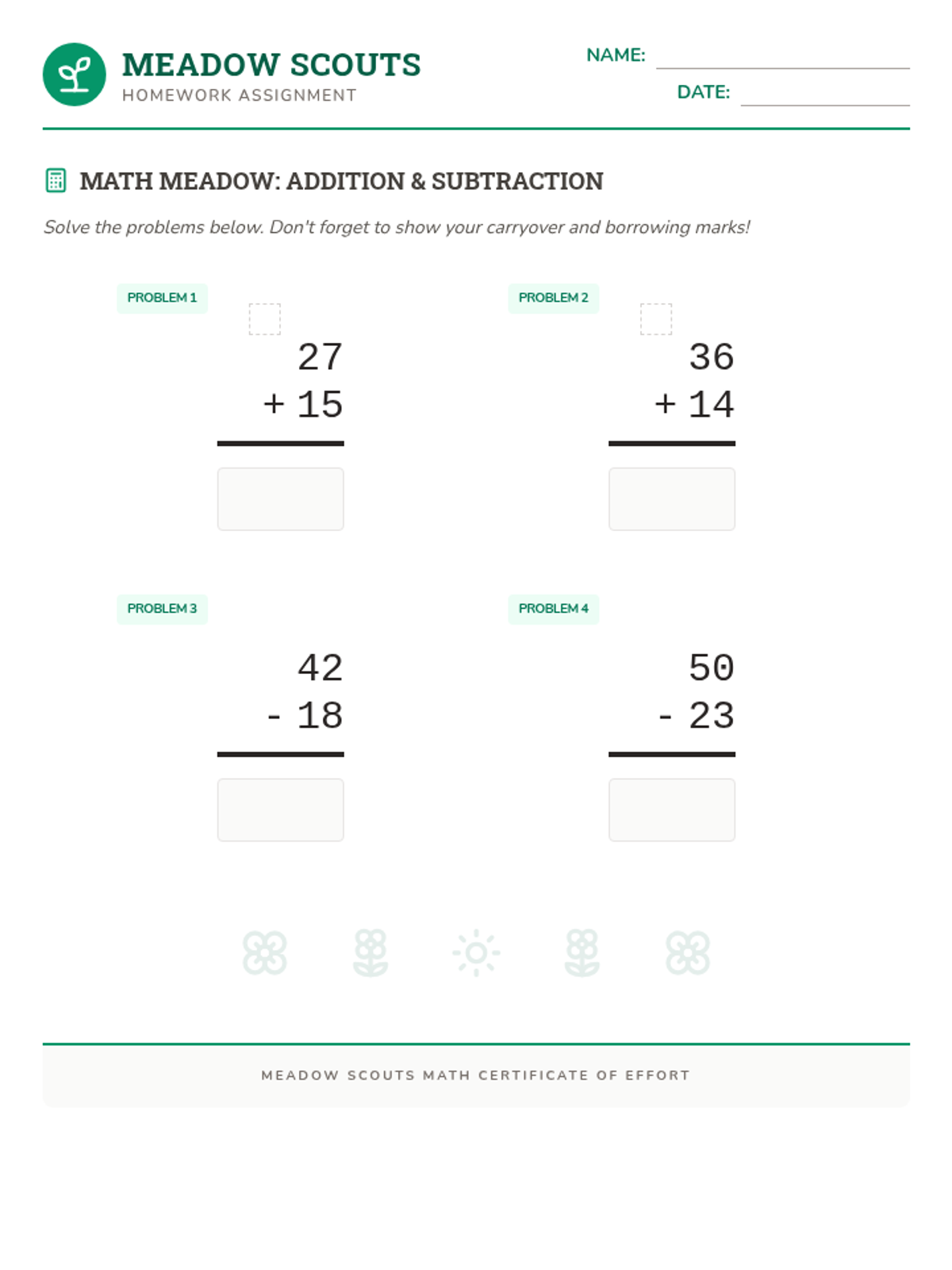
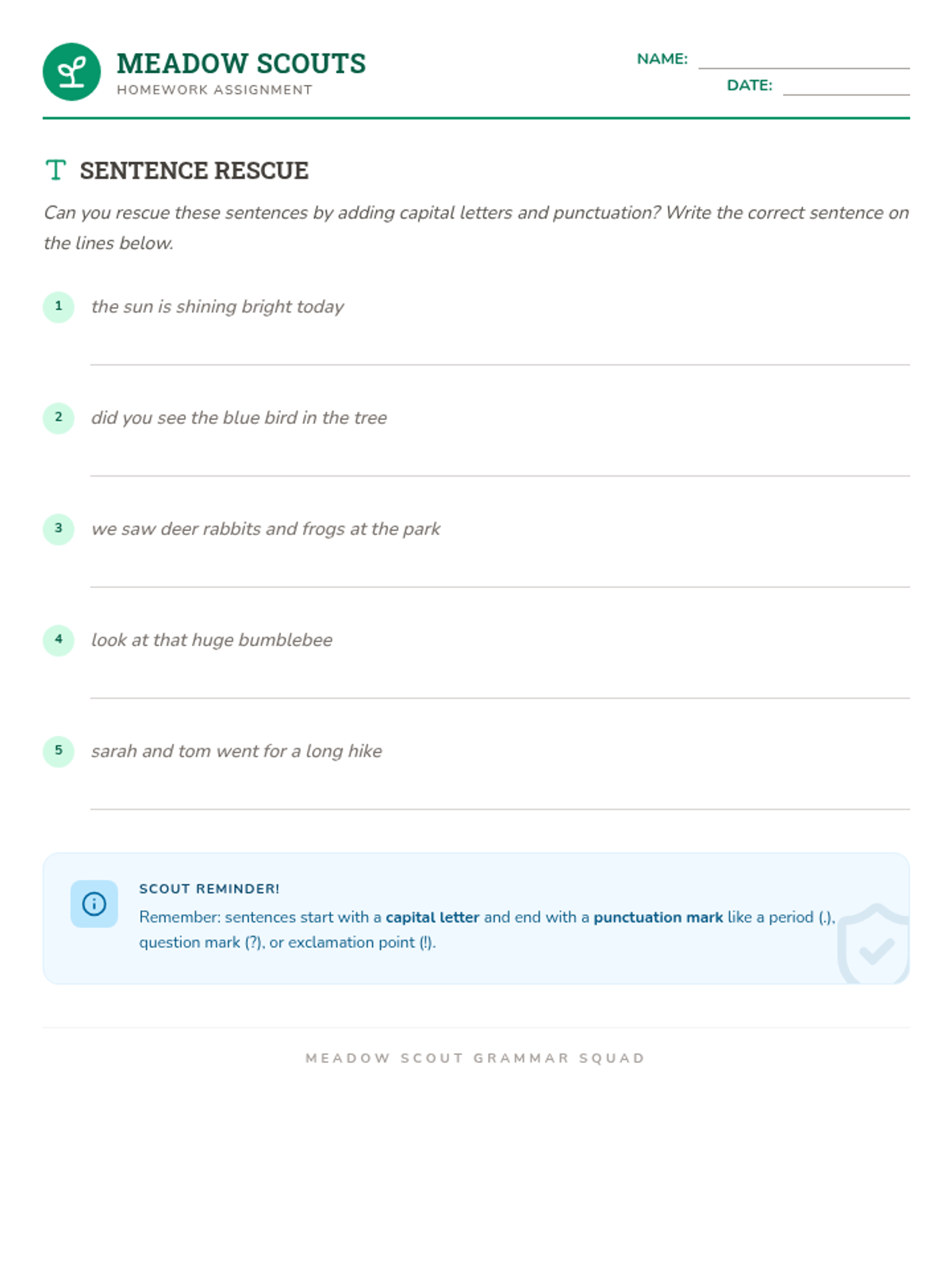
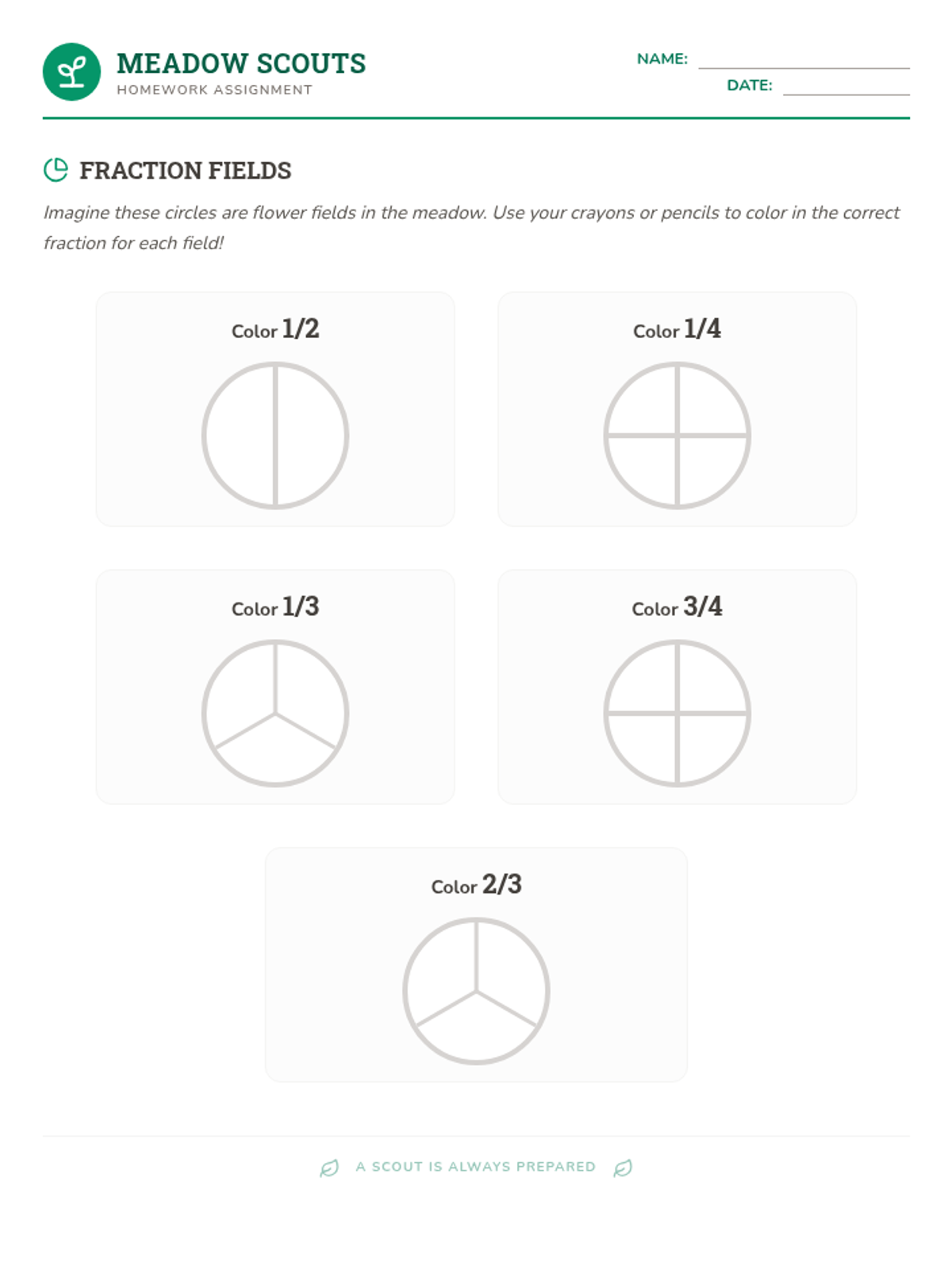
A collection of foundational homework worksheets covering reading comprehension, arithmetic, grammar, and basic fractions with a nature-inspired 'Meadow Scouts' theme.