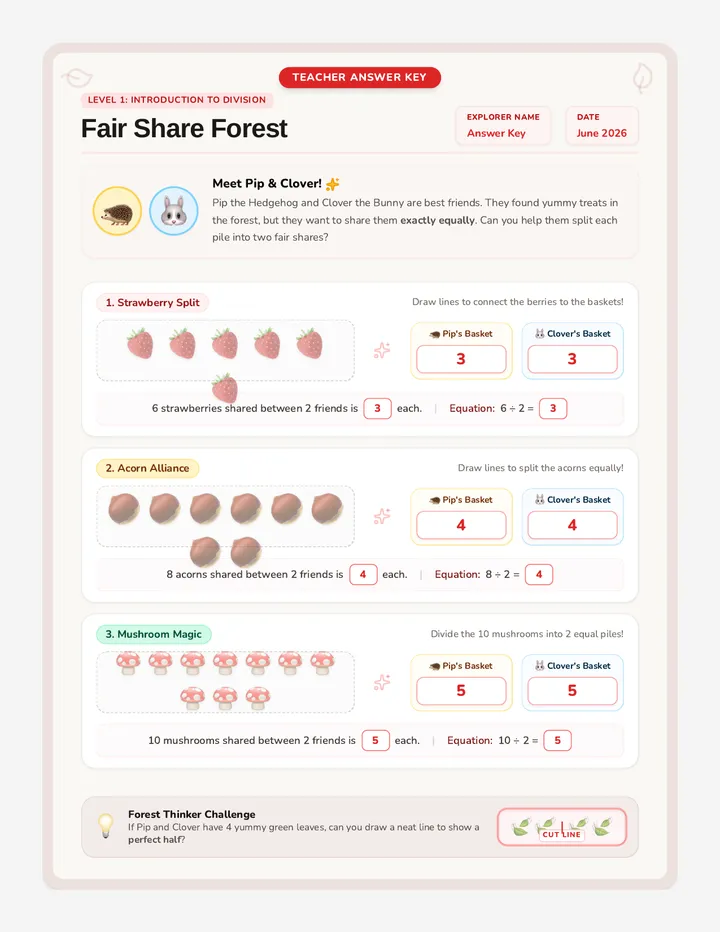
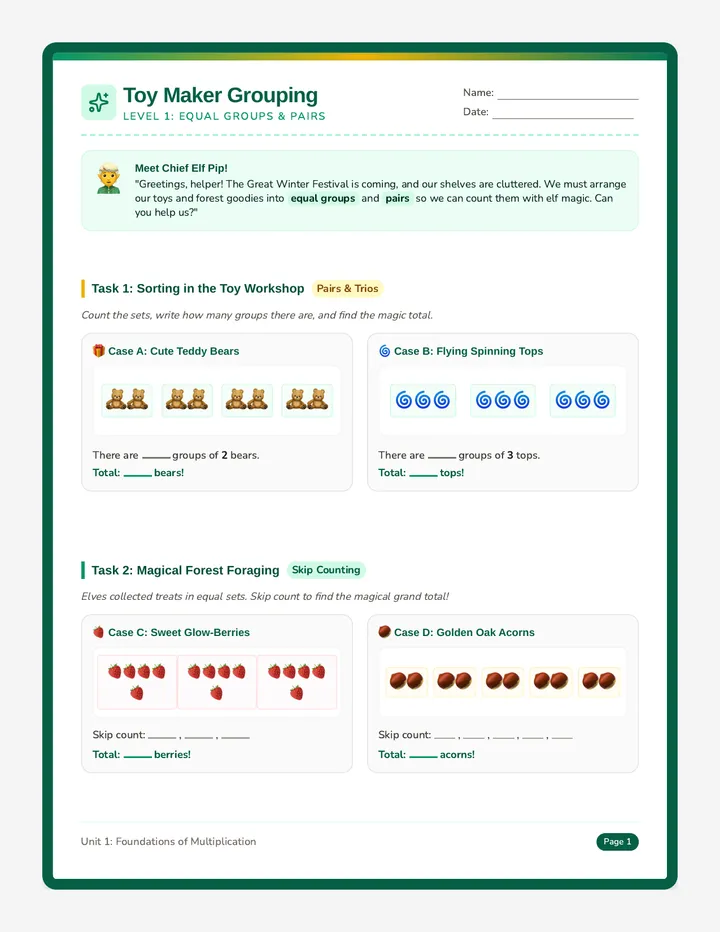
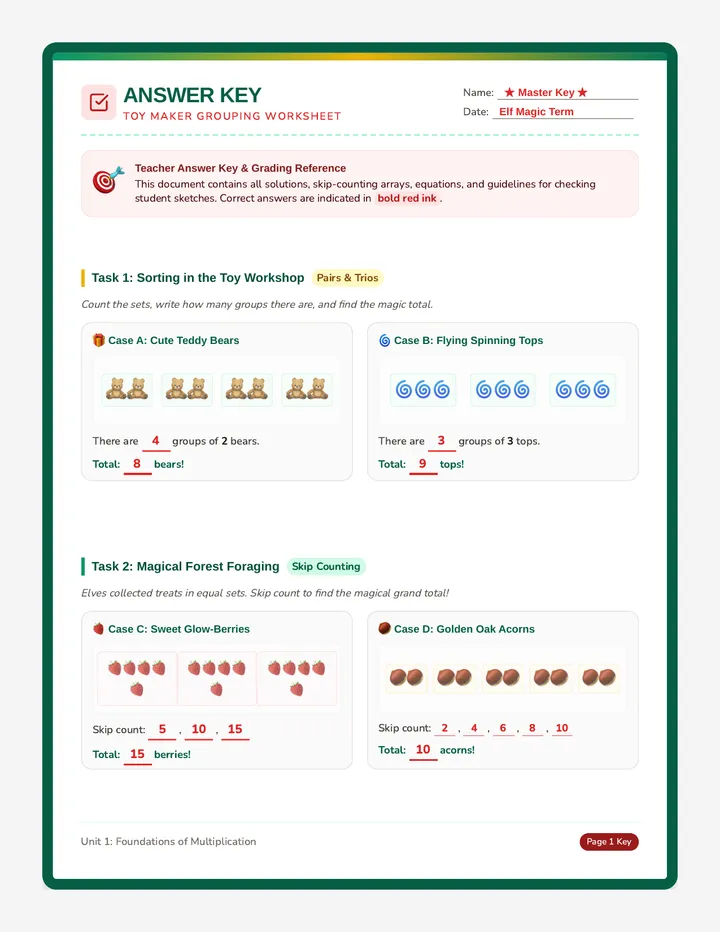
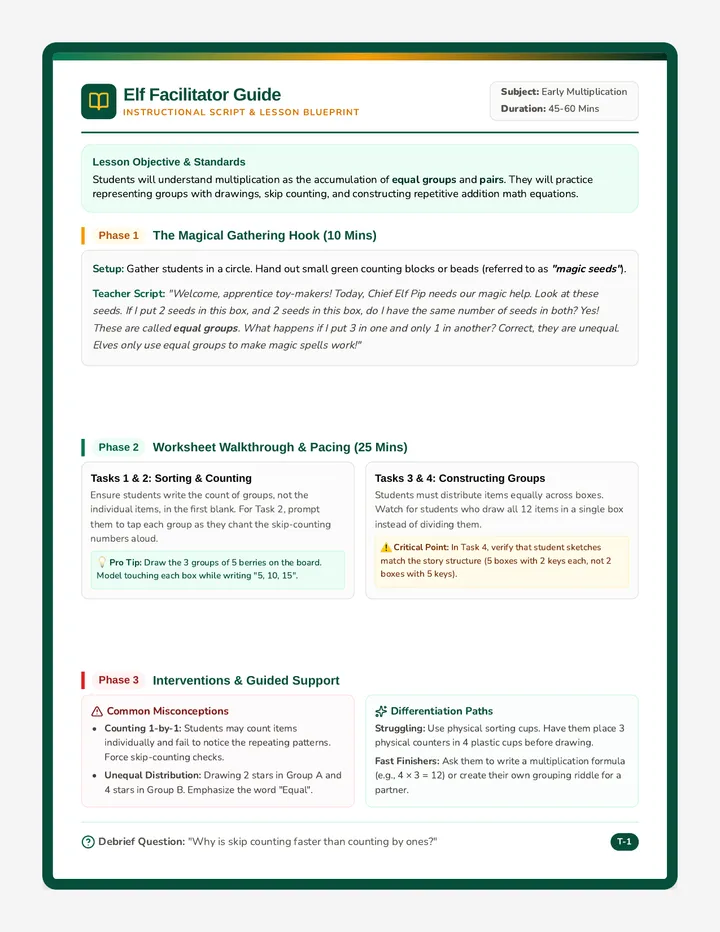
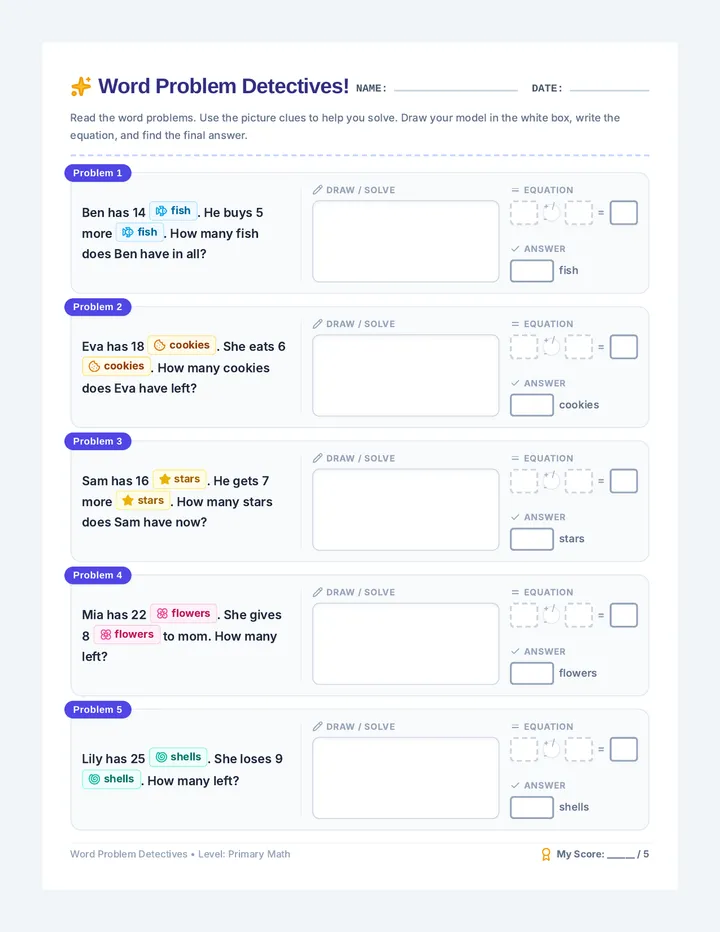
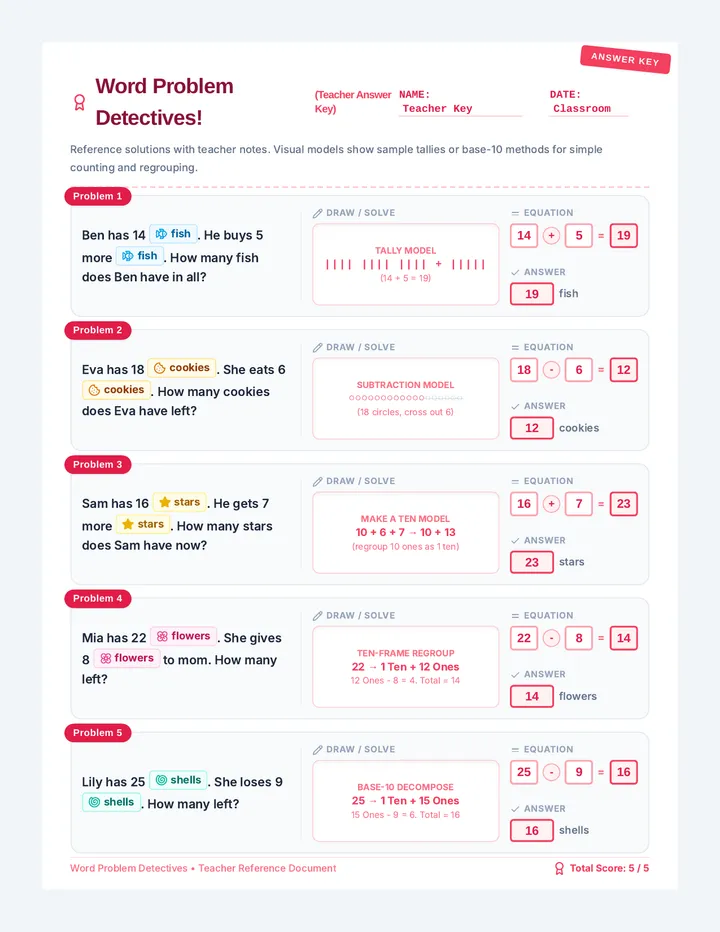
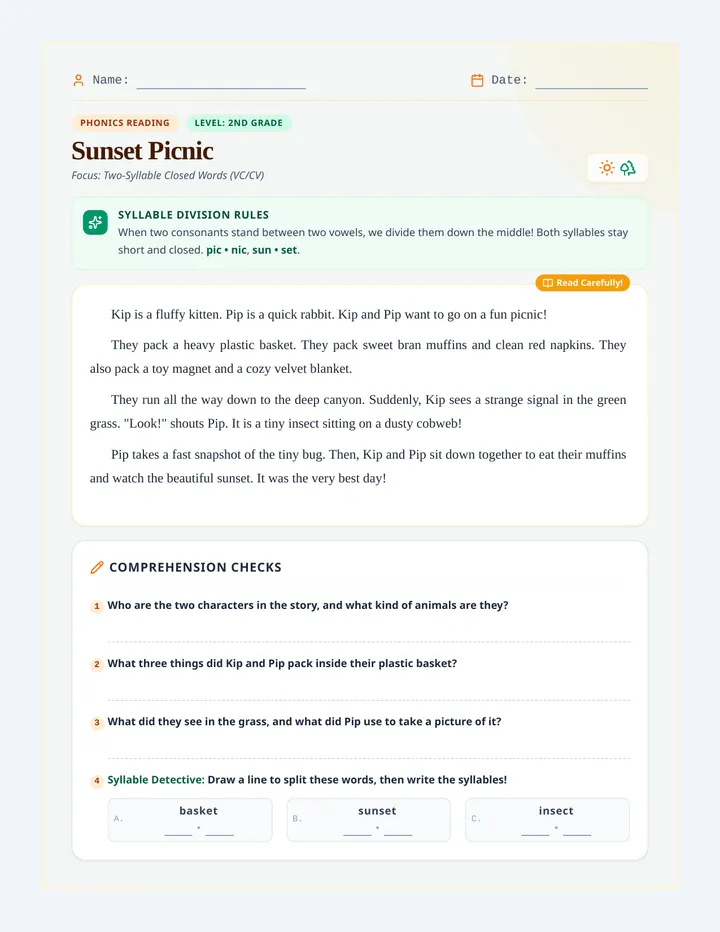
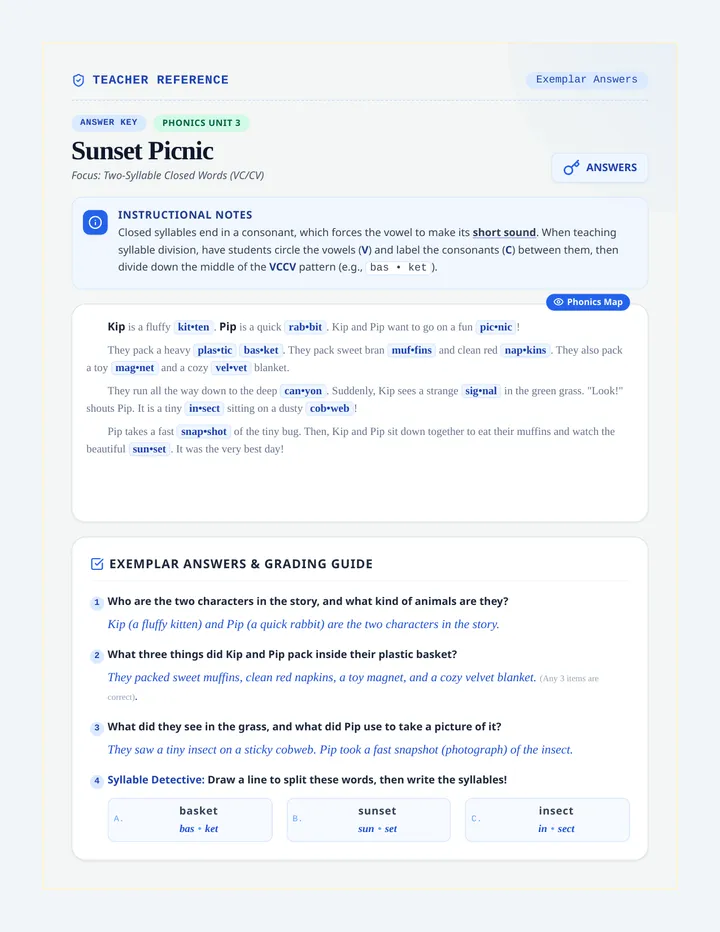
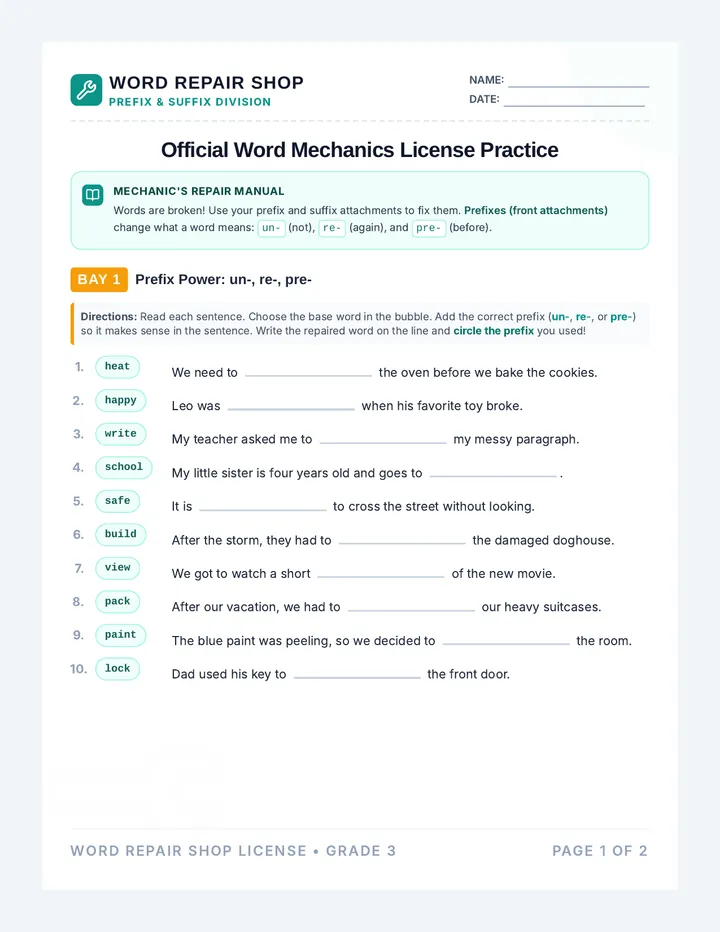
A collection of foundational homework worksheets covering reading comprehension, arithmetic, grammar, and basic fractions with a nature-inspired 'Meadow Scouts' theme.
A series of reading comprehension worksheets for 4th grade English Learners focusing on daily life and hobbies. Students practice using context clues to identify the meaning of new vocabulary within engaging, relatable stories.
Students will learn to identify the main idea and supporting details in biographical texts about famous inventors, synthesizing information to understand their overall impact.
Students will explore how inventors identified problems (causes) and developed solutions (effects), using real-world examples like the lightbulb and the windshield wiper.
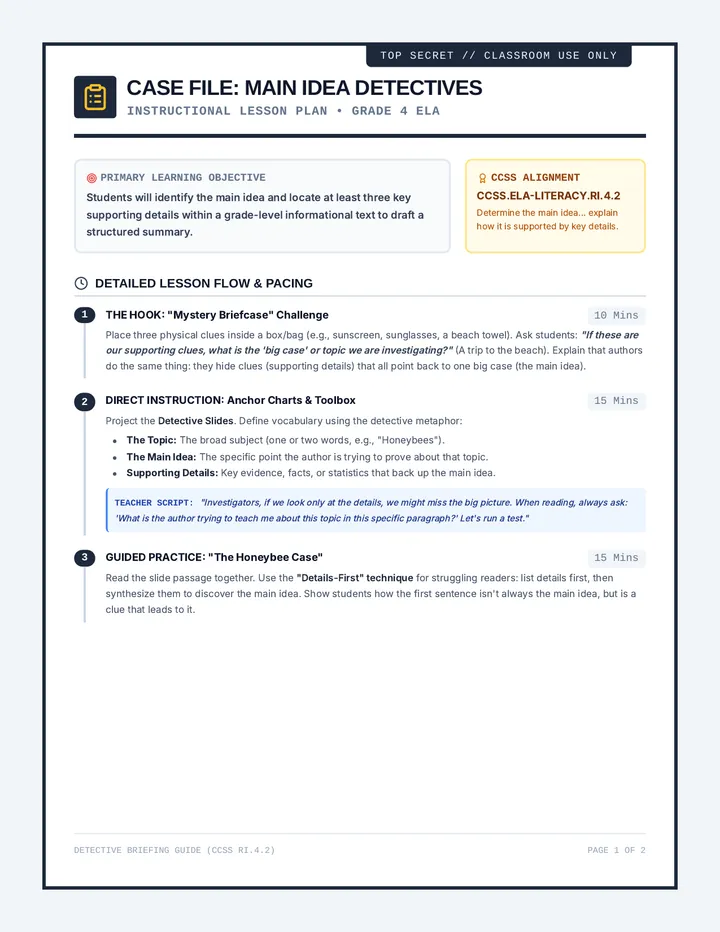
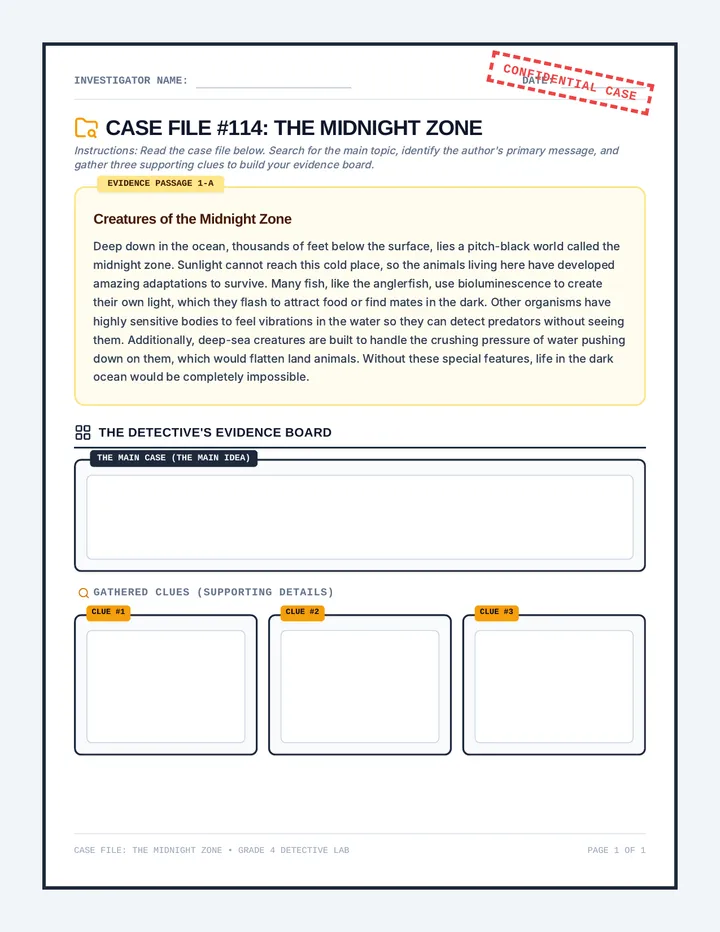
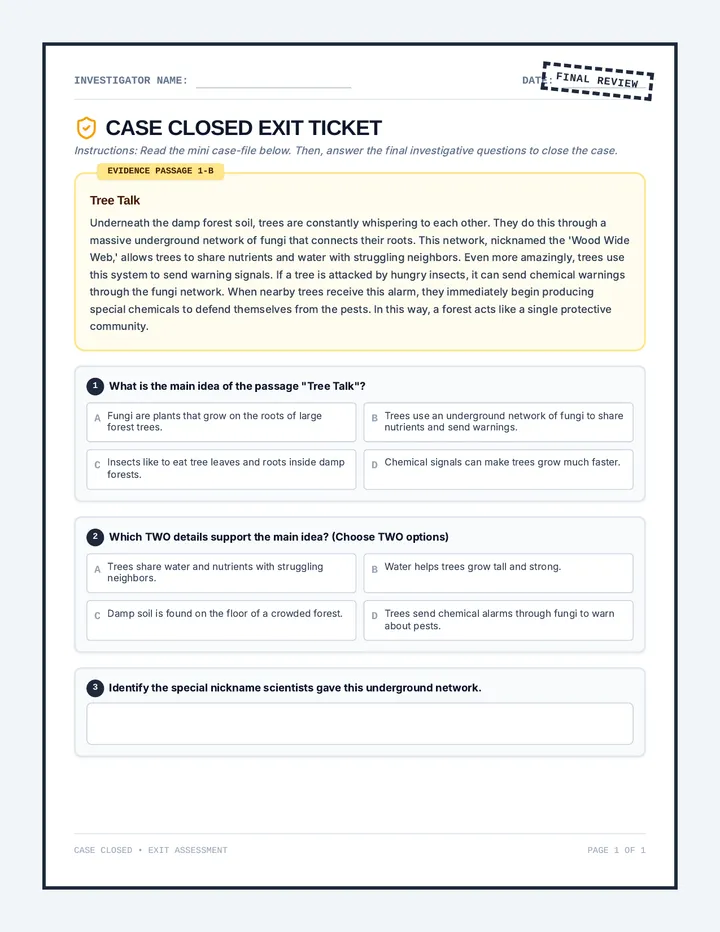
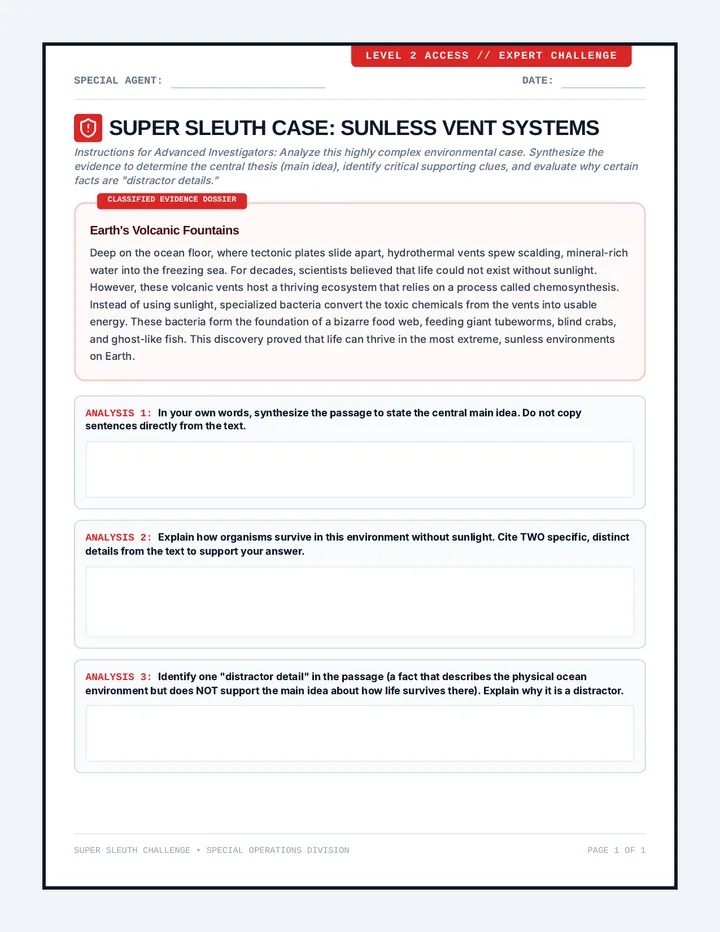
A reading intervention lesson designed to help 3rd and 4th graders master main idea, cause and effect, and sentence completion through a detective-themed series of activities. Students act as 'Reading Detectives' to uncover clues and solve literacy mysteries.
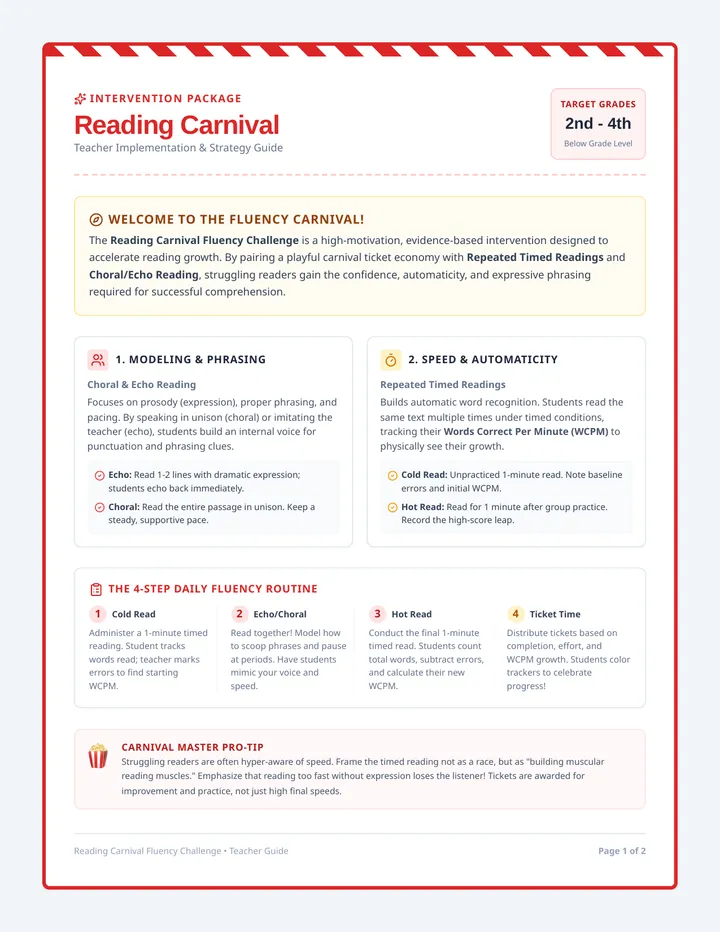
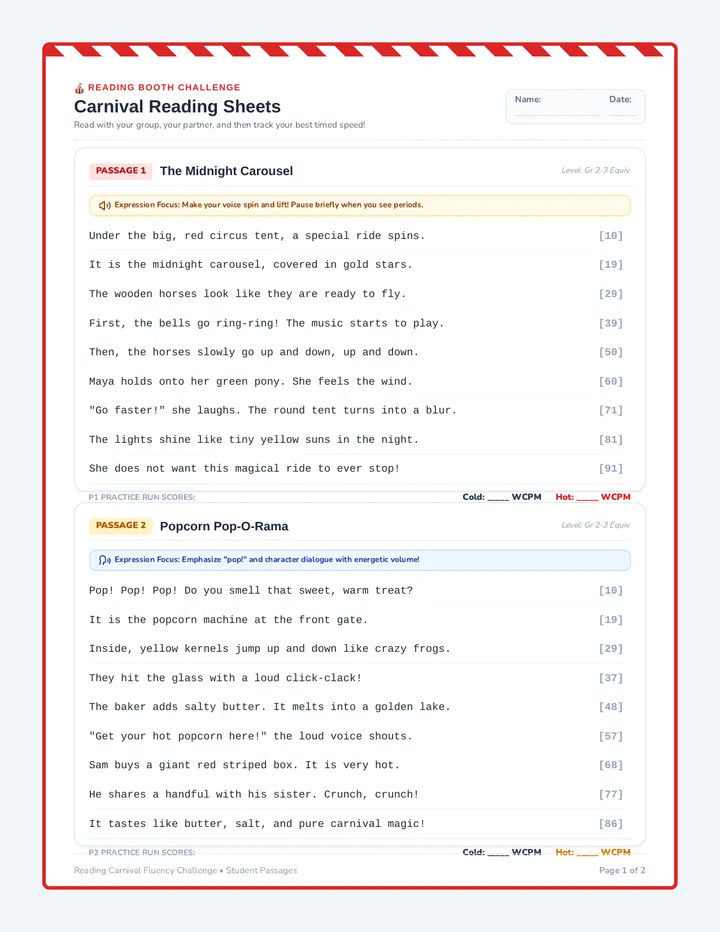
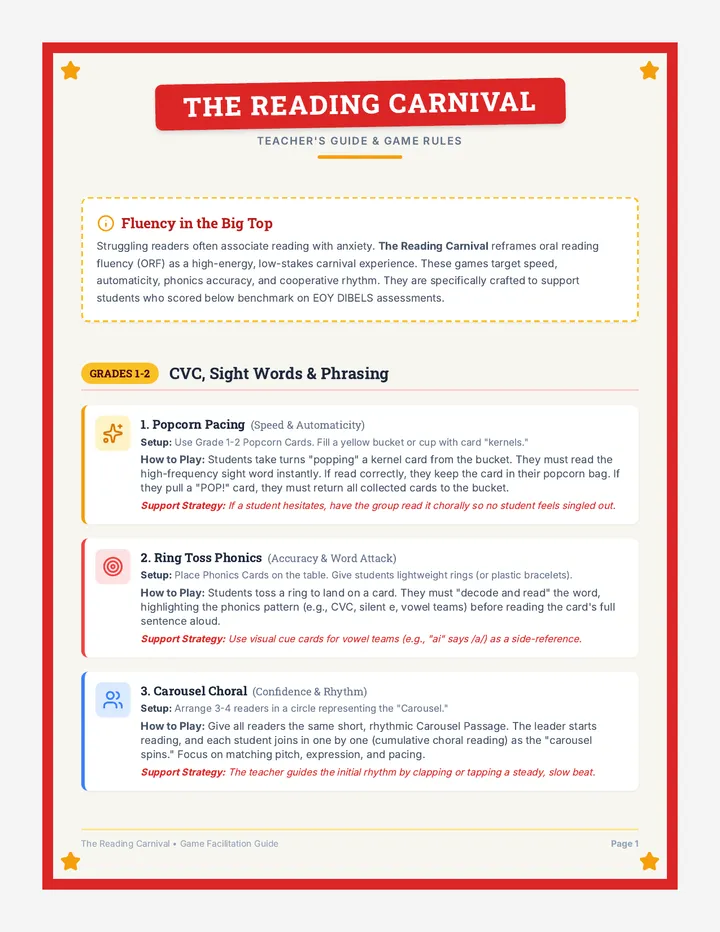
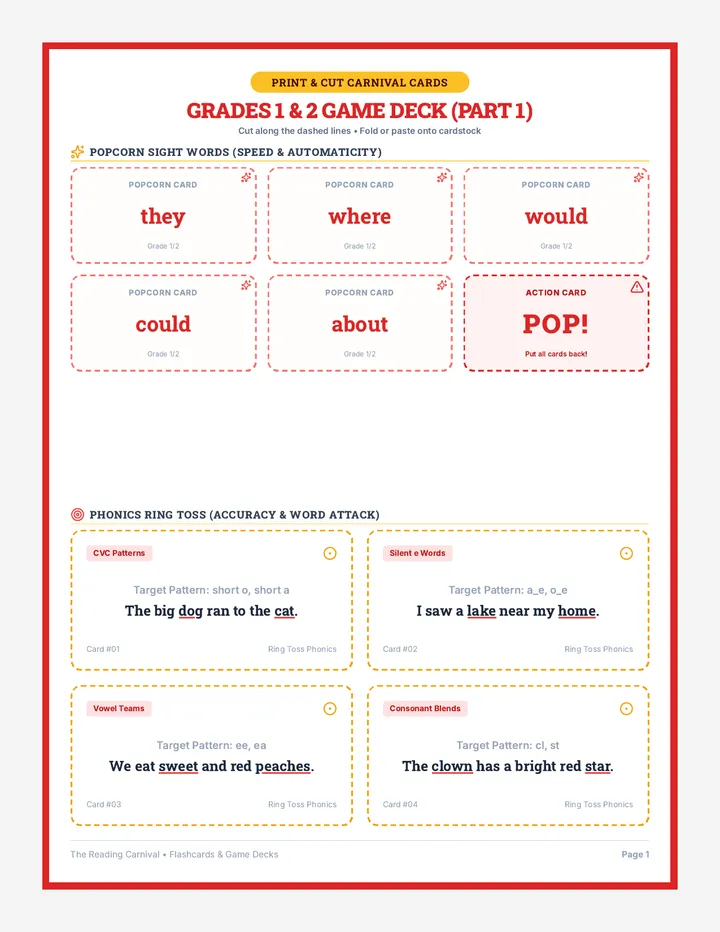
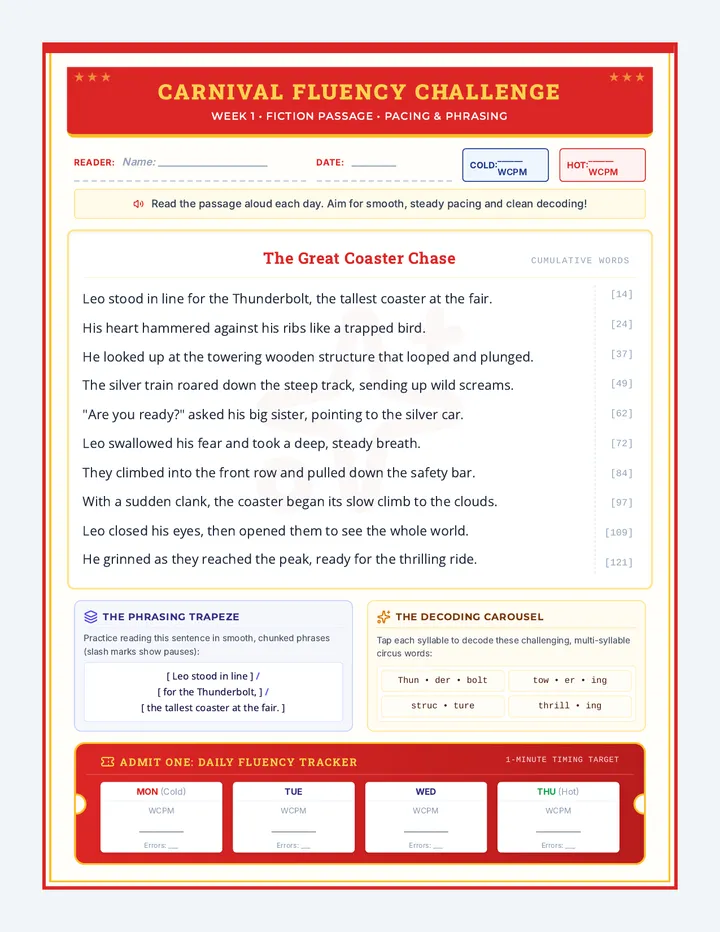
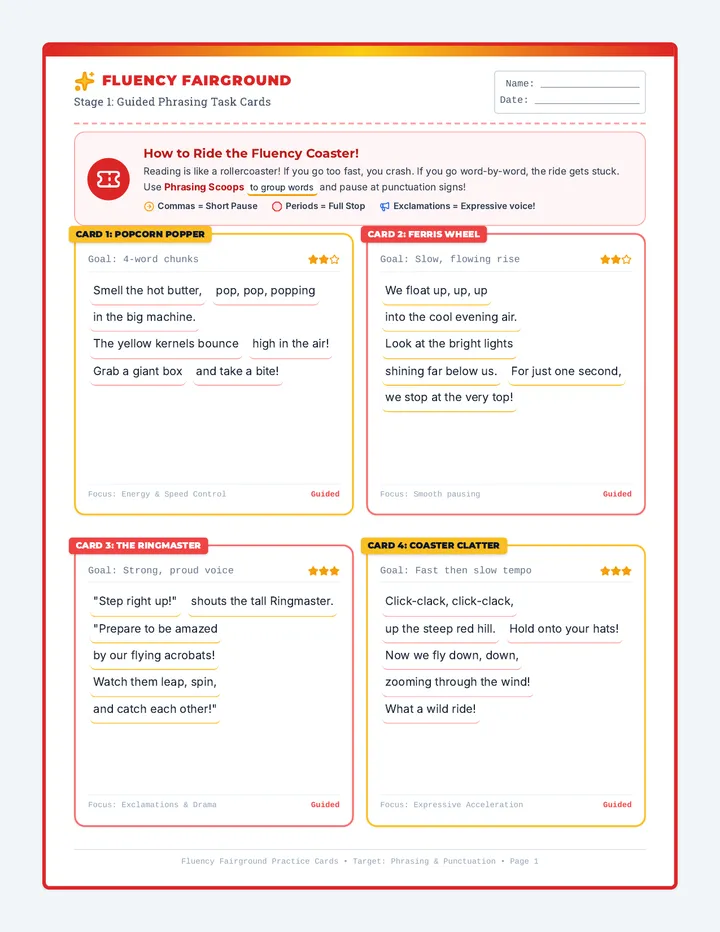
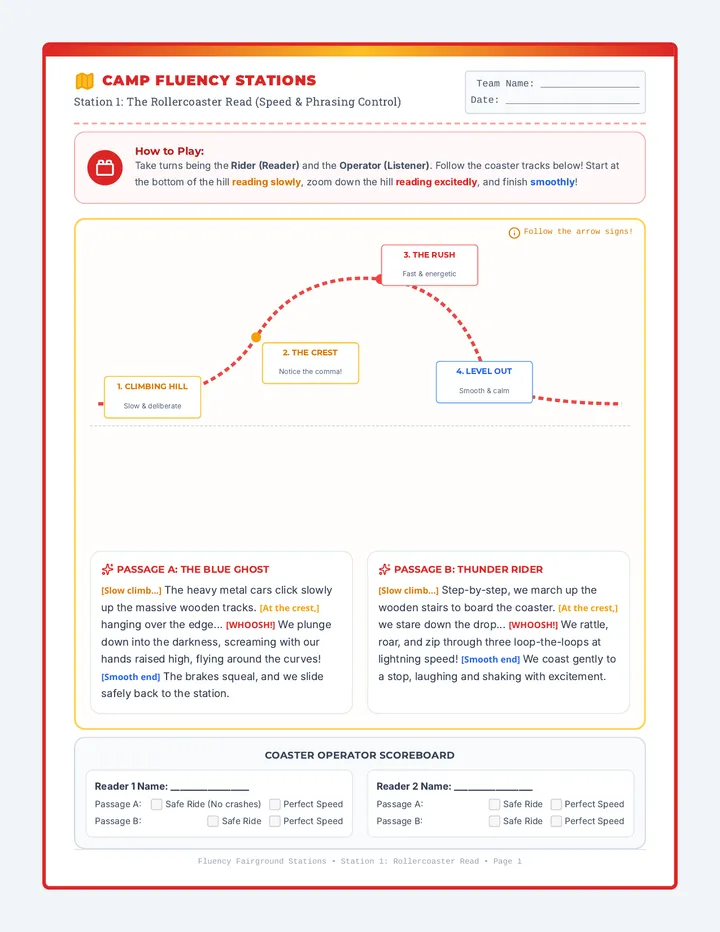
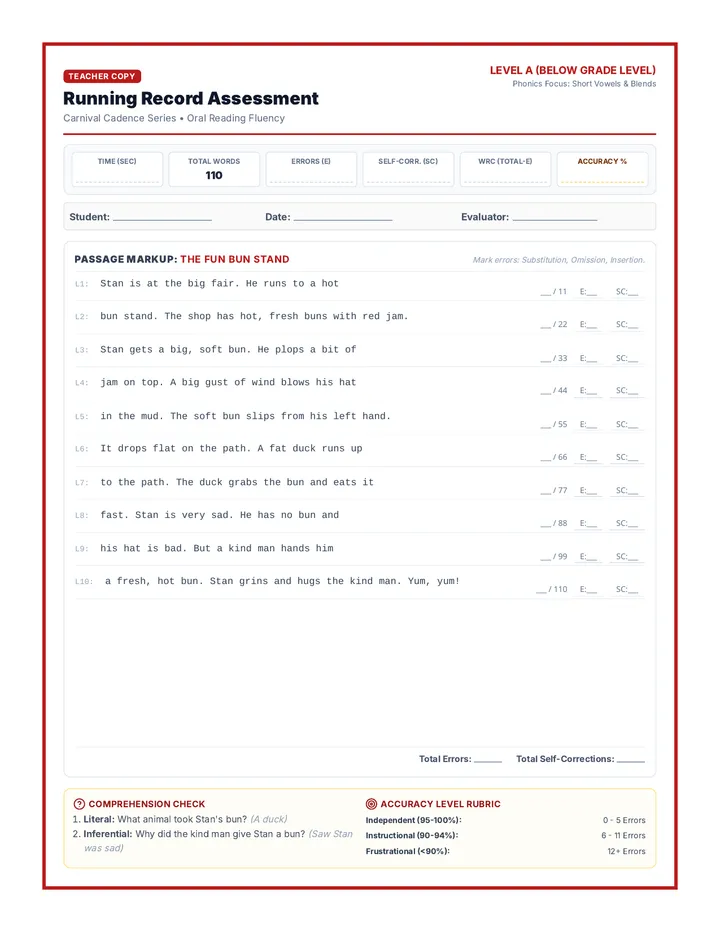
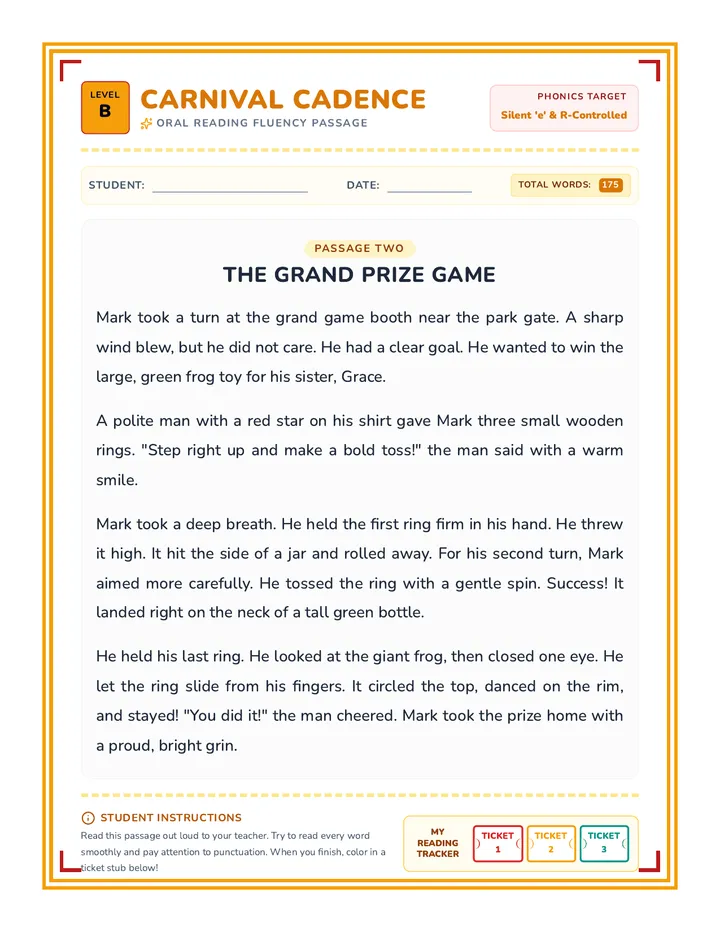
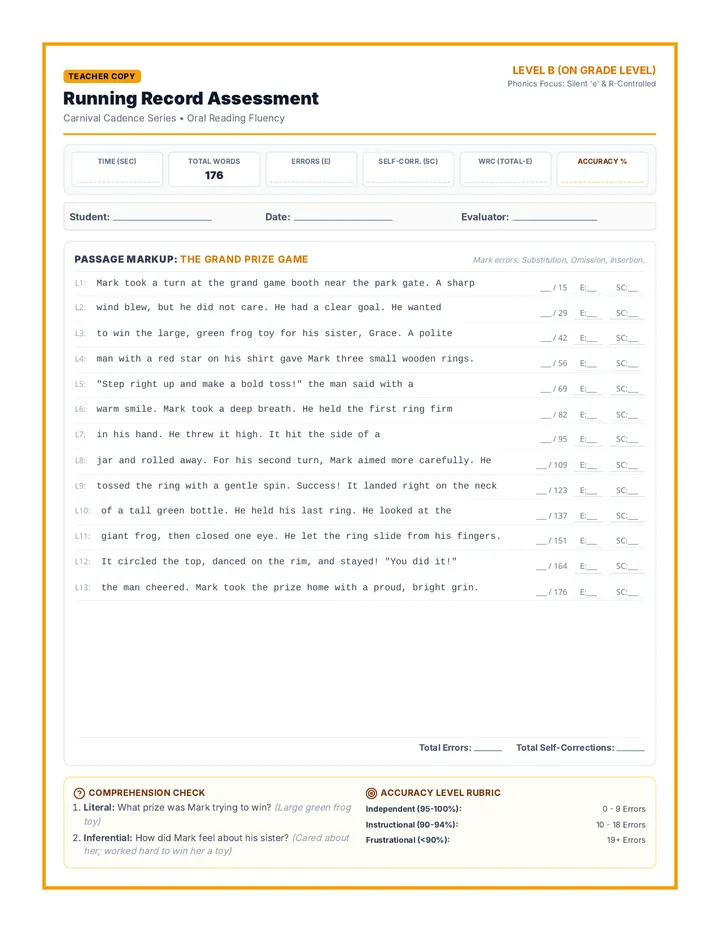
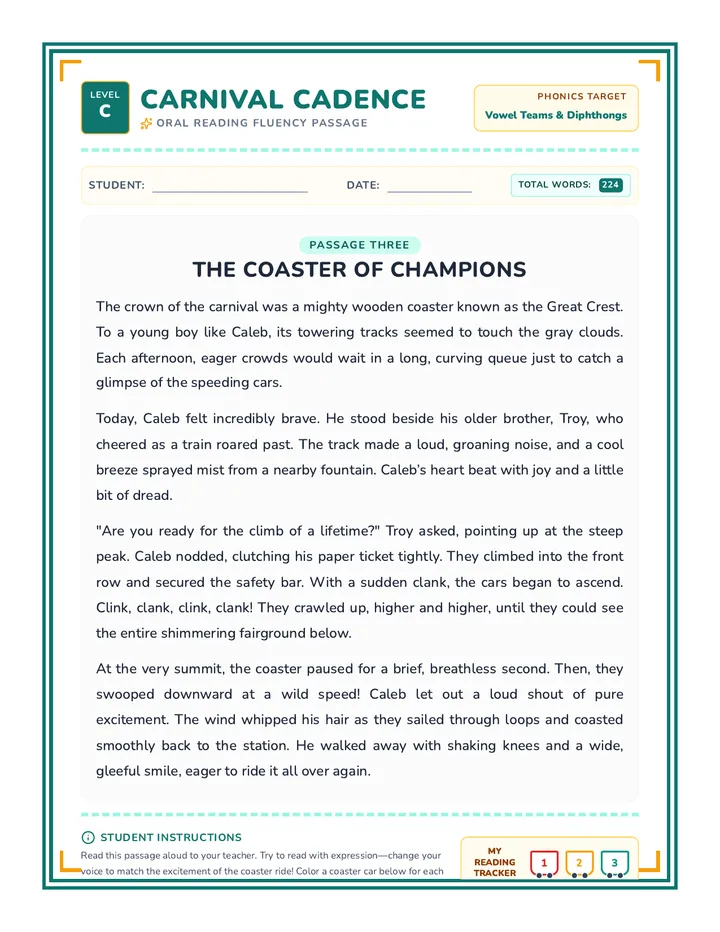
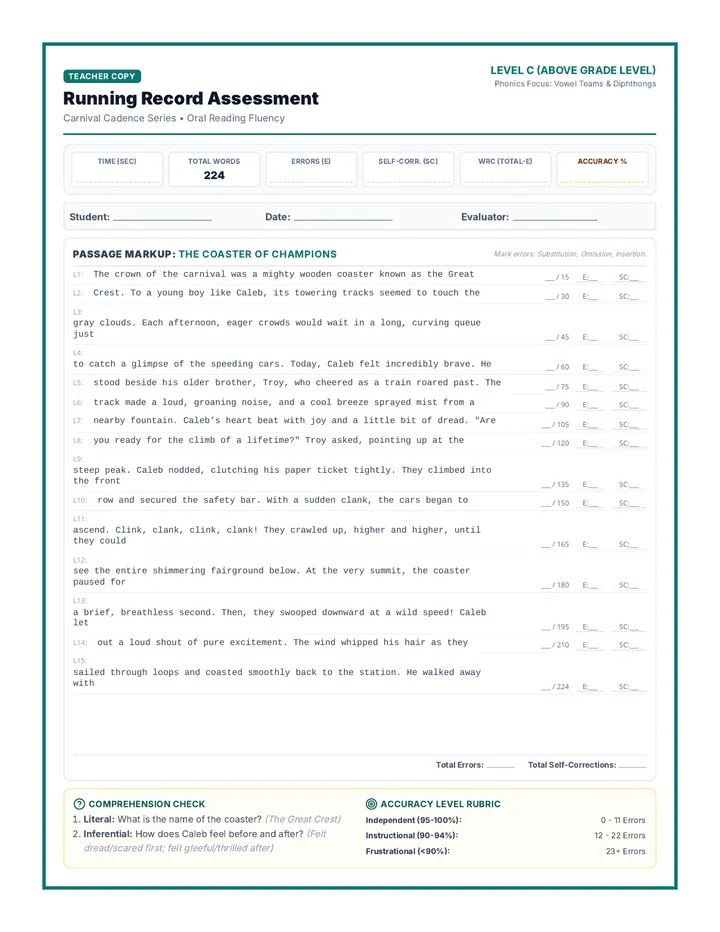
A bridge between decoding and fluent reading, this lesson focuses on mastering R-controlled vowels through speed drills, phrase scooping, and repeated reading of short, engaging passages. Students will shift from individual sound isolation to smooth, connected reading.
Final review and post-assessment to measure progress across the 10-day intervention.
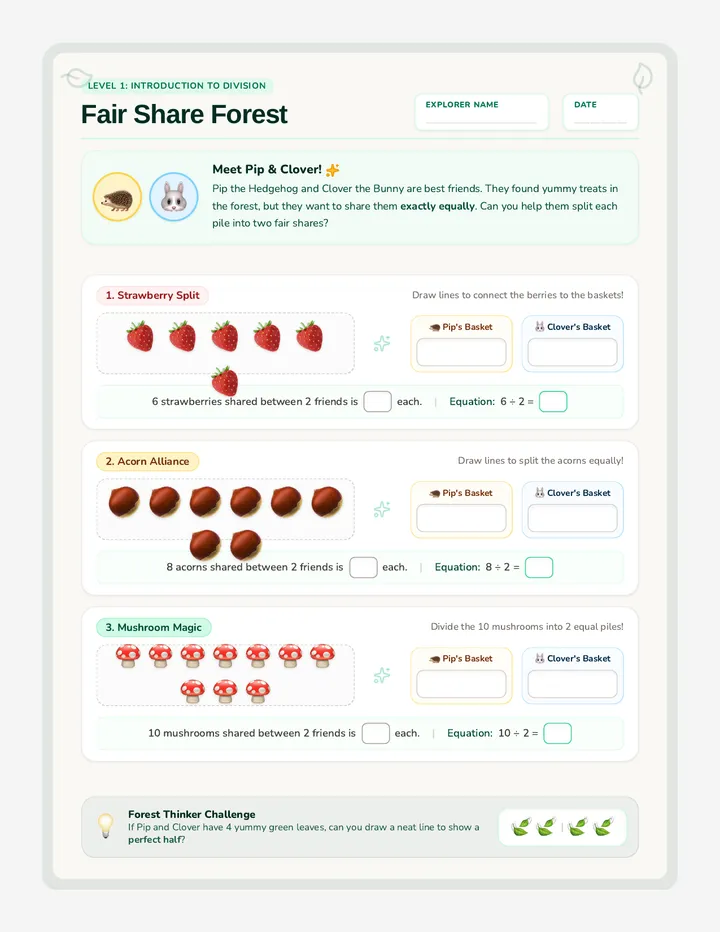
Synthesizing strategies to solve division problems with 3-digit dividends and 1-digit divisors.
Using the 100-beaded number line to visualize division as repeated subtraction and leaps.
Using base 10 blocks to regroup tens into ones when a number cannot be shared equally in its current form.
Applying division strategies to 2-digit numbers with small remainders or simple sharing scenarios.
Introduction to multi-digit division by sharing tens and ones using base 10 blocks without regrouping.
Students build division fact fluency and strategy using the 100-bead Rekenrek to find 'how many groups'.
Students use counters and area models to visualize division as rows and columns in an animal parade.
Students explore division as 'grouping' or measurement division by organizing animals into habitats.