A 45-minute deep dive into the Greek and Latin roots bio-, mal-, jur-, and bene-, designed to help students decode complex academic vocabulary using the 'Word Lab' approach.
A lesson on the past progressive tense (was/were + verb-ing) focused on describing ongoing and interrupted actions in the past through a detective mystery theme.
A comprehensive 30-45 minute lesson on the past perfect tense, featuring explicit instructions, a time-travel themed worksheet, and a detailed teacher guide. This lesson helps students understand how to sequence two past events using the 'past before the past' structure.
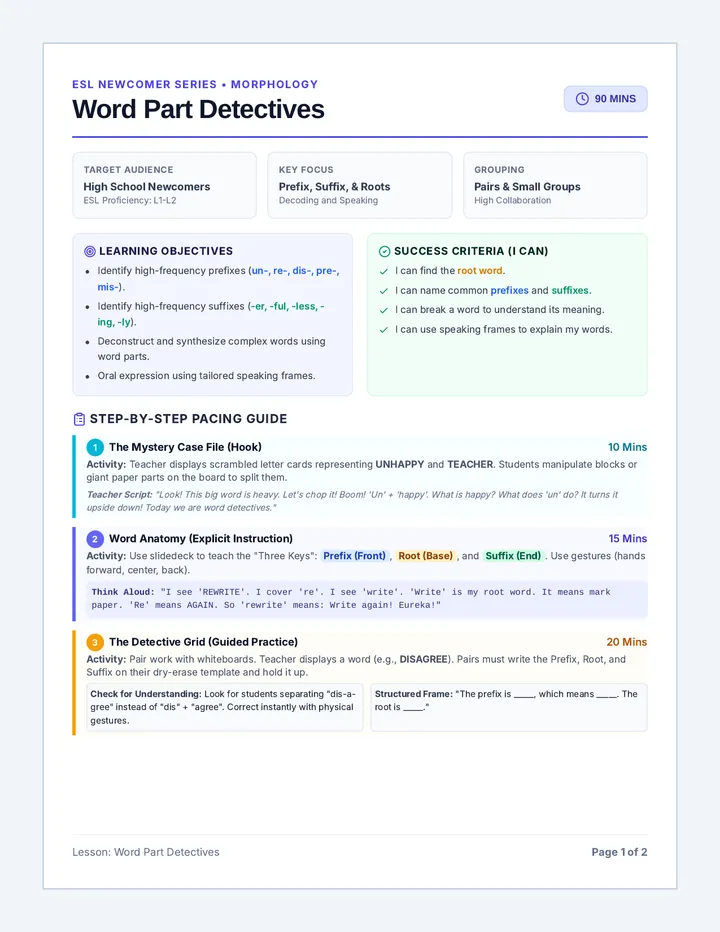
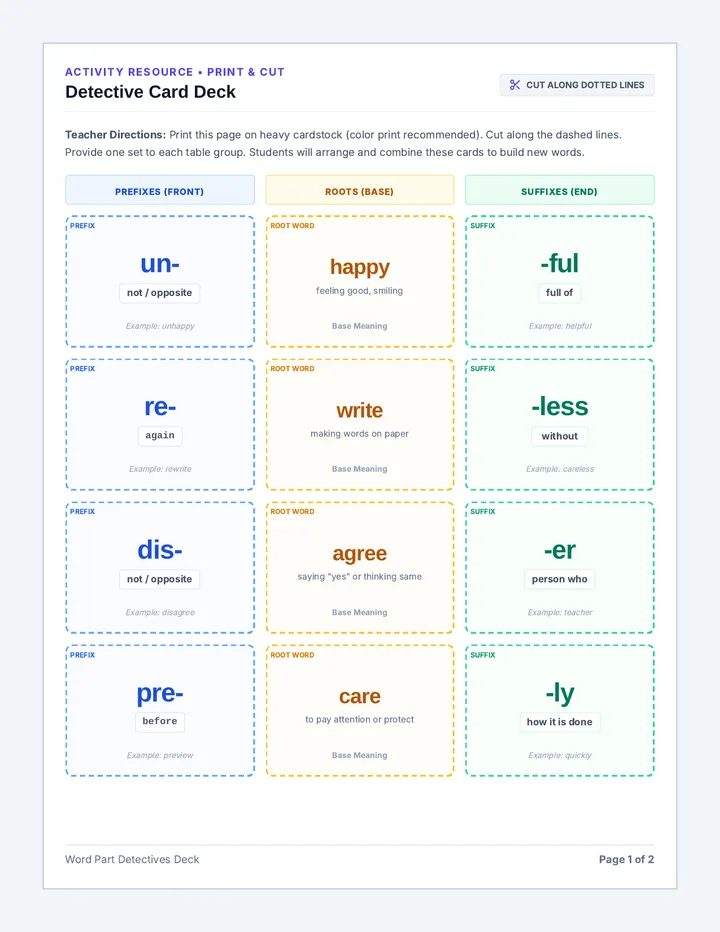
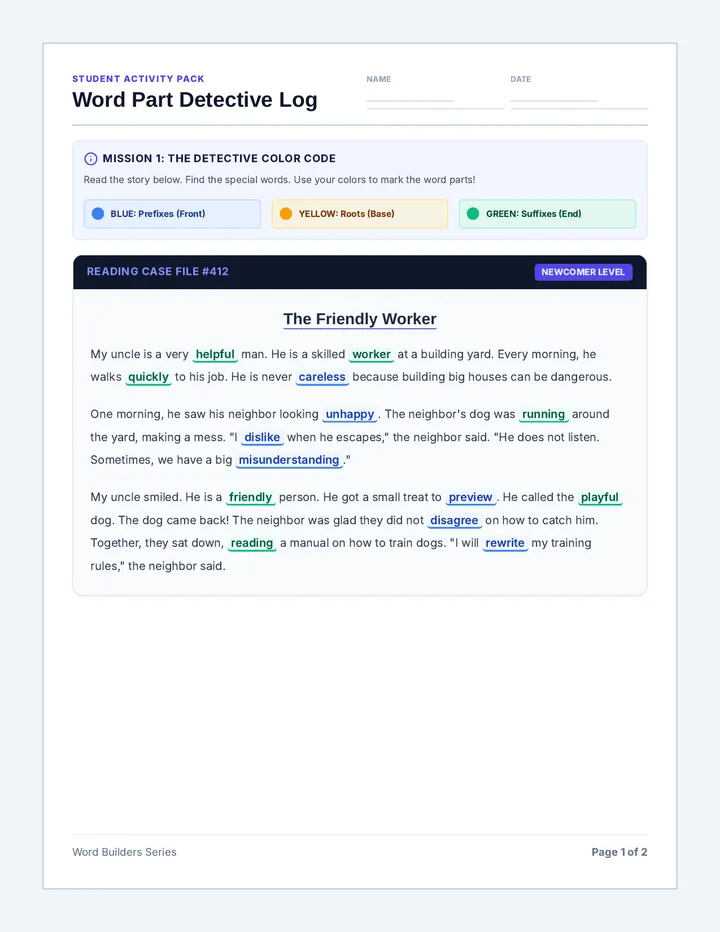
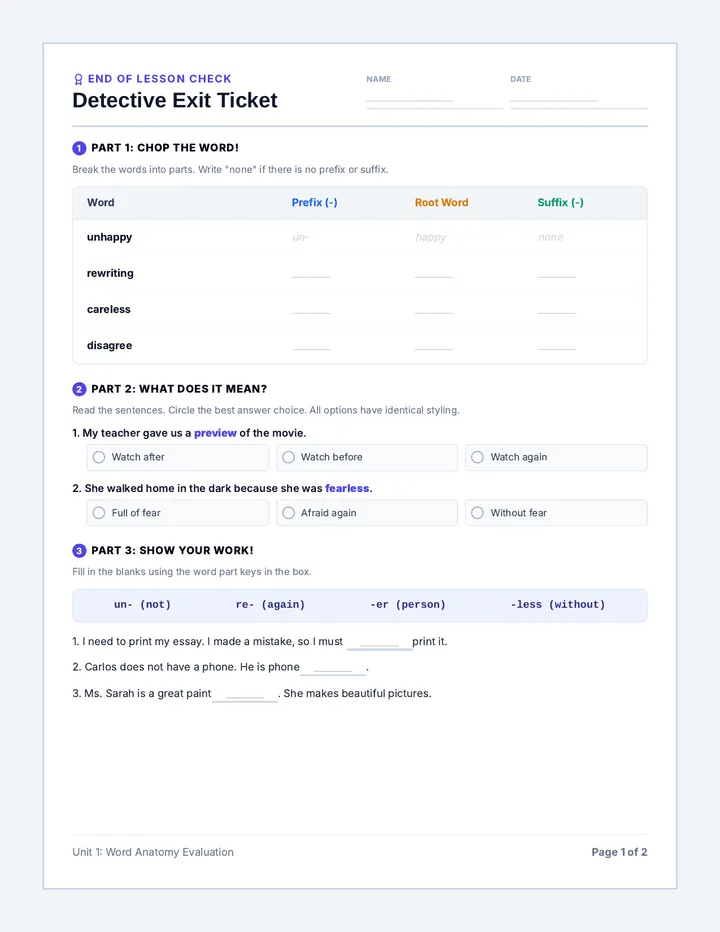
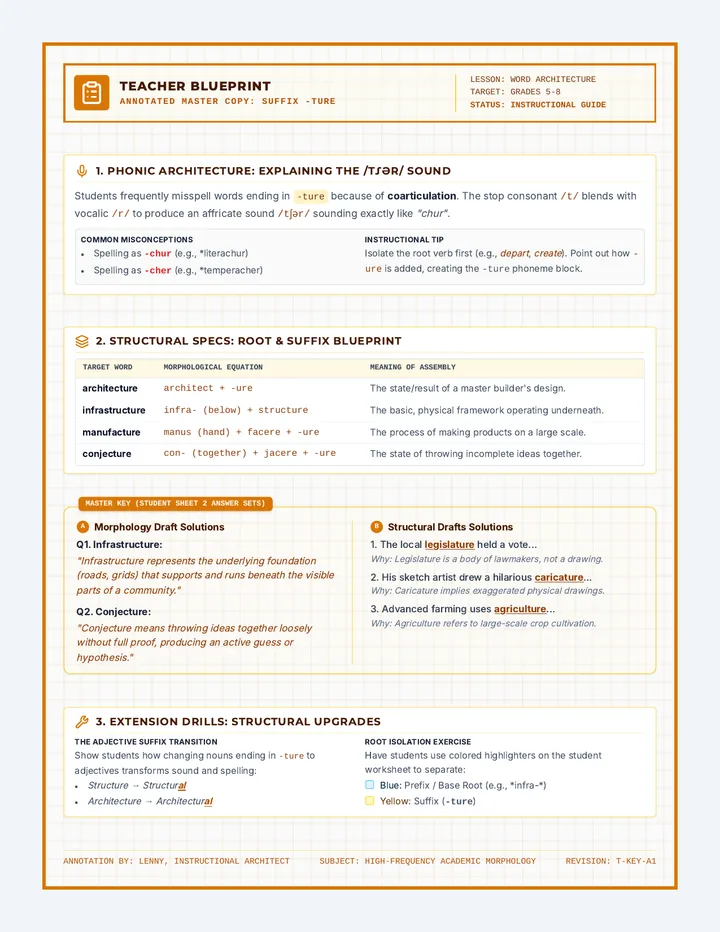
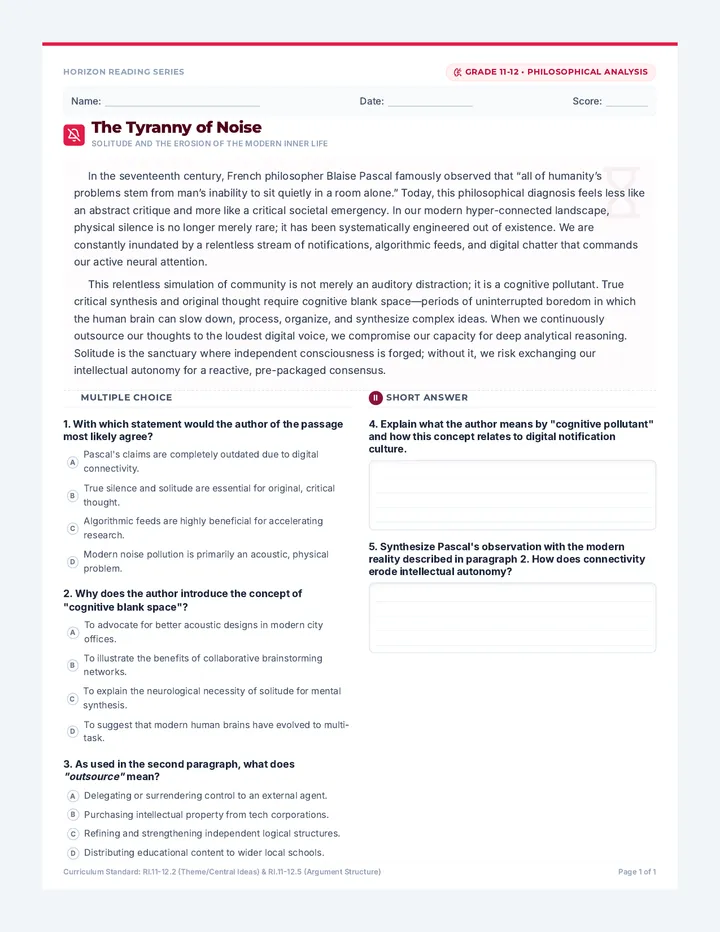
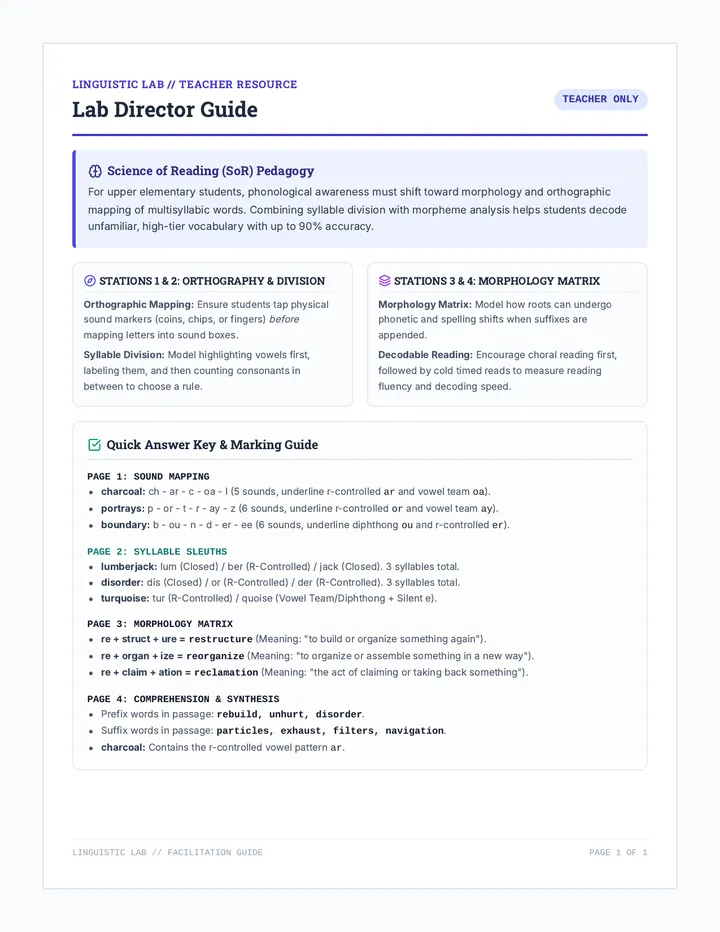
A 30-45 minute lesson focused on decoding multisyllabic words using morphology (prefixes, suffixes, and root words). Students will learn to 'mine' for meaning by breaking words into their component parts.
A deep dive into the life, legacy, and dreams of Suyuan Woo, the founding mother of the Joy Luck Club. Students will explore her resilience in war-torn China and her enduring hope for her daughters.
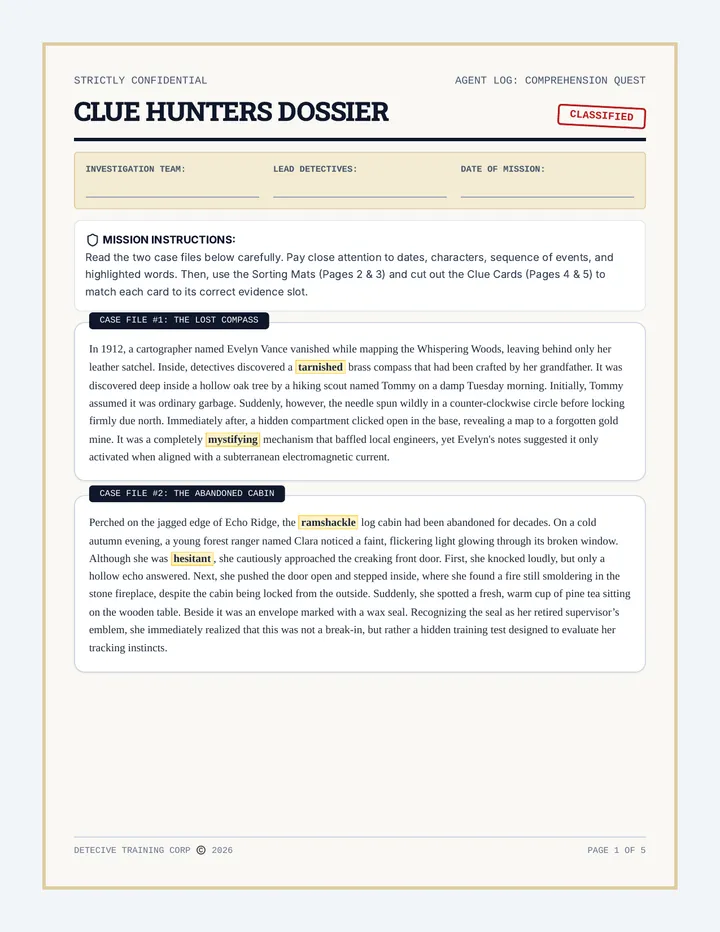
A lesson focused on determining the main idea and identifying supporting key details using a science passage about animal architects. Students will learn to distinguish between the big picture and the specific facts that support it.
A beginner-friendly lesson on using the present perfect tense to talk about past experiences without a specific time. Includes direct instruction on the has/have + past participle formula and interactive matching activities.
A lesson focusing on identifying a speaker's points and the reasons and evidence they use to support them, designed for 5th-grade students (SL.5.3).
A lesson focused on writing objective summaries of non-fiction texts by distinguishing between facts and personal opinions using an animal-themed article.
Students practice organizing informational writing by reordering scrambled paragraphs about historical figures, focusing on logical flow and grouping related accomplishments.
A lesson focused on CCSS W.5.1.B where students learn to provide logically ordered reasons supported by genre-specific facts and details to explain their book preferences.
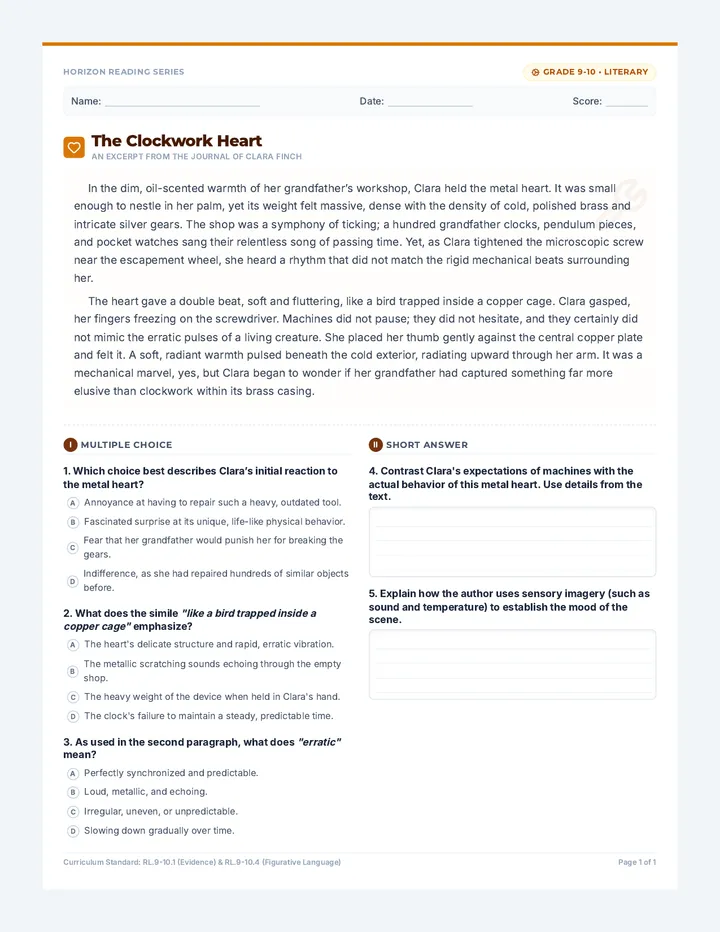
A lesson focused on making complex inferences supported by multiple pieces of textual evidence. Students act as 'Inference Investigators' to decode short fictional passages and build strong, evidence-backed conclusions.
A 30-45 minute lesson on summarizing short stories presented through visual media, using the 'Somebody Wanted But So Then' framework and storyboard techniques.
A lesson introducing interjections as expressive 'bursts' of emotion that stand alone from the rest of the sentence. Students will learn to identify common interjections and use them correctly with appropriate punctuation in a comic-book-inspired format.
A lesson focused on teaching students how to infer character traits and feelings from short fictional scenarios. Includes a themed detective worksheet and an answer key.
A science-focused lesson where students learn to paraphrase information using short passages about diverse animal habitats. Students will practice identifying key details and restating them in their own words without changing the original meaning.
A detective-themed grammar lesson focused on correctly using relative pronouns 'who', 'which', and 'that'. Students will identify the correct pronouns for people versus objects through interactive instruction and a practice mission.
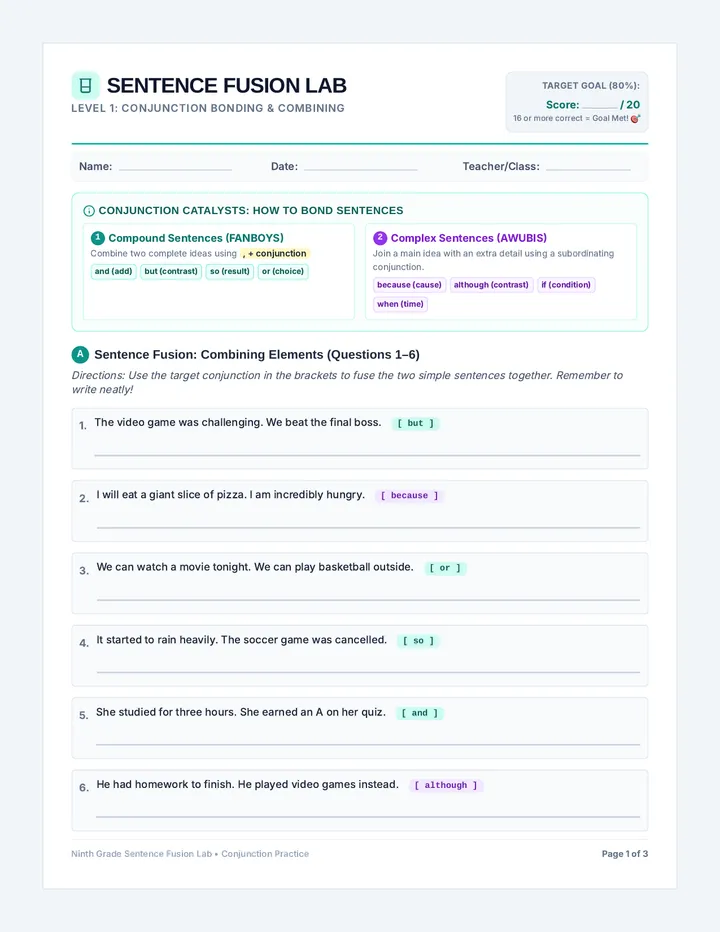
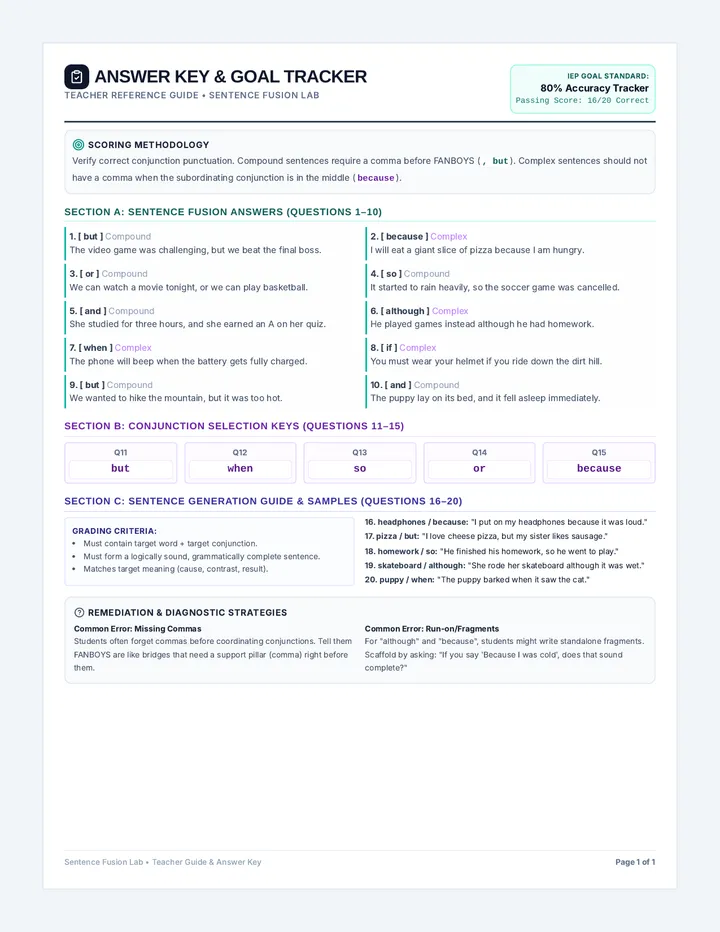
A lesson focused on constructing complex sentences using subordinating conjunctions, featuring architectural-themed scaffolds and sentence frames for Special Education support.
Culminating creative project where students reimagine the story in a modern setting, focusing on thematic preservation and character consistency.
Synthesizing the ending of the novella. Students explore the emotional impact of the conclusion and prepare for final project work.
Analysis of Part III, the arrival of the Lodgers, and the symbolic importance of music. Focus on the final break in family bonds.
In-depth analysis of character motivations and power shifts within the household. Using dialogue to understand how the family changes their roles.
Examination of Gregor's internal monologue and physical decline in Part II. Focus on themes of mental health and the loss of voice.
Analysis of the conflict between Gregor and his employer. Focus on the theme of 'The System' vs. the individual through the lens of the Manager's visit.
Introduction to the Samsa Family Case File. Students track character traits and initial reactions in Part I, focusing on how relationships begin to shift.
Students investigate the concept of 'Kafkaesque' and explore the life of Franz Kafka. Focus on vocabulary acquisition and the emotional landscape of isolation.
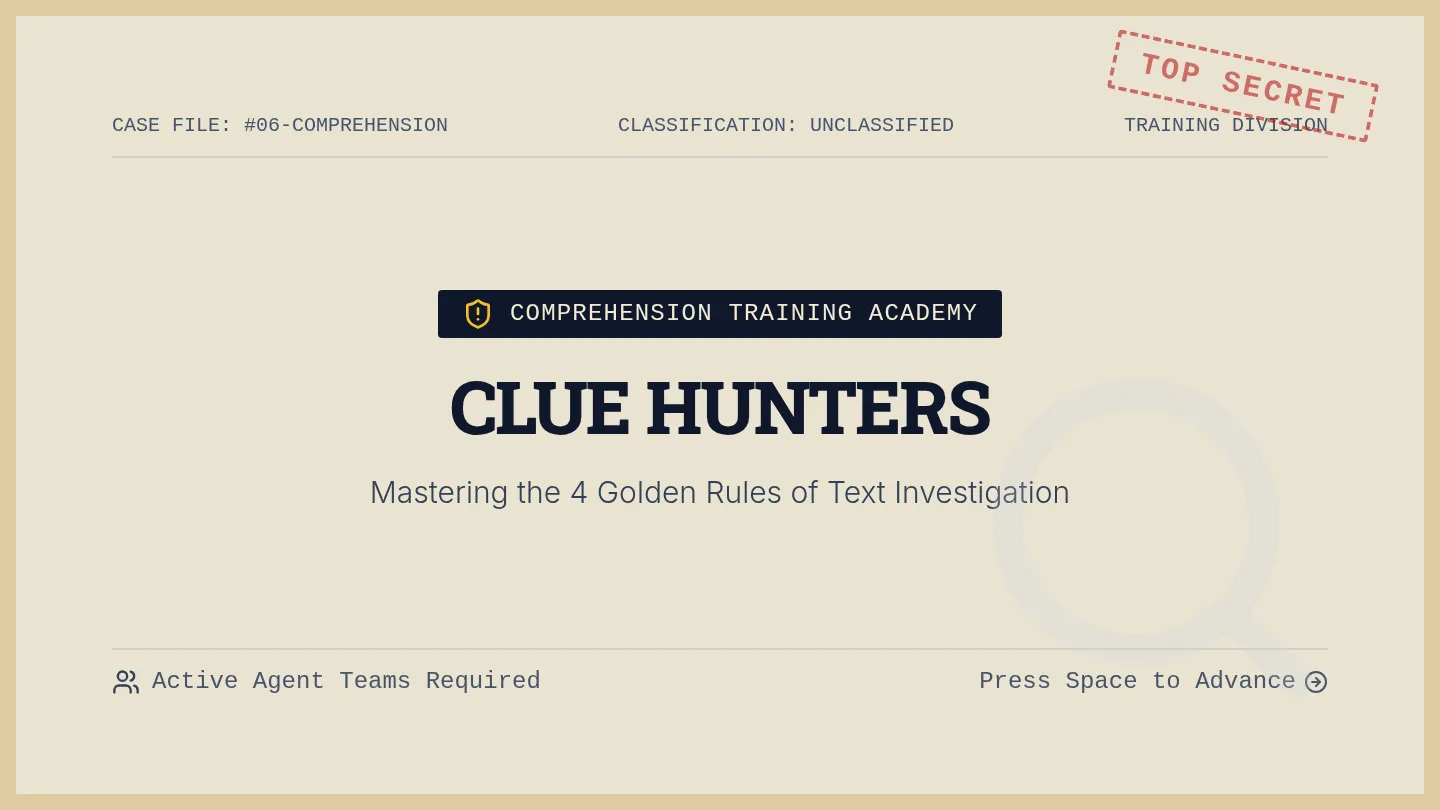
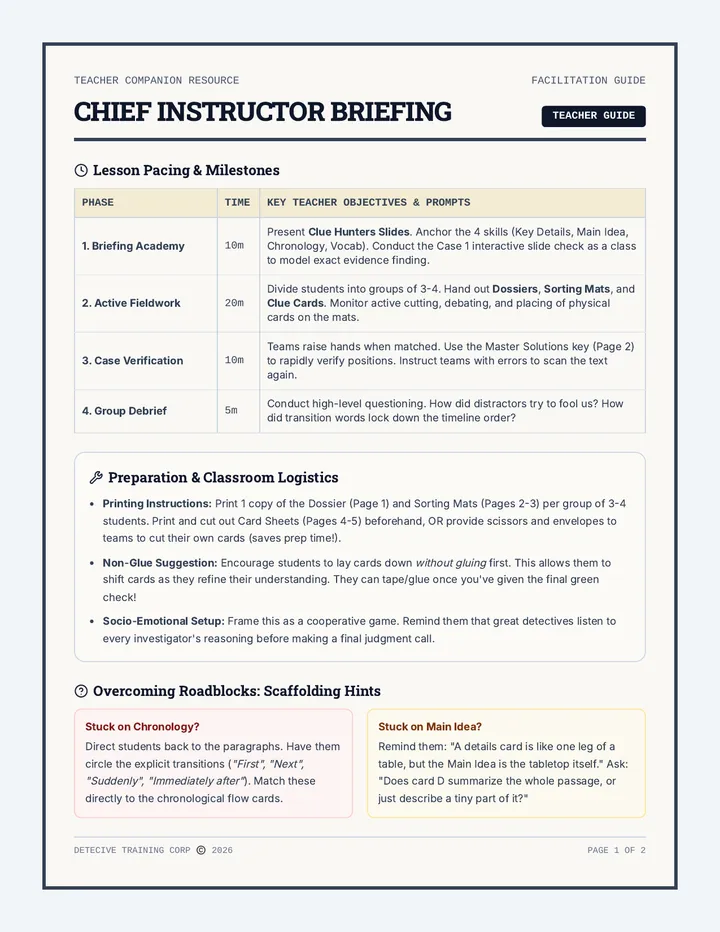
A detective-themed lesson teaching 3rd-5th grade students how to use reading comprehension strategies like predicting, questioning, summarizing, and citing evidence to 'crack the case' of any text.
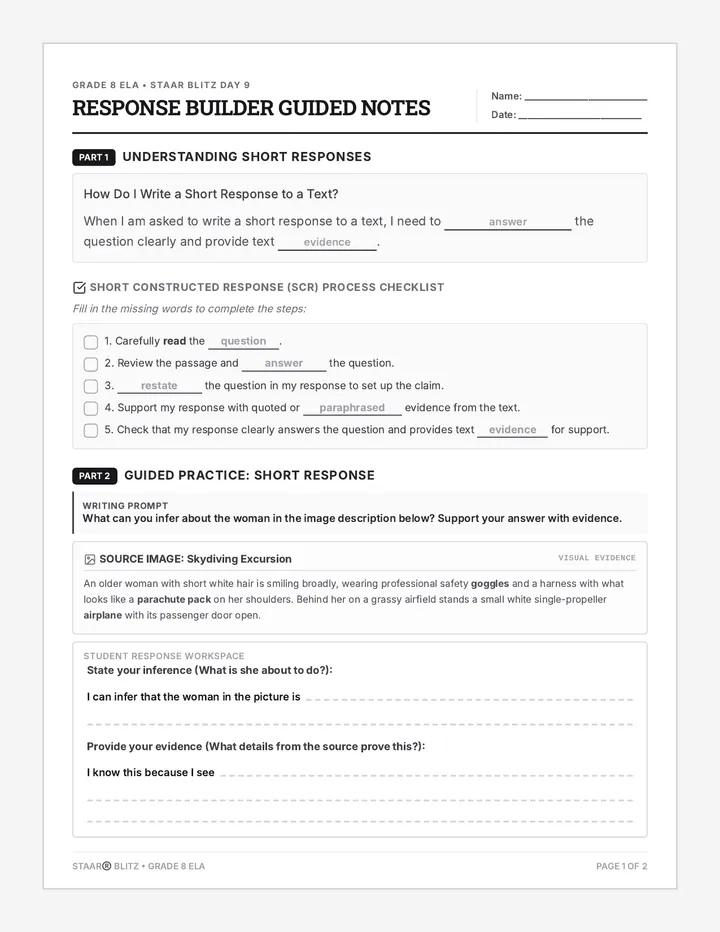
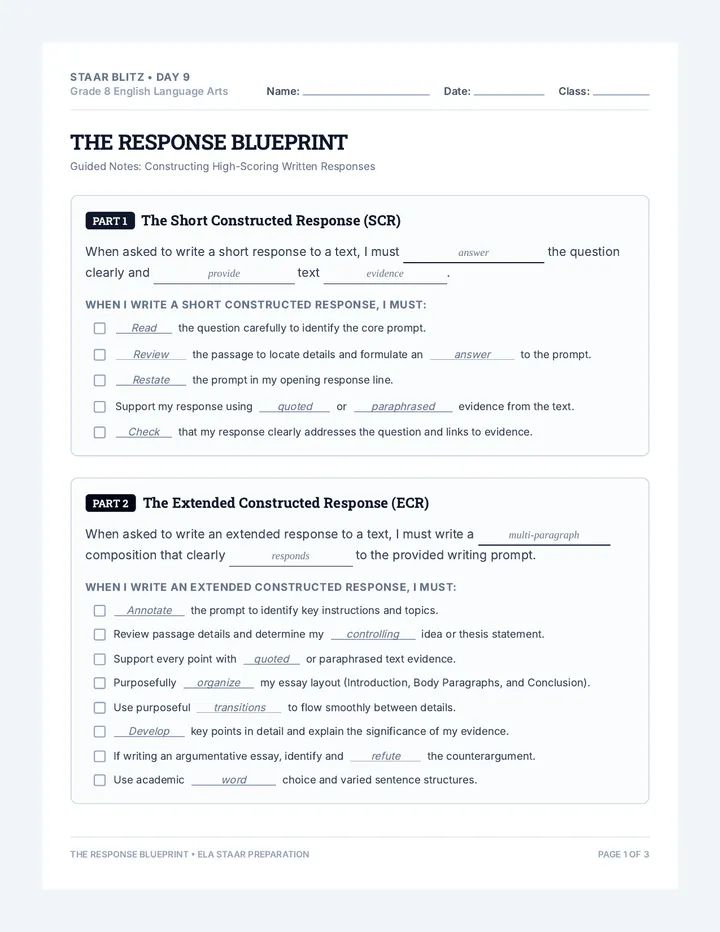
This lesson teaches middle school students the RACE strategy (Restate, Answer, Cite, Explain) to construct high-quality, evidence-based responses for standardized tests and classroom assessments. Students will learn to architect their answers using a structural blueprint approach.
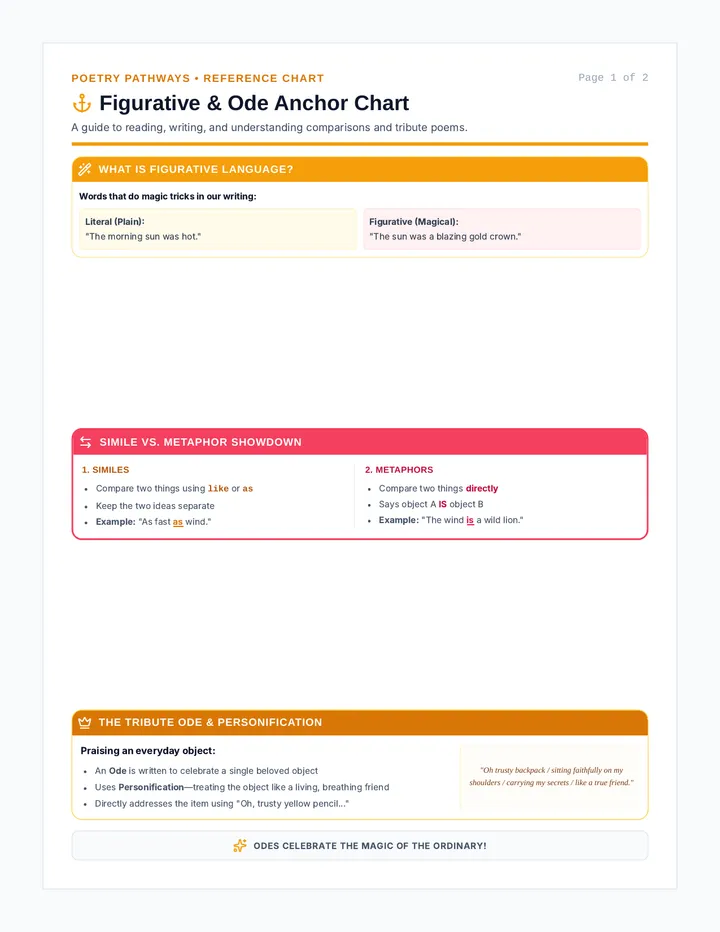
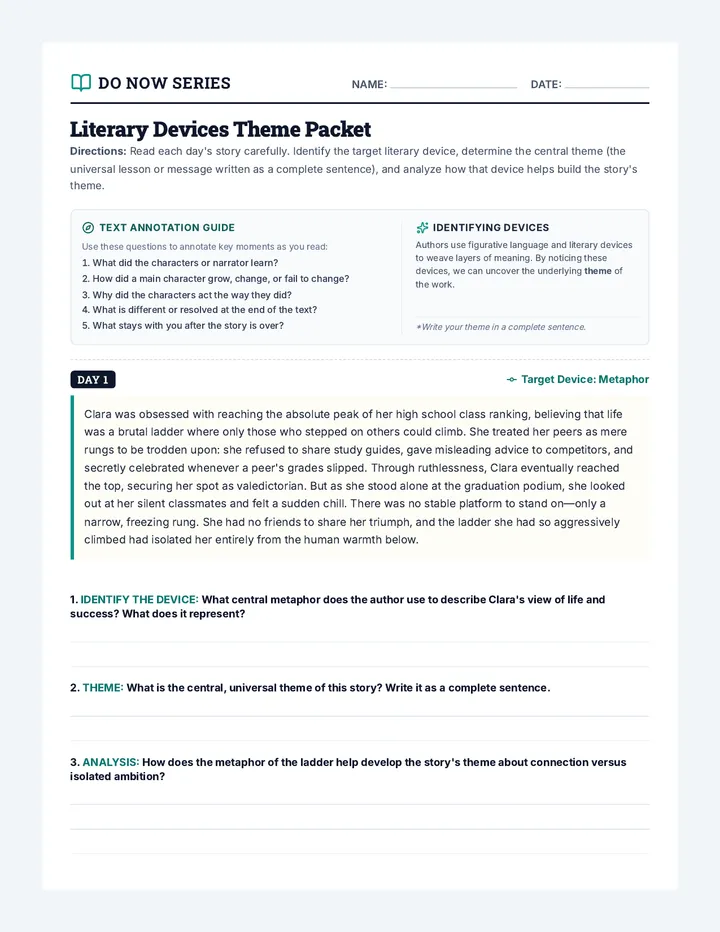
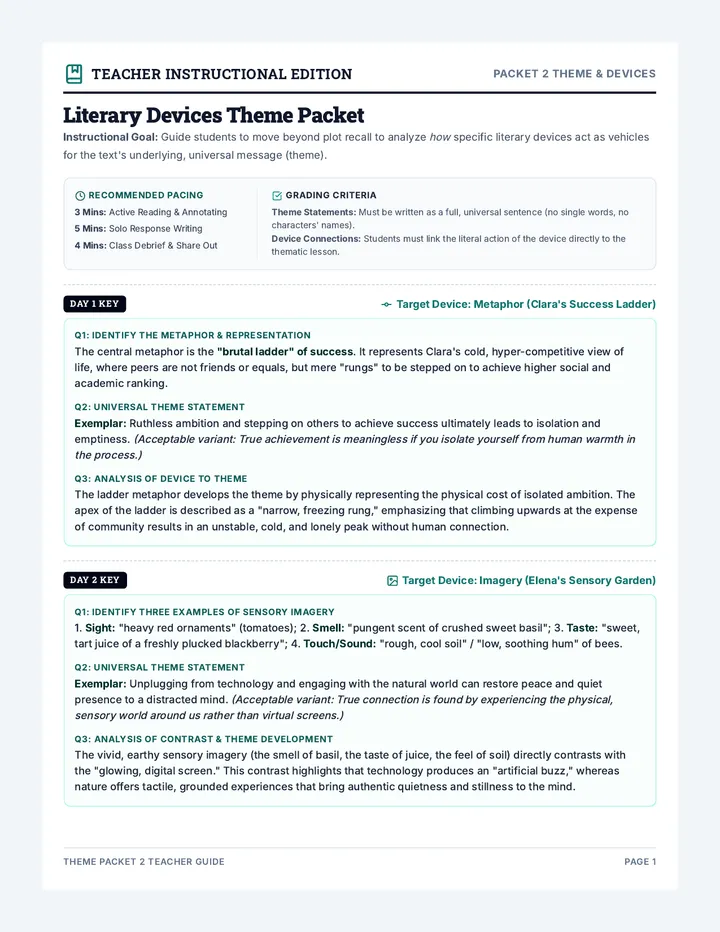
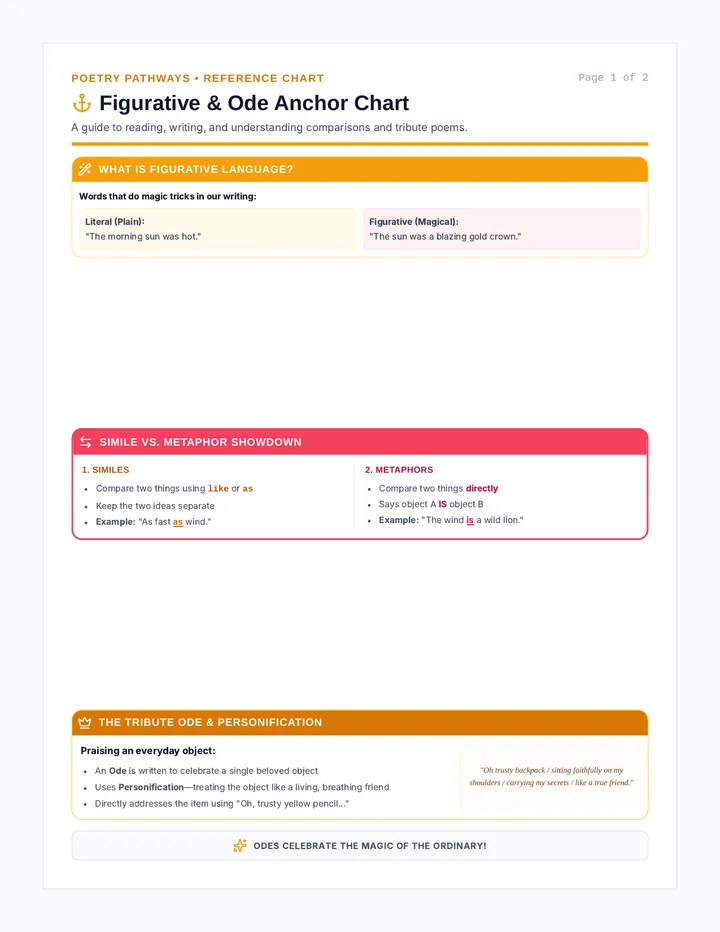
A foundational lesson on identifying and using similes, metaphors, and personification to enhance writing and descriptive language.
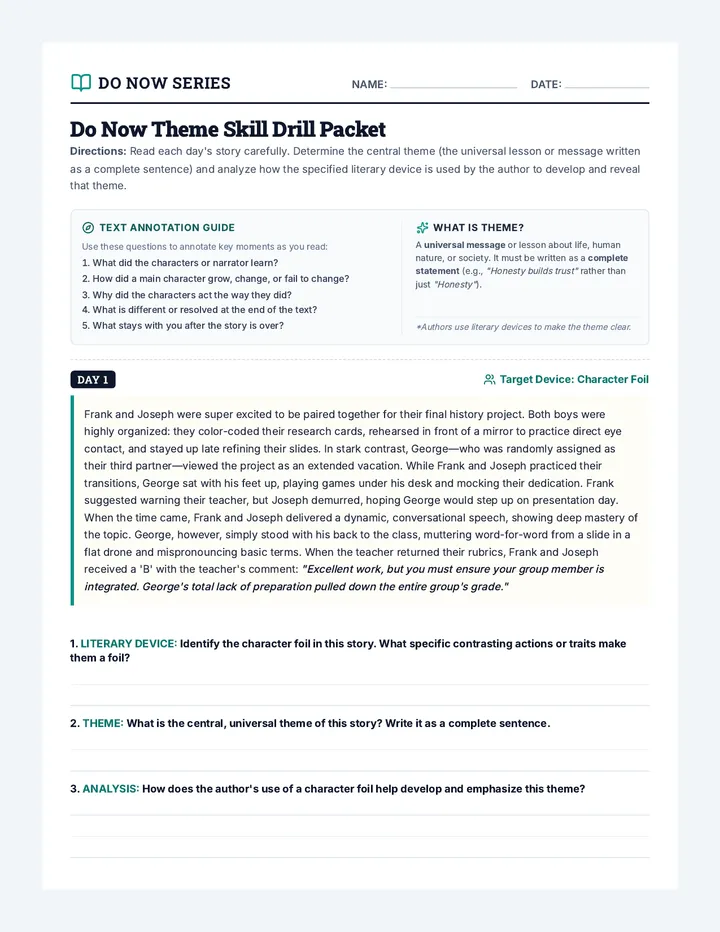
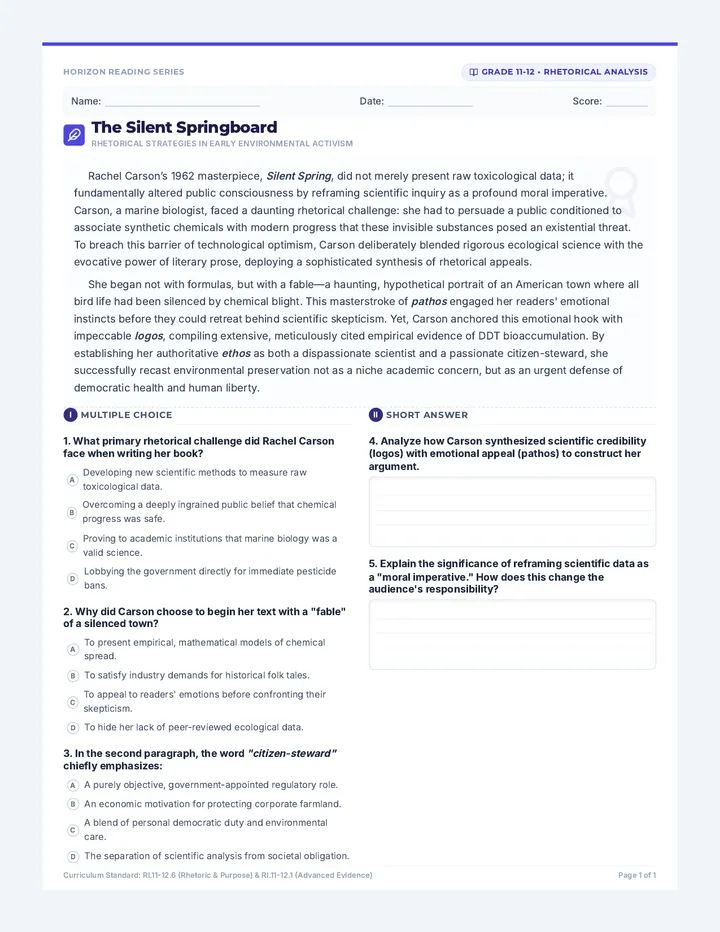
An introductory lesson on identifying Author's Purpose (Persuade, Inform, Entertain) and uncovering the deeper Author's Message through short text analysis.
A comprehensive set of grading tools and rubrics for 6th-grade informational essays, featuring analytic and single-point rubrics to streamline feedback and assessment.
An active, spy-themed ELD lesson focused on mastering ELPA listening standards through scaffolded practice, oral directions, and collaborative tasks.
A lesson focused on common word usage errors, homophones, and frequently confused words for 4th-grade writers. Students practice identifying and using the correct words in context through detective-themed scenarios.
An introductory lesson for Kafka's 'The Metamorphosis' that explores themes of identity, external labels, and transformation through the lens of astrology and personal argumentation.
A comprehension lesson focused on identifying character emotions and their causes through the story of Luis at summer camp. Students analyze how sharing personal culture can bridge the gap between home and new environments.
Cette formation pour les professeurs de TPS-PS vise à professionnaliser la conception des "traces" d'activités (cahiers de vie, affichages). En s'appuyant sur les photos de classe et les guides 2025, les enseignants apprennent à rendre les apprentissages explicites pour les élèves et les familles.
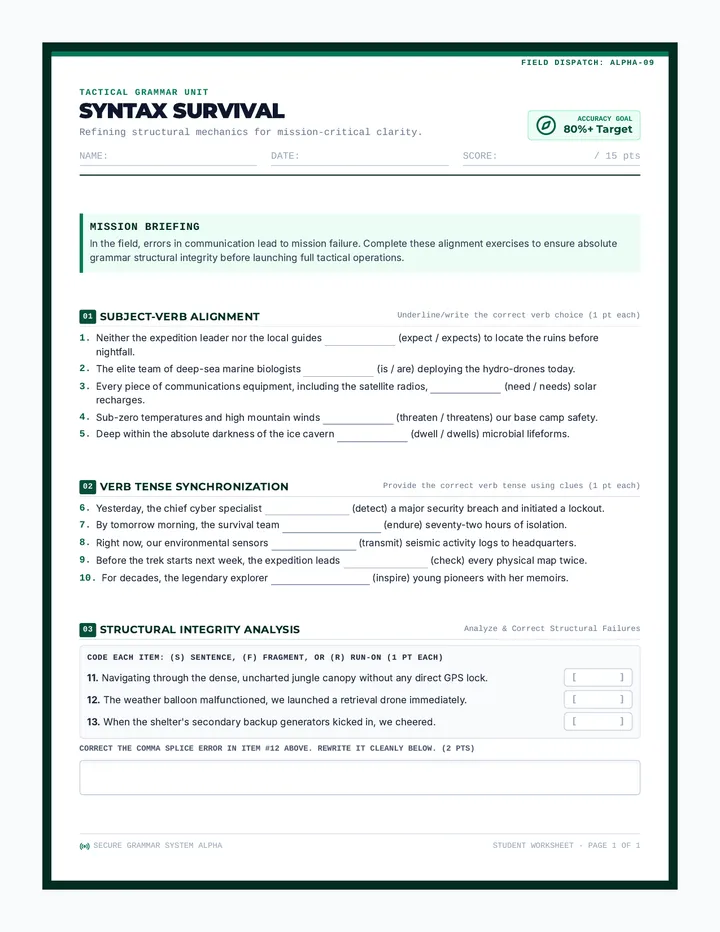
Finalizes the mission with interactive writing prompts and a comprehensive worksheet to assess encoding and sentence construction skills.