Syllogisms, deductive validity, and the principles of inductive probability for evaluating evidence-based claims. Targets common logical fallacies and the construction of sound, persuasive arguments.
An introductory slide deck for the Evidence Detectives lesson, defining Claim, Evidence, and Reasoning with examples and a collaborative case study.
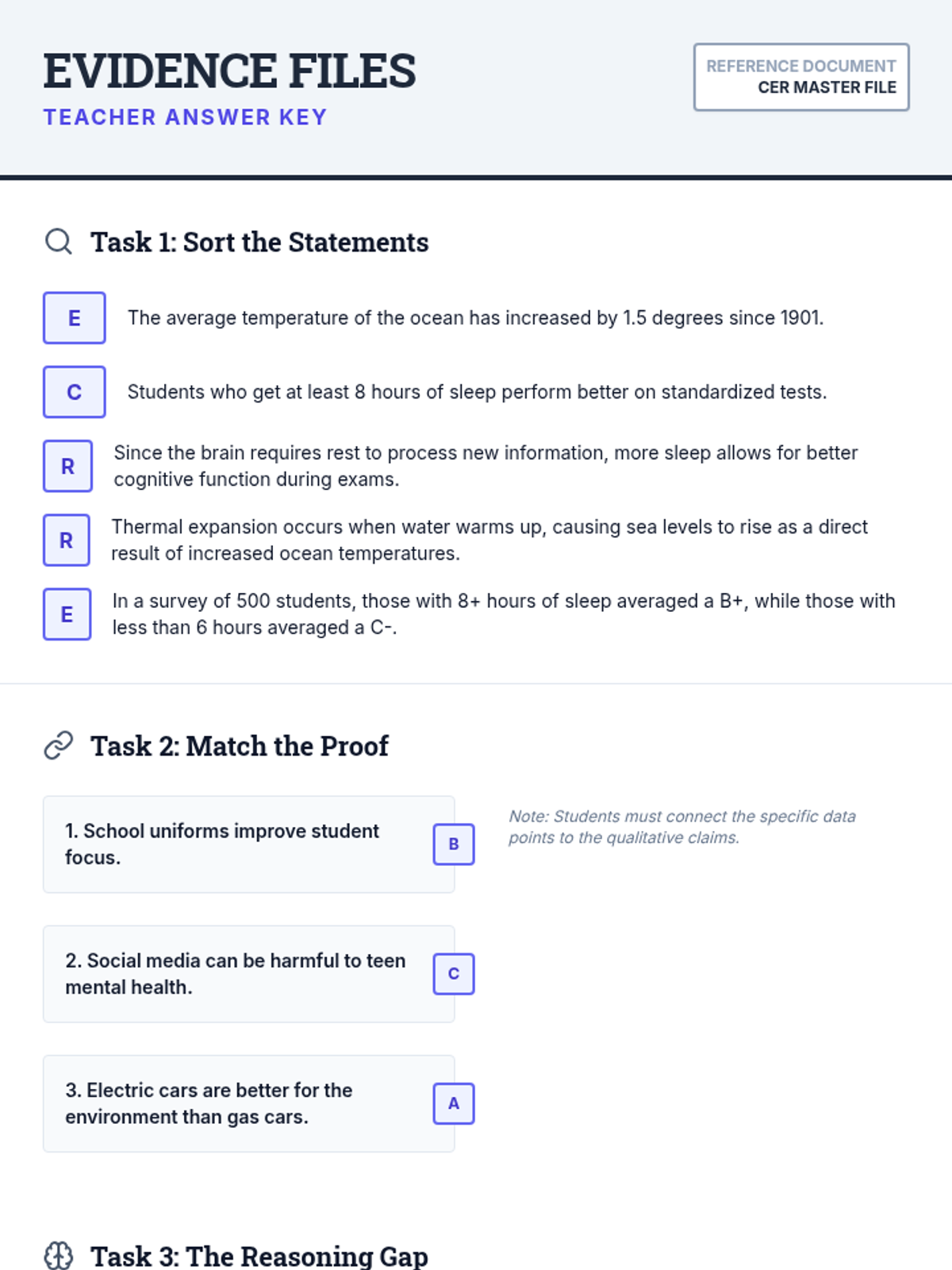
A teacher answer key for the Evidence Files Worksheet, providing sample responses and correctly identified CER components.
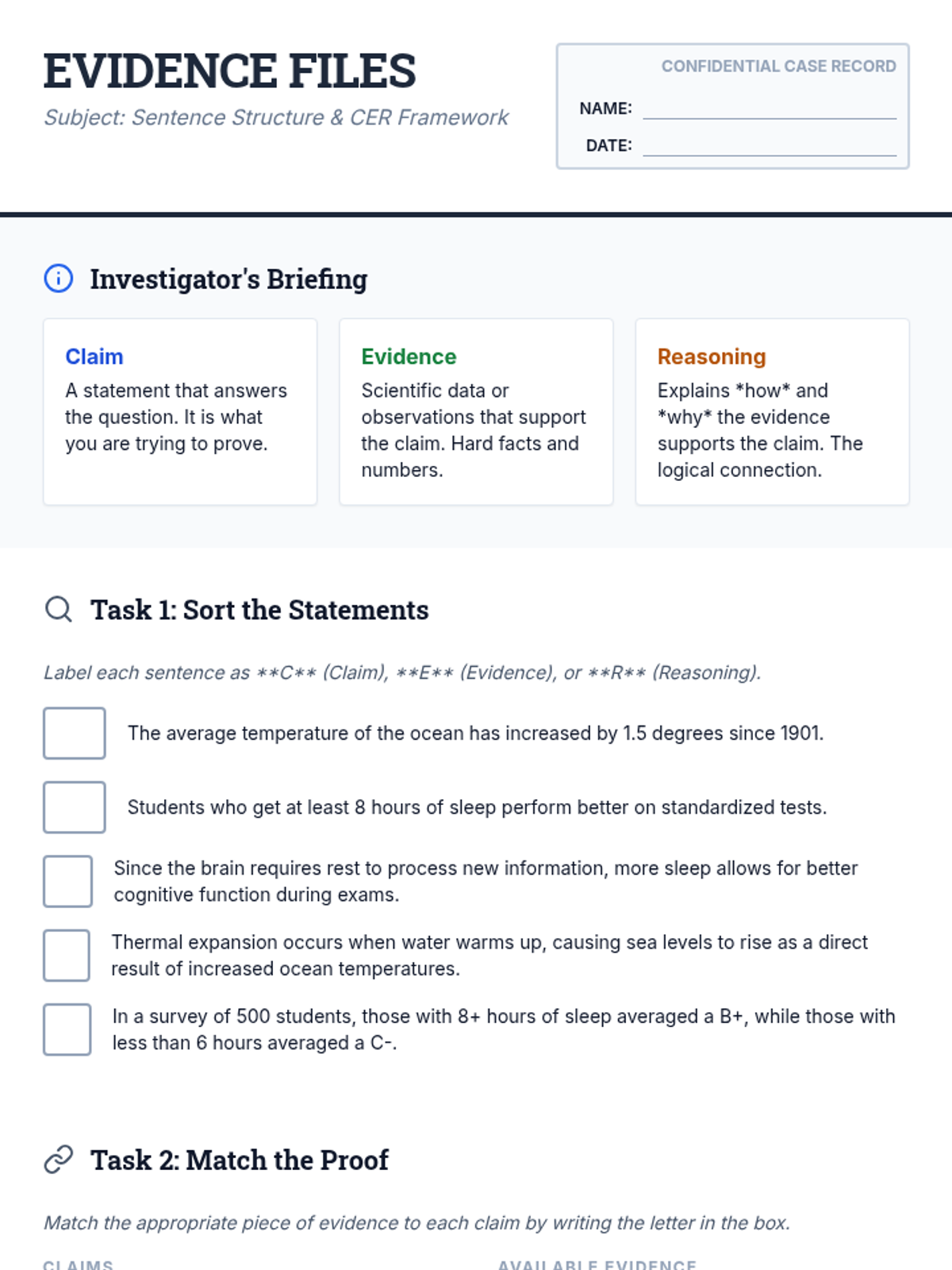
A comprehensive worksheet focusing on the Claim, Evidence, and Reasoning (CER) framework, featuring identification tasks, matching exercises, and creative writing prompts using an investigative theme.
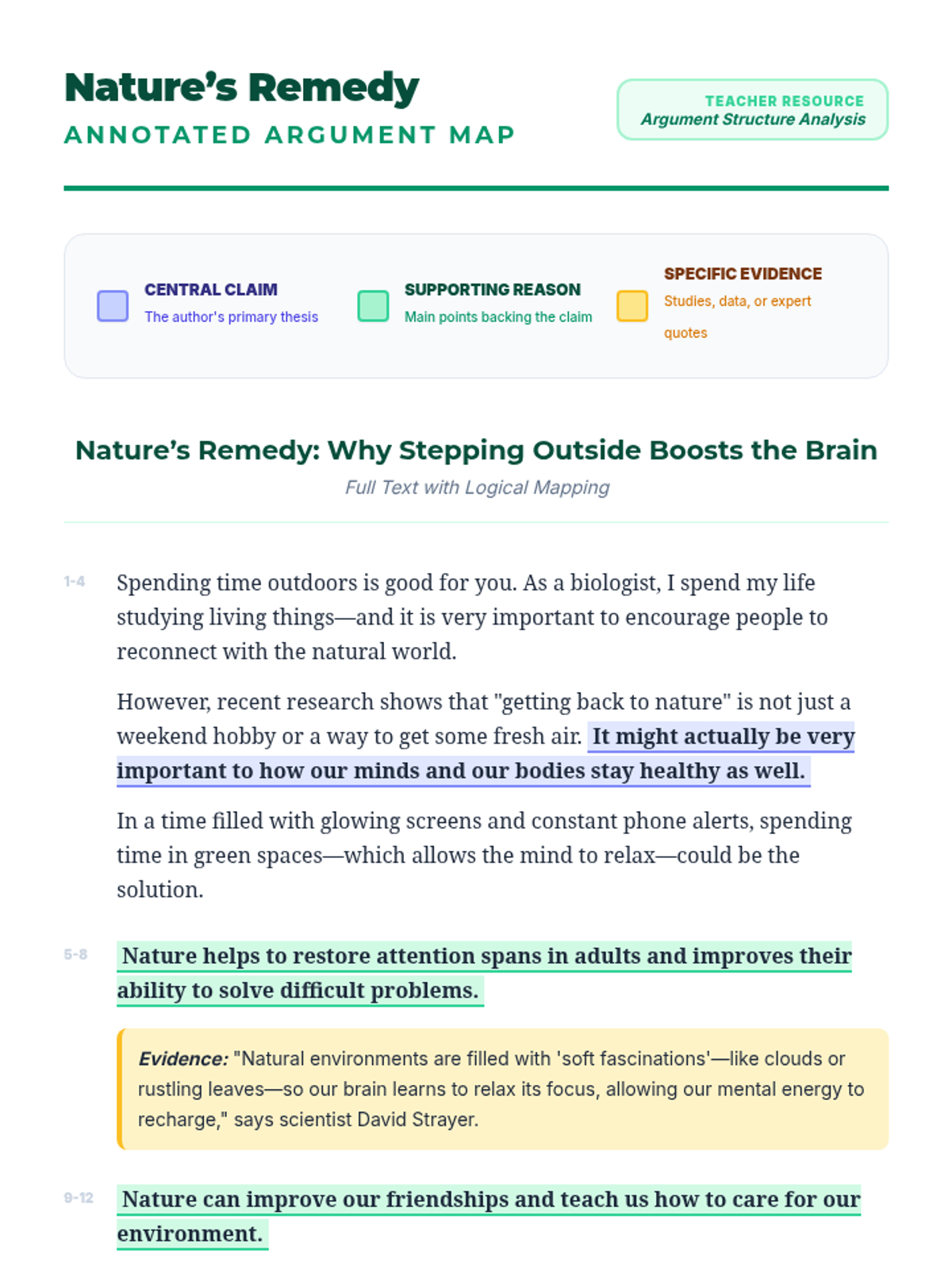
A teacher-facing annotated version of the 'Nature’s Remedy' passage, using a color-coded highlight system to identify the author's central claim, supporting reasons, and specific scientific evidence throughout the text.
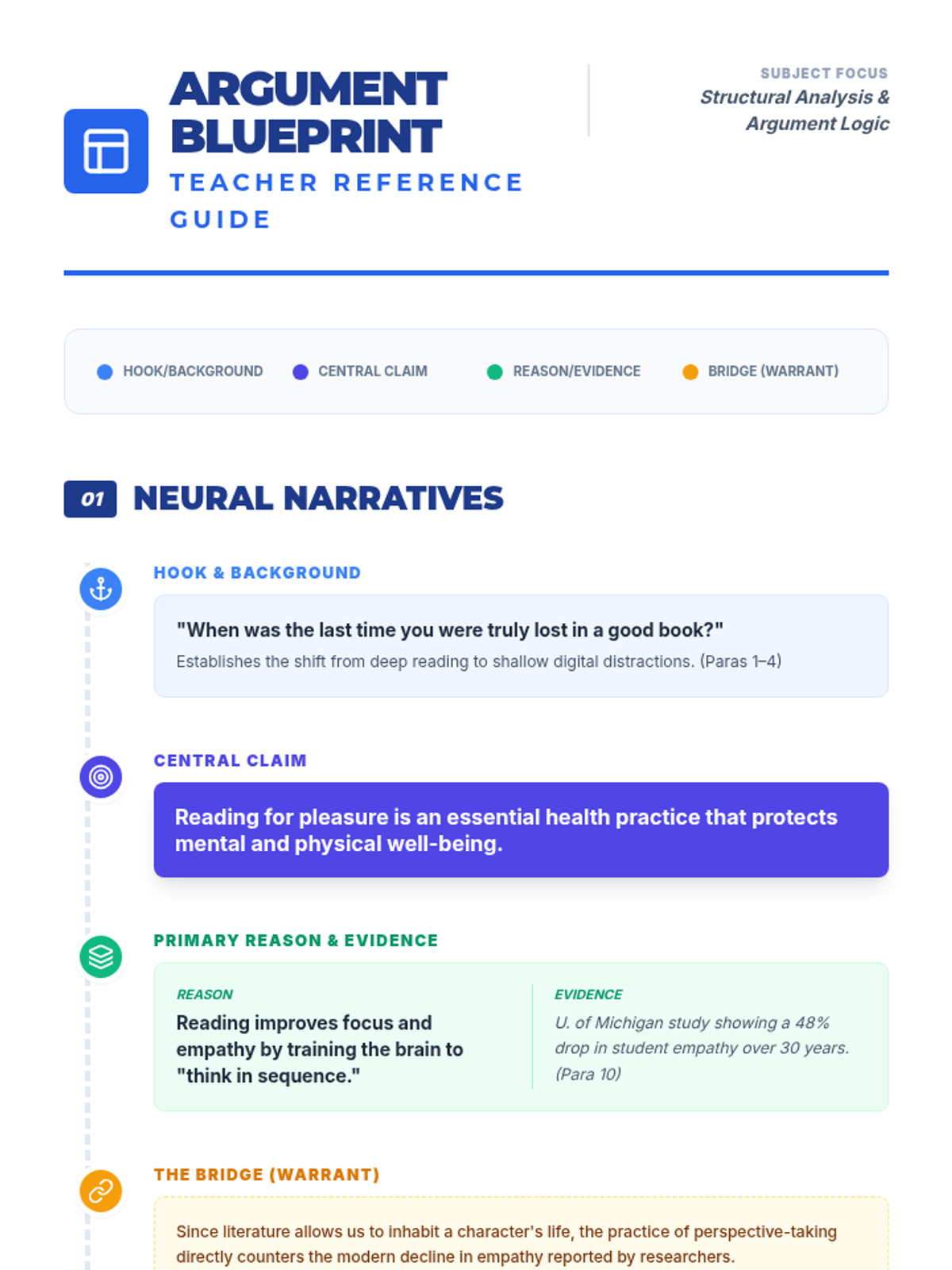
A one-page (per passage) teacher cheat sheet identifying the structural components of an argument: hook, background knowledge, claim, reasons, evidence, the 'bridge' (warrant), and conclusion.
A comprehensive 6th-grade slide deck for 'Nature’s Remedy' featuring the full passage chunked across slides, all 9 practice questions, and detailed evidence-based explanations for every answer.
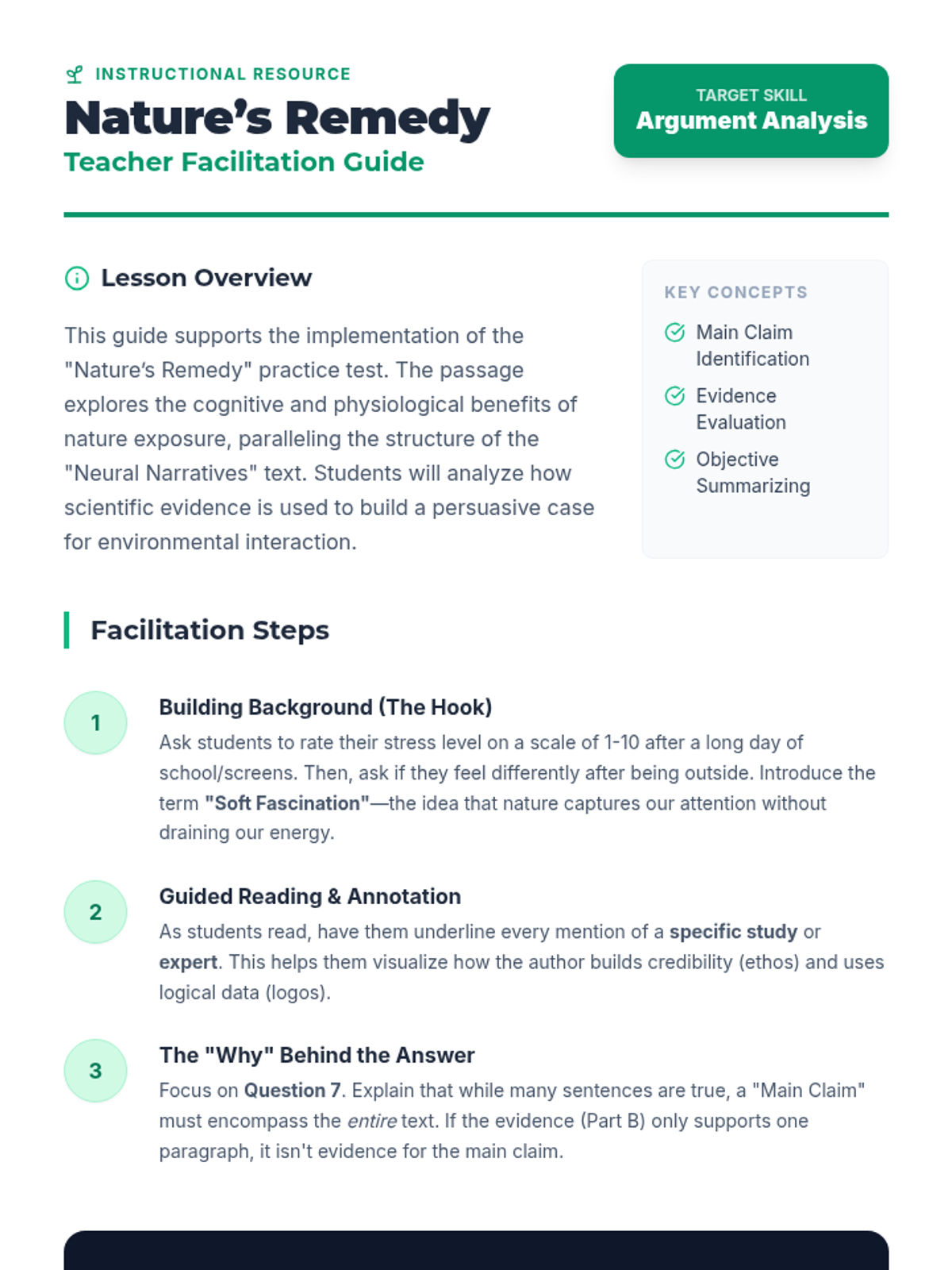
A dedicated facilitation guide for teachers using the Nature’s Remedy passage, featuring instructional steps, building background hooks, and differentiated discussion questions.
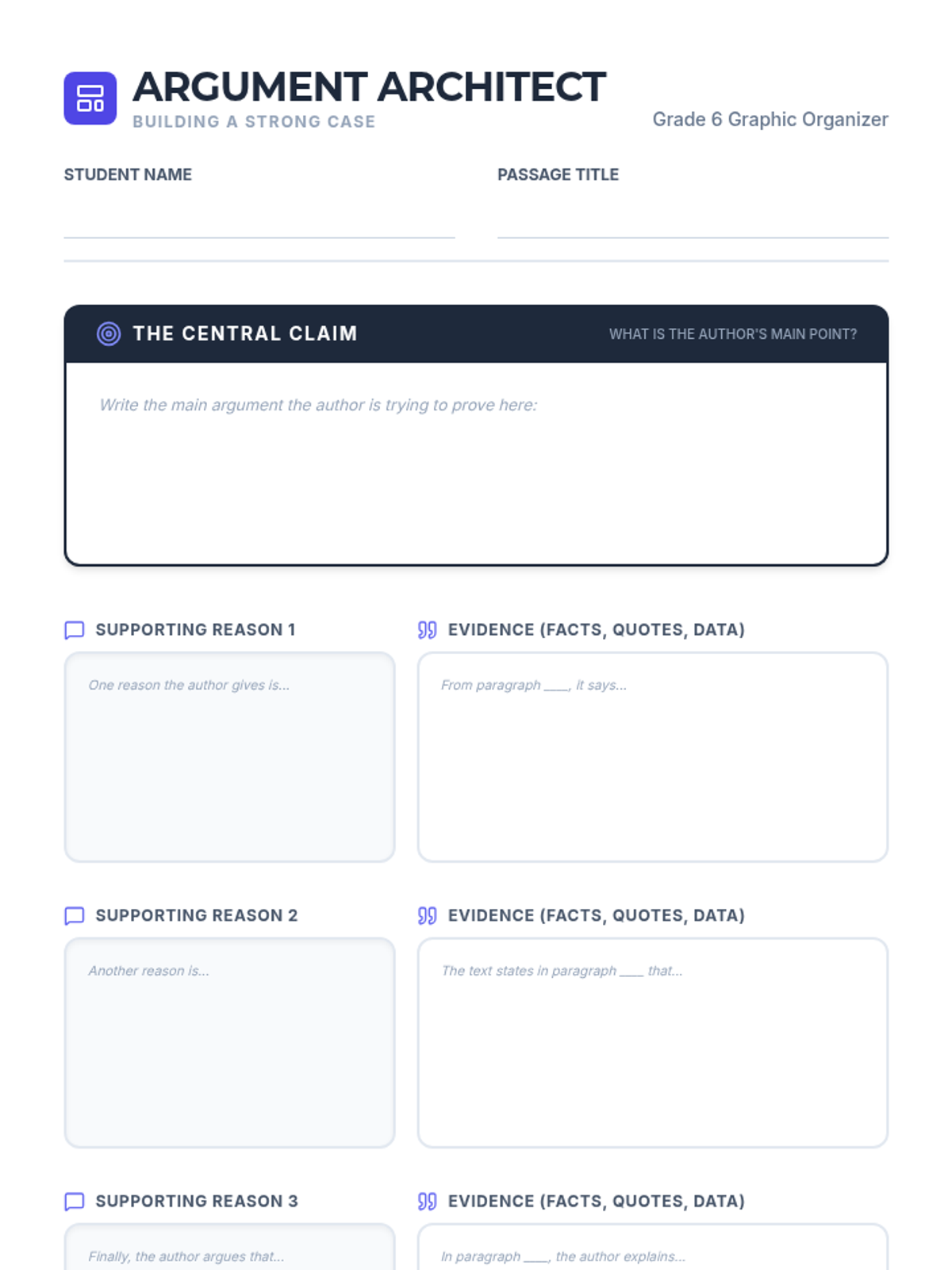
A student-facing graphic organizer for analyzing the structure of an argument, providing designated spaces for the central claim, supporting reasons, and specific evidence.
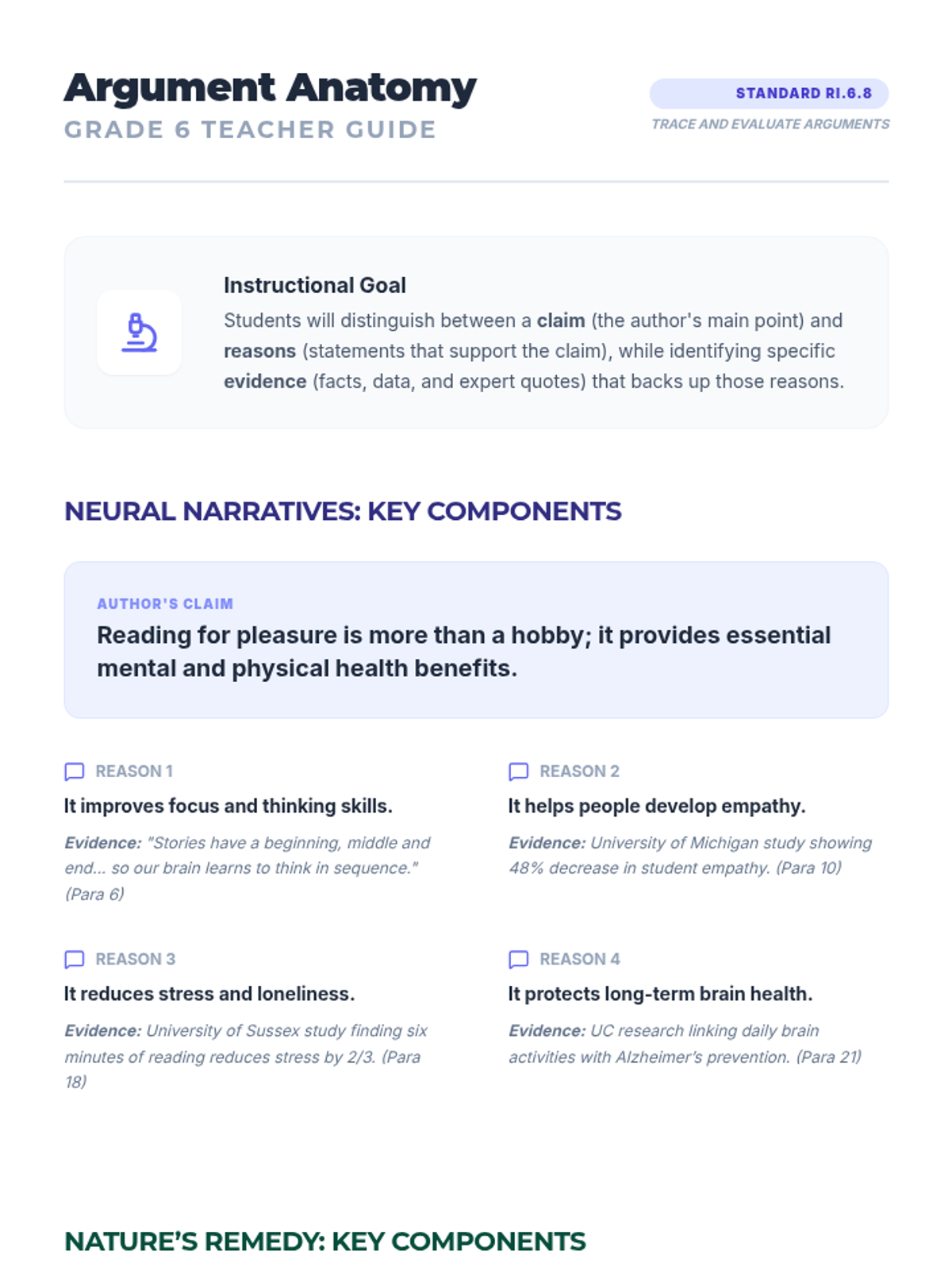
A teacher resource guide that identifies the main claim, supporting reasons, and specific evidence for both 'Neural Narratives' and 'Nature’s Remedy' passages to assist in instructional analysis.
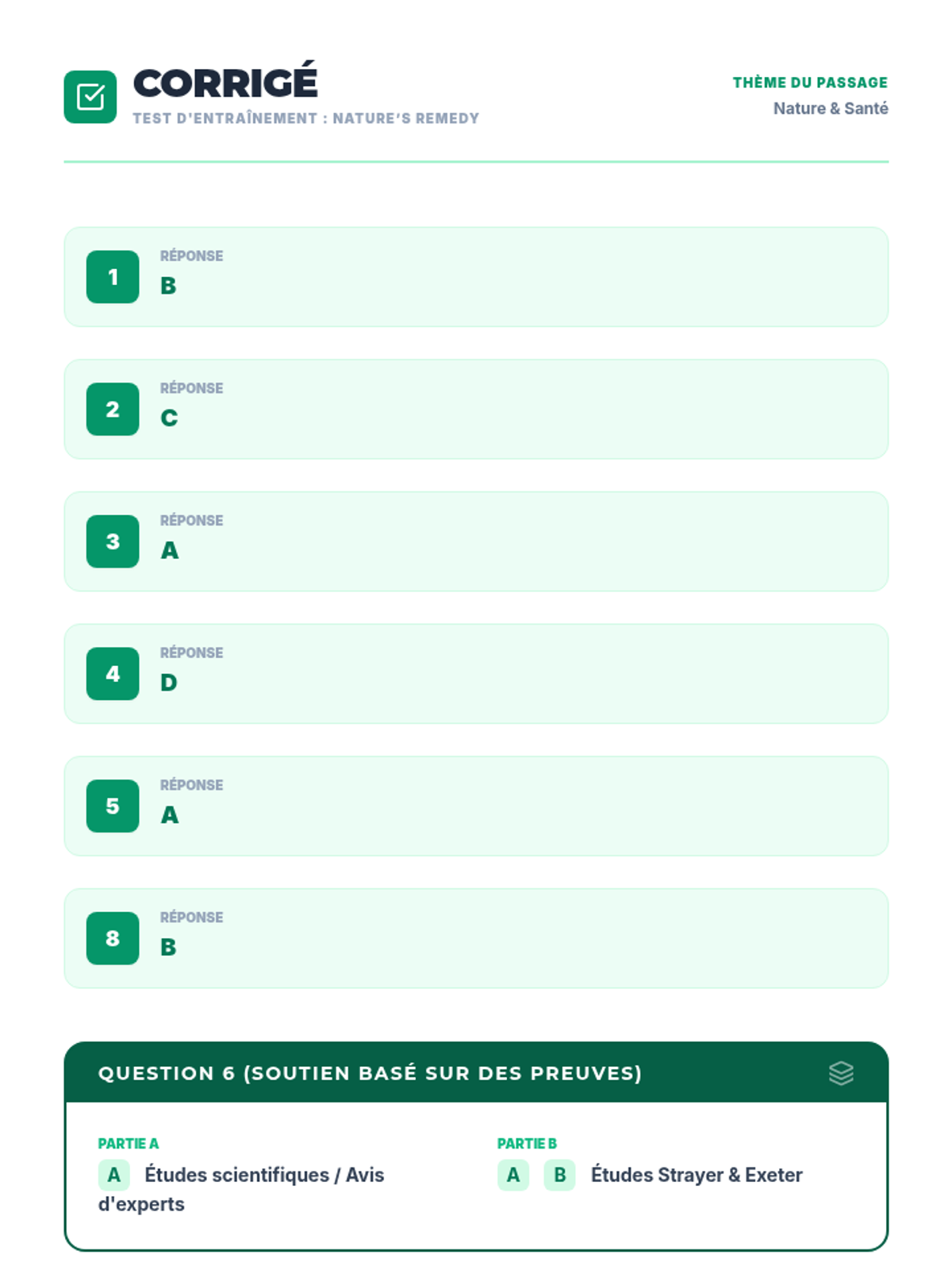
An answer key for the Nature’s Remedy Practice Test, following the same structural format as the Neural Narratives key to ensure consistency in grading and review.
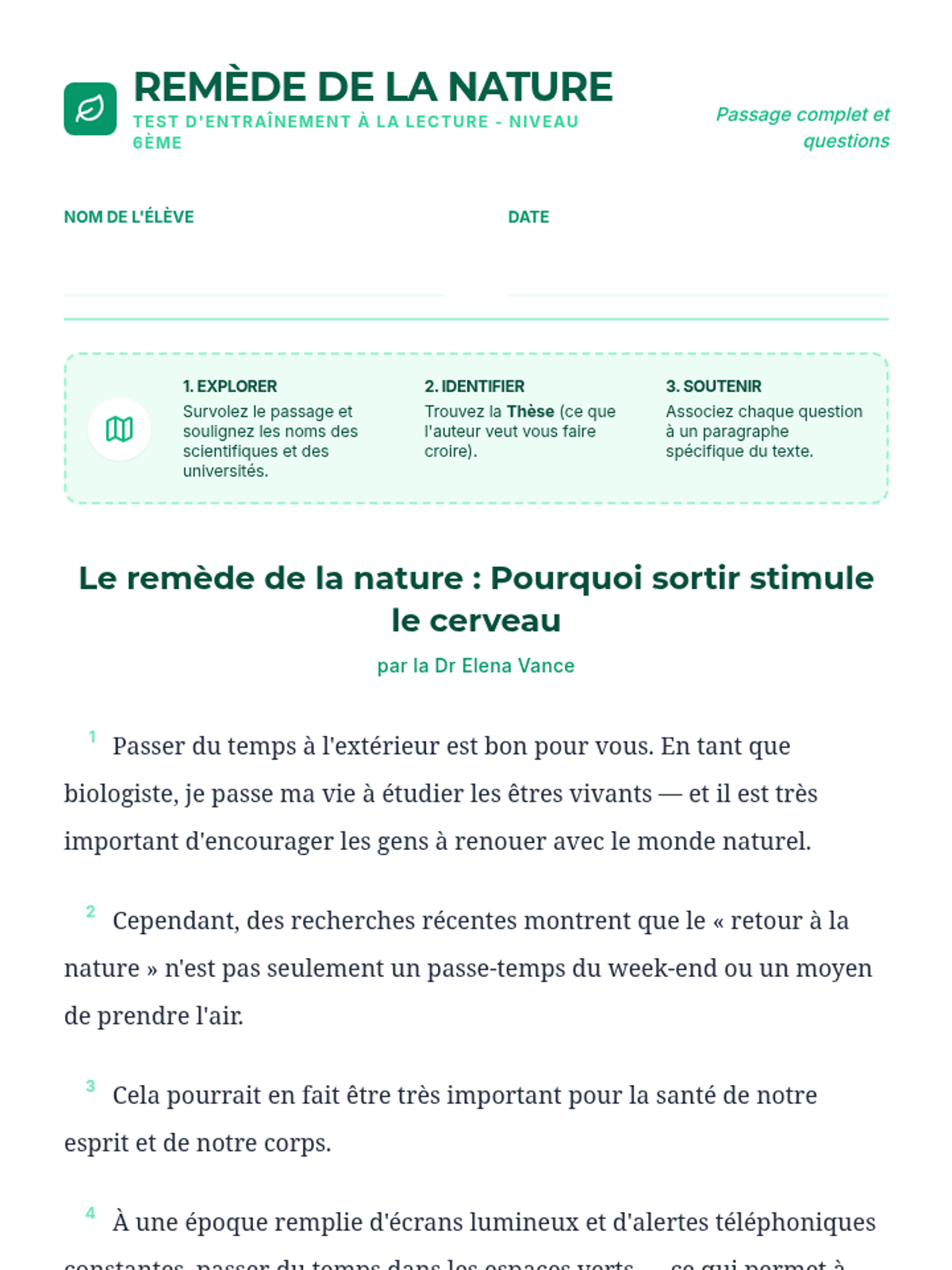
A parallel practice test using a new passage, 'Nature’s Remedy', simplified for 6th grade and featuring mirrored formatting and question types to provide a secondary review opportunity.
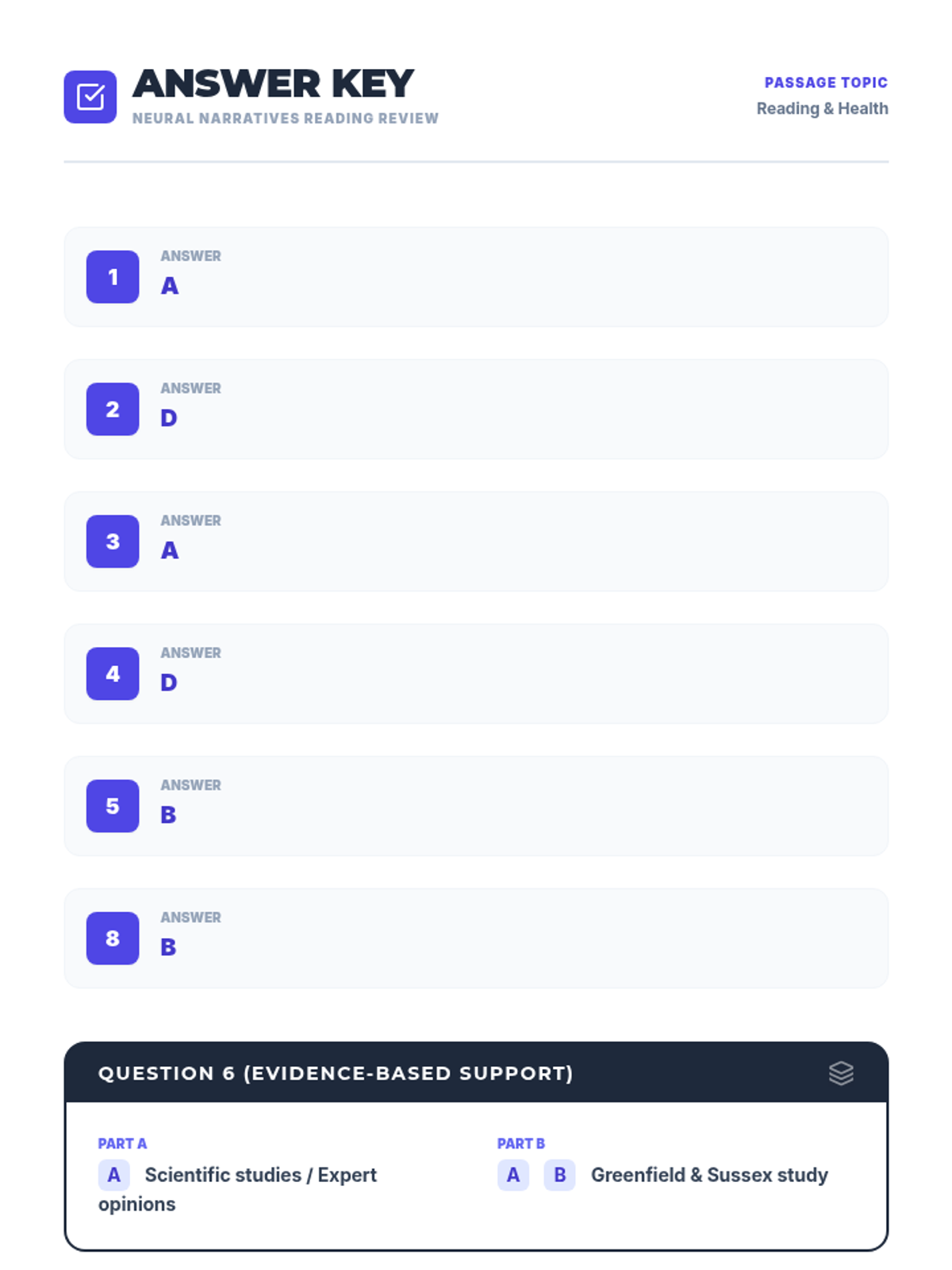
A comprehensive answer key for the Neural Narratives Practice Test, including correct answers for all multiple-choice and multi-part evidence-based questions, along with teaching notes.
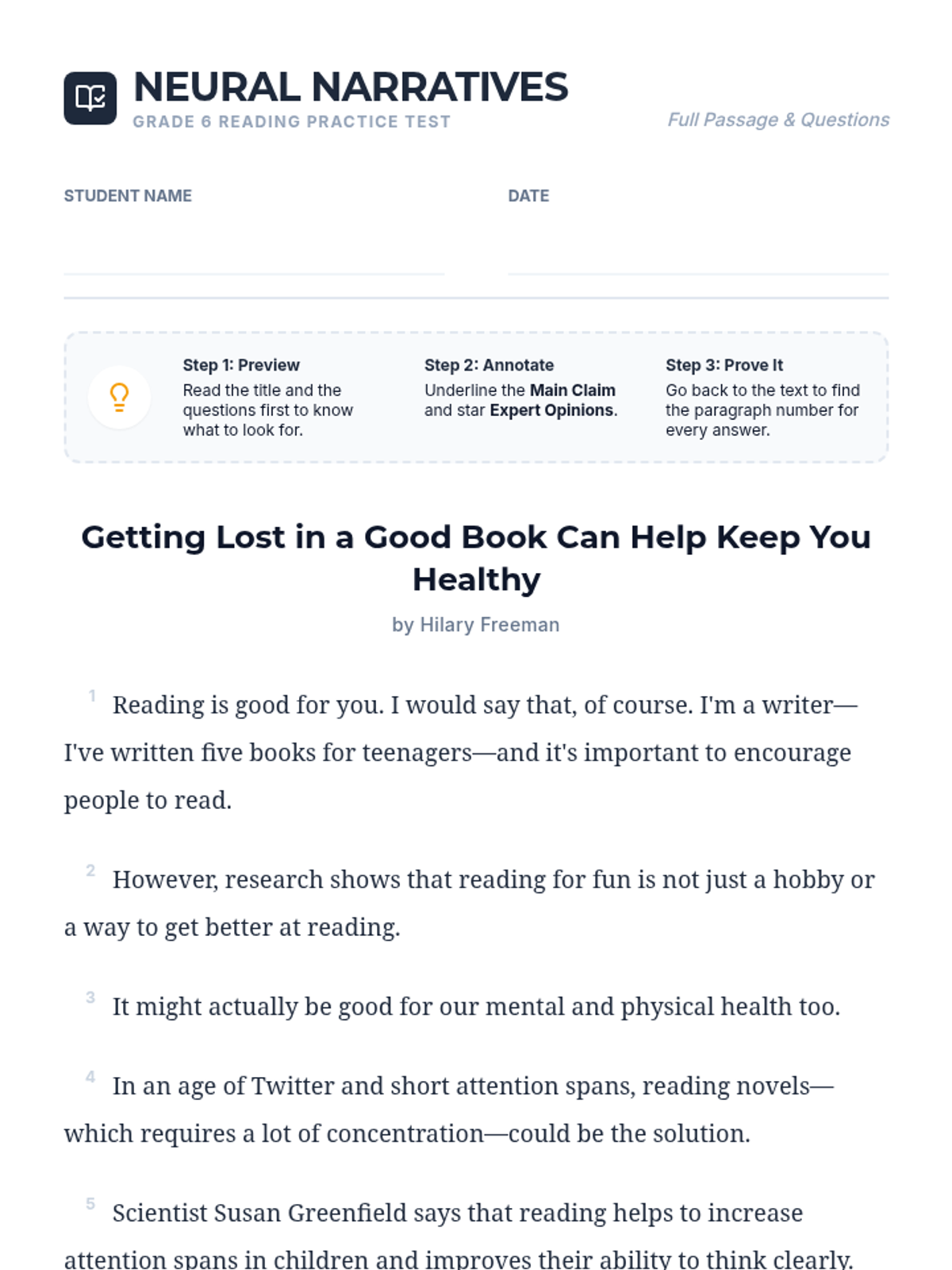
A practice test for the passage 'Getting Lost in a Good Book Can Help Keep You Healthy', featuring the full text with numbered paragraphs and nine comprehension questions, including multi-part evidence-based items.
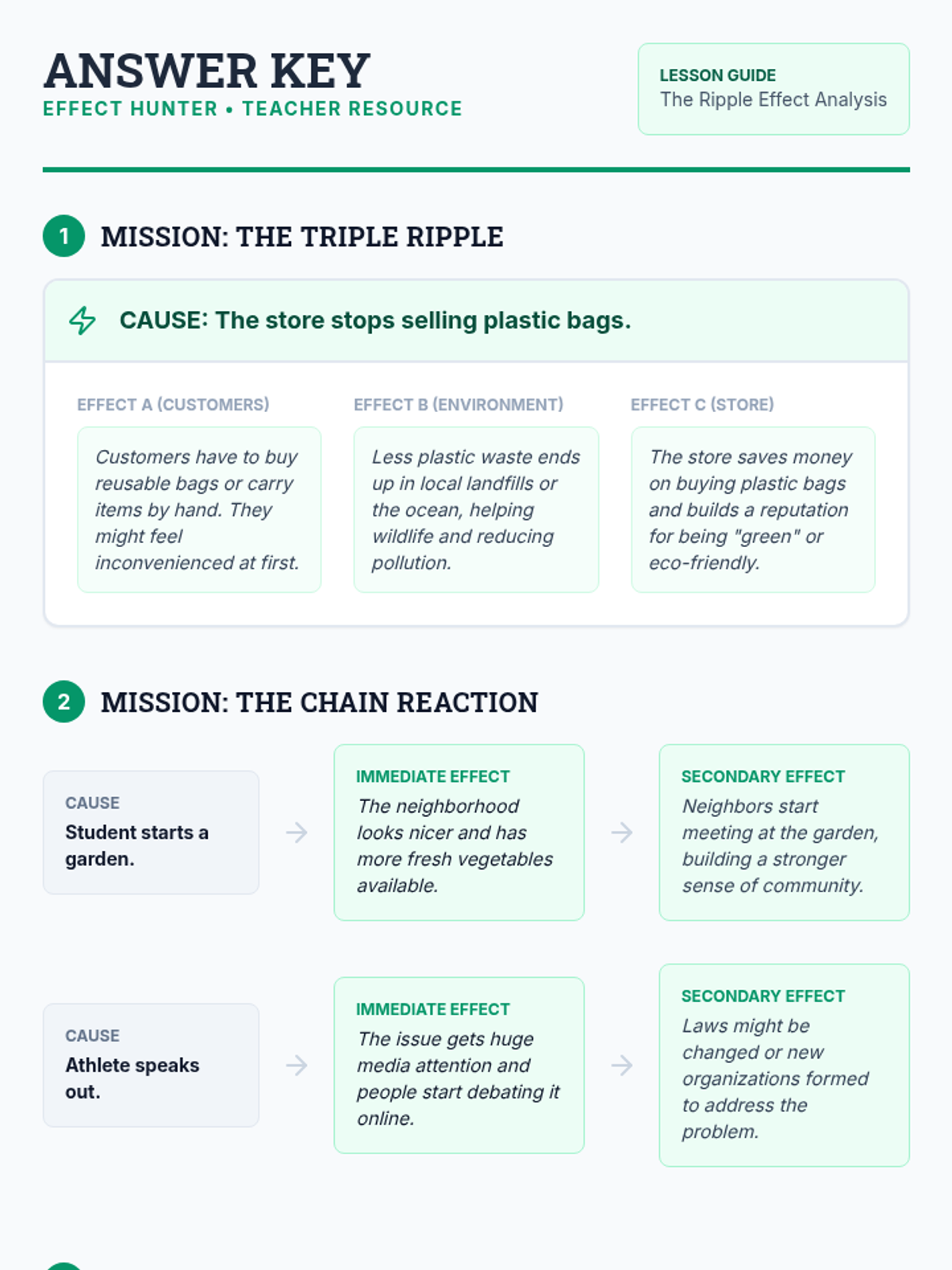
Teacher's answer key for the Effect Hunter worksheet, including sample student responses and instructional tips for facilitating the 'Deep Dive' analysis section.
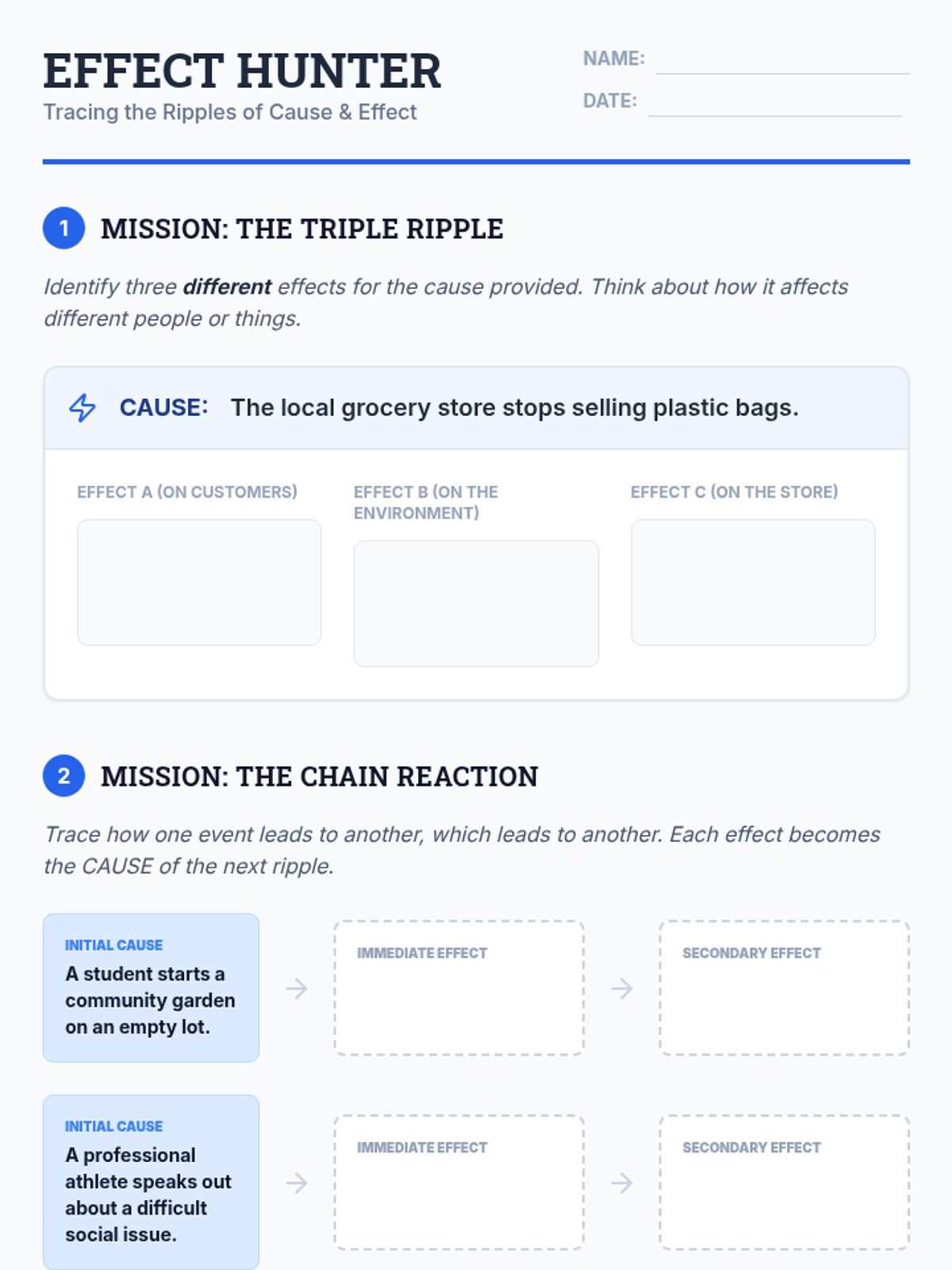
Guided worksheet for practicing cause and effect analysis. It includes structured sections for identifying multiple effects, tracing chain reactions, and analyzing long-term consequences of complex scenarios.
Interactive slide deck introducing the concept of the 'Ripple Effect' in cause and effect analysis. It covers multi-directional consequences, chain reactions, and immediate vs. distant effects with visual models.
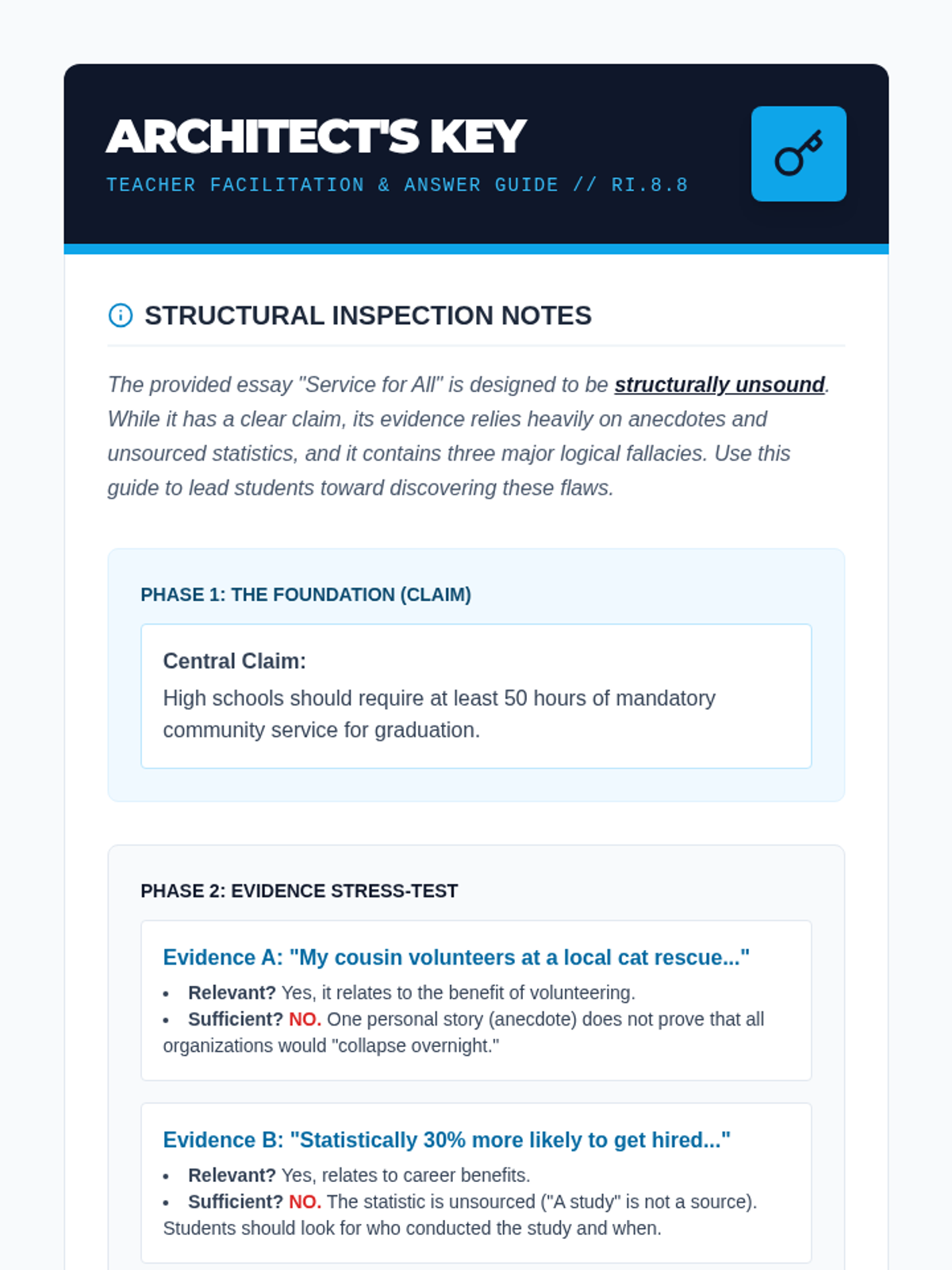
A teacher answer key and facilitation guide for the "Blueprint for Belief" worksheet, identifying central claims, assessing evidence quality, and explaining the specific logical fallacies planted in the student text.
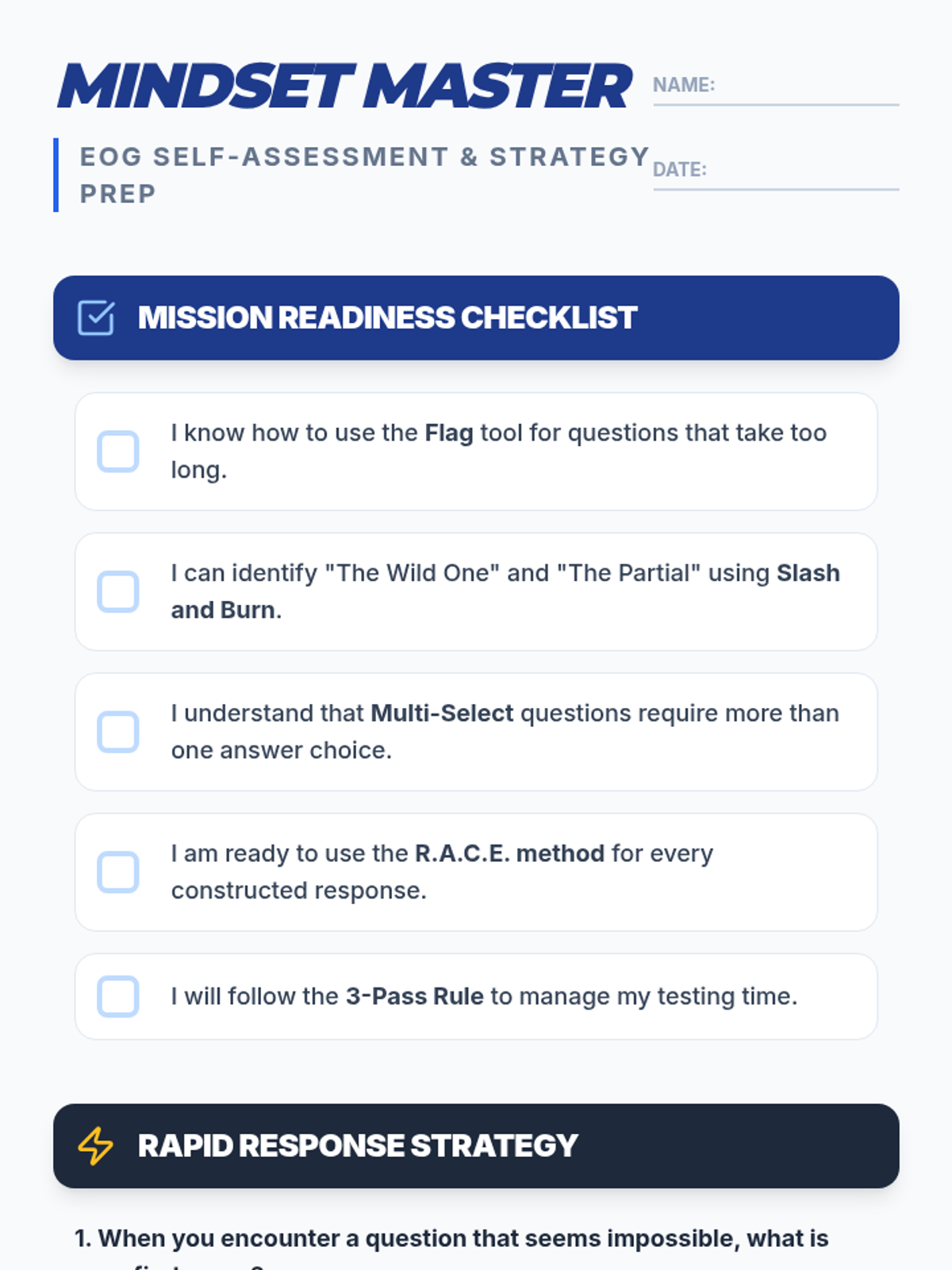
A student self-assessment checklist and RACE method practice workspace designed to help students internalize EOG test-taking strategies.
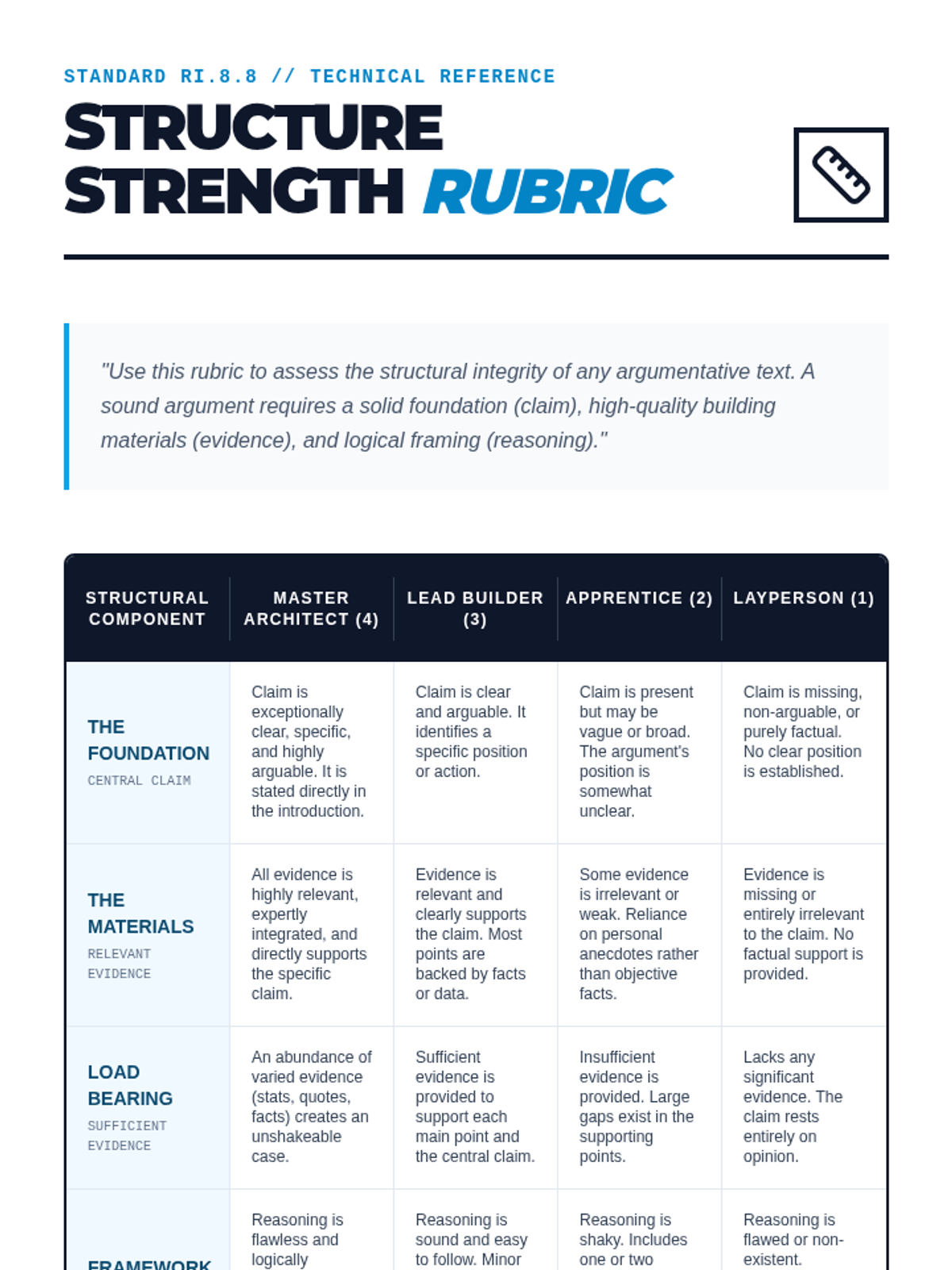
A comprehensive evaluation rubric for argumentative texts, designed with an architectural theme. Covers claim clarity, evidence relevance, sufficiency, logical reasoning, and counterargument strength.
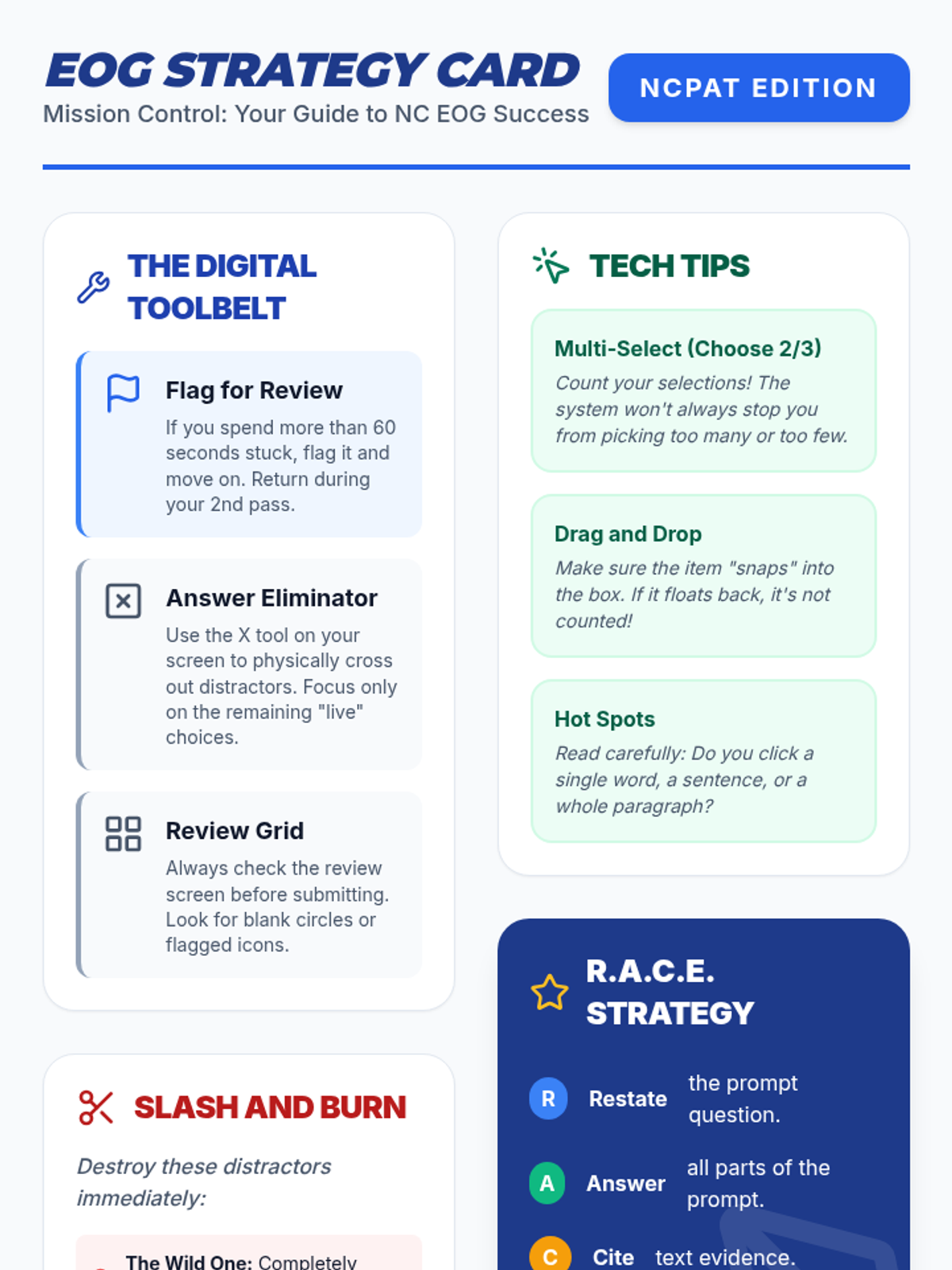
A one-page reference card for students highlighting key NCPAT digital tools, the RACE method, process of elimination, and pacing strategies.
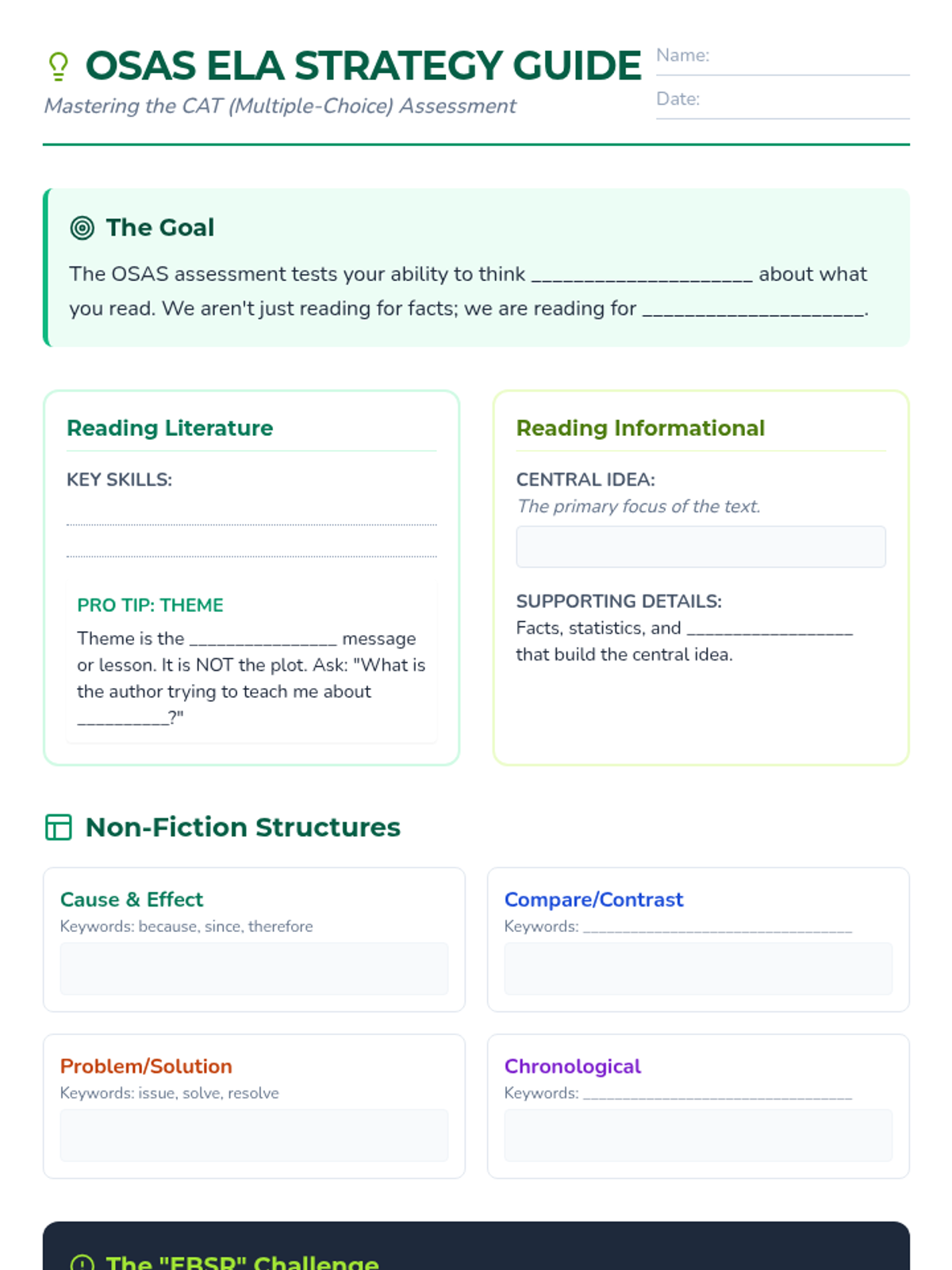
A comprehensive set of guided notes designed for students to follow along with the OSAS ELA Test Prep slides, specifically focusing on multiple-choice strategies. It includes fill-in-the-blank sections for key definitions, graphic organizers for text structures, and a practice checkpoint section.
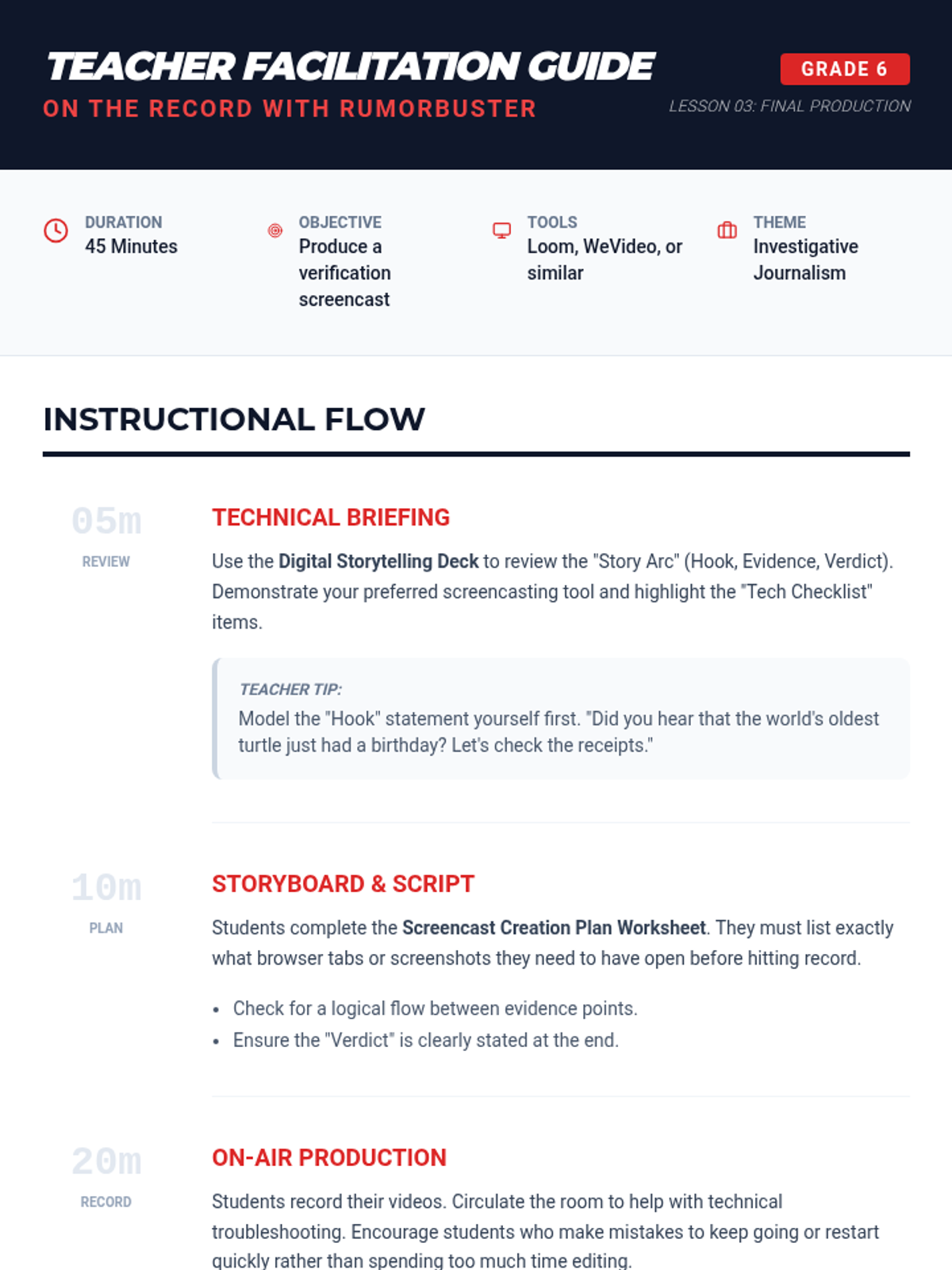
A comprehensive teacher-facing guide for the RumorBuster screencast lesson, featuring pacing instructions, technical tips, and differentiation strategies.
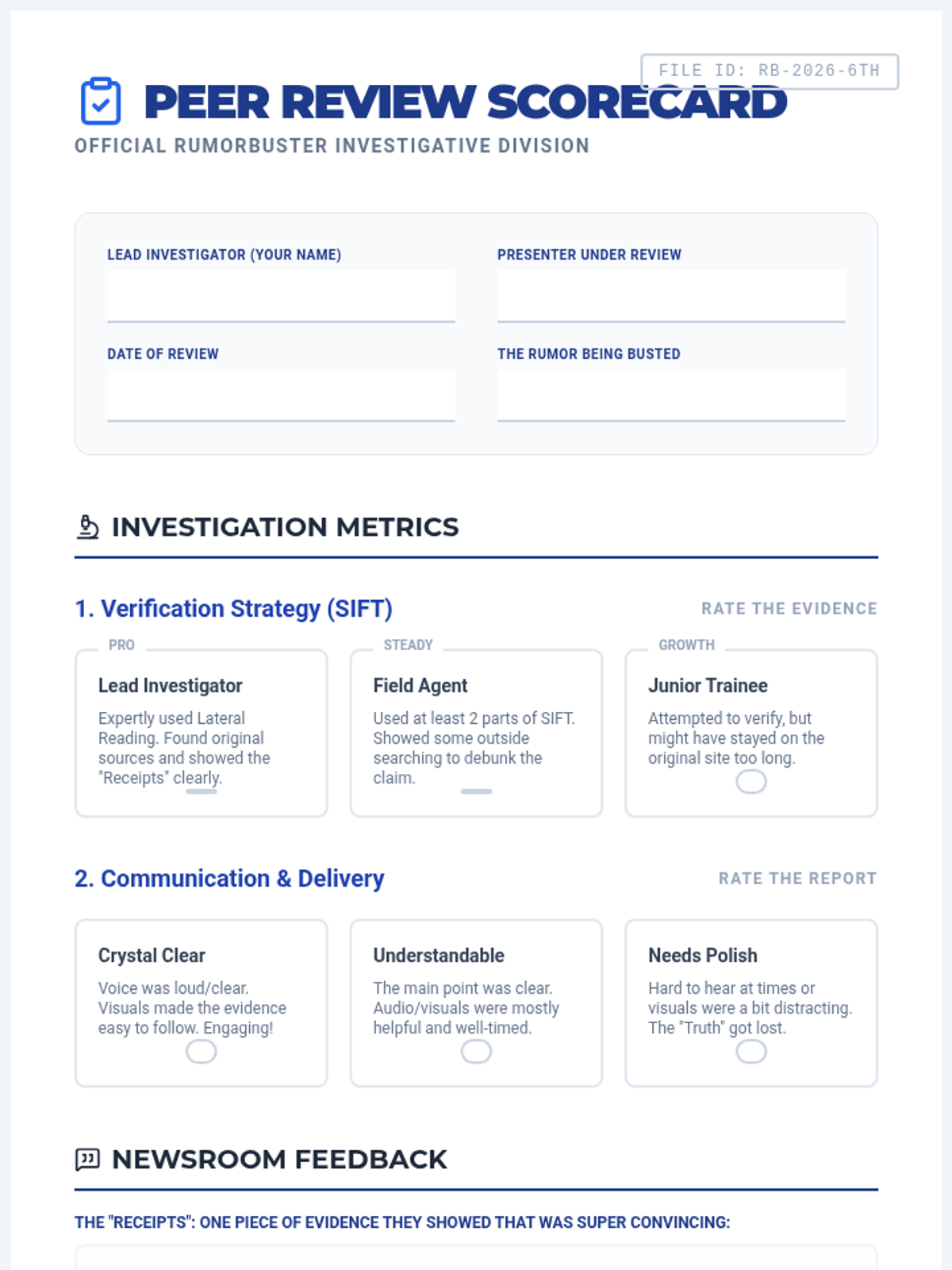
A professional newsroom-themed rubric for peer evaluation of screencasts, featuring SIFT-based scoring metrics and a final unit reflection page for students to synthesize their media literacy growth.
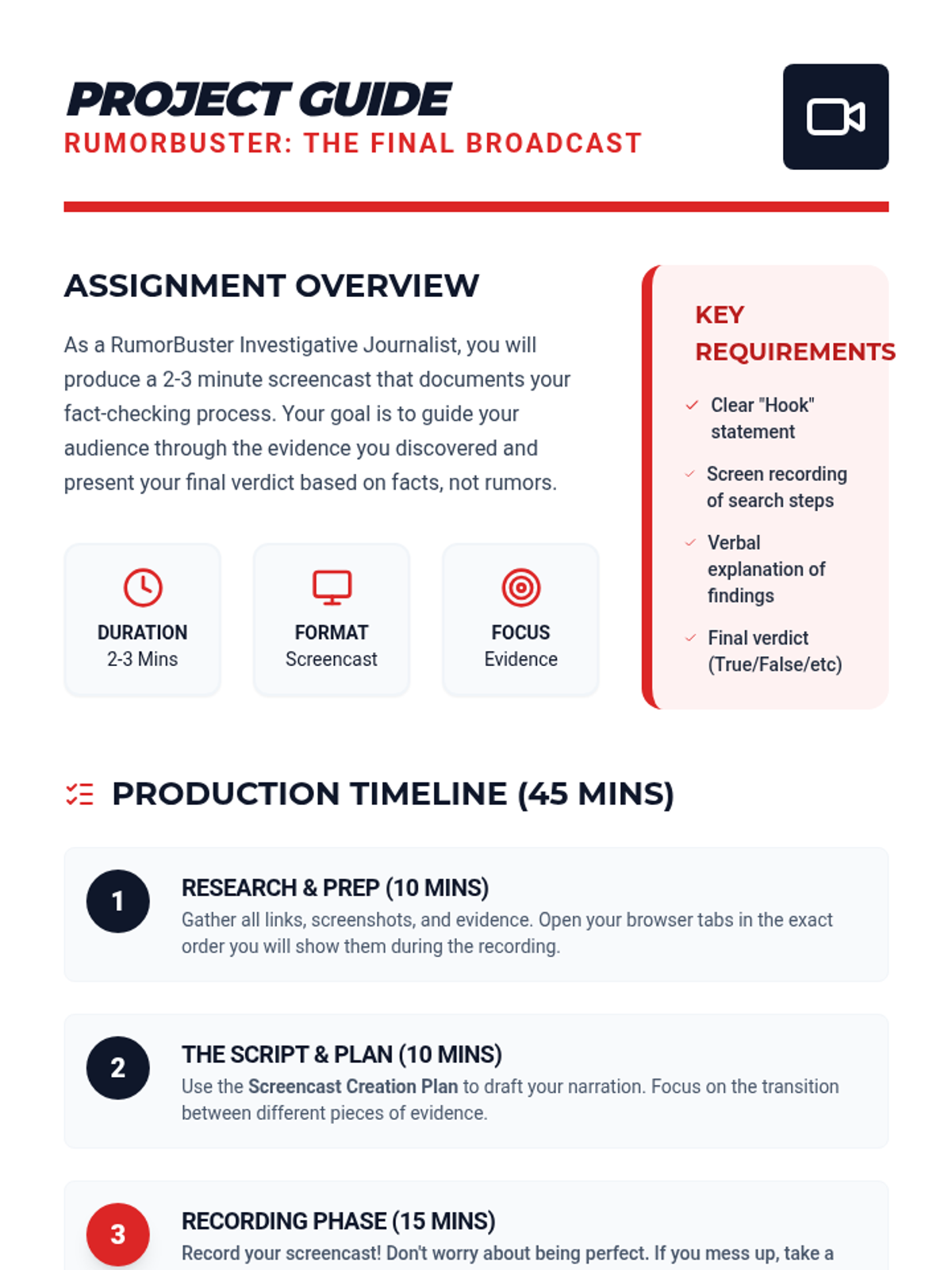
A comprehensive student-facing guide for the screencast project, featuring an overview of requirements, a 45-minute production timeline, and a success rubric.
A visually engaging presentation deck for the RumorBuster showcase, featuring newsroom protocols, a SIFT review checklist, and reflection prompts to guide the viewing and peer feedback process.
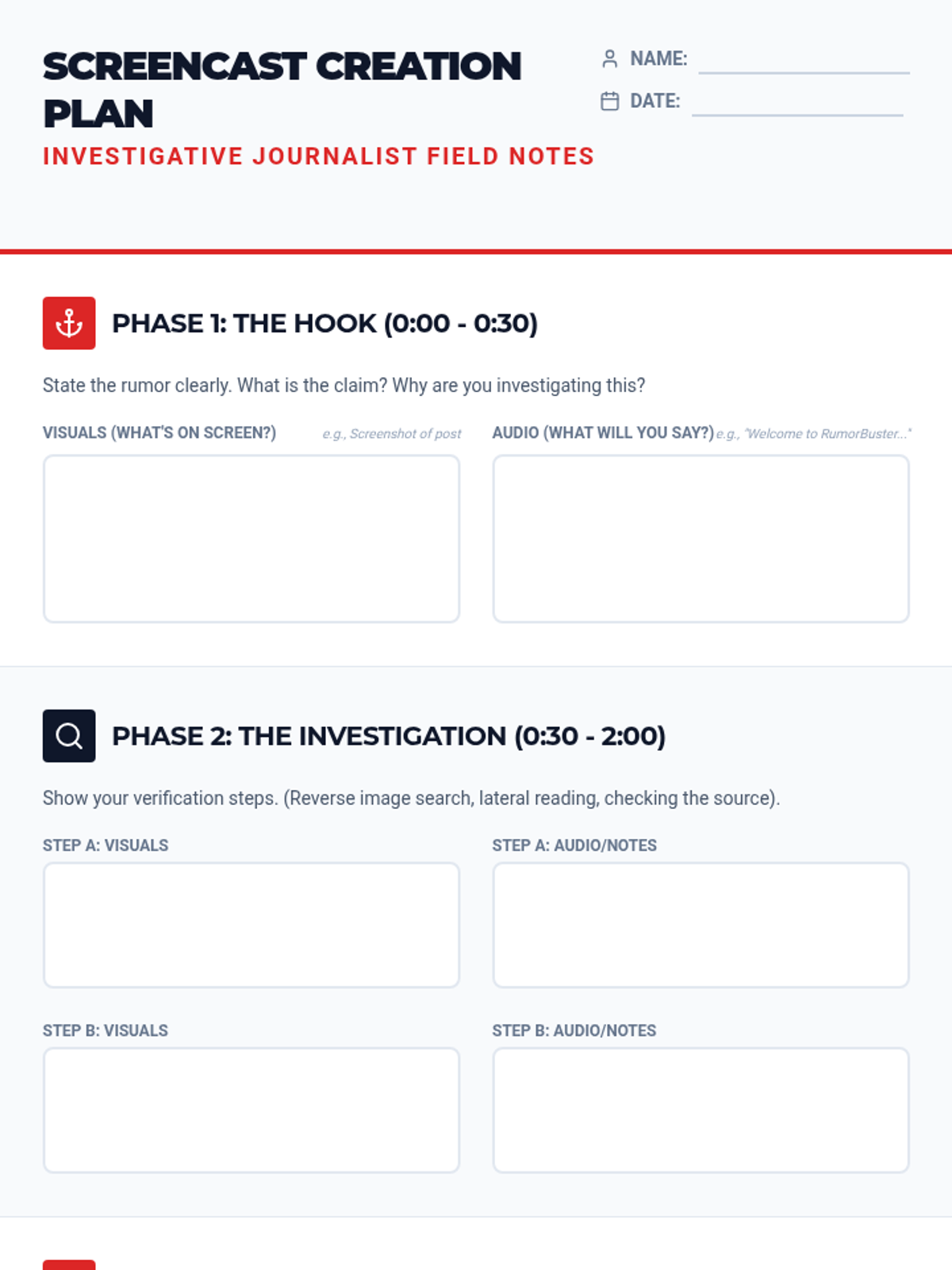
A structured storyboard and planning document for students to organize their screencast narrative, including sections for visuals, audio scripts, and a technical pre-recording checklist. updated with clearer work areas.
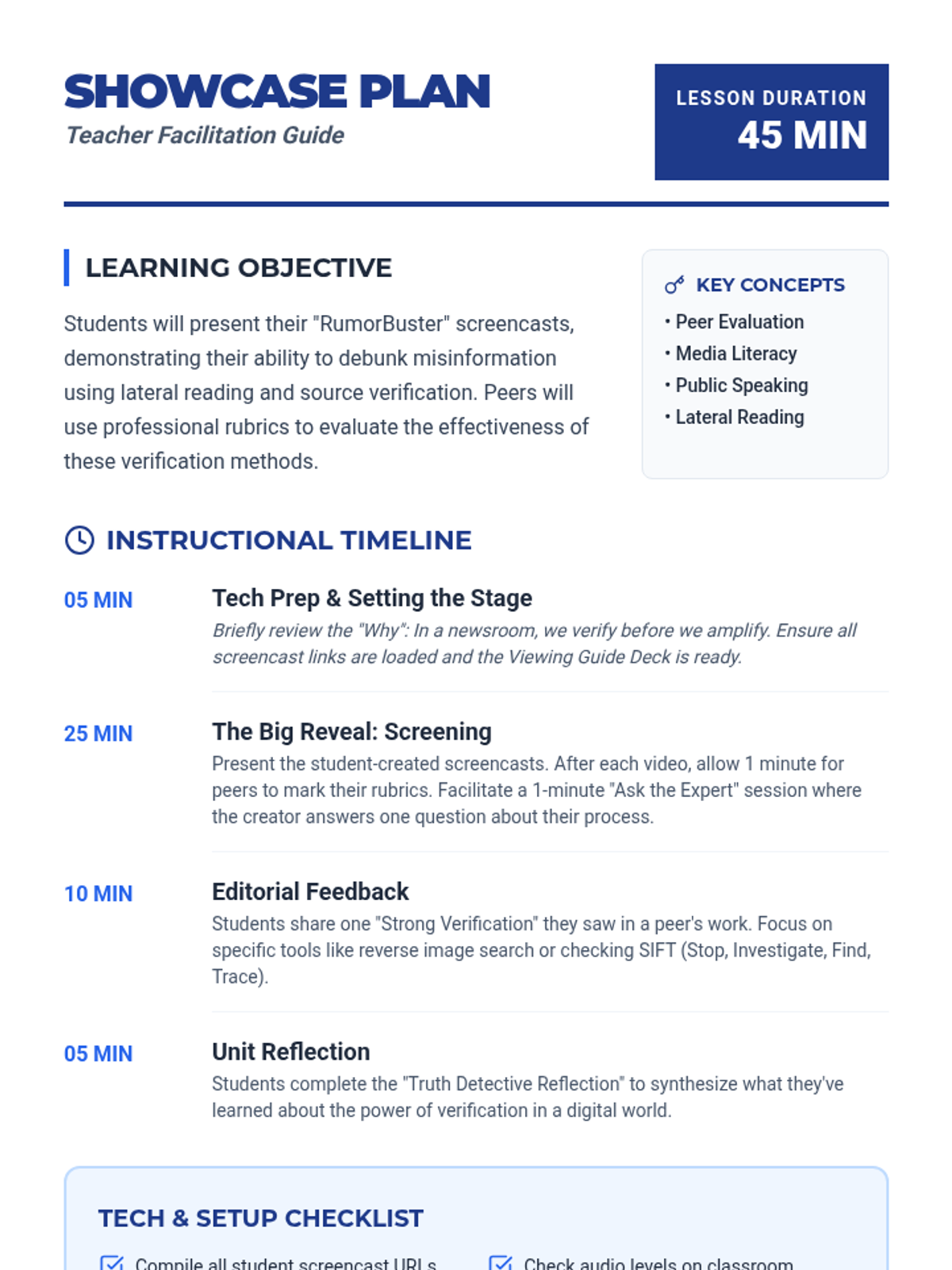
A comprehensive teacher facilitation guide for the RumorBuster presentation day, including a detailed instructional timeline, tech checklist, discussion prompts, and differentiation strategies to ensure a professional newsroom atmosphere.
A high-impact digital storytelling presentation with a newsroom theme, teaching students the basics of screencasting, narrative structure, and technical best practices for presenting evidence. updated to meet font size requirements.
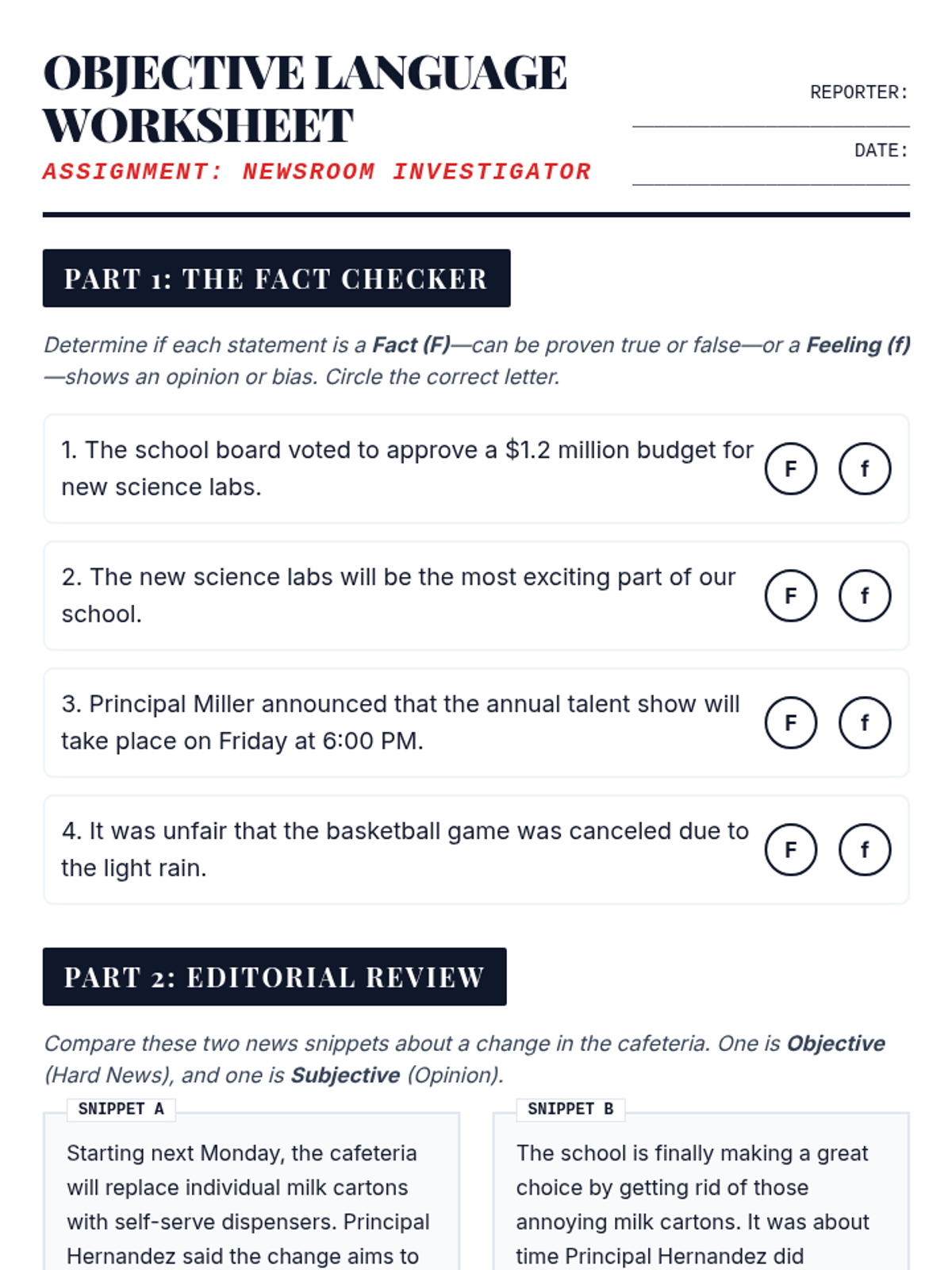
A student worksheet focused on identifying objective language, distinguishing between hard news and opinion snippets, and rewriting biased sentences for a newsroom context.
A high-impact slide presentation featuring newsroom aesthetics, explaining the differences between hard news and opinion, the 5 W's, and the inverted pyramid structure for reporting.
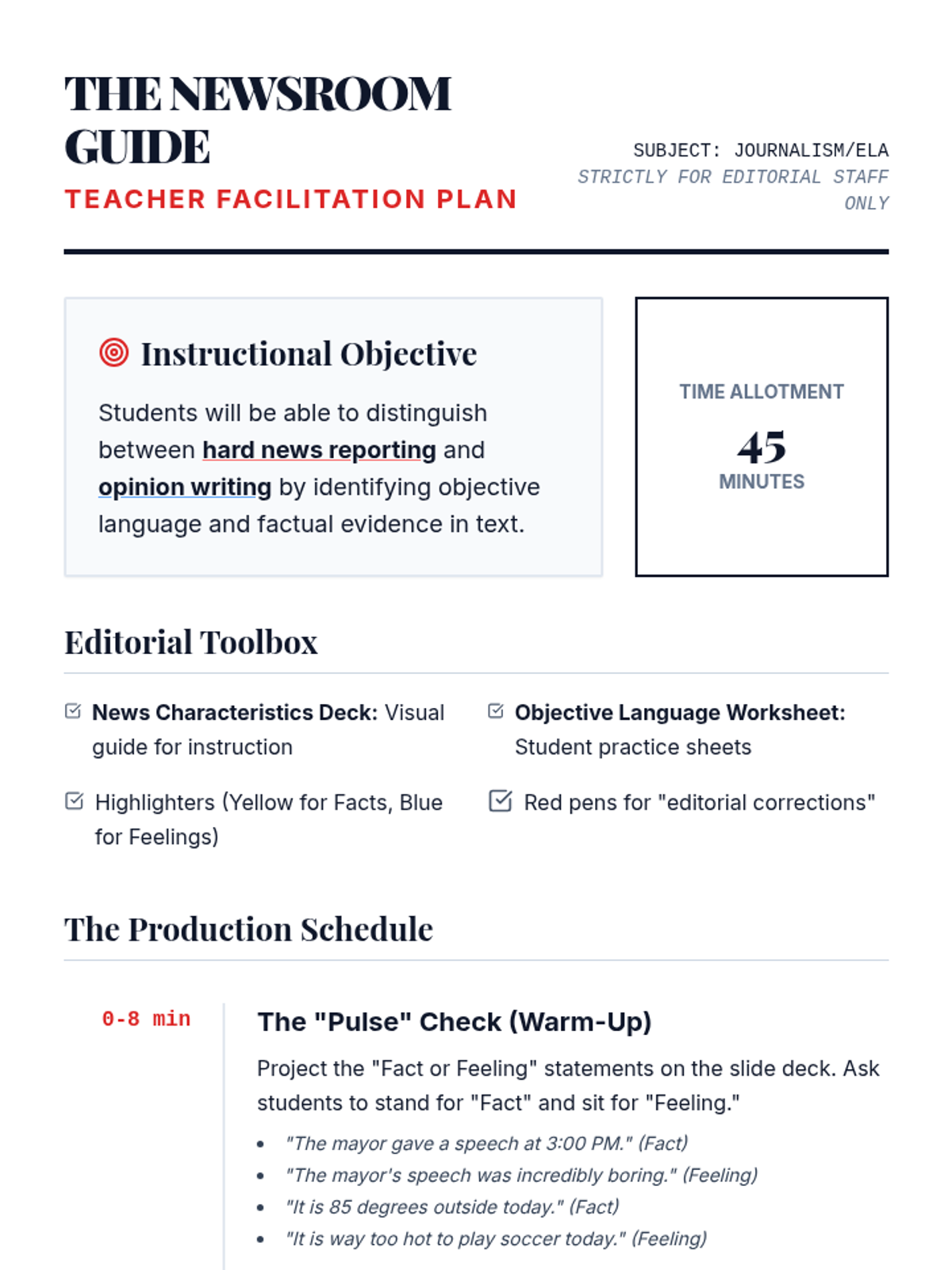
A comprehensive teacher facilitation guide for the 'Fact or Feeling in the Newsroom' lesson, featuring a detailed pacing guide, learning objectives, and pedagogical tips for teaching objectivity in journalism.
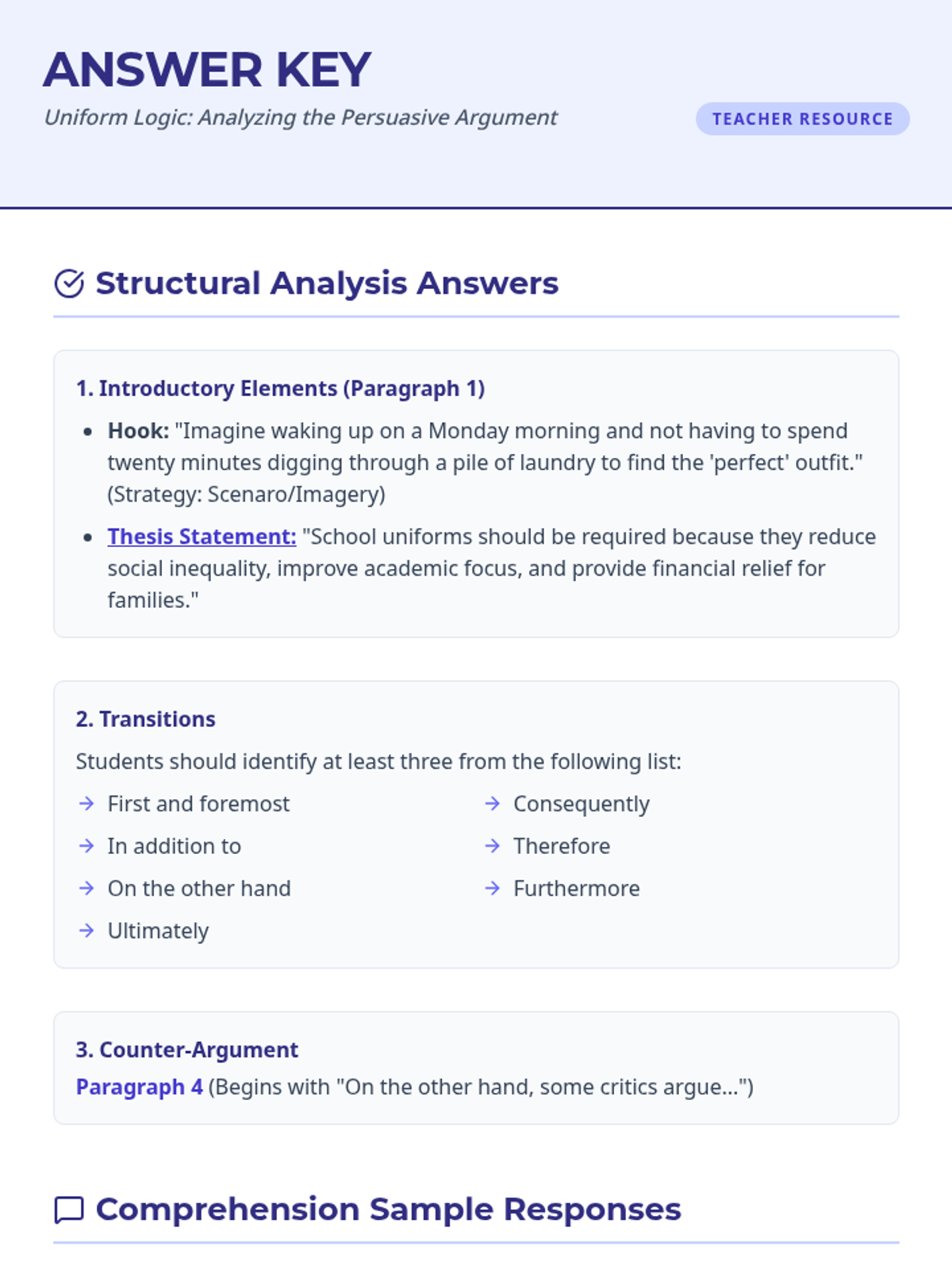
A teacher's answer key for the Uniform Logic Worksheet, providing identified text examples for the hook and thesis, a list of potential transitions, and sample student responses for the comprehension questions.
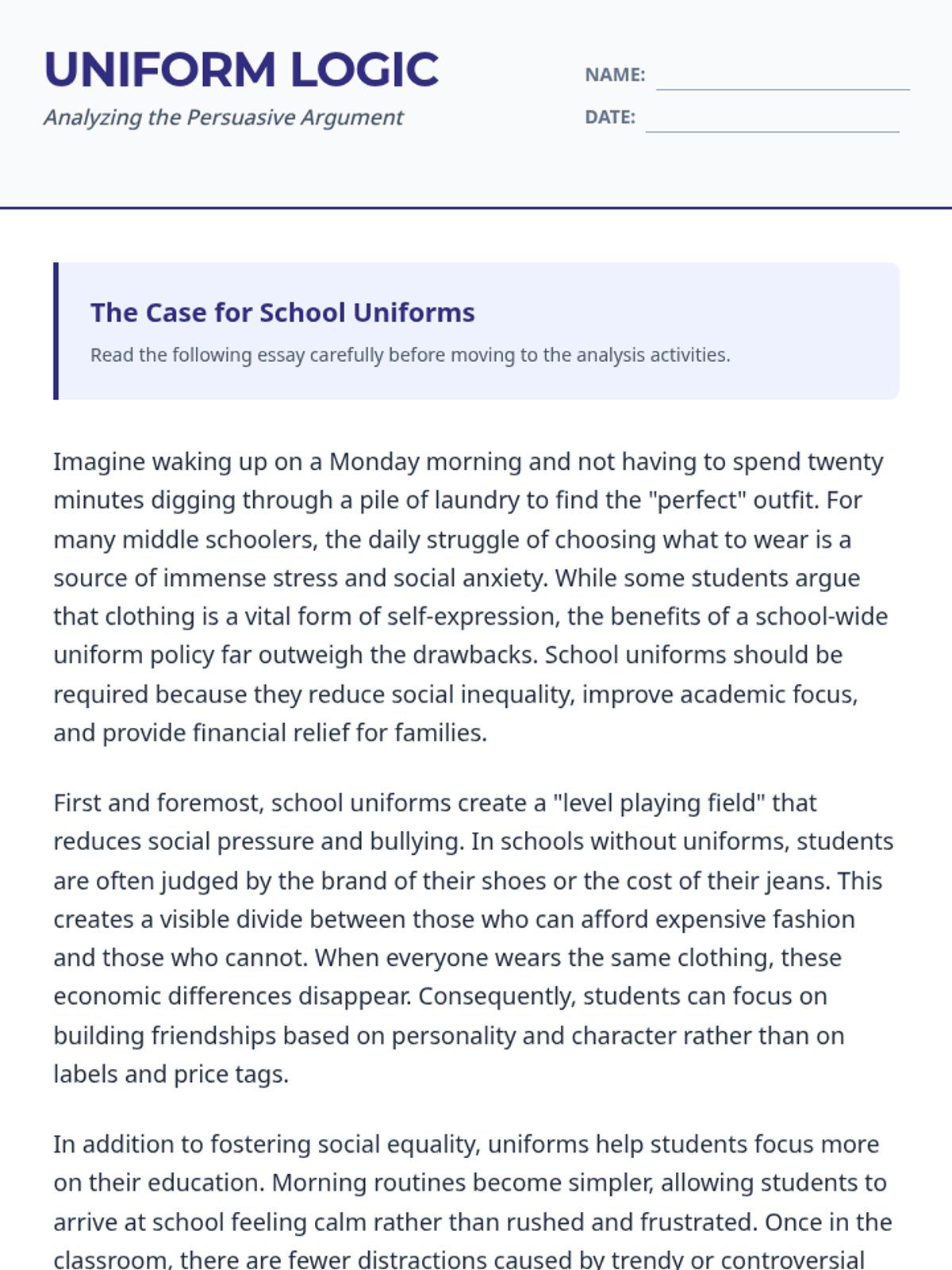
A student worksheet containing a 5-paragraph persuasive essay on school uniforms, with structured activities to identify the hook, thesis, transitions, and counter-arguments, followed by comprehension questions.
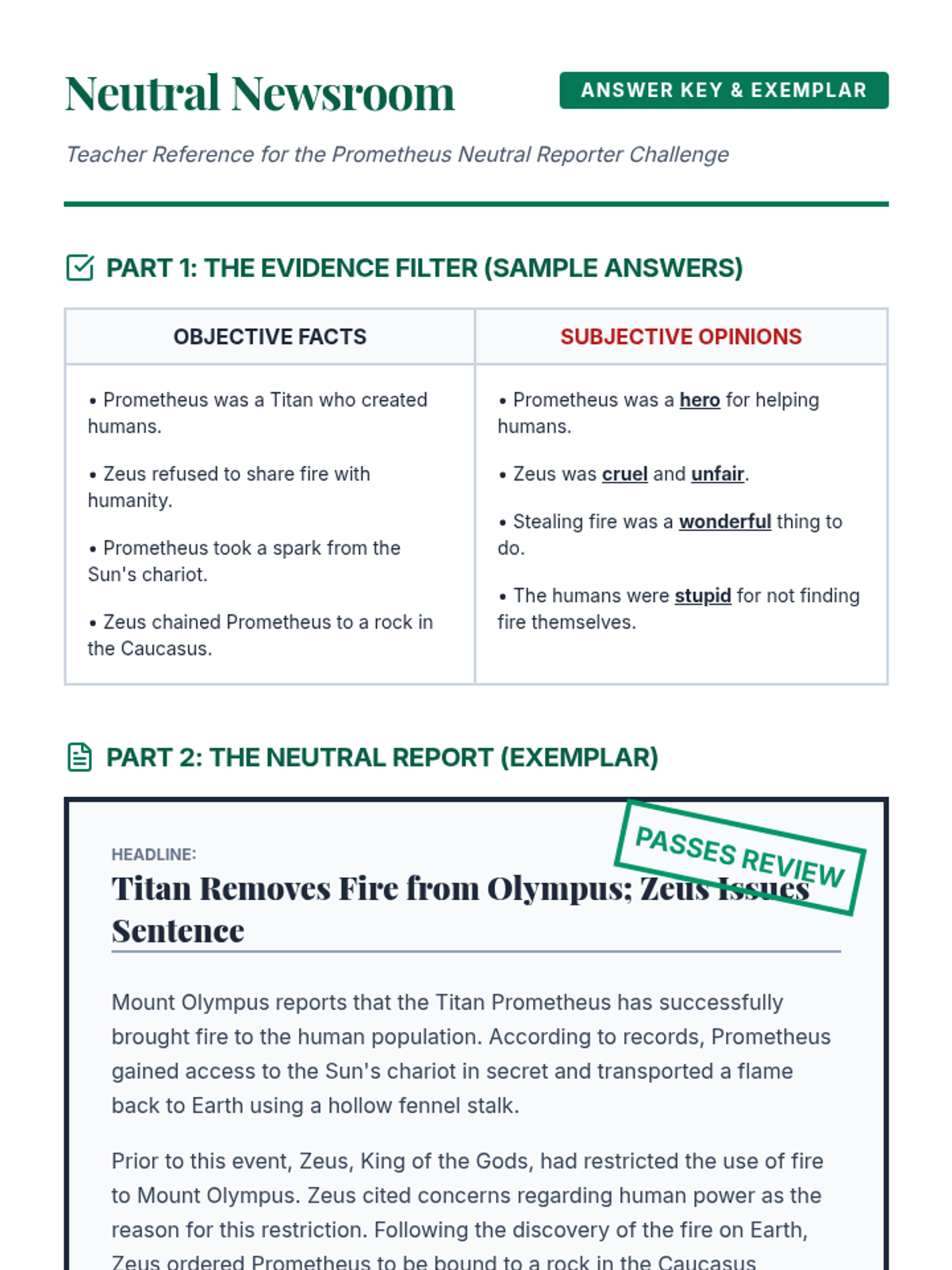
A teacher's answer key and exemplar for the Neutral Newsroom activity, providing sample T-chart answers and a model neutral news report.
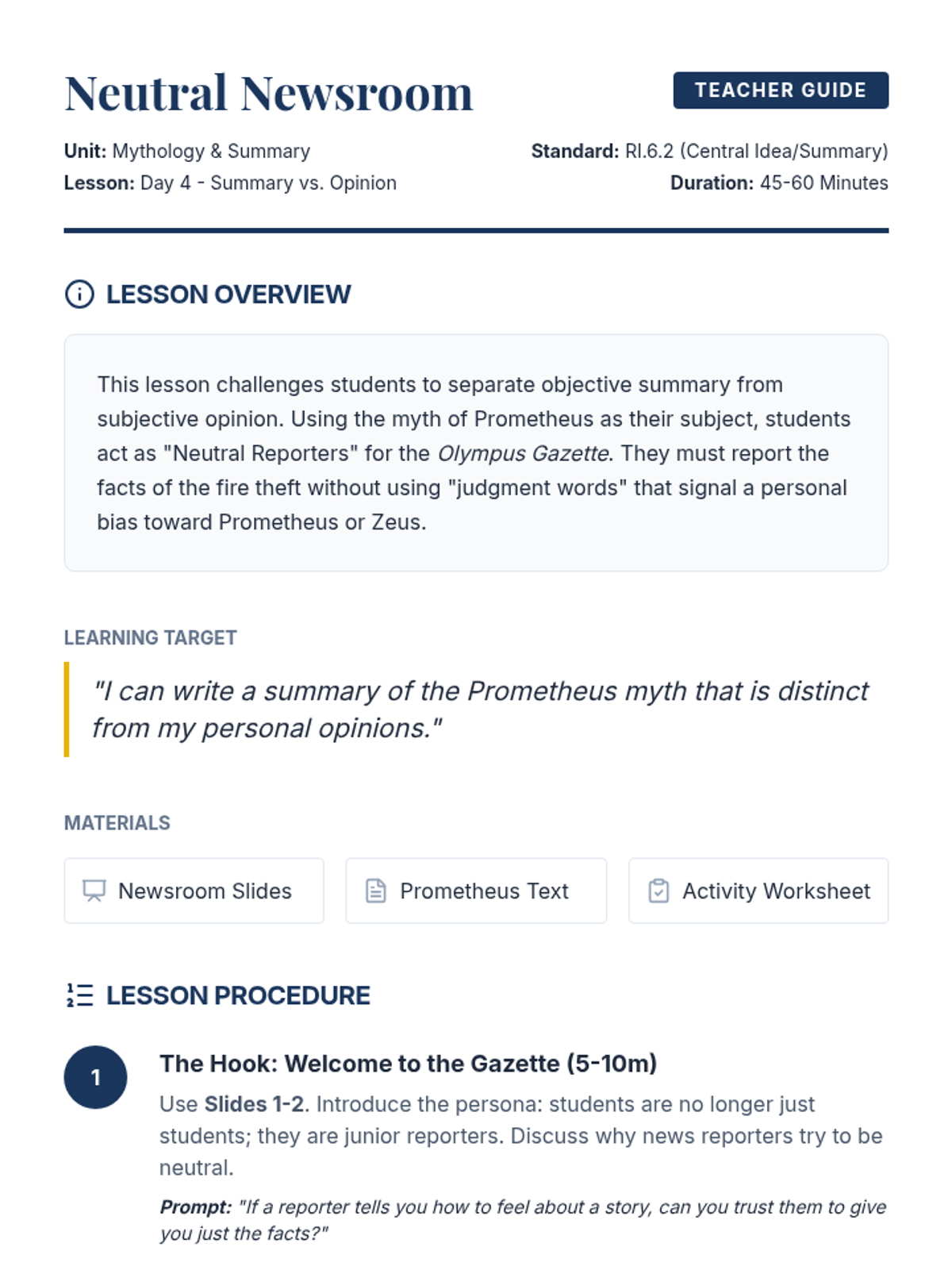
A comprehensive teacher guide for the Neutral Newsroom lesson, featuring a detailed lesson procedure, teaching tips, and differentiation strategies.
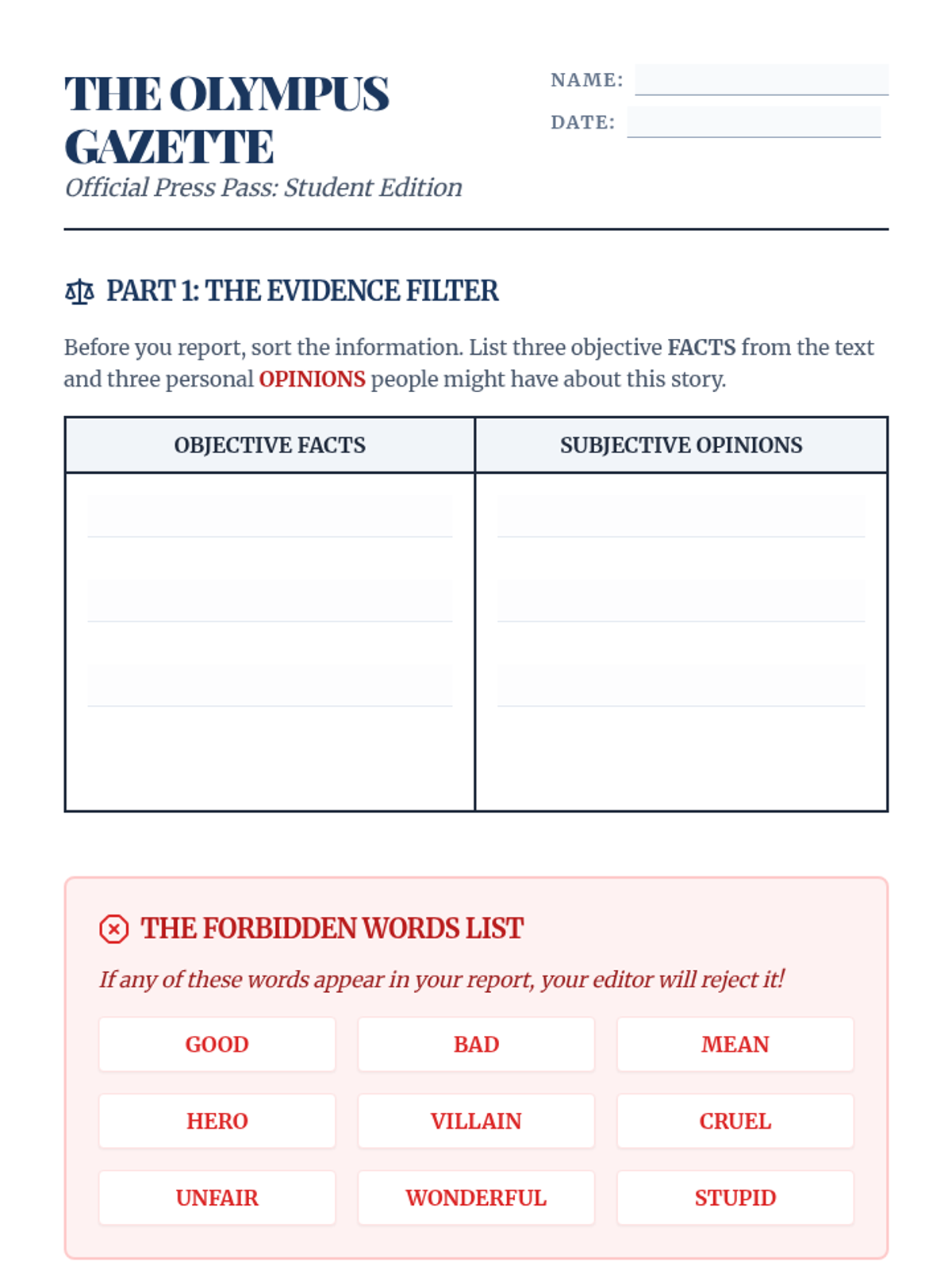
A student worksheet featuring a fact vs. opinion T-chart, a list of forbidden opinion words, and a newspaper template for writing a neutral report on the Prometheus myth.
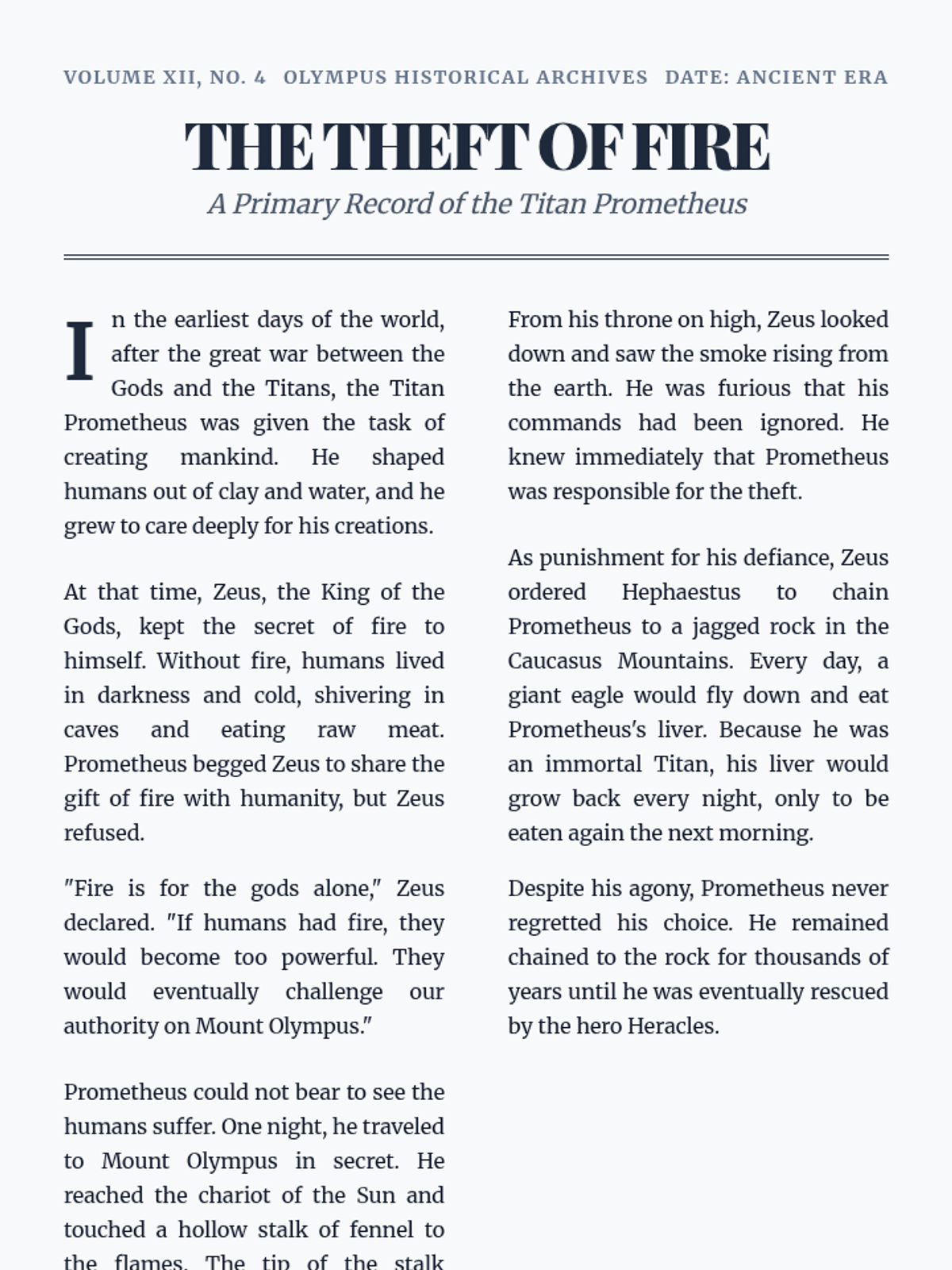
A short, focused reading passage about the Prometheus myth, styled as a newspaper archive to support the Neutral Newsroom lesson theme.
A slide deck for the Neutral Newsroom lesson, introducing students to the difference between summary and opinion and setting up the Neutral Reporter Challenge.
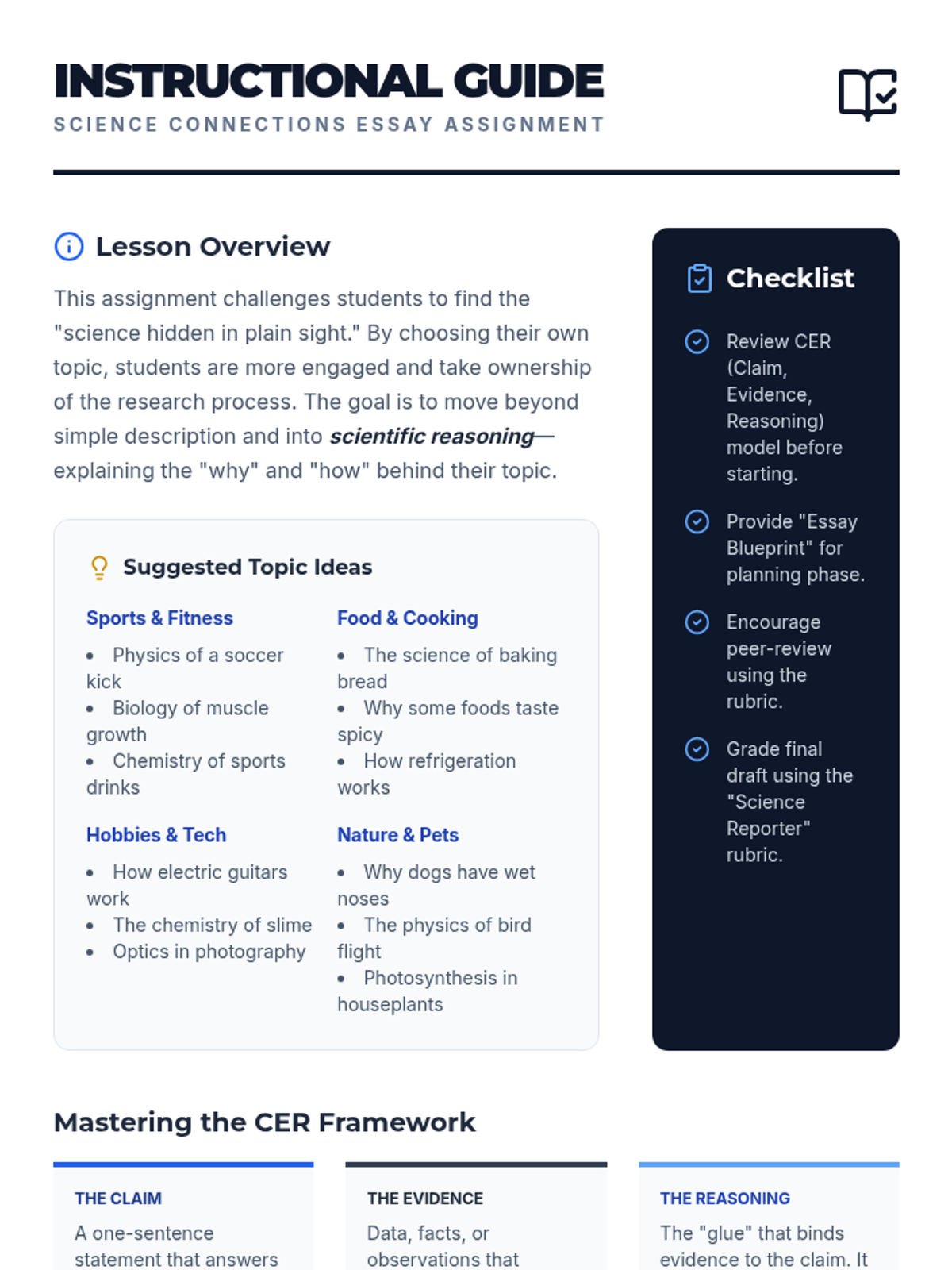
An instructional guide for teachers providing tips on lesson implementation, topic suggestions, and a breakdown of the CER (Claim, Evidence, Reasoning) framework for students.
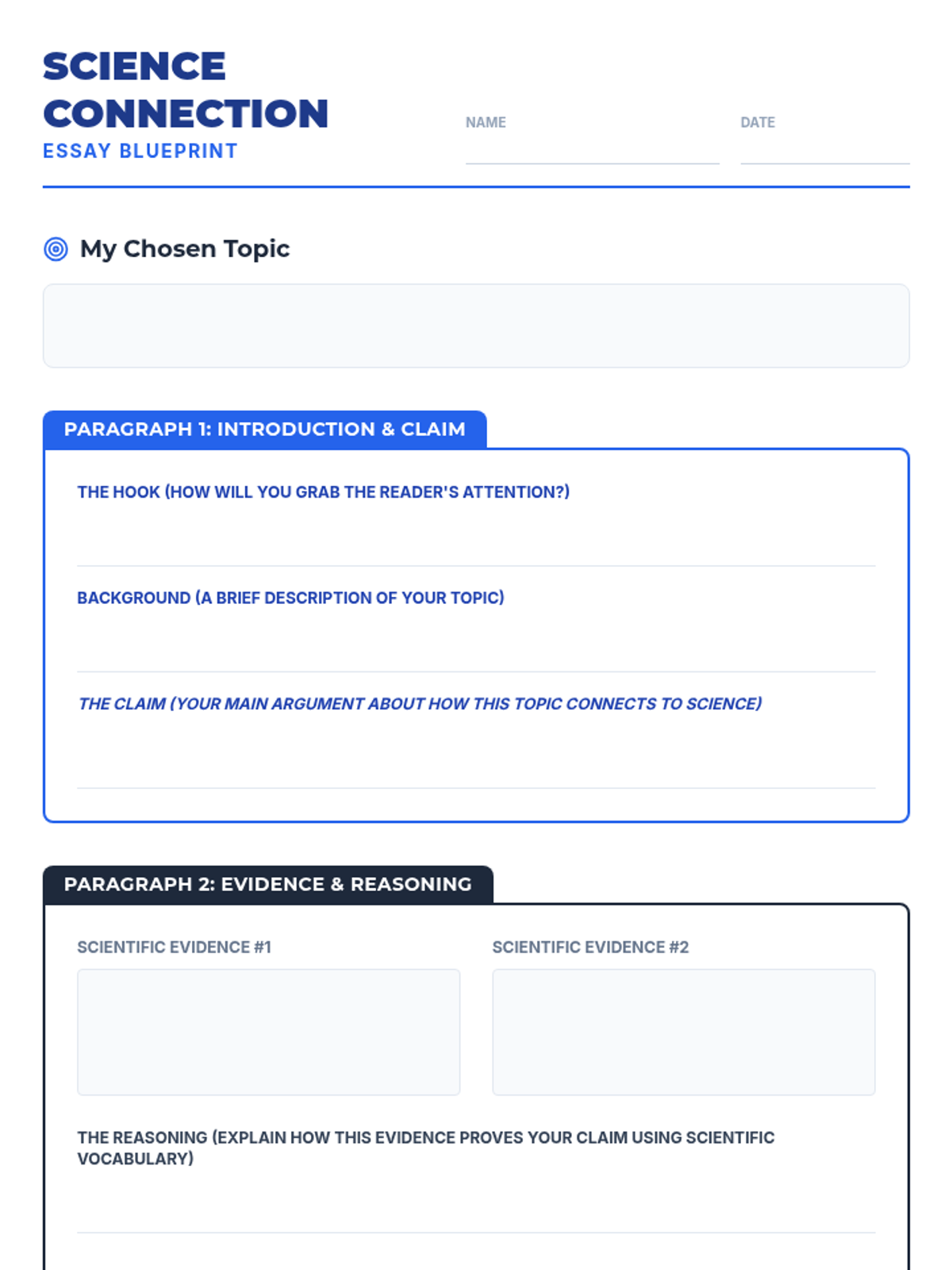
A structured essay planning worksheet designed to guide students through a three-paragraph science connection essay using the CER (Claims, Evidence, Reasoning) framework.