A professional newsroom-themed rubric for peer evaluation of screencasts, featuring SIFT-based scoring metrics and a final unit reflection page for students to synthesize their media literacy growth.
A differentiated, 2-page transition-drafting worksheet. Page 1 (Foundation Layer) scaffolds the connection between hooks and thesis statements with structured prompts, while Page 2 (Structural Master) challenges advanced writers to use nuanced bridge-building strategies like concession and scale shifts.
A structured, 2-page graphic organizer designed as an architectural blueprint. Helps students systematically draft magnetic hooks, bridges, thesis statements, and cohesive conclusions with high-contrast, clean writing zones.
A 6-slide visual presentation modeling essay introductions and conclusions using a blueprint structural metaphor. Features formulas for magnetic hooks, seamless bridge transitions, and memorable capstone conclusions.
A professional, highly legible grading rubric evaluating students across key persuasive elements including Thesis & Claim, Evidence, Counterargument Crusher, and overall Structure & Style.
A structured, 2-page print-ready planning graphic organizer for students to outline and organize their persuasive tech essay. Includes dedicated spaces for a hook, thesis statement, evidence gathering, and counterargument construction.
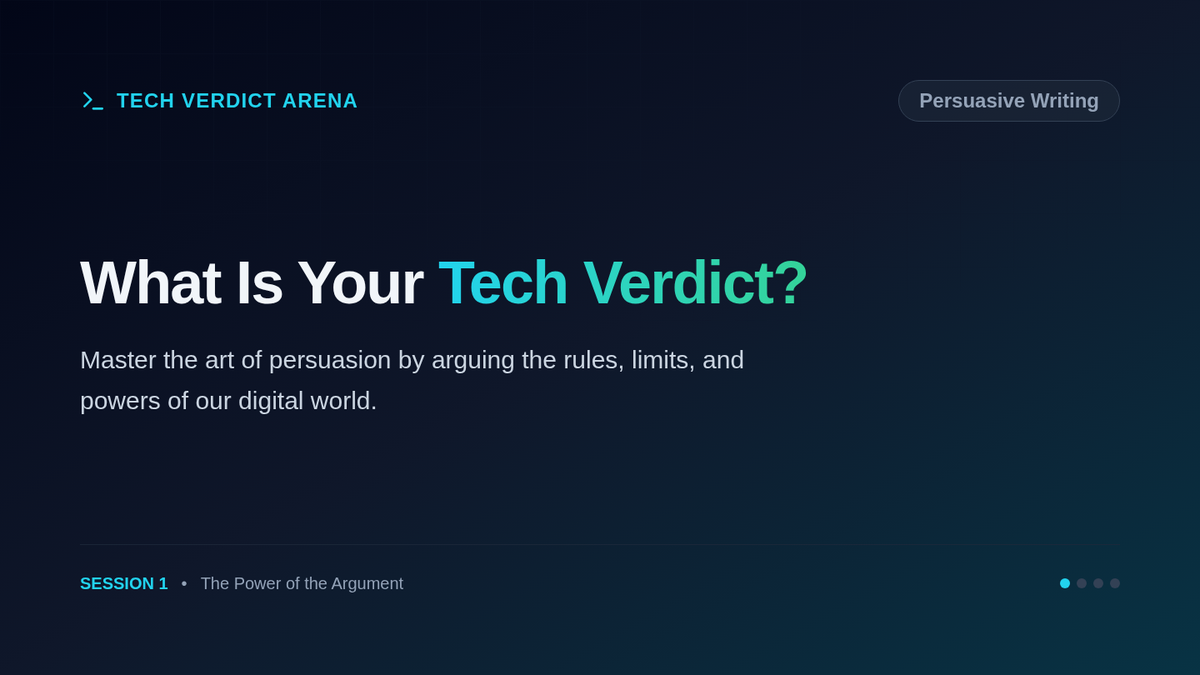
A modern, high-impact presentation slide deck introducing students to persuasive writing structures through real-world technology debates like social media limits and video game cognitive benefits.
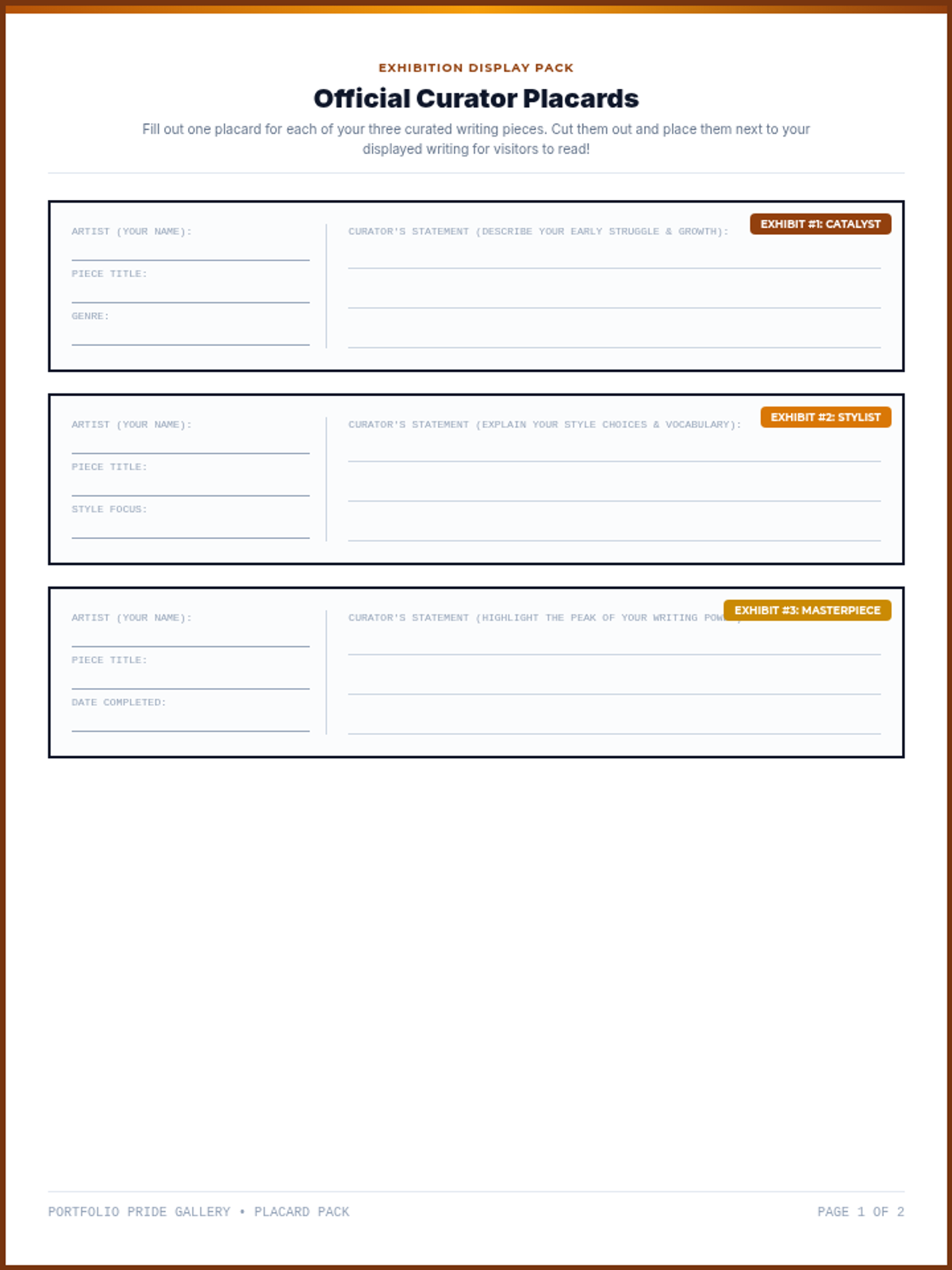
Printable museum placards/exhibit labels for students to write their curator statements, plus a customizable gallery invitation and curator rubric.
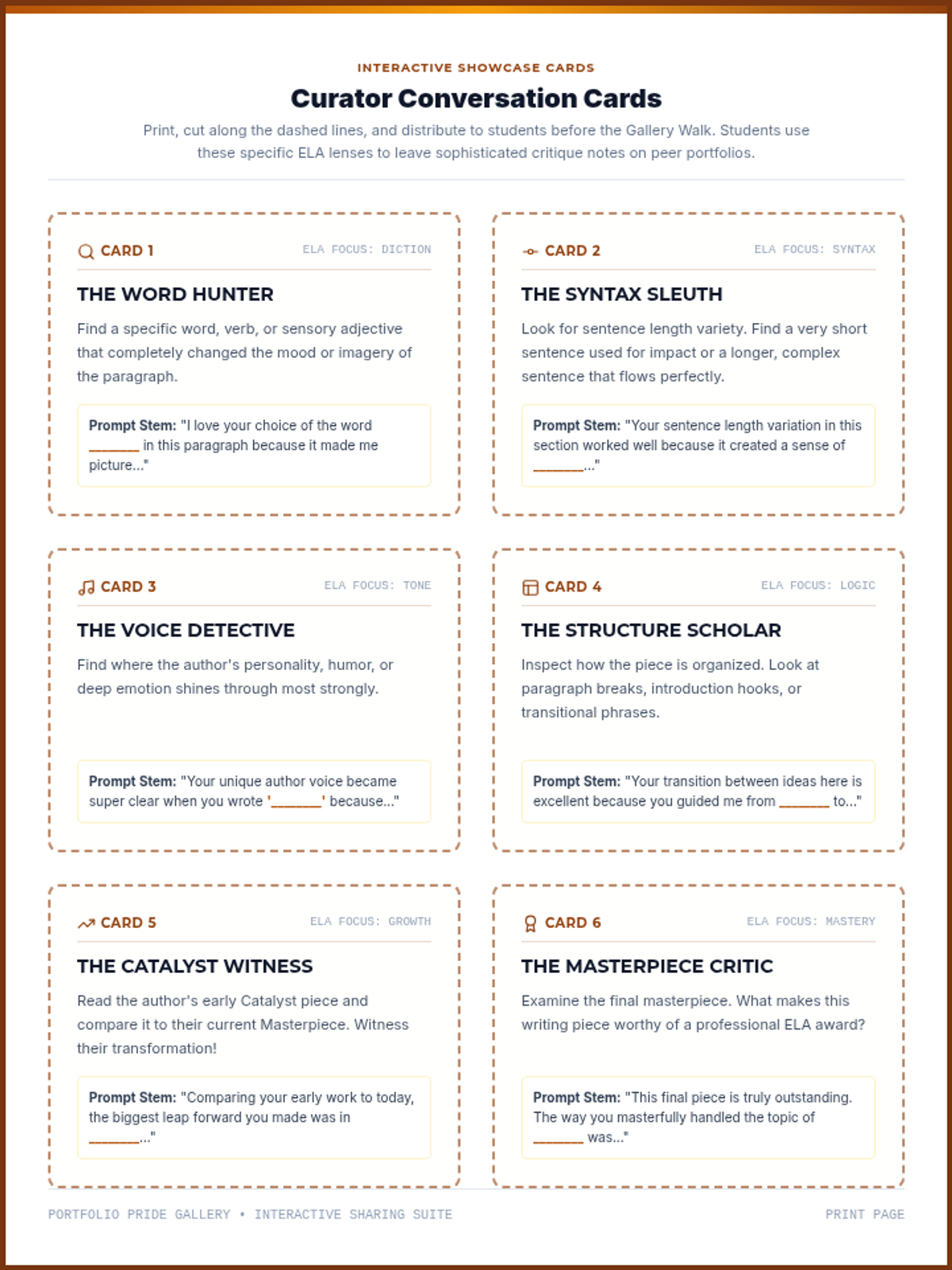
A printable set of discussion prompt cards for peer-to-peer critique and positive feedback during the showcase gallery walk.
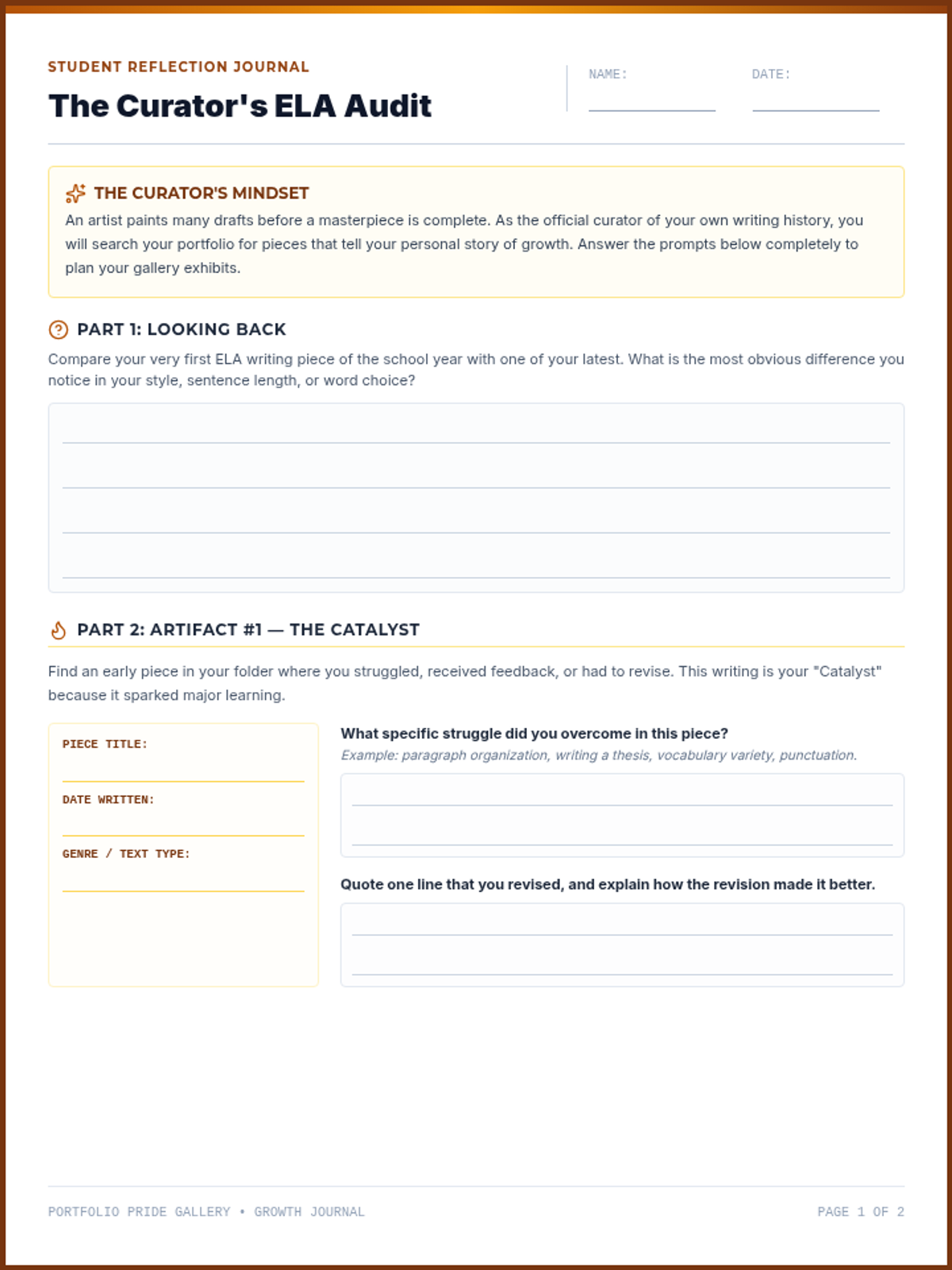
A structured student self-reflection journal with guided prompts to help students audit their ELA writing, identify milestones, and draft curator statements.
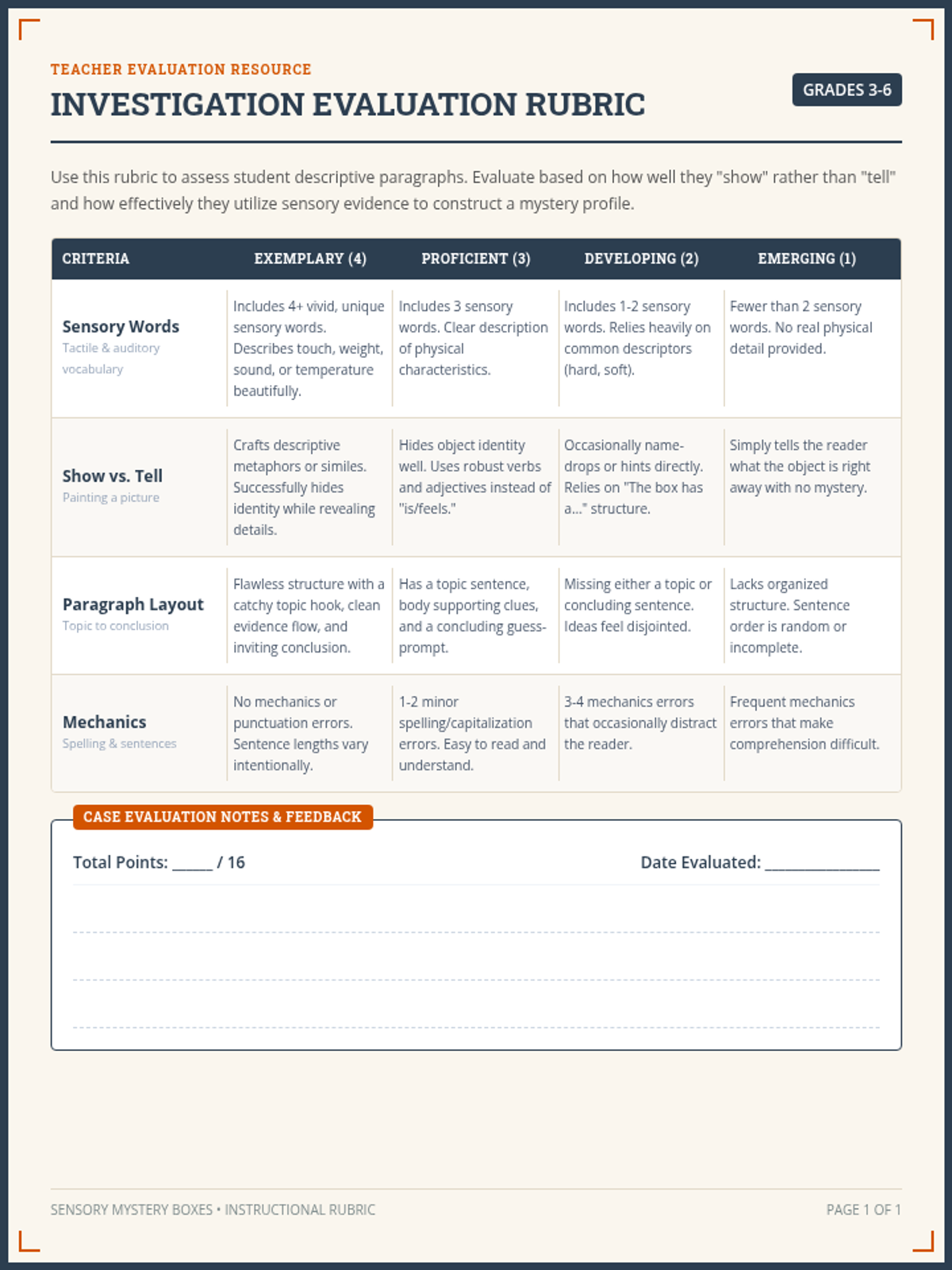
A standardized classroom grading rubric styled as an 'Investigation Evaluation Report', detailing assessment criteria for sensory vocabulary, writing structure, mechanics, and descriptive depth.
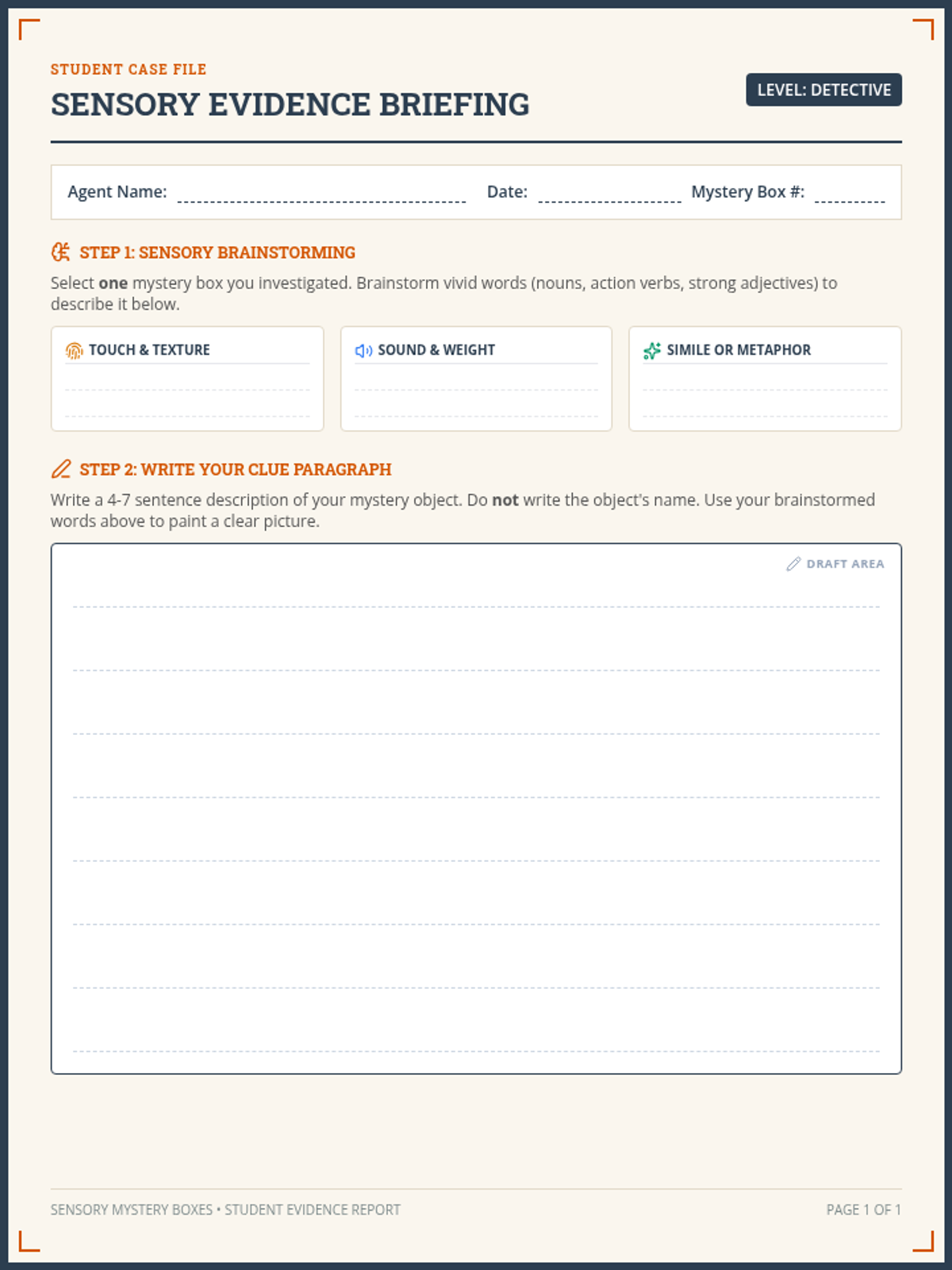
A structured student-facing worksheet for planning and writing their mystery box descriptive paragraph, featuring sensory brainstorming boxes, paragraph layout guidelines, and lined writing space.
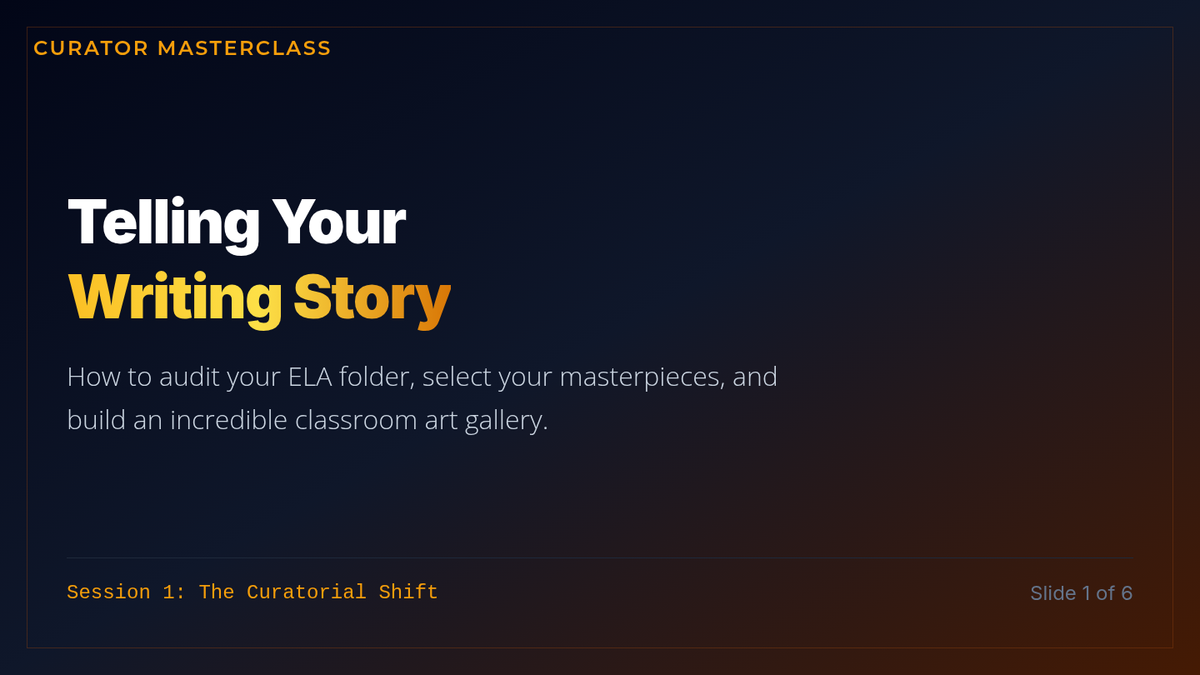
An interactive presentation for guiding students through the mindset of an art curator, modeling portfolio auditing, and setting gallery rules.