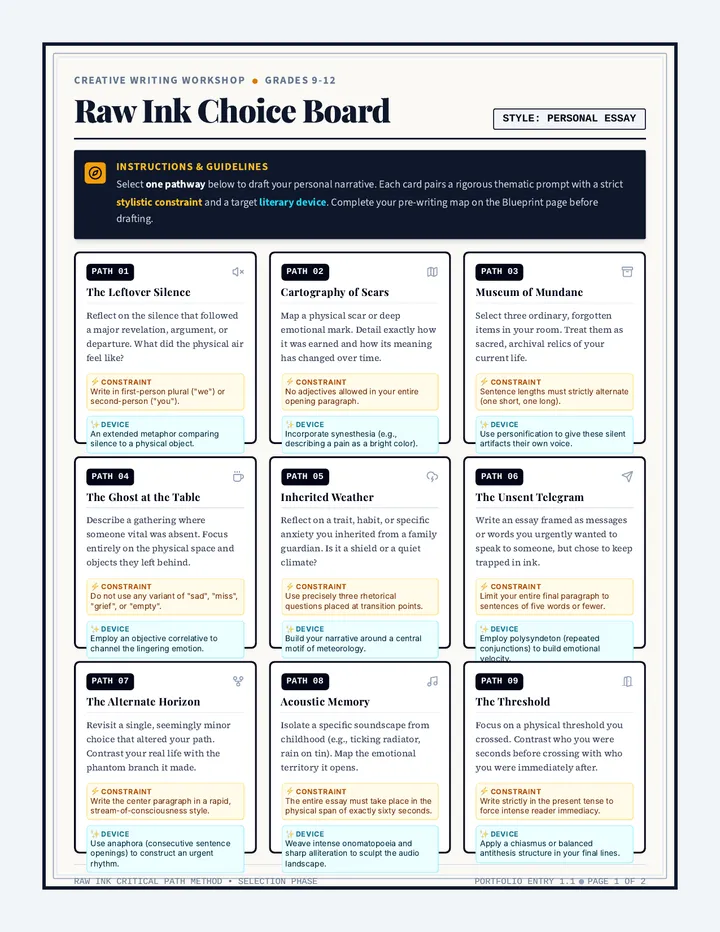
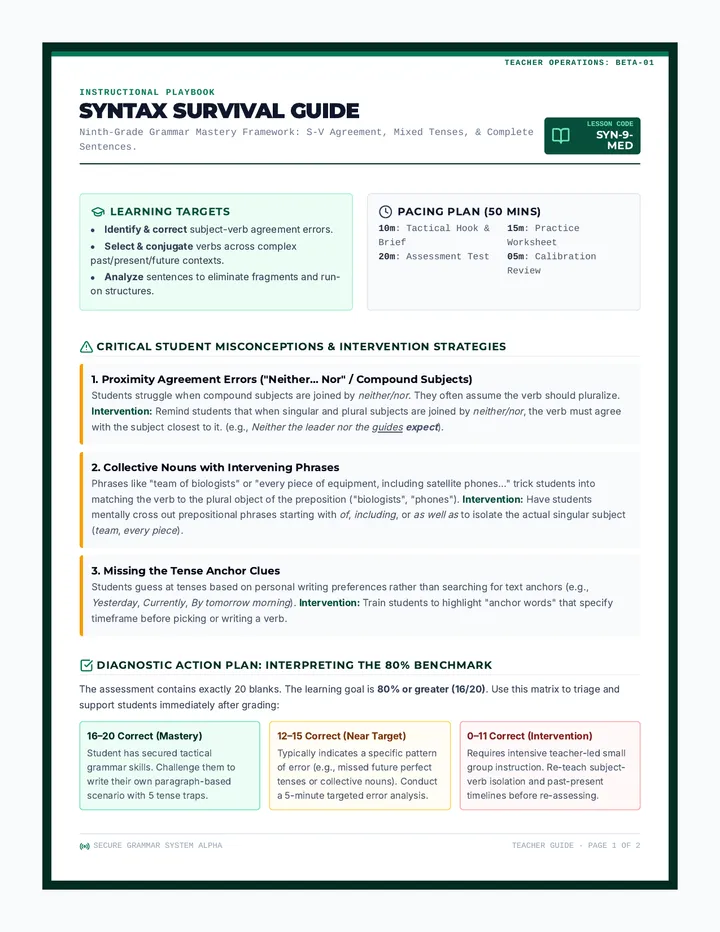
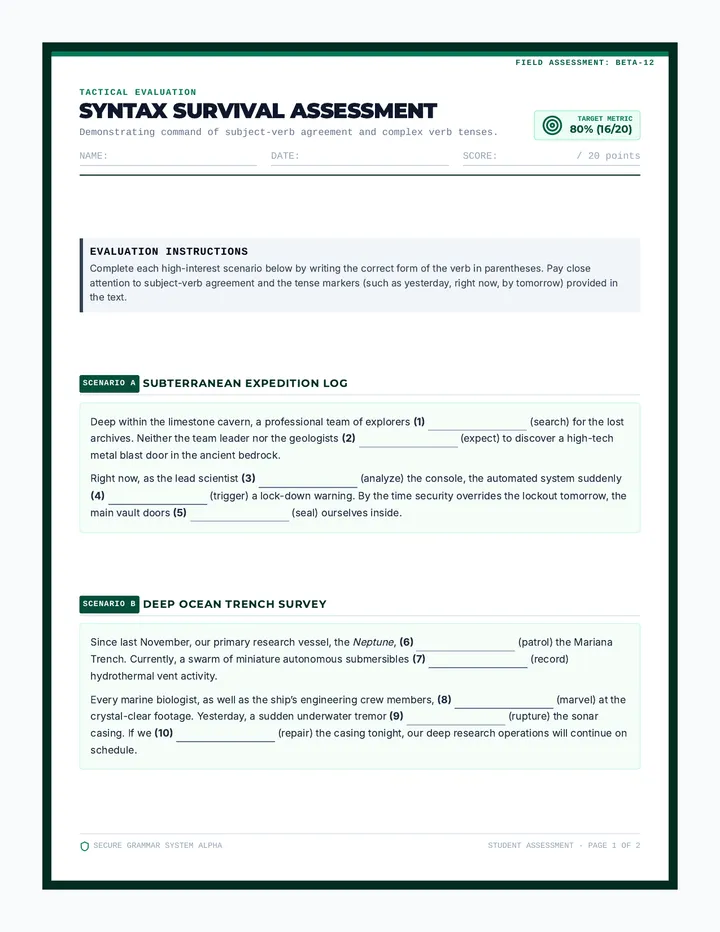
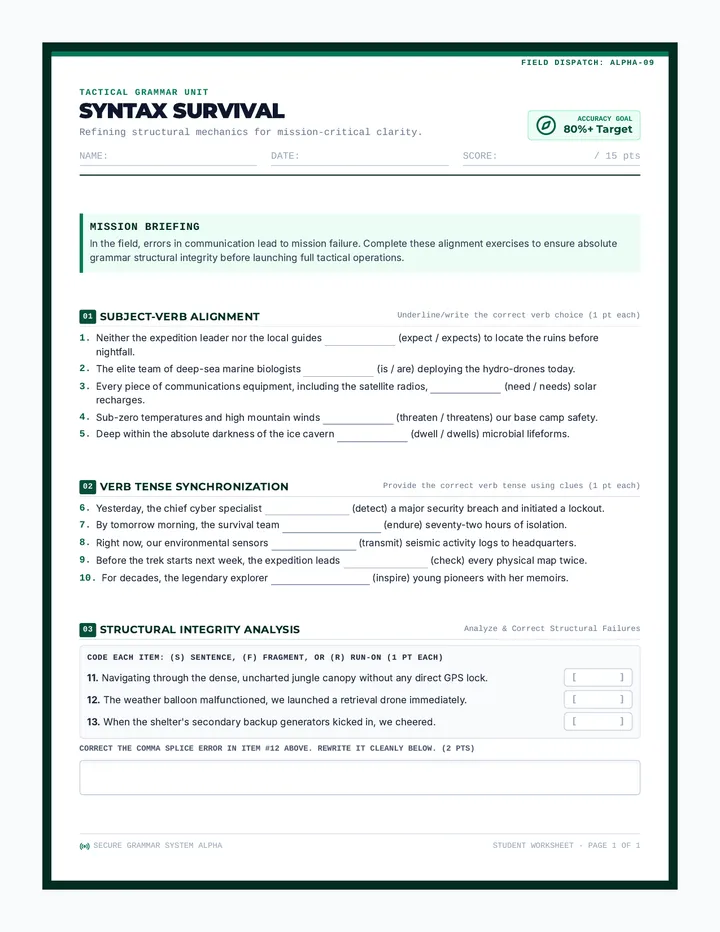
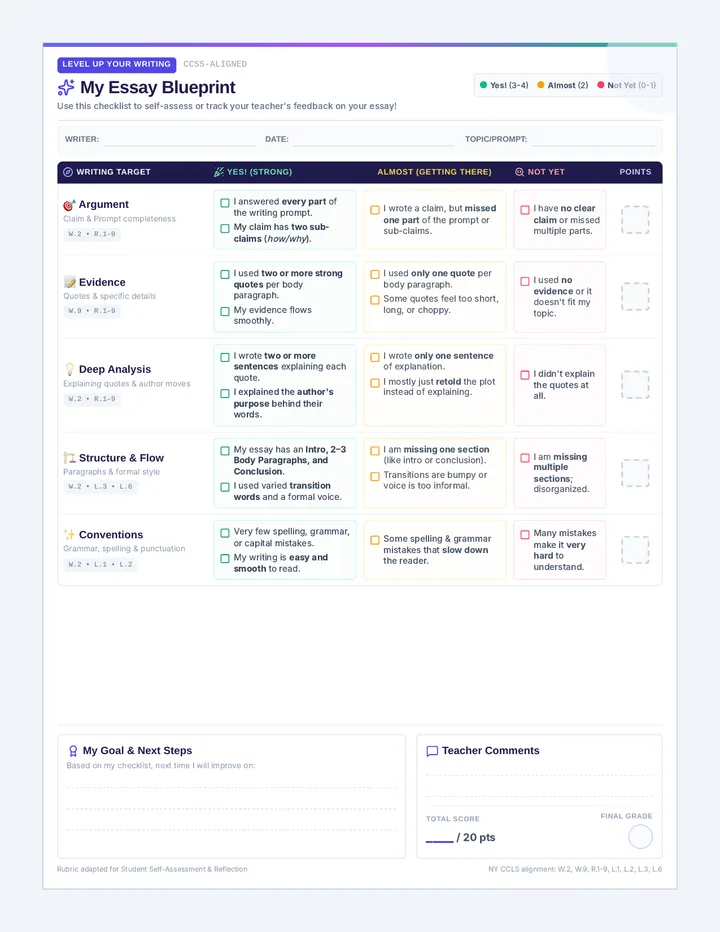
A comprehensive worksheet focusing on the Claim, Evidence, and Reasoning (CER) framework, featuring identification tasks, matching exercises, and creative writing prompts using an investigative theme.
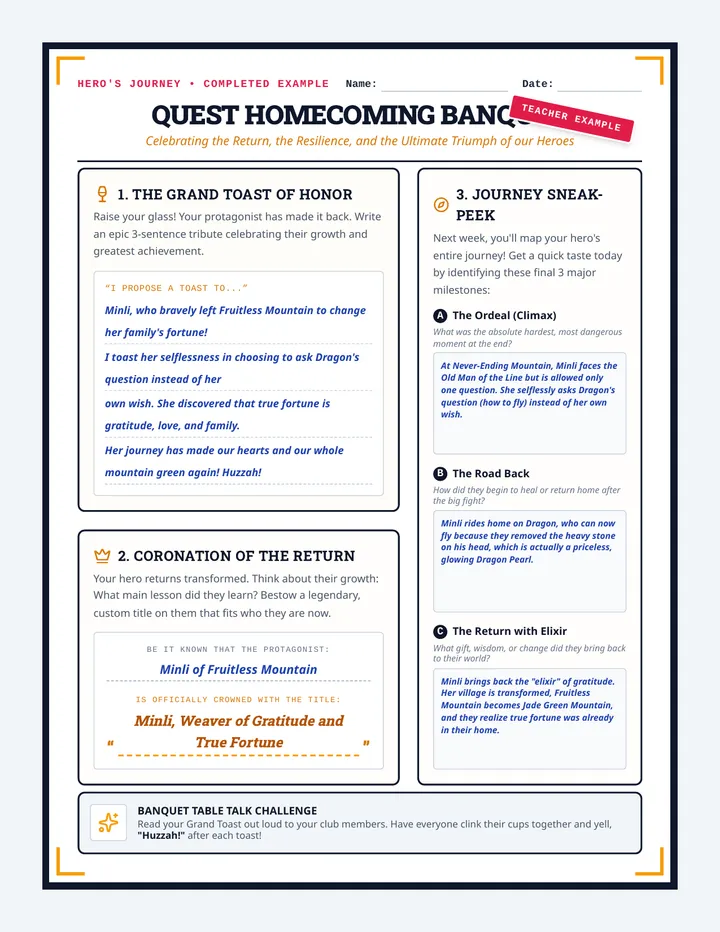
A single-page exit ticket for the Digital Swarms workshop, containing two identical copies for easy printing and distribution. It includes focused reflection questions on language (modals and idioms), strategy, and ethics, with adequate writing space for B2+ students. It now features uniform styling for all answer choices and improved vertical efficiency.
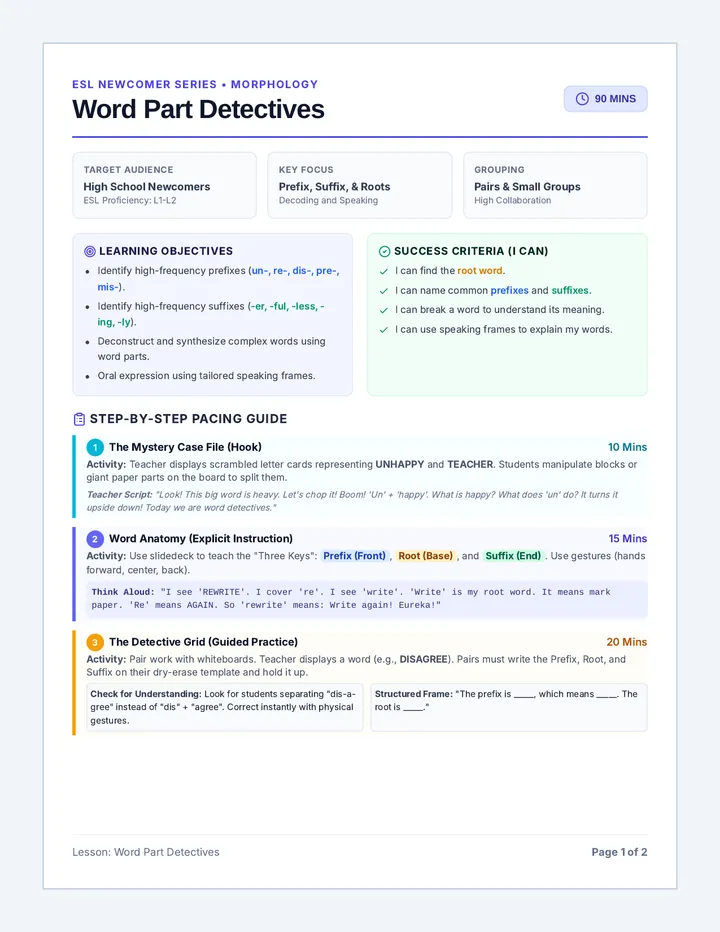
A teacher guide containing instructional goals, pacing, answer keys, and discussion prompts for the Word Detectives lesson.
A worksheet for students to brainstrom powerful synonyms for overused words identified in the 'Bland Street Mystery' story.
A narrative reading passage featuring Detective Barnaby, intentionally written with overused 'tired' words for students to identify.
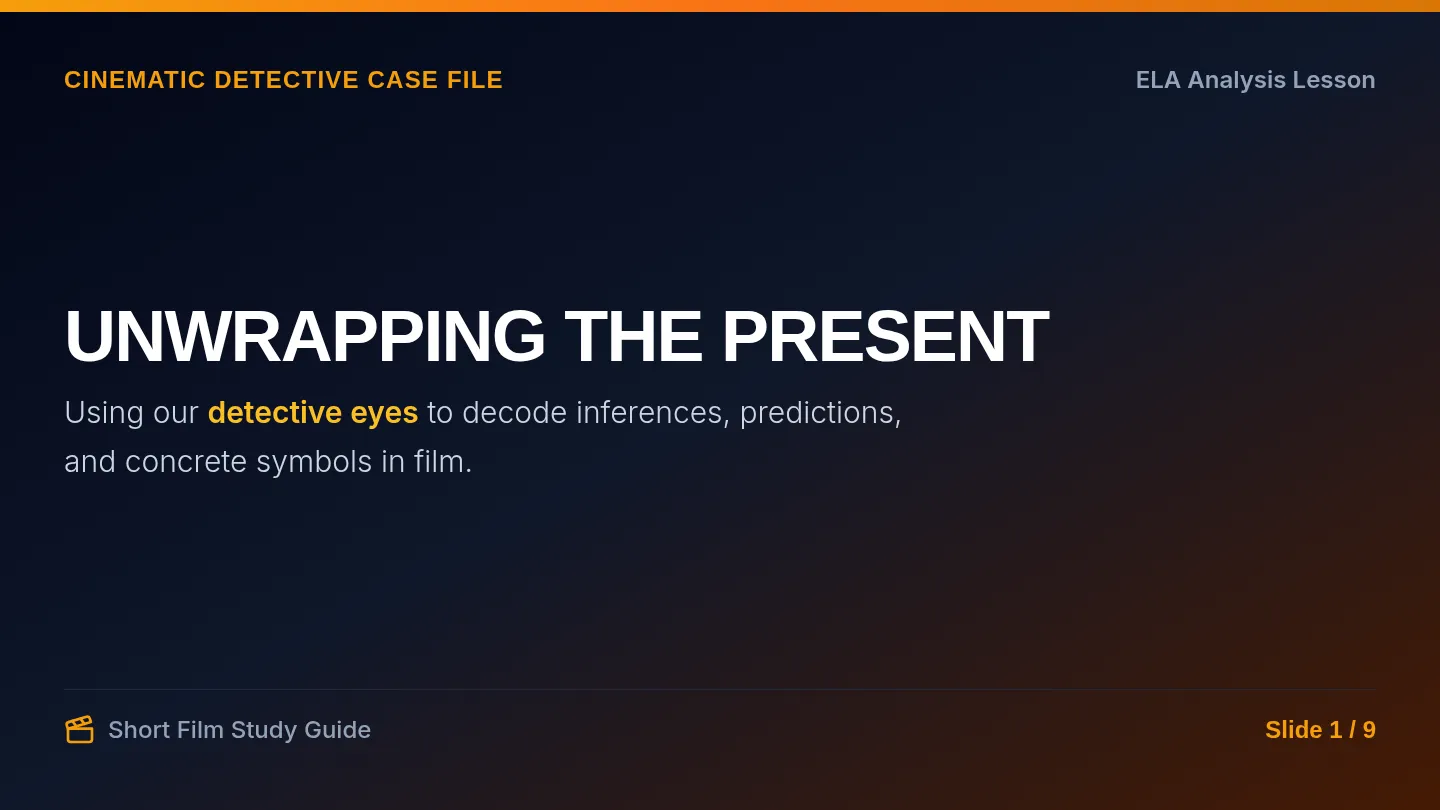
A detective-themed slide deck that introduces the concept of overused 'tired' words and the power of synonyms to enhance descriptive writing.
A comprehensive teacher's guide and answer key for the Empire Archivists lesson. Includes explanations for why each card belongs in its category and instructional tips for teaching the differences between summarizing, paraphrasing, and patchwriting.
The cut-out cards for the Empire Archivists activity. Contains eight distinct examples of summaries and paraphrases, designed to challenge students to identify accuracy, plagiarism, and appropriate detail levels.
A student-facing sorting board for categorizing paraphrases and summaries. Includes distinct zones for 'Good' and 'Bad' examples and a reflection question to deepen understanding of effective writing techniques.
A foundational reading passage for 6th grade students detailing the locations and key achievements of the Maya, Aztec, and Inca civilizations. This text serves as the source material for the subsequent paraphrasing and summarizing activity.
Answer key for the Swarm Interception Drills worksheet, providing correct modal verb forms and sample responses for the open-ended scenario.
A grammar-focused worksheet providing structured practice with modals of deduction (past and present) and obligation in the context of the Digital Swarms scenario. Includes sentence transformation and scenario-based speculation tasks.
A comprehensive facilitation guide for the Digital Swarms workshop. It includes a timed lesson plan, B2+ assessment criteria, and questioning frameworks. It now features specific advice for integrating role-play cards and a stakeholders town-hall debate.
A two-page 'Crisis Brief' handout for students. It includes a case study summary, space for motivation analysis, creative strategy brainstorming with 'wildcard' prompts, and high-level vocabulary support. Layout is optimized for writing and visual clarity. It now includes a dedicated reference for idioms in the tactical sidebar.
An immersive presentation for a B2+ speaking workshop based on the TikTok flash mob news. It now includes a dedicated 'Viral Pulse' slide with five relevant idioms (Spread like wildfire, Follow the herd, Jump on the bandwagon, etc.) to help students elevate their speaking score.
A student-facing step-by-step instruction sheet for creating a 5-slide Greek Mythology project using Google Slides, including technical tips and standard alignments.
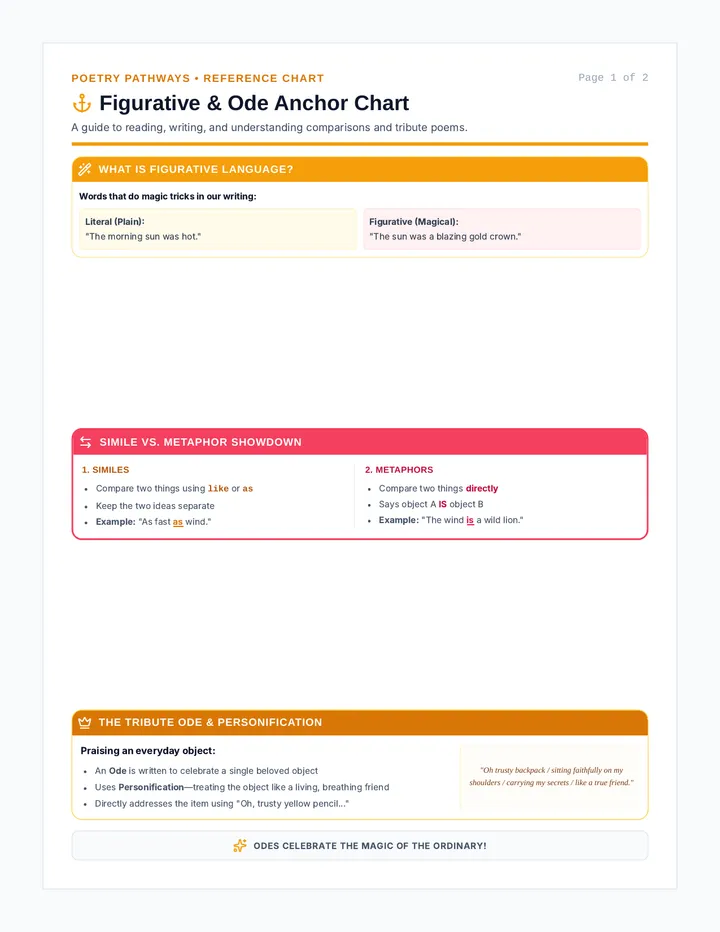
A 10-slide presentation deck introducing figurative language concepts (Simile, Metaphor, Personification, etc.) with scrambled review questions on each slide to reinforce learning.
A 2-page student worksheet designed to accompany the Language Lab slides. It features dedicated sections for each figurative language device, providing space for students to record their original examples and respond to flashback review questions.
A 12-slide presentation deck covering 9 types of figurative language. Each slide includes a definition, a 'Lab Example', a student 'Research Task' to create their own example, and a 'Yesterday's Review' question to reinforce cumulative learning.
A teacher's answer key for the Glitch Repair sorting game, providing the correct matches for all word and sentence cards to facilitate quick grading and feedback.
A printable sorting mat for the Glitch Repair game, providing students with a structured workspace to organize and match word and sentence cards.
A set of 24 printable cards featuring words and context sentences for a sorting game. Students must match the correct commonly confused word with the sentence that fits its definition.
A visually striking slideshow designed for direct instruction on 12 pairs of commonly confused words. Includes memory triggers, definitions, visual hints, and interactive practice sentences for each word group.
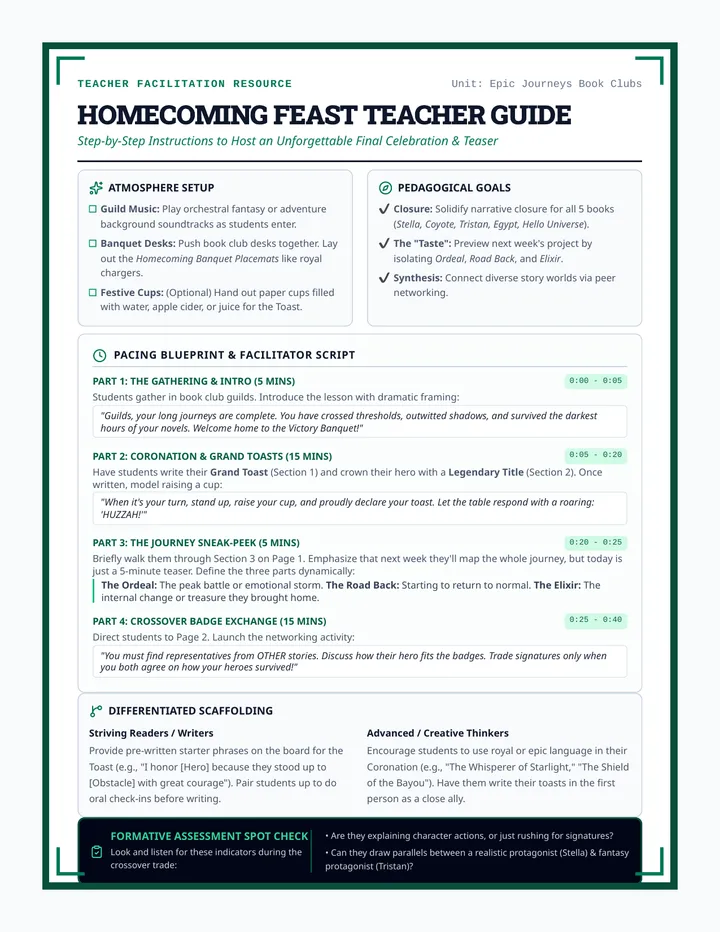
A detailed teacher's guide for the Grammar Lab lesson, including learning objectives, a list of required materials, a step-by-step instructional sequence, and practical teaching tips for middle school classrooms.
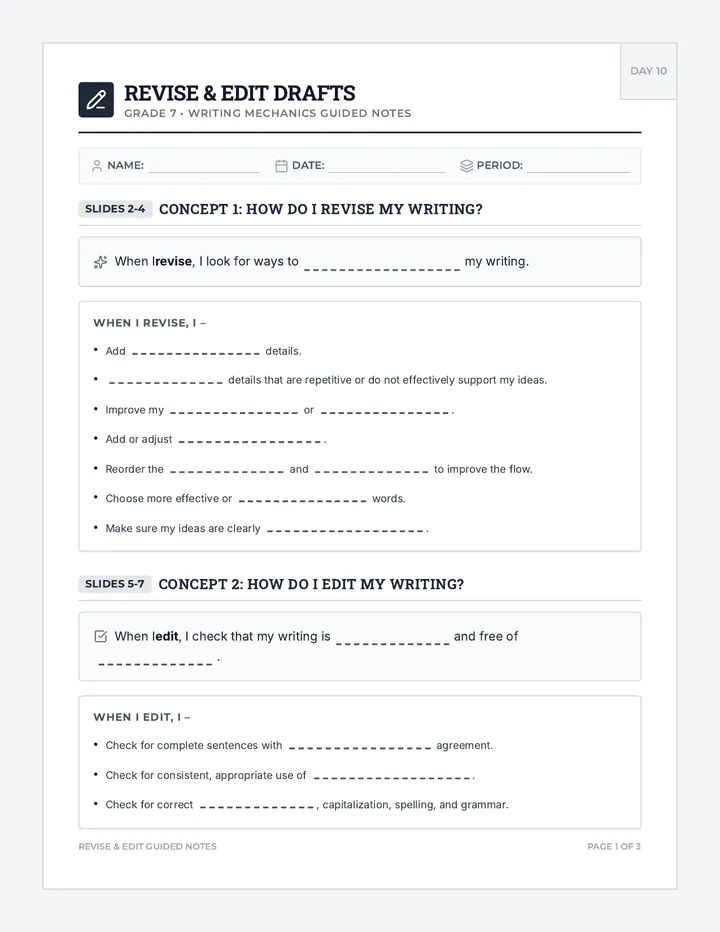
A final, refined one-page workbook for Chapters 14-15 of The Giver. This version has been strictly optimized for height by reducing margins and padding to ensure everything fits perfectly on a single page, while featuring a vibrant full-spectrum rainbow theme to represent Jonas's awakening to color and deep memory.
The finalized activity sheet for Chapters 12-13 of The Giver, featuring a red-accented theme, the chapter range prominently displayed in the header, and all previously requested reflection and analysis questions on a single, optimized page.
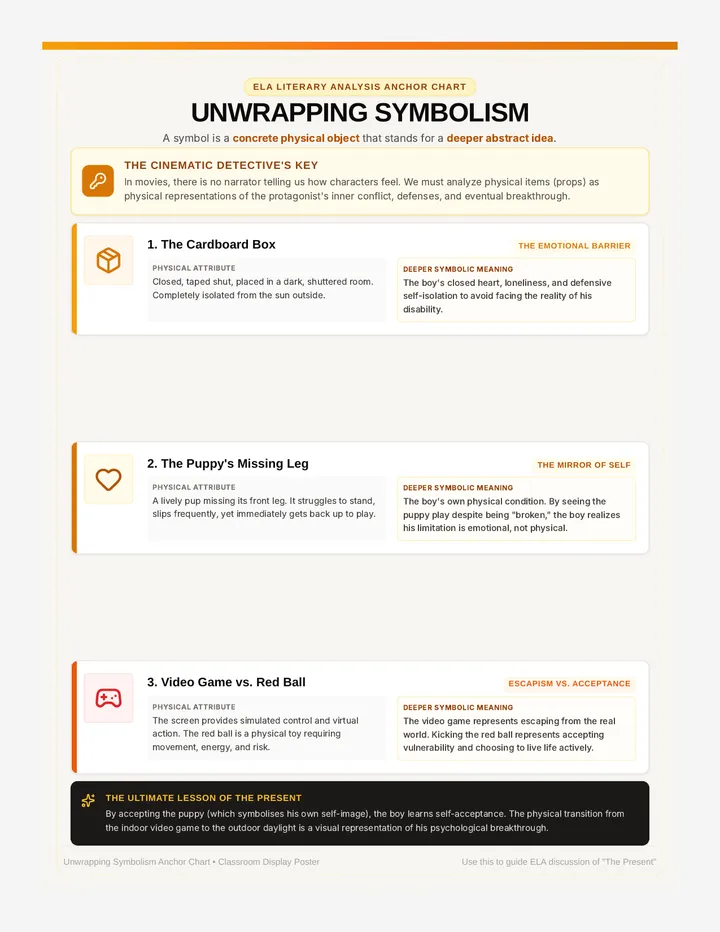
A presentation slide deck for teachers to introduce and discuss literary techniques in Poe's 'The Tell-Tale Heart'. Covers the unreliable narrator, pacing mechanics, and types of irony used in the story.