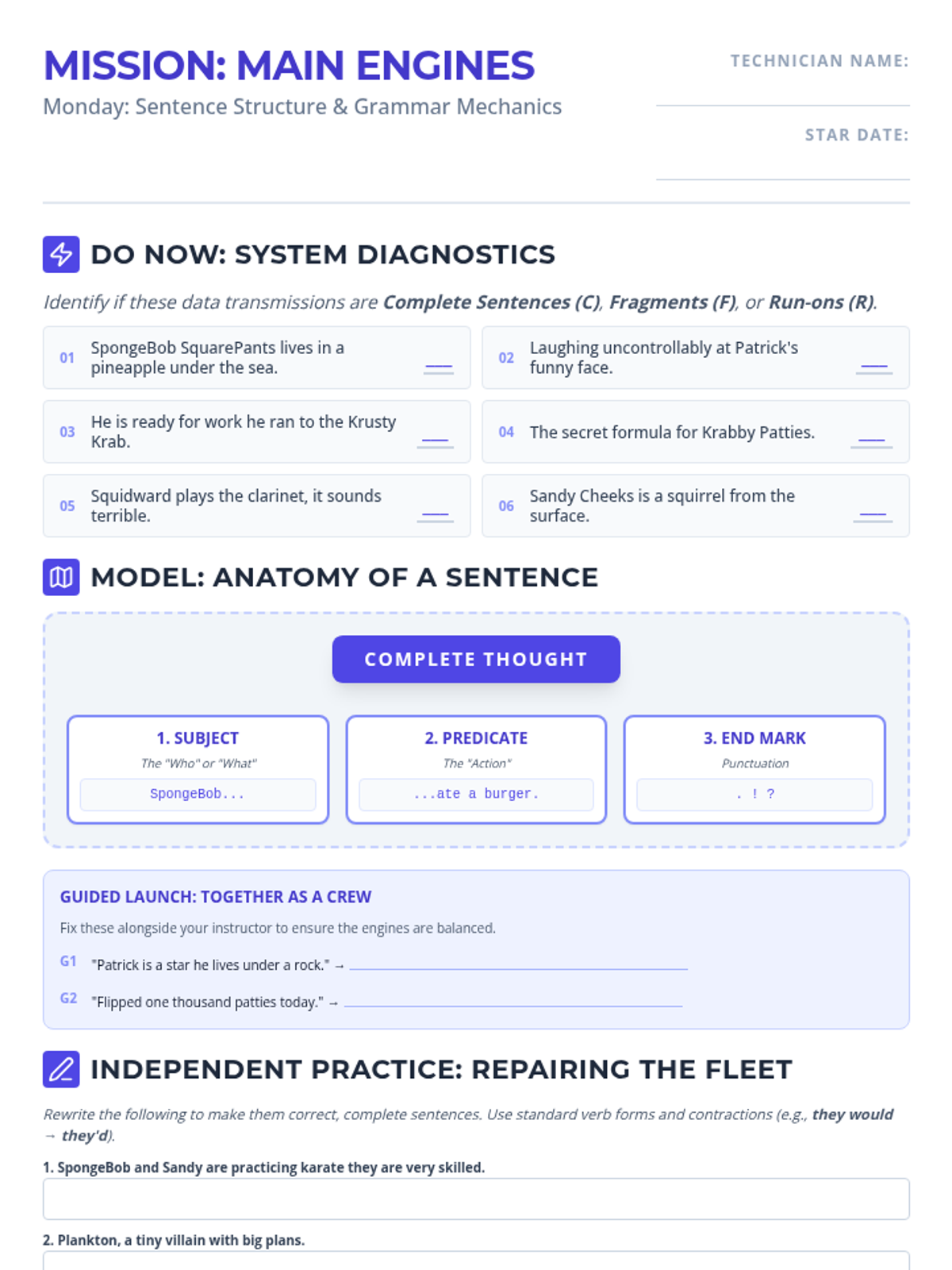
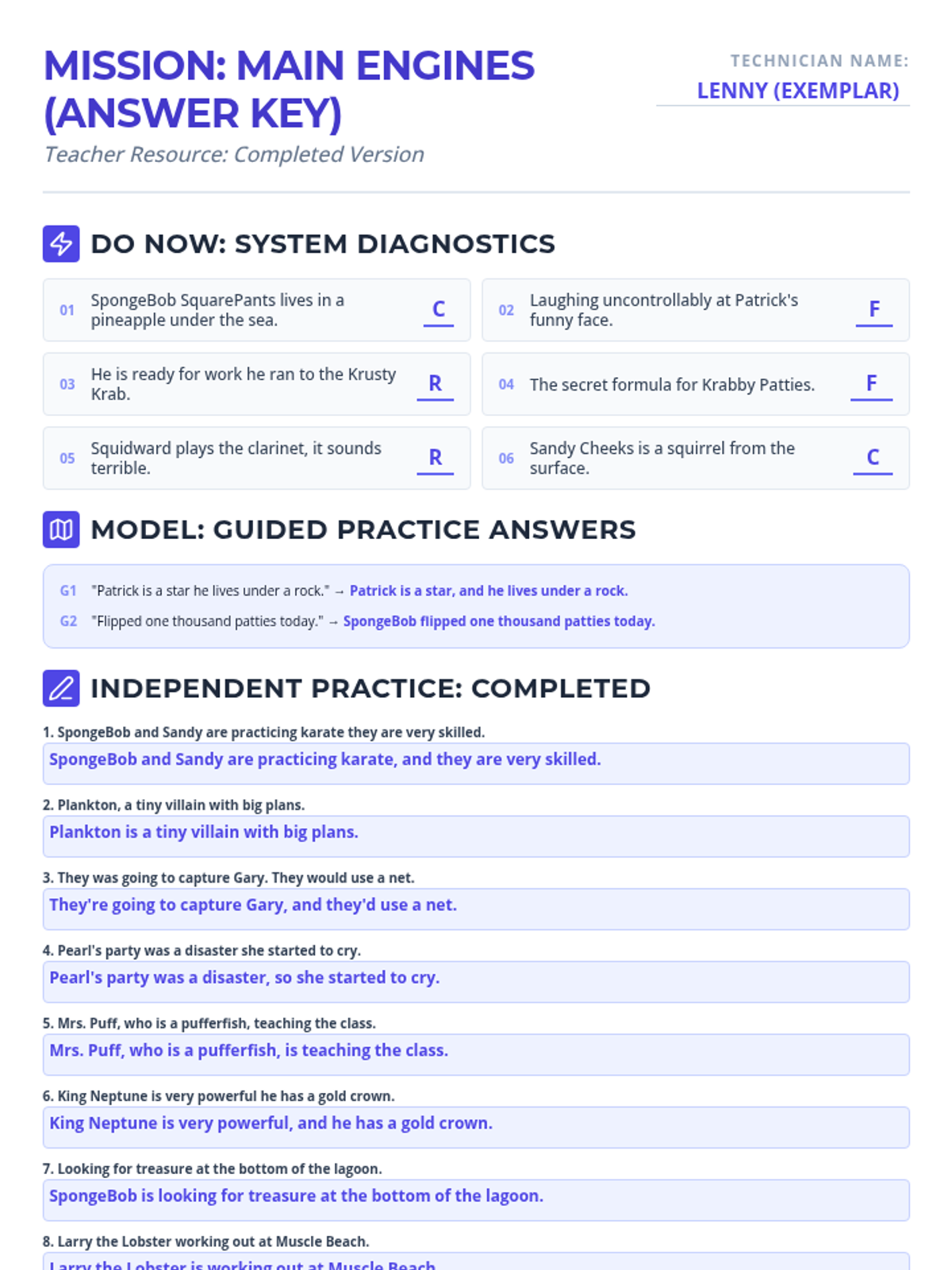
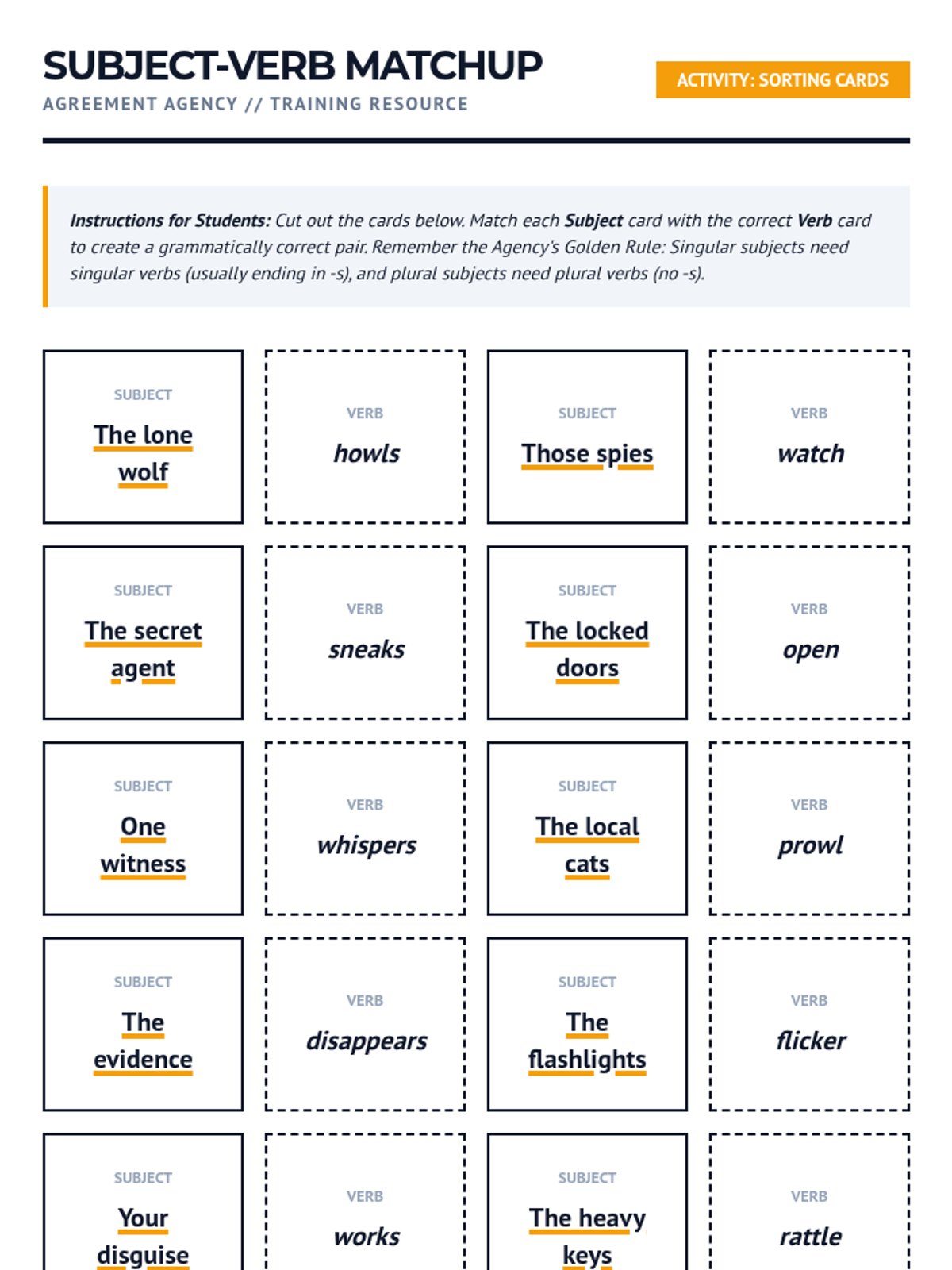
Sentence structure fundamentals, subject-verb agreement, and precise usage of parts of speech including pronouns, conjunctions, and adjectives. Targets technical accuracy through mastery of capitalization, punctuation, spelling, and verb mood.
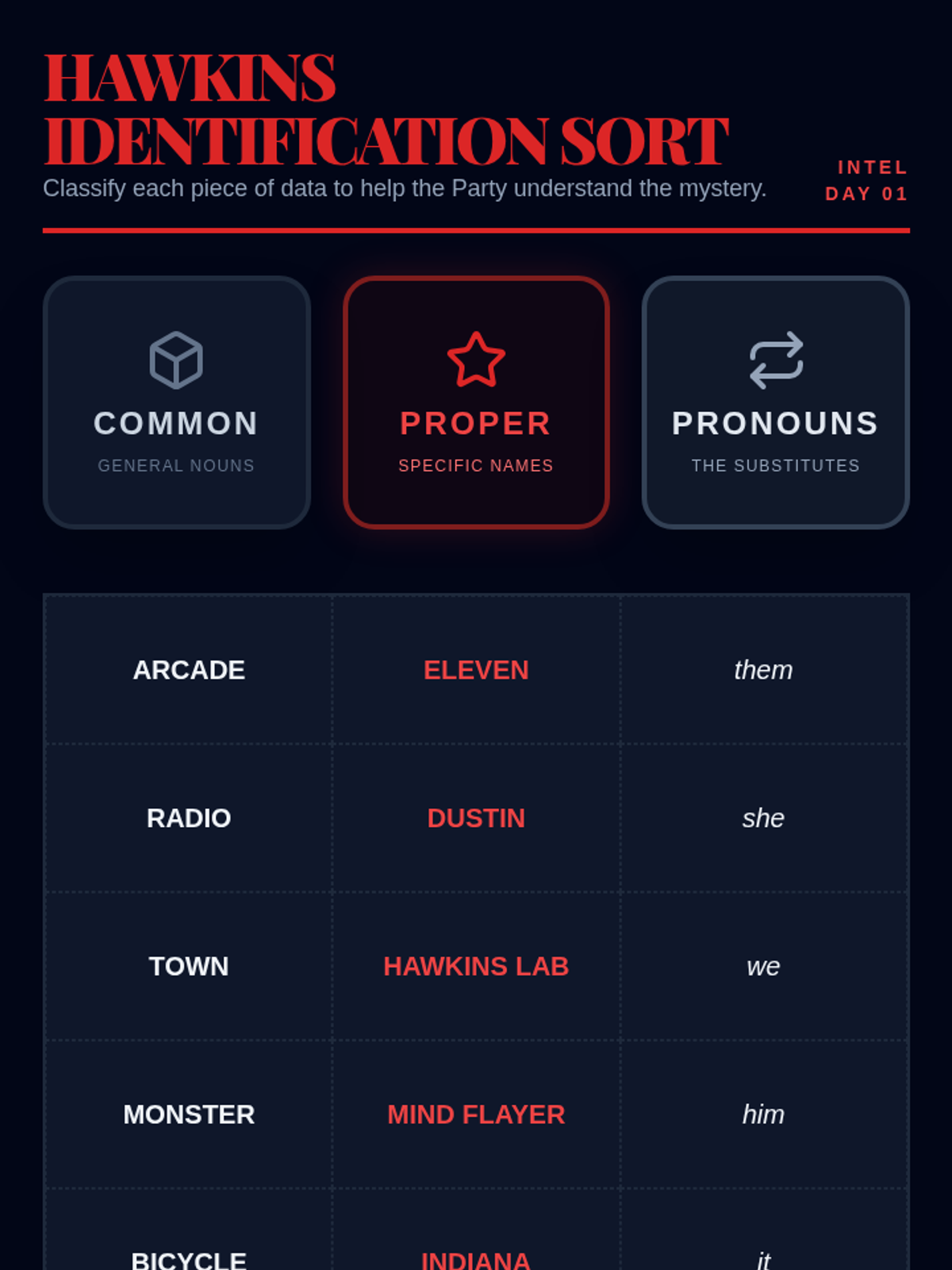
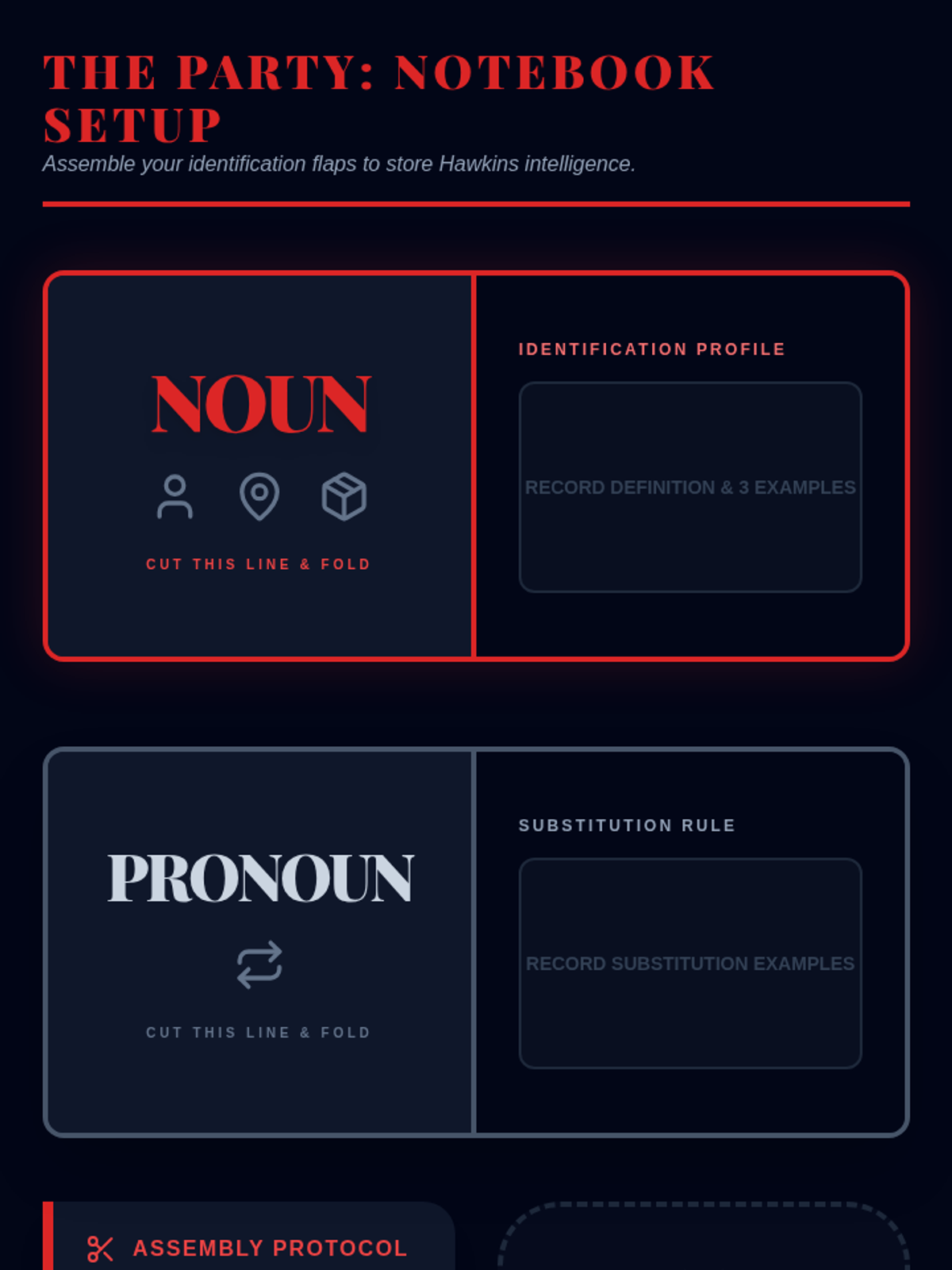
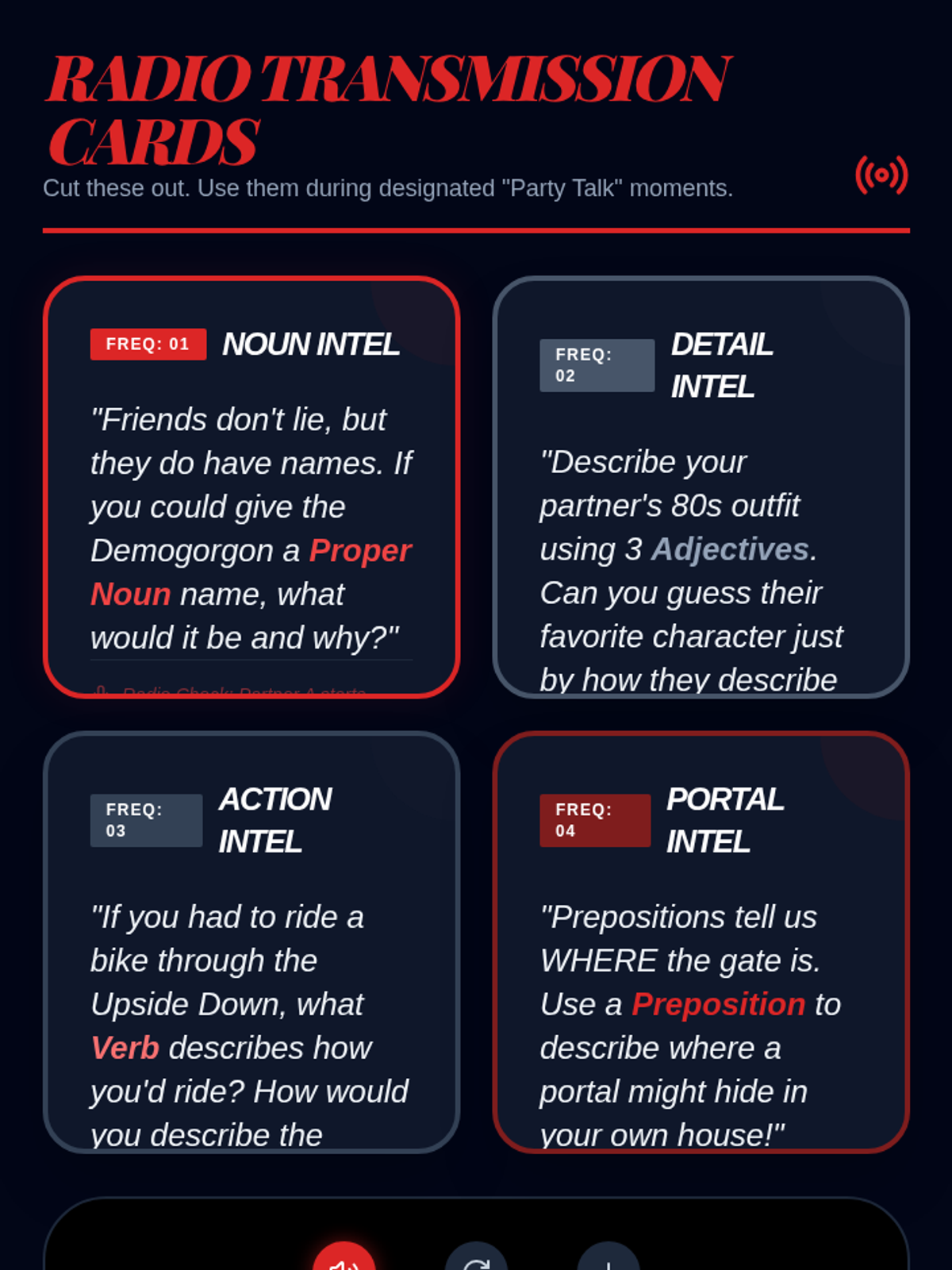
A retro, synthwave-inspired grammar unit for middle school resource room students. Students navigate the 'Upside Down' of parts of speech using themes of mystery, 80s nostalgia, and teamwork.
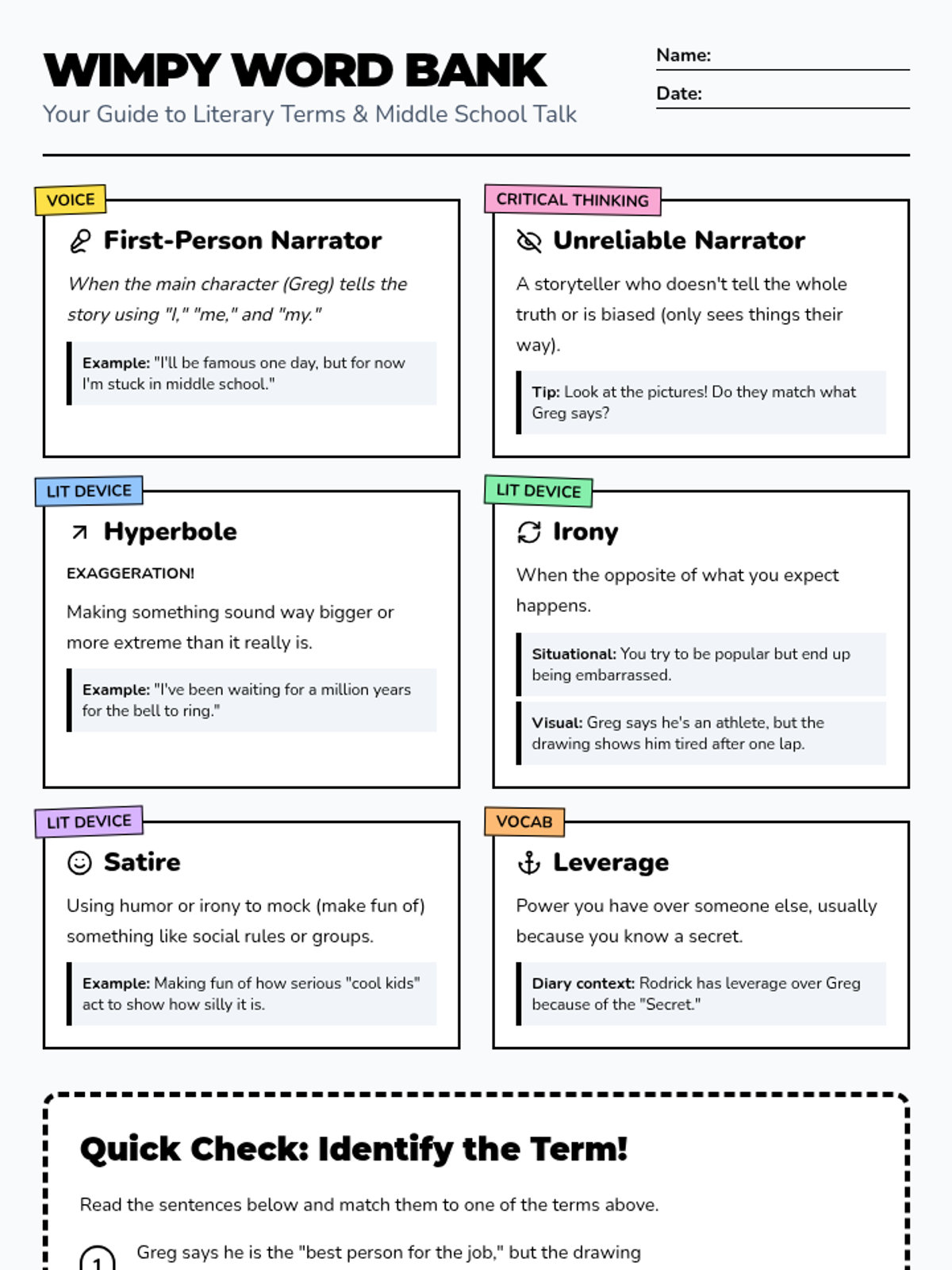
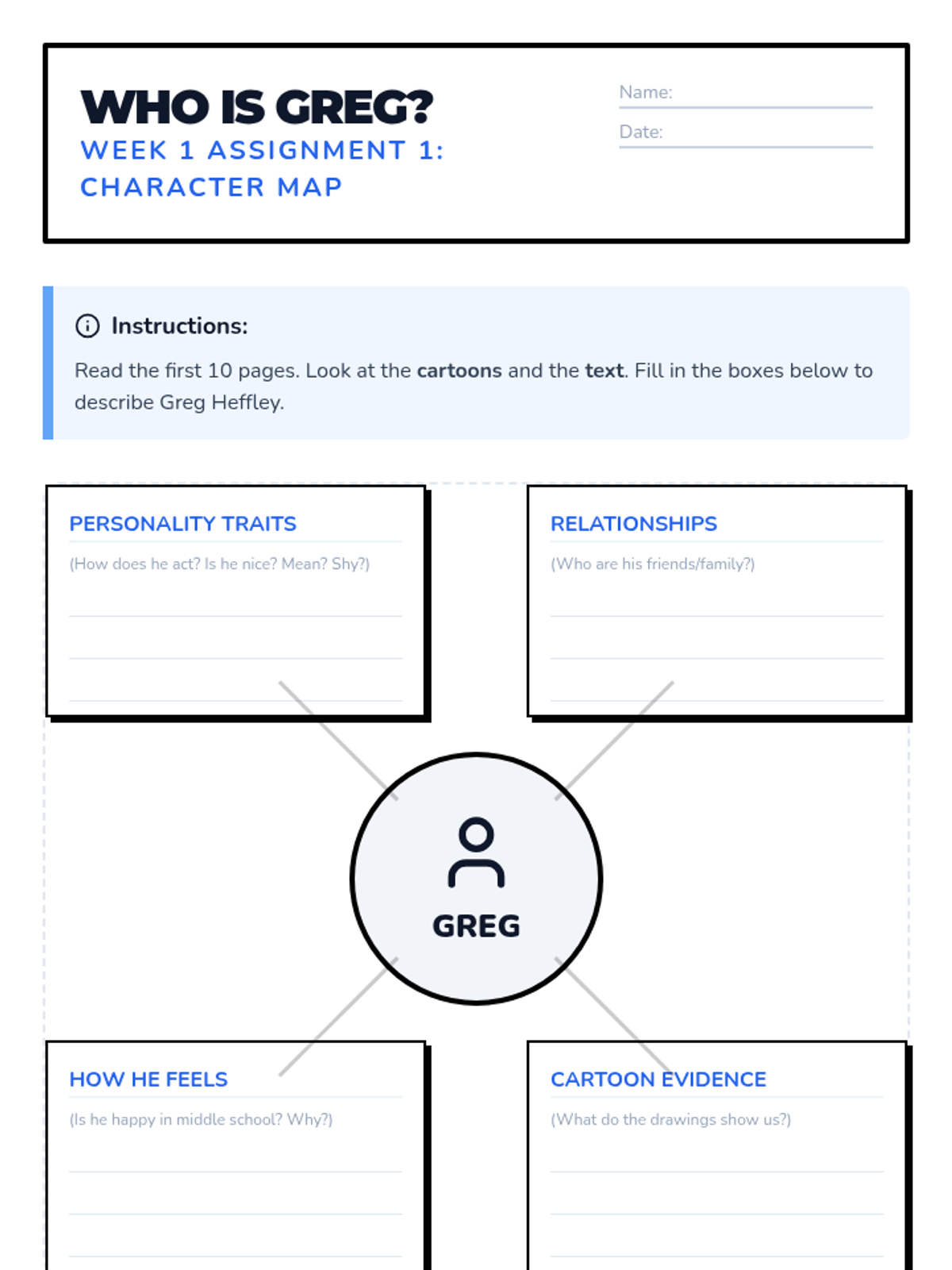
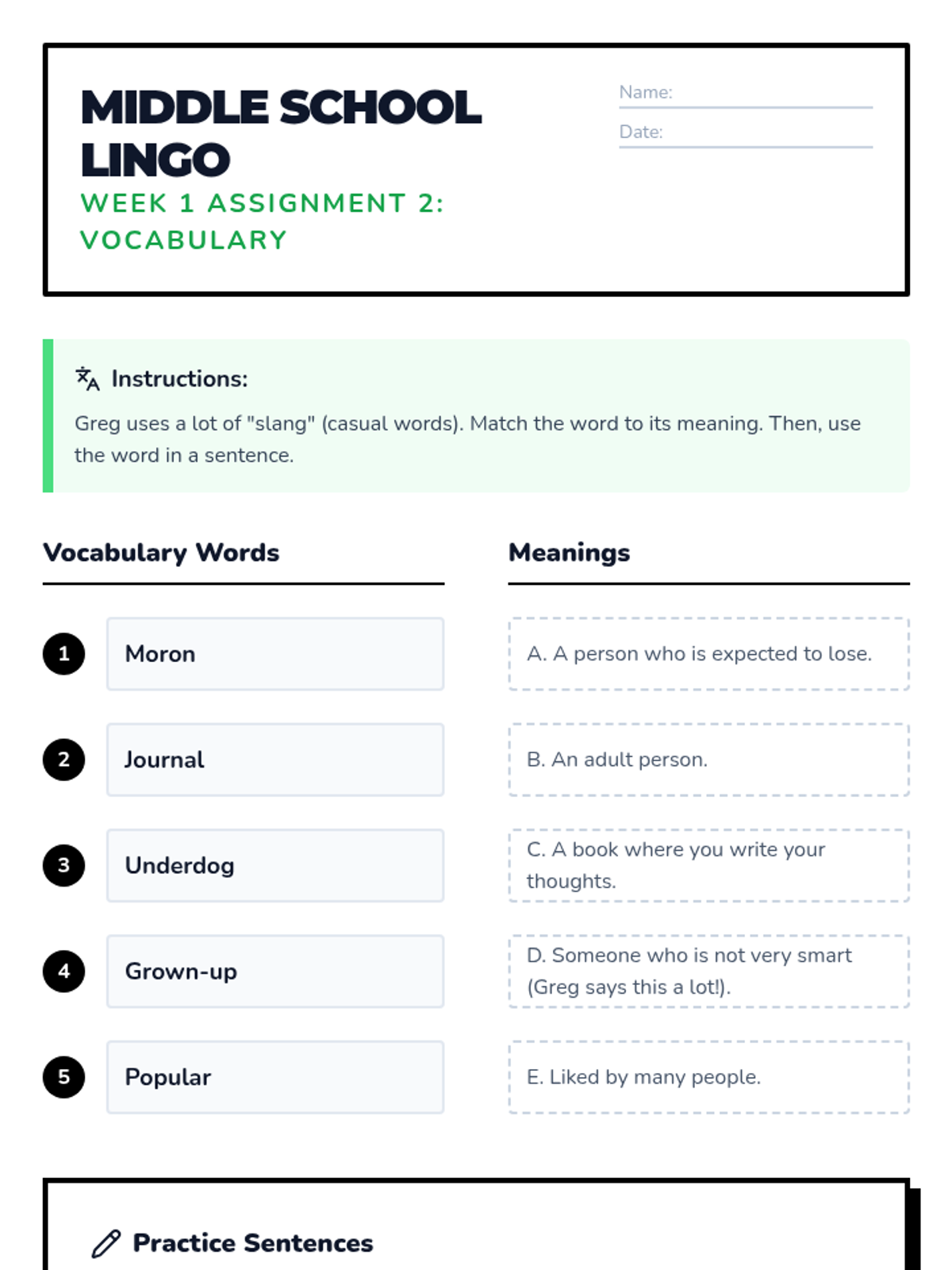
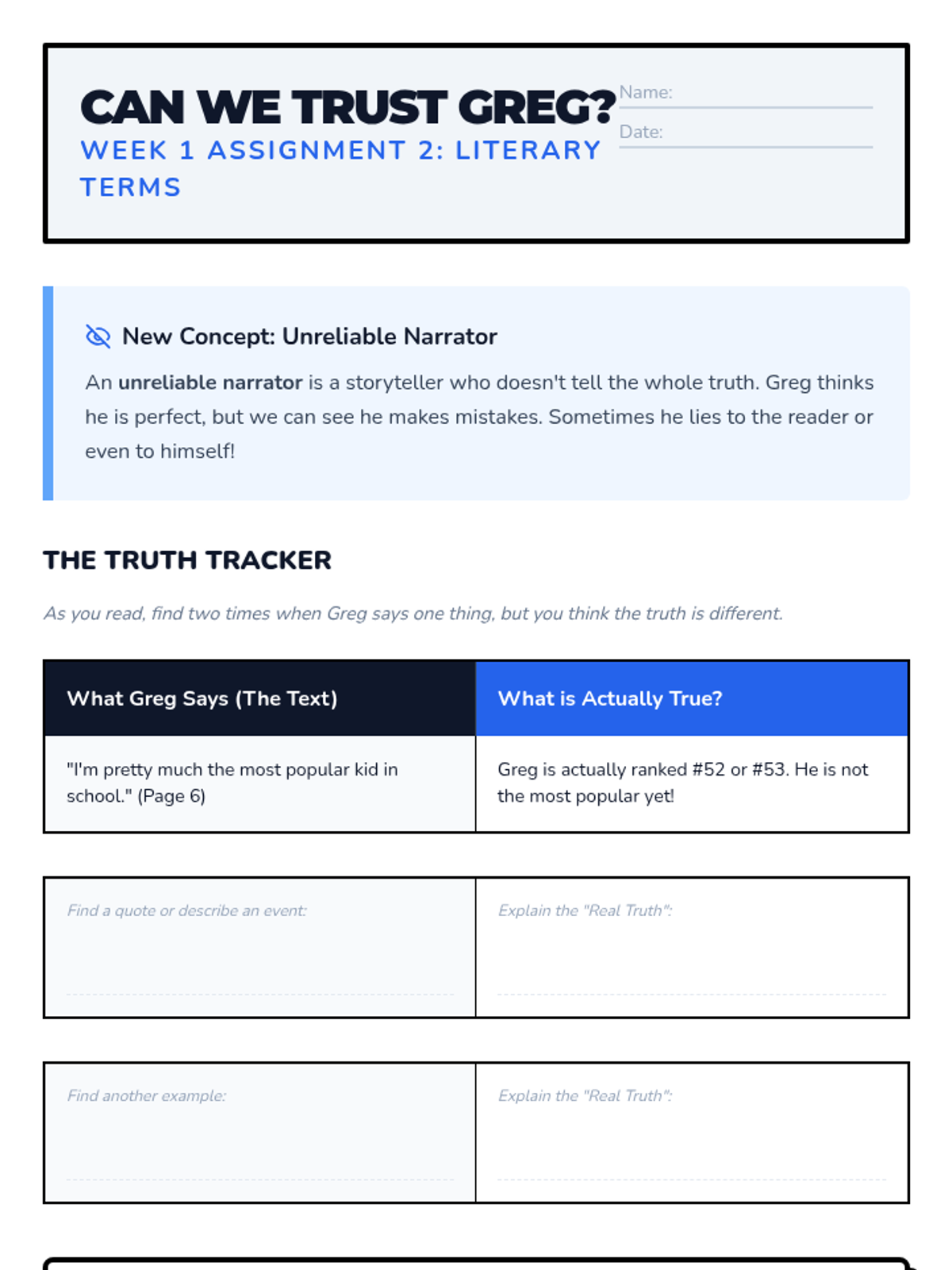
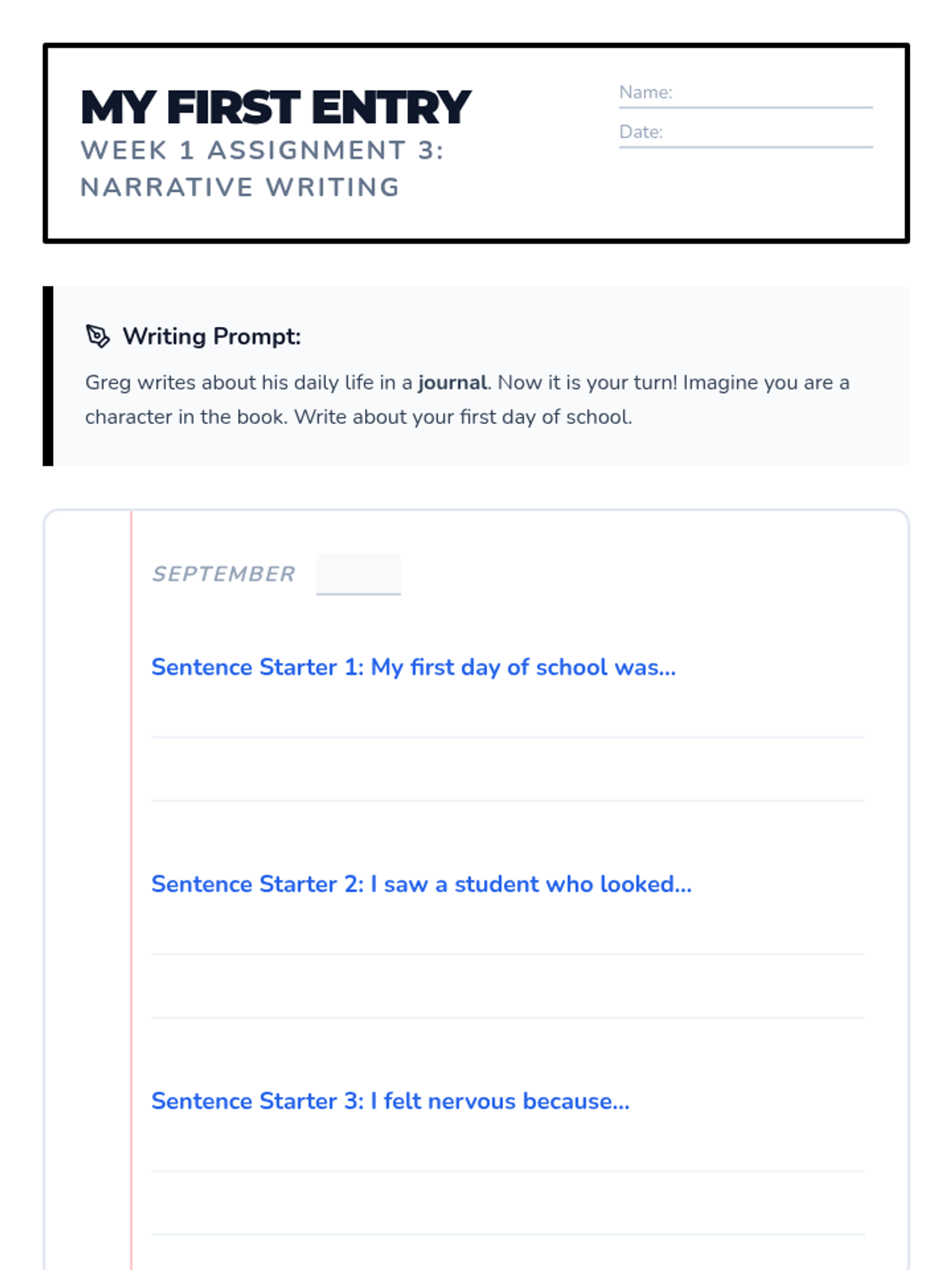
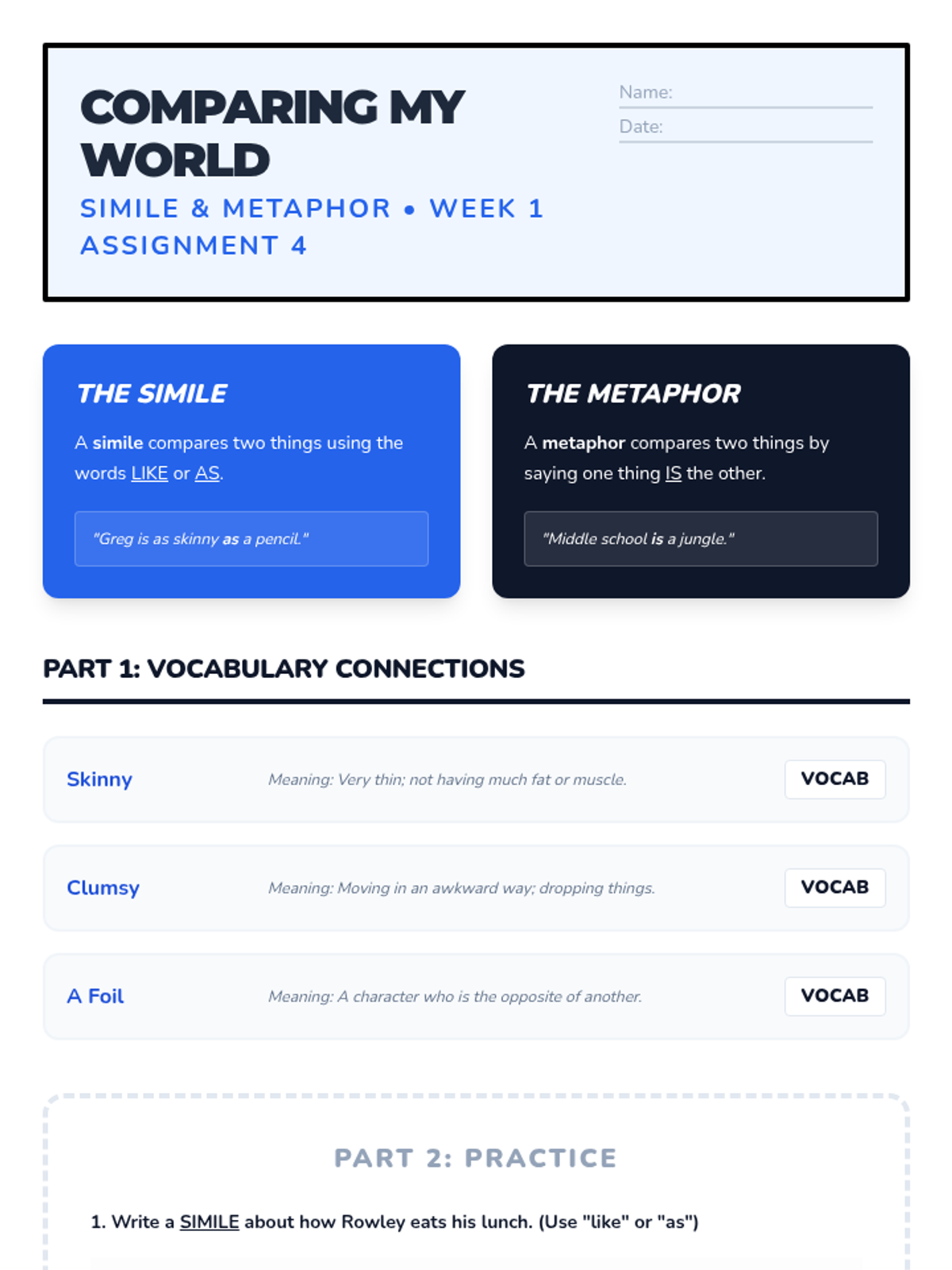
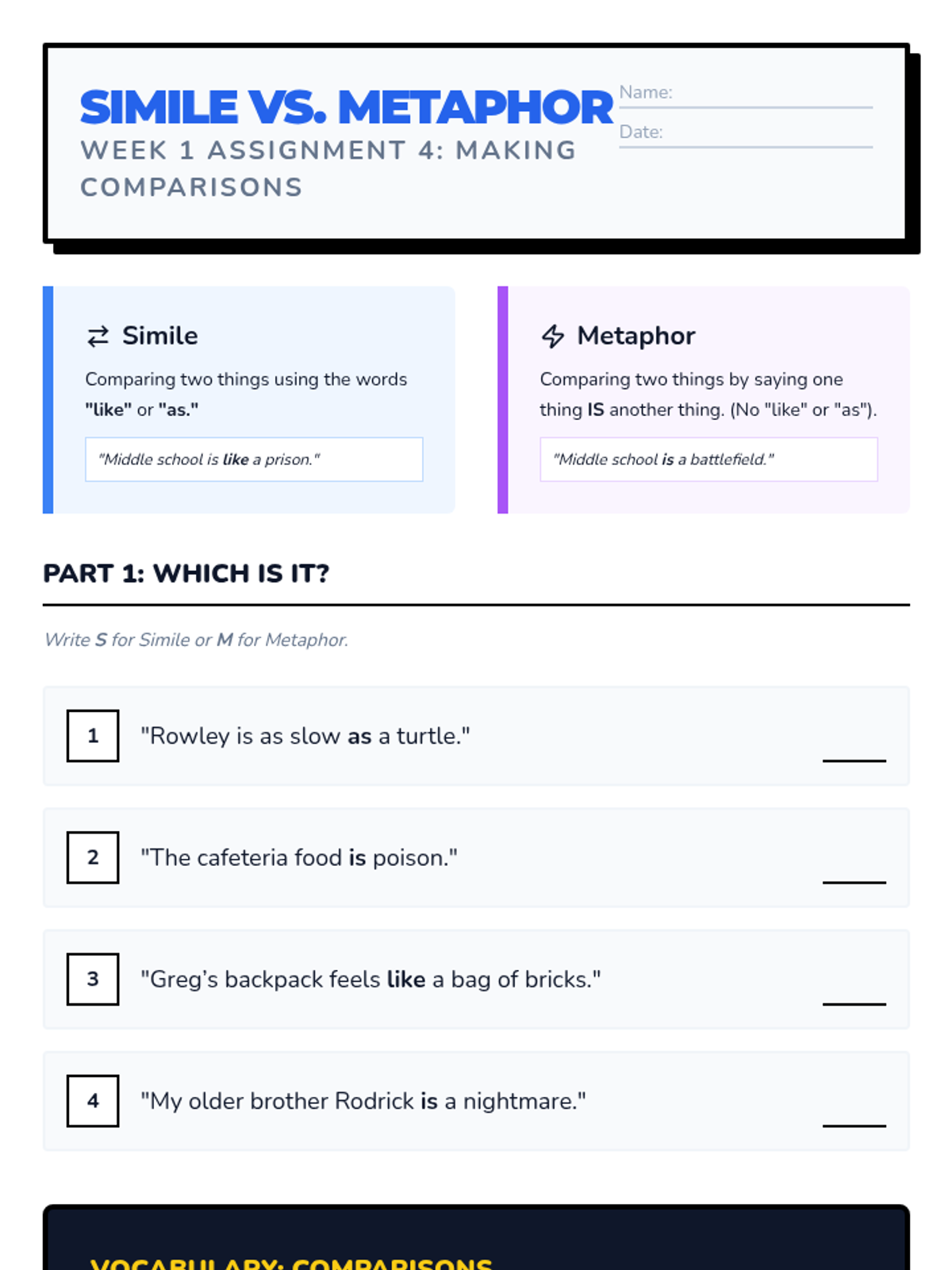
A comprehensive 6-week 8th-grade ELL curriculum split between Book 1 and 'Rodrick Rules'. Students explore narrative voice and a full suite of literary devices (simile, metaphor, alliteration, personification, hyperbole, satire, irony, foreshadowing, symbolism, and oxymoron) through visual literacy and intensive vocabulary building.
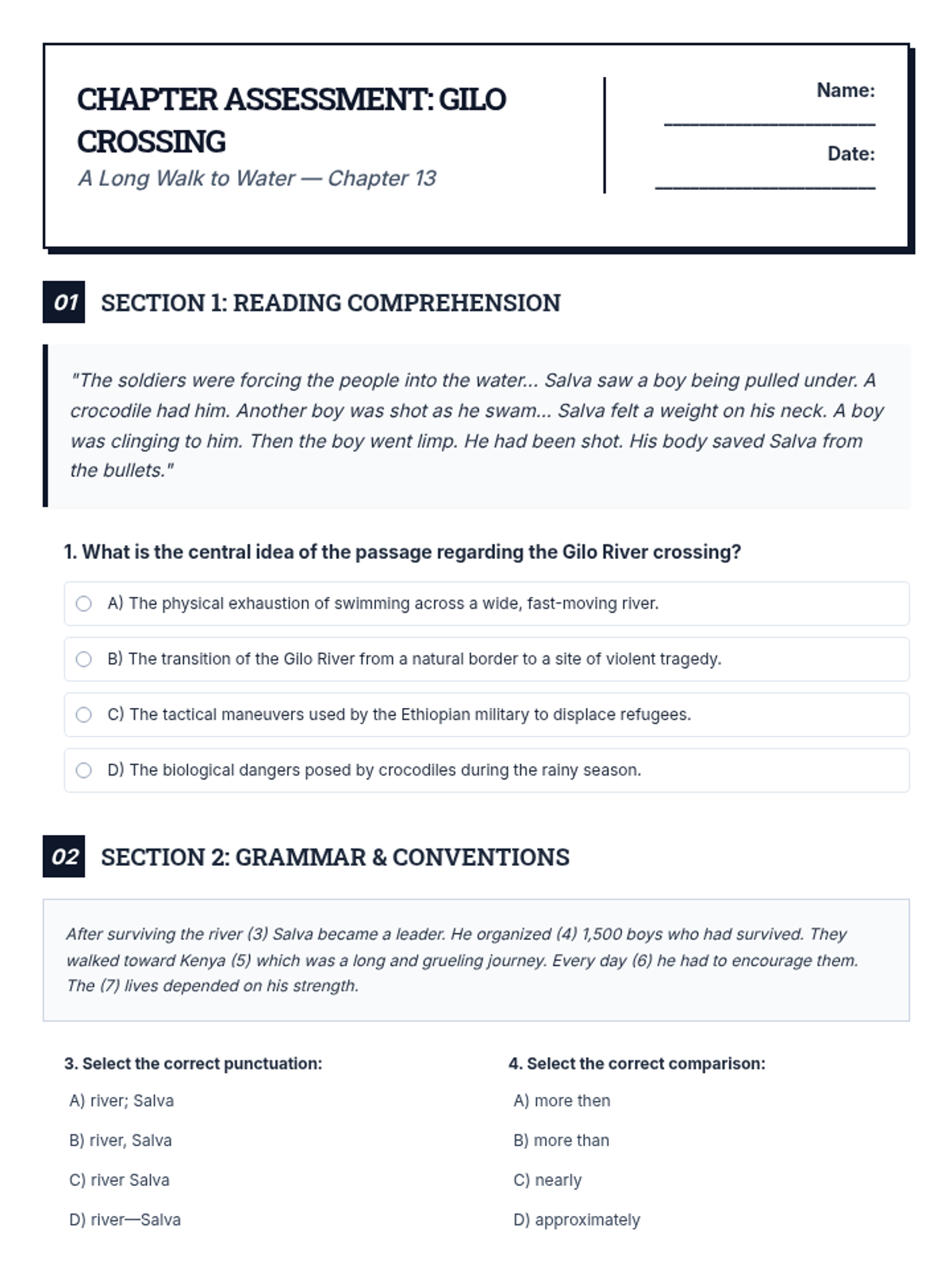
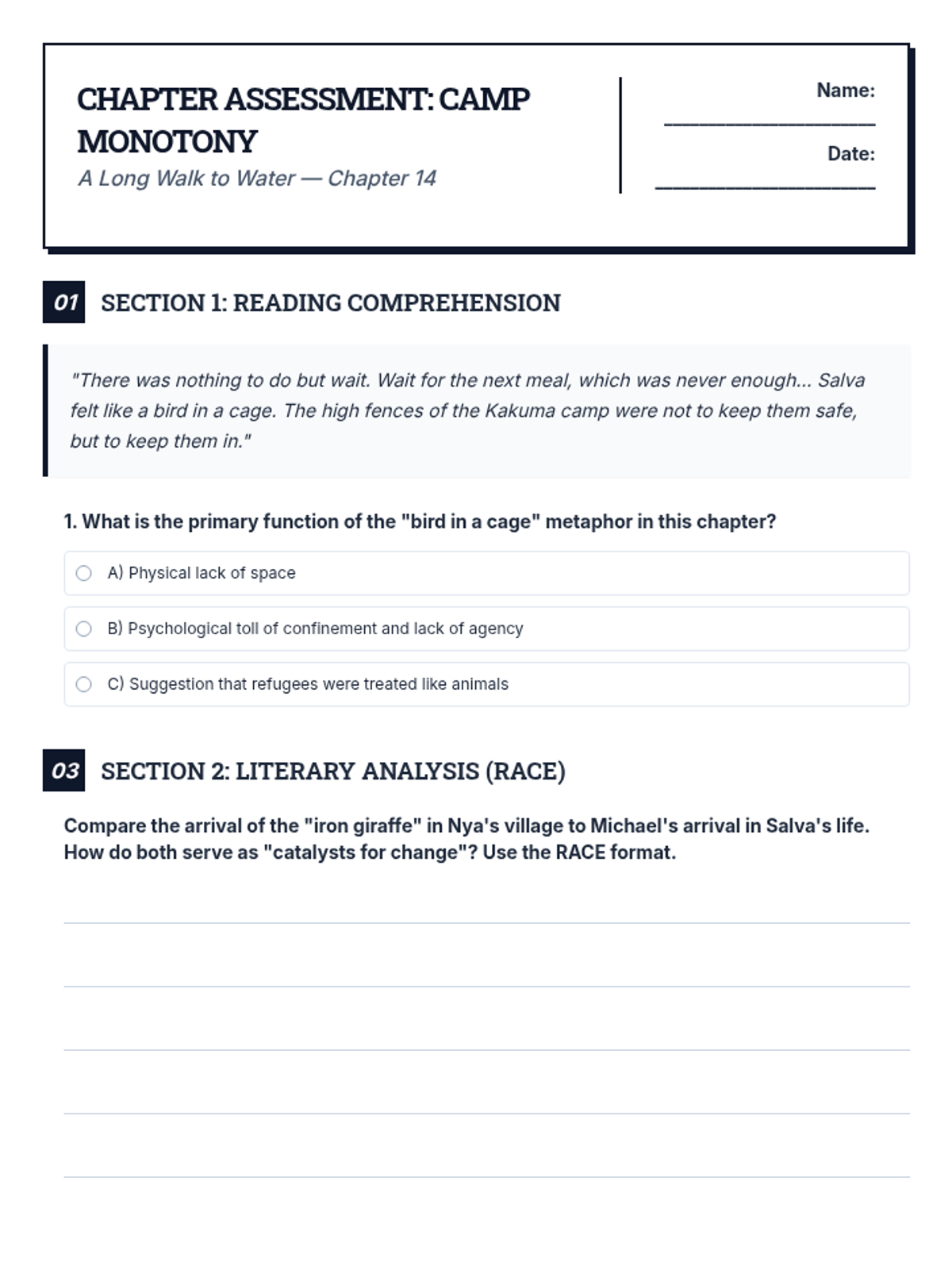
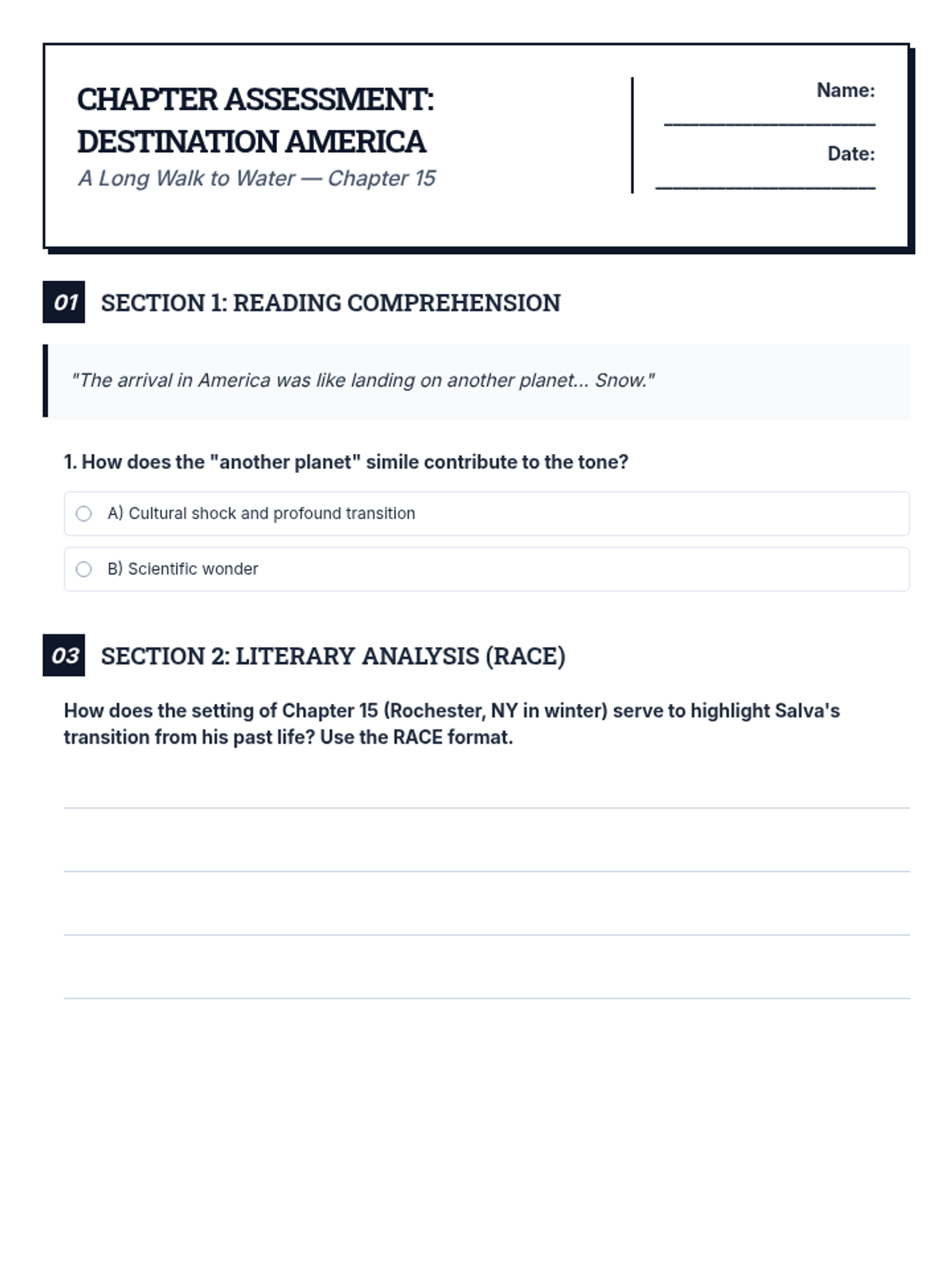
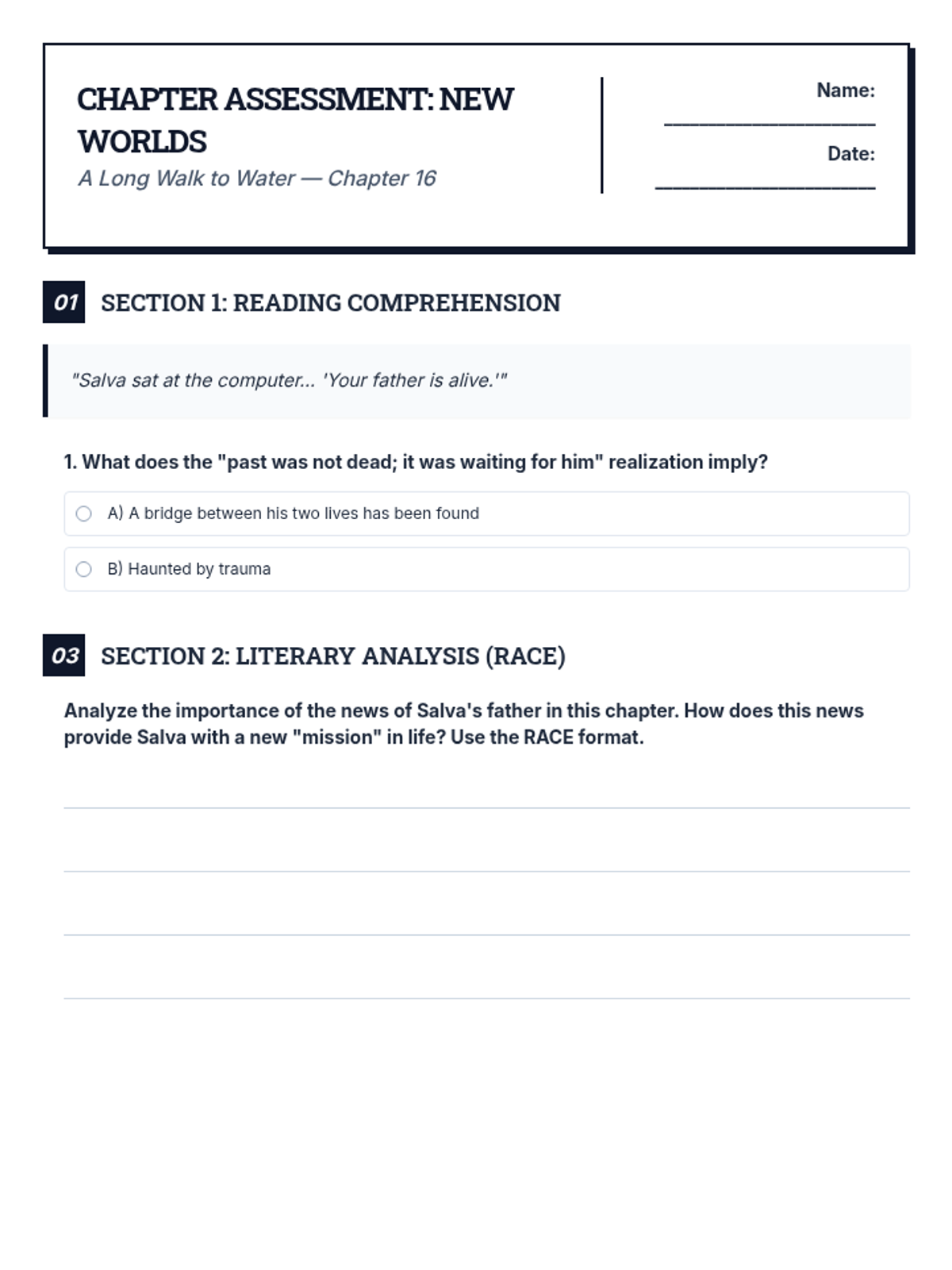
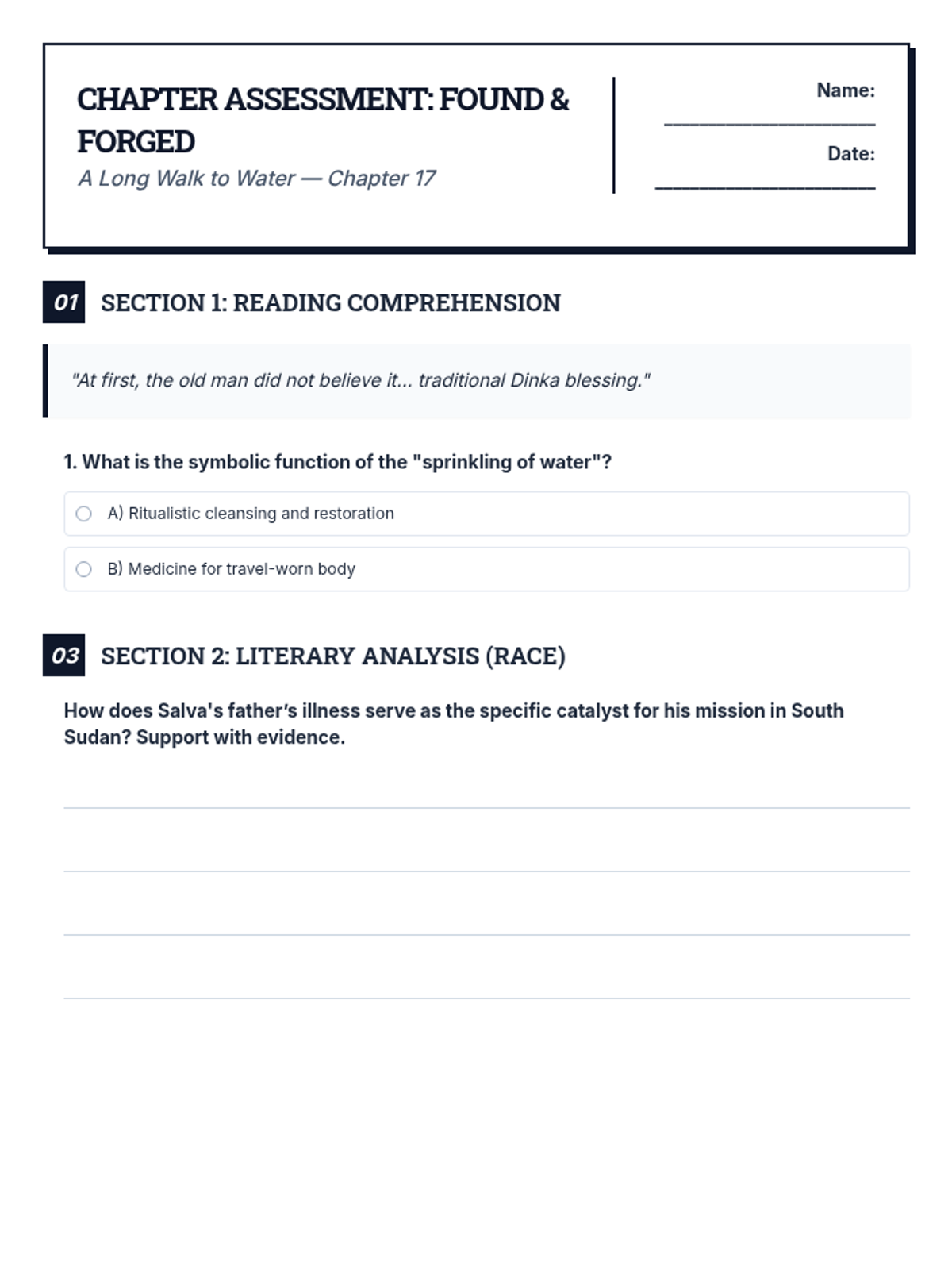
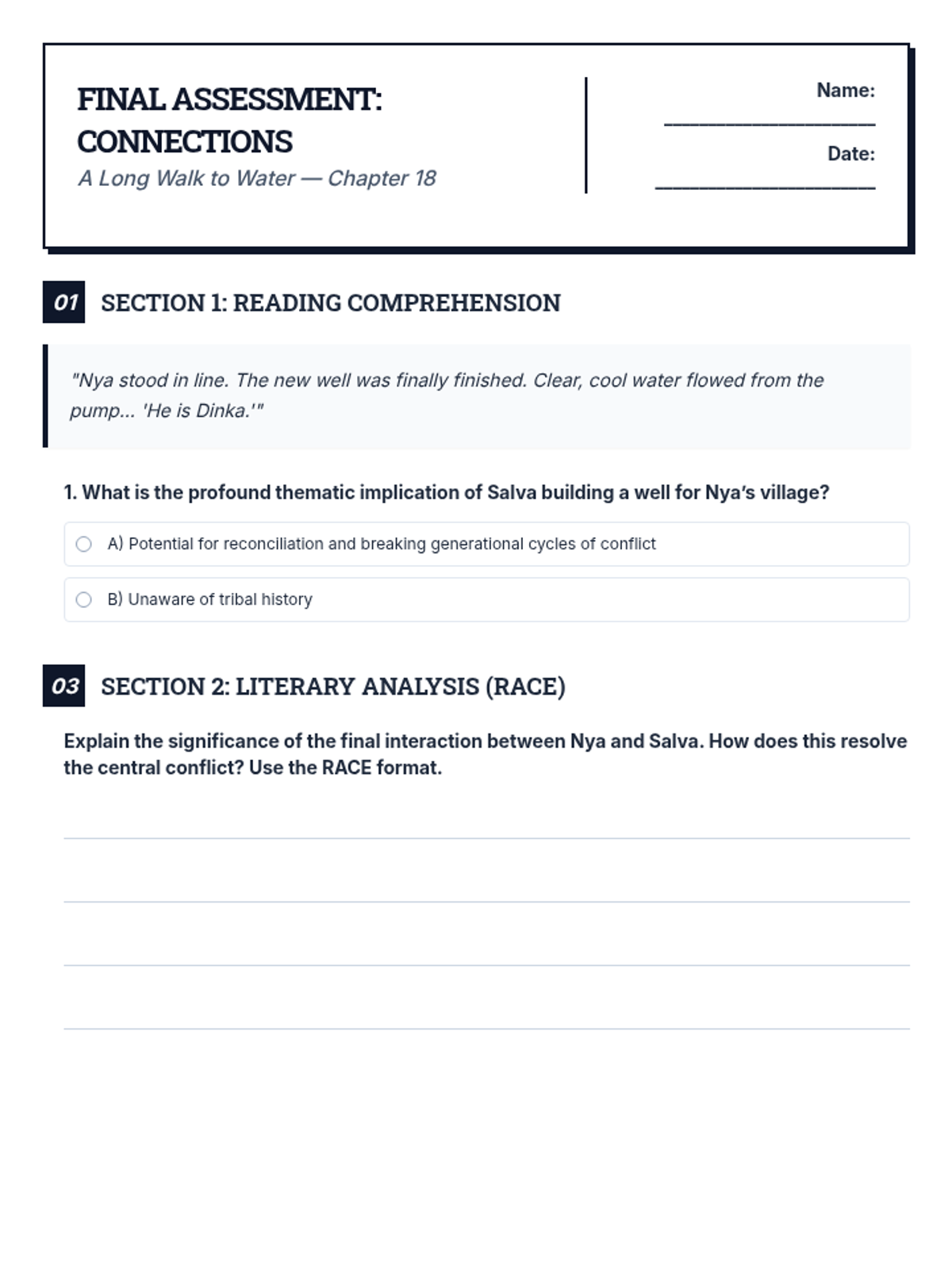
A comprehensive set of worksheets and answer keys for the final chapters of Linda Sue Park's 'A Long Walk to Water', focusing on Salva's journey to leadership and America, and the transformation of Nya's village through the arrival of water.
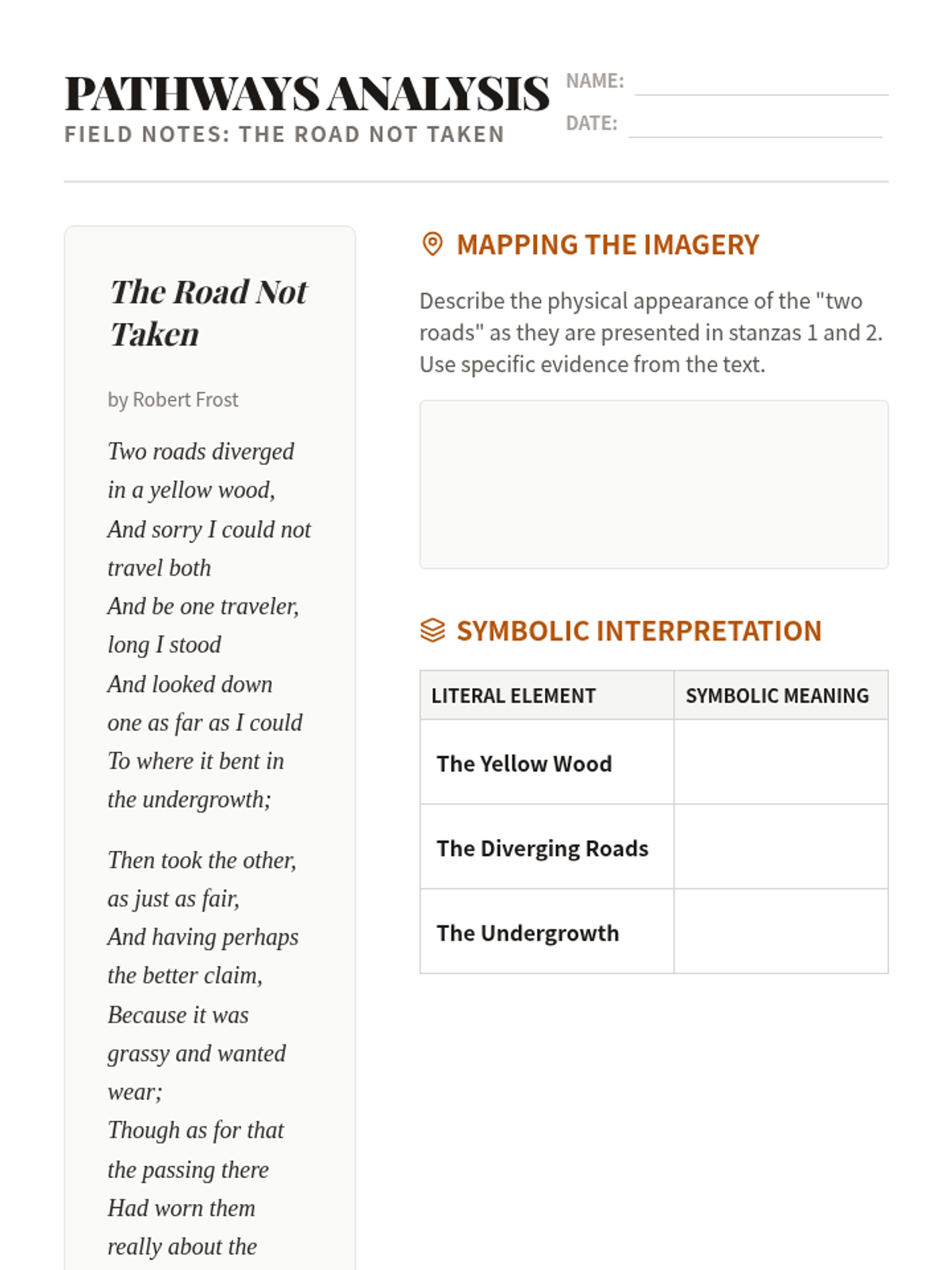
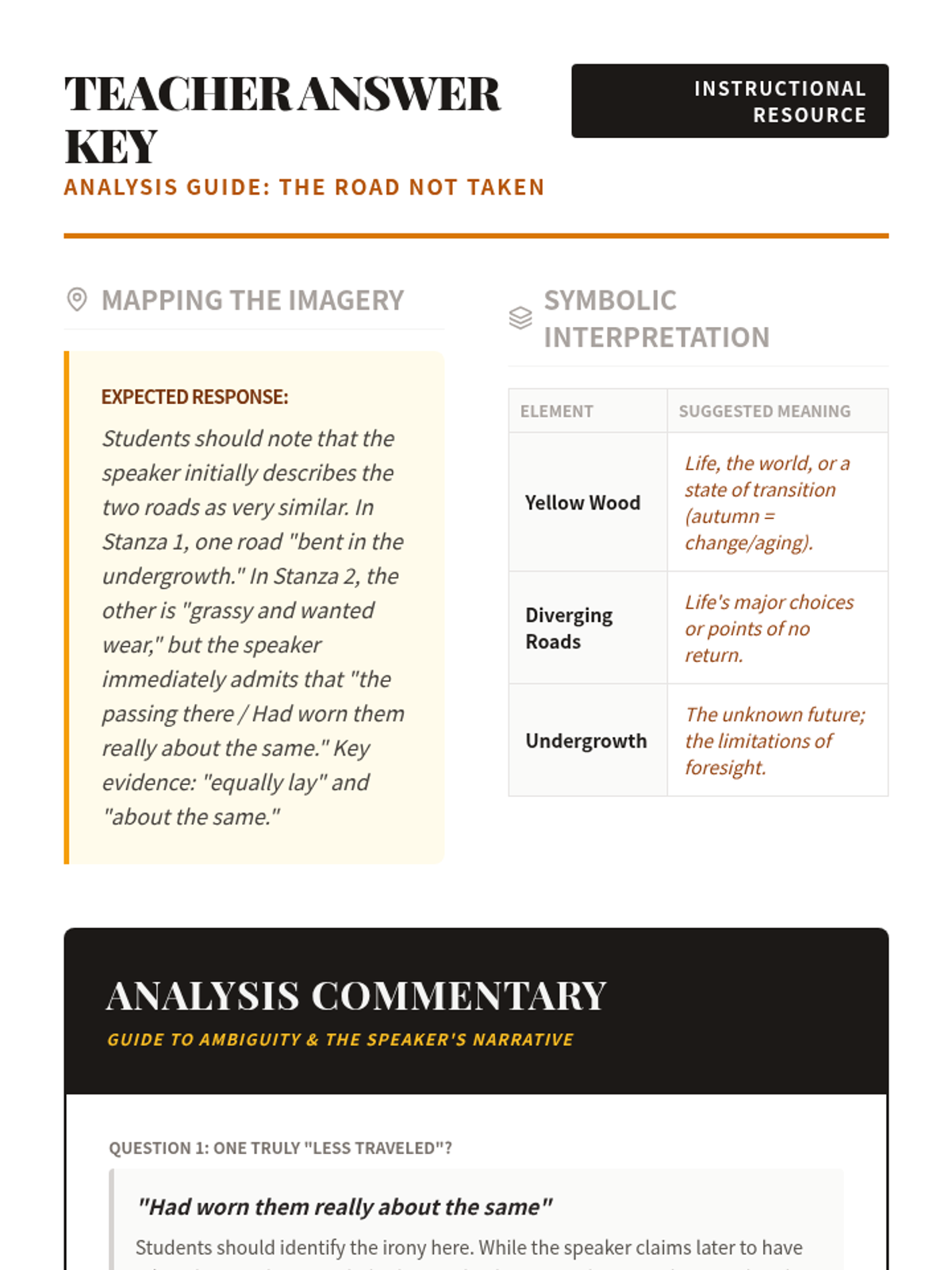
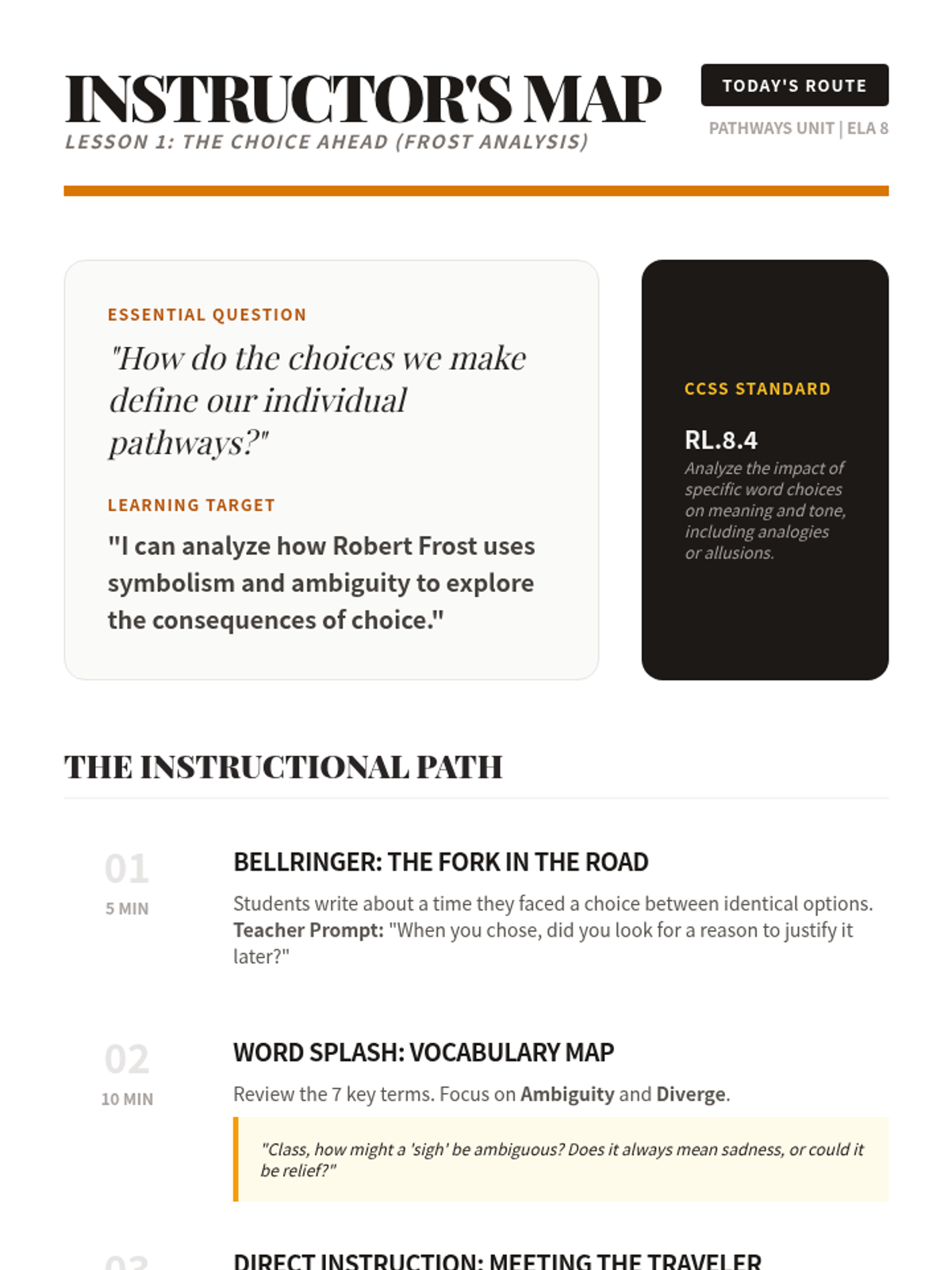
An ELA 8 unit exploring the theme of 'Pathways' through poetry, short stories, and narrative writing. Students analyze choices, consequences, and the symbolic nature of journeys in literature and life.
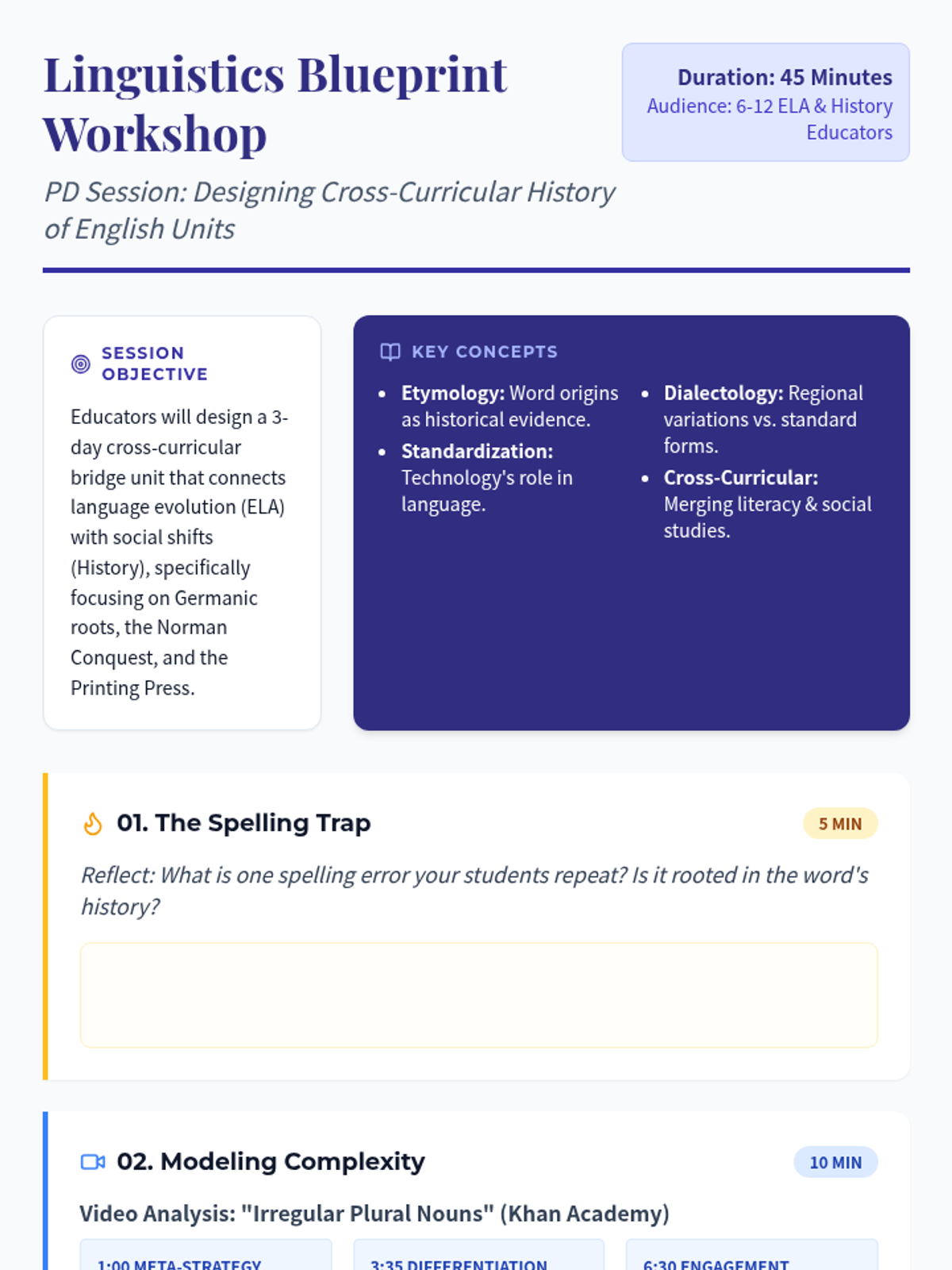
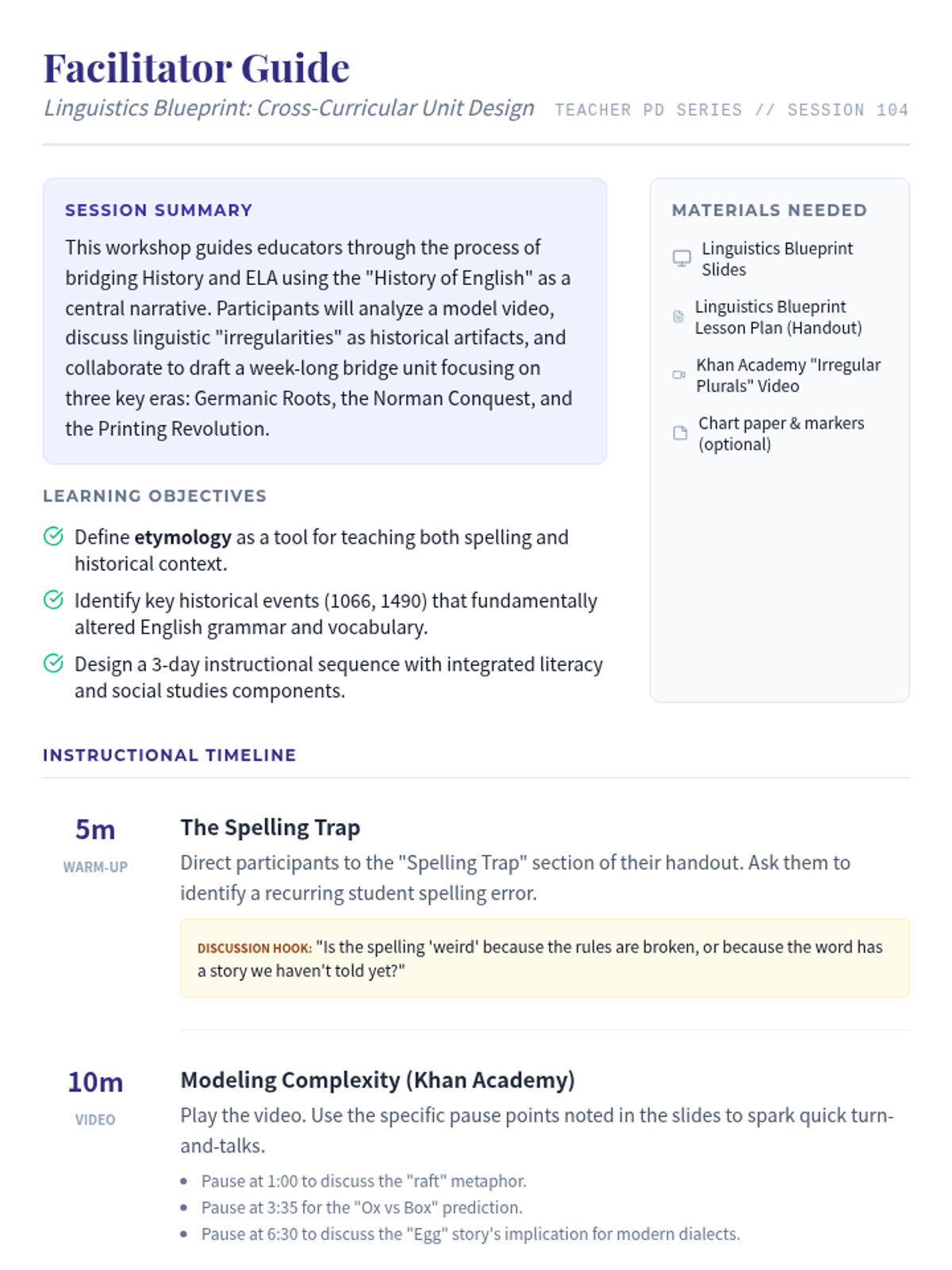
A curriculum development sequence focused on helping teachers bridge ELA and History through linguistics and etymology.
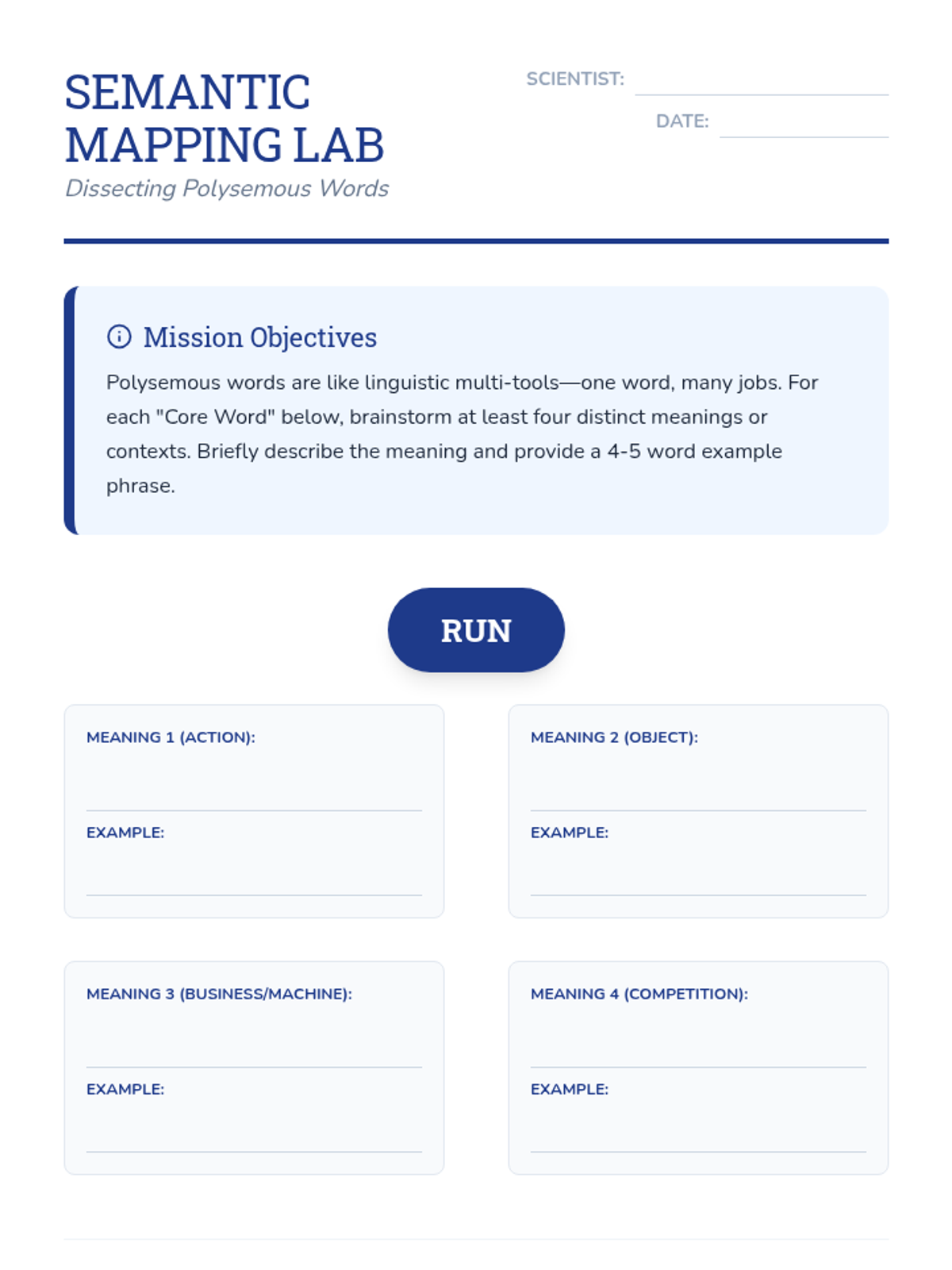
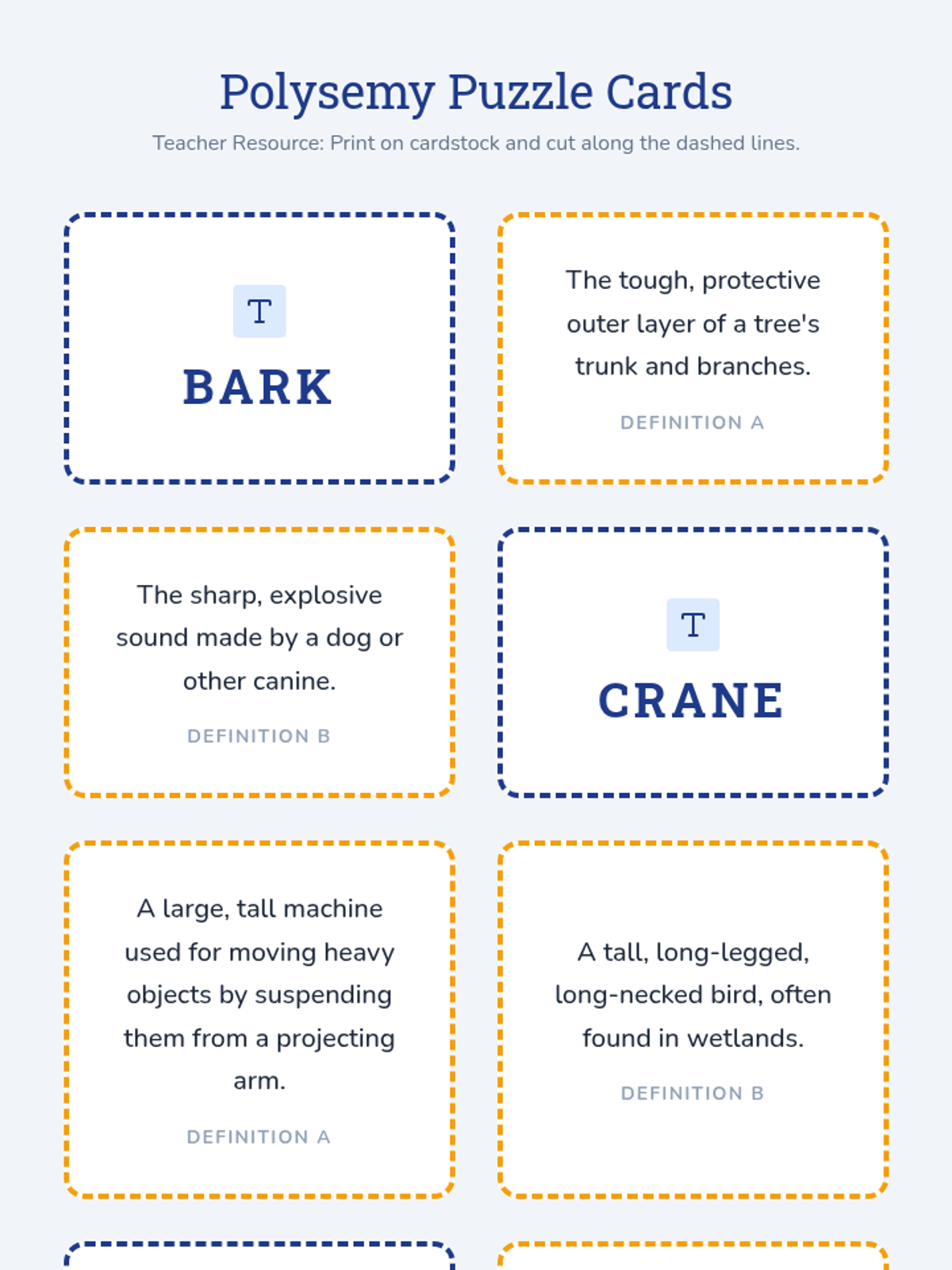
A 6th-grade ELA sequence exploring polysemy, homonyms, and homographs. Students learn to use context clues to differentiate between multiple meanings of a single word, improving reading comprehension and writing precision.
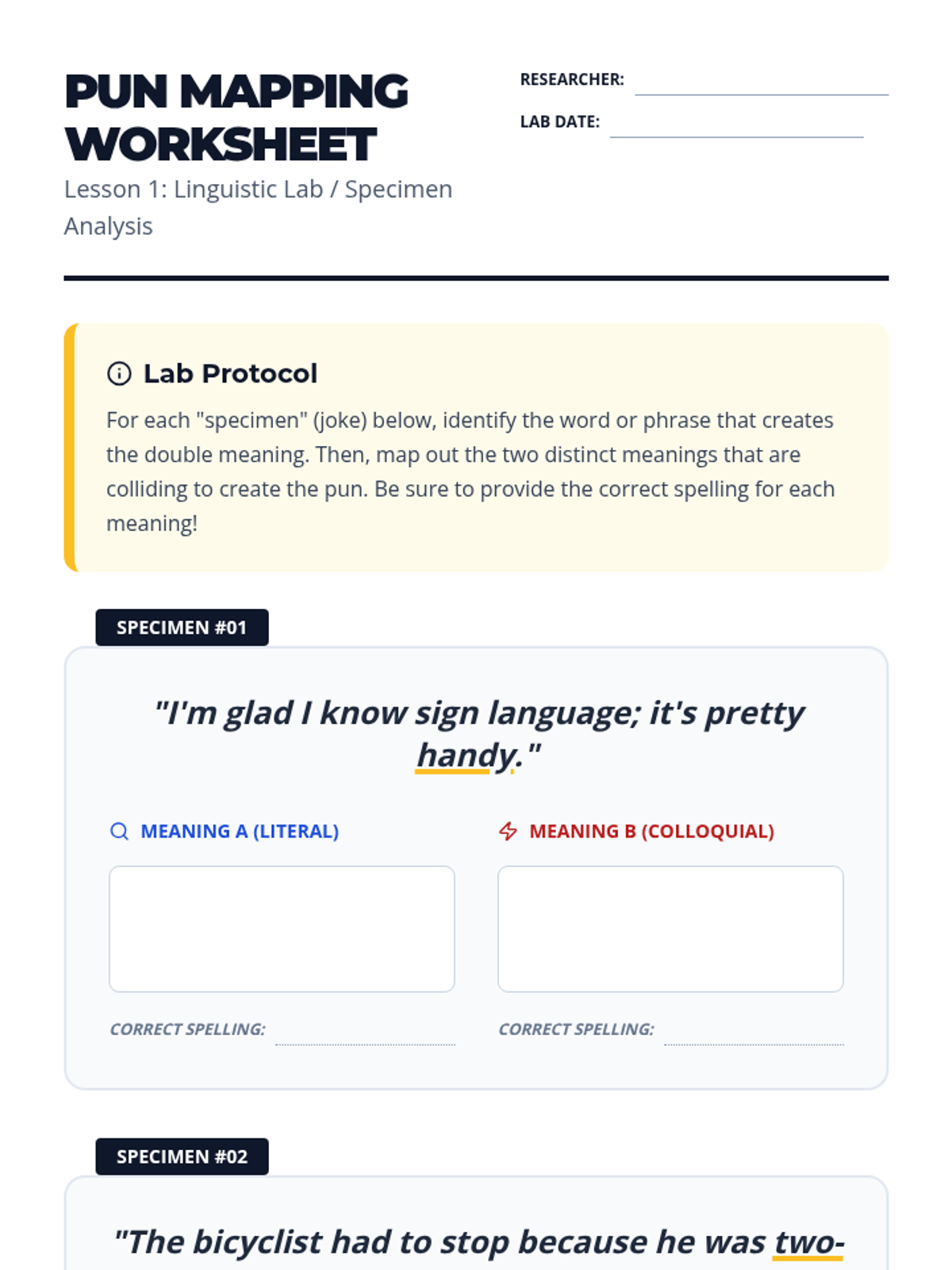
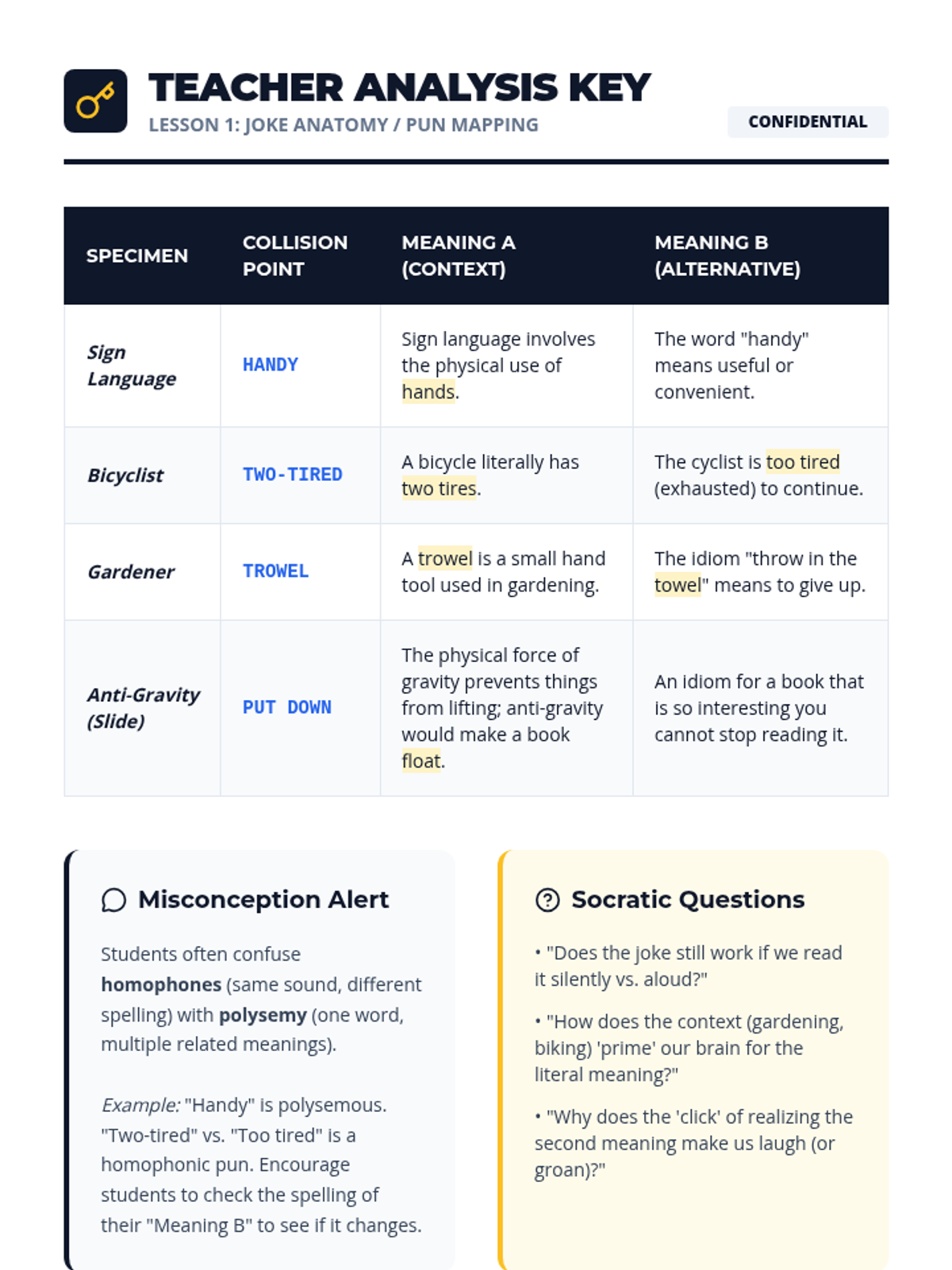
This sequence explores homophones and homonyms through the lens of humor and creative writing. Students move from analyzing simple puns to deconstructing literary wordplay in works by Shakespeare and Lewis Carroll, ultimately creating their own ambiguity-driven performances.
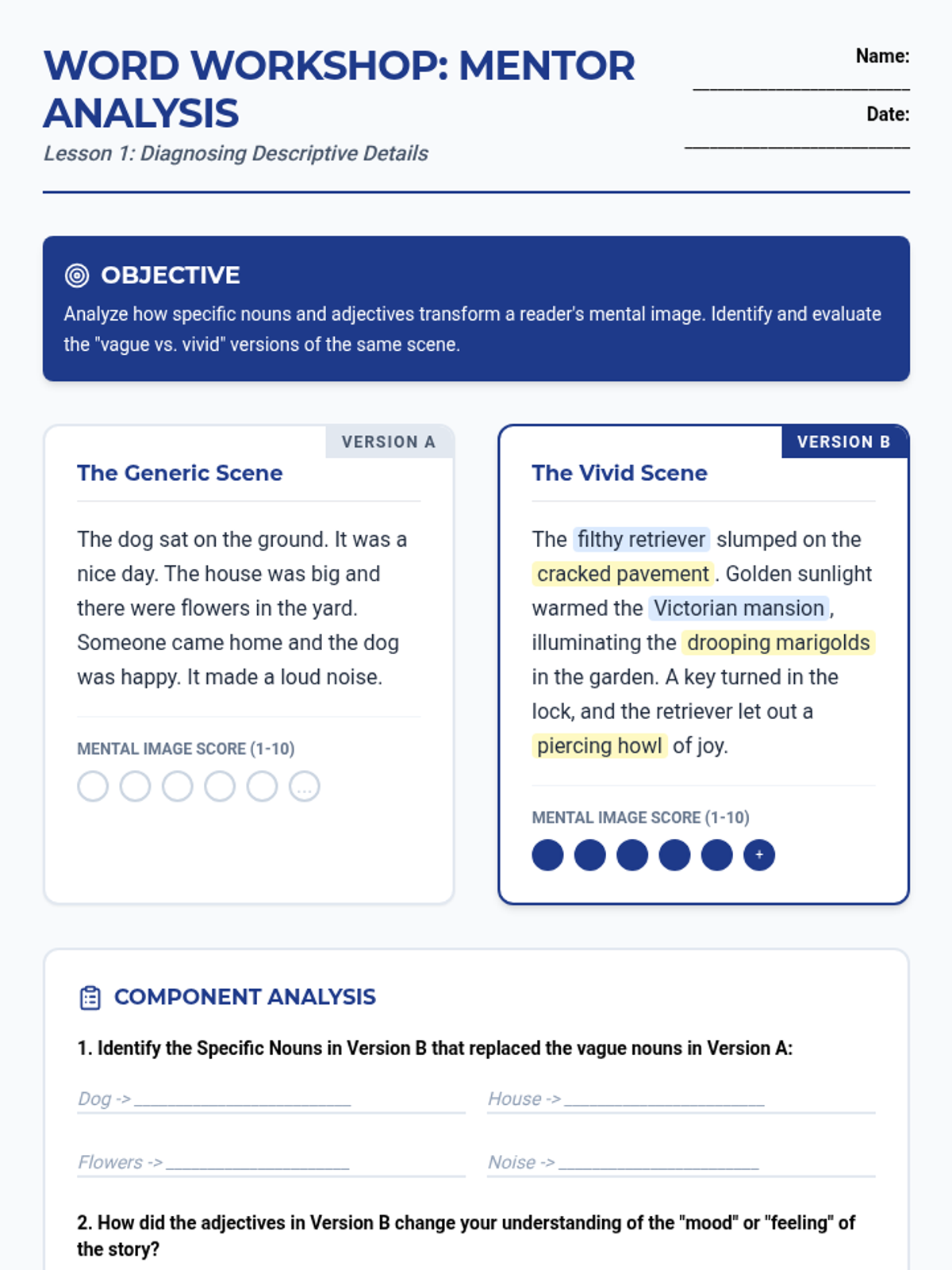
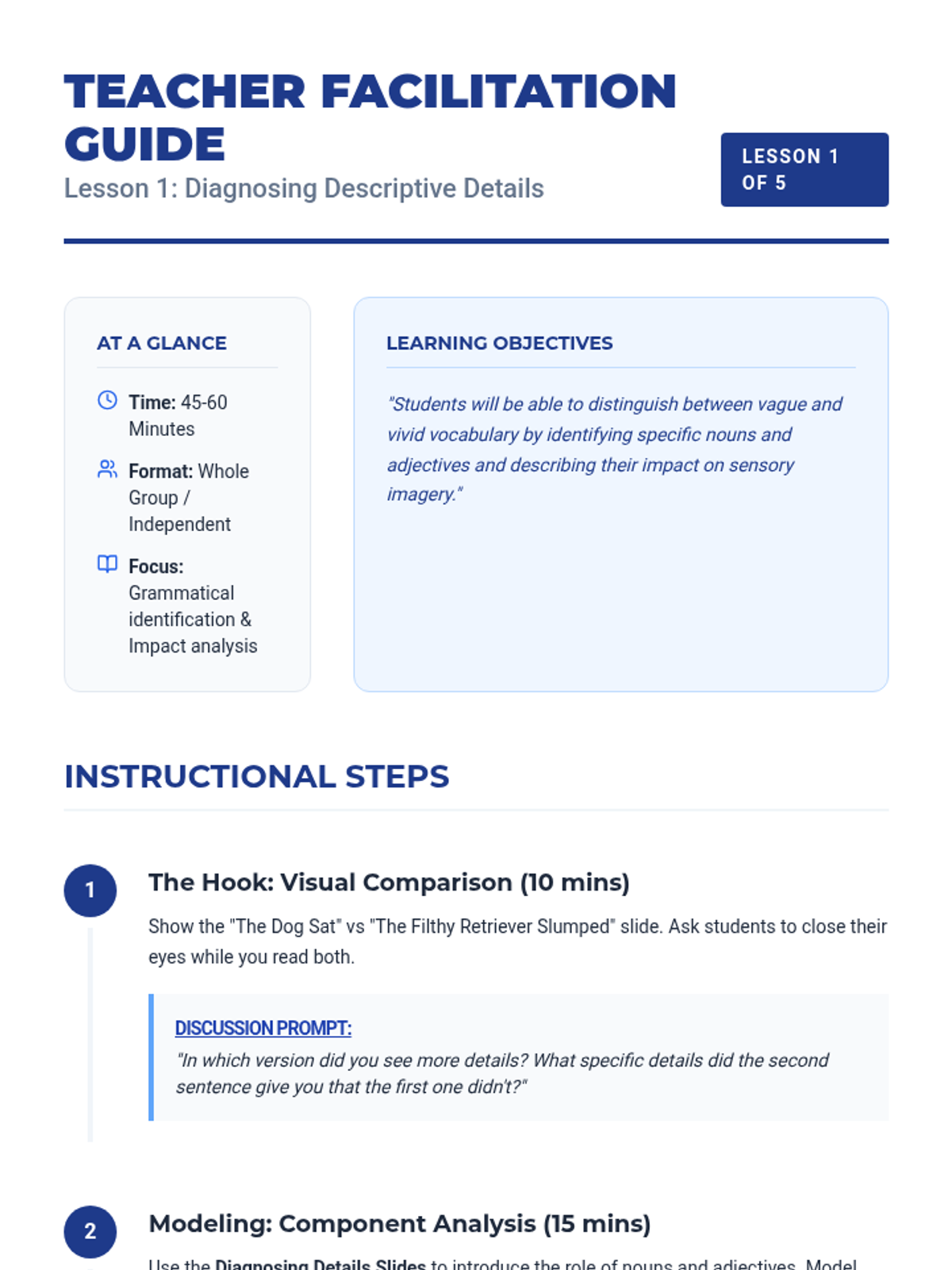
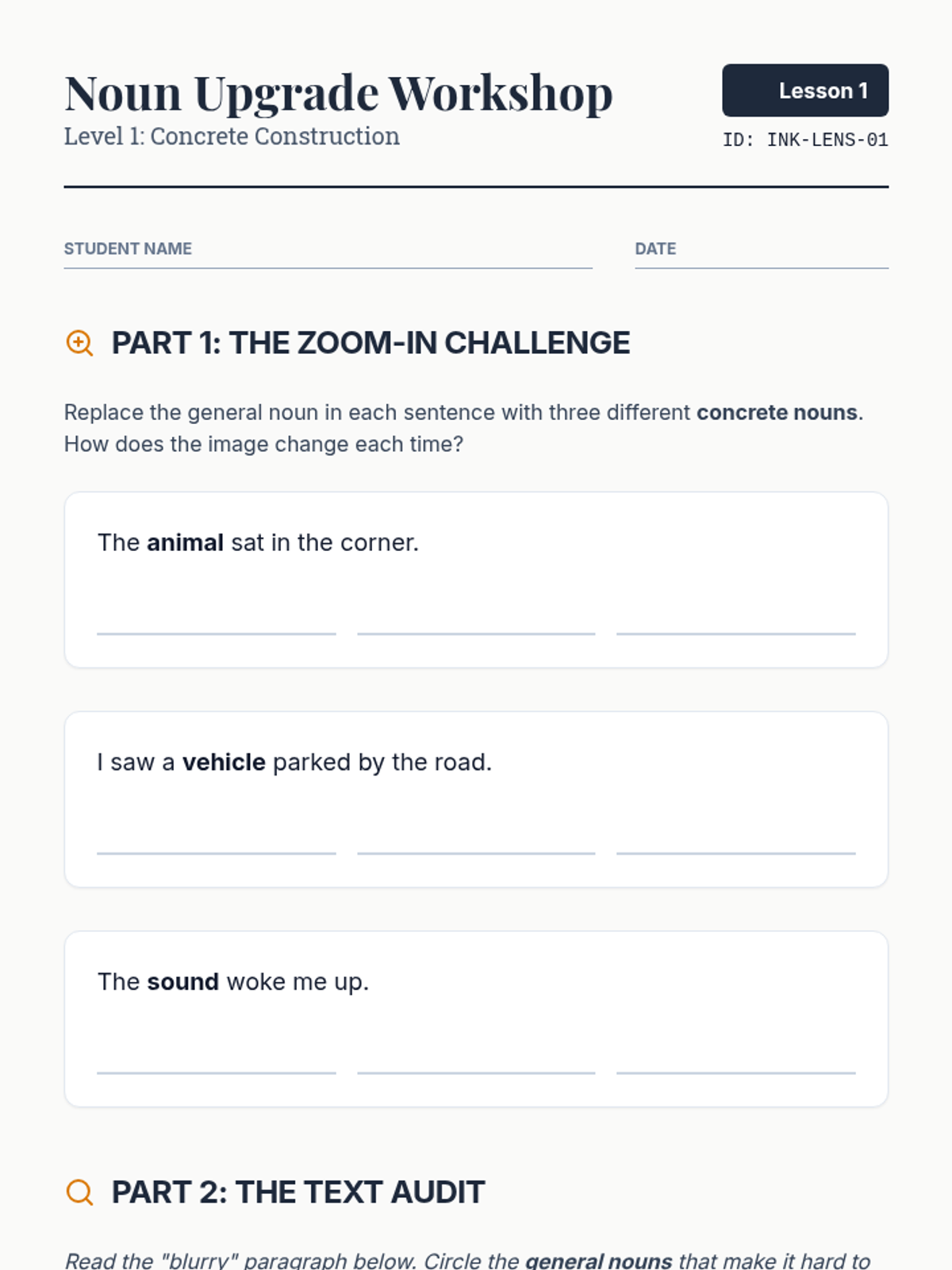
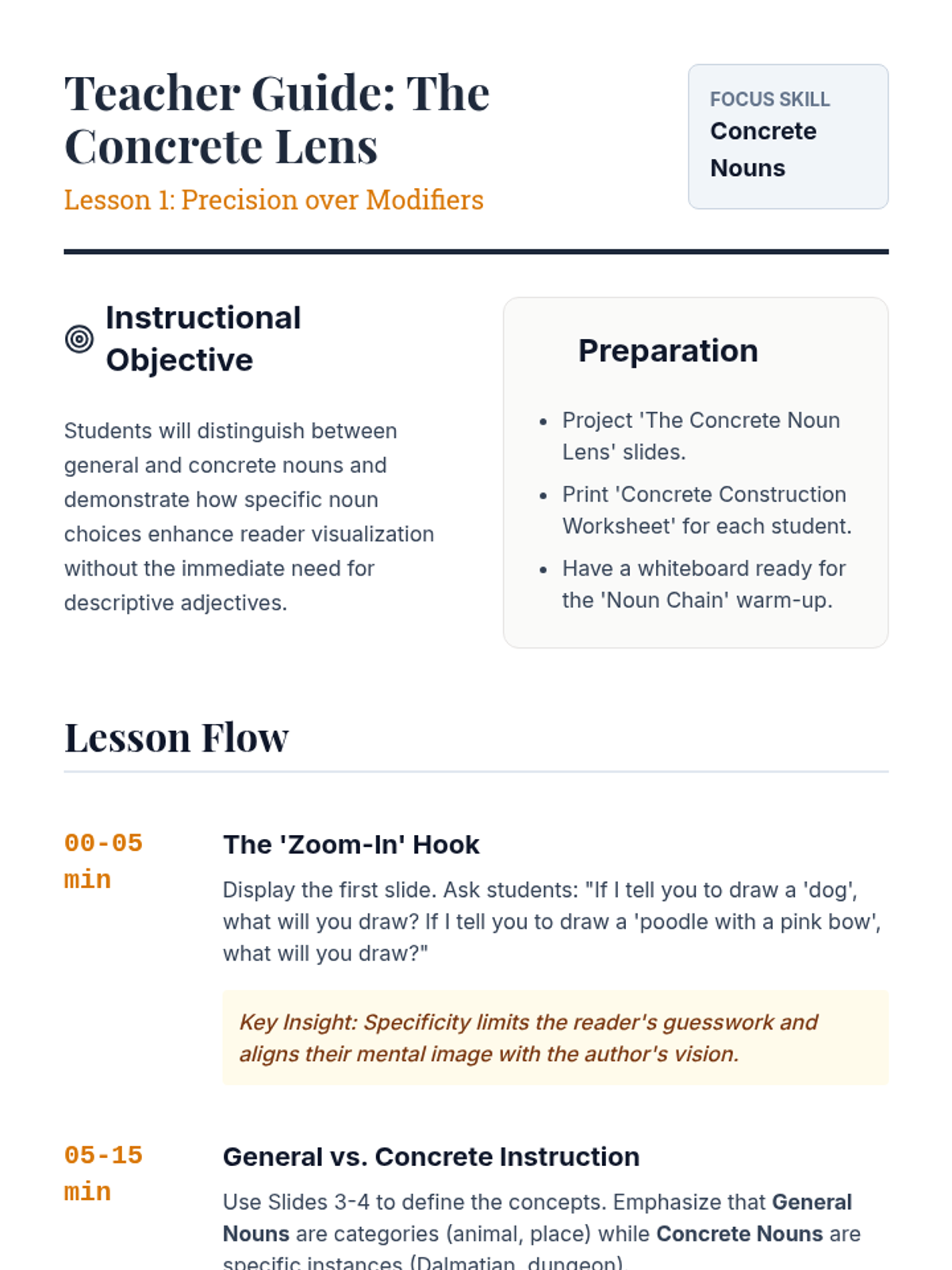
A 6th-grade ELA writing workshop sequence focused on vocabulary precision. Students learn to upgrade their descriptive writing by replacing vague generalities with concrete nouns and nuanced adjectives, culminating in a polished descriptive vignette.
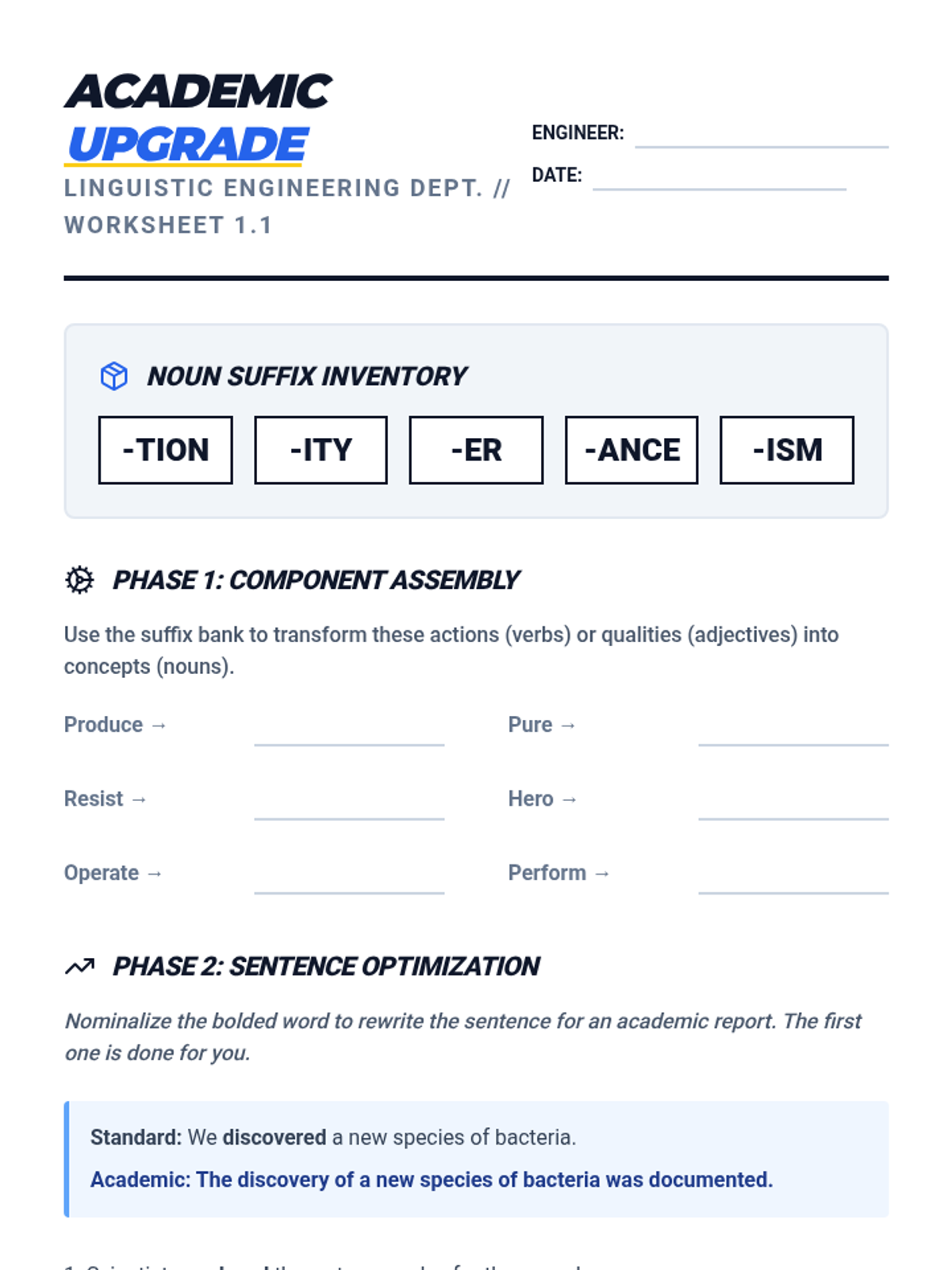
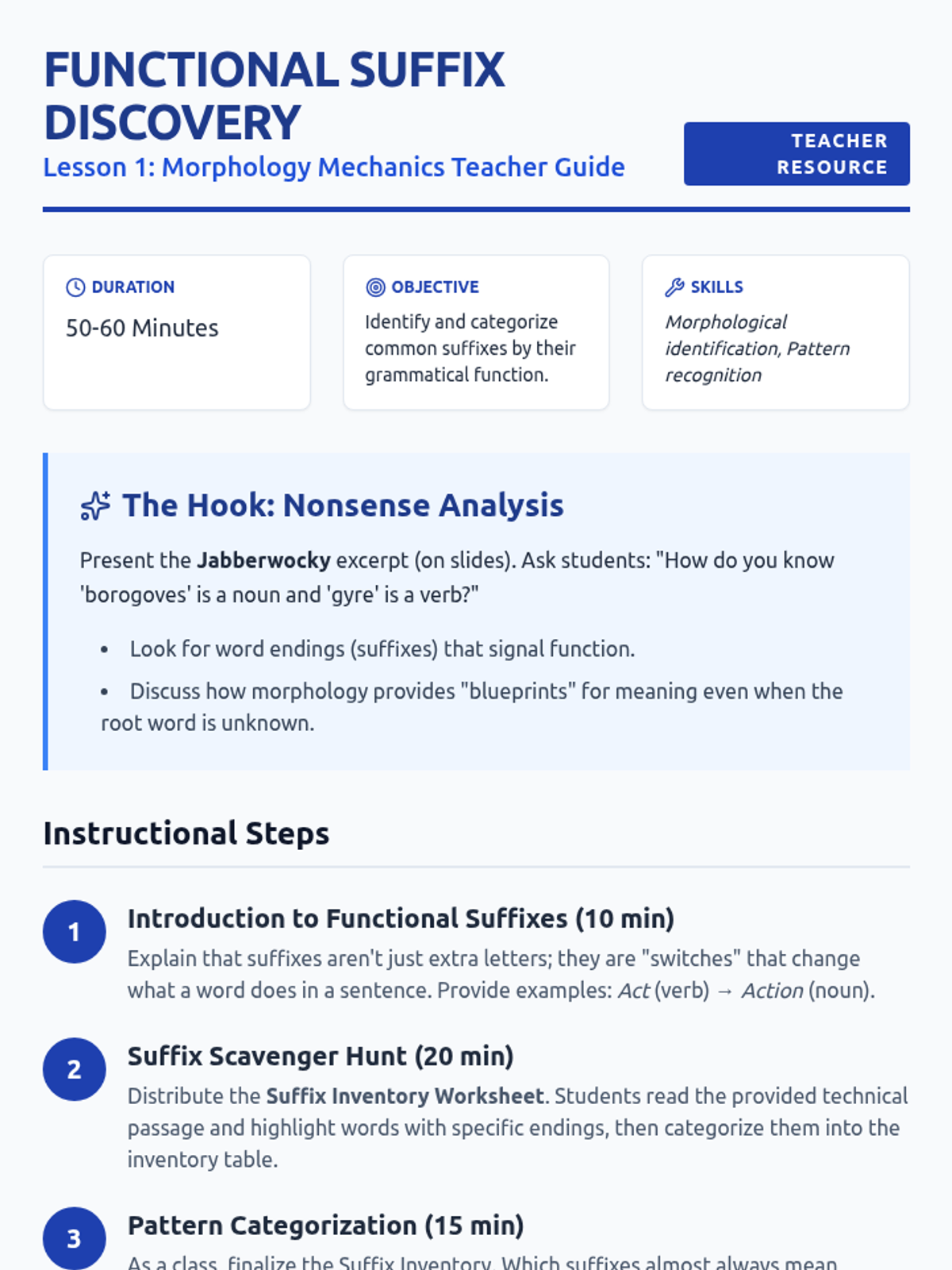
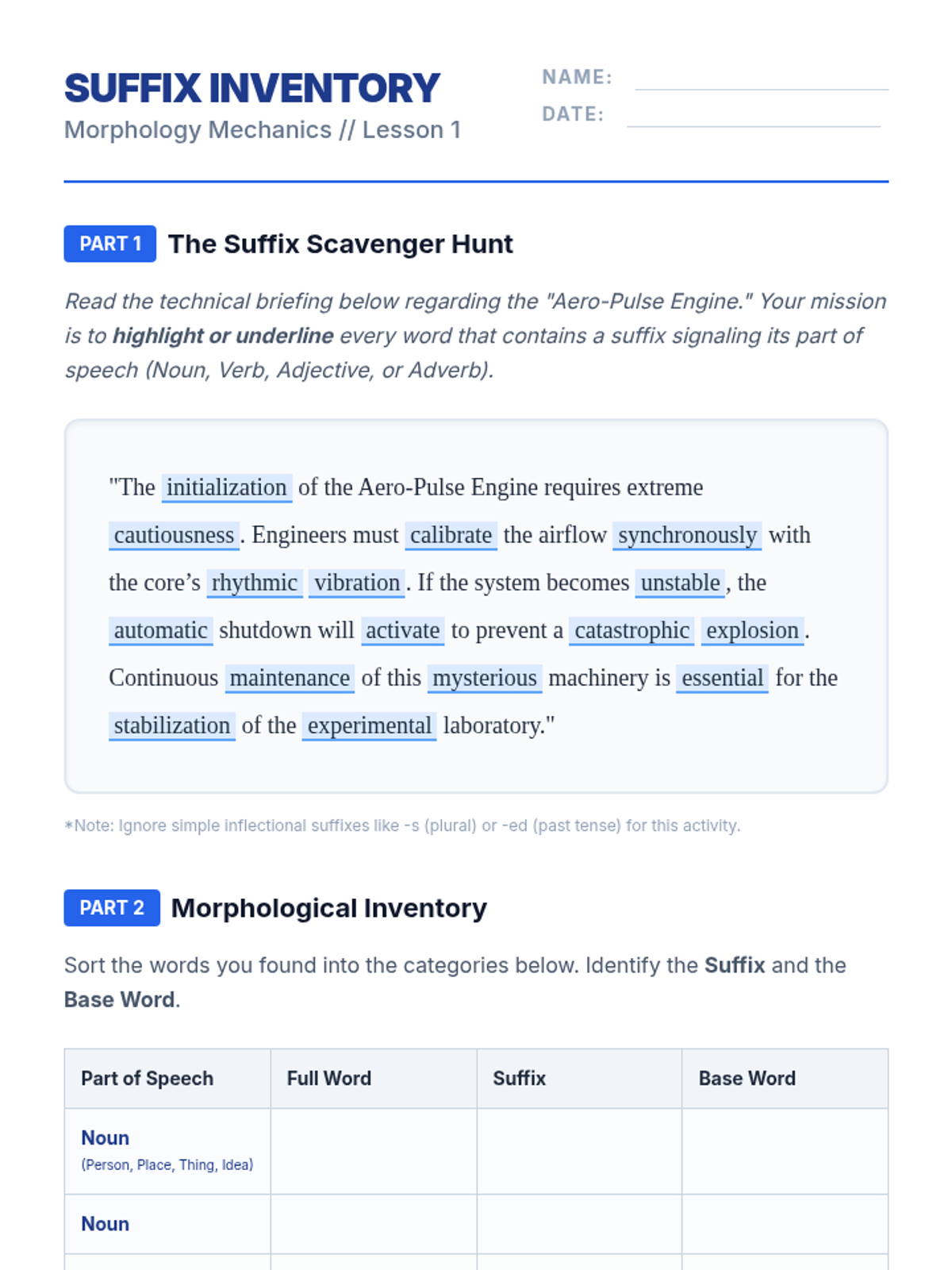
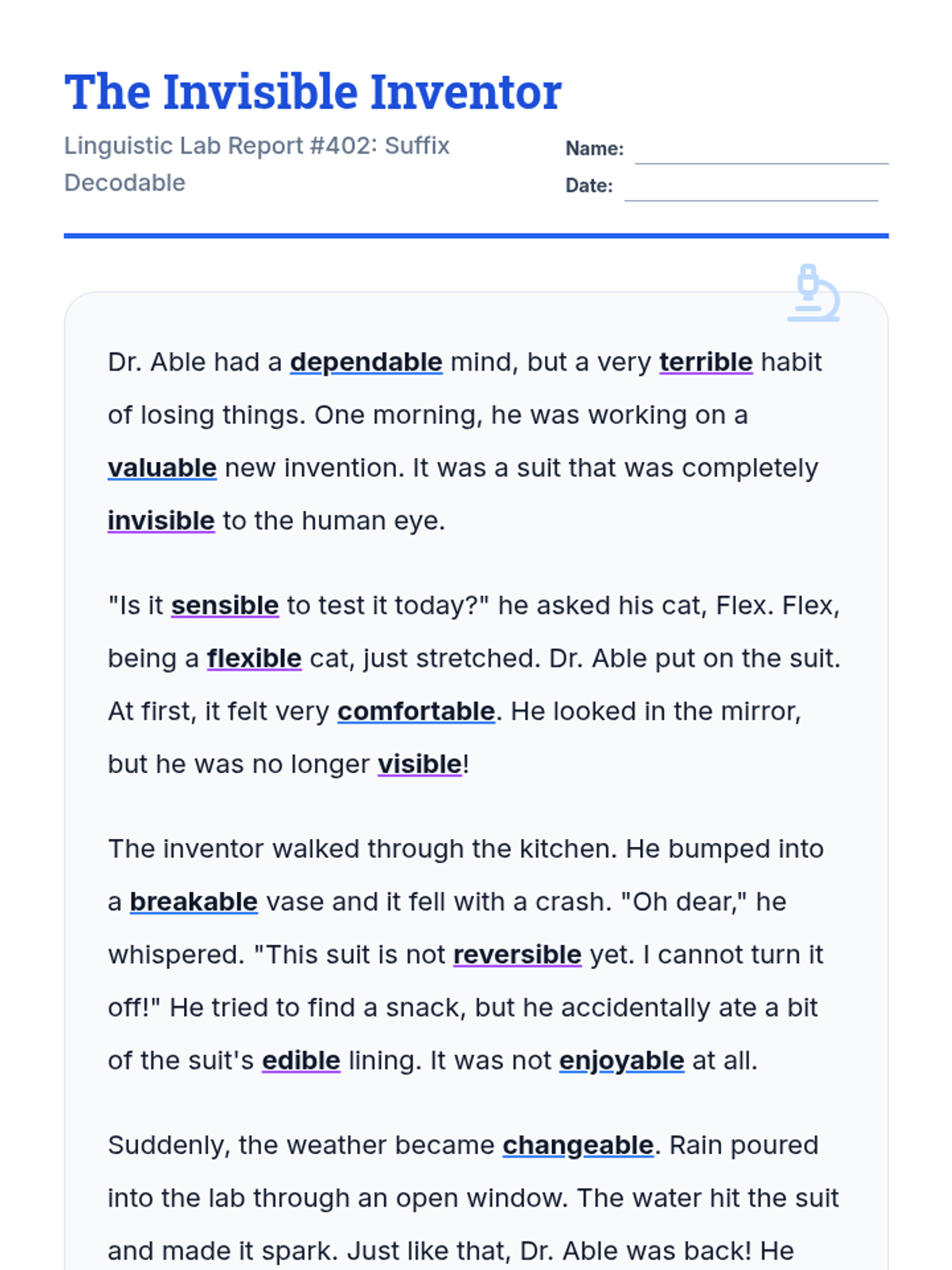
A 7th-grade ELA sequence exploring how suffixes transform parts of speech, culminating in a creative project to invent new, grammatically correct words. Students act as 'Linguistic Engineers' to master nominalization, descriptive adjectives, action-oriented verbs, and adverbial modification.
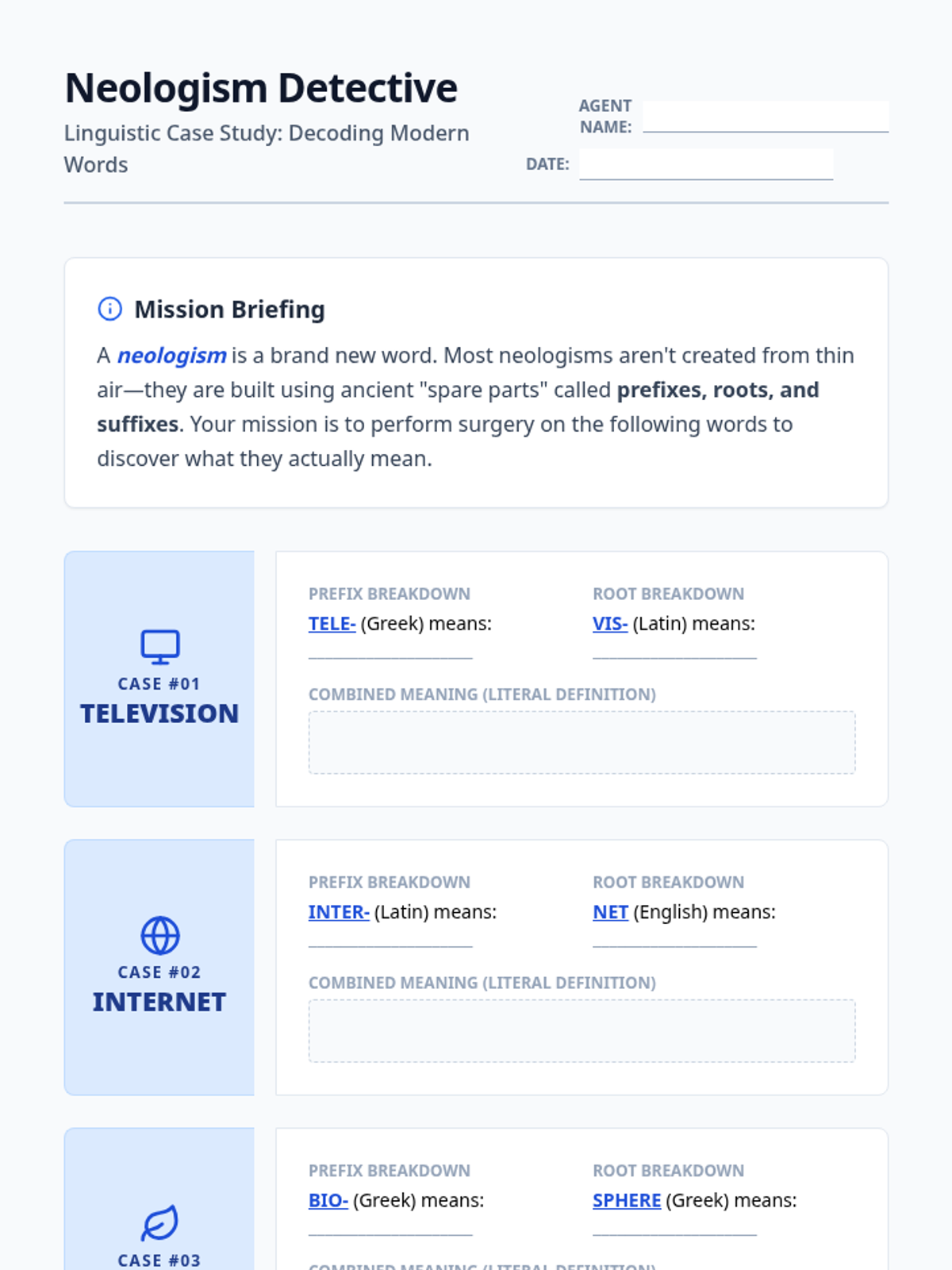
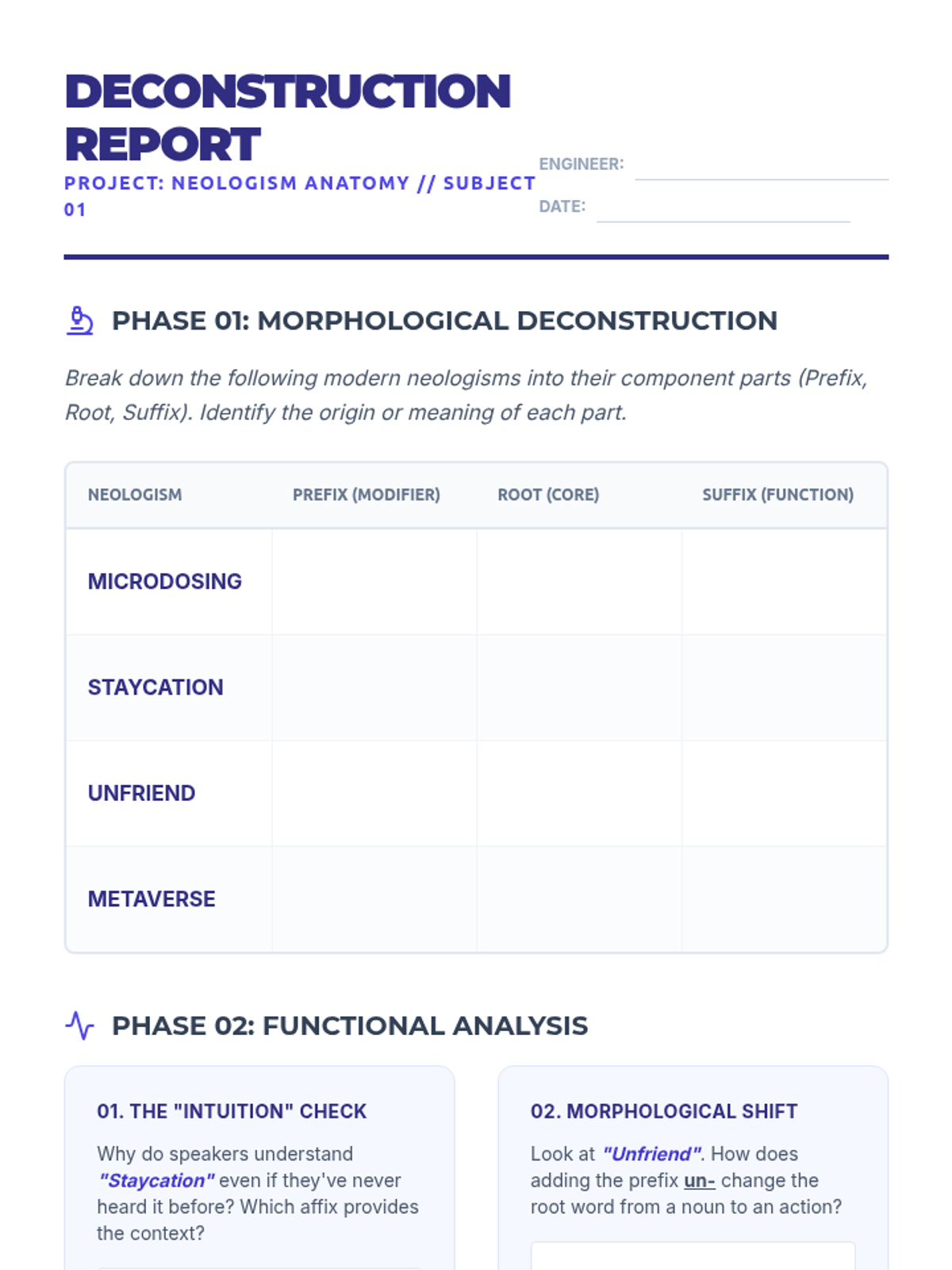
A project-based ELA sequence where 6th-grade students analyze the morphology of English, use affixes to create neologisms, and pitch inventions named using linguistic rules.
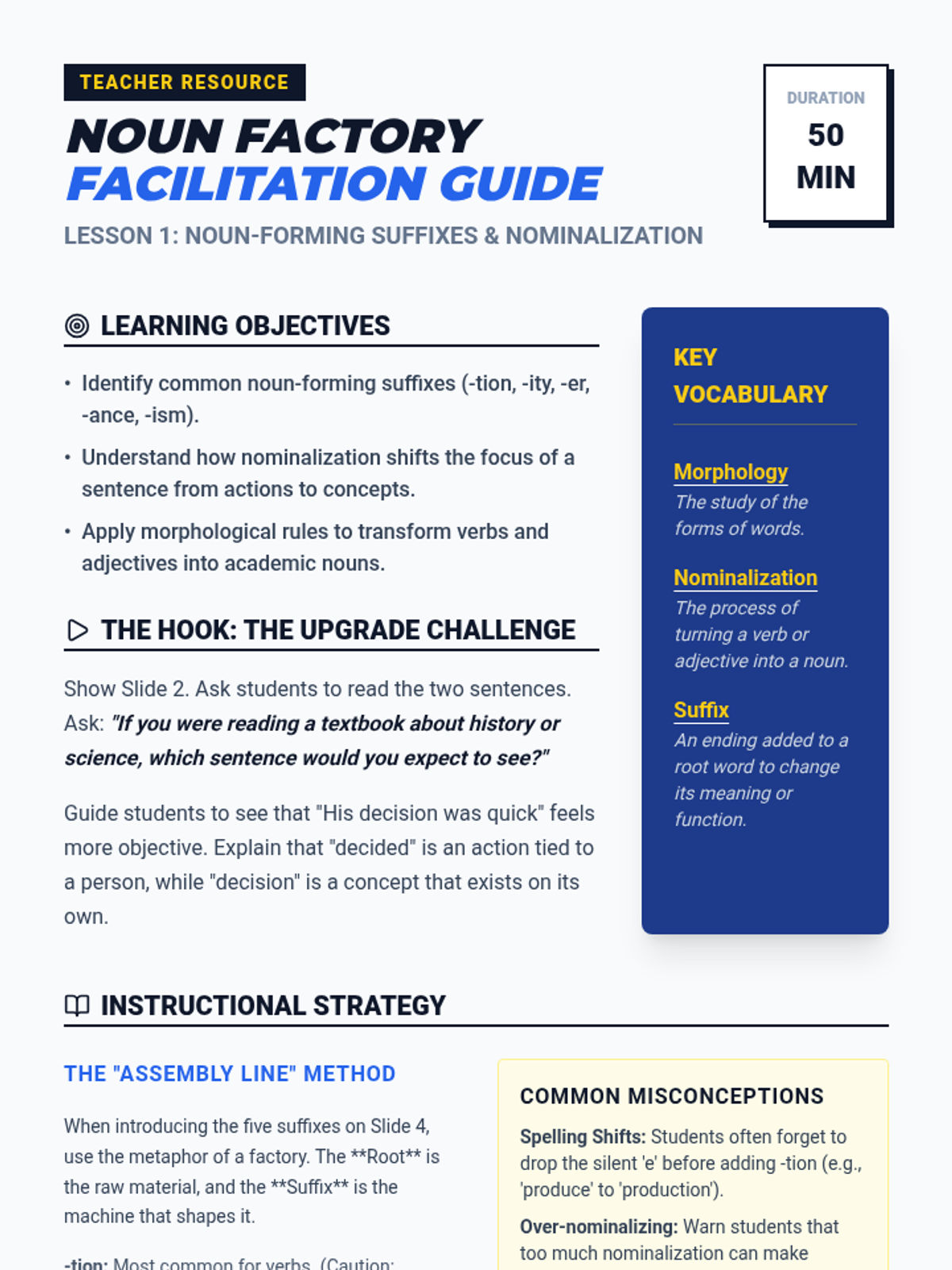
A comprehensive 8th-grade sequence exploring how suffixes transform words across parts of speech, focusing on nominalization, adjectival shifts, and connotative nuances. Students learn to manipulate word forms to improve sentence variety and precision in their writing.
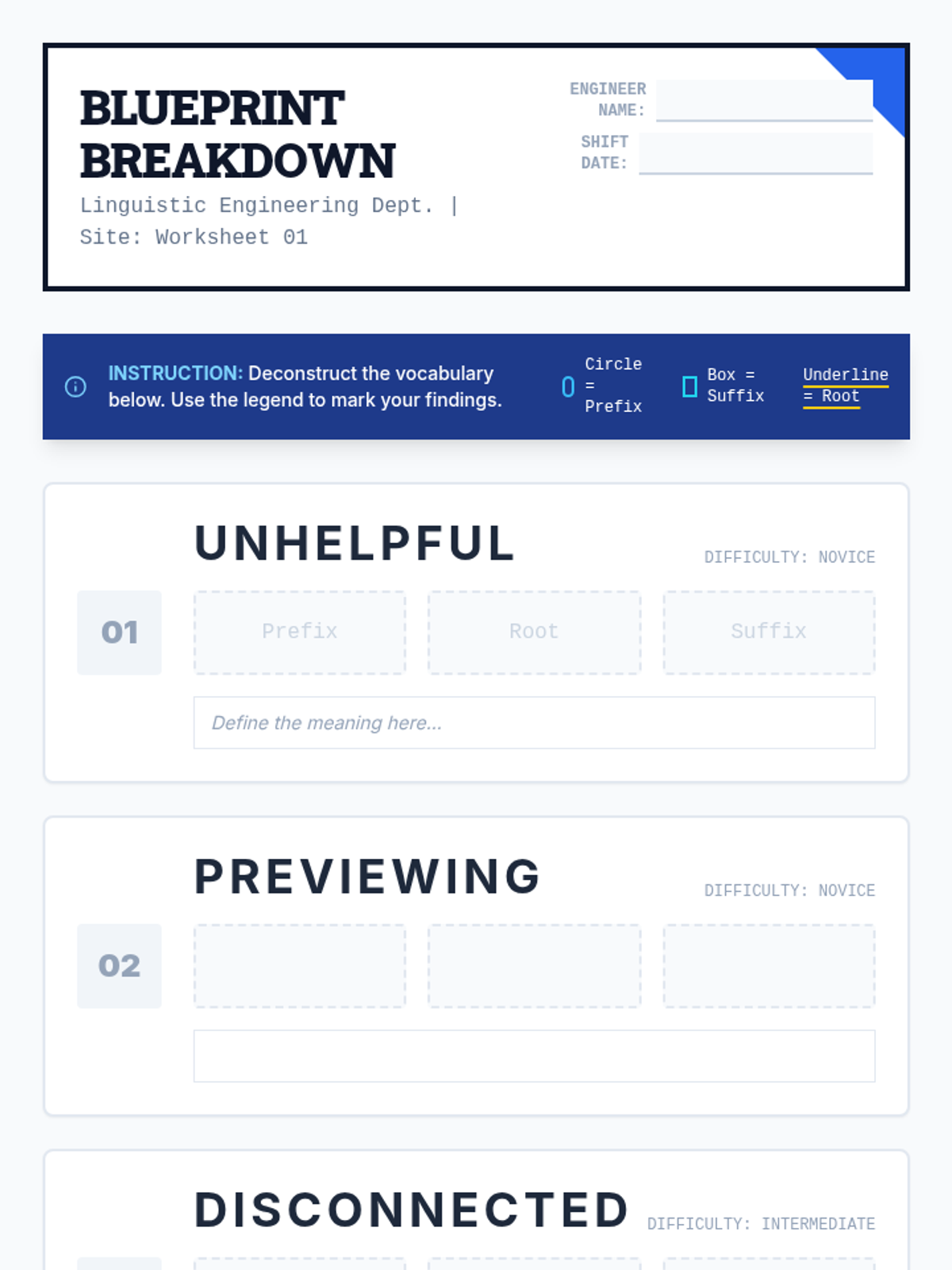
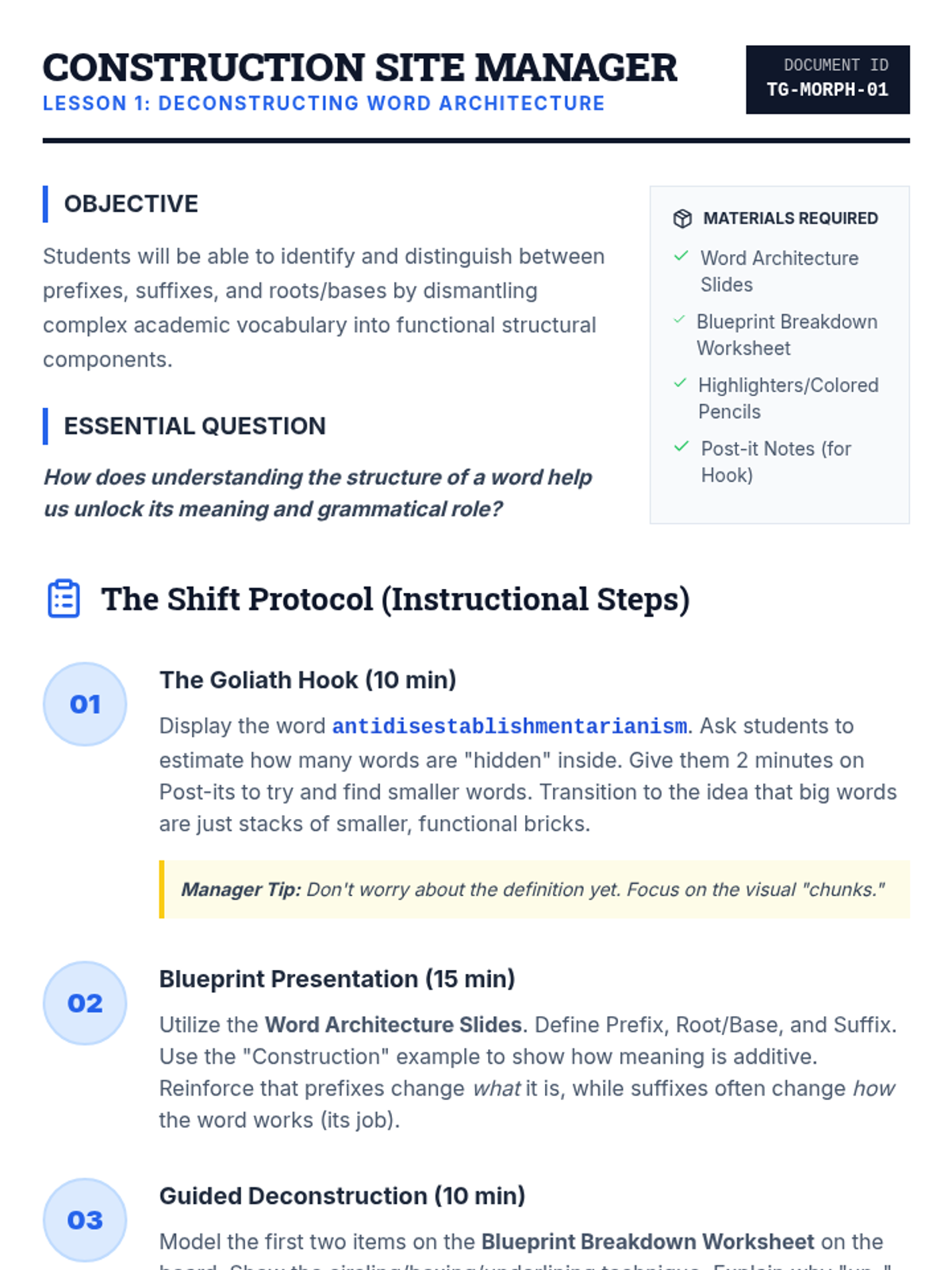
A comprehensive sequence for 6th-grade students exploring word morphology through an architectural lens. Students learn to dismantle and assemble words using prefixes, roots, and suffixes to unlock meaning and grammatical function.
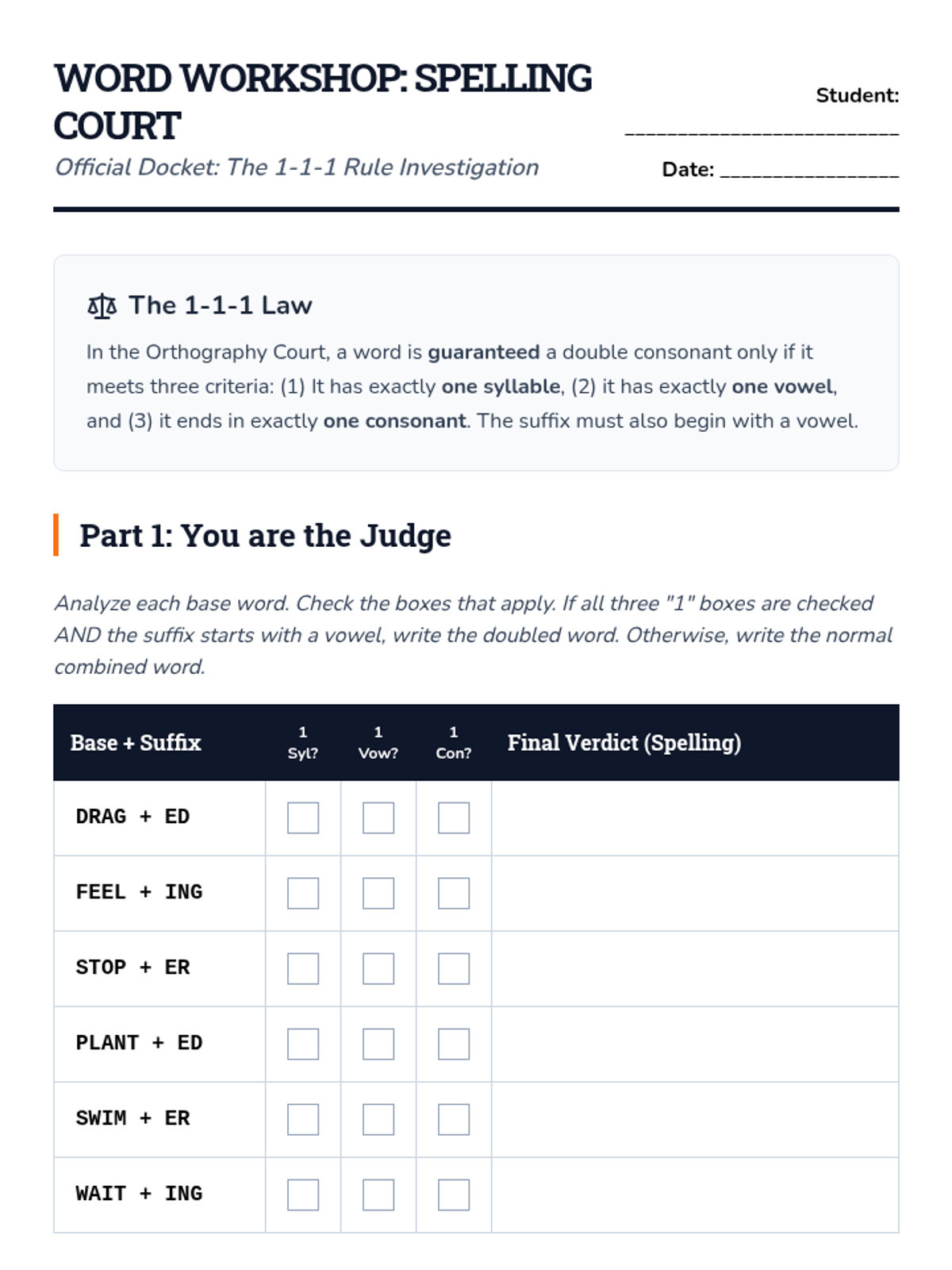
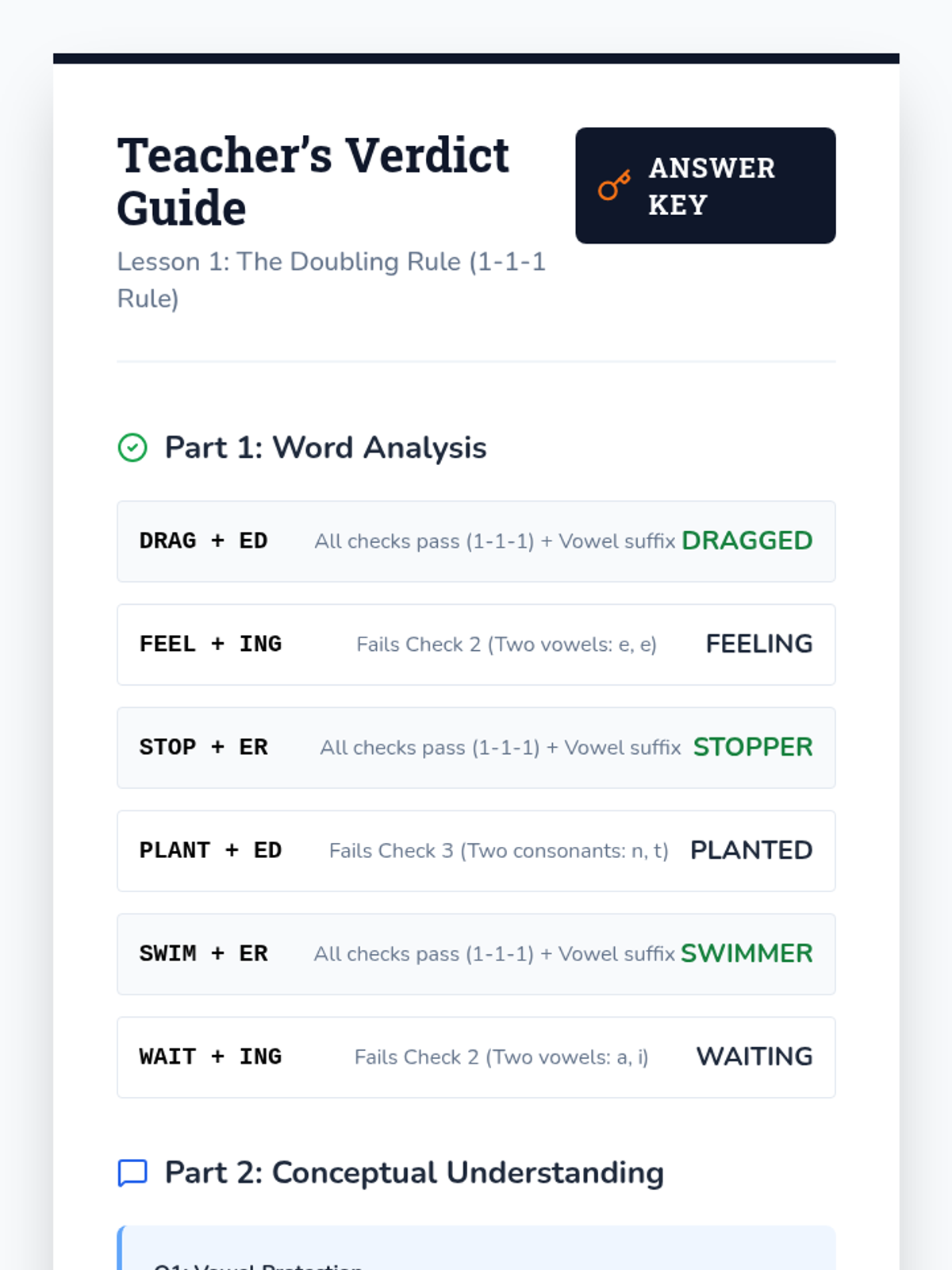
This sequence explores the orthographic transformations of base words when suffixes are added, focusing on the doubling rule, silent E, changing Y to I, and complex plurals. Students move from isolated practice to real-world editing through a workshop-themed approach.
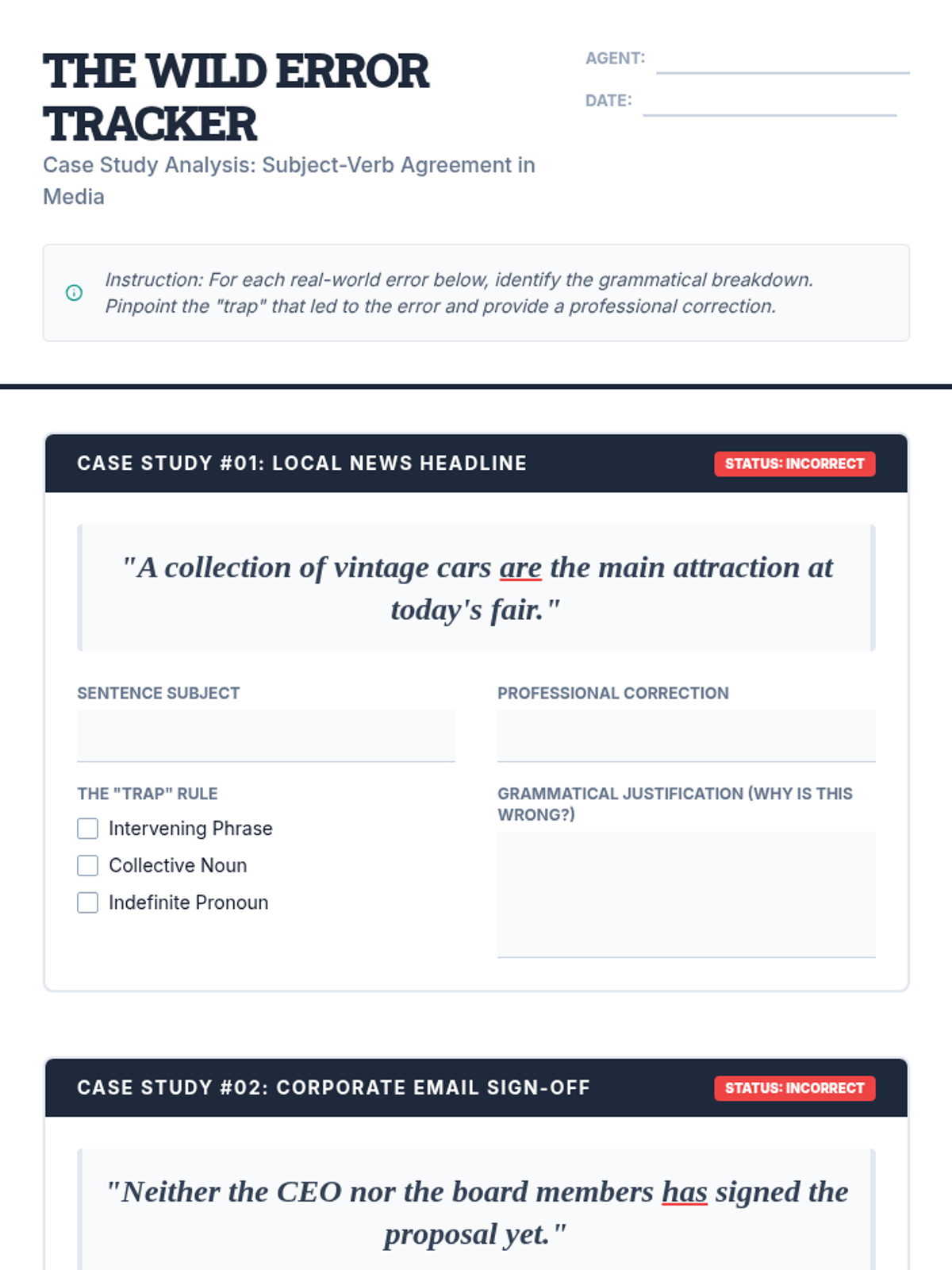
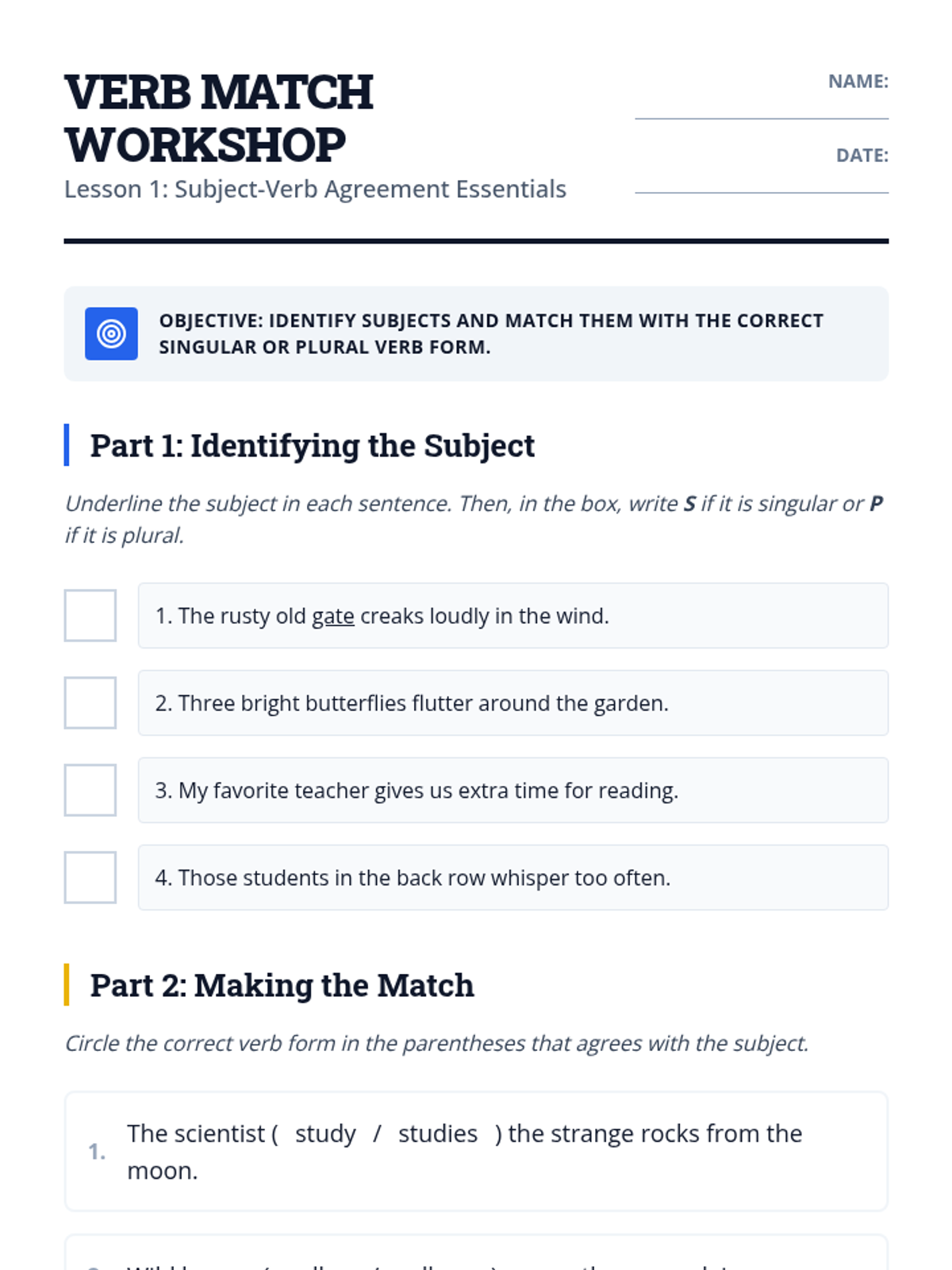
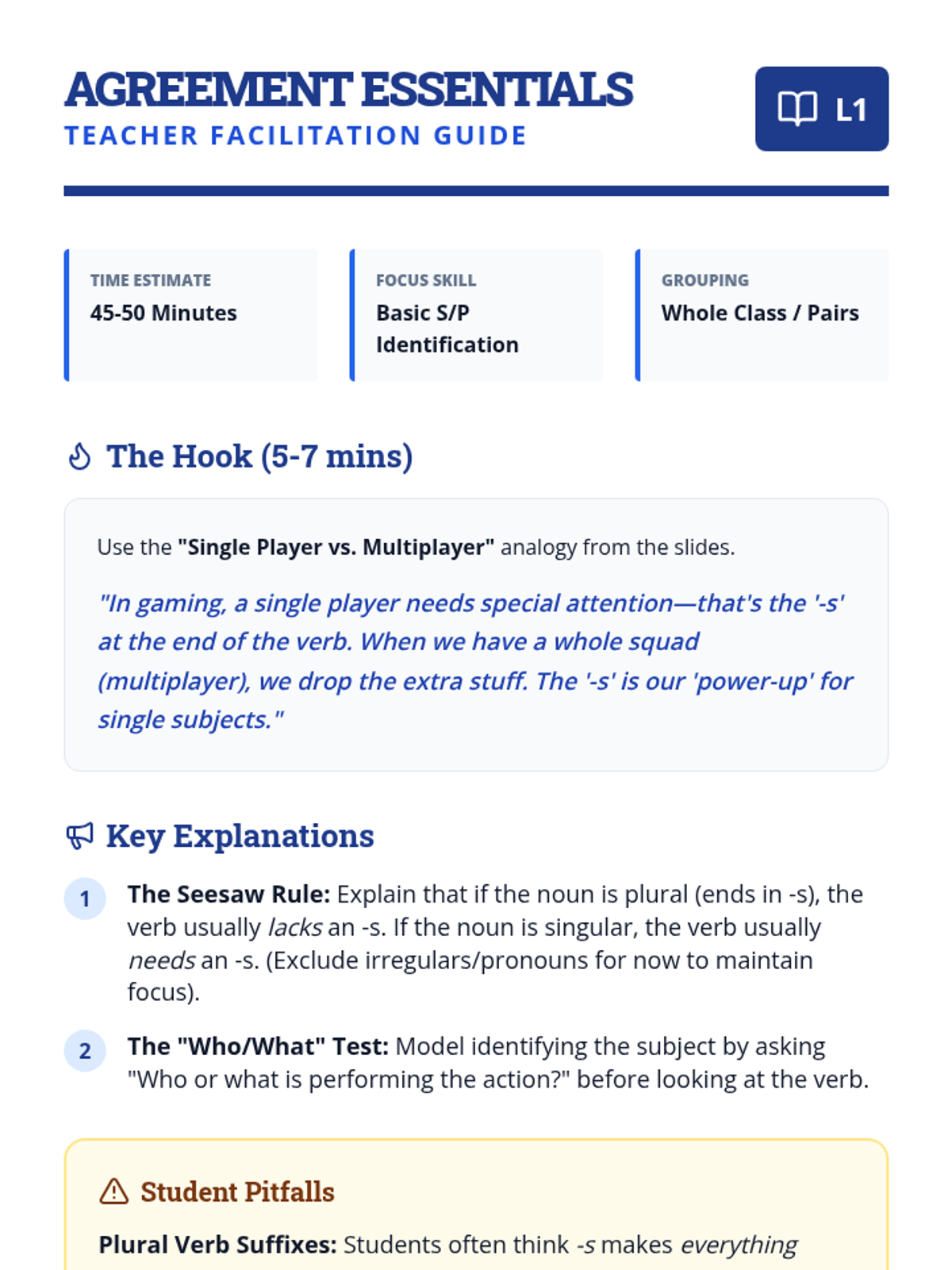
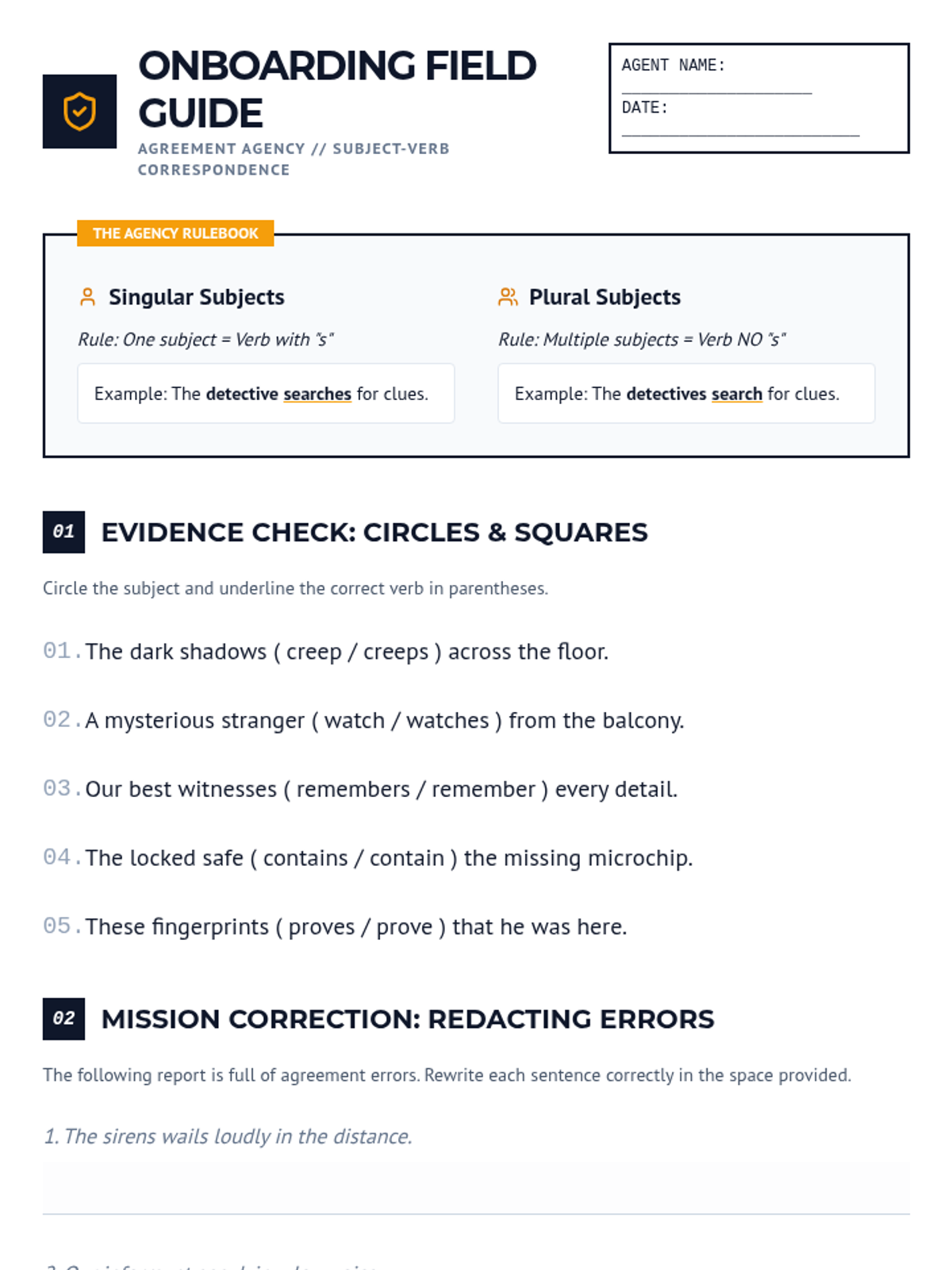
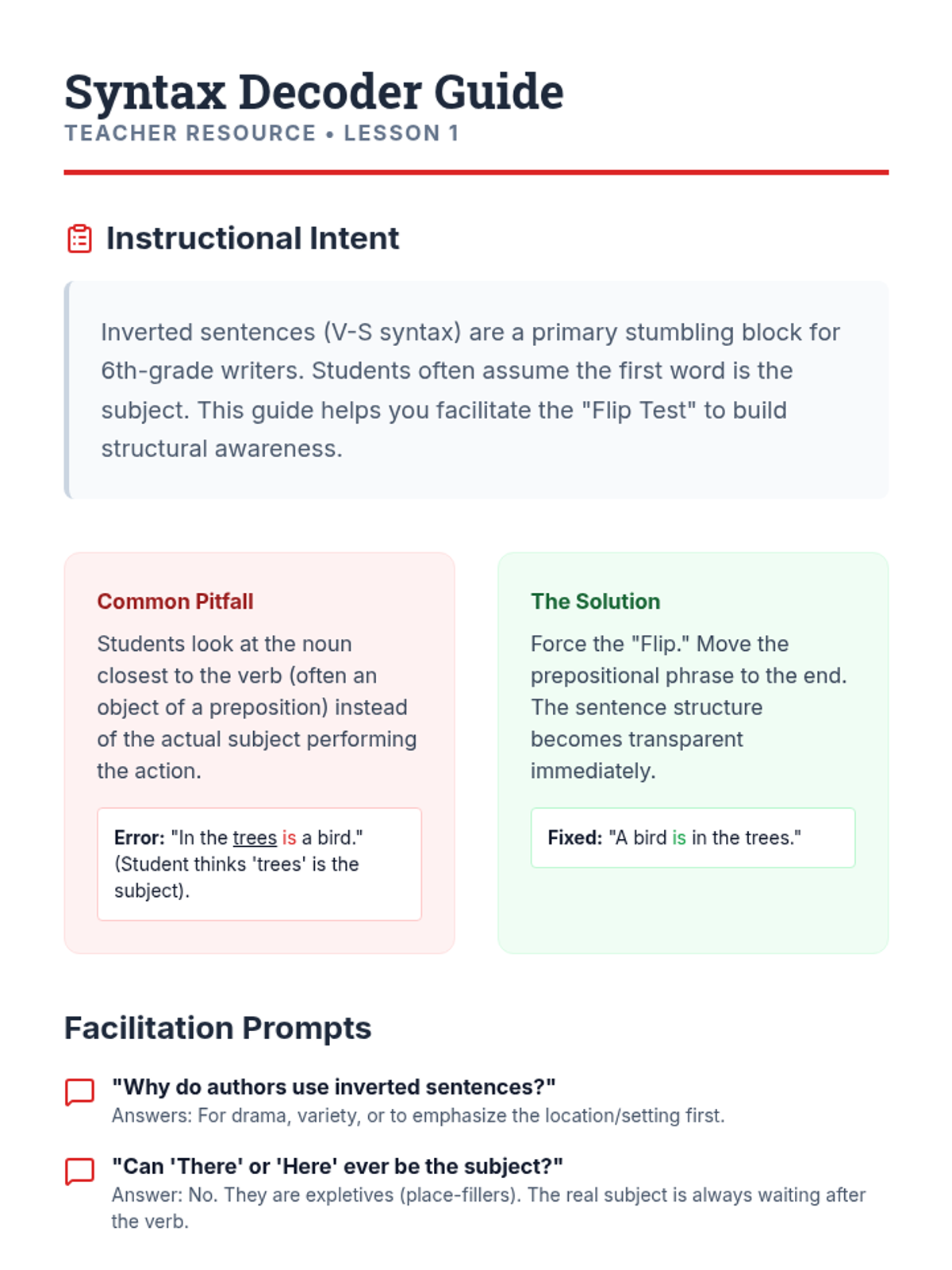
This sequence guides 8th-grade students through the complexities of subject-verb agreement, focusing on common pitfalls like intervening phrases, compound subjects, indefinite pronouns, and inverted sentences. Through a structural engineering theme, students learn to deconstruct sentences to ensure grammatical stability.
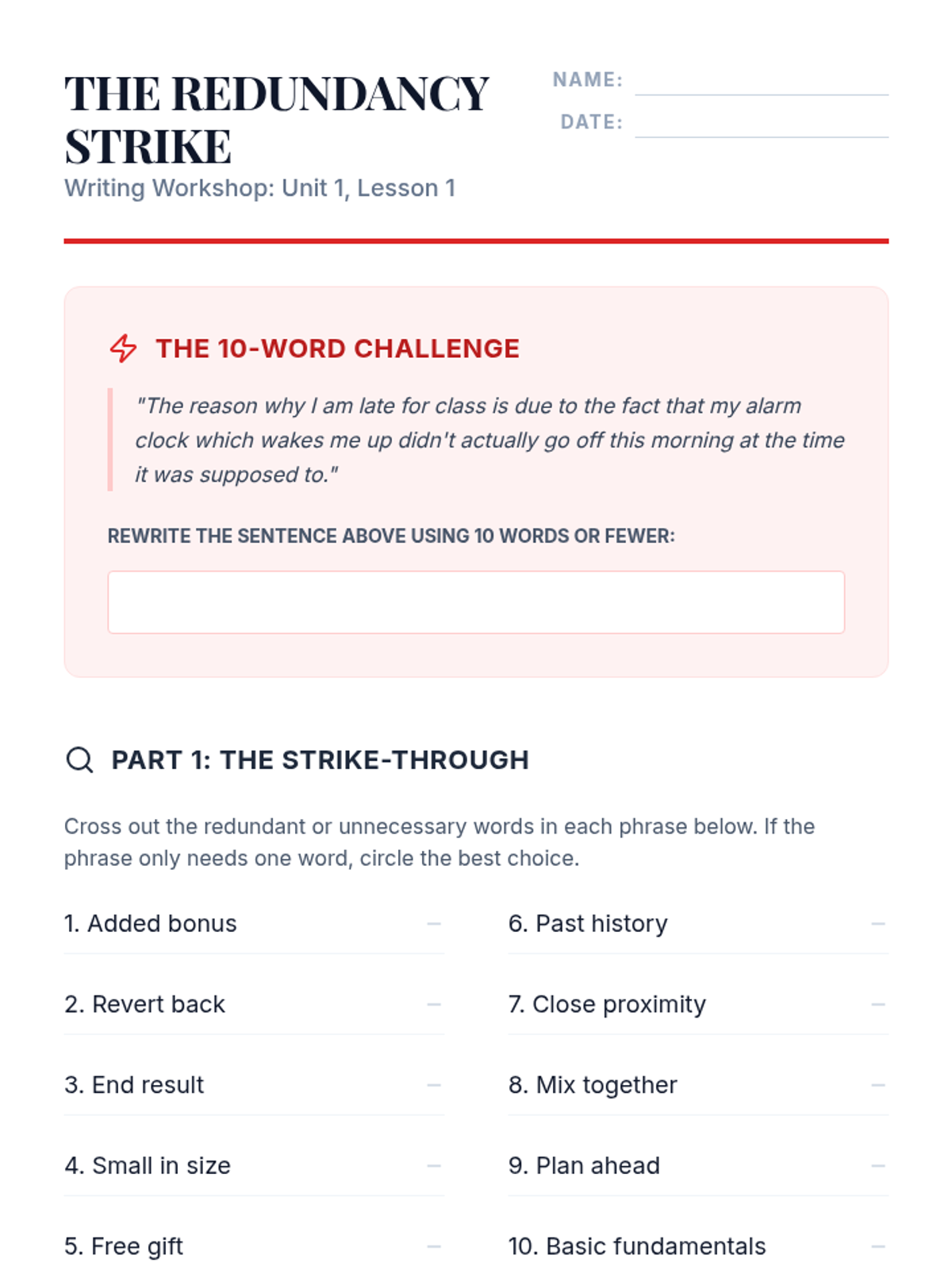
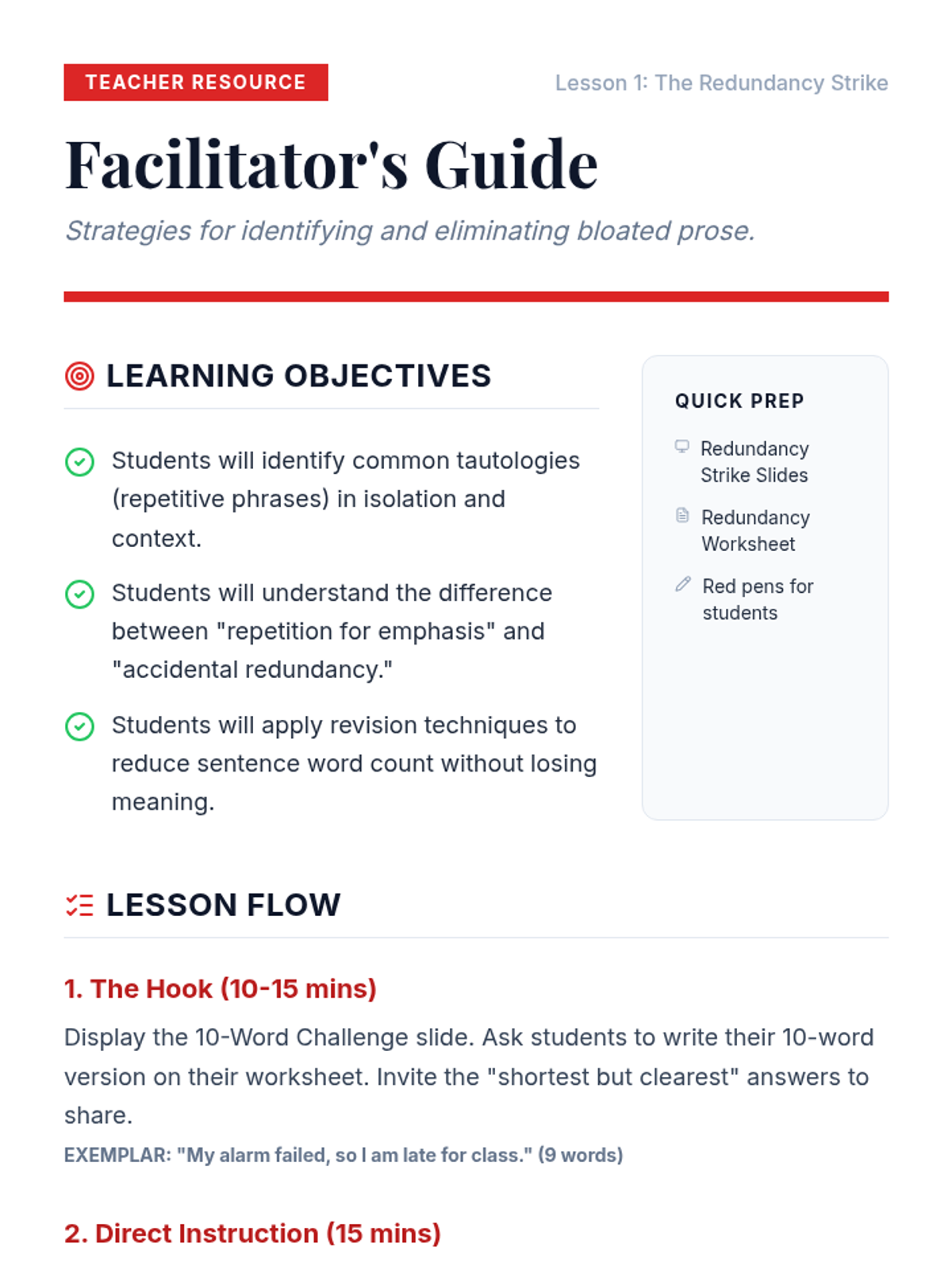
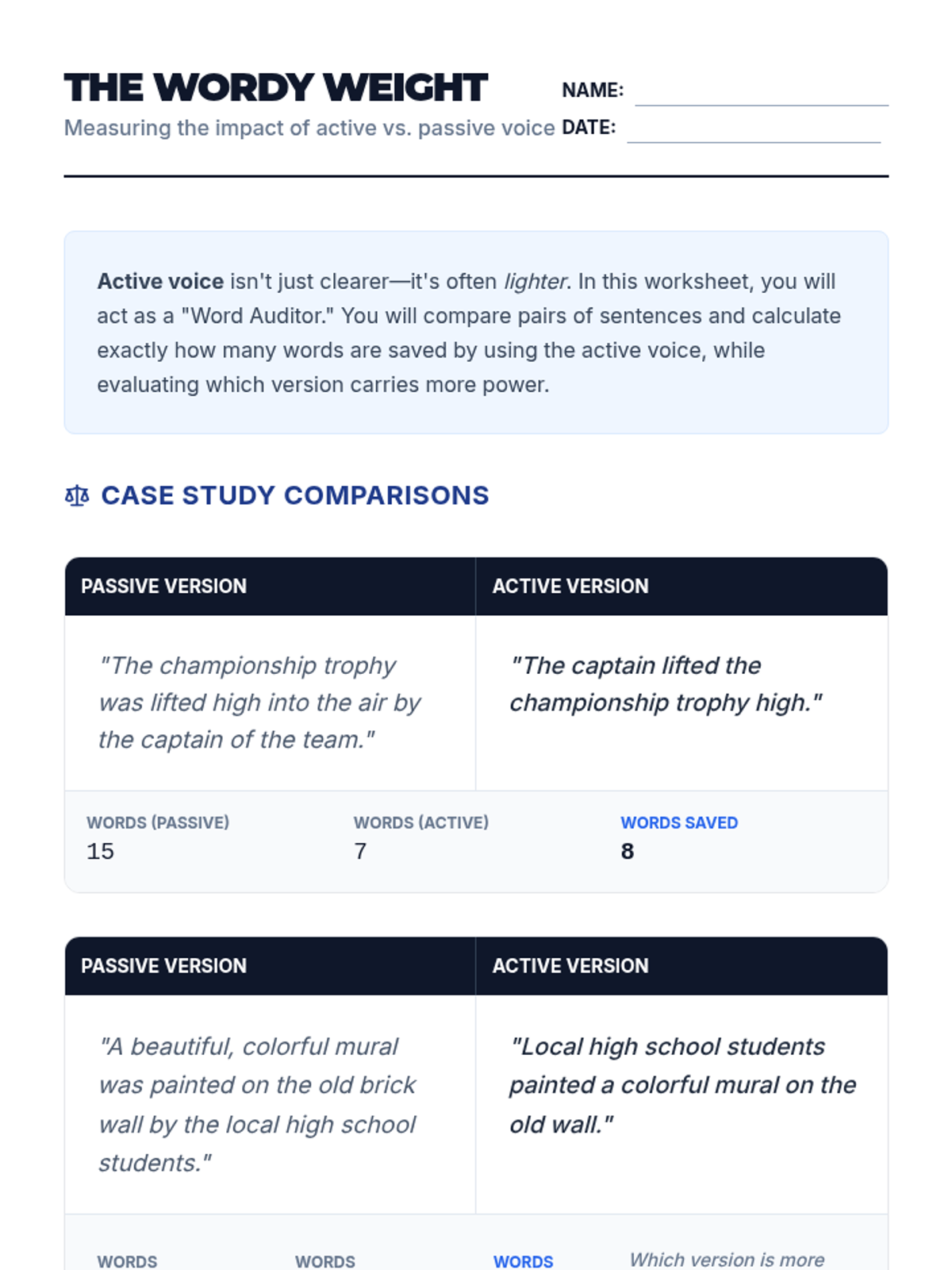
This sequence focuses on the foundational skills of word economy and vocabulary selection, teaching students to identify redundancies and replace vague language with precise alternatives. Learners will progress from sentence-level edits to full-text revision, transforming bloated prose into sharp, impactful writing.
This project-based sequence for 8th-grade students shifts from learning grammar rules to applying them in real-world contexts. Students act as editors to identify errors in media, simulate professional editing, and produce complex, grammatically precise writing.
This grammar sequence for 8th-grade students explores the complexities of subject-verb agreement with collective nouns and indefinite pronouns. Students will analyze when groups act as singular units versus plural individuals, mastering rules for fractional expressions and idiomatic phrases like 'a number' versus 'the number.'
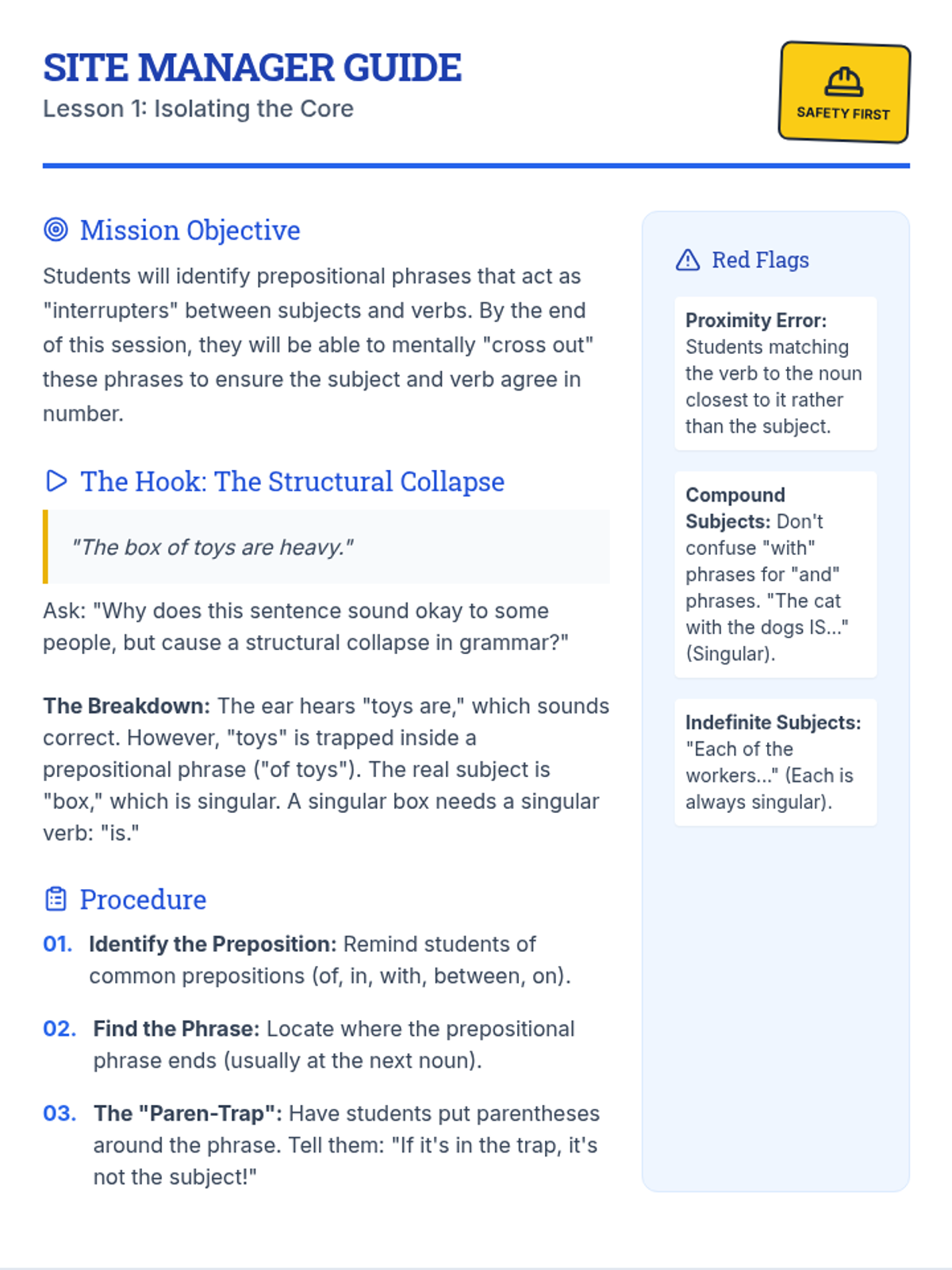
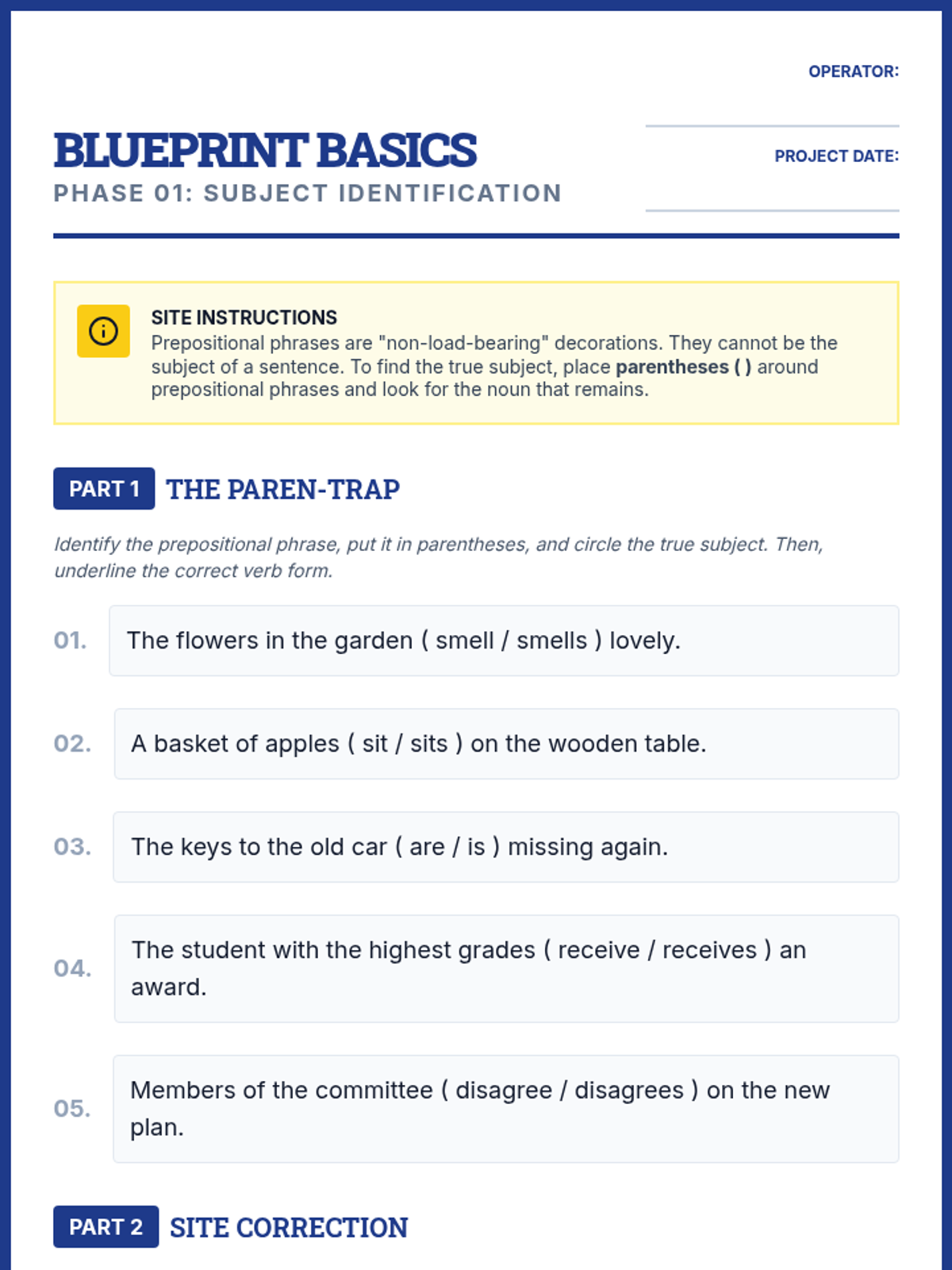
A comprehensive 6th-grade grammar sequence focusing on subject-verb agreement, particularly when subjects are separated from verbs by intervening prepositional phrases. Students progress from basic identification to complex editing and original construction.
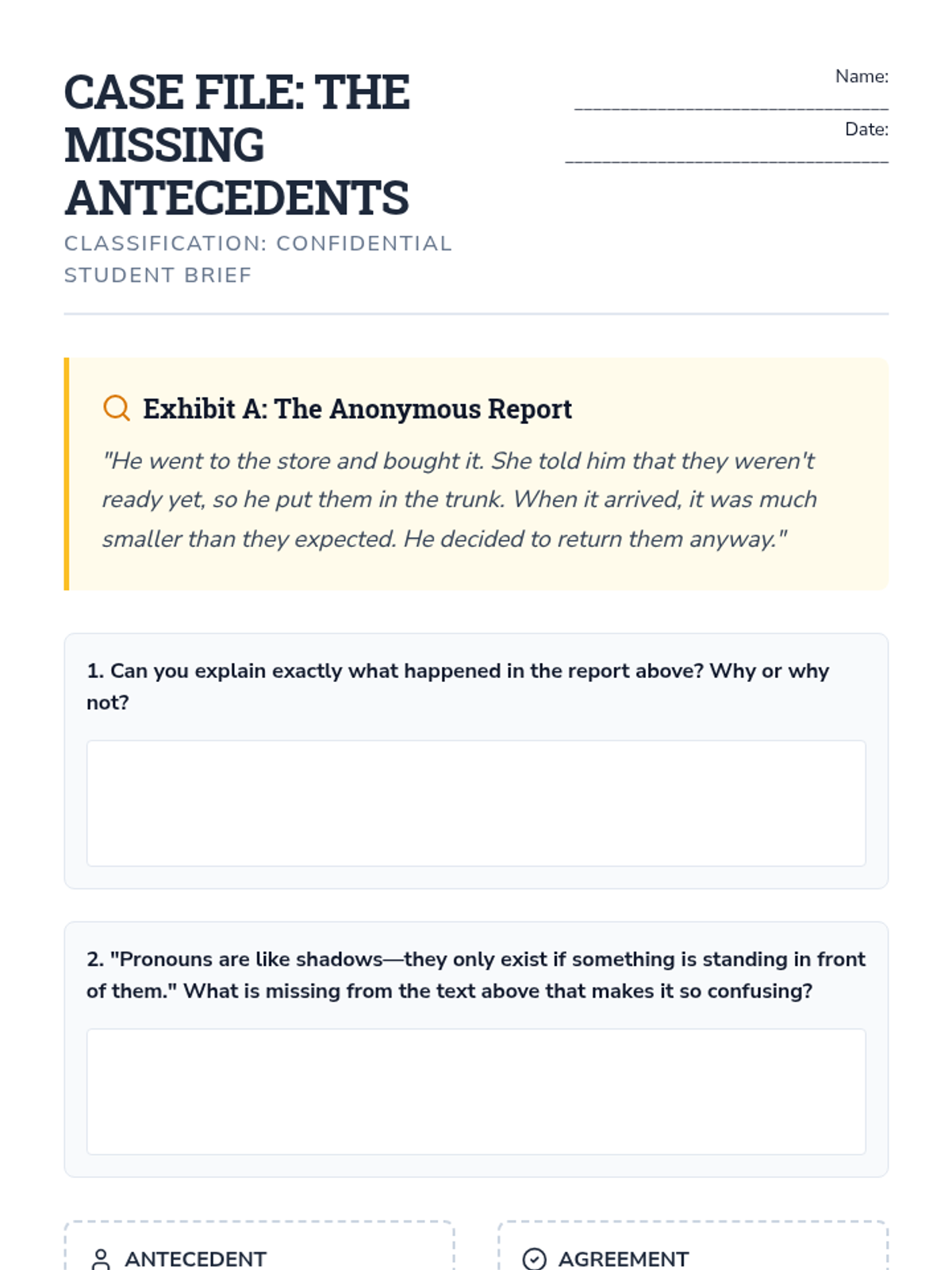
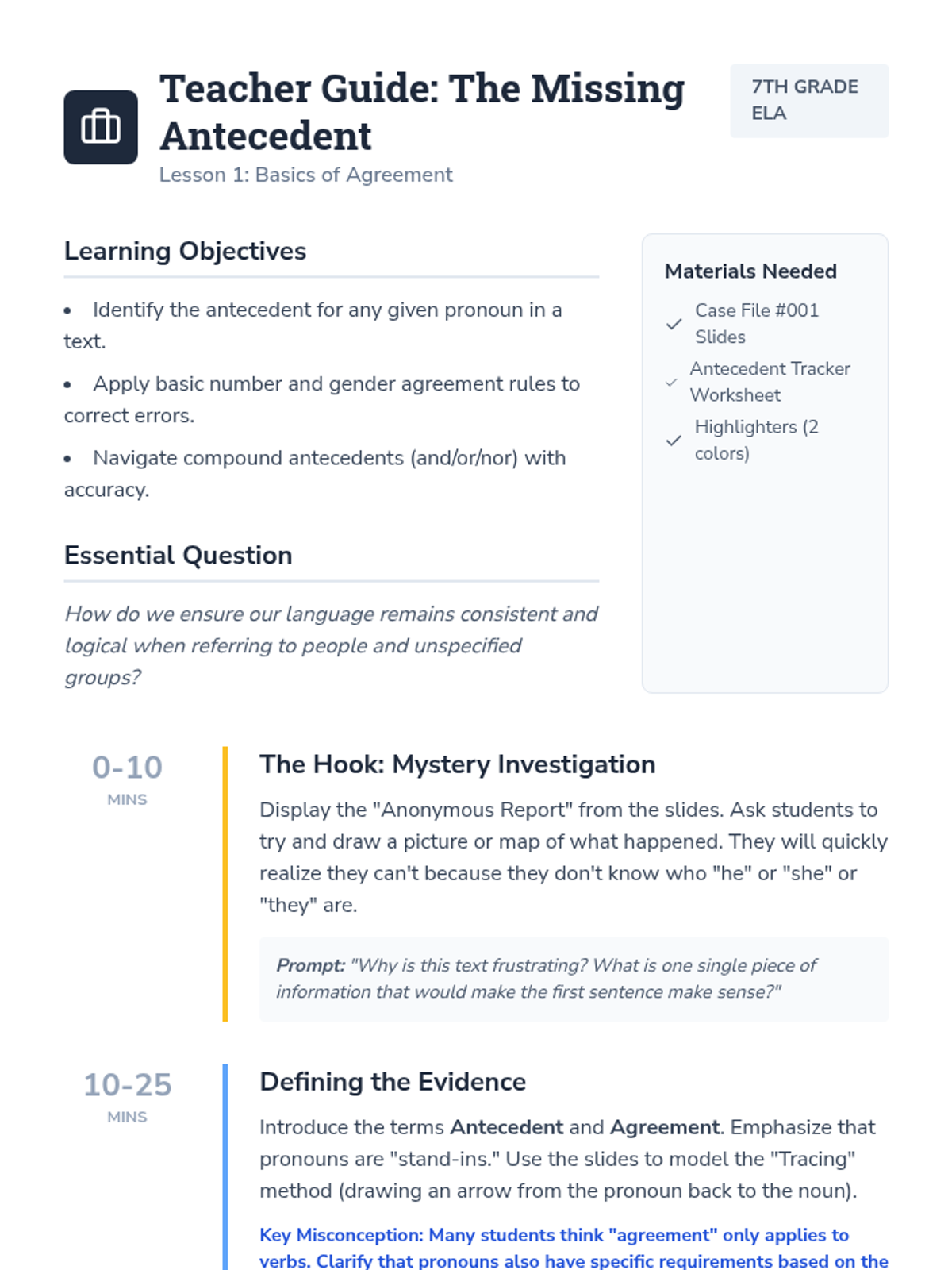
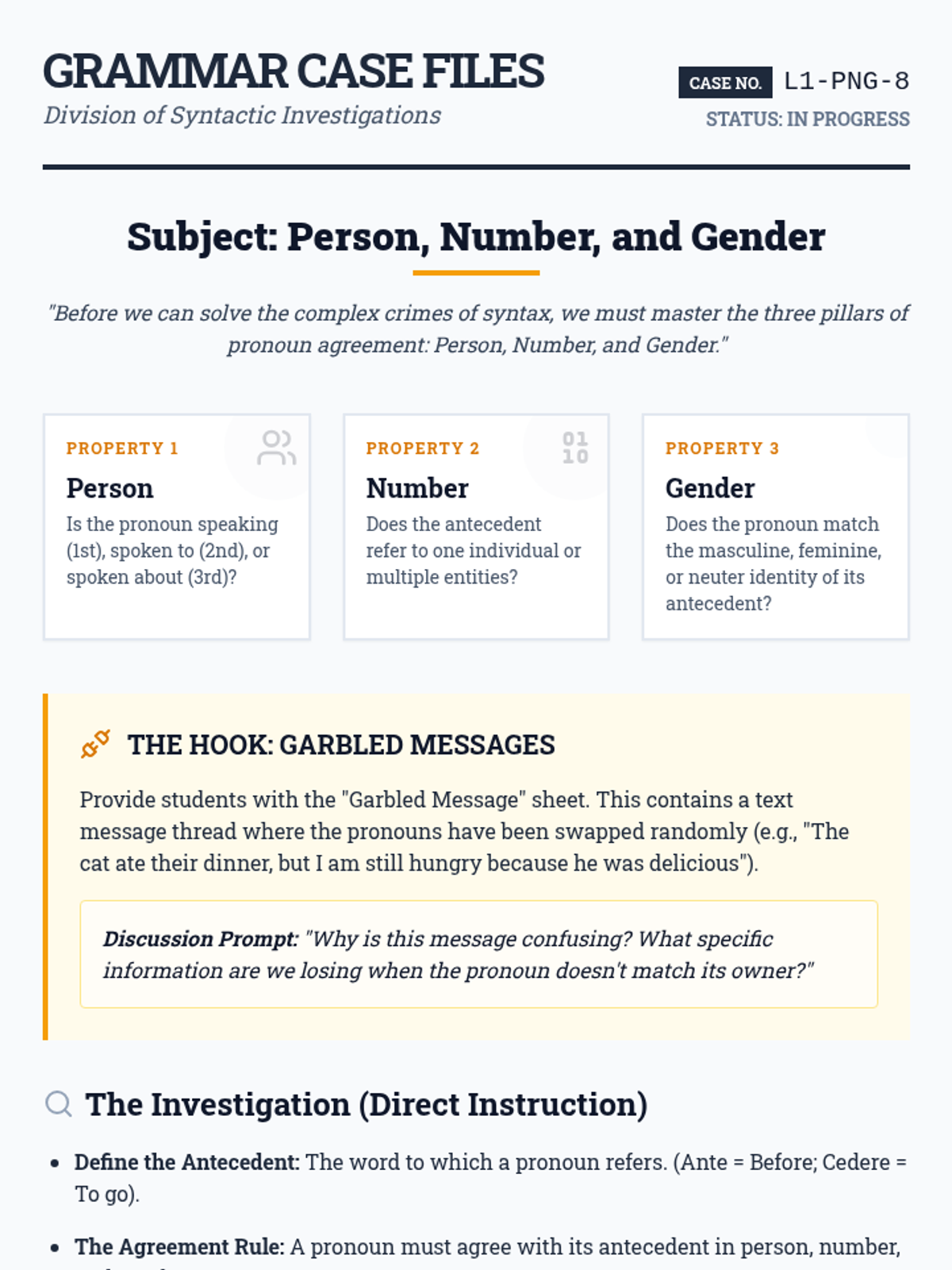
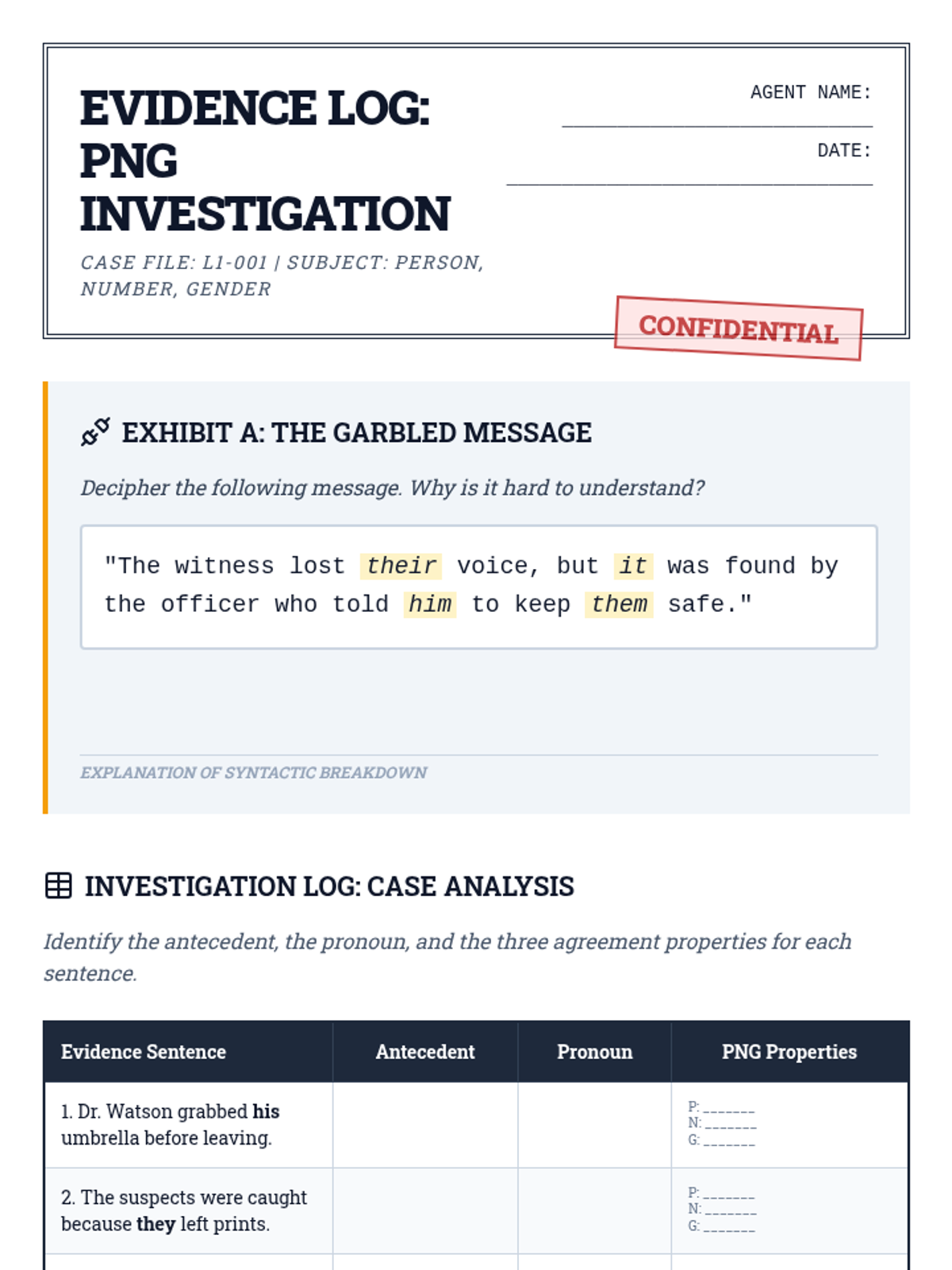
This inquiry-based sequence explores the logic of pronoun-antecedent agreement, from basic number and gender matching to complex indefinite pronouns and the modern singular 'they'. Students act as grammar detectives to investigate how language maintains consistency and clarity across different contexts.
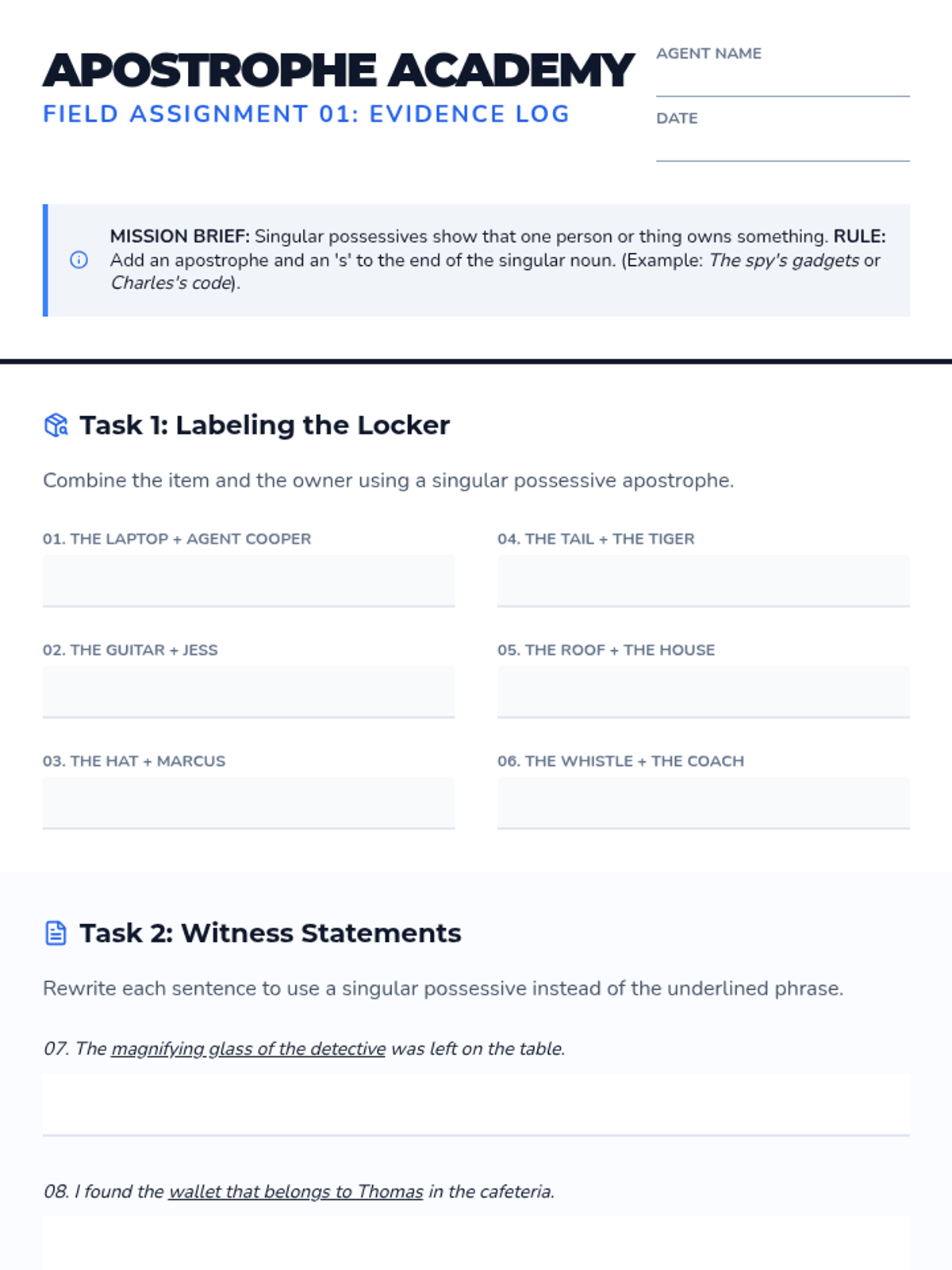
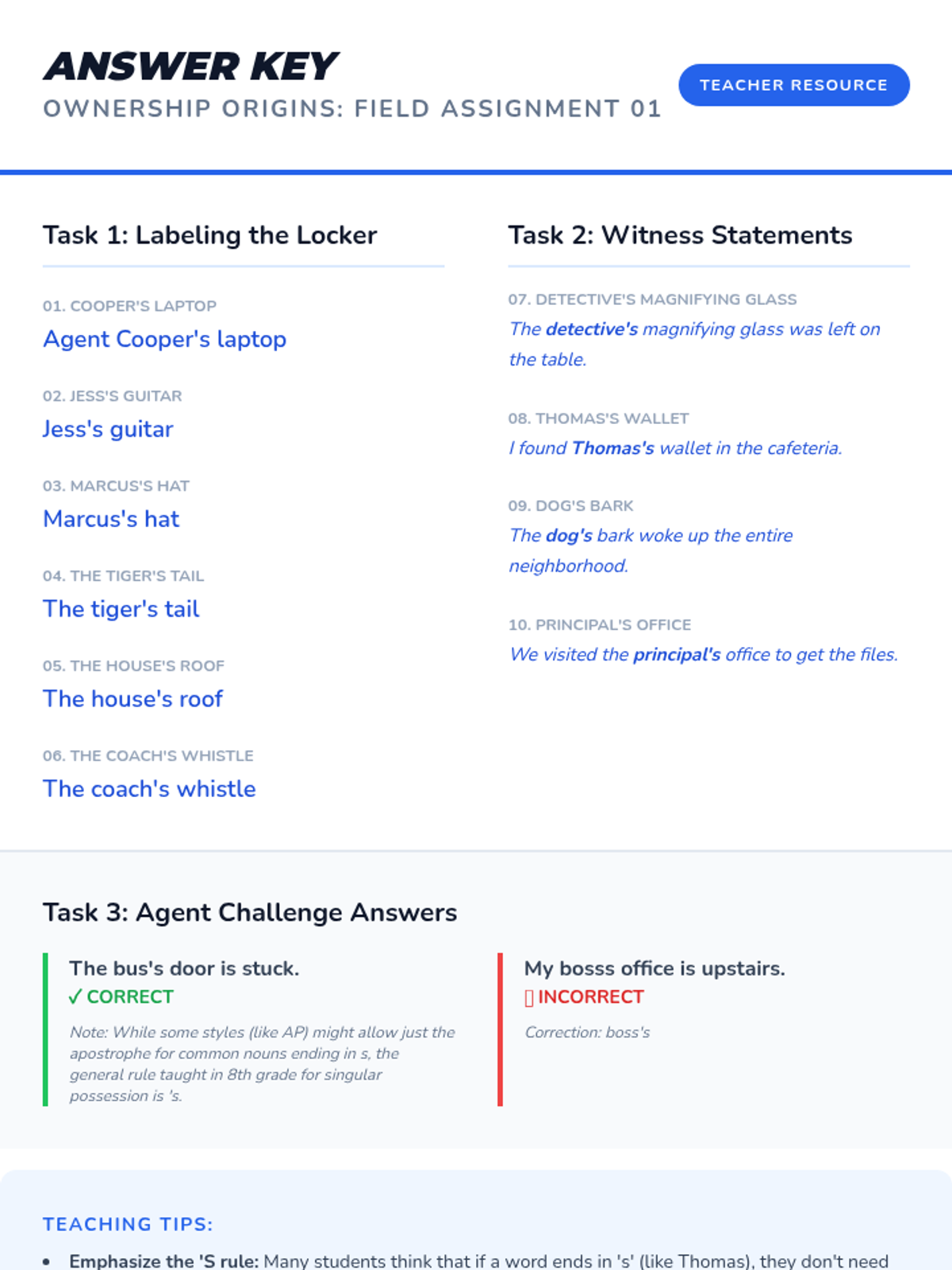
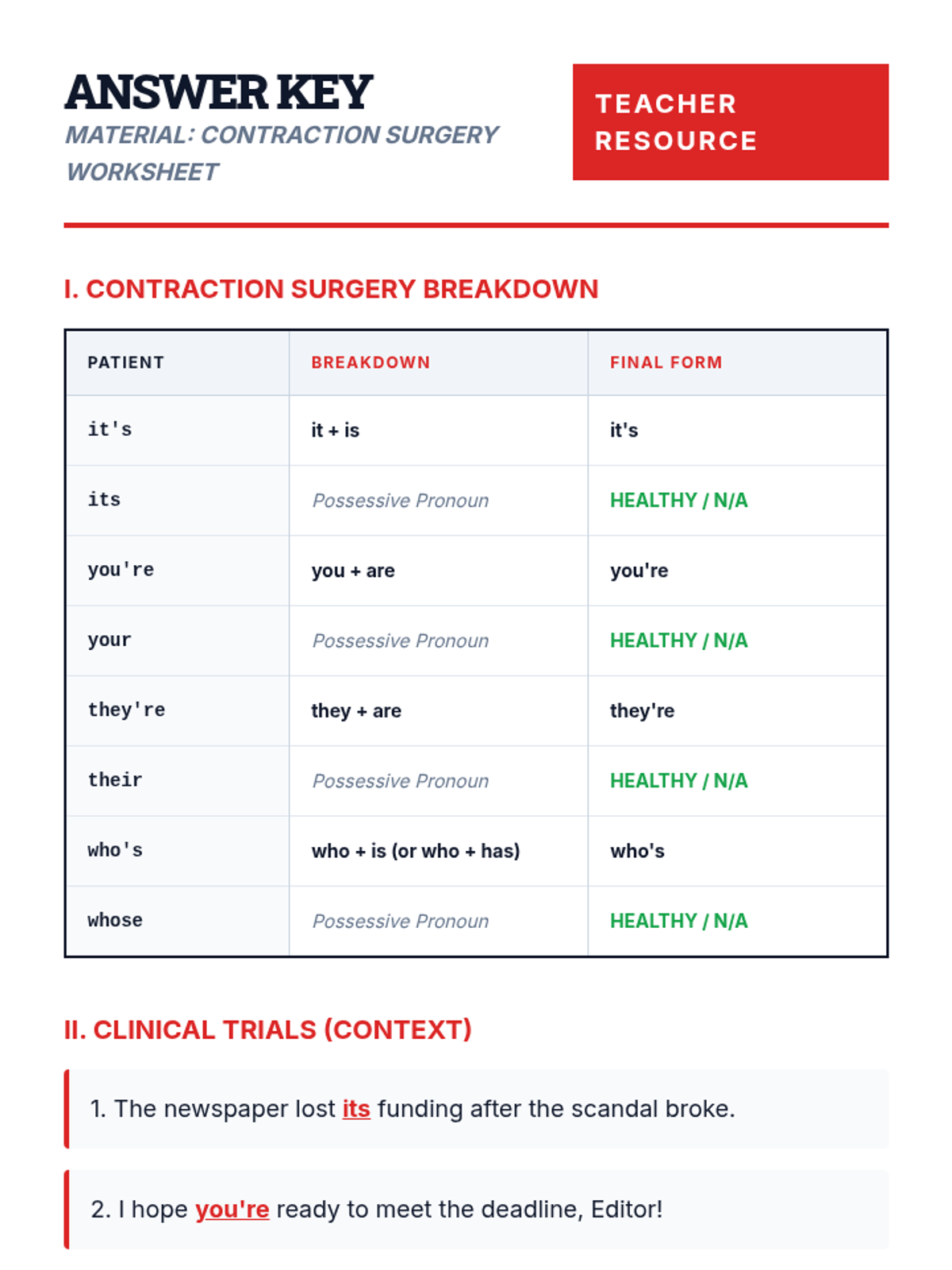
This sequence guides 8th-grade students through the complexities of apostrophe usage, from basic singular possession to the tricky 'it's vs. its' distinction and plural possession. Students use a 'detective' theme to identify ownership and eliminate common mechanical errors.
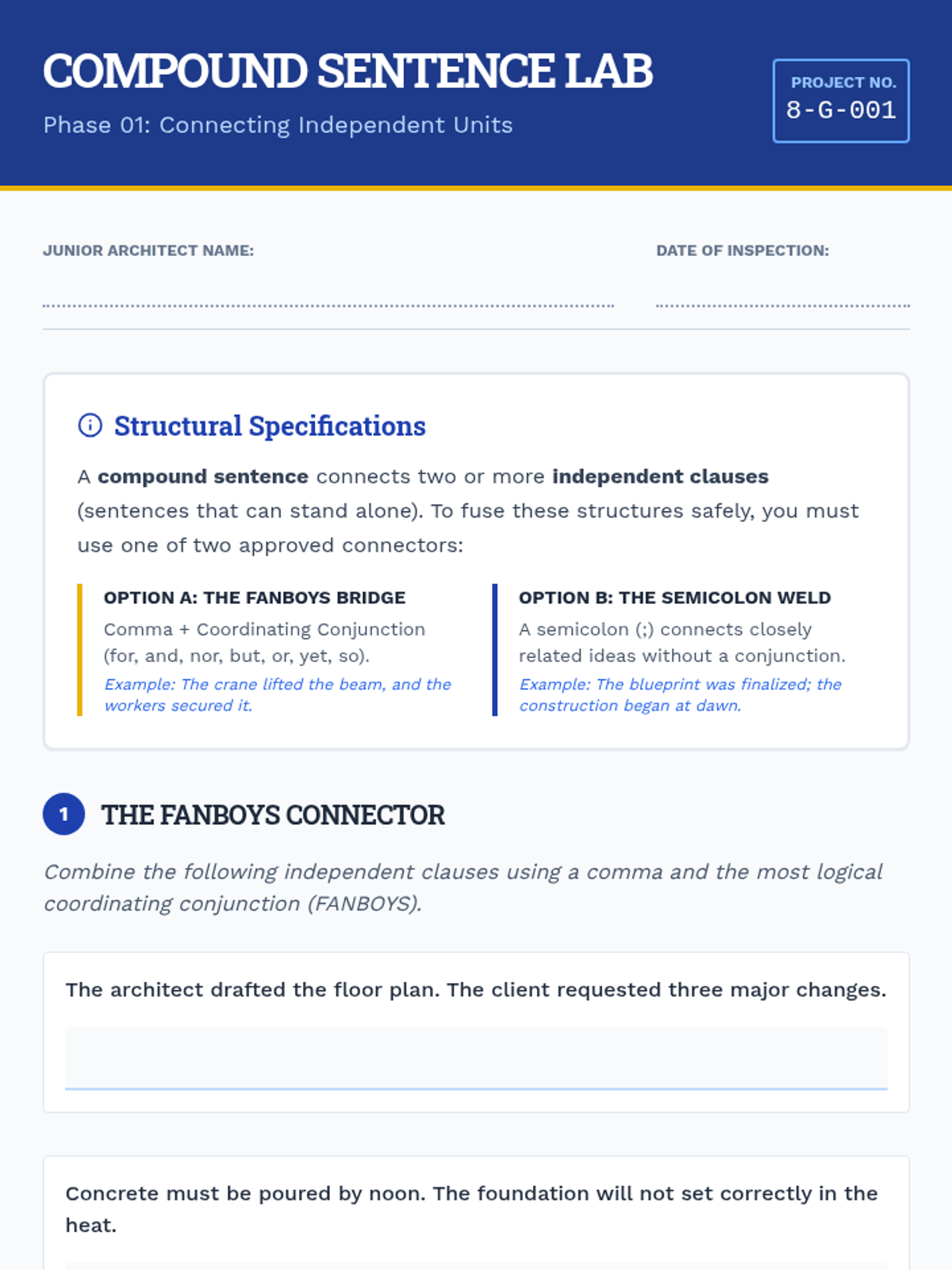
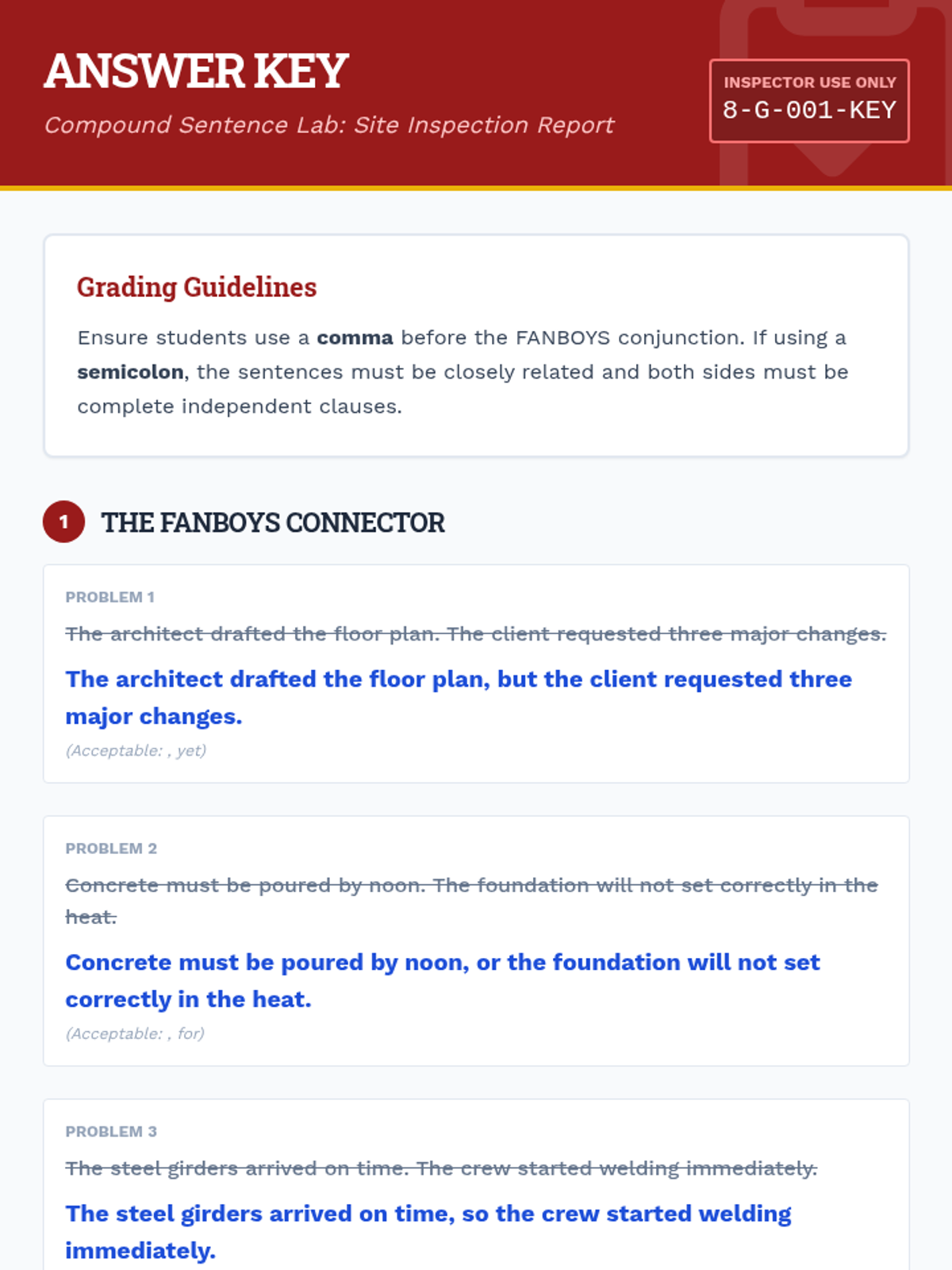
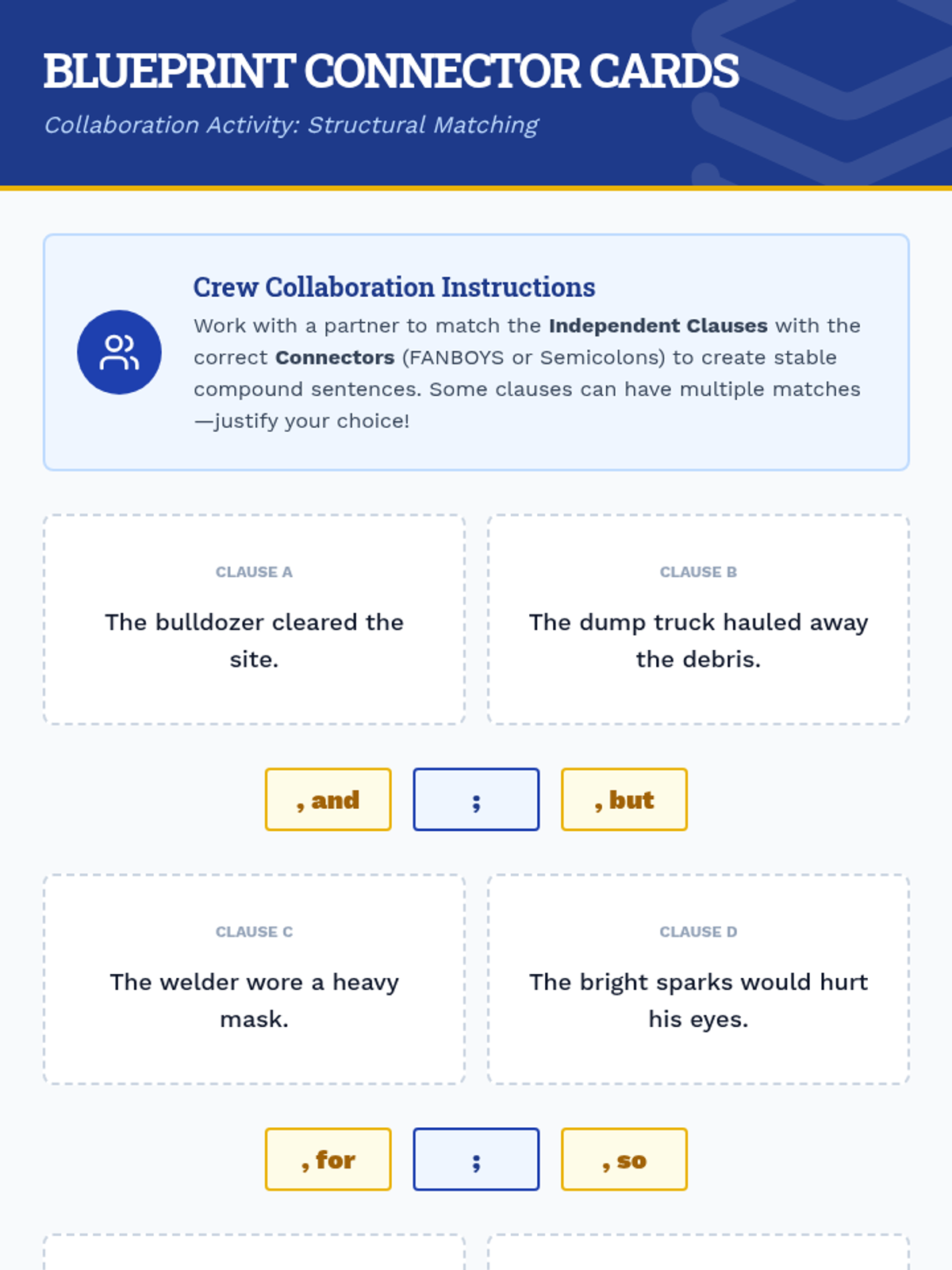
A three-part grammar intensive for 8th graders focusing on the mechanics of compound and complex sentences through architectural-themed practice and application.
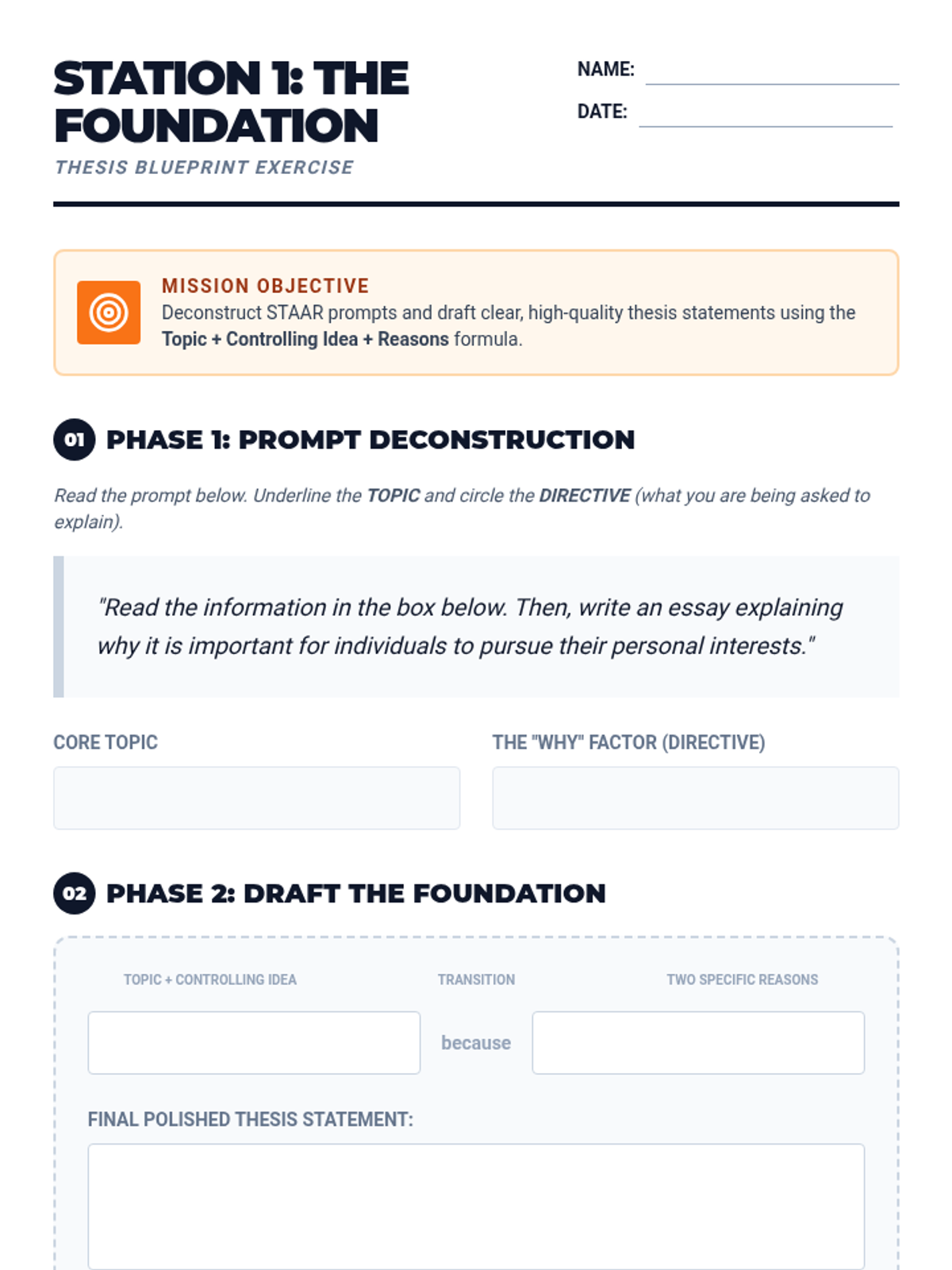
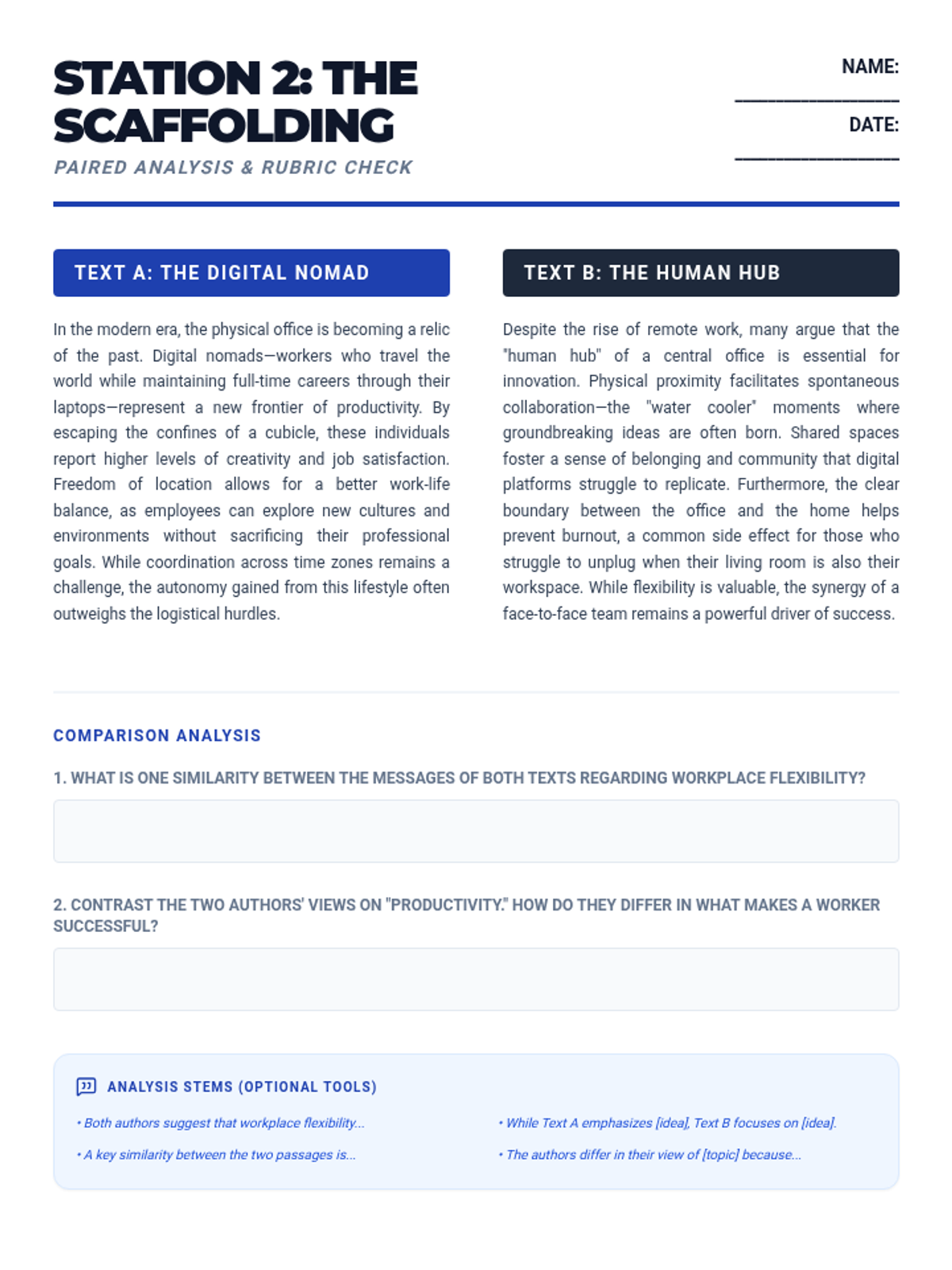
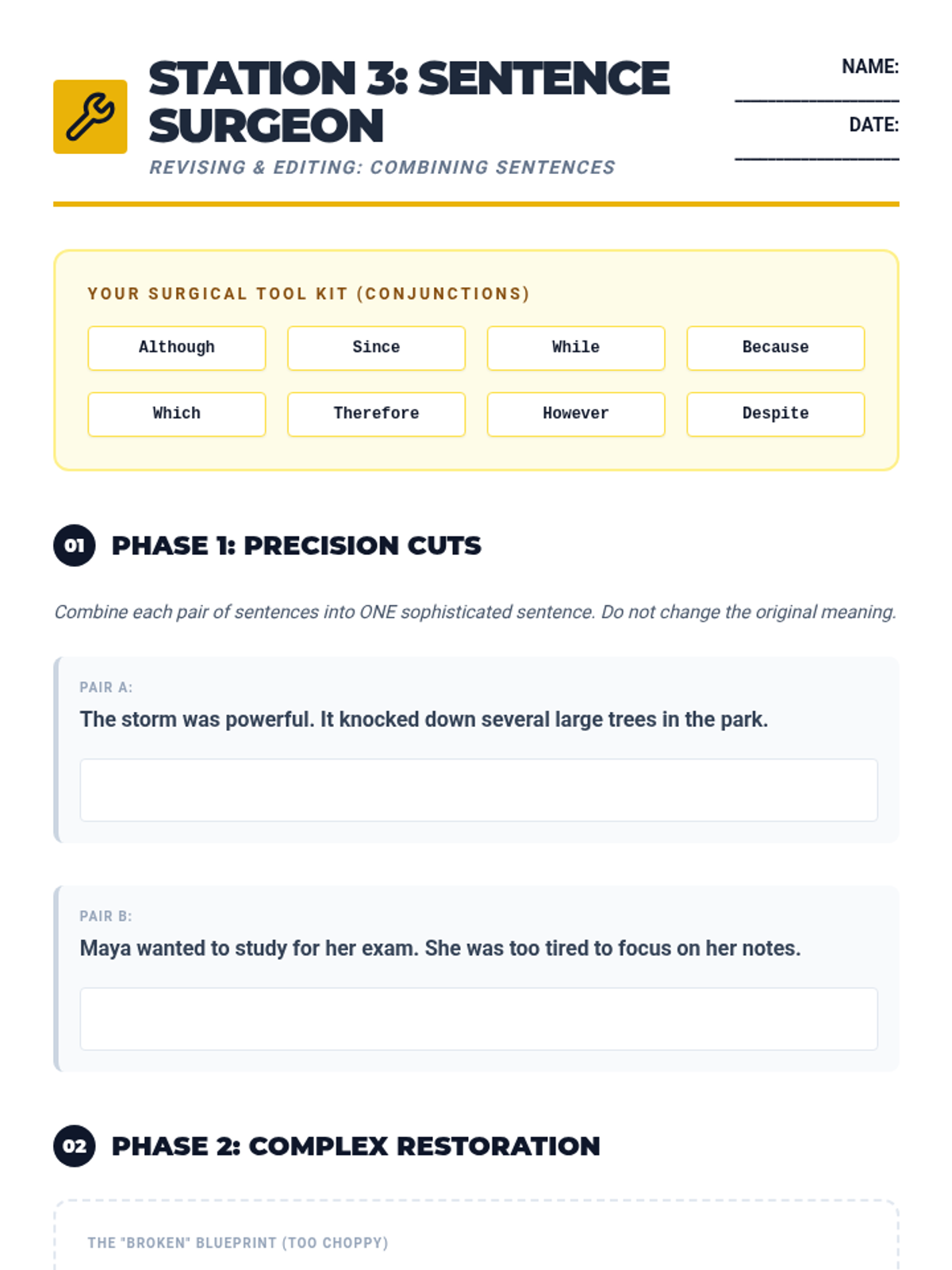
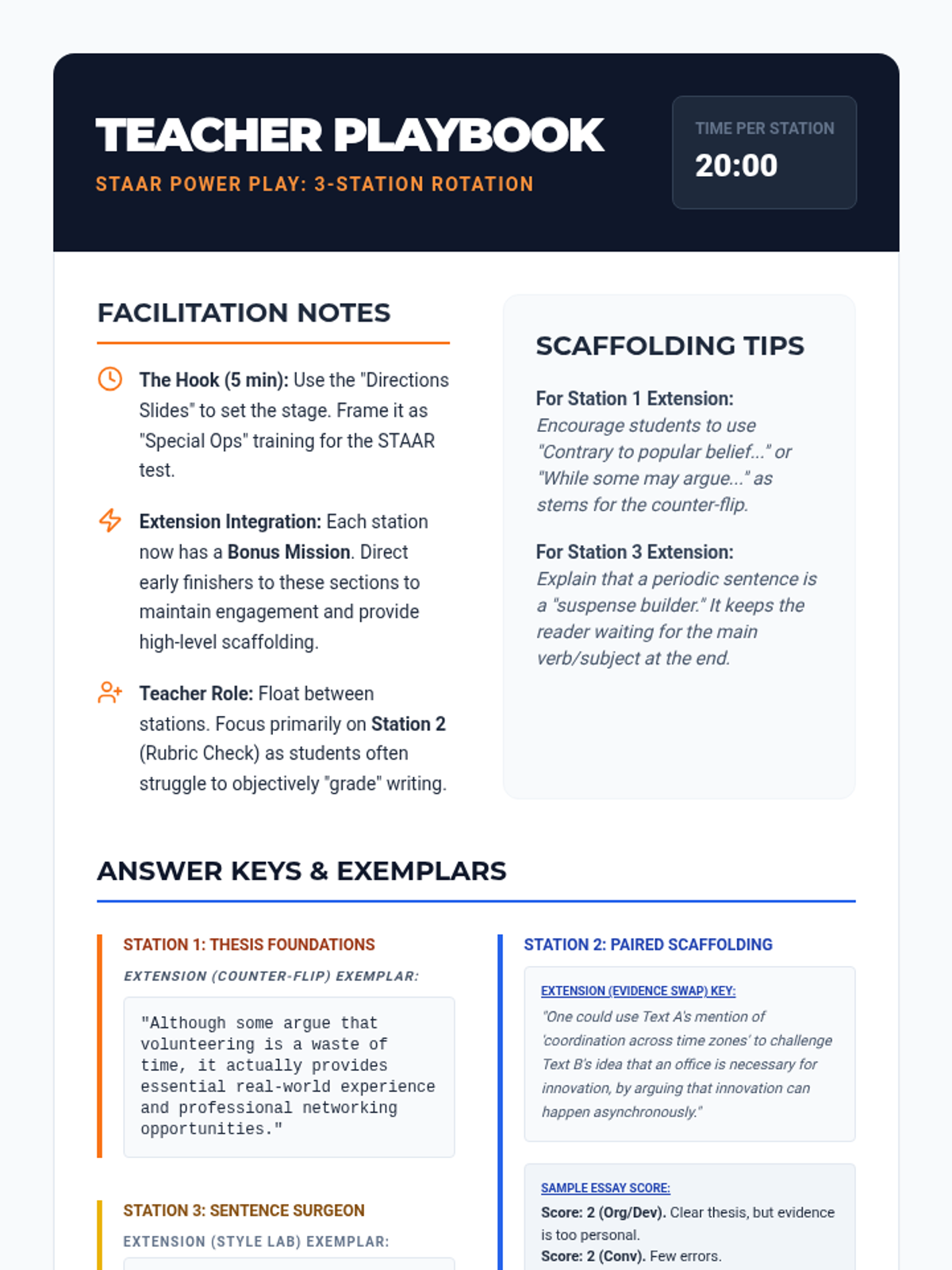
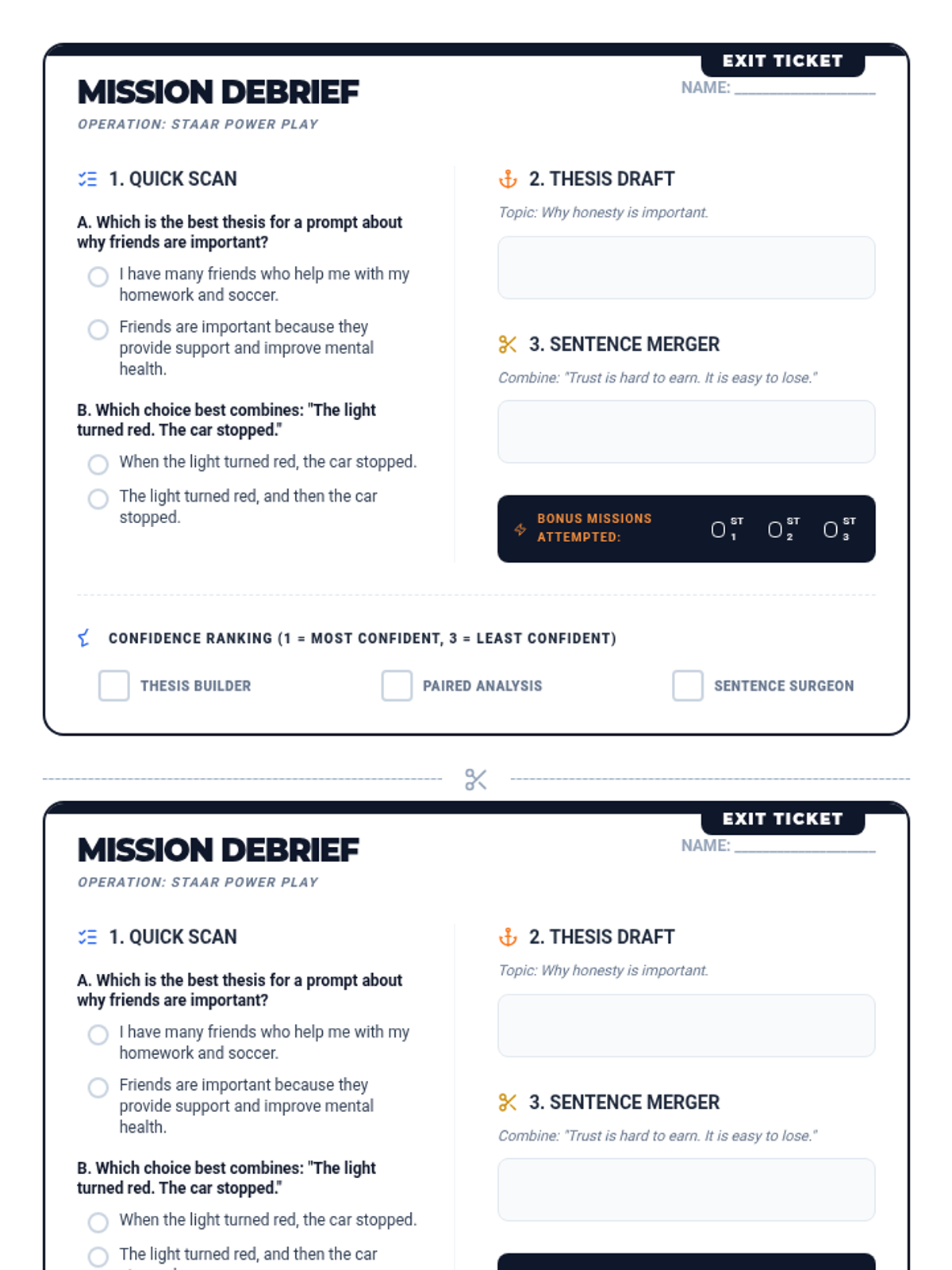
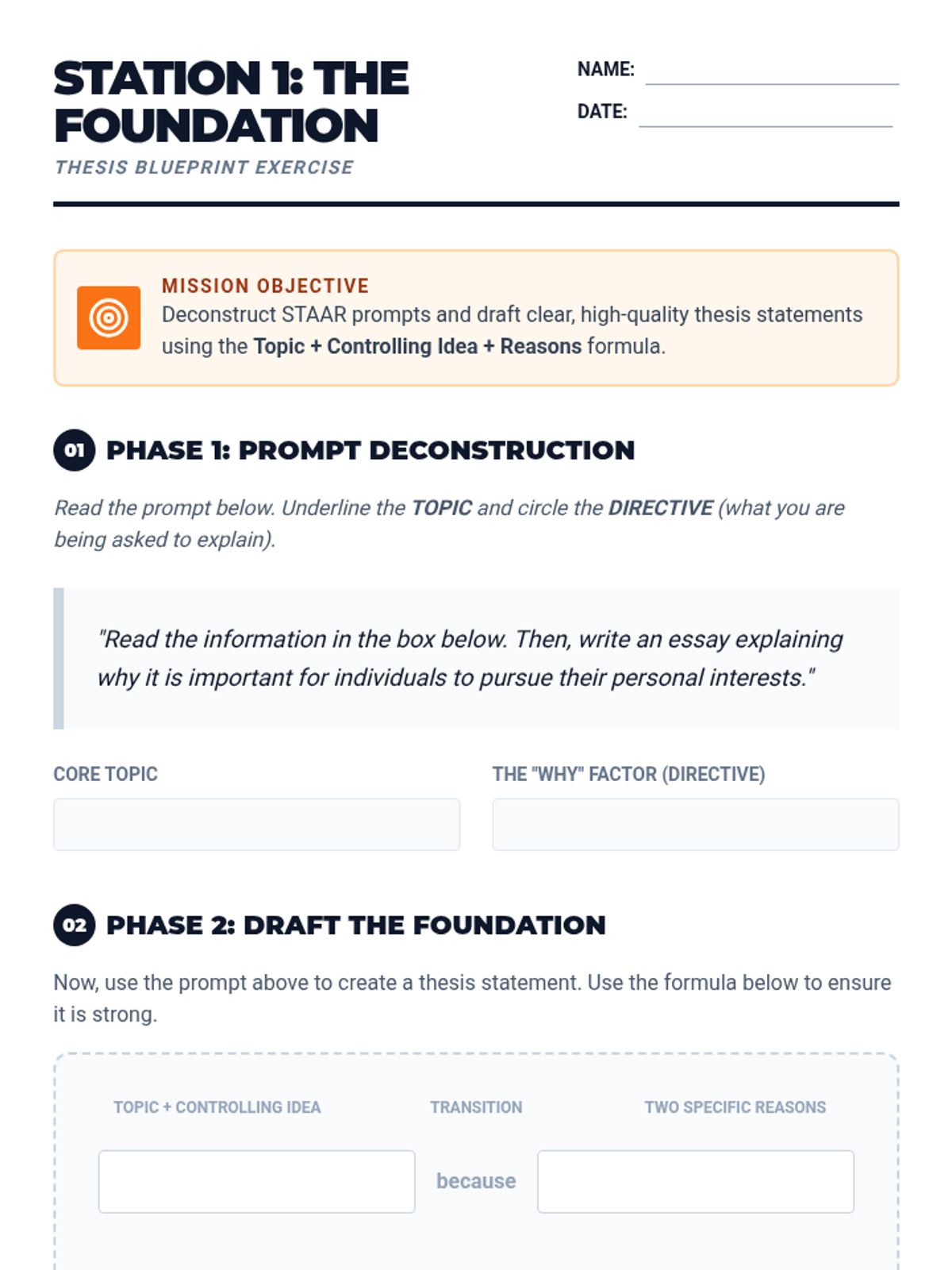
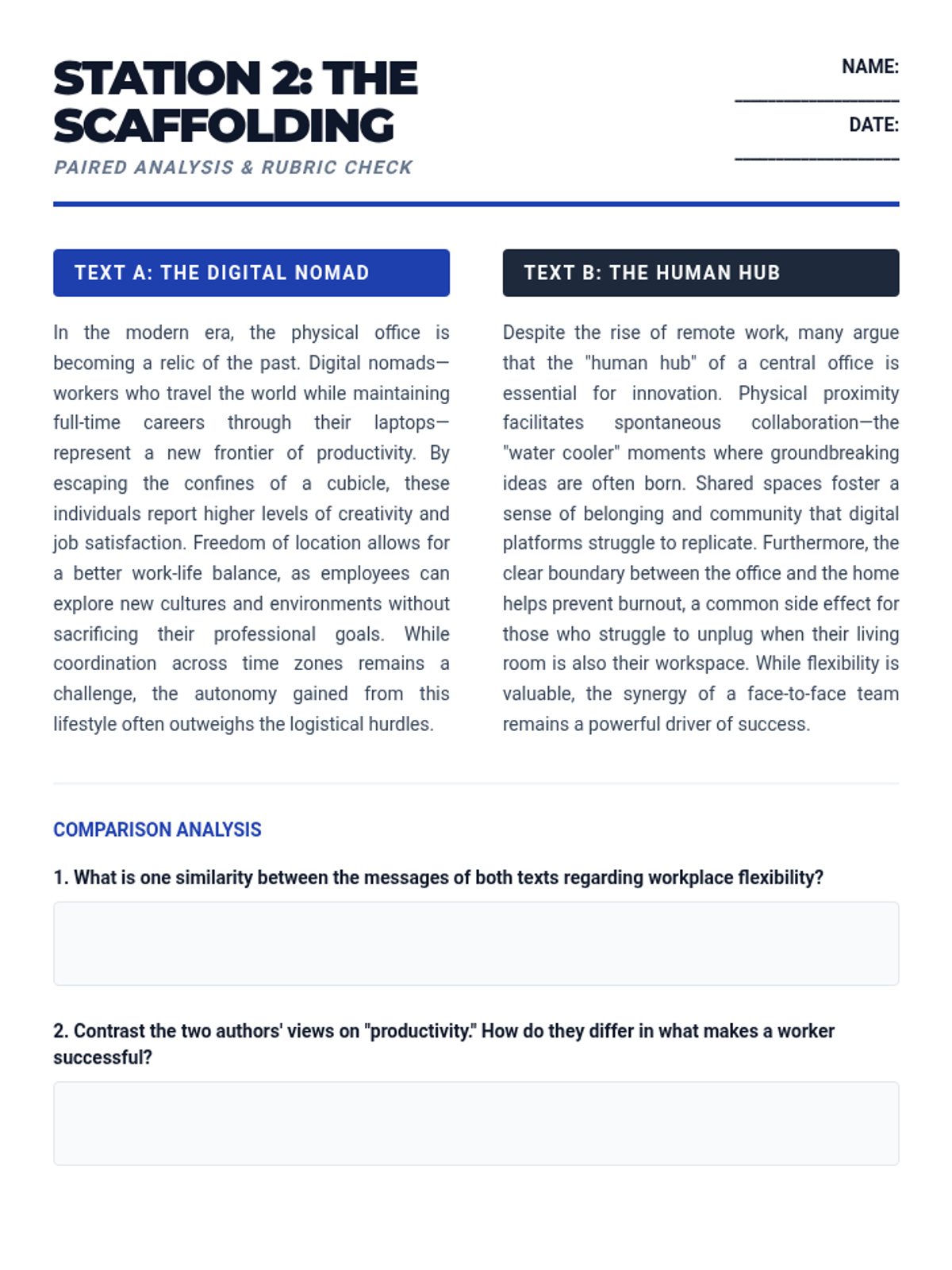
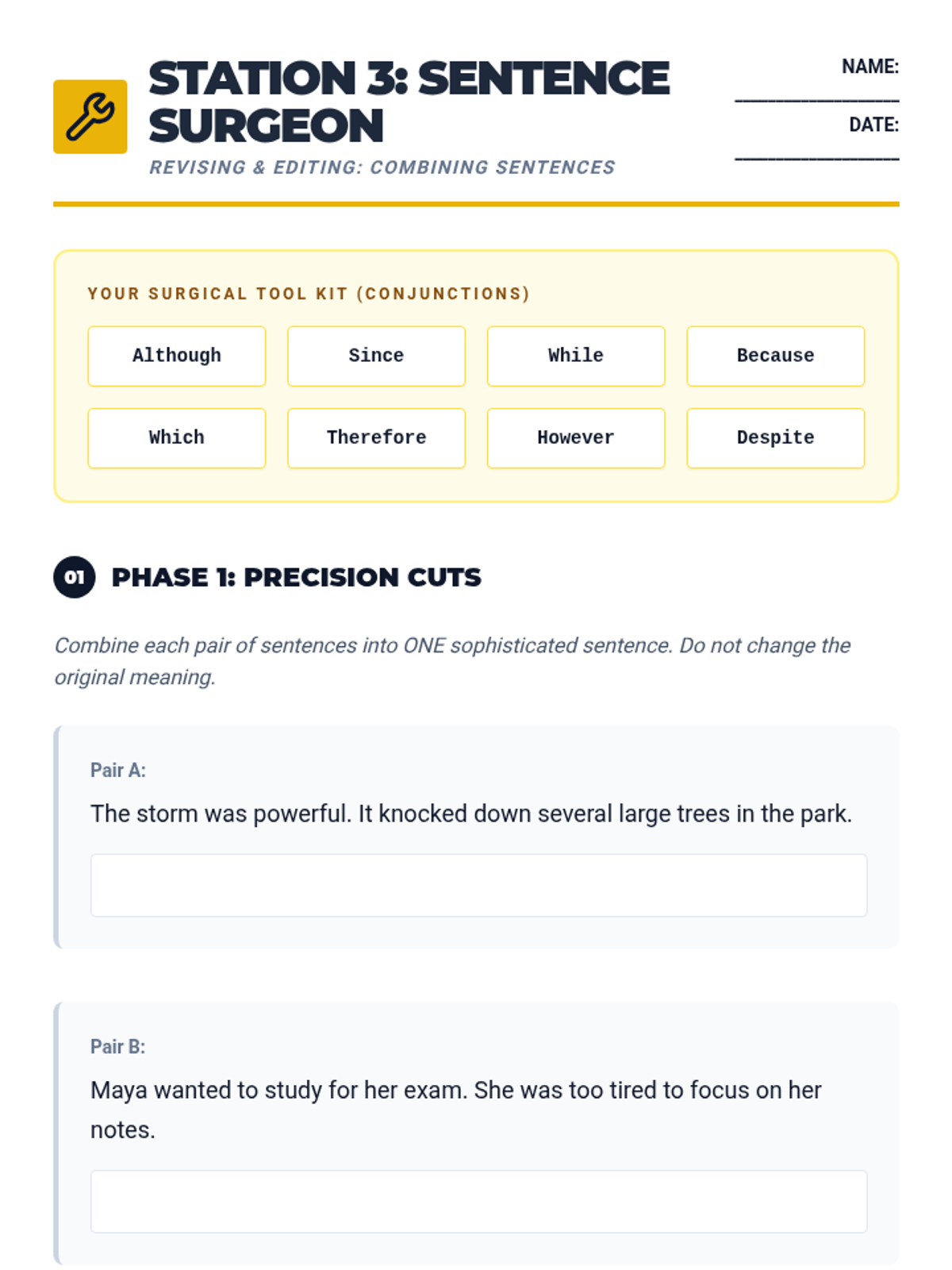
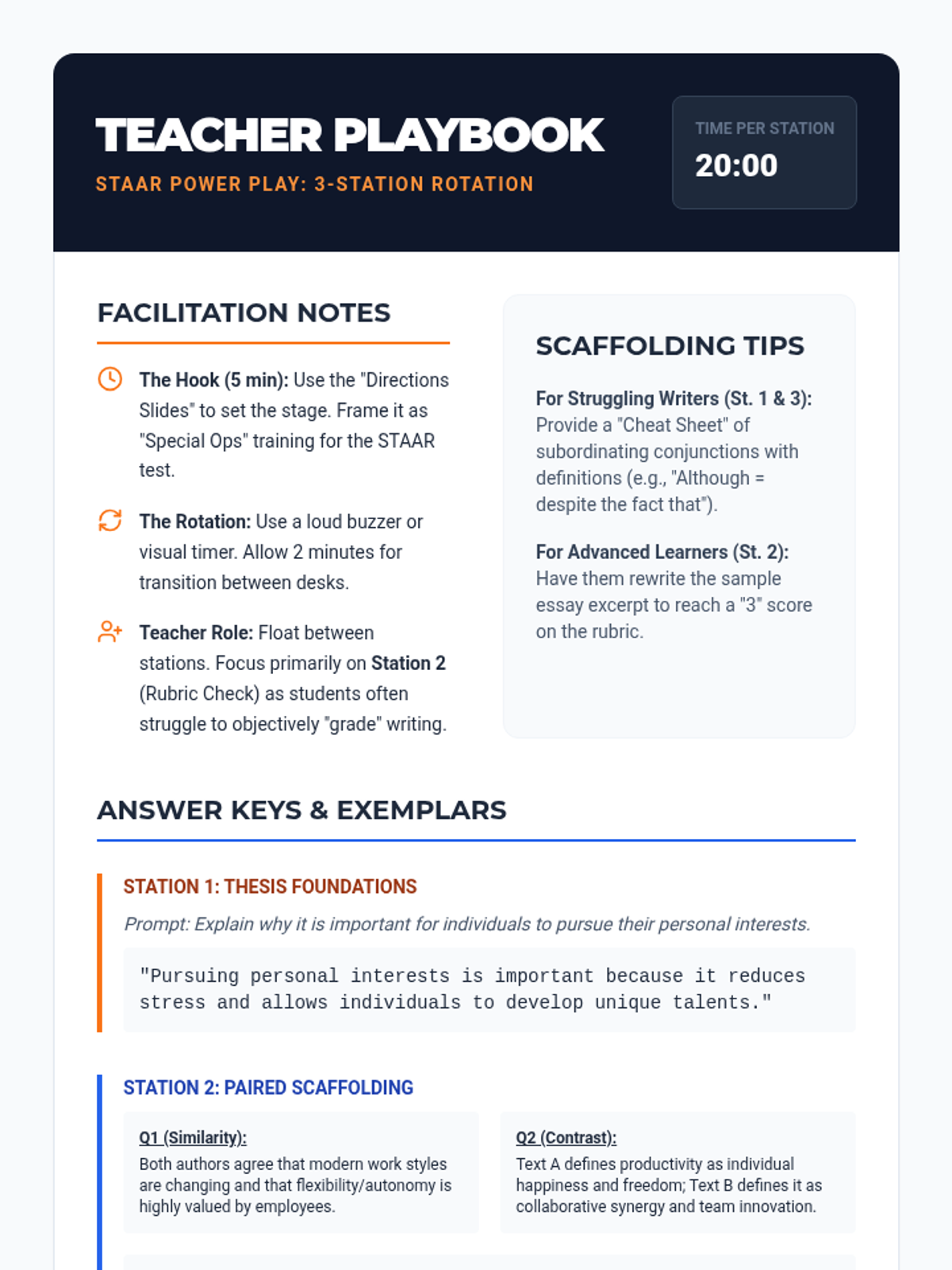
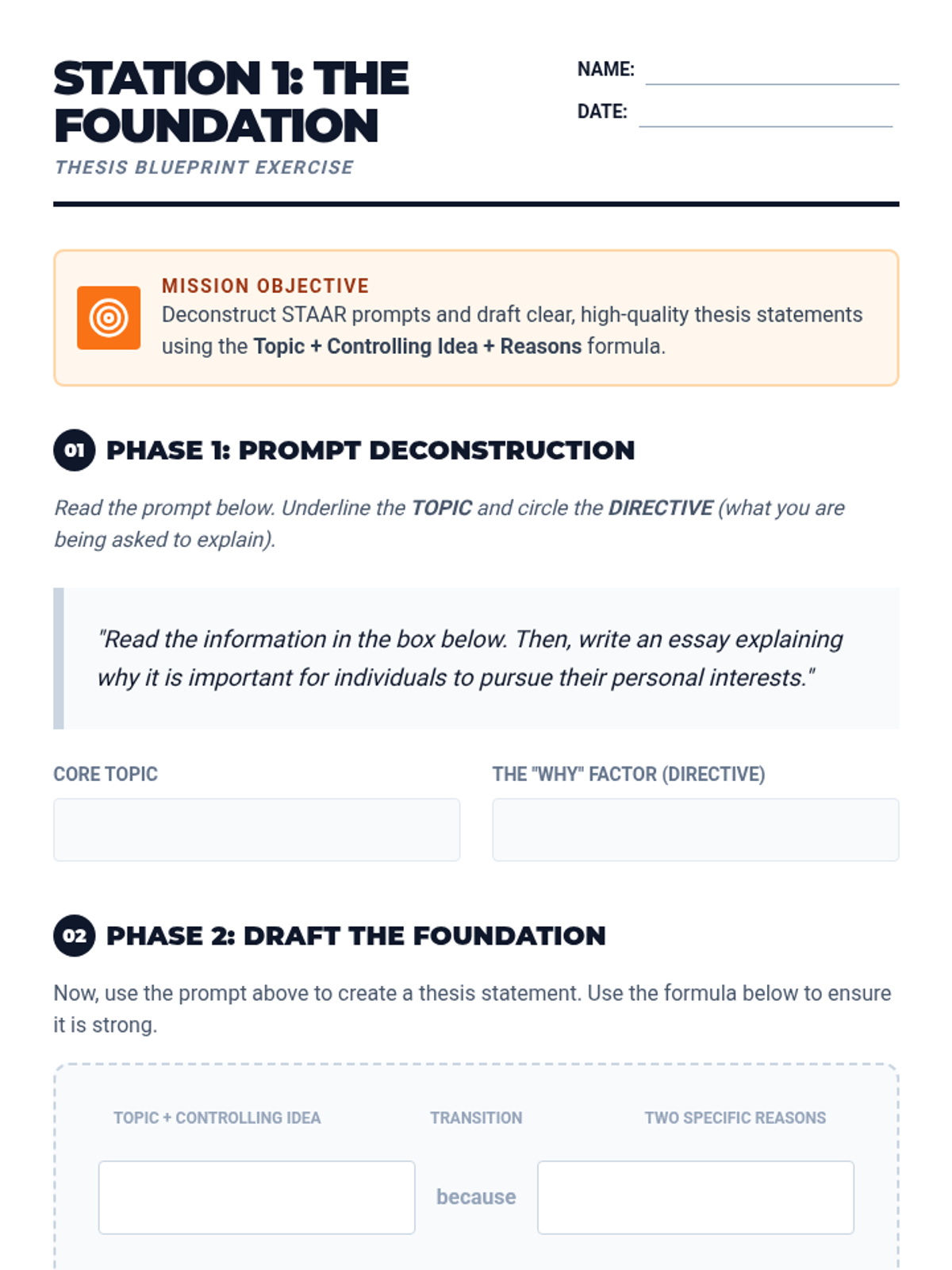
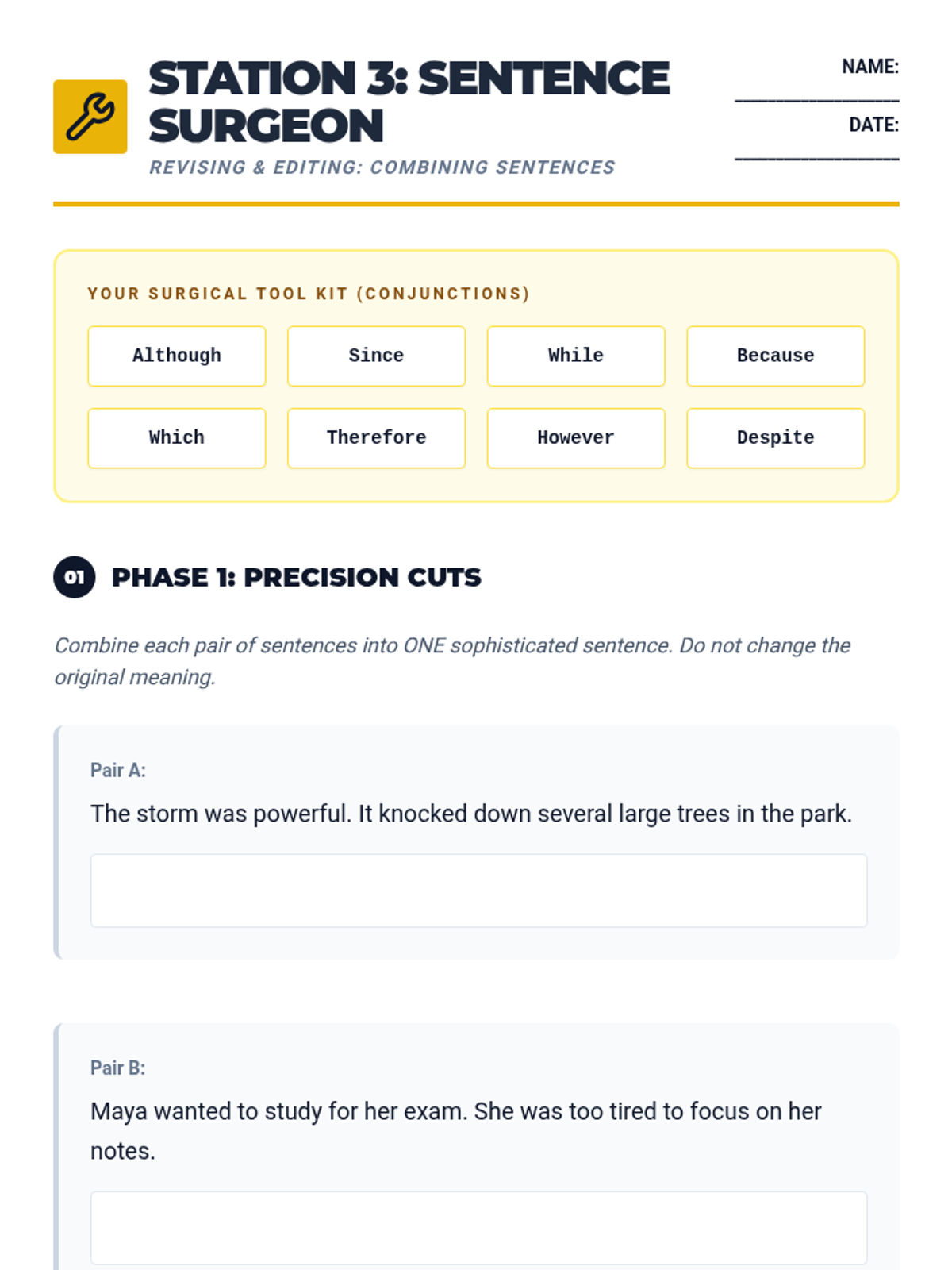
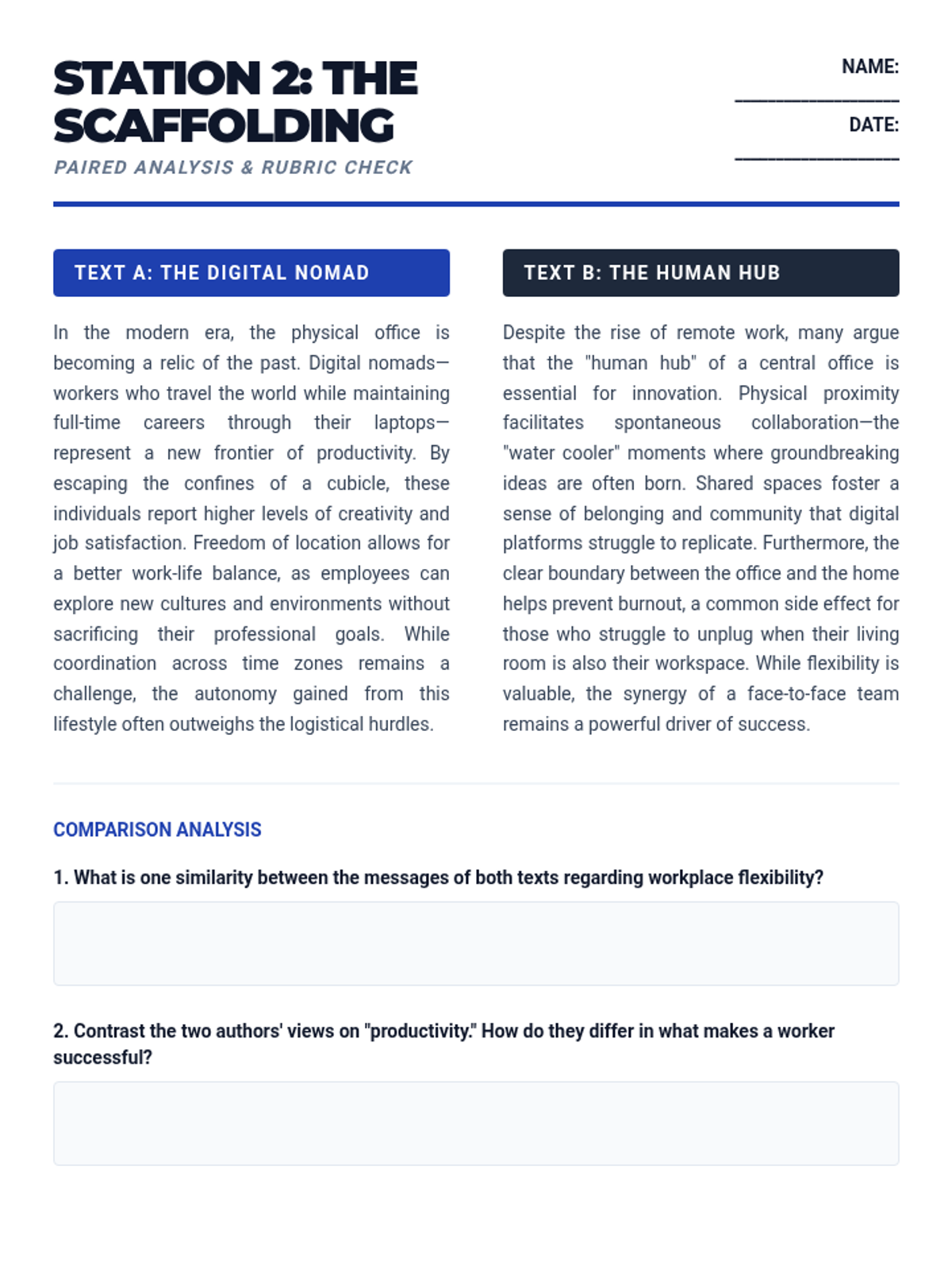
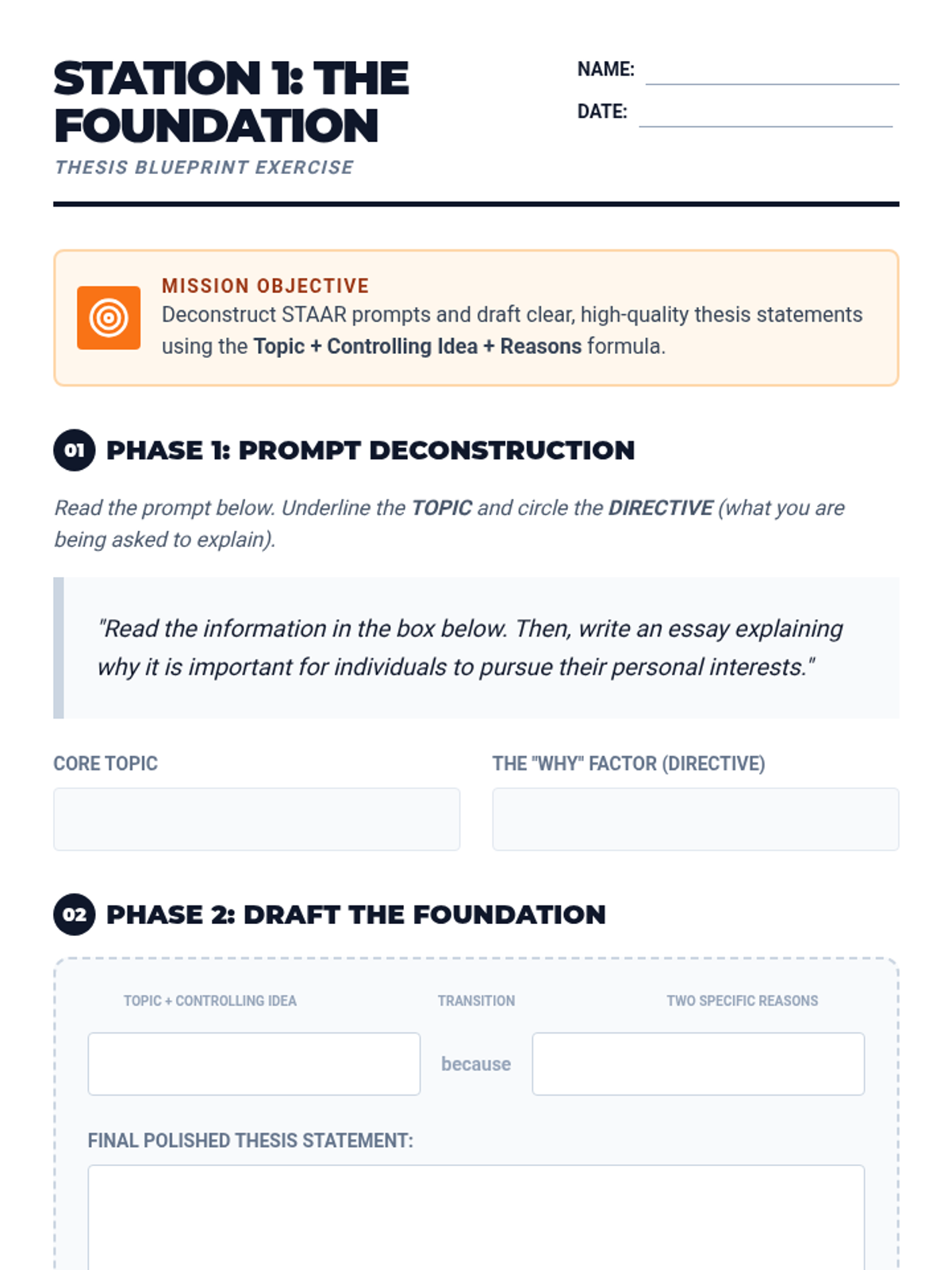
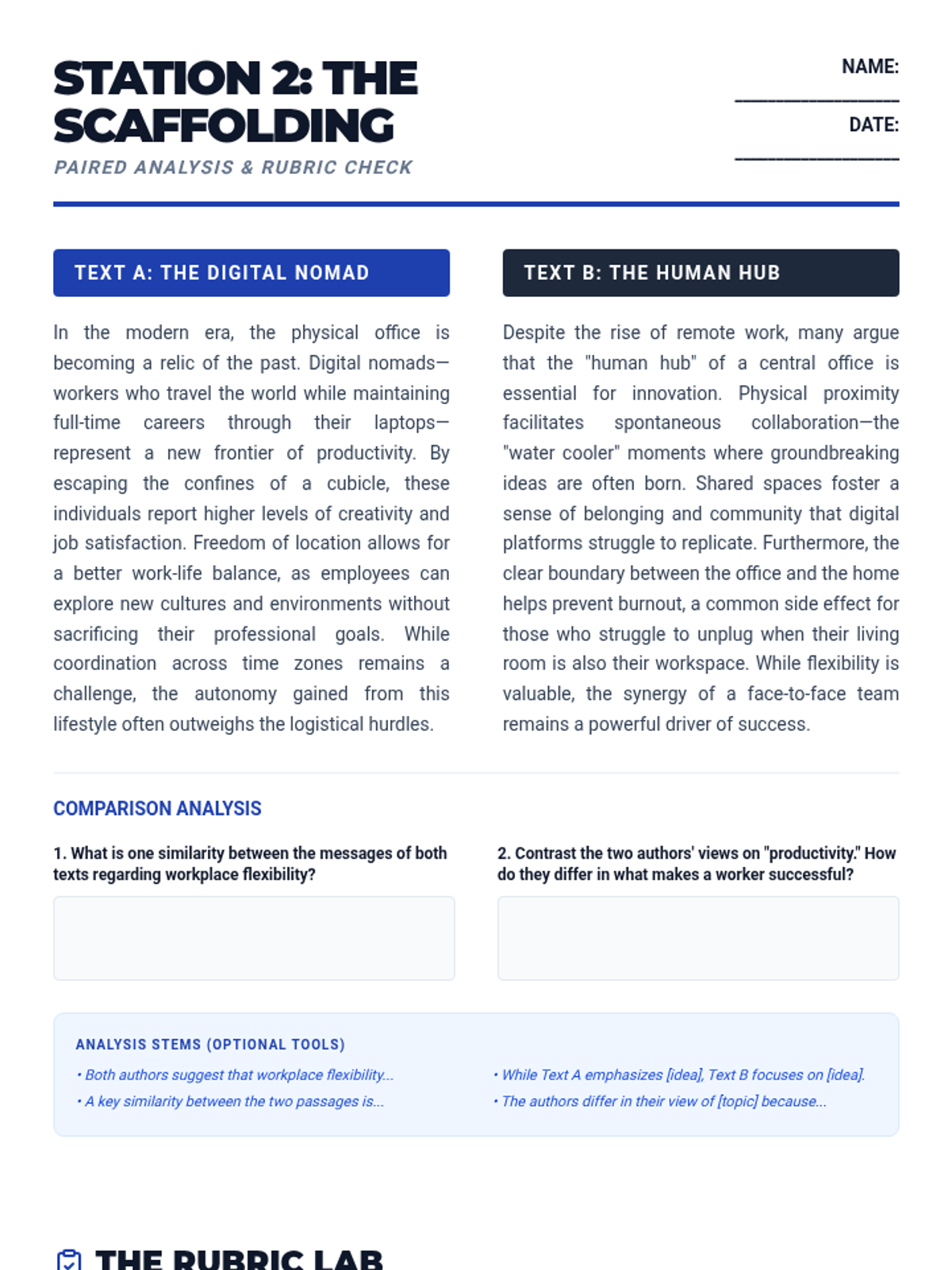
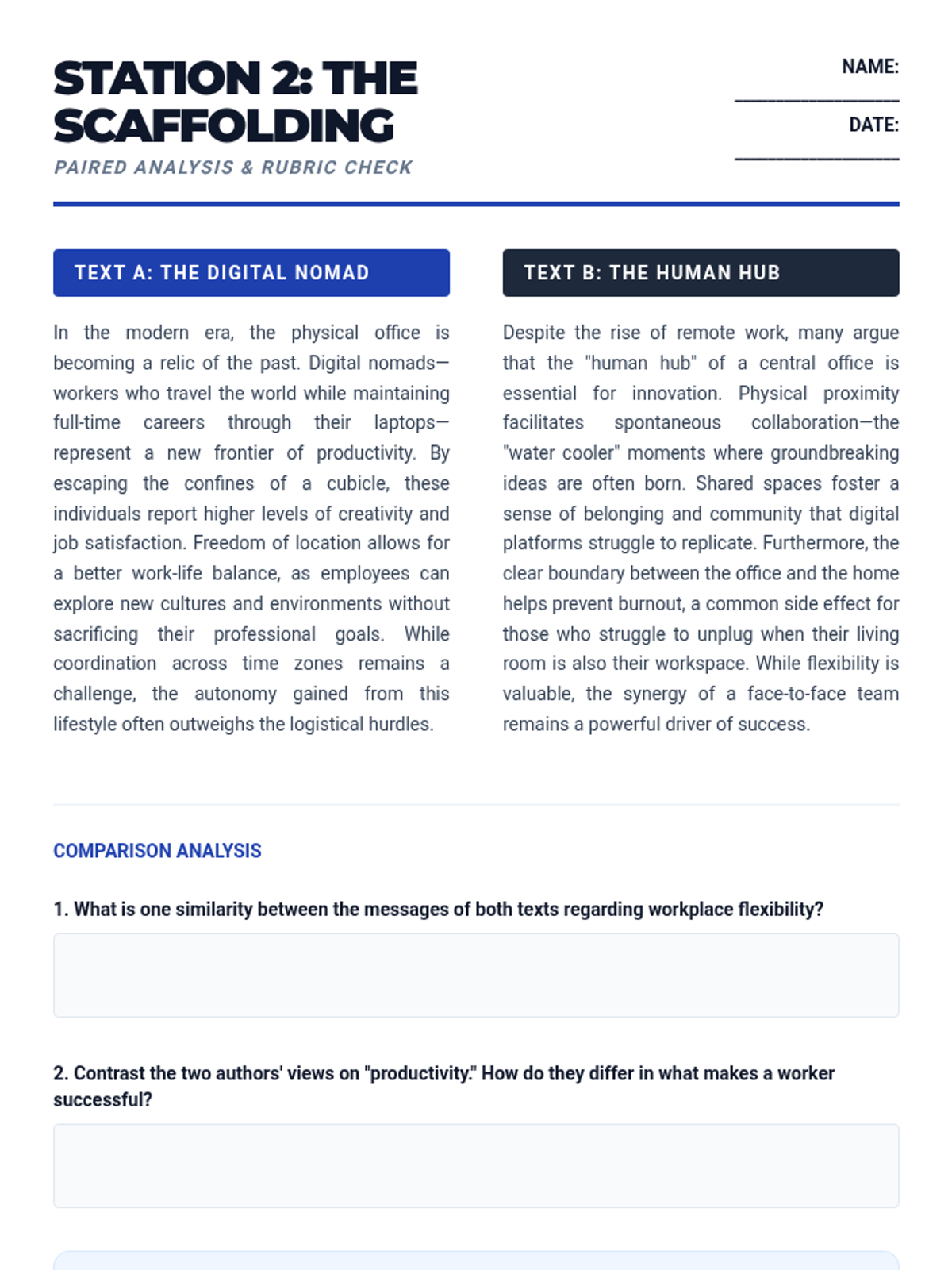
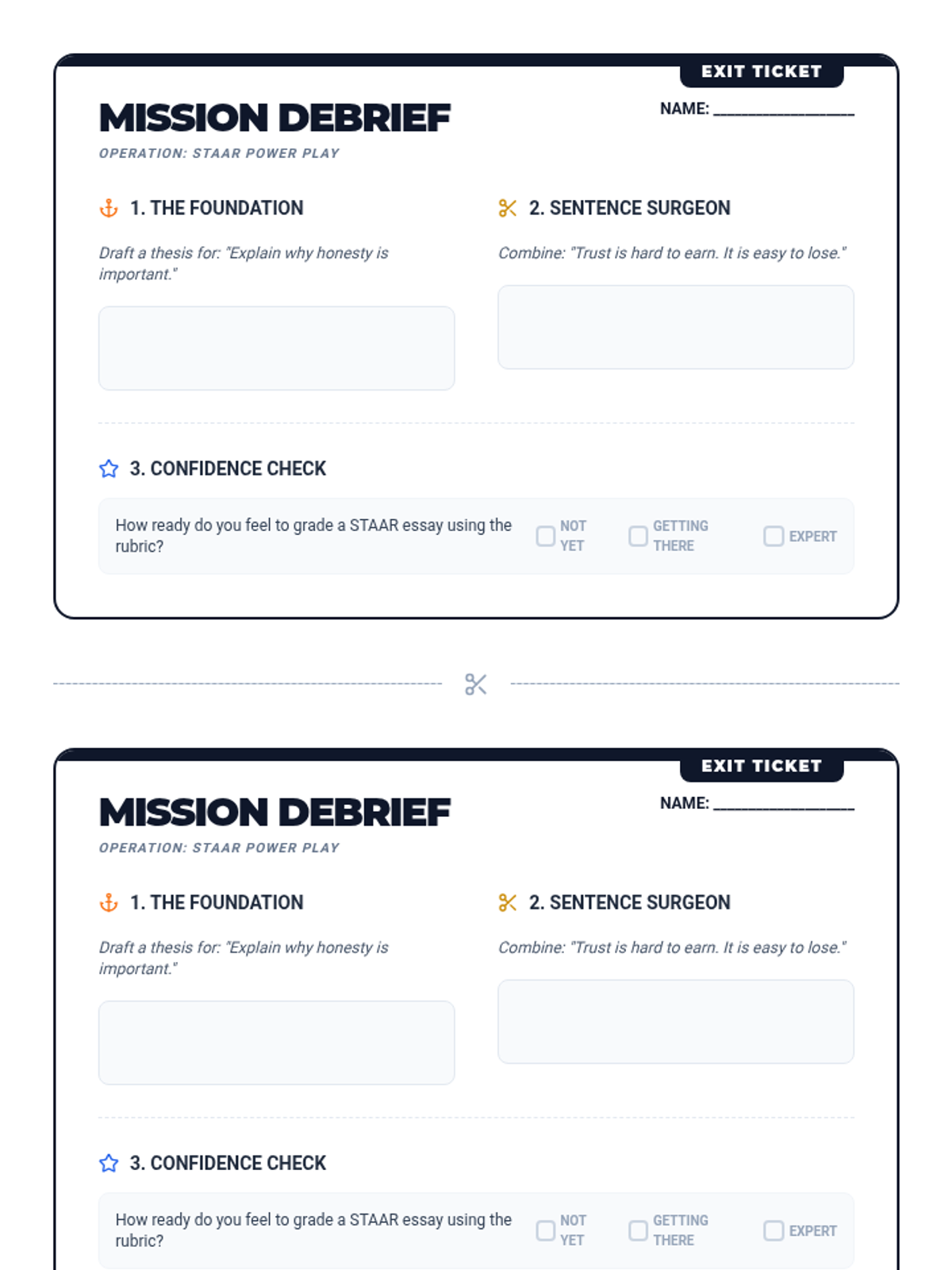
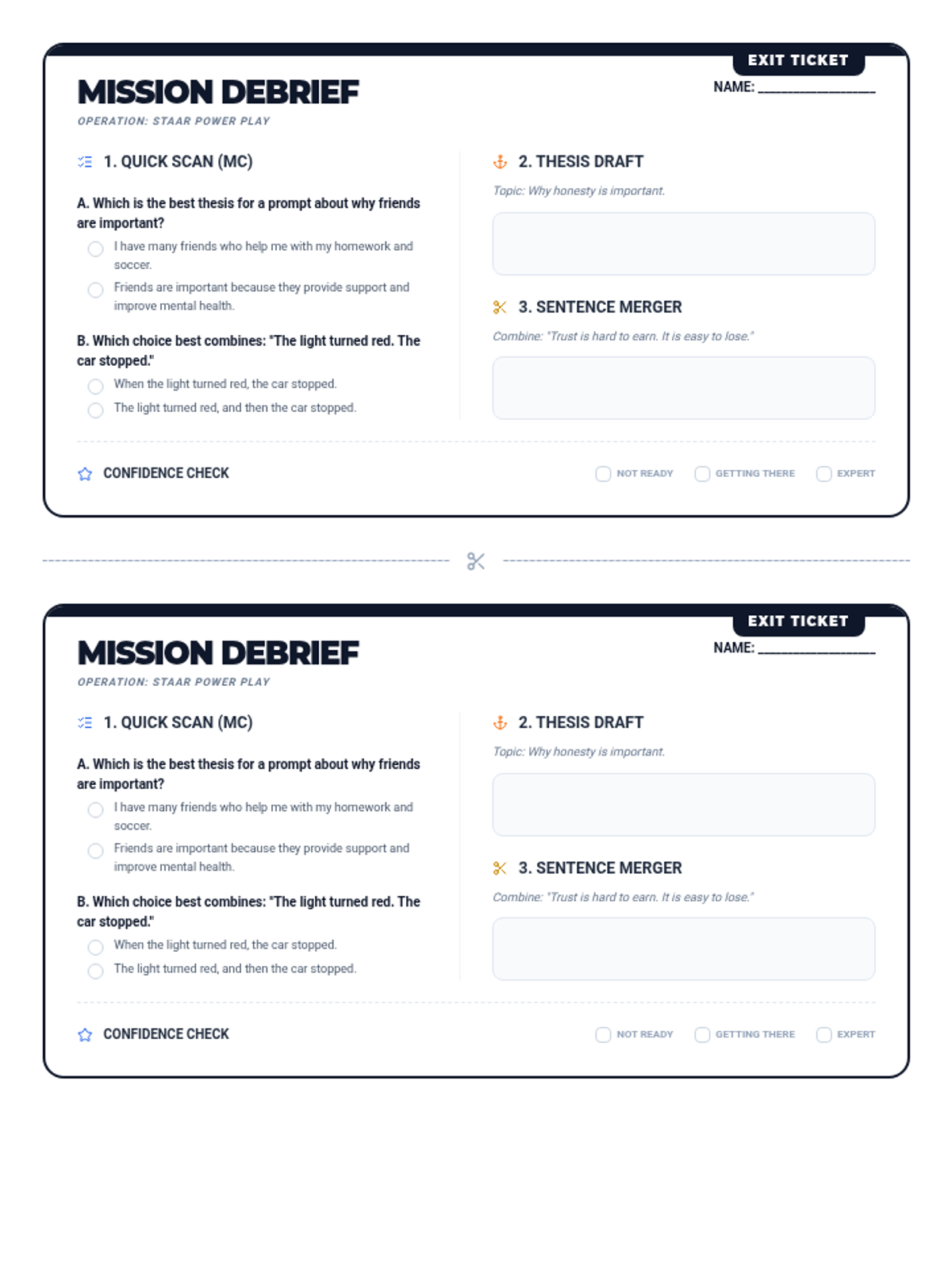
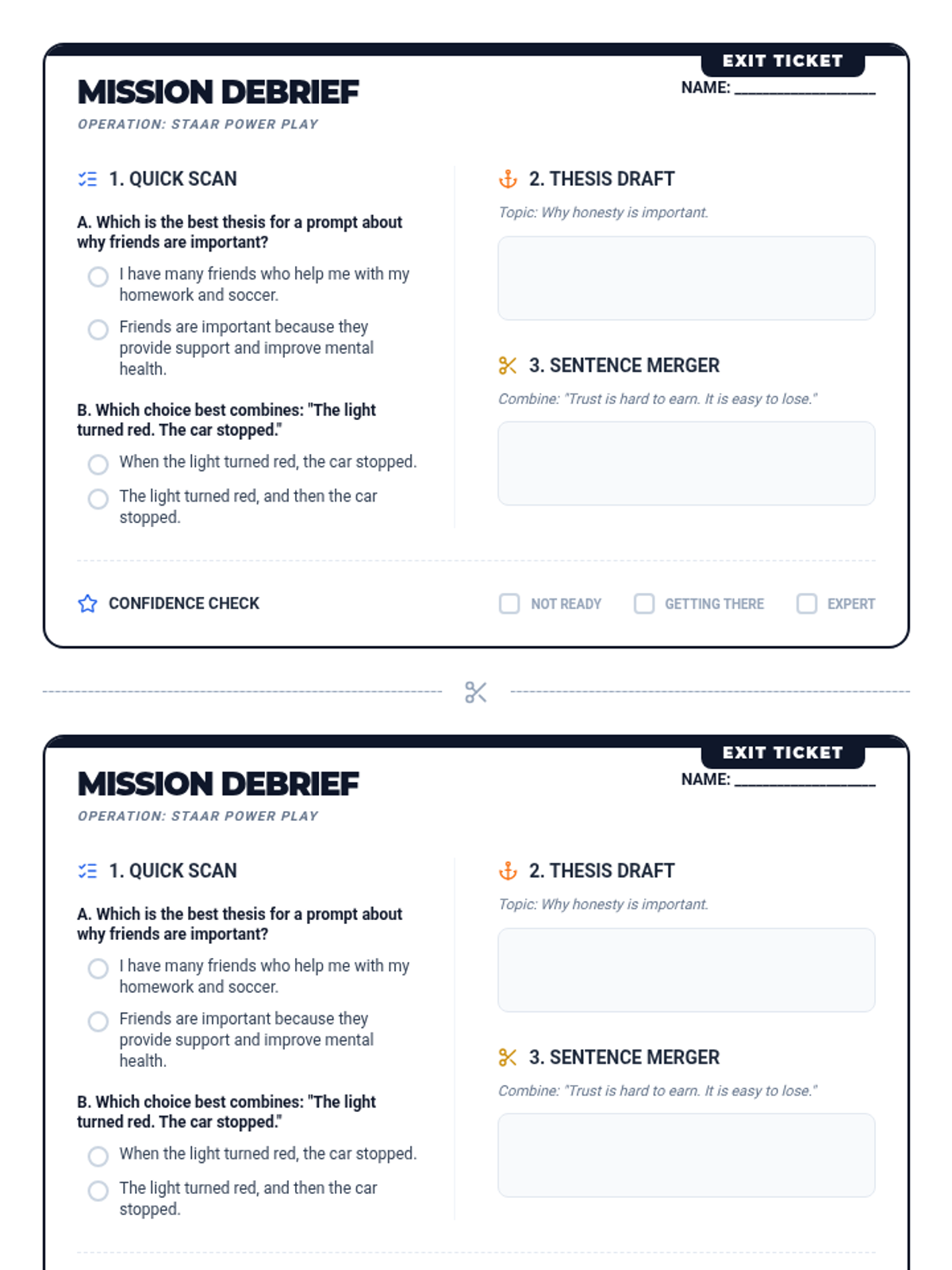
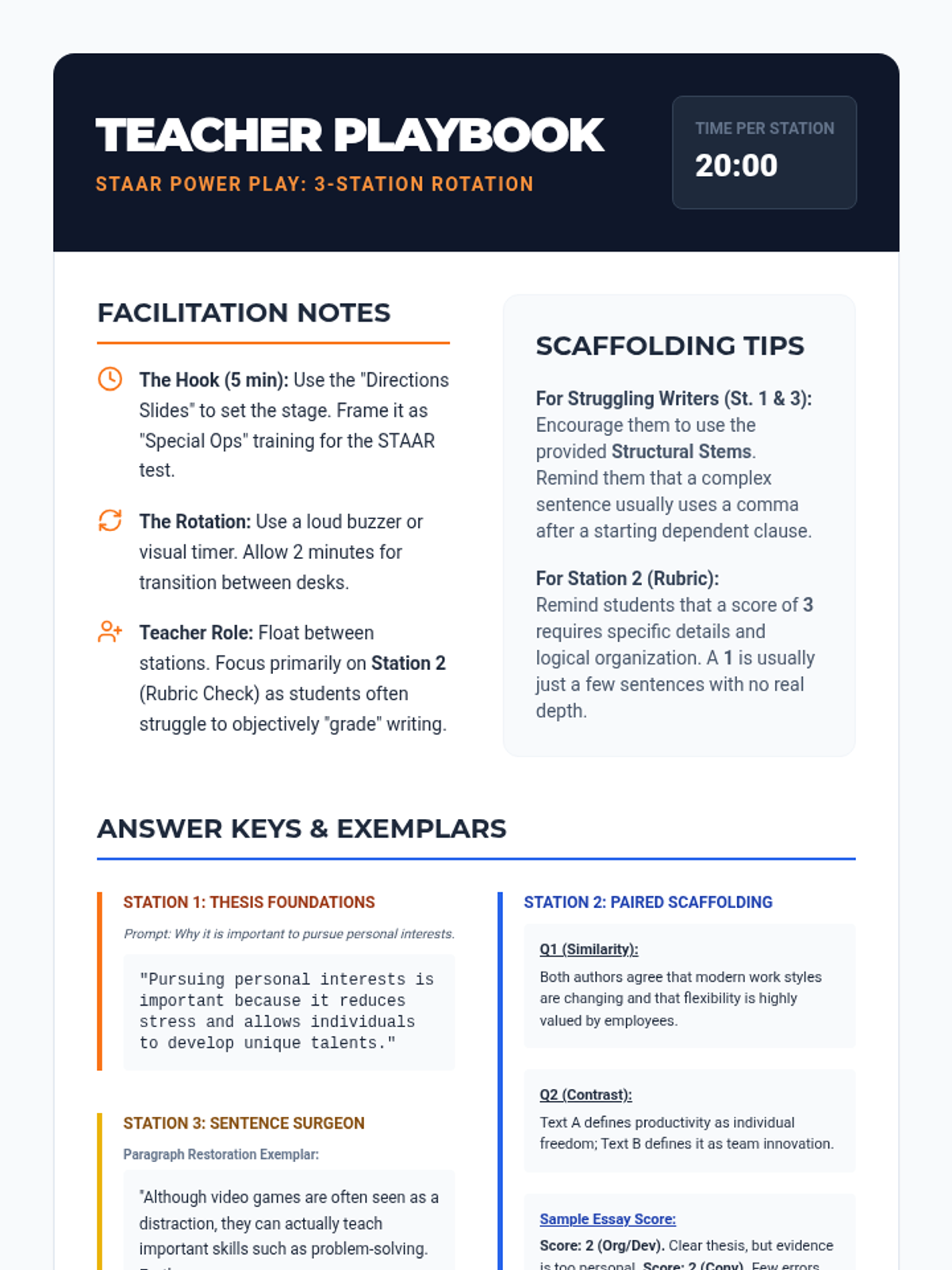
A series of three high-intensity stations designed to prepare students for the STAAR English assessment, focusing on thesis development, paired passage analysis, and sentence combining.
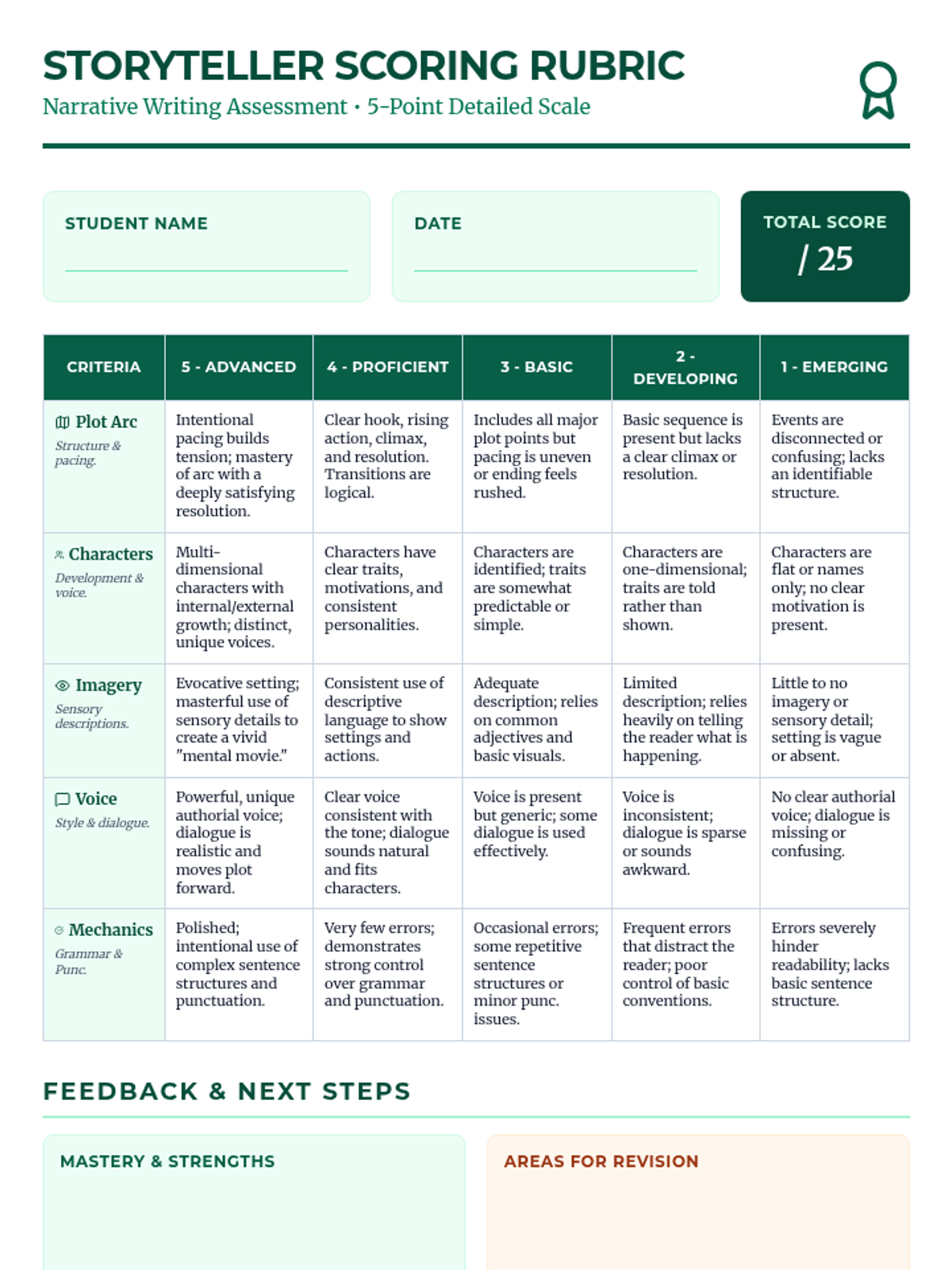
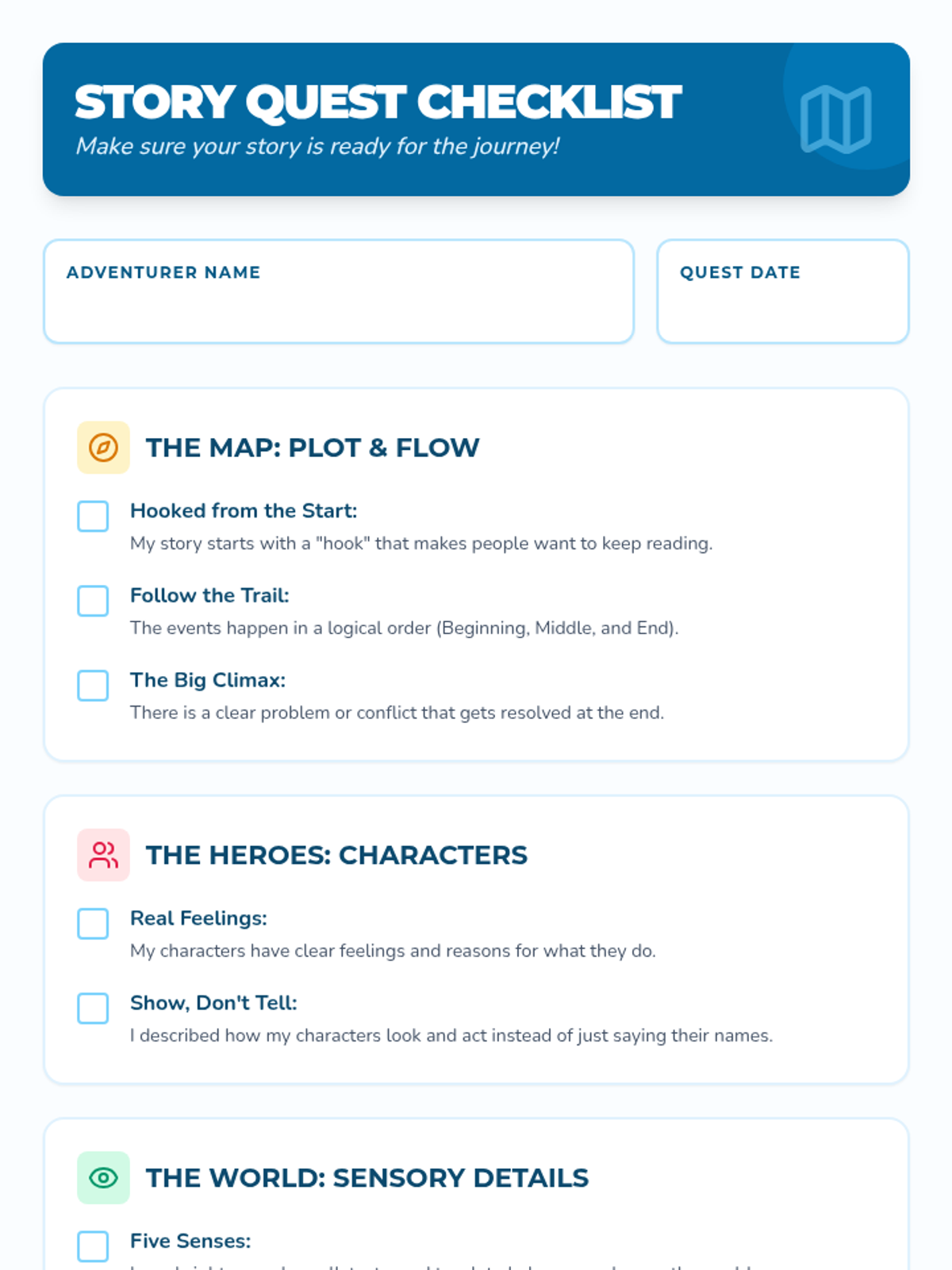
A comprehensive set of writing tools and rubrics across different genres to help students master various styles of storytelling and analysis.
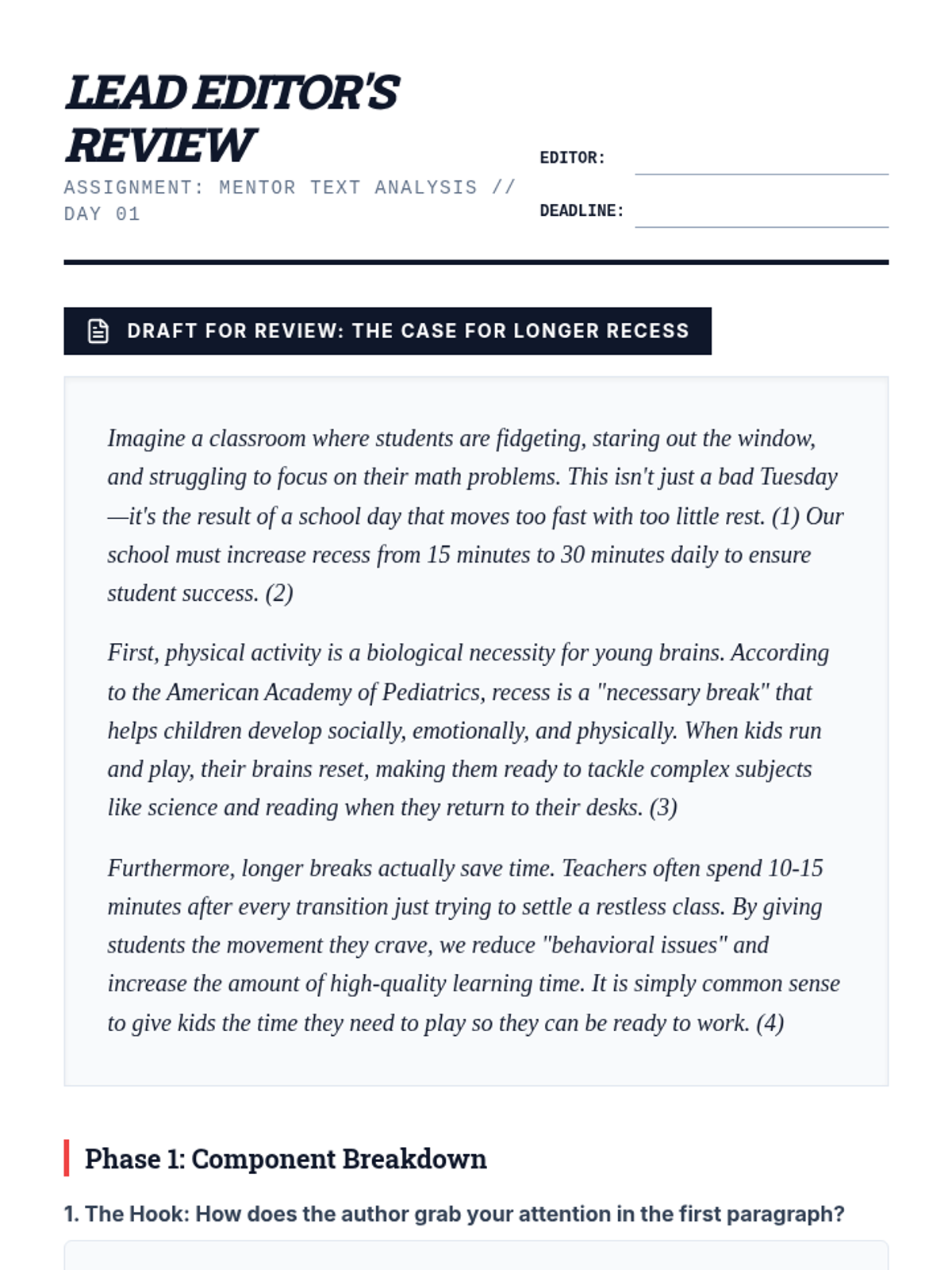
A comprehensive 5-day unit designed to take students from analyzing mentor texts to drafting and polishing their own persuasive essays. The unit uses a professional 'Editorial Office' theme to engage students as 'Lead Editors' of their own arguments.
A series of high-rigor reading and writing lessons designed to prepare middle school students for state-level standardized assessments.
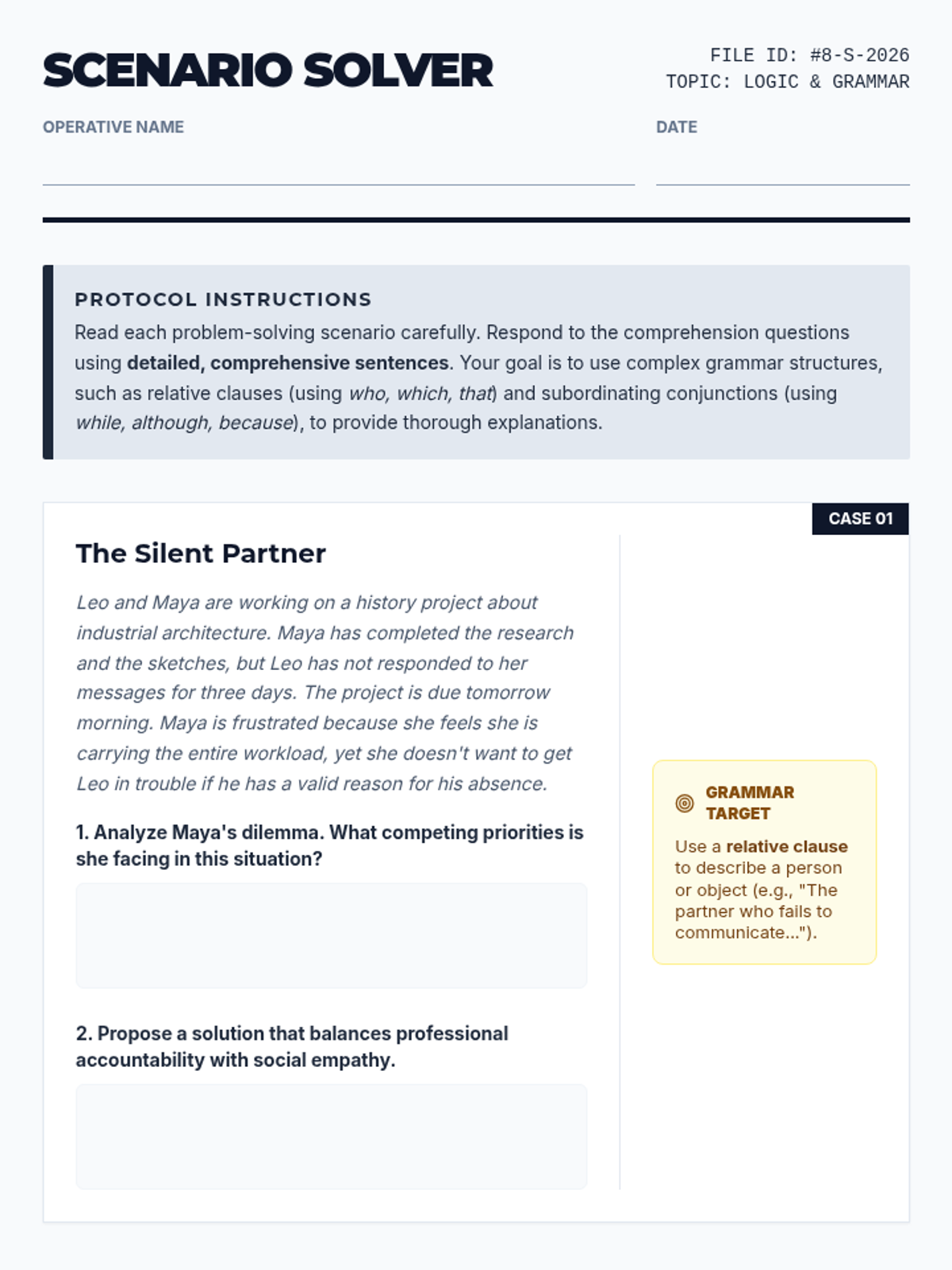
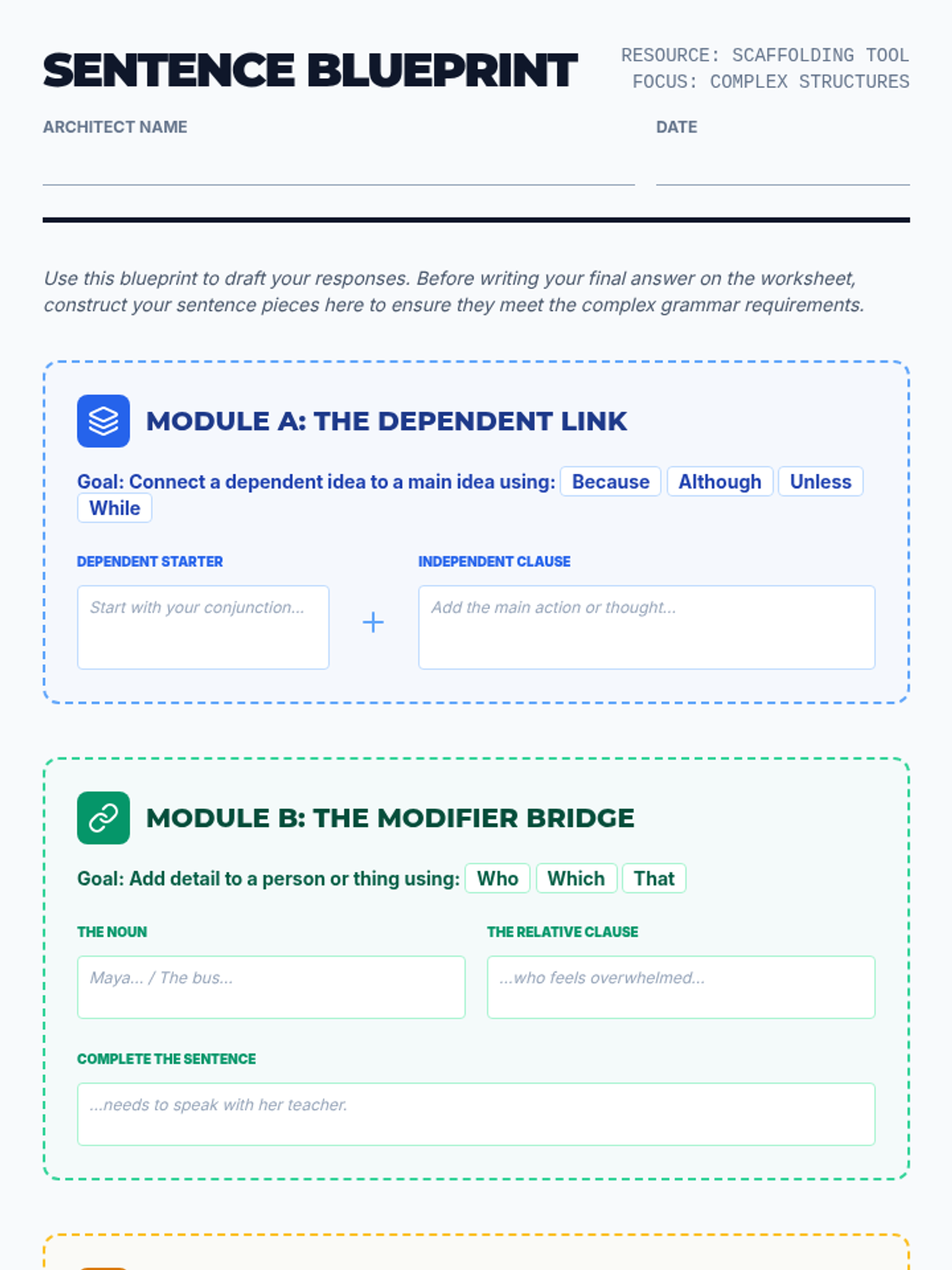
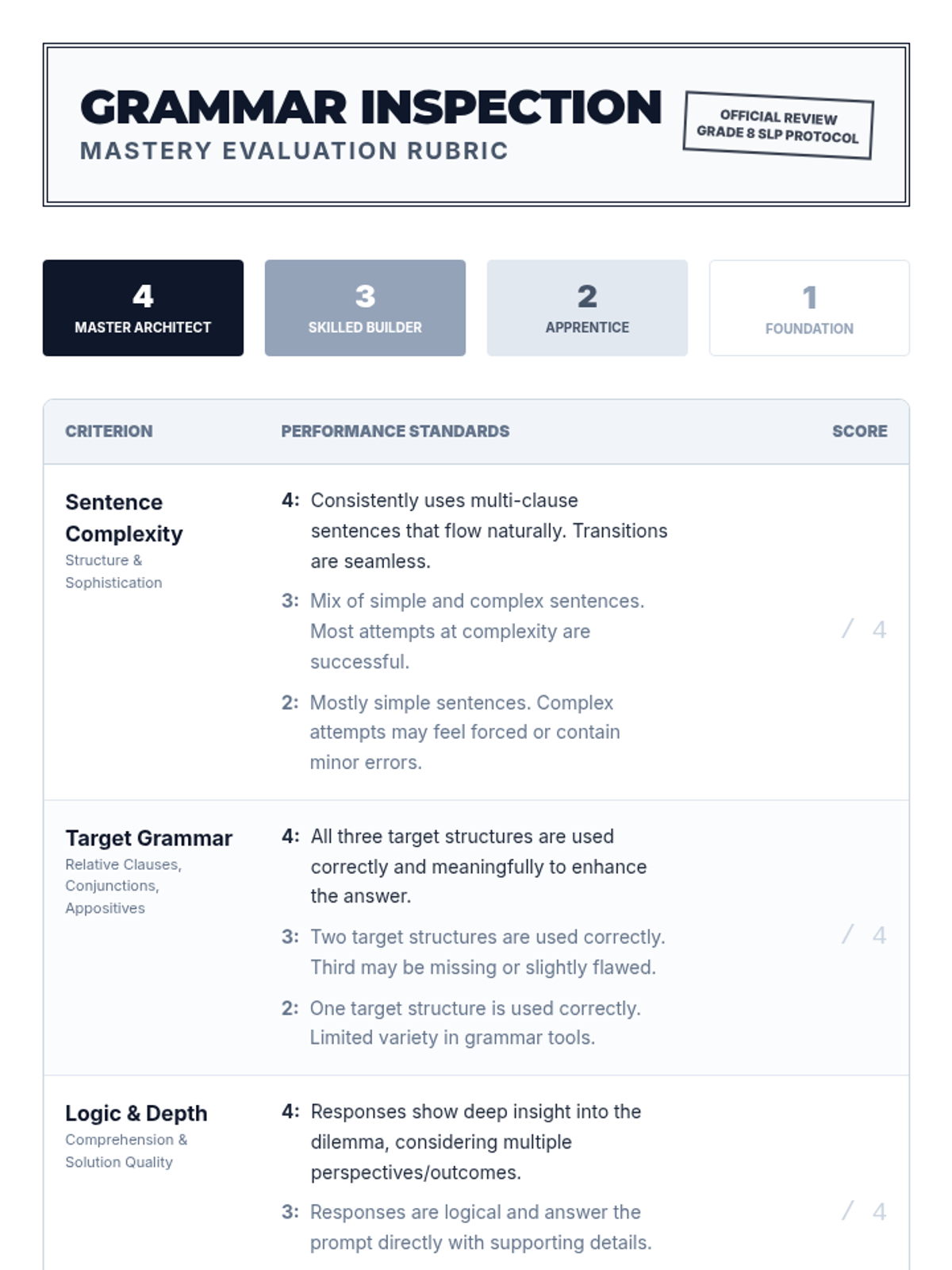
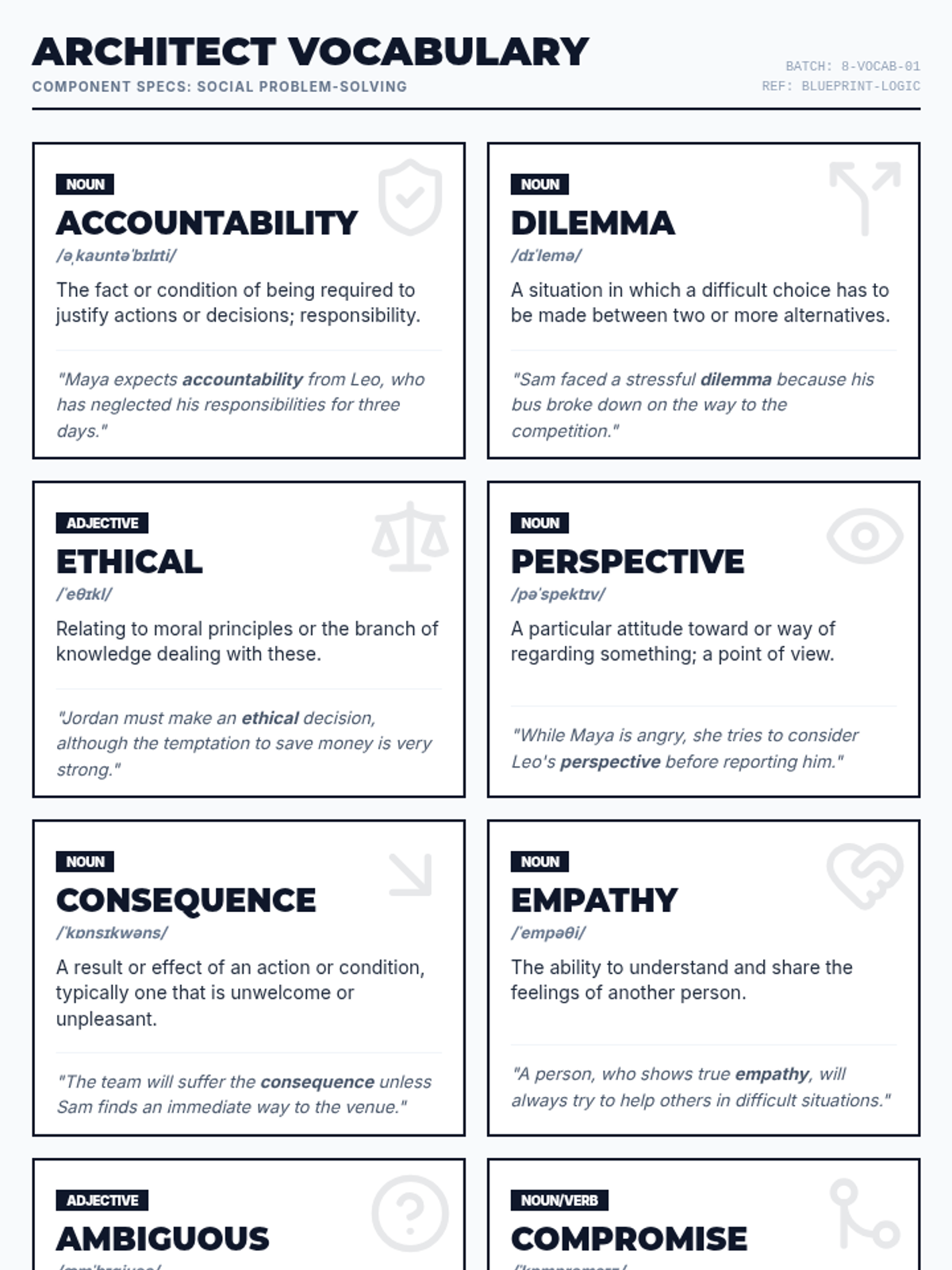
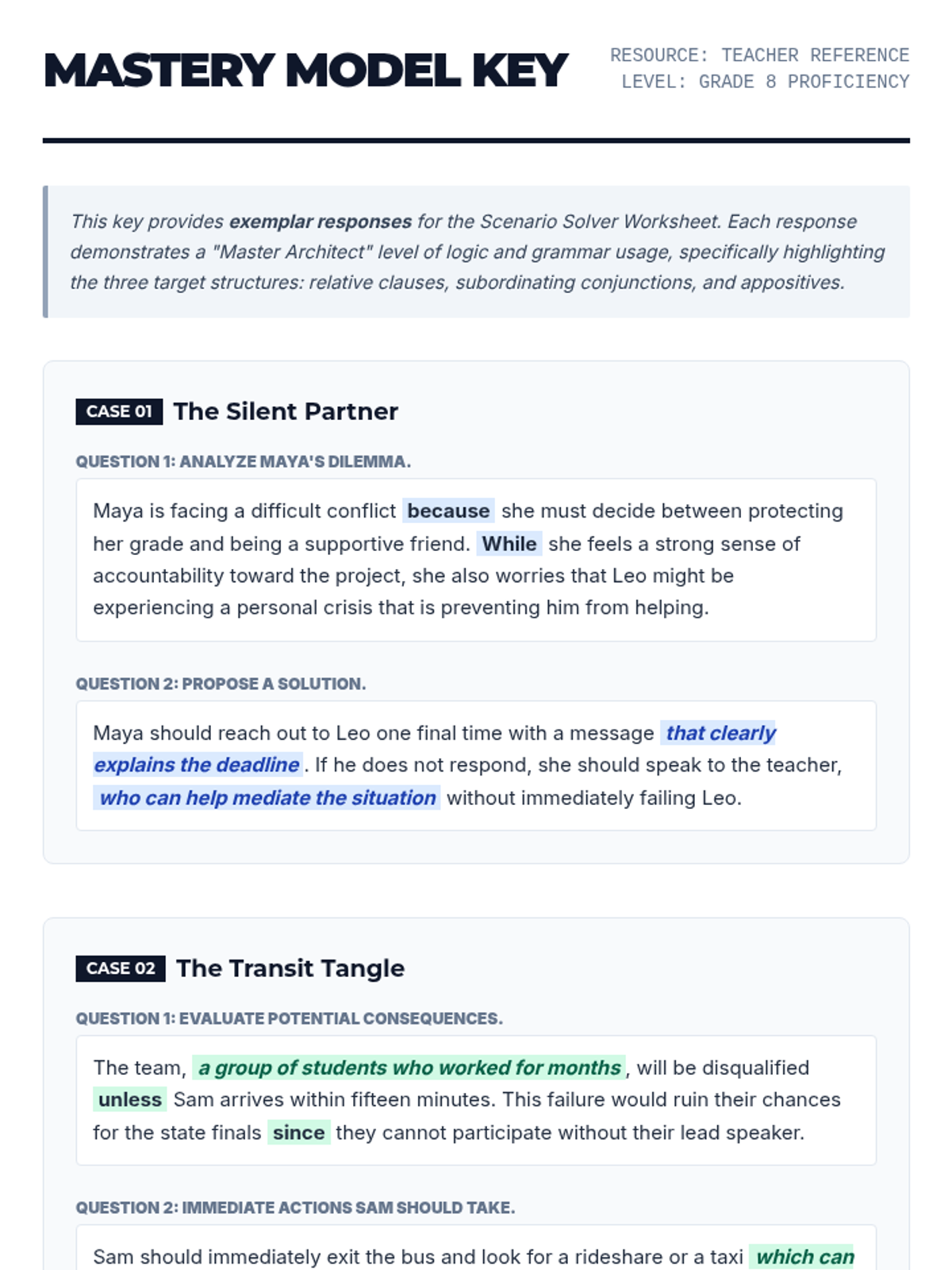
A series of speech and language activities designed to help middle school students master complex grammar and sophisticated sentence structures through real-world problem-solving.
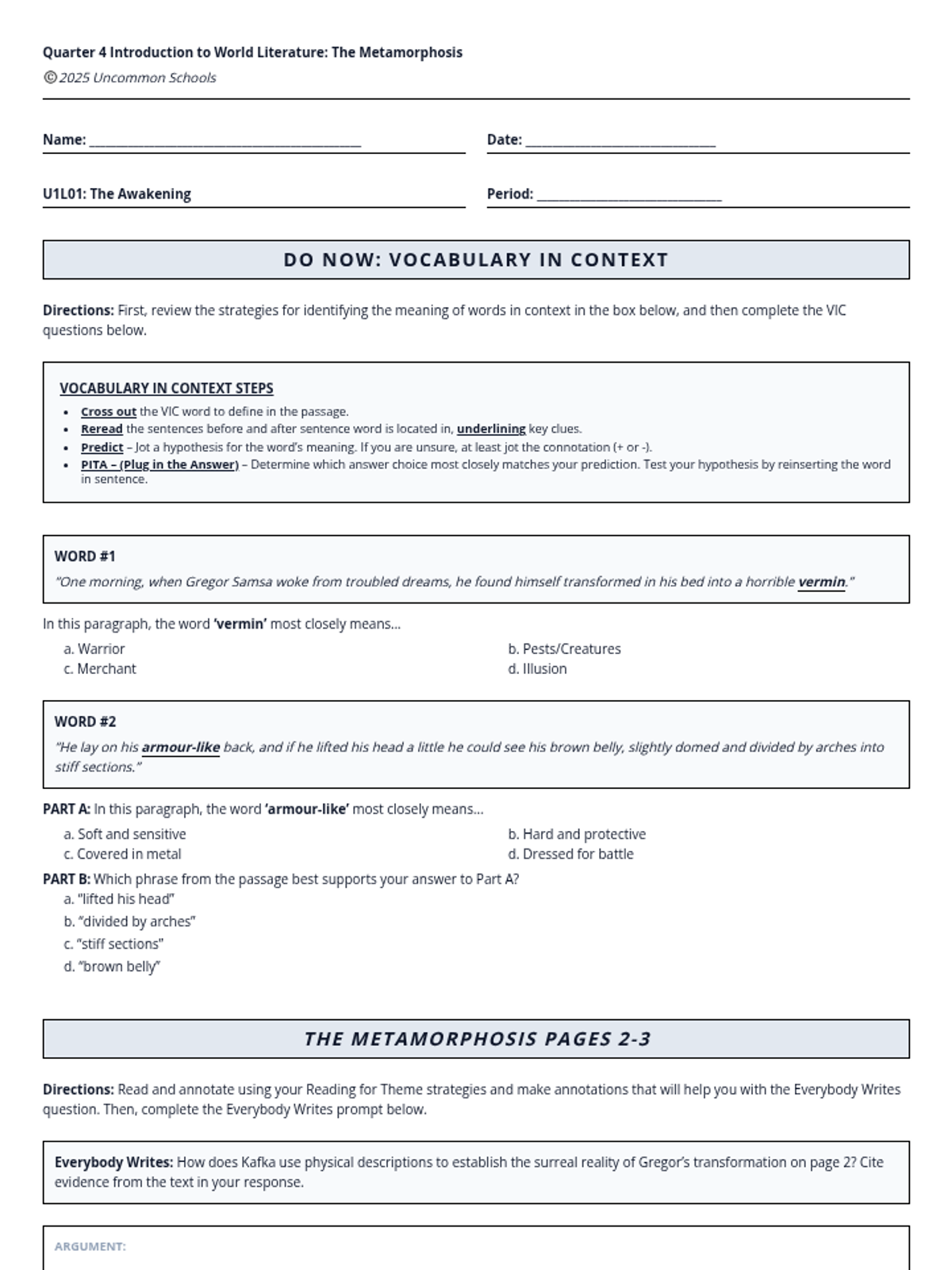
A four-day grammar intensive sequence designed to prepare students for the Introduction to World Literature IA Exam. Each lesson follows a consistent high-engagement structure: Do Now, Model with Concept Map, Solo Practice, and Exit Ticket, covering Sentence Structure, Punctuation, Clauses, and Vocabulary in Context.
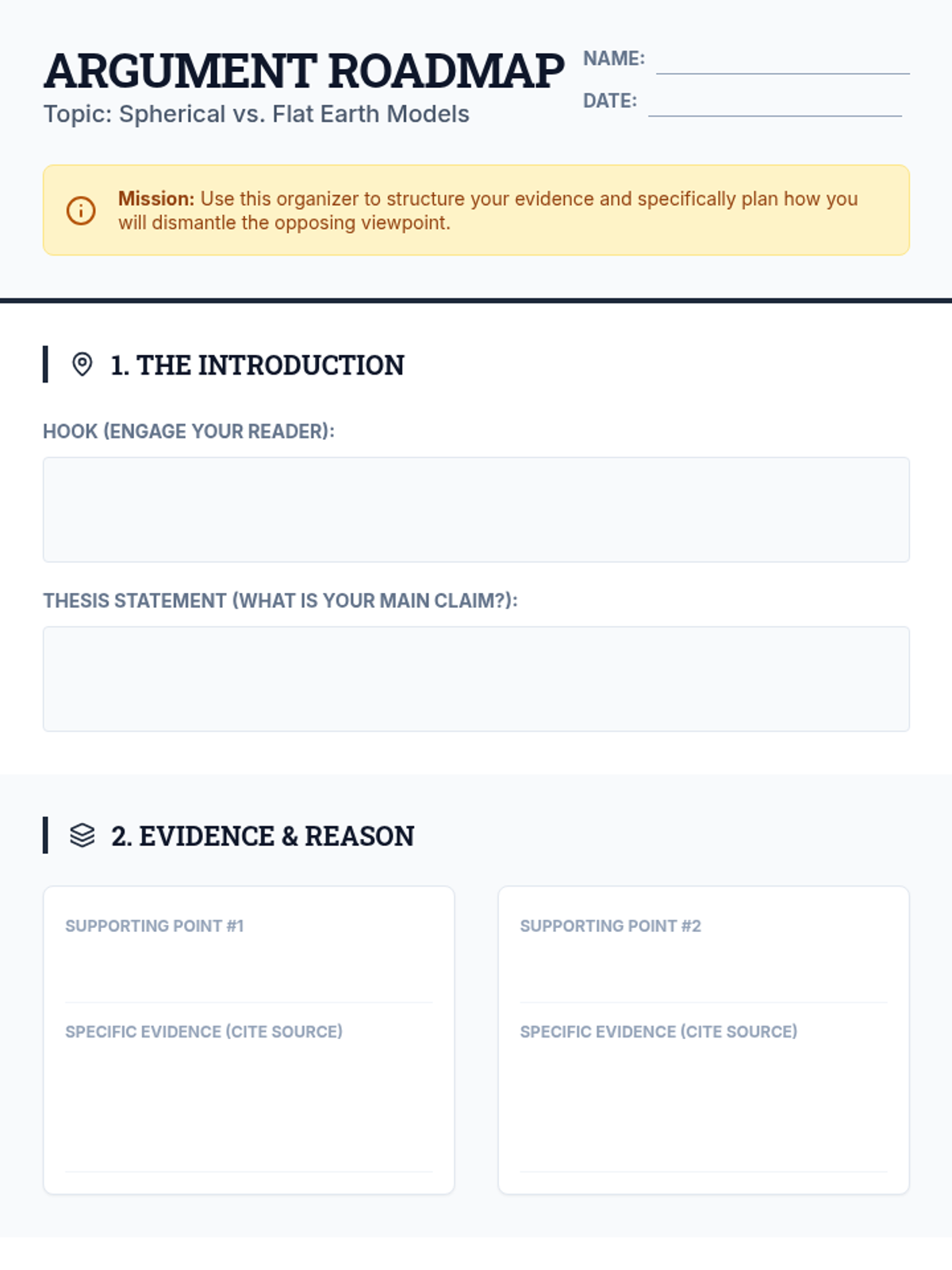
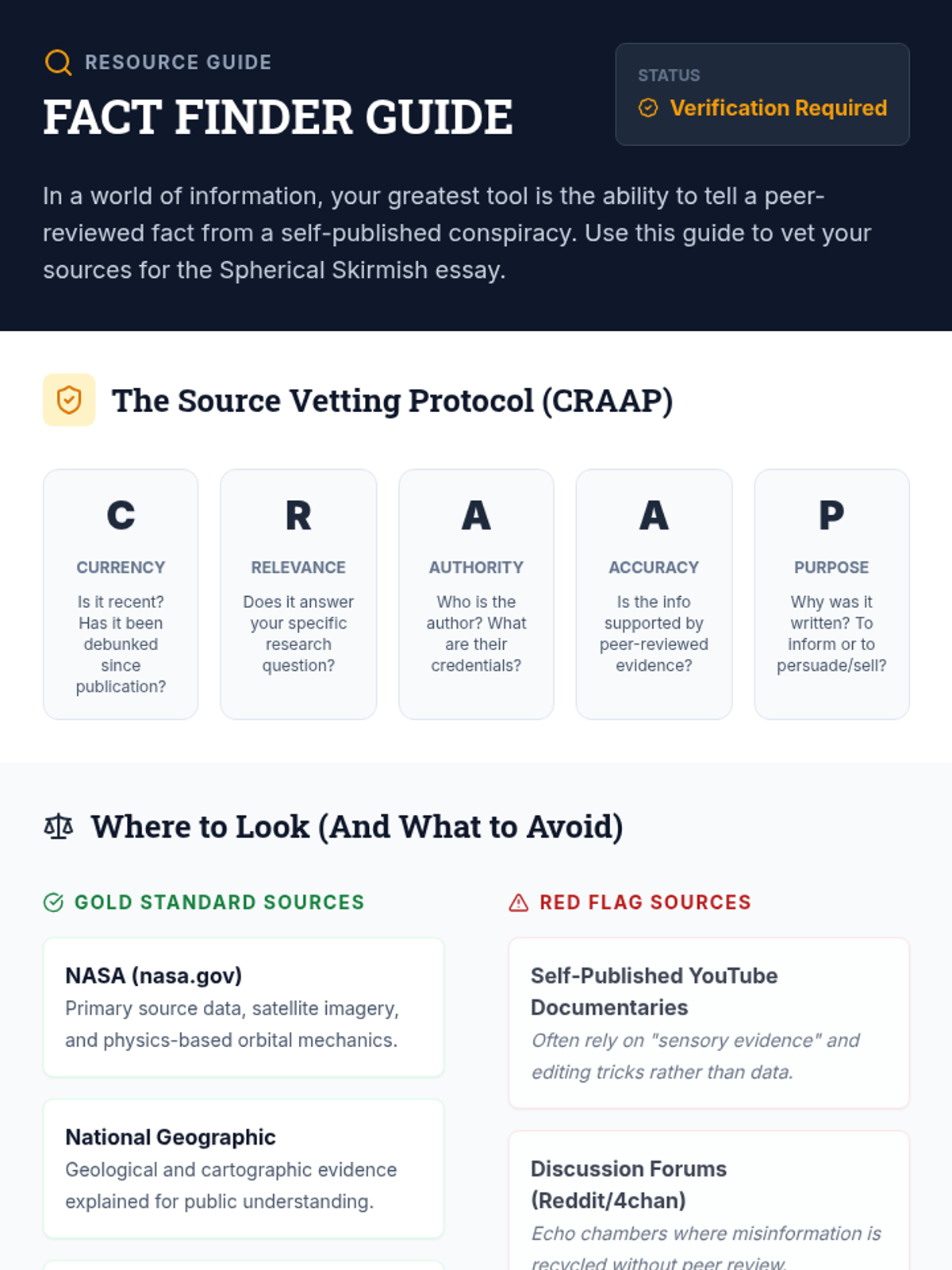
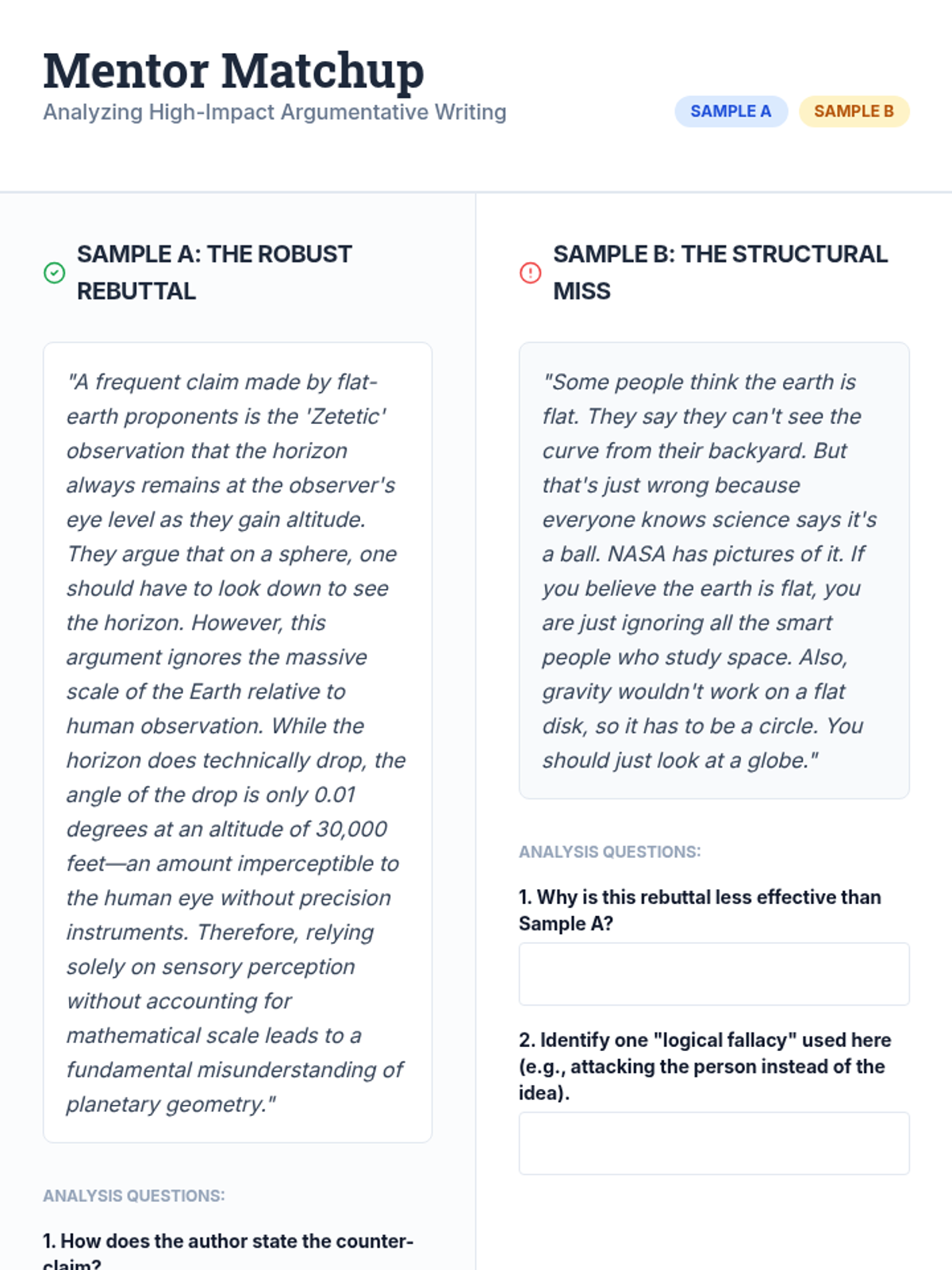
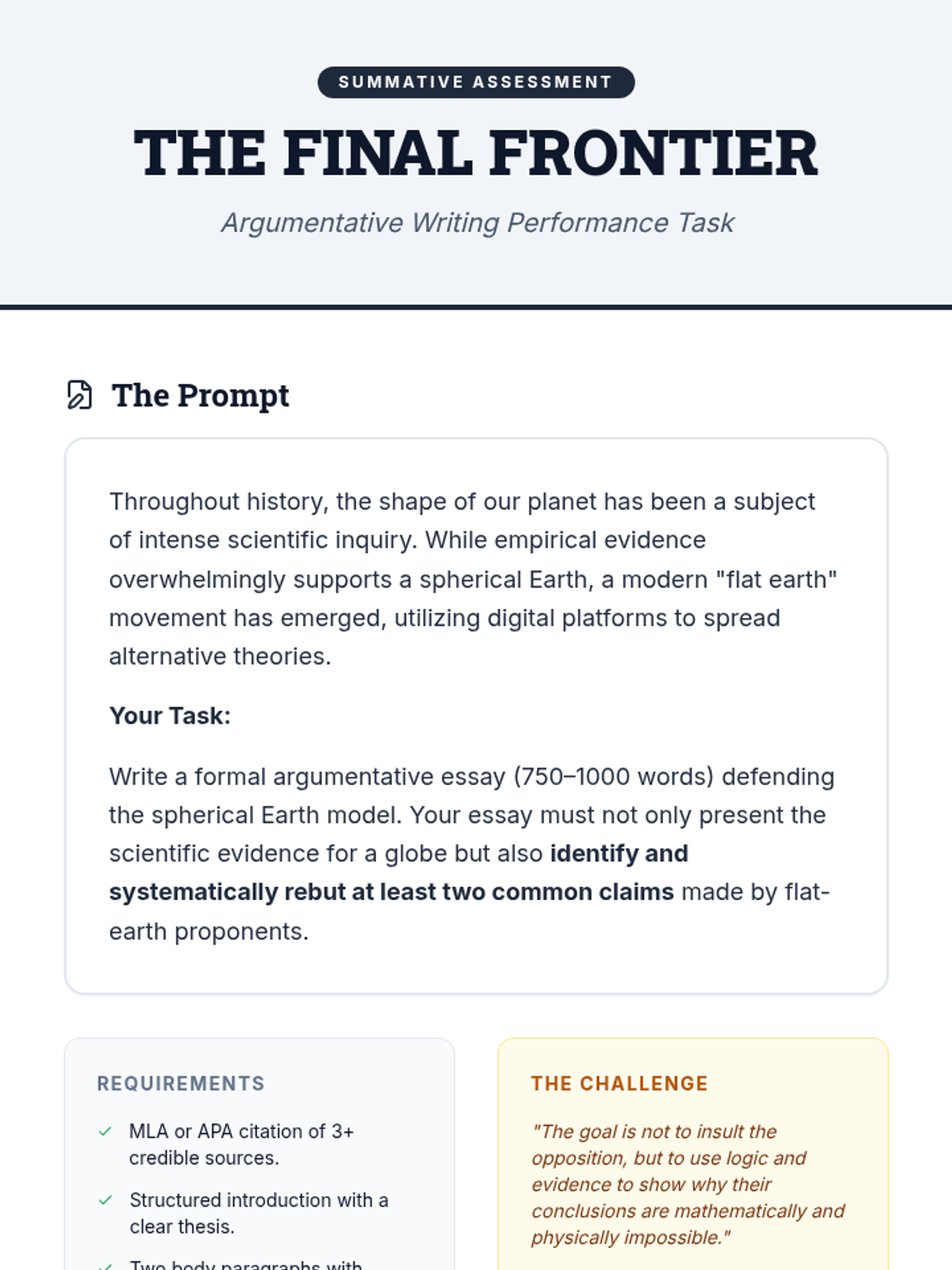
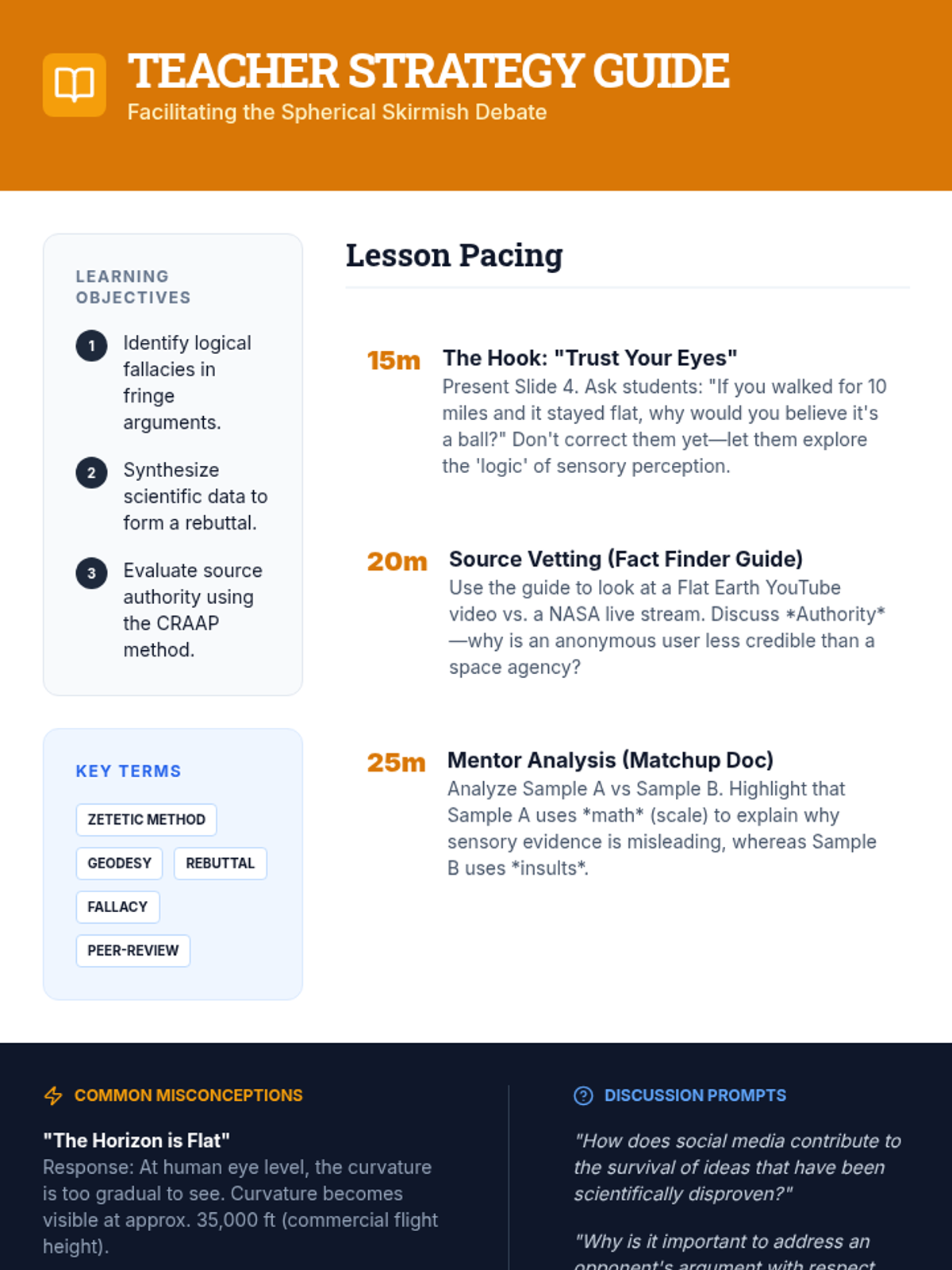
A comprehensive unit focused on mastering argumentative writing through the lens of the flat earth vs. round earth debate, emphasizing evidence-based reasoning and rebuttal techniques.
A series of cross-curricular resources merging 8th Grade Texas Social Studies content with English Language Arts revising and editing TEKS.
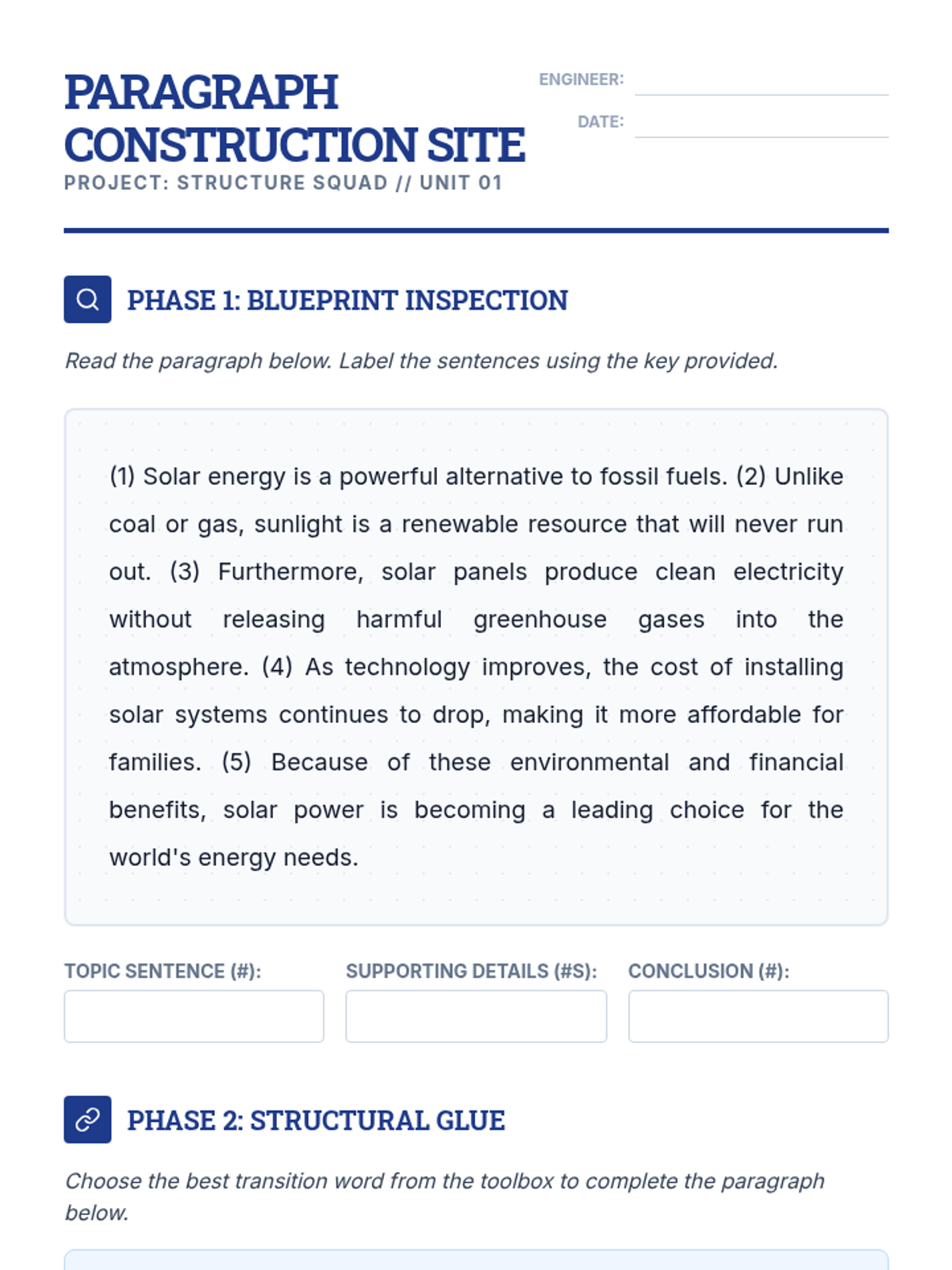
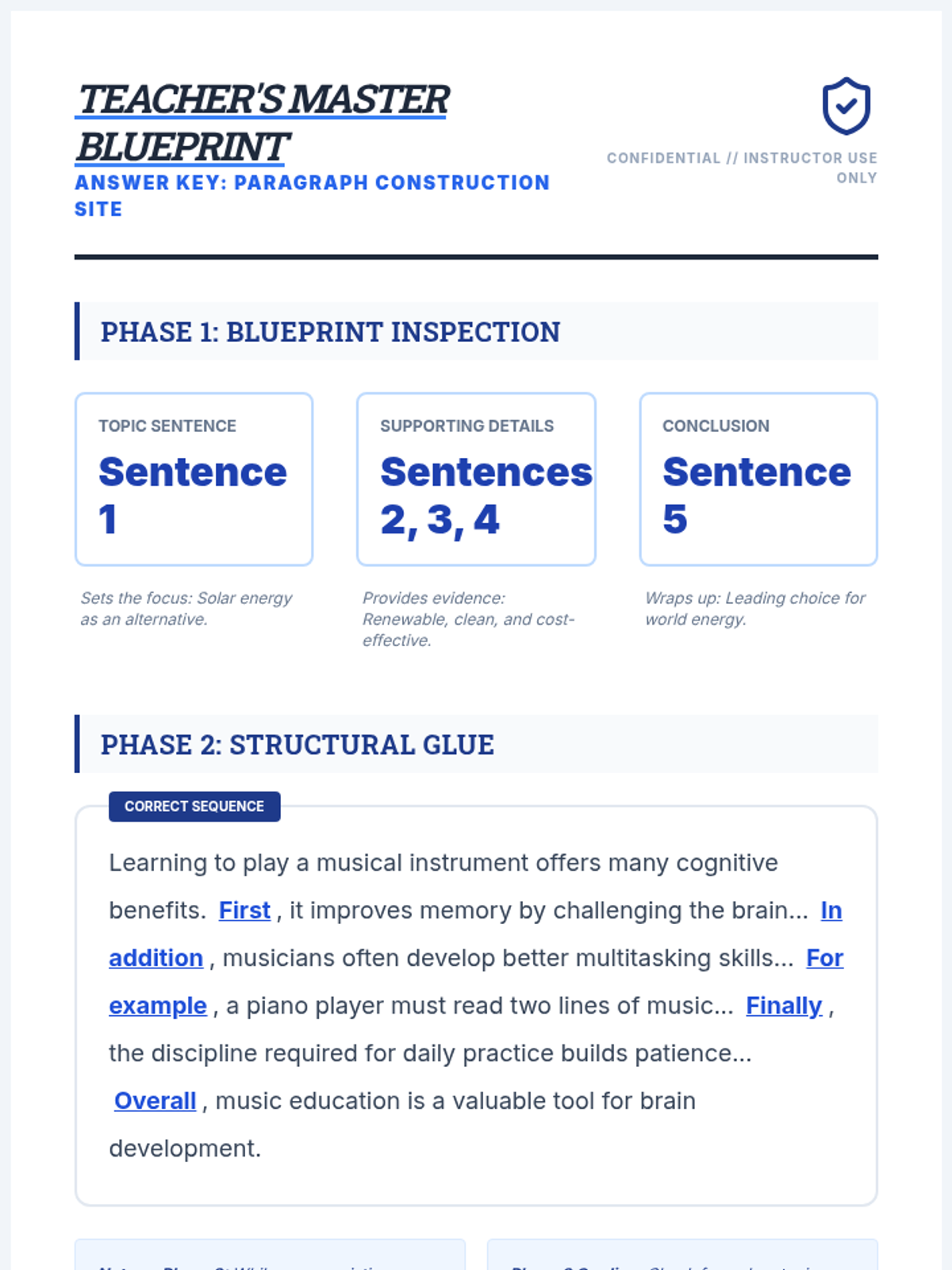
A comprehensive writing unit that breaks down complex structures into manageable building blocks, from individual paragraphs to complete narrative arcs and multi-paragraph essays. Students learn to use blueprints to construct clear, logical, and engaging pieces of writing.
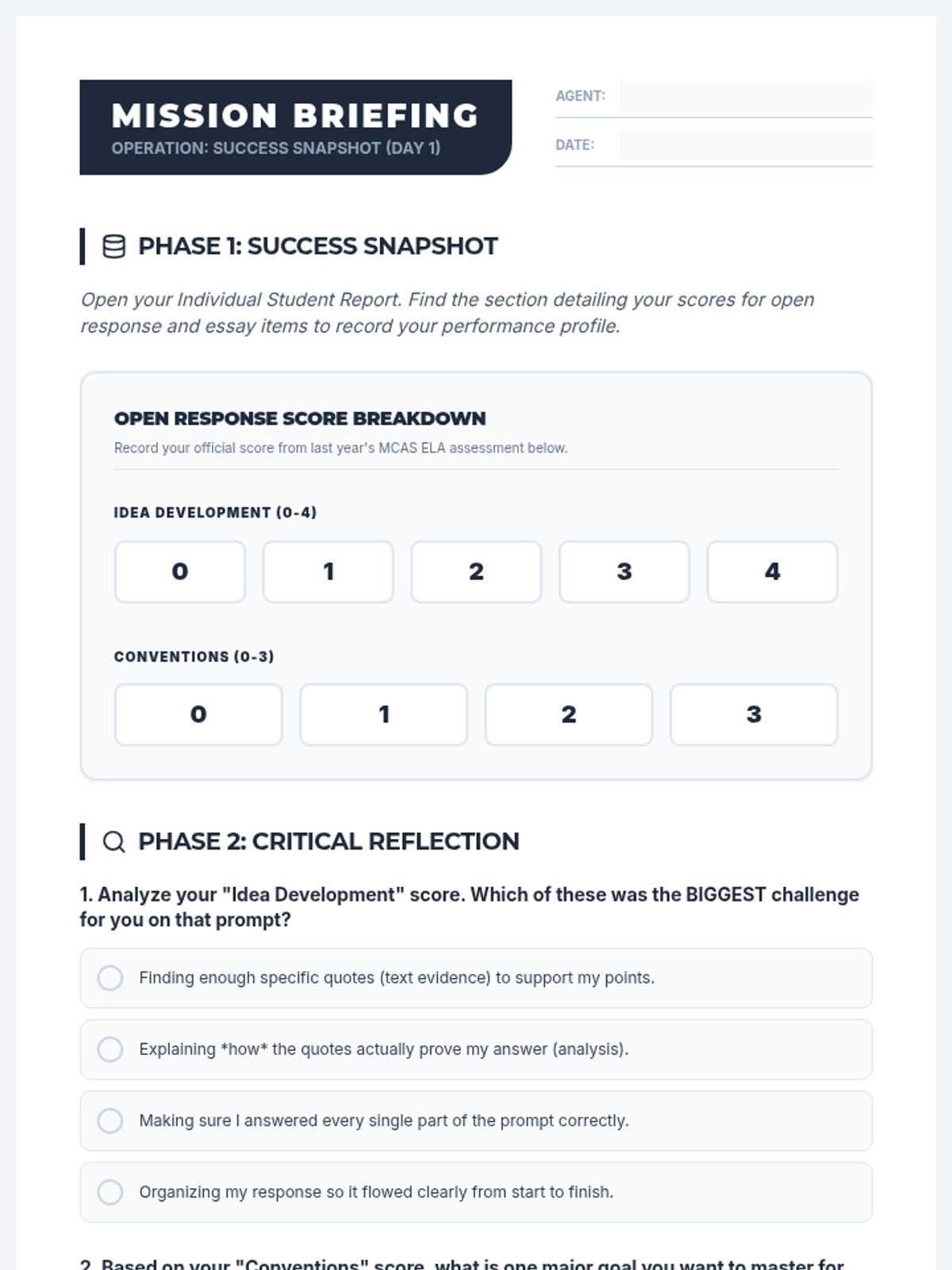
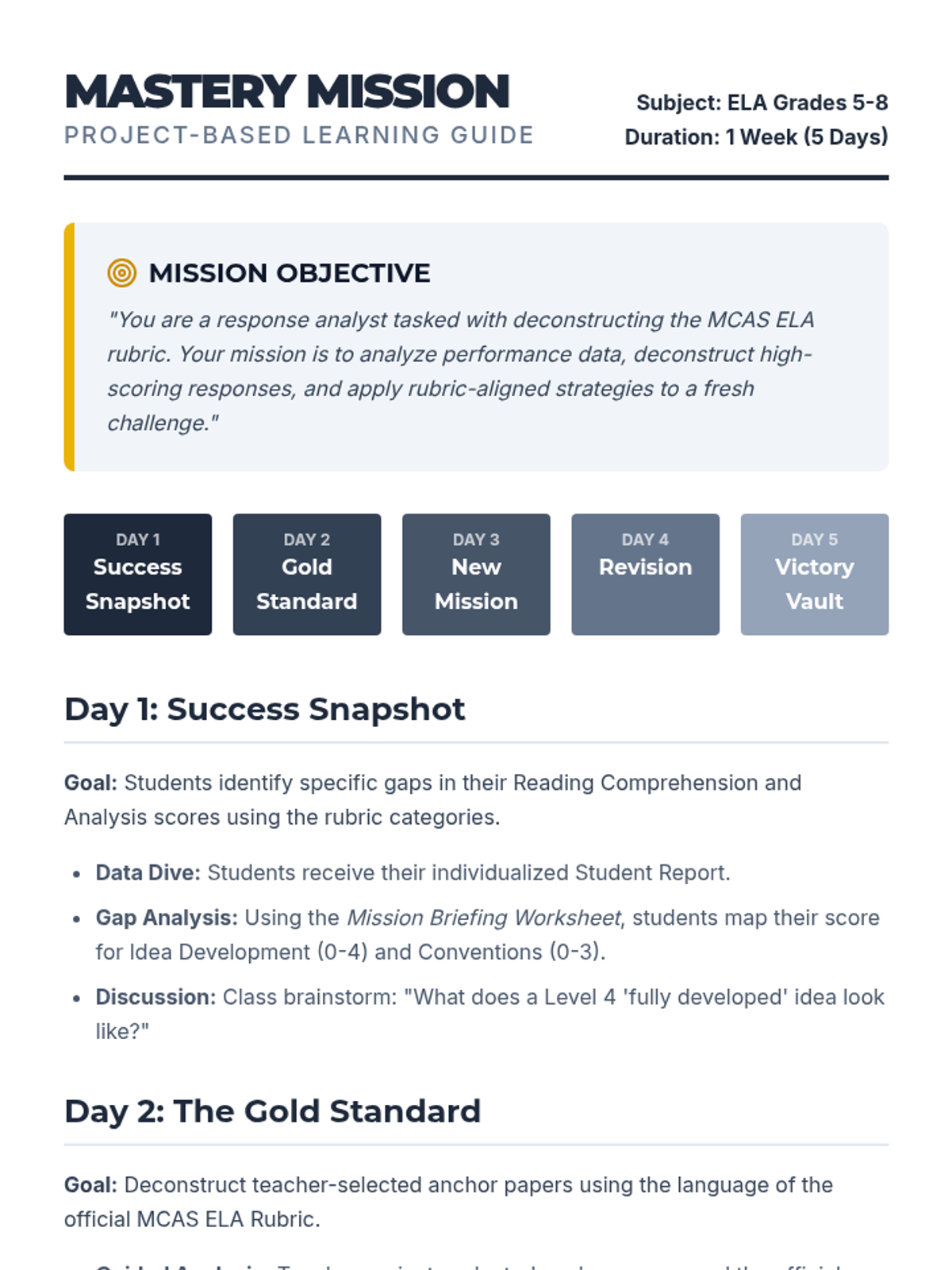
A project-based learning unit designed to help middle school students analyze their past MCAS ELA performance, deconstruct scoring rubrics, and create a personalized strategy playbook for upcoming assessments. Students move from 'investigating' their scores to 'rebooting' their responses and 'finalizing' their test-taking toolkit.
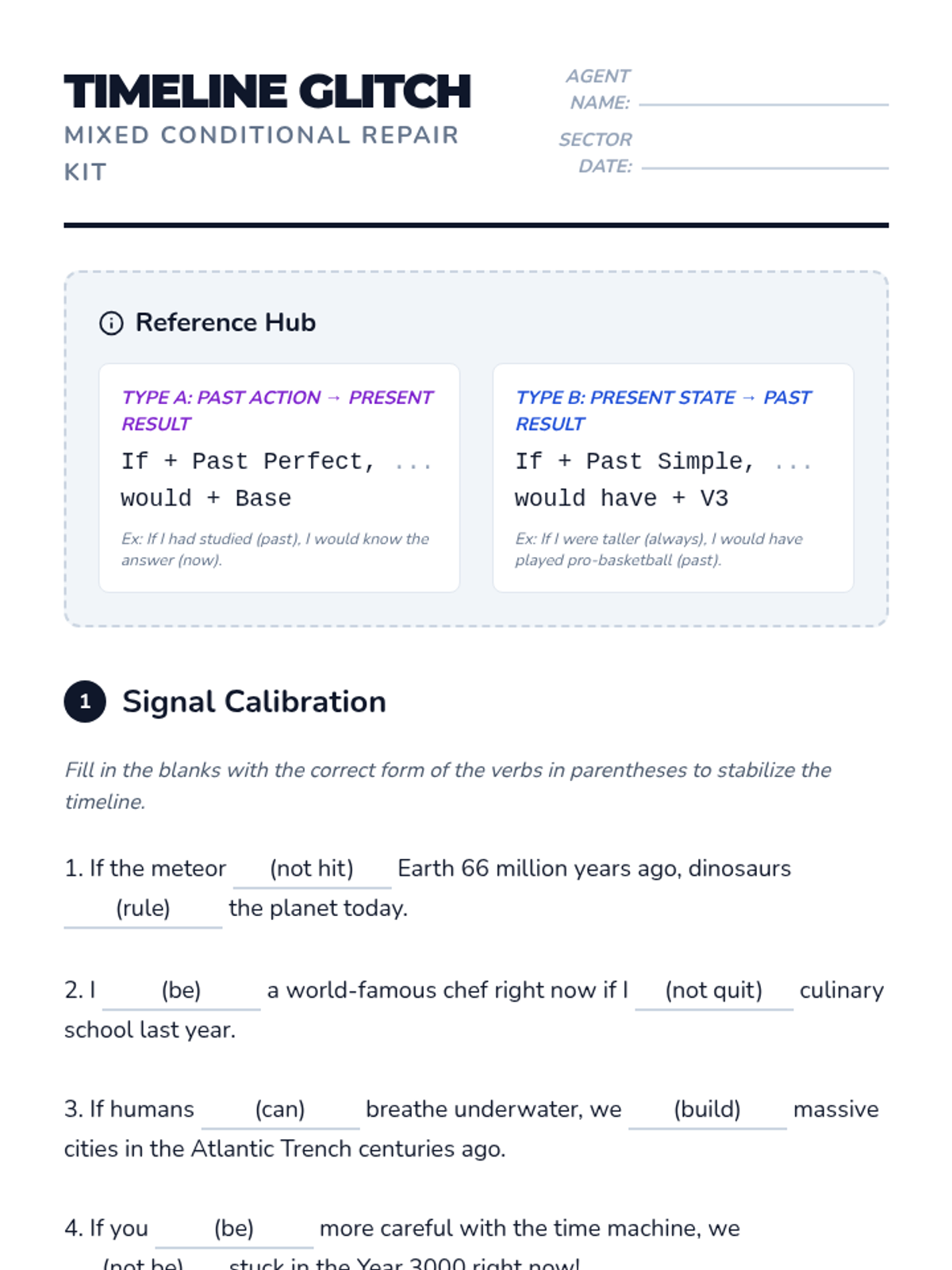
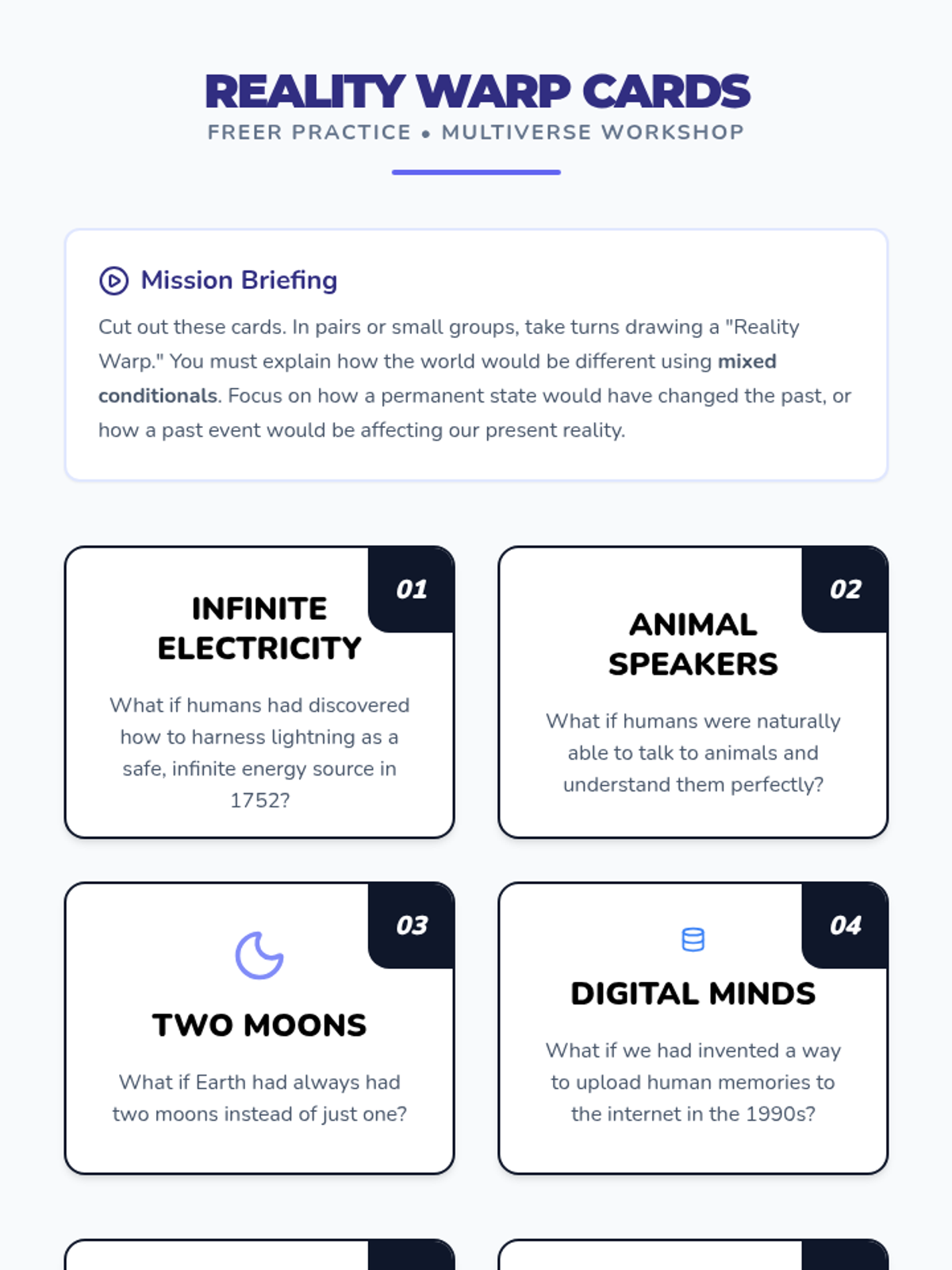
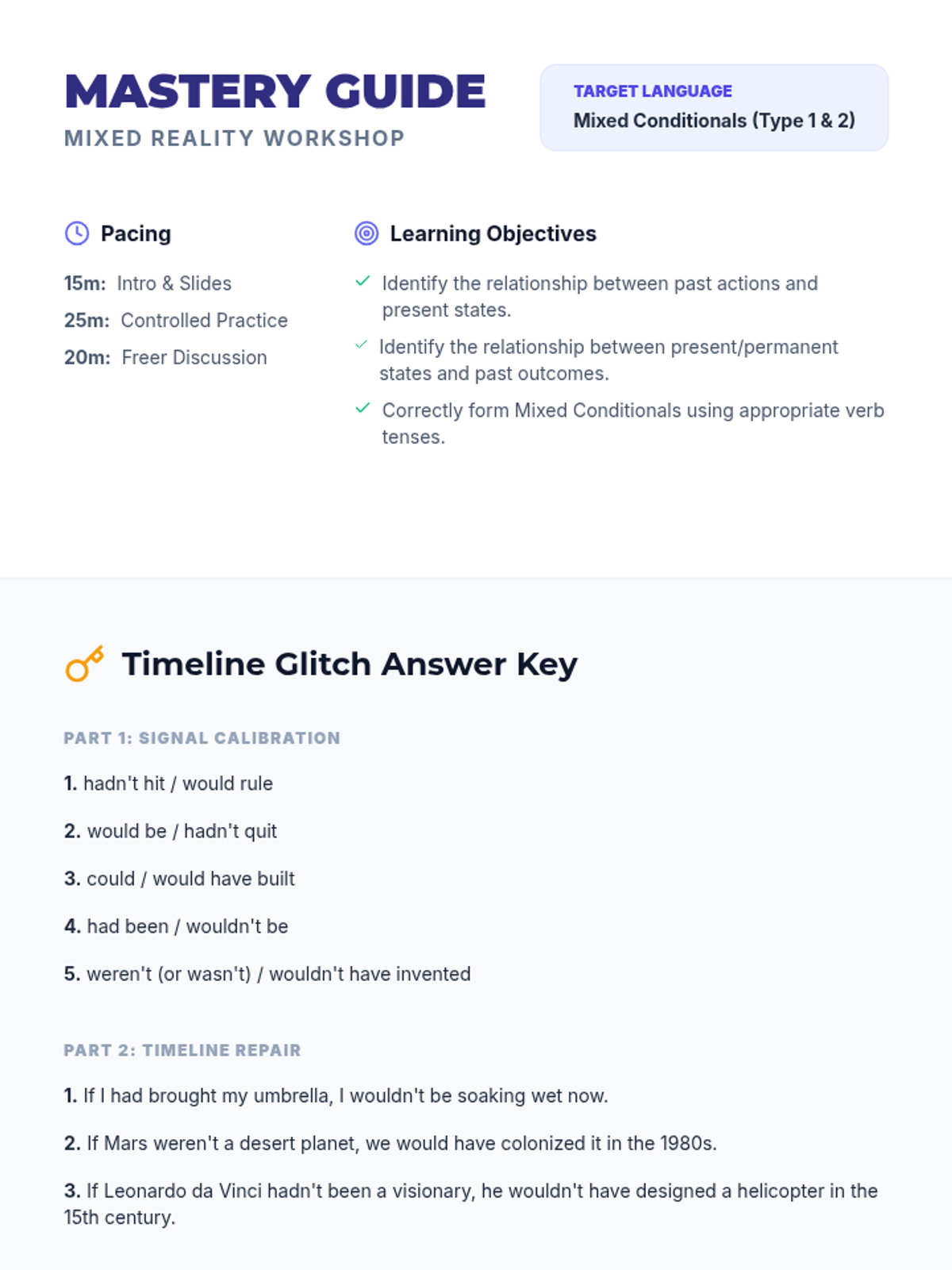
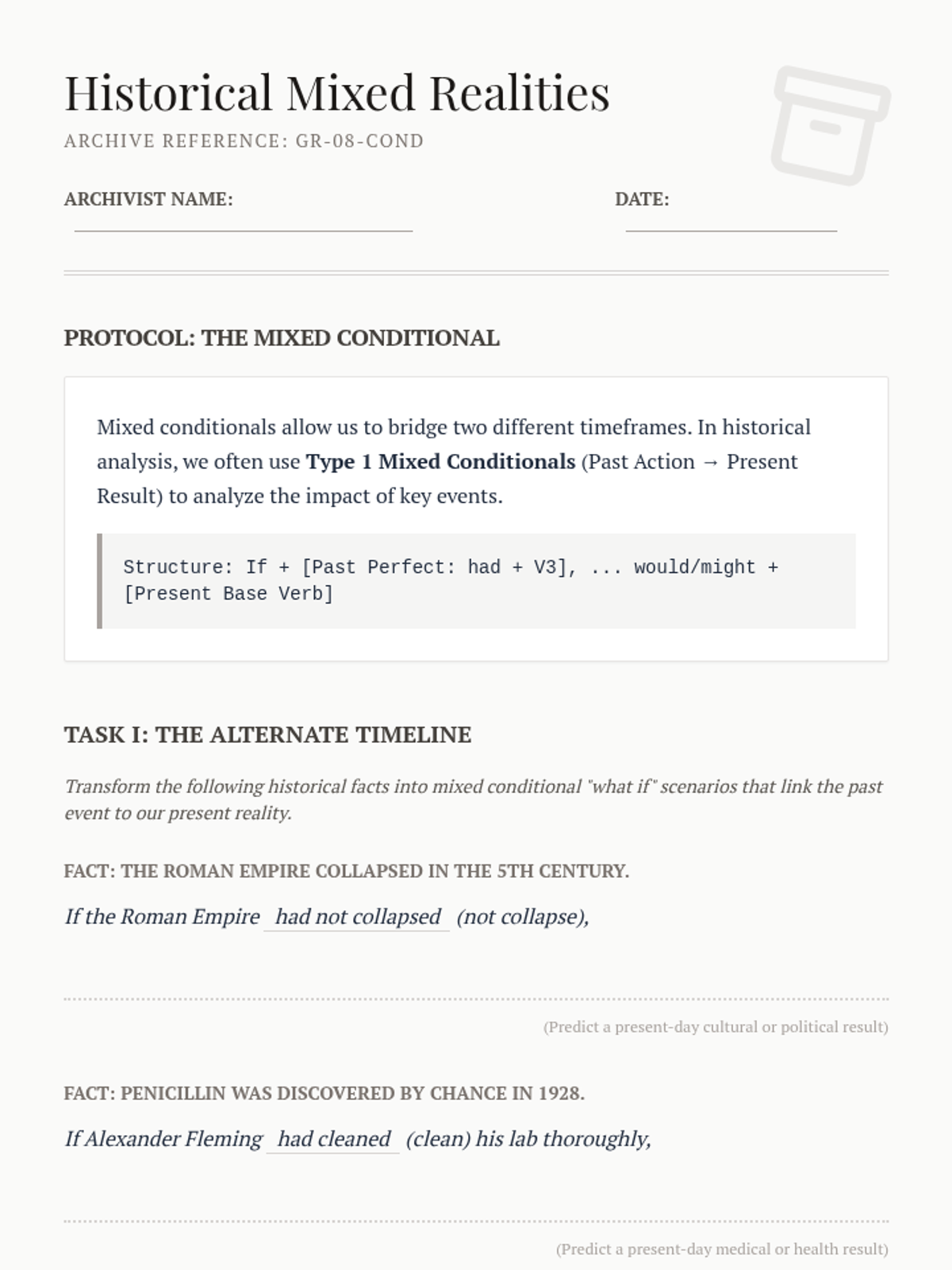
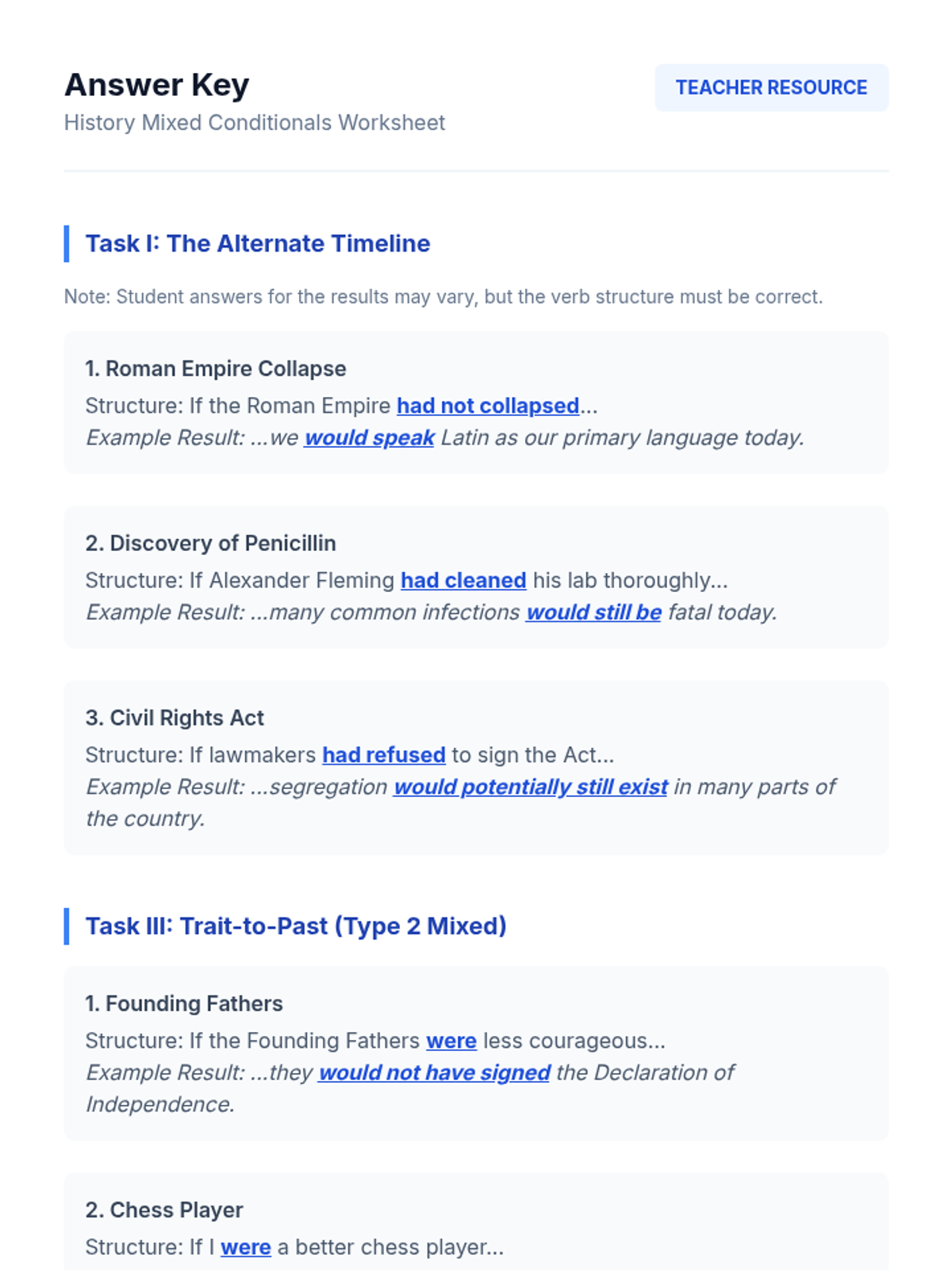
A comprehensive unit on mixed conditionals where students explore hypothetical scenarios involving past actions with present consequences and permanent states with past outcomes, all set within a 'multiverse' theme.
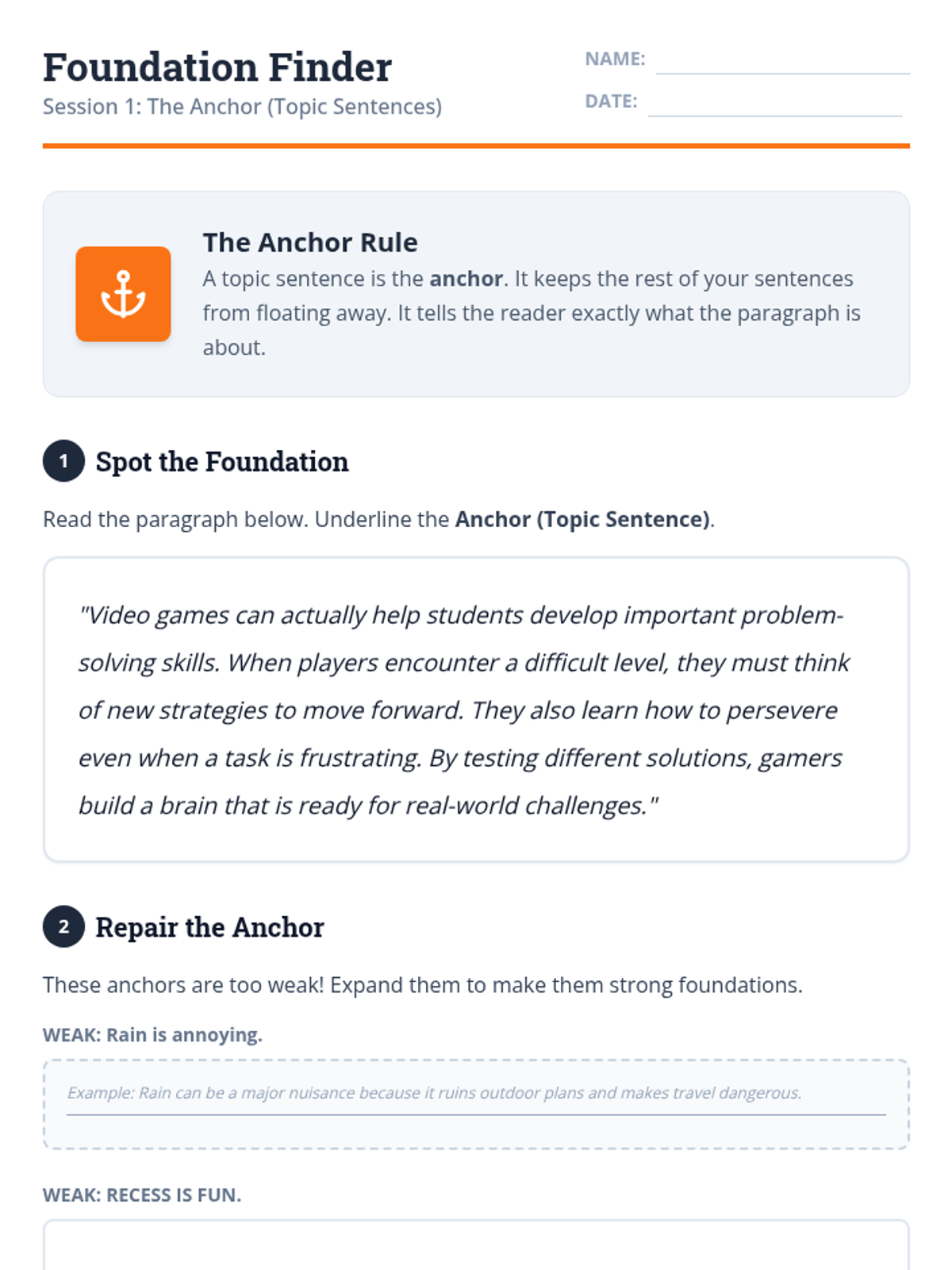
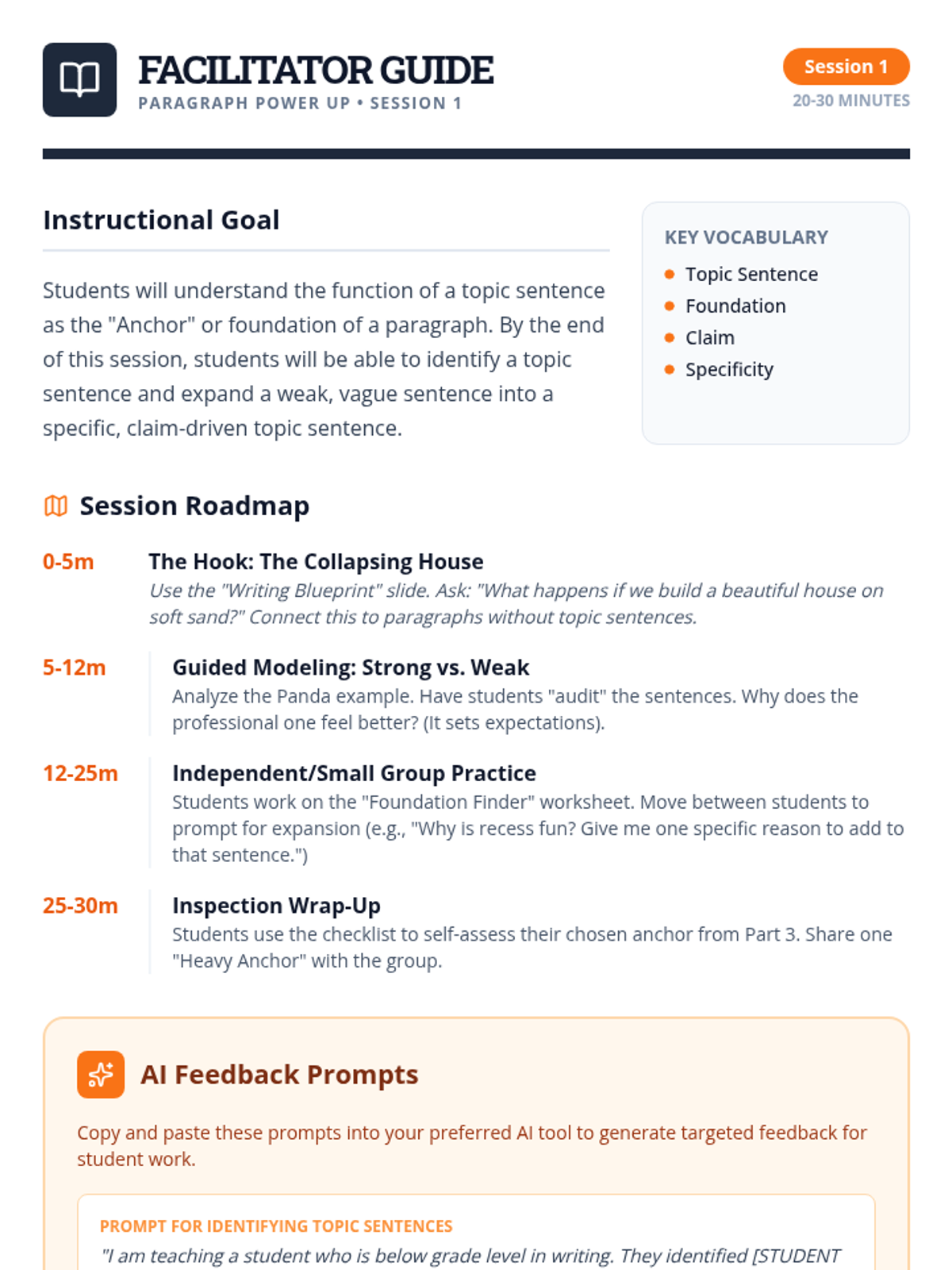
A 6-session intervention sequence designed for small groups of students below grade level. This sequence uses a 'Building Blocks' metaphor to teach structured paragraph writing, starting with topic sentences and moving through evidence, explanation, and conclusions, progressively reducing scaffolding to build independence.
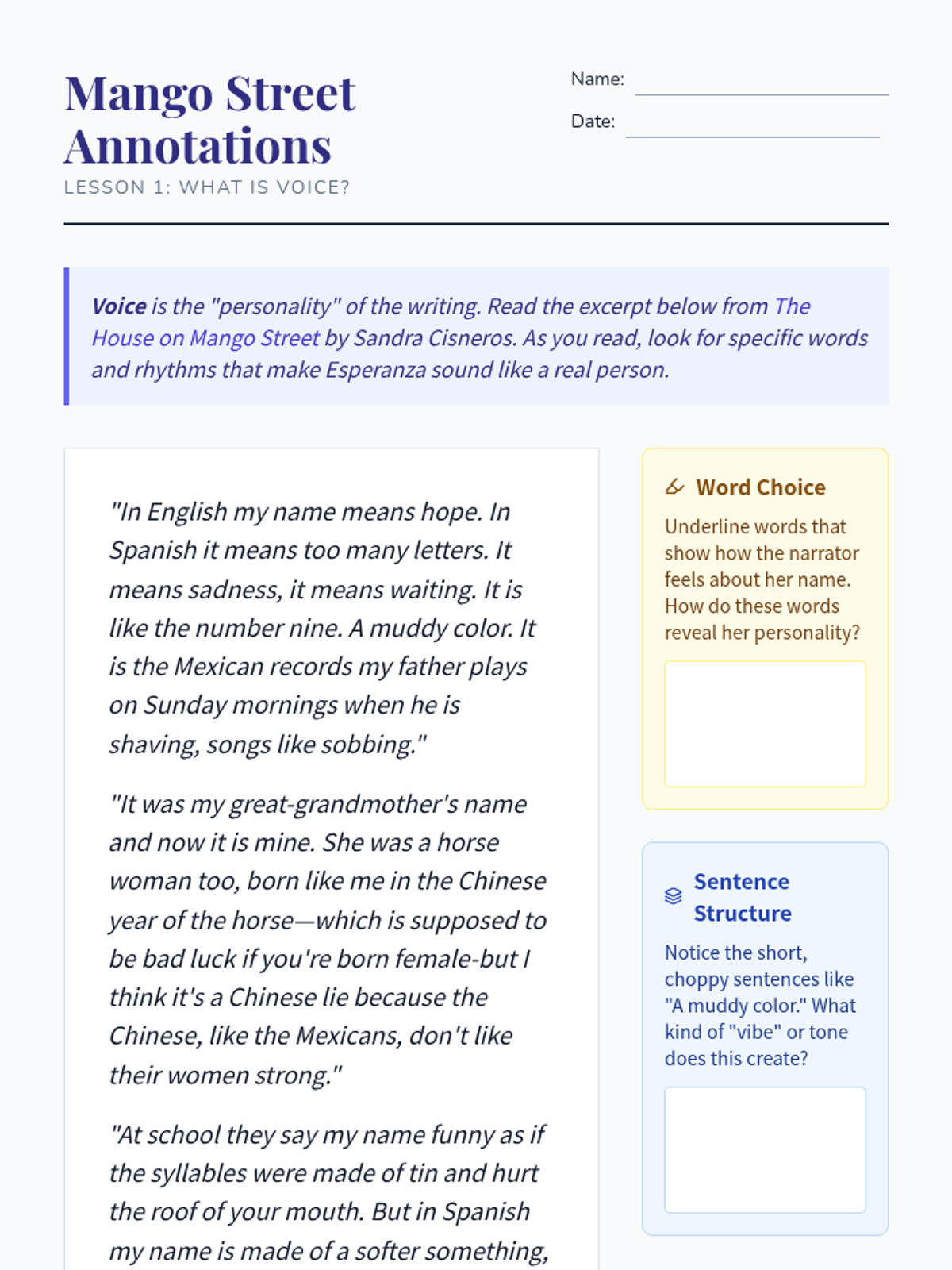
A three-lesson unit for grades 6-8 exploring authorial voice, identity, and perspective through contemporary literature and paired informational texts. Students analyze excerpts from diverse authors like Sandra Cisneros and Jason Reynolds to understand how language shapes narrative personality.
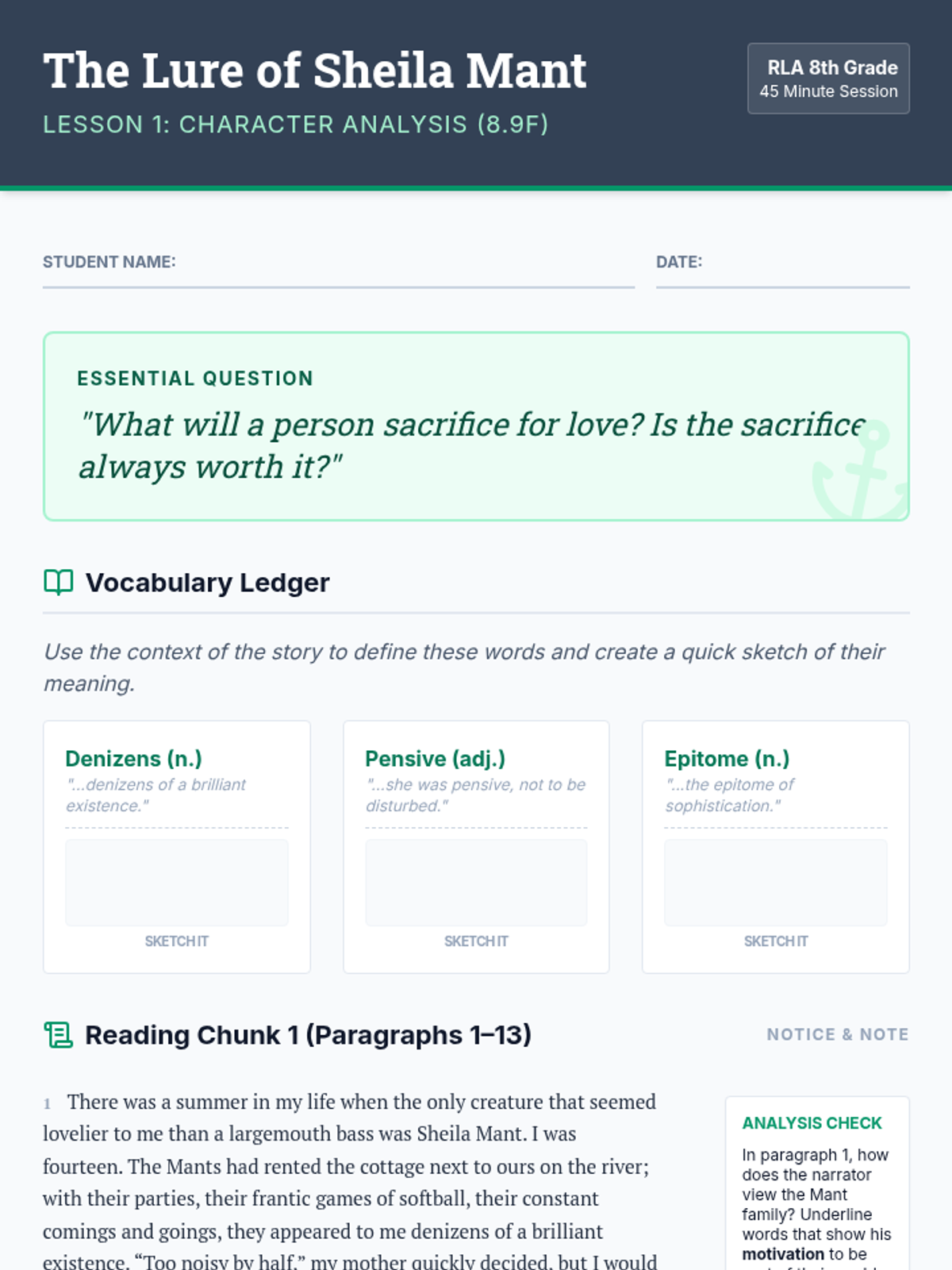
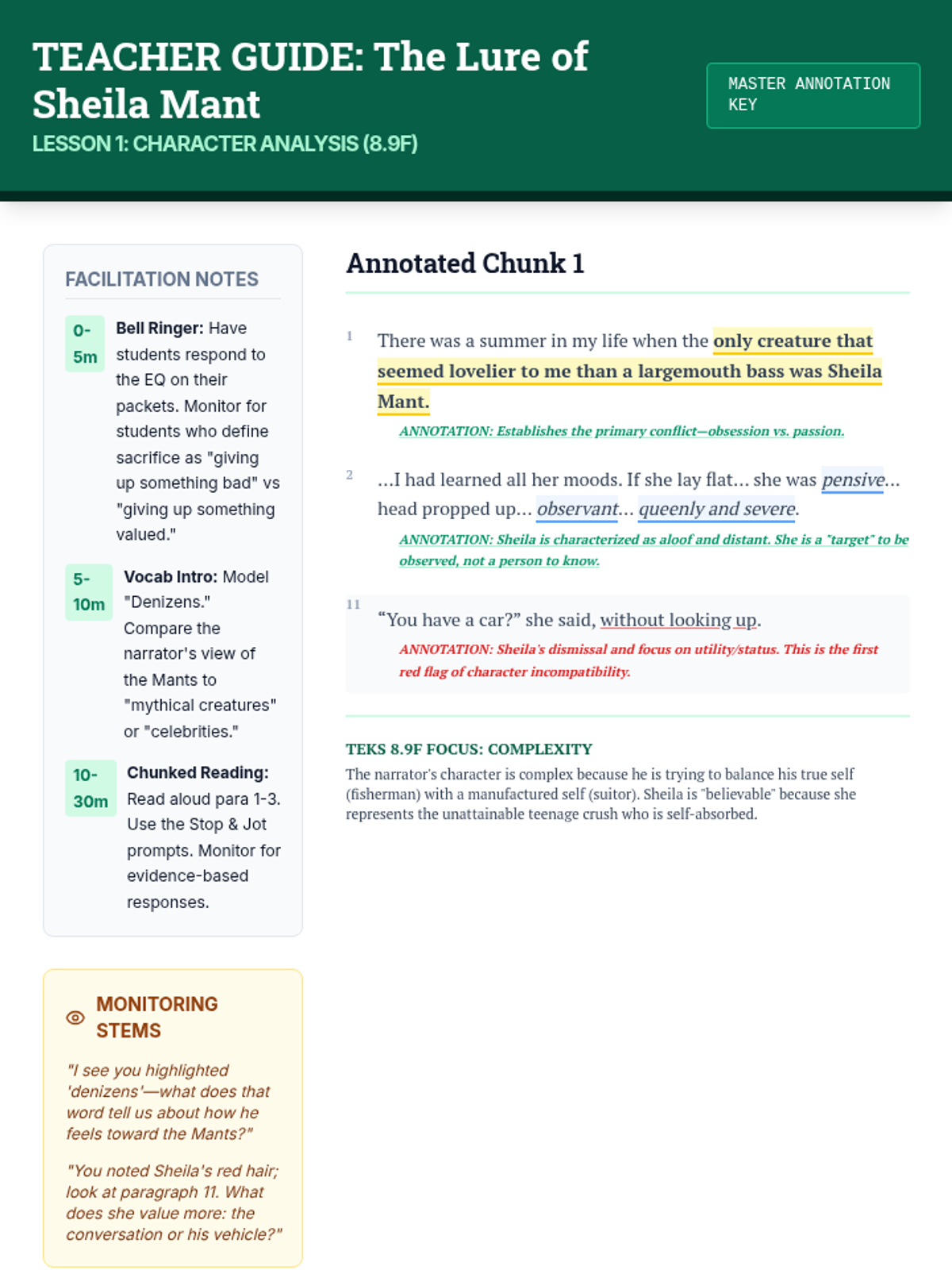
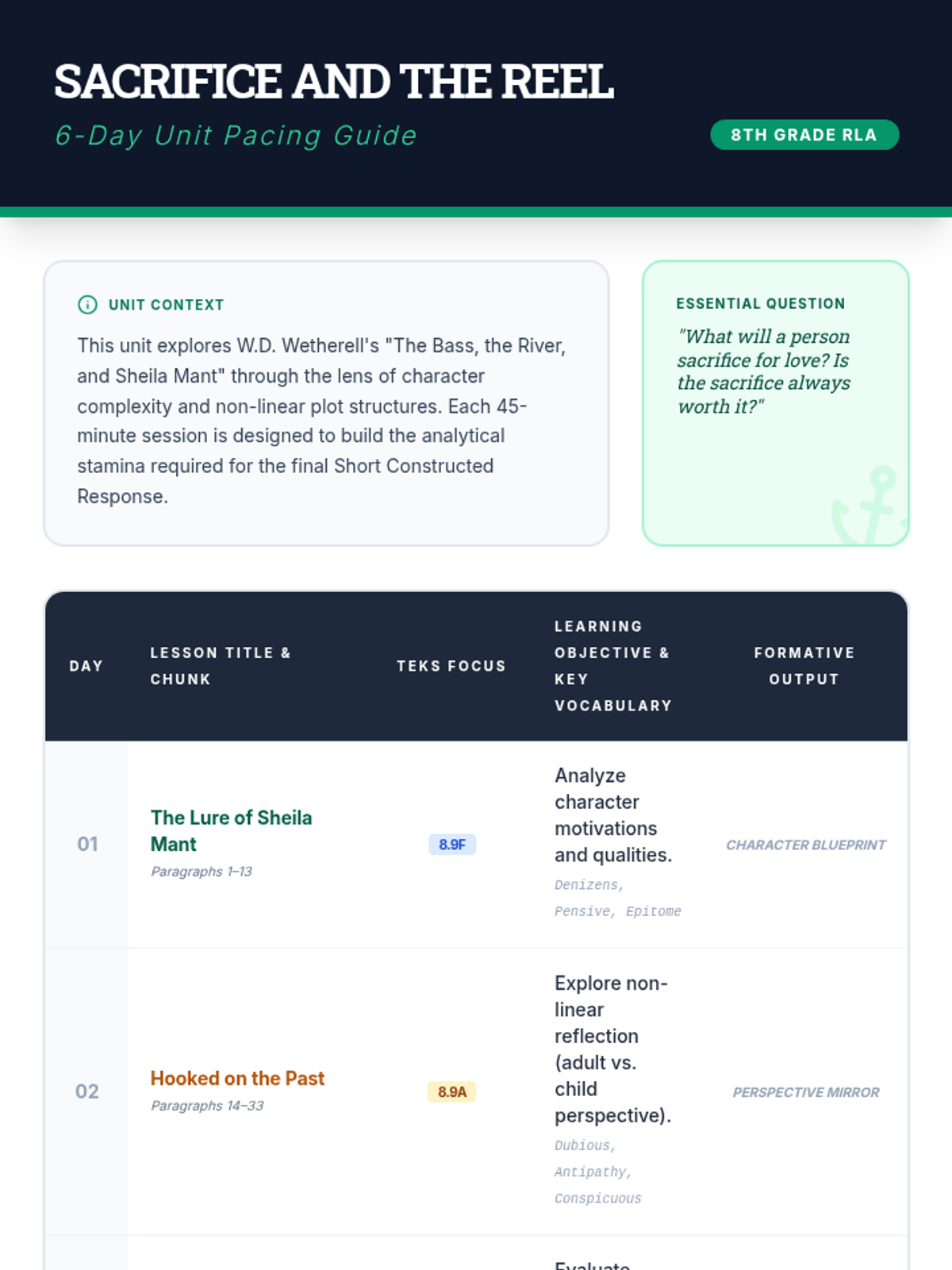
A 6-day RLA unit for 8th grade focusing on 'The Bass, the River, and Sheila Mant'. Students explore character complexity (8.9F) and non-linear plot elements (8.9A) through the lens of sacrifice and love.
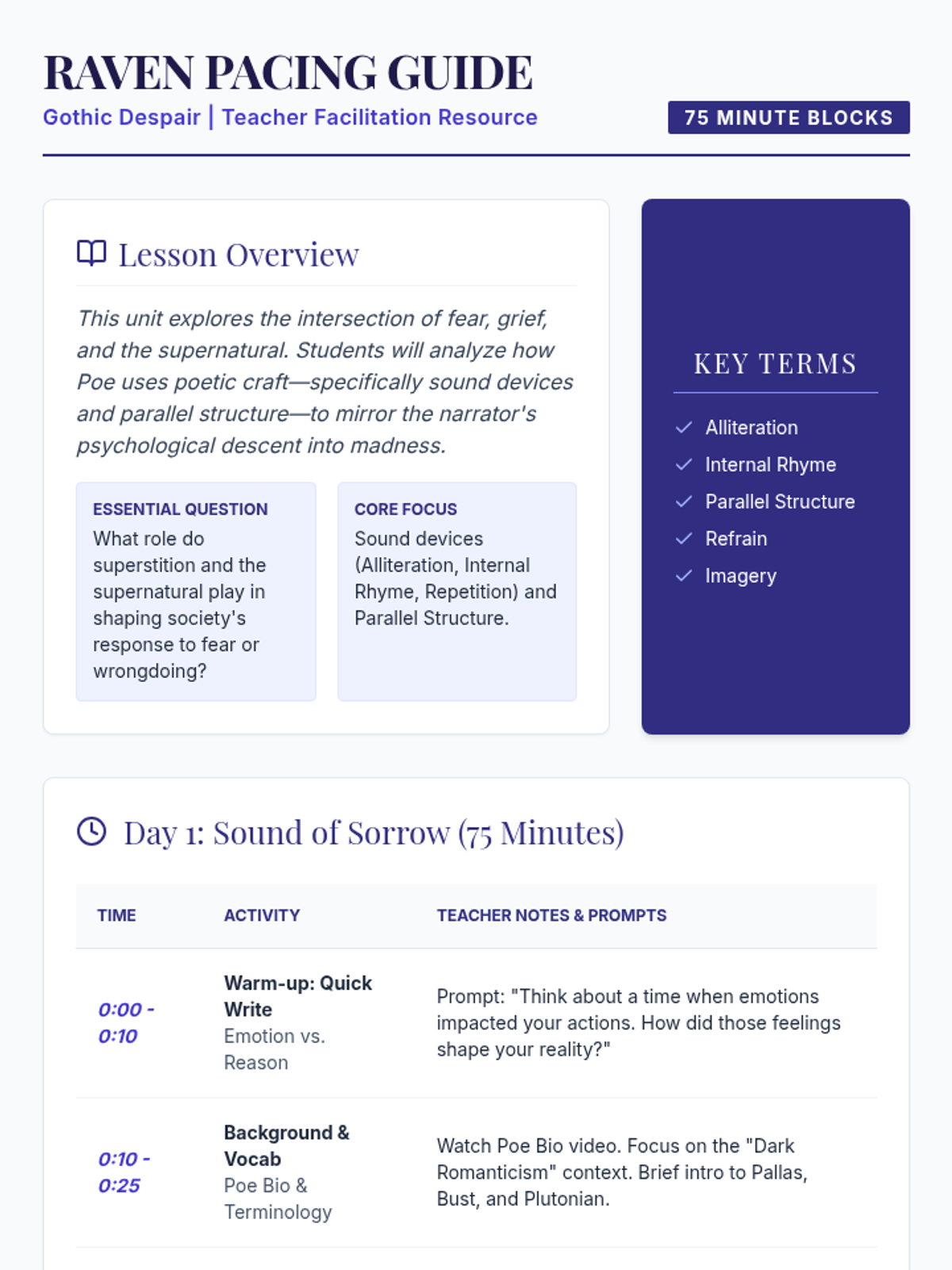
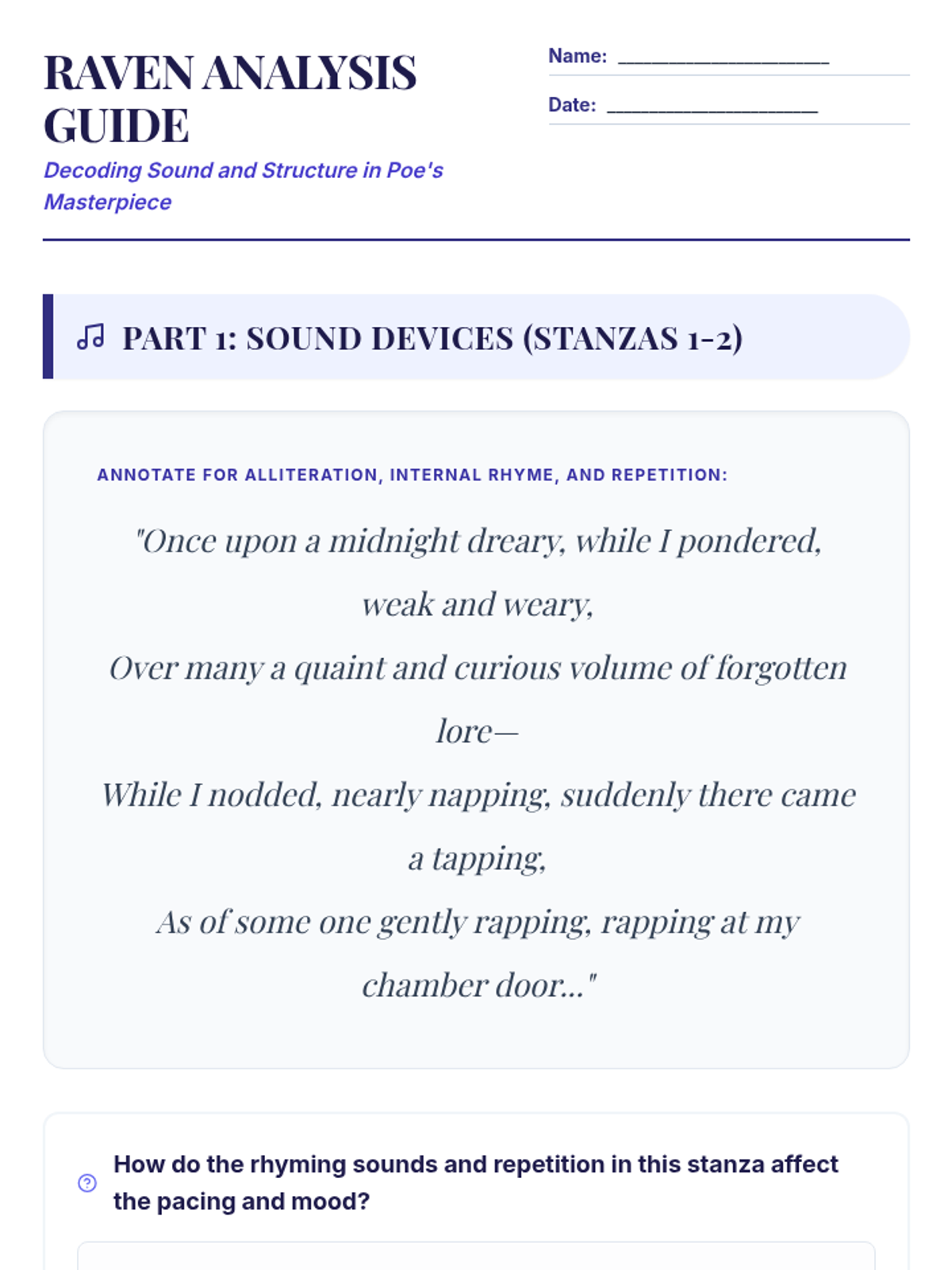
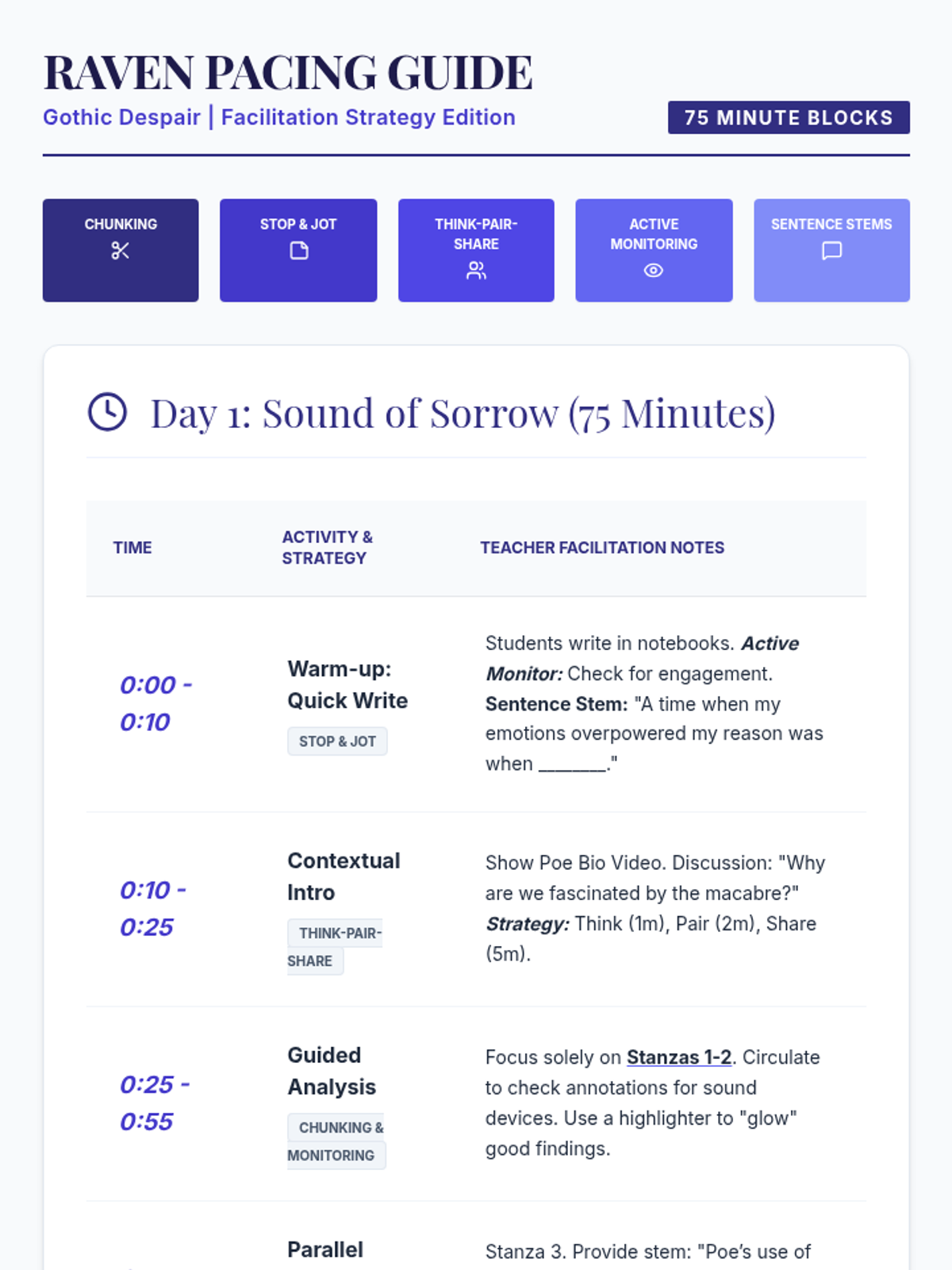
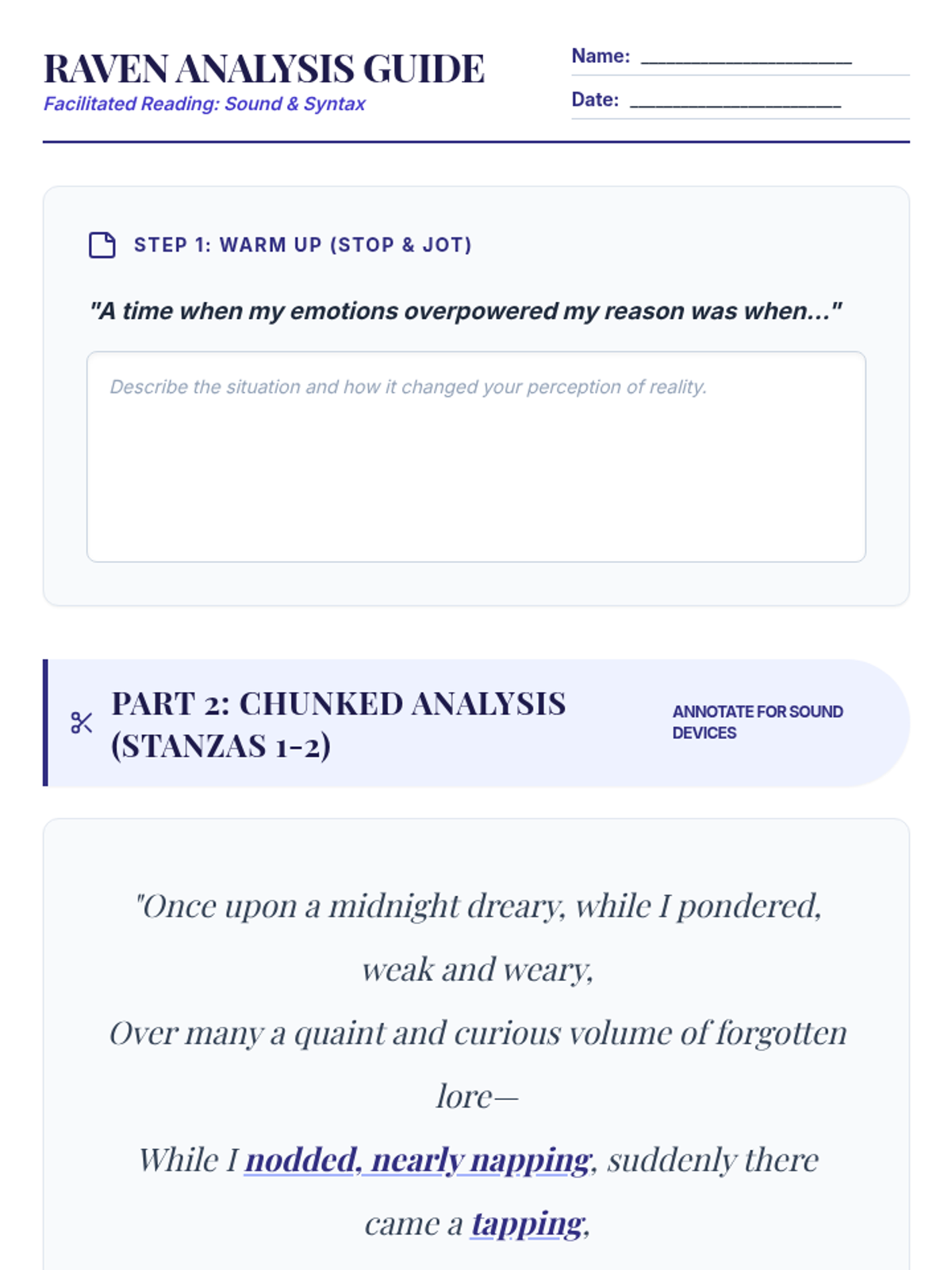
A two-day exploration of Edgar Allan Poe's 'The Raven', analyzing poetic craft, gothic elements, and the emotional descent of the narrator through creative performance tasks and analytical writing.
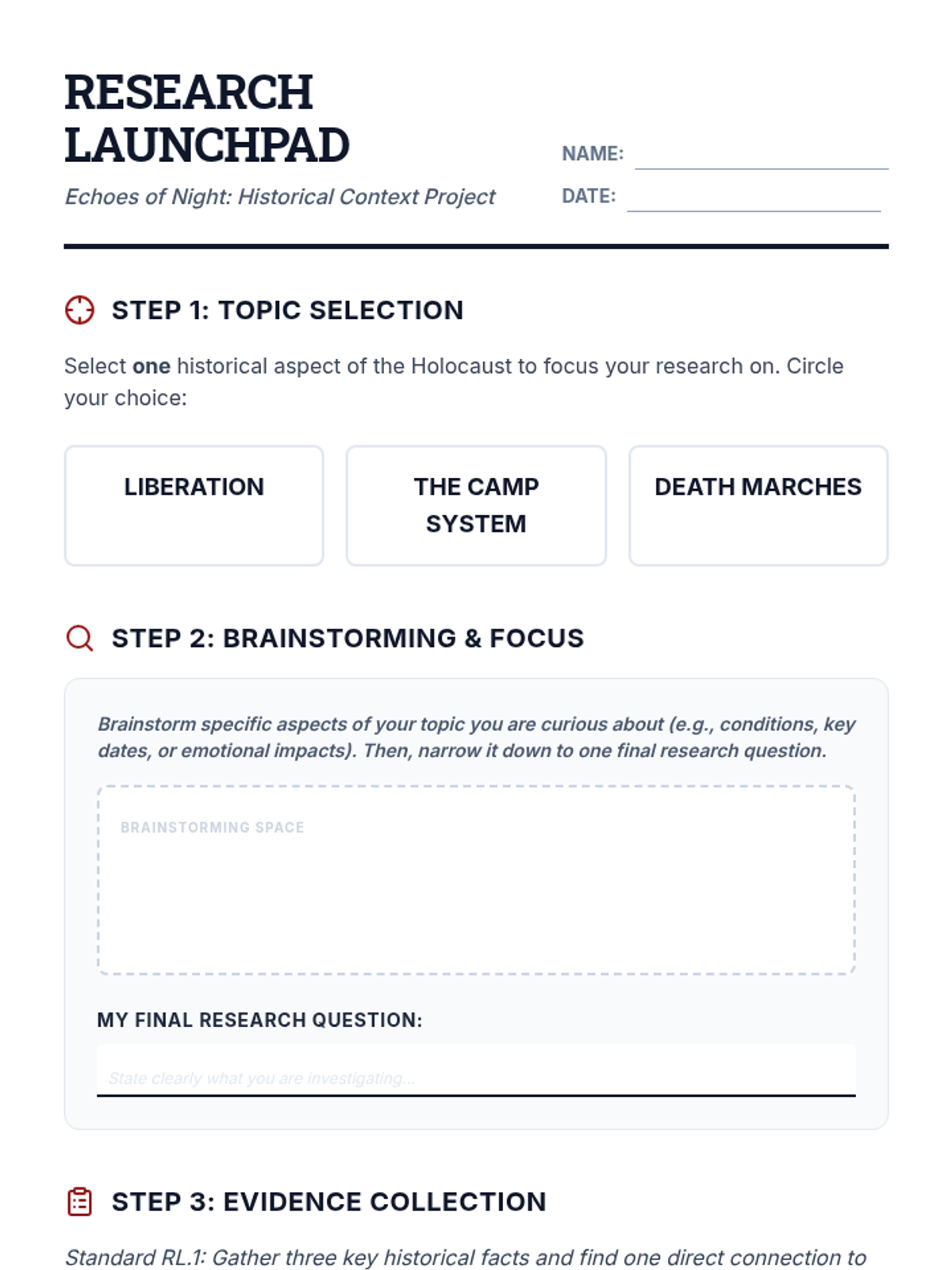
A 3-day research unit focused on the historical context of Night by Elie Wiesel, specifically covering liberation, concentration camps, and death marches, concluding with student presentations.
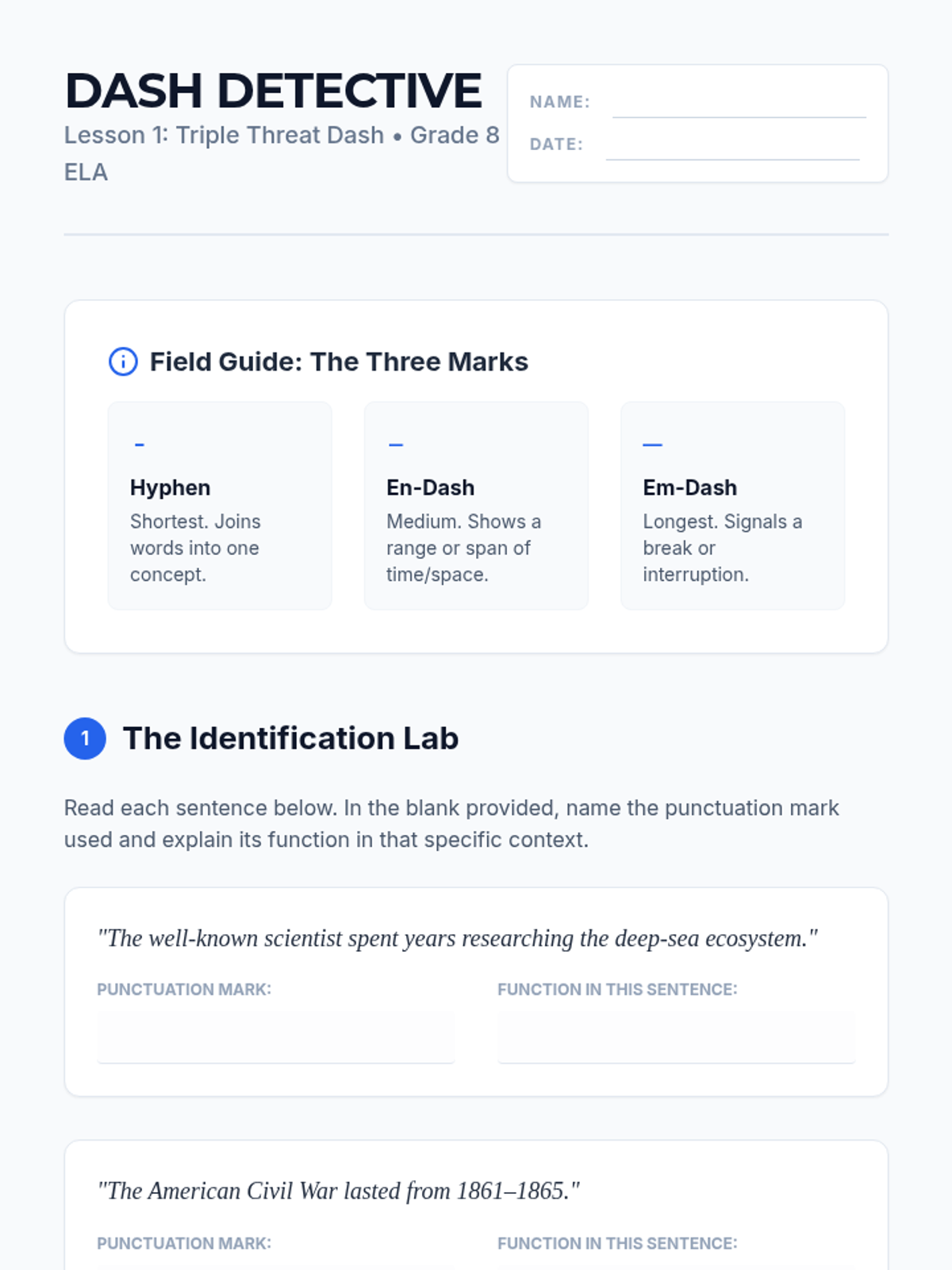
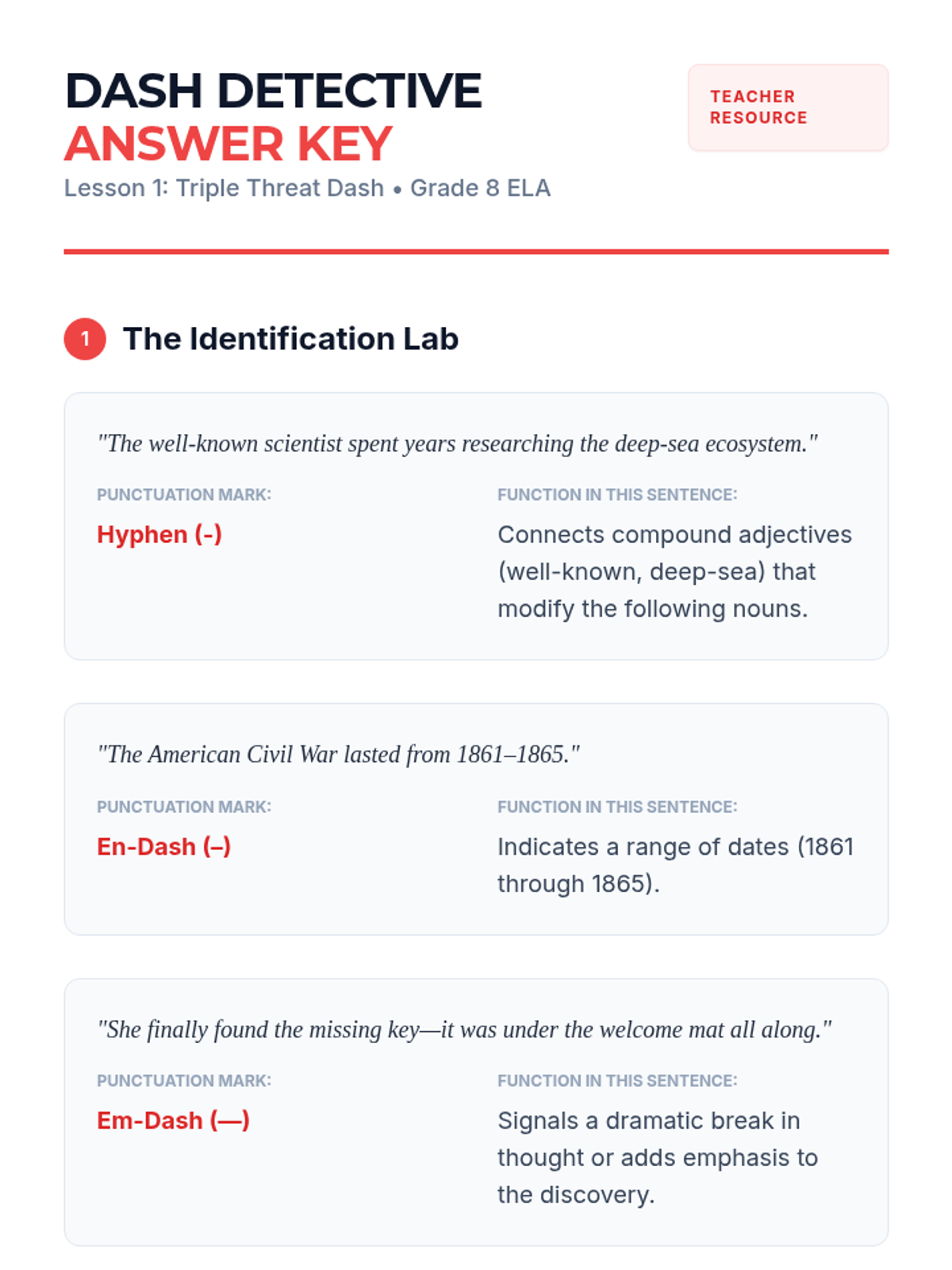
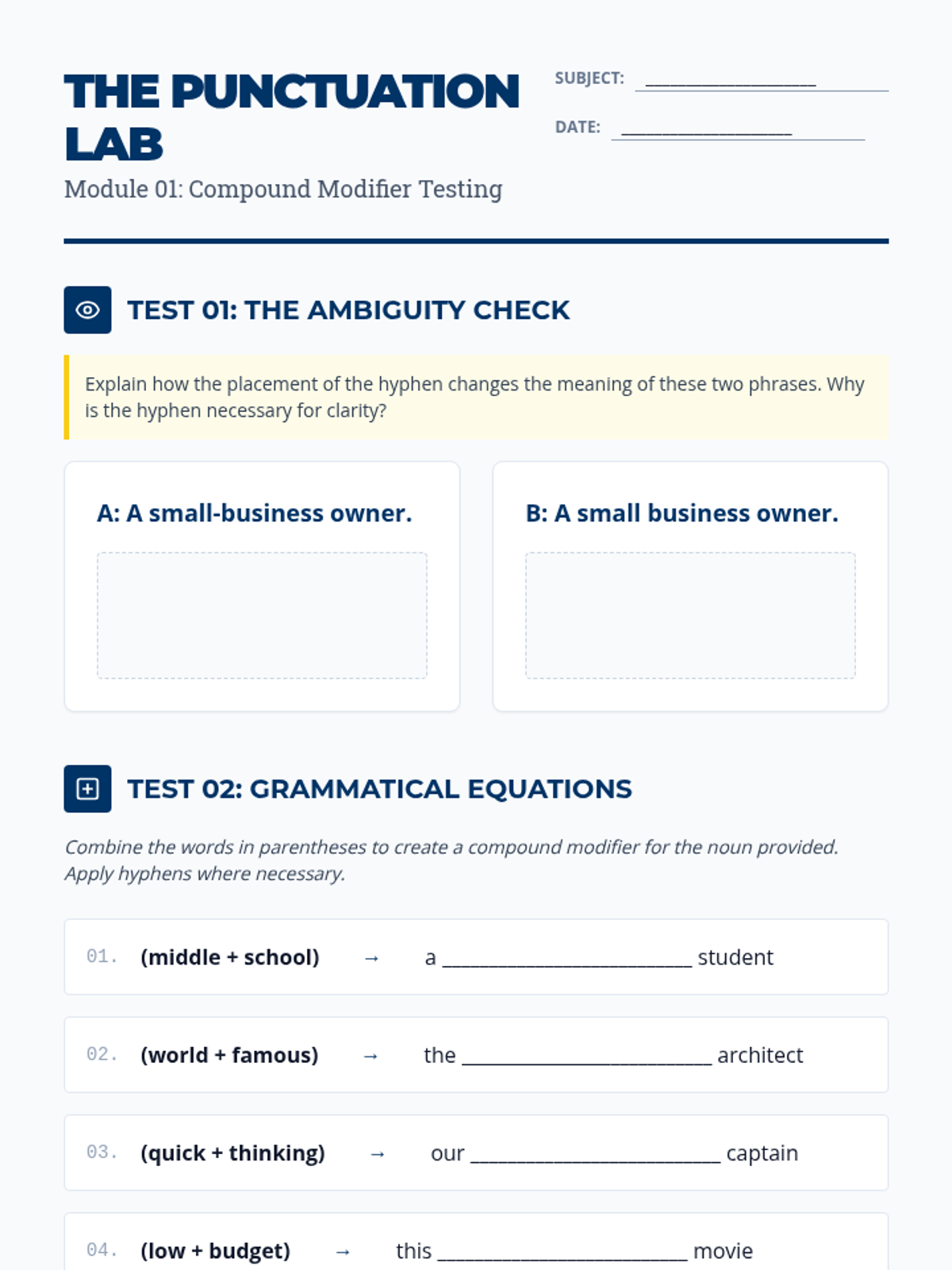
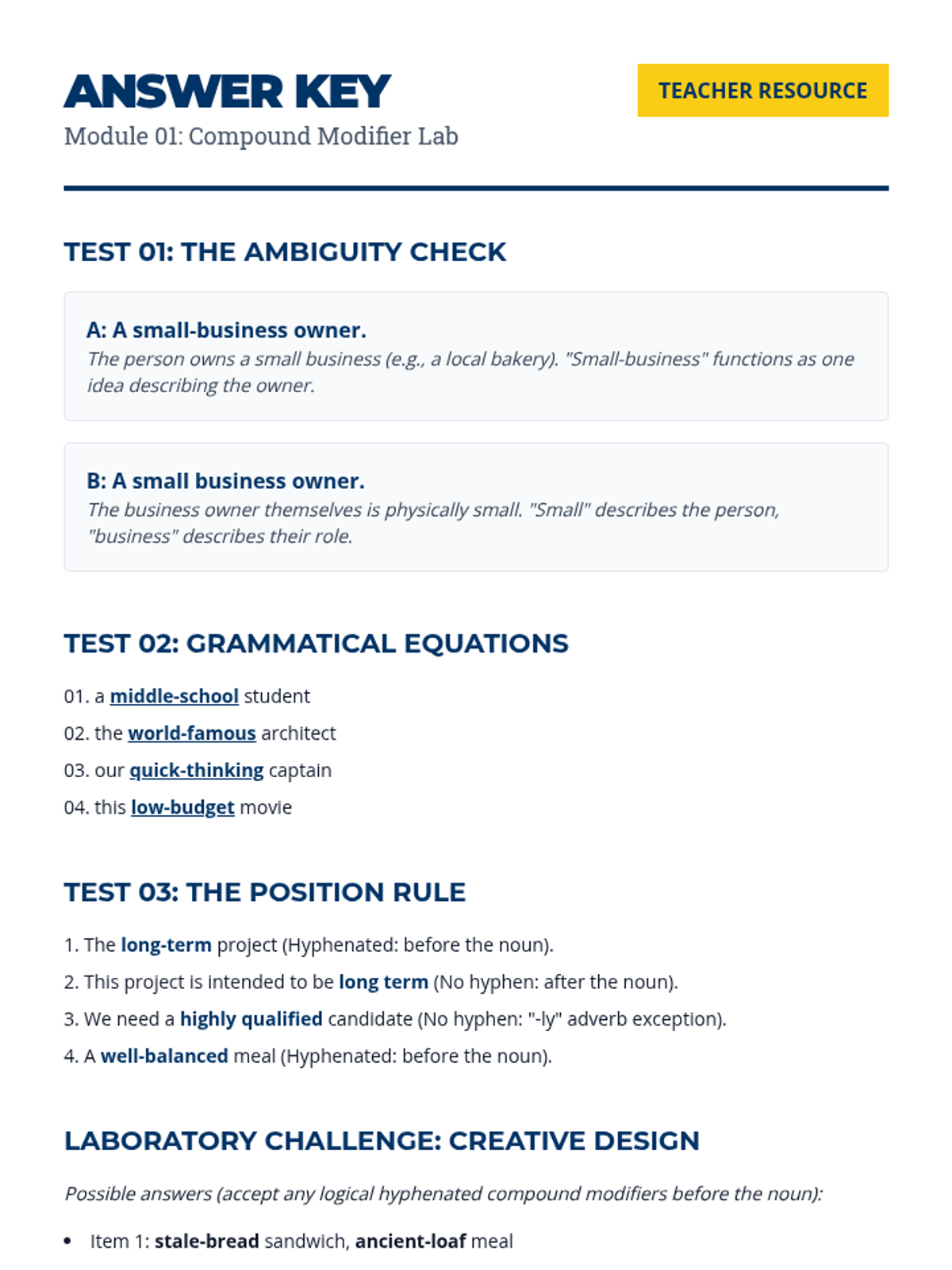
An advanced punctuation sequence for 8th Grade students focusing on the formal applications of hyphens, en-dashes, em-dashes, and ellipses. Students act as editors to master technical writing conventions, clarify ambiguity, and use ellipses ethically in research.
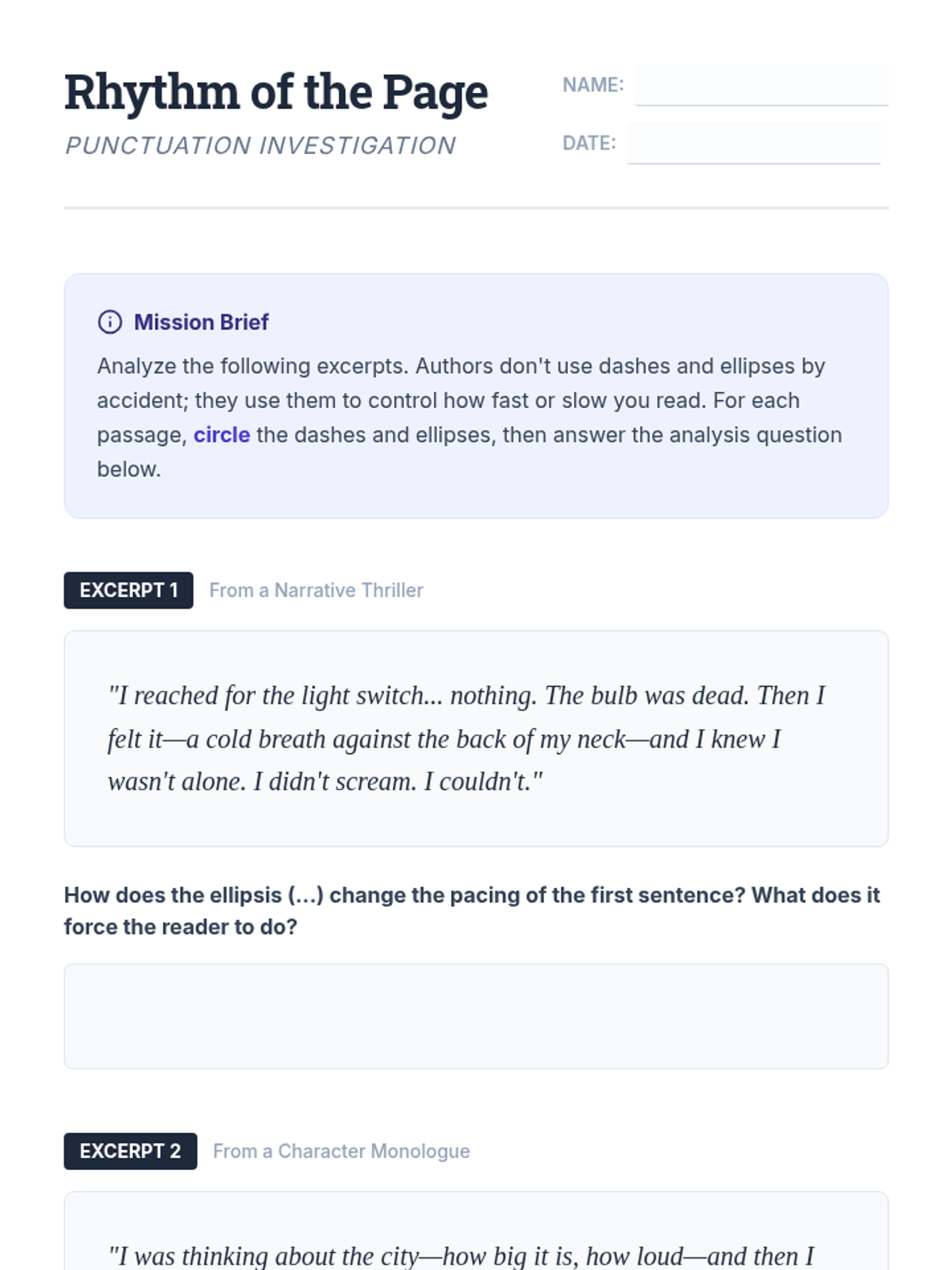
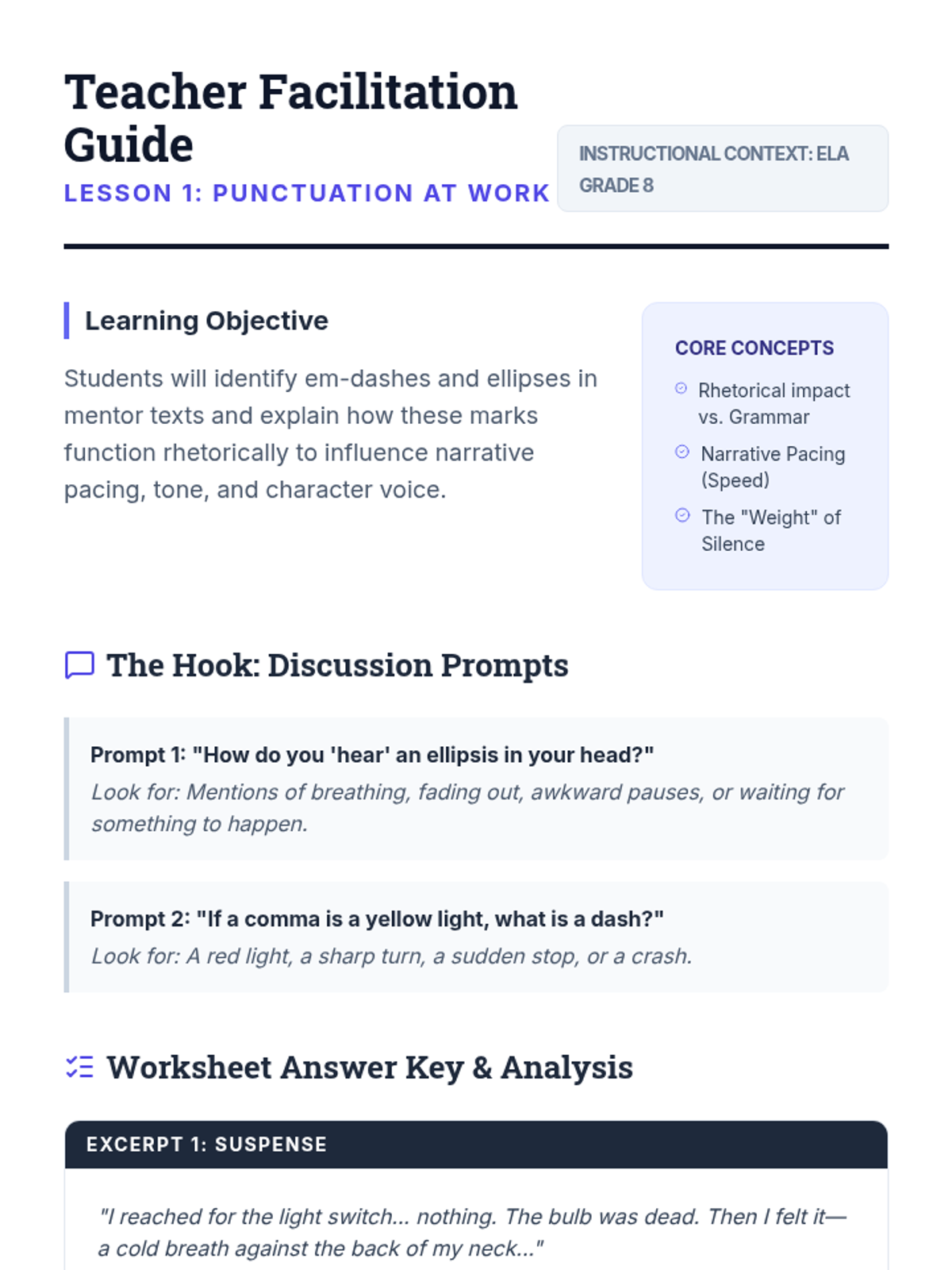
A comprehensive 8th-grade ELA unit focusing on the rhetorical and stylistic impact of dashes, hyphens, and ellipses. Students move from analysis of mentor texts to practical application, culminating in a revision project that demonstrates how punctuation controls narrative pacing and voice.
A skills-focused grammar sequence for 7th graders focusing on the functional and stylistic uses of hyphens, dashes, and ellipses. Students learn to use these marks to improve clarity in compound modifiers, create dramatic emphasis, and control narrative pacing.
A deep dive into the rhetorical power of punctuation, moving beyond basic rules to explore how commas, dashes, and ellipses shape tone, pacing, and clarity in 8th-grade writing.
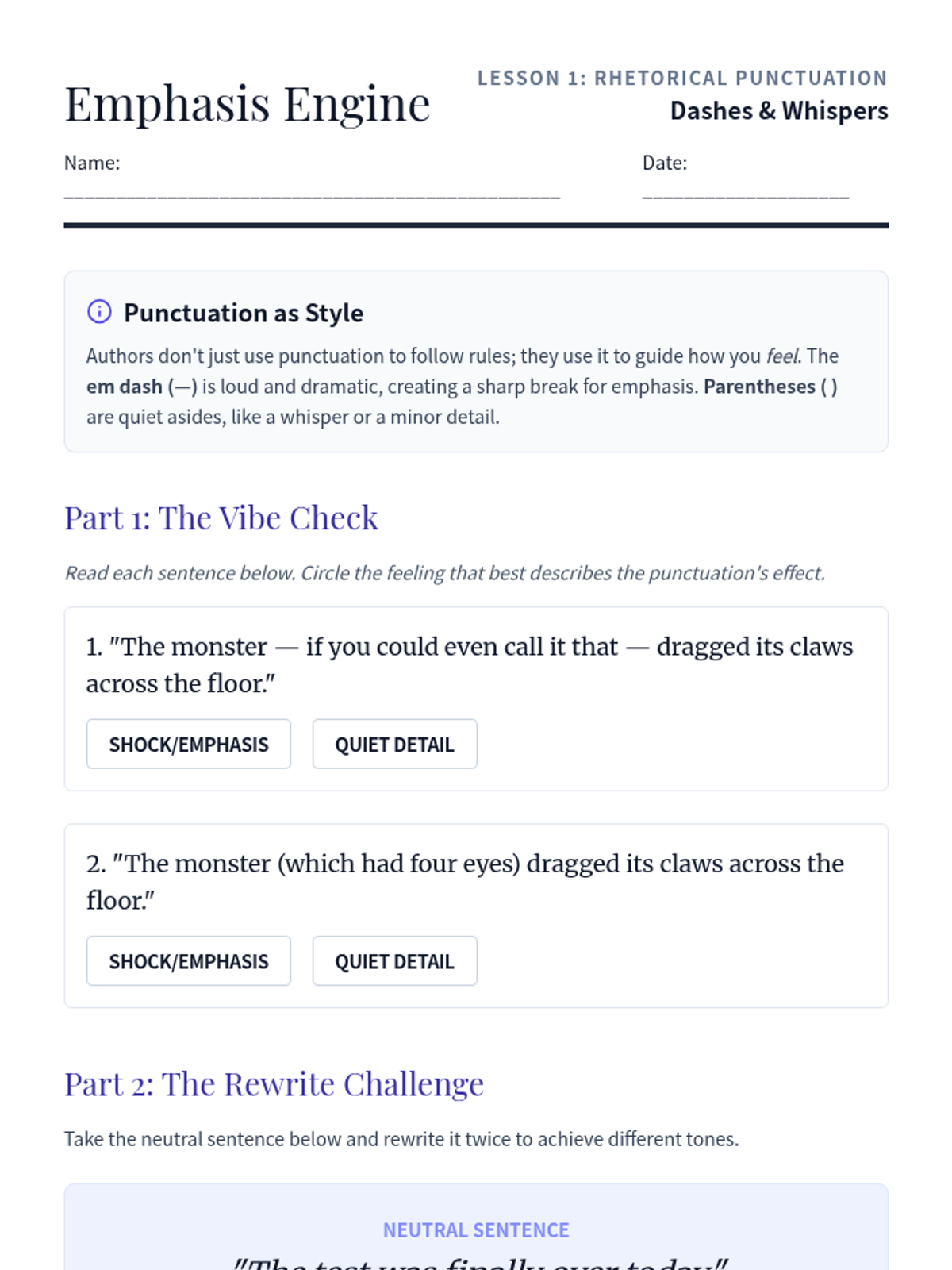
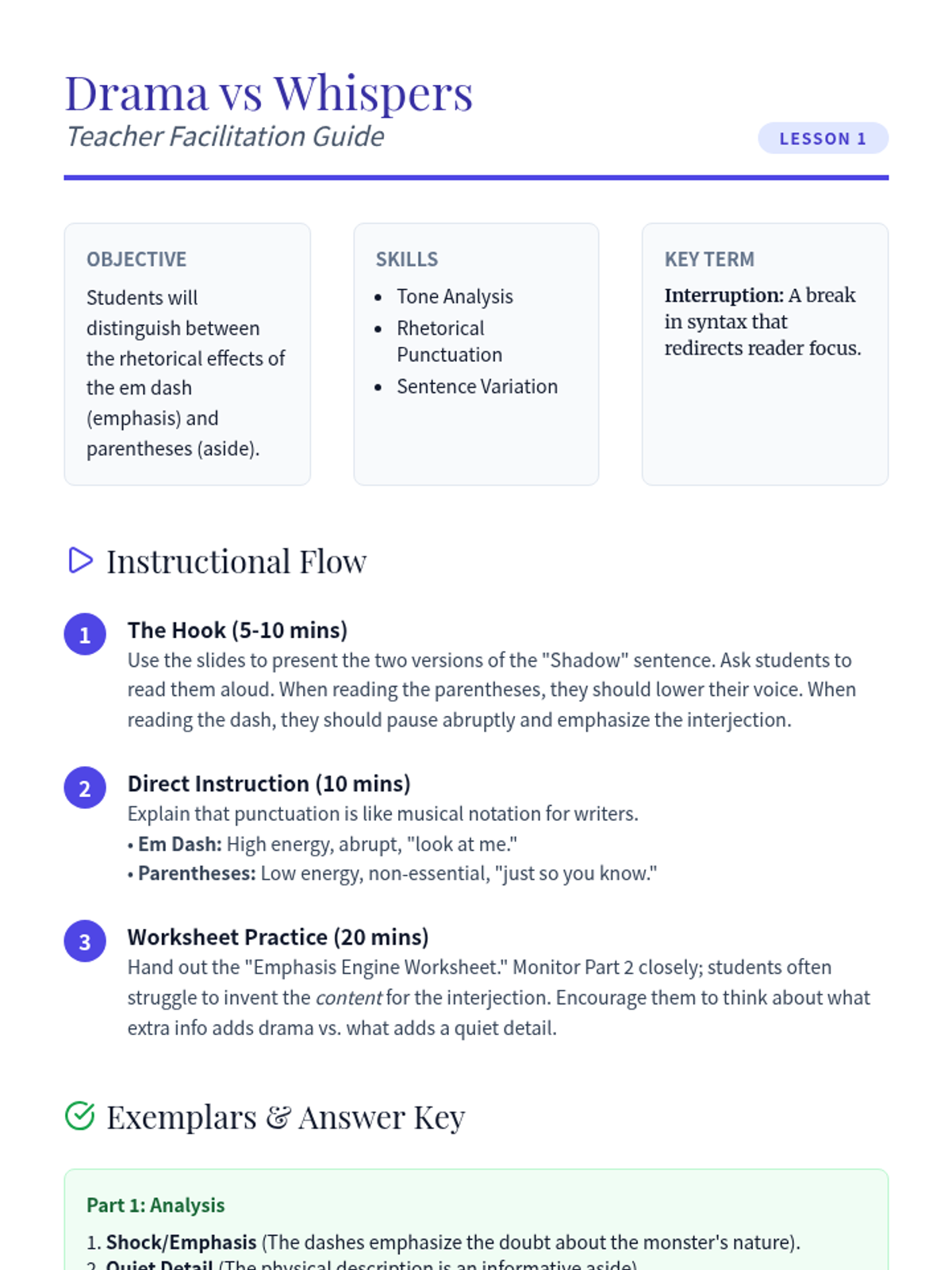
A middle school ELA sequence exploring punctuation as a rhetorical tool for style and voice. Students learn to use em dashes, parentheses, ellipses, and hyphens to control tone and pacing.
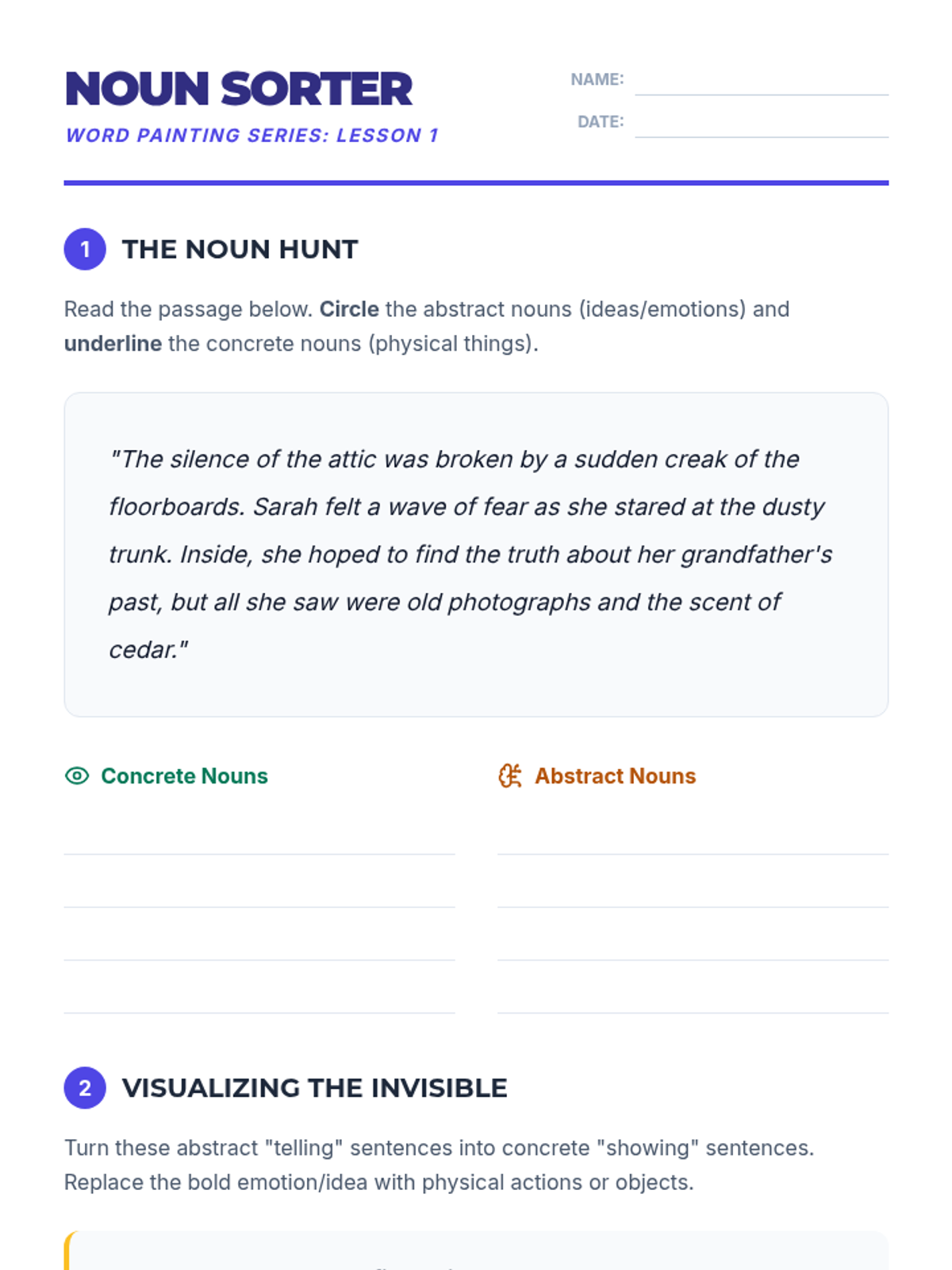
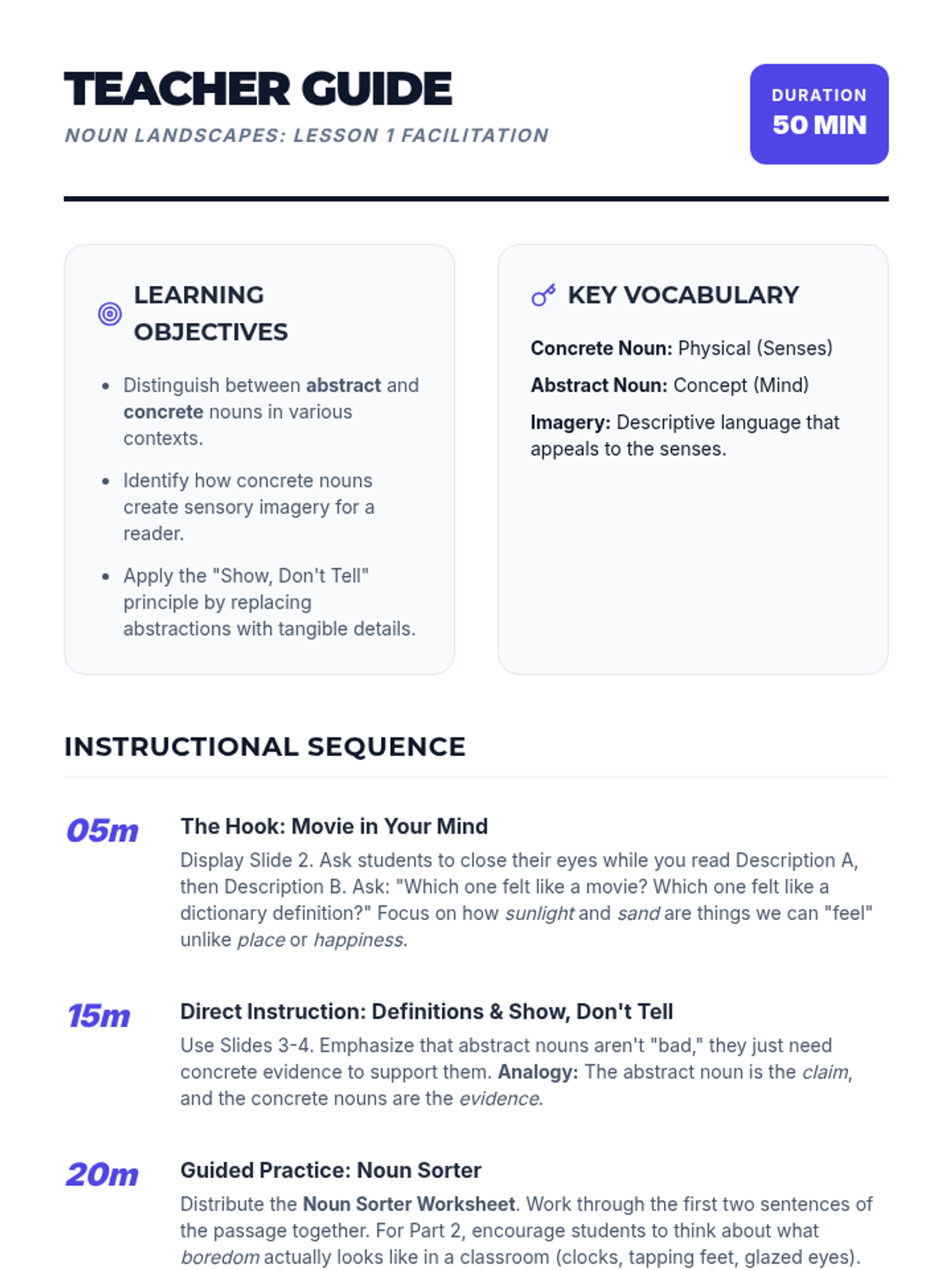
This sequence guides 7th-grade students from using generic vocabulary to crafting high-definition descriptive writing through the precise use of nouns and adjectives. Students explore concrete vs. abstract nouns, sensory adjectives, the royal order of adjectives, and hyphenated modifiers.
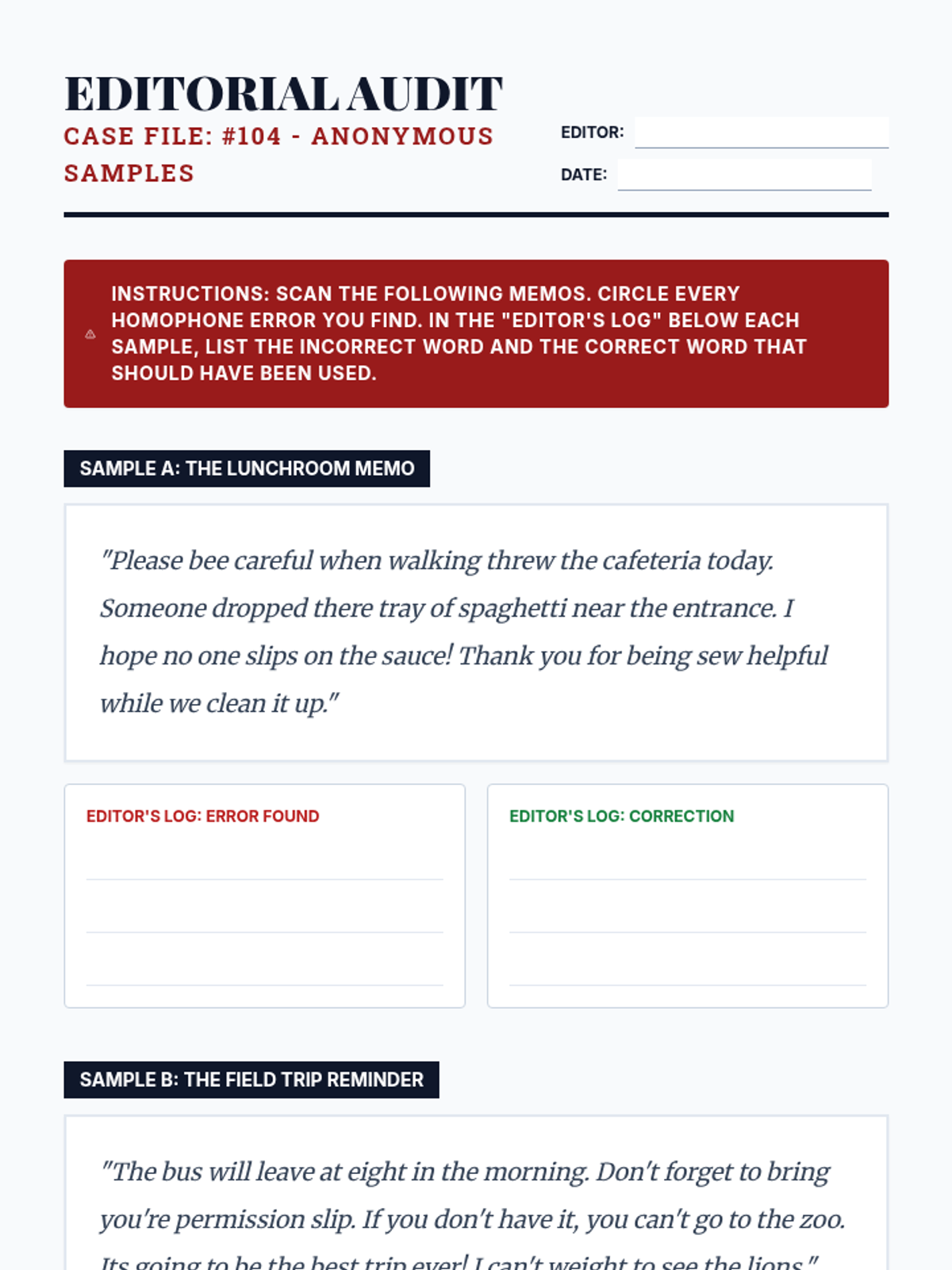
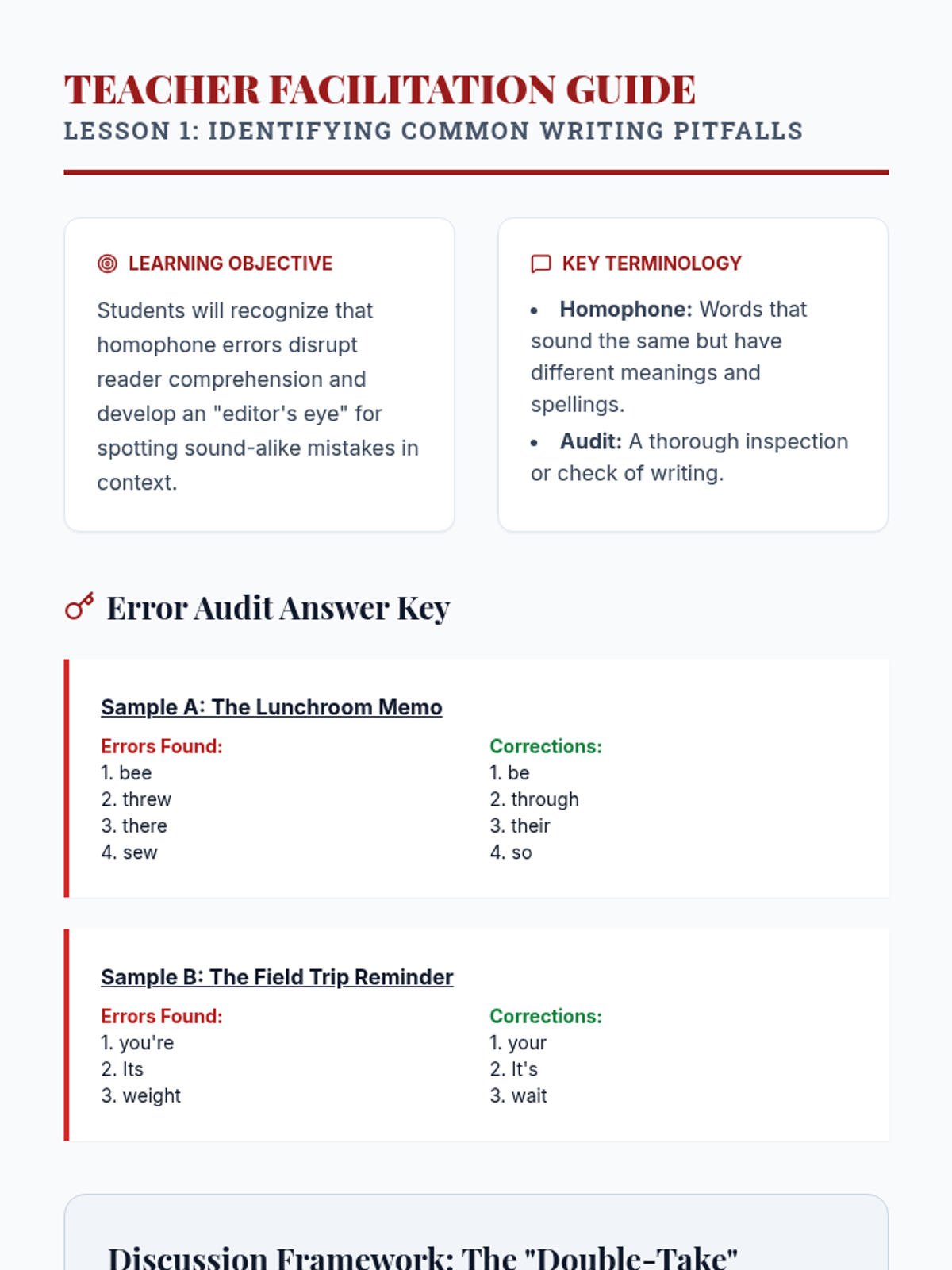
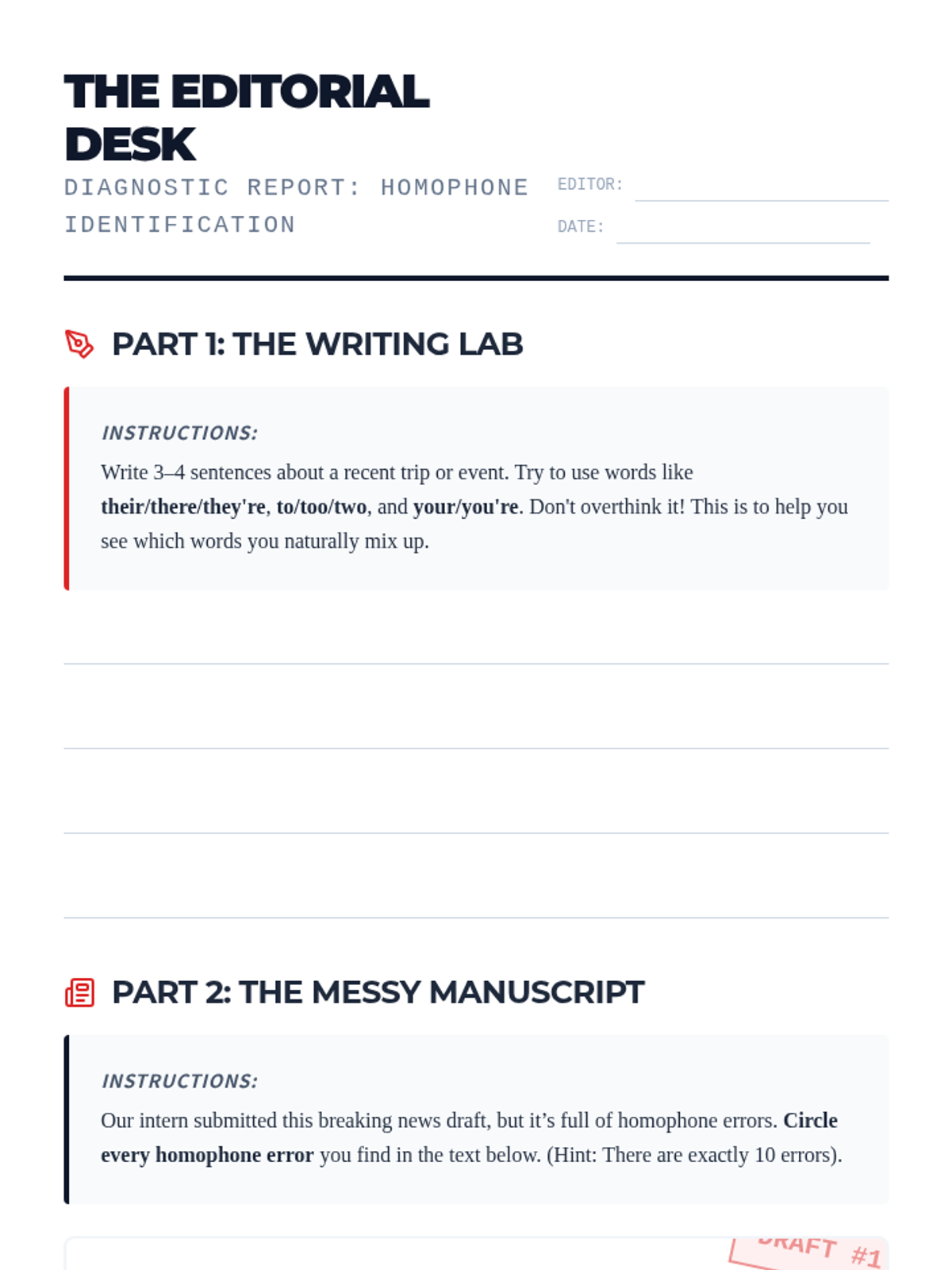
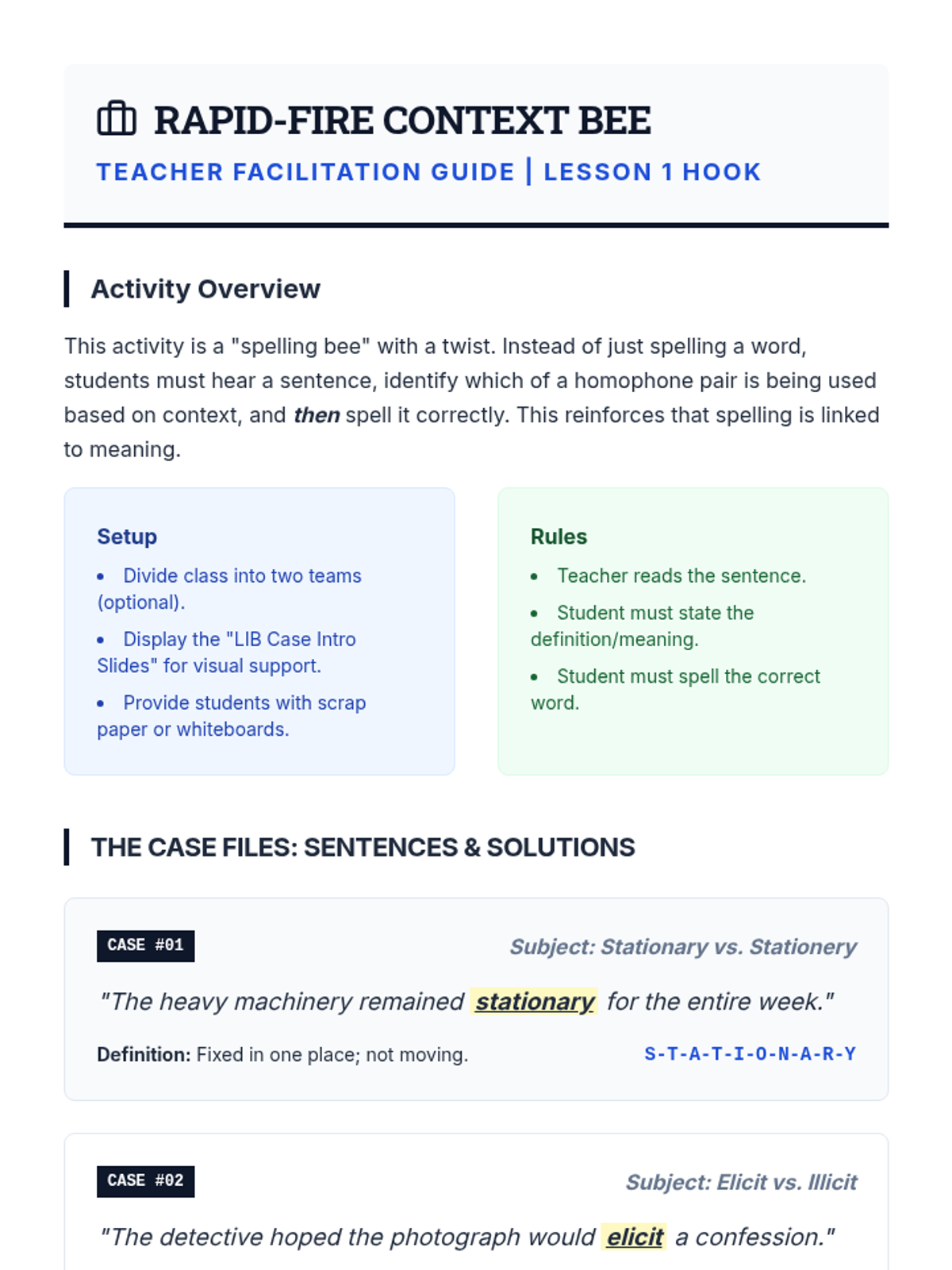
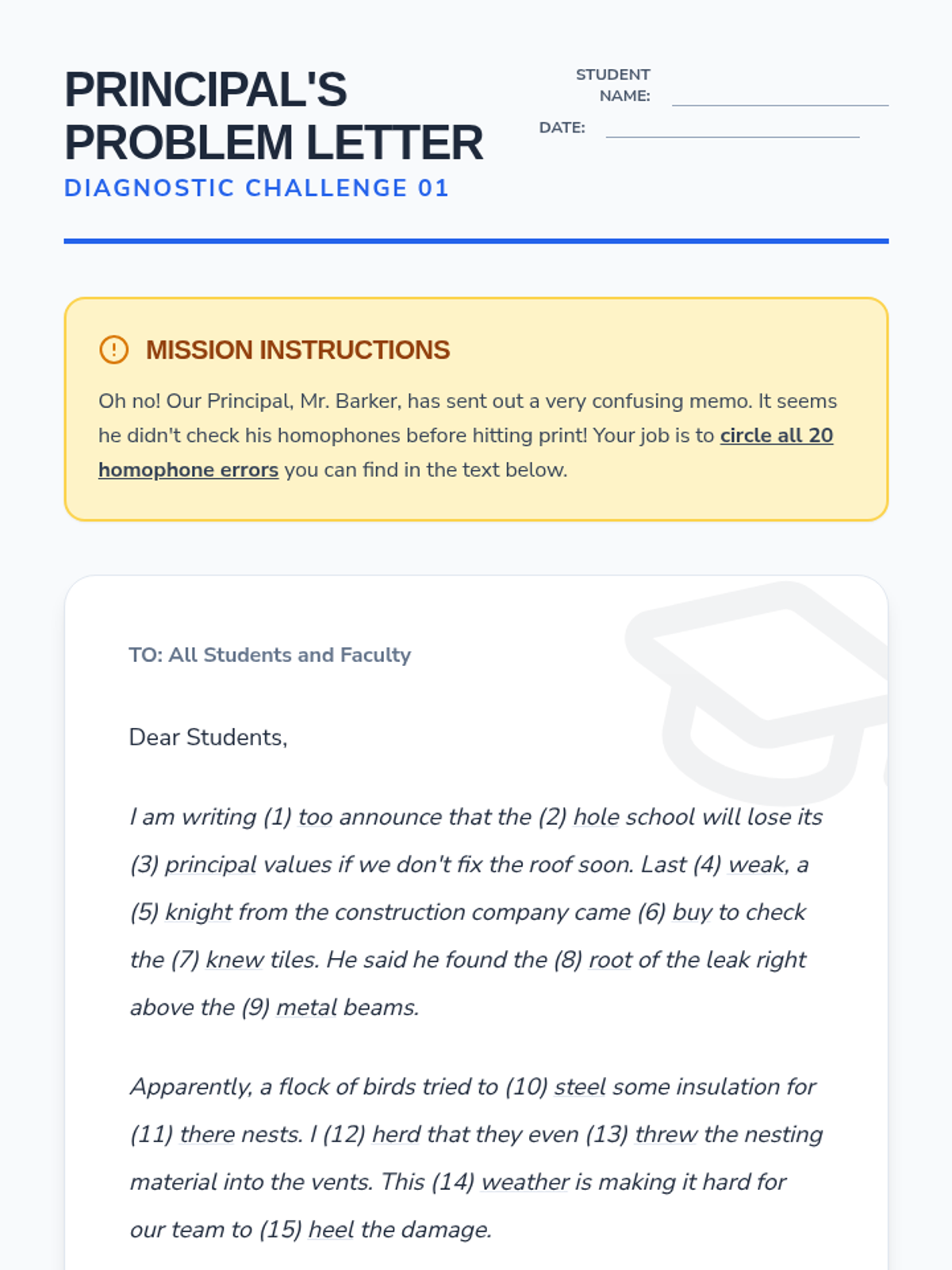
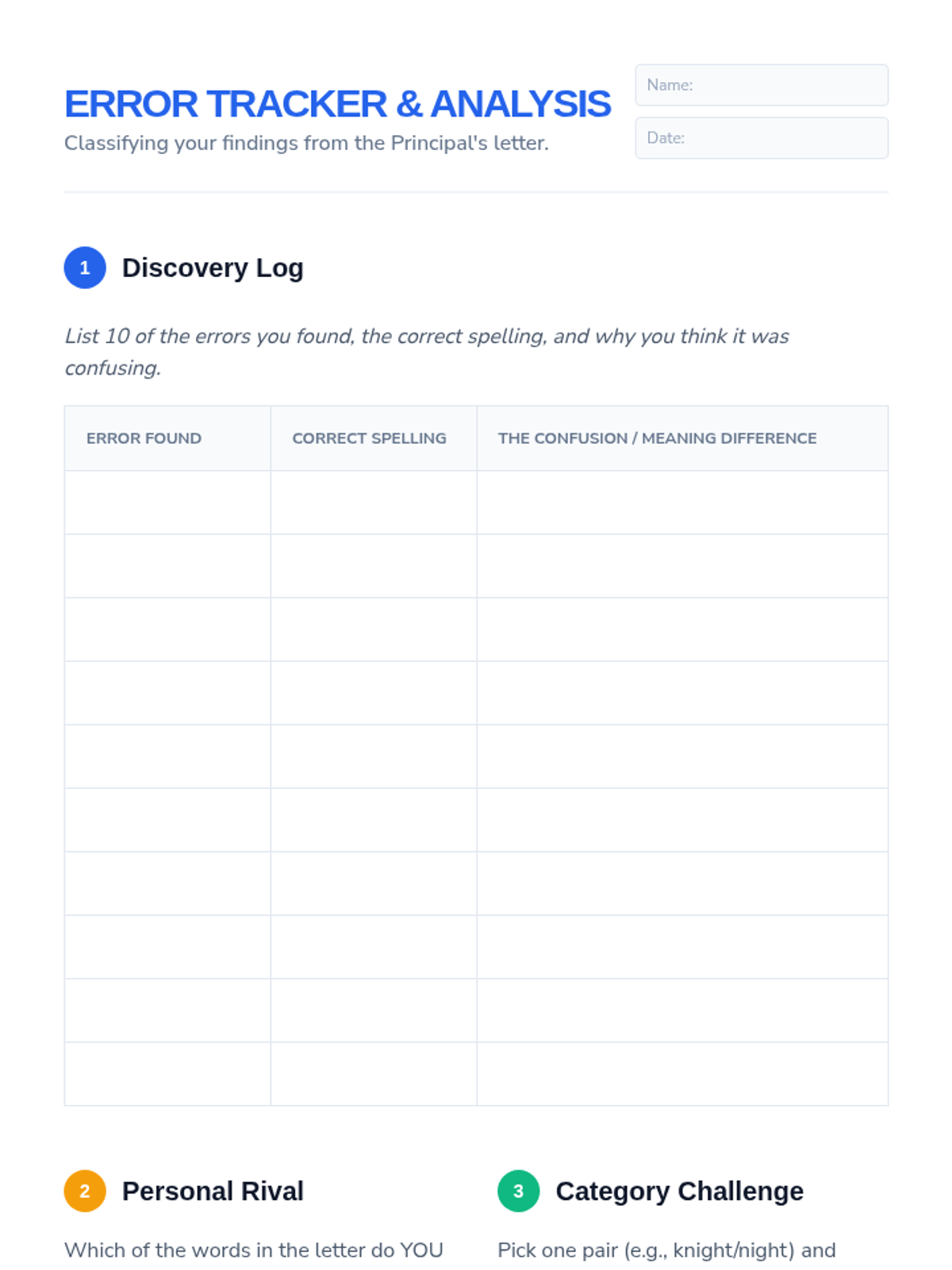
A writing workshop sequence focused on the practical application of homophones in composition. Students move from error identification in anonymous samples to mastering high-frequency homophones and performing peer edits, culminating in a comprehensive proofreading assessment.
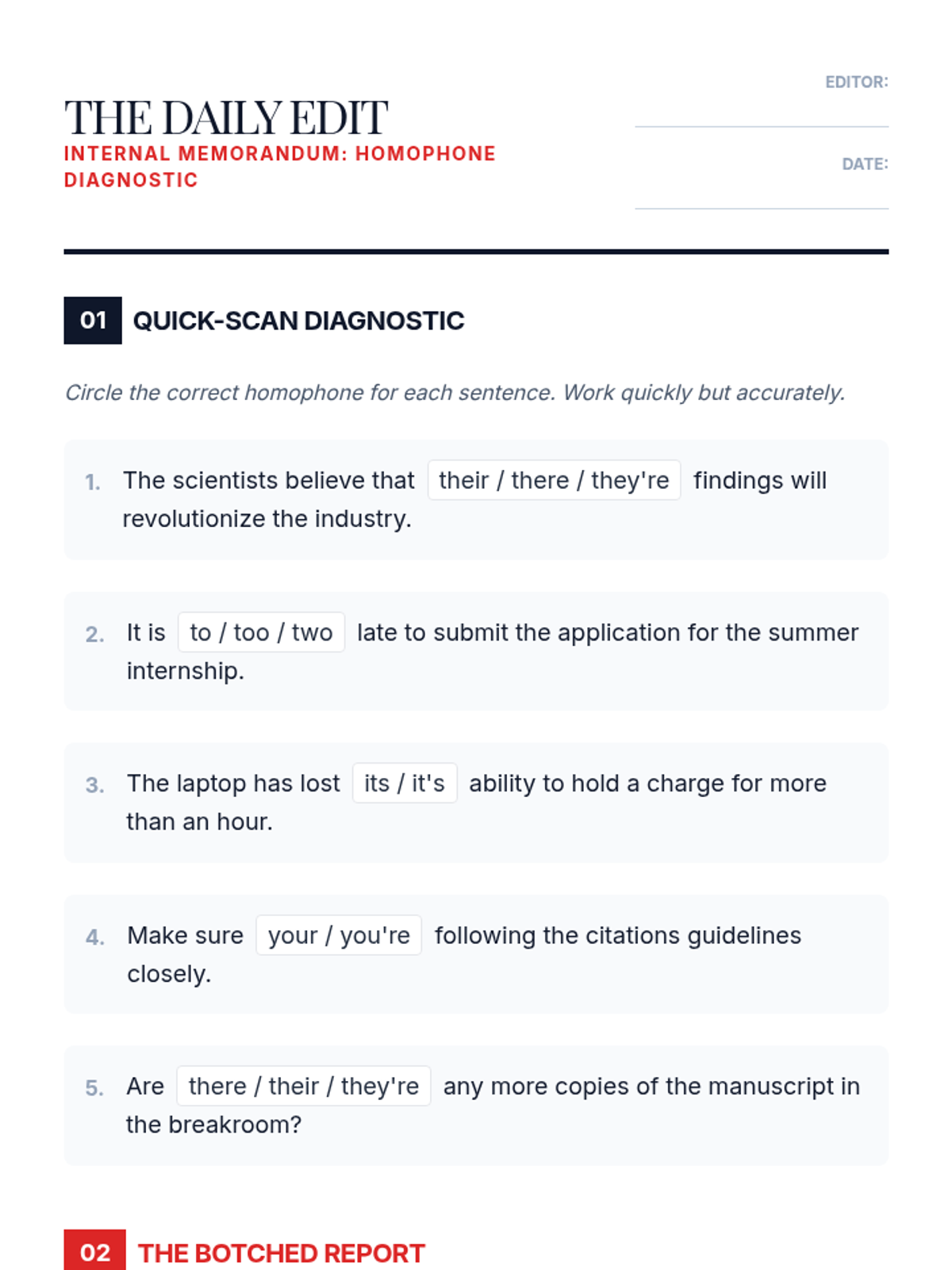
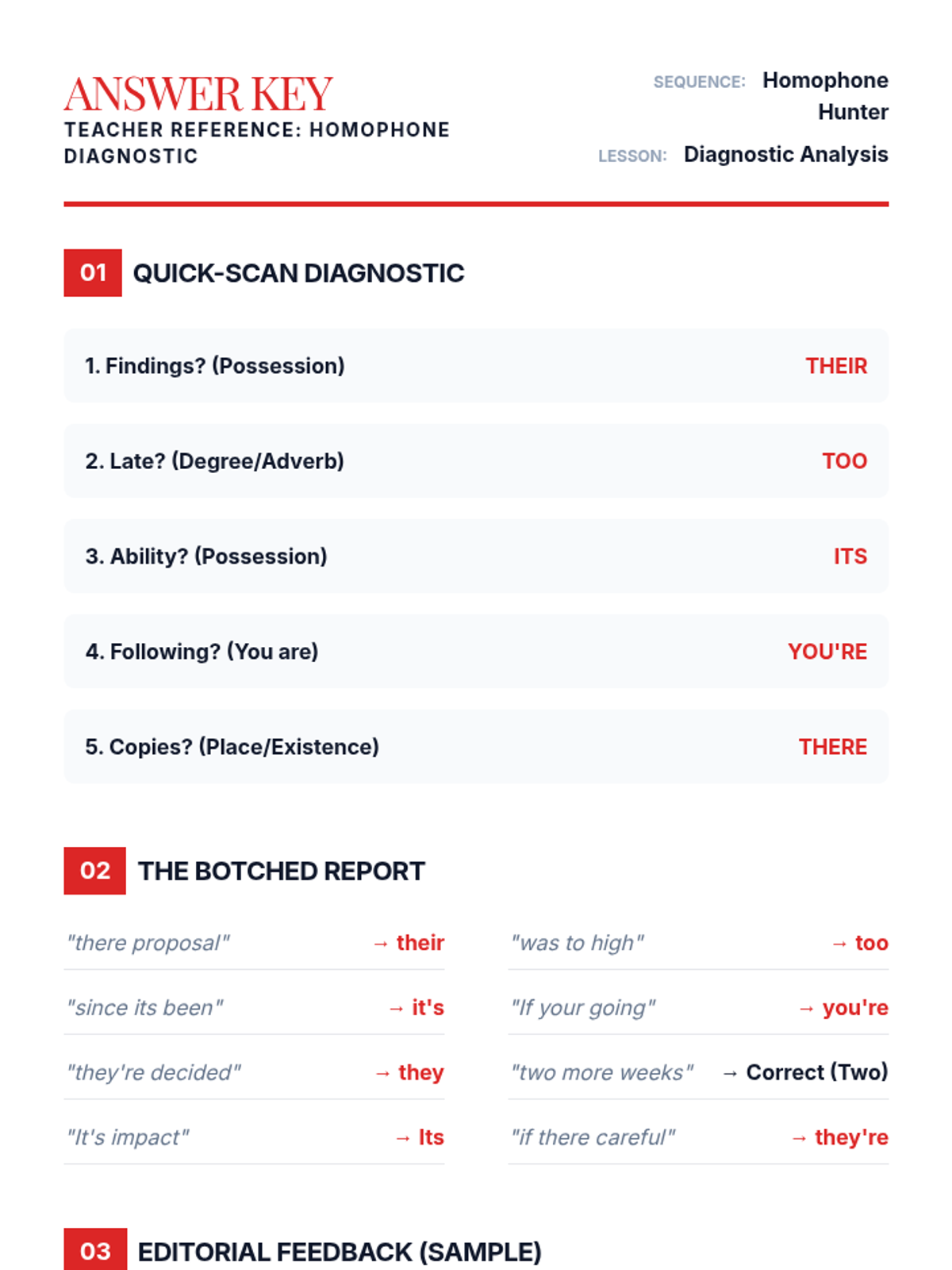
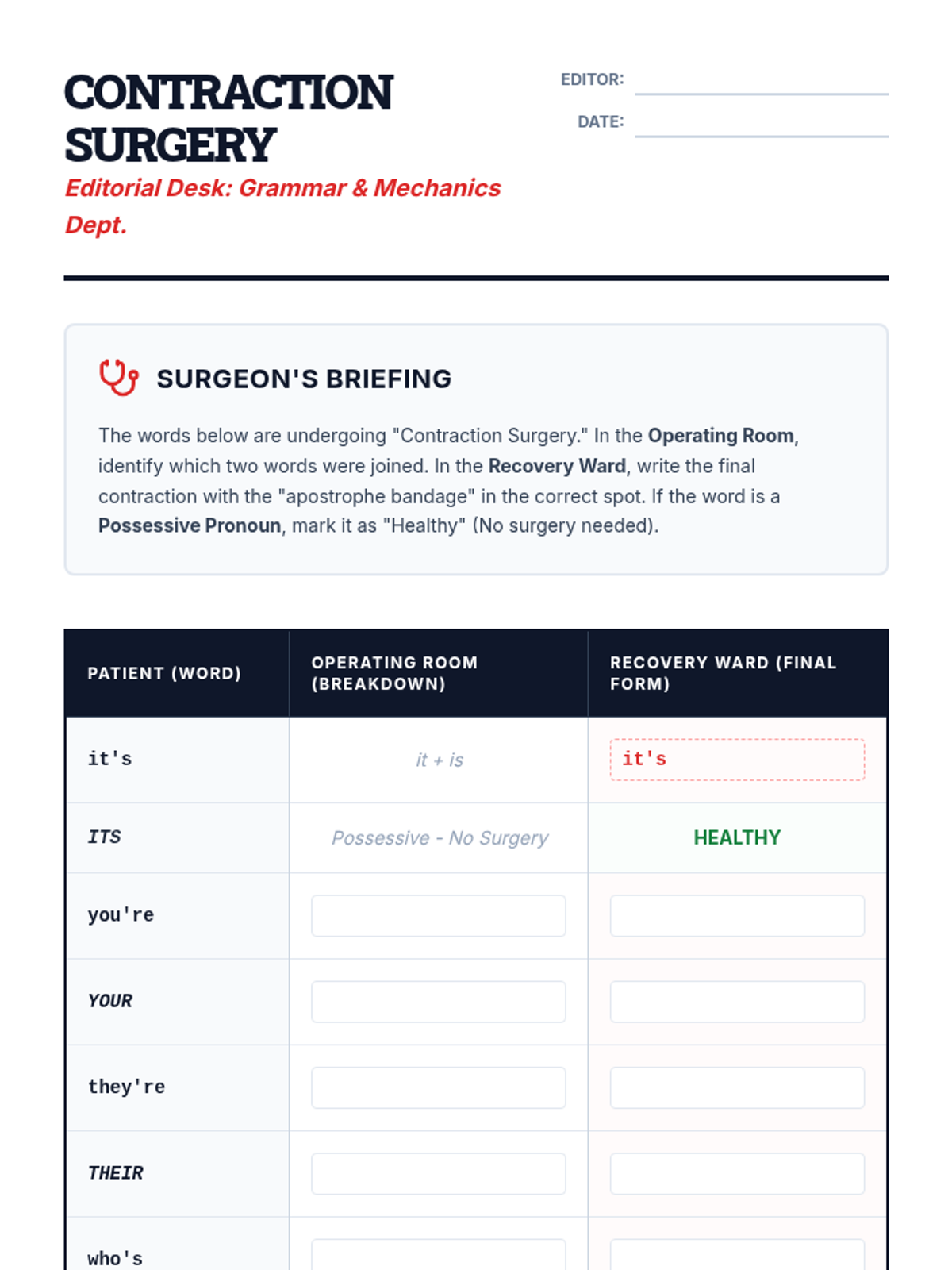
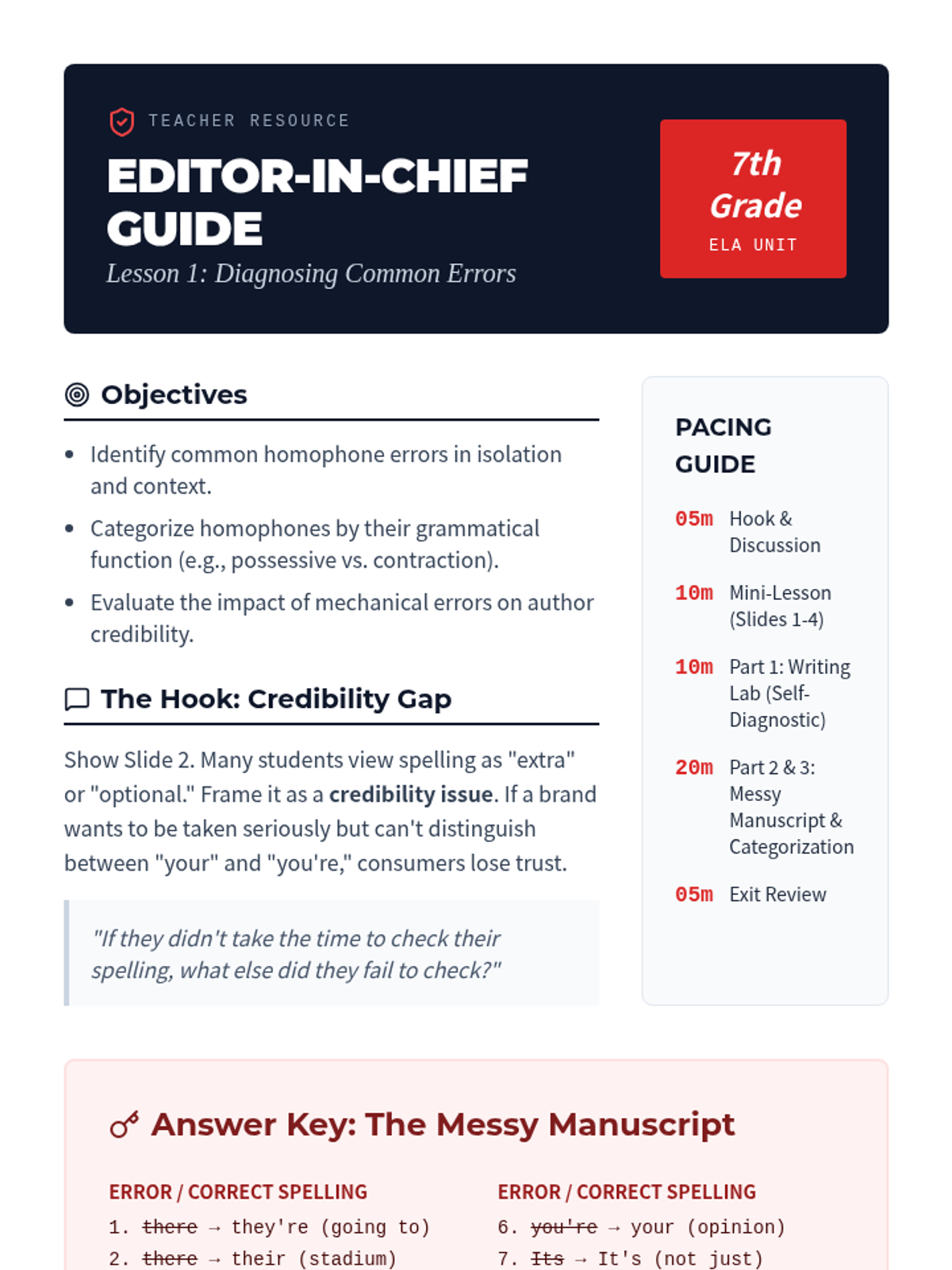
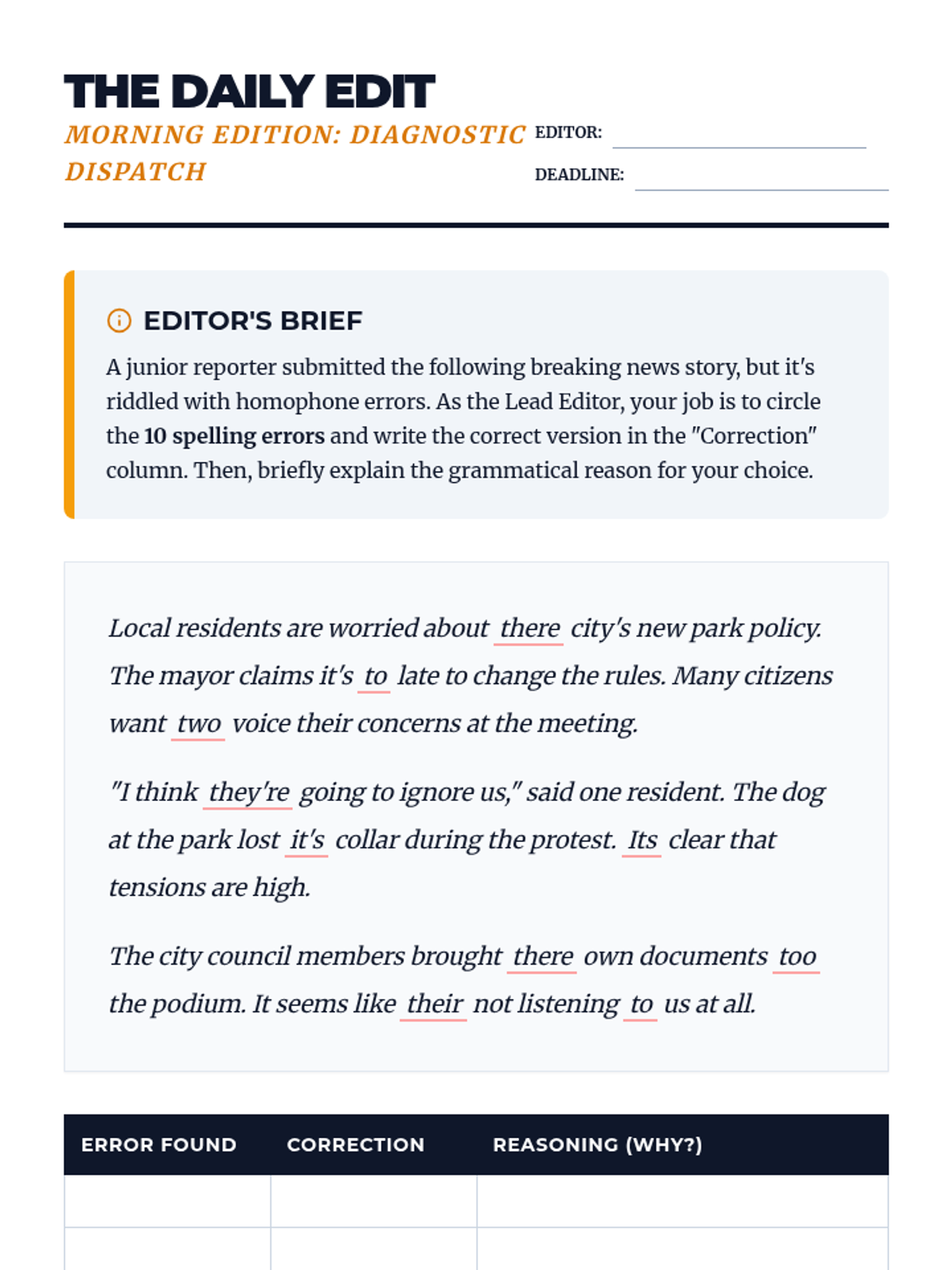
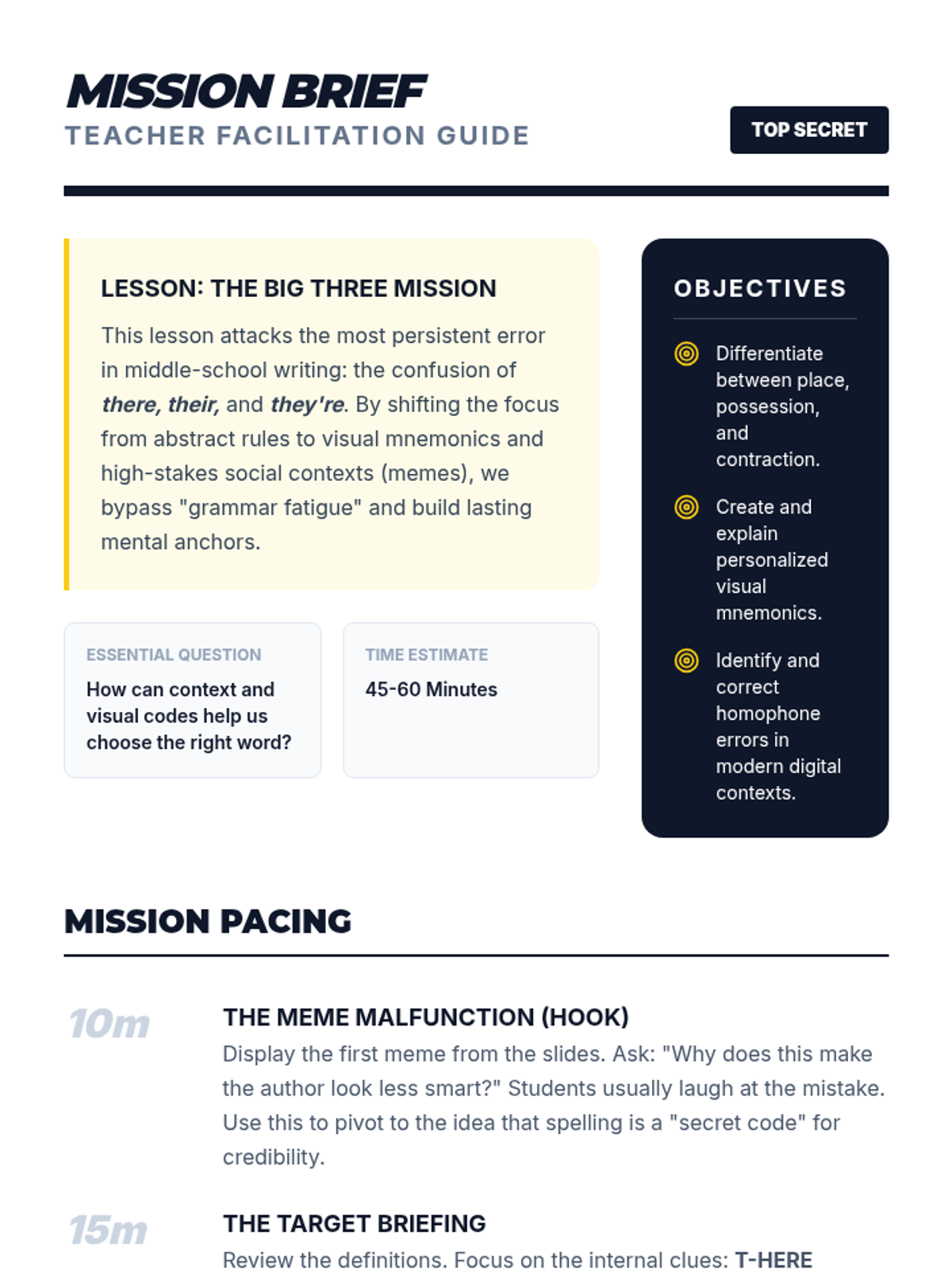
A 5-lesson sequence for 8th-grade students focused on mastering high-frequency homophones (their/there/they're, to/too/two, its/it's, your/you're) in academic writing. Students progress from diagnostic analysis to peer editing, emphasizing how grammatical accuracy impacts credibility.
A rigorous writer's workshop sequence targeting homophone accuracy in formal writing. Students master common and advanced homophones through grammatical analysis and peer-editing cycles.
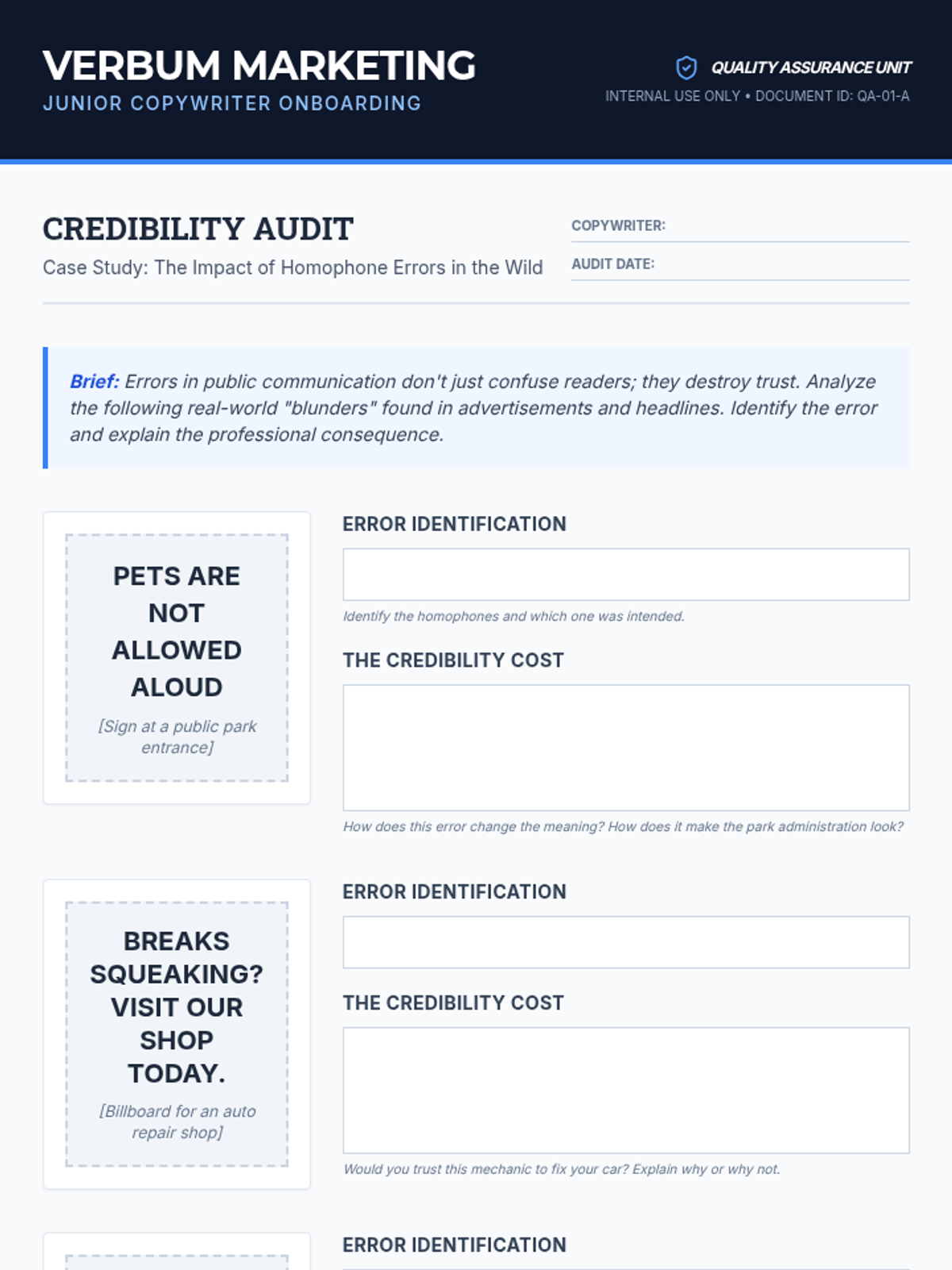
A simulation-based ELA sequence where 7th-grade students act as junior copywriters for a marketing firm, learning the professional importance of homophone and homonym precision through real-world case studies and document editing.
This sequence focuses on the practical application of homophone mastery through the lens of editing and professional communication. Students diagnose errors, master high-frequency triads, tackle advanced vocabulary, and apply their skills in real-world professional contexts before concluding with a peer-editing workshop.
A comprehensive 8th-grade grammar sequence focusing on homophones and confused words through an editorial newsroom theme. Students progress from basic diagnostic checks to advanced suffix analysis, concluding with the creation of a personalized professional style guide.
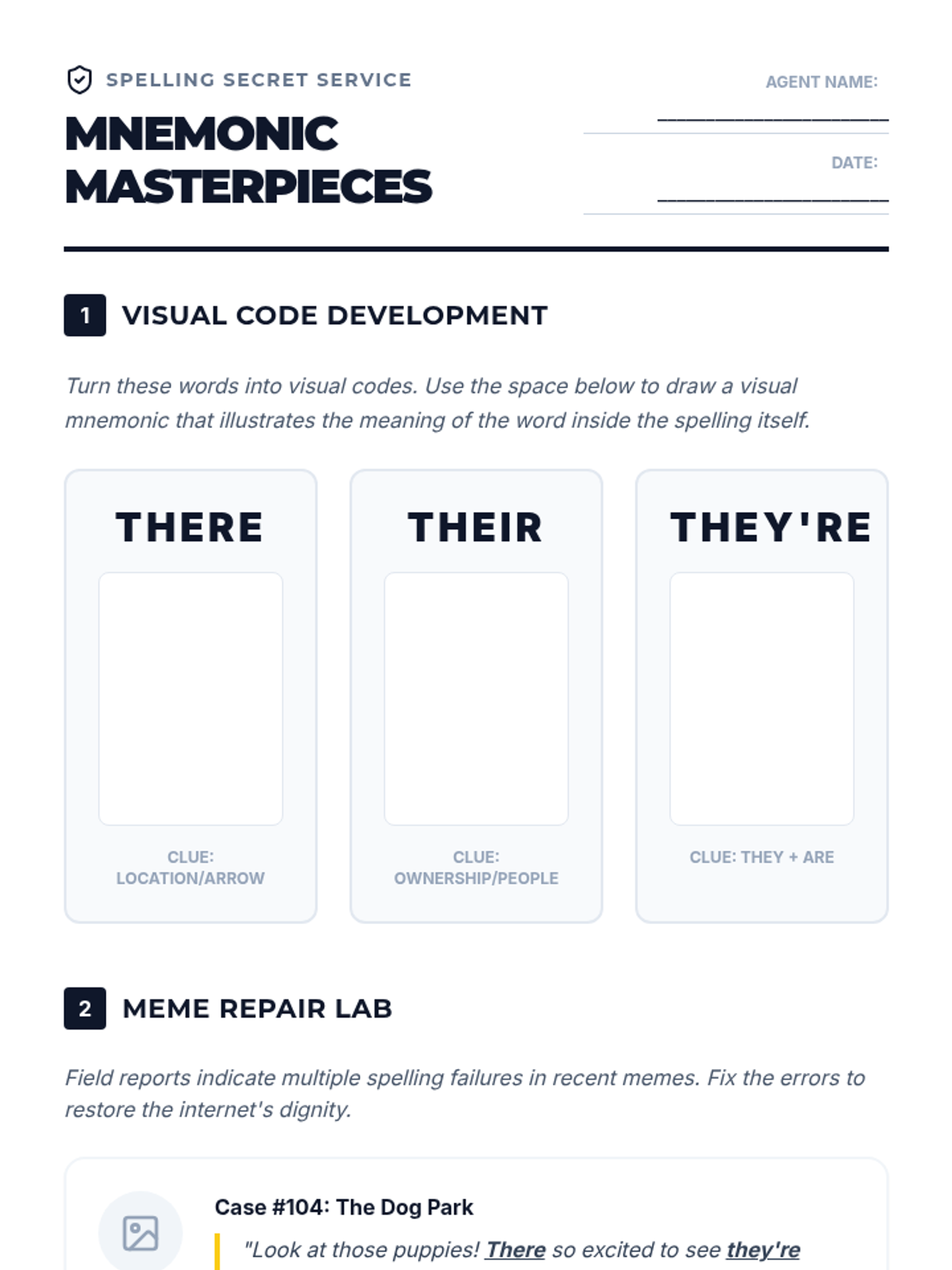
A high-energy, game-based sequence for 6th-grade students focusing on homophones, contractions, and tricky spelling patterns like the schwa sound. Students use visual mnemonics and context-based strategies to master frequent spelling errors.
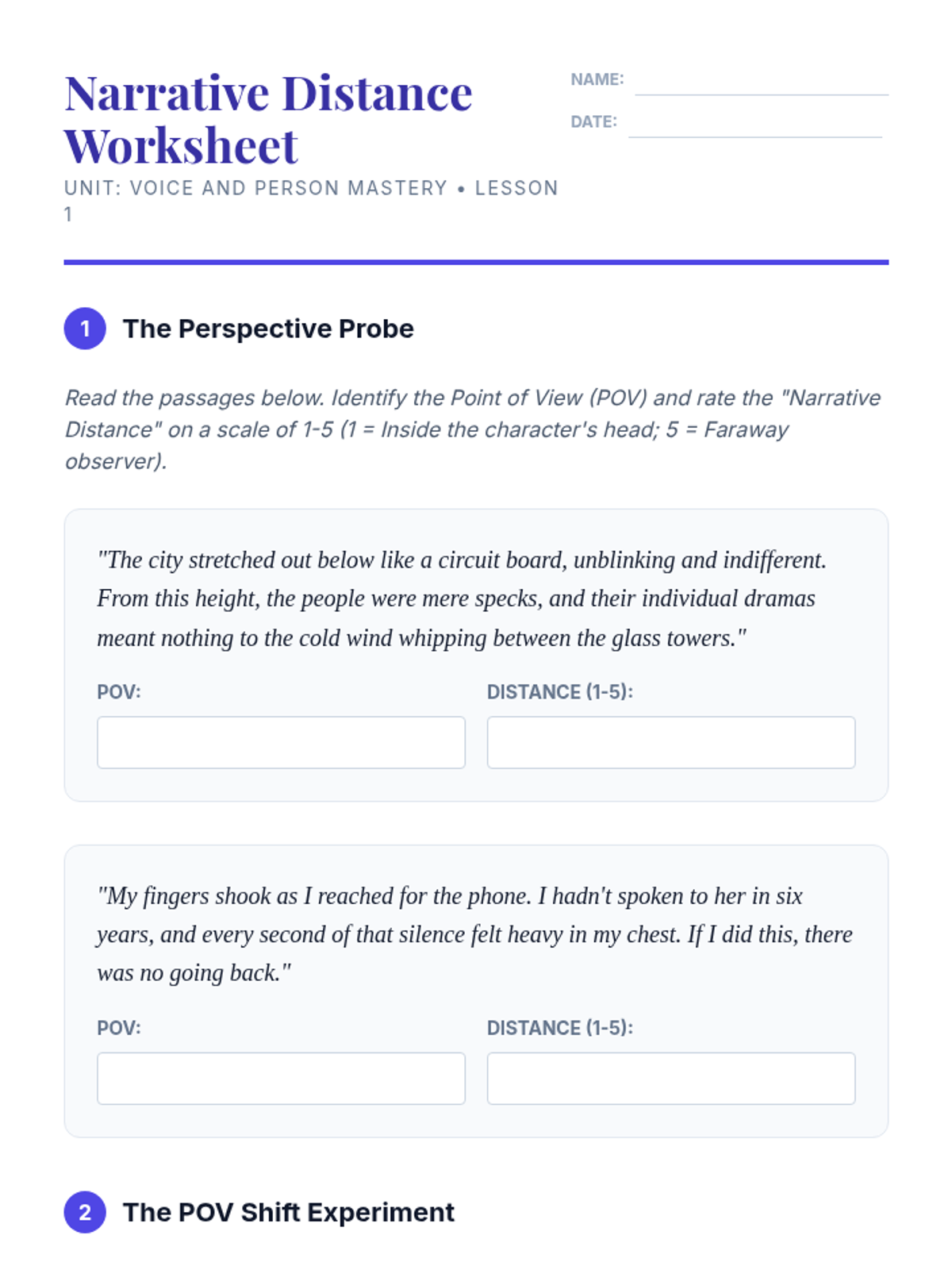
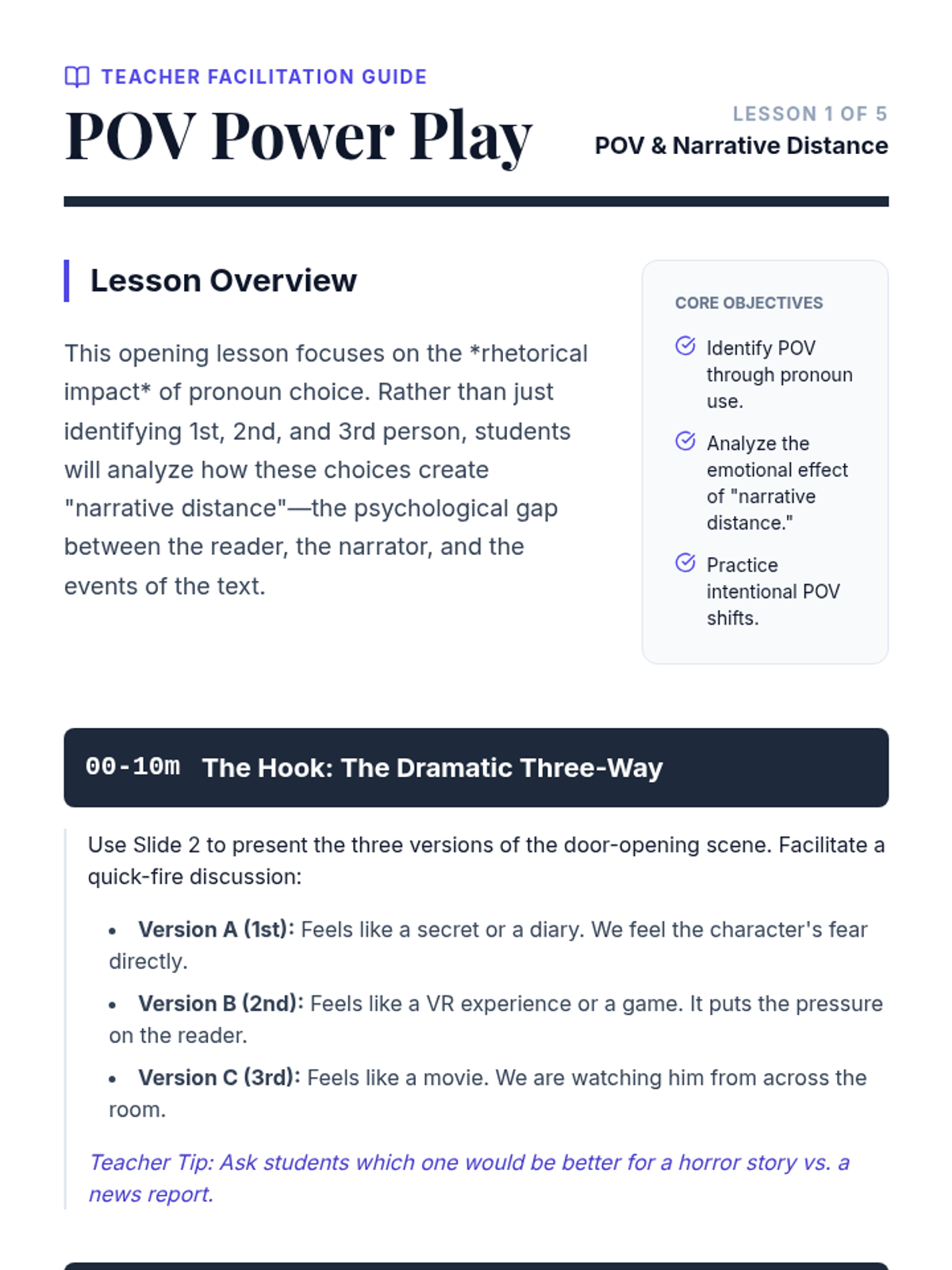
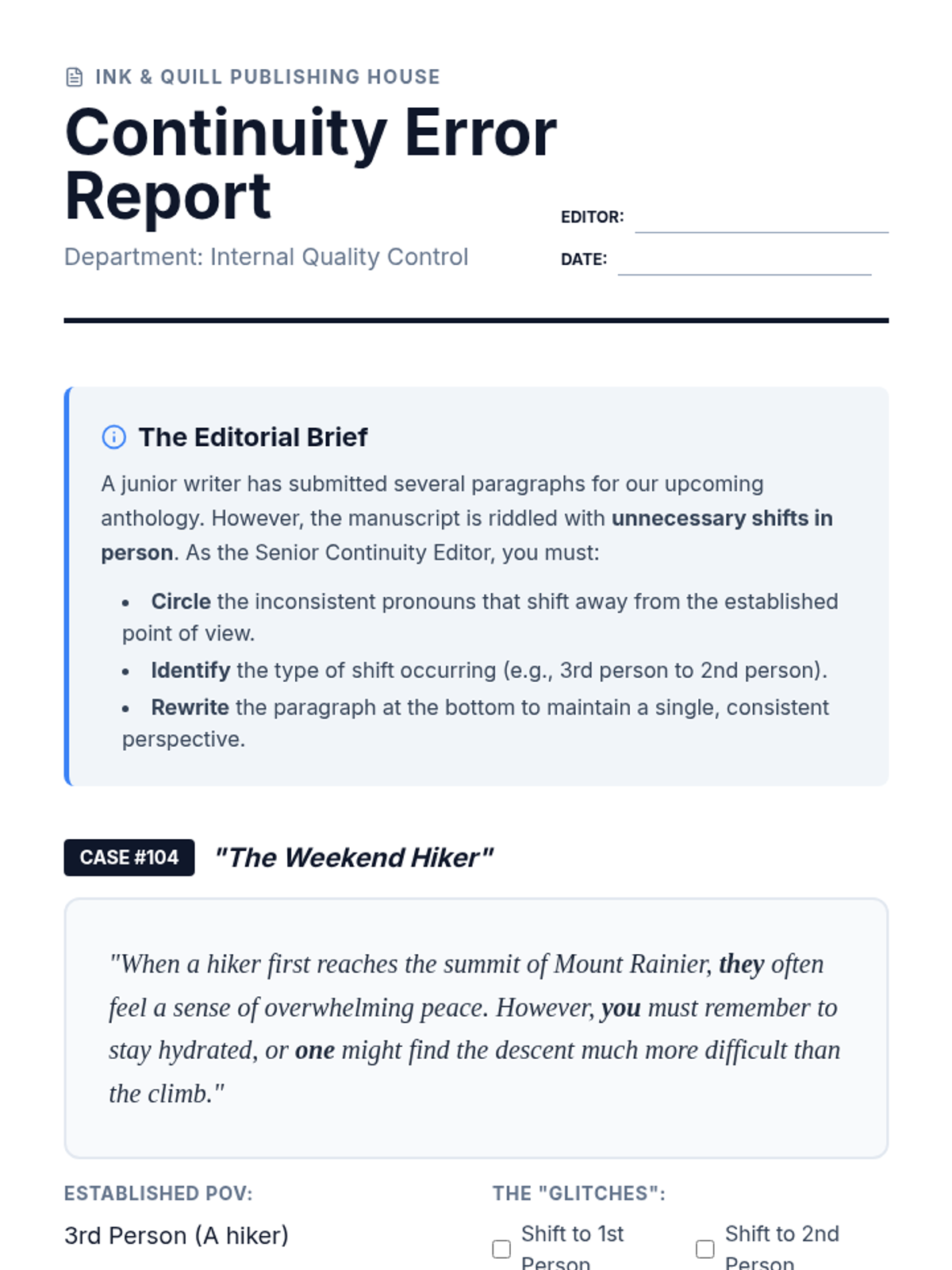
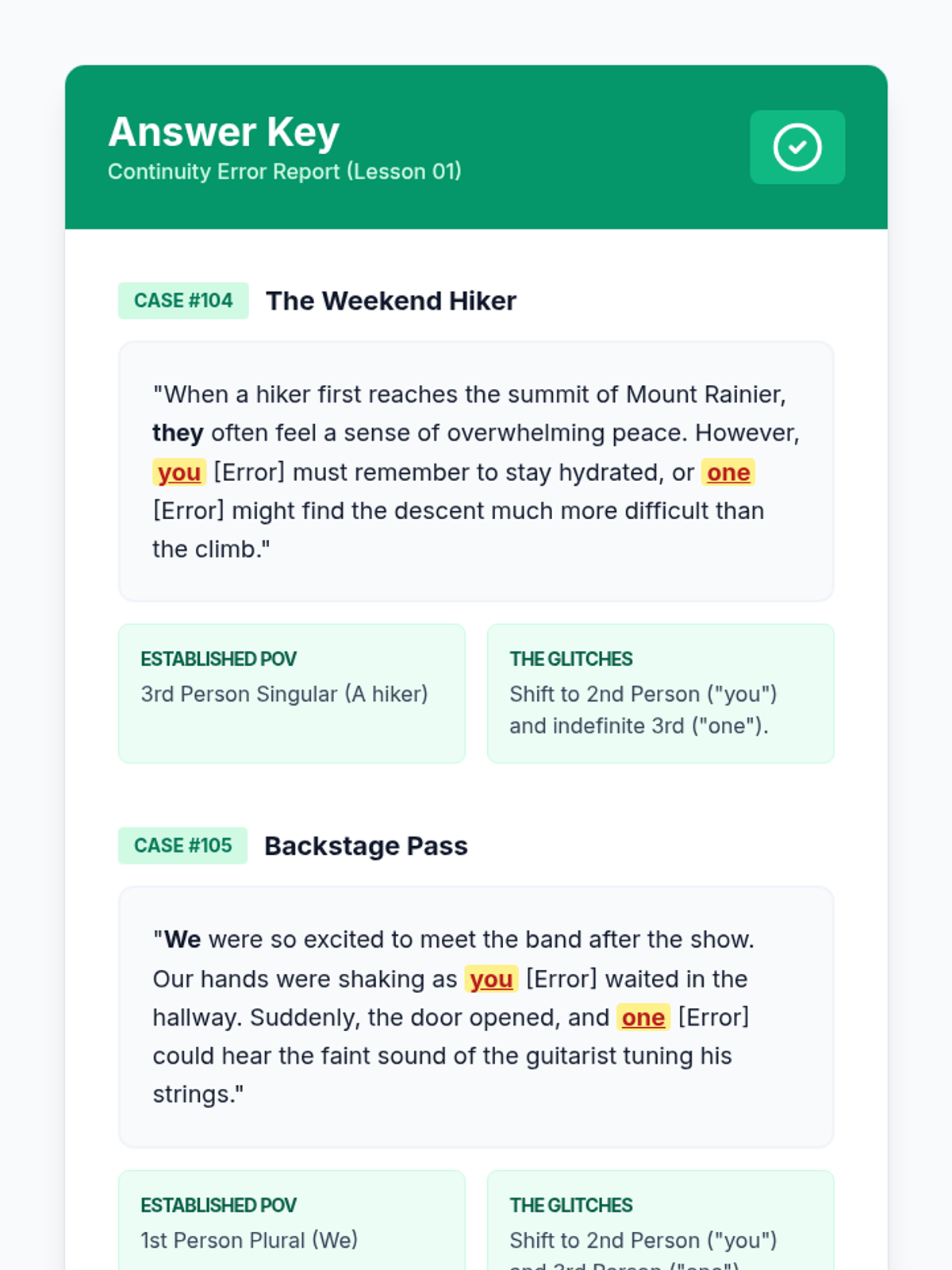
This sequence explores the stylistic impact of pronoun choice, specifically focusing on consistency in person (point of view). Students analyze how shifting from first to second or third person changes the tone and distance of a piece, moving from identifying awkward shifts to making intentional choices in narrative and argumentative writing.
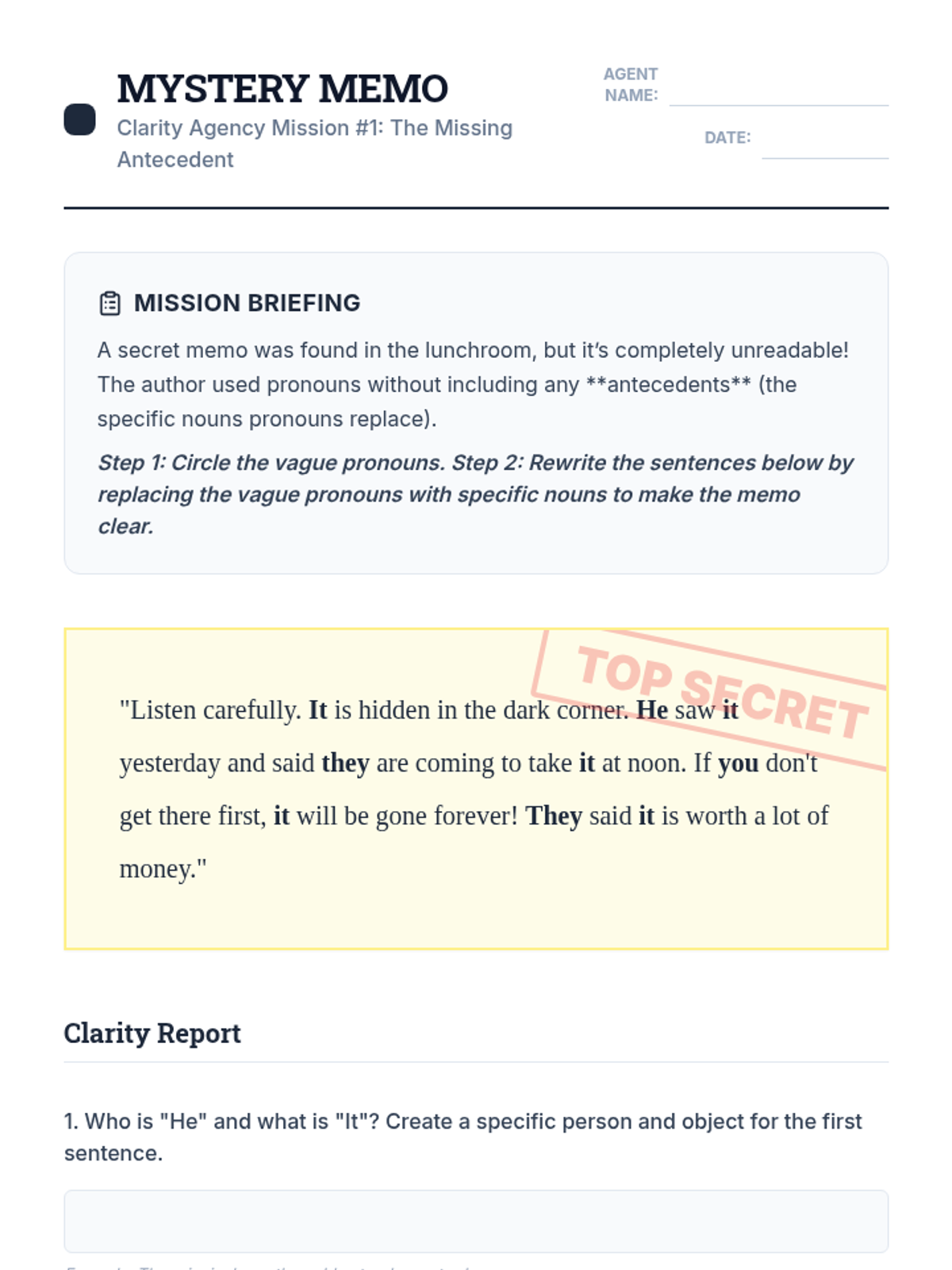
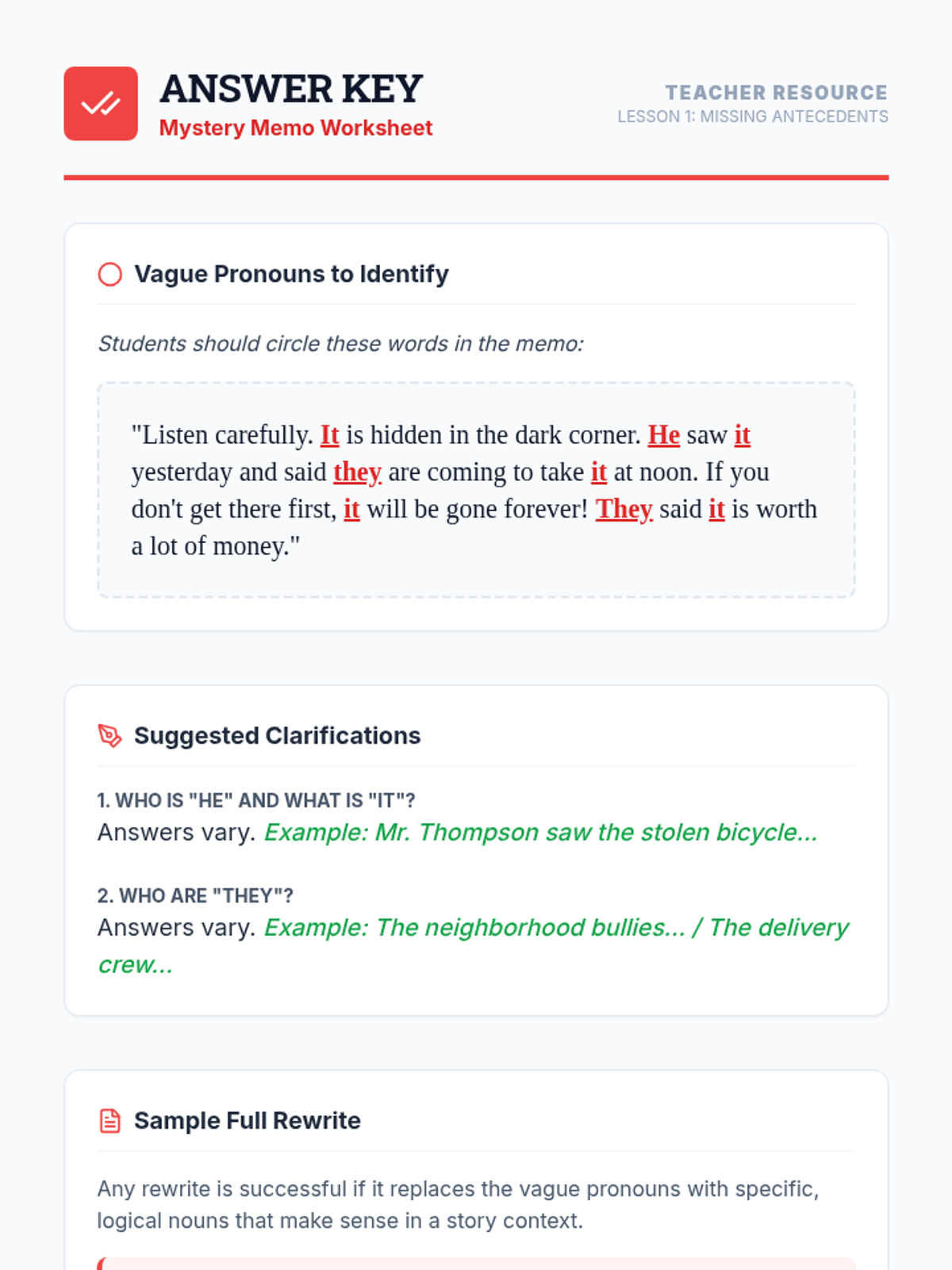
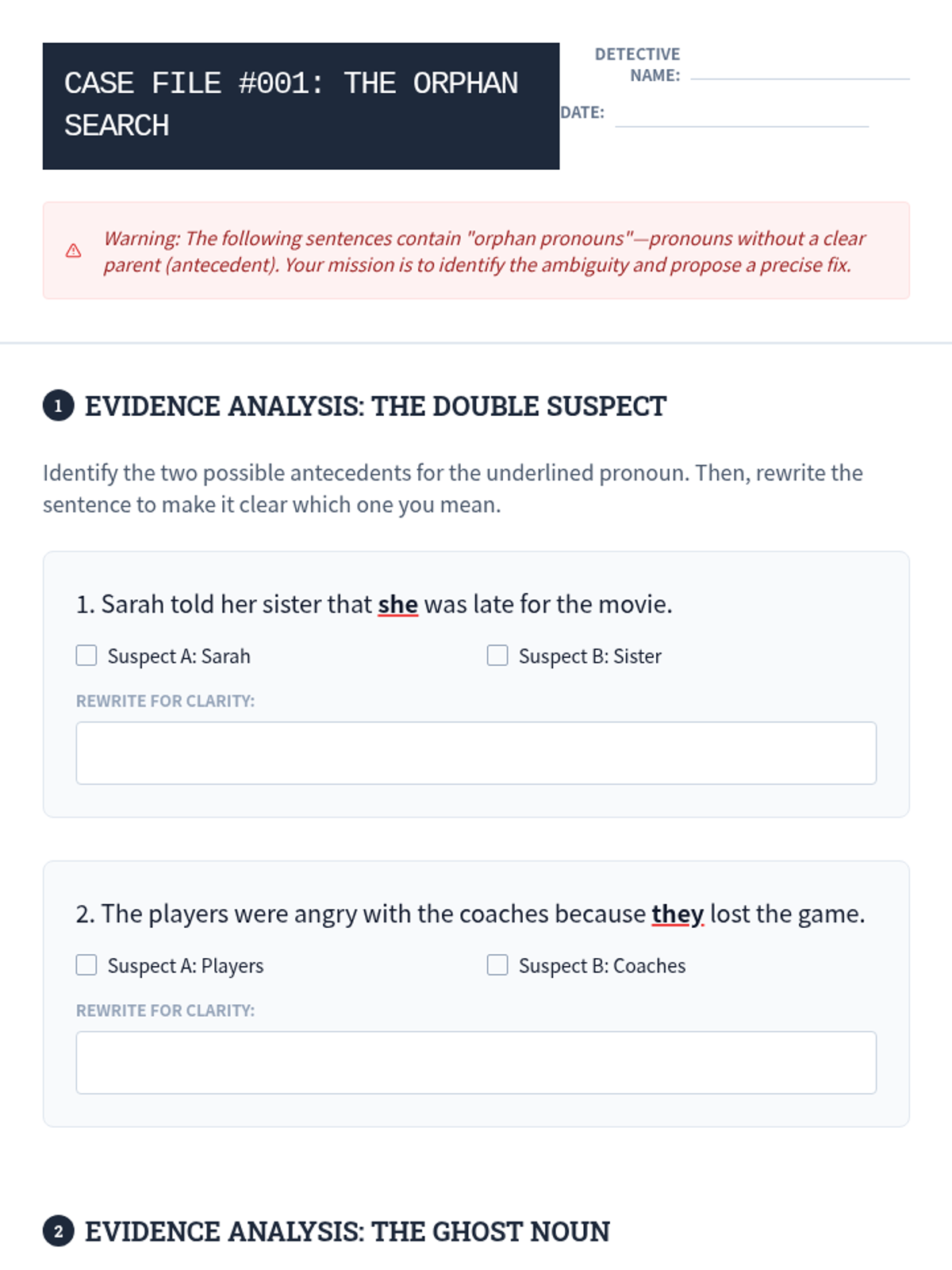
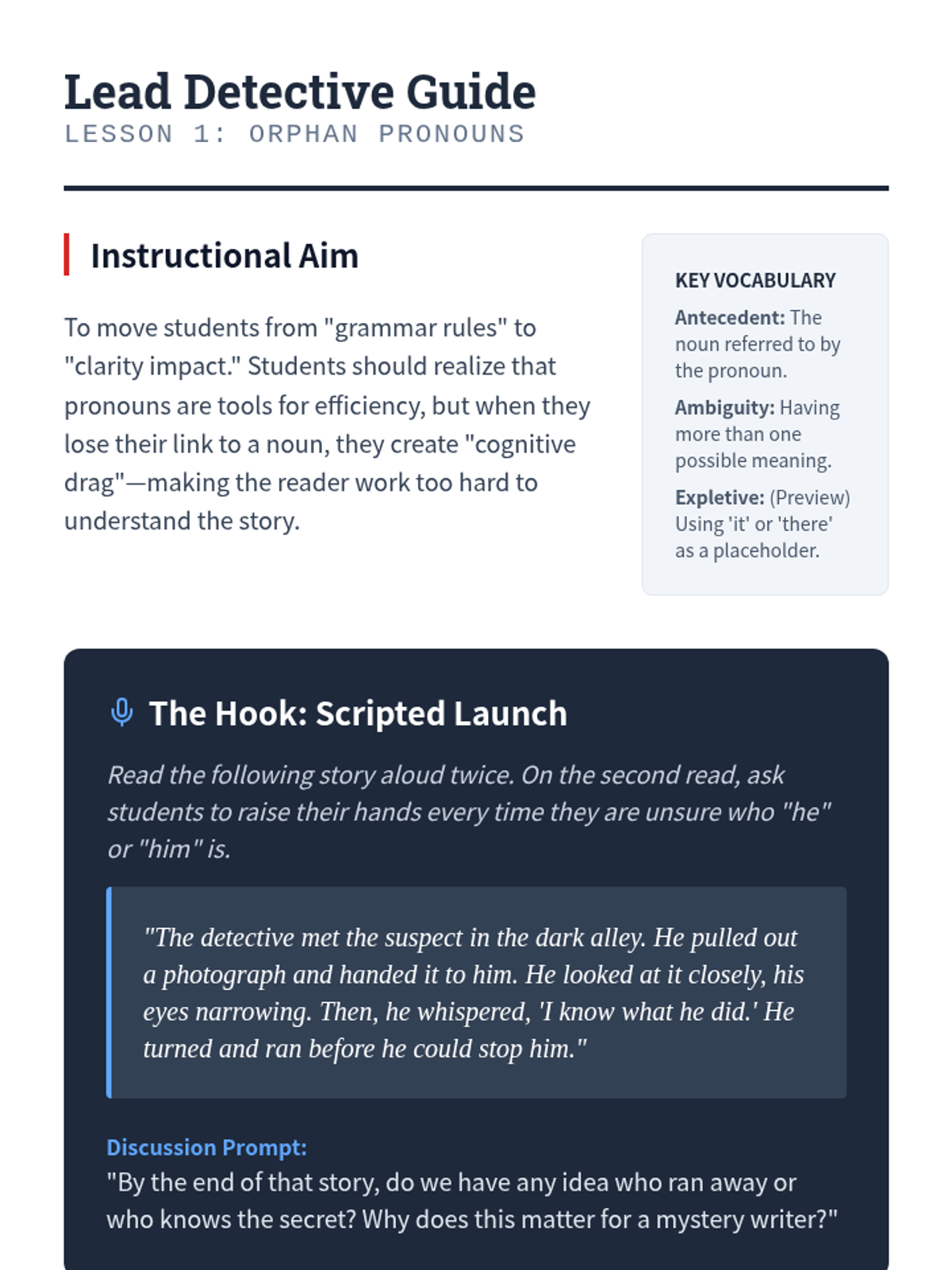
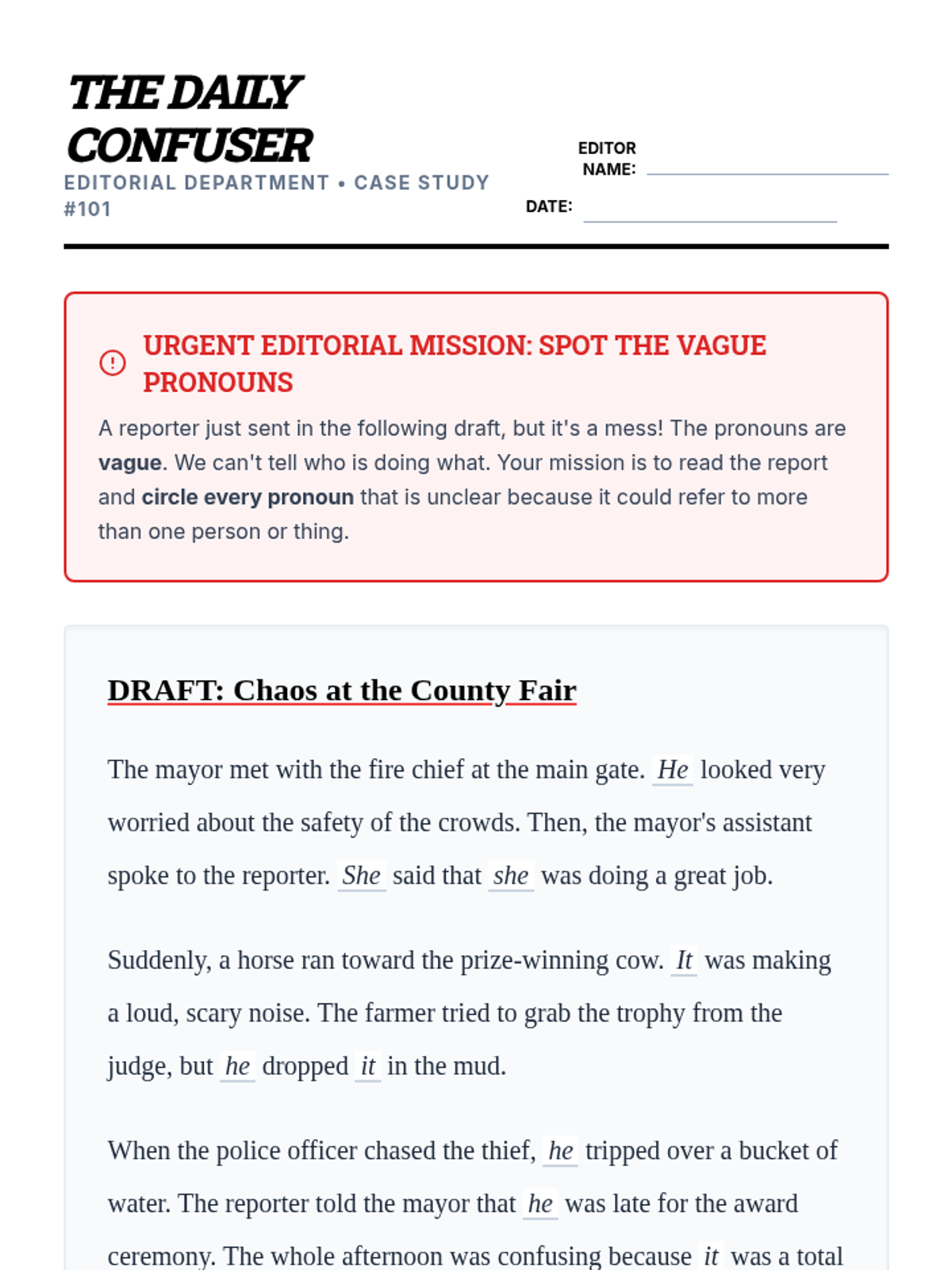
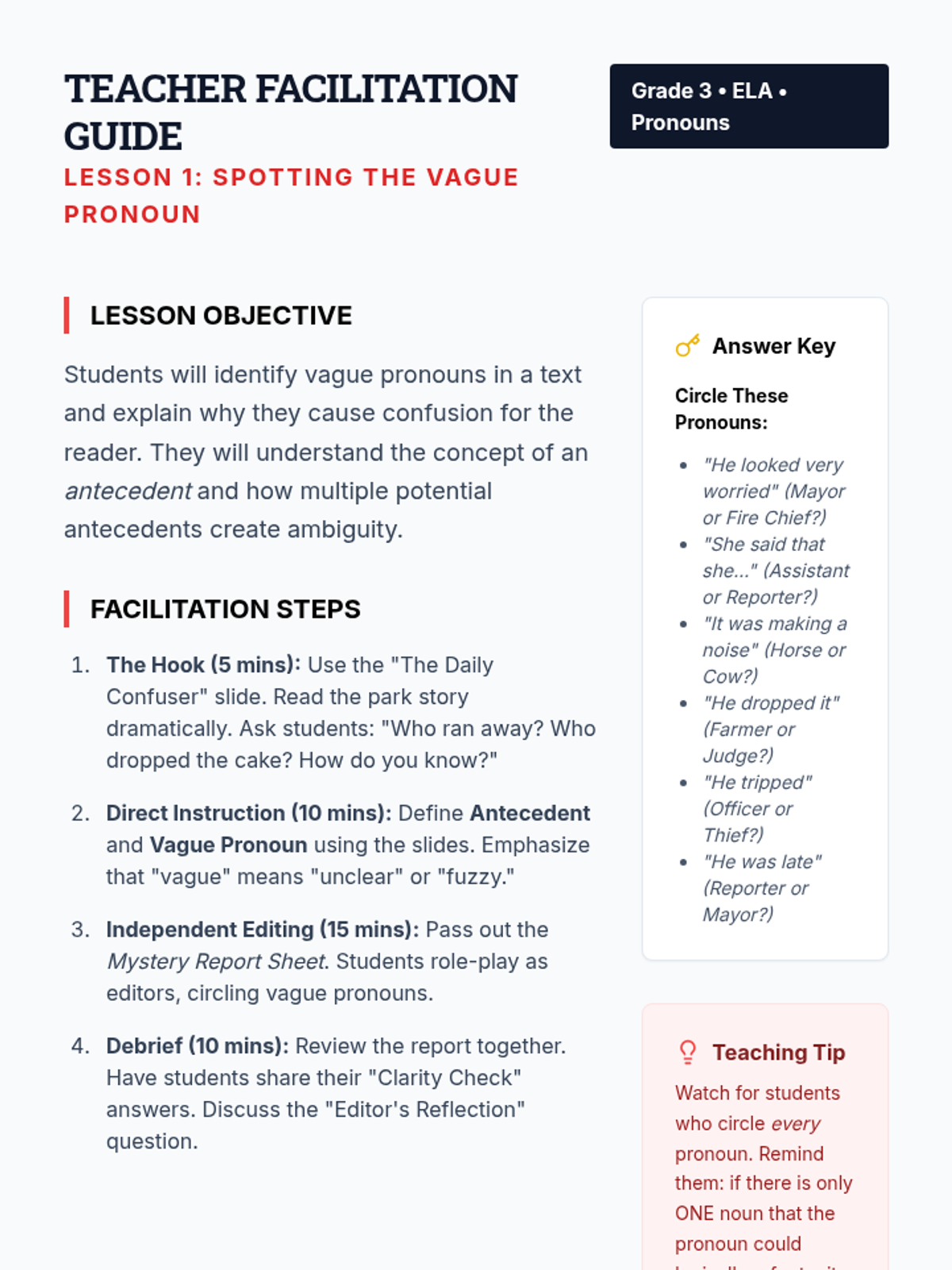
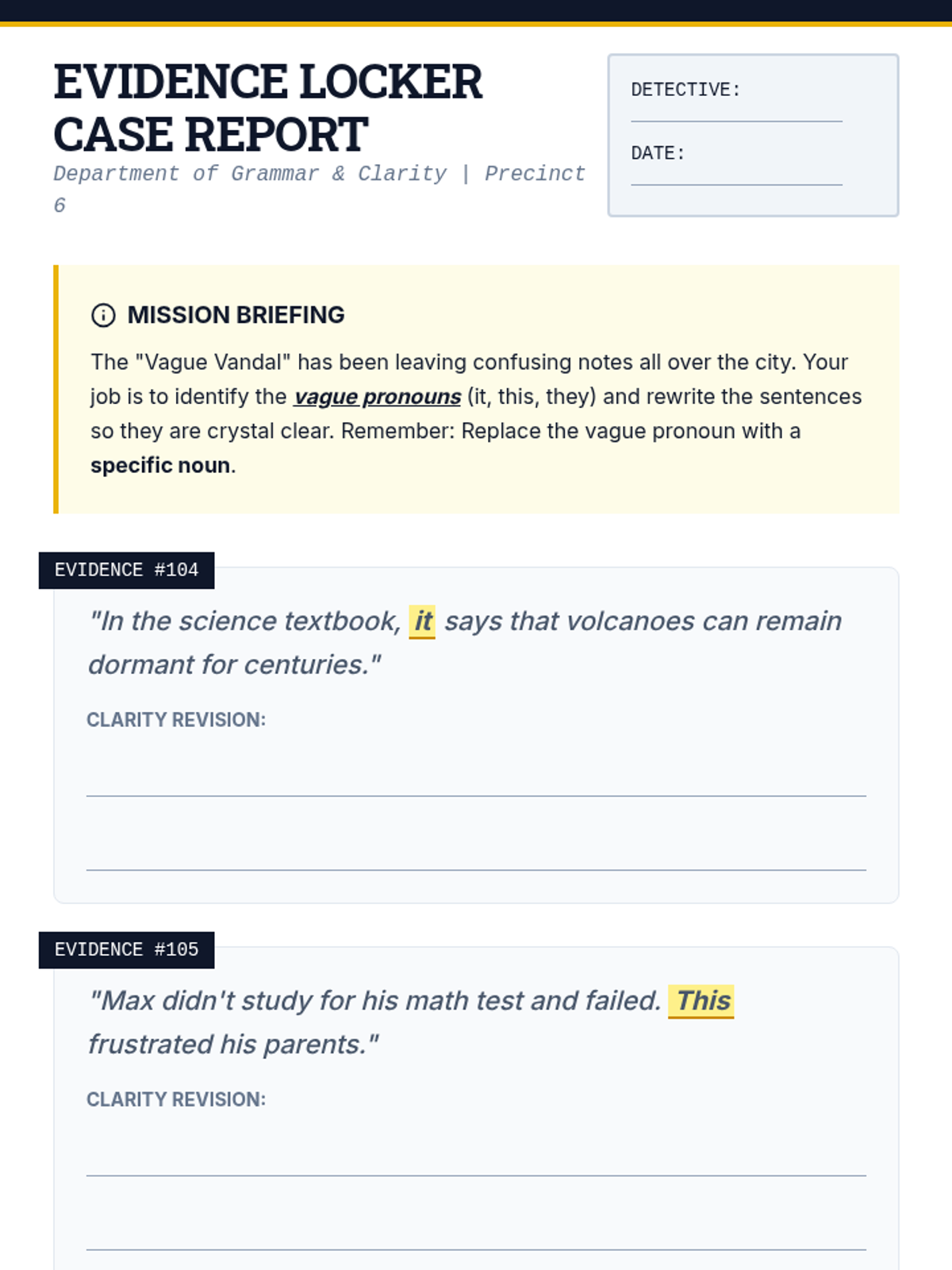
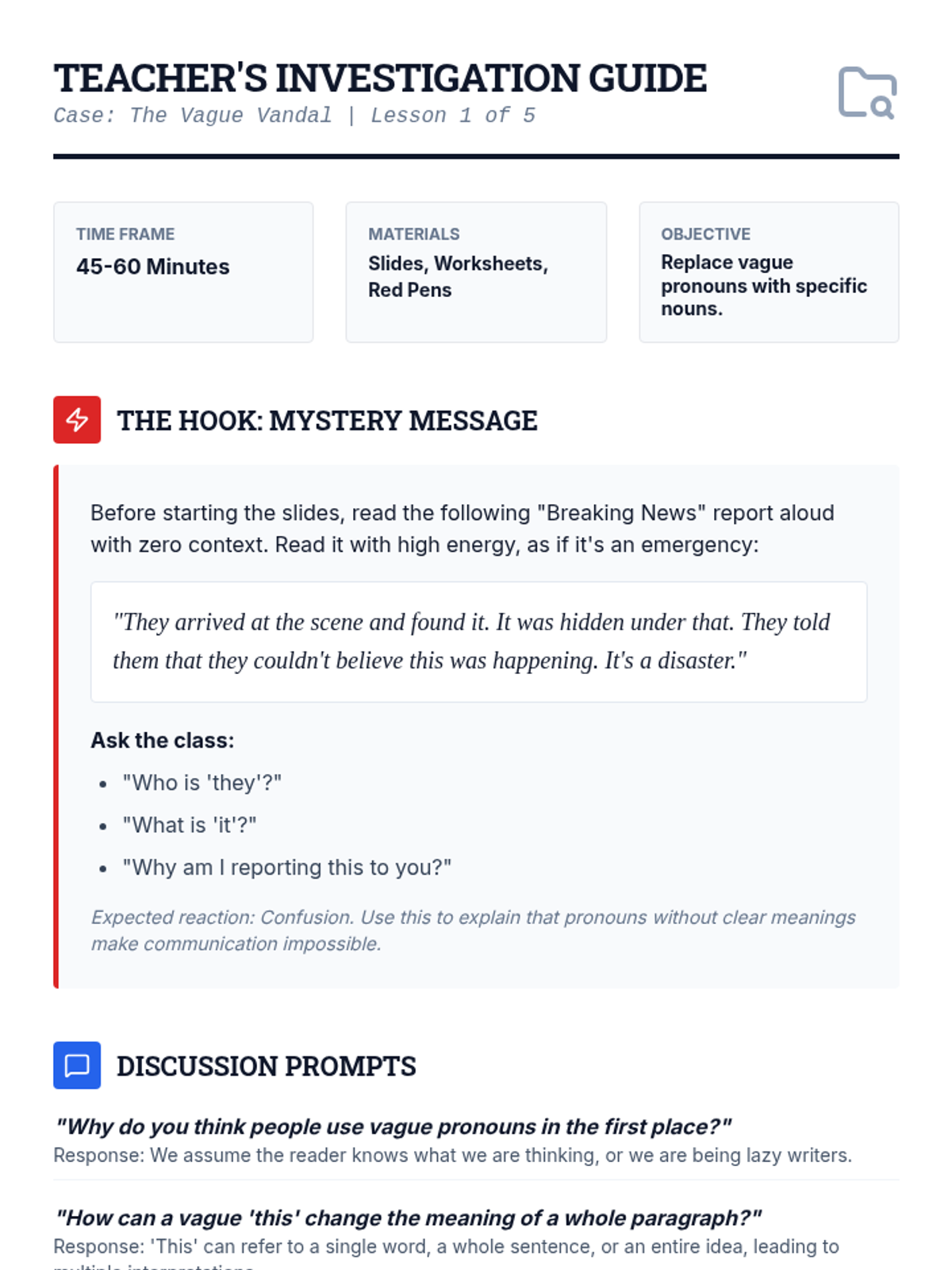
A detective-themed ELA sequence where students become 'Clarity Agents' to identify and fix vague or ambiguous pronoun references in their writing.
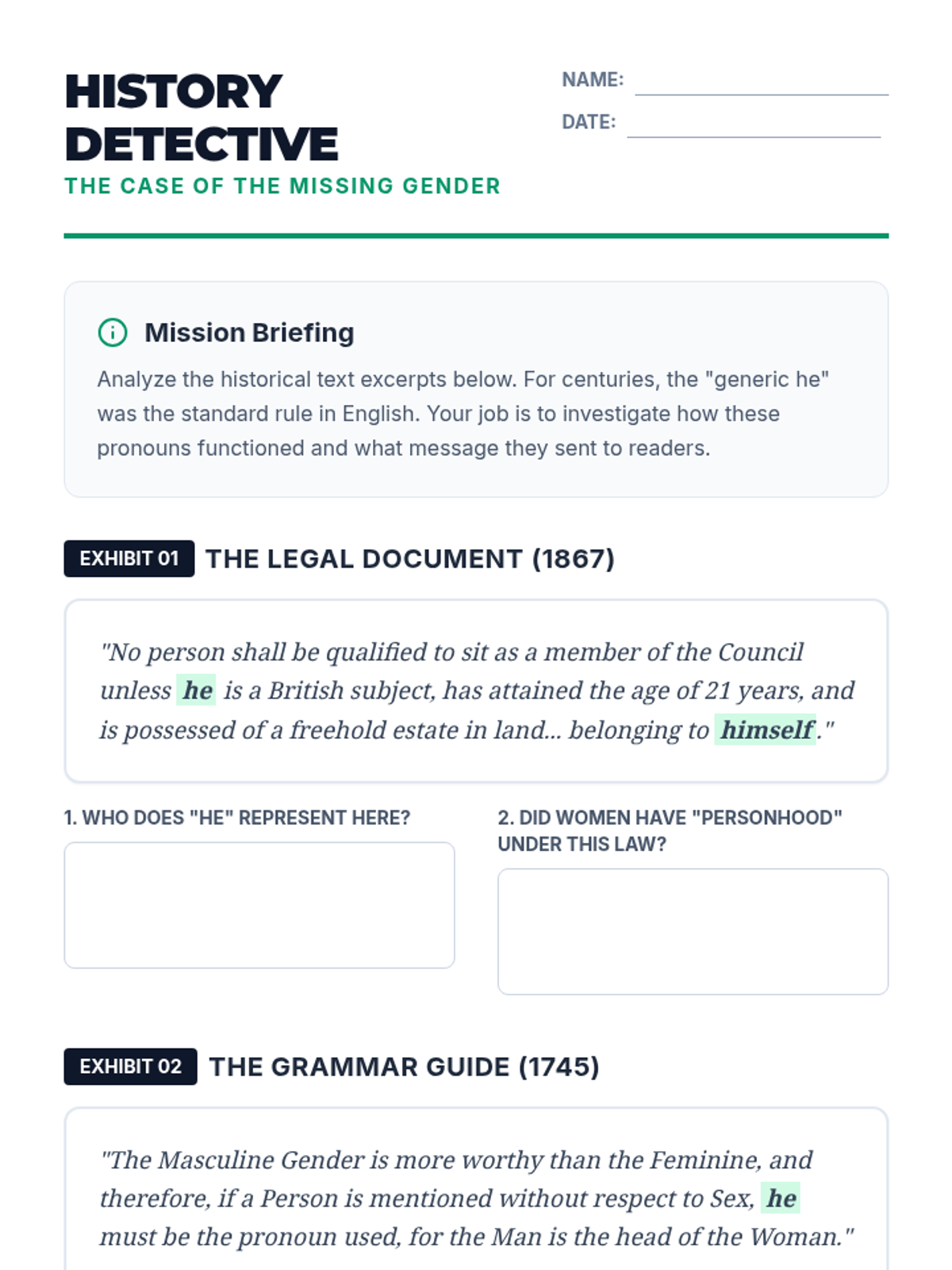
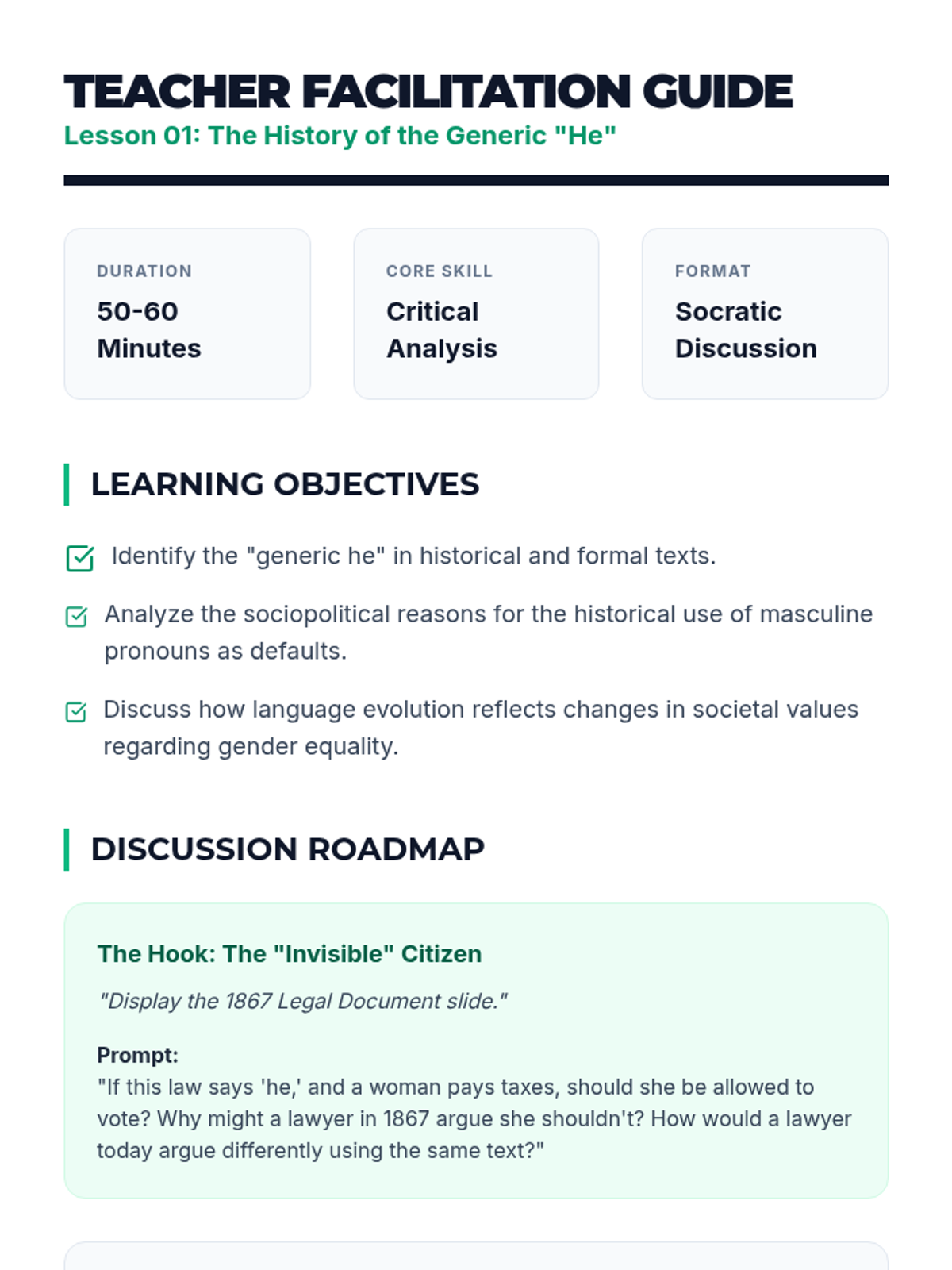
This 7th-grade sequence explores the evolution of pronouns, focusing on the historical use of the generic 'he,' the transition to 'he or she,' and the modern adoption of the singular 'they.' Students learn to balance grammatical precision with inclusive language through strategies like pluralizing antecedents and navigating various academic style guides.
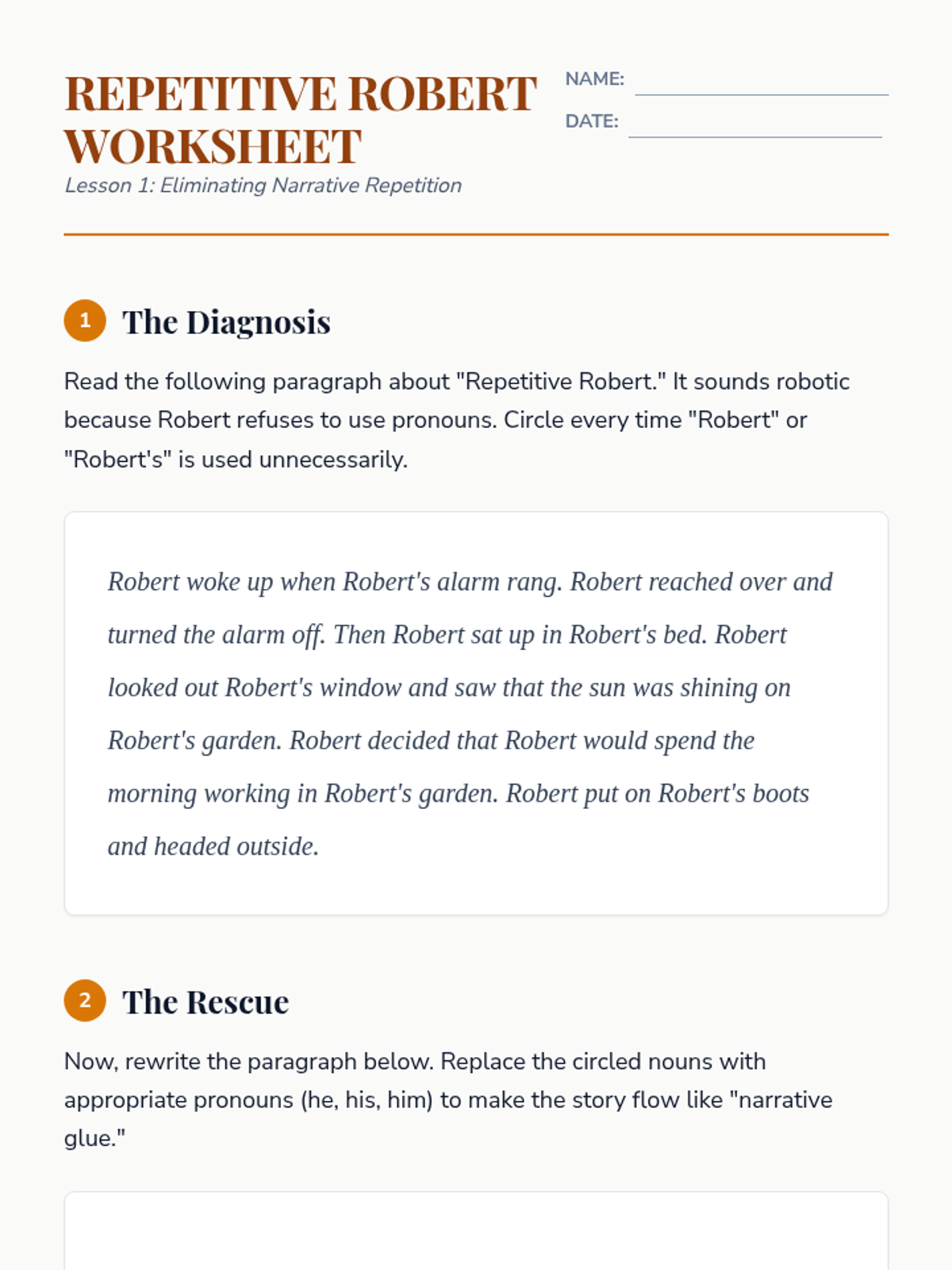
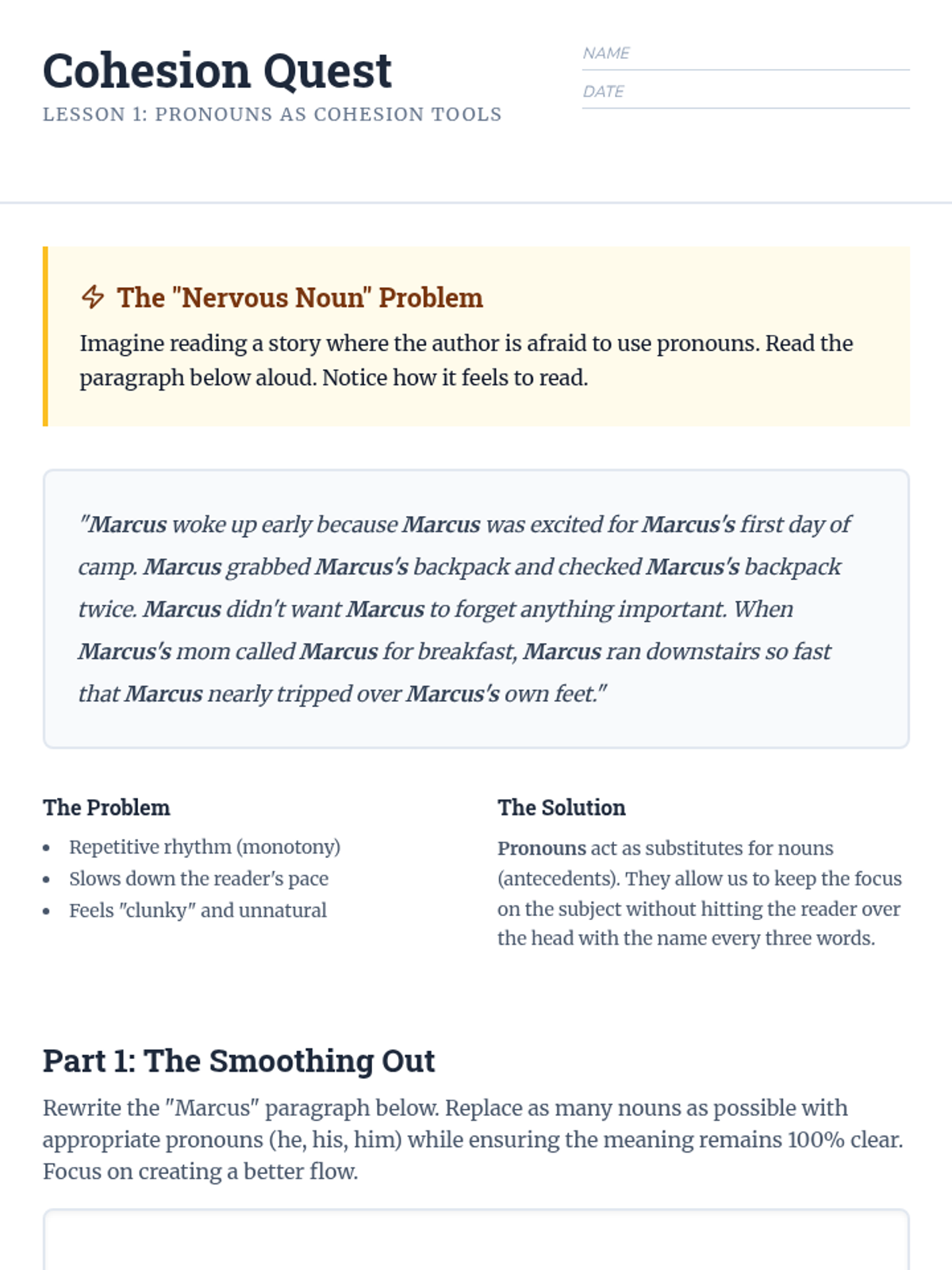
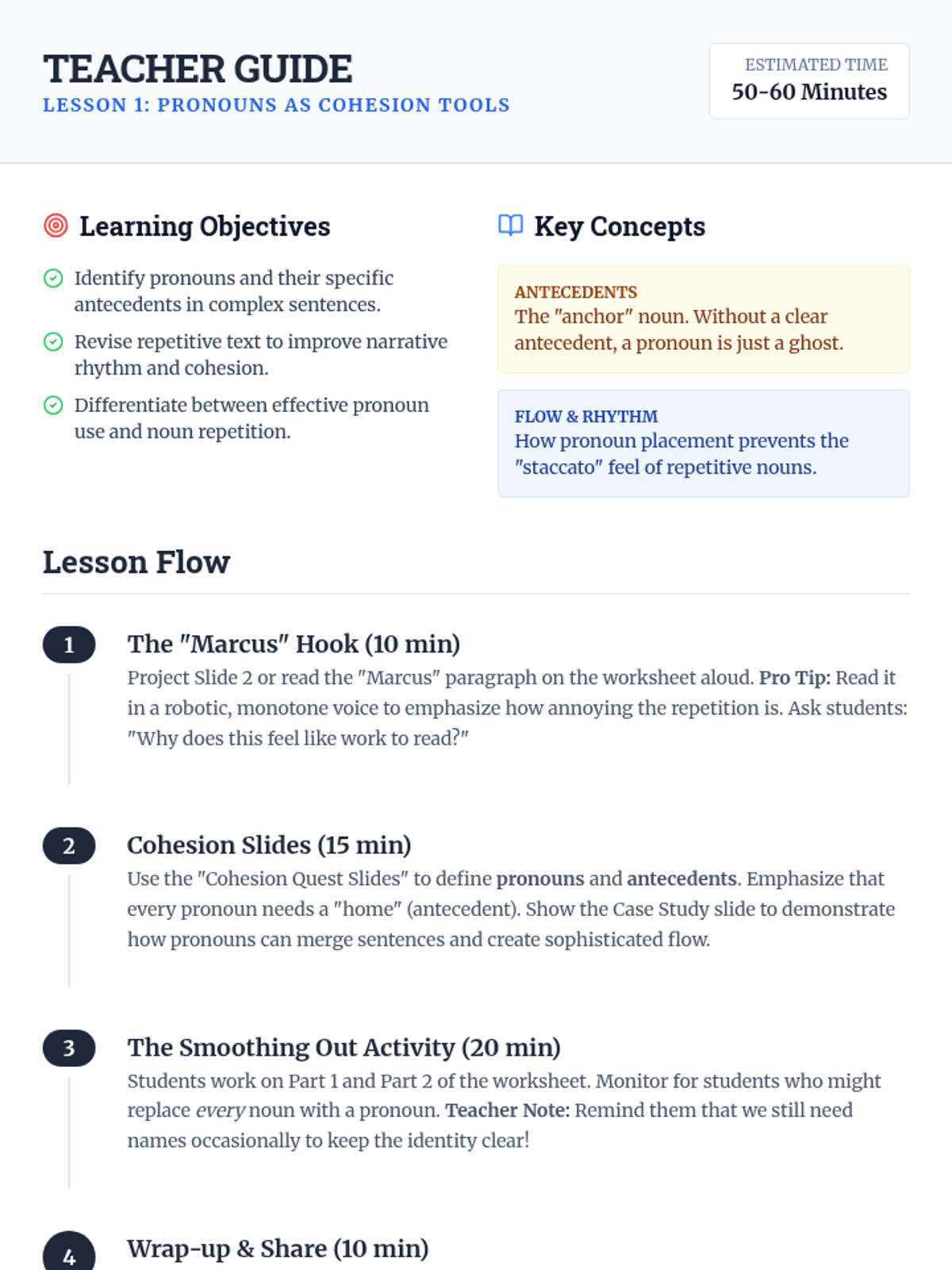
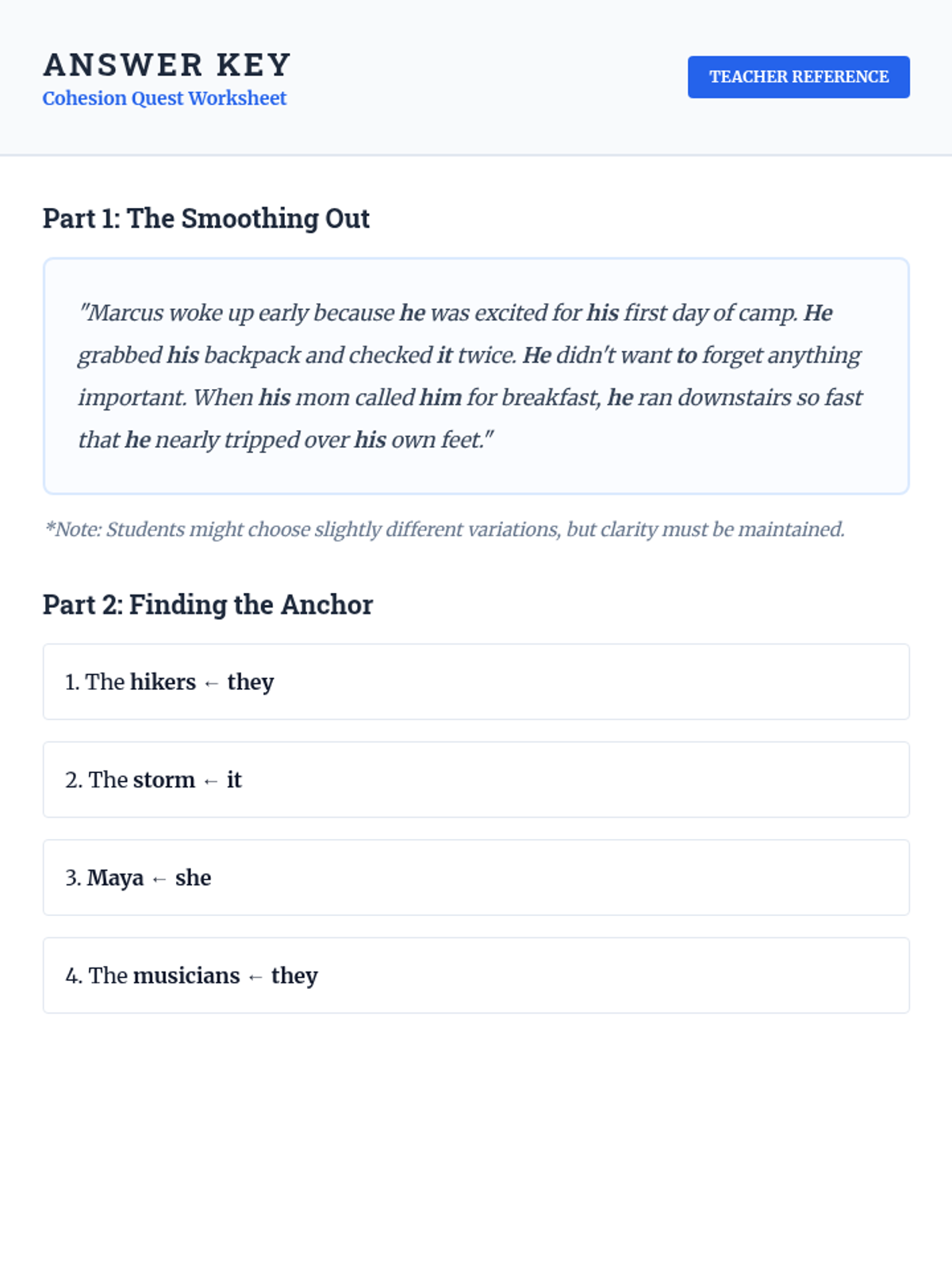
A 5-lesson sequence for 7th-grade students focusing on the strategic use of pronouns to enhance narrative flow, clarify dialogue, and maintain consistency in point of view. Students move from basic mechanics to sophisticated narrative application.
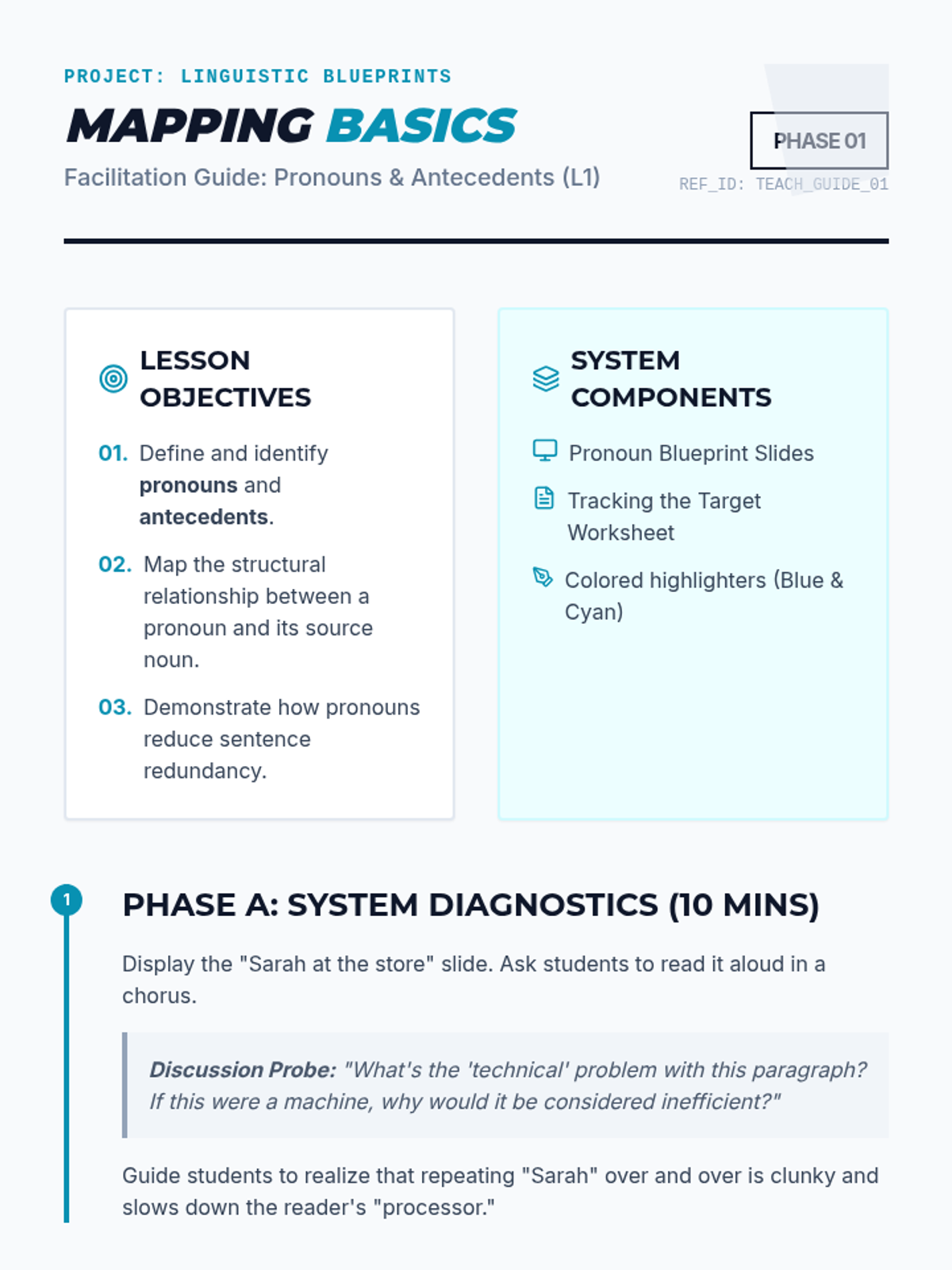
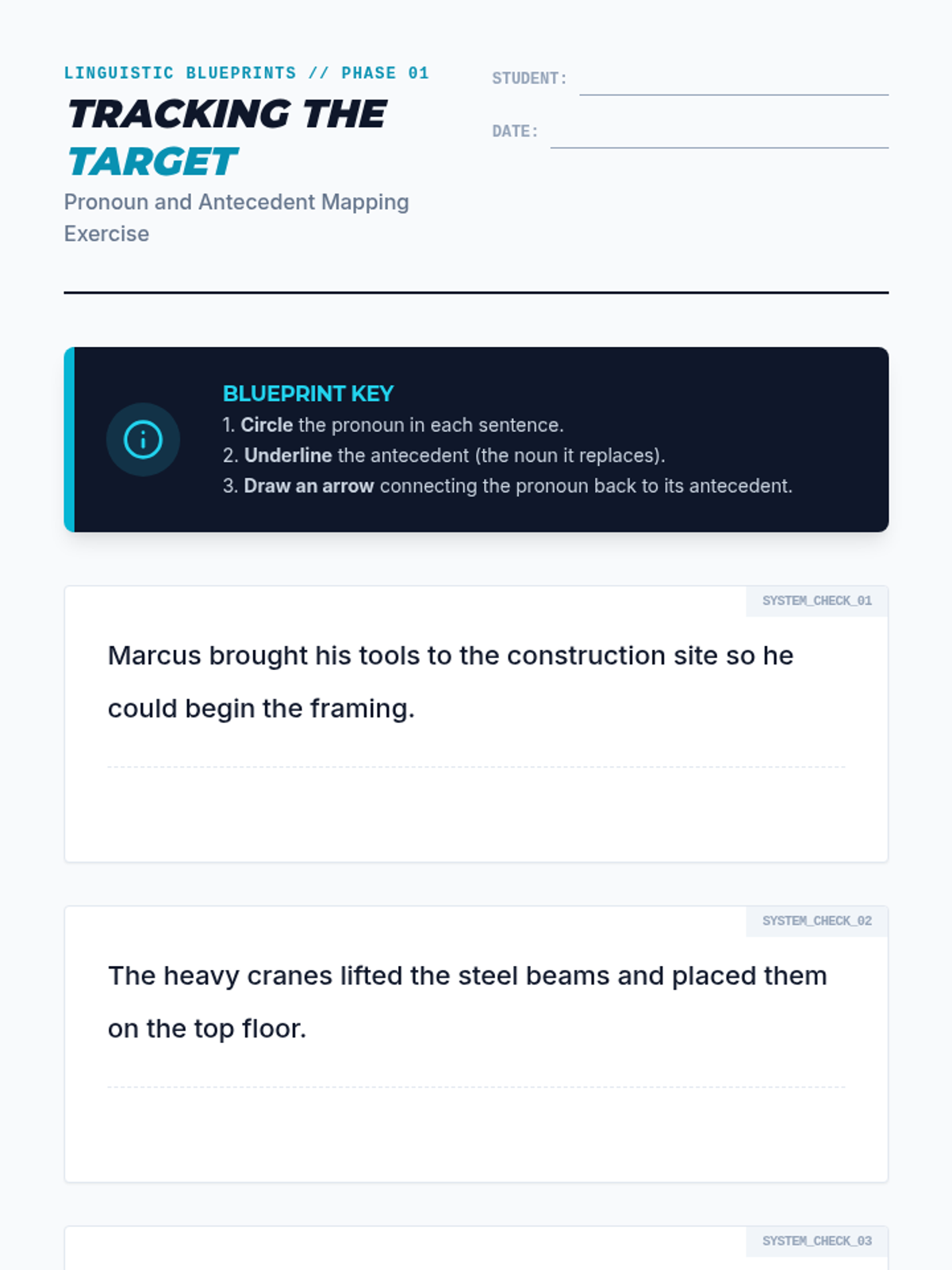
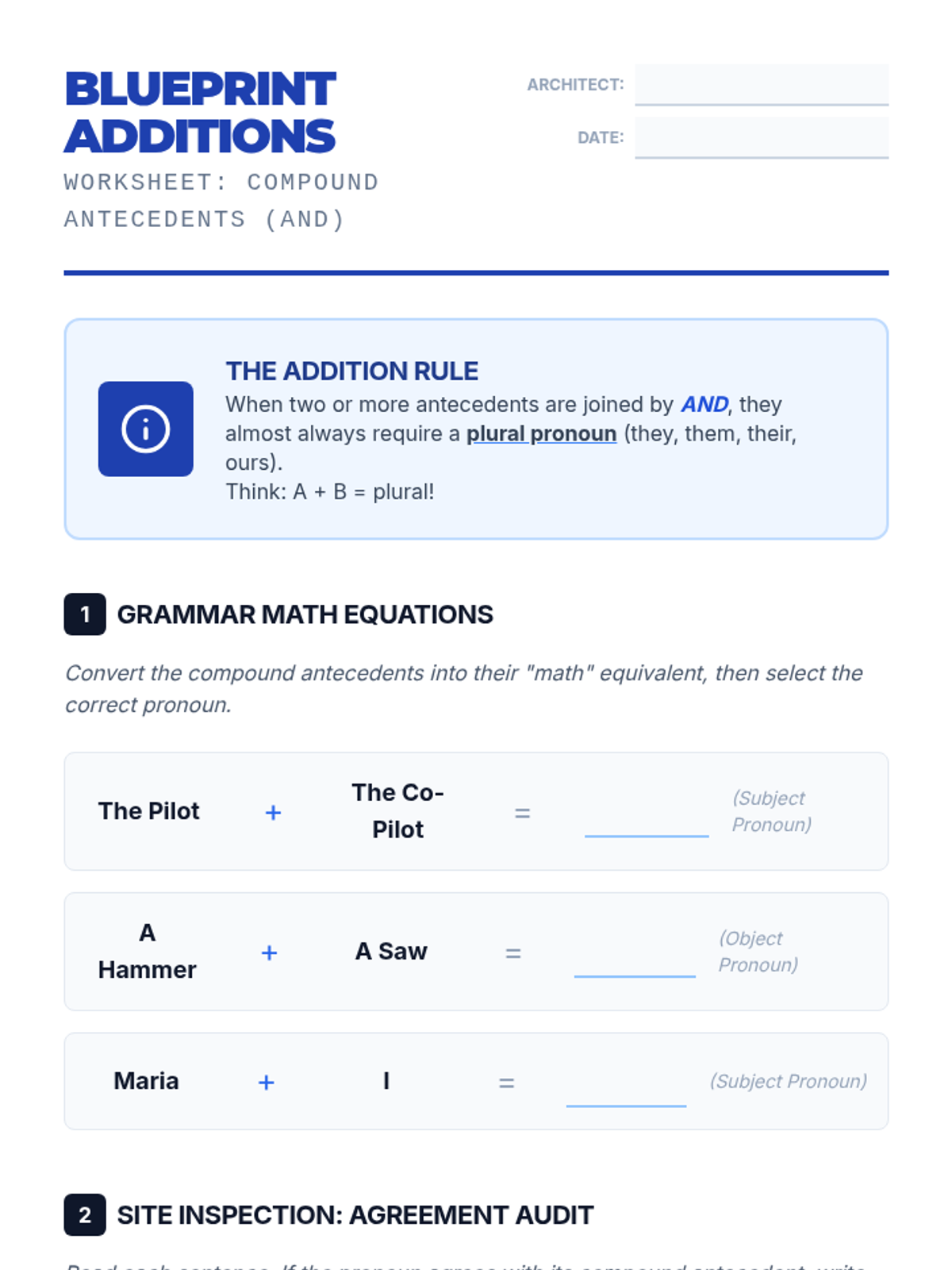
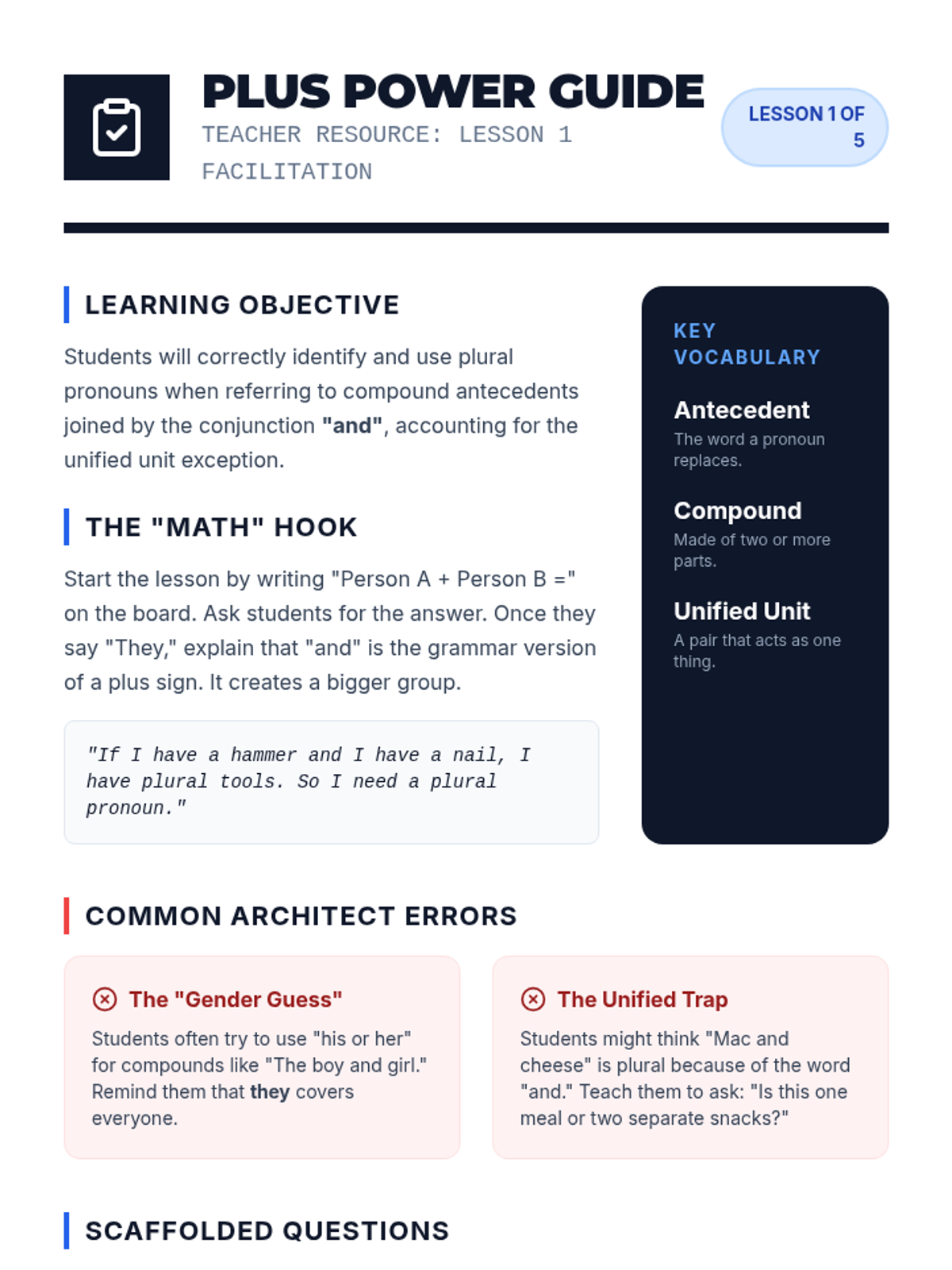
A comprehensive 5-lesson unit for 6th-grade students on pronoun-antecedent agreement. Students will learn to identify antecedents, match them by number, person, and gender, and handle complex compound subjects through a technical 'Linguistic Blueprints' theme.
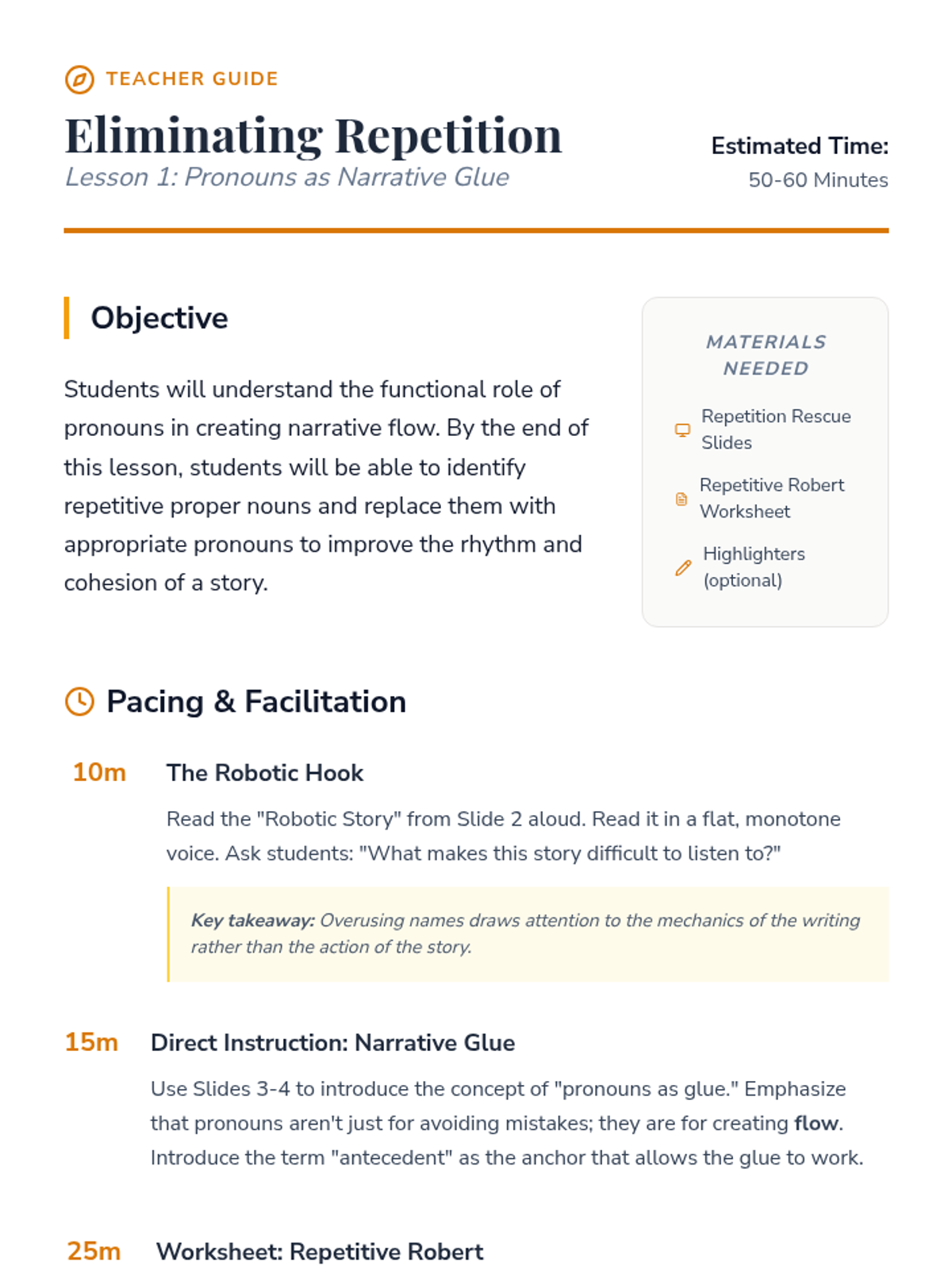
This 8th-grade ELA sequence transforms grammar instruction into a narrative workshop. Students explore how pronouns function as essential tools for flow and clarity, moving from basic antecedent agreement to sophisticated point-of-view manipulation and peer editing for narrative precision.
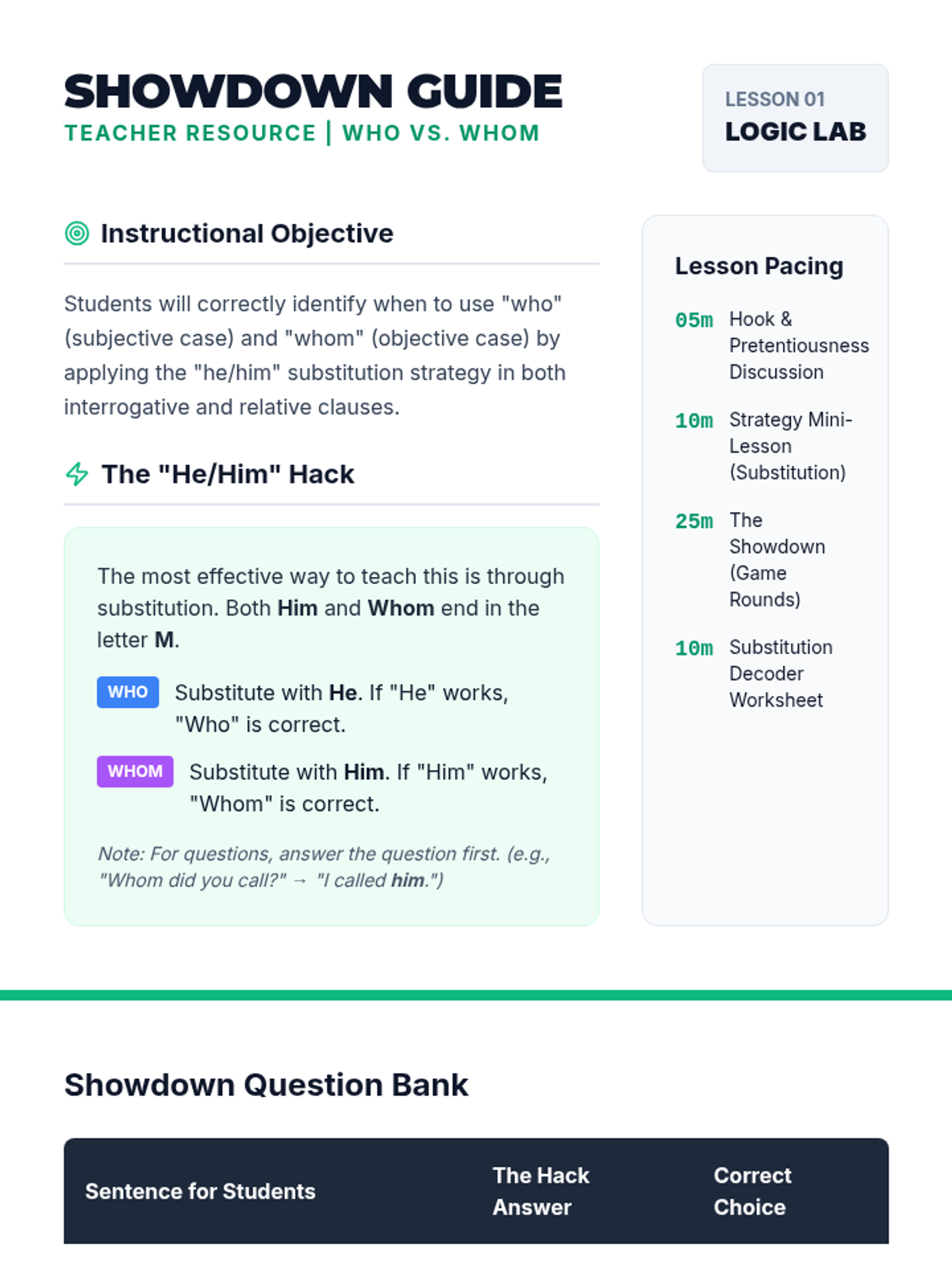
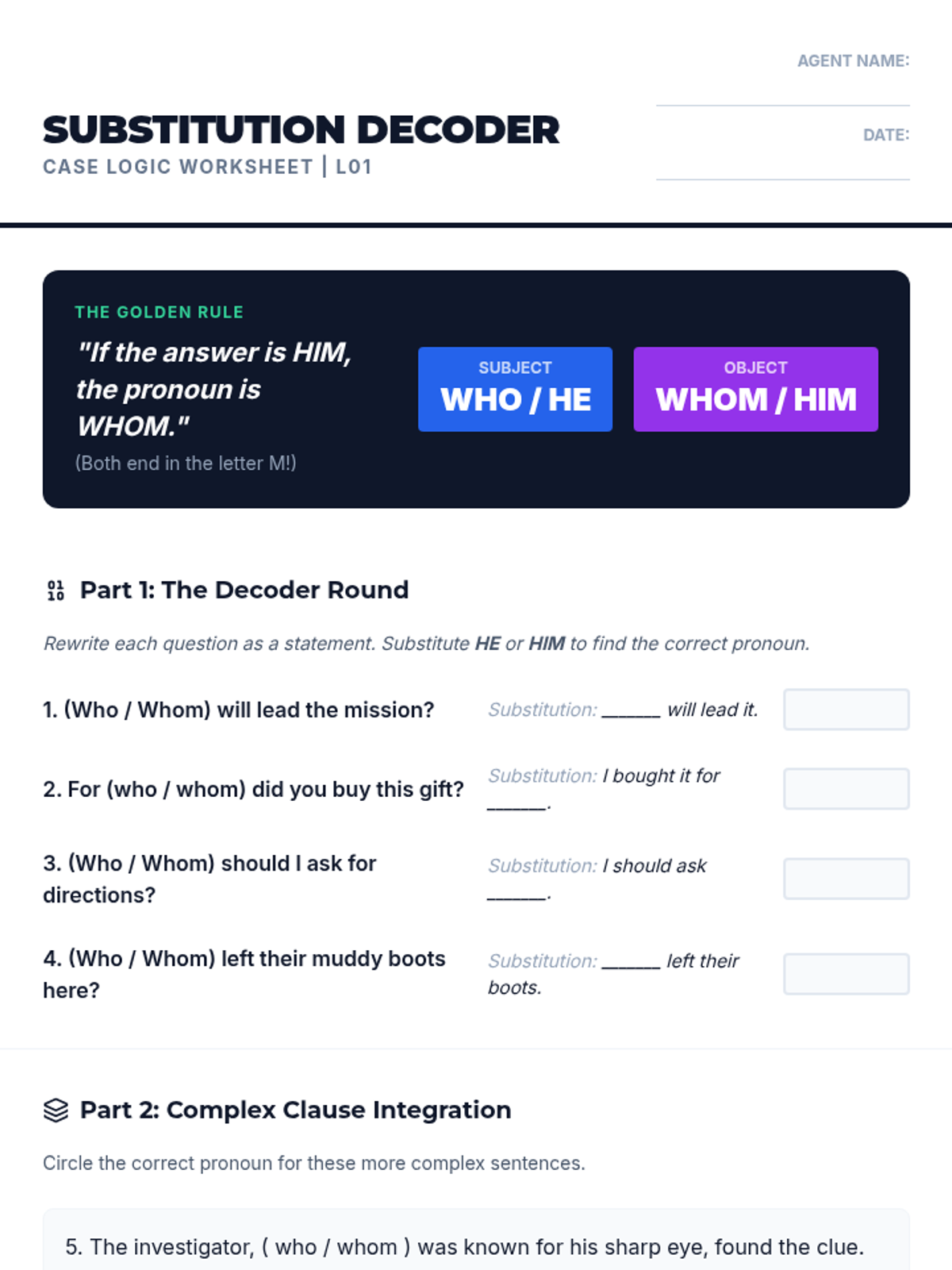
A high-energy, gamified sequence focusing on complex pronoun mechanics, including relative pronouns, intensive pronouns, and the who/whom distinction through logic puzzles and competitive challenges.
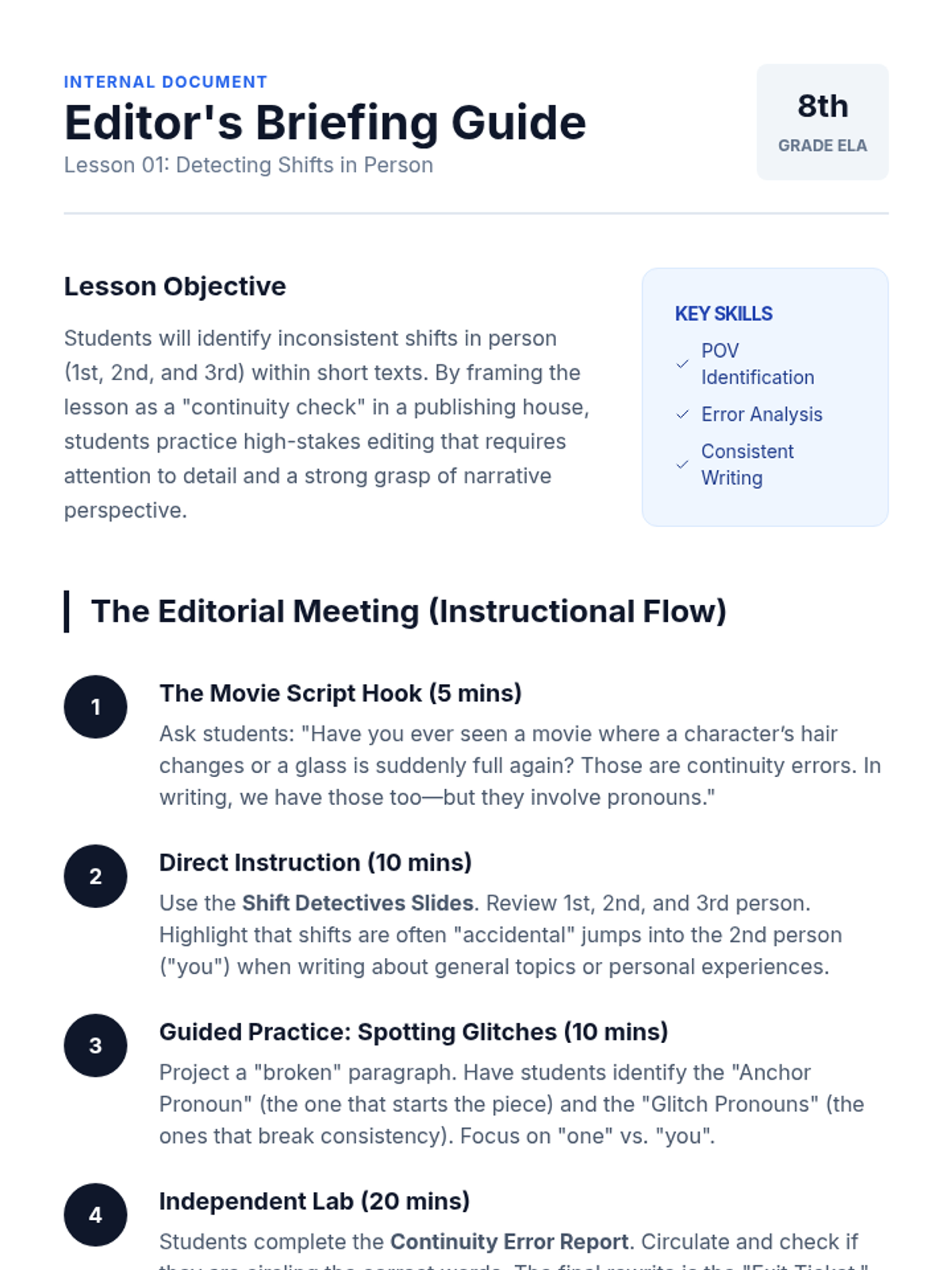
A middle school grammar sequence where students act as professional editors at a publishing house to master pronoun consistency. They explore shifts in person, formal vs. informal registers, and the evolution of the singular 'they' through simulations and project-based learning.
This sequence targets vague pronoun references, helping students move beyond basic agreement to achieve high-level clarity in their writing. Students analyze ambiguity in complex texts, restructure sentences for precision, and apply these skills to real-world scenarios like legal contracts and technical manuals.
A comprehensive 8th-grade grammar sequence focusing on the nuances of pronoun-antecedent agreement. Students move from basic properties to complex scenarios involving indefinite pronouns, compound antecedents, and collective nouns, culminating in a formal editing assessment.
Students master the complexities of pronoun-antecedent agreement with compound subjects and collective nouns. Through an architectural lens, they learn to build stable sentences using the rules of 'And', 'Or/Nor', and the context of groups.
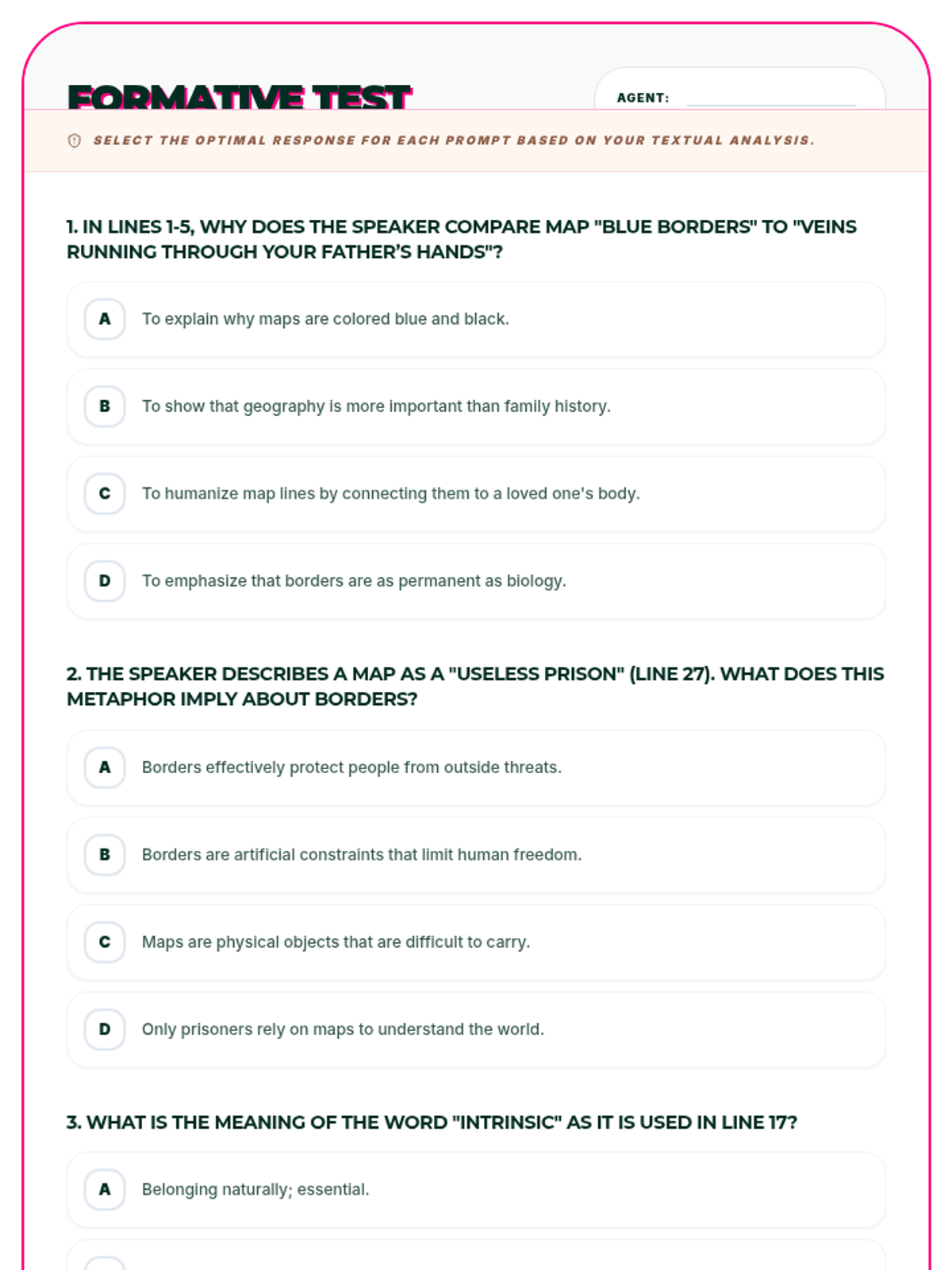
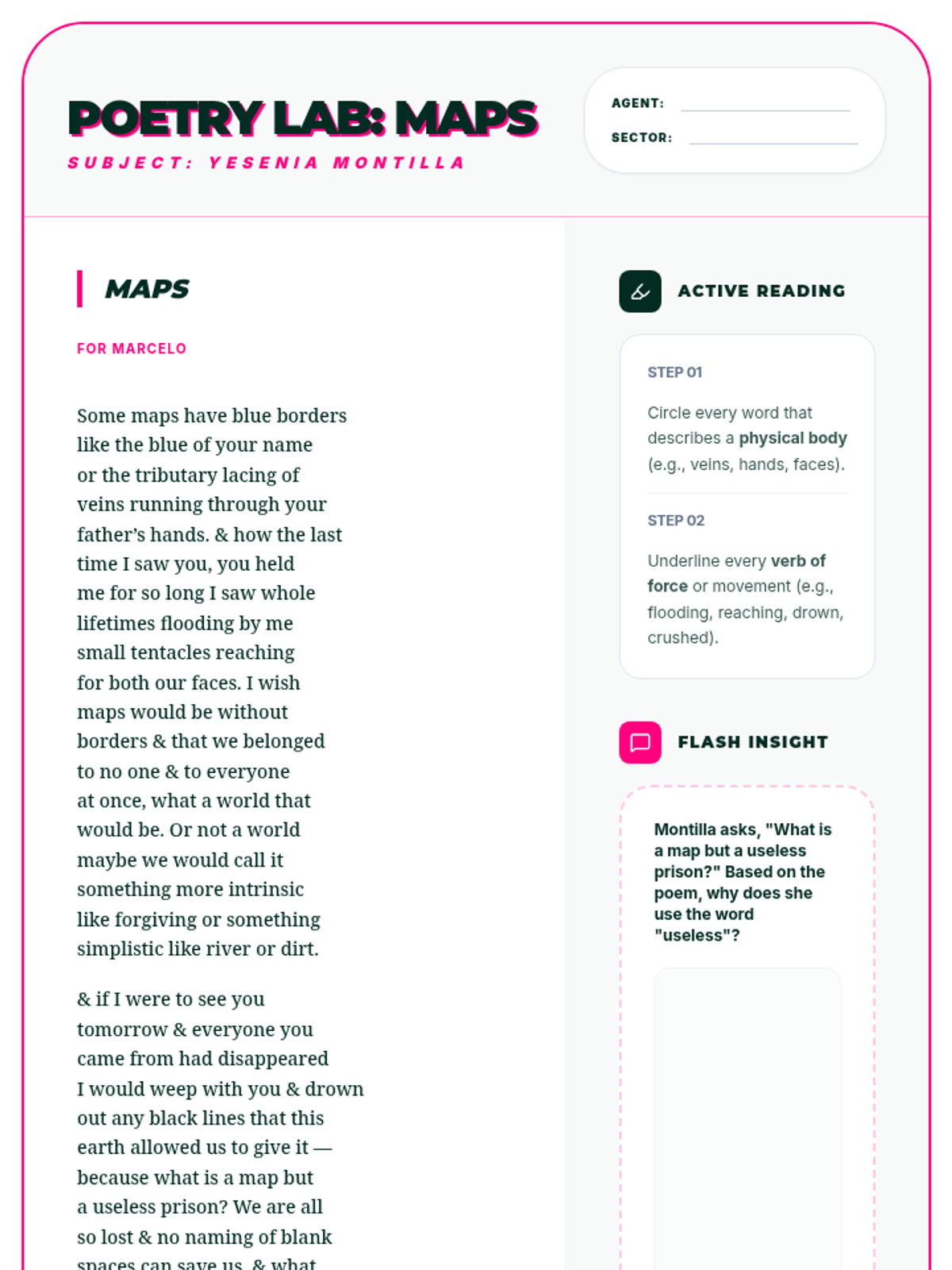
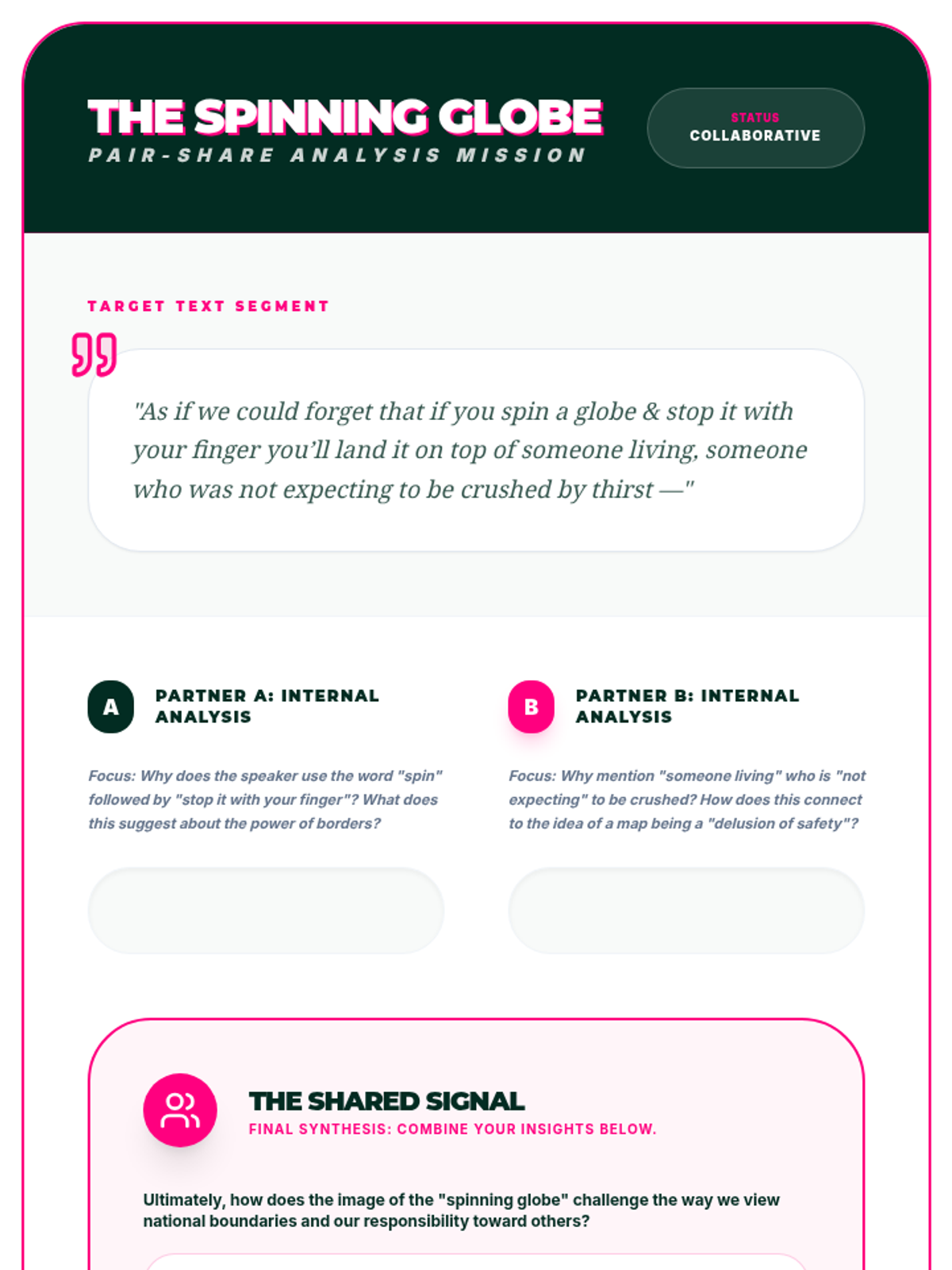
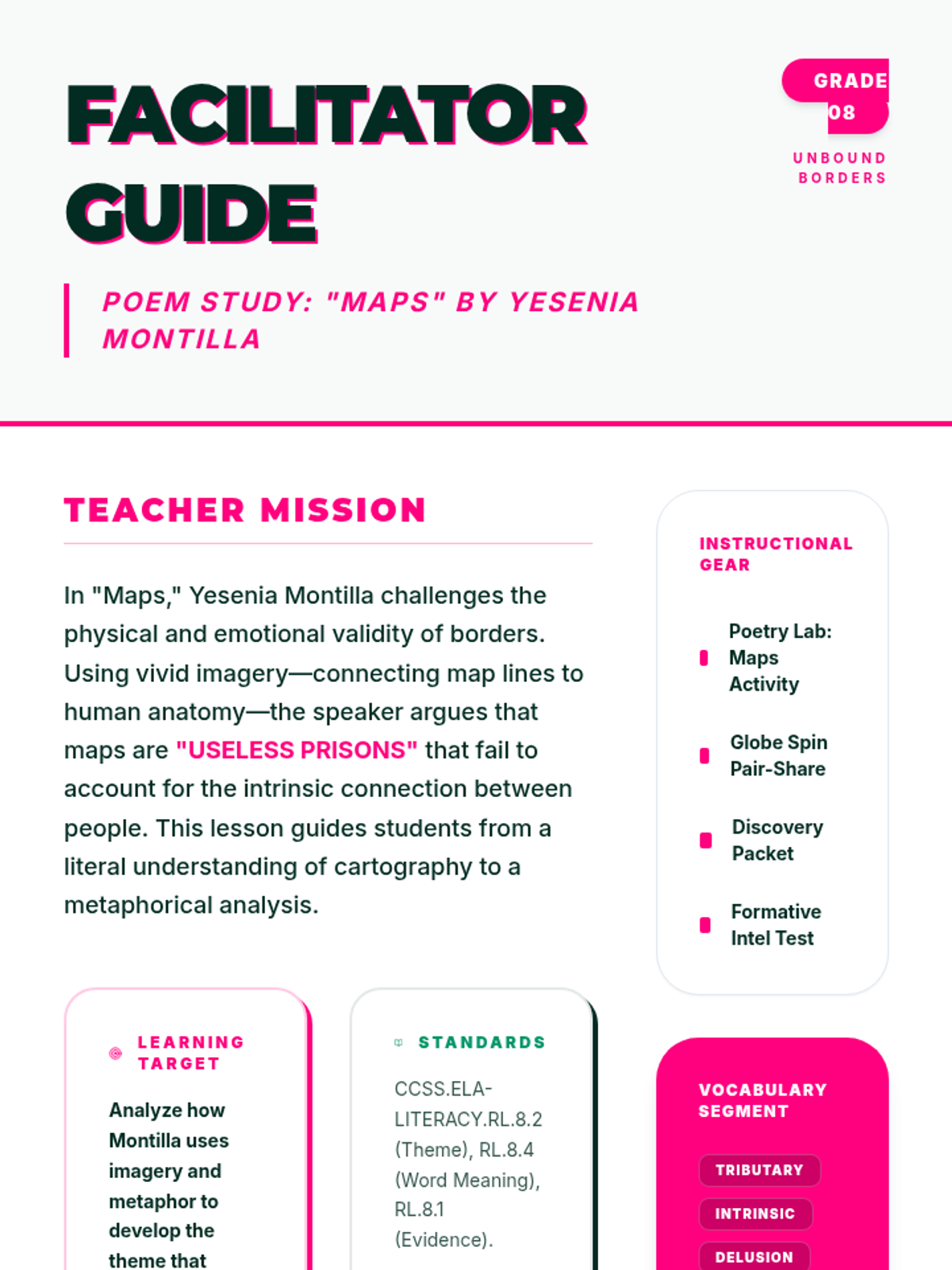
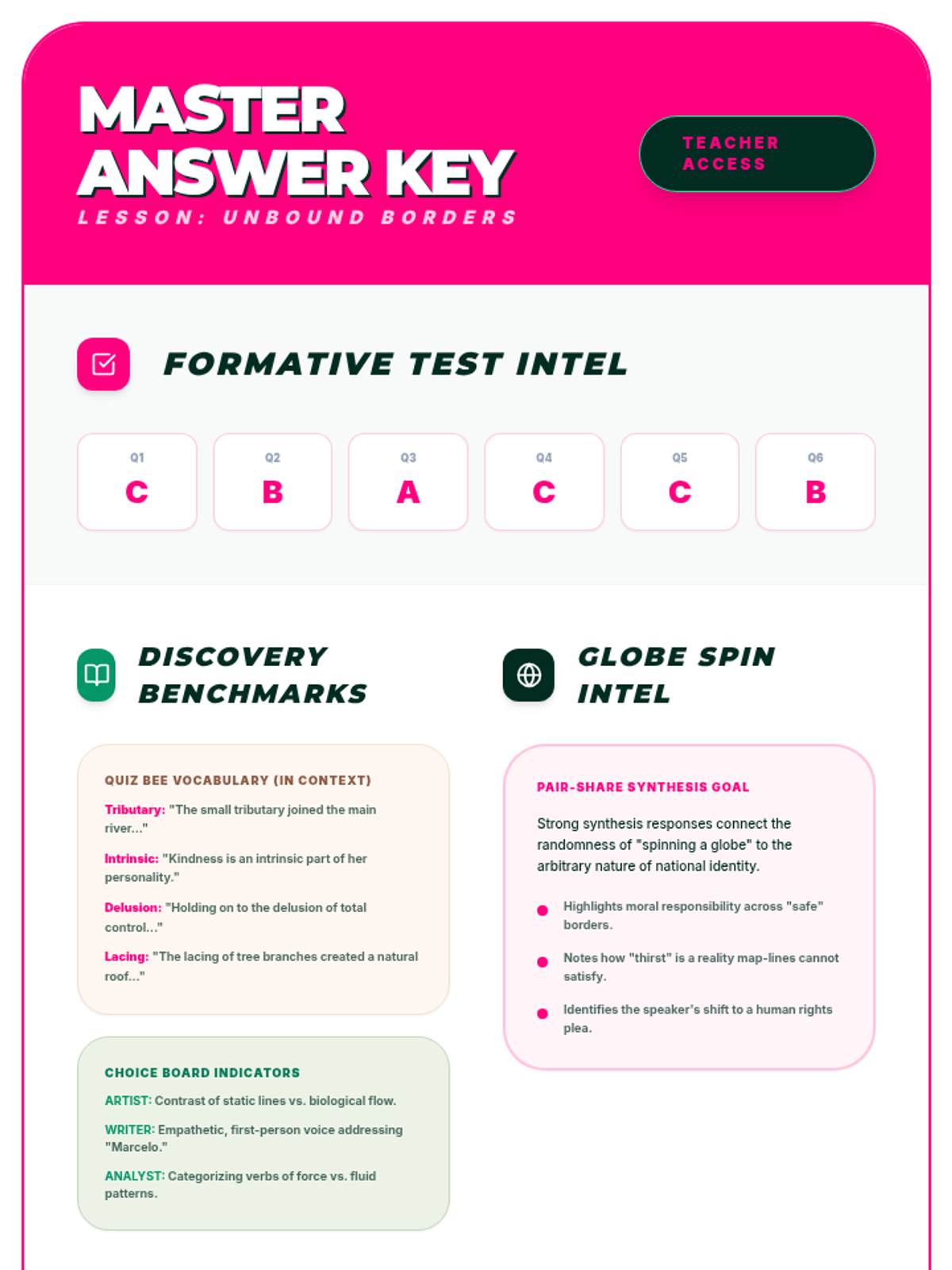
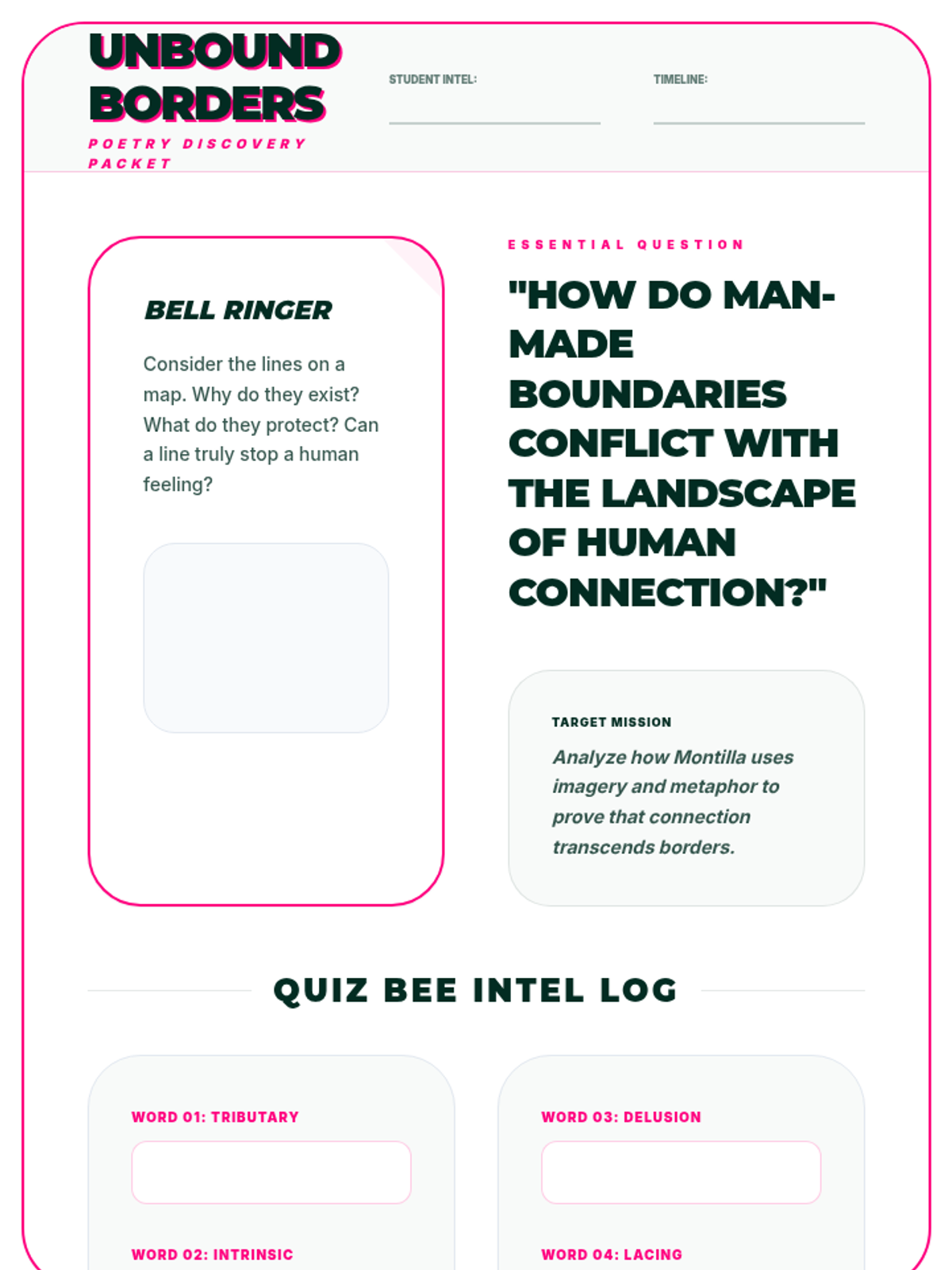
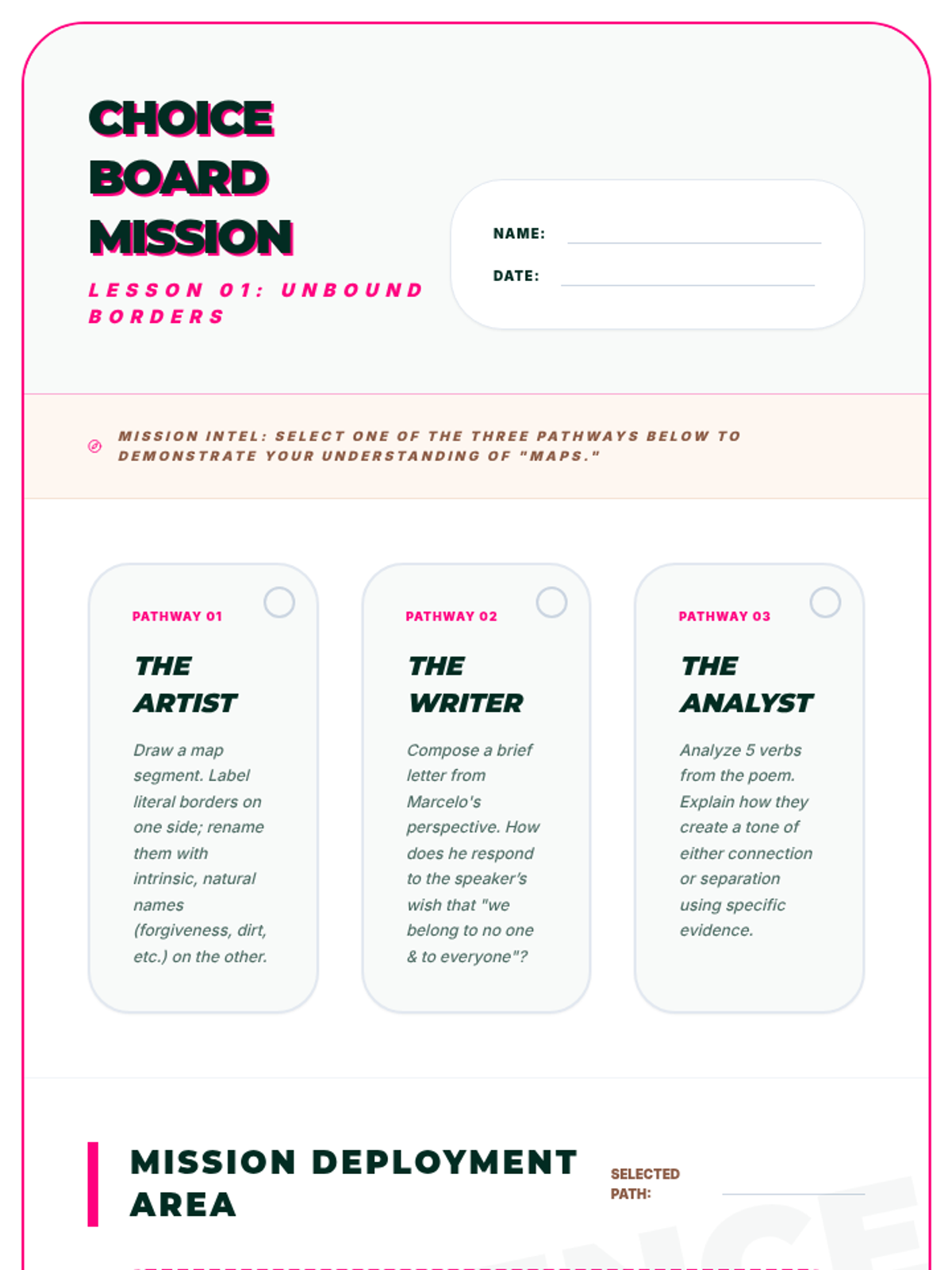
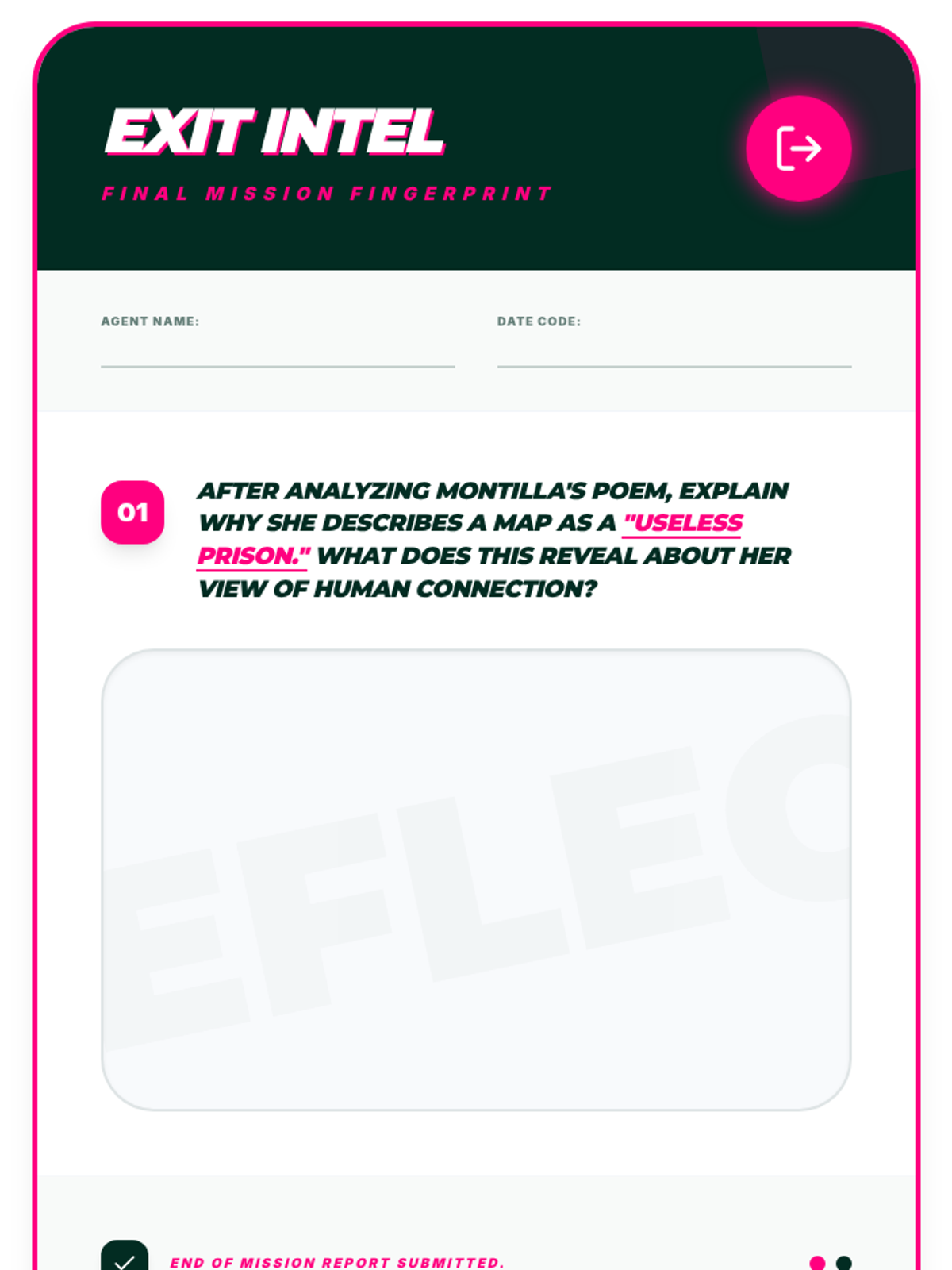
A multi-day 8th-grade ELA unit exploring the concept of borders, boundaries, and belonging through modern poetry and historical documents related to the Indian Removal Act and the Trail of Tears.
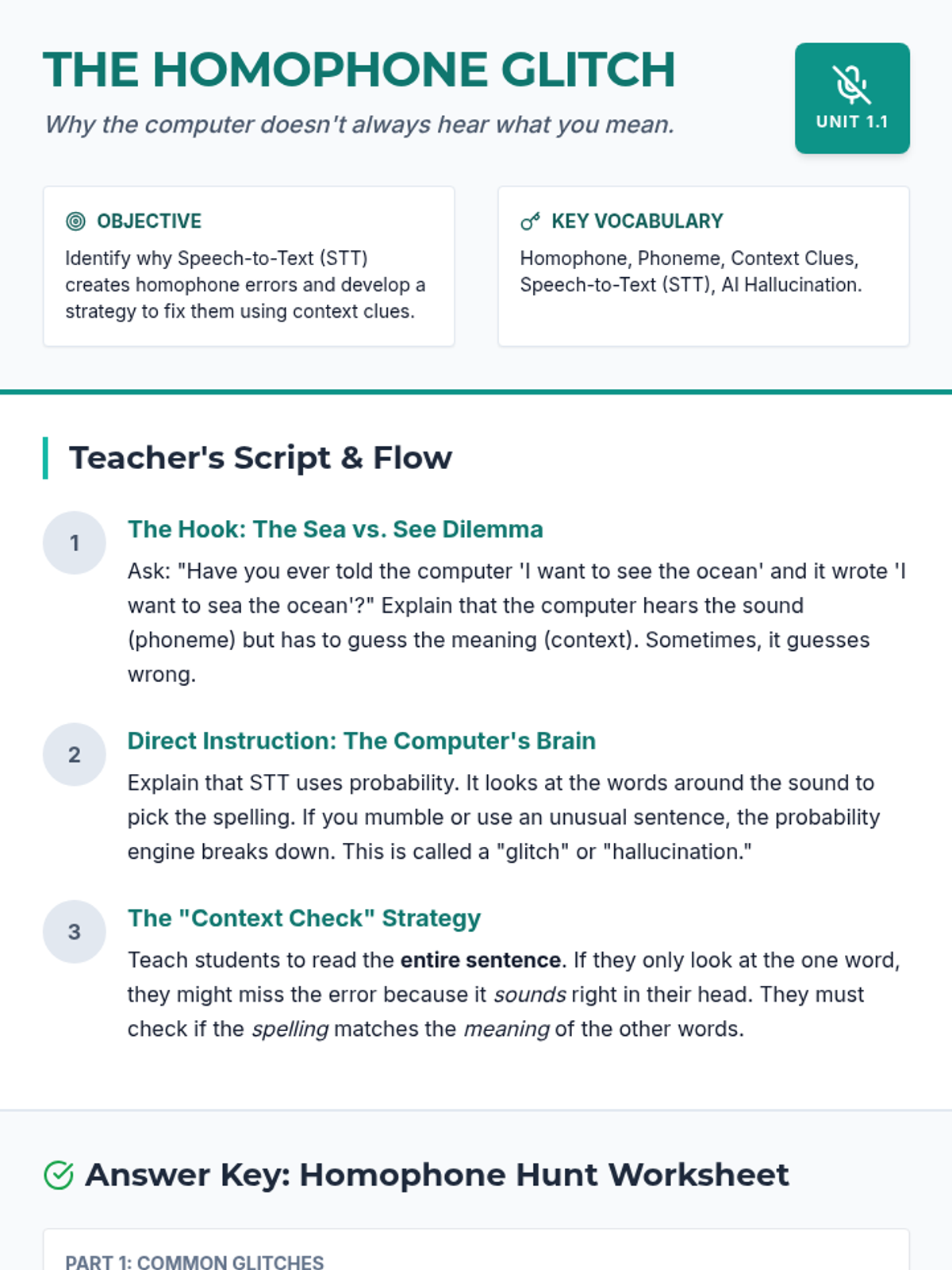
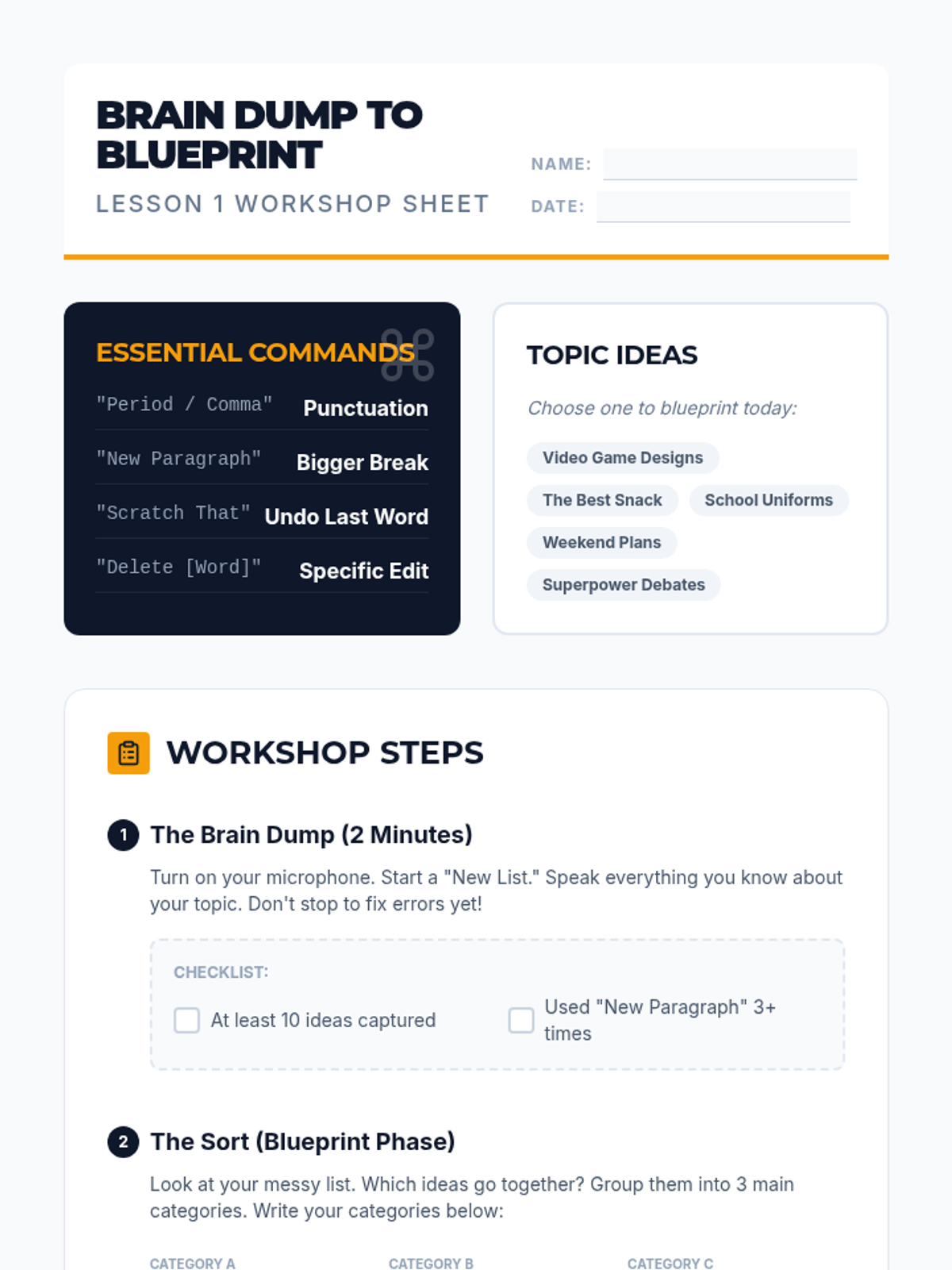
A sequence focused on the critical revision workflow for students using speech-to-text technology. Students learn to identify and fix common errors like homophone confusion, run-on sentences, and informal tone to turn raw dictation into polished academic writing.
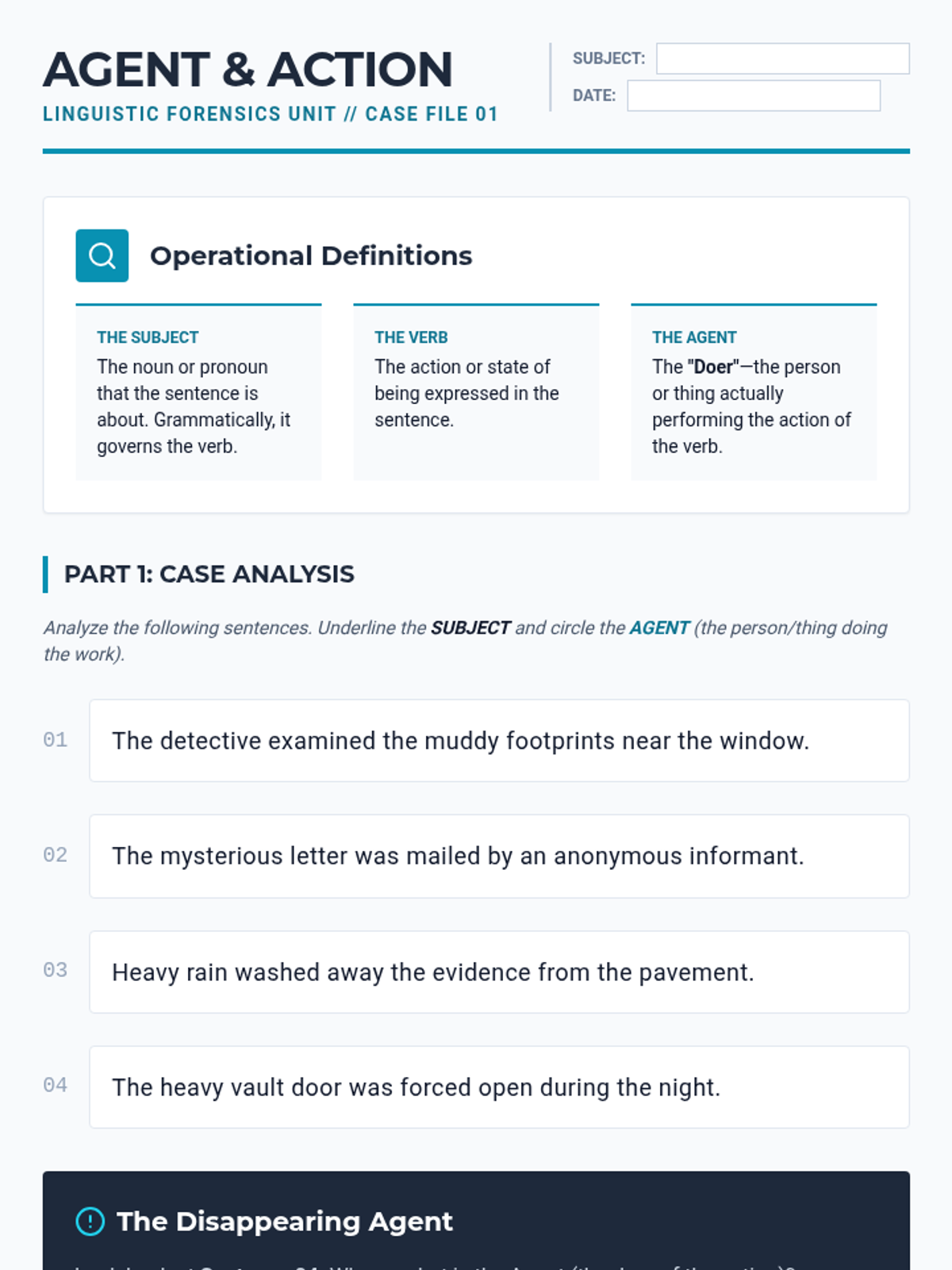
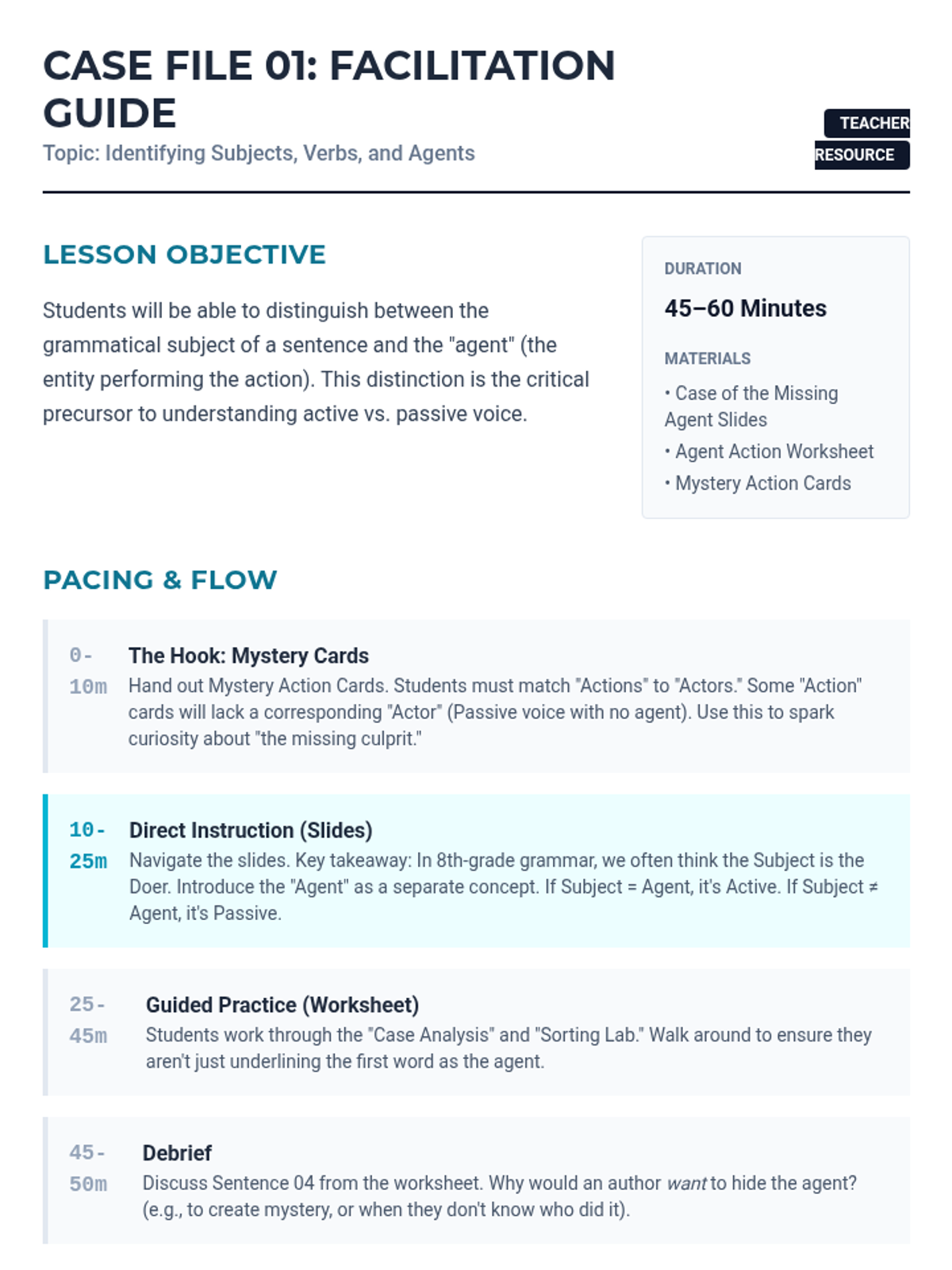
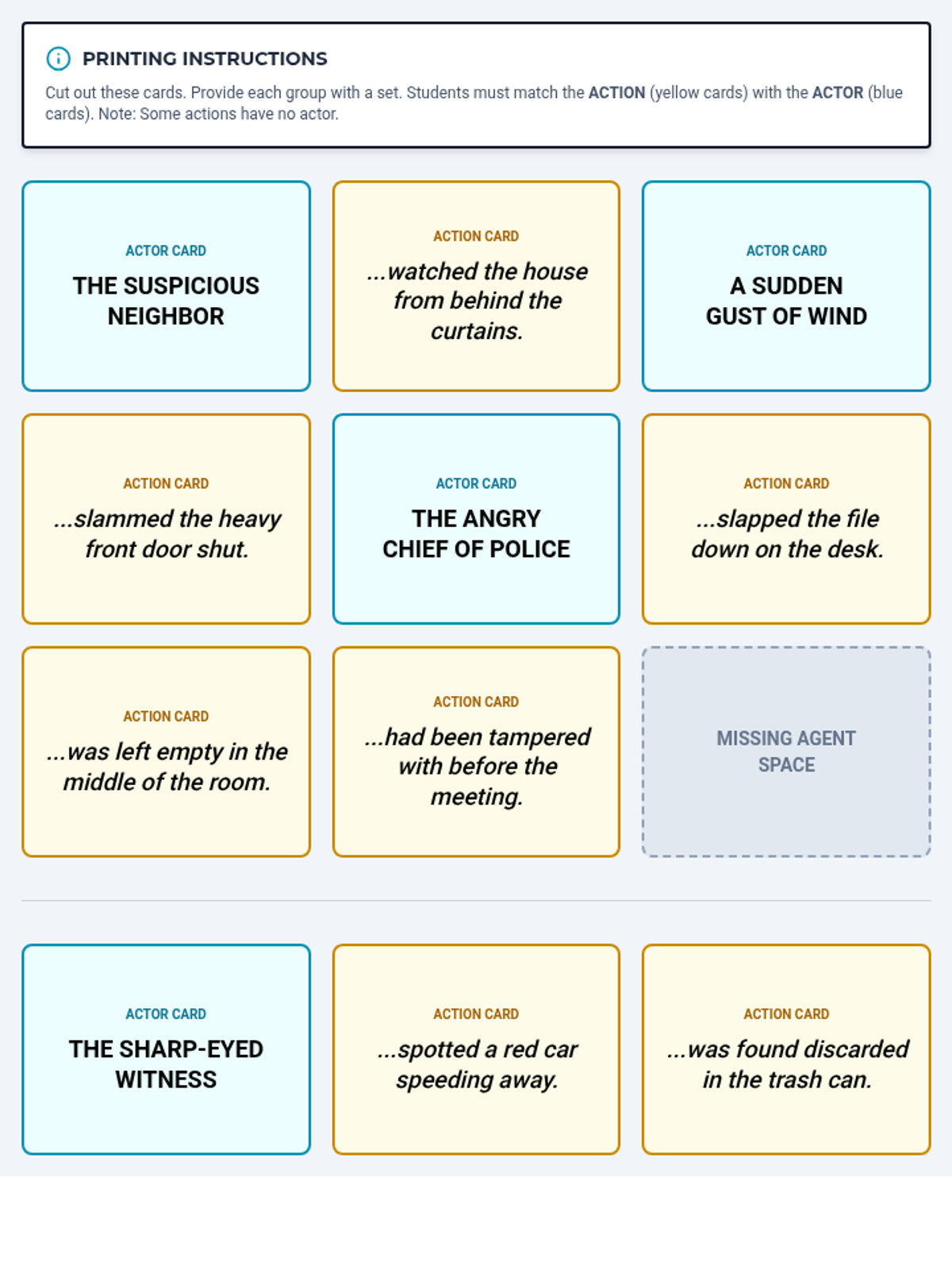
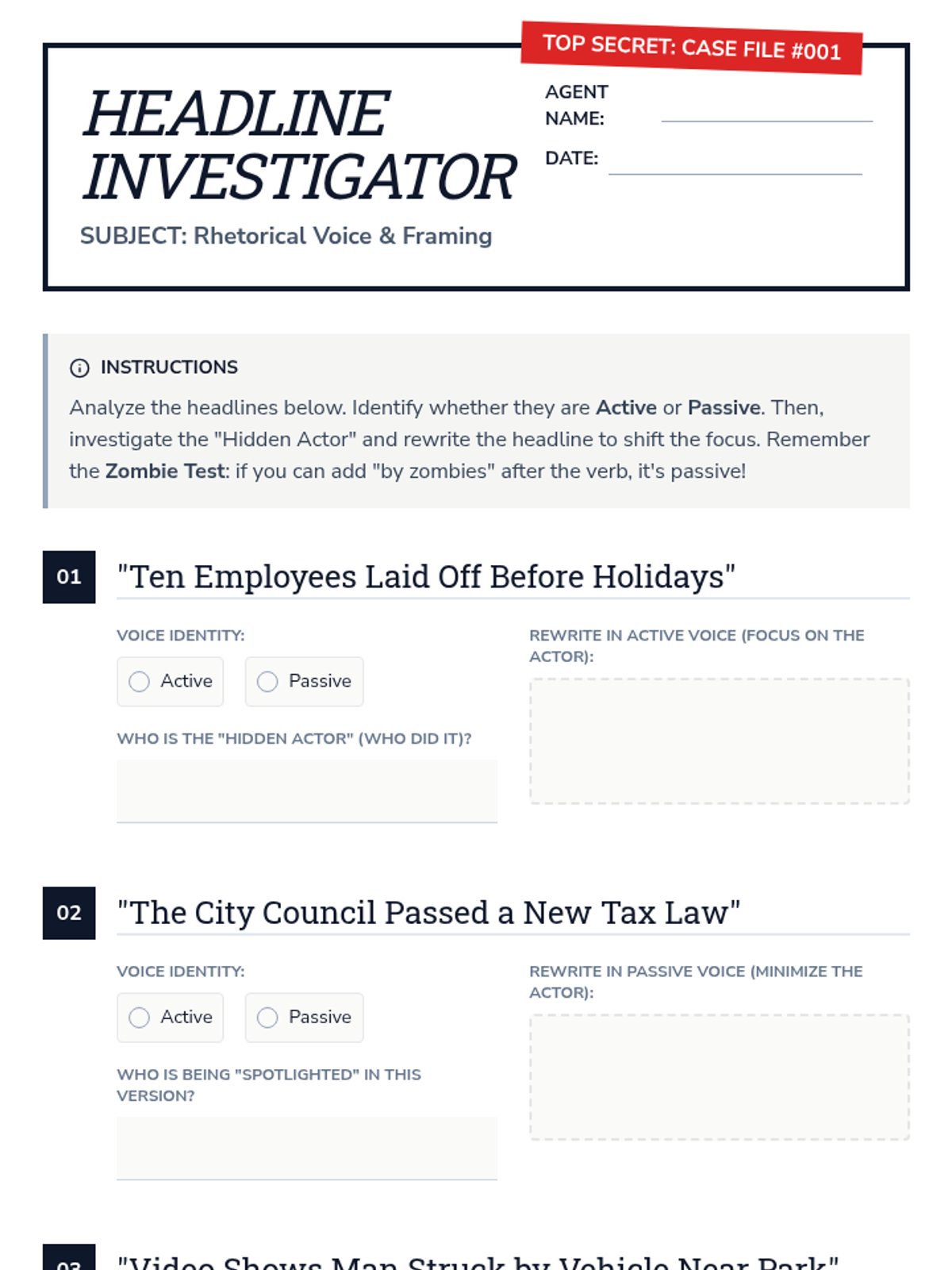
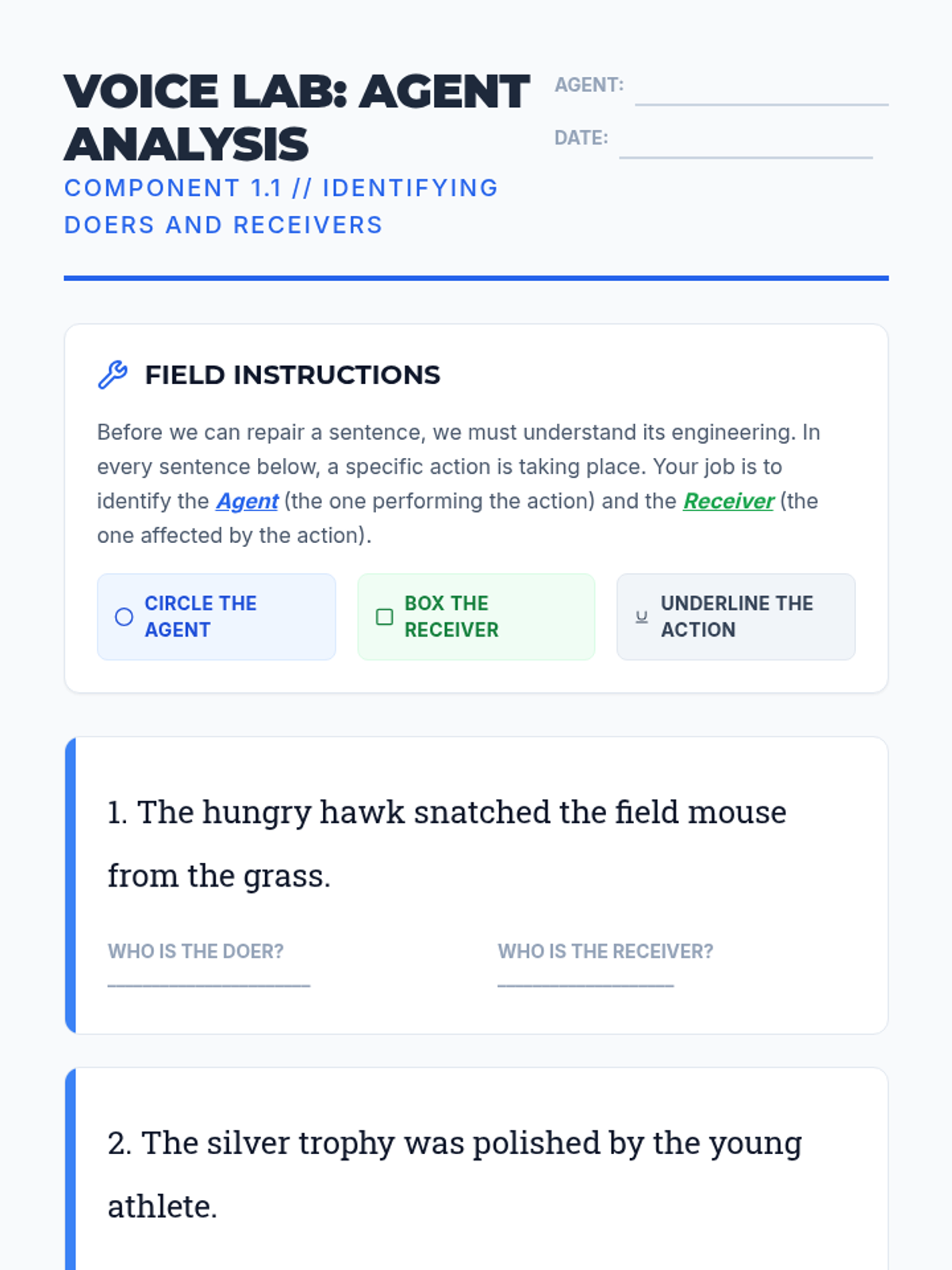
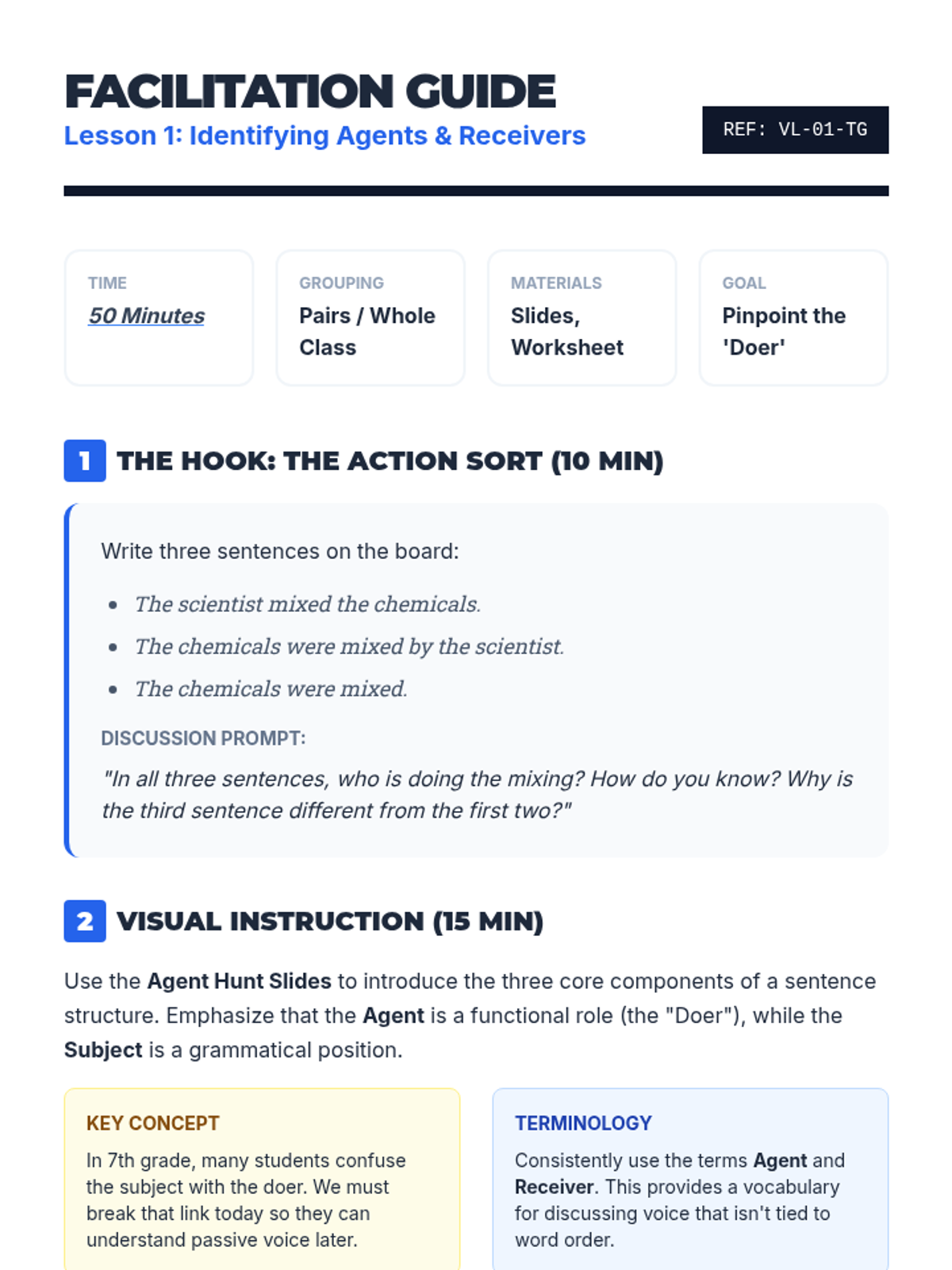
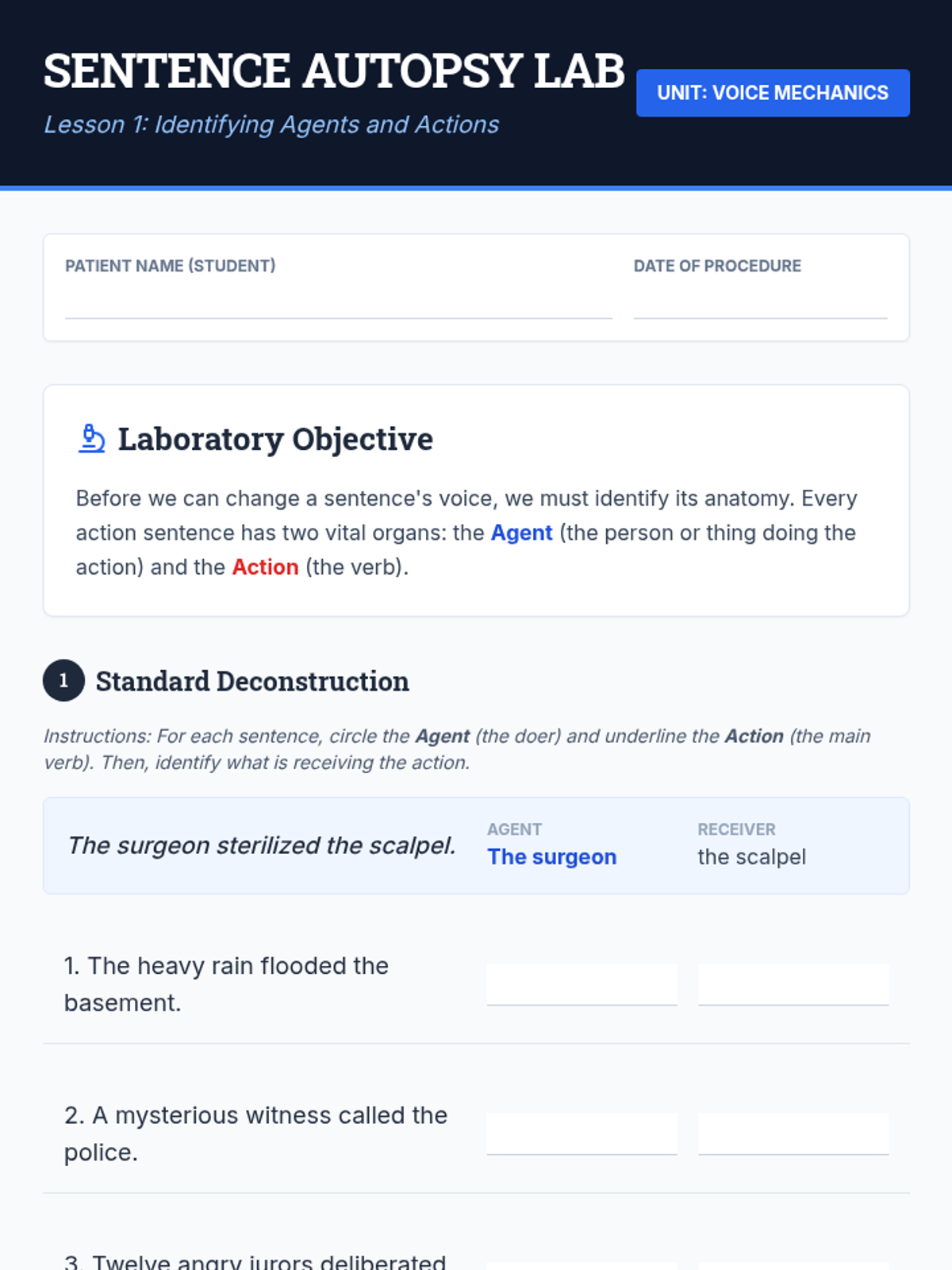
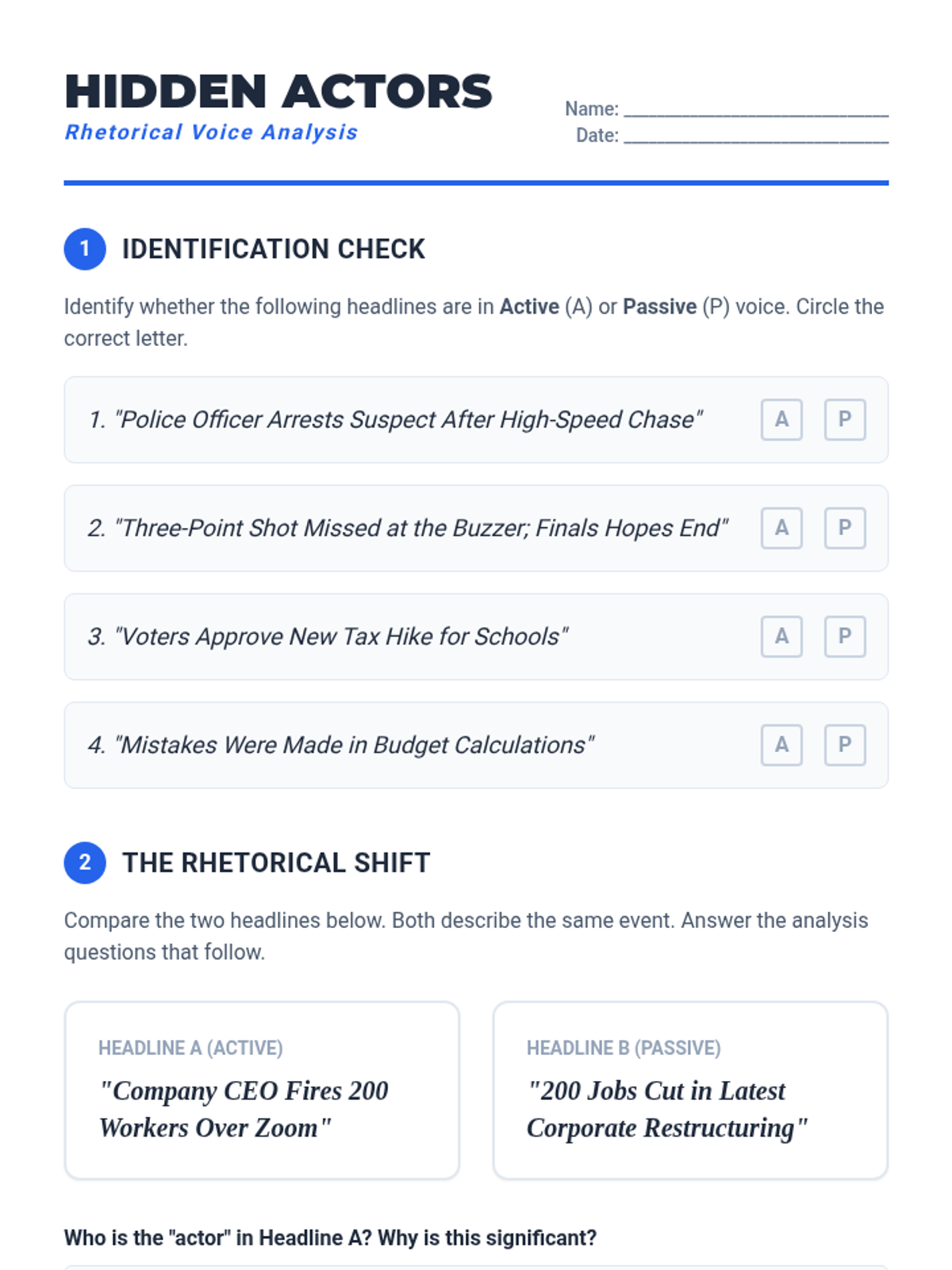
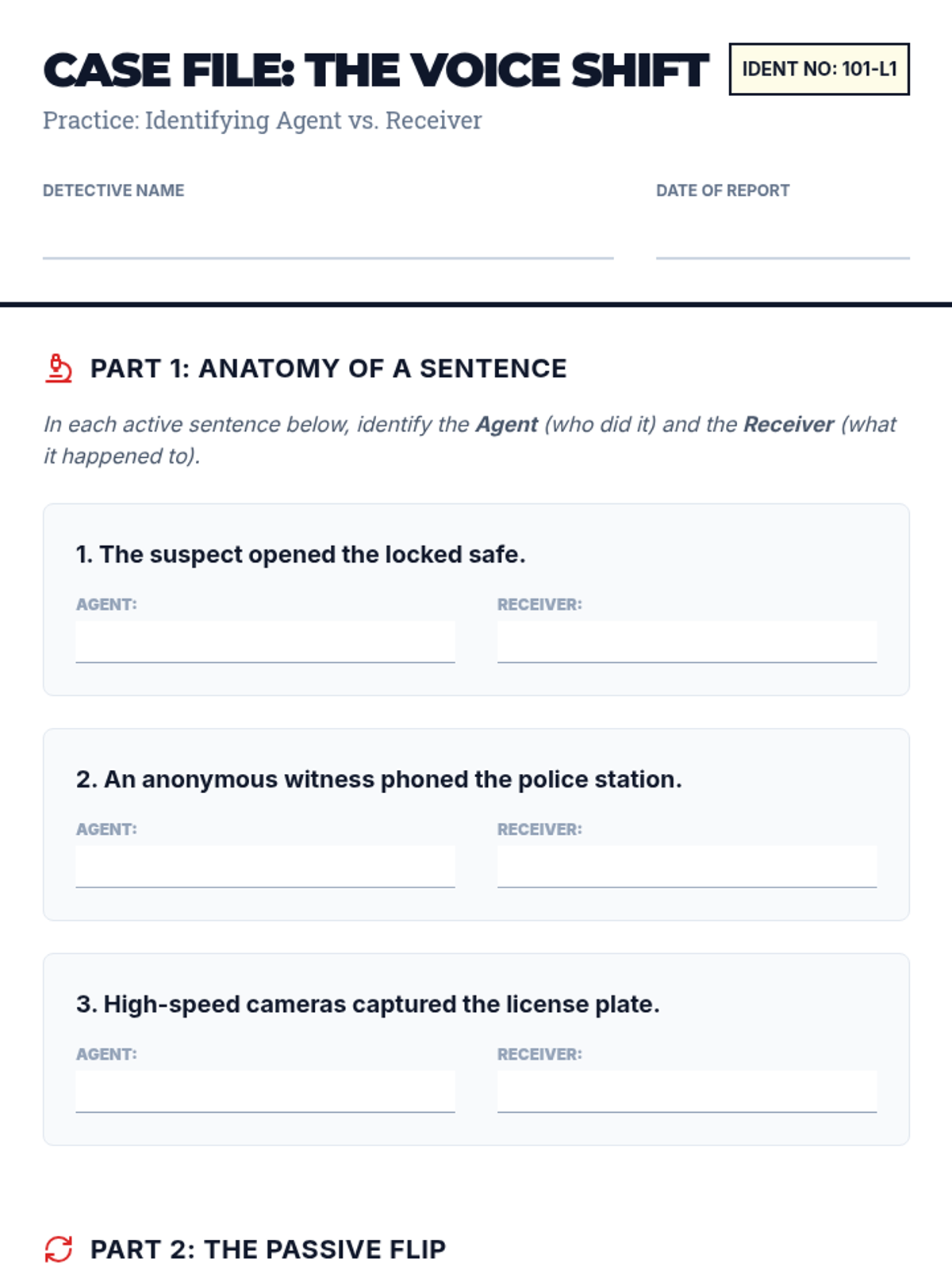
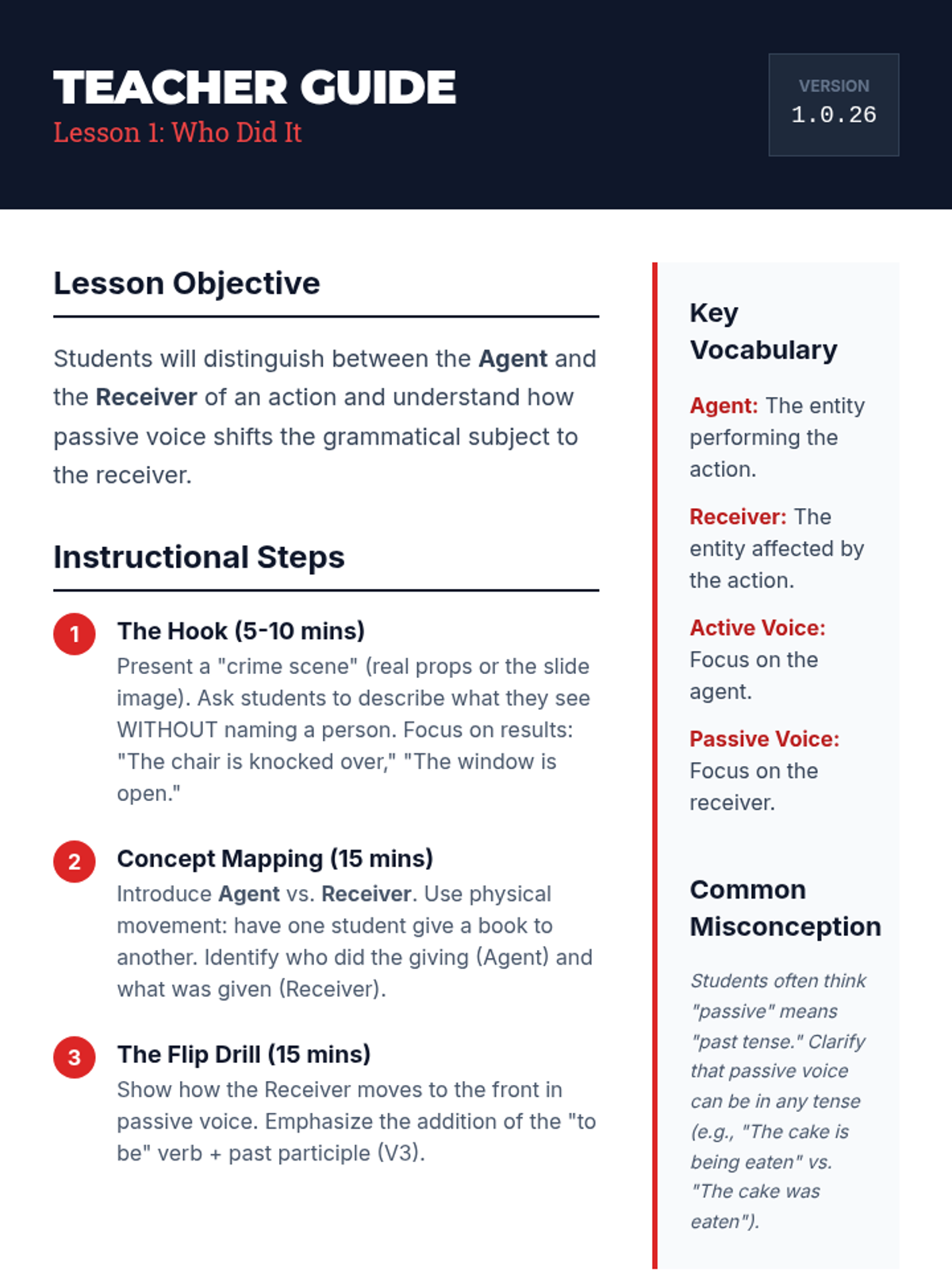
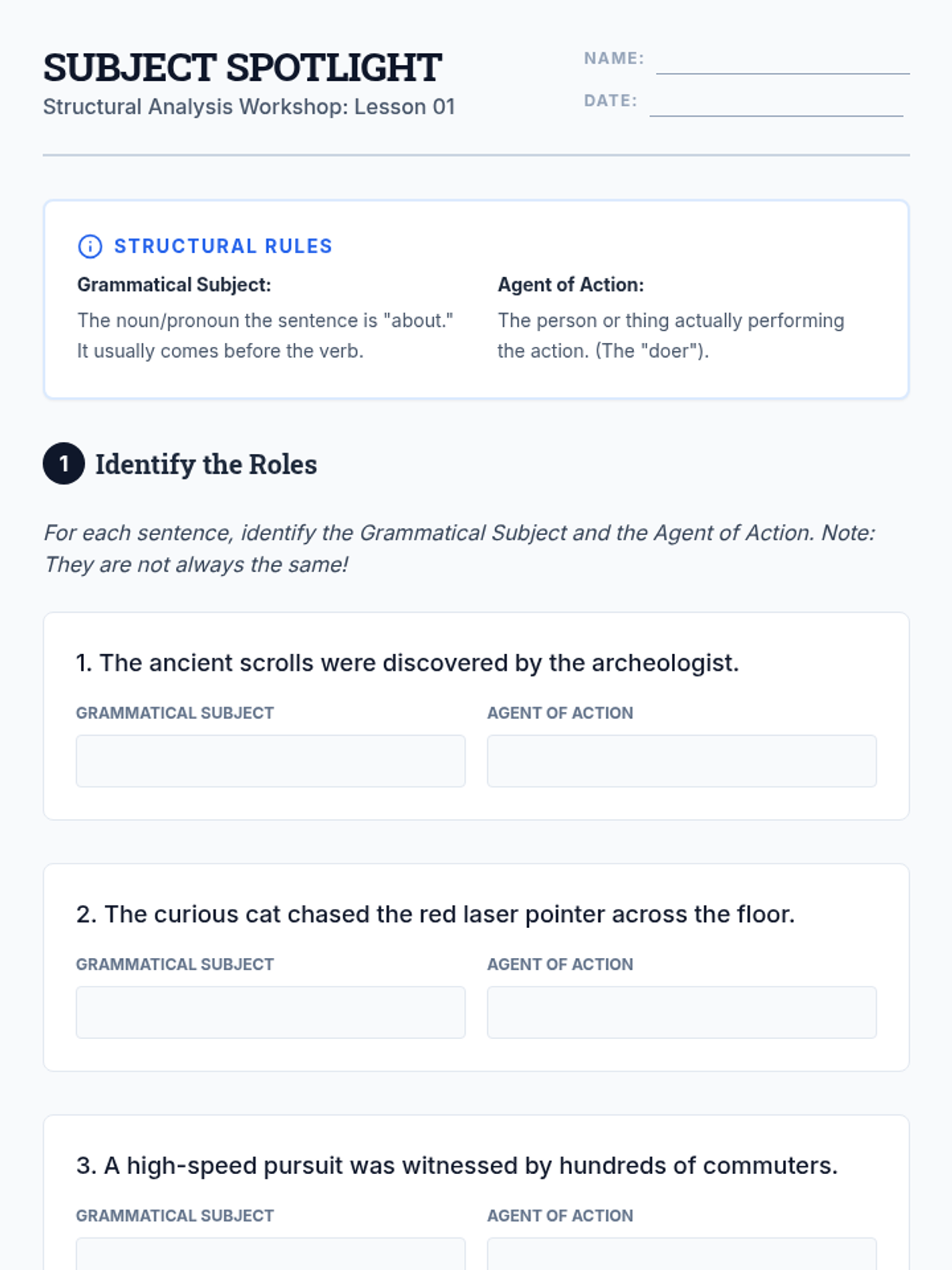
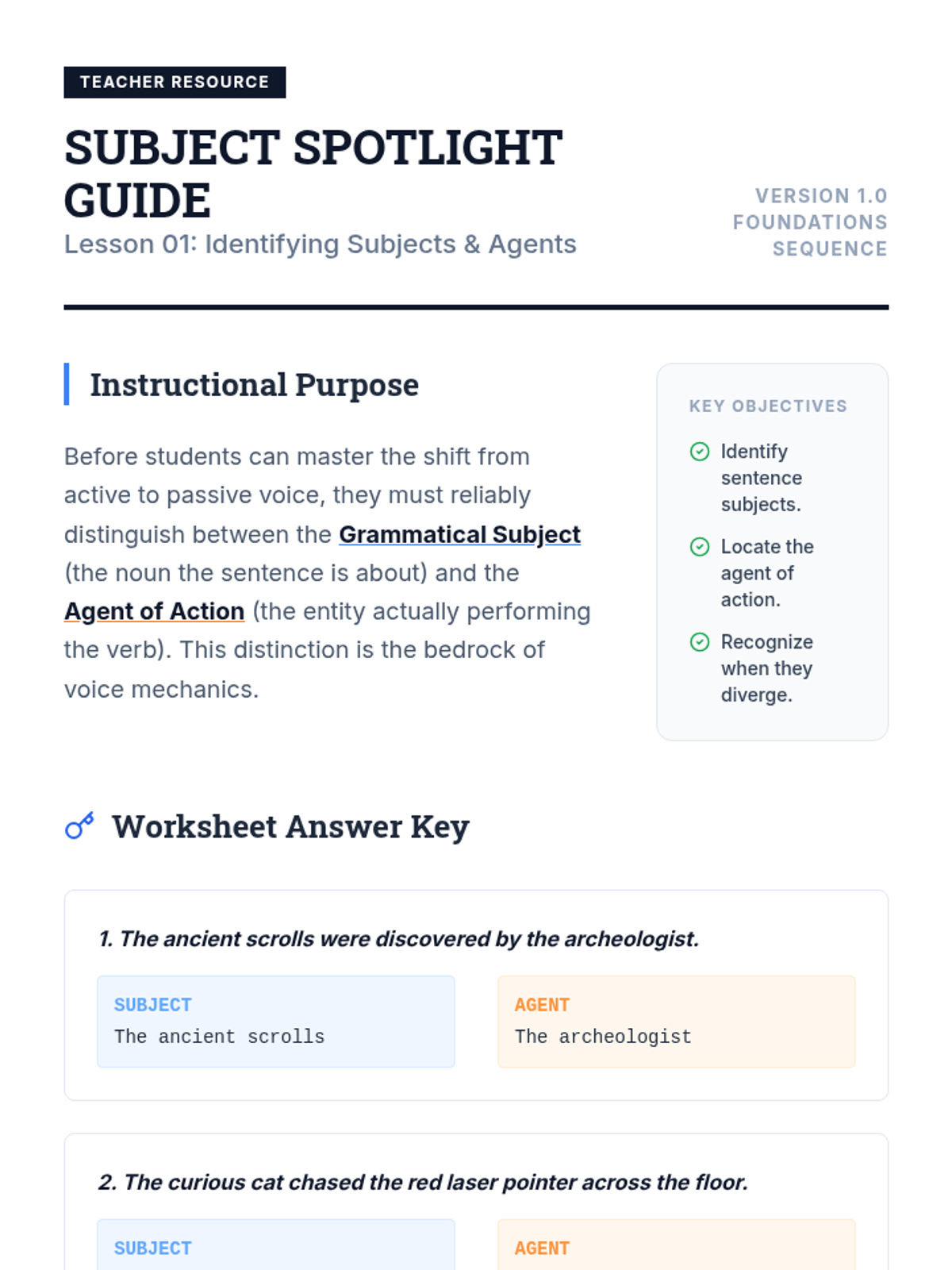
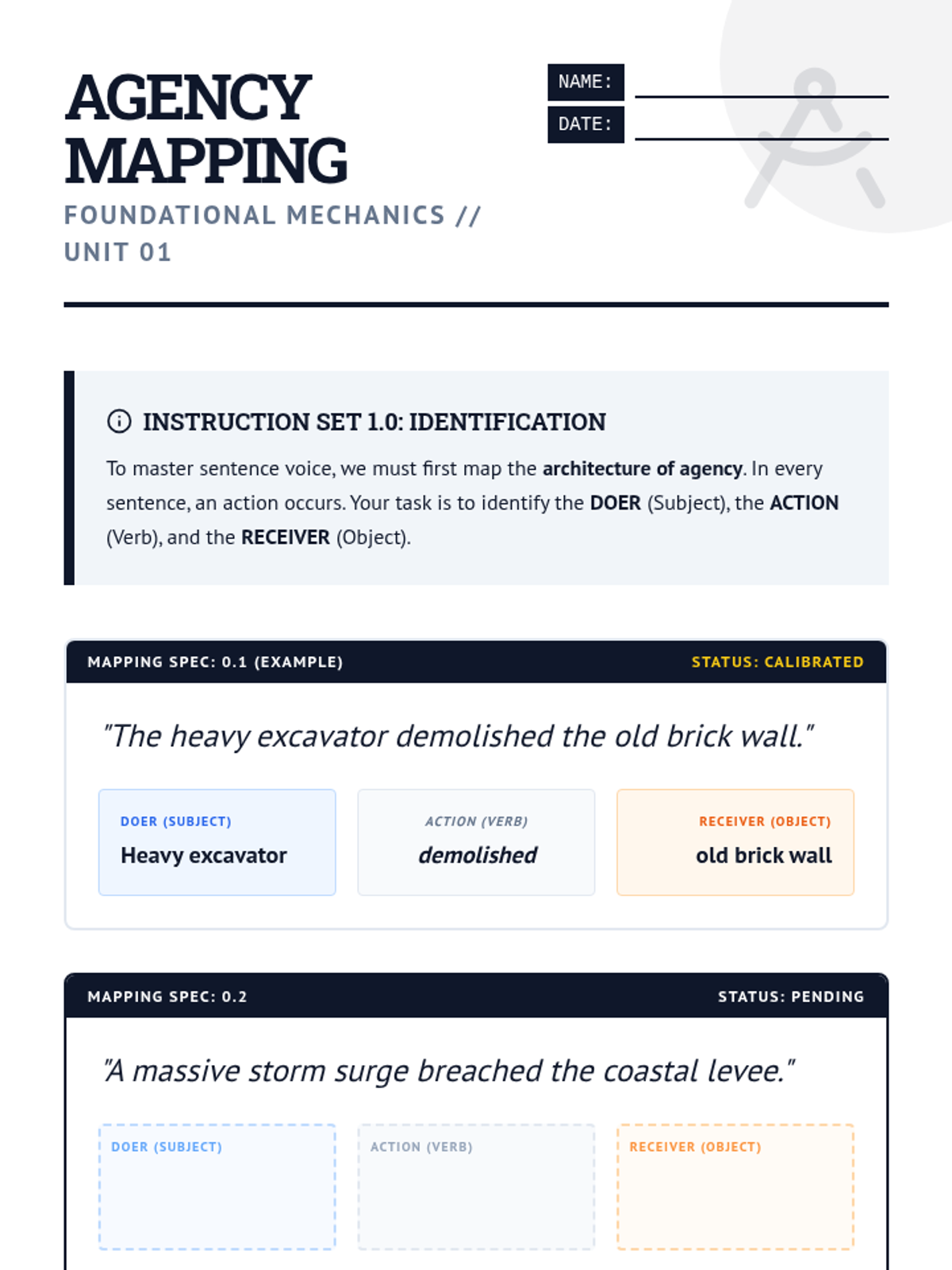
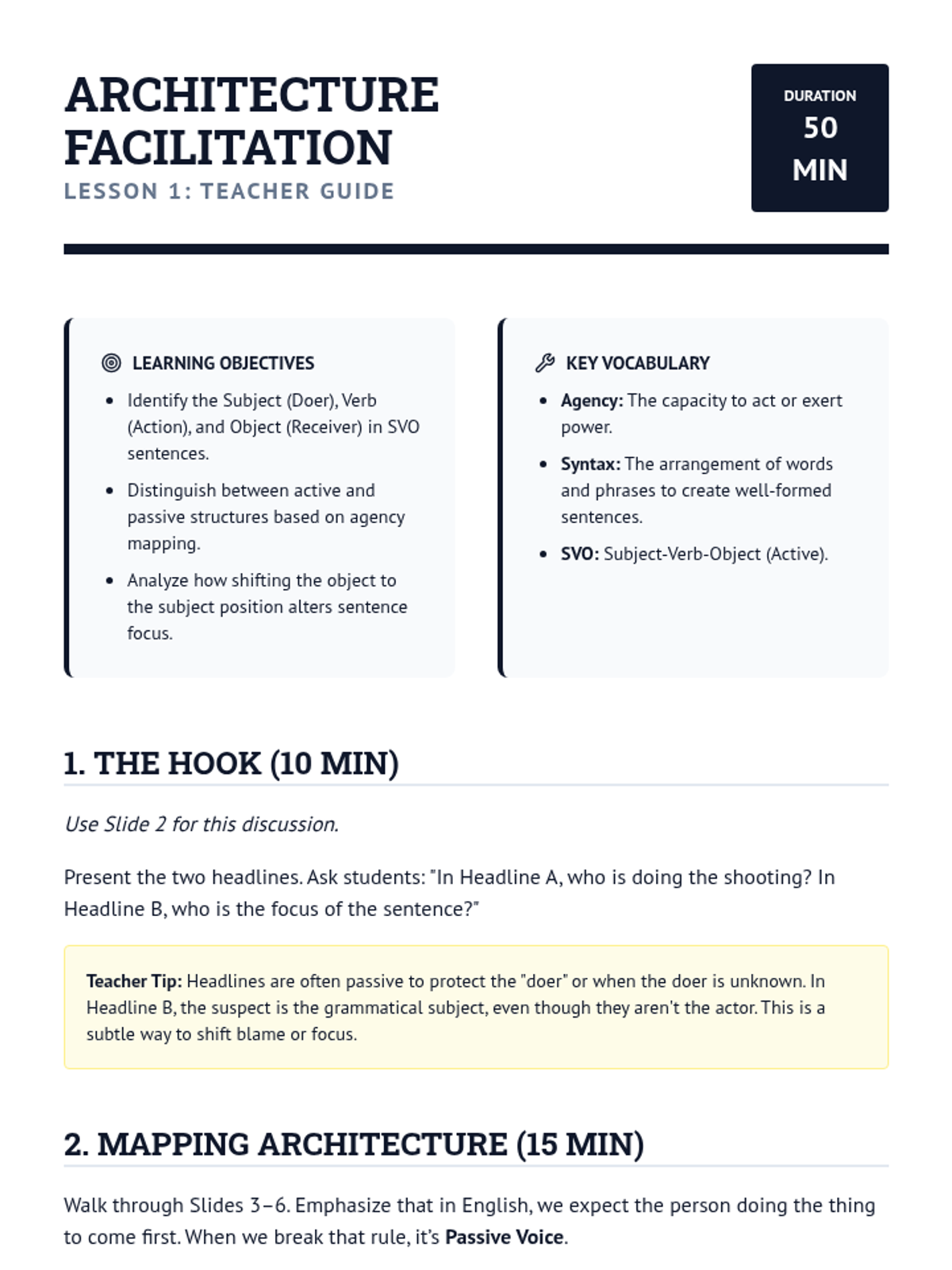
This foundational sequence introduces 8th-grade students to the grammatical mechanics of active and passive voice. Students move from identifying agents of action to mastering the conversion of sentences, ultimately applying these skills to improve the clarity and impact of their own writing.
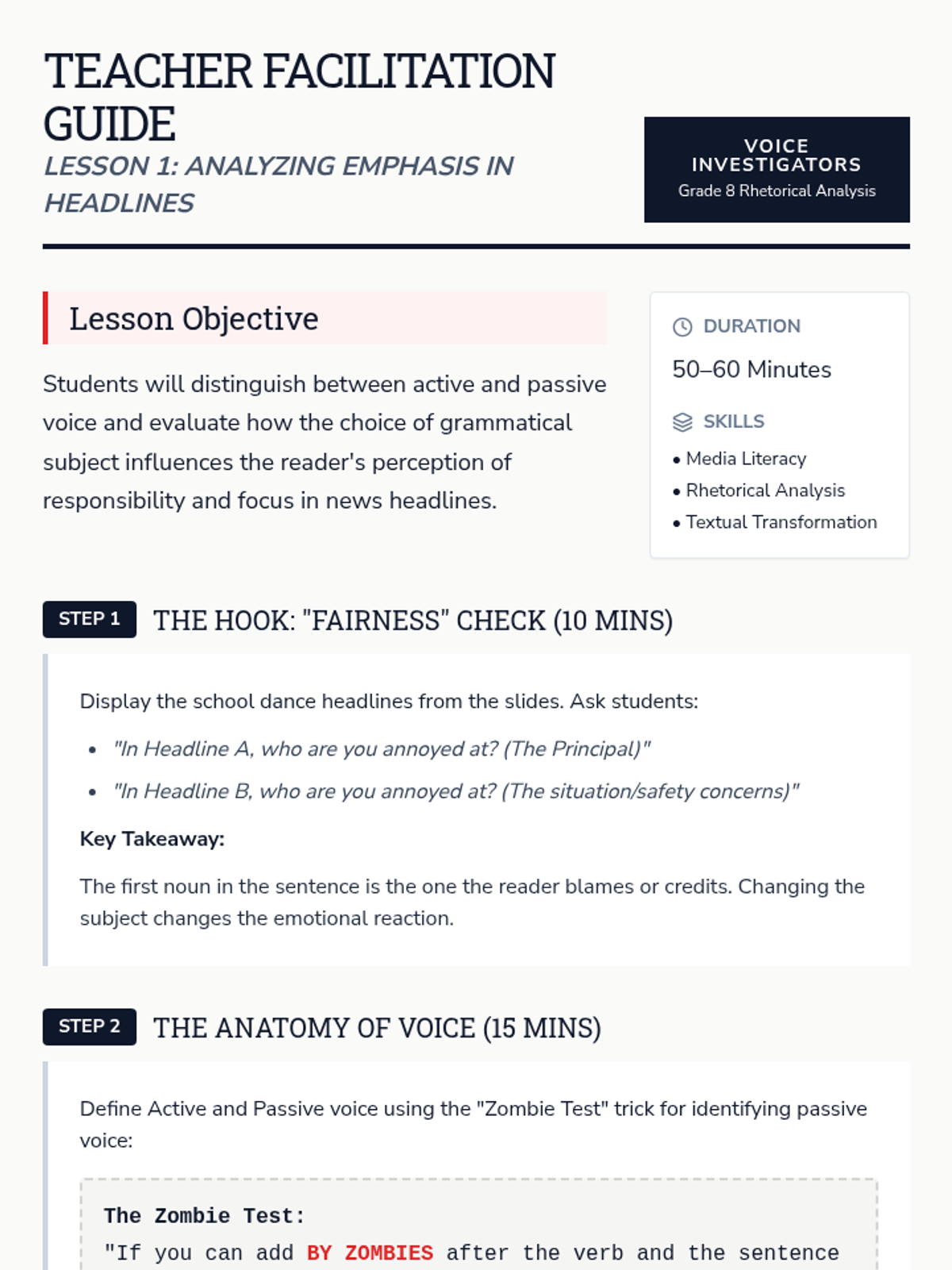
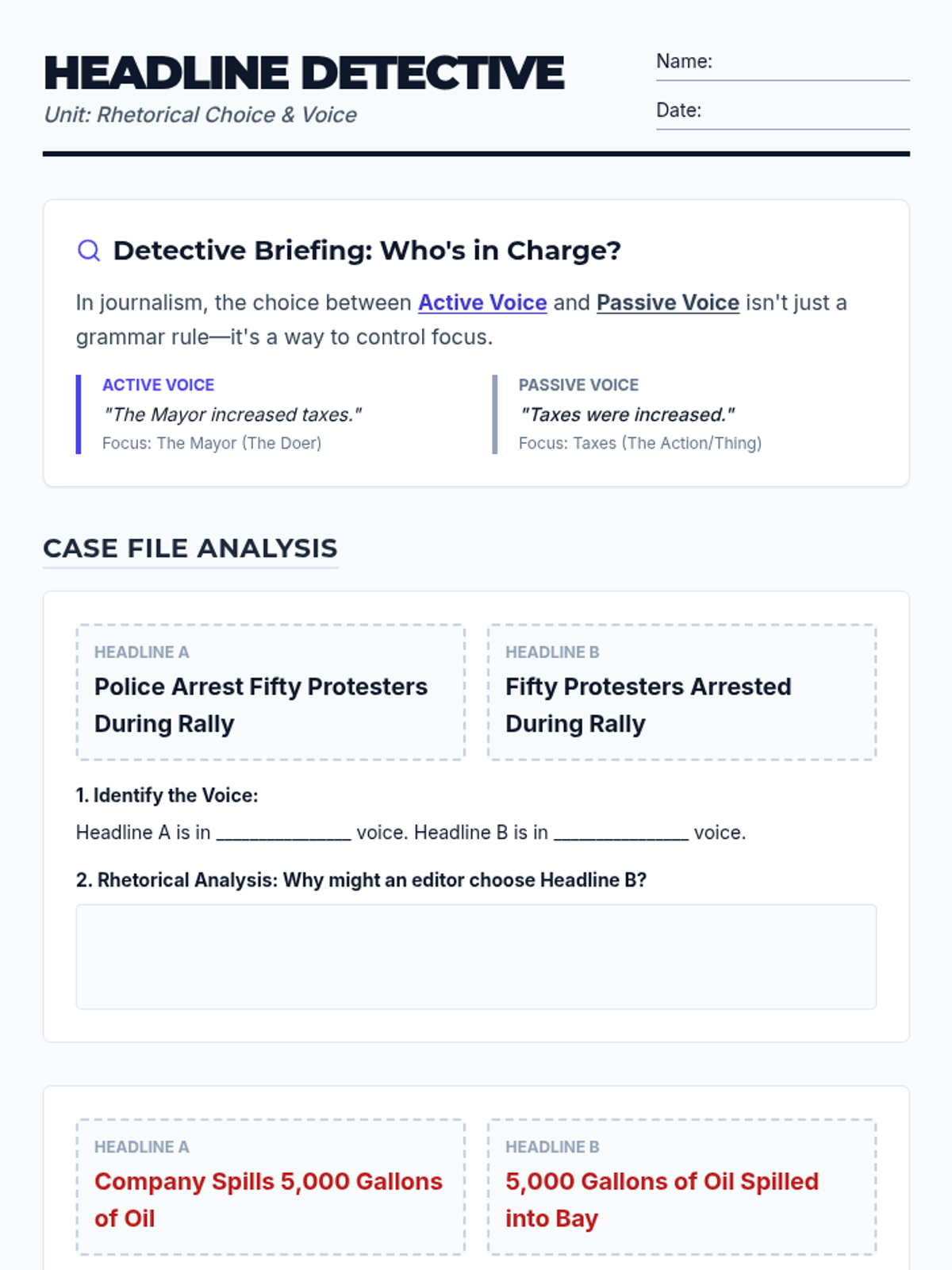
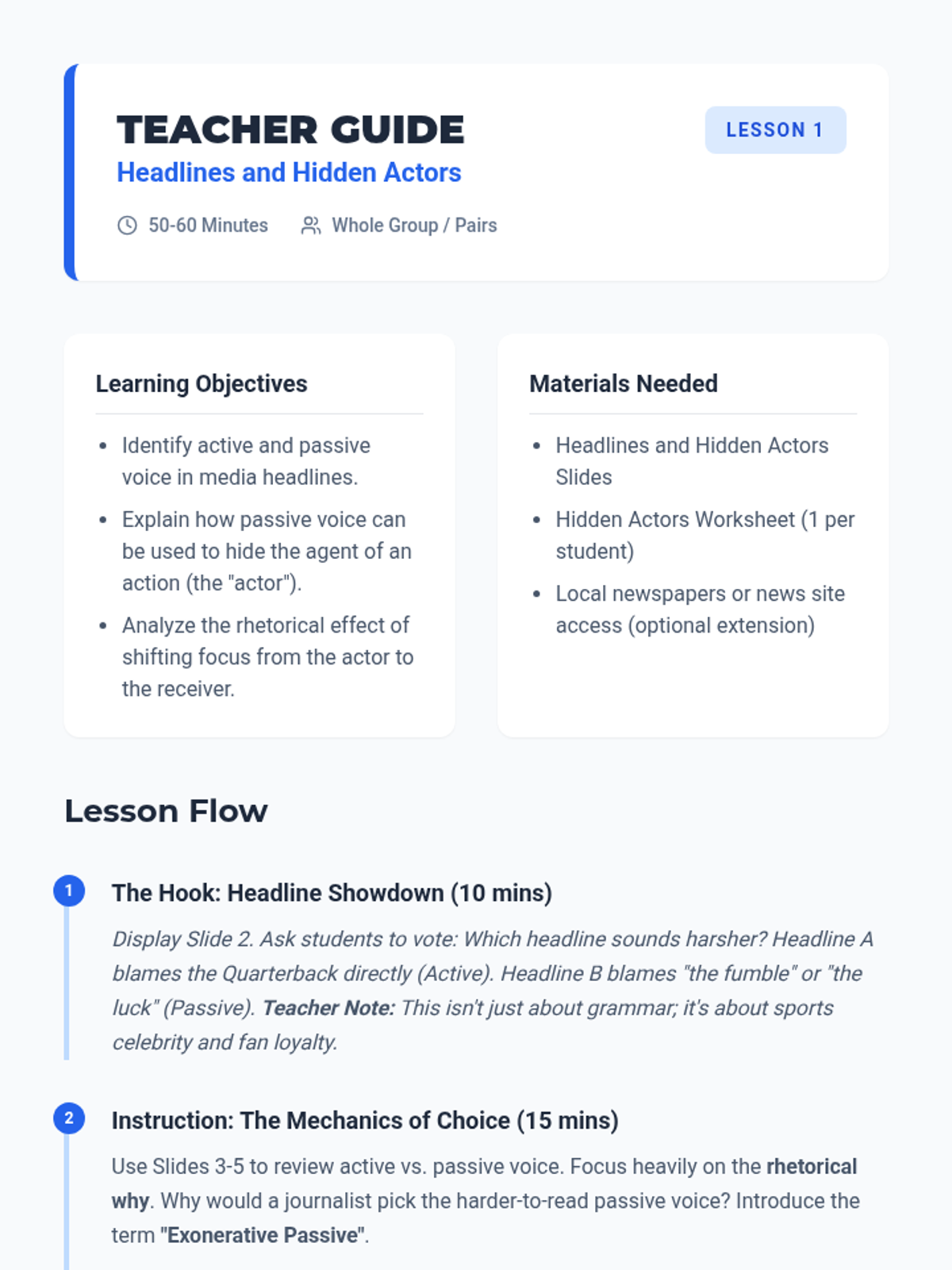
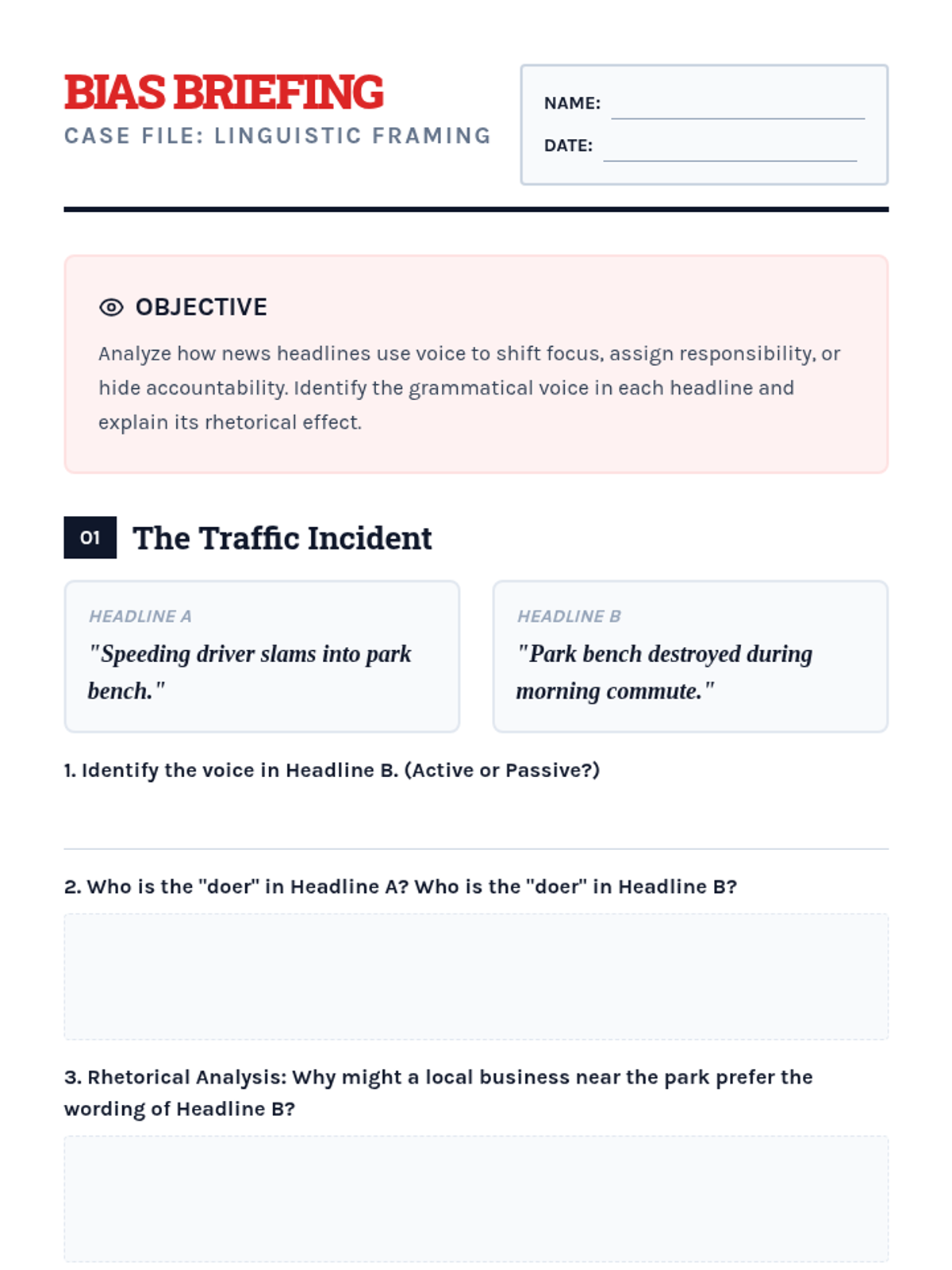
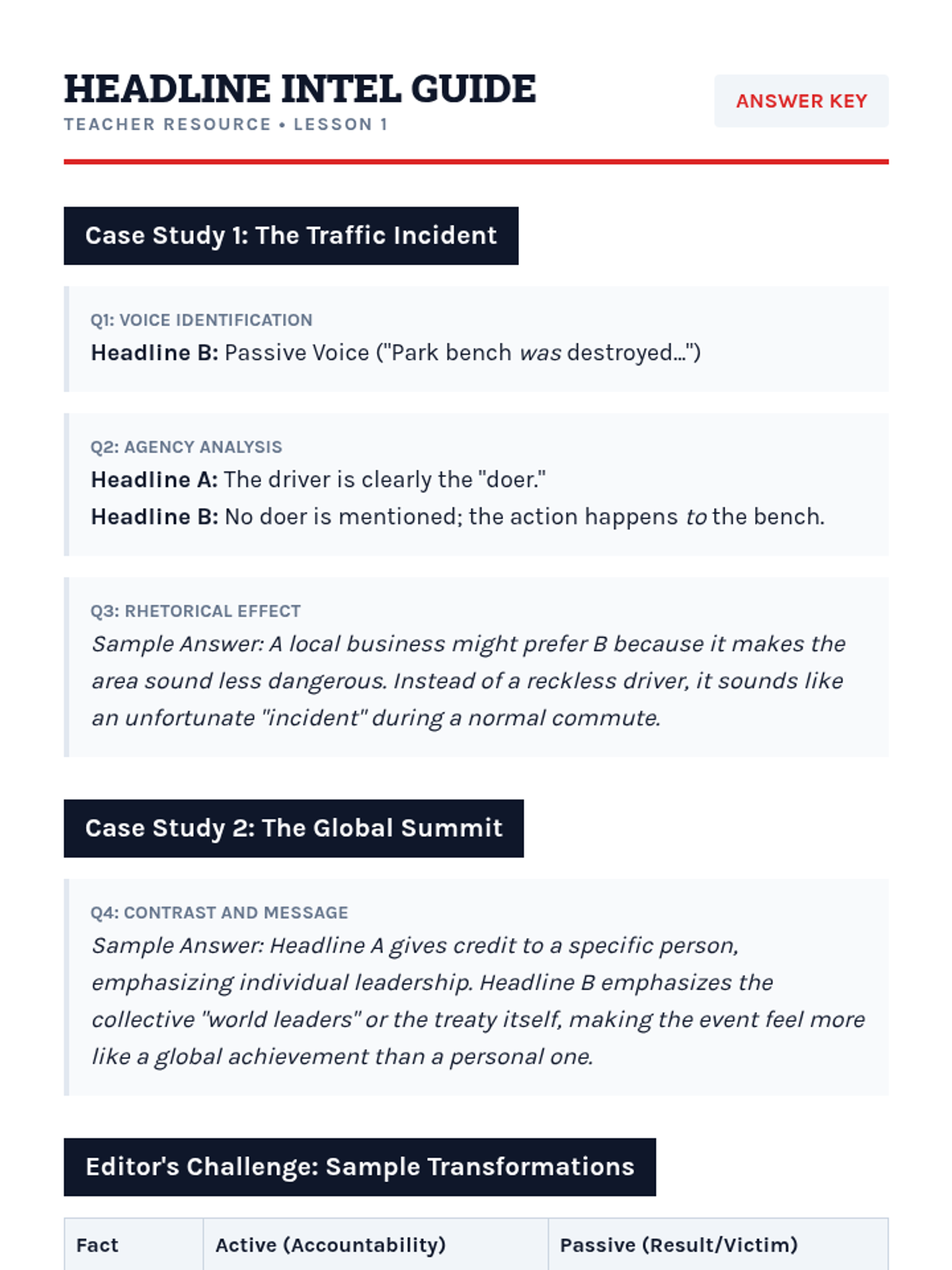
An inquiry-based exploration of active and passive voice through the lens of media literacy, political accountability, and historical agency for 8th-grade students. Students investigate how grammatical choices influence public perception and the ethics of linguistic transparency.
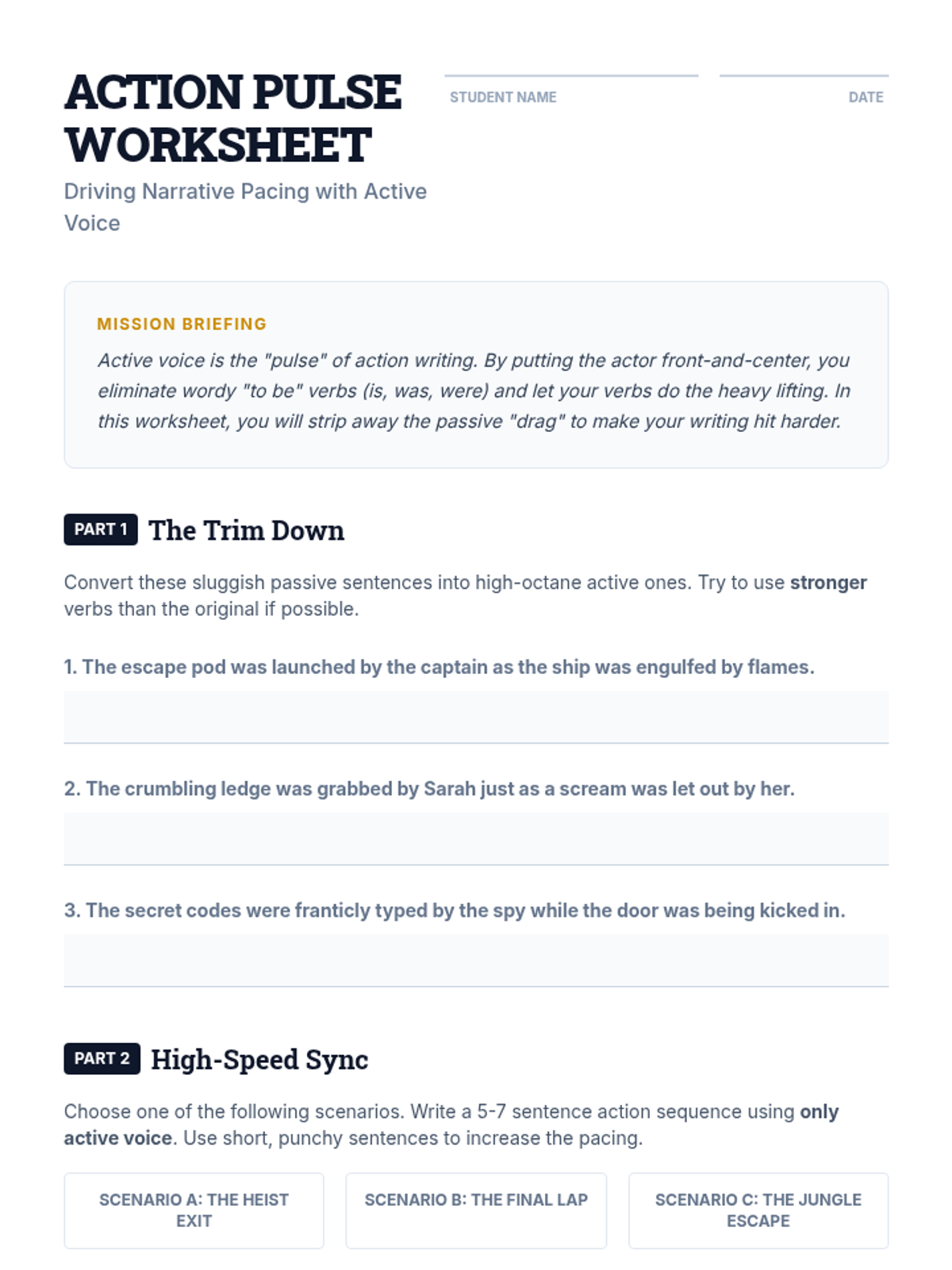
This project-based sequence explores how active and passive voice manipulate narrative elements like pacing, suspense, and power dynamics. Students move from technical grammar understanding to strategic stylistic application in creative writing.
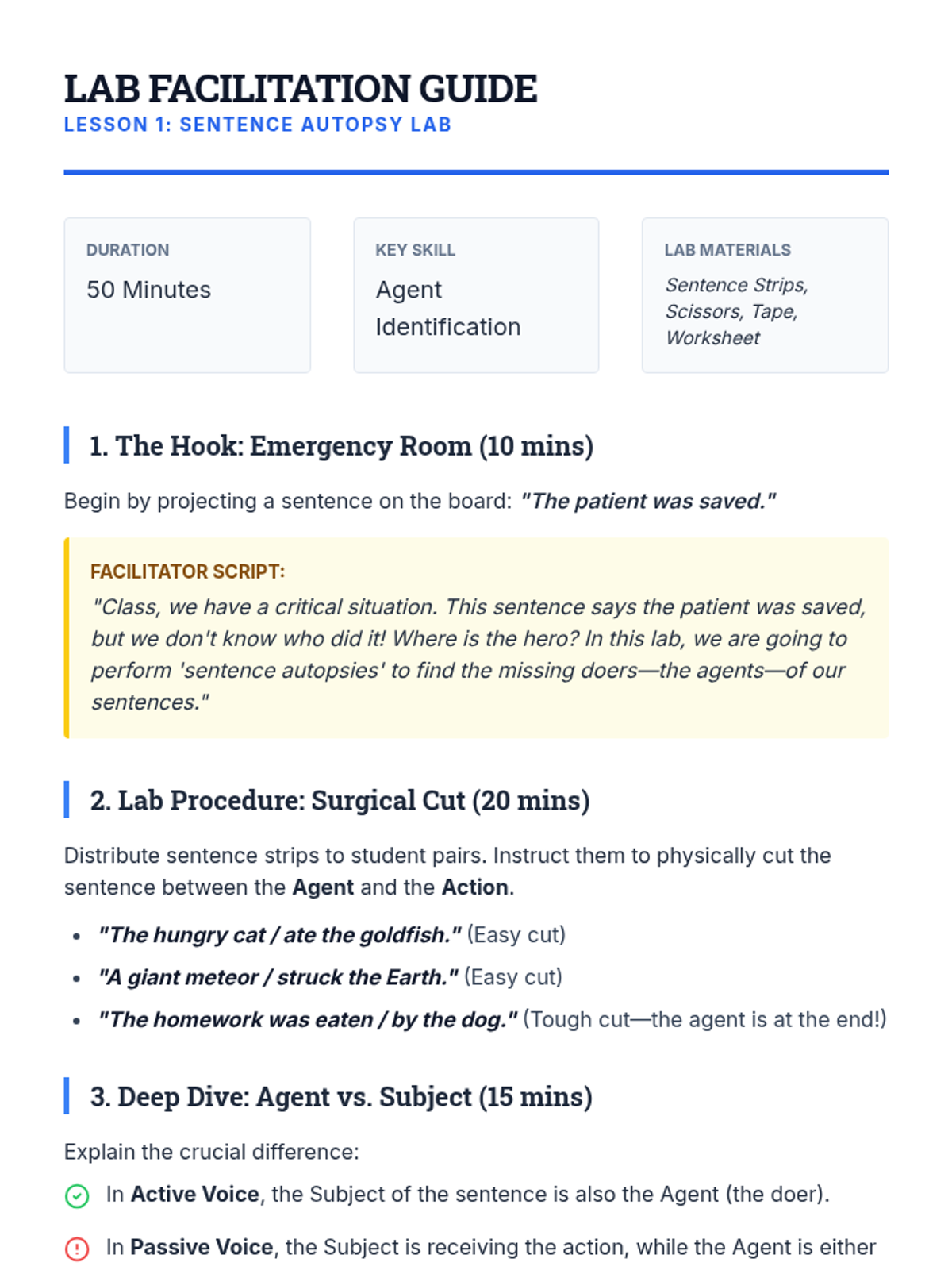
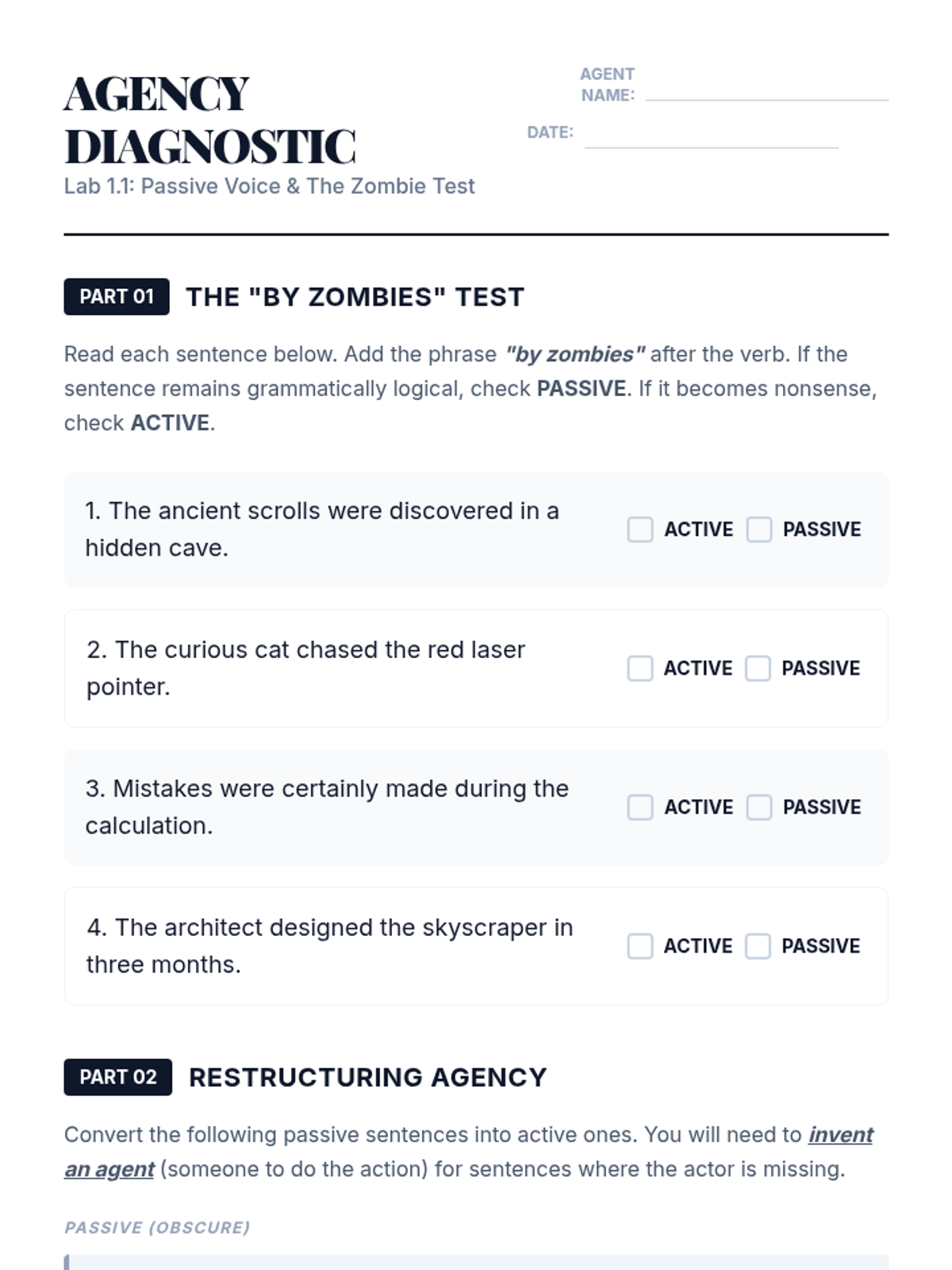
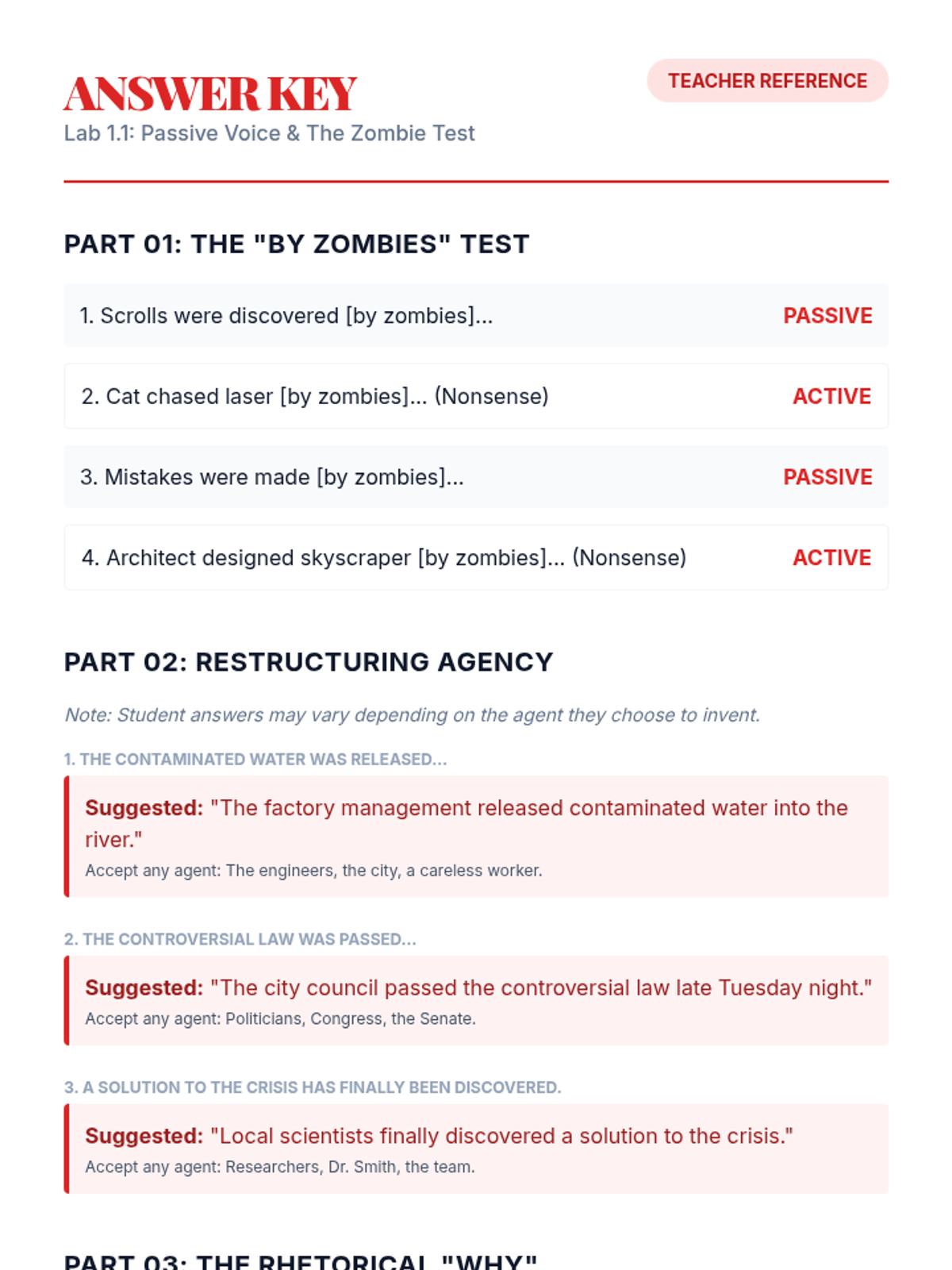
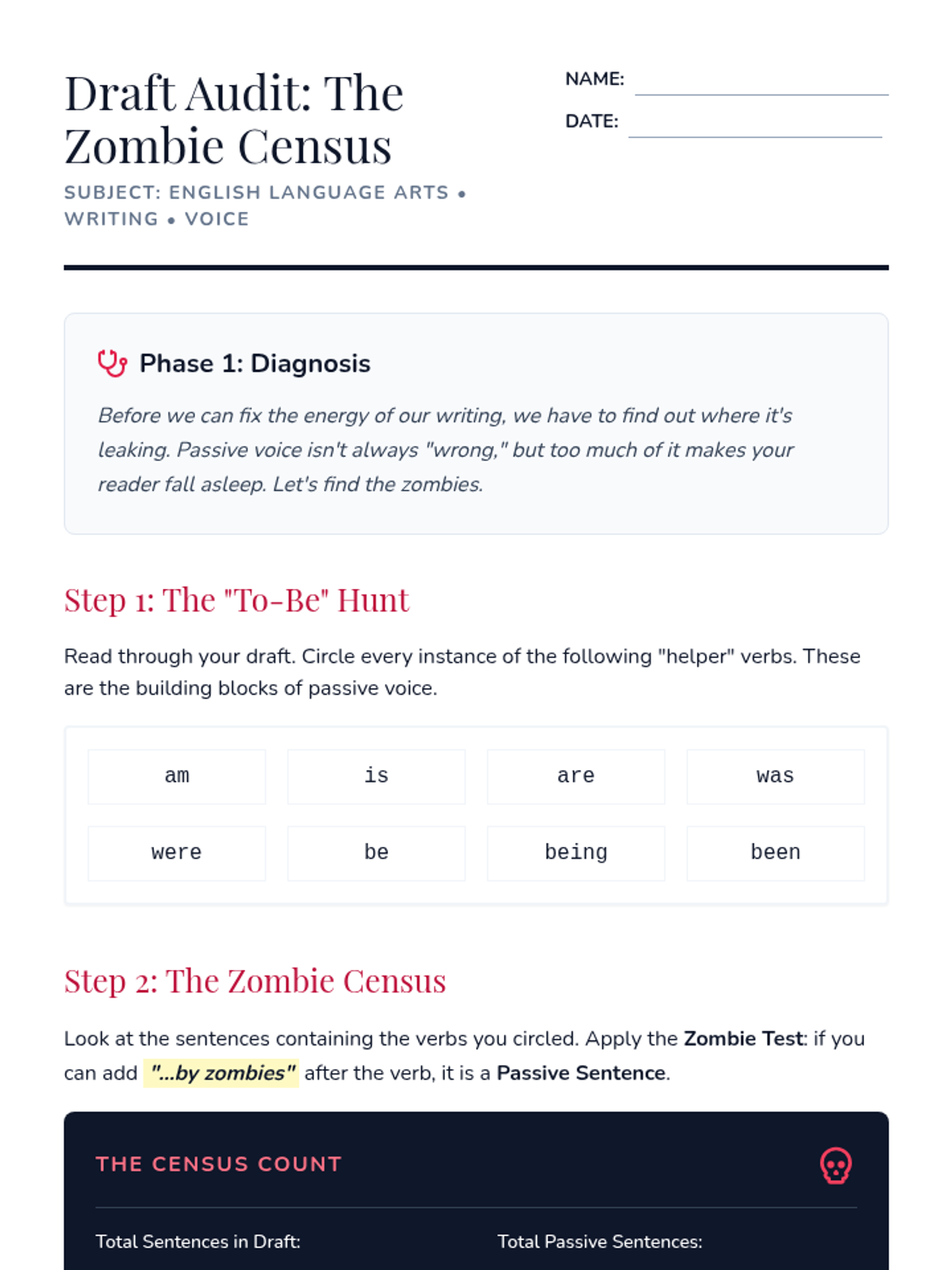
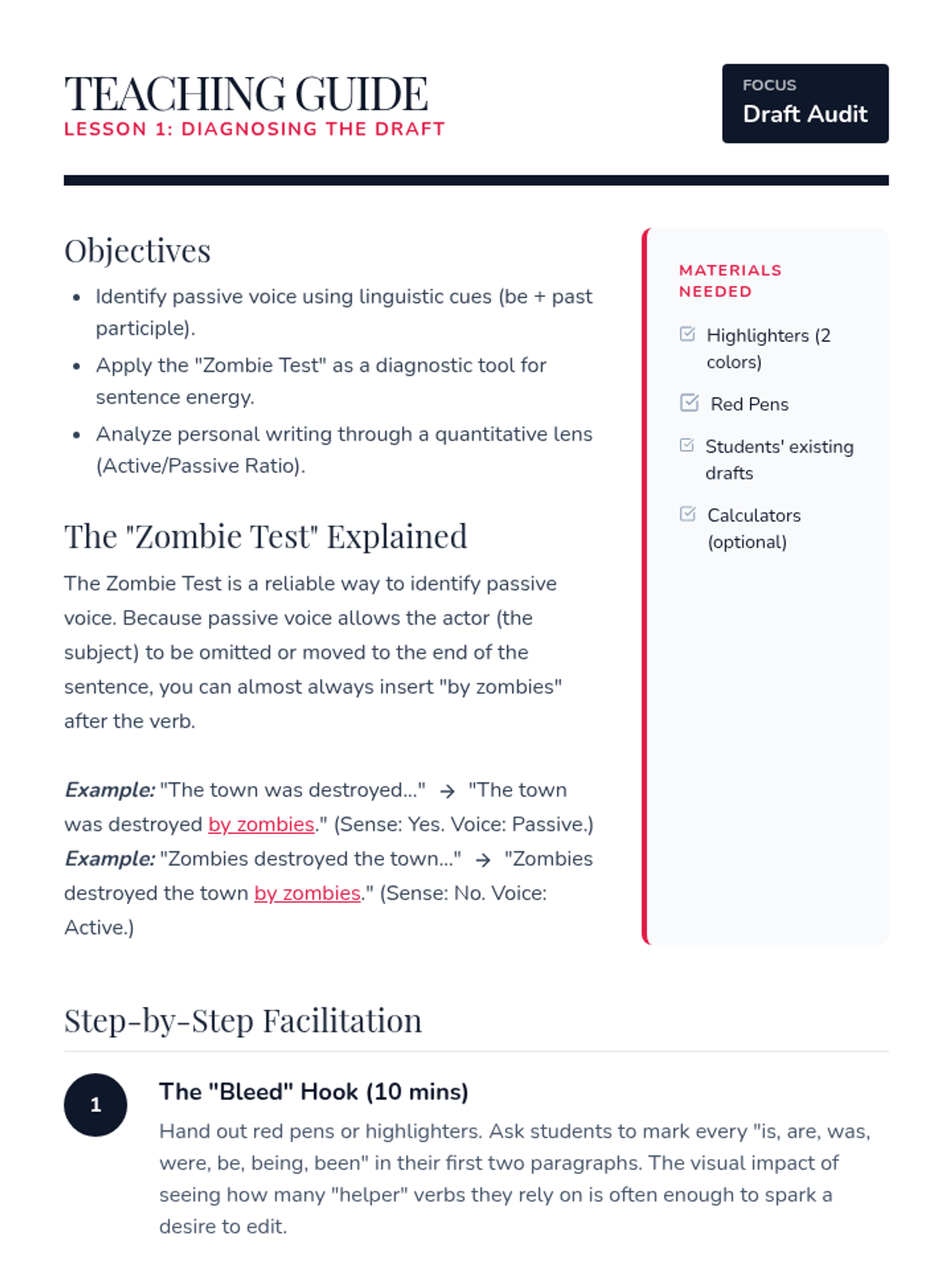
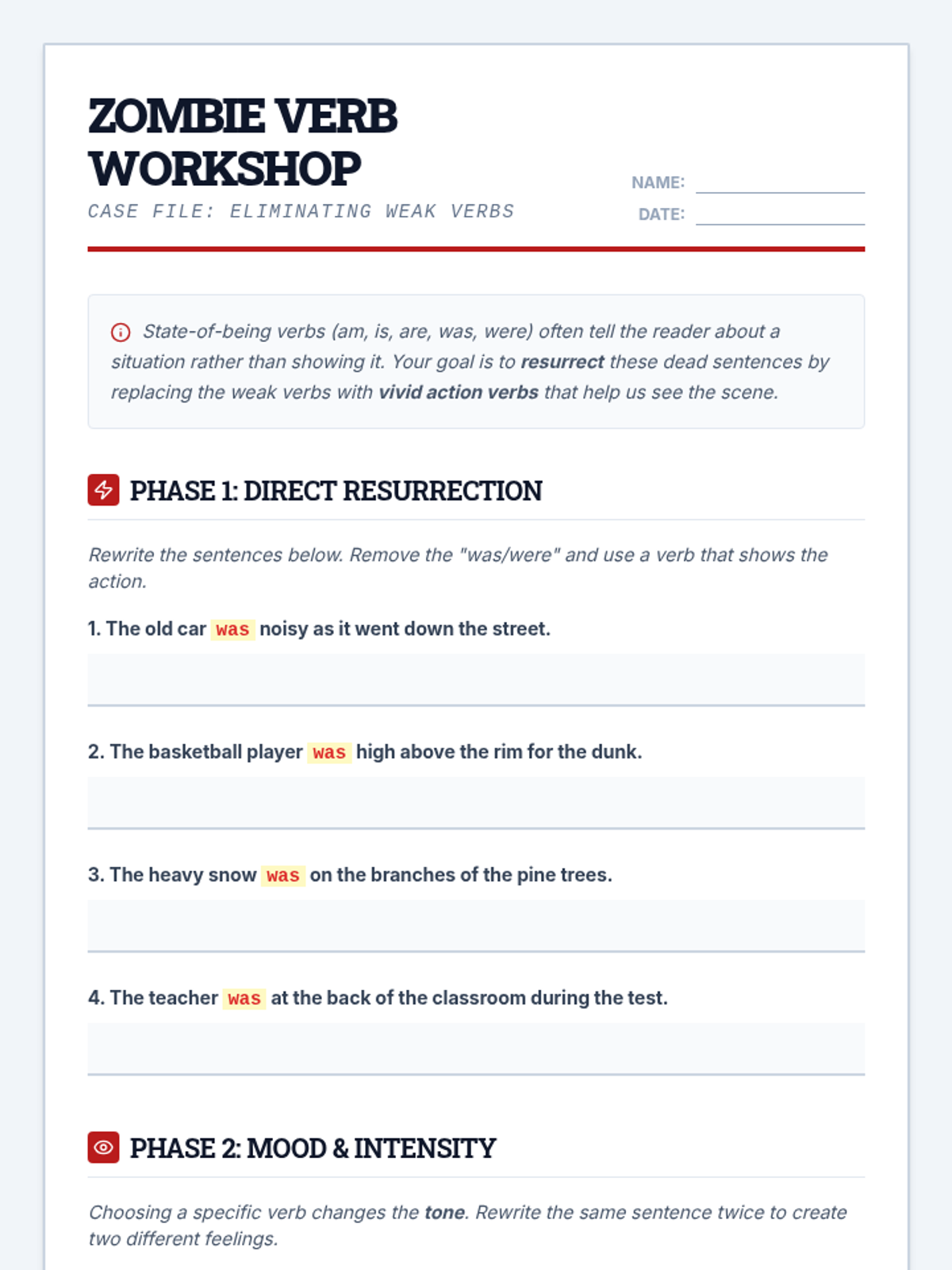
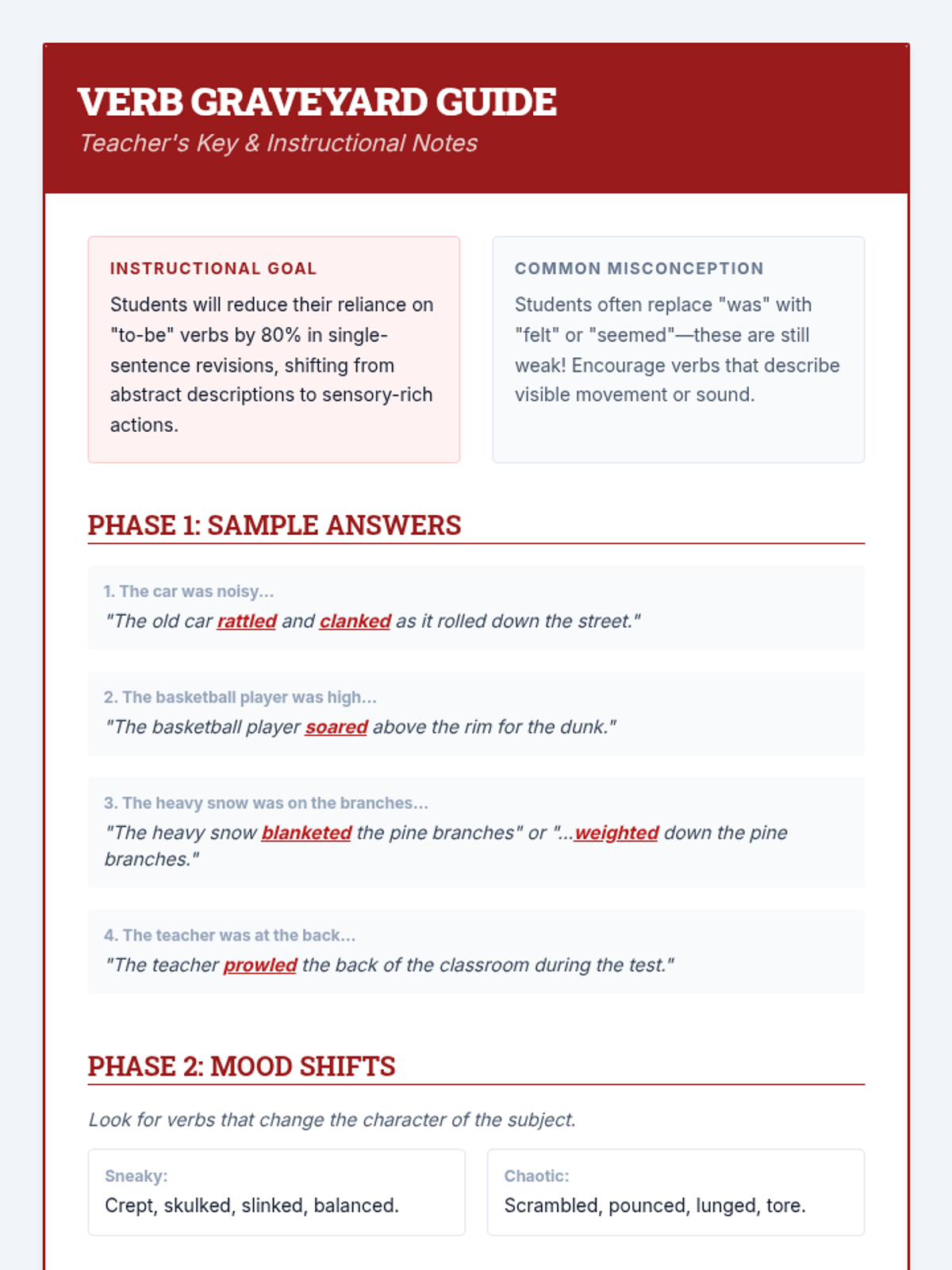
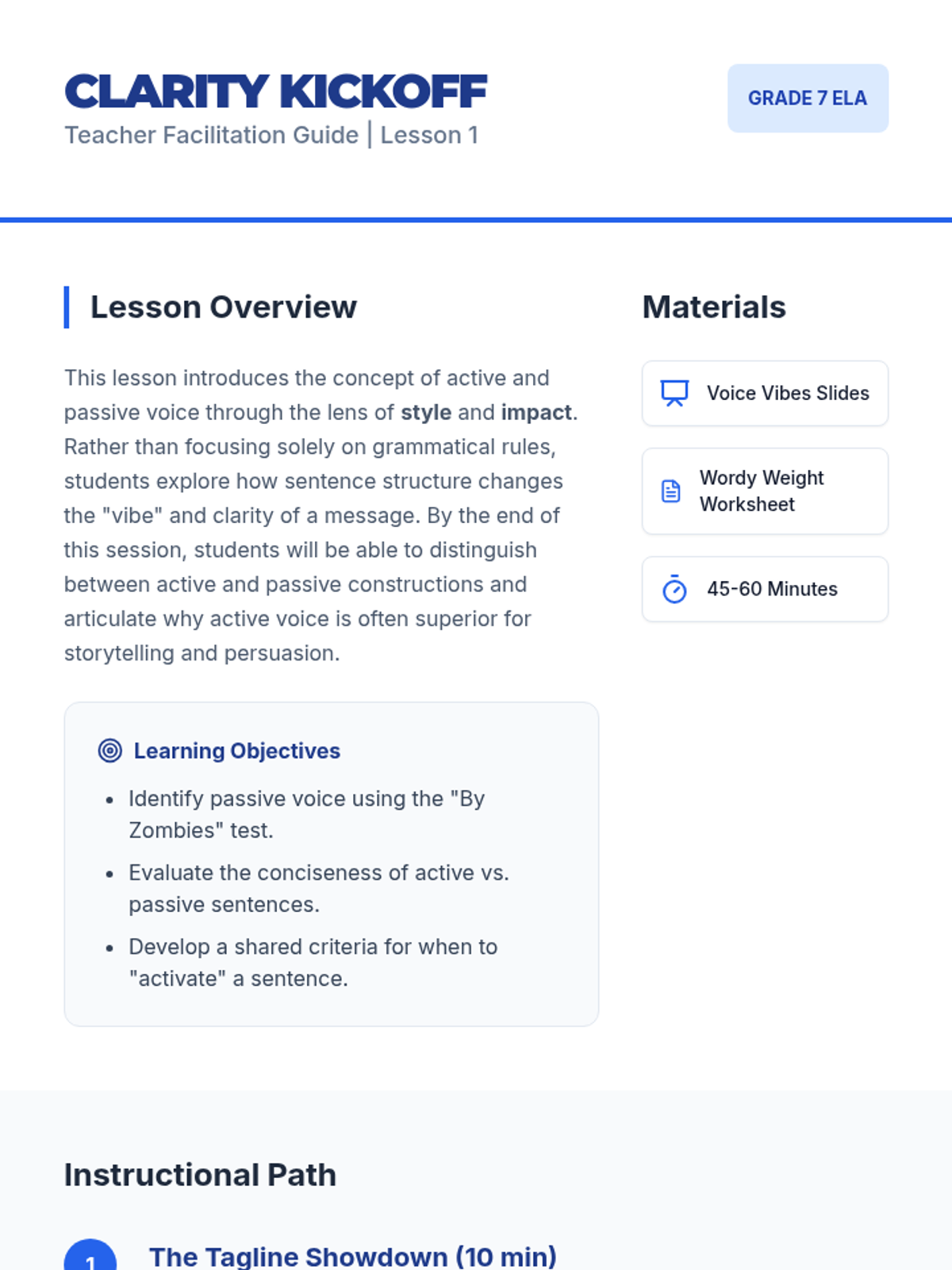
A comprehensive 7th-grade writing unit focused on the mechanics of active and passive voice. Students learn to identify agents of action, use the 'Zombie Test' for diagnosis, and intentionally construct or revise sentences for clarity and impact across five progressive lessons.
This sequence explores the rhetorical and stylistic implications of choosing active or passive voice. Students learn to use voice intentionally across different genres—media, science, mystery, and persuasion—to influence reader perception and focus.
A comprehensive 8th-grade grammar unit focusing on the structural mechanics of active and passive voice. Students move from identifying agents of action to mastering the 'to be + past participle' formula and transforming sentences while maintaining tense consistency.
This sequence explores the rhetorical power of active and passive voice in media, politics, and public relations. Students move from basic grammatical mastery to analyzing how sentence structure can obscure agency, deflect responsibility, and shape public perception of truth and bias.
This sequence explores the rhetorical power of active and passive voice across various genres, including journalism, science, creative writing, and political discourse. Students move beyond basic mechanics to analyze how sentence structure influences accountability, objectivity, and suspense.
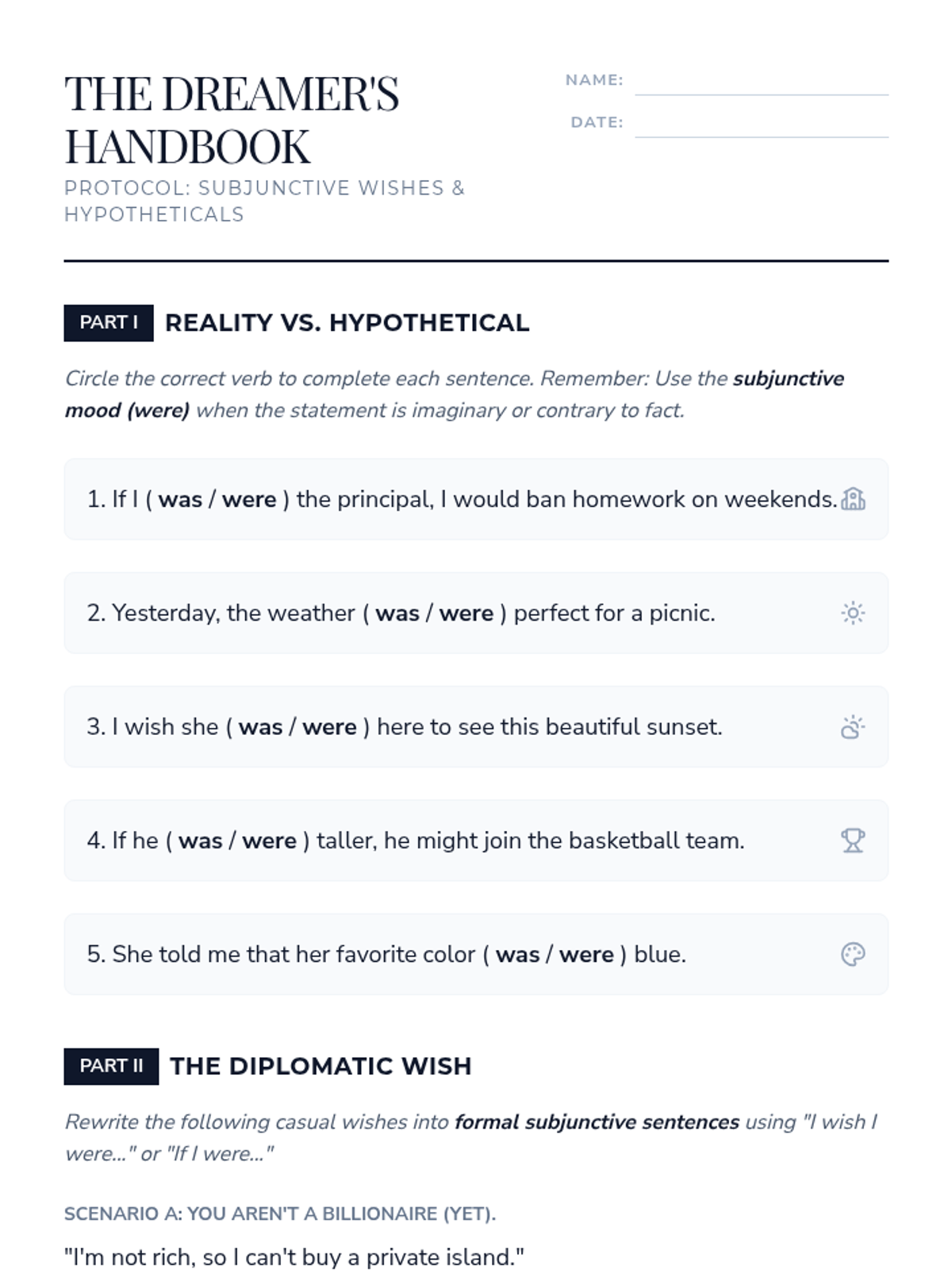
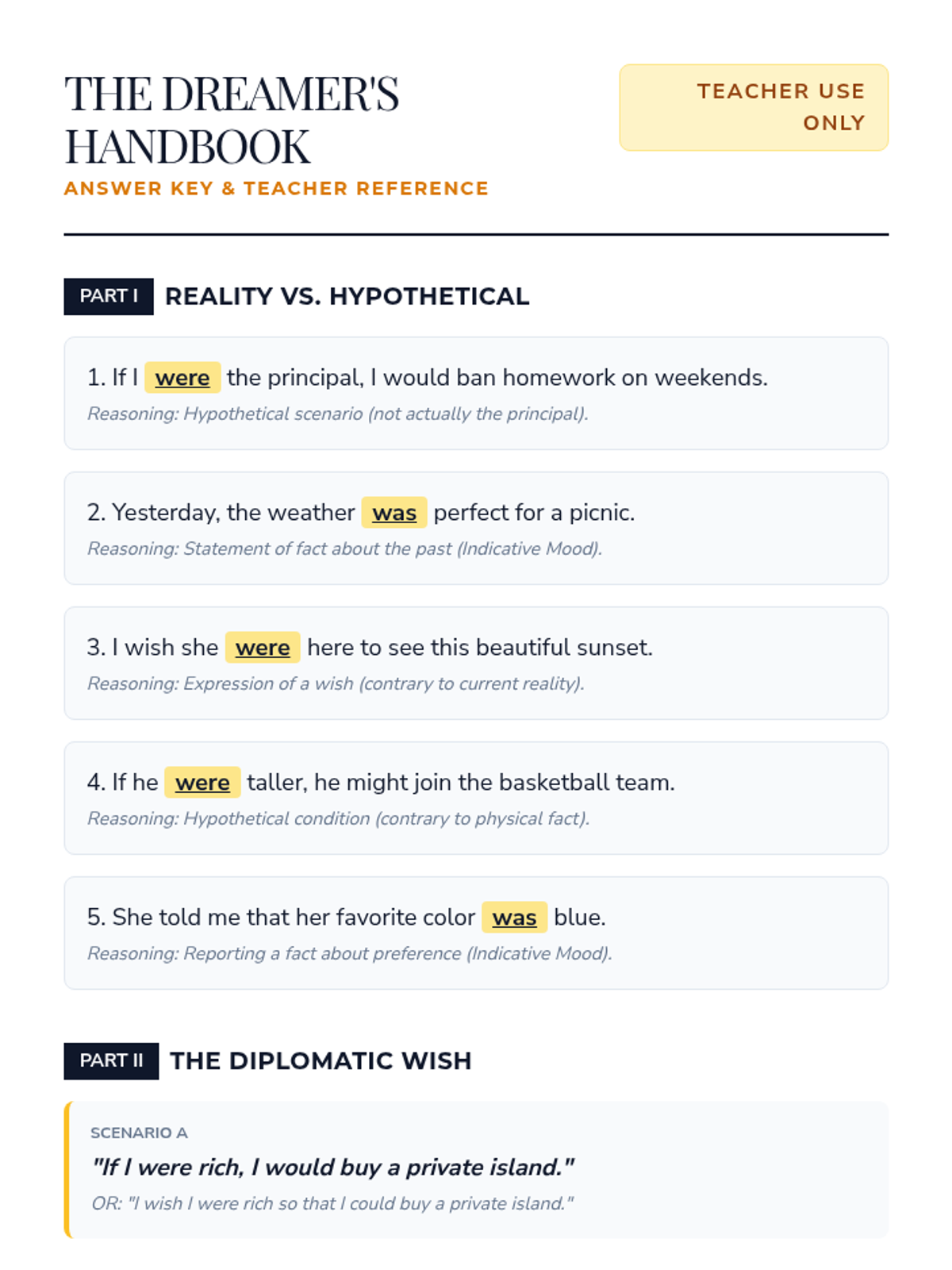
A comprehensive unit on the subjunctive mood, focusing on formal suggestions, demands, and wishes in high-level academic and professional communication. Students engage in simulations and formal writing to master complex grammatical structures.
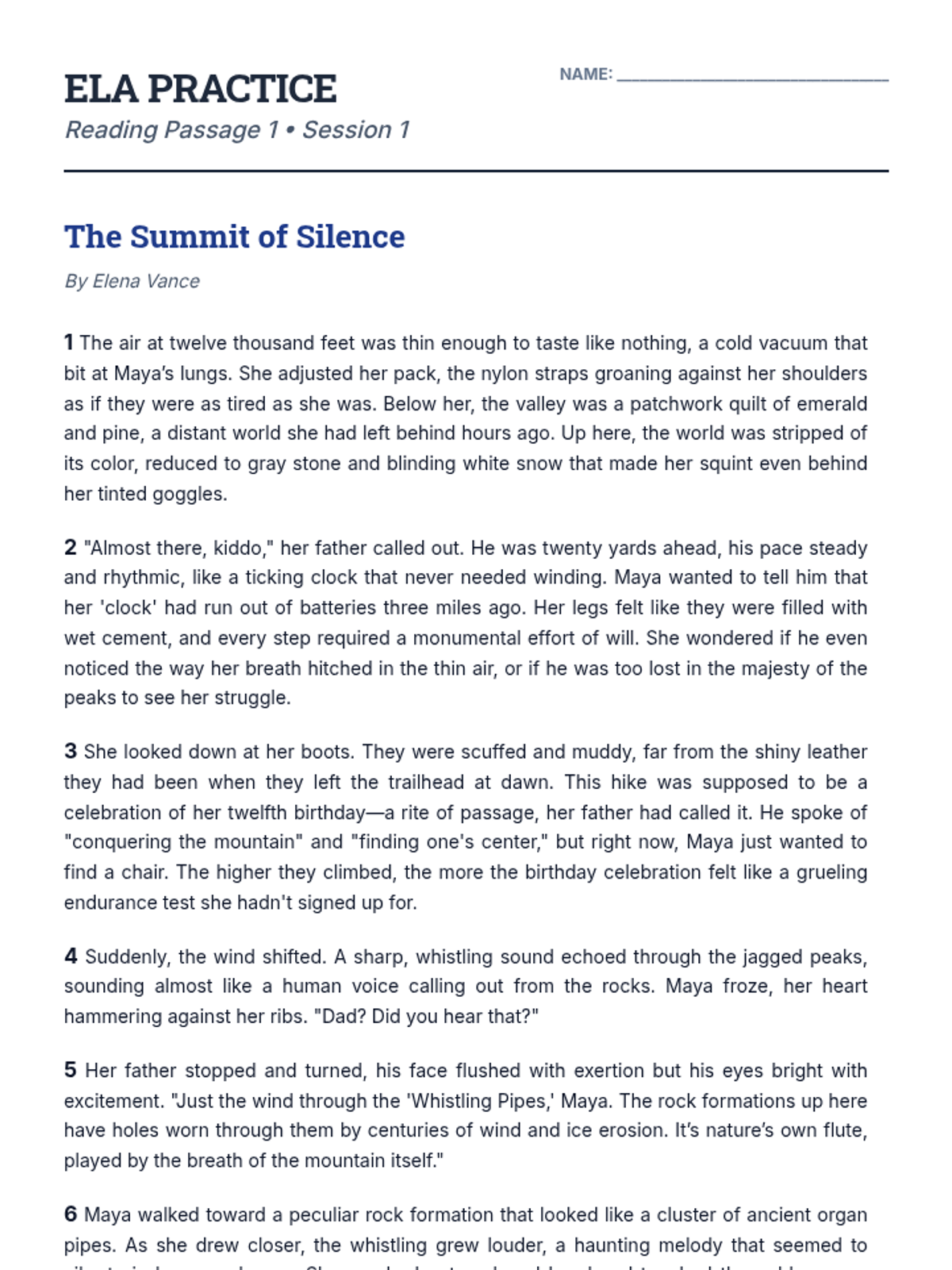
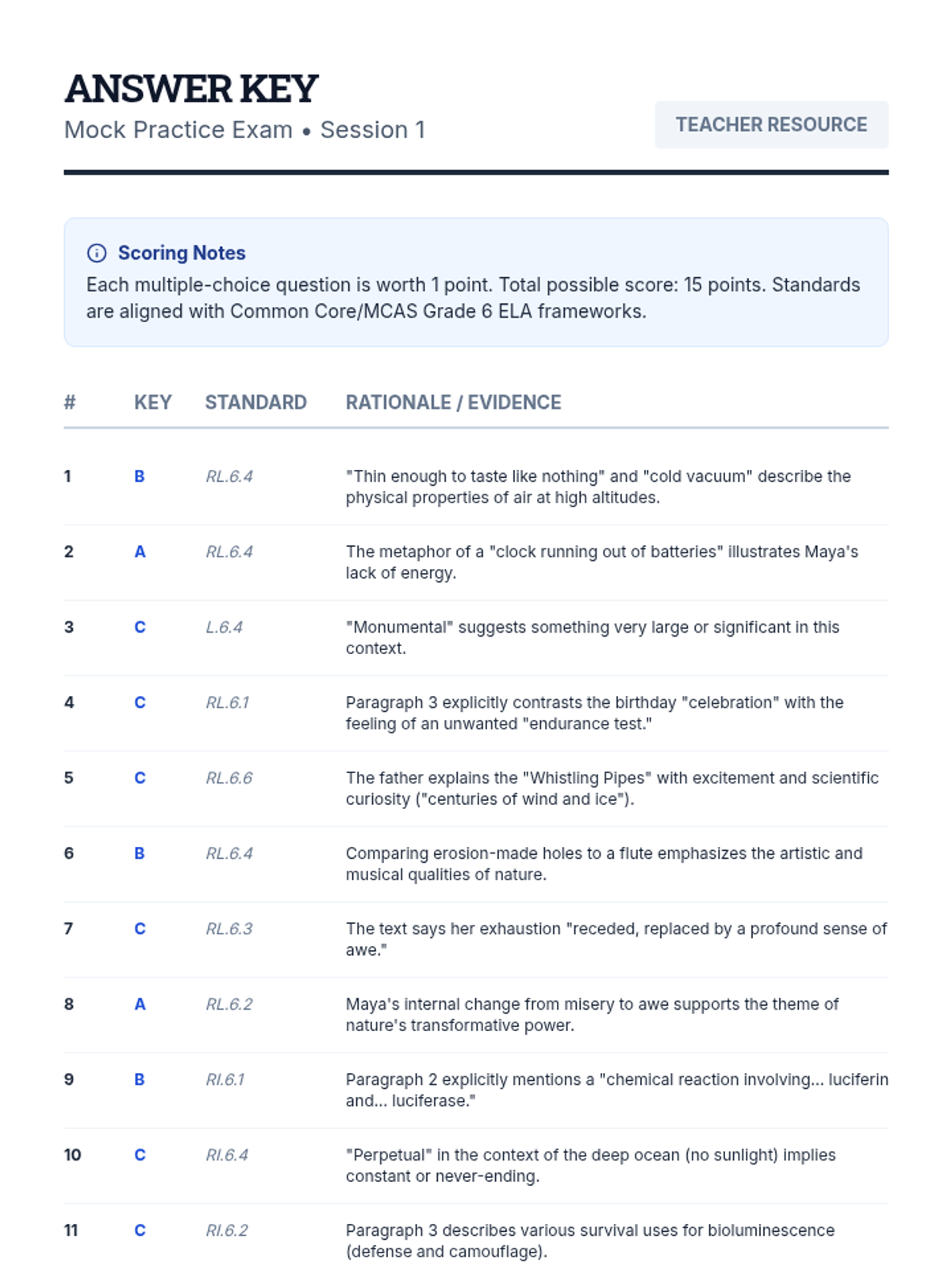
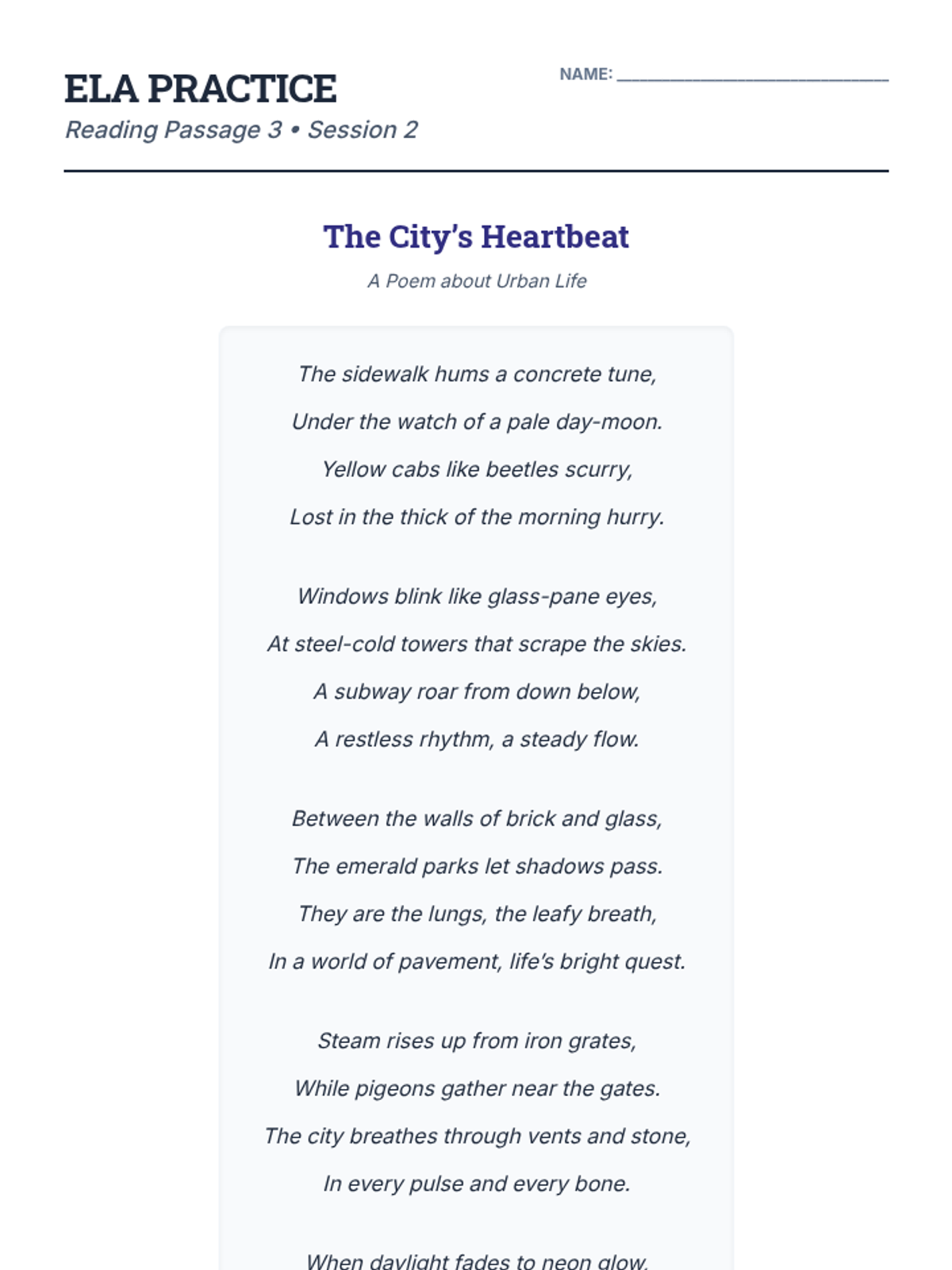
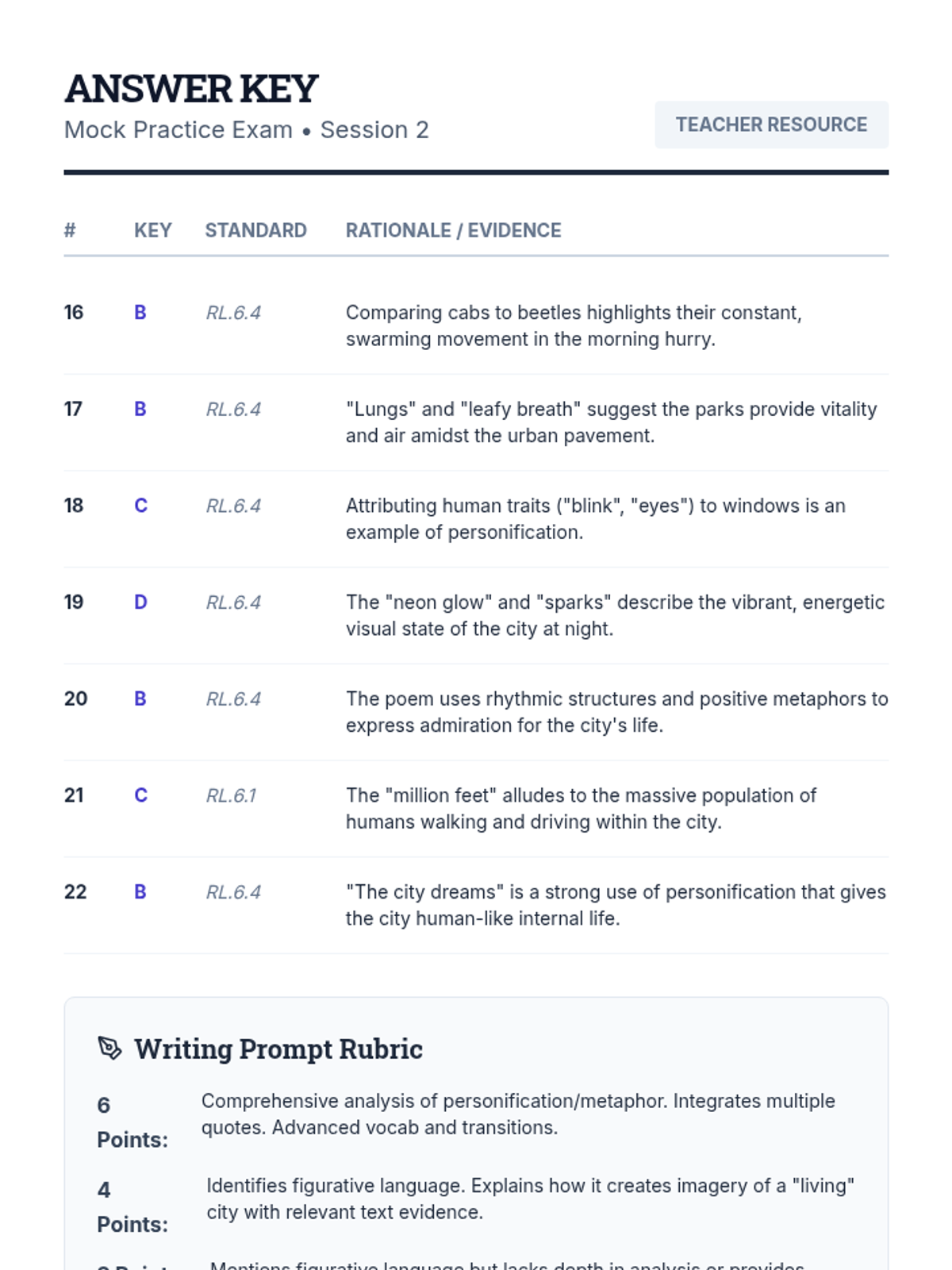
A comprehensive Grade 6 ELA MCAS preparation sequence designed to build stamina and familiarity with standardized testing formats through high-quality passages and standards-aligned questions.
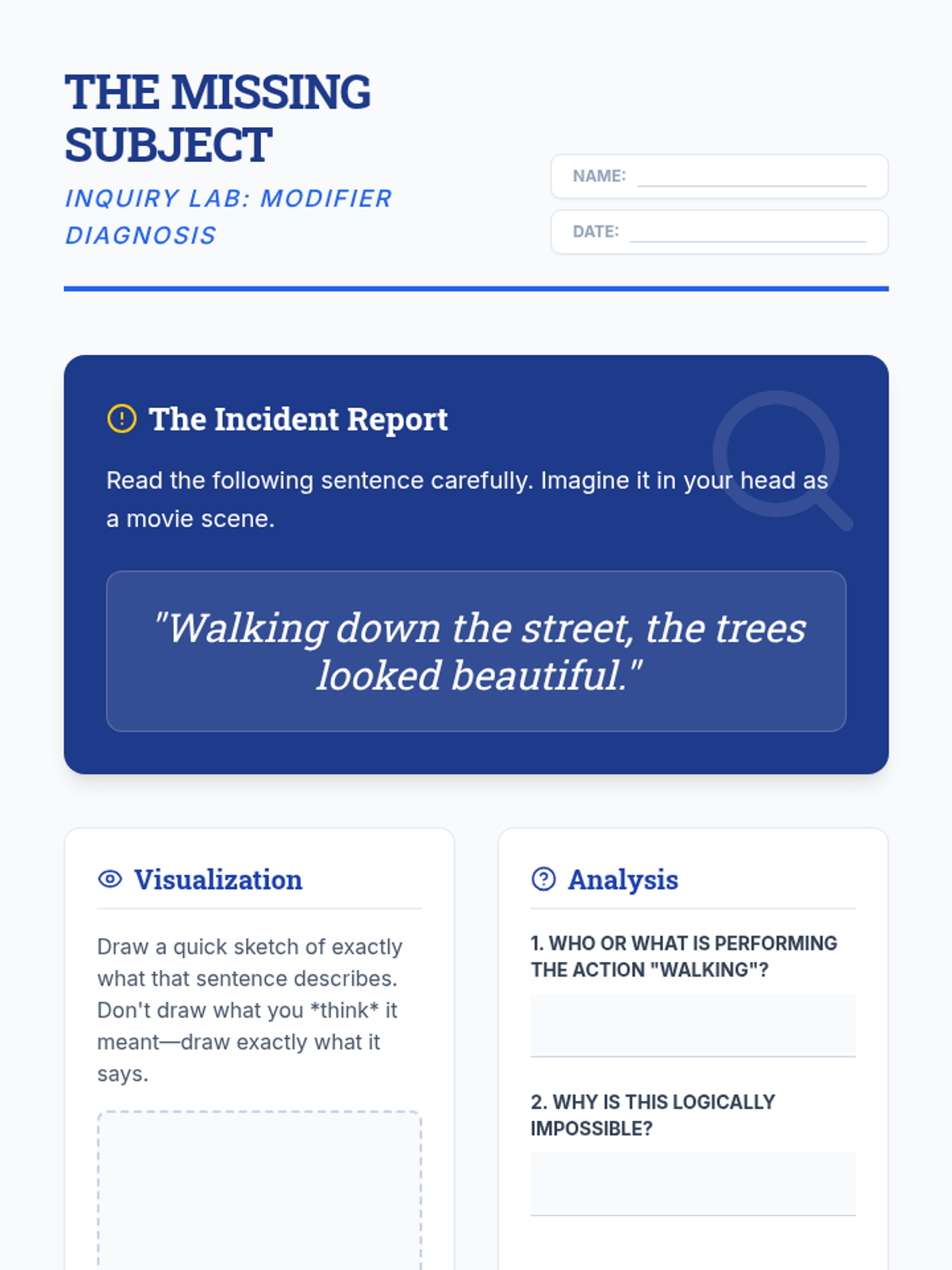
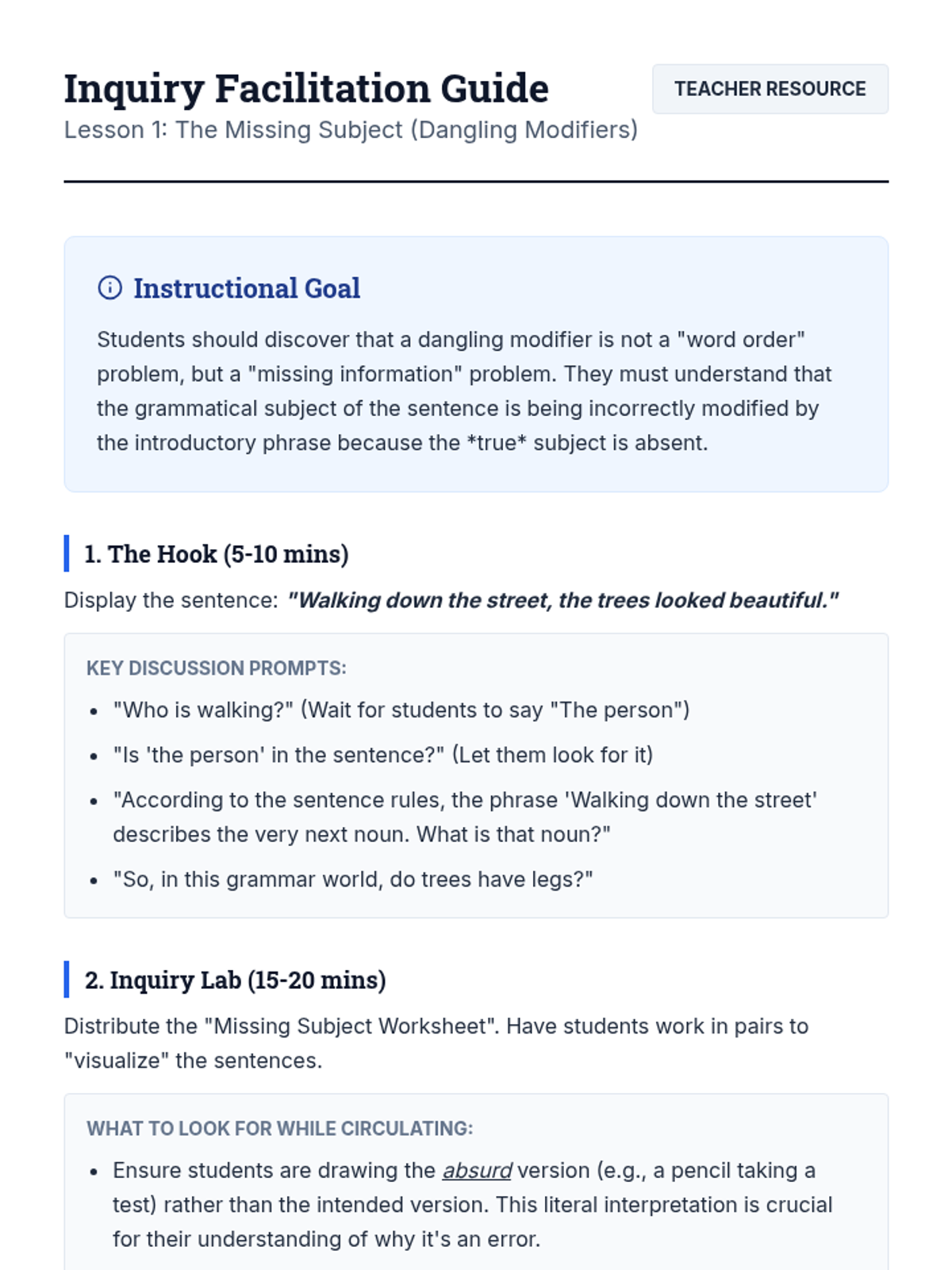
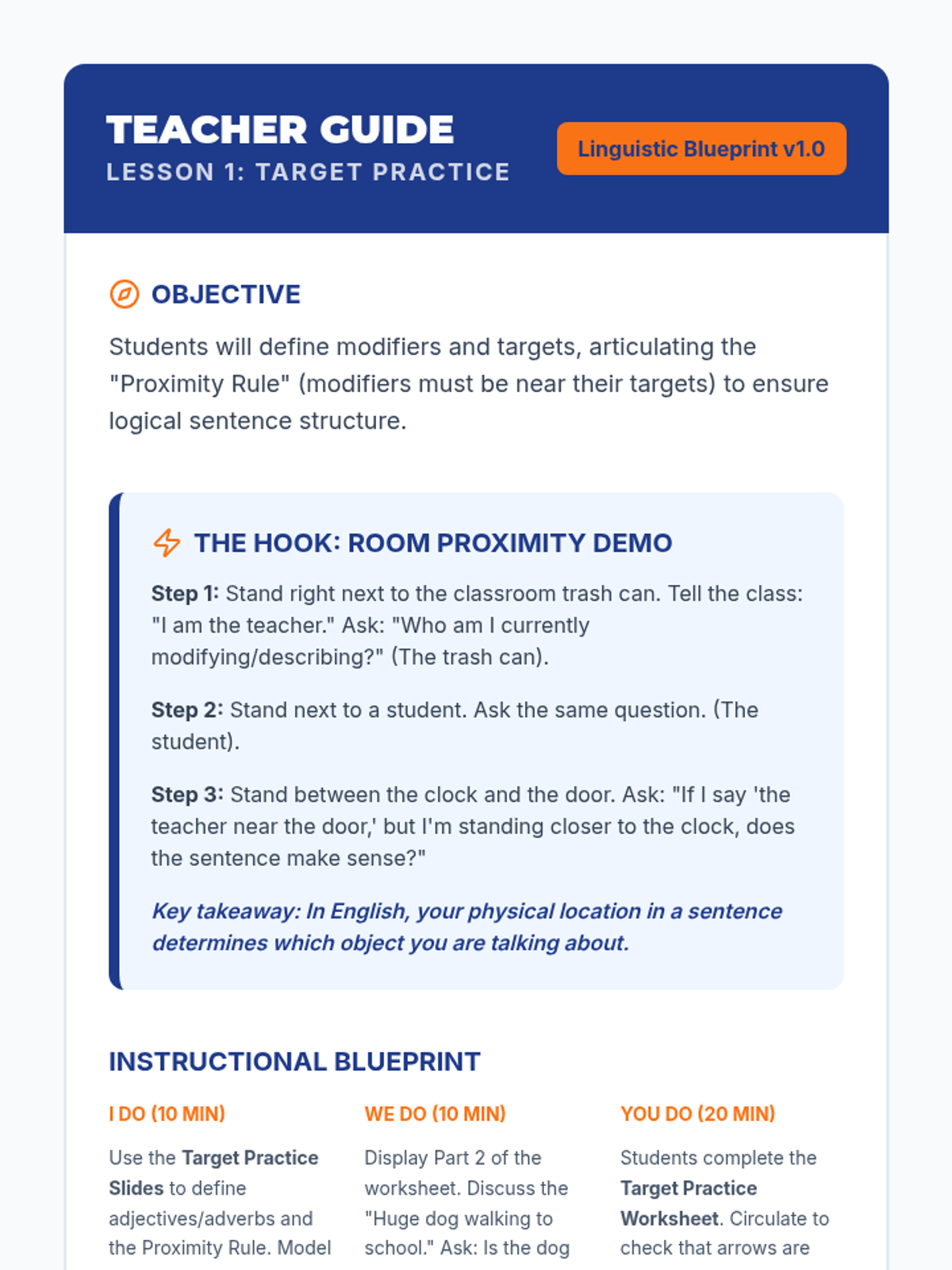
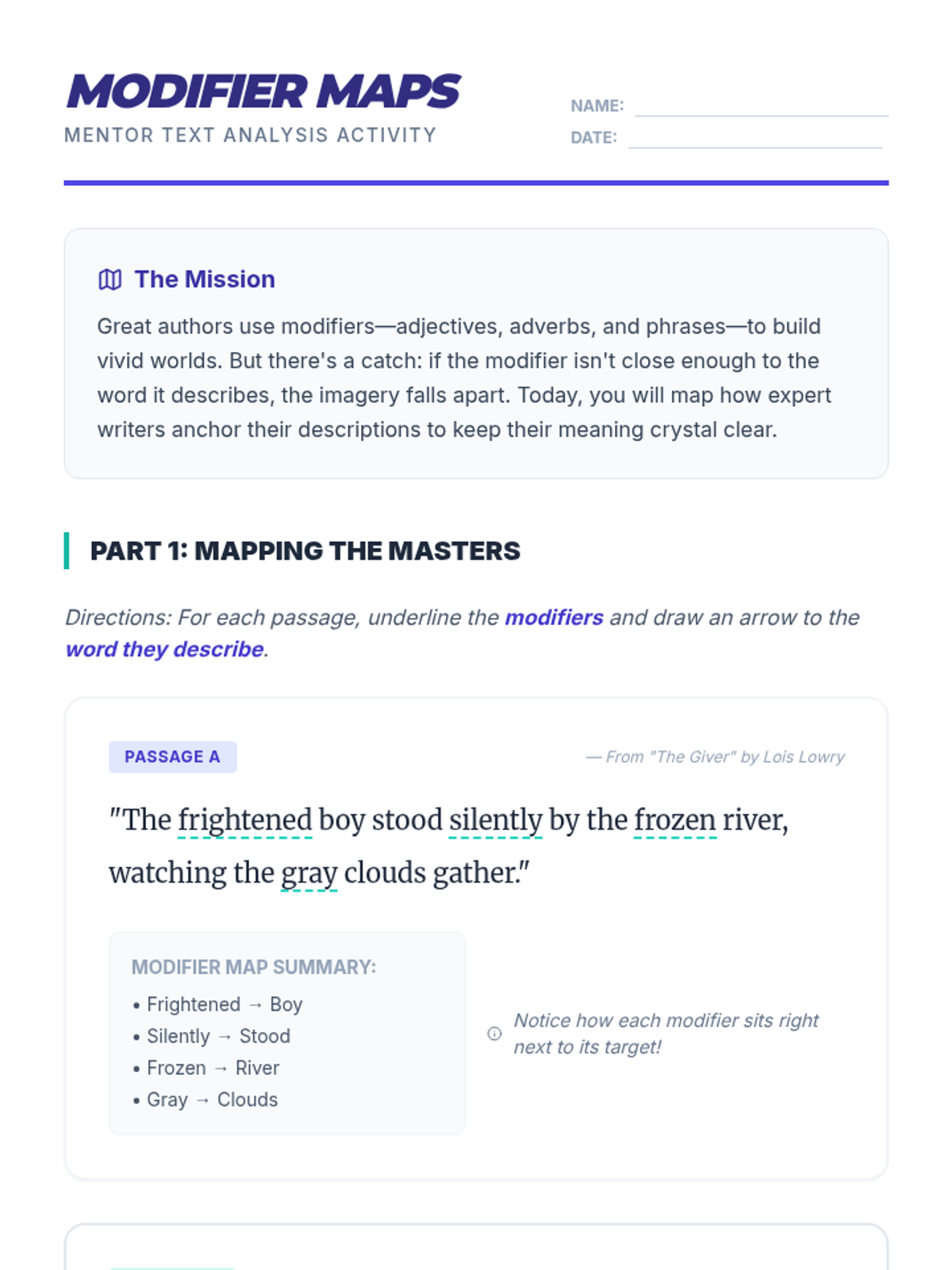
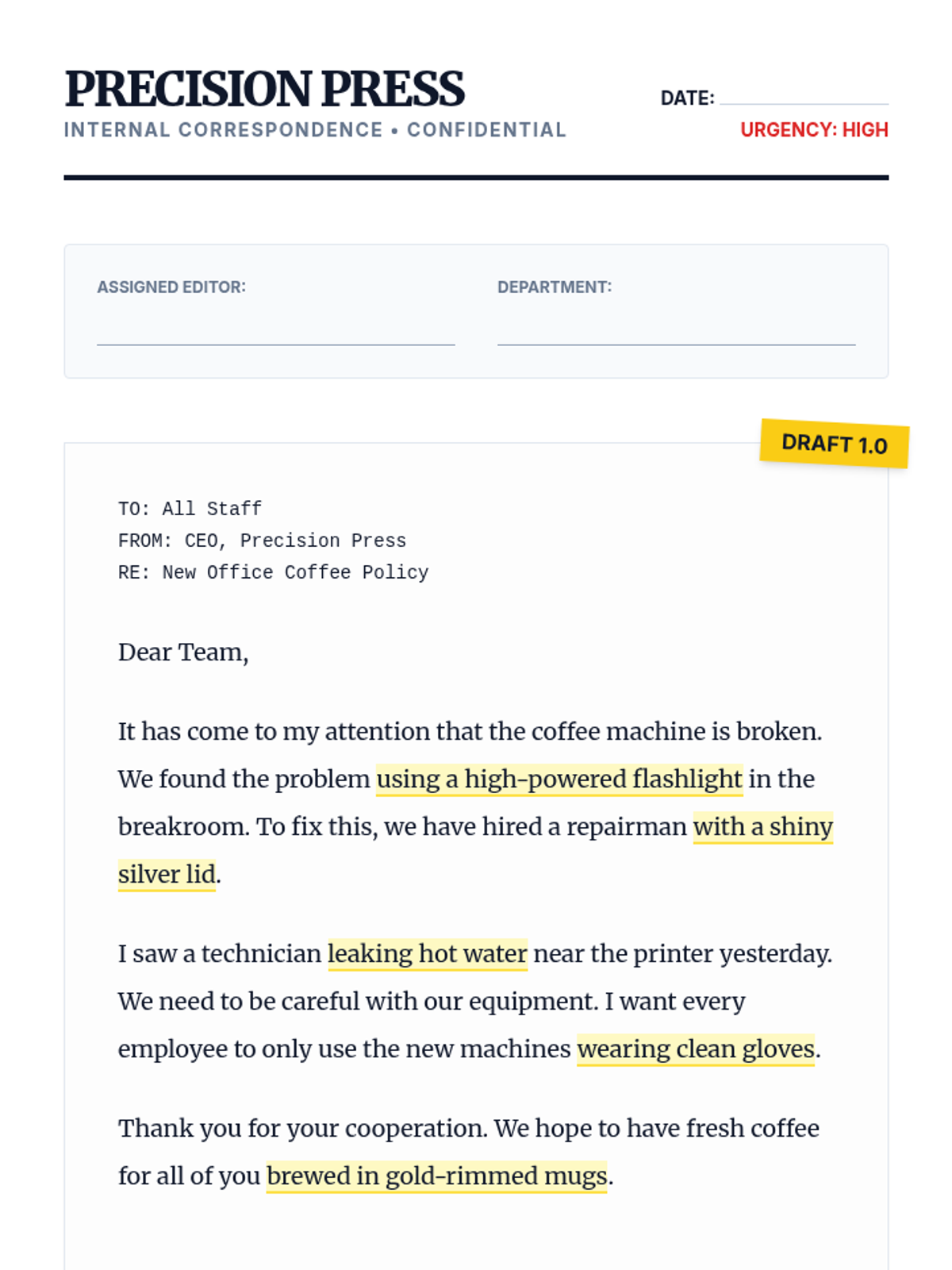
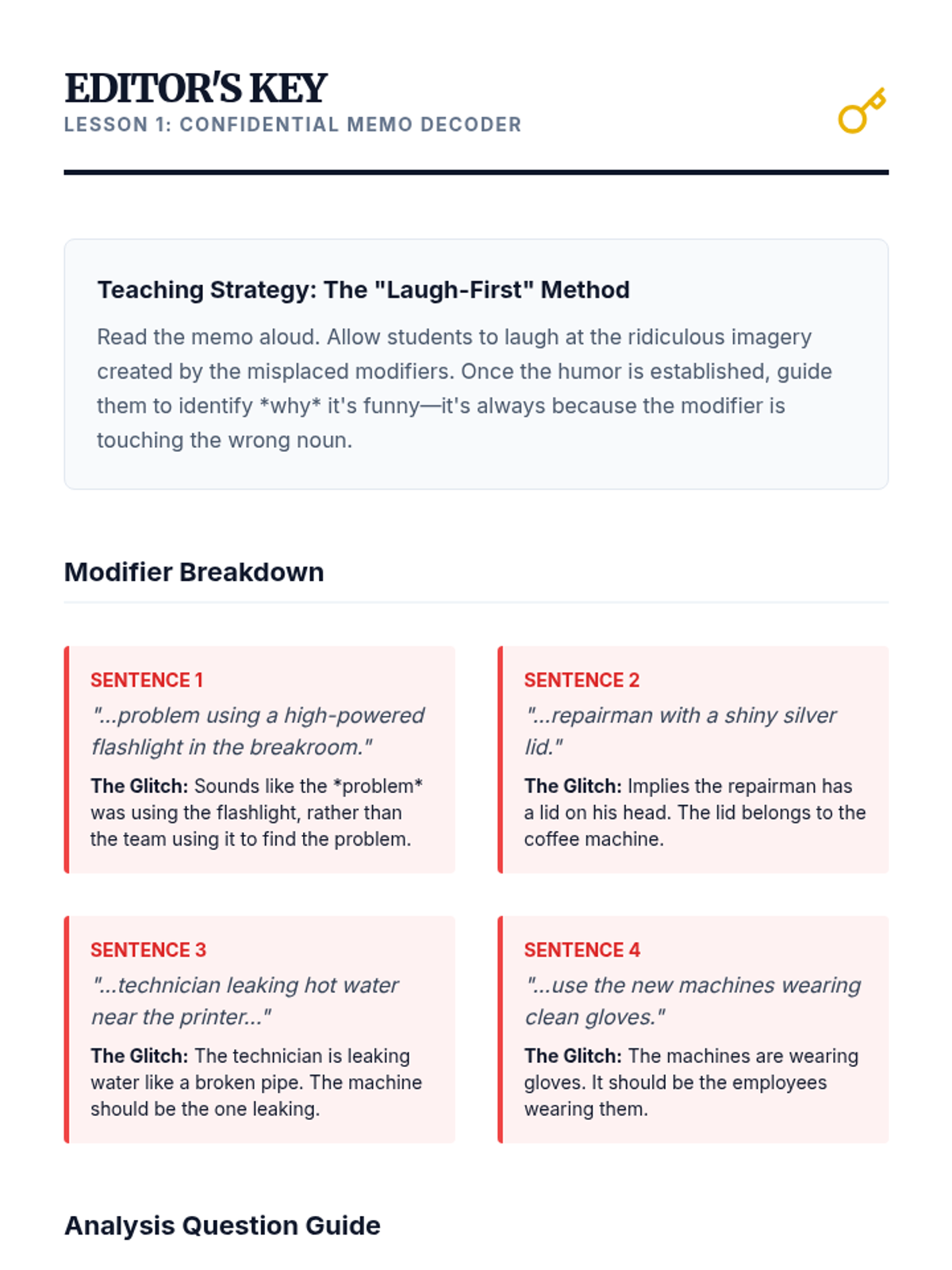
An advanced 8th-grade grammar sequence focusing on the structural differences between misplaced and dangling modifiers. Students move from inquiry-based discovery to clinical diagnosis and masterful construction of complex sentences.
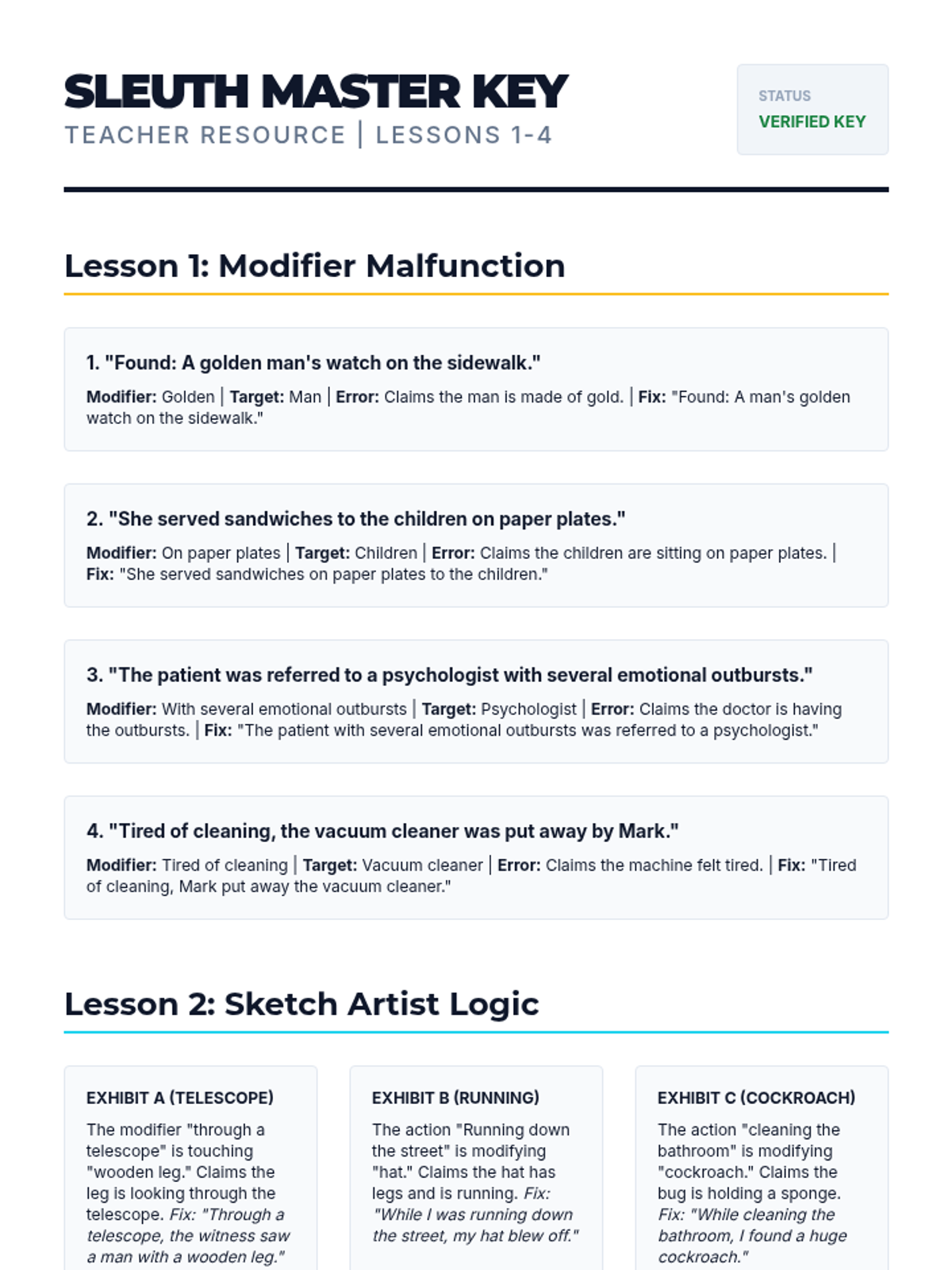
A comprehensive 8th-grade grammar sequence focusing on the identification and correction of misplaced, limiting, and squinting modifiers to ensure sentence clarity and precision.
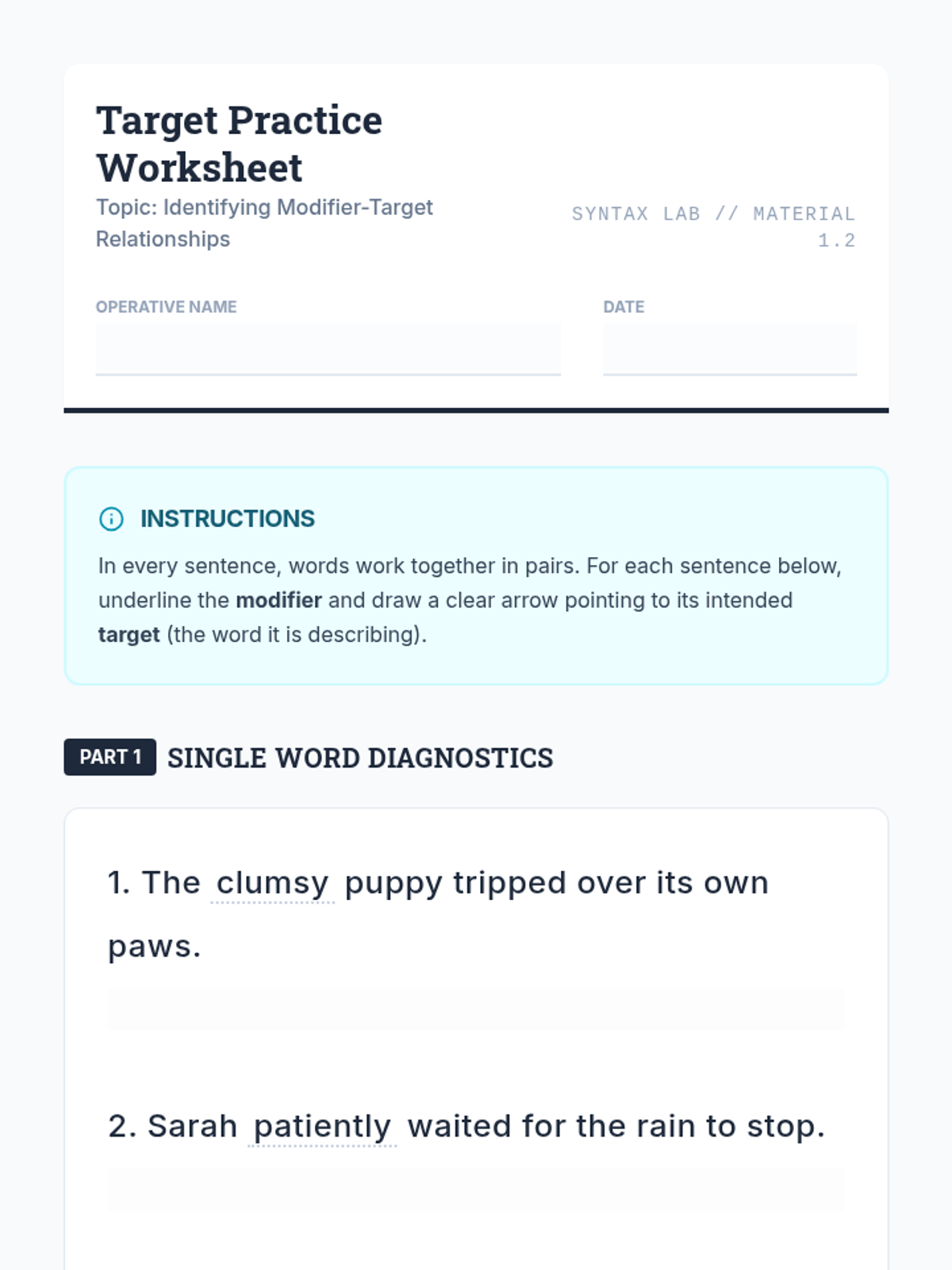
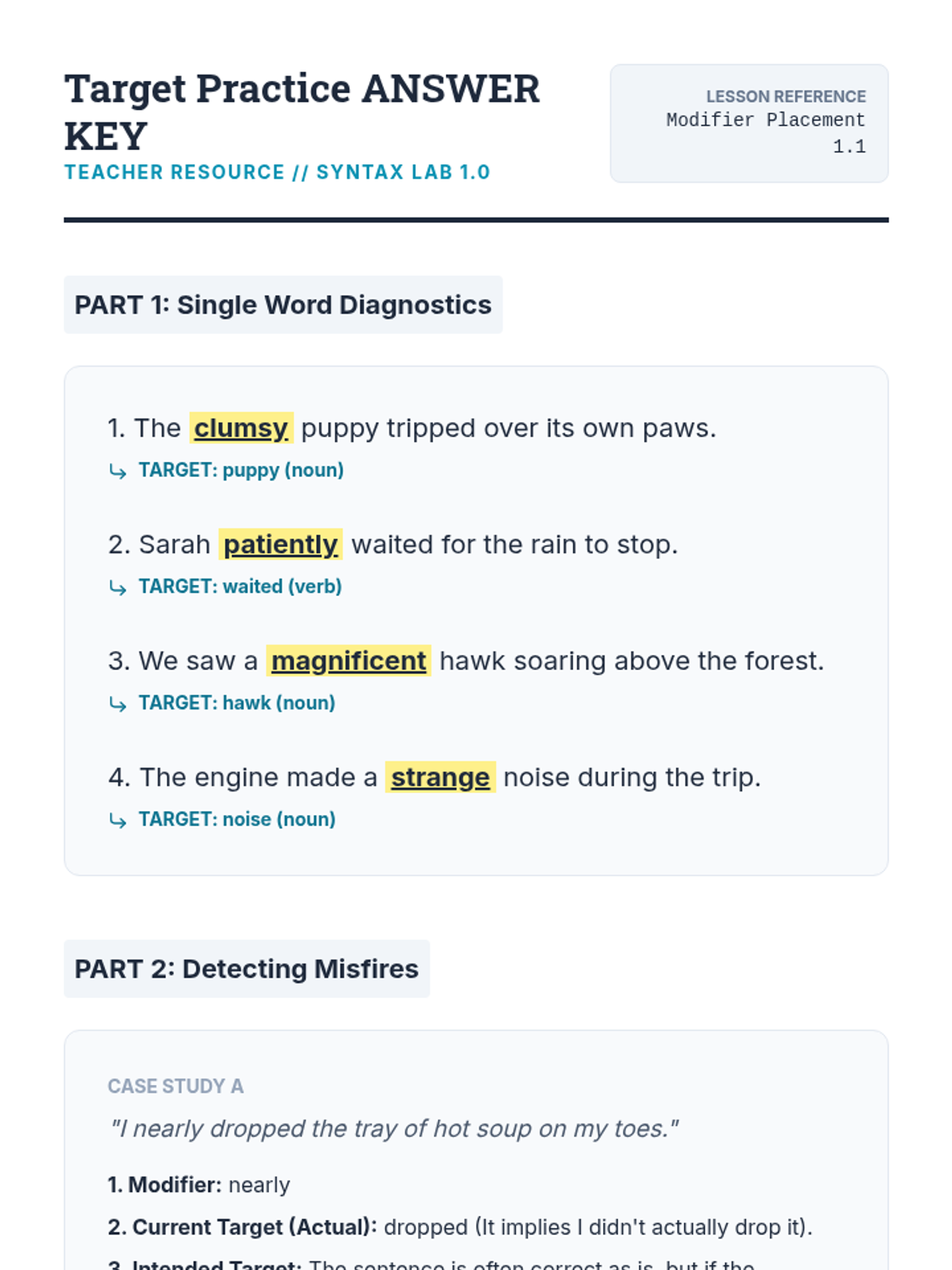
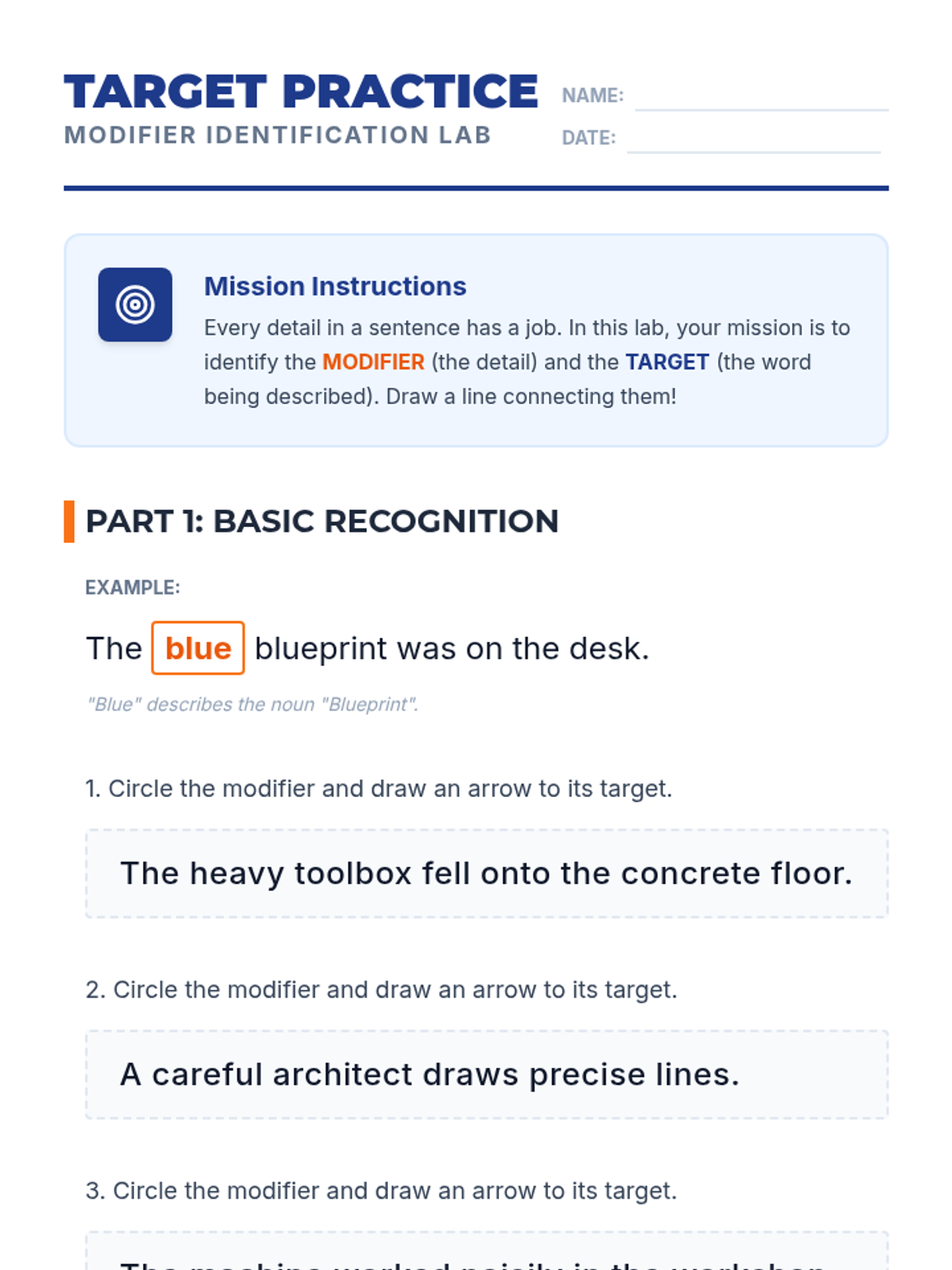
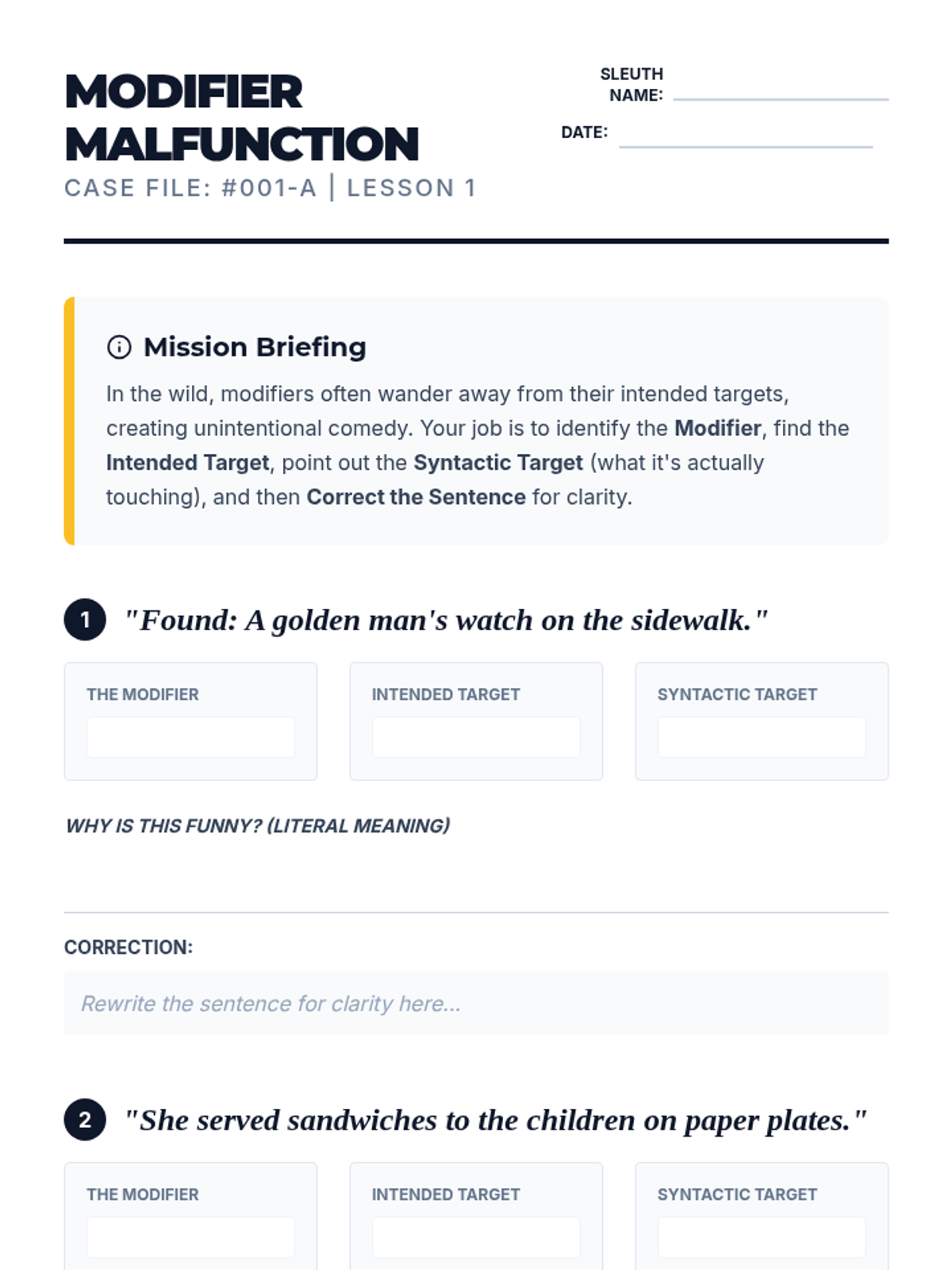
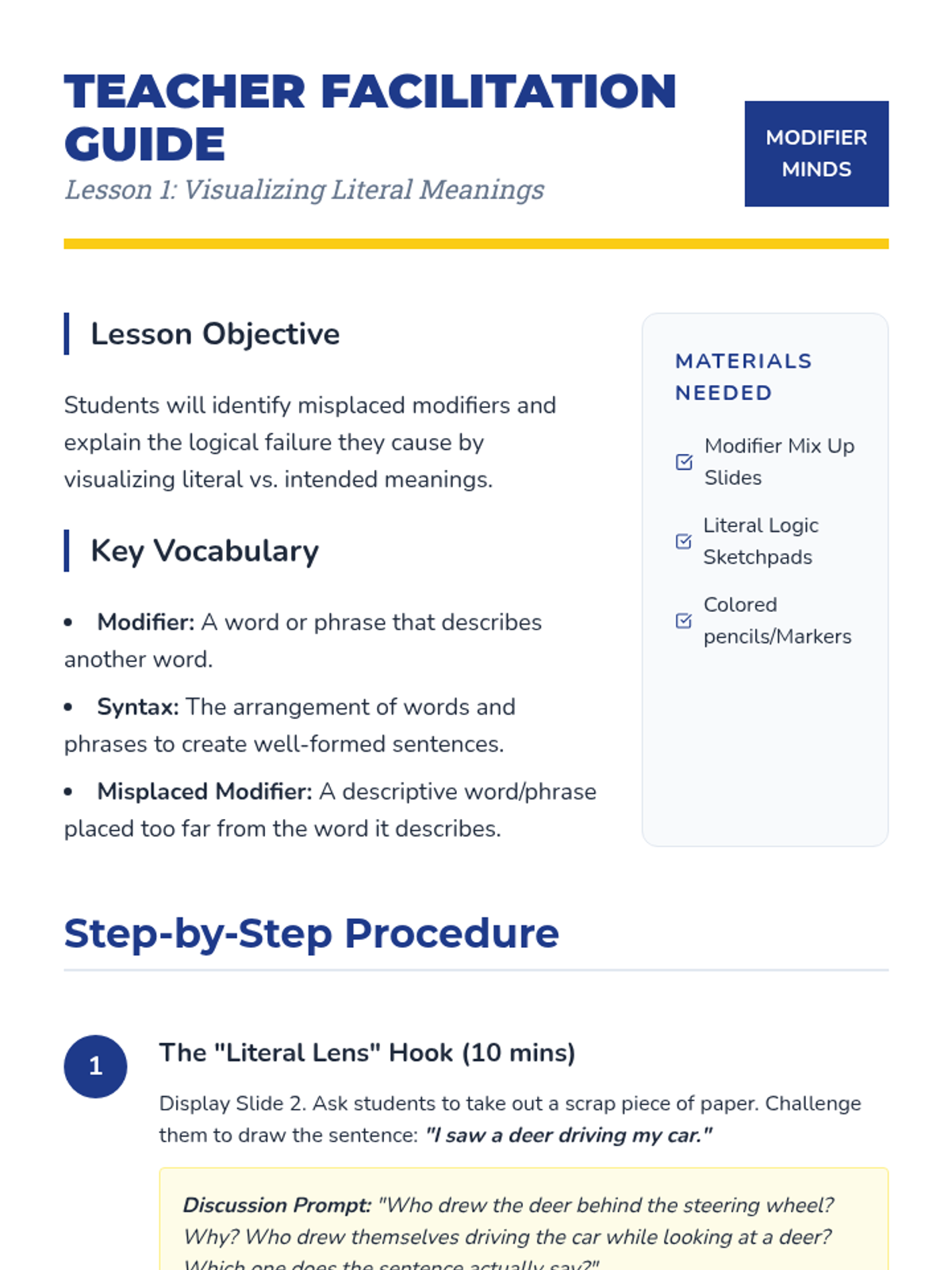
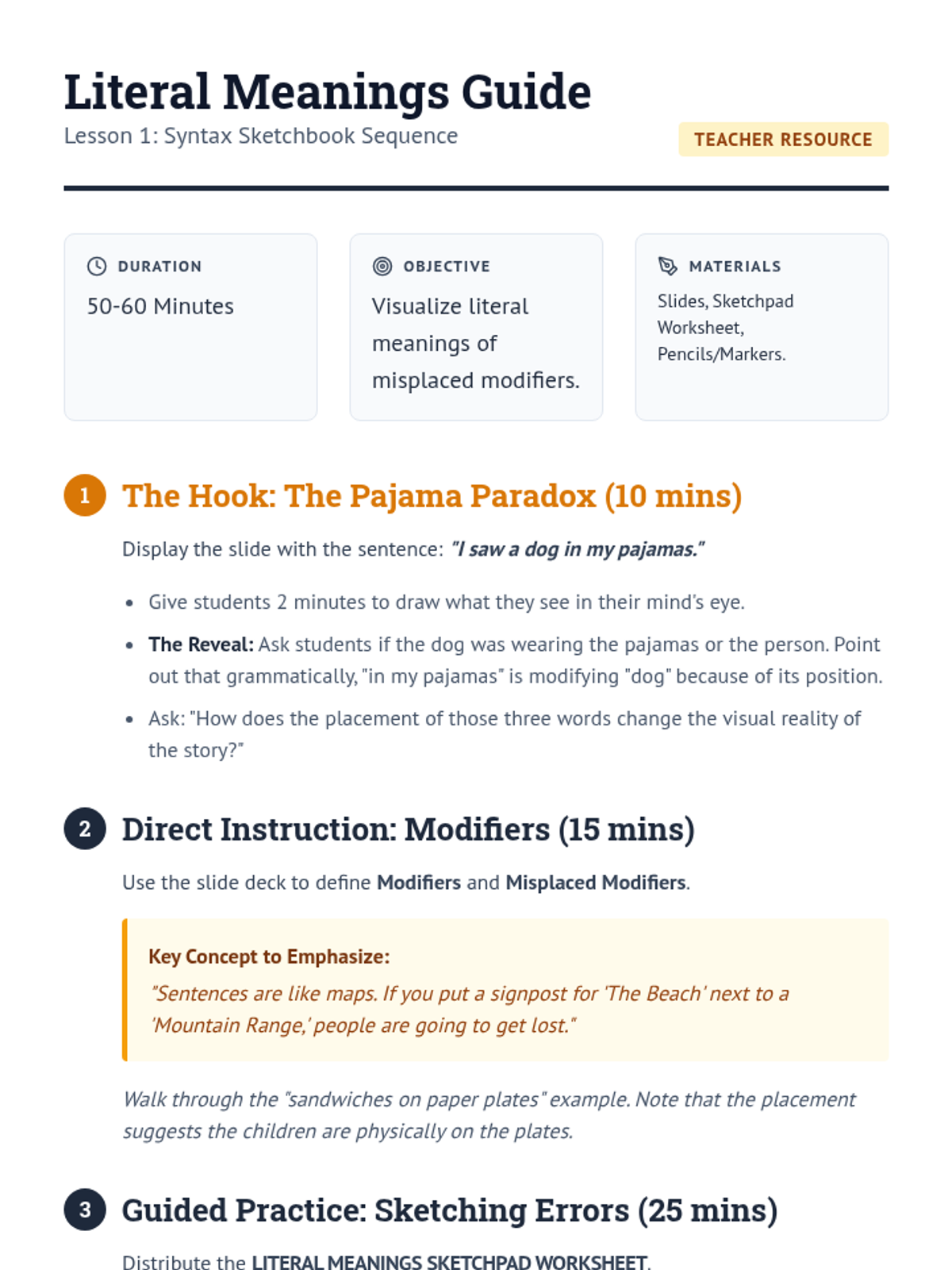
This sequence introduces the fundamental relationship between modifiers and the words they describe. Students begin by identifying basic adjectives and adverbs, then progress to prepositional phrases, learning that proximity determines meaning in English syntax. Through a workshop model, students practice moving modifiers within sentences to observe how meaning shifts based on placement. By the end of the sequence, students will be able to identify misplaced modifiers in simple sentences and rewrite them for logical clarity.
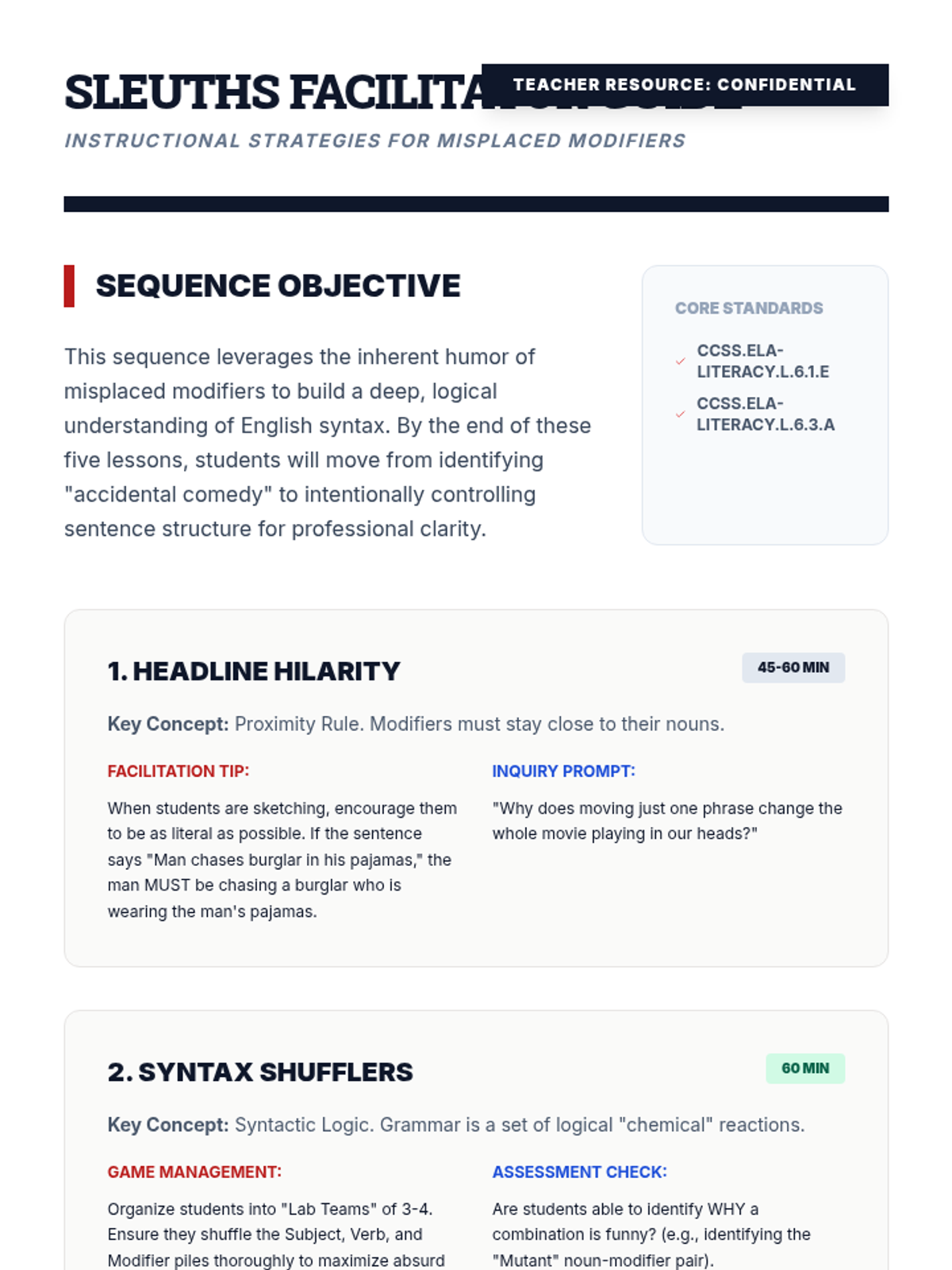
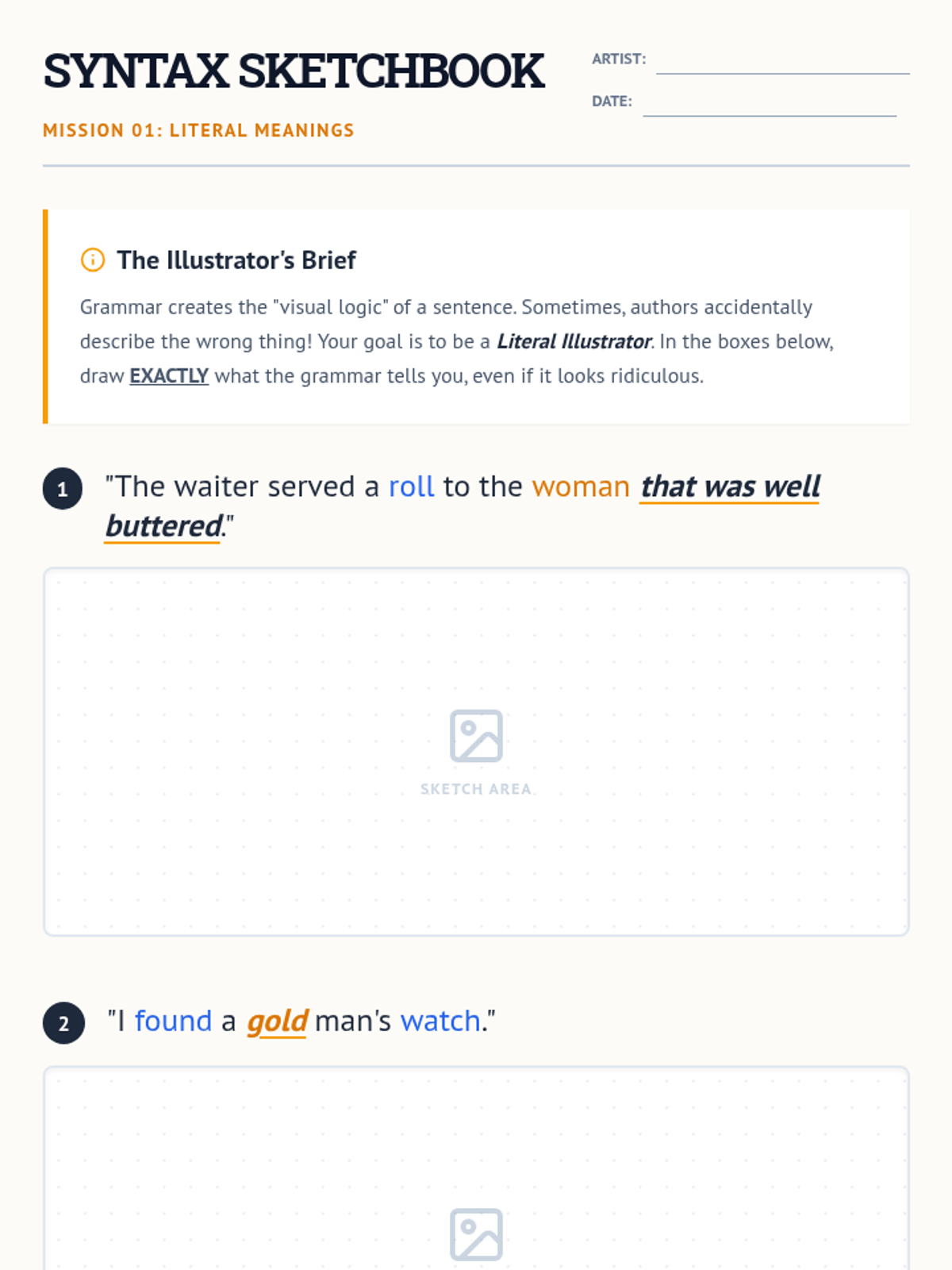
An inquiry-based exploration of misplaced modifiers, moving from humorous viral fails to high-stakes legal ambiguity. Students analyze, visualize, and intentionally manipulate syntax to master the mechanics of clarity.
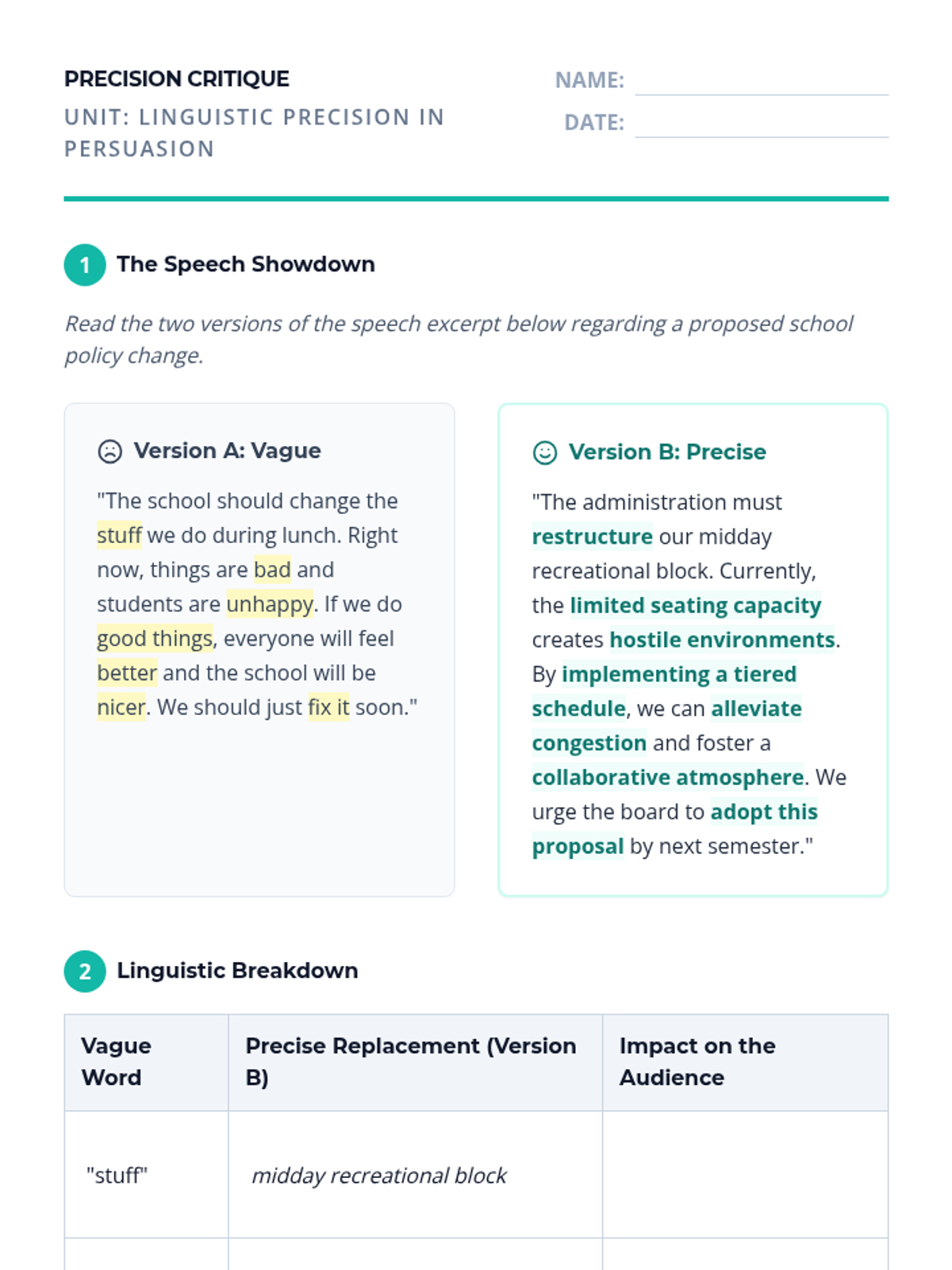
A project-based sequence for 8th-grade students focusing on the power of linguistic precision in persuasive writing and speaking. Students move from critiquing vague language to mastering advanced vocabulary, transitions, and rhetorical strategies to build compelling arguments.
This sequence teaches 6th-grade students to master the passive voice in formal reporting. Students move beyond basic grammar to understand the strategic use of passive voice in science, journalism, and process writing.
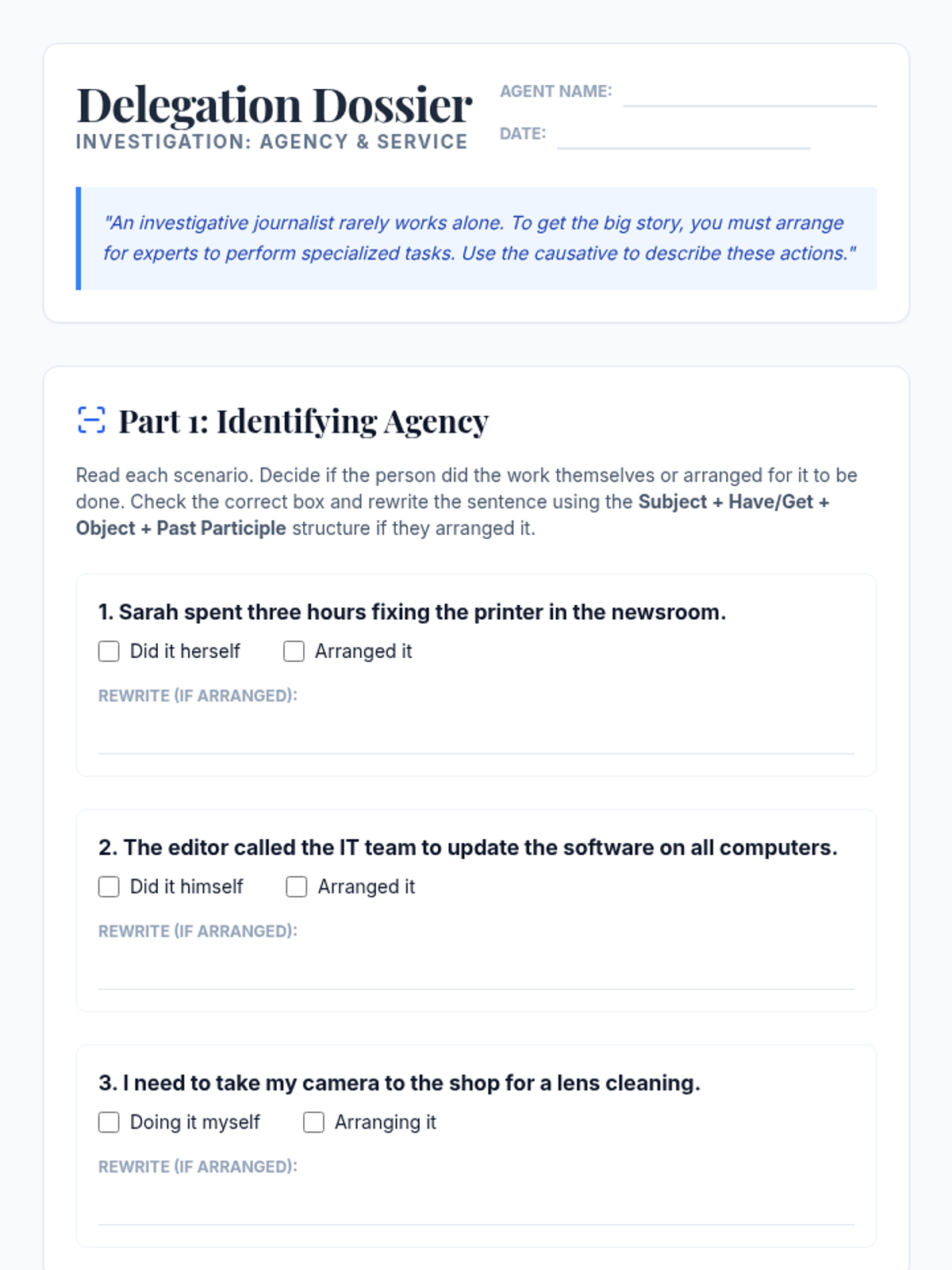
An advanced English grammar sequence for 8th graders focusing on the nuances of agency and objectivity through advanced passive voice structures, culminating in an investigative journalism project.
A comprehensive 8th-grade grammar sequence focusing on mixed conditionals, the subjunctive mood, and inverted conditionals through the lens of history, policy, and formal debate. Students master hypothetical language to enhance their persuasive and academic writing.
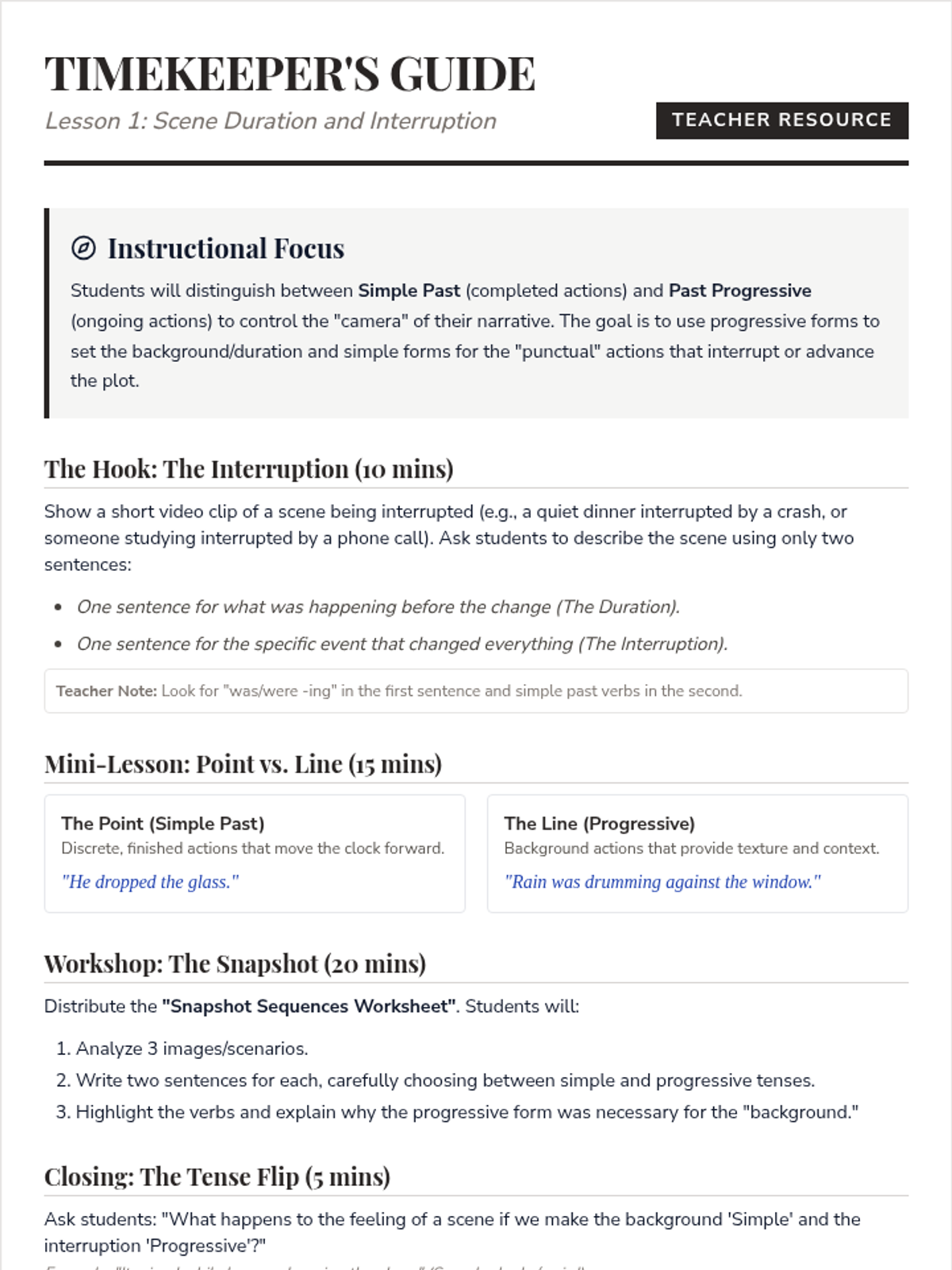
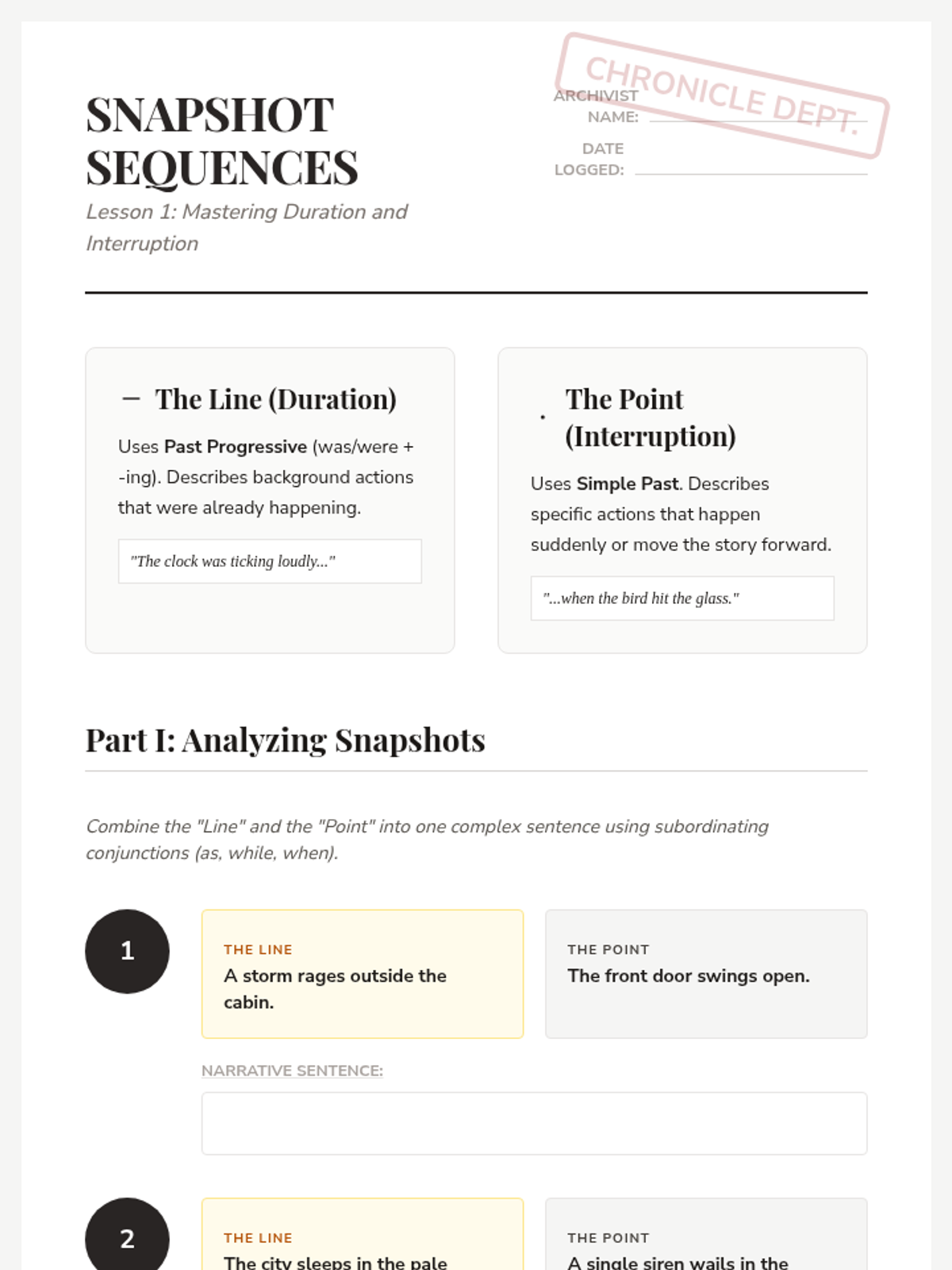
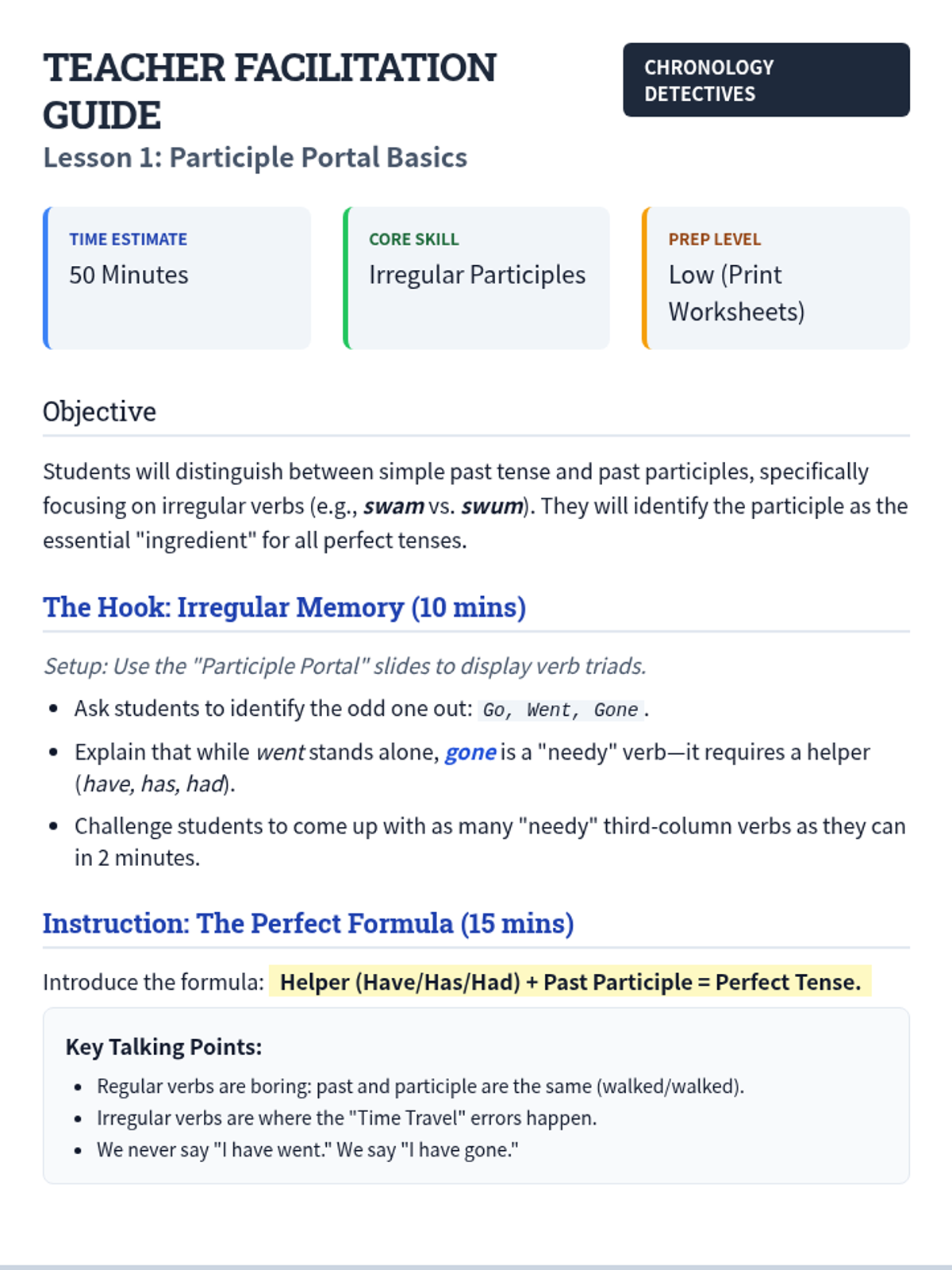
This sequence explores how verb tenses (simple, progressive, and perfect) function as tools for controlling chronology, duration, and pacing in narrative writing. Students will move from understanding basic tense distinctions to mastering complex non-linear storytelling techniques like flashbacks.
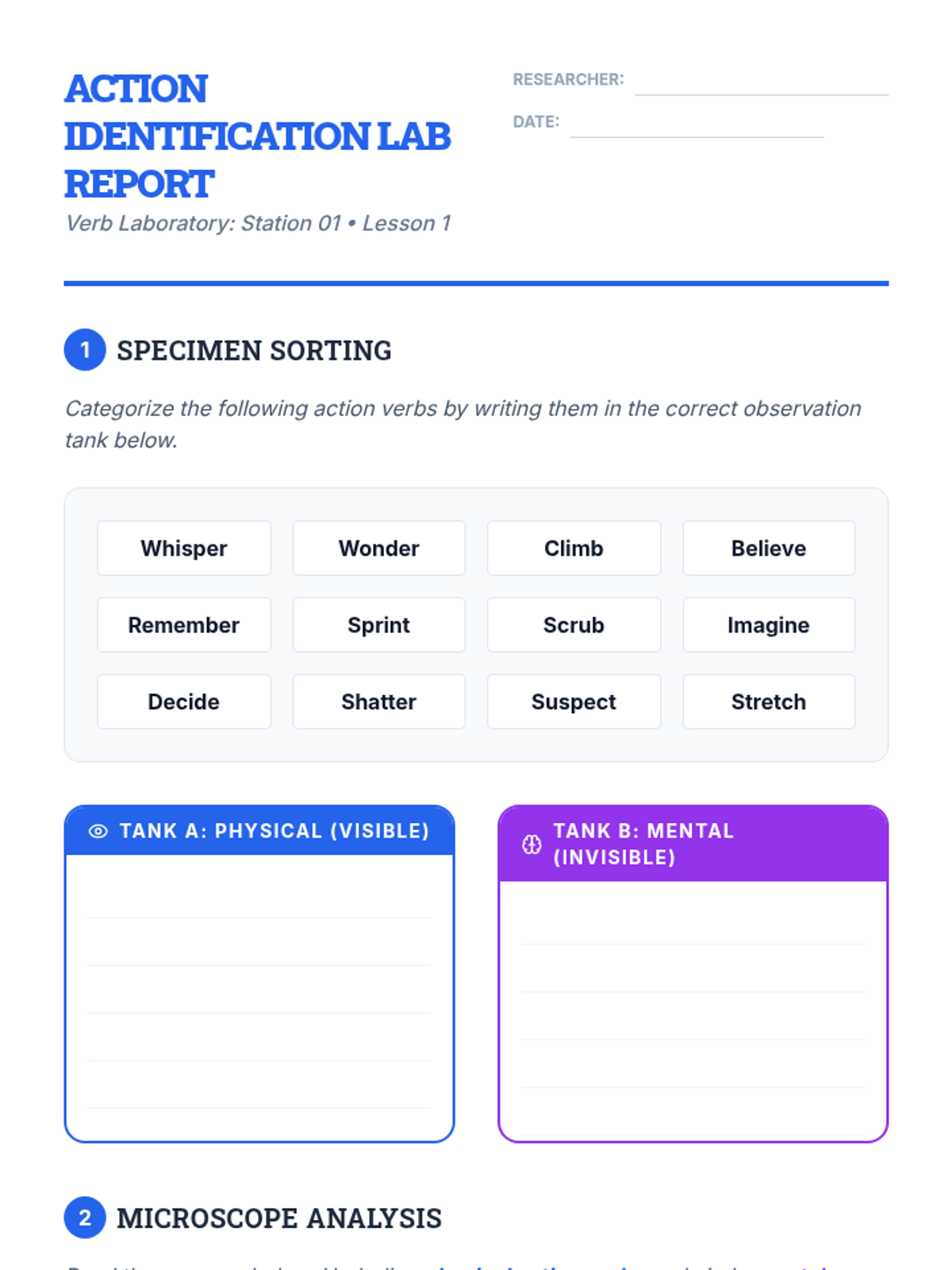
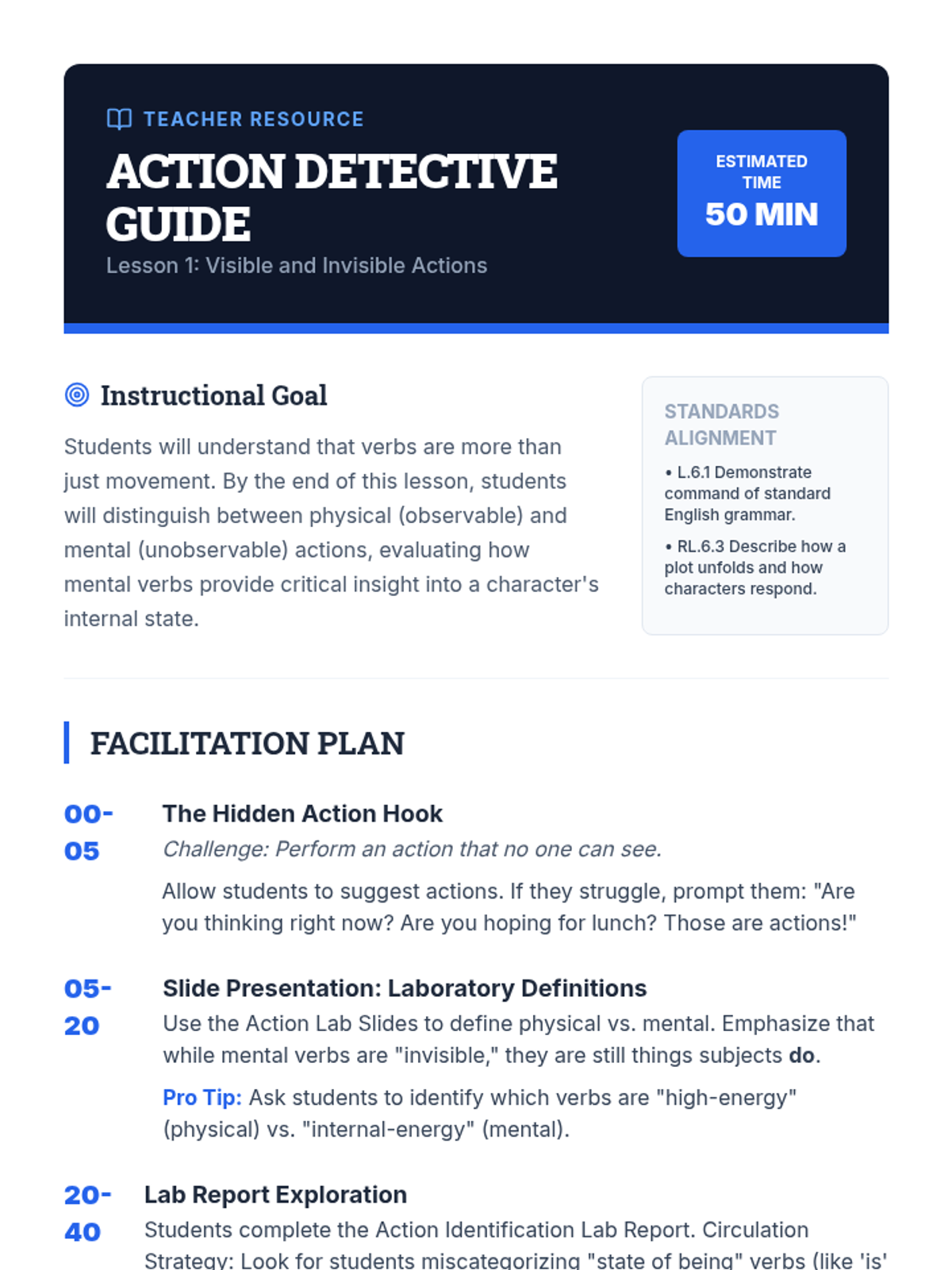
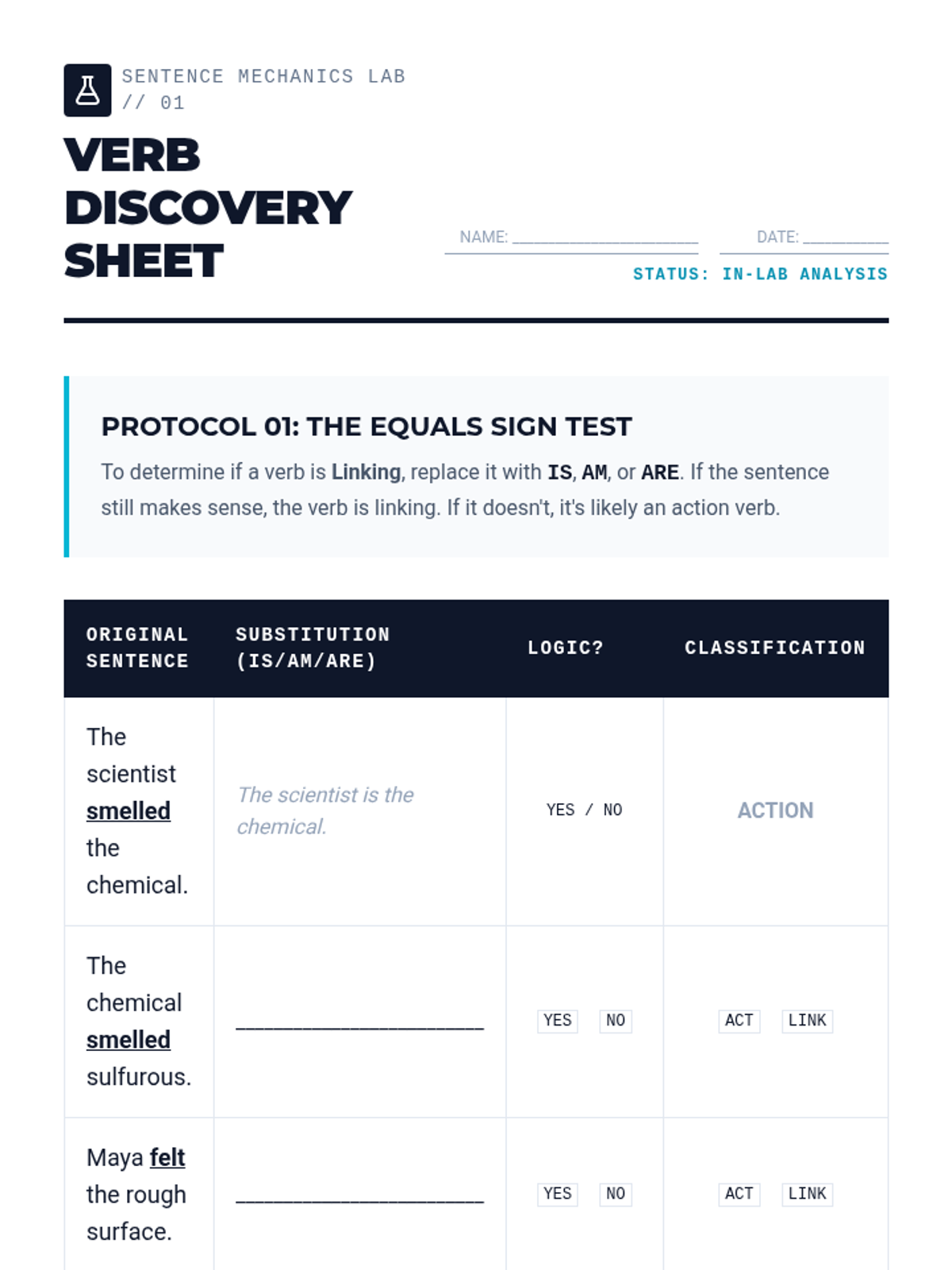
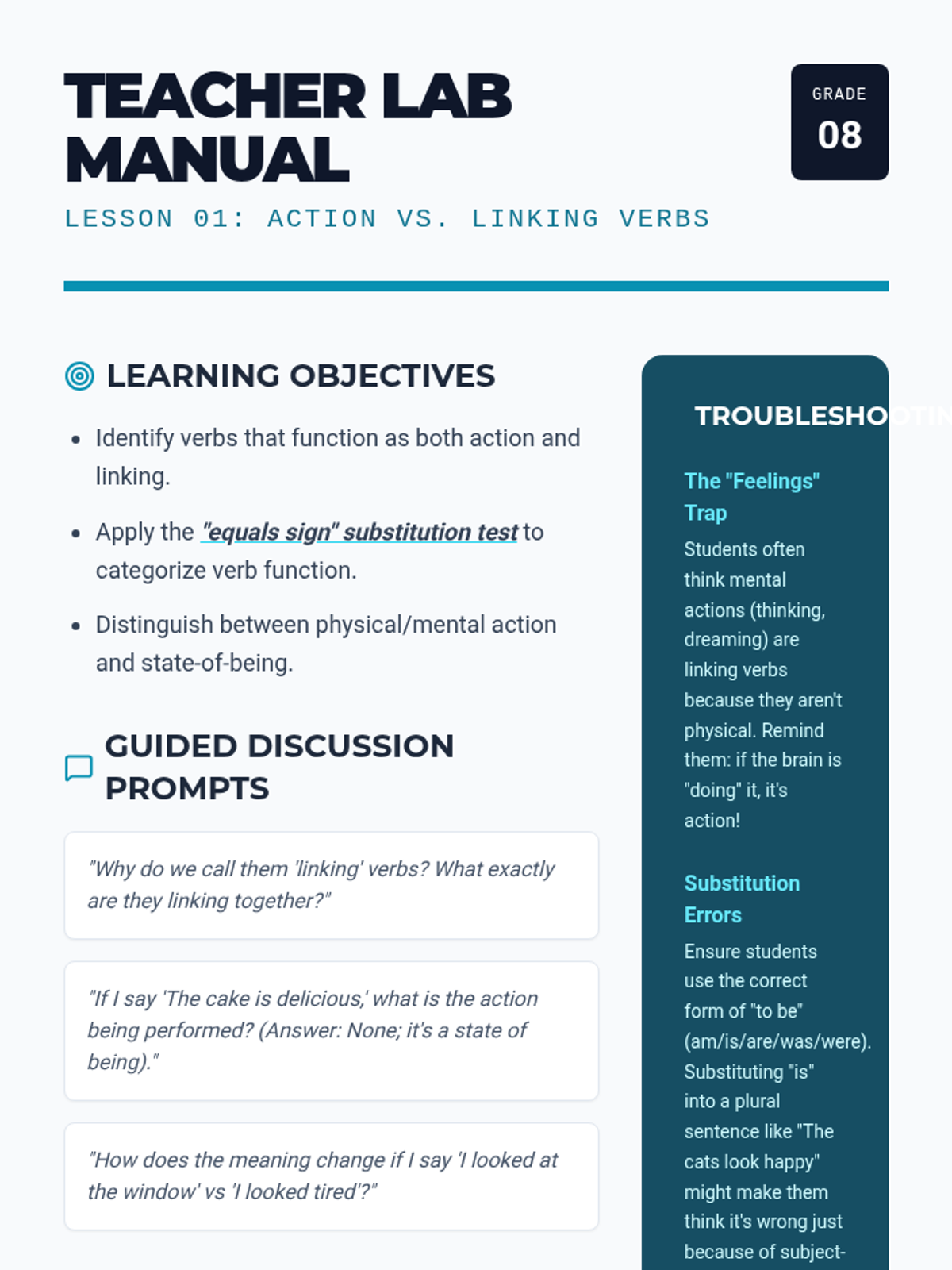
A comprehensive 6th-grade ELA sequence focused on the functions and categories of verbs. Students move from basic action identification to the sophisticated use of linking and helping verbs to enhance their writing.
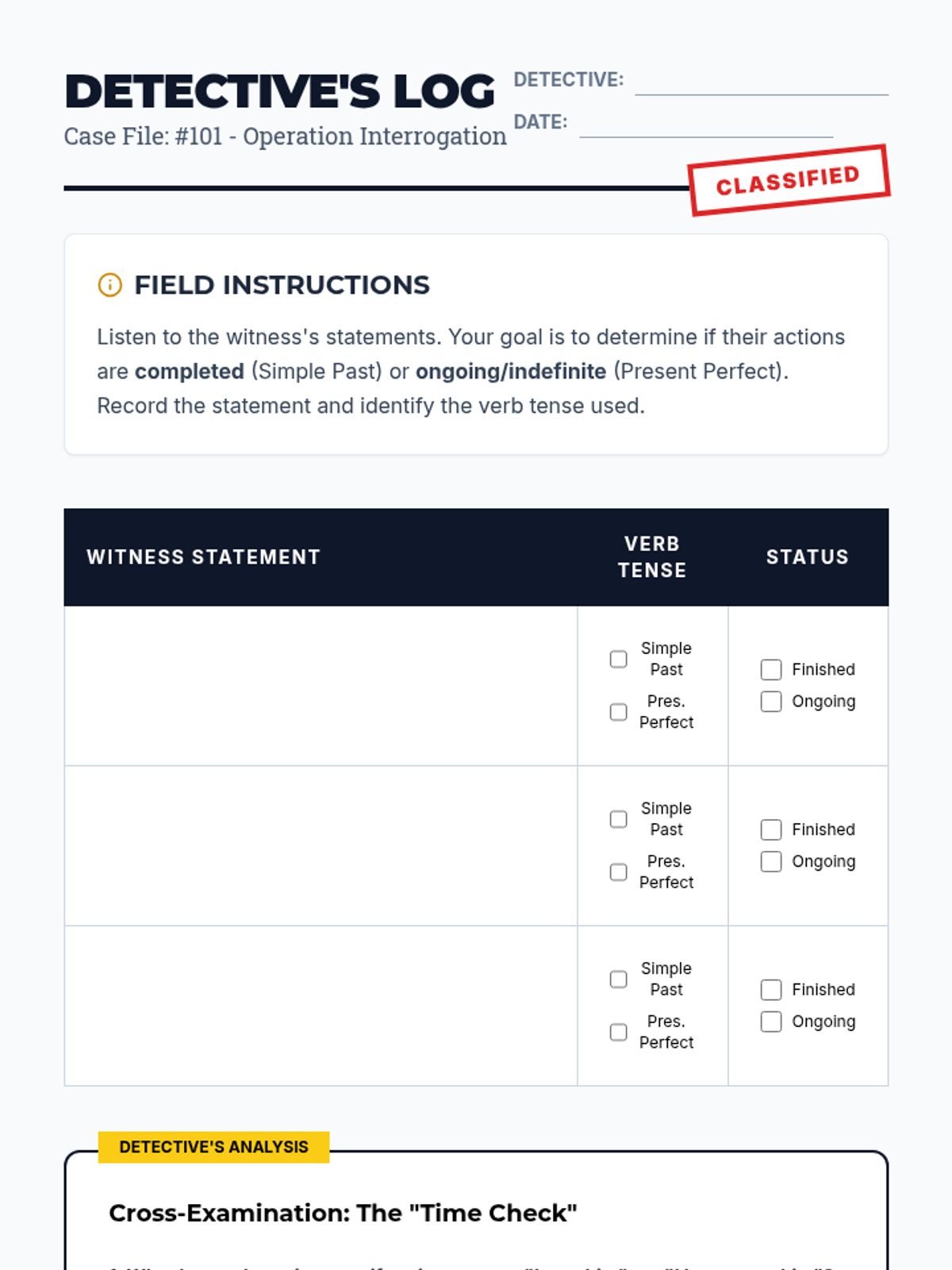
A forensic-themed grammar sequence where 8th-grade students act as detectives to master present, past, and future perfect tenses. Students use these tenses to reconstruct timelines, analyze crime scenes, and write formal investigative reports.
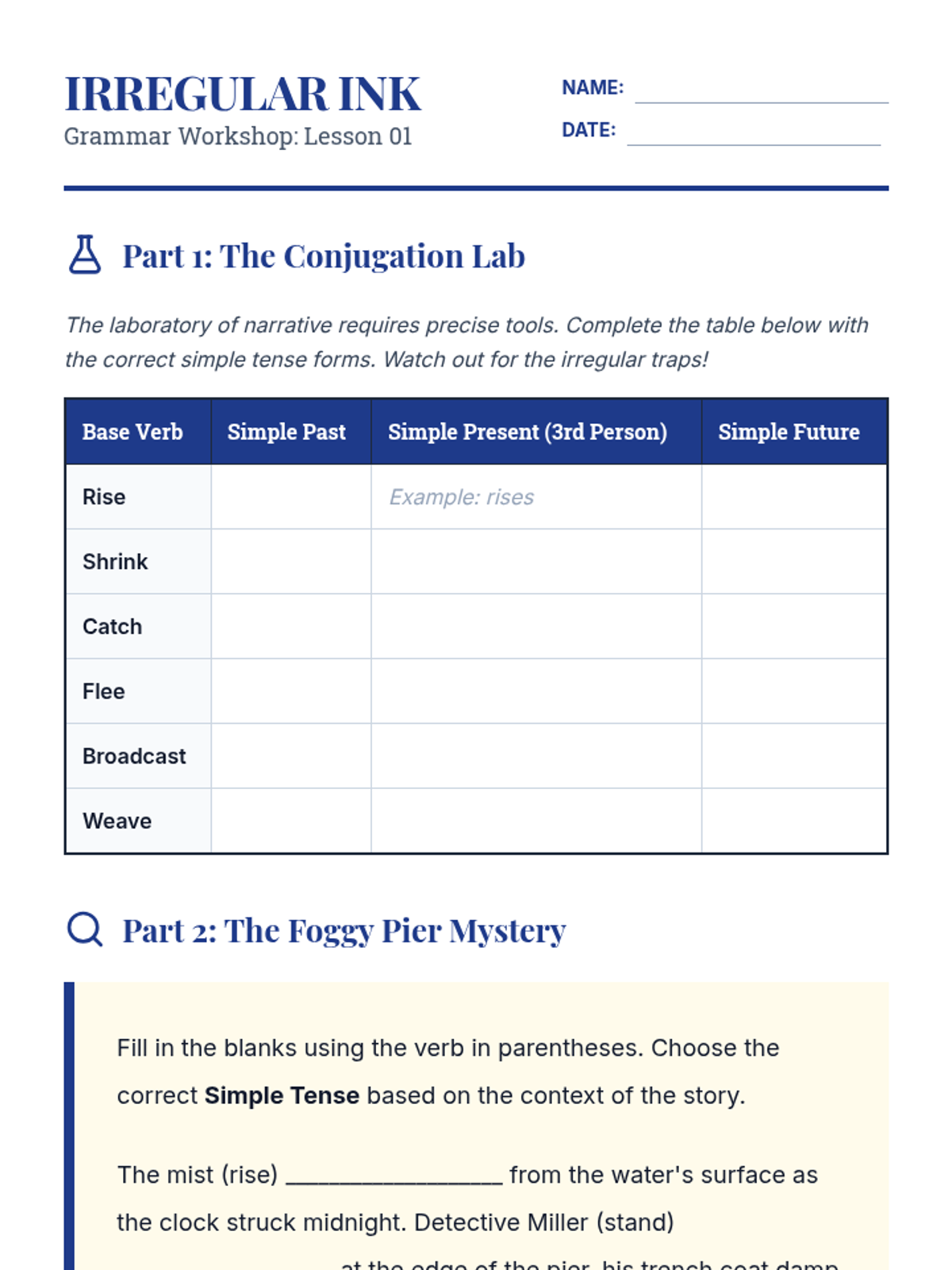
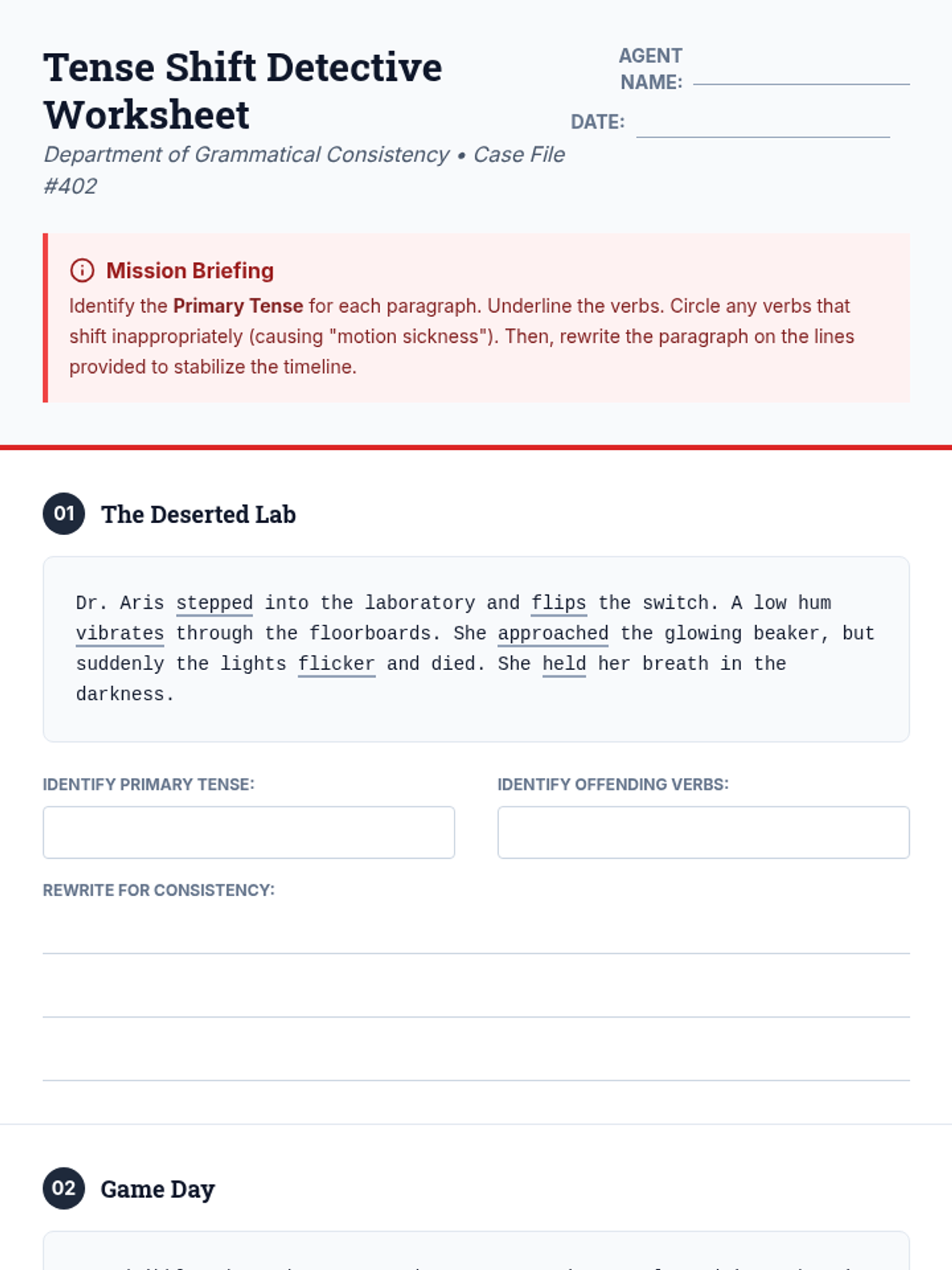
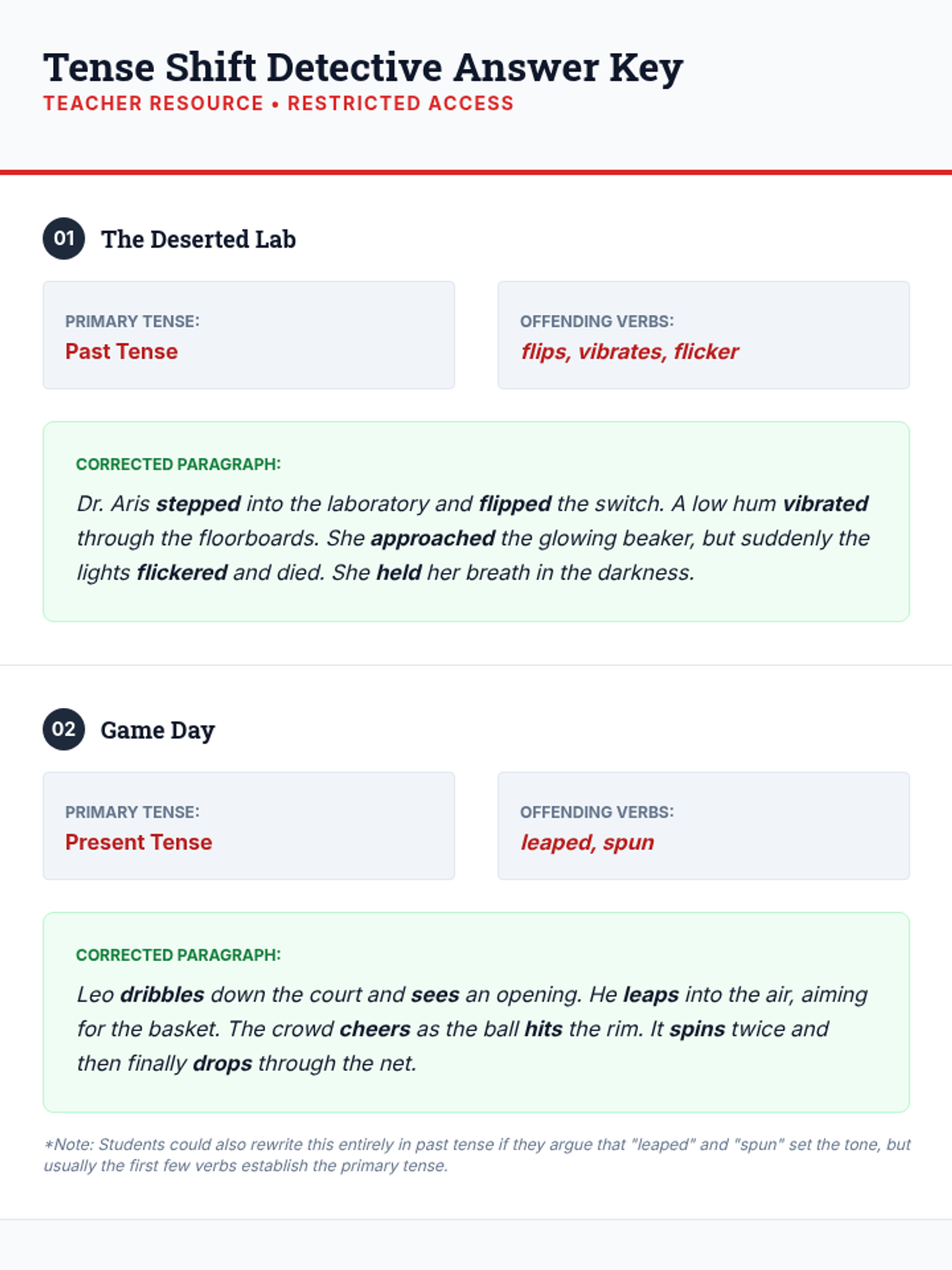
This grammar sequence for 8th graders explores simple and progressive verb tenses through the lens of narrative writing. Students master verb conjugation, maintain tense consistency, and eventually learn to use intentional tense shifts for stylistic effect in their own stories.
This sequence guides 7th-grade students through the nuances of verb usage in writing. It moves from maintaining consistent tenses in paragraphs to mastering narrative shifts, selecting vivid action verbs, and understanding the power of active versus passive voice.
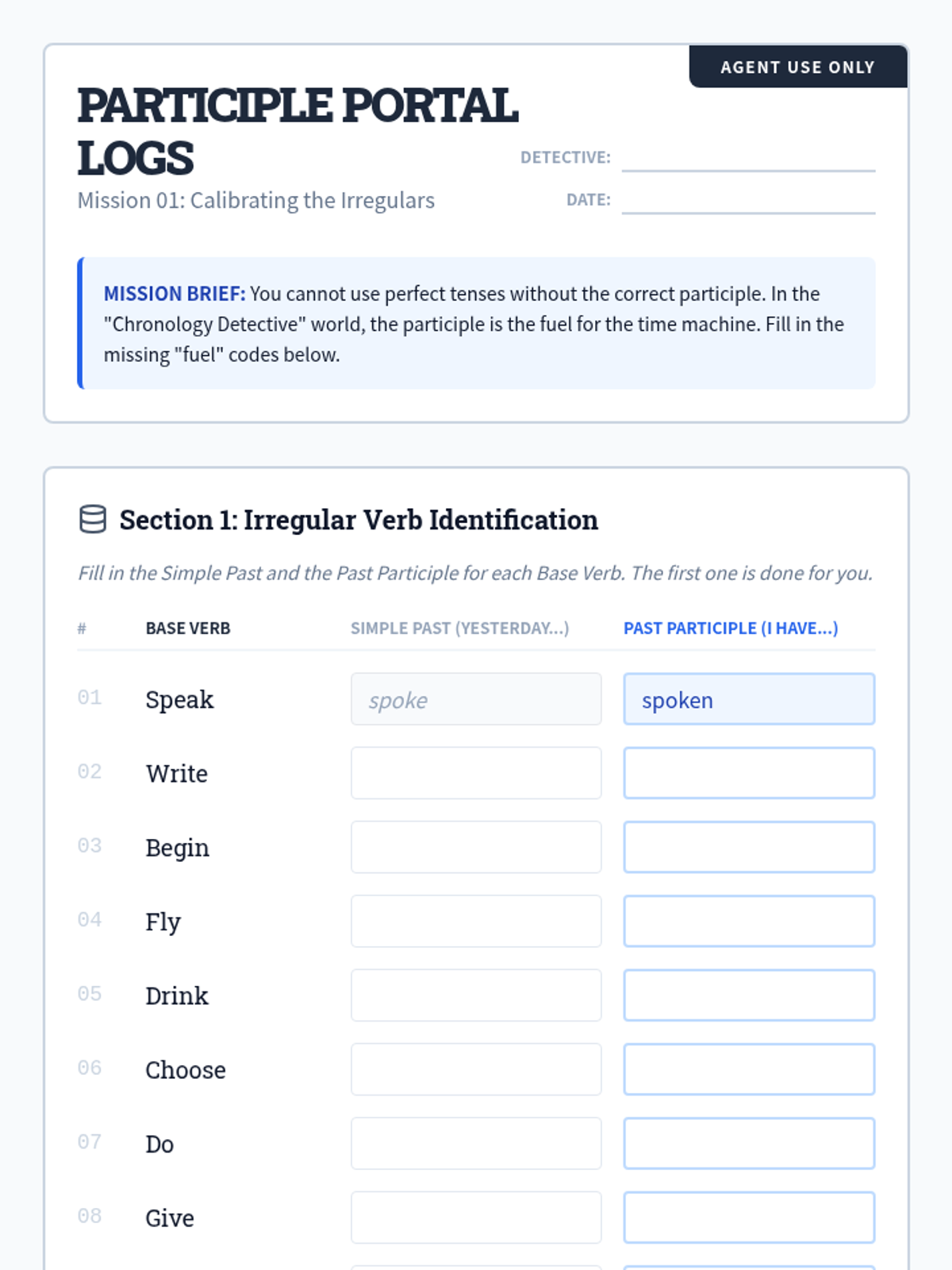
Students move from rote memorization of participles to deep analysis of timelines, understanding how perfect tenses link two points in time. The sequence uses logic puzzles and timeline mapping to demystify why and when to use 'have,' 'had,' and 'will have.'
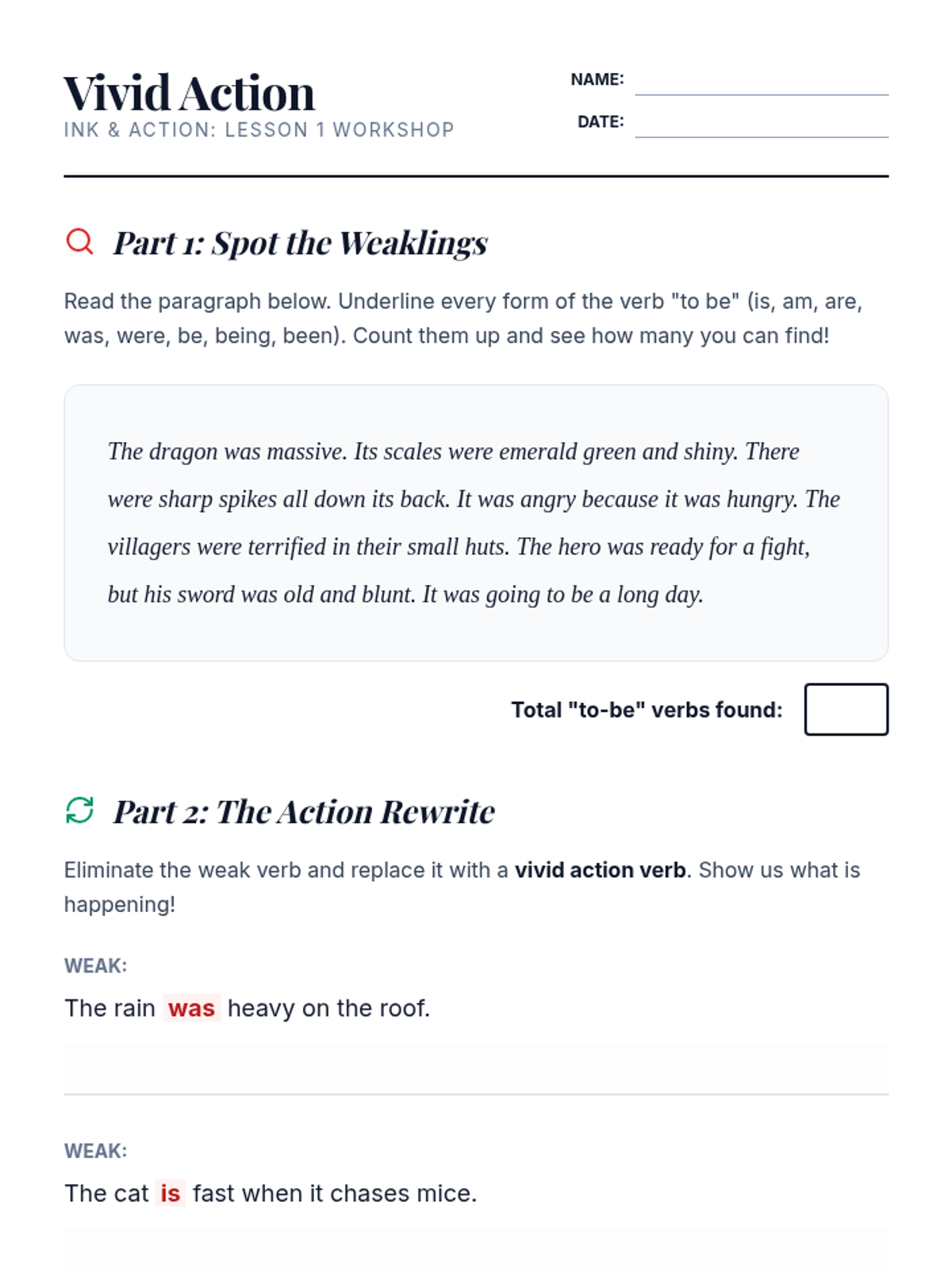
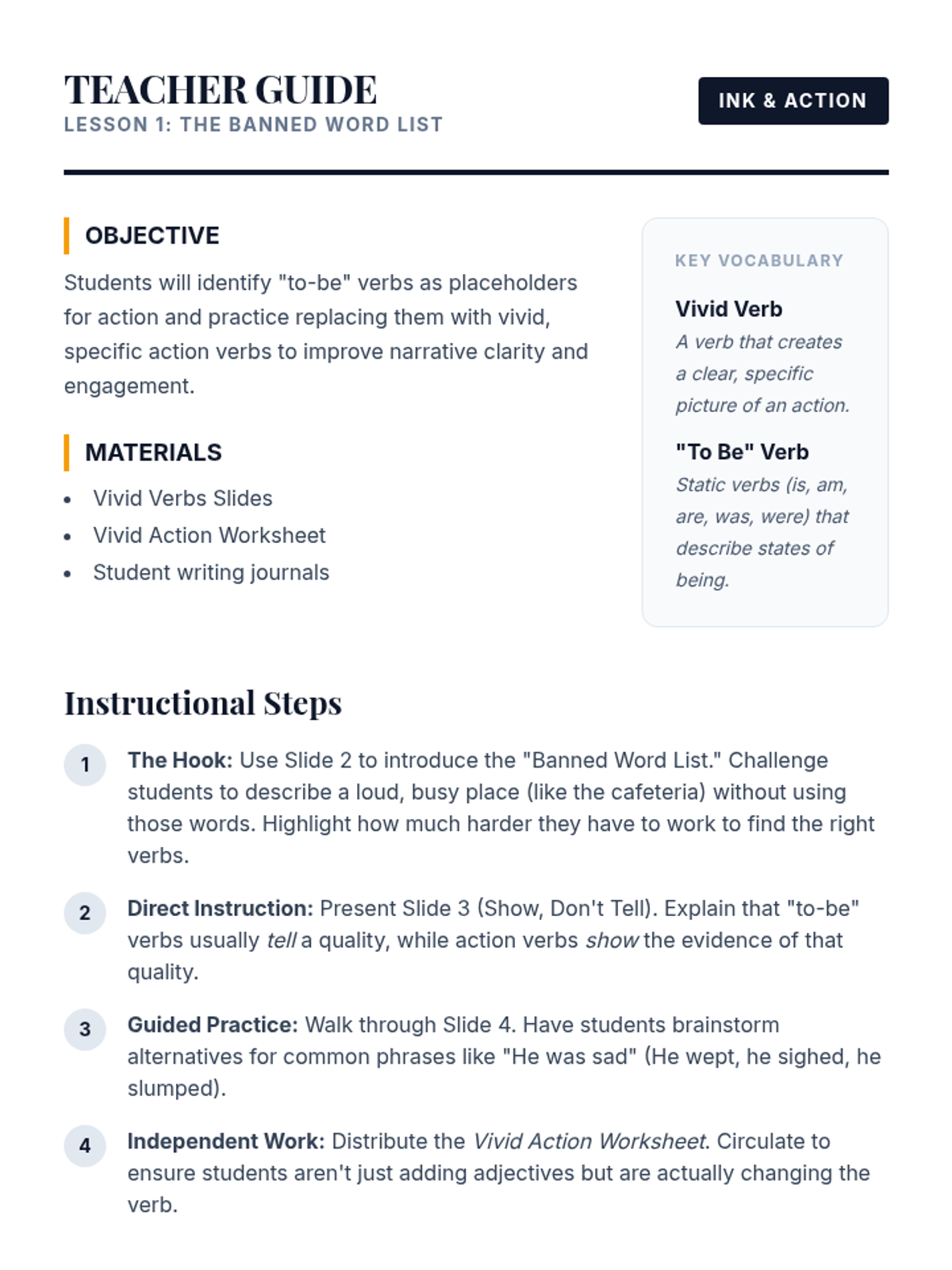
This project-based sequence applies verb knowledge to creative writing. Students focus on the stylistic impact of verbs, practicing how to shift tenses correctly within a narrative and how to replace weak 'to be' verbs with vivid action. The sequence culminates in a polished narrative piece that demonstrates mastery of tense consistency and strong verb choice.
A 5-lesson unit where 3rd-grade students become professional editors, mastering pronoun clarity, agreement, and consistency through real-world simulation and skill-building activities.
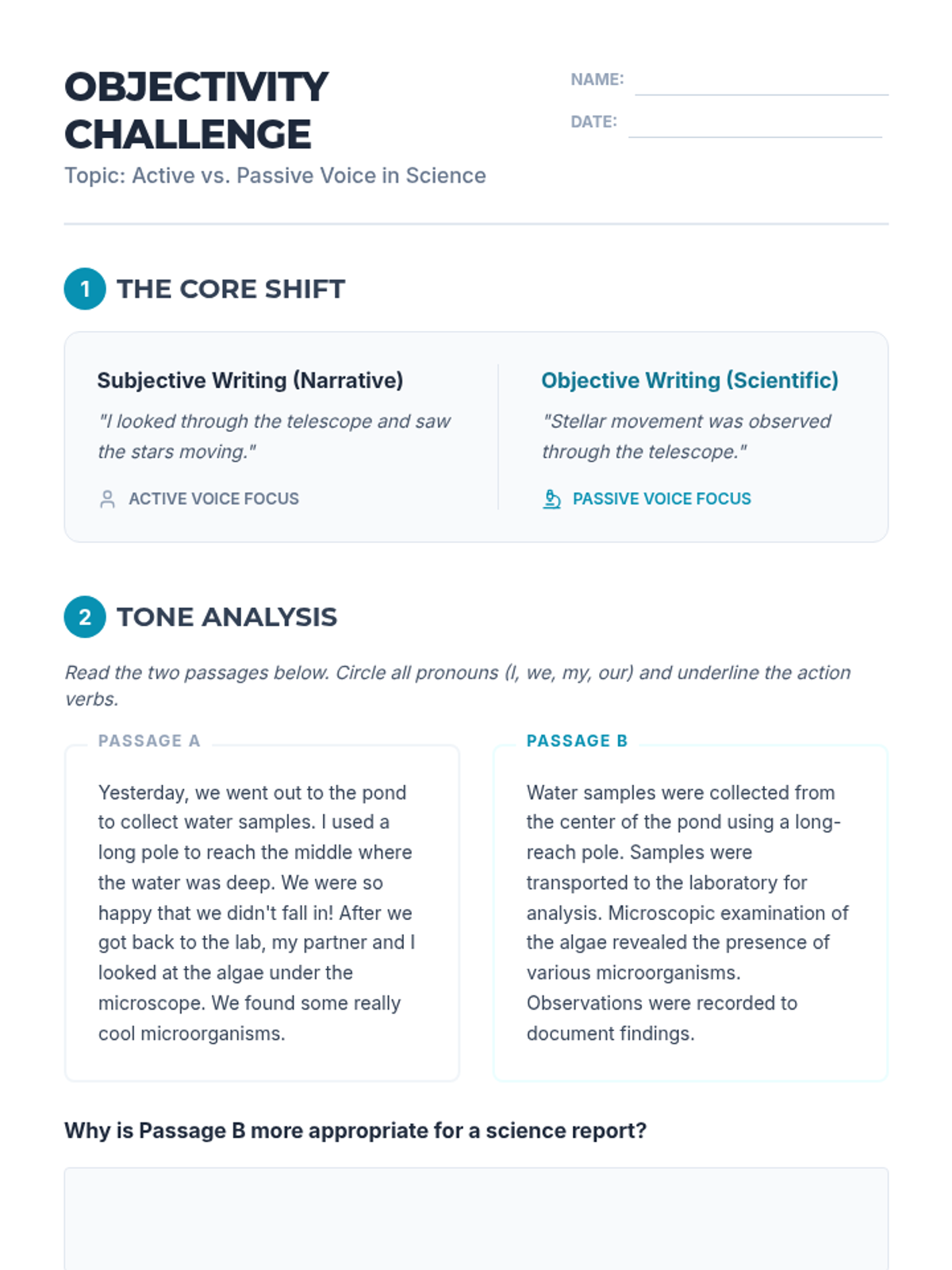
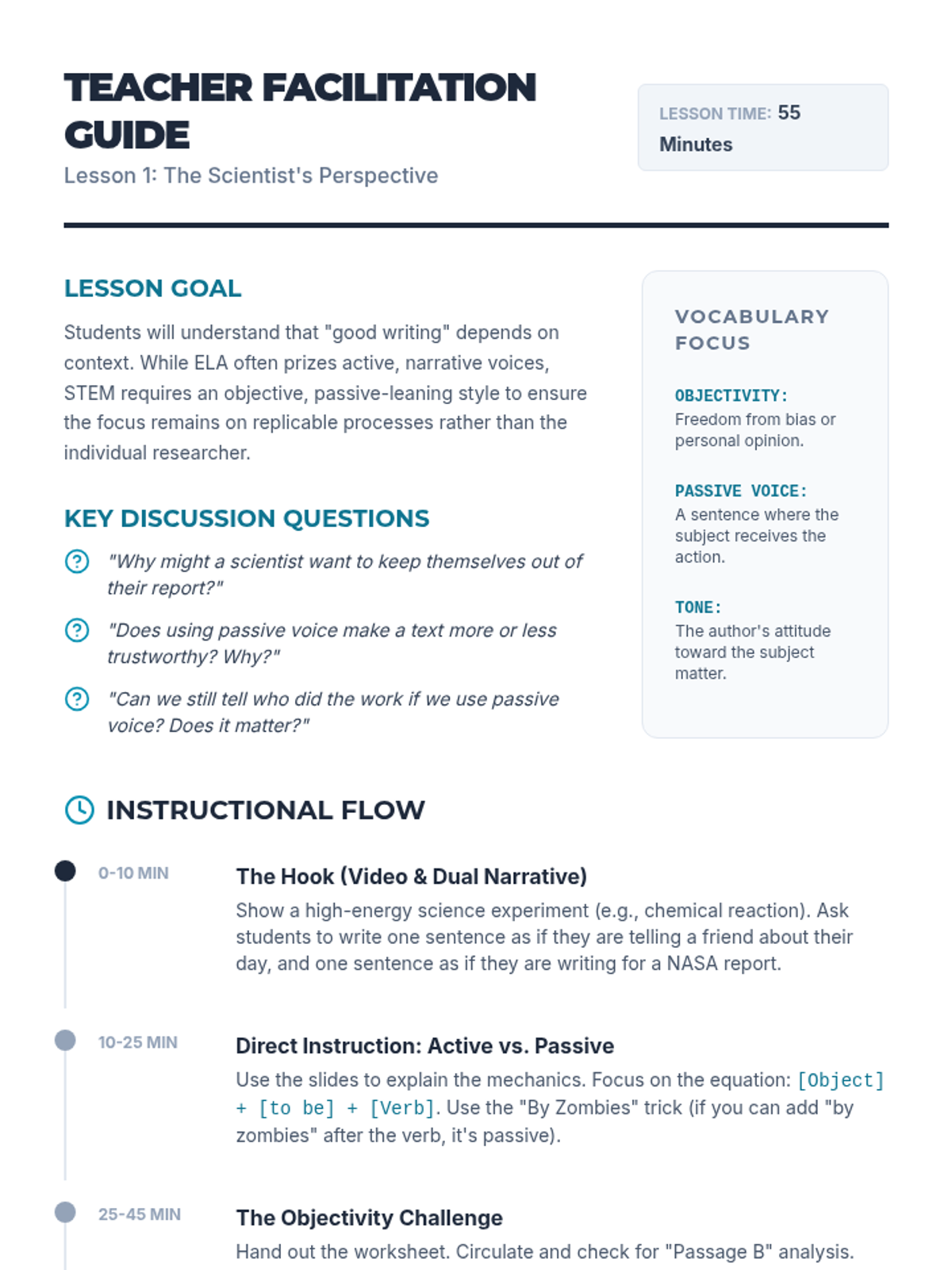
A cross-curricular writing sequence for 8th grade that explores the functional use of active and passive voice in scientific and technical contexts. Students learn to shift between narrative and objective tones, focusing on the significance of the process over the performer.
This 8th-grade ELA sequence focuses on the mechanics of active and passive voice. Students progress from identifying subjects and agents to mastering the grammatical formula of passive voice, eventually learning to convert between the two for clarity and strategic emphasis.
A technical dive into the grammar of active and passive voice. Students move from mapping sentence architecture to masterfully controlling sentence focus through voice manipulation.
This sequence provides a comprehensive exploration of active and passive voice, moving from basic sentence structure to sophisticated stylistic choices. Students will learn to identify, convert, and strategically use different voices to enhance clarity and impact in their writing.
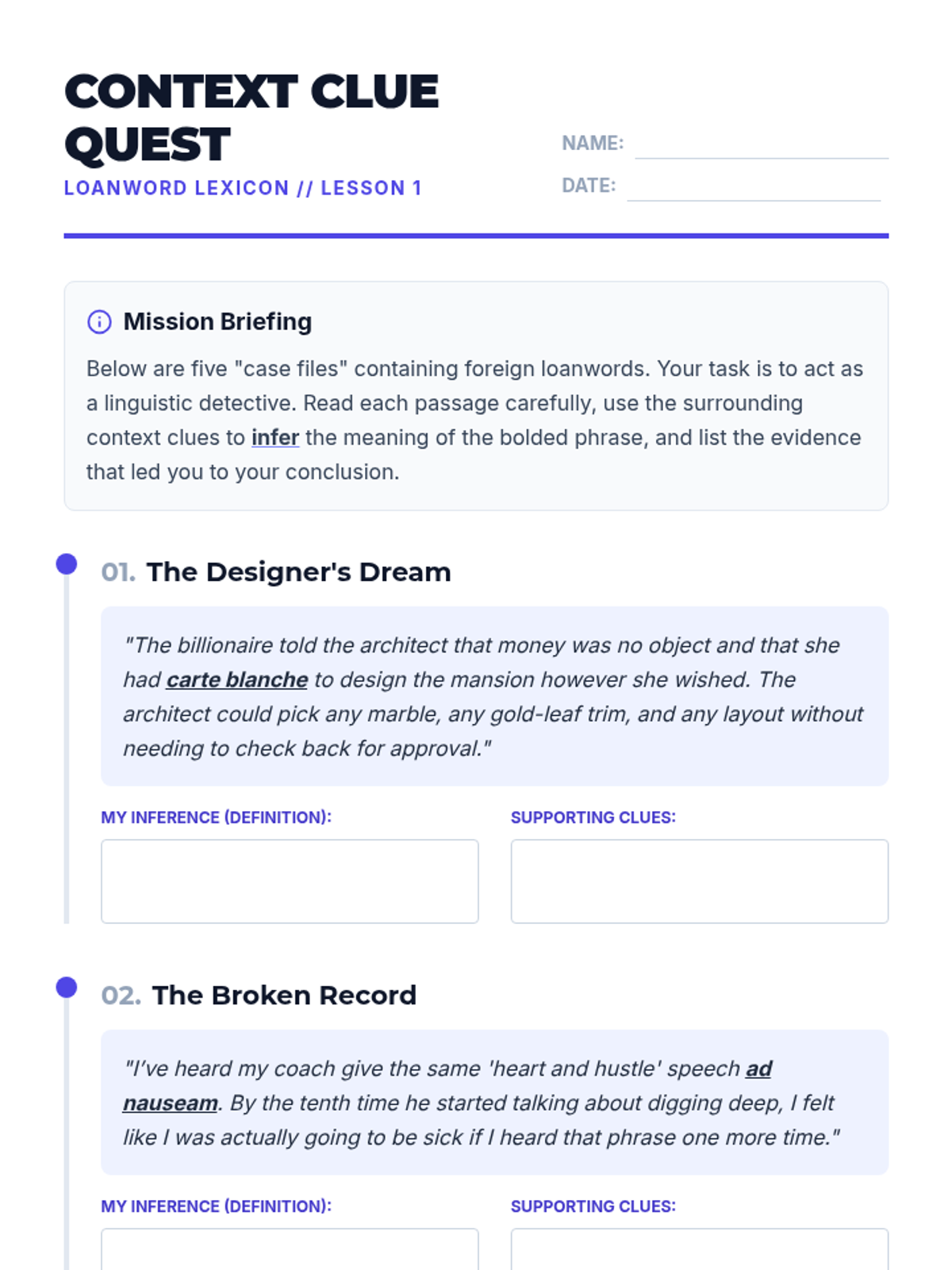
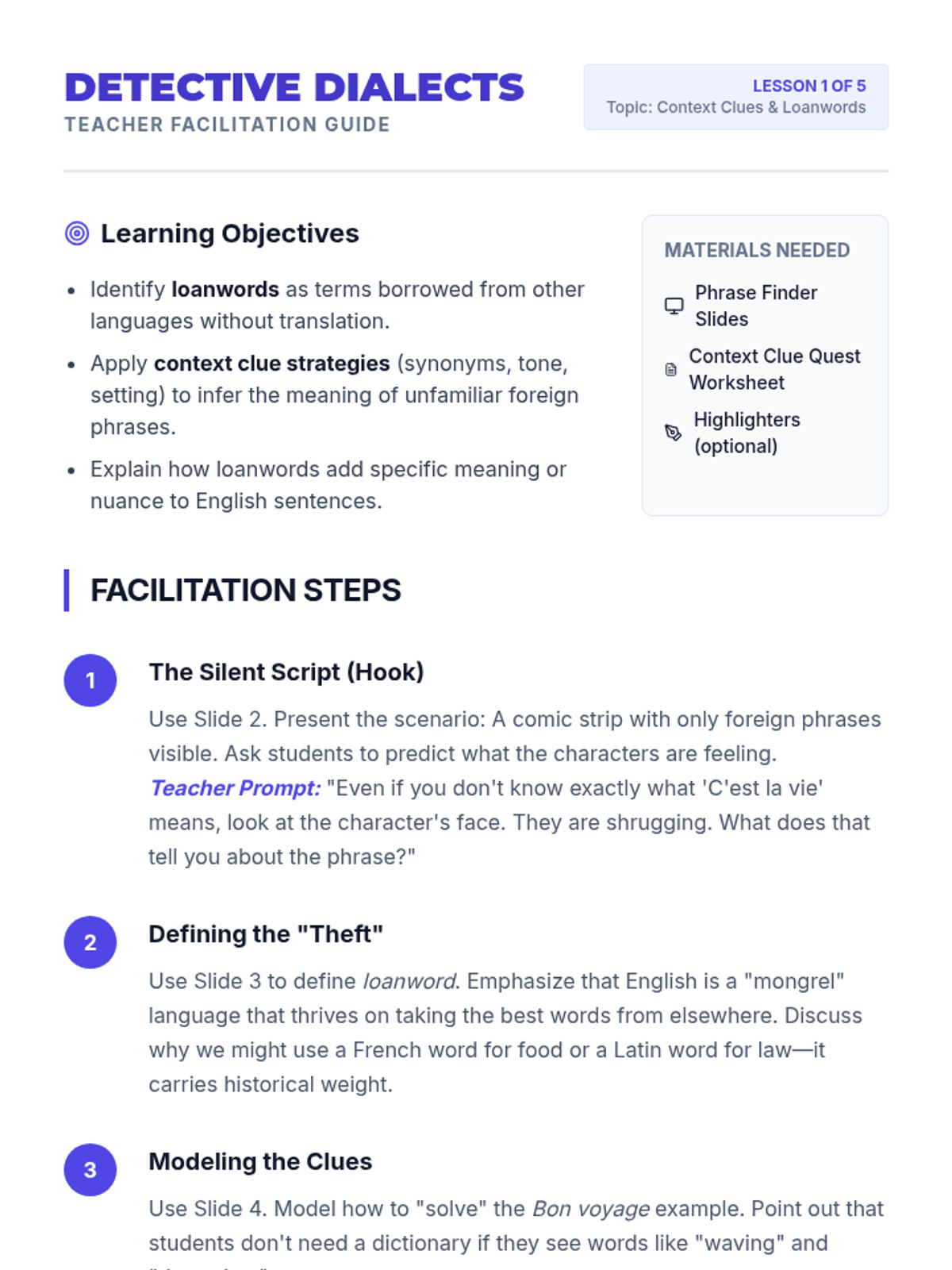
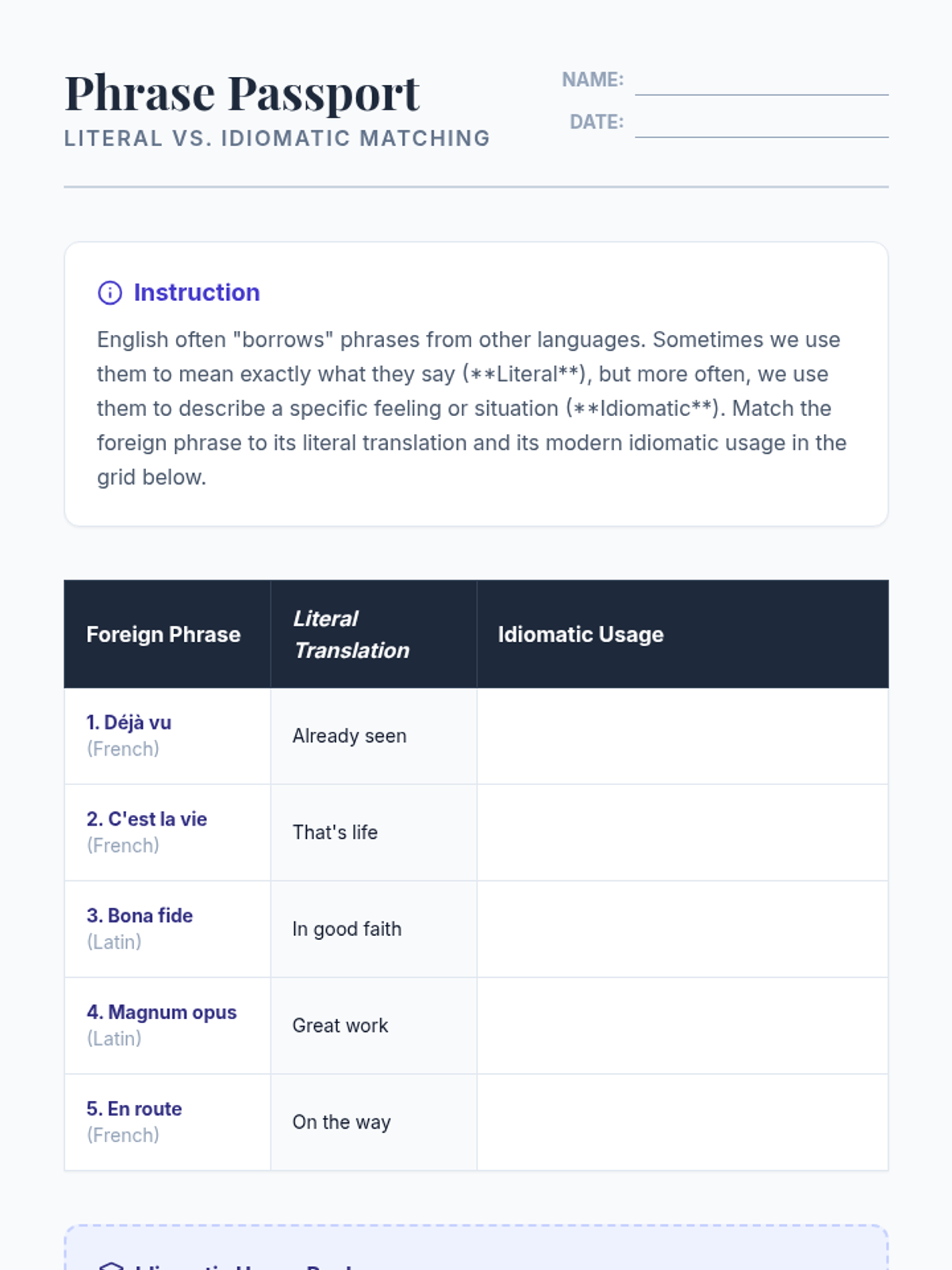
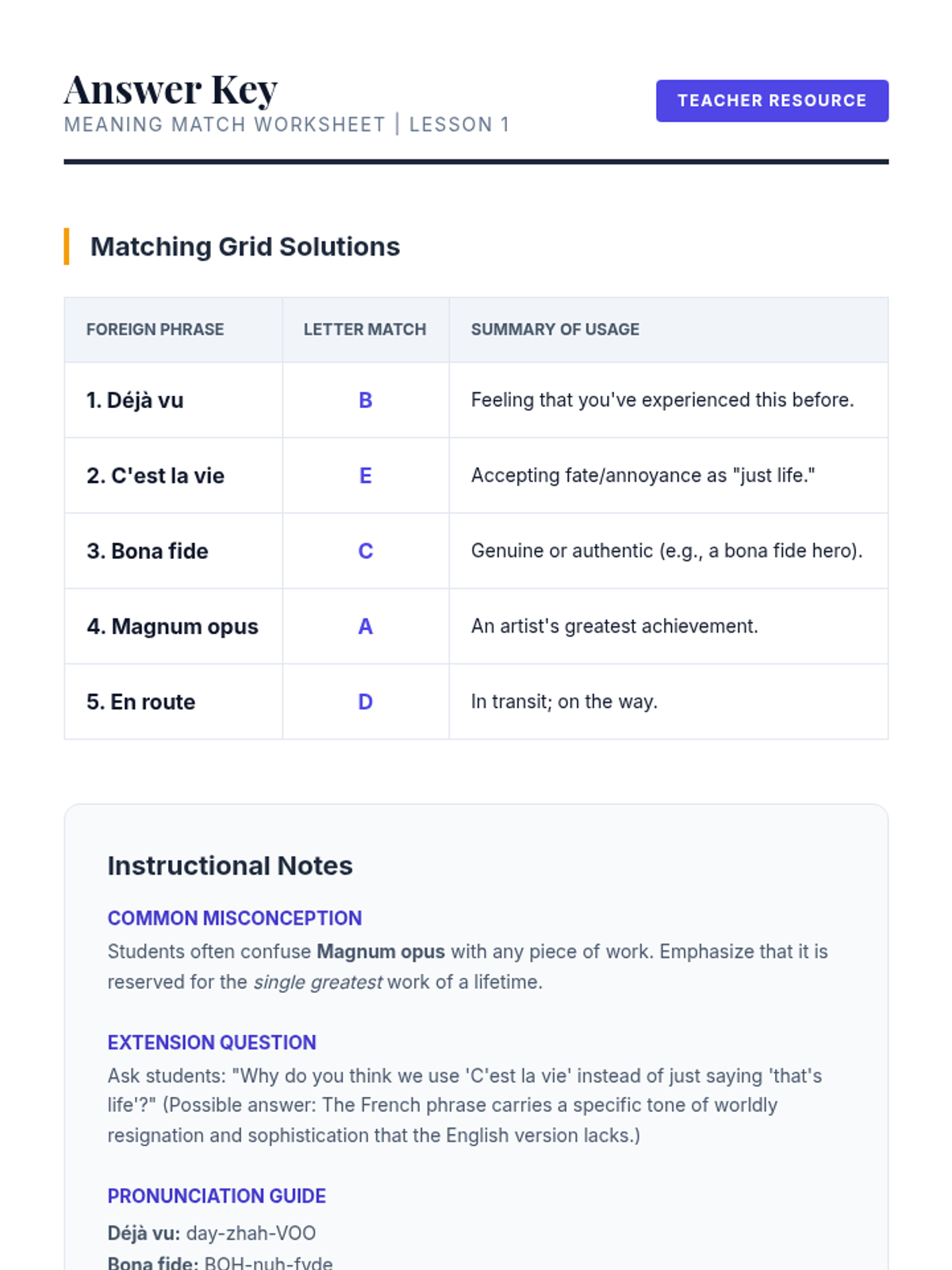
This sequence explores the rhetorical power and nuance of foreign phrases in English, moving from context-clue inference to stylistic application in creative writing. Students will analyze how words like 'carpe diem' and 'déjà vu' add layers of meaning that standard English translations often lack.
This 8th-grade sequence transforms spelling from a rote activity into a professional skill. Students act as editors and professionals, exploring why spelling accuracy is a cornerstone of credibility in formal and academic writing, while mastering high-utility academic terms and navigating the pitfalls of digital tools.
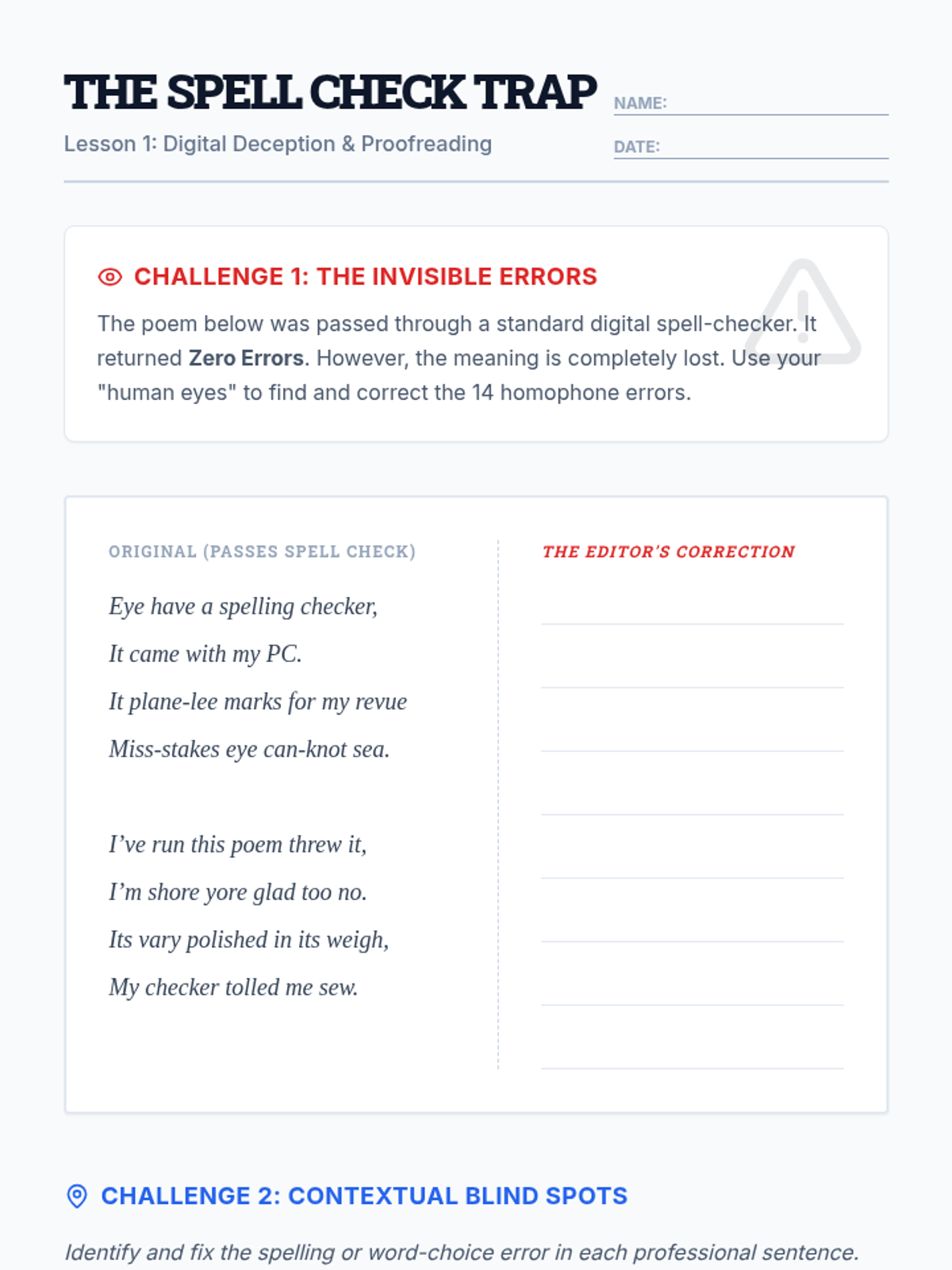
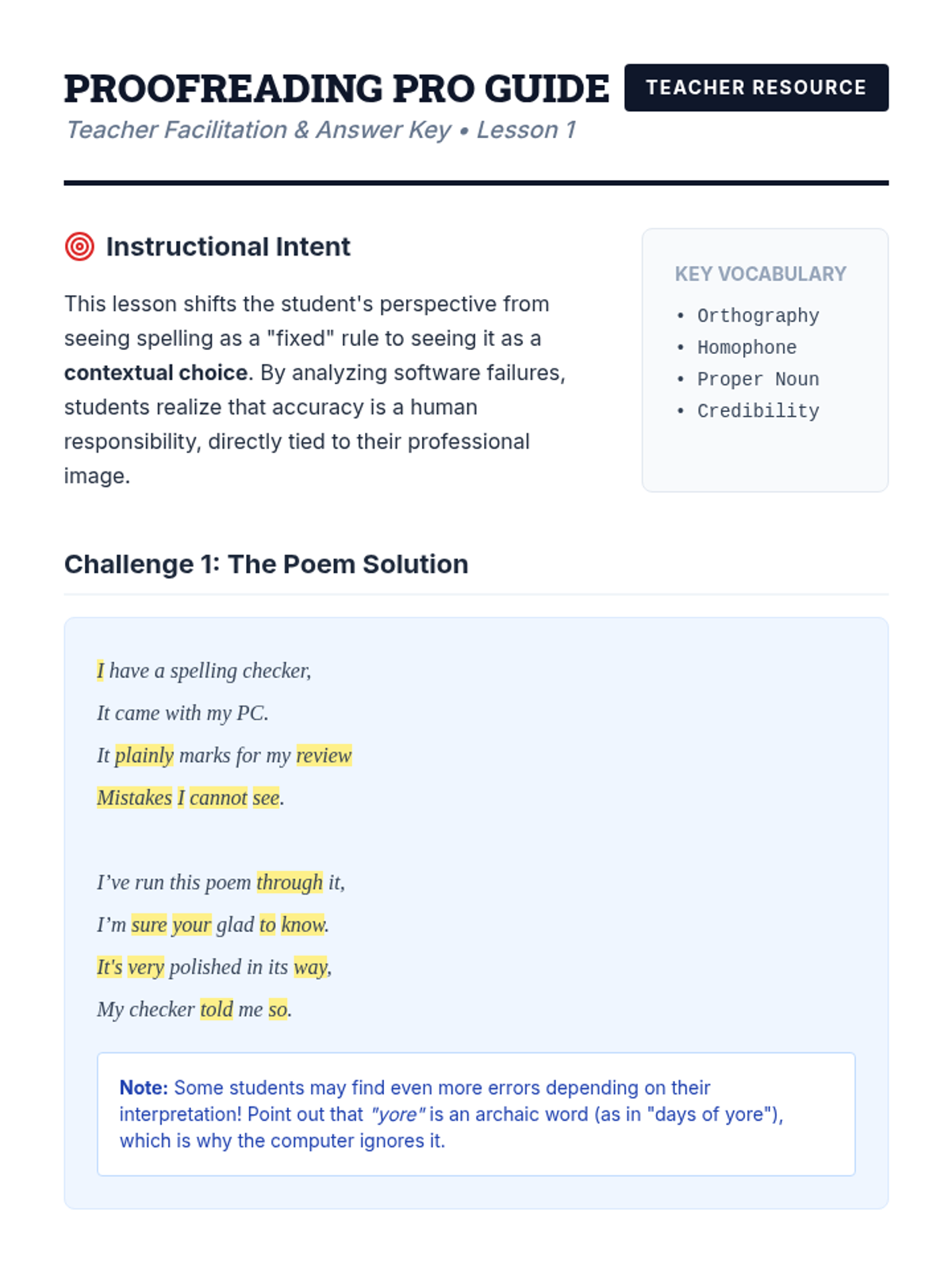
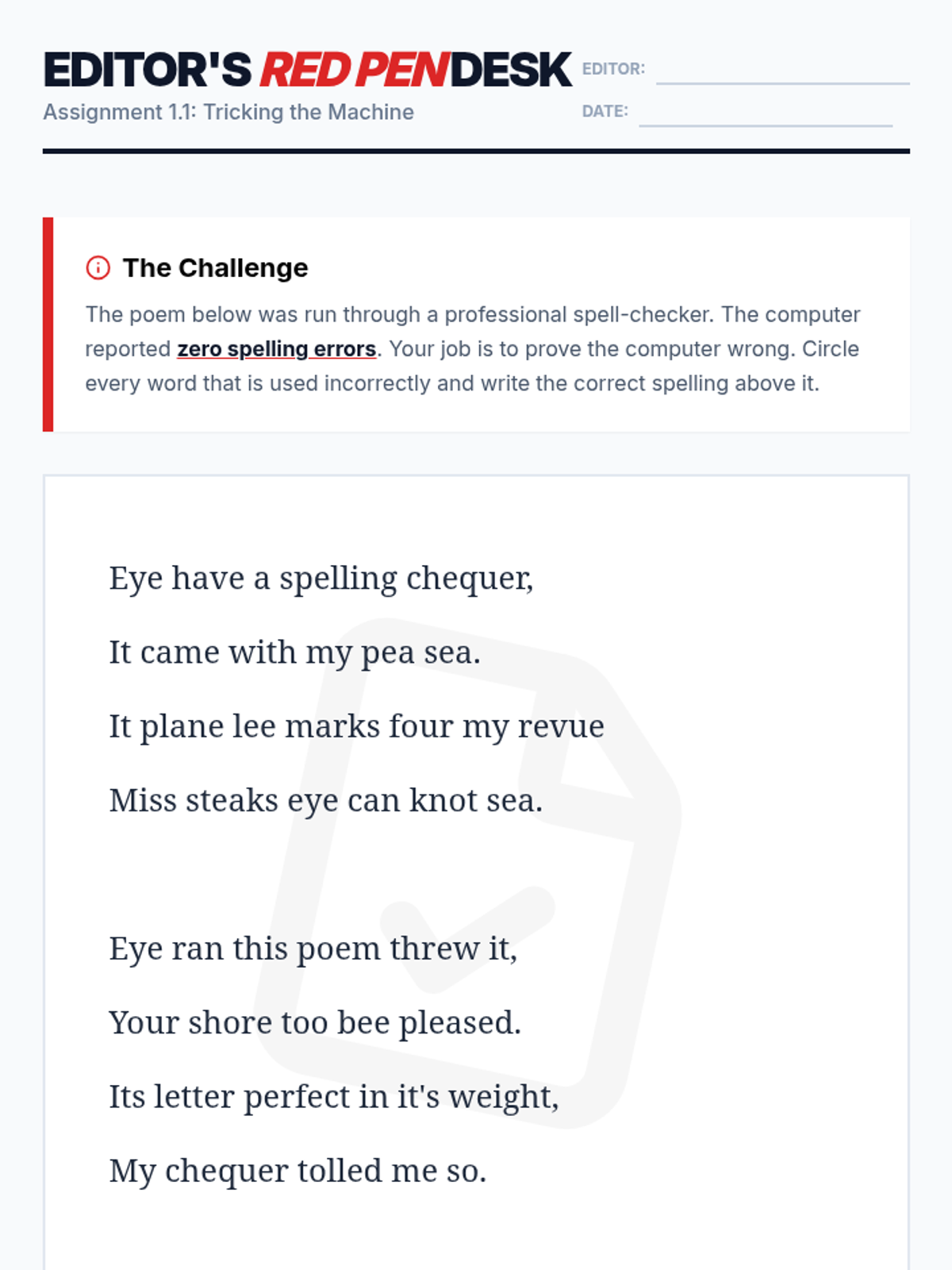
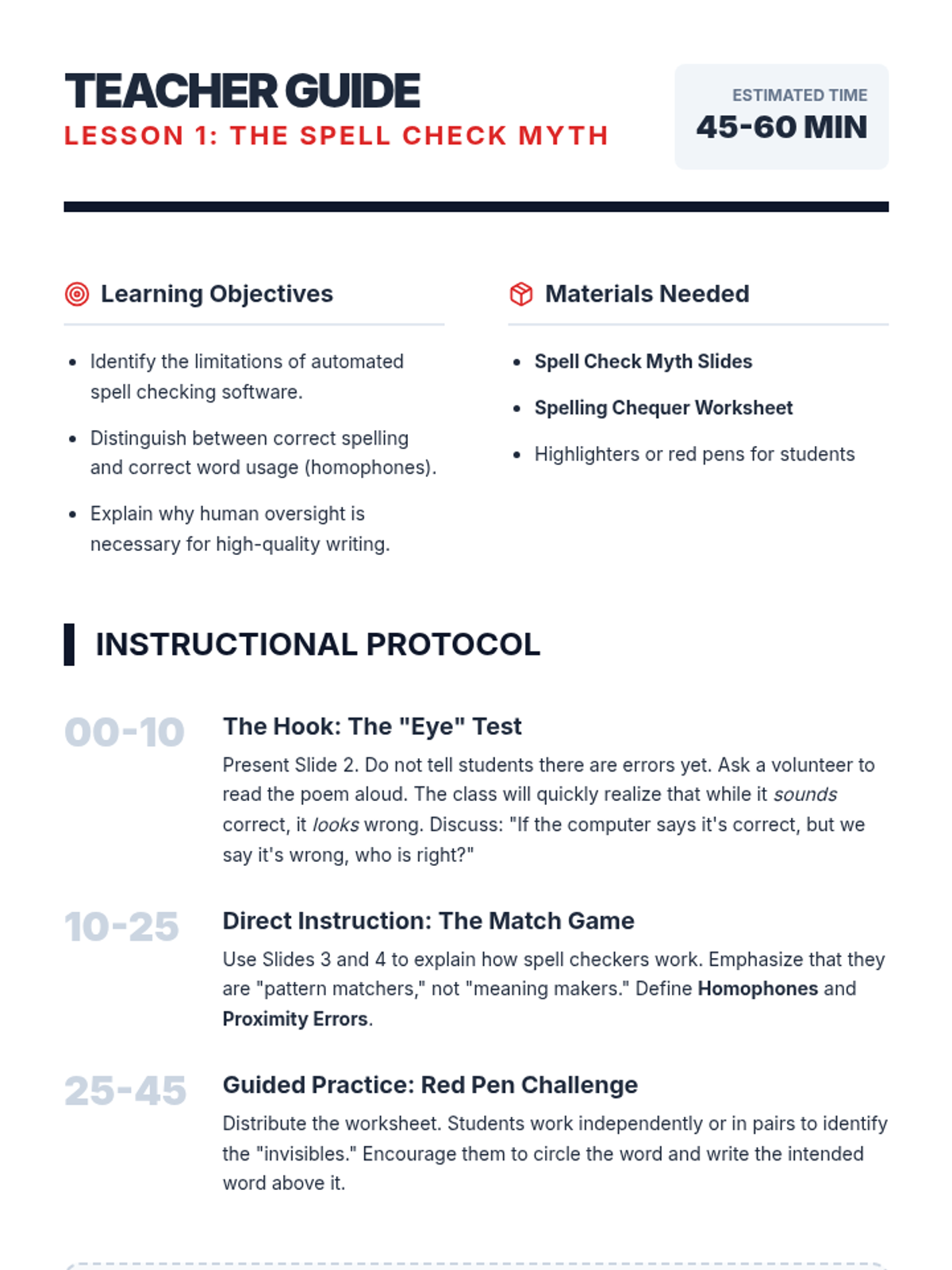
This sequence transforms students into professional copy editors, focusing on strategies to catch spelling errors that technology misses. Students explore the limitations of spell check, learn specialized proofreading techniques like reading backwards, and apply their skills in a high-stakes publishing simulation.
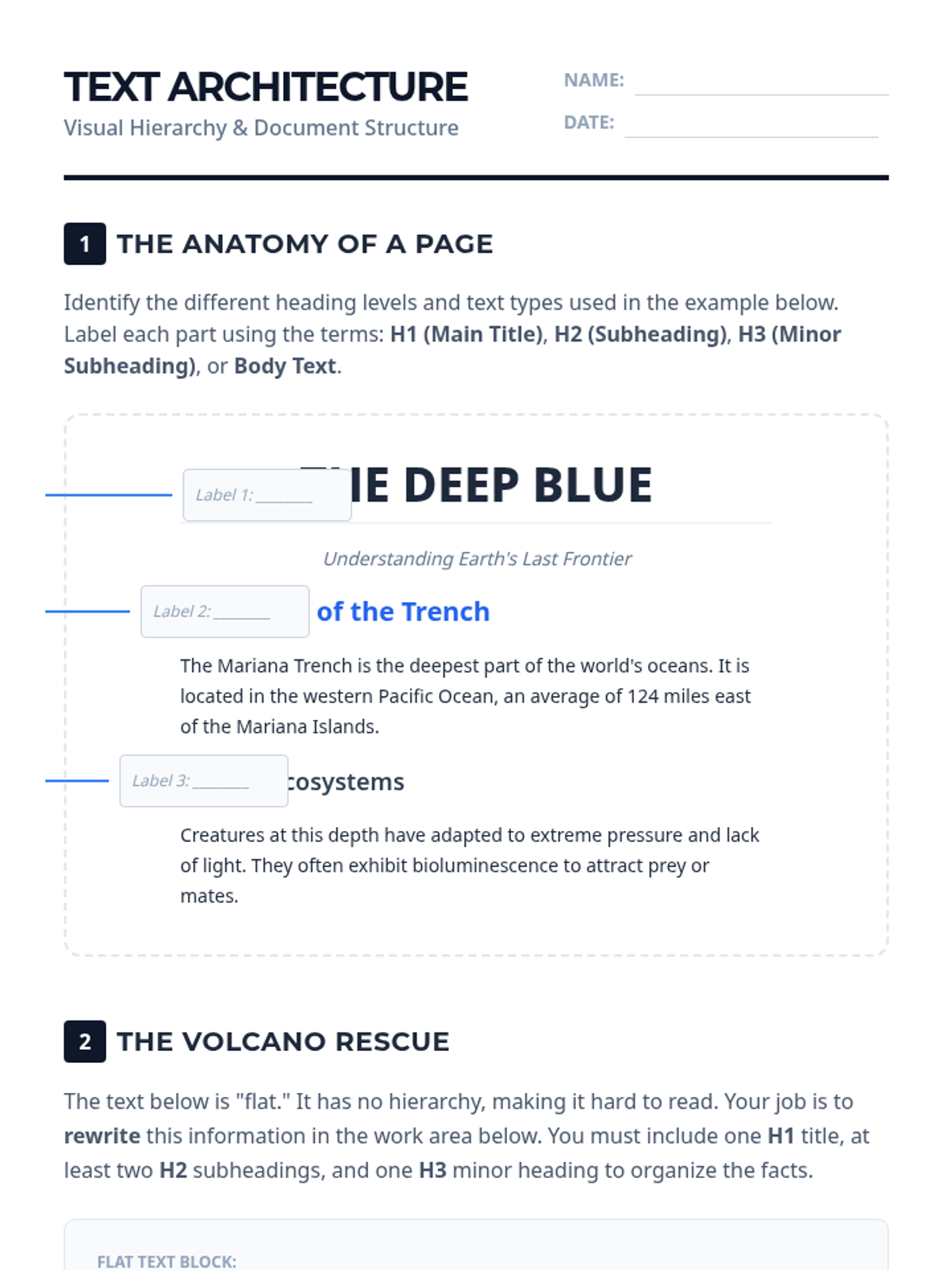
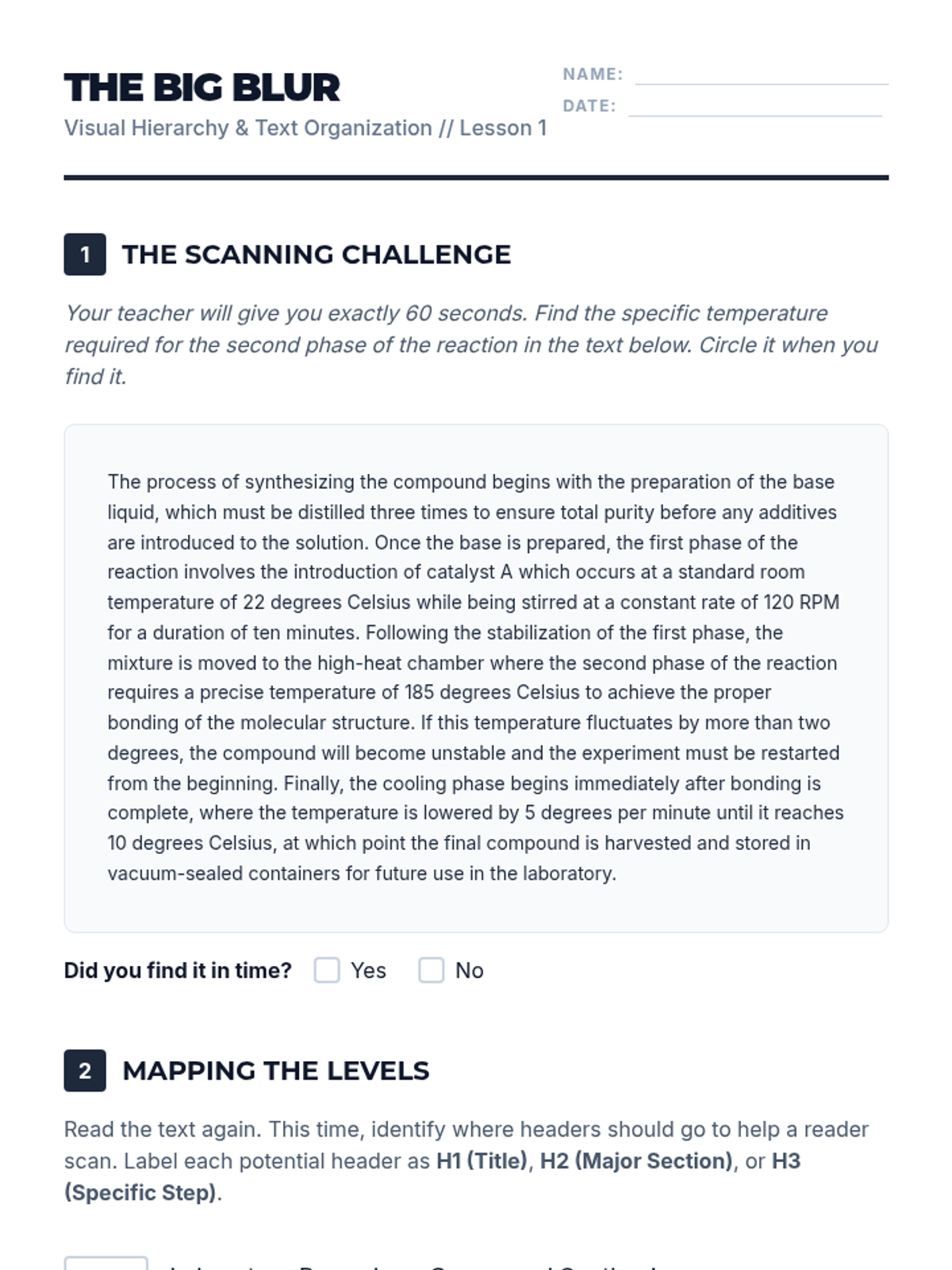
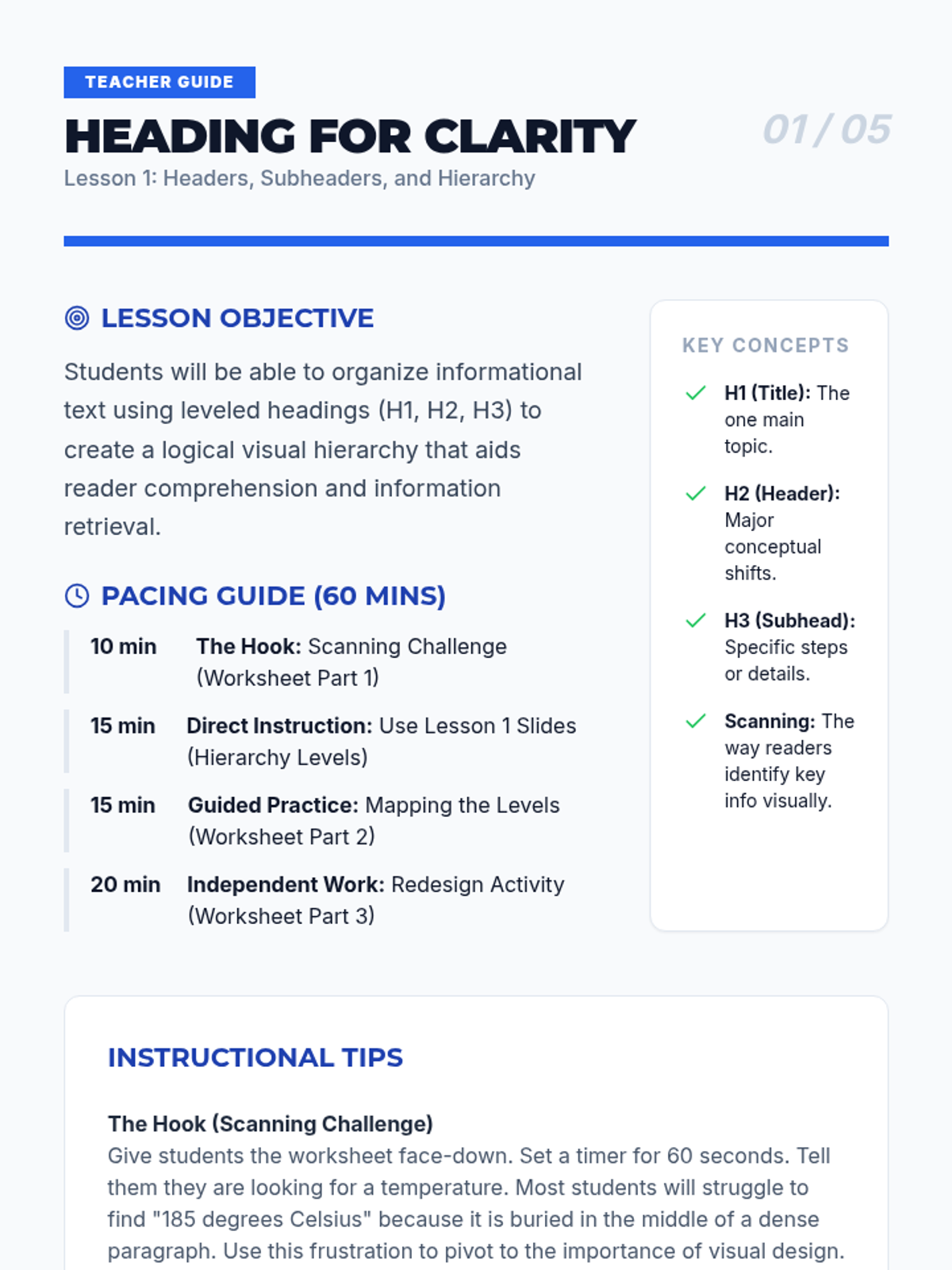
A project-based sequence for 6th grade students focused on the mechanics of document formatting, visual hierarchy, and professional layout standards to improve text readability.
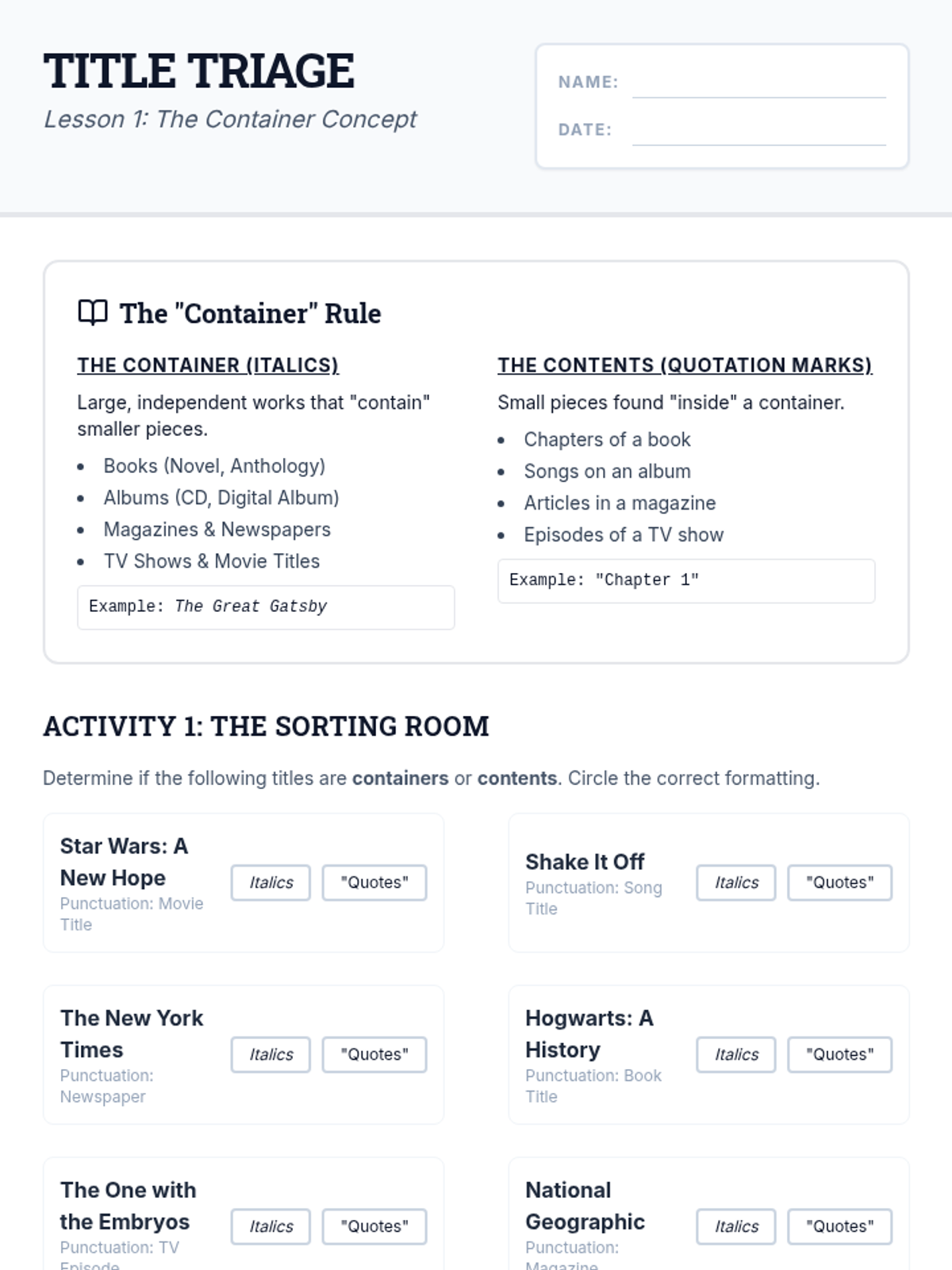
A comprehensive unit for 7th-grade students on the mechanics of formatting titles, in-text citations, and bibliographies. Students move from basic title punctuation to building a full Works Cited page using modern standards.
A comprehensive 8th Grade ELA unit on document design and formatting. Students learn to use headers, parallel lists, typography, and punctuation to organize informational text for maximum clarity and impact.
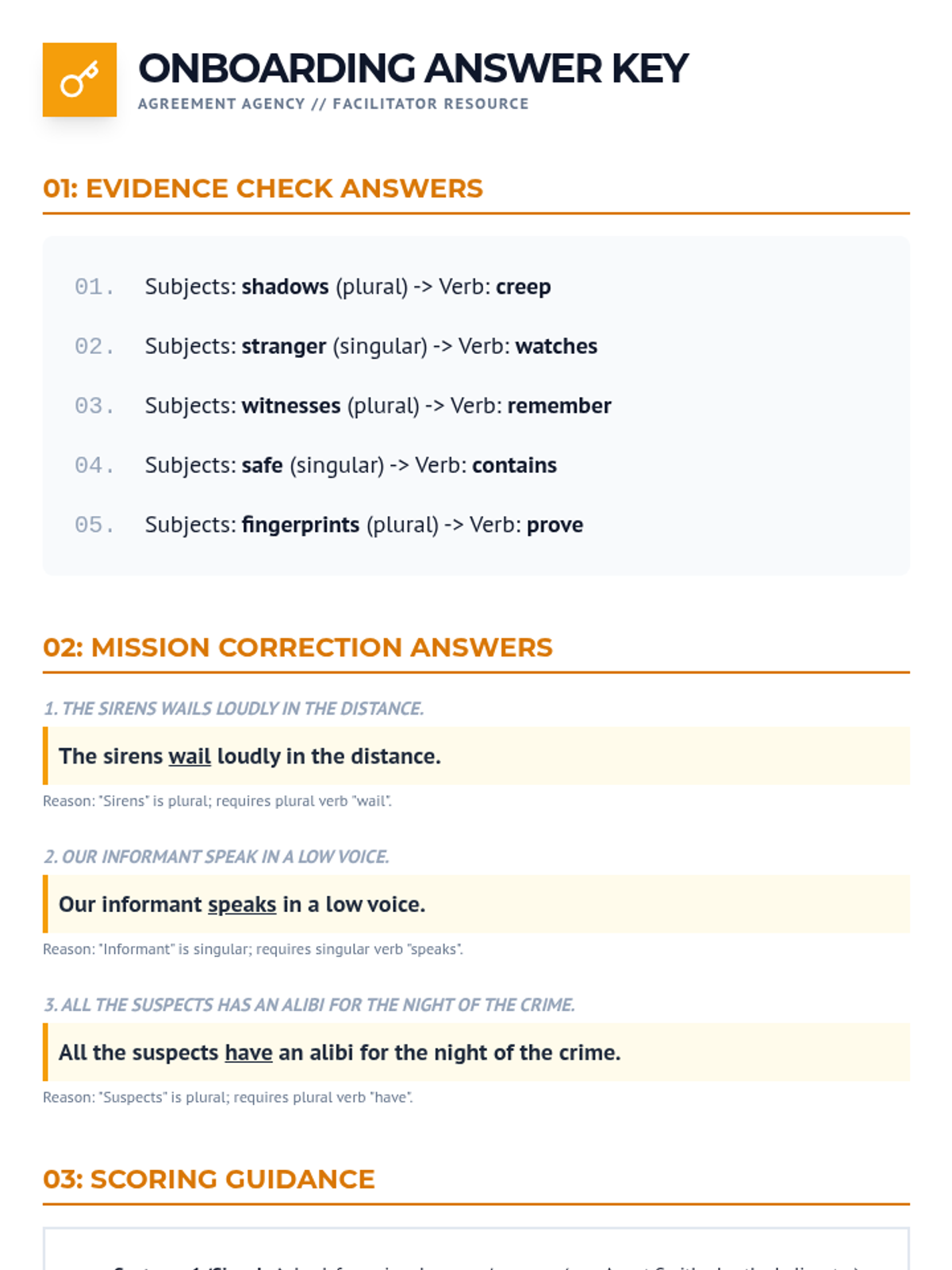
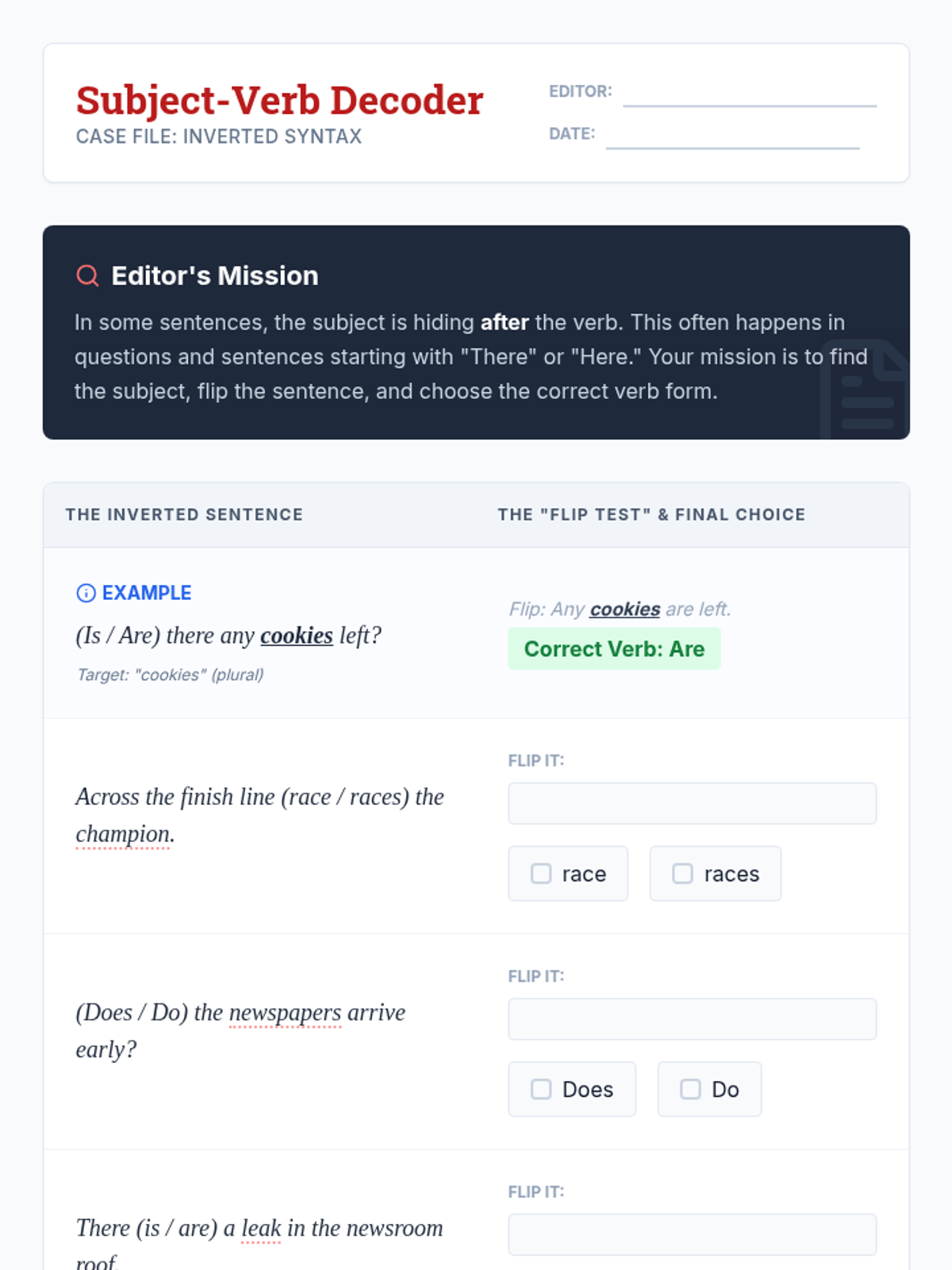
A comprehensive 5-lesson sequence for 8th-grade students focusing on subject-verb agreement in inverted, interrogative, and complex sentence structures. Using a "Grammar Detective" theme, students learn to locate hidden subjects and maintain grammatical logic in non-standard word orders.
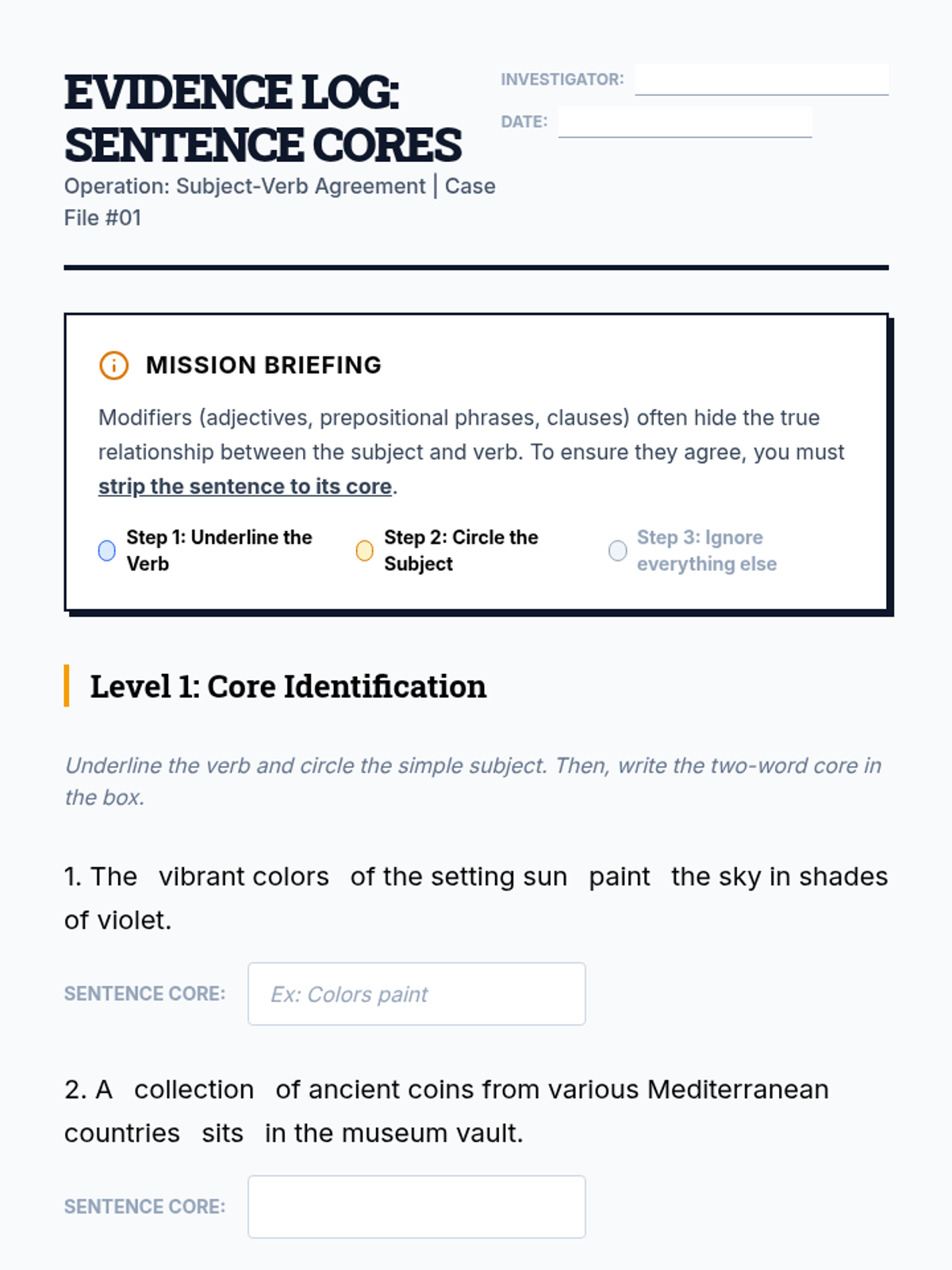
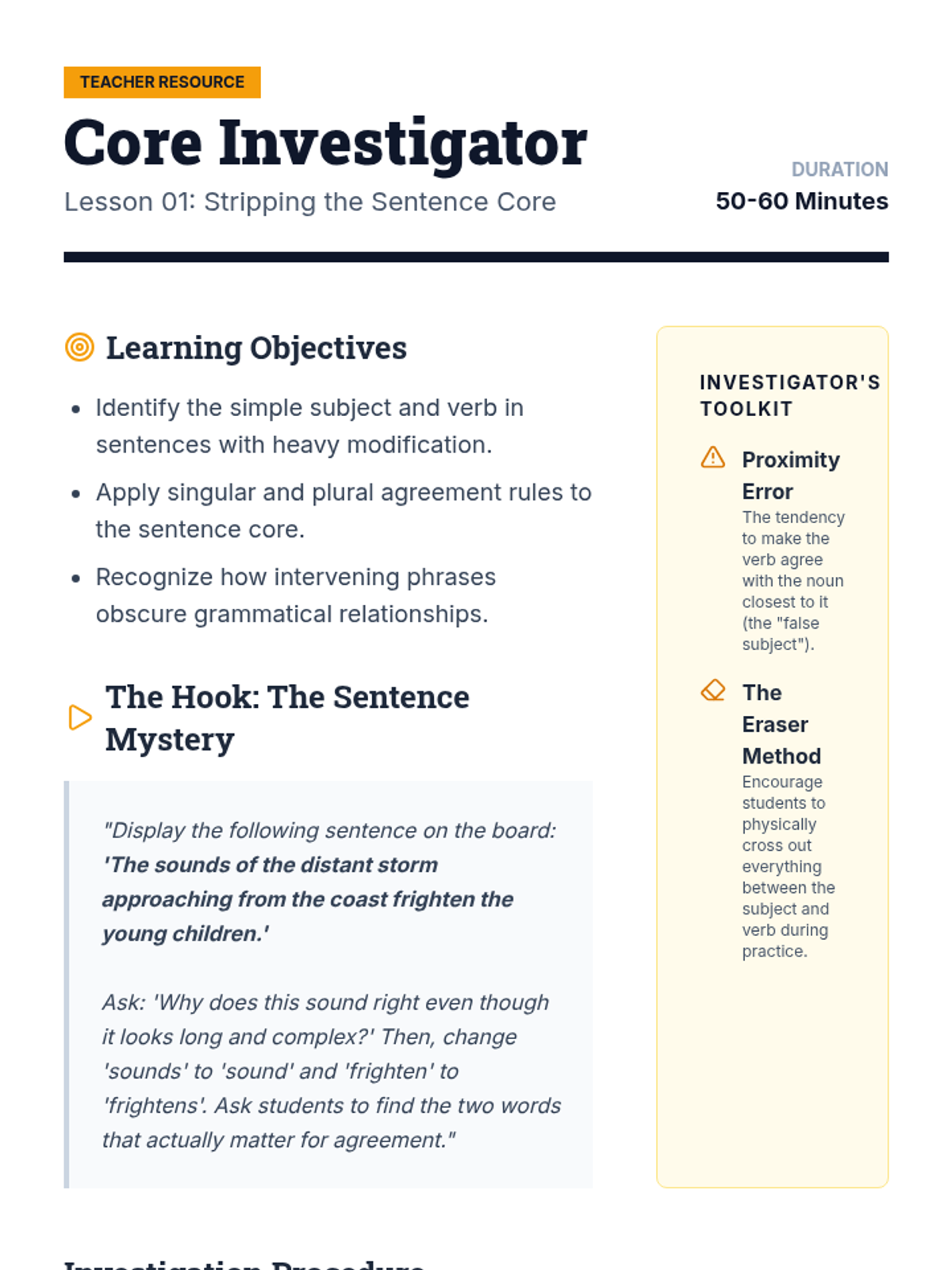
An inquiry-based grammar sequence where students act as linguistic investigators to master subject-verb agreement. Students learn to identify the sentence core, filter out prepositional phrases, handle appositives, and navigate complex modifiers like 'as well as'.
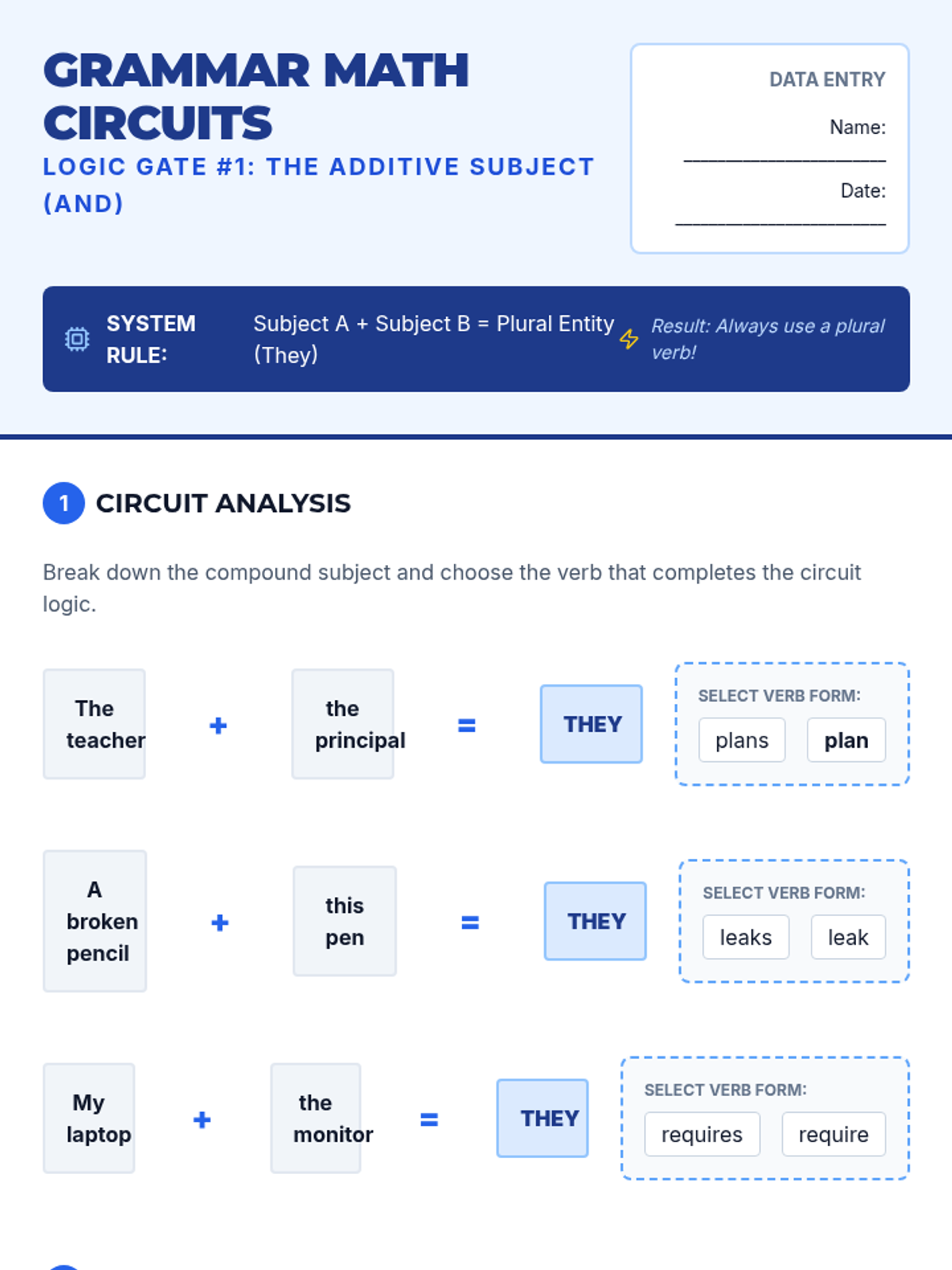
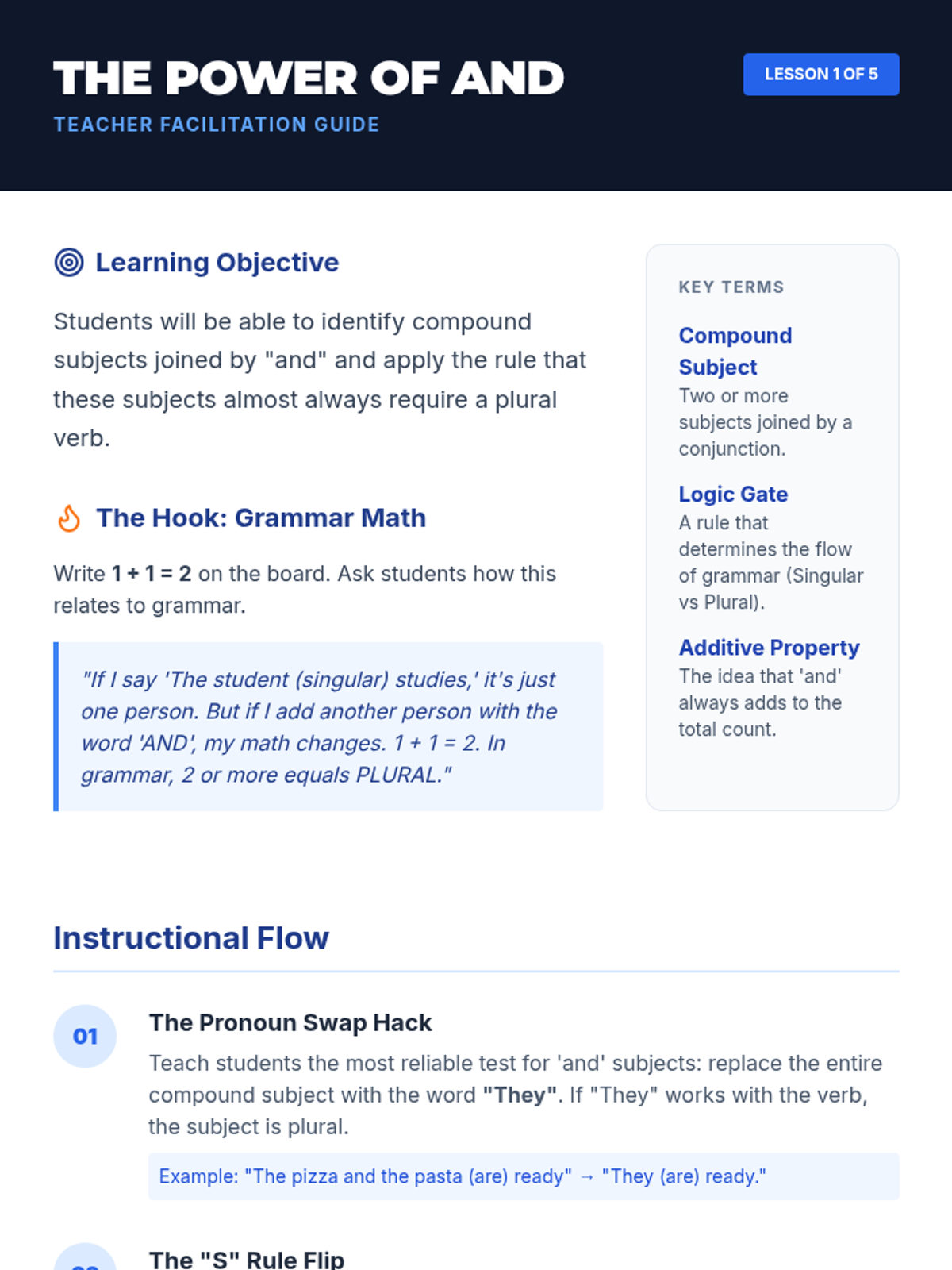
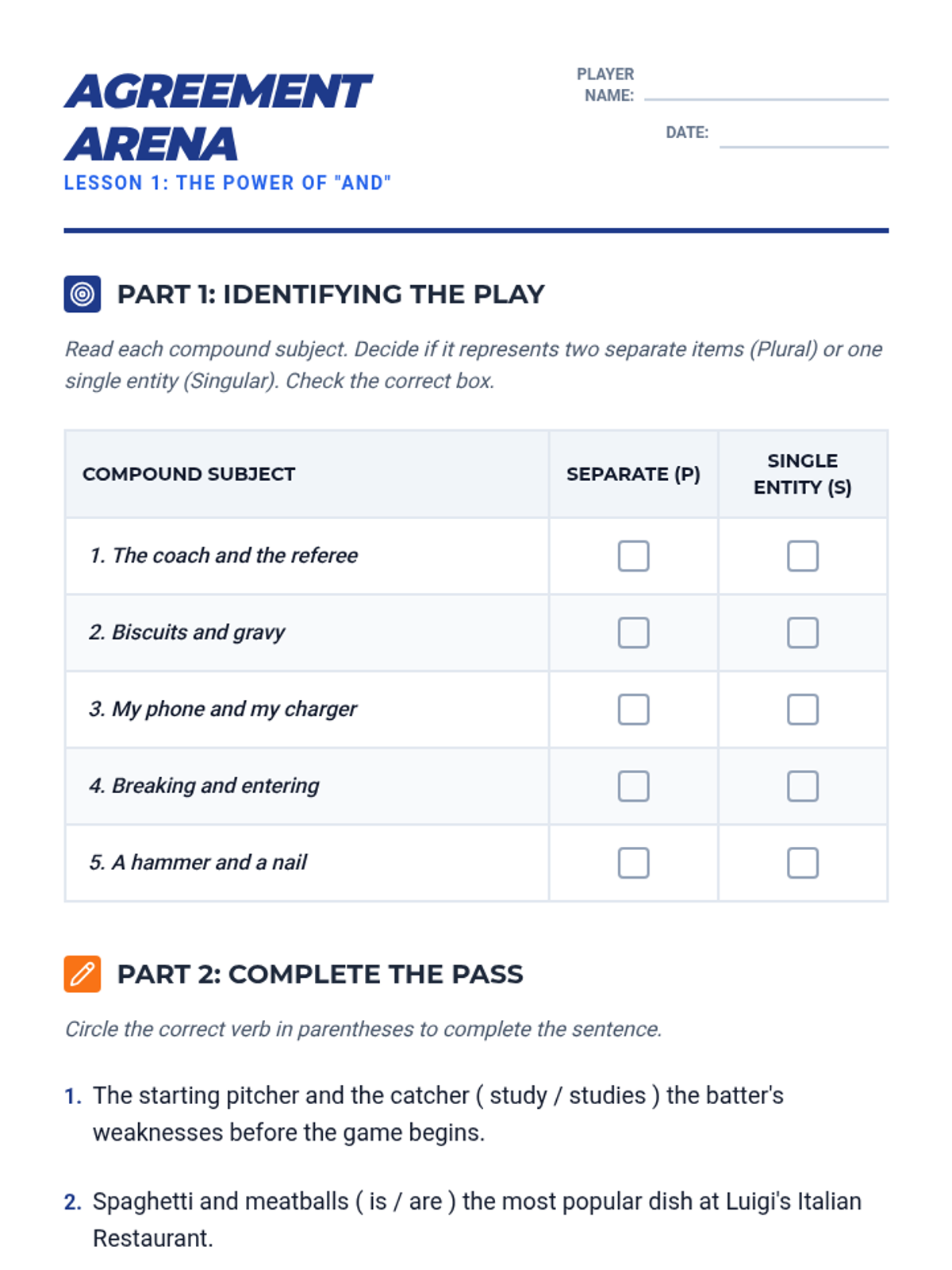
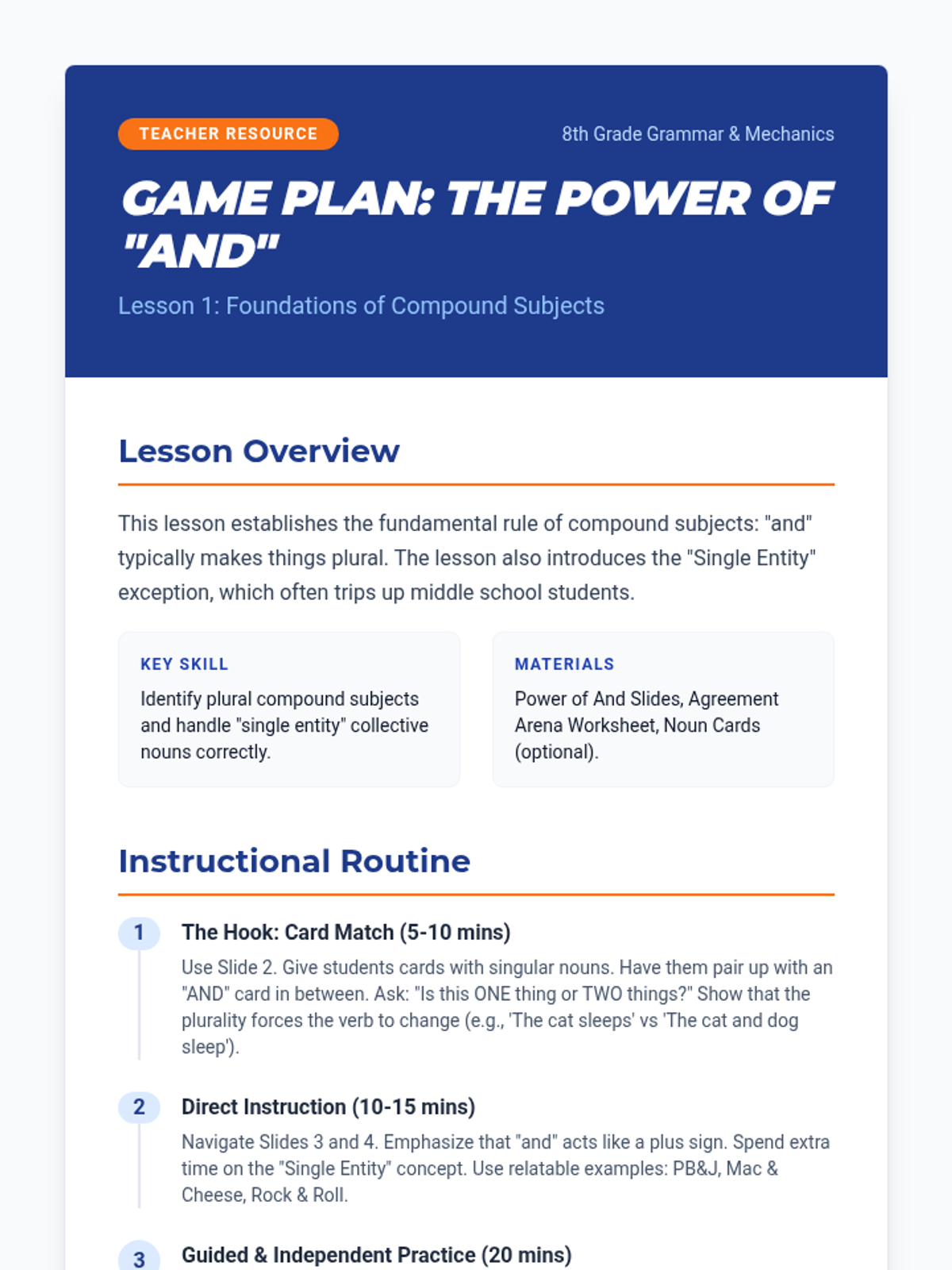
This 6th-grade ELA sequence explores the complexities of subject-verb agreement with compound subjects. Using a logical, game-based framework, students learn to distinguish between the additive nature of 'and' and the proximity rule of 'or/nor' through interactive simulations, grammar 'equations', and creative writing projects.
A 5-lesson workshop series for 8th-grade students that treats active and passive voice as stylistic levers for revision. Students move from diagnosing 'zombie sentences' in their own drafts to mastering the deliberate use of voice for rhythm, energy, and clarity, culminating in a 'before and after' showcase of their polished work.
A comprehensive 9-week study of Franz Kafka's 'Metamorphosis', focusing on argumentative writing through textual evidence and narrative expansion. The sequence utilizes graphic organizers, visual scaffolding, and increased opportunities to respond to deepen student engagement with the surrealist text.
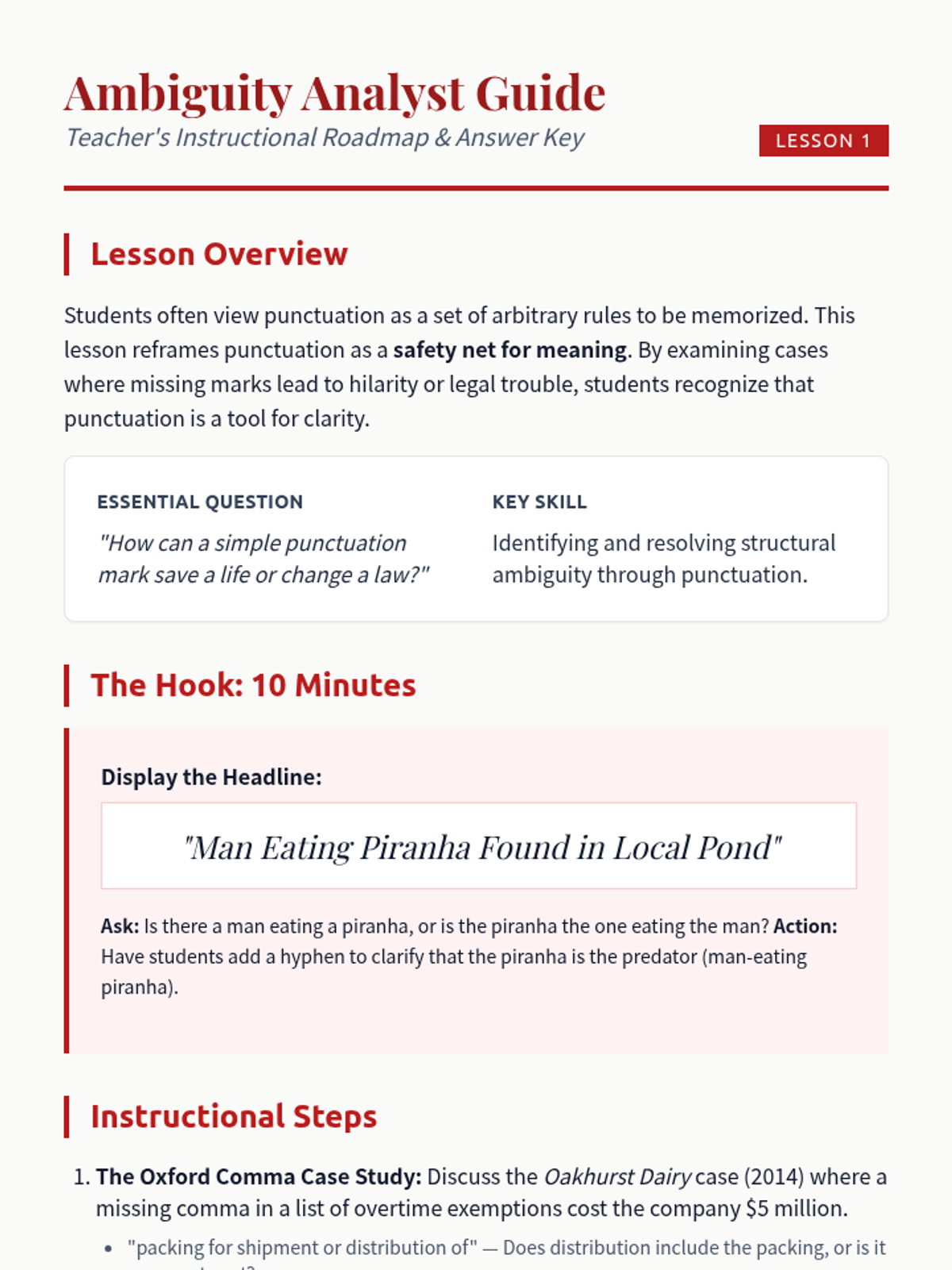
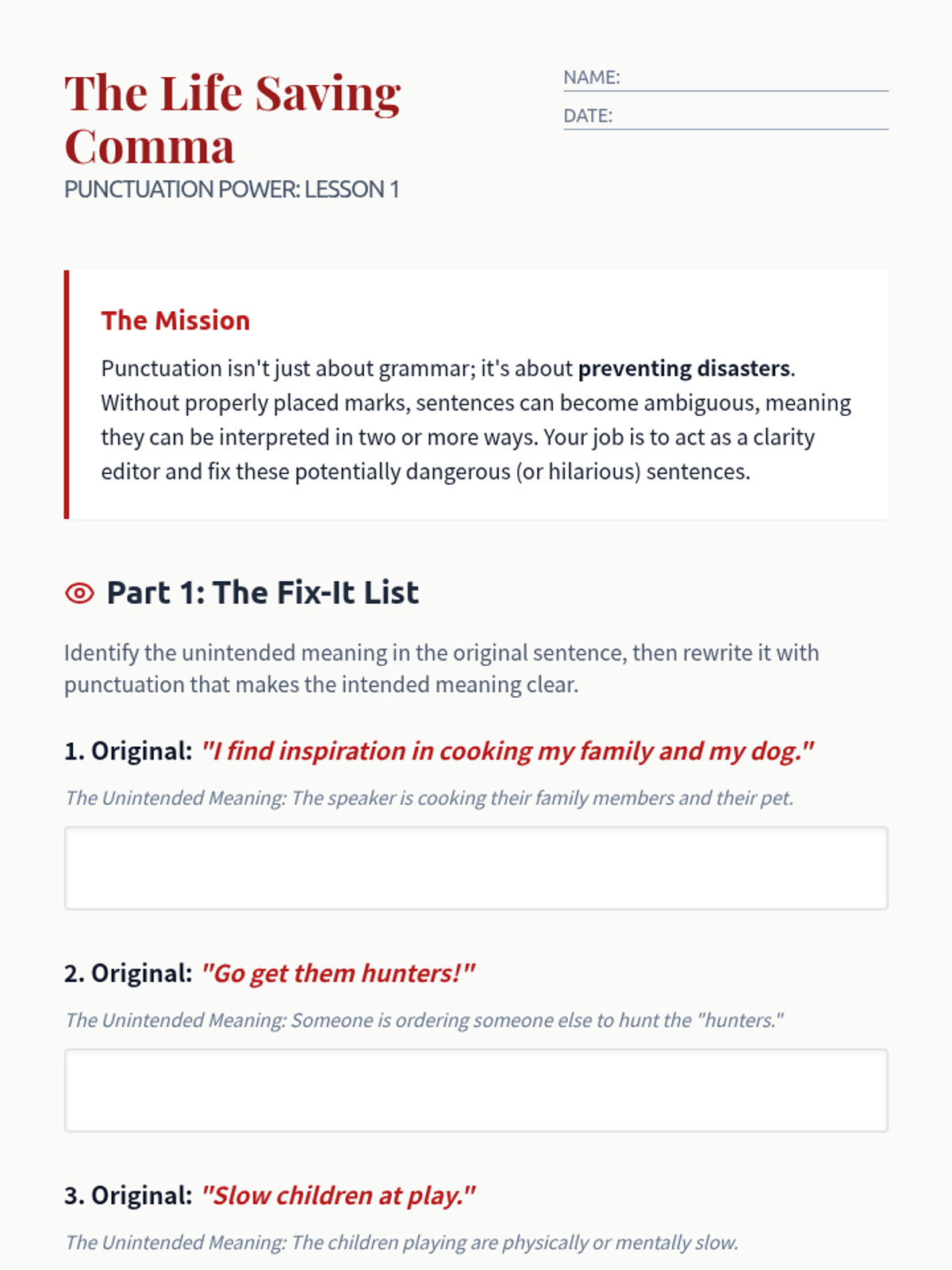
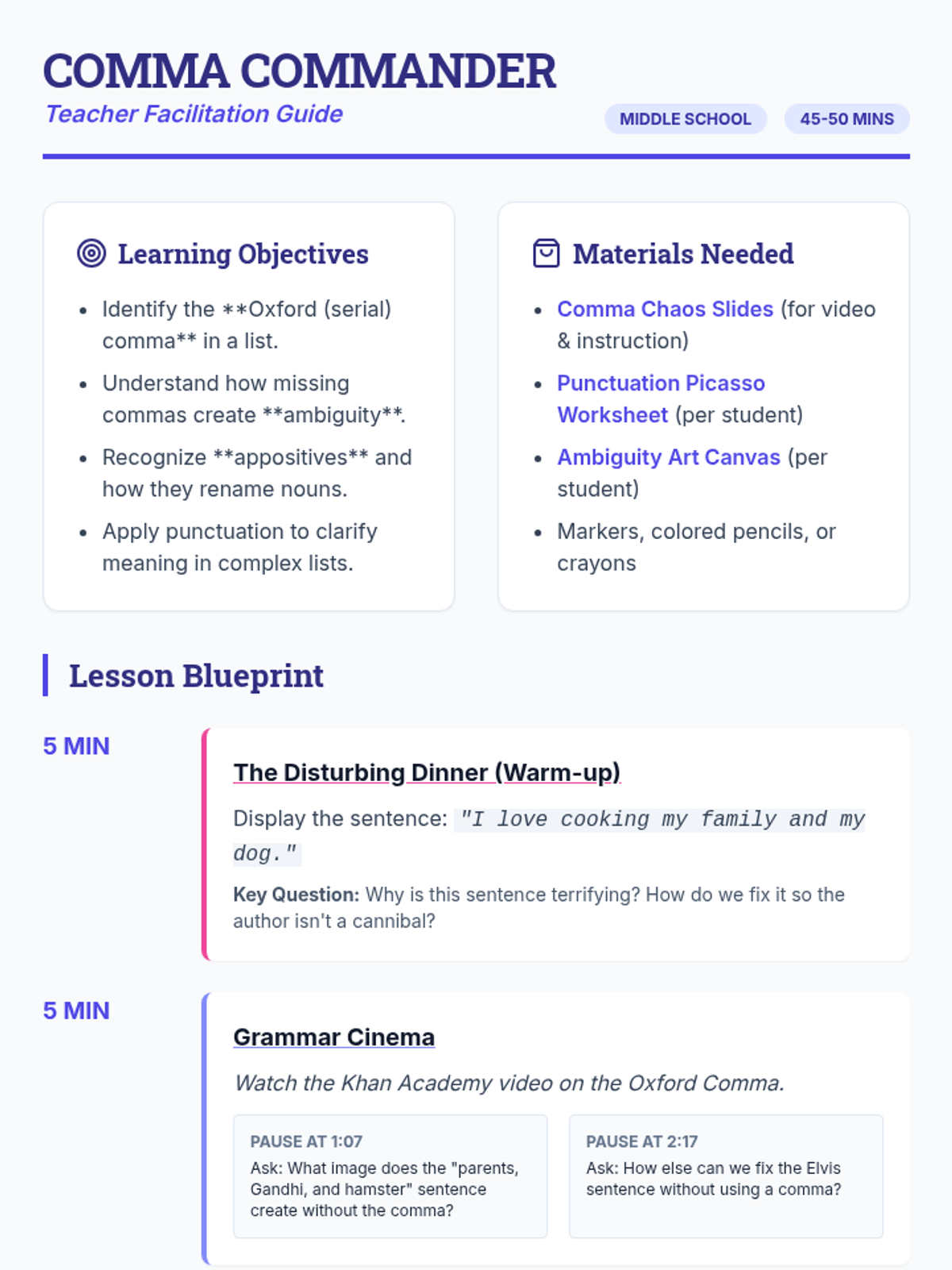
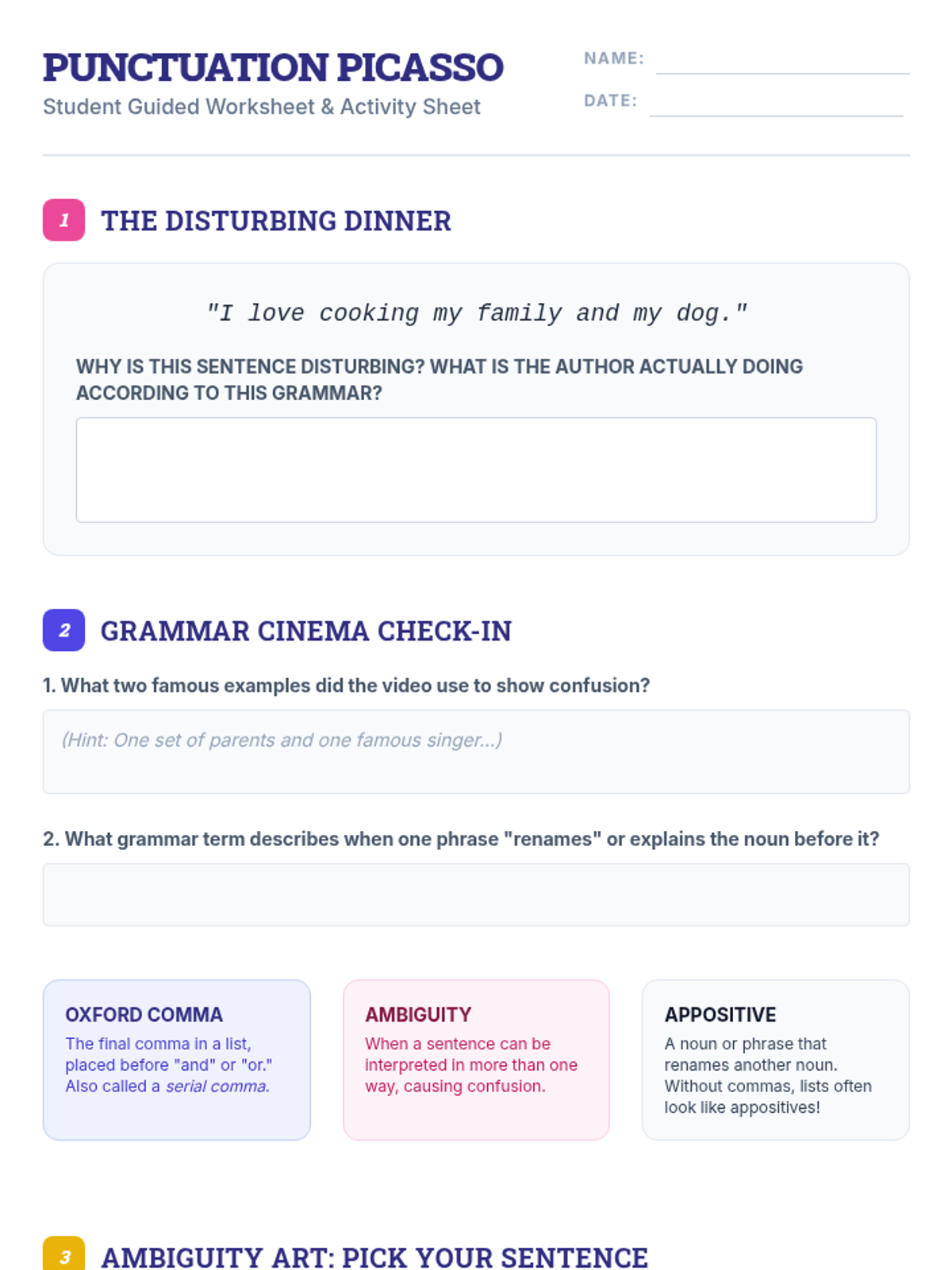
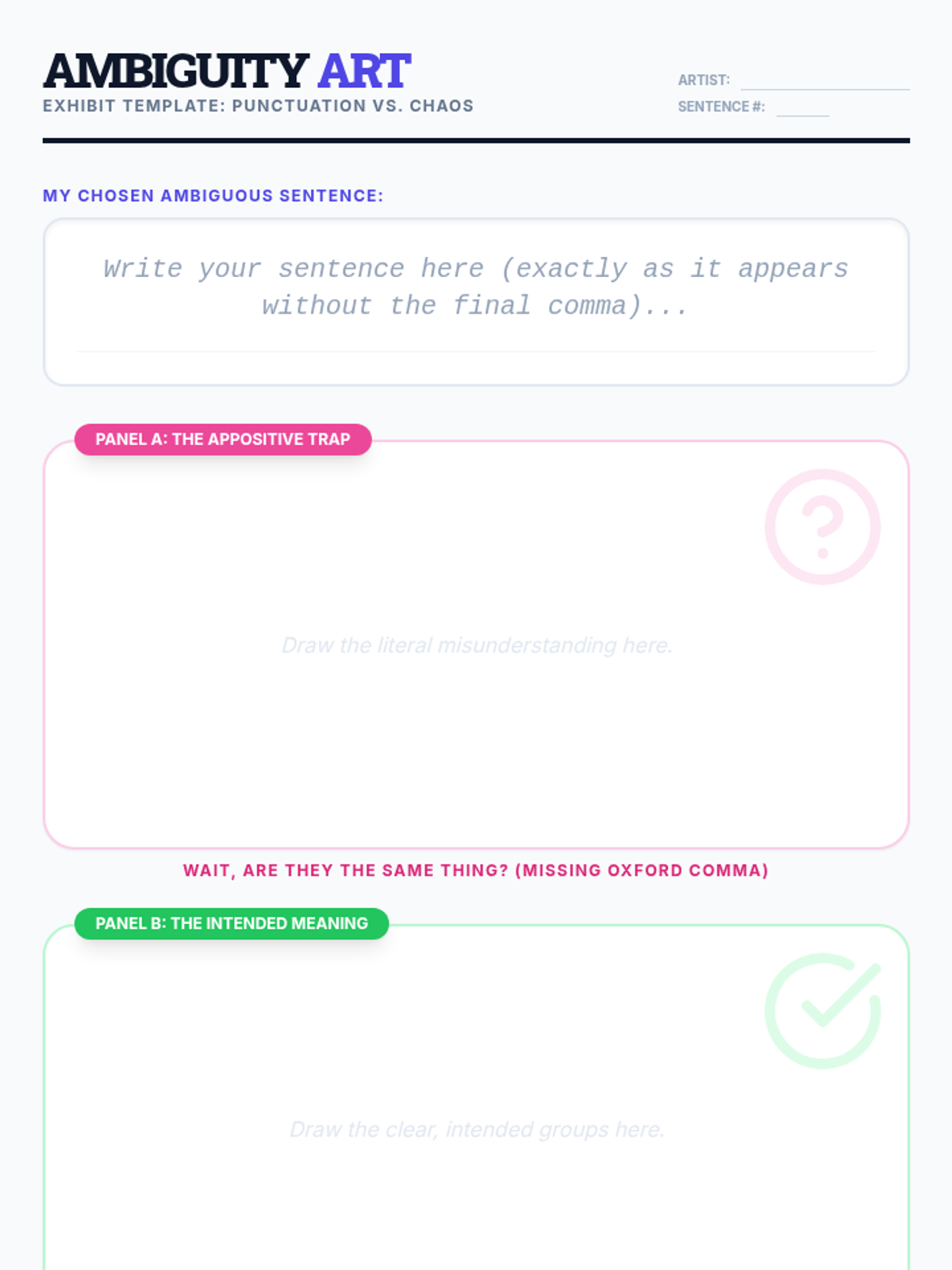
A short unit focusing on the power of punctuation, specifically the Oxford comma, to prevent ambiguity and the role of appositives in sentence structure.
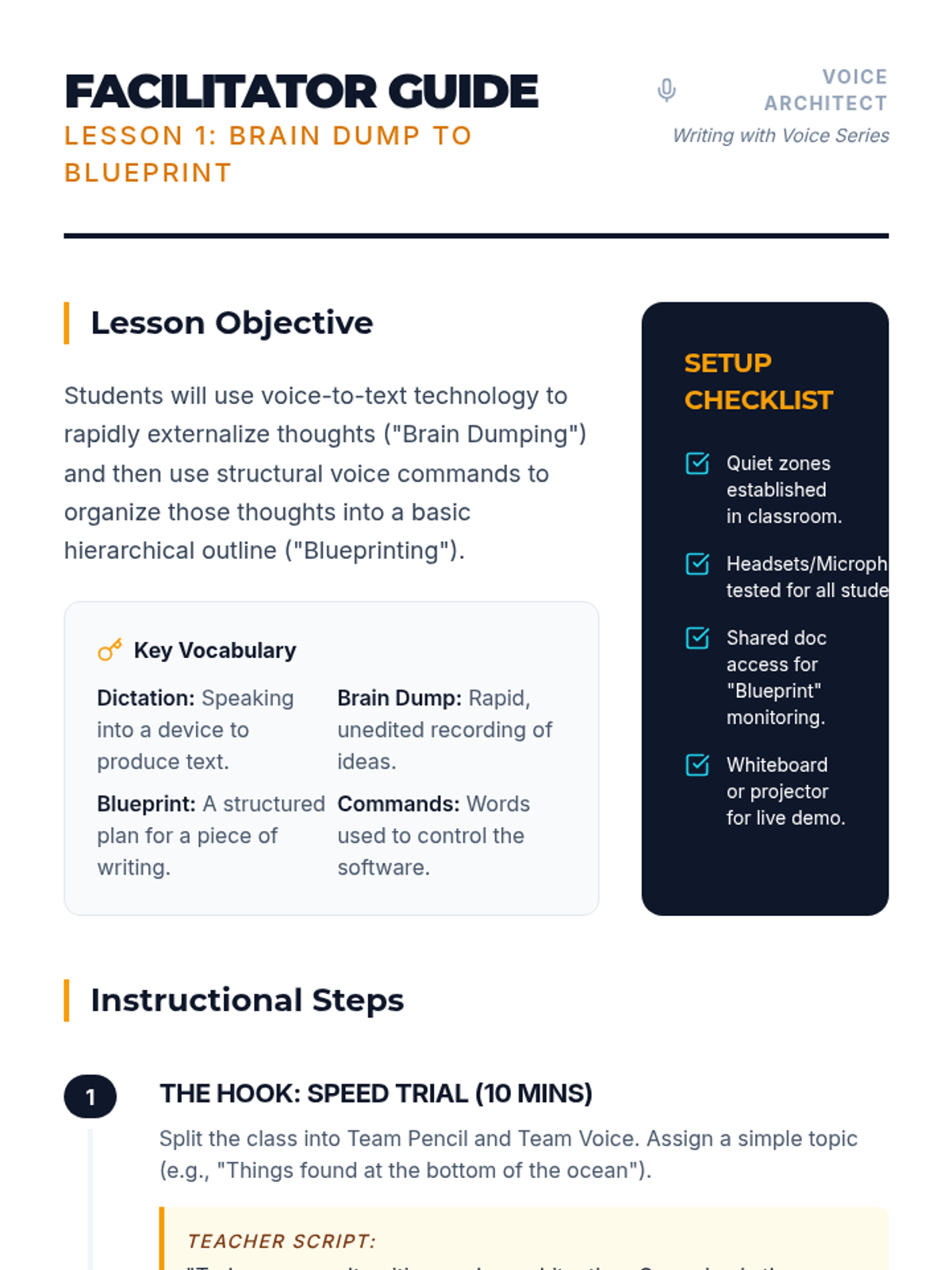
This sequence teaches 8th-grade students to master voice recognition technology as a tool for formal essay writing. It focuses on the transition from oral brainstorming to sophisticated composition and auditory revision.
A comprehensive workshop-style sequence for 8th-grade students to master the use of foreign words and expressions in English writing. Students progress from basic identification and literal meaning to nuanced application in argumentative and narrative contexts, focusing on mechanics, tone, and writing sophistication.
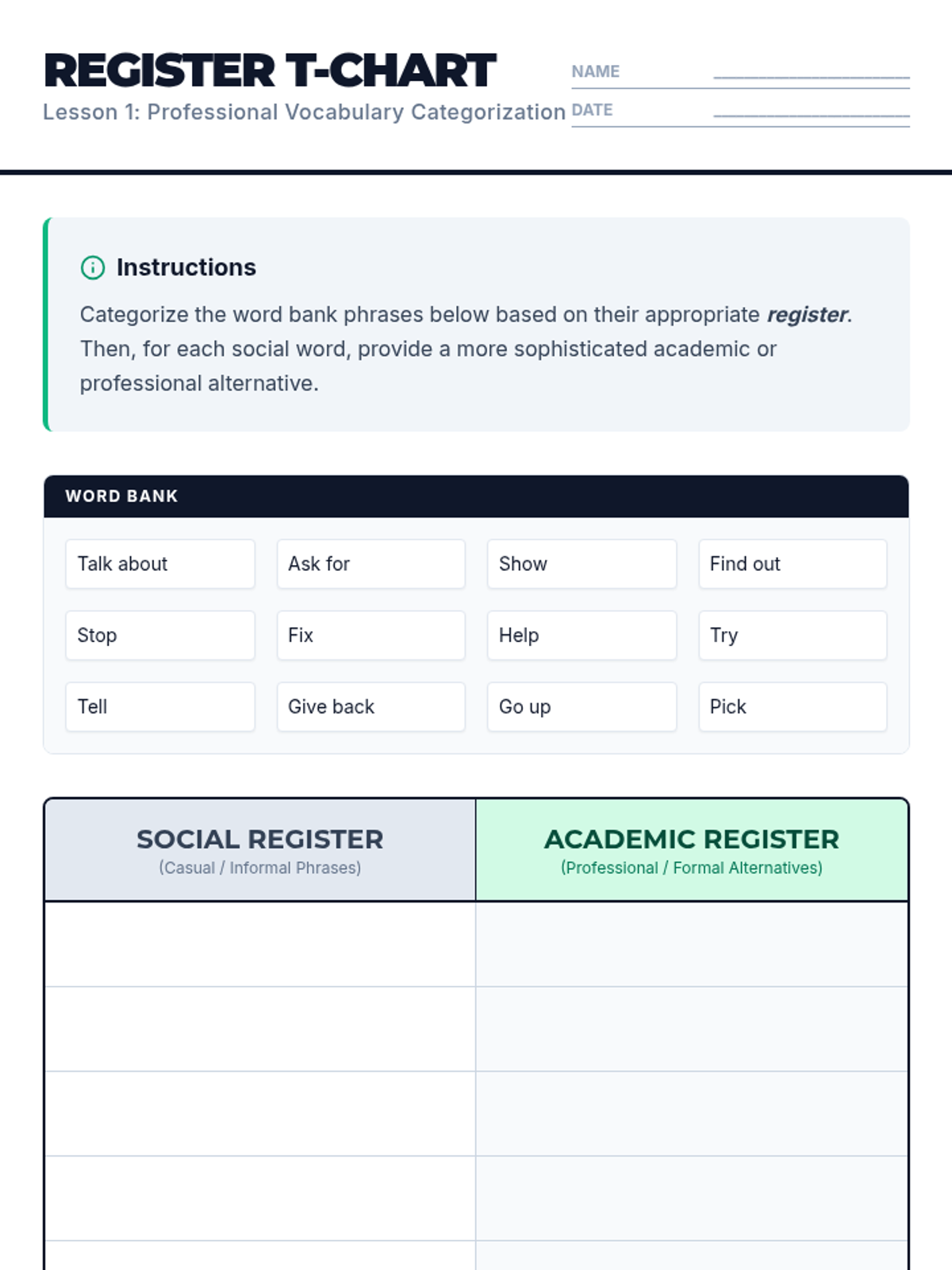
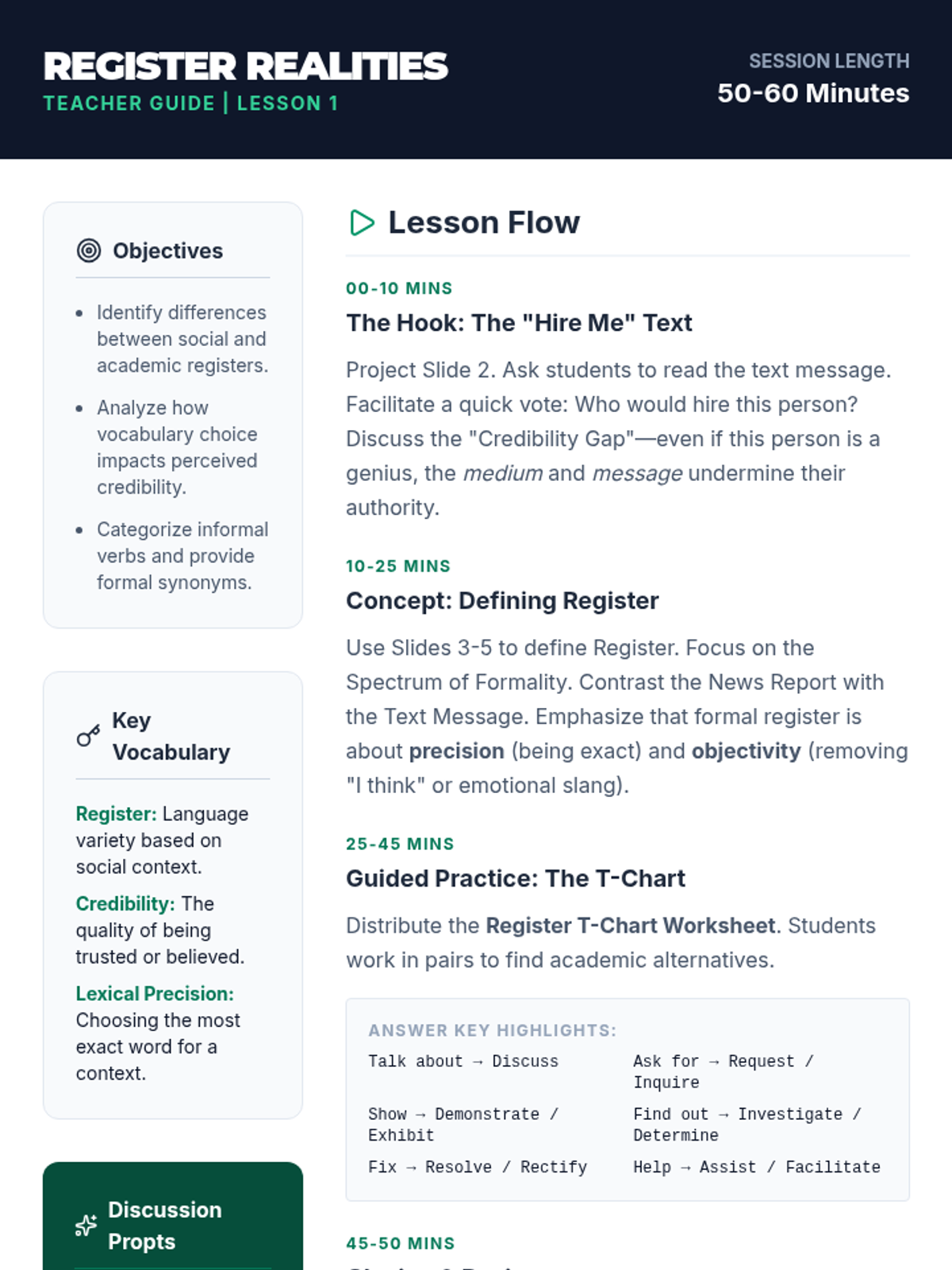
A comprehensive workshop-style sequence for 8th-grade advanced English students focused on mastering academic collocations, formal registers, and professional writing to enhance credibility and fluency.
A mastery-based sequence for 7th graders to elevate their writing by transforming basic topic sentences into sophisticated, engaging openings. Students move from diagnosing weak writing to mastering power verbs, varied syntax, and established significance.
This sequence tackles the complexities of subject-verb agreement, moving beyond simple matching to handle difficult sentence structures. Students engage in error analysis to troubleshoot common pitfalls such as compound subjects, intervening prepositional phrases, and indefinite pronouns.
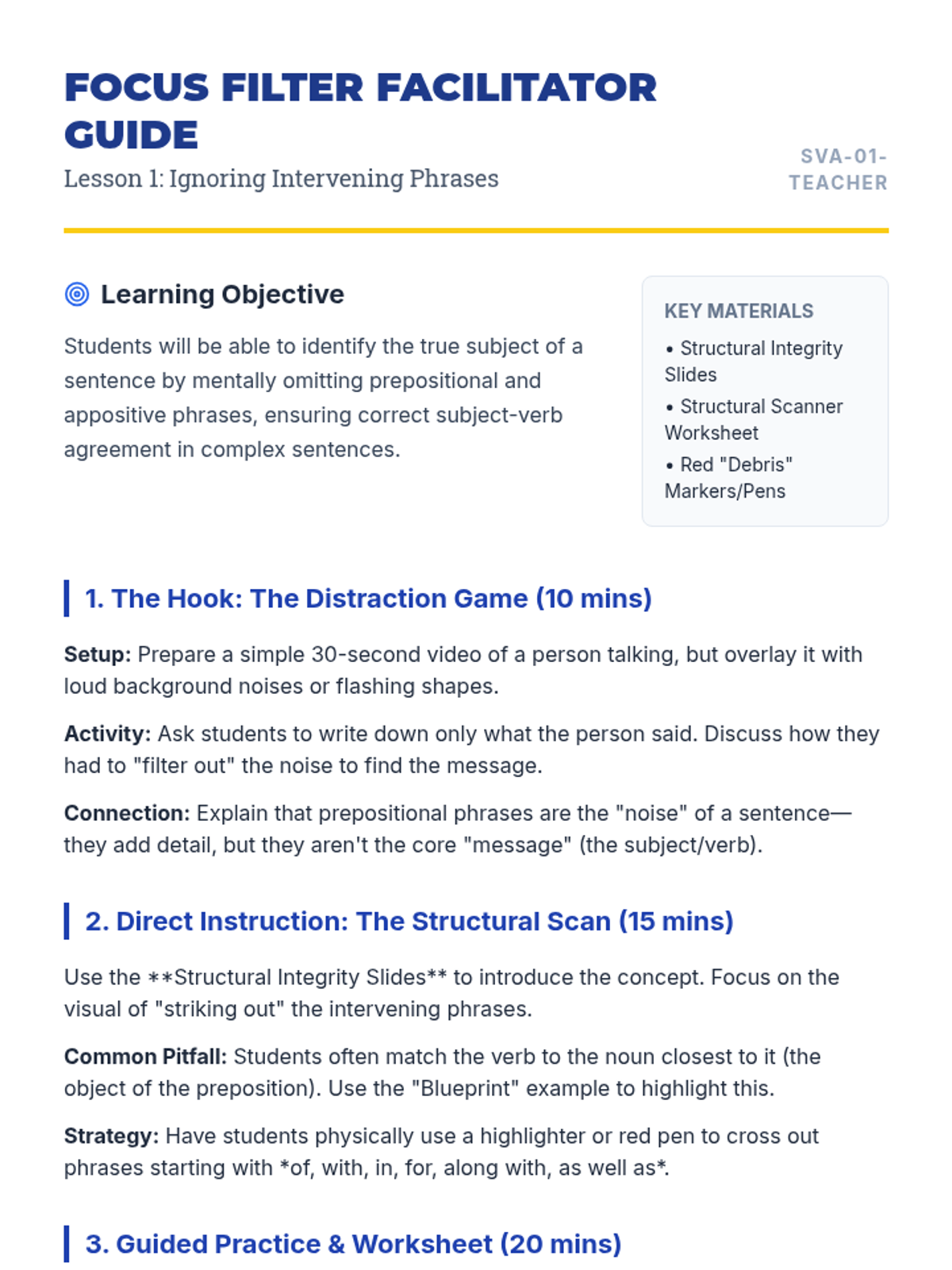
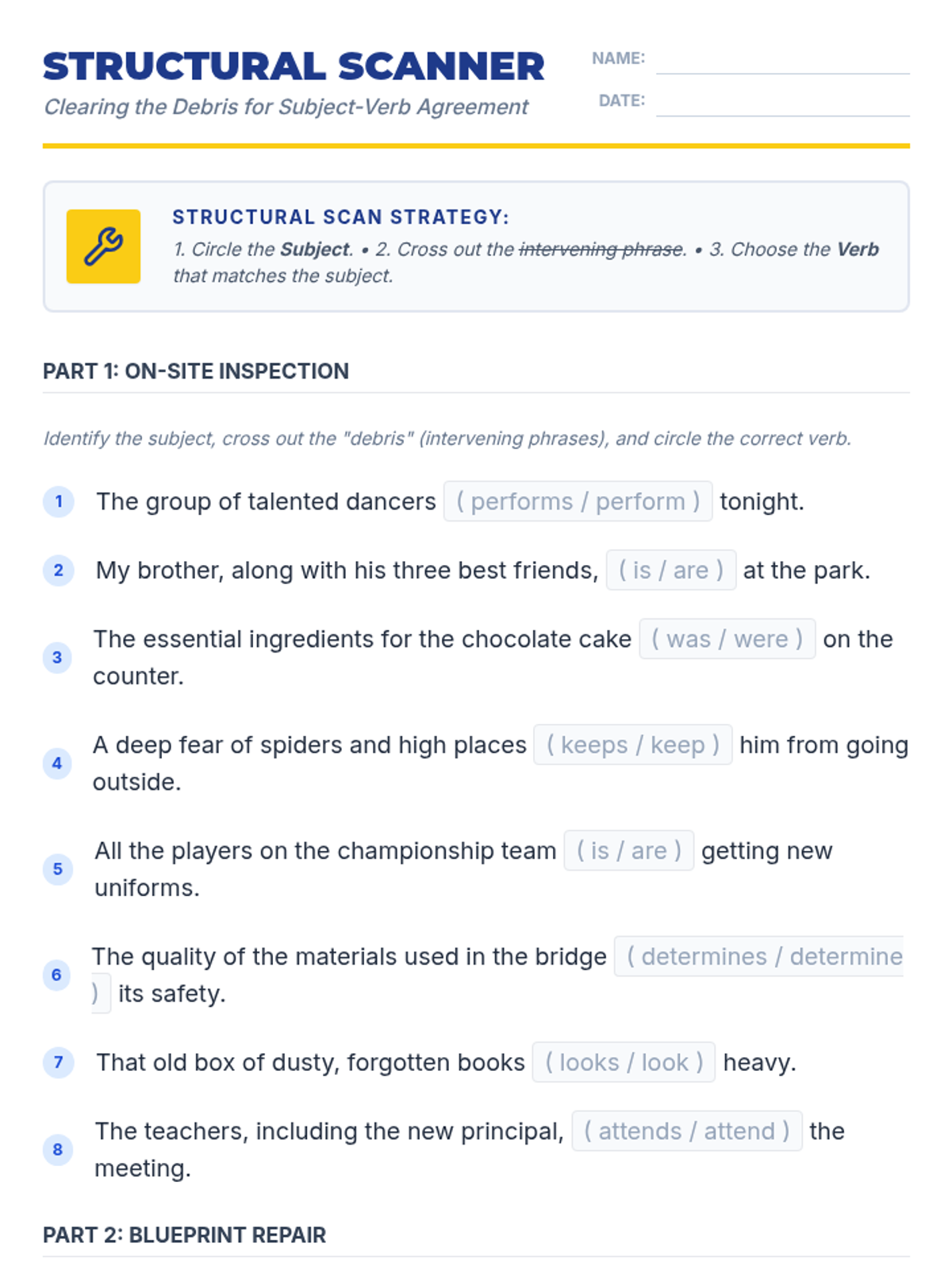
This sequence focuses on Subject-Verb Agreement when prepositional phrases intervene between the subject and the verb. Students learn to identify 'true' subjects, ignore 'interrupters', and maintain grammatical logic in complex sentence structures through a structural engineering-themed workshop approach.
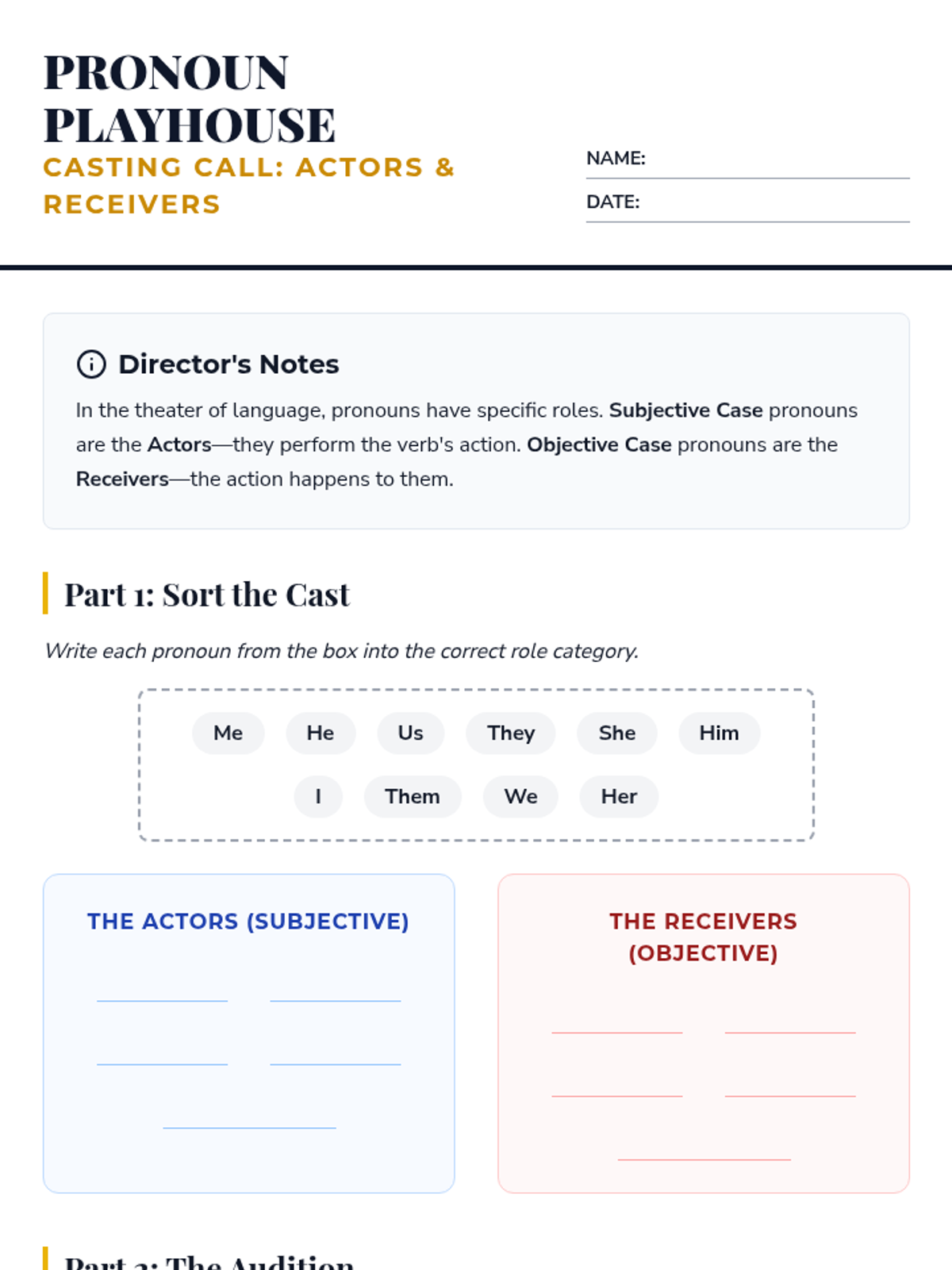
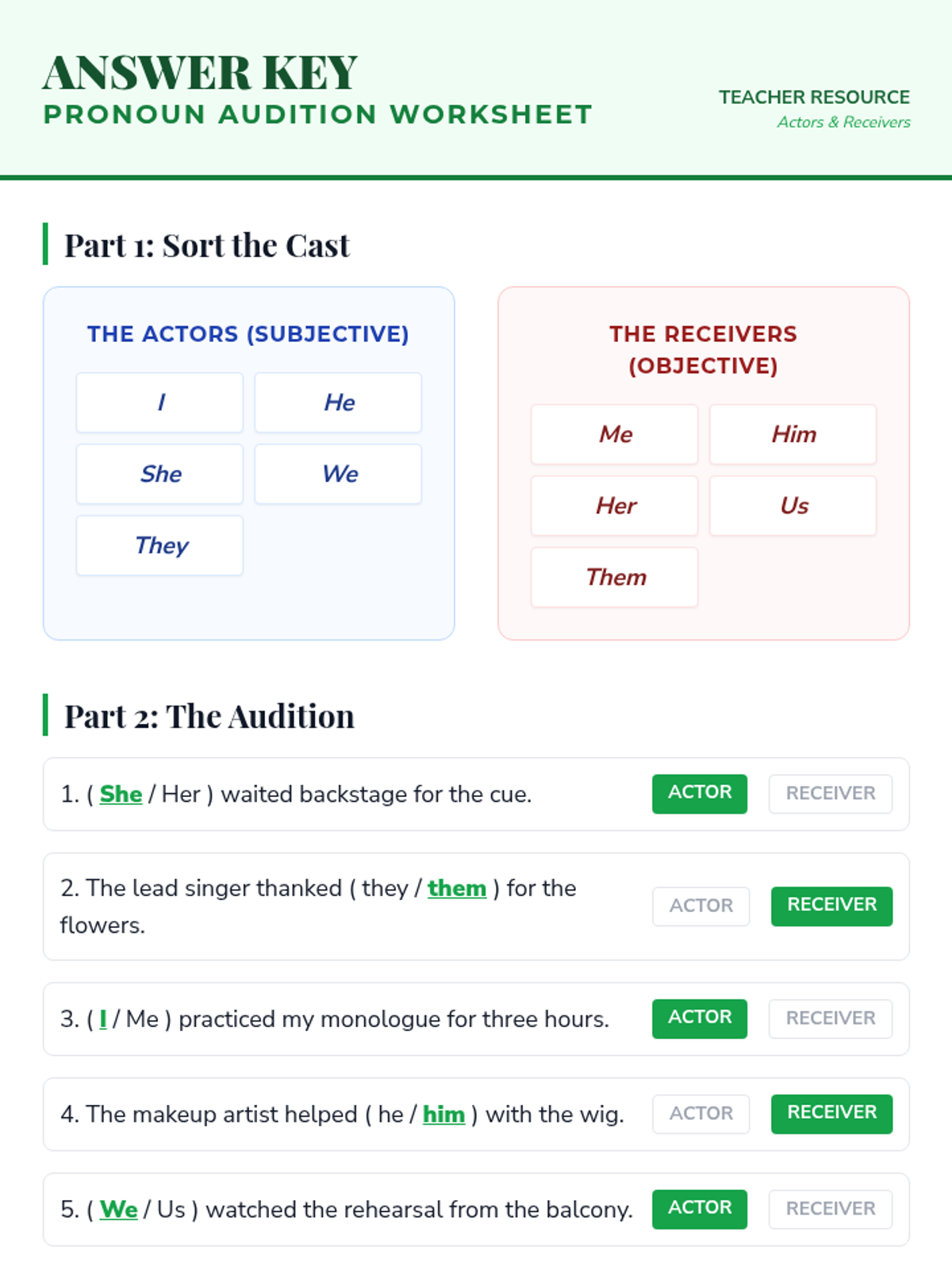
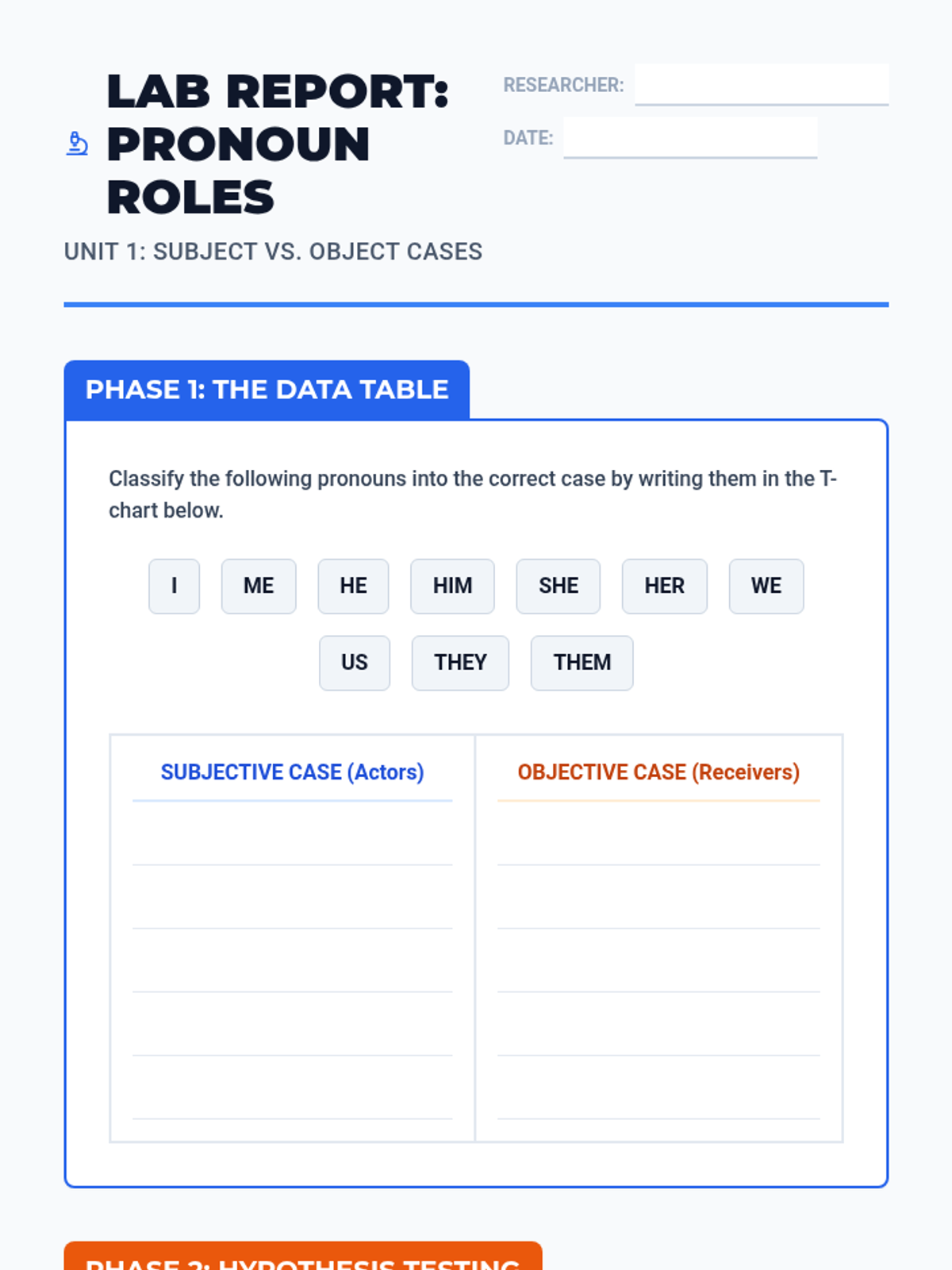
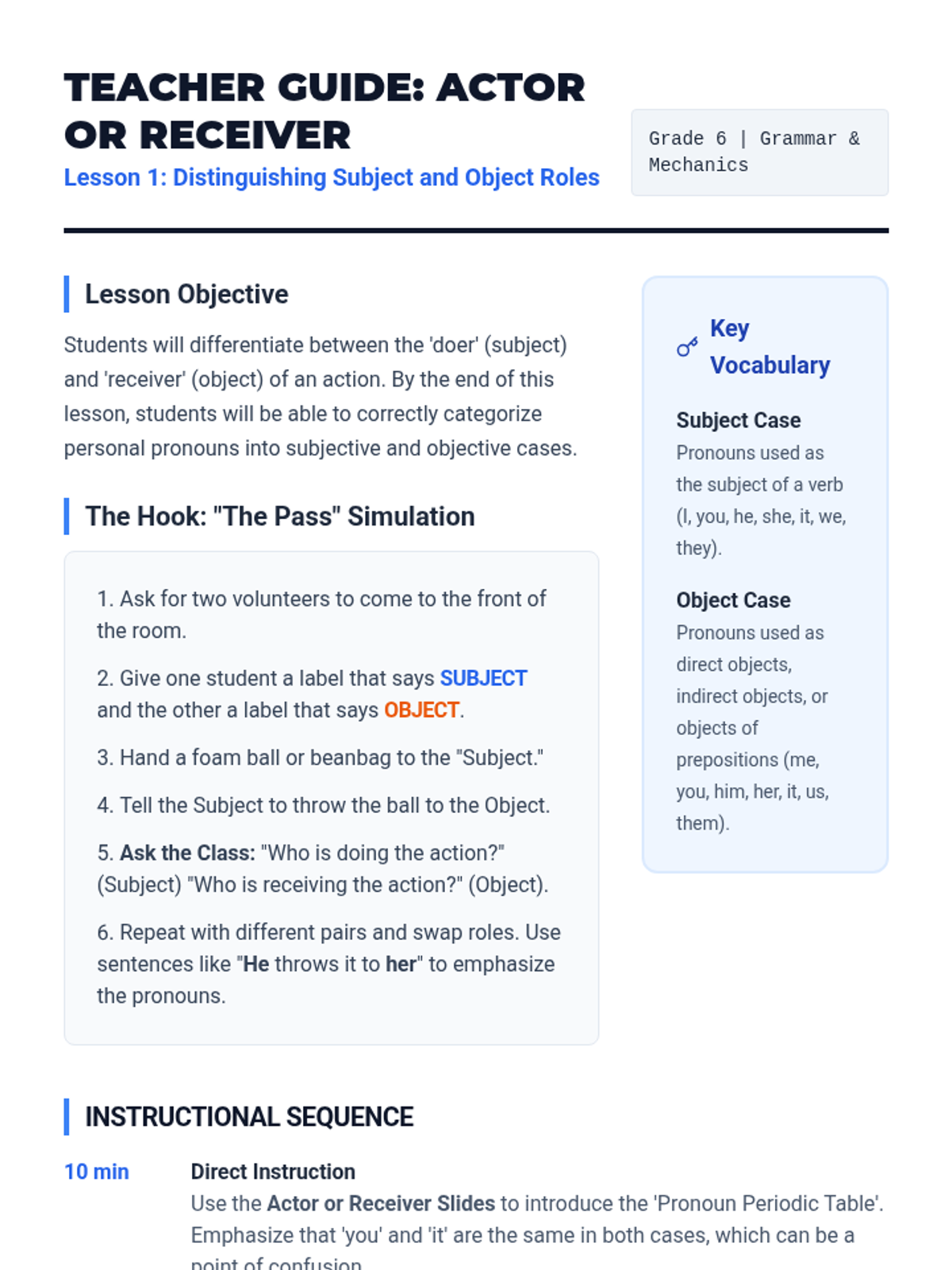
A comprehensive workshop-style sequence for 8th graders focusing on pronoun case (subjective, objective, possessive) and common usage pitfalls. Students learn to treat pronouns as actors and receivers through the metaphor of a theatrical production.
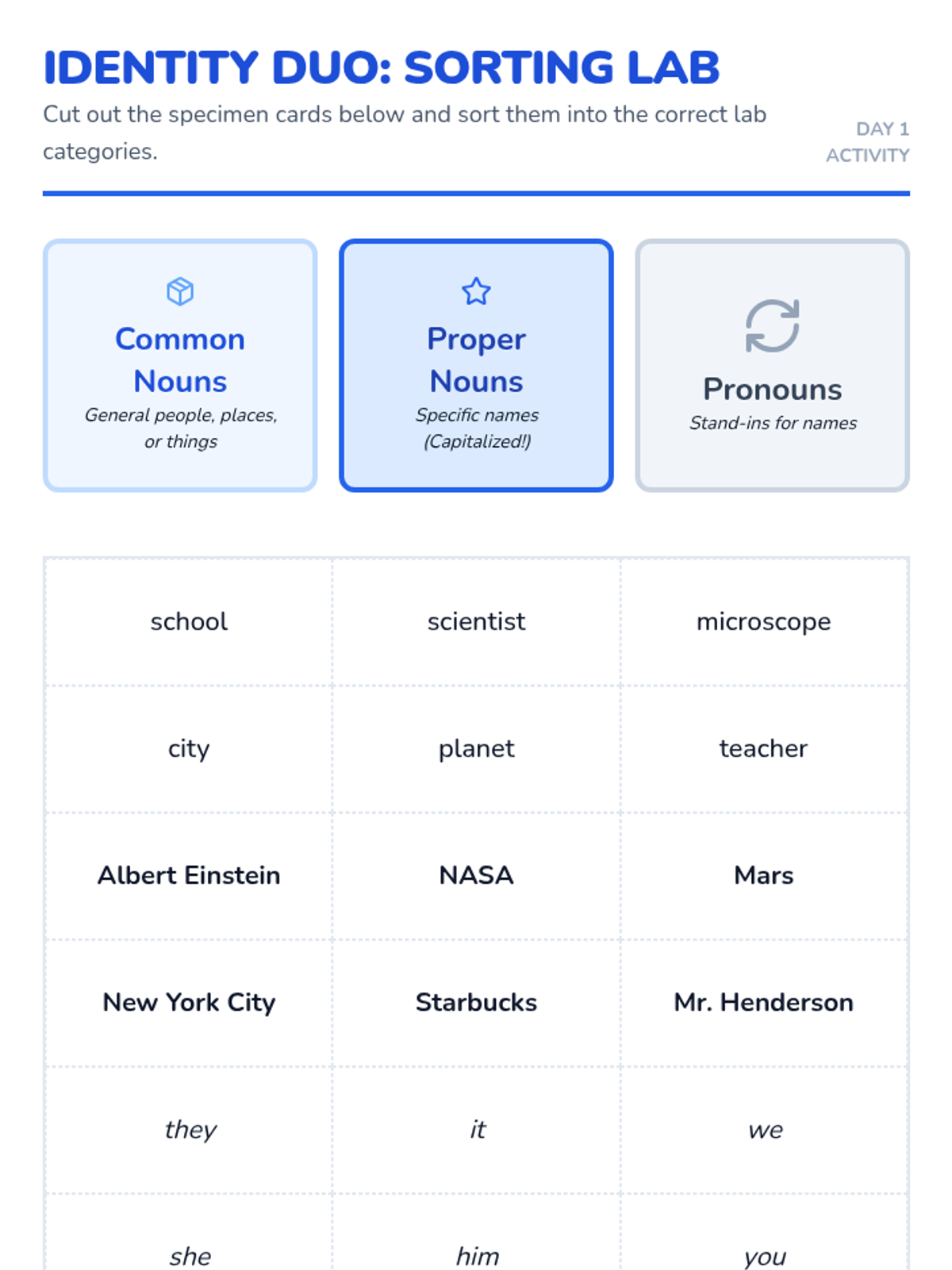
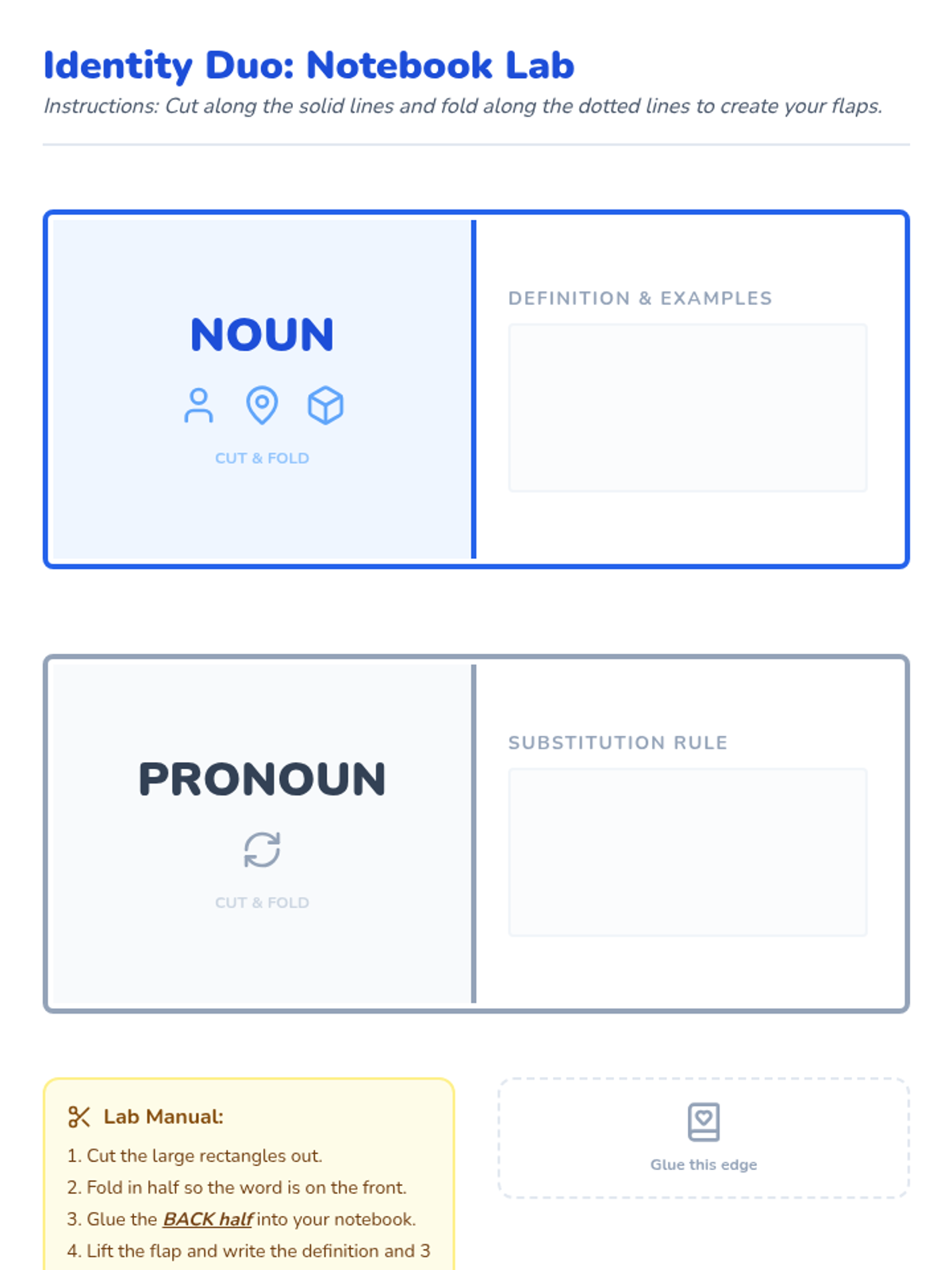
This sequence explores the distinction between subjective and objective case pronouns through the lens of a 'Grammar Lab.' Students move from basic identification to mastering compound structures and the tricky 'who vs. whom' distinction.
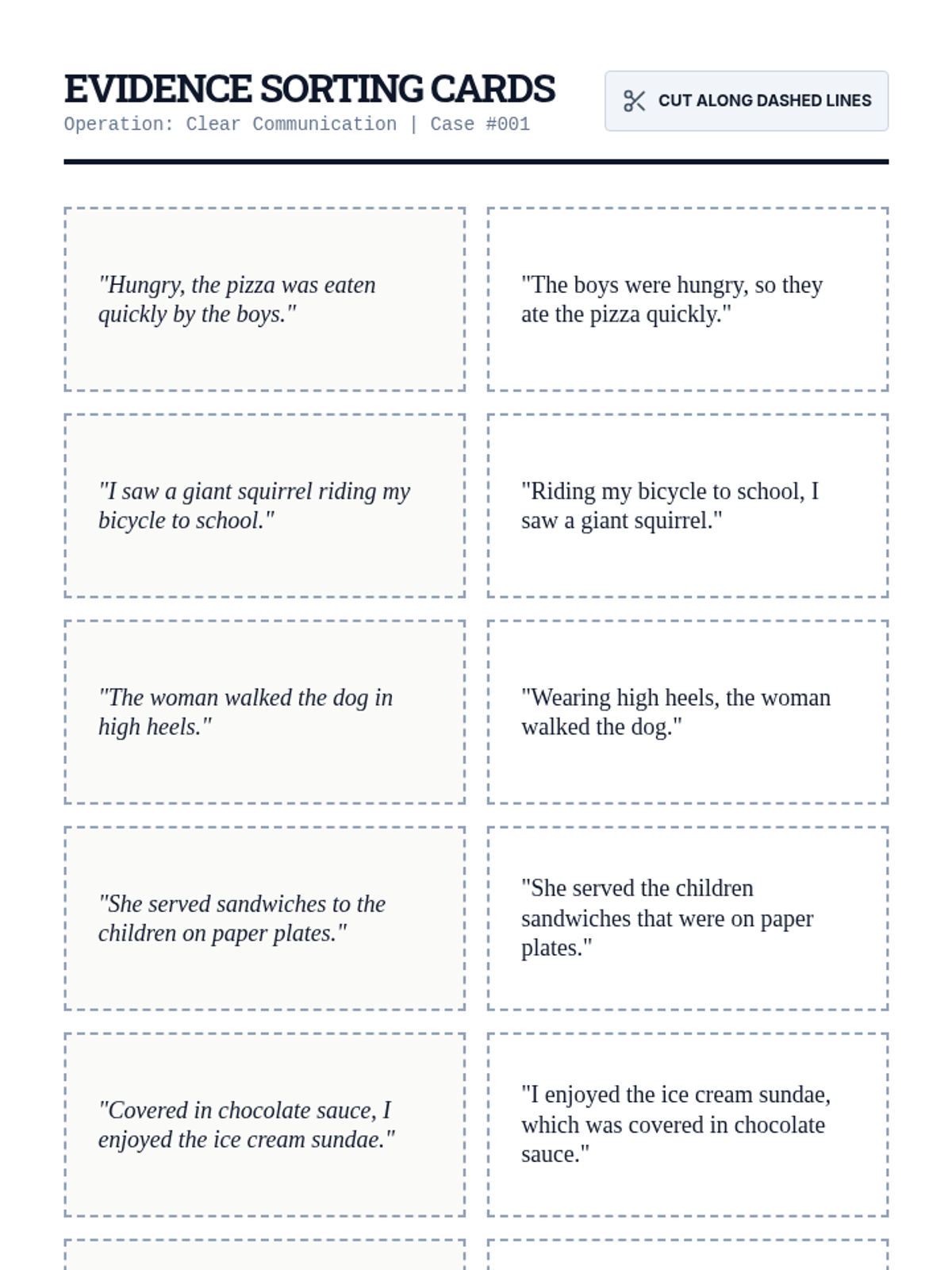
A comprehensive unit on misplaced and dangling modifiers using a 'Linguistic Detective' theme. Students progress from intuitive ear-testing to technical categorization and stylistic analysis of split infinitives, culminating in a mastery escape room challenge.
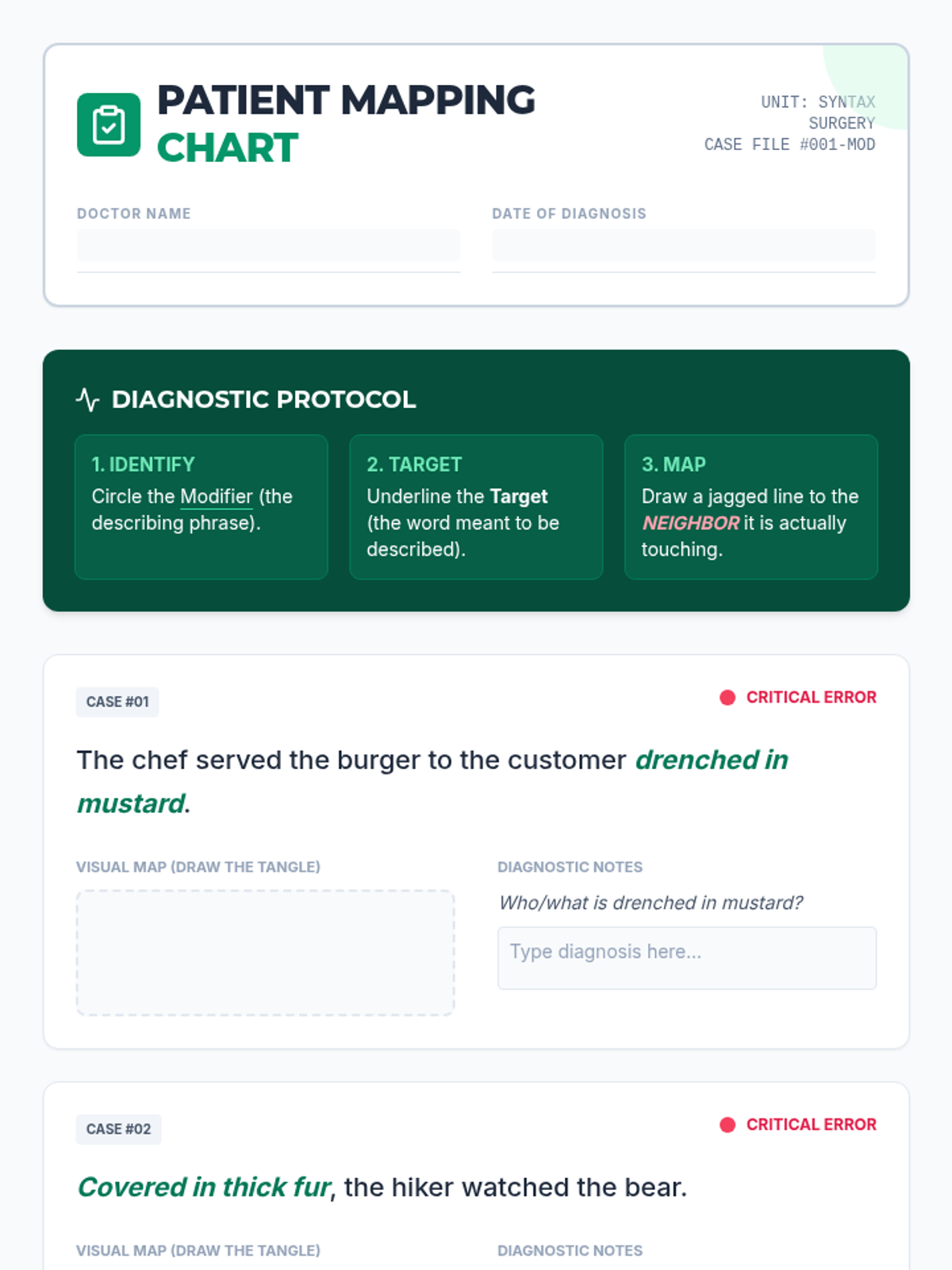
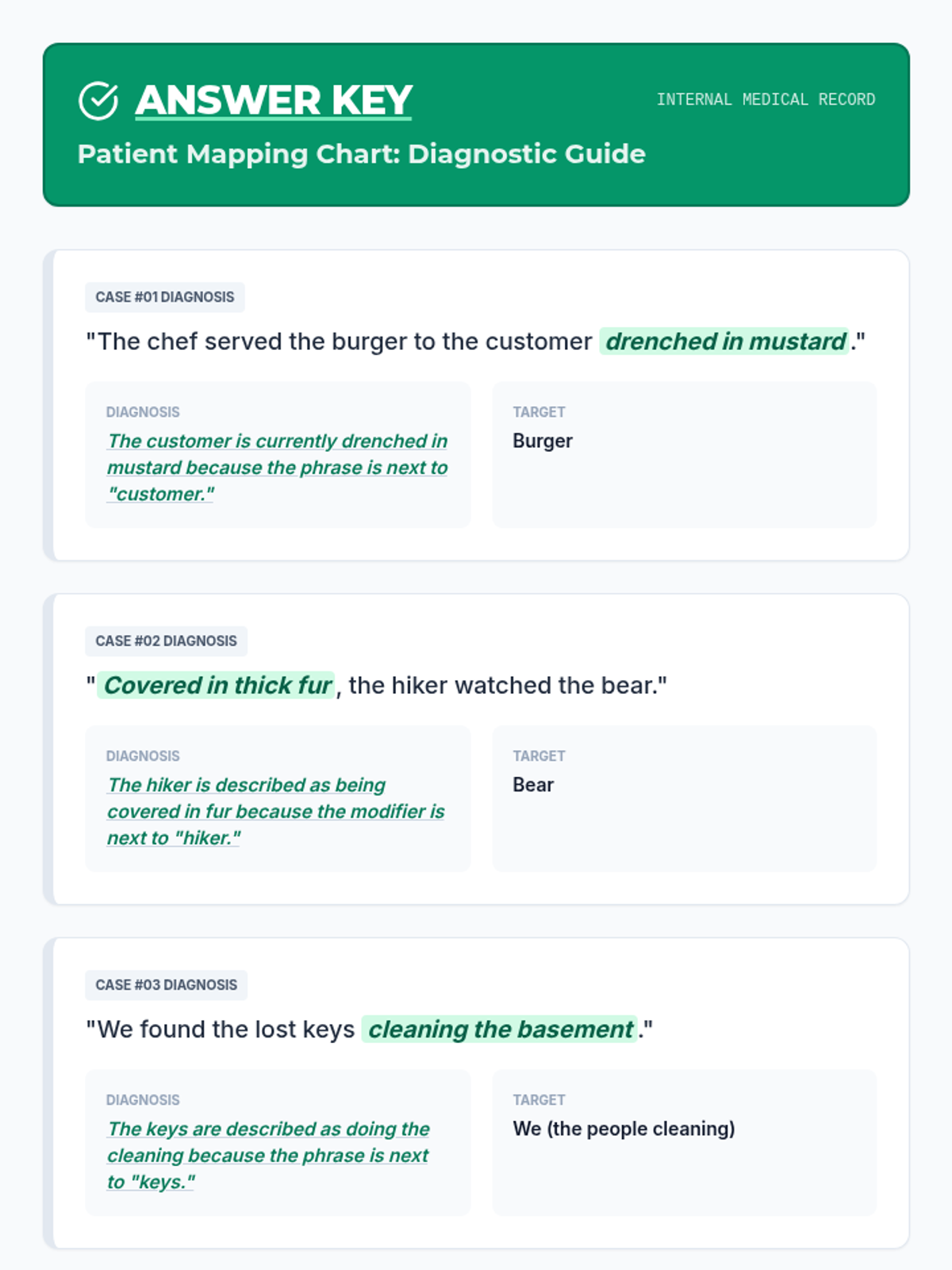
A 7th-grade grammar sequence focusing on misplaced modifiers through a 'Syntax Surgery' theme. Students move from diagnosing structural issues to performing linguistic surgery and constructing complex, clear sentences.
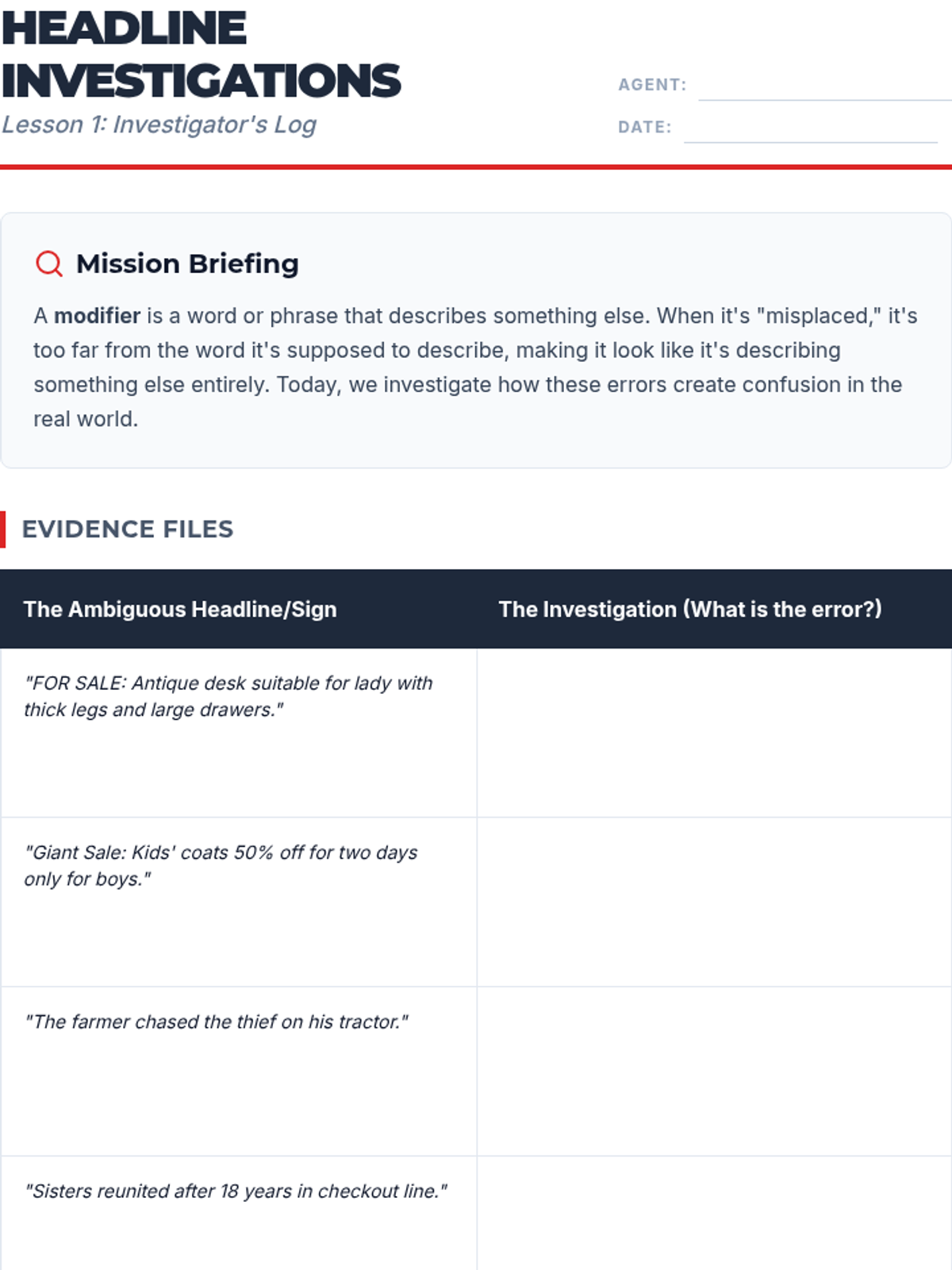
A high-stakes investigative sequence where students act as professional editors to uncover and correct communication failures caused by misplaced and squinting modifiers in news, law, and signage.
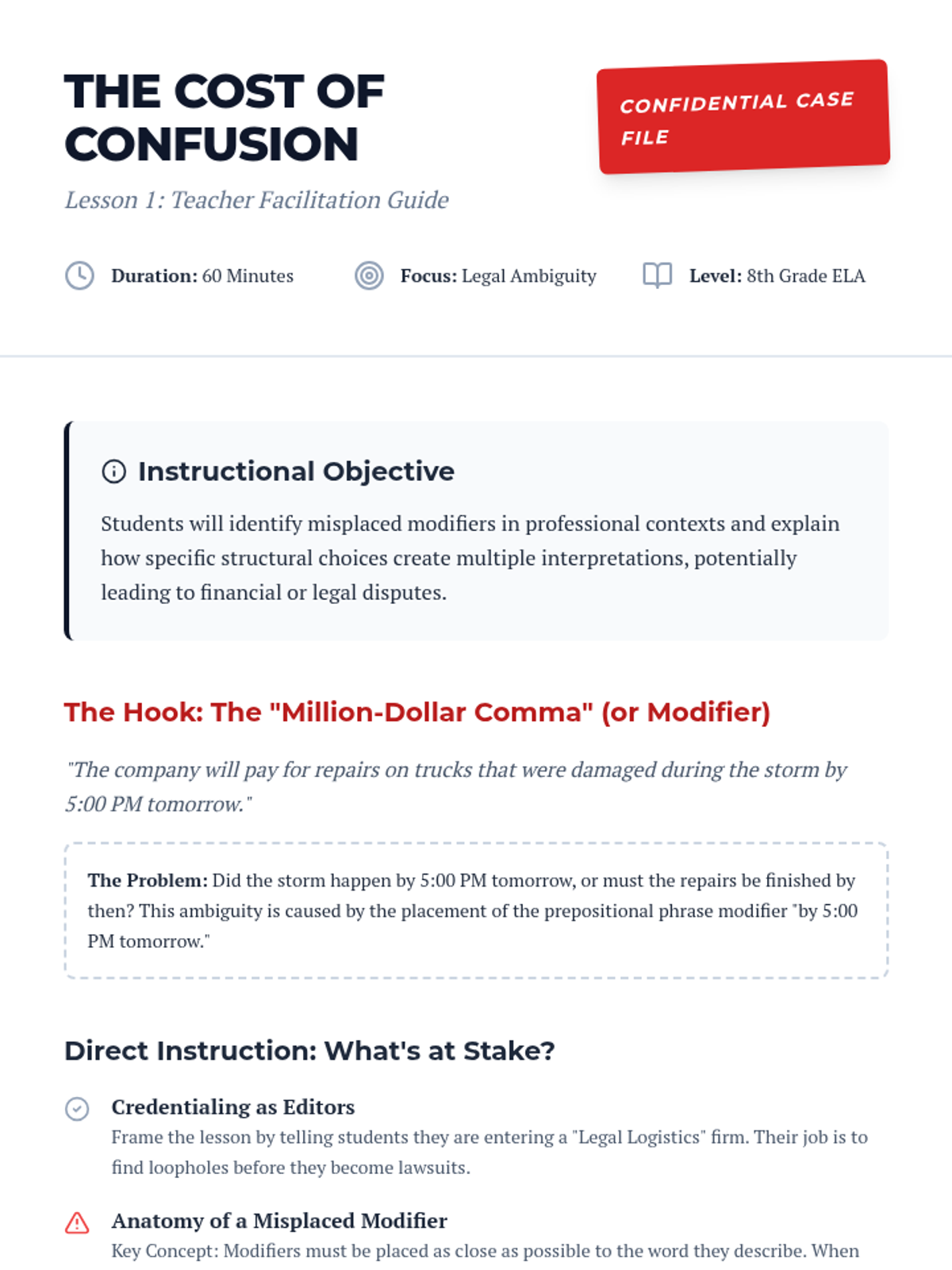
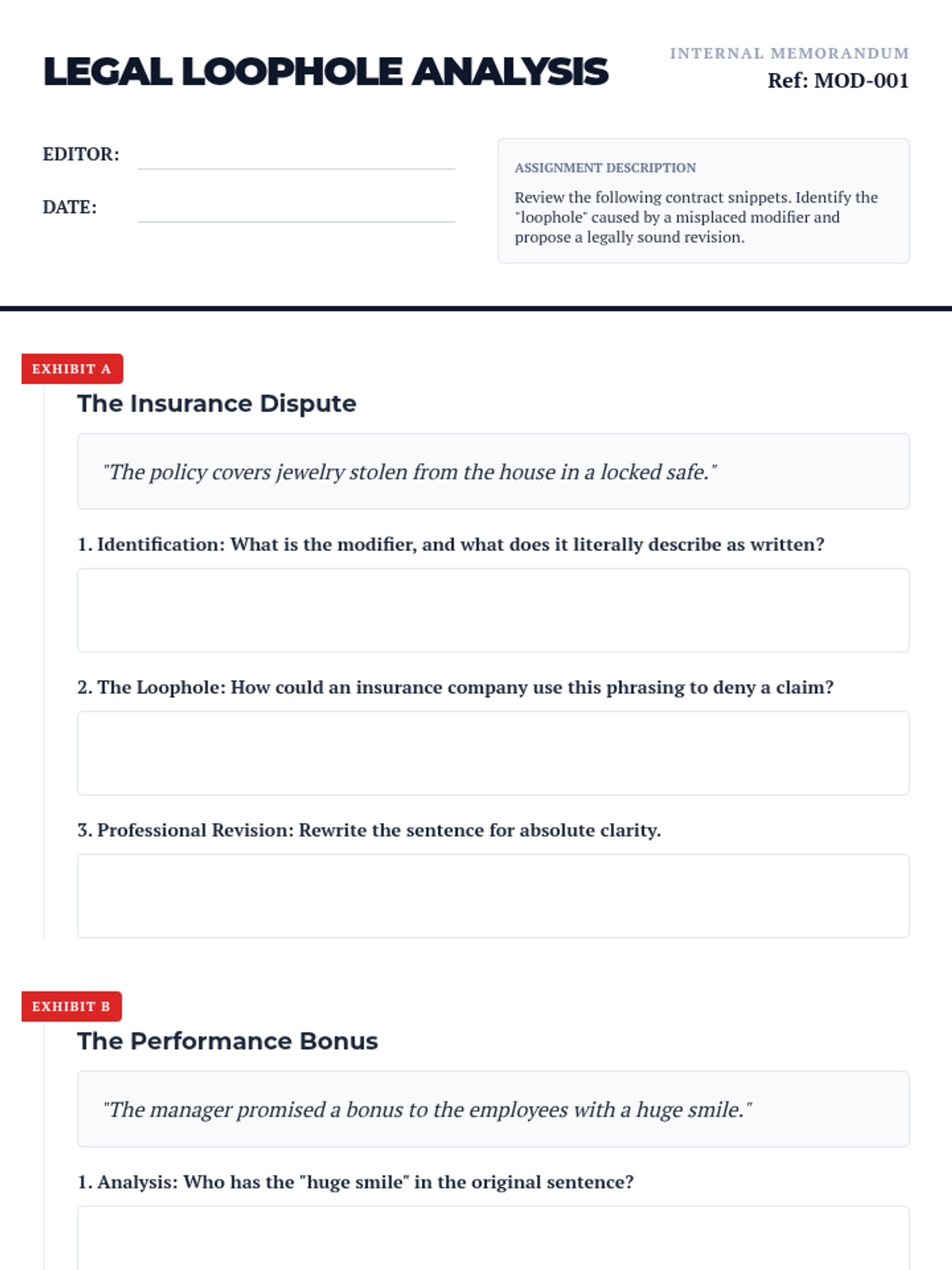
A high-stakes grammar sequence where students act as professional editors, mastering misplaced modifiers to ensure credibility and clarity in legal, technical, and journalistic contexts. Students analyze real-world impacts of ambiguous language and learn to communicate with professional precision.
This workshop-style sequence for 8th Grade students focuses on misplaced and dangling modifiers within descriptive writing. Students move from analyzing mentor texts to drafting, expanding, and peer-editing their own narrative scenes to ensure clarity and precision.
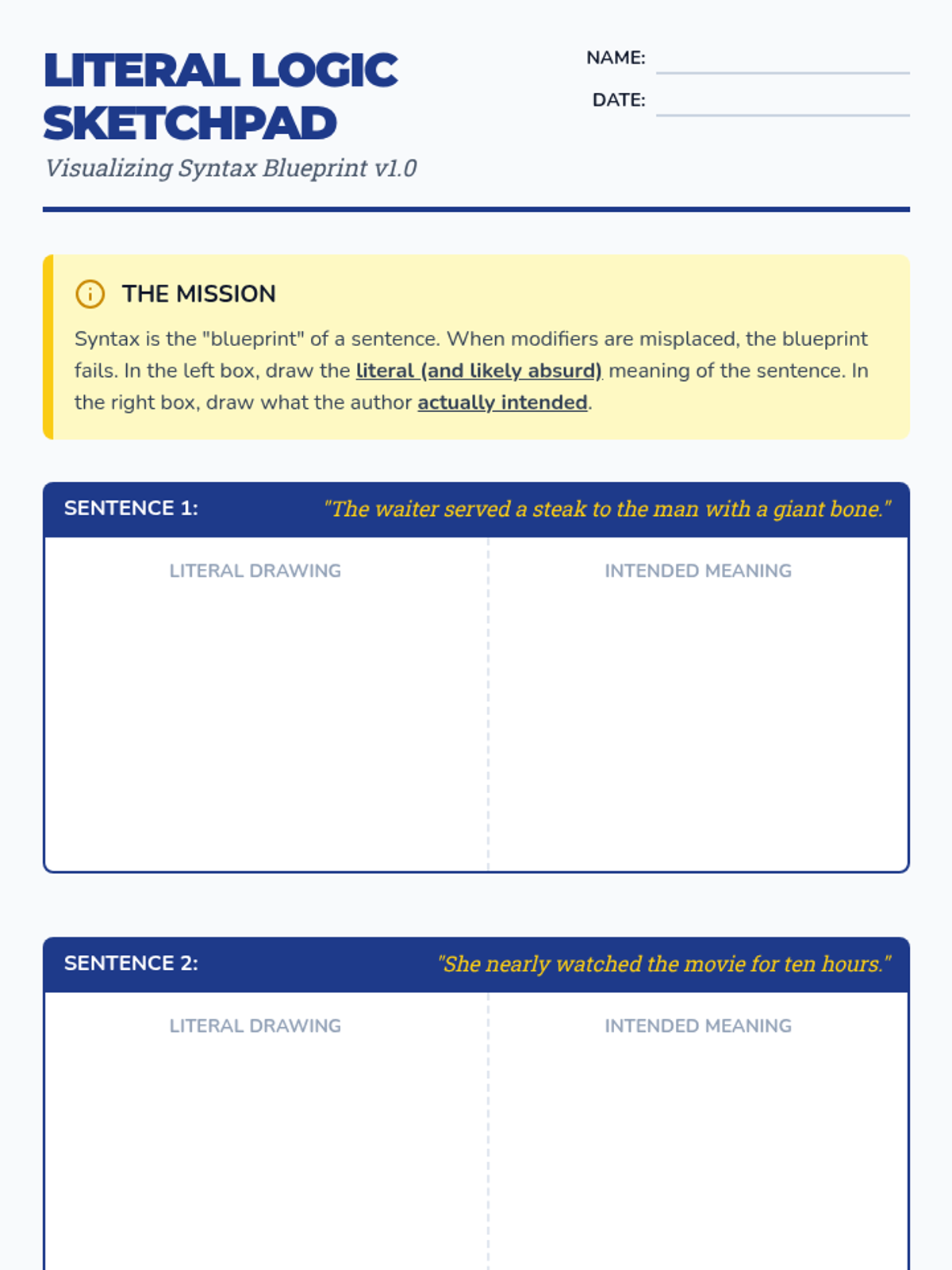
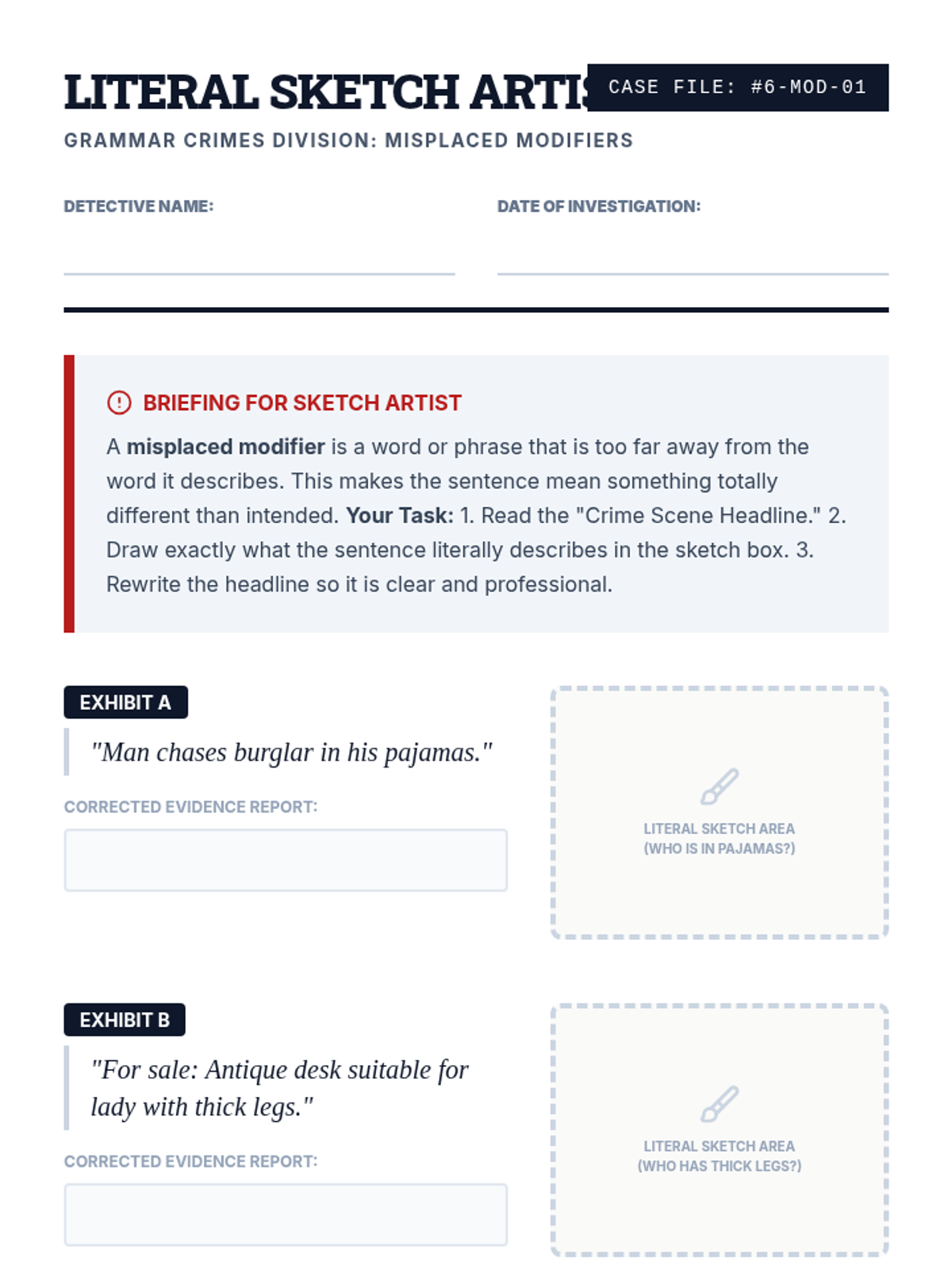
A game-based grammar sequence where 8th-grade students explore the absurdity of misplaced modifiers. Through visualization, headline analysis, and unscrambling challenges, students master the logic of sentence structure and the importance of syntactical precision.
A simulation-based sequence where students act as professional editors, mastering misplaced modifiers to ensure clarity and credibility in non-fiction writing.
A deep dive into the logic of English grammar through the lens of misplaced modifiers. Students use inquiry and humor to master sentence structure and clarity.
A 5-lesson 6th Grade ELA unit that uses visualization and illustration to help students identify and correct misplaced modifiers, culminating in a gallery walk of 'Before' and 'After' sentence corrections.
A project-based grammar sequence for 8th graders focusing on verb precision, active/passive voice, and the impact of verb connotation on tone and persuasion.
This inquiry-based sequence guides 8th-grade students through the categorization of verbs, moving beyond simple identification to understanding function. Students explore action, linking, helping, transitive, and intransitive verbs through sentence analysis, mentor texts, and creative application.
An 8th-grade ELA sequence that explores the rhetorical impact of active and passive voice in journalism, politics, and literature. Students investigate how grammatical choices shape perception of responsibility, bias, and narrative pacing.
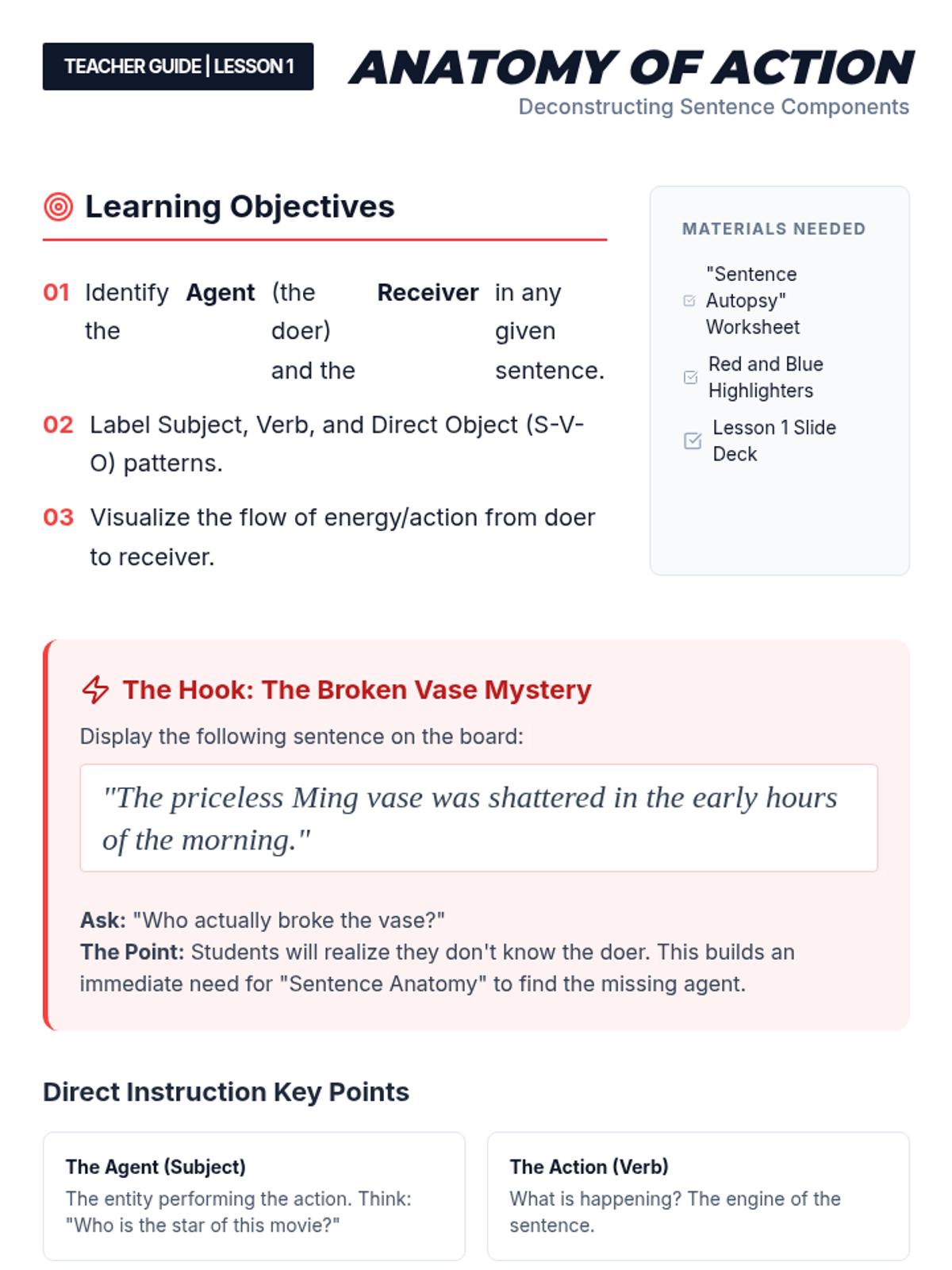
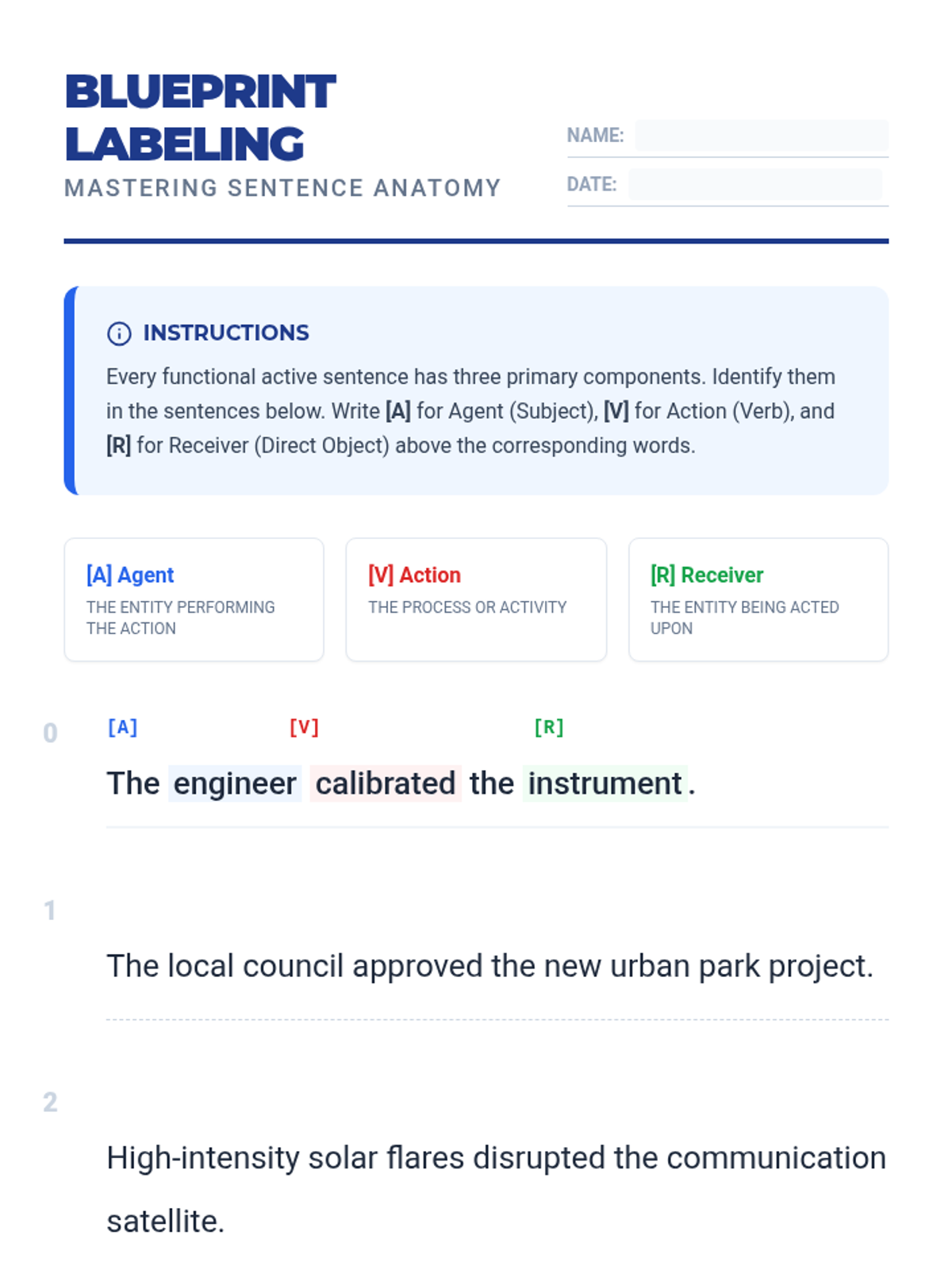
This sequence treats sentence structure as a foundational skill, focusing on the grammatical mechanics of active and passive voice. Students move from deconstructing sentence anatomy to mastering complex syntactic transformations and editing for conciseness.
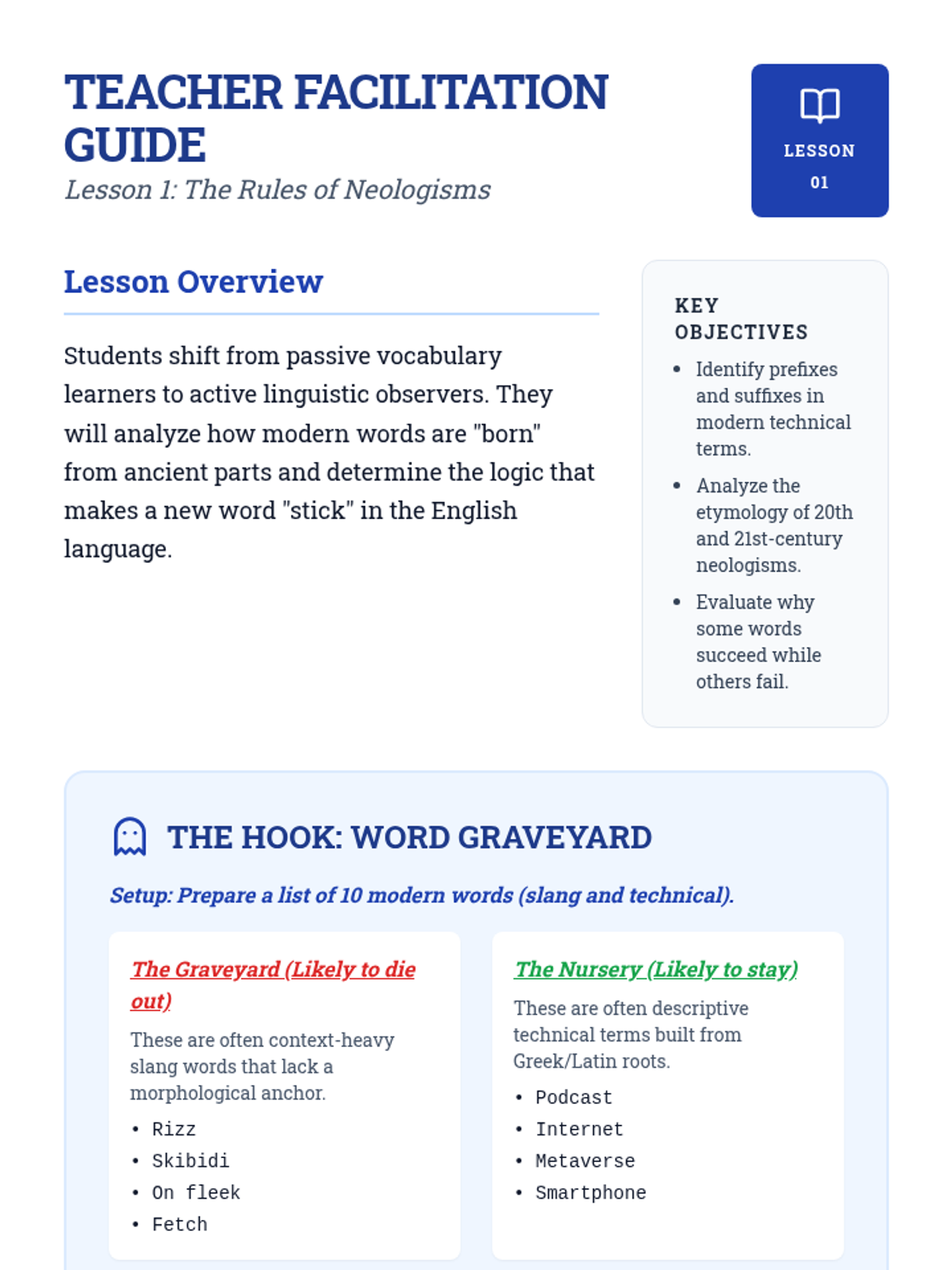
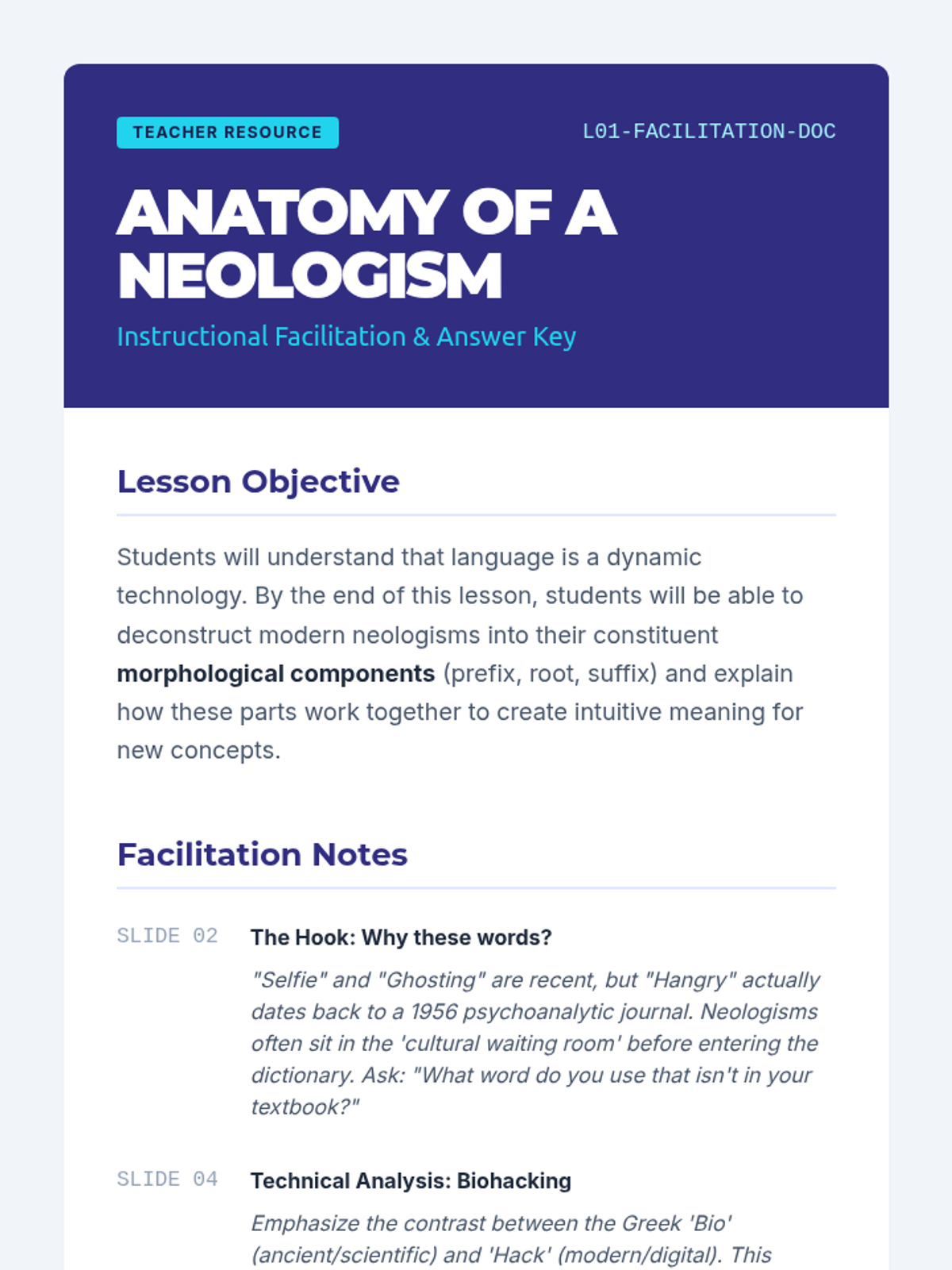
An 8th-grade ELA sequence where students act as linguistic engineers, exploring etymology and morphology to construct original neologisms for modern concepts. Students move from analyzing current linguistic trends to designing, defining, and pitching their own invented terms.
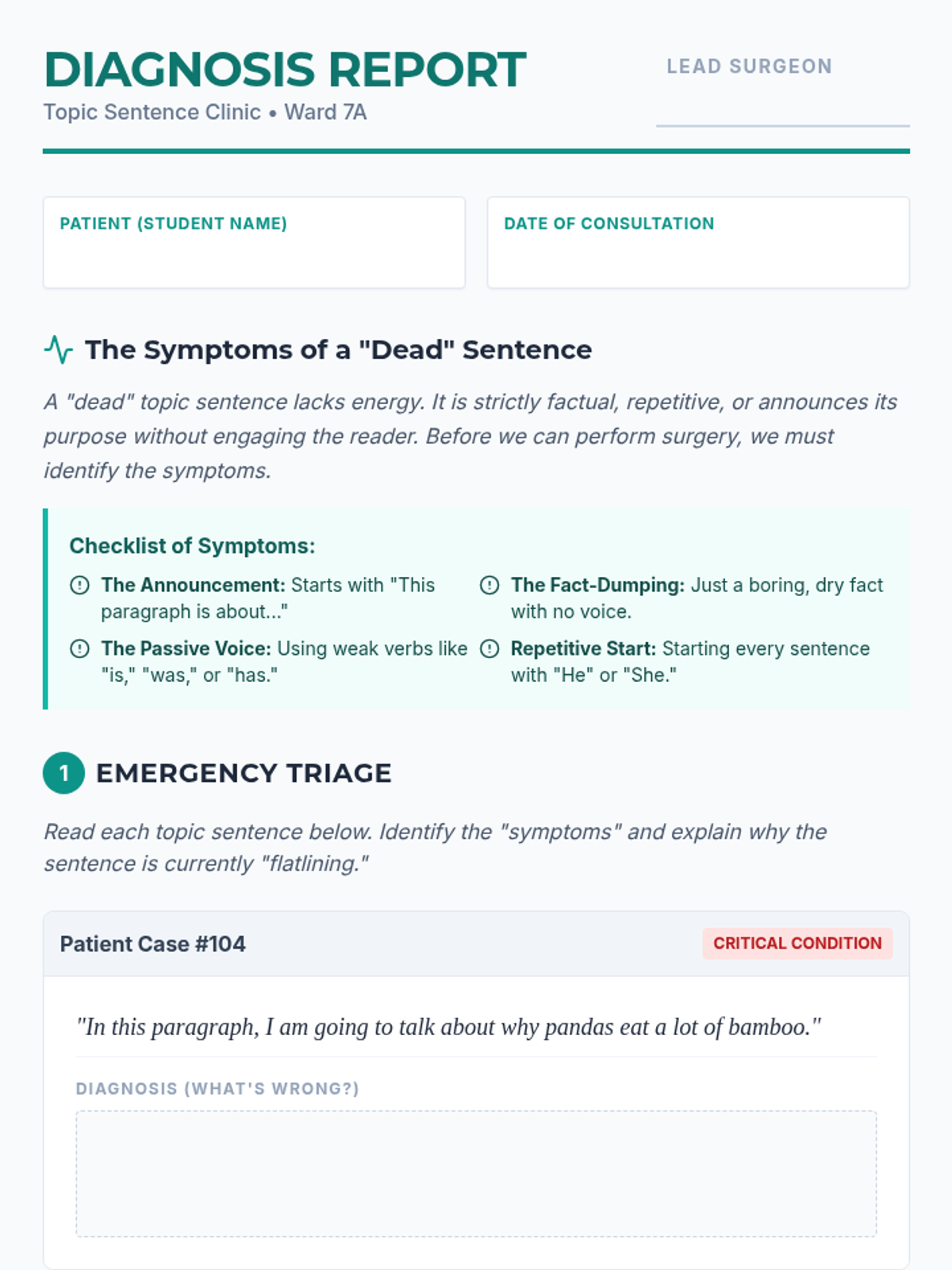
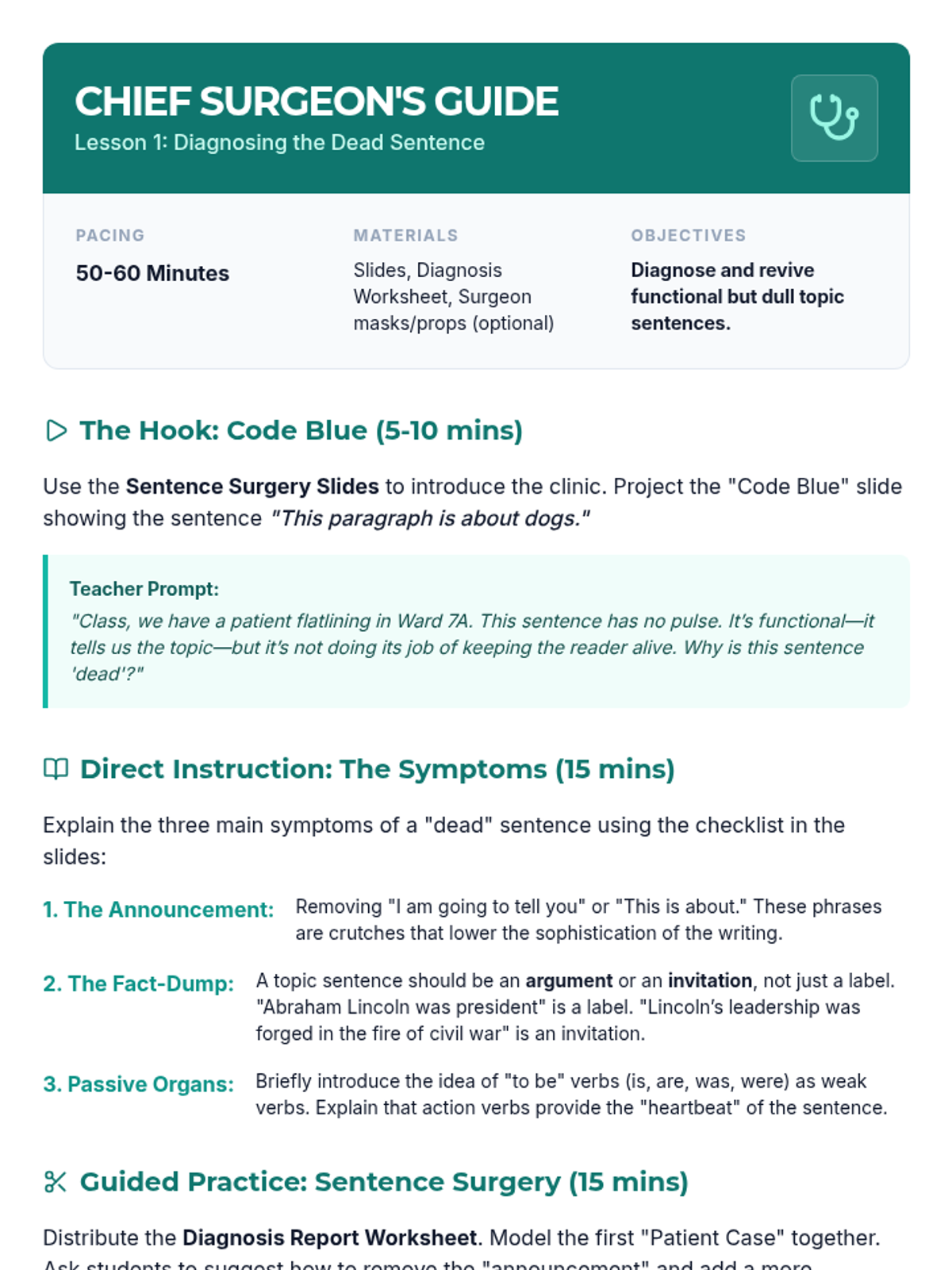
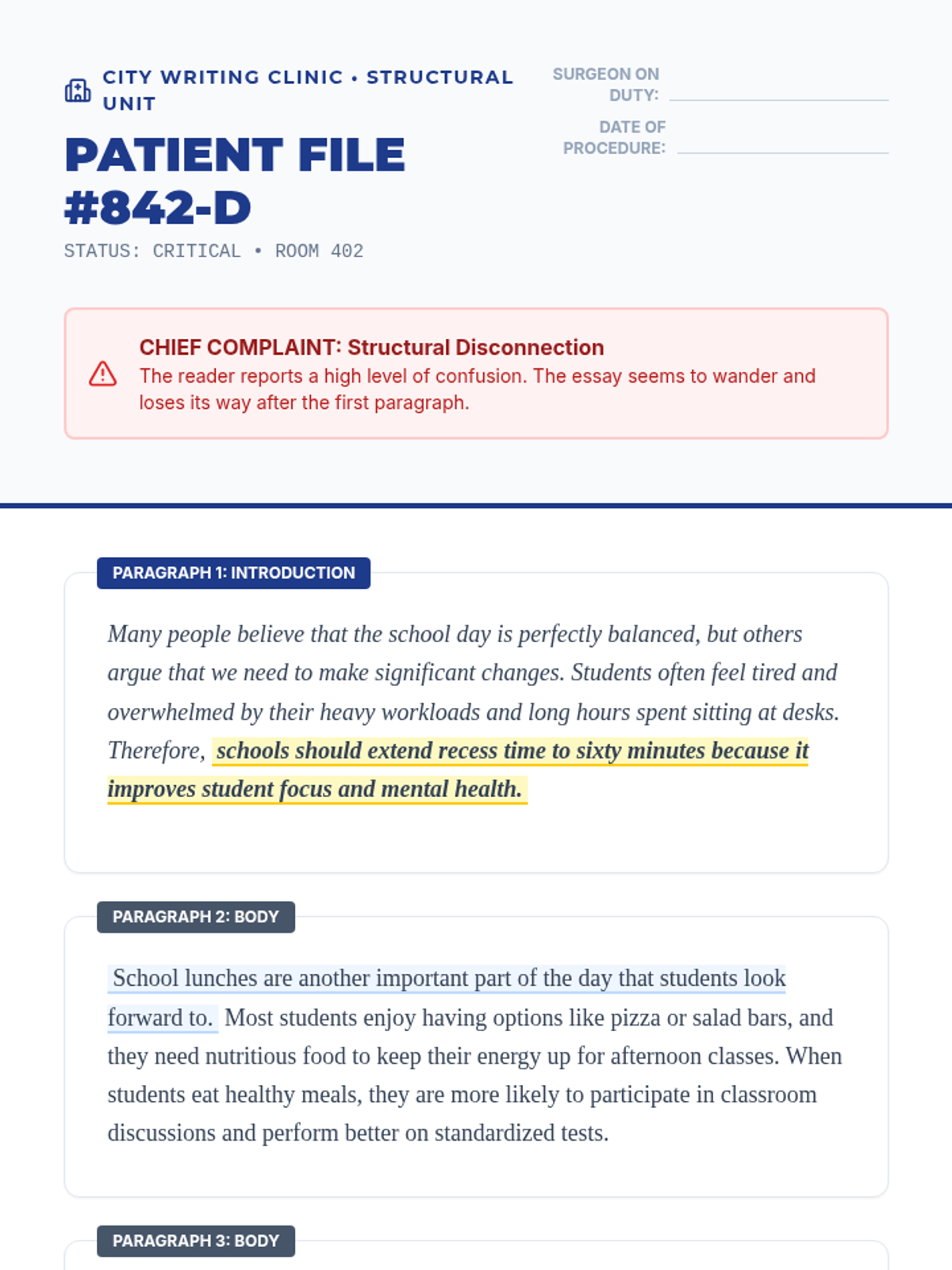
A 5-lesson unit focusing on diagnosing and repairing structural issues in writing, specifically targeting thesis statements and topic sentences through the metaphor of revision as 'surgery' or 'diagnosis.'
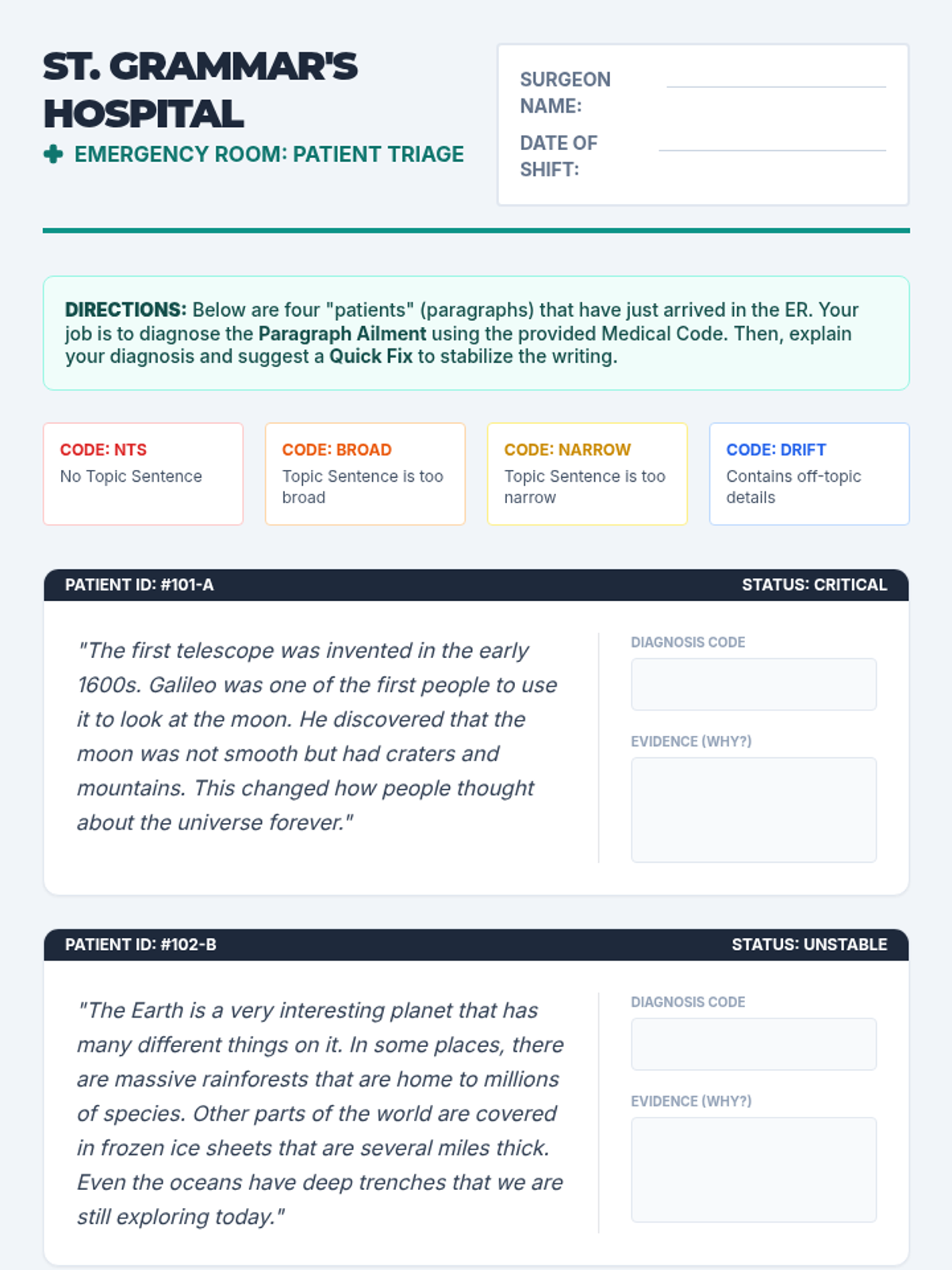
A gamified writing sequence where 8th-grade students act as 'Paragraph Surgeons' to diagnose and repair structural issues in writing, focusing on topic sentences, scope, and paragraph drift. Students move from simple diagnosis to full 'surgical' revision of an essay.
A series of lessons focused on mastering high-frequency academic action verbs like explain, compare, and justify to help students succeed in academic tasks and assessments.
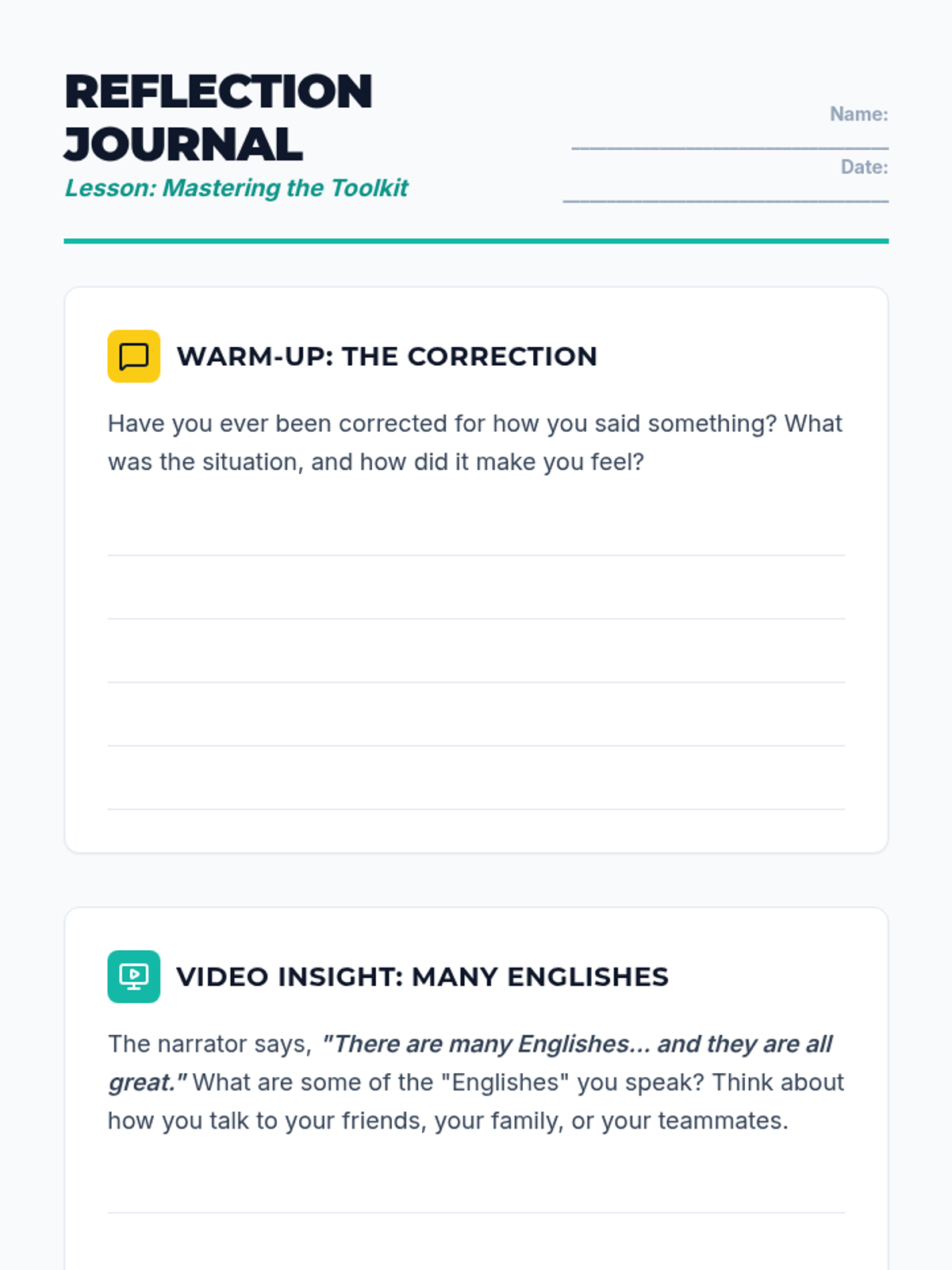
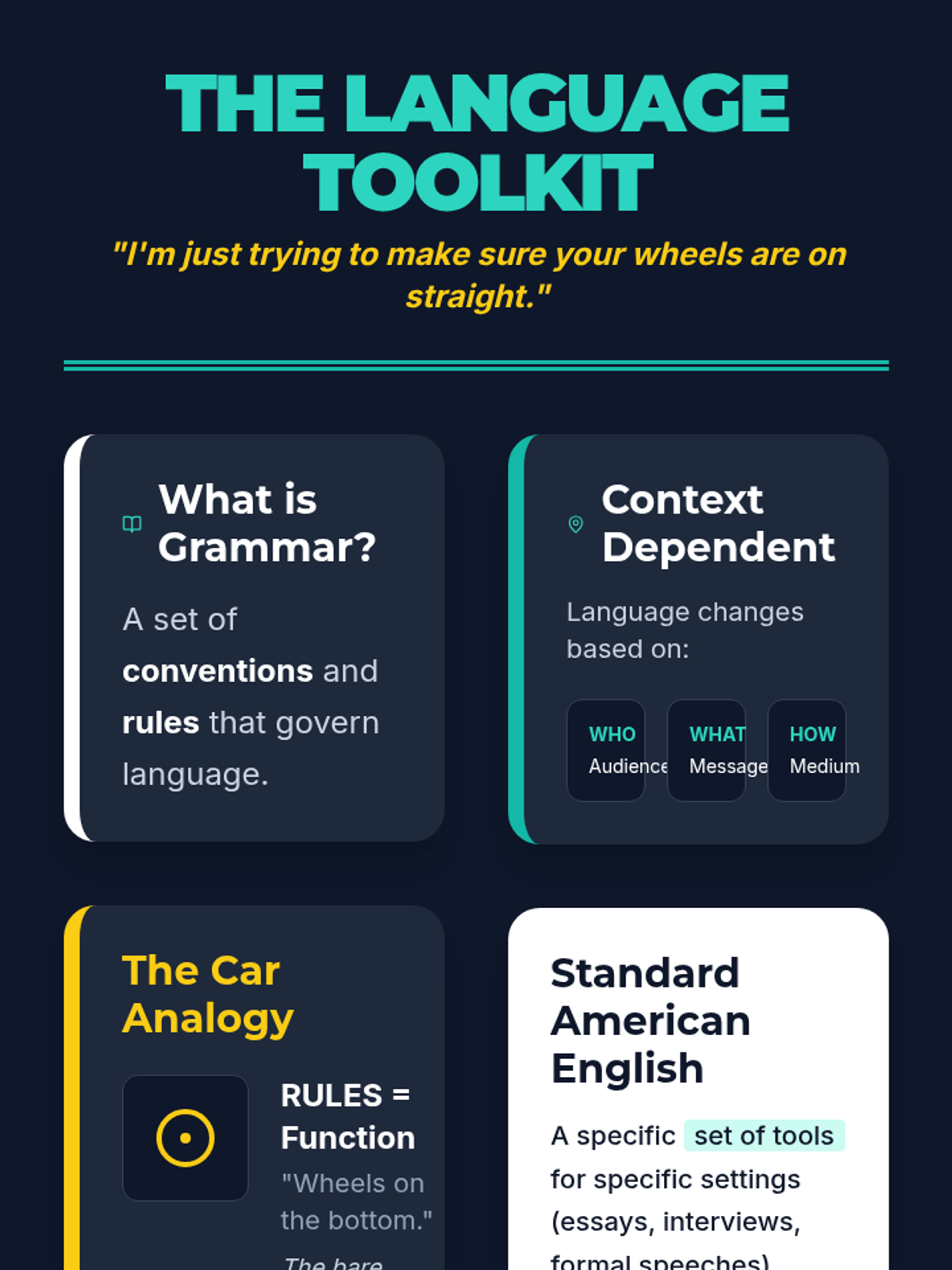
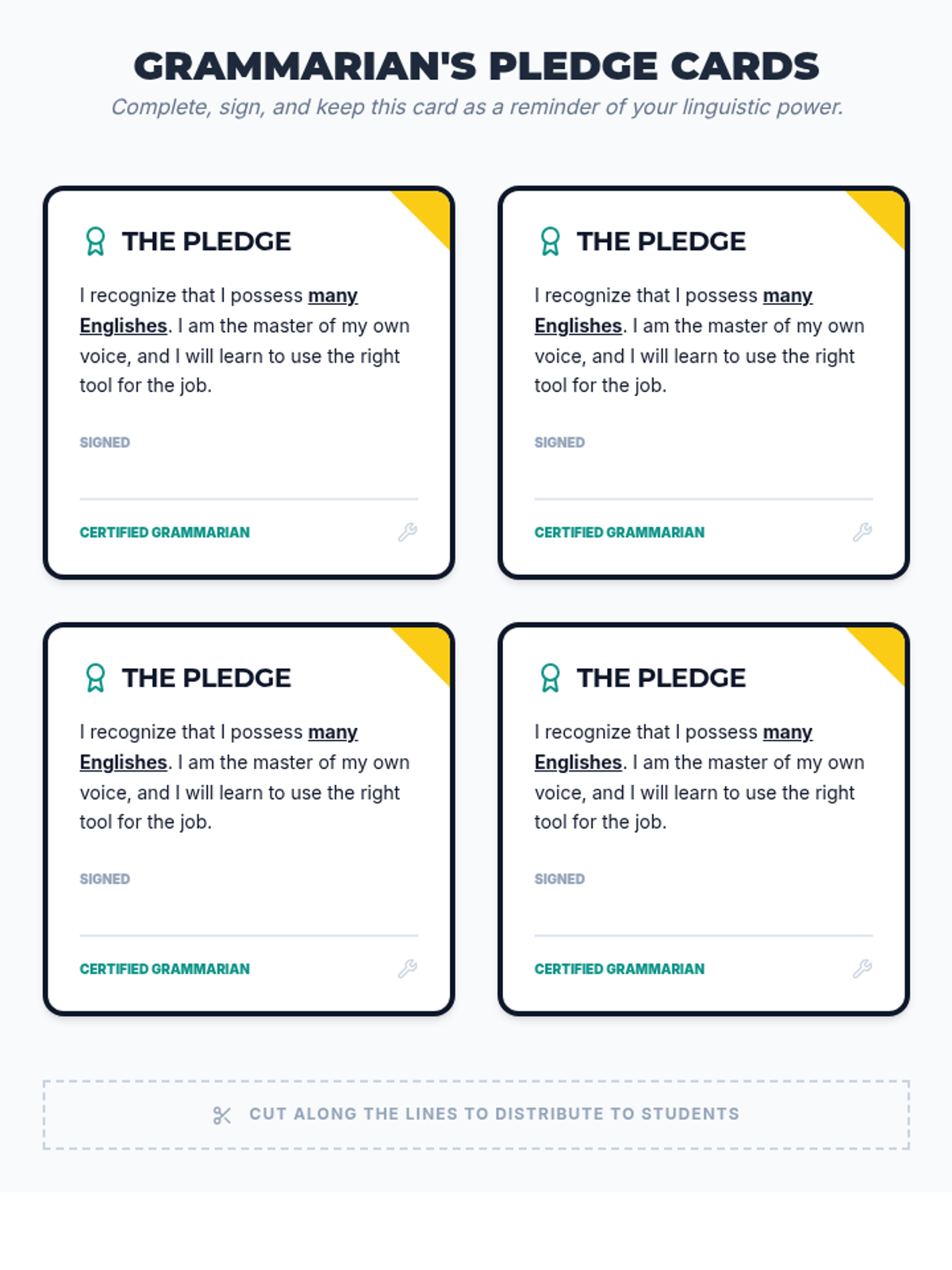
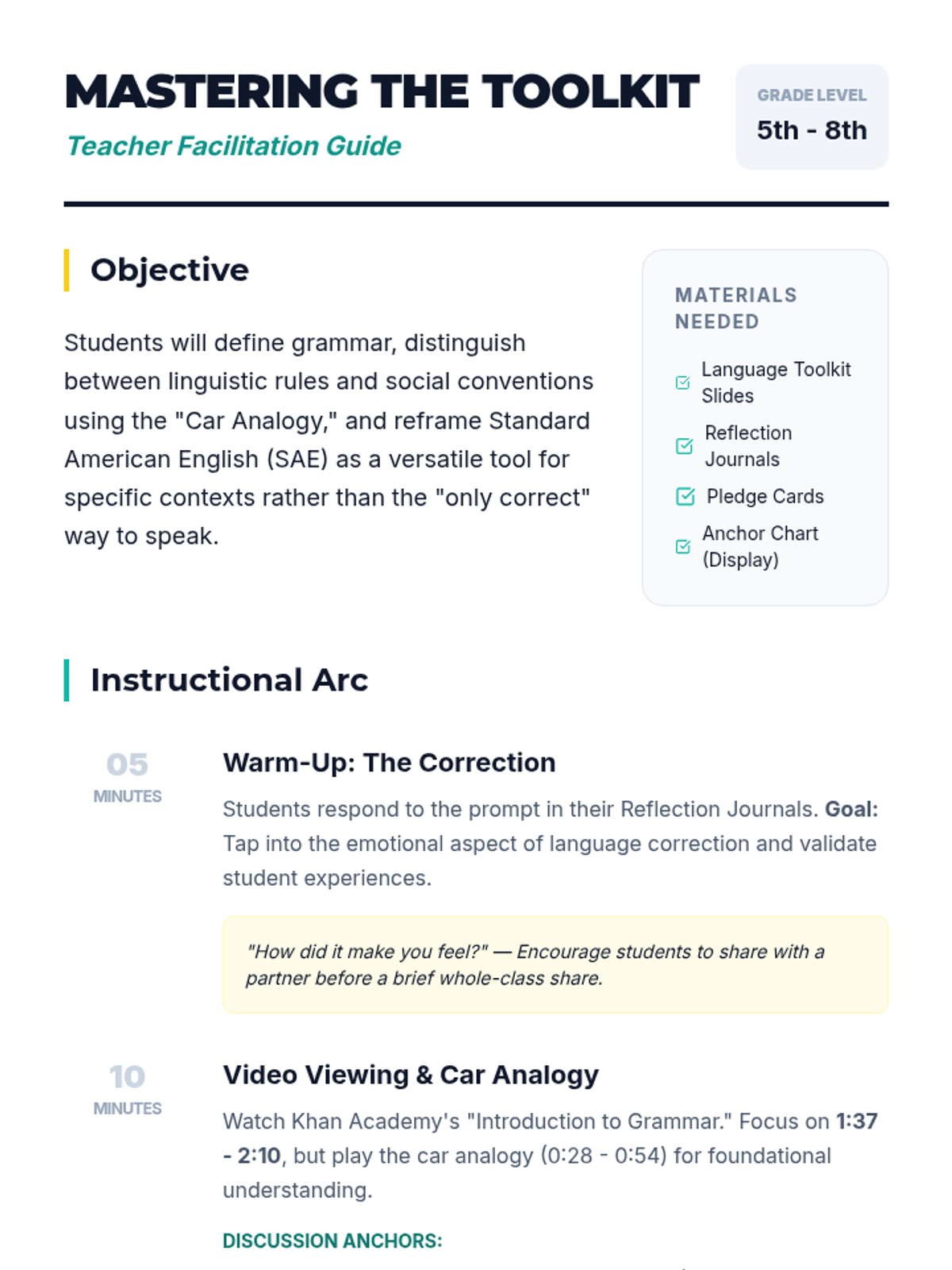
A lesson sequence exploring the concept of Standard American English as a versatile tool for communication, emphasizing that language varies by context and that all dialects are valid. Students analyze the 'car analogy' from Khan Academy to distinguish between fundamental grammar rules and social conventions.
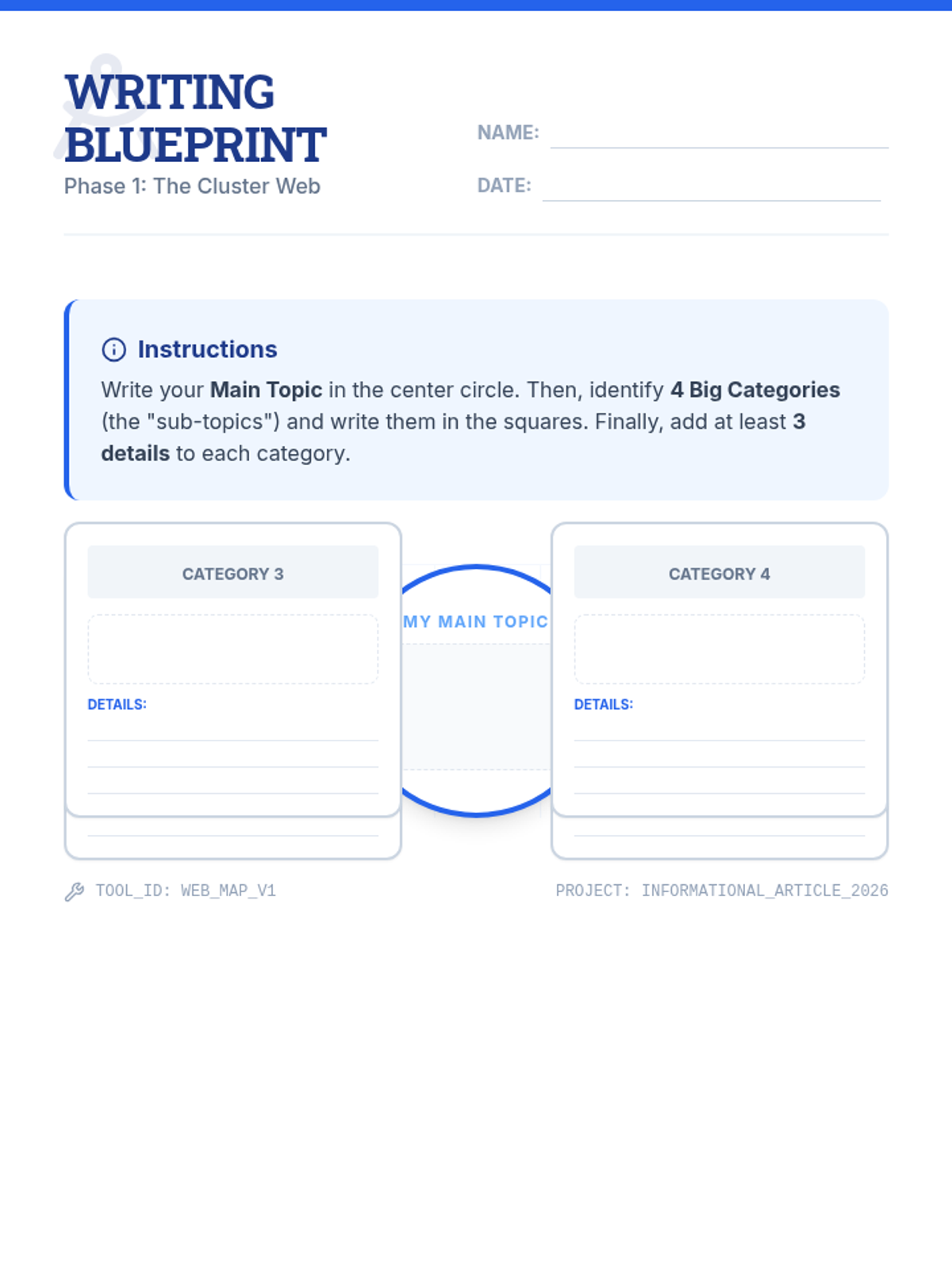
This sequence helps 6th-grade students with executive functioning needs transition from brainstorming to structured expository writing. Using the 'Blueprint for Writing' theme, students master visual organizers like web maps, table structures, and Venn diagrams to draft coherent informational articles.
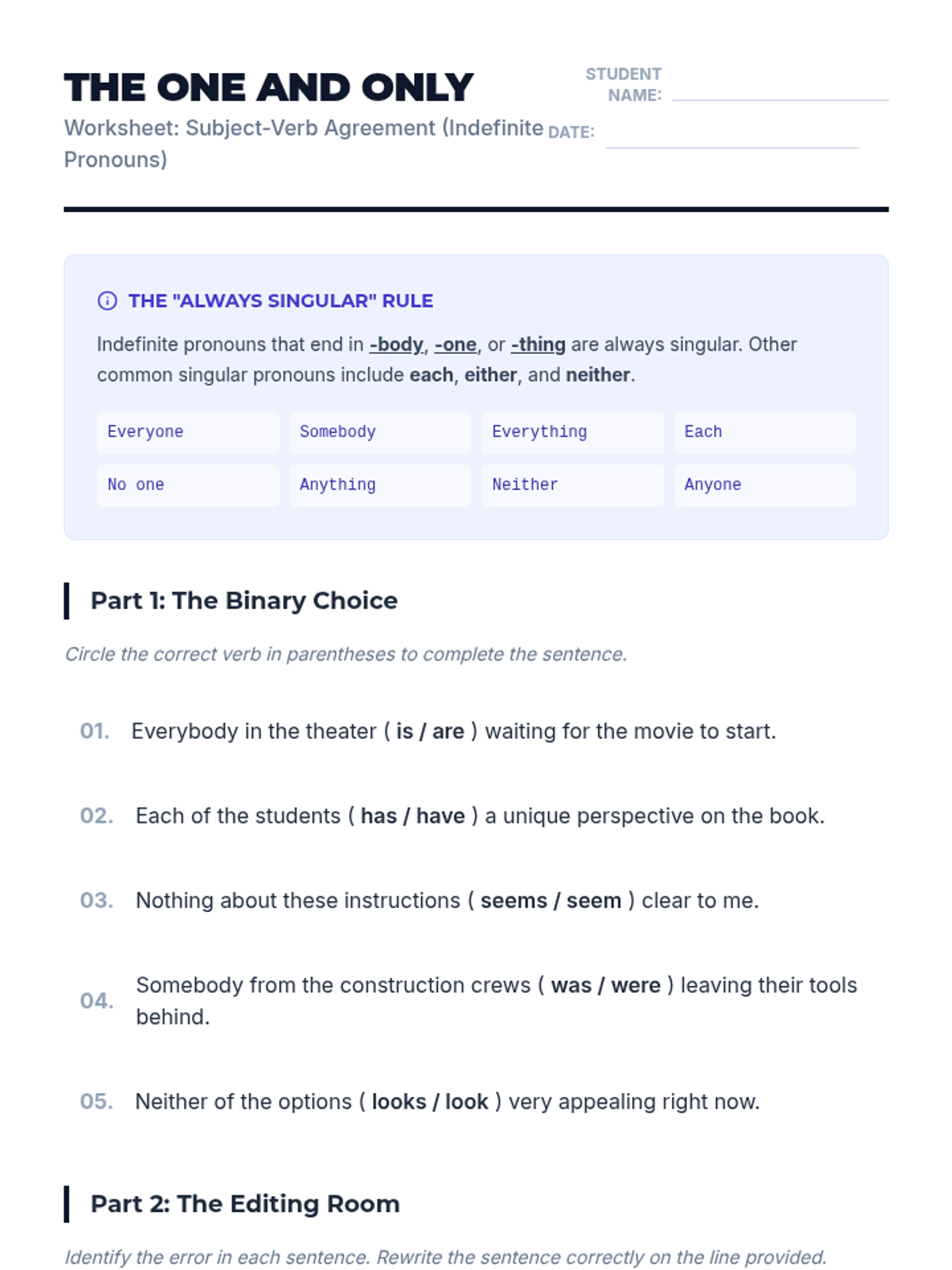
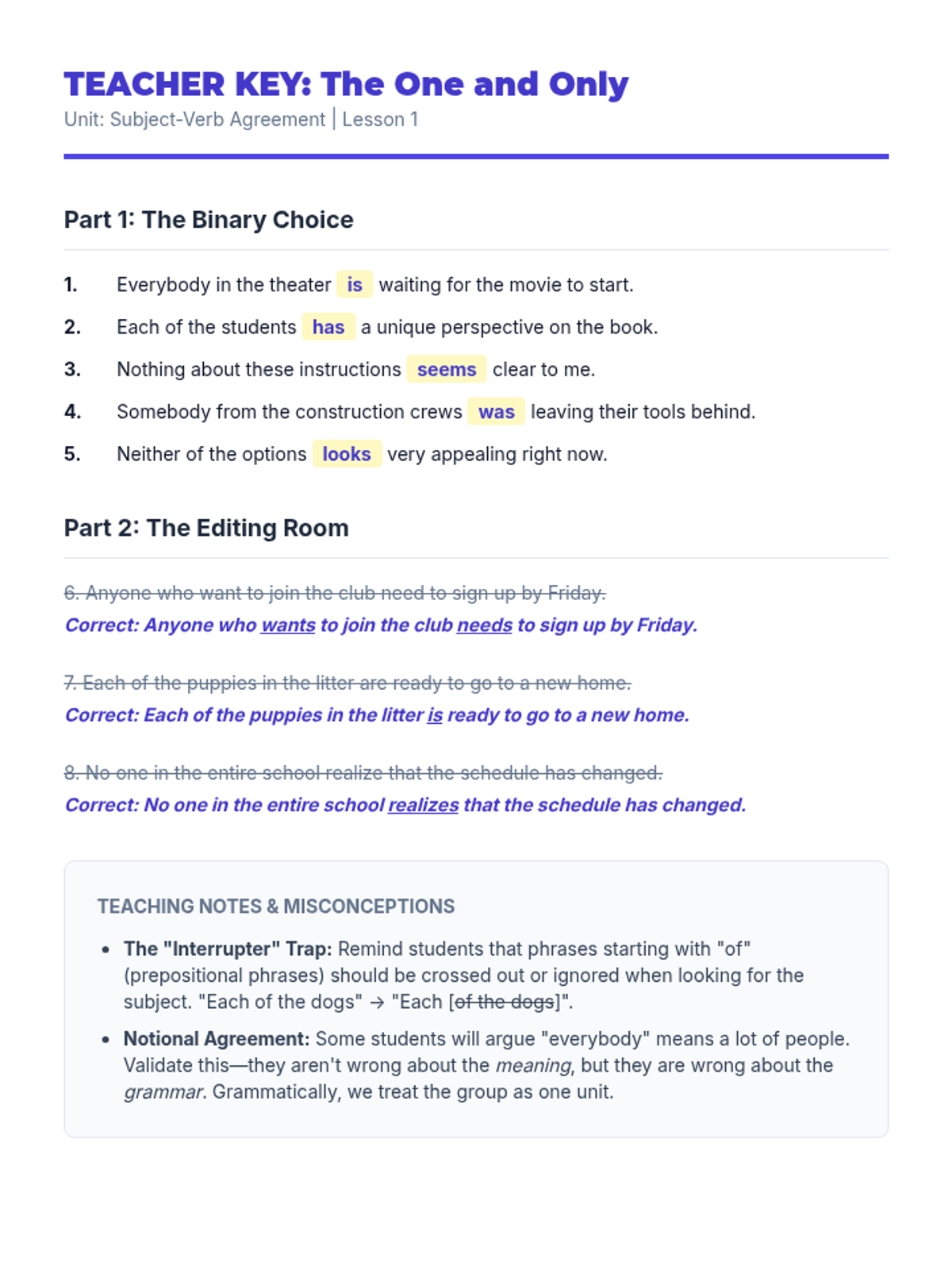
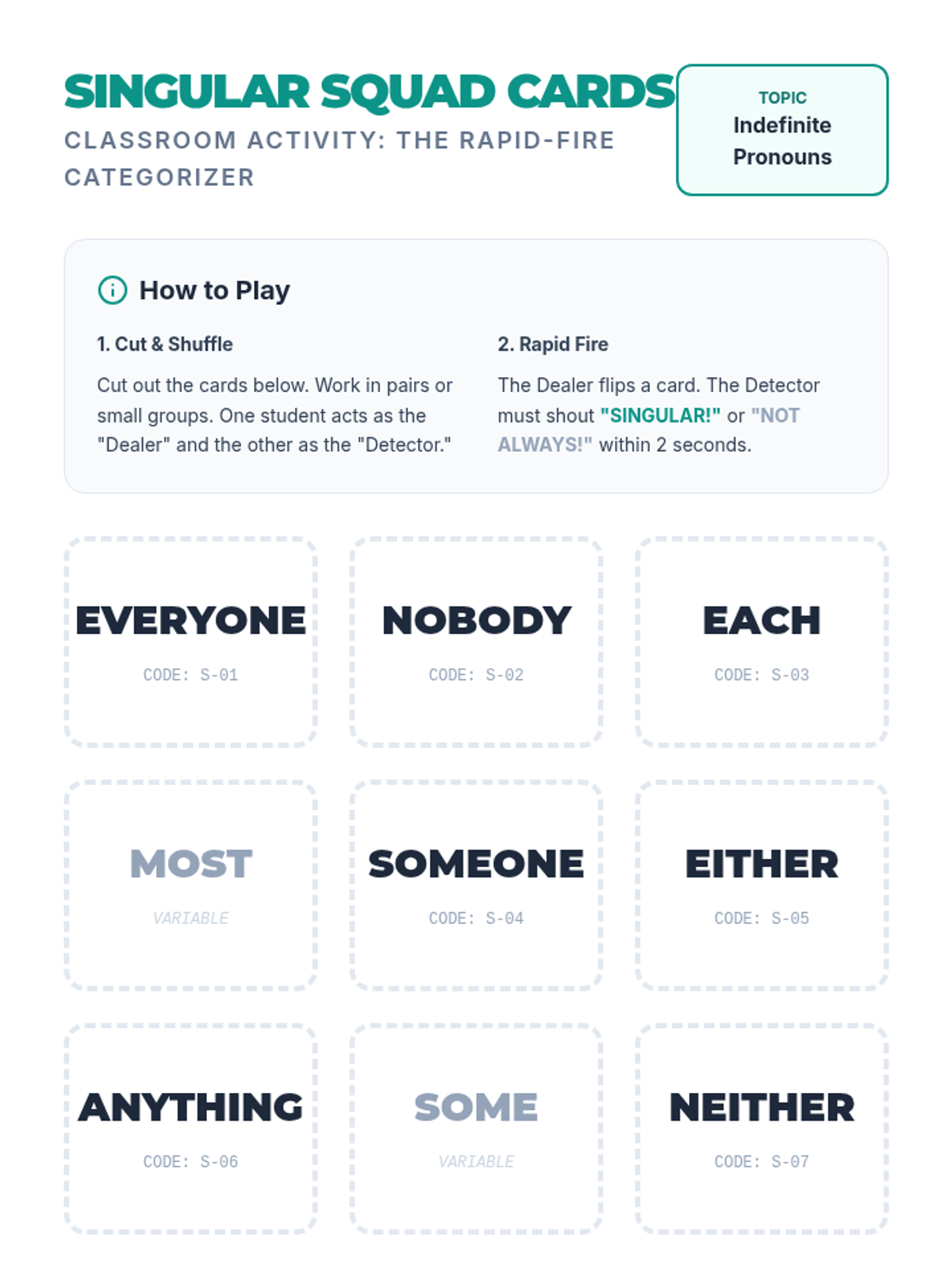
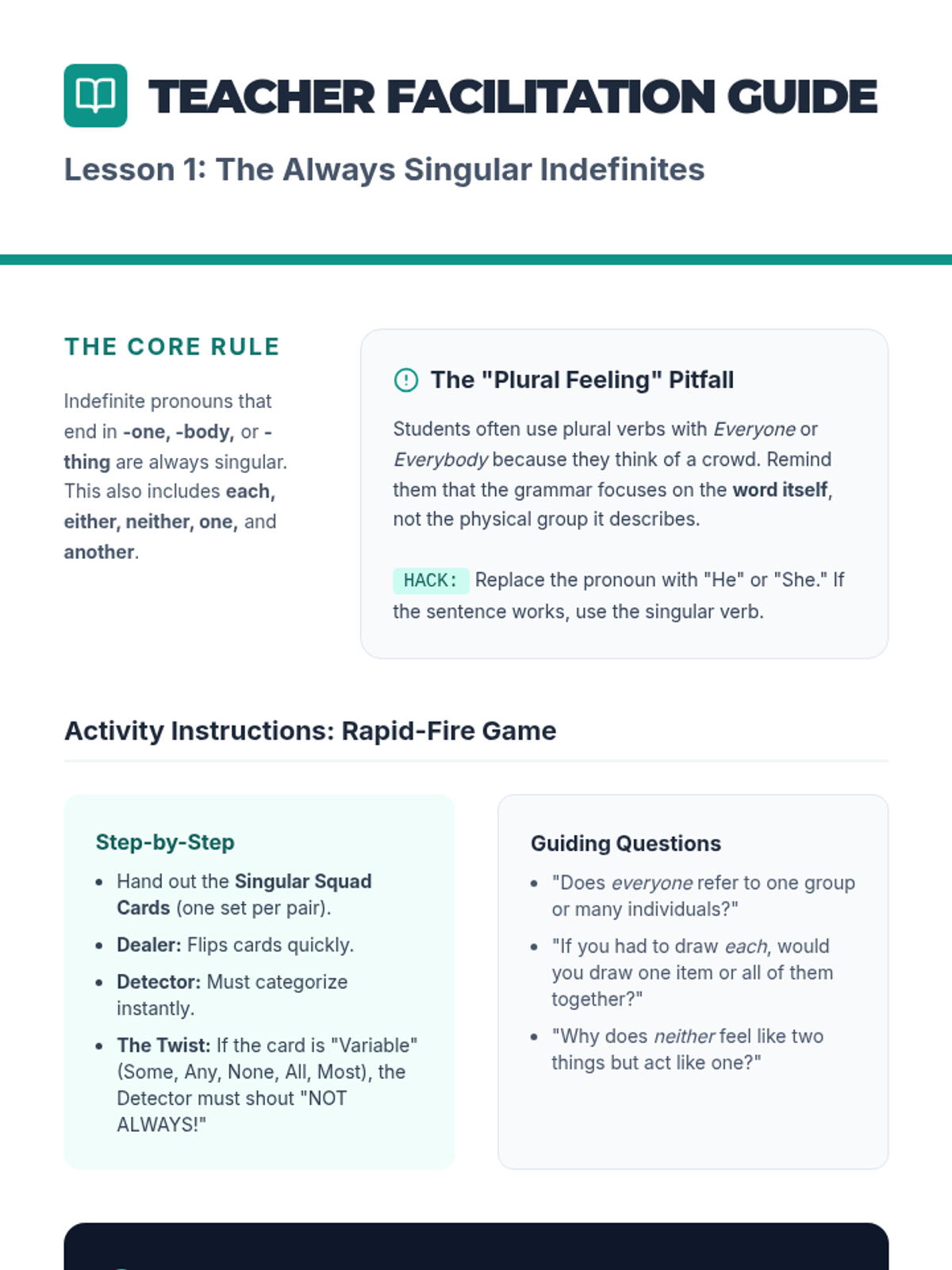
This sequence explores the nuances of subject-verb agreement with indefinite pronouns, variable subjects (SANAM), adjective clauses, and verbal phrases (gerunds and infinitives). Students progress from memorizing singular categories to applying logical linguistic rules in complex sentence structures.
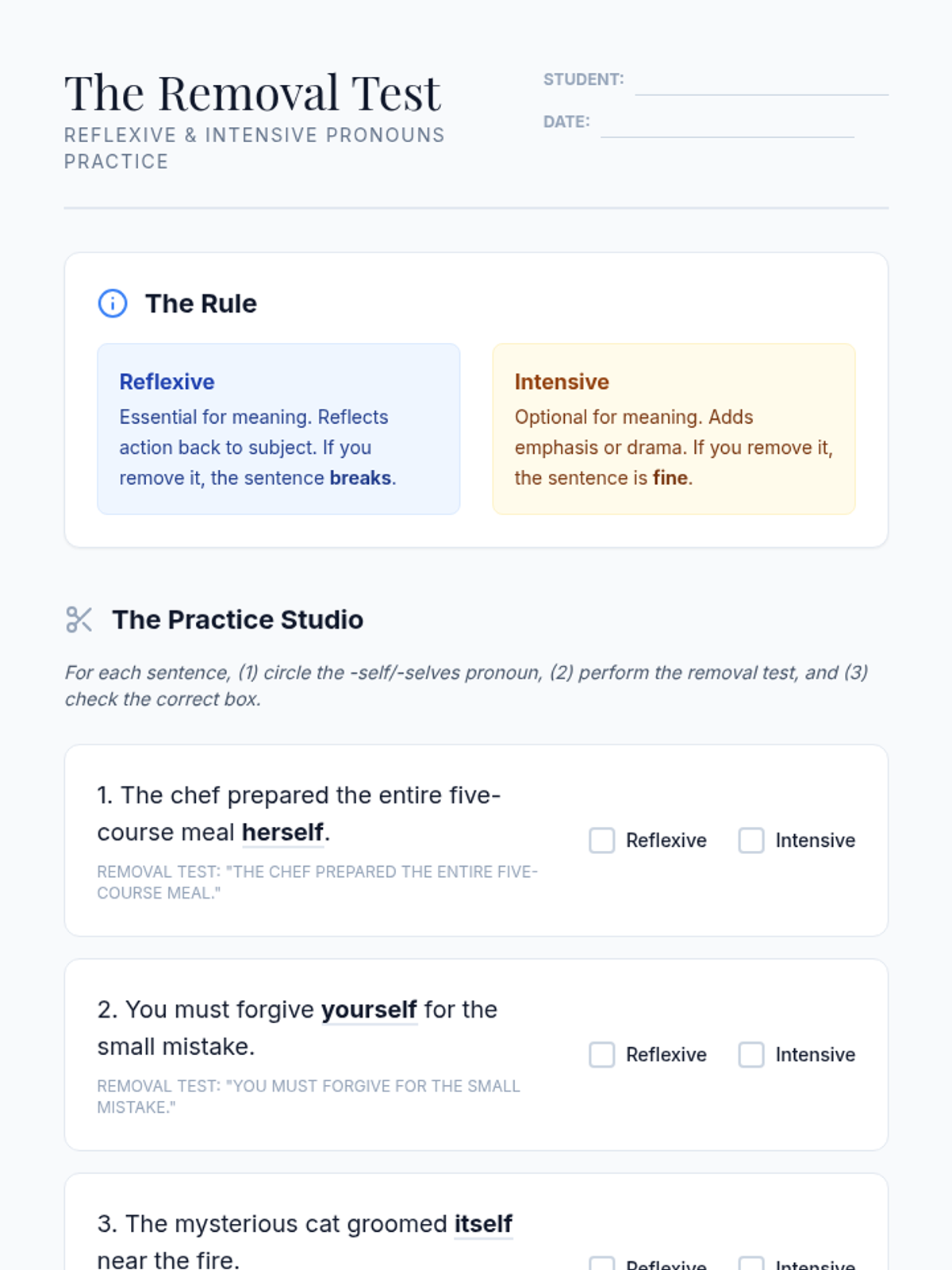
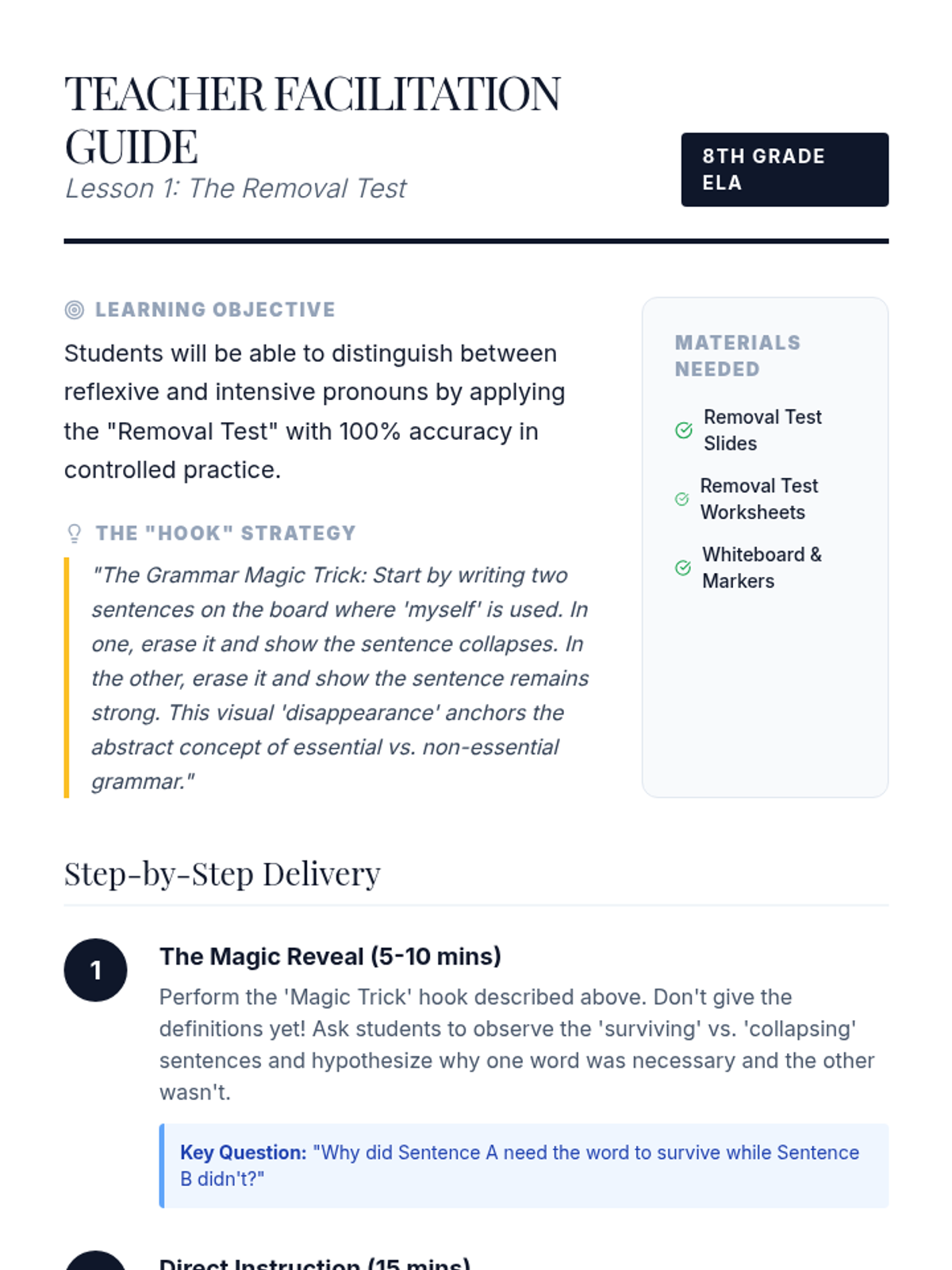
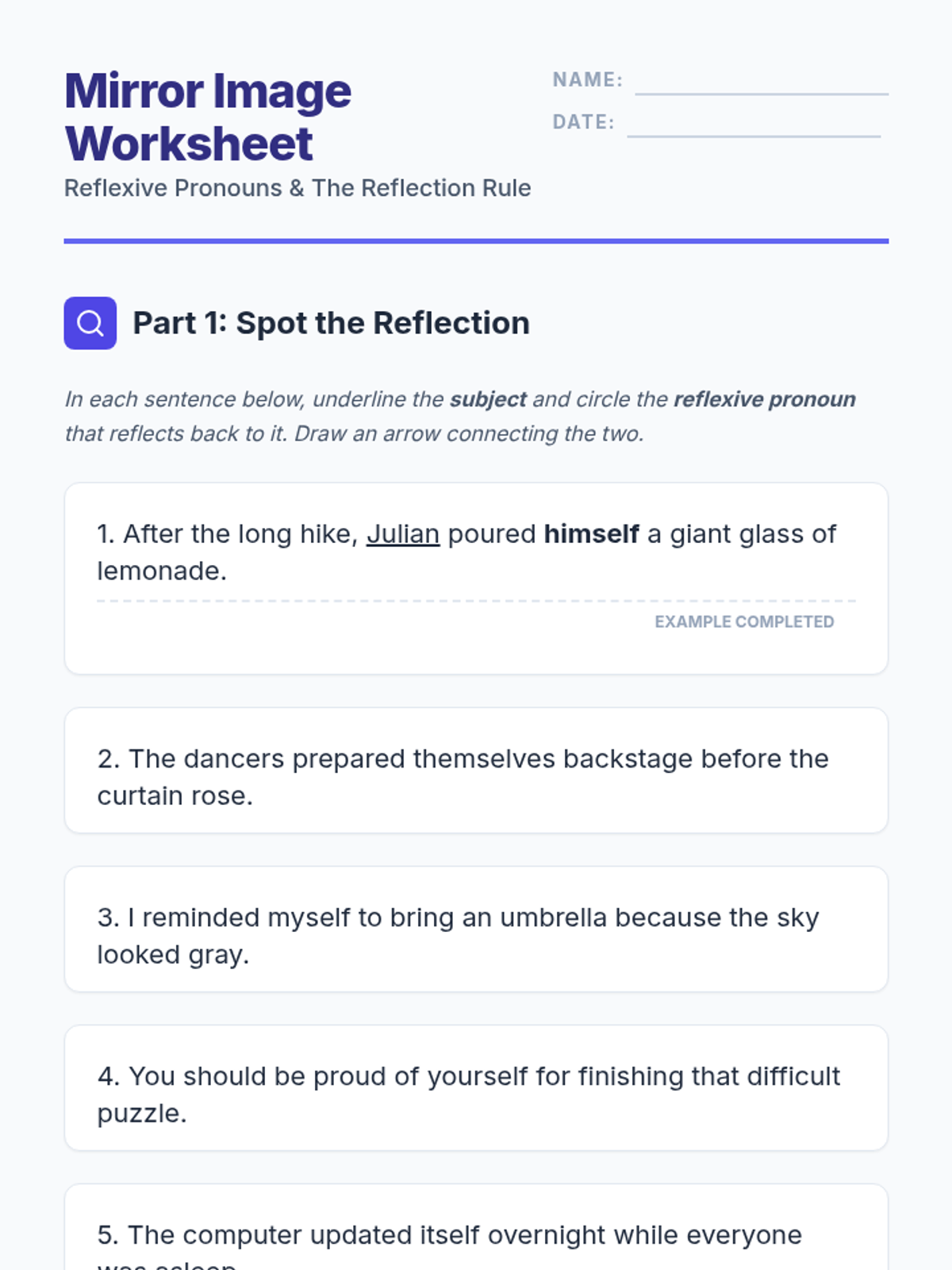
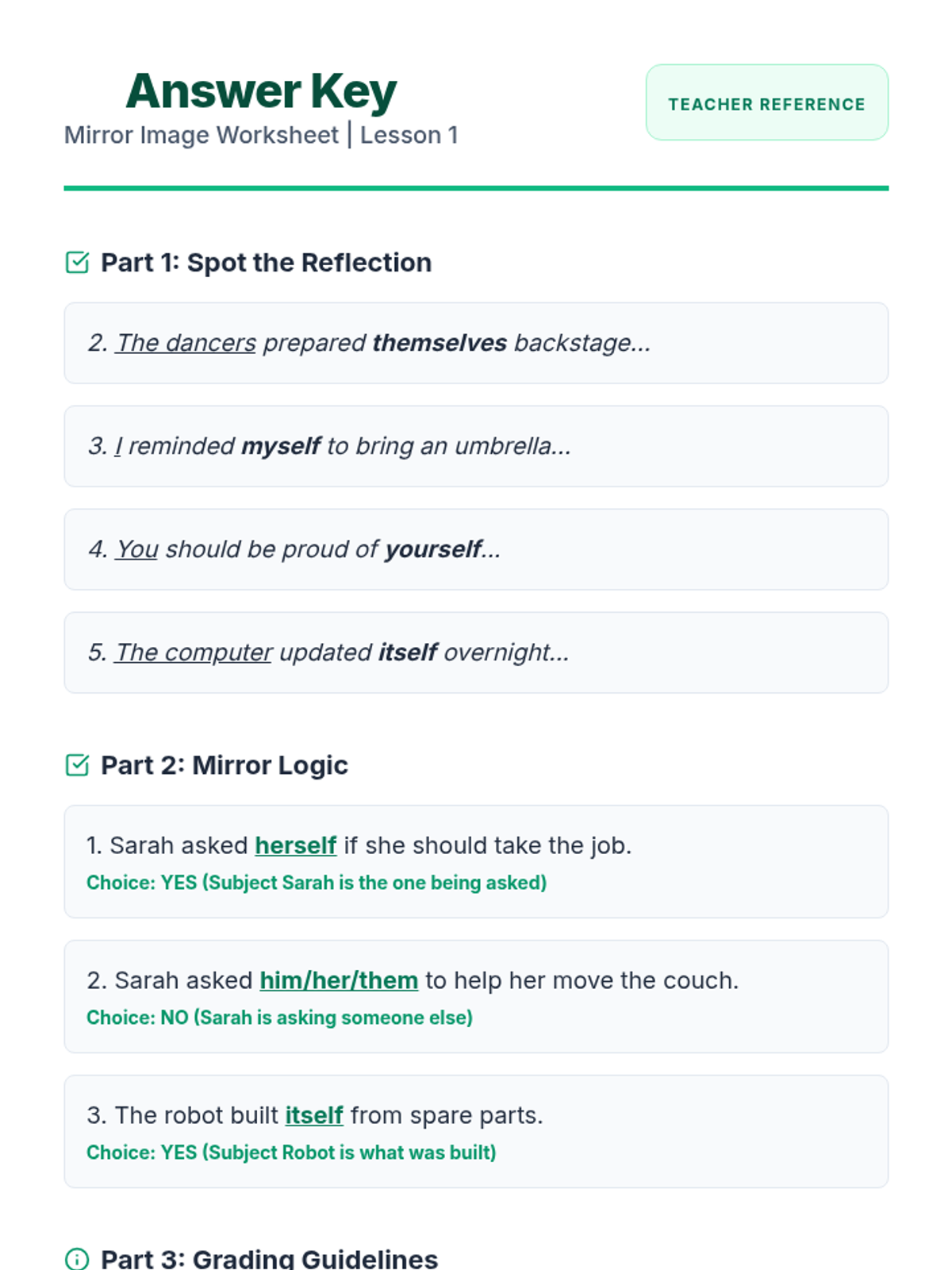
An 8th-grade grammar sequence focusing on reflexive and intensive pronouns through the lens of personal narrative. Students learn to distinguish between these pronouns, avoid the 'myself' trap, and use pronouns stylistically to enhance their writing voice.
A short sequence focused on advanced grammar applications in creative and narrative writing for 7th and 8th graders, exploring how mechanical choices impact style and meaning.
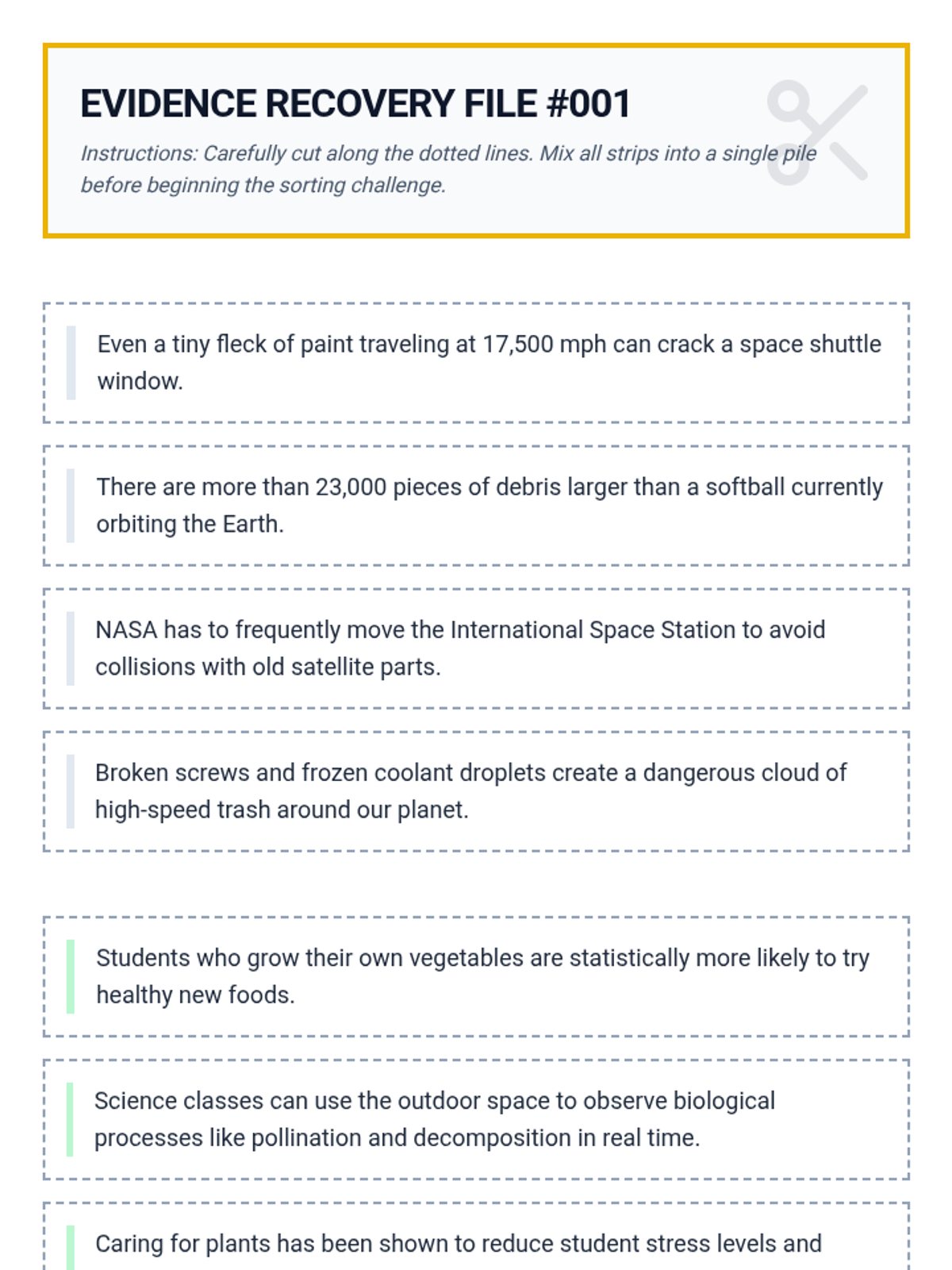
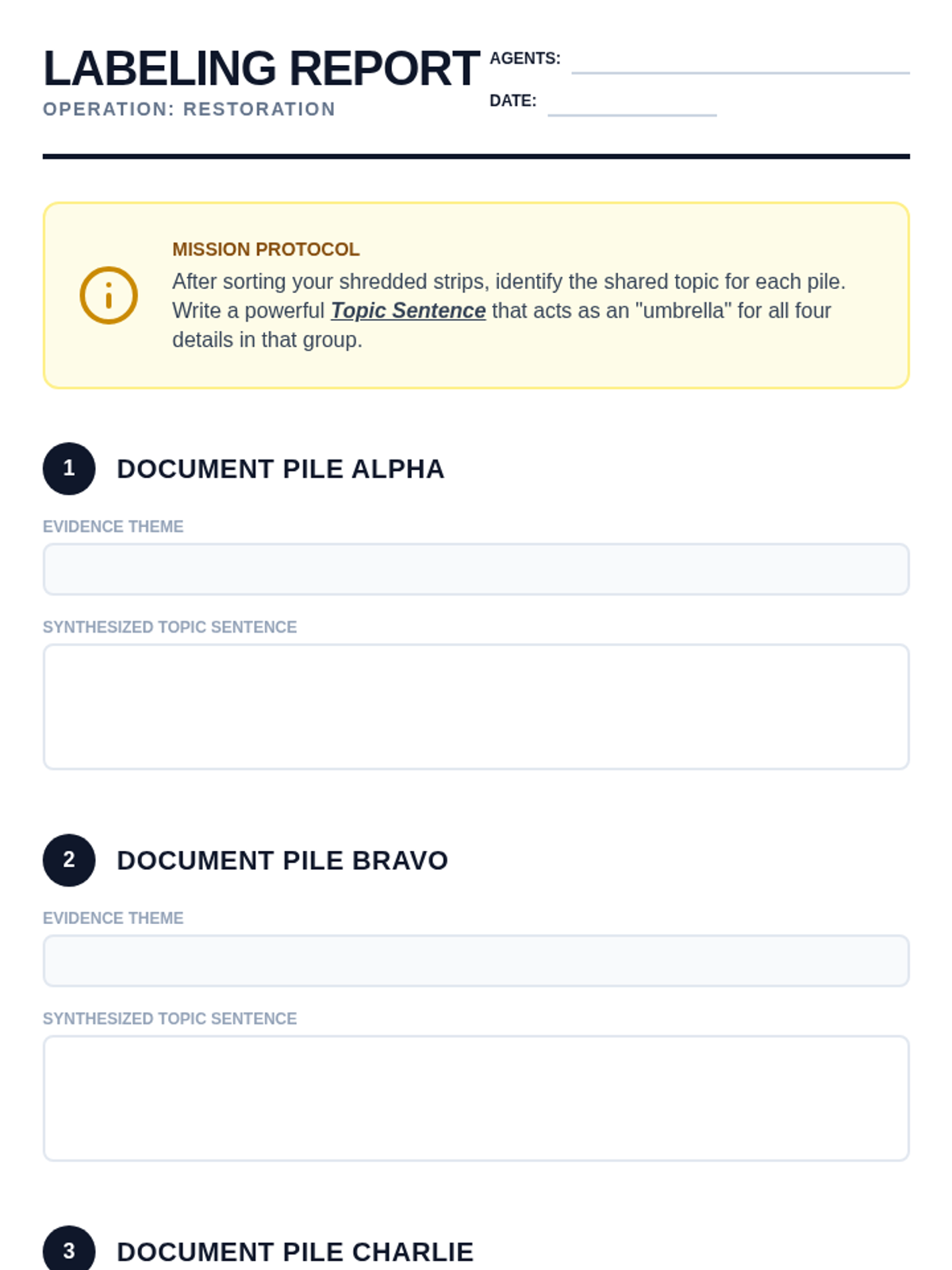
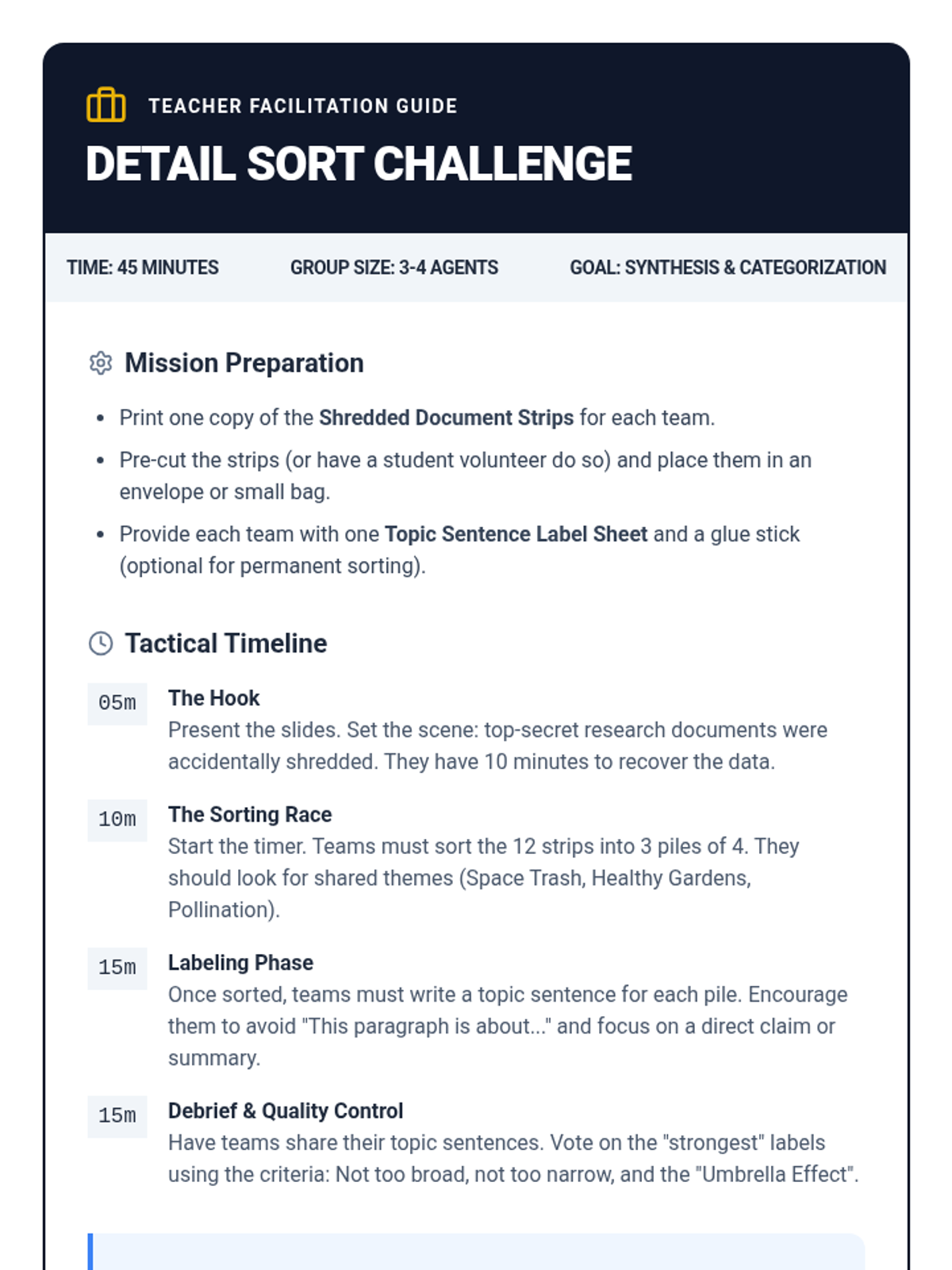
A game-based sequence for 7th-grade students to master topic sentences through collaborative sorting, matching, and problem-solving activities. Students move from identifying categories to evaluating the strength of claims and ensuring paragraph cohesion.
A middle school writing sequence focused on the mastery of active and passive voice. Students learn to identify passive constructions, evaluate their impact on clarity, and revise sentences to increase vigor and directness in their own writing.
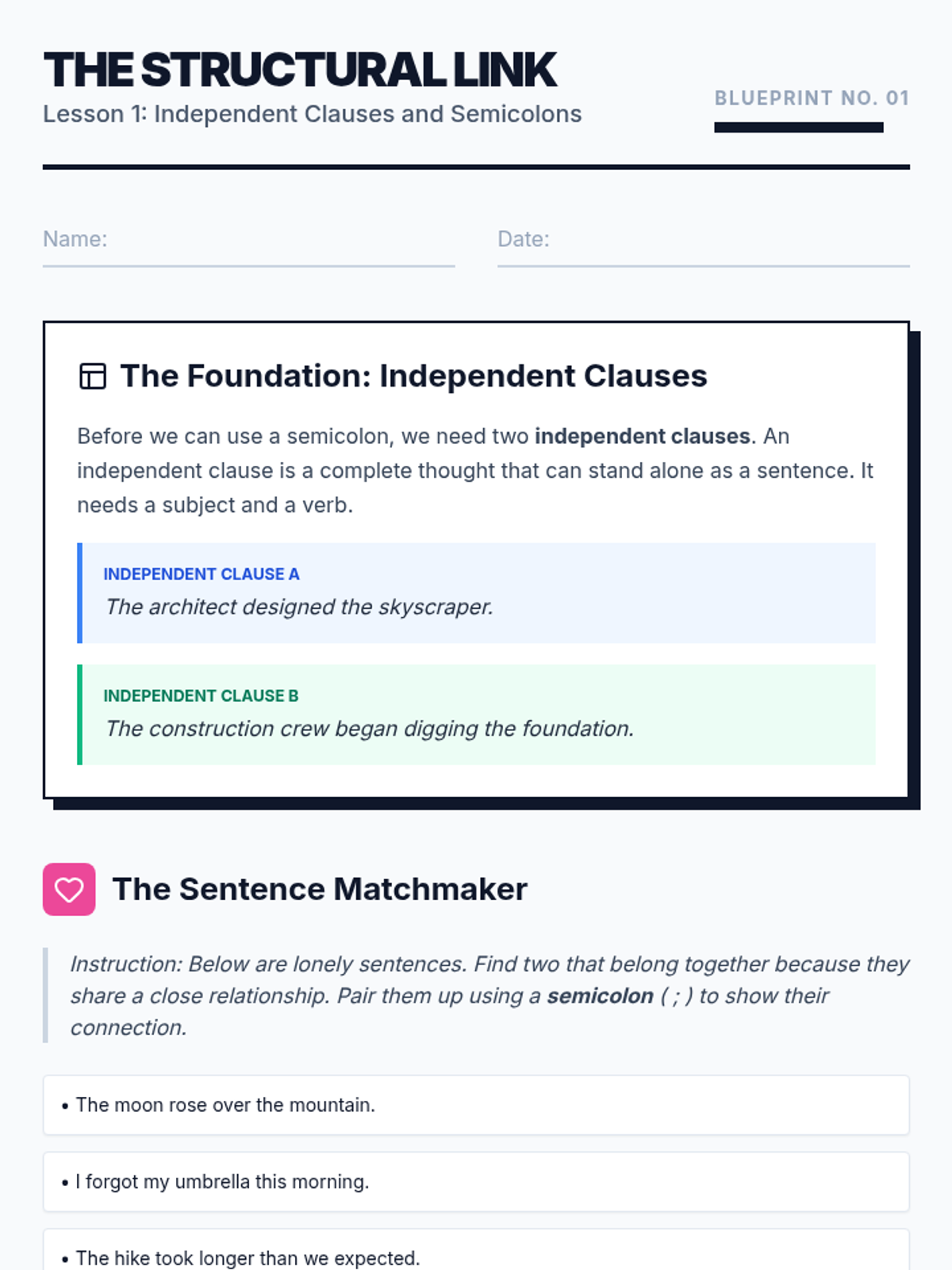
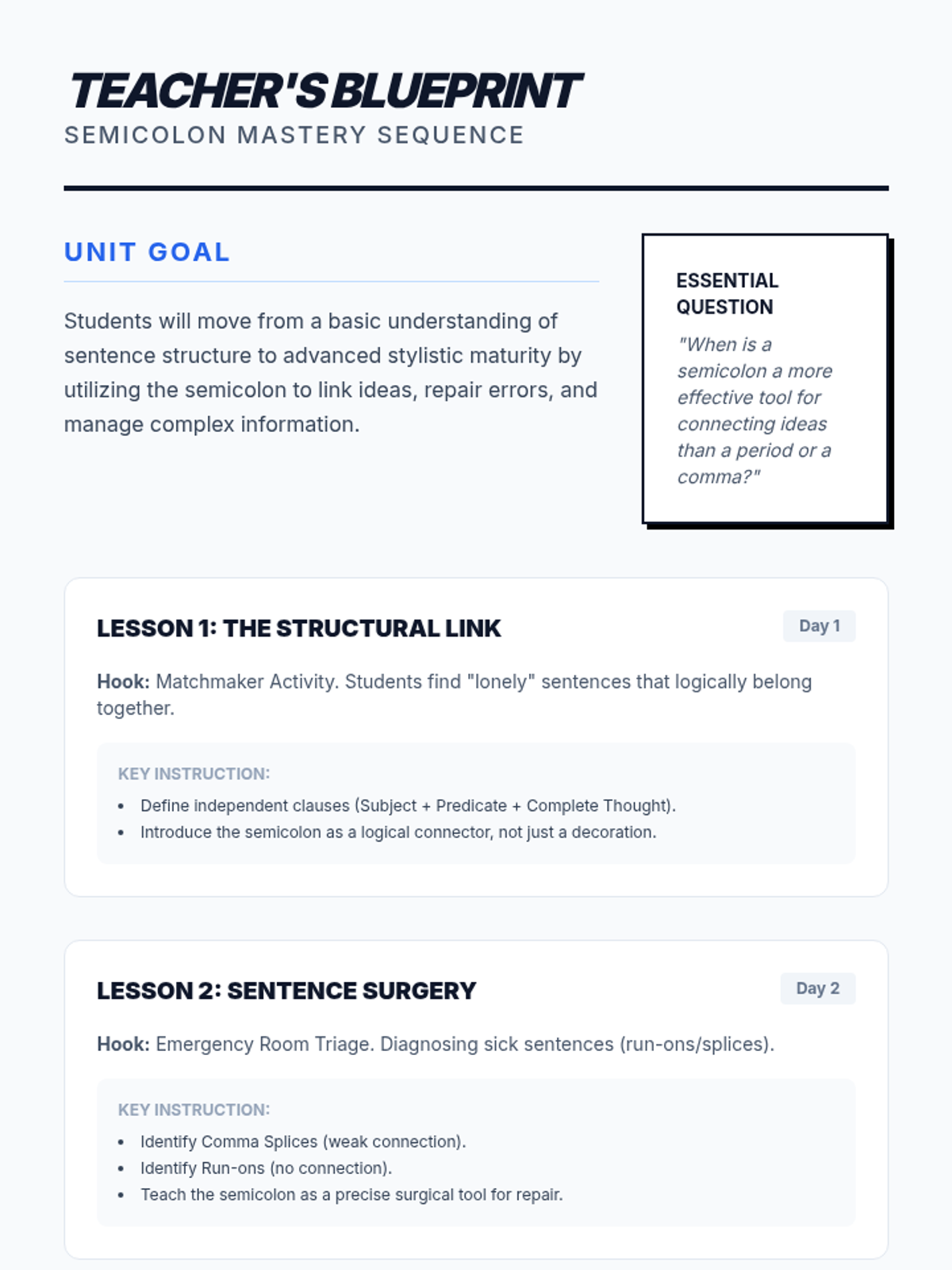
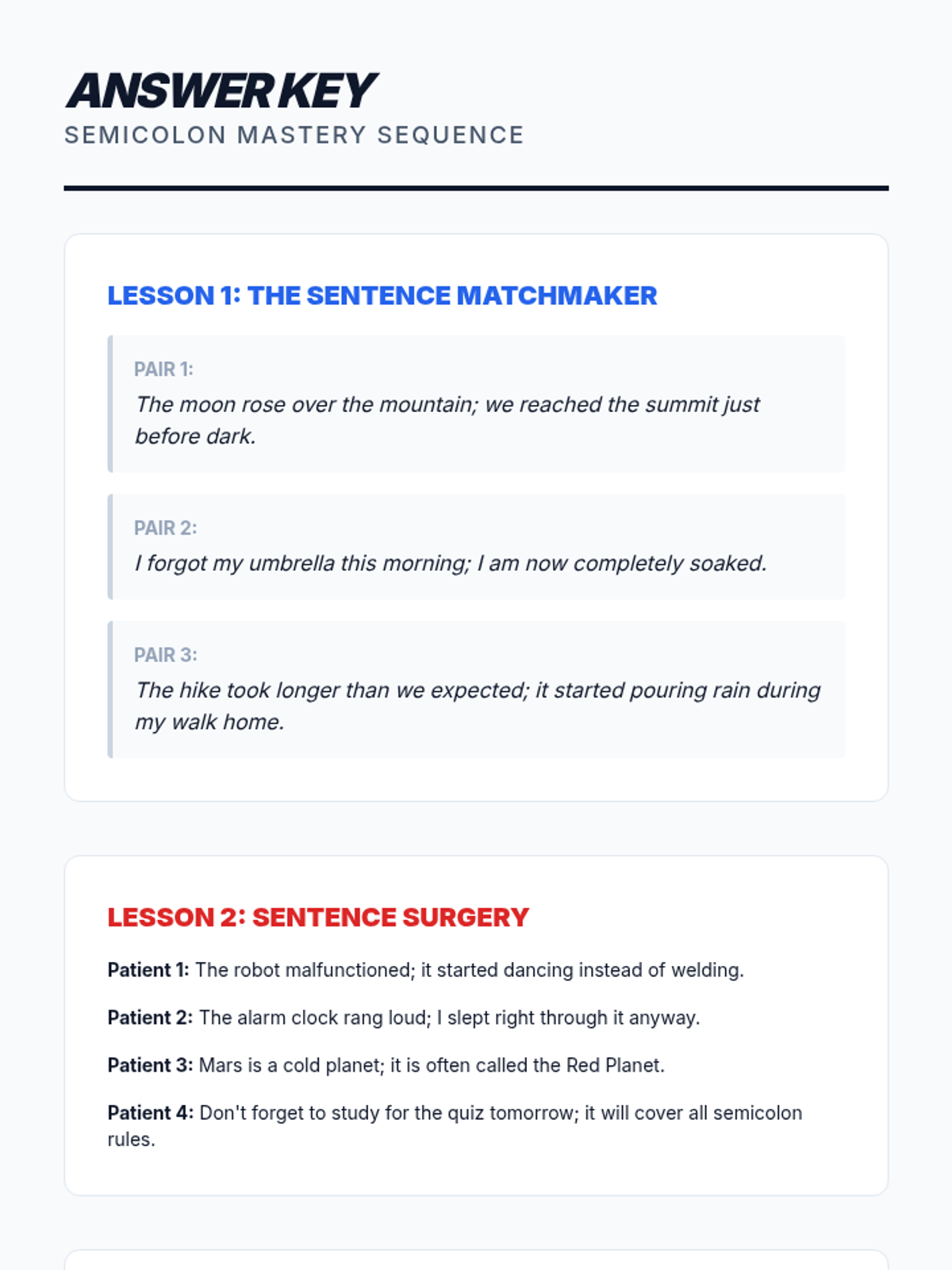
A comprehensive 8th-grade grammar sequence that takes students from the basics of independent clauses to sophisticated stylistic use of the semicolon. Through architectural and surgical metaphors, students learn to connect ideas, fix errors, and enhance the flow of their writing.
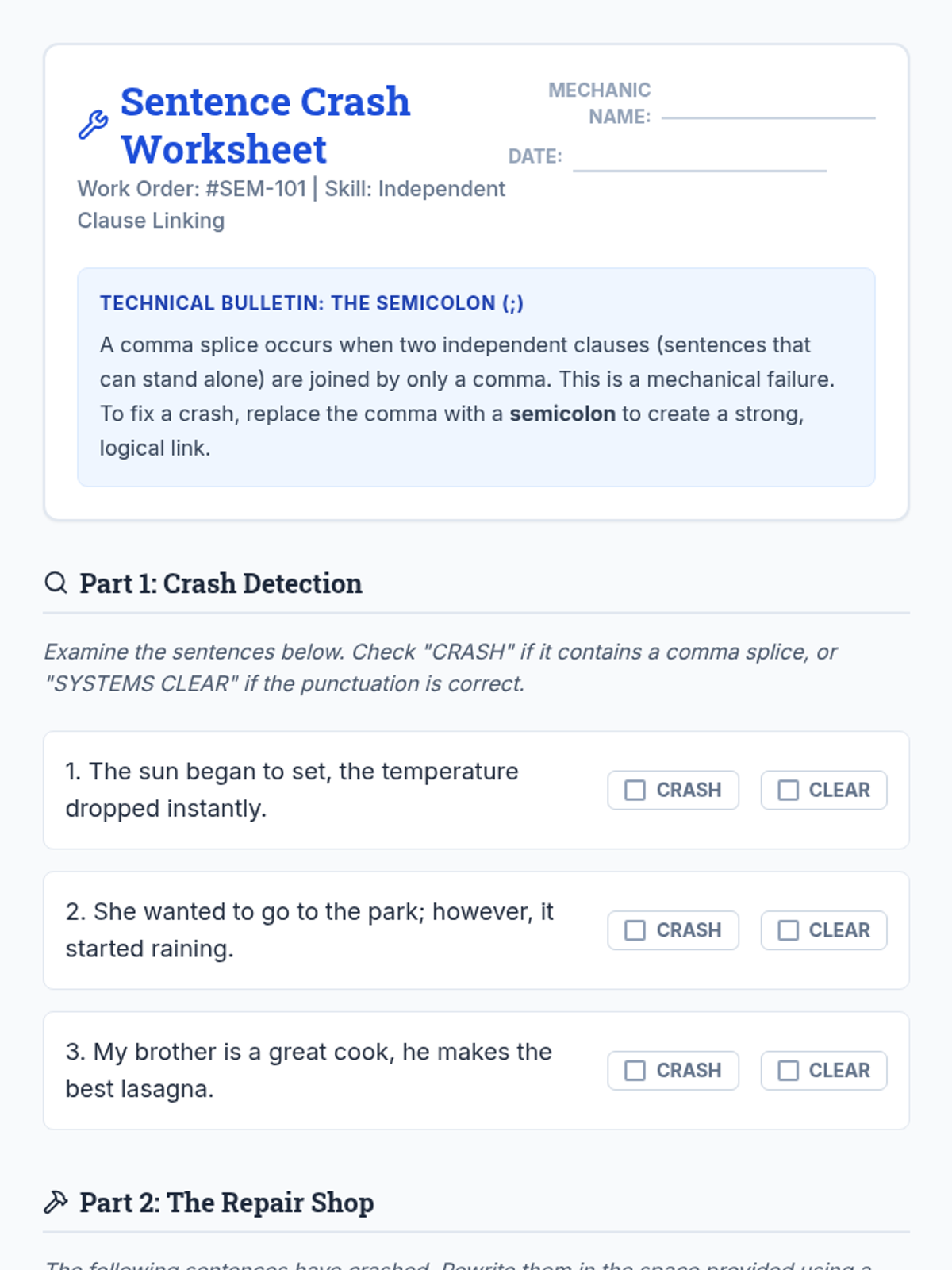
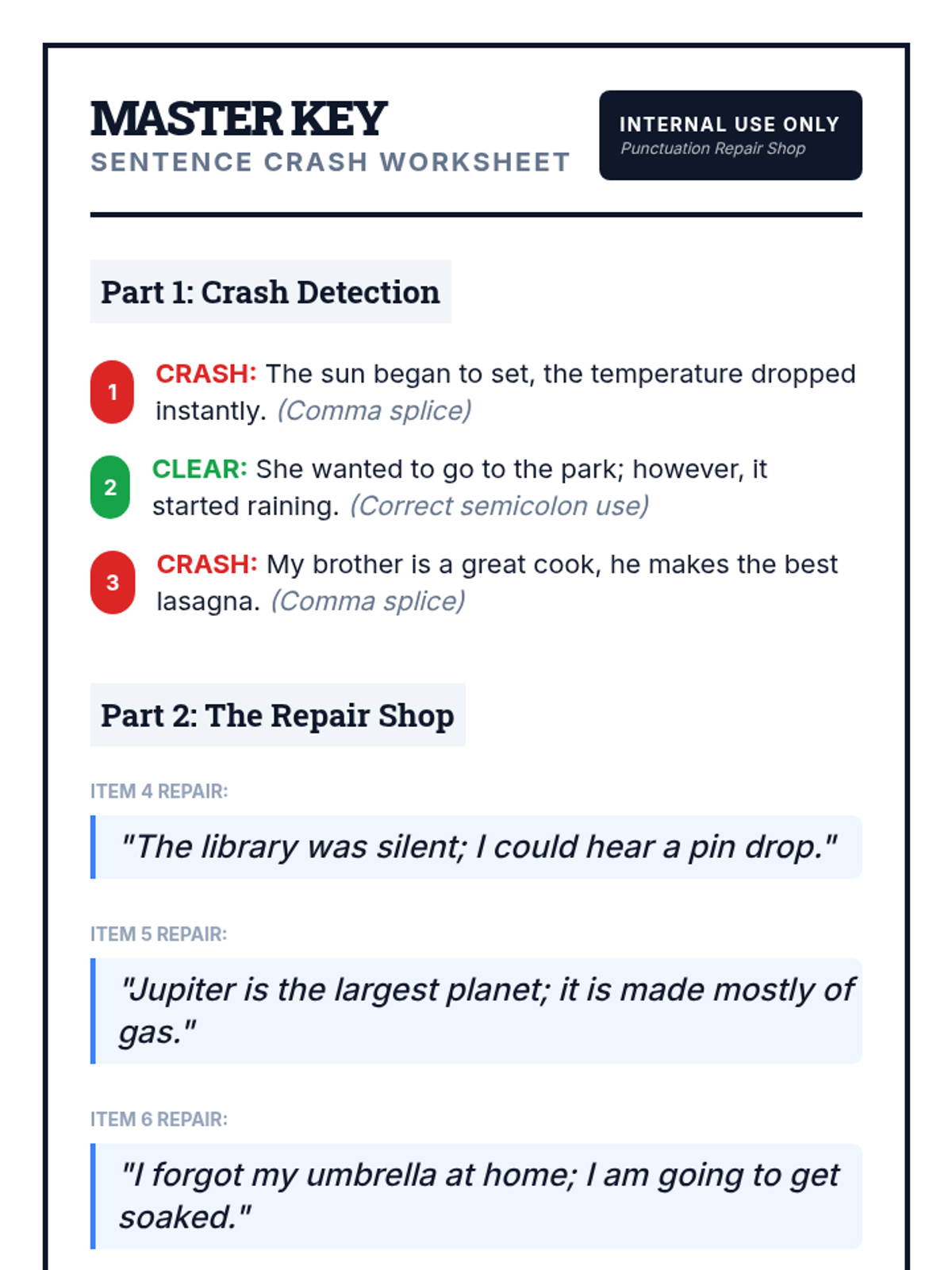
A comprehensive 7th-grade unit exploring the sophisticated use of semicolons and colons to link ideas, enhance flow, and improve writing structure through the metaphor of a 'Punctuation Repair Shop'.
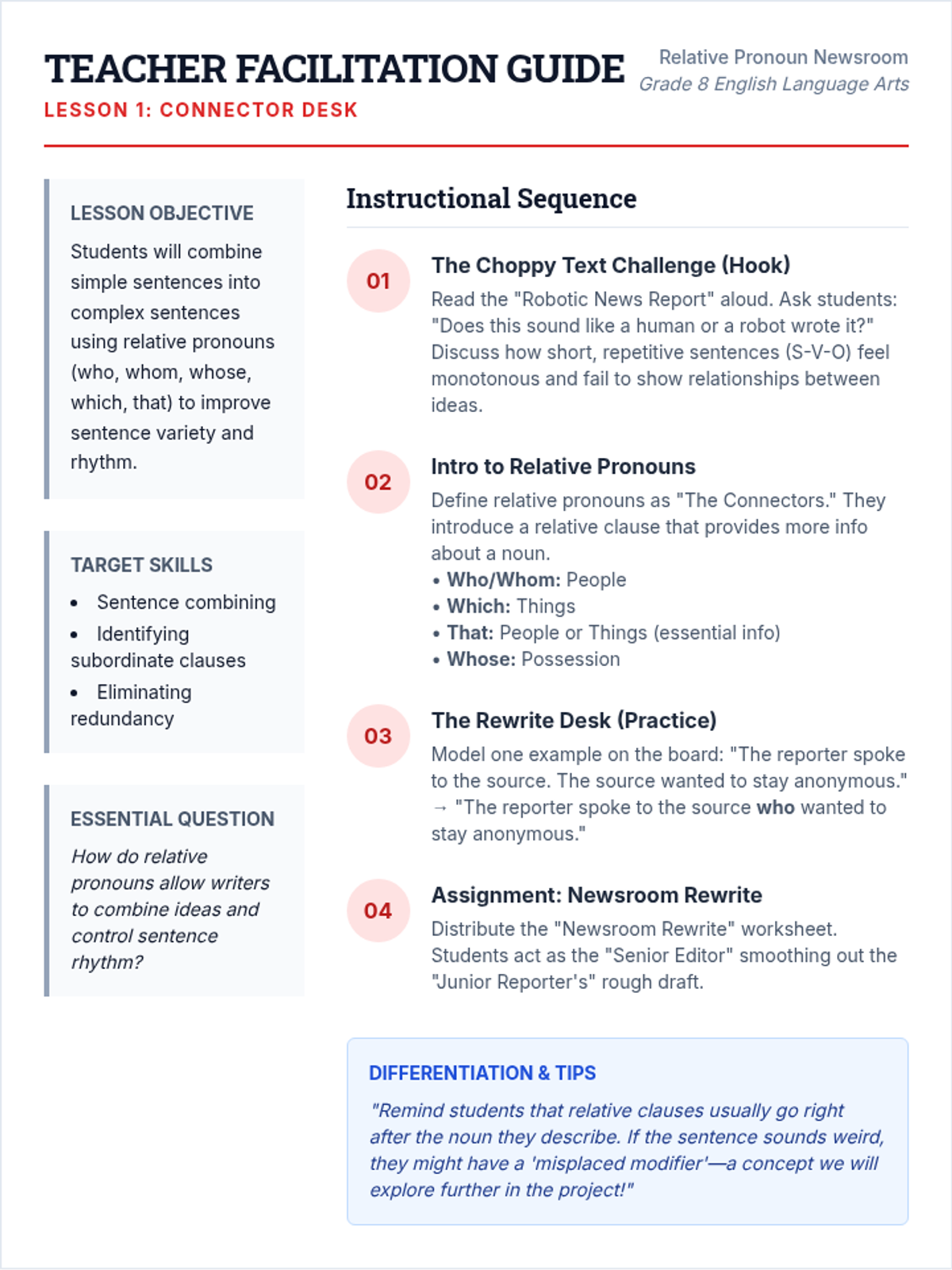
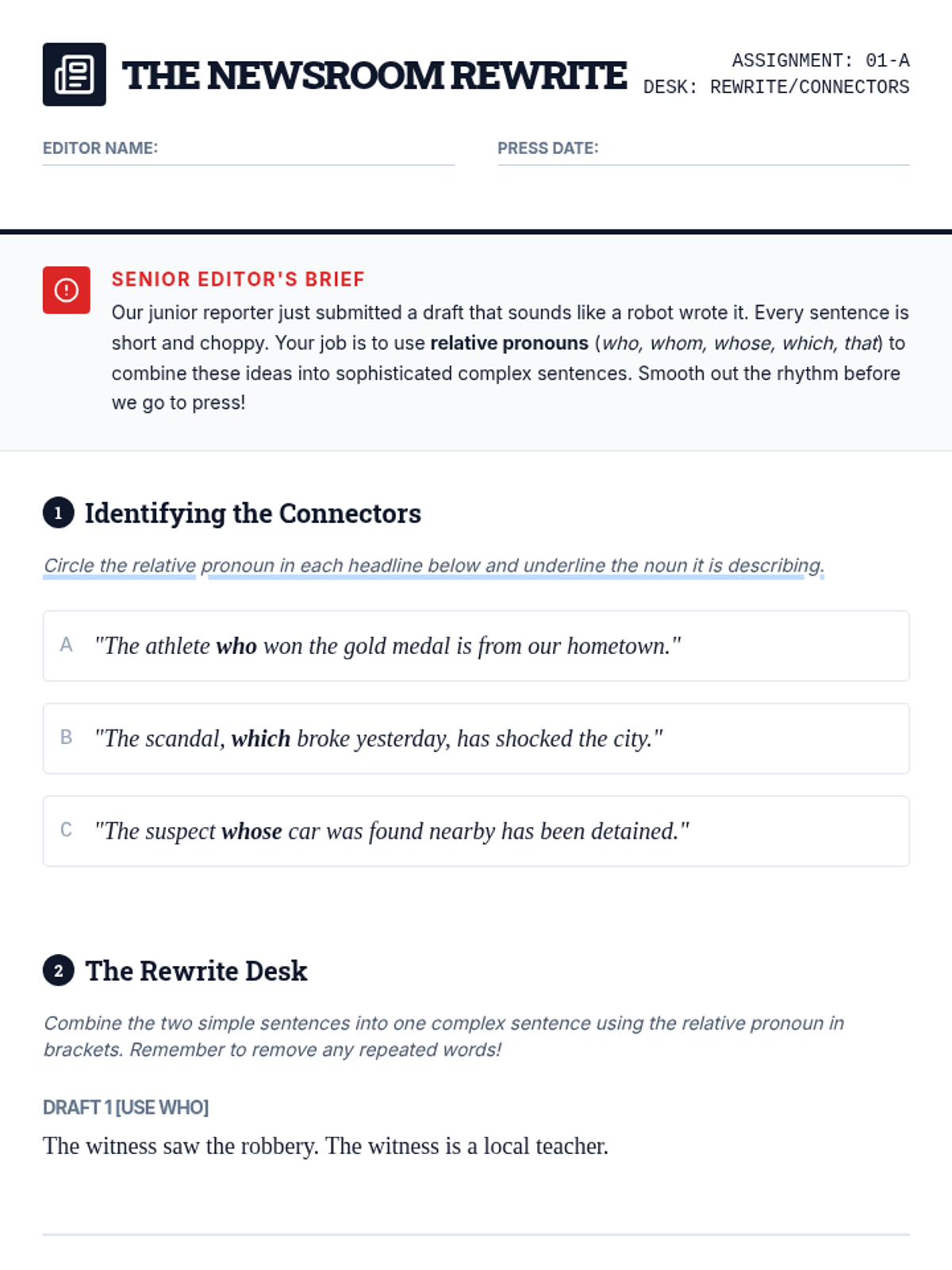
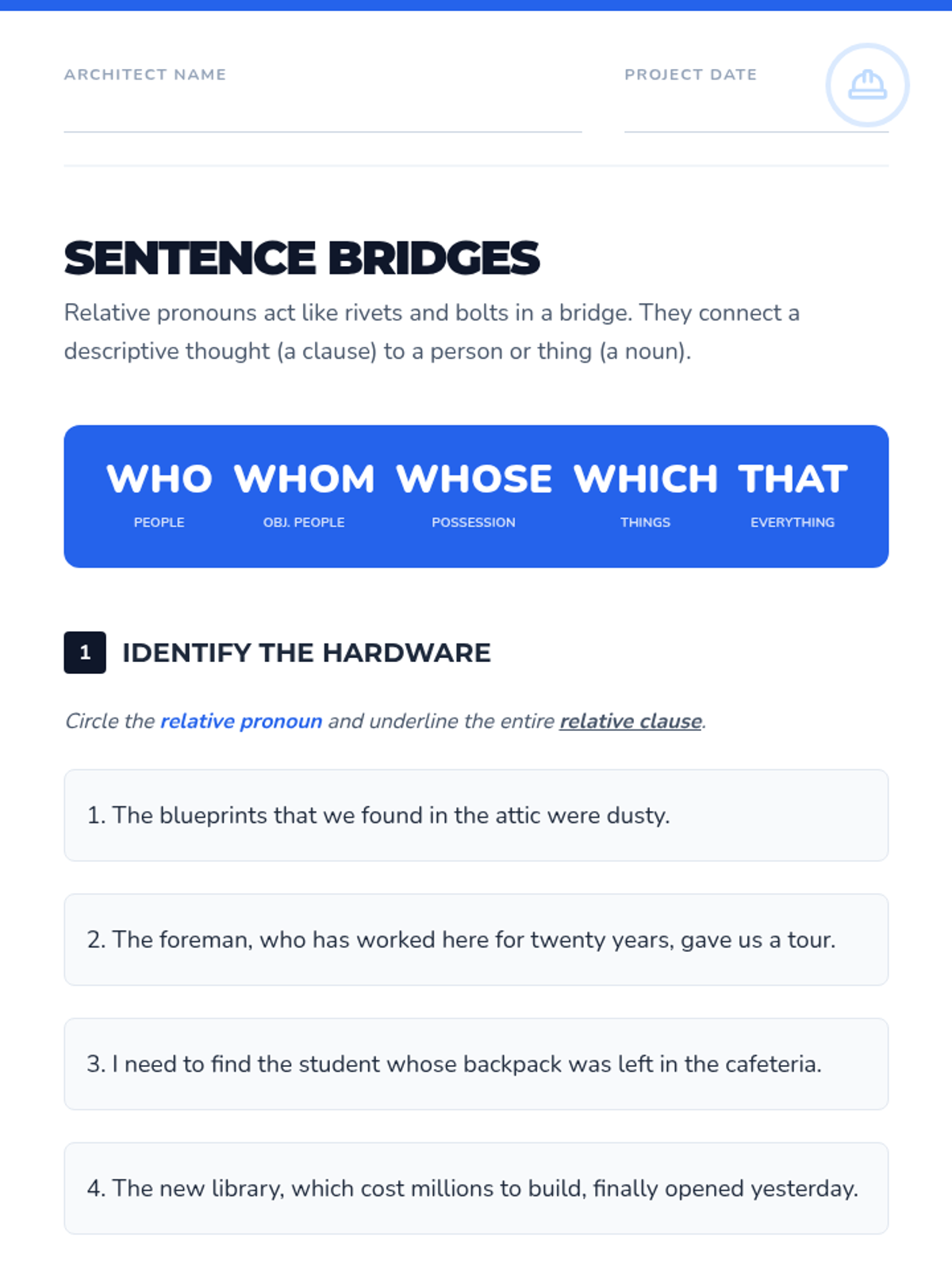
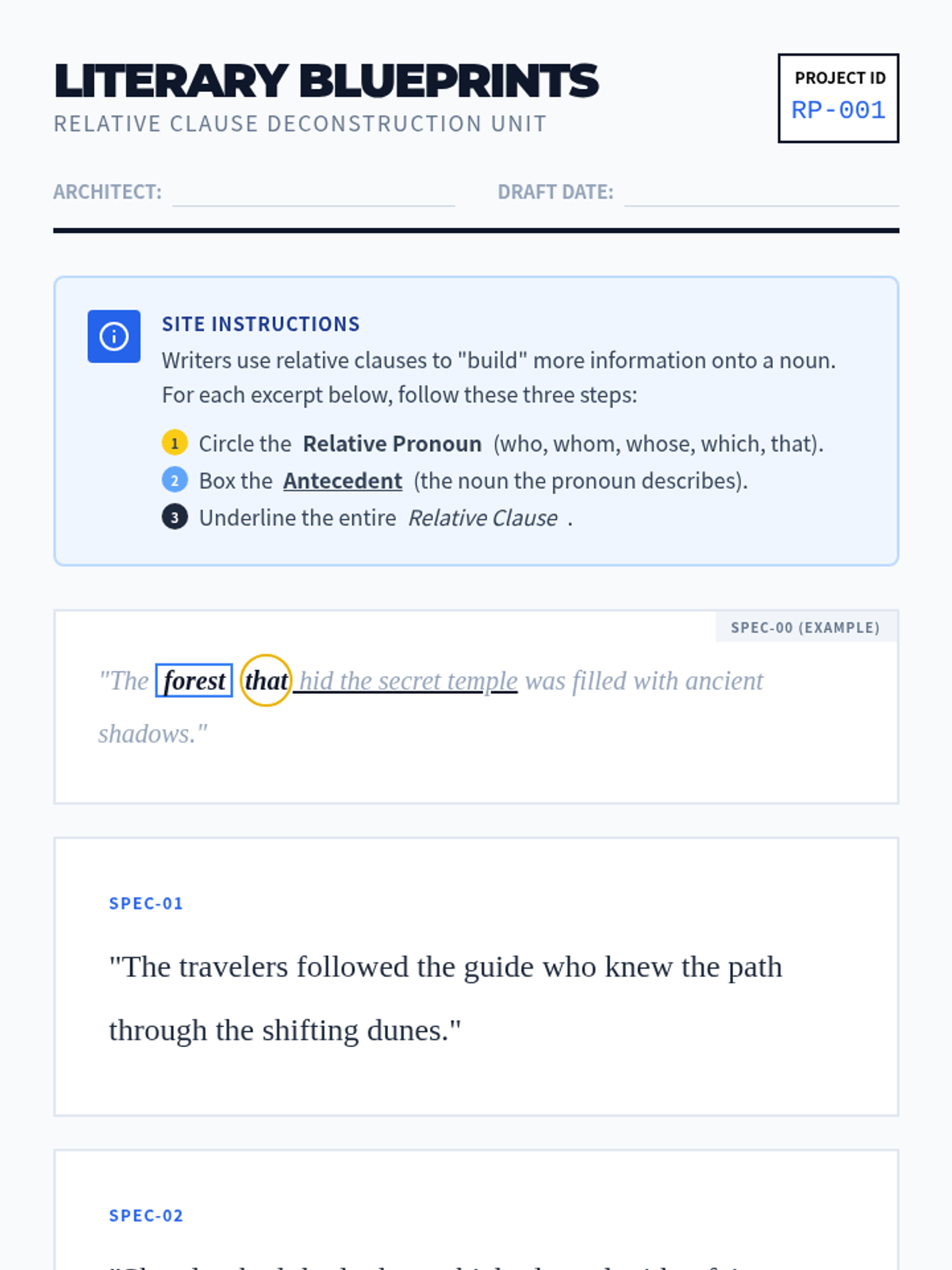
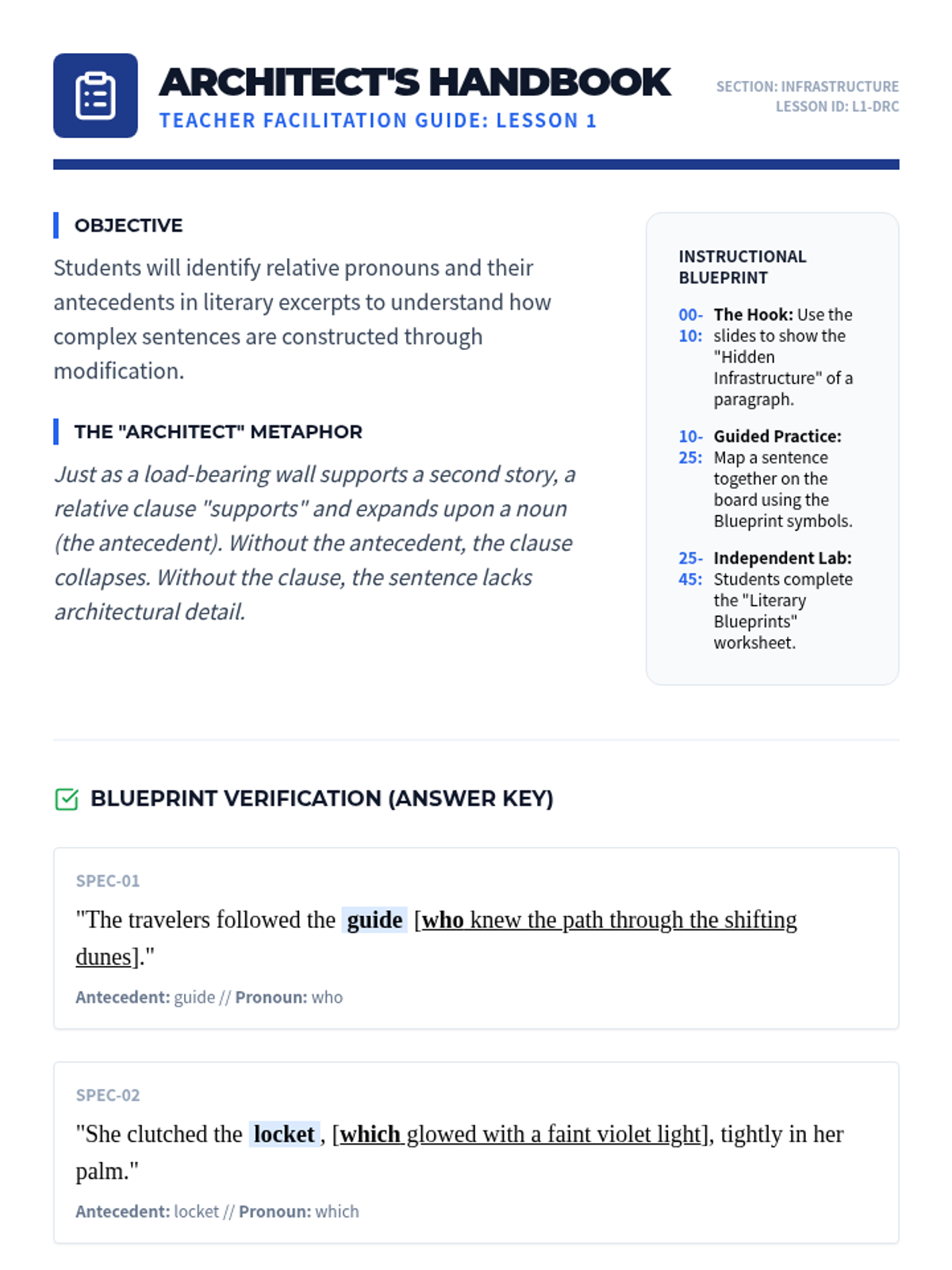
A 5-lesson unit where 8th-grade students act as investigative journalists to master relative pronouns. Through newsroom simulations, they learn to combine sentences, solve the who vs. whom puzzle, and master the punctuation of restrictive and non-restrictive clauses.
A 6th-grade grammar sequence focusing on pronoun clarity, ambiguous antecedents, and consistent point of view. Students act as 'Clarity Detectives' to eliminate vague writing and improve communication.
A comprehensive unit on reflexive and intensive pronouns, focusing on correct identification, usage, and correcting common hyper-correction errors. Students move from basic definitions to complex creative applications.
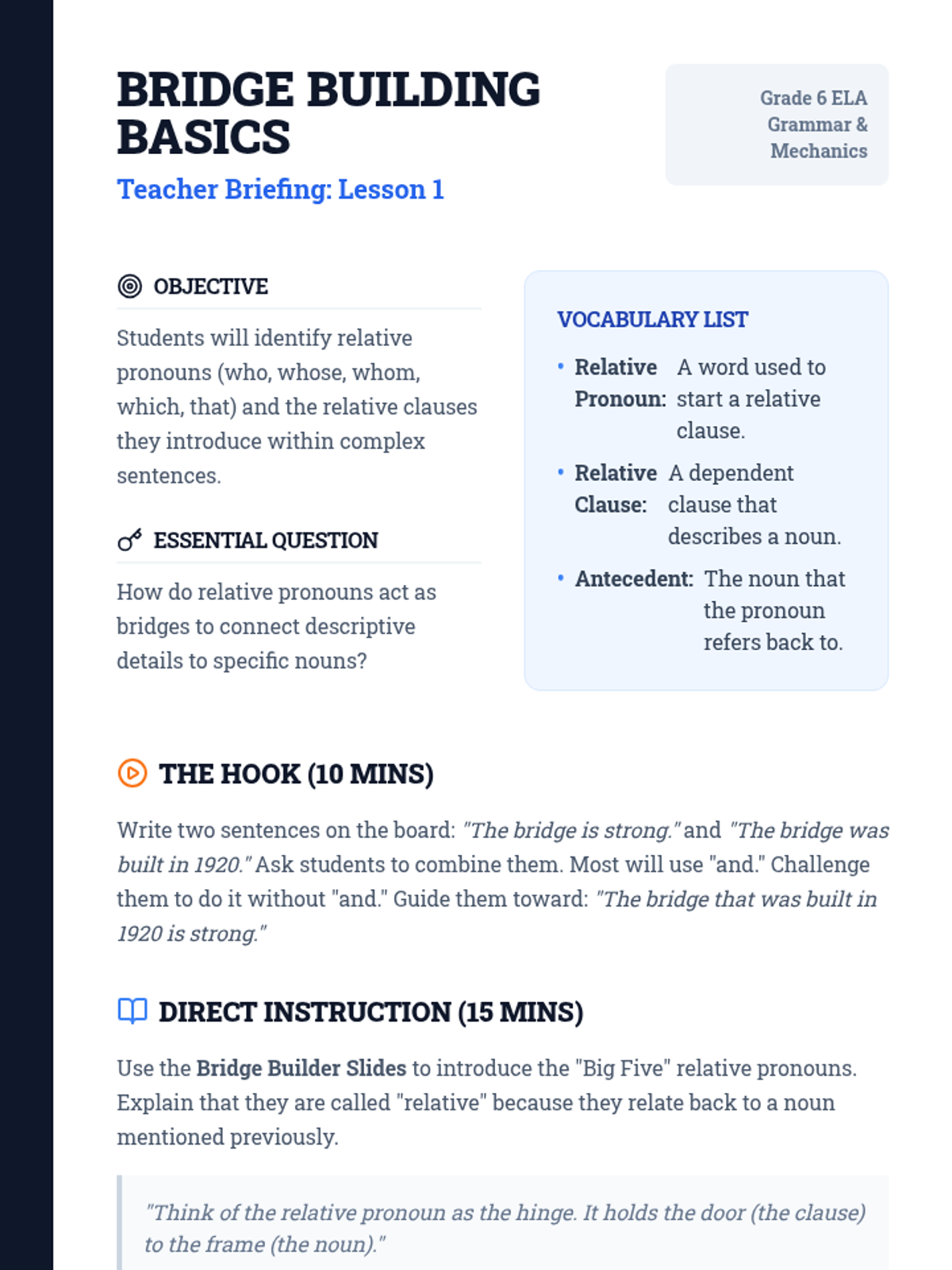
A comprehensive ELA sequence for 6th grade focused on using relative pronouns (who, whose, whom, which, that) to build complex, descriptive sentences and understand the nuances of restrictive vs. non-restrictive clauses.
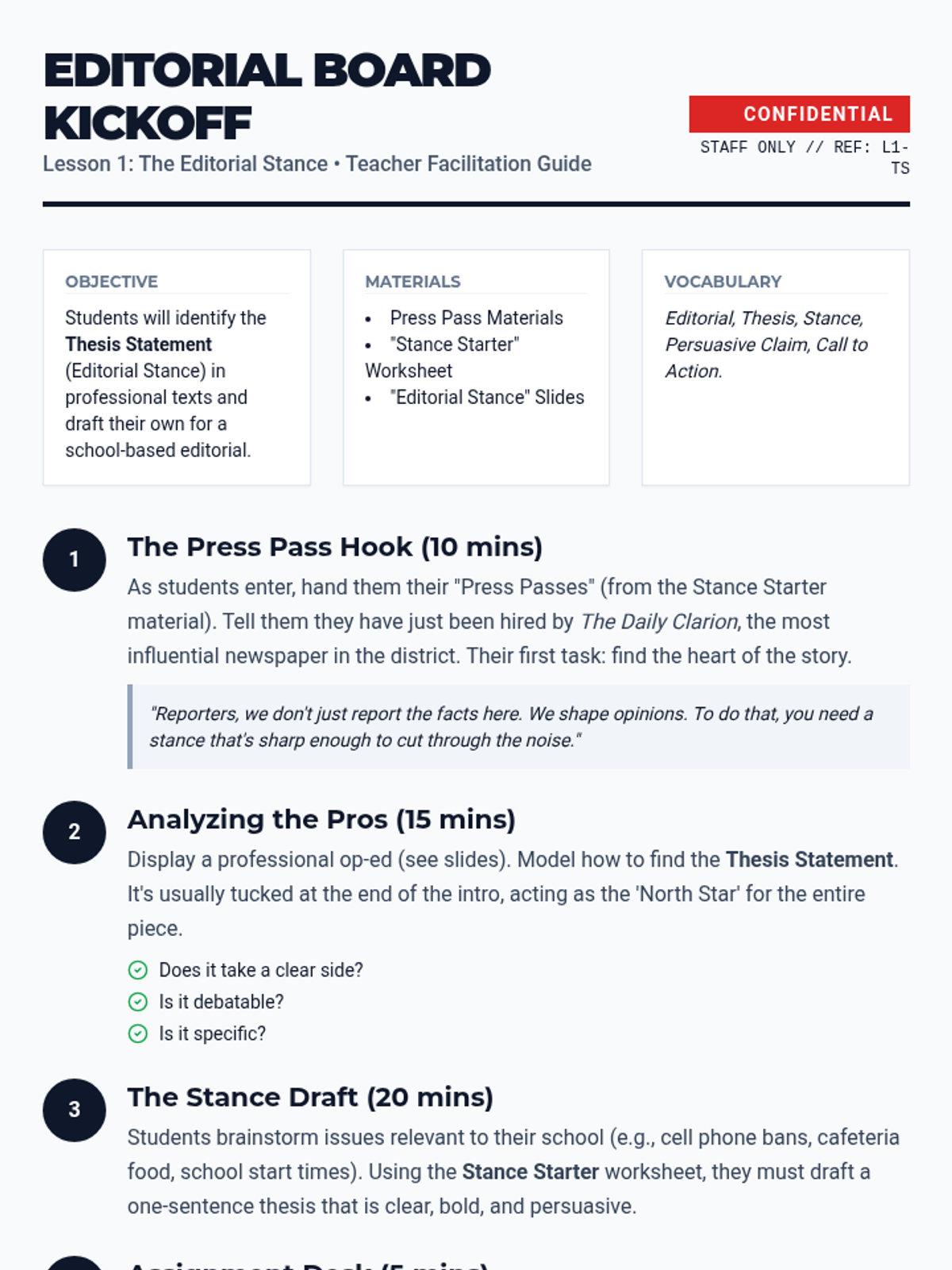
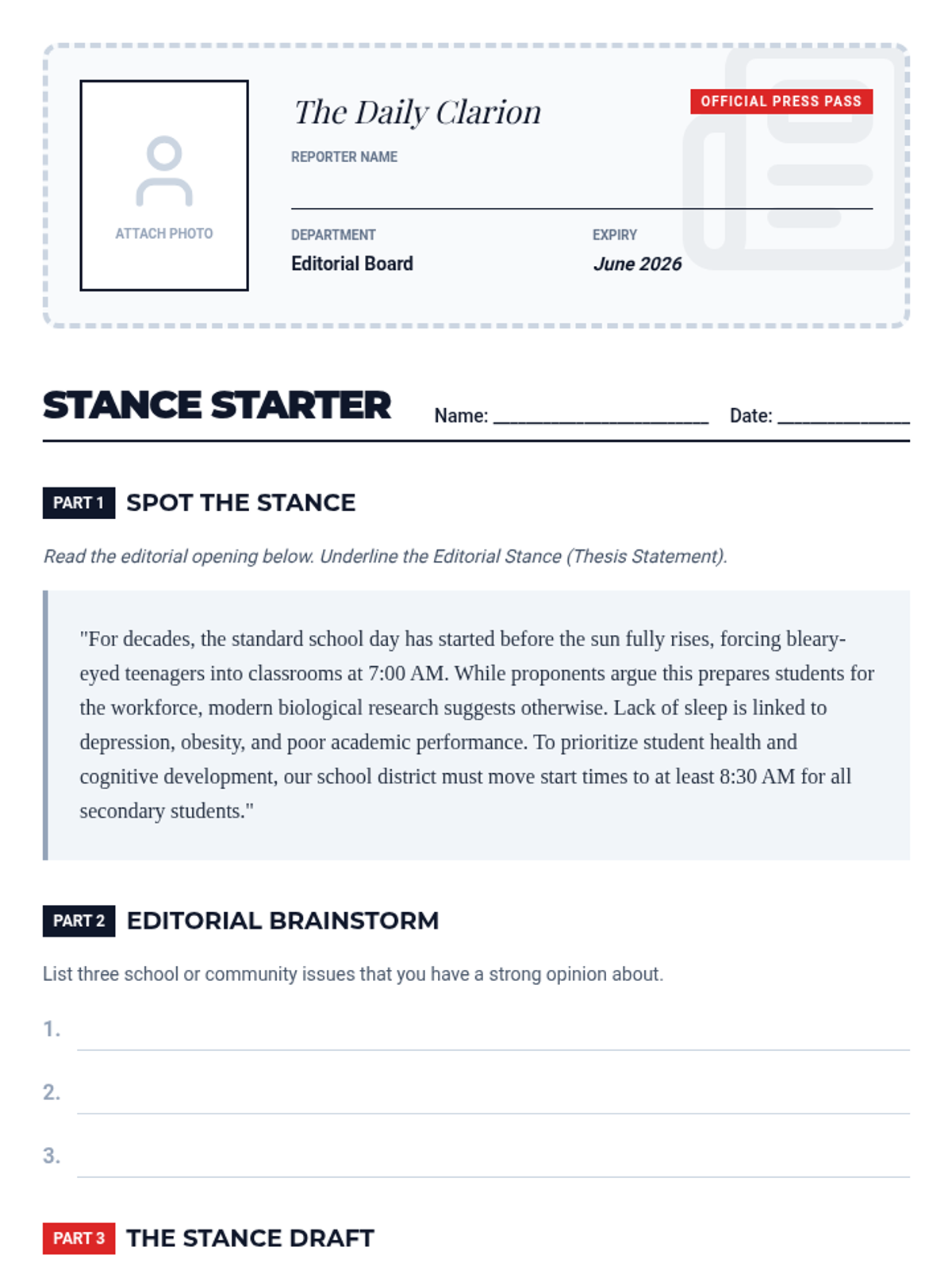
A simulation-based writing unit where students act as editorial writers for a newspaper. They master thesis statements (editorial stances) and topic sentences (sub-headlines) through the lens of real-world journalism.
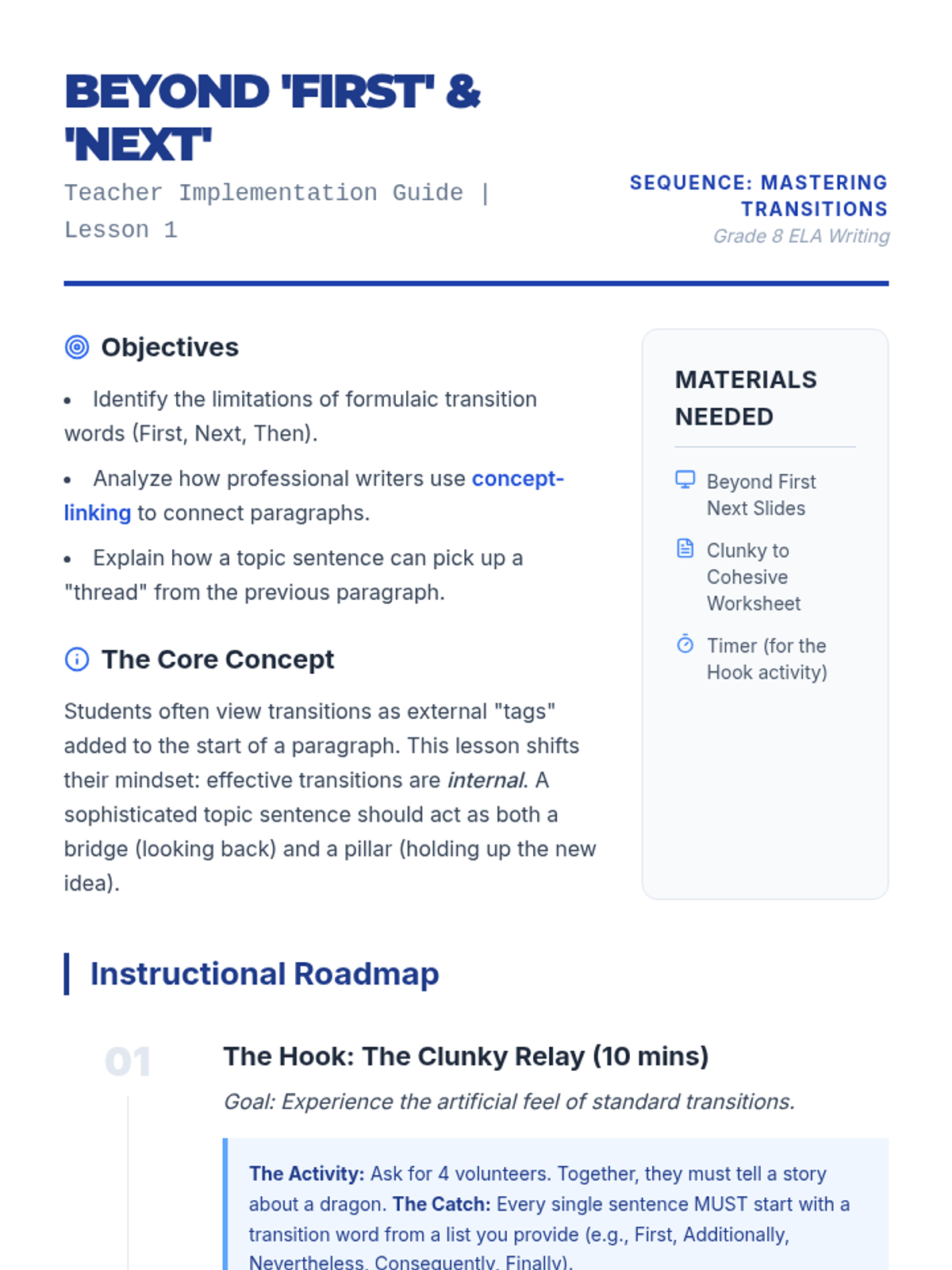
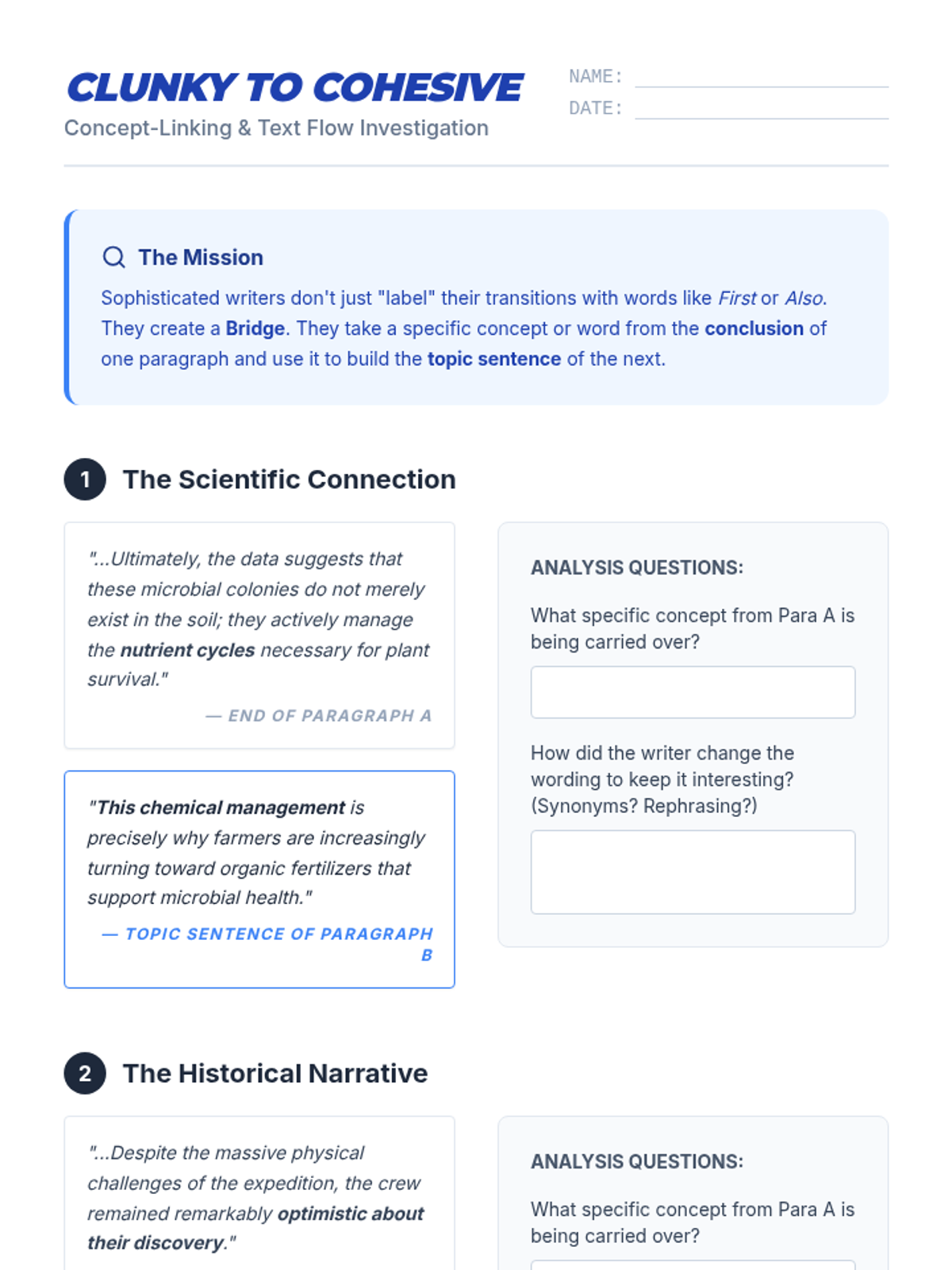
A high-level writing sequence for 8th graders focusing on transitioning away from formulaic transition words toward sophisticated, concept-linked topic sentences that create seamless flow and cohesion.
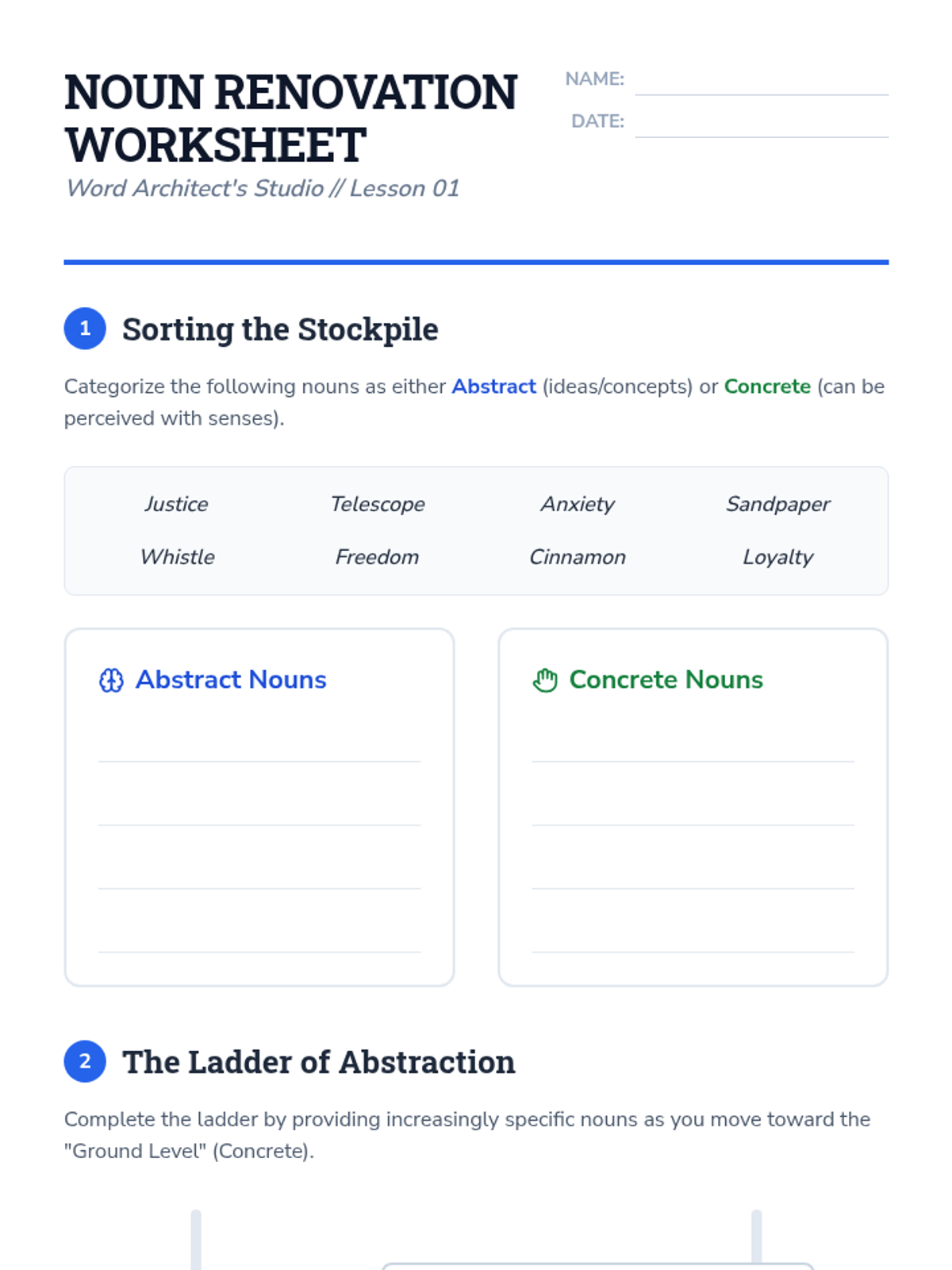
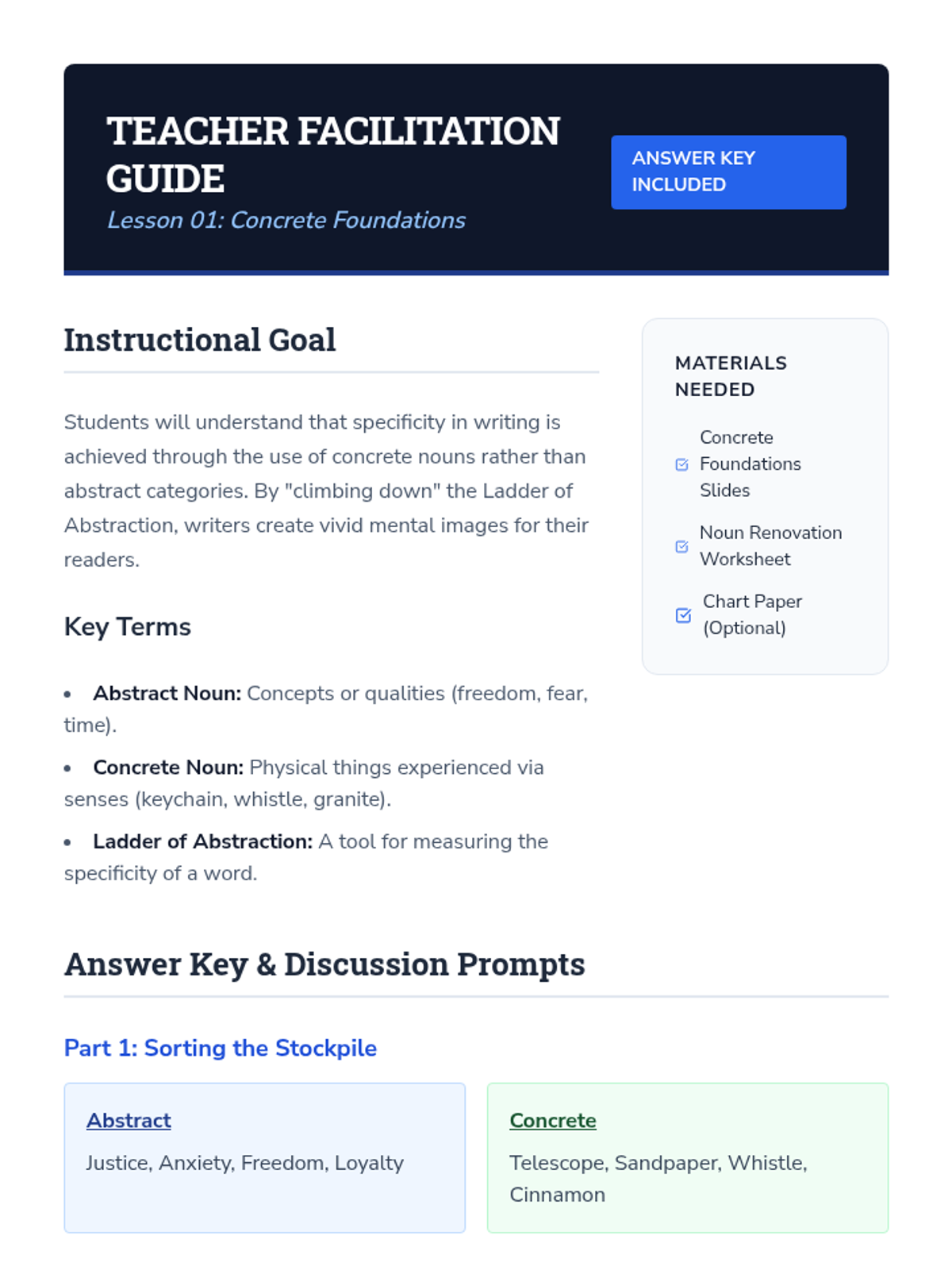
A writing-intensive sequence for 8th-grade ELA focusing on using specific nouns and precise adjectives to create vivid narrative imagery and control tone. Students move from the 'Ladder of Abstraction' to mastering adjective connotation and sentence structure, culminating in a descriptive writing workshop.
This writing workshop sequence moves students beyond basic identification of nouns and adjectives toward strategic application in narrative writing. Students practice replacing general nouns with concrete alternatives and weak adjectives with vivid modifiers to enhance reader visualization.
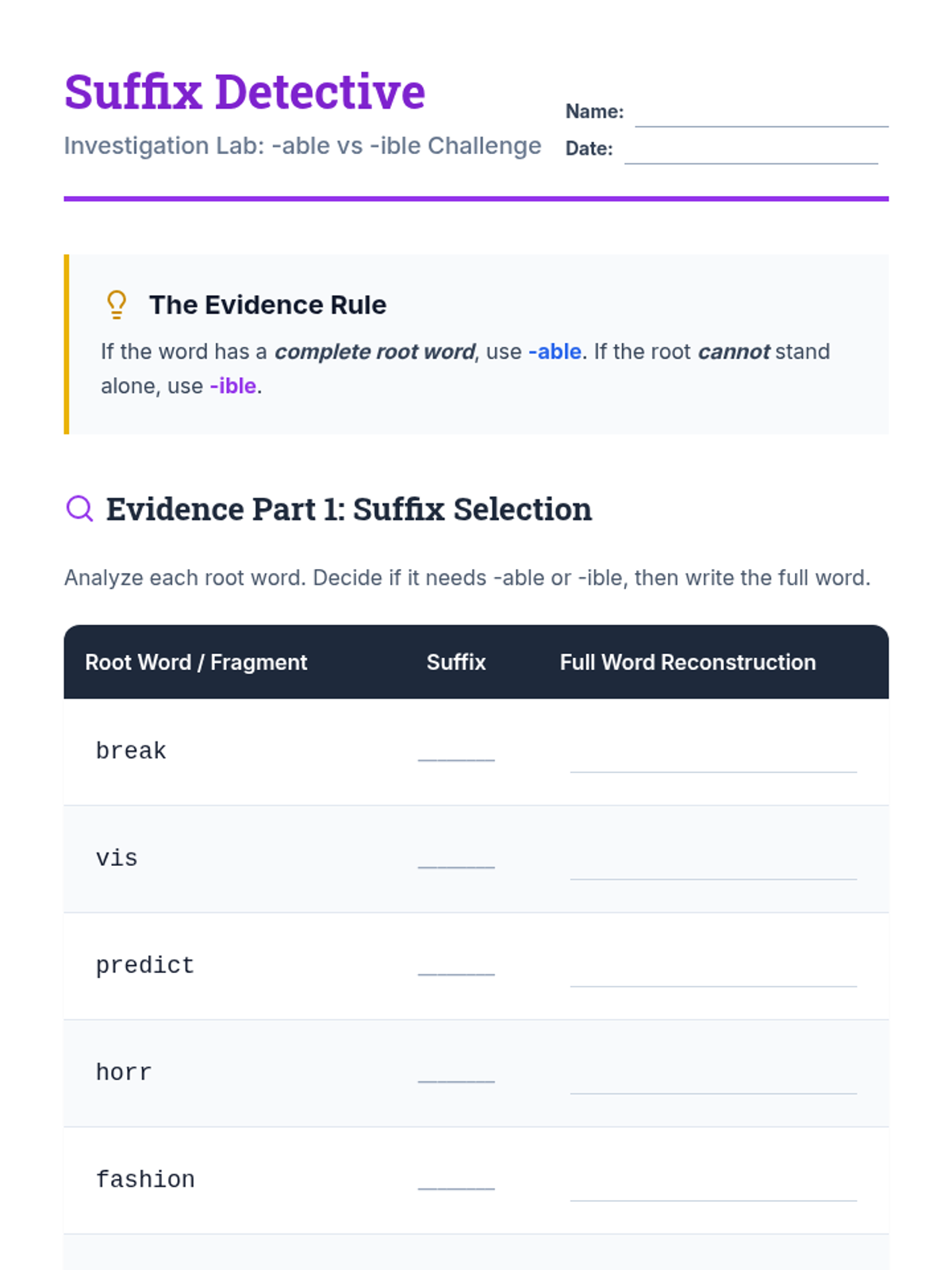
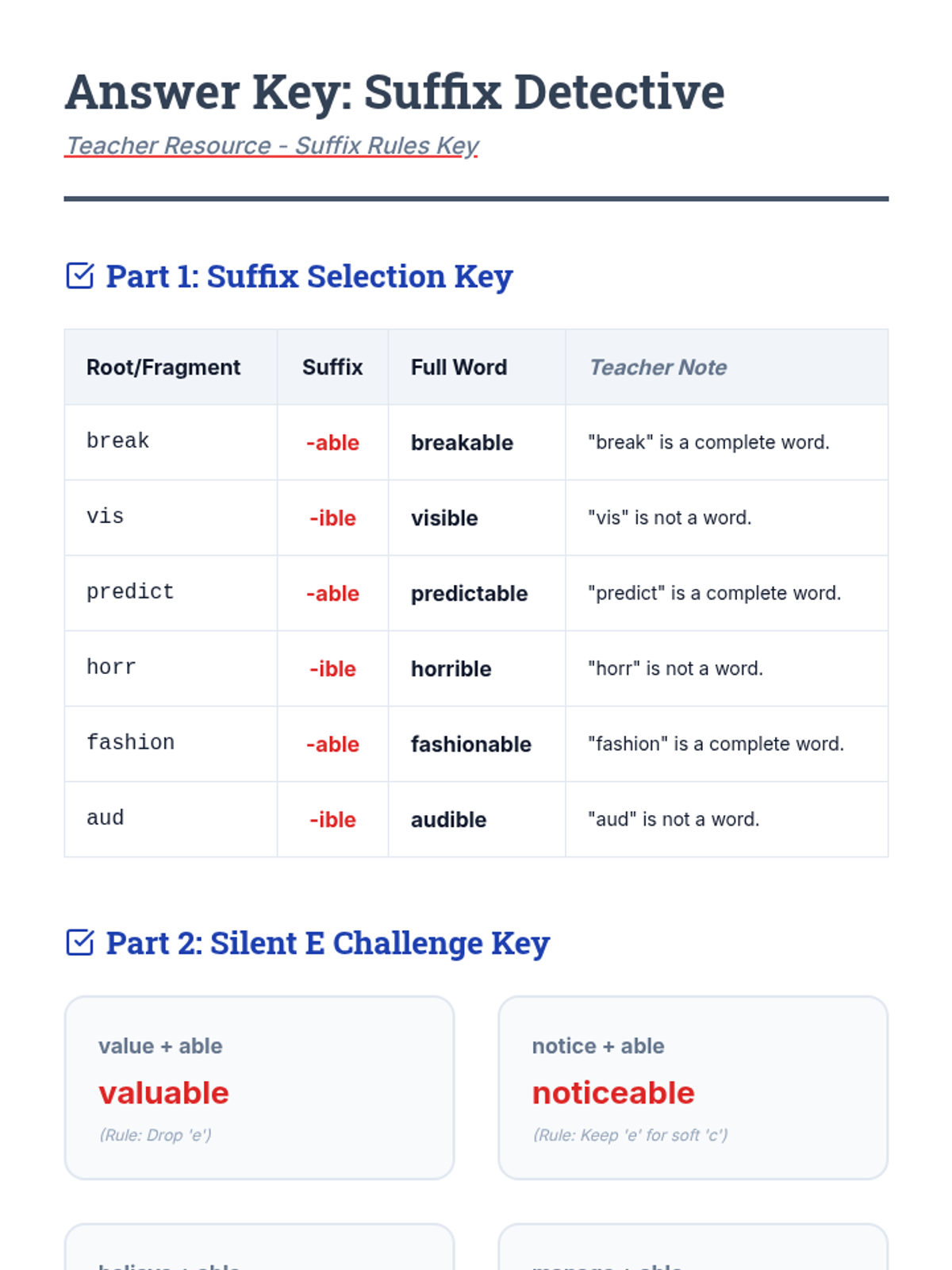
A series of lessons exploring complex spelling patterns including assimilated suffixes and chameleon prefixes to improve student decoding and spelling accuracy.
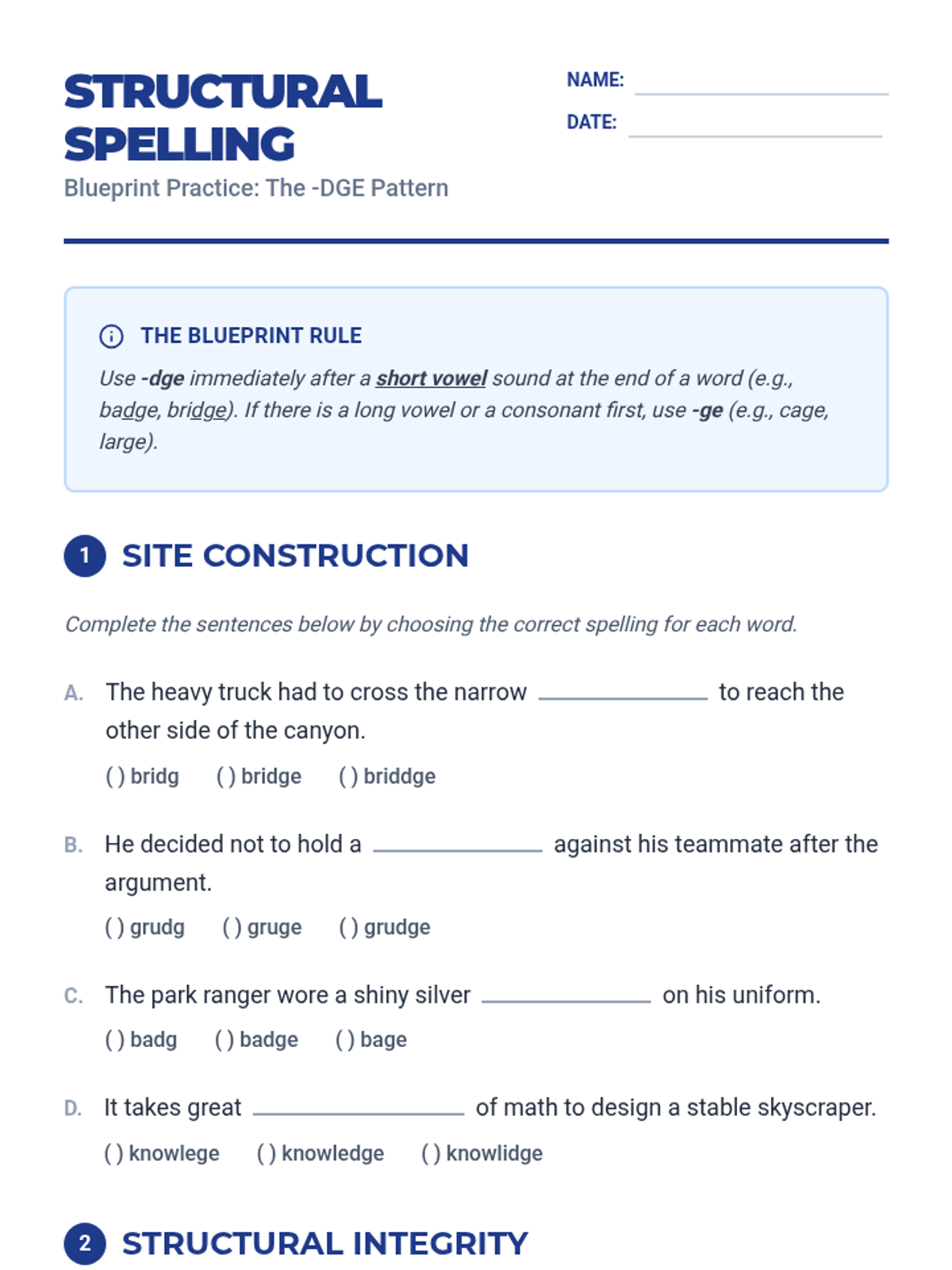
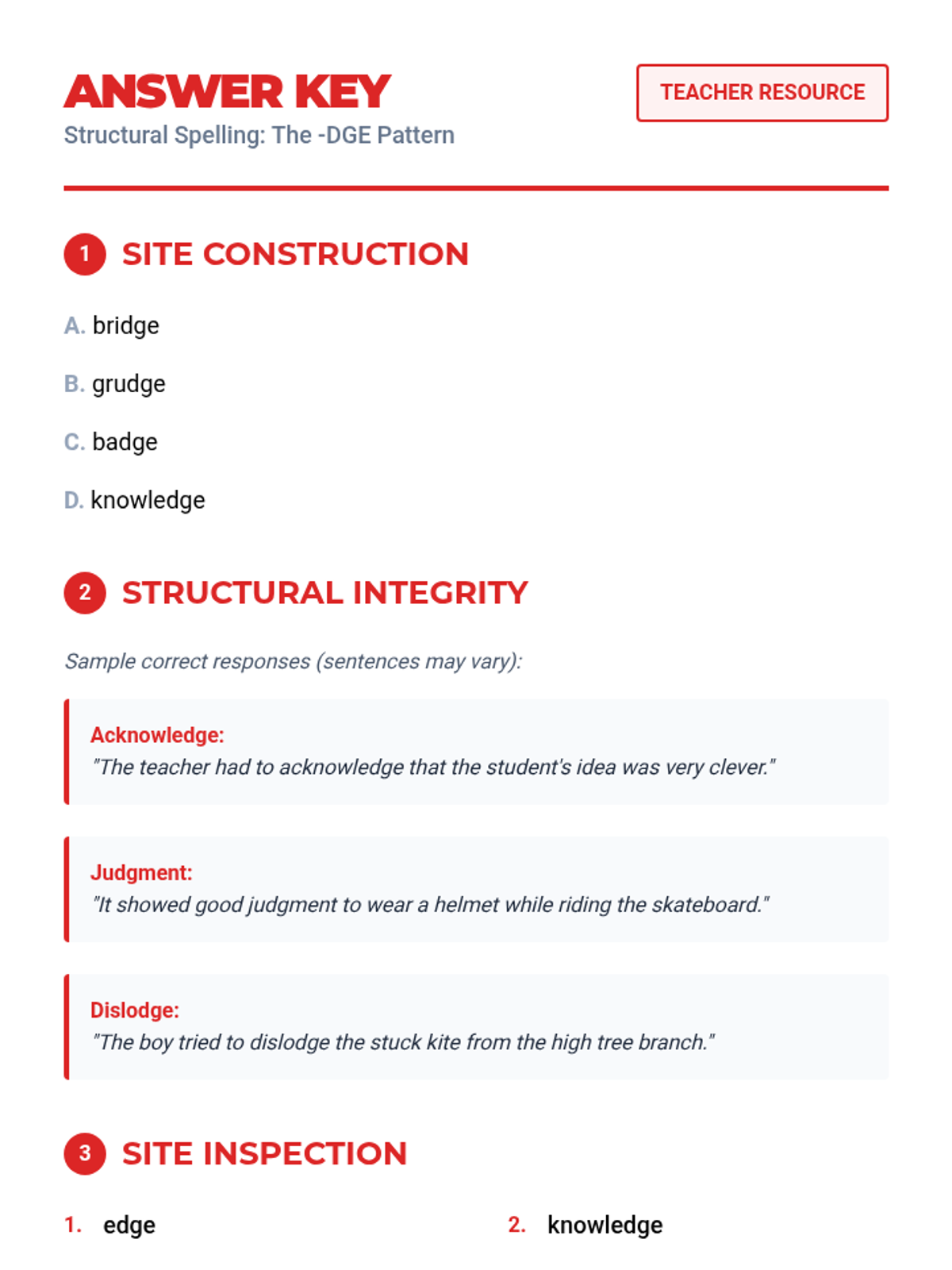
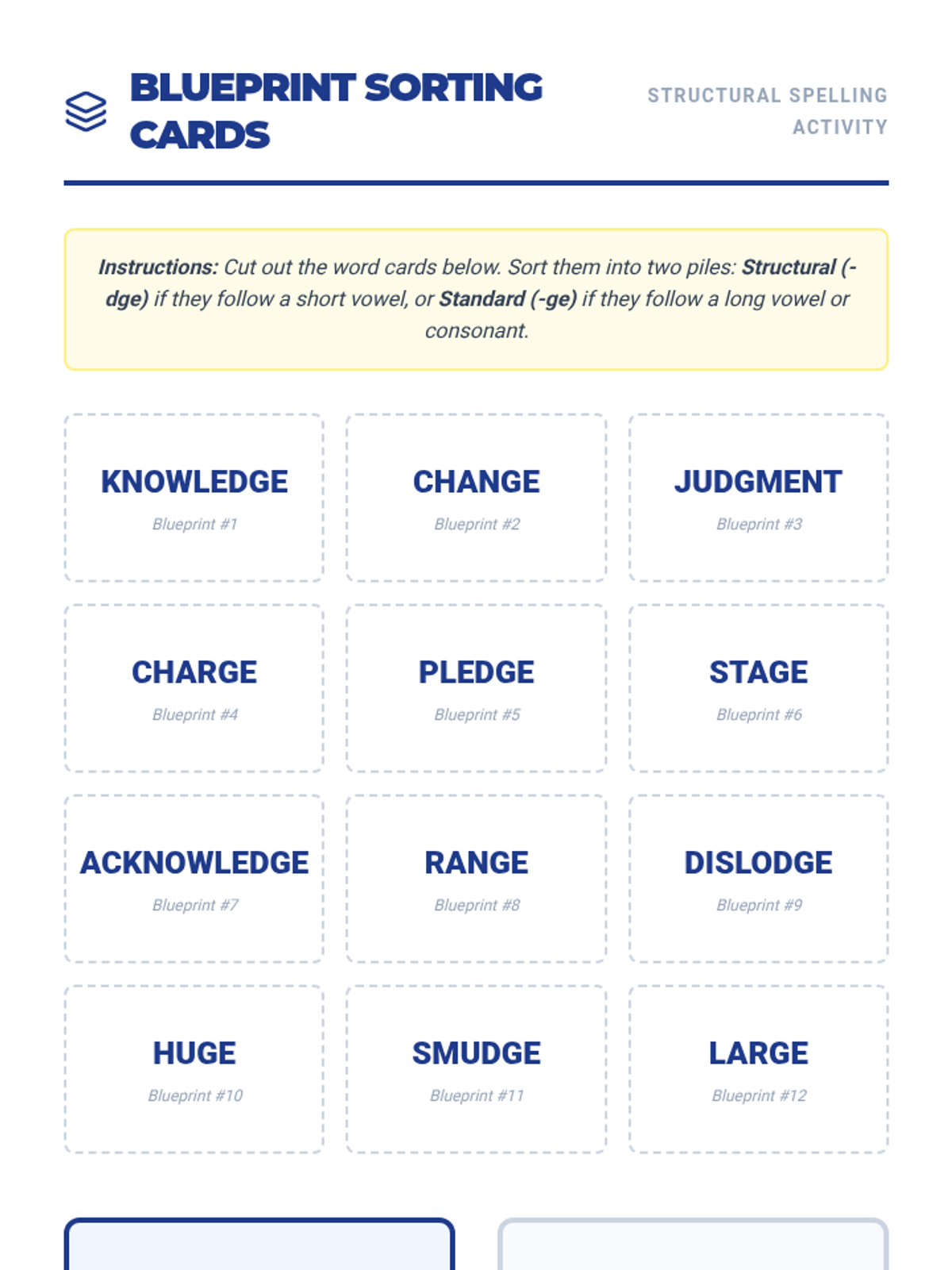
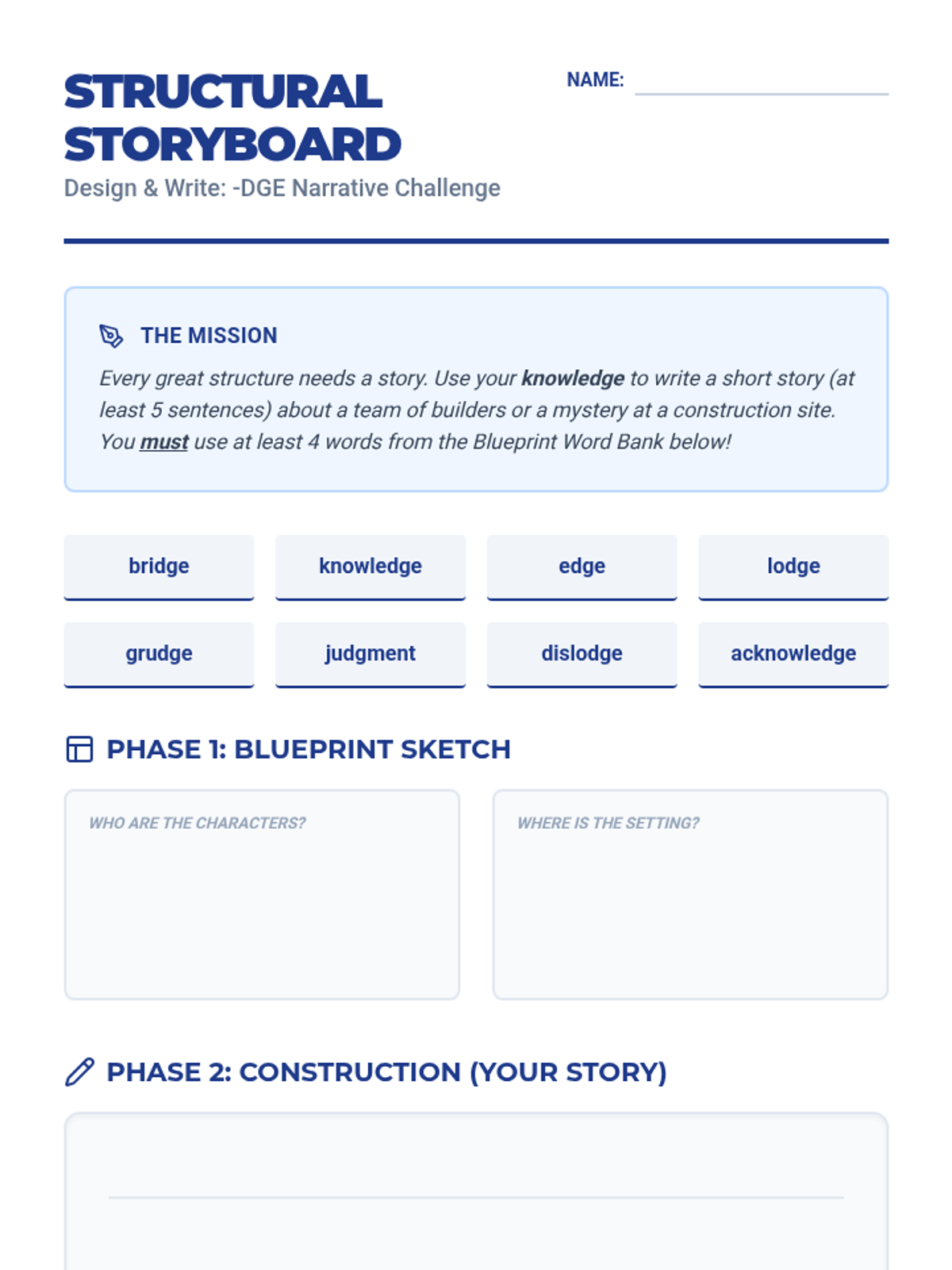
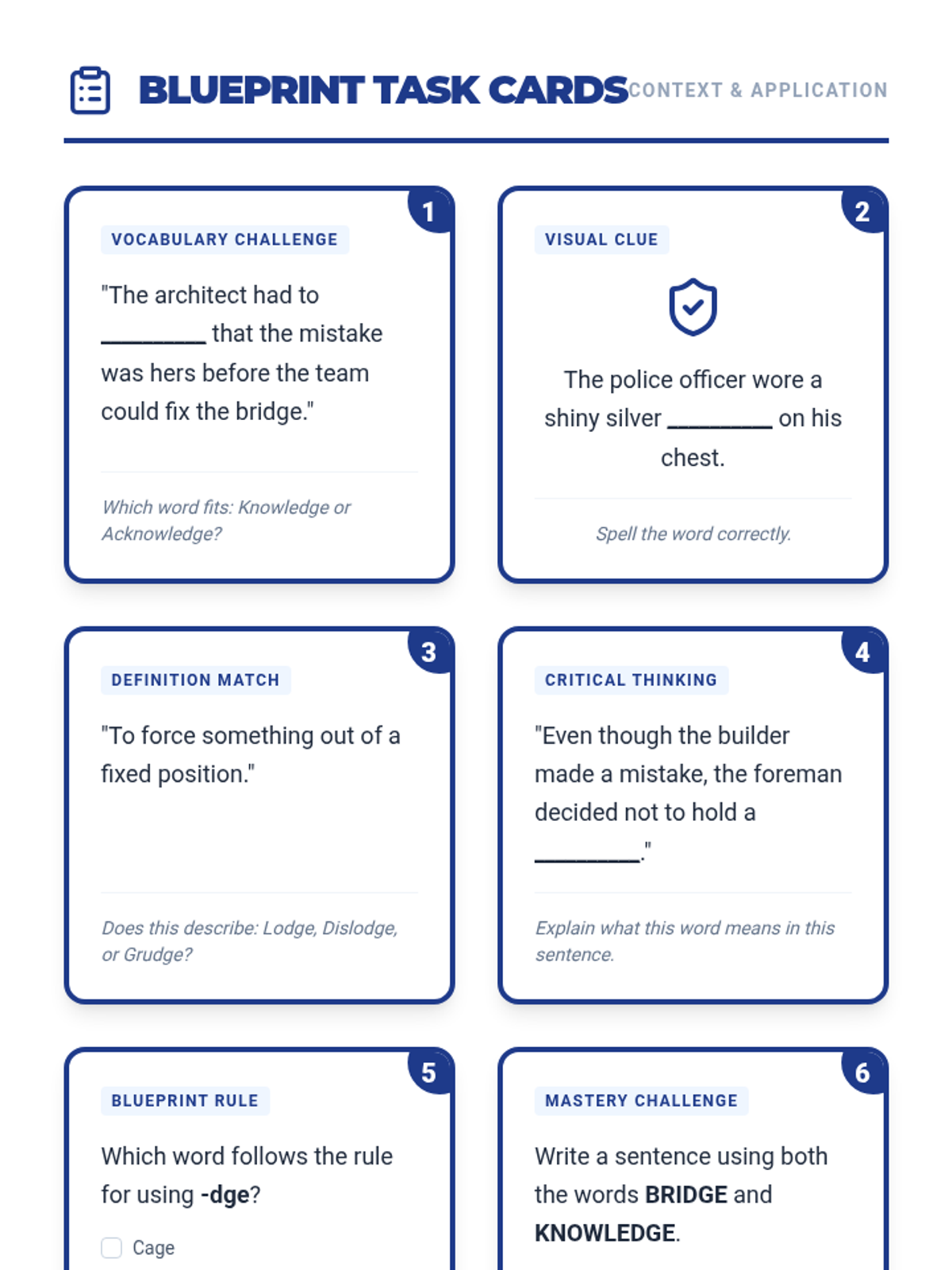
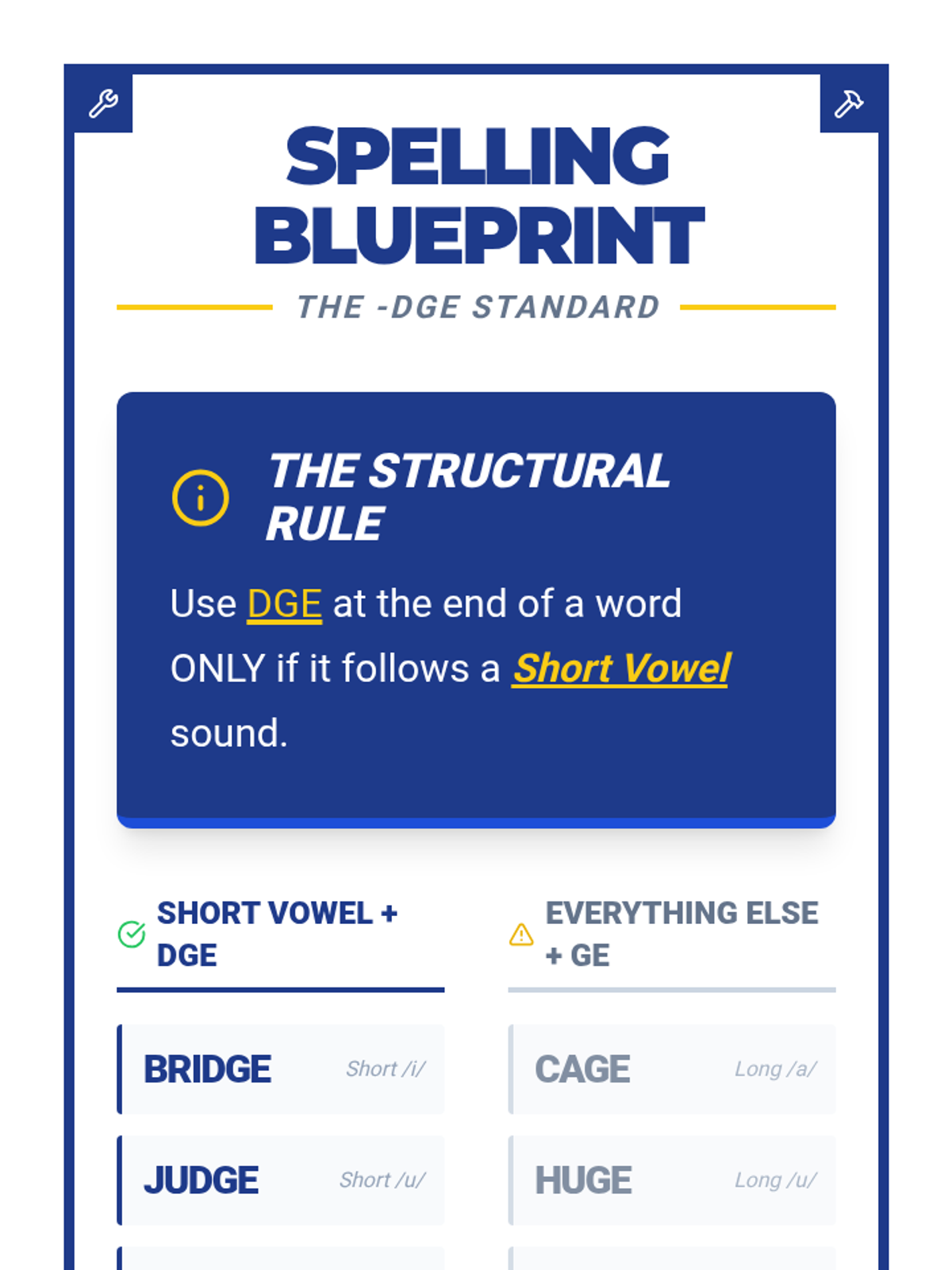
A specialized spelling sequence for middle school students, focusing on complex phonetic patterns and their practical application in reading and writing. The sequence uses a 'Blueprint' theme to treat word construction as structural engineering.
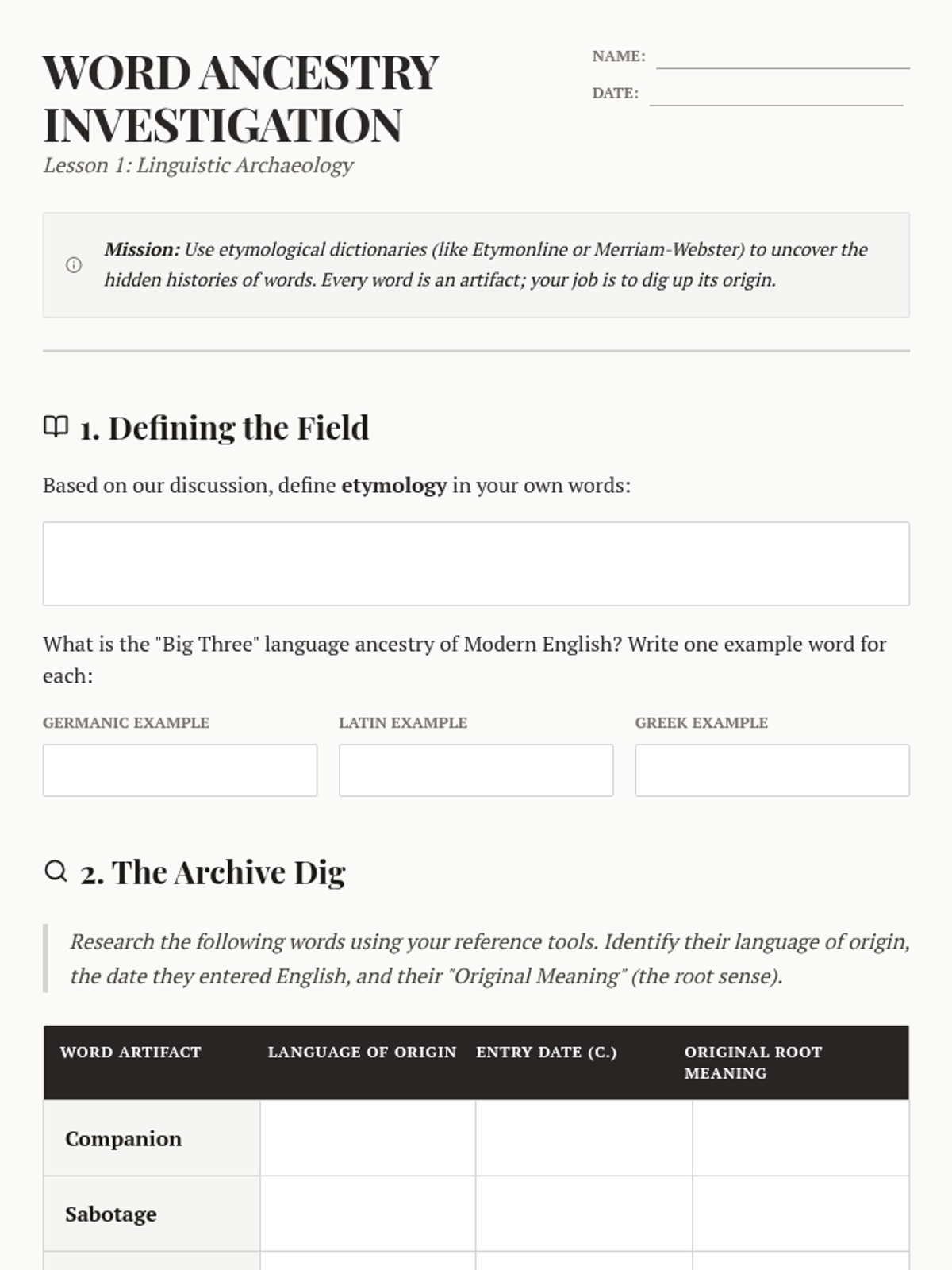
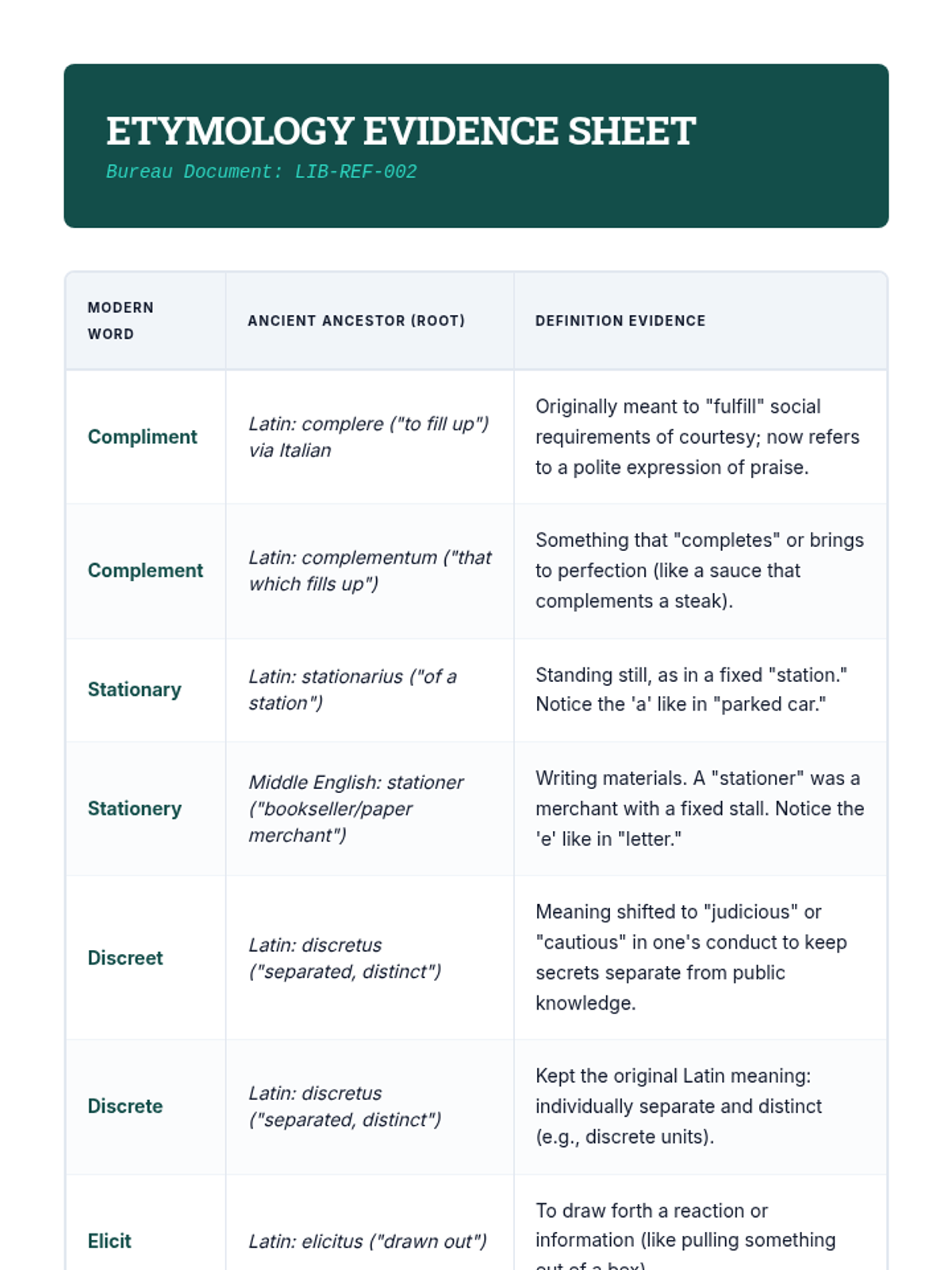
This inquiry-driven sequence focuses on etymology as a reference skill, teaching students to trace word origins to understand language evolution and historical context. Students move from decoding individual roots to analyzing how historical events shape the English lexicon, culminating in a 'word biography' project.
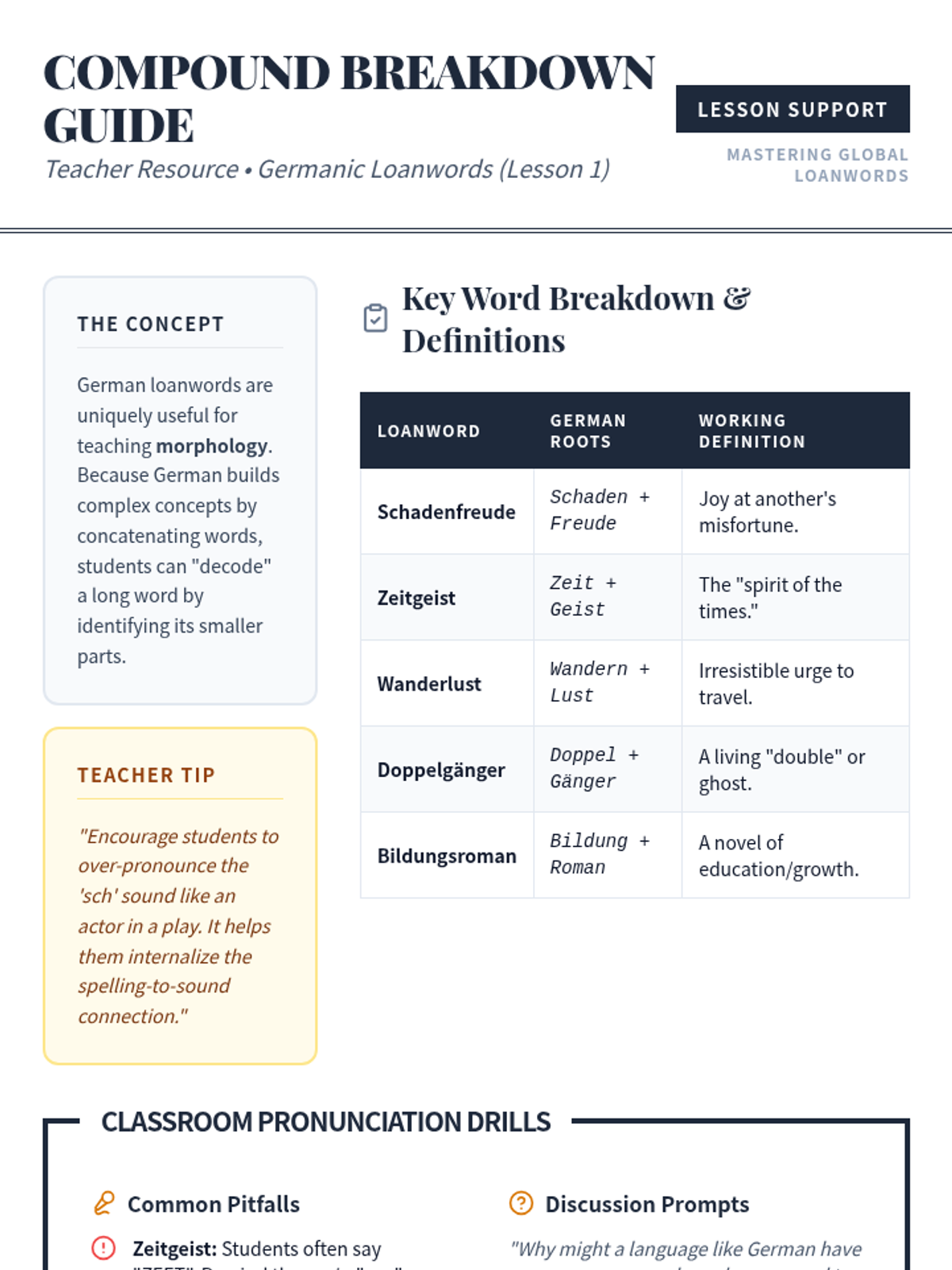
This sequence explores loanwords from German, Spanish, Italian, and Yiddish, focusing on their cultural origins, tricky orthography, and precise meanings. Students will engage in morphological analysis, categorization, and inquiry-based research to master these linguistic imports.
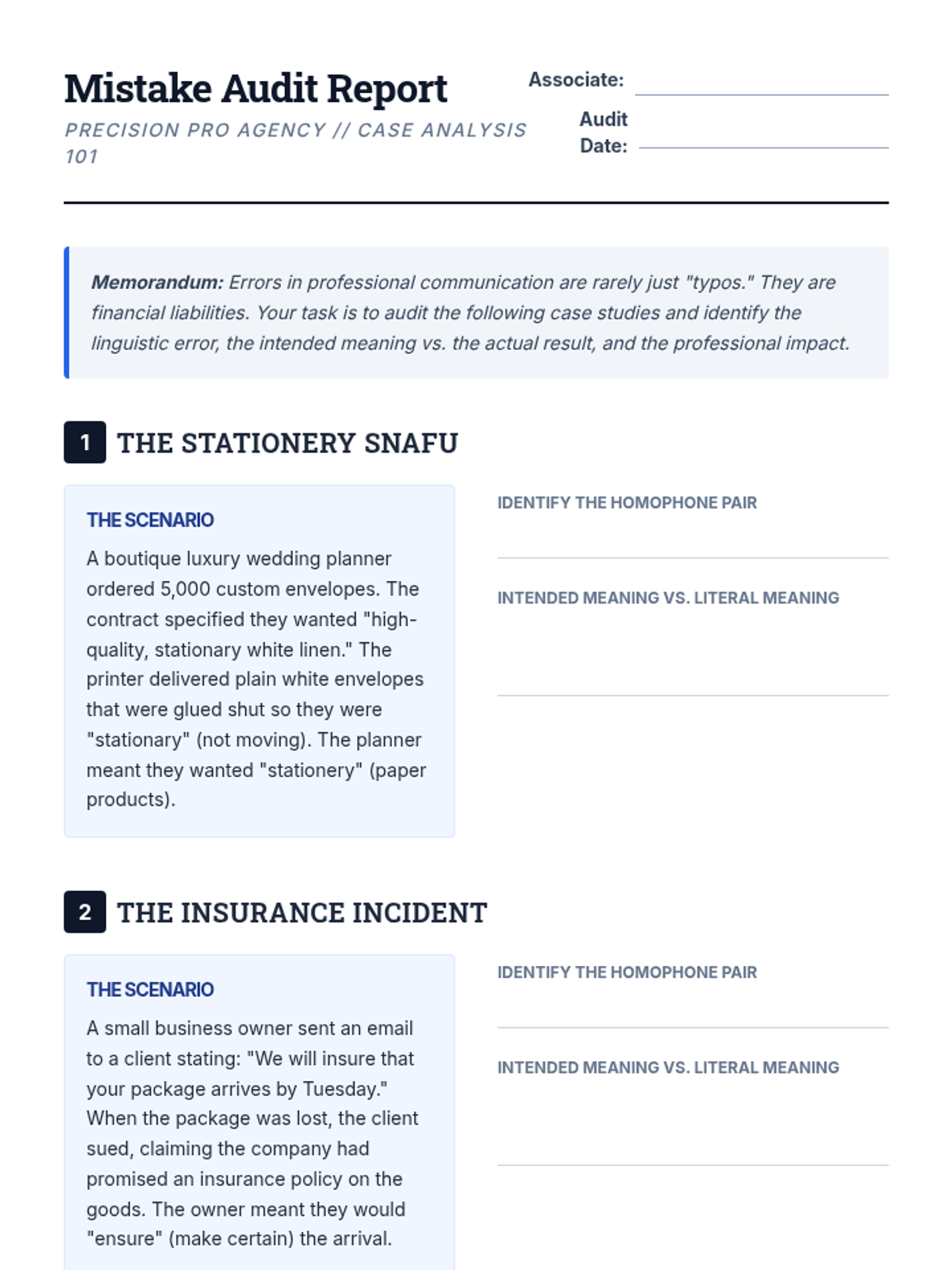
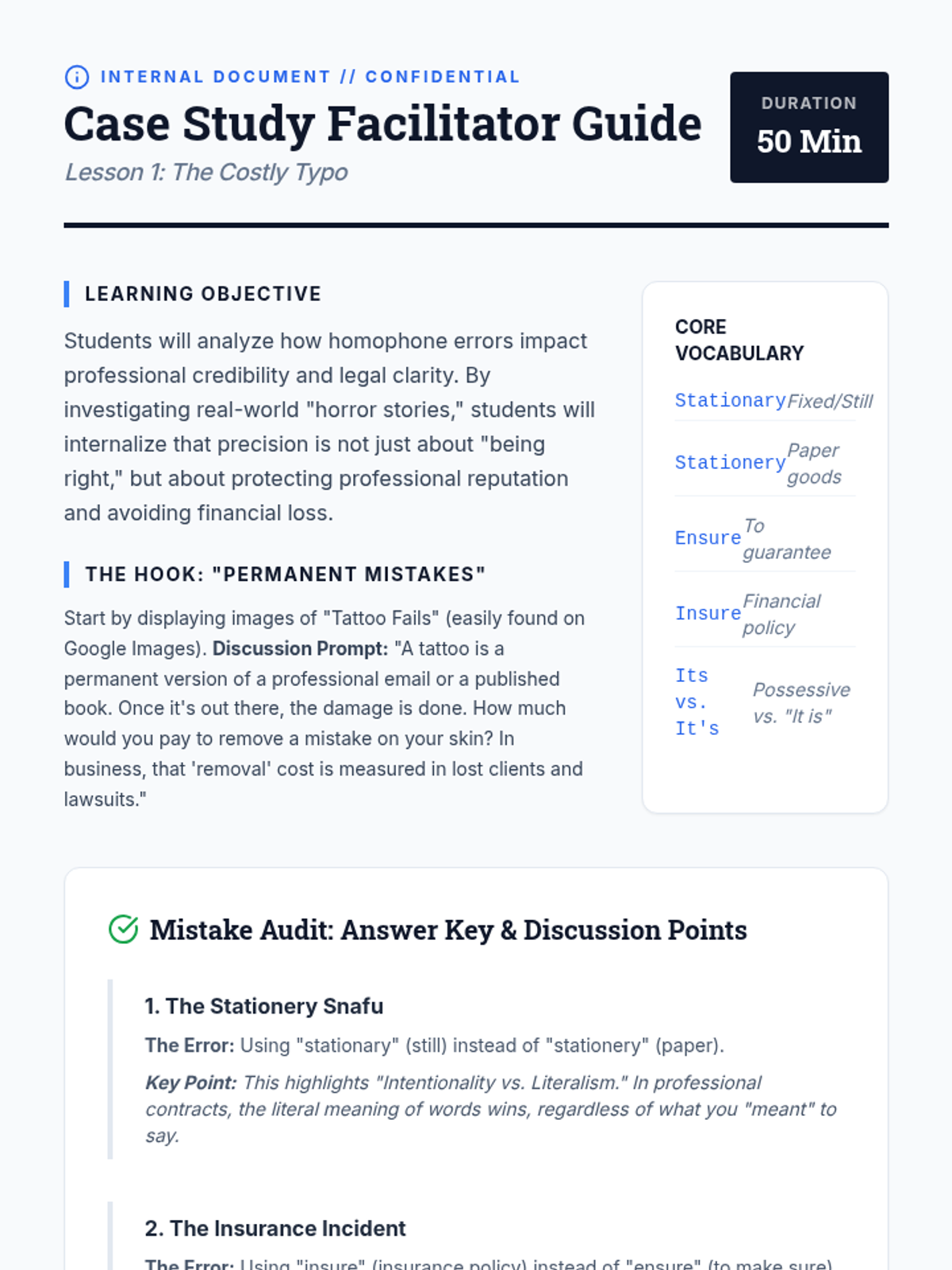
An 8th-grade ELA unit that frames homophone mastery as a professional essential. Students act as a copy editing firm, analyzing the financial and reputational costs of homophone errors through real-world simulations, resume reviews, and newsroom scenarios.
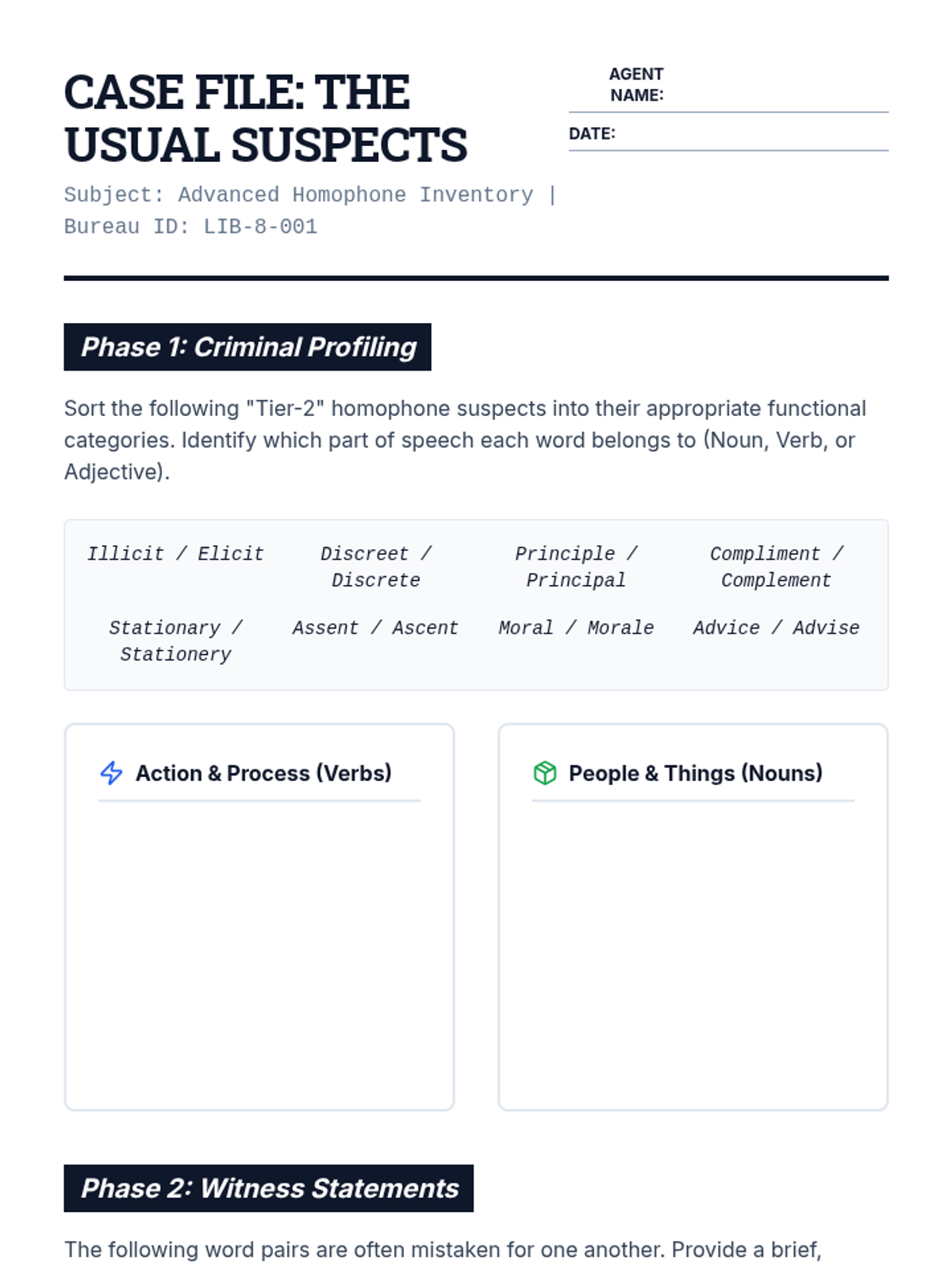
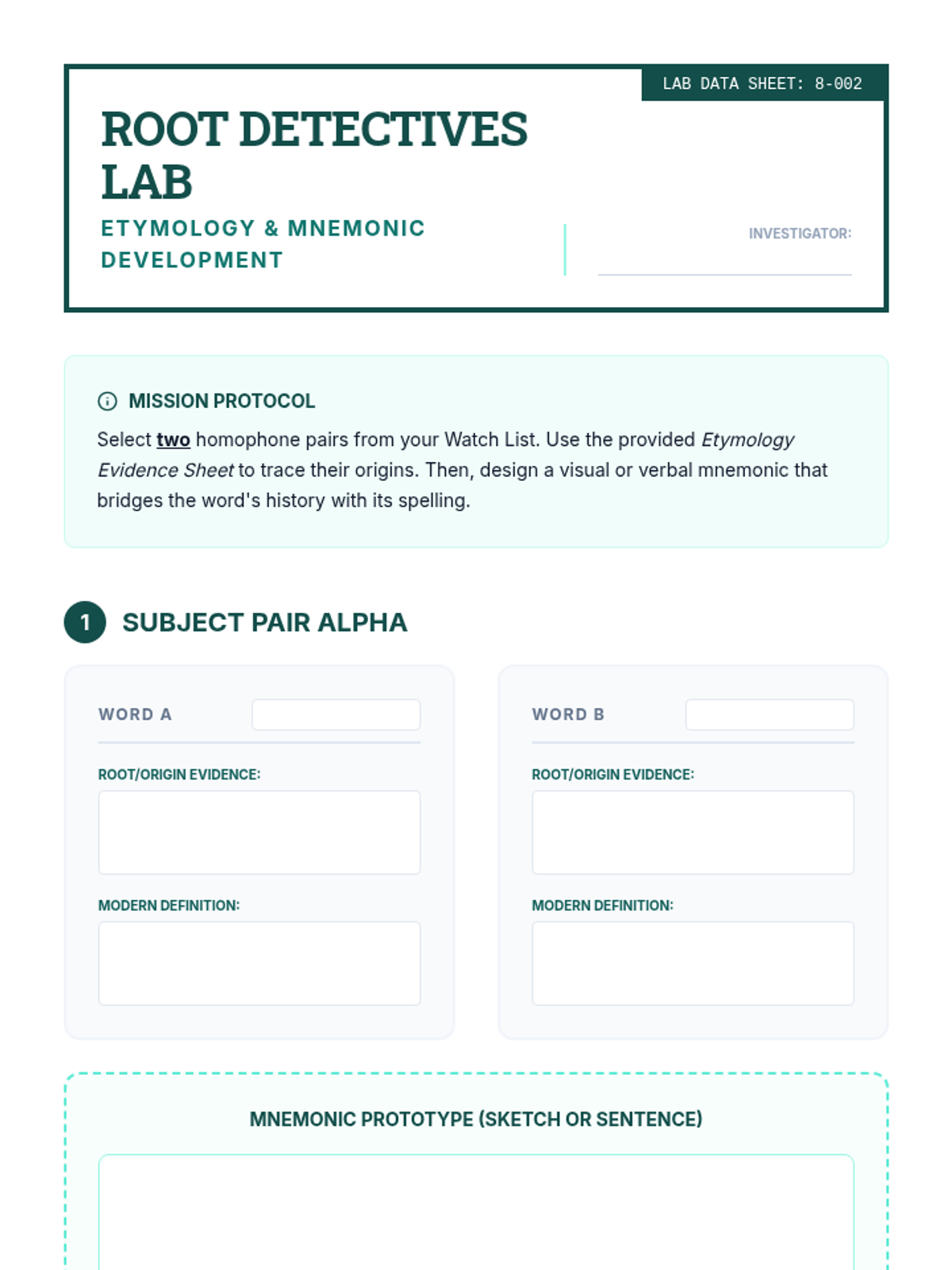
This advanced 8th-grade sequence transforms students into linguistic investigators. They will explore complex homophones (tier-2 vocabulary) through etymology, context clues, and technical editing, culminating in the creation of a professional-grade style guide.
A project-based ELA sequence for 6th graders to master complex homophones through visual associations, etymology, and mnemonic devices. Students move from diagnosing personal errors to creating a collaborative visual dictionary.
An 8th-grade grammar sequence focusing on the nuances of subject-verb agreement with compound subjects. Students engage in game-based learning to master the 'and' rule, the proximity rule with 'or/nor', mixed number subjects, and positive/negative subject pairings.
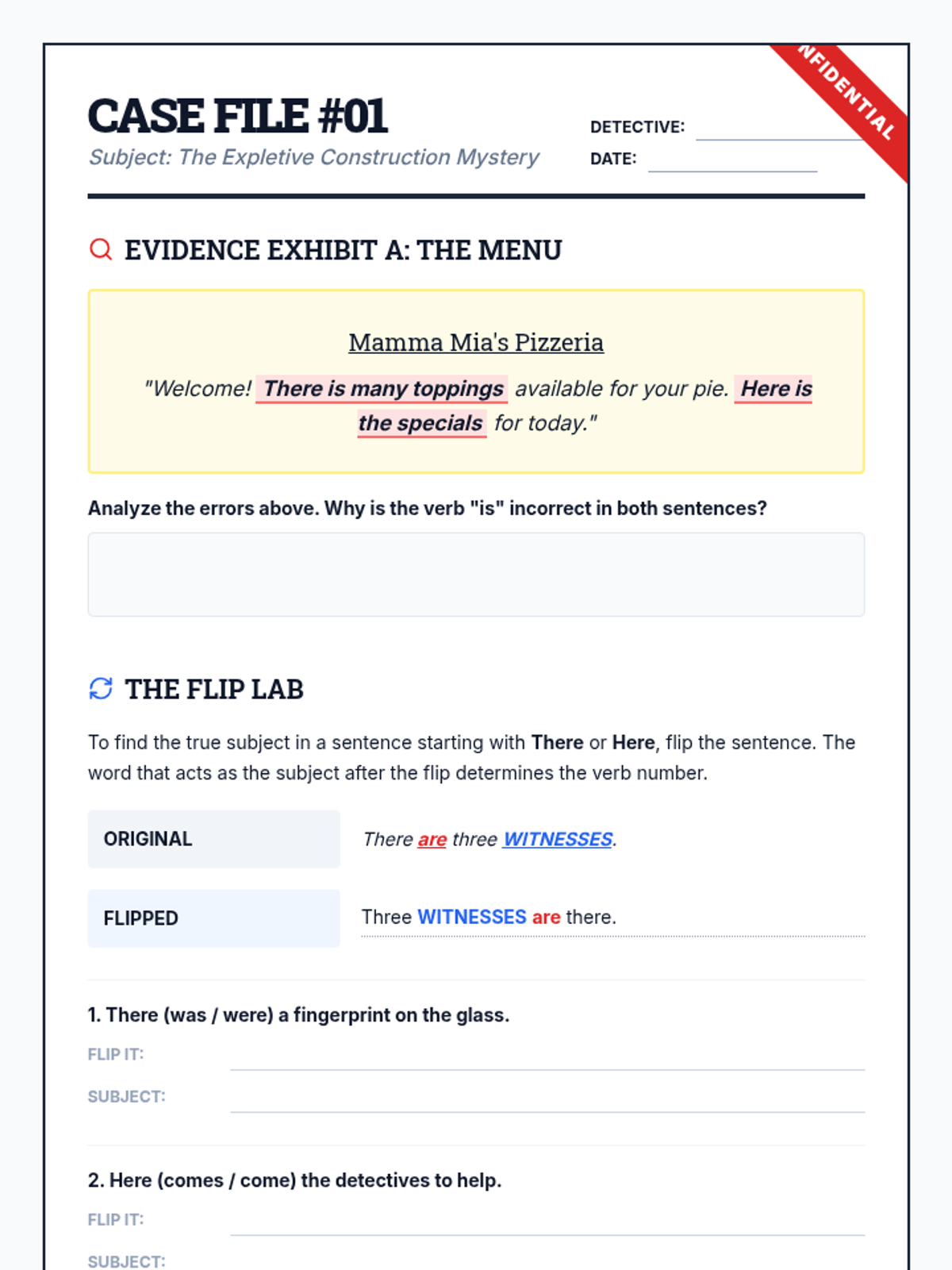
A professional simulation sequence where students act as copy editors to master subject-verb agreement in complex scenarios, including inverted sentences, existential 'there', and contractions. Students transition from isolated skill practice to full-scale text auditing and personal revision.
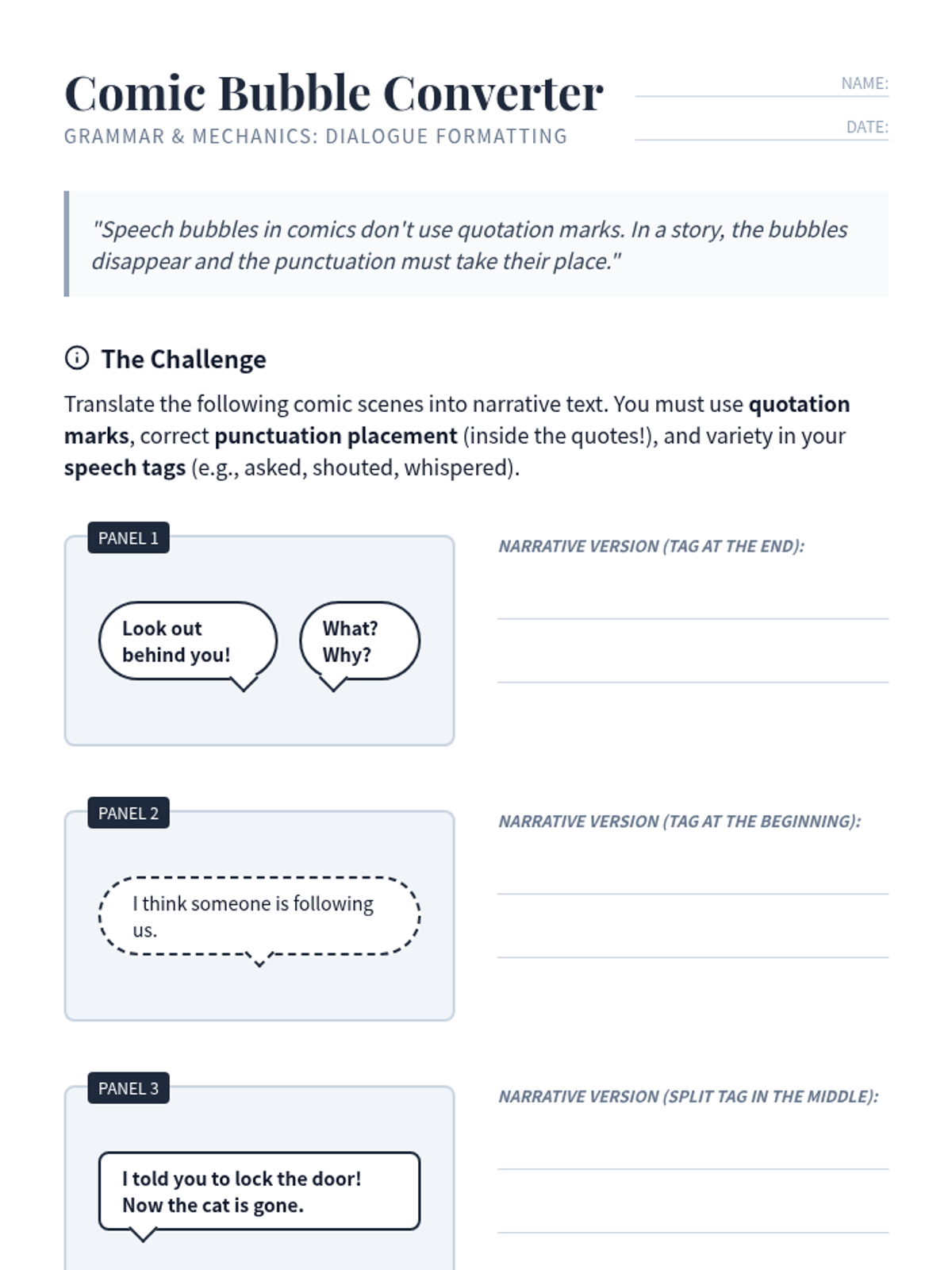
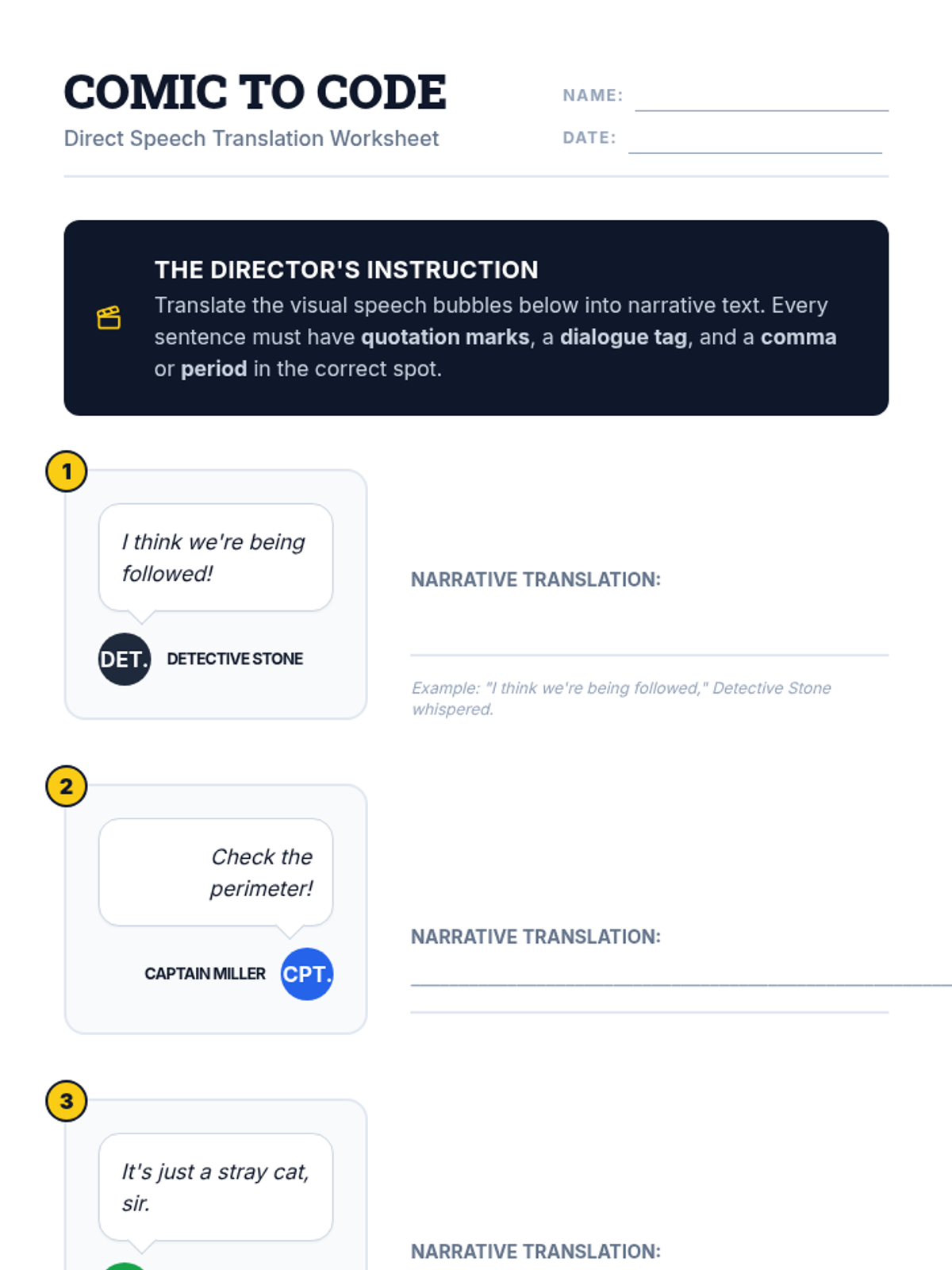
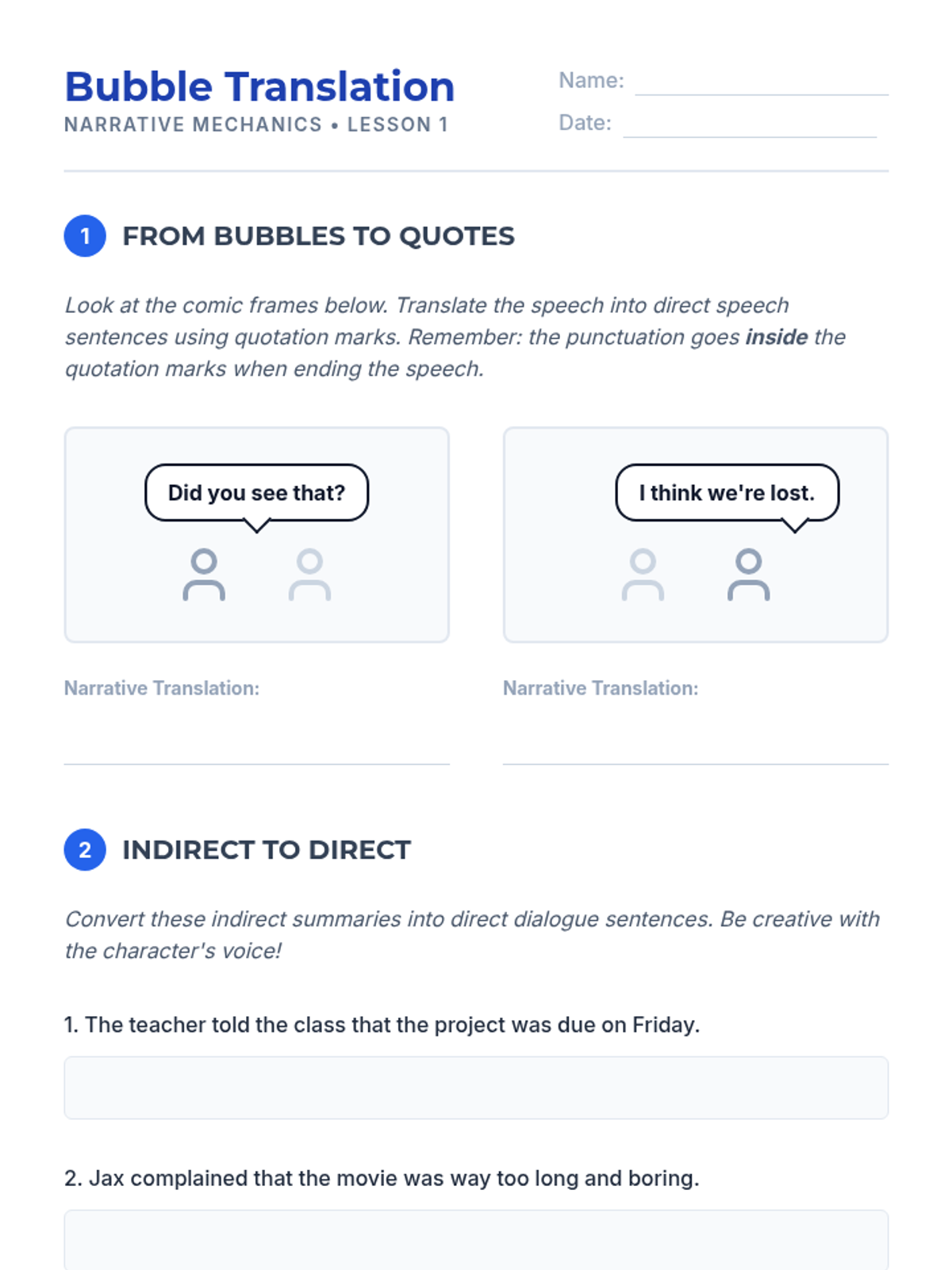
This sequence bridges the gap between creative writing and technical conventions by focusing on the mechanics of dialogue and narrative structure. Students explore how paragraph breaks, indentation, and quotation marks organize a story and clarify who is speaking.
An 8th-grade grammar sequence focusing on relative pronouns as tools for sentence complexity. Students move from analyzing literary examples to mastering tricky distinctions like 'who vs. whom' and 'that vs. which', culminating in creative narrative synthesis.
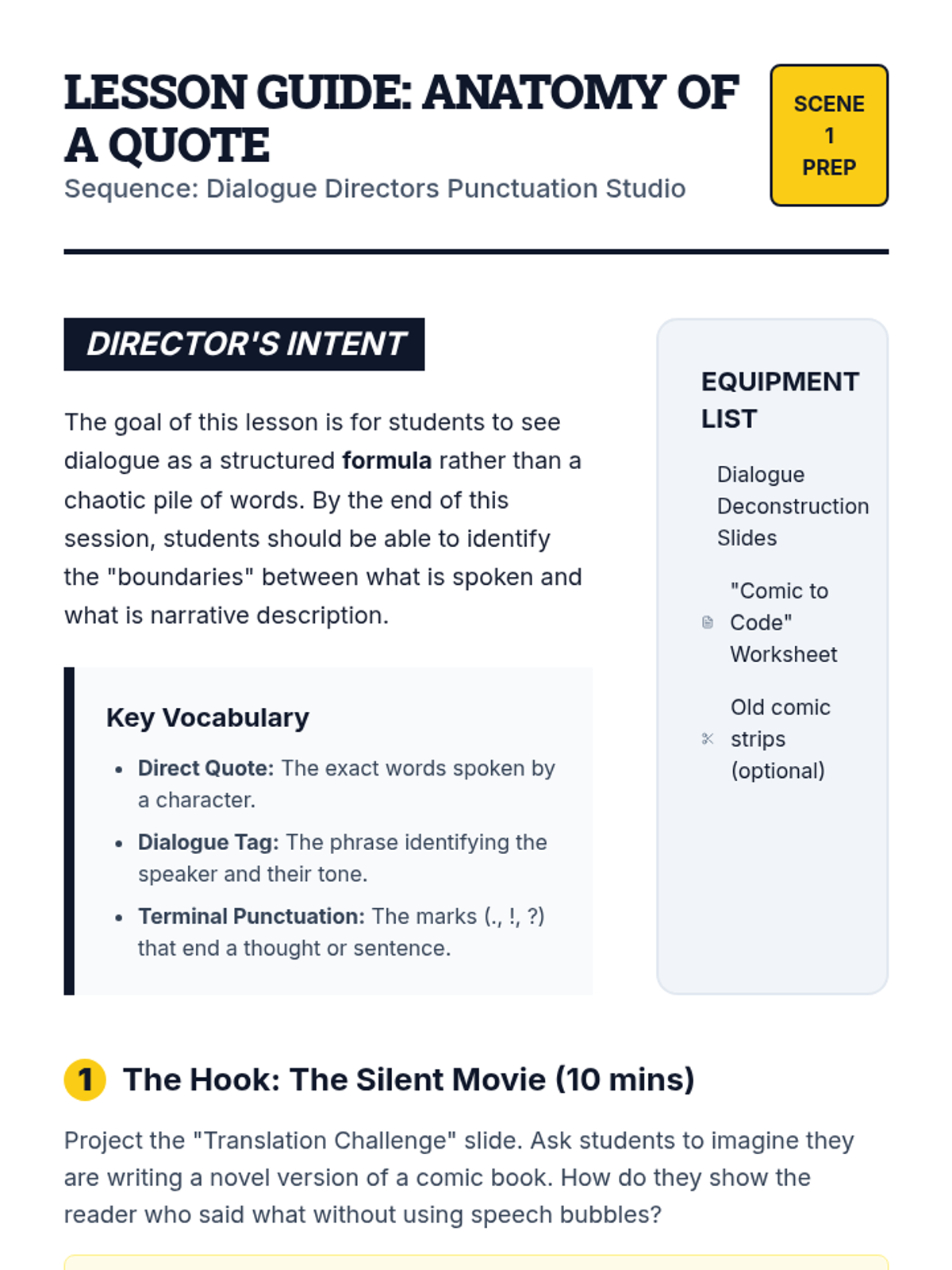
A comprehensive project-based unit for 8th-grade students focused on the technical mechanics of punctuating dialogue. Students progress from basic quote anatomy to complex split sentences and formatting narrative paragraphs, culminating in a polished narrative scene.
Students master the mechanical rules of narrative writing, focusing on dialogue formatting, speaker changes, and internal monologues to enhance clarity and voice in storytelling.