Fundamental principles of force, motion, and energy across classical and modern contexts. Examines matter properties, wave behavior, thermodynamics, and electromagnetism through mechanics and atomic studies.
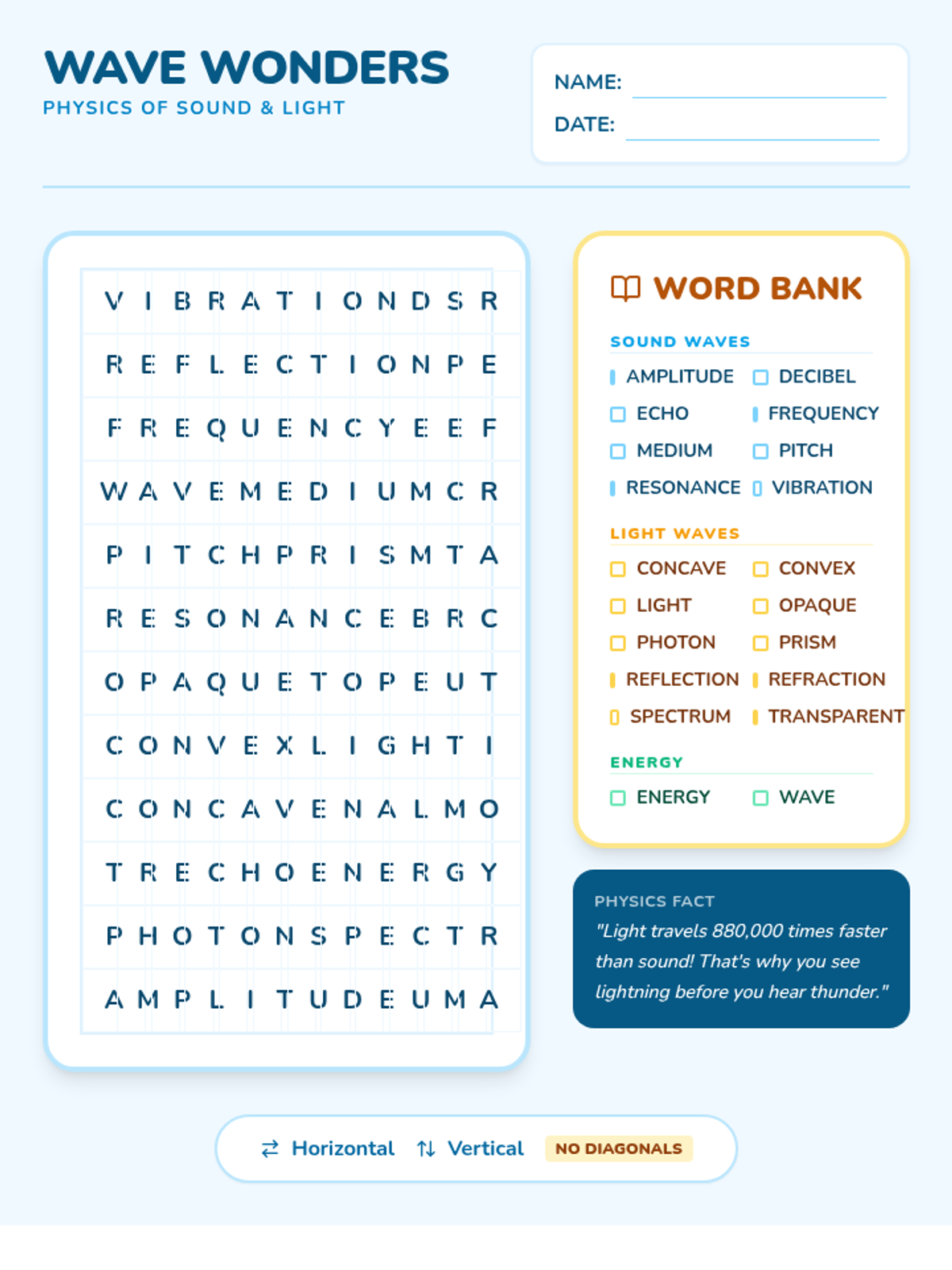
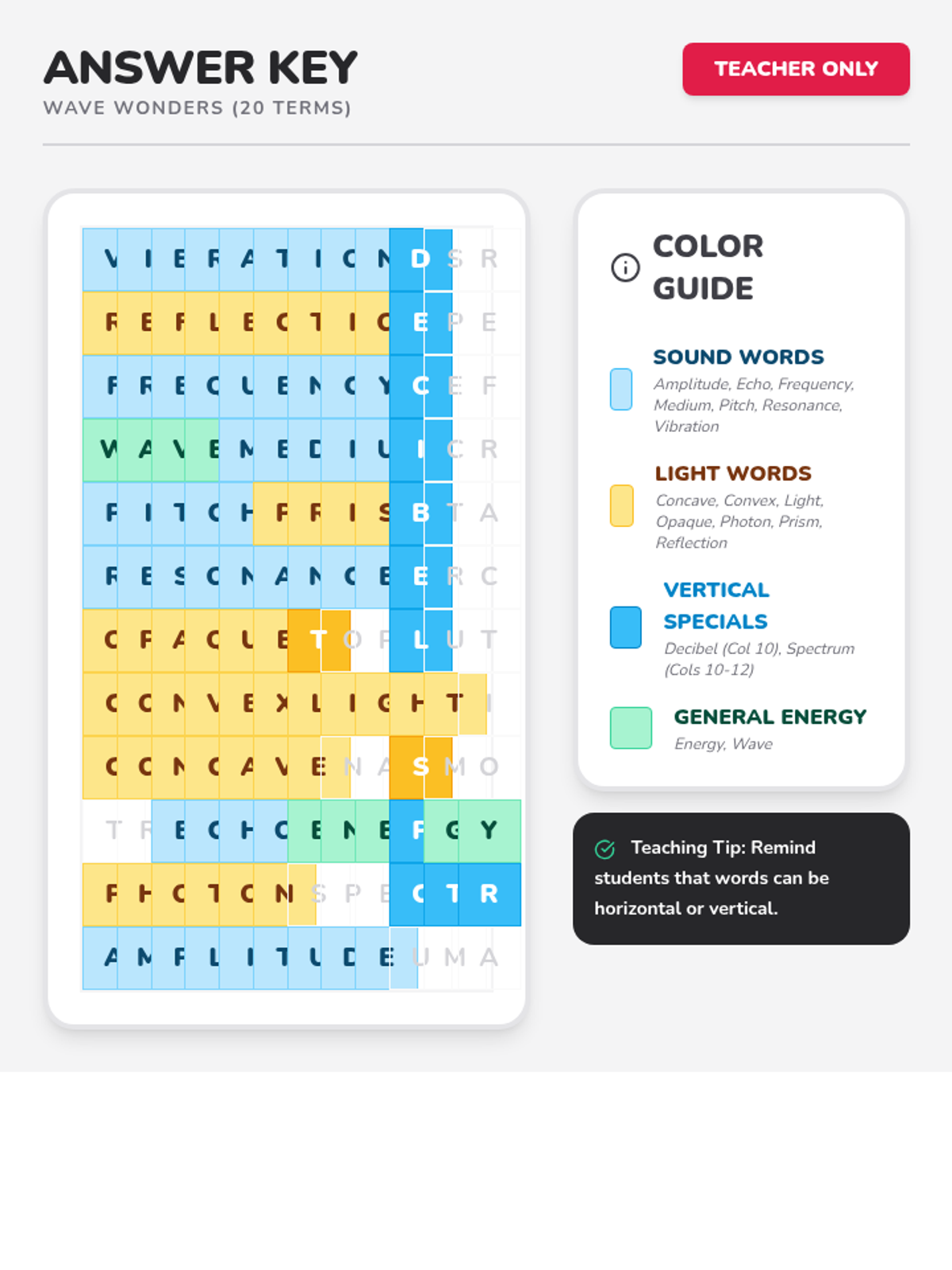
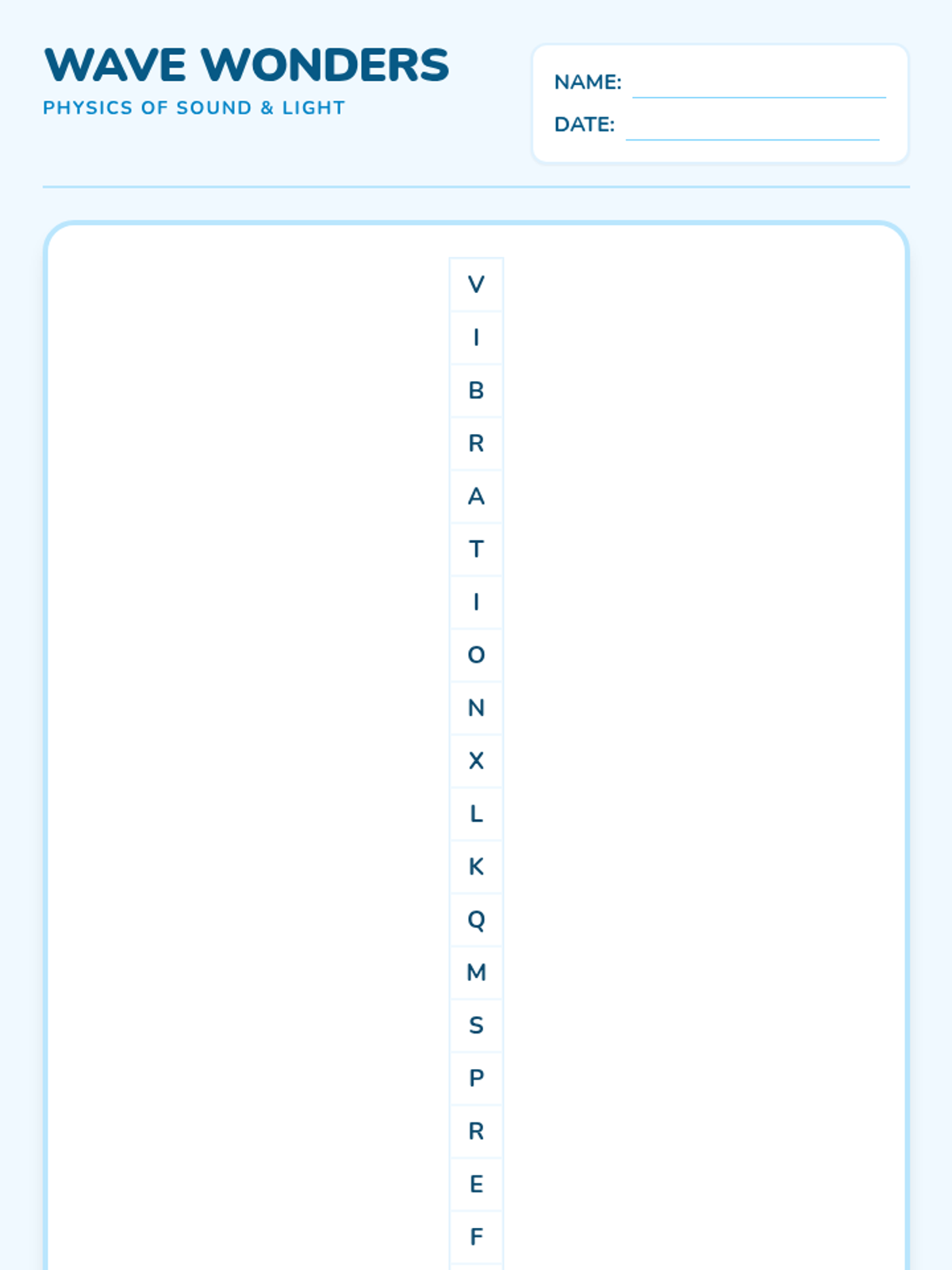
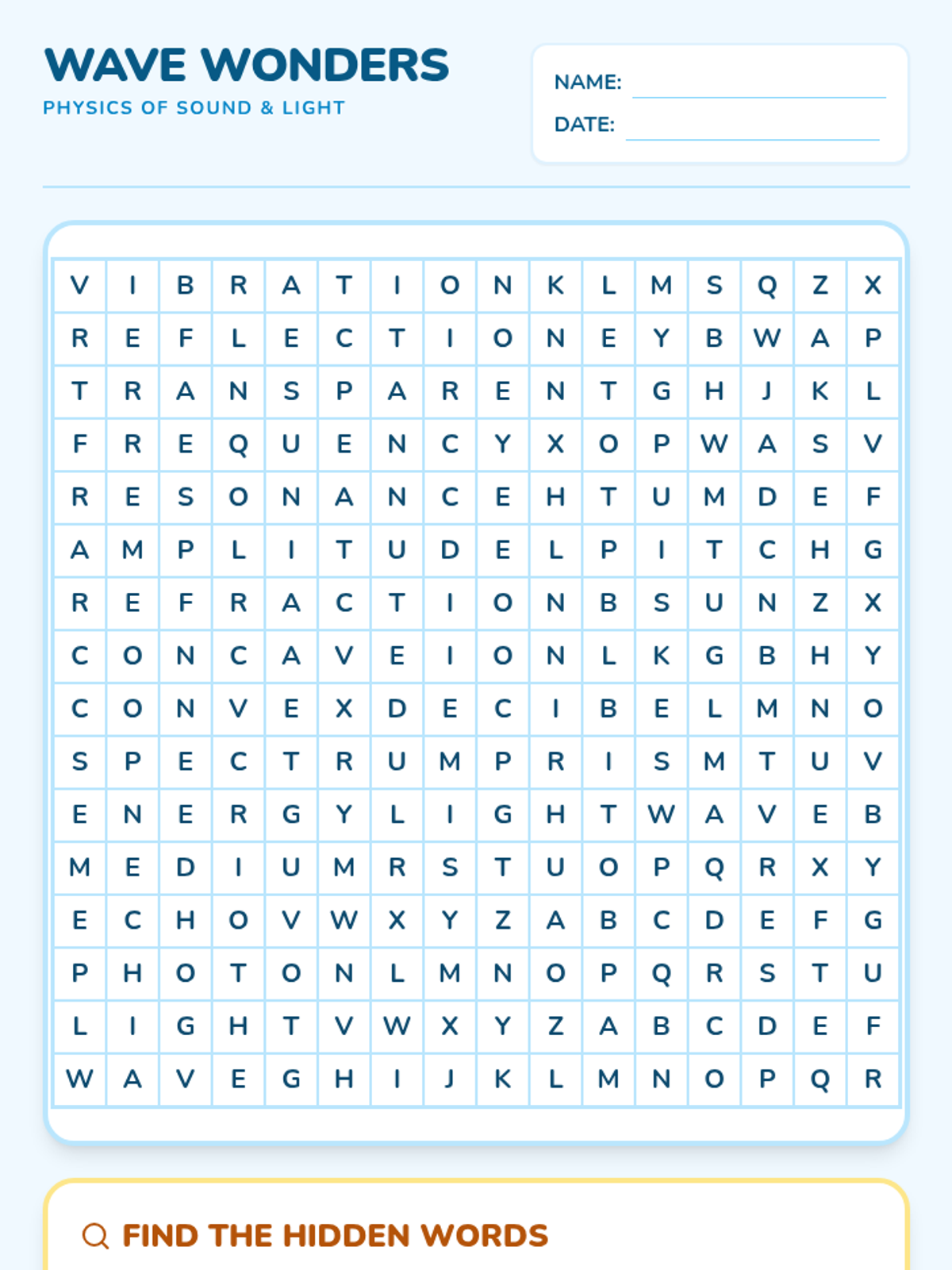
An introductory exploration of the physics of sound and light through vocabulary reinforcement and visual aids.
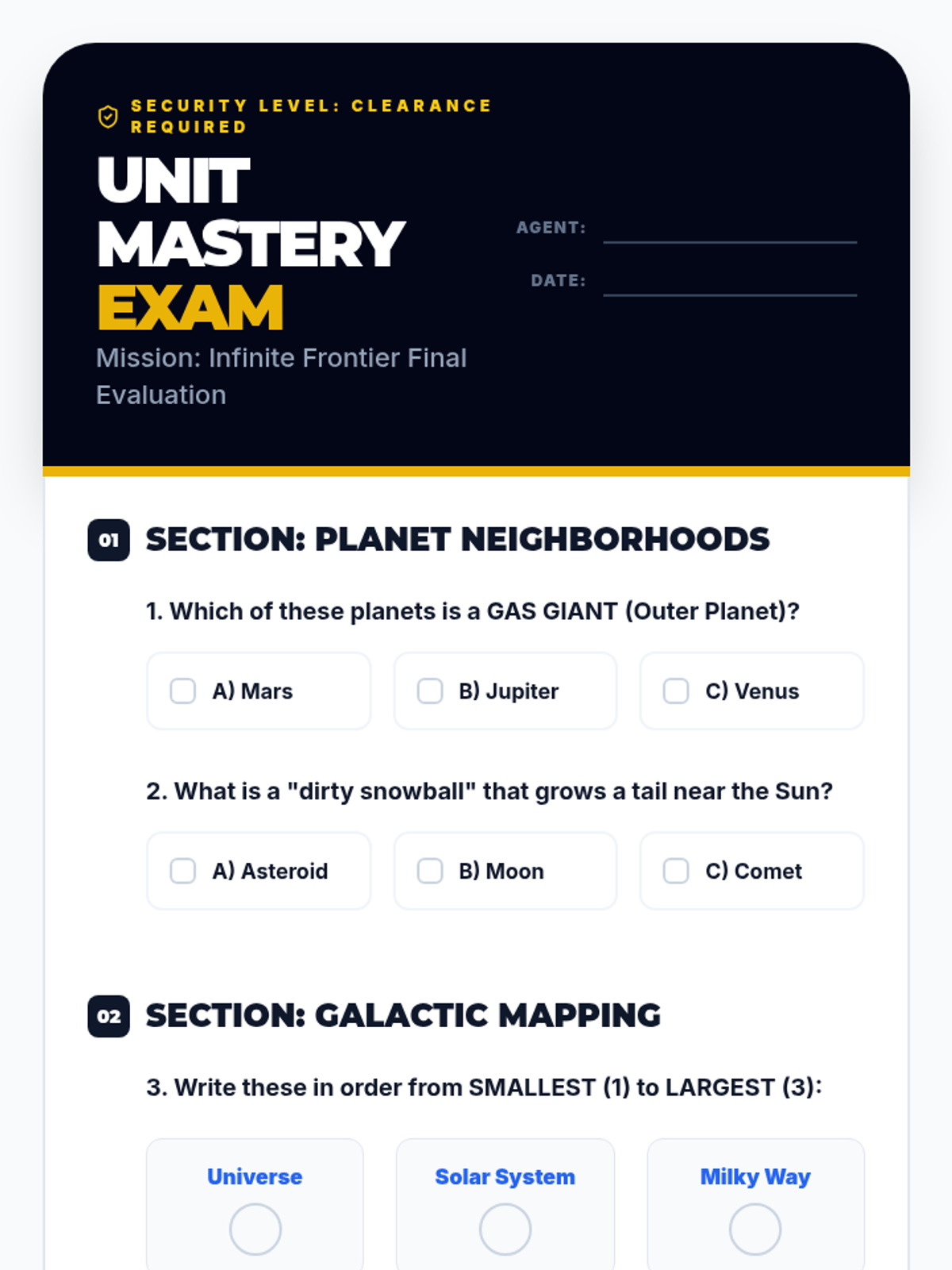
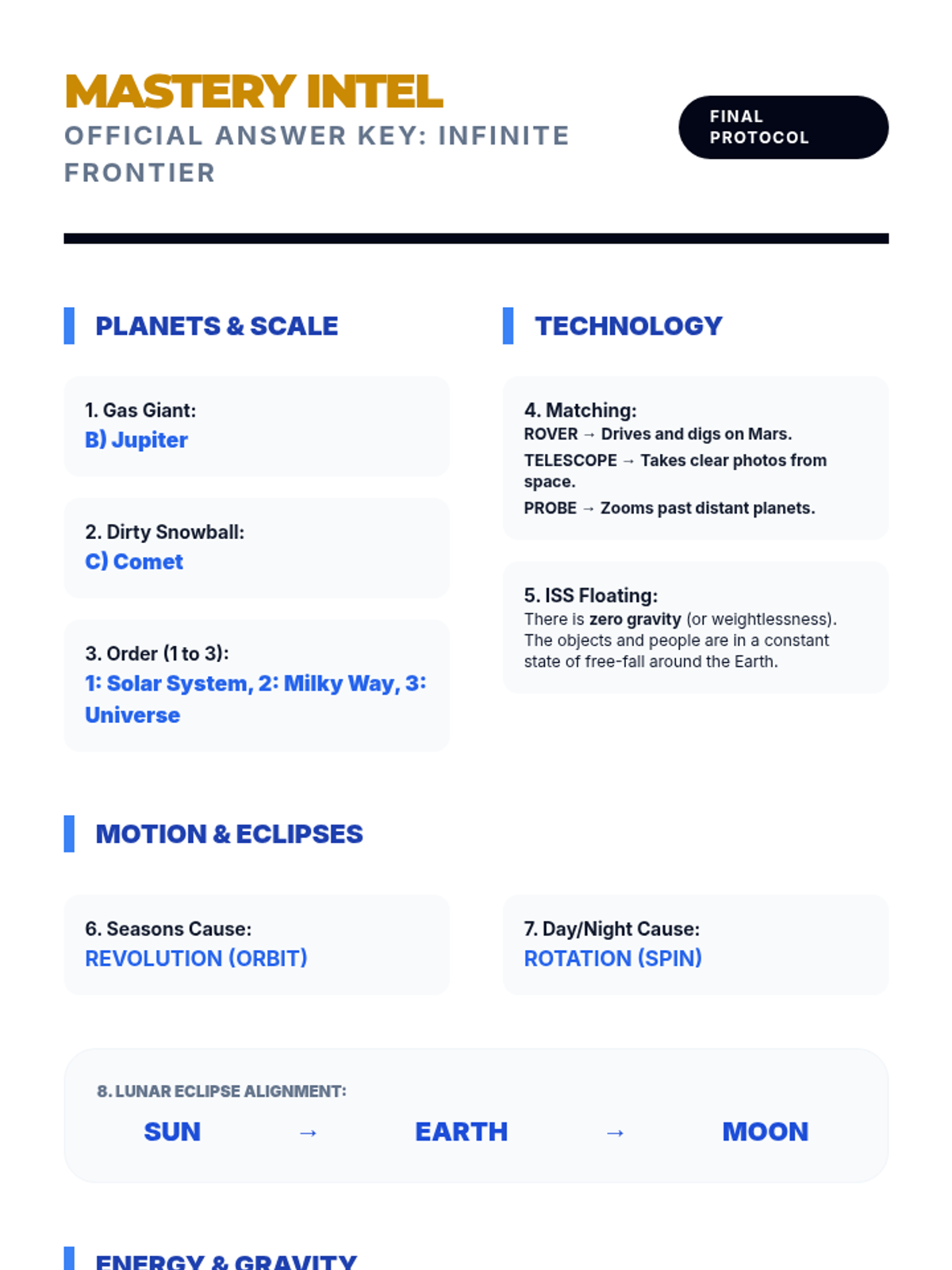
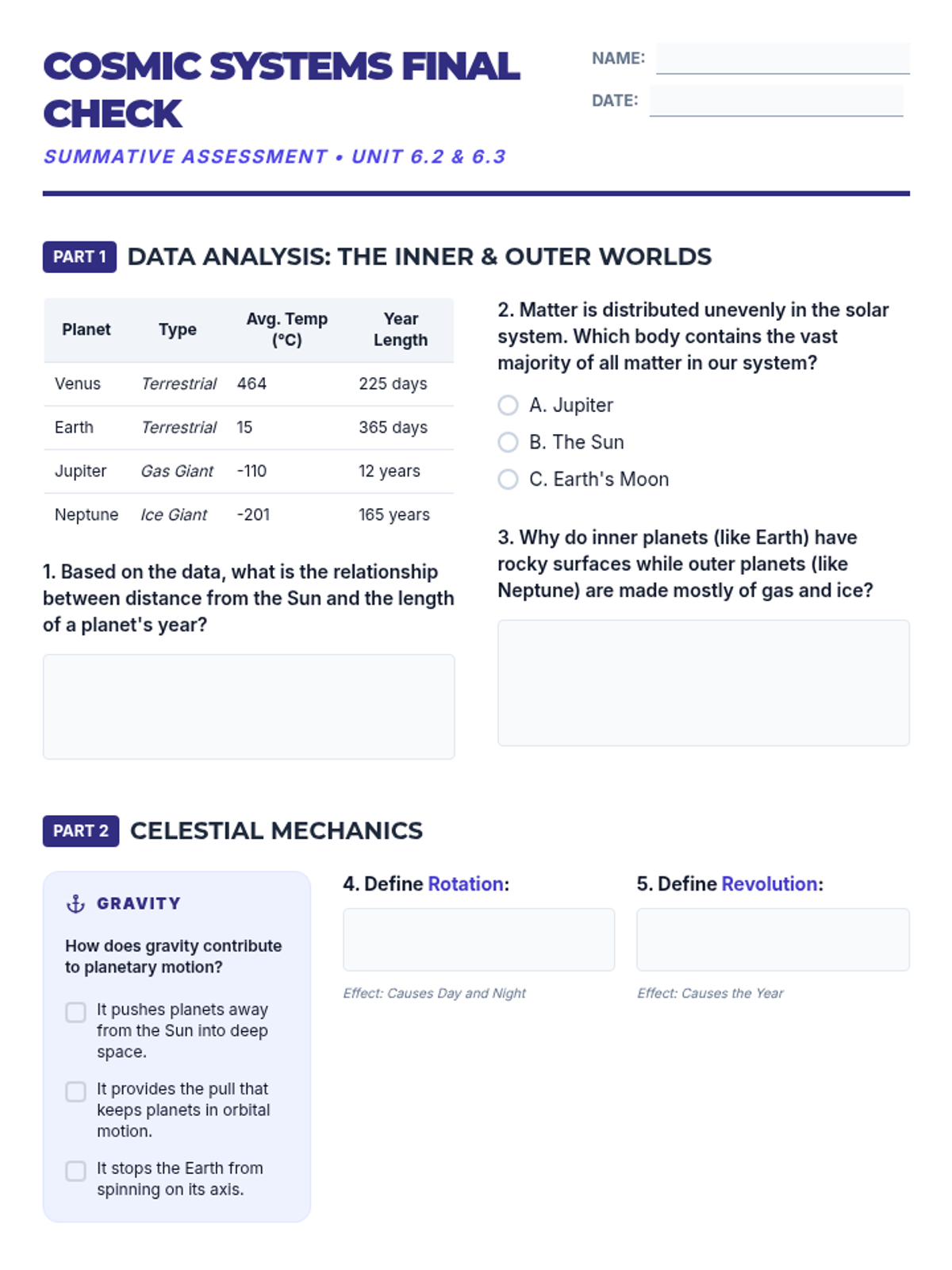
A comprehensive end-of-unit assessment and review lesson for the Infinite Frontier sequence. Includes a multi-topic test and a unit glossary.
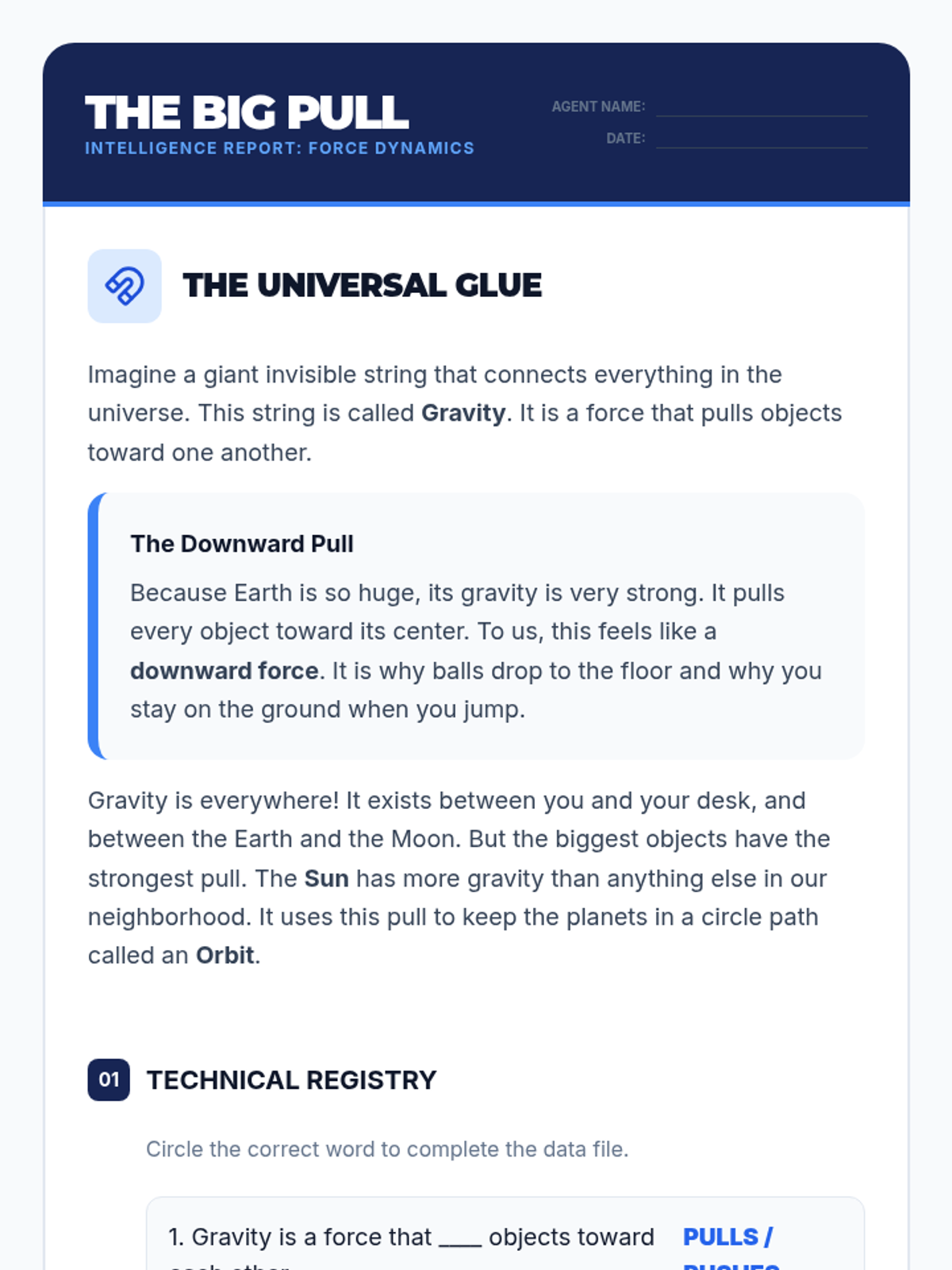
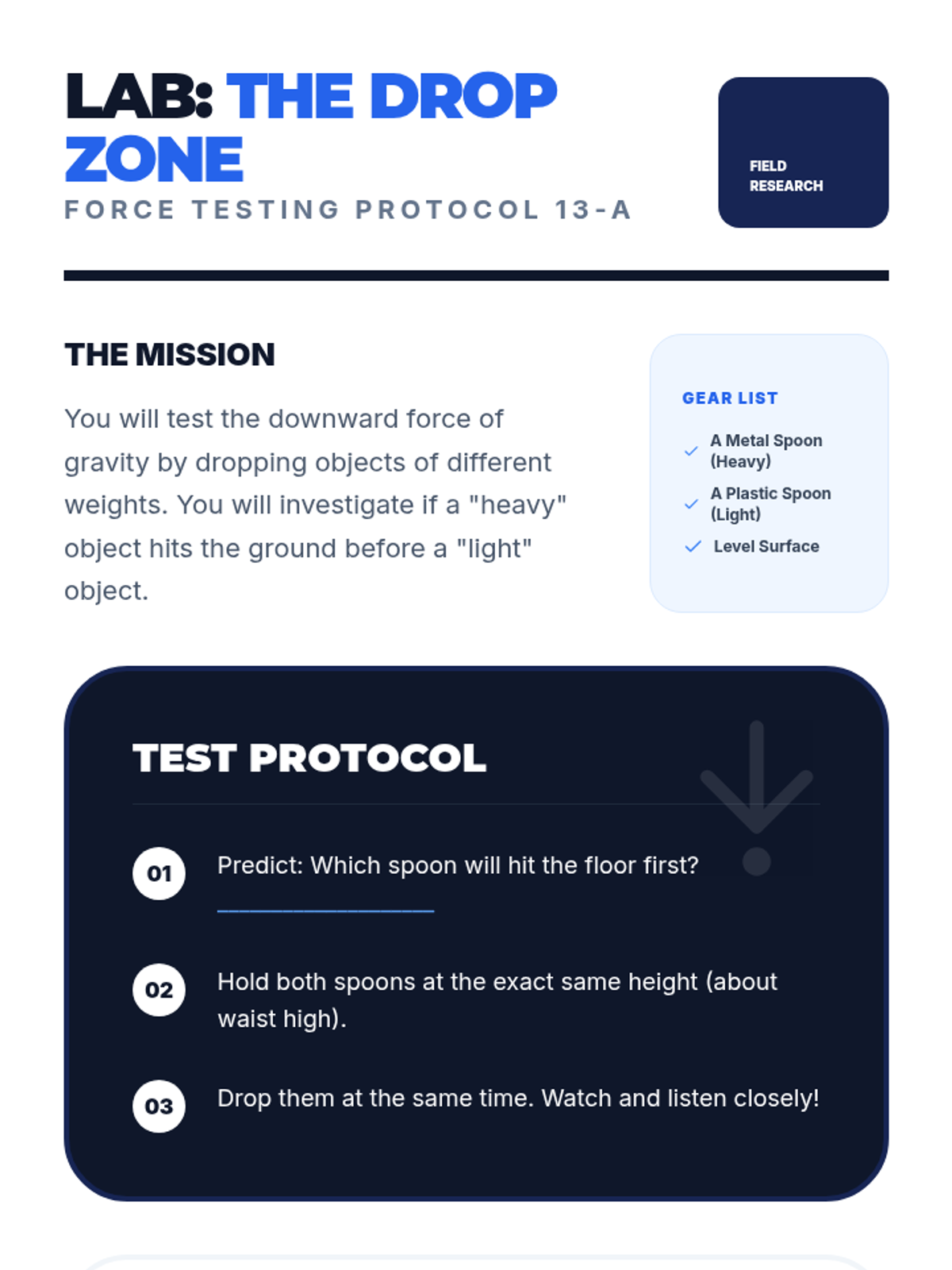
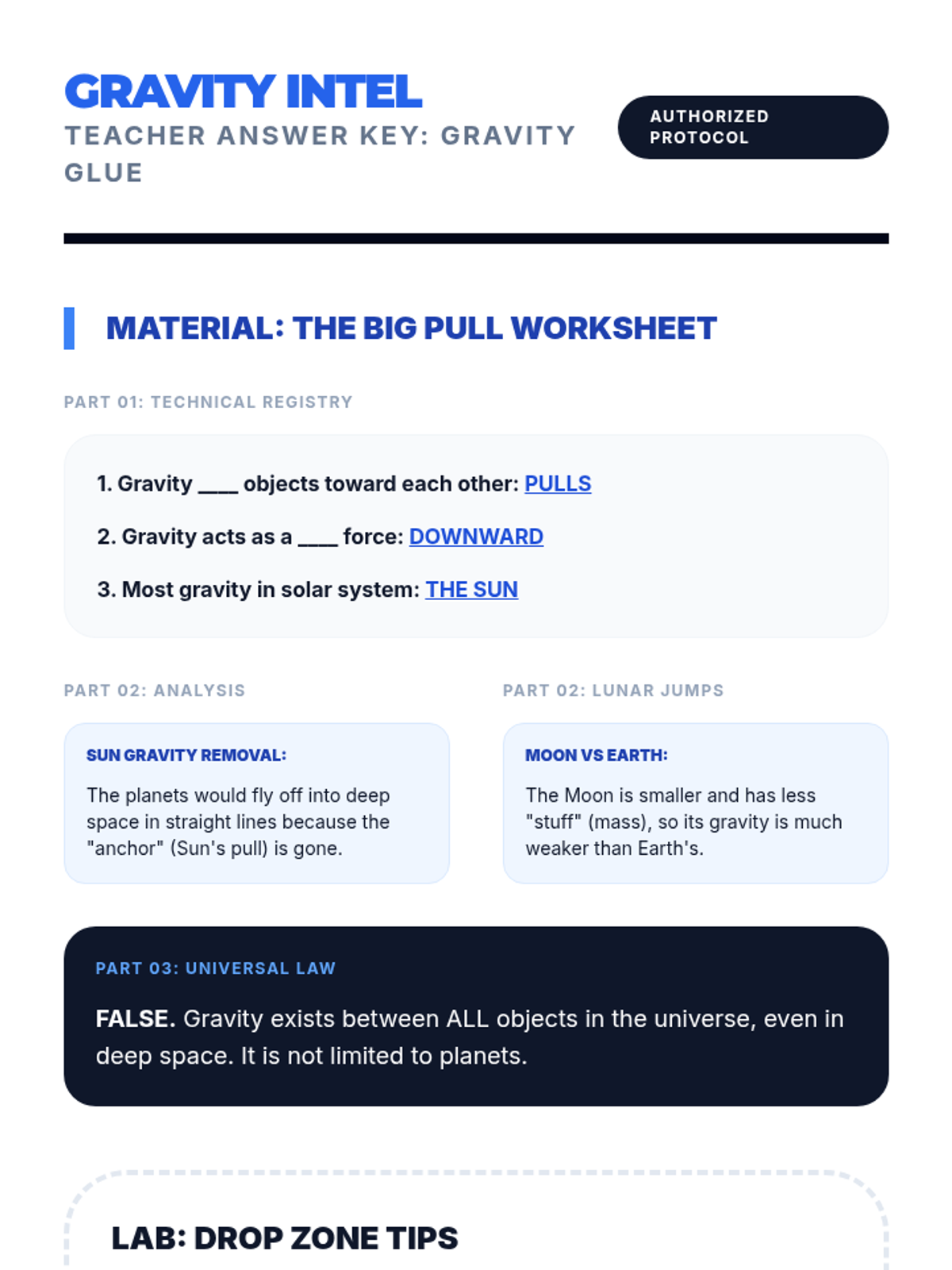
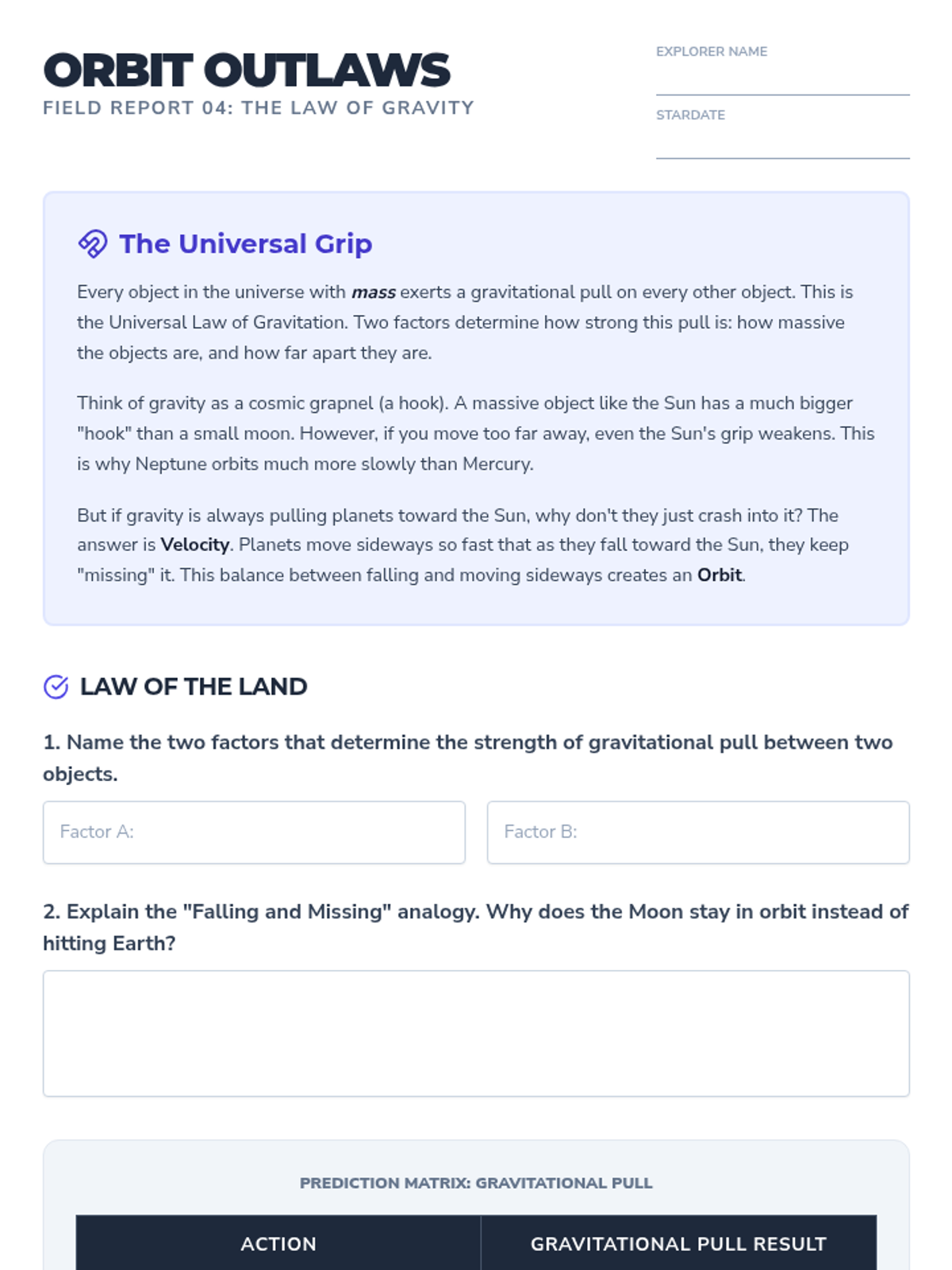
A lesson on the fundamental force of gravity, explaining its role as a downward force on Earth and the invisible "glue" that keeps the planets in orbit around the Sun.
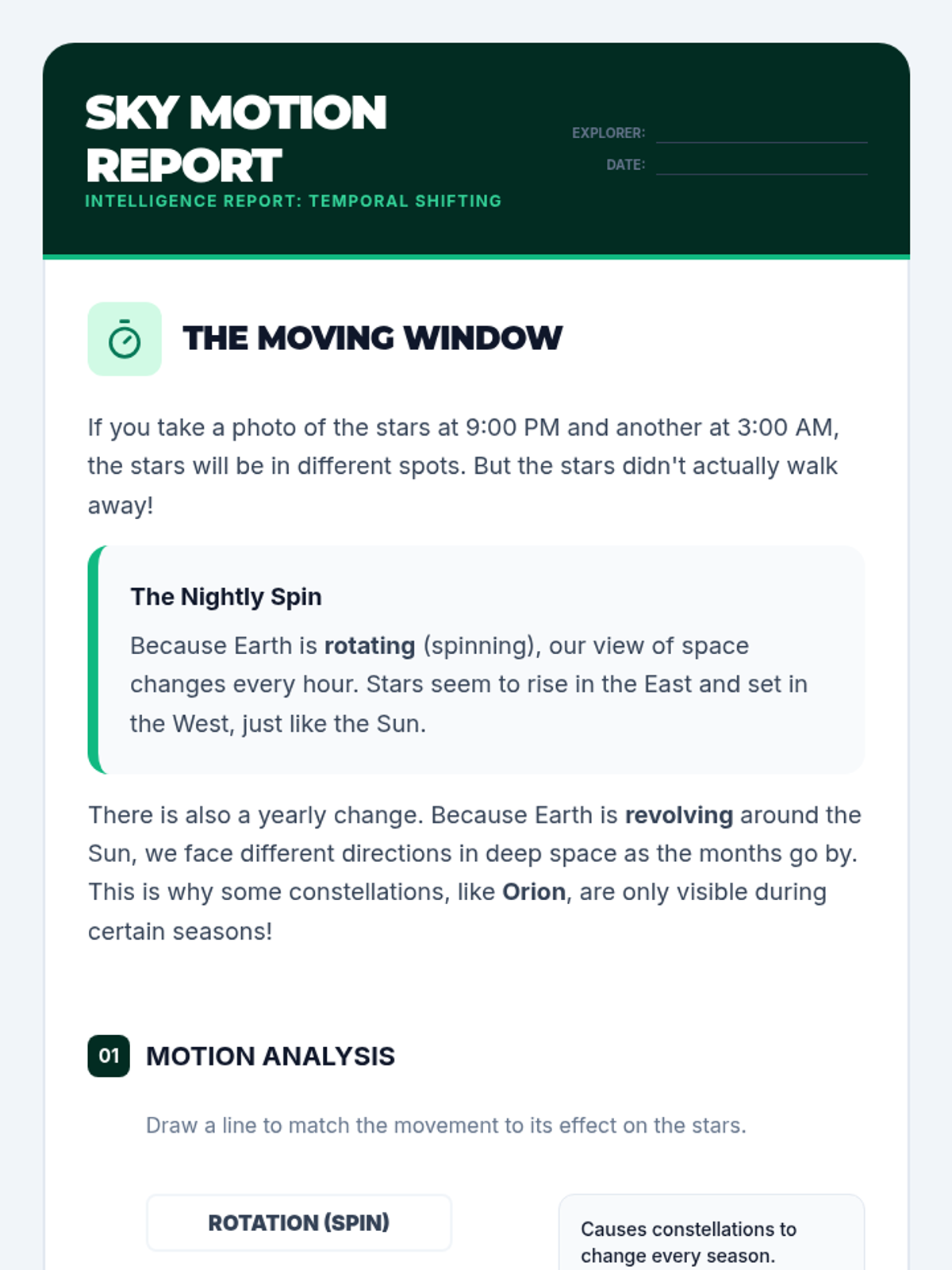
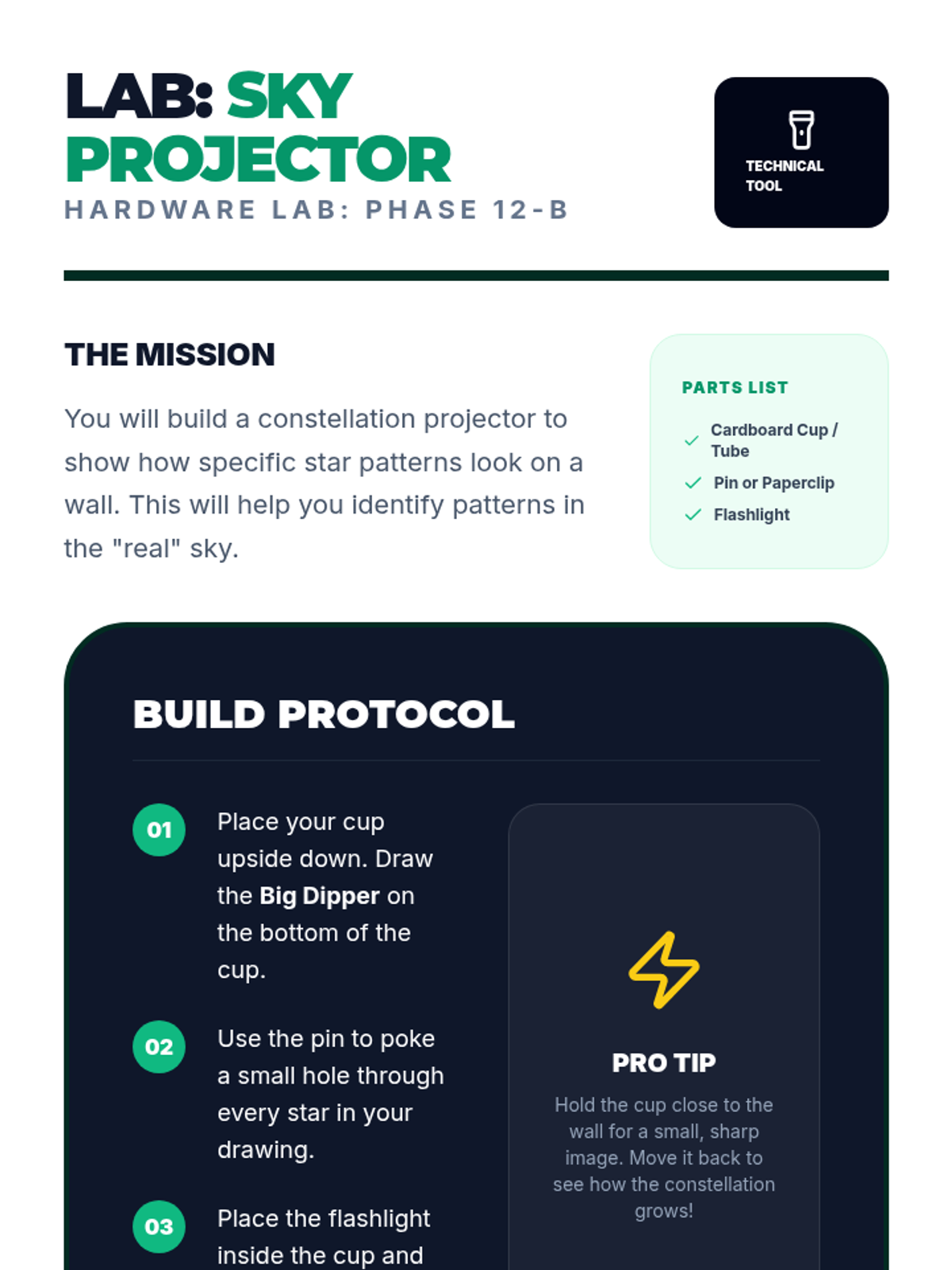
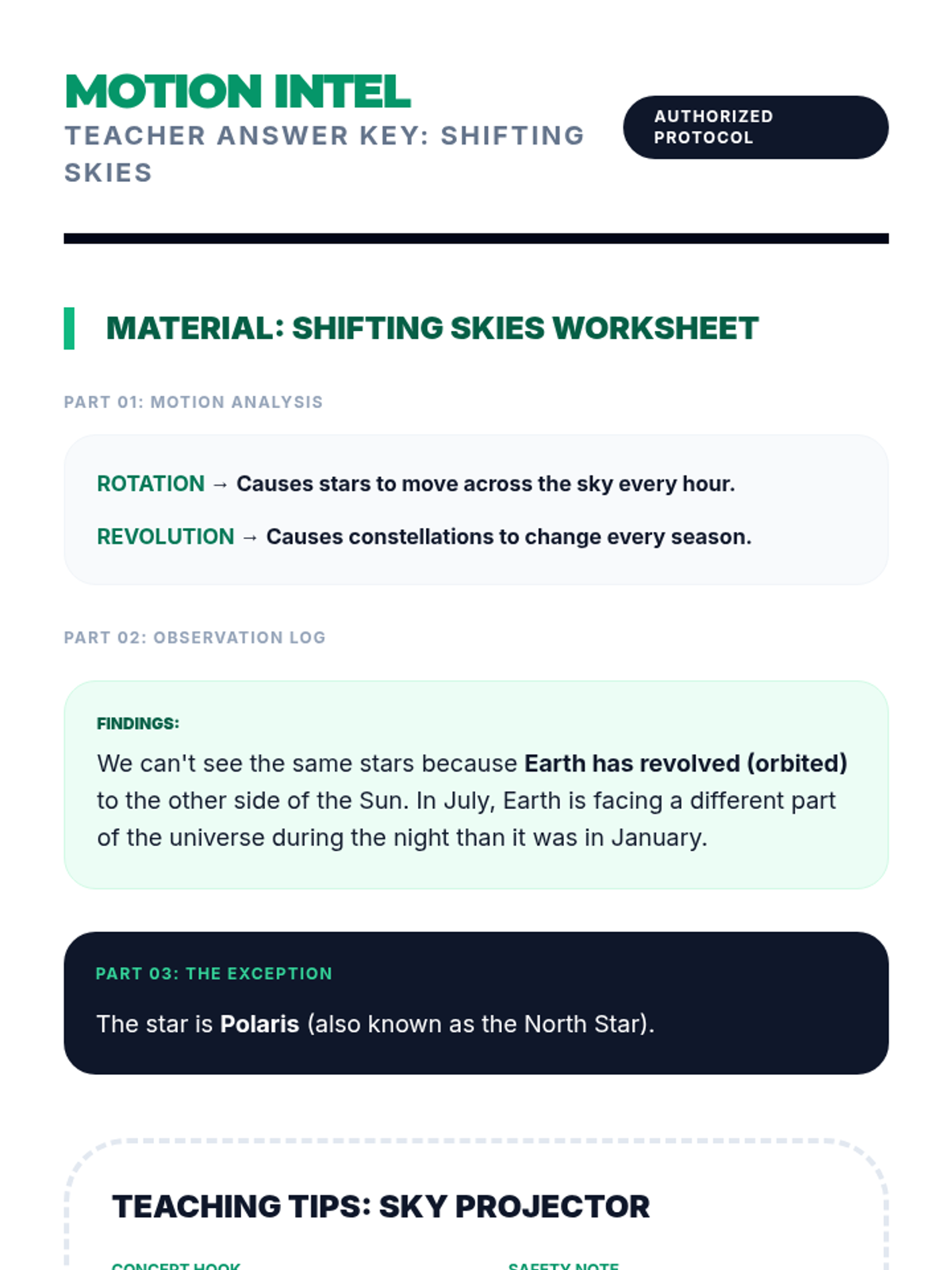
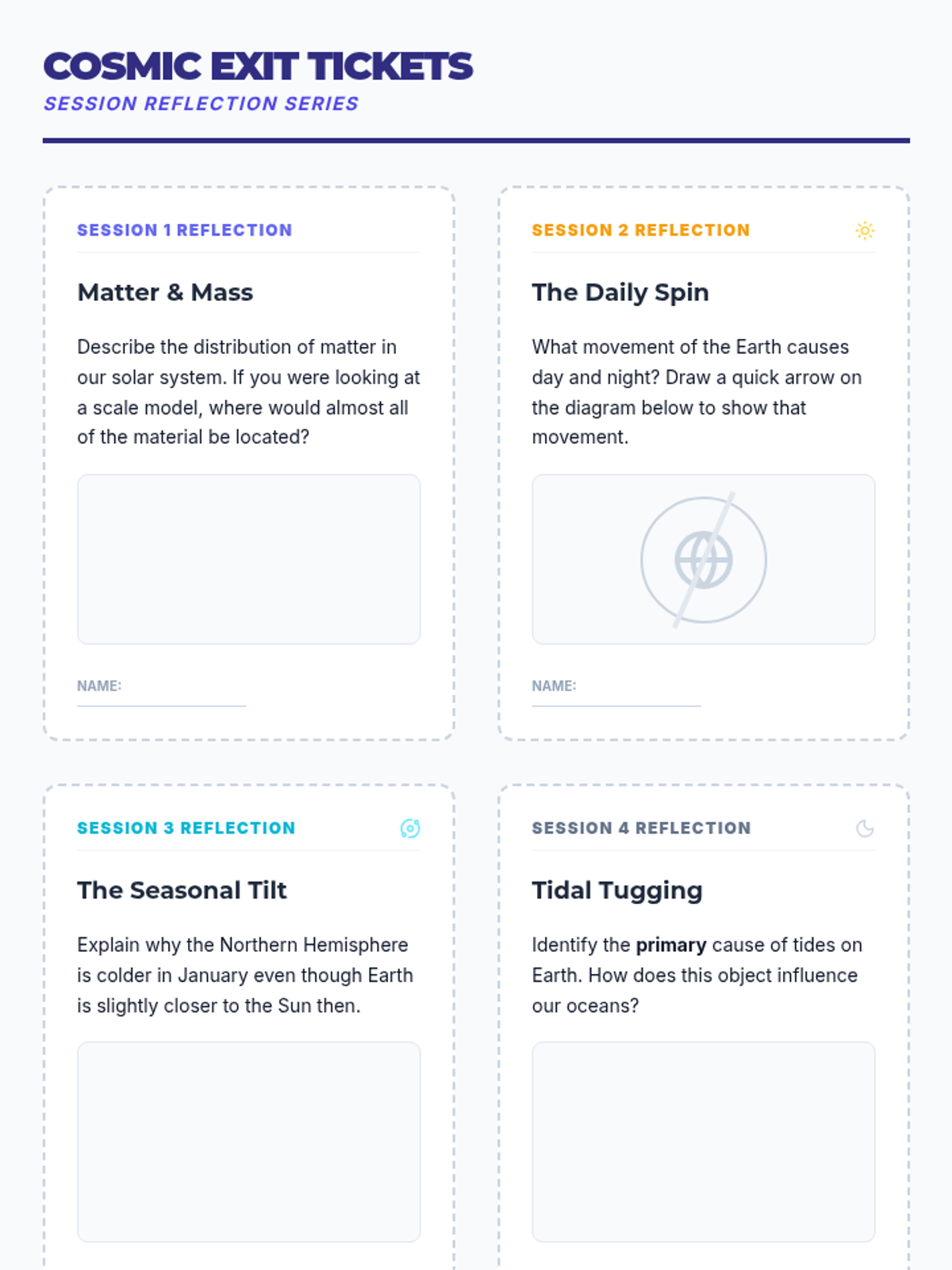
A lesson exploring why the night sky appears to change throughout the night and across different seasons due to Earth's rotation and revolution.
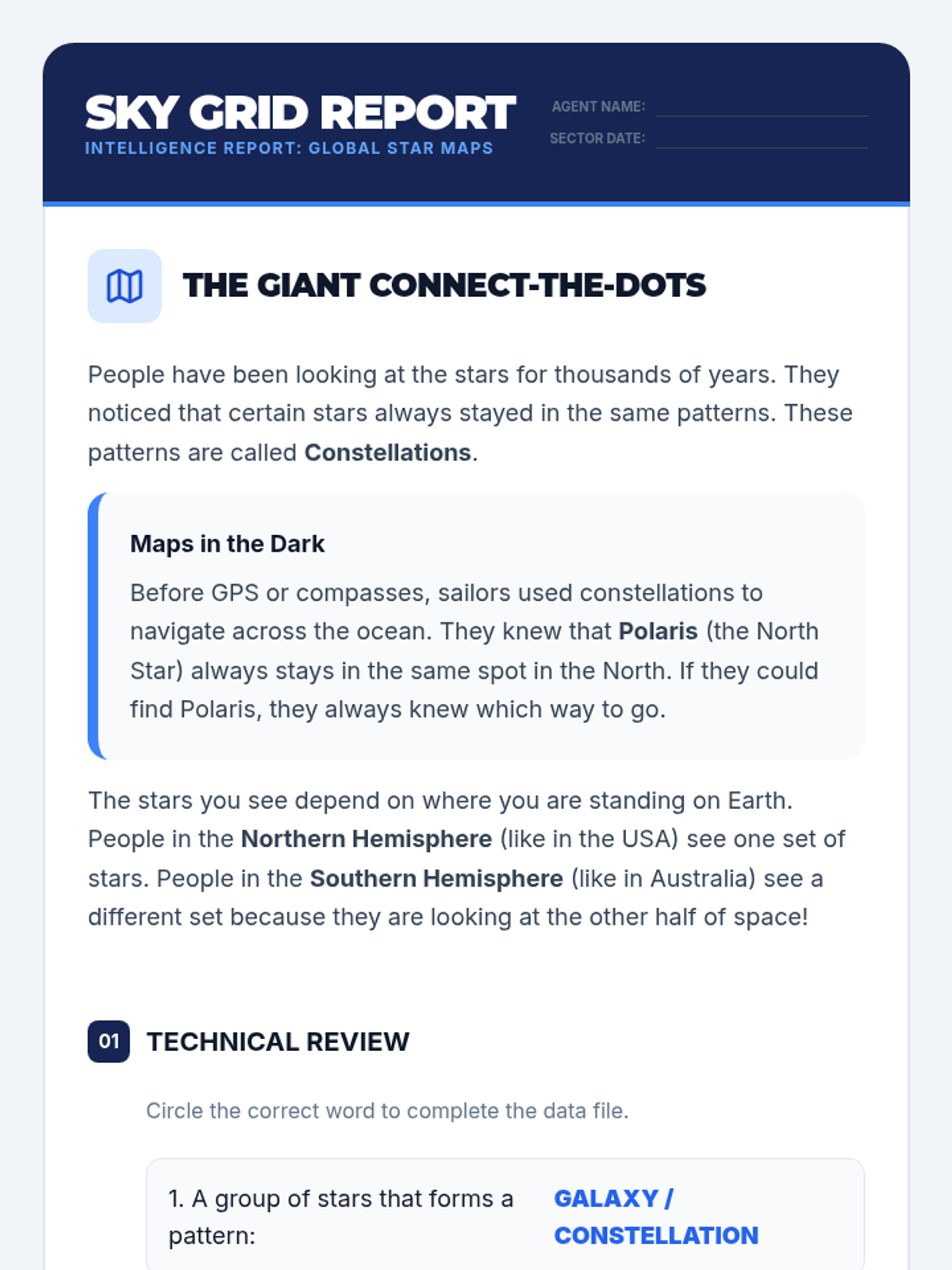
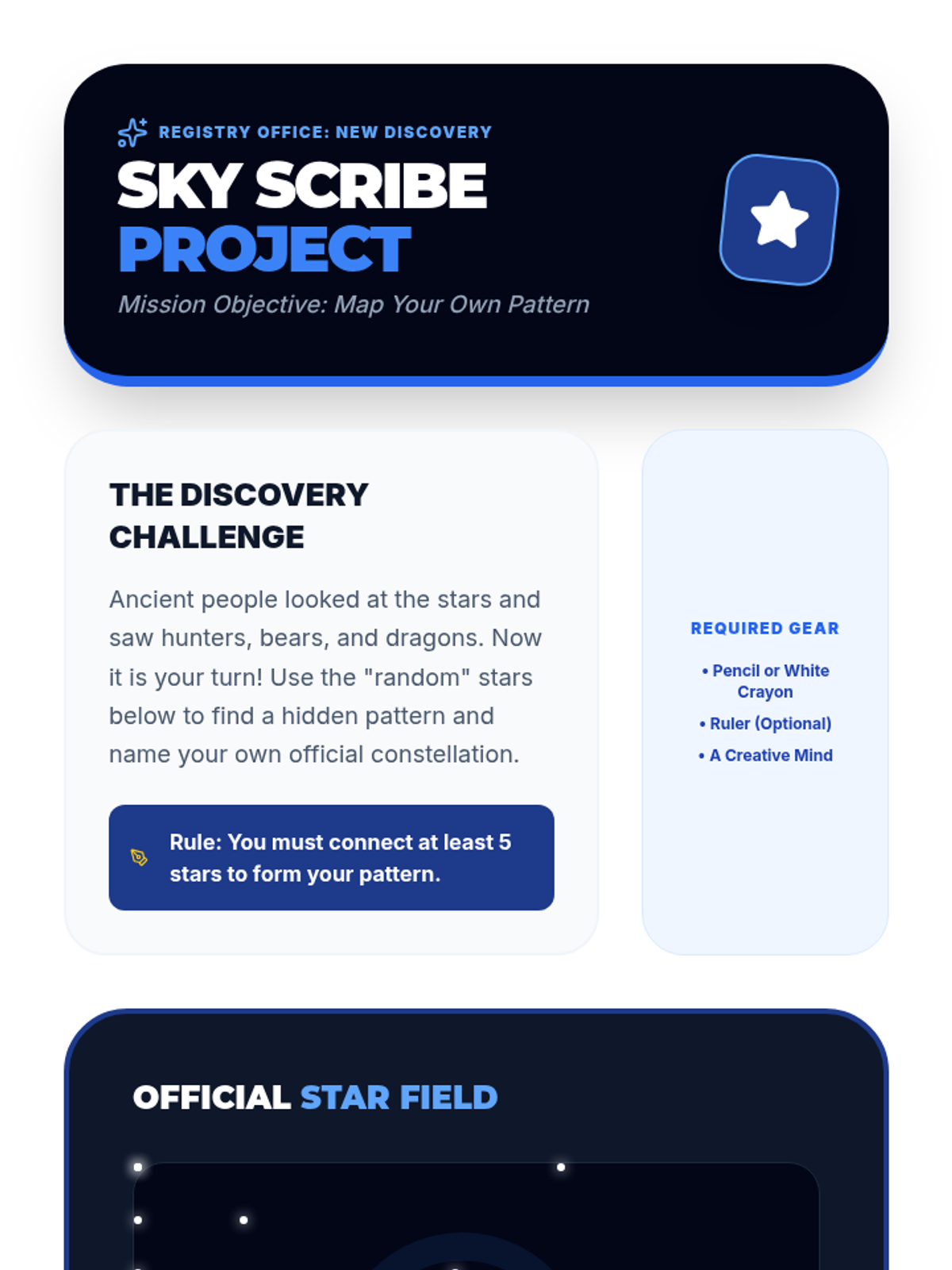
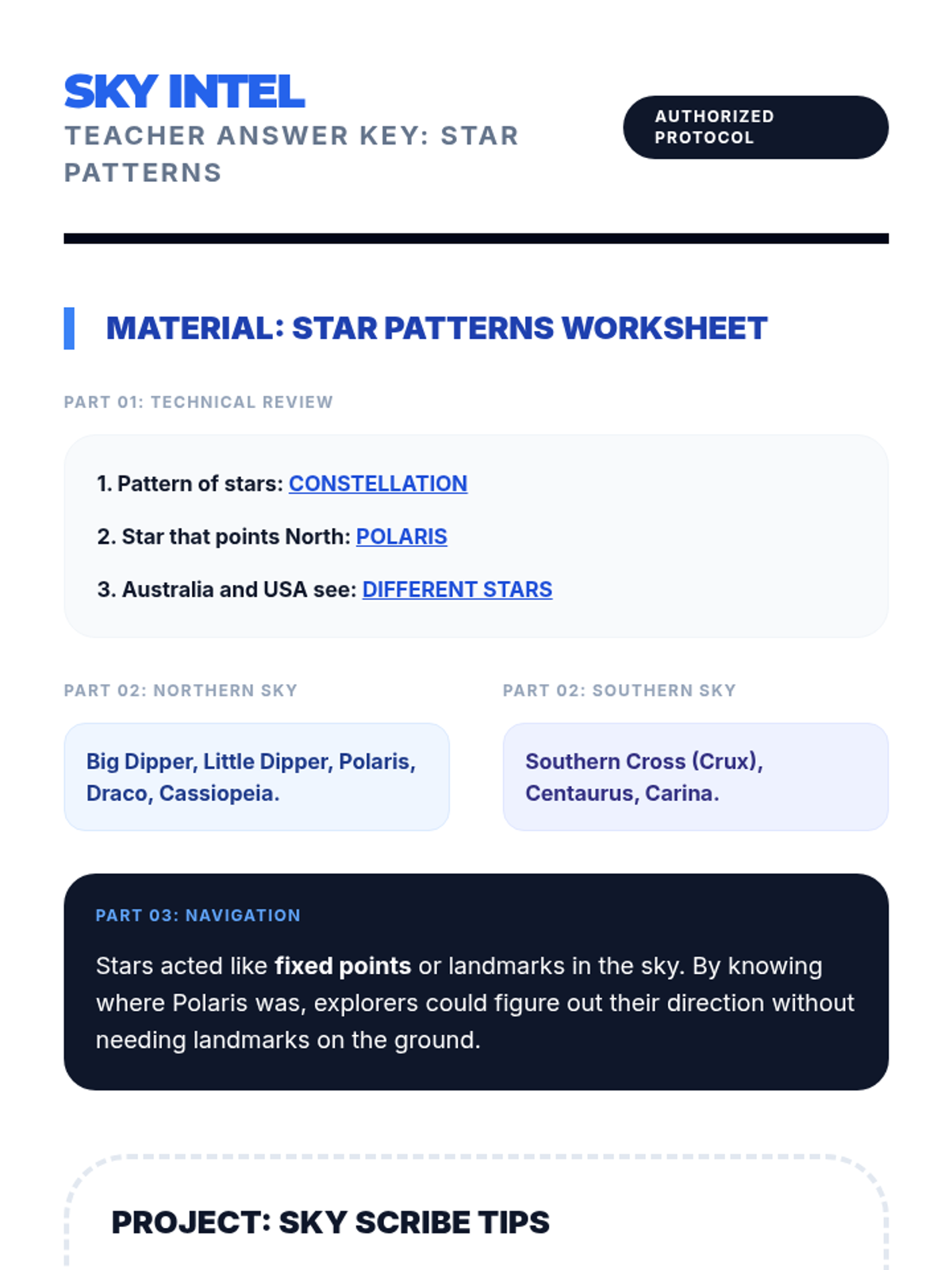
A lesson on constellations, explaining how stars form patterns used for navigation and how the view of the sky changes between the Northern and Southern Hemispheres.
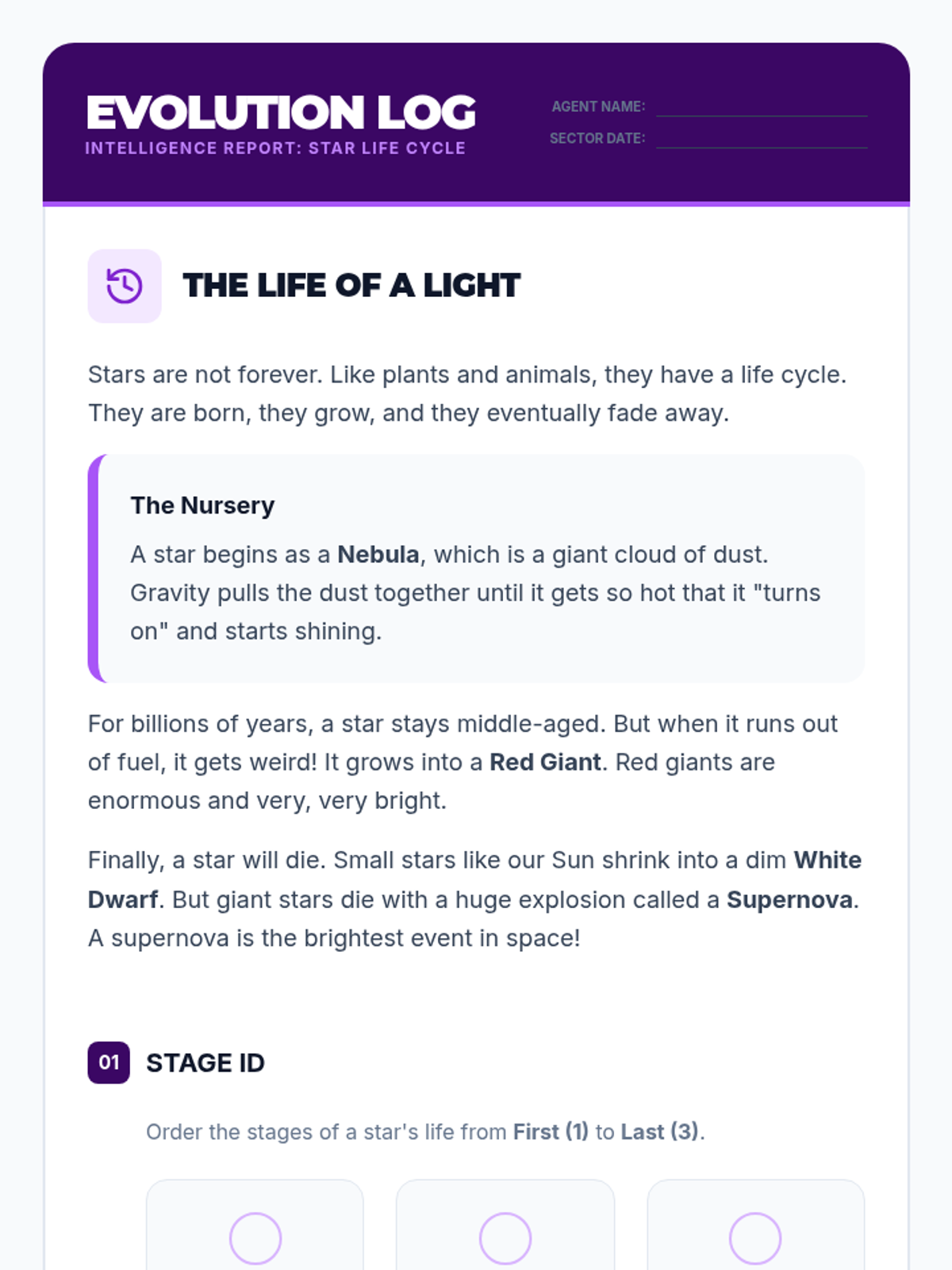
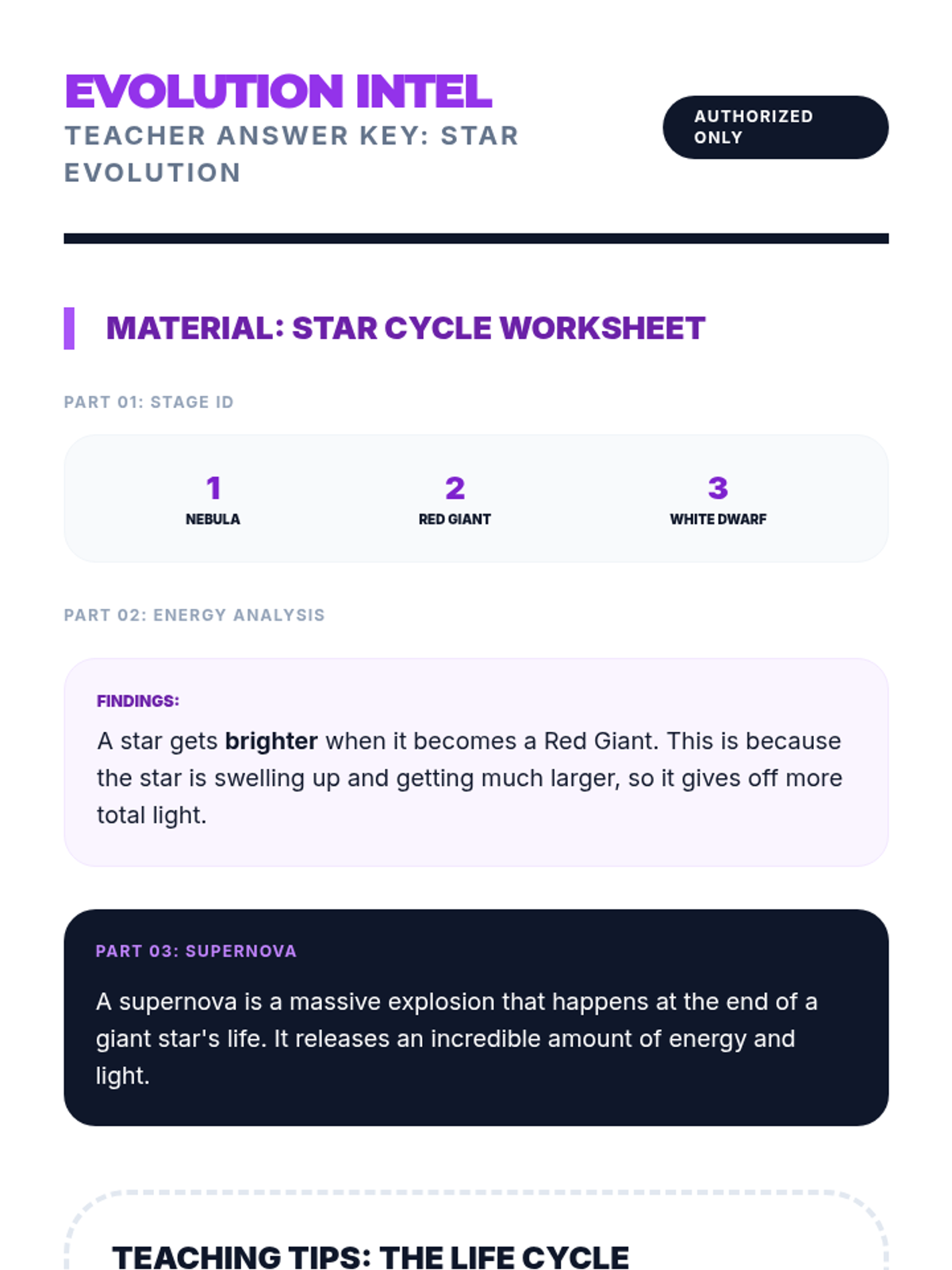
A lesson on the life cycle of stars, exploring how they are born in nebulae, grow, and eventually change brightness as they age or die.
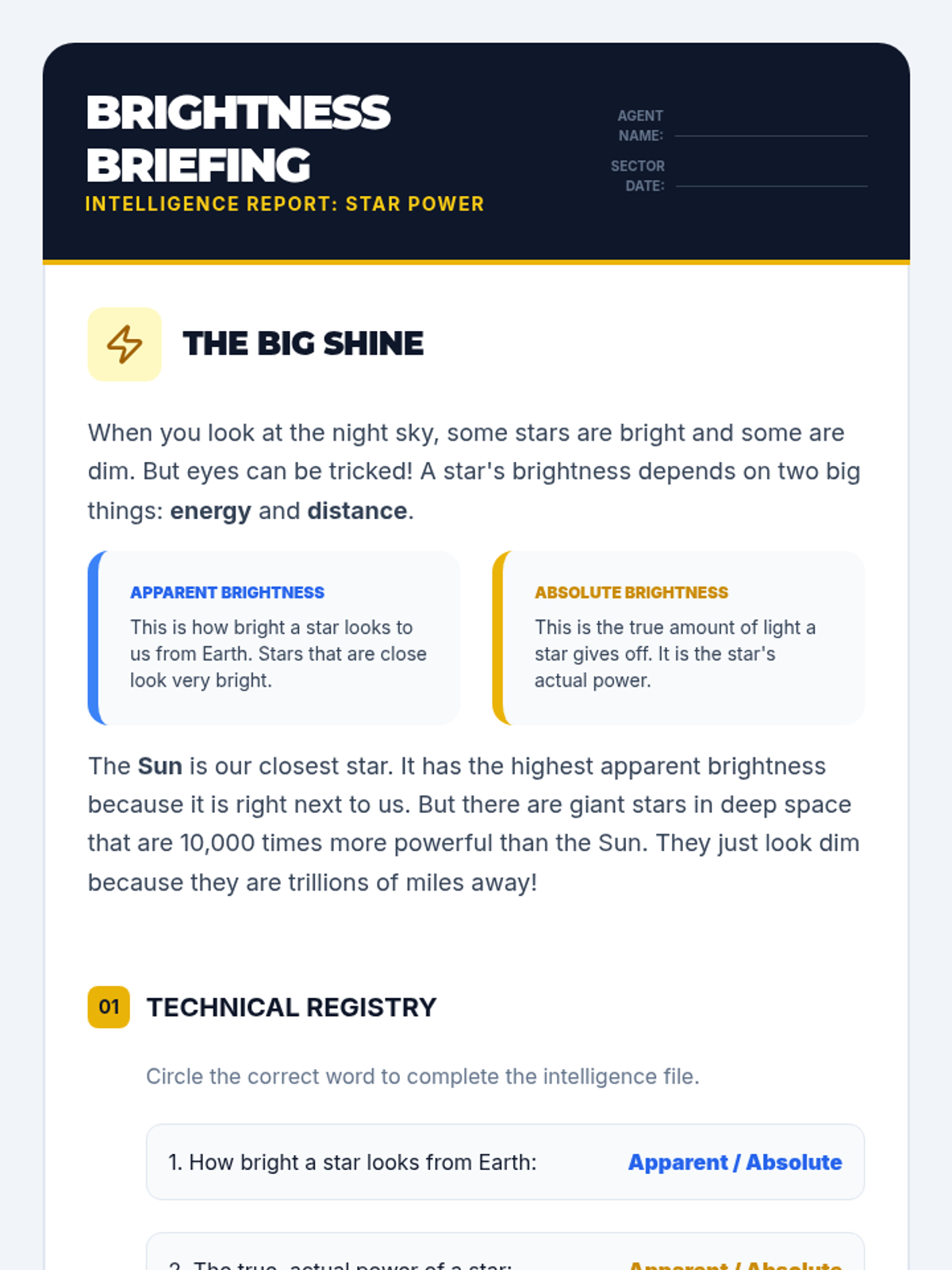
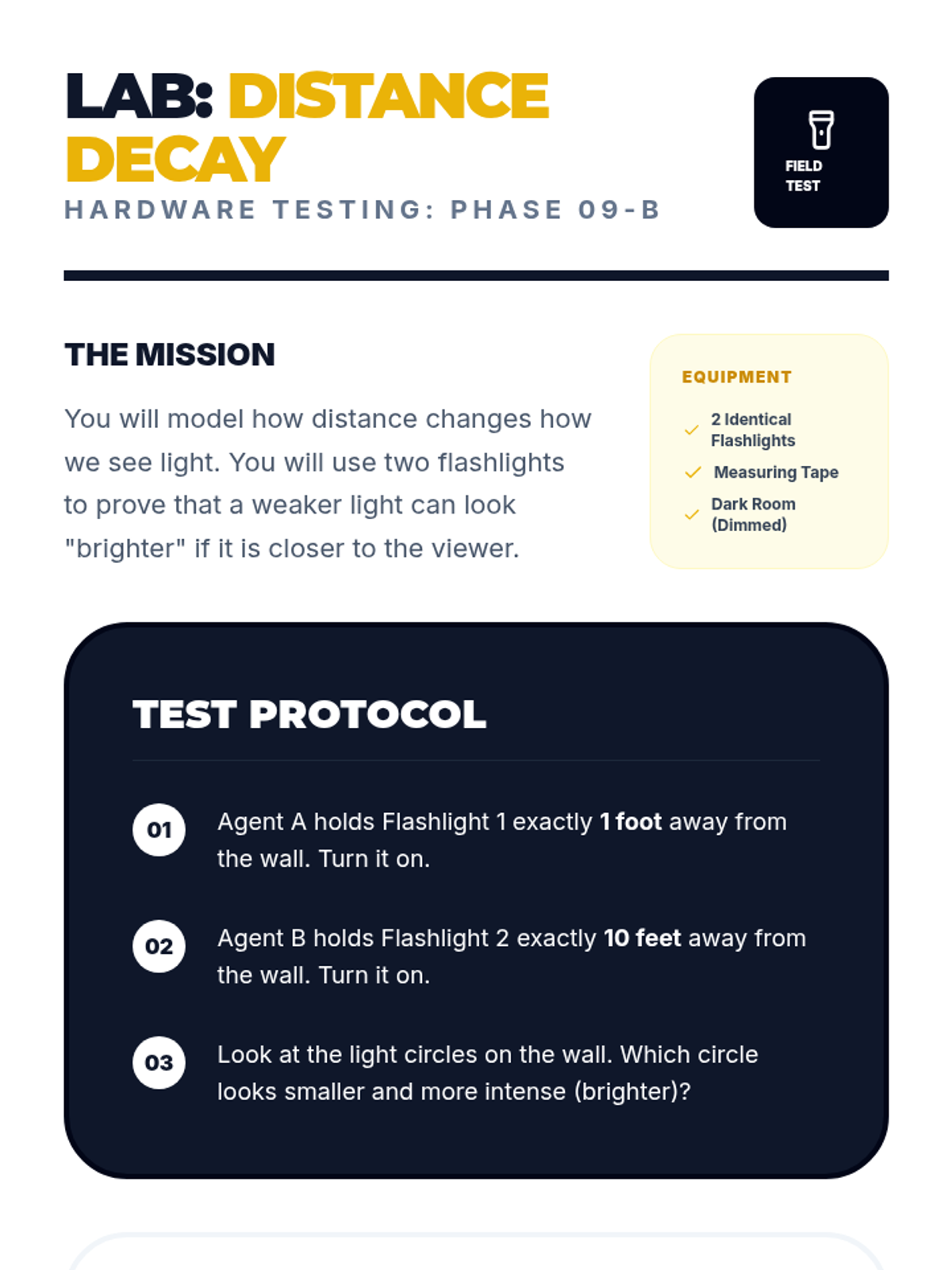
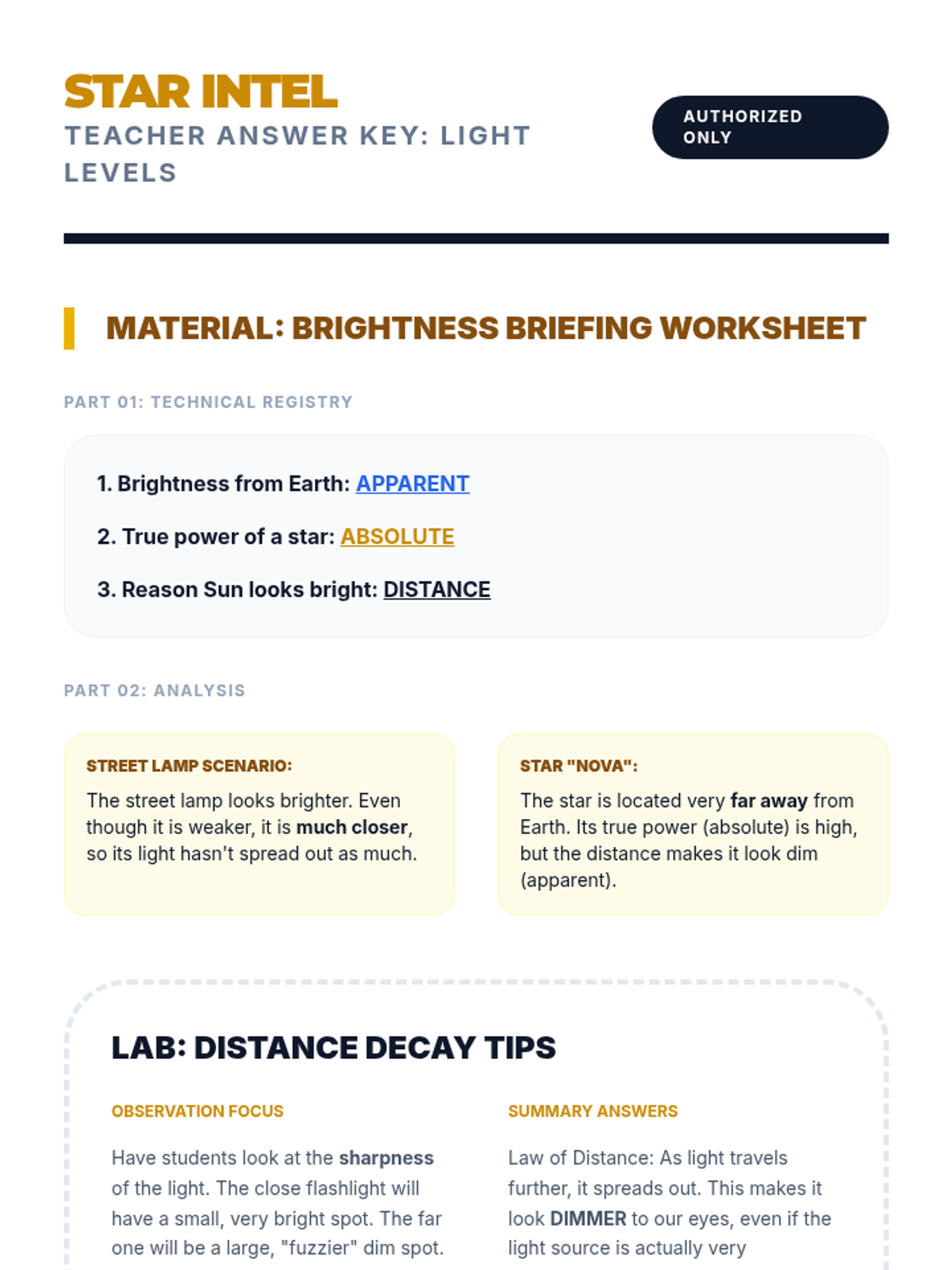
A lesson exploring why some stars look brighter than others, focusing on the difference between apparent and absolute brightness and the role of distance.
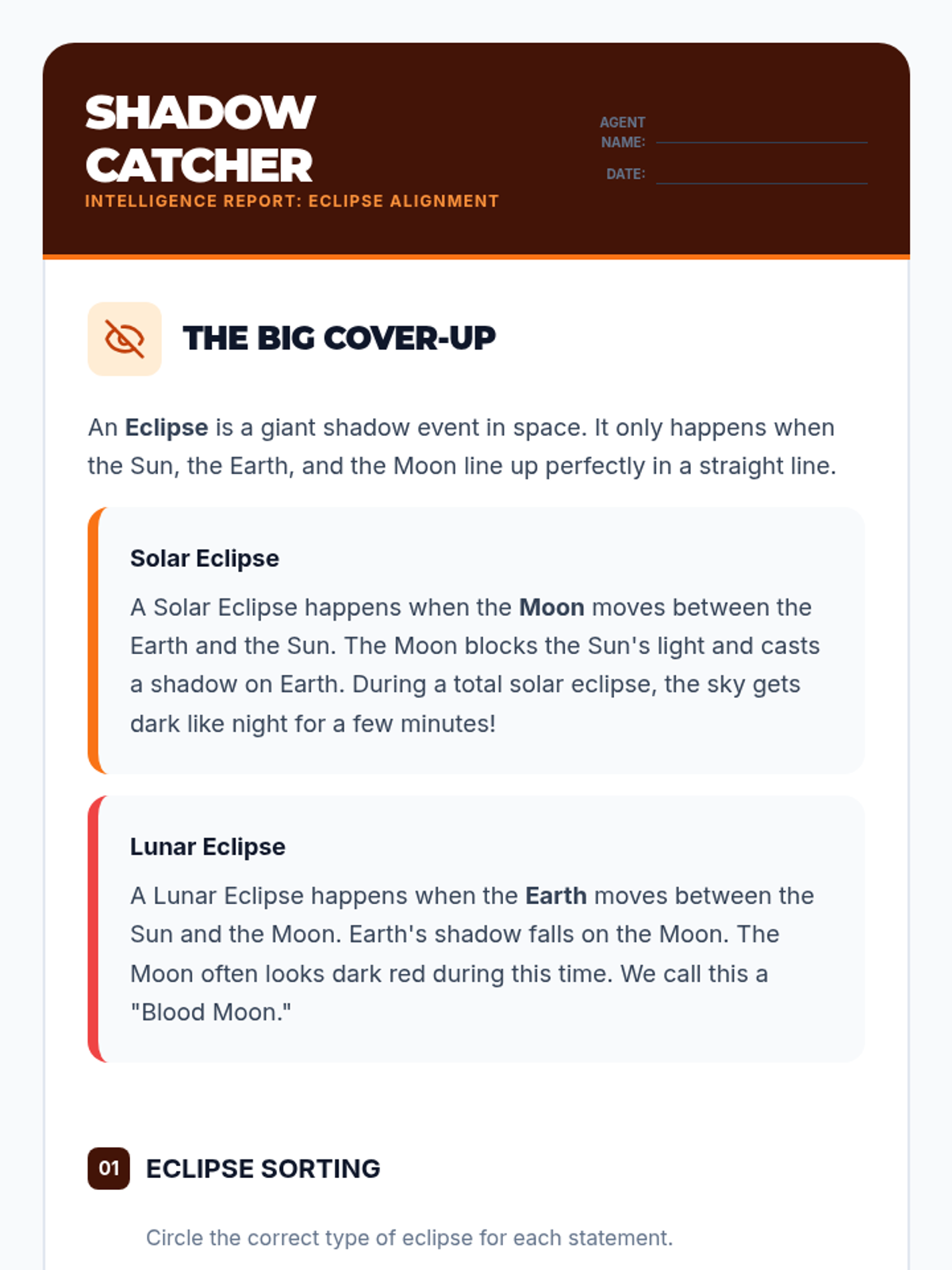
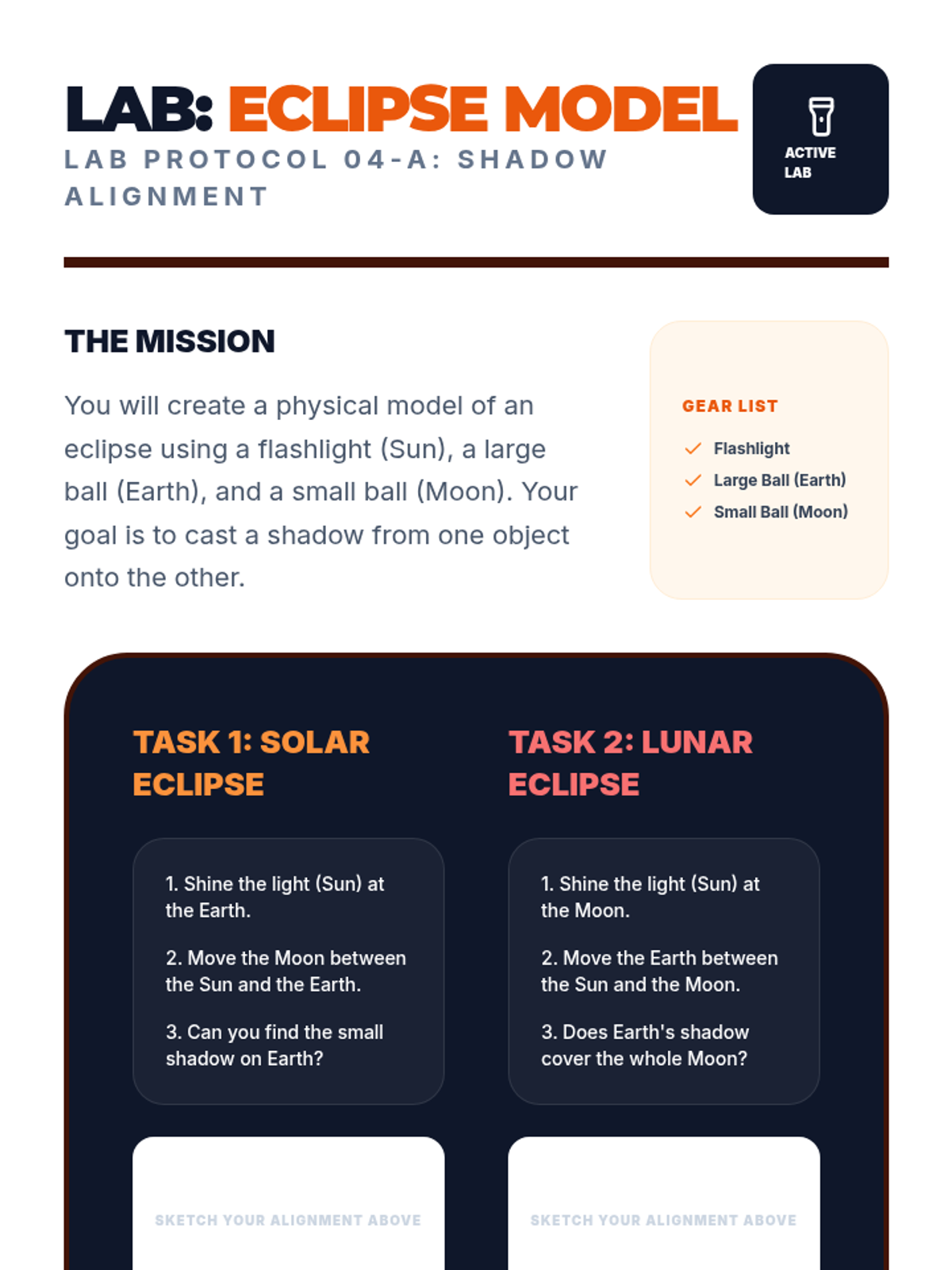
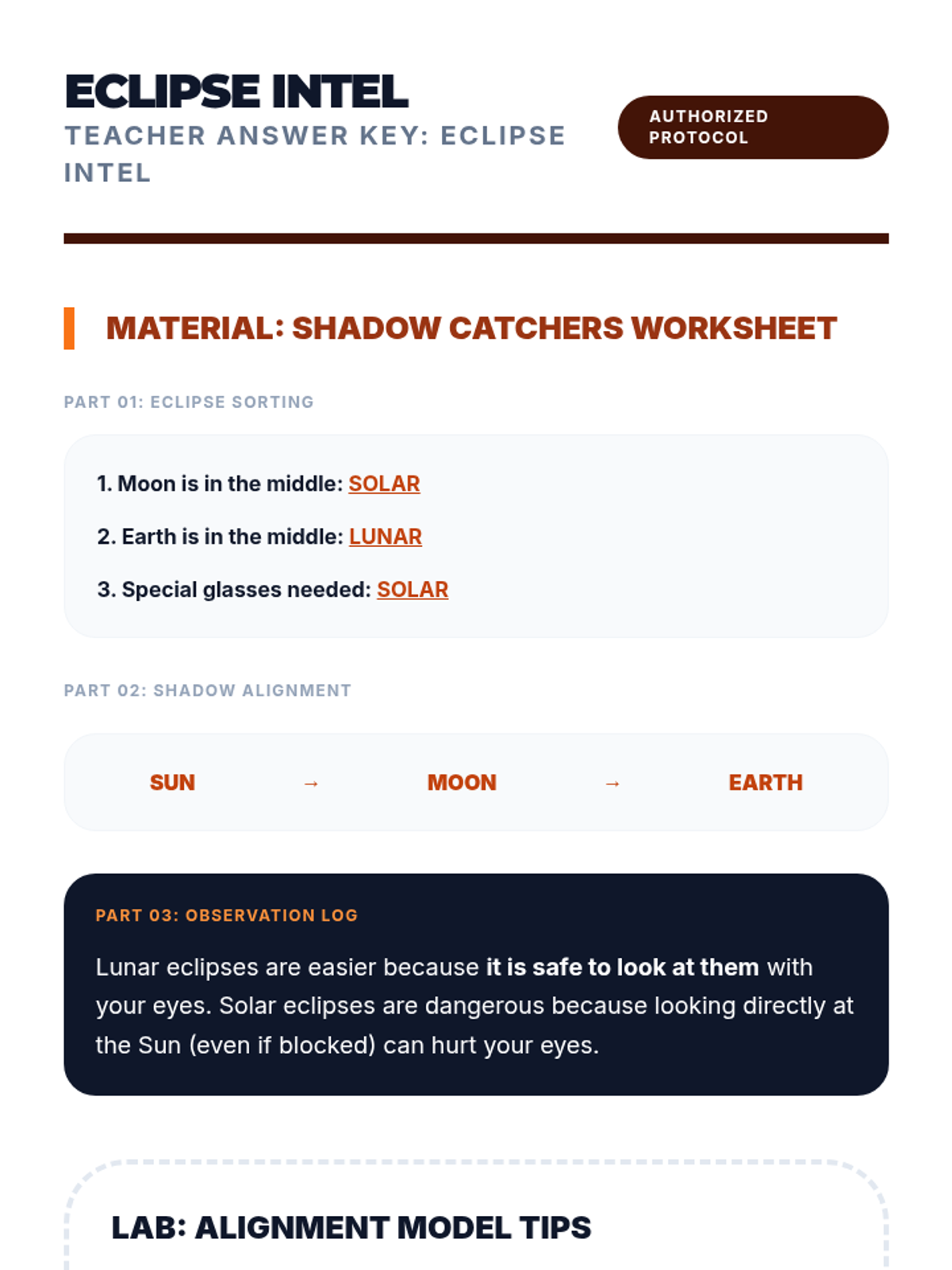
A lesson on solar and lunar eclipses, exploring how the alignment of the Sun, Earth, and Moon creates dramatic shadows in space.
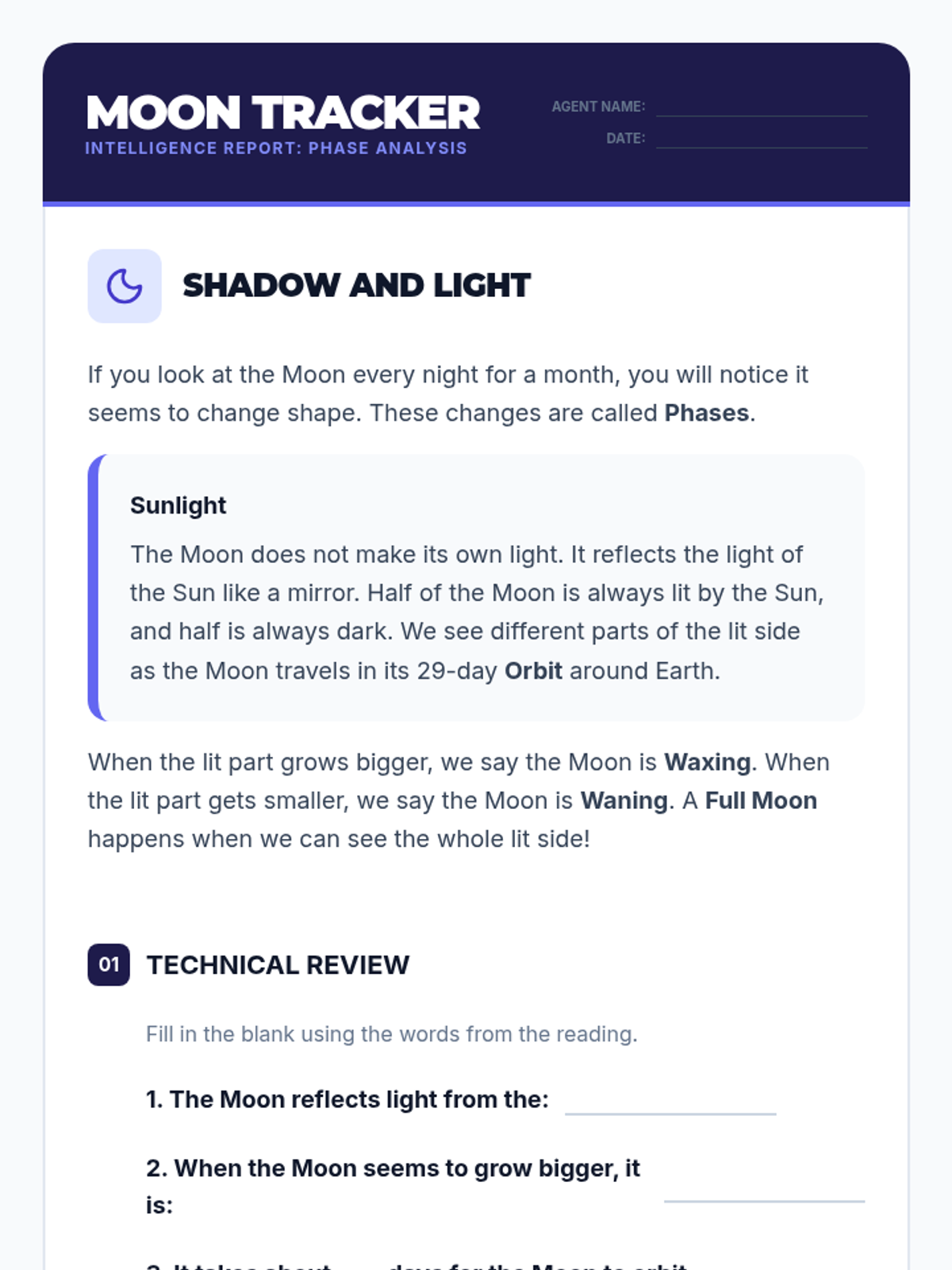
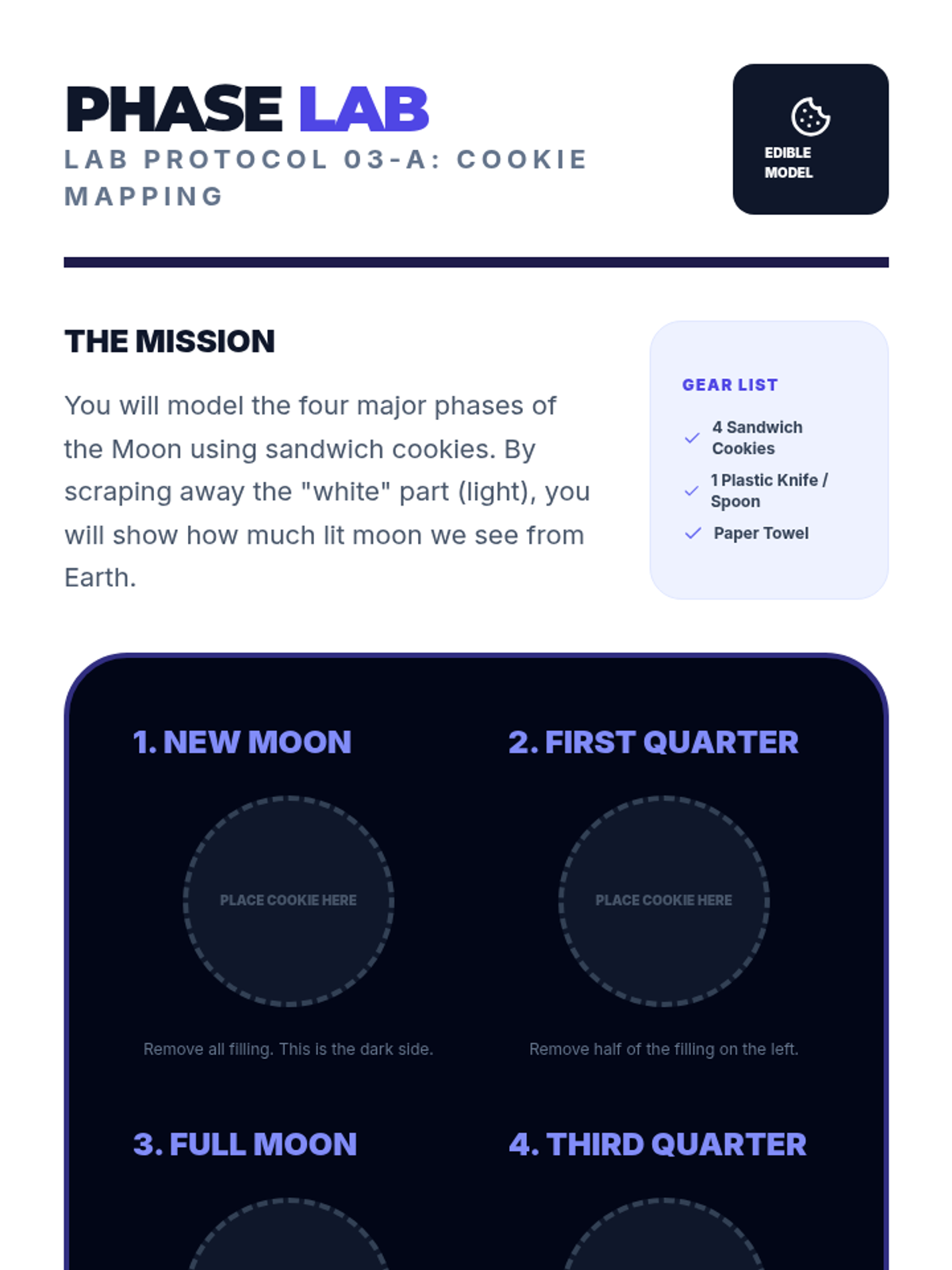
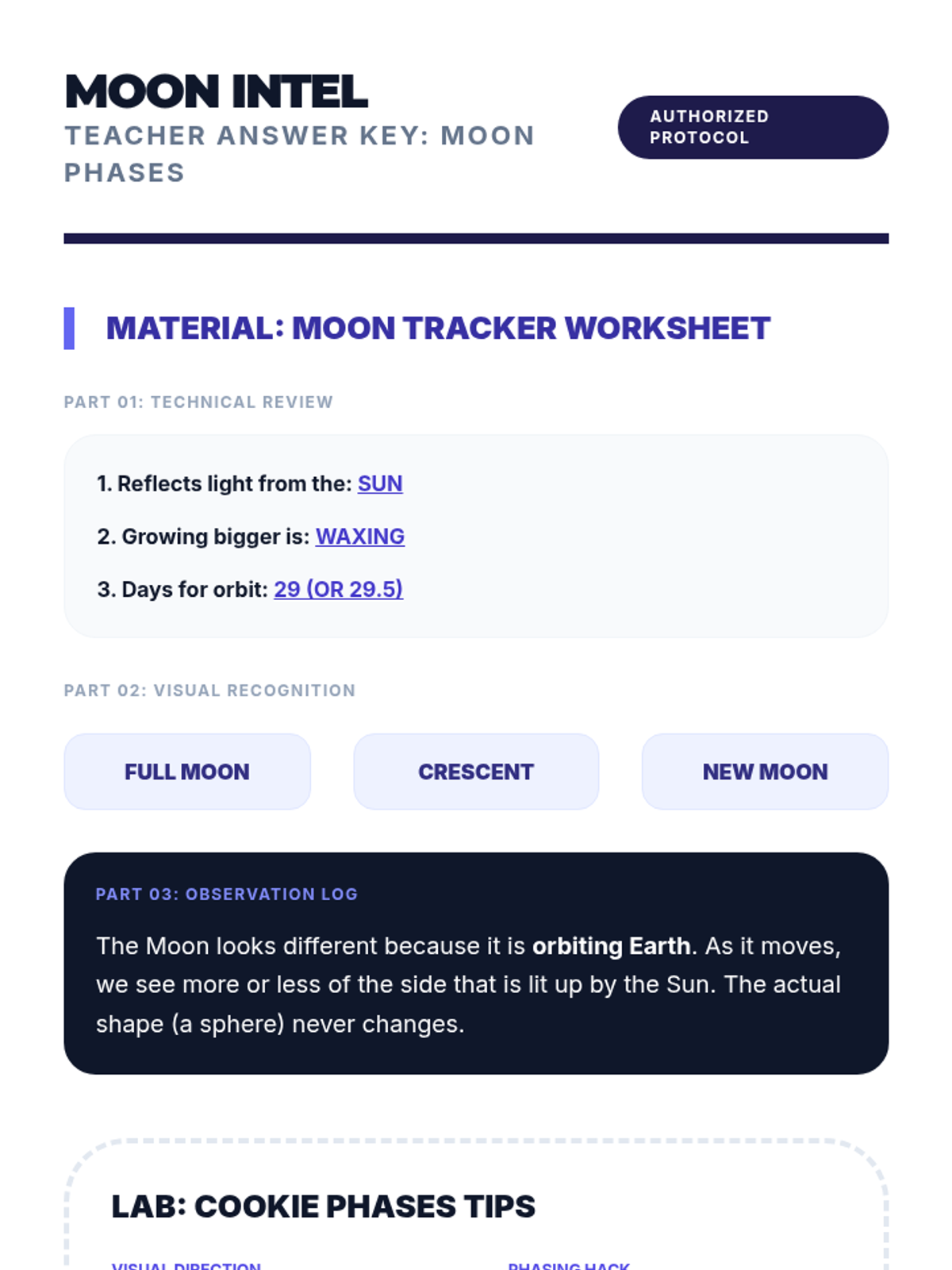
A lesson exploring the eight phases of the Moon, why the Moon seems to change shape, and the 29.5-day lunar cycle.
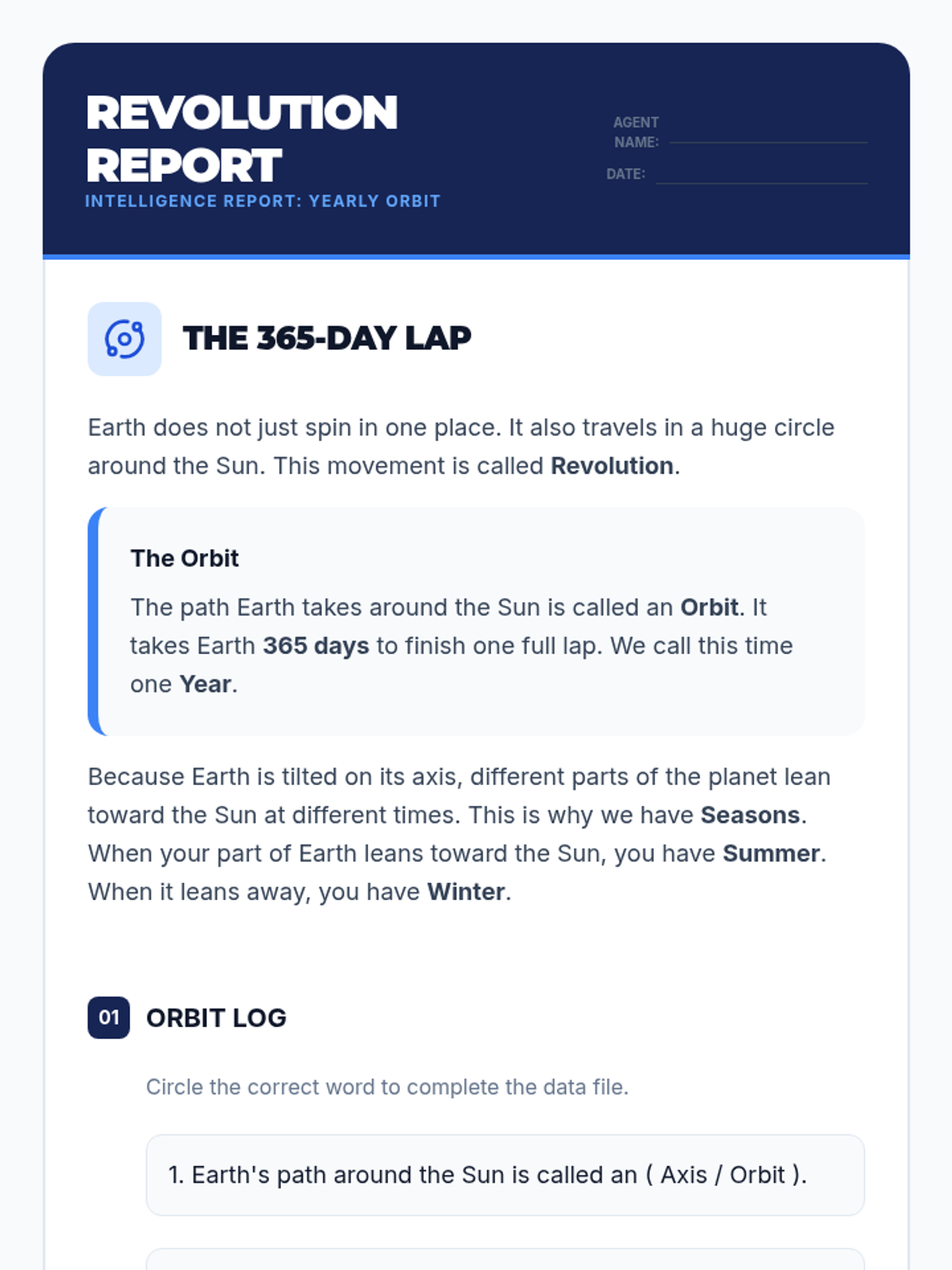
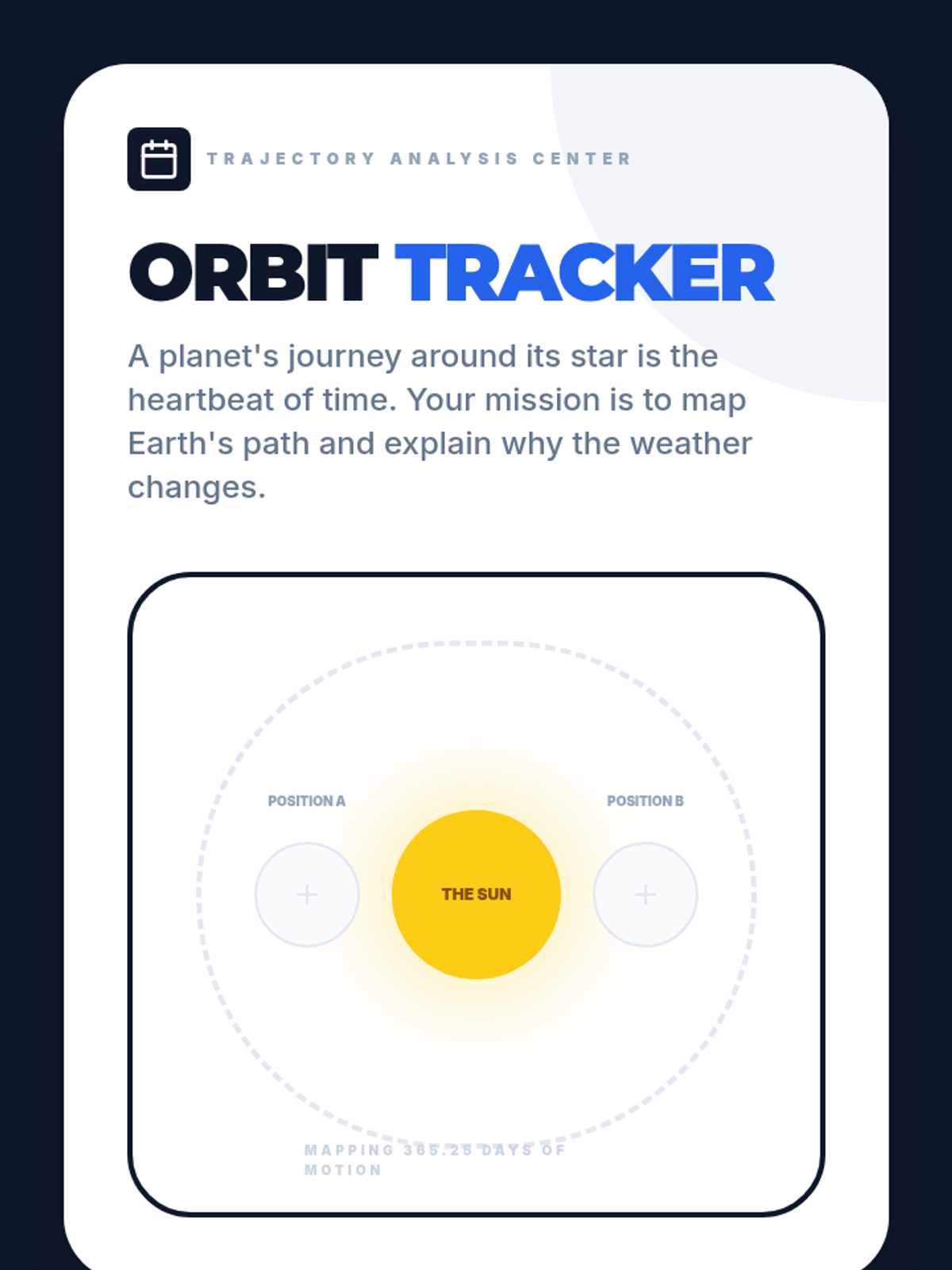
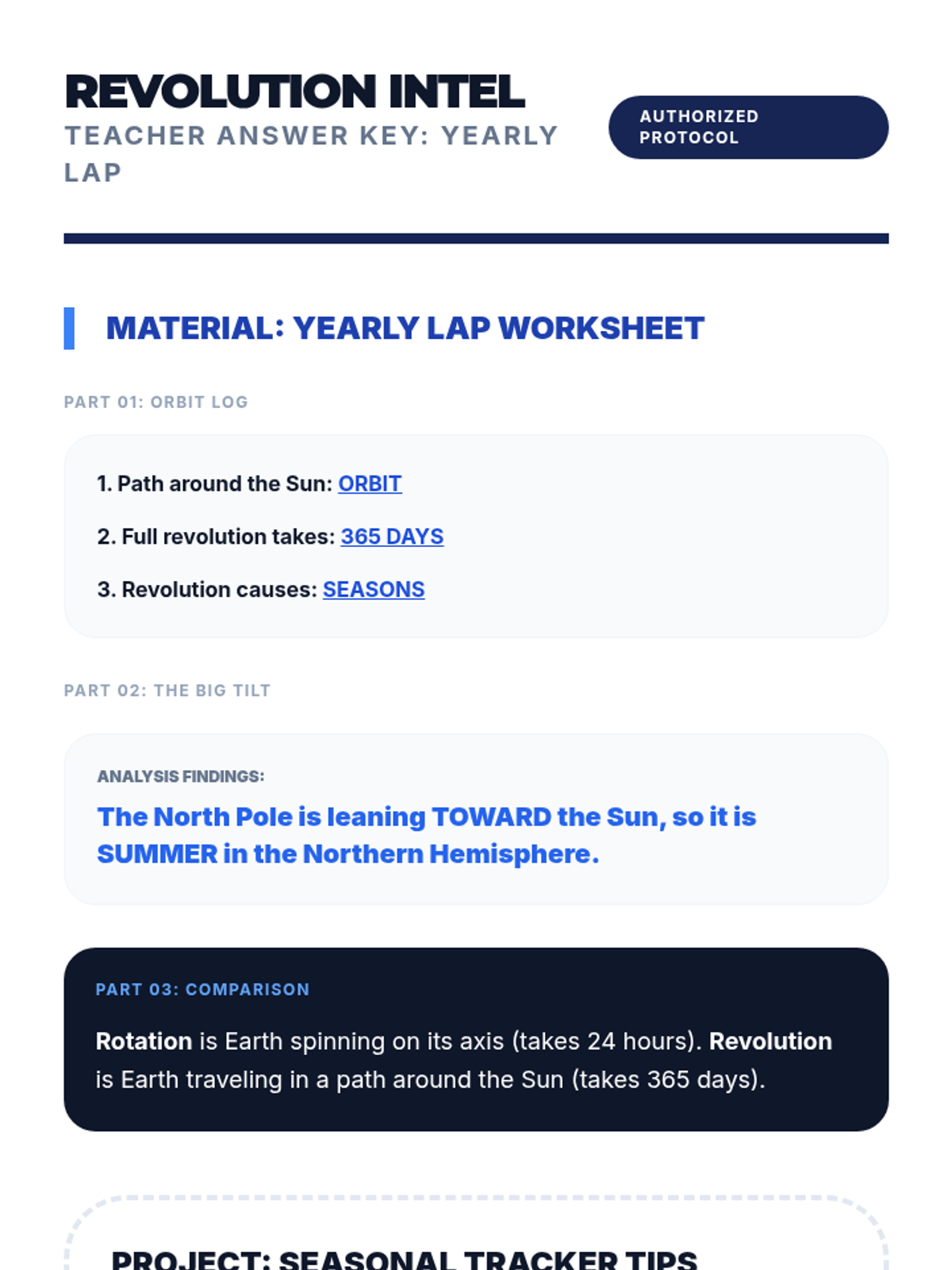
A lesson on Earth's revolution, exploring the path Earth takes around the sun and how its tilted axis leads to the change of seasons.
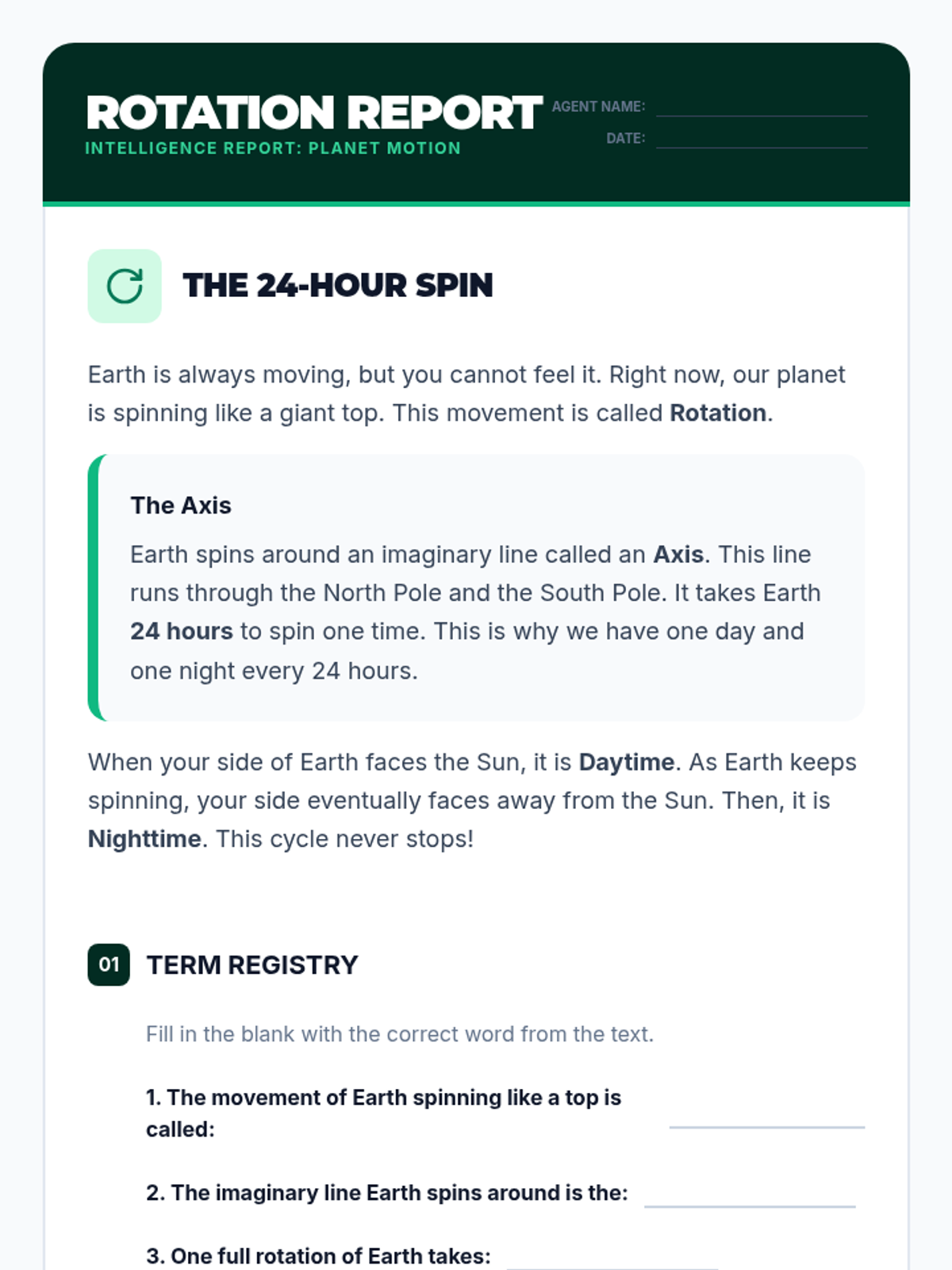
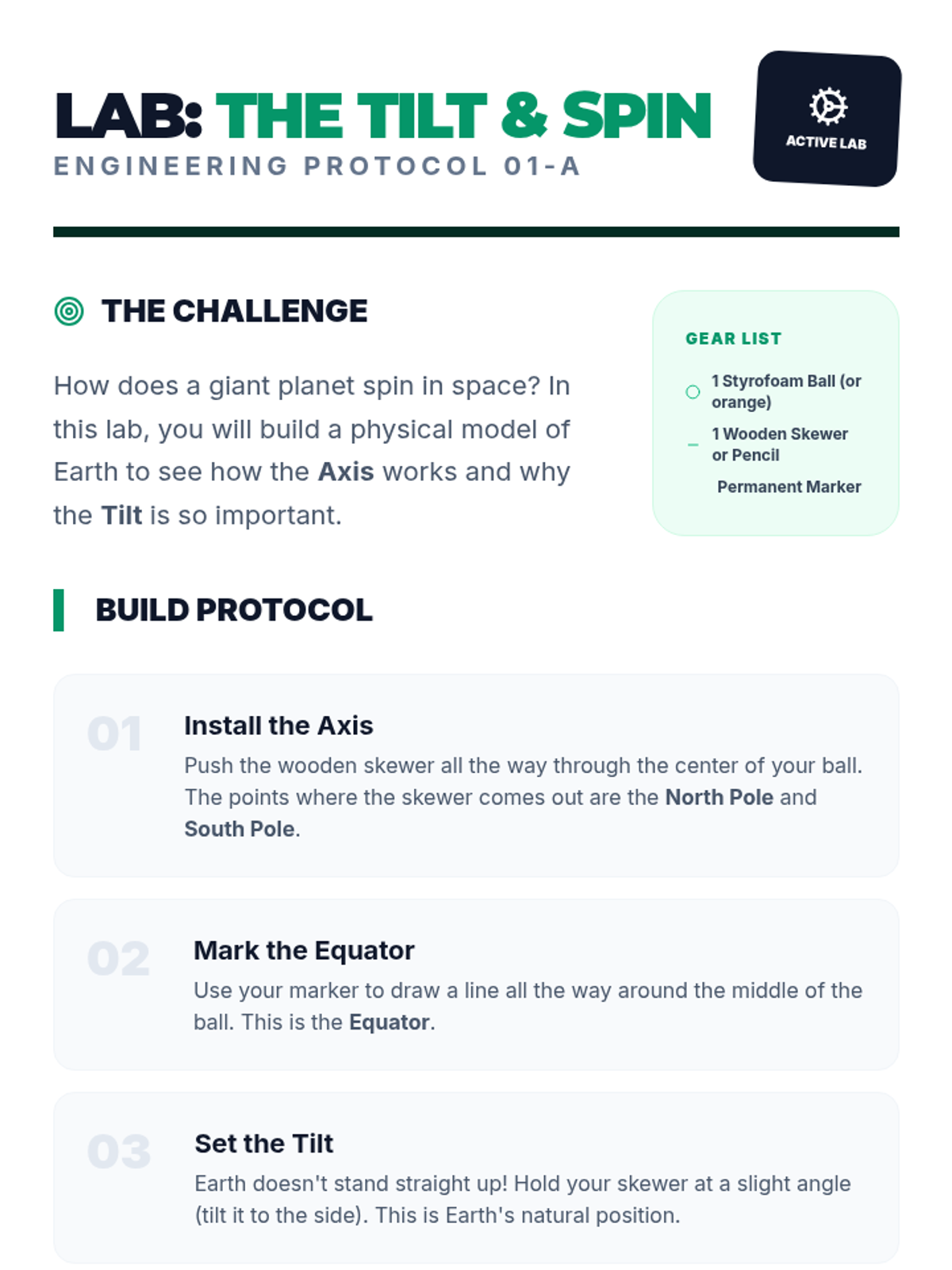
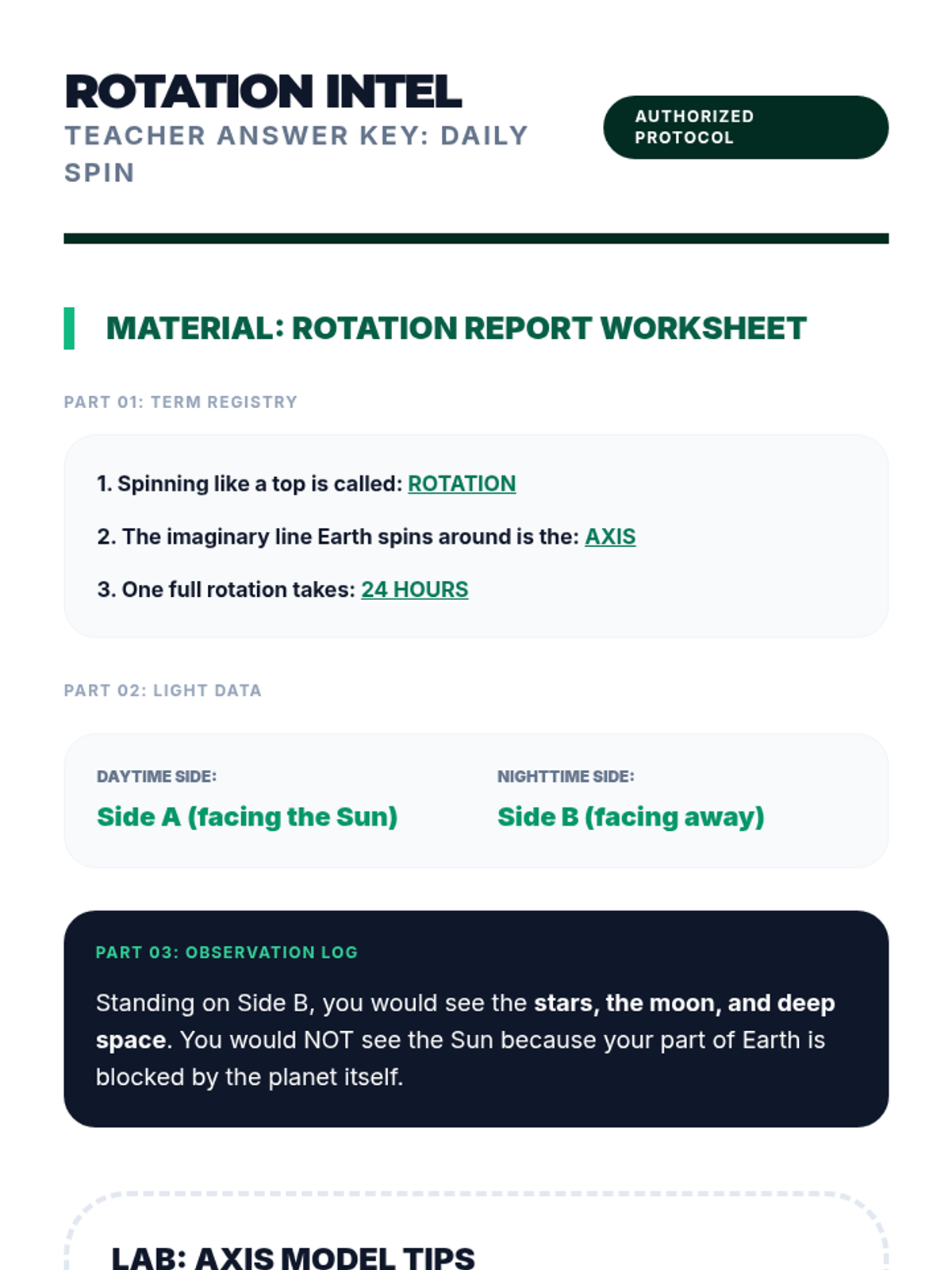
A lesson on Earth's rotation, focusing on the concept of an axis and how spinning creates the cycle of day and night.
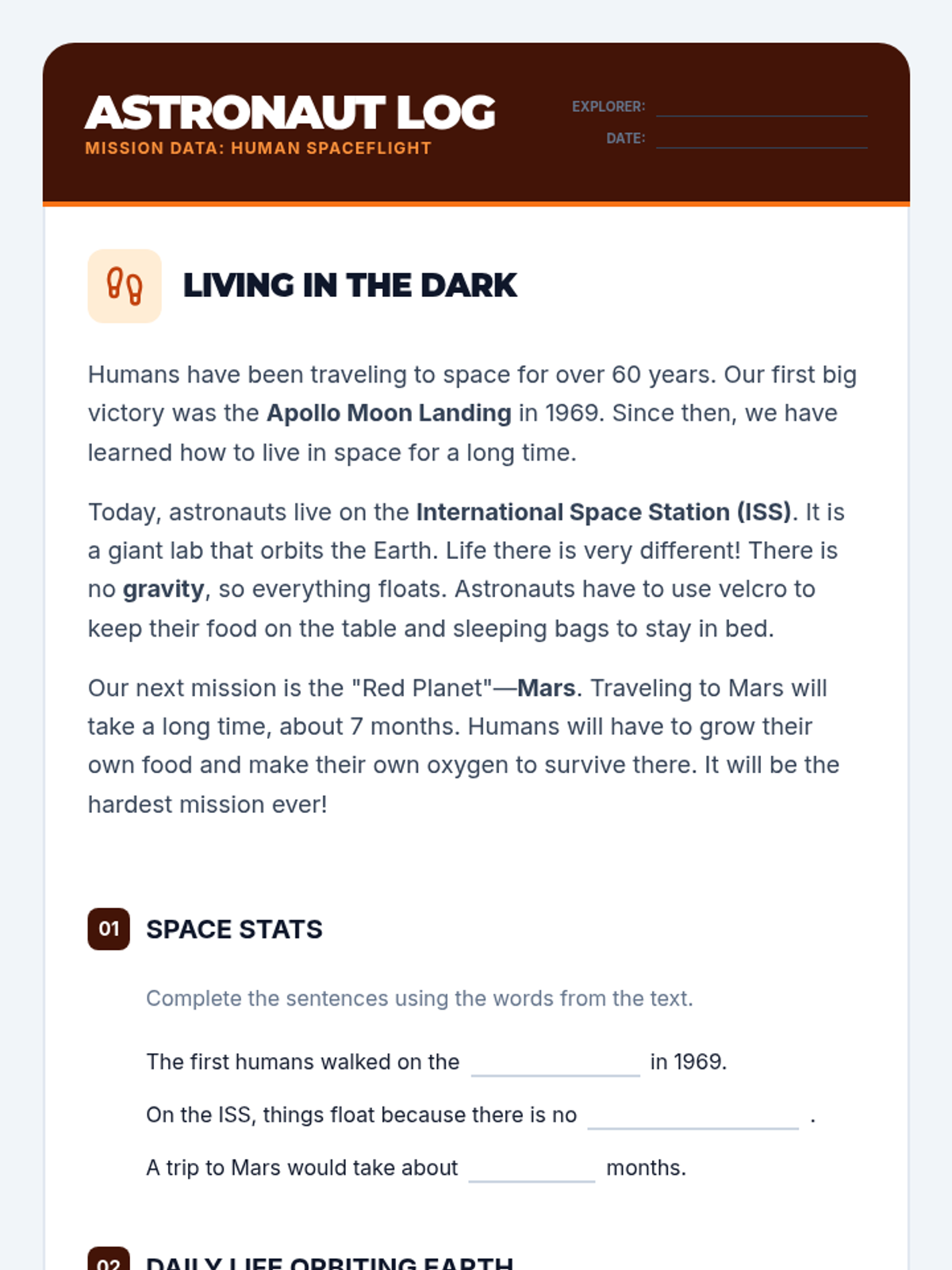
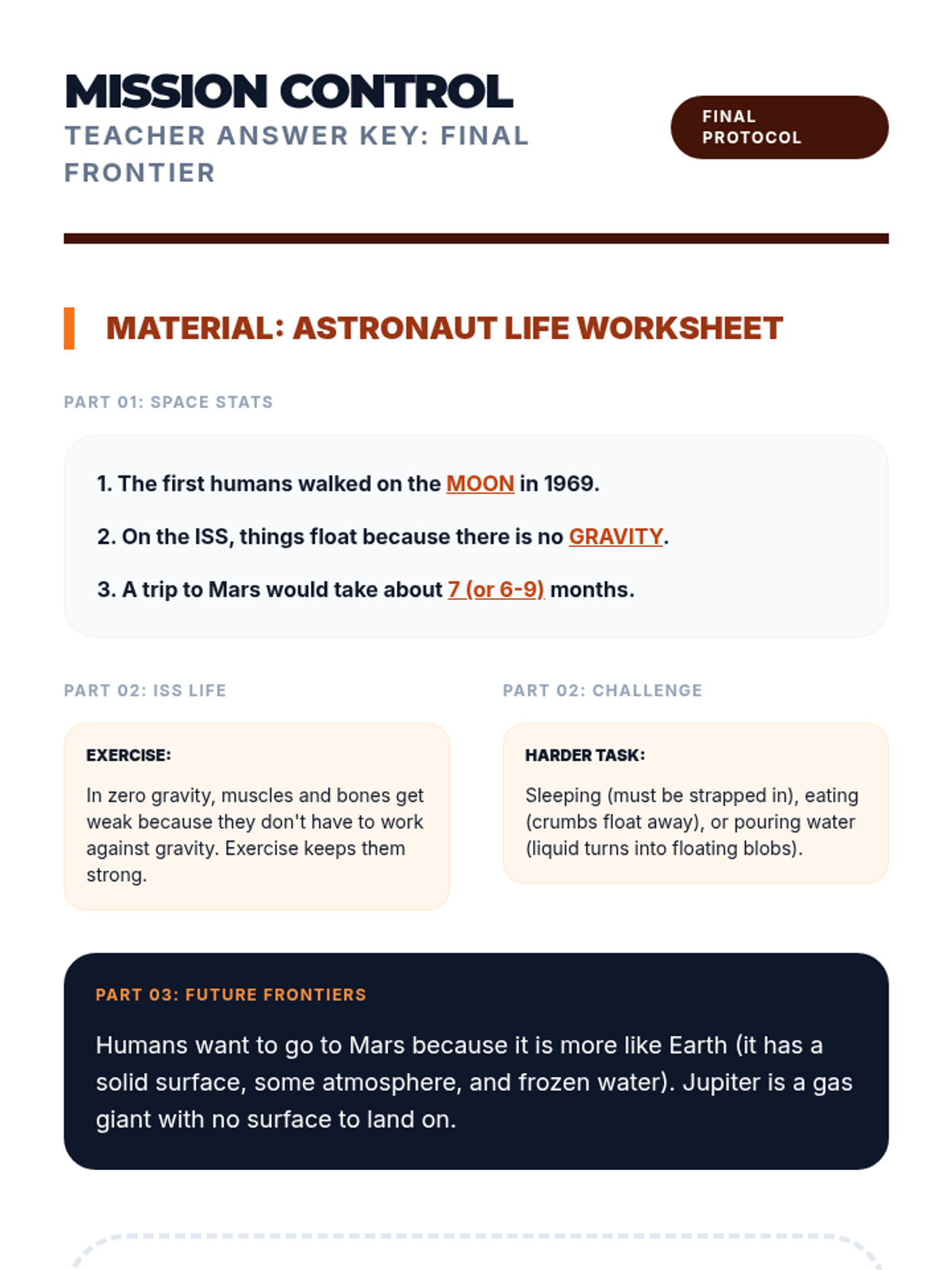
A lesson exploring the history and future of human space exploration. From the Apollo moon landings to living on the International Space Station and planning the first human missions to Mars.
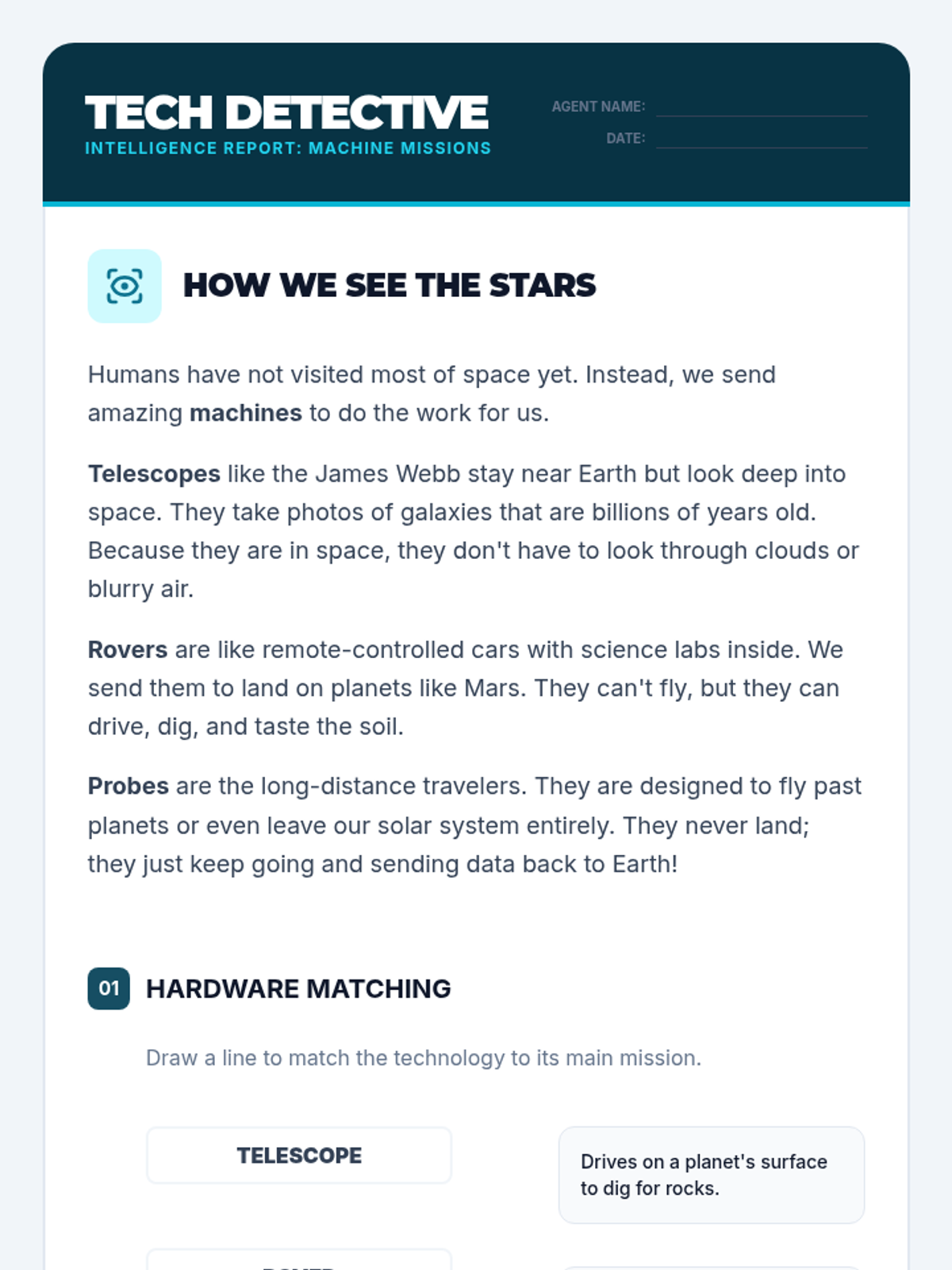
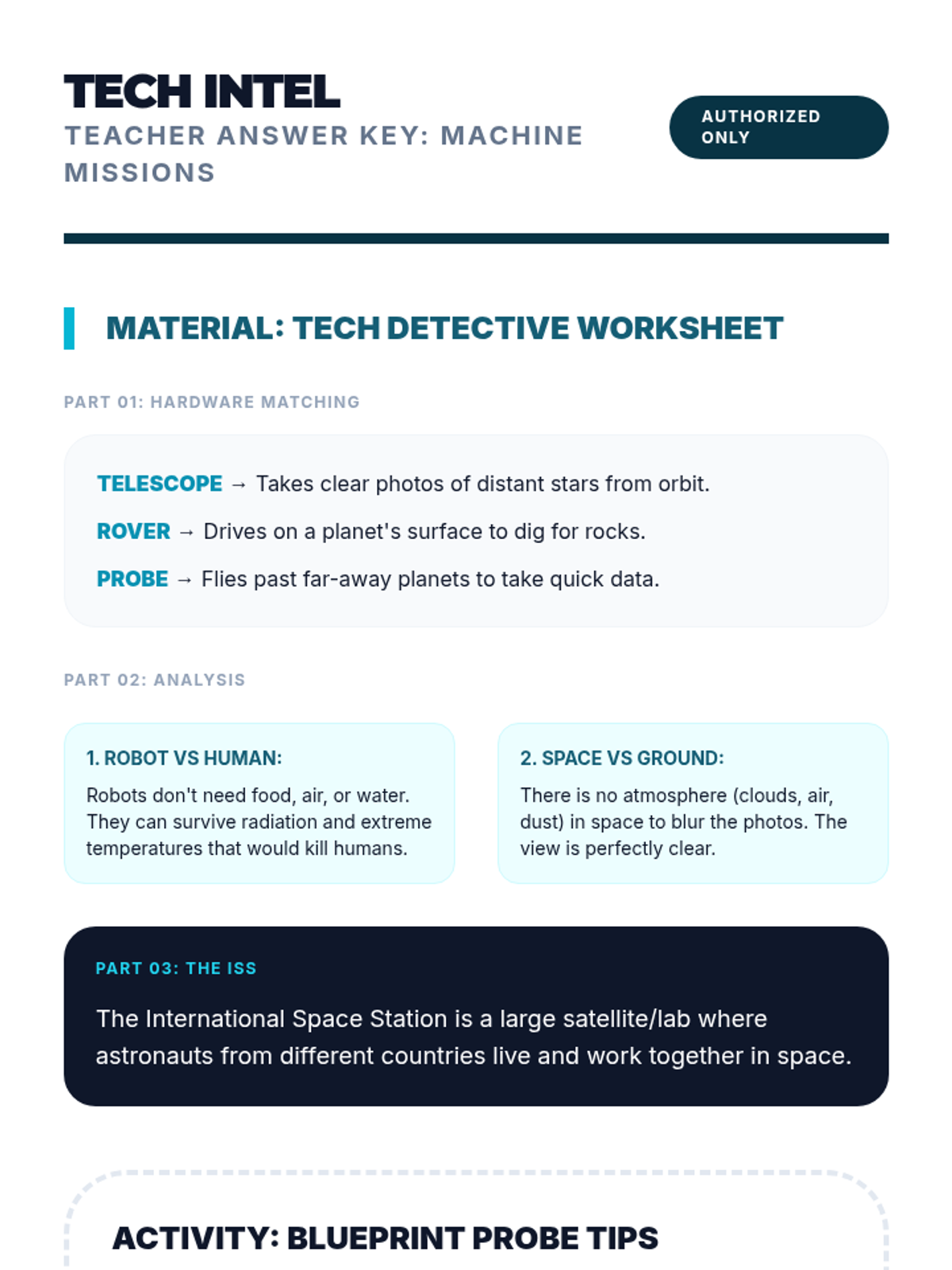
A lesson exploring how we use technology like rovers, probes, satellites, and telescopes to study space. Highlights famous missions like Mars Rovers and the James Webb Space Telescope.
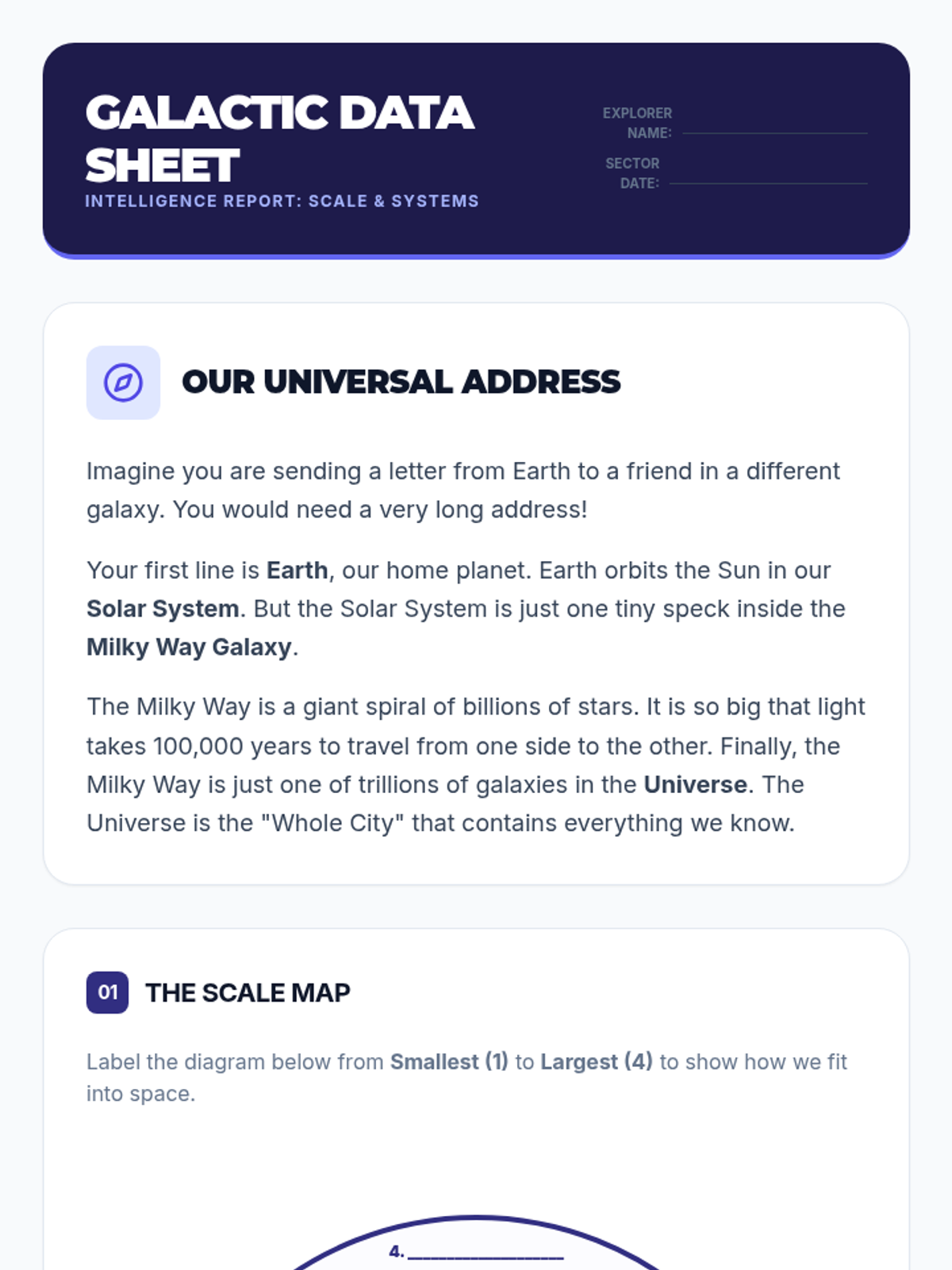
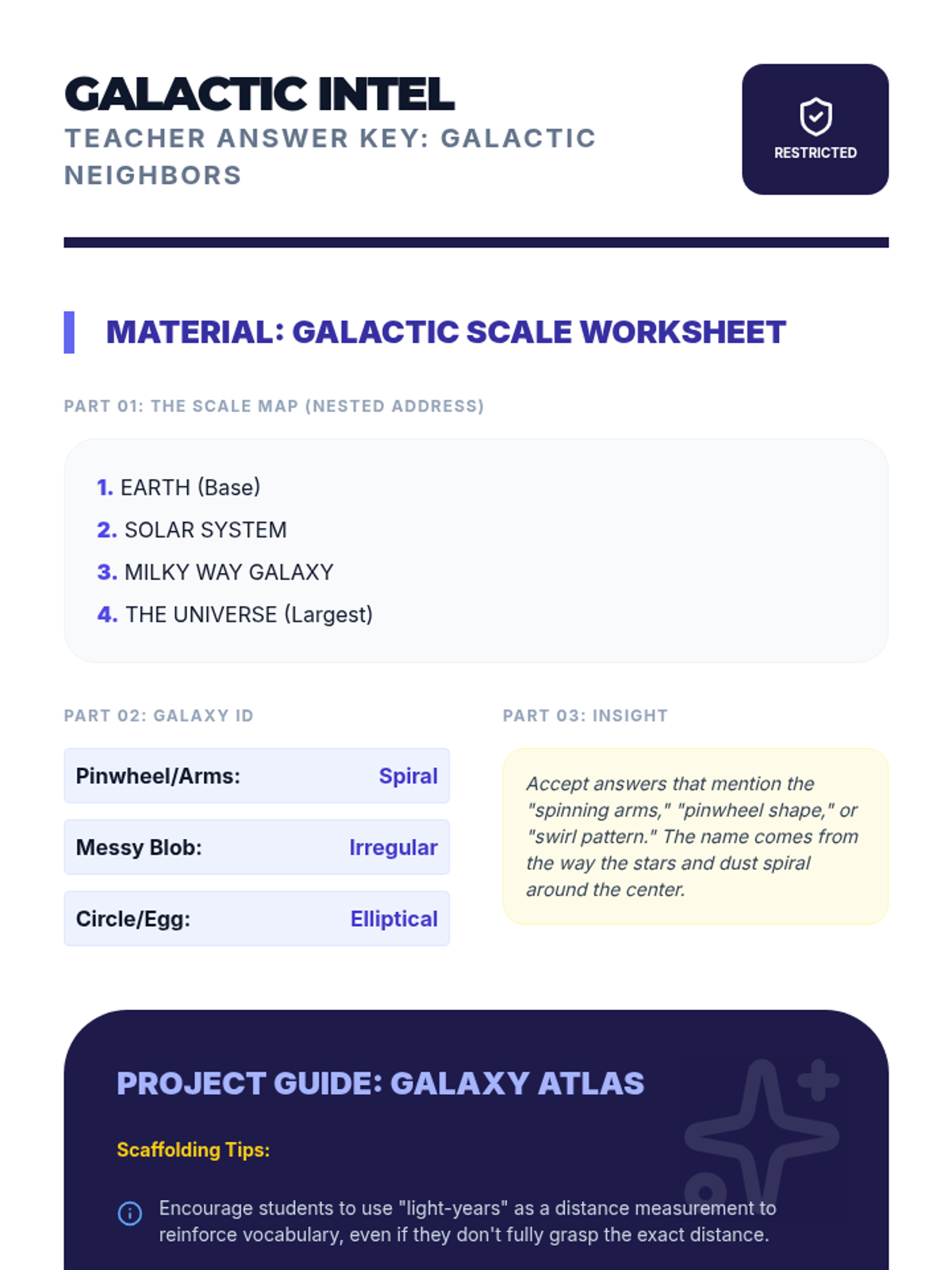
A lesson exploring the hierarchy of space, from our solar system to the Milky Way galaxy and the vast universe beyond. Focuses on relative scale and the concept of galaxies.
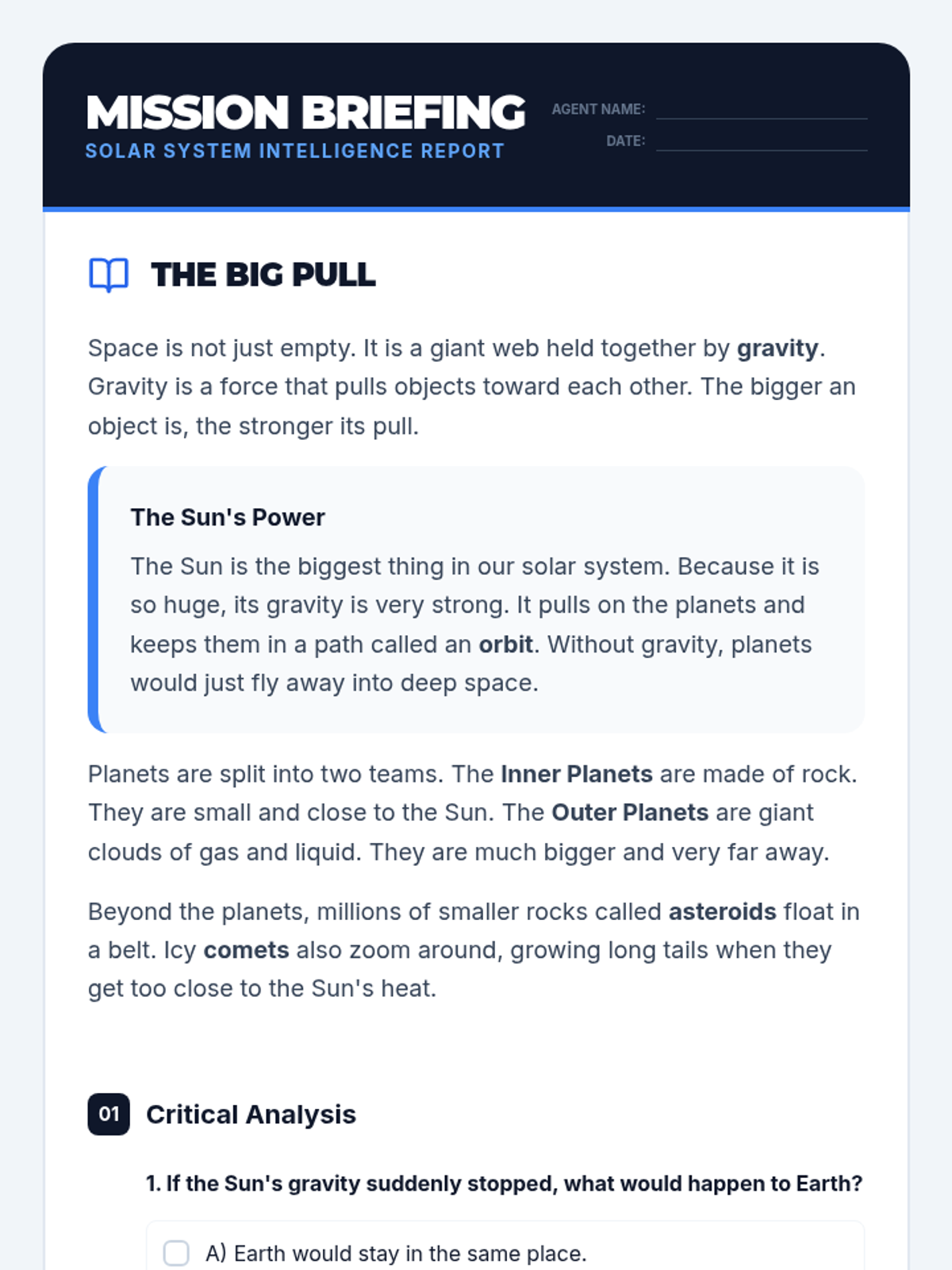
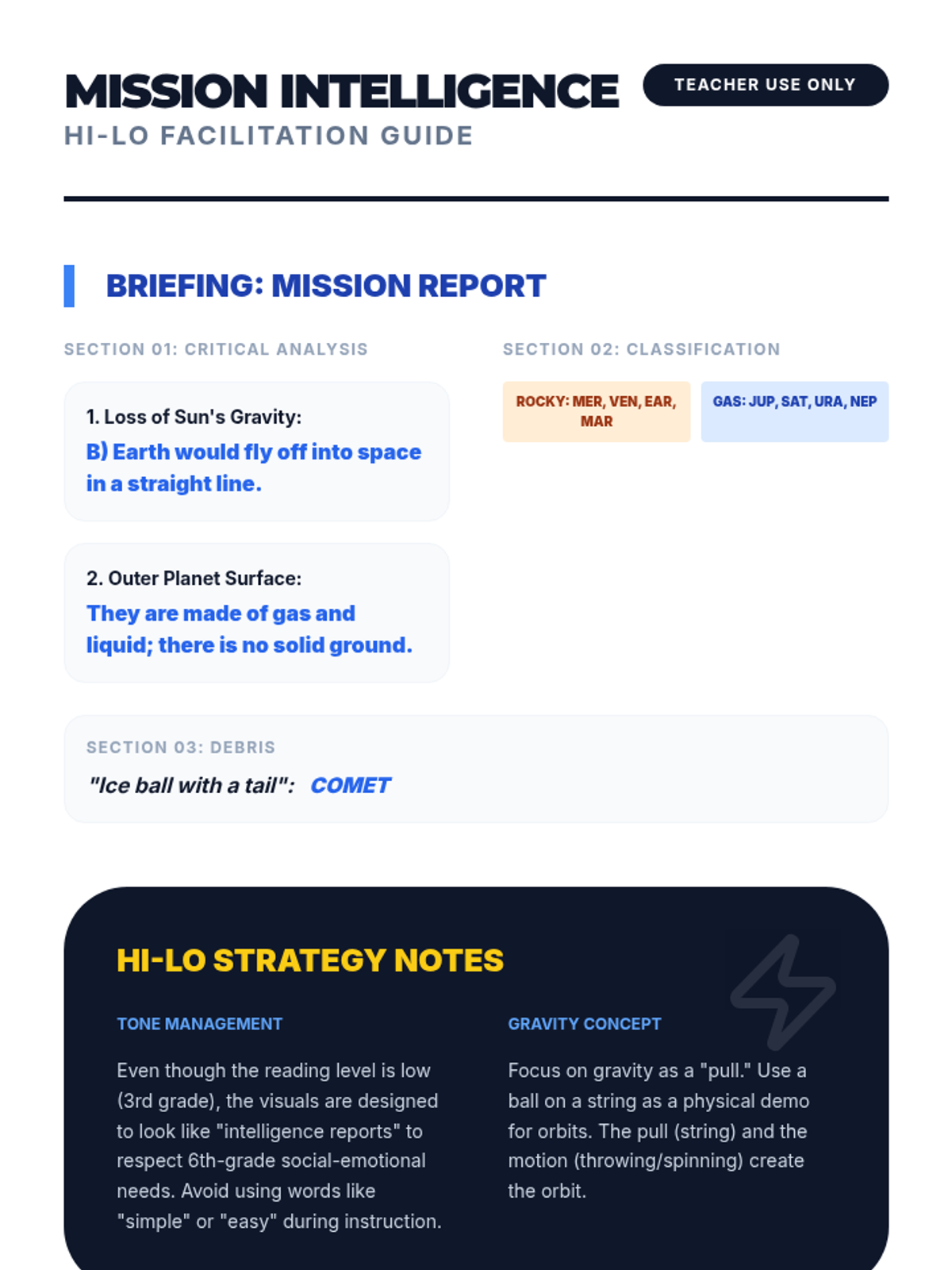
A "Hi-Lo" lesson on the solar system for 6th graders reading at a 3rd-grade level. It explores planetary characteristics, the role of gravity, and scale through accessible text and high-interest visuals.
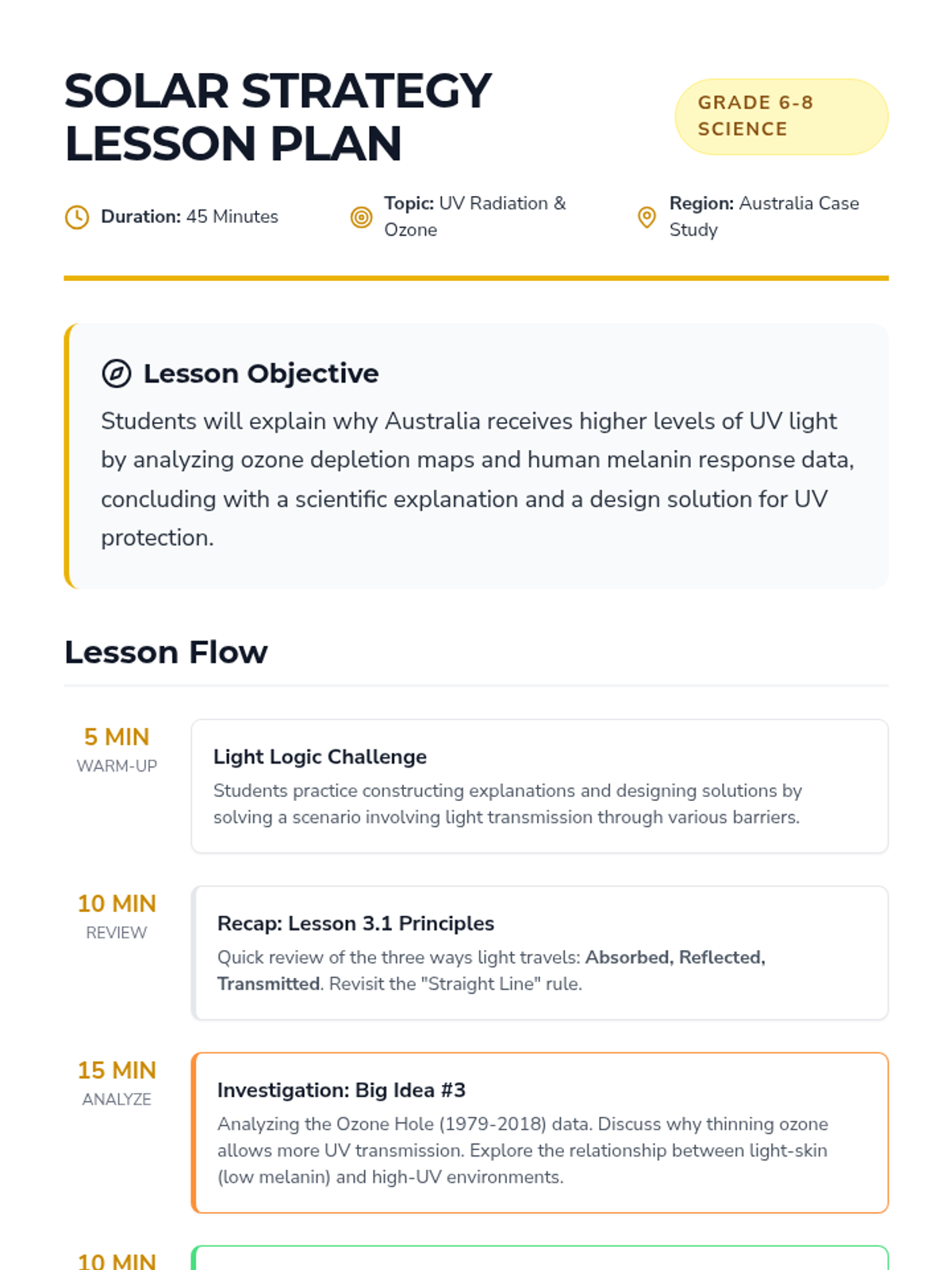
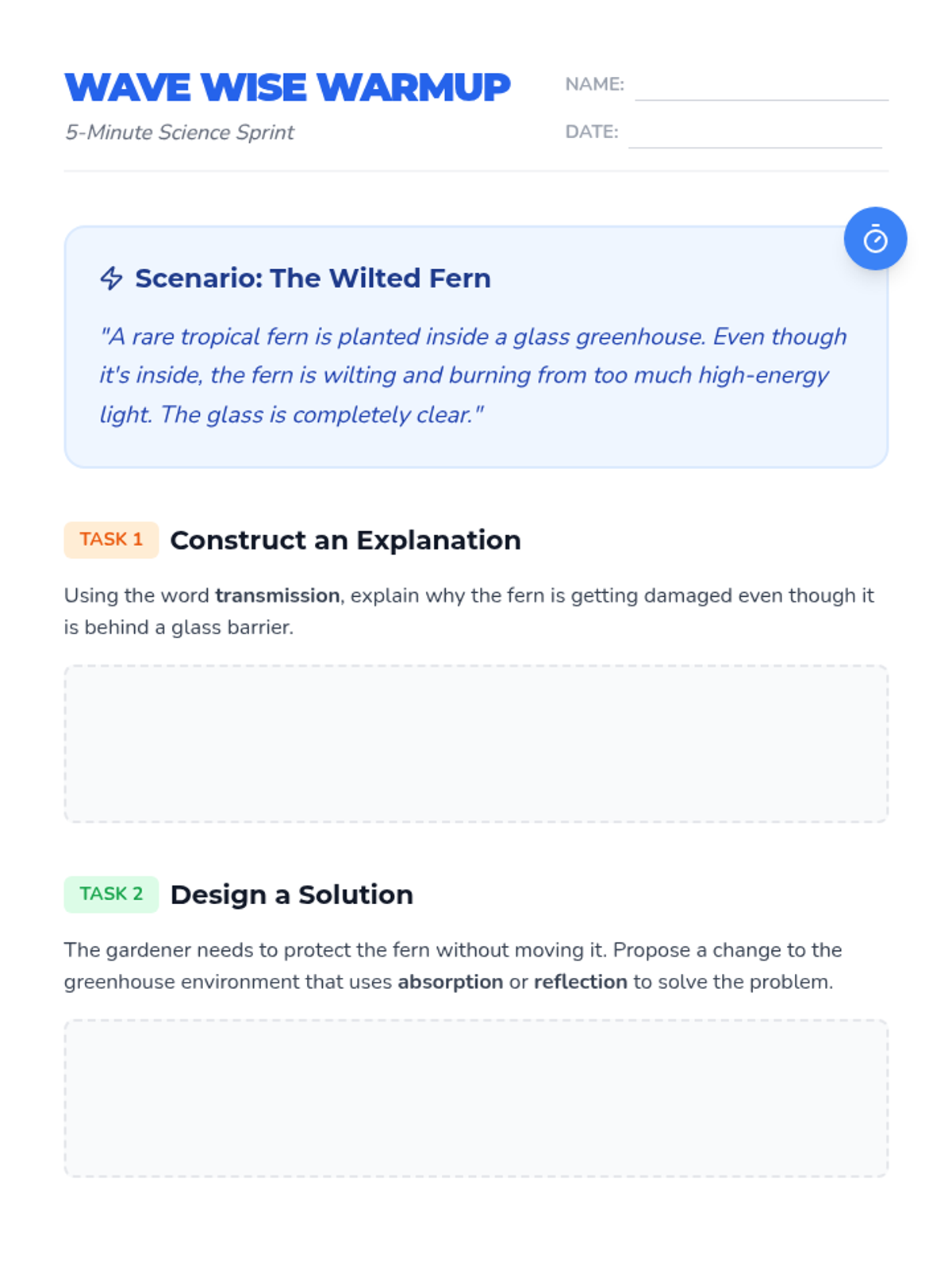
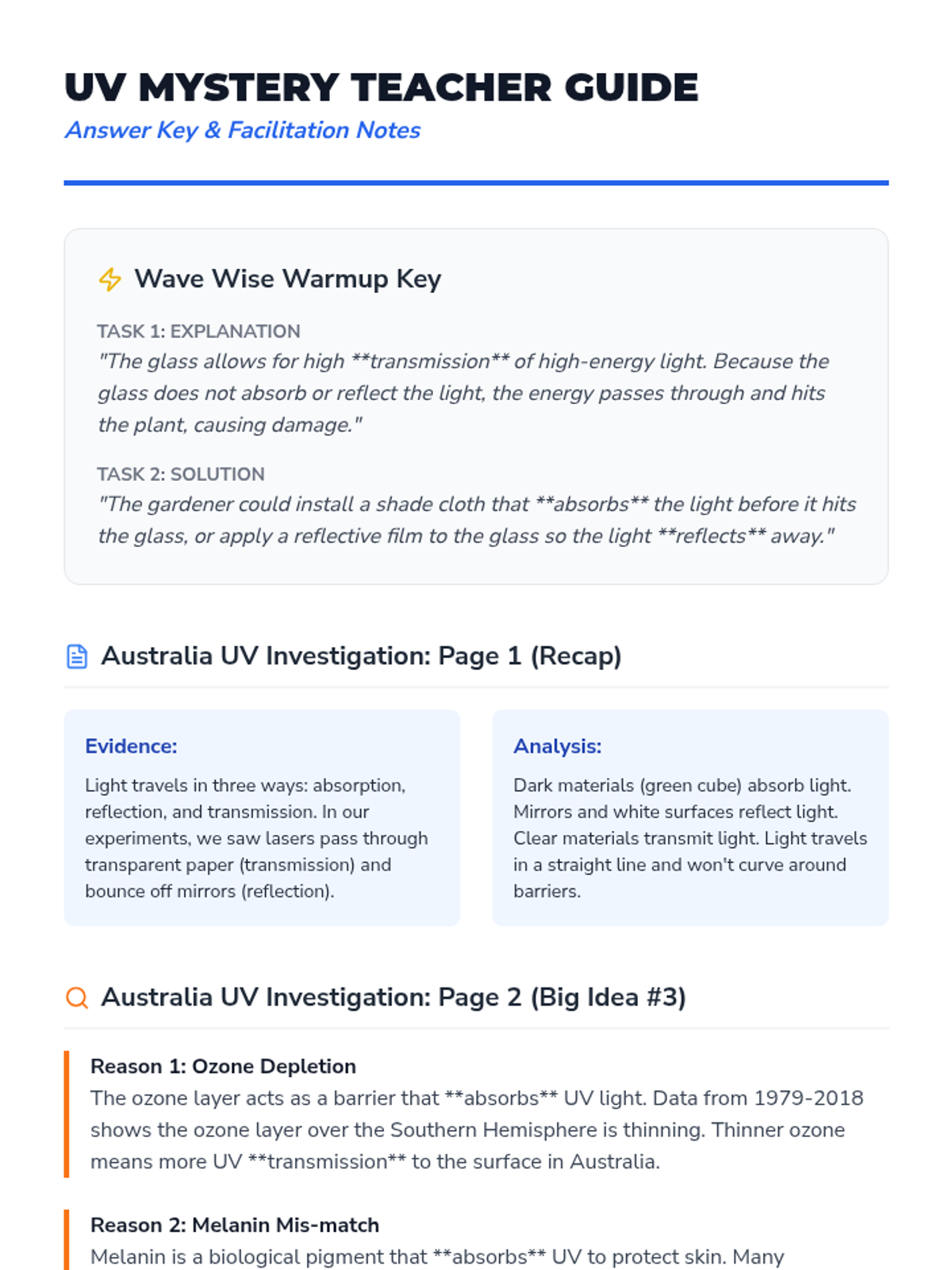
A comprehensive lesson exploring why Australia receives high levels of UV radiation, focusing on ozone depletion and the interaction between light and matter. Students analyze data, practice constructing scientific explanations, and explore the biological impact of UV light.
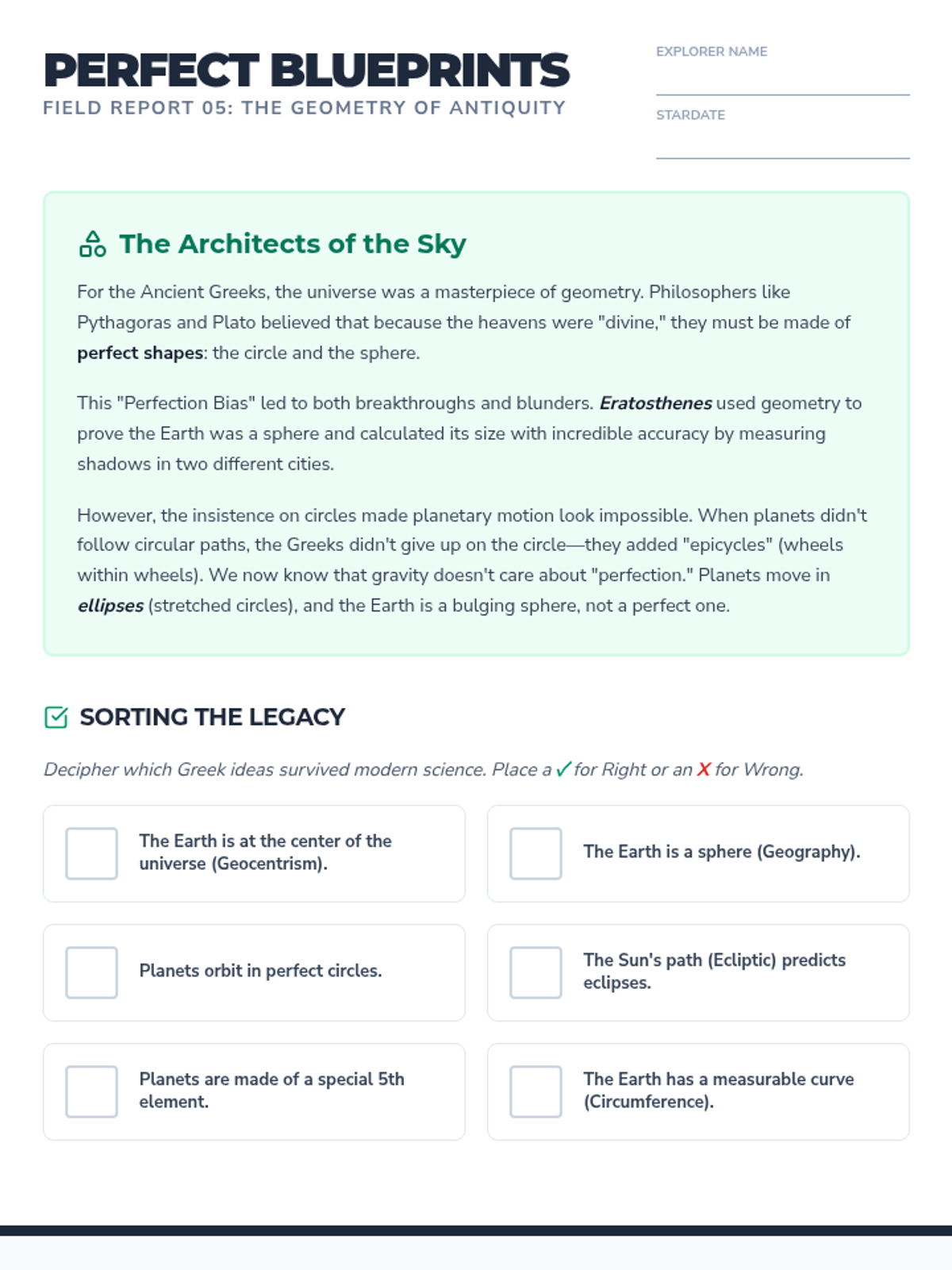
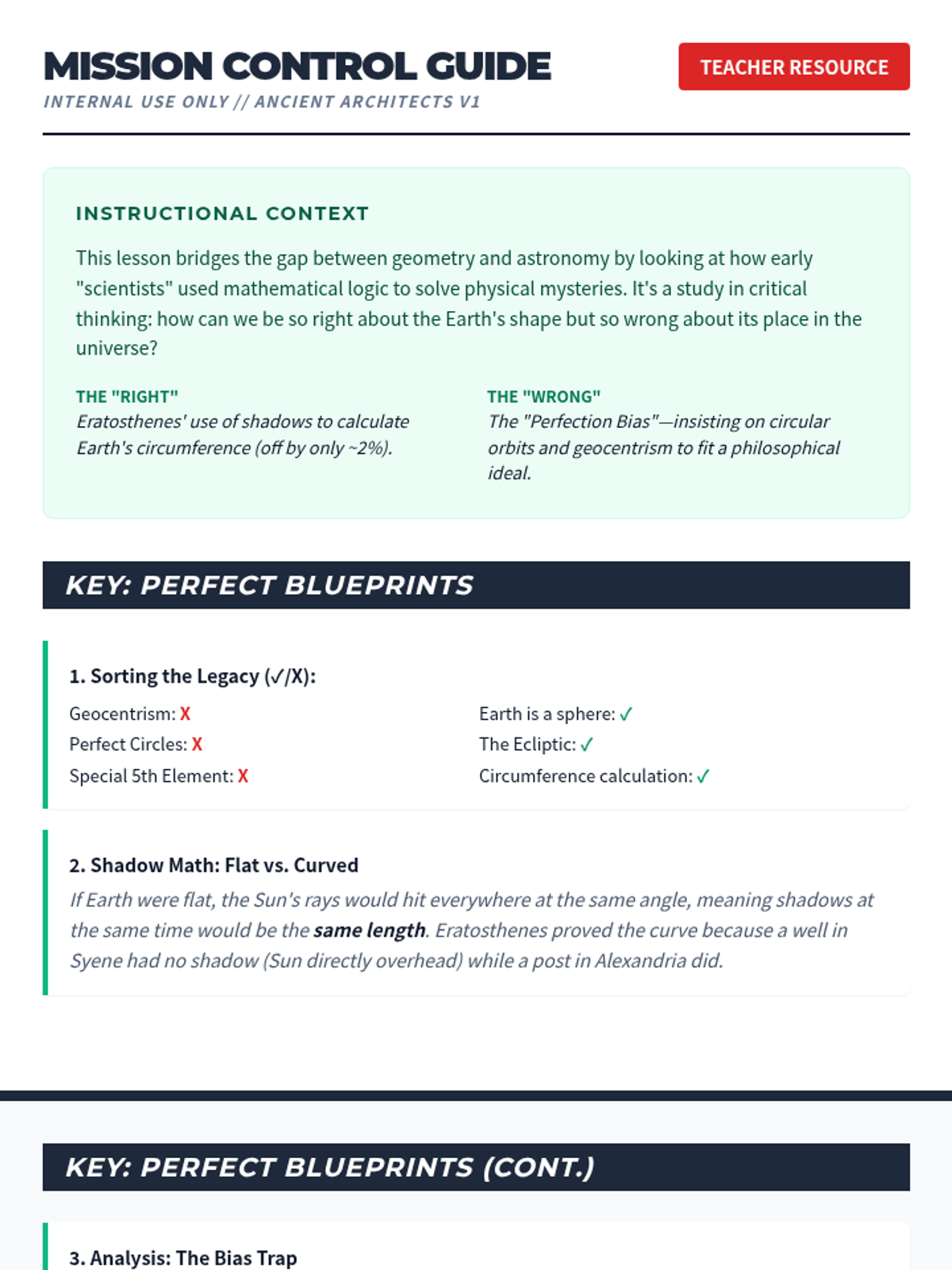
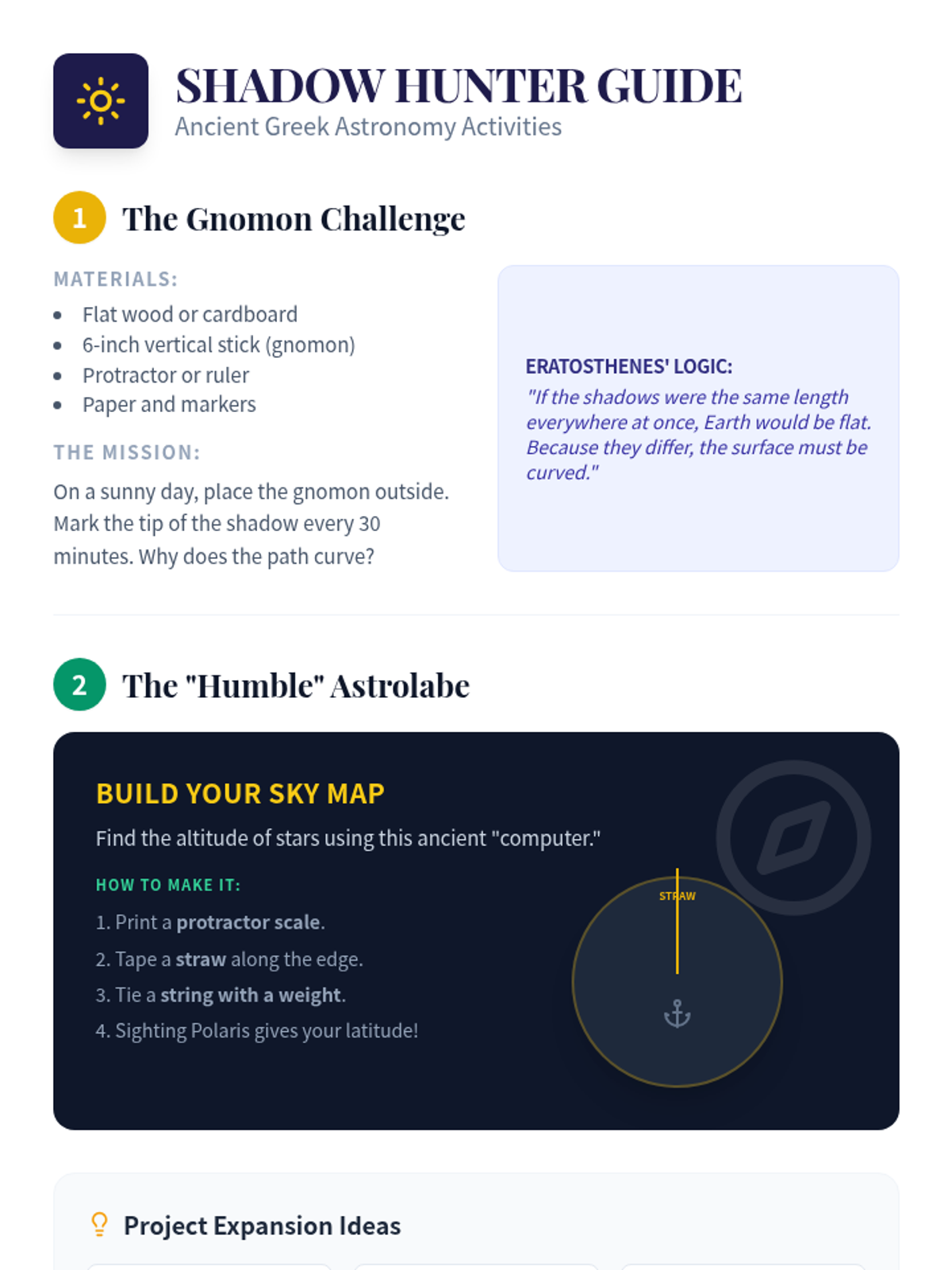
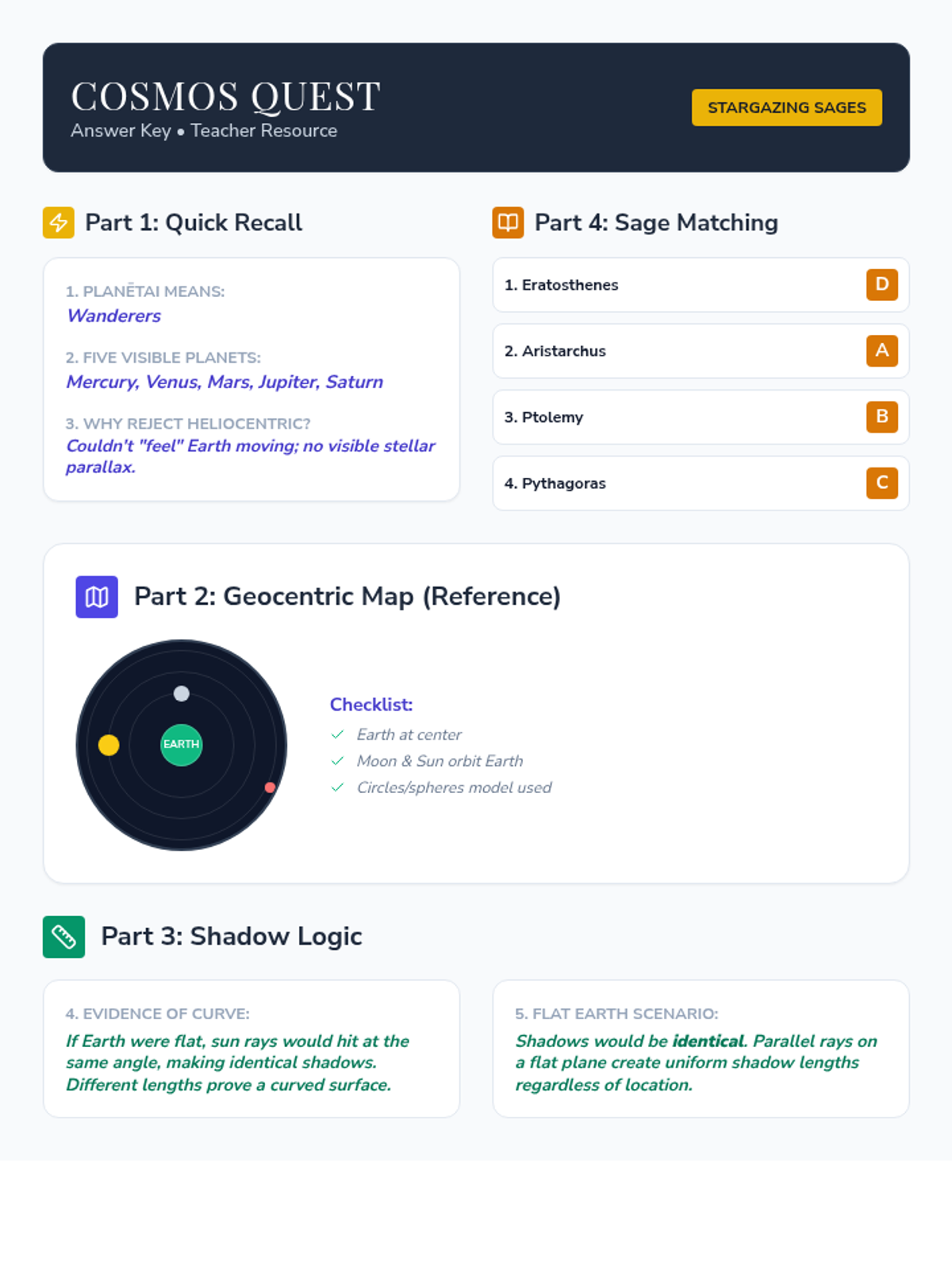
A journey into the intersection of Ancient Greek geometry and astronomy. Students explore how the Greeks used 'perfect' shapes to accurately calculate Earth's size and shape, while also examining how that same quest for perfection delayed our understanding of planetary orbits.
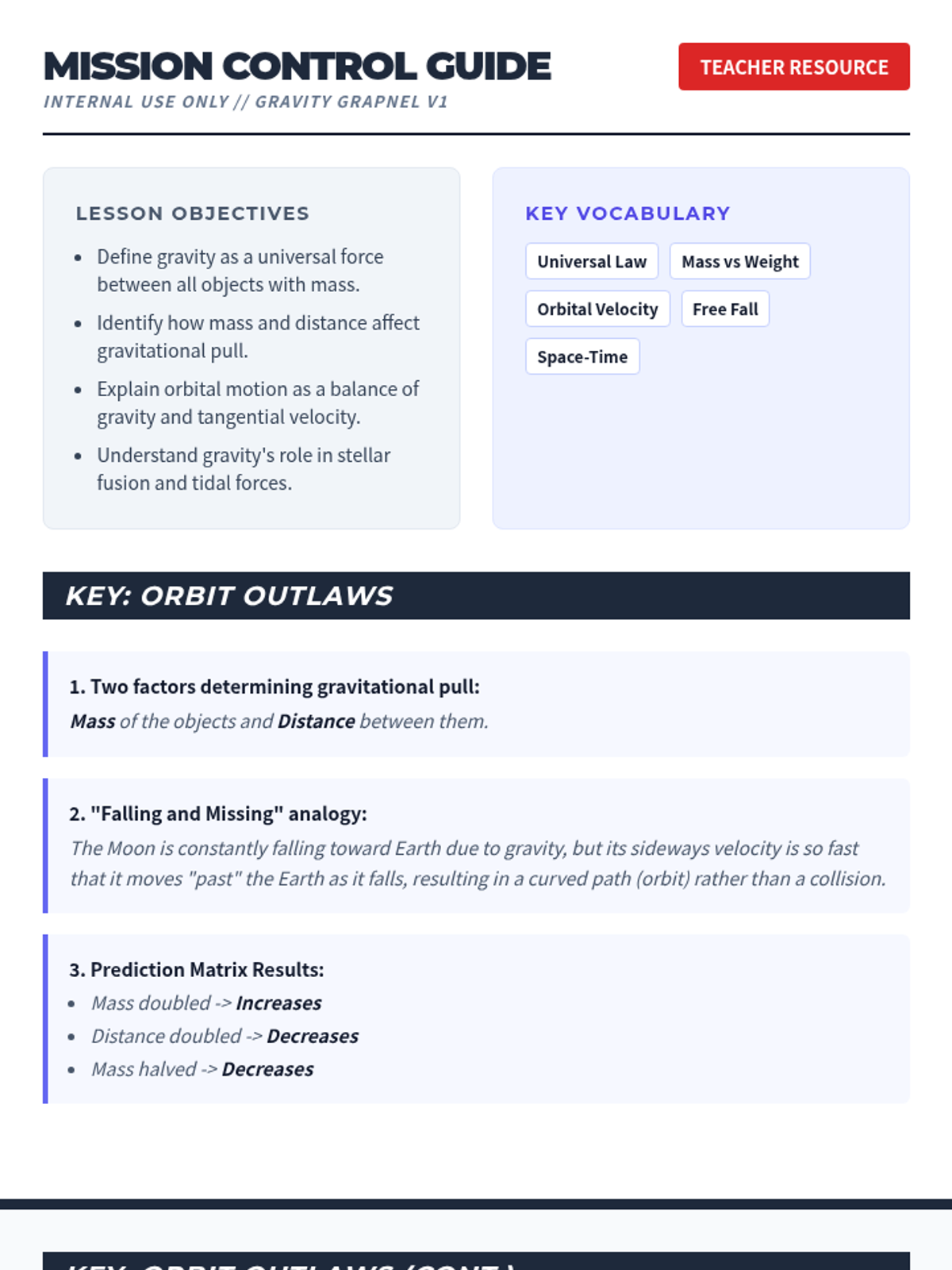
An exploration of gravity as the fundamental force that 'sculpts' the universe. Covers orbits as 'falling and missing', gravity as the engine of stellar fusion, and how it interacts with mass and distance to shape everything from tides to galaxies.
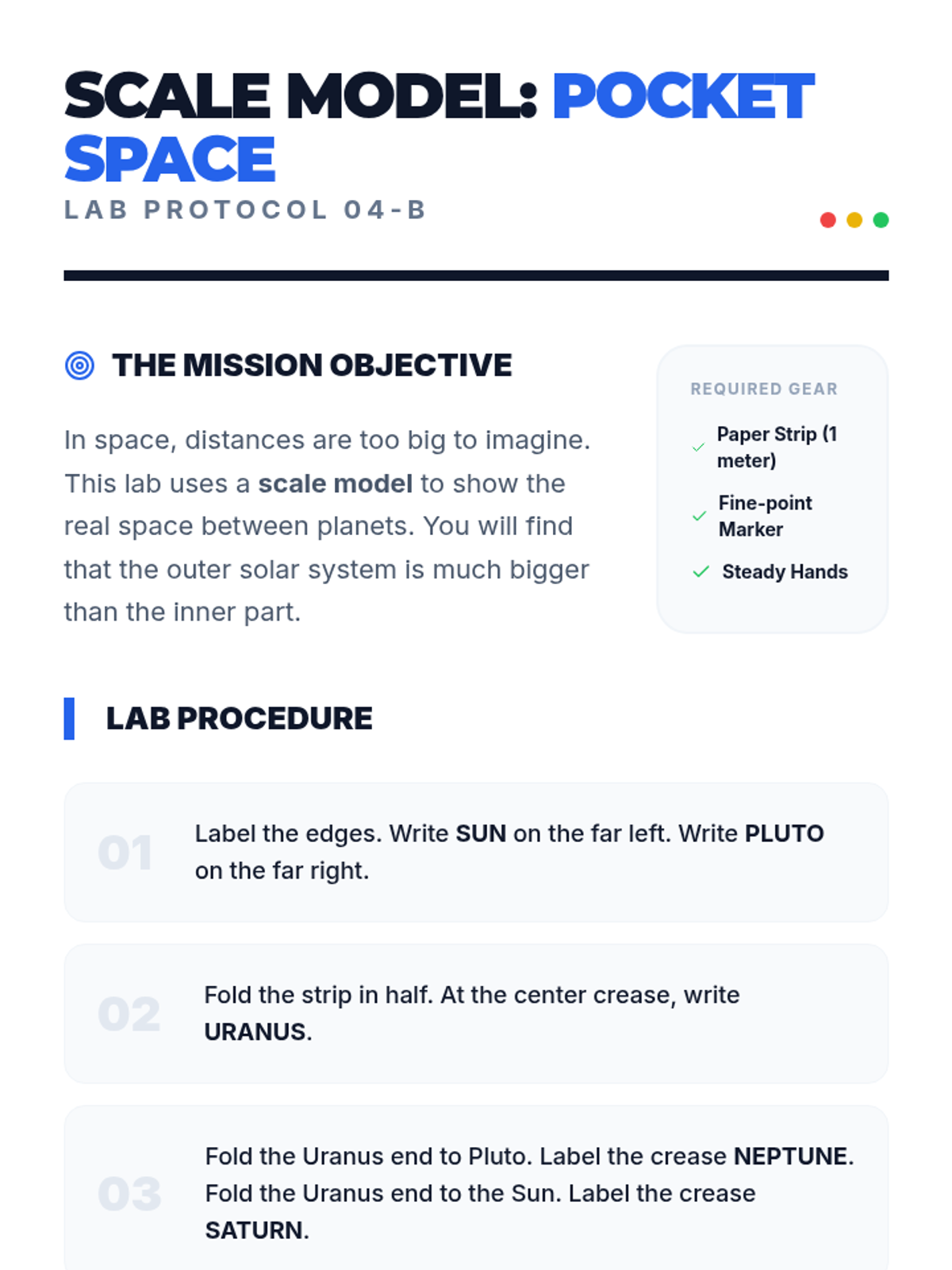
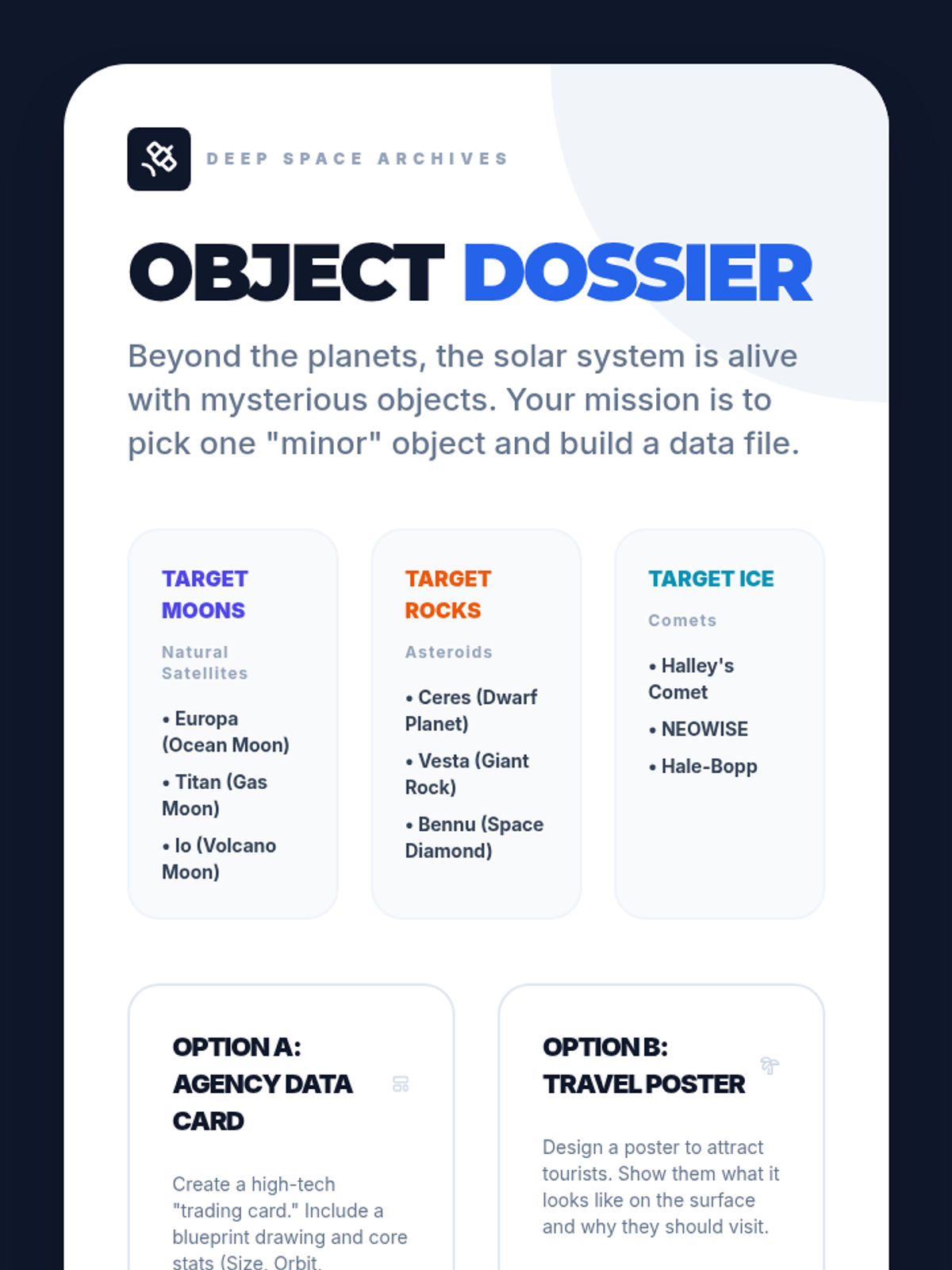
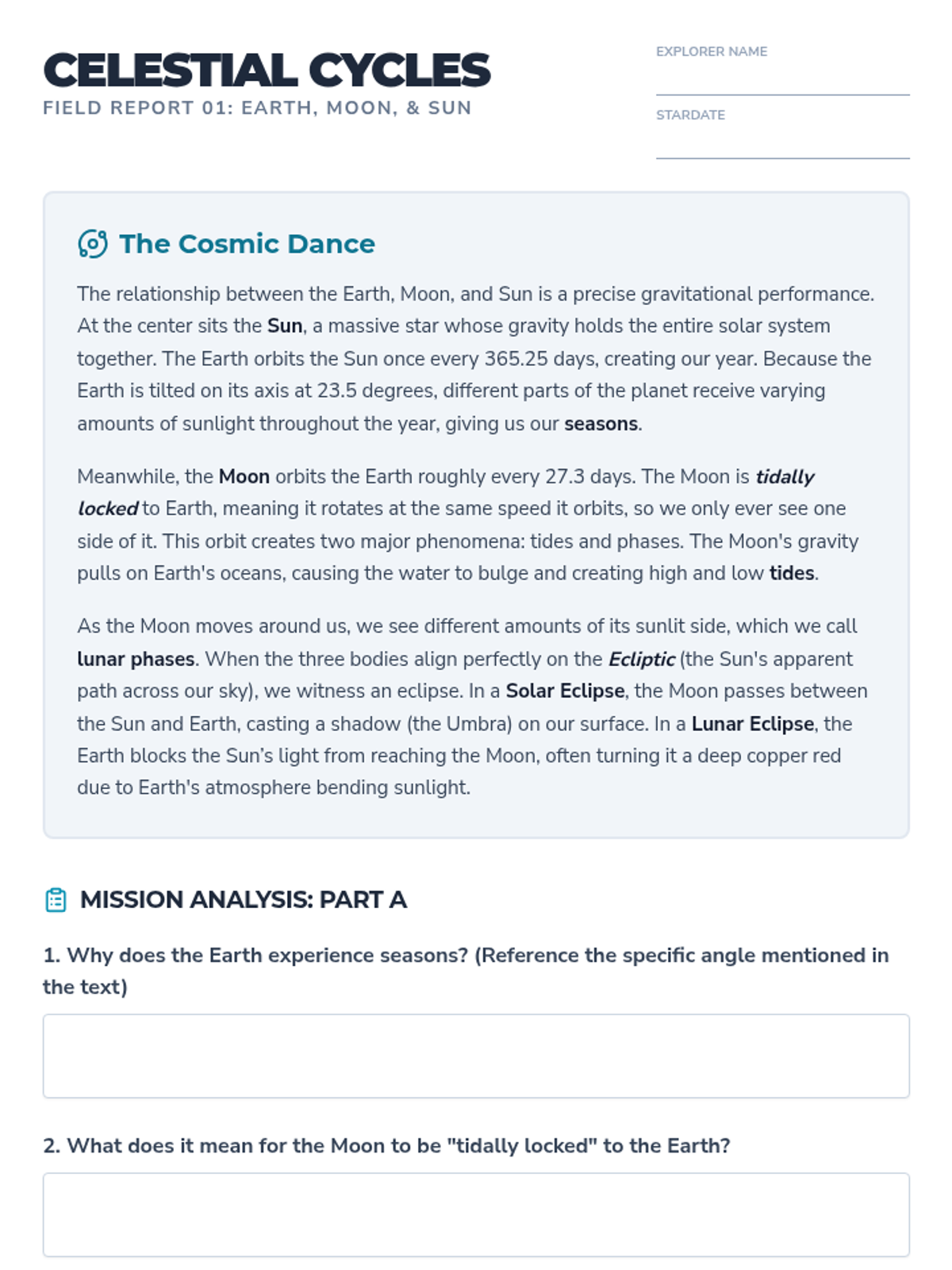
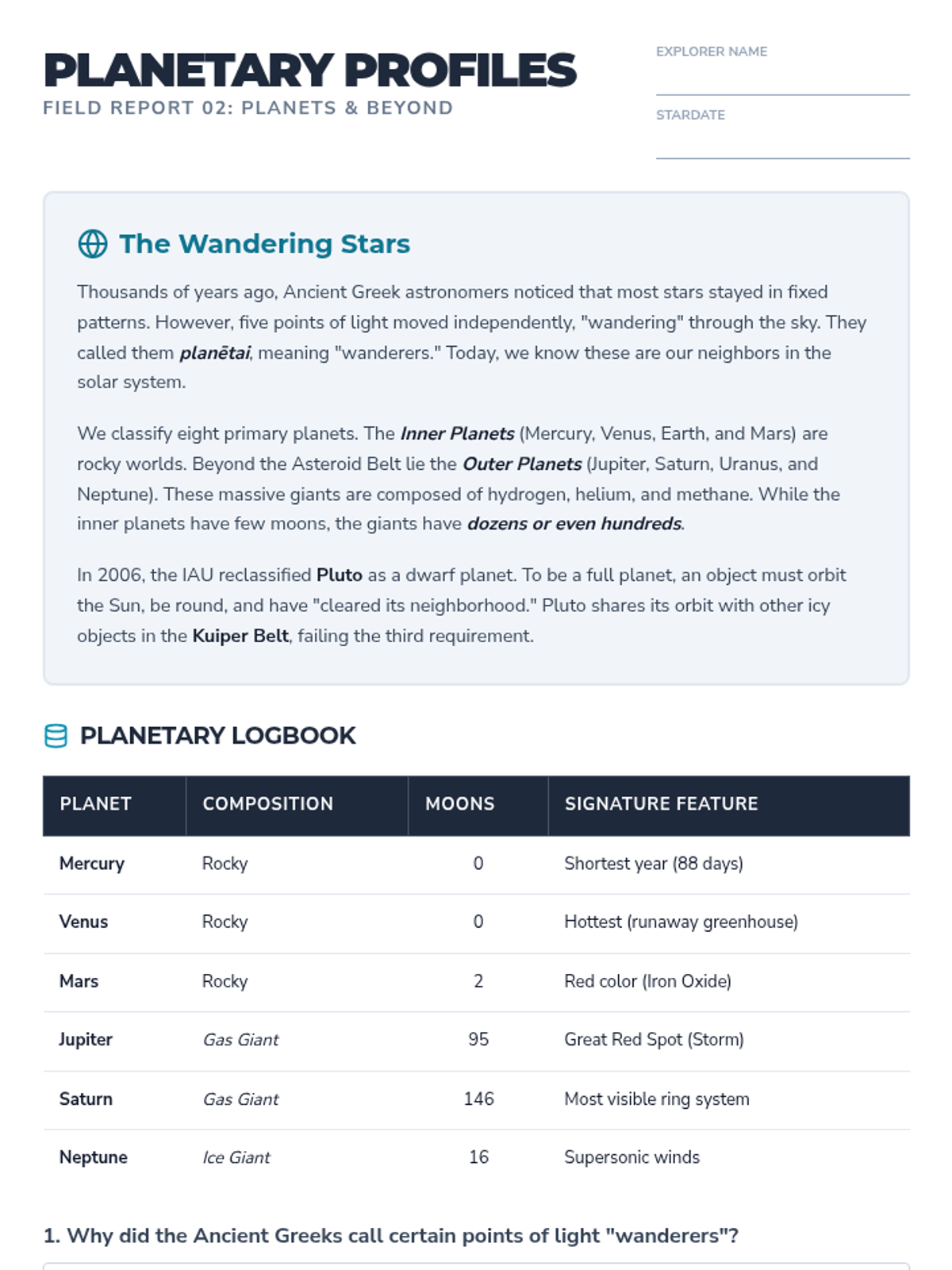
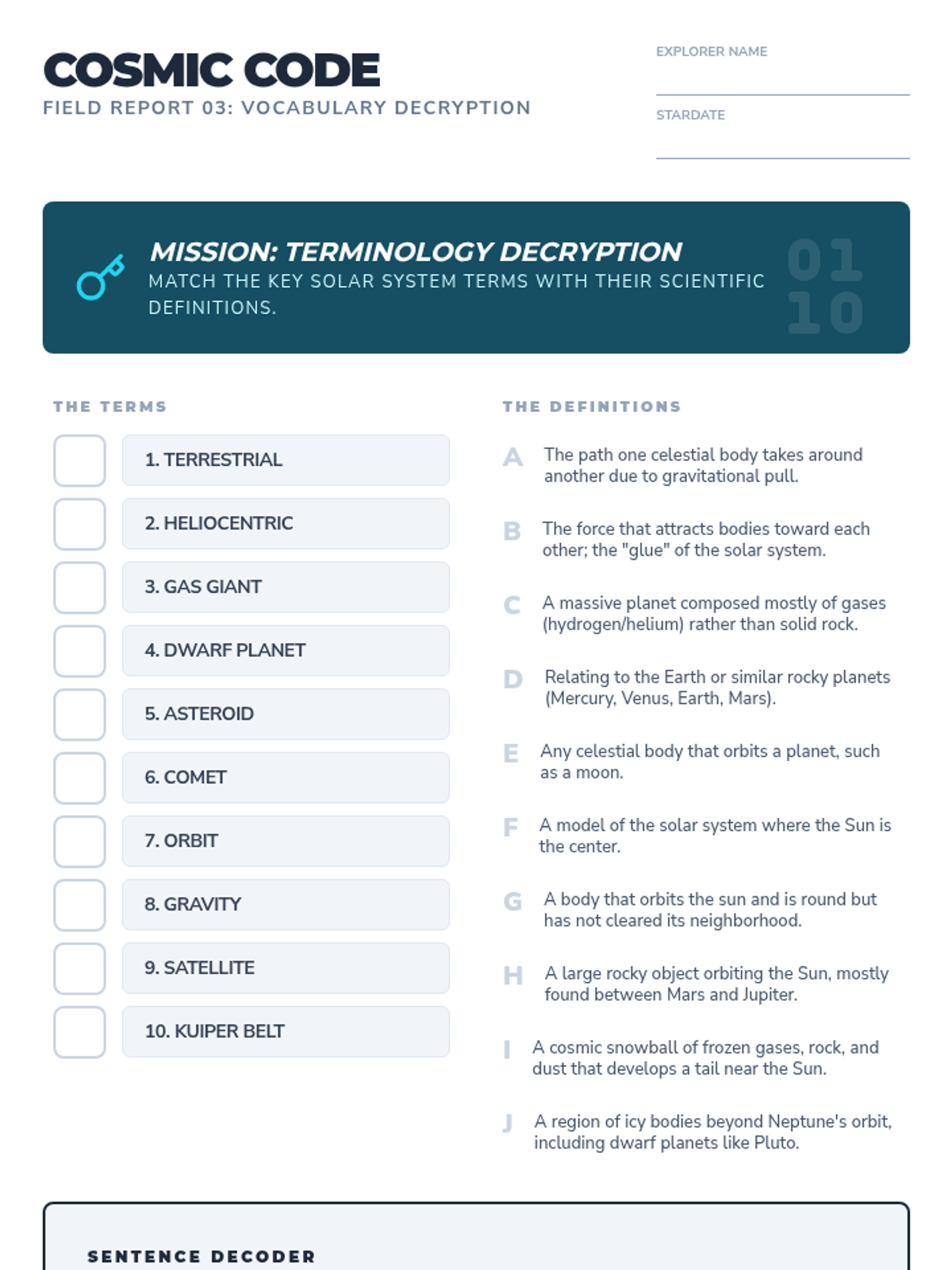
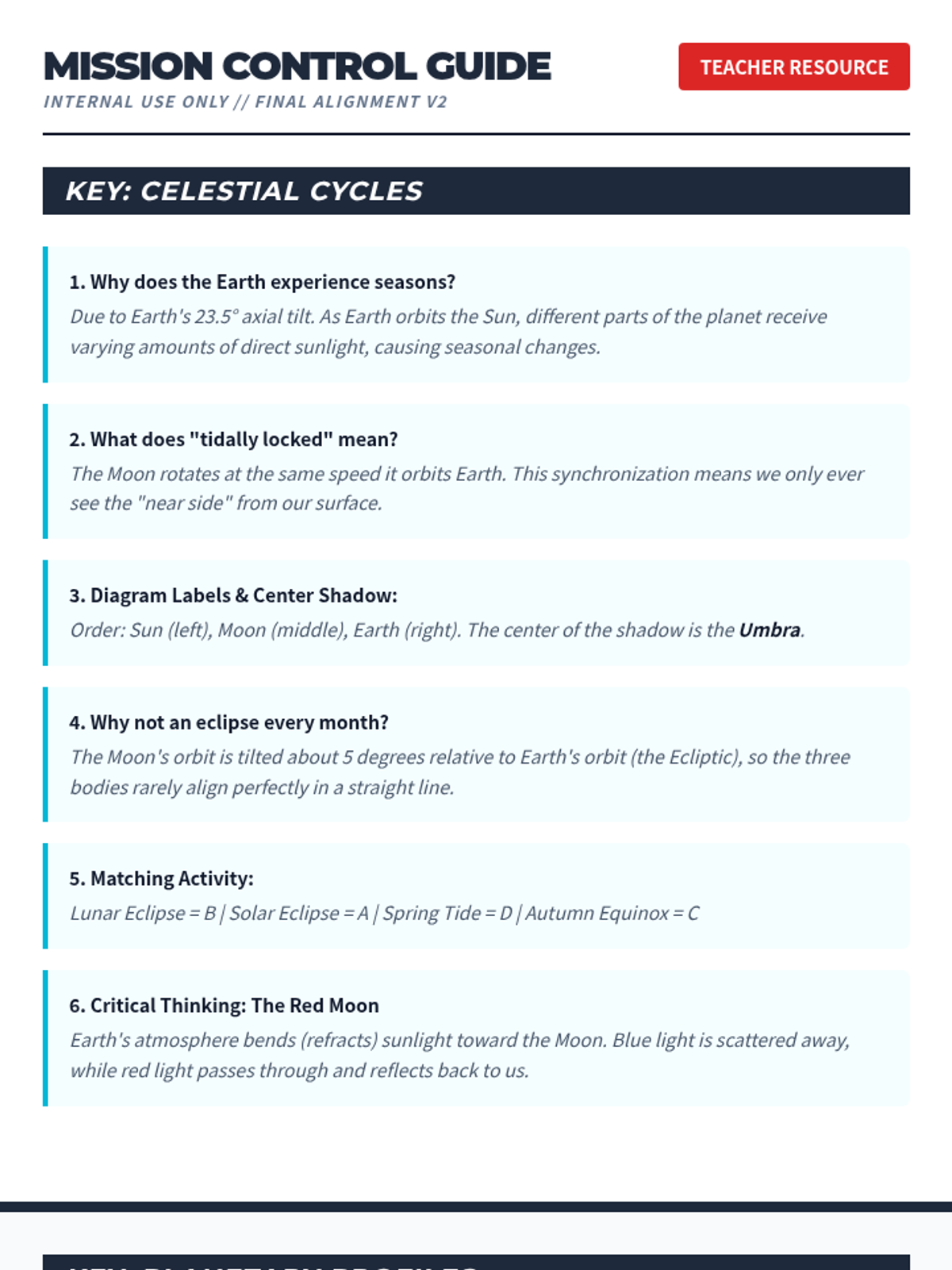
A comprehensive exploration of our solar system, covering Earth-Moon-Sun interactions, planetary characteristics, the reclassification of Pluto, and the mysteries of the outer reaches. Designed with a 'Space Explorer Field Manual' aesthetic for middle school learners.
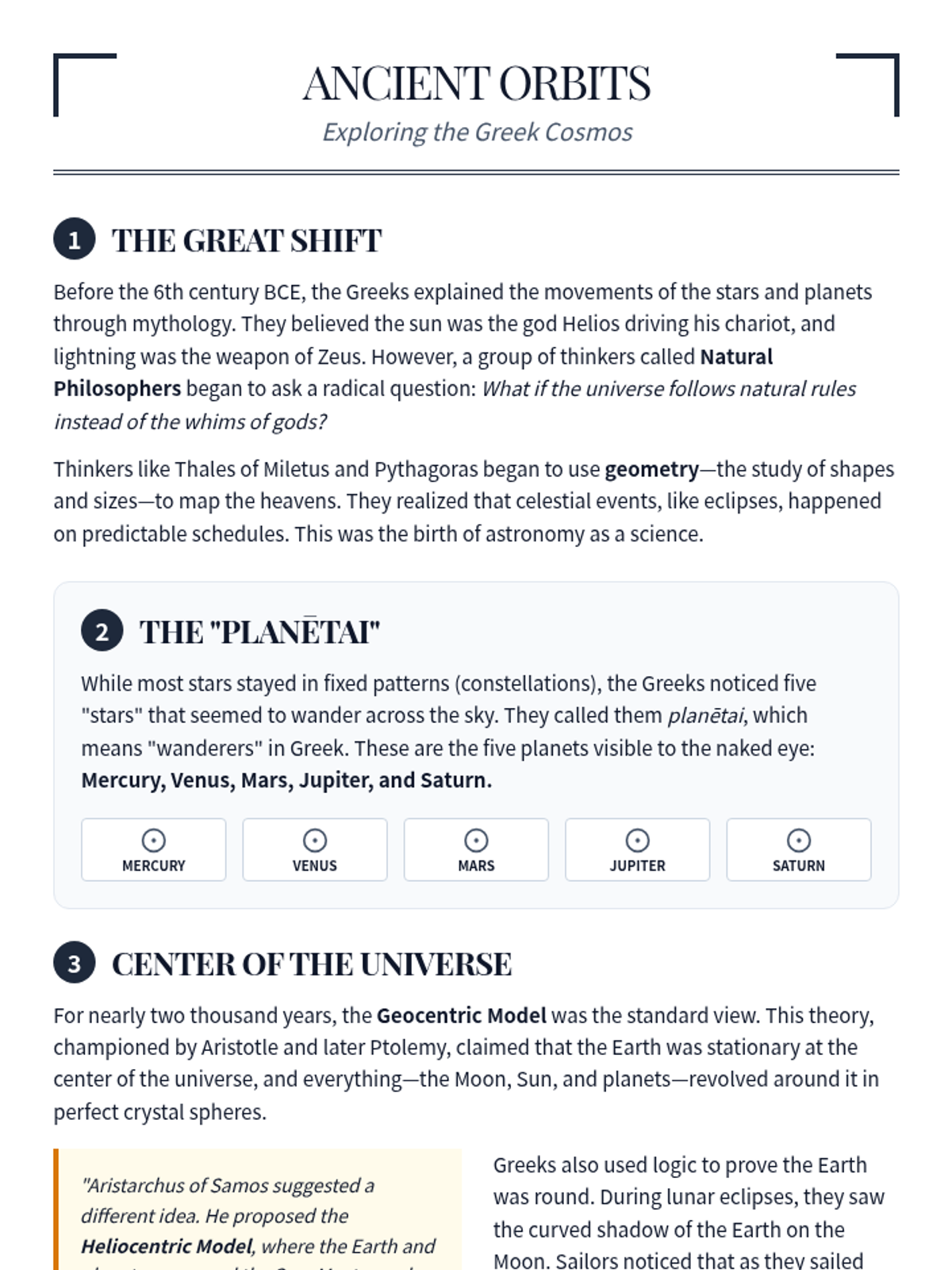
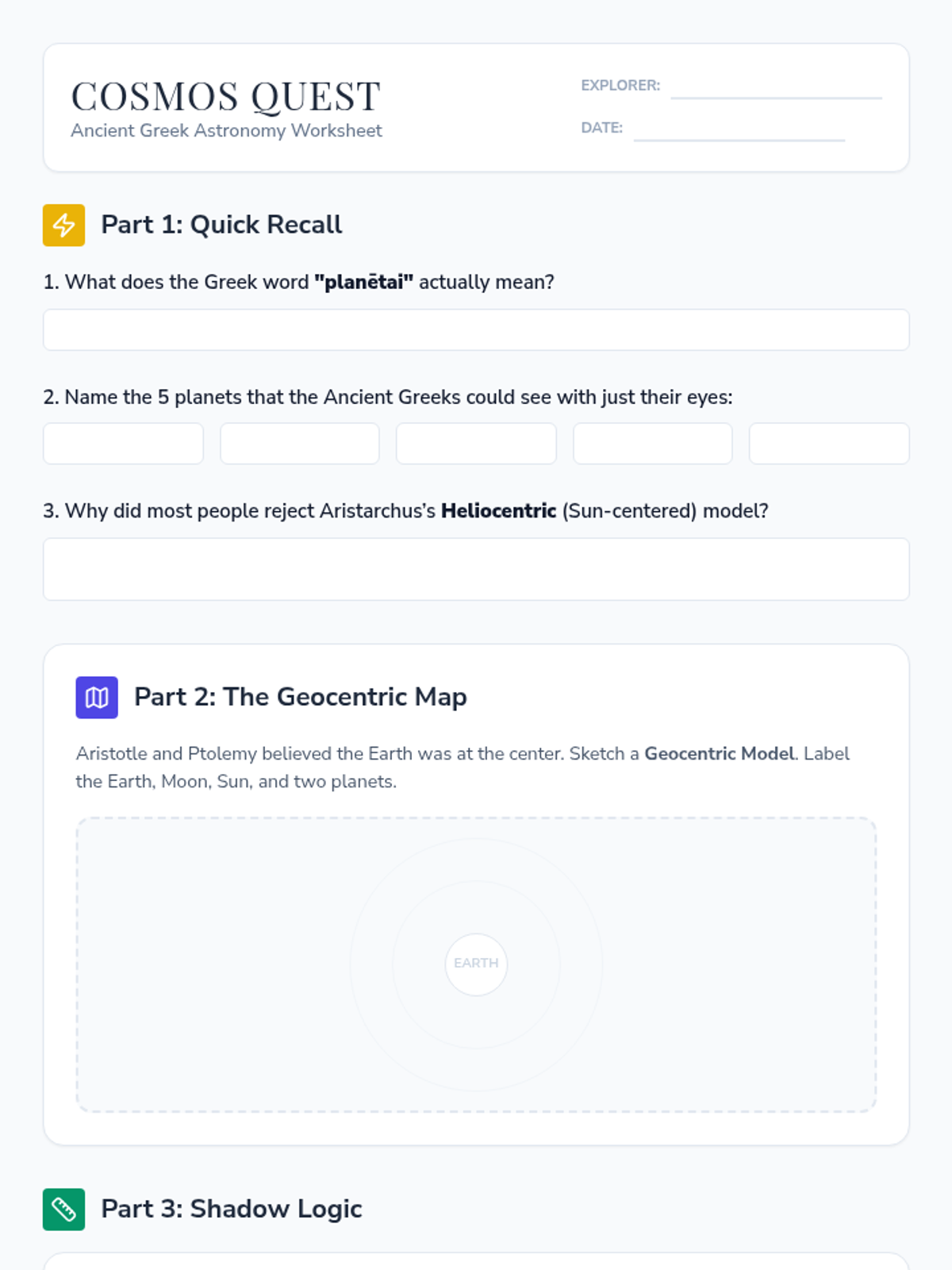
An introduction to how Ancient Greek thinkers combined philosophy, geometry, and observation to understand the universe. Students will explore the transition from mythological explanations to mathematical models of the cosmos.
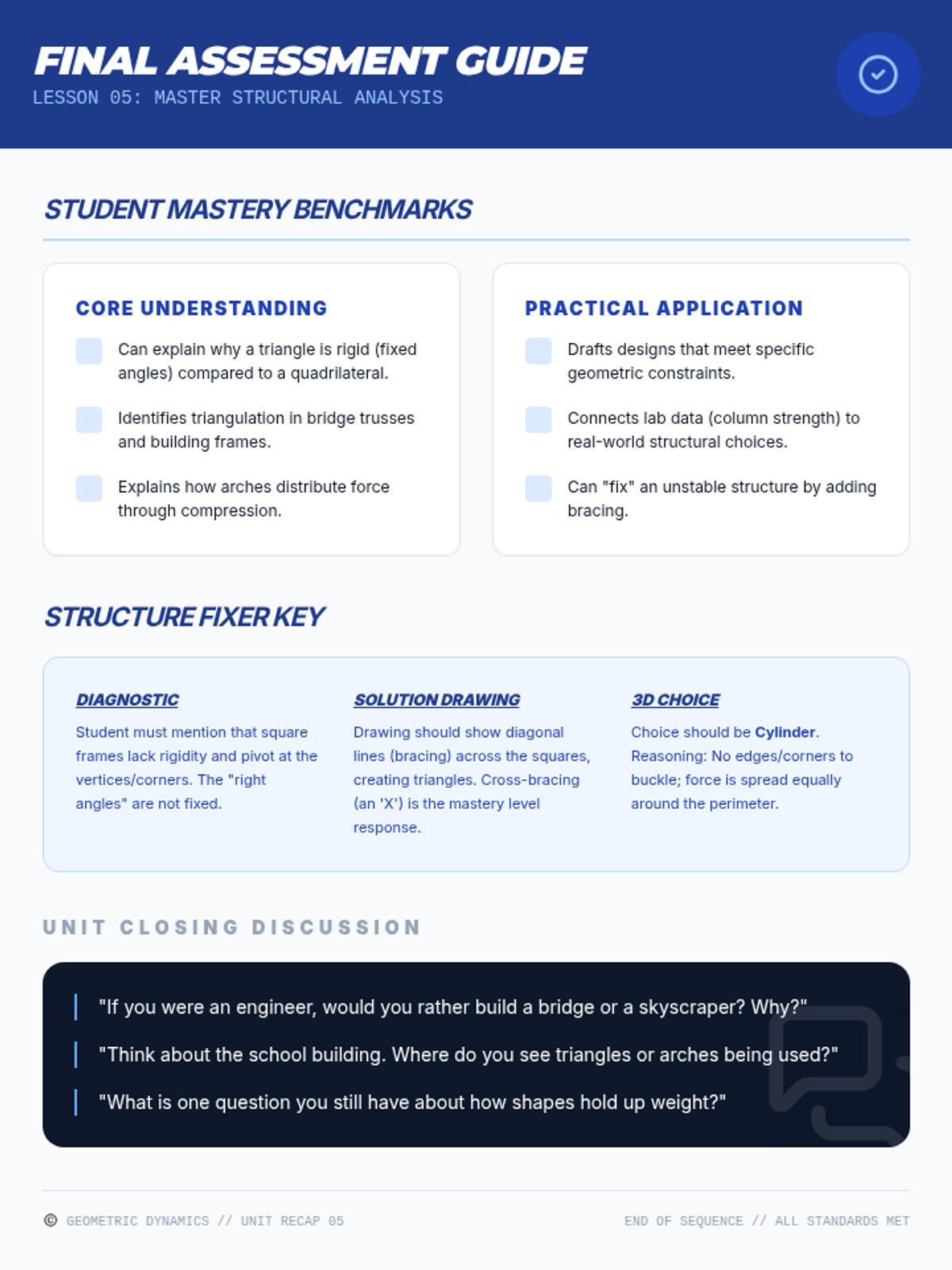
Students present their findings on geometric properties in engineering, critique structure designs, and suggest geometric improvements for stability.
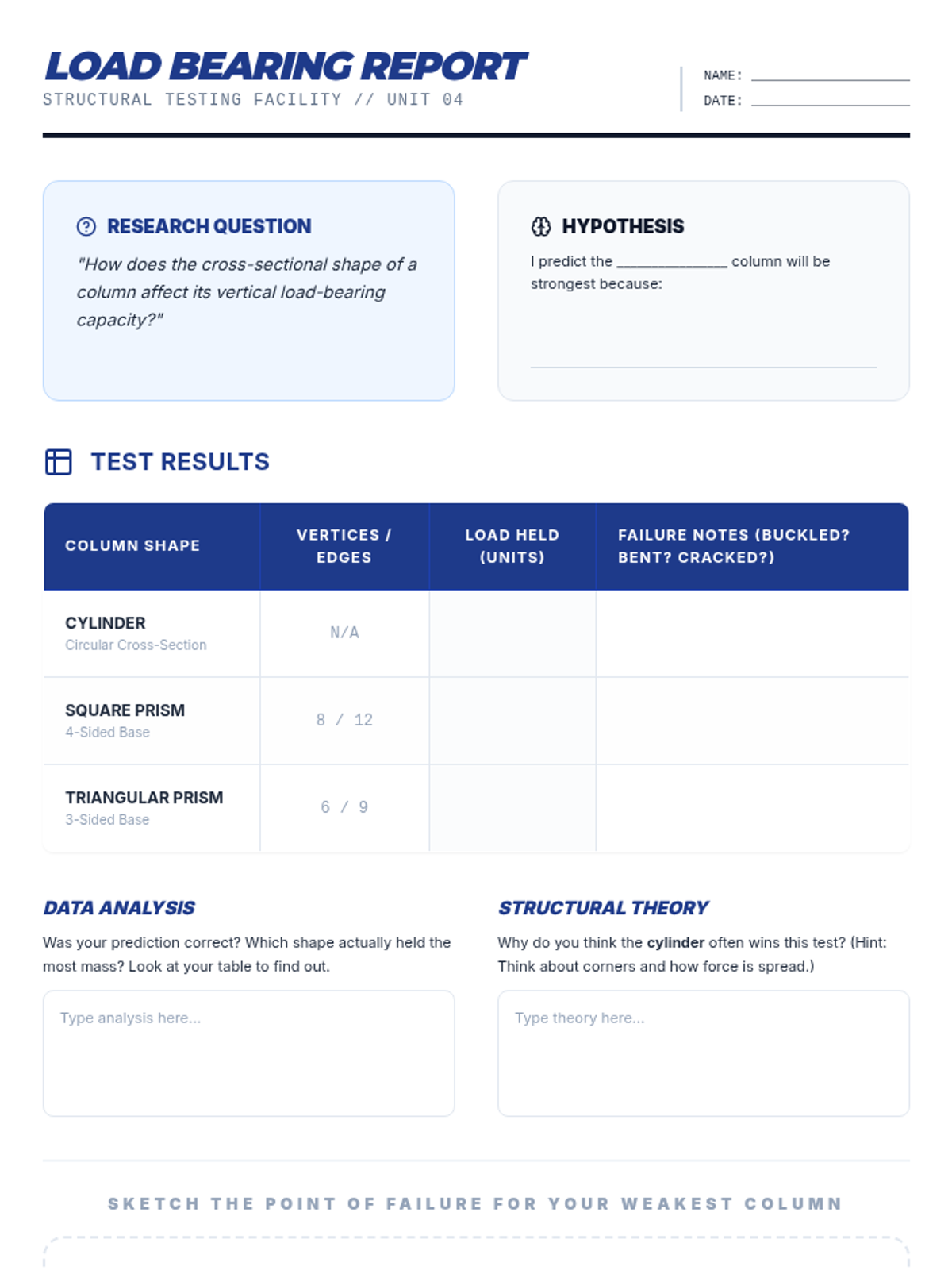
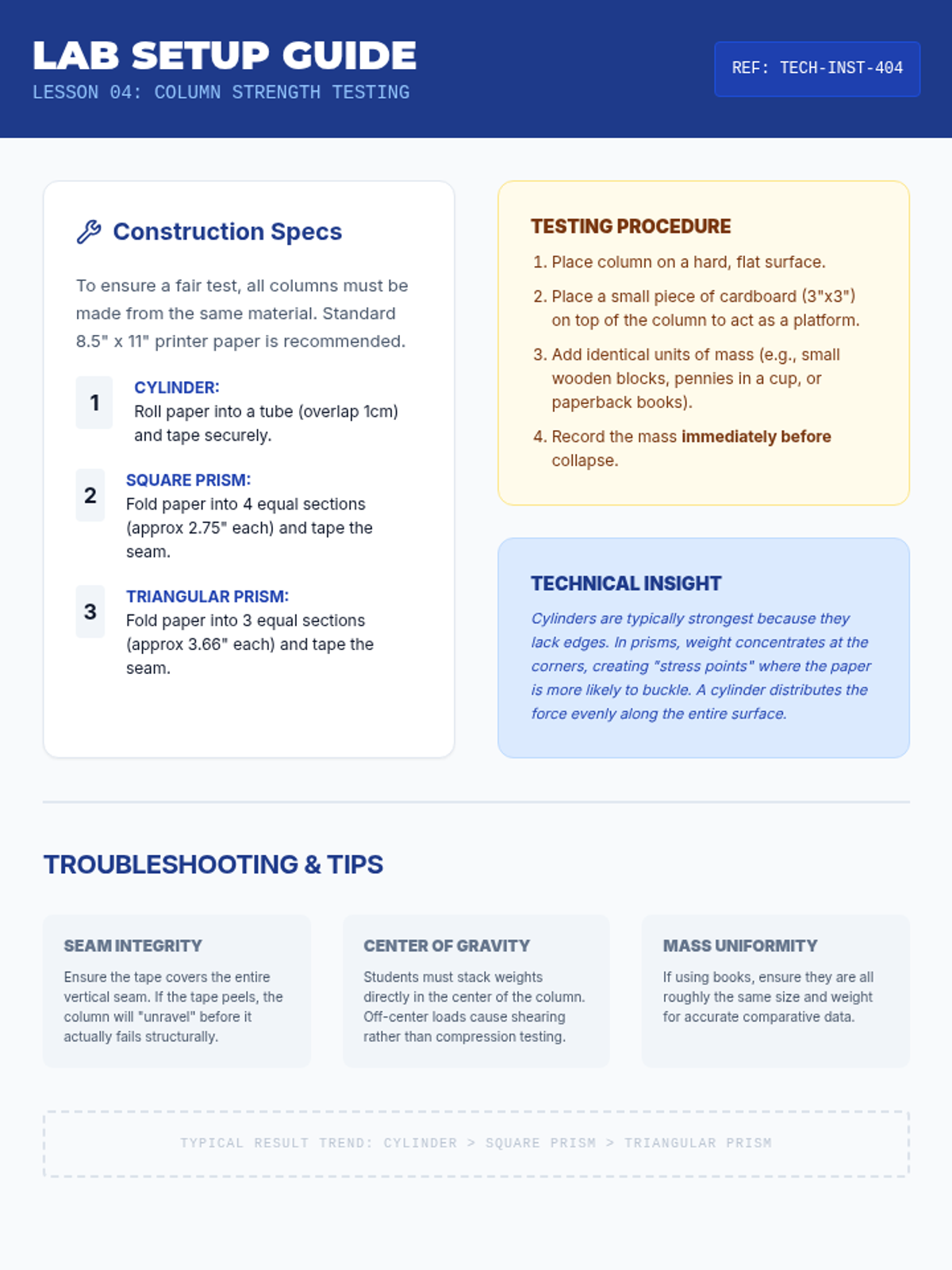
Students construct beam bridges using folded paper shapes (cylinders, prisms) and test how much weight each shape can support before collapsing.
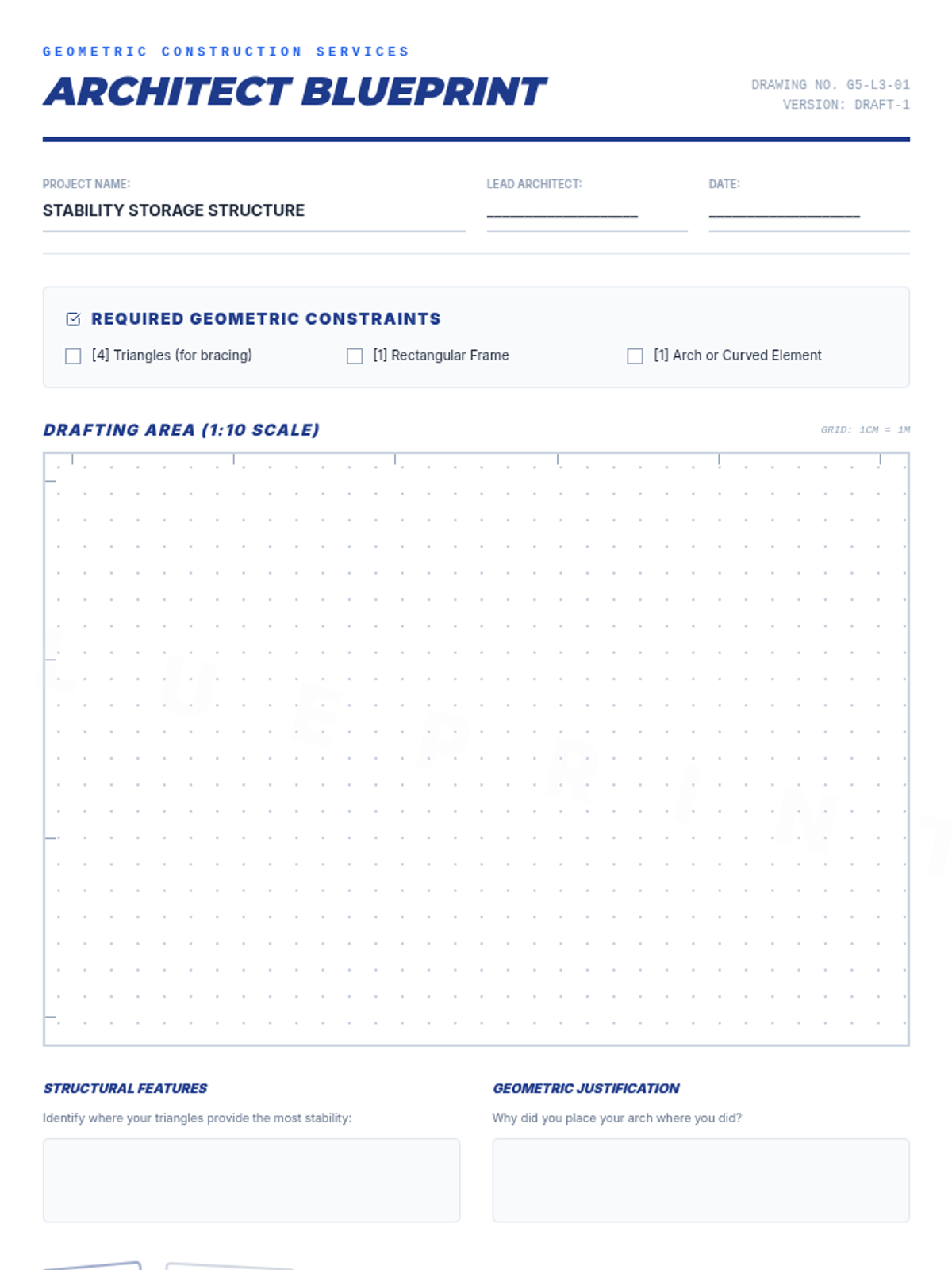
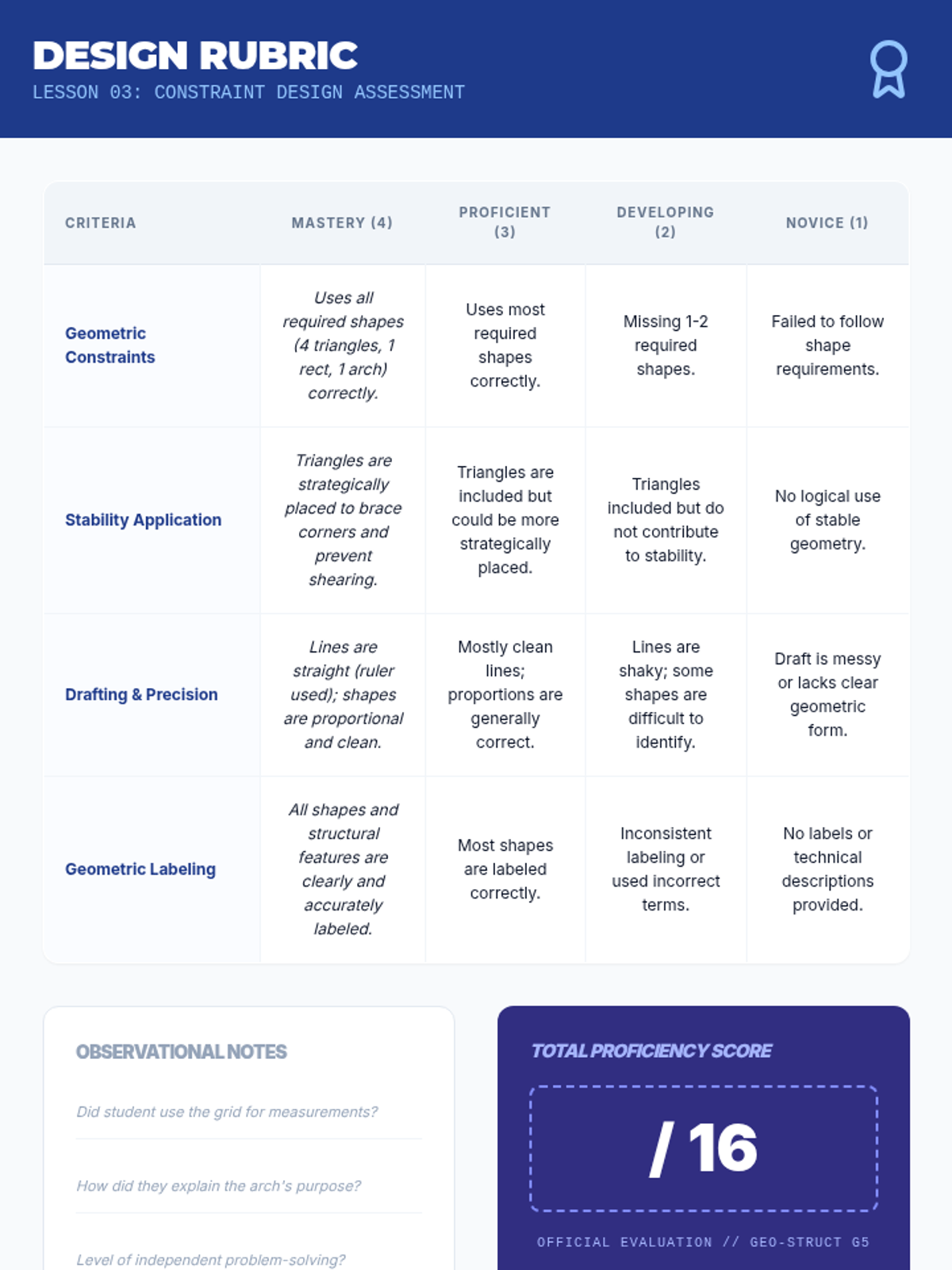
Students are given specific geometric constraints to design a small structure, drafting their designs on graph paper before building.
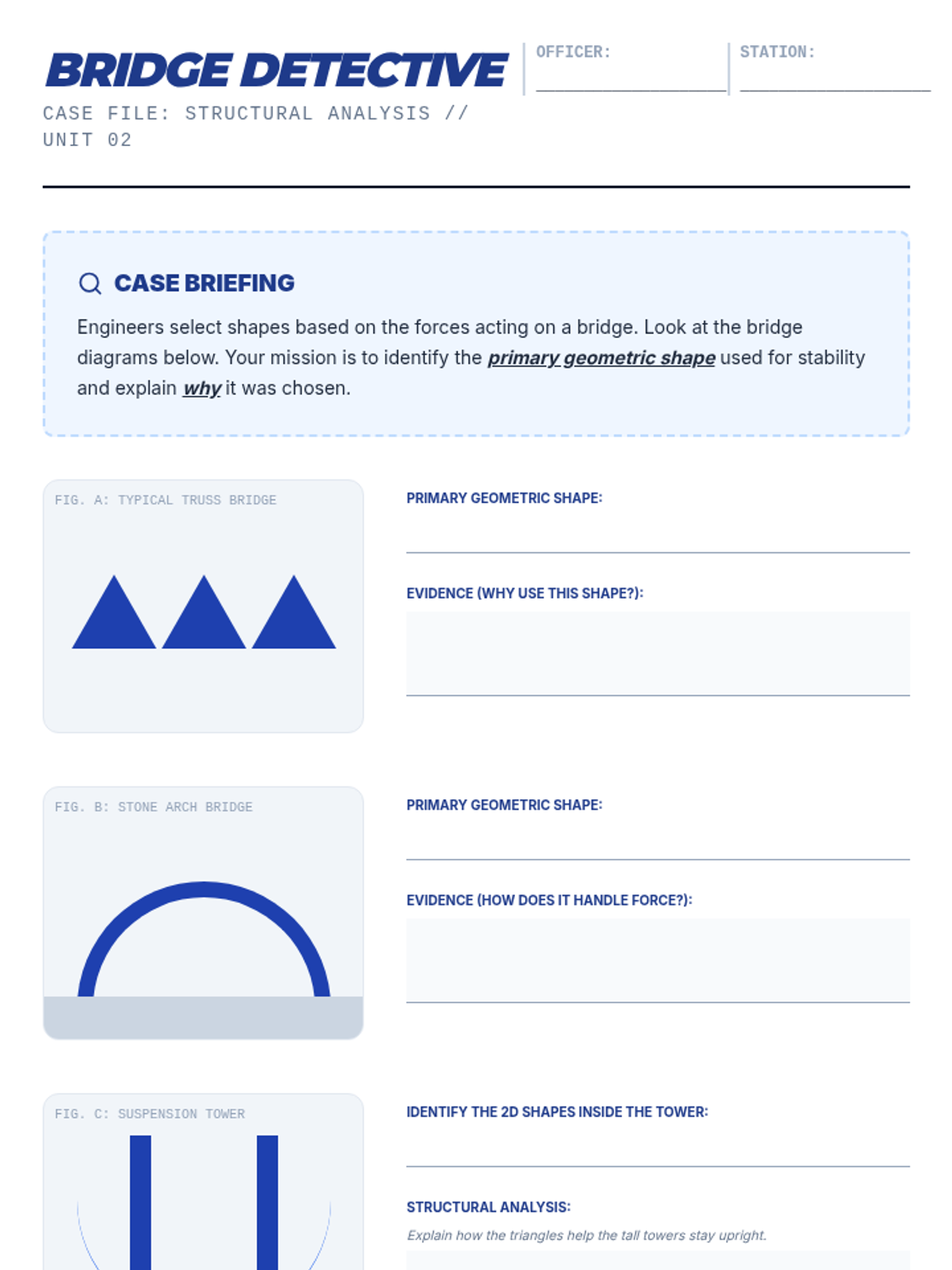
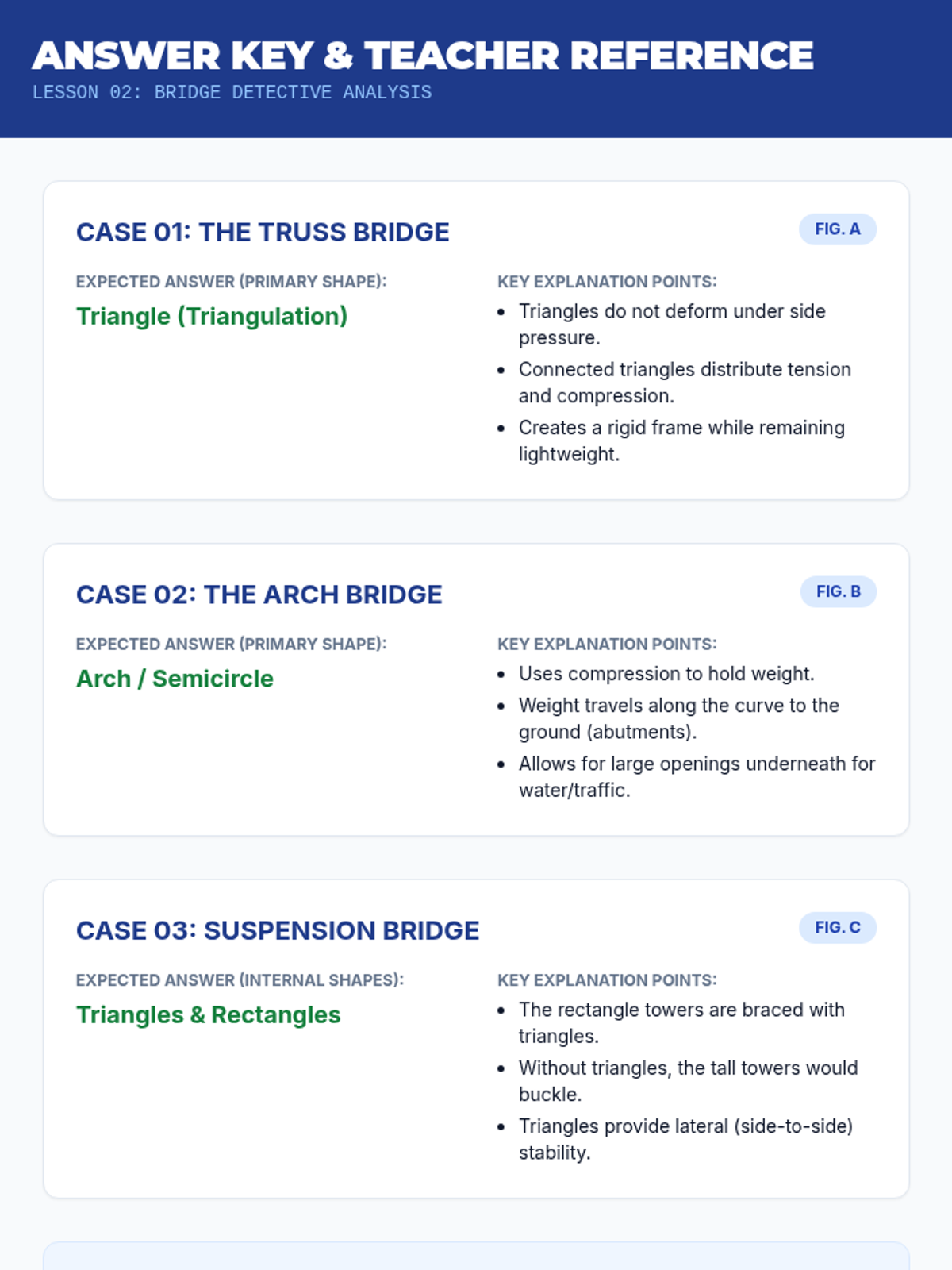
Students examine photos of real-world bridges to identify the geometric shapes used (trusses, arches) and discuss why engineers choose specific shapes for stability.
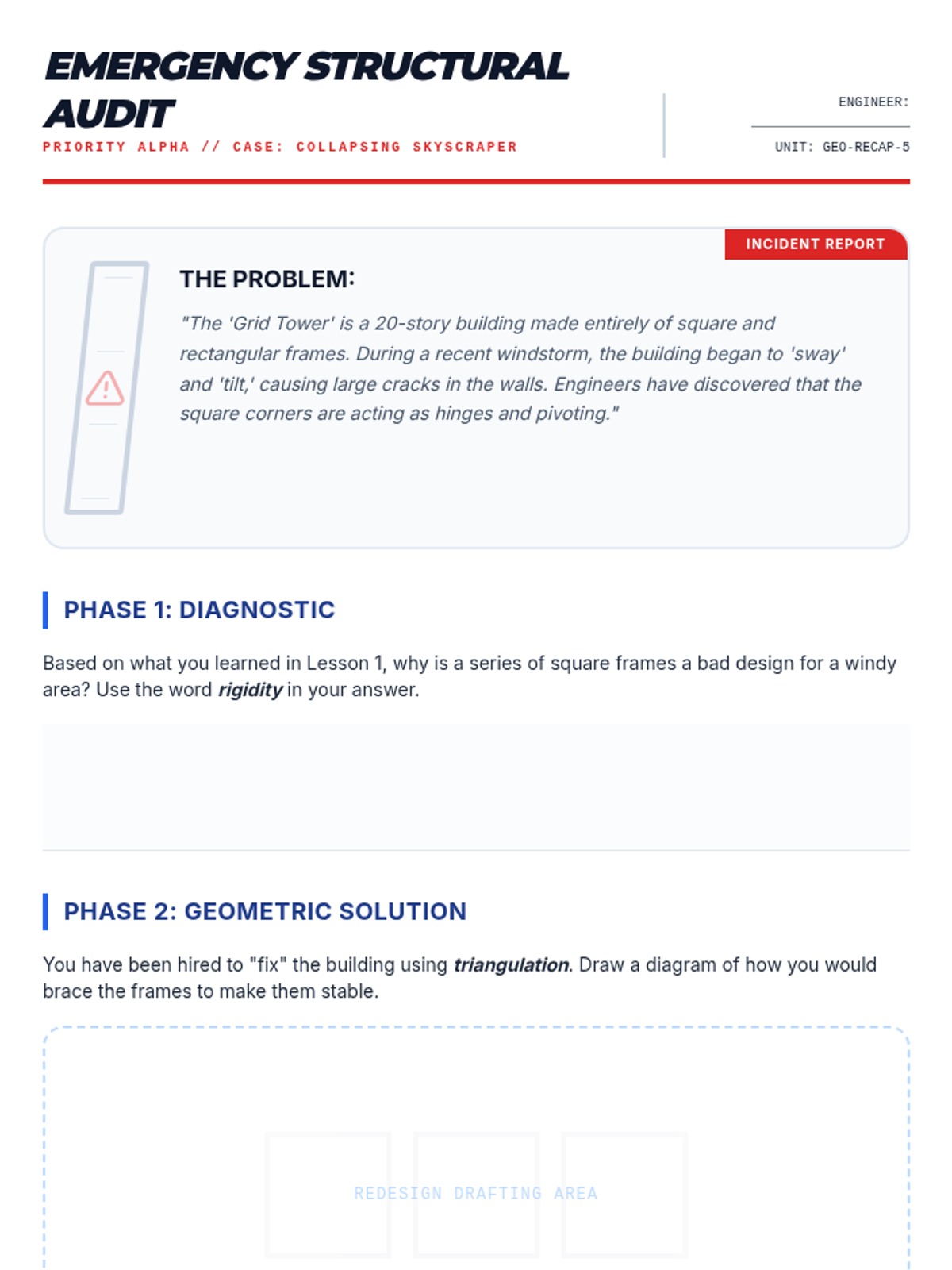
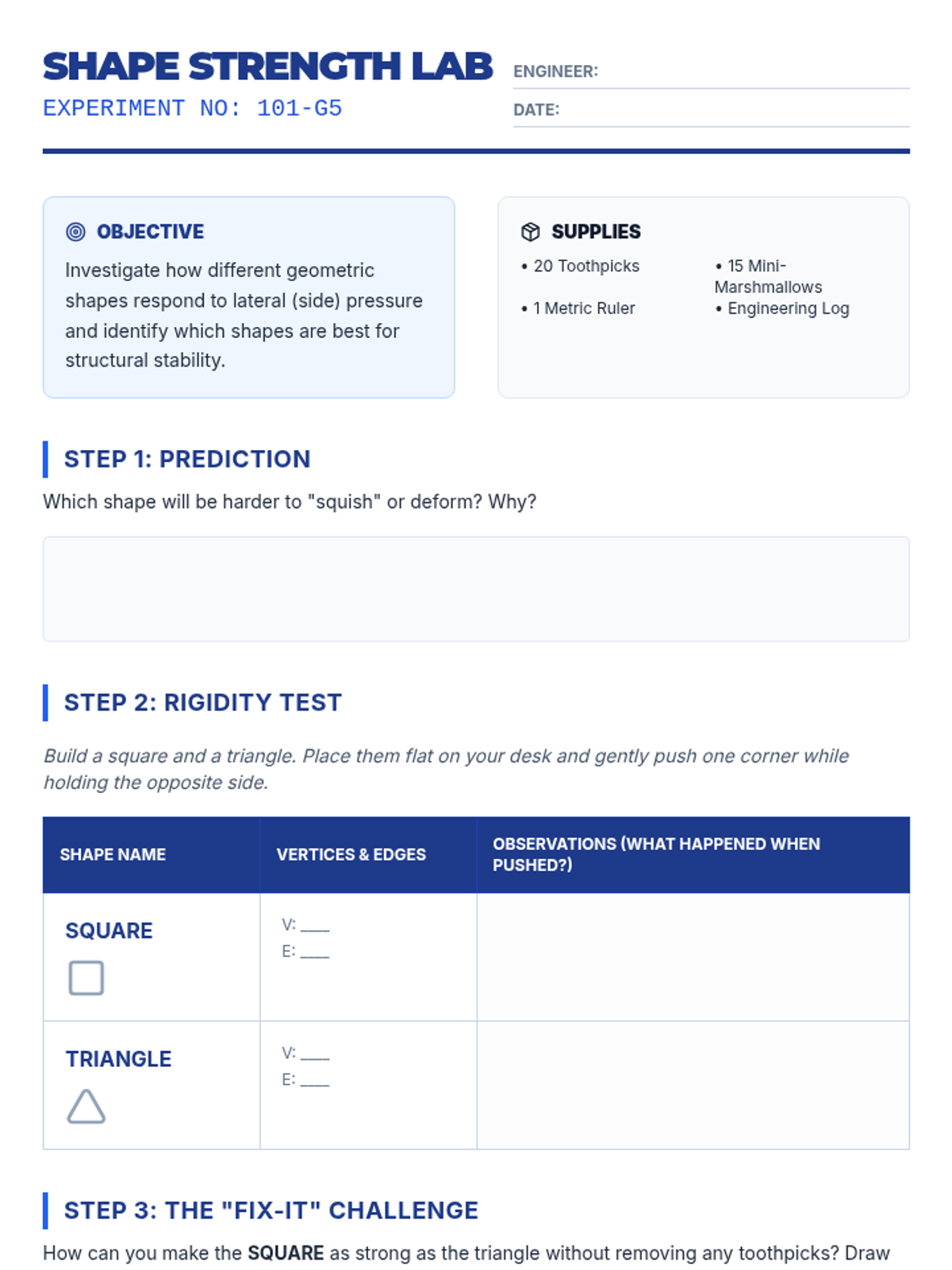
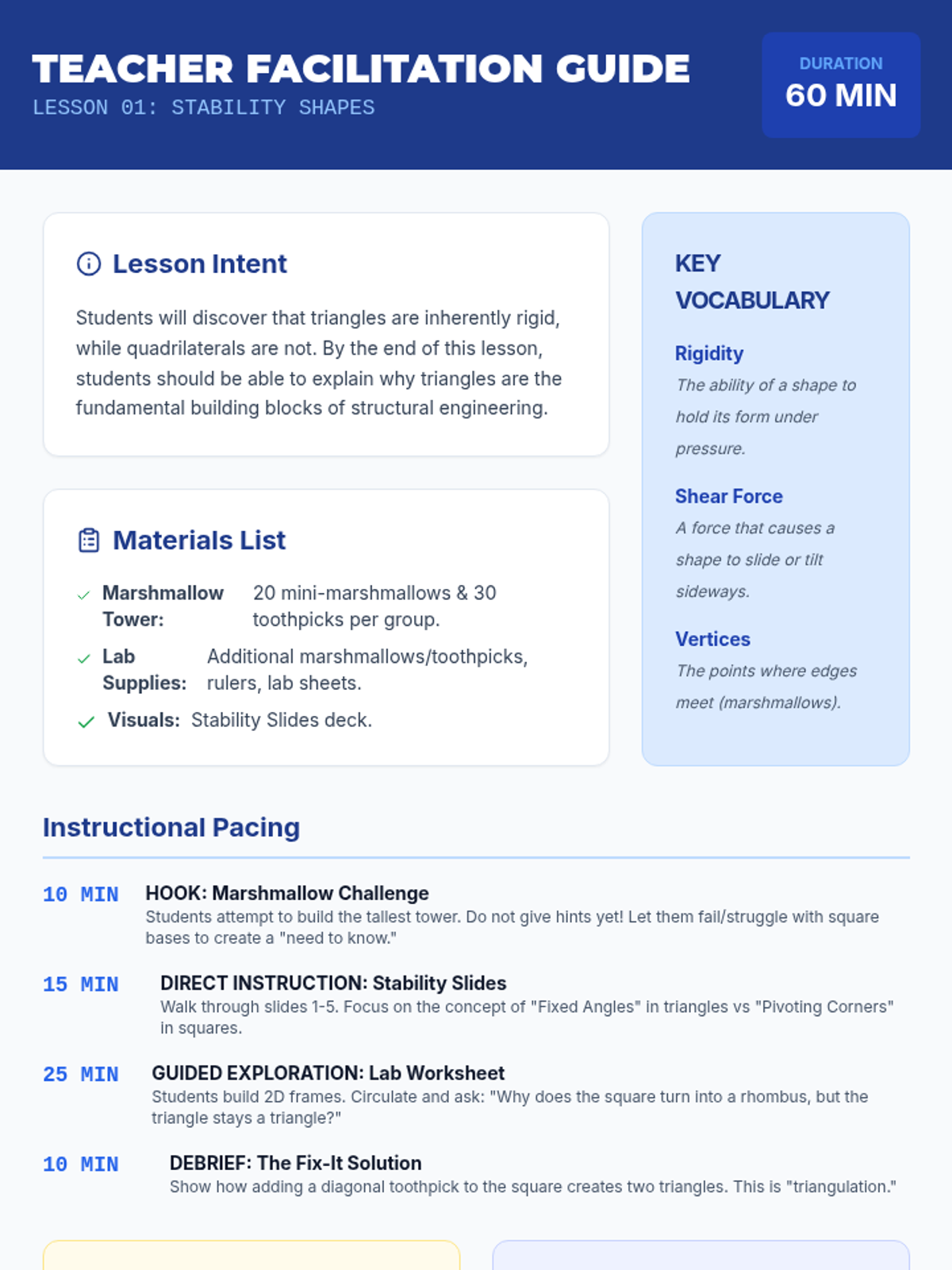
Students build 2D frames of triangles and squares to test their rigidity and observe how triangles hold their shape under pressure while quadrilaterals can shear or collapse.
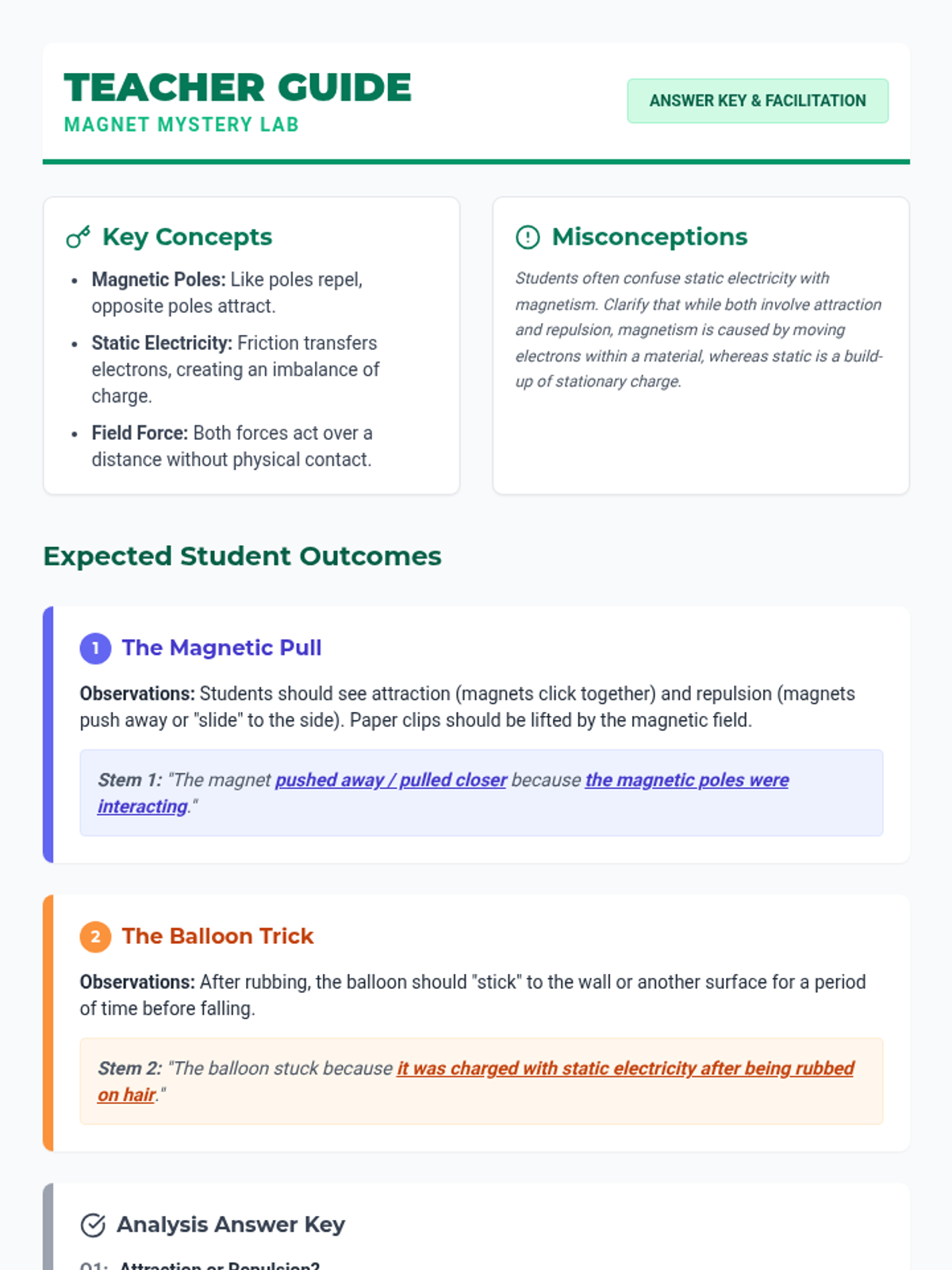
A hands-on exploration of magnetic forces and static electricity through direct experimentation and observation. Students investigate attraction, repulsion, and static charges using magnets and balloons.
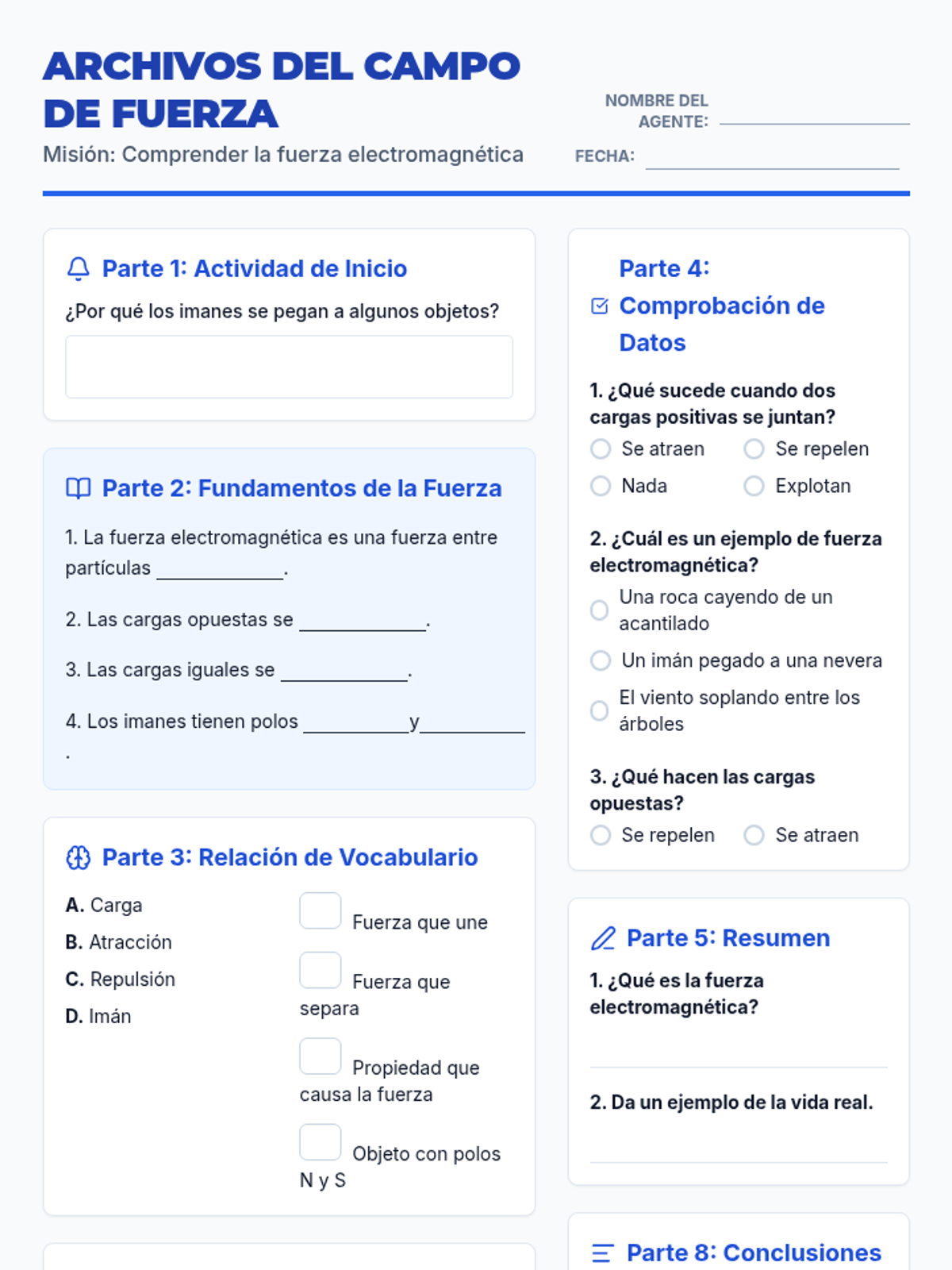
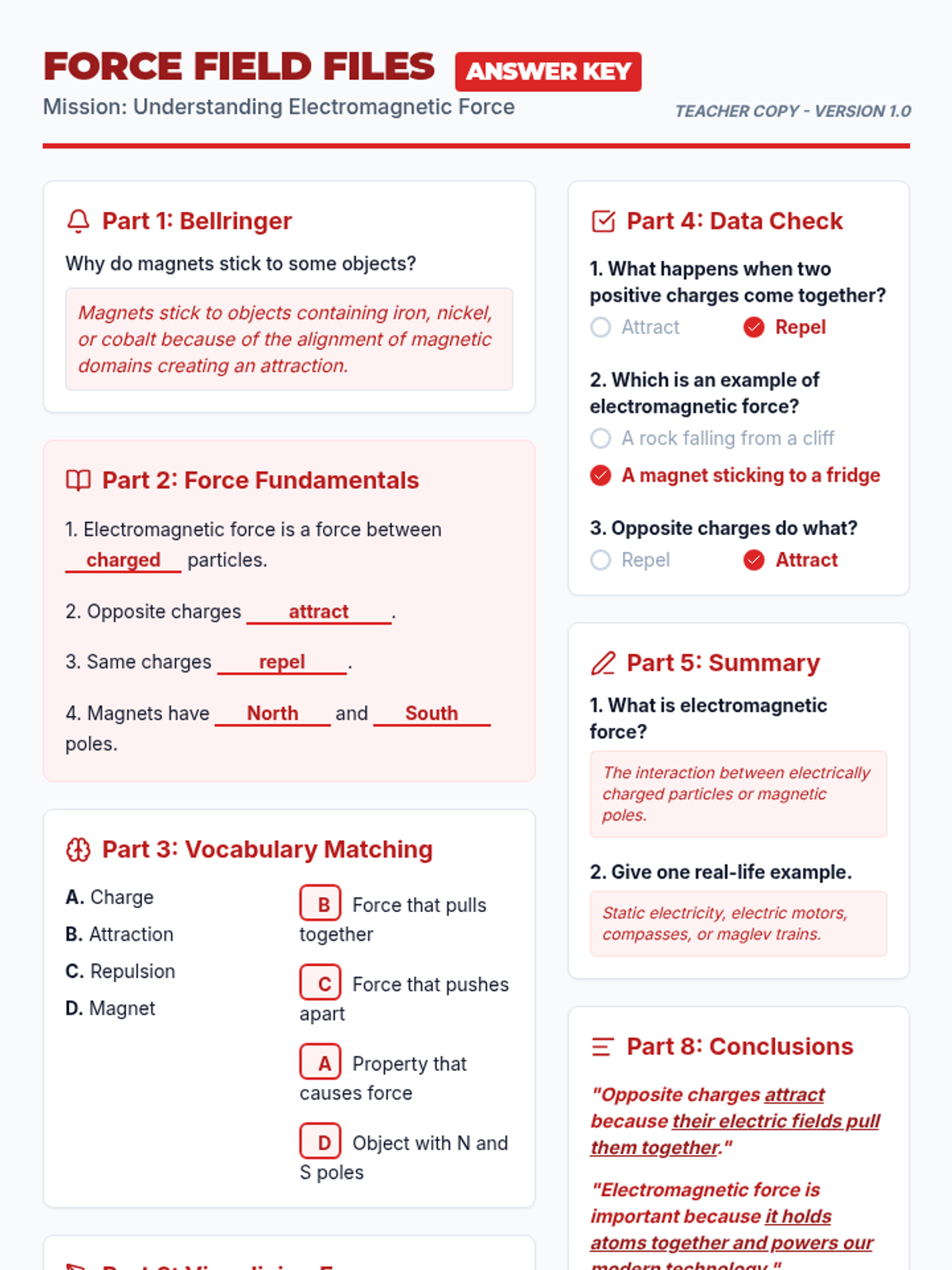
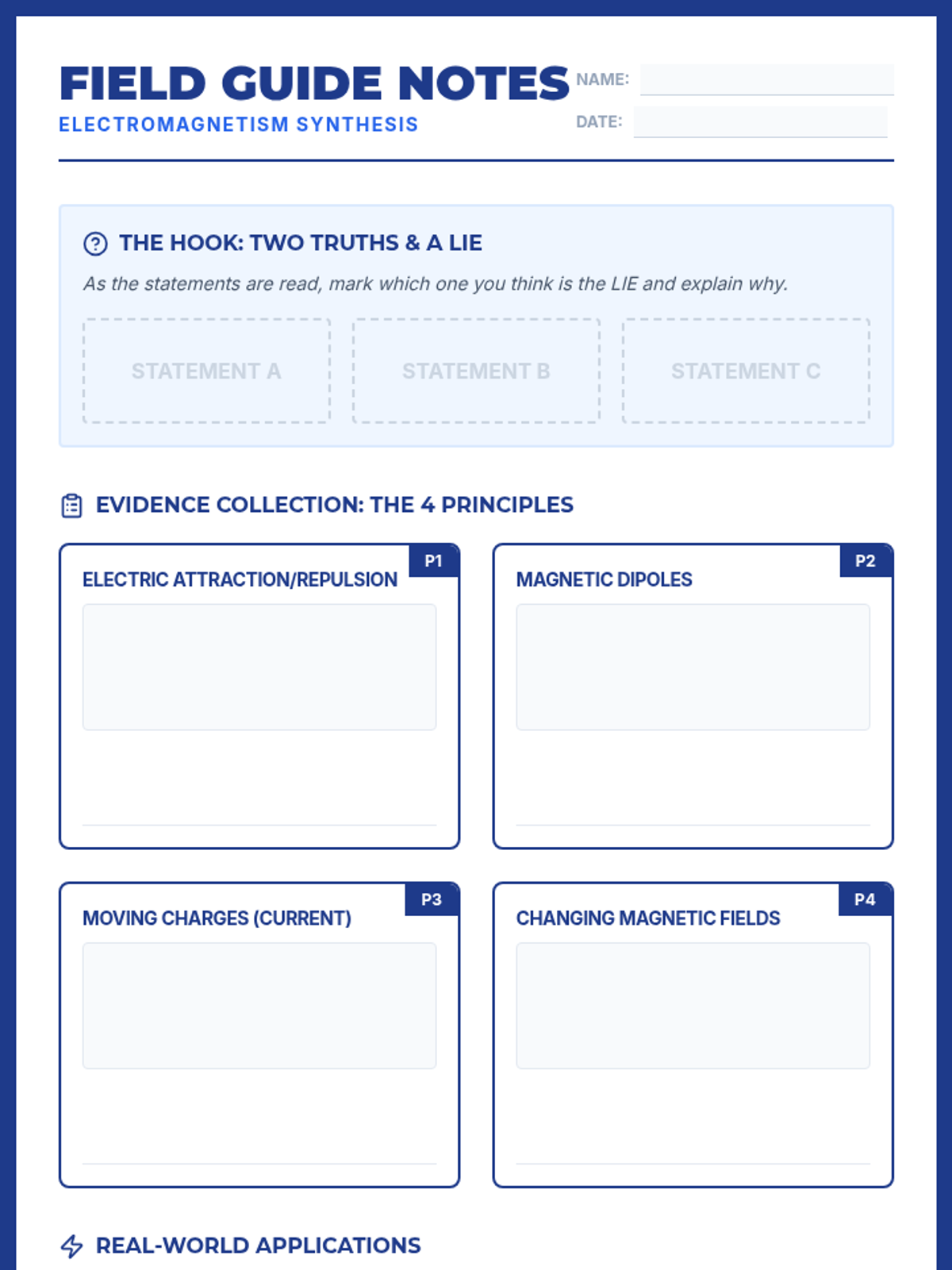
A foundational introduction to electromagnetic forces, covering charges, magnetic poles, and real-world applications through a structured guided notes and practice handout.
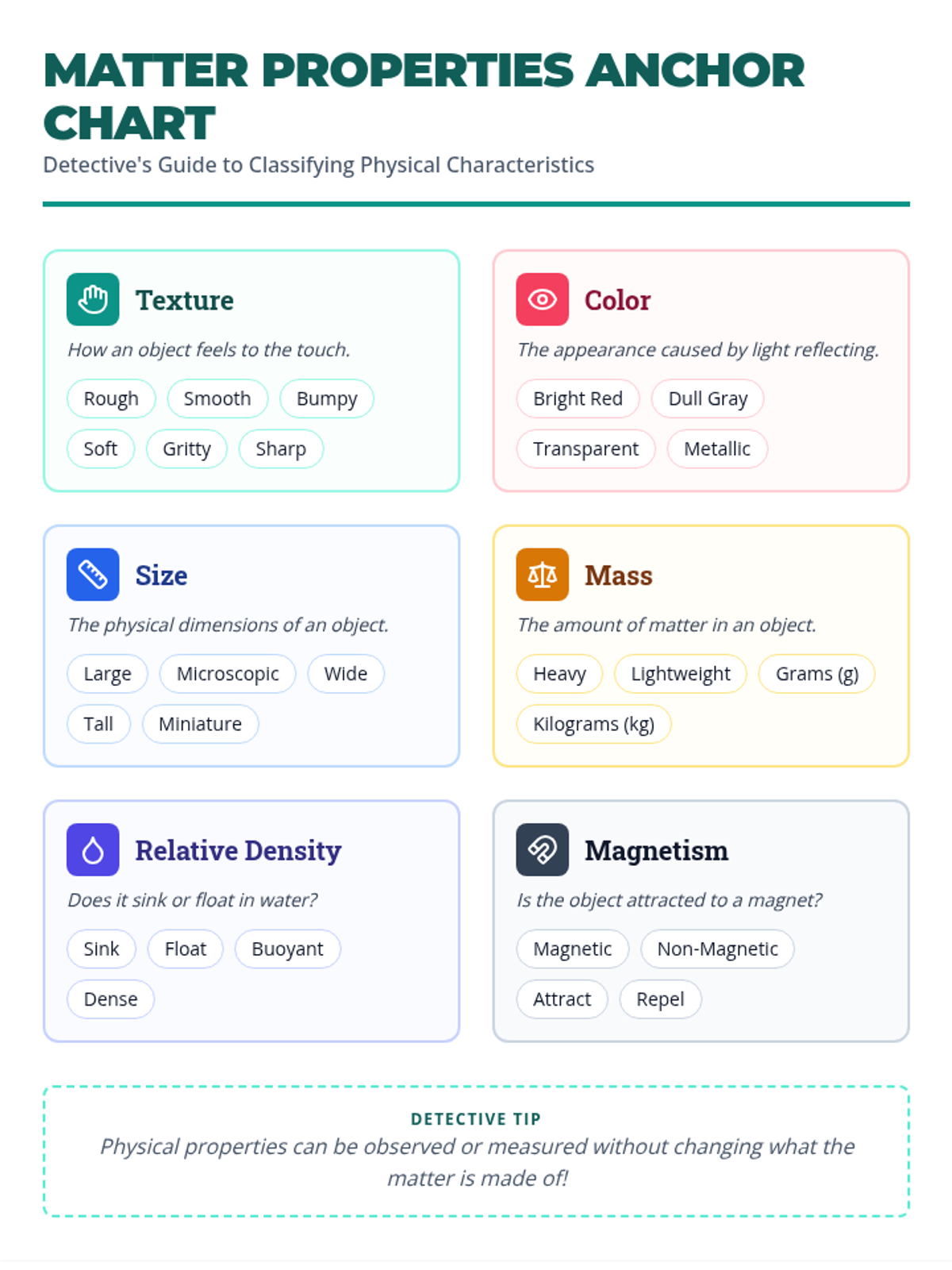
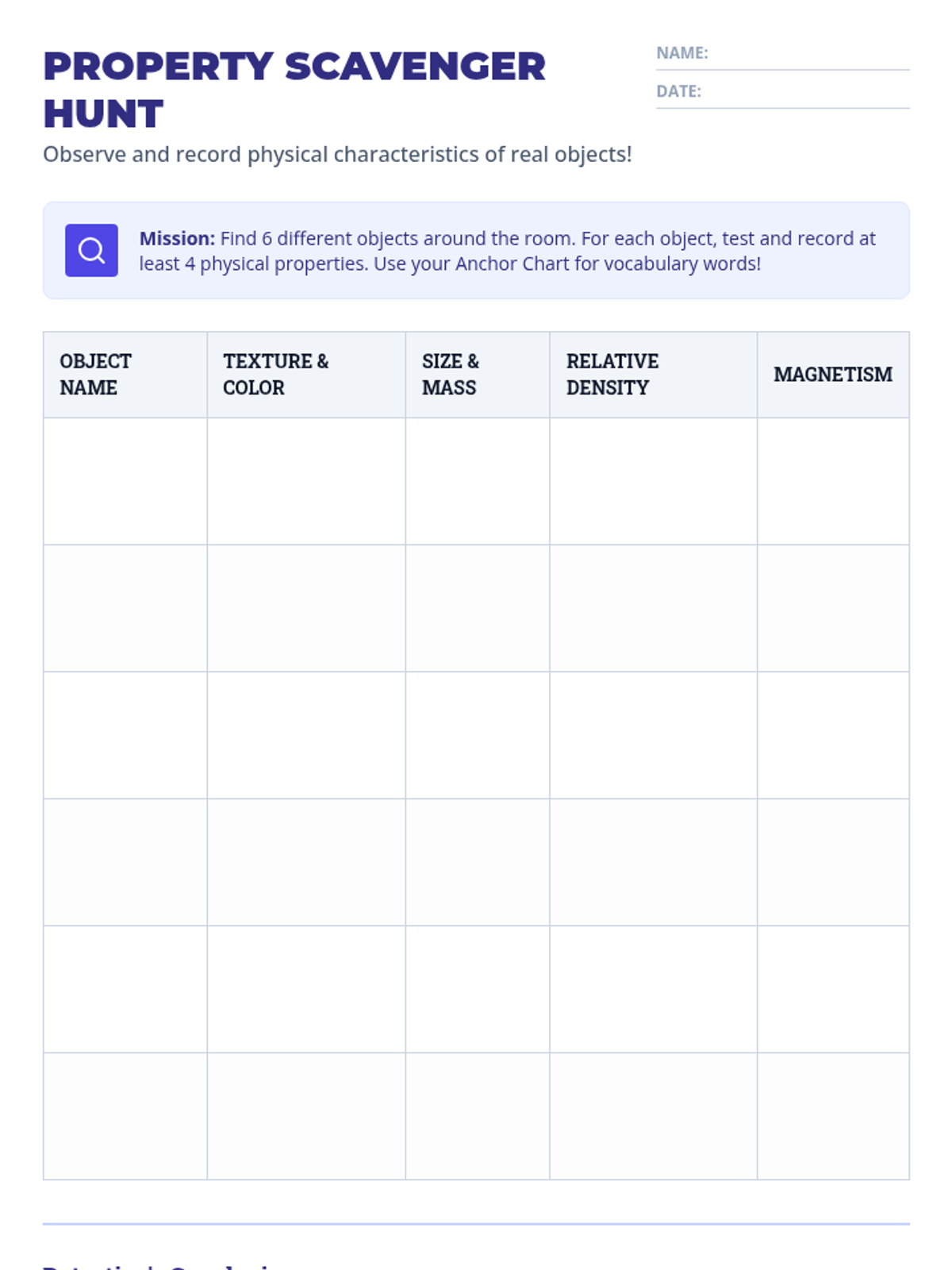
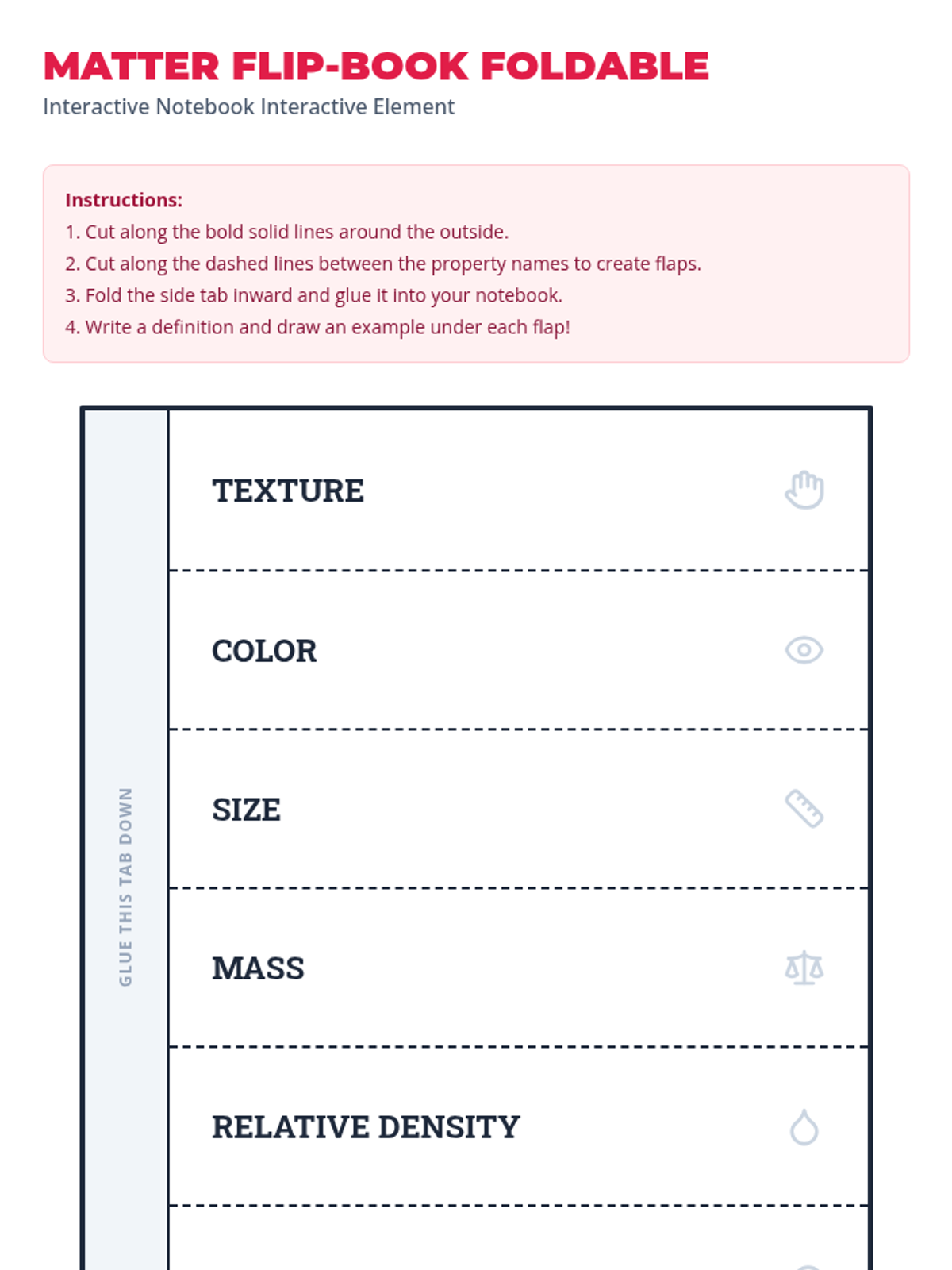
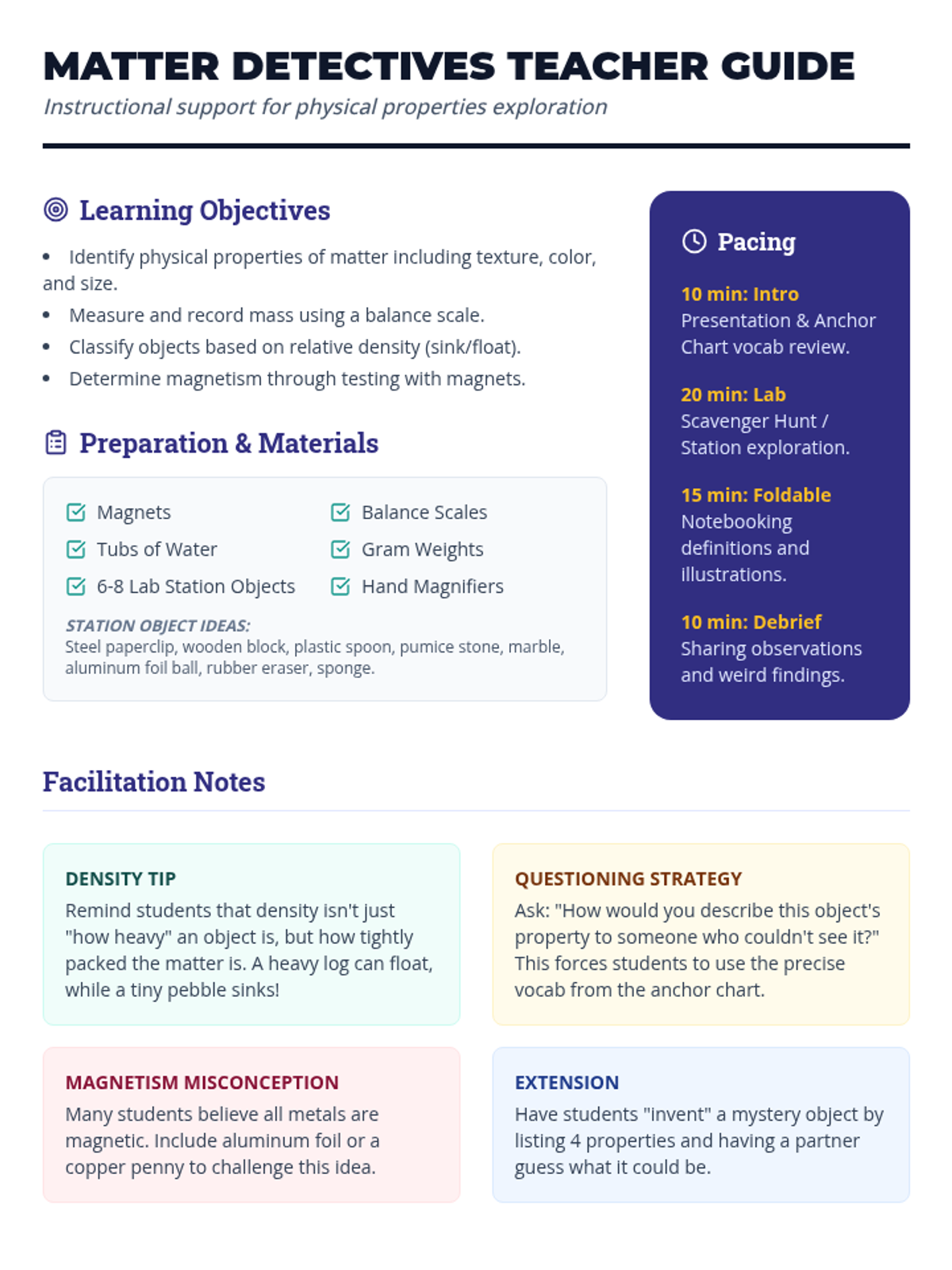
An engaging, hands-on lesson where students explore the physical properties of matter through a structured anchor chart, an interactive notebook foldable, and a real-world scavenger hunt.
Applying knowledge of electricity and magnetism to build and understand series and parallel circuits.
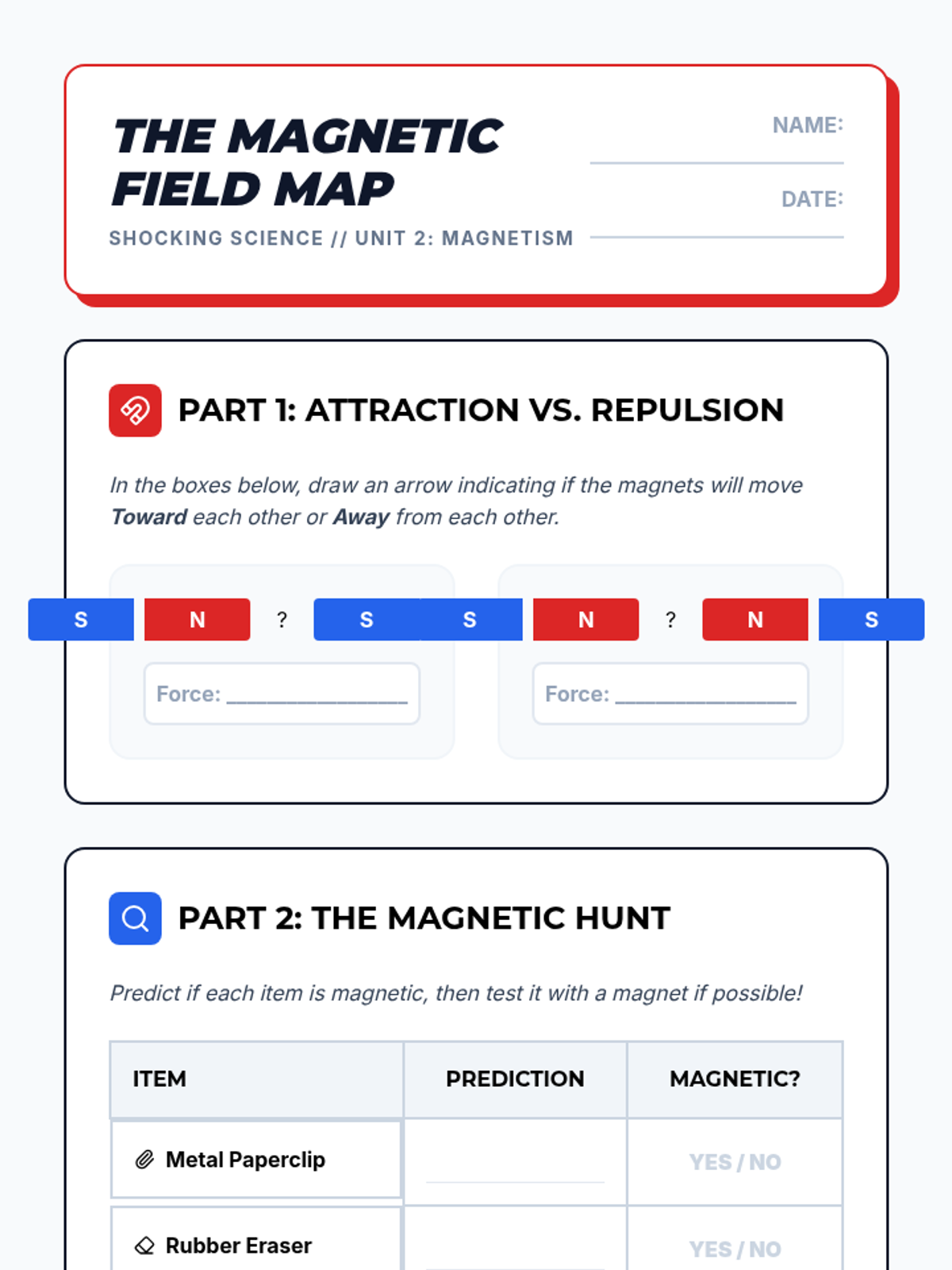
An investigation into magnetic fields, poles, and the invisible forces that attract and repel materials.
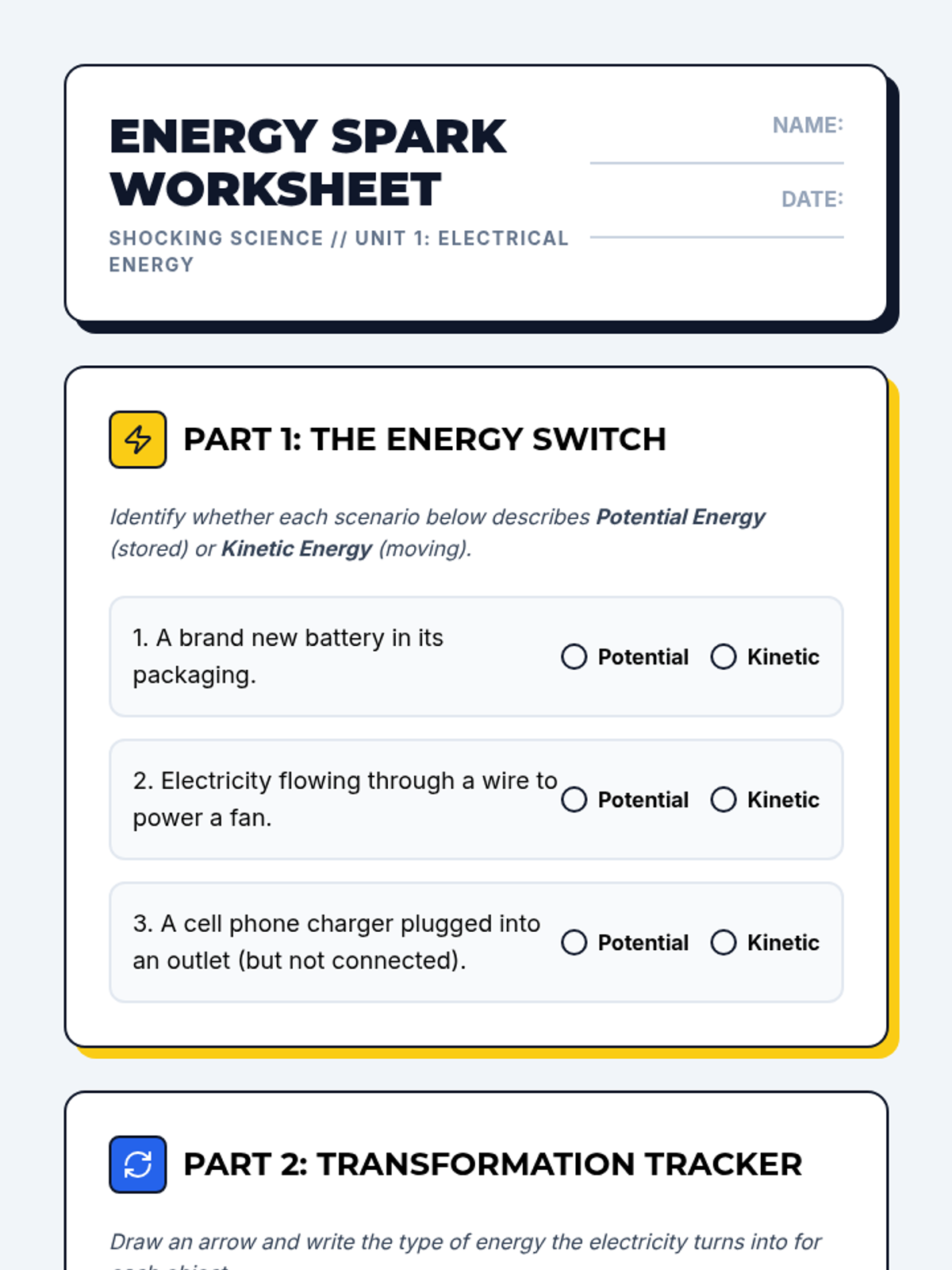
Students explore the concept of electrical energy, understanding where it comes from and how it moves from one form to another.
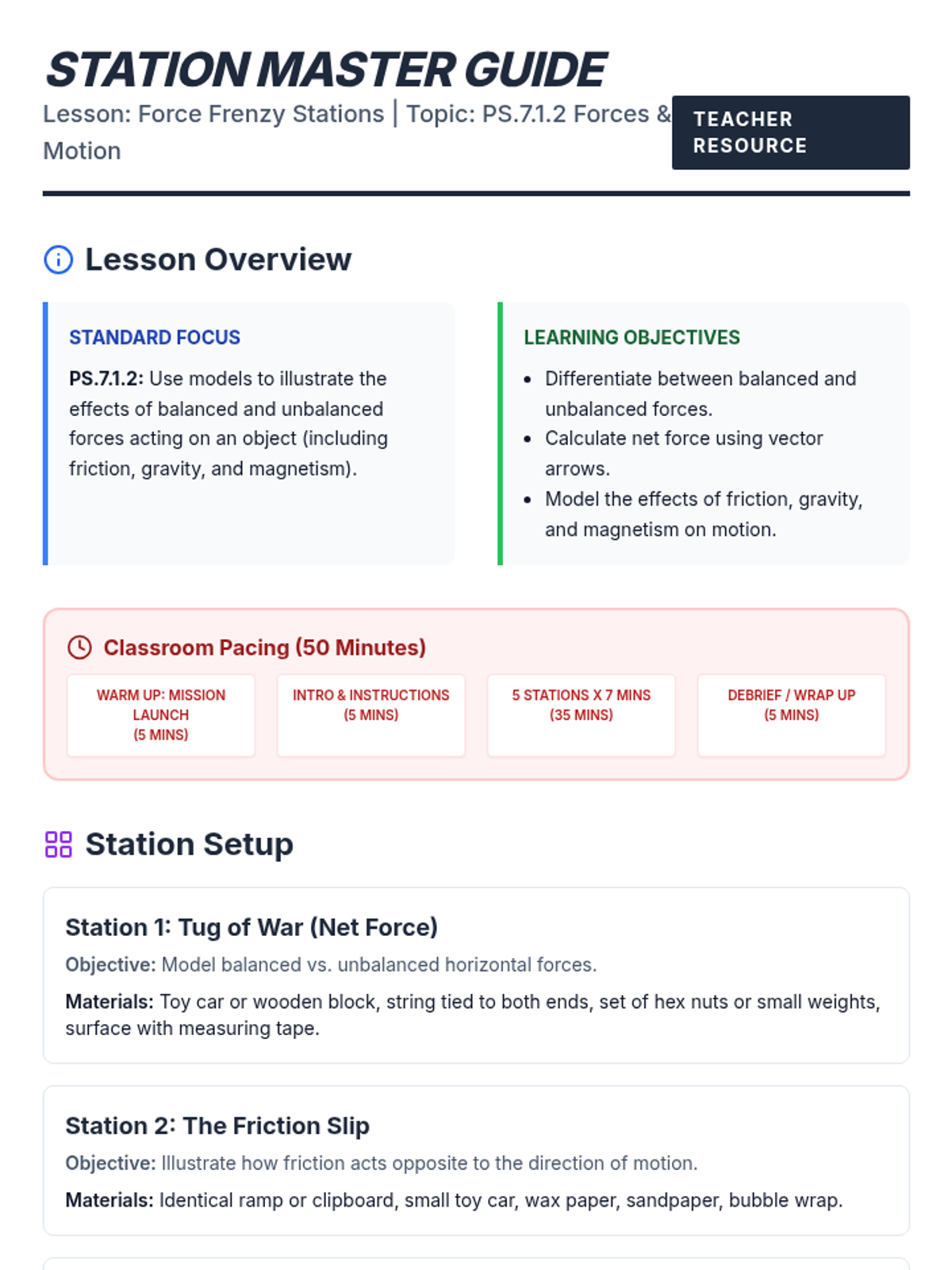
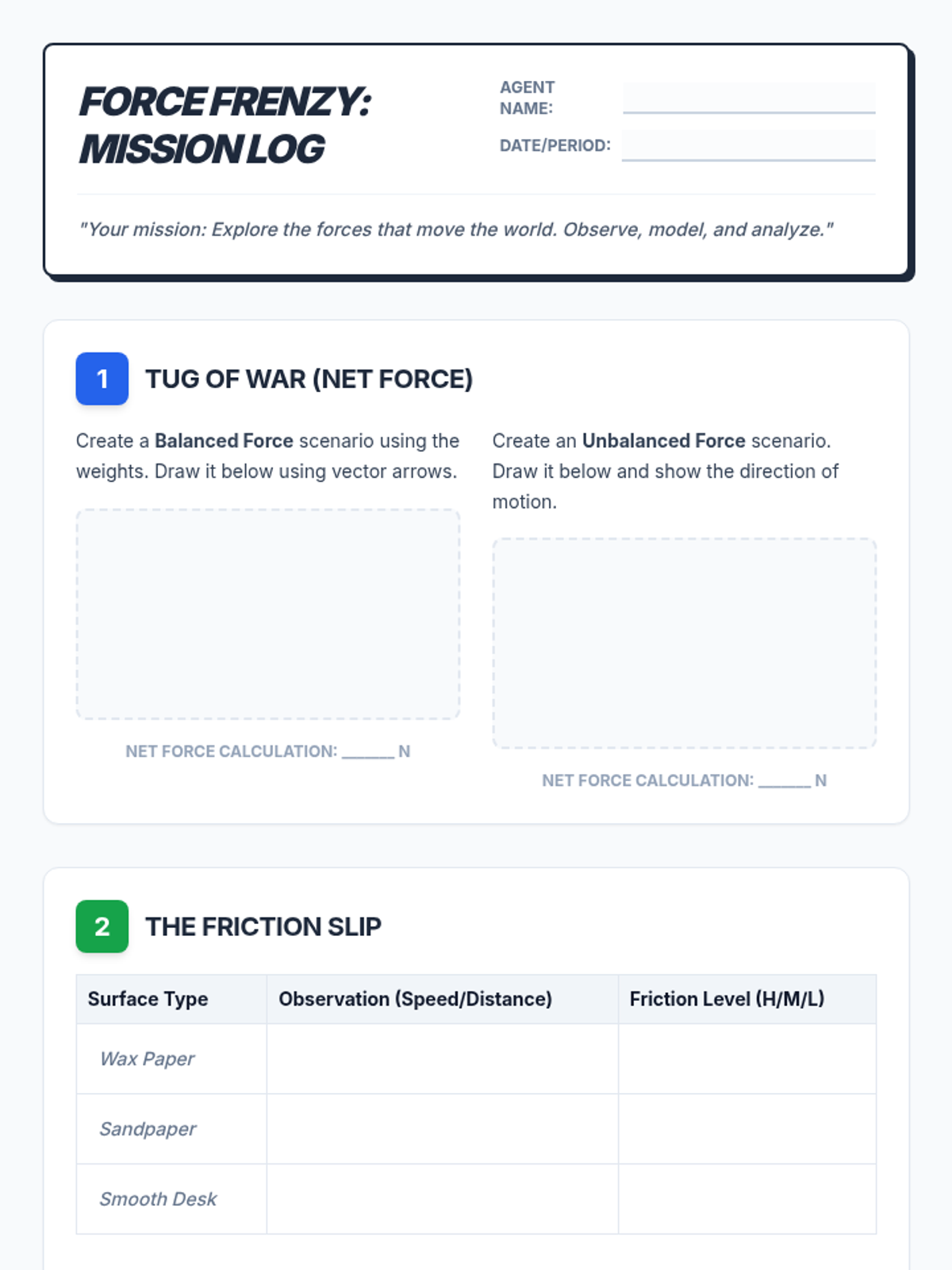
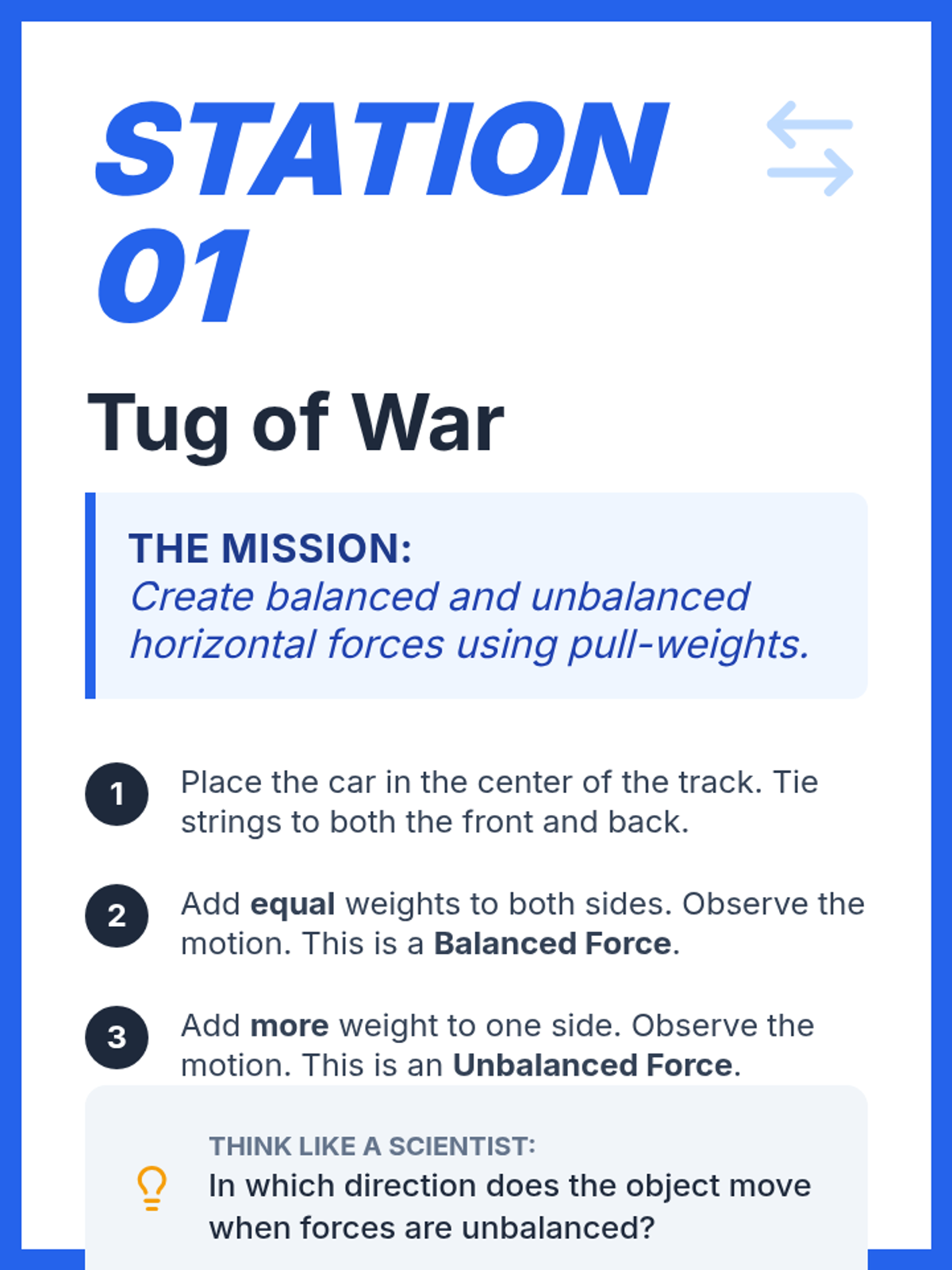
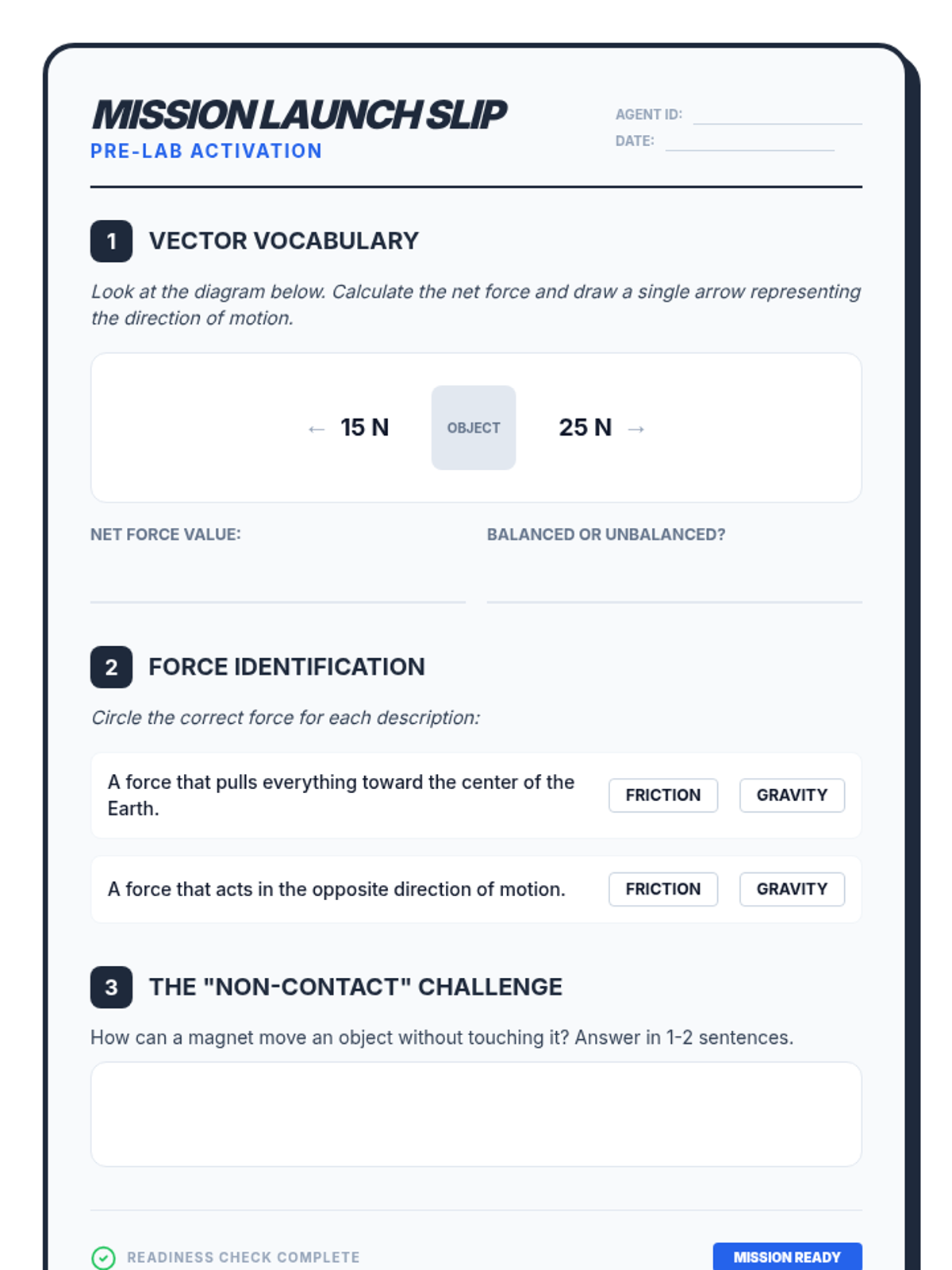
A station-based review lesson where students use physical models and diagrams to explore balanced and unbalanced forces, friction, gravity, and magnetism.
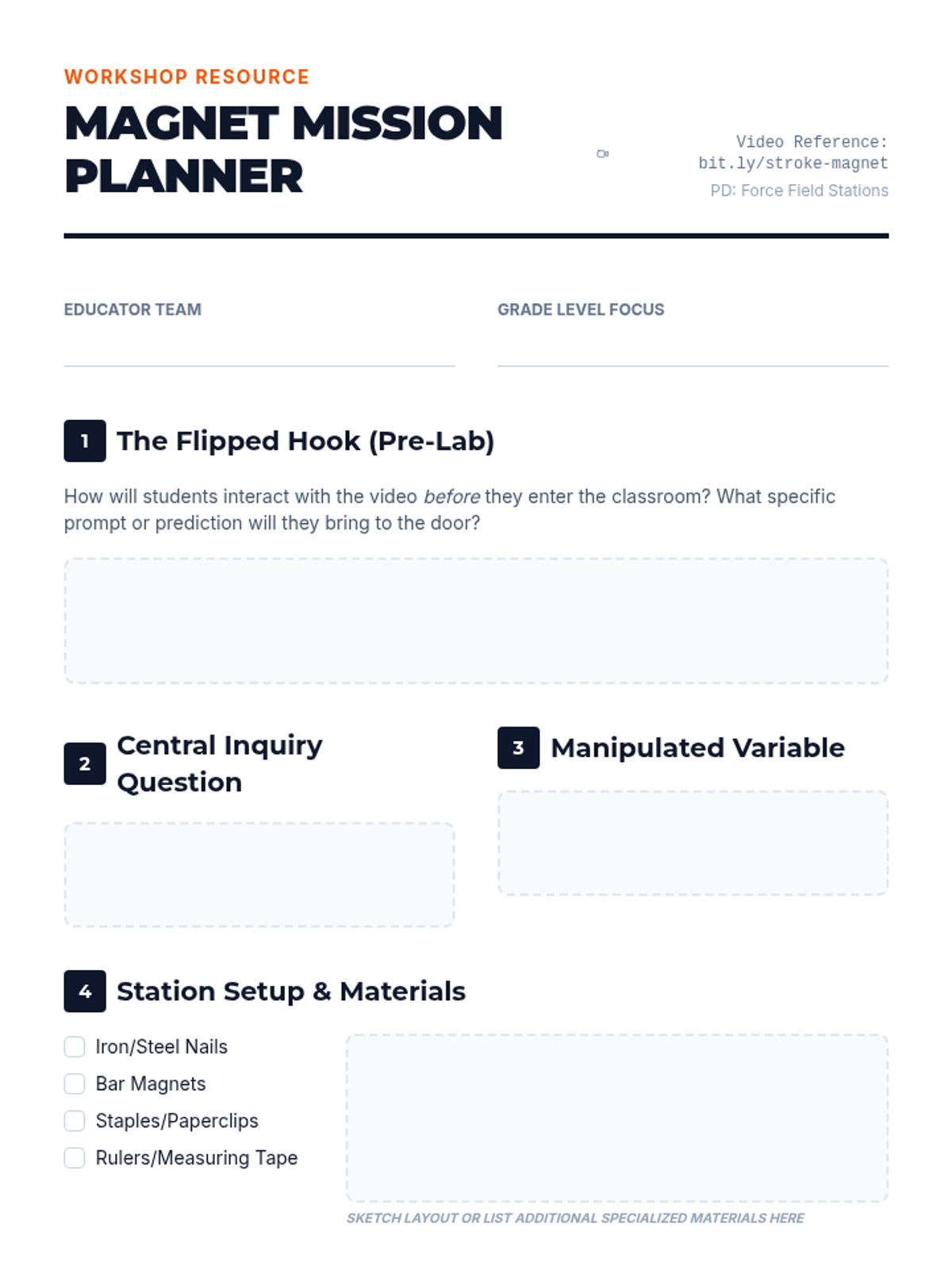
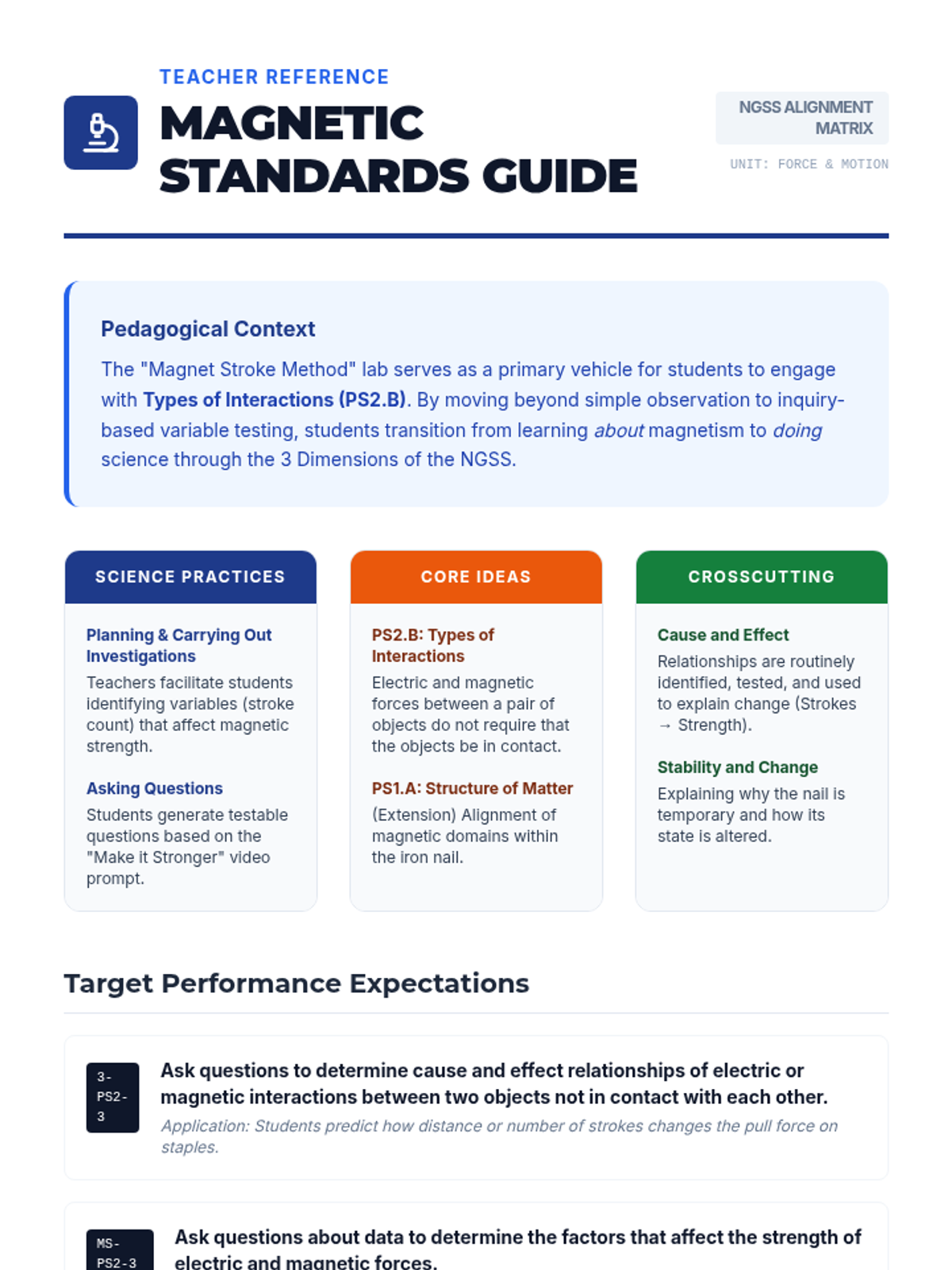
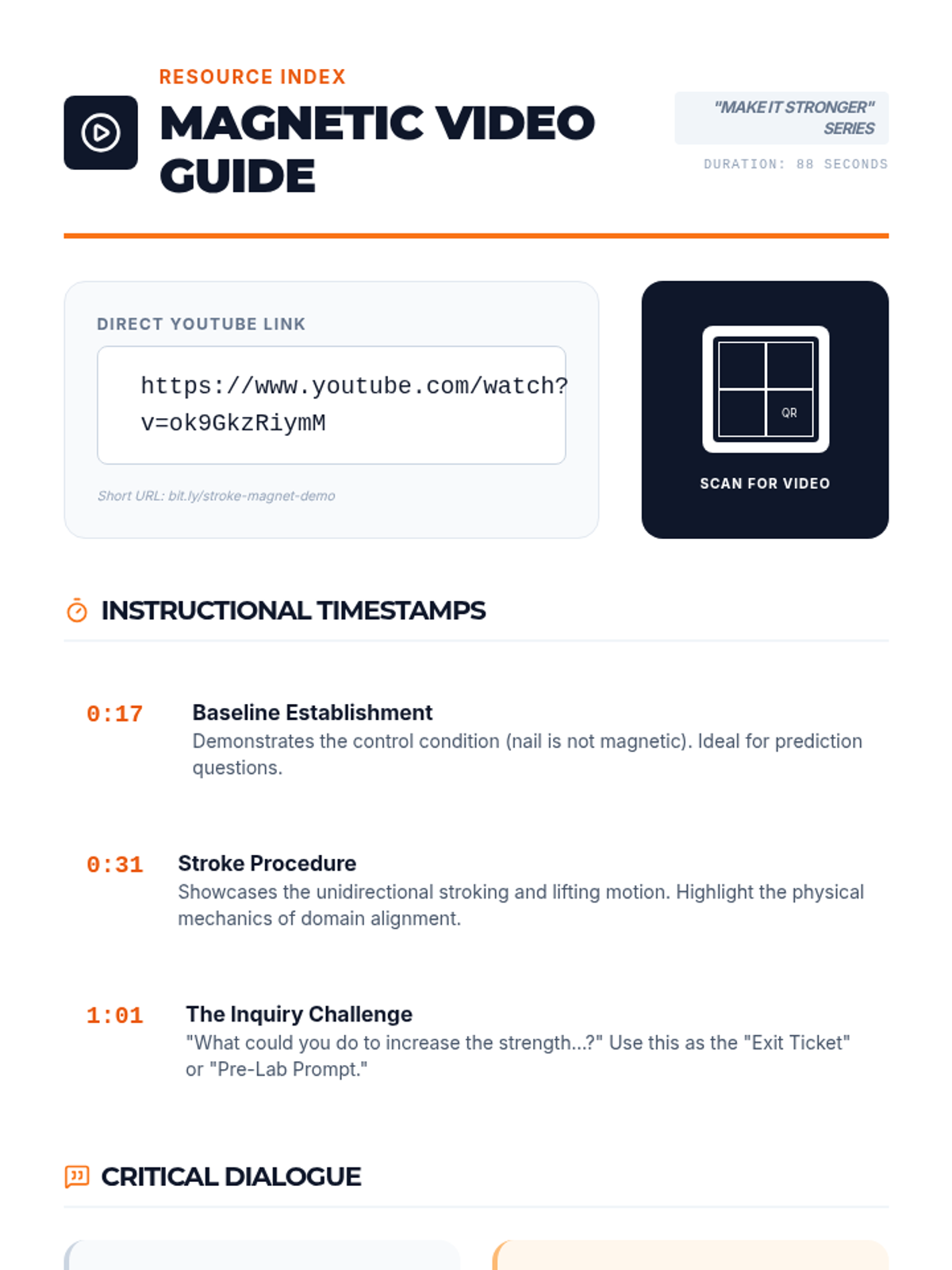
A professional development workshop for educators to master inquiry-based science instruction using simple magnetic phenomena. Teachers will analyze video prompts, identify experimental variables, and design a flipped classroom lesson with assessment rubrics.
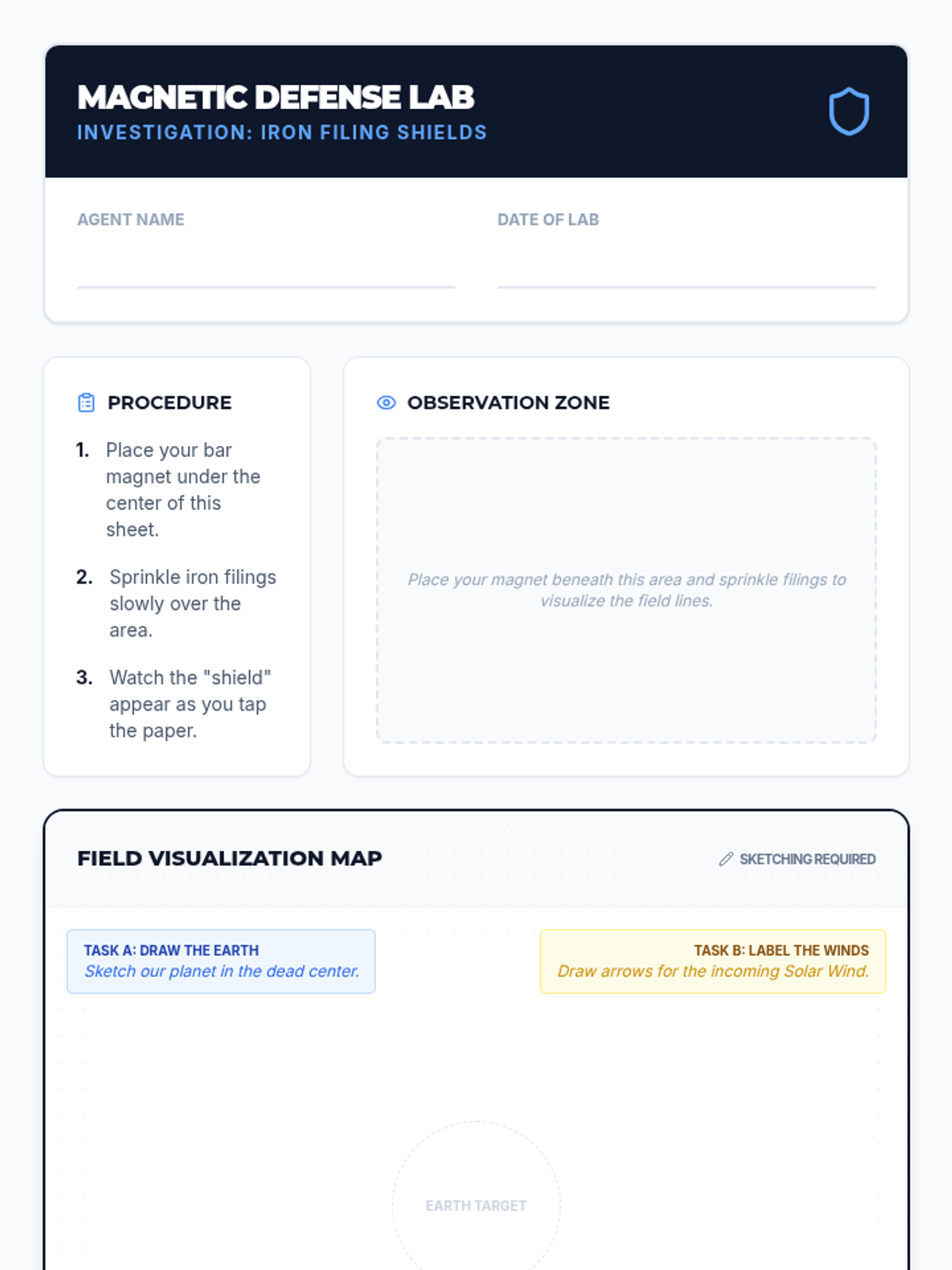
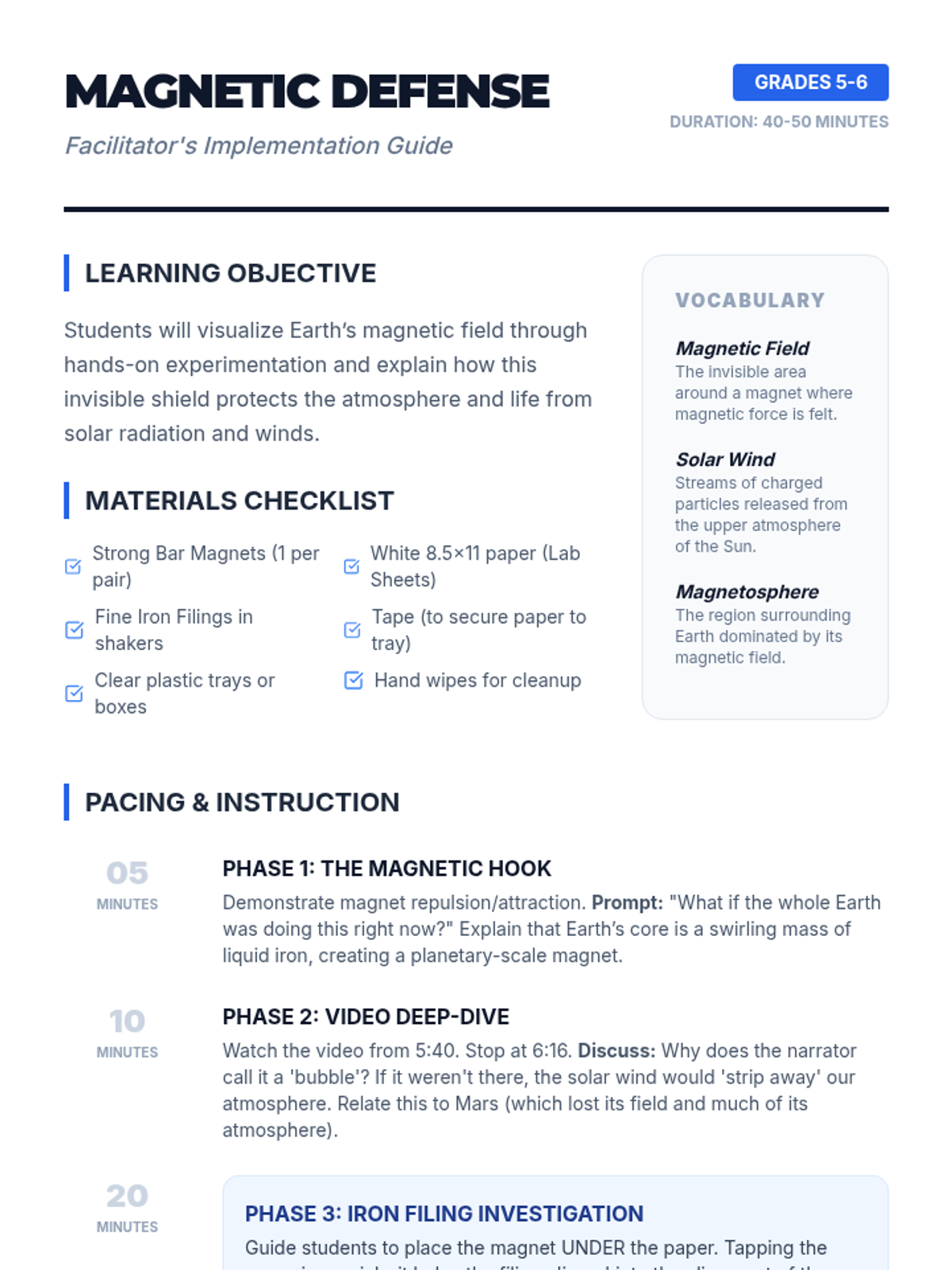
A hands-on science lesson where students explore Earth's magnetic field using bar magnets and iron filings to understand how it protects our planet from solar winds.
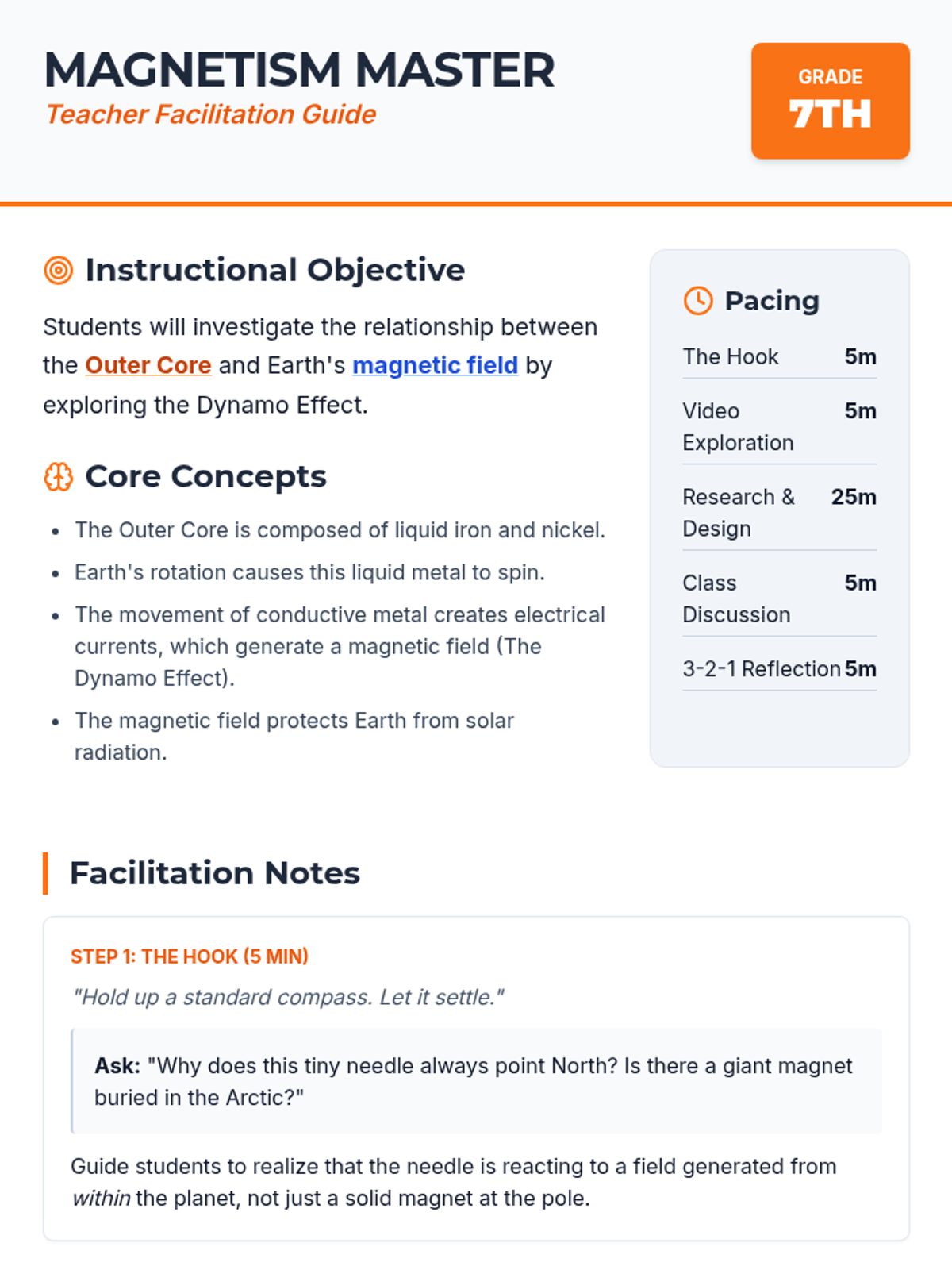
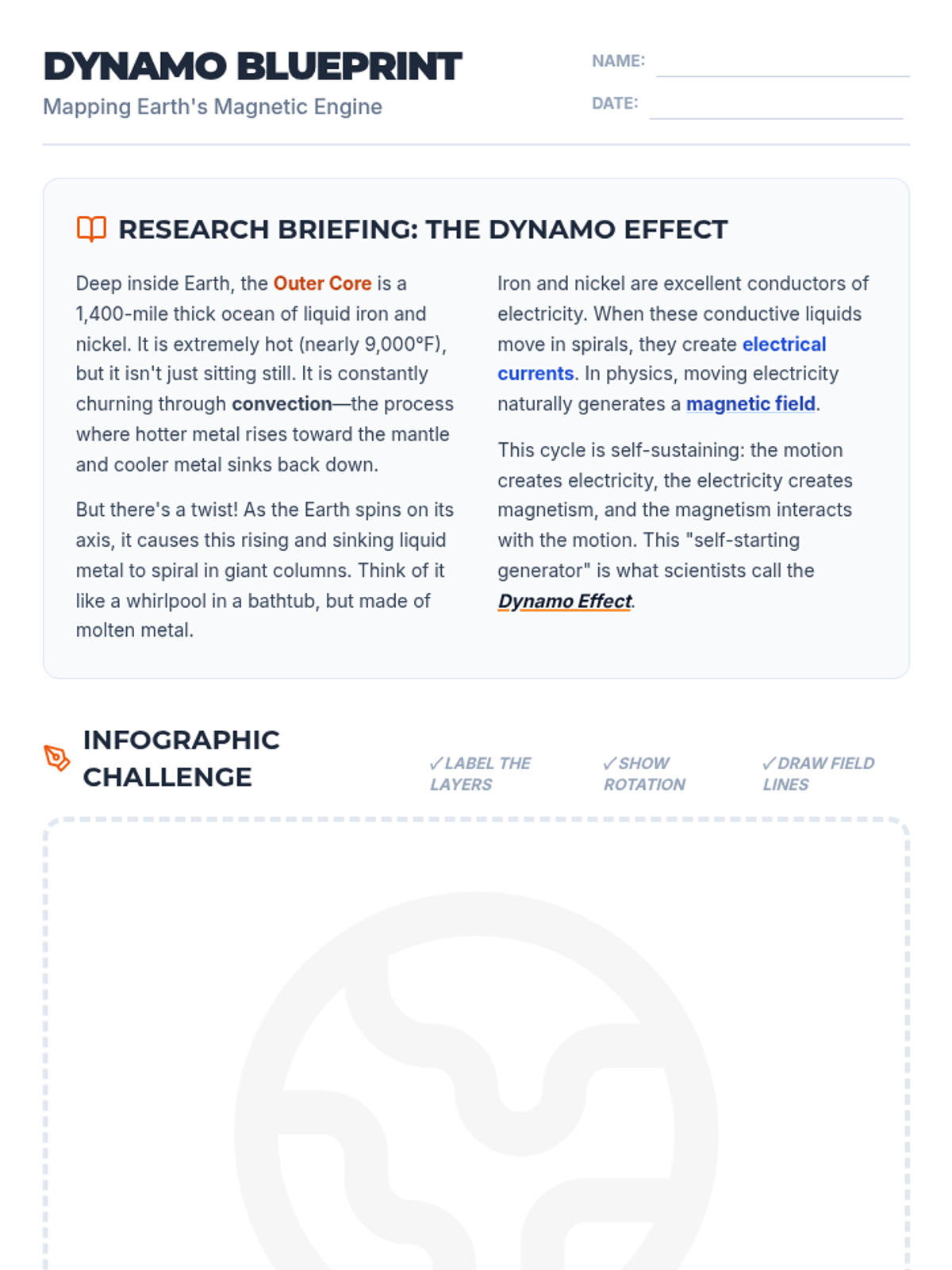
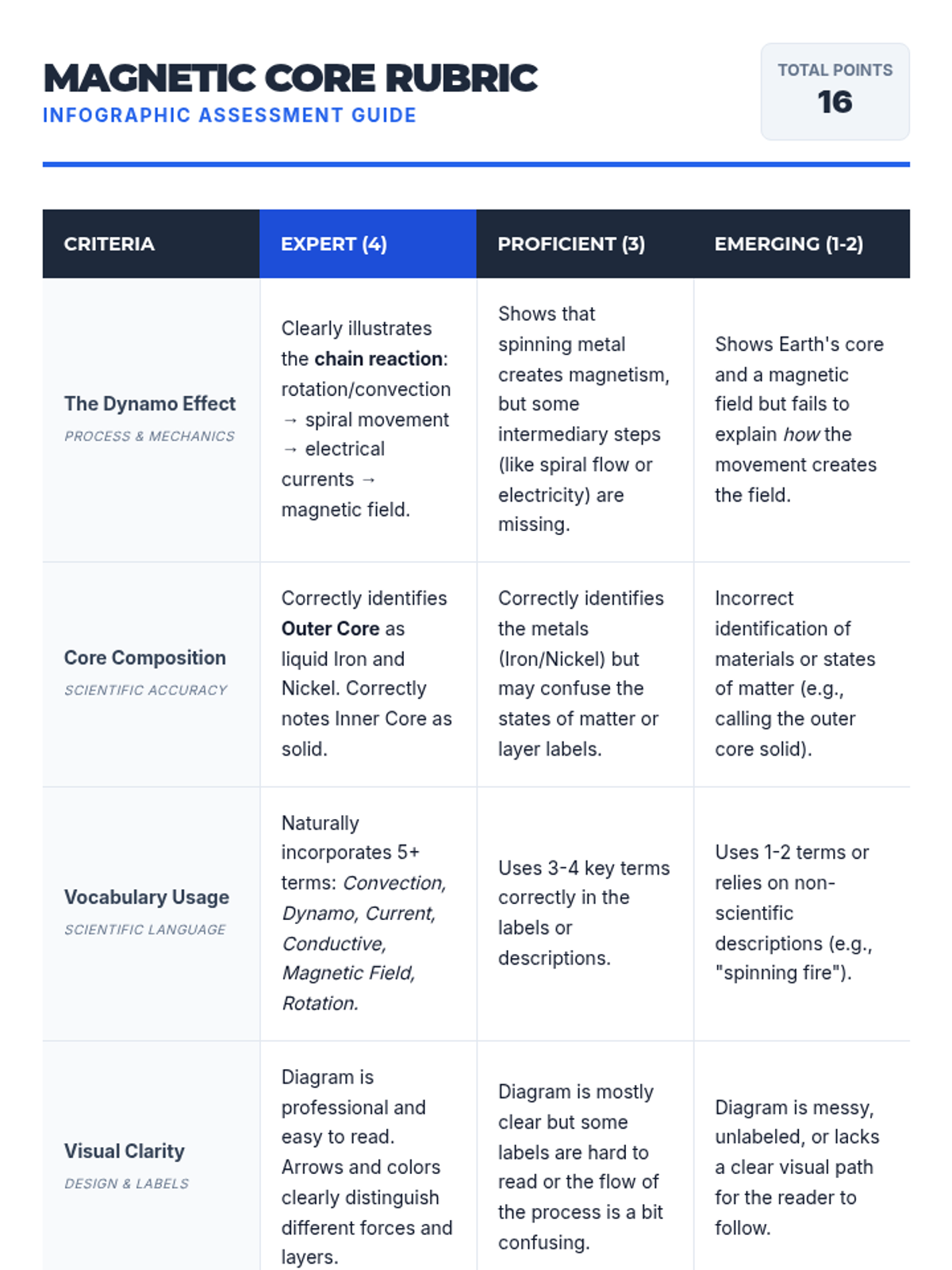
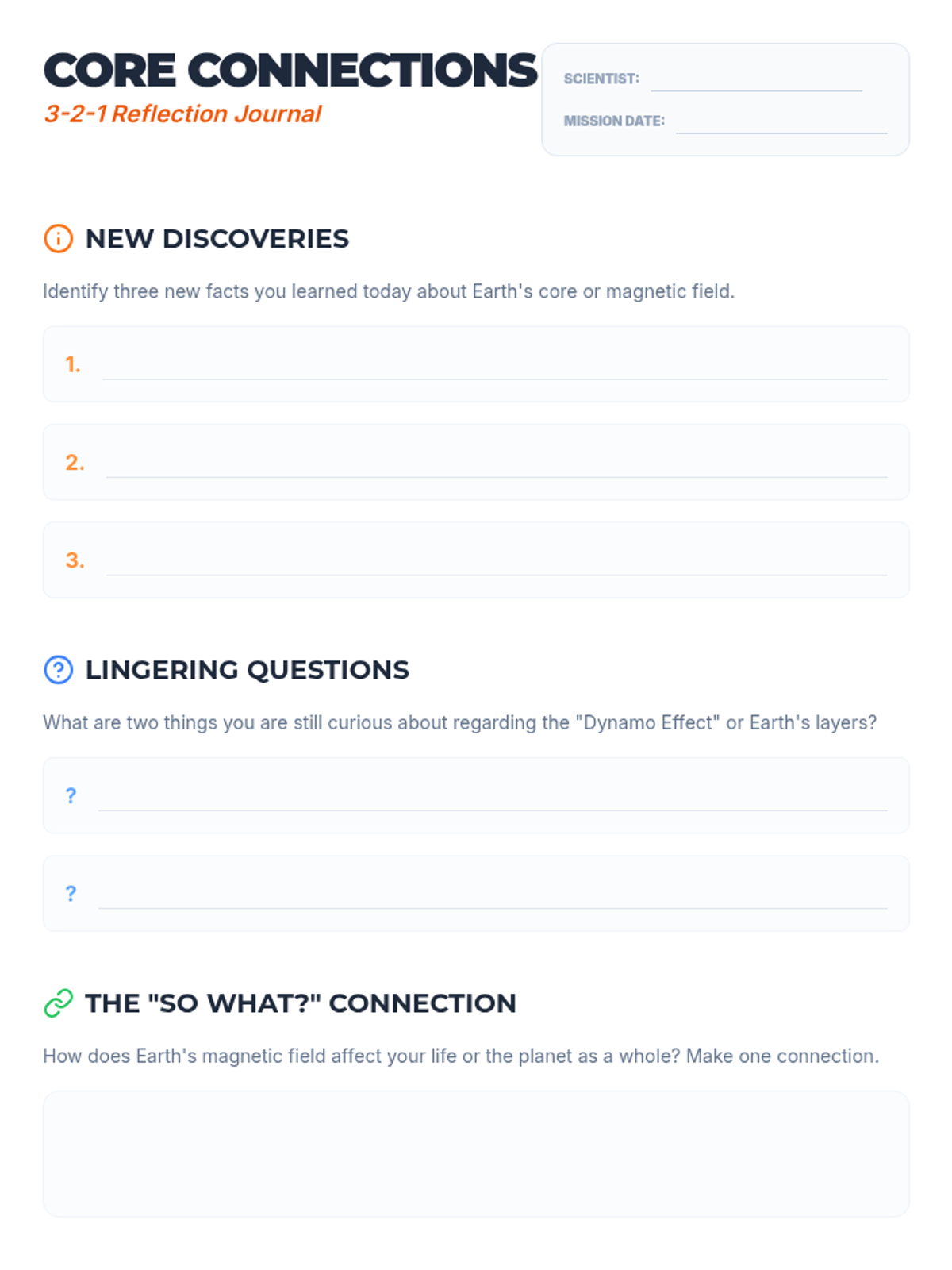
Students investigate how the spinning liquid metal in Earth's outer core generates the planet's magnetic field through the Dynamo Effect. They will view a video, read about magnetism, and create an infographic explaining this relationship.
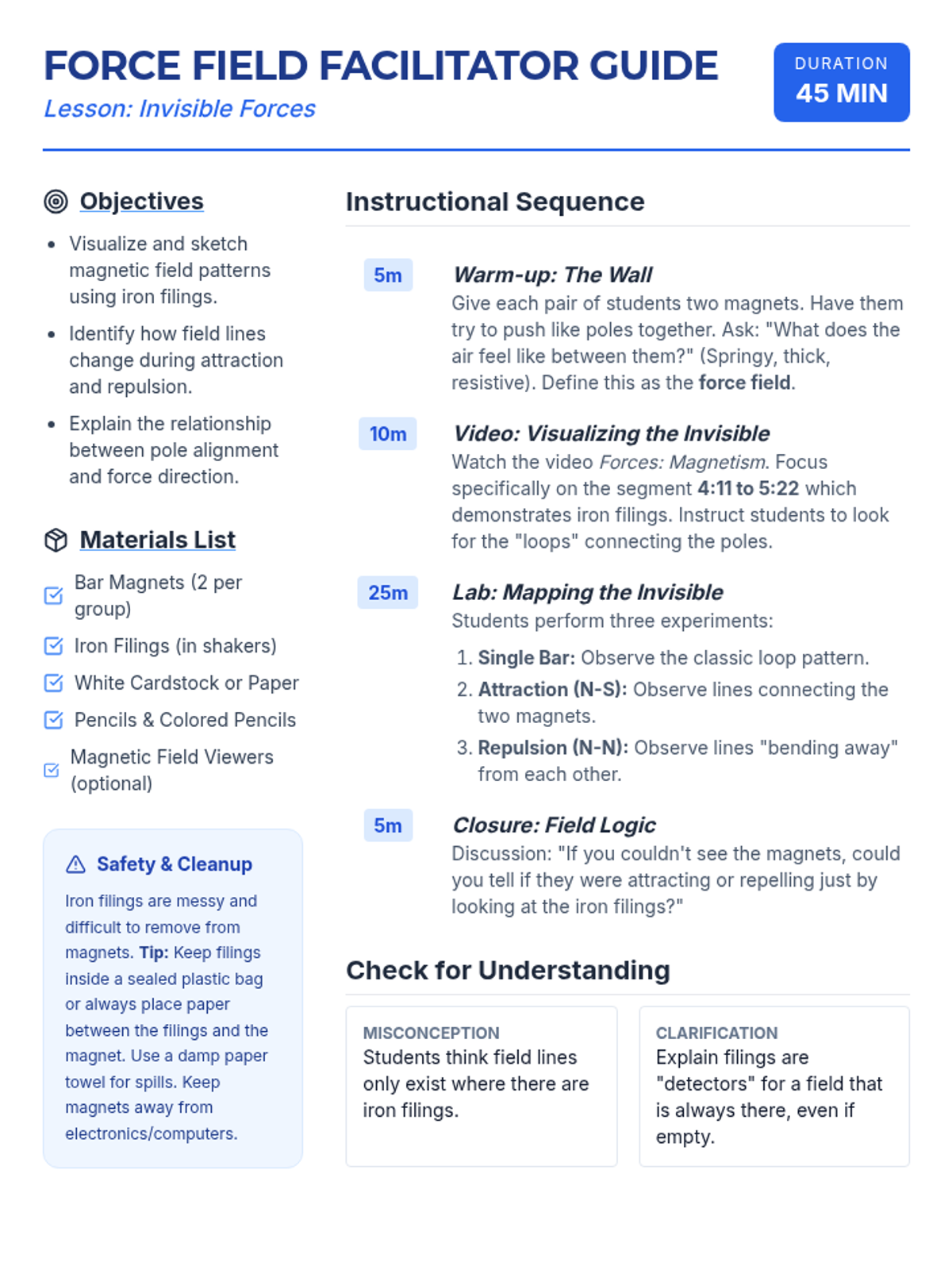
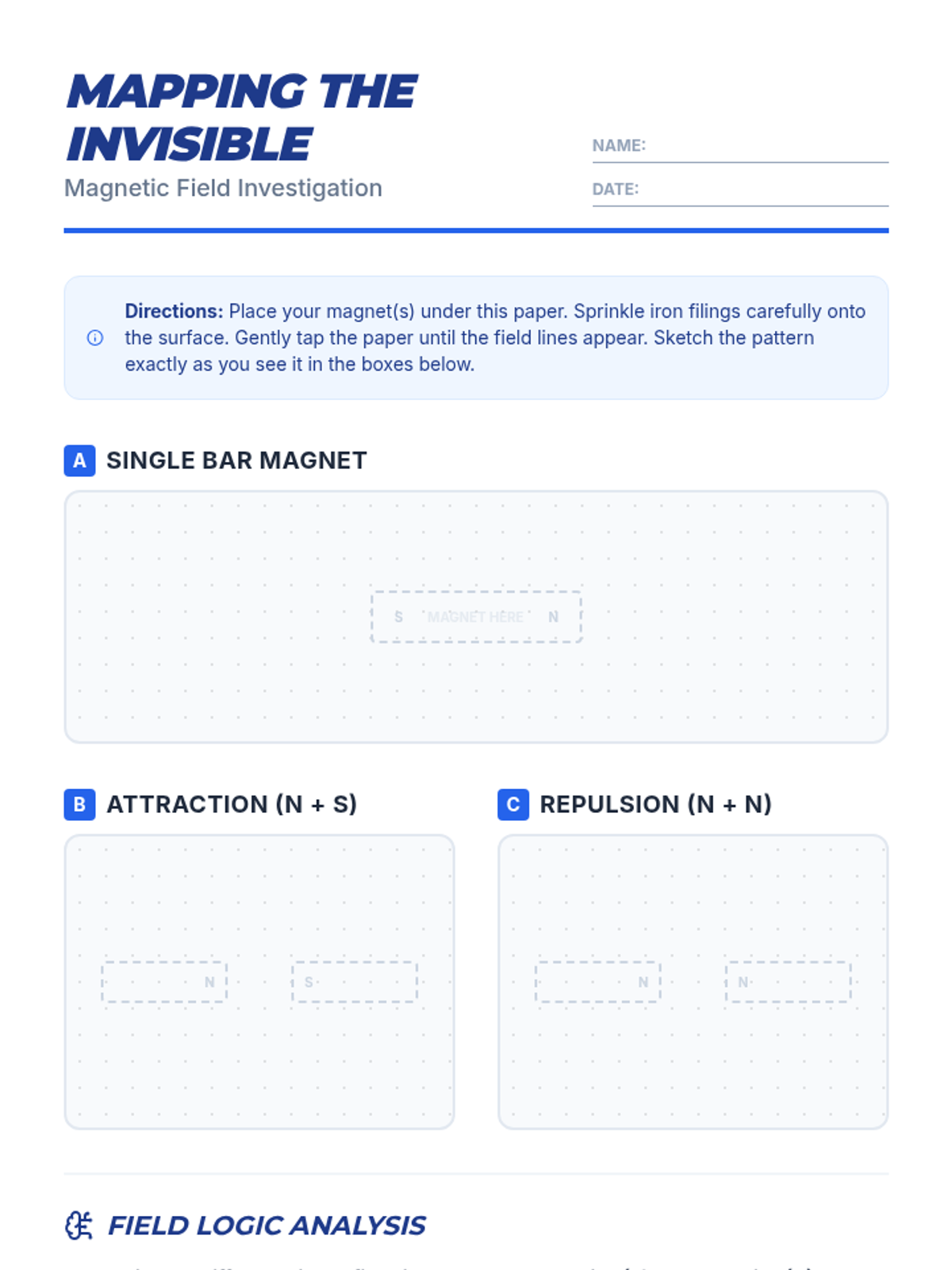
A hands-on investigation into magnetic fields and pole interactions where students use iron filings to visualize the 'invisible' forces around magnets.
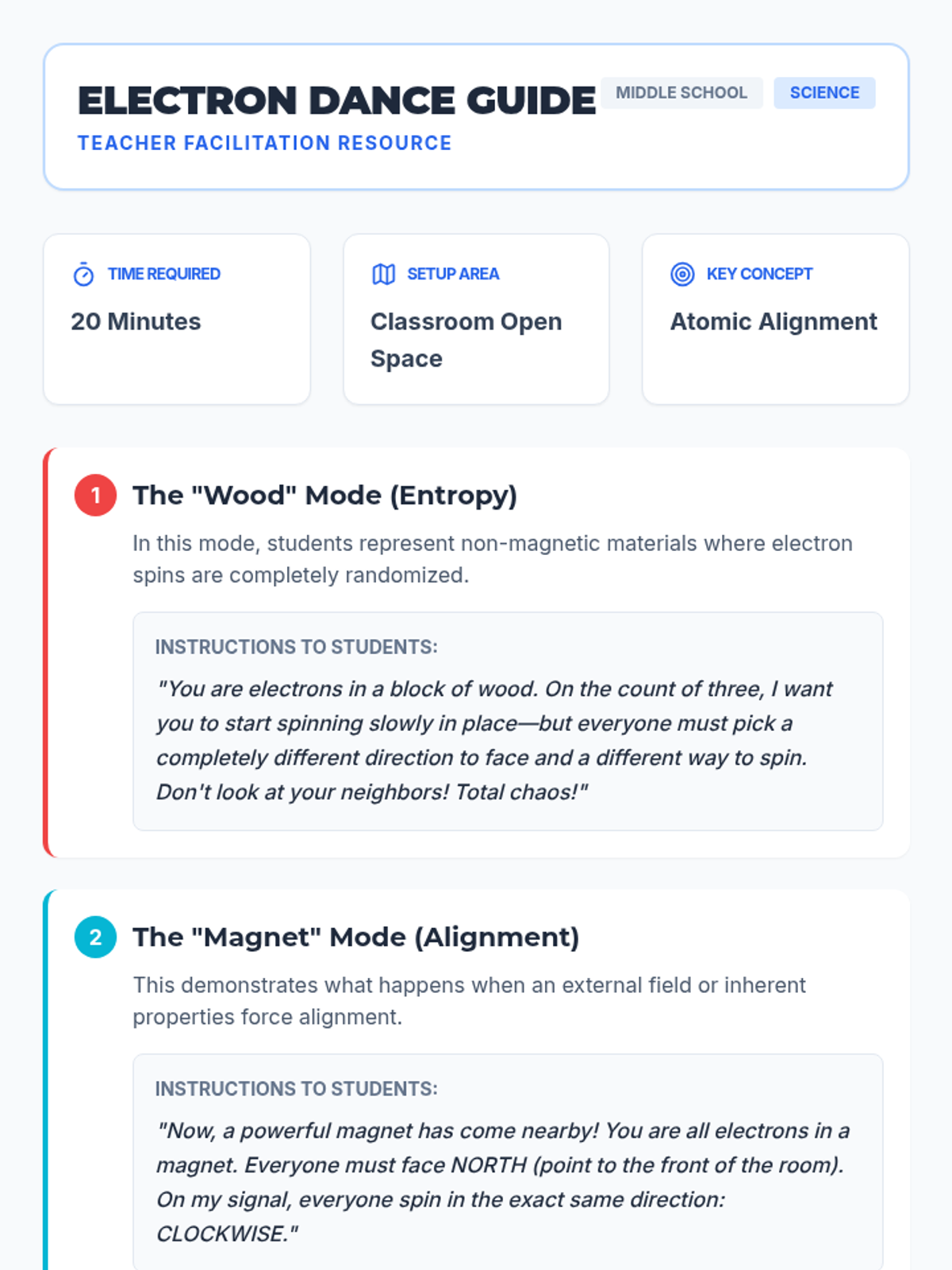
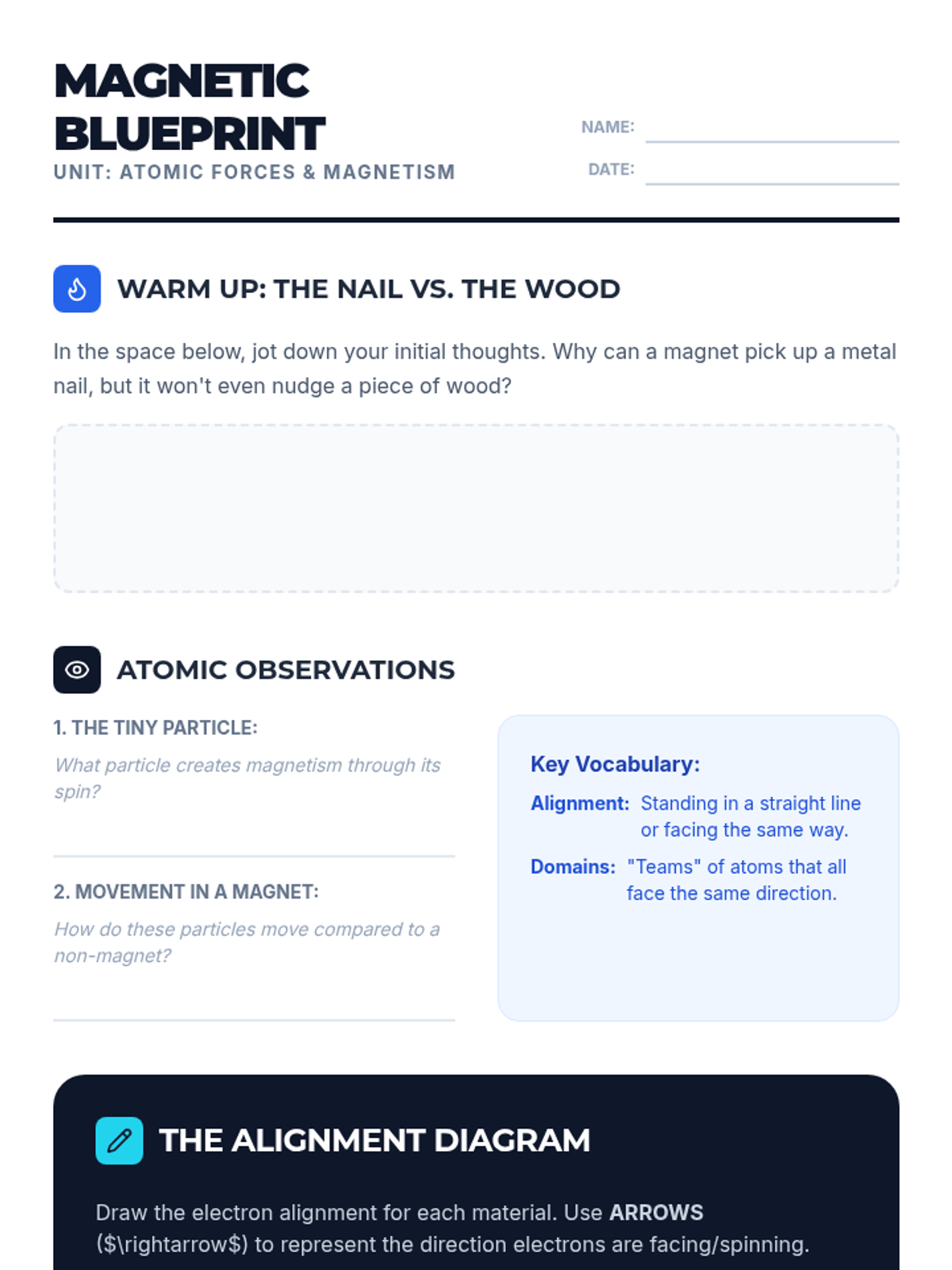
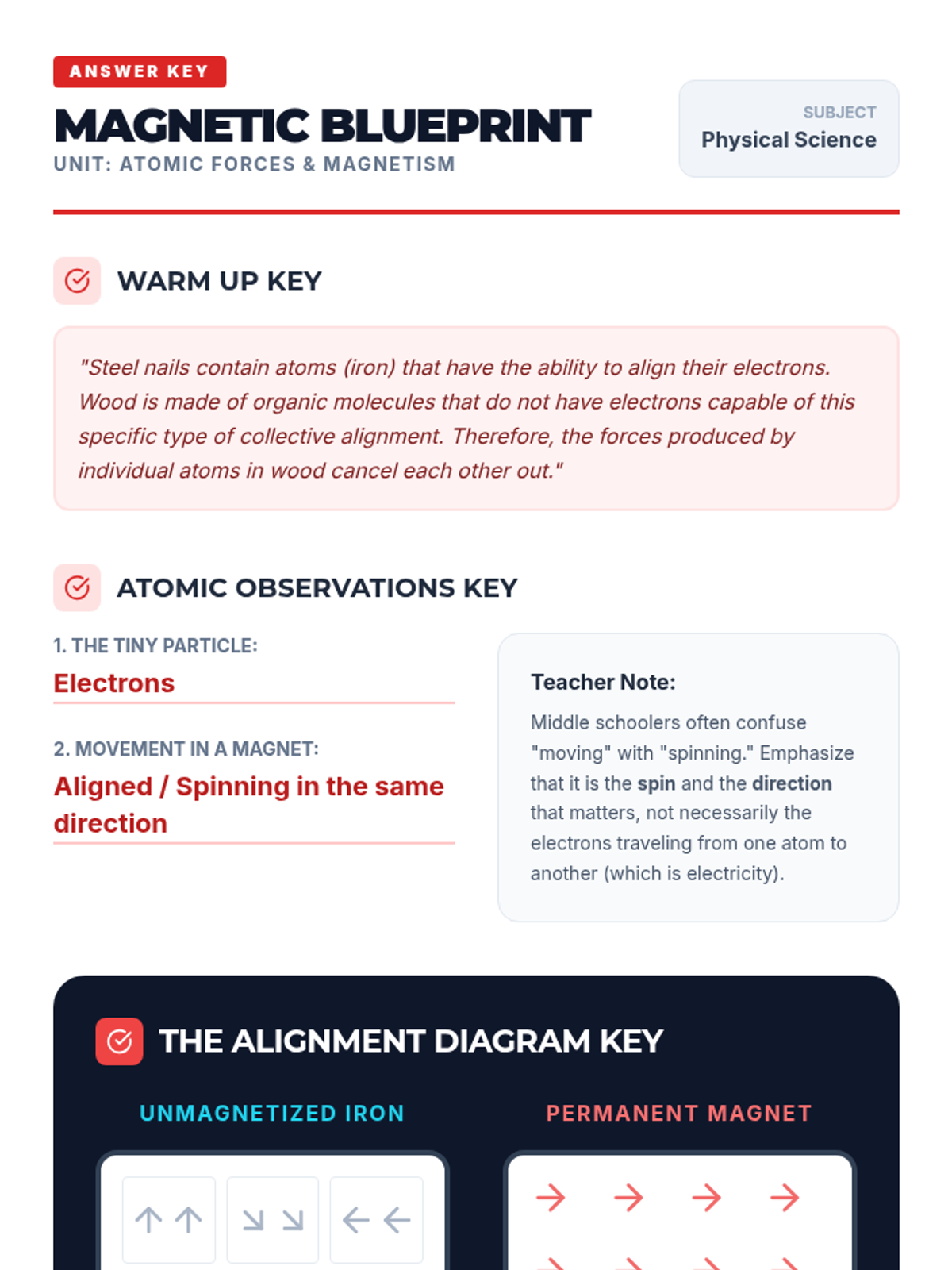
Students explore the atomic basis of magnetism by modeling electron alignment through a movement-based activity called 'The Electron Dance' and creating visual diagrams of magnetic domains.
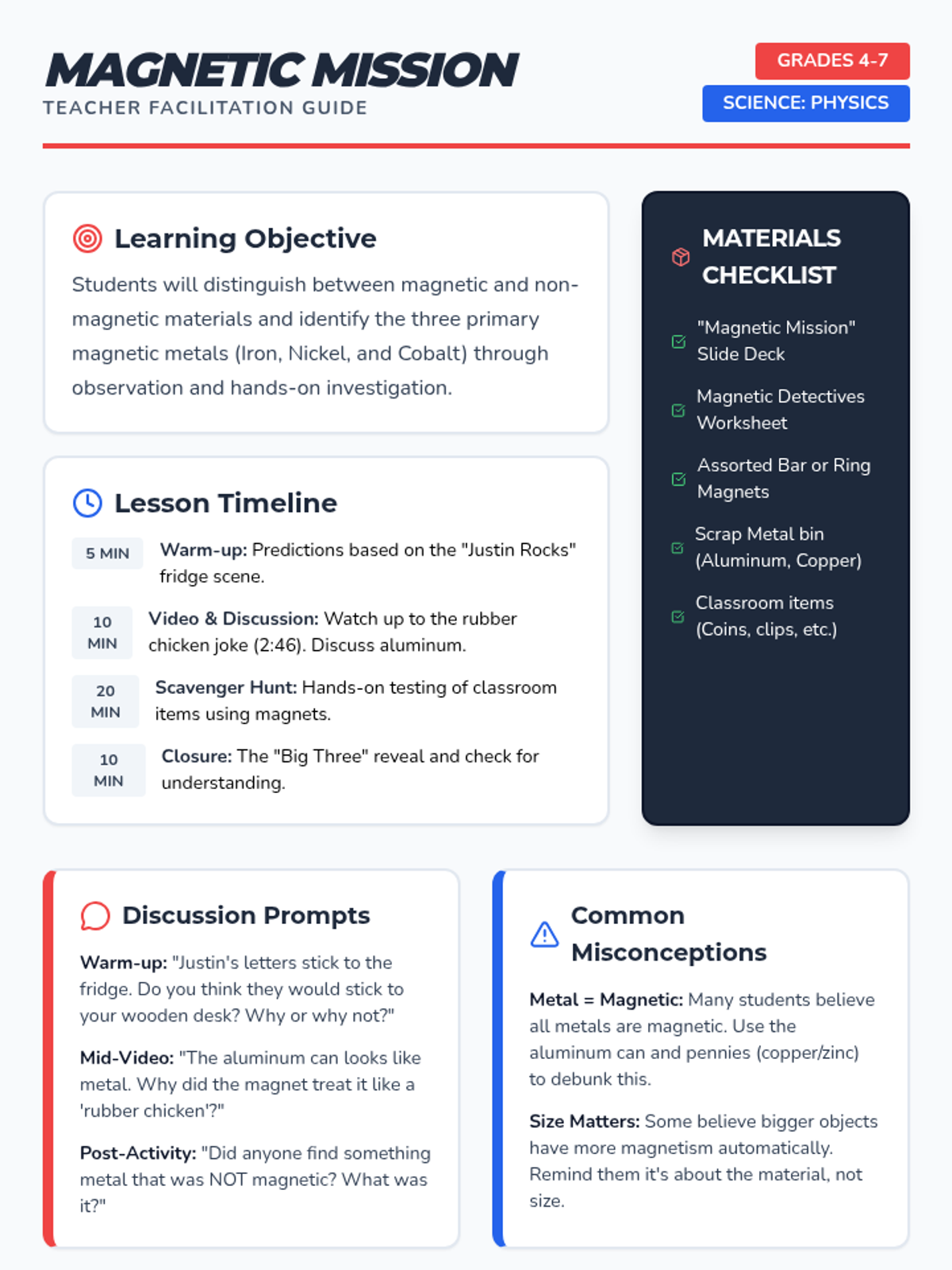
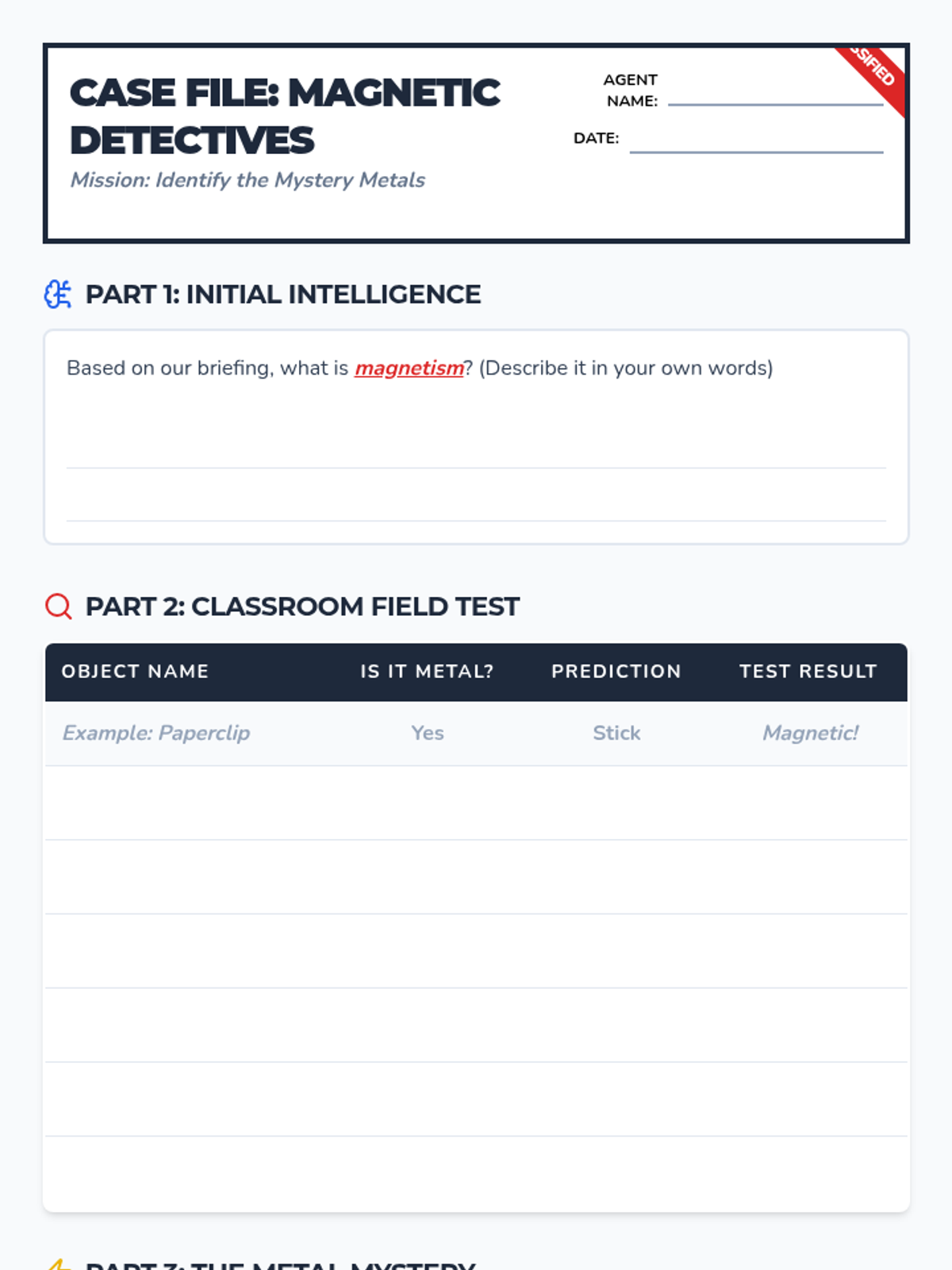
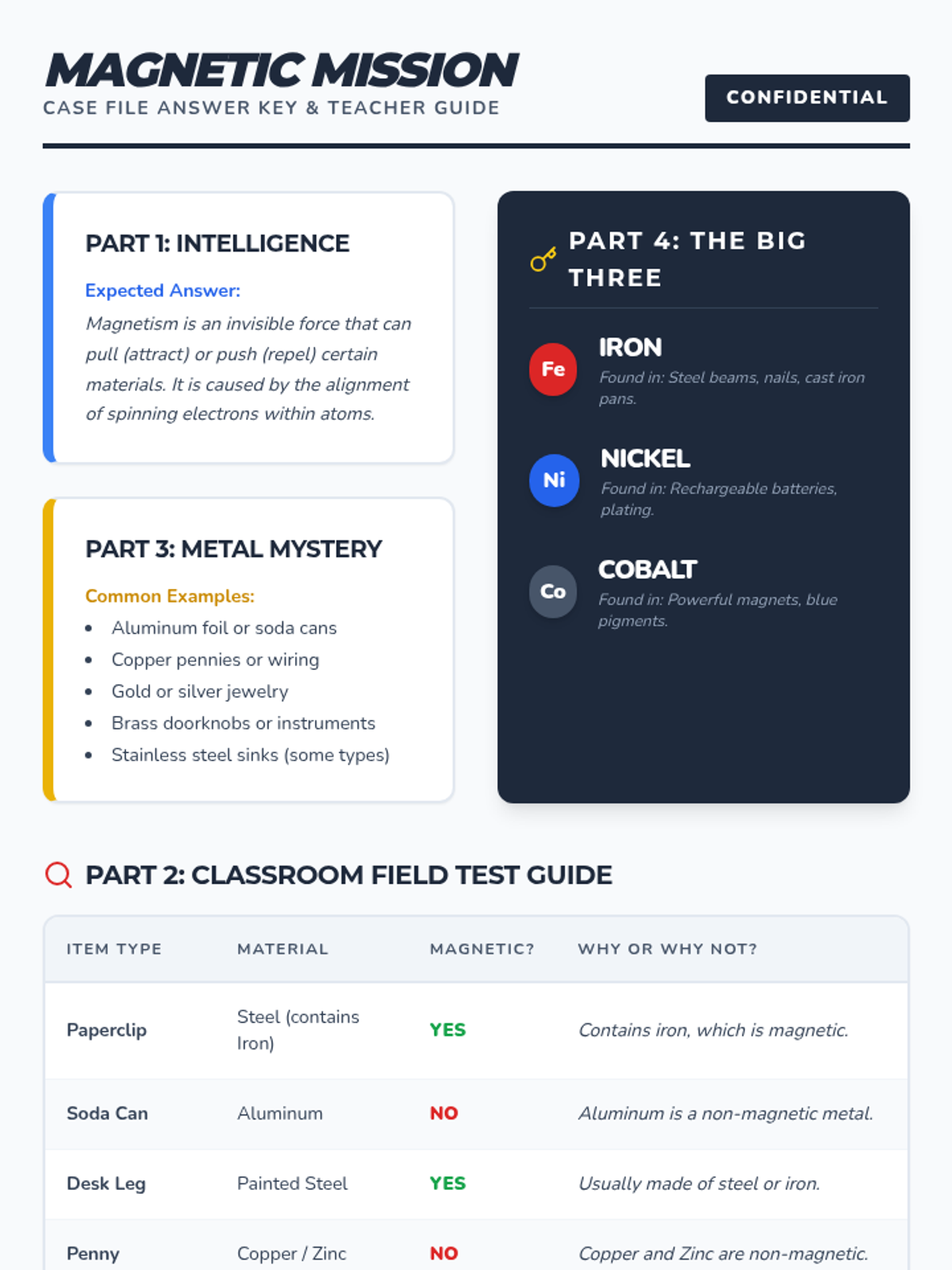
A hands-on introductory lesson where students investigate the properties of magnetism, conduct a classroom scavenger hunt, and identify the 'Big Three' magnetic metals: Iron, Nickel, and Cobalt.
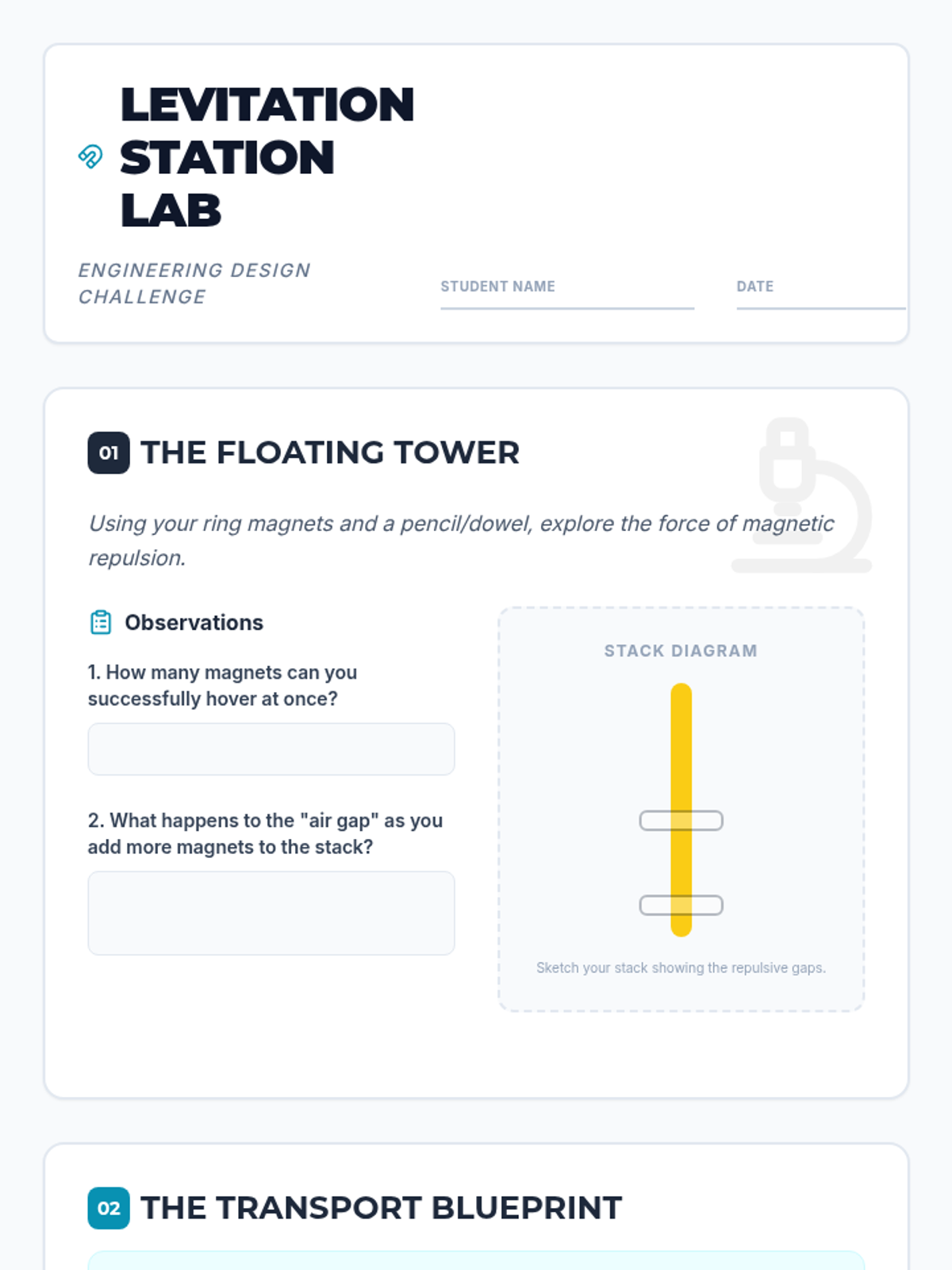
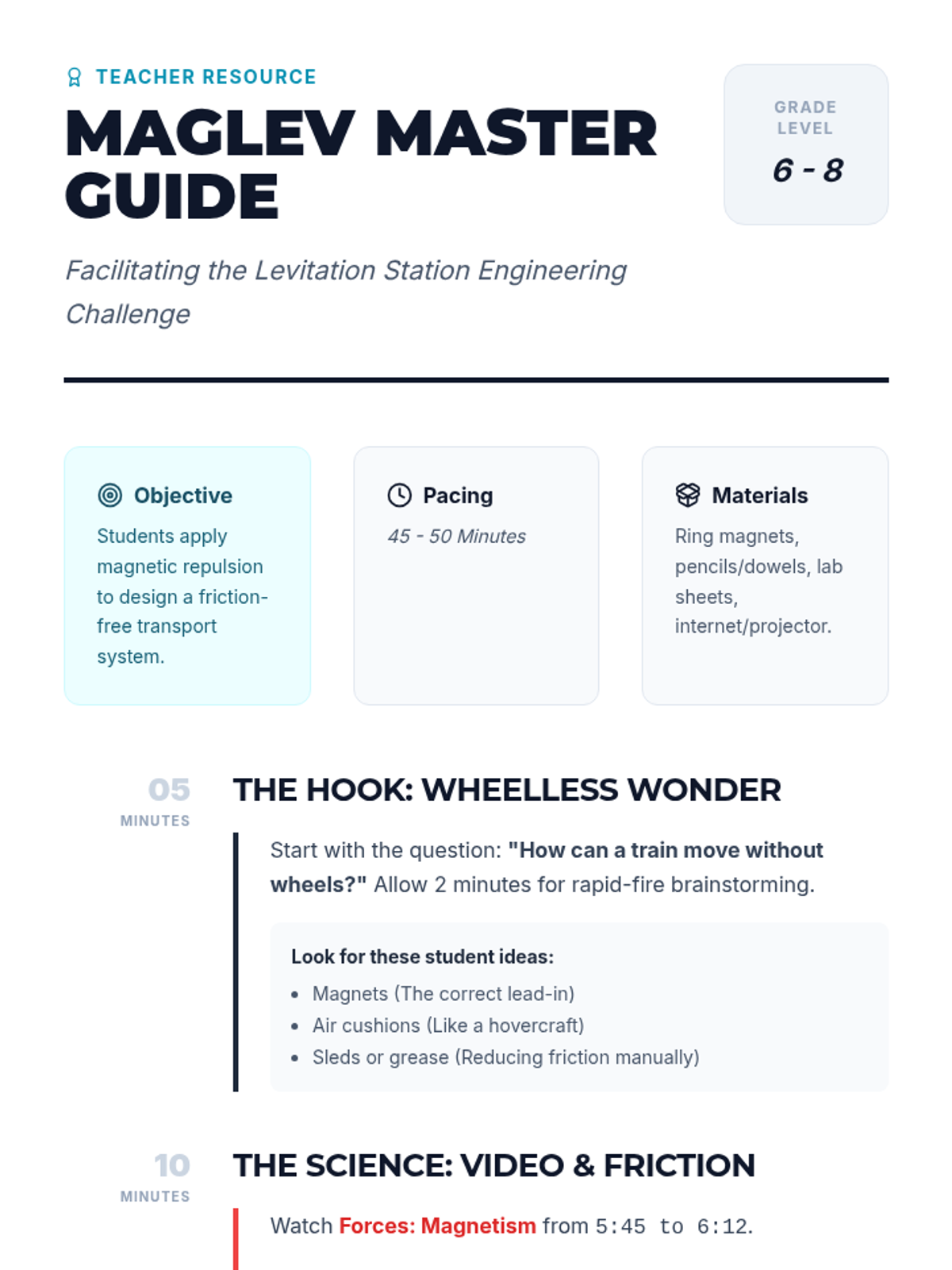
A hands-on engineering lesson where students explore magnetic repulsion and design a friction-free transport system inspired by Maglev technology.
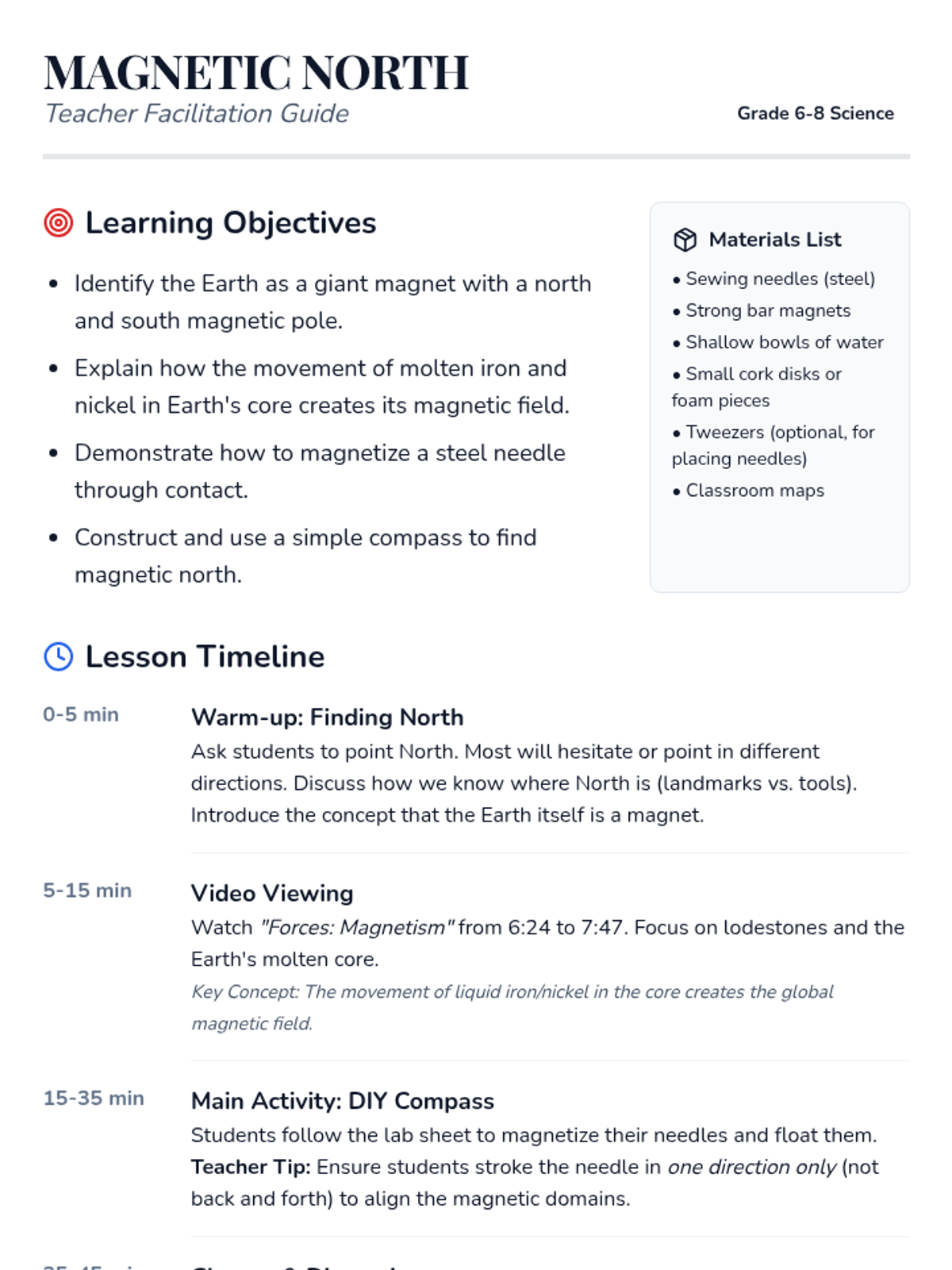
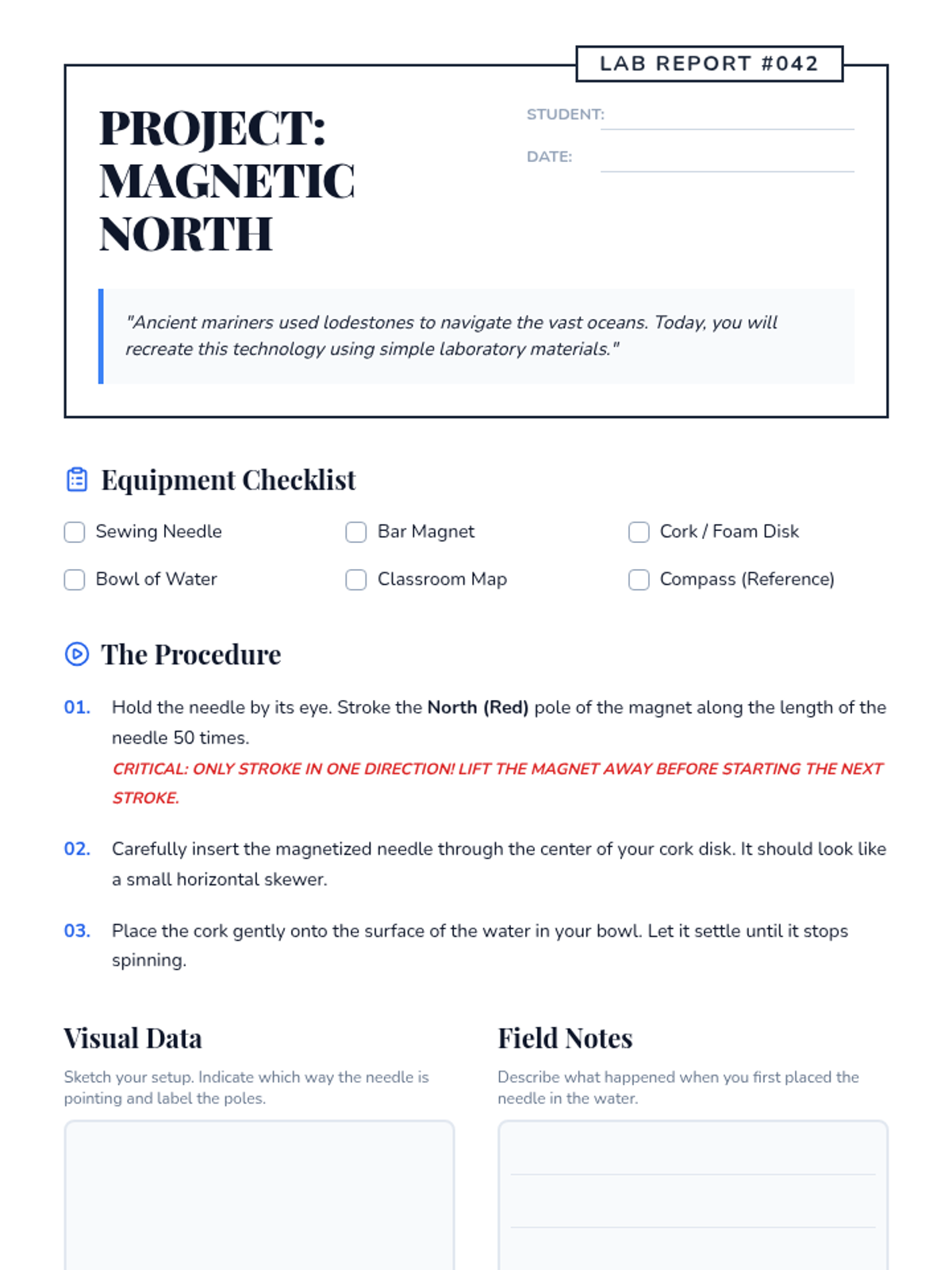
A middle school science lesson exploring Earth's magnetic field through the creation of a DIY compass. Students learn about the molten core of the Earth and the difference between geographic and magnetic north.
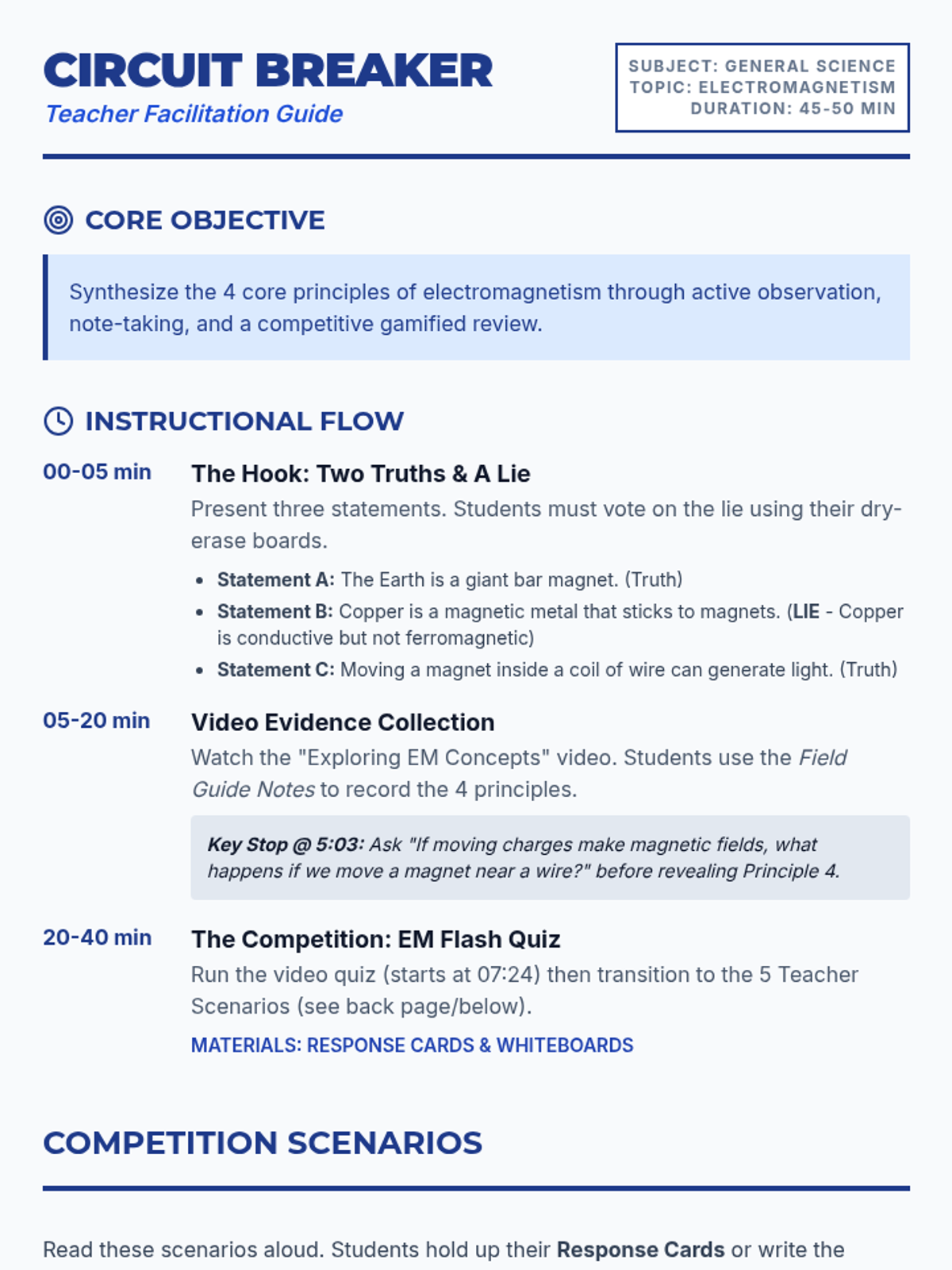
A gamified introductory lesson on electromagnetism where students synthesize four core principles using video evidence and a competitive scenario-based quiz. Students explore the historical context of James Maxwell and real-world applications from Earth's magnetosphere to audio technology.
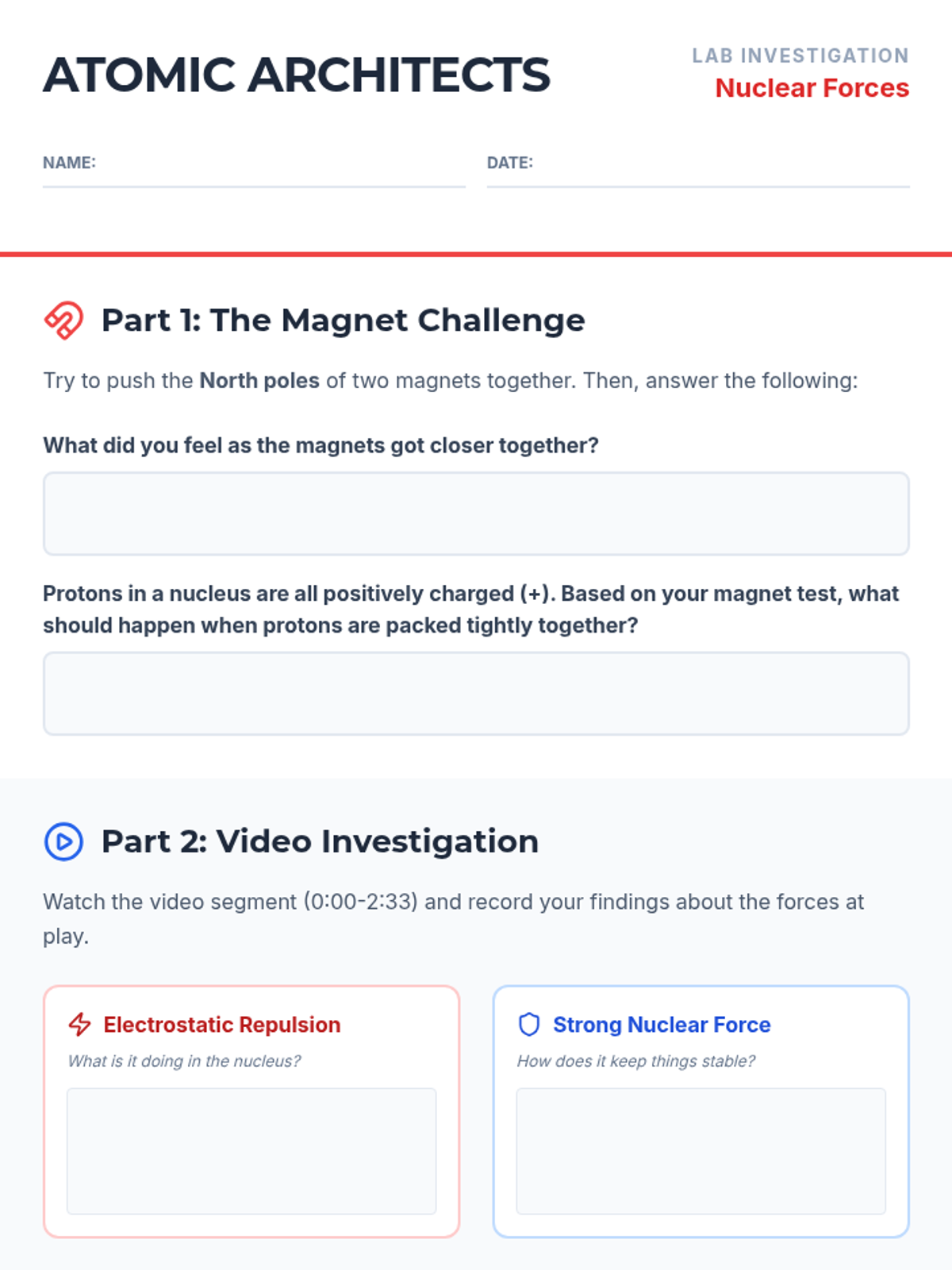
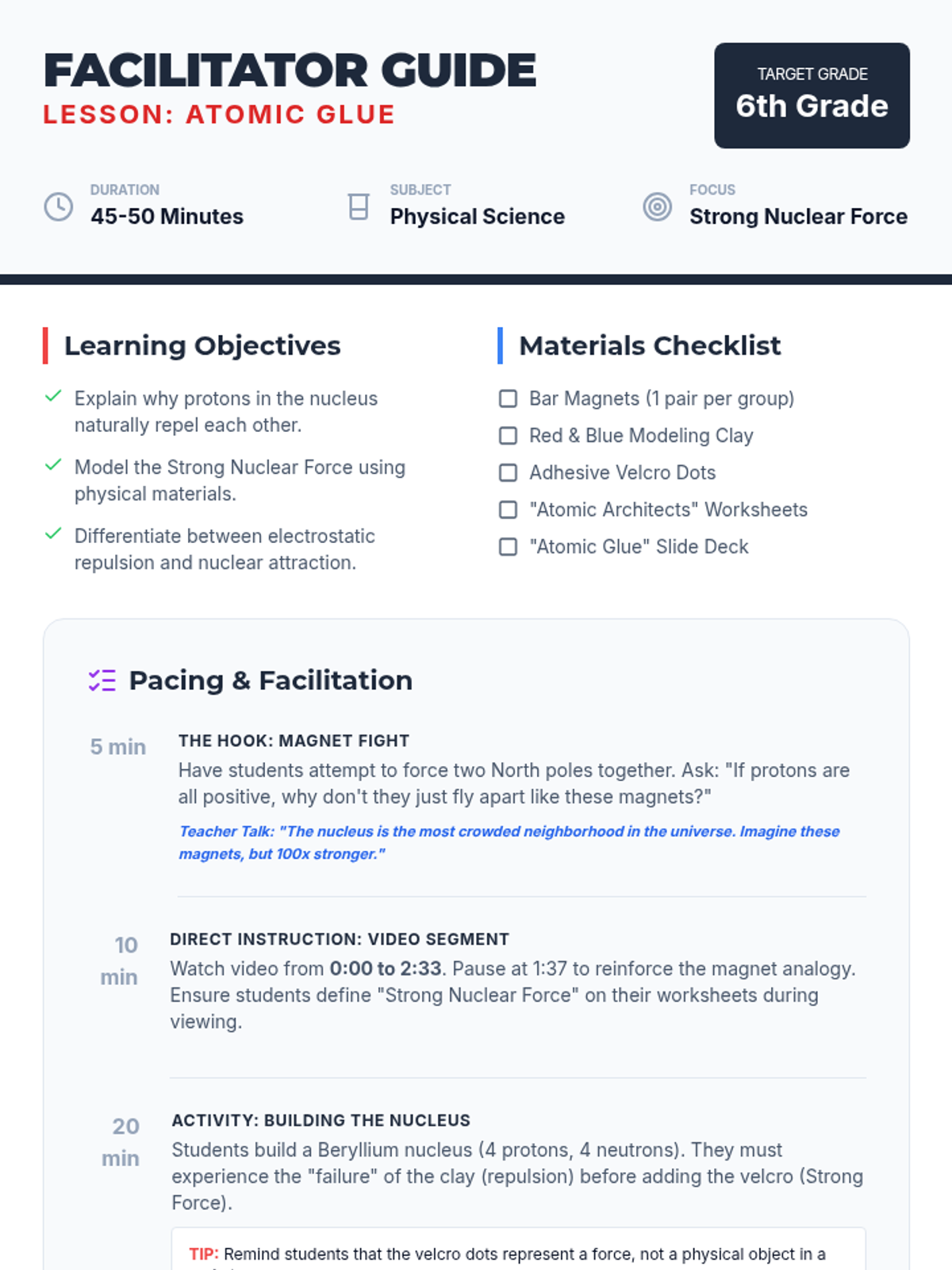
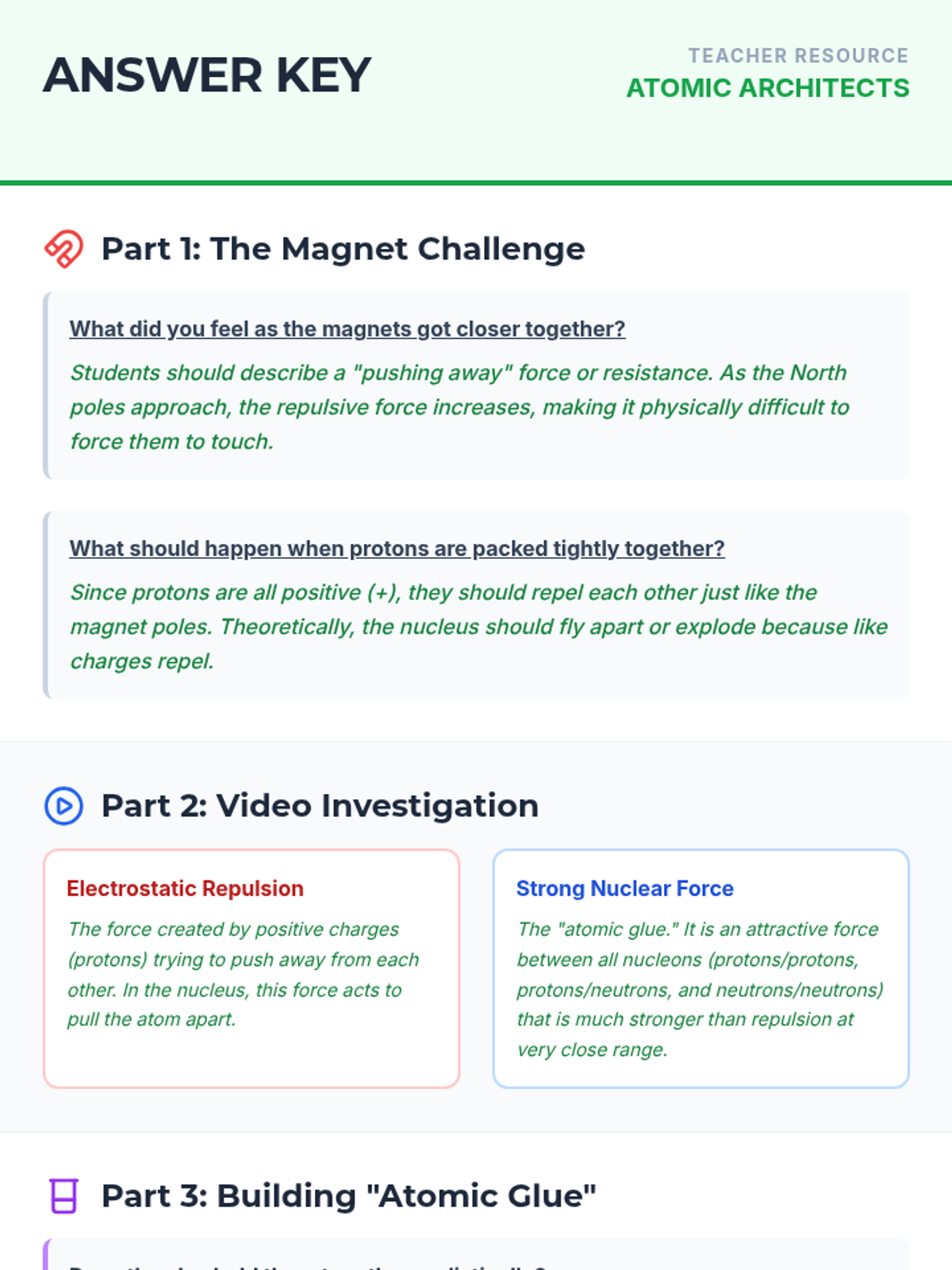
Students explore the internal structure of the atom, focusing on why the nucleus stays together despite electrostatic repulsion. This lesson uses magnets, modeling clay, and velcro to simulate the Strong Nuclear Force and includes a video-based investigation into nuclear physics basics.
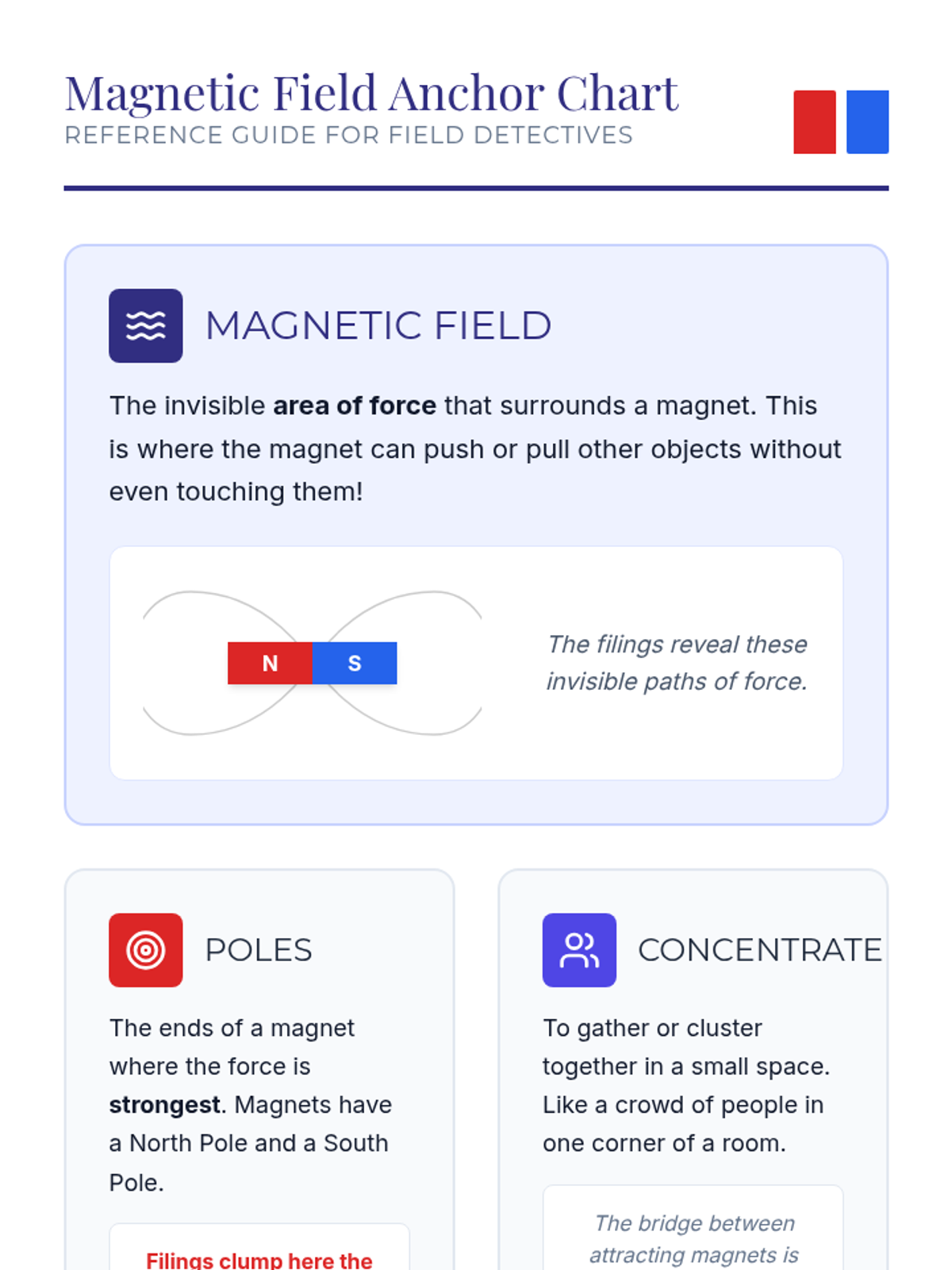
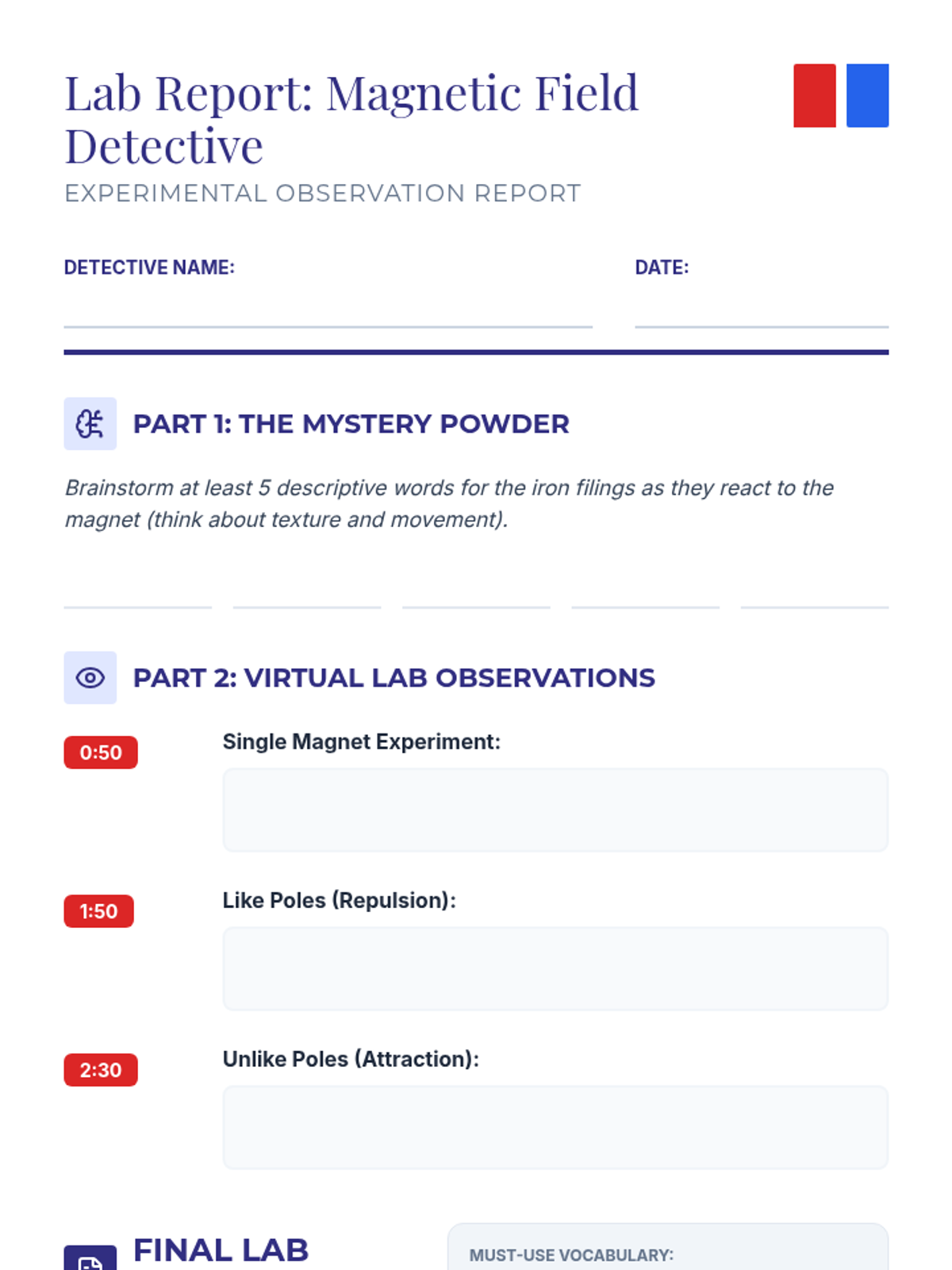
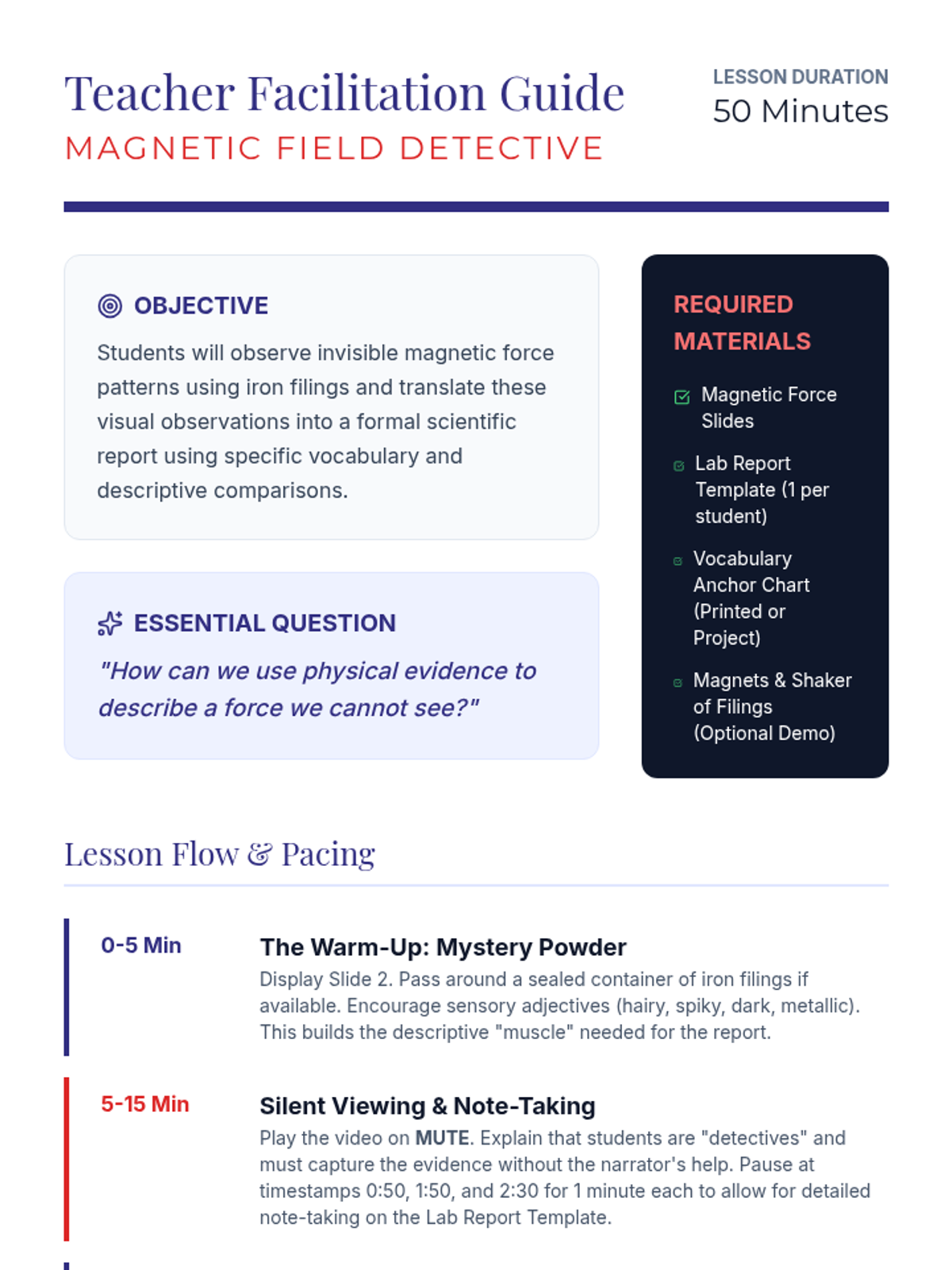
Students observe and document magnetic field patterns using iron filings. They will watch a silent video experiment, take detailed notes, and write a descriptive scientific report using key vocabulary like Magnetic Field, Poles, Repel, and Attract.
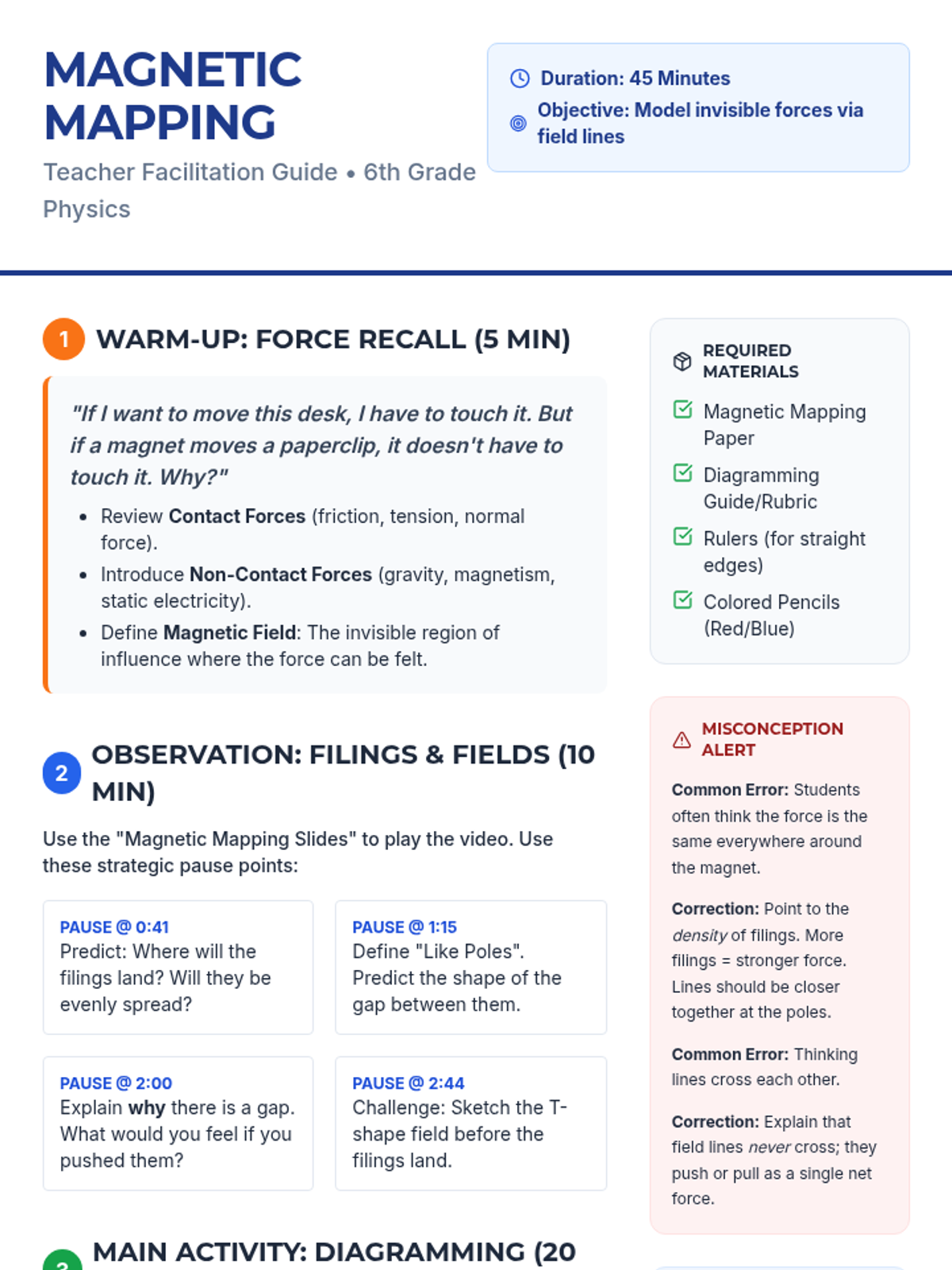
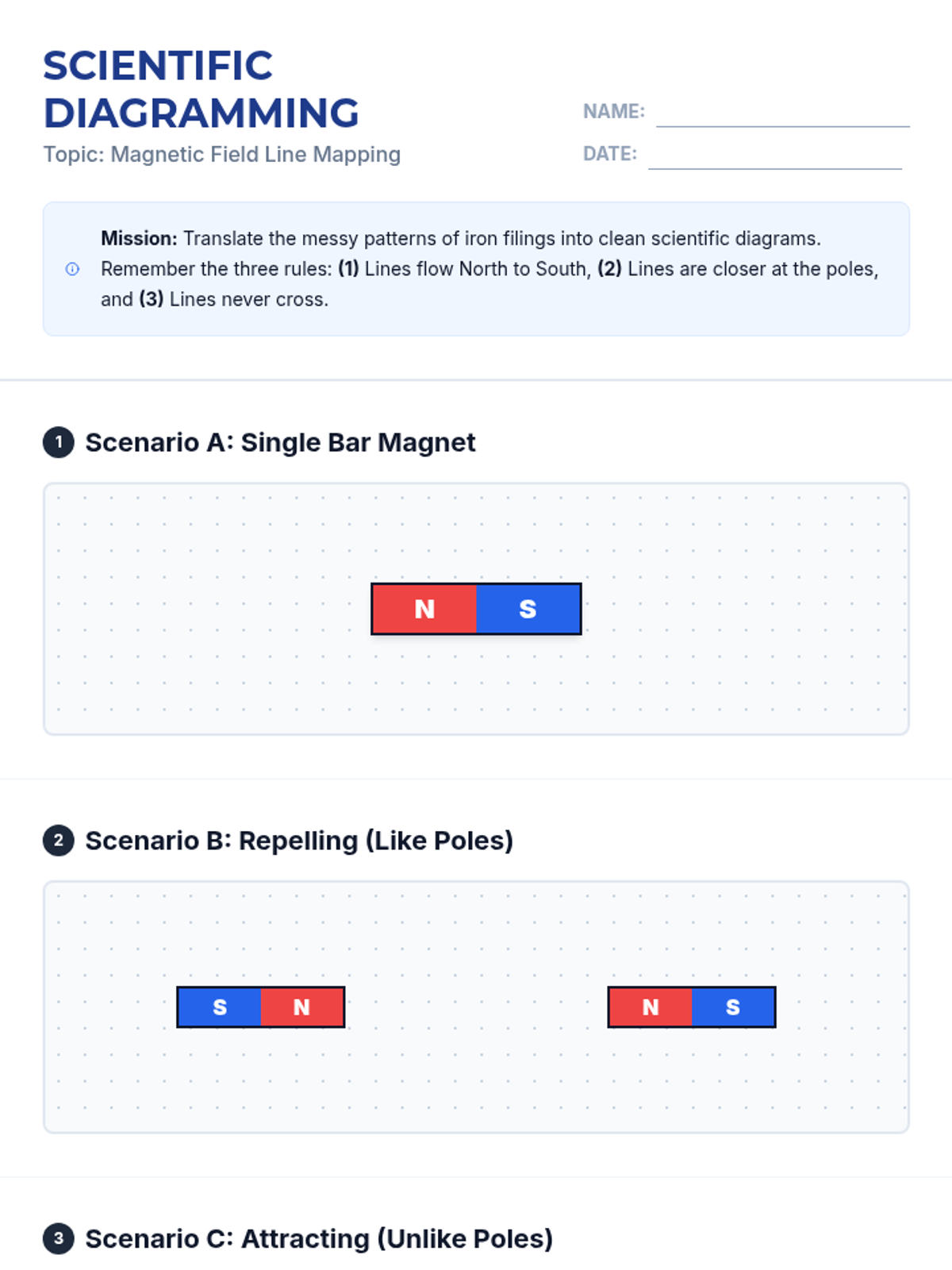
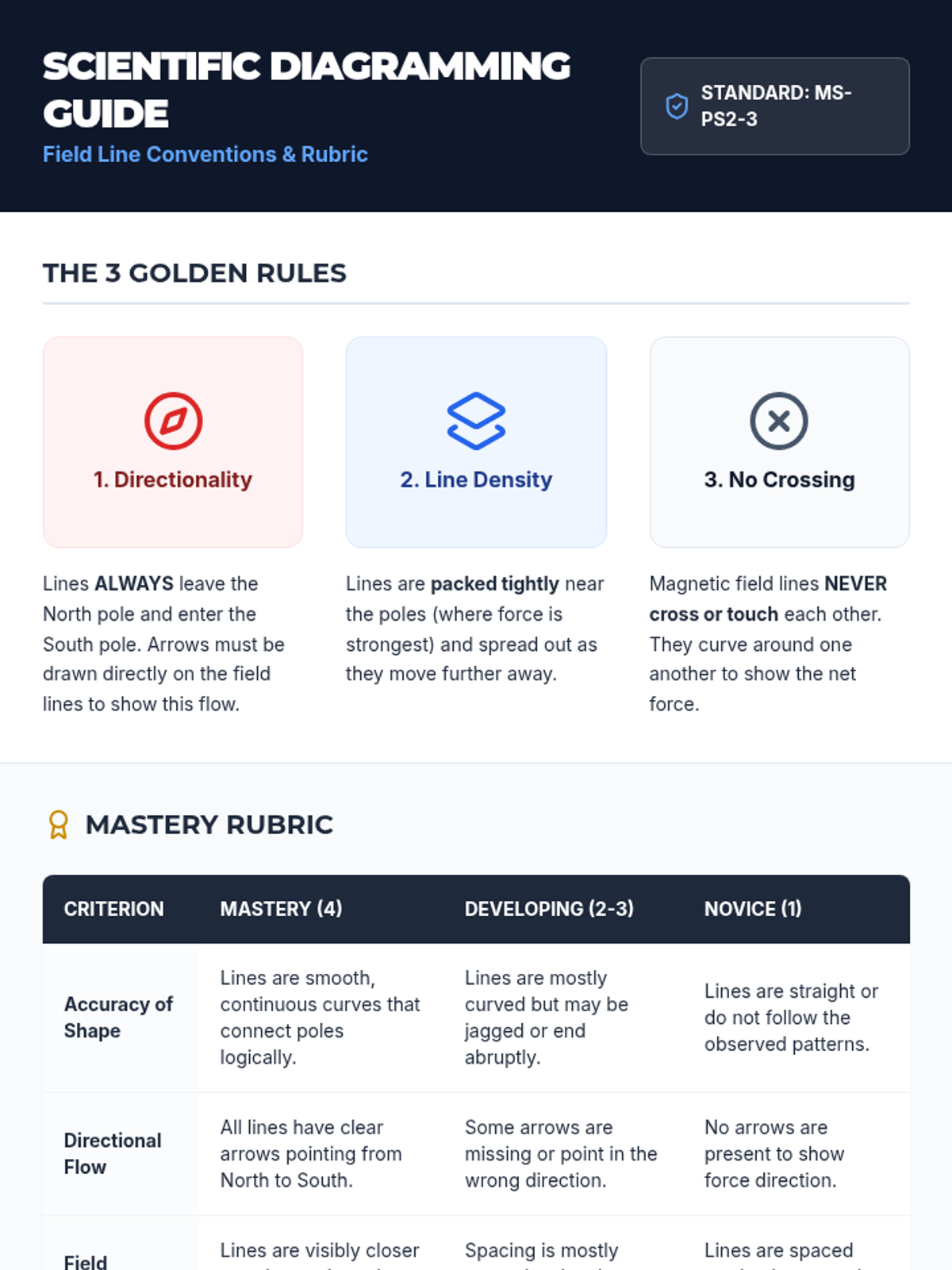
Students observe magnetic field patterns through iron filing demonstrations and learn to translate these observations into formal scientific diagrams using vector arrows and field line conventions.
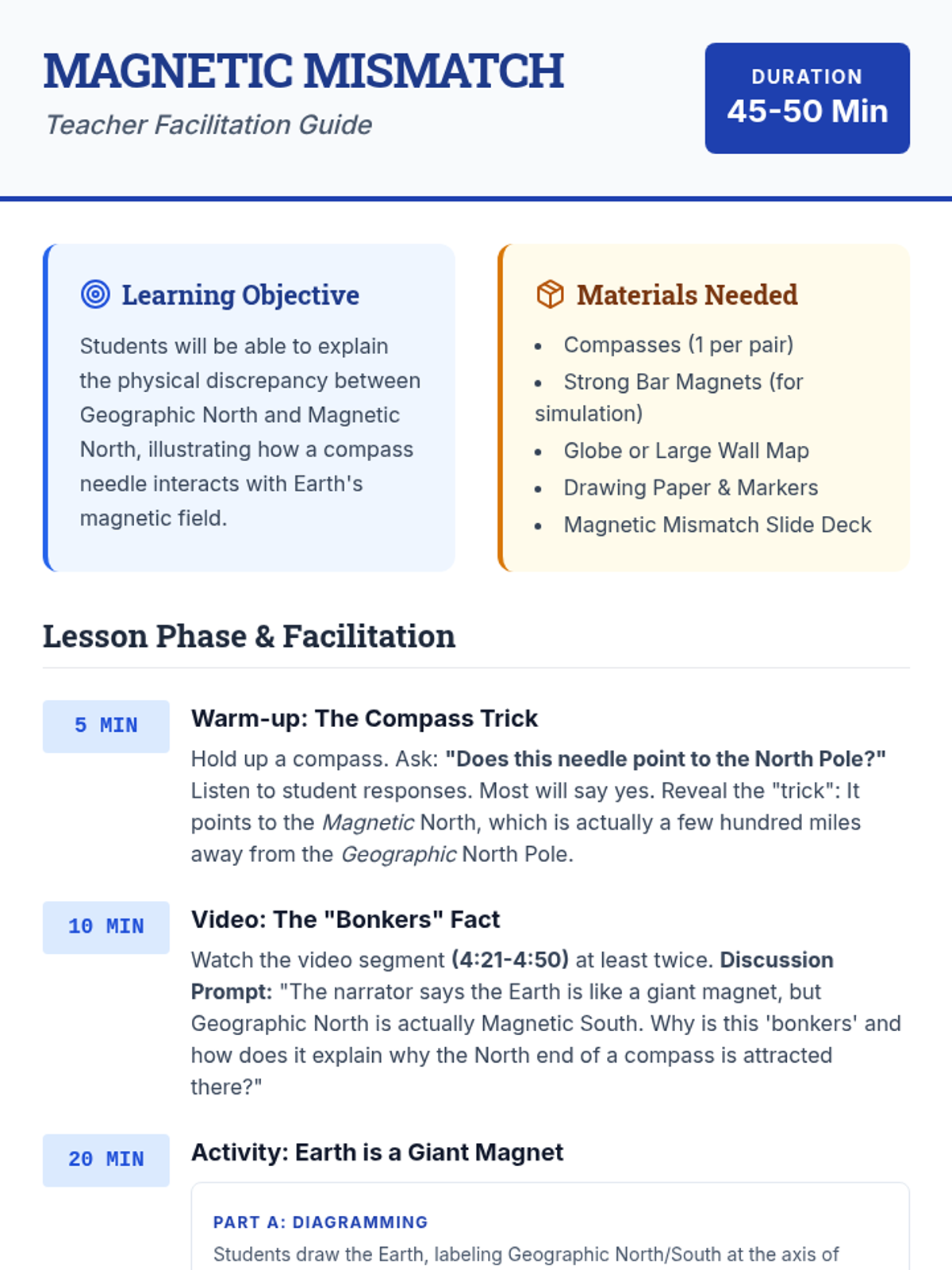
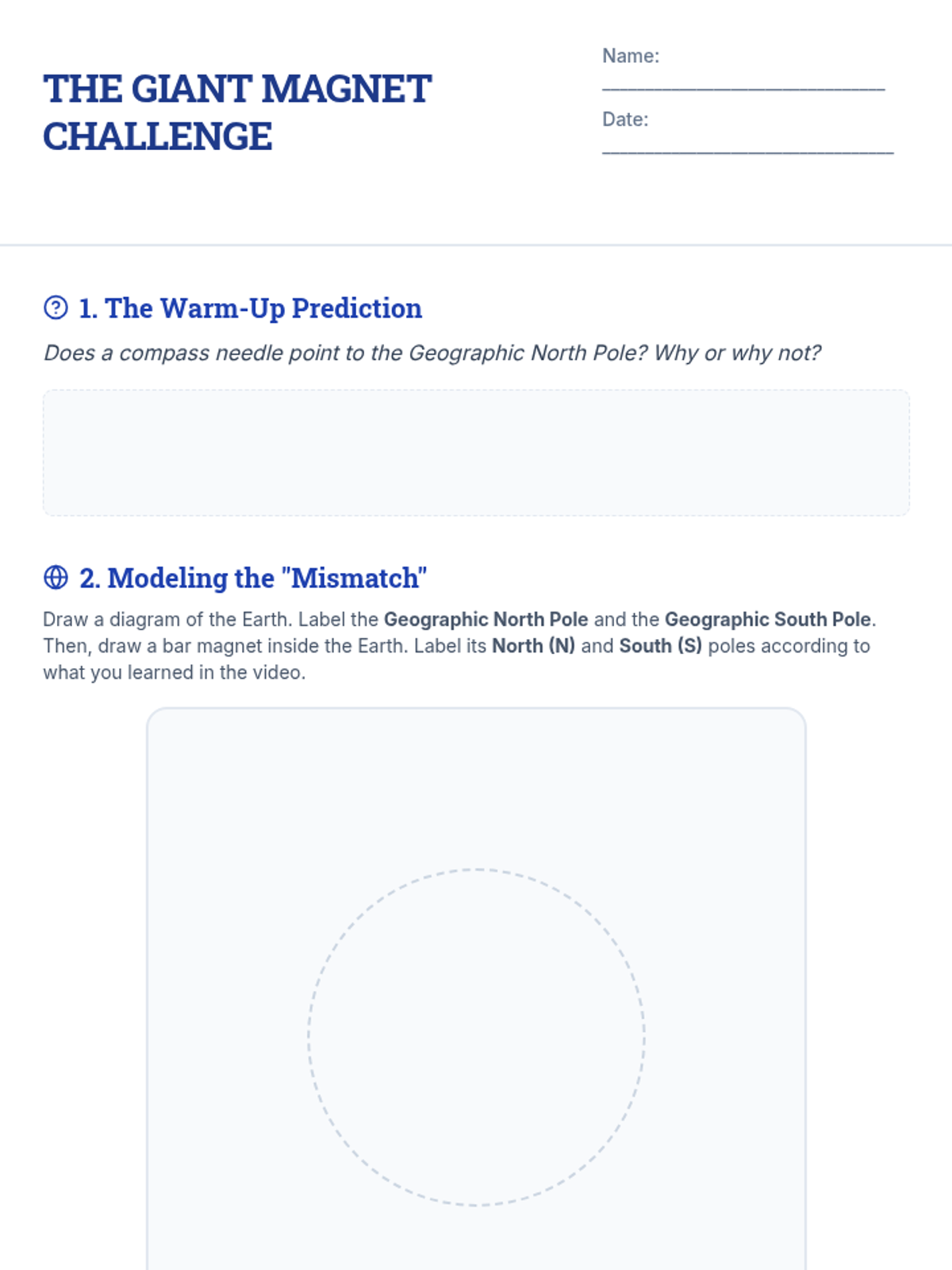
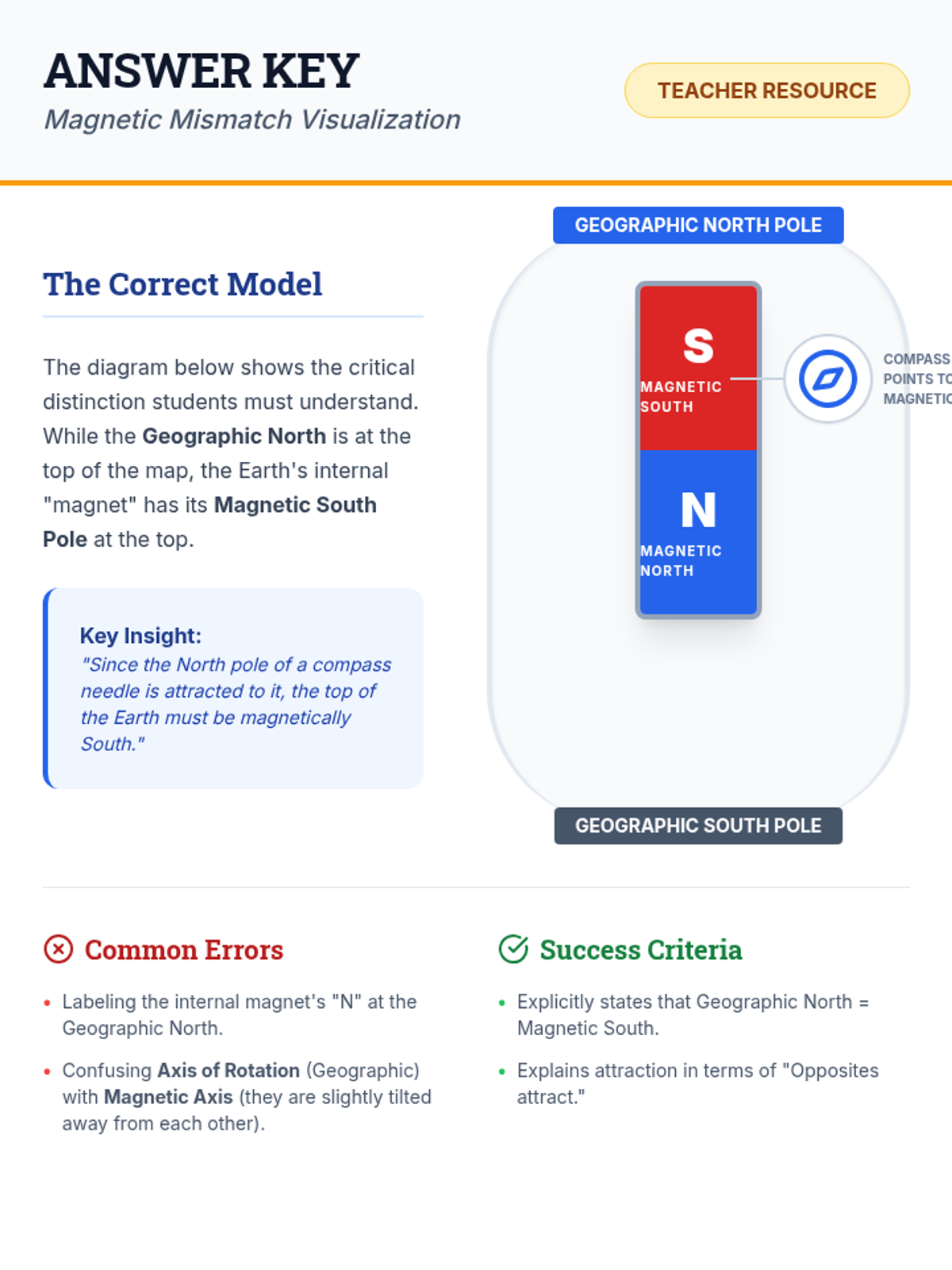
A comprehensive lesson exploring the discrepancy between Earth's geographic and magnetic poles, featuring a video-based discussion and a hands-on navigation simulation.
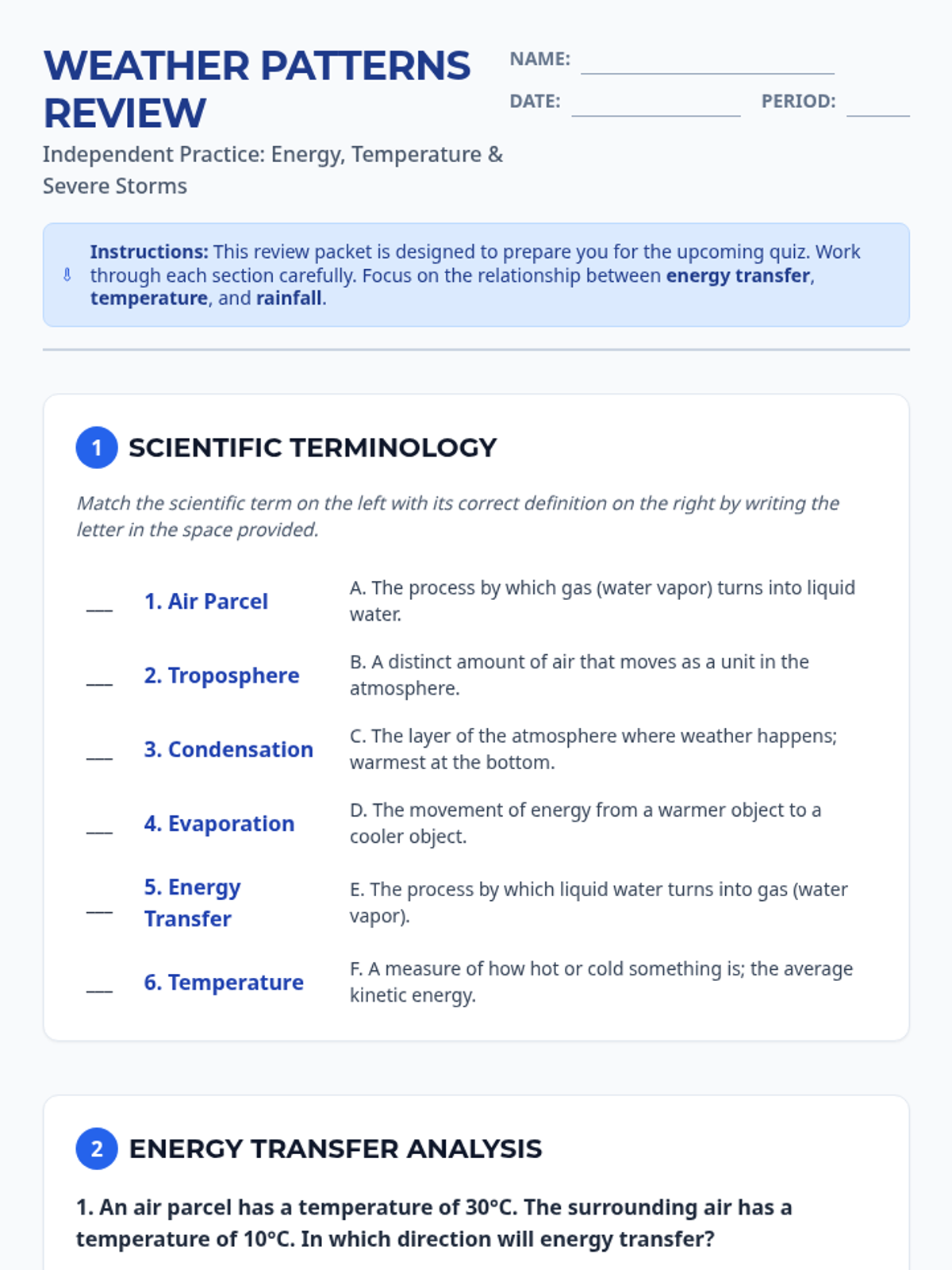
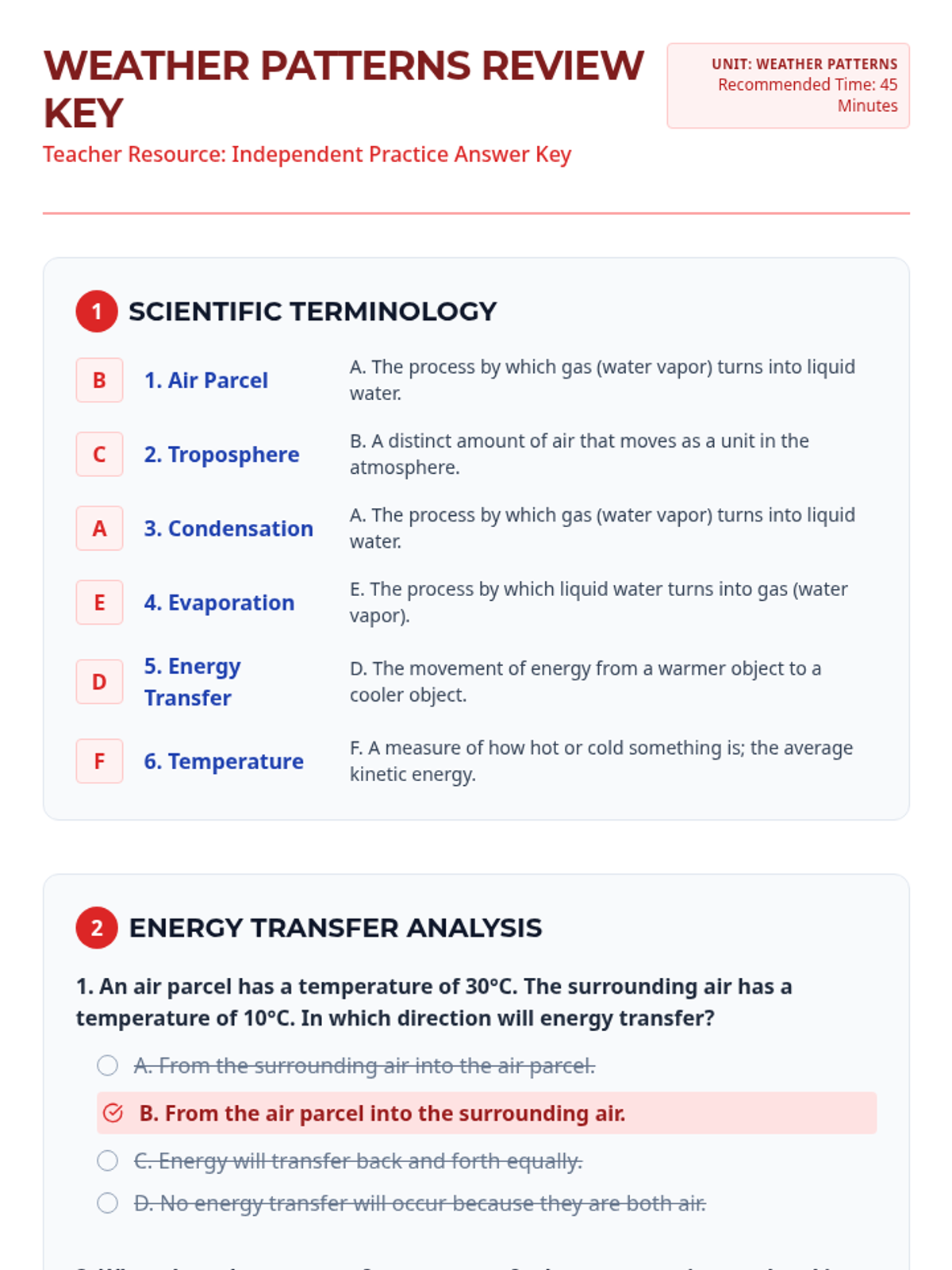
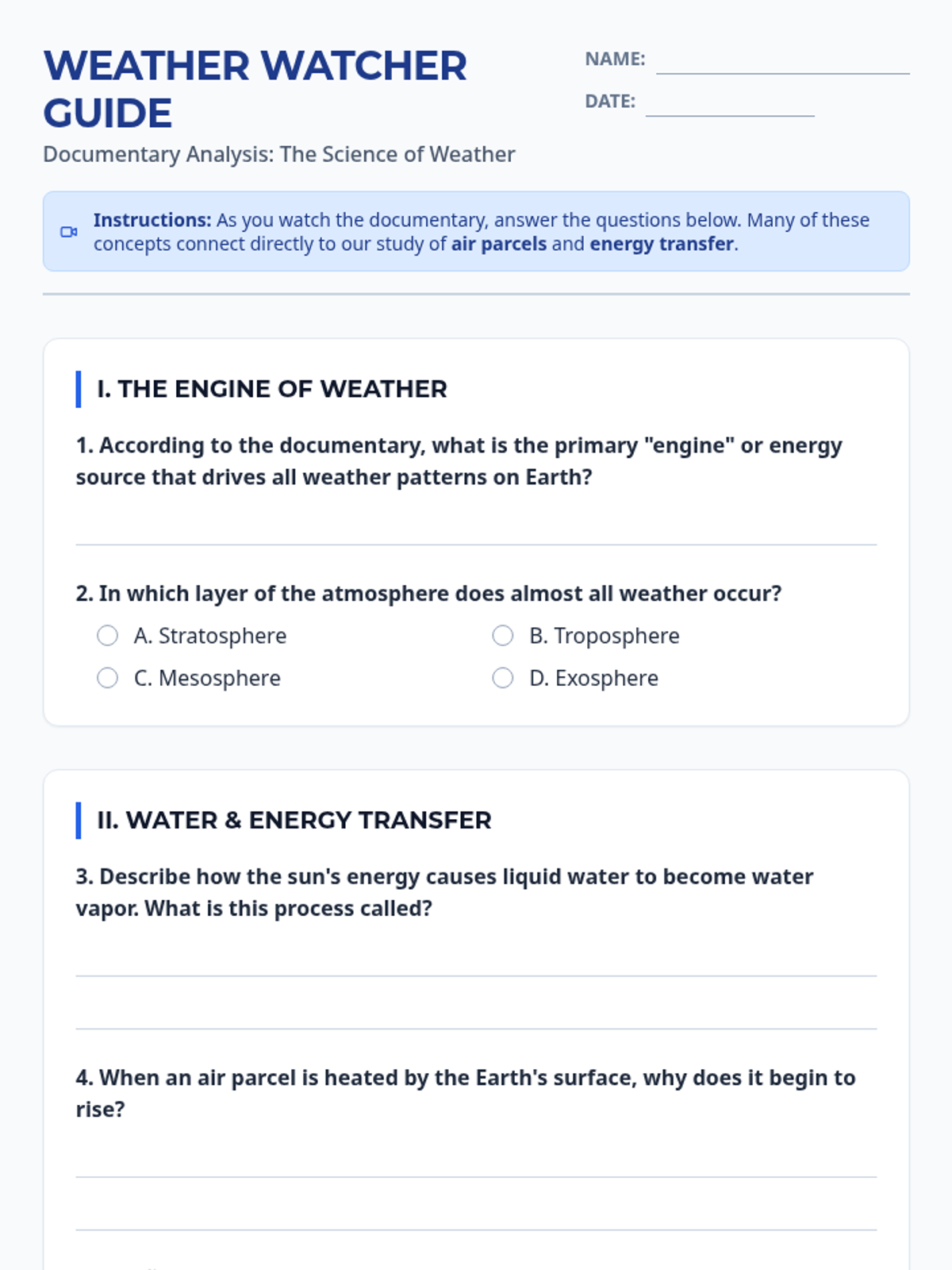
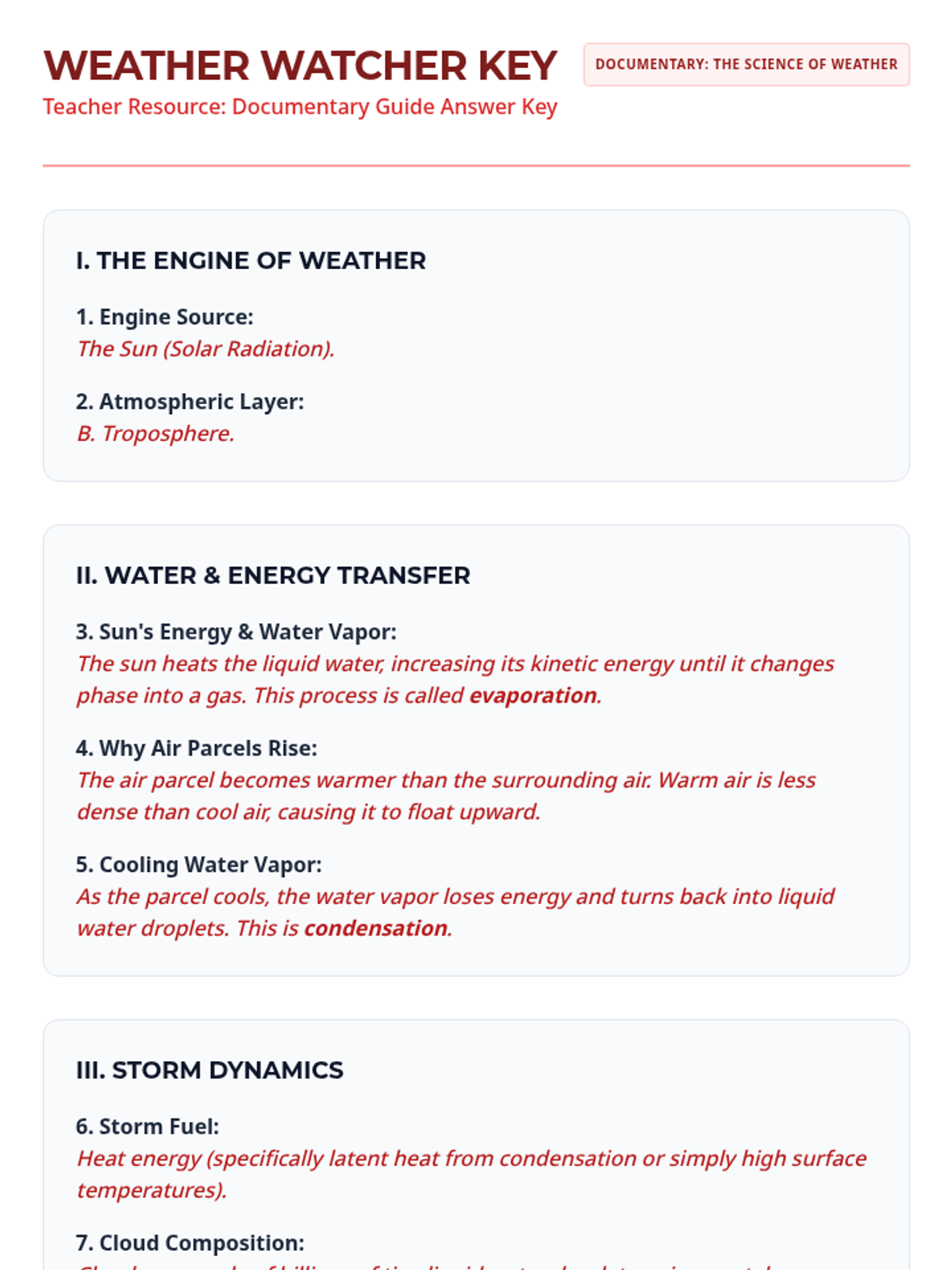
A comprehensive review lesson focused on the mechanics of weather patterns, specifically evaporation, condensation, and the thermodynamics of rising air parcels in the troposphere. Students will engage in vocabulary practice, conceptual multiple-choice questions, and a data-driven CER response to prepare for their unit quiz.
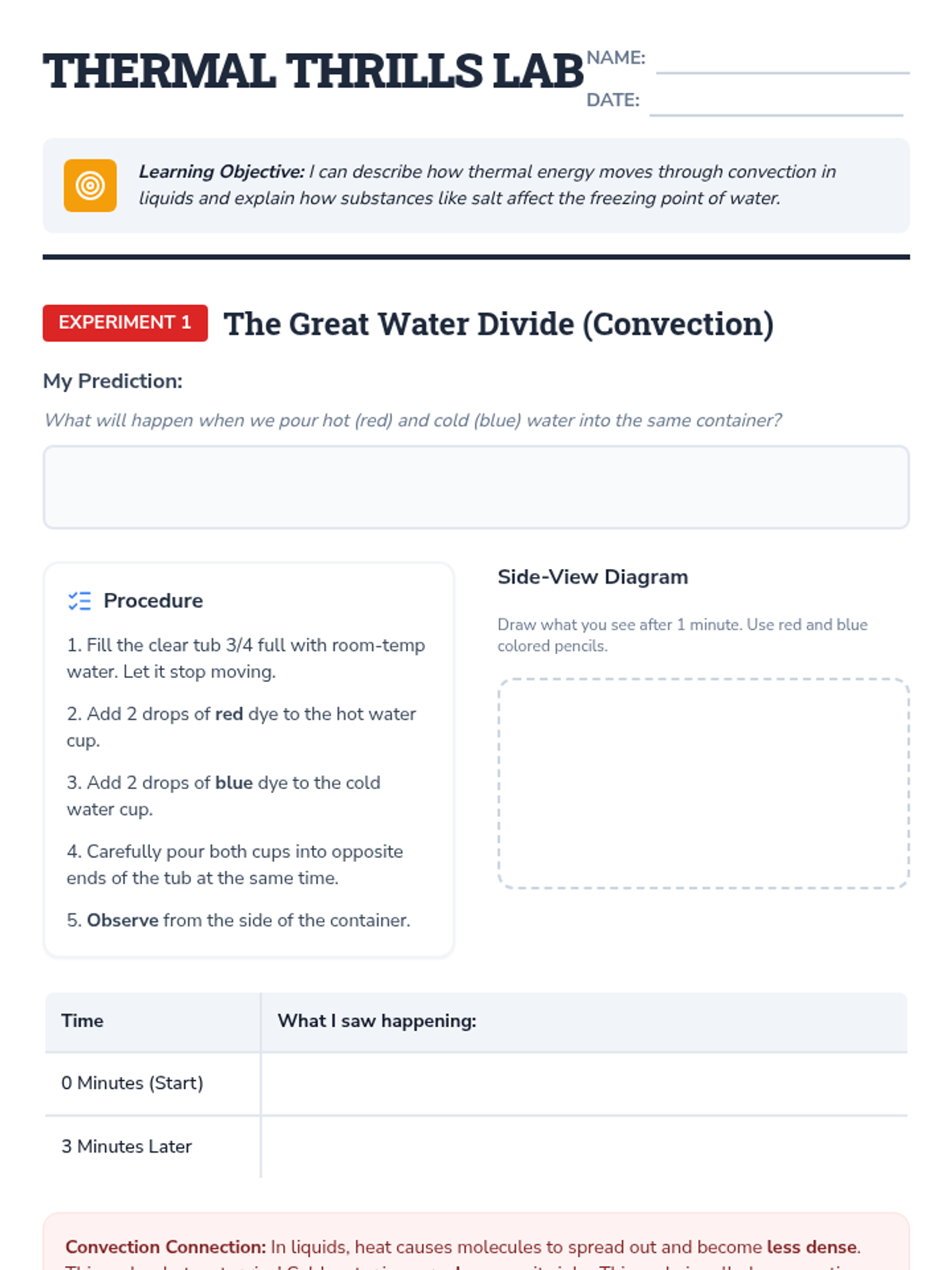
A hands-on exploration of thermal energy transfer through convection and freezing point depression experiments. Students observe how density and temperature interact in water and how salt affects the melting process of ice.
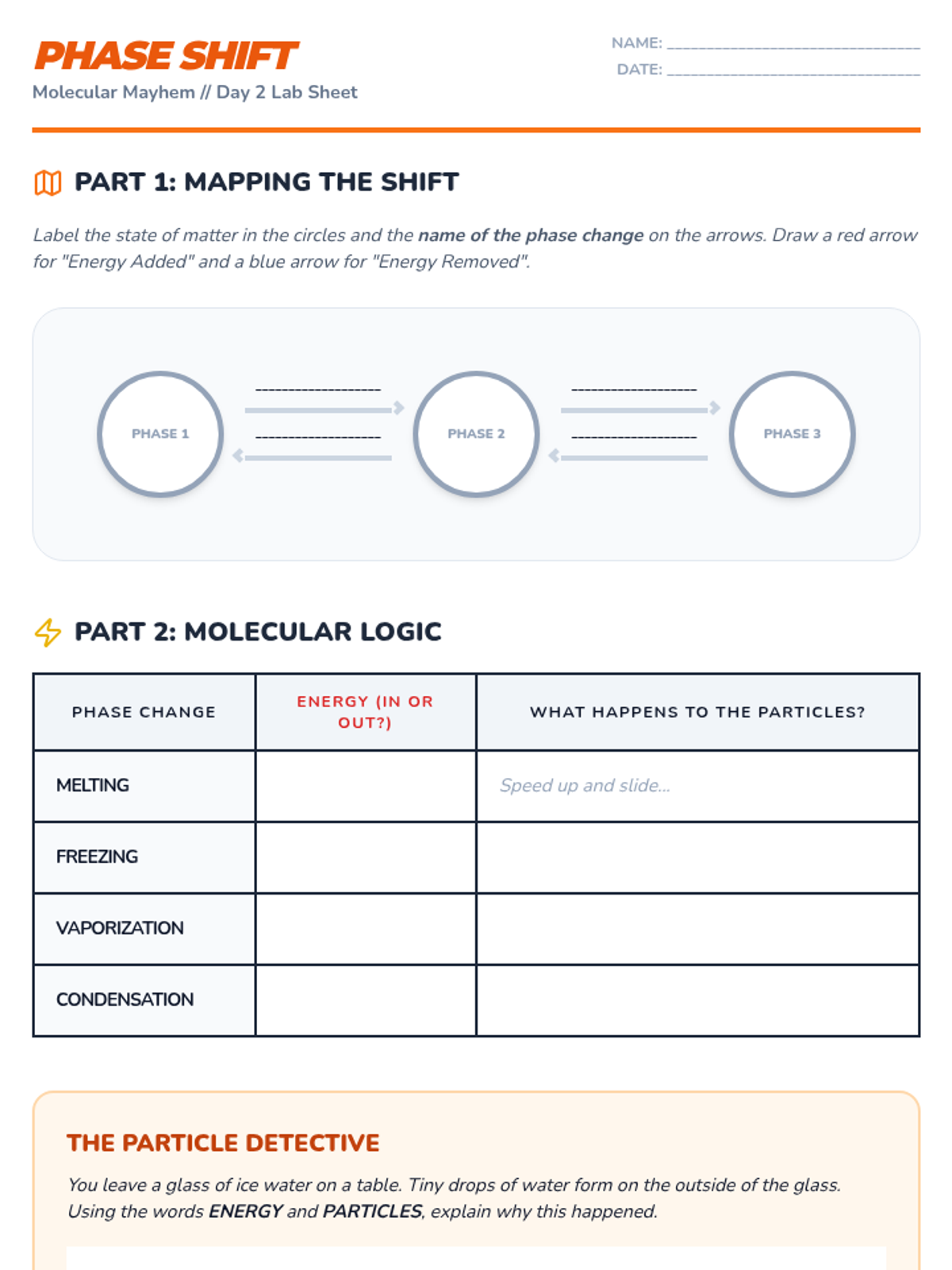
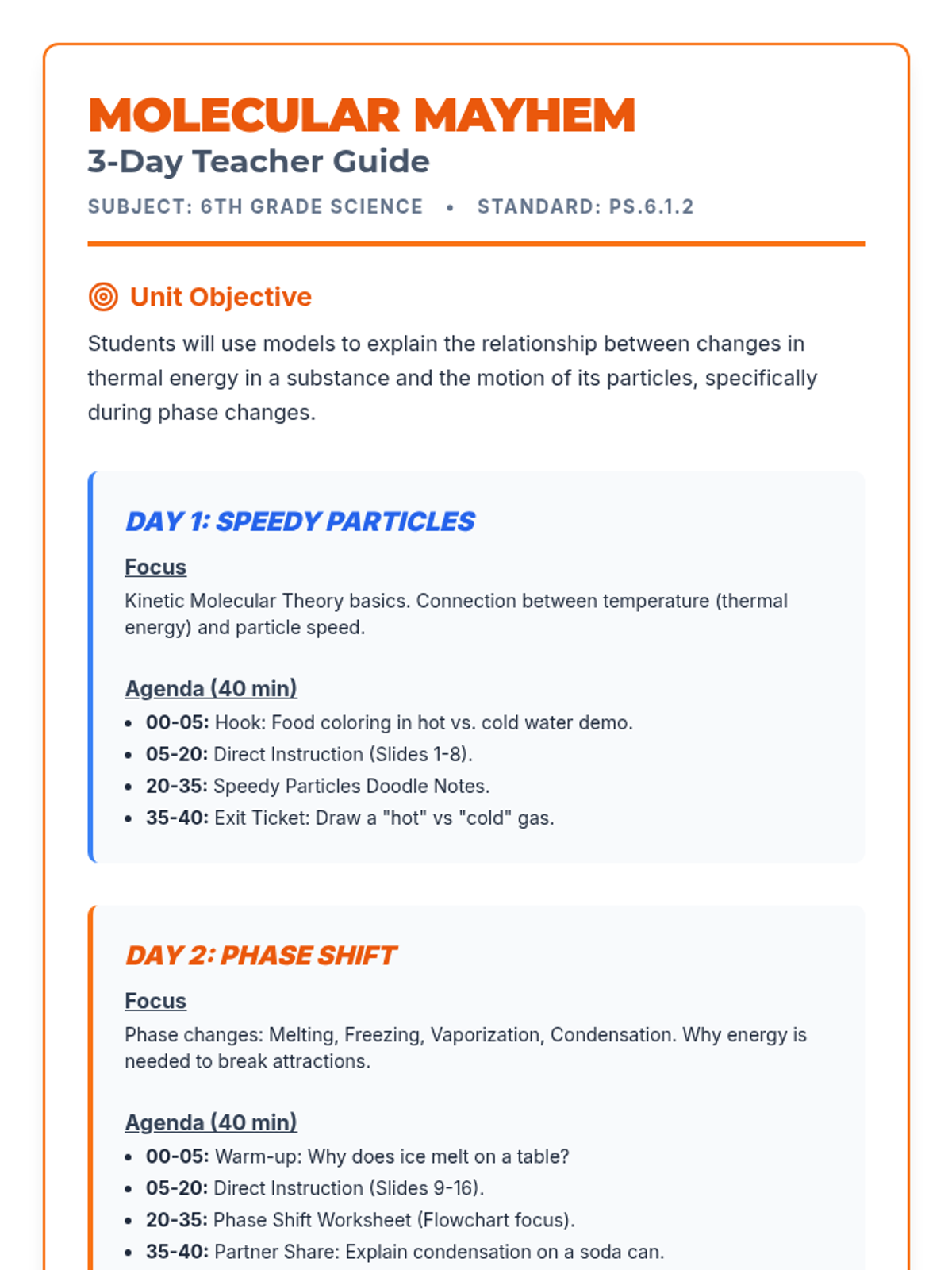
Day 2 focuses on phase changes, specifically how energy is used to break or form attractions between particles during transitions like melting and boiling.
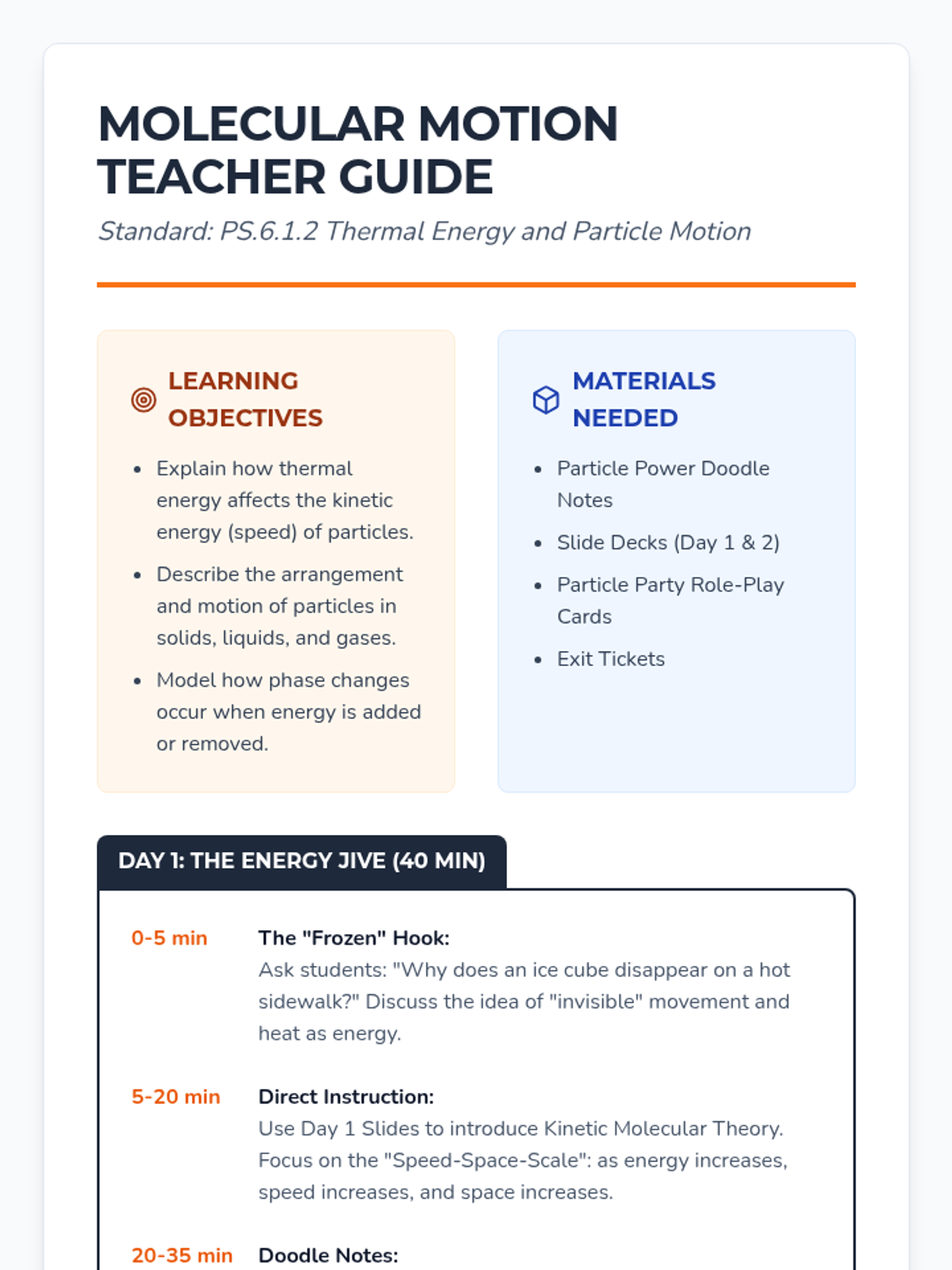
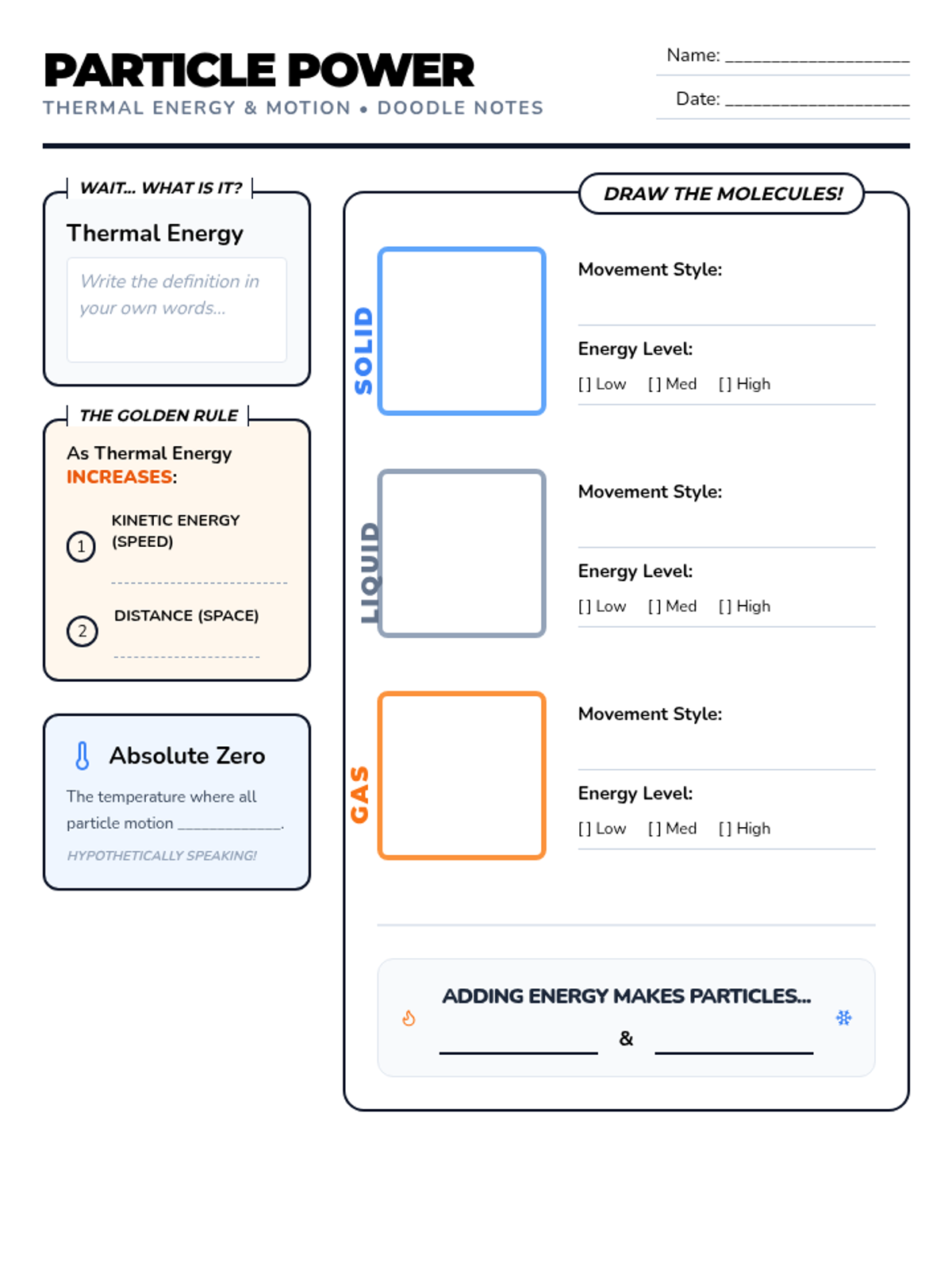
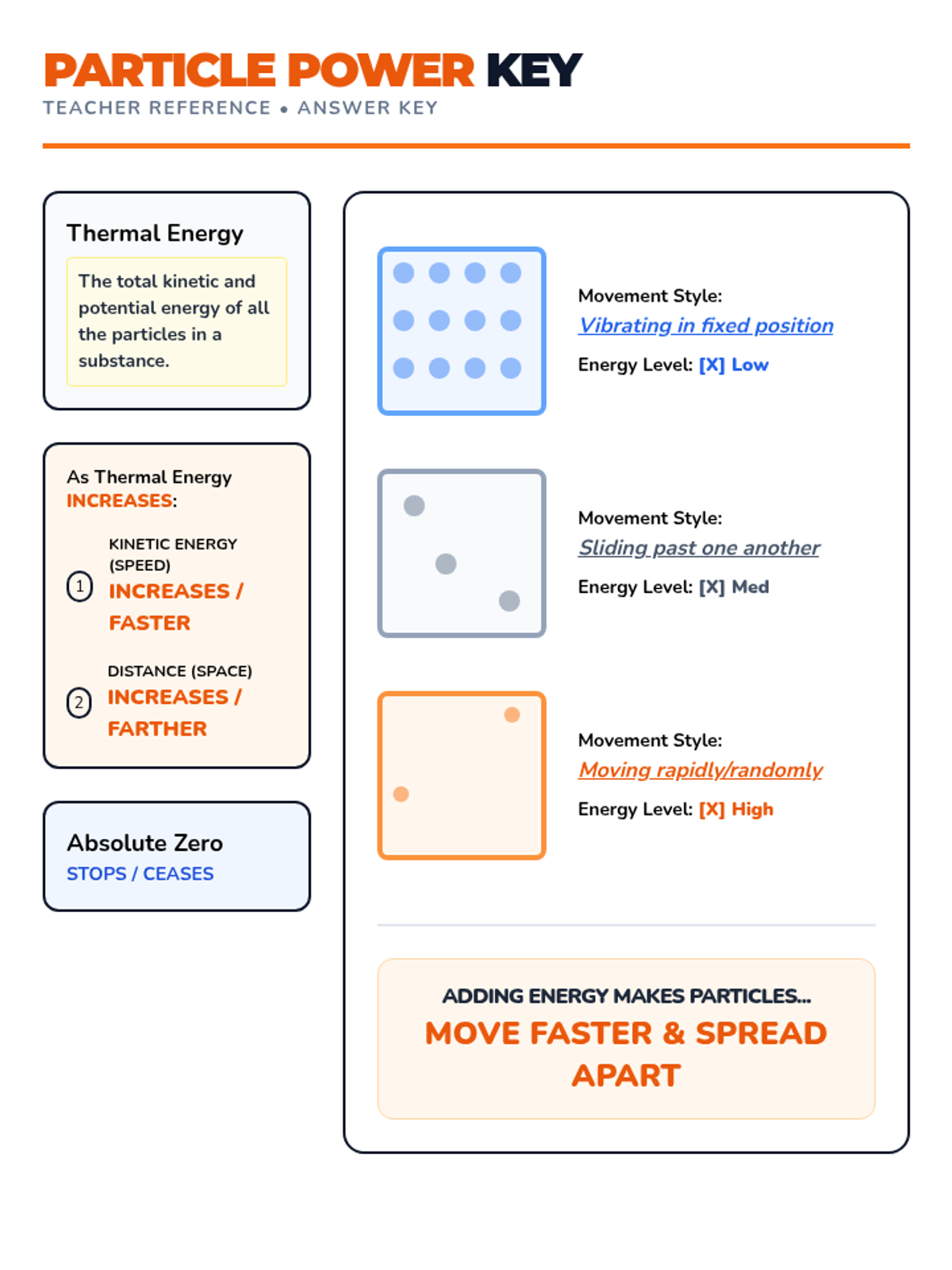
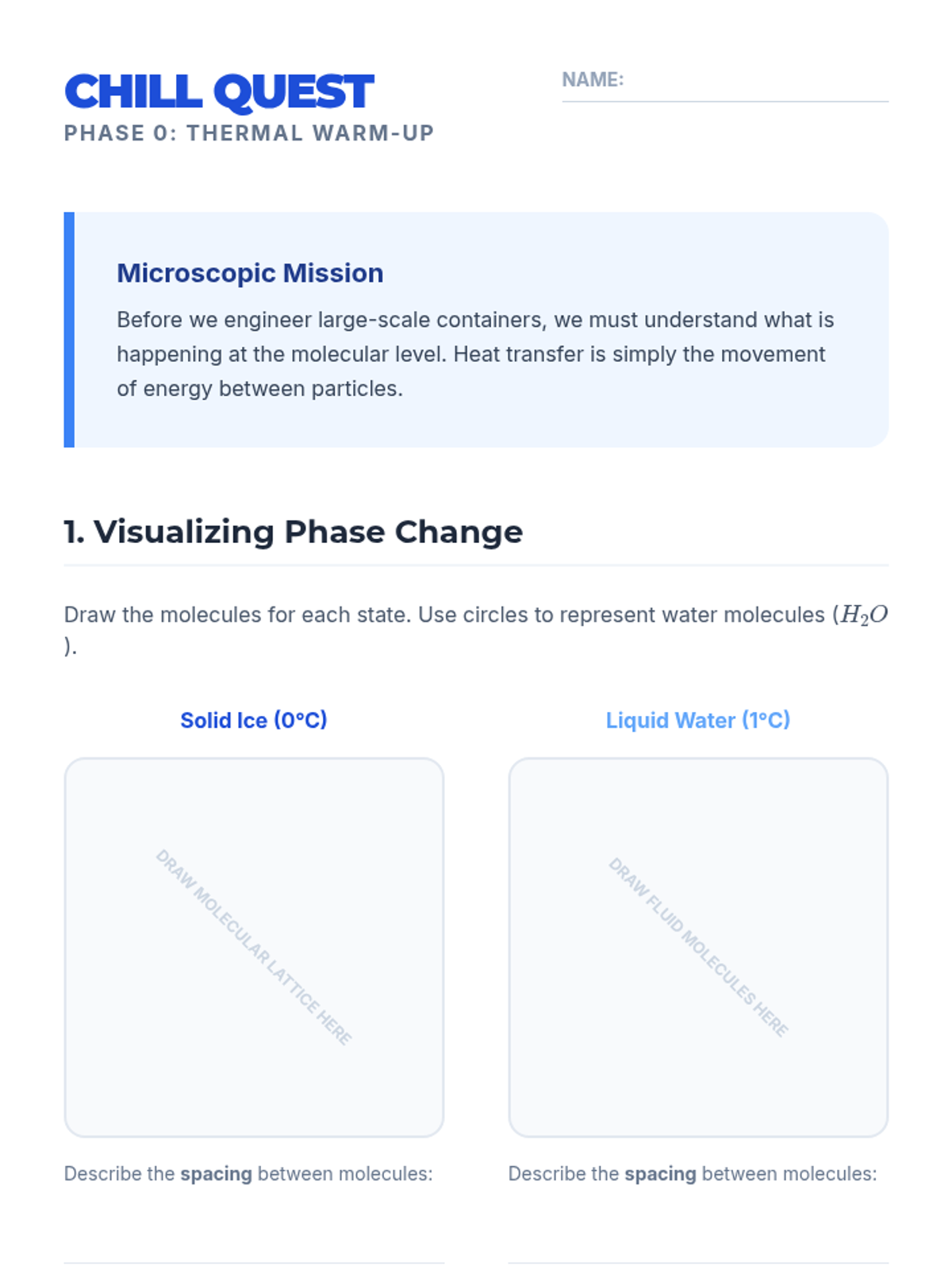
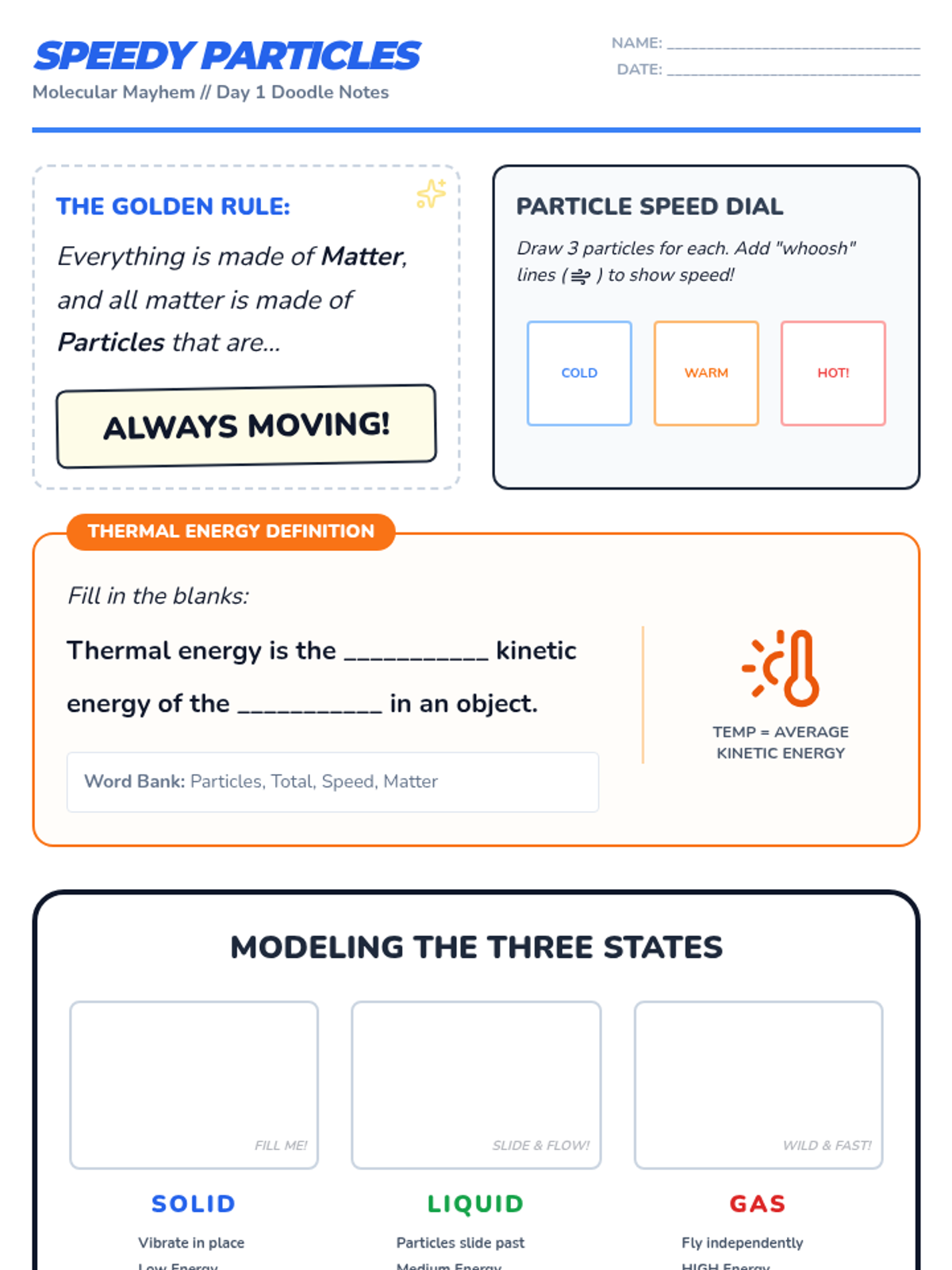
Day 1 focuses on the Kinetic Molecular Theory, exploring how adding or removing thermal energy changes the speed and spacing of particles in solids, liquids, and gases.
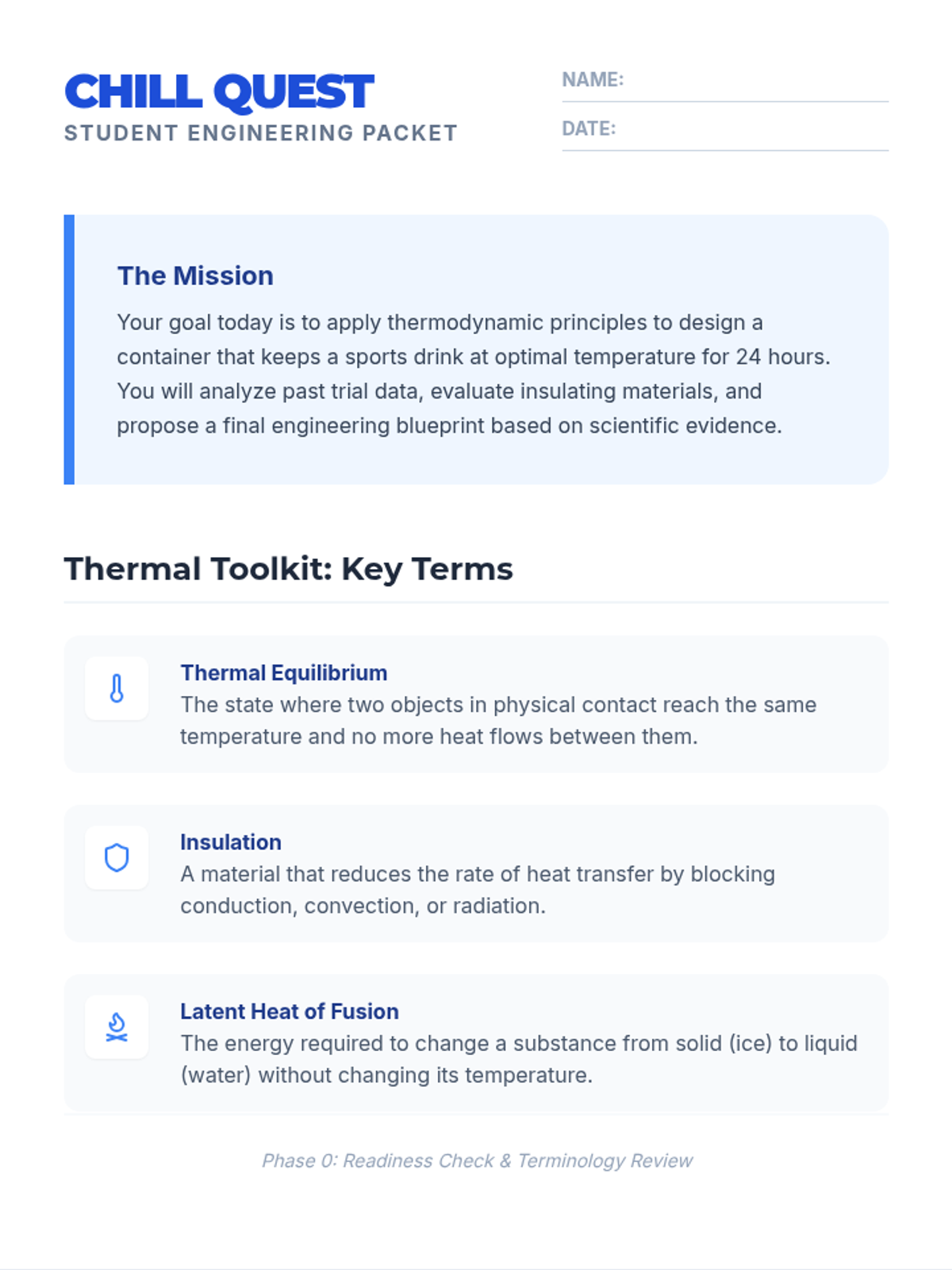
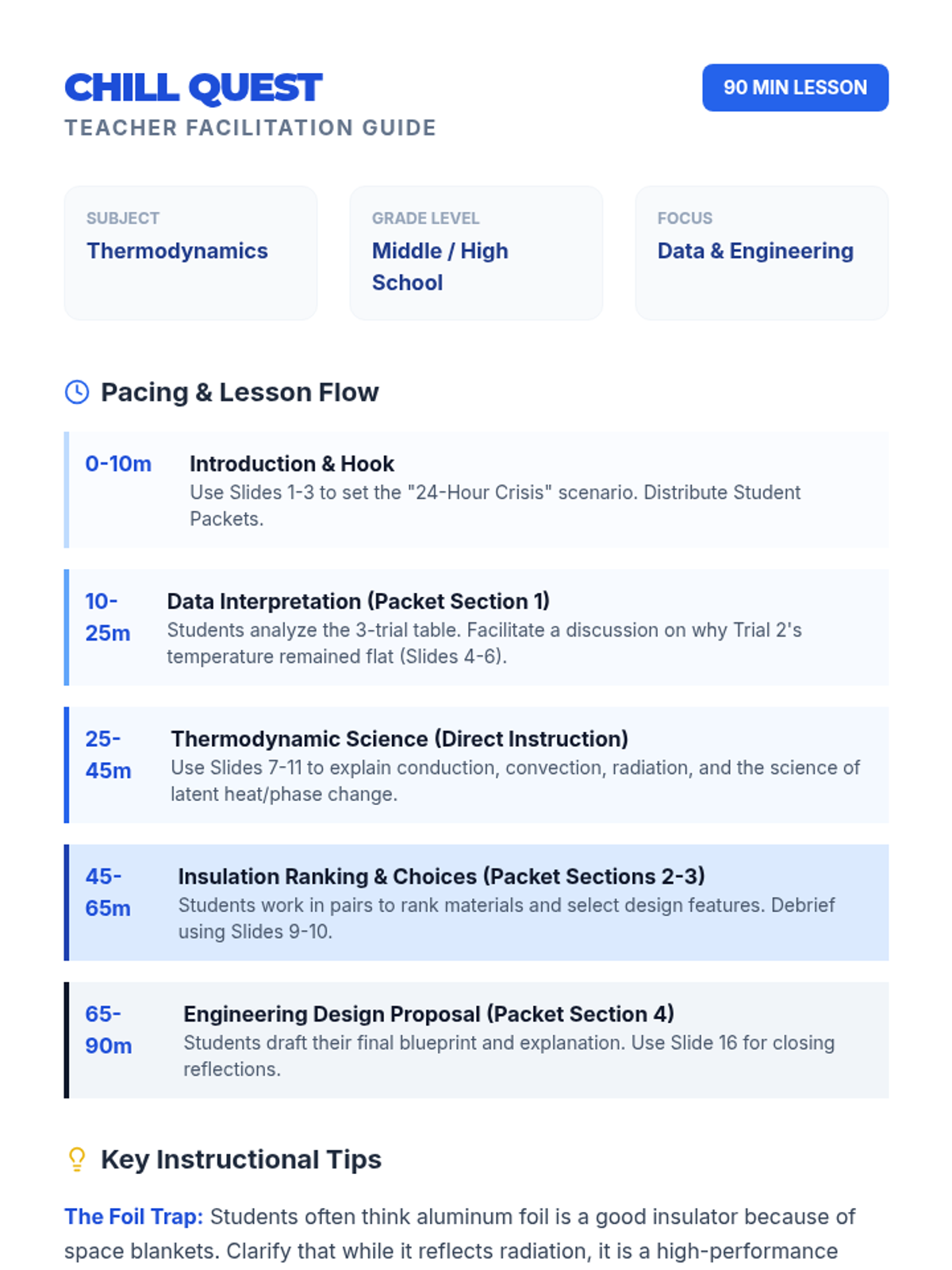
A comprehensive 90-minute engineering and science lesson focusing on heat transfer, insulation materials, and data-driven design to keep beverages cold. Students analyze temperature data, rank insulating materials, and propose their own container designs.
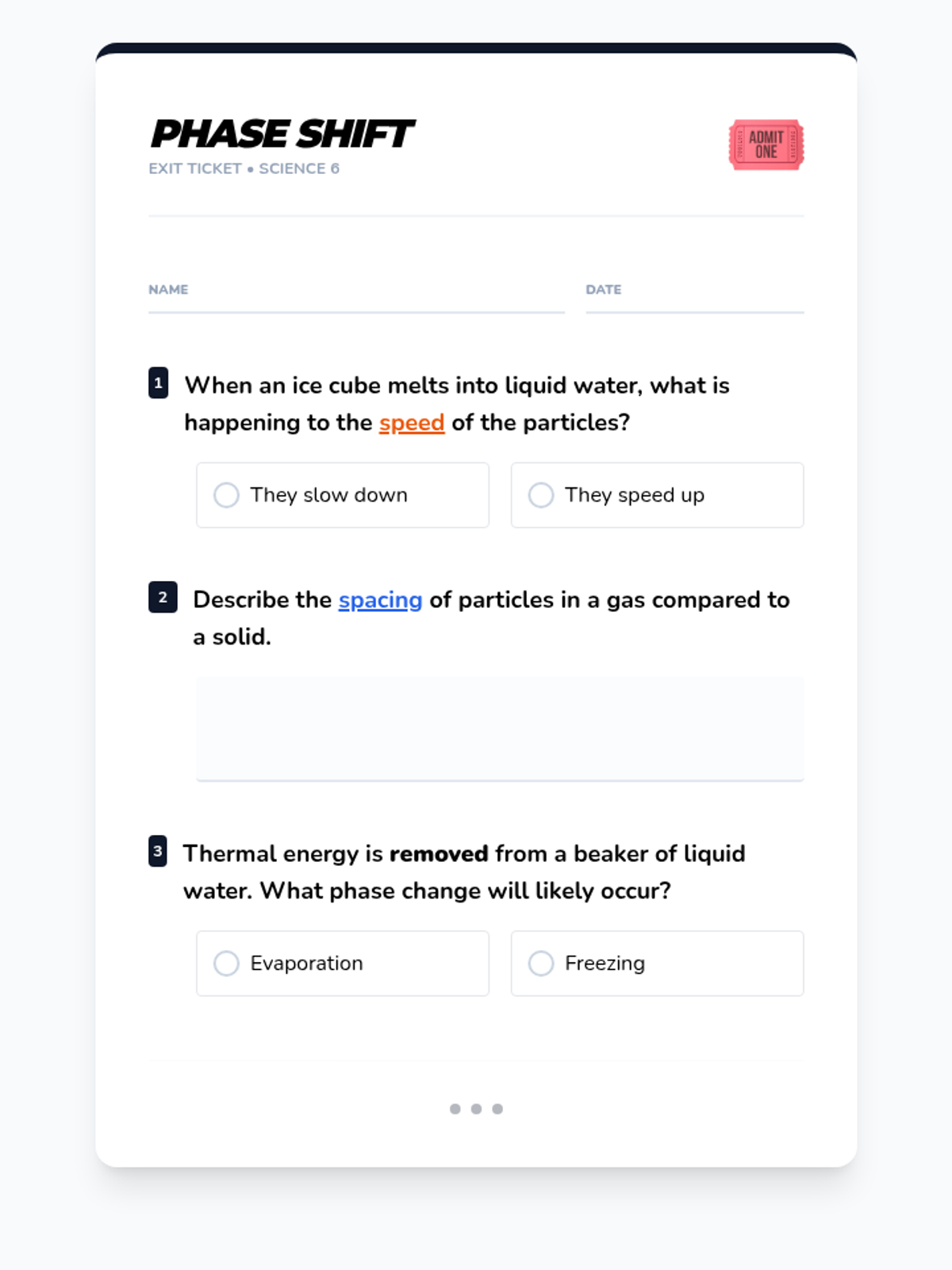
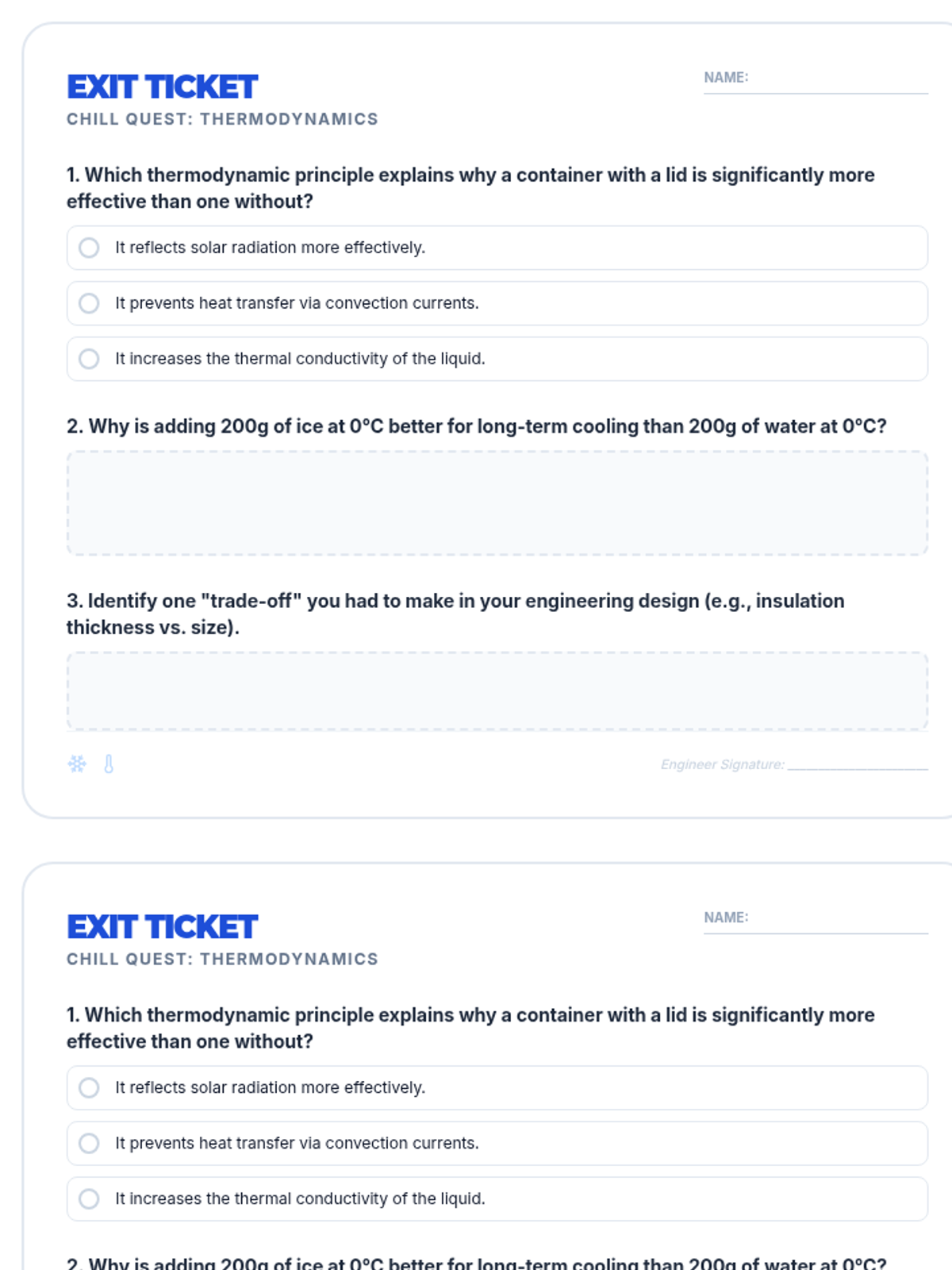
Day 2 dives into particle motion and spacing during phase changes, featuring a CER practice and a comprehensive exit ticket review.
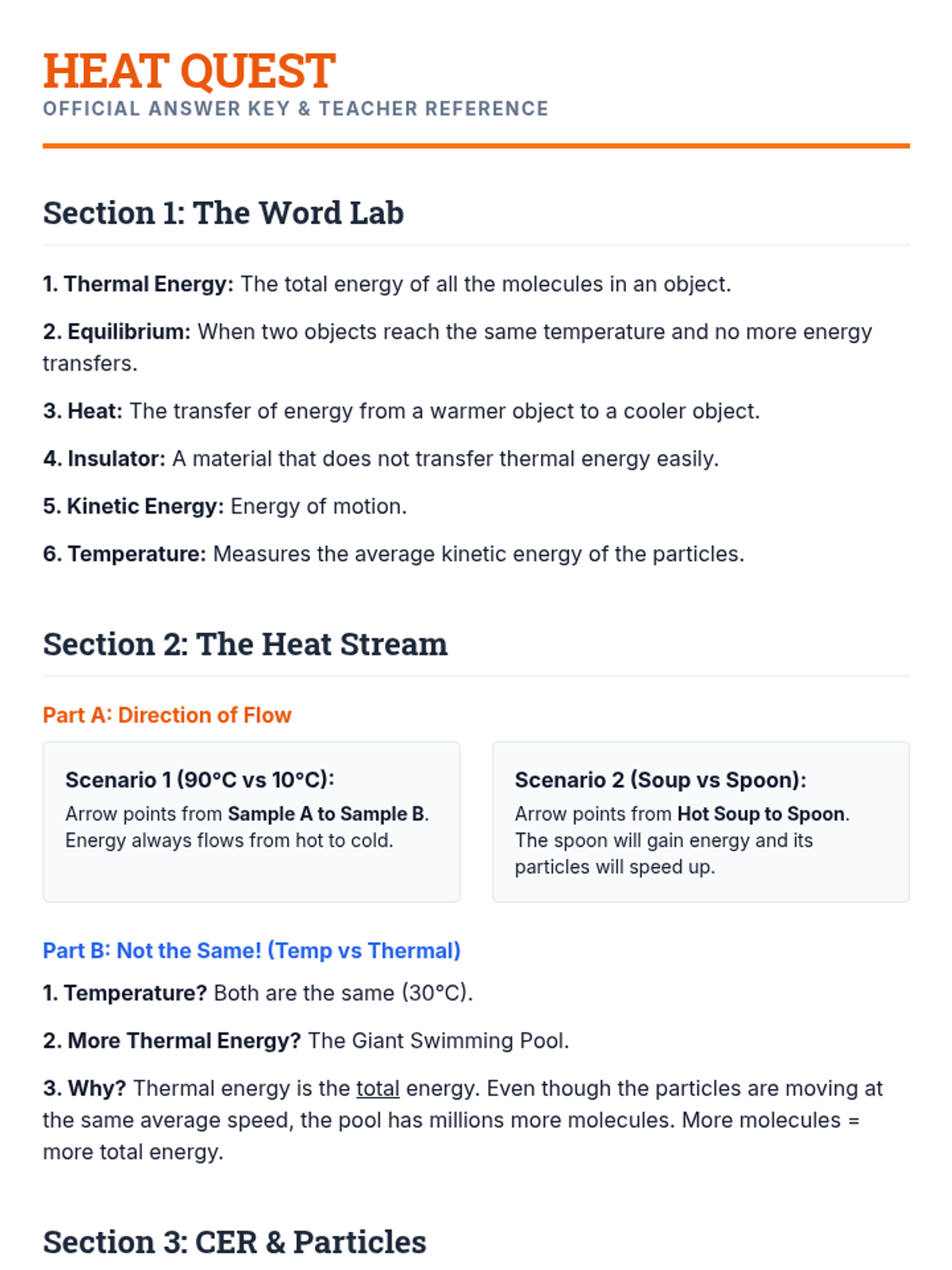
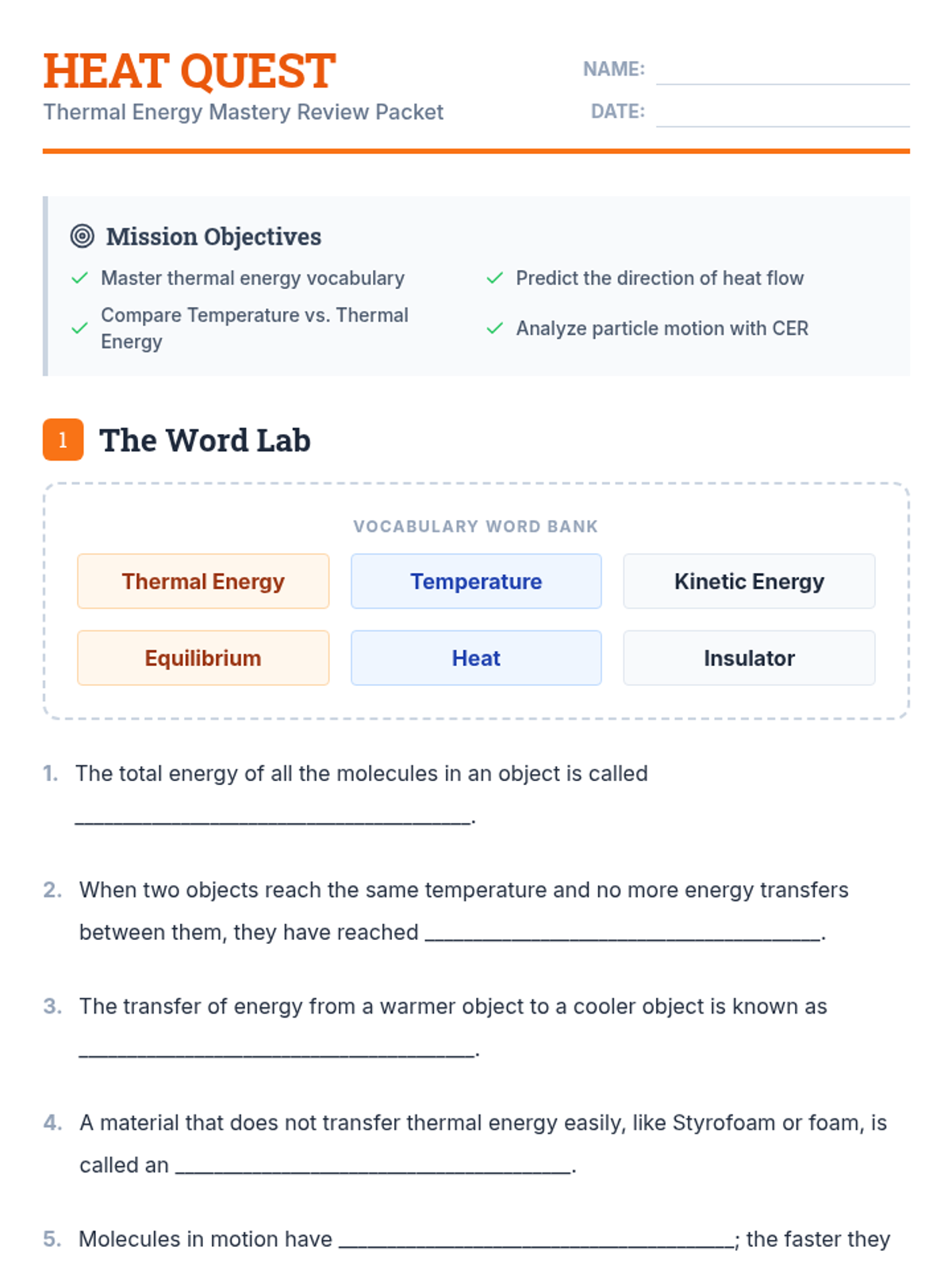
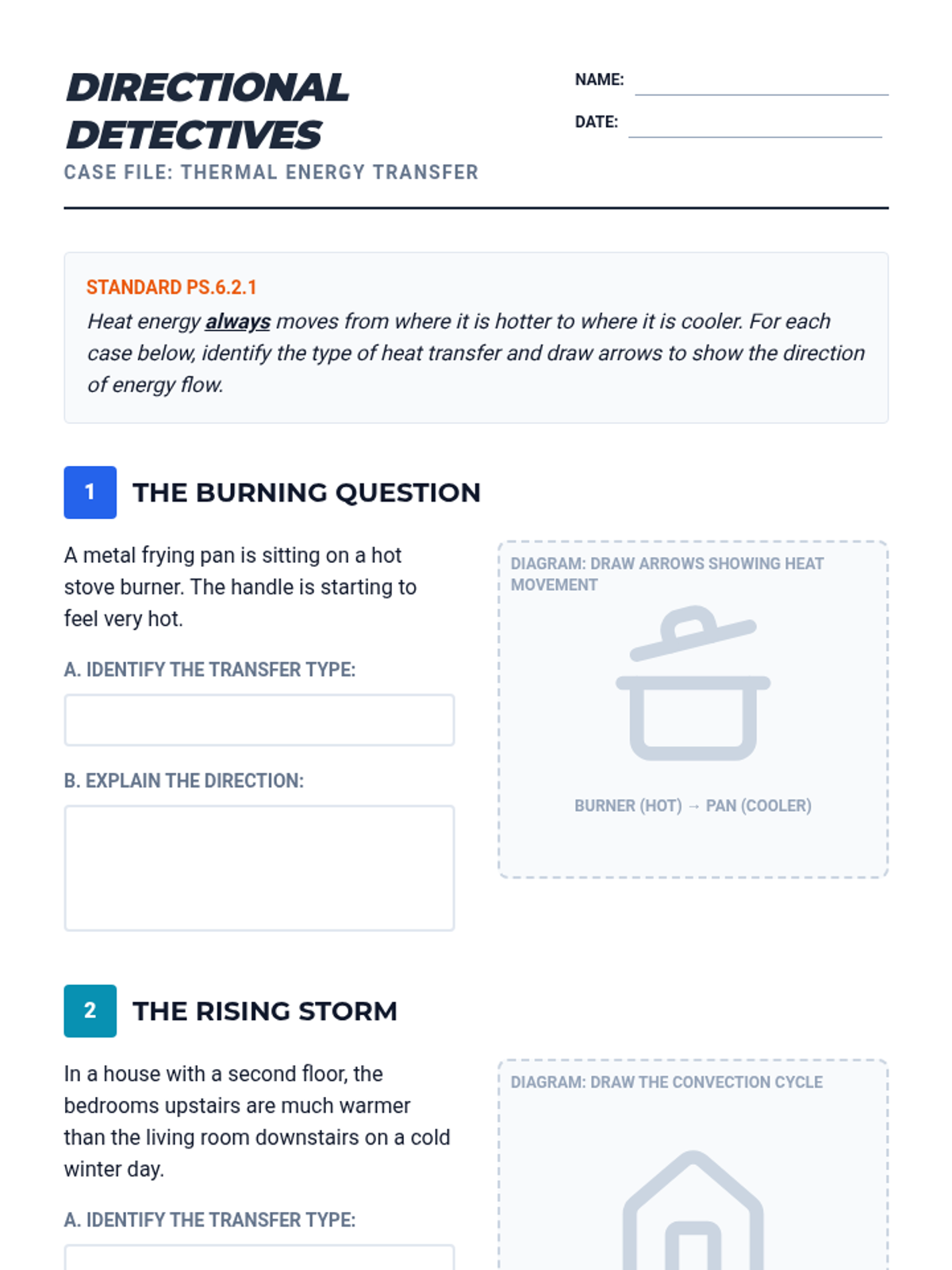
Day 1 focuses on vocabulary, the direction of heat transfer, and the fundamental differences between temperature and thermal energy.
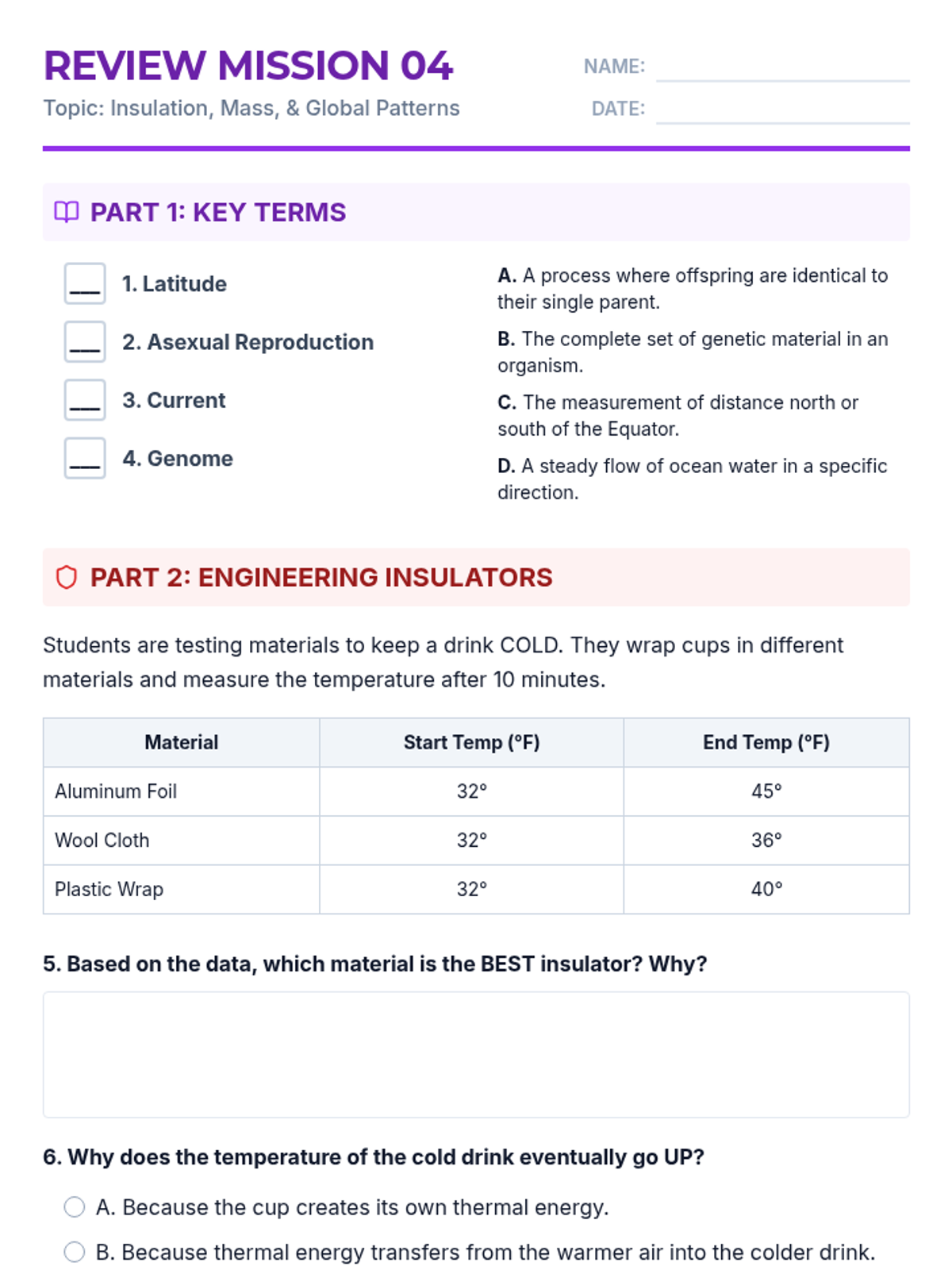
The final review mission covering global climate patterns, insulation, and the effects of mass on energy transfer.
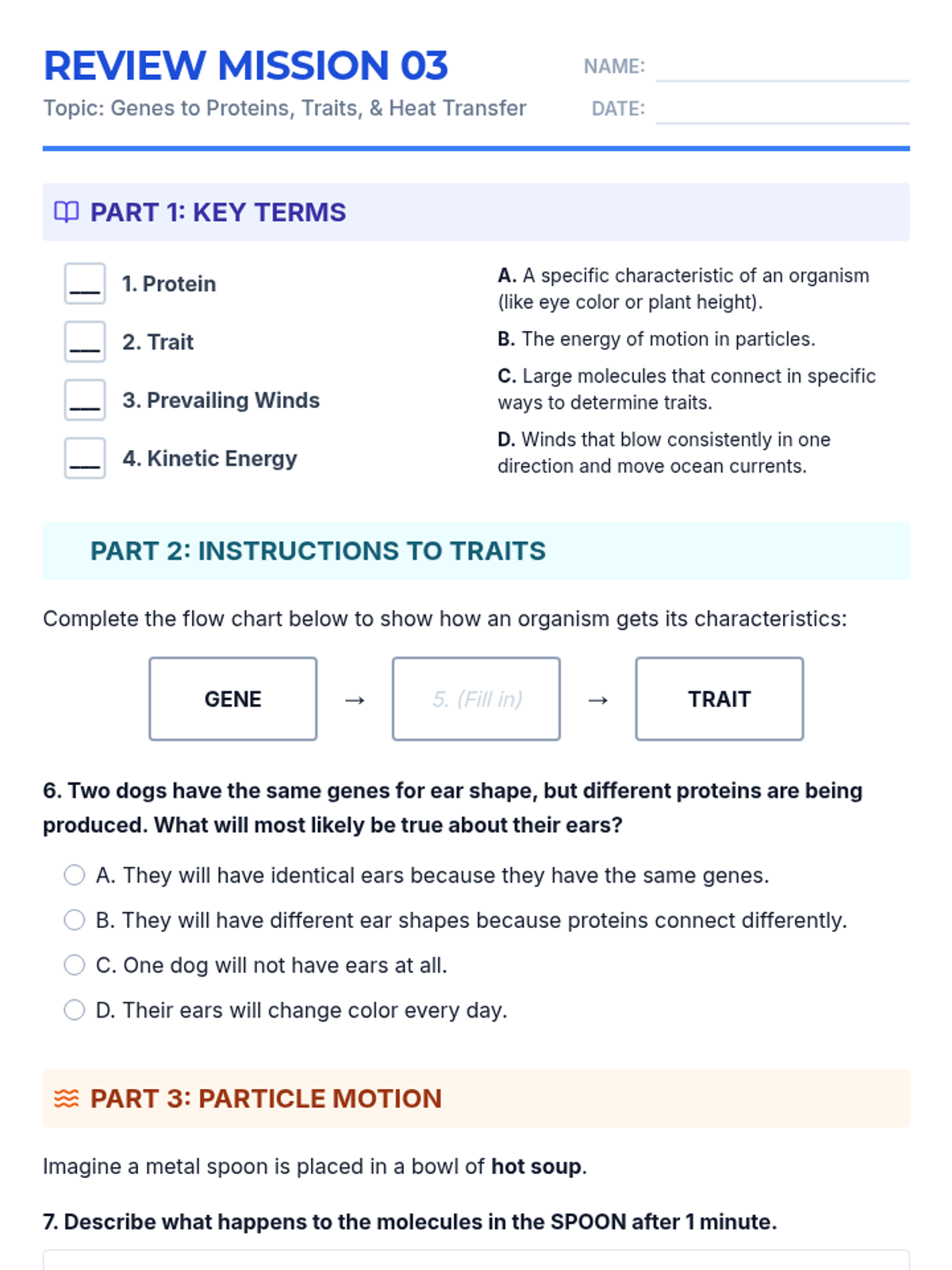
The third review mission focusing on the gene-protein-trait connection and the behavior of particles during heat transfer.
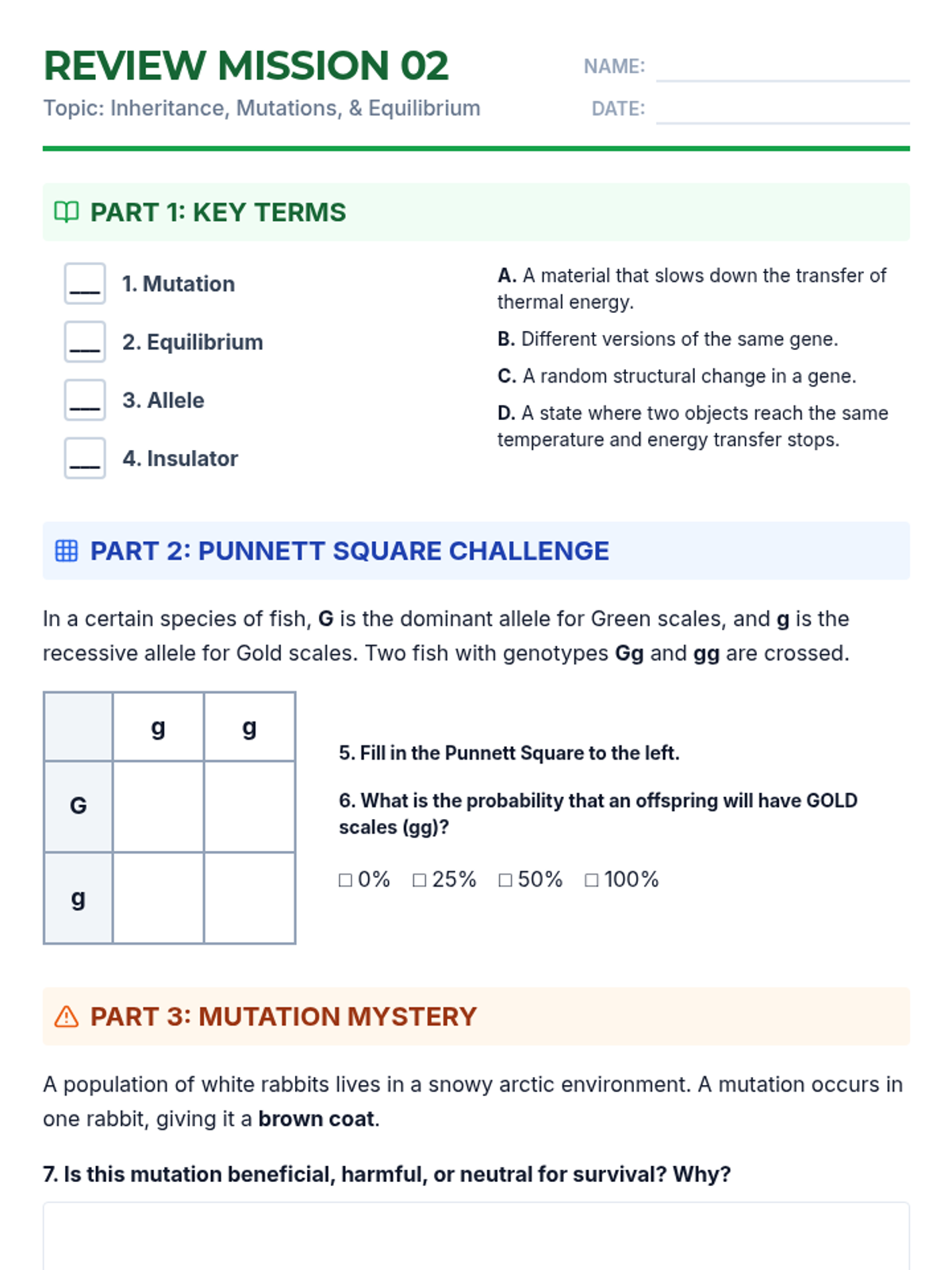
The second review mission covering genetic inheritance patterns, mutations, and thermal equilibrium.
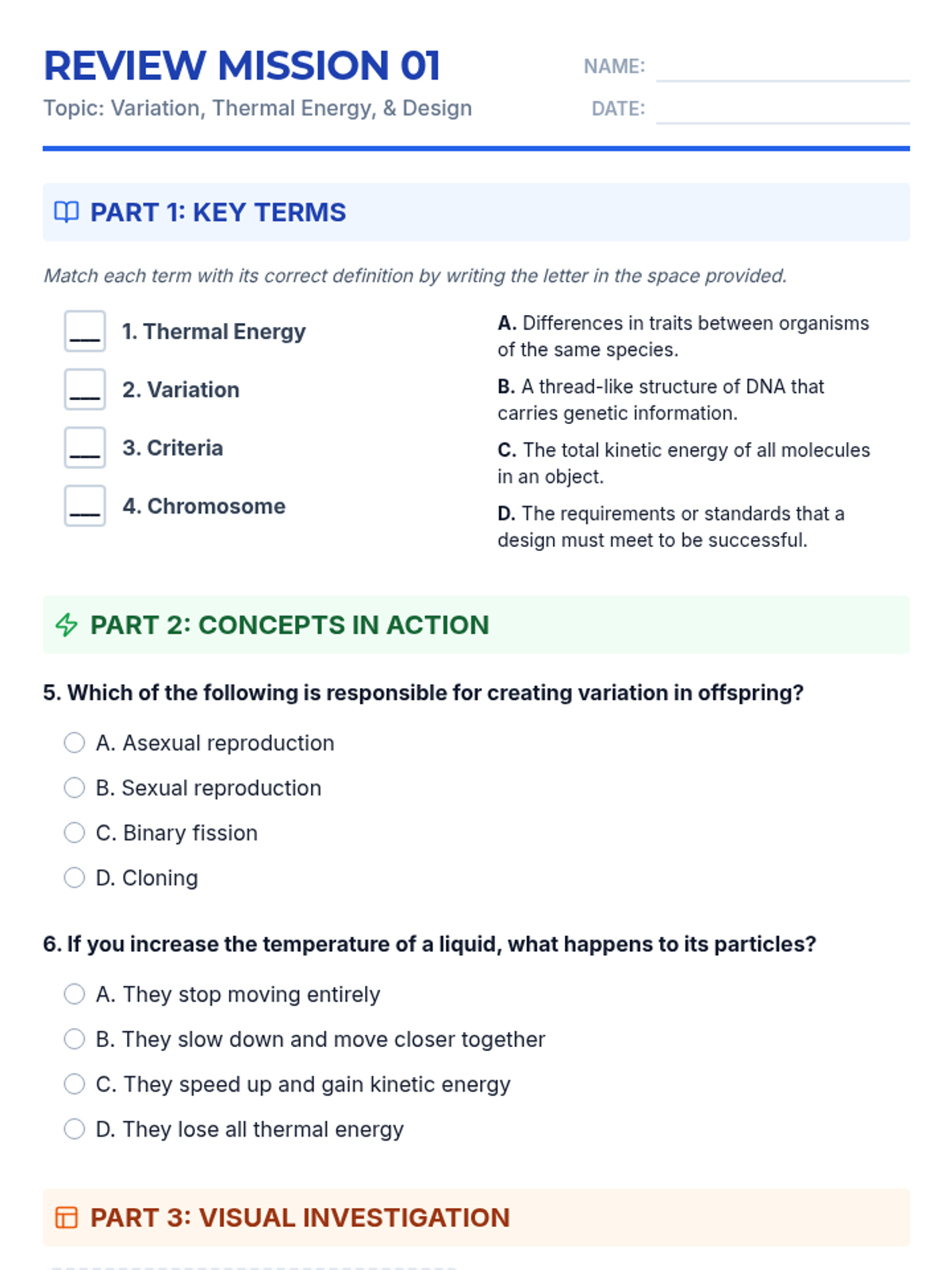
The first review mission focusing on variation, basic thermal energy concepts, and the engineering design process.
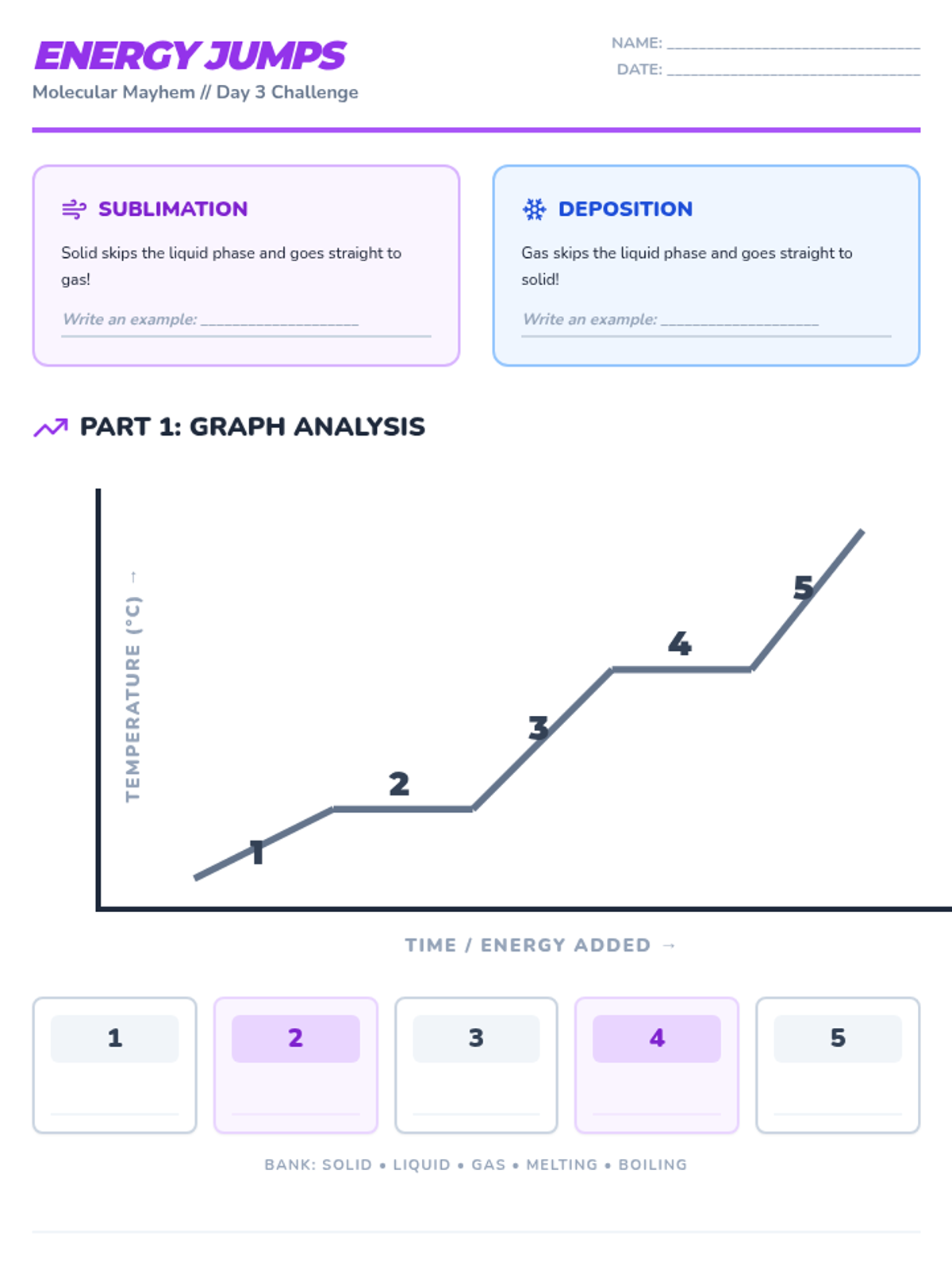
Model energy changes through heating curves and explore rare phase changes like sublimation and deposition.
Investigate phase changes (melting, freezing, vaporization, condensation) and how particles behave during these transitions.
Explore how thermal energy affects the speed and spacing of particles in solids, liquids, and gases.
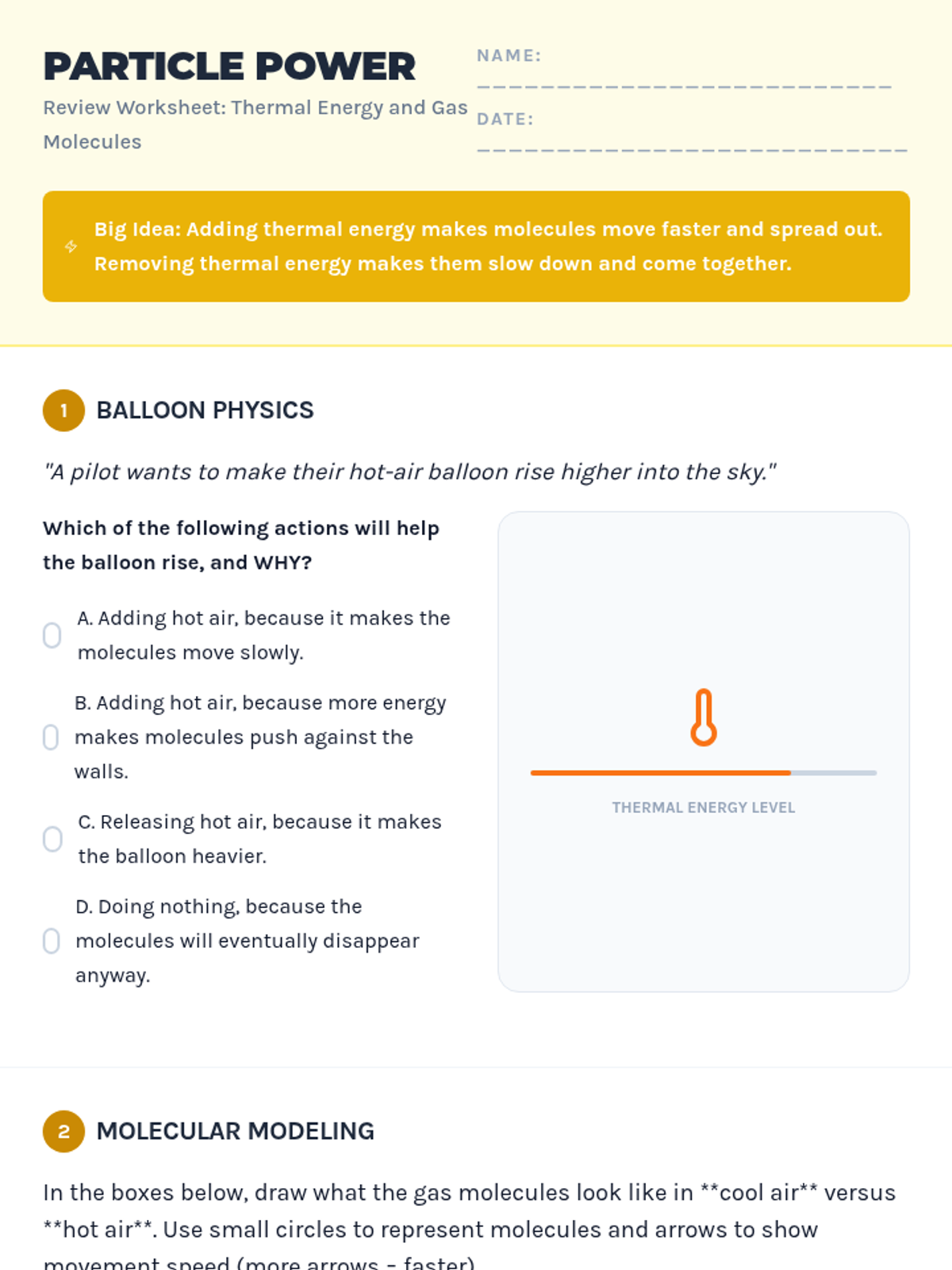
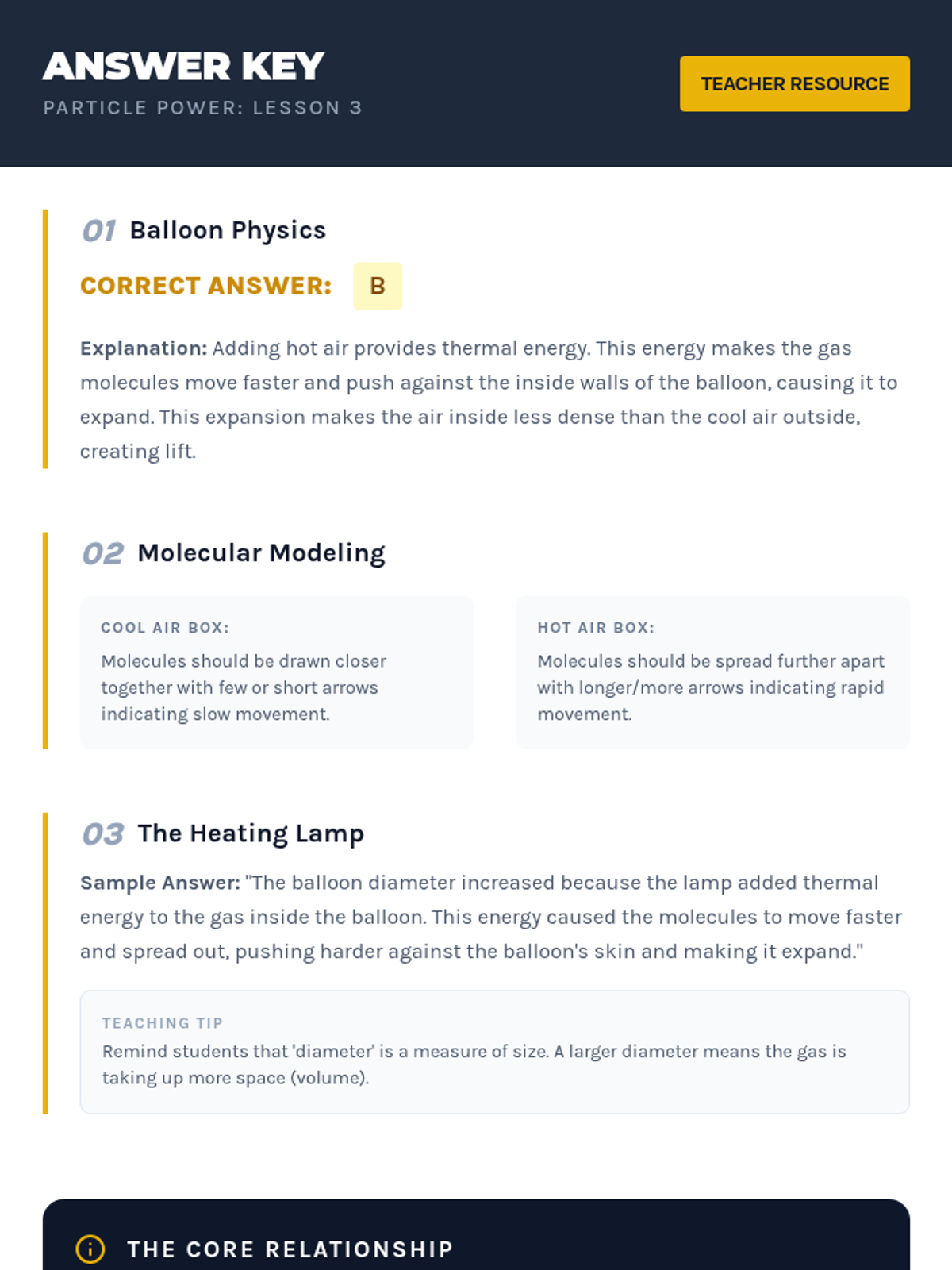
Students will investigate how thermal energy affects the speed and spacing of particles in a gas. They will interpret models and data to explain why hot air rises and how this principle is applied to technologies like hot-air balloons.
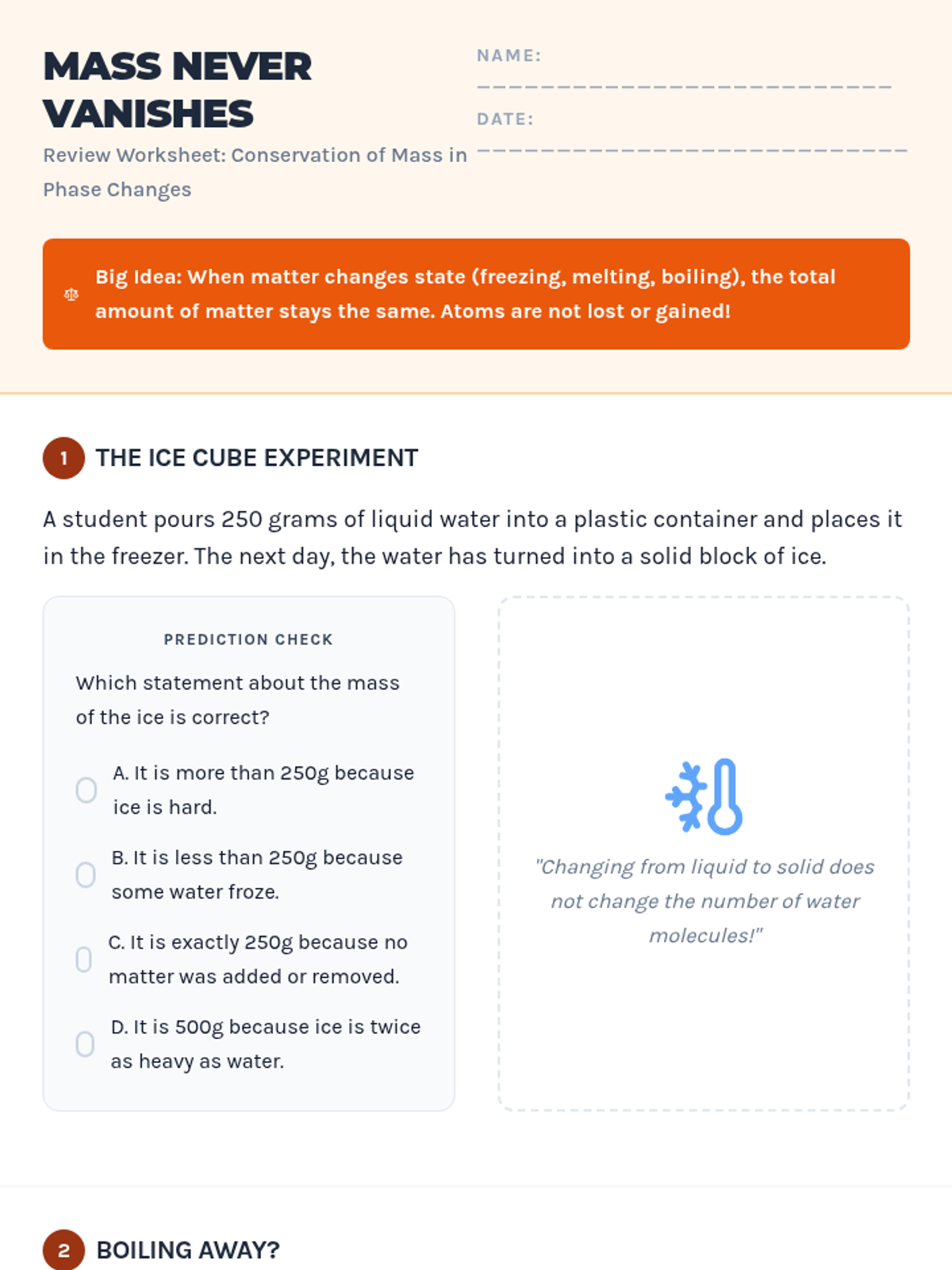
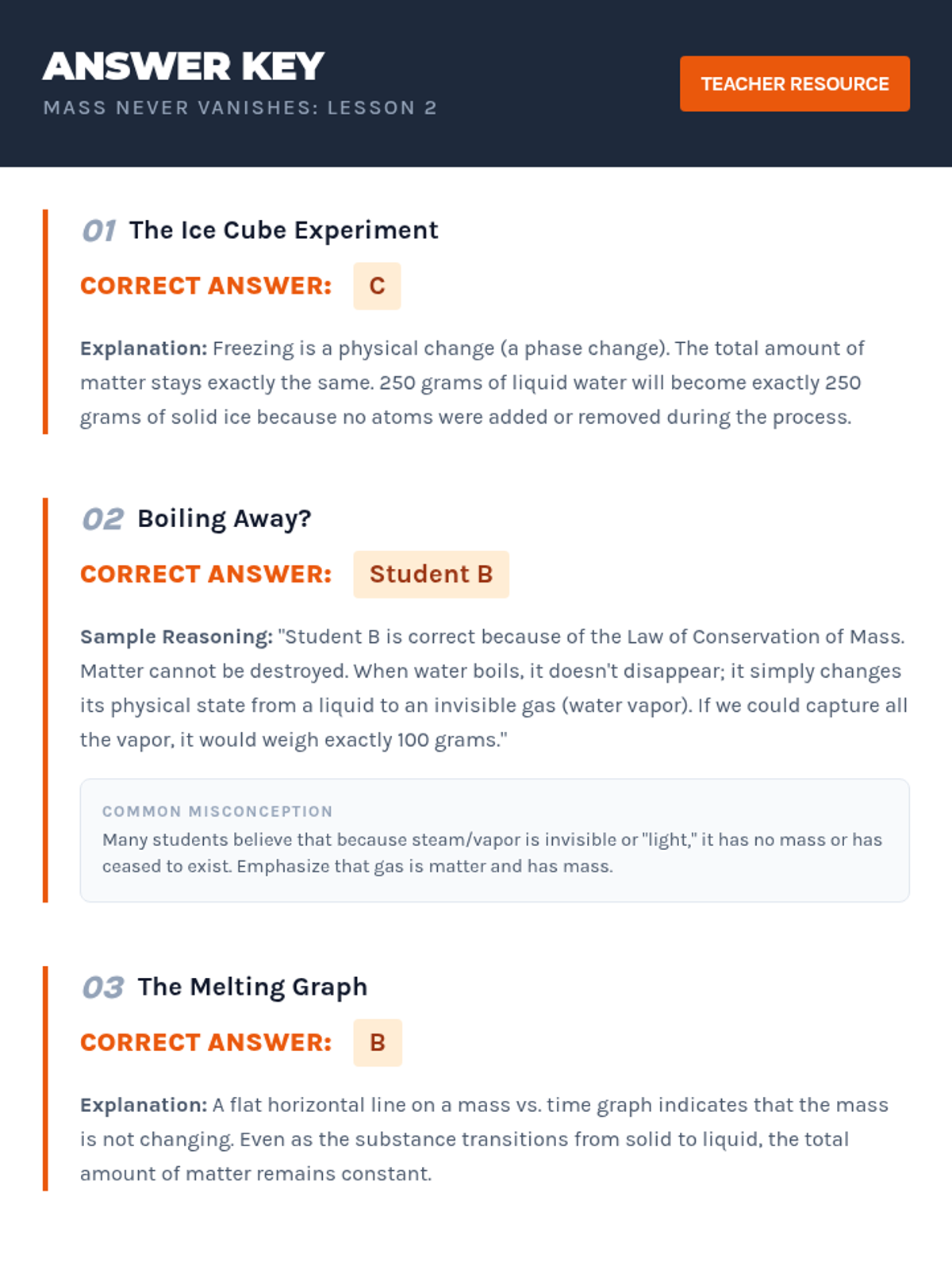
Students will explore how the mass of a substance remains constant even as it undergoes phase changes (freezing, melting, boiling). They will analyze data involving state changes and evaluate scientific claims about matter 'disappearing' during evaporation.
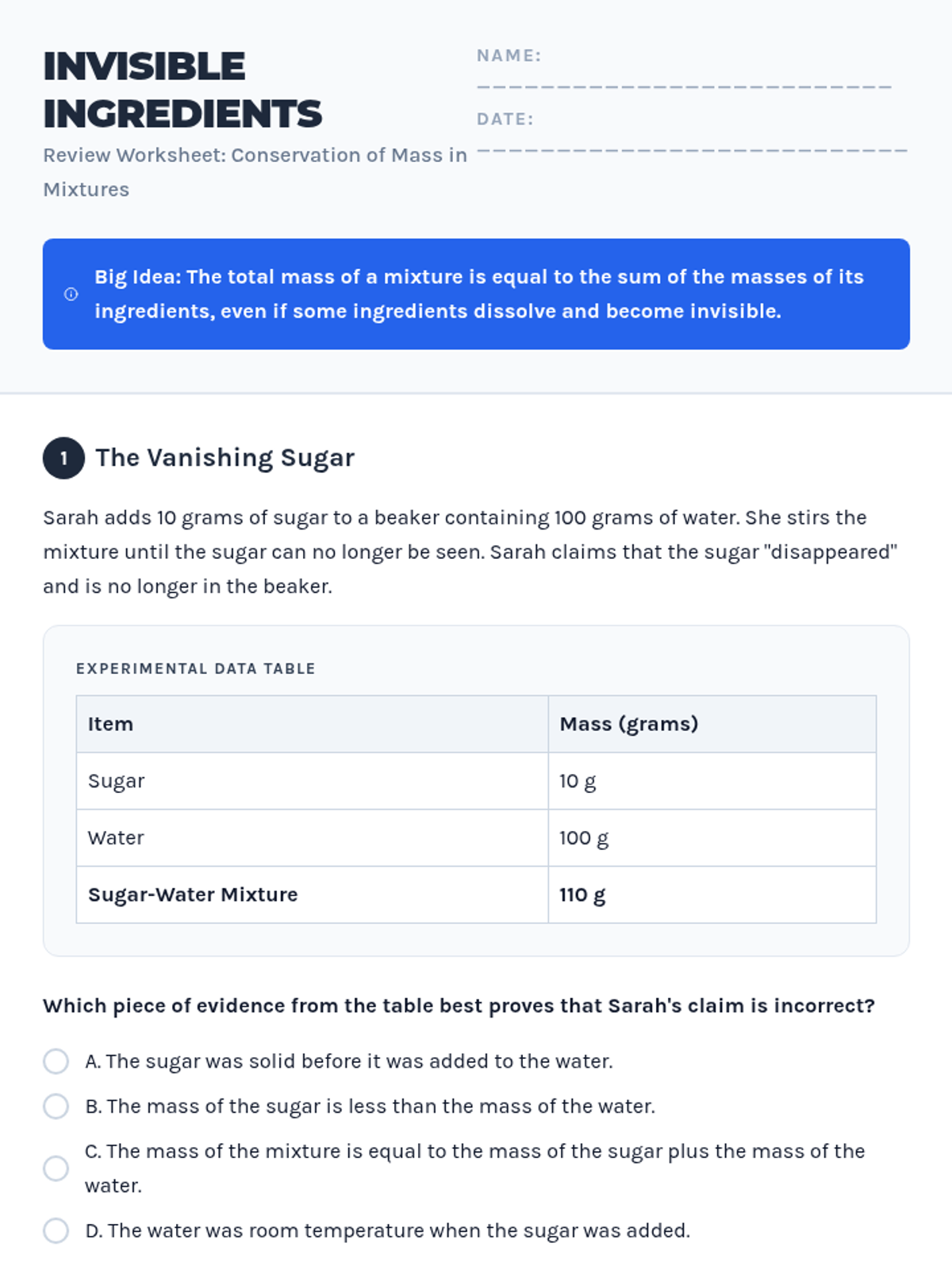
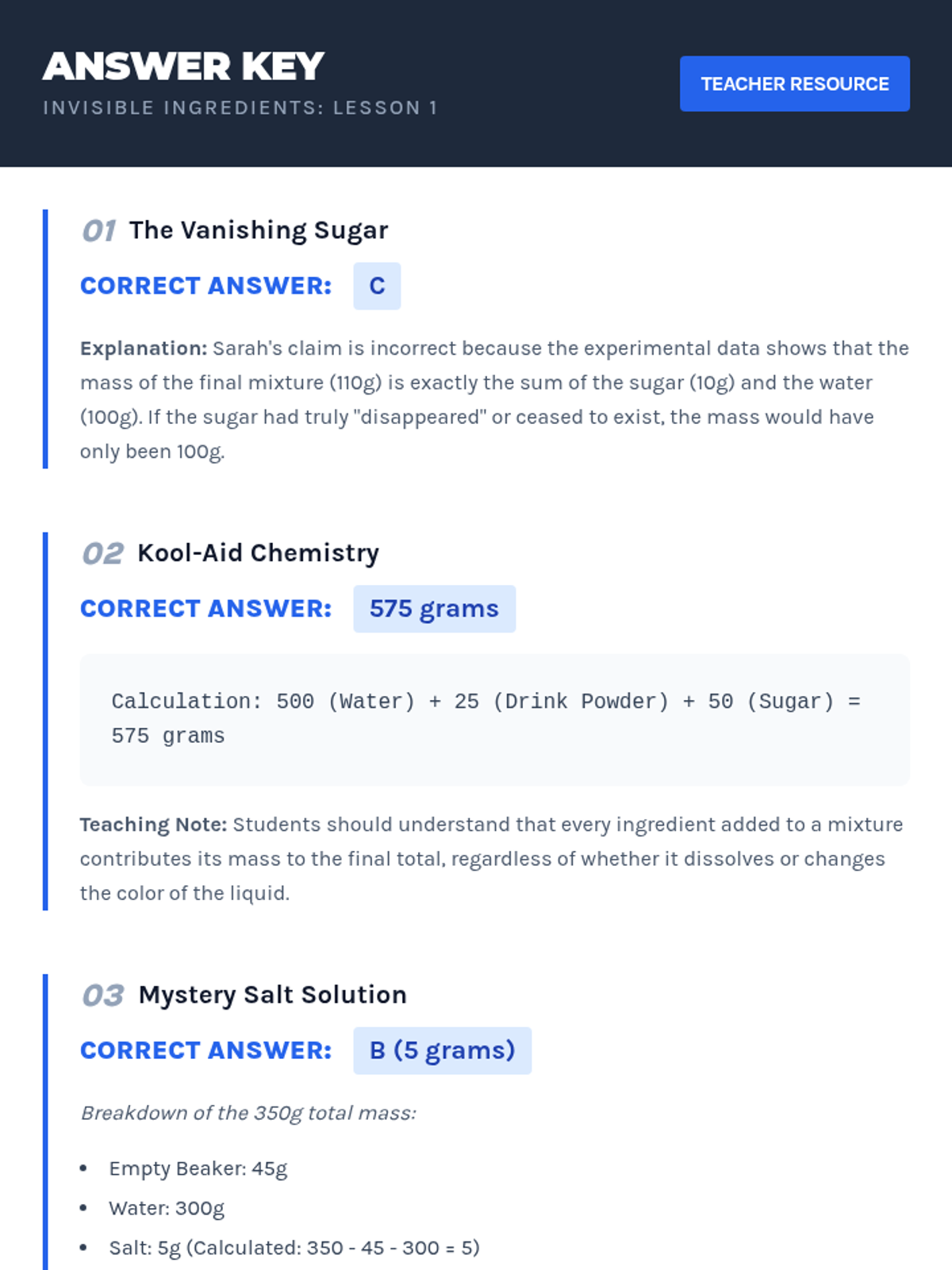
Students will review the law of conservation of mass as it applies to mixtures and dissolving. They will practice interpreting data tables to prove that matter still exists even when it is no longer visible in a solution.
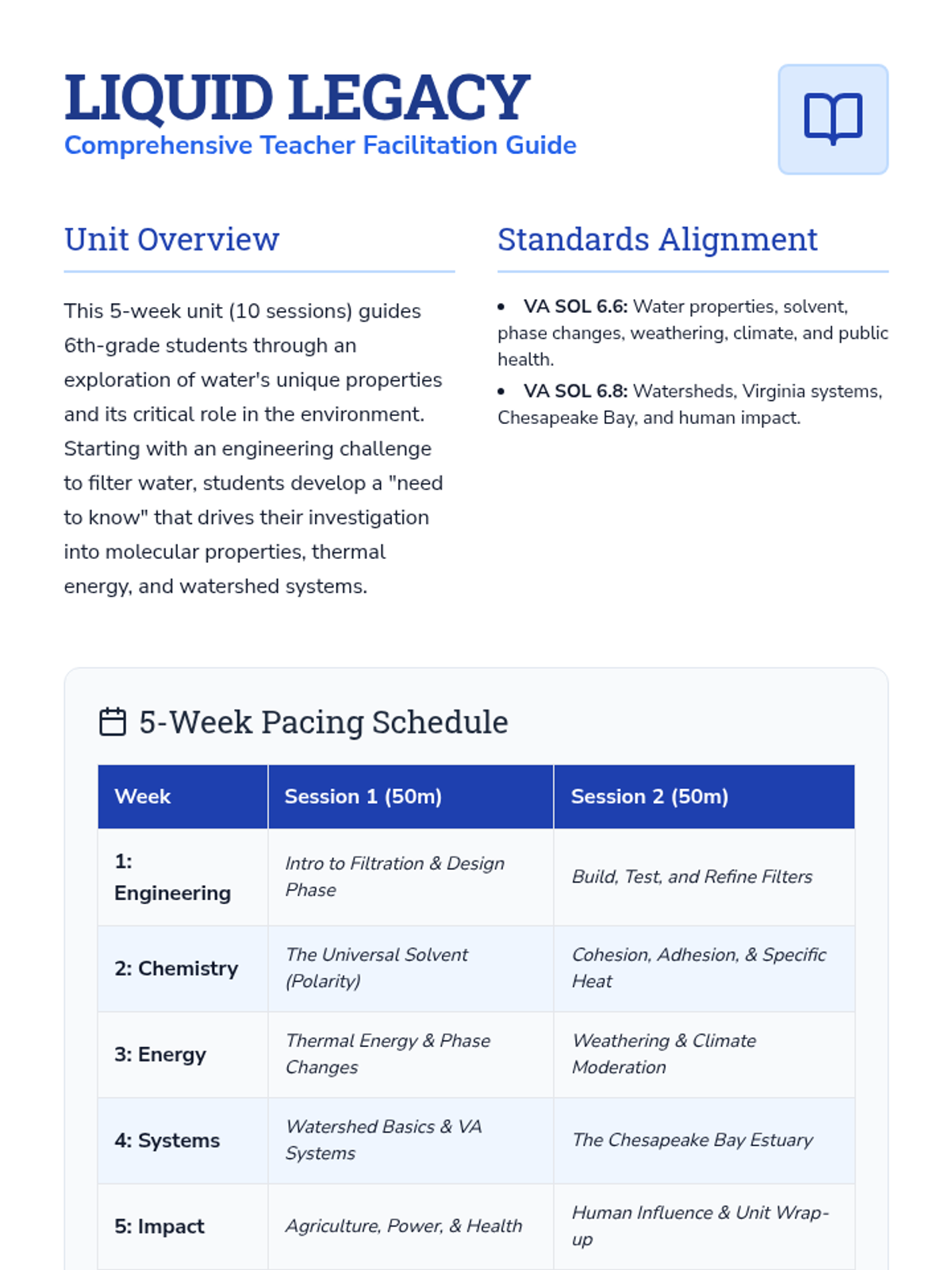
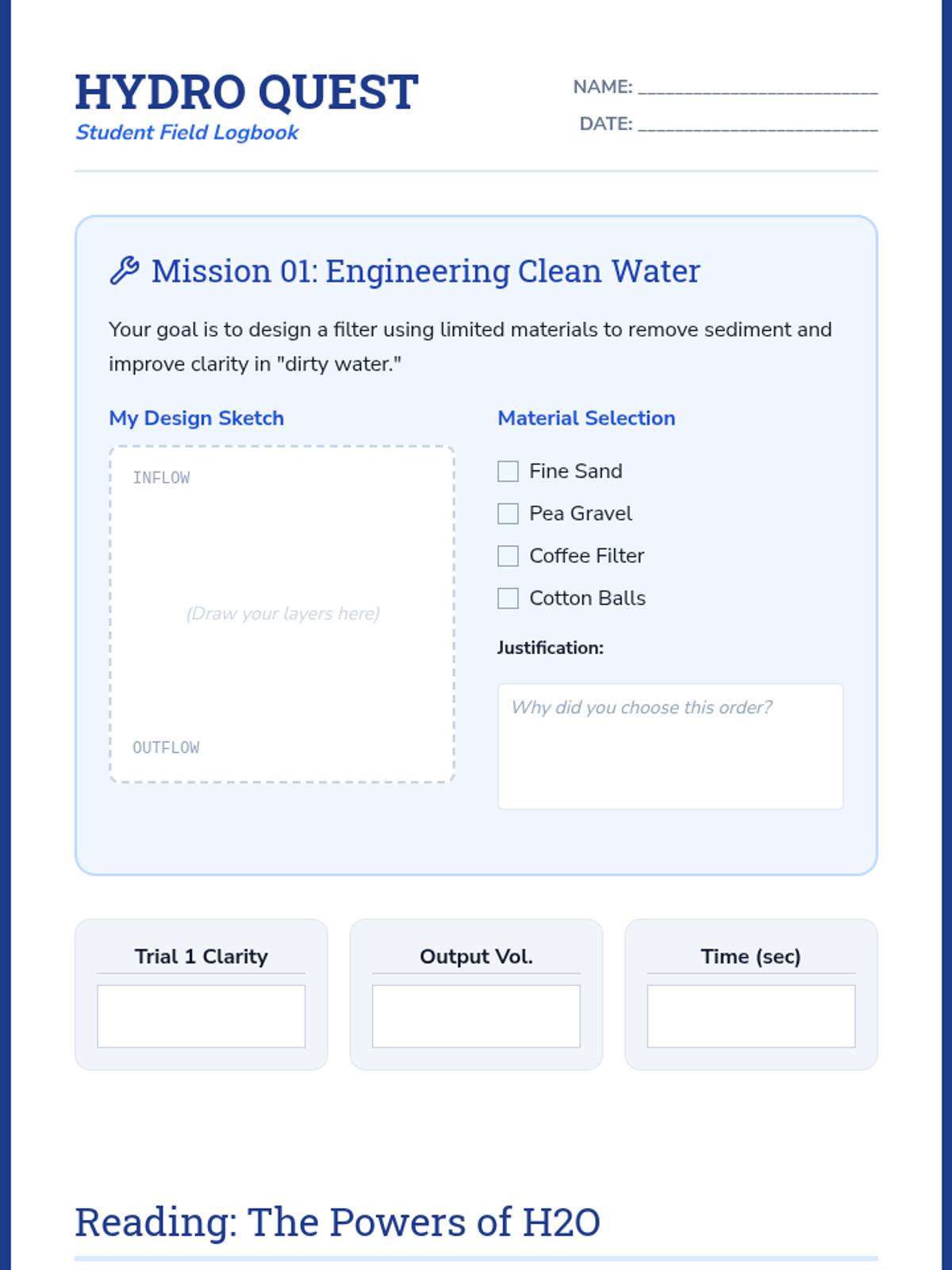
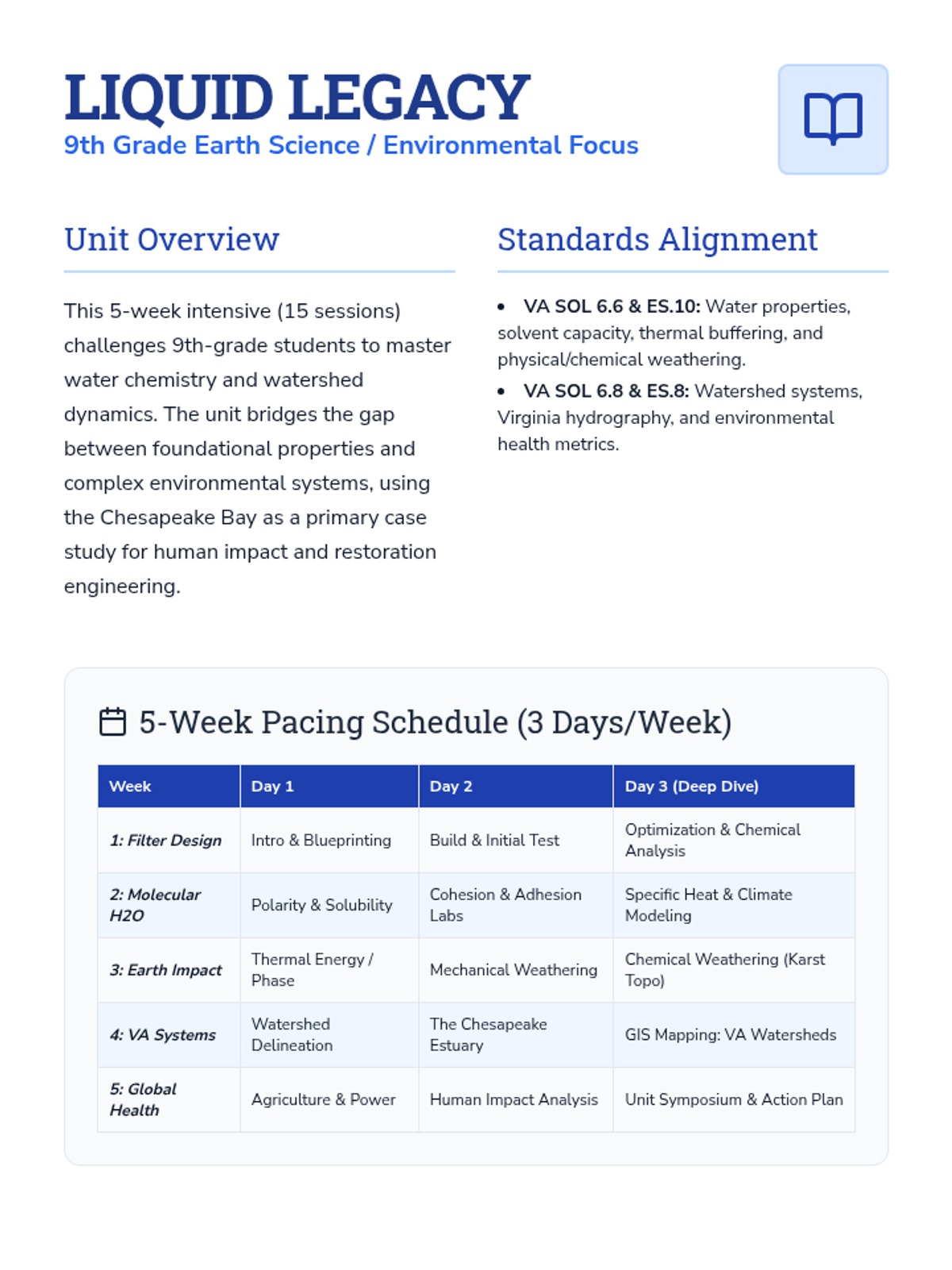
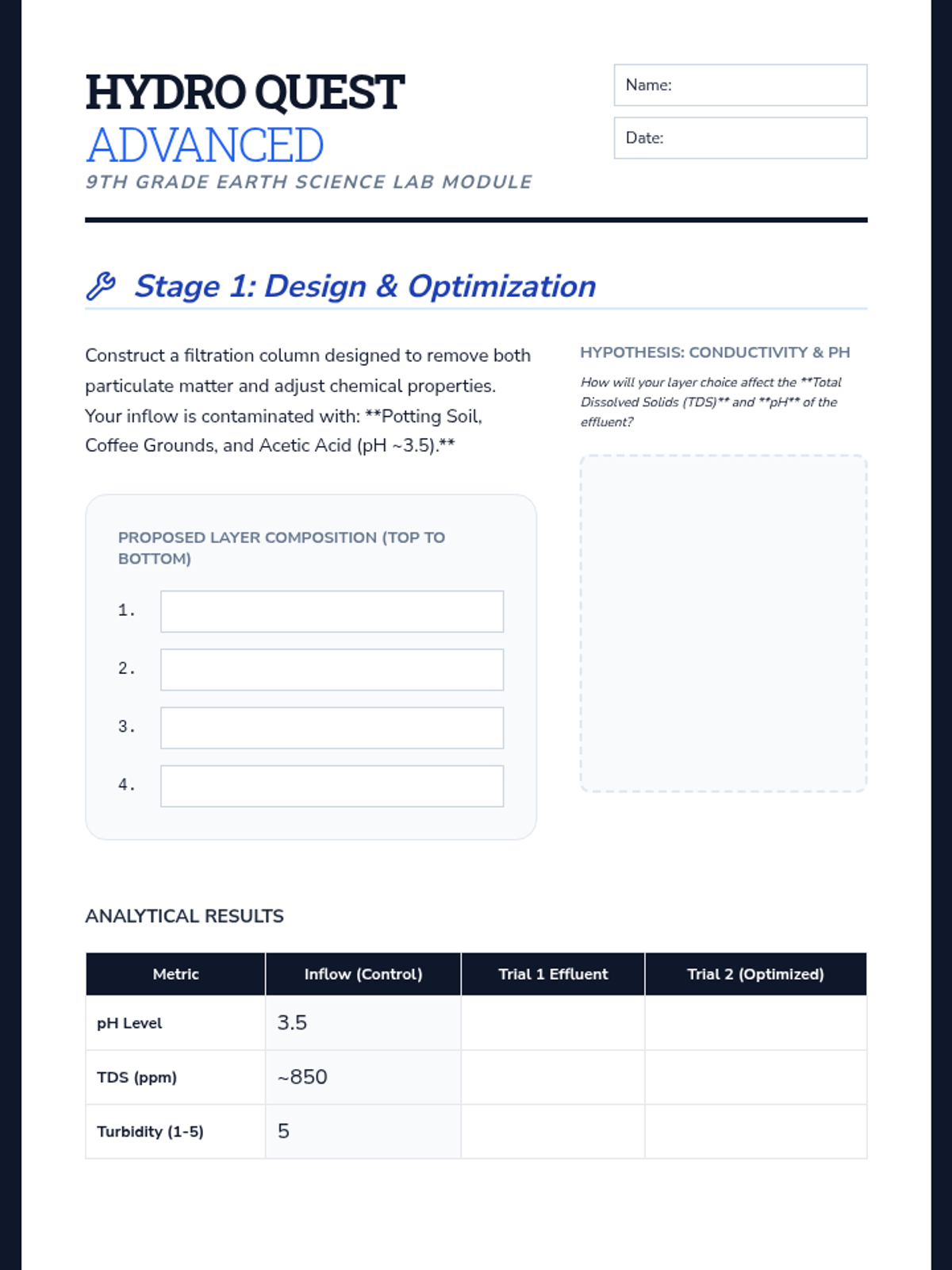
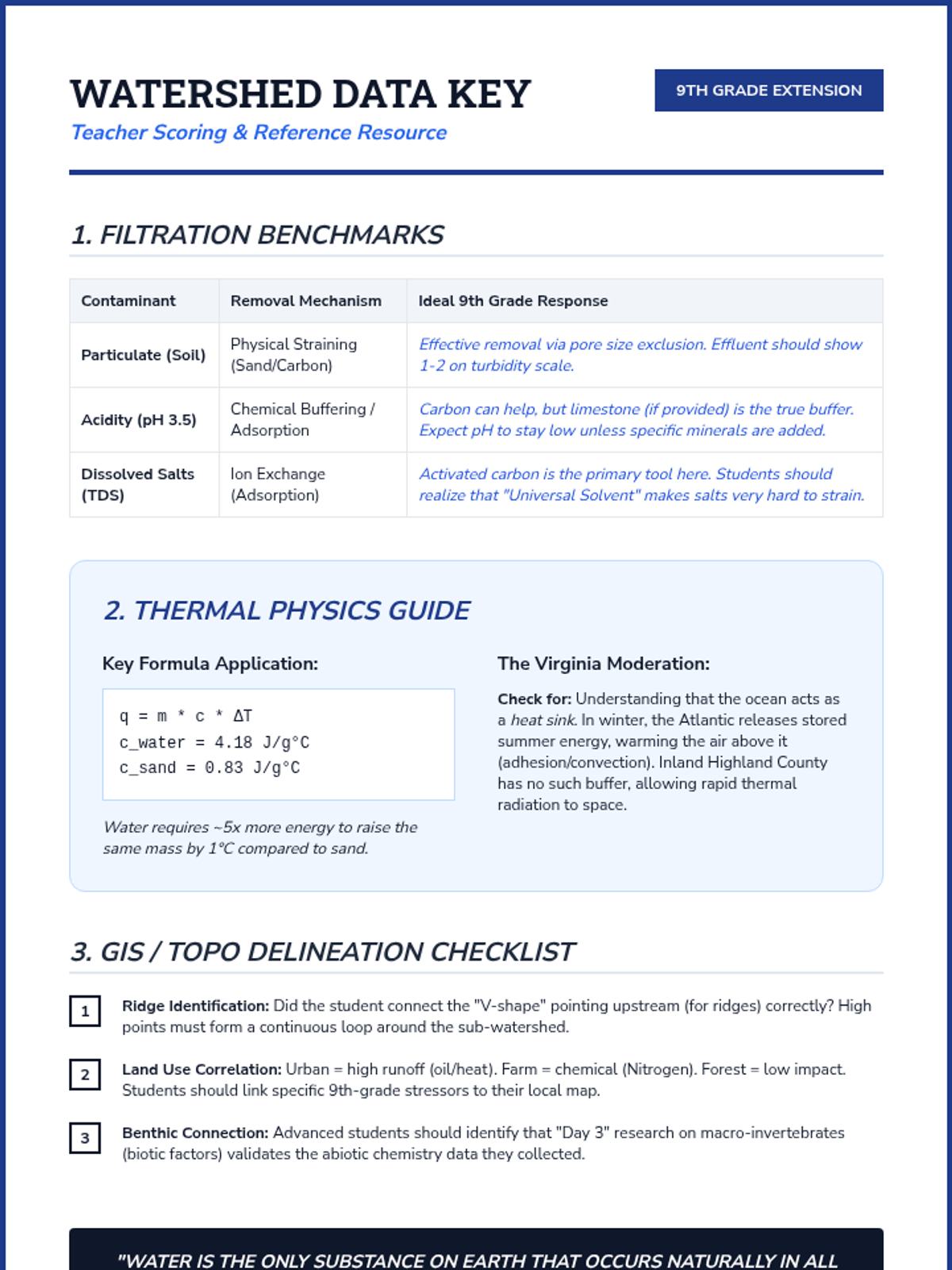
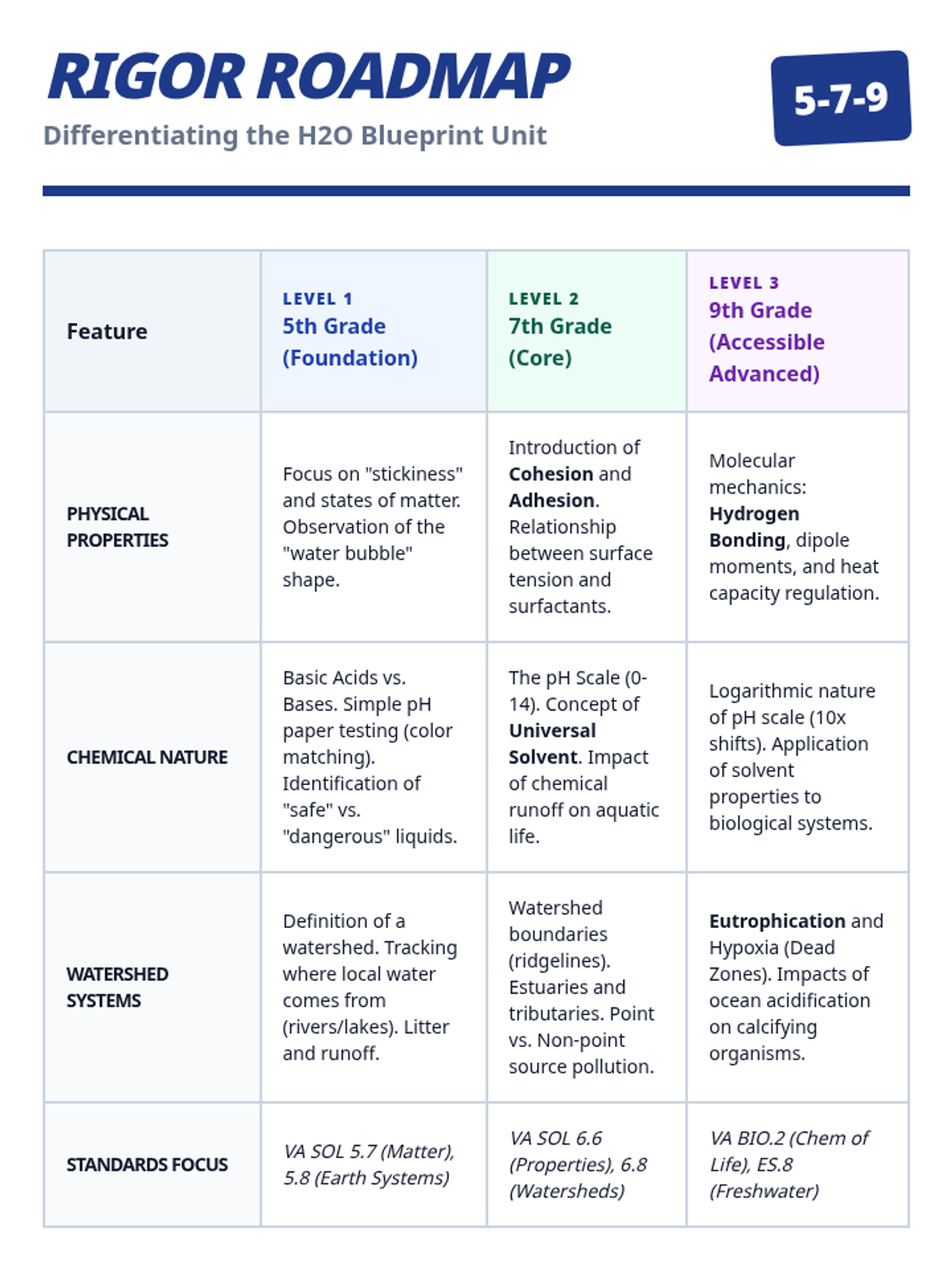
A 10-session unit covering Virginia Standards 6.6 and 6.8, beginning with a water filter engineering challenge and progressing through water chemistry and watershed systems.
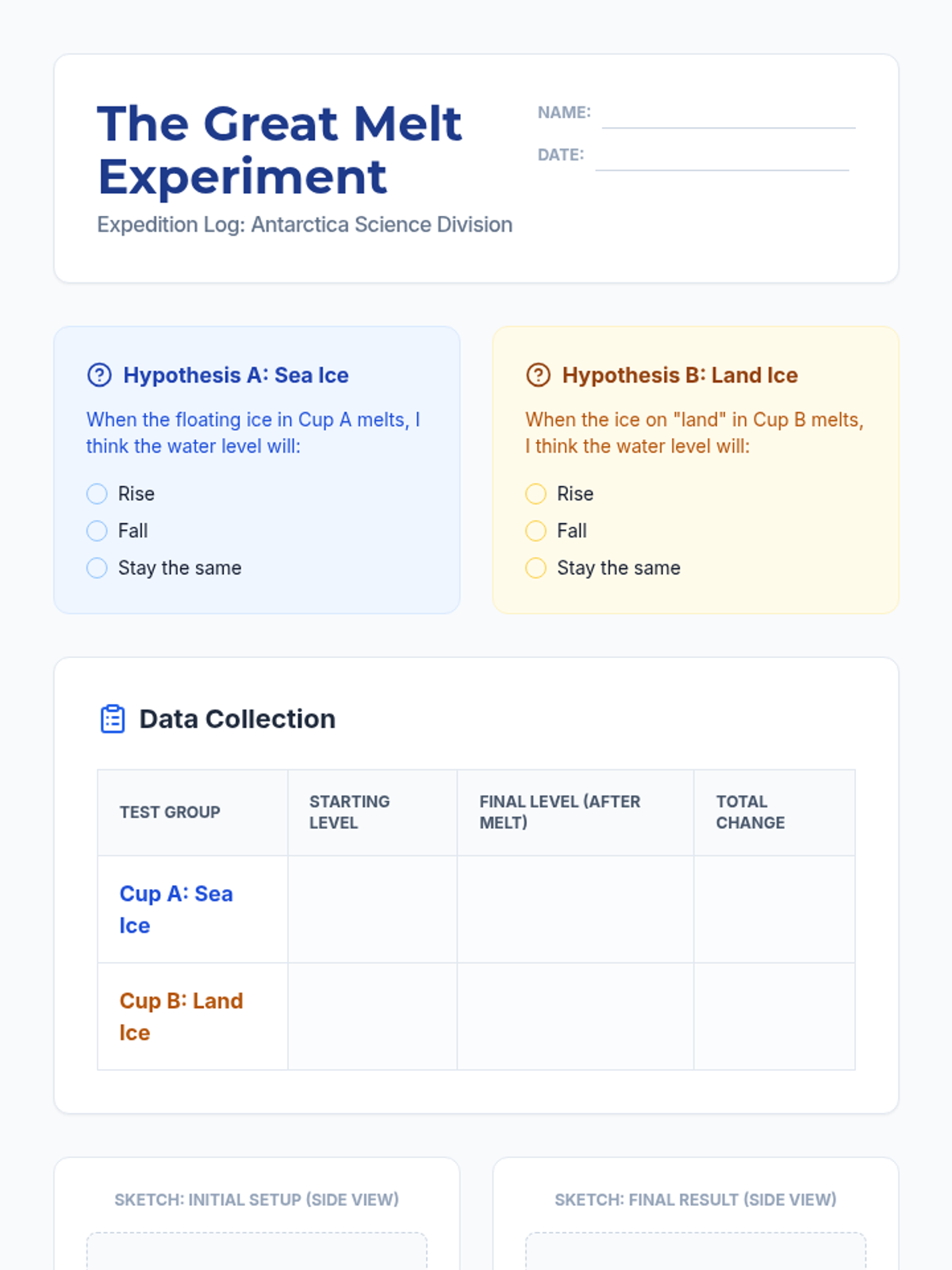
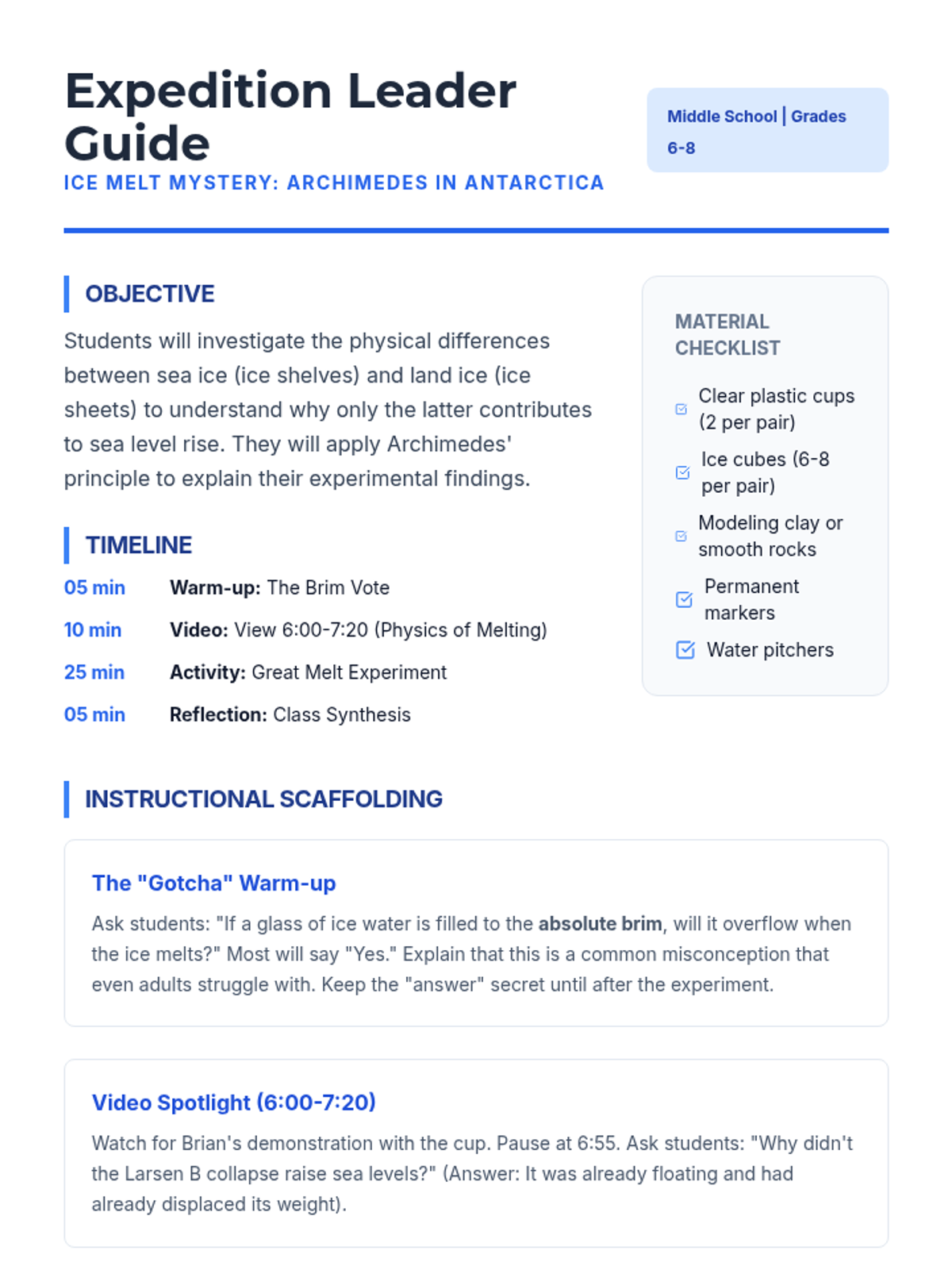
Students explore Archimedes' principle and the physics of sea level rise by comparing melting sea ice and land ice through a hands-on experiment and video analysis.
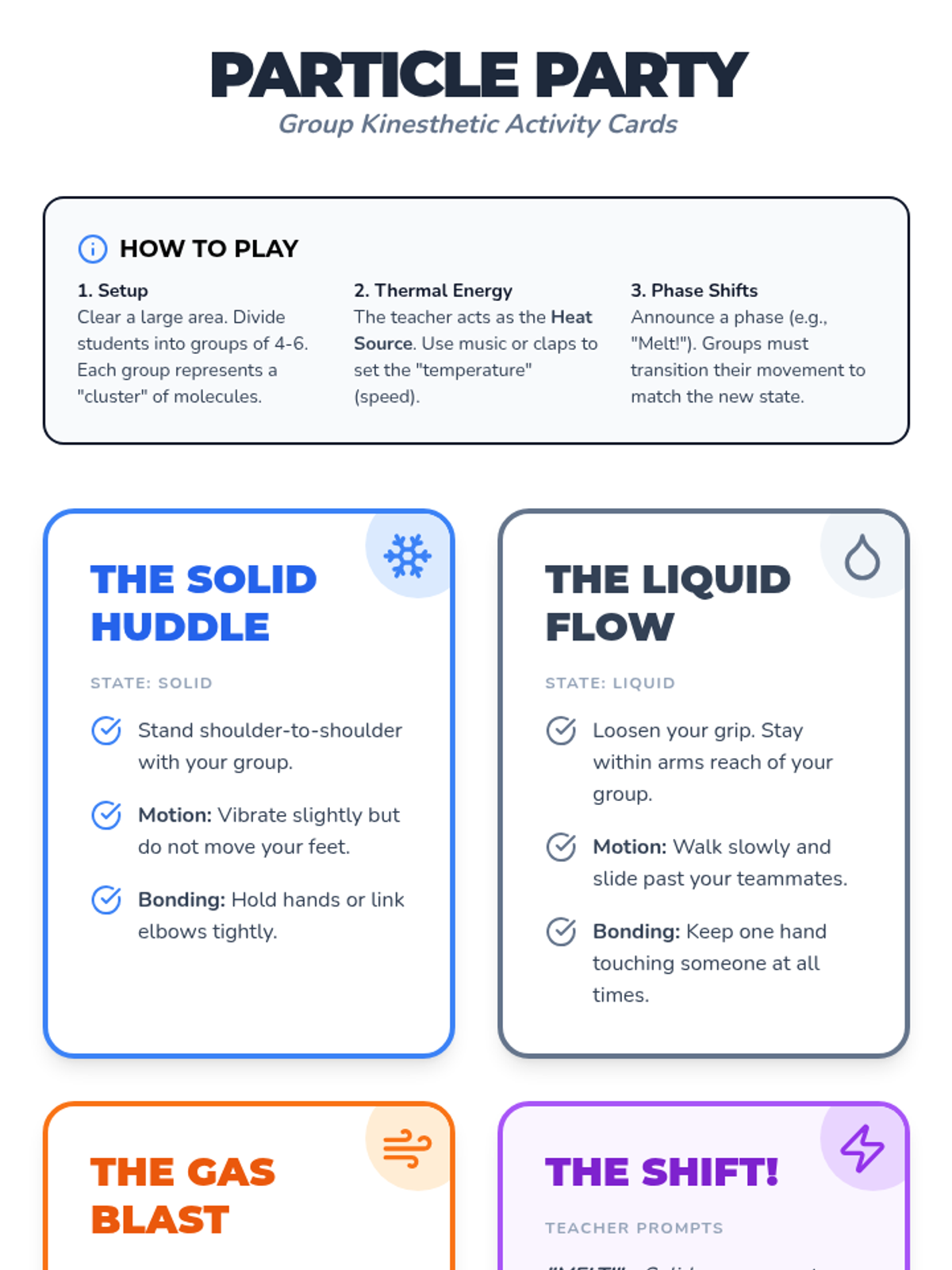
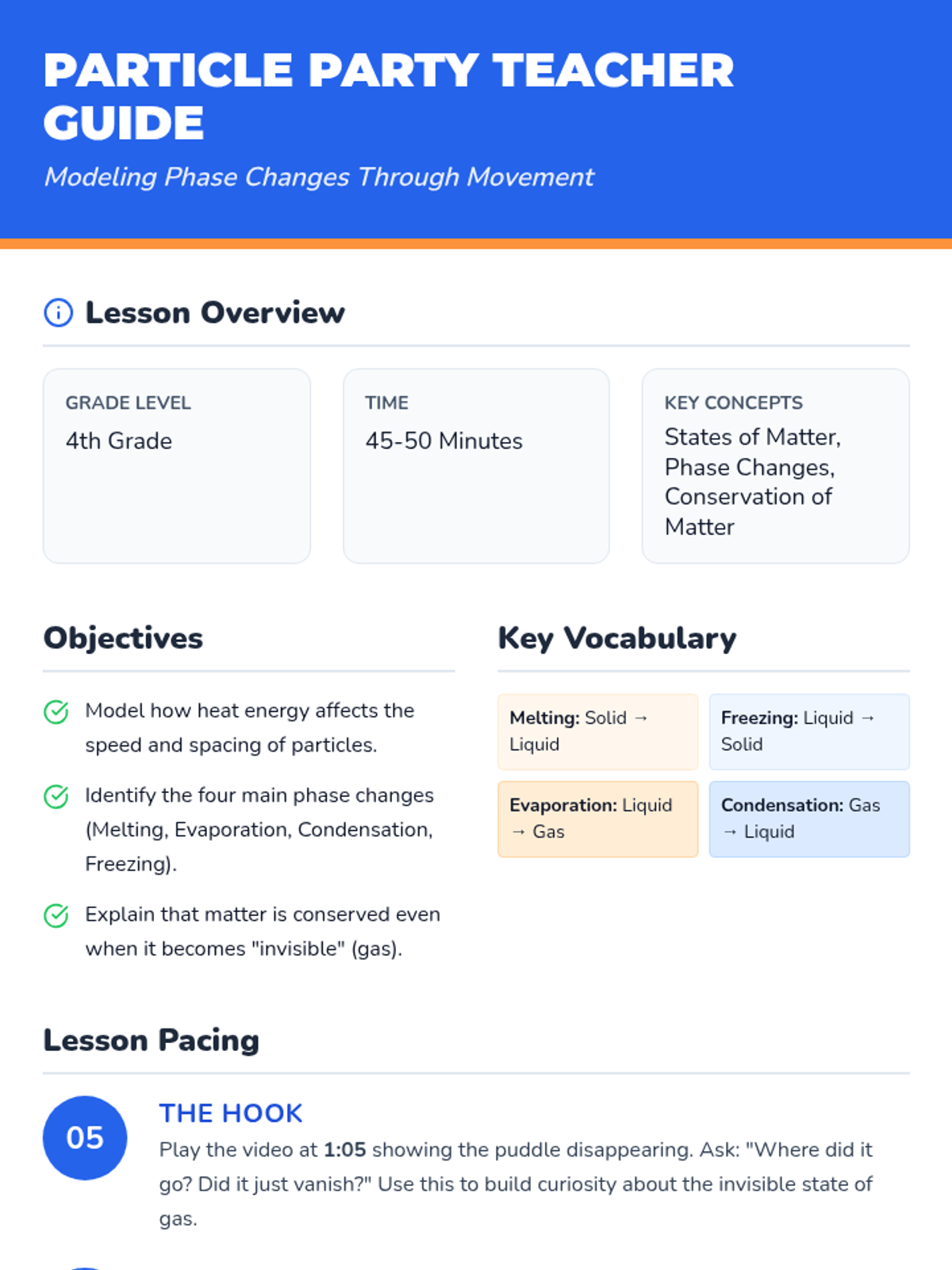
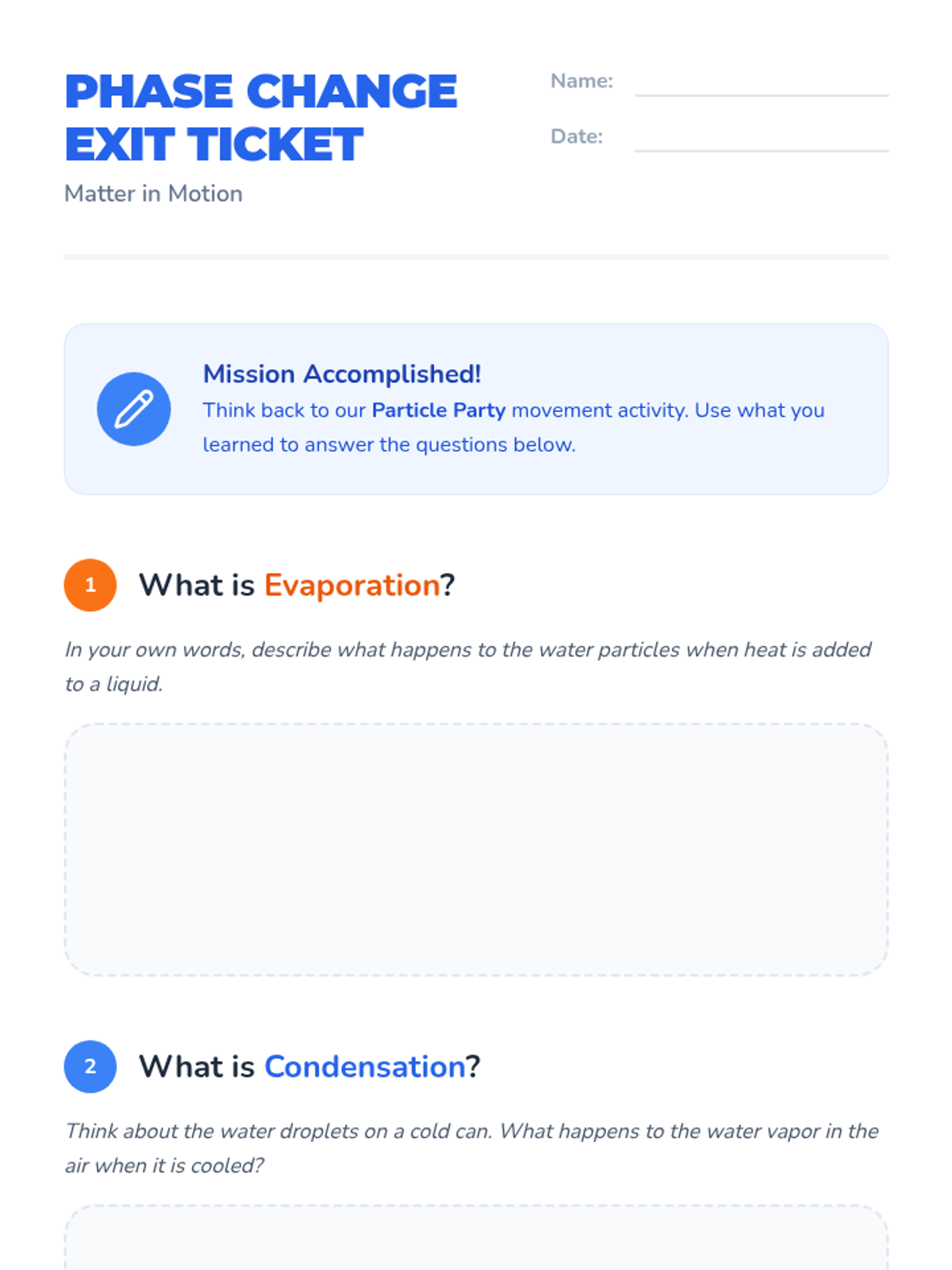
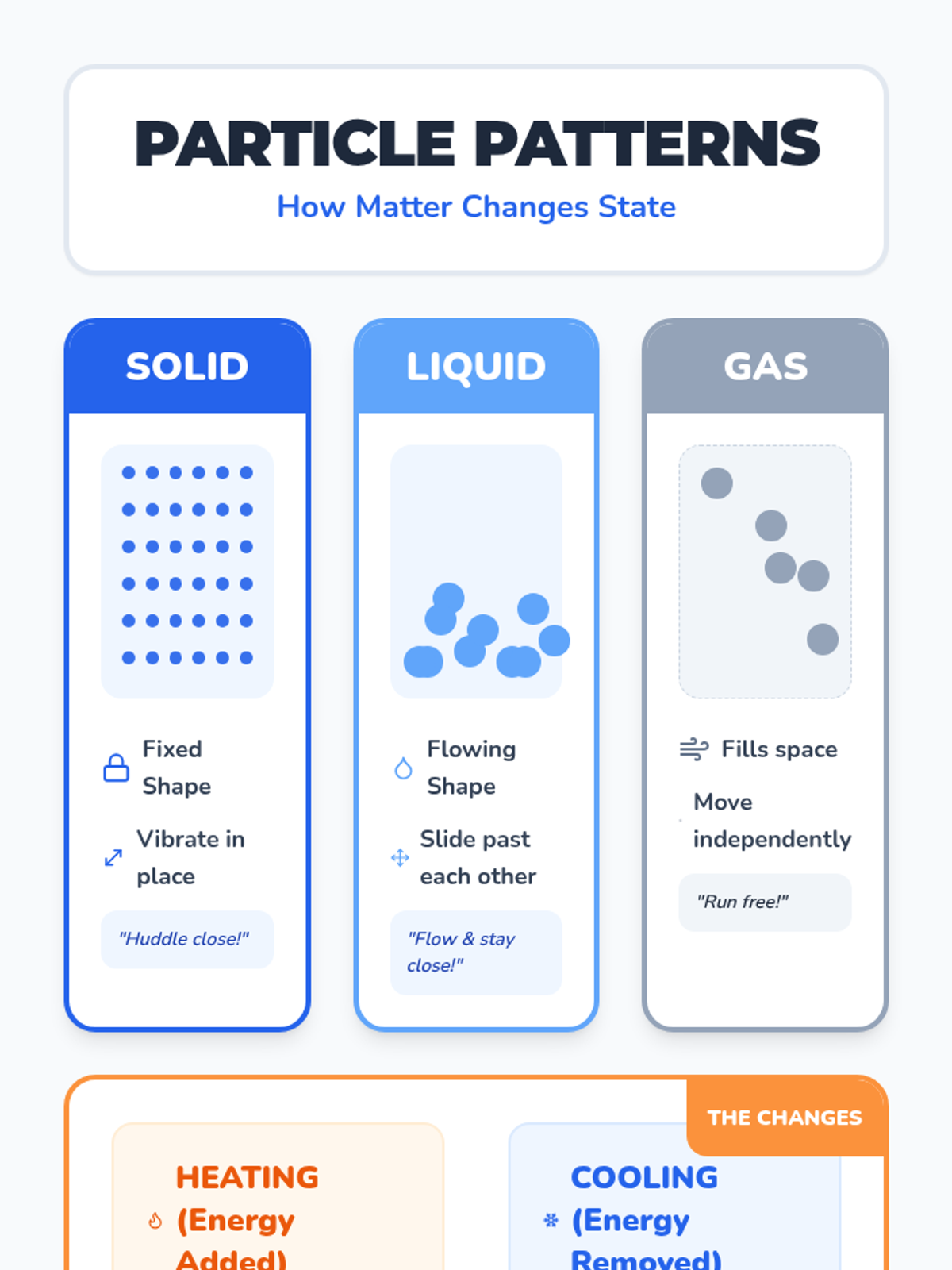
A kinesthetic science lesson where students model the movement of water particles as they gain and lose energy, exploring melting, evaporation, condensation, and freezing.
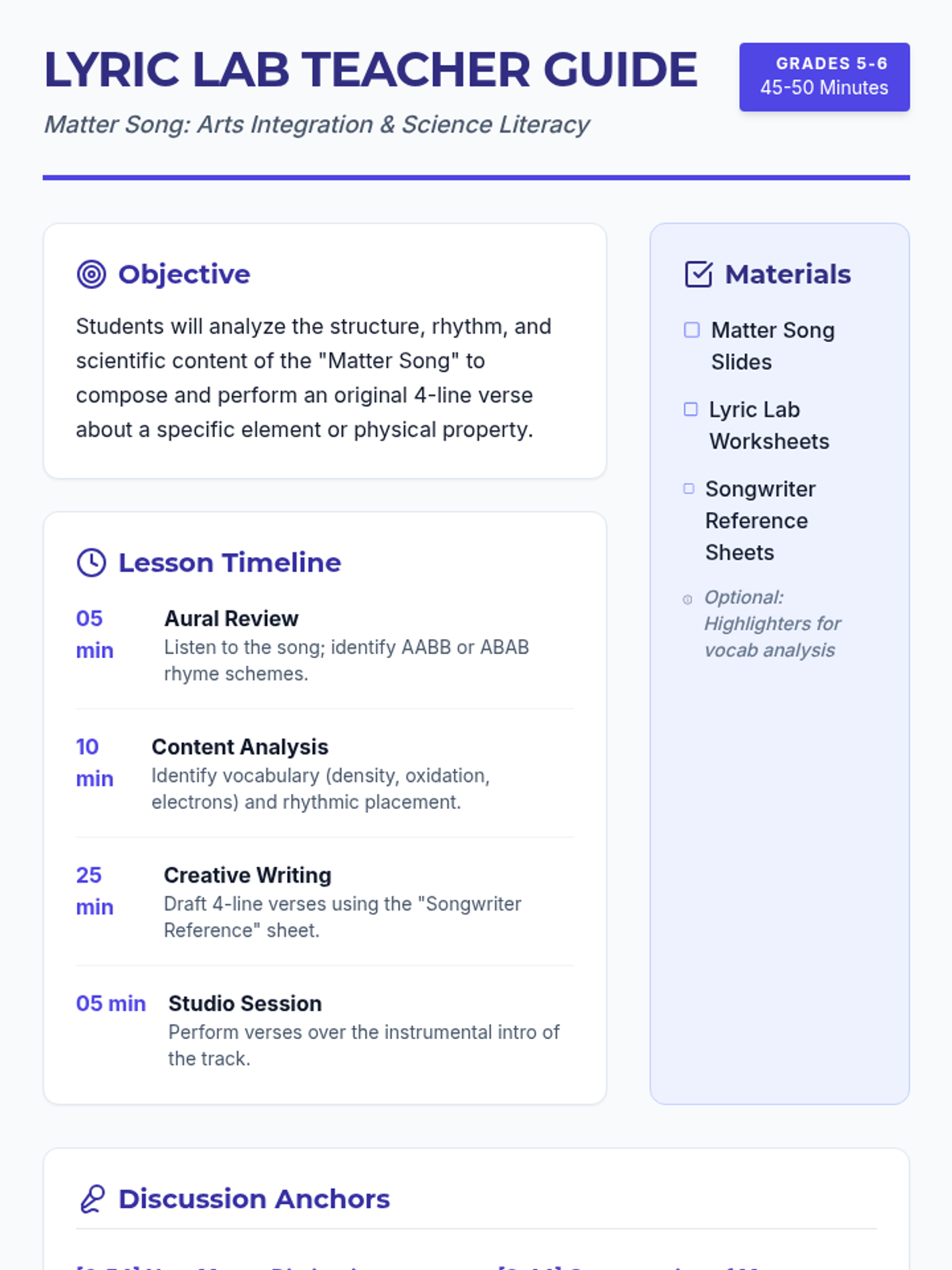
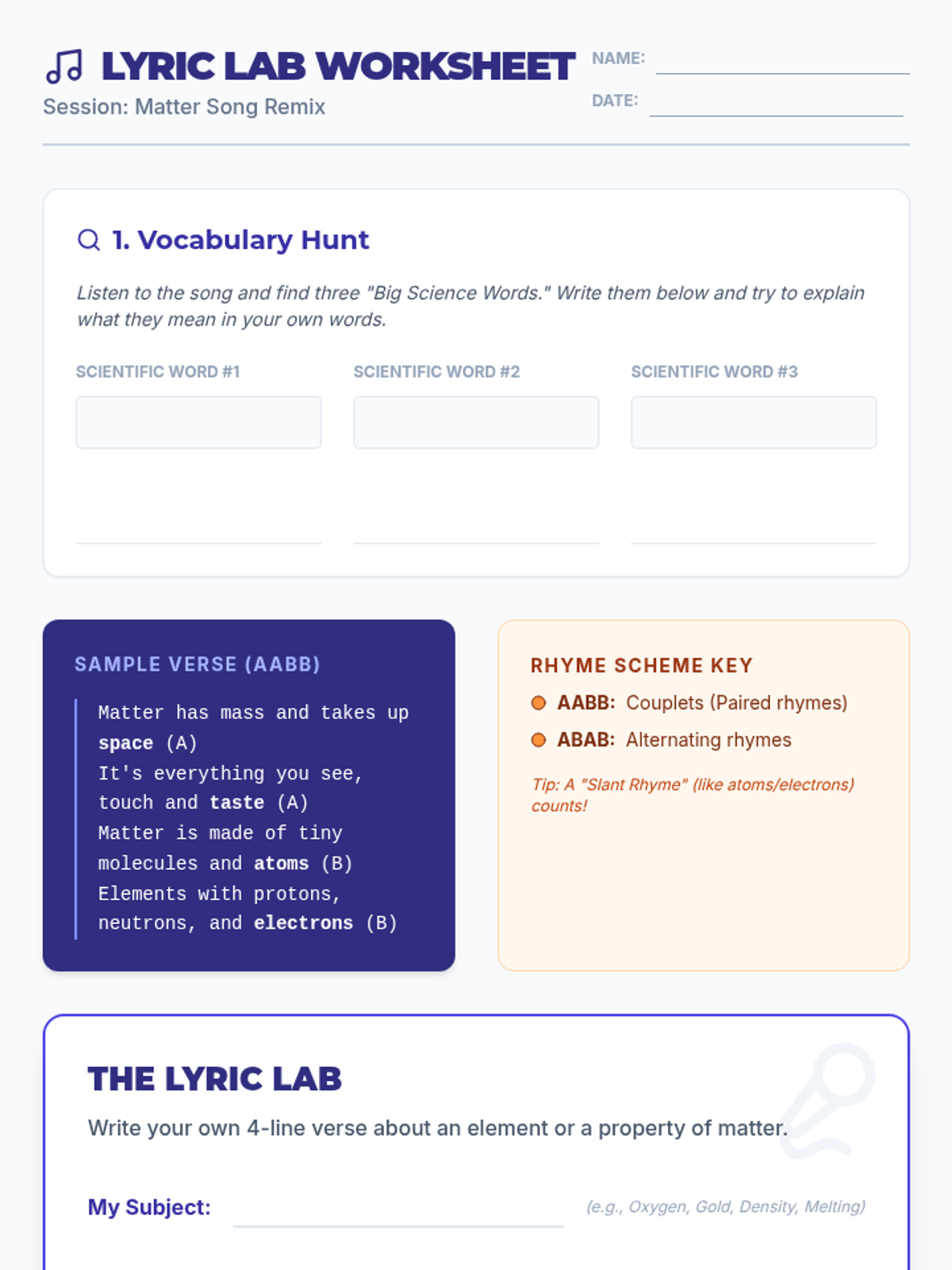
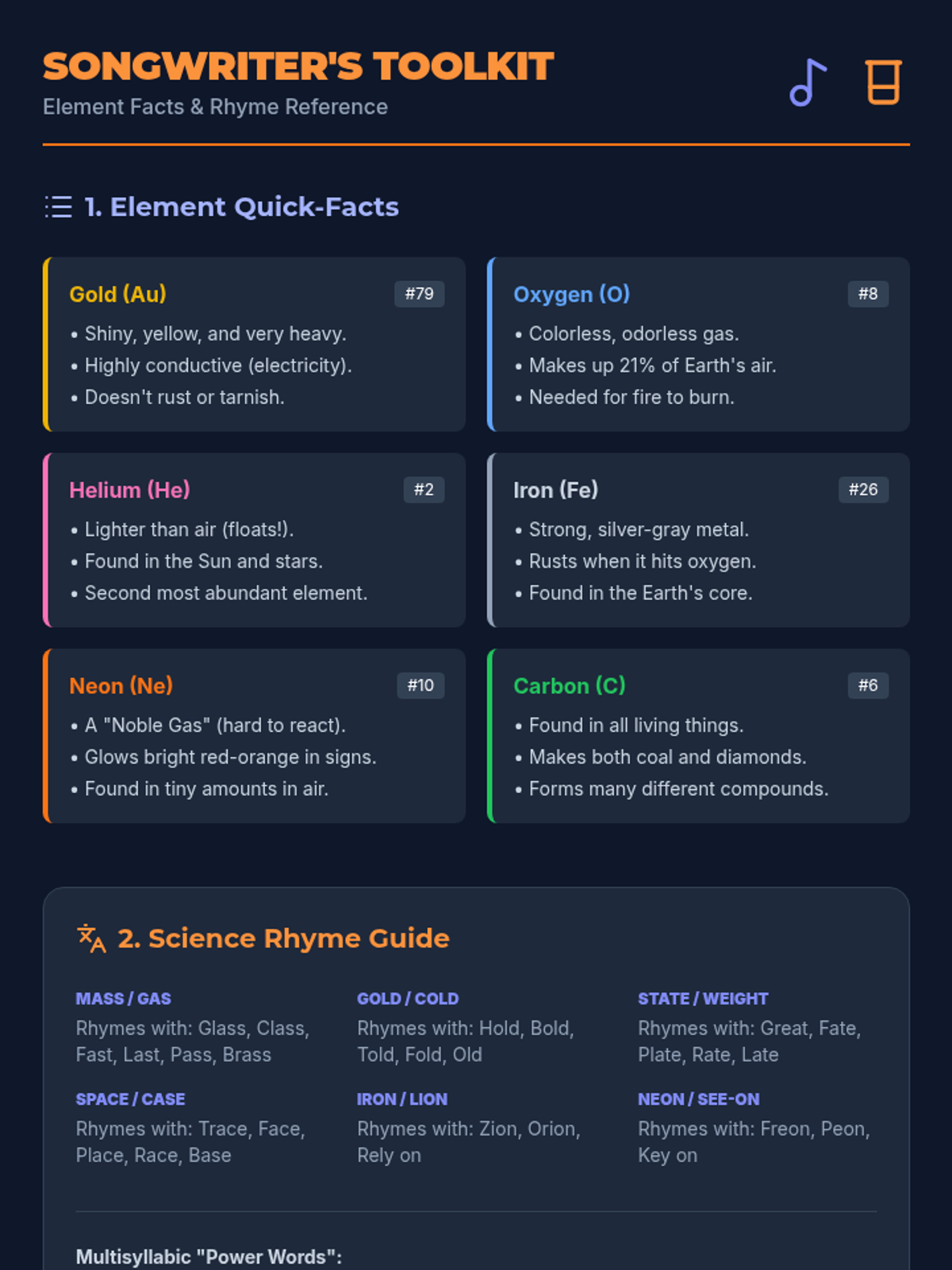
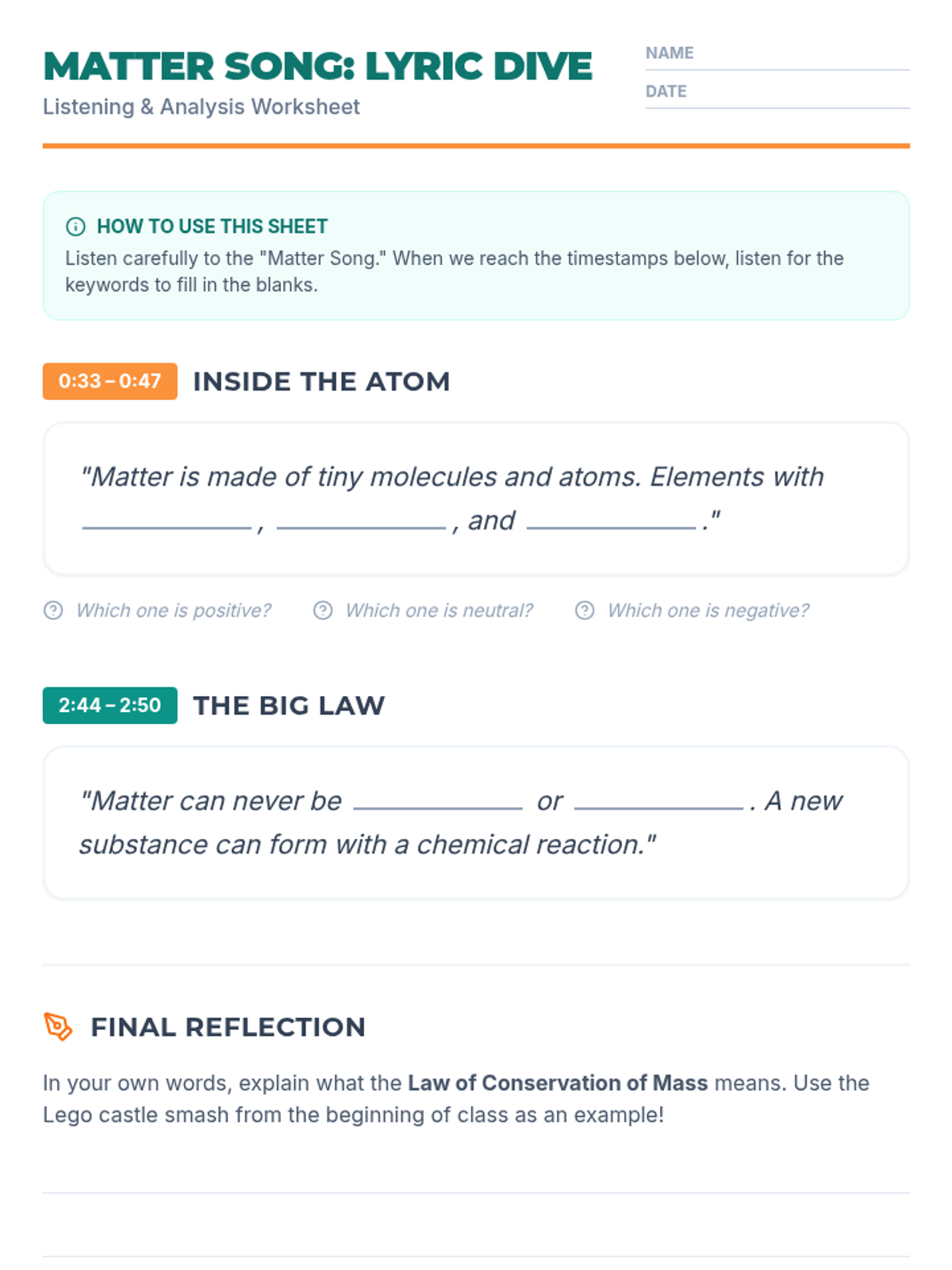
An arts-integrated science lesson where students analyze the 'Matter Song' to write and perform their own element-themed verses.
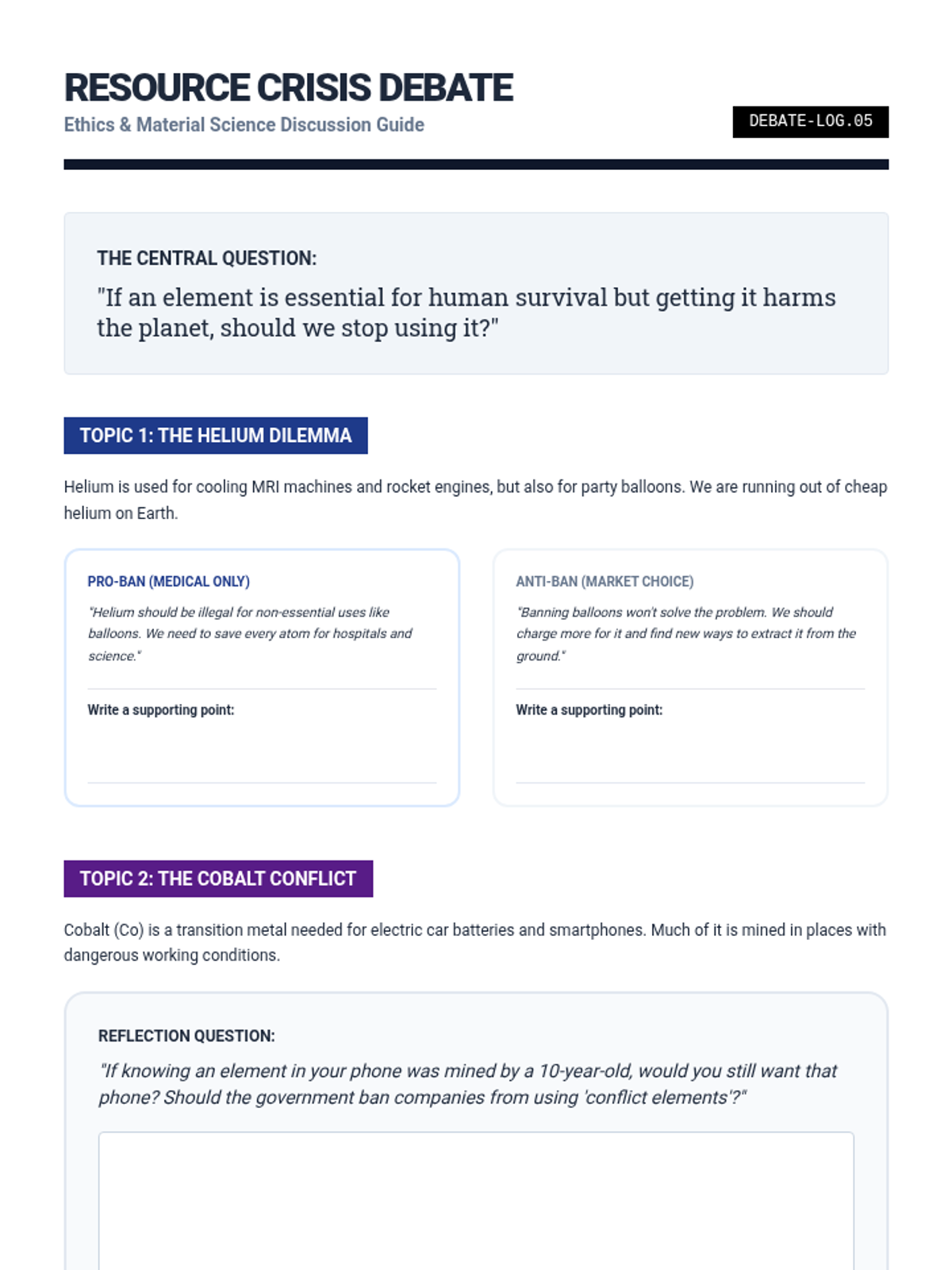
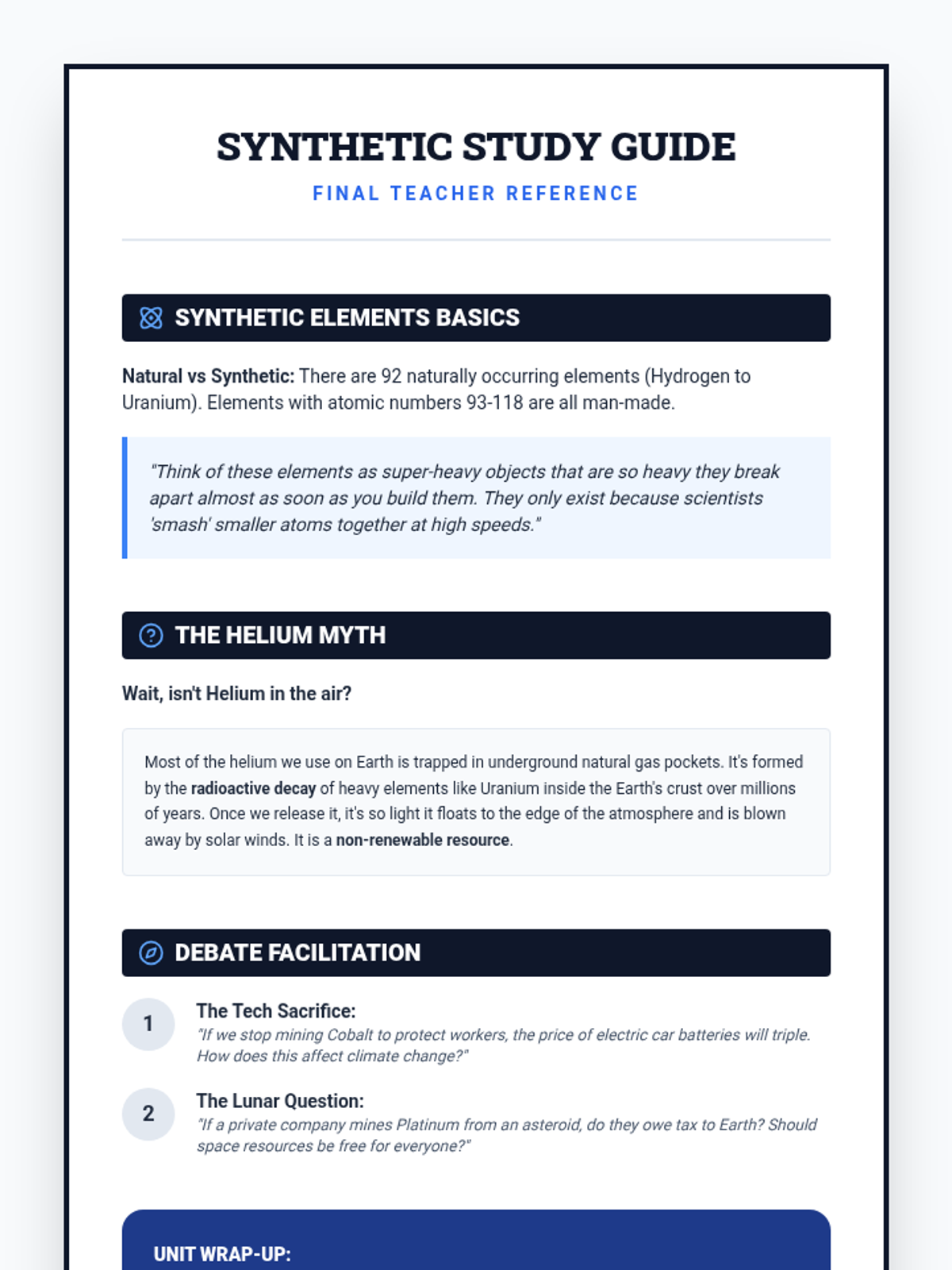
Explores synthetic elements, resource scarcity, and the future of material science and sustainability.
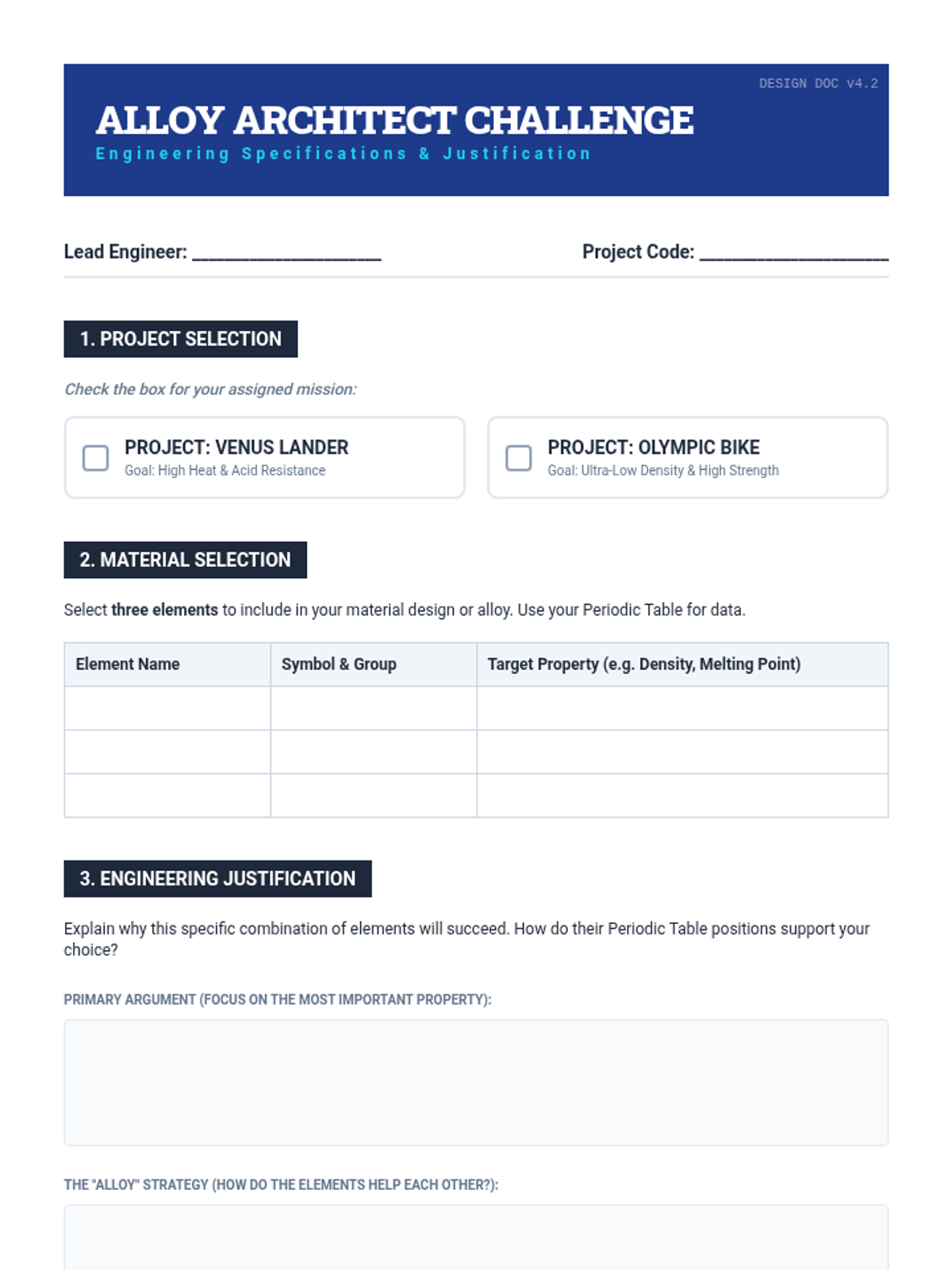
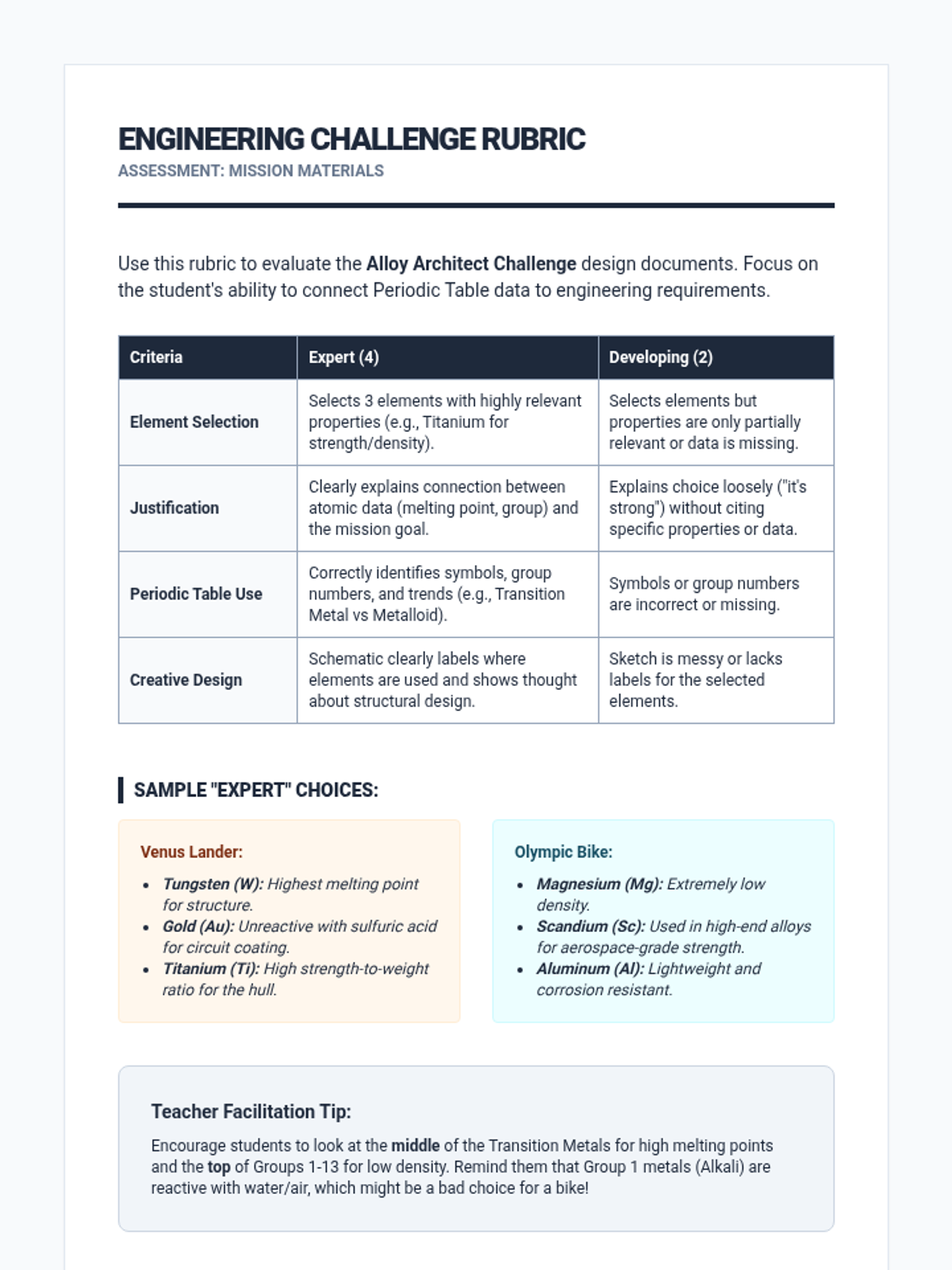
A project-based lesson where students select materials for specific engineering scenarios based on Periodic Table trends.
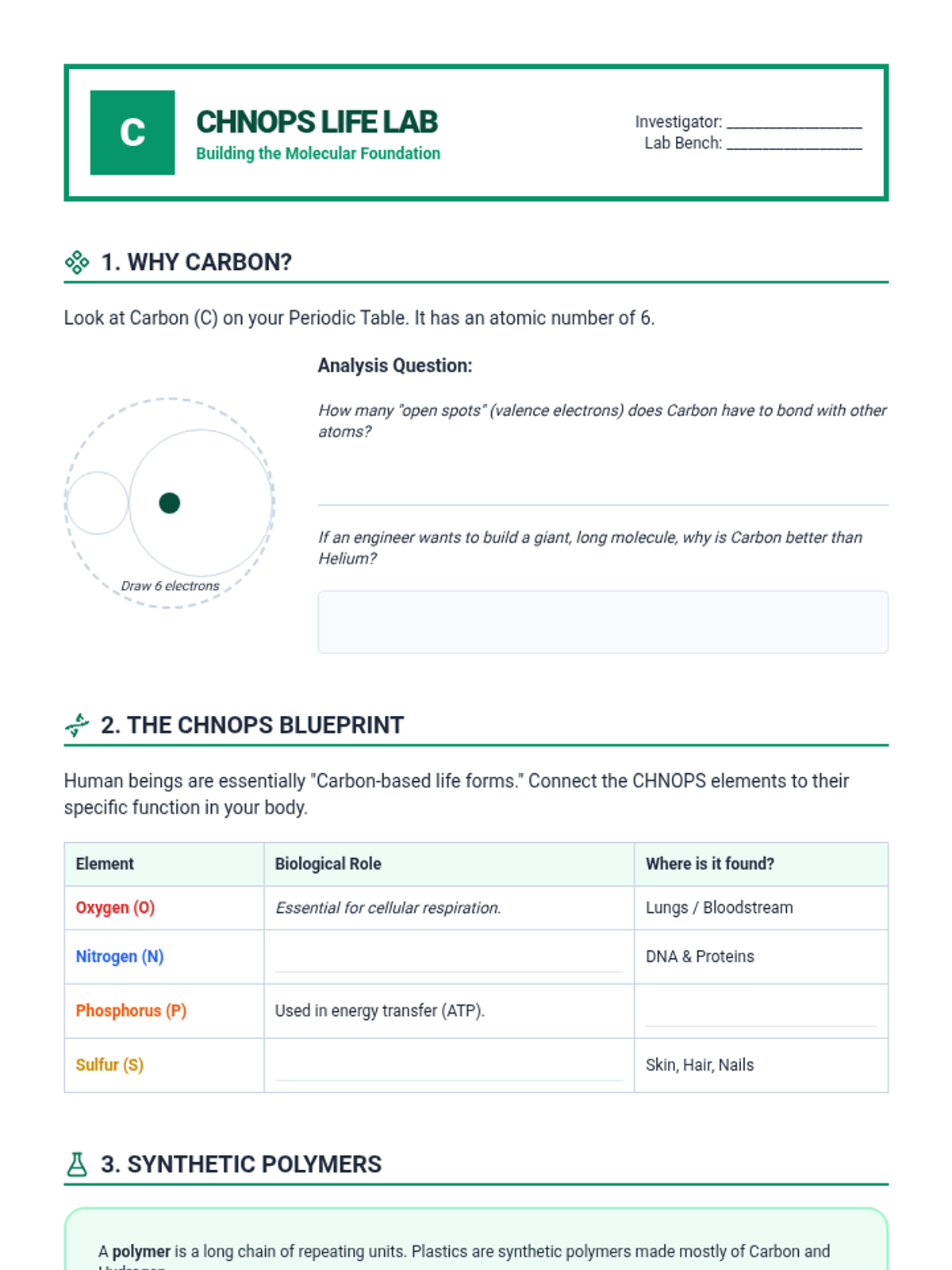
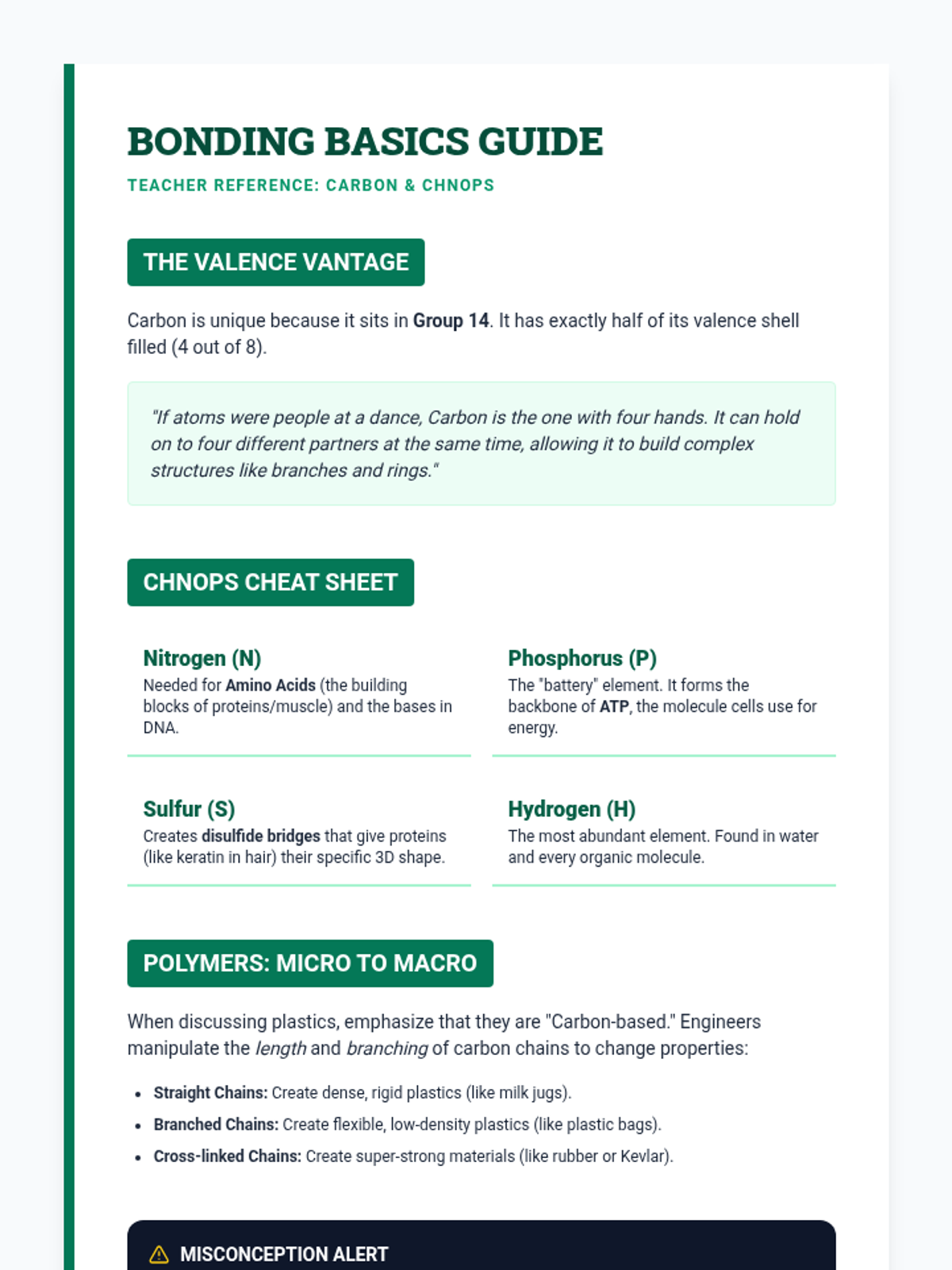
Focuses on the unique bonding properties of carbon and the essential elements of life (CHNOPS).
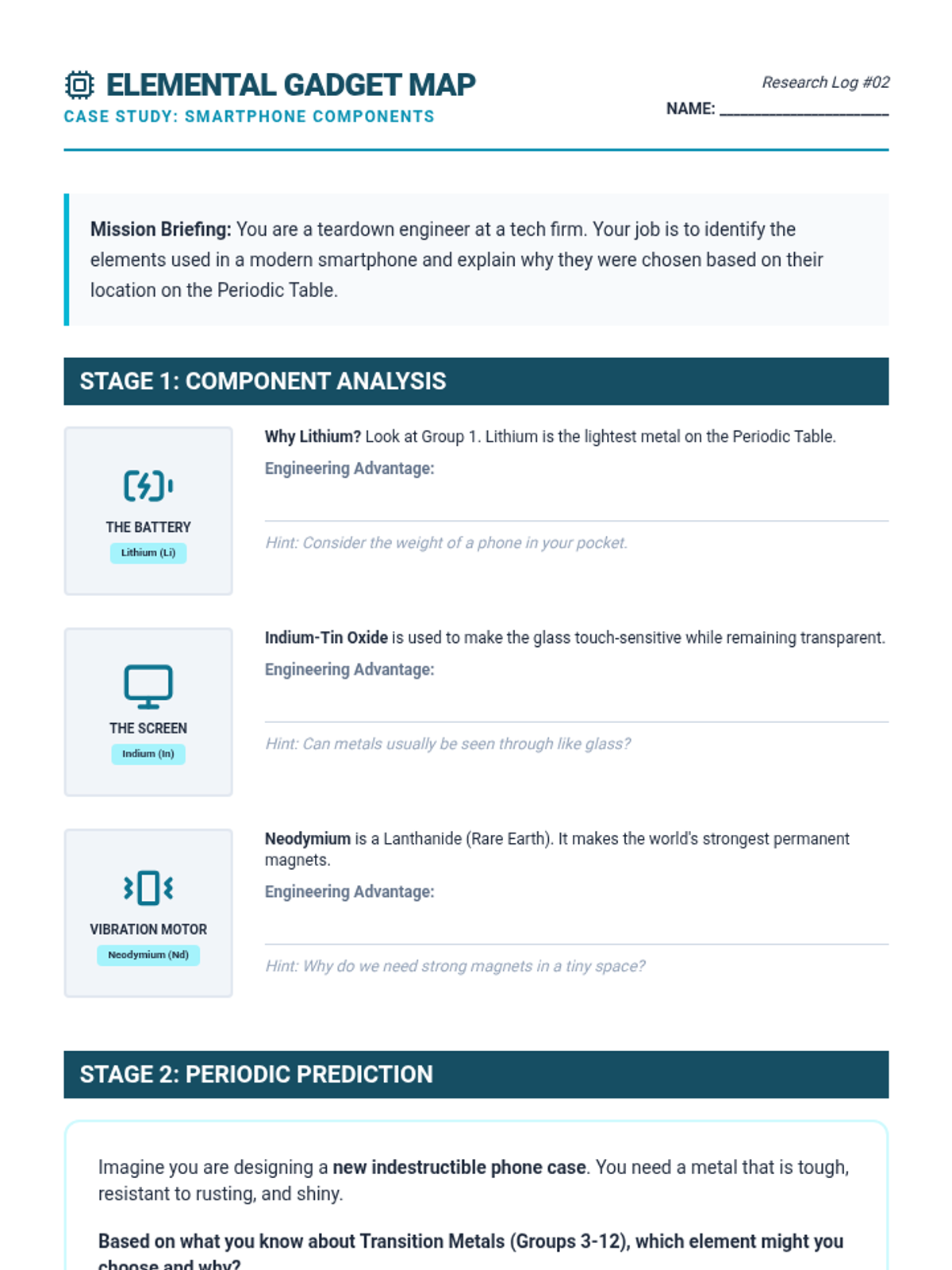
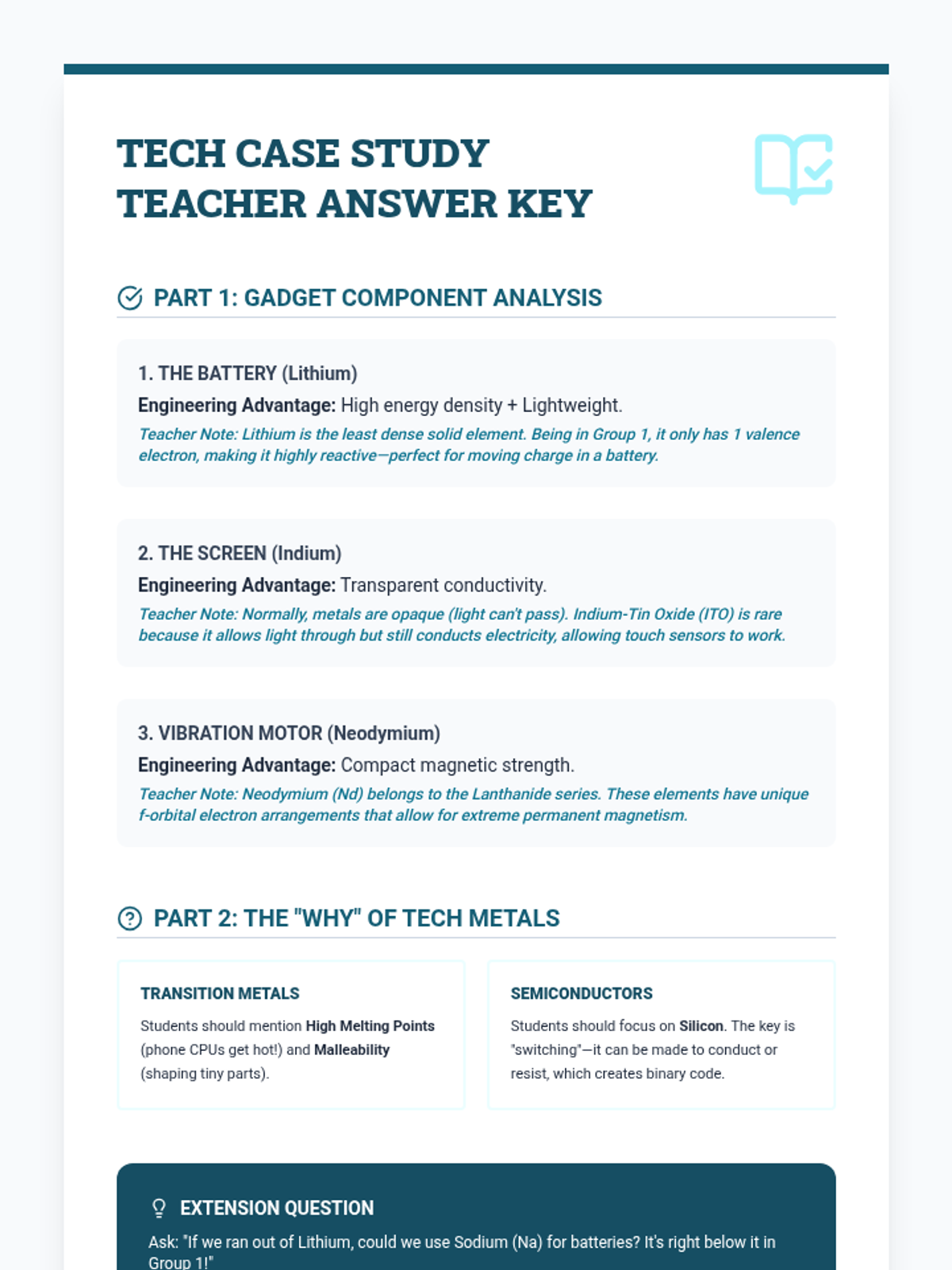
An investigation into transition metals and rare earth elements used in modern electronics, specifically smartphones.
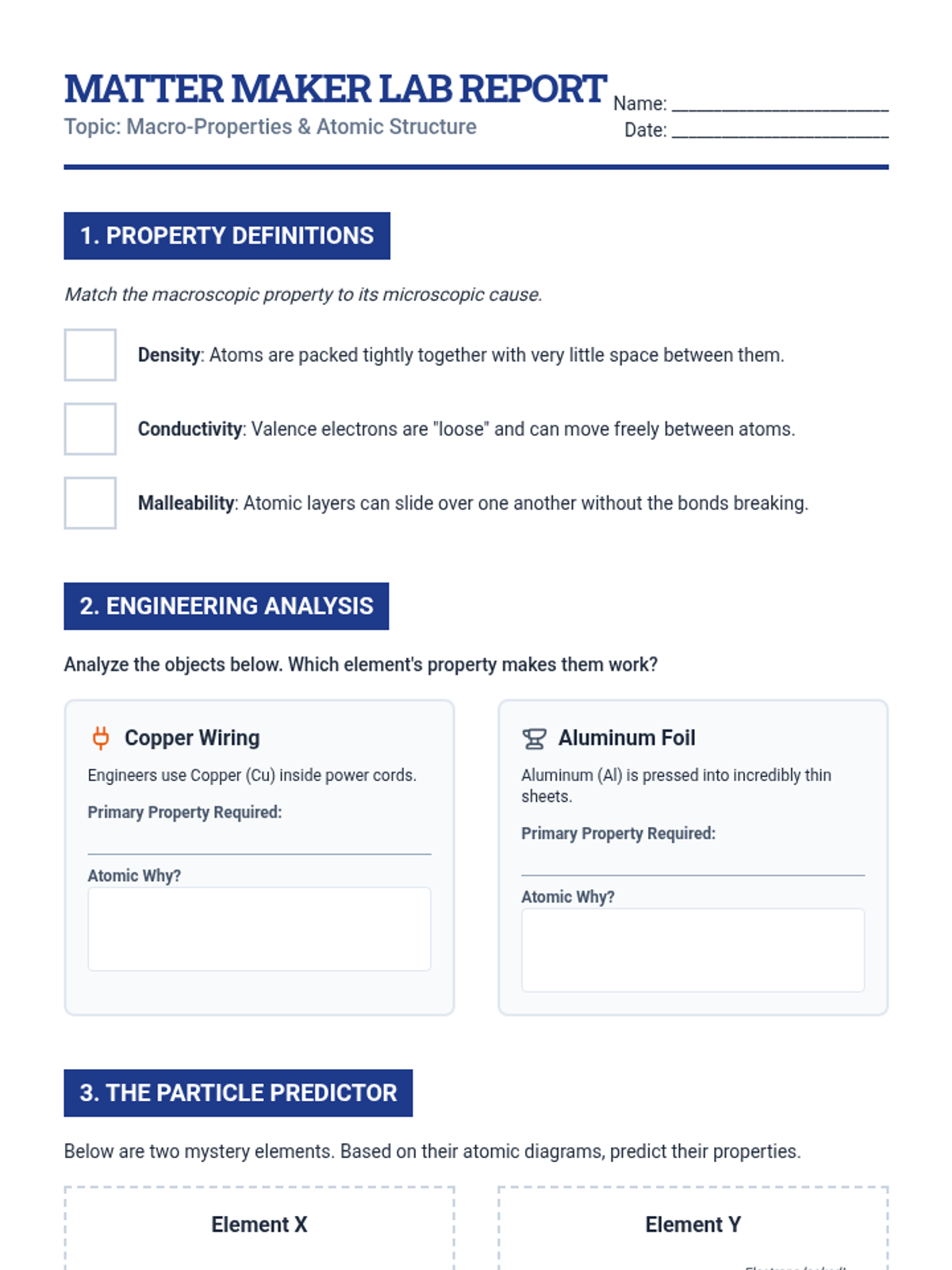
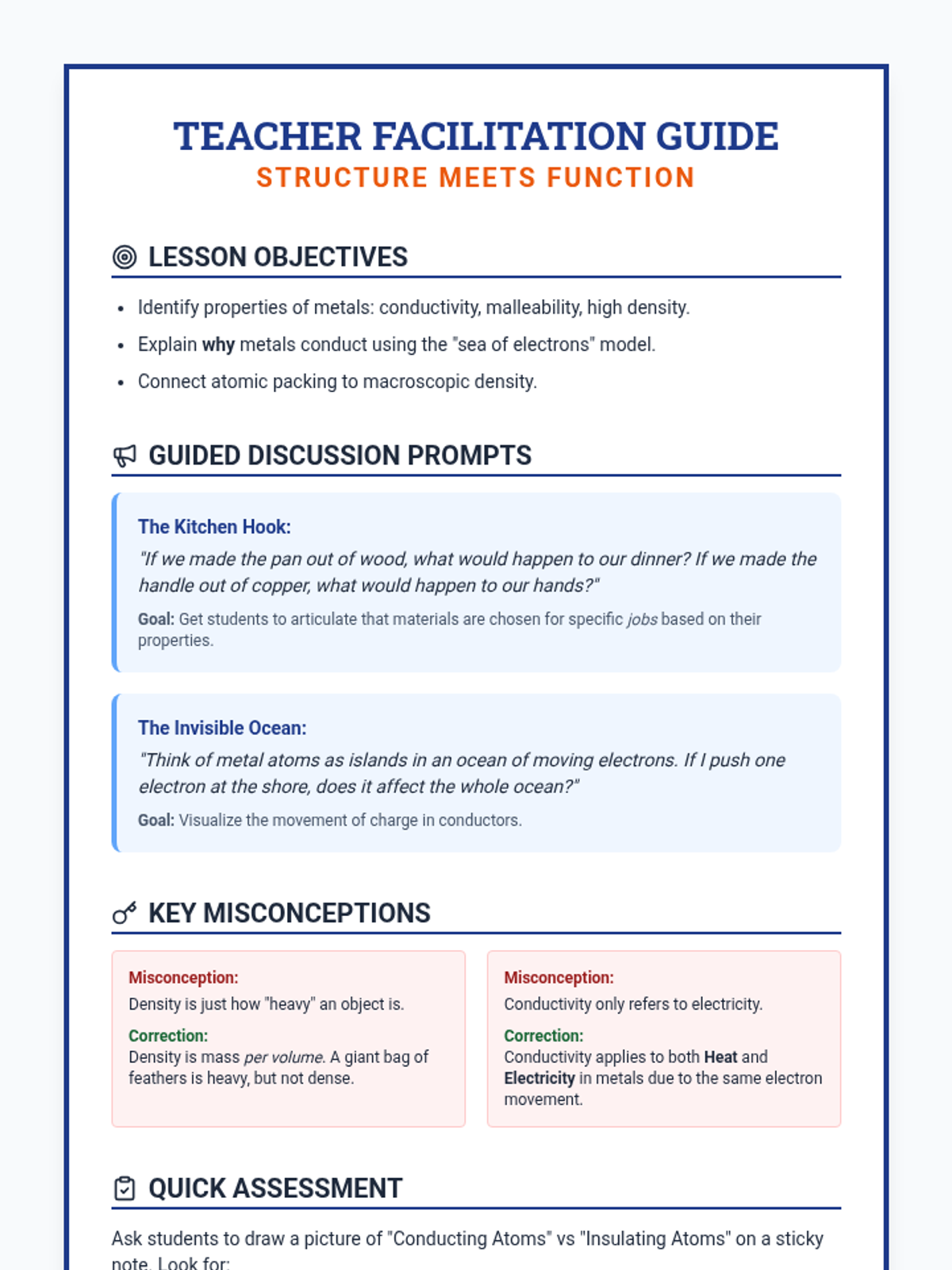
Students explore how the arrangement of atoms and the behavior of electrons lead to macroscopic properties like density, conductivity, and malleability.
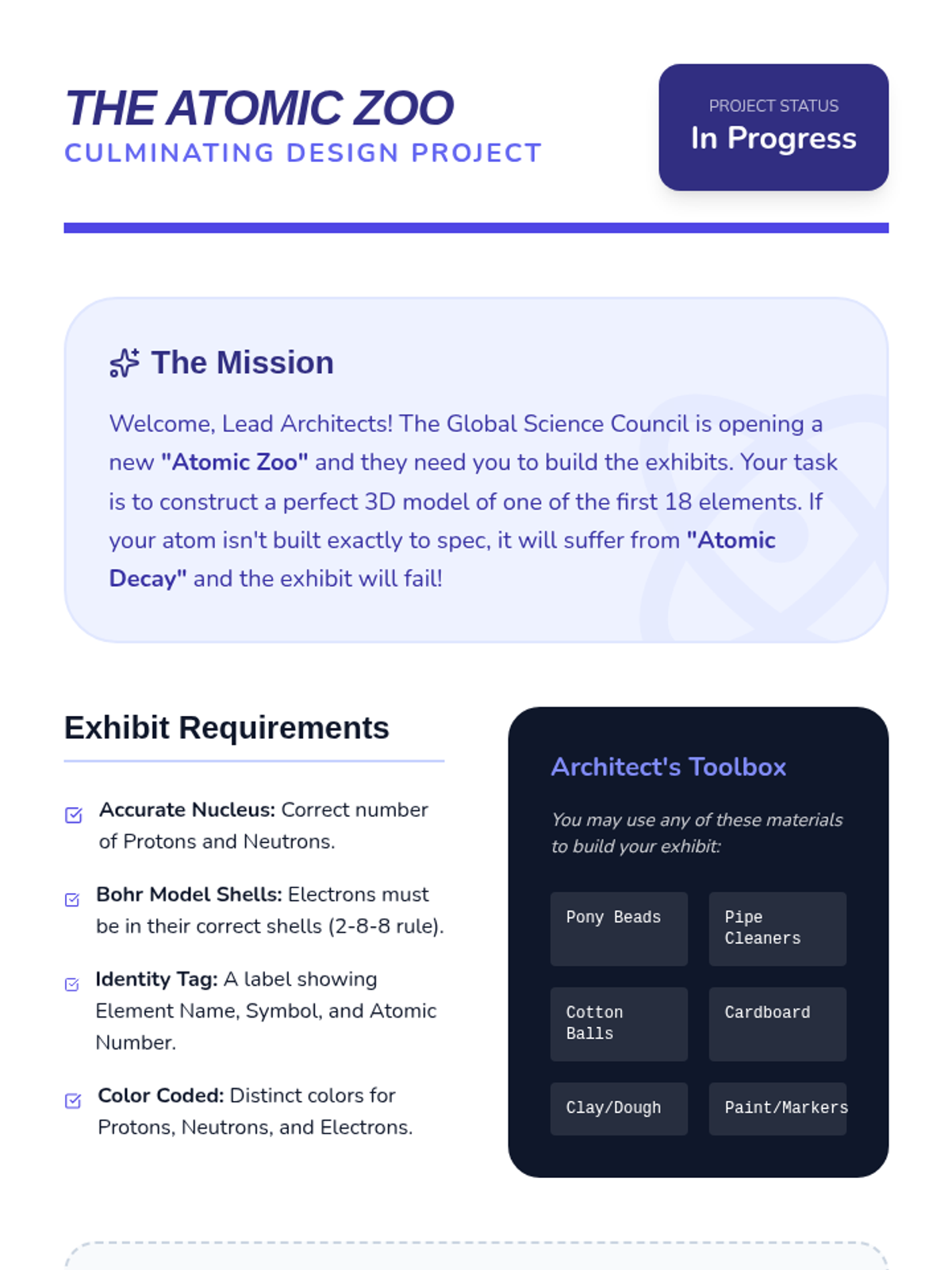
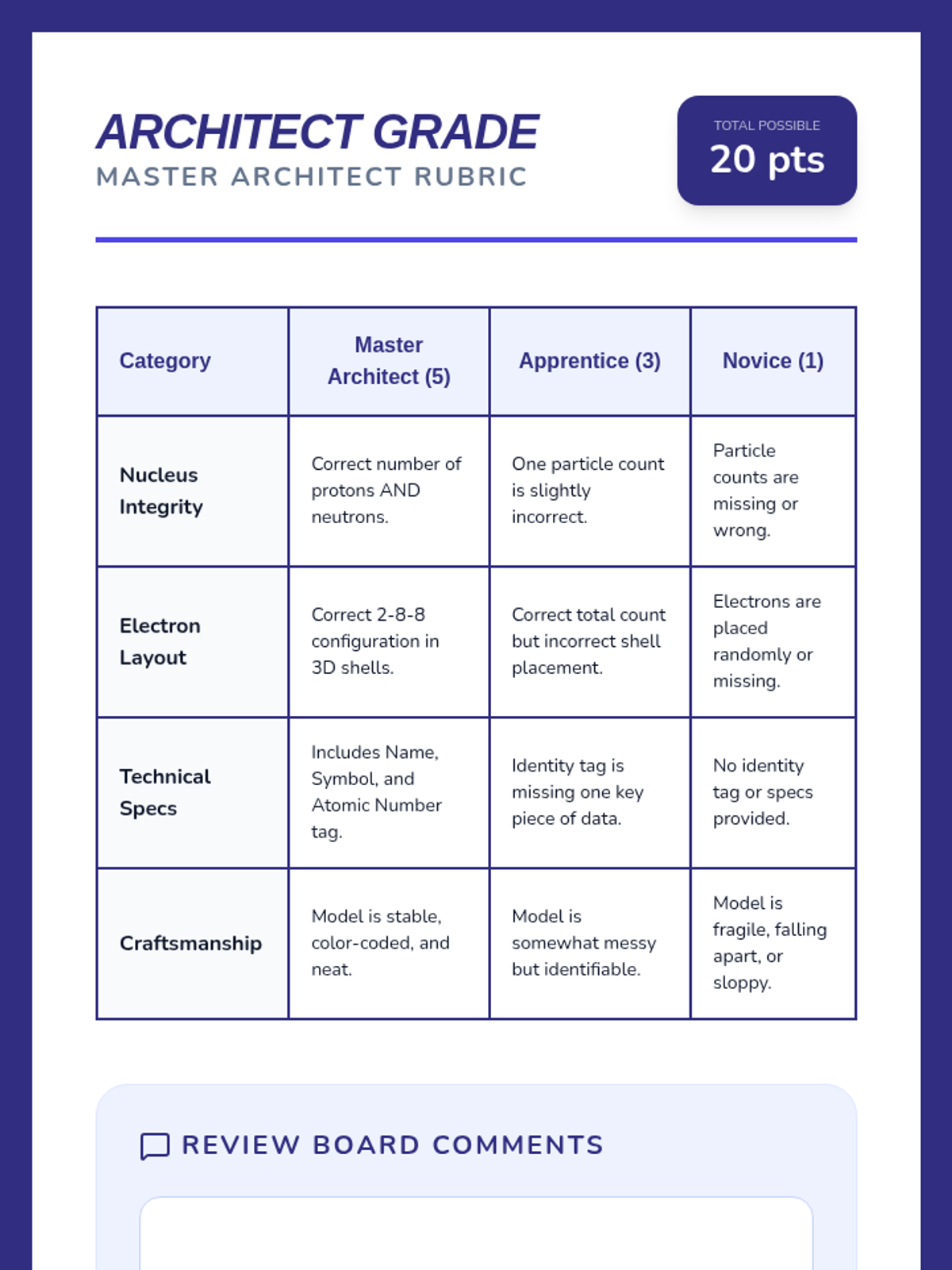
A culminating project-based lesson where students build models of the first eighteen elements and participate in a gallery walk to demonstrate mastery of atomic theory.
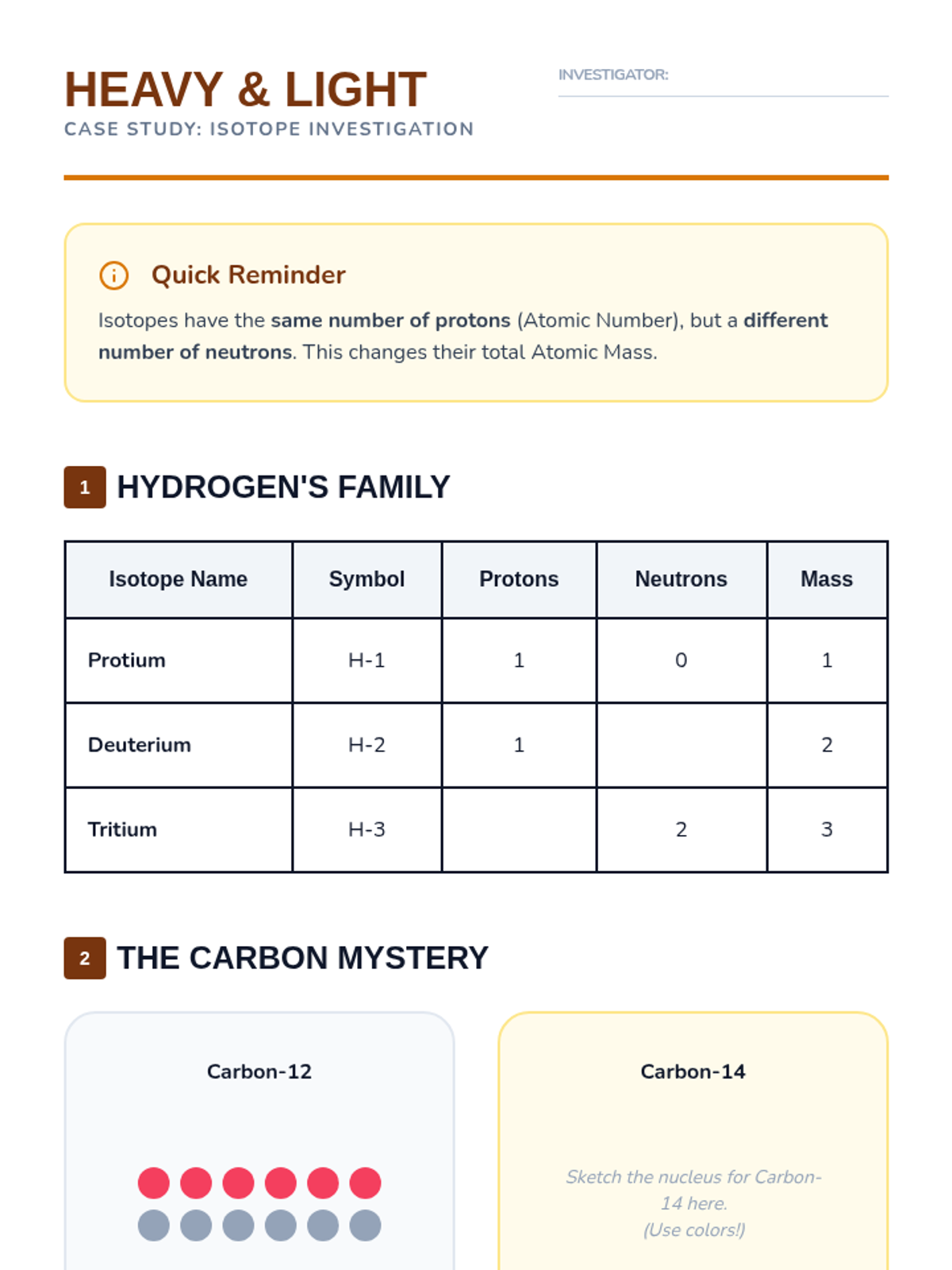
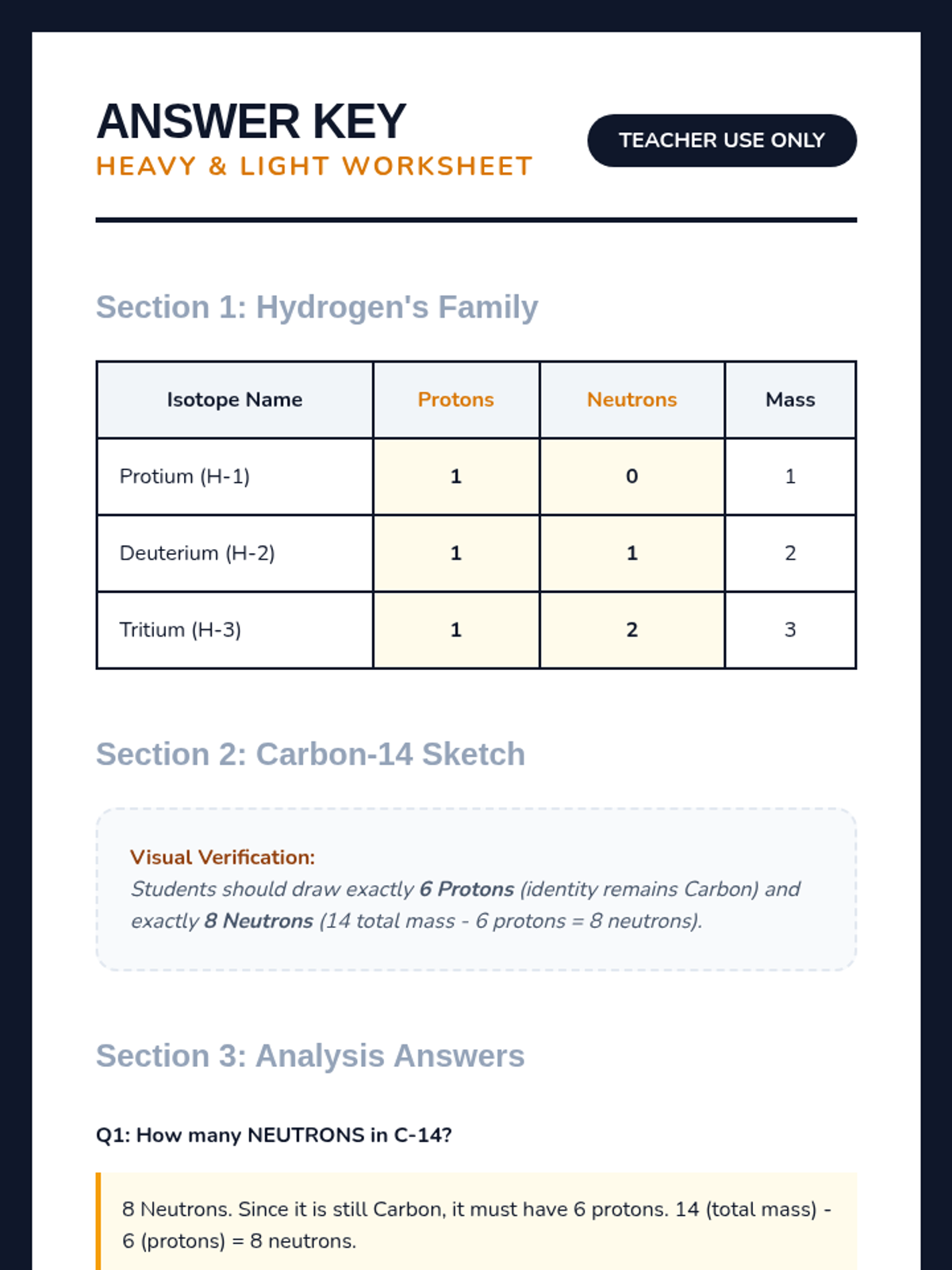
Students investigate isotopes to understand how atoms of the same element can have different masses due to neutron variation. This clarifies the concept of average atomic mass.
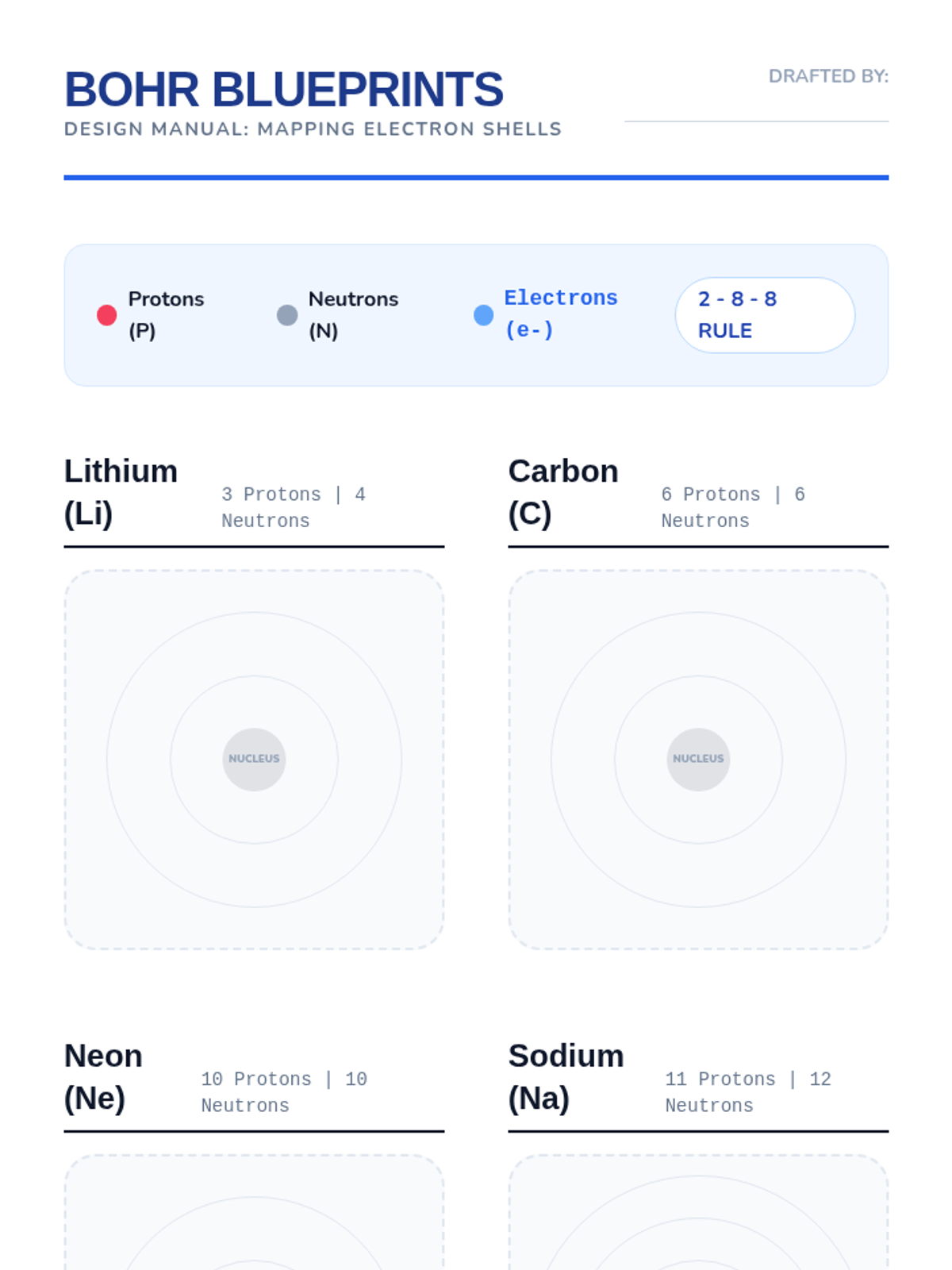
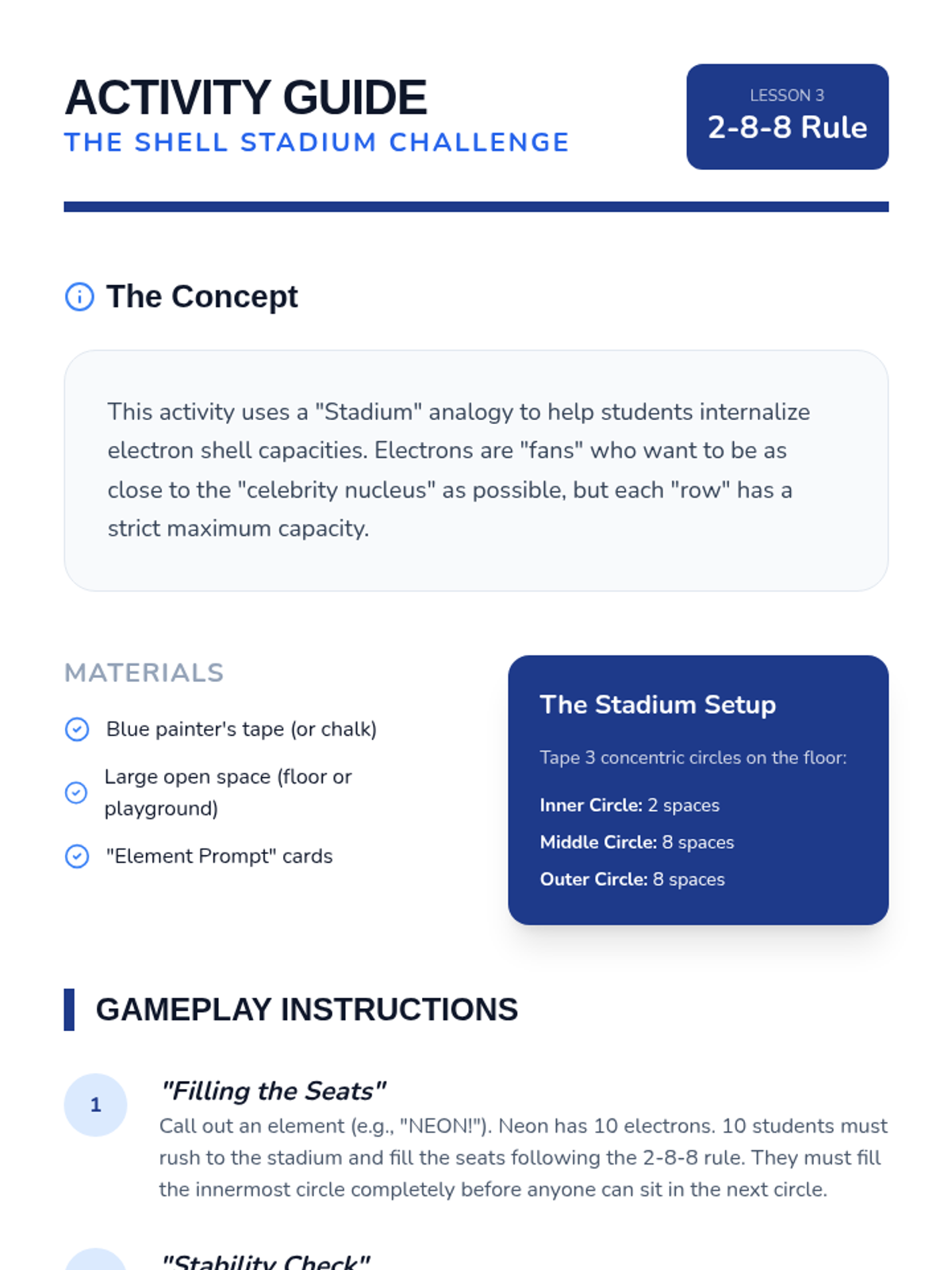
This lesson focuses on electron organization using the Bohr model and the 2-8-8 rule. Students visualize energy levels and learn to map electron configurations.
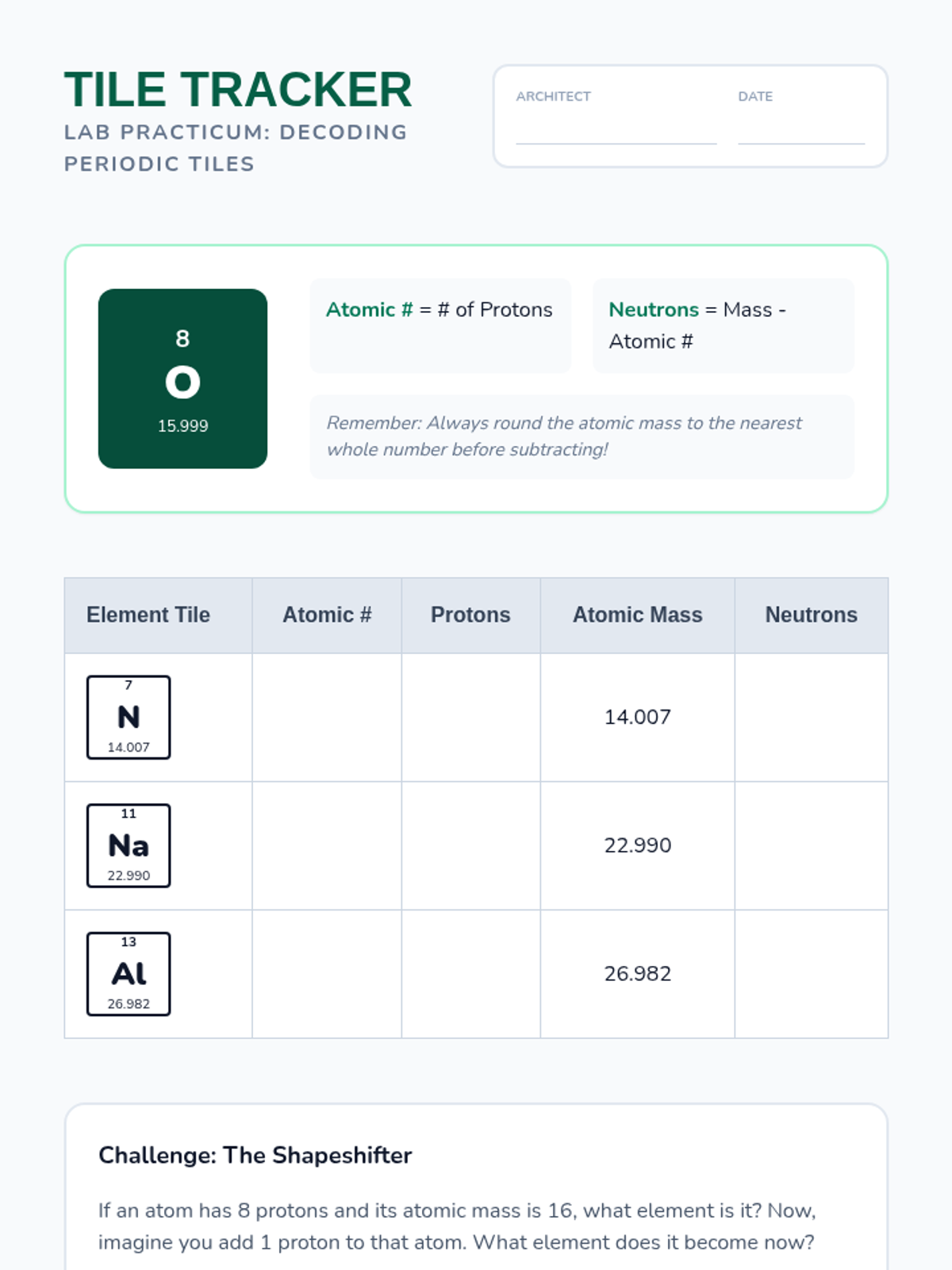
Learners discover how the number of protons defines an element and how atomic mass is calculated. They practice extracting information from element tiles on the periodic table.
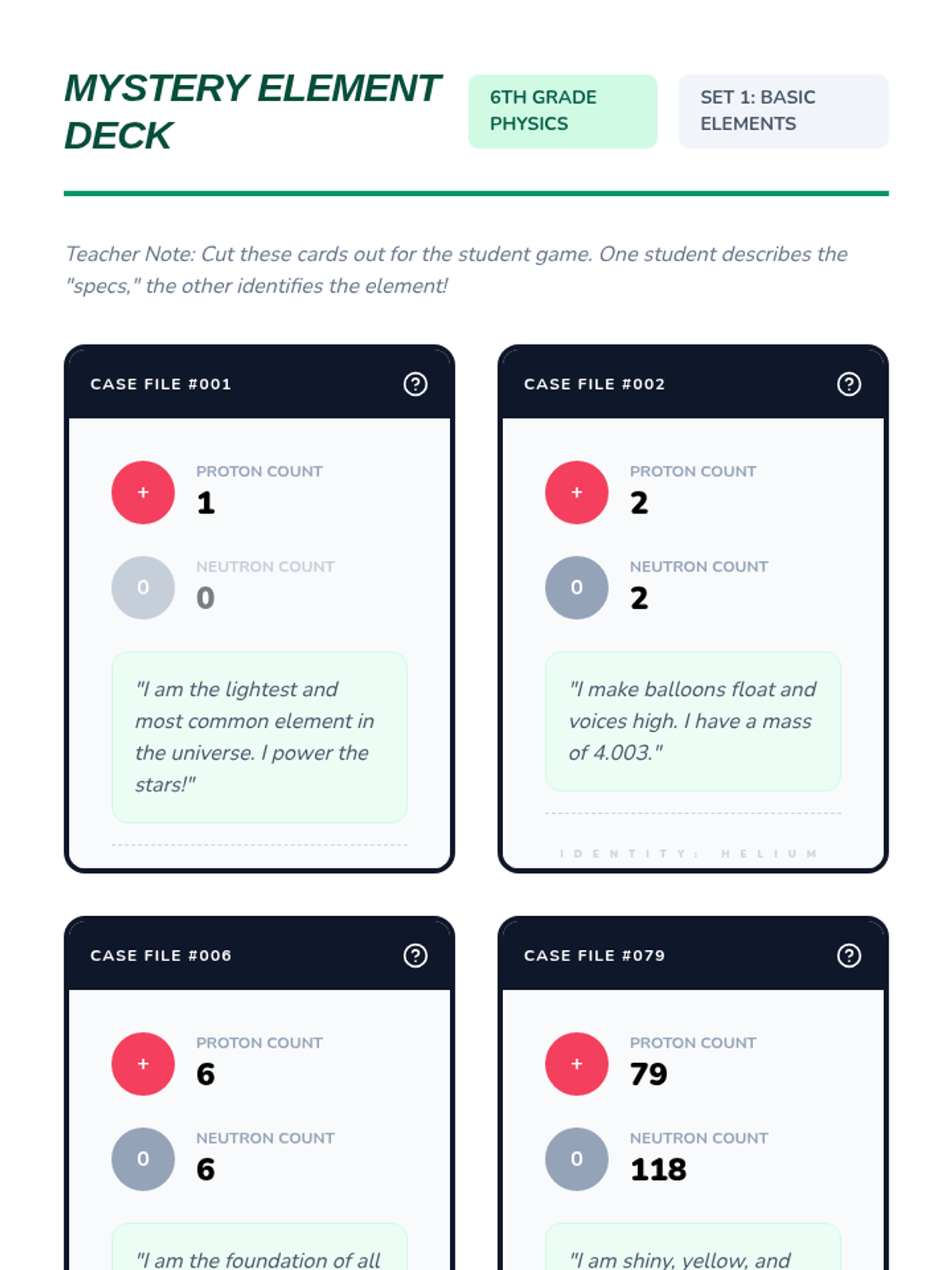
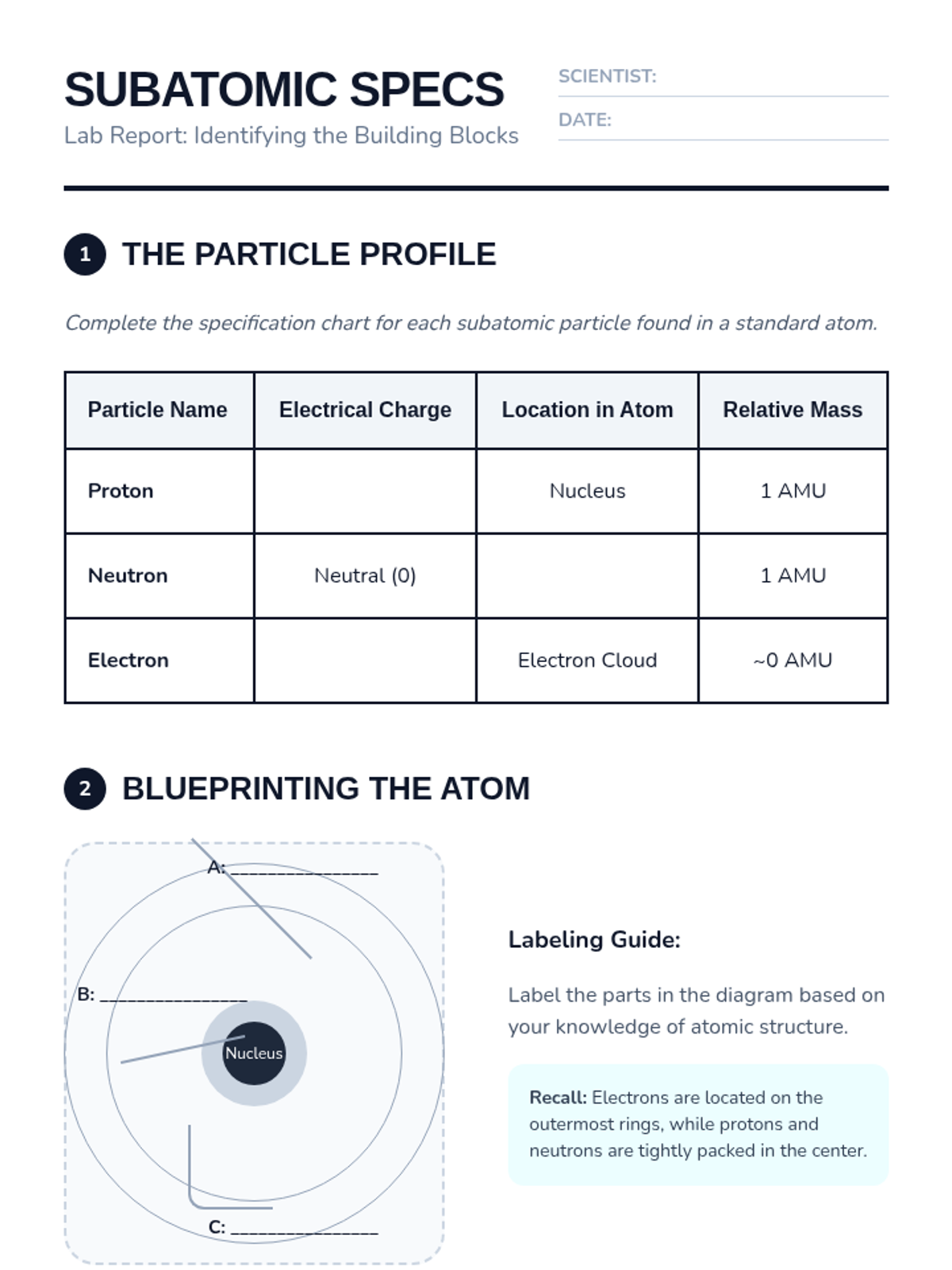
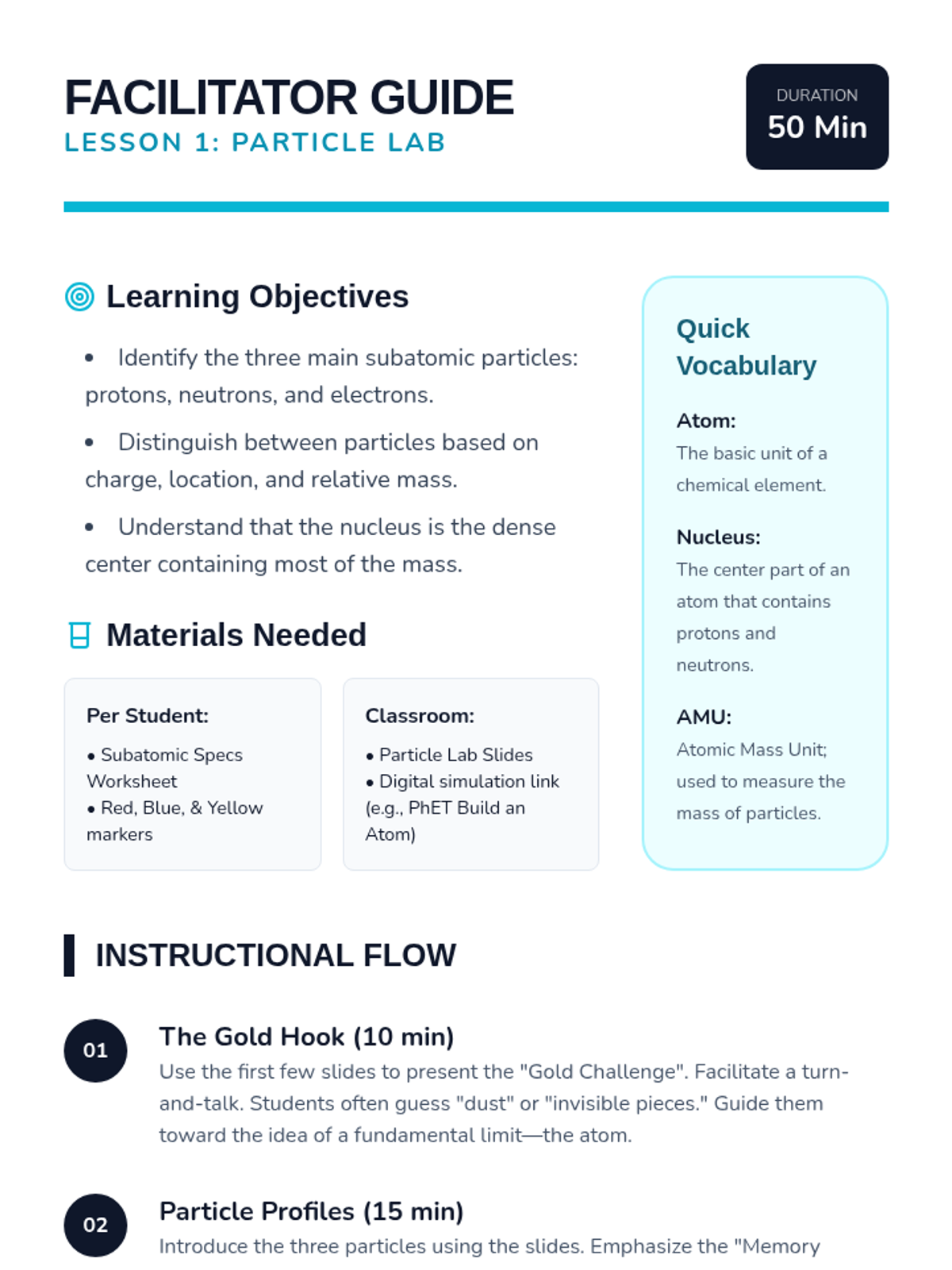
Students explore protons, neutrons, and electrons to understand their charges, locations, and roles within the atom. This lesson establishes the foundation for understanding atomic identity.
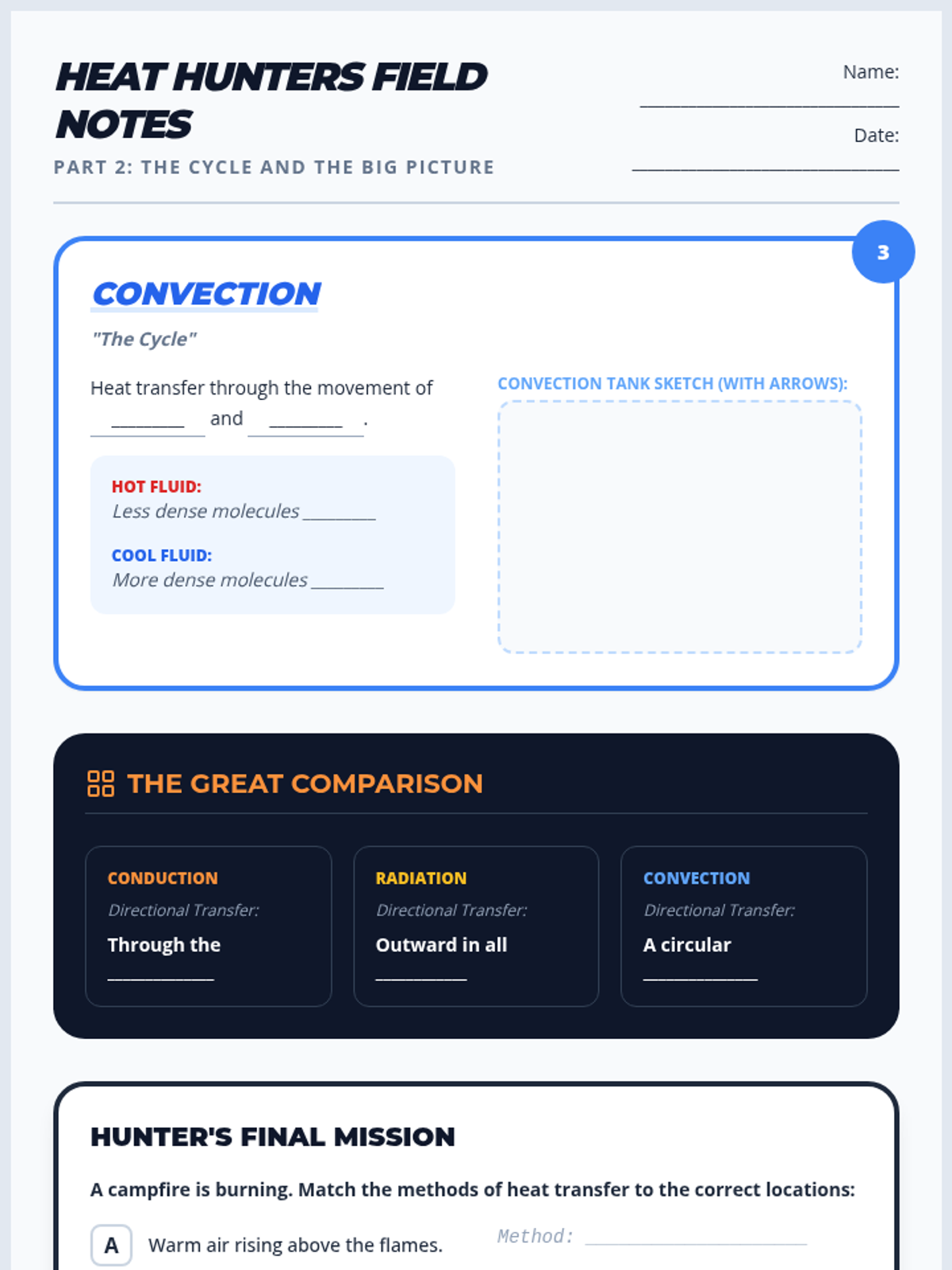
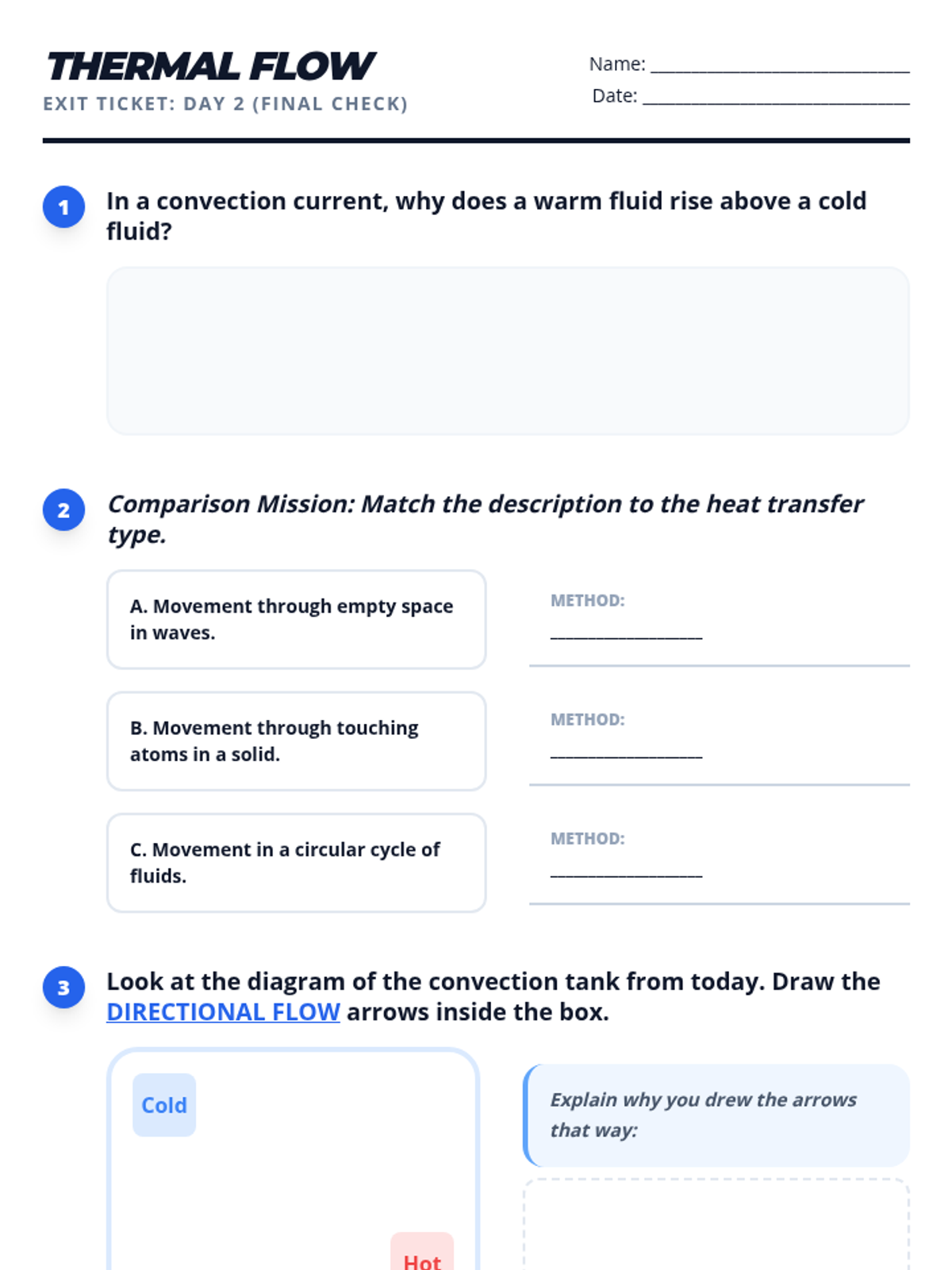
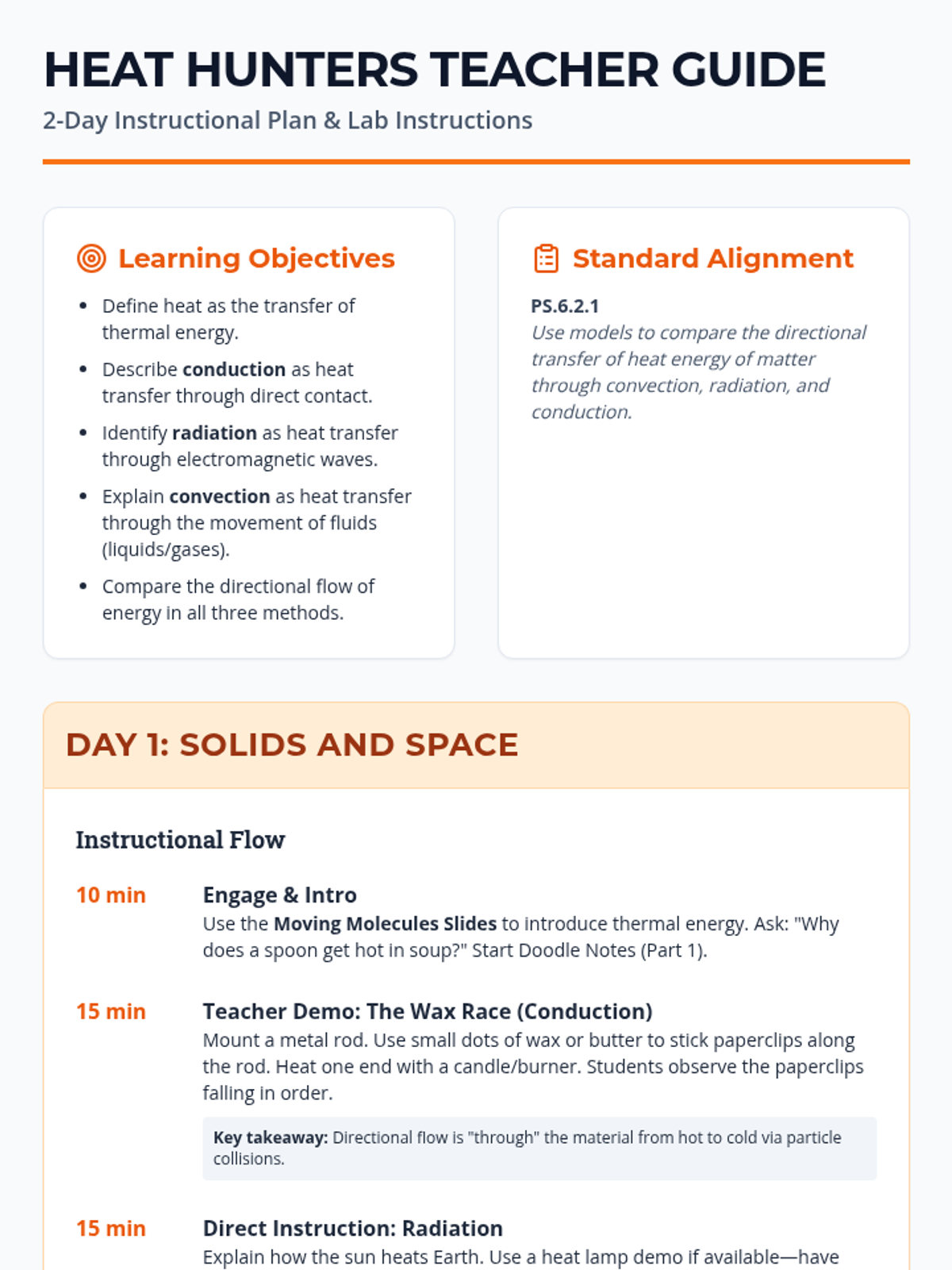
Exploration of convection currents in fluids and a final comparison of all three heat transfer methods. Includes a teacher-led demonstration of convection in water and a summary activity.
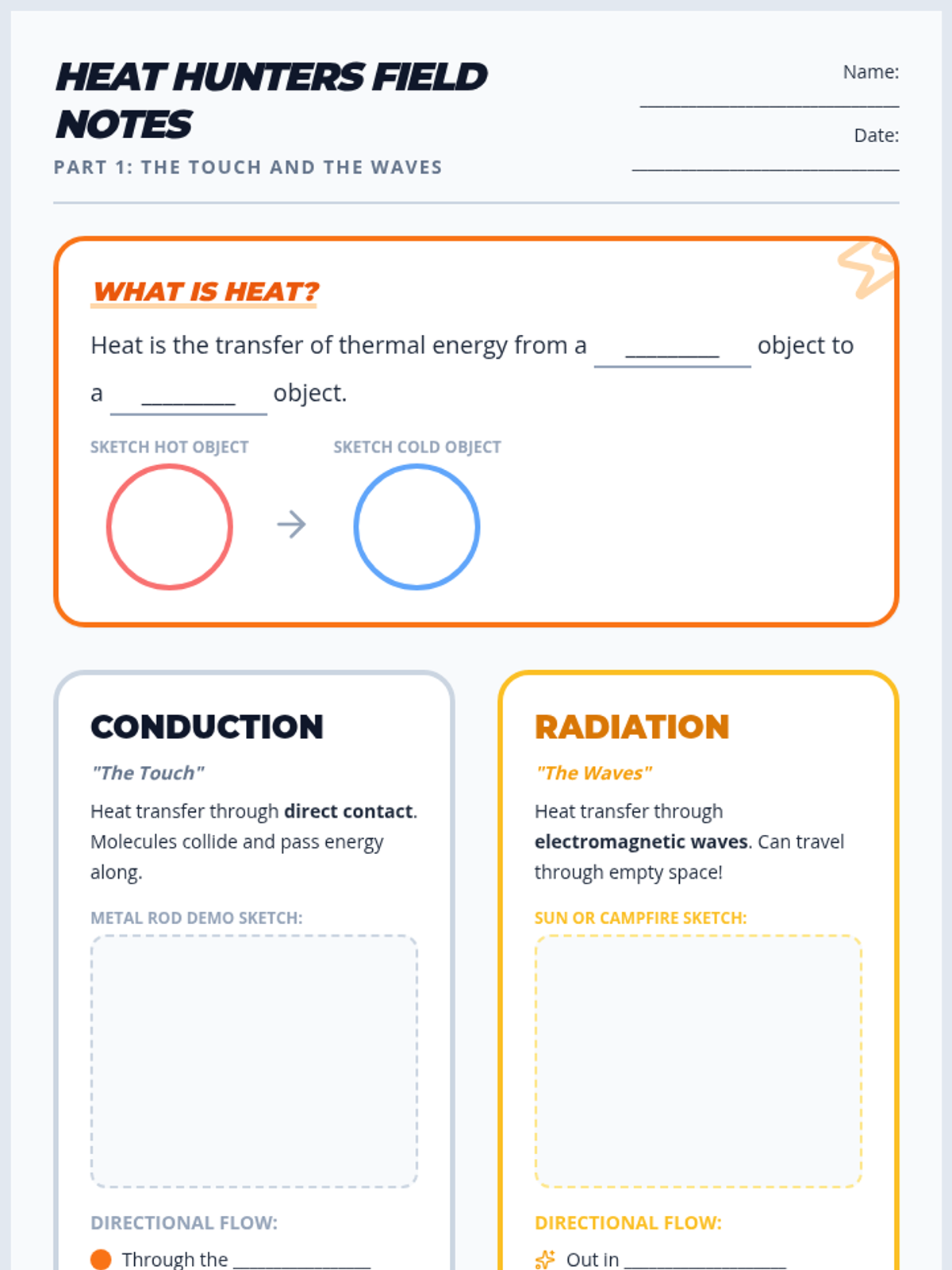
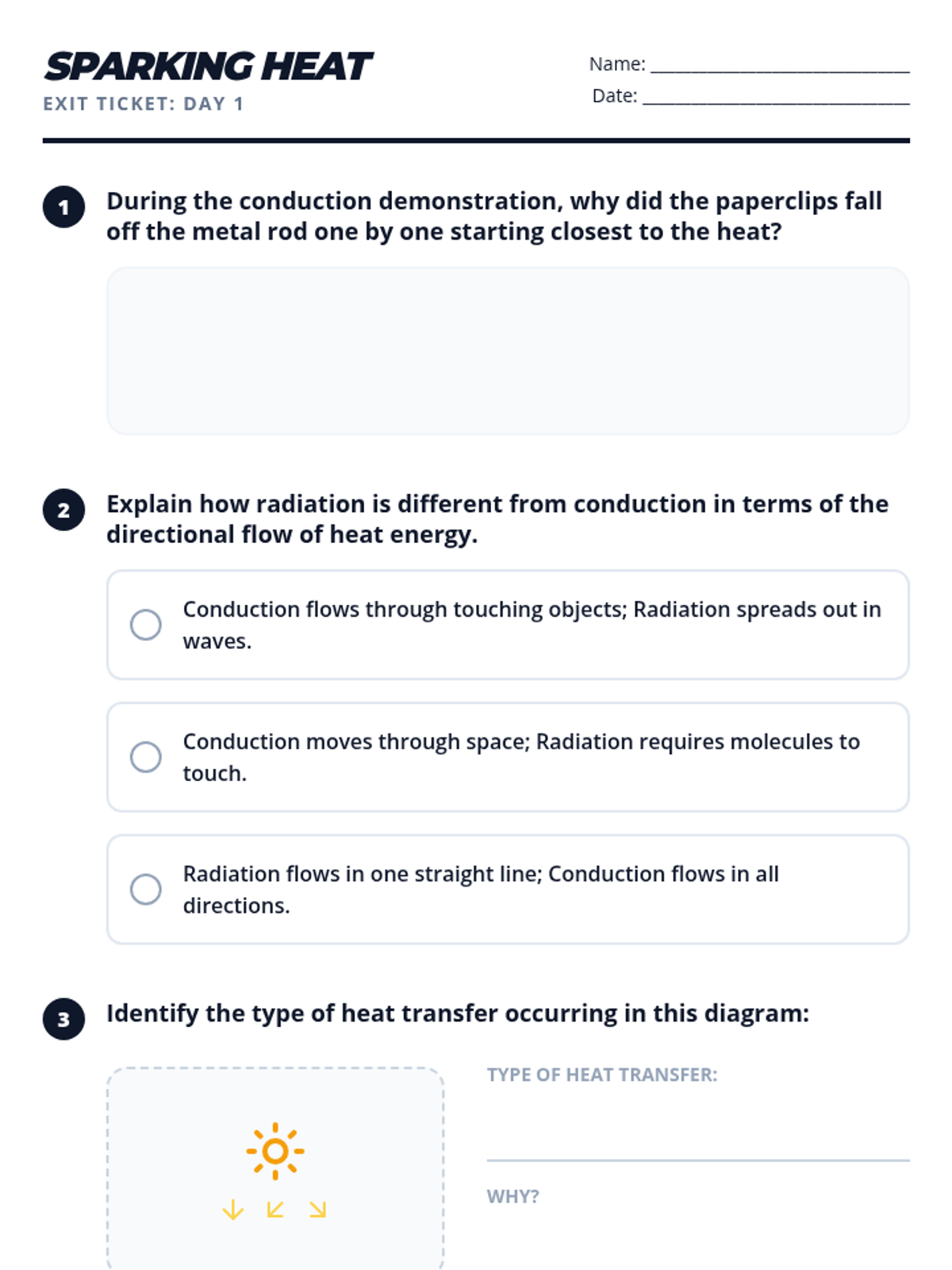
Introduction to thermal energy and the mechanisms of conduction and radiation. Includes a teacher-led demonstration of heat traveling through solids and radiant energy from a light source.
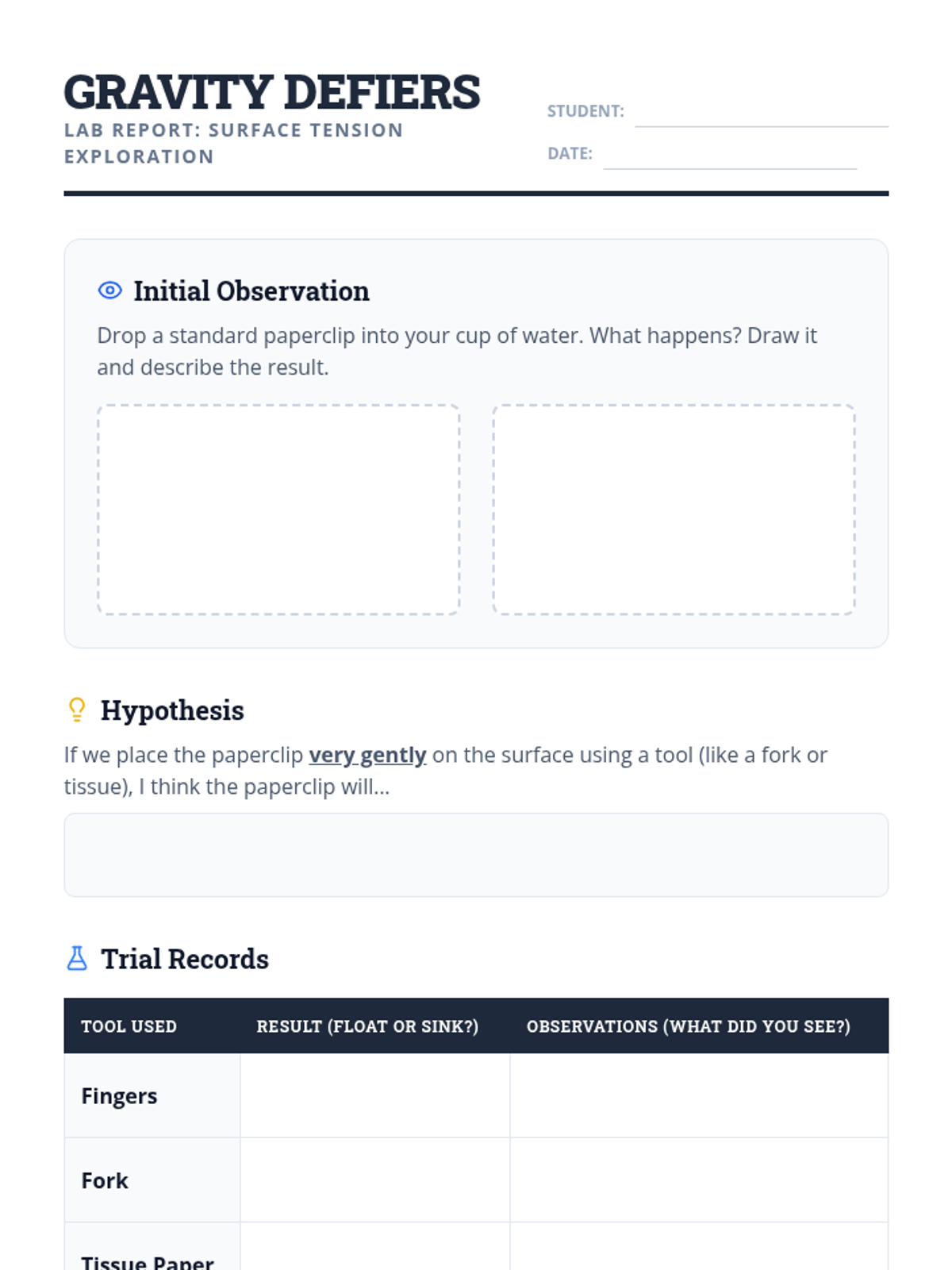
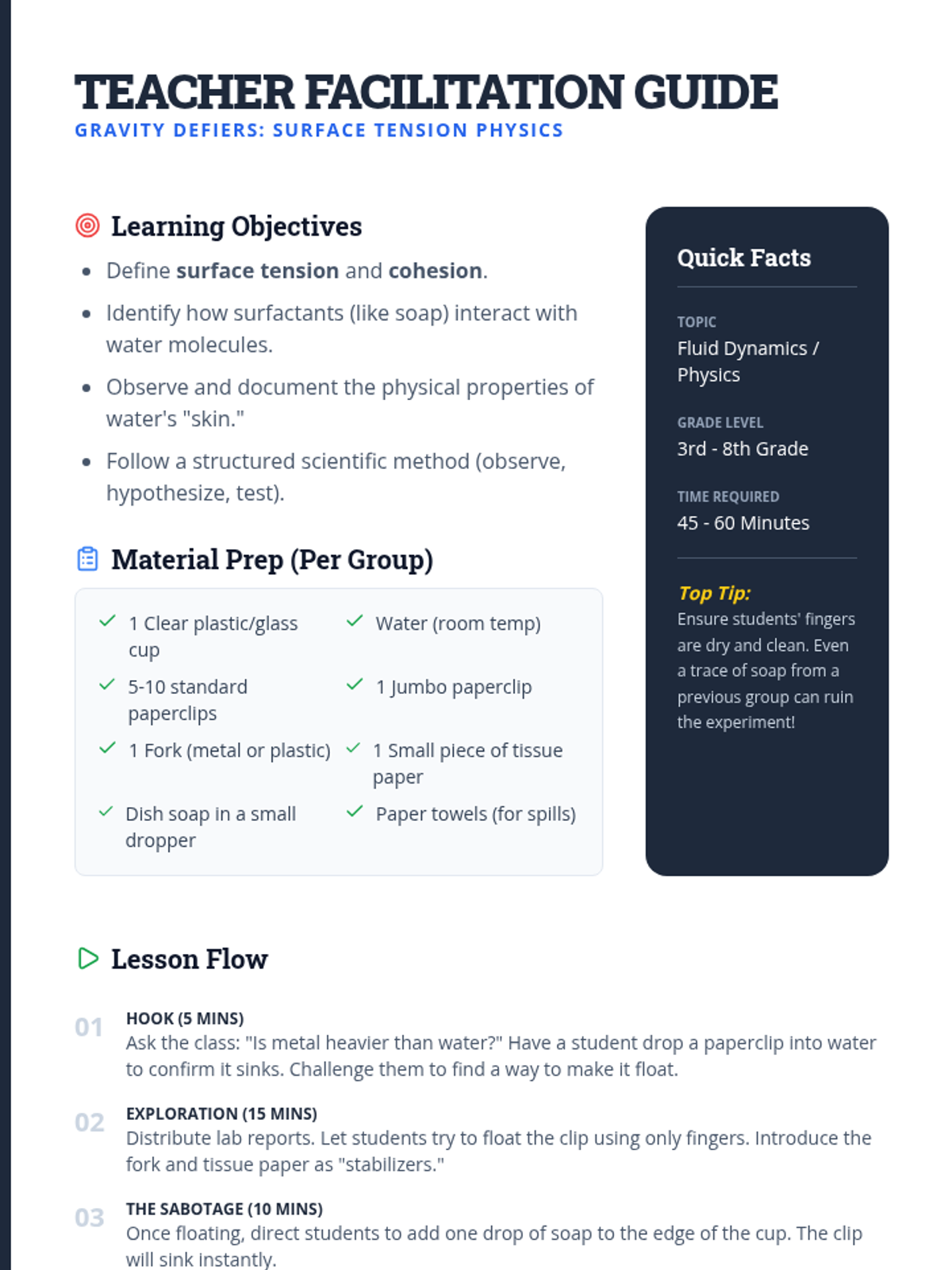
A hands-on exploration of surface tension using paperclips and water. Students challenge the law of gravity by making metal float and then investigate what breaks the 'skin' of water.
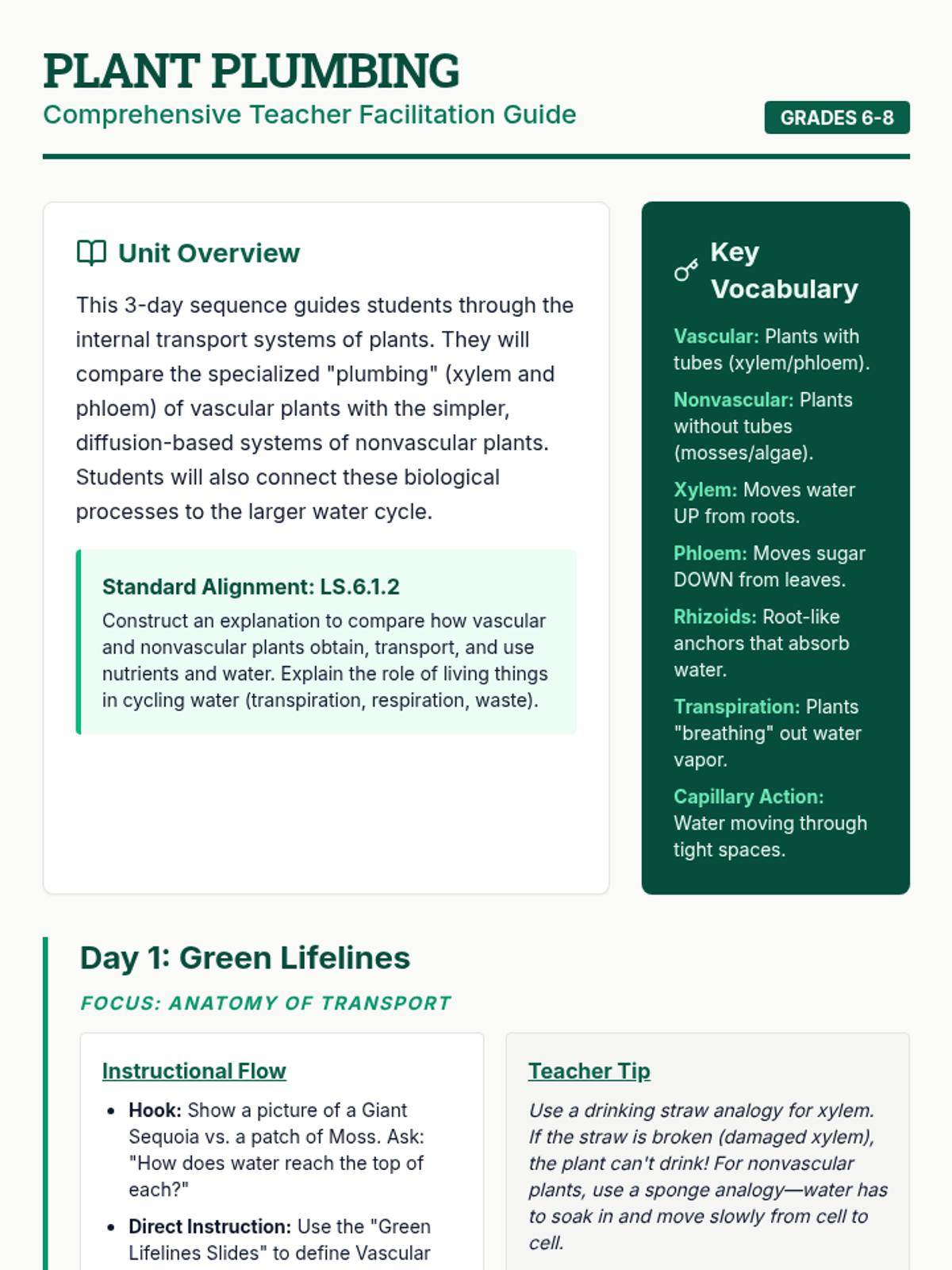
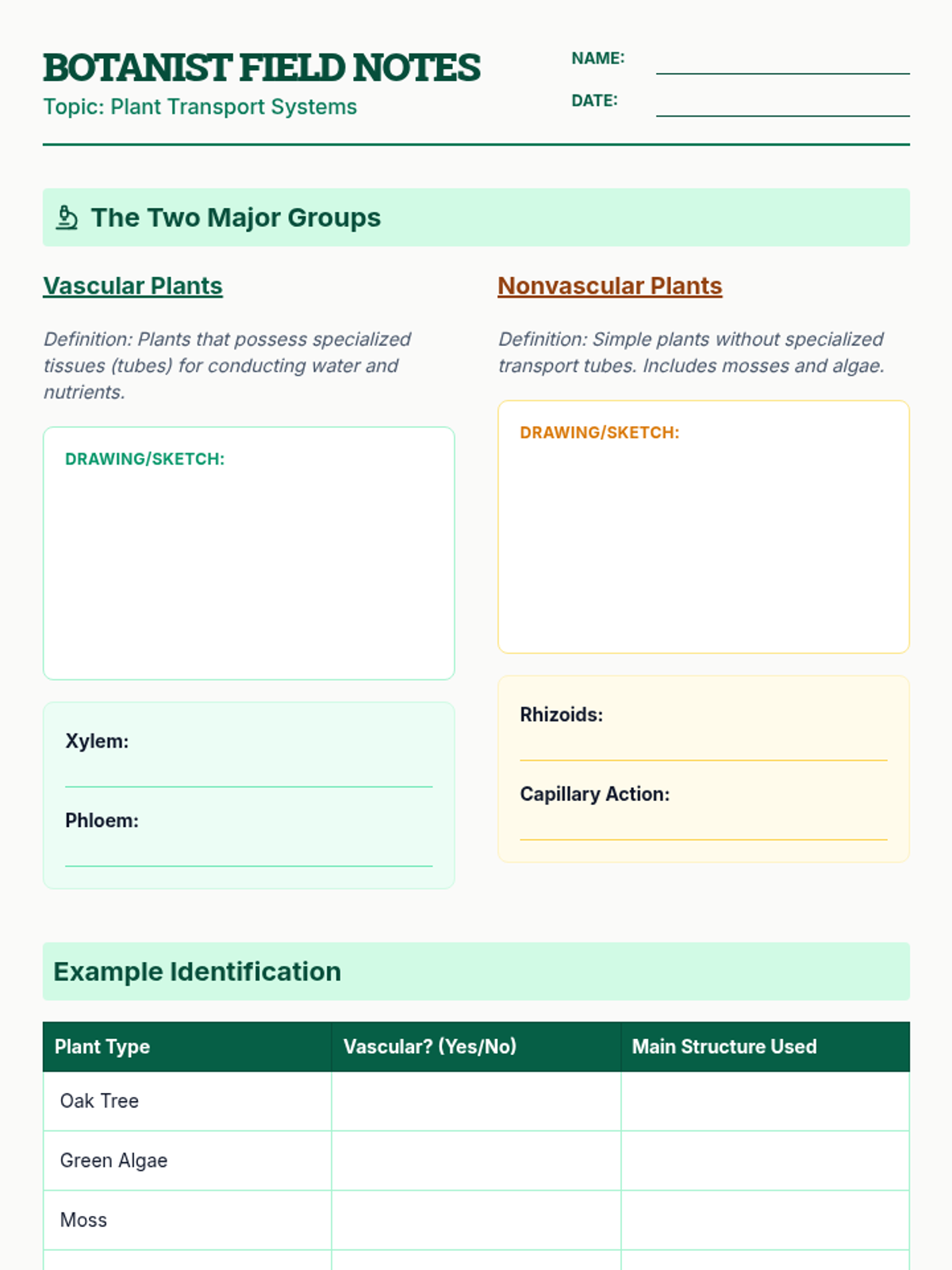
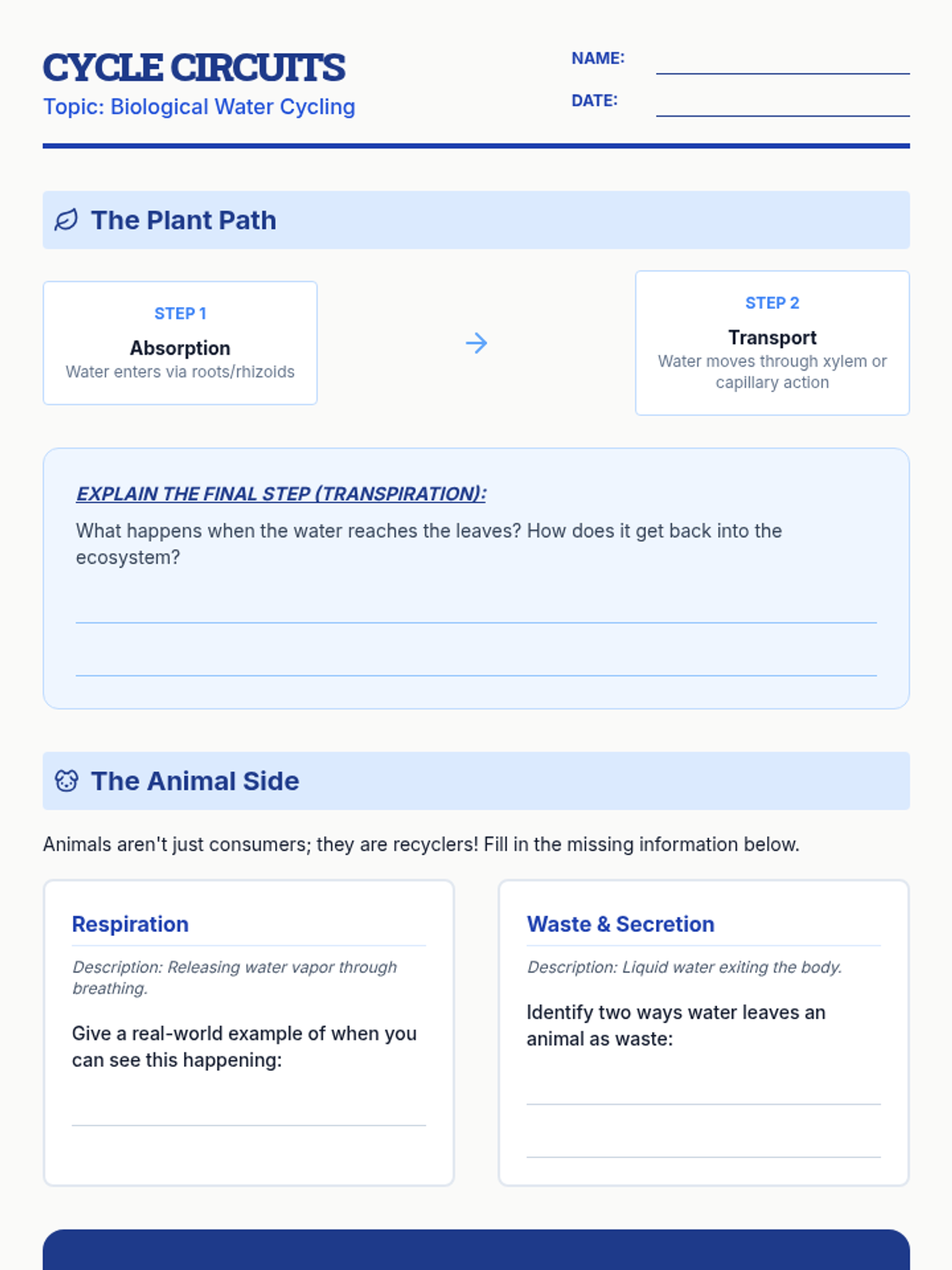
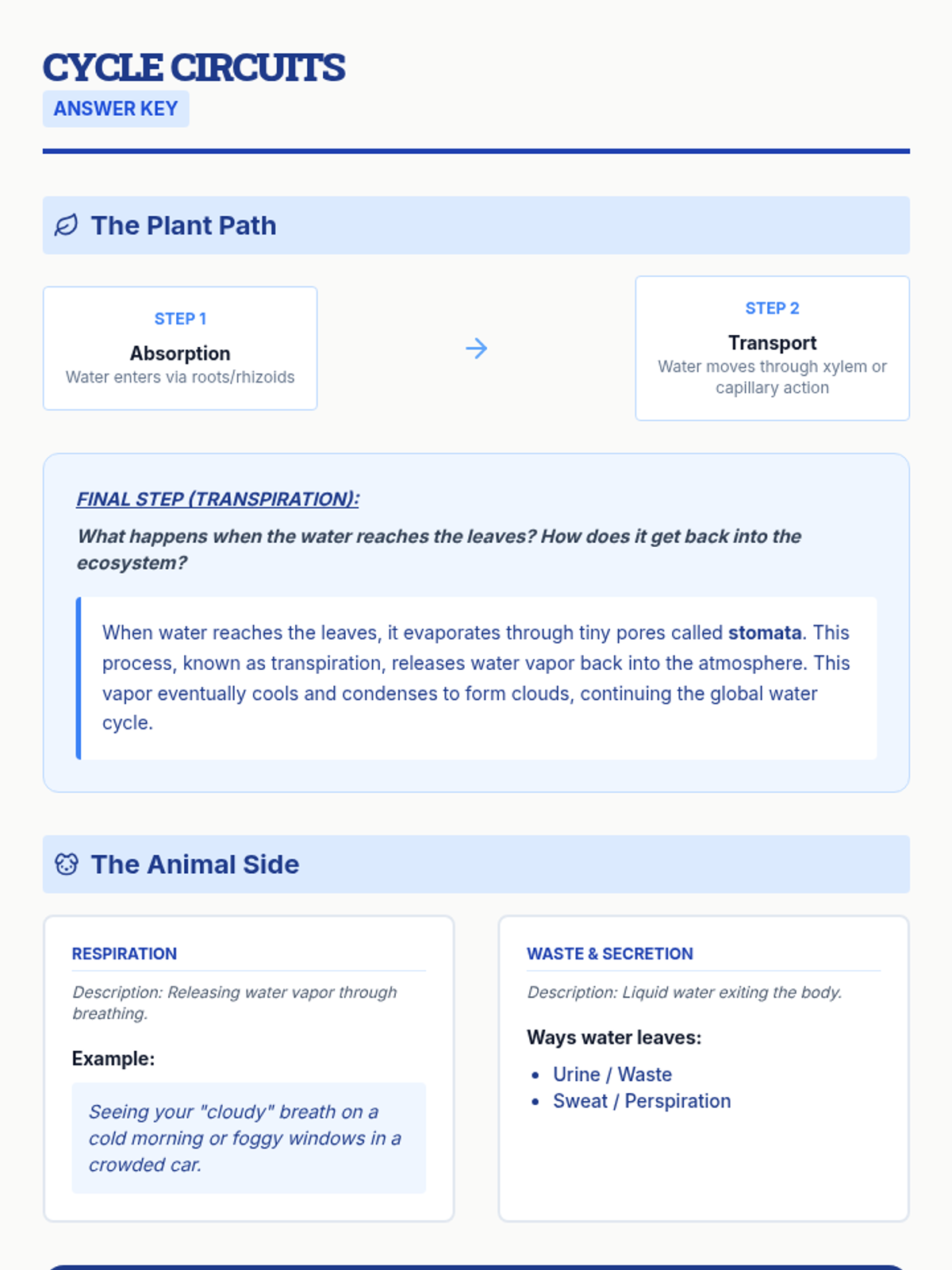
Focuses on the role of plants and animals in cycling water through ecosystems, specifically looking at transpiration and animal respiration/waste.
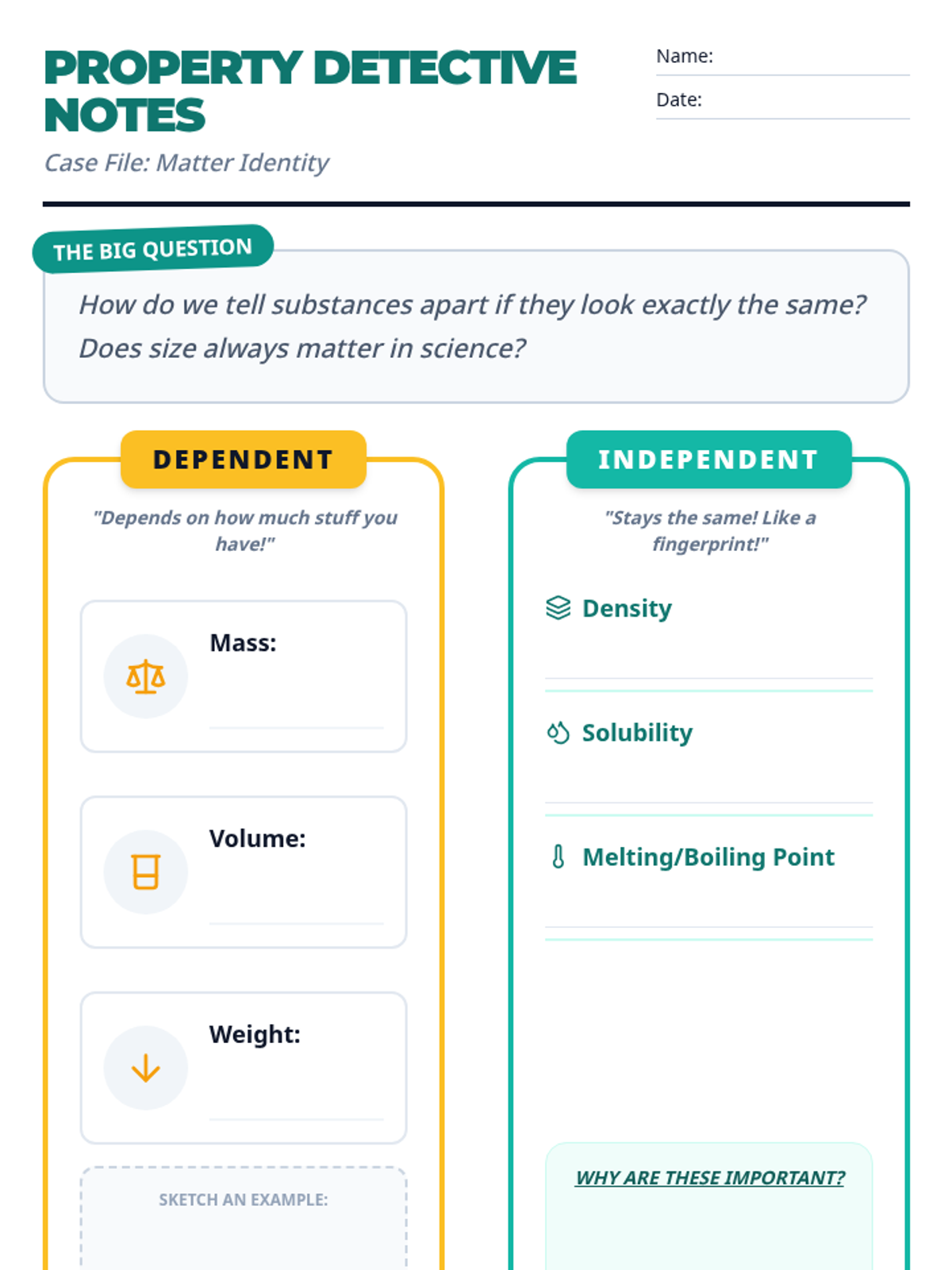
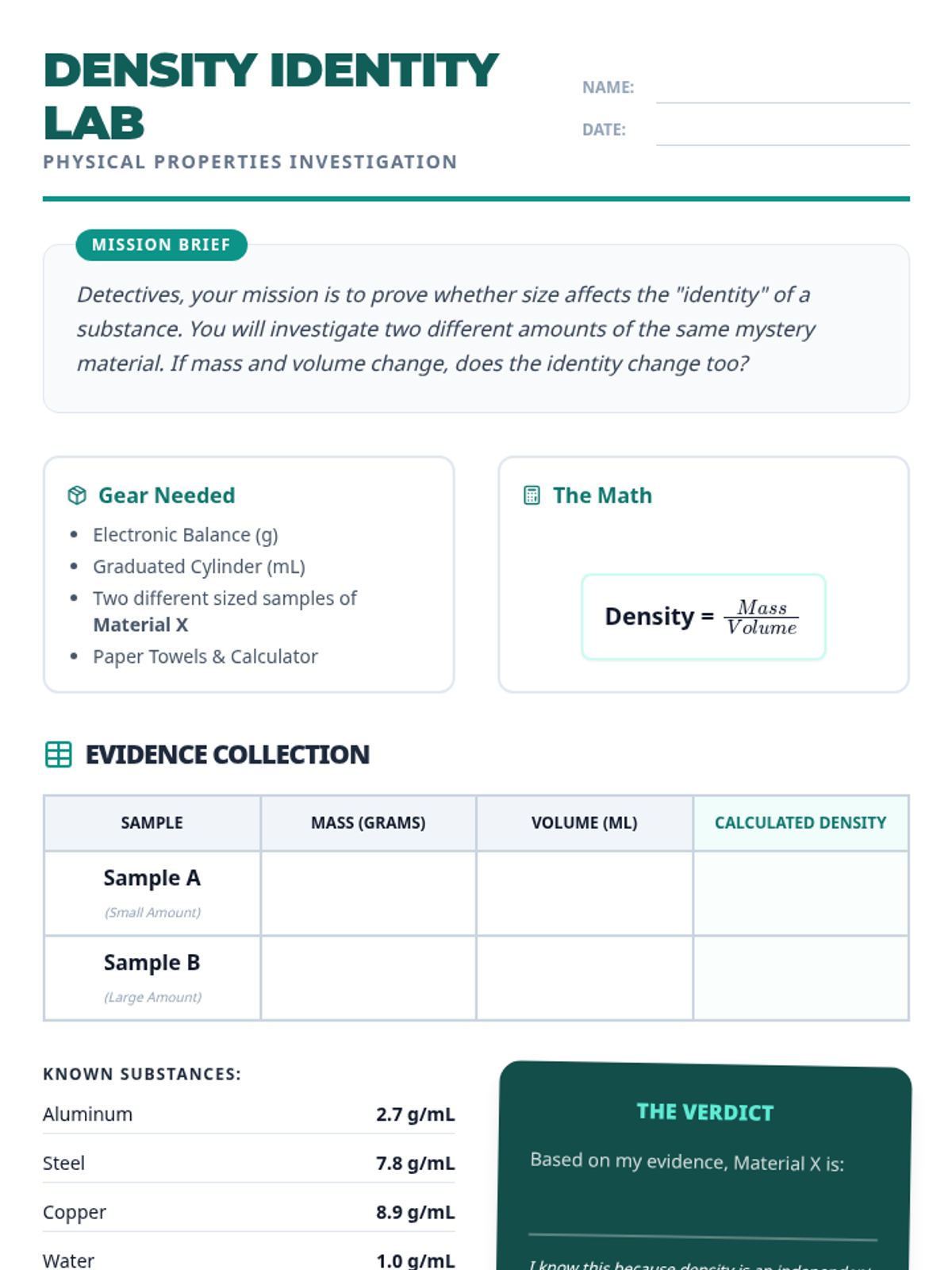
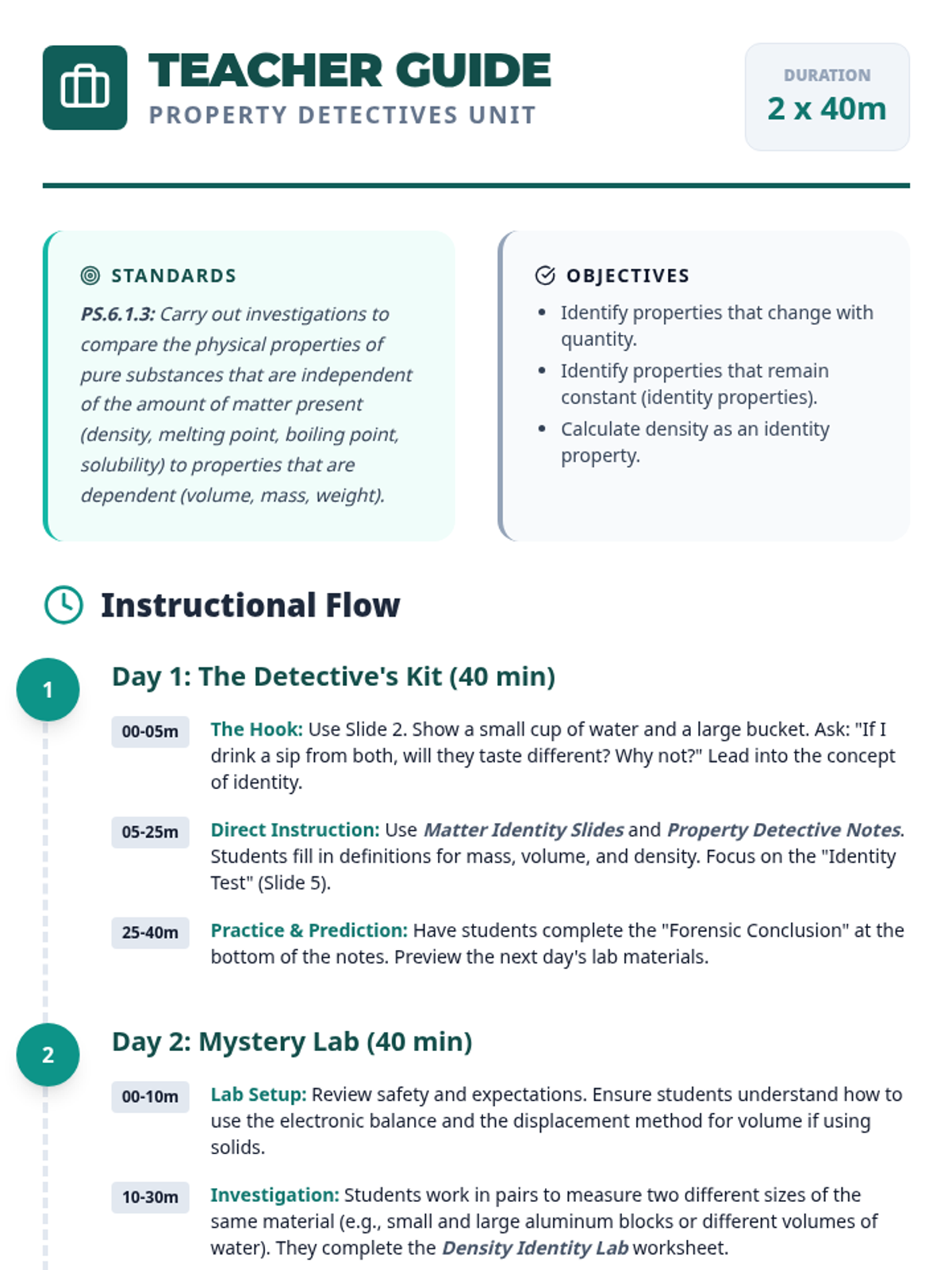
Students investigate how some properties change with quantity while others remain constant, using these 'identity' properties to identify pure substances.
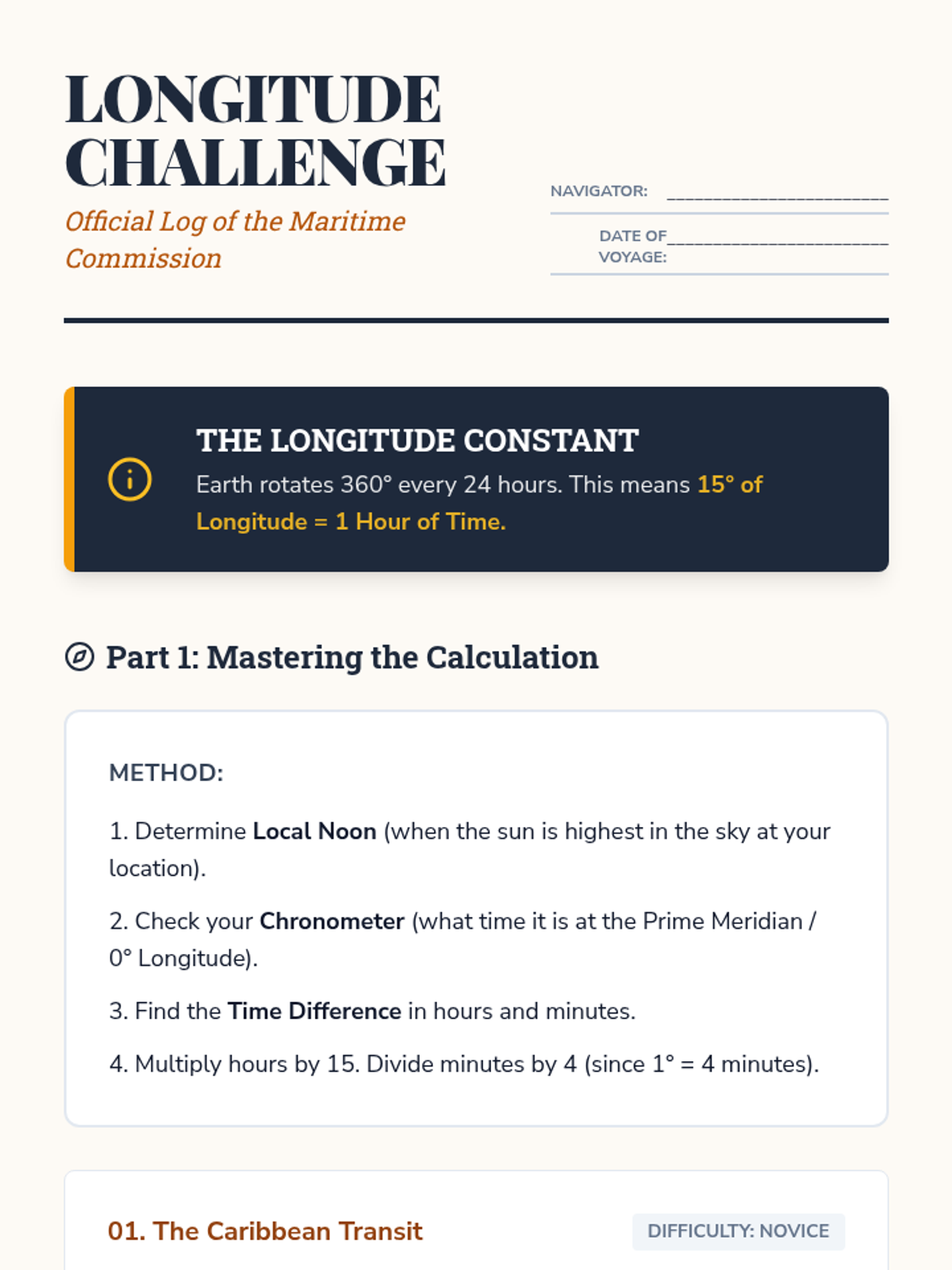
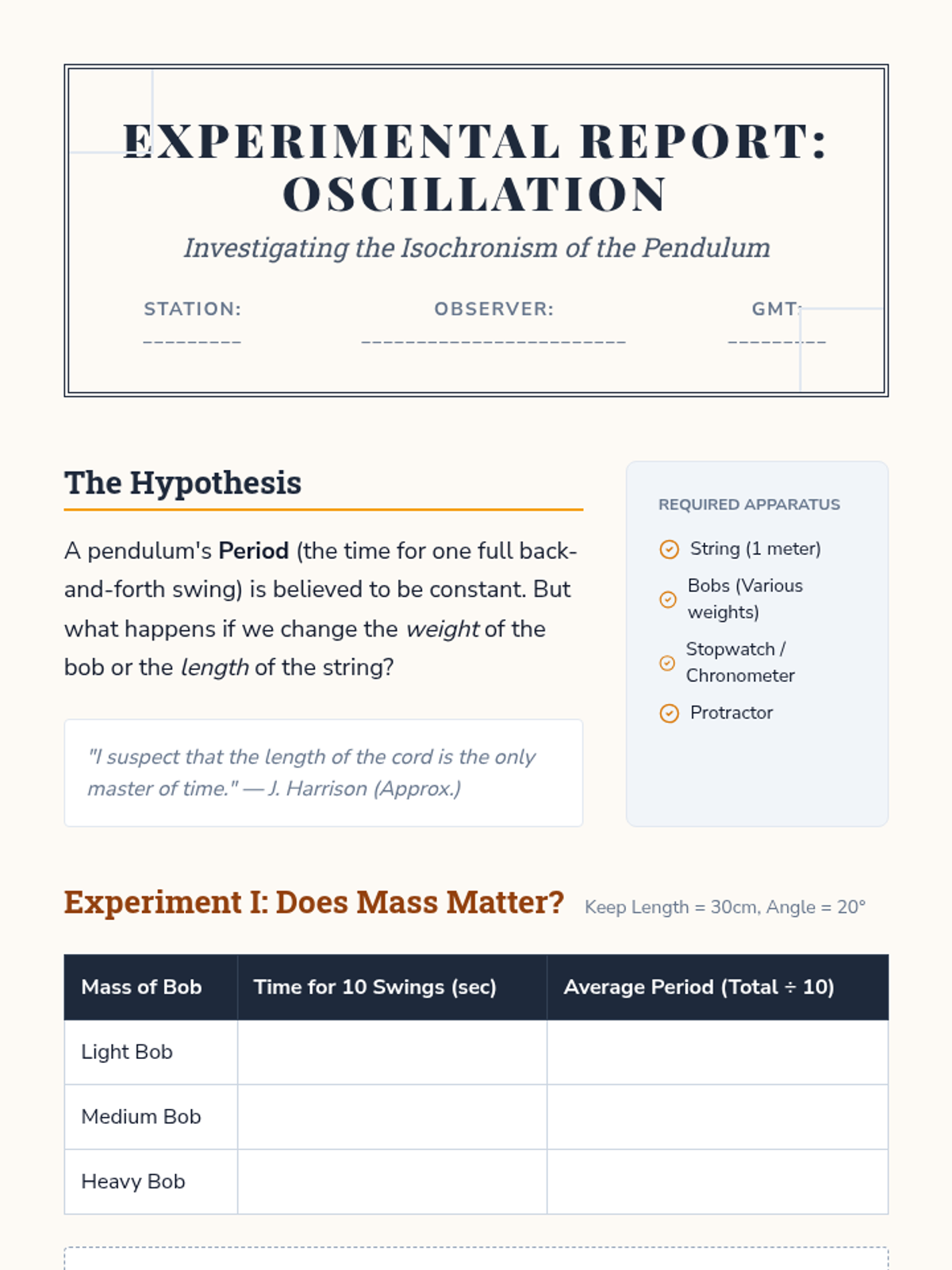
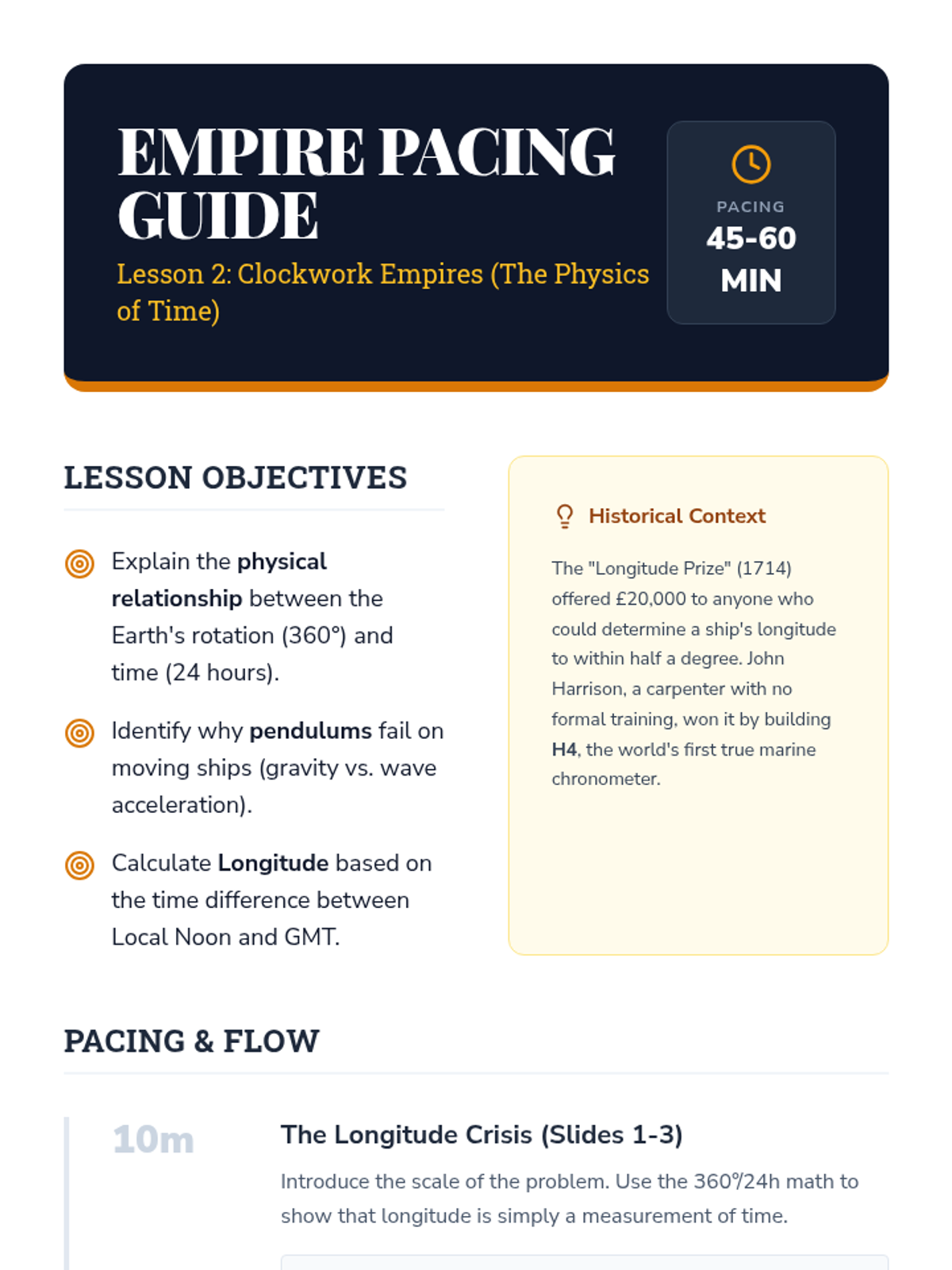
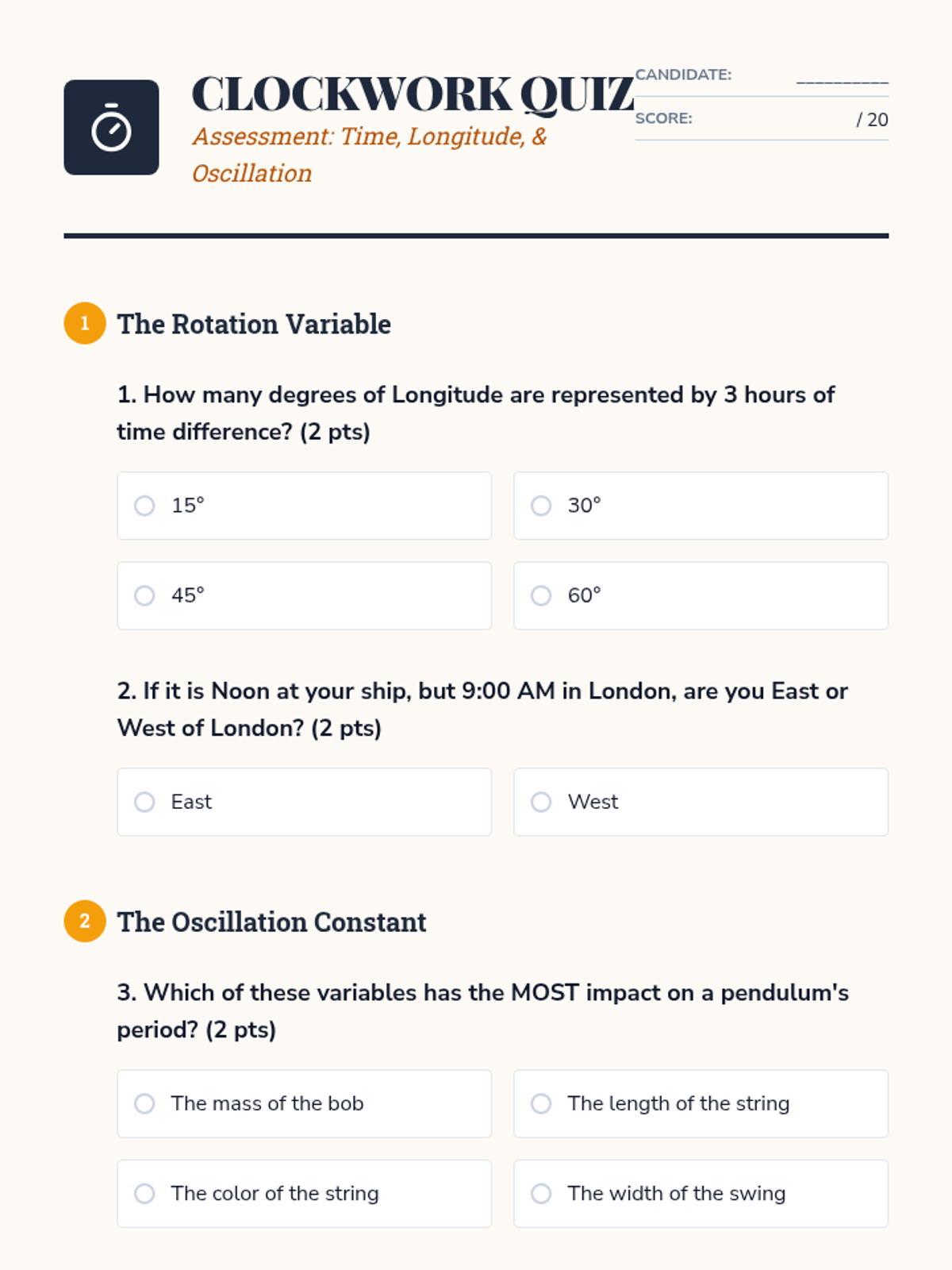
Investigates the "Longitude Problem" and the scientific race to build the first accurate marine chronometers, focusing on the physics of oscillation, friction, and the relationship between time and space.
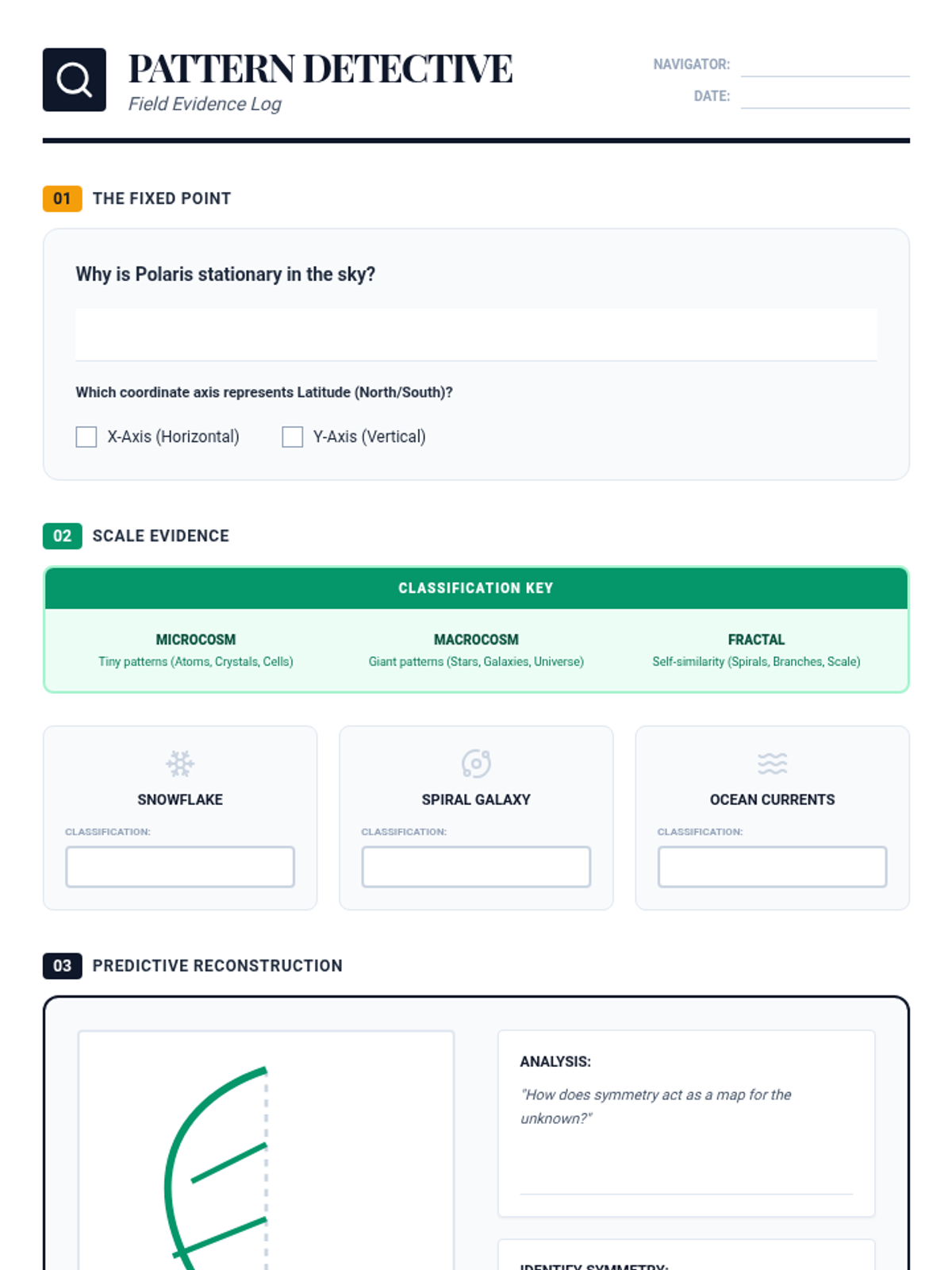
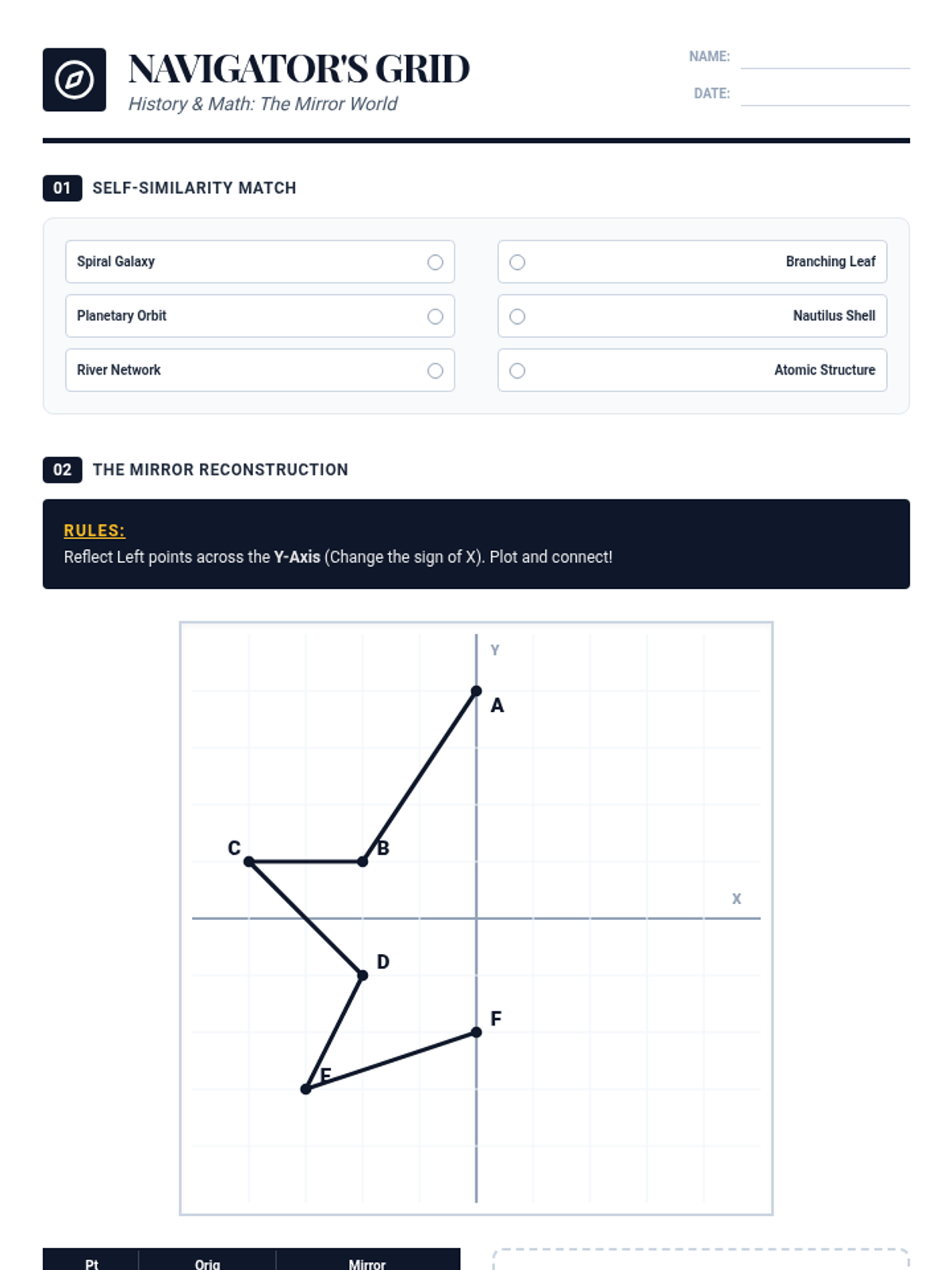
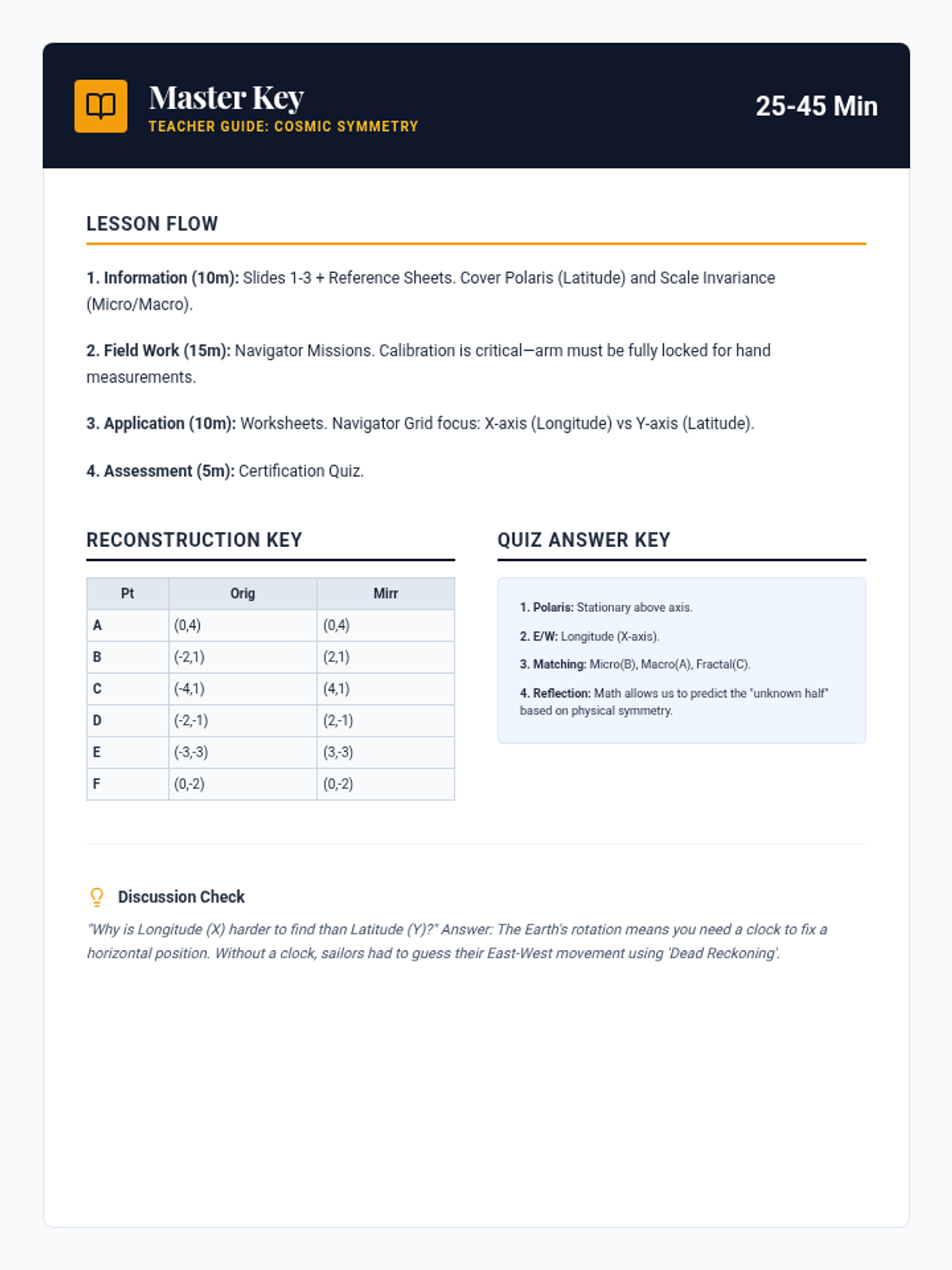
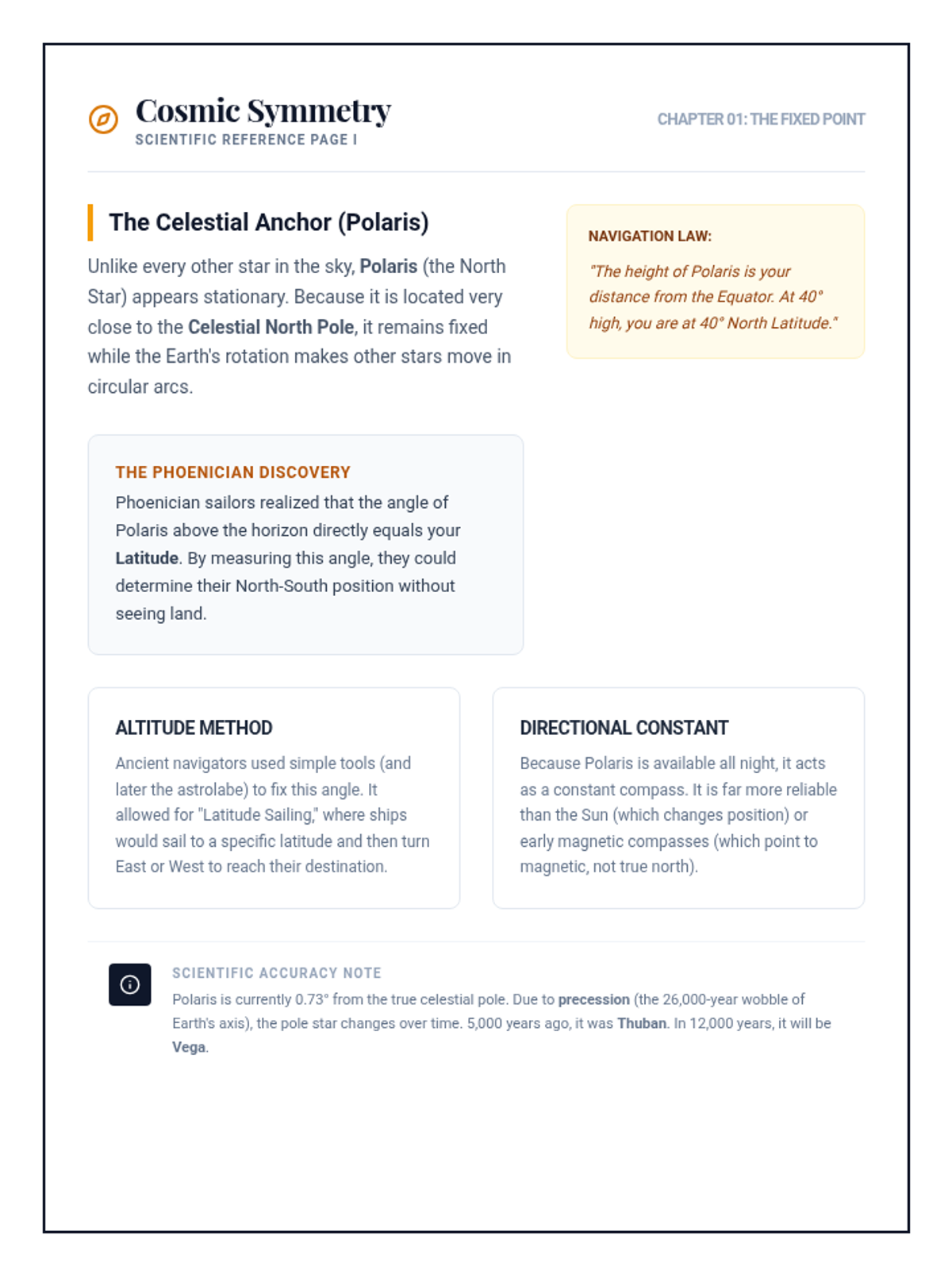
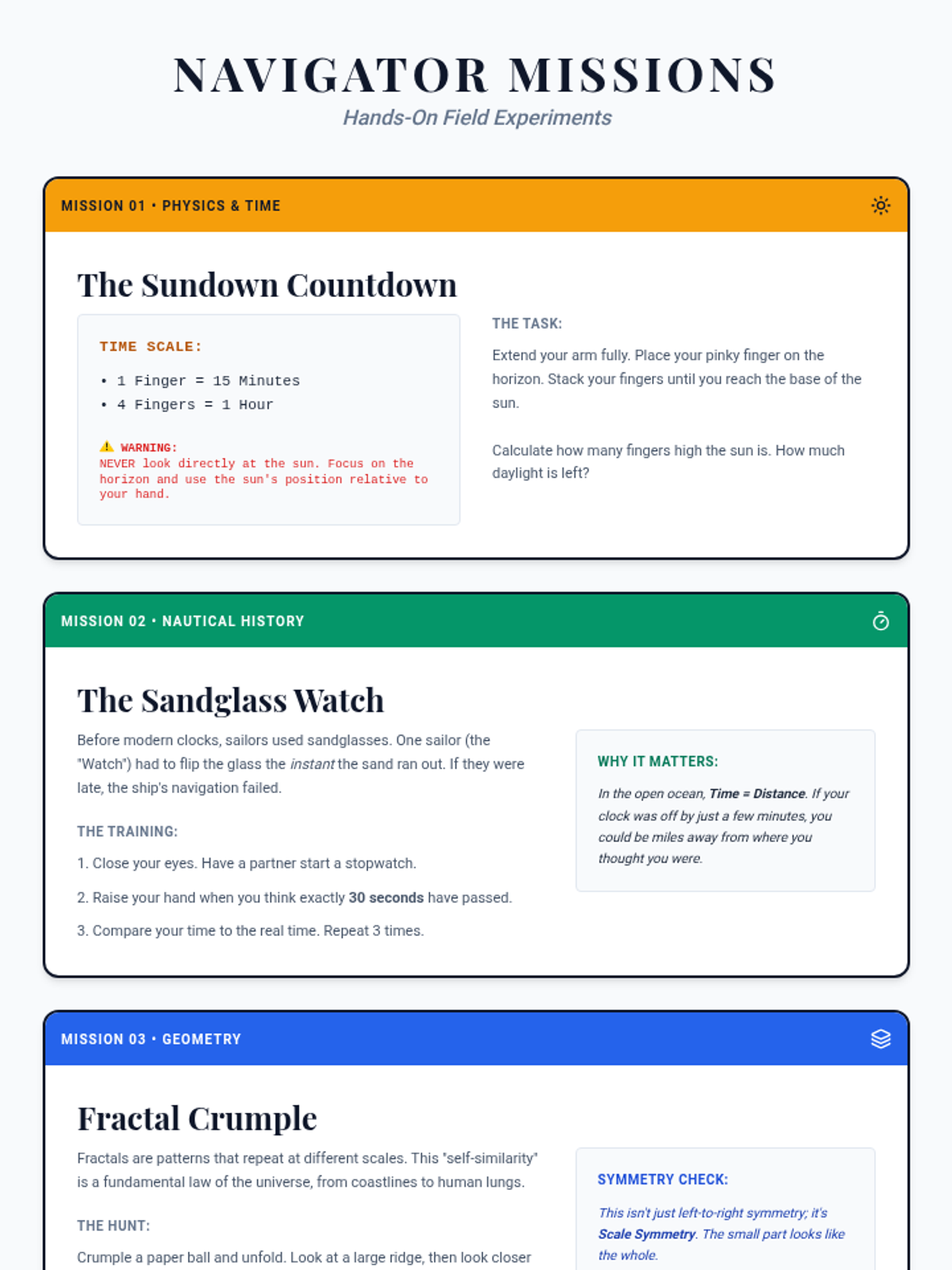
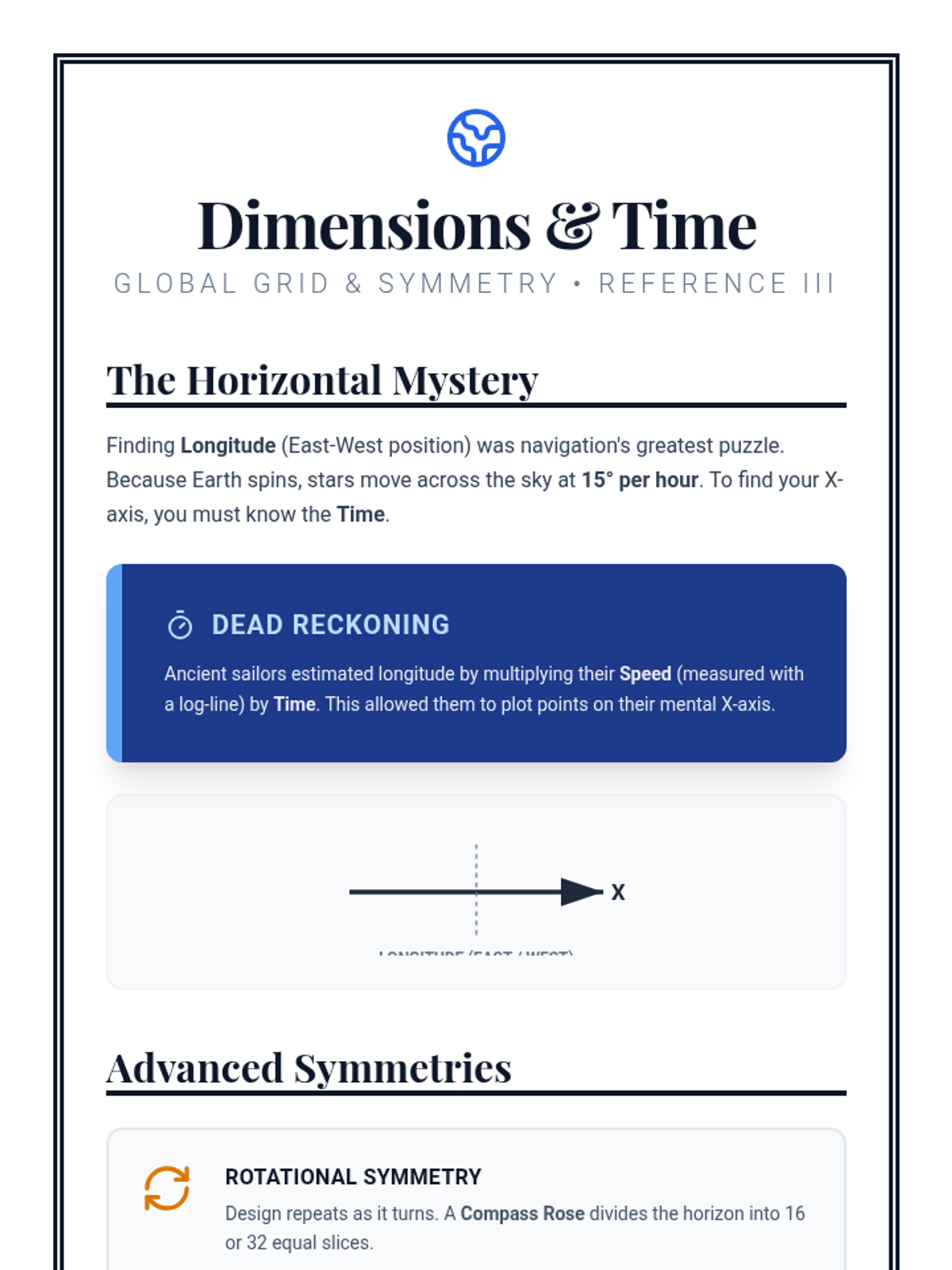
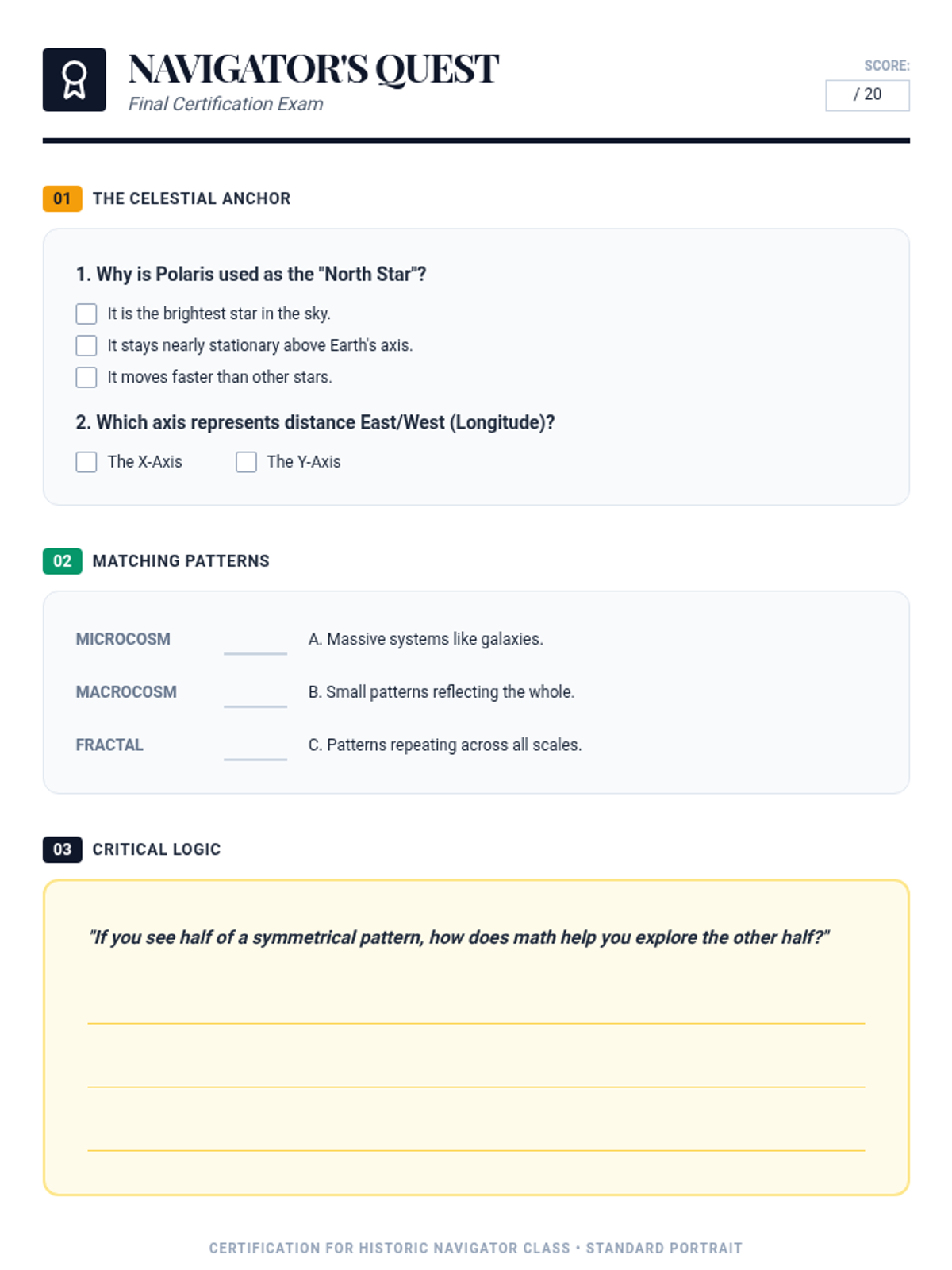
A 15-25 minute exploration into how ancient navigators used fixed points (the North Star) and the repeating patterns of the universe (microcosms, macrocosms, and symmetry) to navigate without modern technology.
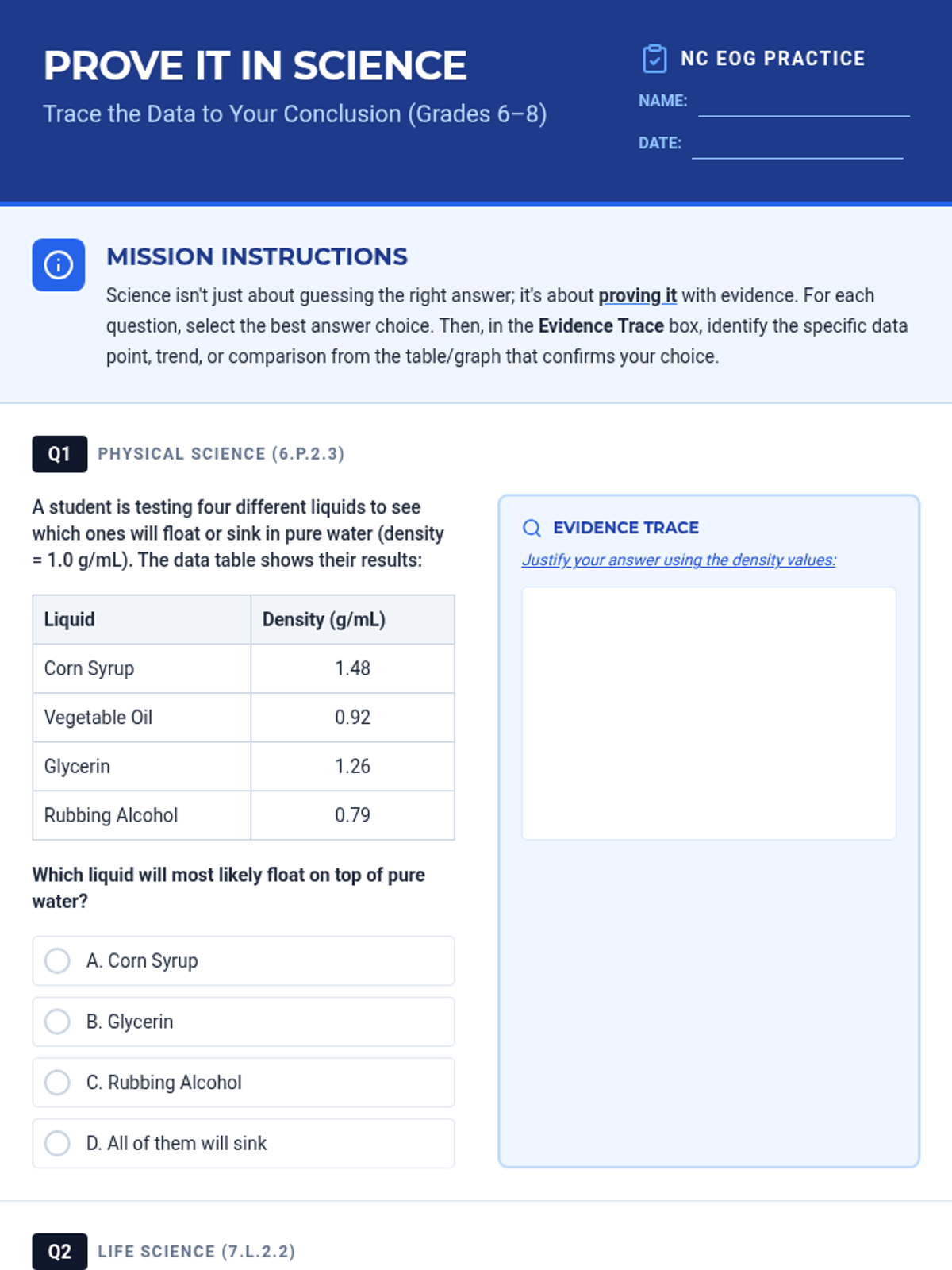
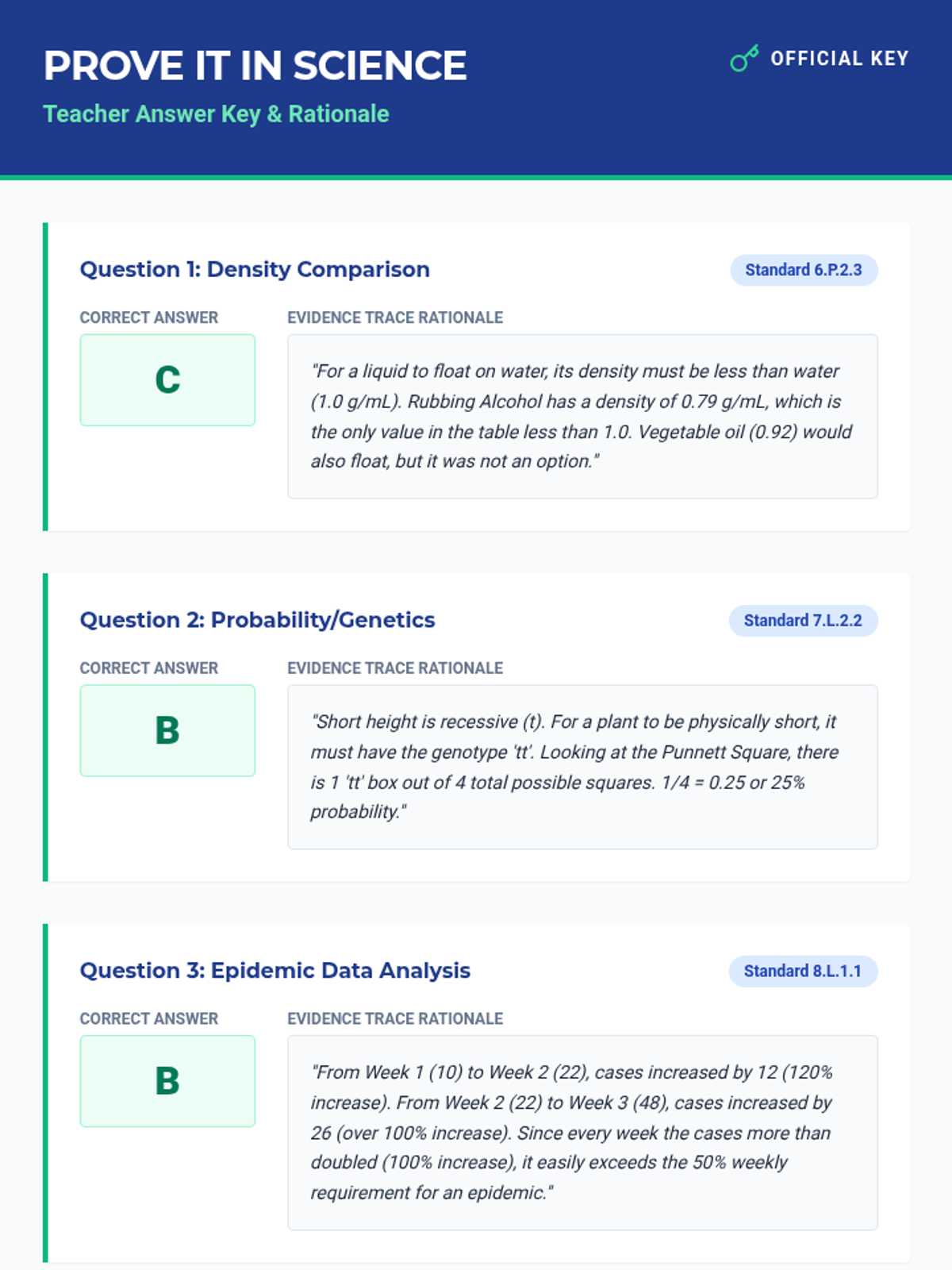
A guided practice set for middle school students focusing on the NC Science EOG requirement of using specific data evidence to support scientific conclusions. Students analyze 6 EOG-style scenarios across 6th, 7th, and 8th-grade curriculum standards.
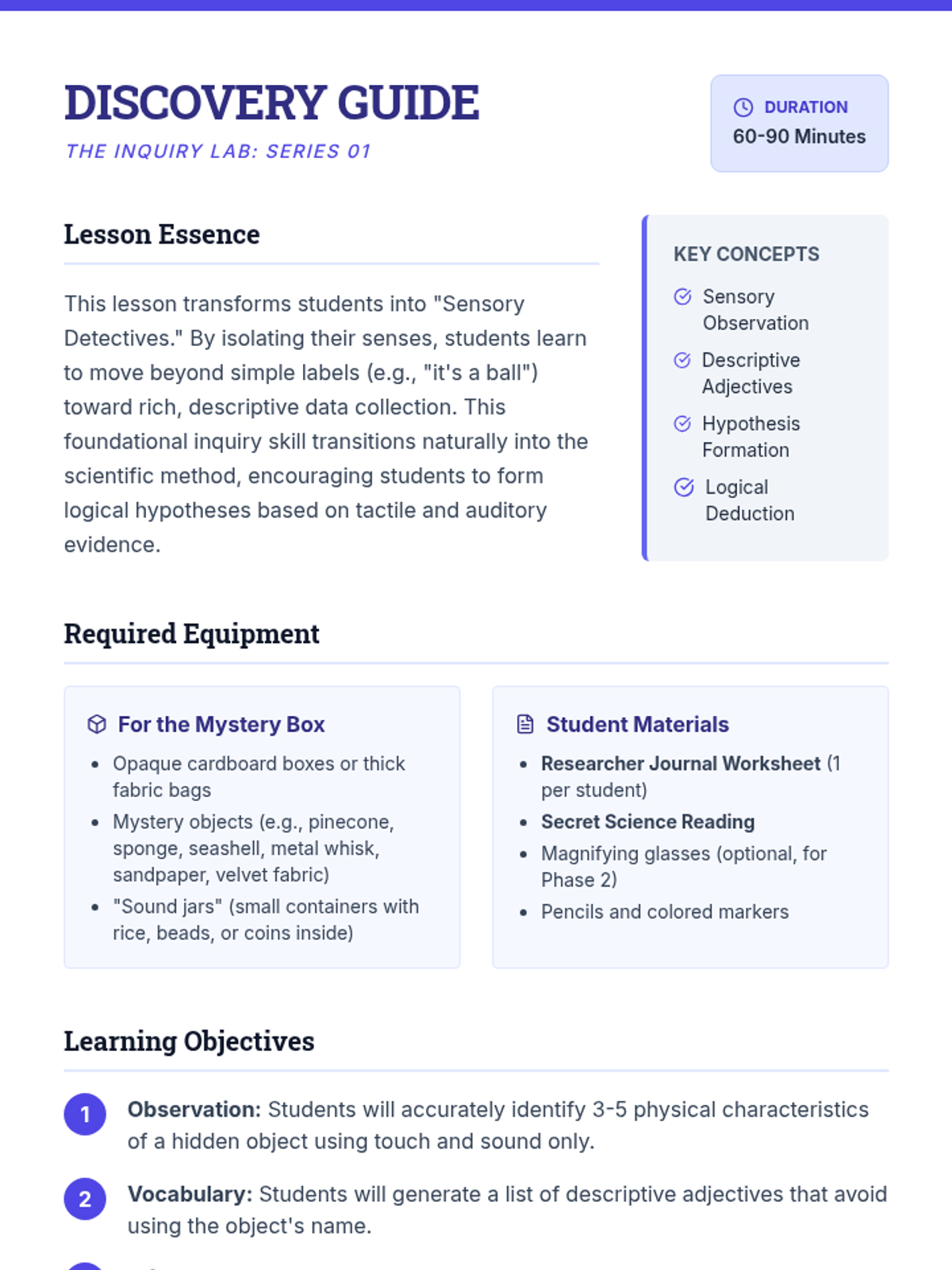
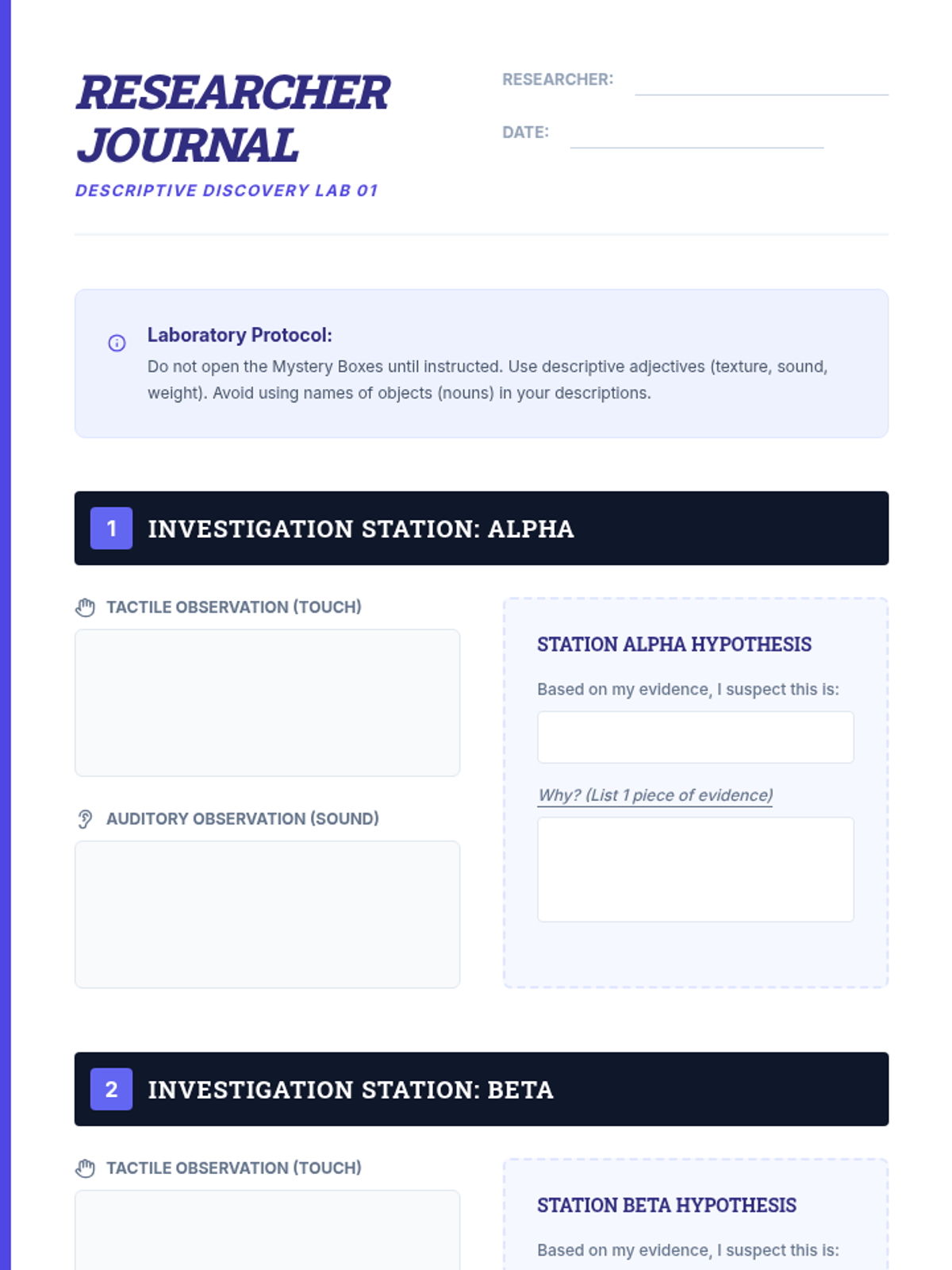
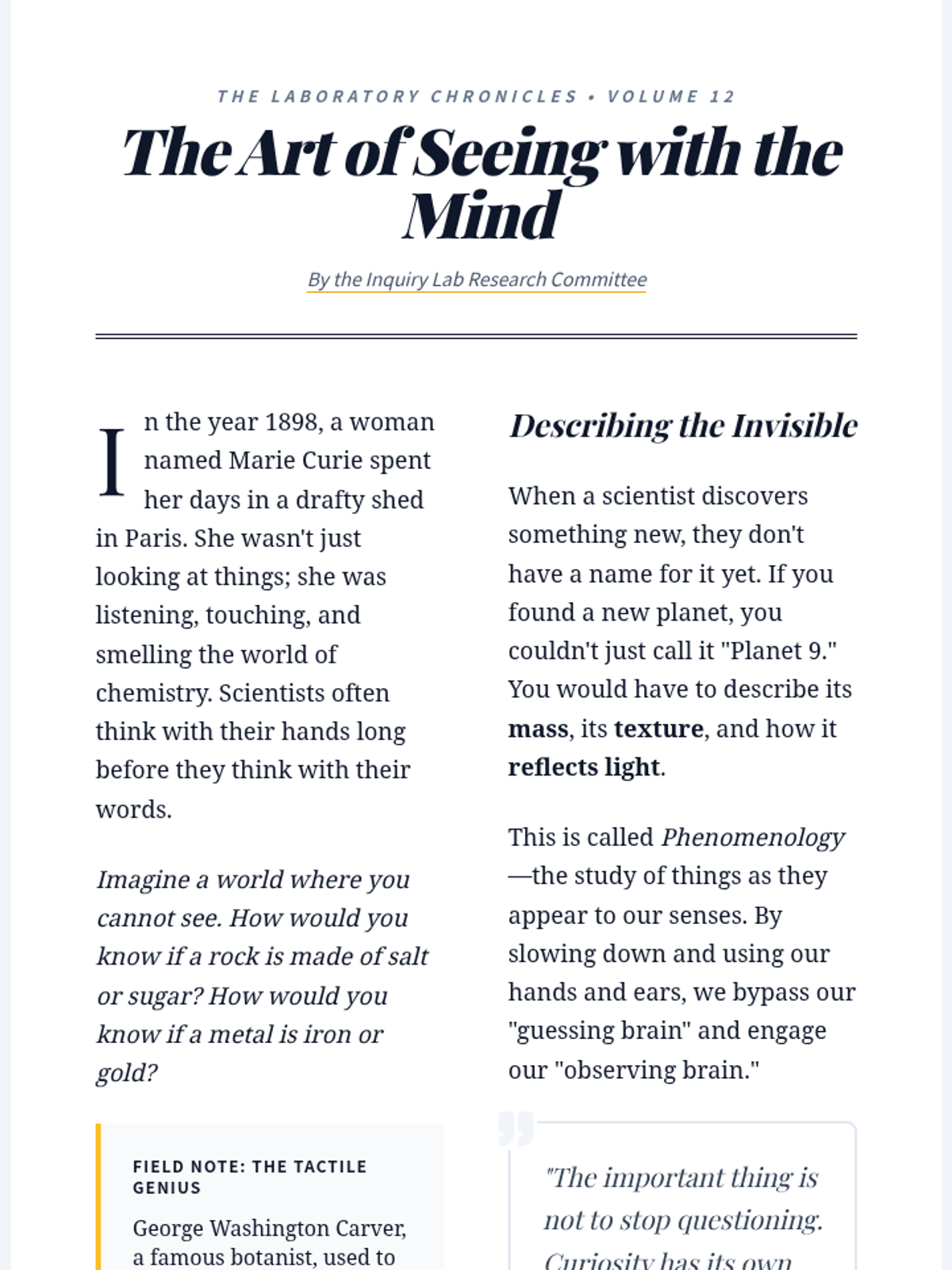
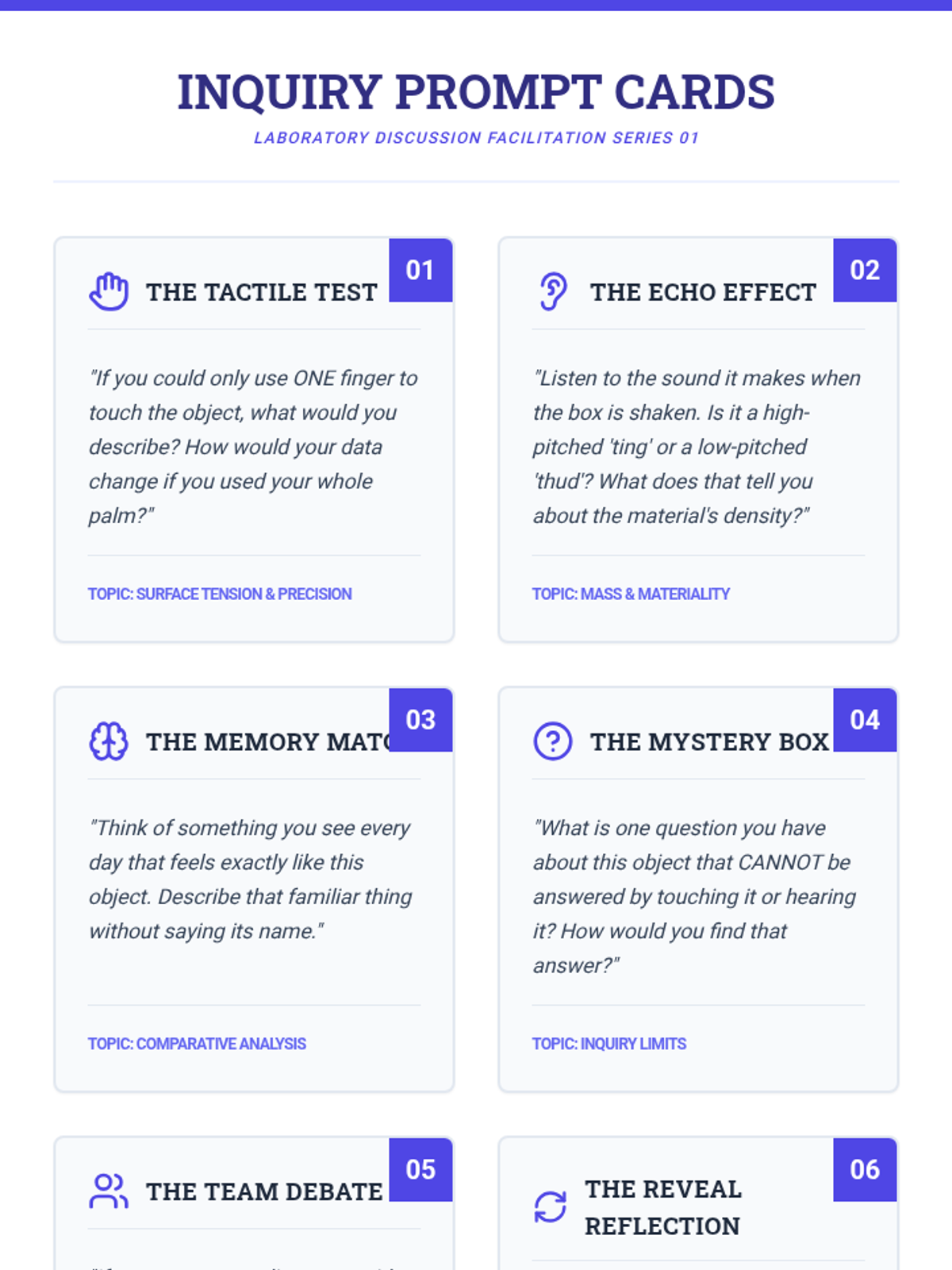
A hands-on inquiry lesson where students use their senses to investigate objects, build descriptive vocabulary, and form scientific hypotheses about the unknown.
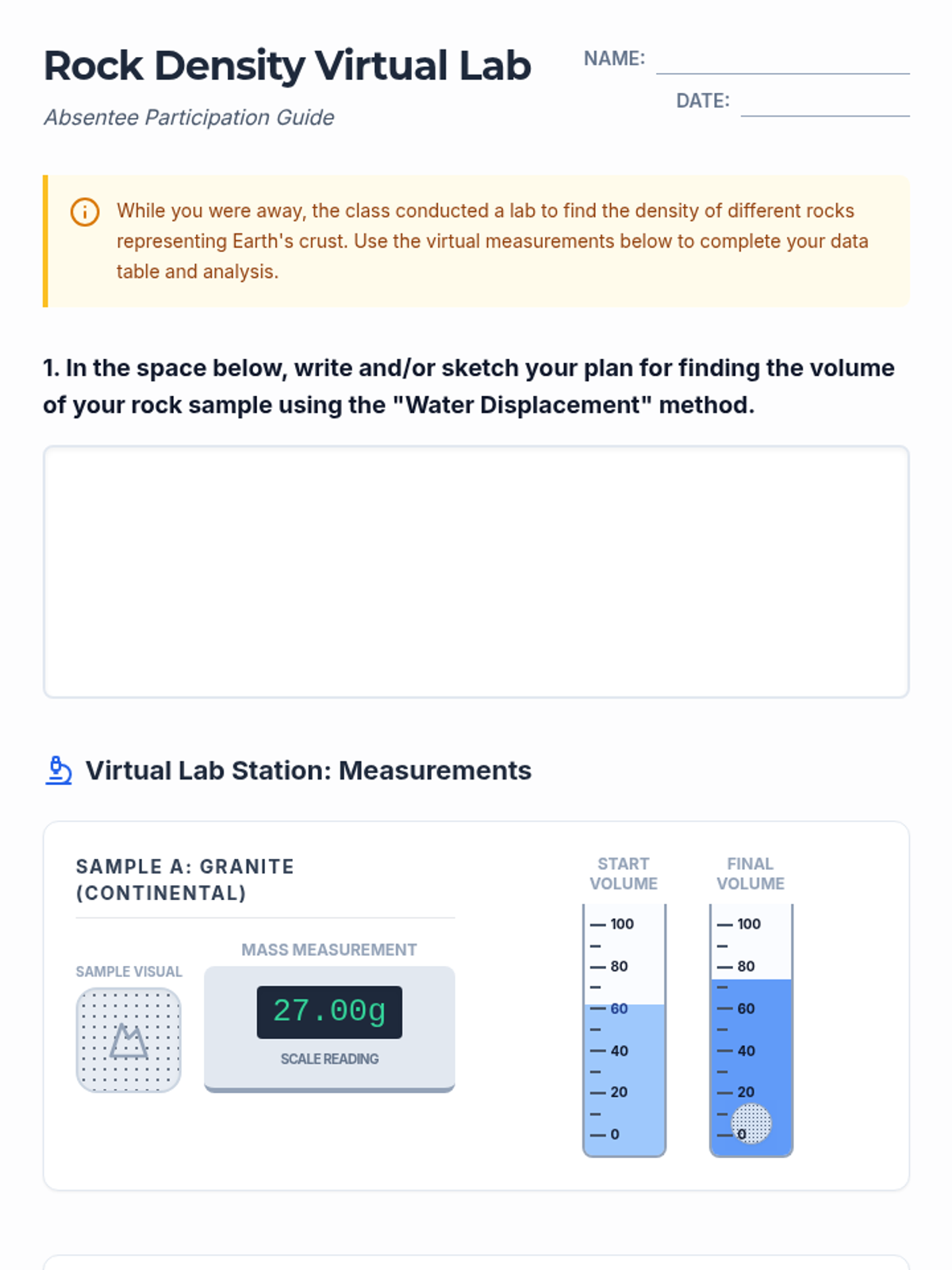
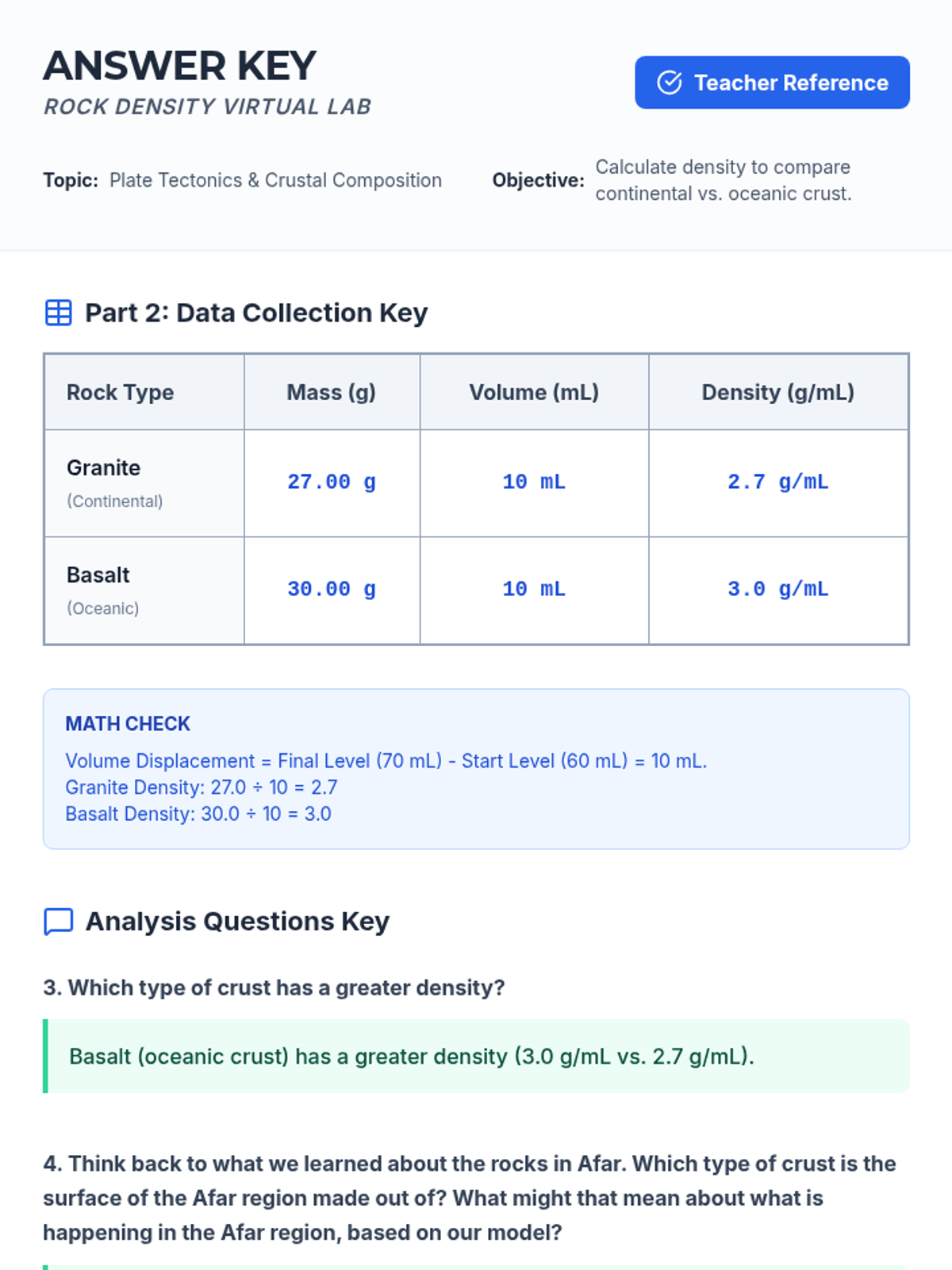
A lab-based lesson where students determine the densities of granite and basalt to understand the differences between continental and oceanic crust.
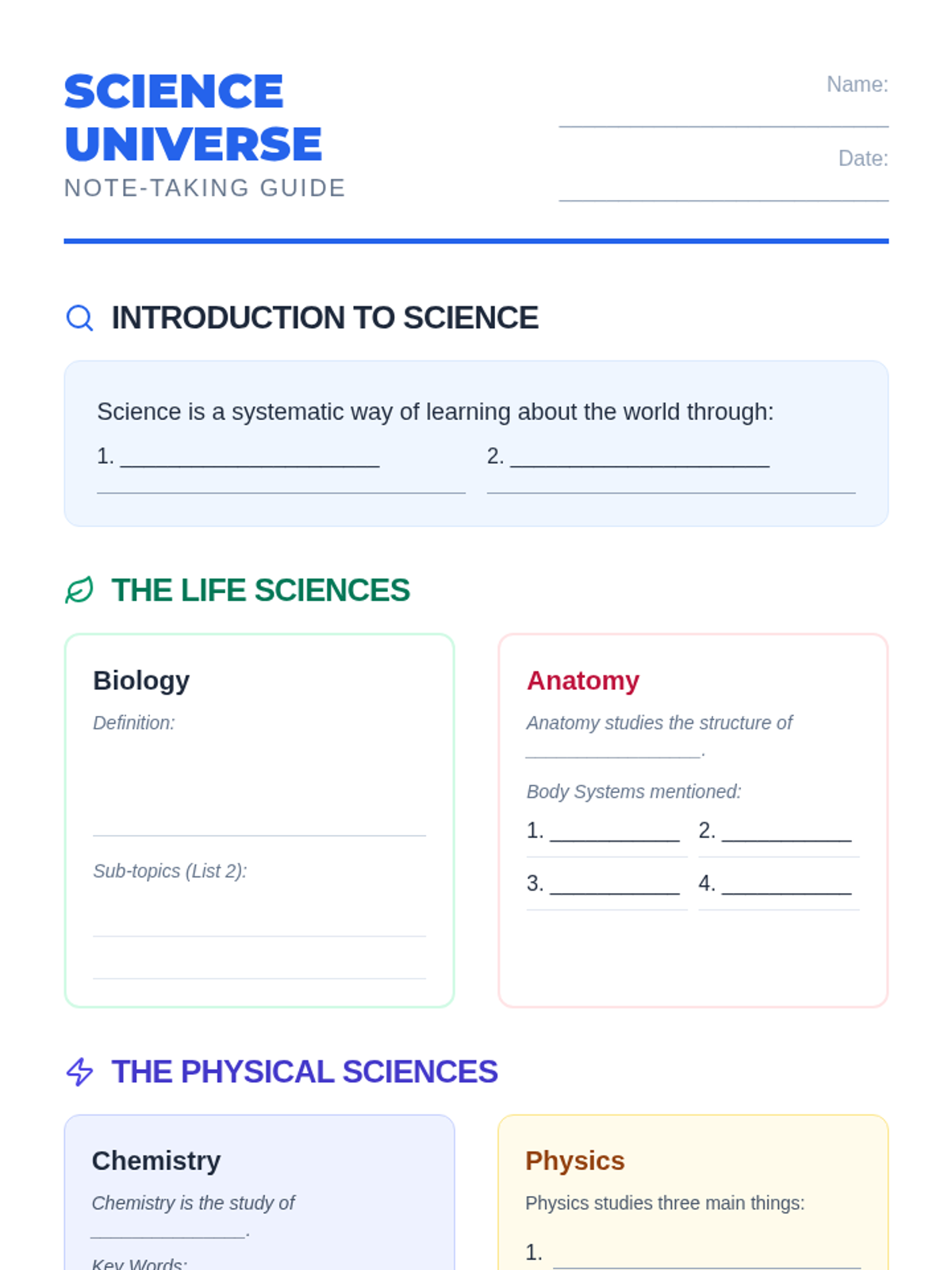
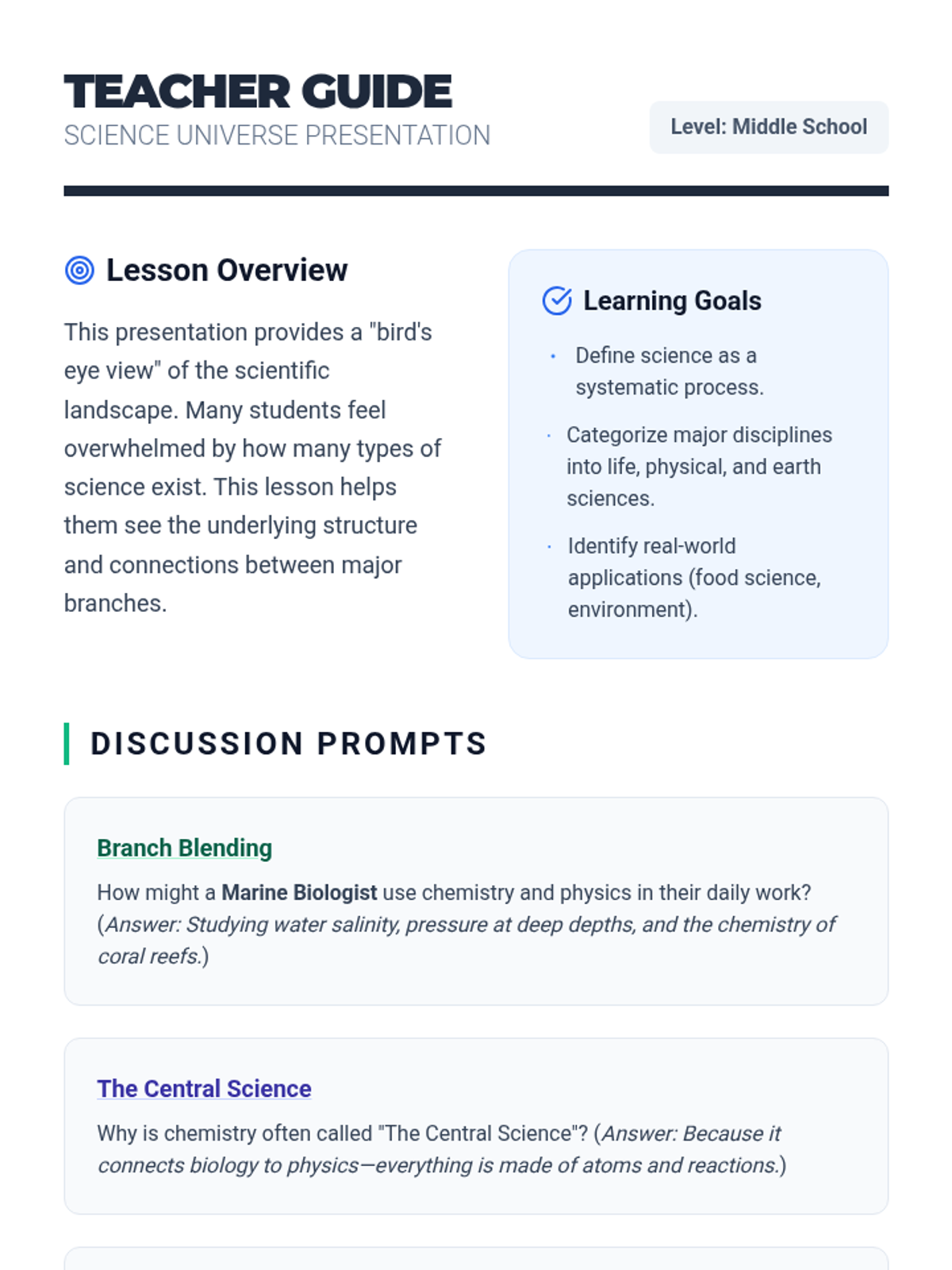
A comprehensive slide deck providing a high-level overview of major science disciplines and their sub-topics, tailored for middle school students.
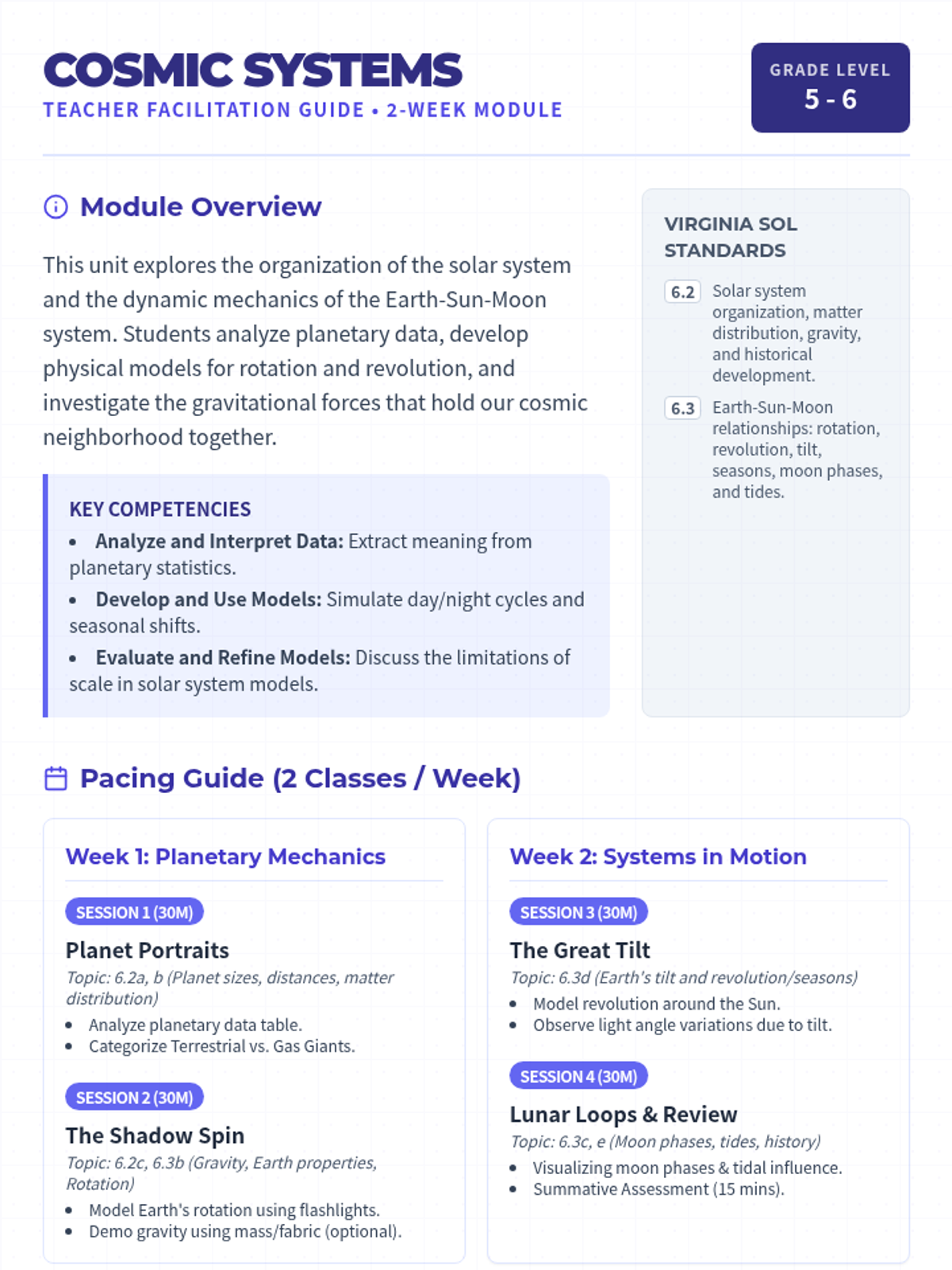
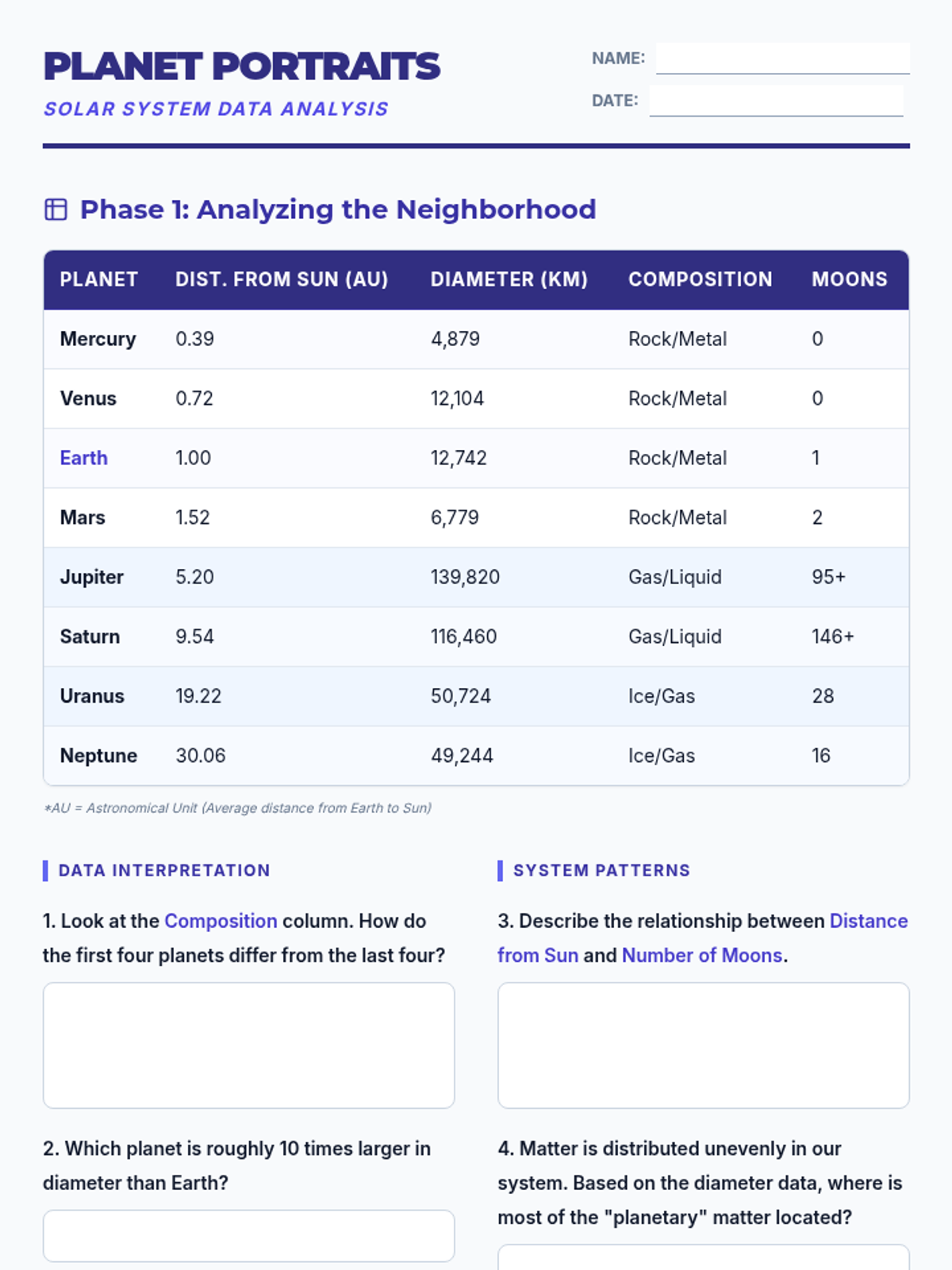
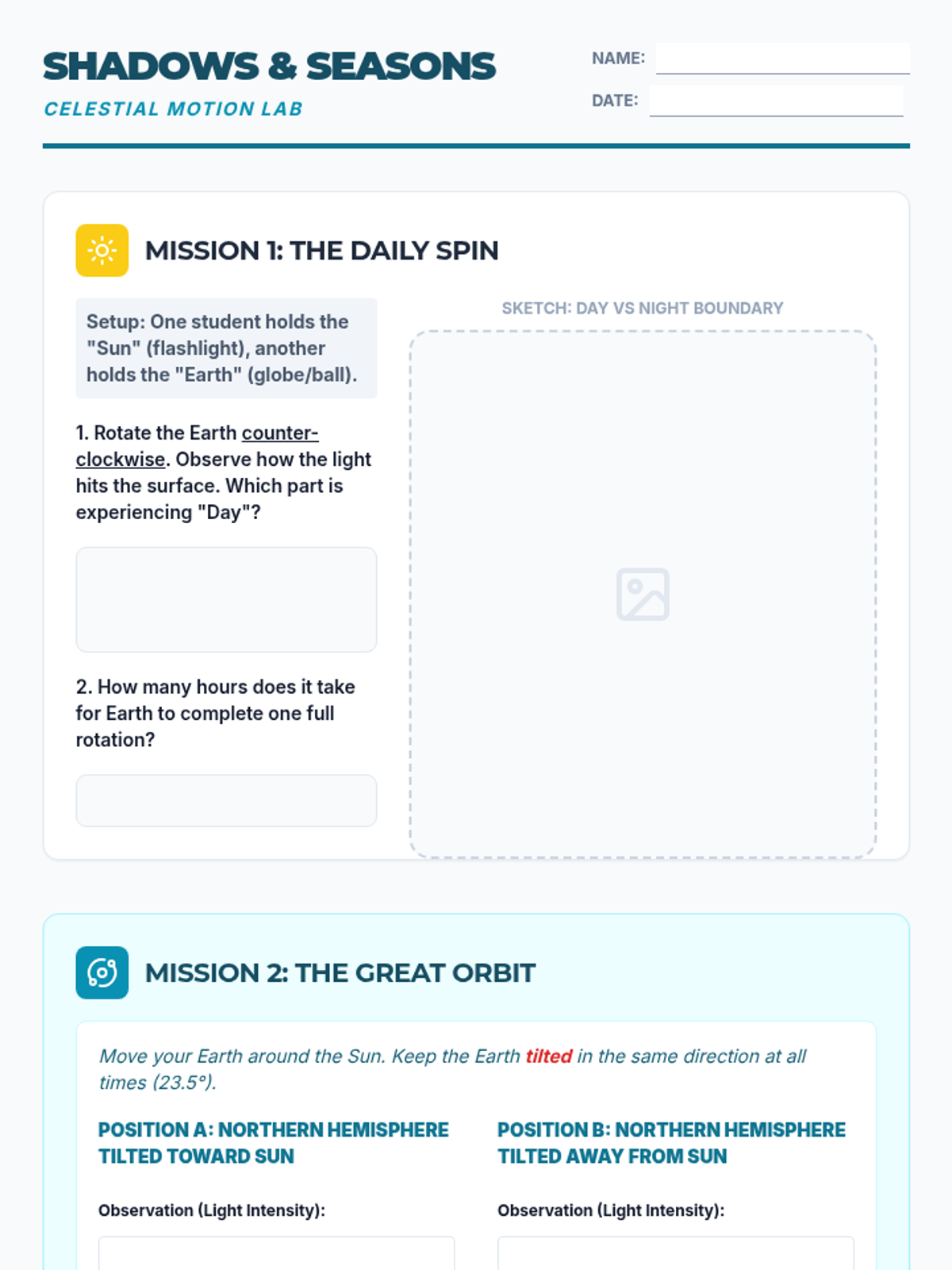
A comprehensive lesson exploring solar system organization, planet properties, and the celestial interactions between the sun, Earth, and moon through modeling and data analysis.
Intro to the Cold Case Project: students receive their fictional case files and begin initial review.
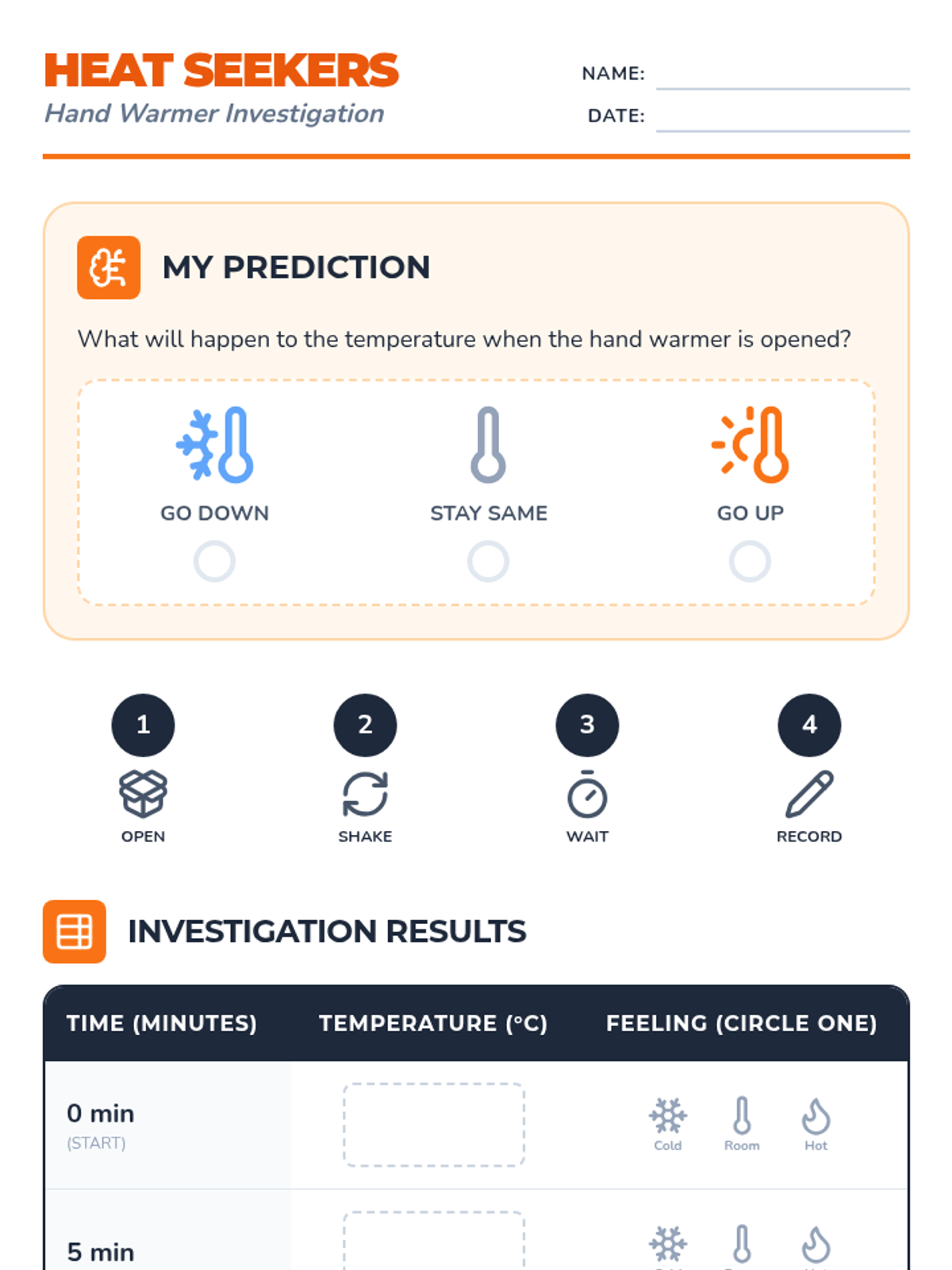
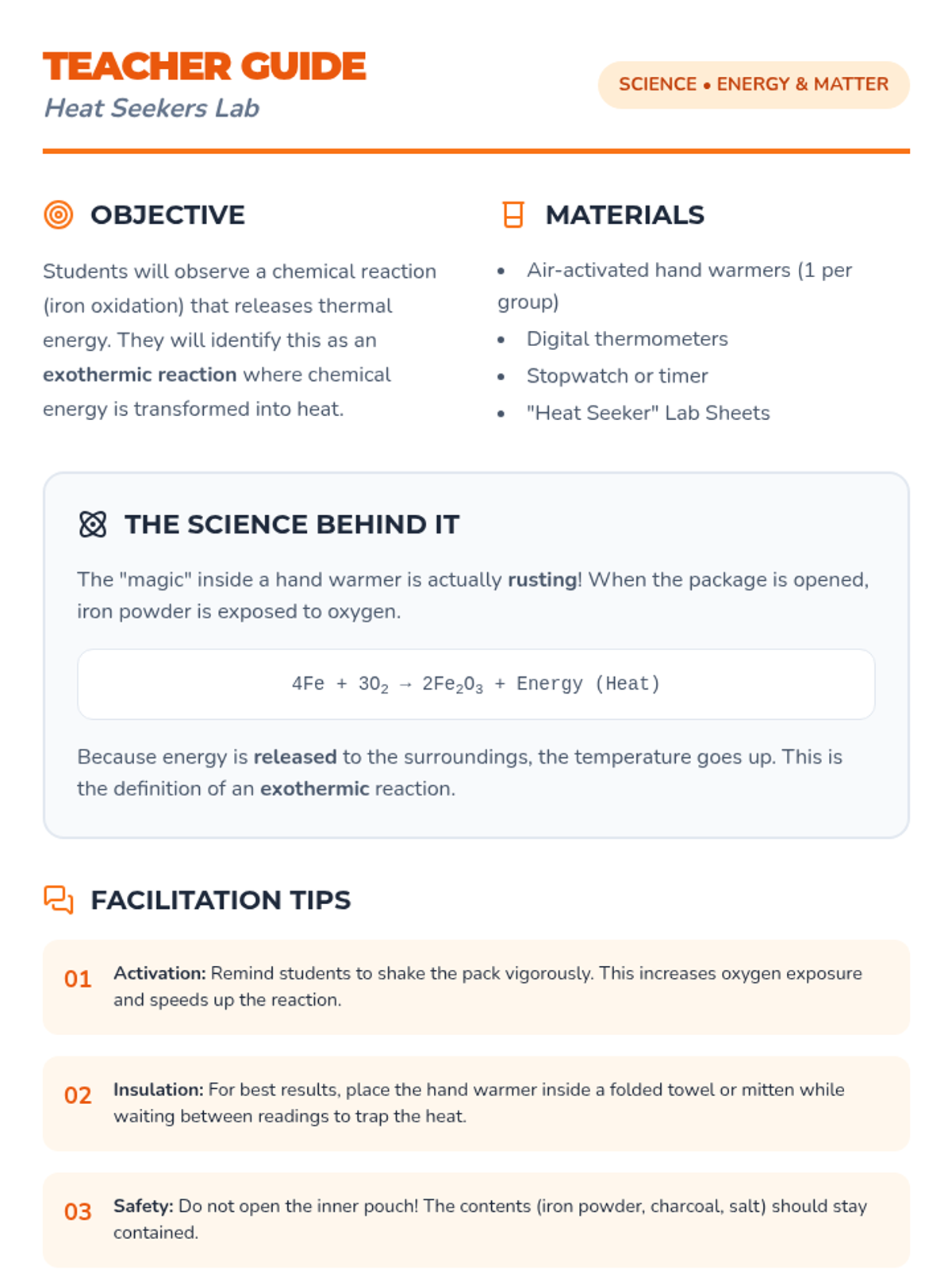
An investigation into exothermic reactions using hand warmers. Students observe and record temperature changes to understand how chemical energy transforms into heat energy.
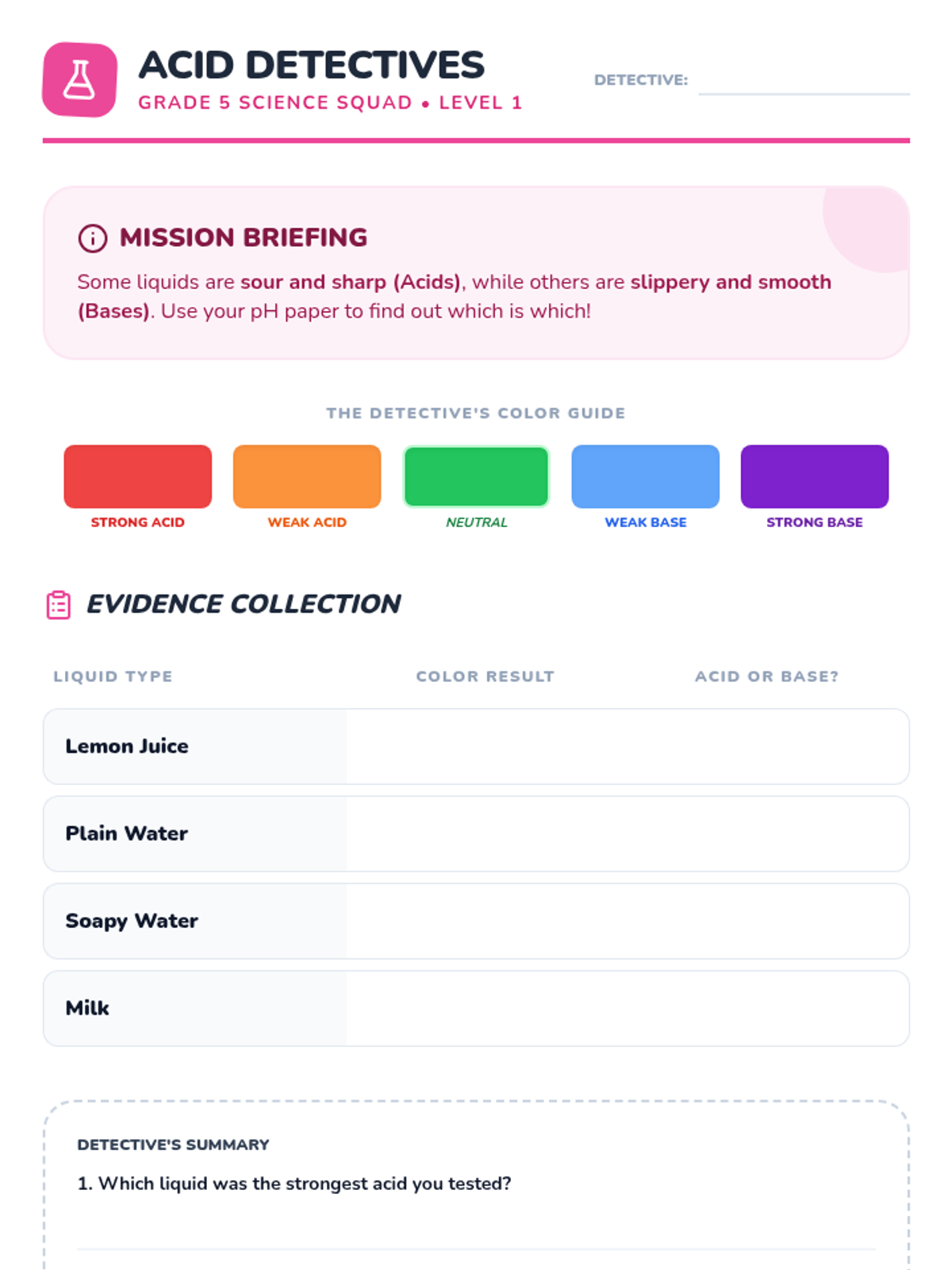
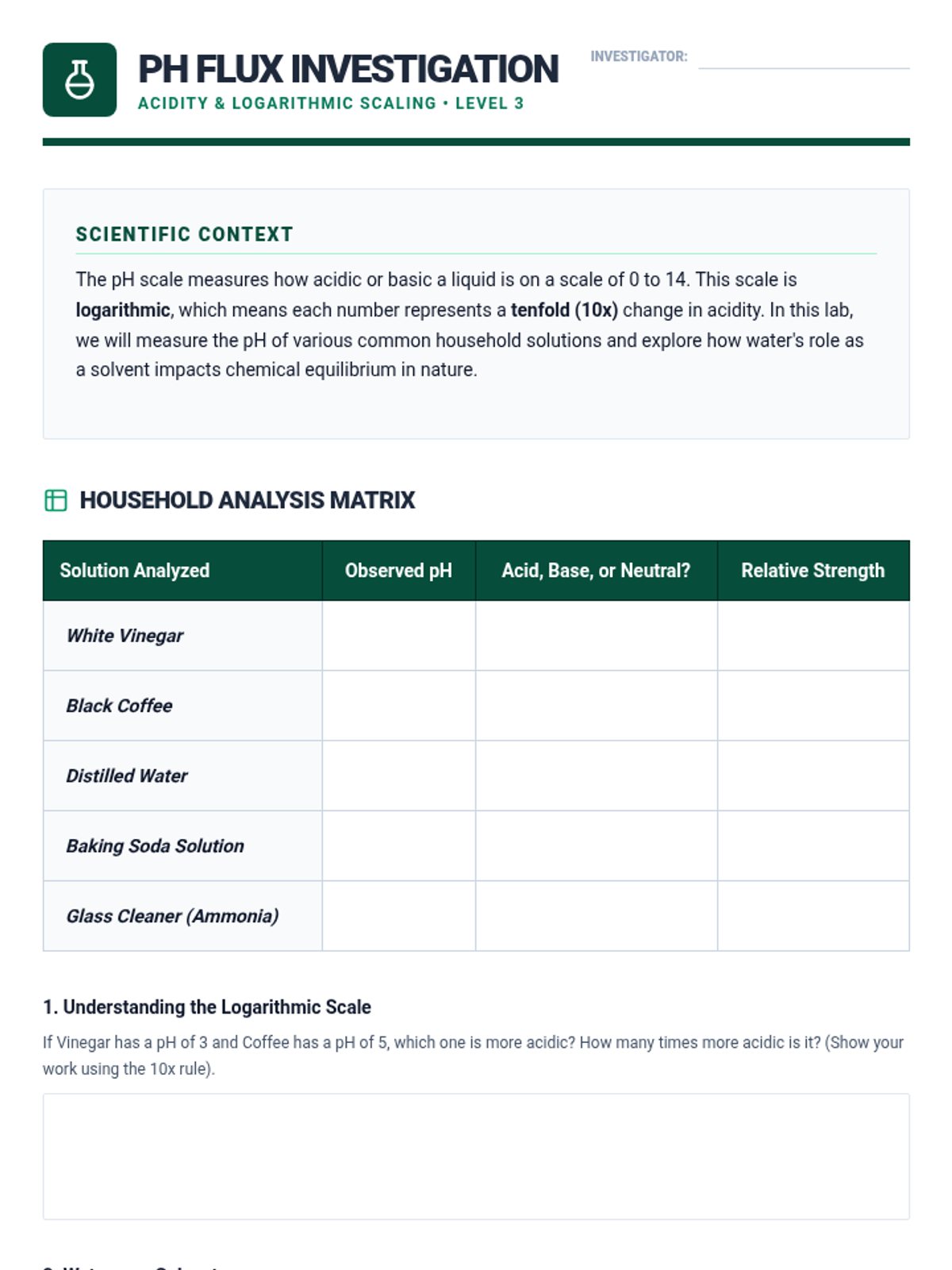
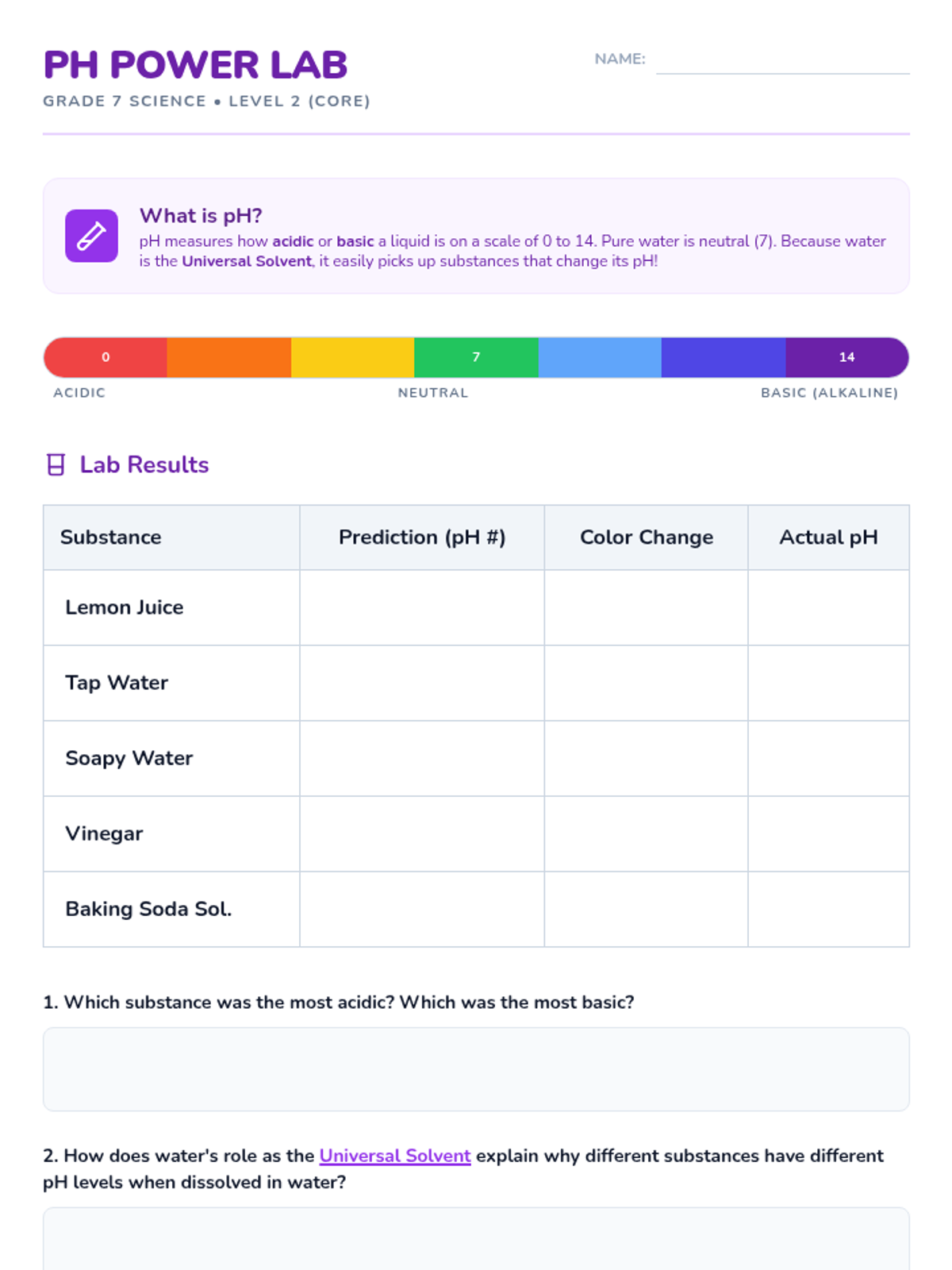
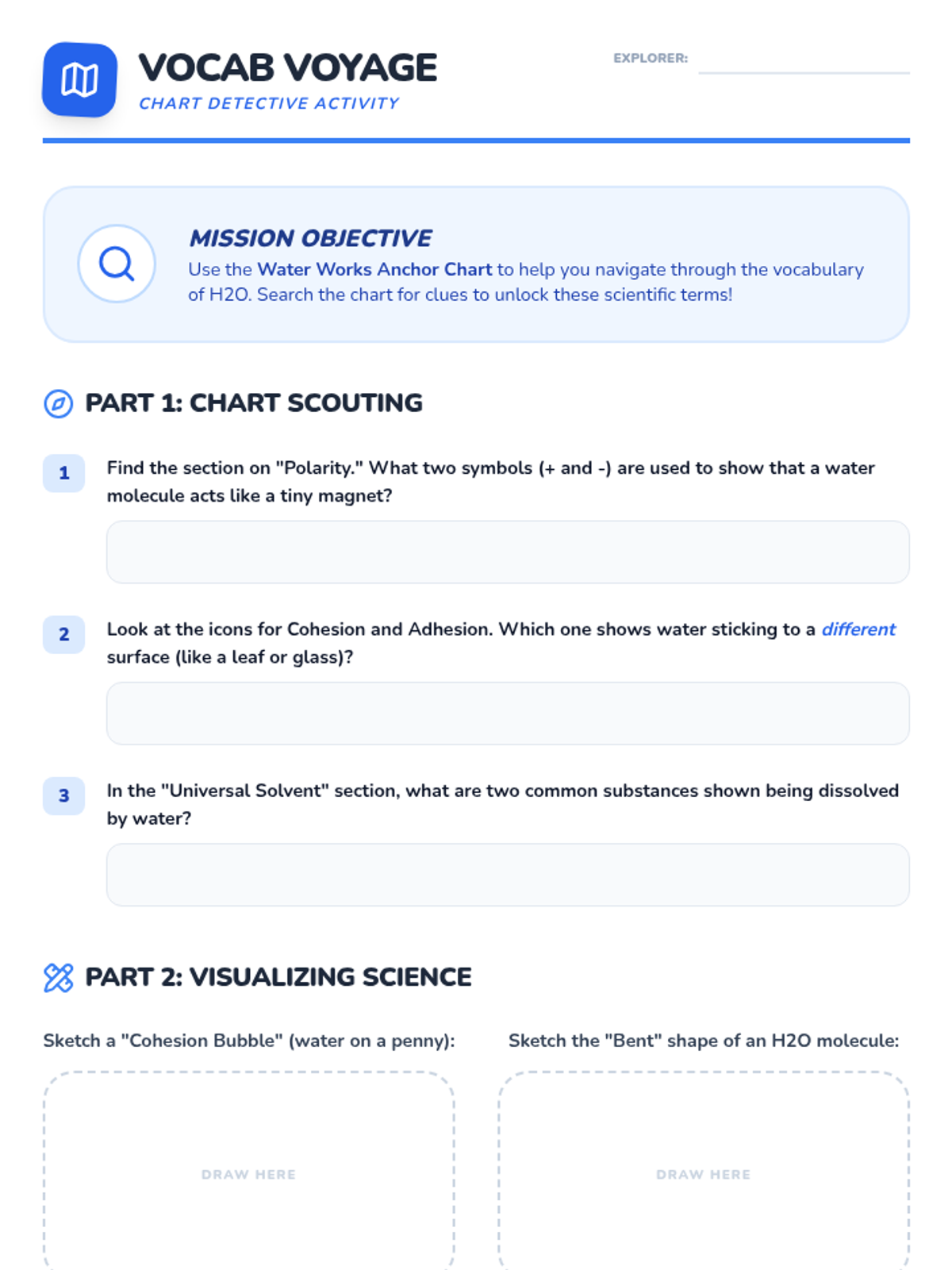
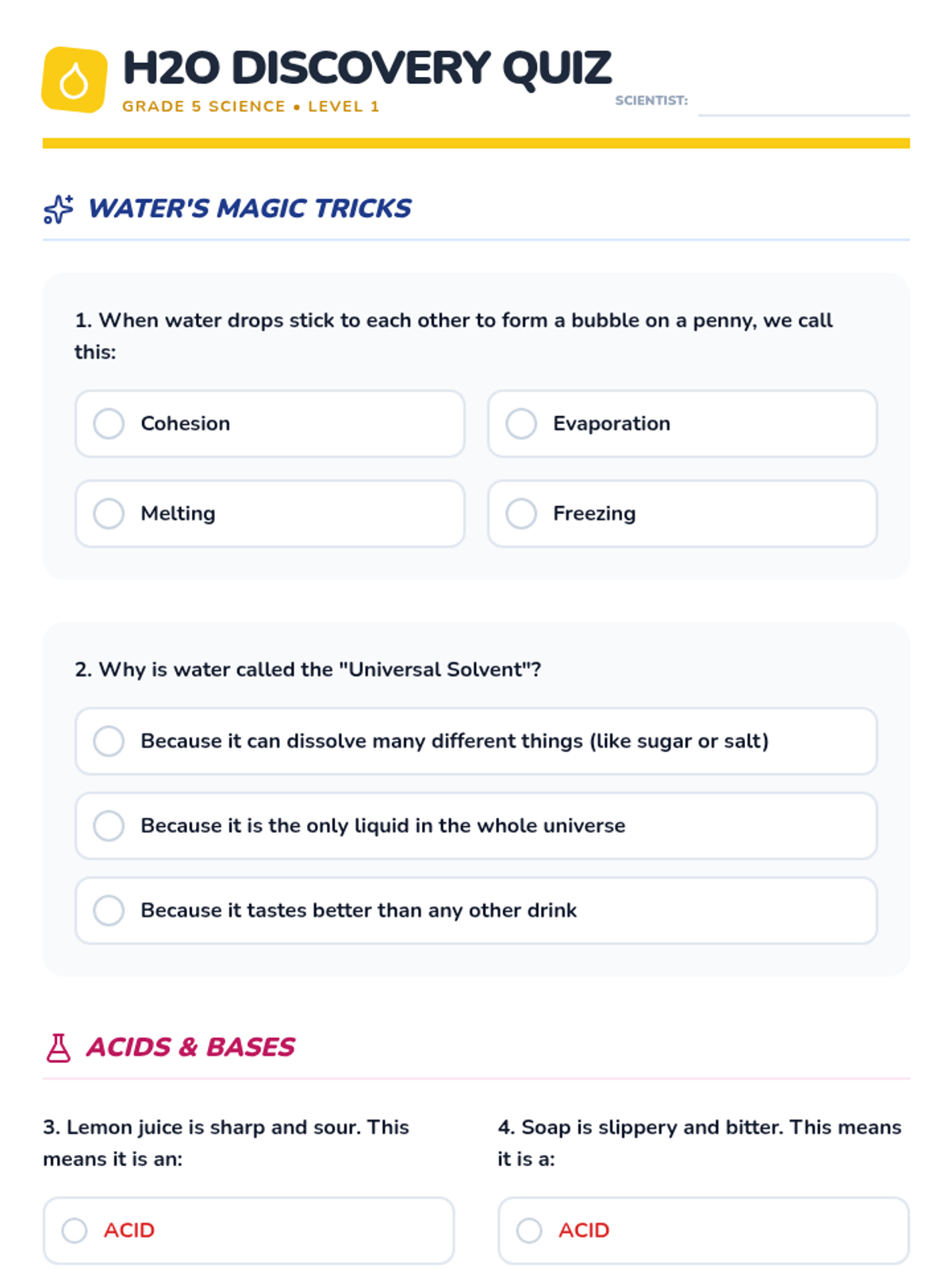
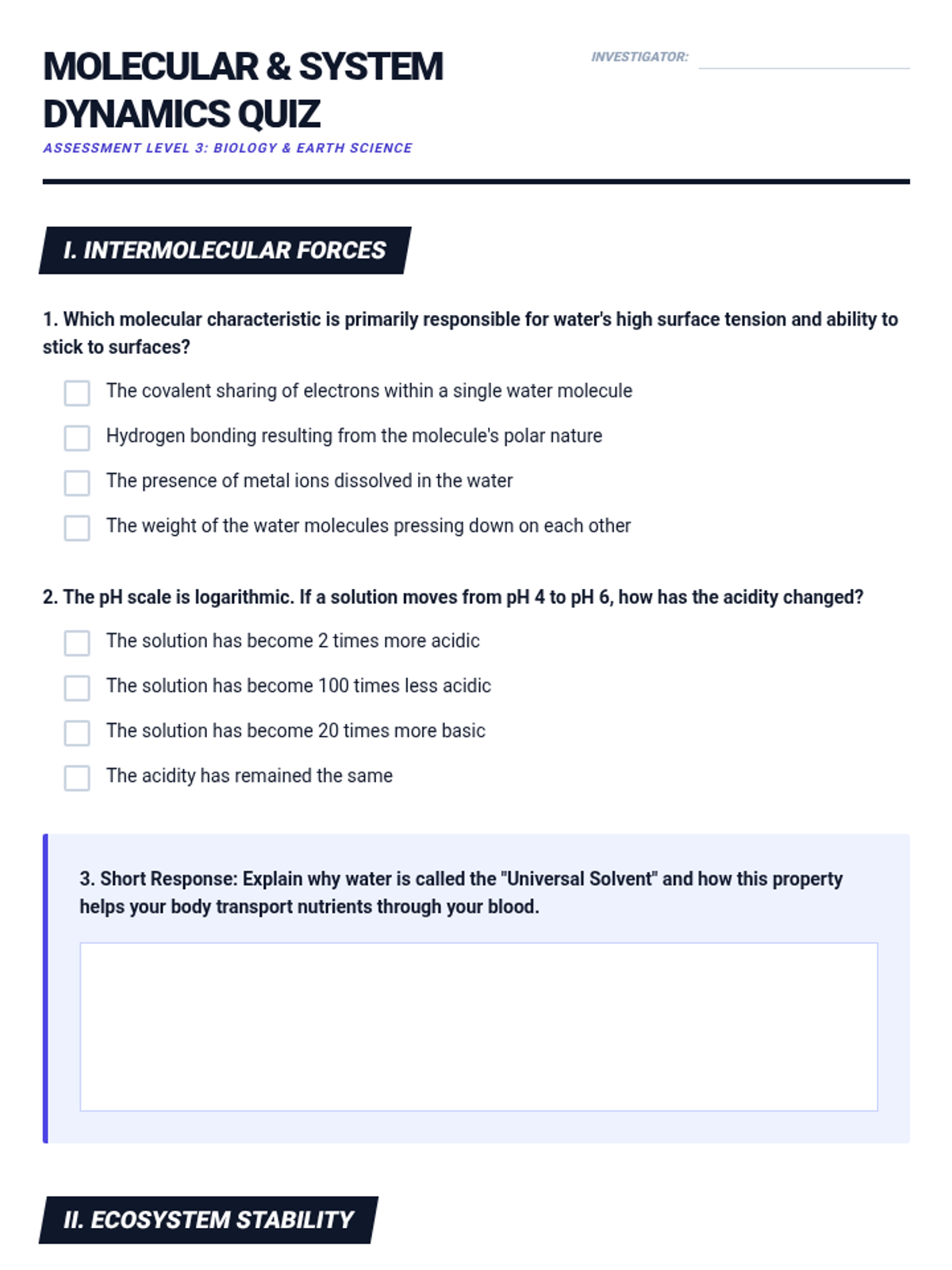
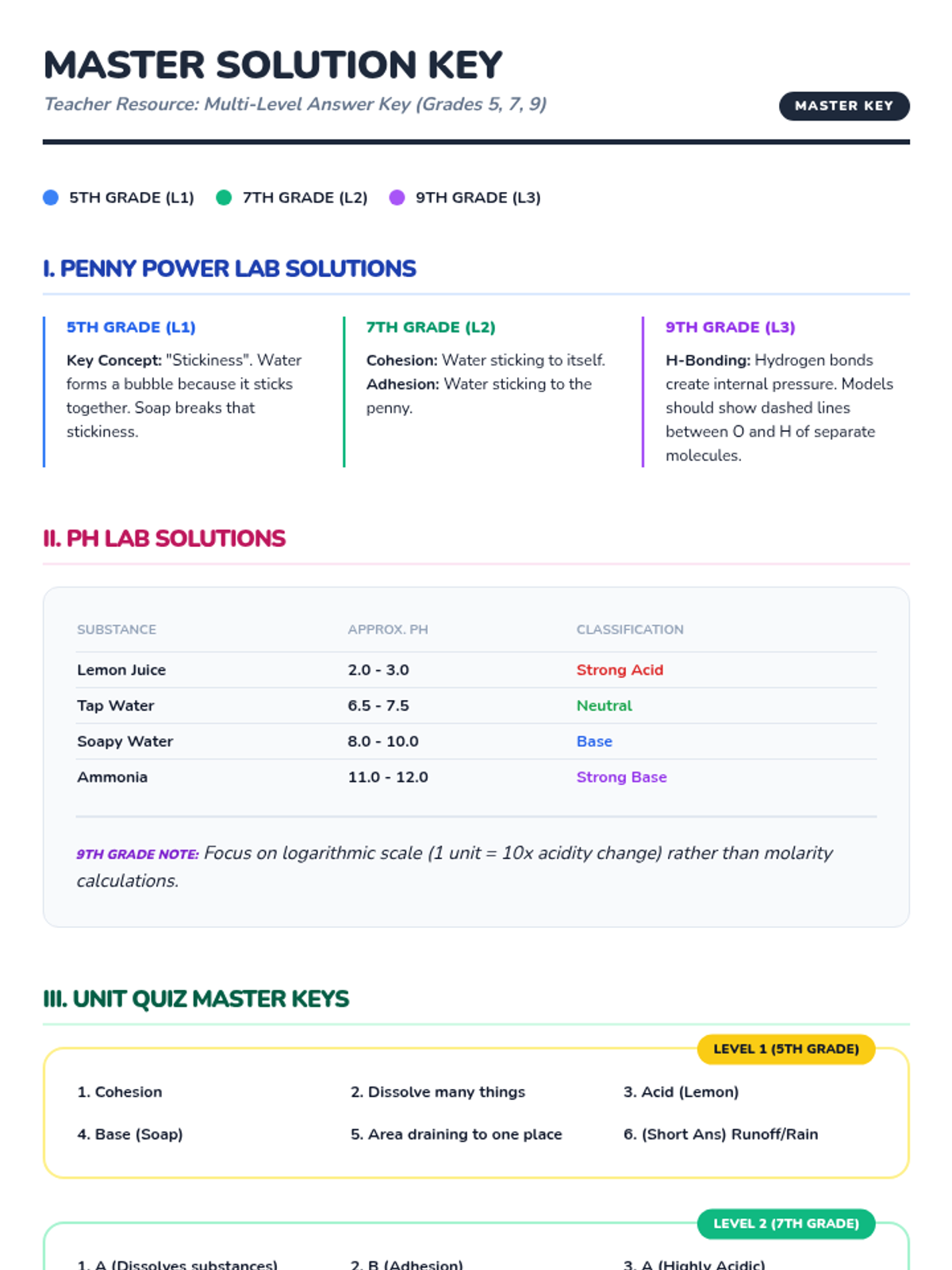
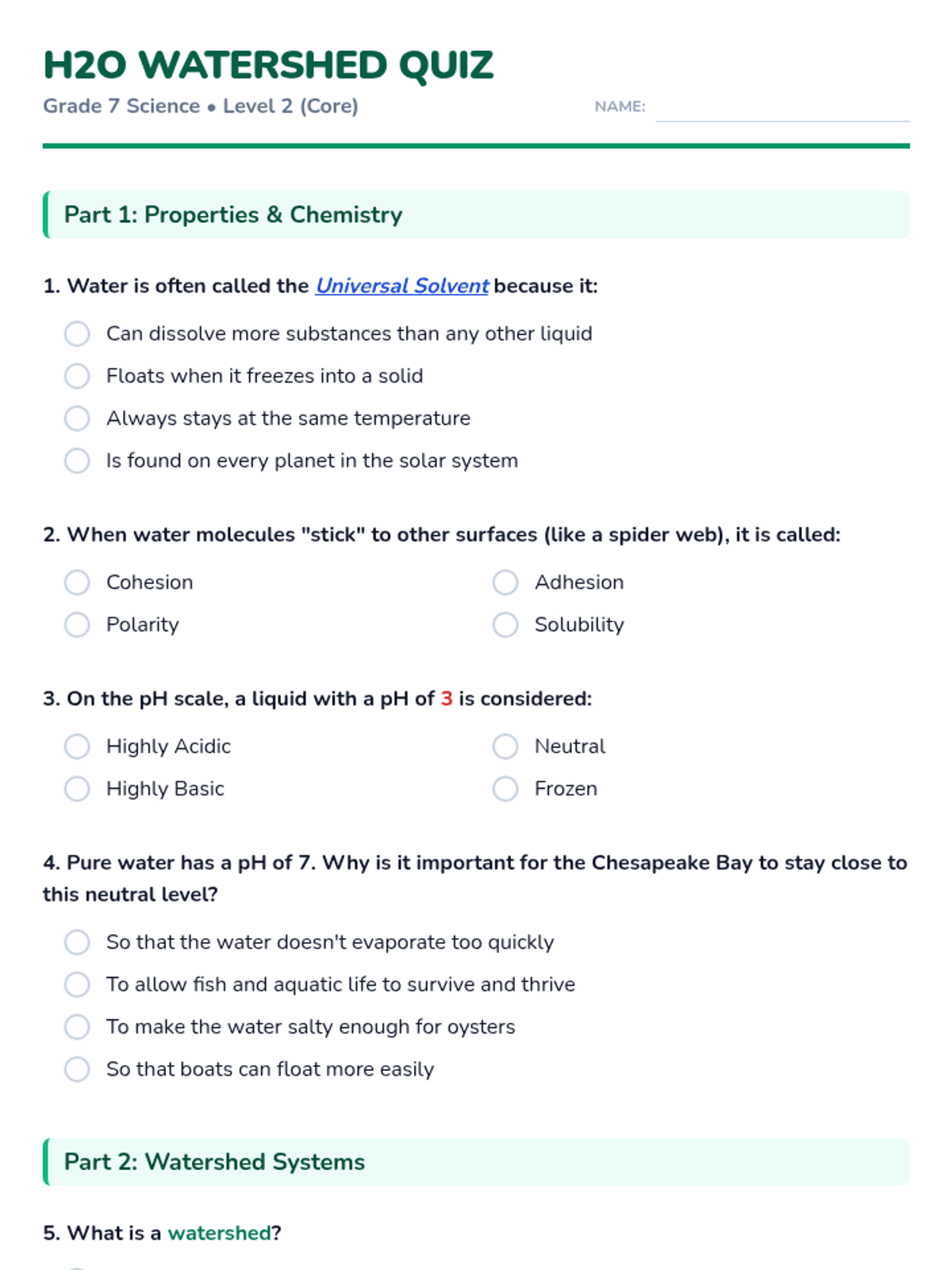
Investigate the chemical nature of water through pH testing, exploring acidity, alkalinity, and how water's role as a solvent impacts life and the environment.
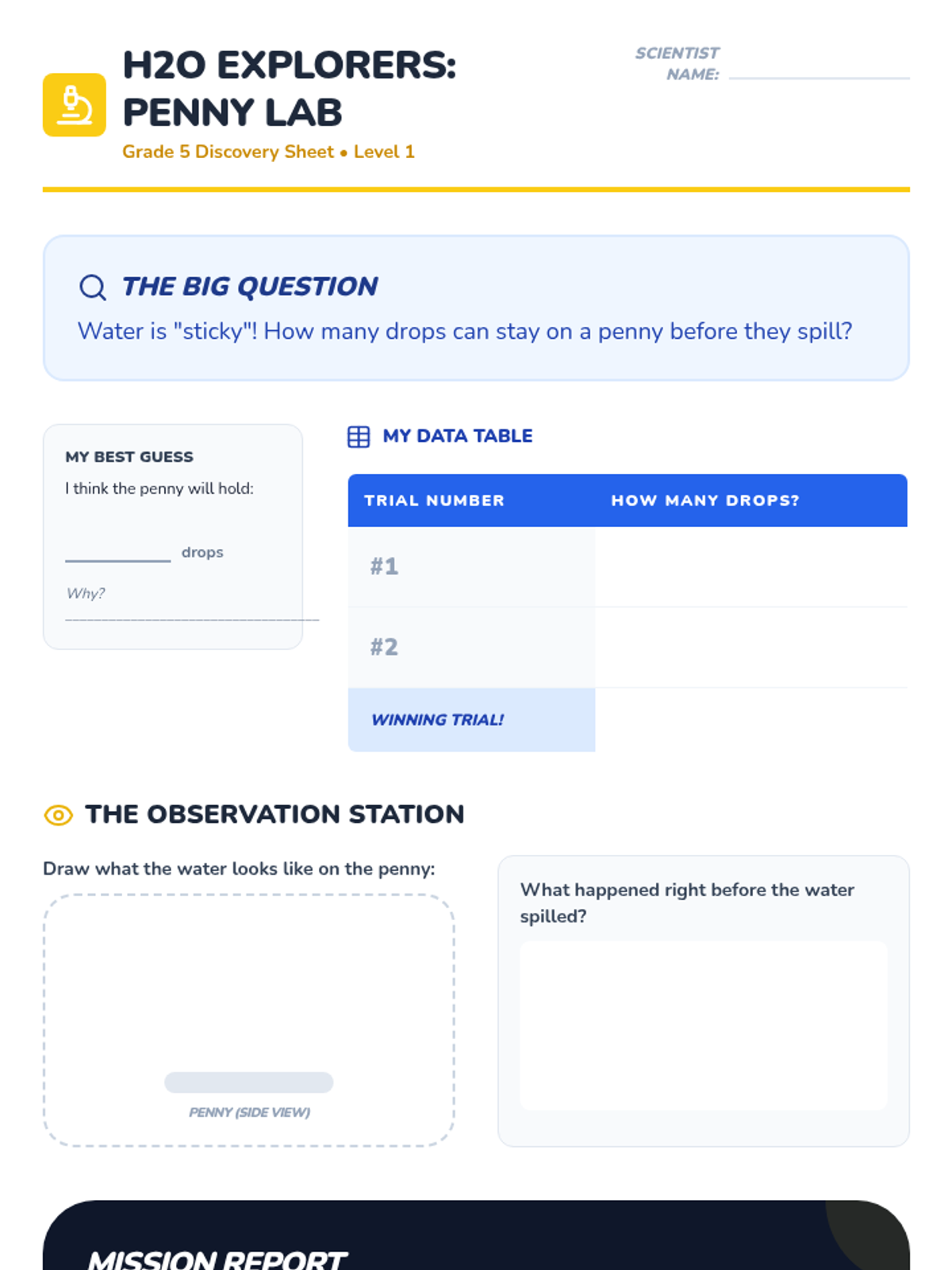
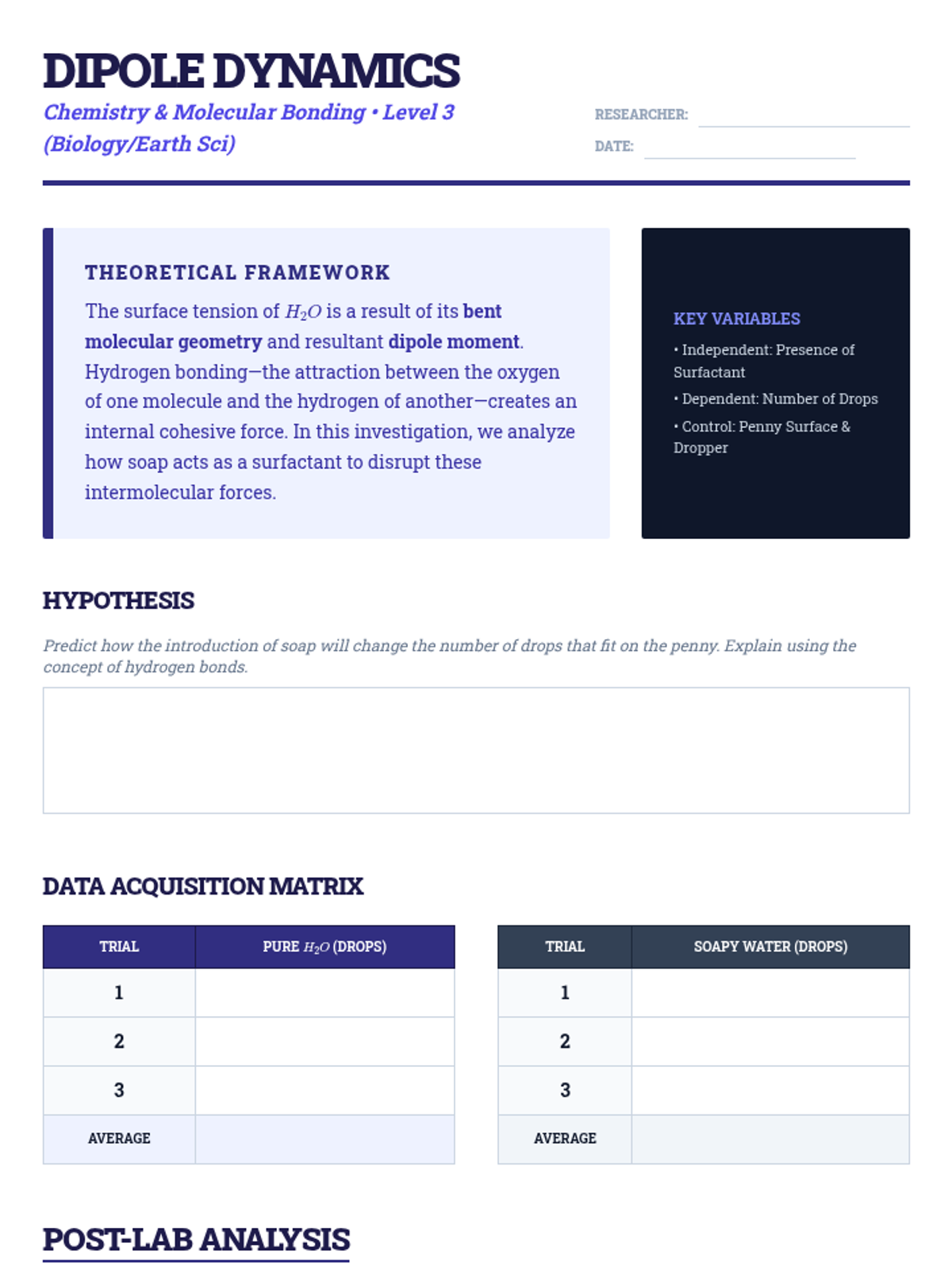
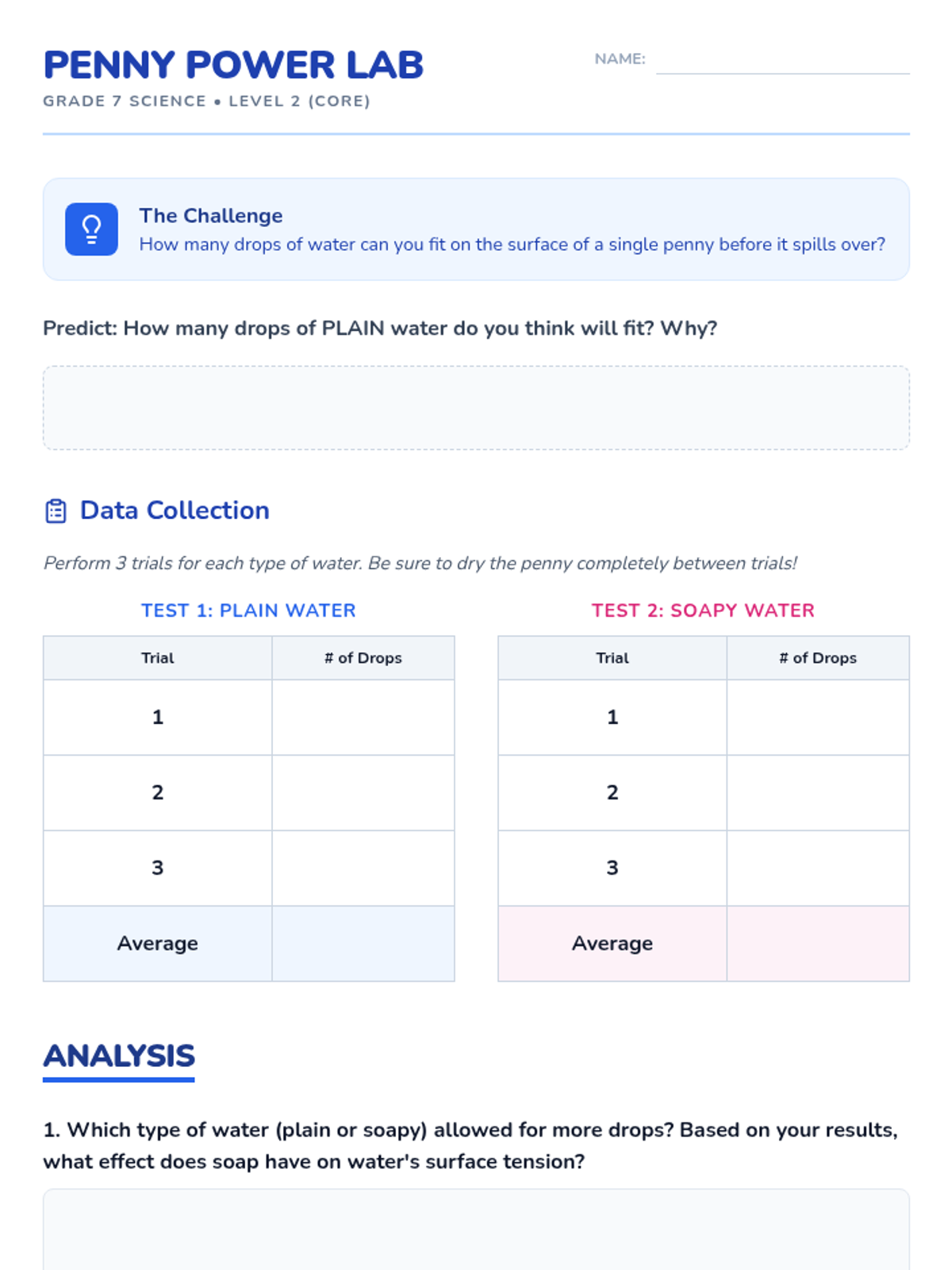
Explore the unique molecular properties of water, including cohesion, adhesion, and surface tension, through the 'Penny Power' lab and interactive demonstrations.
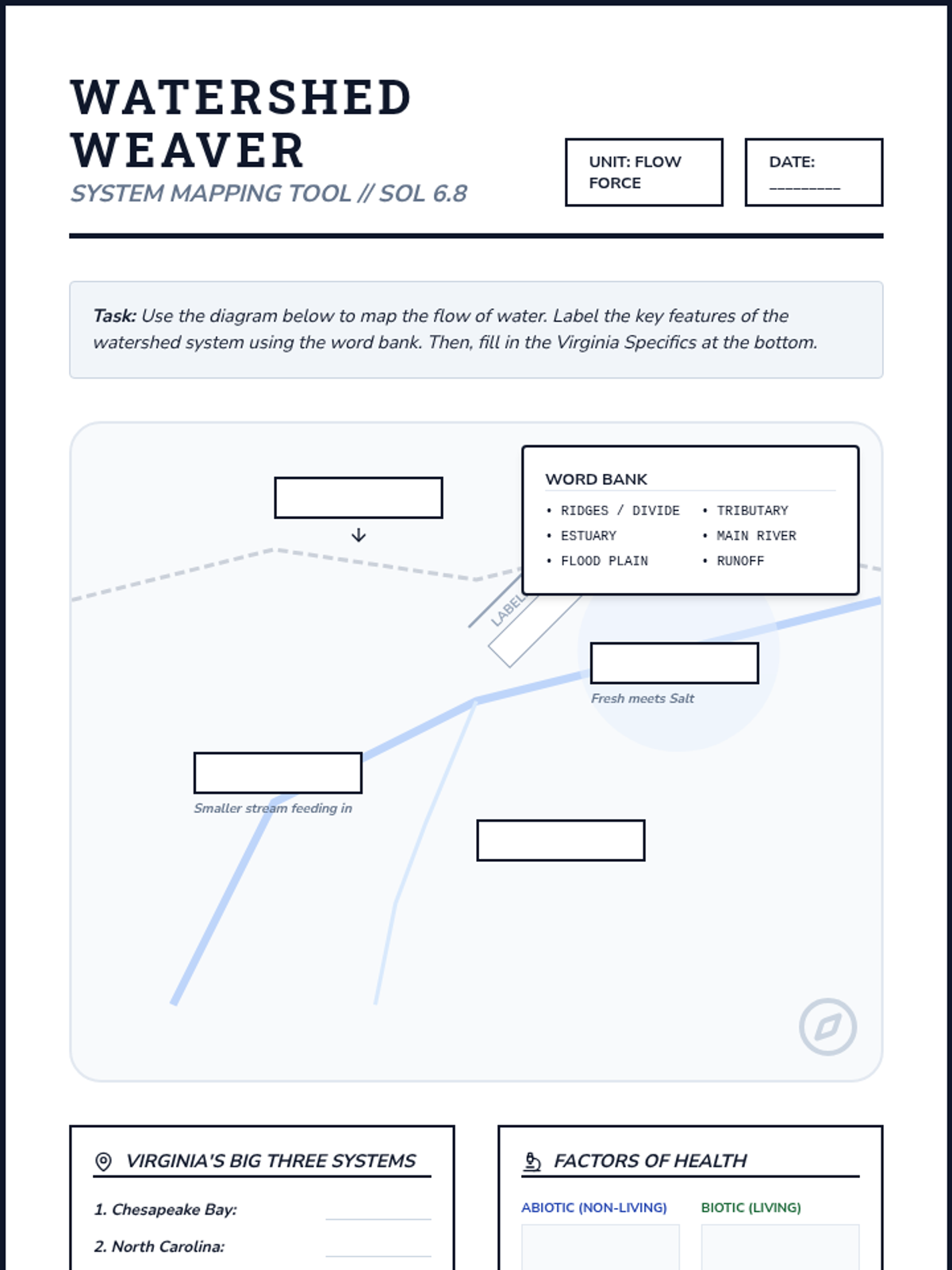
Discover the structure of watershed systems, the importance of the Chesapeake Bay, and how human activity impacts water quality.
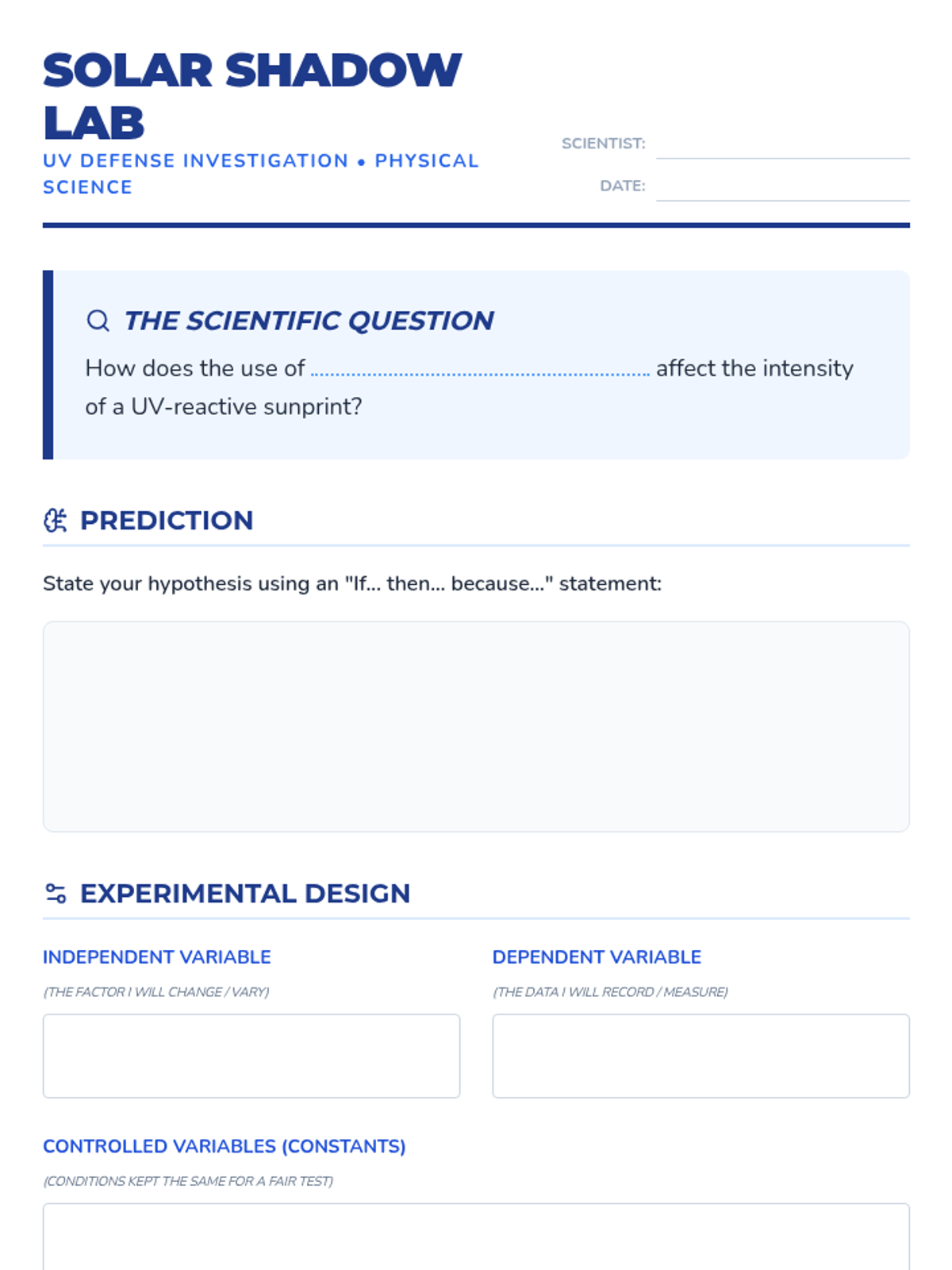
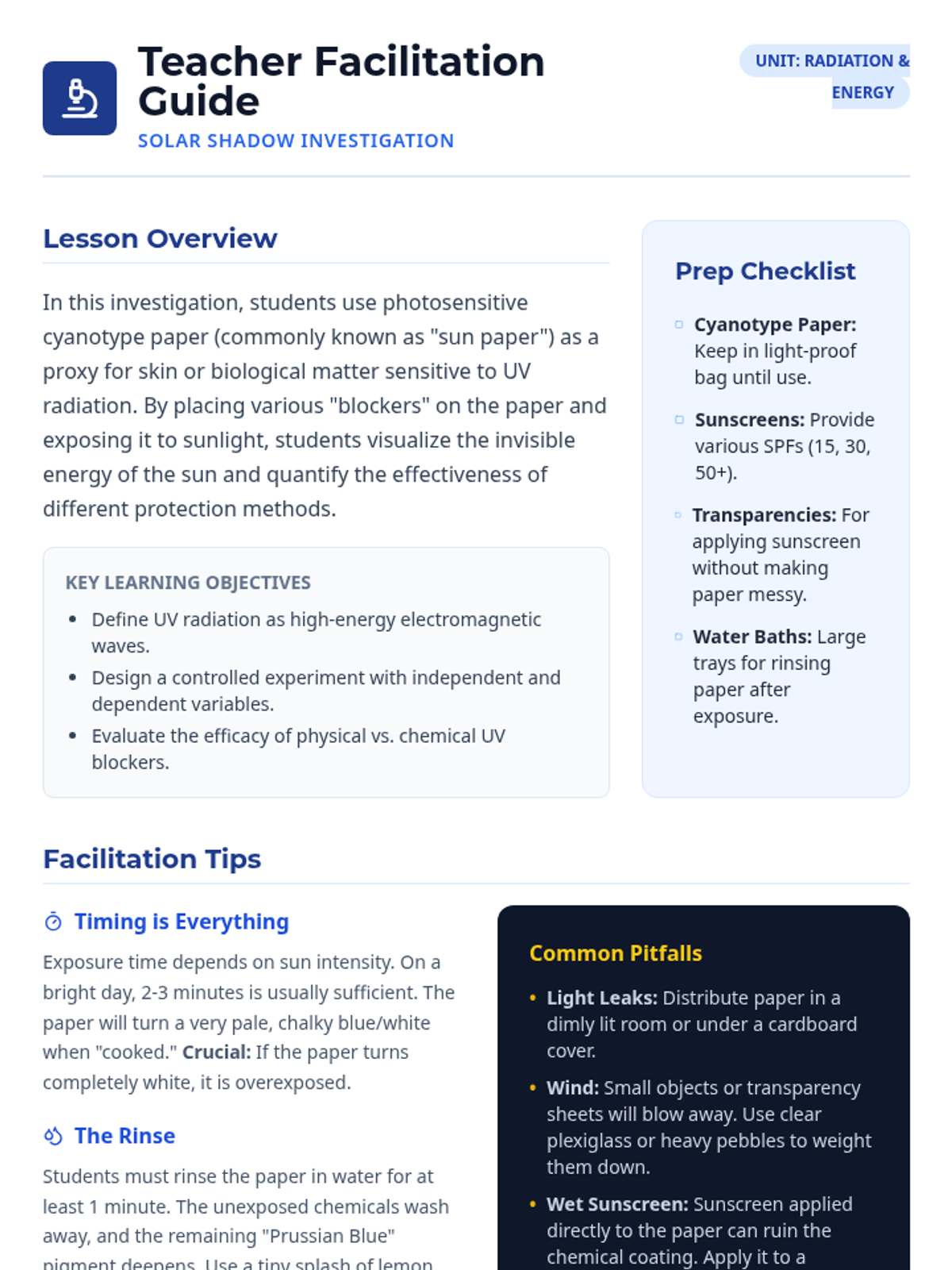
A hands-on investigation using cyanotype paper to explore UV radiation and the effectiveness of various blockers, including sunscreens and physical objects. Students will practice the scientific method by designing their own variable tests and analyzing the resulting prints.
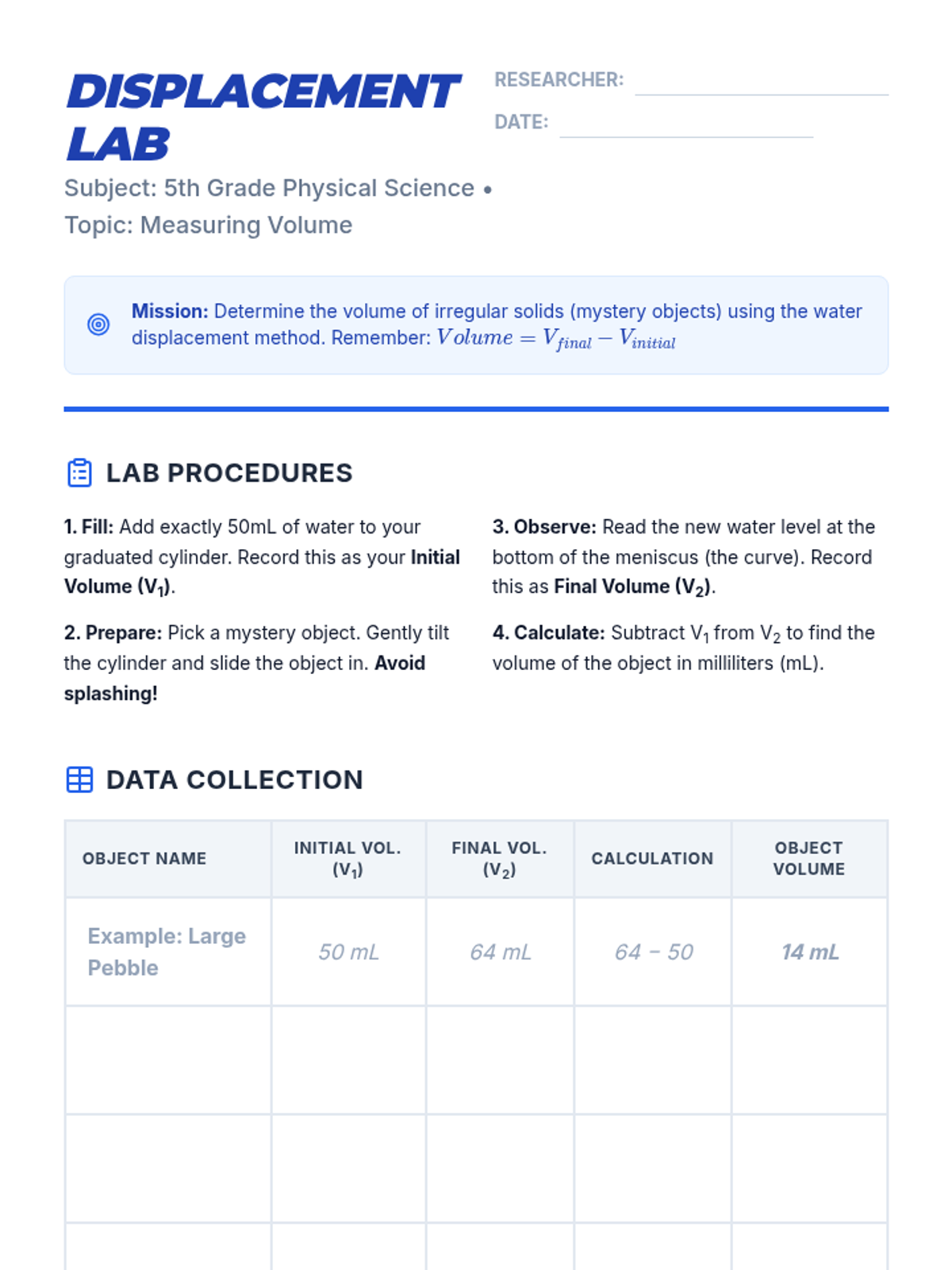
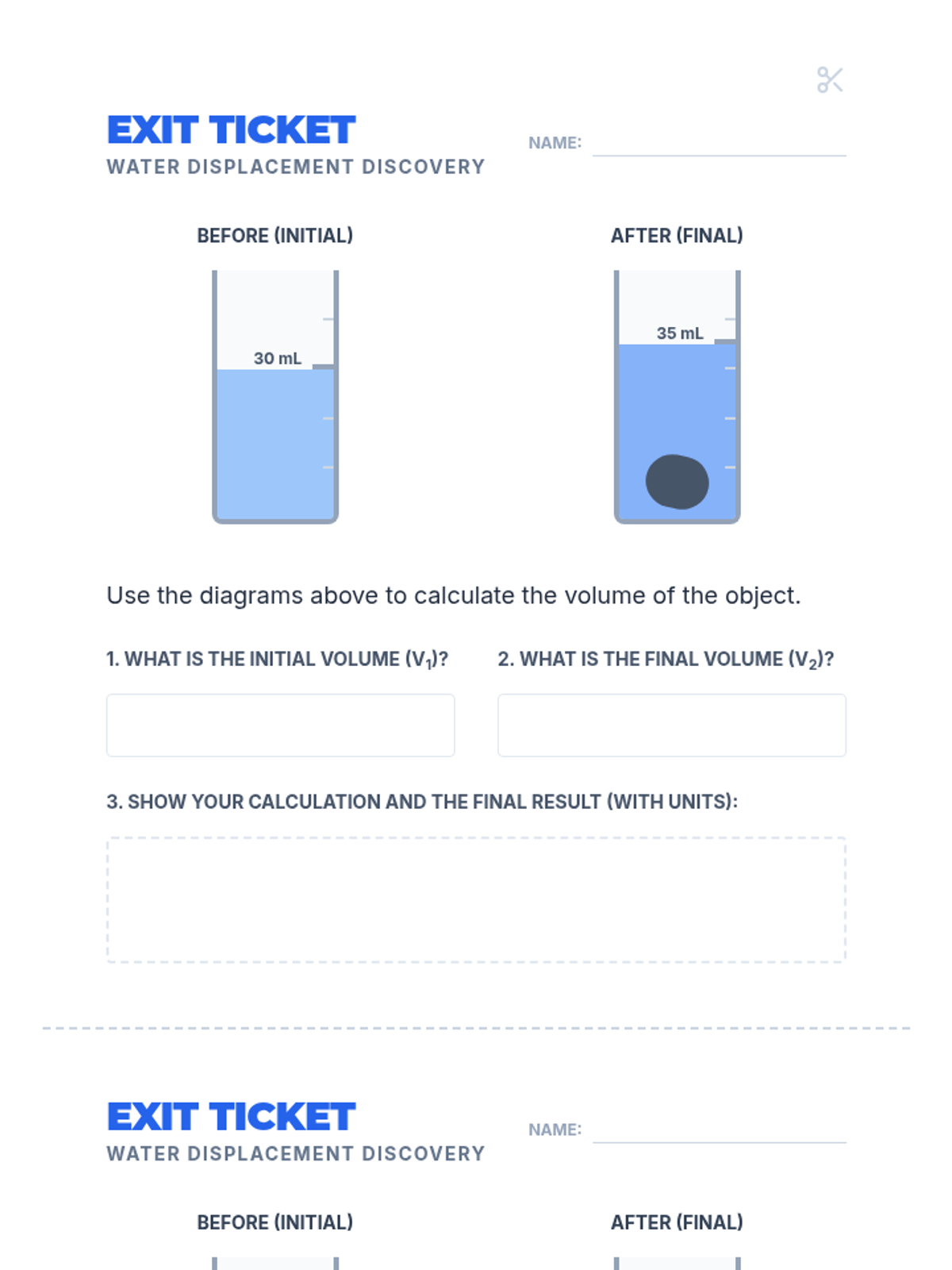
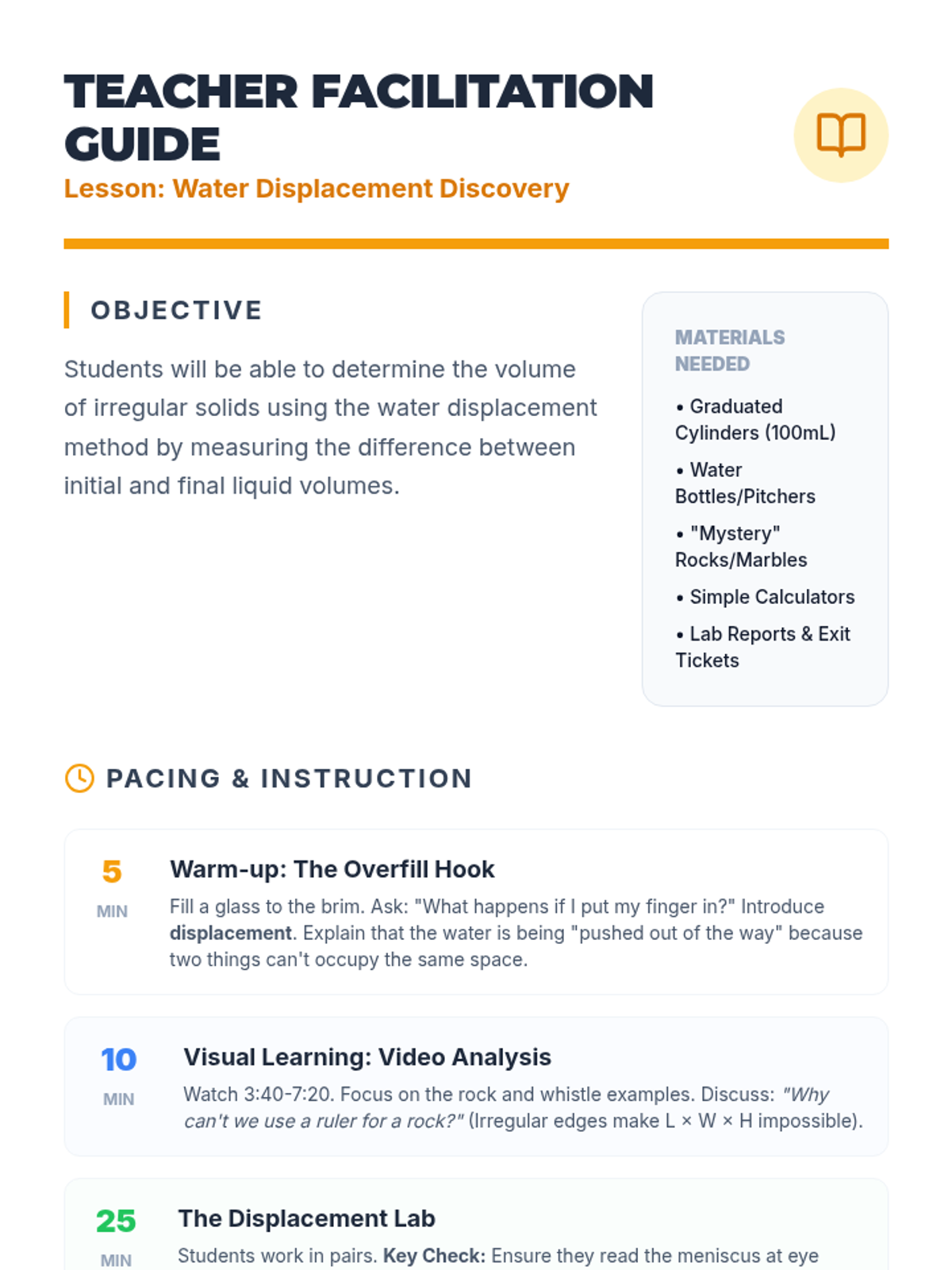
Students learn to measure the volume of irregular solids using the water displacement method through a combination of video analysis, hands-on laboratory experimentation, and data calculation.
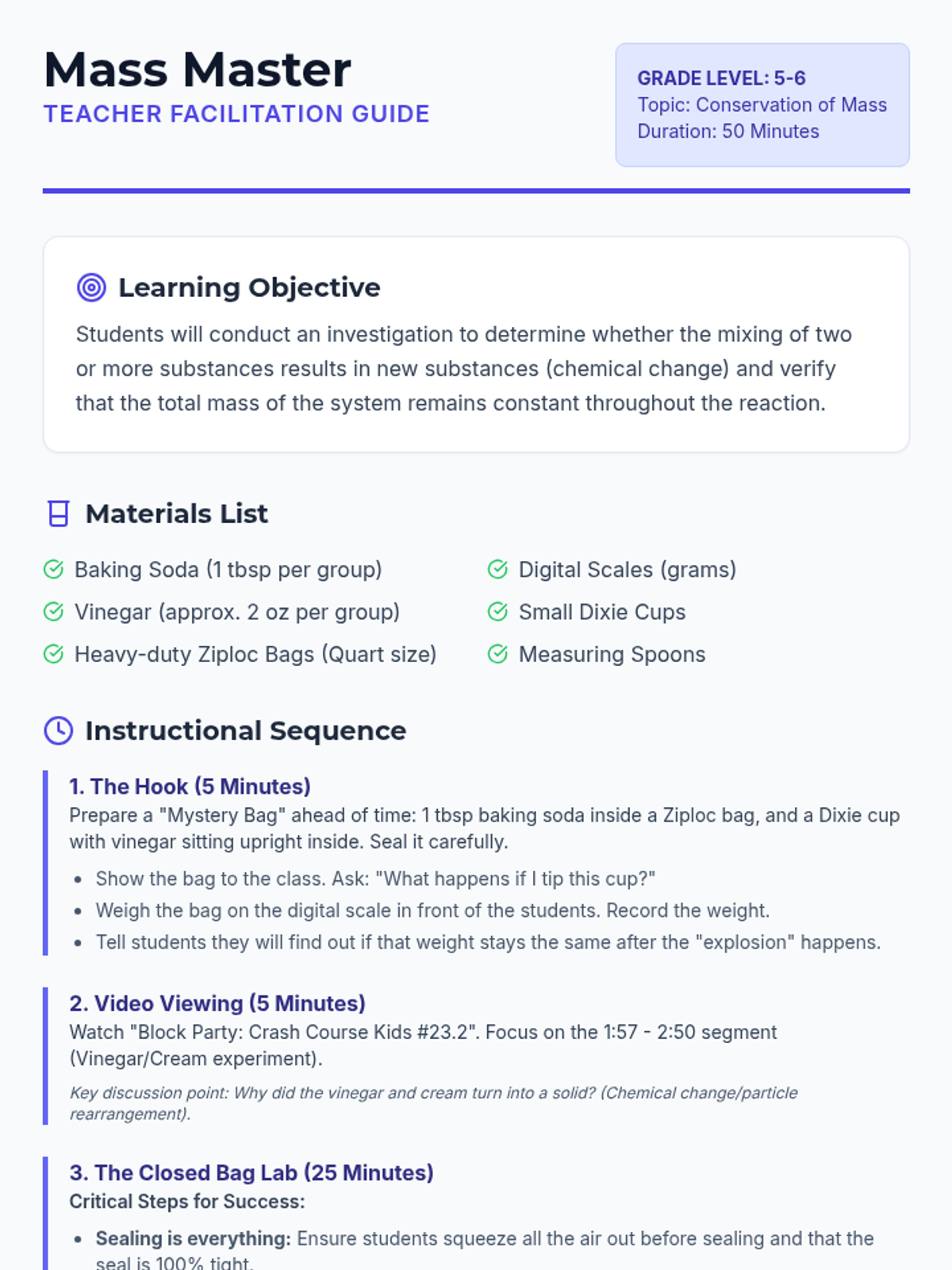
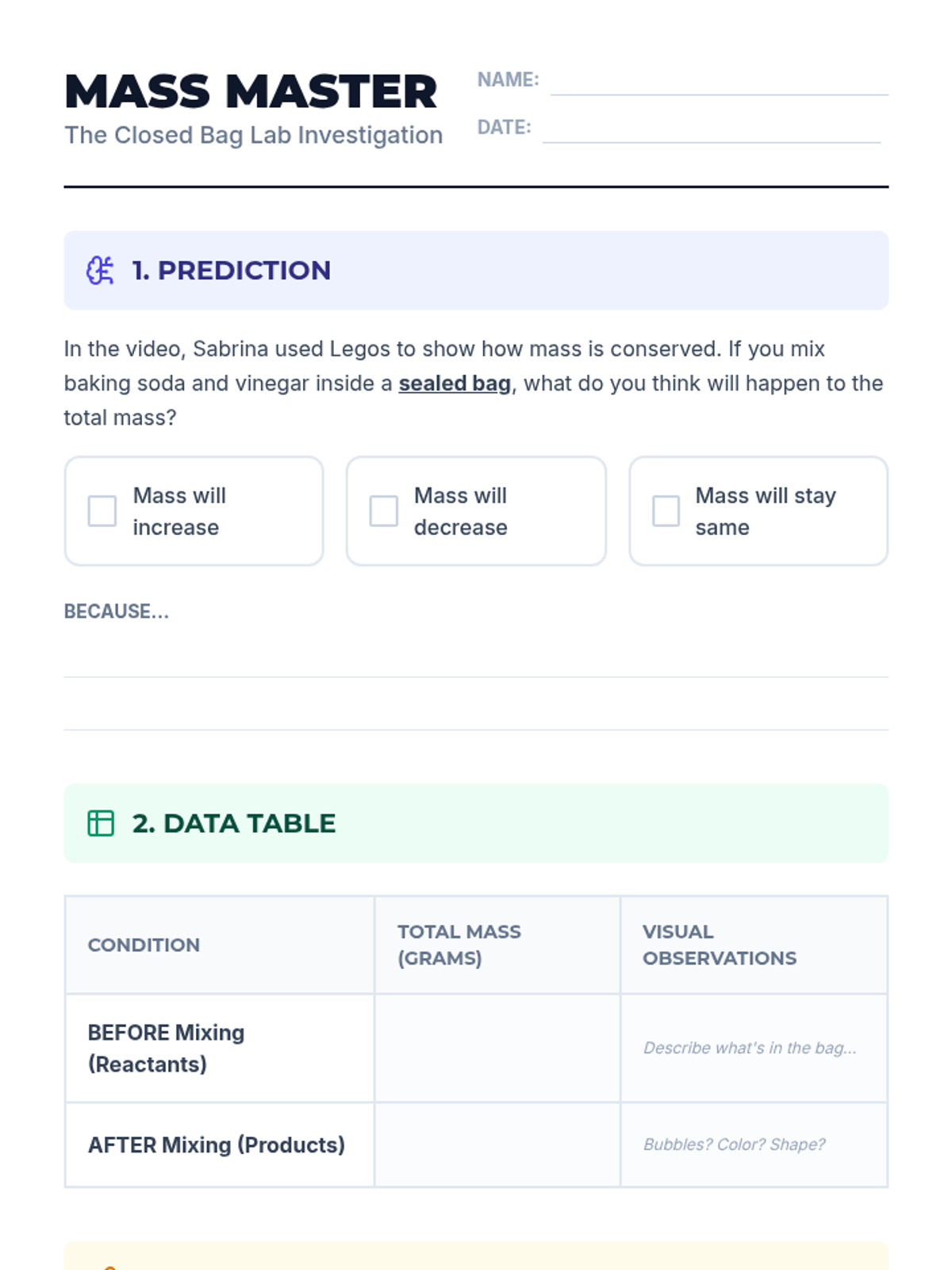
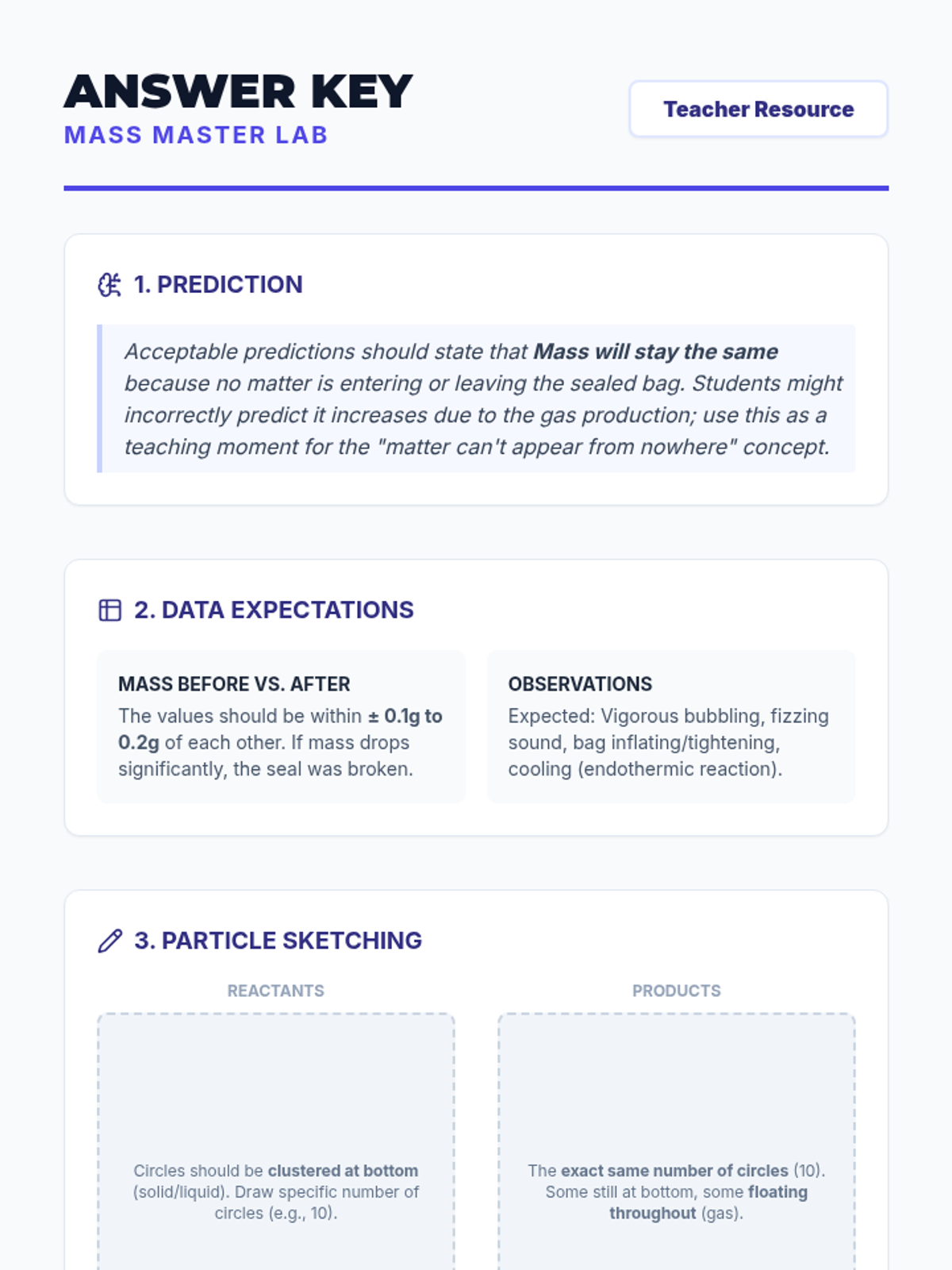
Students investigate the Conservation of Mass through a chemical reaction between baking soda and vinegar in a sealed system. They observe particle rearrangement, identify reactants and products, and verify that mass remains constant even when a gas is produced.
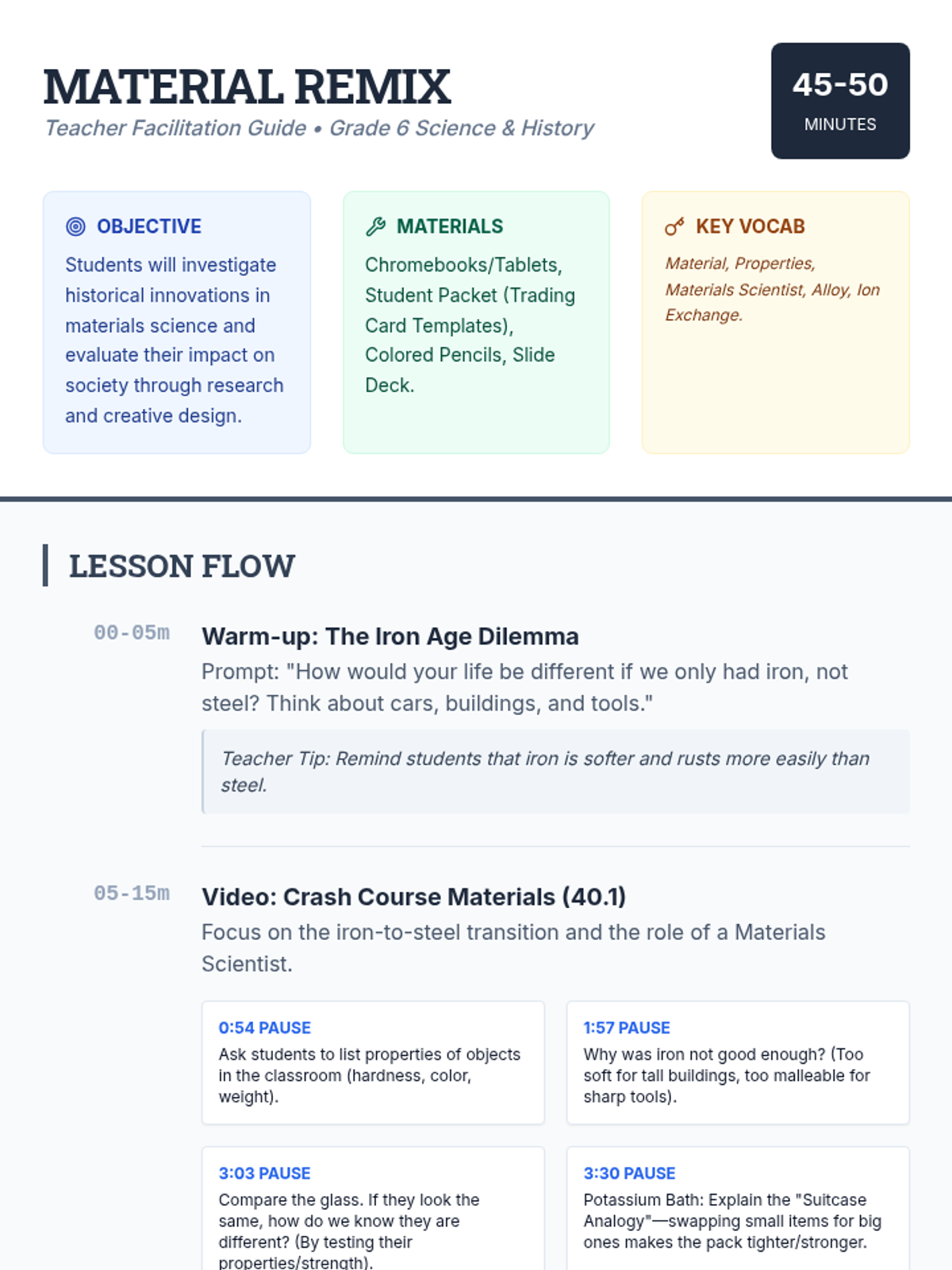
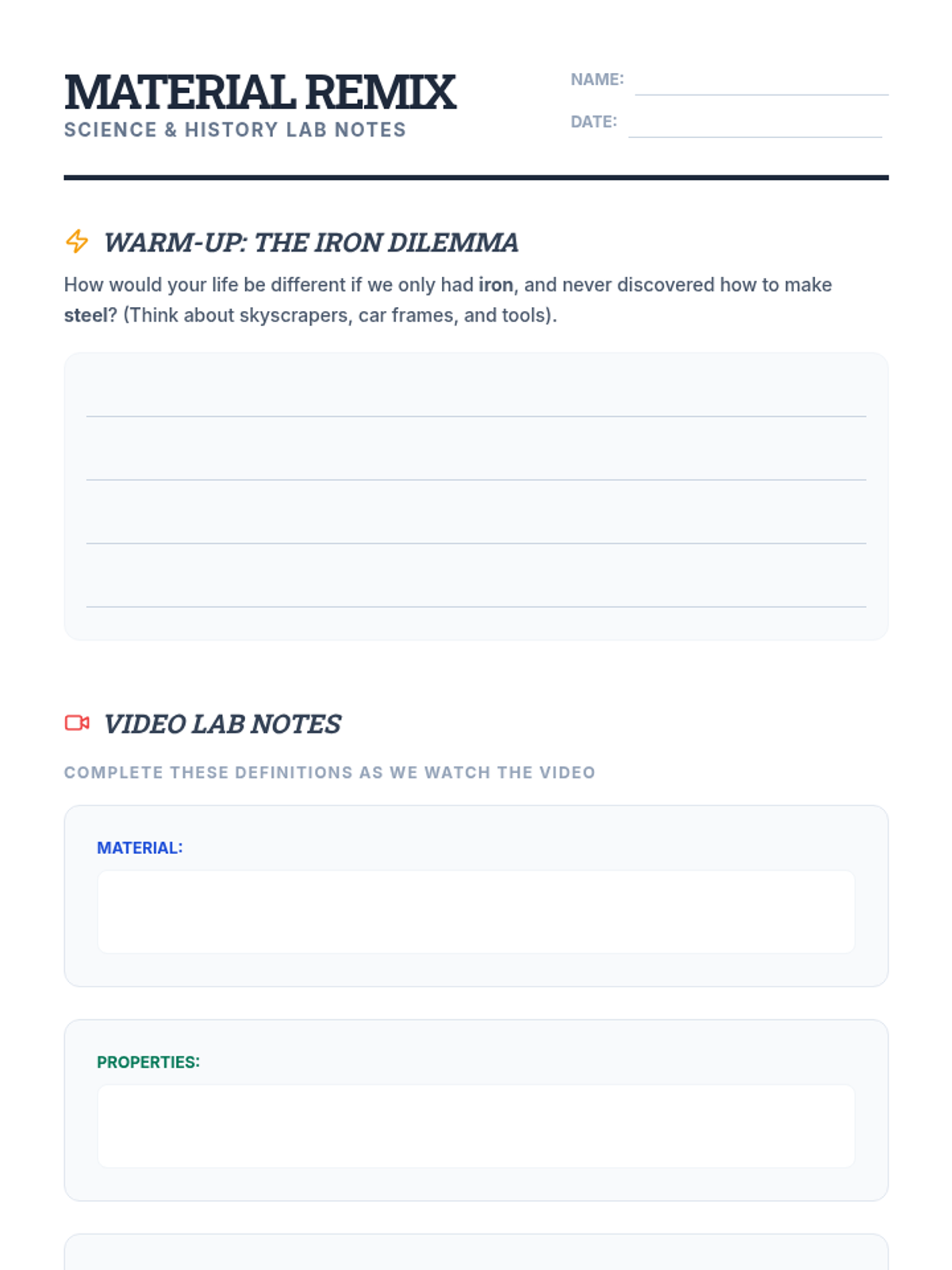
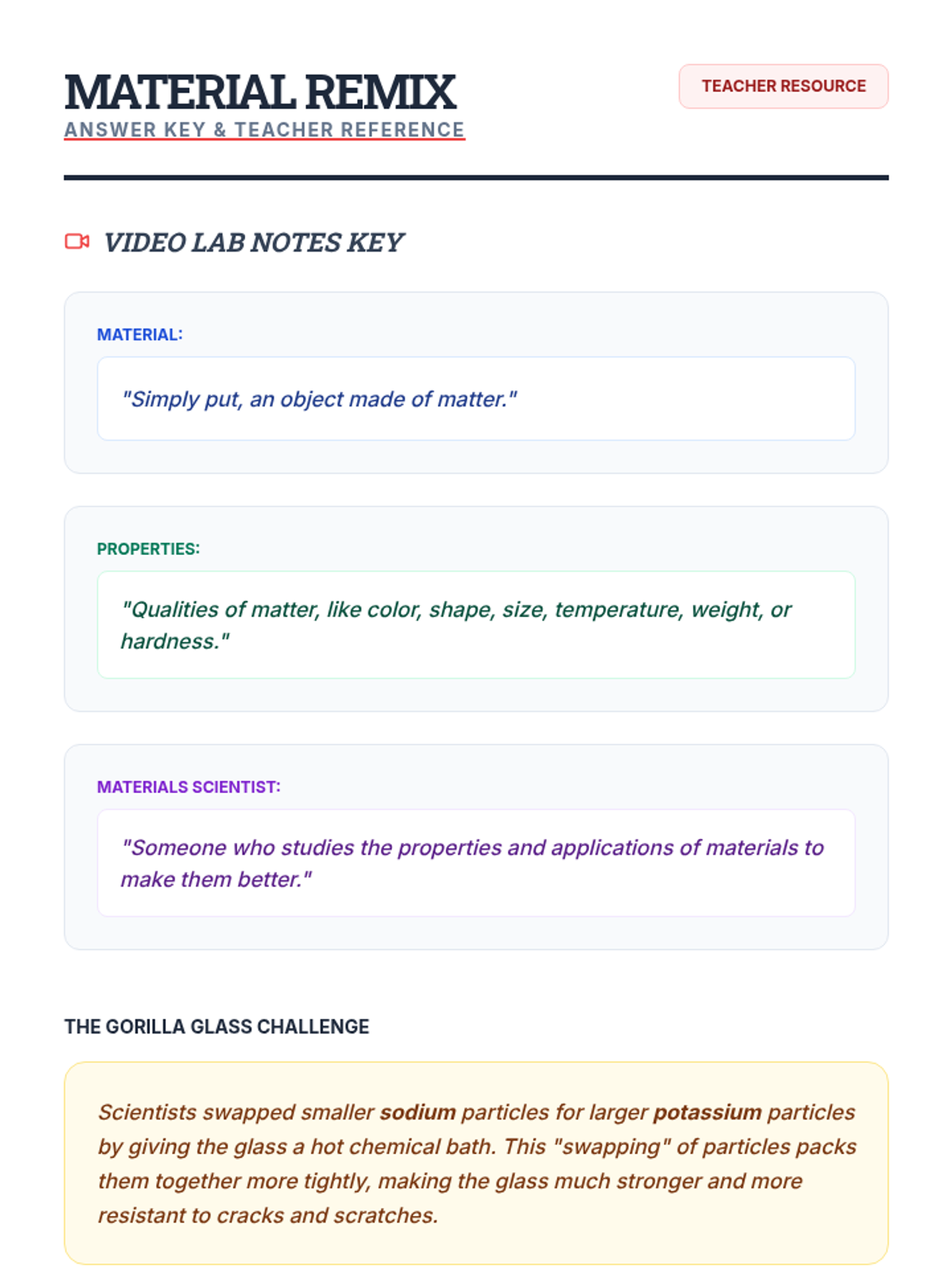
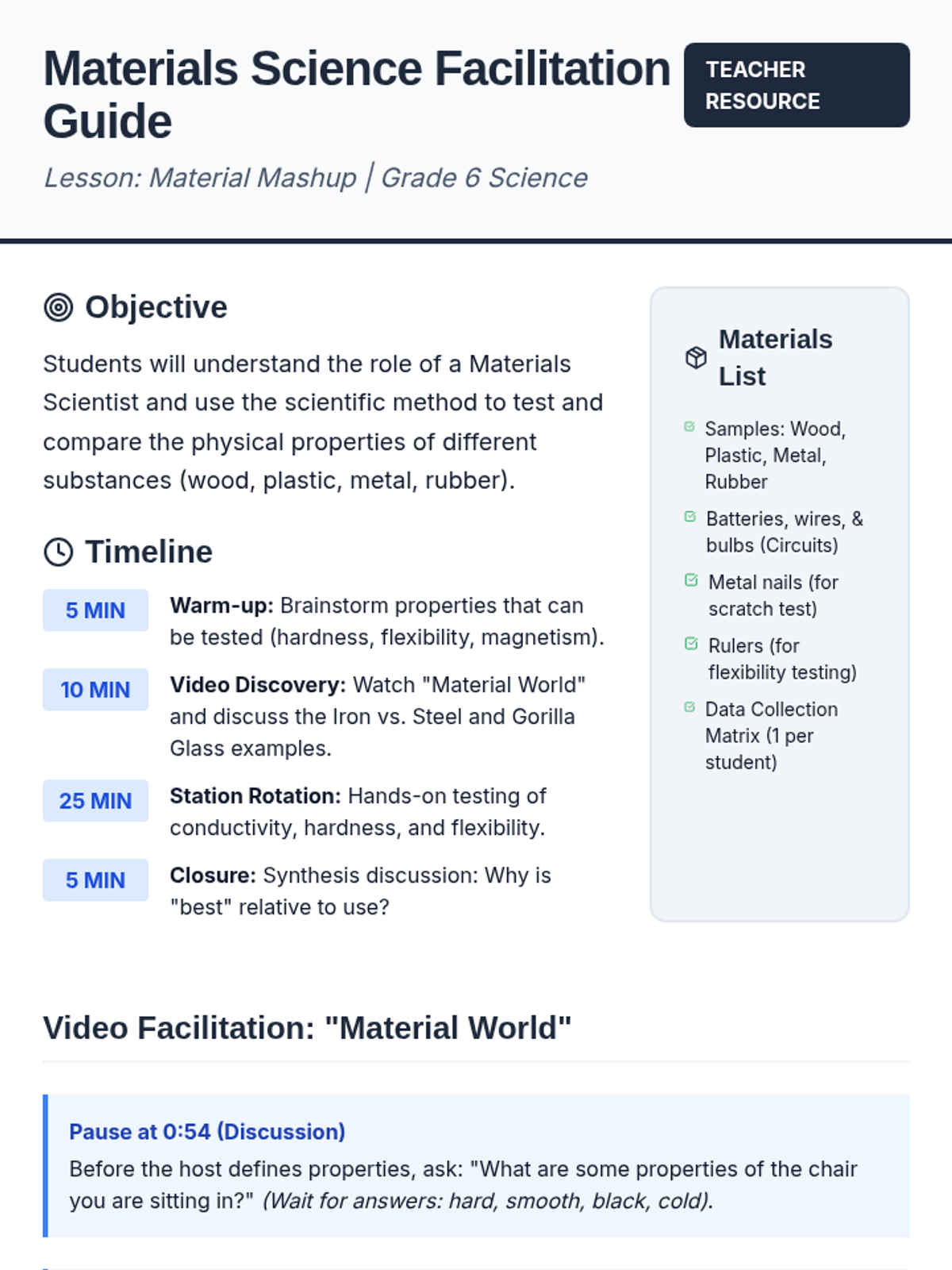
A 6th-grade science and history lesson where students explore how material scientists improve substances by changing their properties, focusing on historical shifts like iron to steel and ancient concrete.
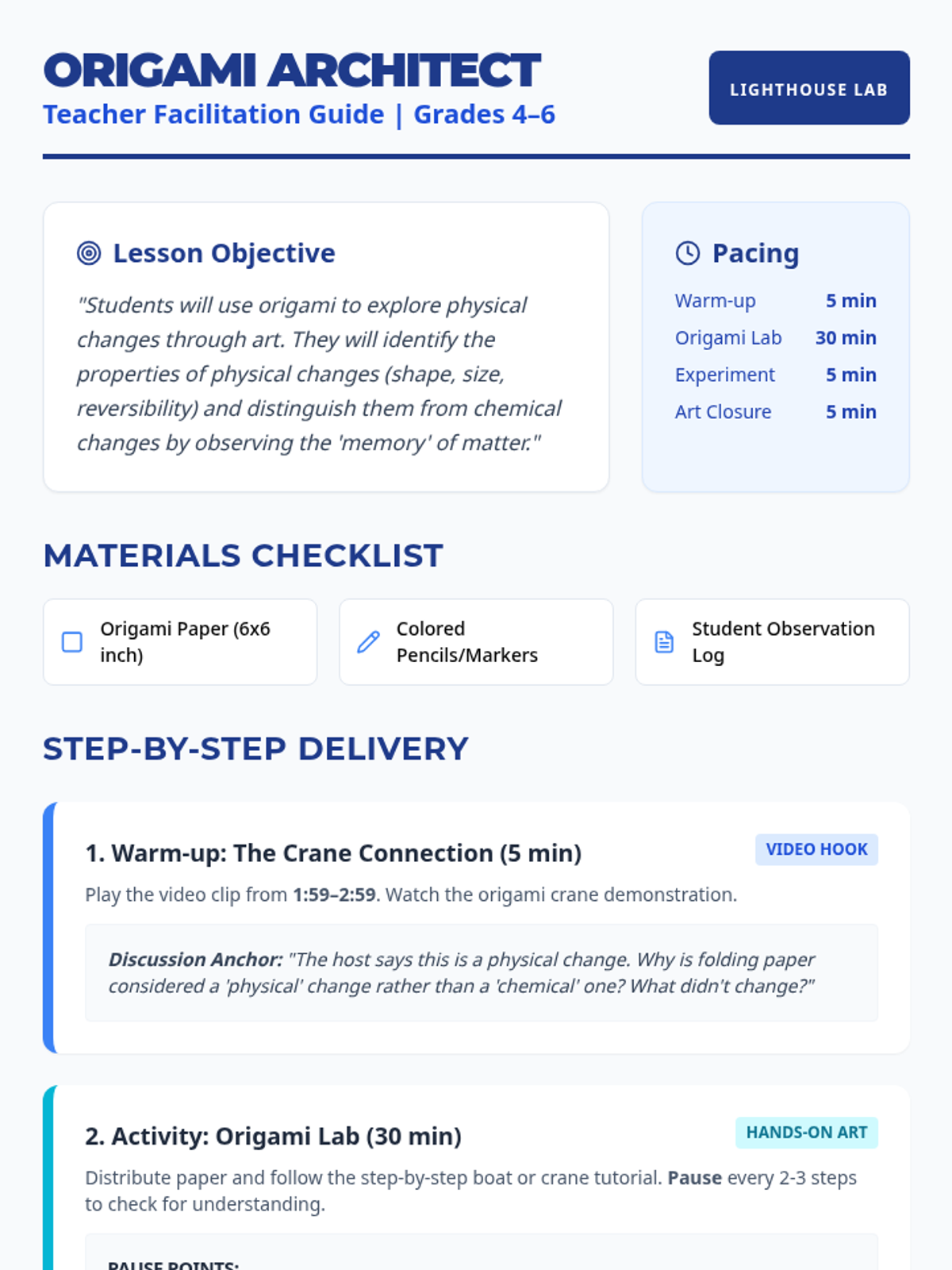
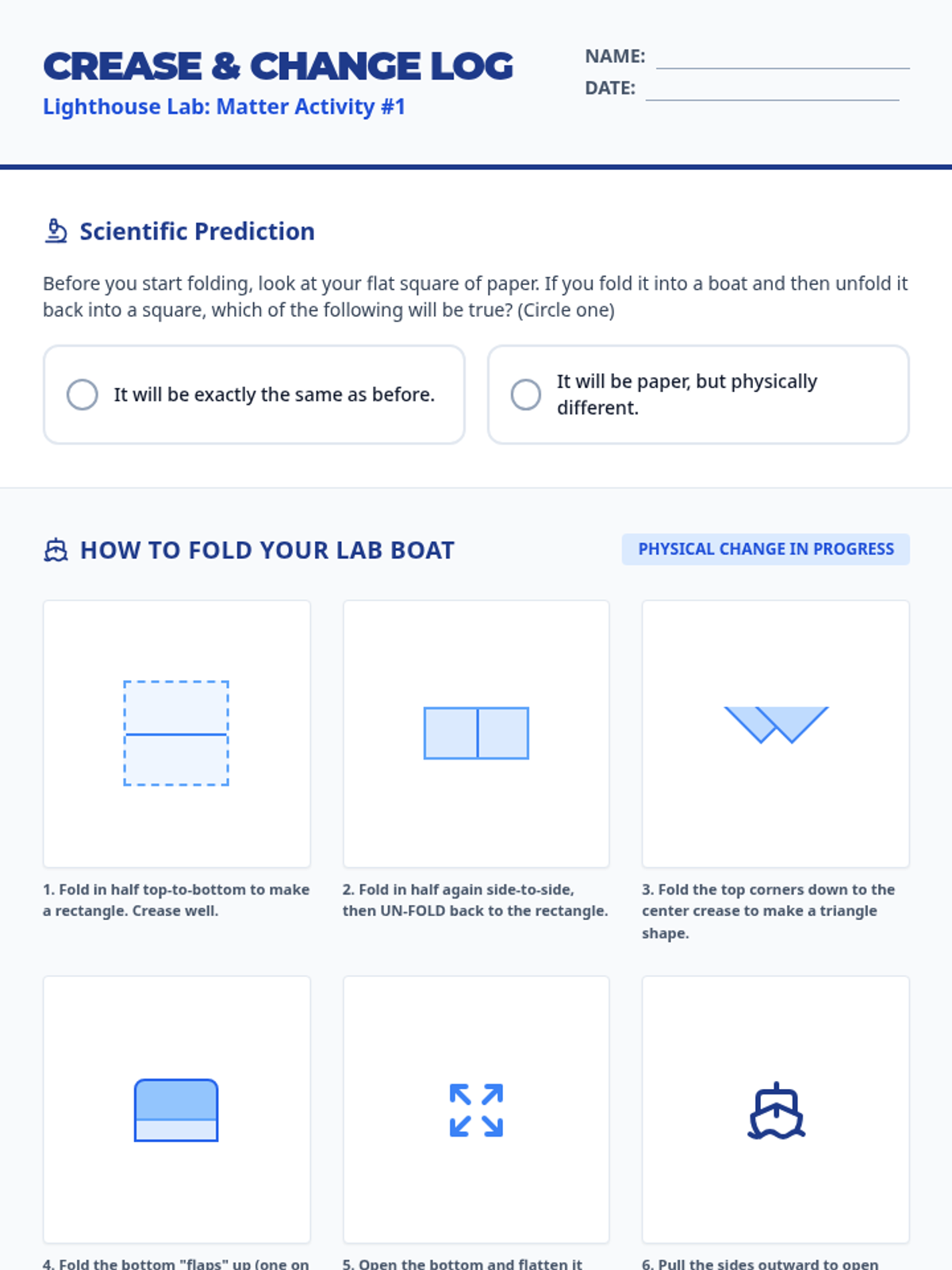
A 4th-6th grade arts integration lesson where students explore physical changes in matter through the art of origami, using the 'Lighthouse Lab' video as a scientific foundation.
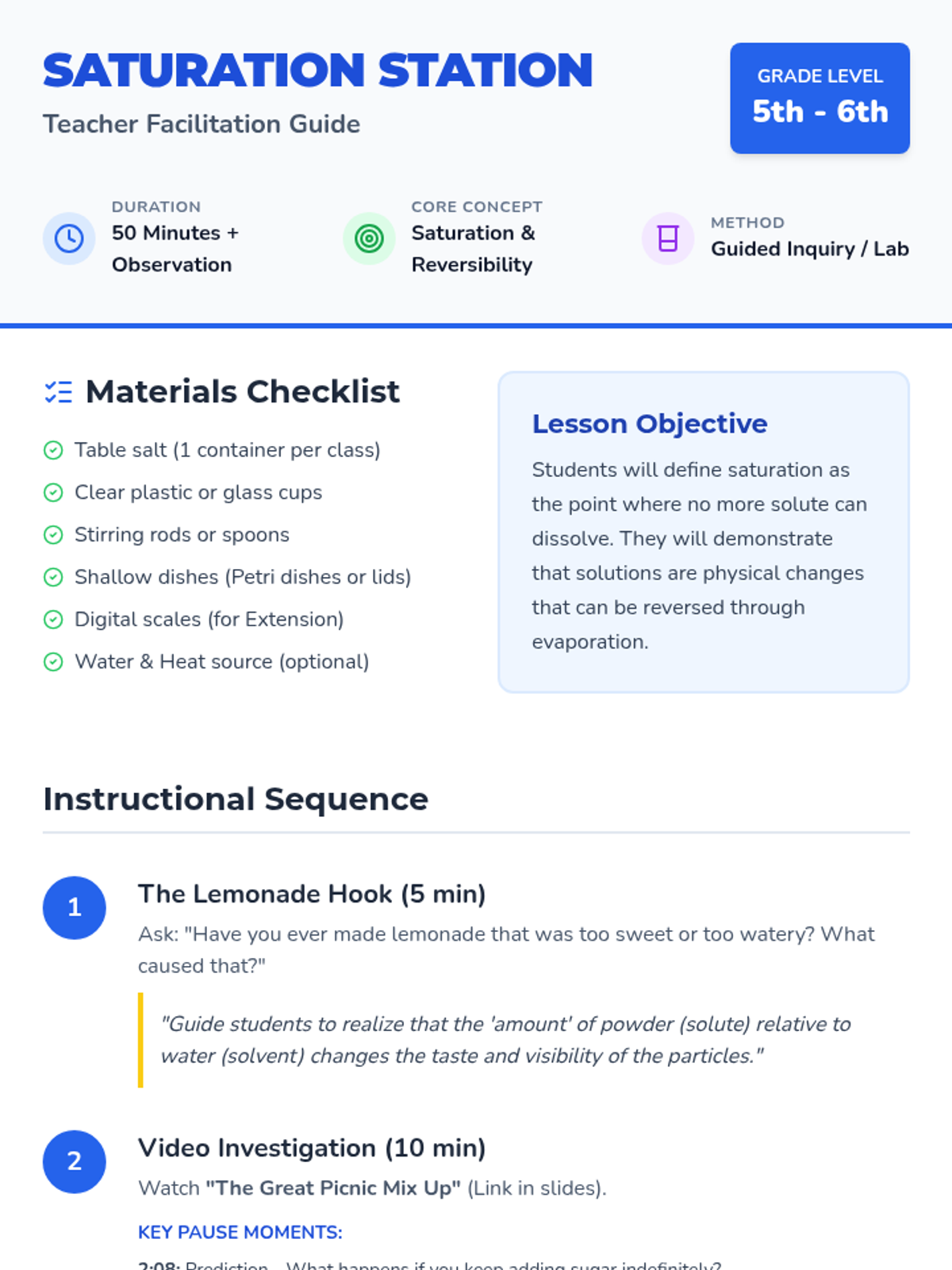
Students explore saturation and the reversibility of solutions by creating a saturated salt solution and observing evaporation. This lesson utilizes a Crash Course Kids video to ground concepts of solute, solvent, and solubility in relatable examples.
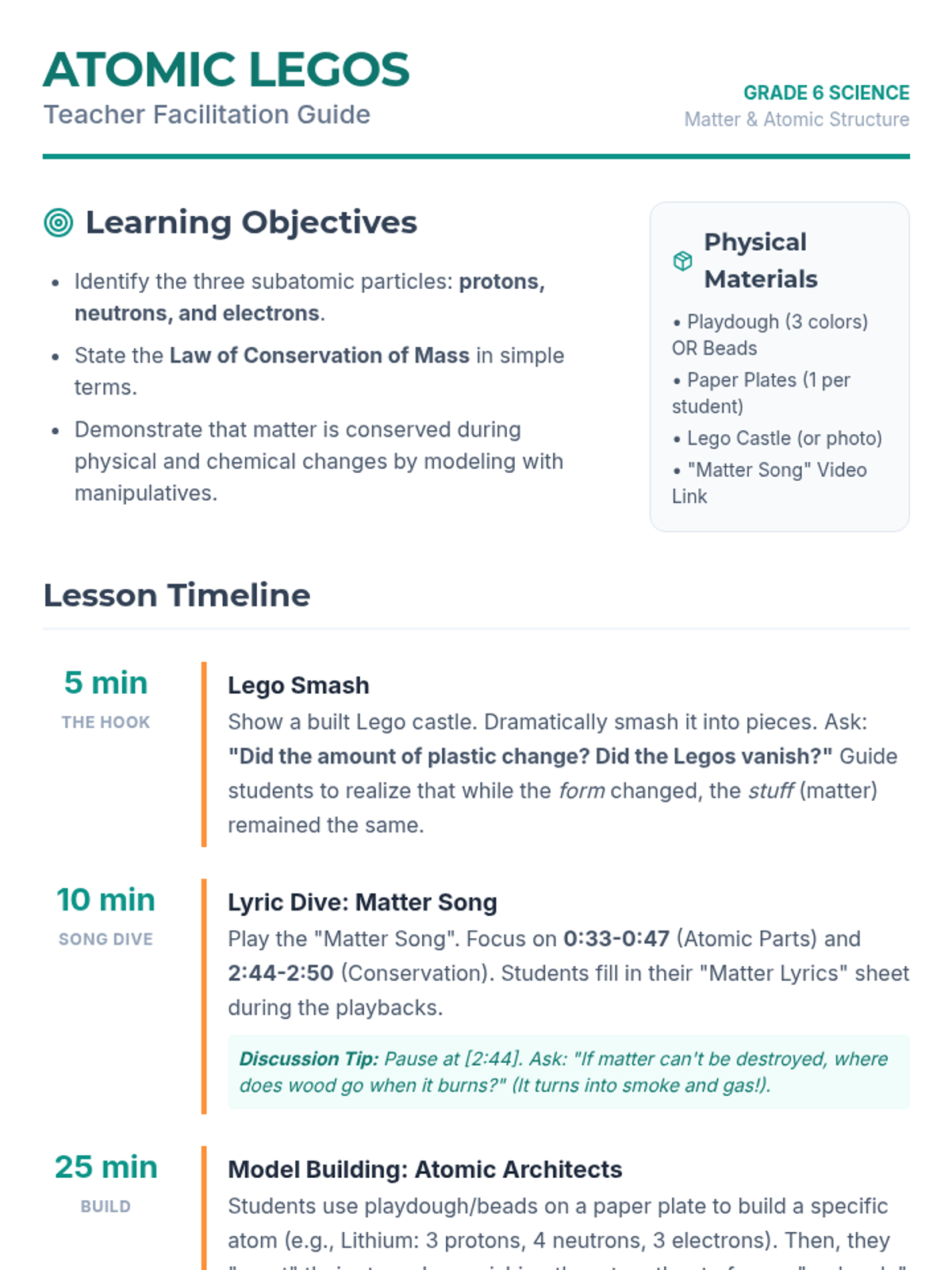
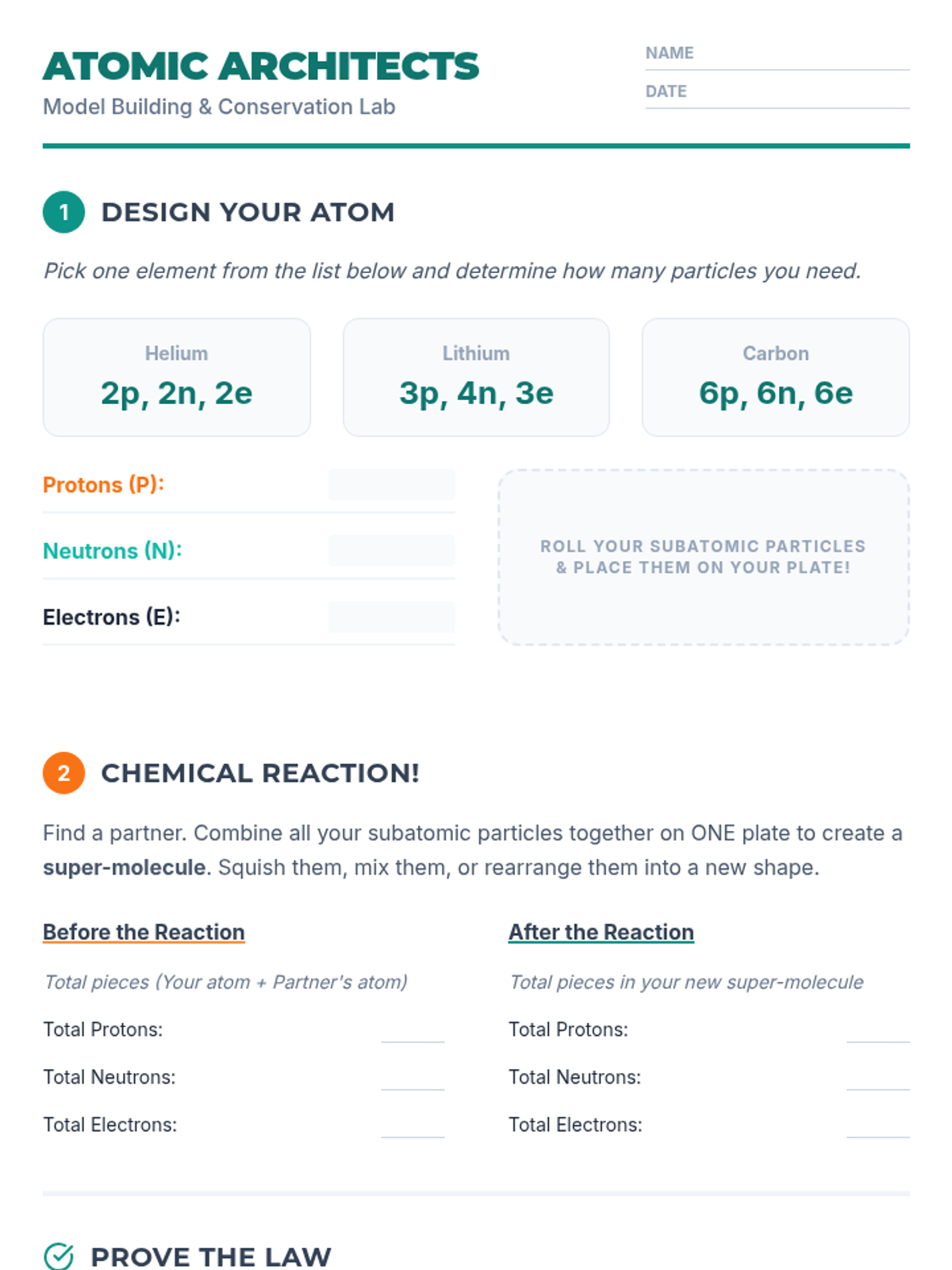
An introductory lesson on atomic structure and the Law of Conservation of Mass. Students use a catchy song to identify atomic components and model the conservation of matter using playdough or beads.
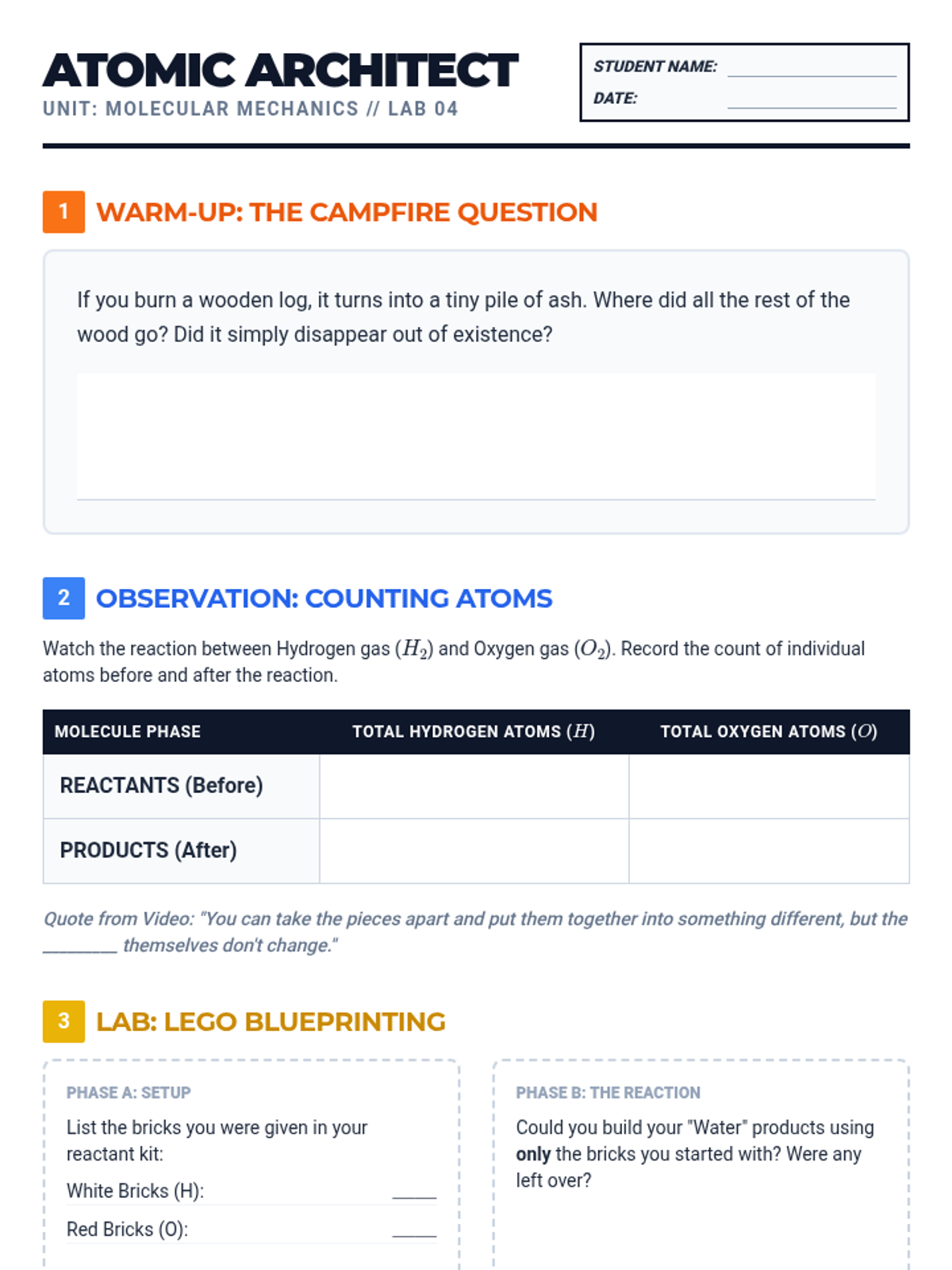
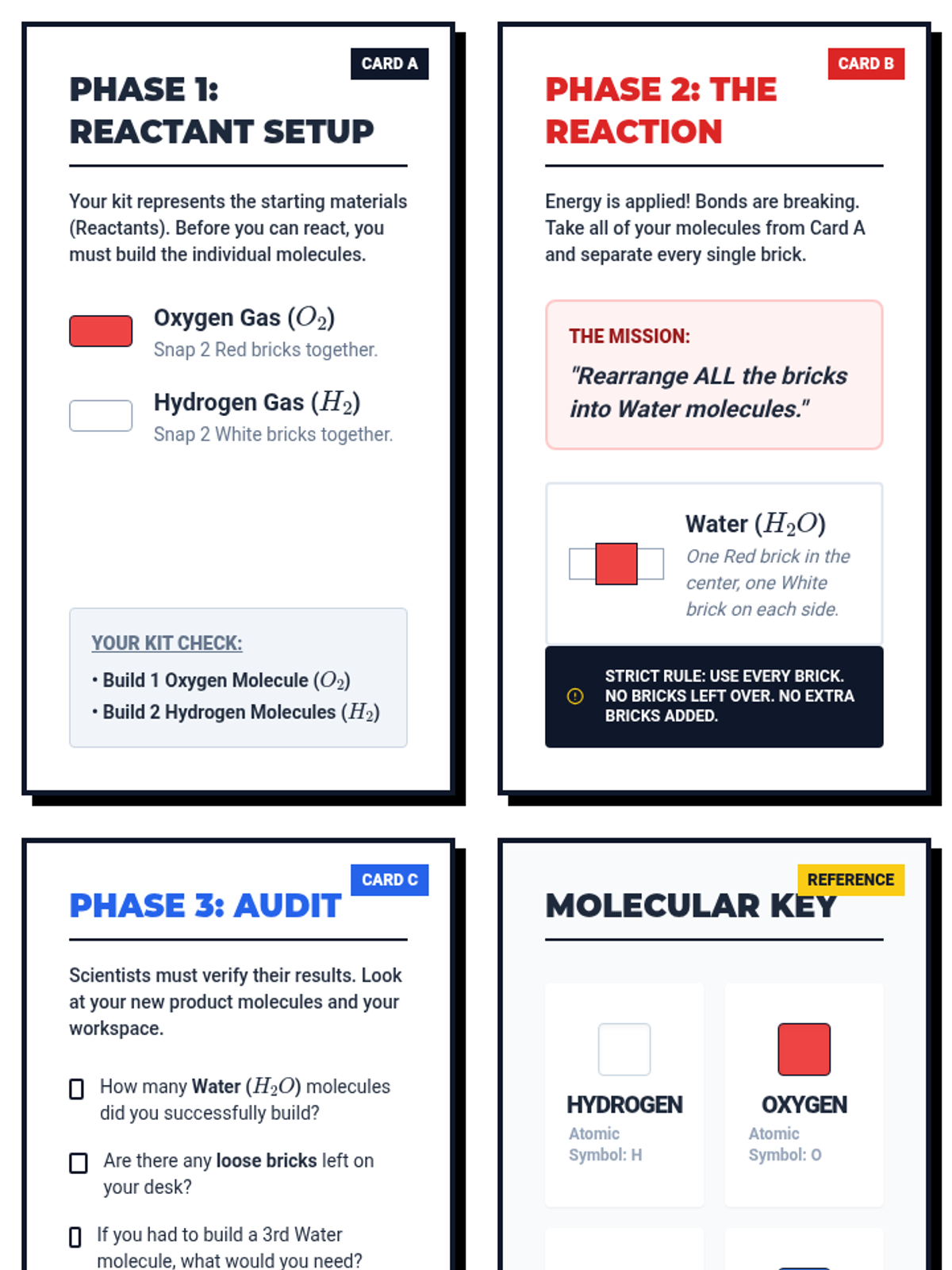
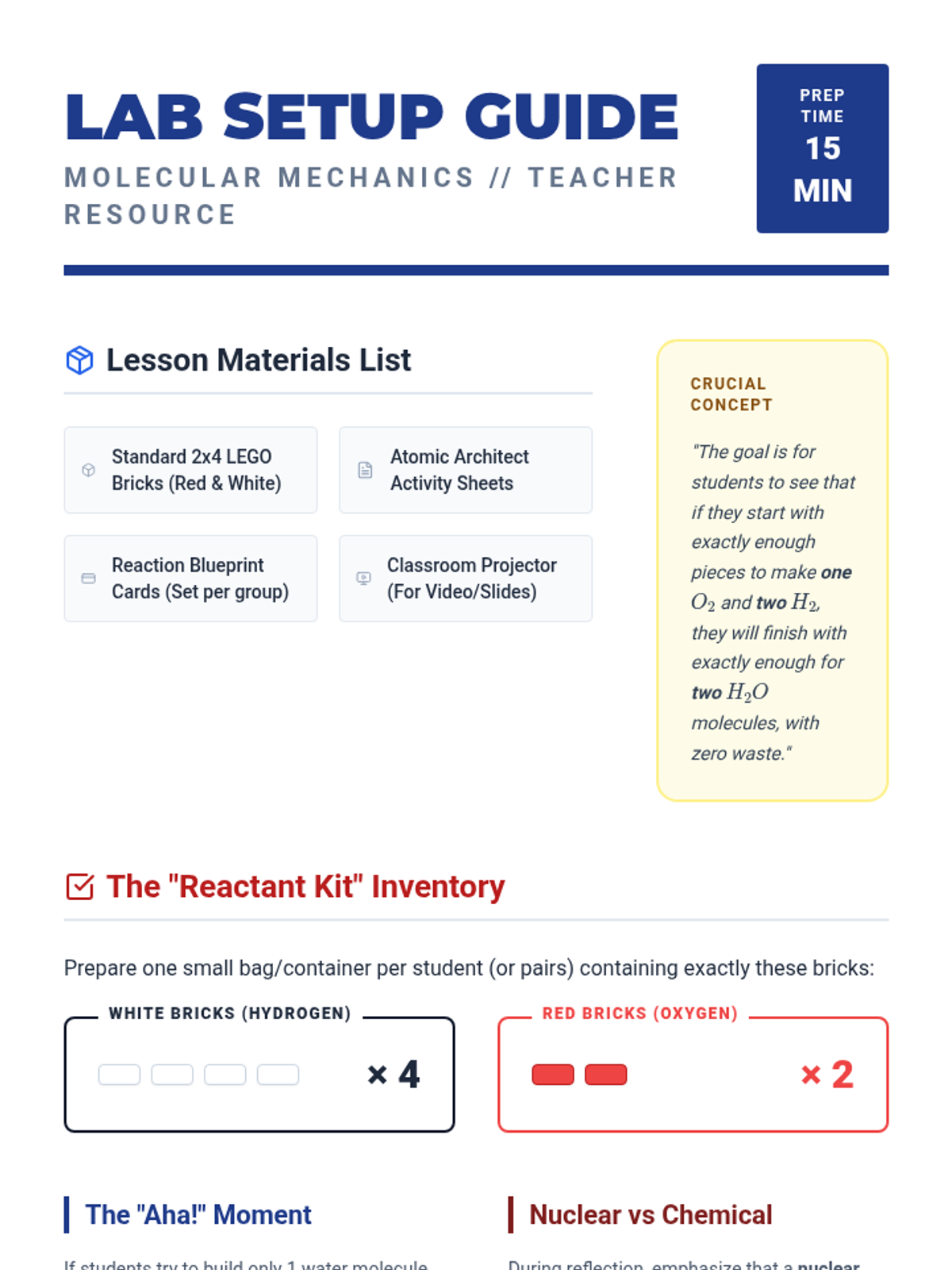
Students explore the conservation of mass and chemical reactions through a LEGO-based analogy, verifying that atoms are never created or destroyed, only rearranged. The lesson includes a video analysis, a hands-on building activity, and a reflection on chemical vs. nuclear reactions.
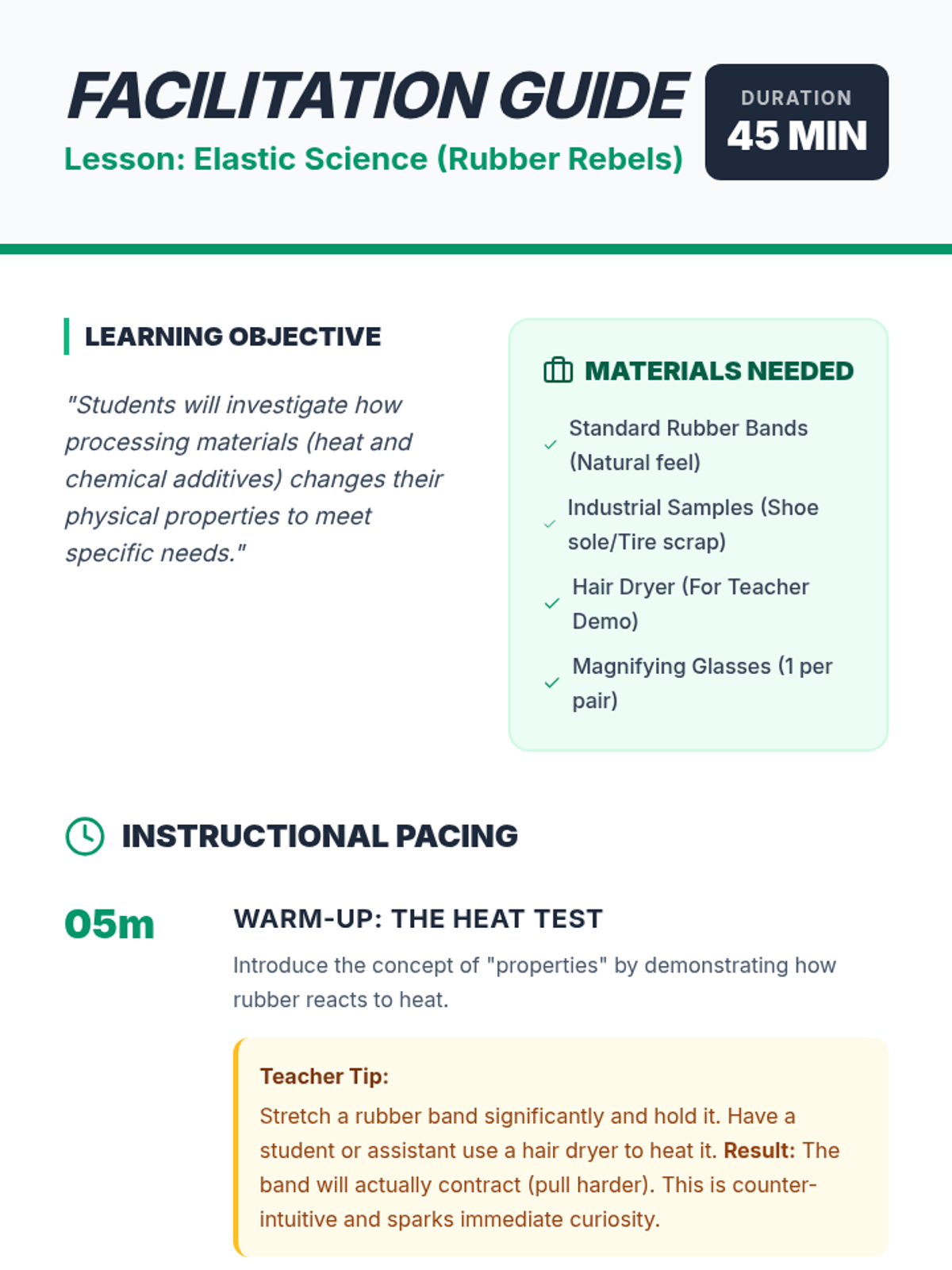
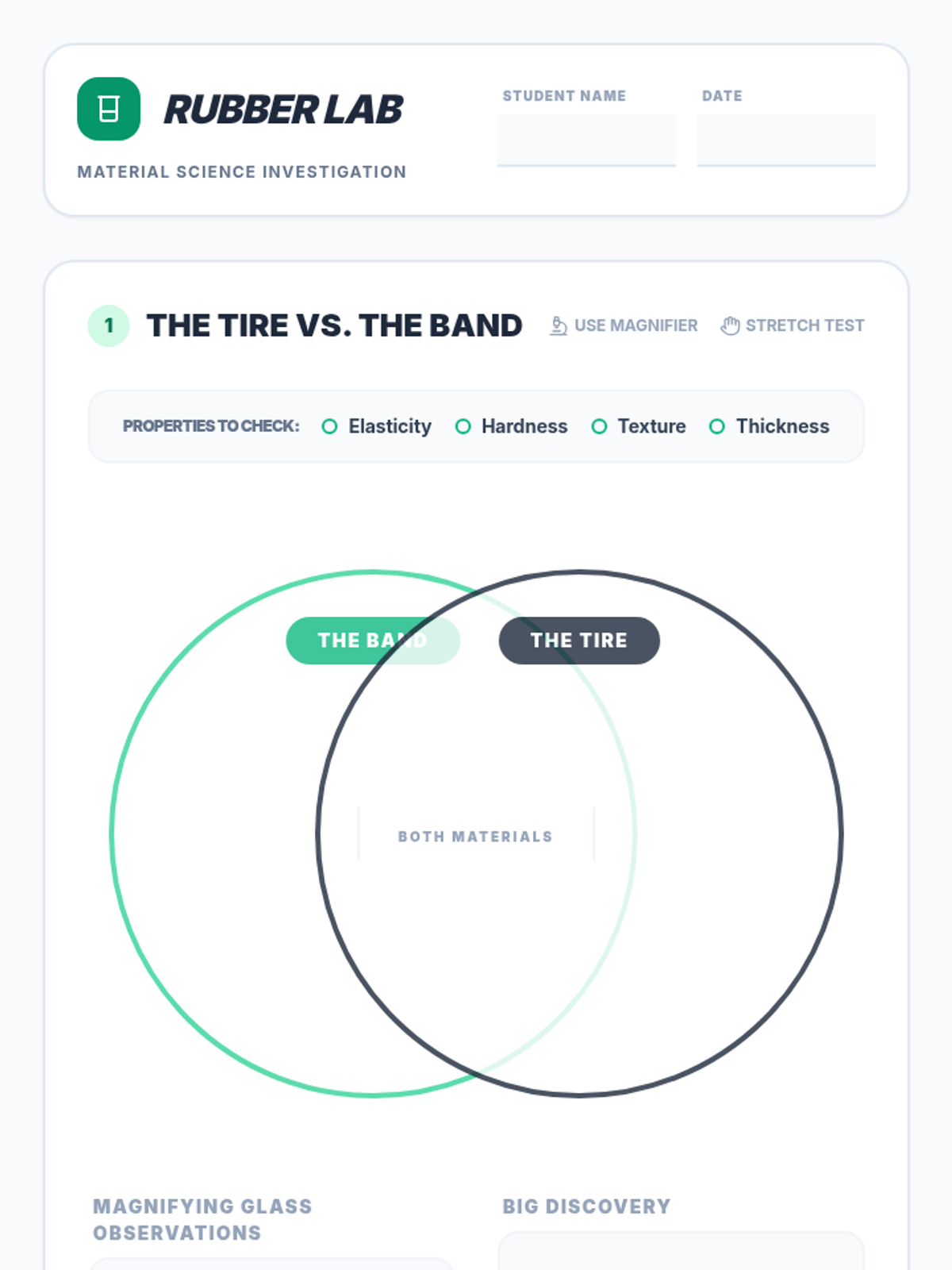
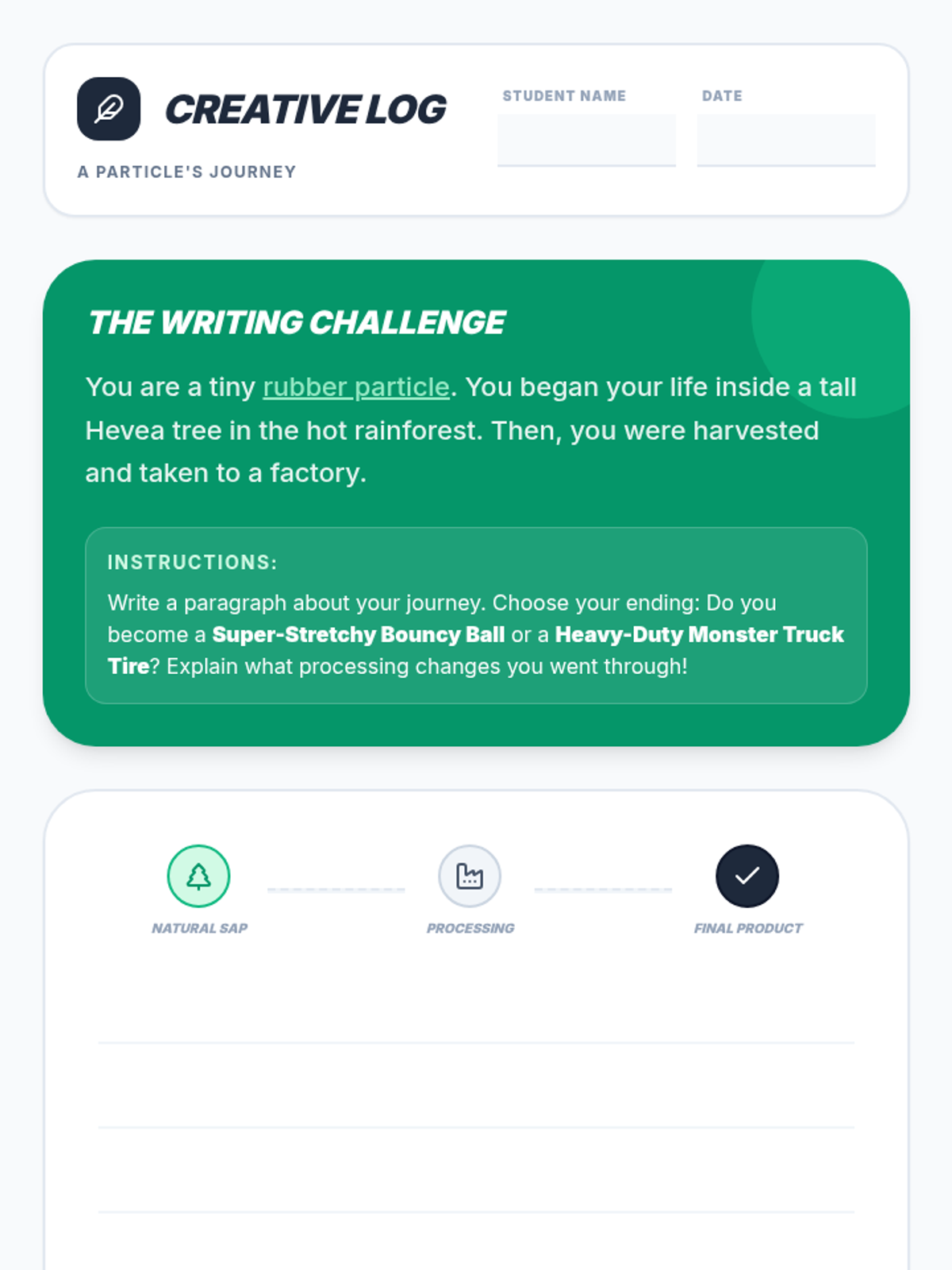
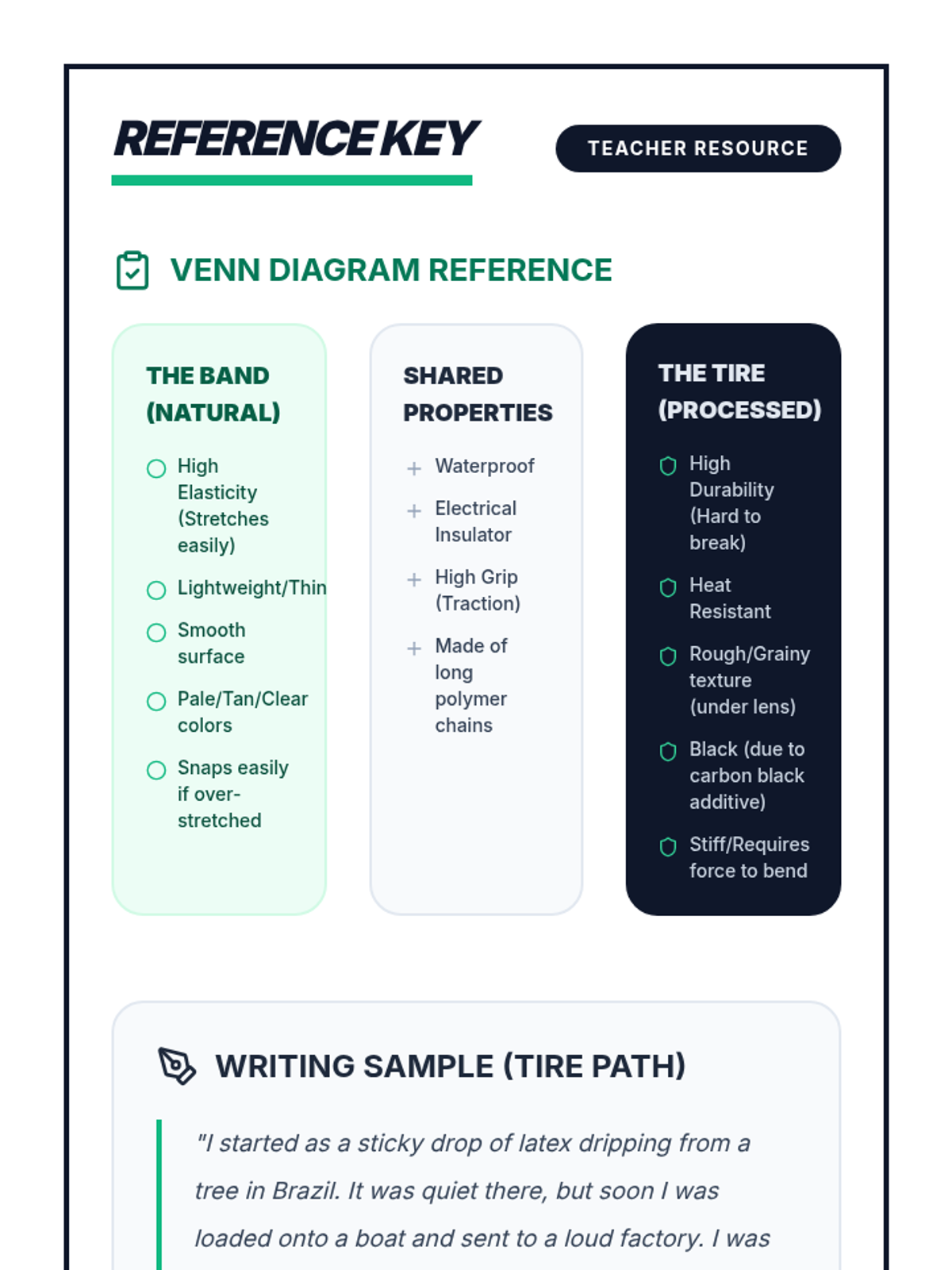
A hands-on science lesson investigating how processing and heat change the properties of rubber, moving from natural latex to high-performance industrial products.
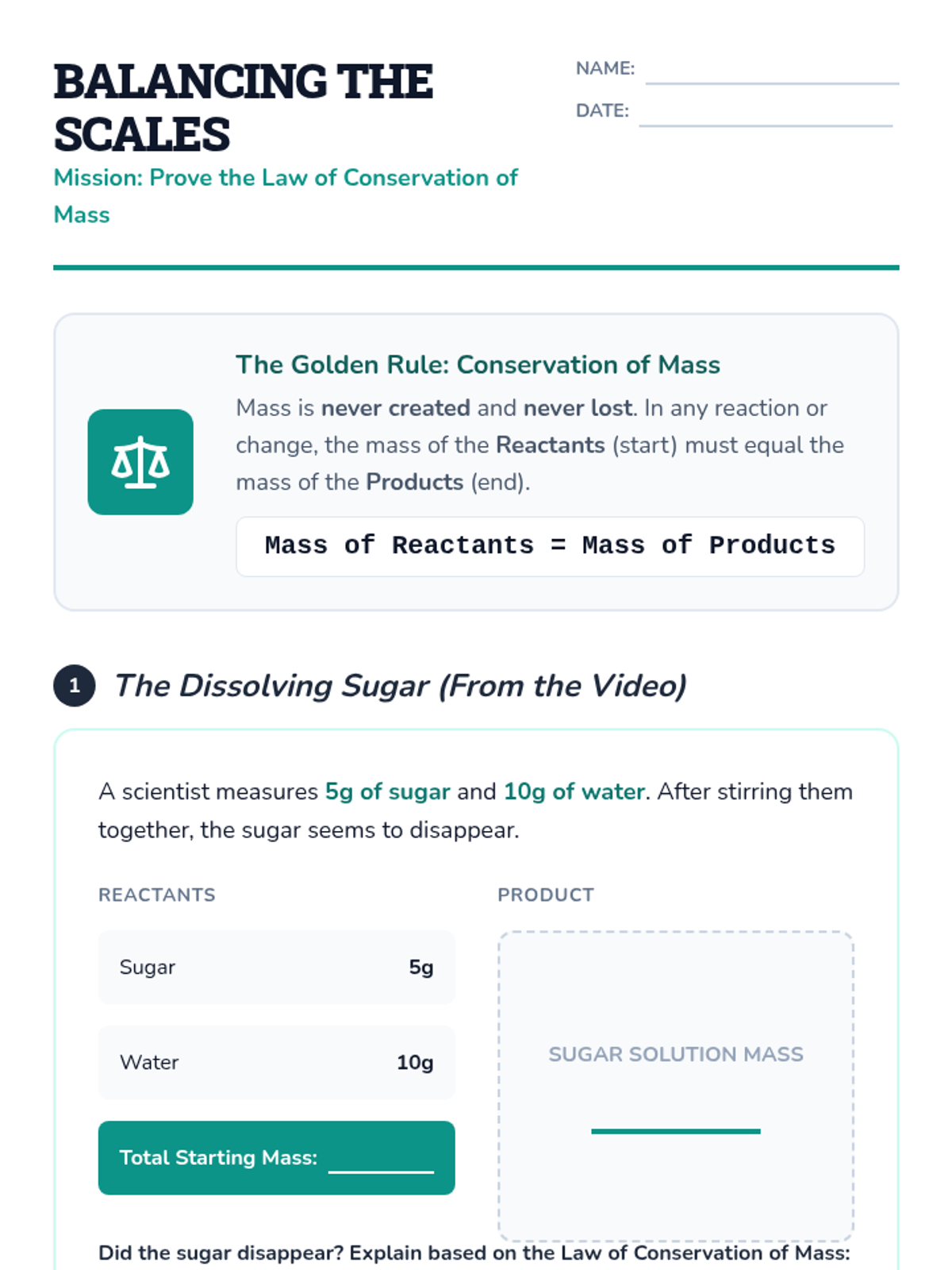
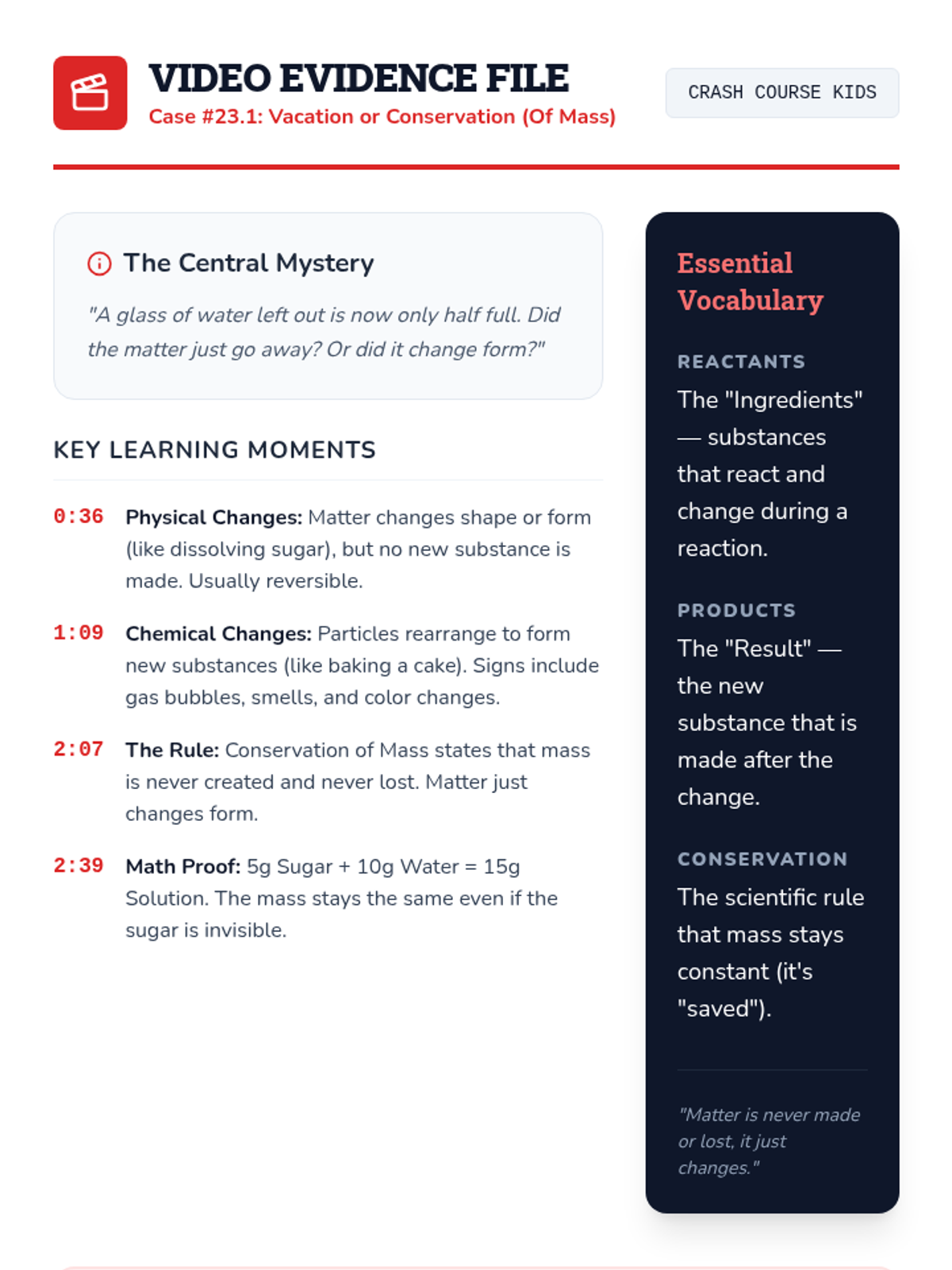
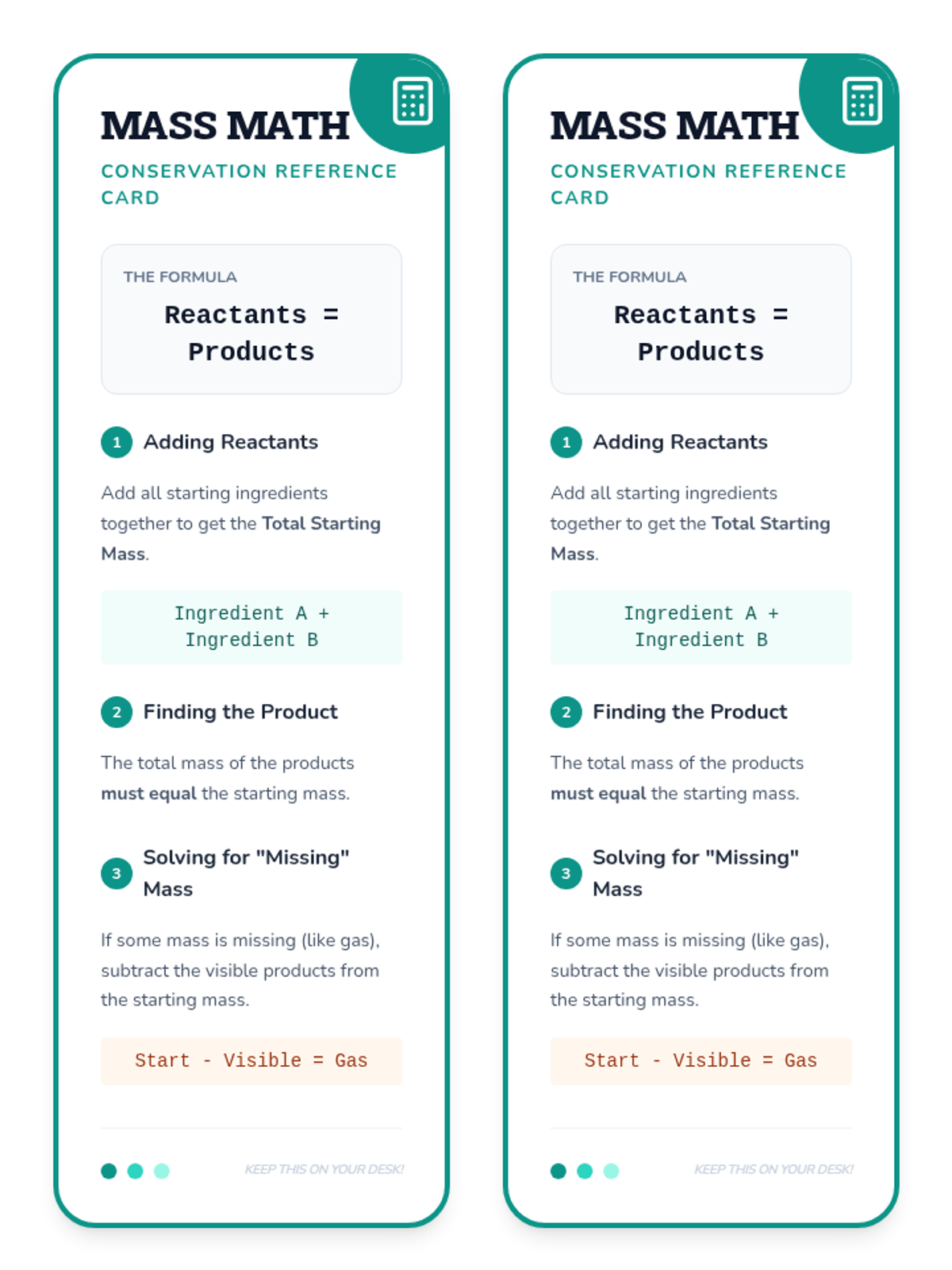
A 6th-grade science lesson focused on the Law of Conservation of Mass, where students use math to solve for unknown masses in chemical and physical changes. Includes a video-based hook, interactive slides, and a math-focused worksheet.
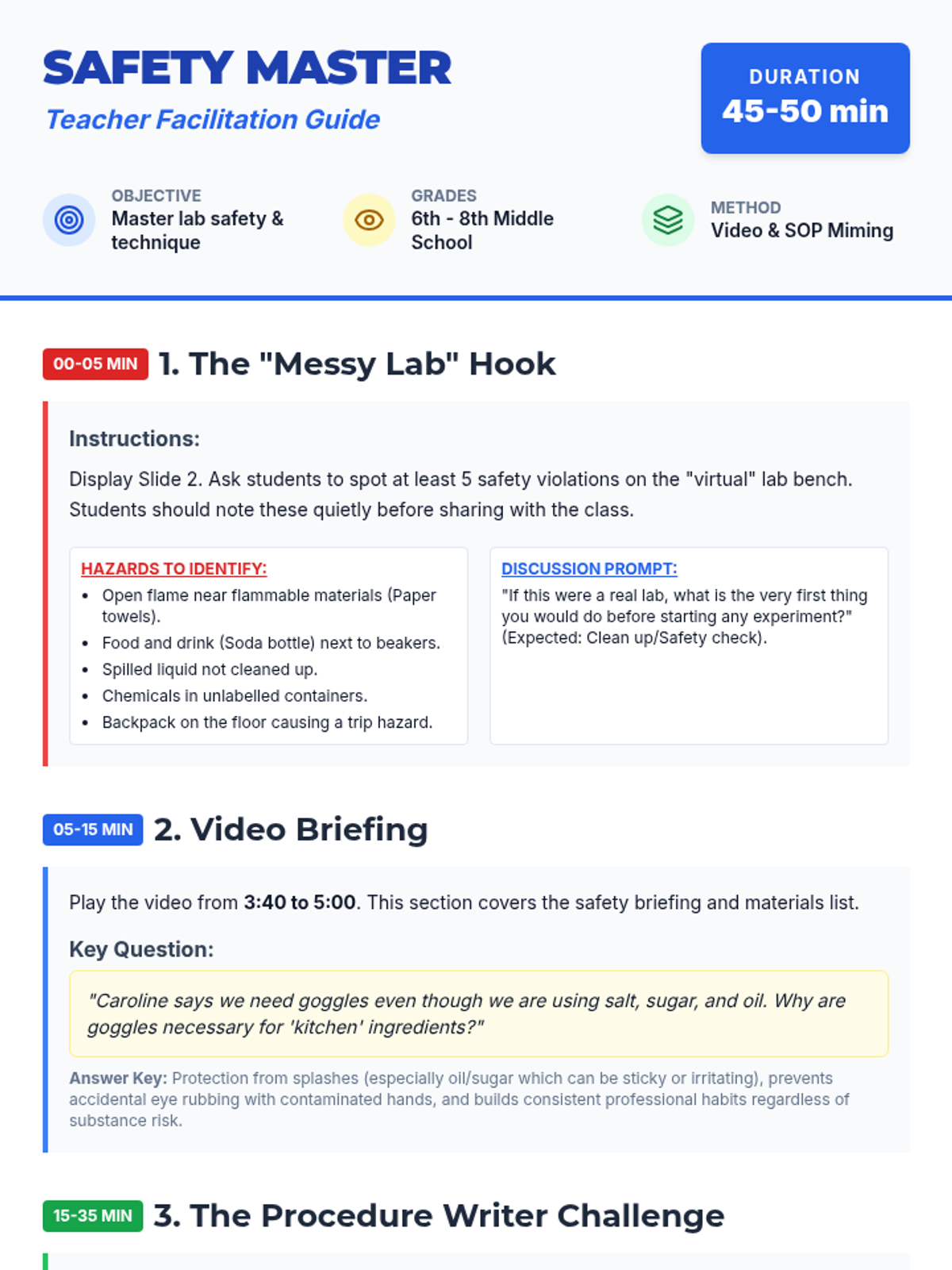
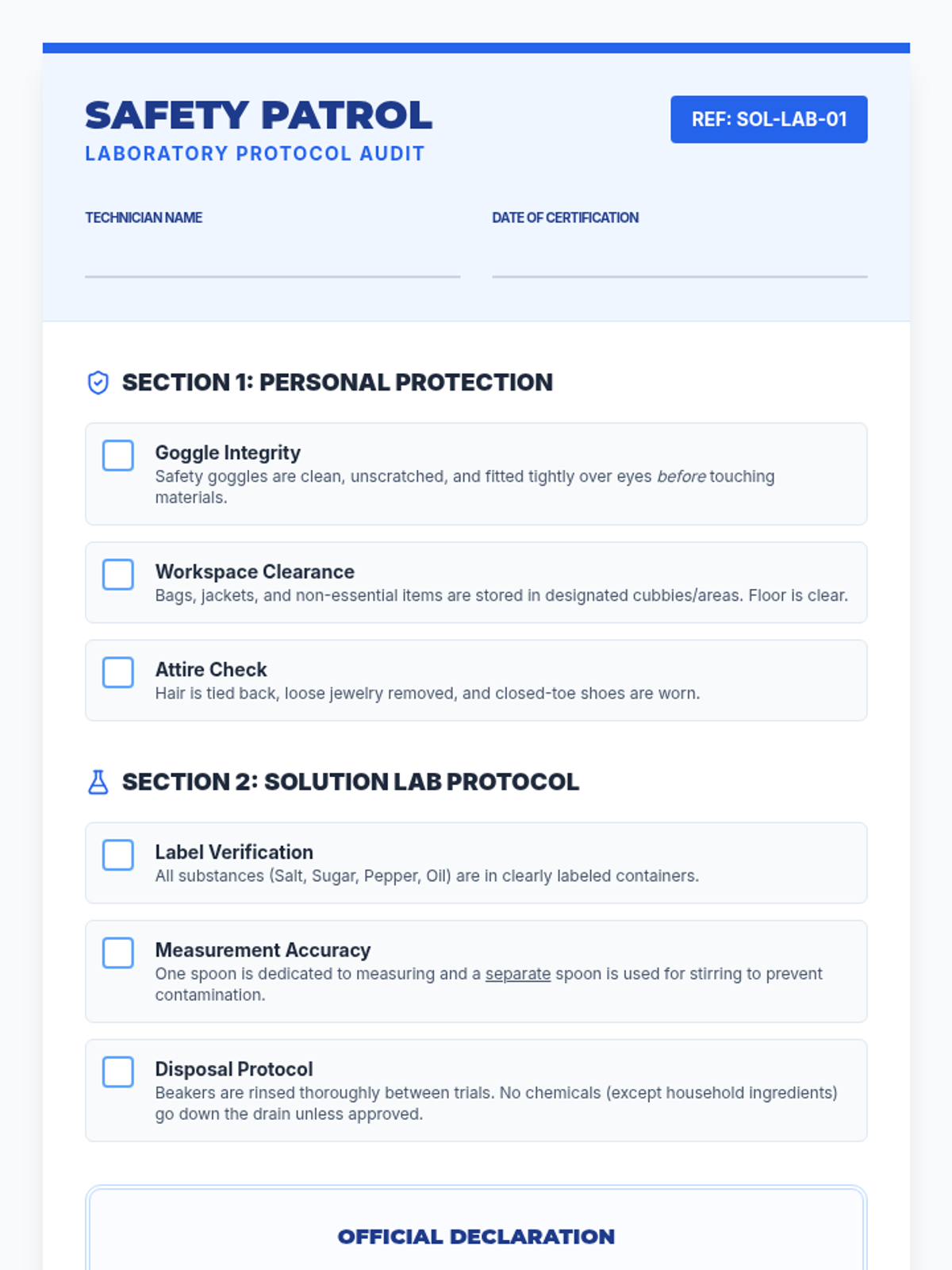
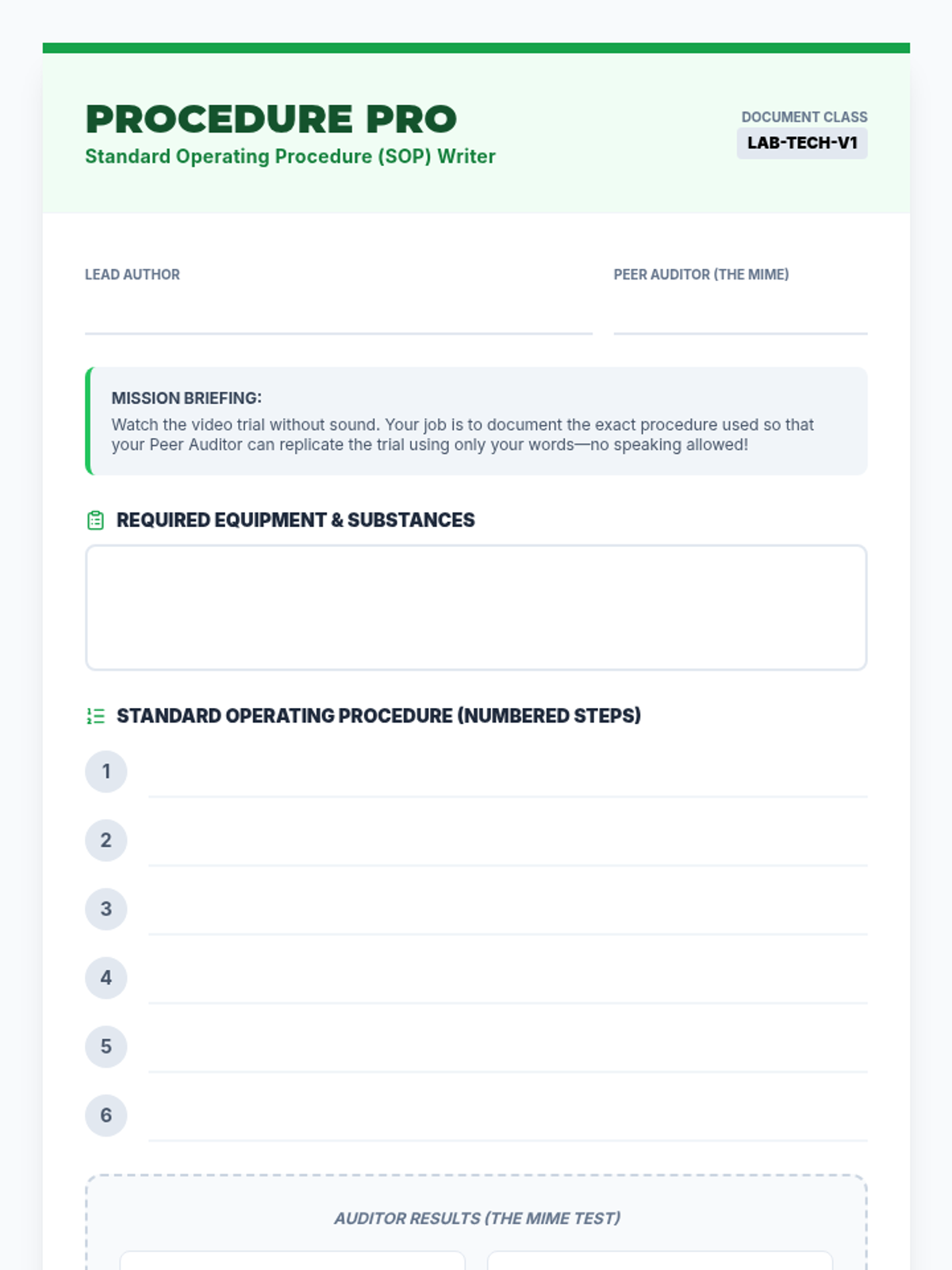
Students will learn essential laboratory safety protocols and the importance of clear procedural communication through a video-based 'Procedure Writer' activity. They will identify hazards, analyze safety gear requirements, and practice writing precise Standard Operating Procedures (SOPs).
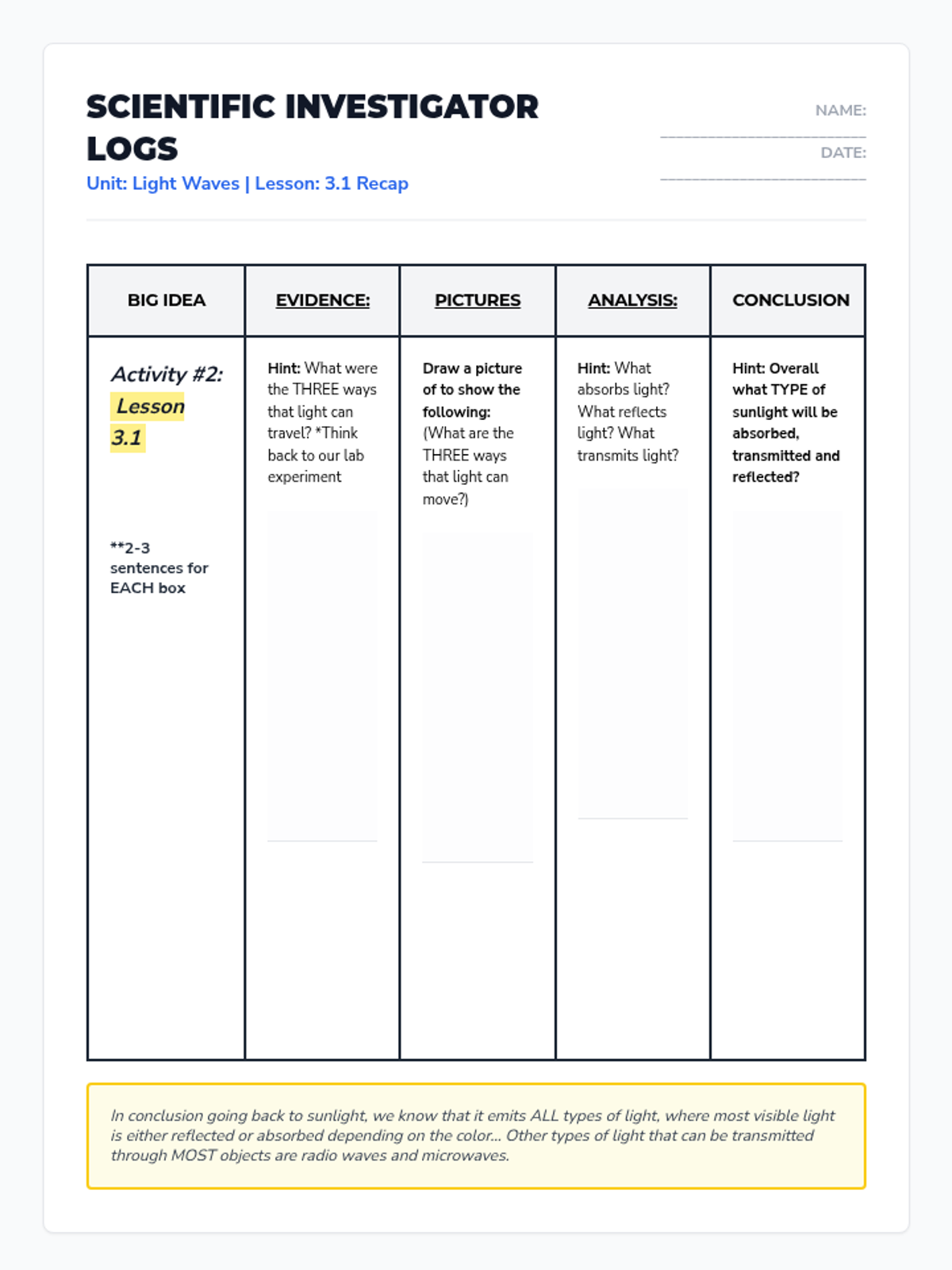
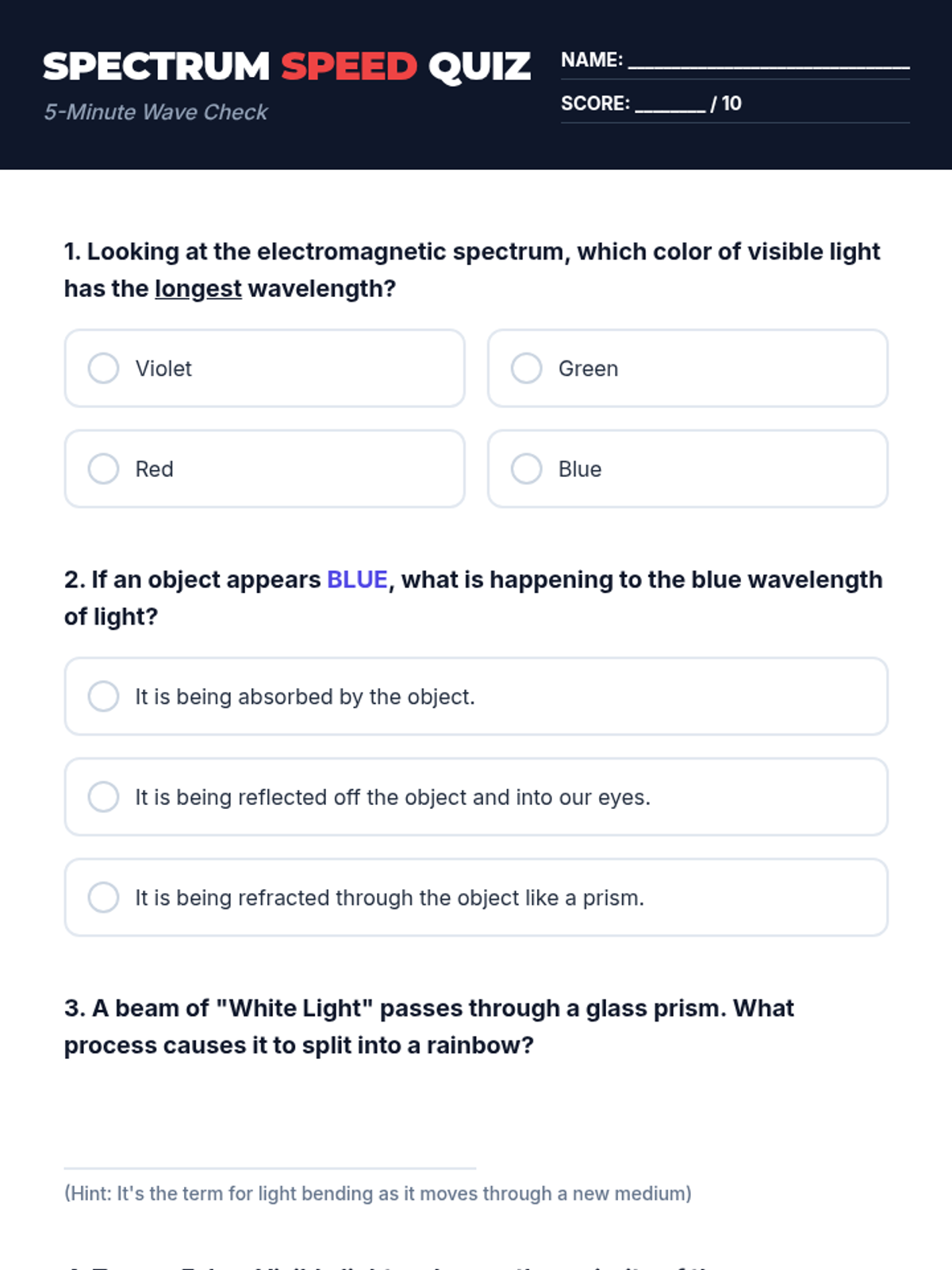
A comprehensive study guide and practice resource covering the properties of light waves, their interactions with matter, and the transfer of energy, based on middle school science standards.
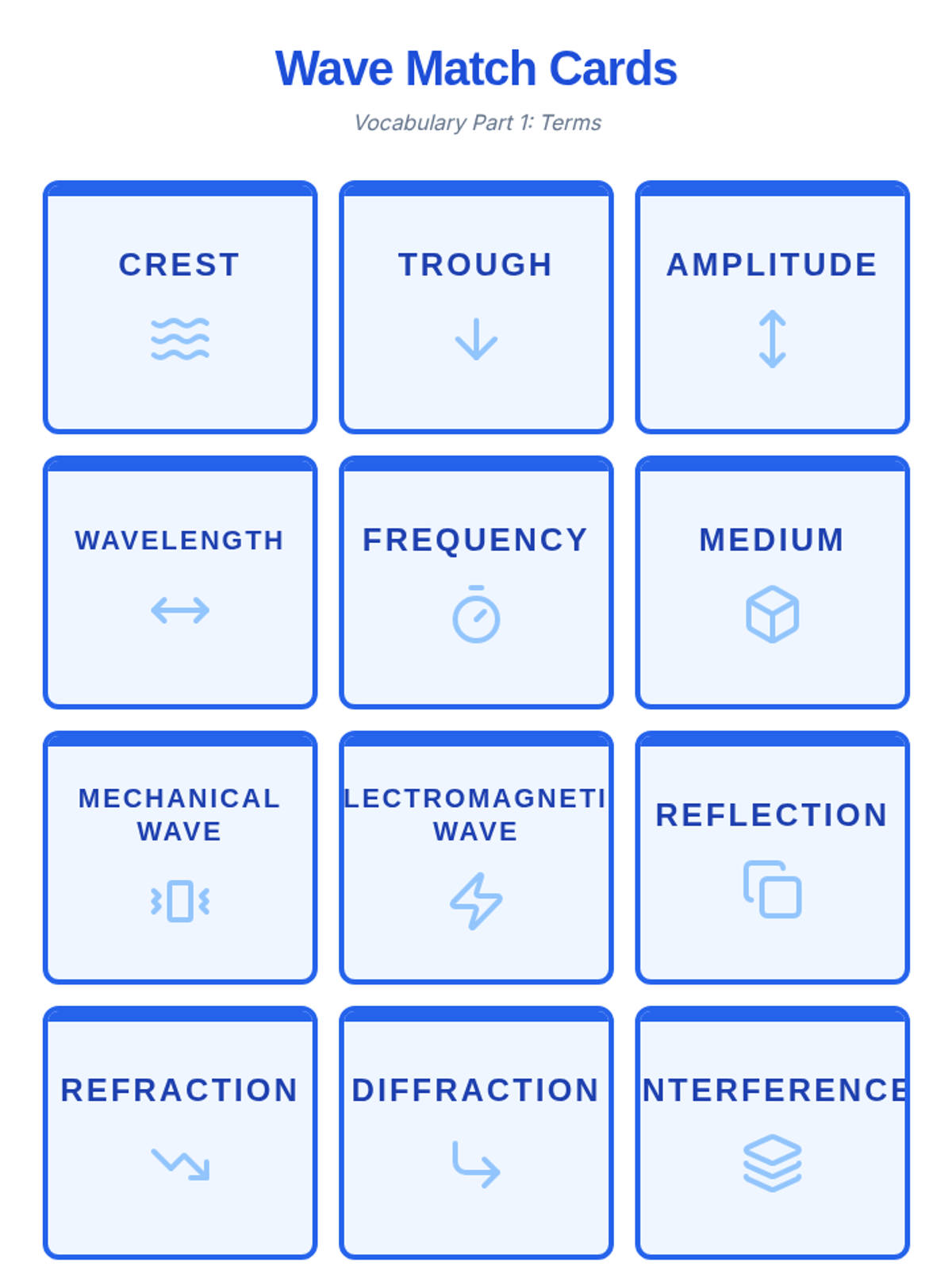
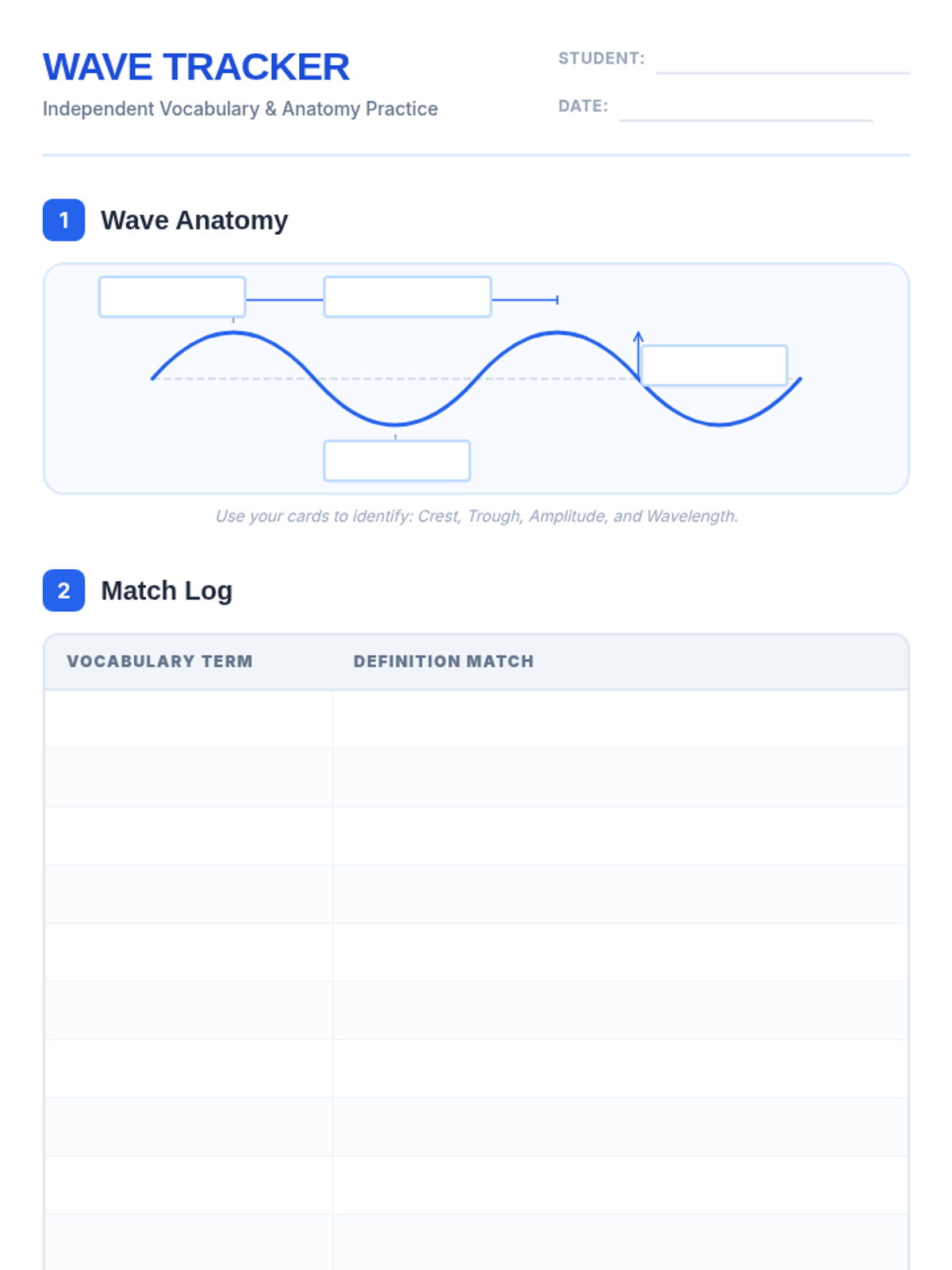
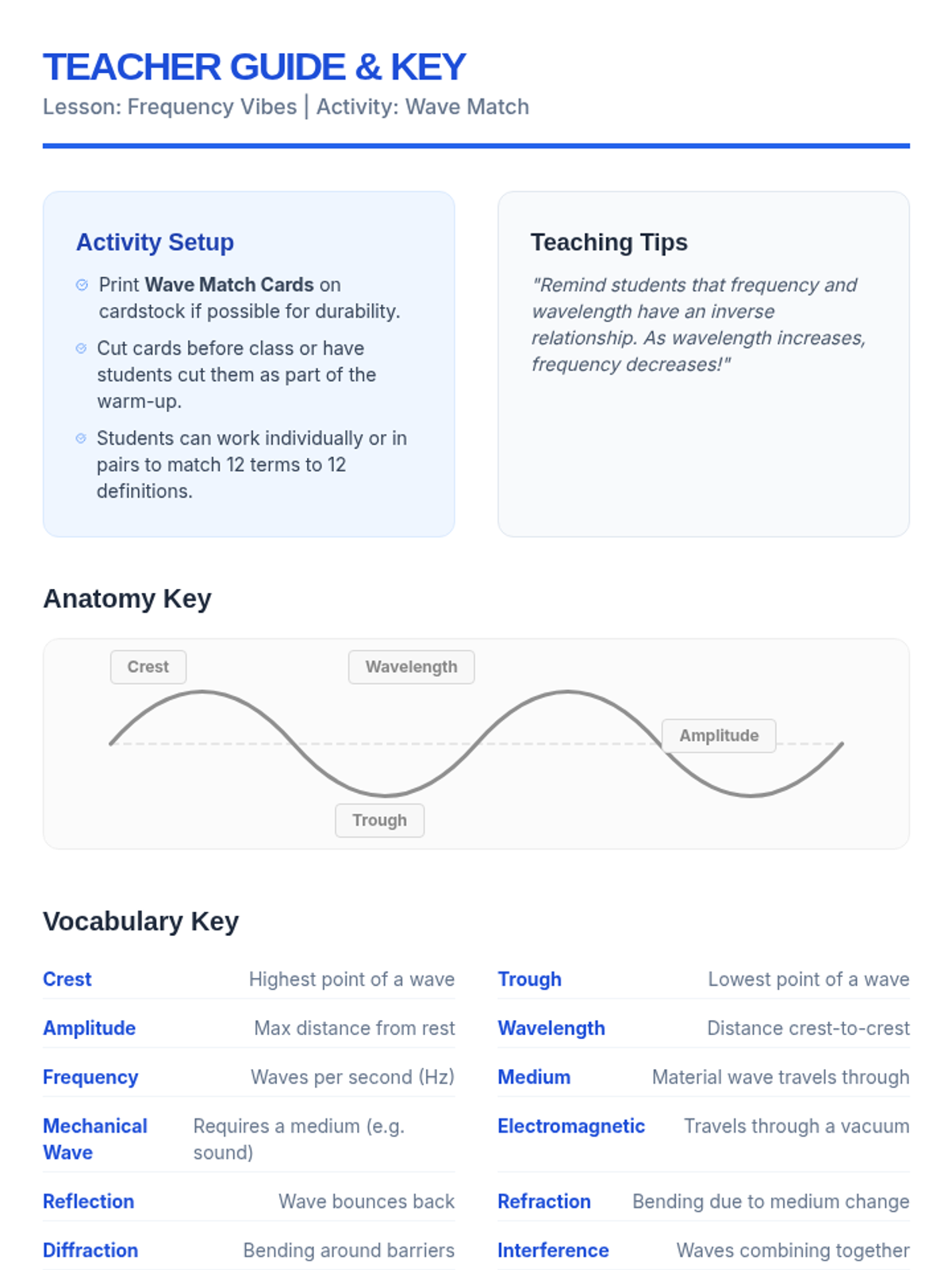
A set of hands-on materials for mastering the essential vocabulary of wave physics, including matching cards and a recording sheet.
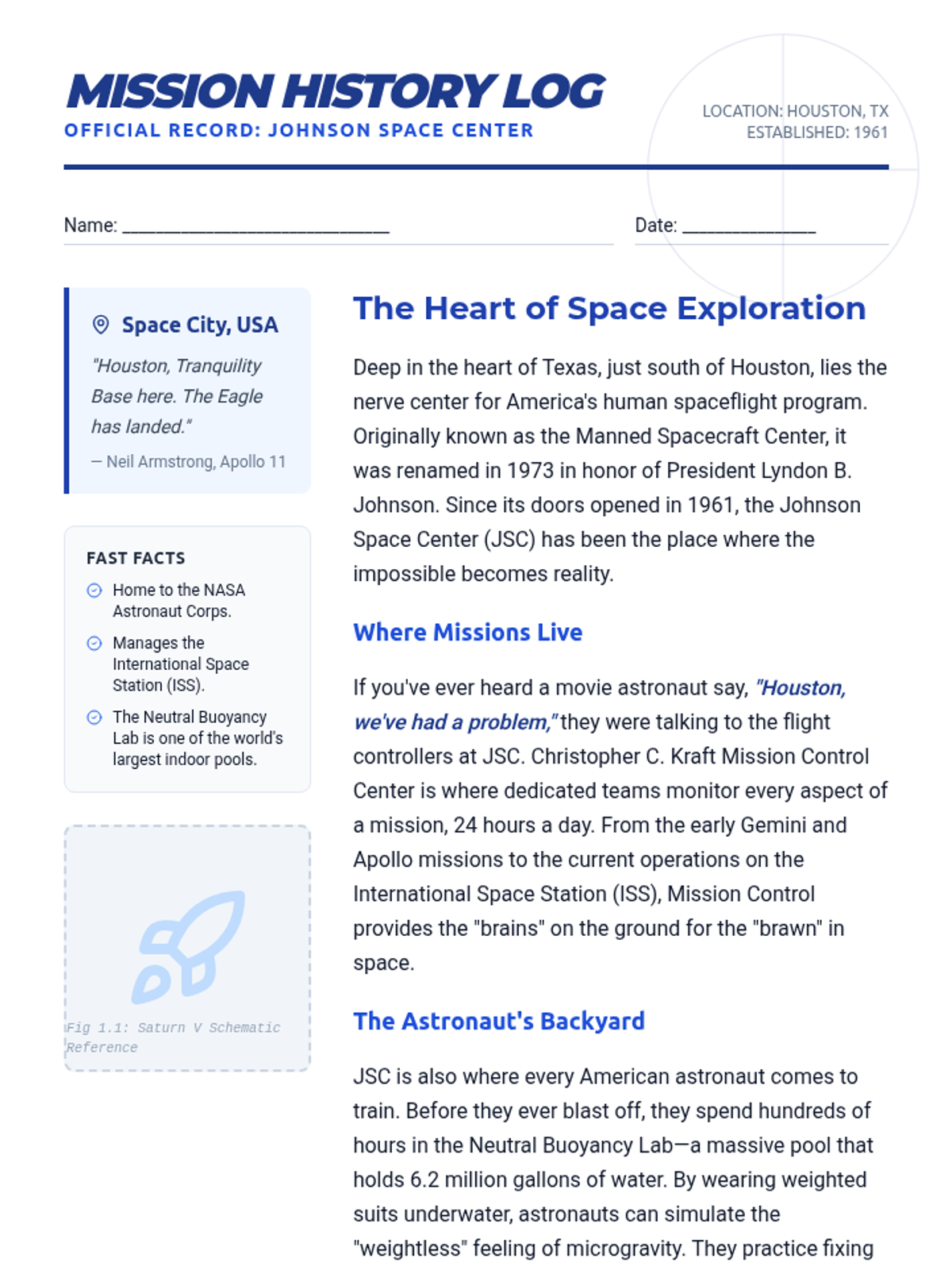
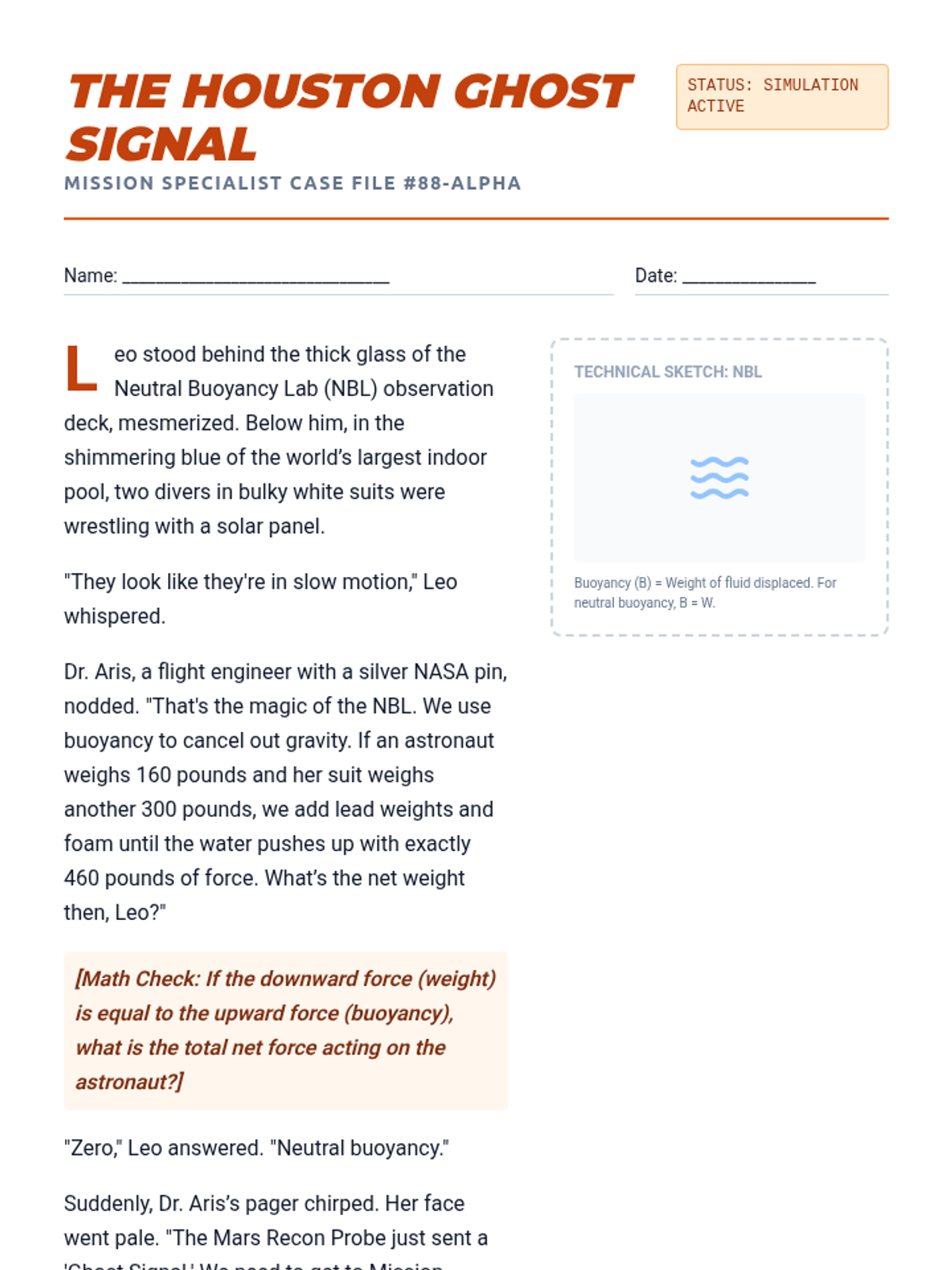
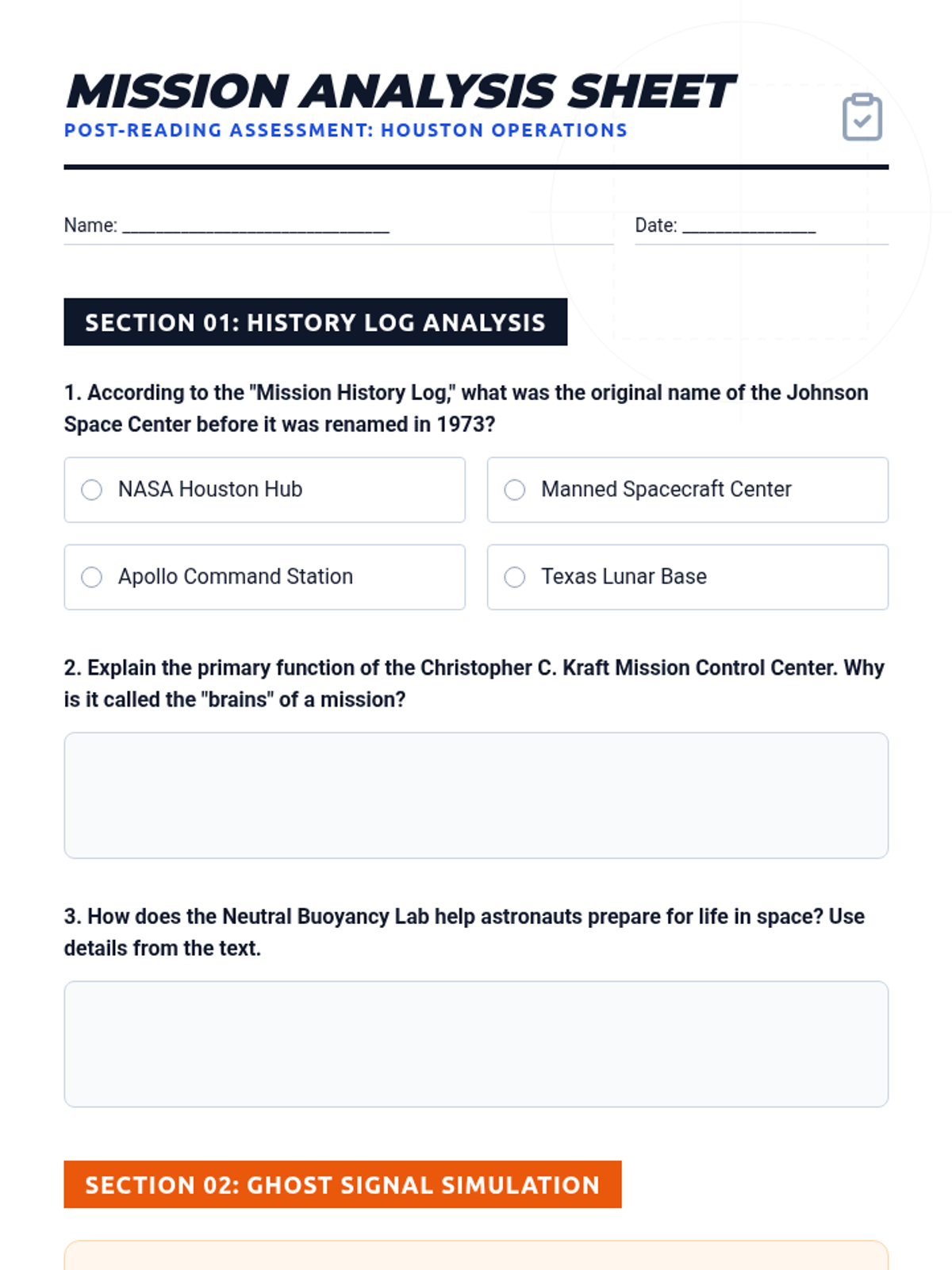
A comprehensive look at the Lyndon B. Johnson Space Center in Houston, Texas, exploring its historical significance in the space race and the science of space flight through a fictional narrative.
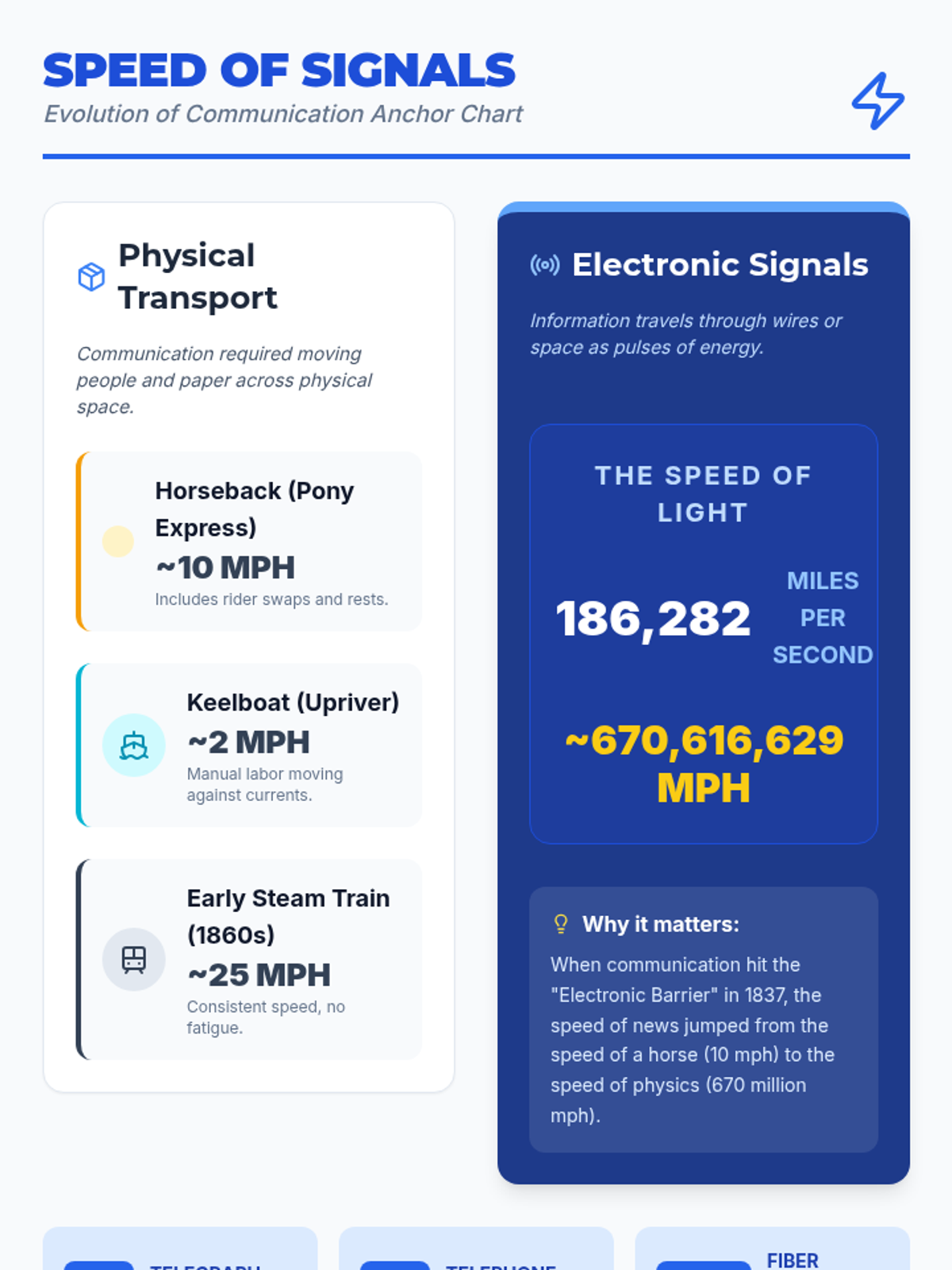
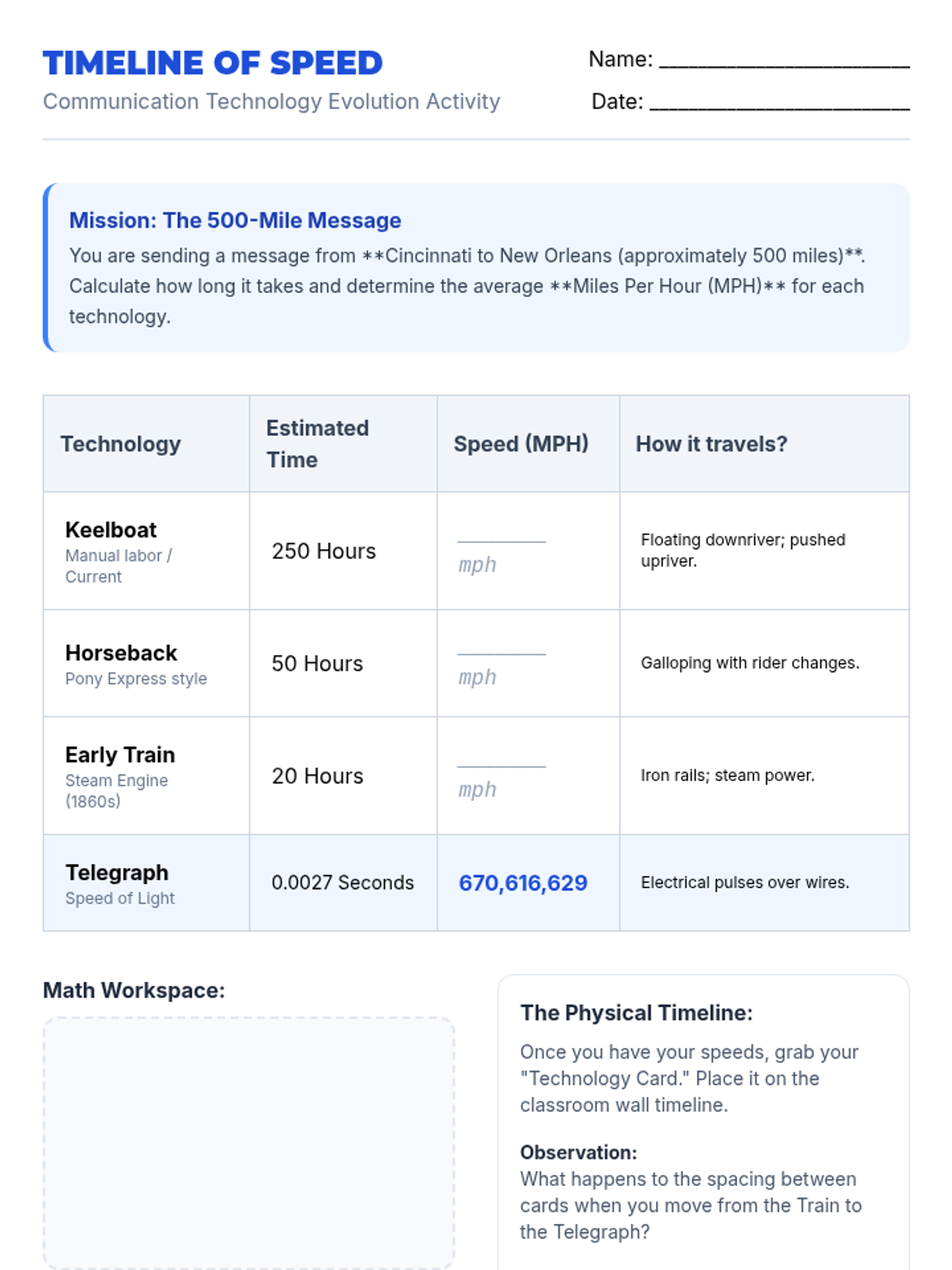
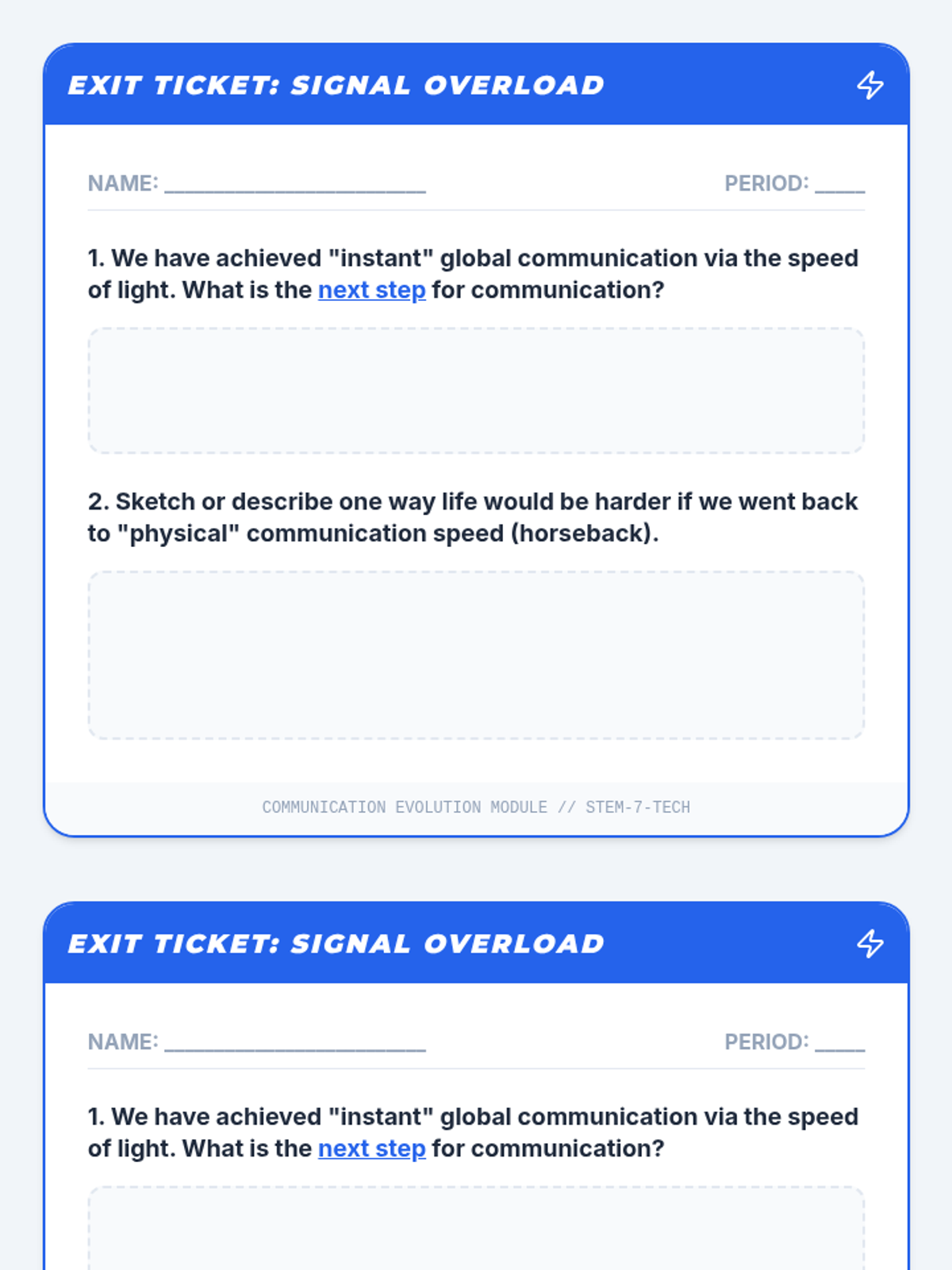
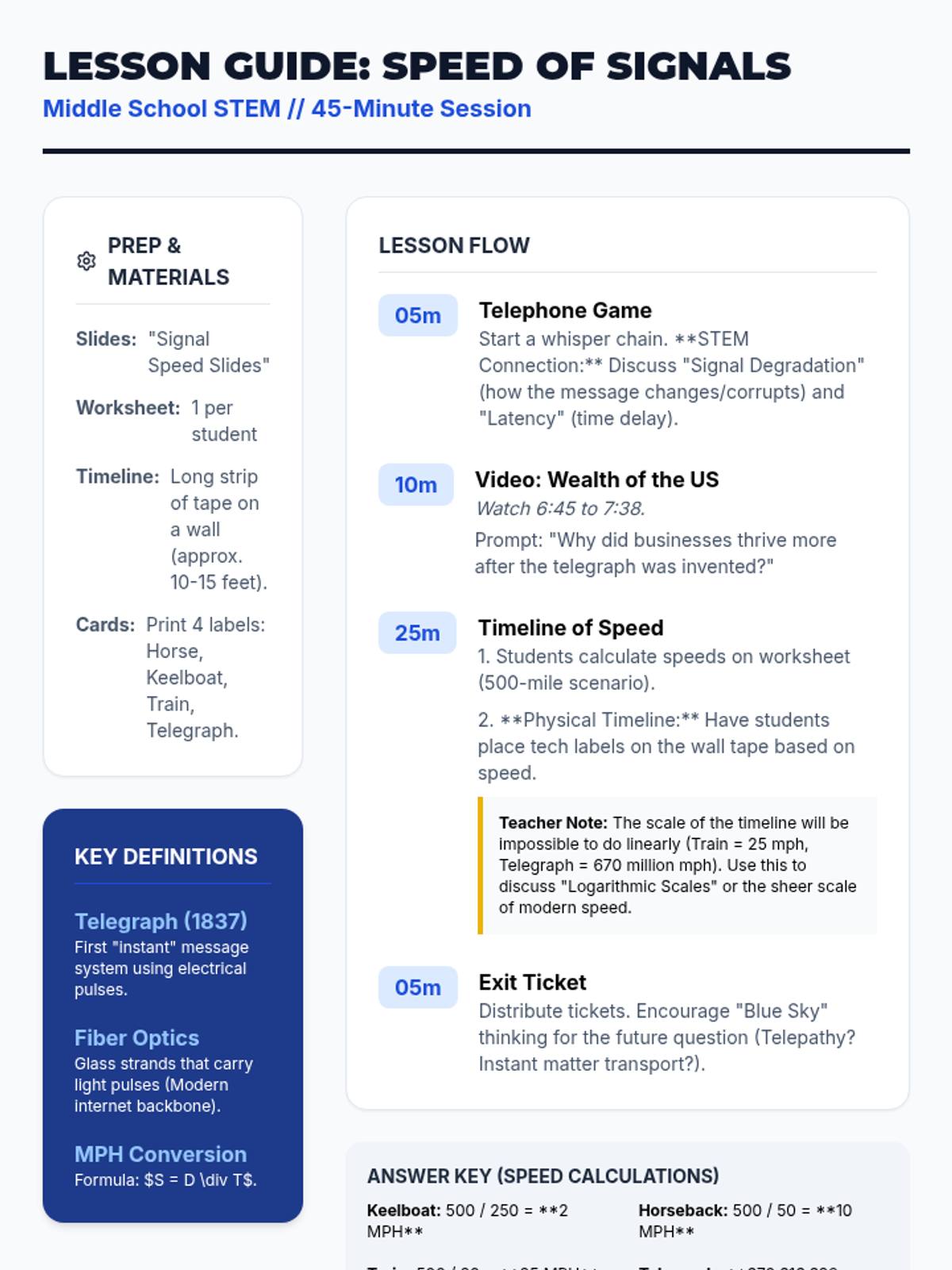
A STEM-focused exploration of how communication technology evolved from physical transport to the speed of light, featuring a speed-calculation activity and a physical timeline.
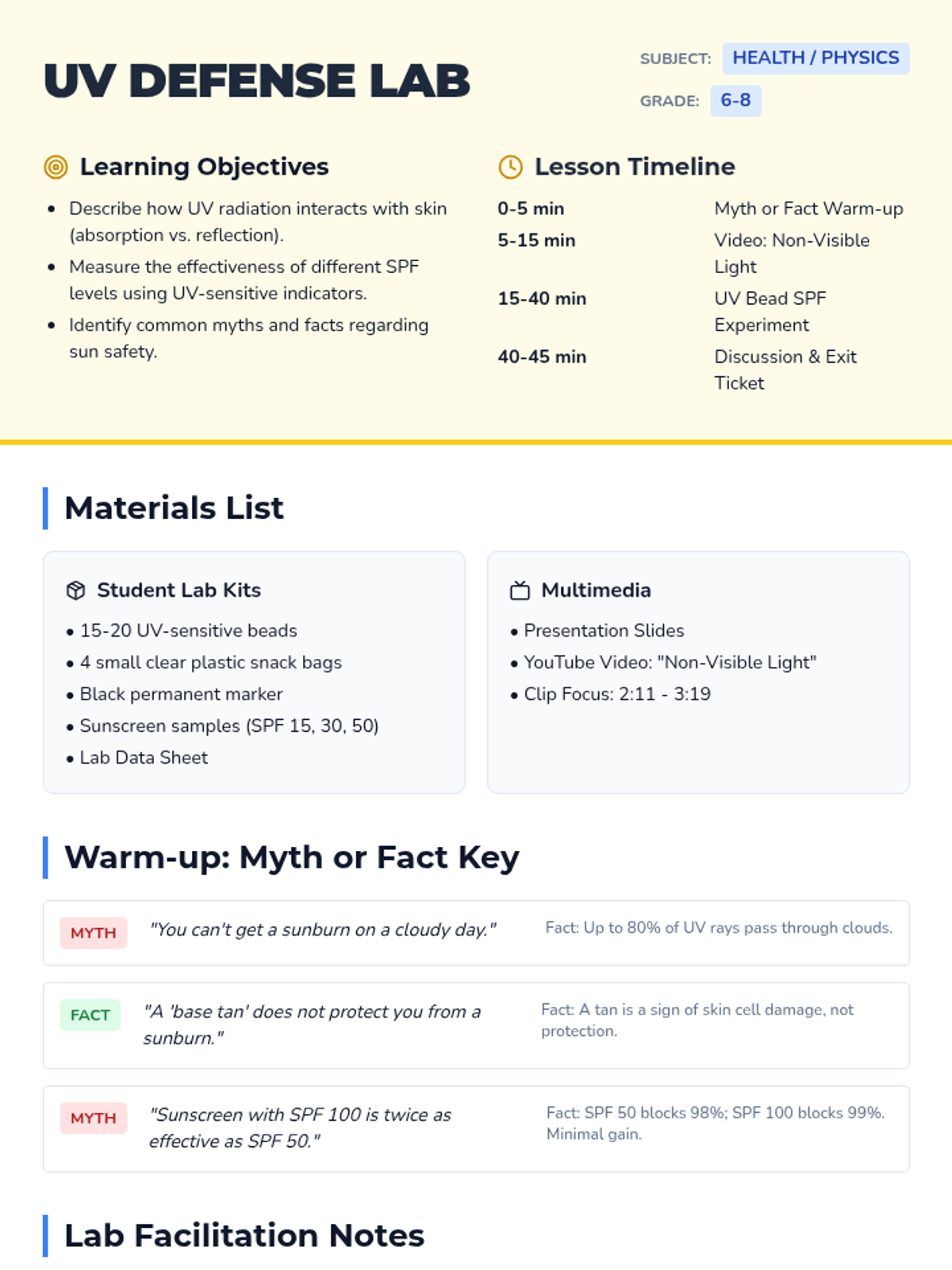
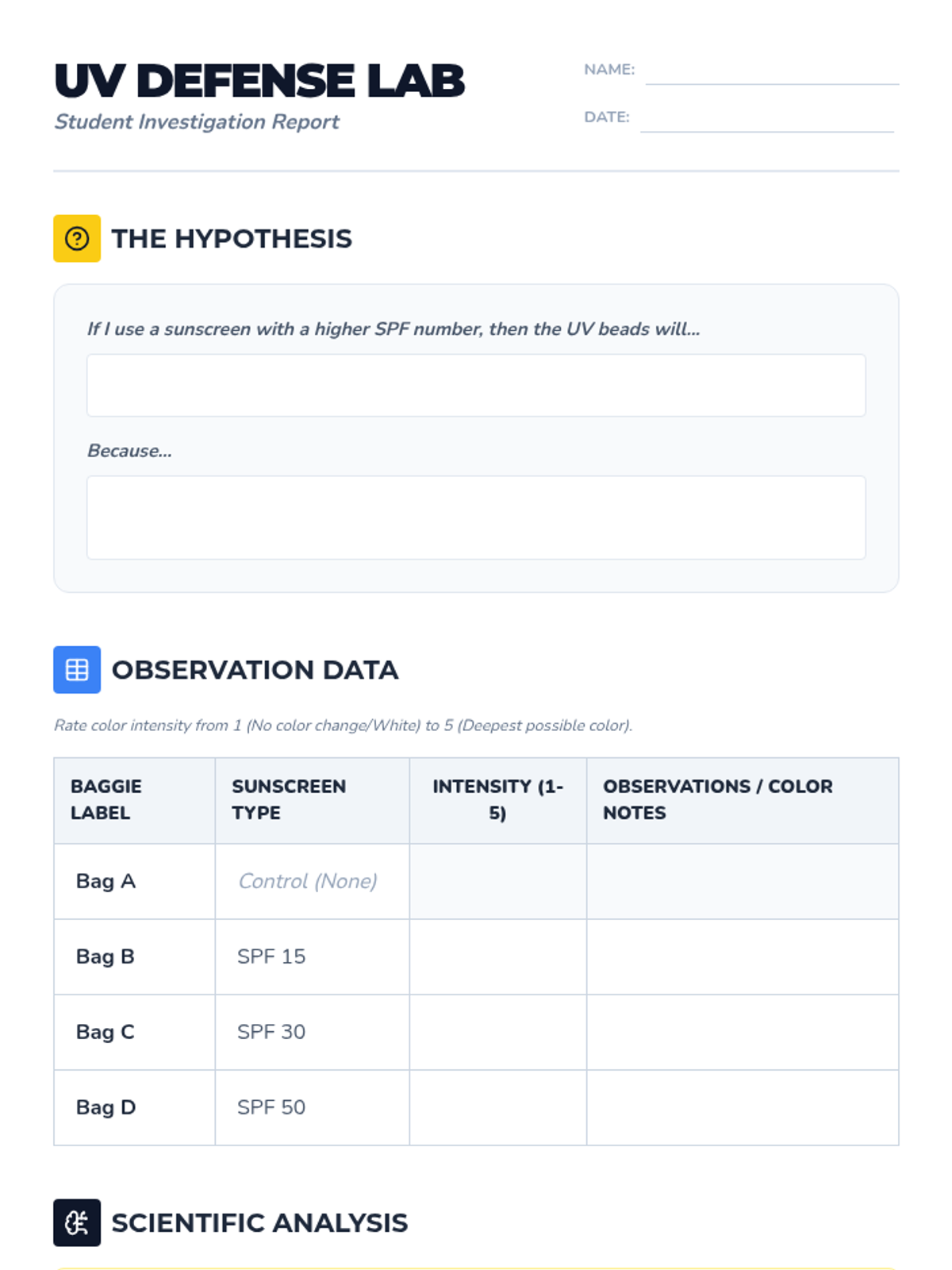
A middle school science and health lesson exploring the physics and biology of UV radiation and sunscreen effectiveness through hands-on experimentation with UV-sensitive beads.
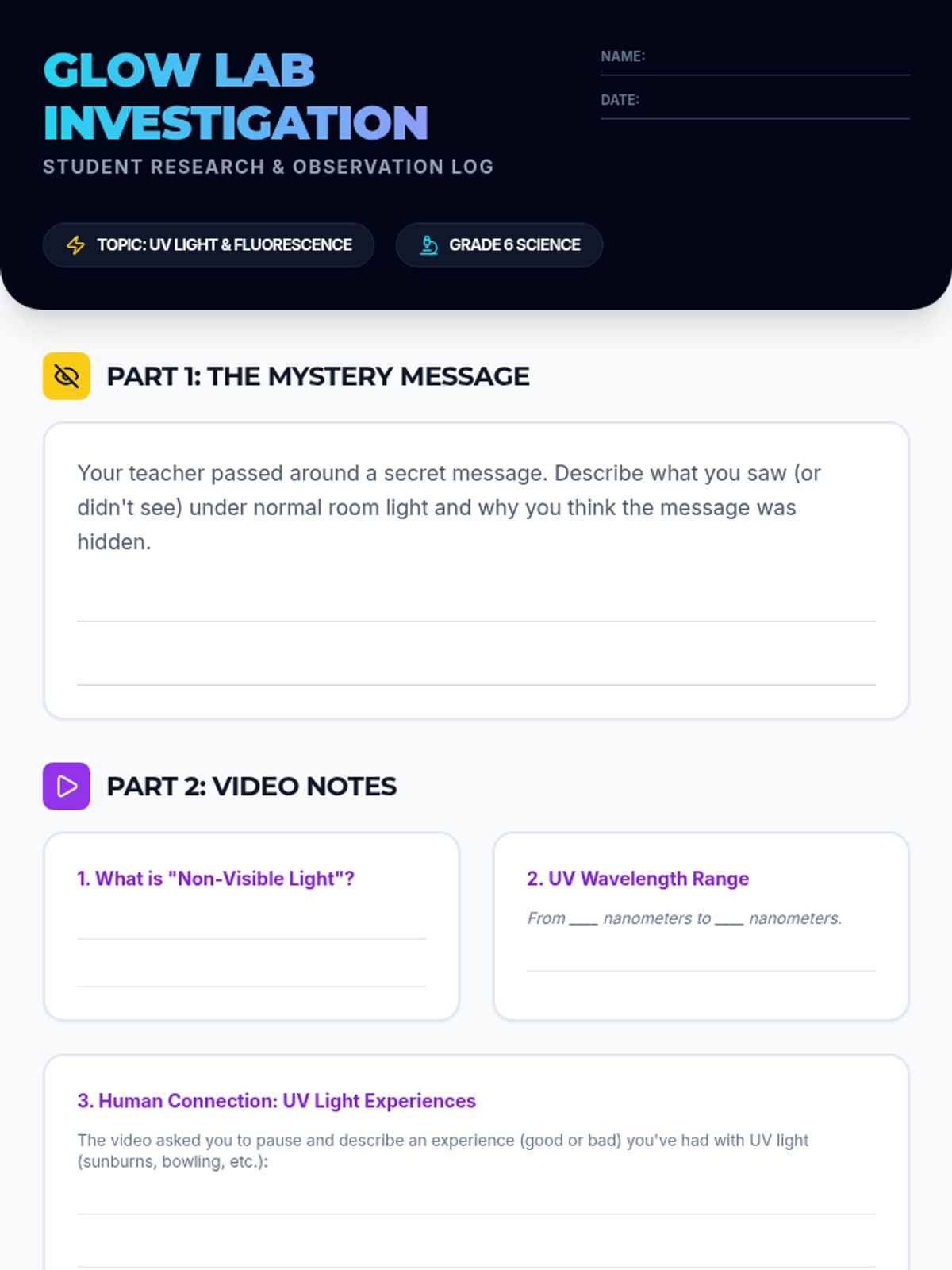
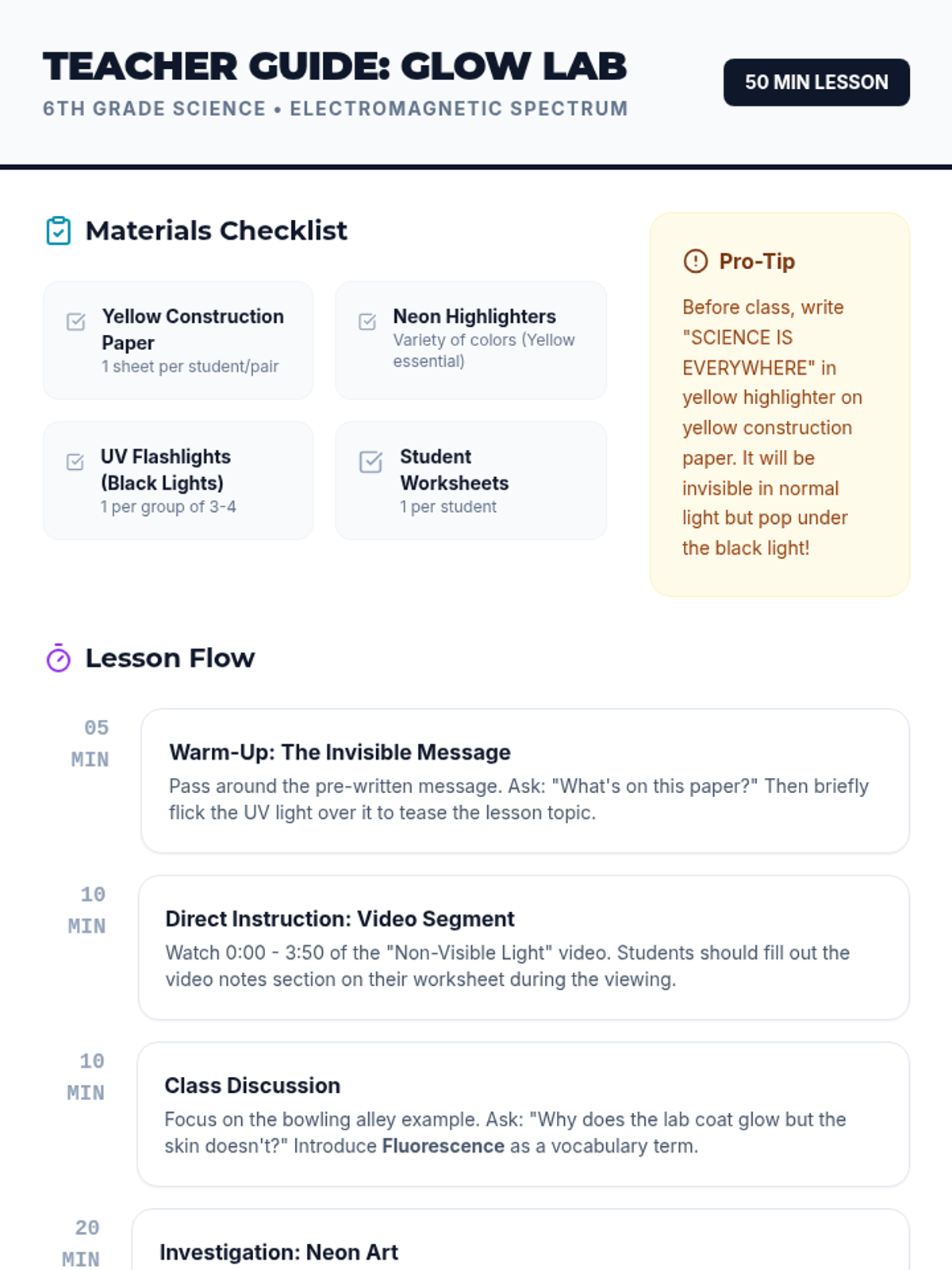
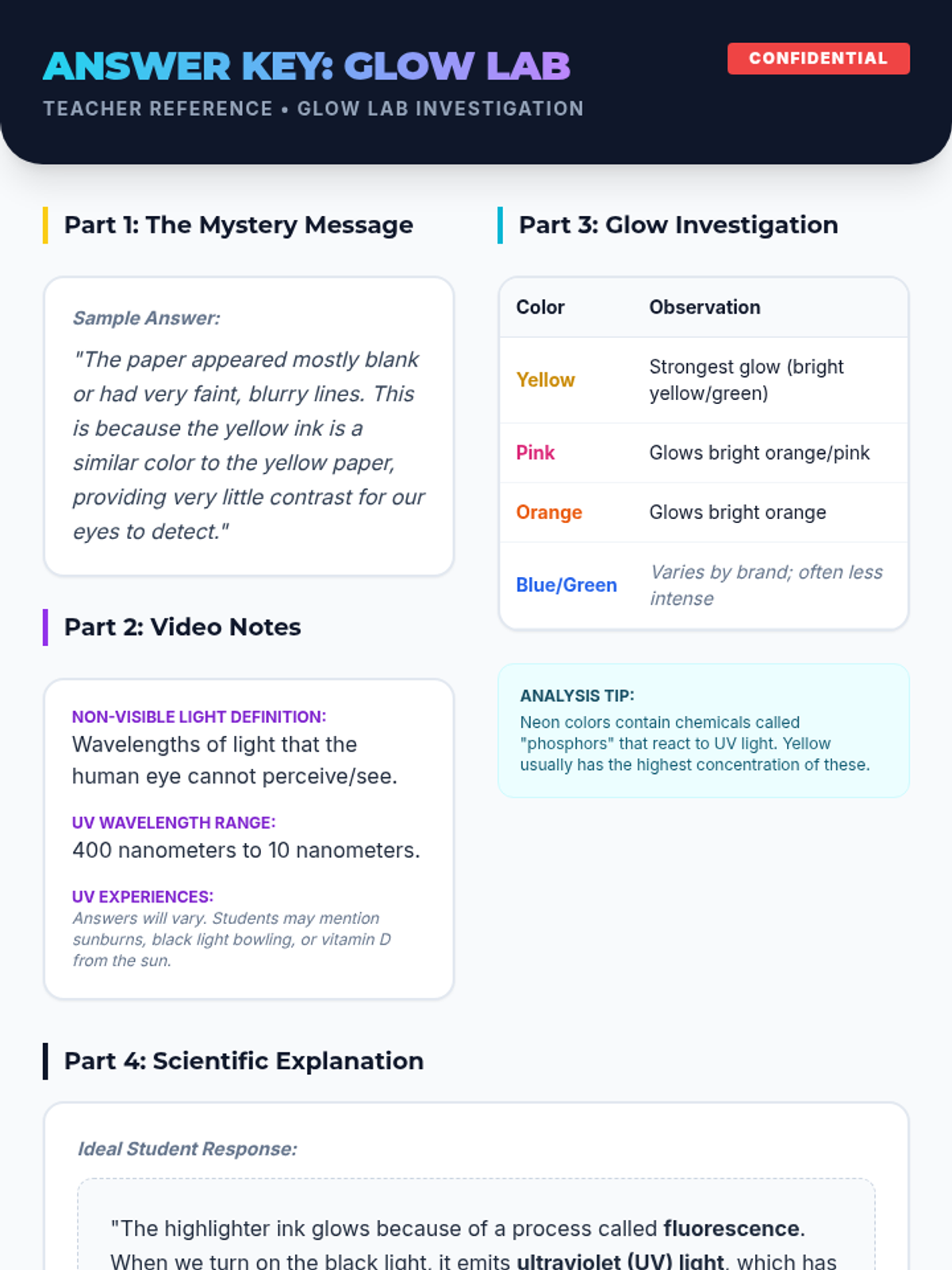
A 6th-grade science lesson exploring the electromagnetic spectrum with a focus on ultraviolet (UV) light and the phenomenon of fluorescence. Students will conduct an investigation using black lights and highlighters to understand how non-visible light interacts with certain materials.
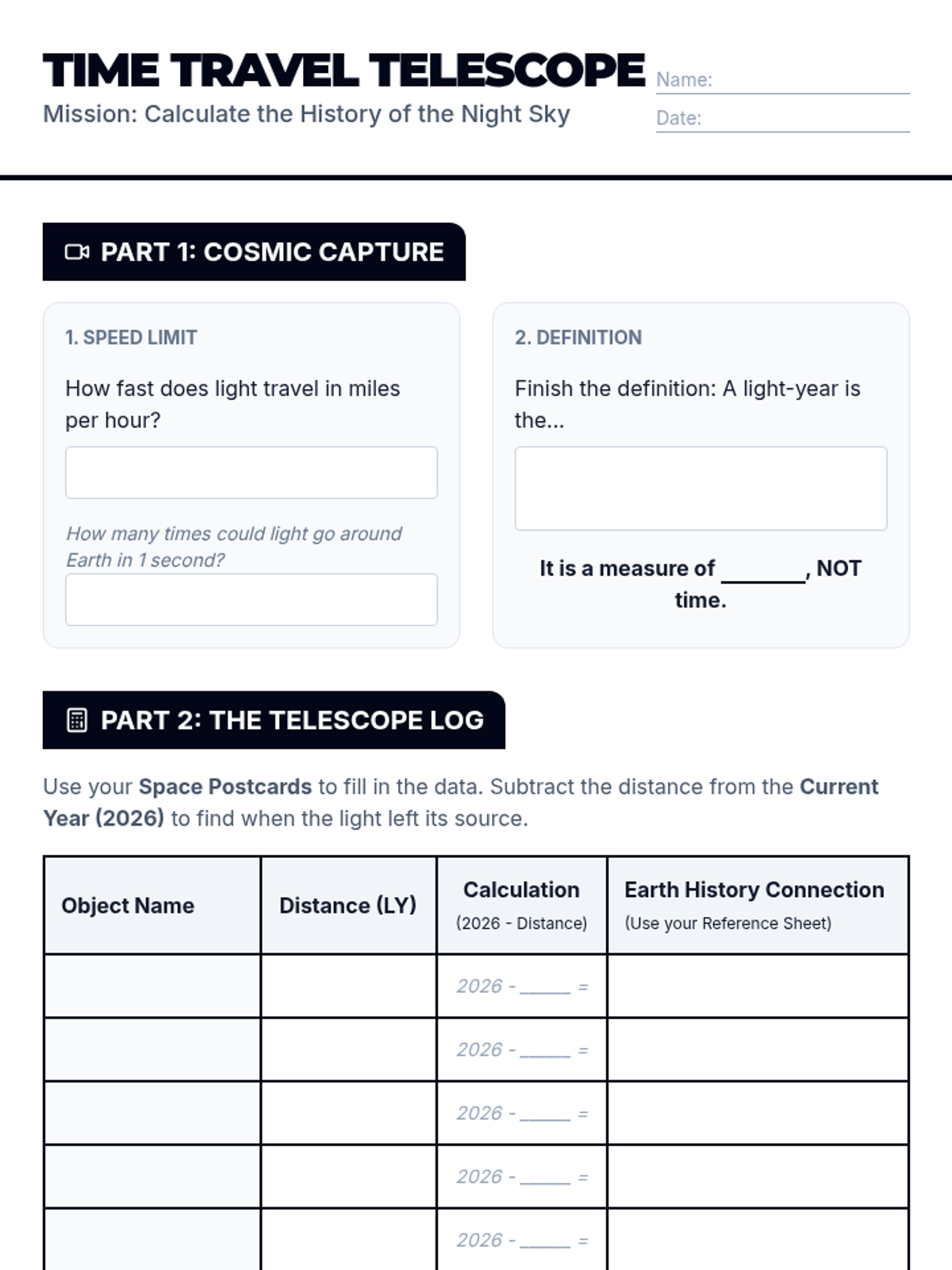
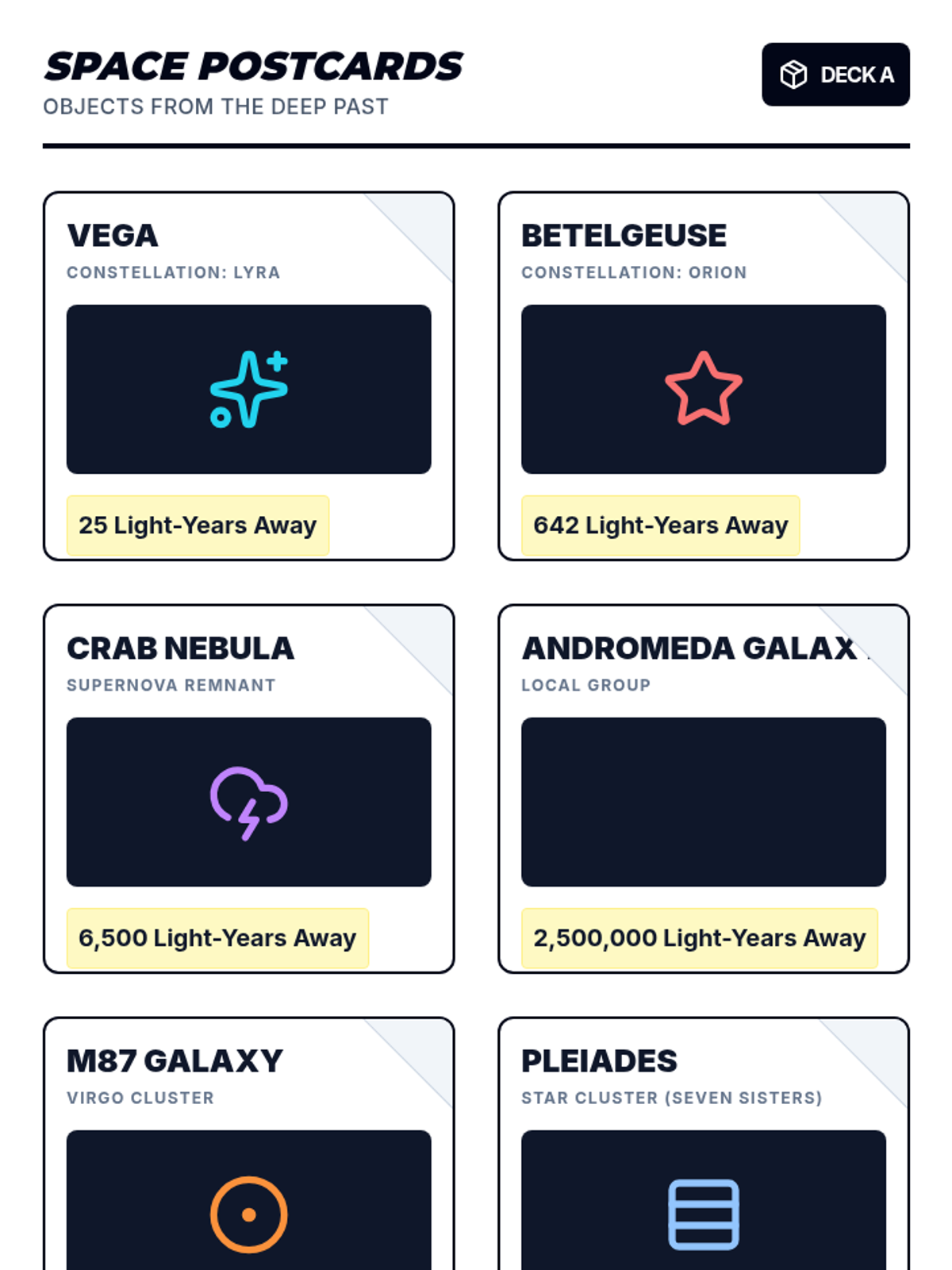
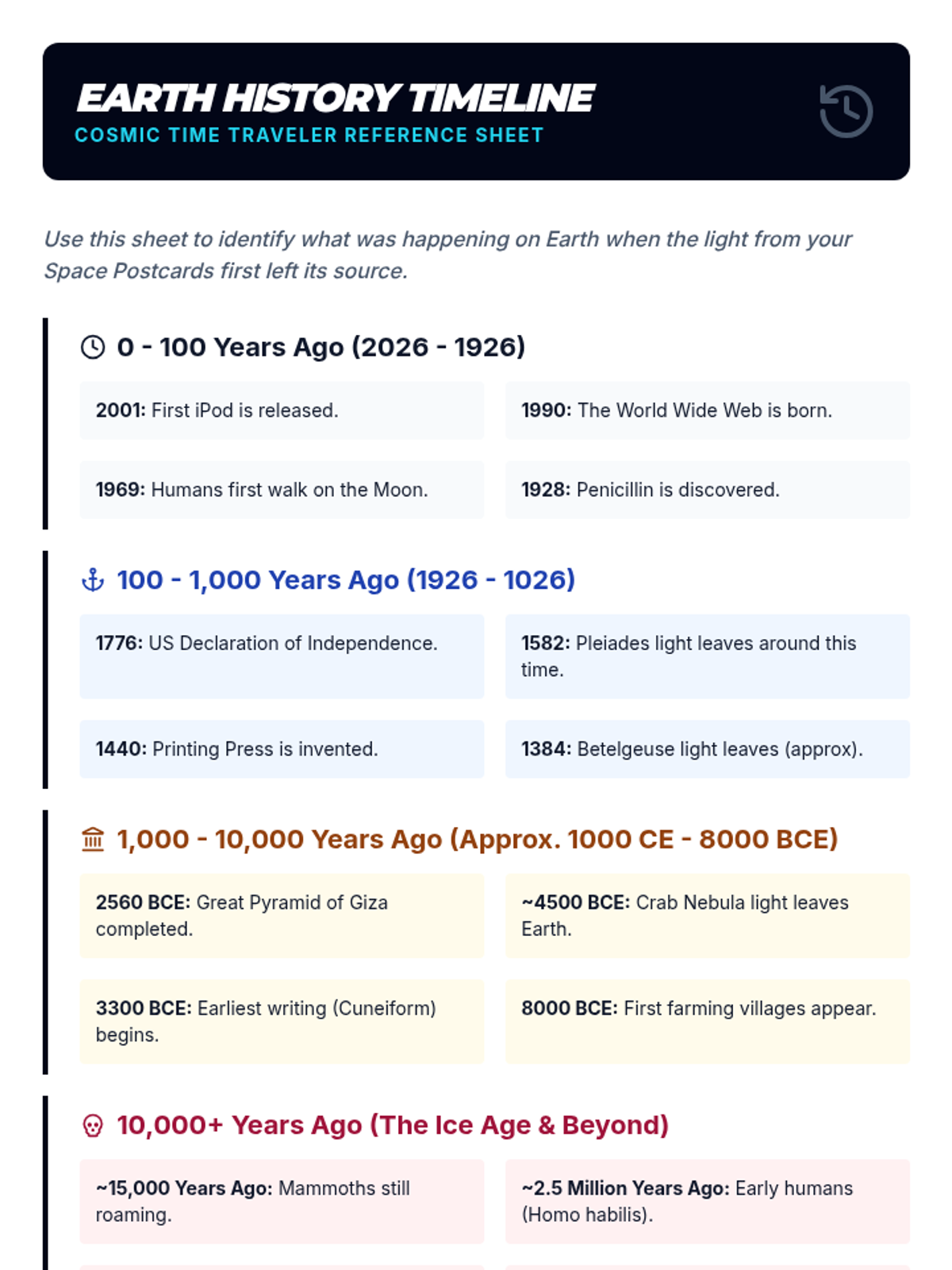
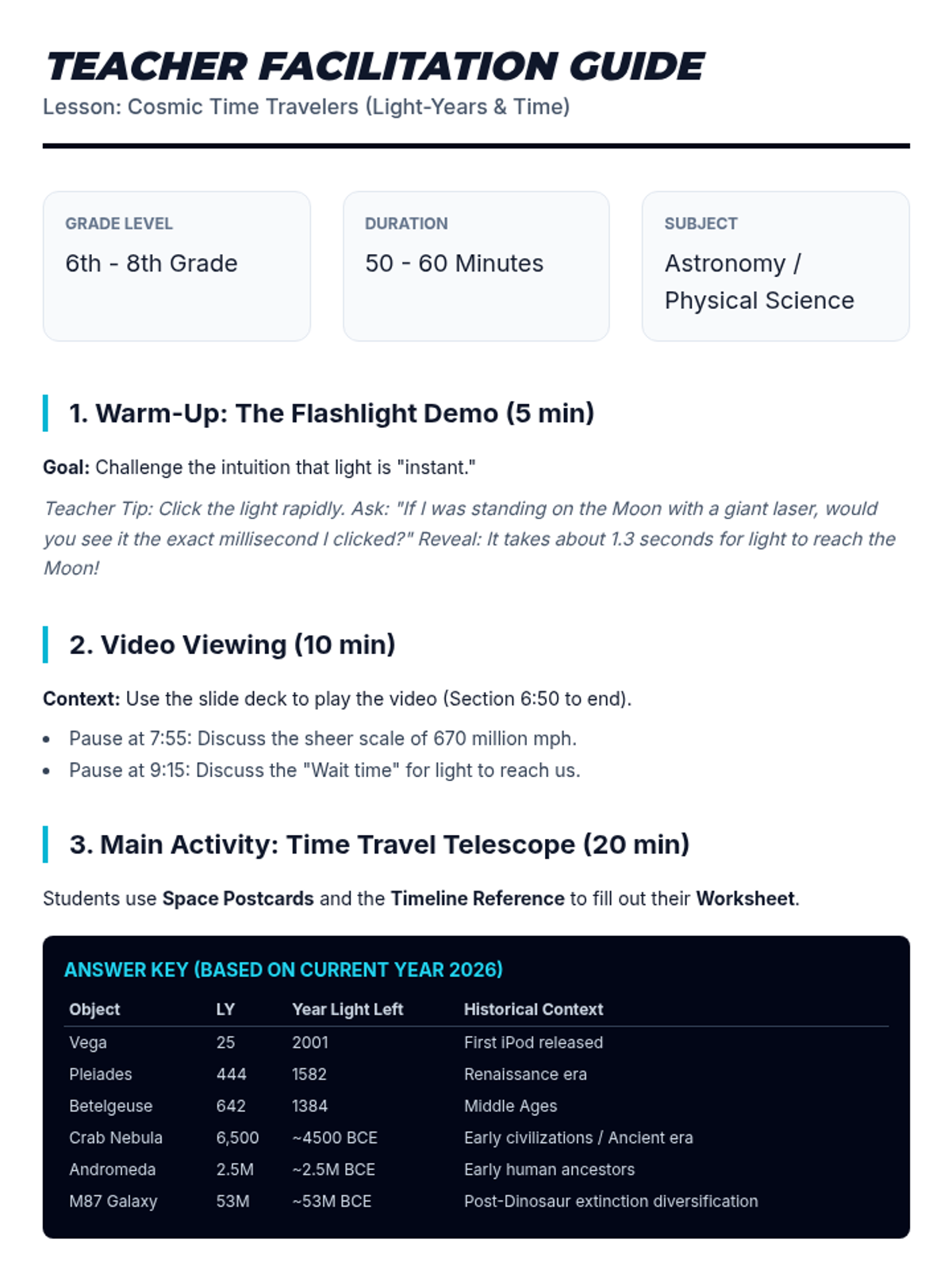
Students explore the concept of light-years, understanding them as units of distance rather than time, and discover why observing the night sky is essentially looking into the past. Through the 'Time Travel Telescope' activity, they calculate historical timestamps for light from distant celestial objects and map them against Earth's history.
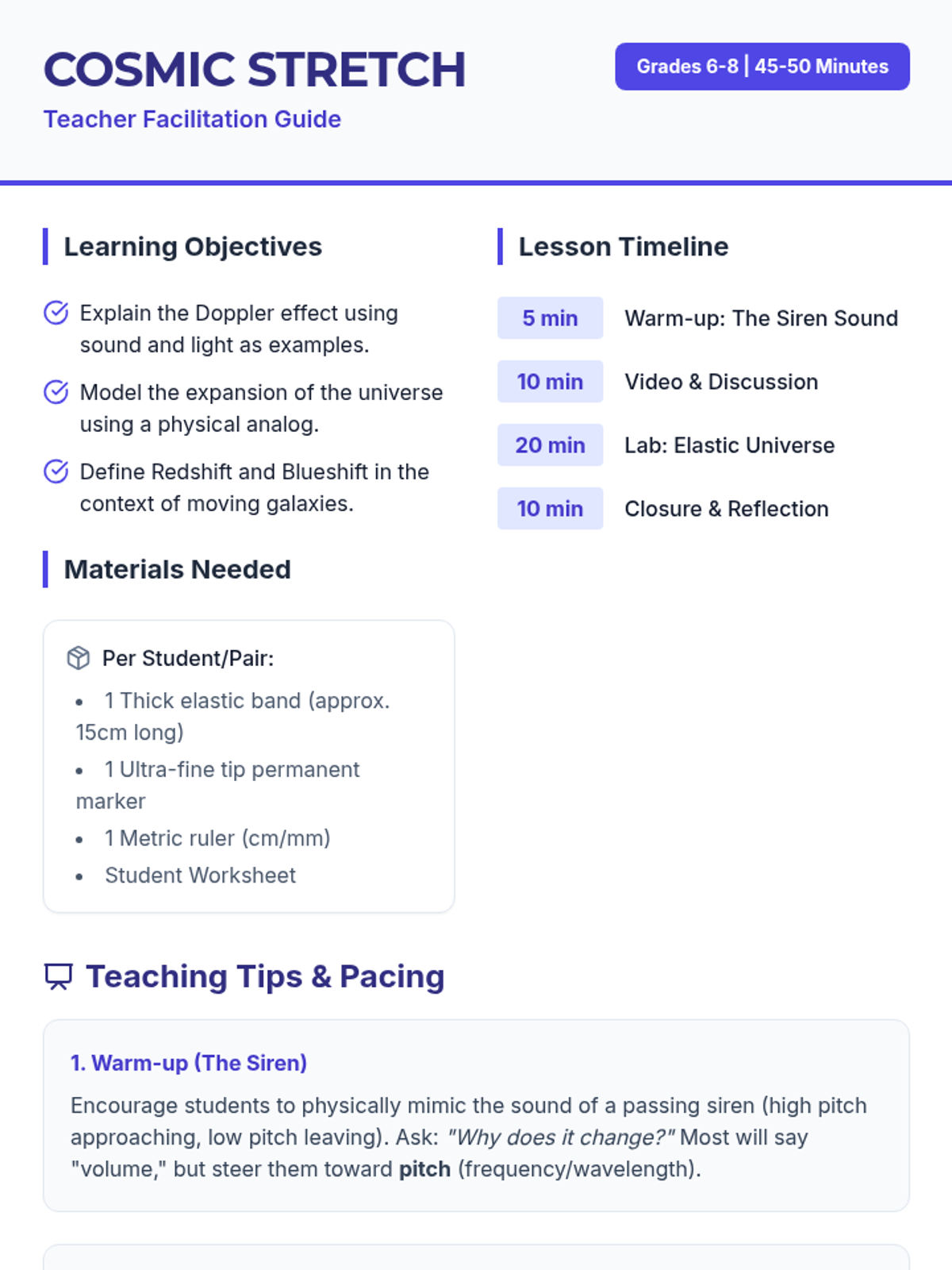
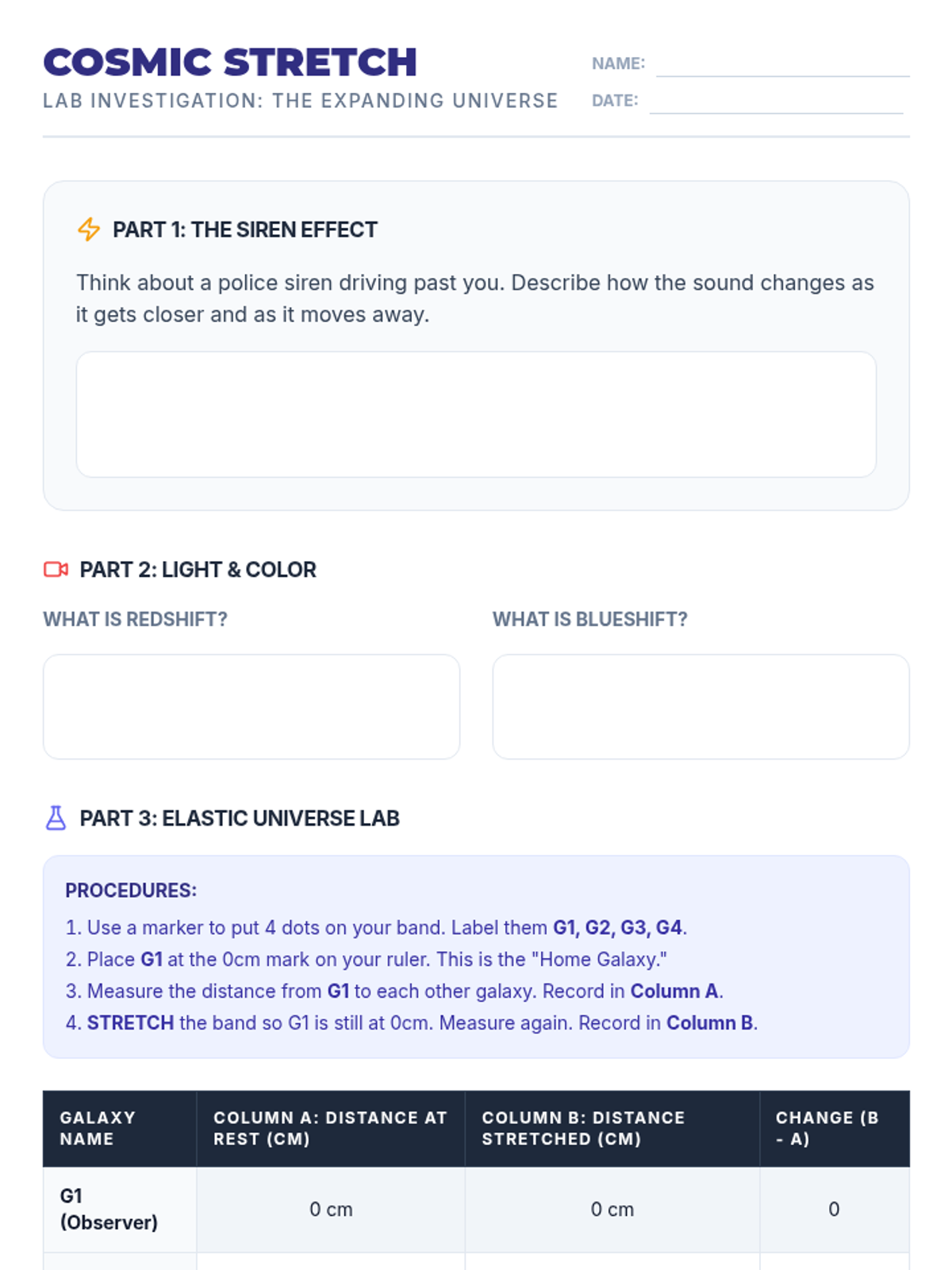
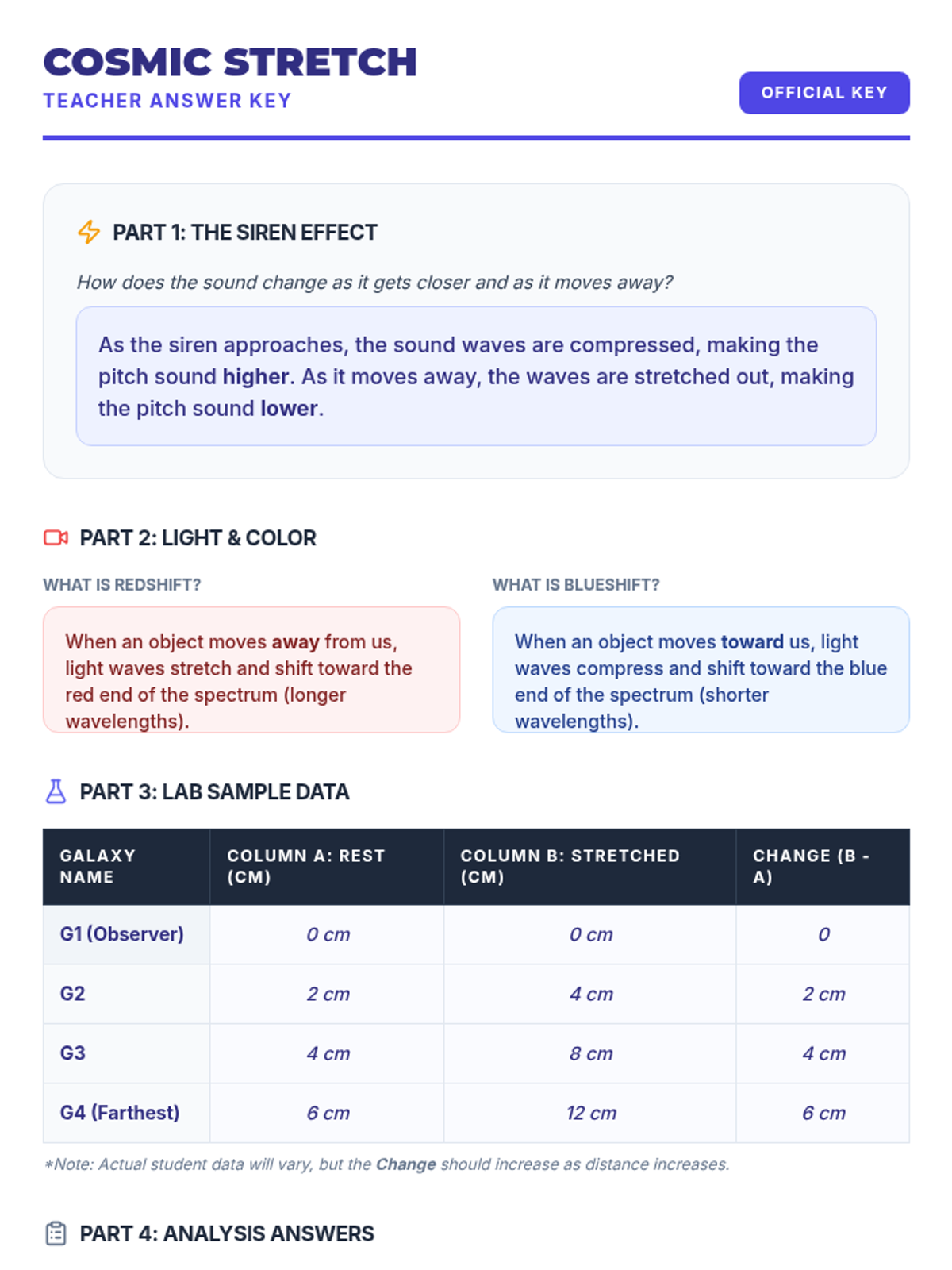
A hands-on exploration of the expanding universe using elastic bands to model redshift and Hubble's Law. Students will connect the Doppler effect to light waves and understand how astronomers use color to map the movement of galaxies.
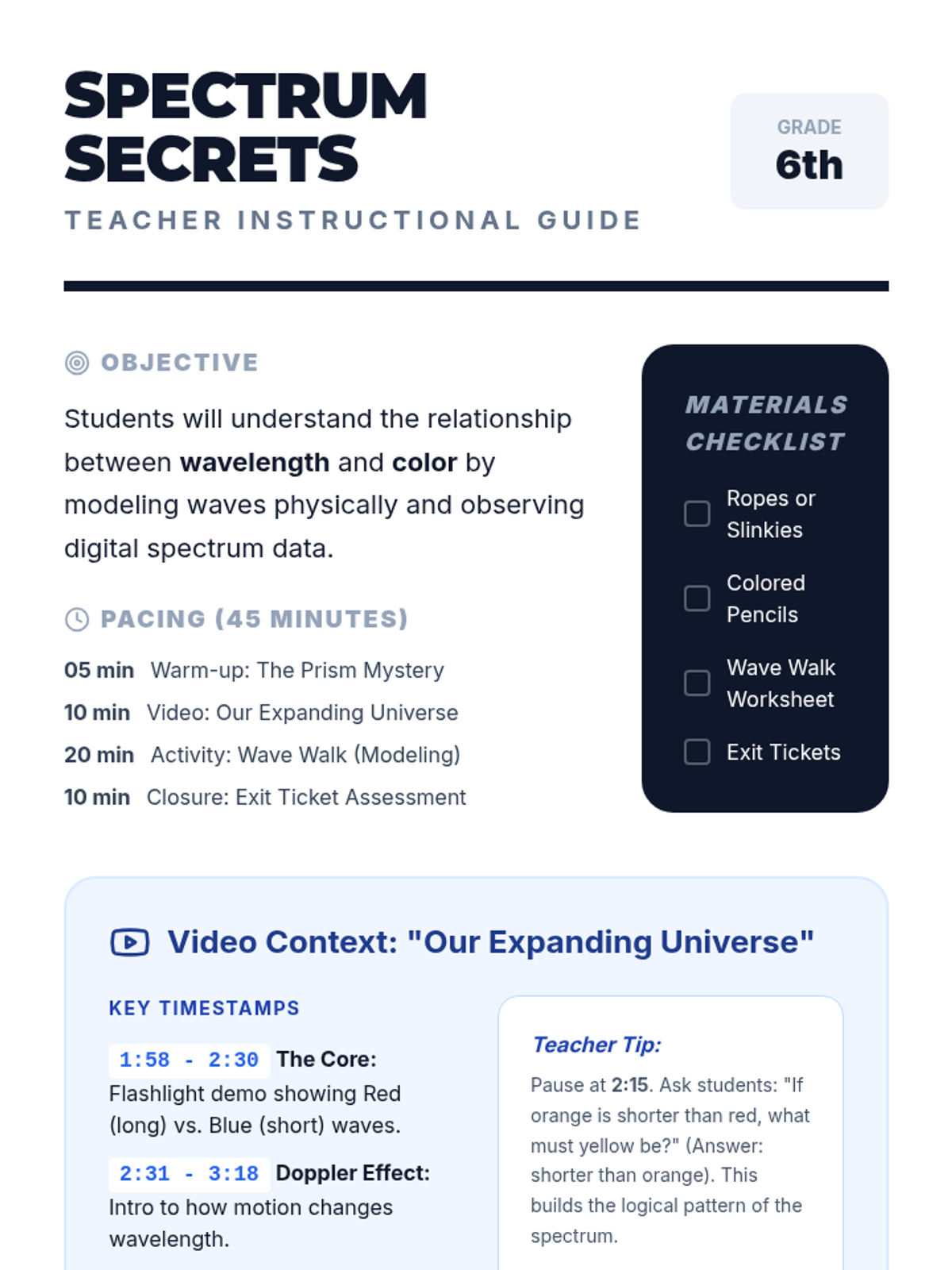
A 6th-grade science lesson exploring the physical properties of light, specifically how wavelength determines color and how this knowledge helps astronomers understand the expanding universe.
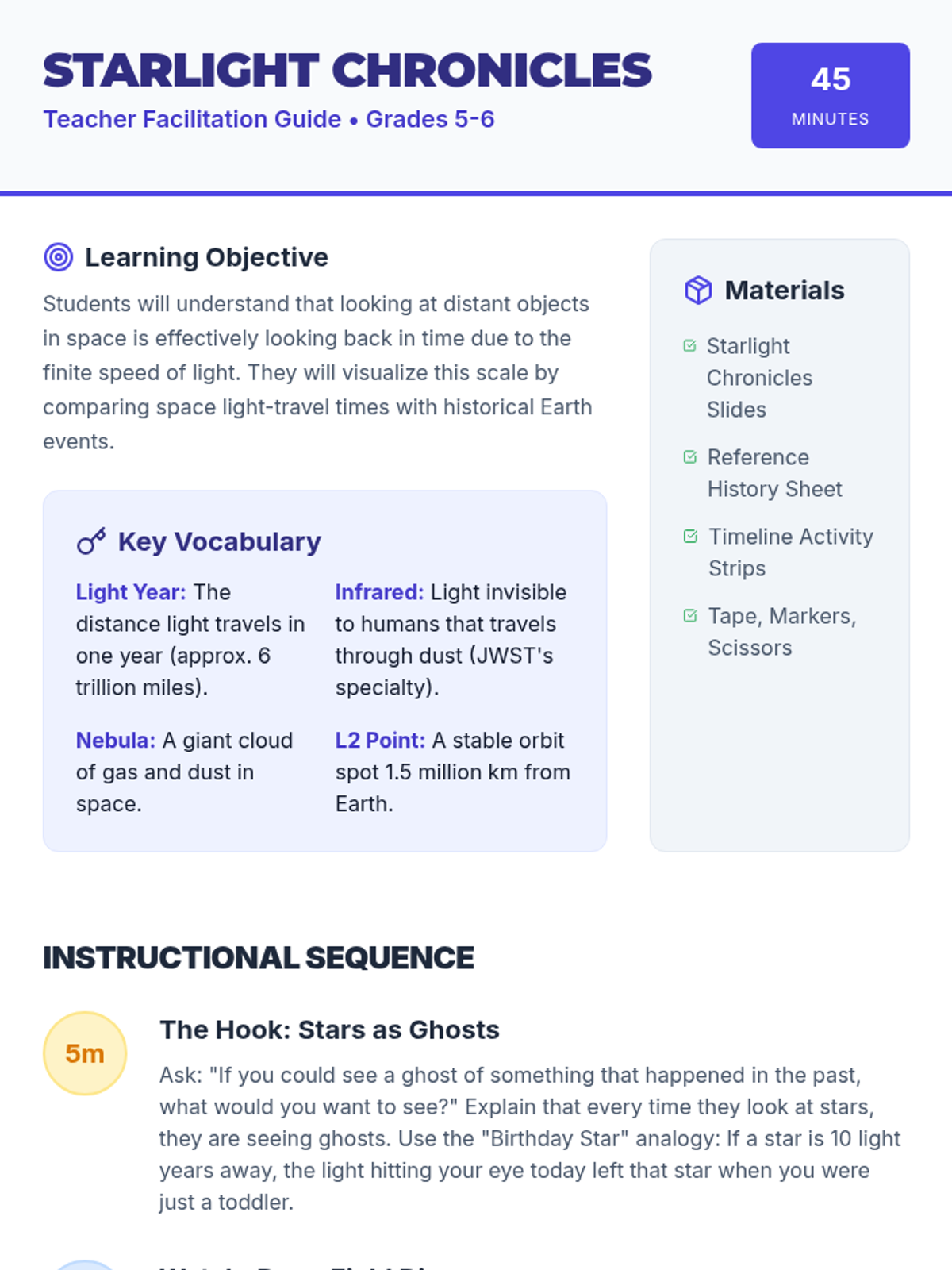
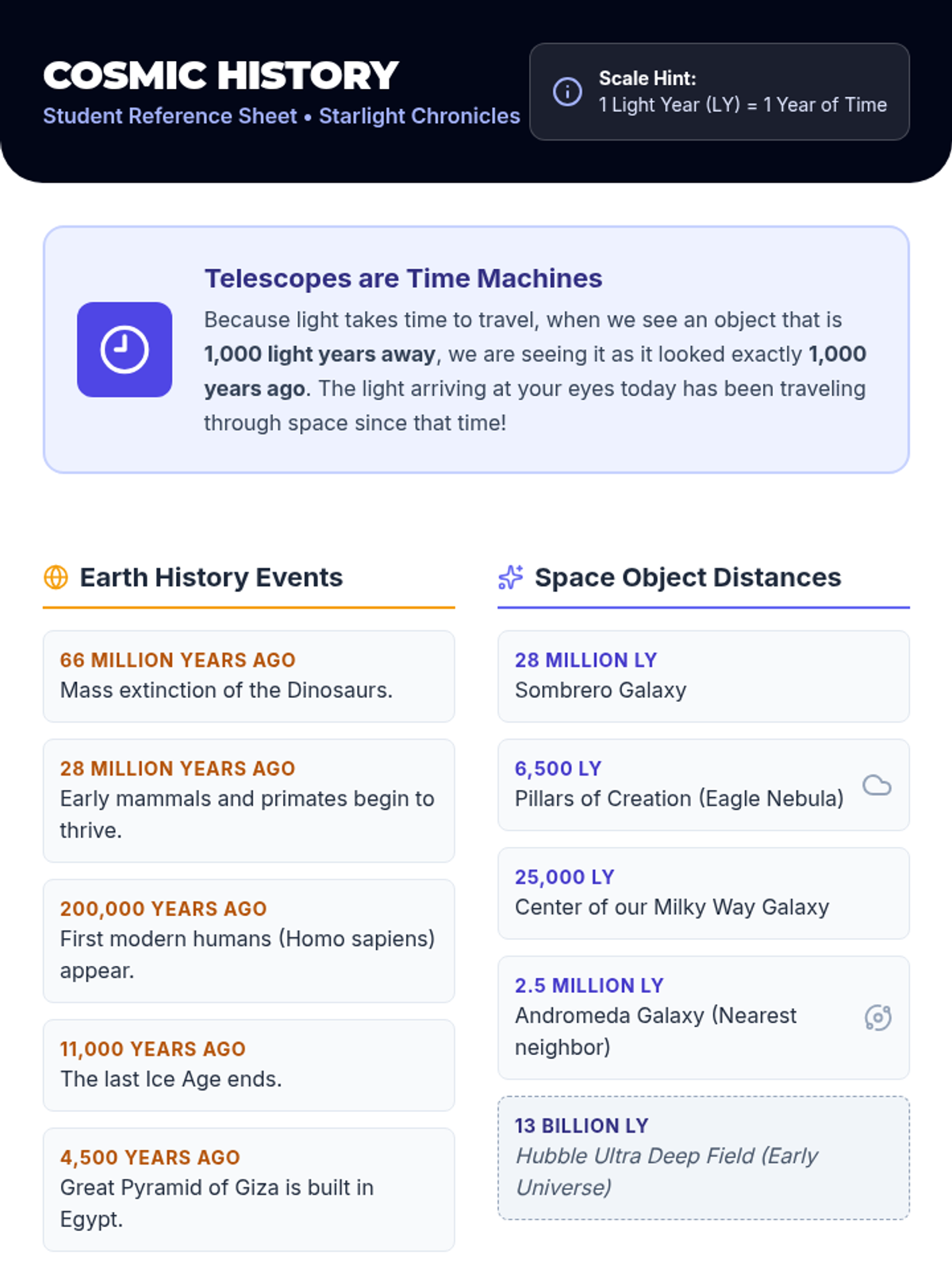
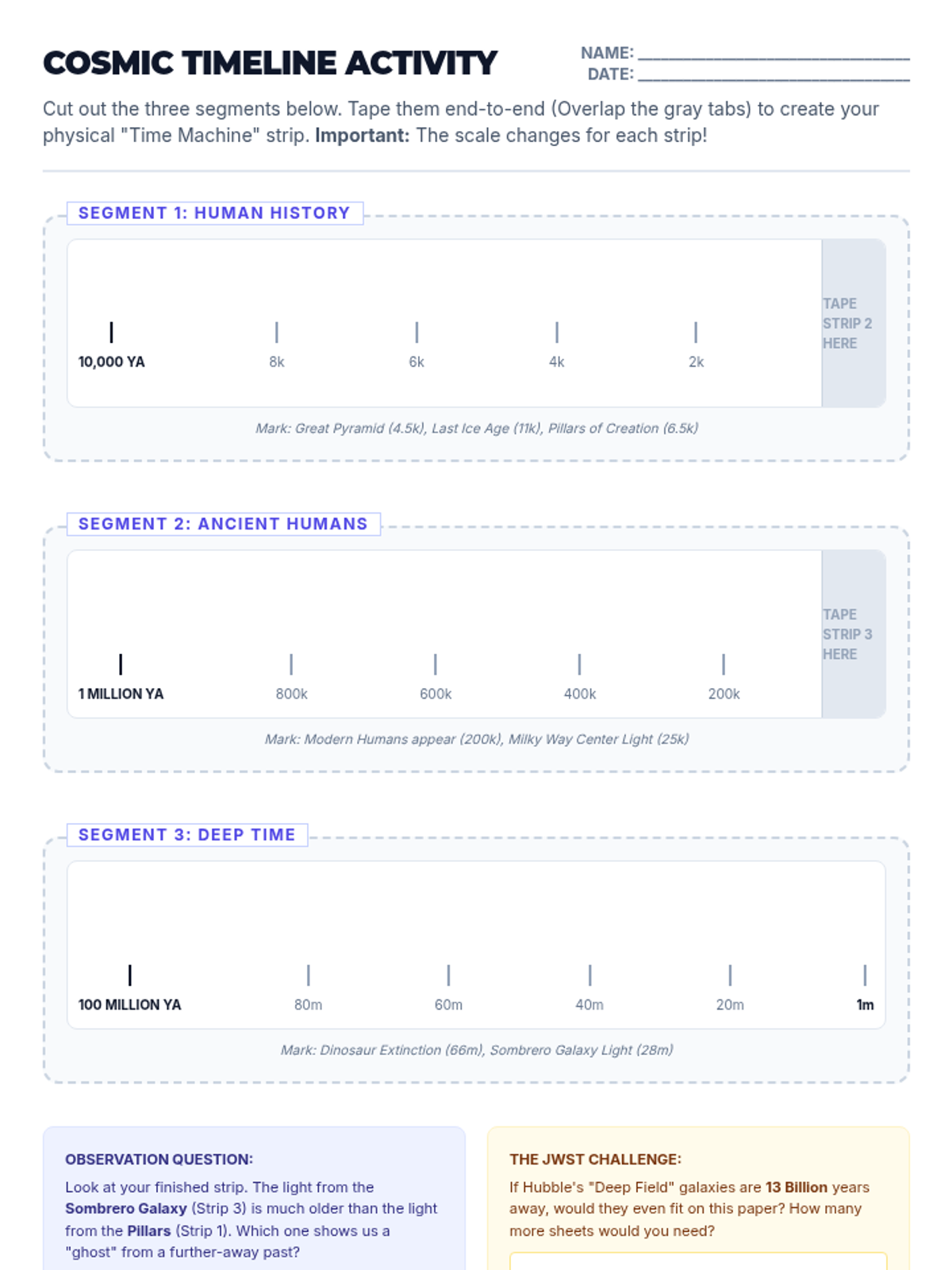
A lesson for 5th-6th grade students exploring how telescopes act as time machines by capturing light that has traveled for millions or billions of years. Students will create a 'Cosmic Timeline' comparing light travel times from famous space objects to major events in Earth's history.
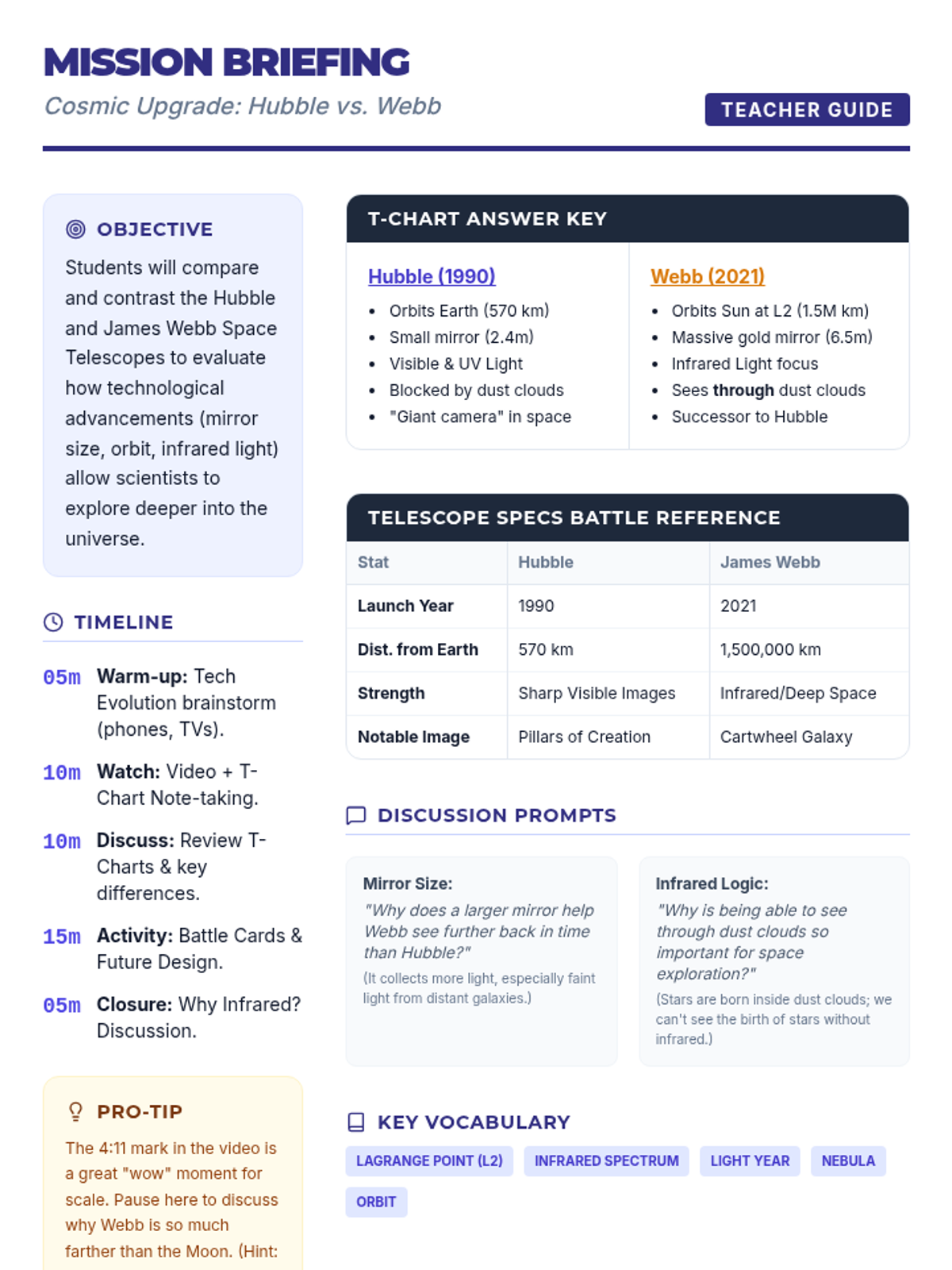
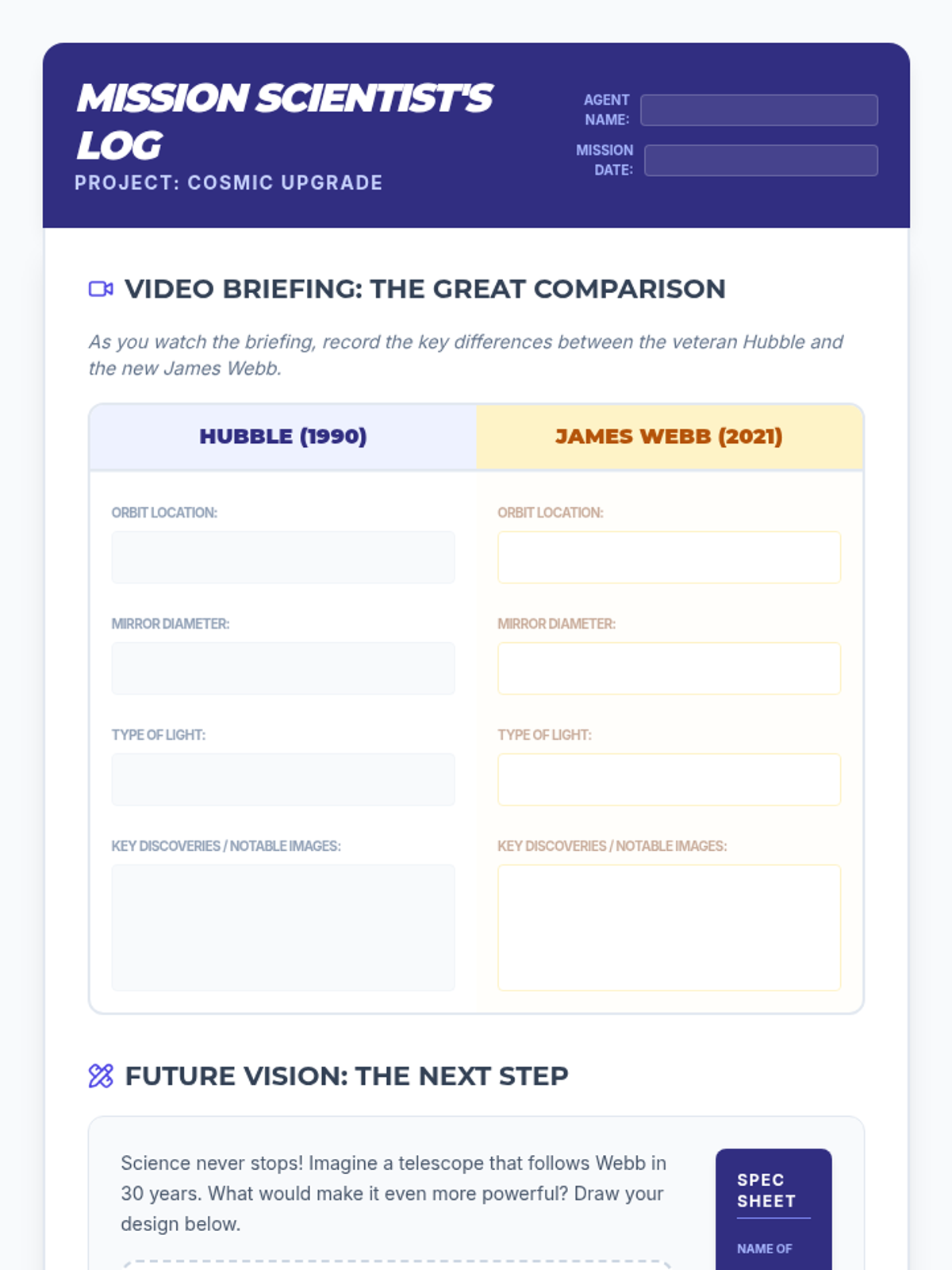
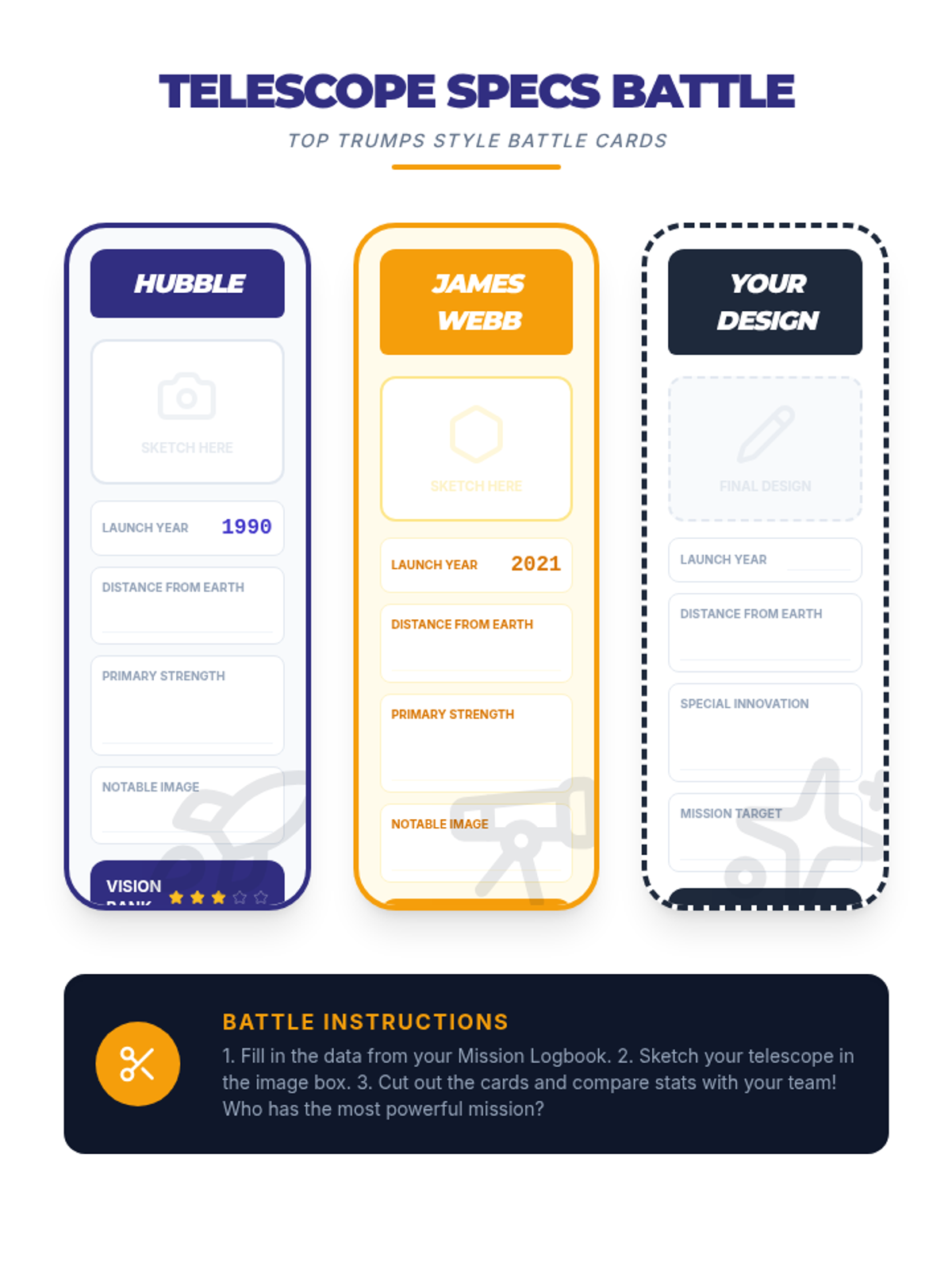
A lesson comparing the Hubble and James Webb Space Telescopes to understand how technological evolution drives scientific discovery, featuring a video-based T-chart, a comparative 'Top Trumps' style activity, and a future-focused design challenge.
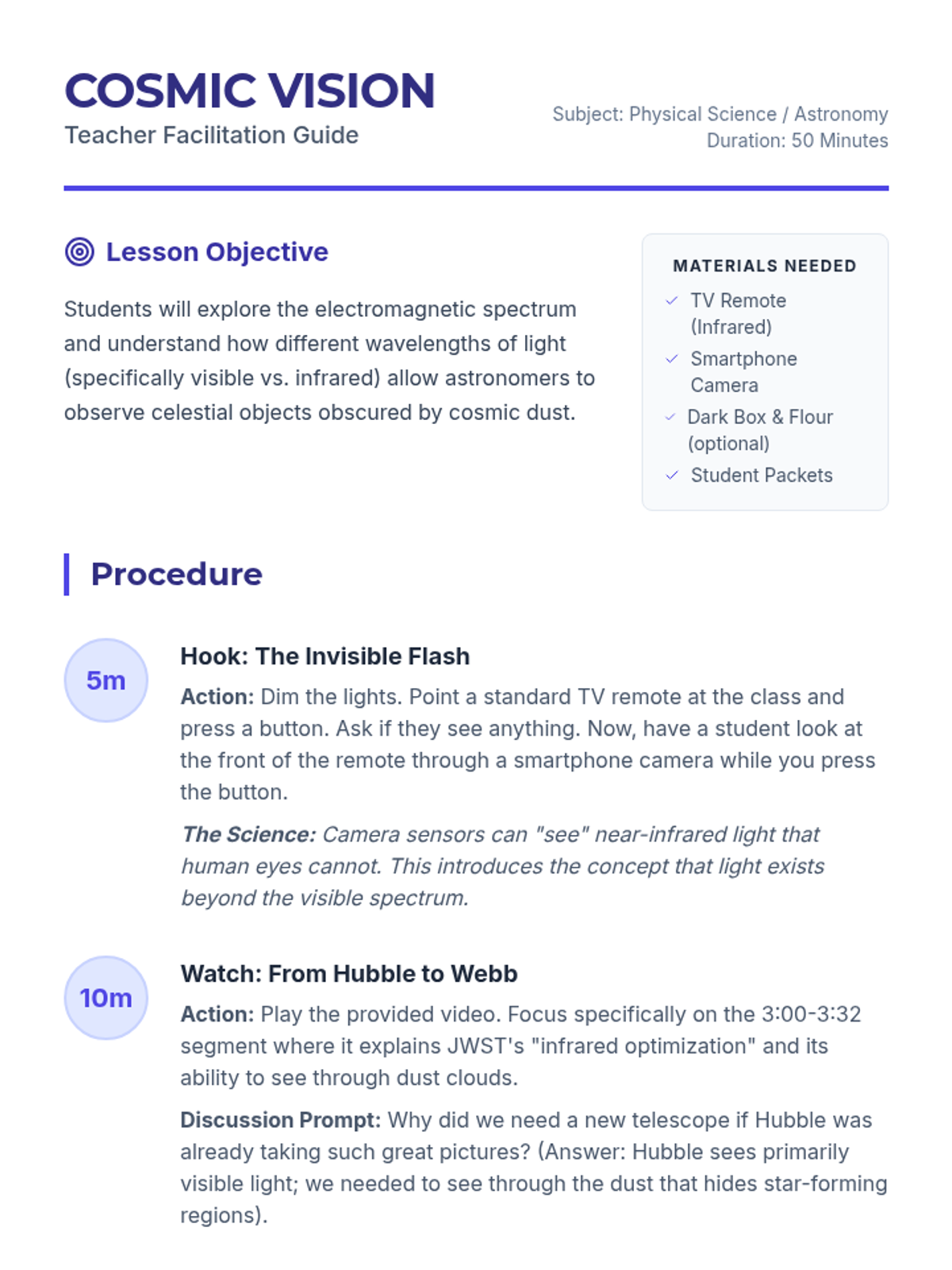
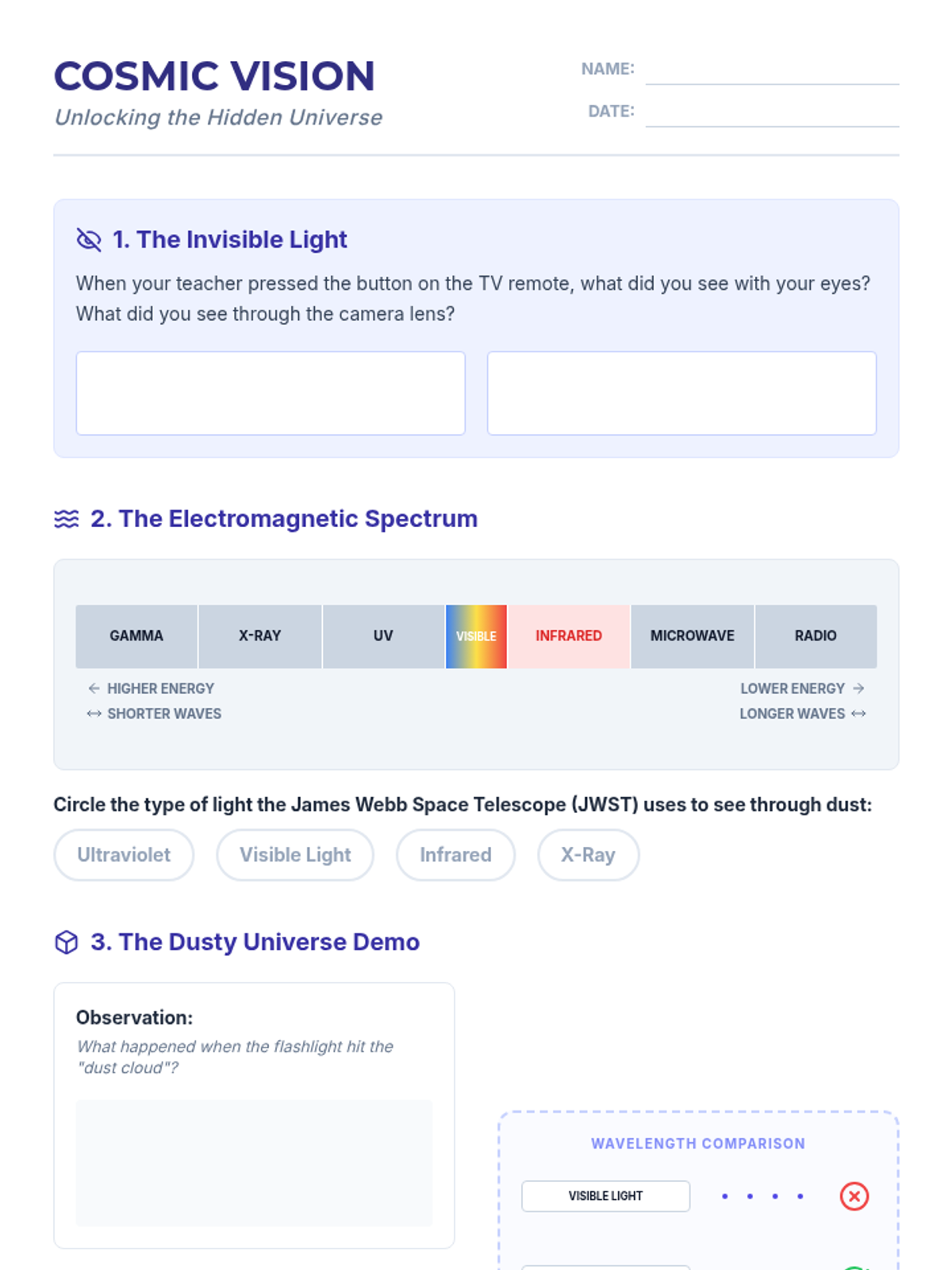
A middle school science lesson exploring the electromagnetic spectrum through the lens of the Hubble and James Webb Space Telescopes. Students investigate why different wavelengths of light reveal different secrets of the universe using hands-on demos and side-by-side image analysis.
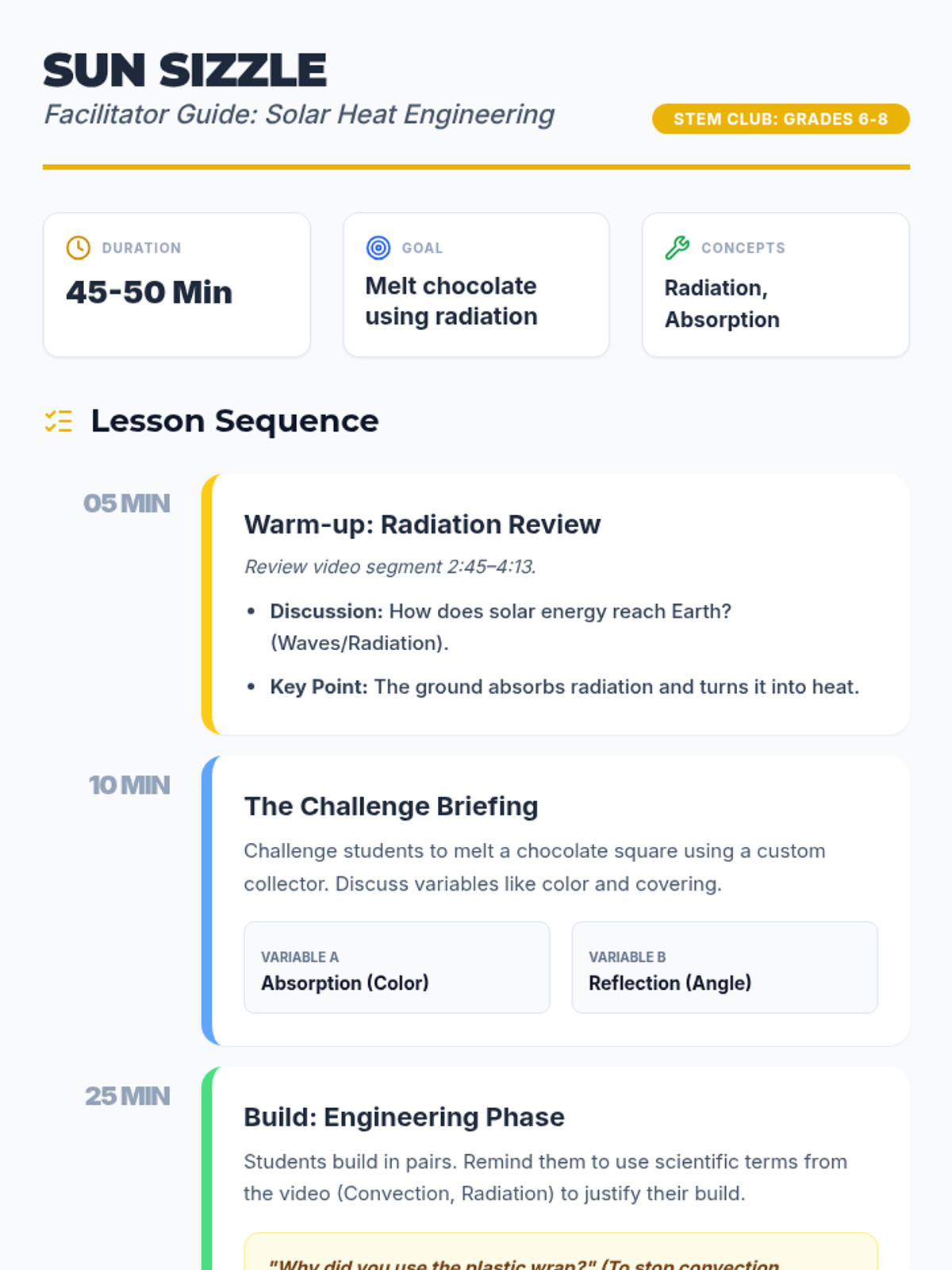
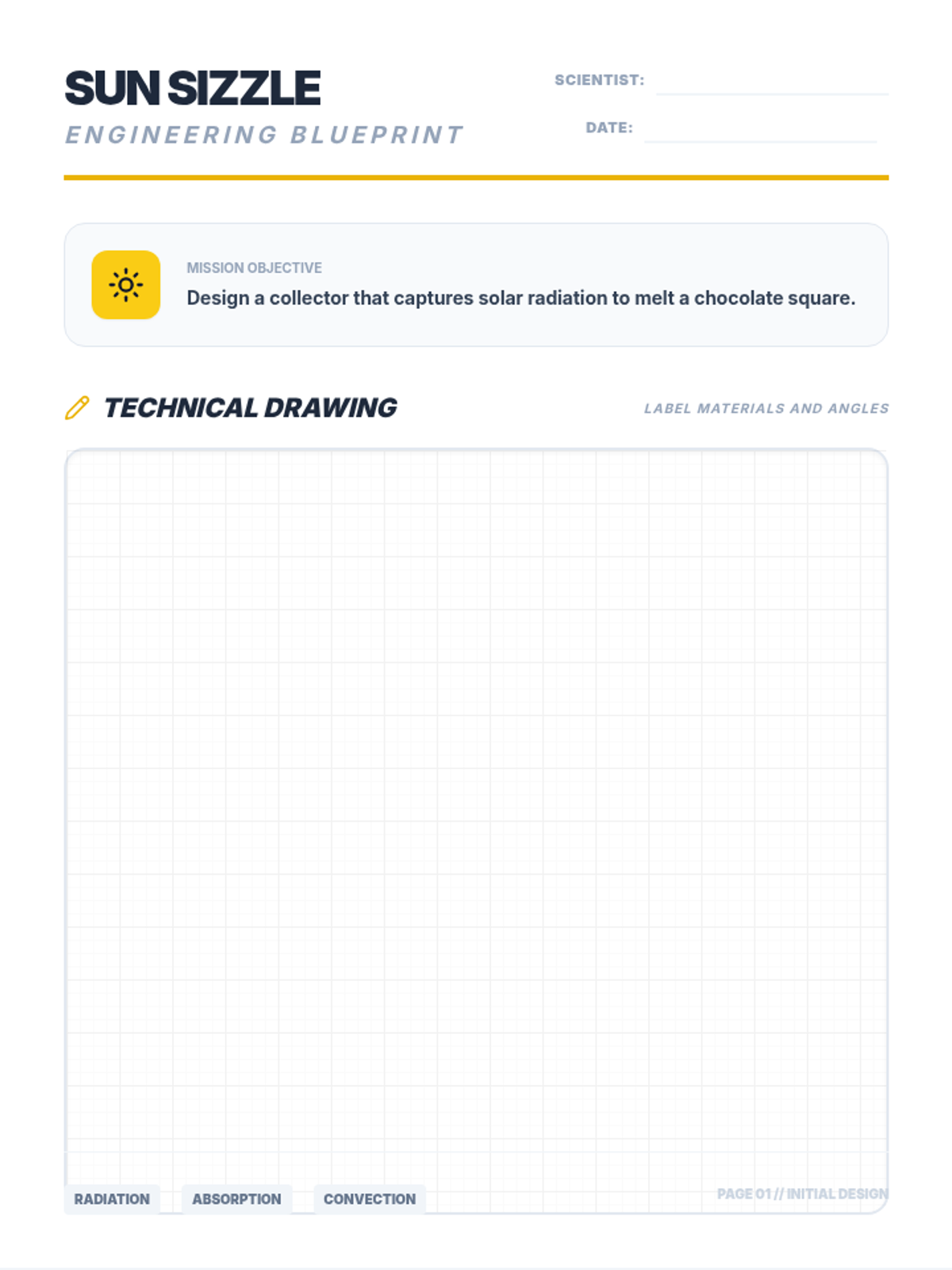
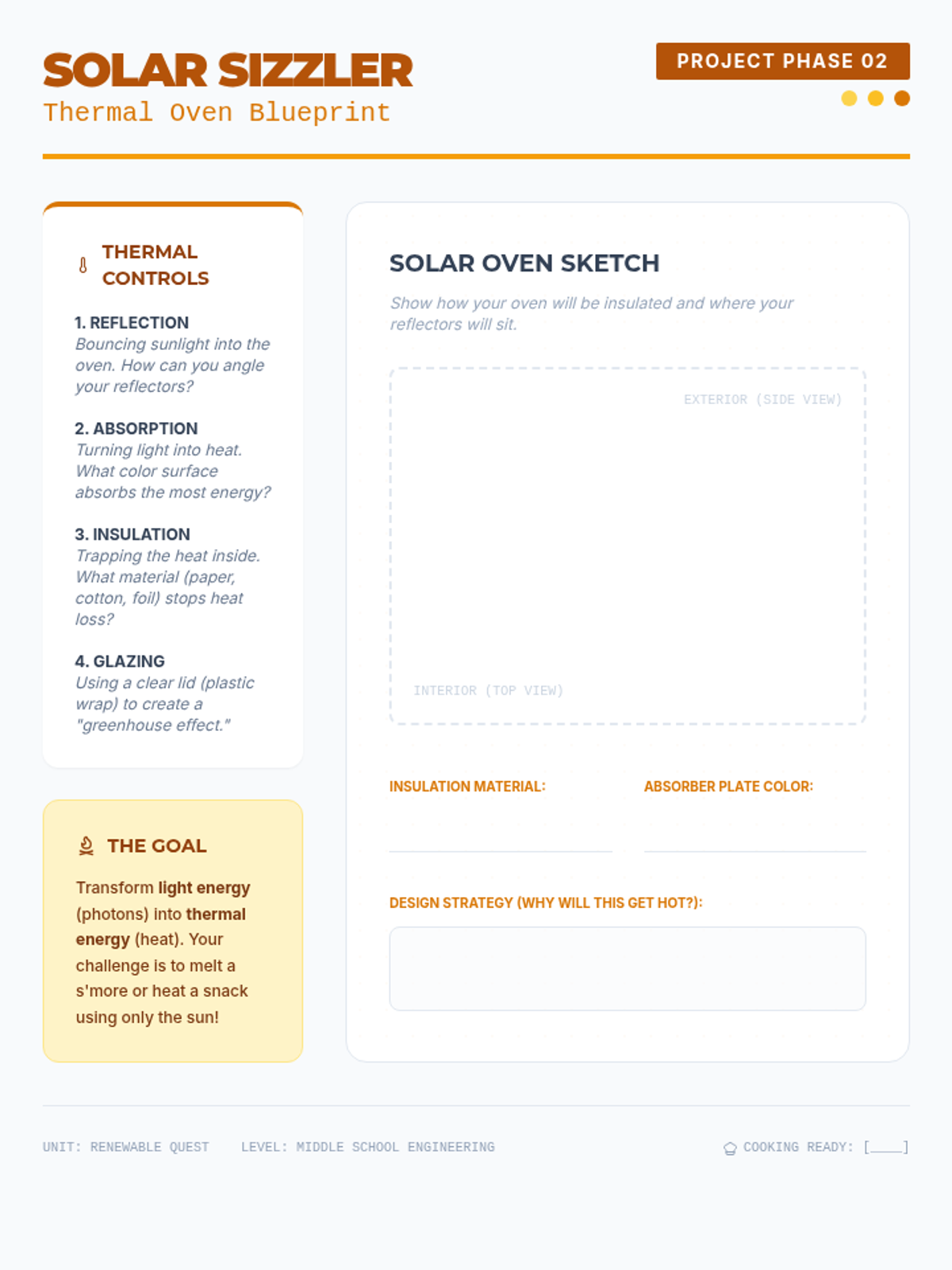
A hands-on engineering challenge where students design and build solar collectors to melt chocolate, applying concepts of radiation, absorption, and insulation.
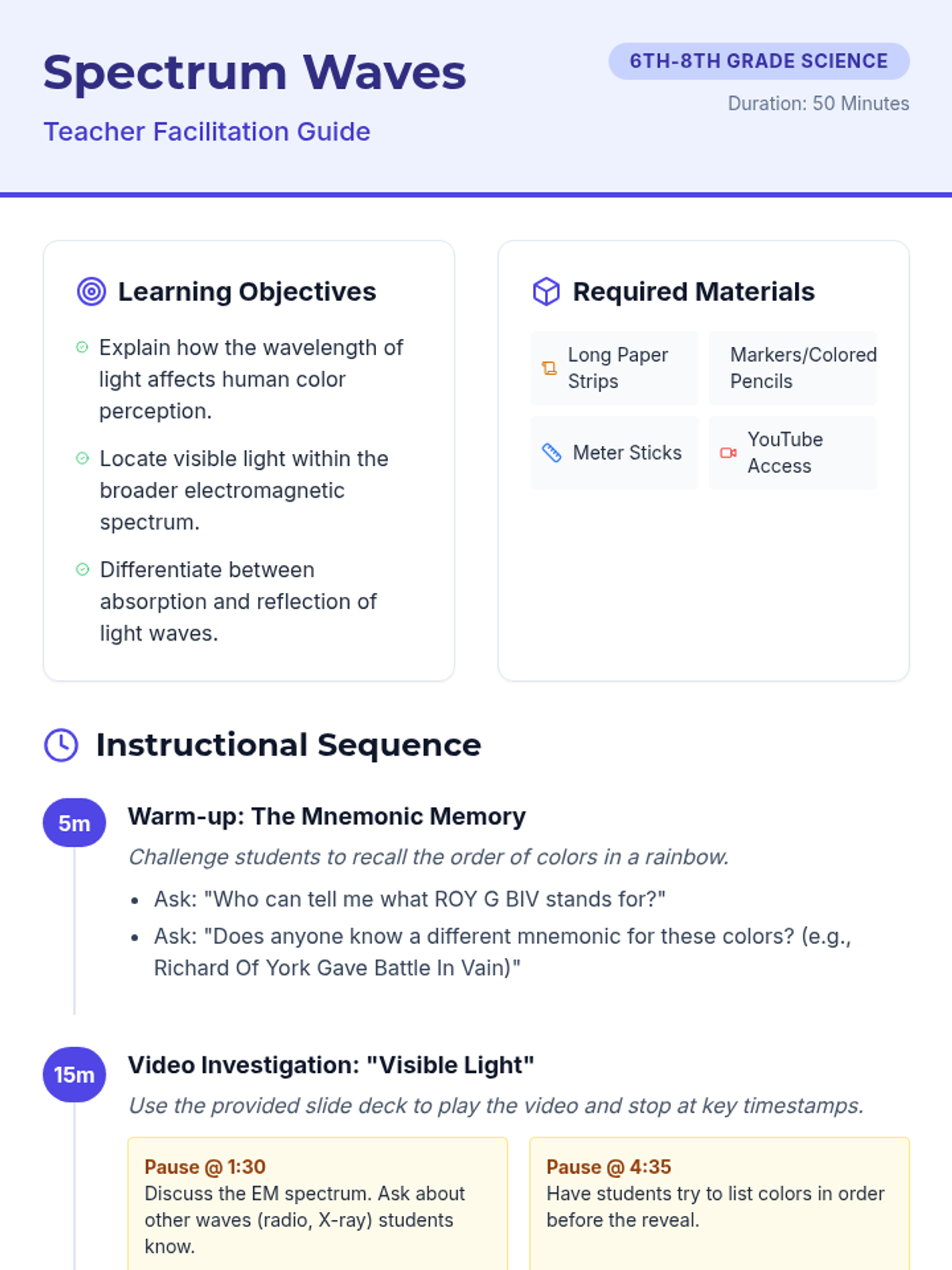
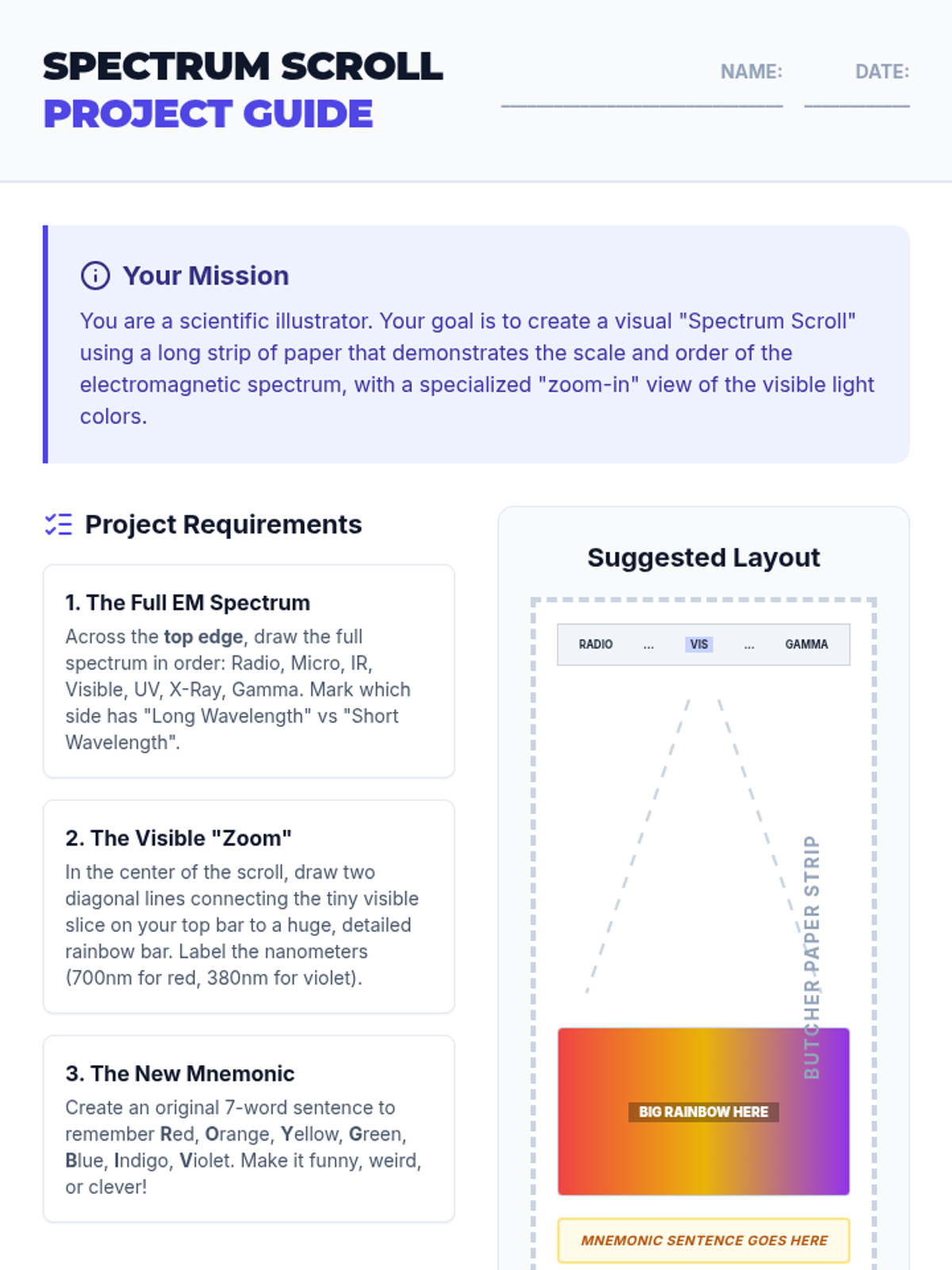
Students explore the electromagnetic spectrum with a focus on visible light. They learn how wavelength determines color, understand the mechanics of absorption and reflection, and create a 'Spectrum Scroll' featuring a custom mnemonic for the color sequence.
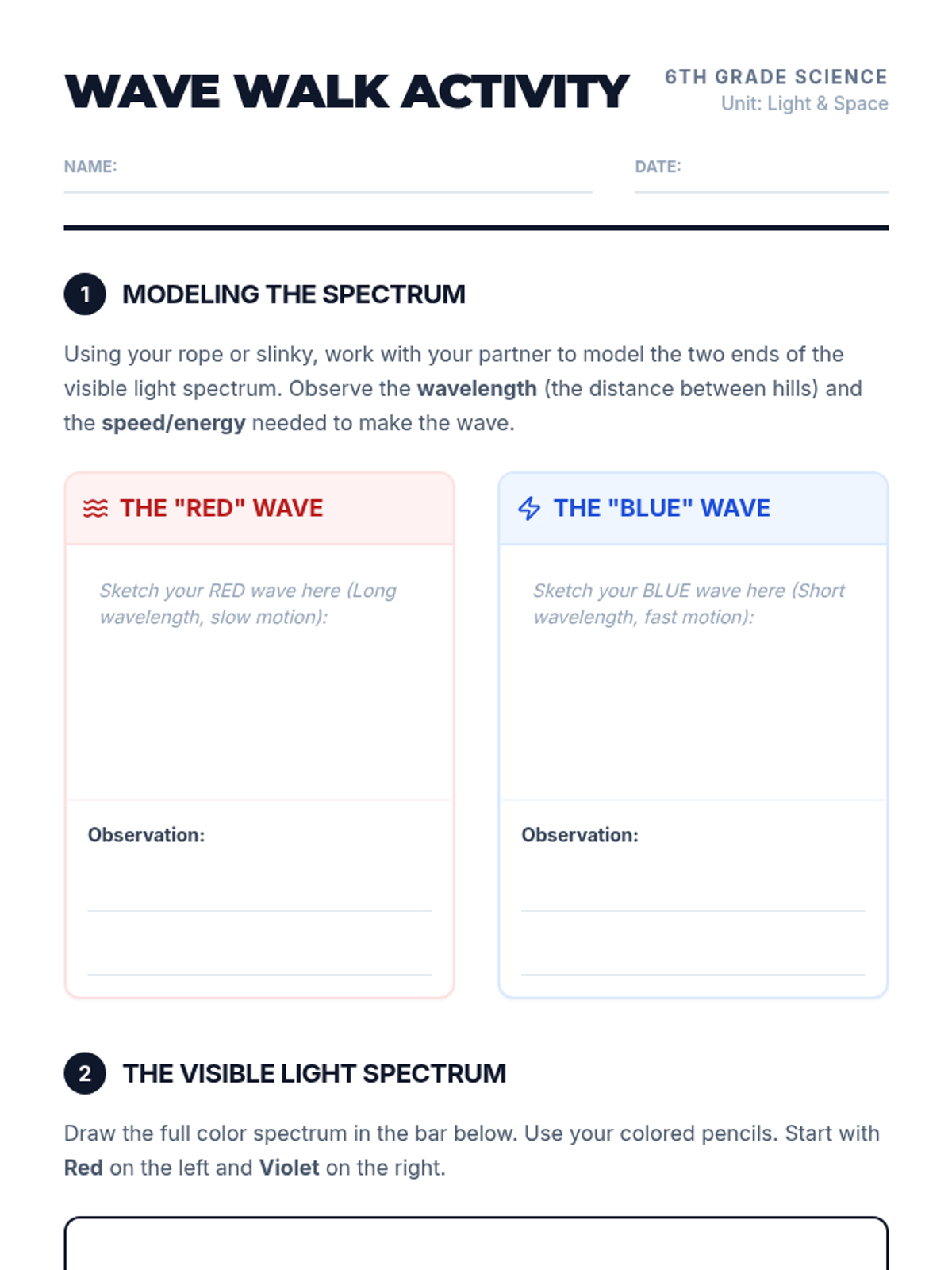
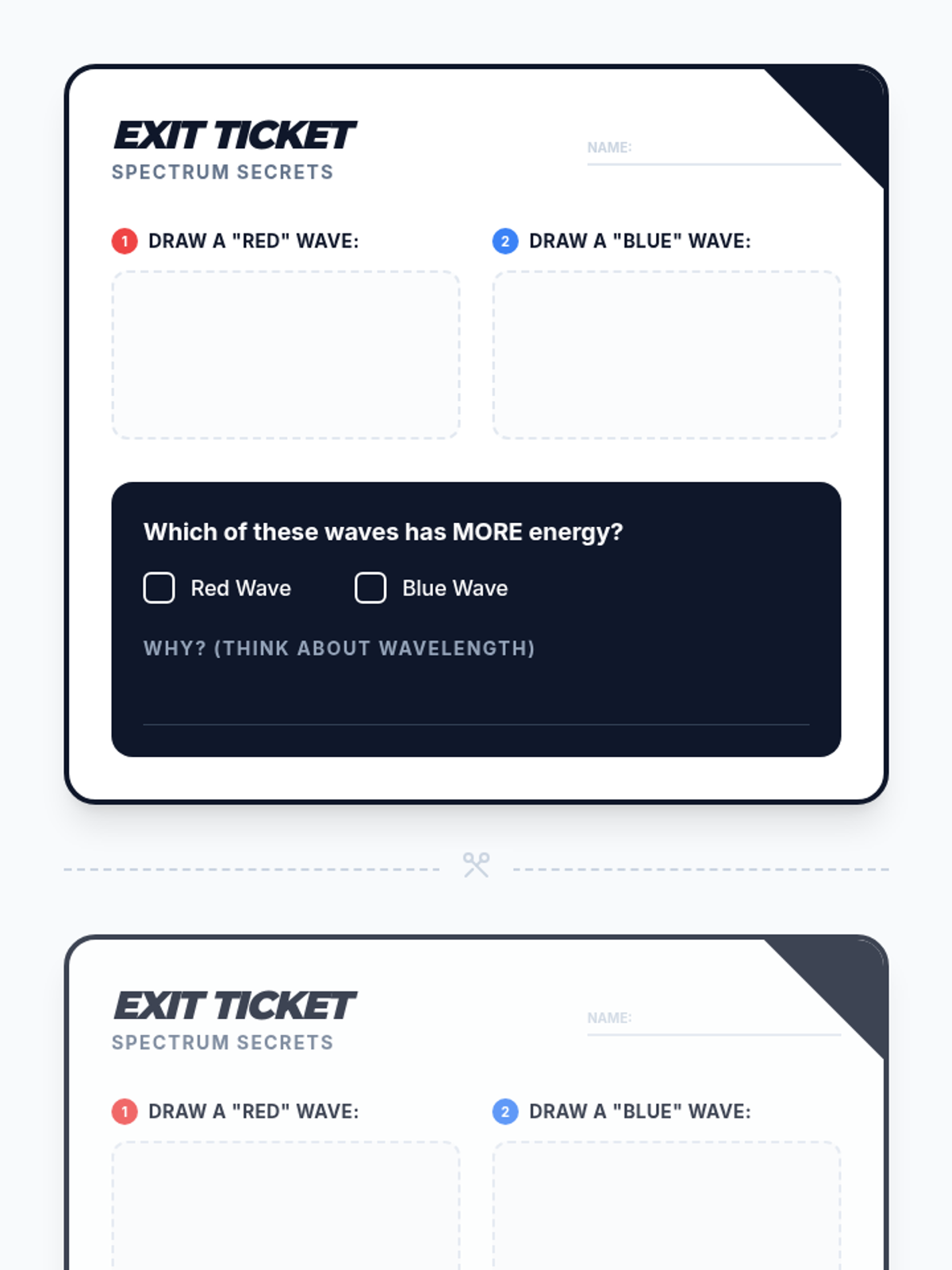
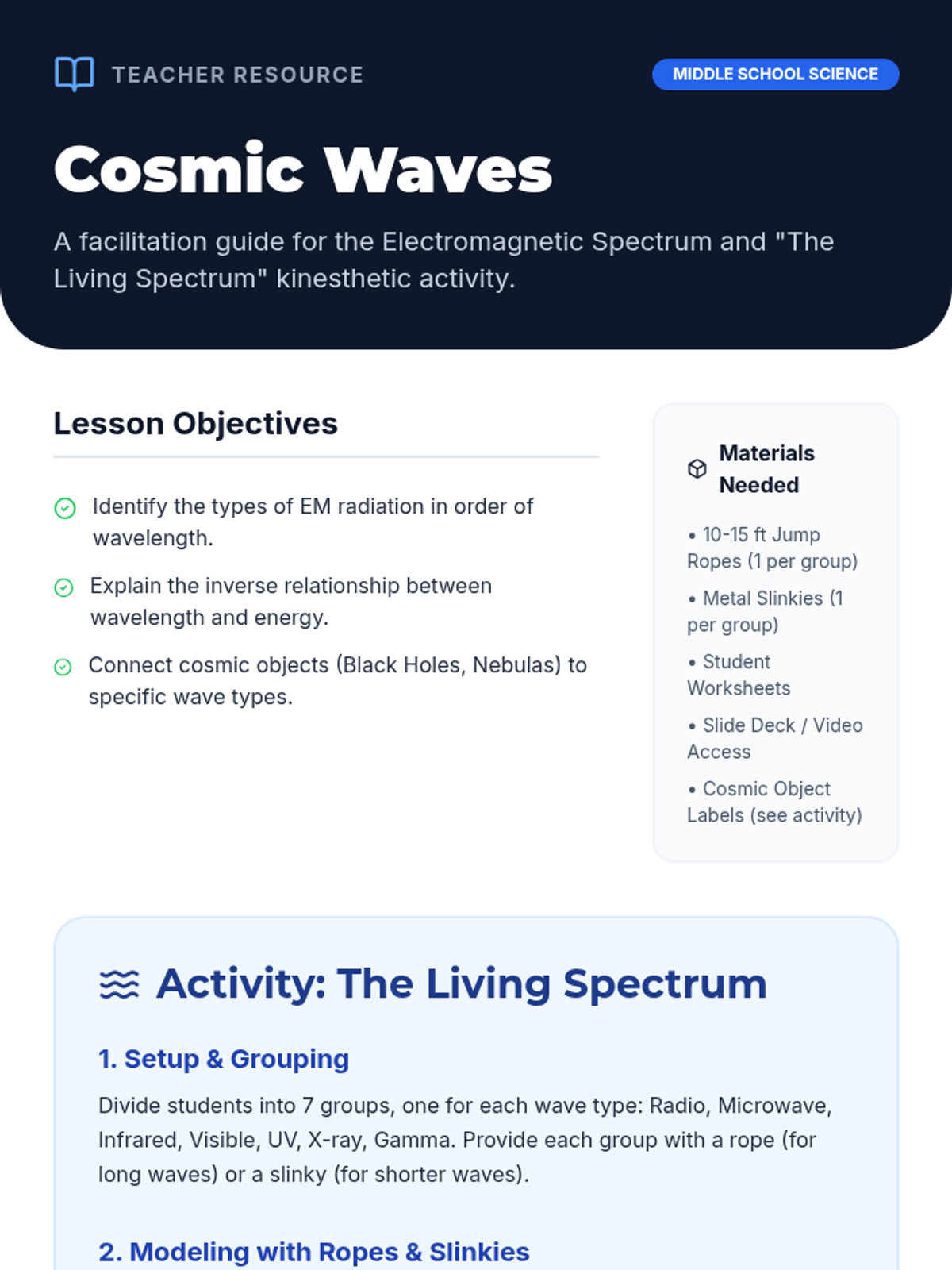
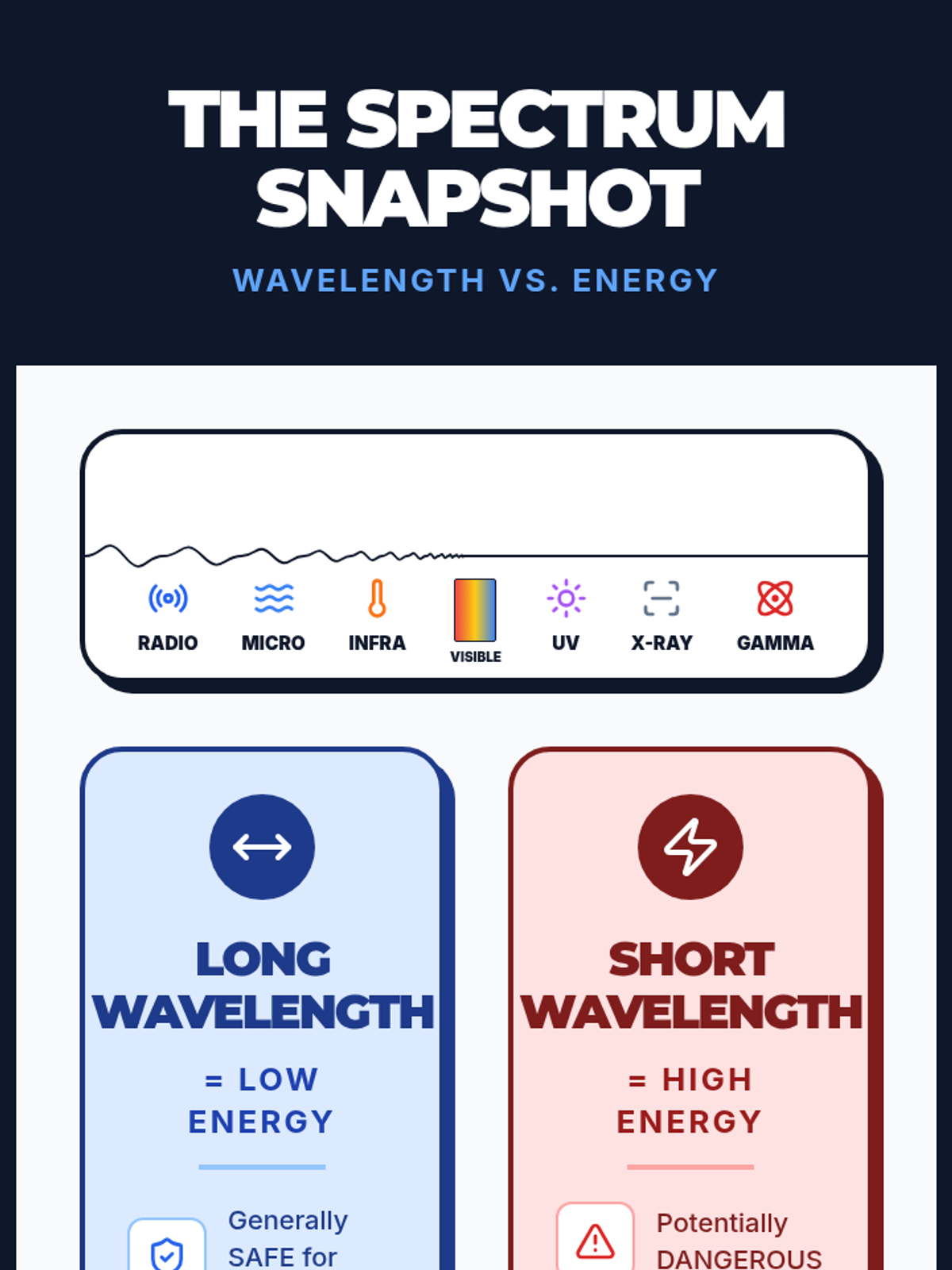
A middle school science lesson where students explore the electromagnetic spectrum, learning the inverse relationship between wavelength and energy through a hands-on kinesthetic activity.
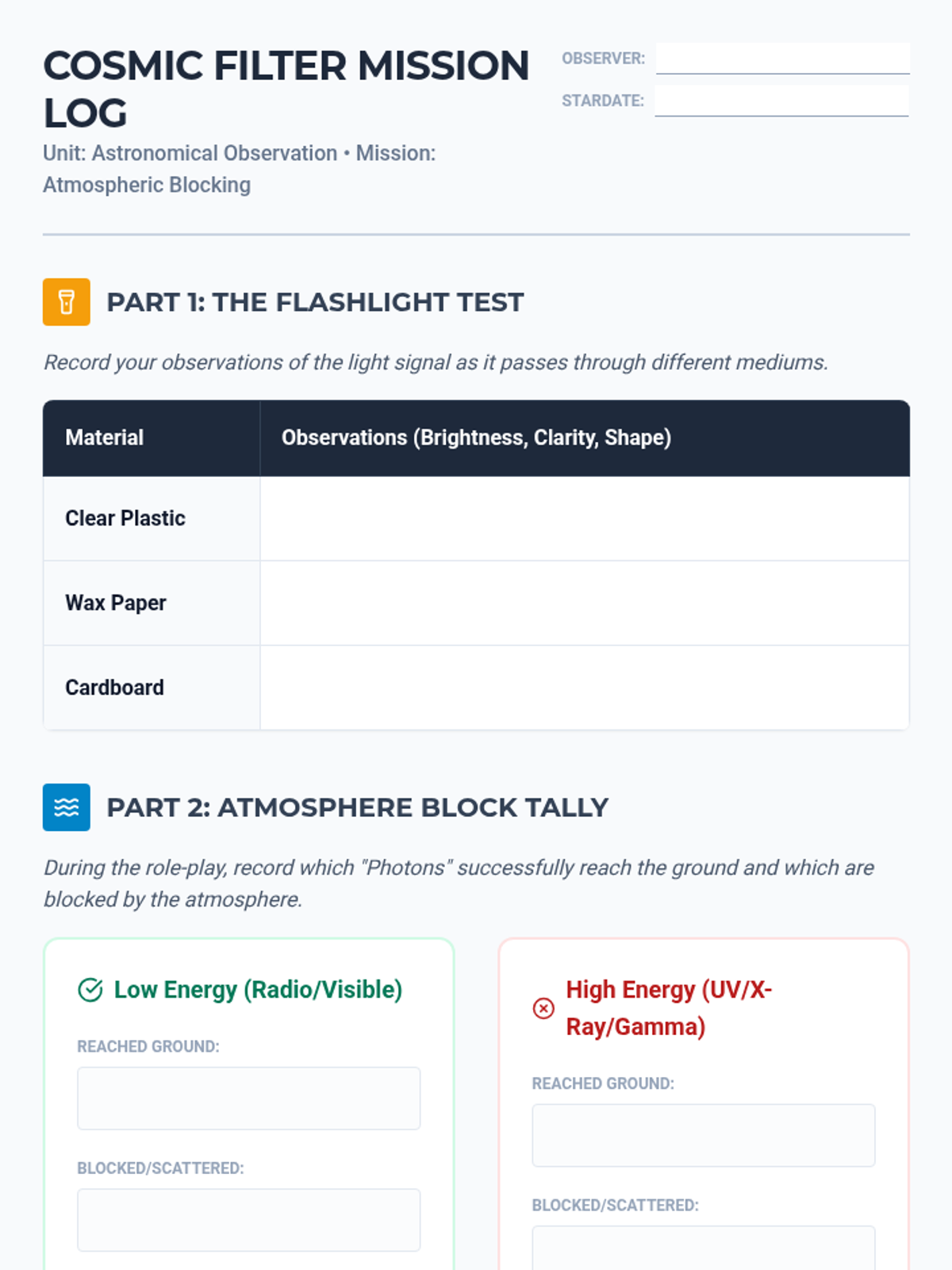
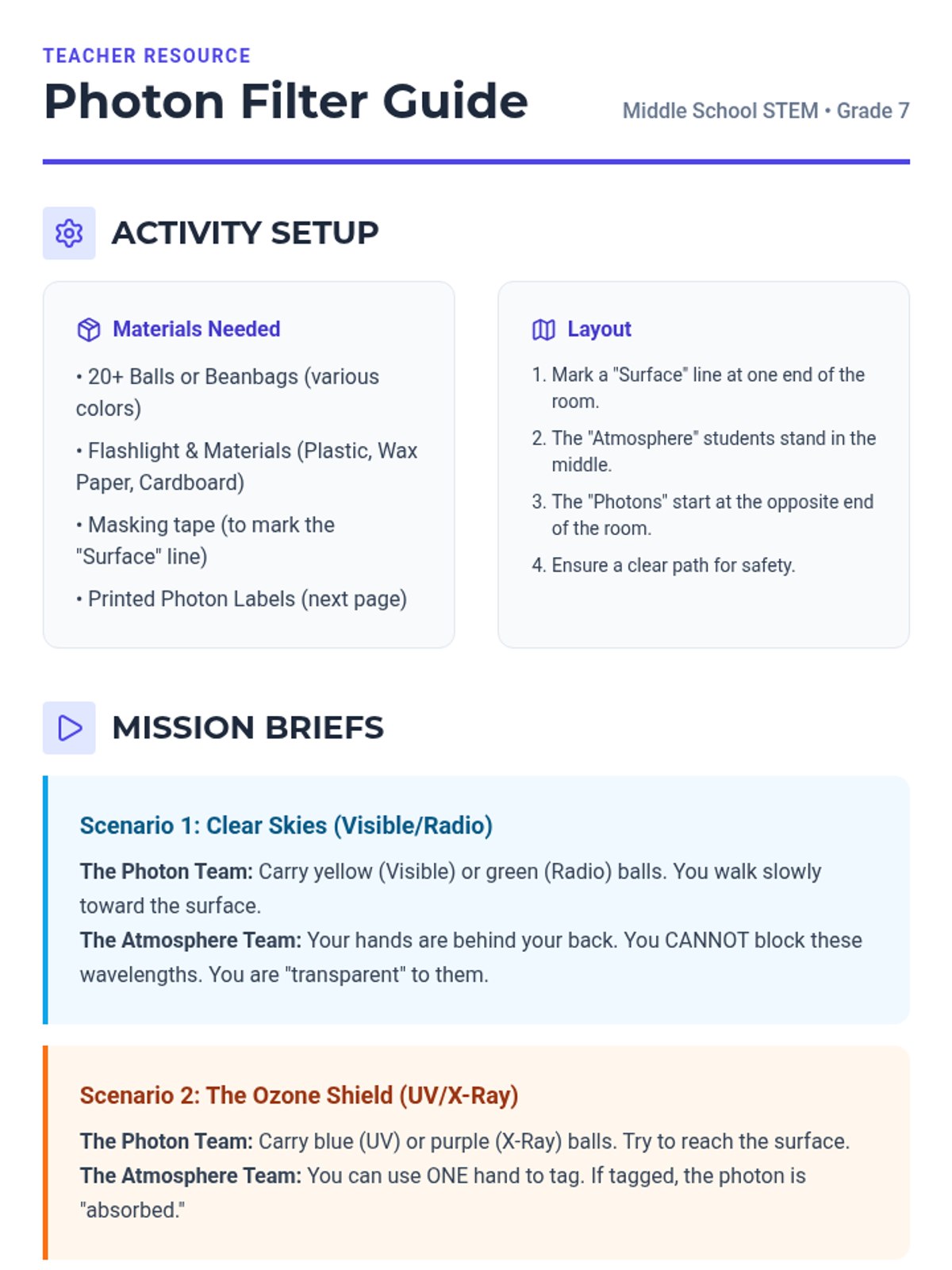
Explore the challenges of observing space through Earth's atmosphere. This lesson includes a hands-on light demonstration, a video exploration of the electromagnetic spectrum, and an interactive role-play activity where students act as the atmosphere blocking specific wavelengths of light.
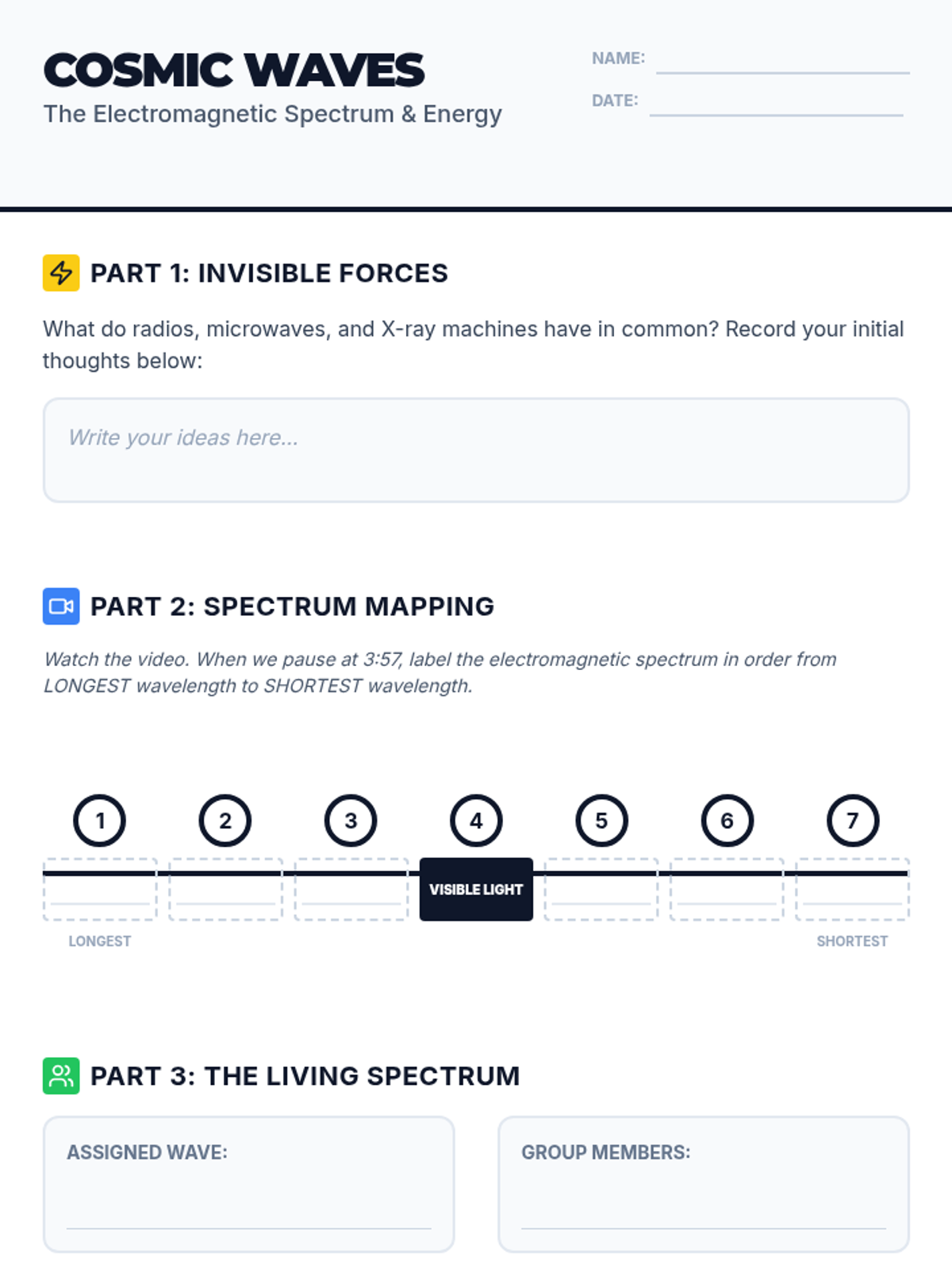
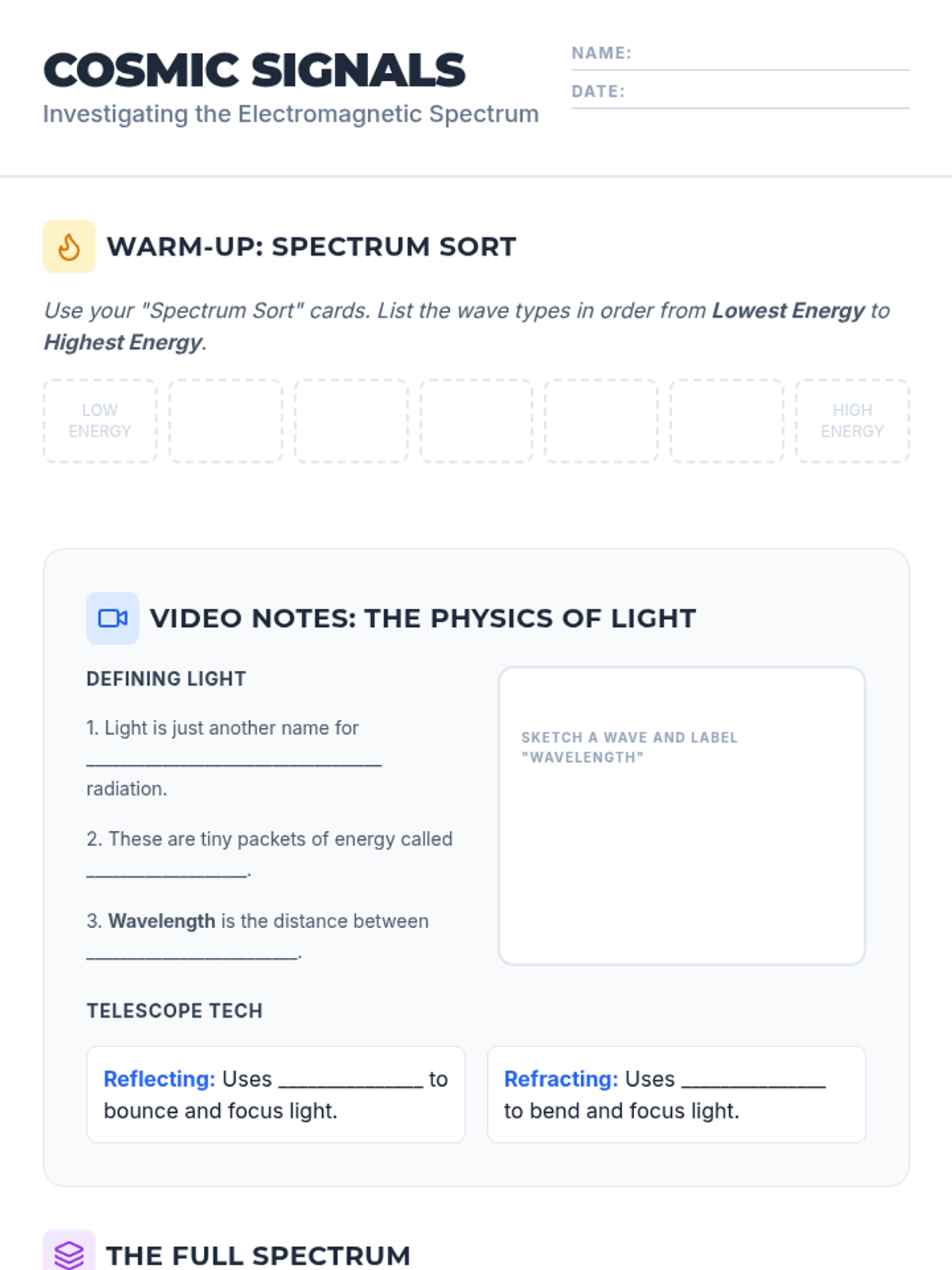
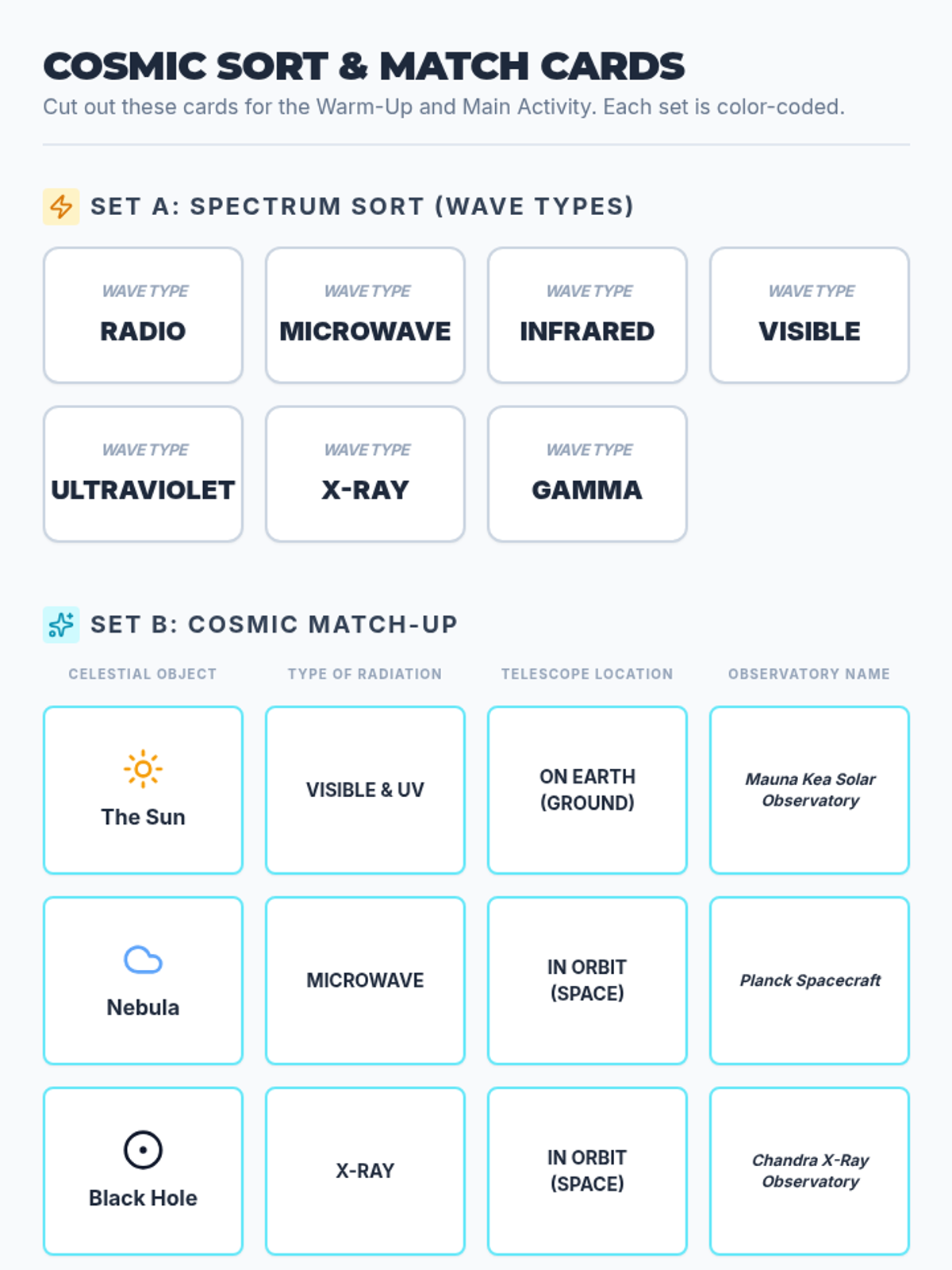
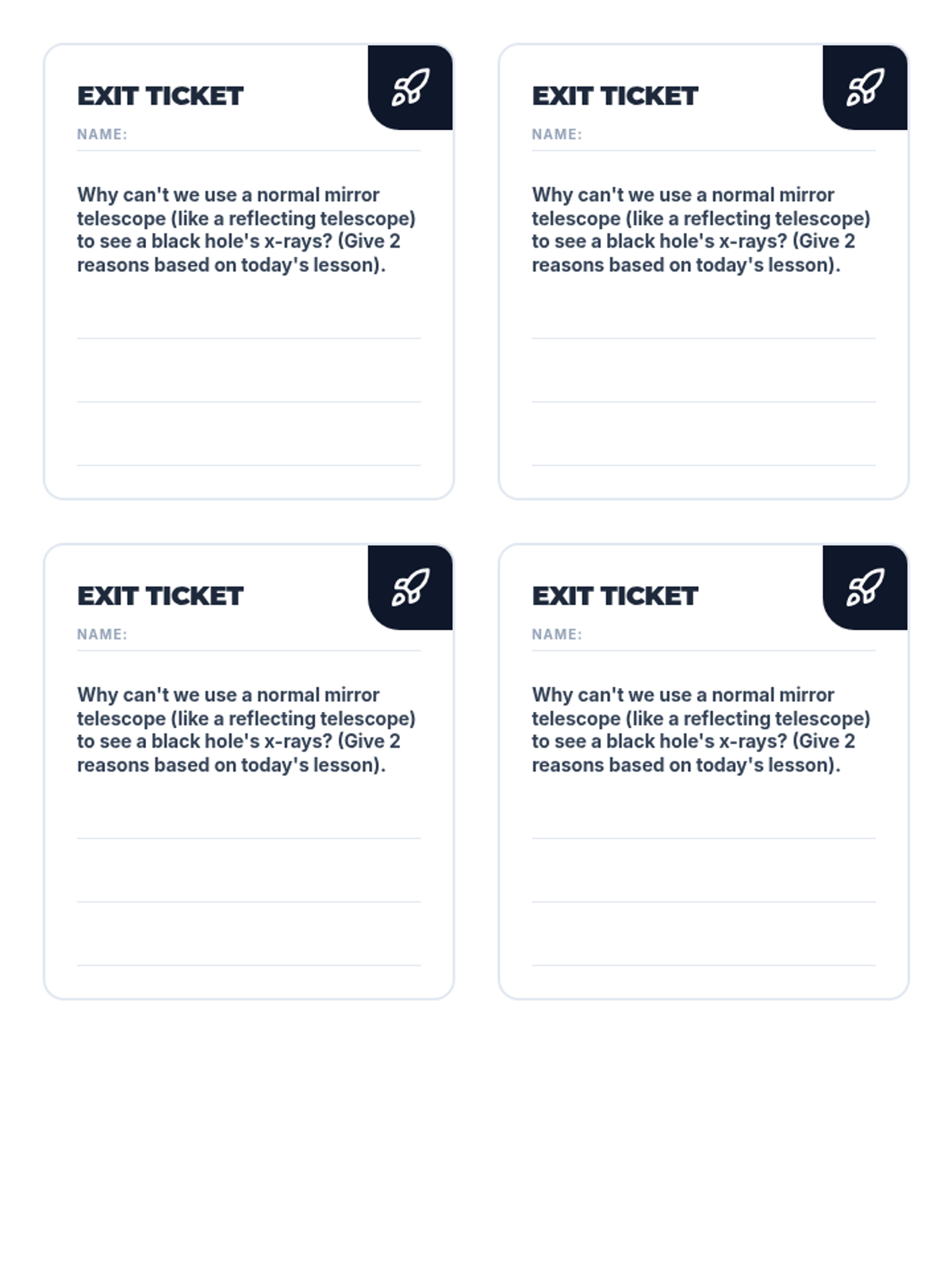
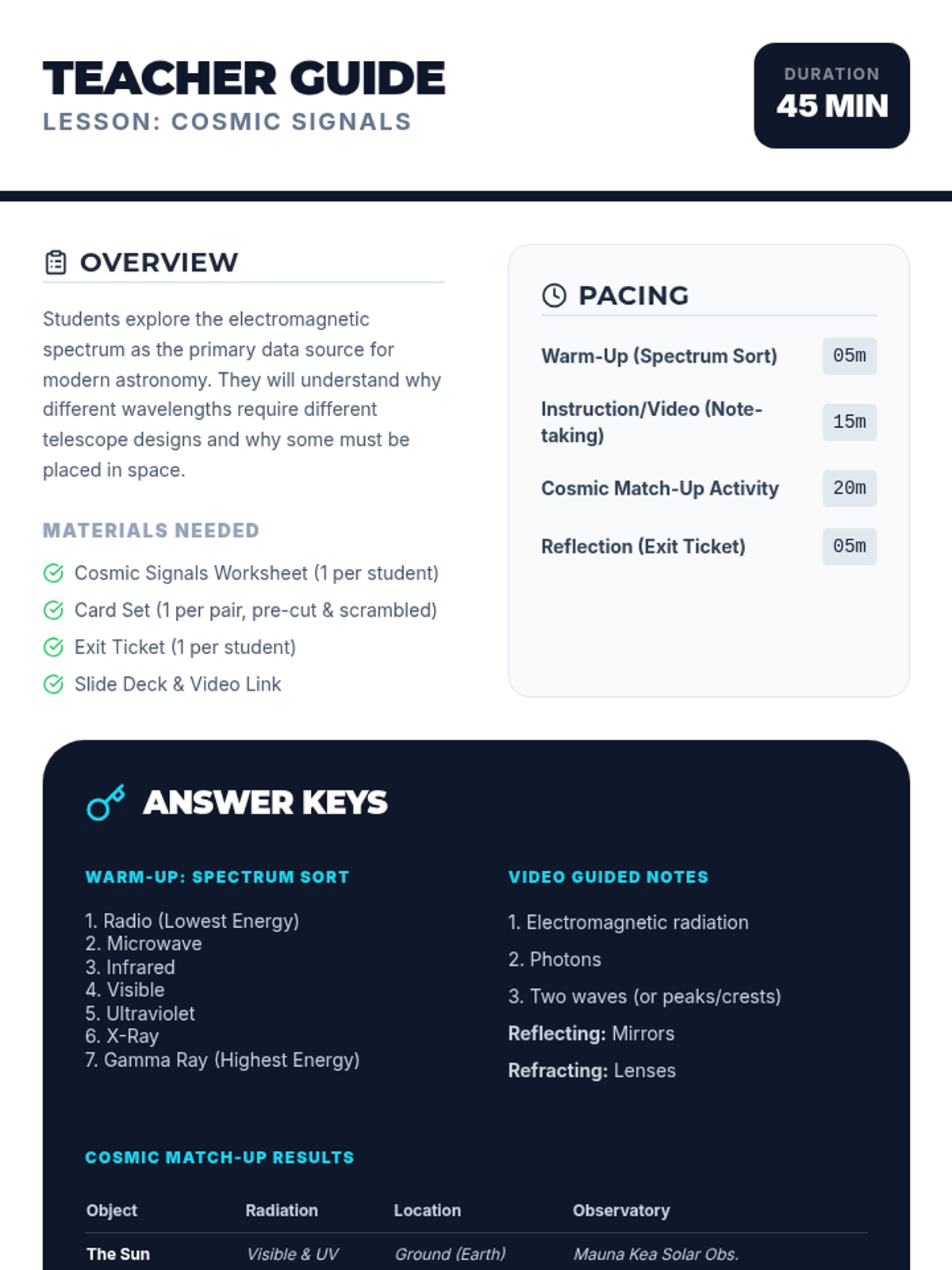
A comprehensive lesson exploring the electromagnetic spectrum, how astronomers use different wavelengths to study space, and the specific tools required to detect cosmic radiation. Students will engage in hands-on sorting and matching activities while watching a guided video presentation.
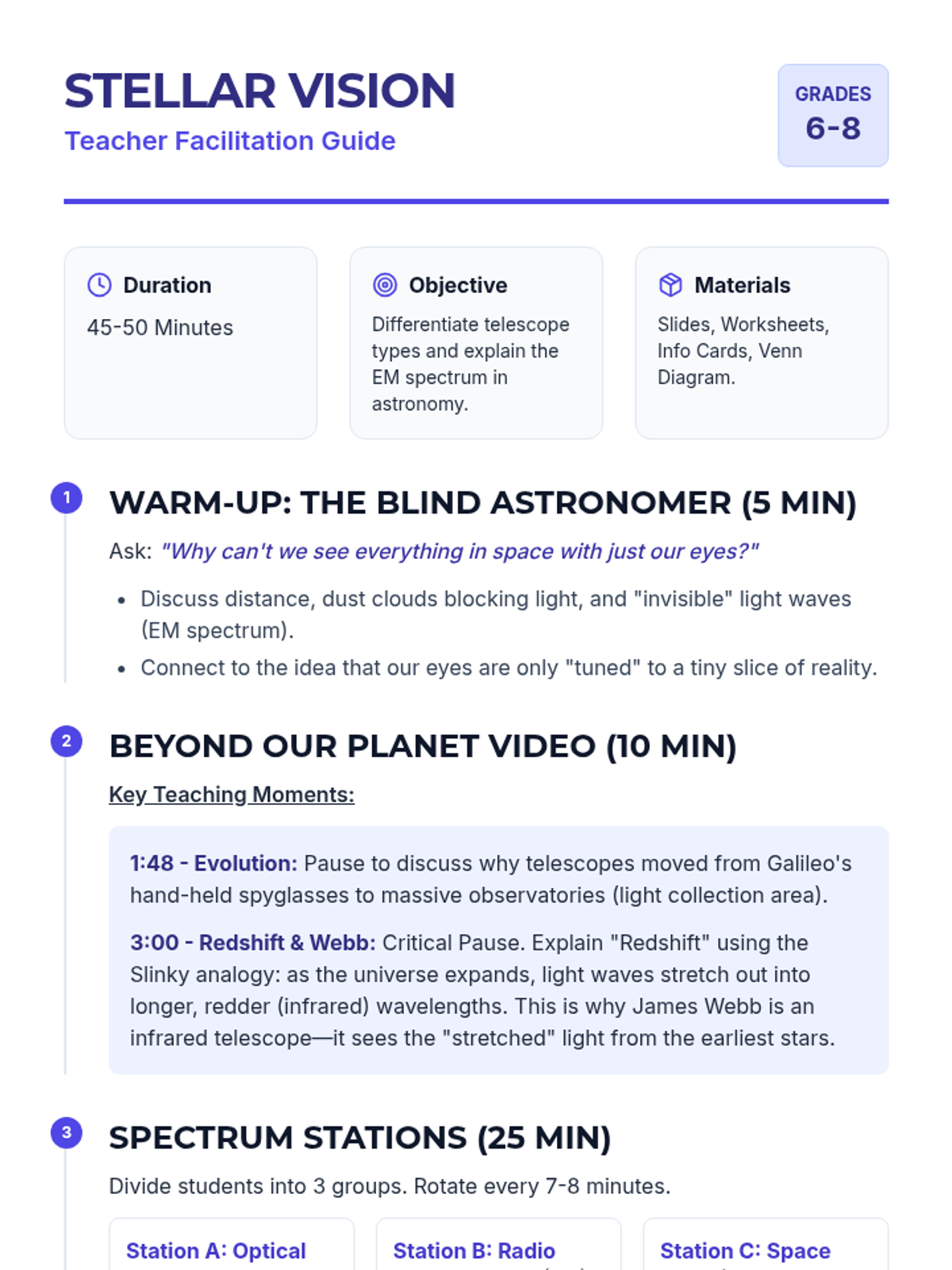
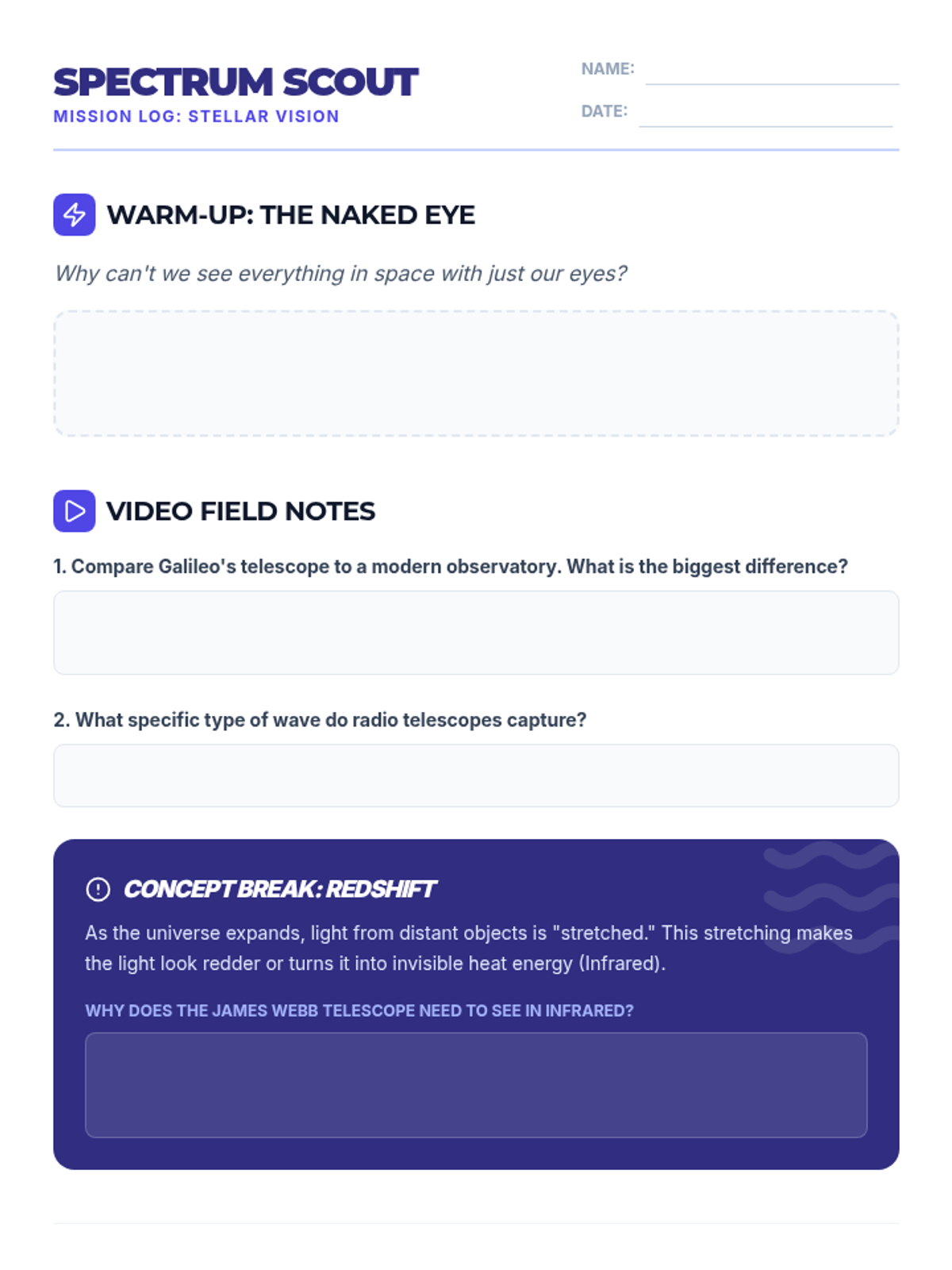
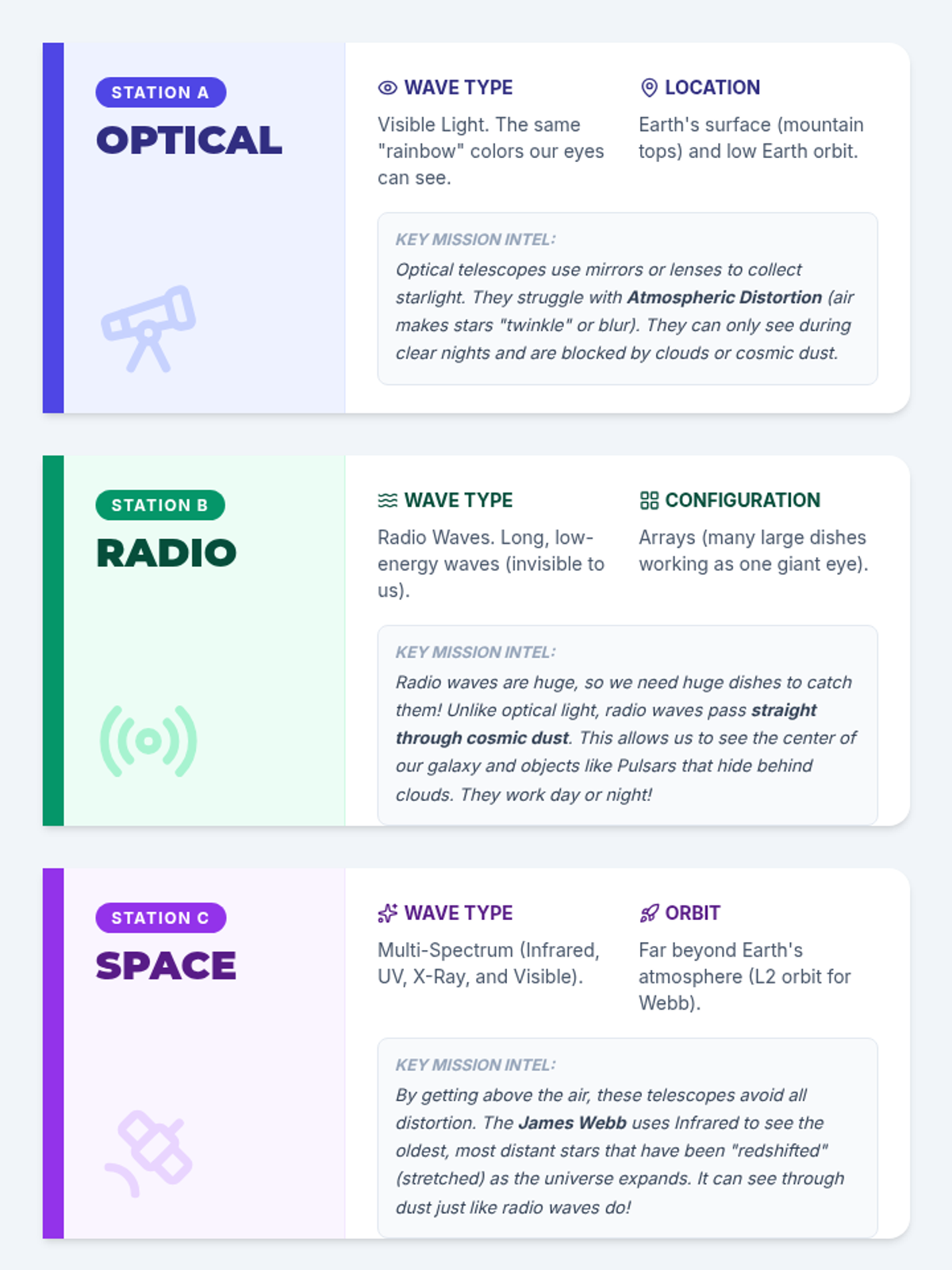
Students investigate how astronomers use different parts of the electromagnetic spectrum to explore the universe, comparing optical, radio, and space telescopes through a video-guided discussion and a station-based rotation activity.
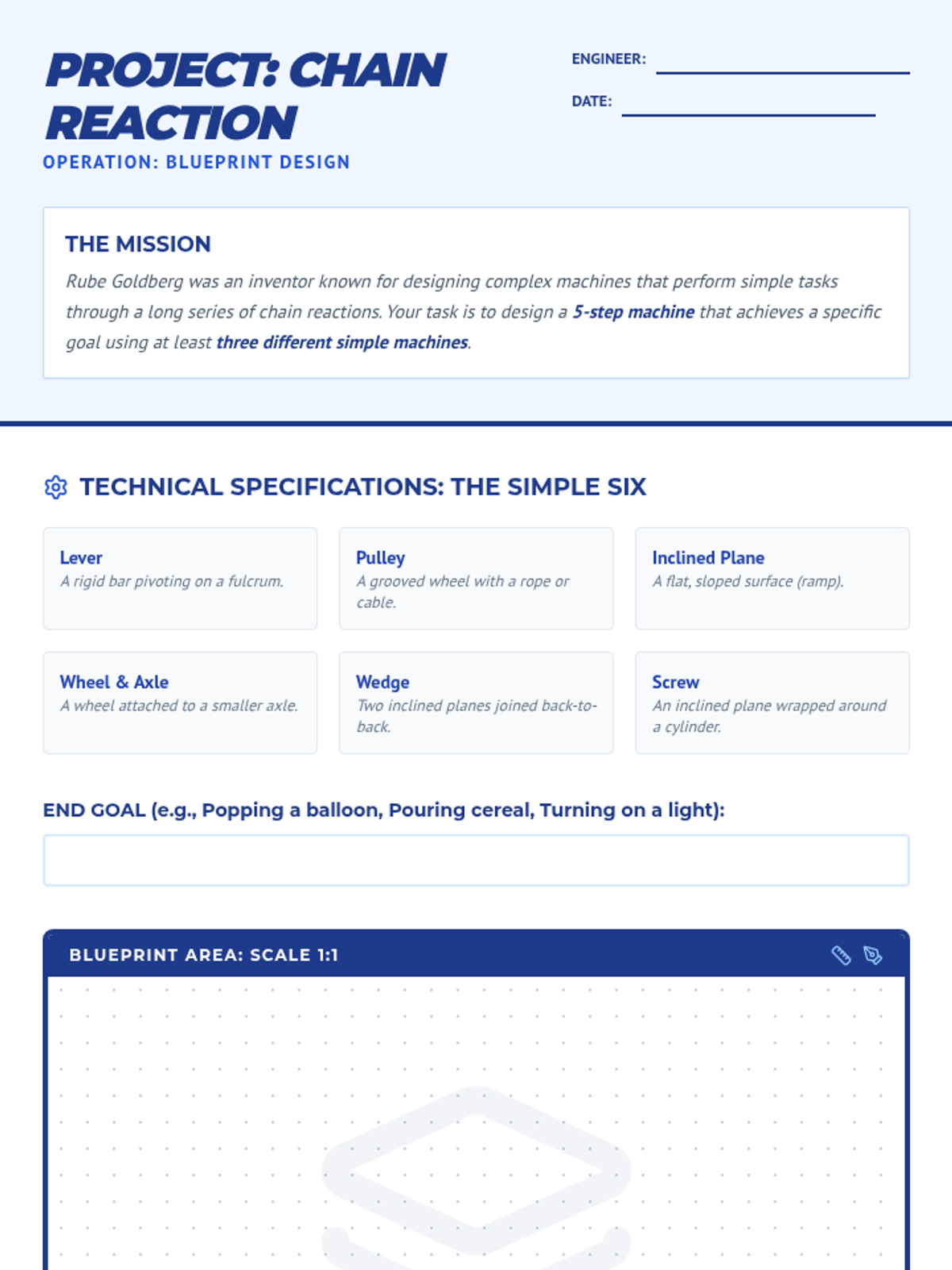
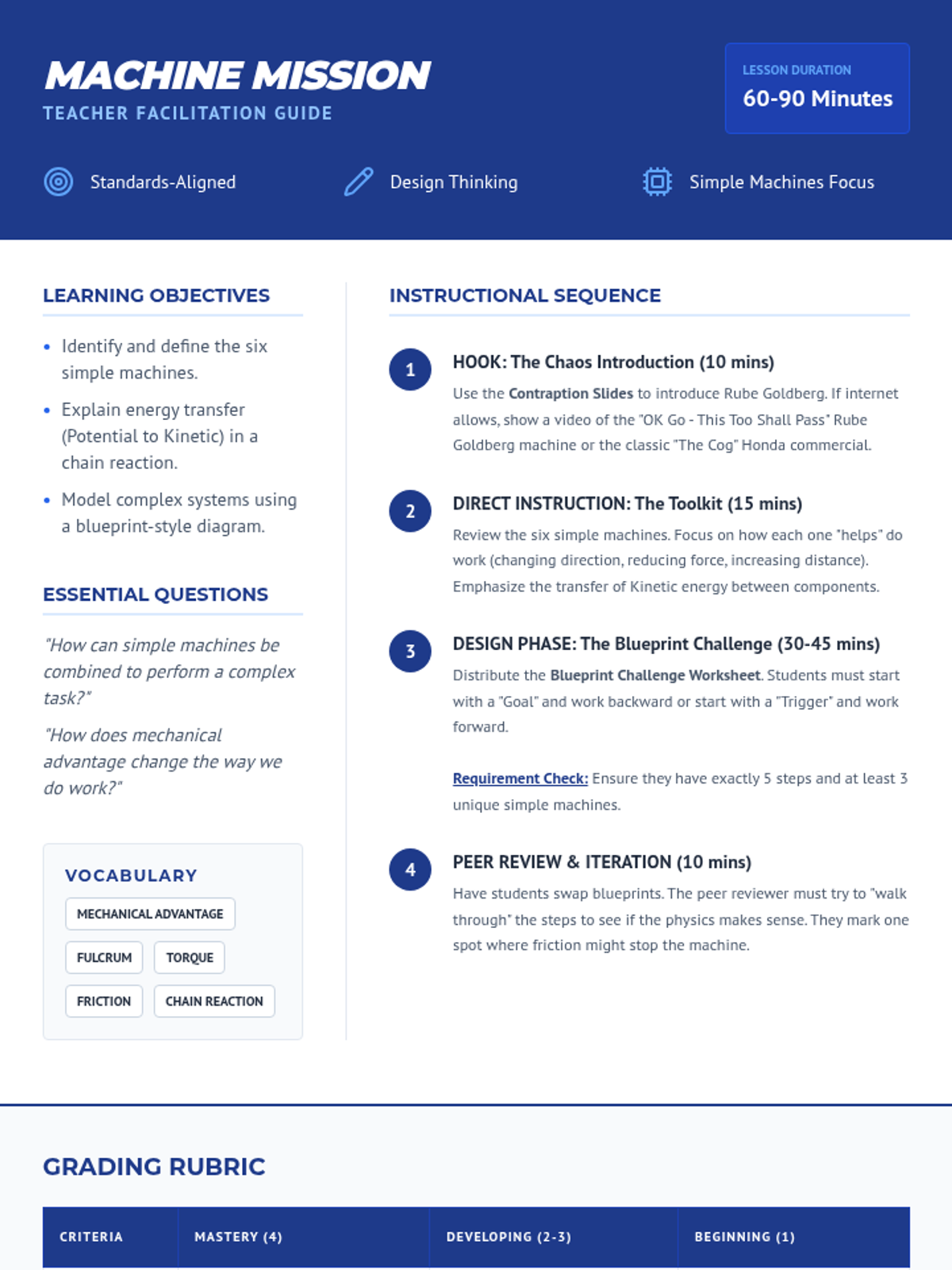
A design-focused lesson where middle school students apply their knowledge of simple machines to create a complex Rube Goldberg contraption on paper. Students will define, identify, and explain the mechanical advantage of various components in their 'blueprint' design.
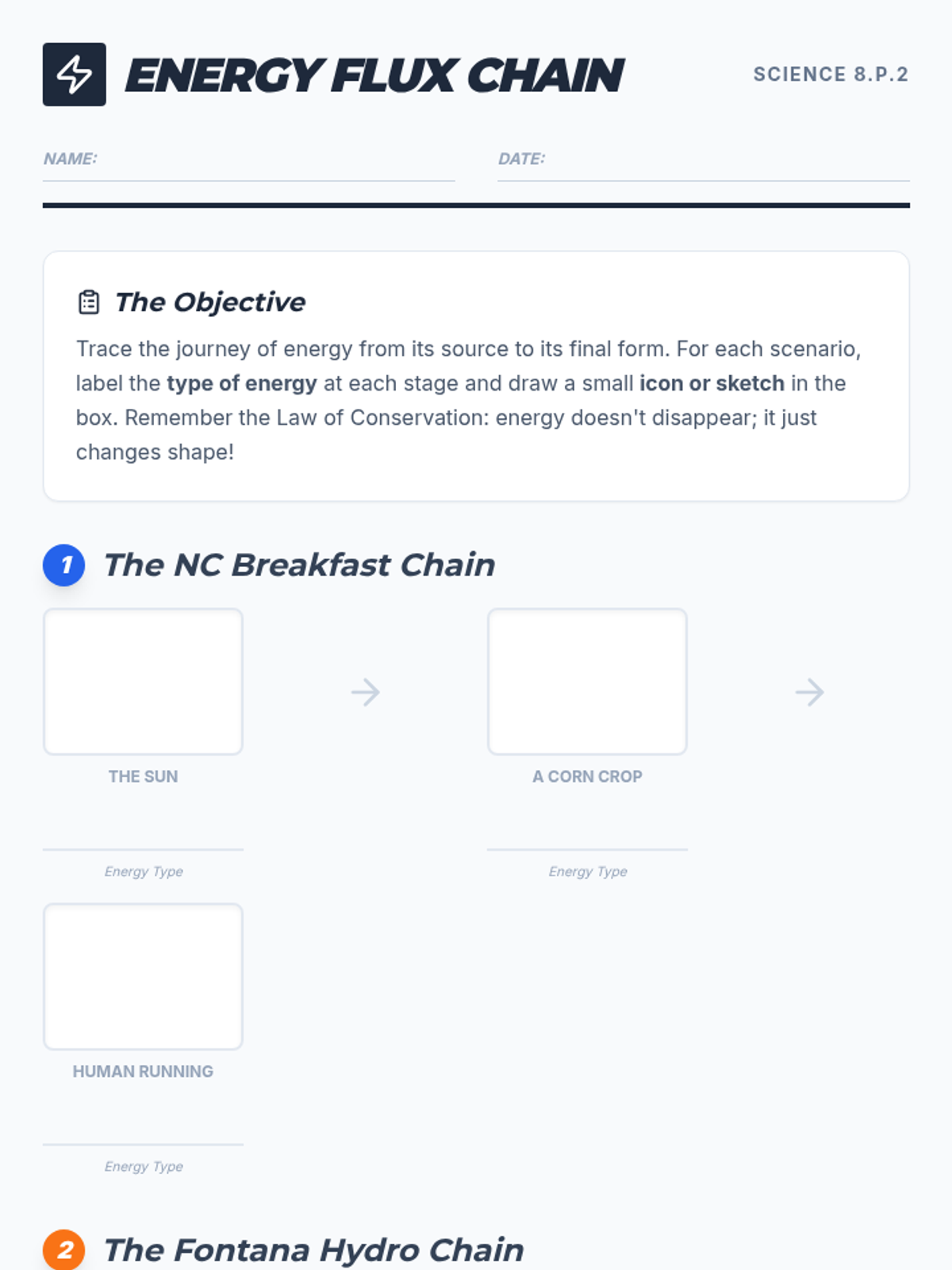
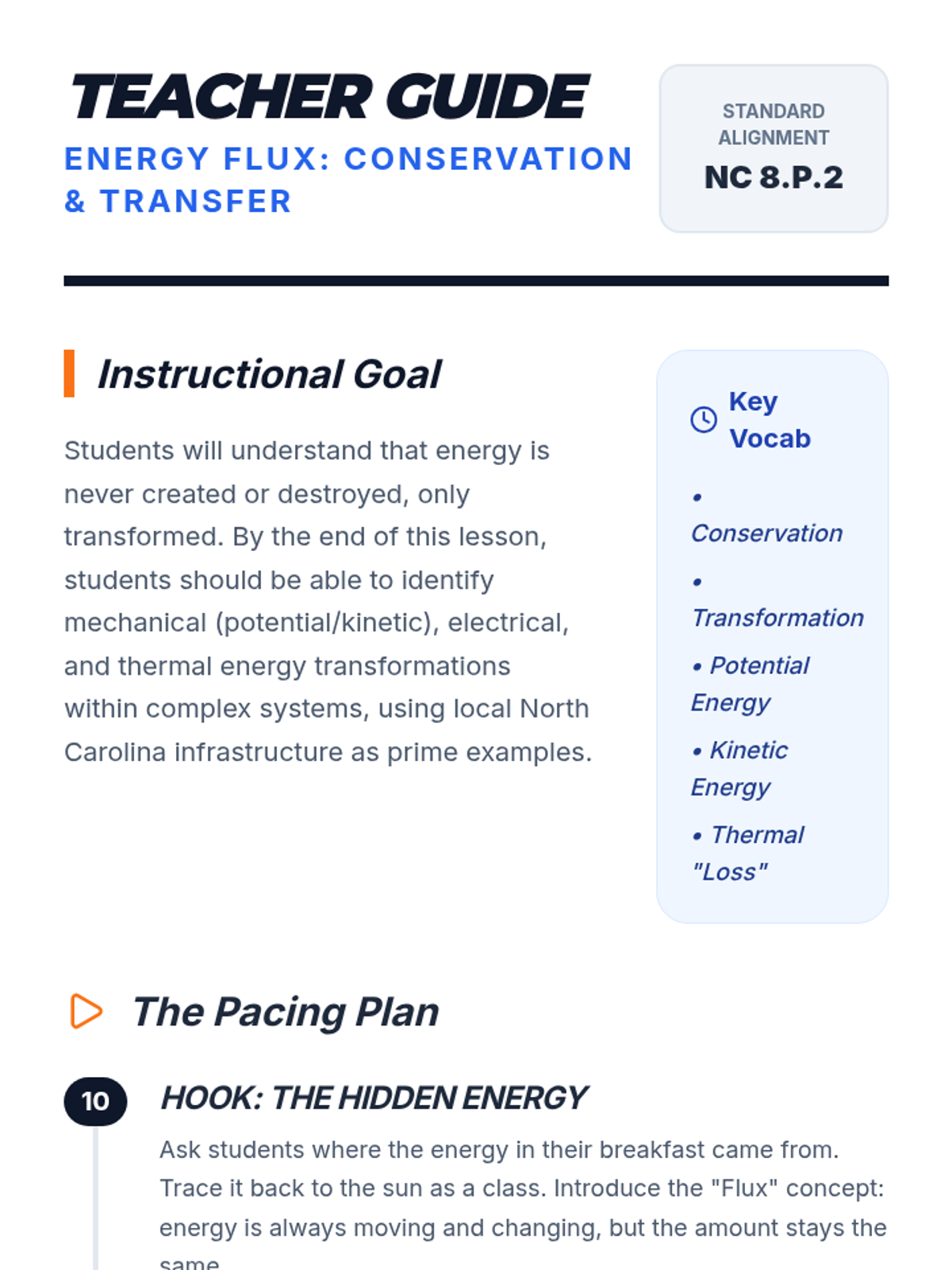
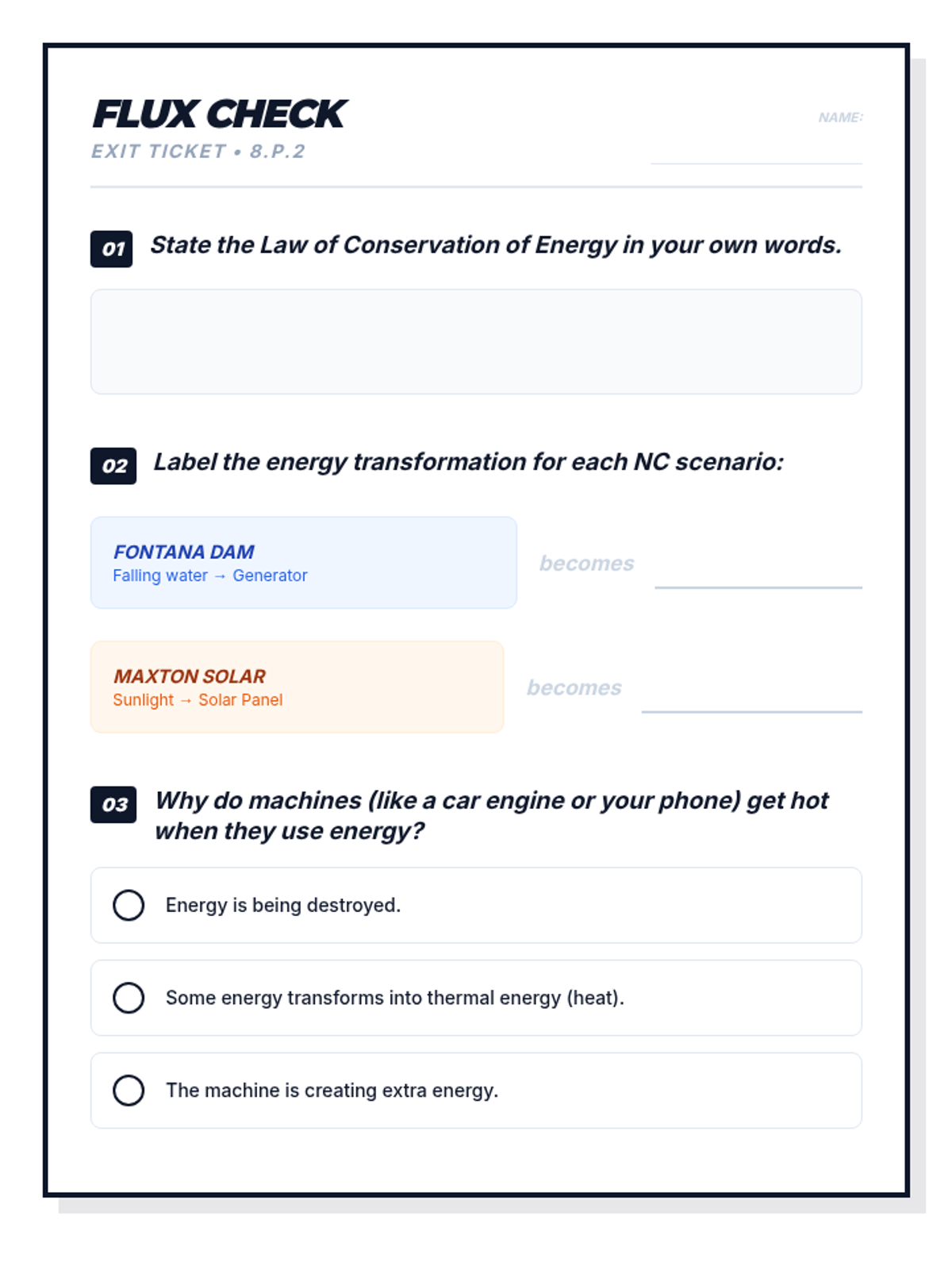
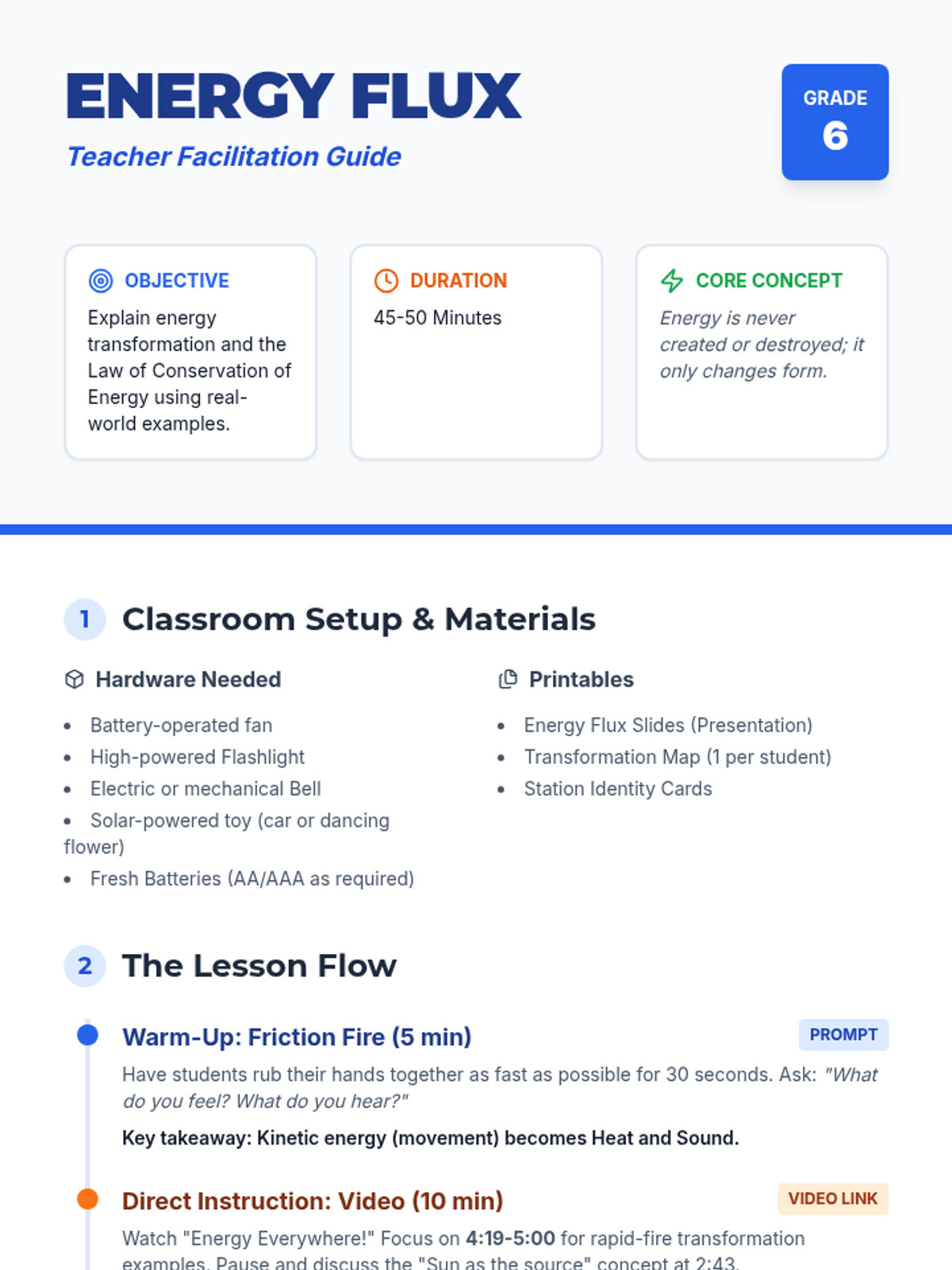
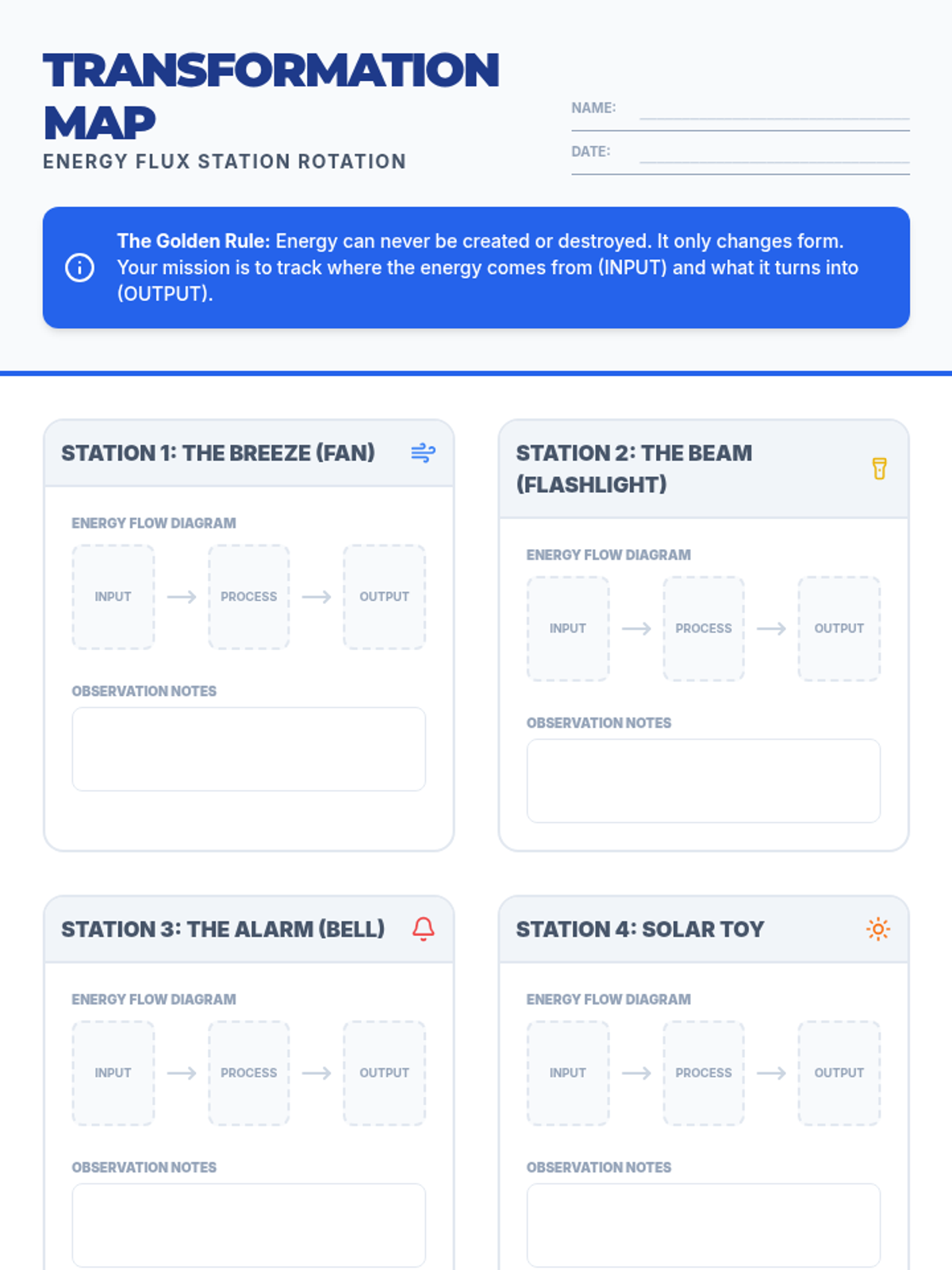
A comprehensive lesson on energy transformations and the Law of Conservation of Energy, featuring North Carolina specific examples of power generation and hands-on transformation mapping.
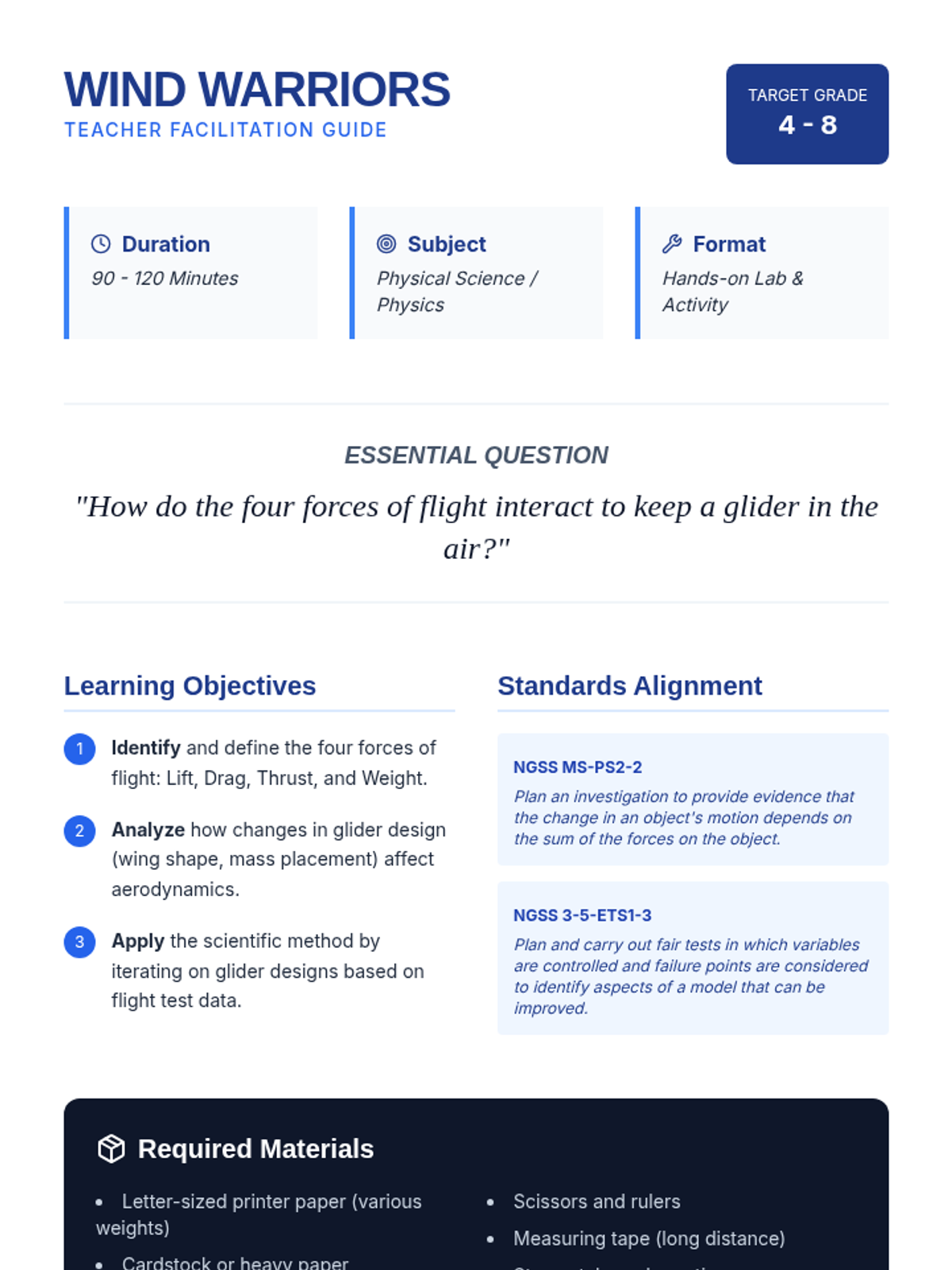
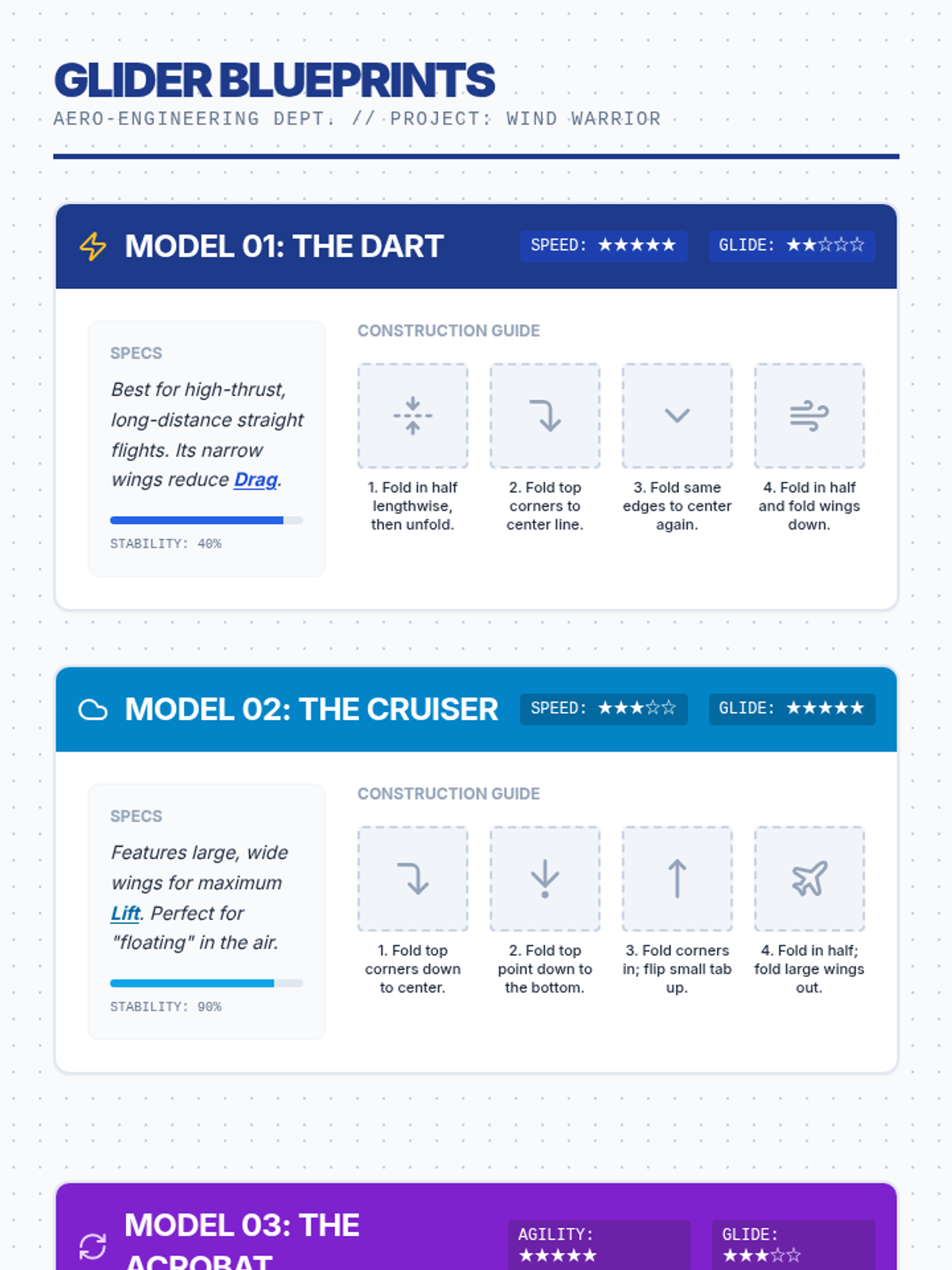
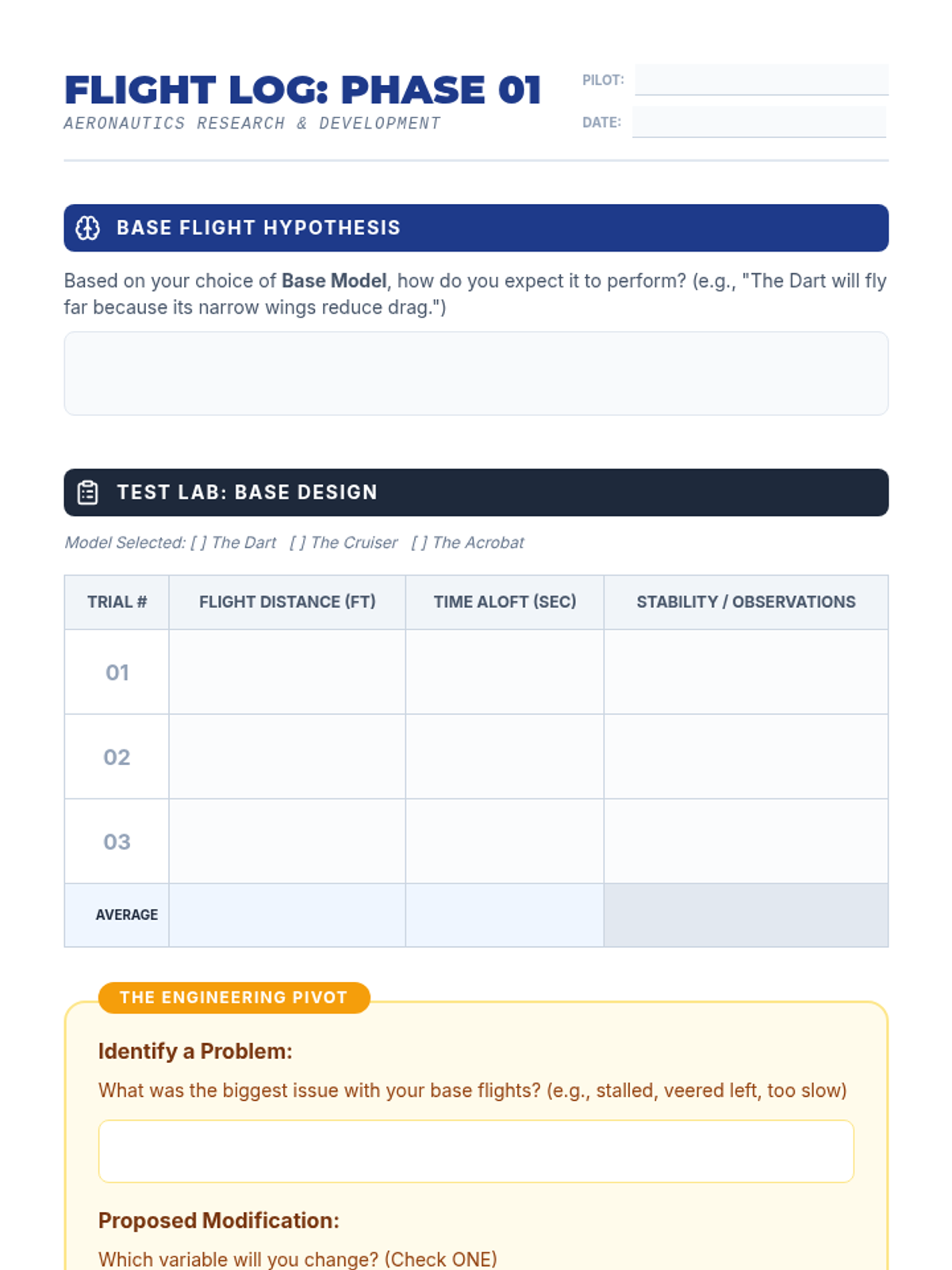
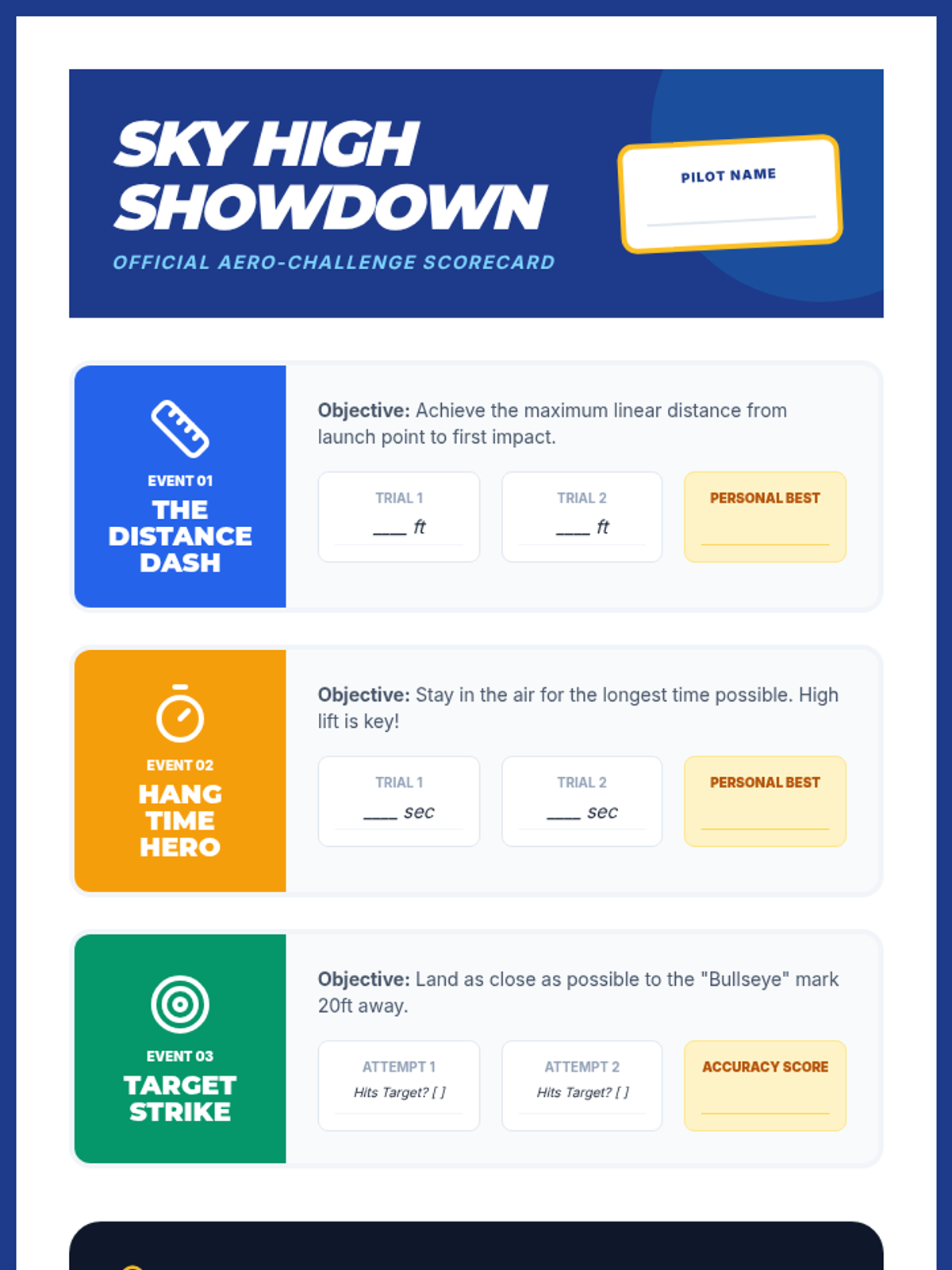
Students explore the physics of lift, drag, thrust, and weight by designing and testing high-performance paper gliders. This hands-on lab allows learners to apply the scientific method to optimize flight distance and stability.
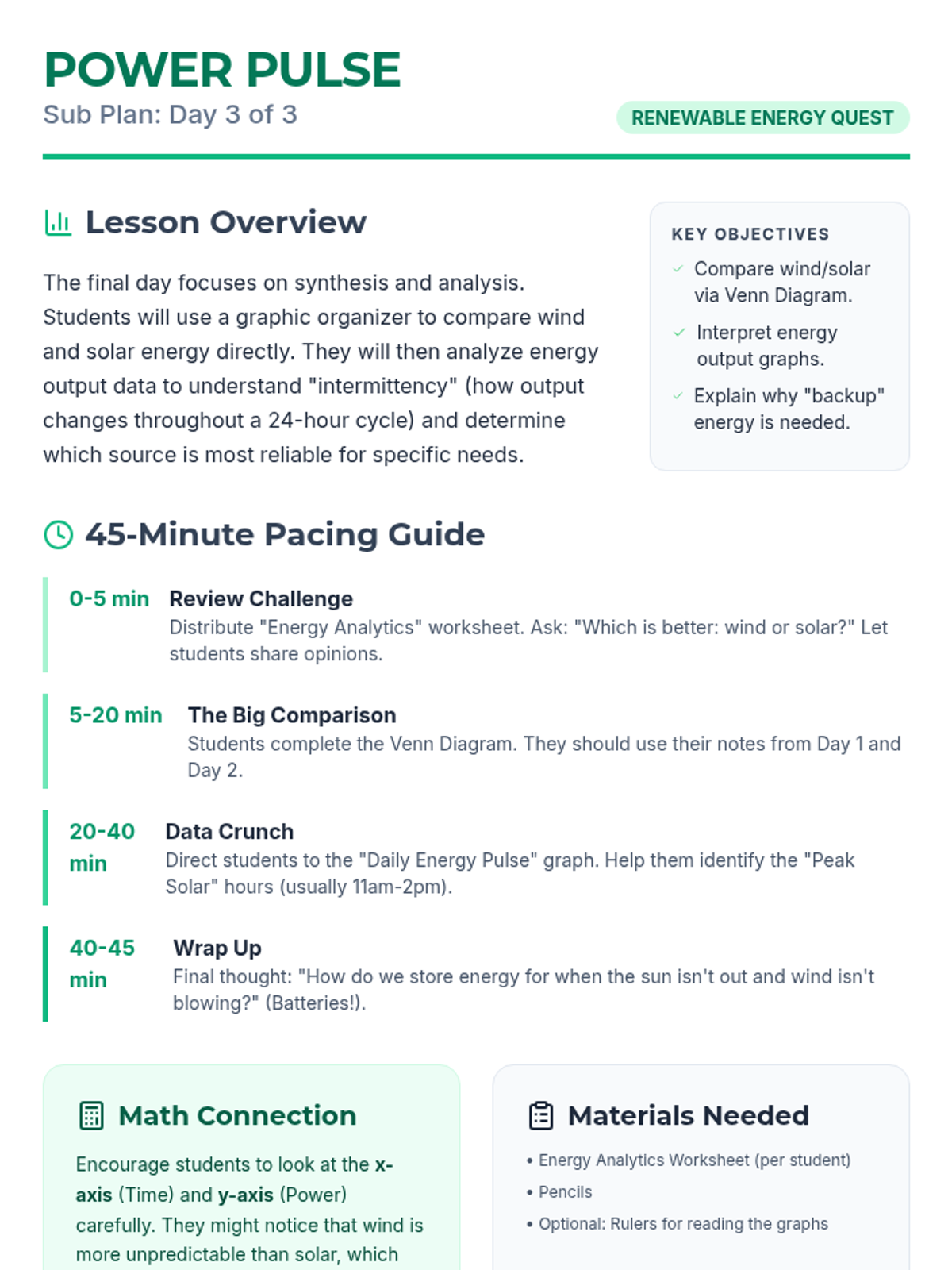
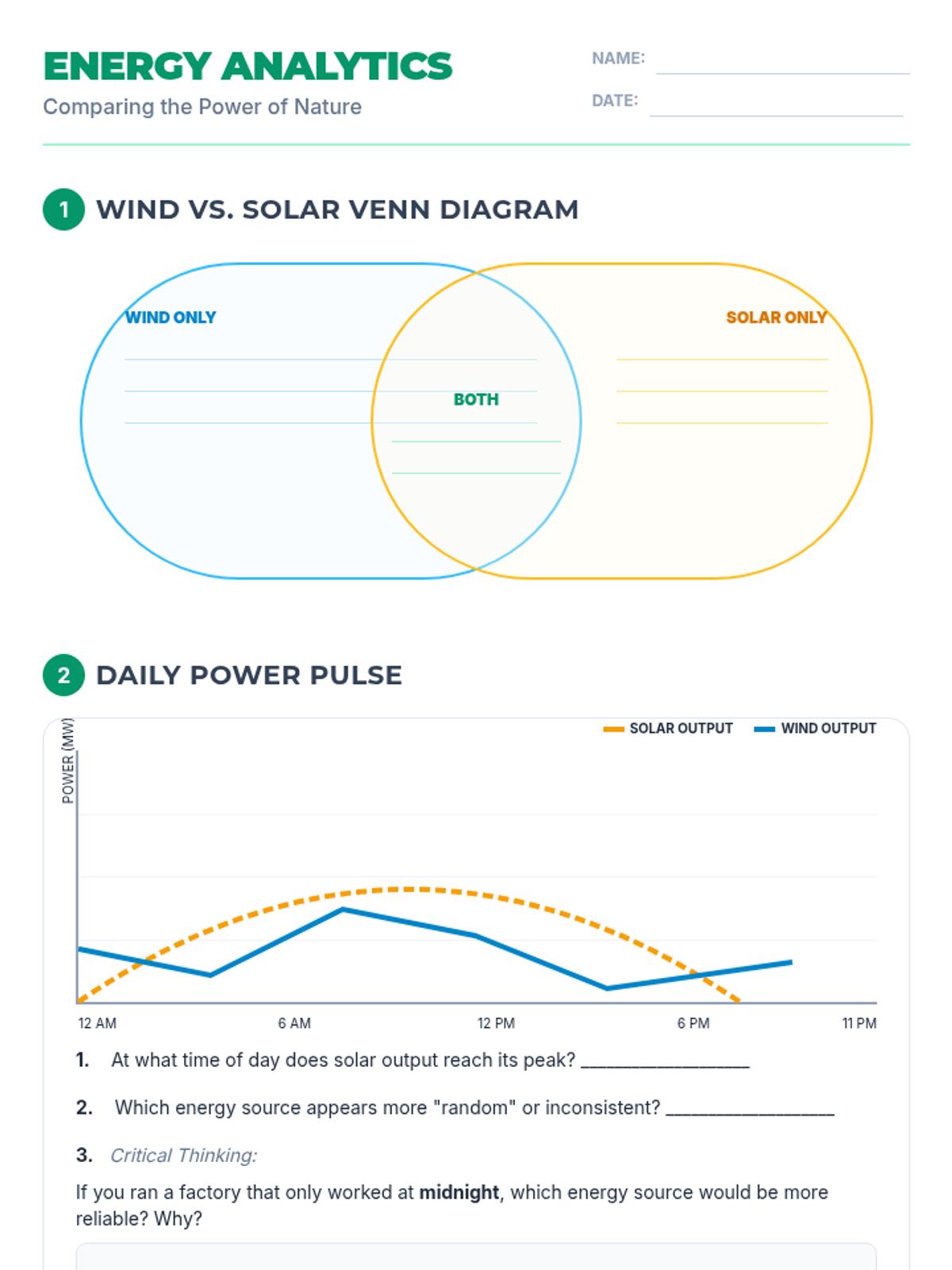
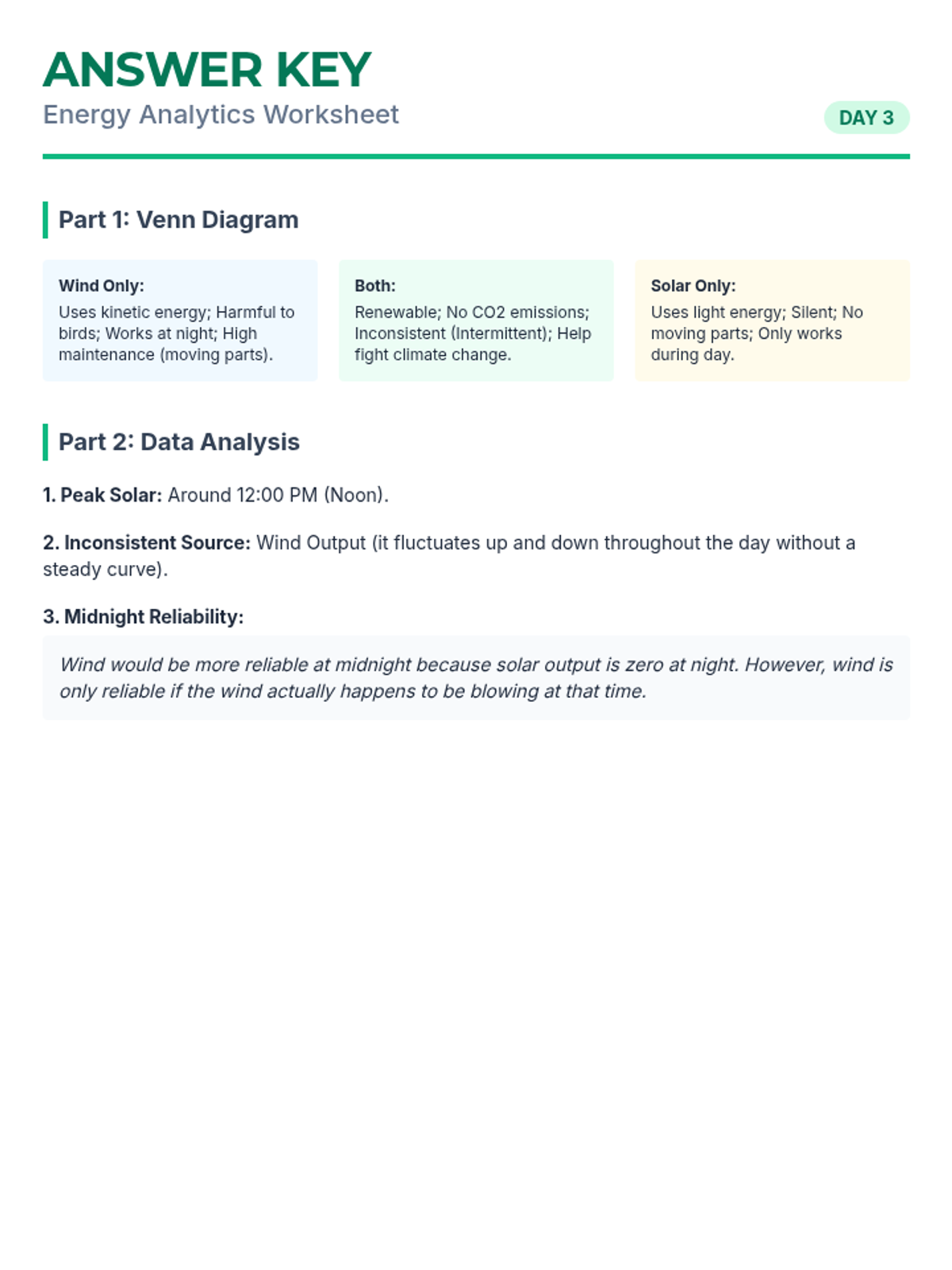
A culminating lesson where students compare wind and solar energy using graphic organizers and analyze real-world energy output data to understand reliability and efficiency.
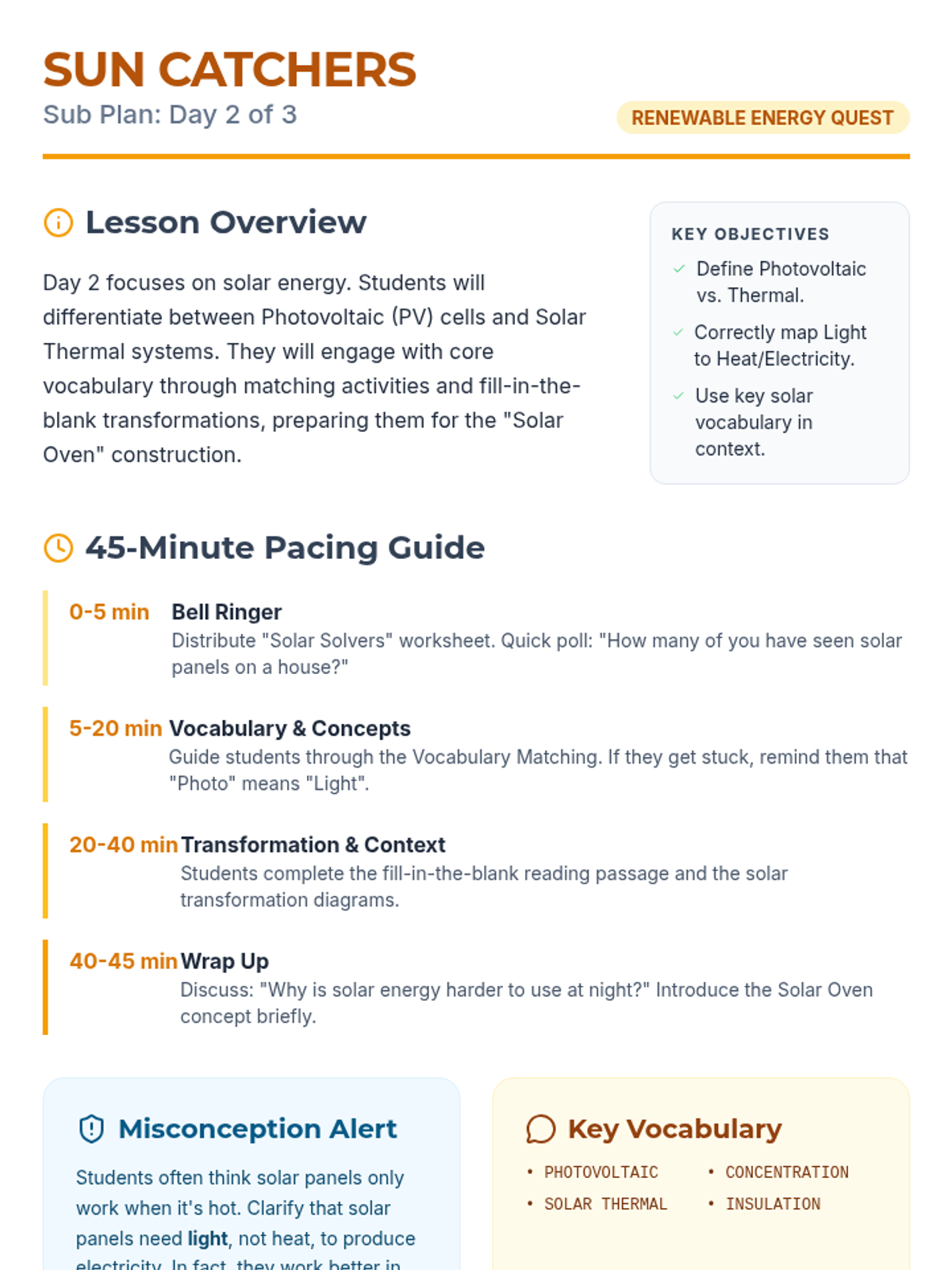
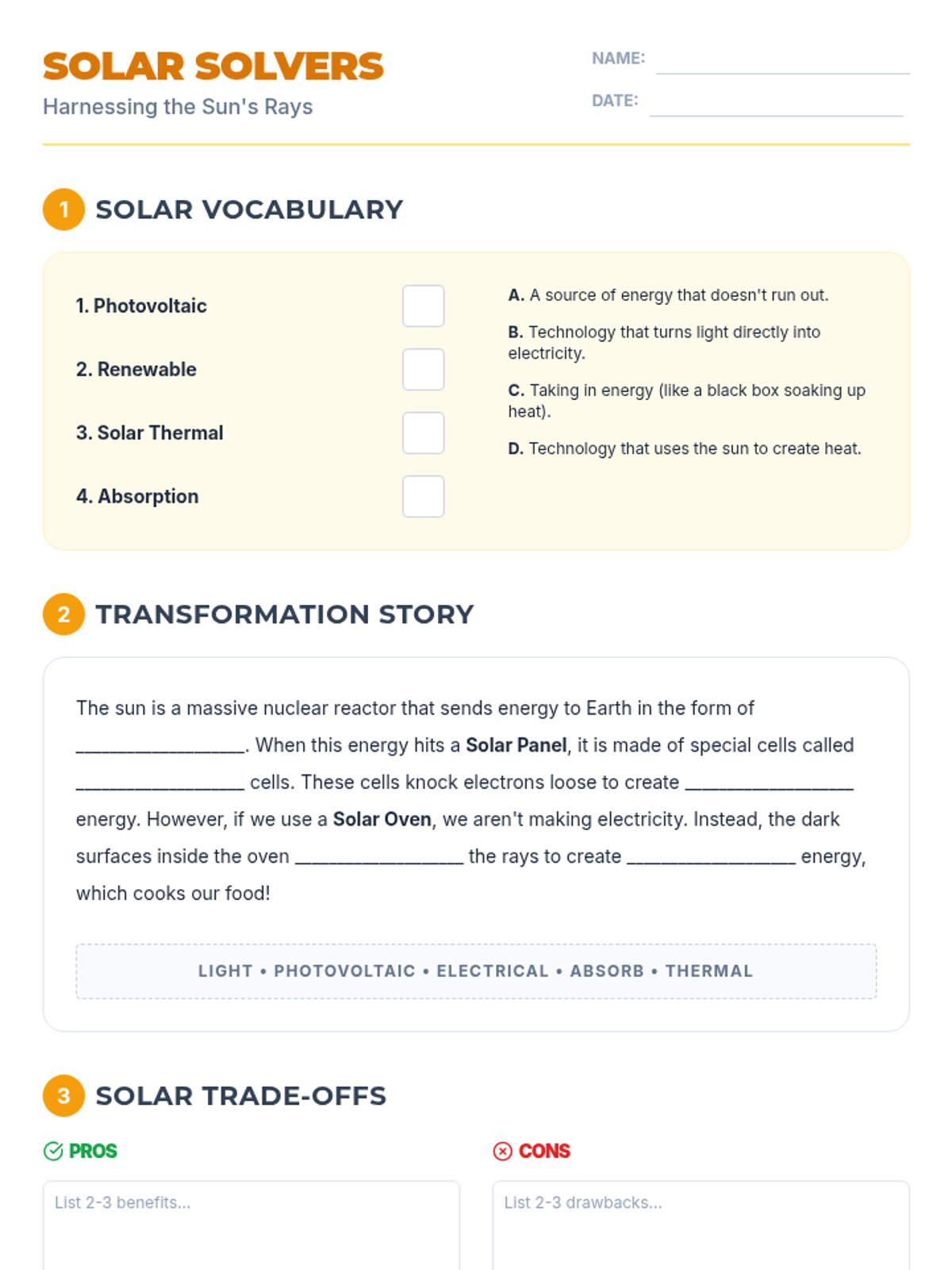
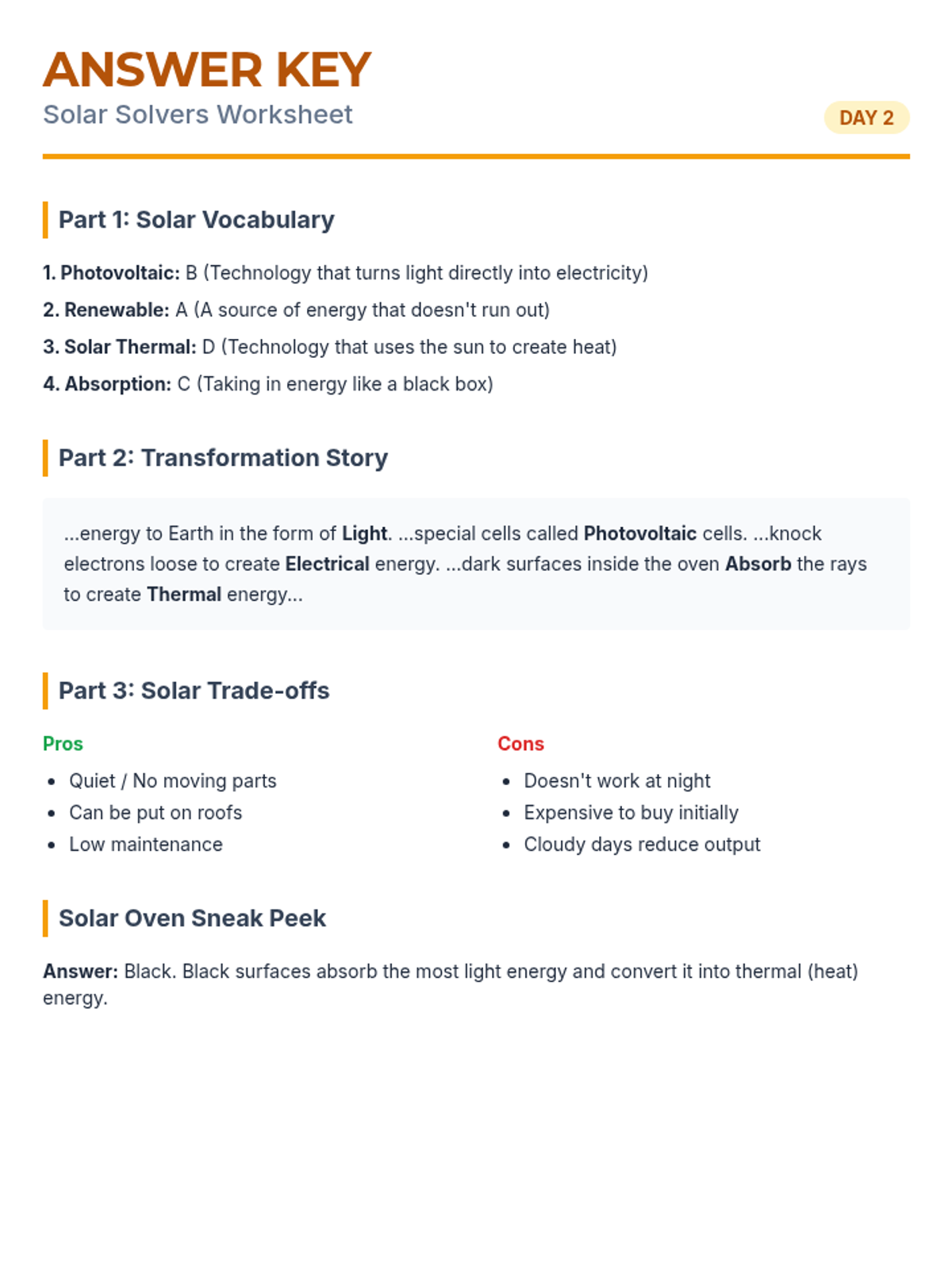
A lesson exploring solar energy technology, including photovoltaic and thermal systems, energy transformation from light to heat/electricity, and solar energy vocabulary.
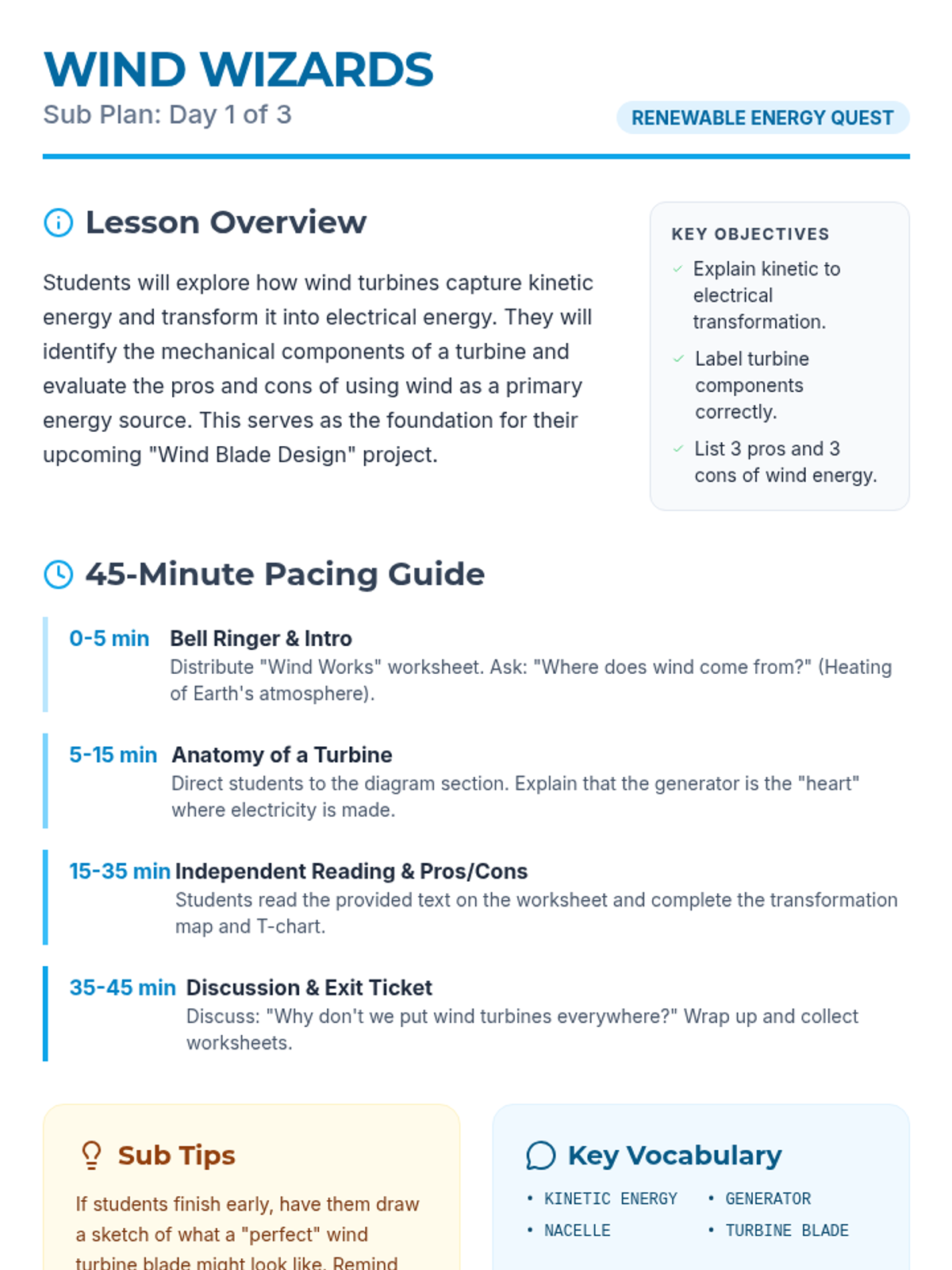
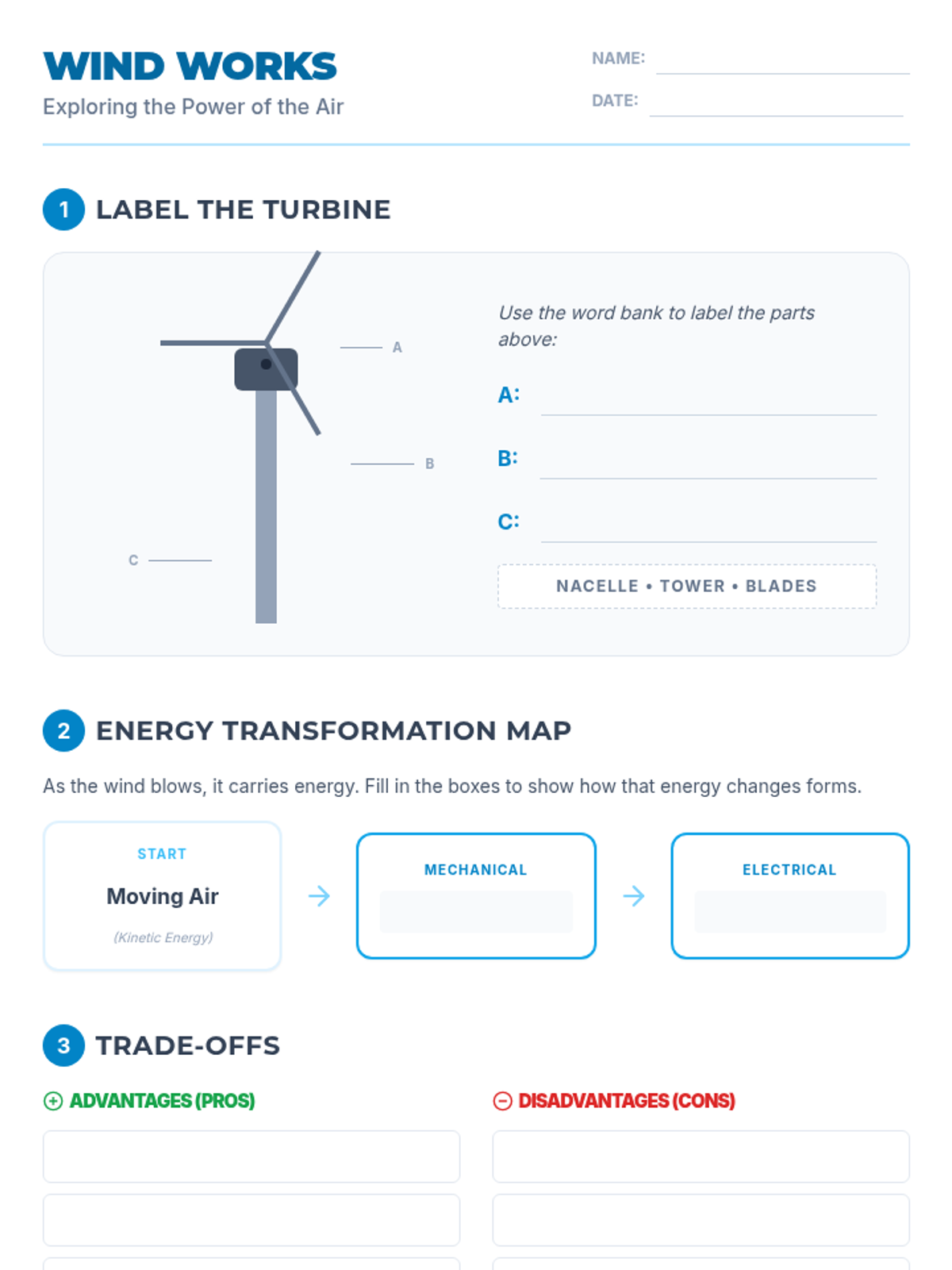
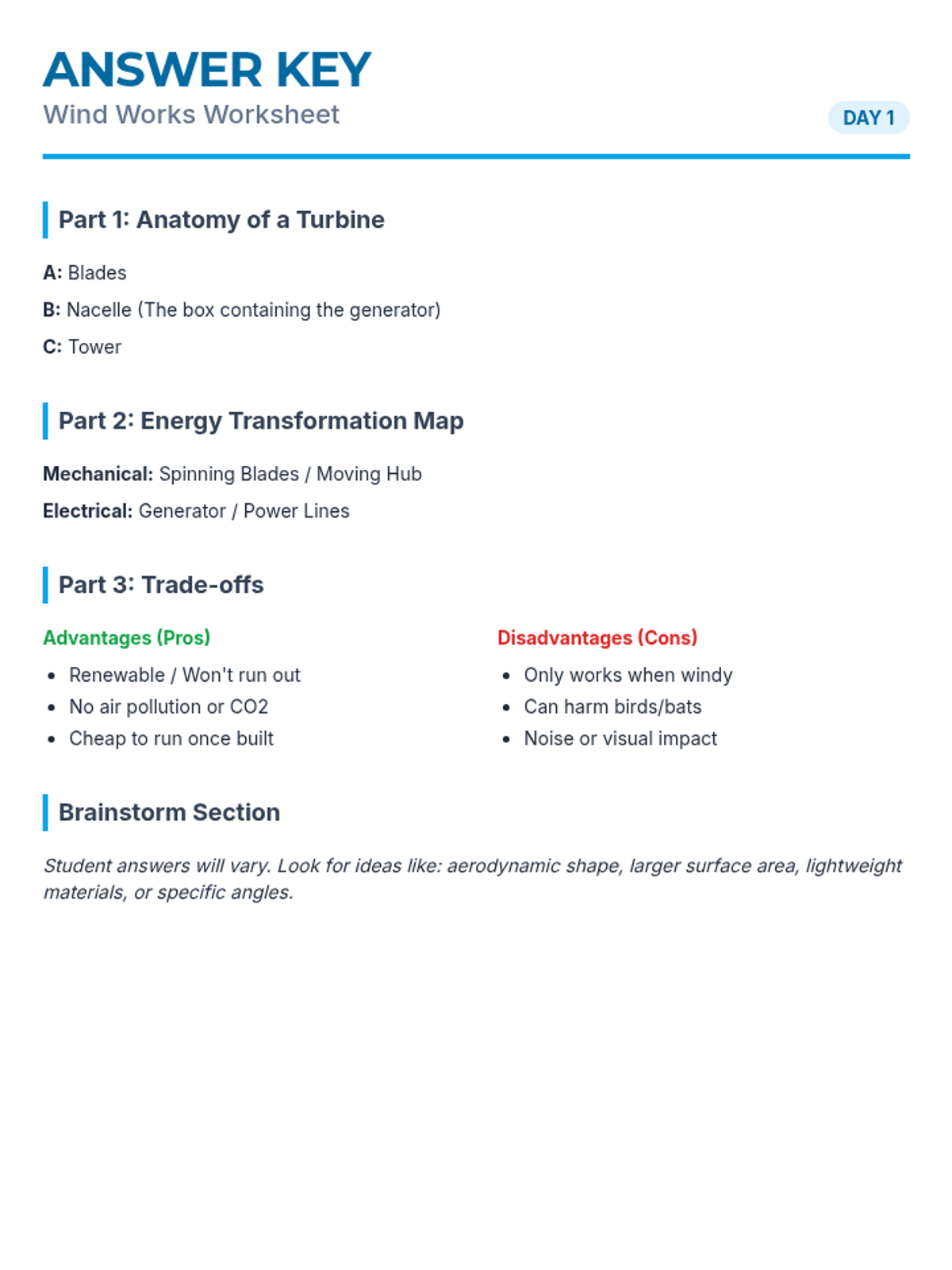
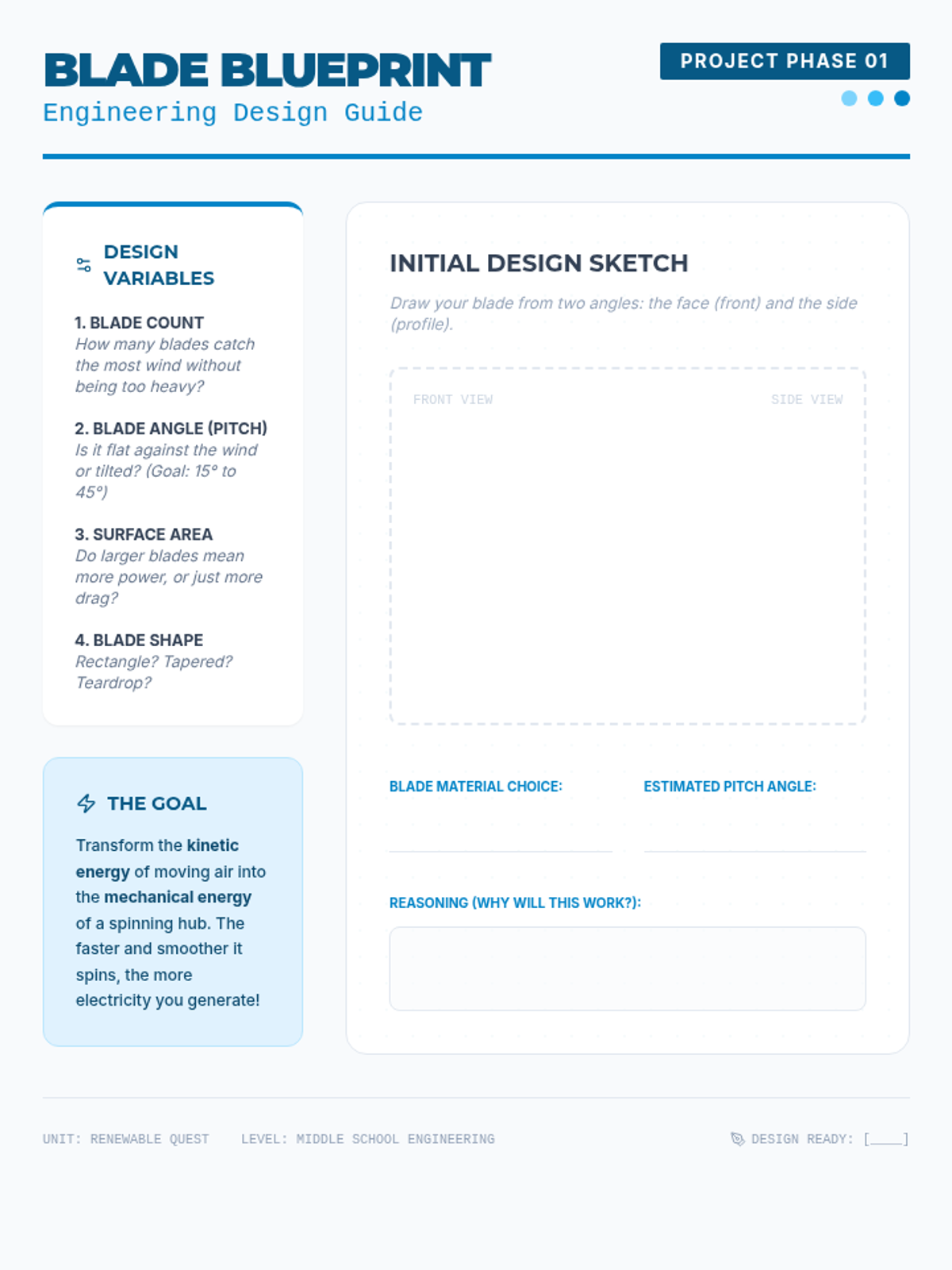
An introductory lesson on wind energy focusing on the mechanics of turbines, energy transformations from kinetic to electrical, and the trade-offs of wind power.
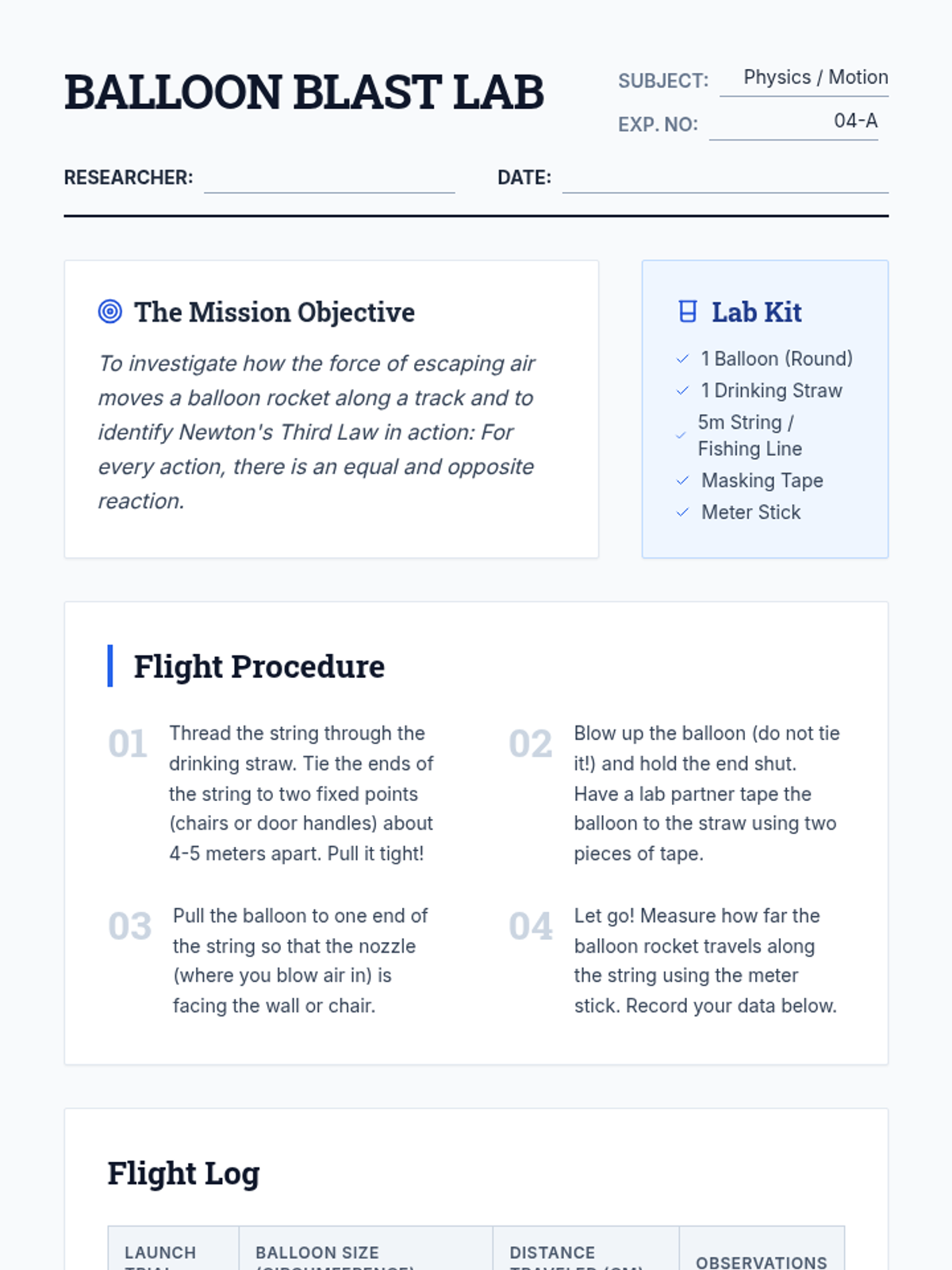
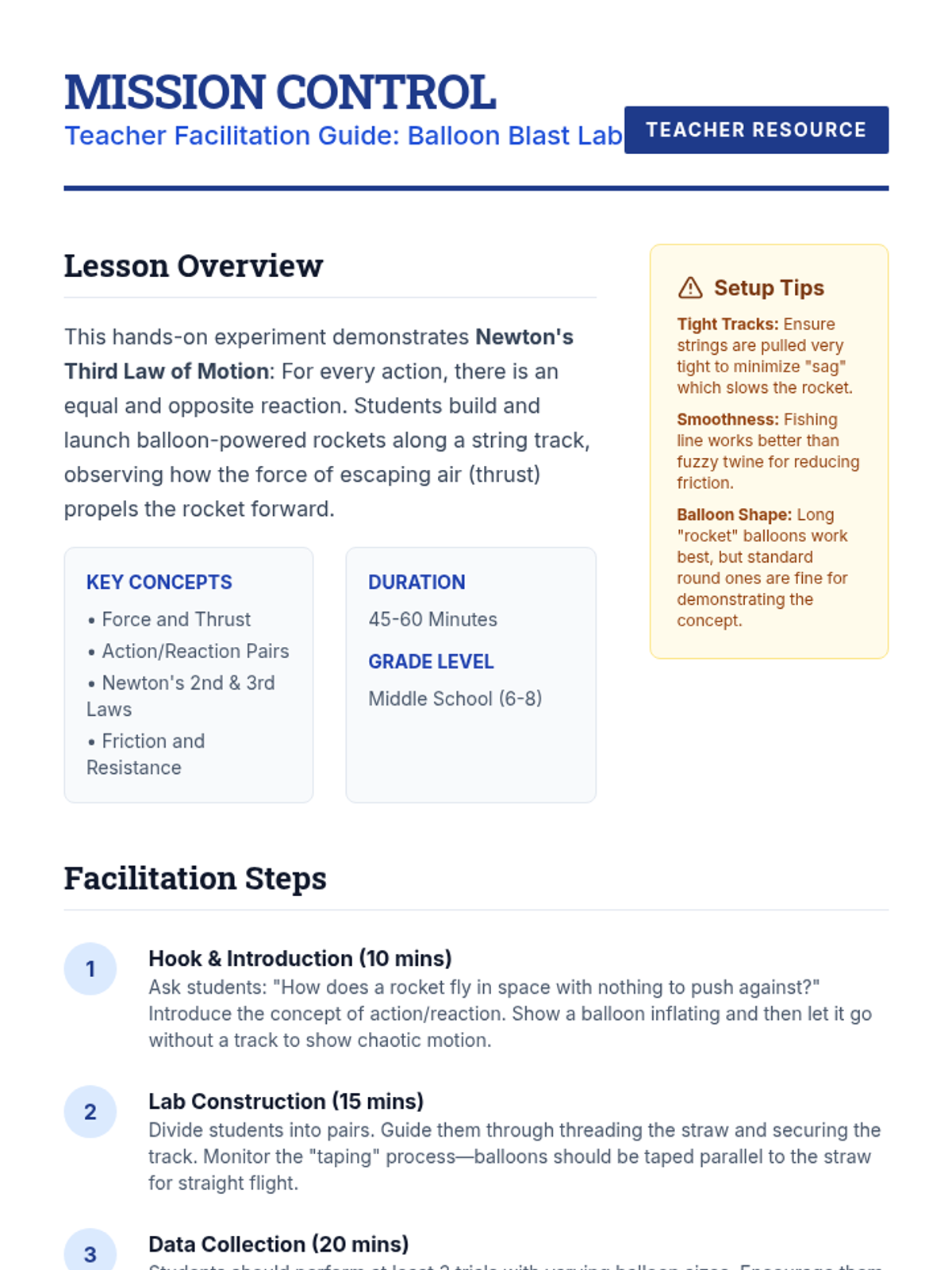
An interactive exploration of Newton's Laws of Motion through hands-on experimentation with balloon-powered rockets. Students will investigate how force impacts distance and velocity.
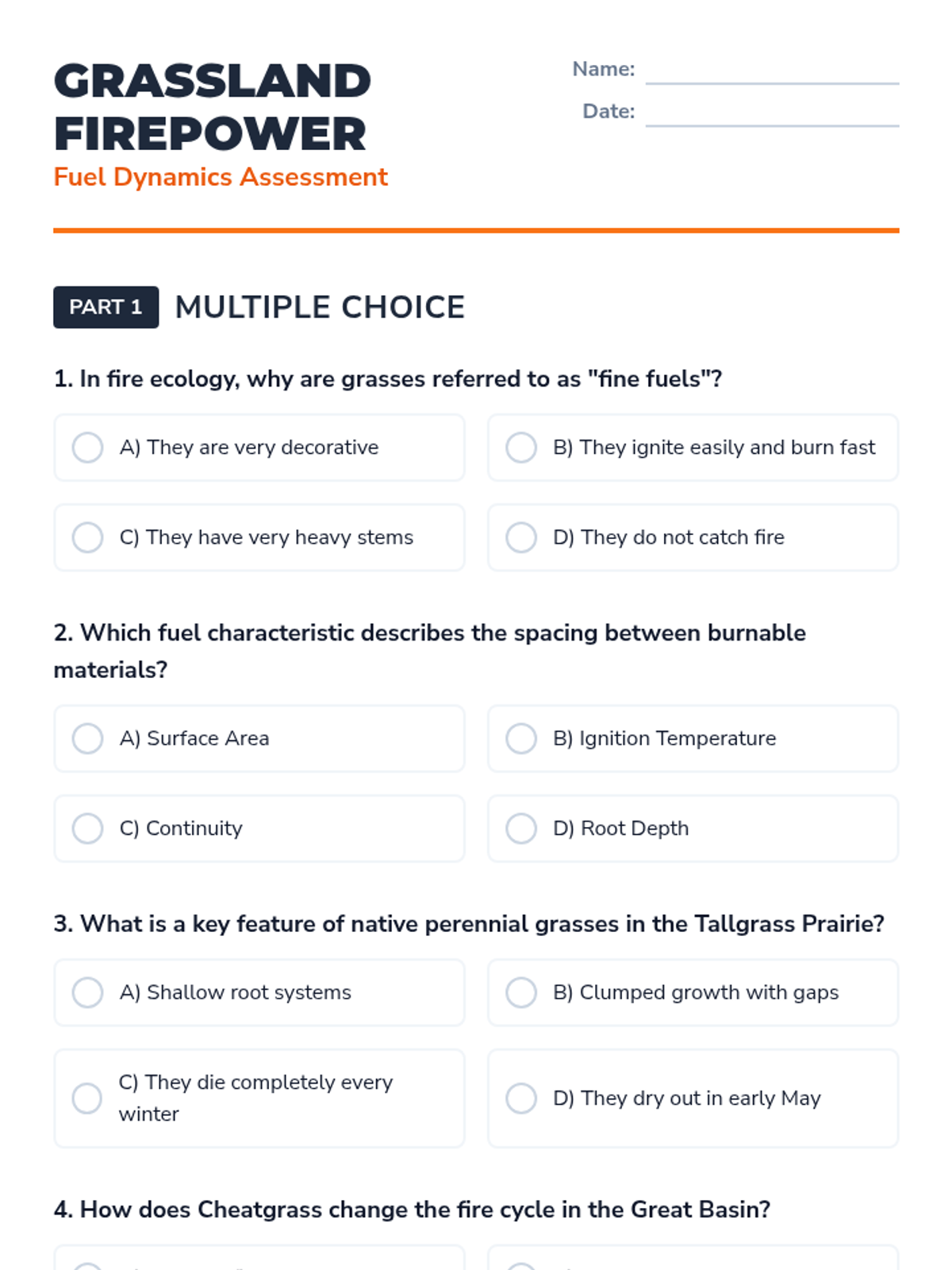
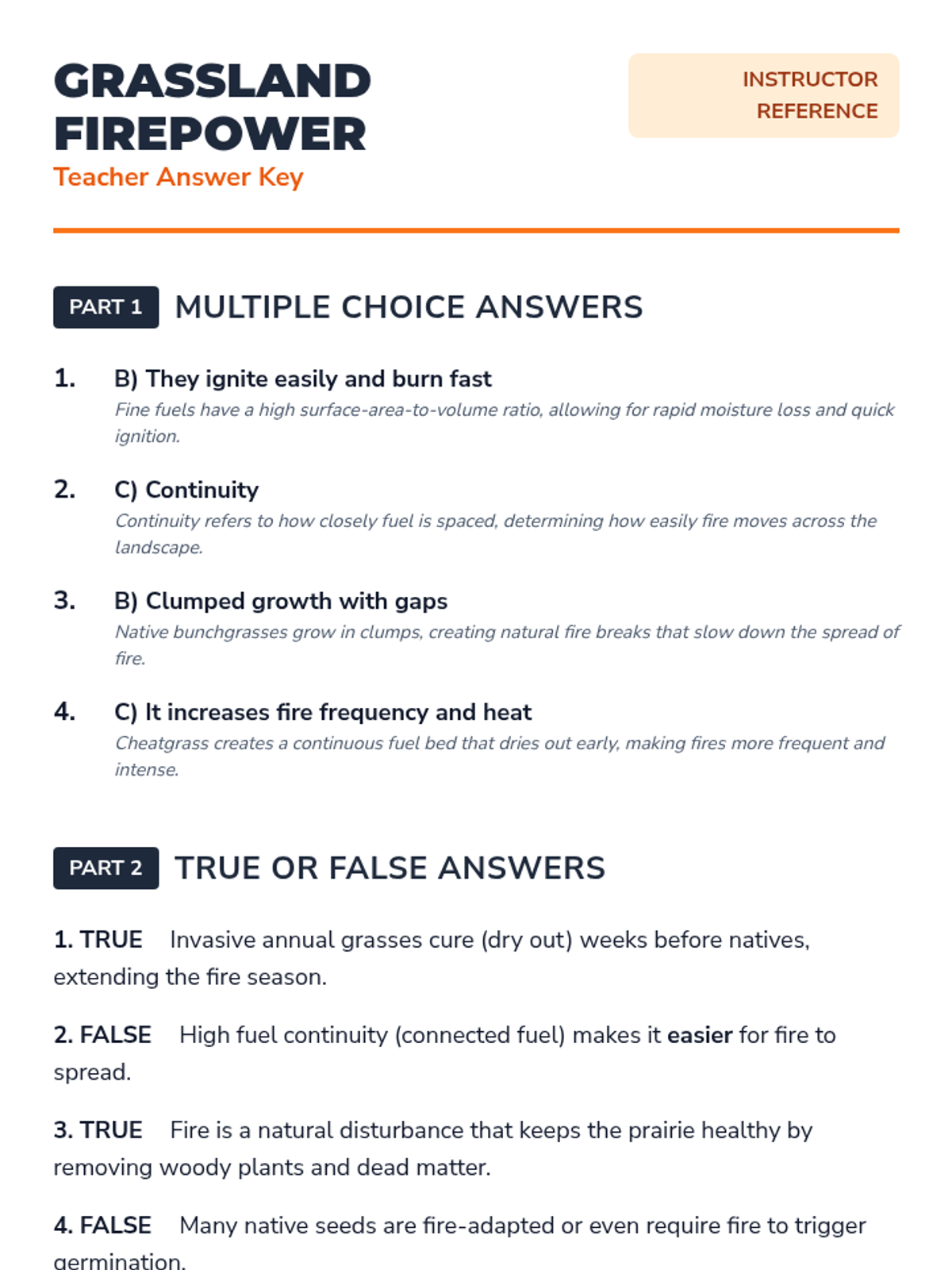
A lesson exploring the differences between natural and invasive grasses as fire fuels, featuring case studies on the Tallgrass Prairie and Cheatgrass in the Great Basin. Students will analyze fire behavior and impact through comparative study and assessment.
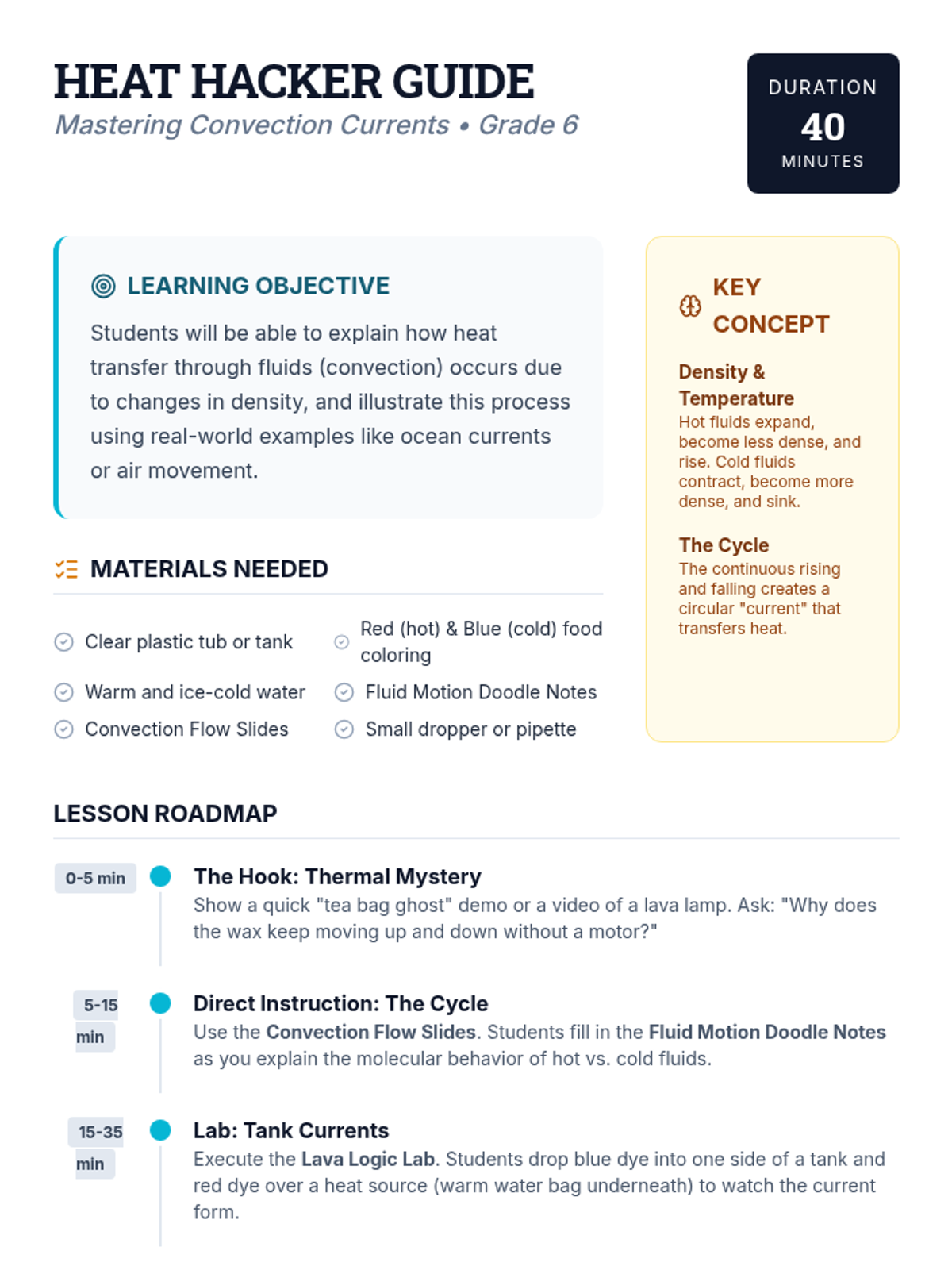
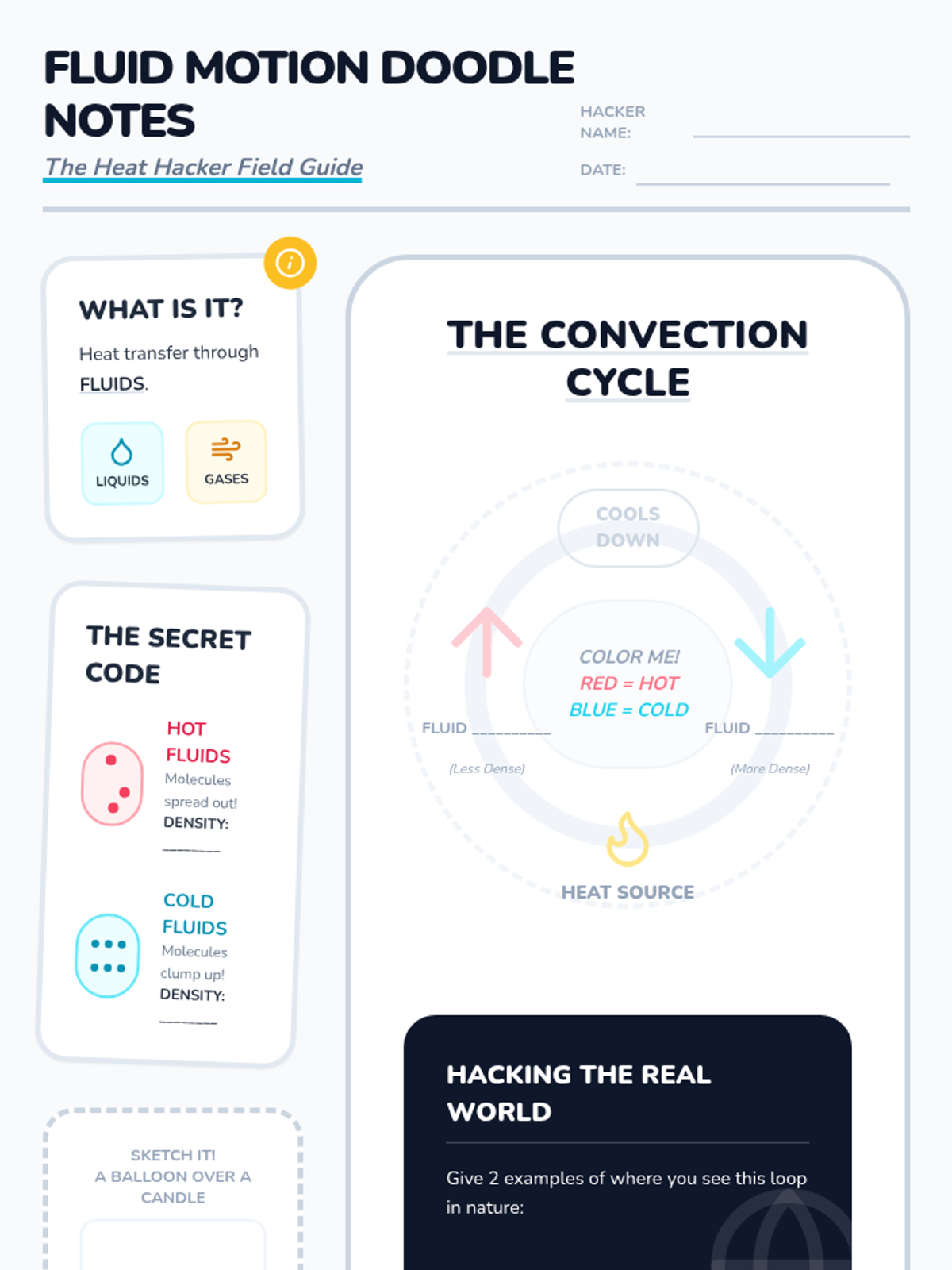
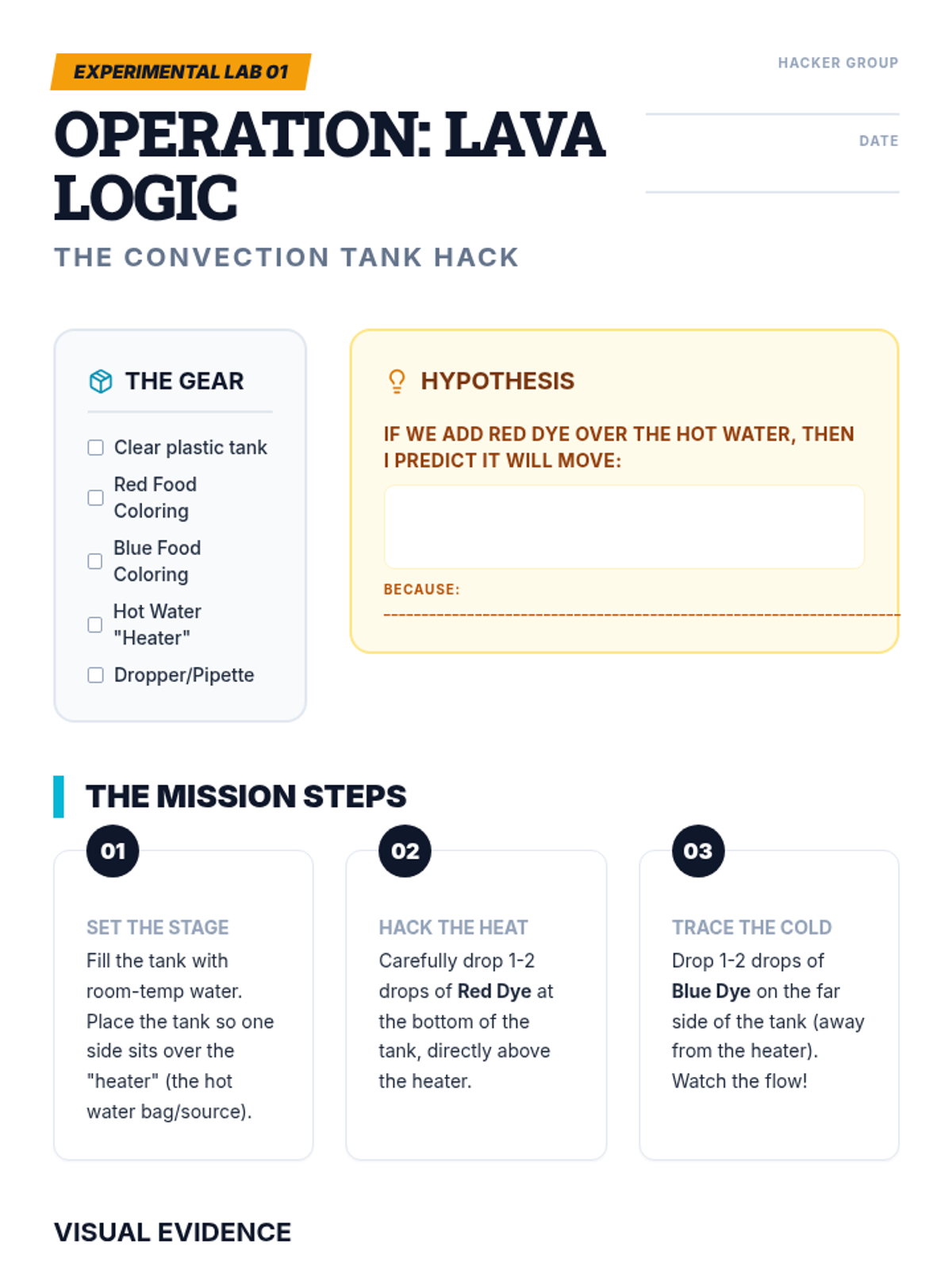
A 40-minute introductory lesson on convection currents for 6th grade, featuring a hands-on activity and creative doodle notes. Students will explore how heat moves through fluids via density changes.
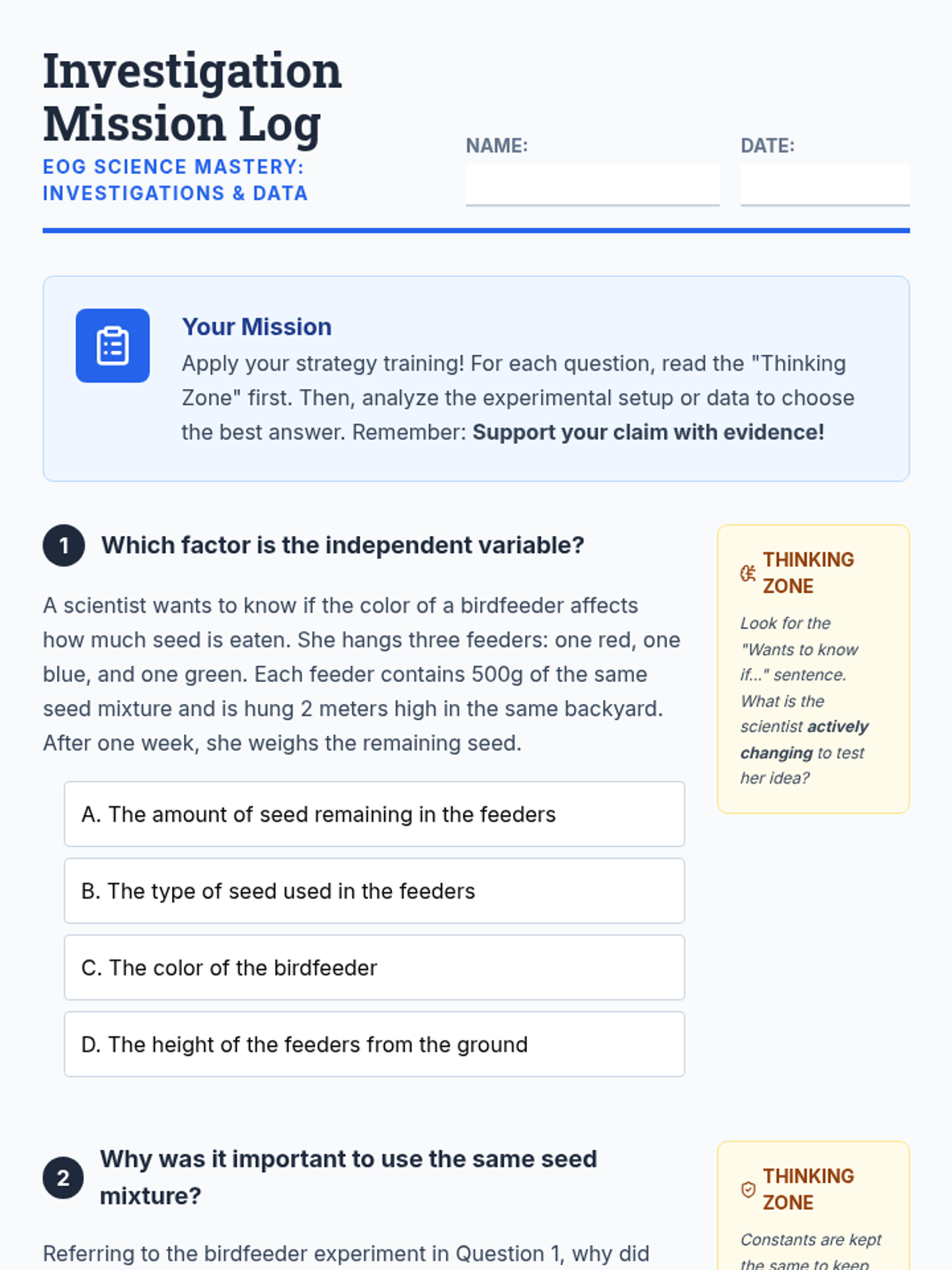
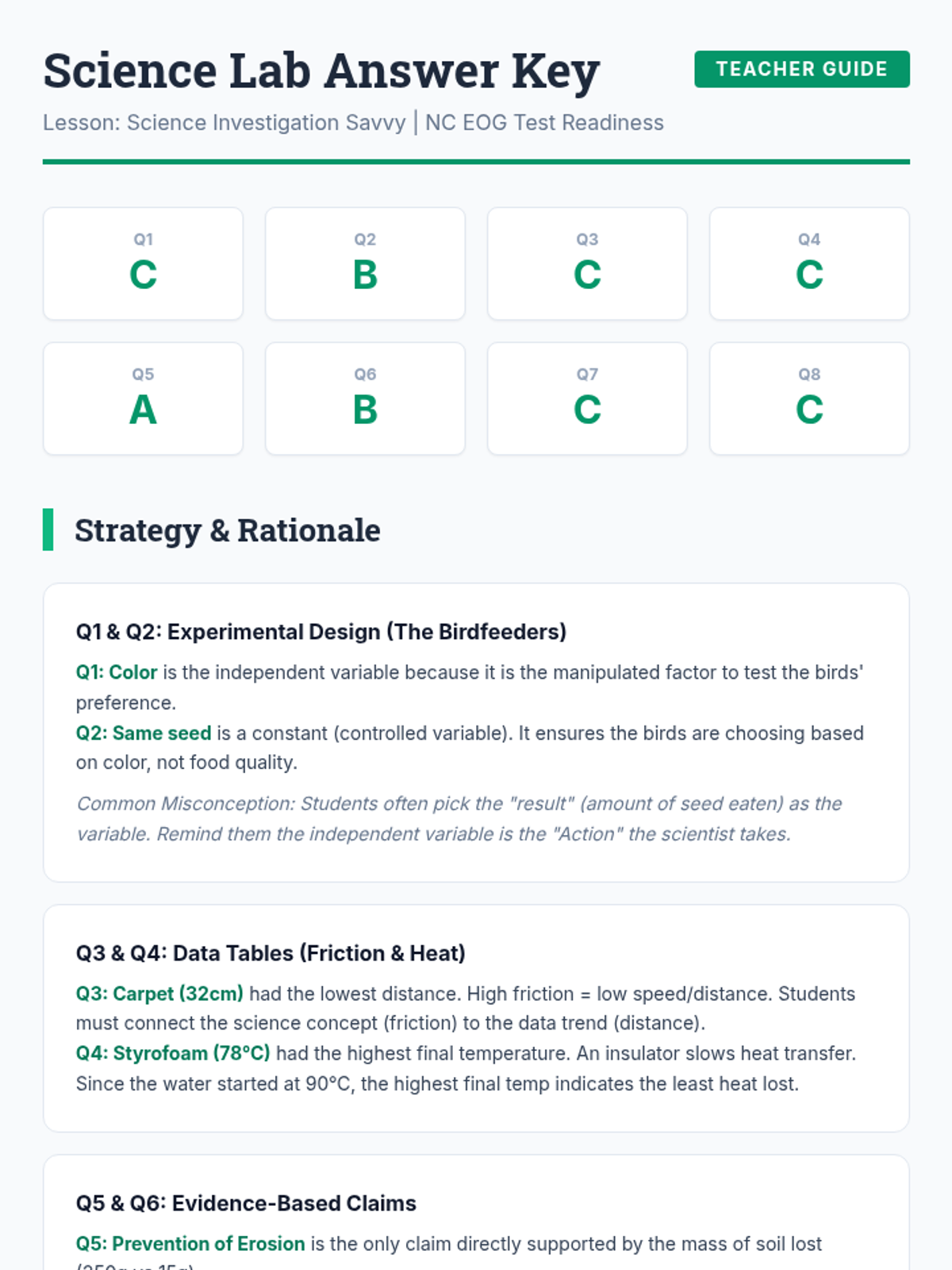
A test prep lesson focused on mastering North Carolina EOG science investigation questions, covering experimental design, data interpretation, and conclusion evaluation.
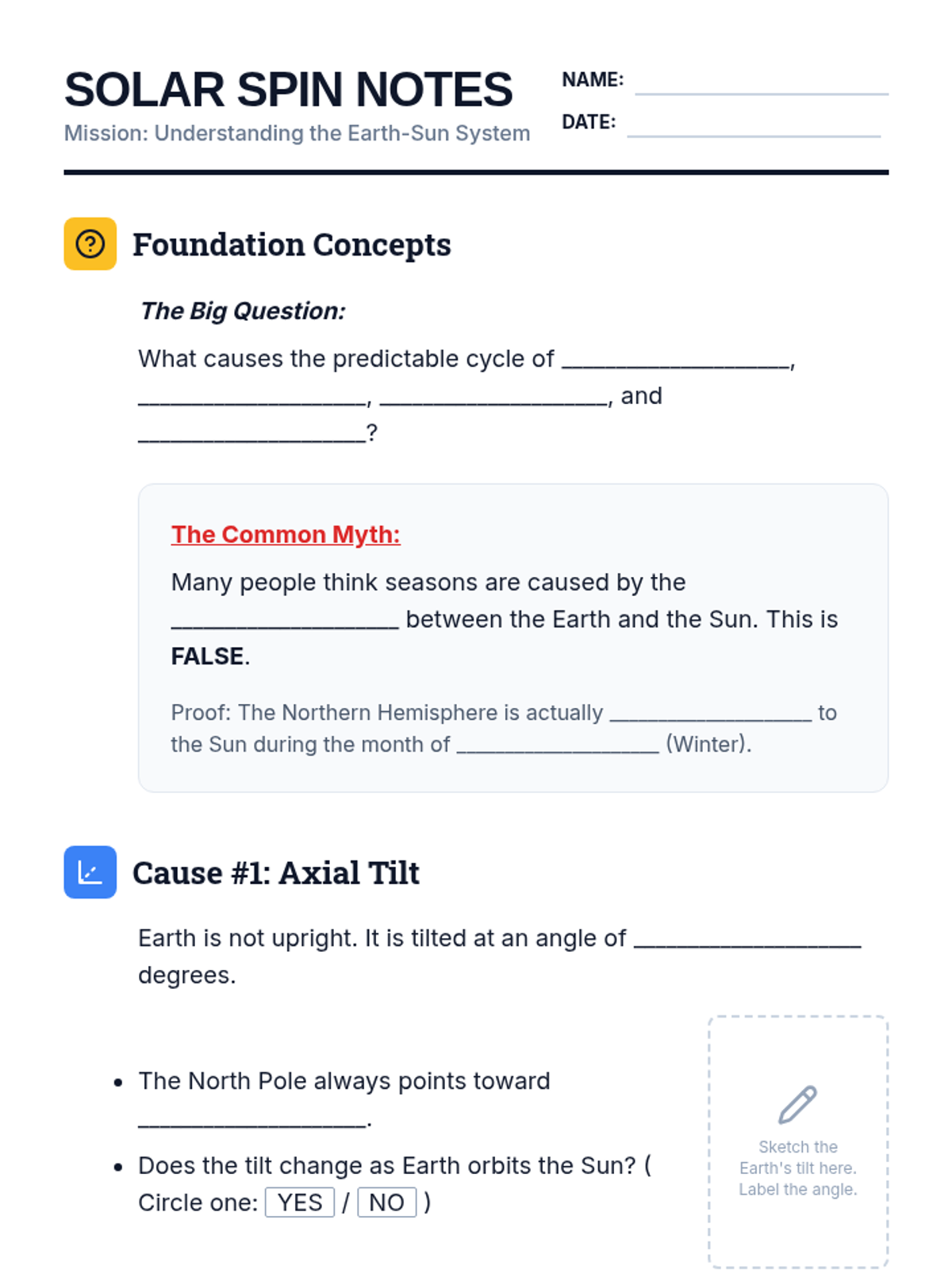
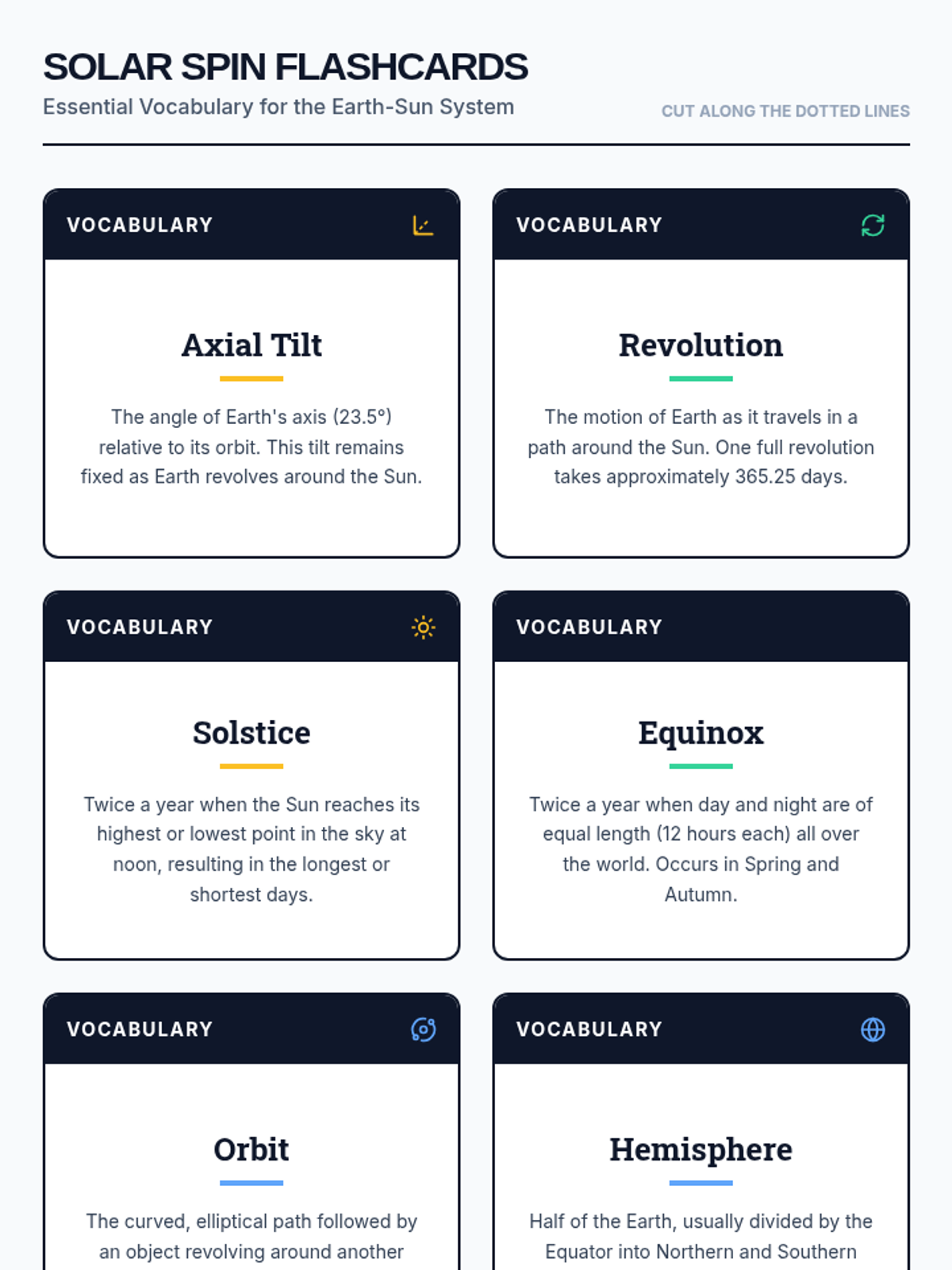
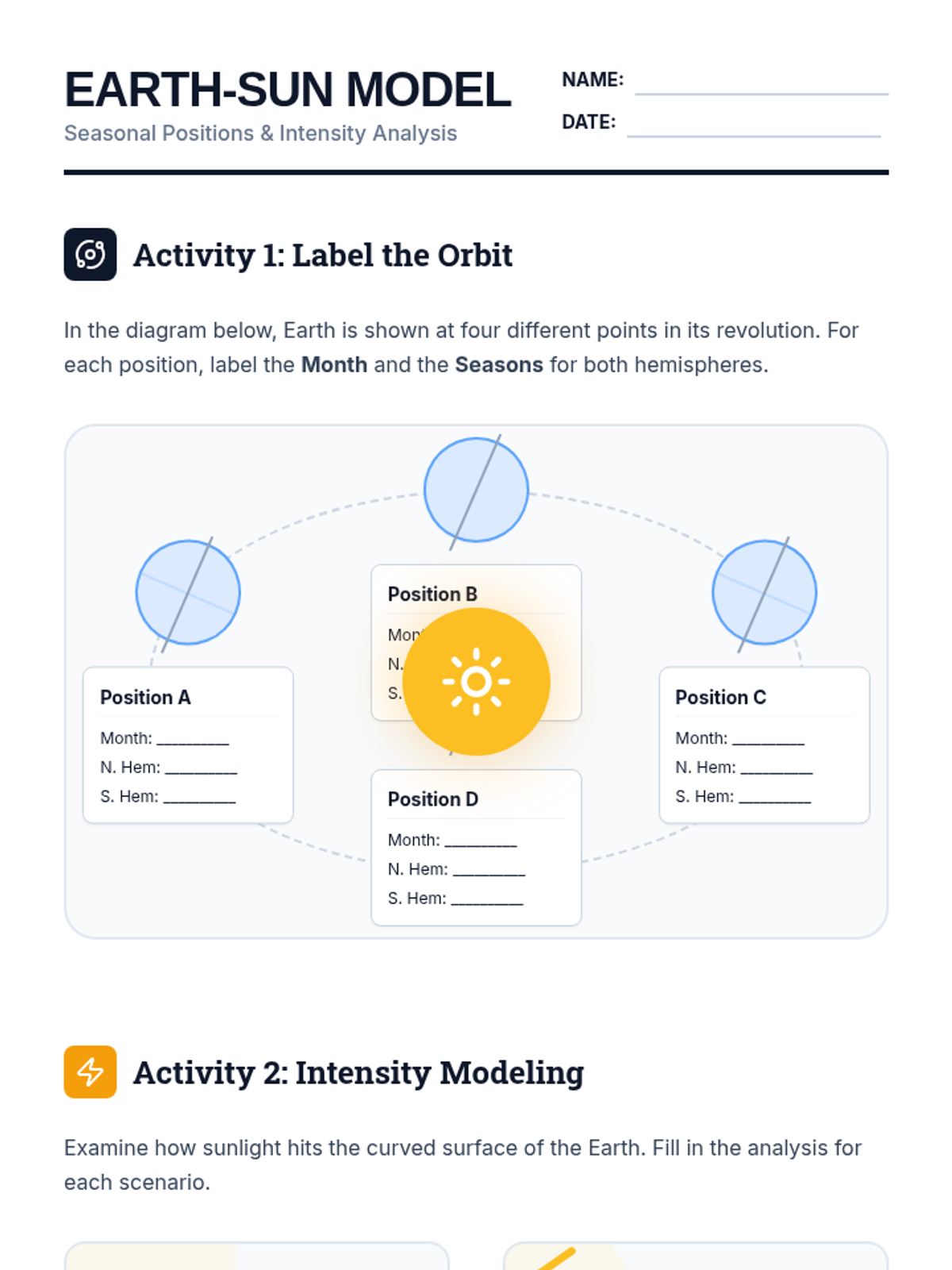
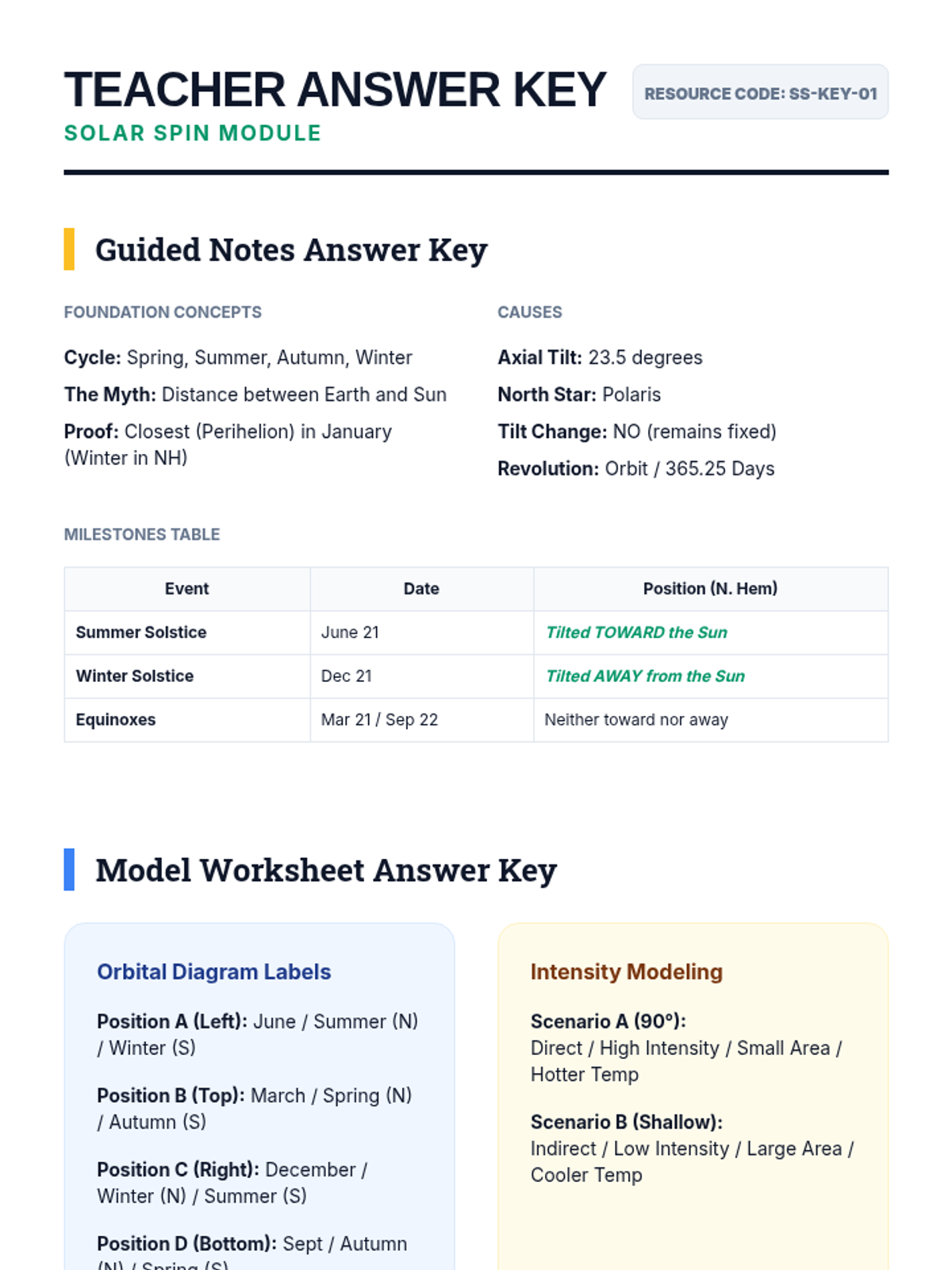
A comprehensive lesson exploring why Earth has seasons, focusing on axial tilt, revolution, and the intensity of solar radiation. Students will model the Earth-Sun system to understand solstices, equinoxes, and hemispheric differences.
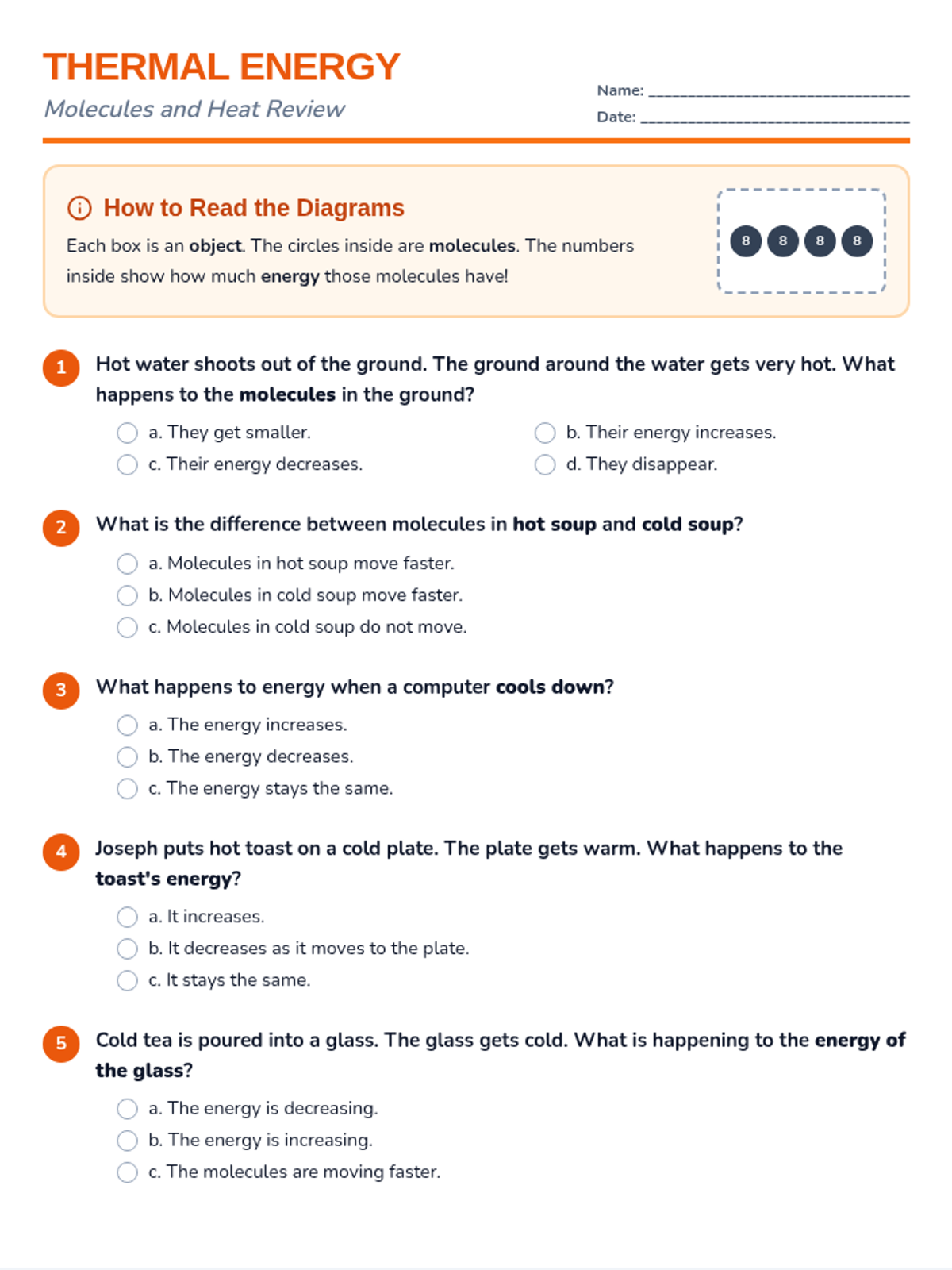
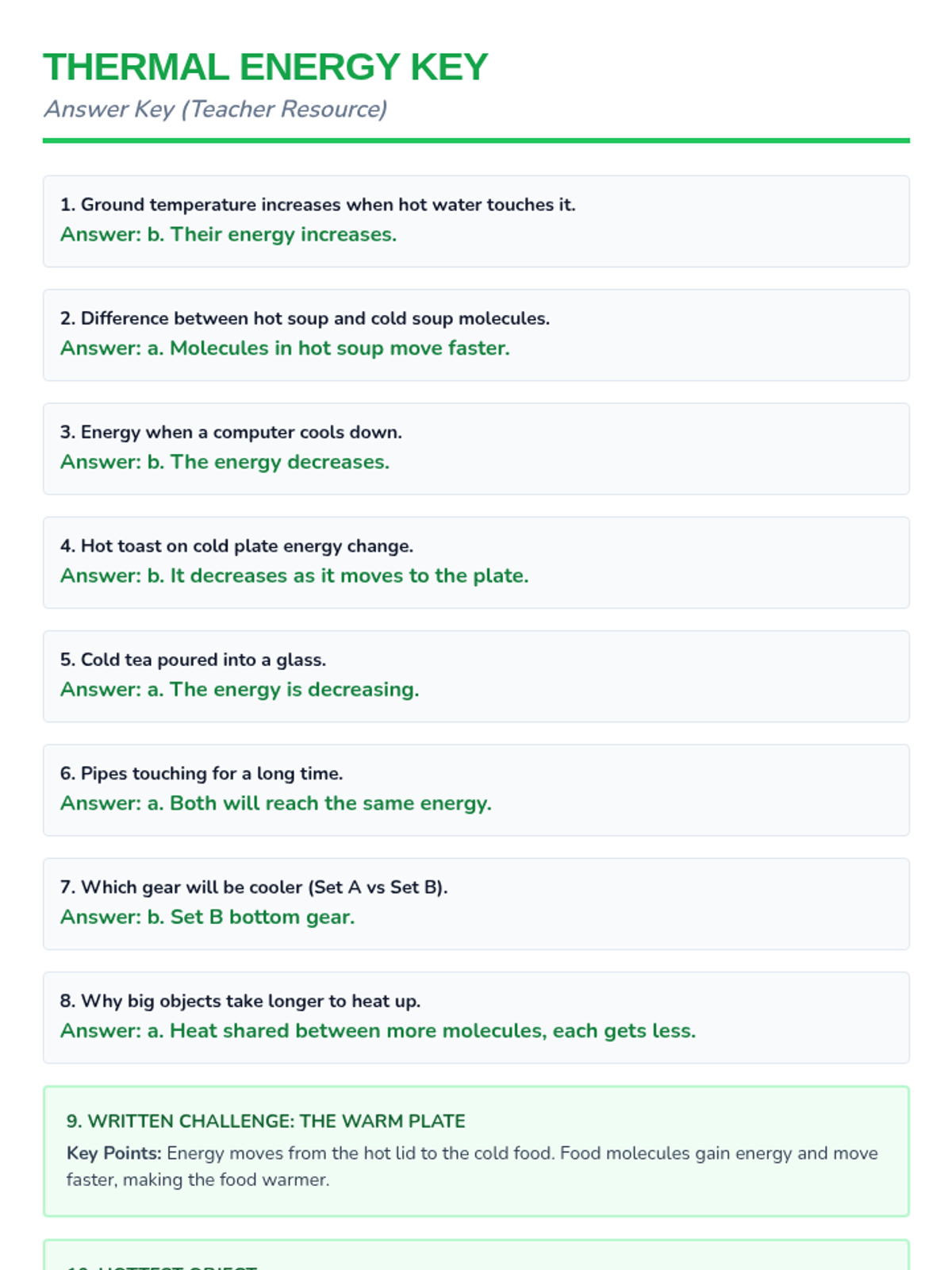
This lesson introduces 3rd-grade students to thermal energy, molecules, and heat transfer using visual diagrams. Students will explore how energy moves between objects and how the speed of molecules relates to temperature.
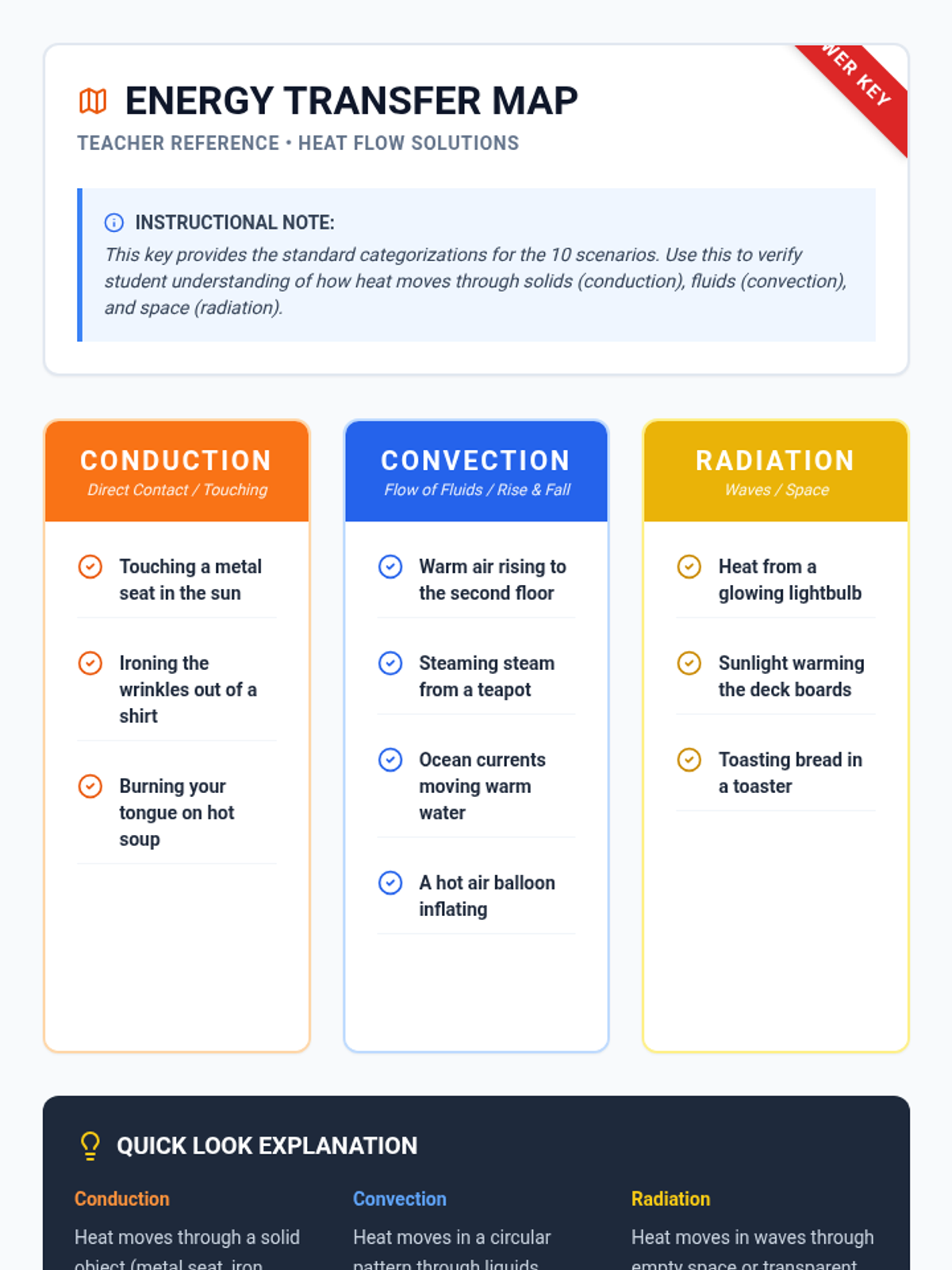
Reviewing the three types of heat transfer through interactive slides and a graphic organizer to connect concepts to everyday life.
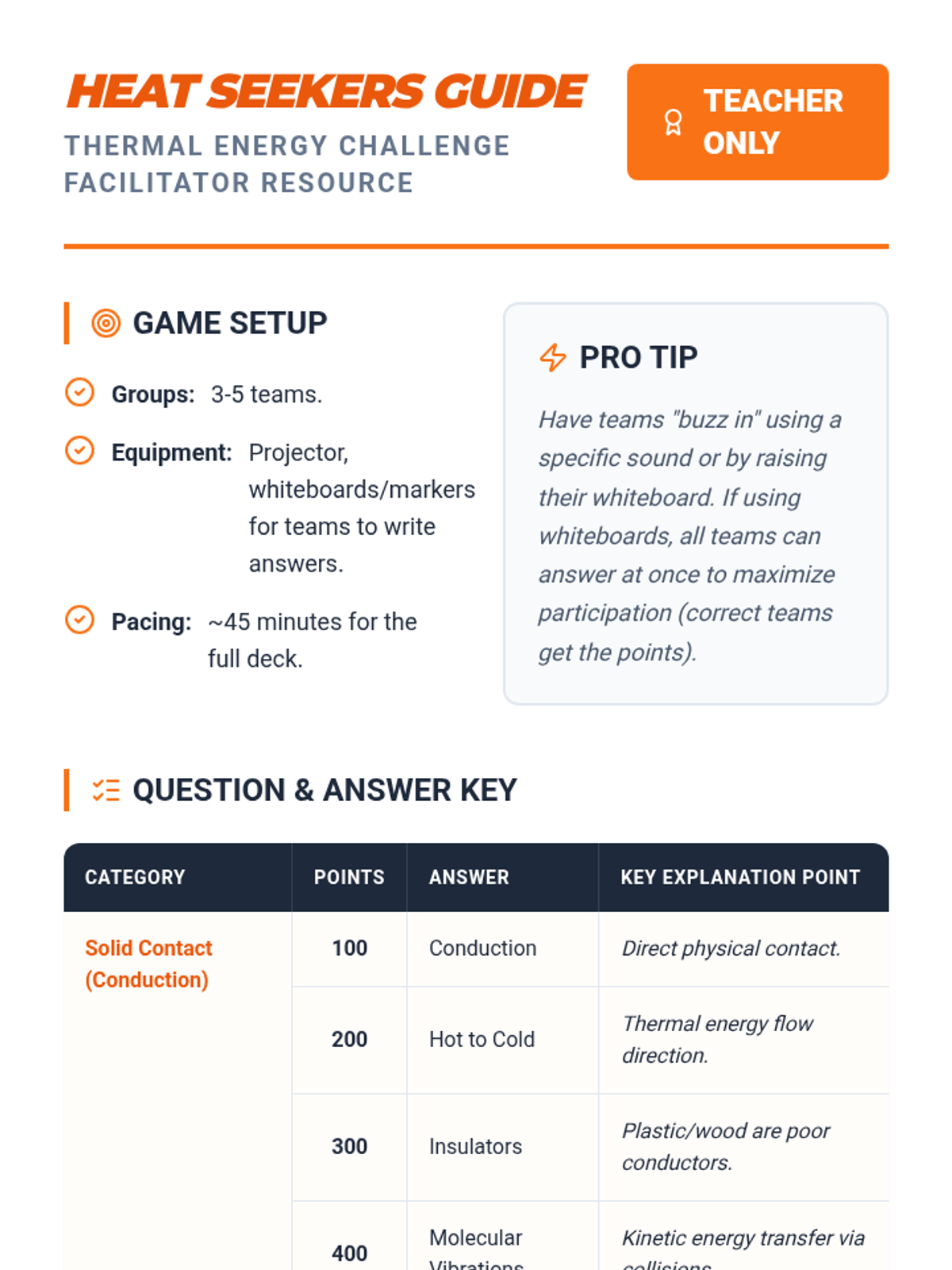
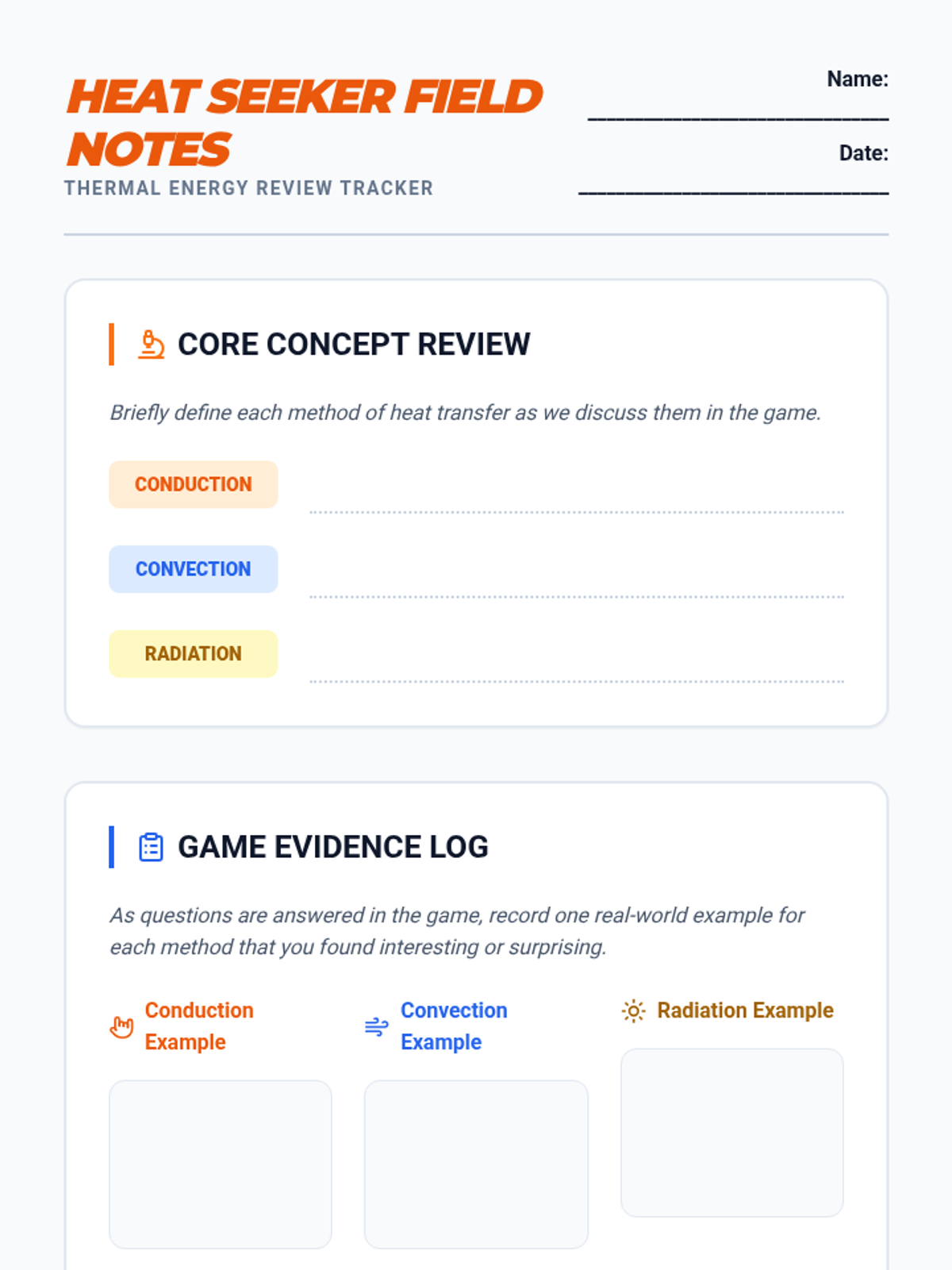
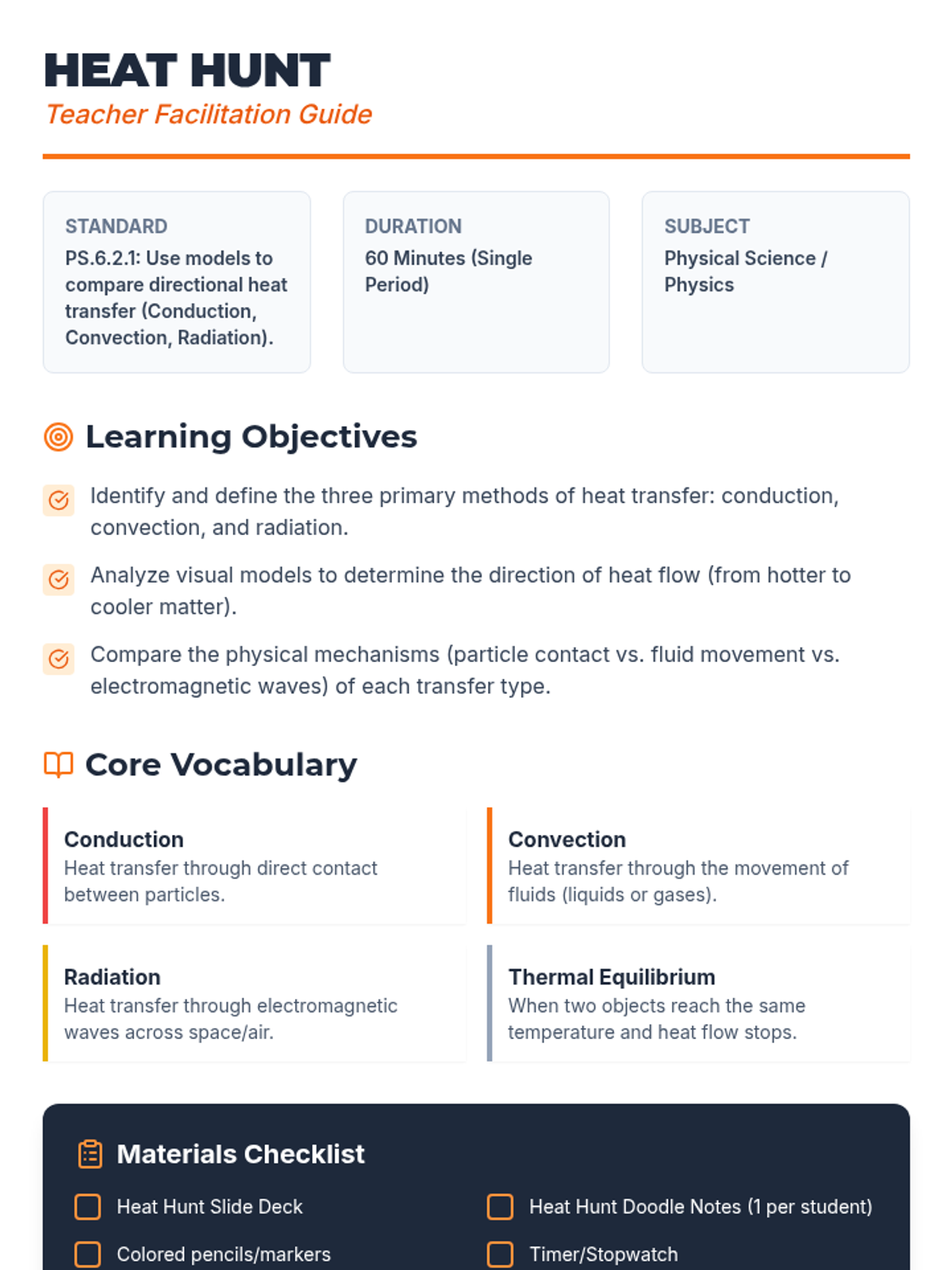
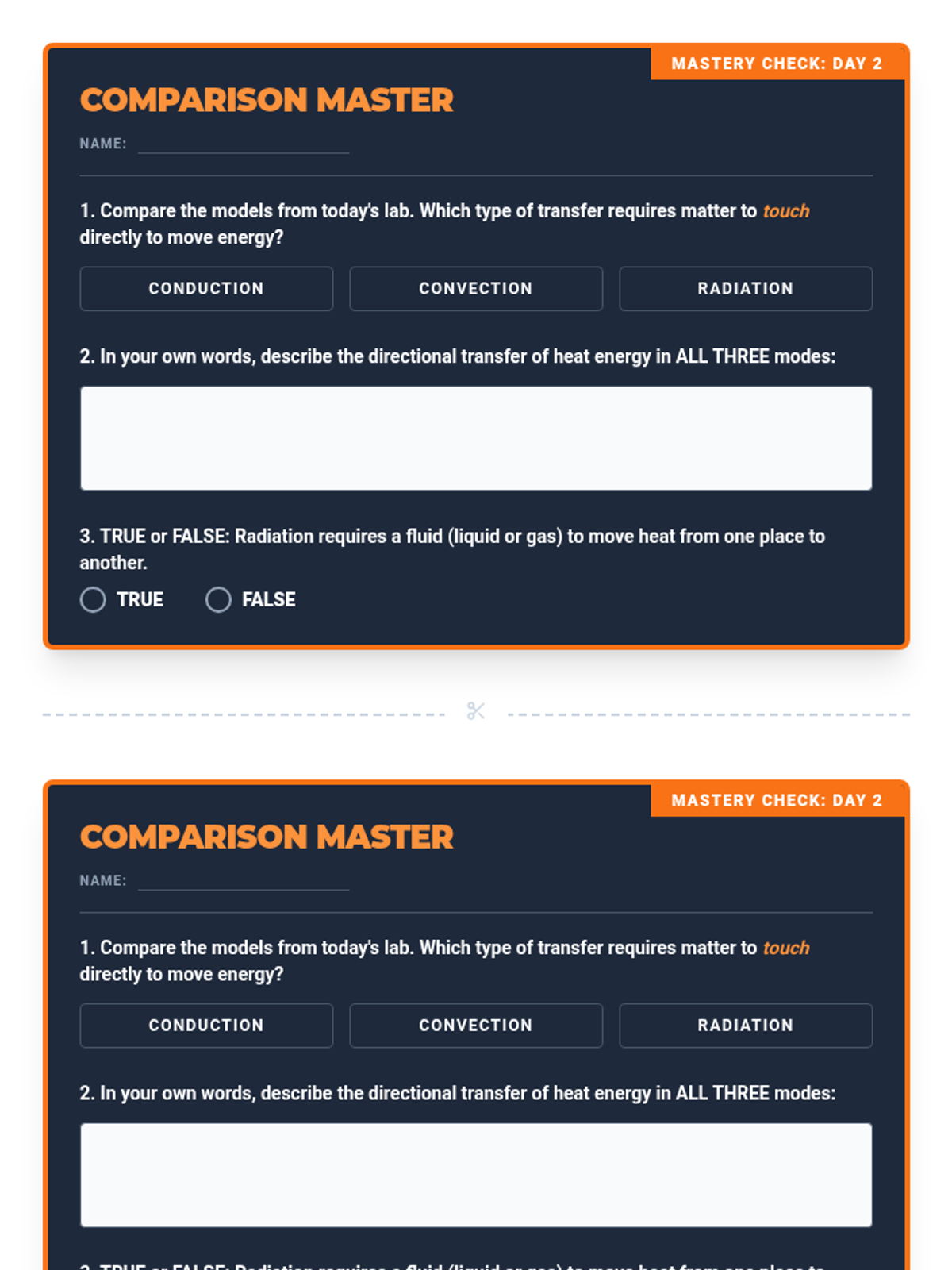
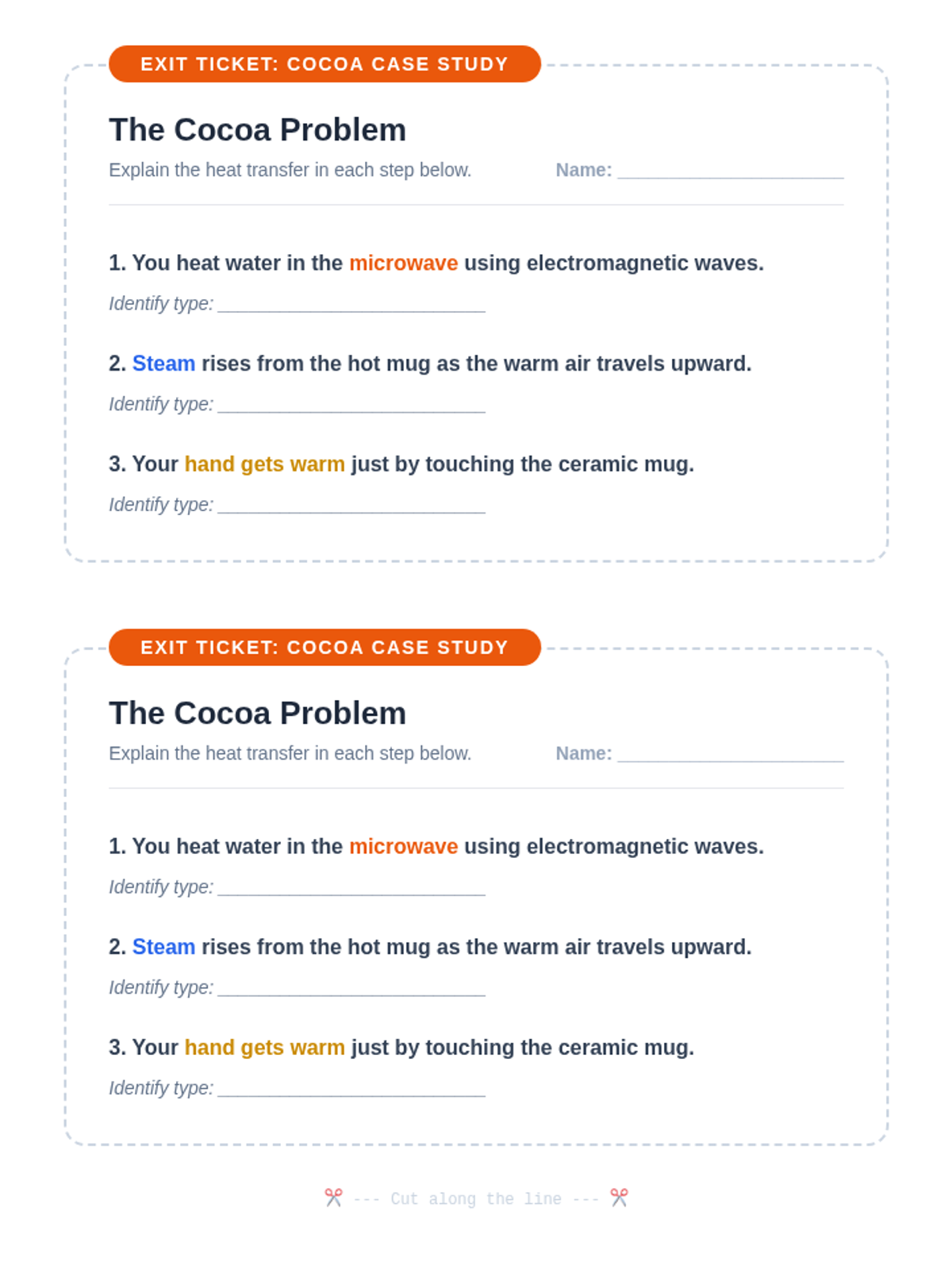
A high-energy review lesson focusing on the three methods of heat transfer: conduction, convection, and radiation. Students participate in a team-based challenge to identify and explain thermal energy movement in real-world scenarios.
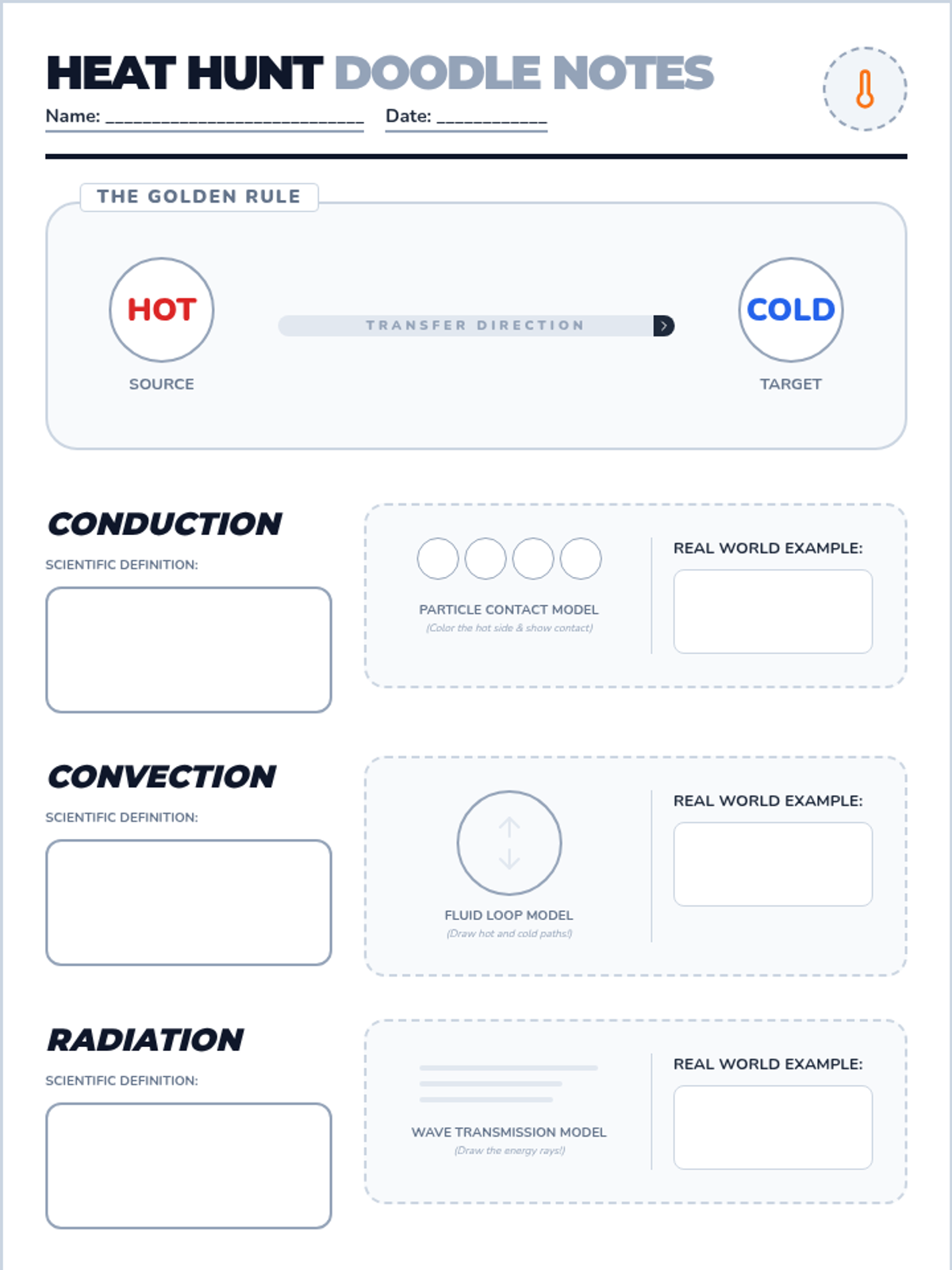
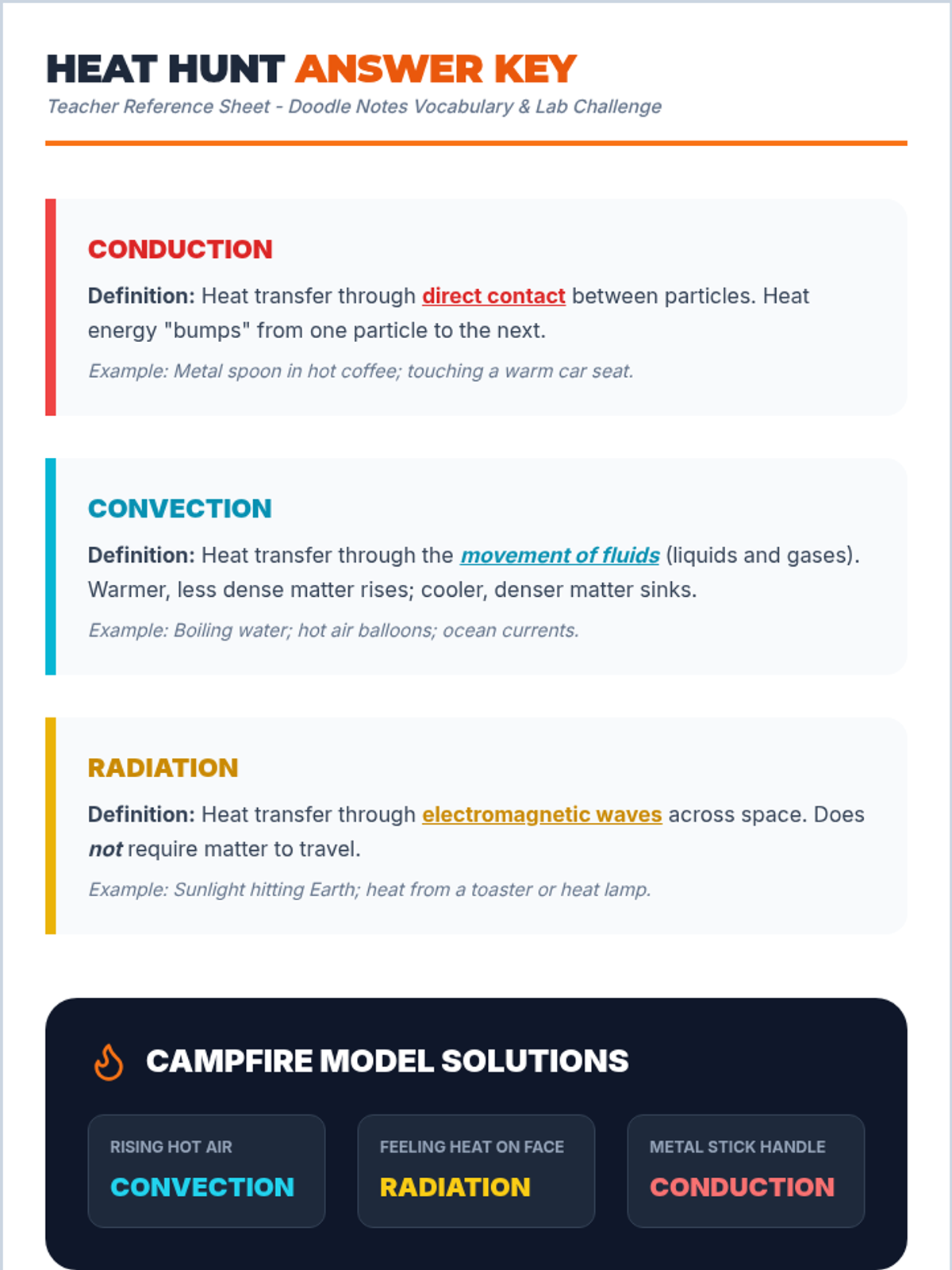
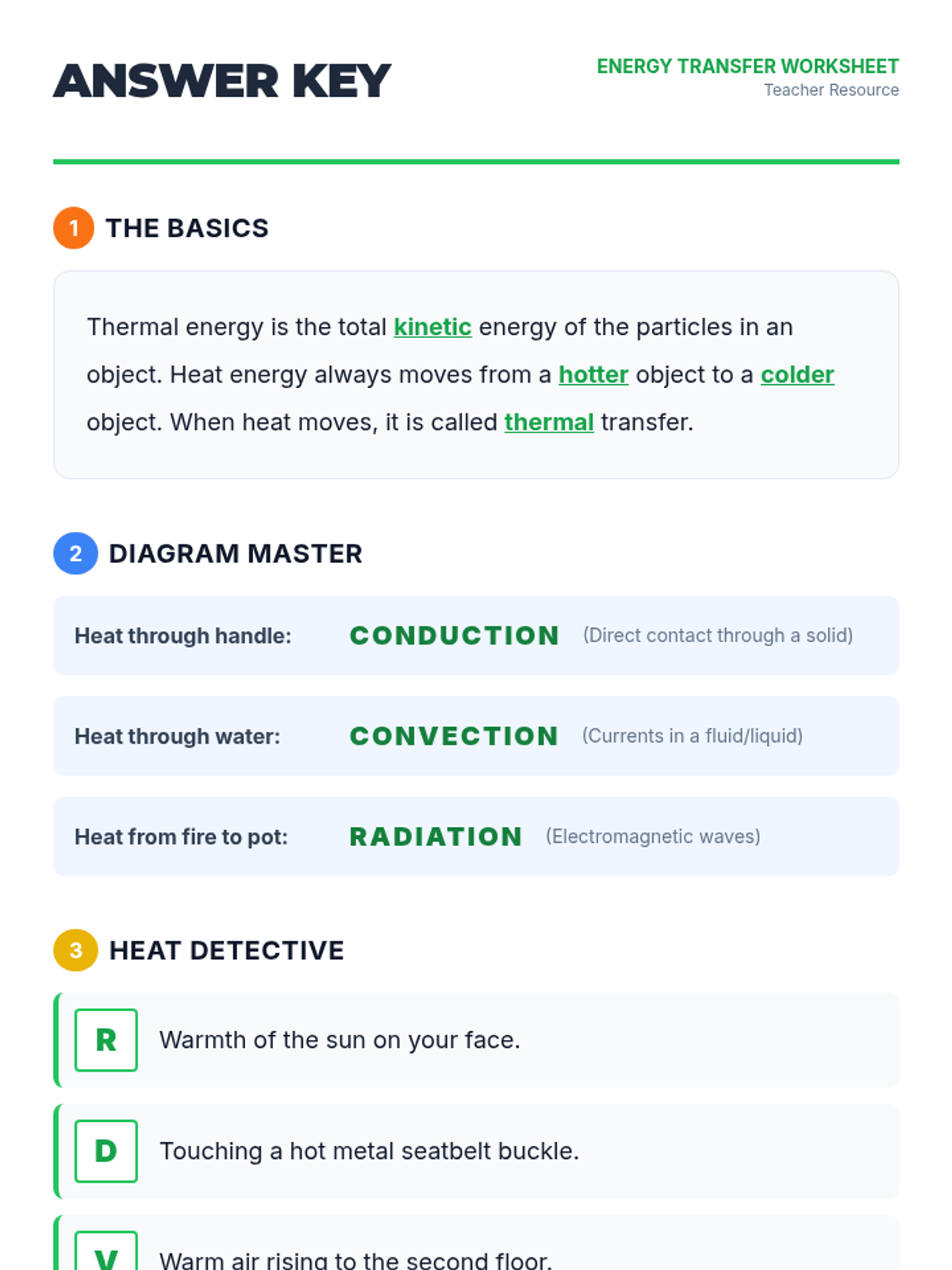
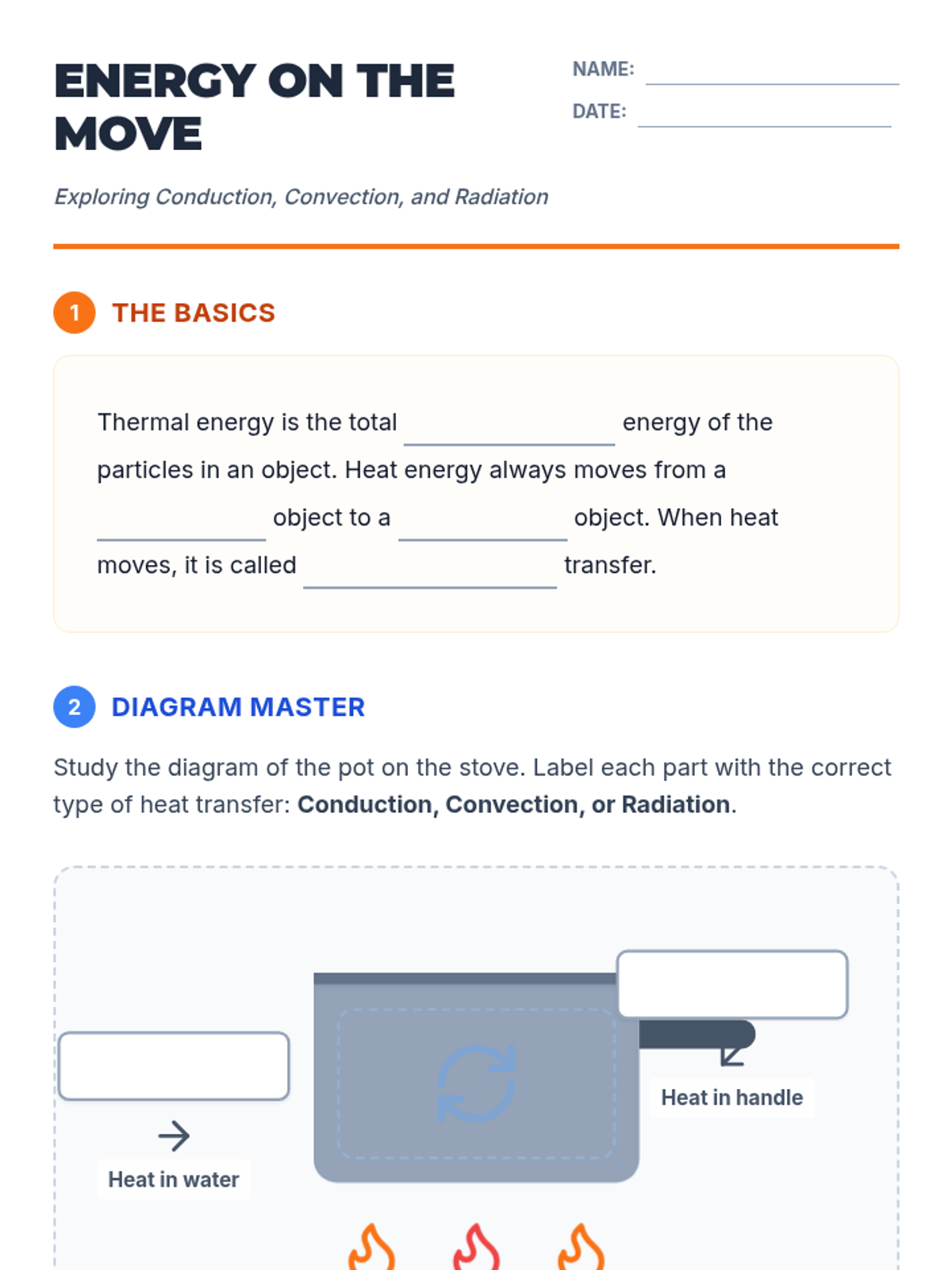
A comprehensive lesson exploring the three methods of heat transfer—conduction, convection, and radiation—through visual models and vocabulary-focused doodle notes.
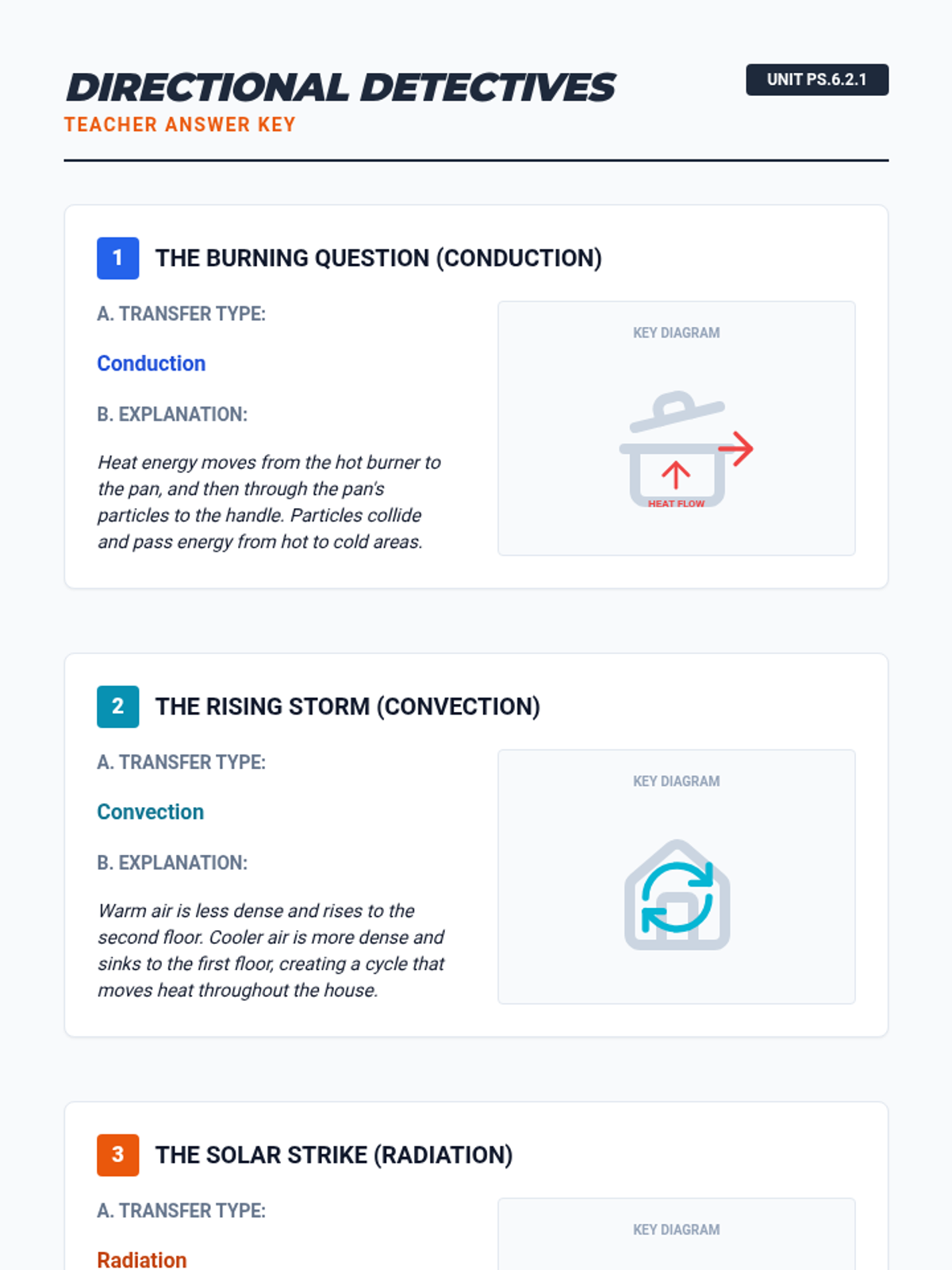
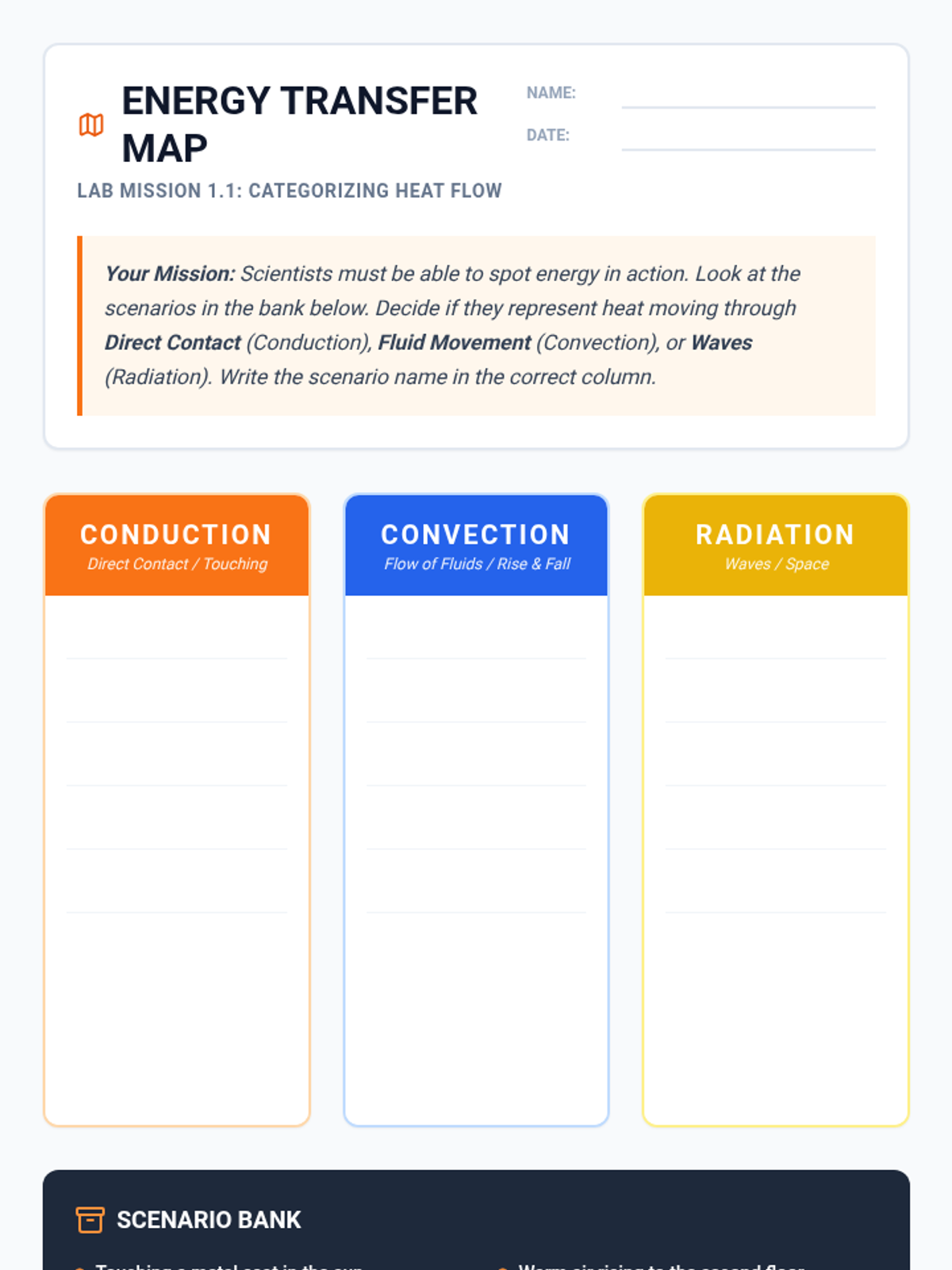
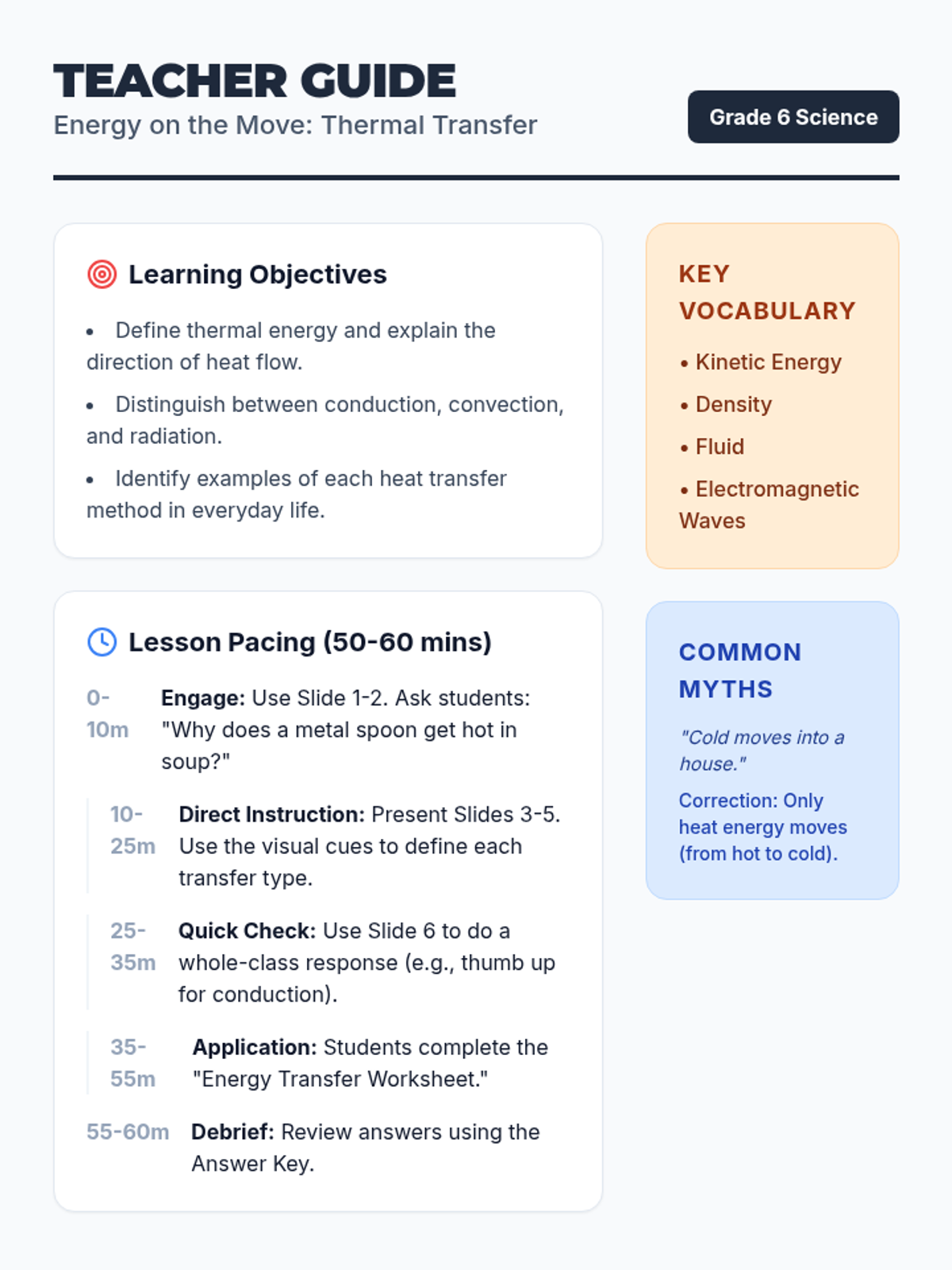
Students identify the three types of heat transfer and explain how thermal energy moves from warmer matter to cooler matter using real-world examples.
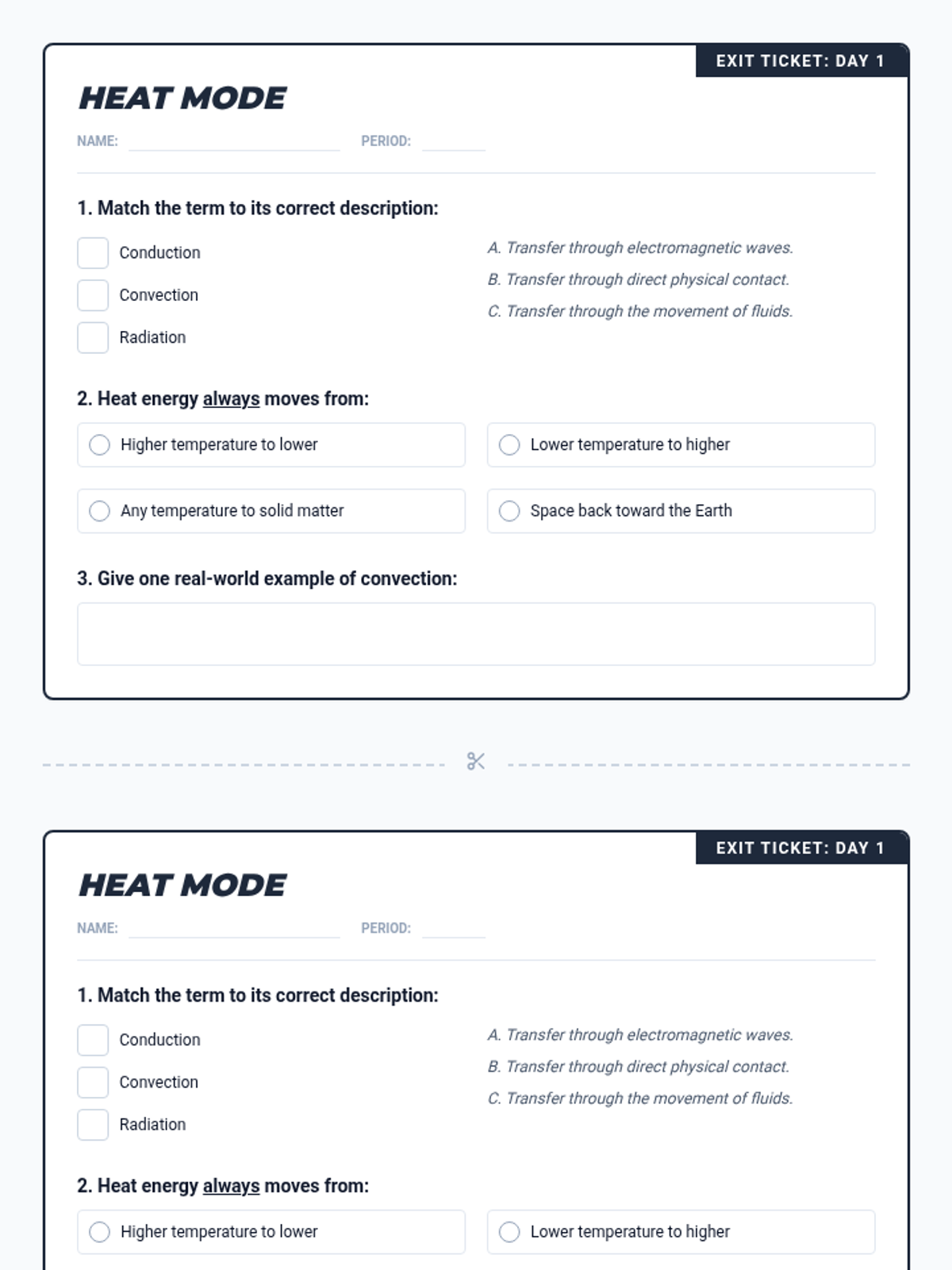
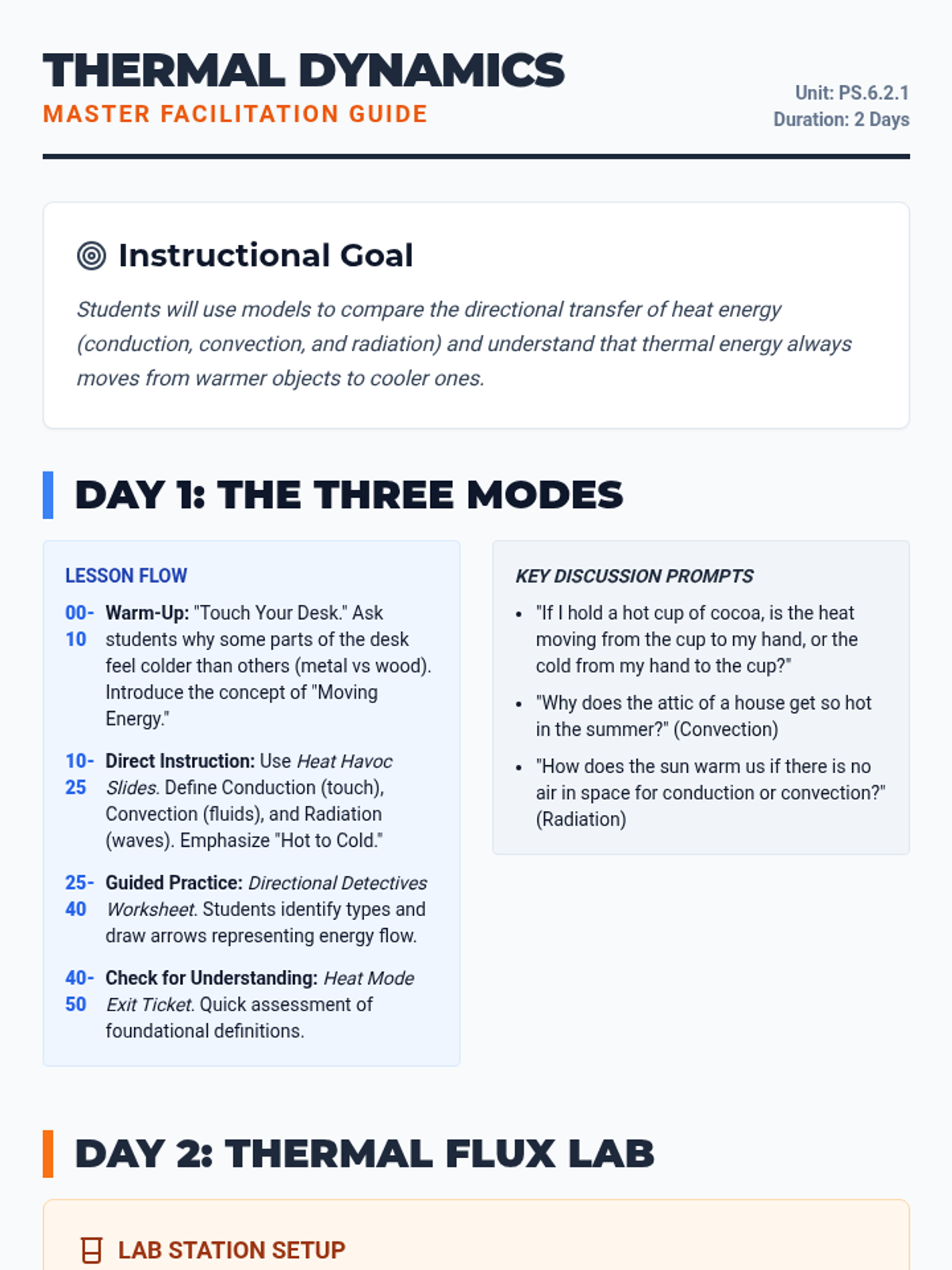
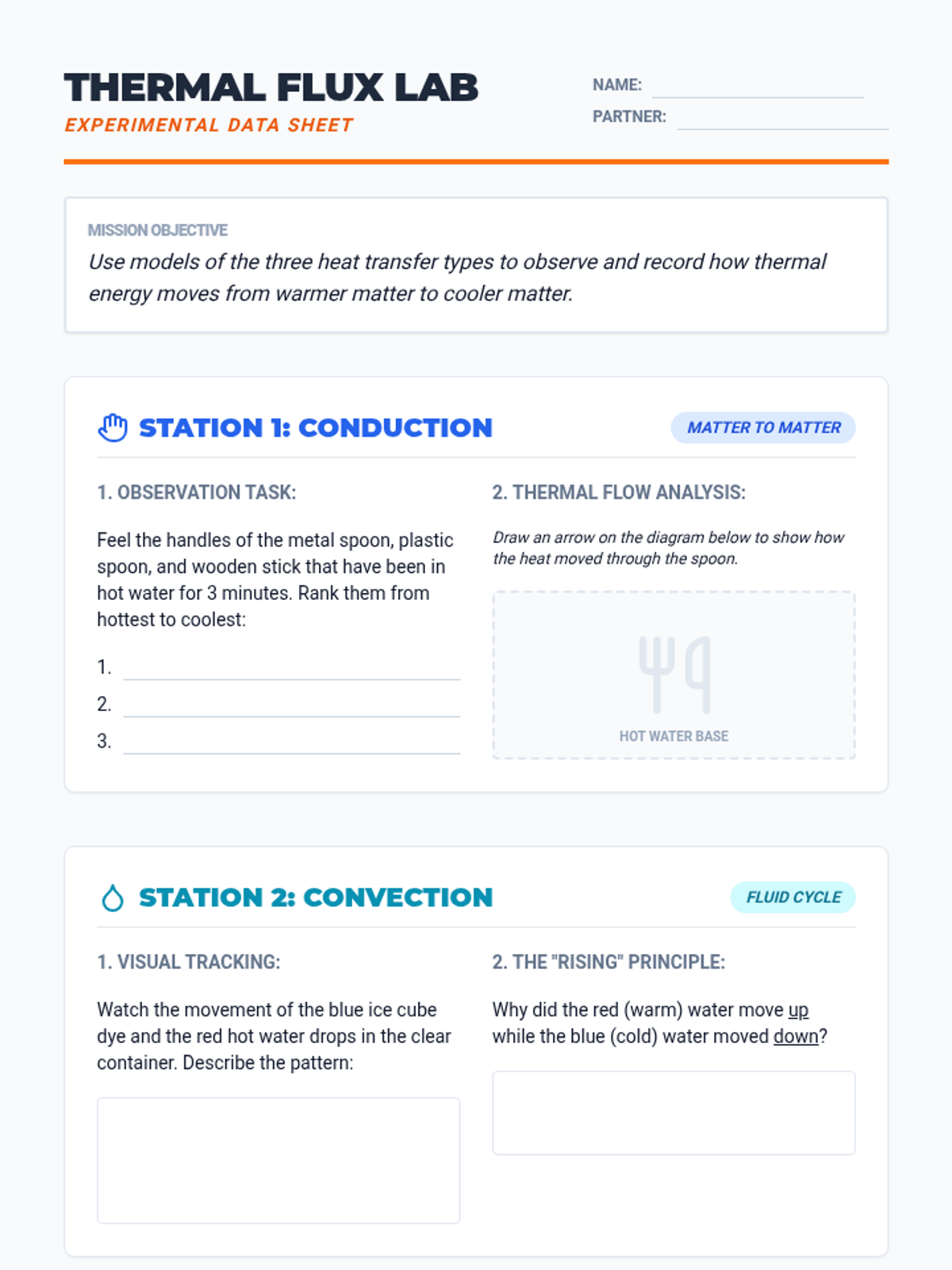
Students apply their knowledge of heat transfer through a hands-on lab experiment involving three stations representing conduction, convection, and radiation. They will collect data and compare the efficiency and direction of heat transfer in each model.
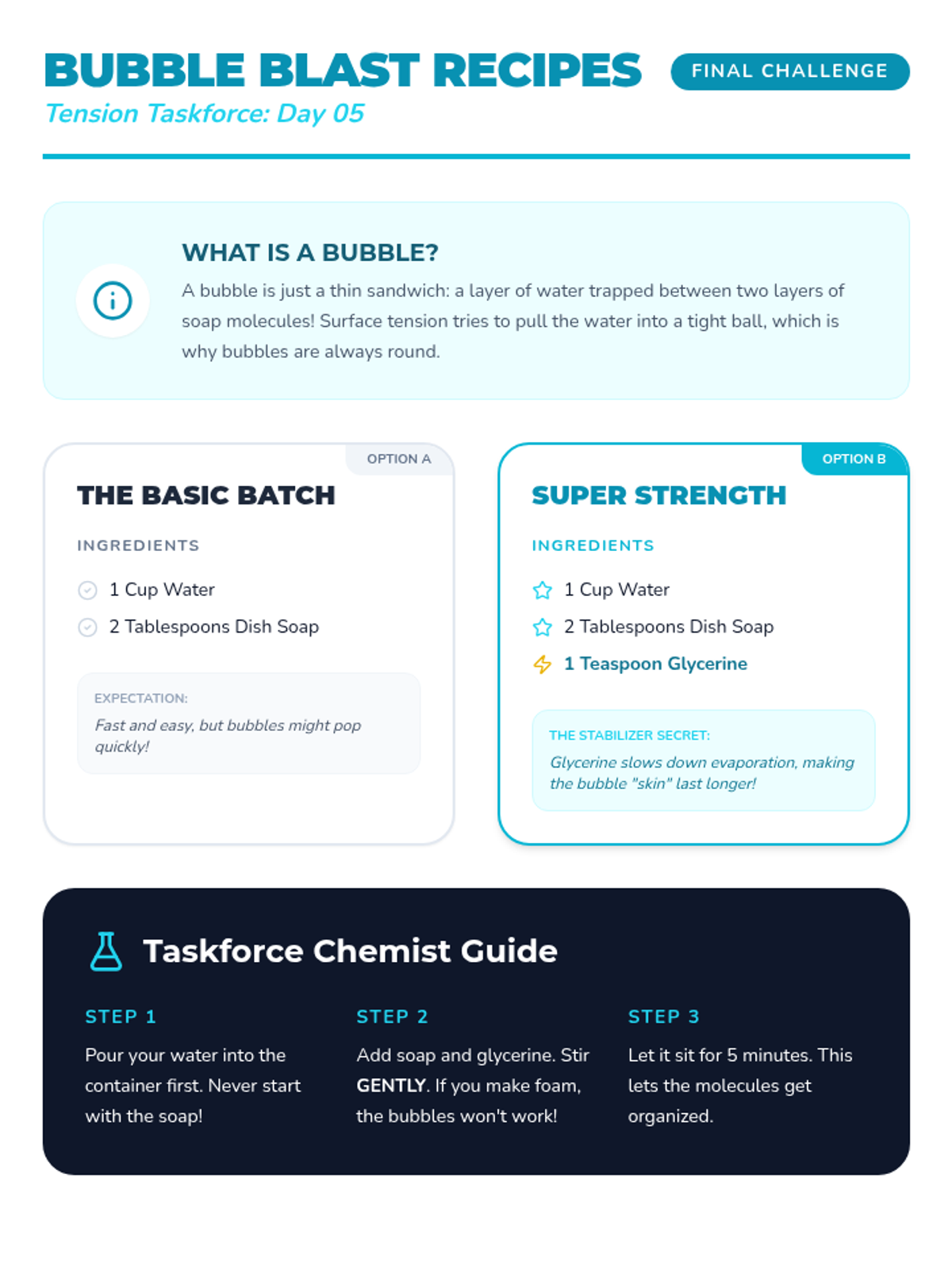
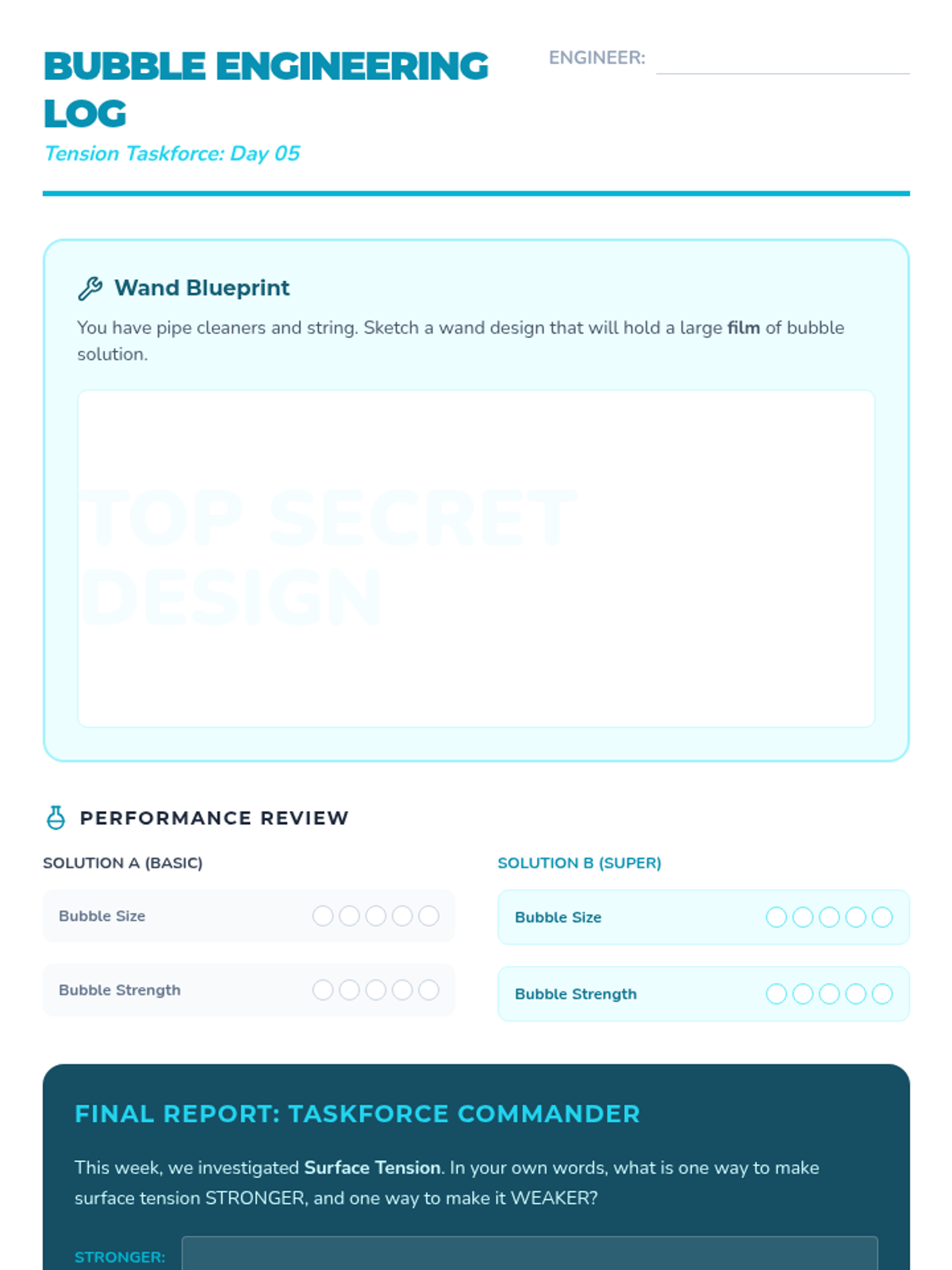
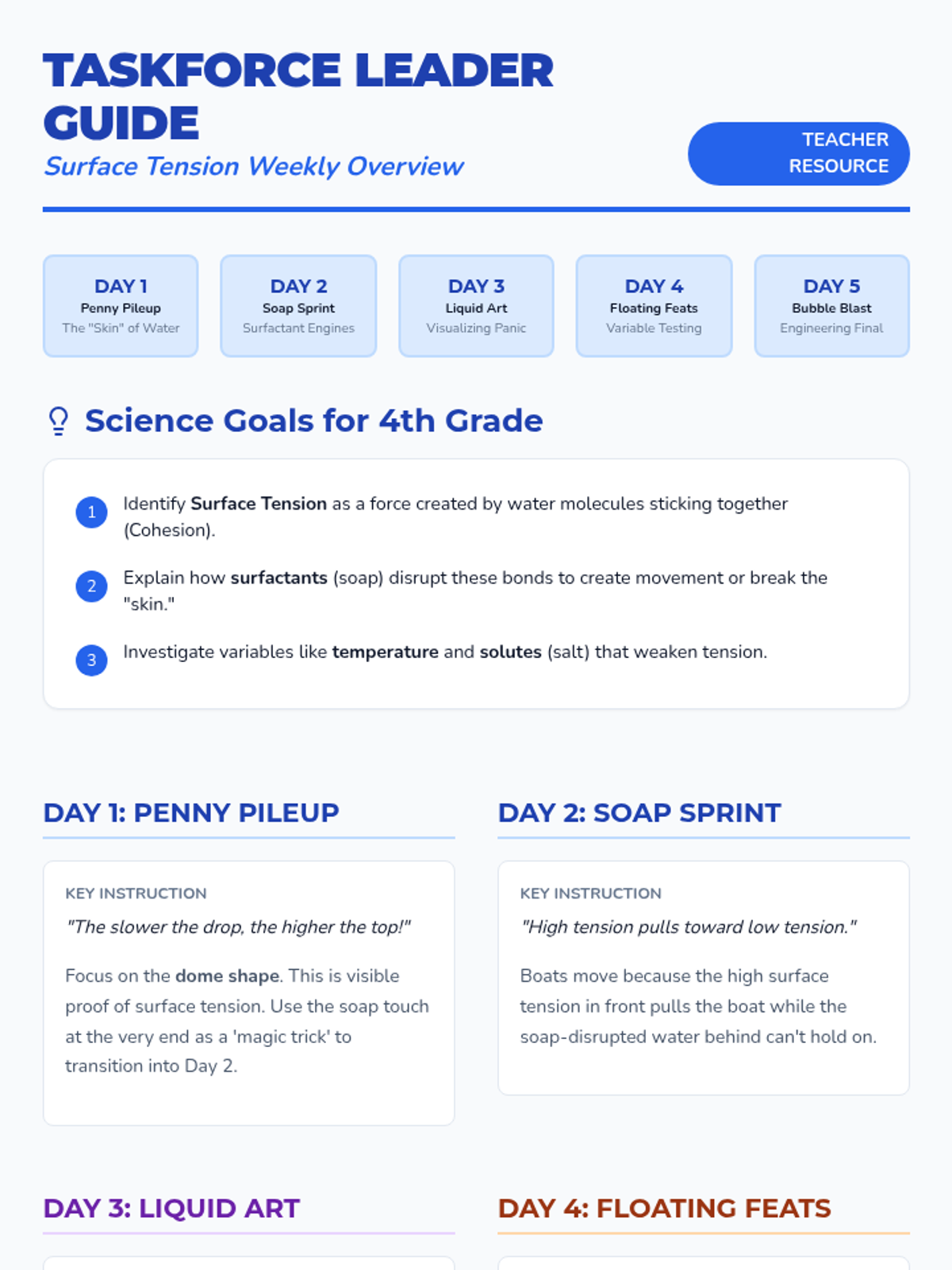
Applying knowledge of surface tension to create the strongest bubble solution and engineer giant bubble wands.
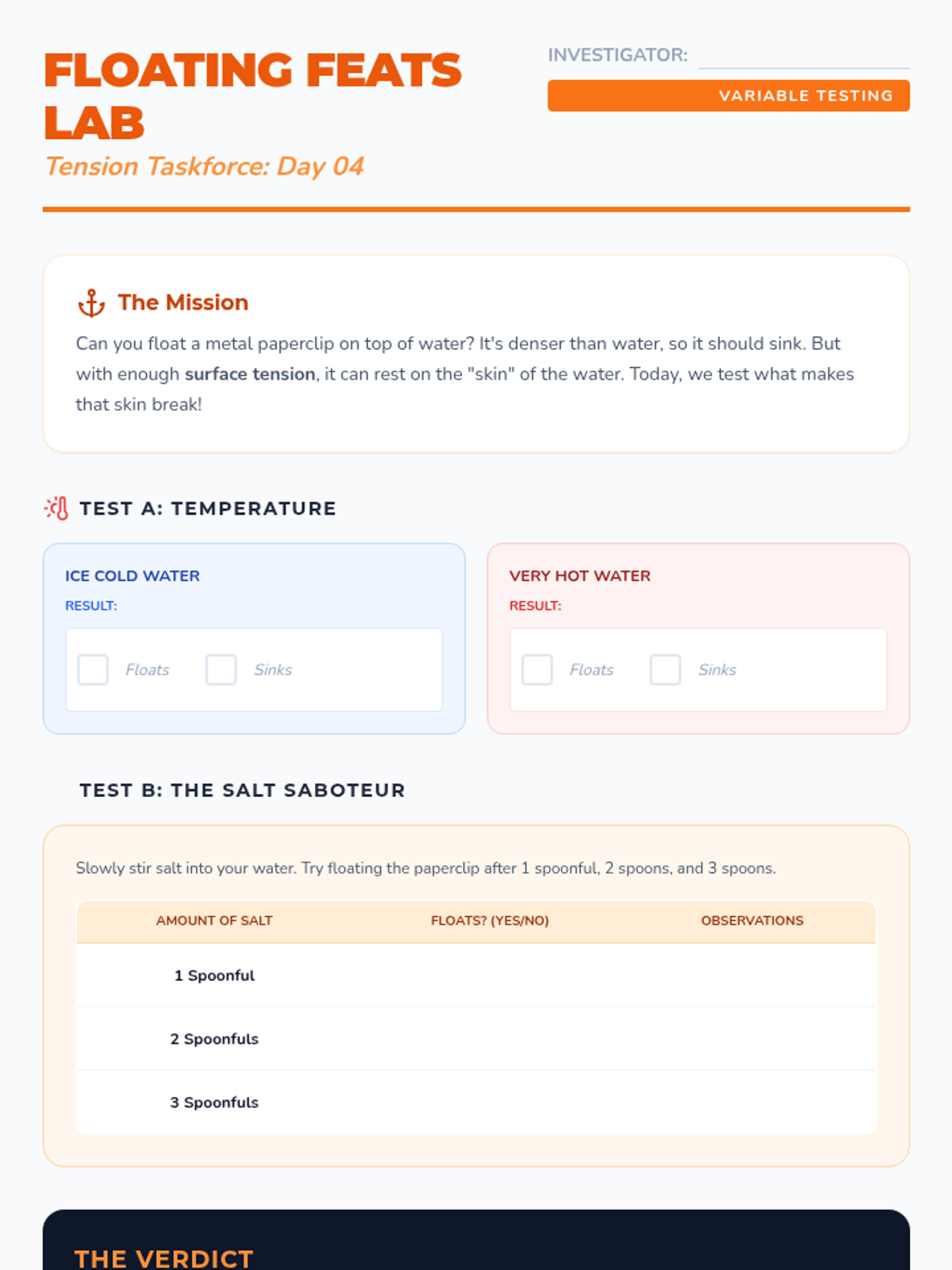
Investigating factors like temperature and solutes (salt) on surface tension by attempting to float heavy objects.
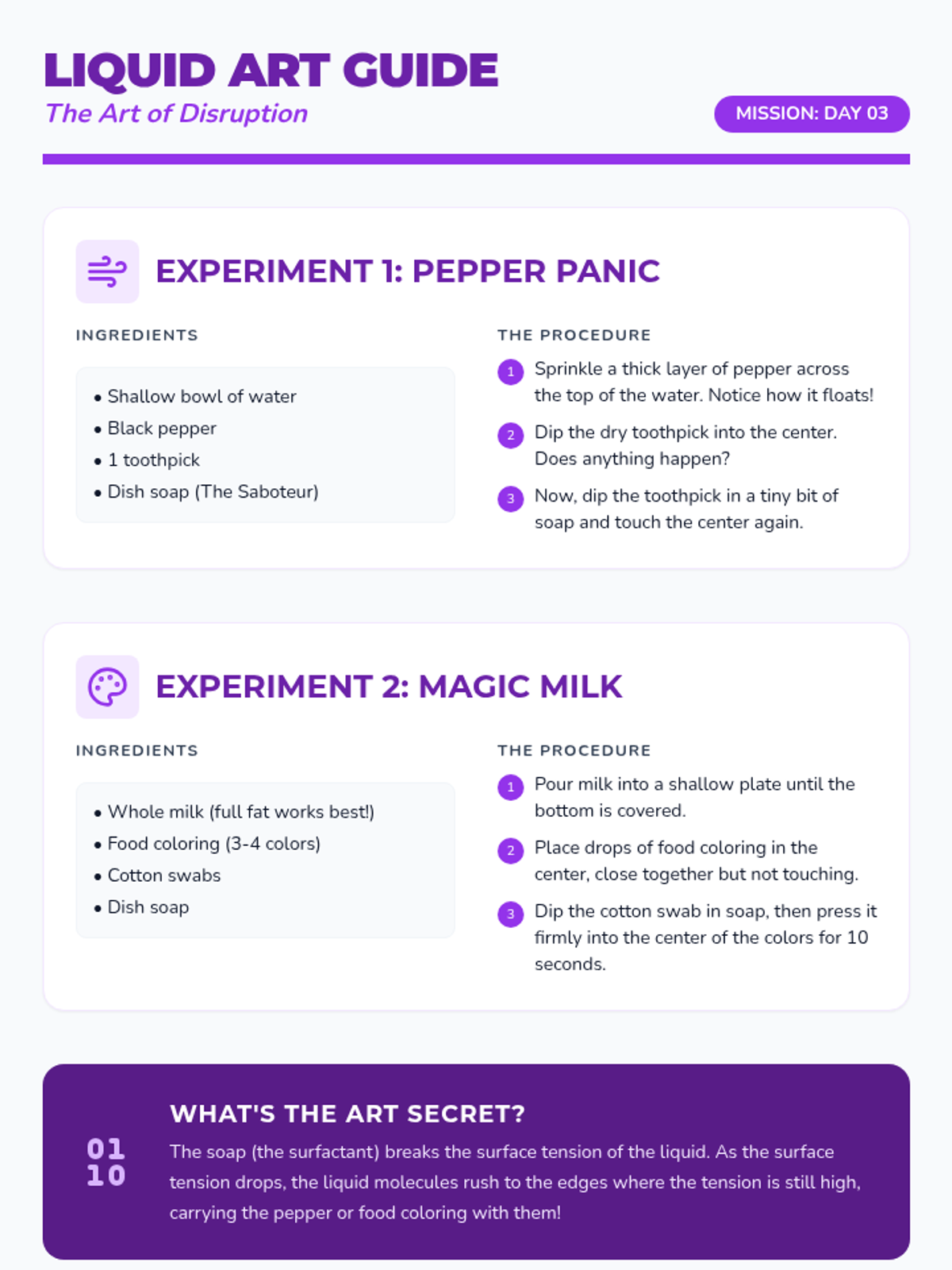
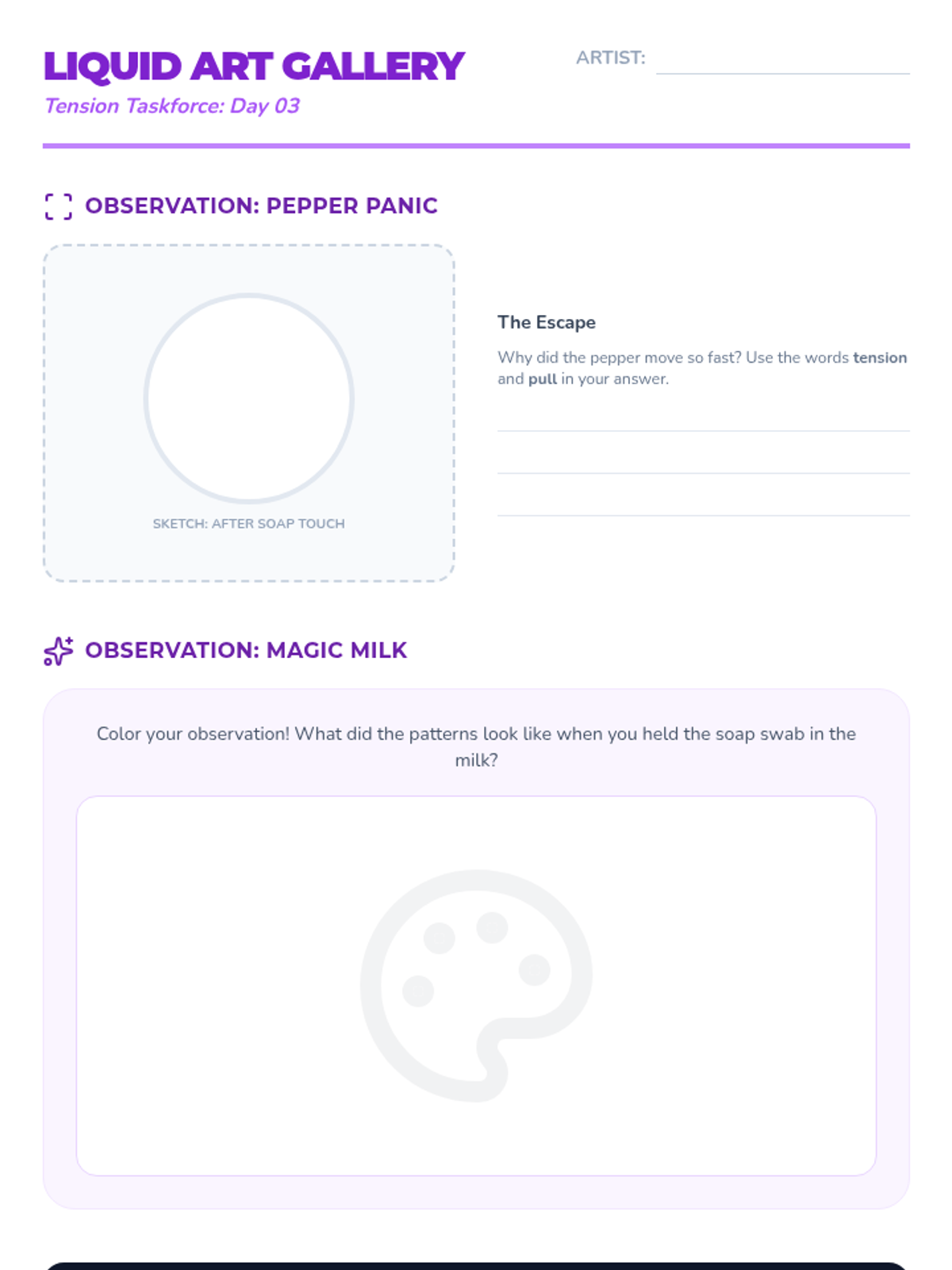
Visualizing surface tension disruption through colorful experiments like Magic Milk and Pepper Panic.
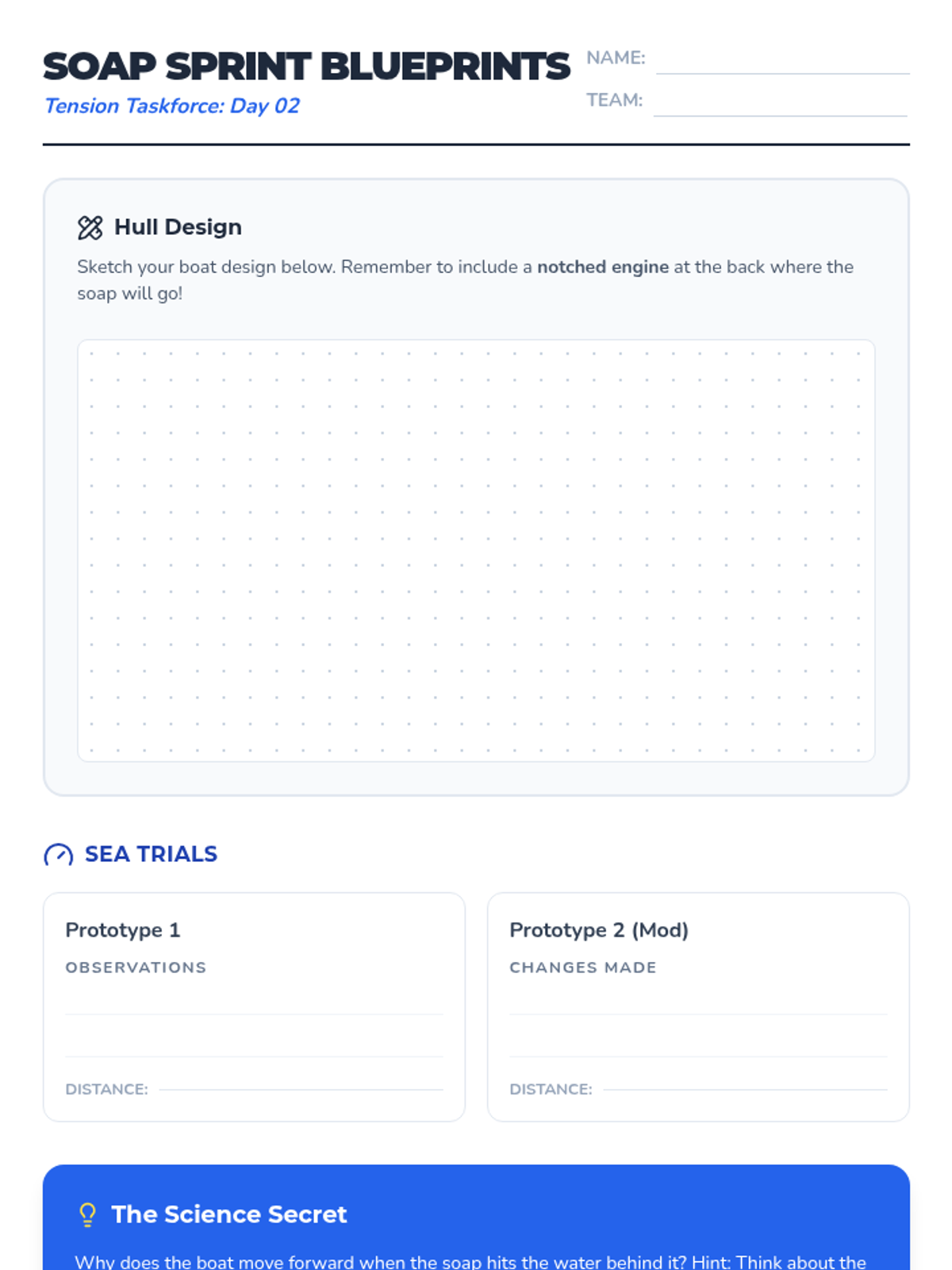
Exploring how surfactants like dish soap disrupt surface tension to create motion. Students build and race soap-powered boats.
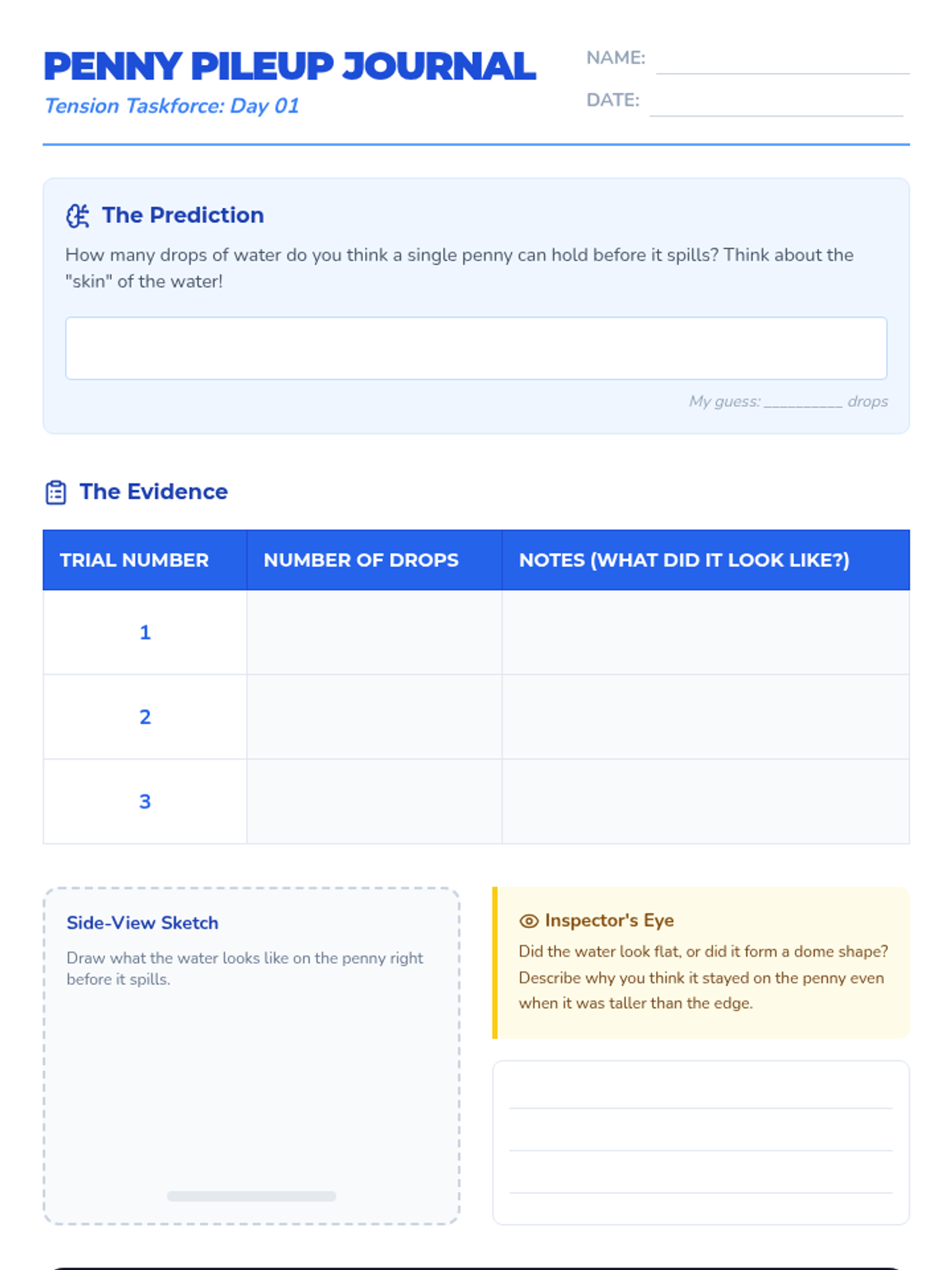
An introduction to surface tension using the classic penny drop experiment. Students learn about cohesion and the 'skin' of water.
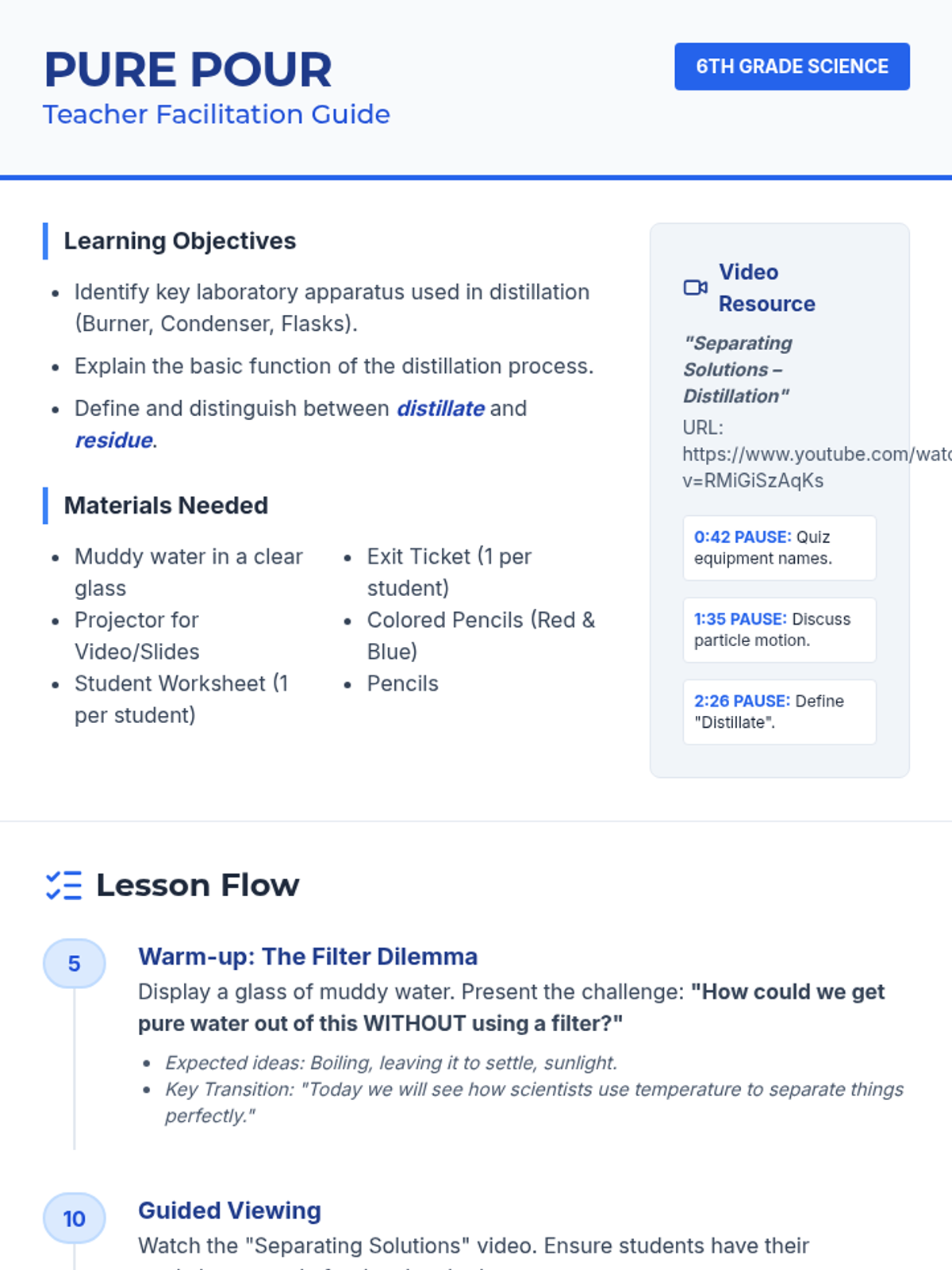
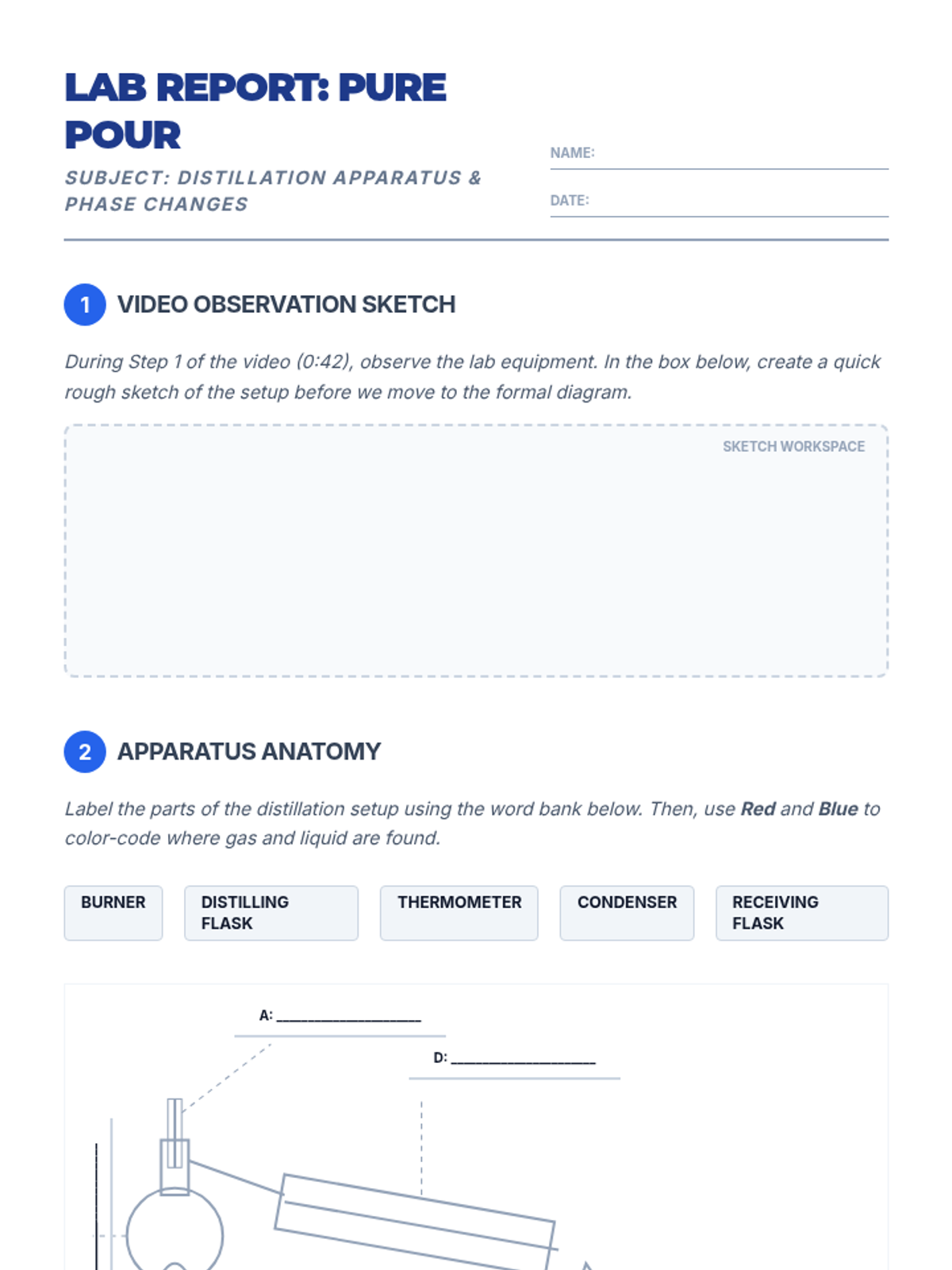
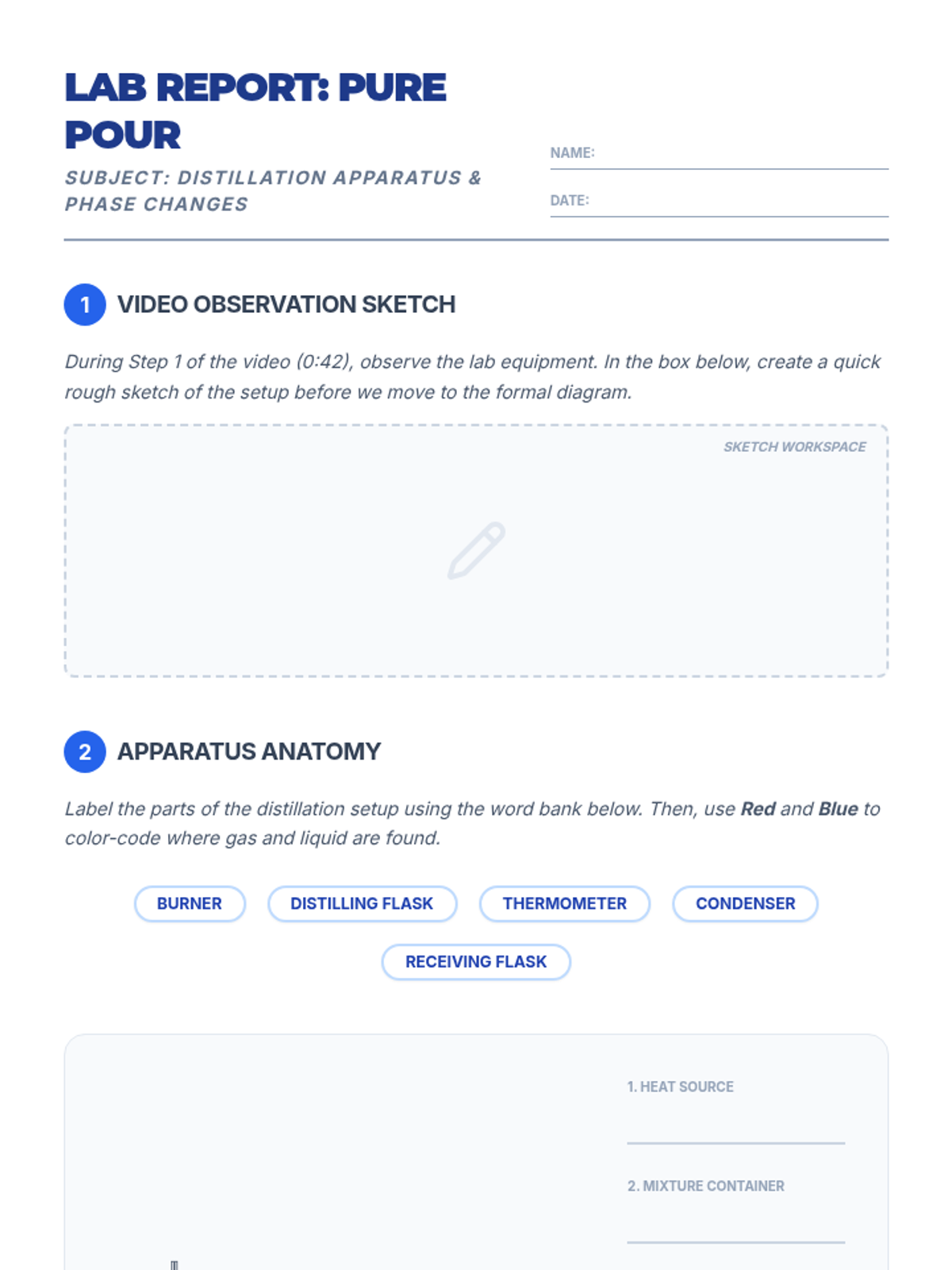
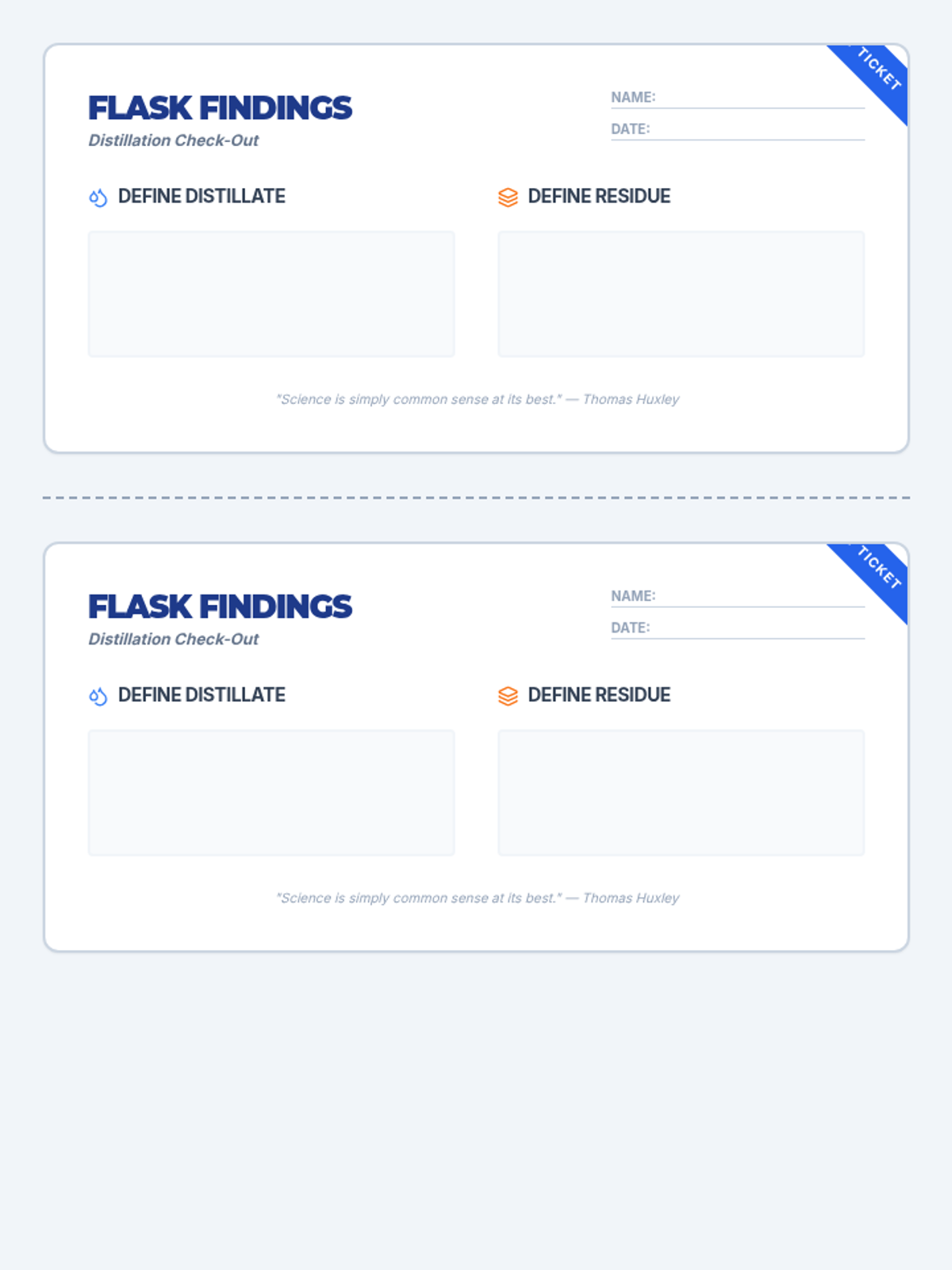
A comprehensive 6th-grade science lesson on distillation, covering laboratory apparatus, phase changes, and the separation of solutions using a specific instructional video.
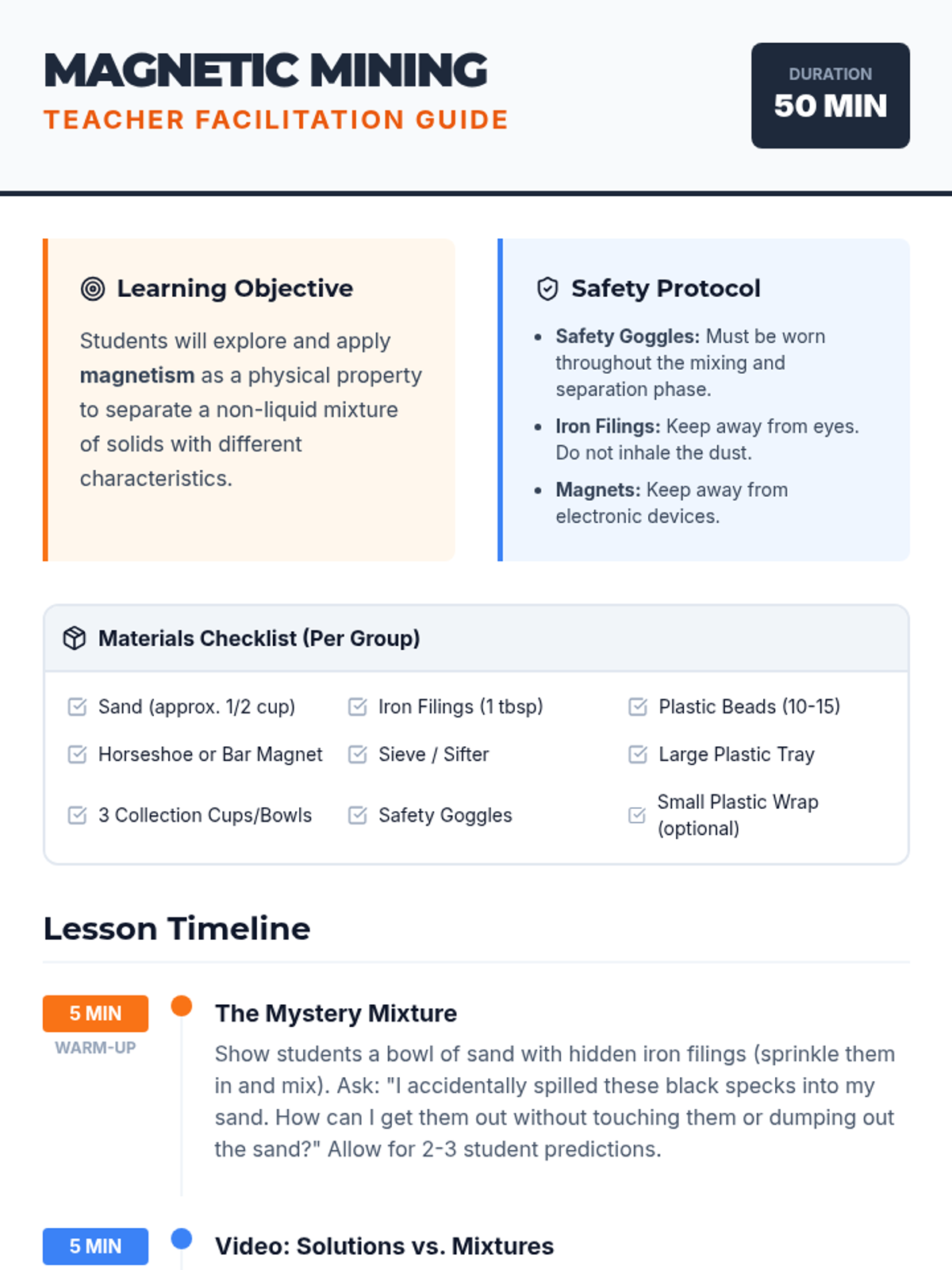
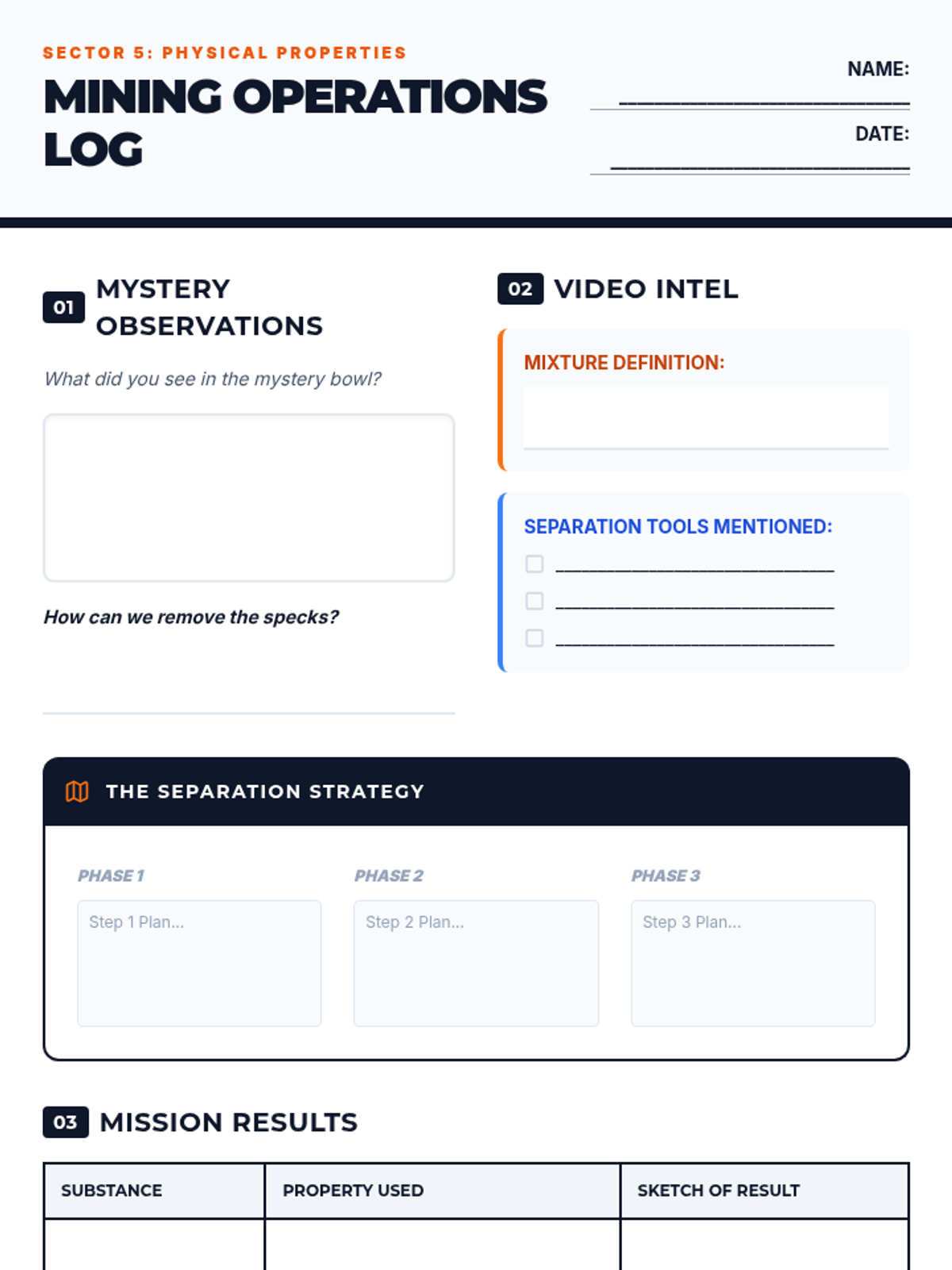
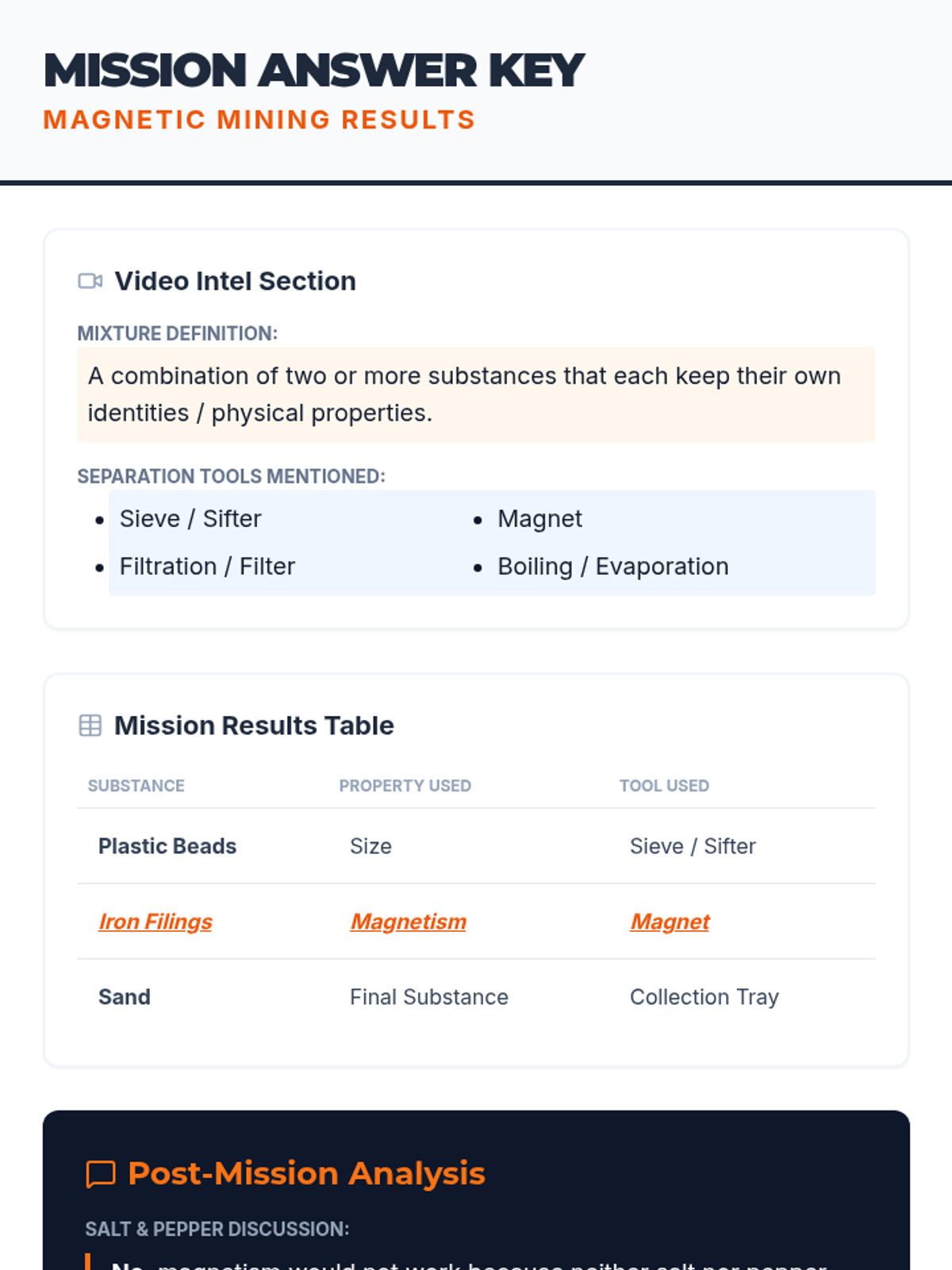
Students explore how to separate mixtures using physical properties, specifically focusing on magnetism. They engage in a hands-on activity to separate sand, iron filings, and plastic beads using sieves and magnets.
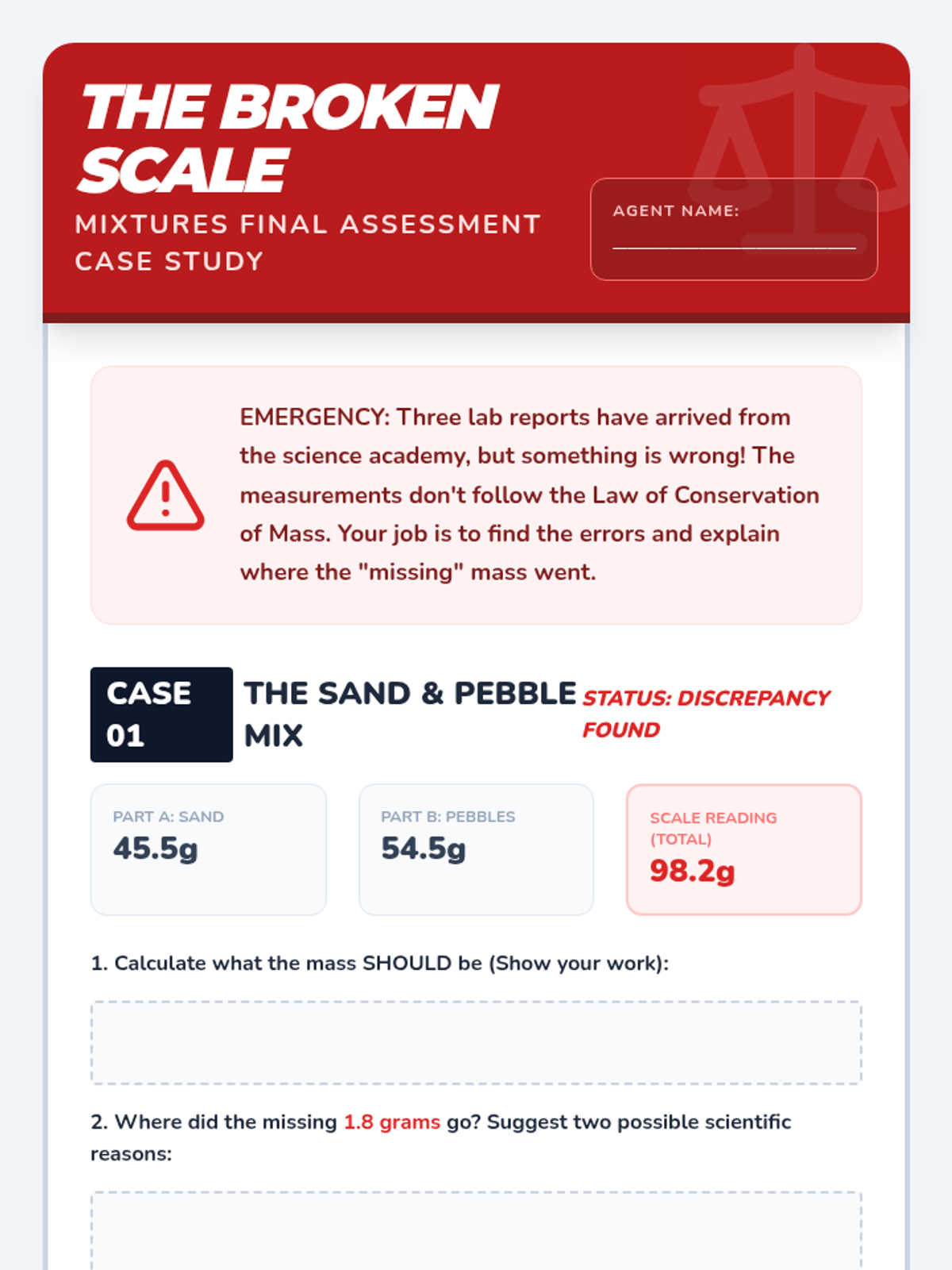
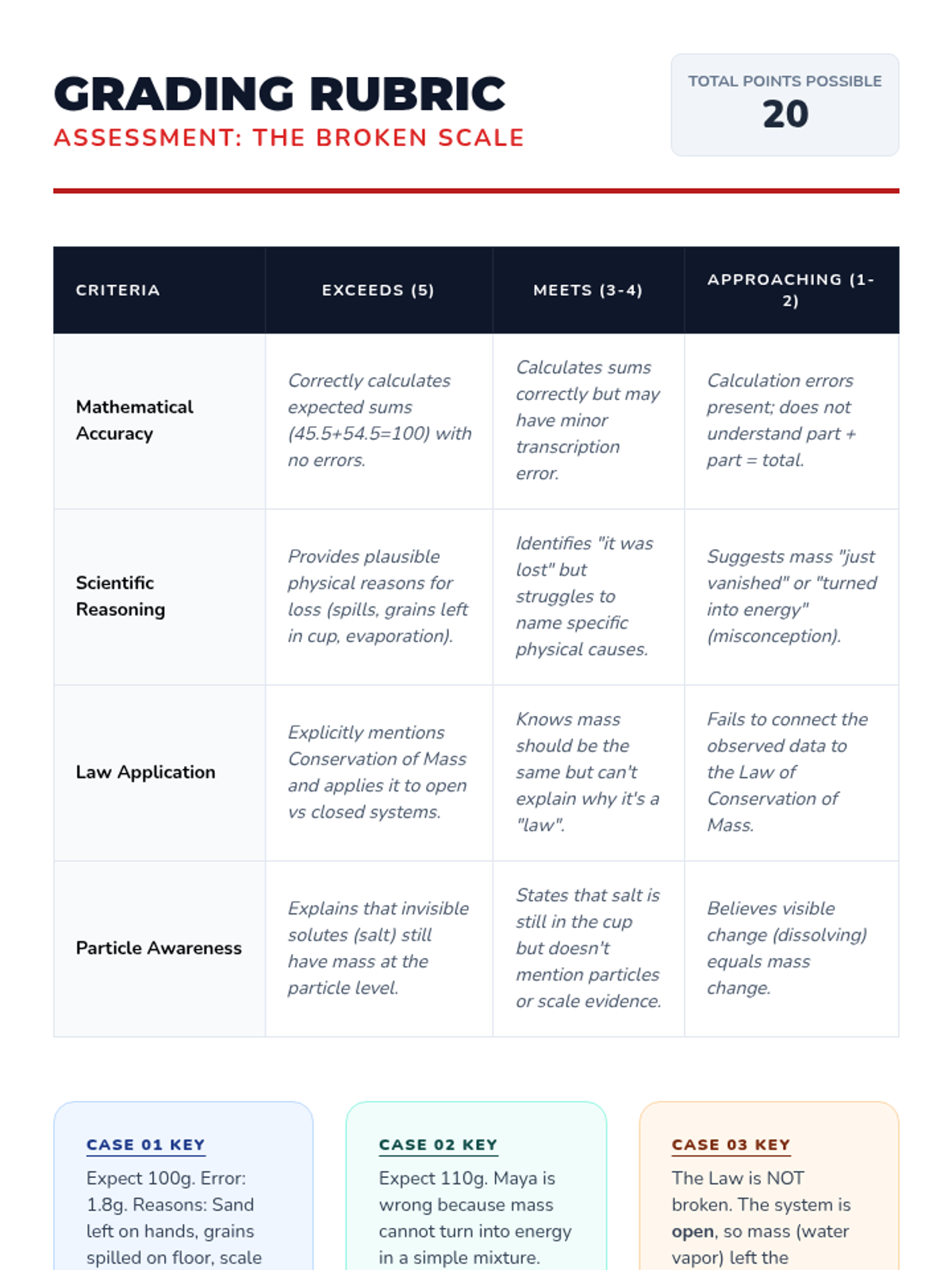
Students apply their knowledge of the Law of Conservation of Mass to solve case studies involving "broken scales" and discrepancies in lab data.
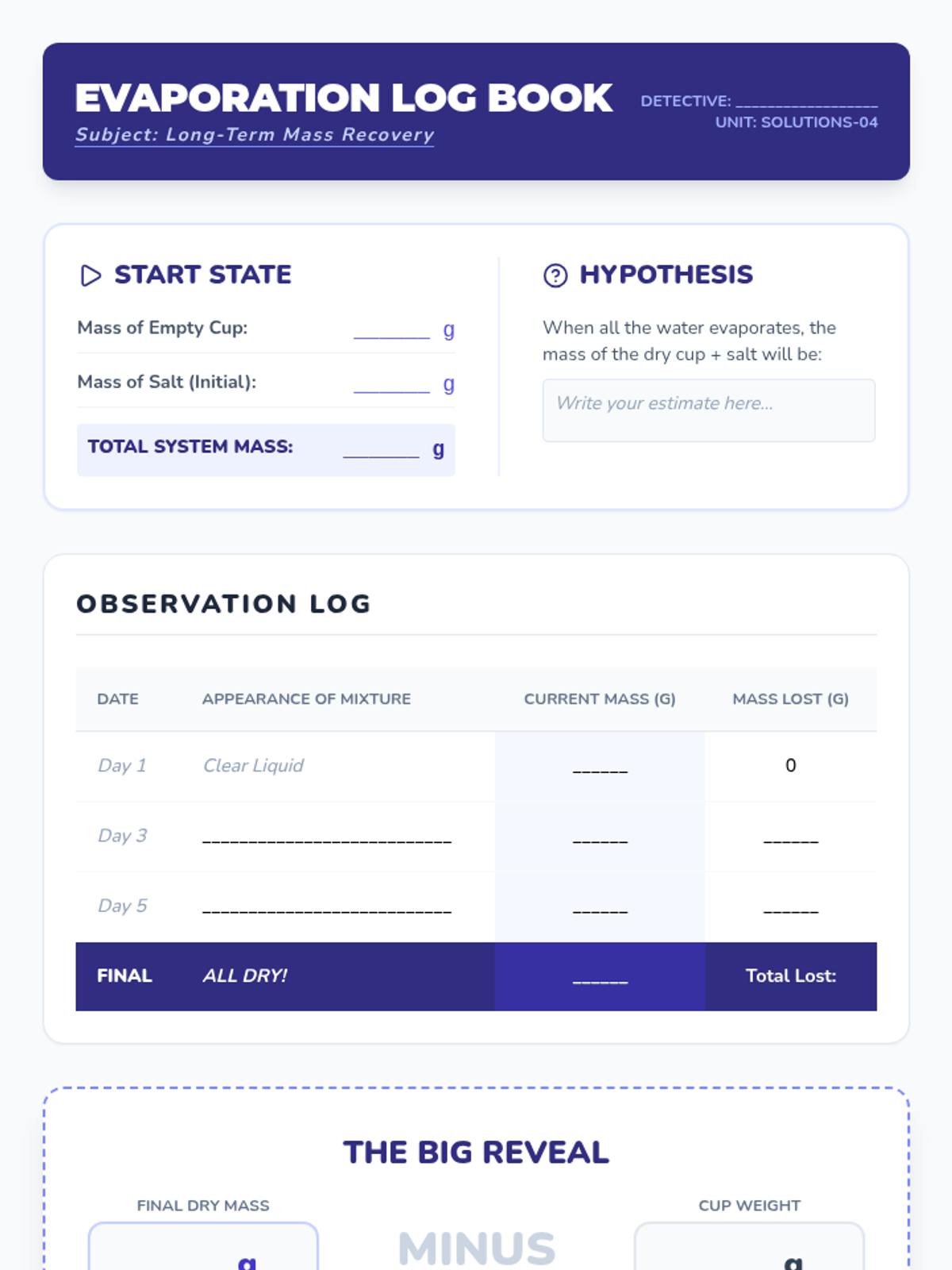
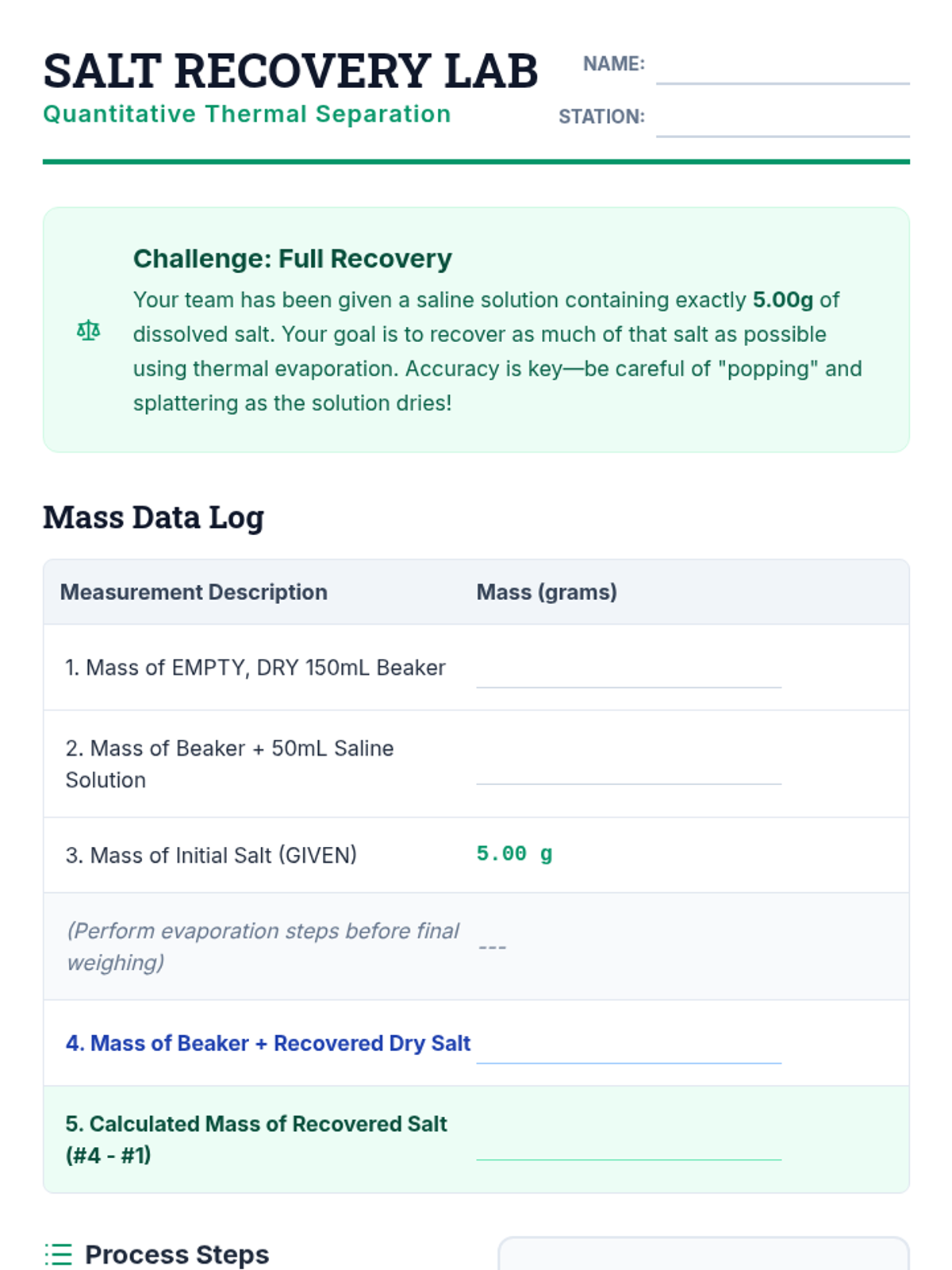
Students set up an evaporation experiment to recover dissolved salt, proving that the salt remained in the system despite being invisible.
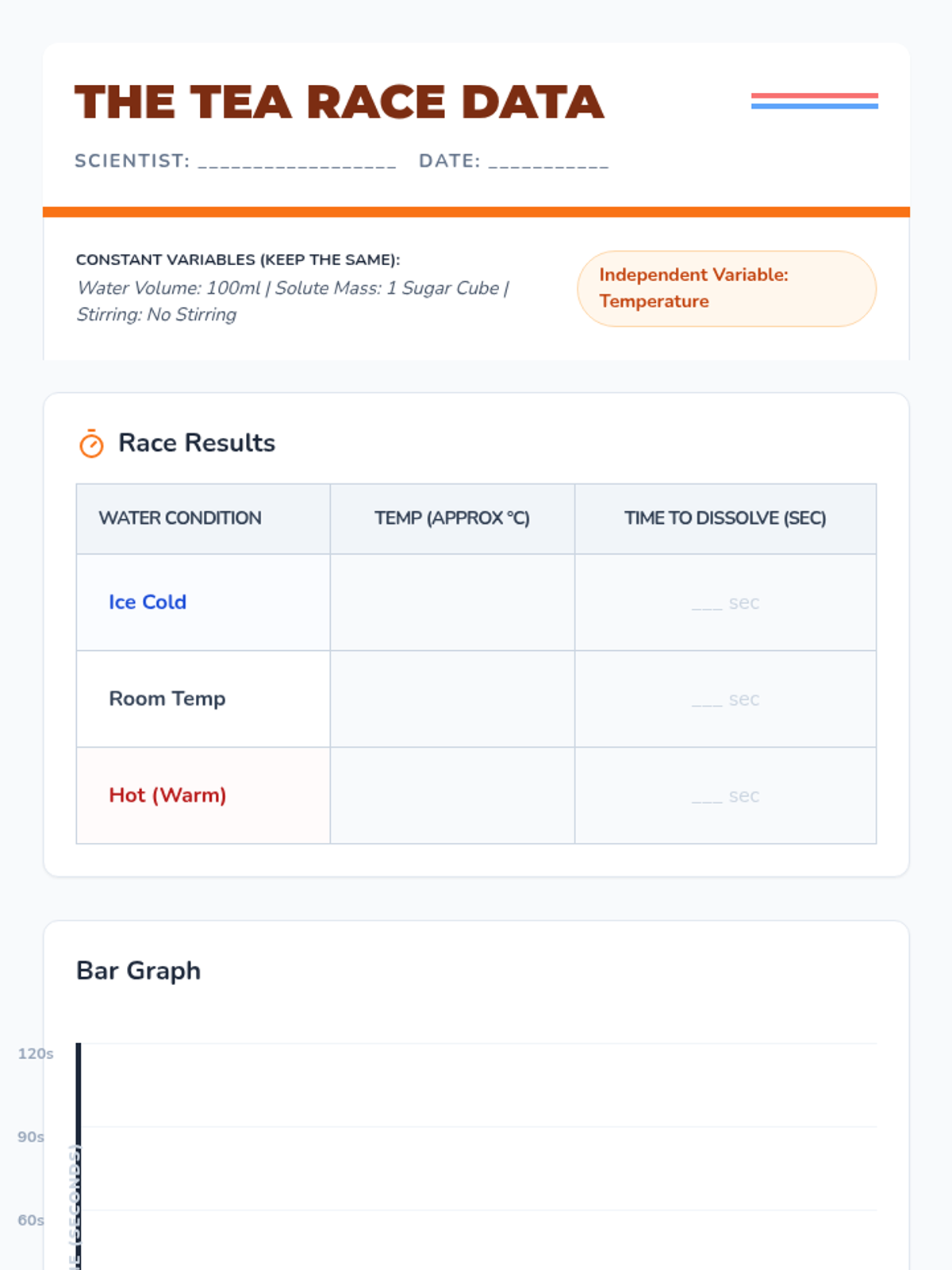
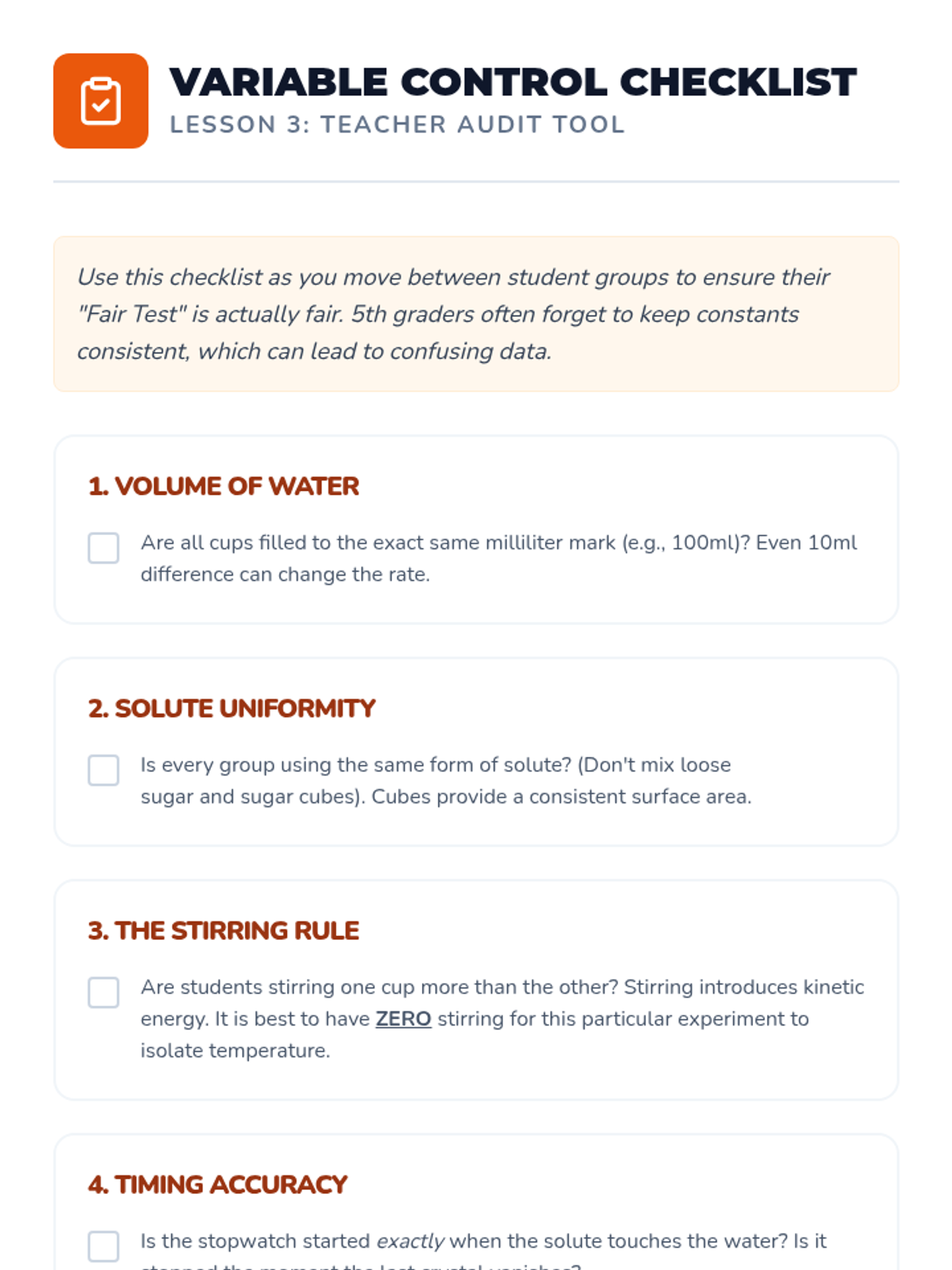
Students experiment with water temperature to see how it affects how quickly a solute dissolves, linking energy to particle movement.
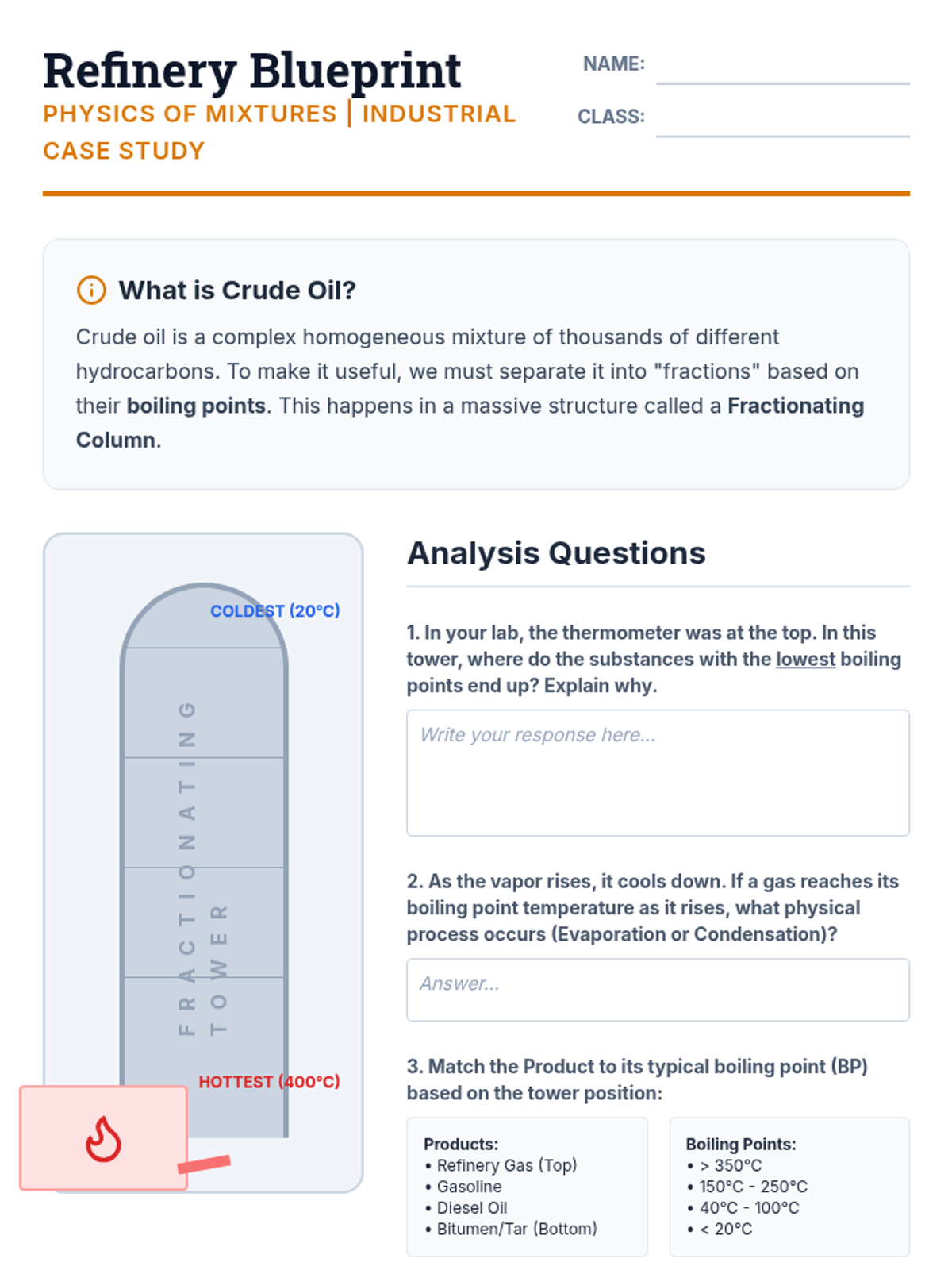
Students analyze lab results, discuss separation efficiency, and explore real-world industrial applications like fractional distillation in refineries.
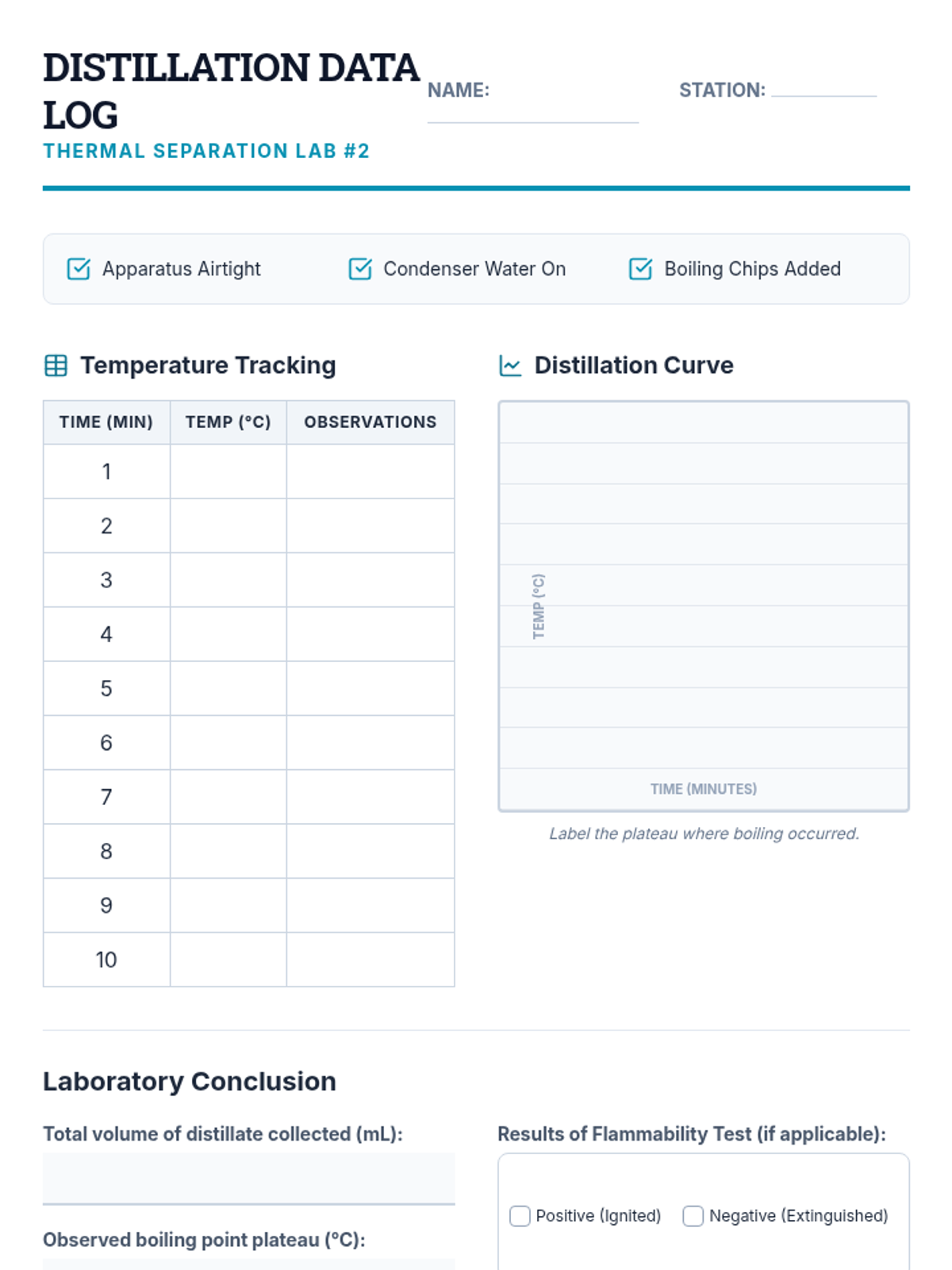
A hands-on lab where students perform simple distillation to separate a mixture, monitoring boiling points and collecting distillate.
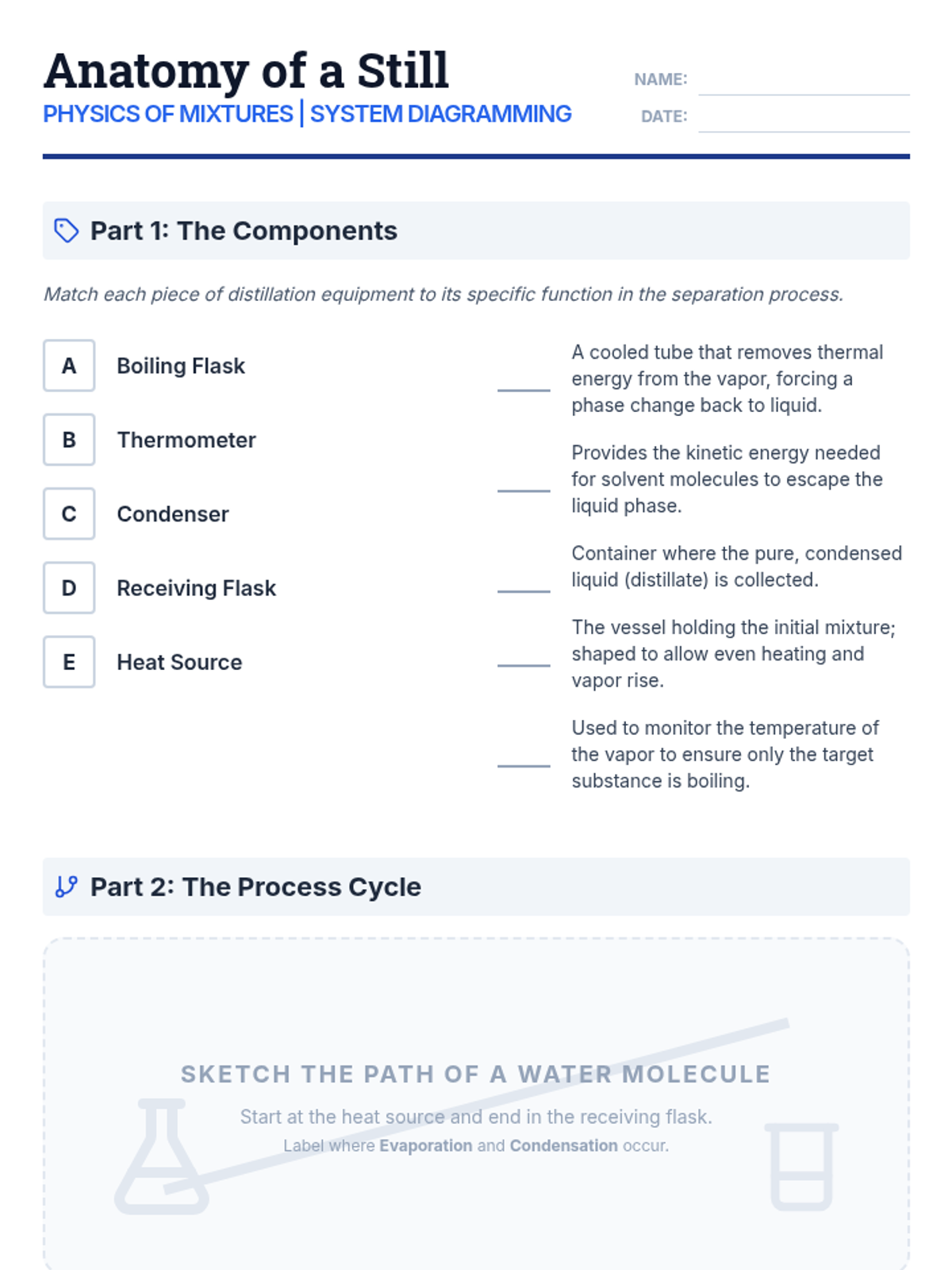
An introduction to distillation as a method for capturing both solute and solvent, featuring apparatus identification and a demonstration.
Students perform a lab to recover dissolved salt from water using evaporation, focusing on quantitative measurement and percent recovery.
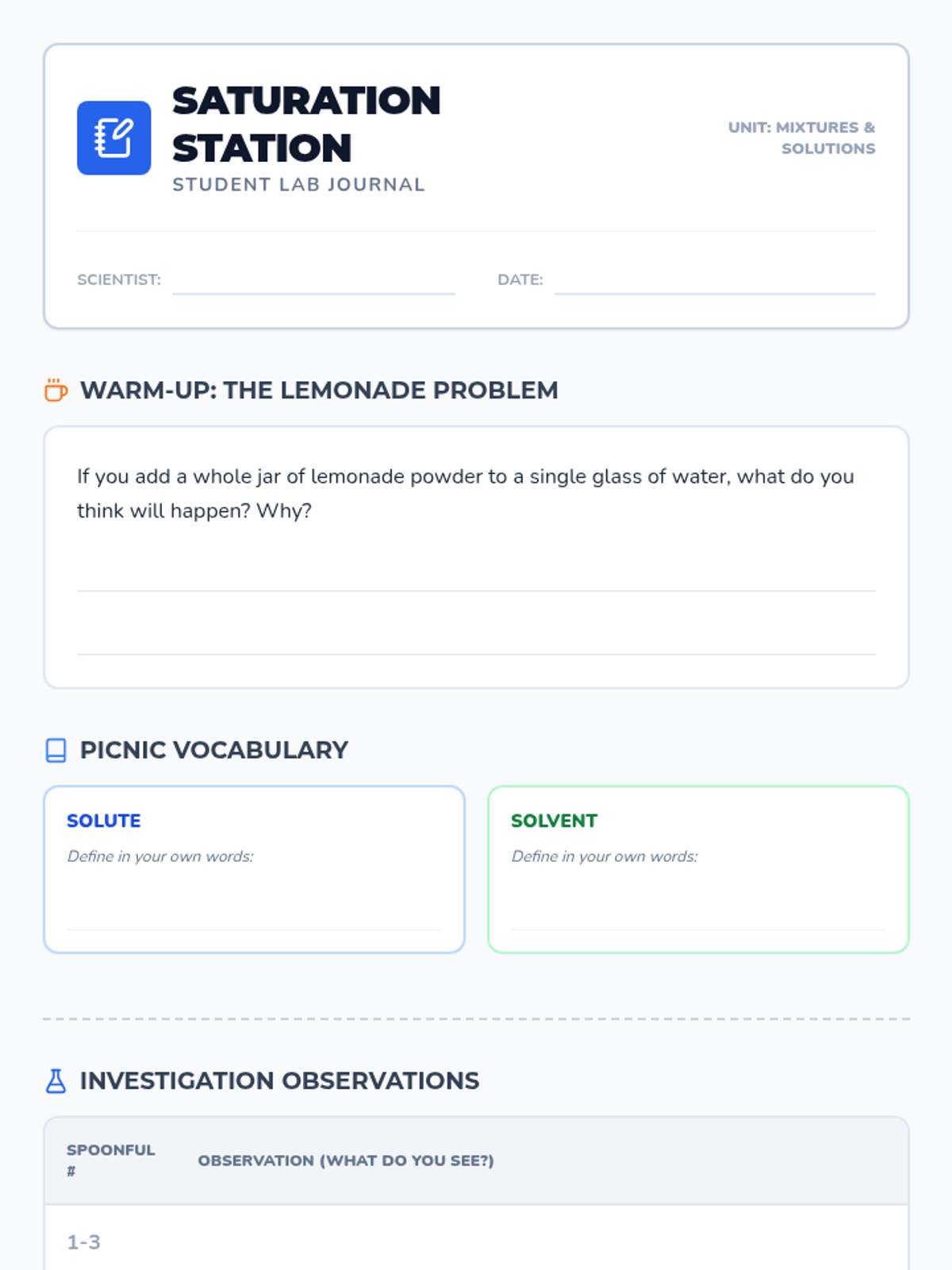
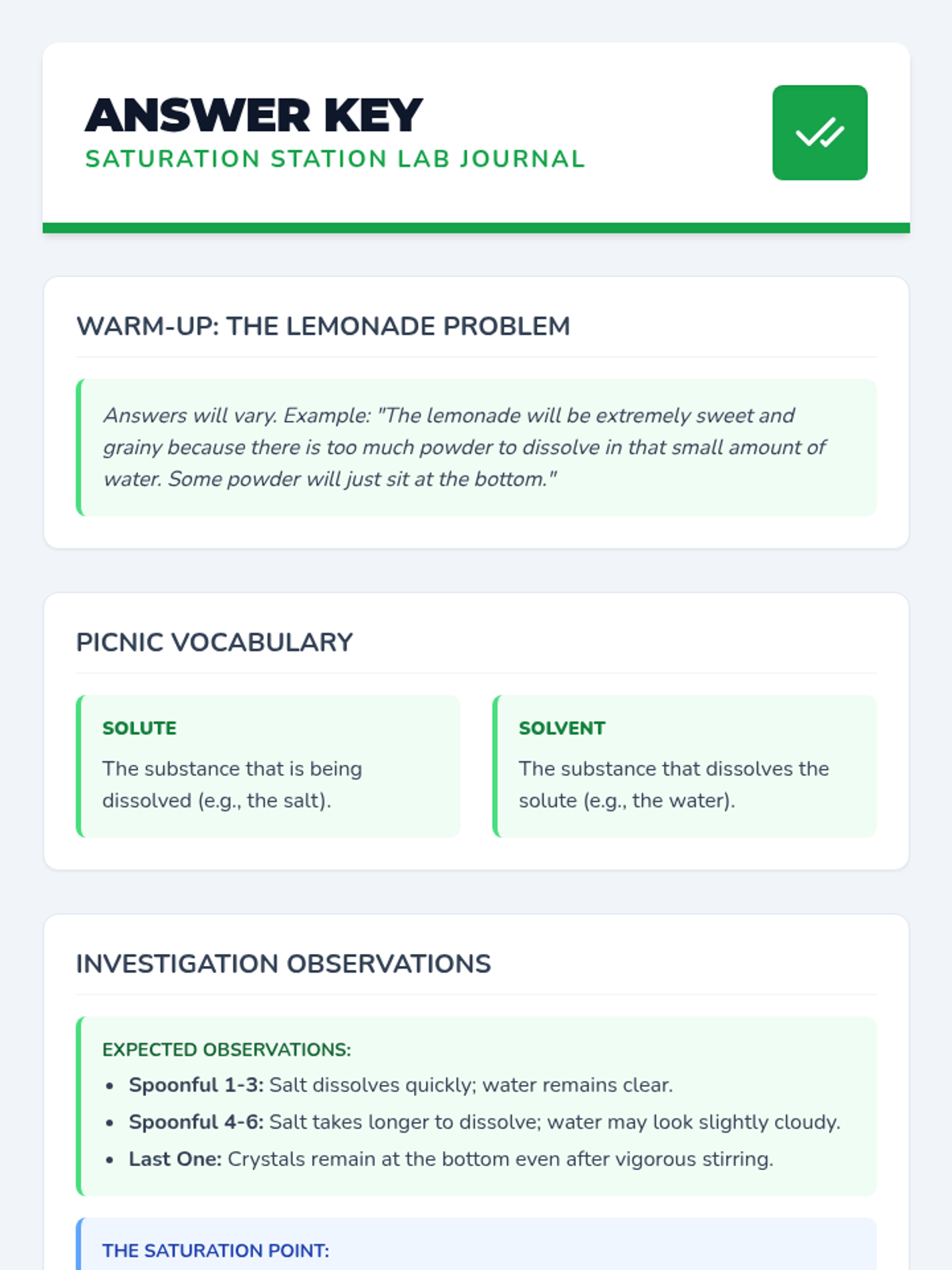
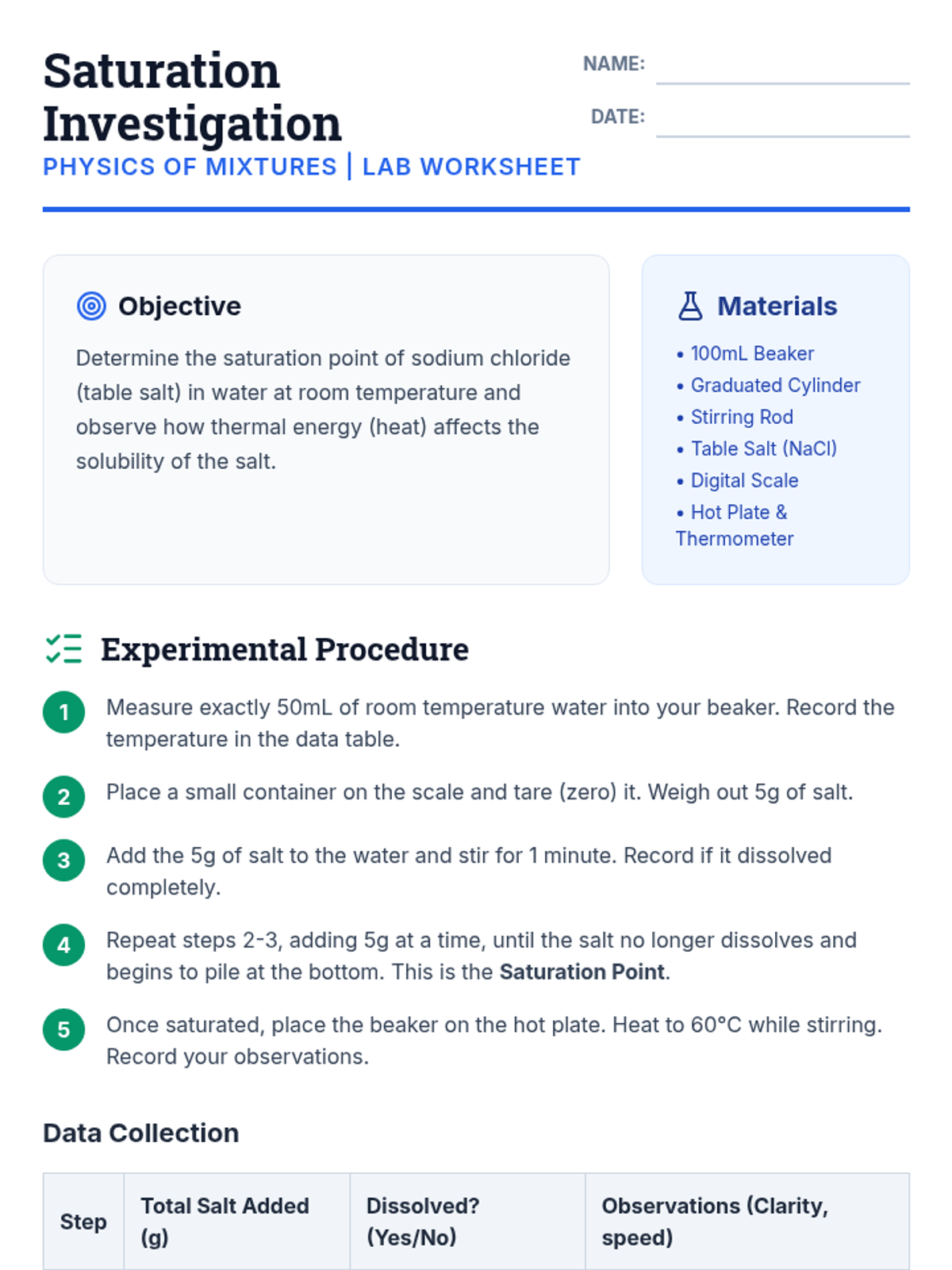
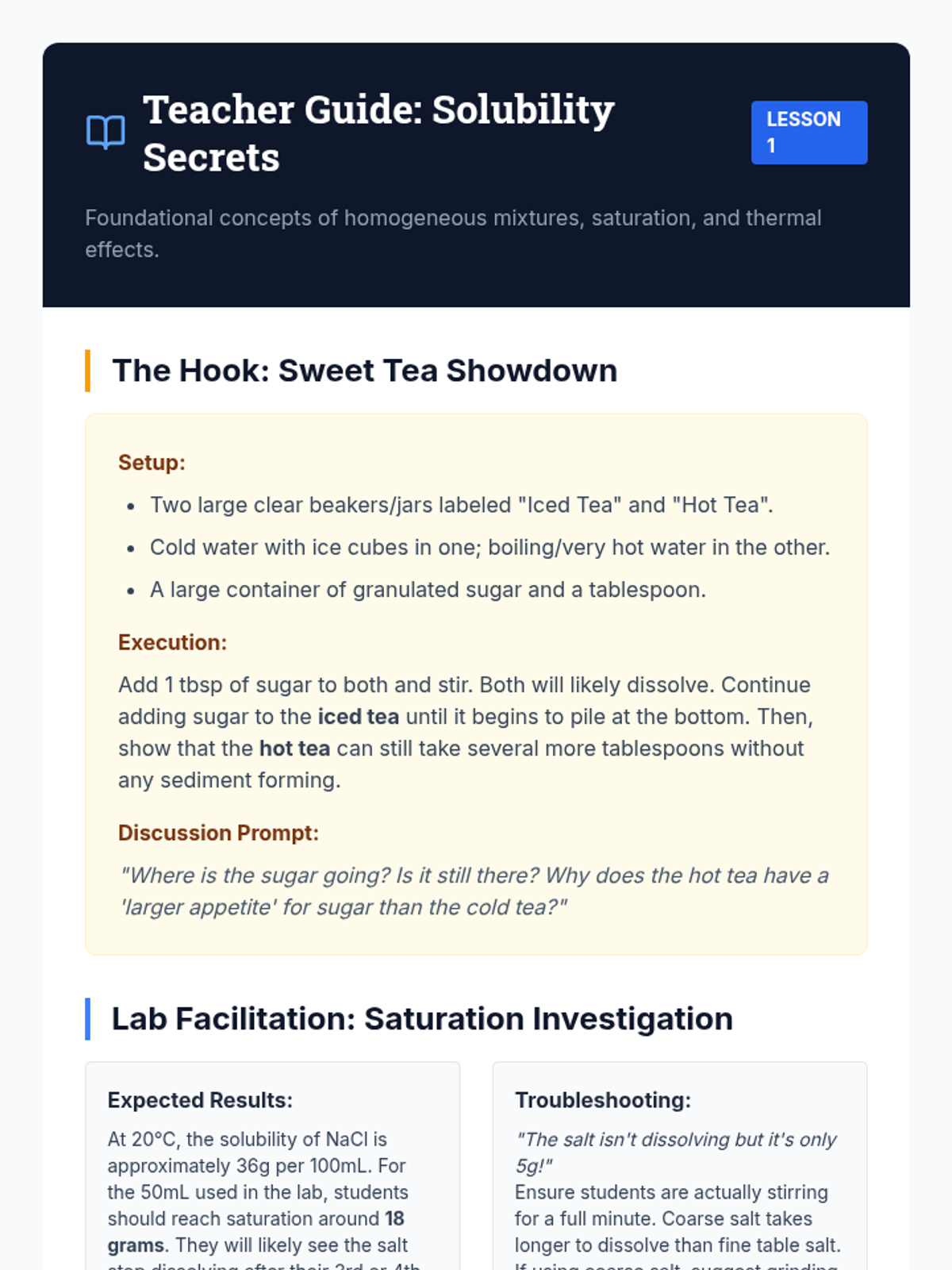
Students investigate how solutes dissolve in solvents to create solutions and explore the factors affecting solubility and the point of saturation.
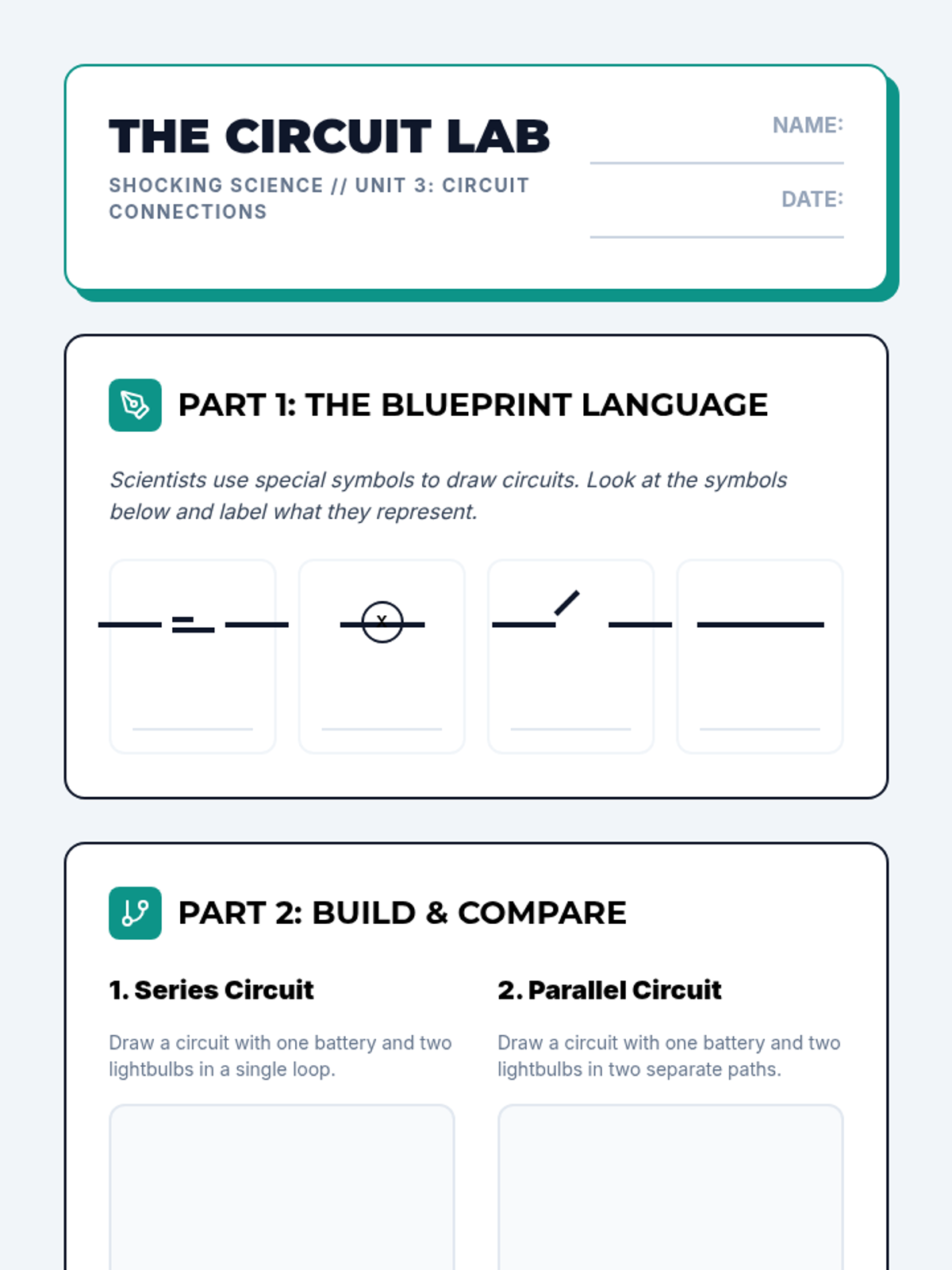
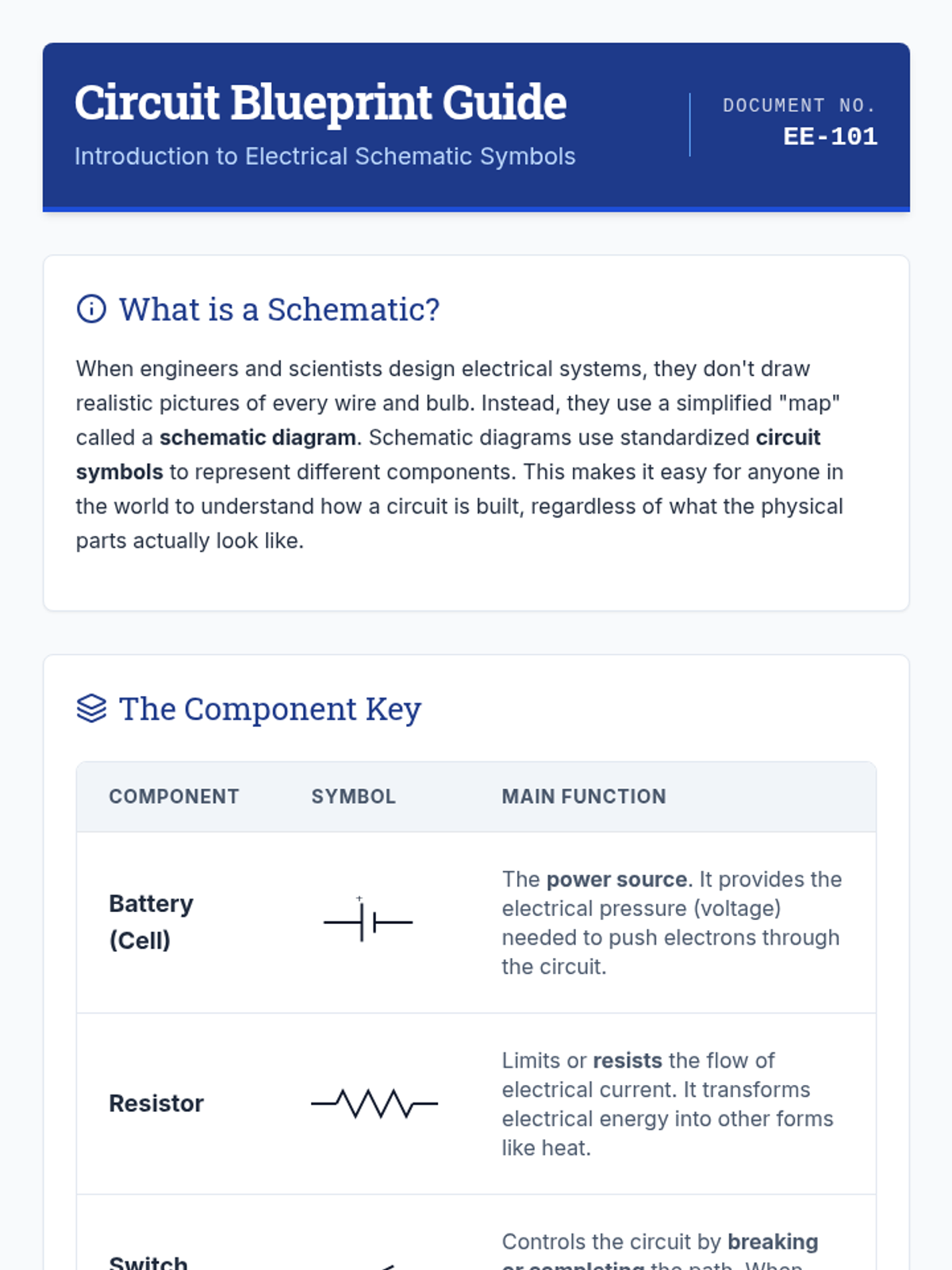
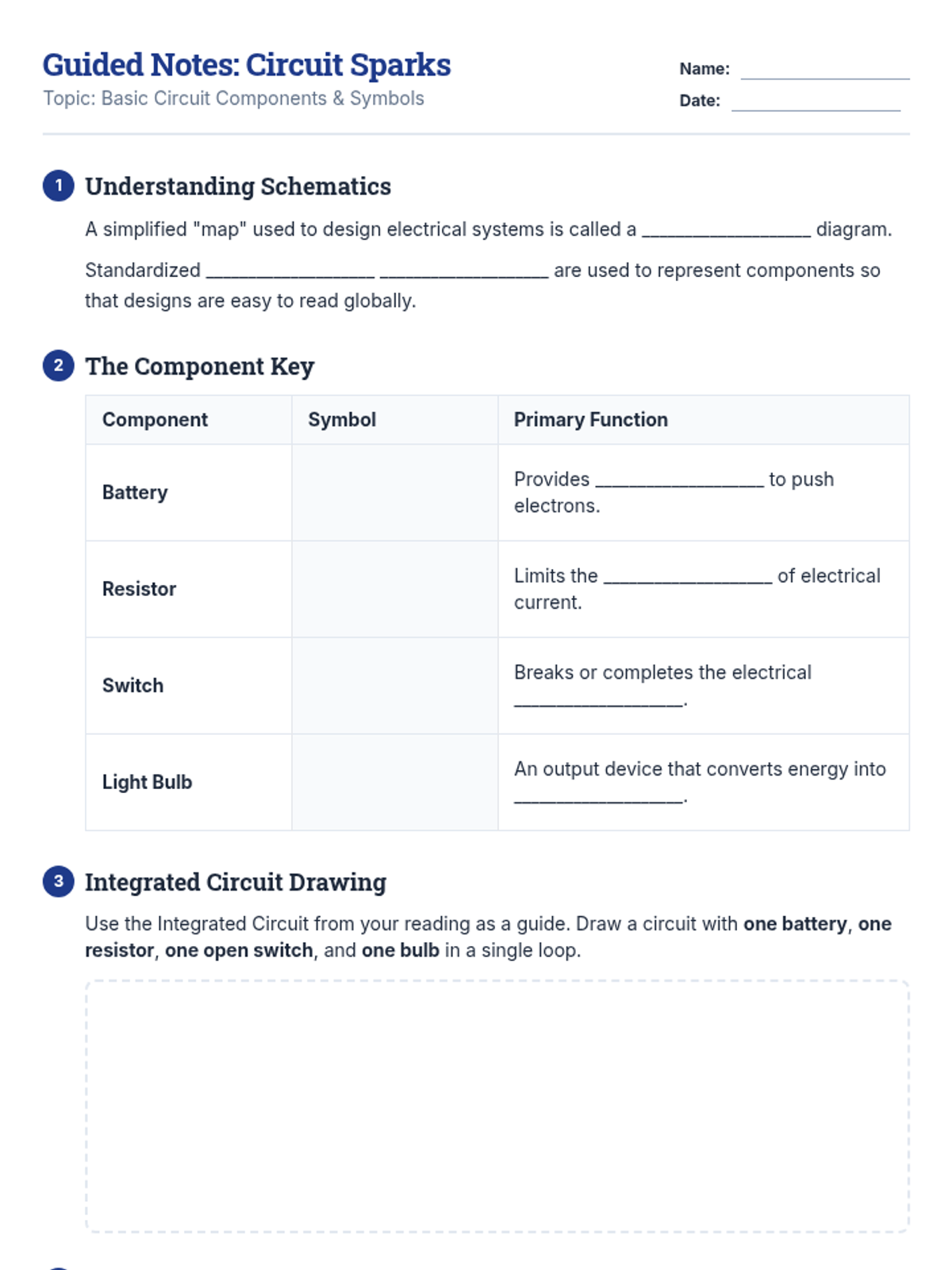
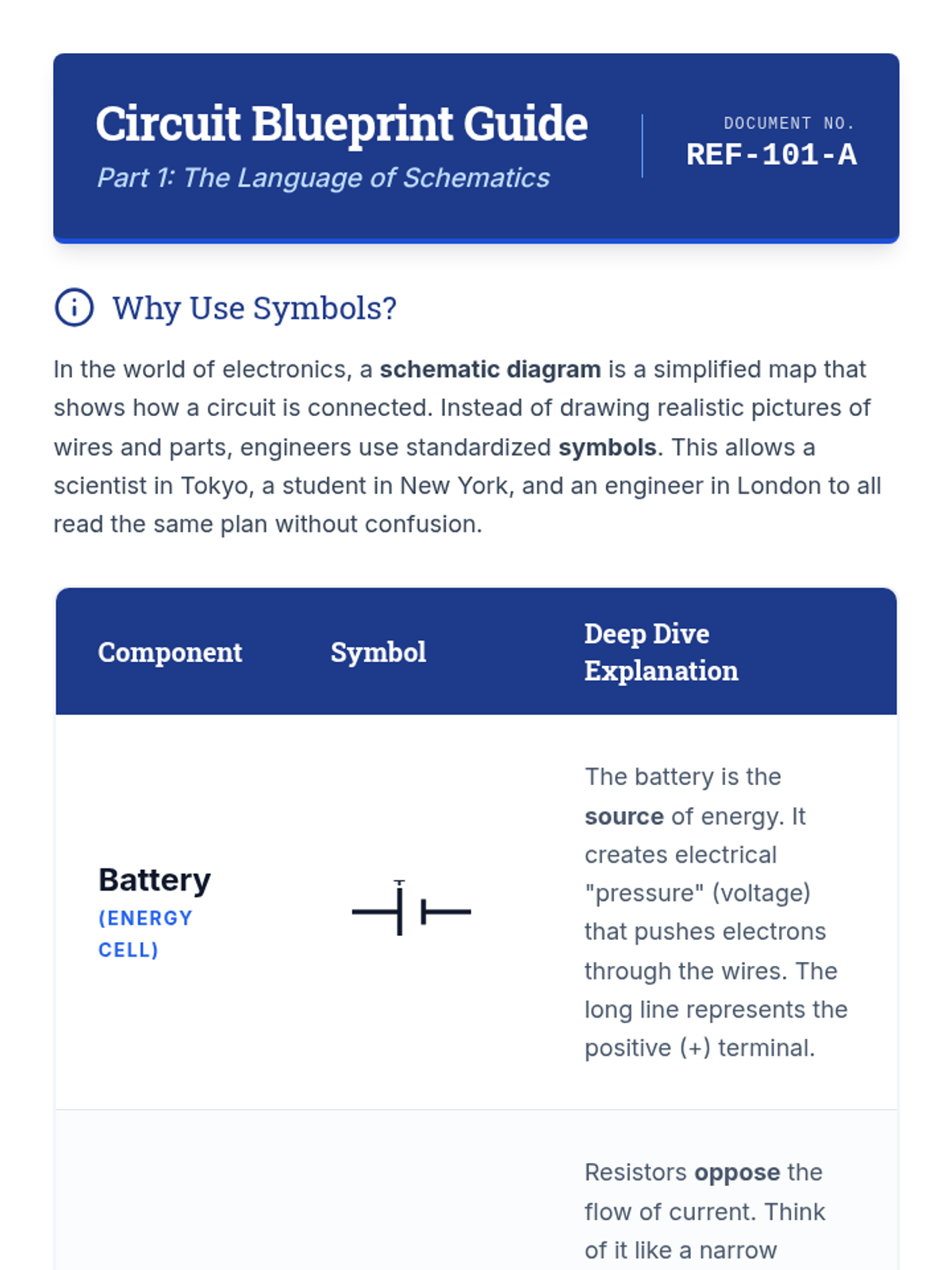
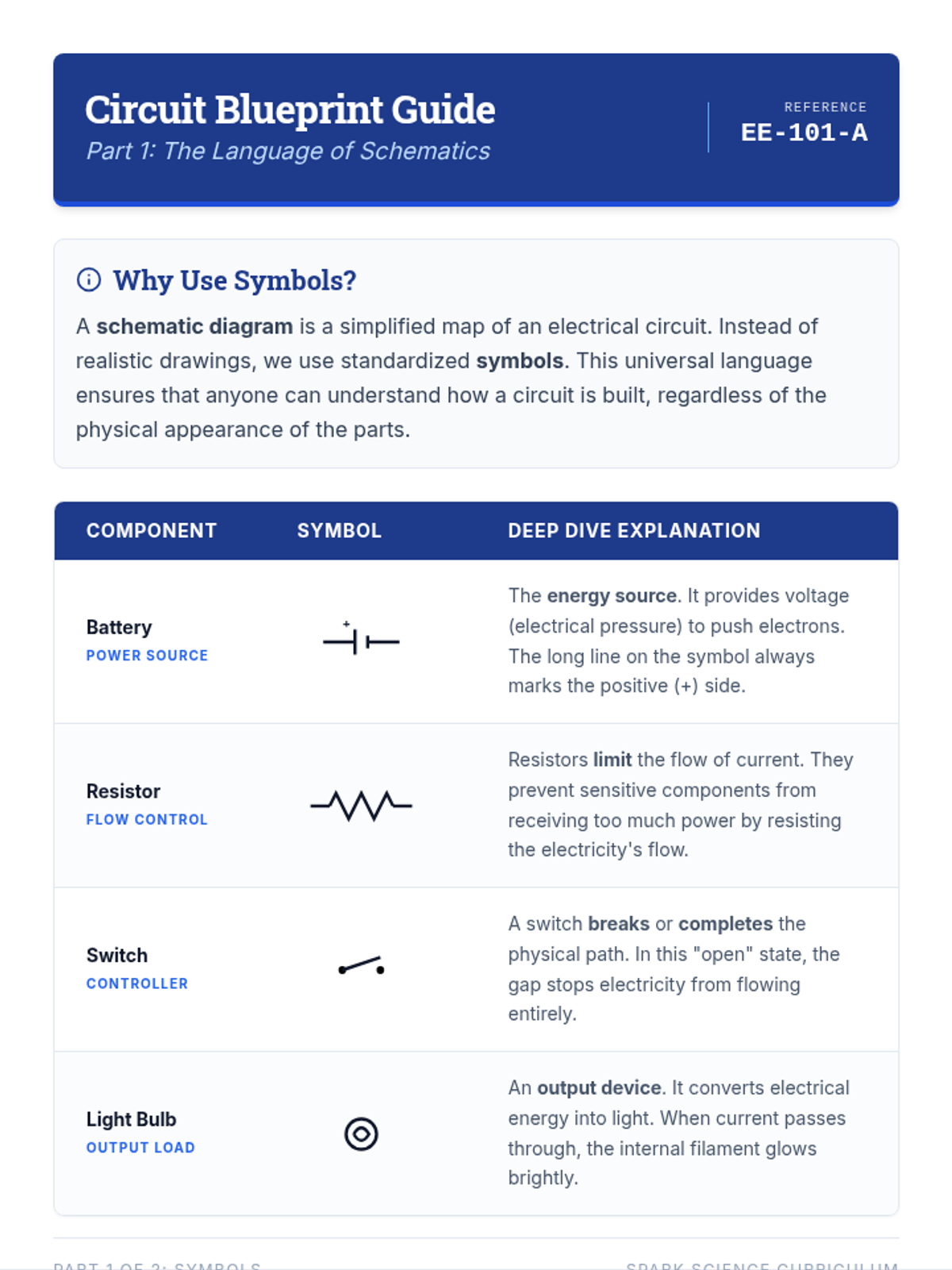
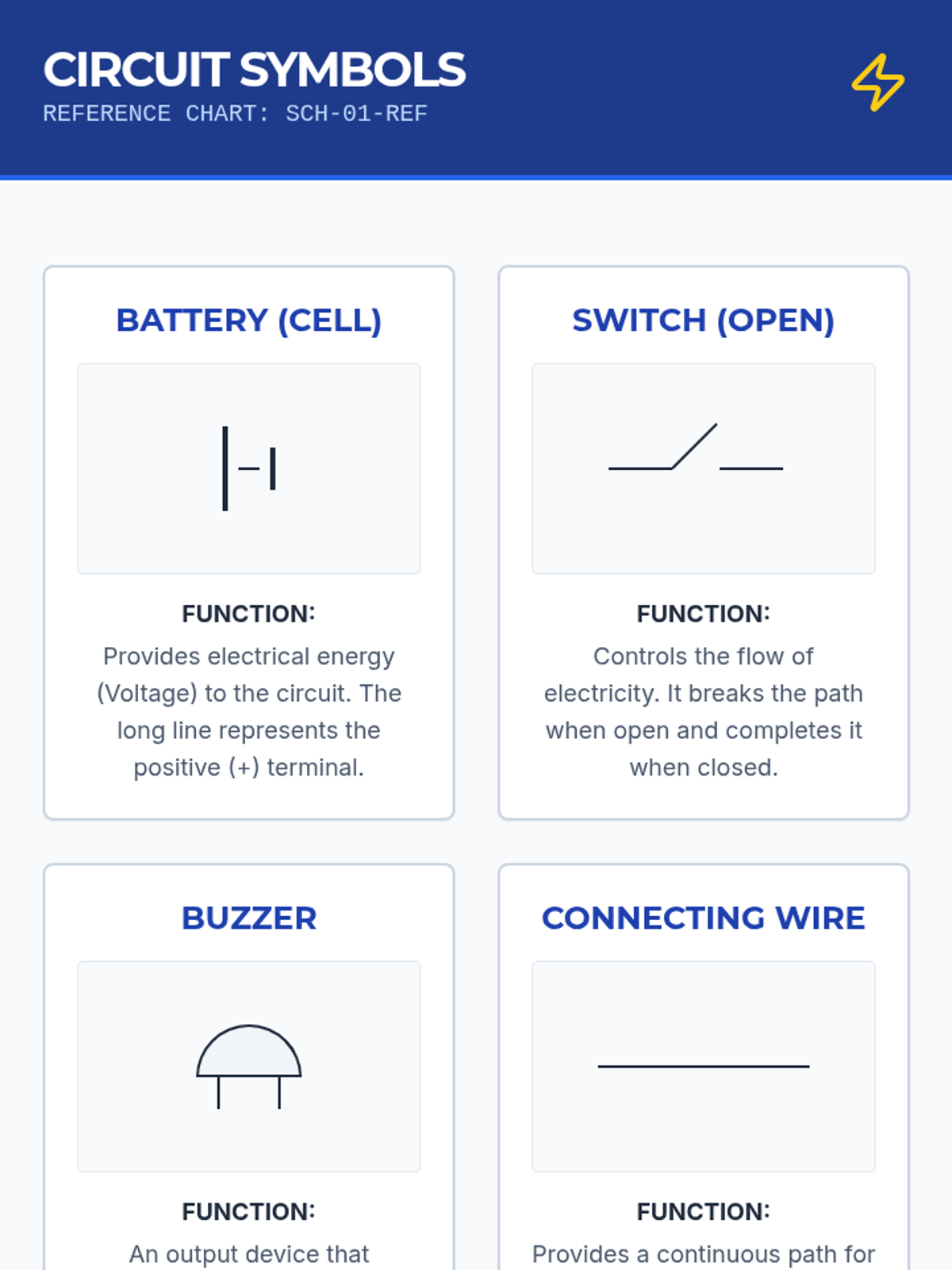
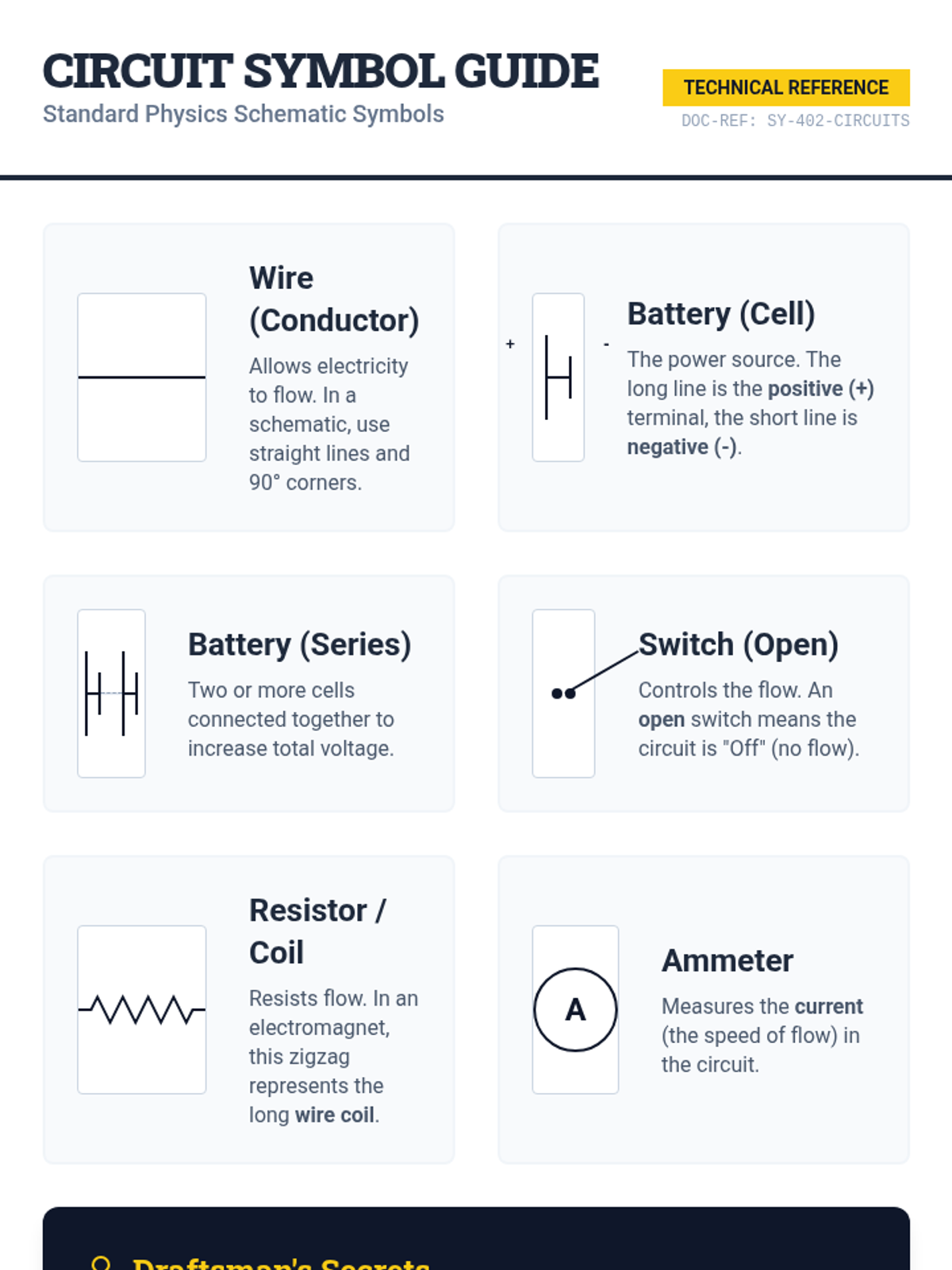
An introductory lesson on common electrical circuit symbols, their functions, and how they are represented in schematic diagrams.
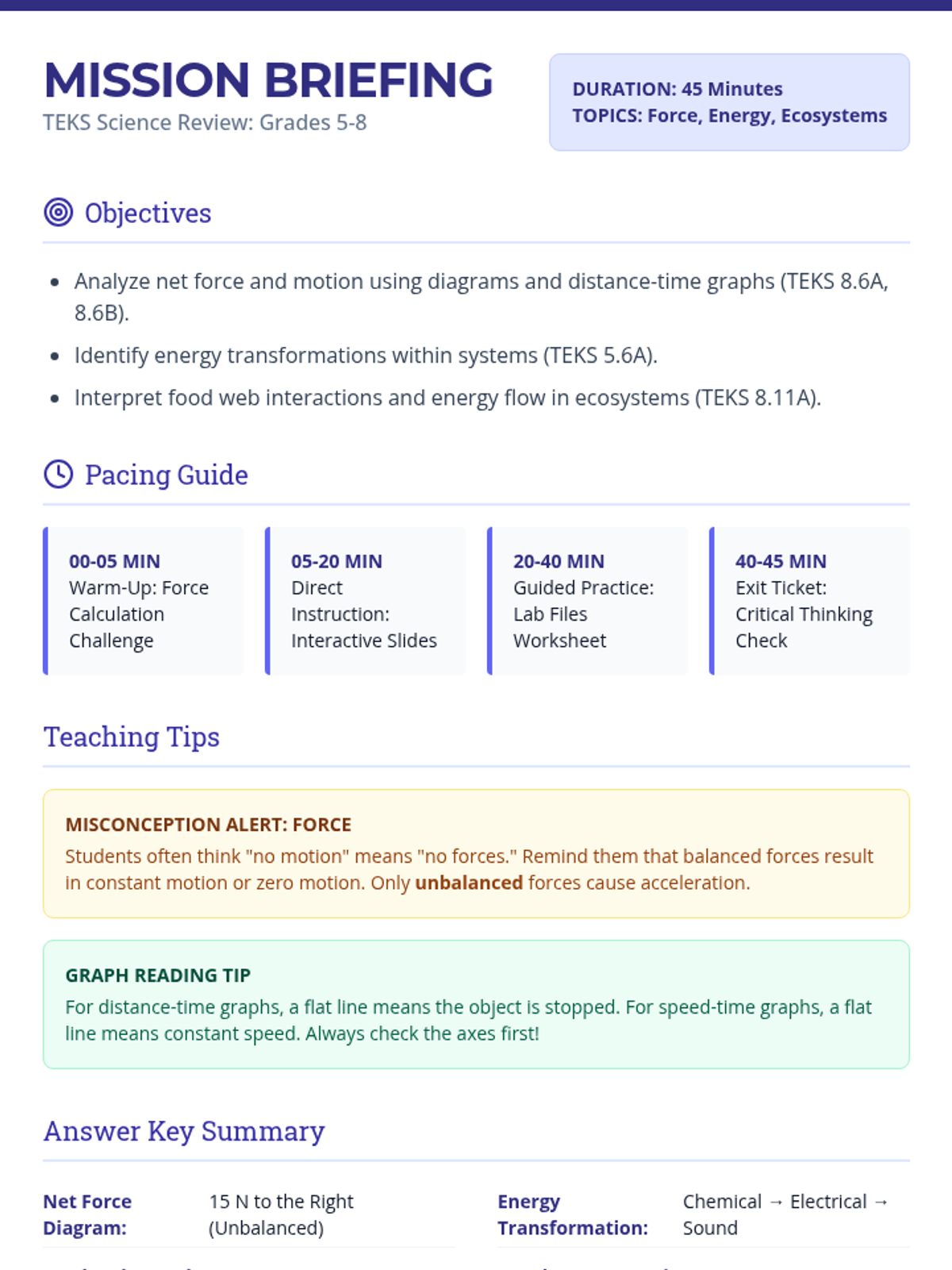
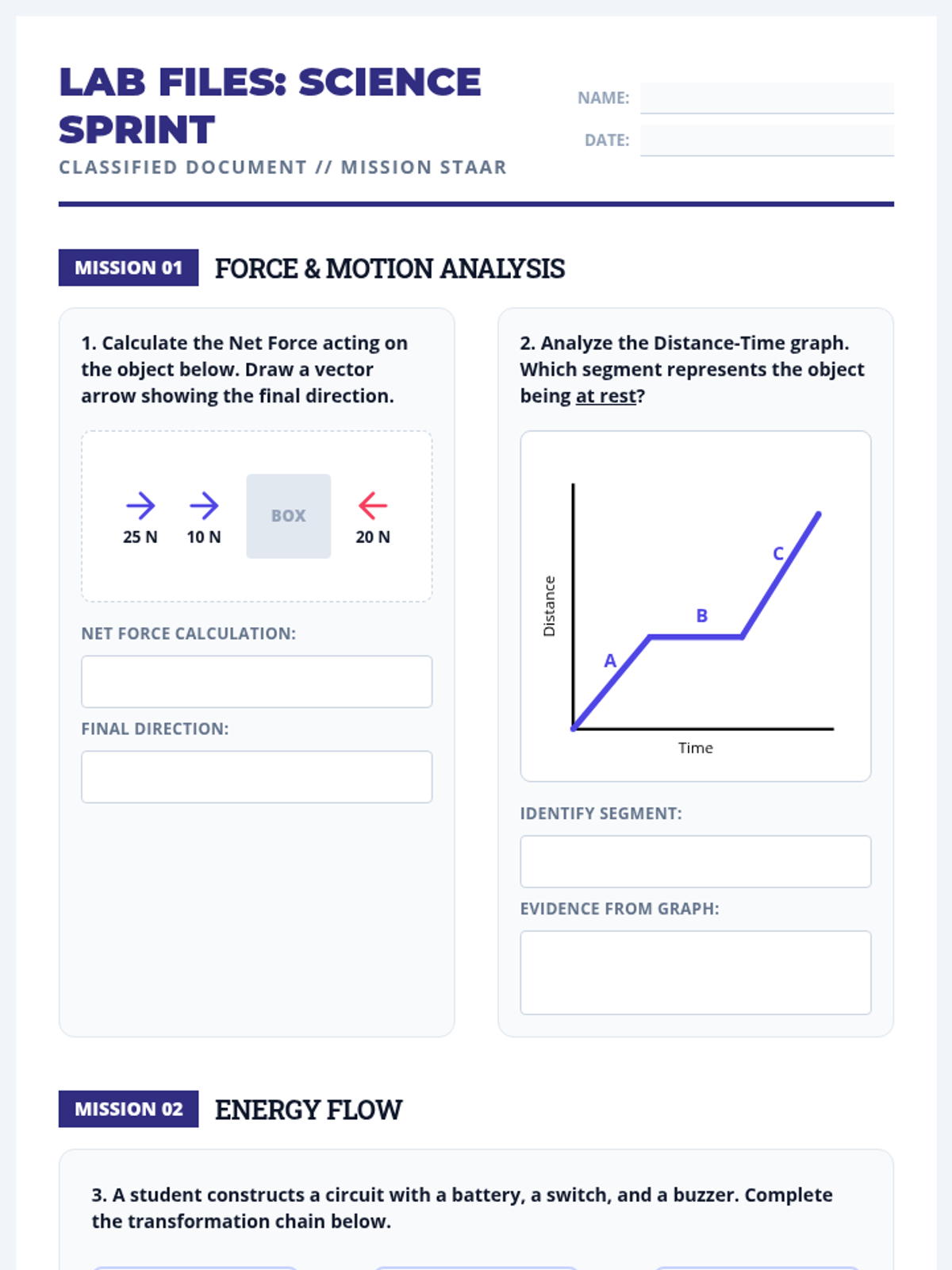
A high-energy, TEKS-aligned review session covering core 5th-8th grade science concepts including force/motion, energy transformations, and ecosystem dynamics through data analysis and STAAR-style practice.
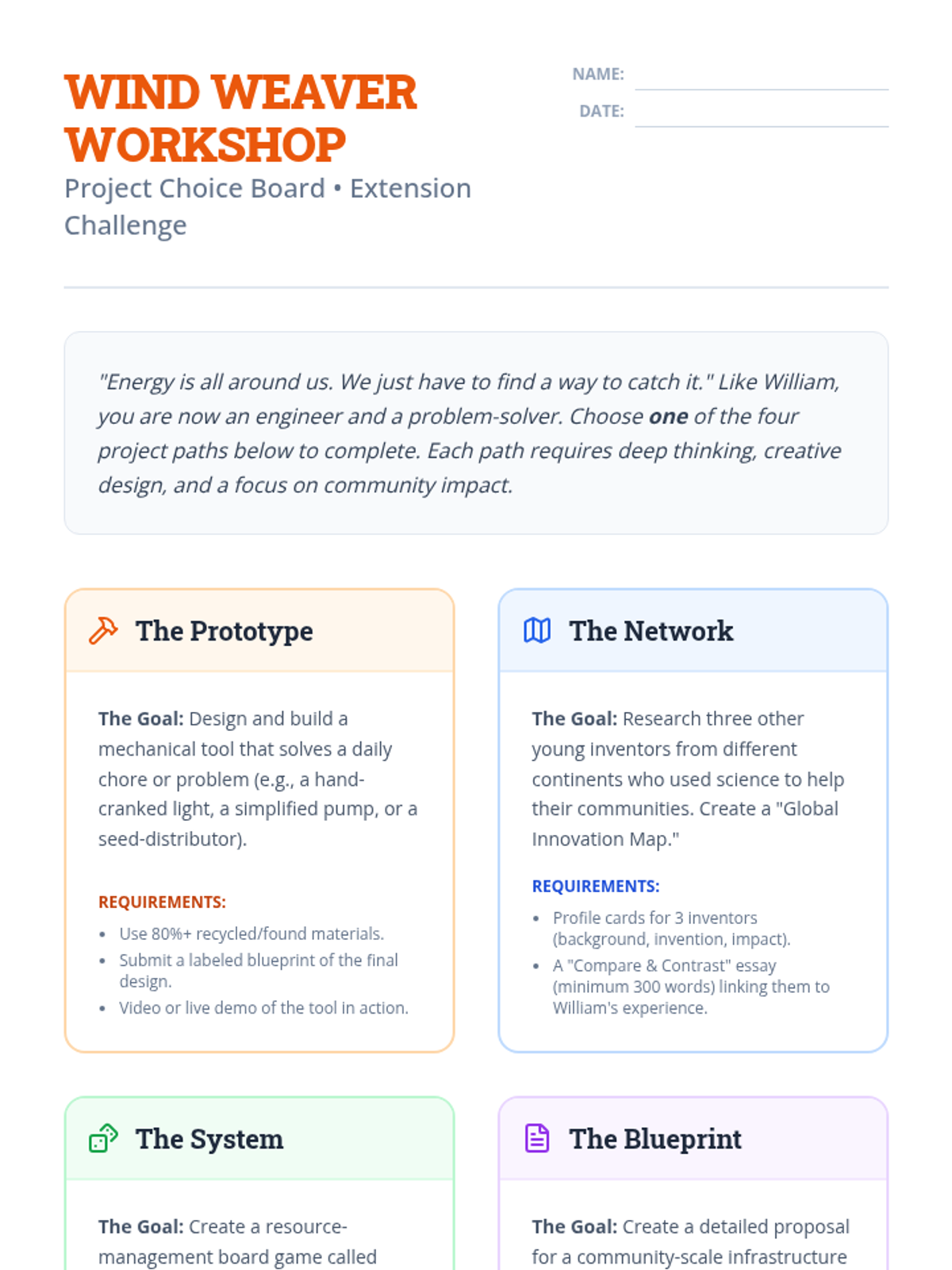
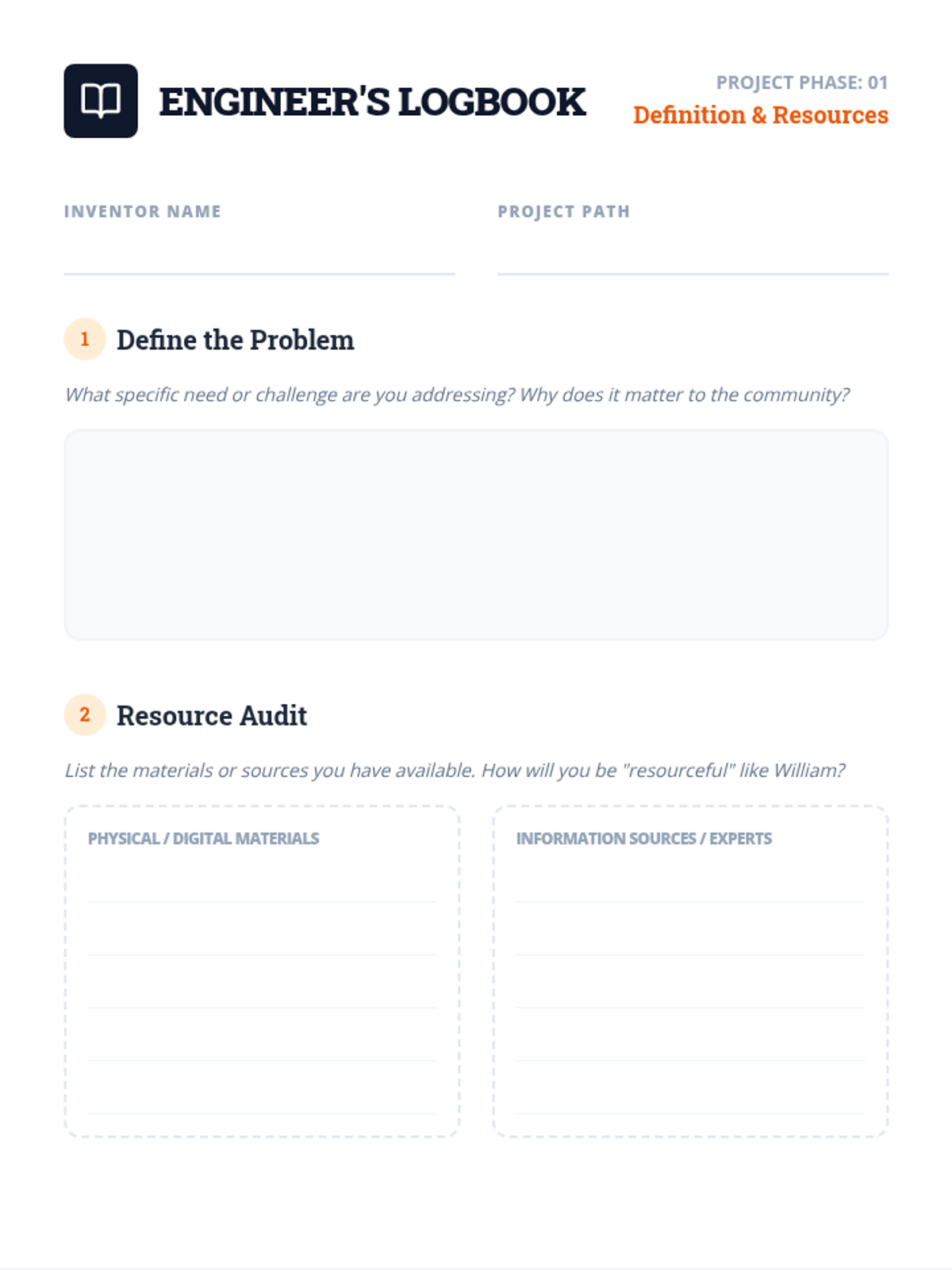
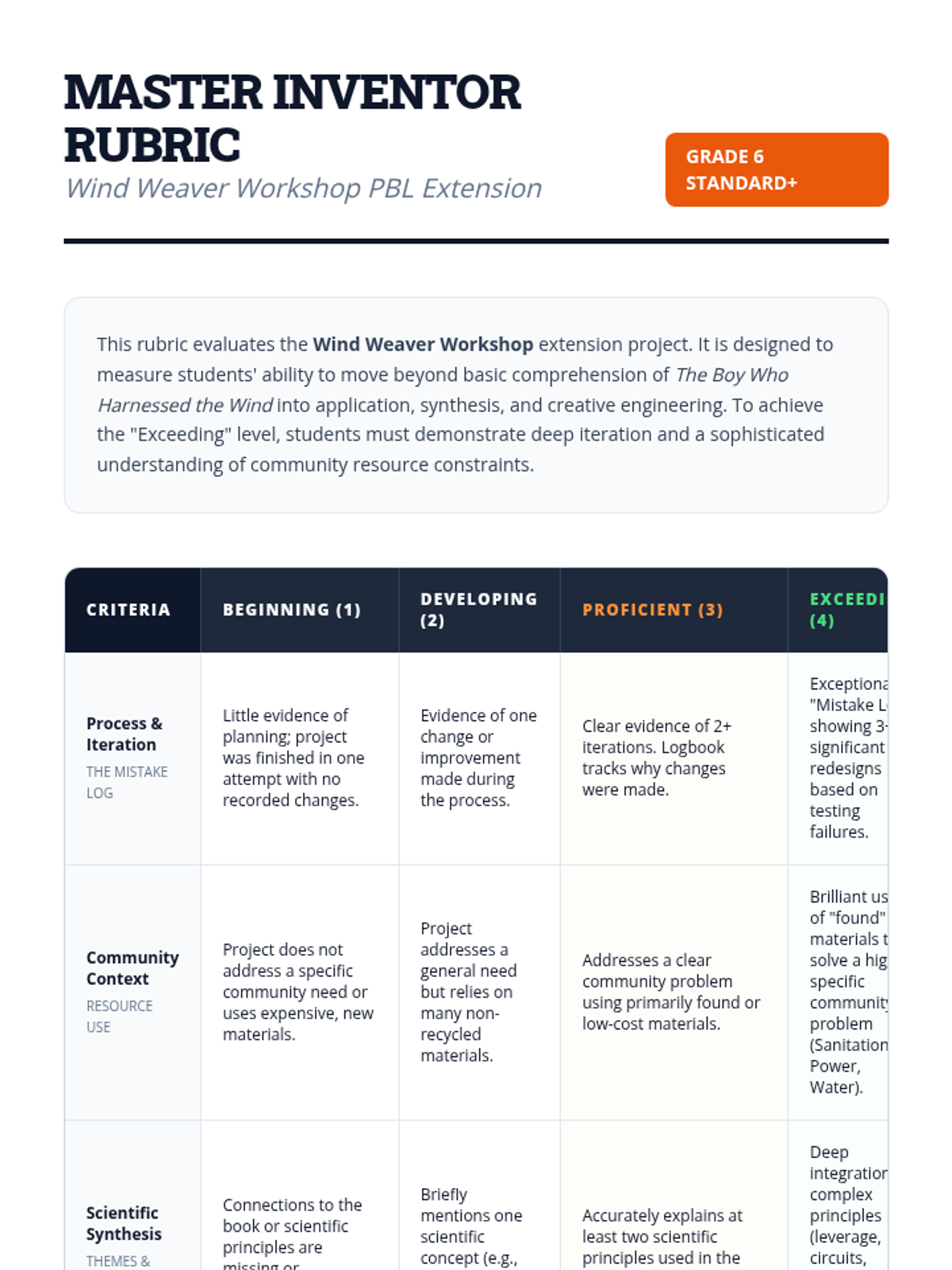
An advanced extension unit for Grade 6 students who have completed 'The Boy Who Harnessed the Wind'. This project-based learning experience focuses on engineering, resourcefulness, and community-driven innovation through a variety of high-level project choices.
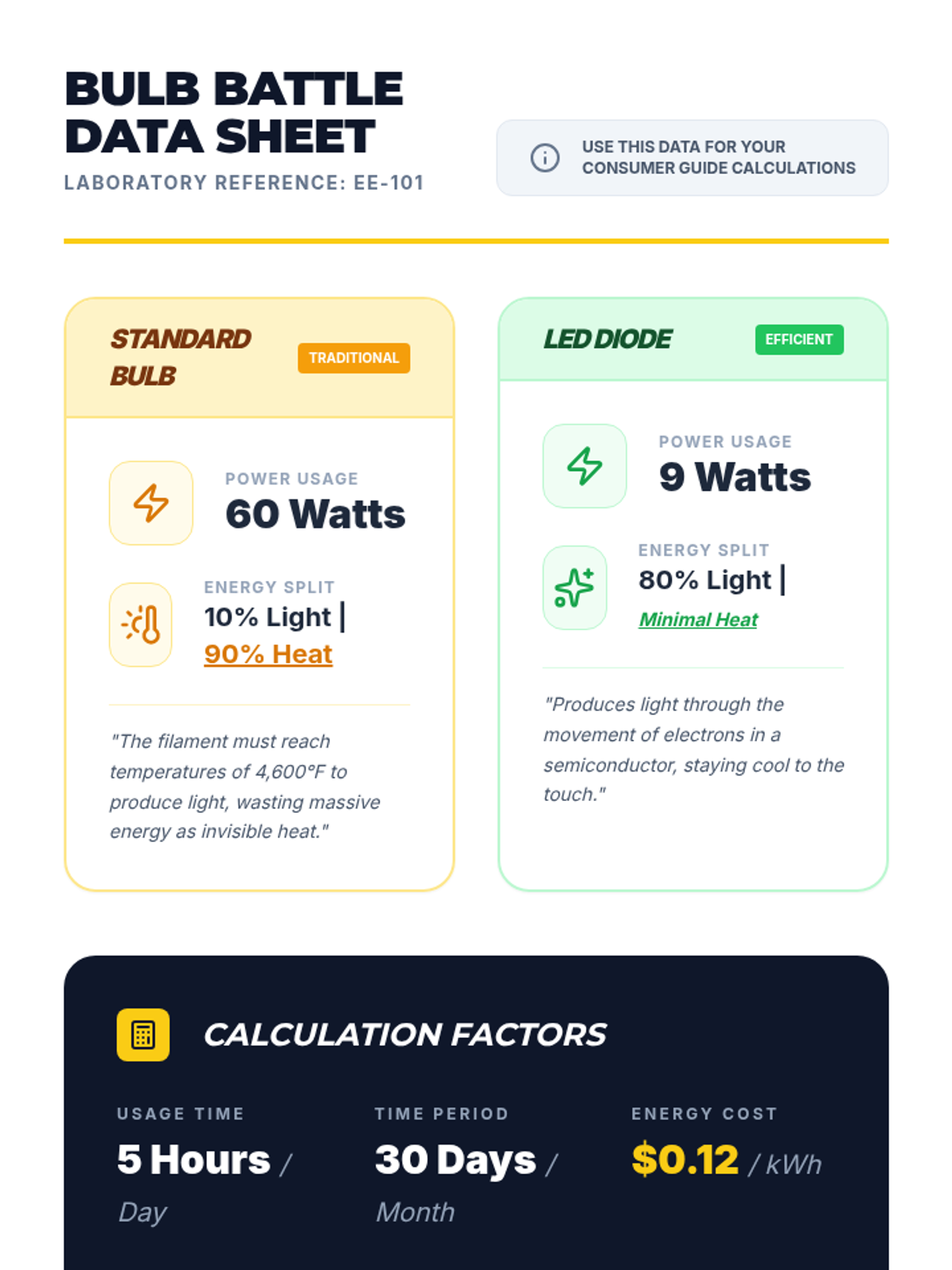
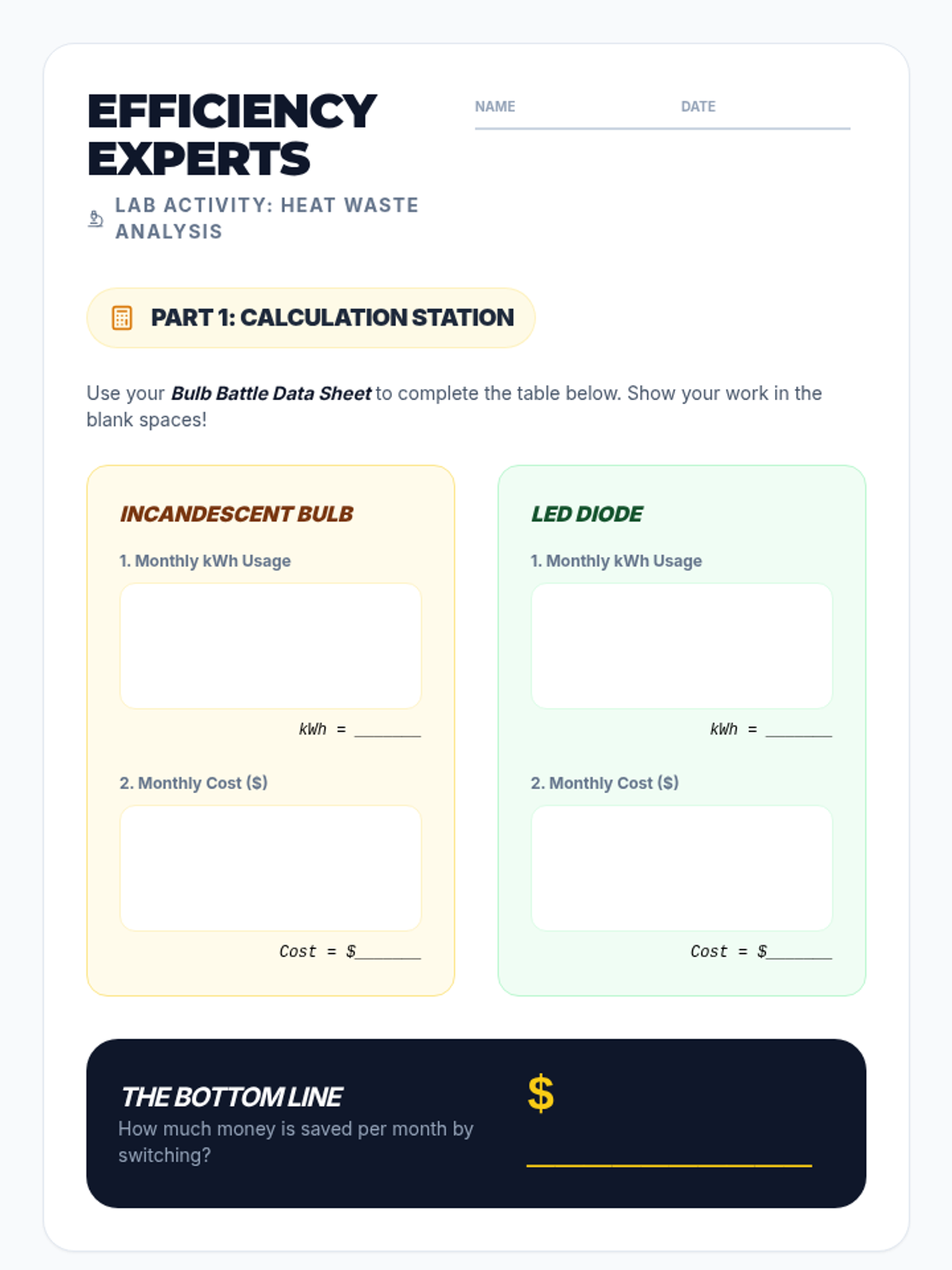
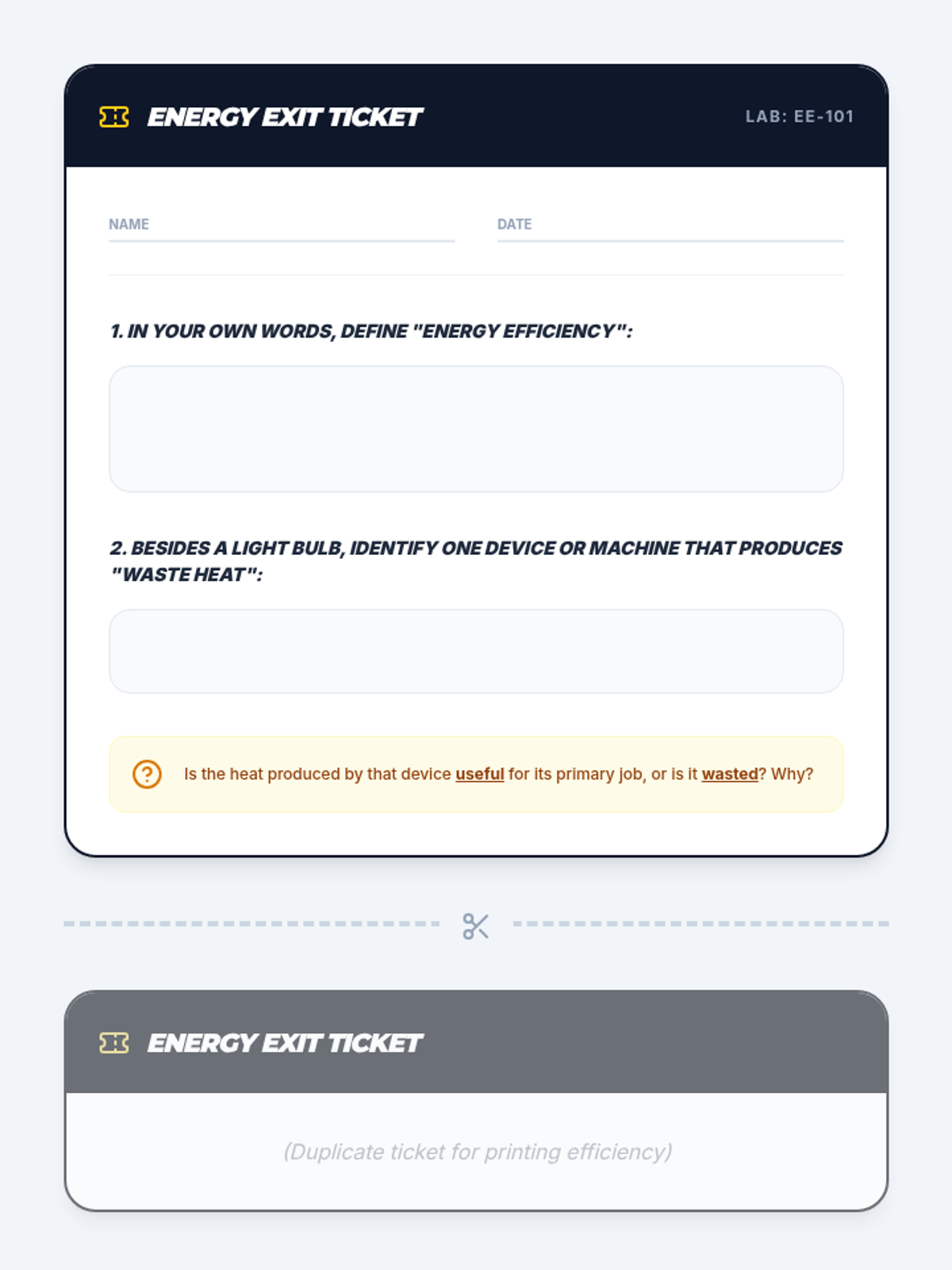
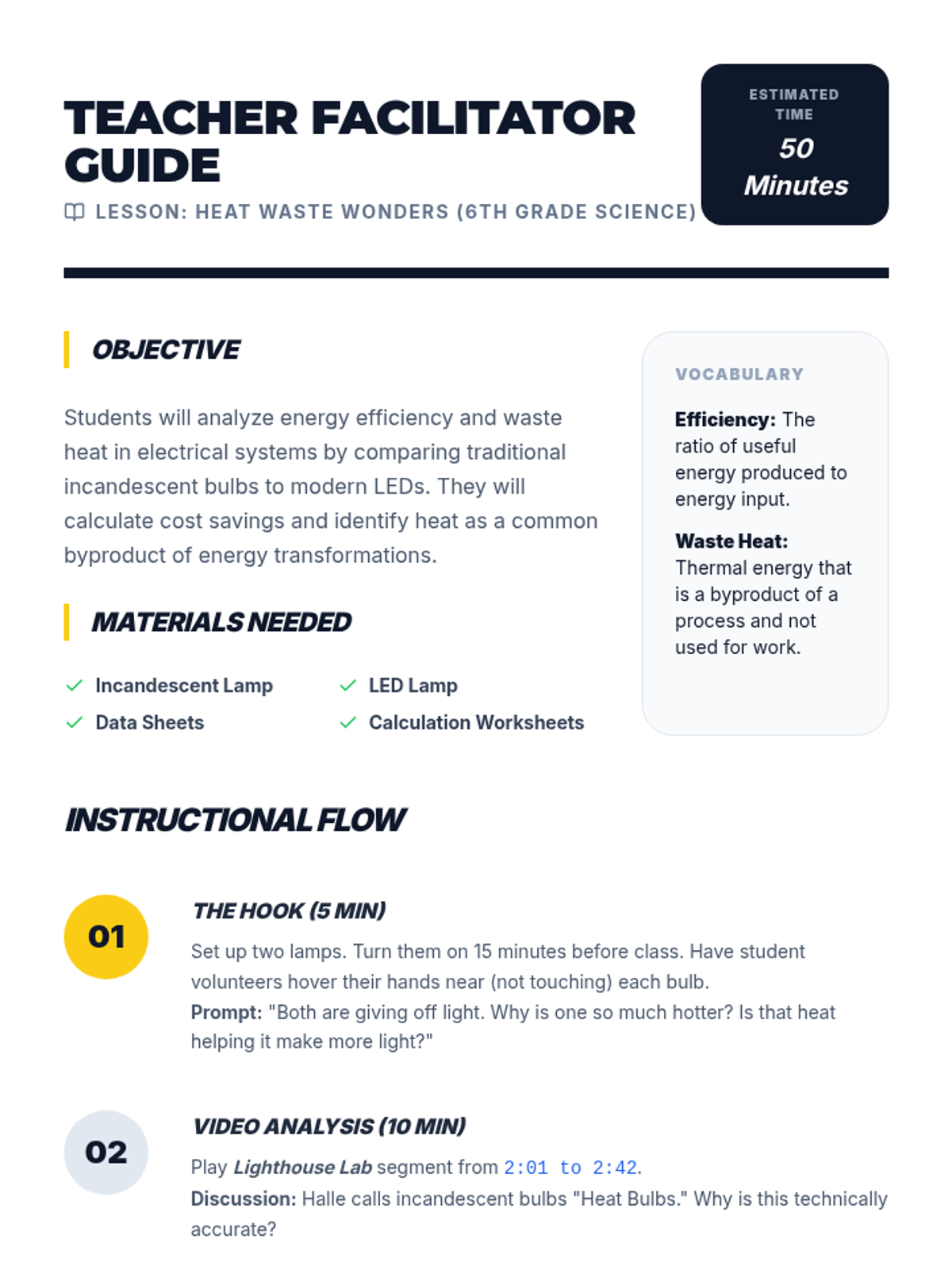
A 6th-grade science lesson focused on energy transformations, specifically analyzing the efficiency of light bulbs and identifying waste heat as a byproduct of electrical systems. Students use real-world data to calculate energy savings and create a consumer guide for sustainable choices.
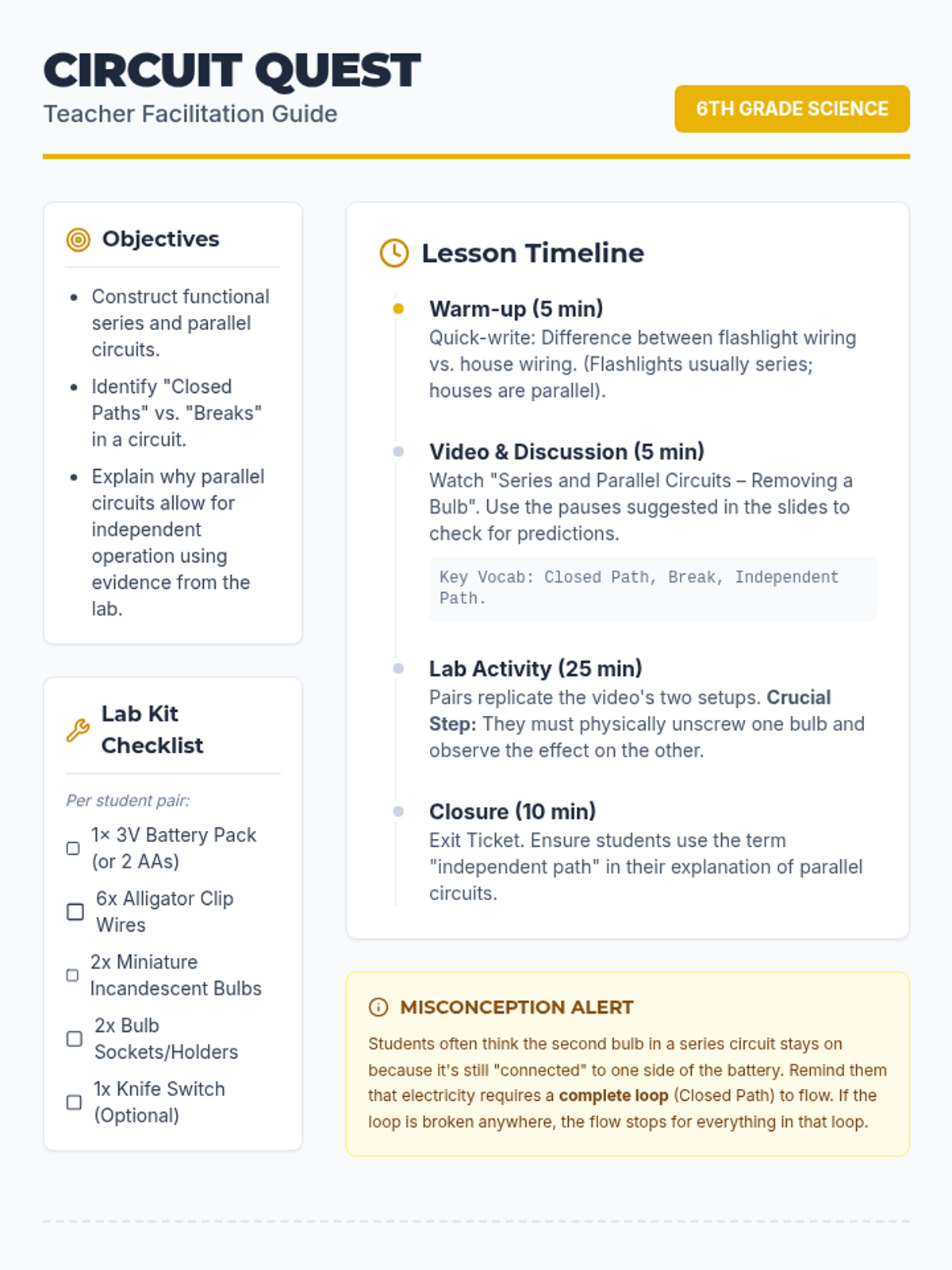
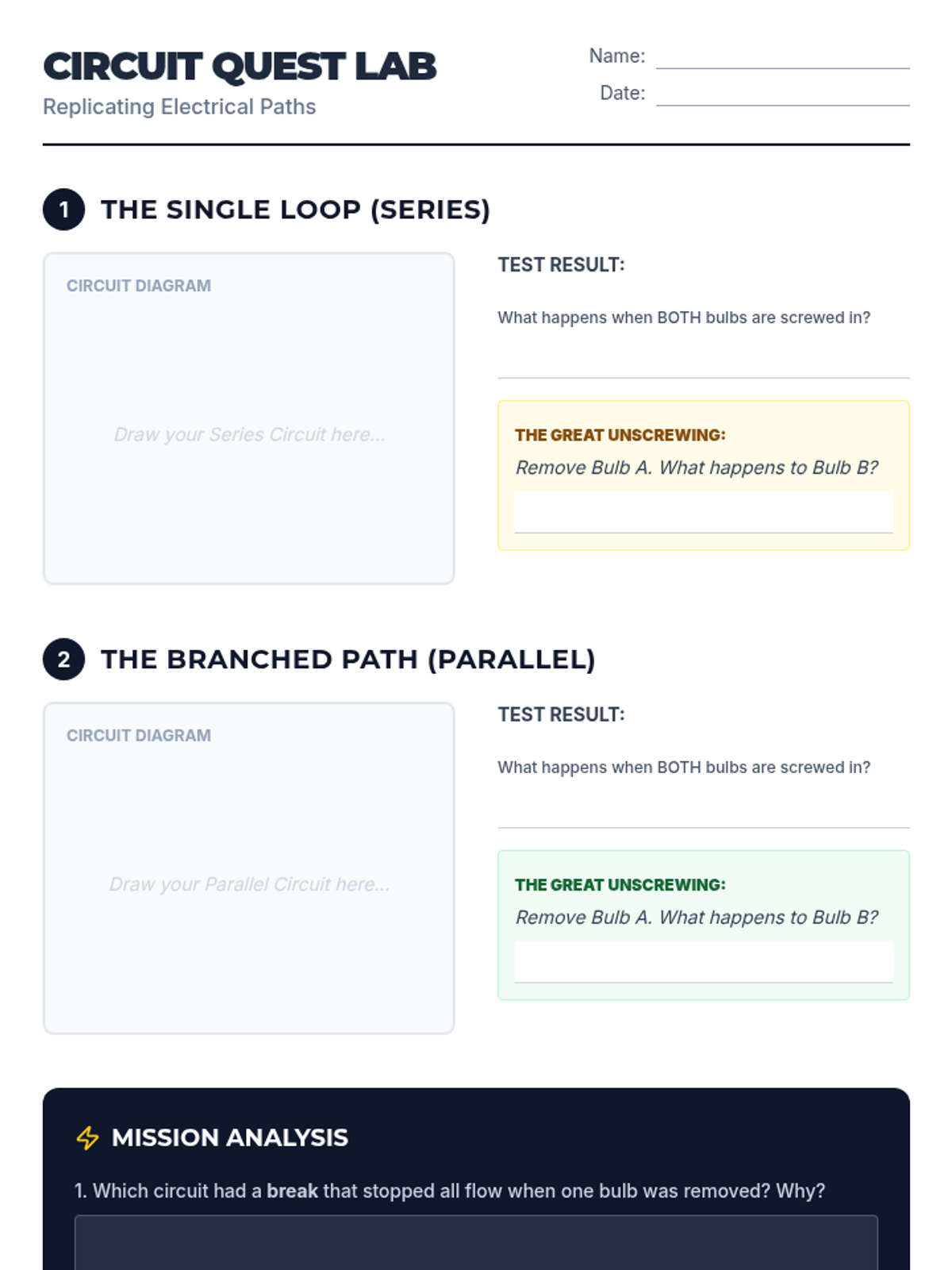
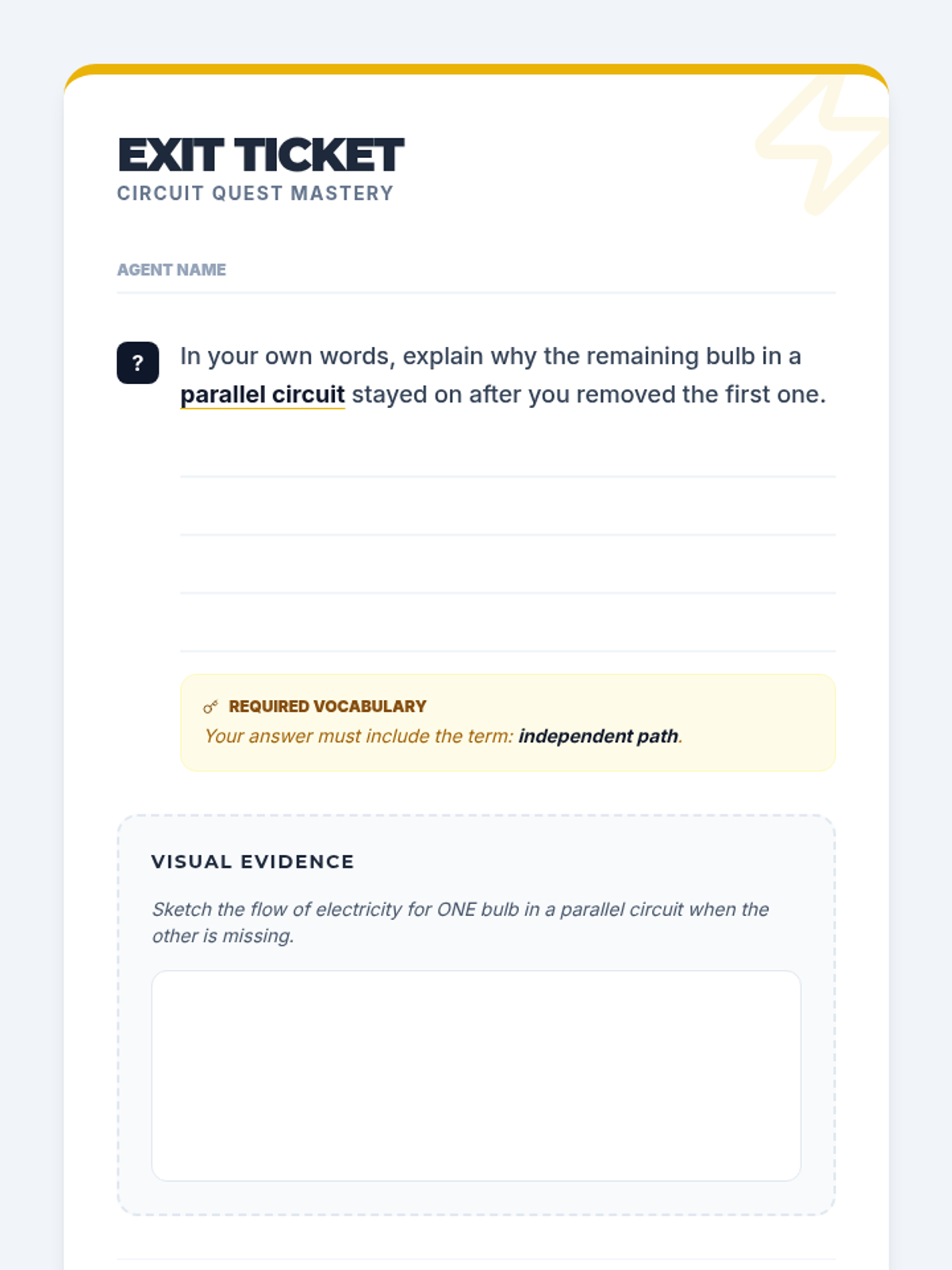
A hands-on exploration of series and parallel circuits where students build, test, and break circuits to understand independent paths of electricity.
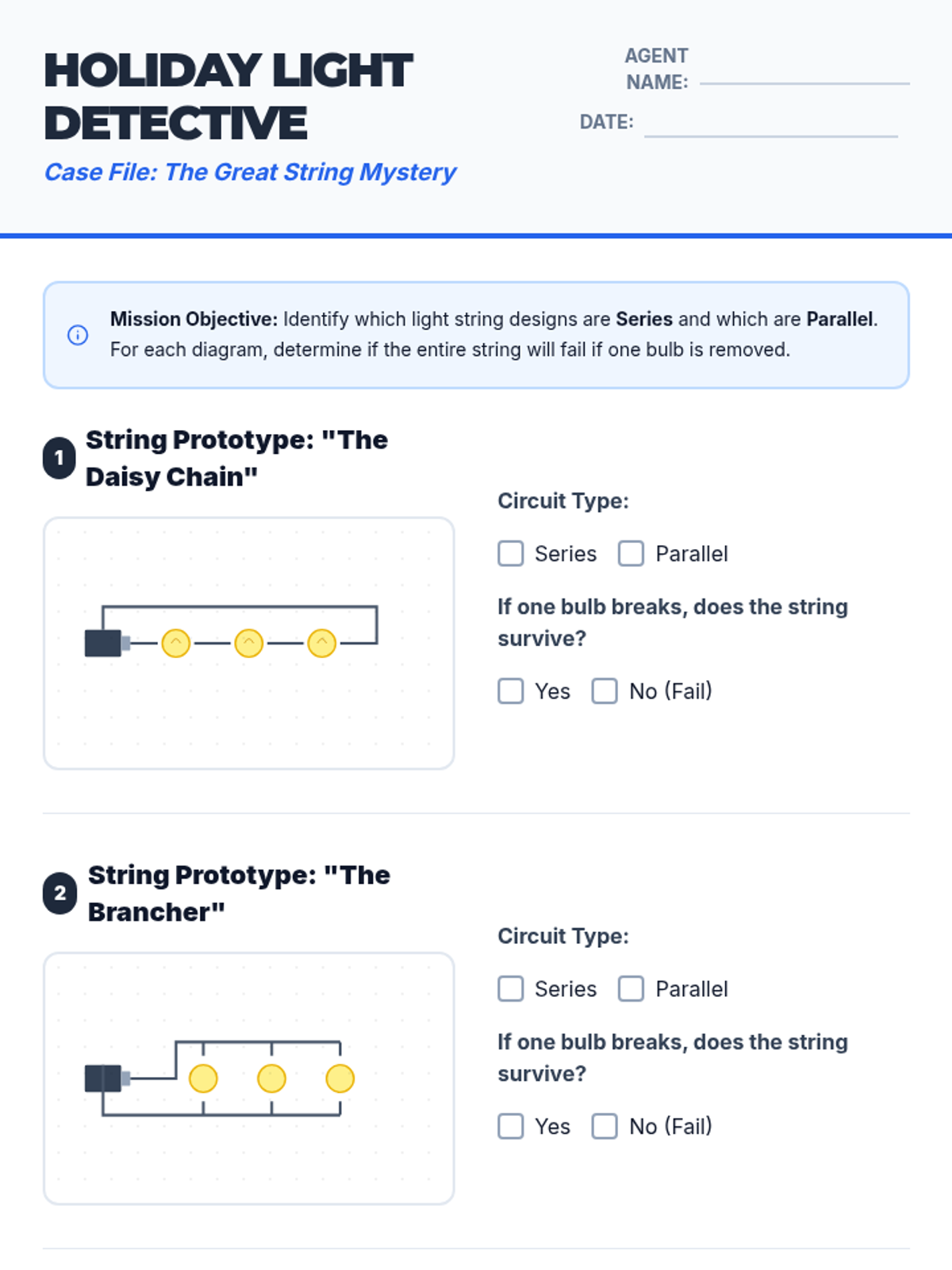
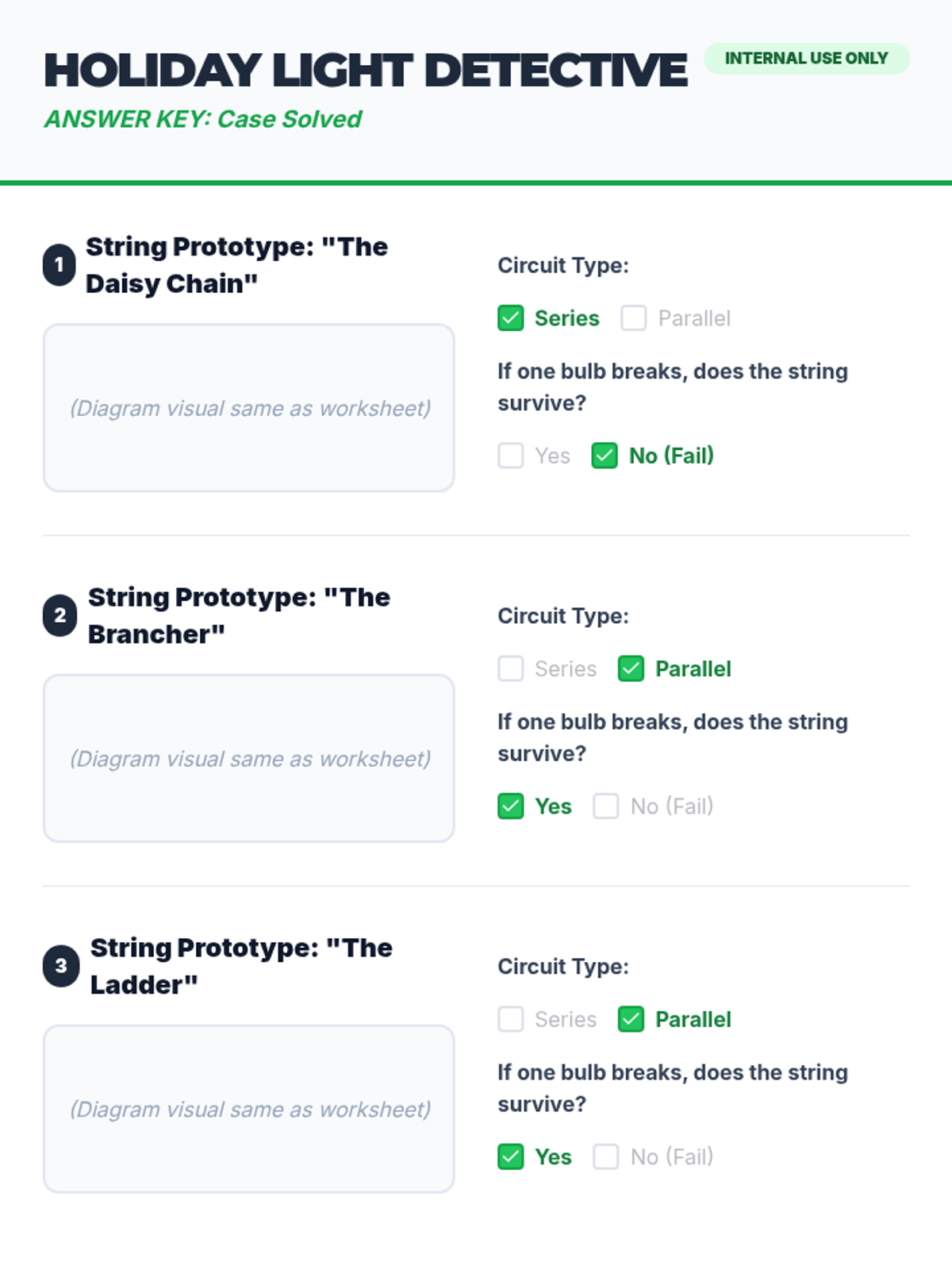
Students investigate the differences between series and parallel circuits through a real-world holiday light mystery, exploring why parallel circuits are essential for modern electrical systems.
A high-energy exploration of how energy changes form but is never lost, featuring hands-on station rotations and a deep dive into the Law of Conservation of Energy.
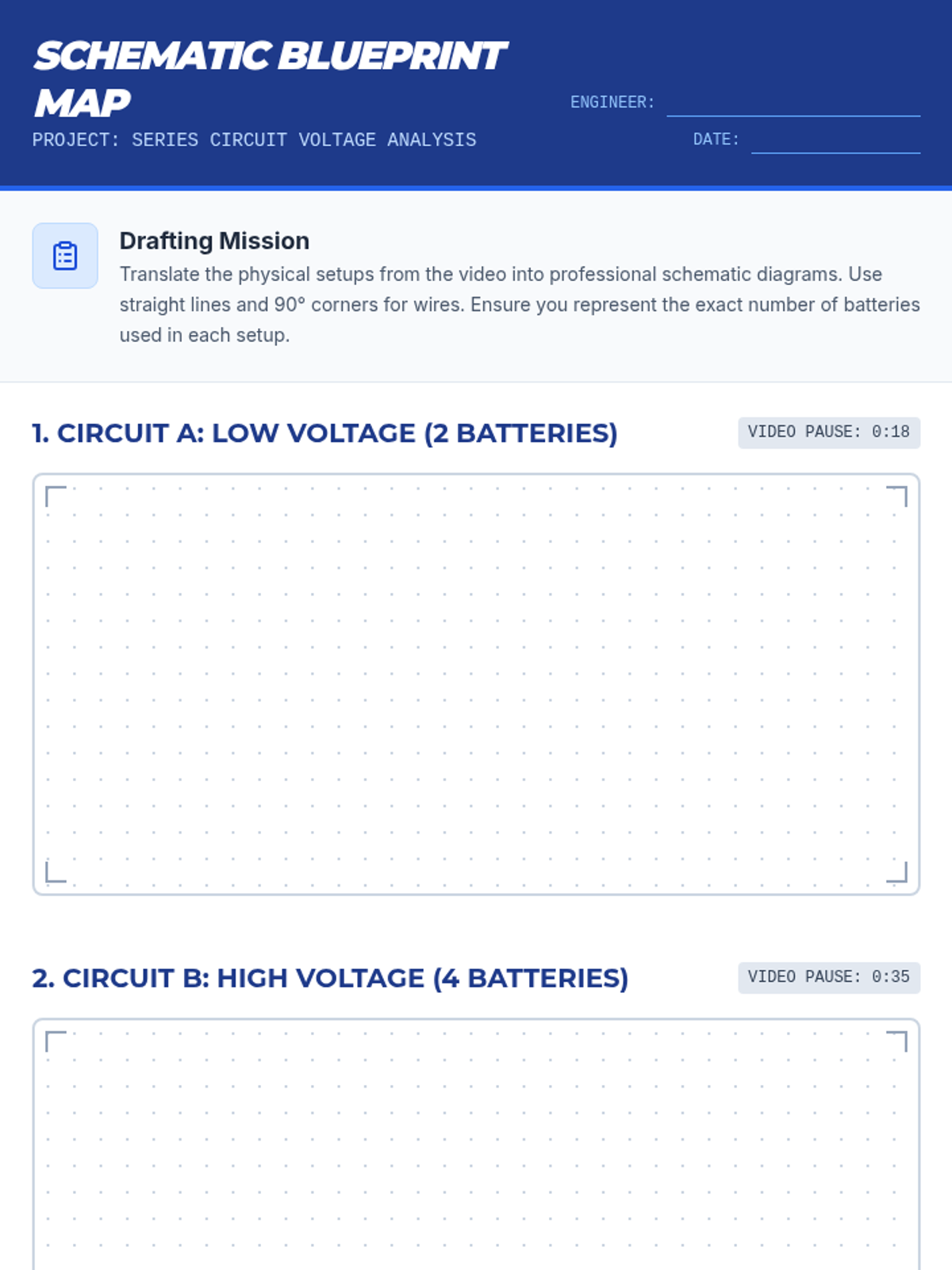
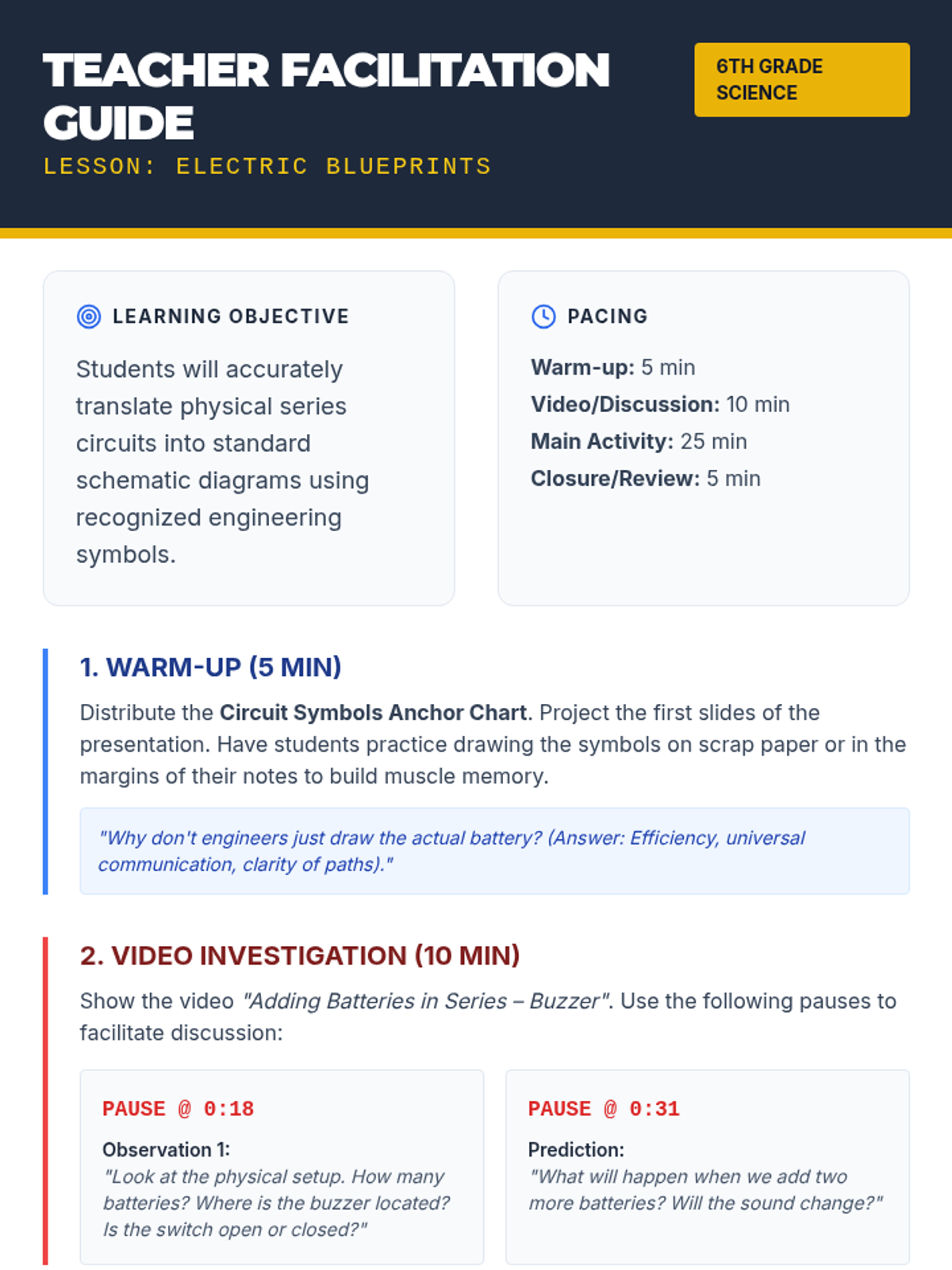
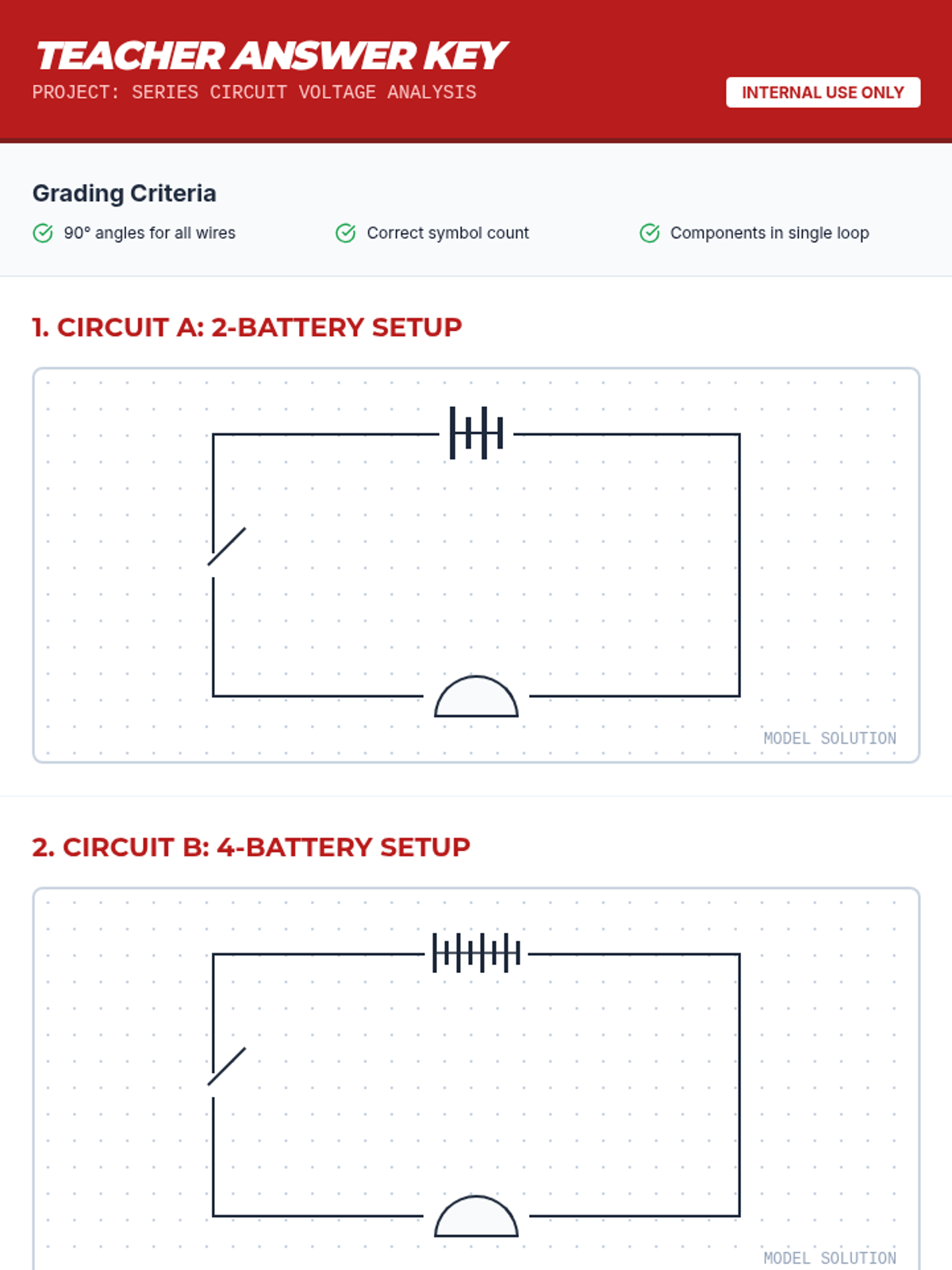
A hands-on lesson where 6th-grade students learn to translate physical circuit components into professional schematic diagrams using a series circuit with a buzzer.
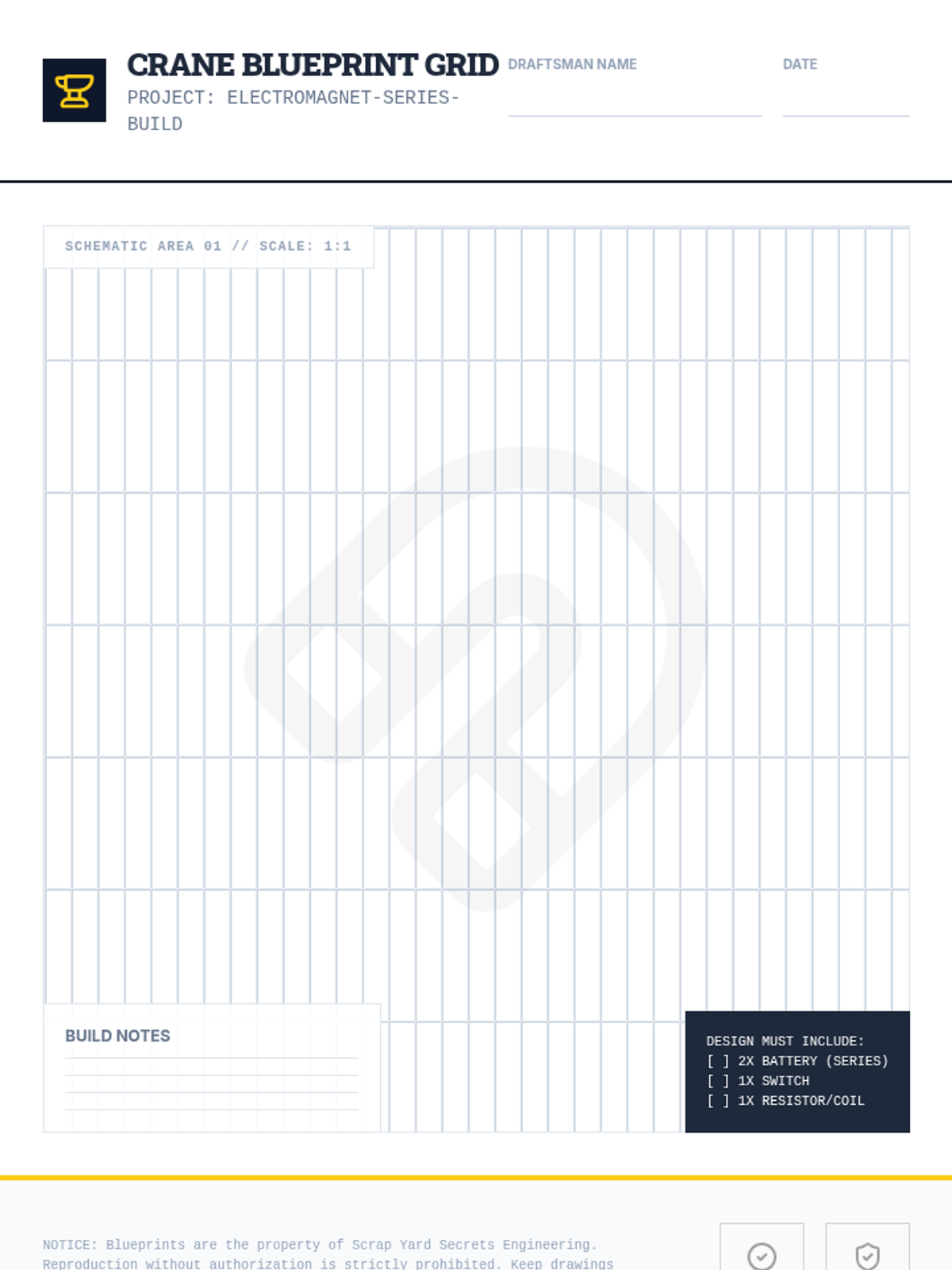
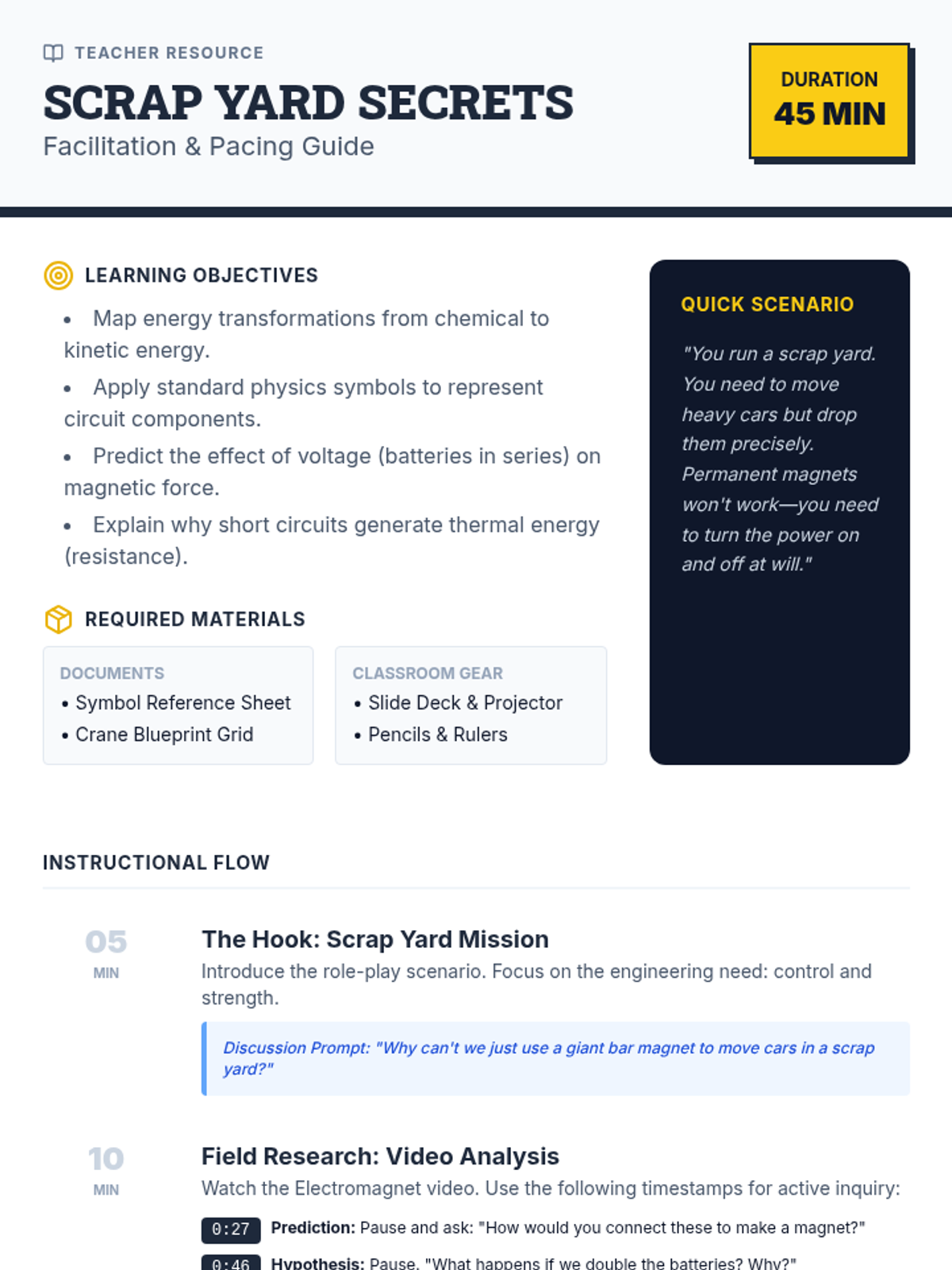
Students explore energy transformation and circuit design through the lens of building a powerful electromagnet for a scrap yard crane. They will map energy flow, learn standard circuit symbols, and diagram a multi-battery electromagnet system while discussing resistance and safety.
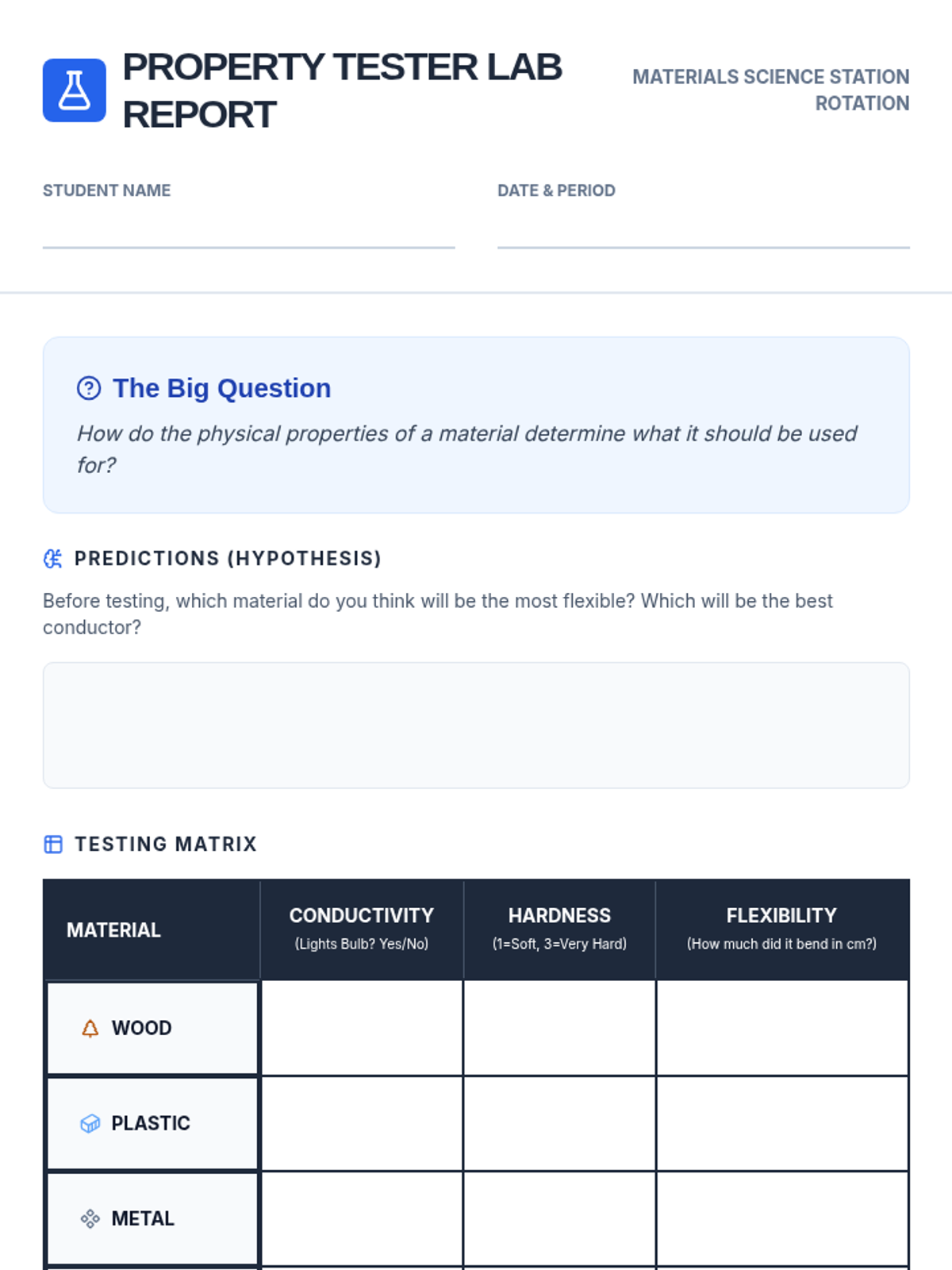
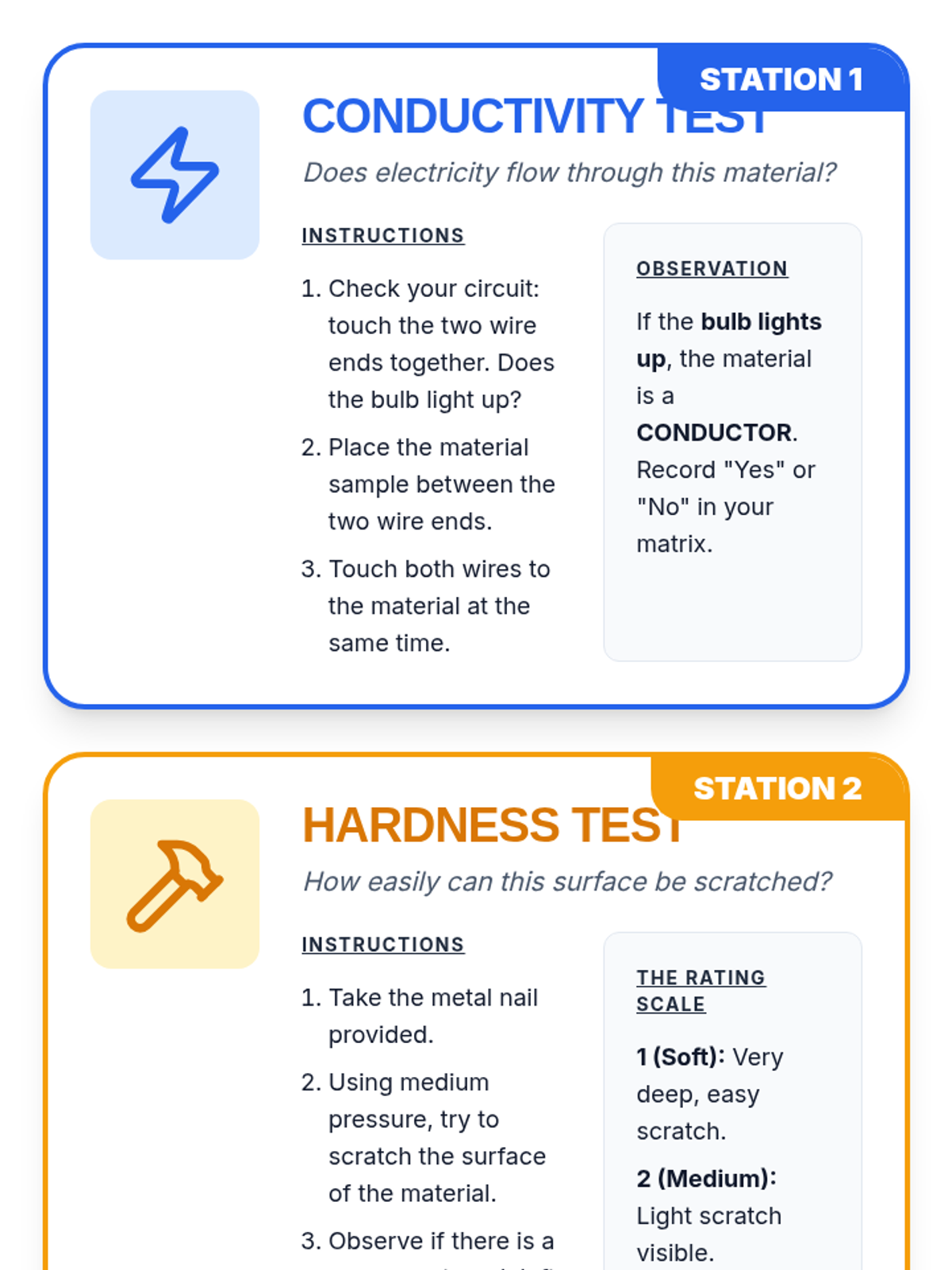
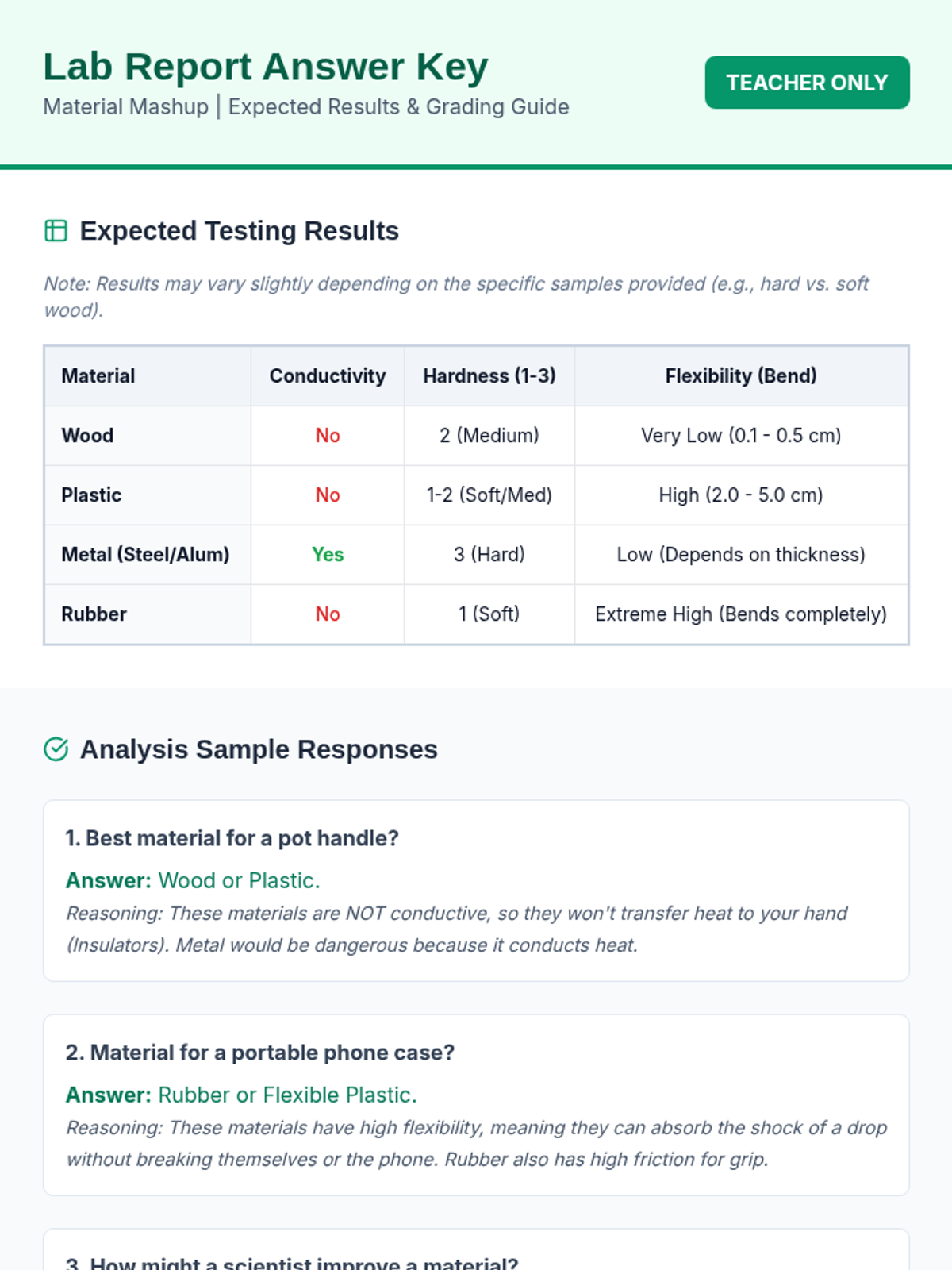
Students explore the world of materials science, testing various substances for conductivity, hardness, and flexibility to understand how properties dictate a material's use.
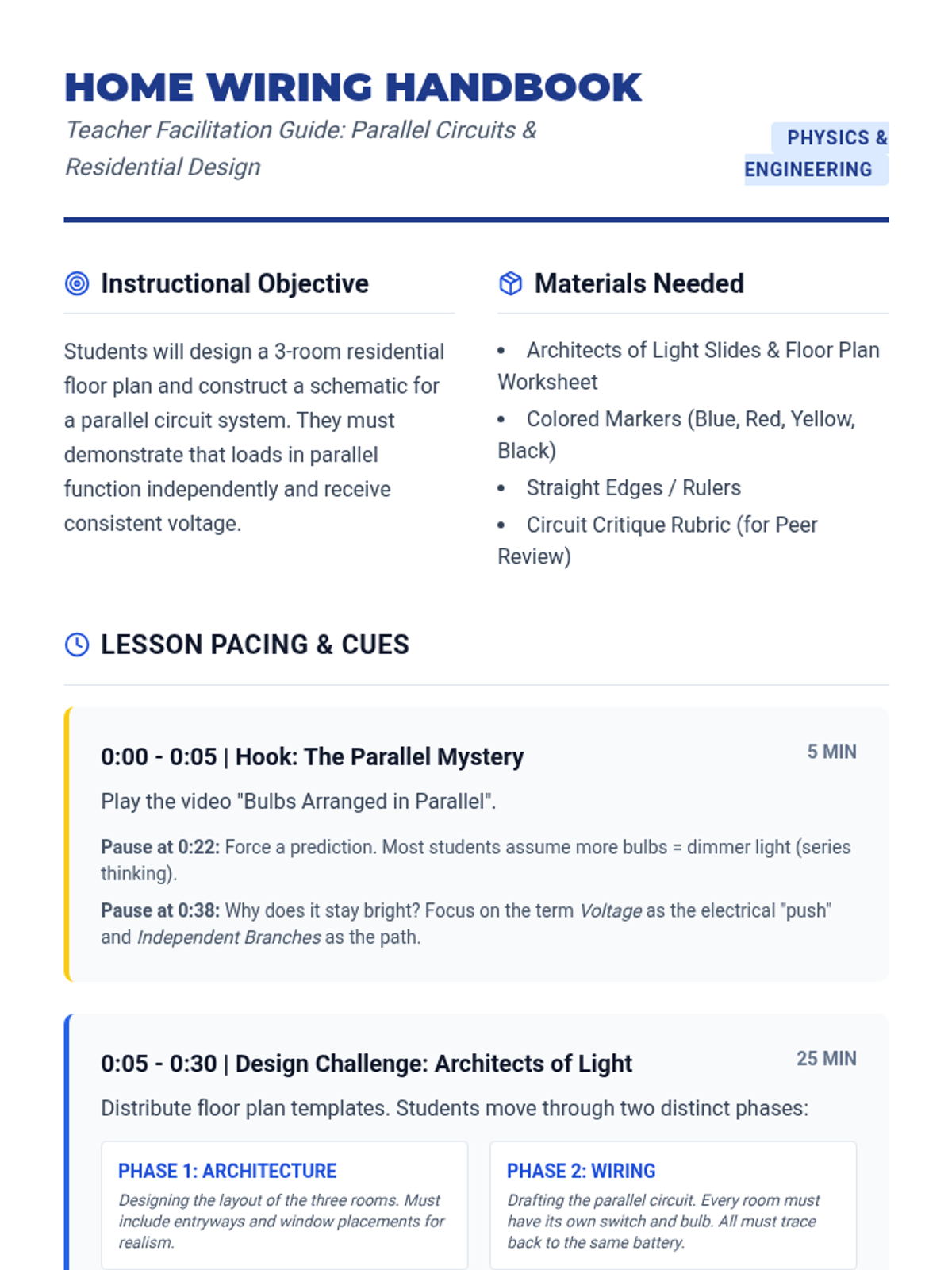
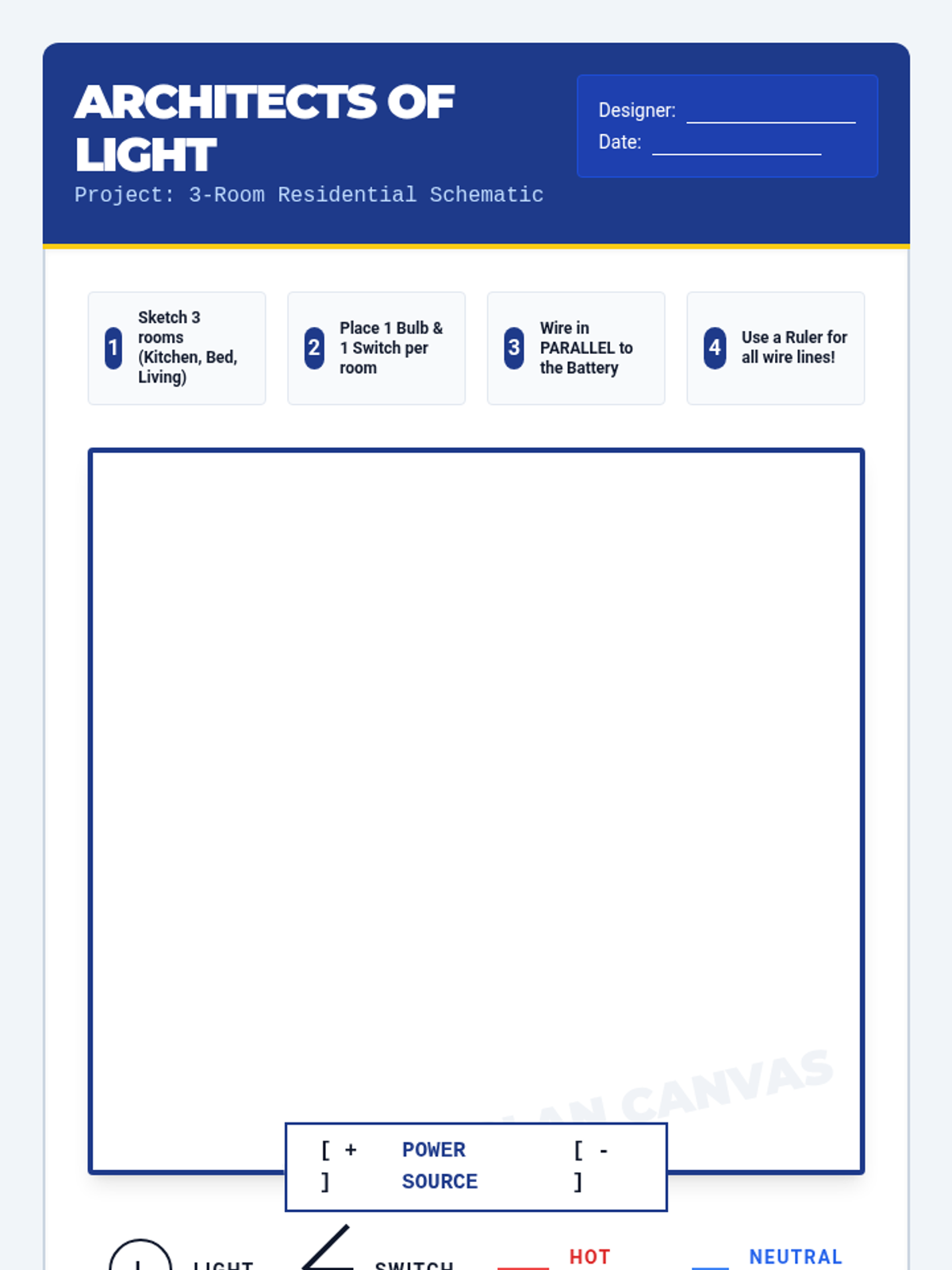
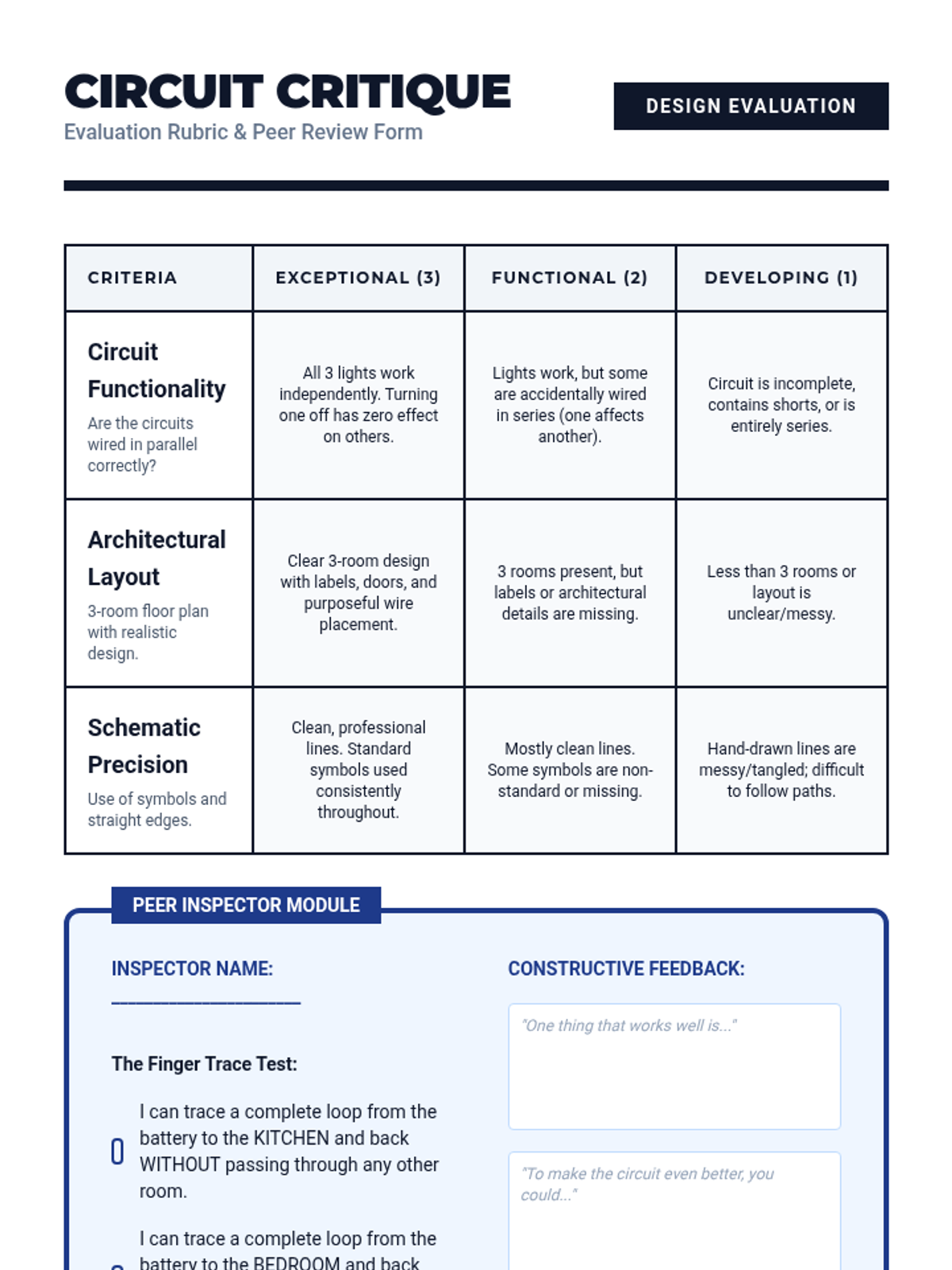
Students will transition from understanding simple circuits to designing a parallel circuit system for a 3-room house model. The lesson uses a video hook to demonstrate the constant brightness of parallel loads and challenges students to apply this 'Architect of Light' mindset to floor plan wiring.
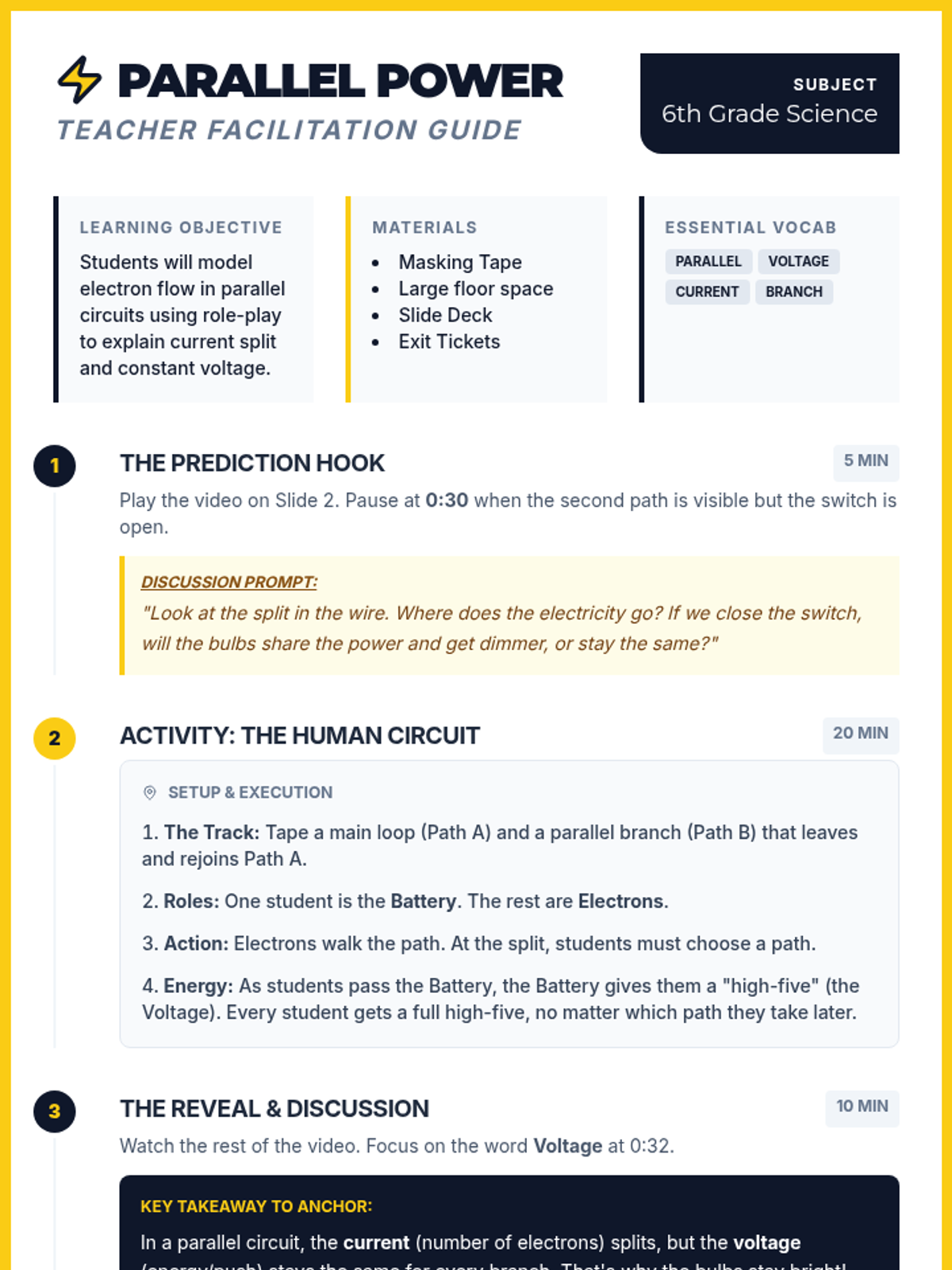
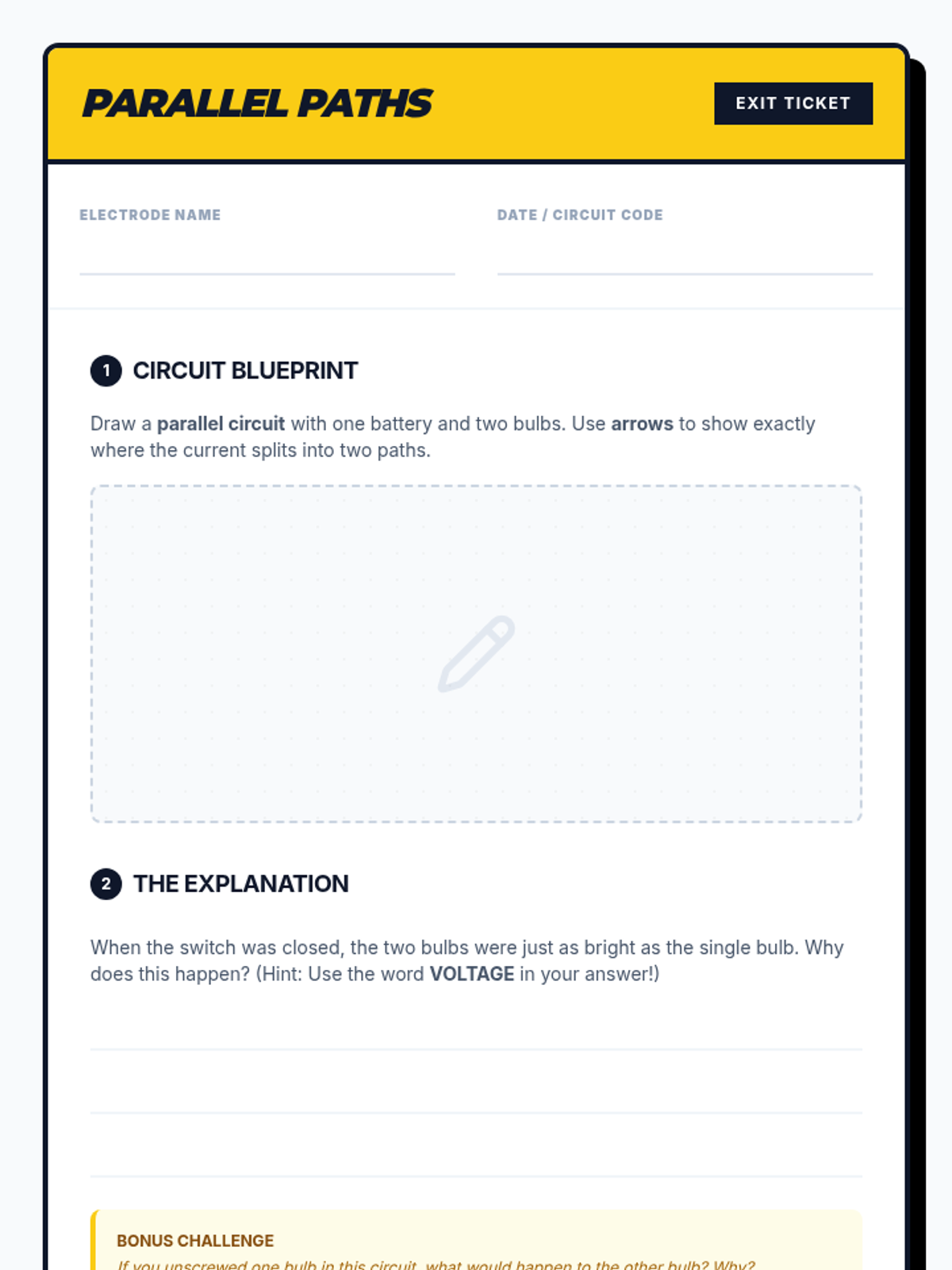
Students will role-play as electrons in a circuit to understand how current splits and voltage remains constant in a parallel circuit arrangement, using a video demonstration as a baseline for observation.
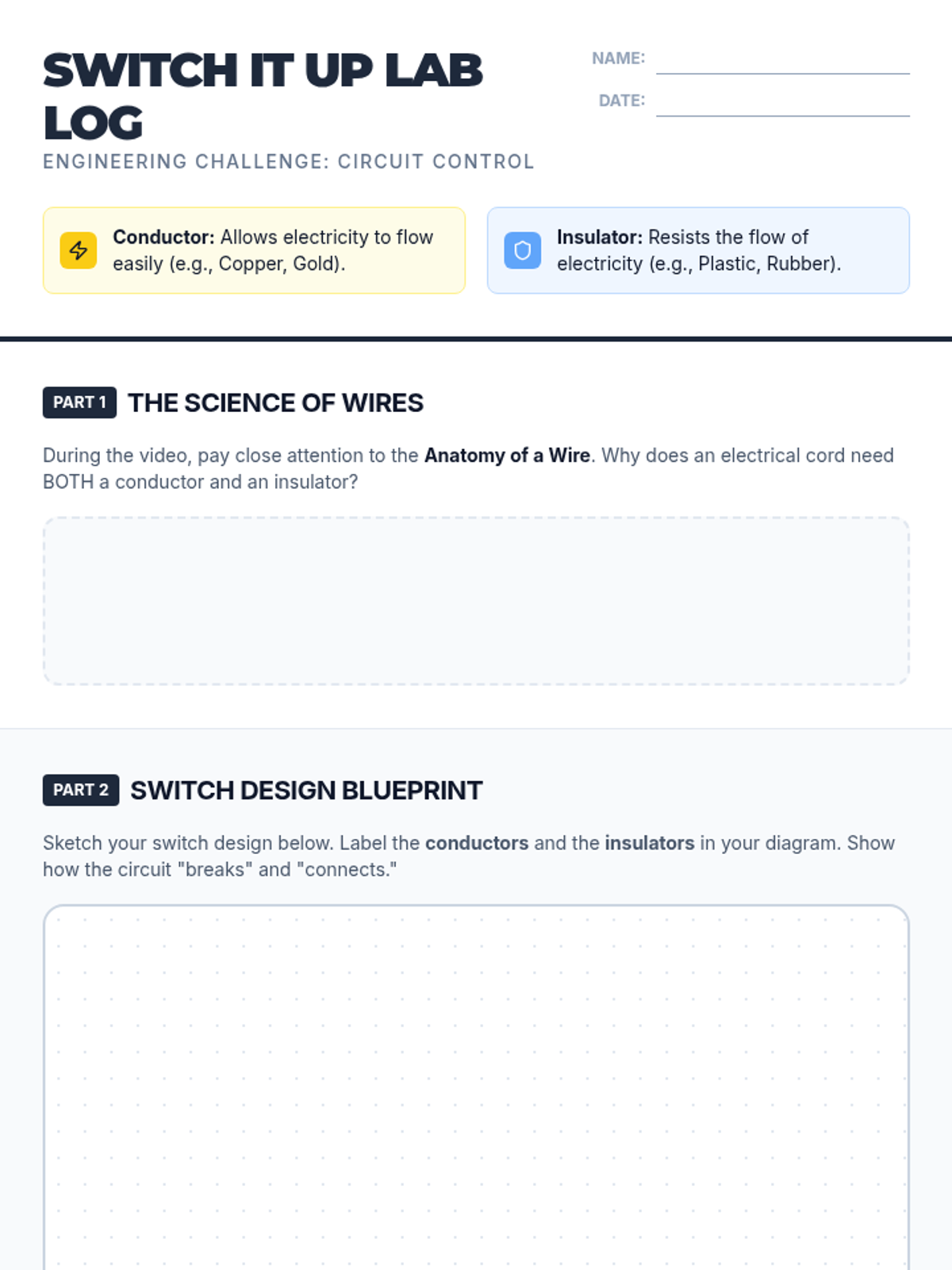
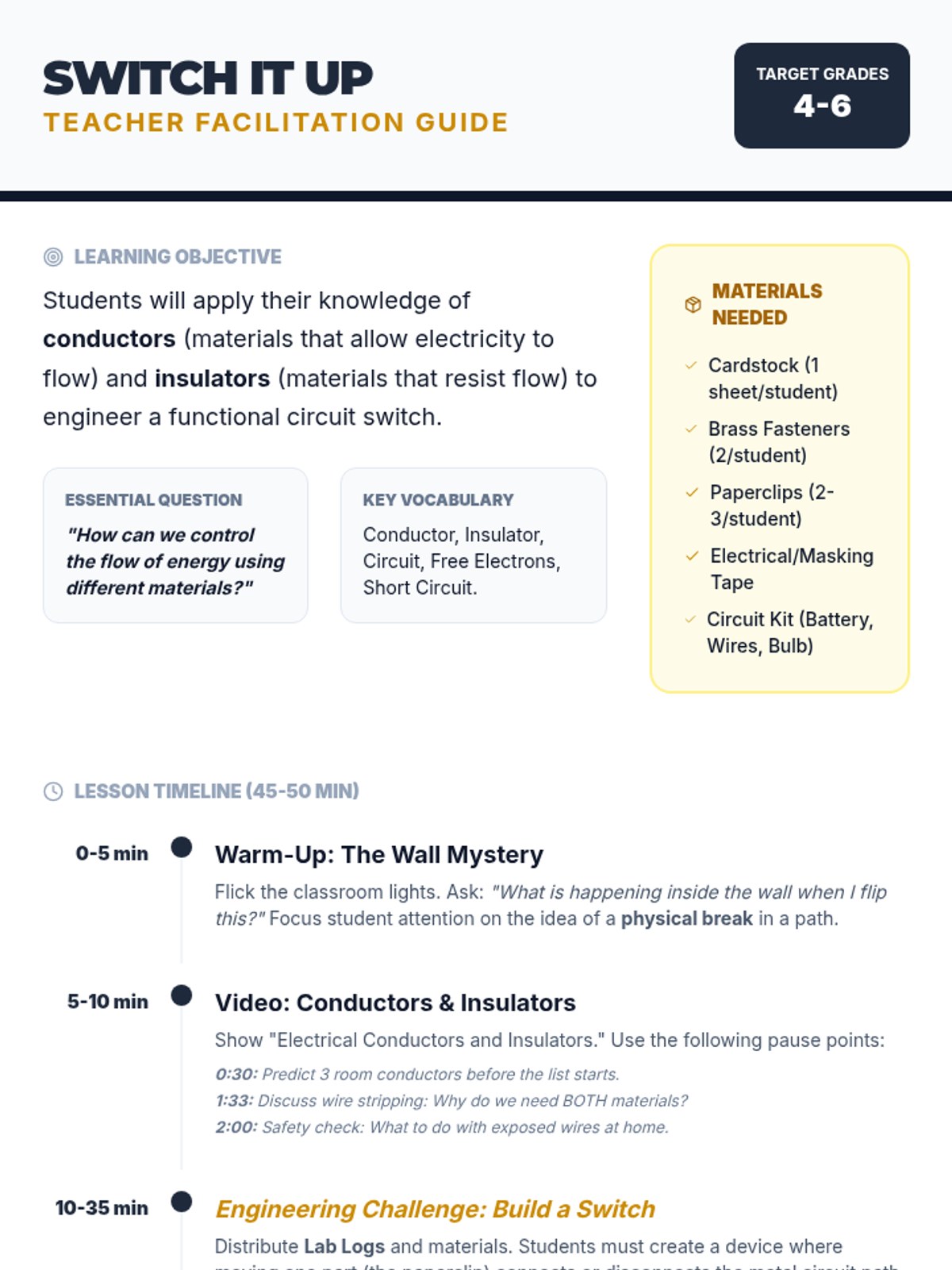
Students explore the properties of conductors and insulators by designing and building their own functional circuit switches using everyday materials.
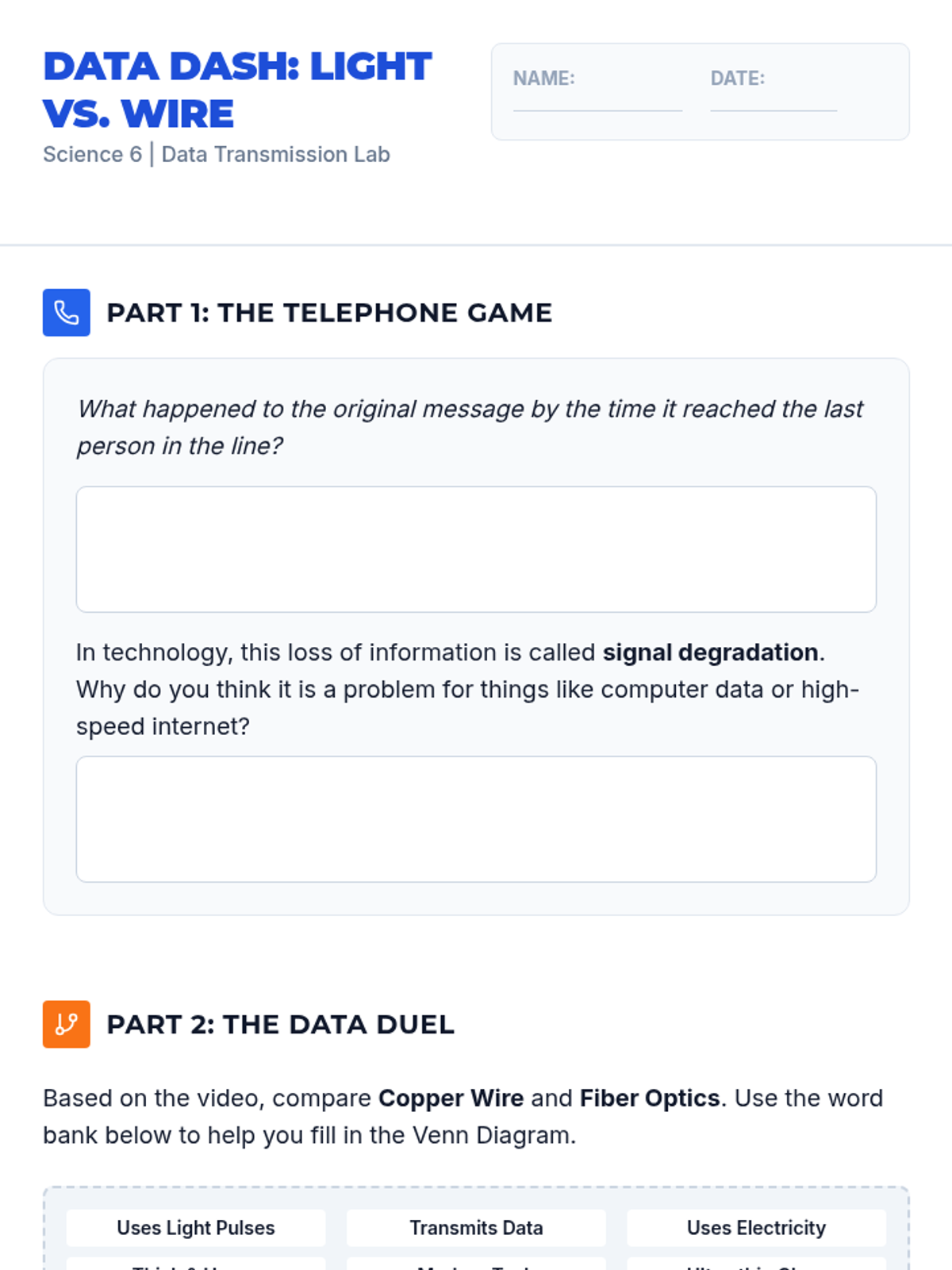
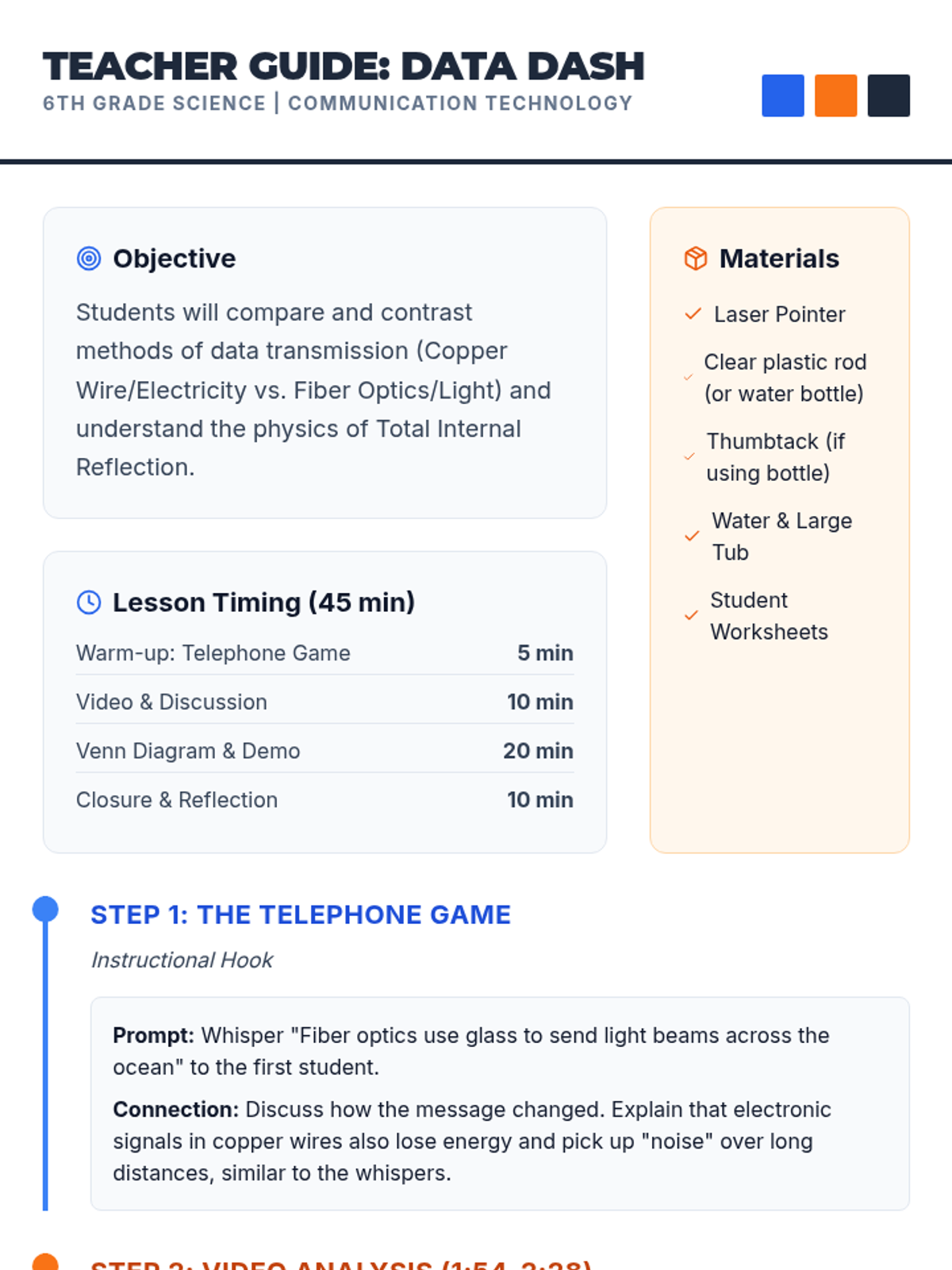
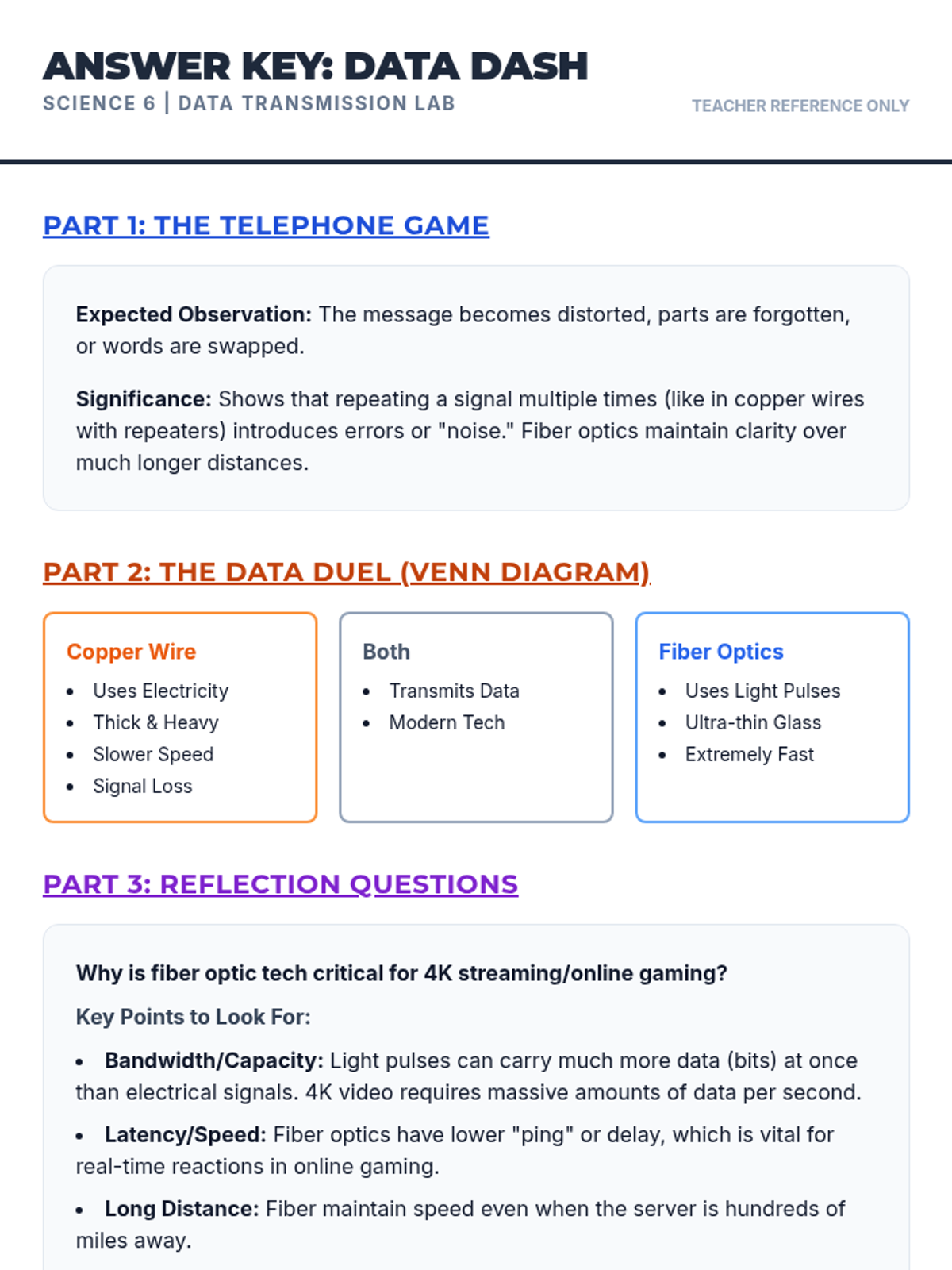
A 6th-grade science lesson exploring how information travels through copper wires and fiber optics, featuring a laser demonstration of total internal reflection.
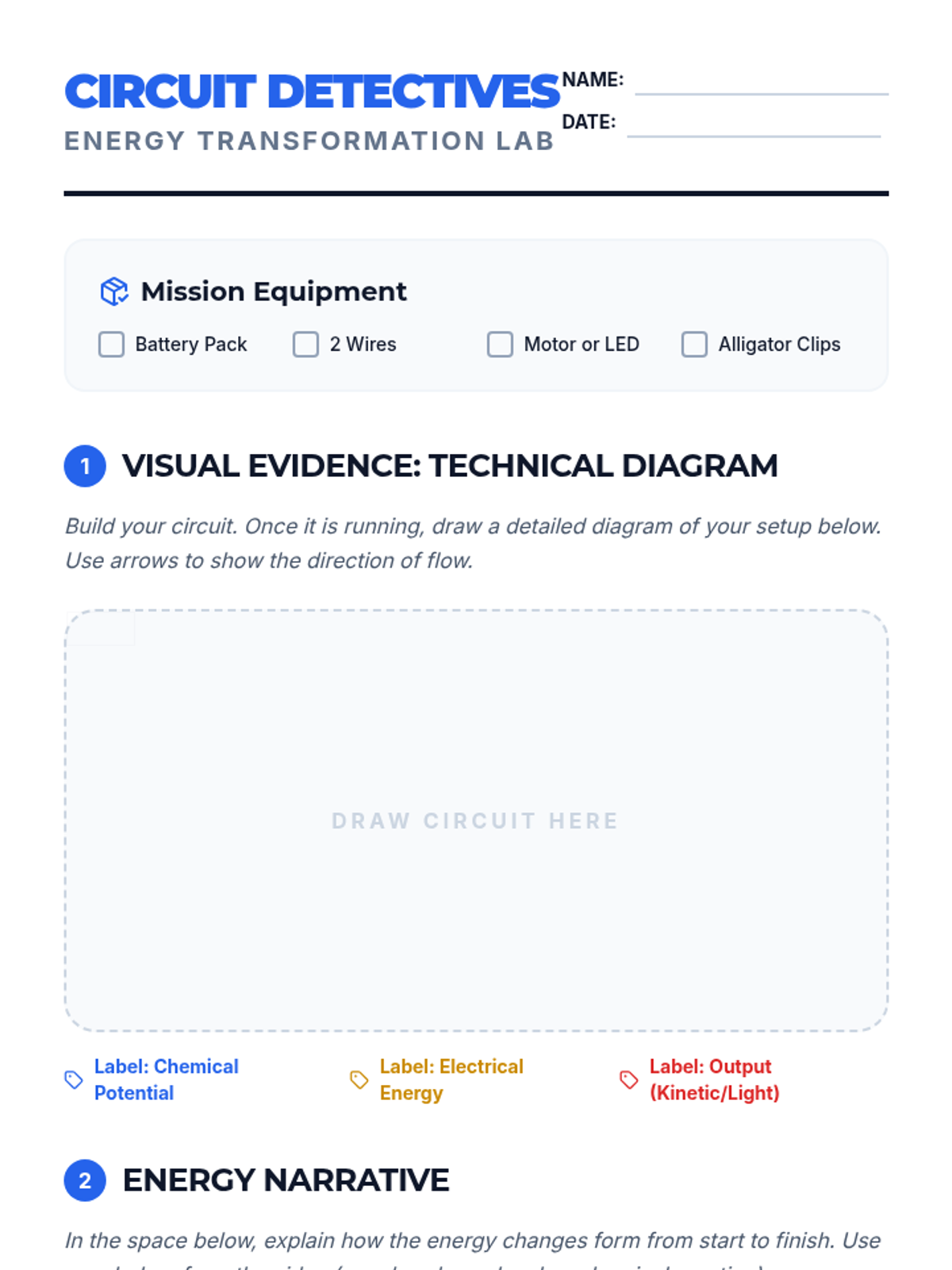
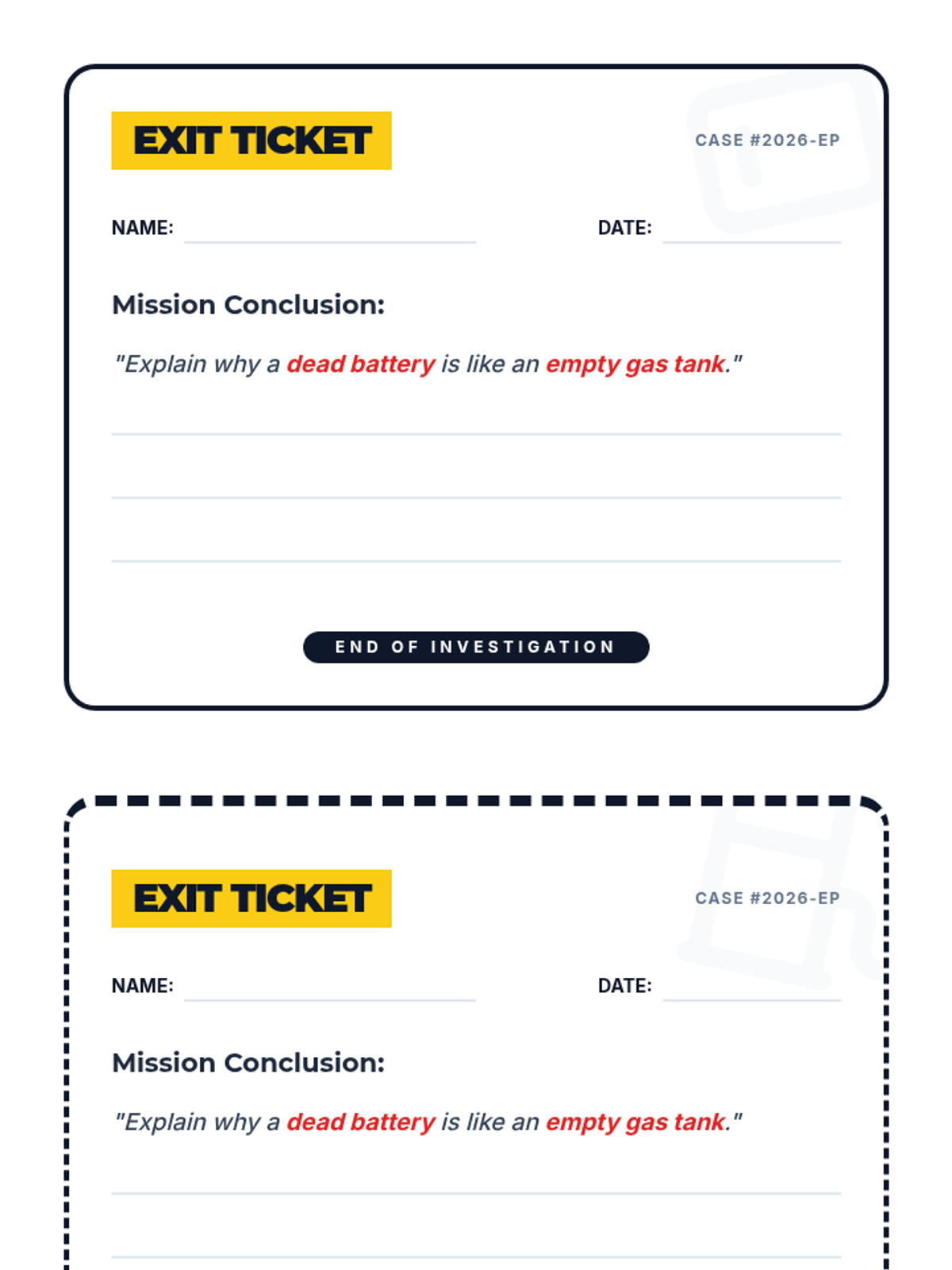
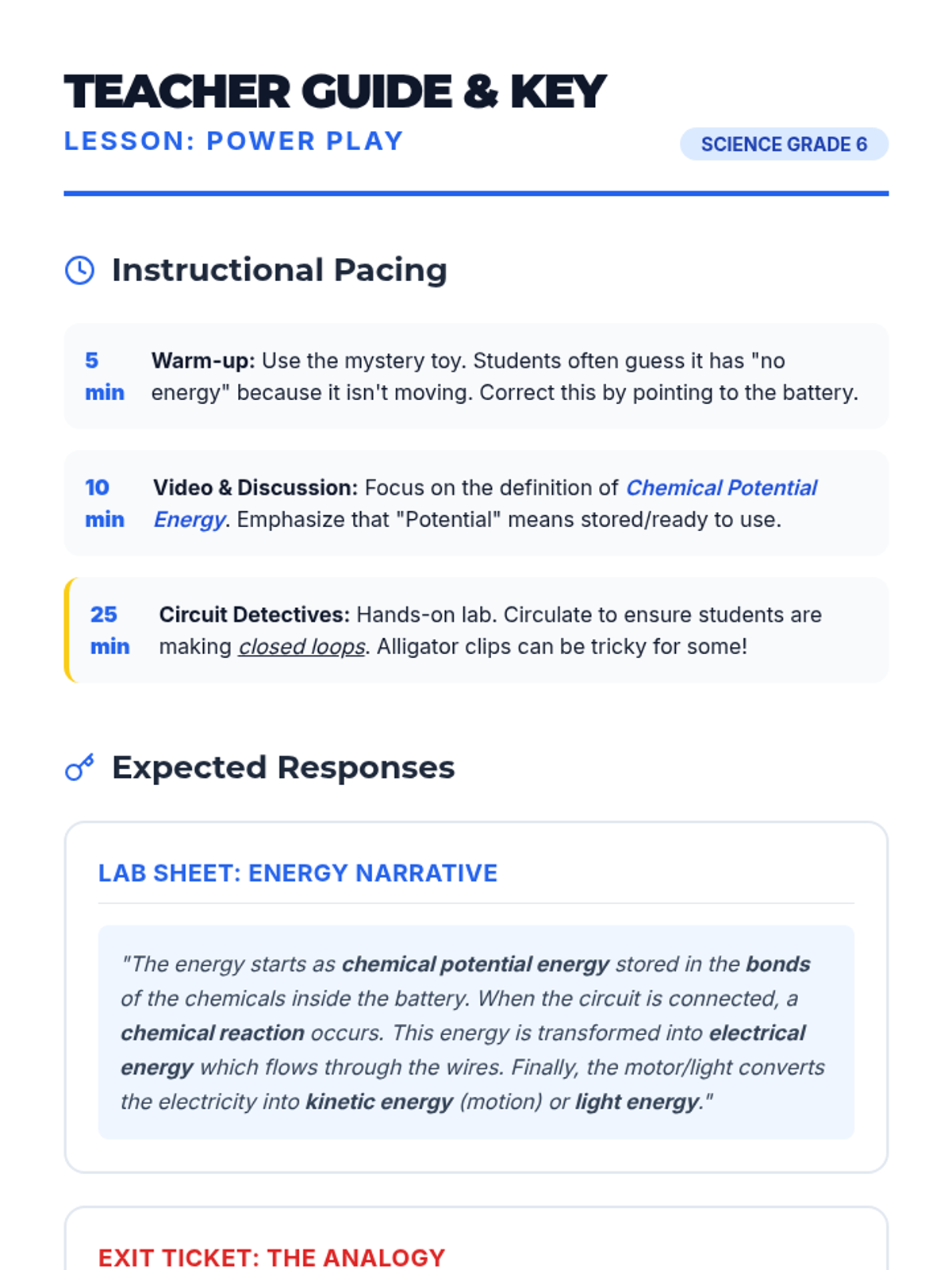
A hands-on exploration of energy transformations where students trace the flow of energy from chemical potential in batteries to electrical energy in wires and finally to kinetic or light energy in outputs.
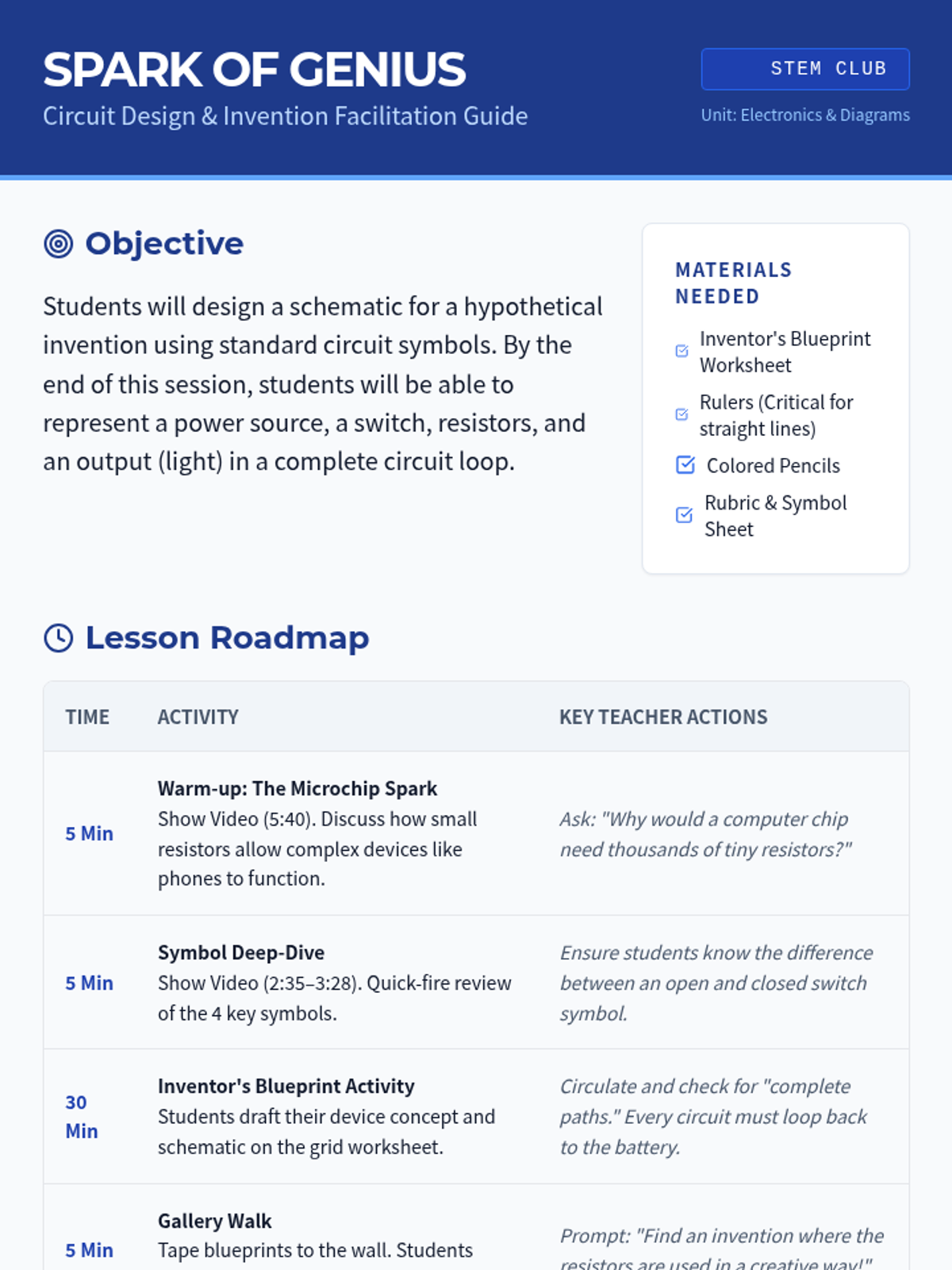
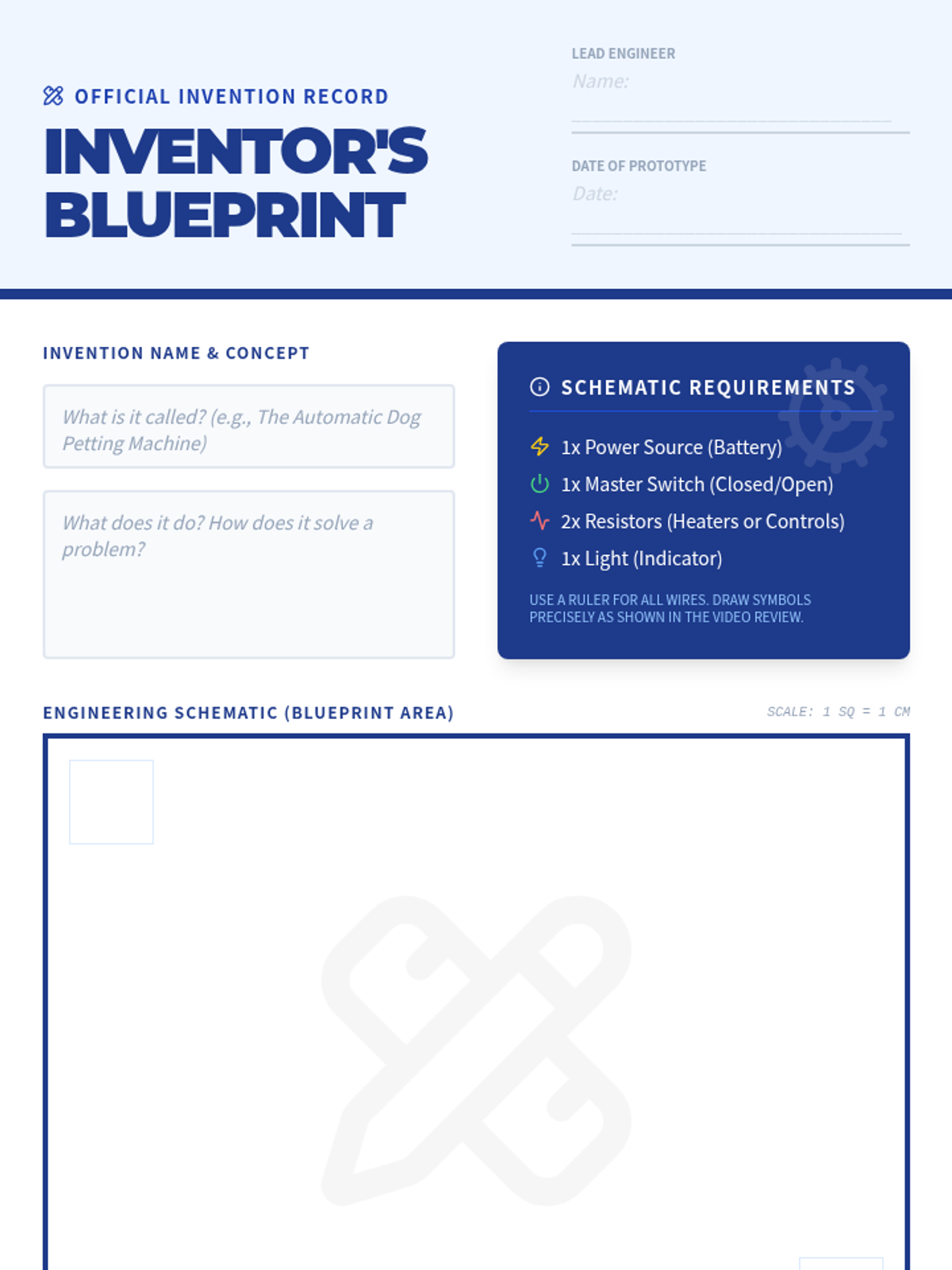
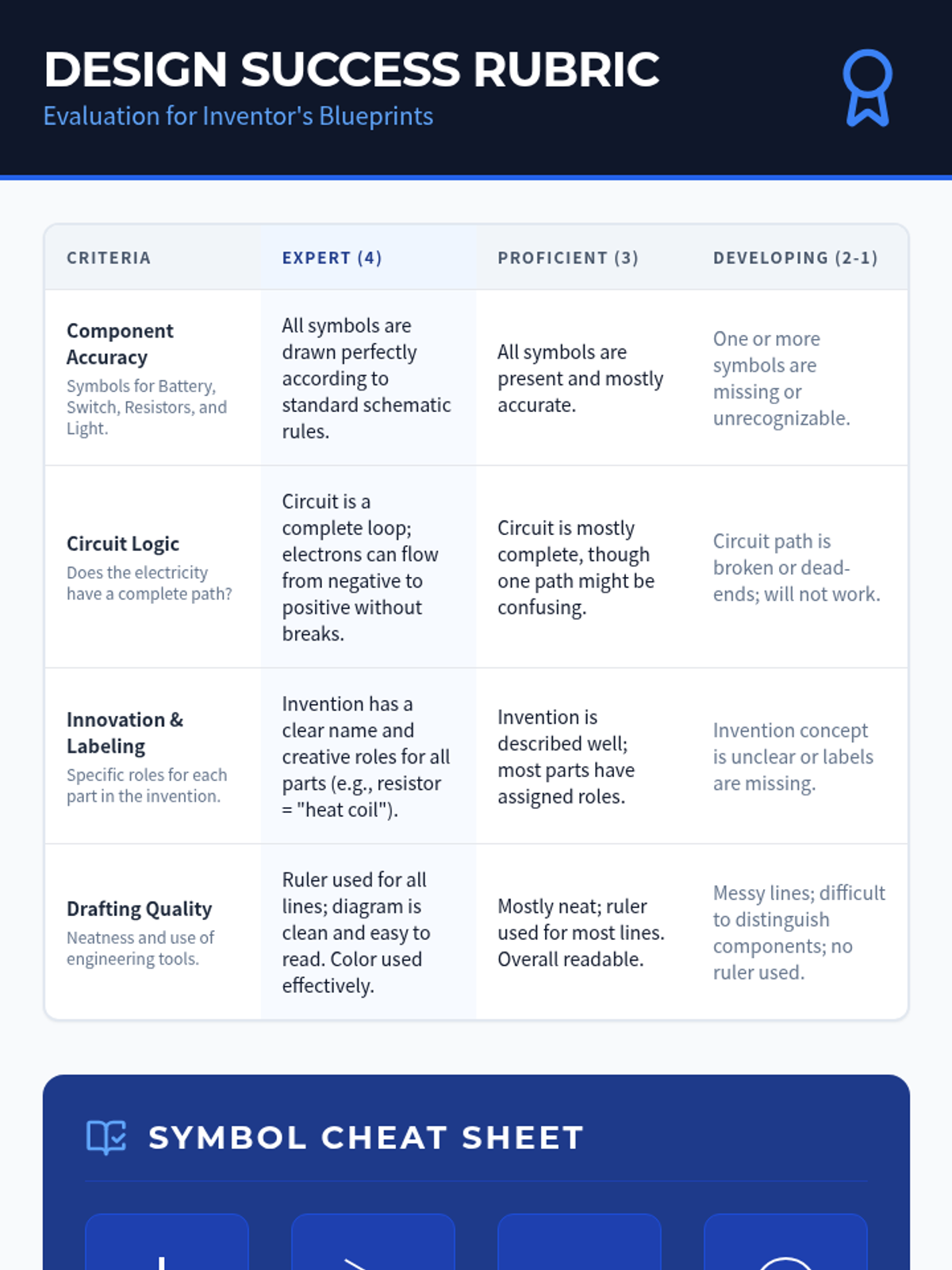
Students will design a circuit diagram for a hypothetical invention after reviewing electronic symbols and exploring how microchips use resistors. The lesson culminates in a 'Gallery Walk' where students showcase their 'Inventor's Blueprints'.
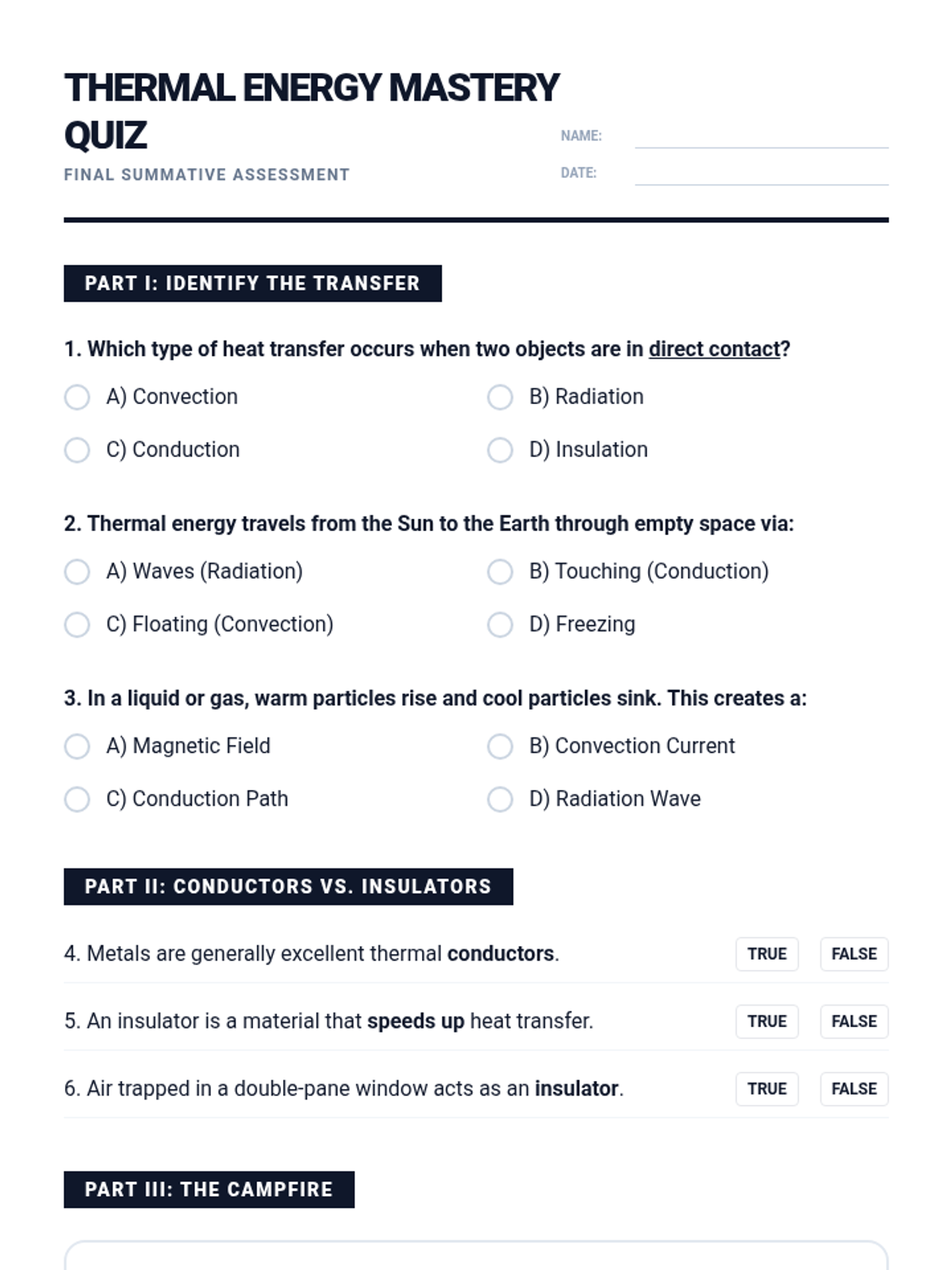
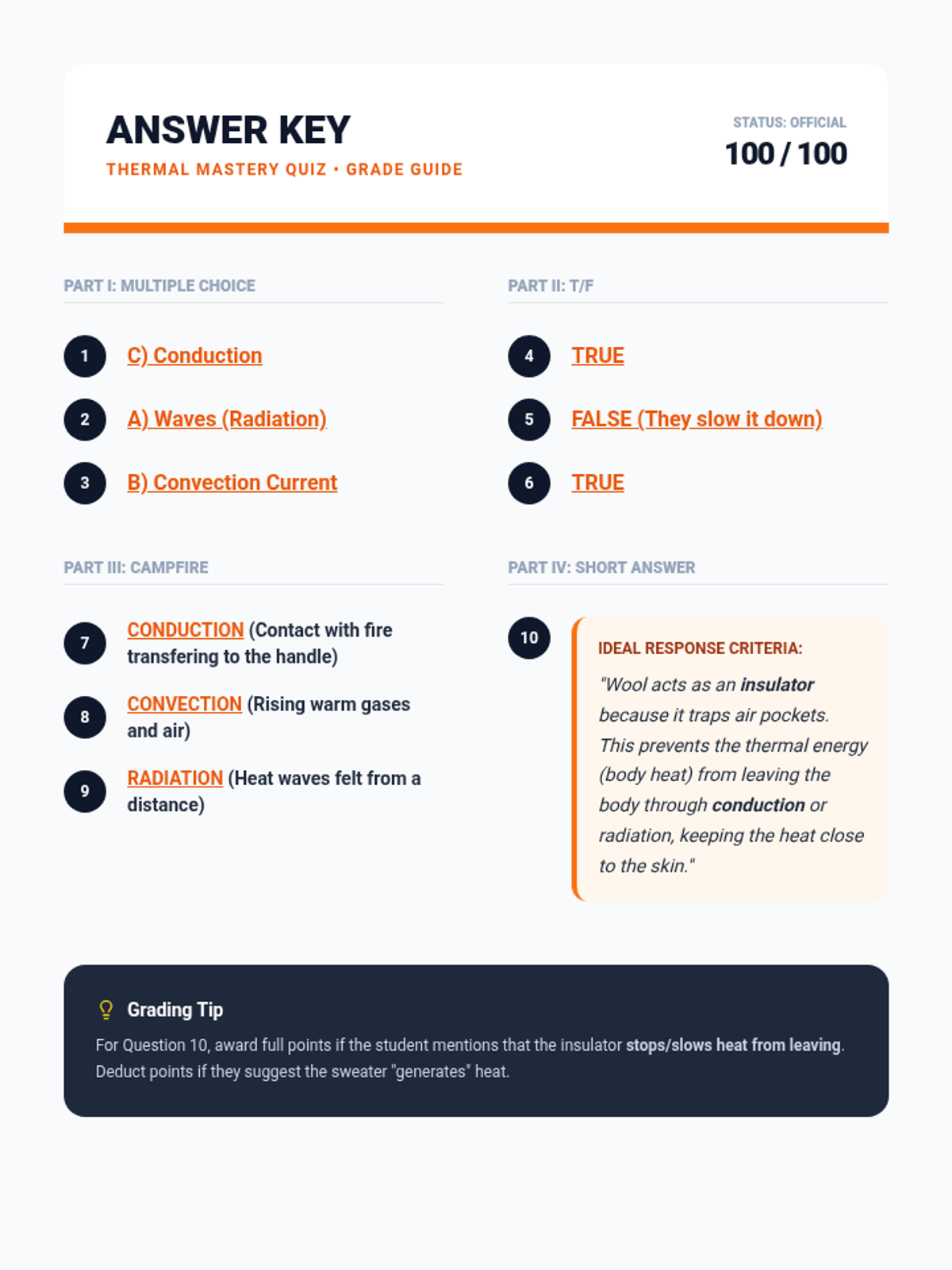
A final assessment to evaluate student understanding of thermal energy transfer, insulators, and conductors.
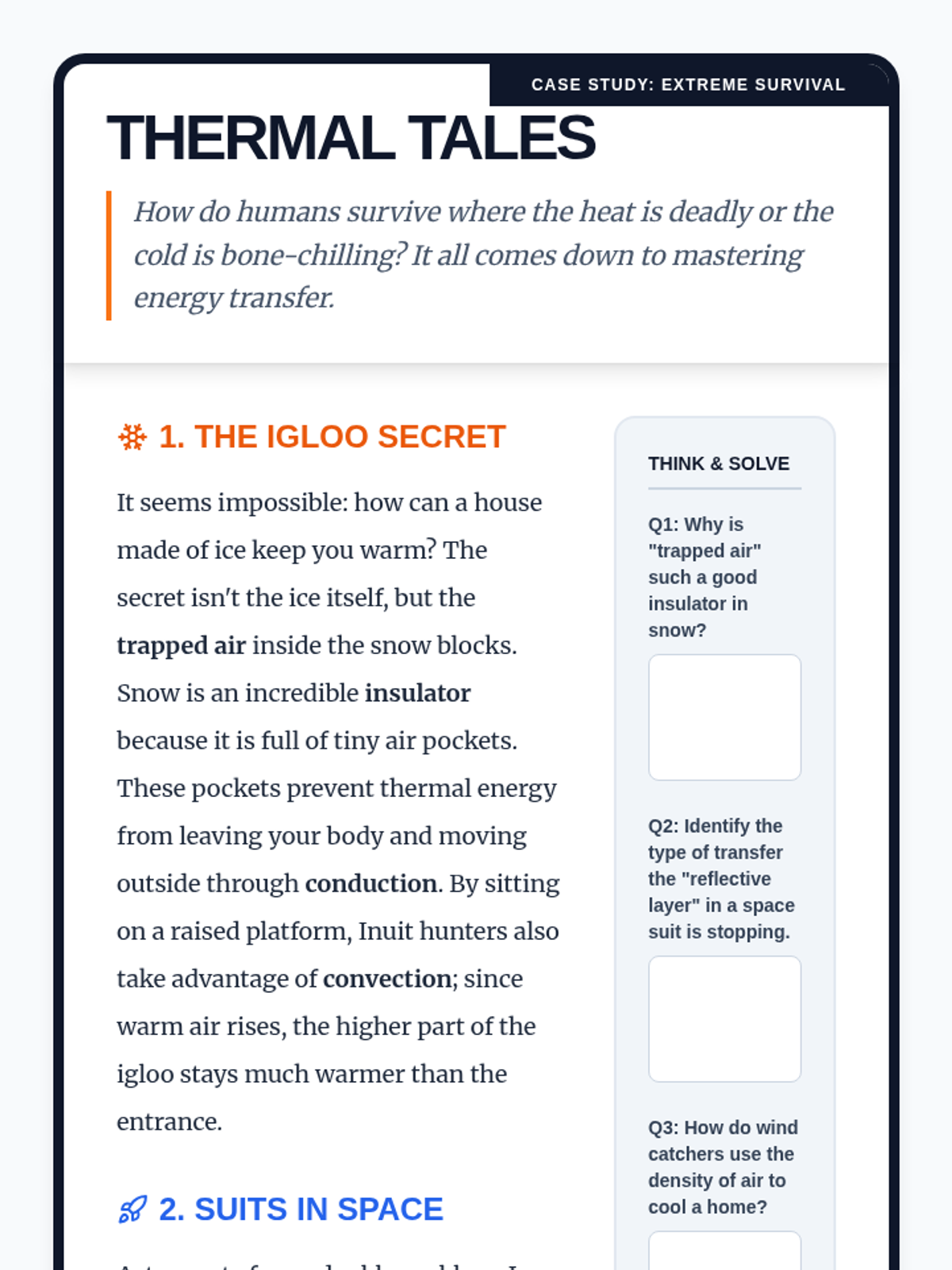
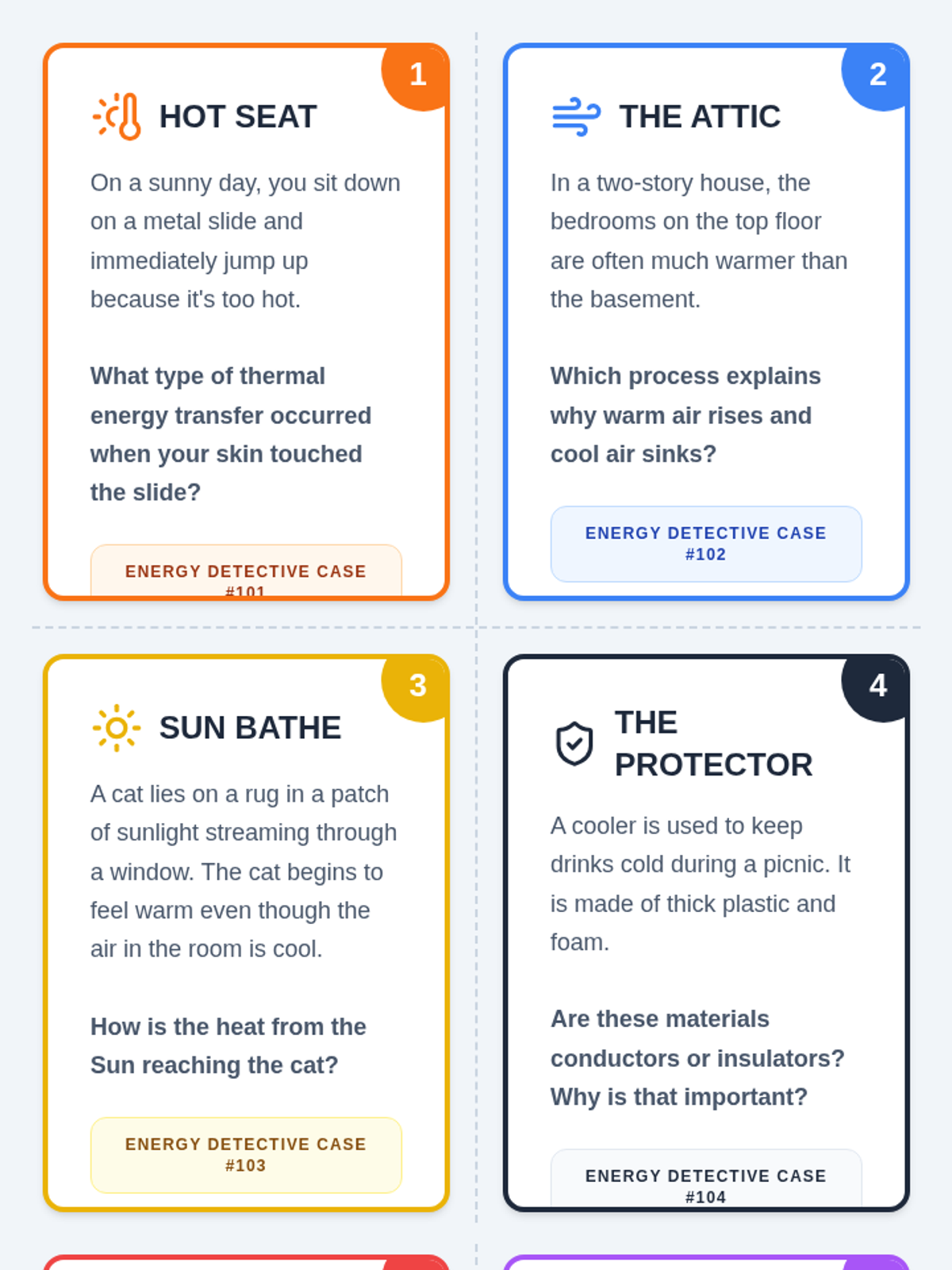
Applying thermal energy knowledge to complex real-world scenarios through a reading passage and interactive task cards.
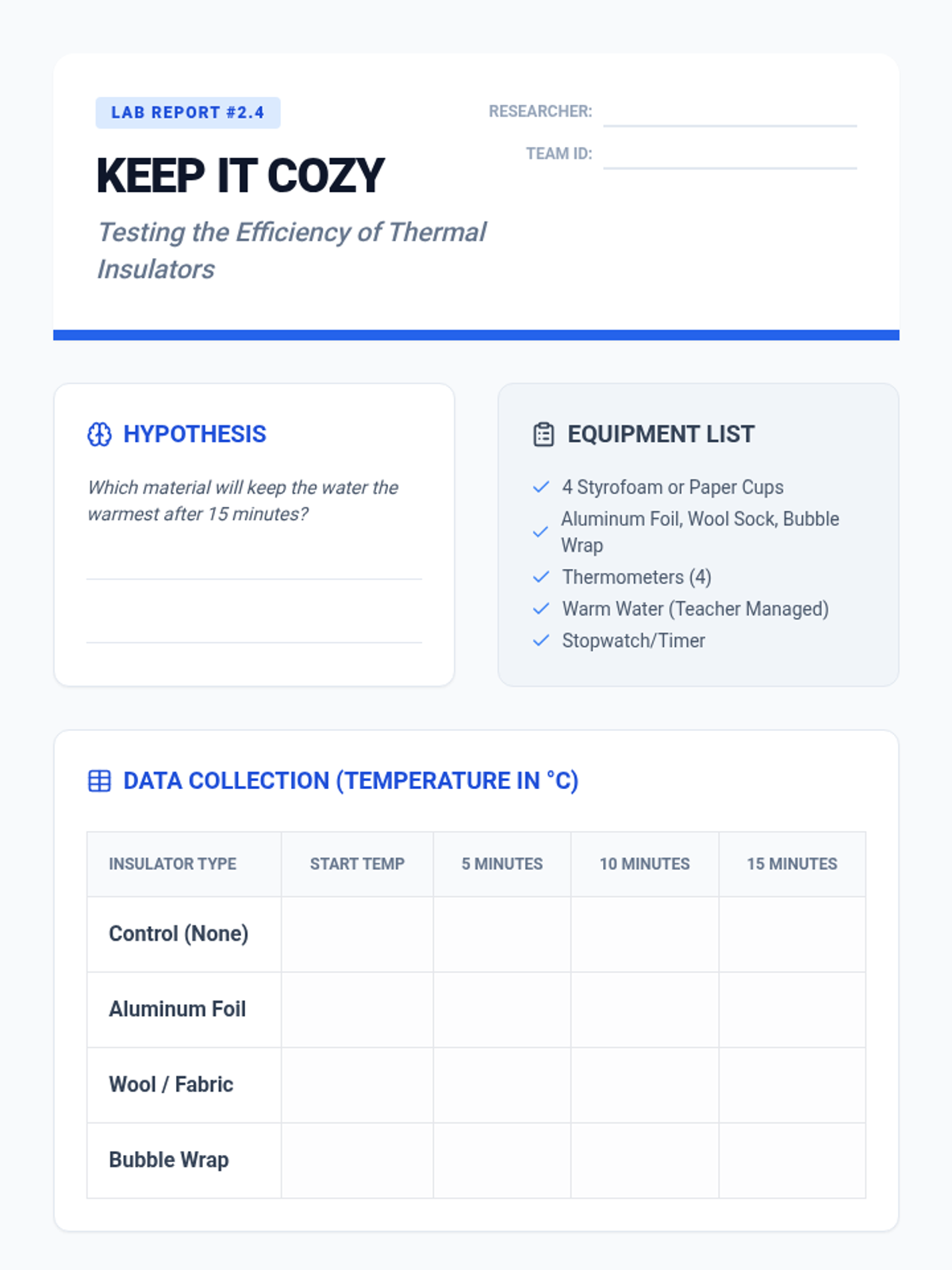
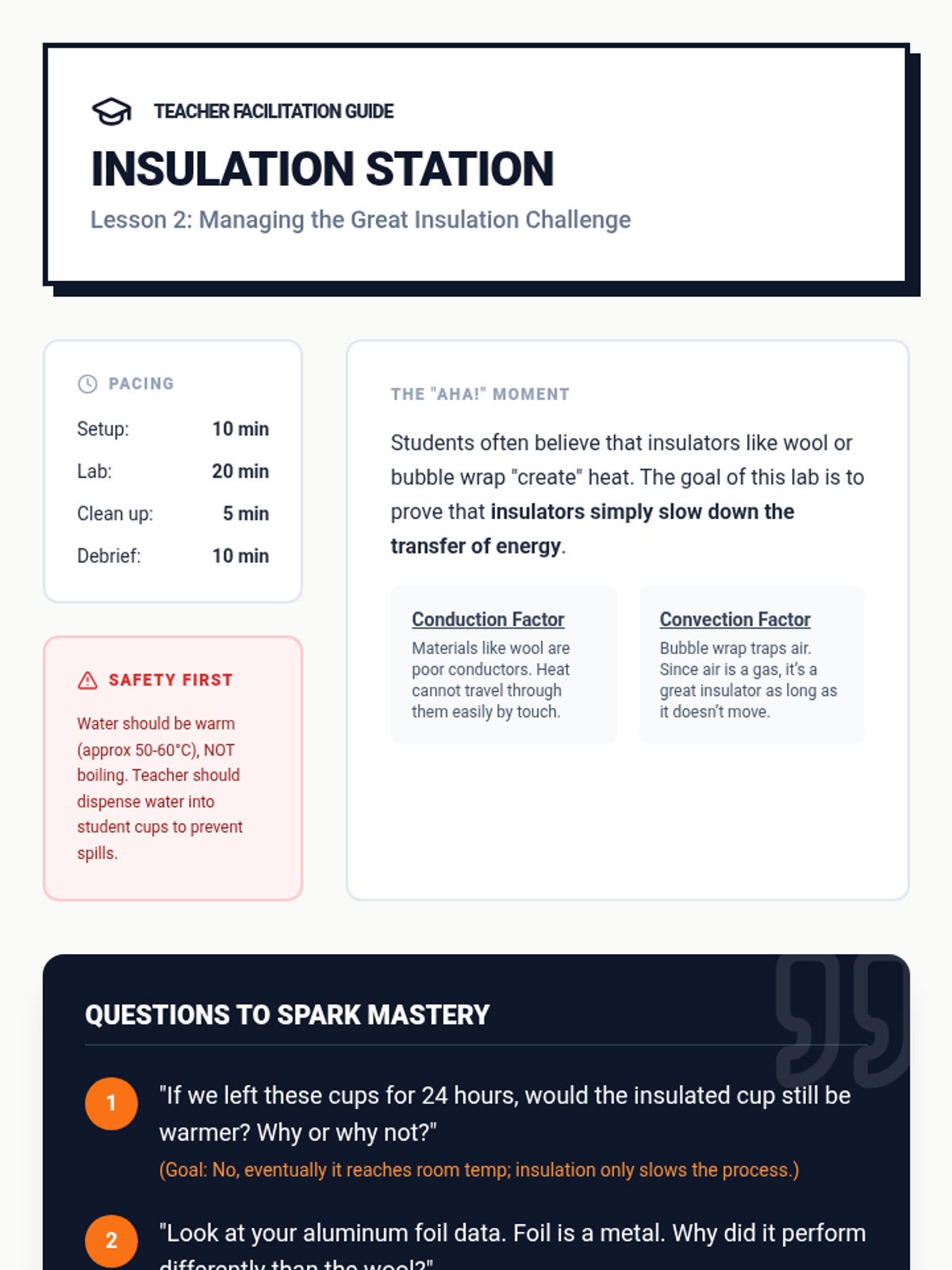
A hands-on laboratory experiment where students test various materials to determine their effectiveness as insulators.
A comprehensive lesson for 6th-grade students exploring the three methods of thermal energy transfer: conduction, convection, and radiation. Students will learn to identify these processes in everyday scenarios through visual diagrams and interactive examples.
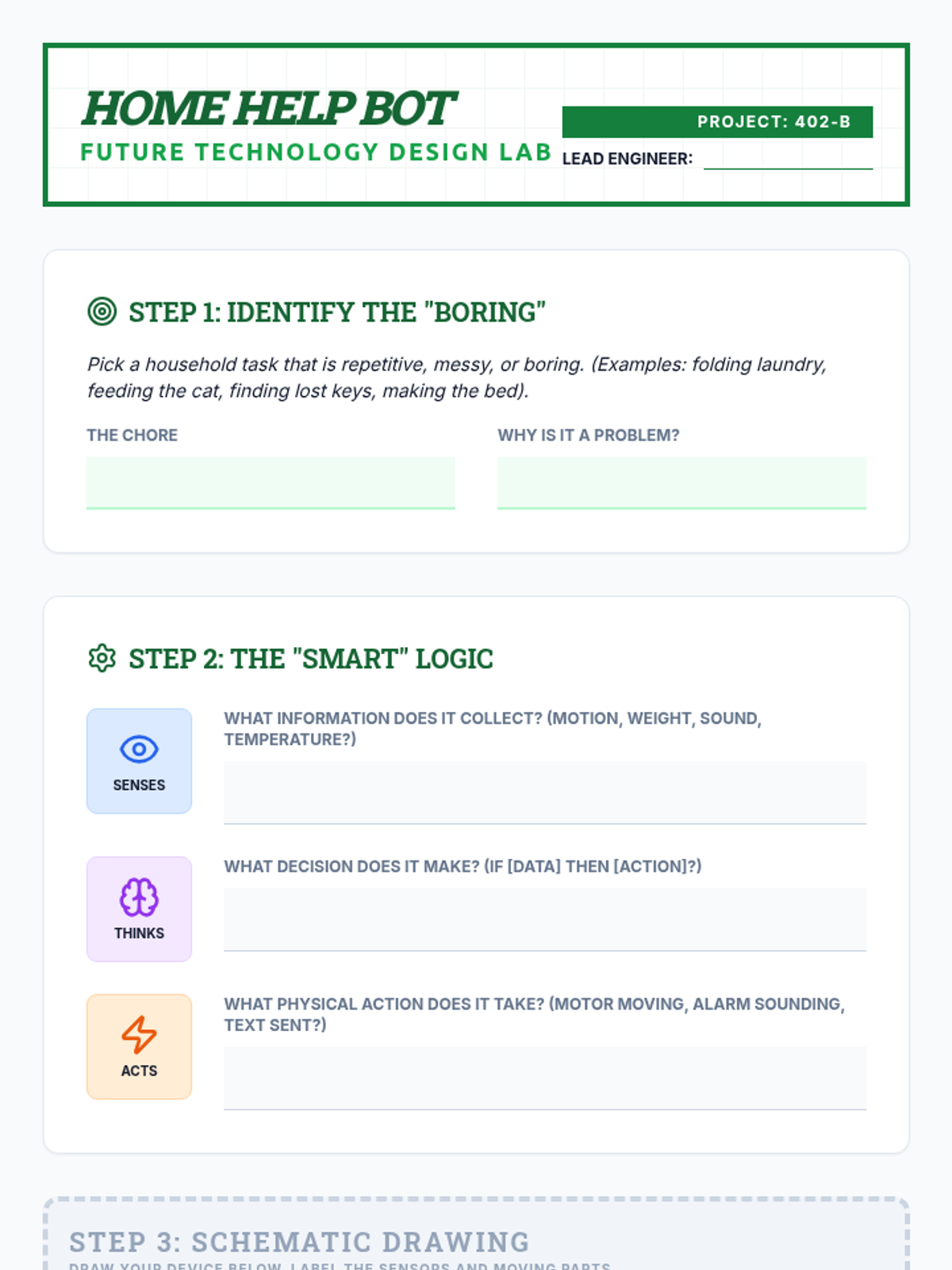
Exploring the rise of 'Smart' homes, automation, and the Internet of Things (IoT), culminating in a design project for a future household helper.
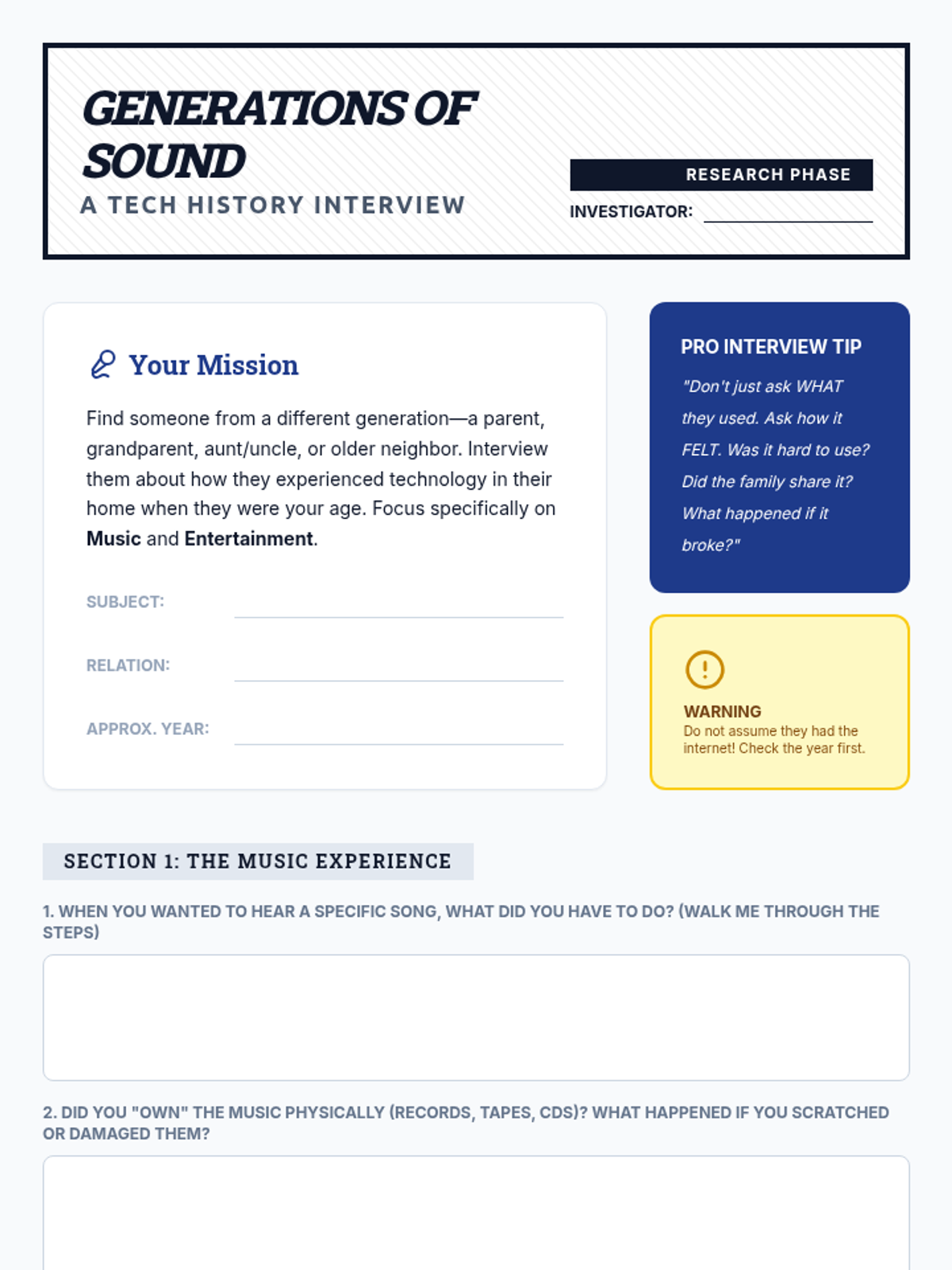
Tracing the history of home entertainment and communication, comparing analog technologies of the past with today's digital streaming landscape.
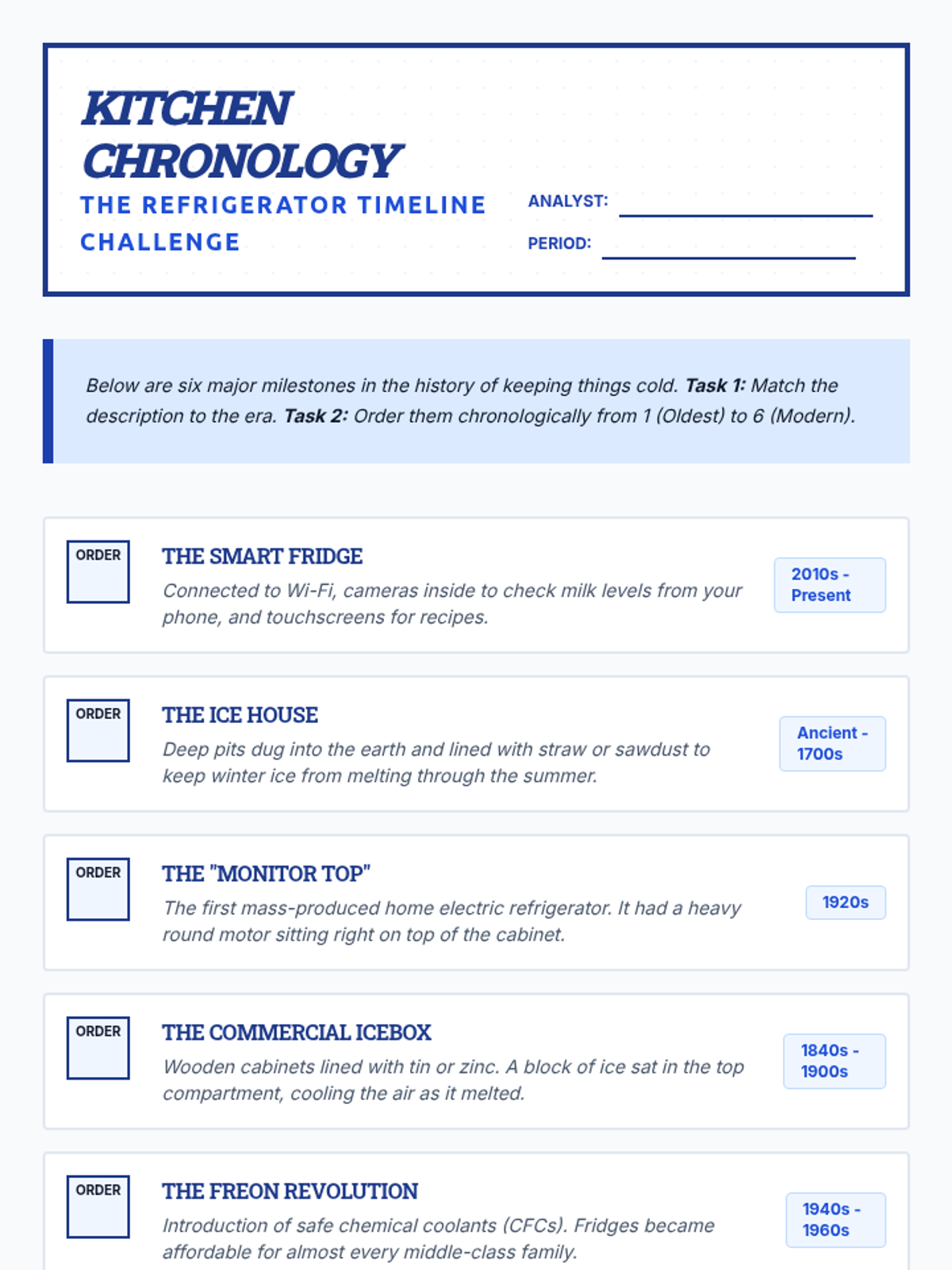
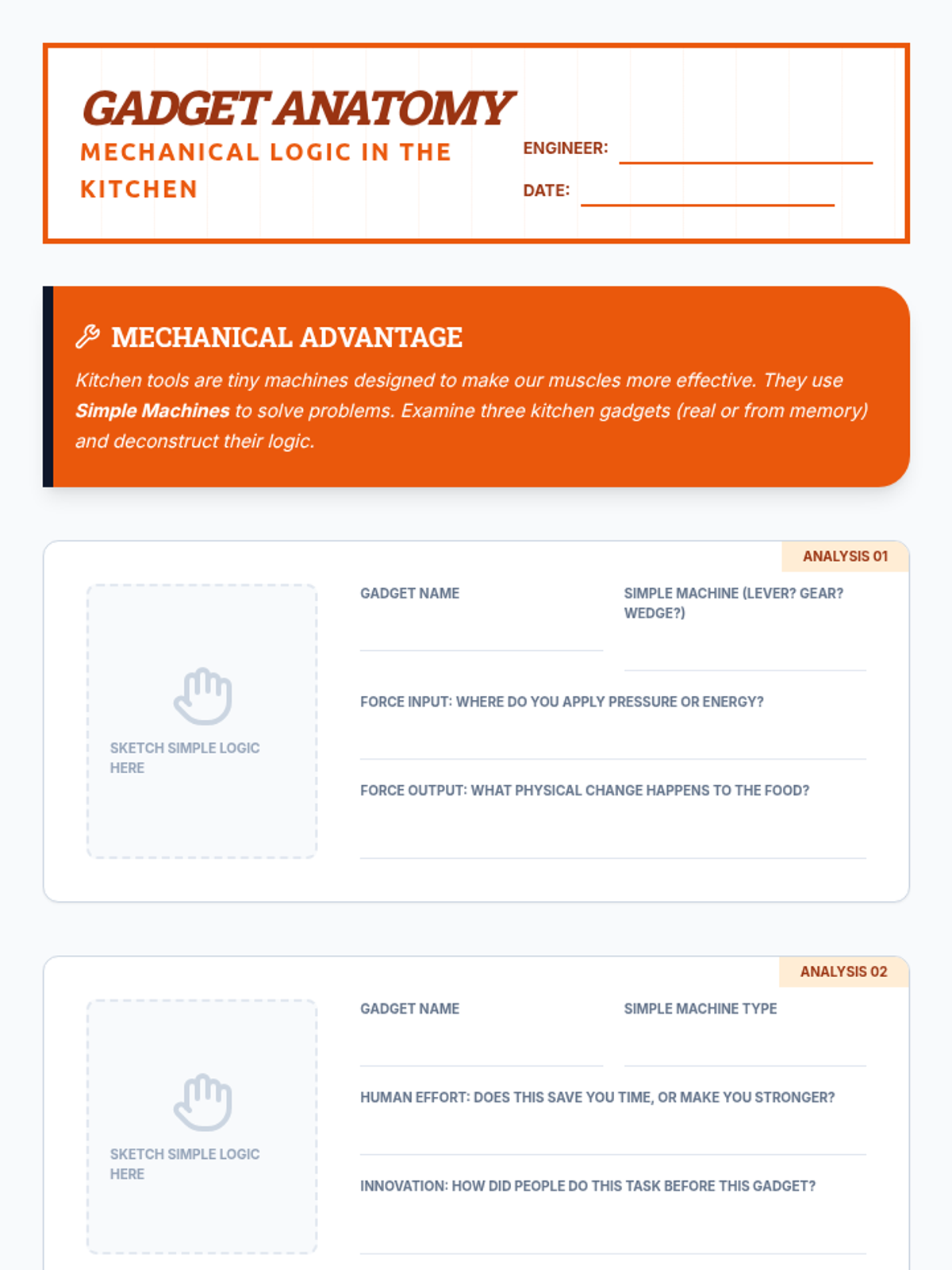
An investigation into how kitchen technology has evolved to solve the problems of cooking, preservation, and preparation, from fire and ice to microwaves and smart appliances.
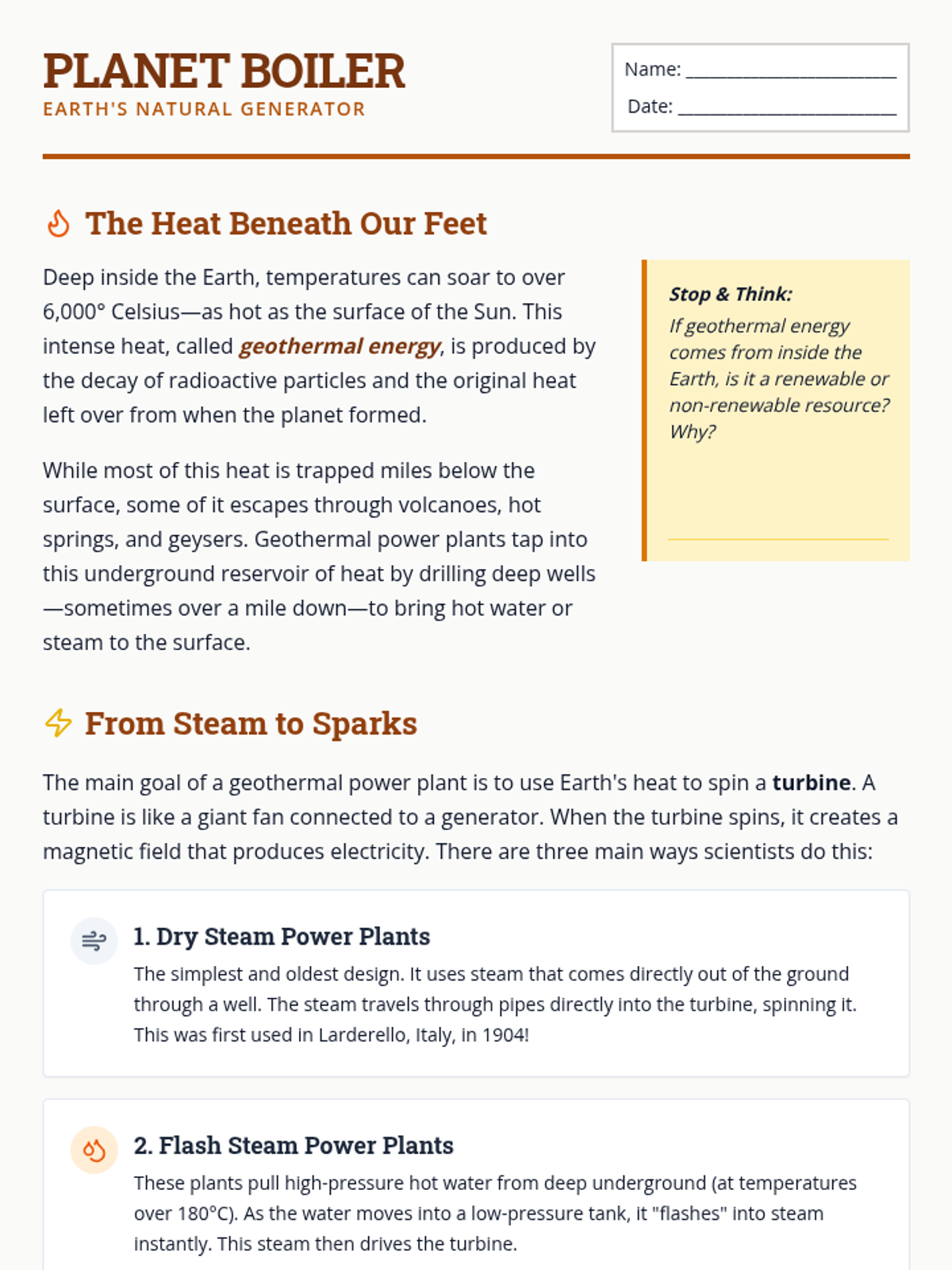
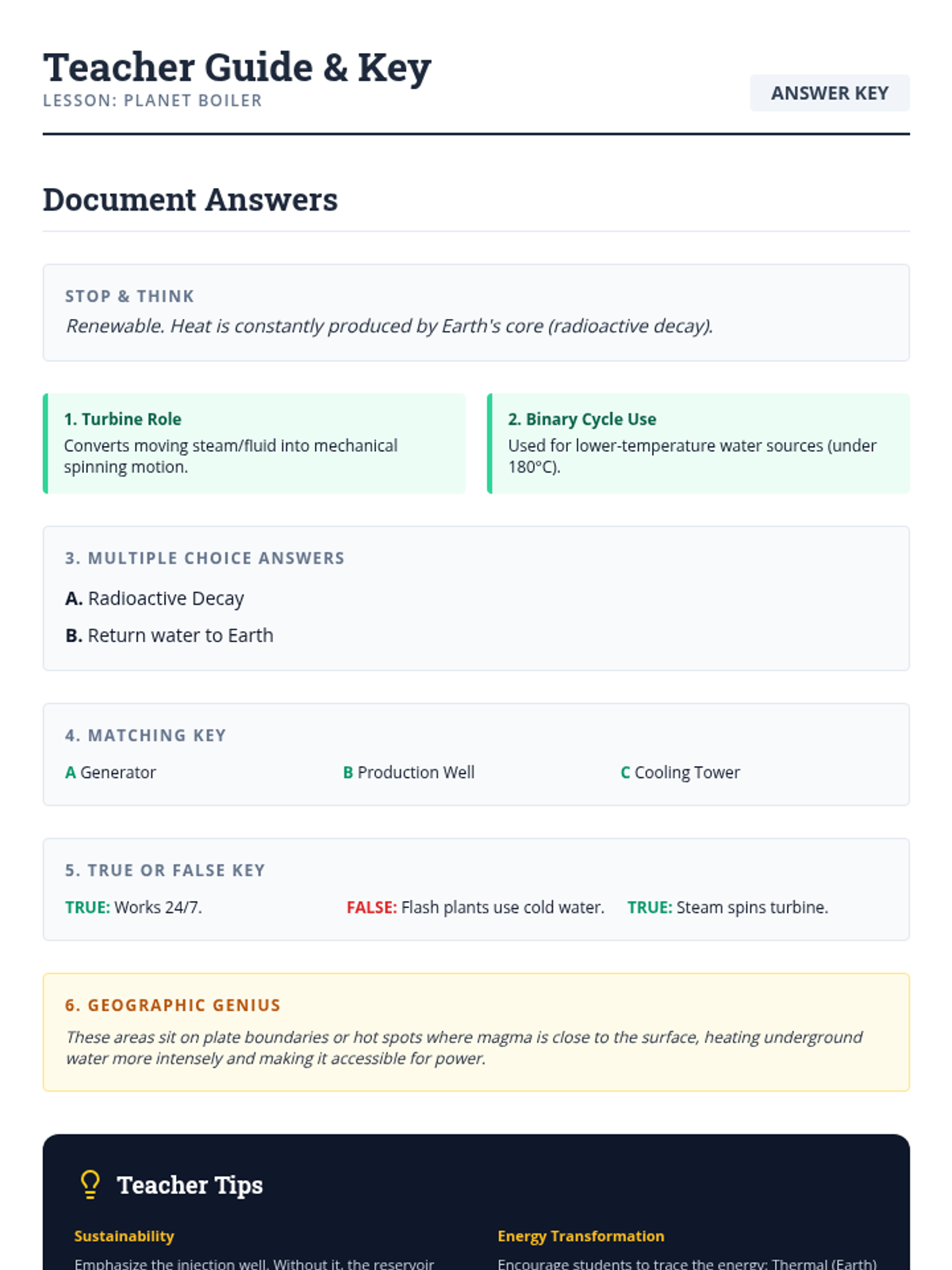
This lesson explores the process of converting geothermal energy into electricity, covering the mechanical systems of dry steam, flash steam, and binary cycle power plants. Students will analyze the flow of energy from Earth's core to the electrical grid.
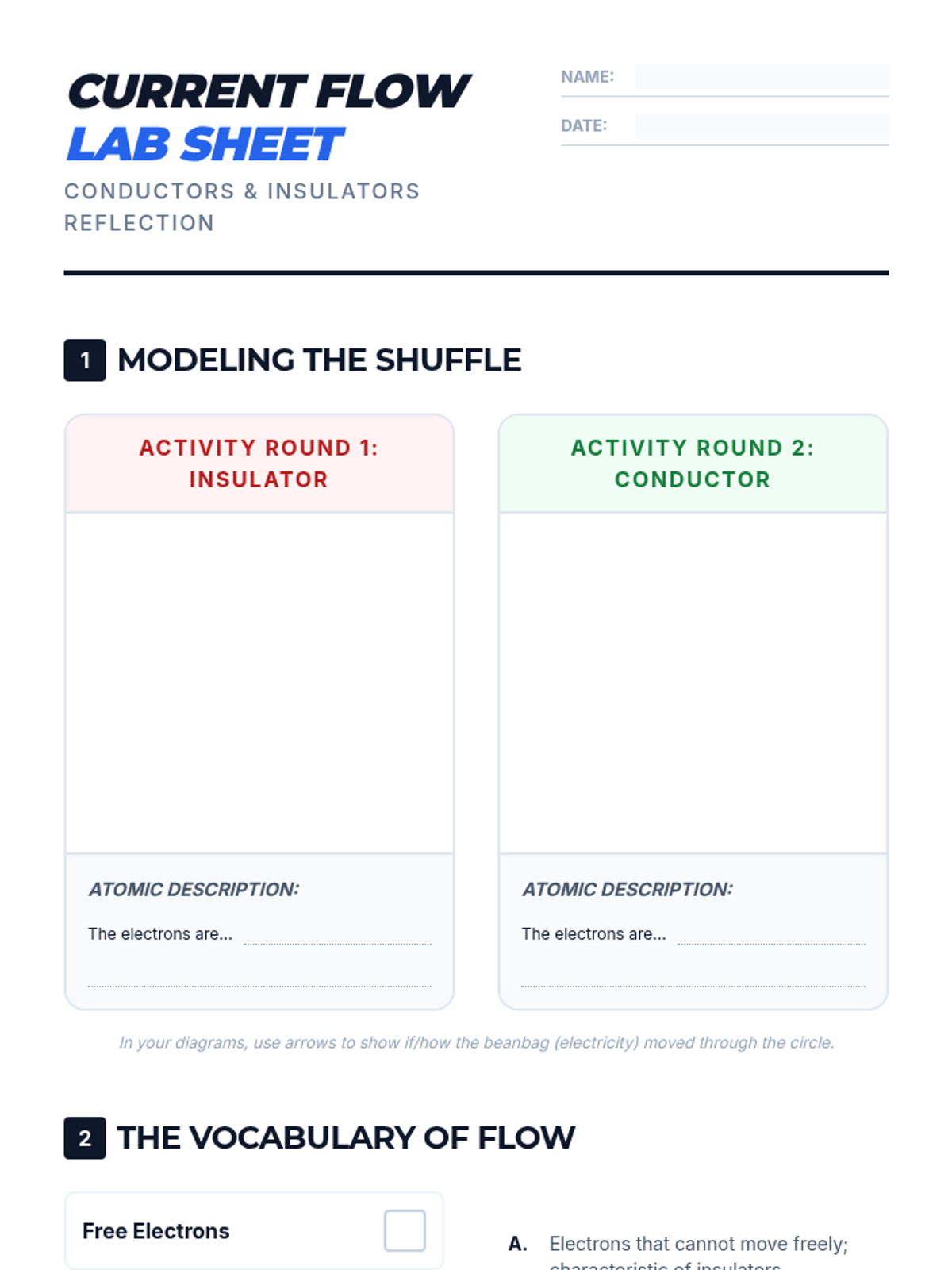
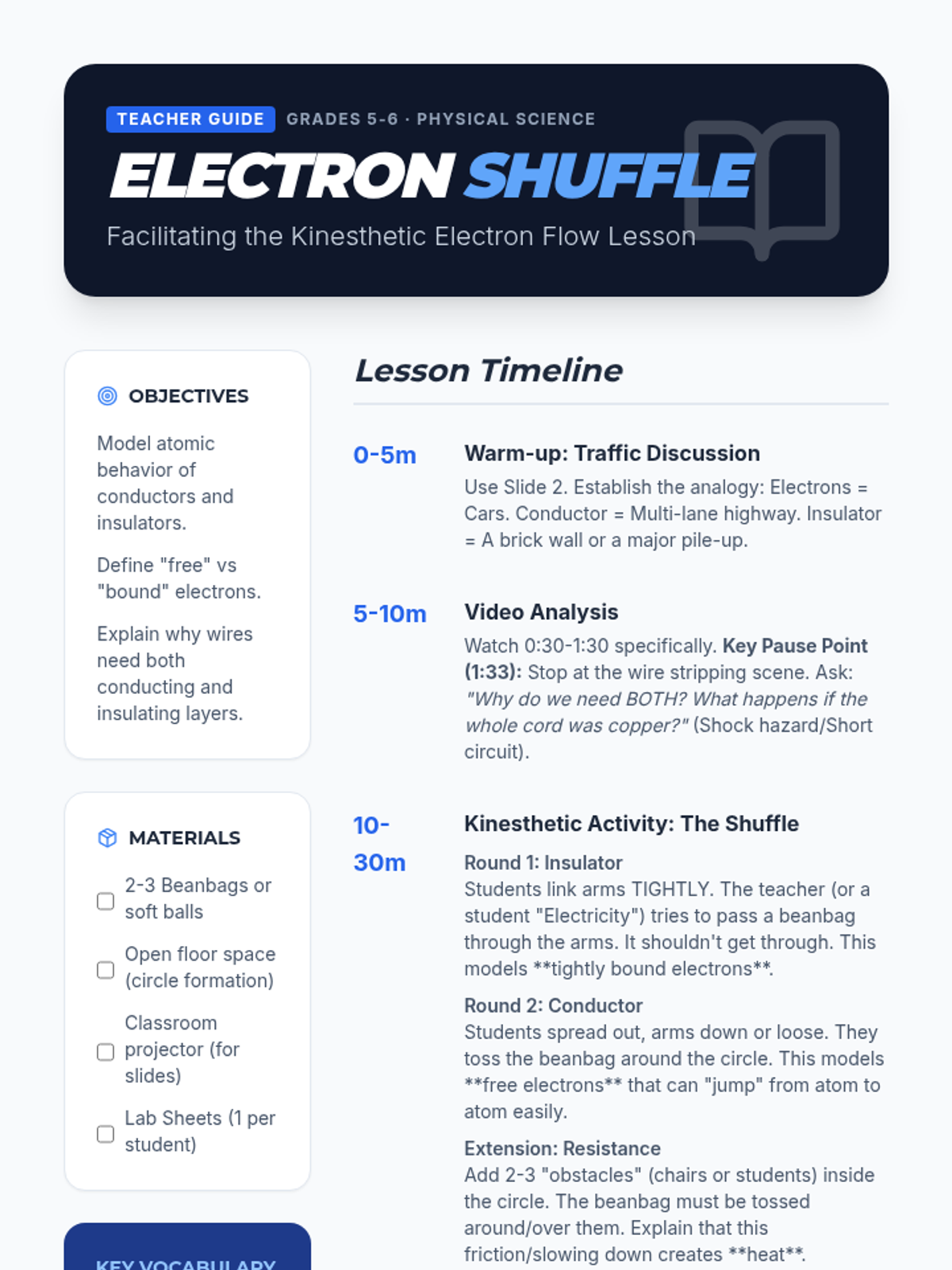
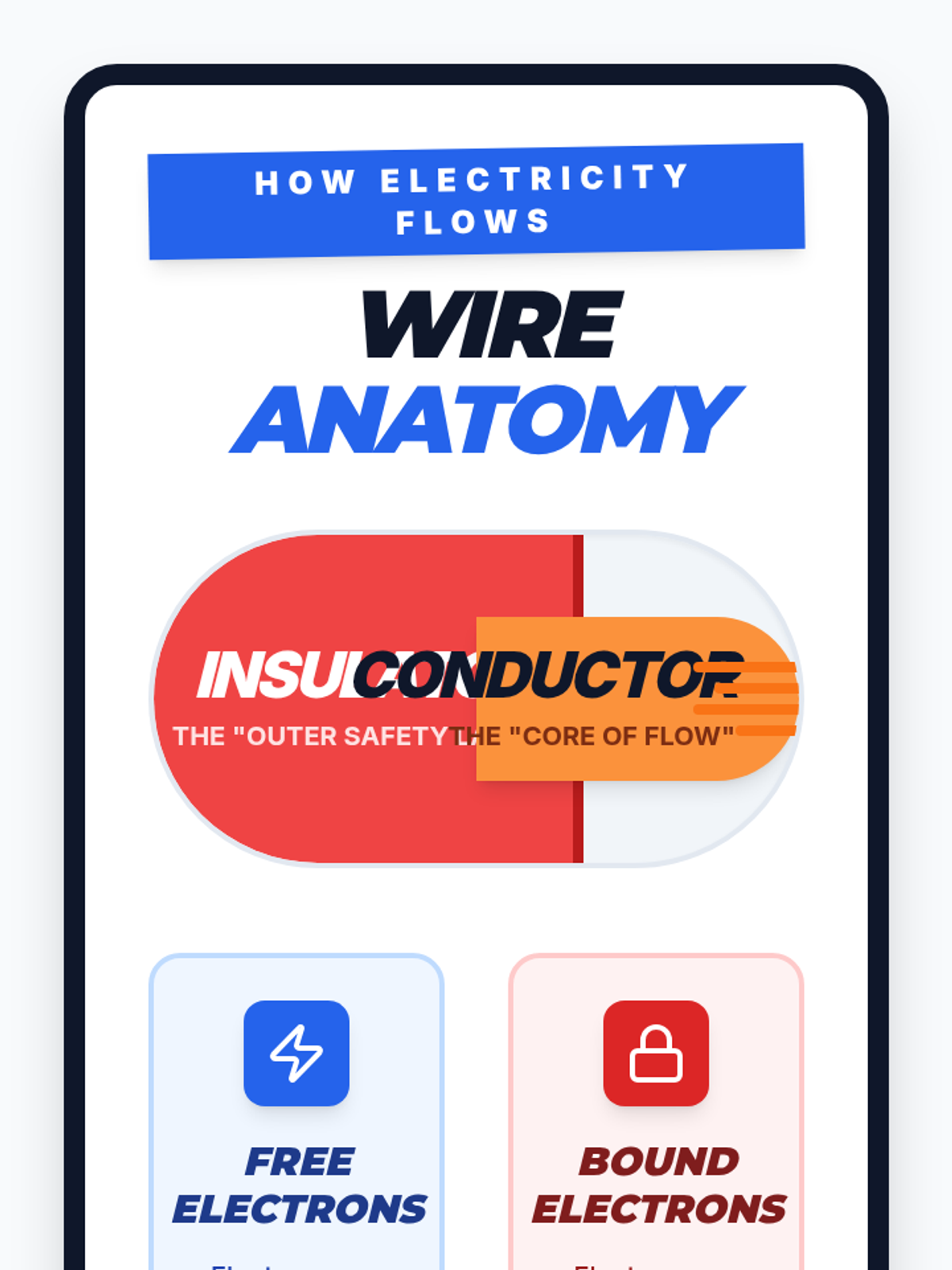
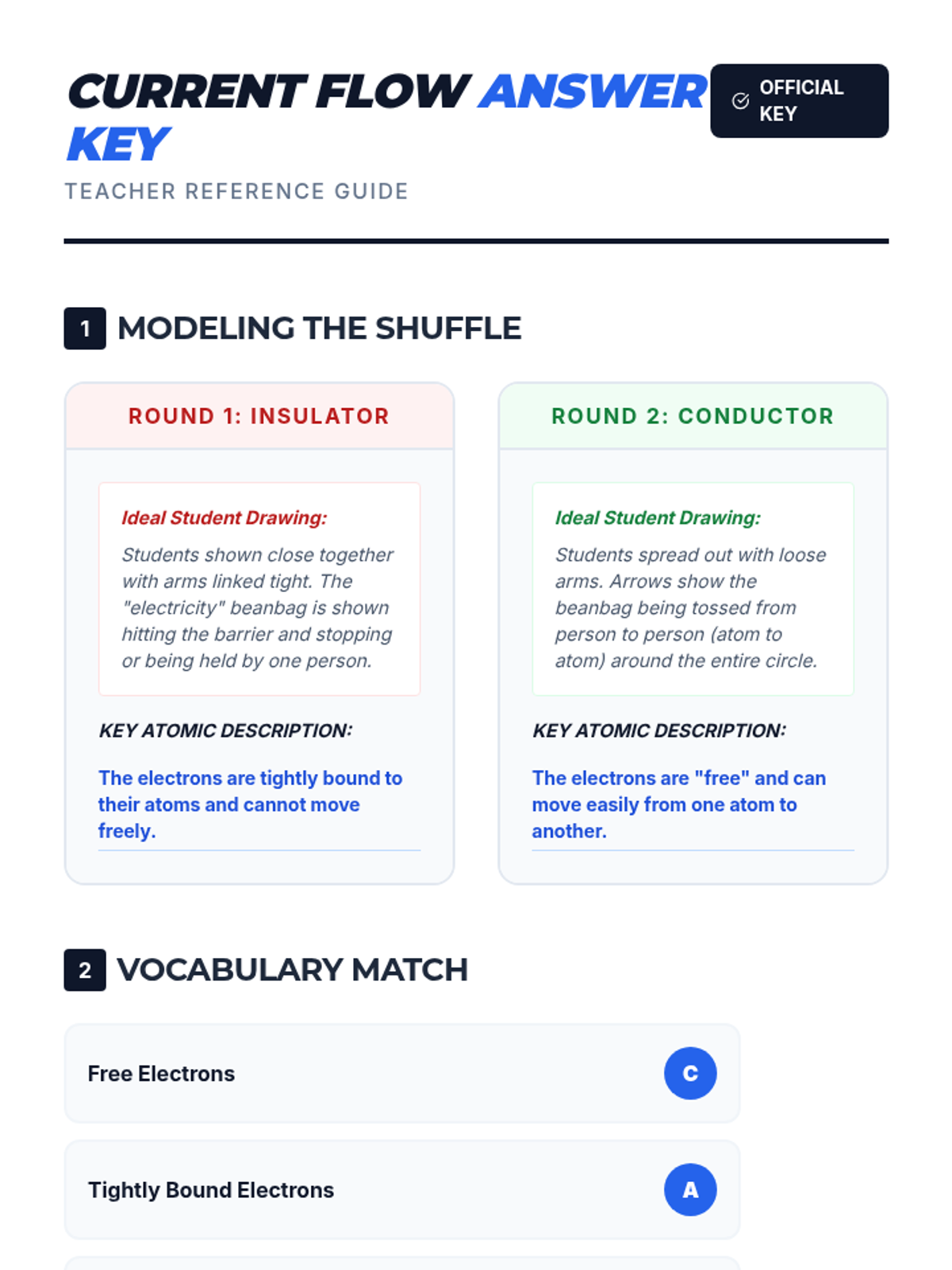
Students explore the atomic behavior of electricity by modeling 'free' and 'bound' electrons through a kinesthetic activity, followed by a video analysis and diagrammatic reflection on conductors and insulators.
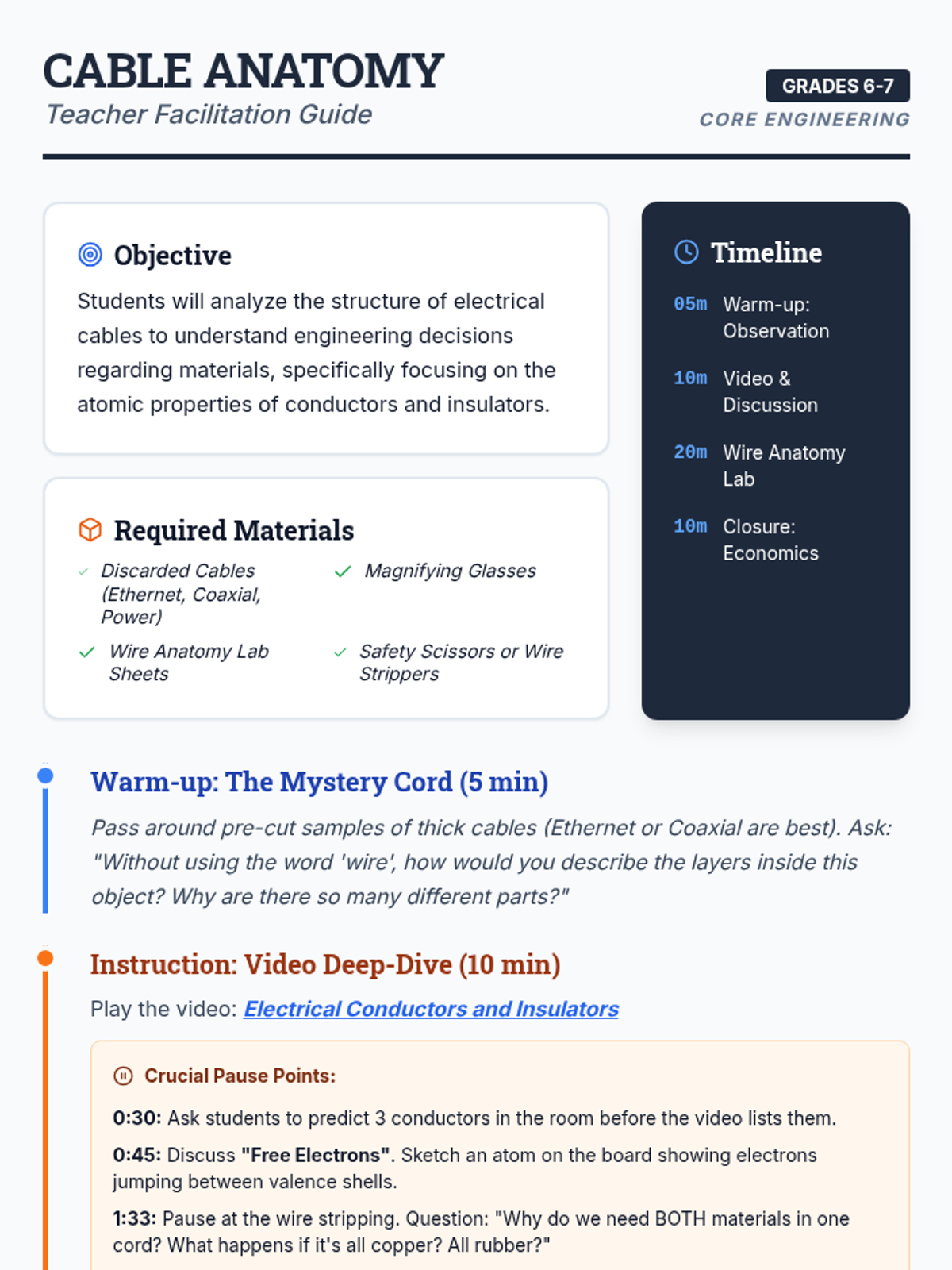
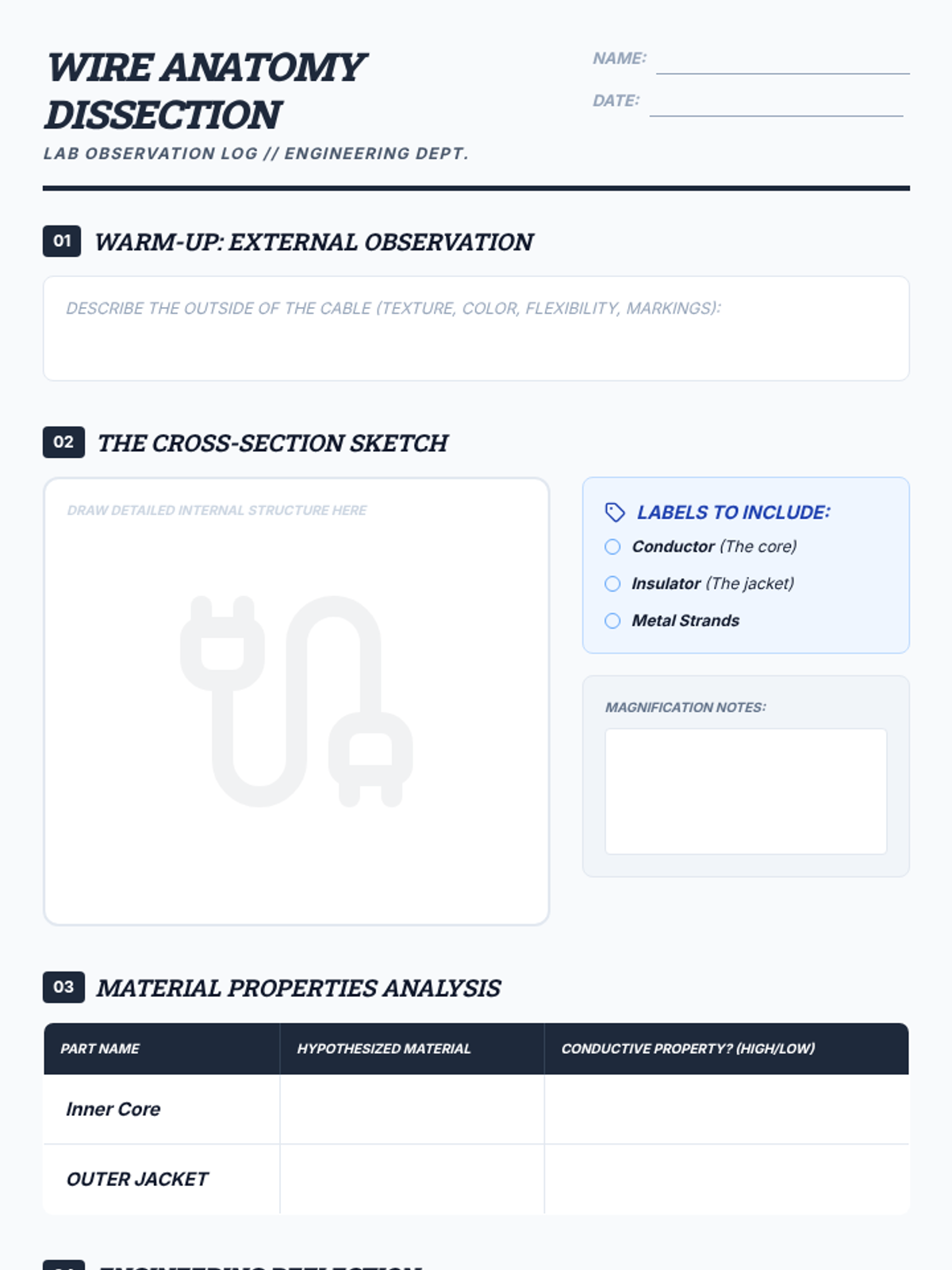
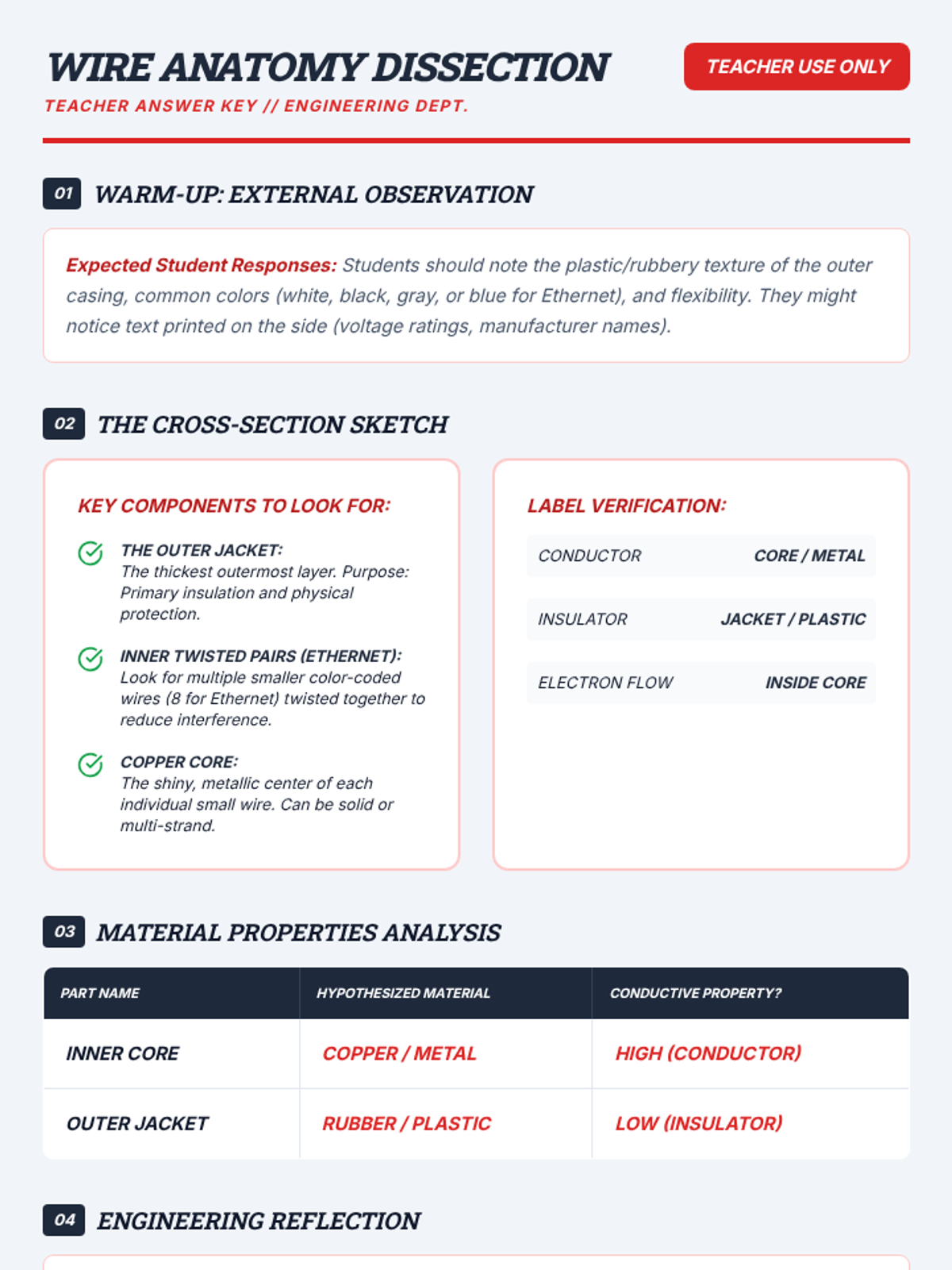
A hands-on engineering lesson where students dissect electrical cables to explore the atomic properties of conductors and insulators, material selection in engineering, and the economics of resource scarcity.
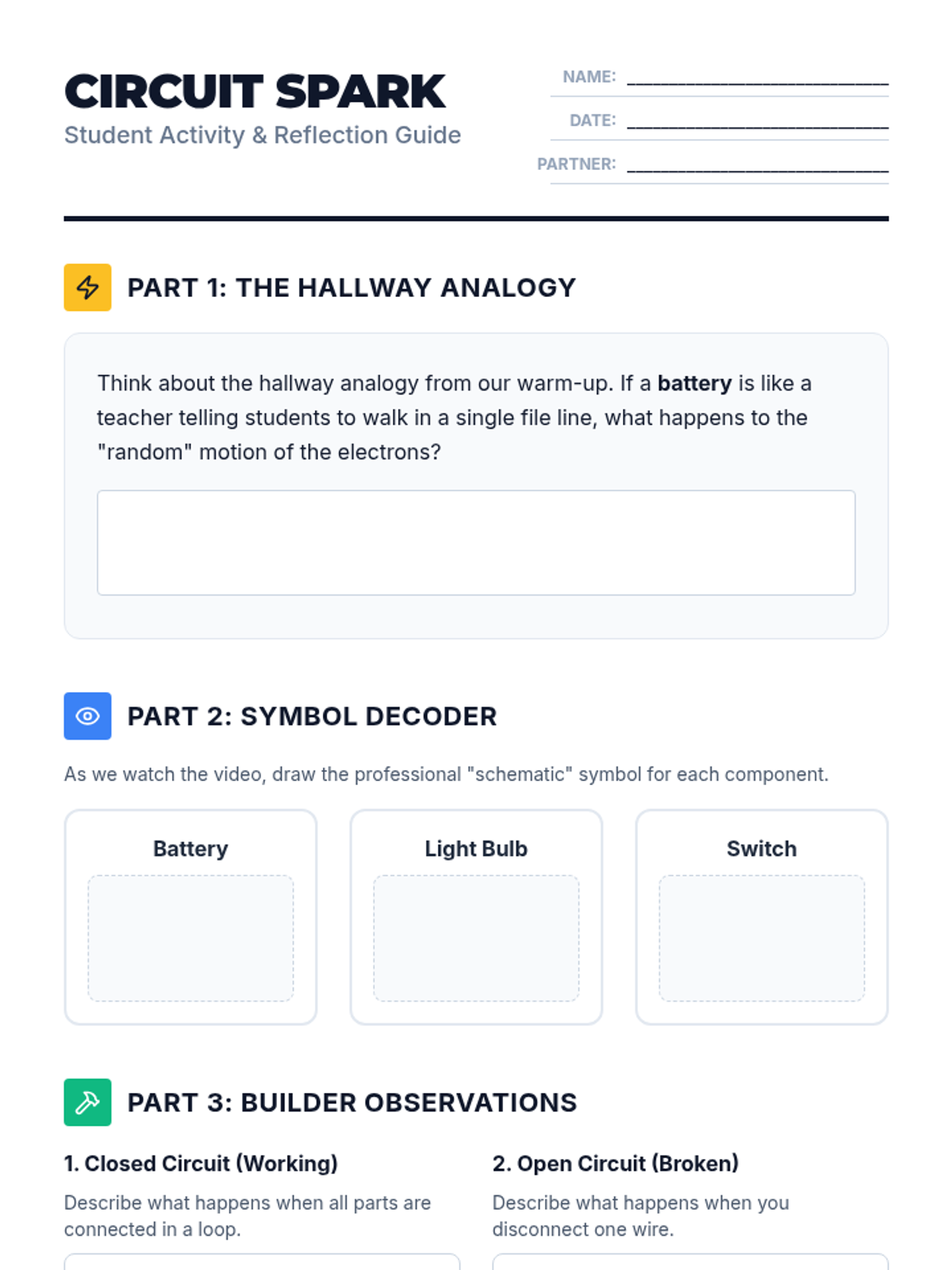
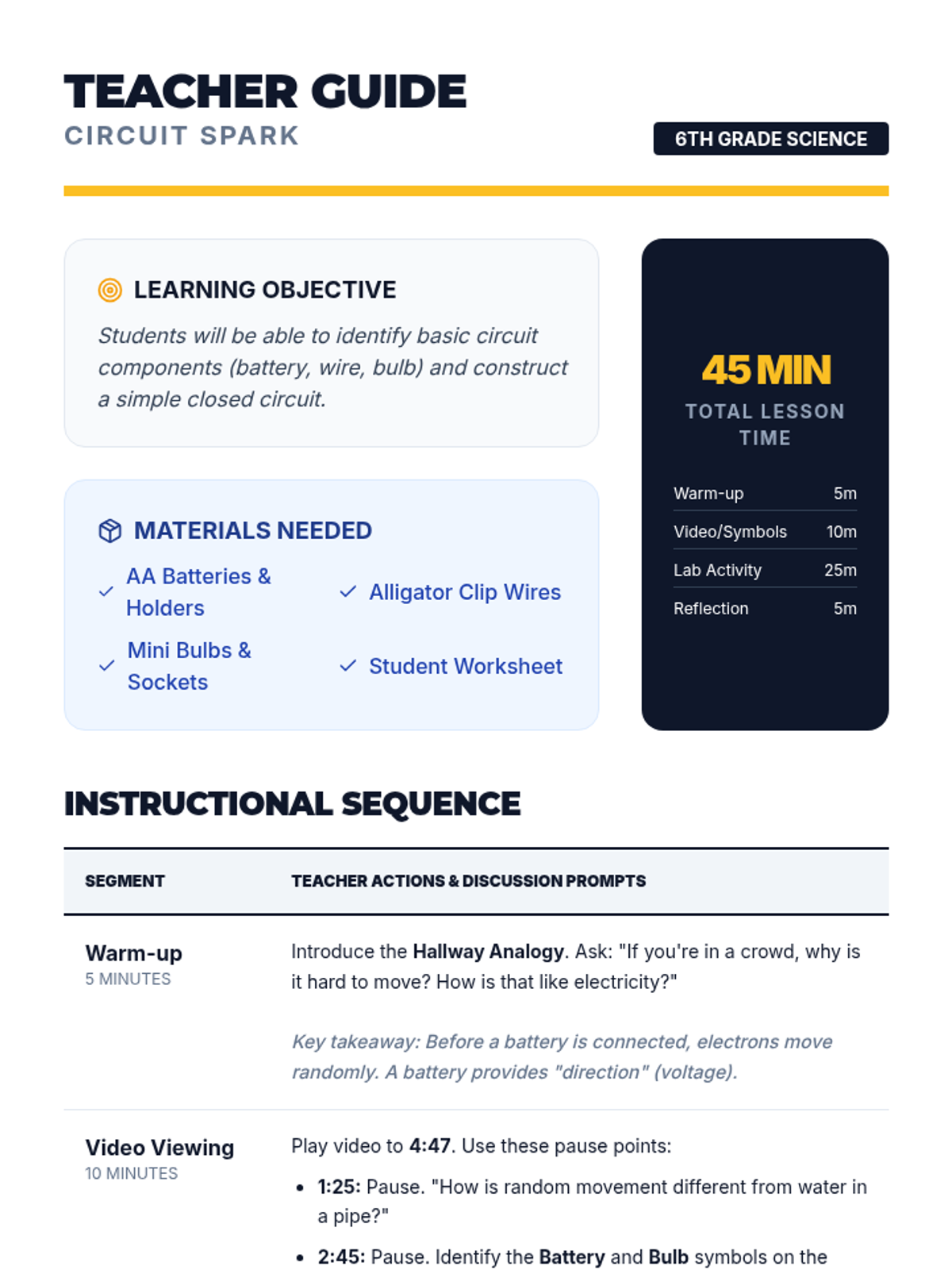
Students will learn the fundamentals of electric circuits by watching an instructional video, identifying schematic symbols, and building a physical closed circuit with batteries, wires, and bulbs.
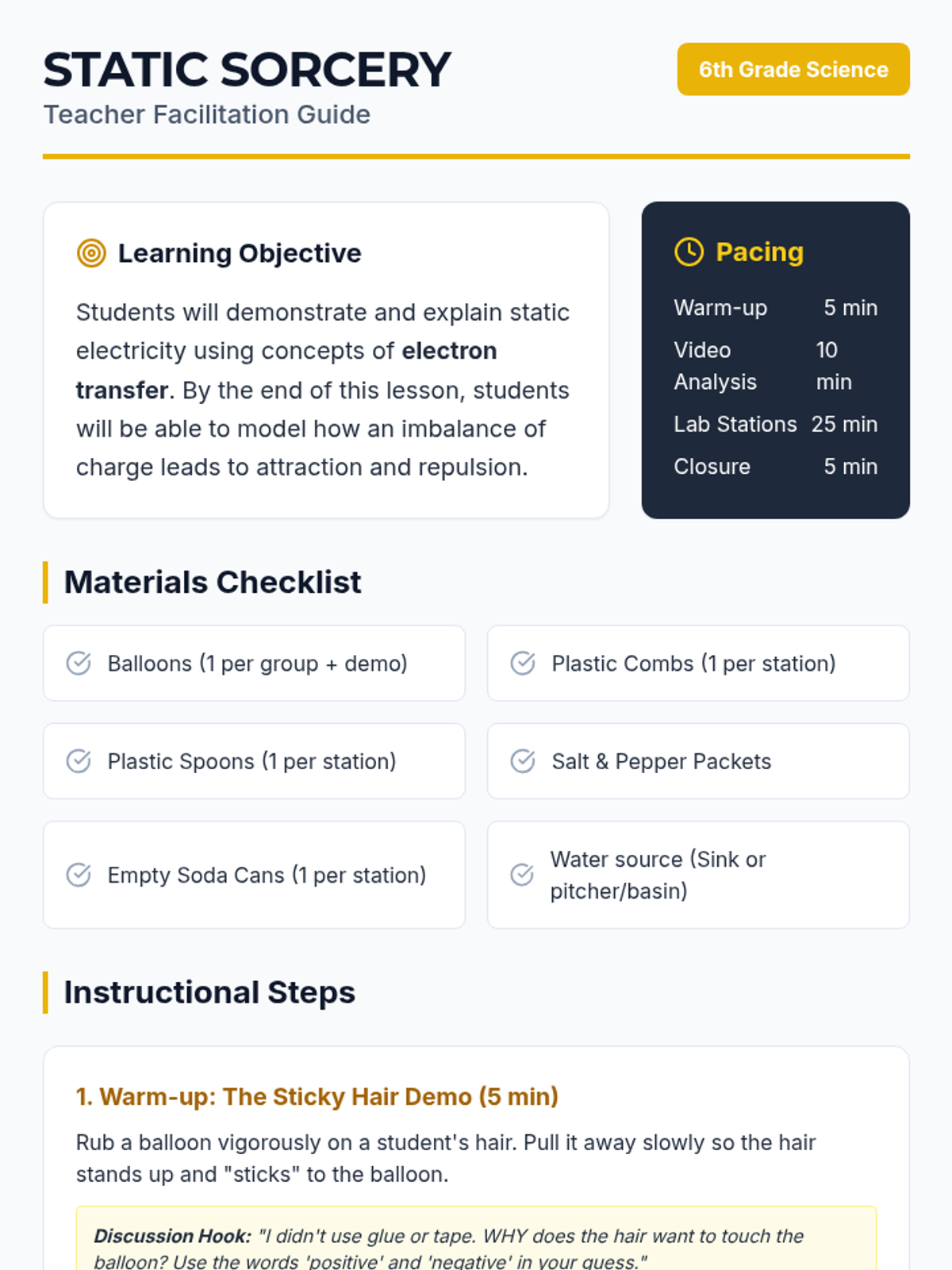
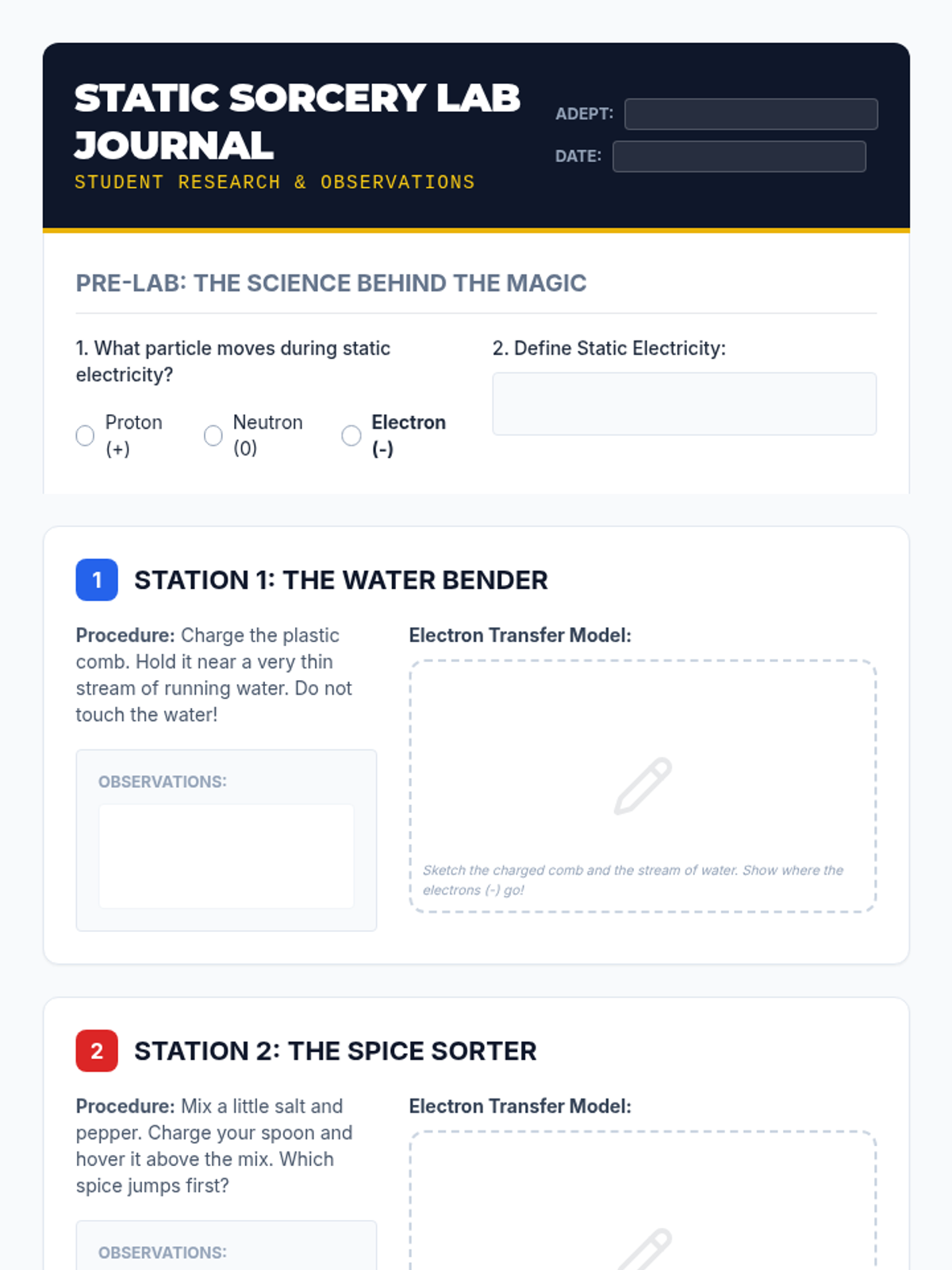
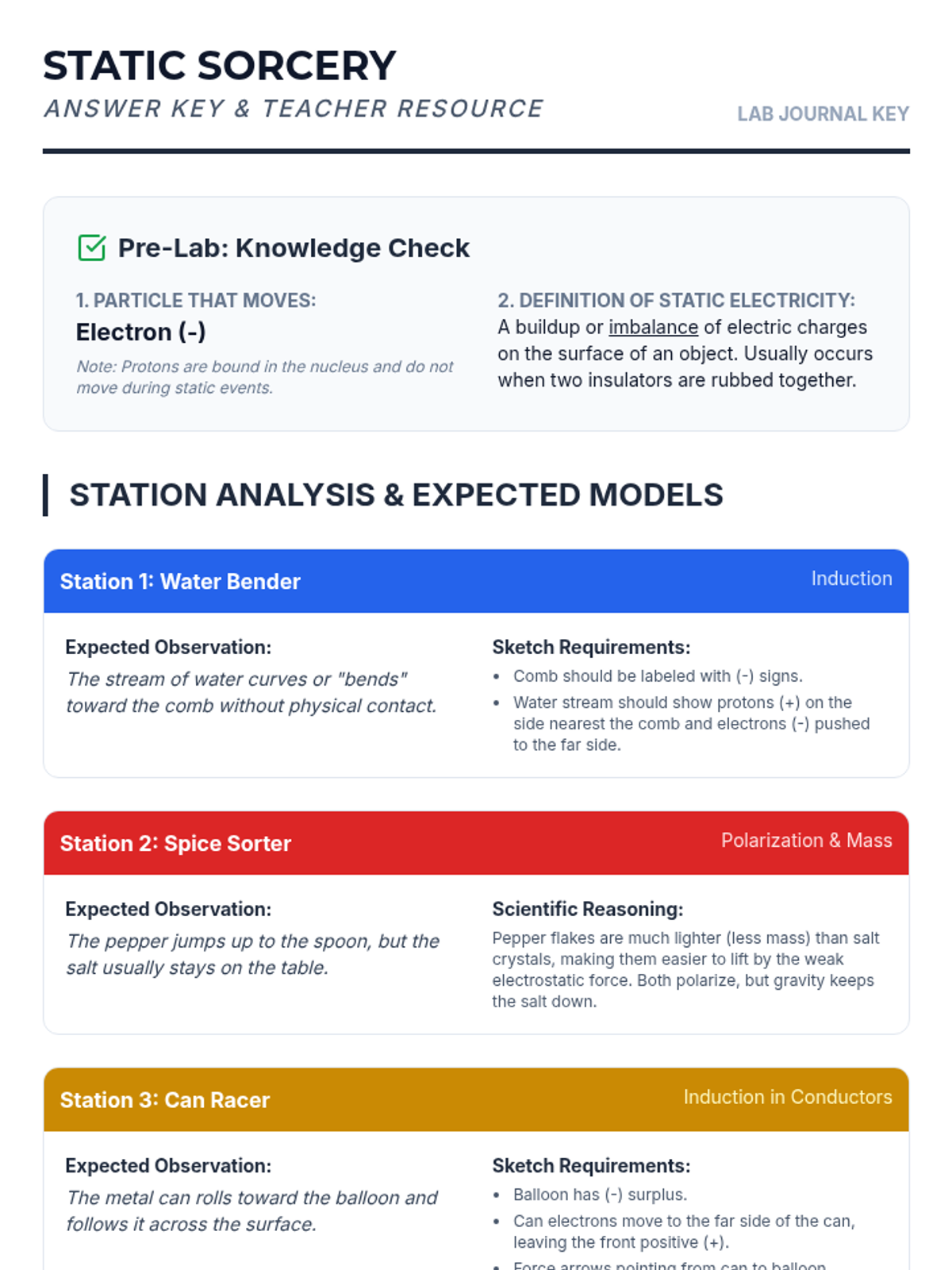
A 6th-grade science lesson on static electricity where students explore electron transfer through 'Static Sorcery' stations. Students will visualize how negative charges move to create imbalances that result in attraction and repulsion.
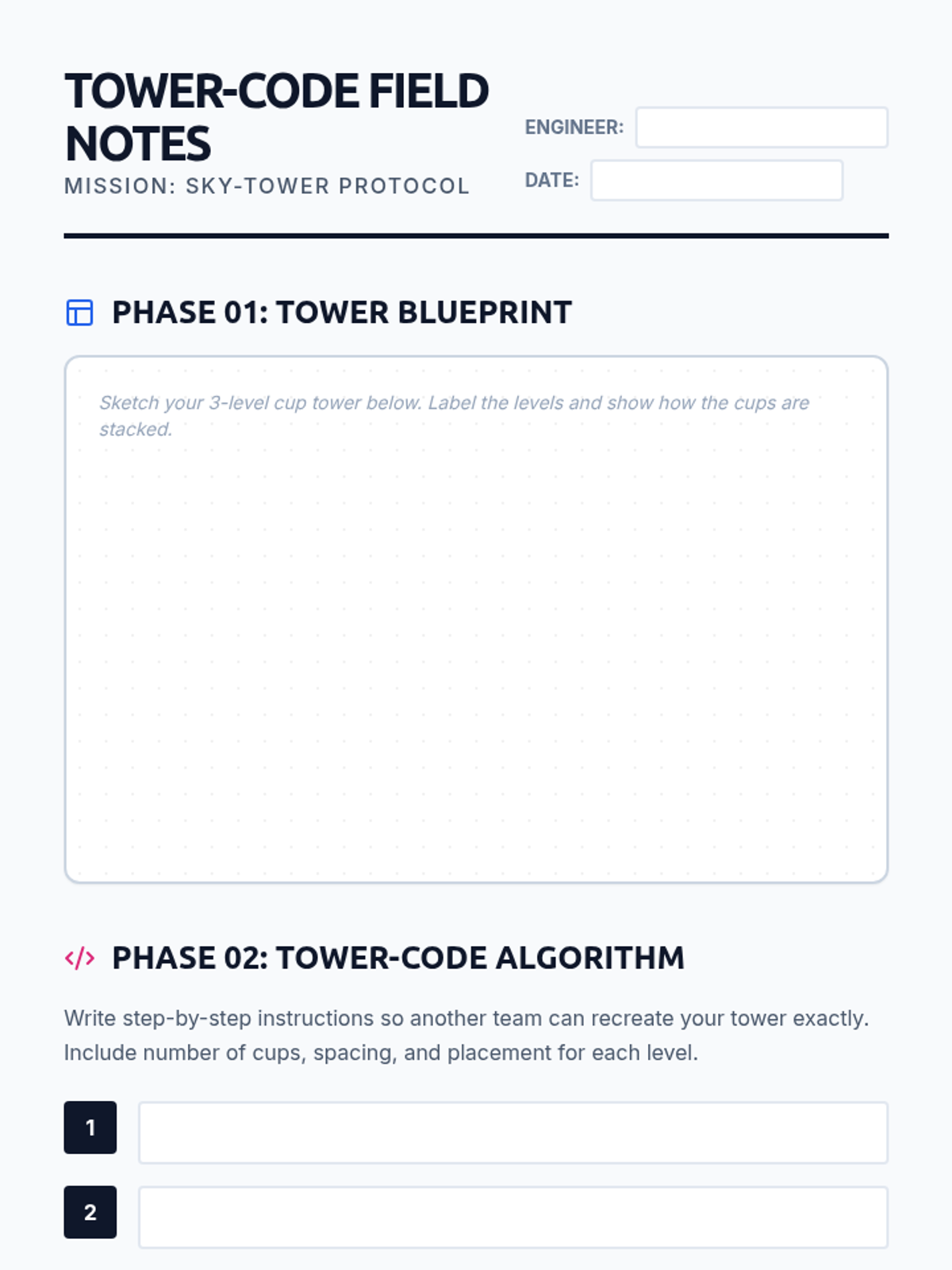
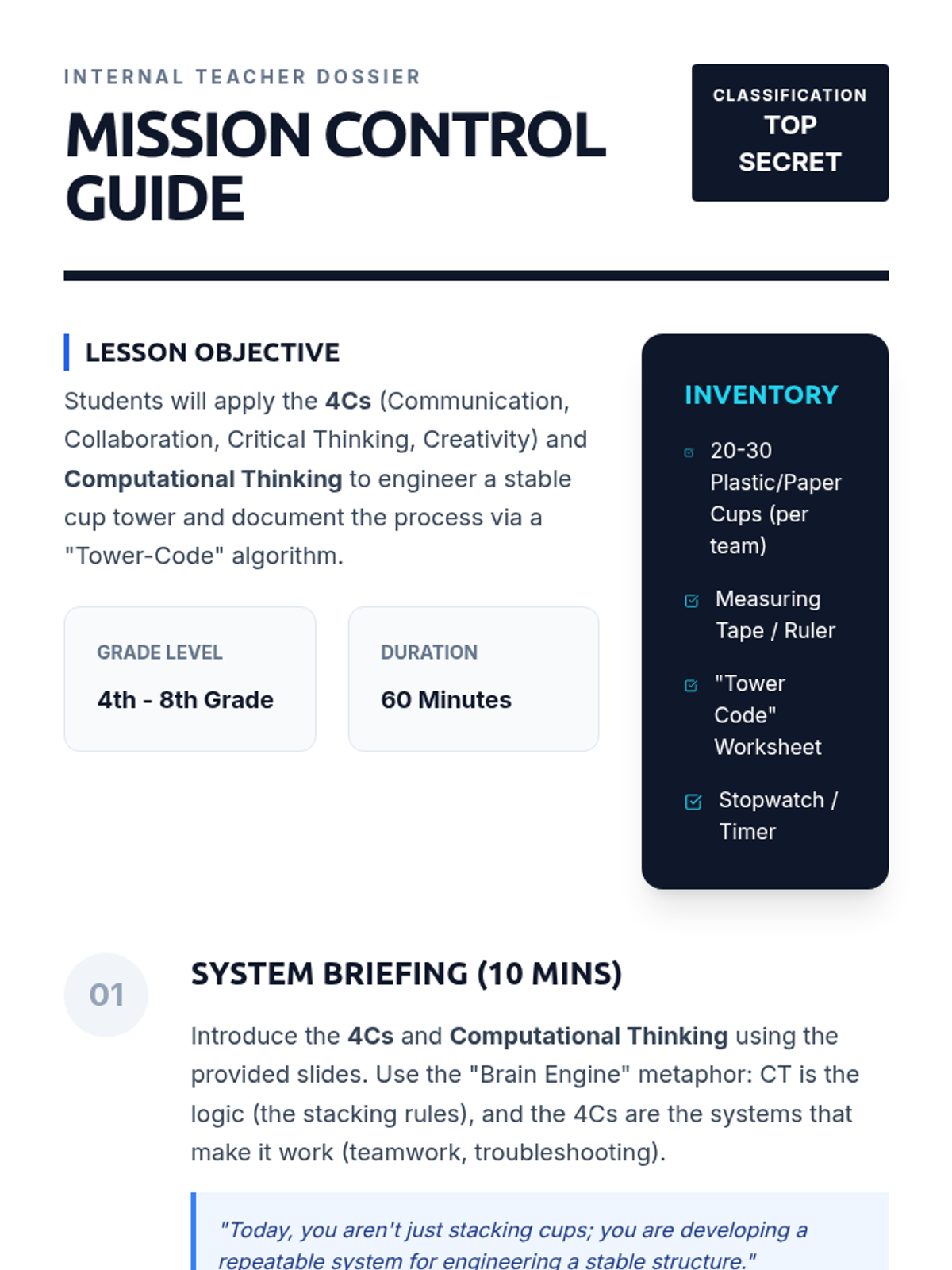
A high-stakes engineering challenge where students use the 4Cs and Computational Thinking to design, build, and document the ultimate cup tower structure.
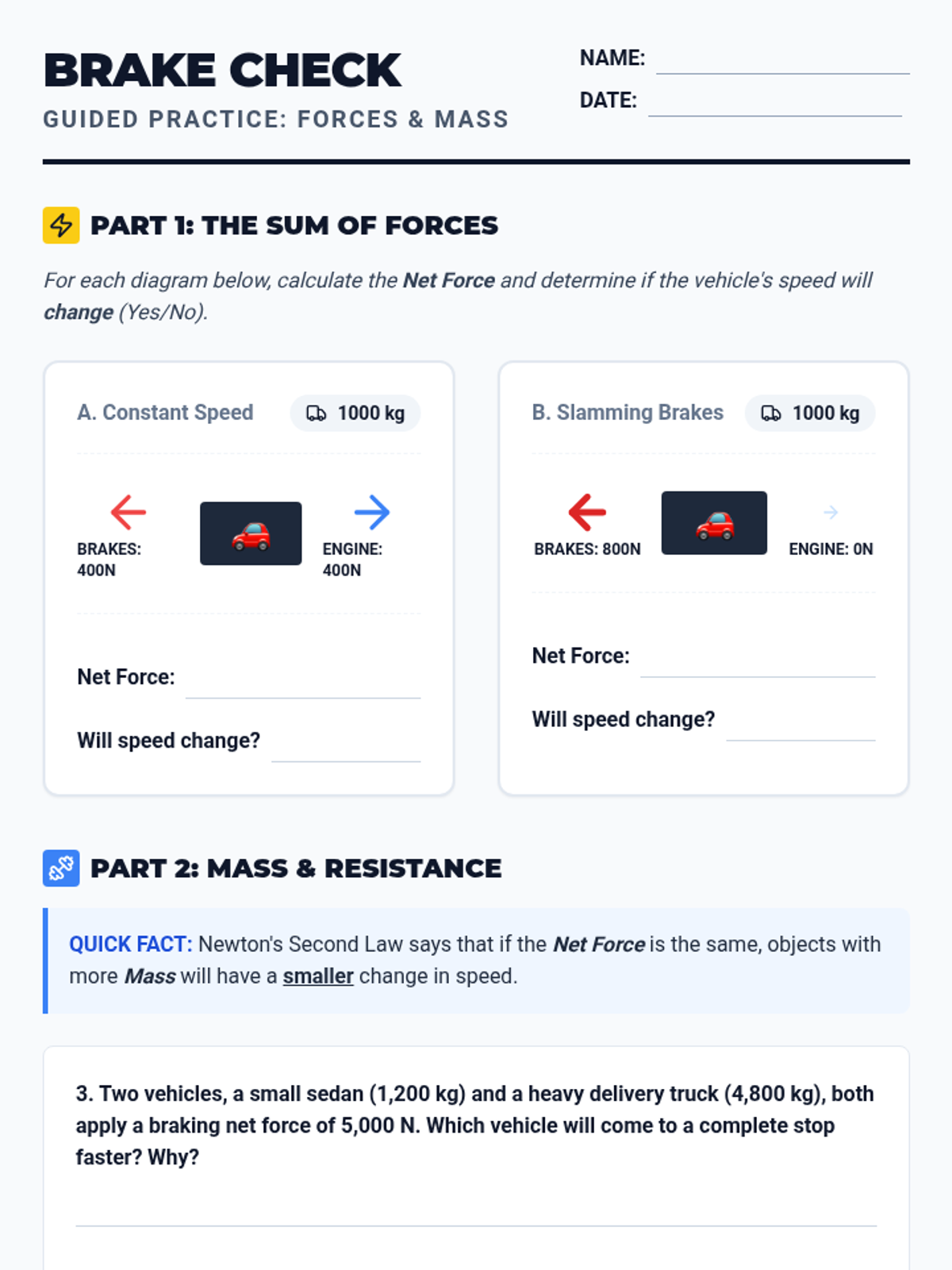
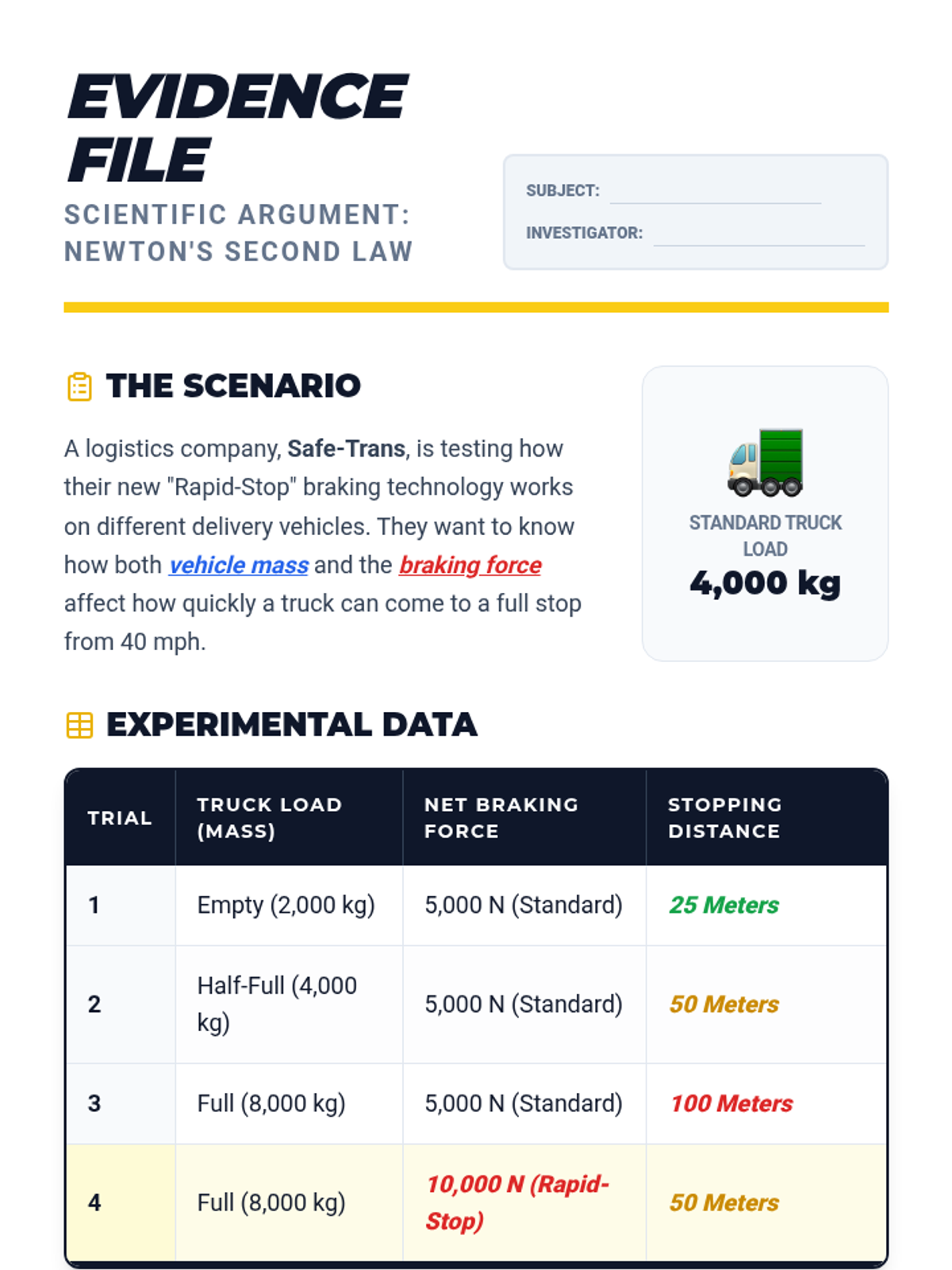
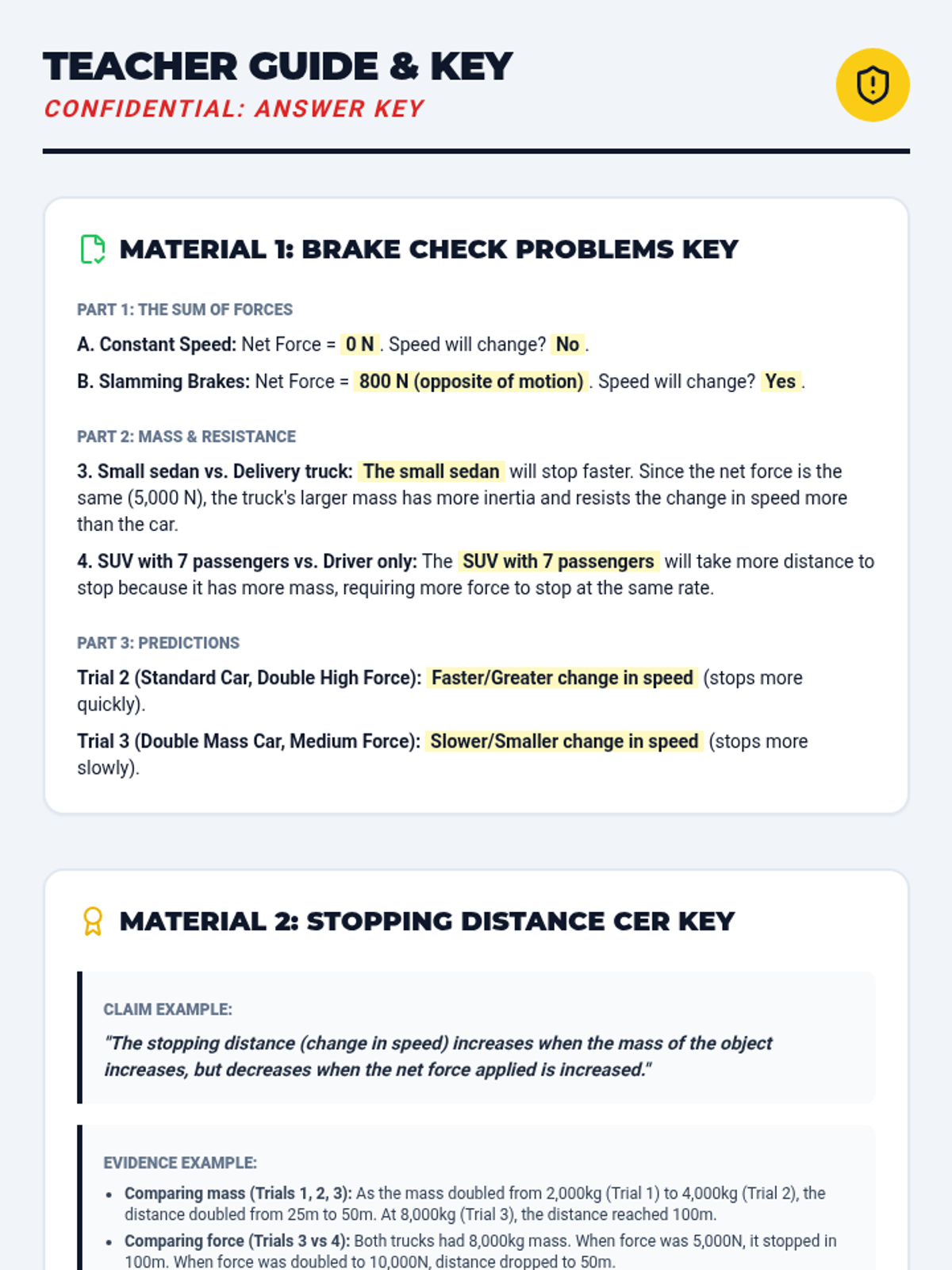
Explore how mass and net force determine how quickly a vehicle can stop. This lesson uses braking scenarios to provide evidence for Newton's laws of motion.
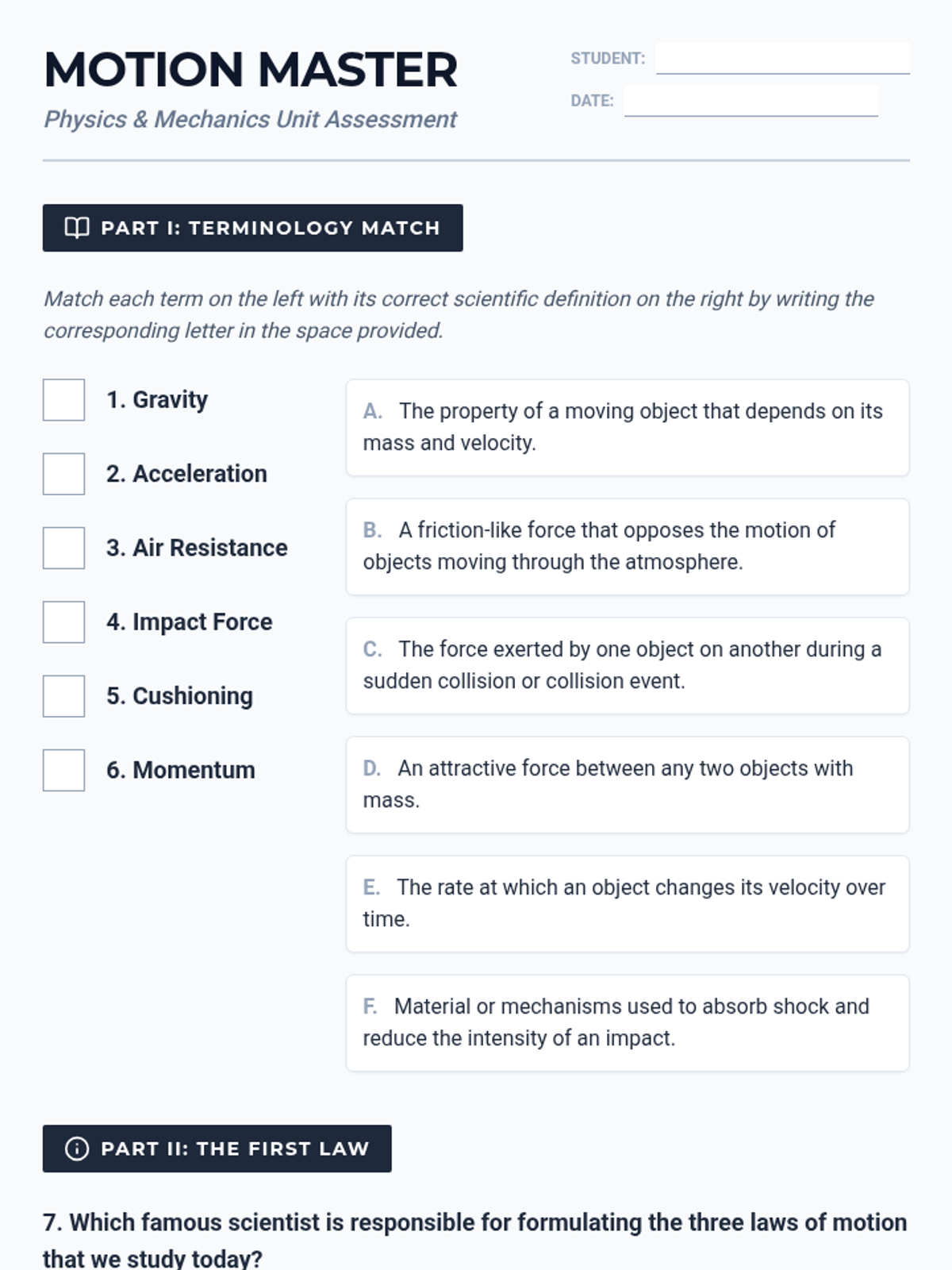
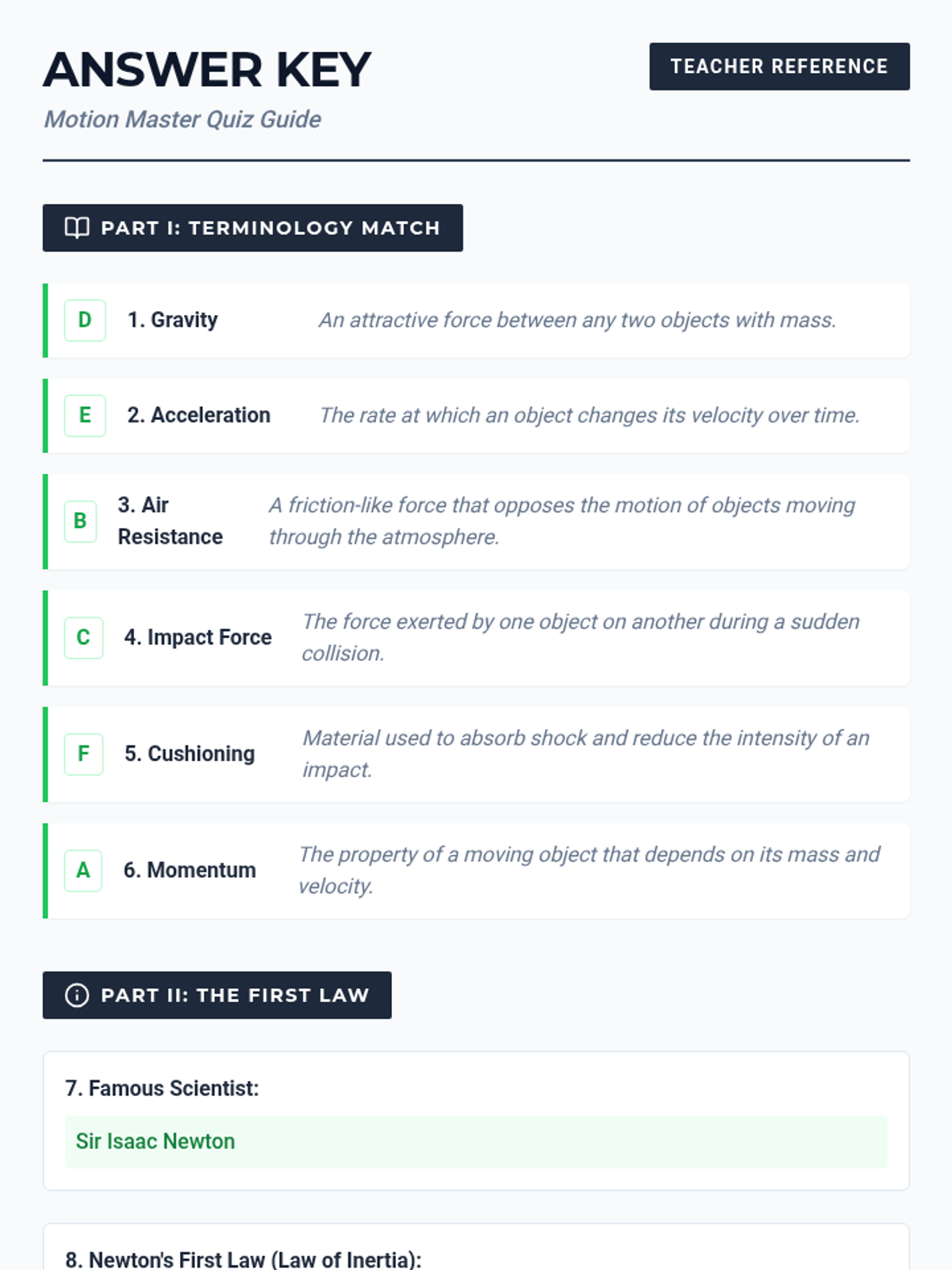
A lesson focused on the fundamental principles of motion, including key vocabulary and Newton's First Law. Students will demonstrate their understanding of forces, acceleration, and inertia.
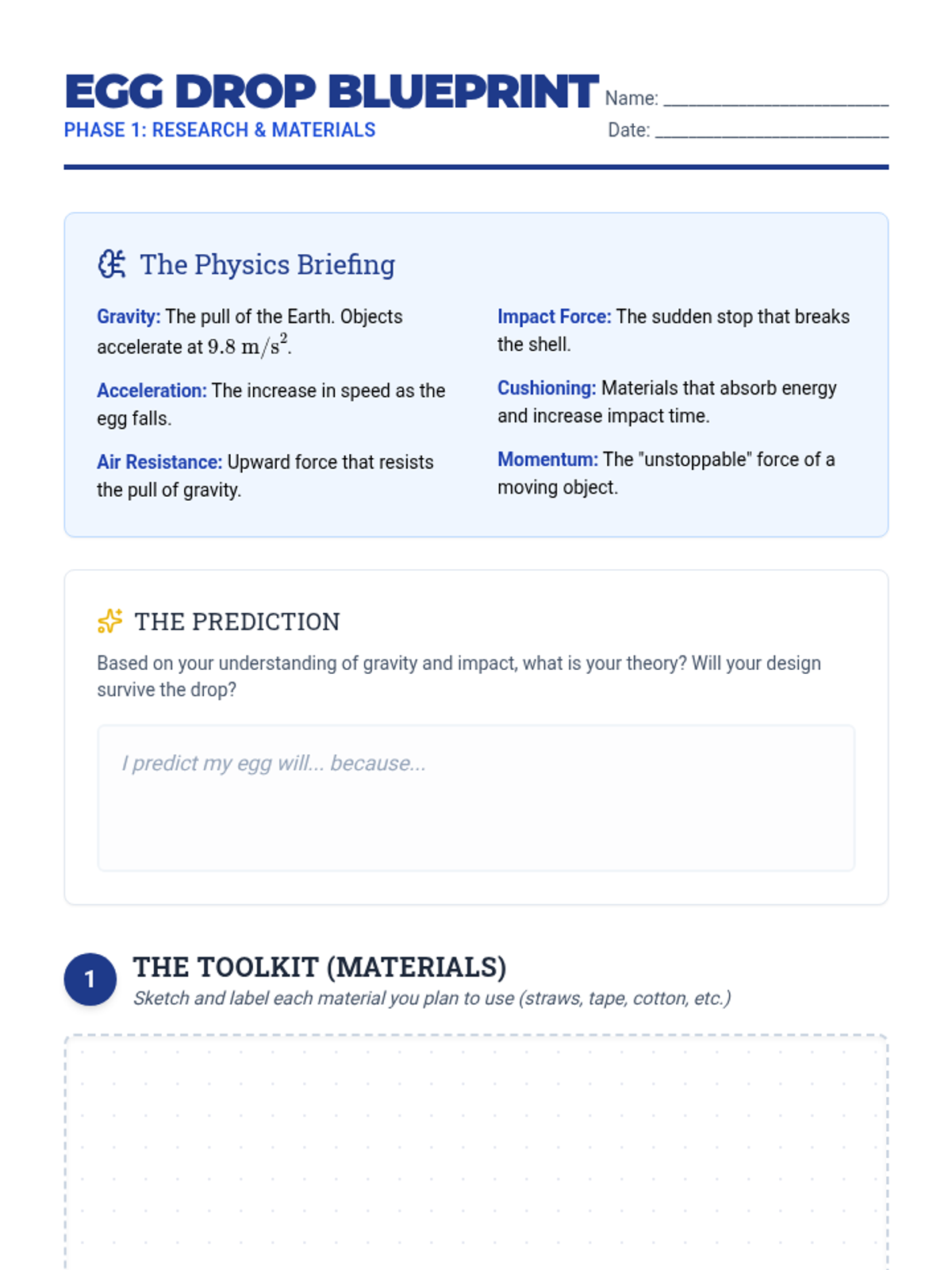
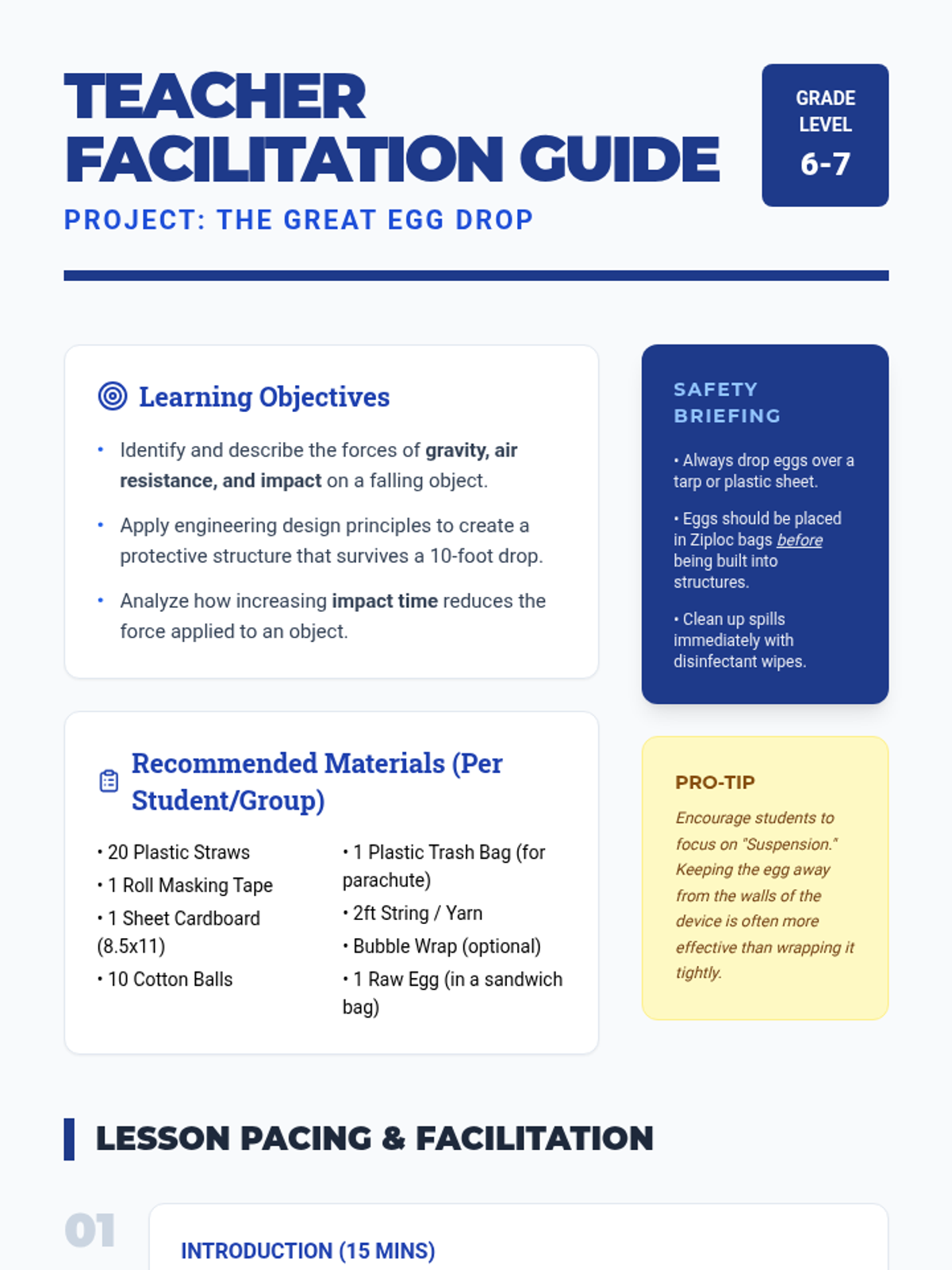
A hands-on engineering challenge where students apply physics concepts like gravity, acceleration, and impact force to design and build a protective casing for an egg drop.
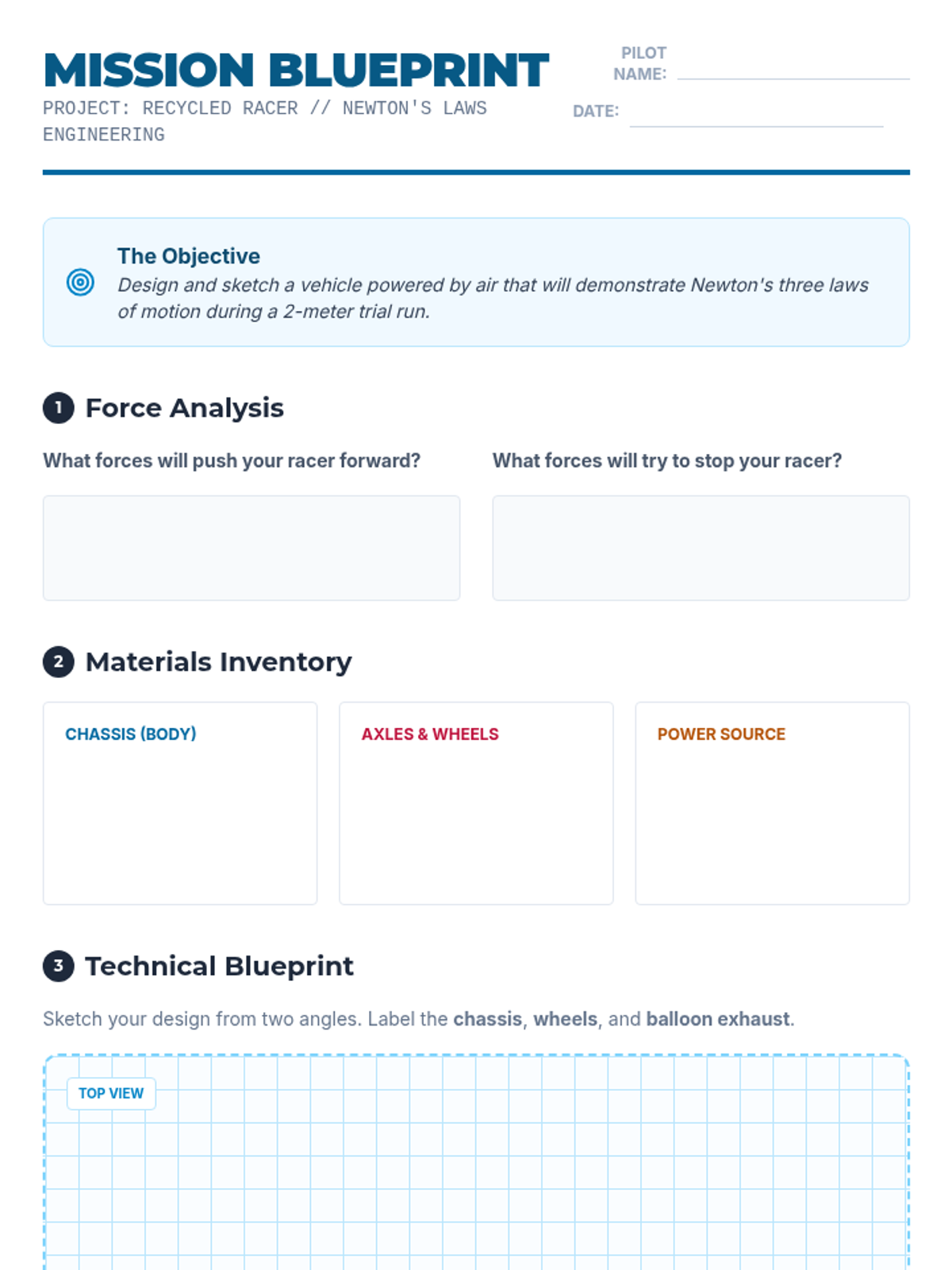
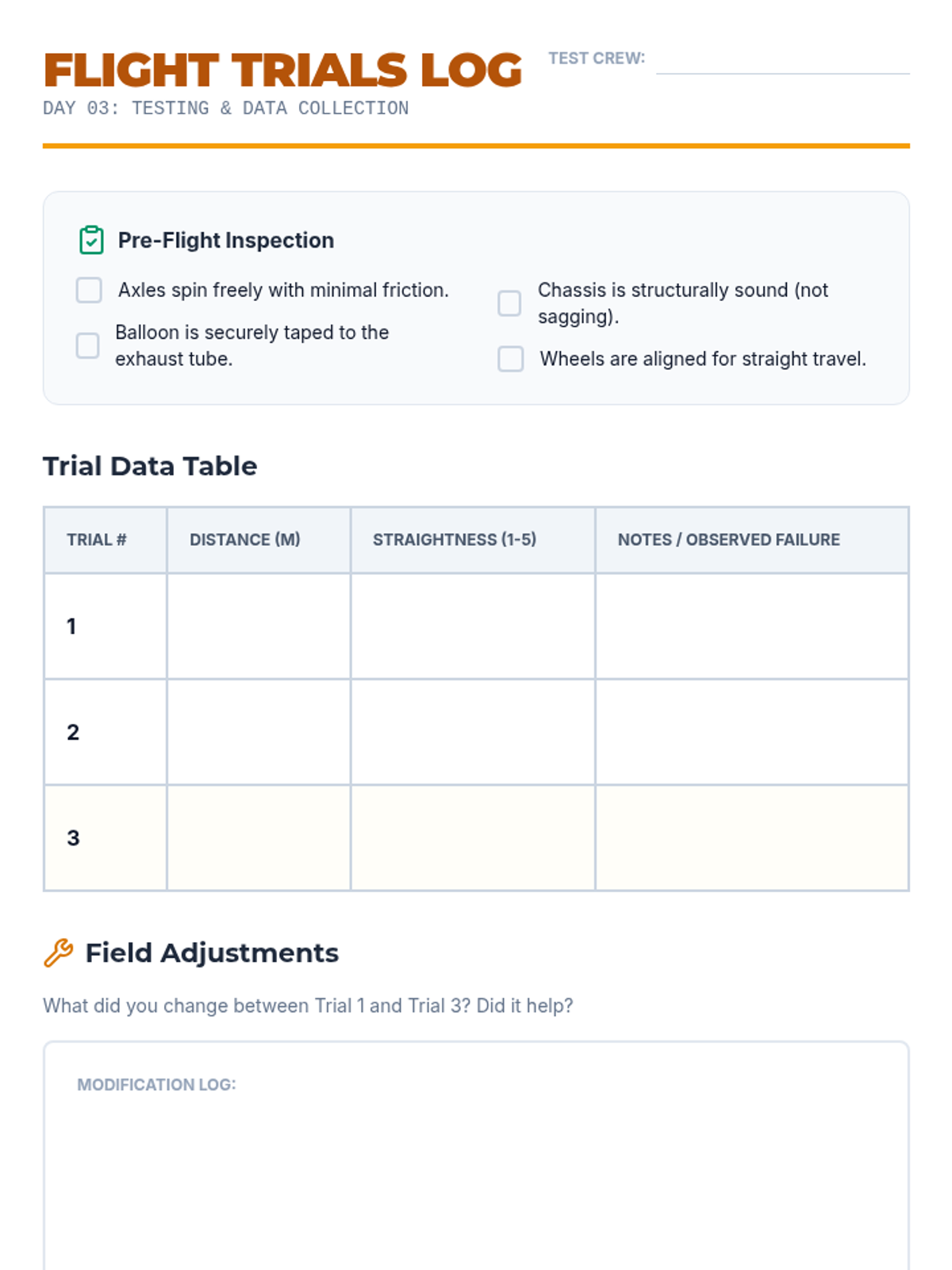
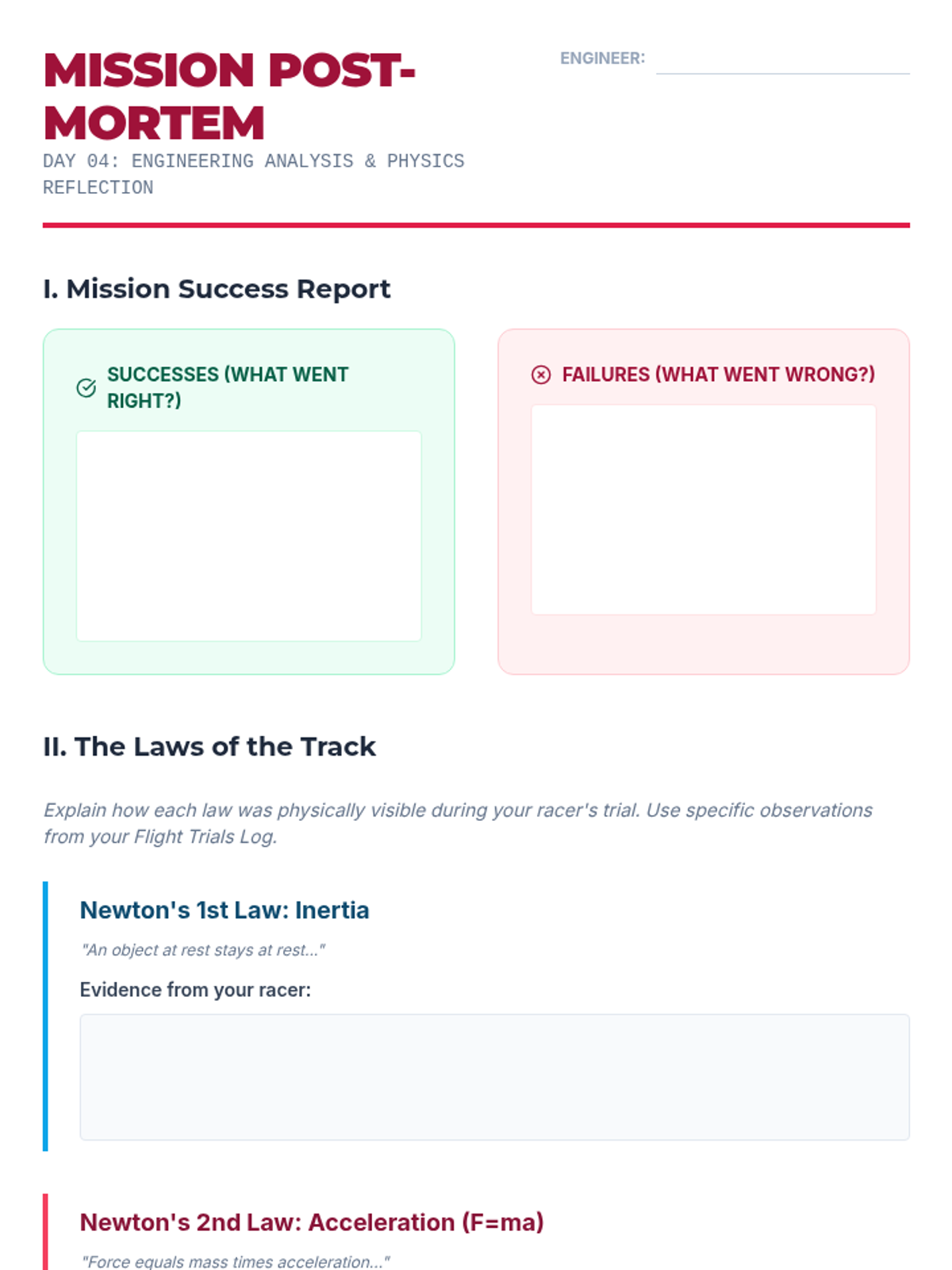
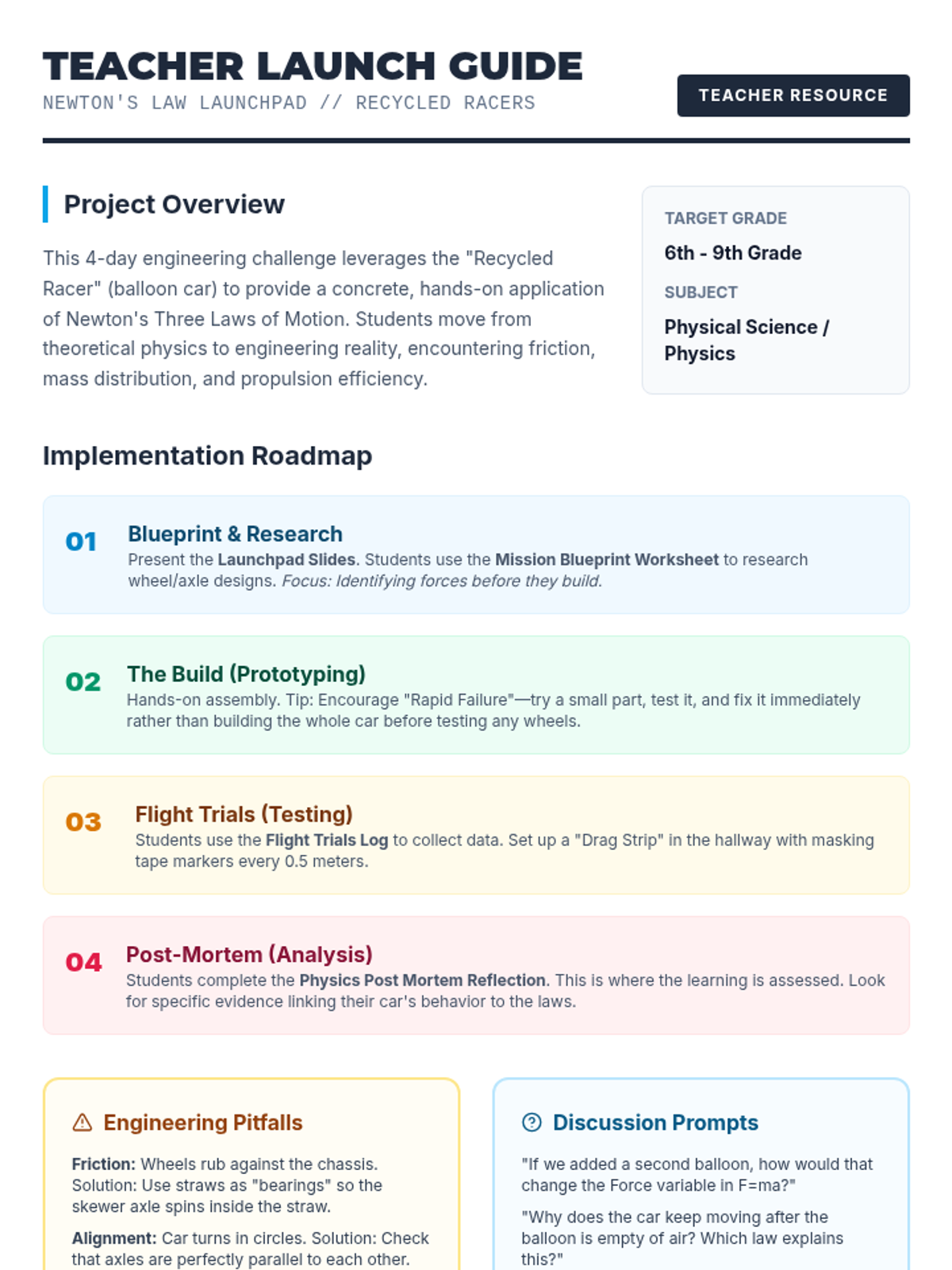
A 4-day hands-on engineering challenge where students design and build a device that demonstrates Newton's three laws of motion using low-cost recycled materials. Students progress through research, blueprinting, prototyping, testing, and a final reflection on the physics at play.
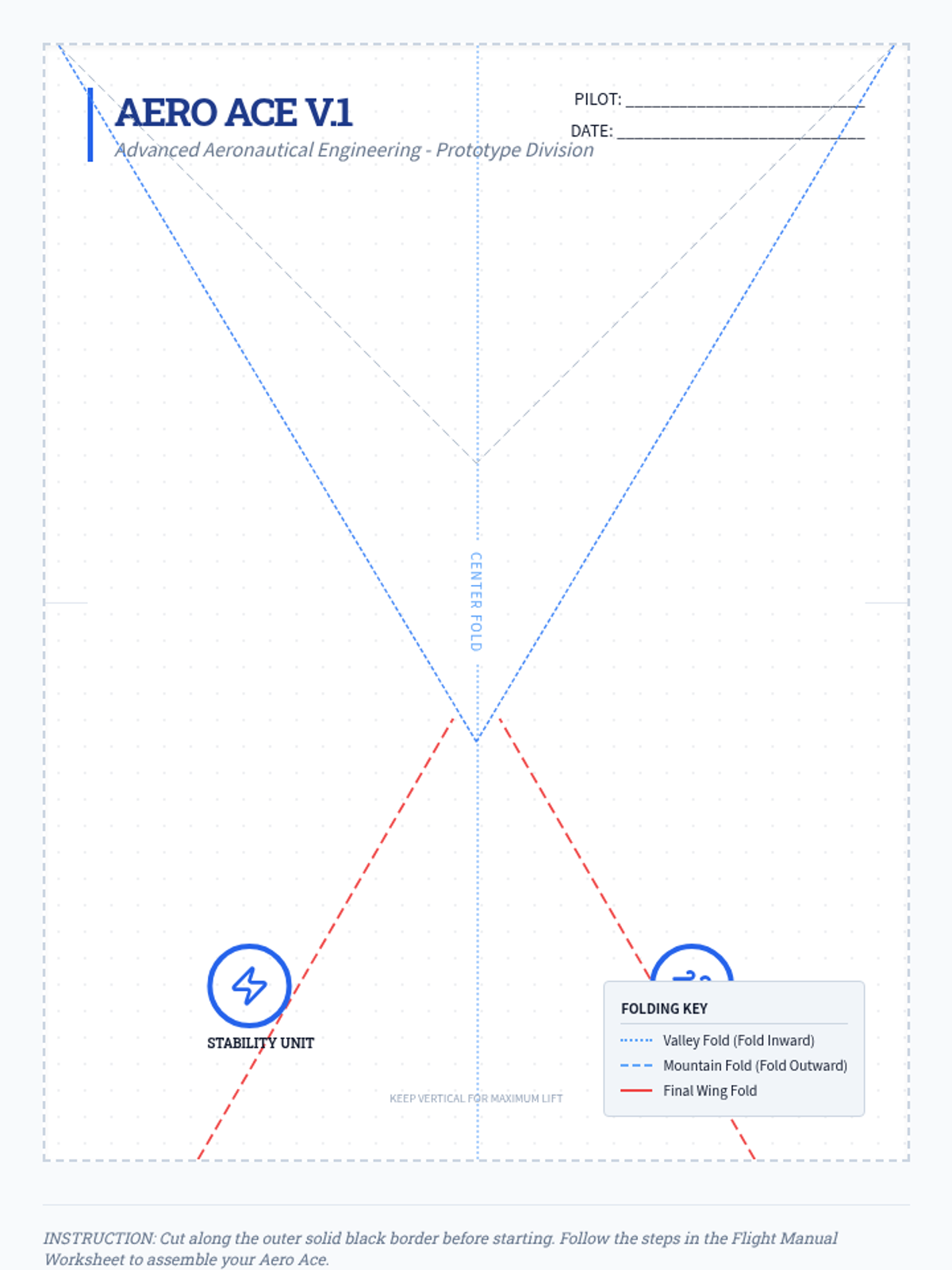
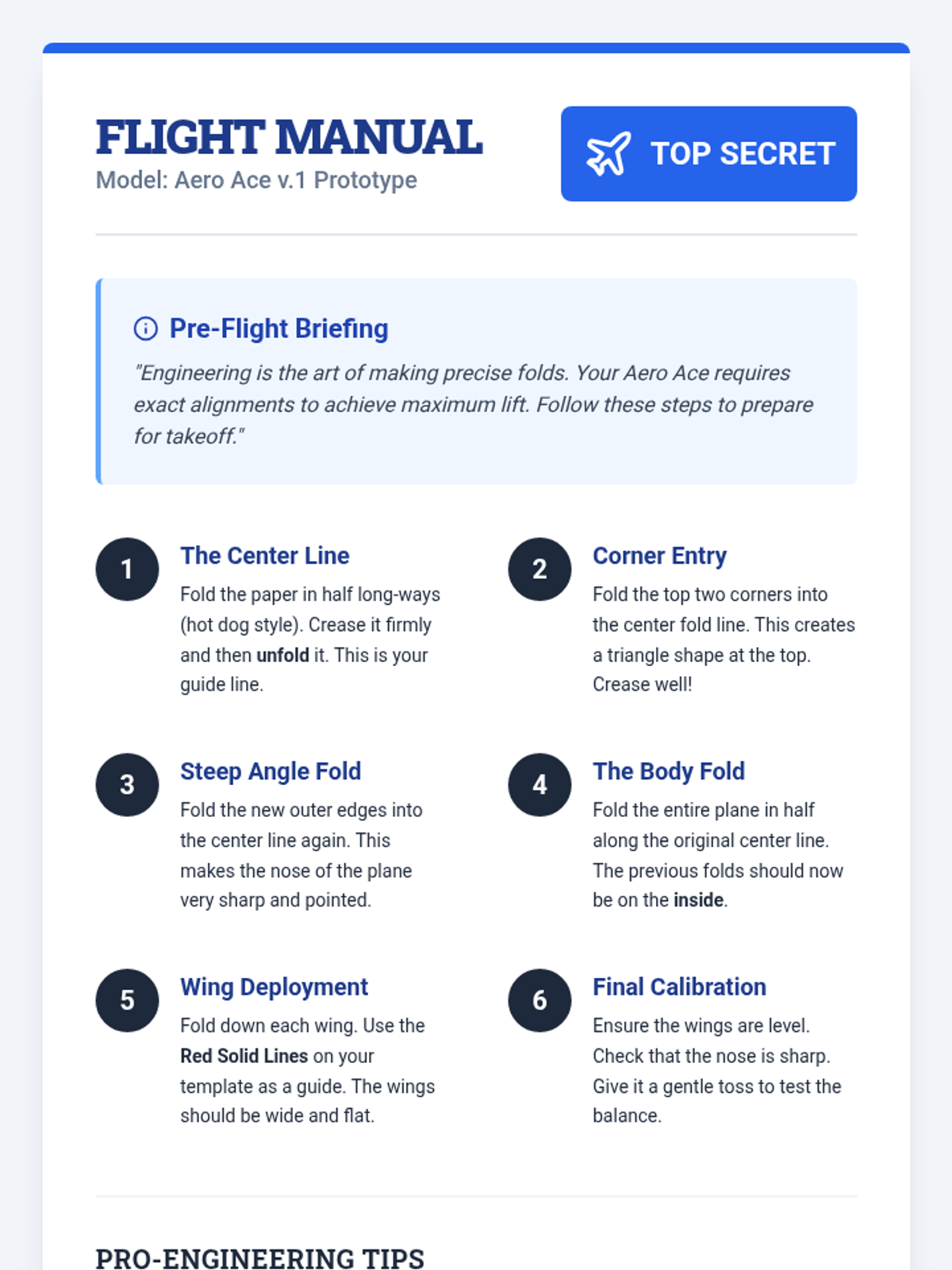
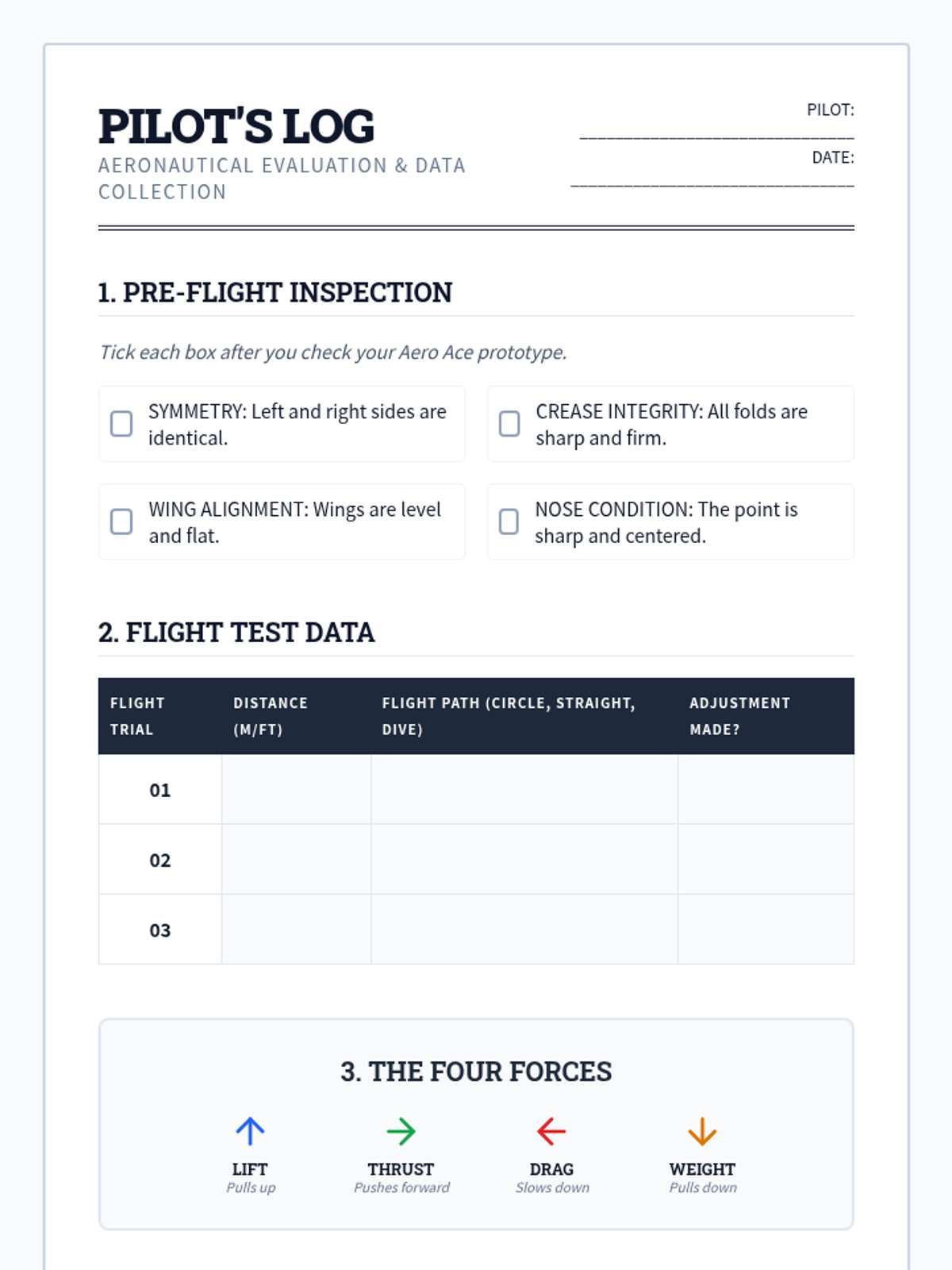
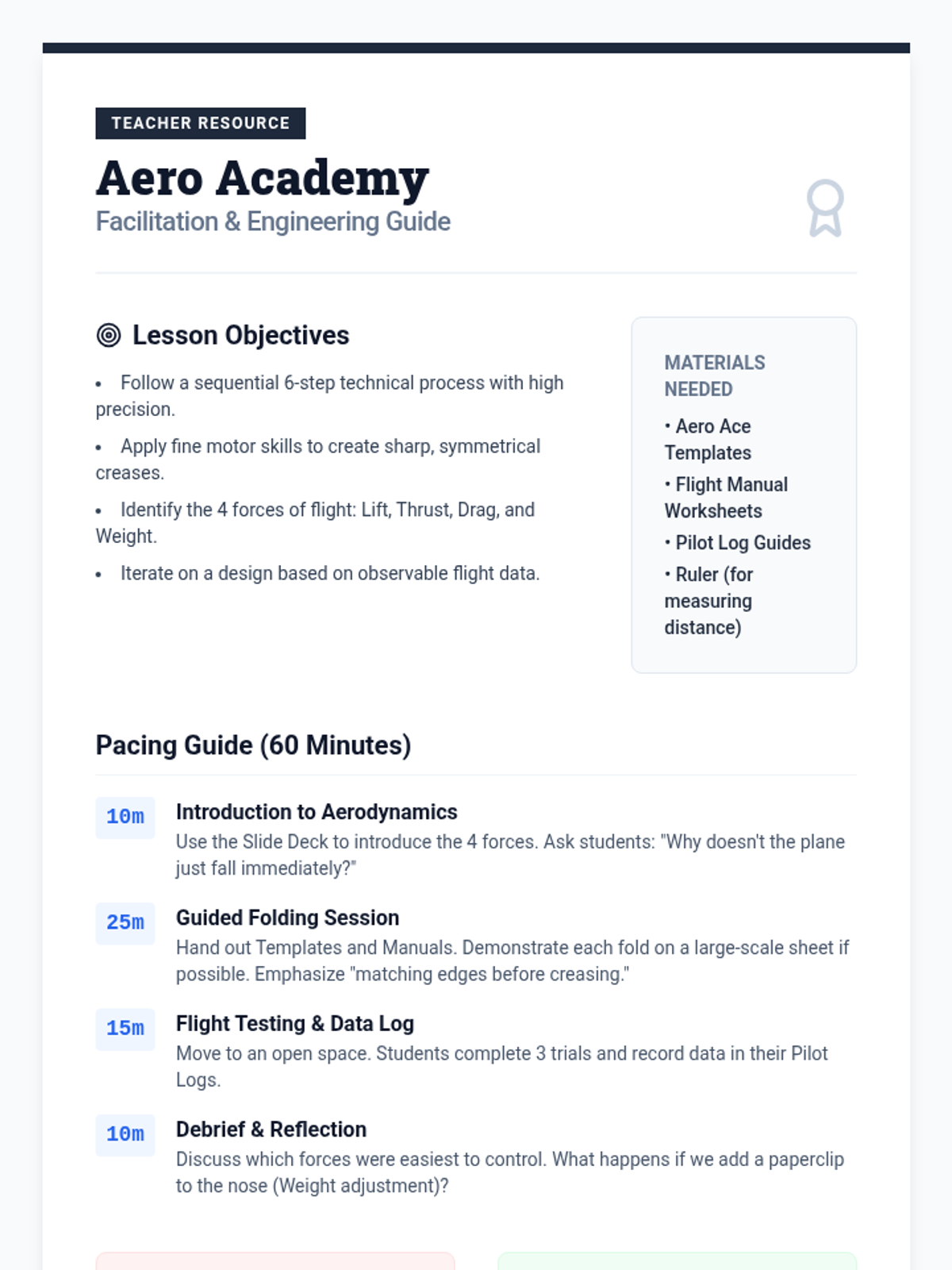
A hands-on engineering lesson where students follow precise directions to fold a high-performance paper airplane while learning the four forces of flight.
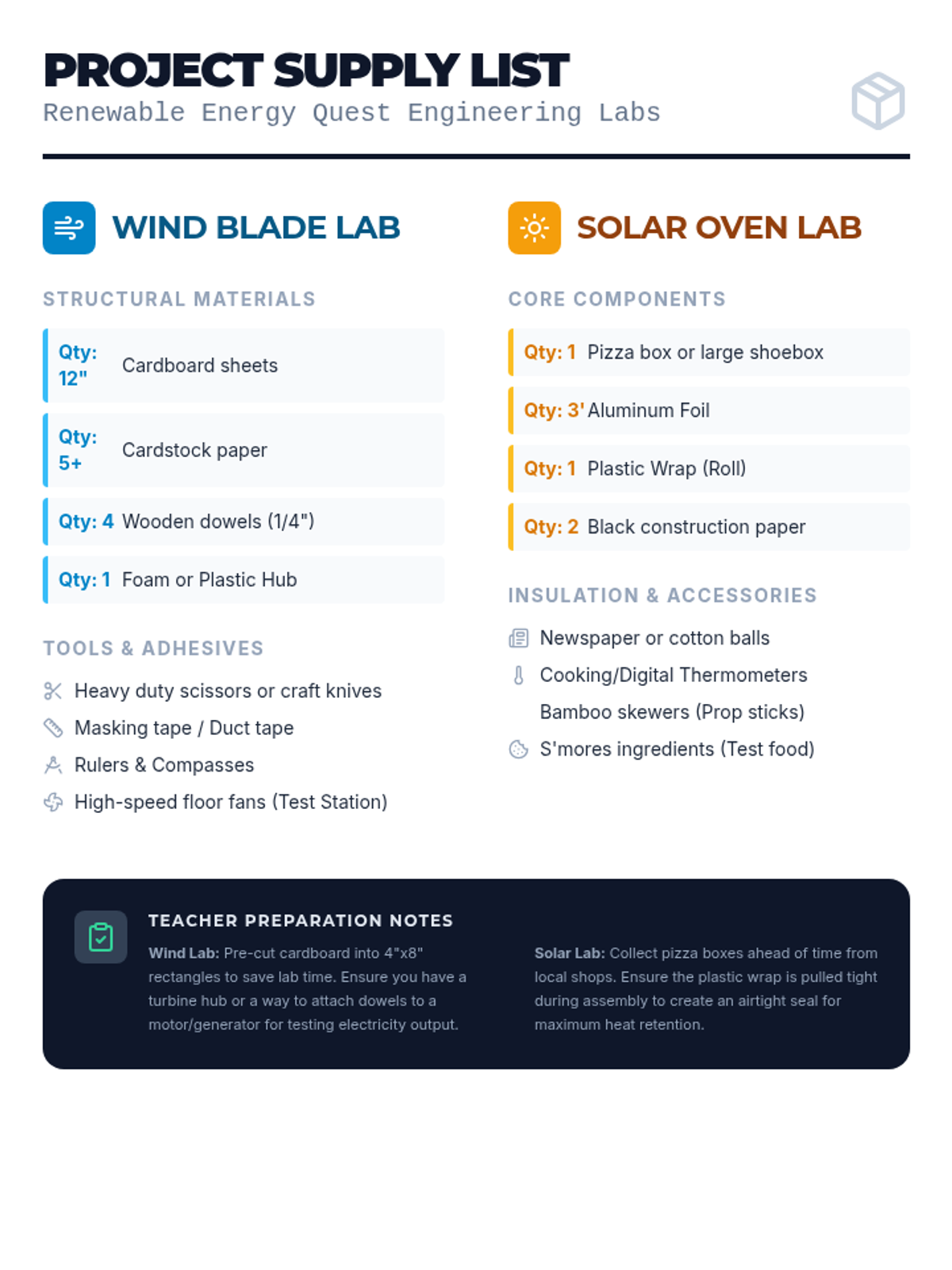
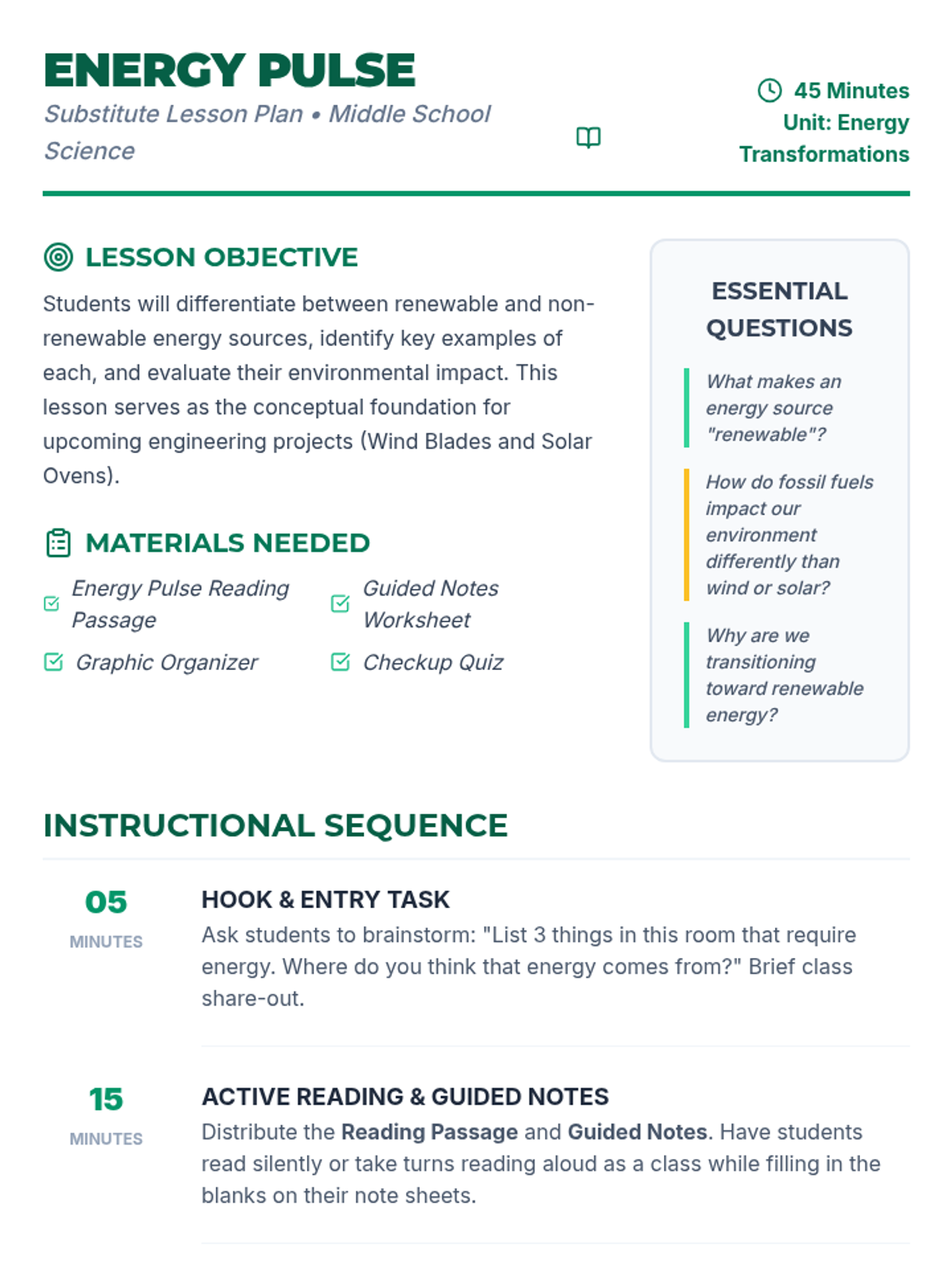
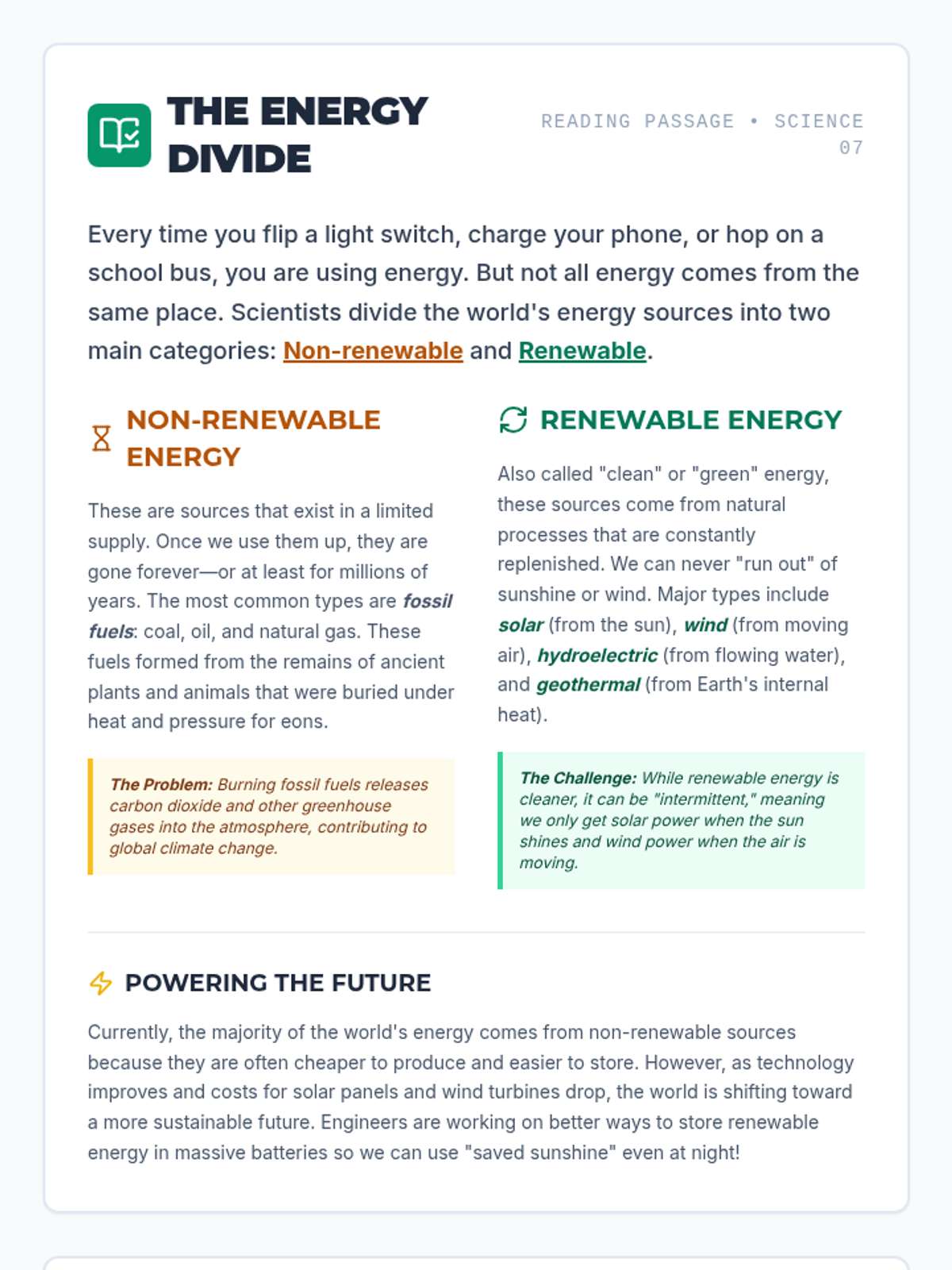
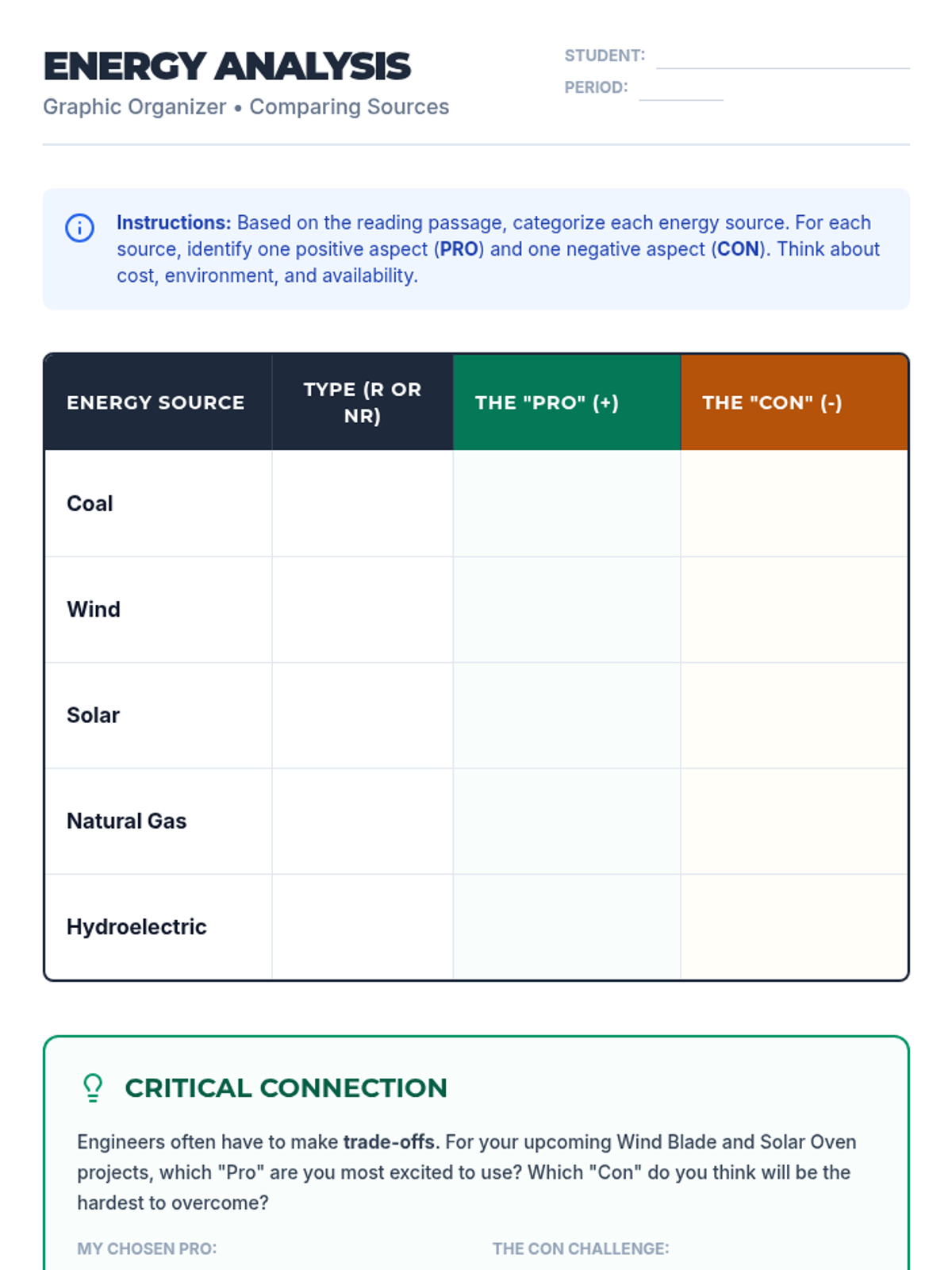
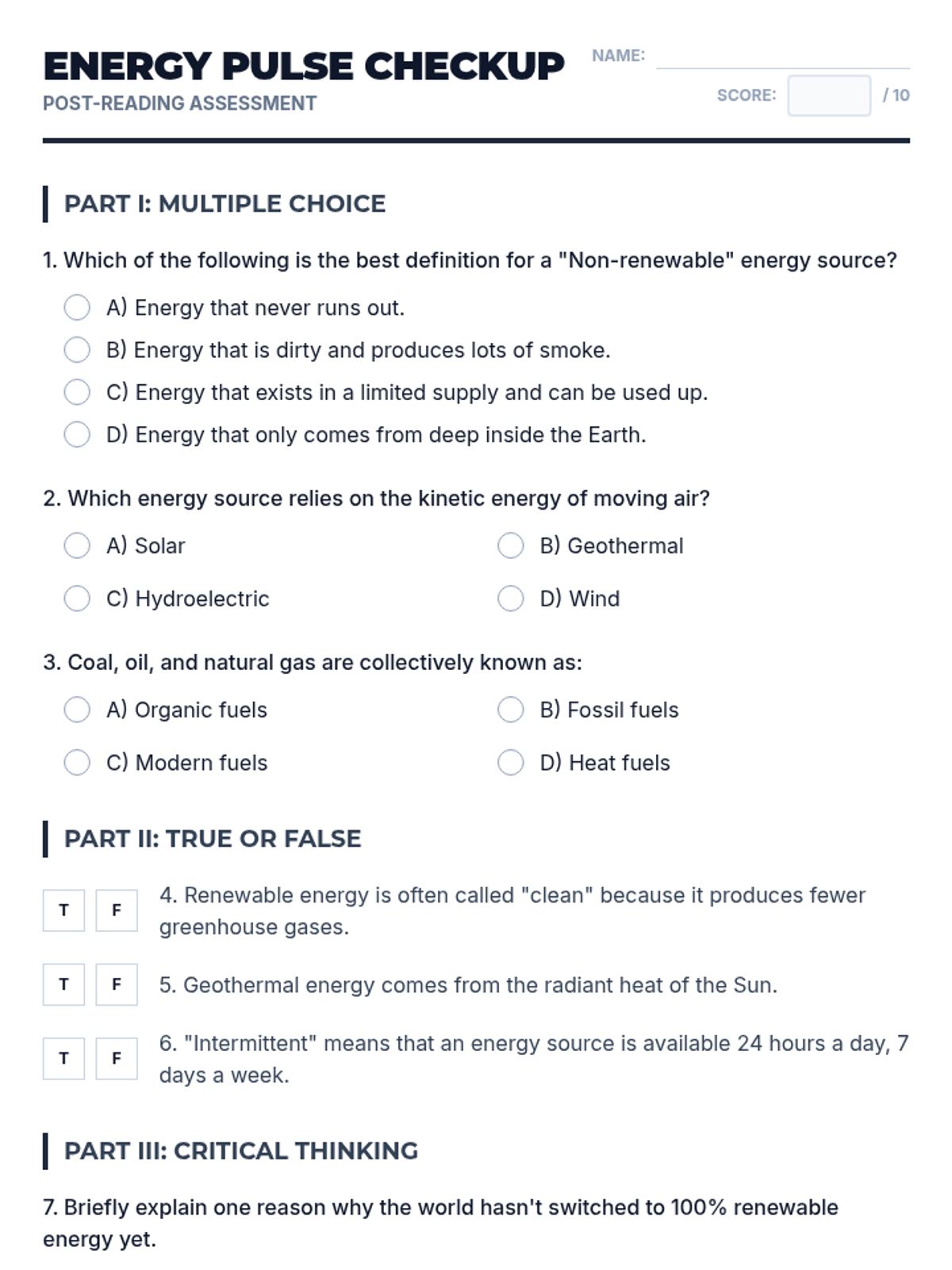
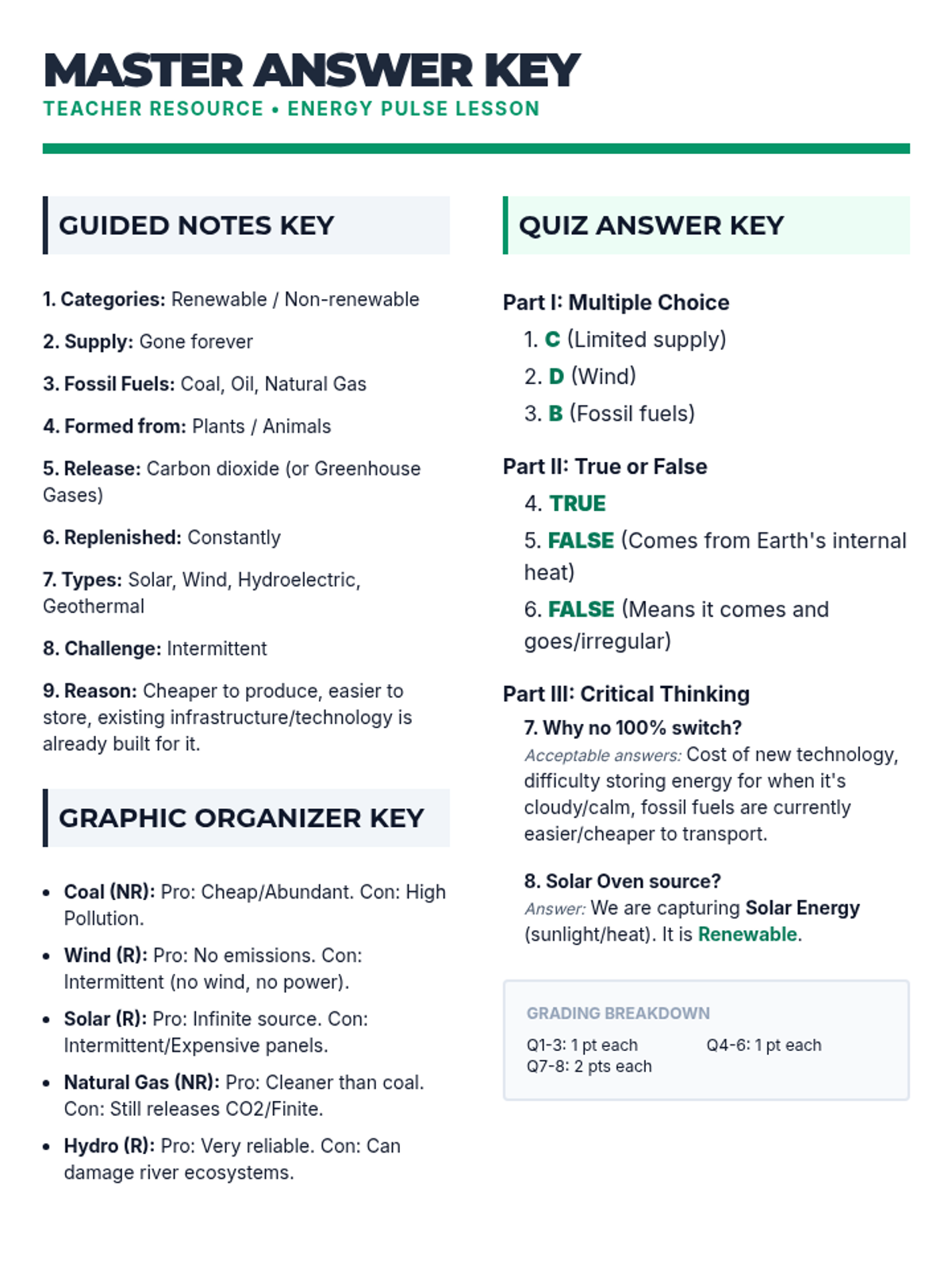
A comprehensive 45-minute introductory lesson on renewable and non-renewable energy sources, designed for a substitute teacher. This lesson prepares middle school students for hands-on engineering projects like wind blades and solar ovens.