Mechanical and electrical engineering fundamentals combined with machine learning, robotics, and CAD design. Examines AI ethics and systems thinking within the context of modern technical problem-solving.
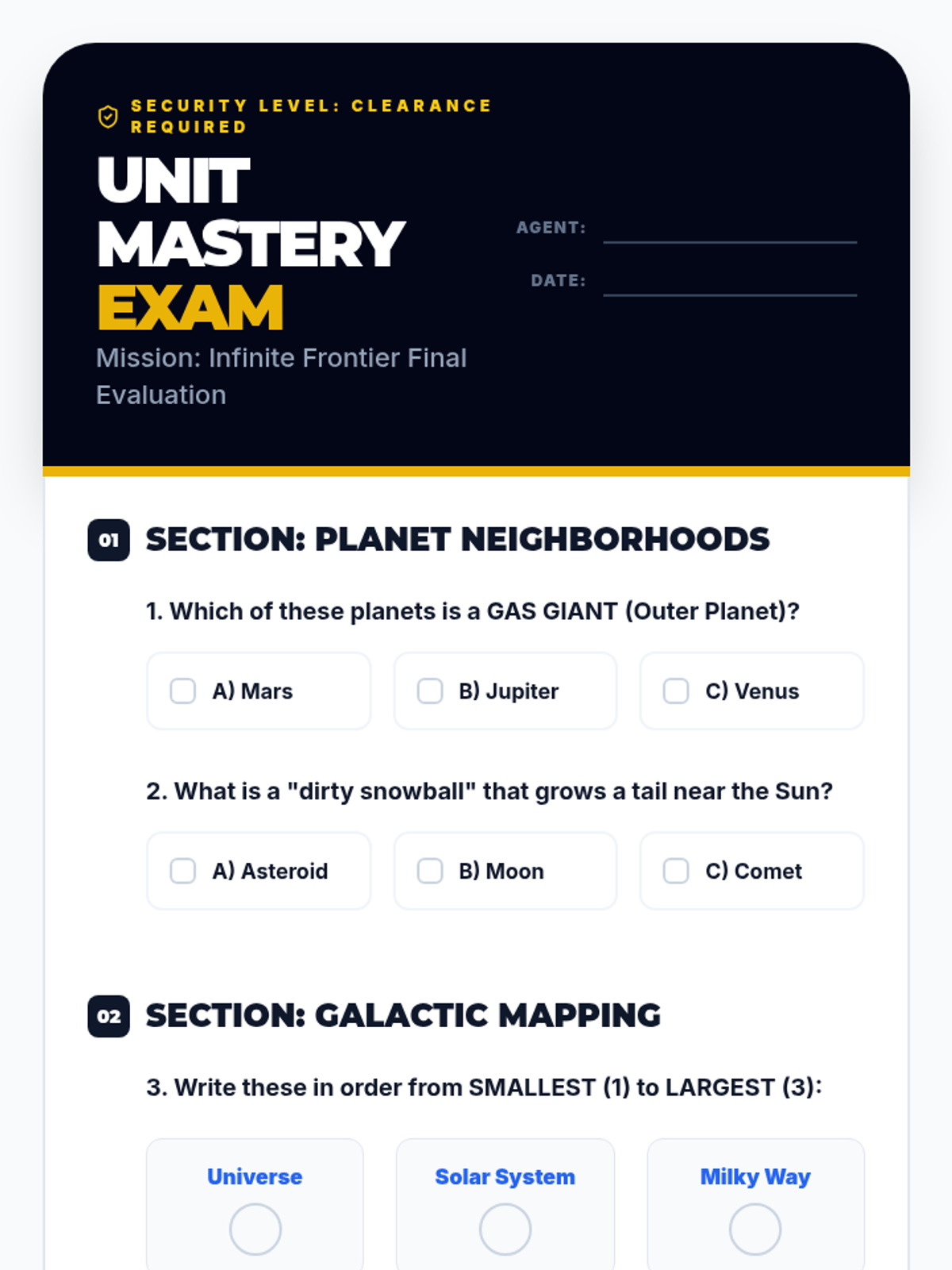
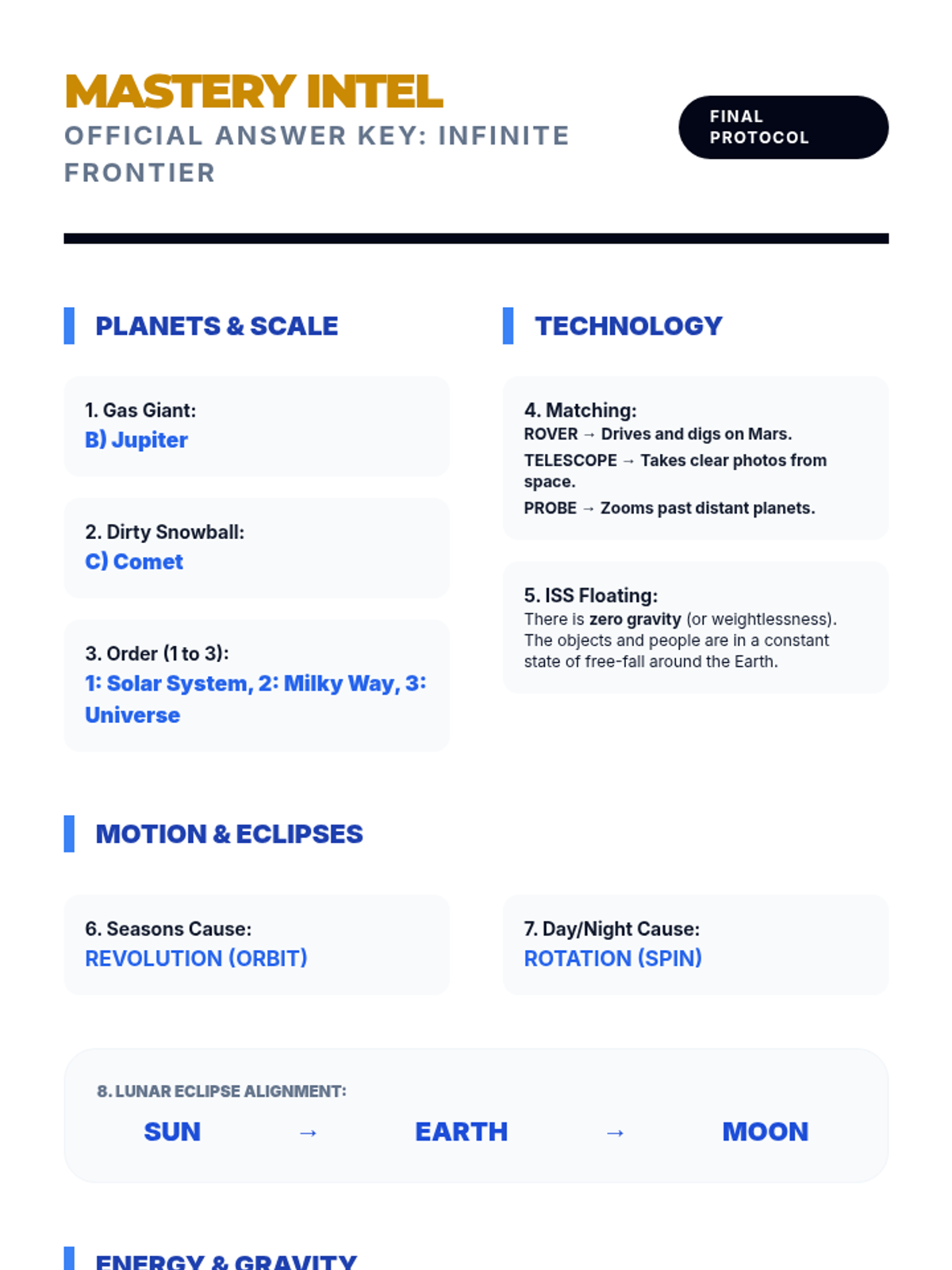
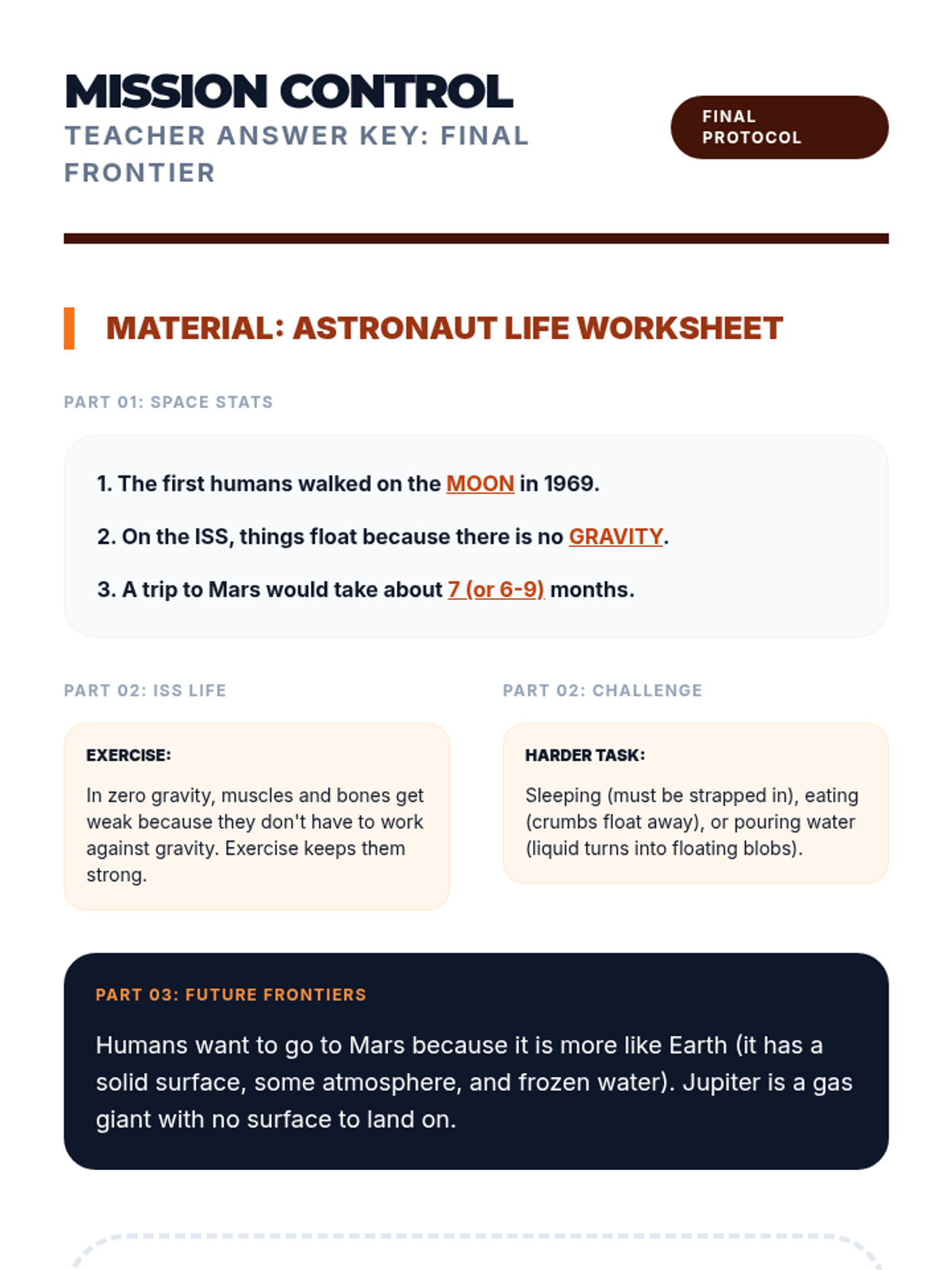
A comprehensive end-of-unit assessment and review lesson for the Infinite Frontier sequence. Includes a multi-topic test and a unit glossary.
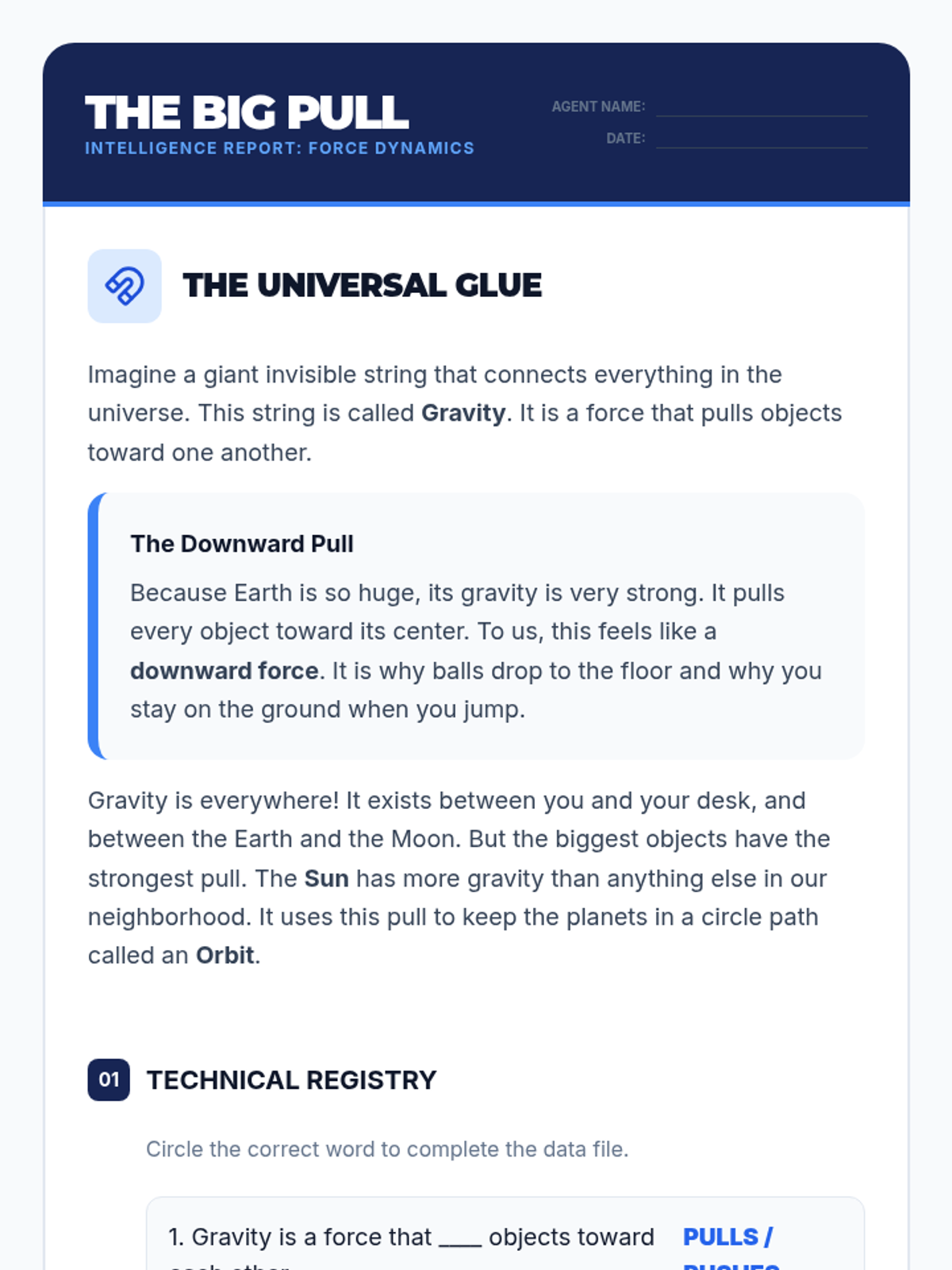
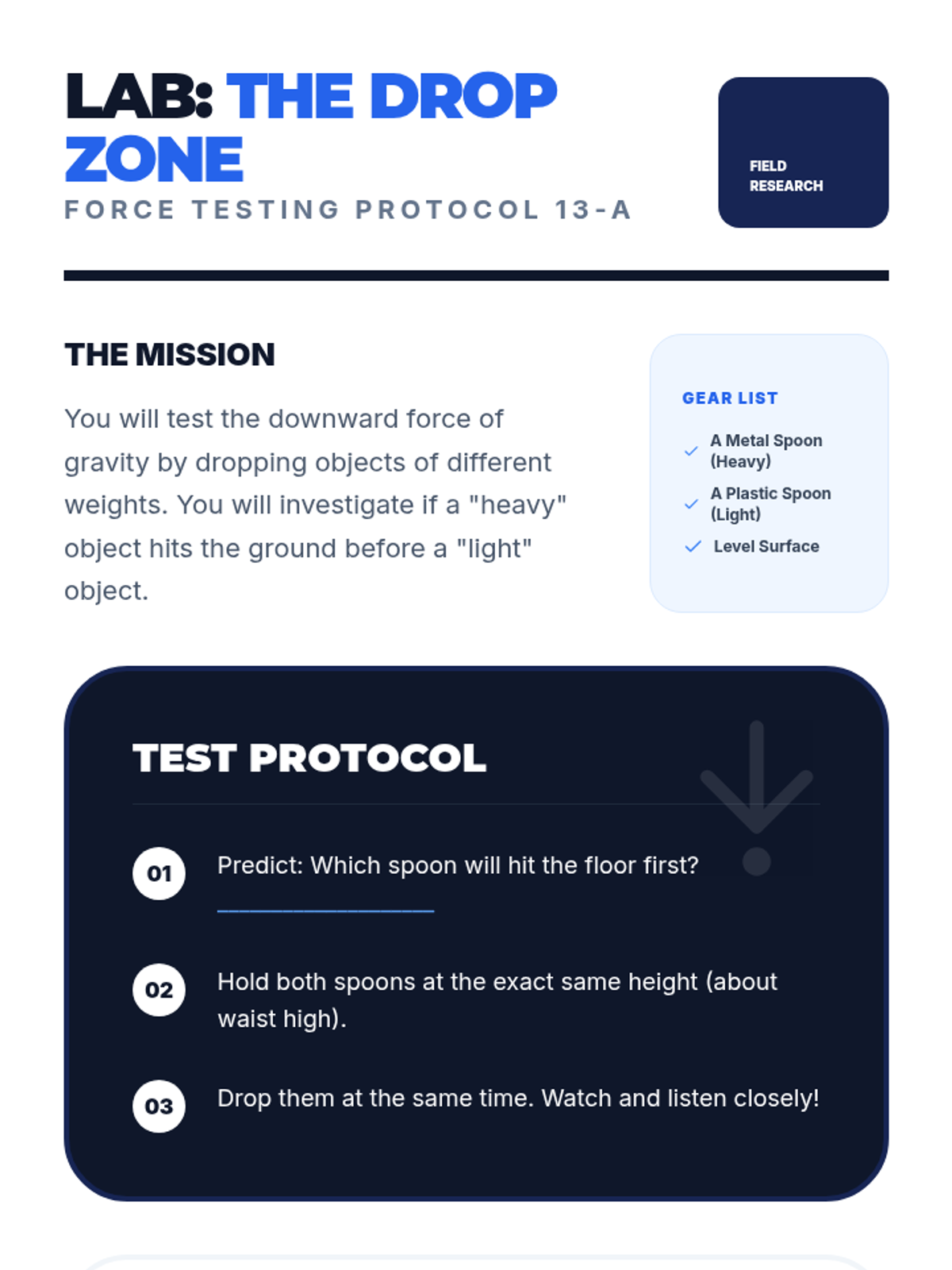
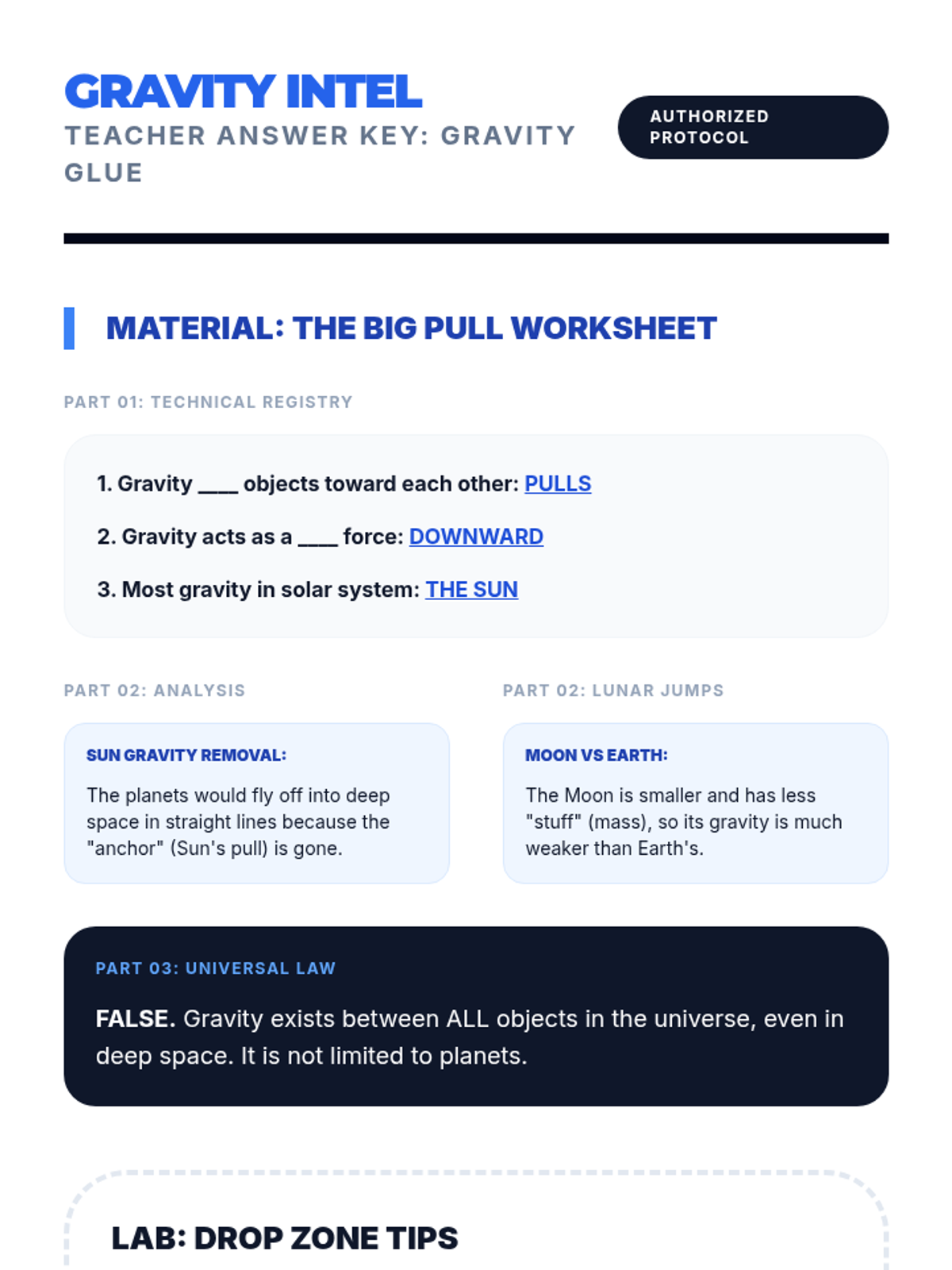
A lesson on the fundamental force of gravity, explaining its role as a downward force on Earth and the invisible "glue" that keeps the planets in orbit around the Sun.
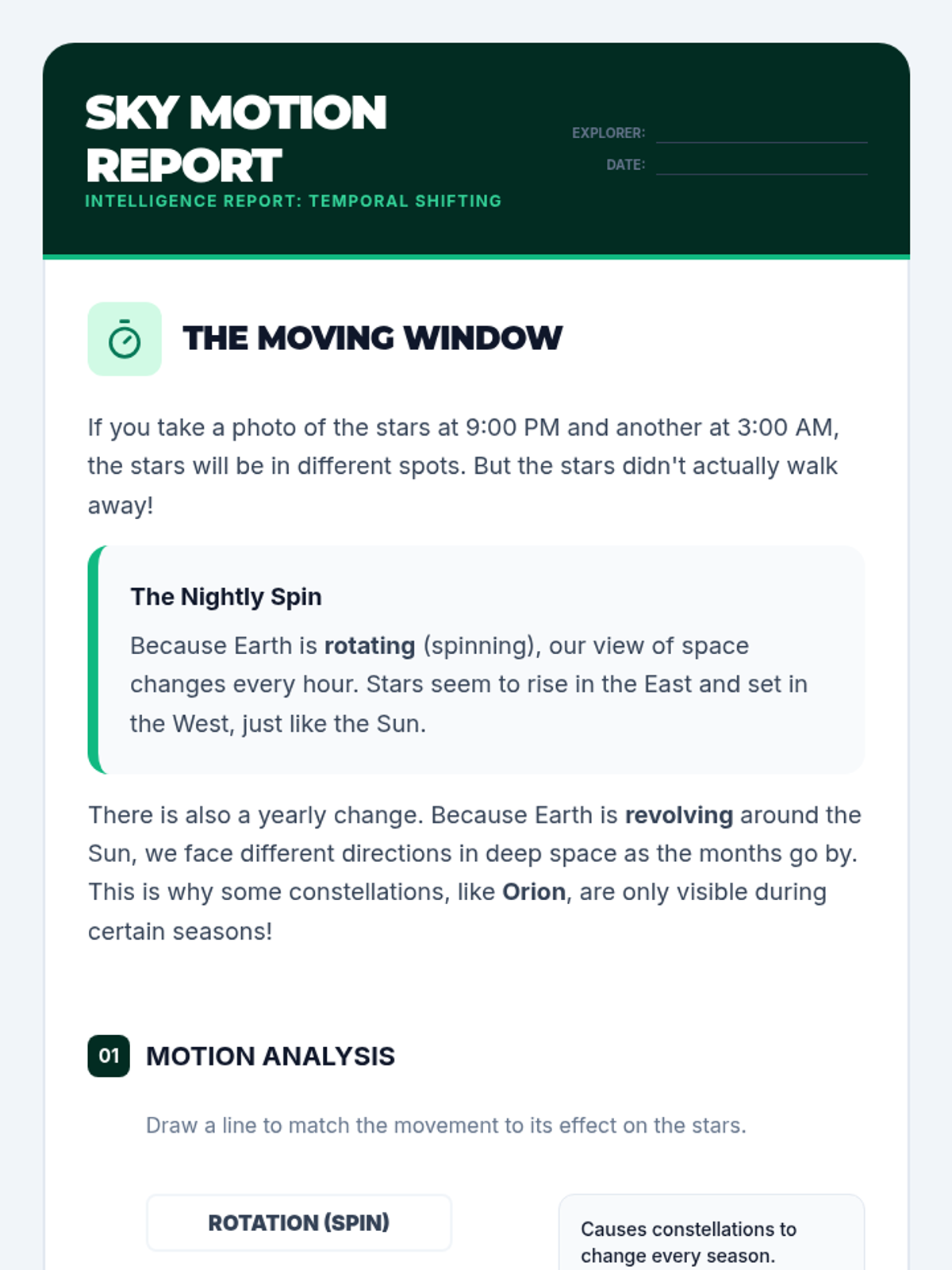
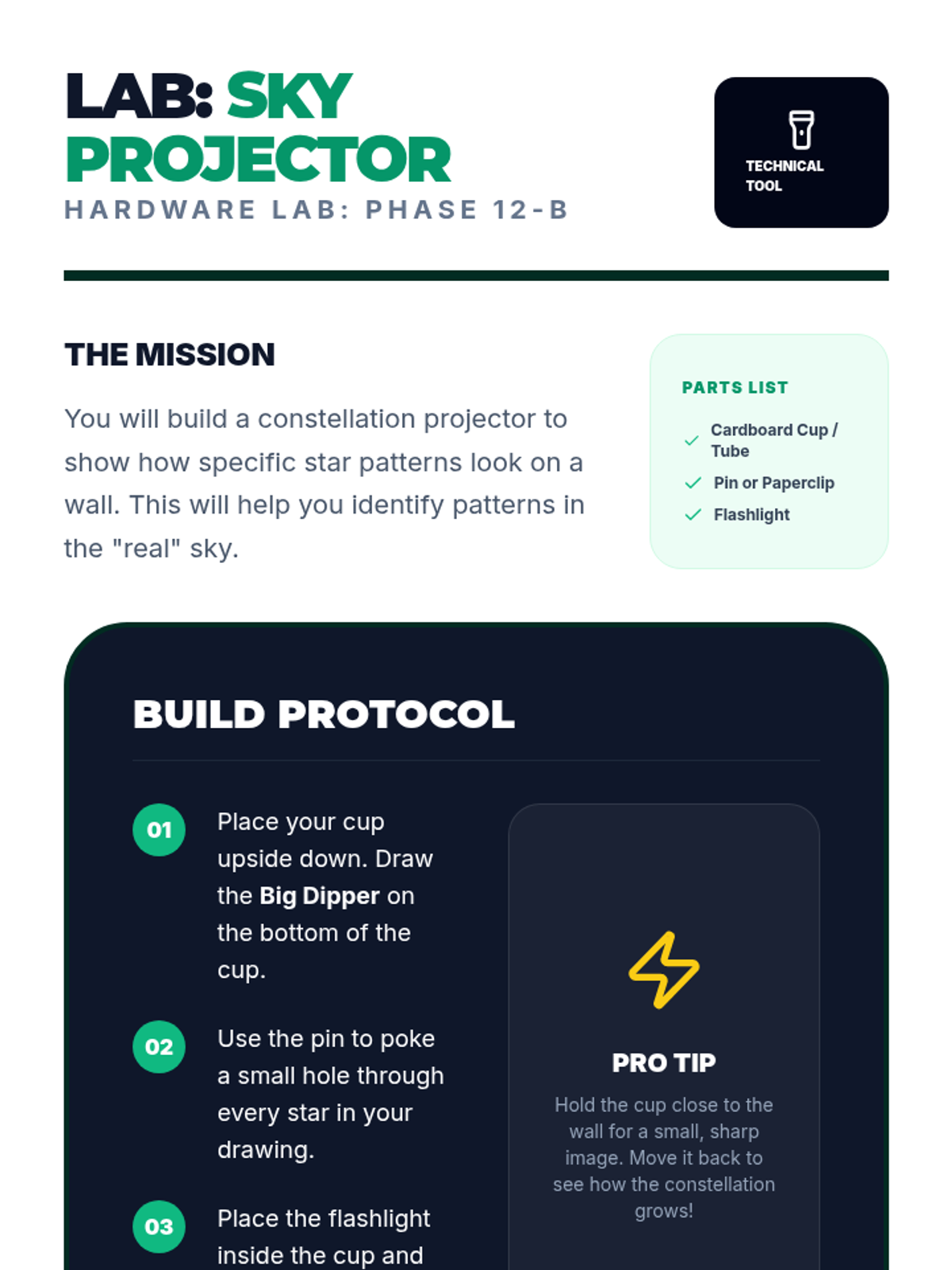
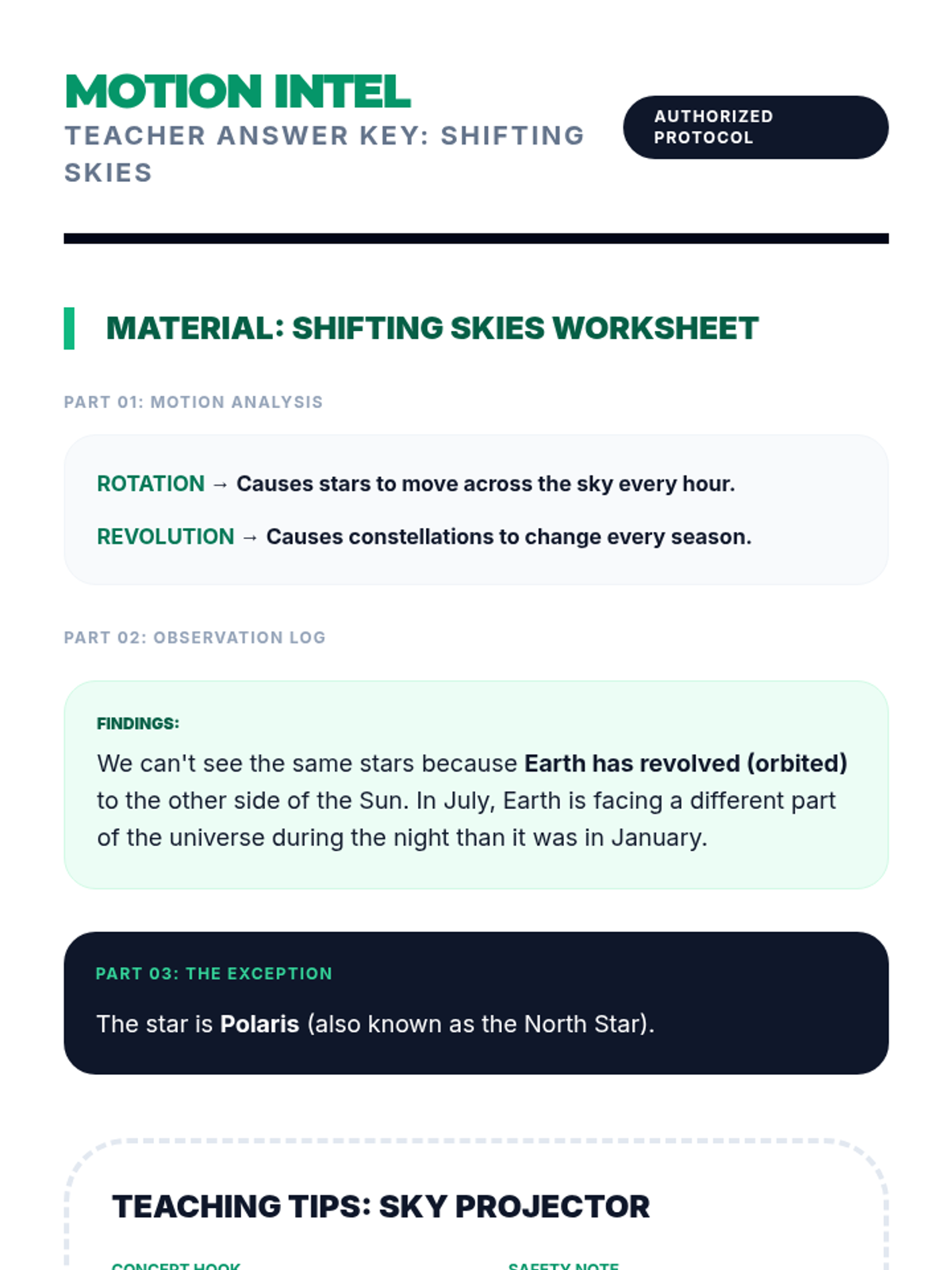
A lesson exploring why the night sky appears to change throughout the night and across different seasons due to Earth's rotation and revolution.
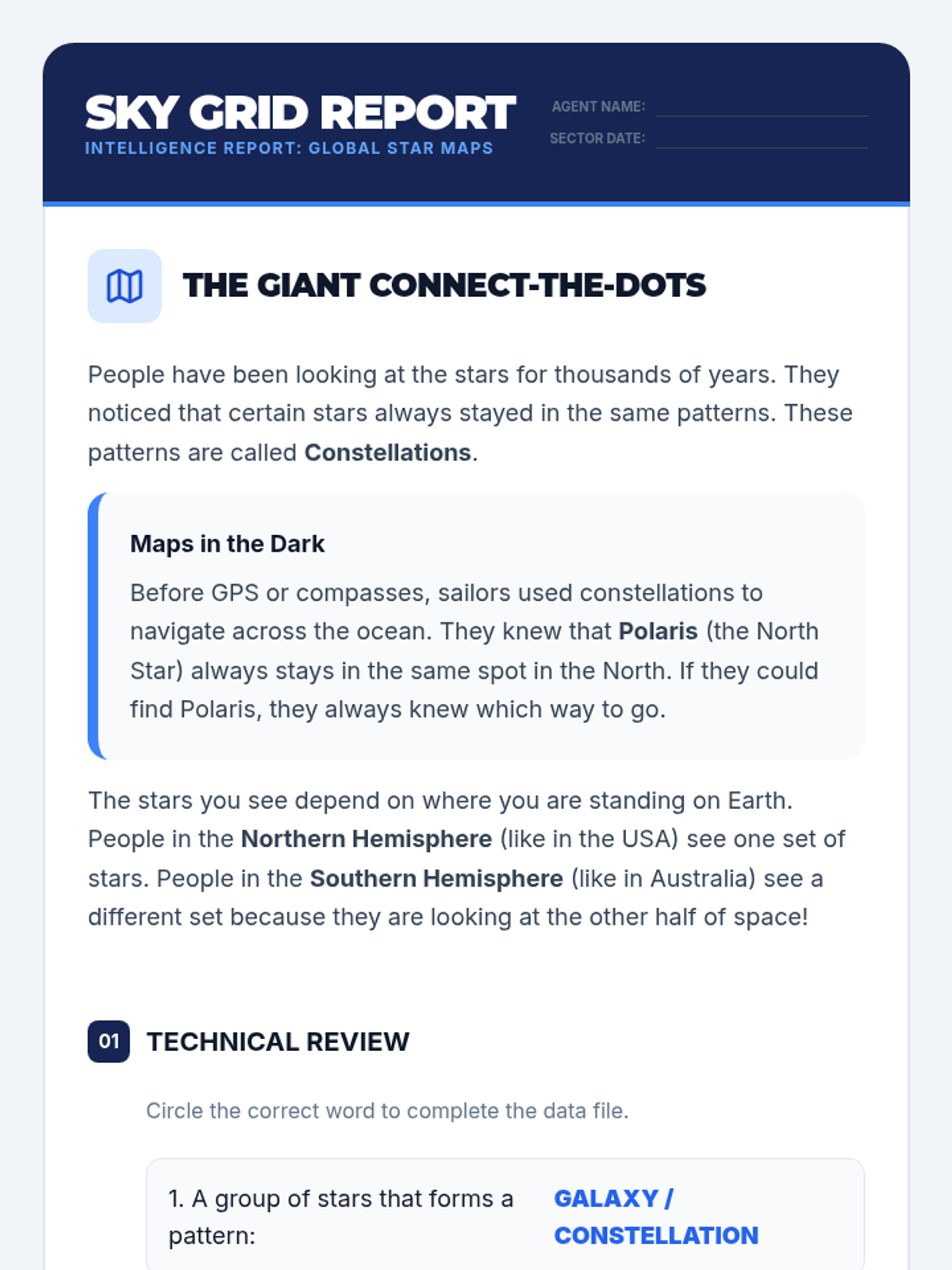
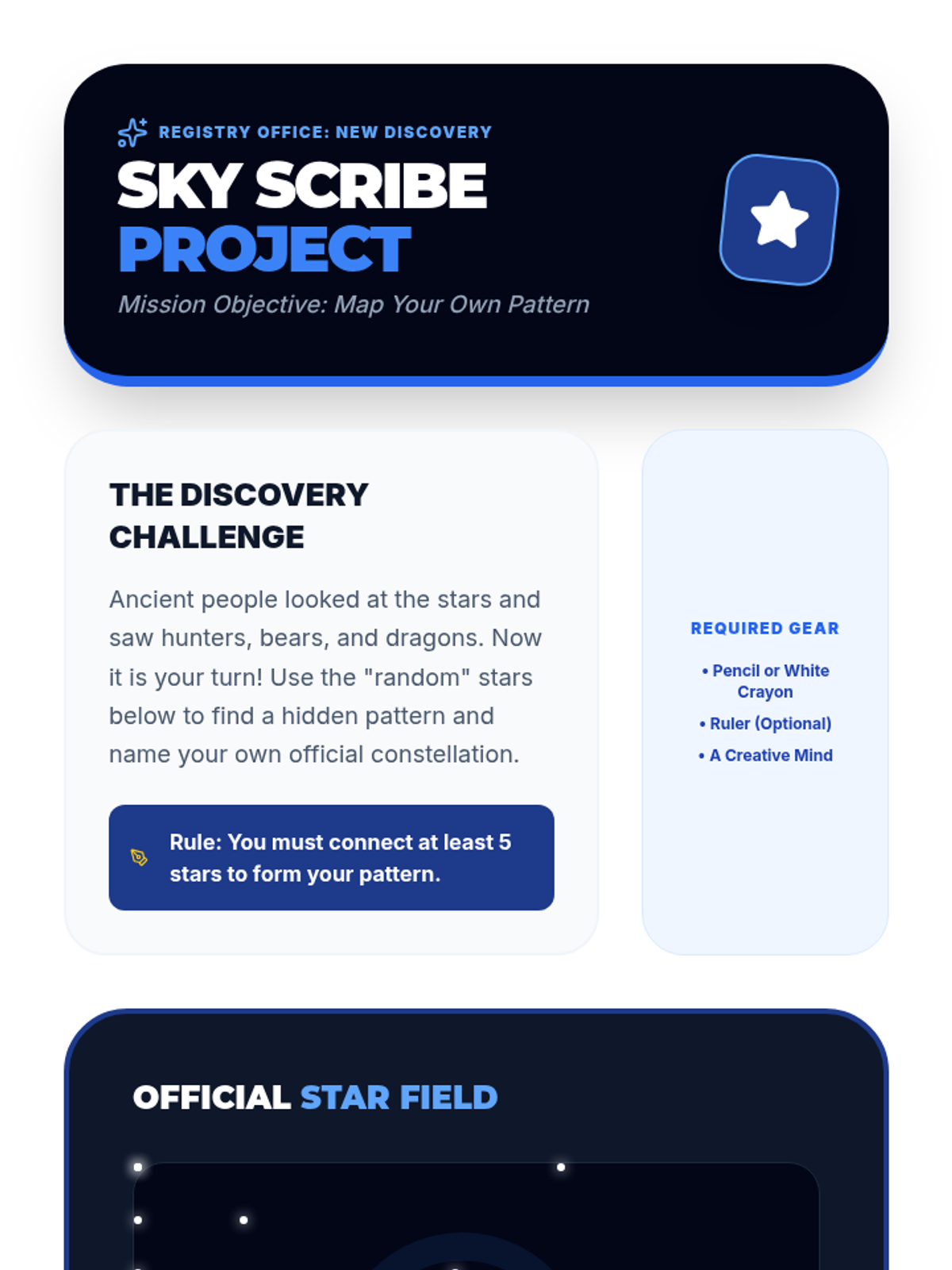
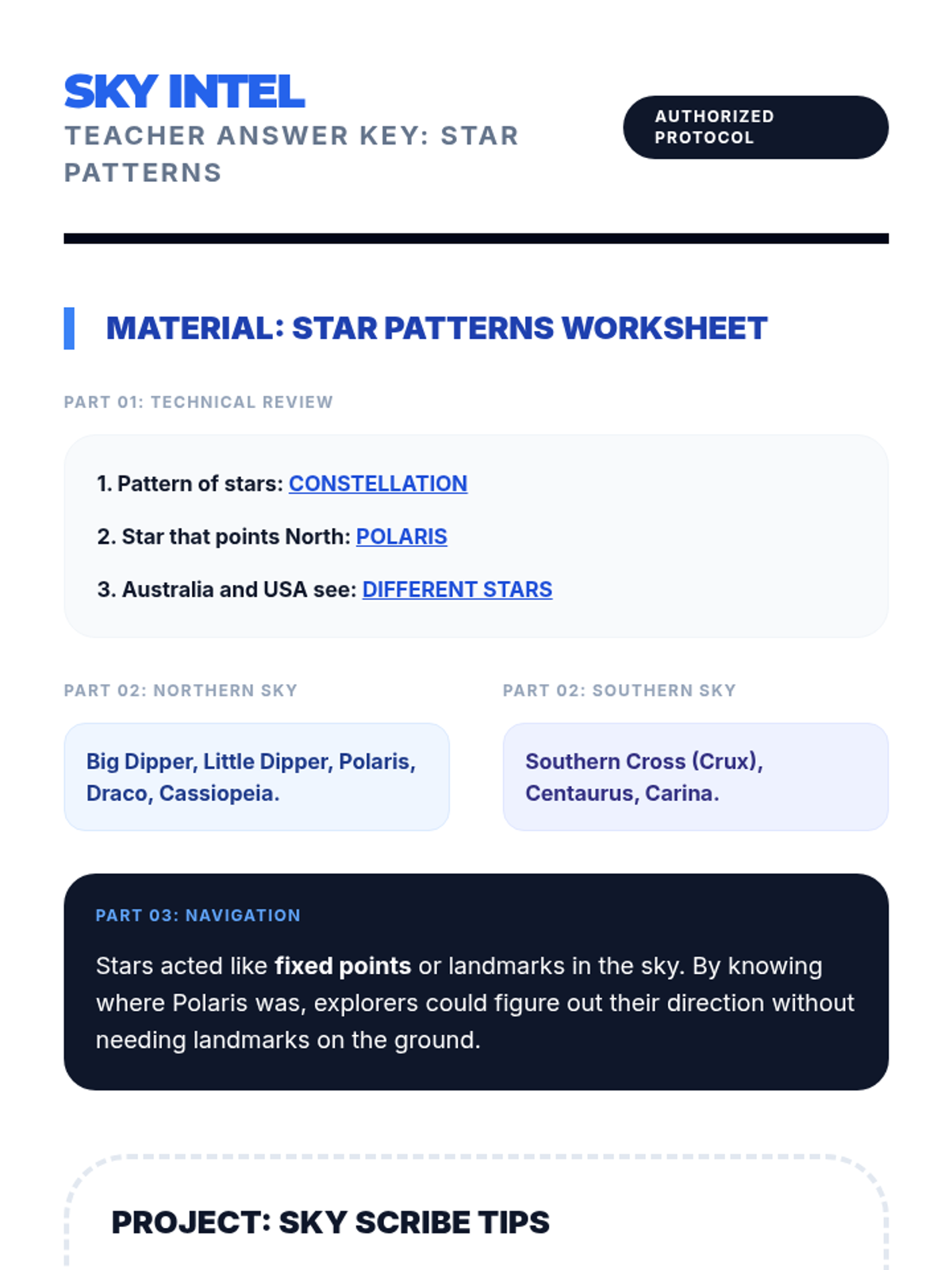
A lesson on constellations, explaining how stars form patterns used for navigation and how the view of the sky changes between the Northern and Southern Hemispheres.
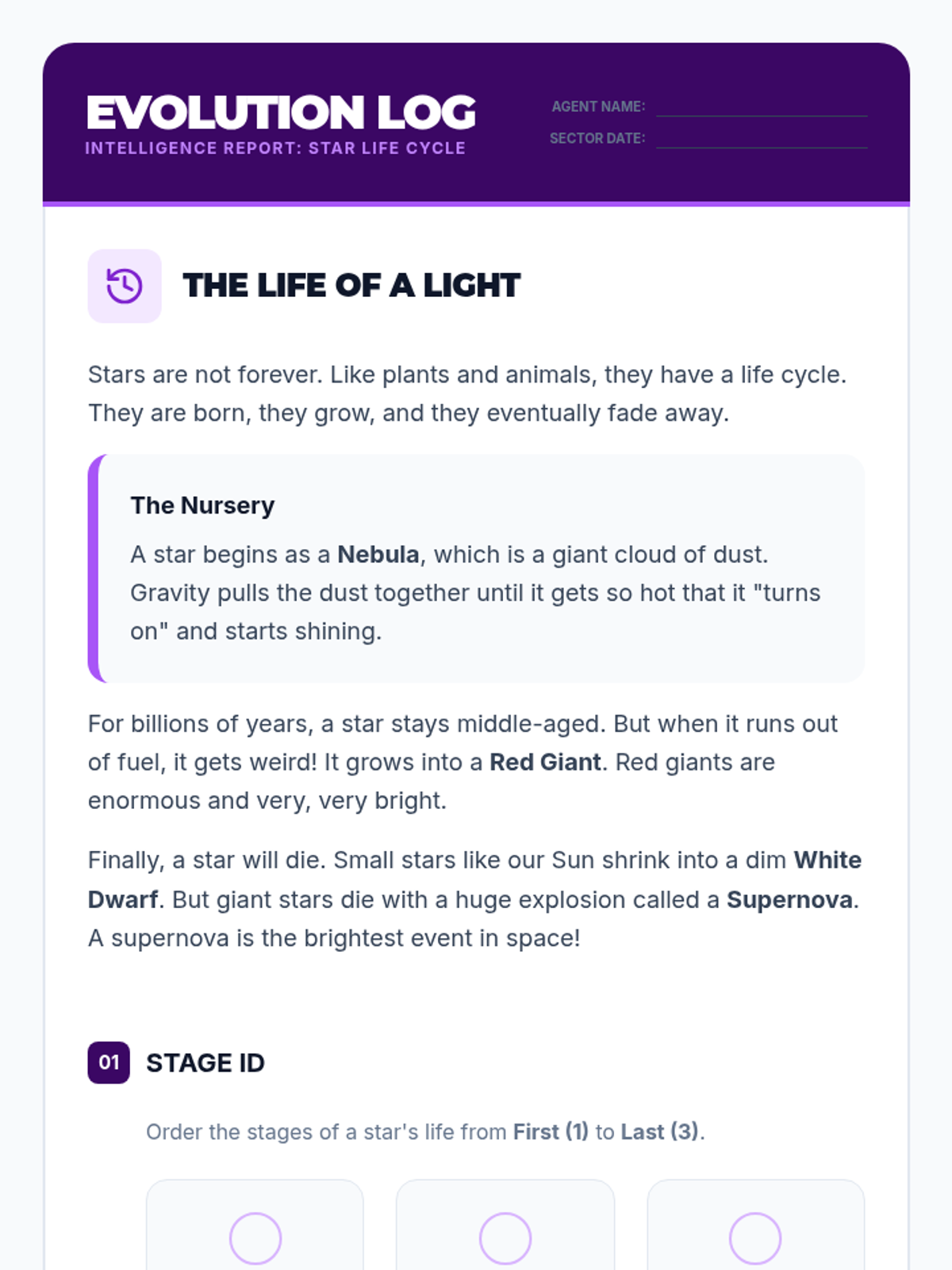
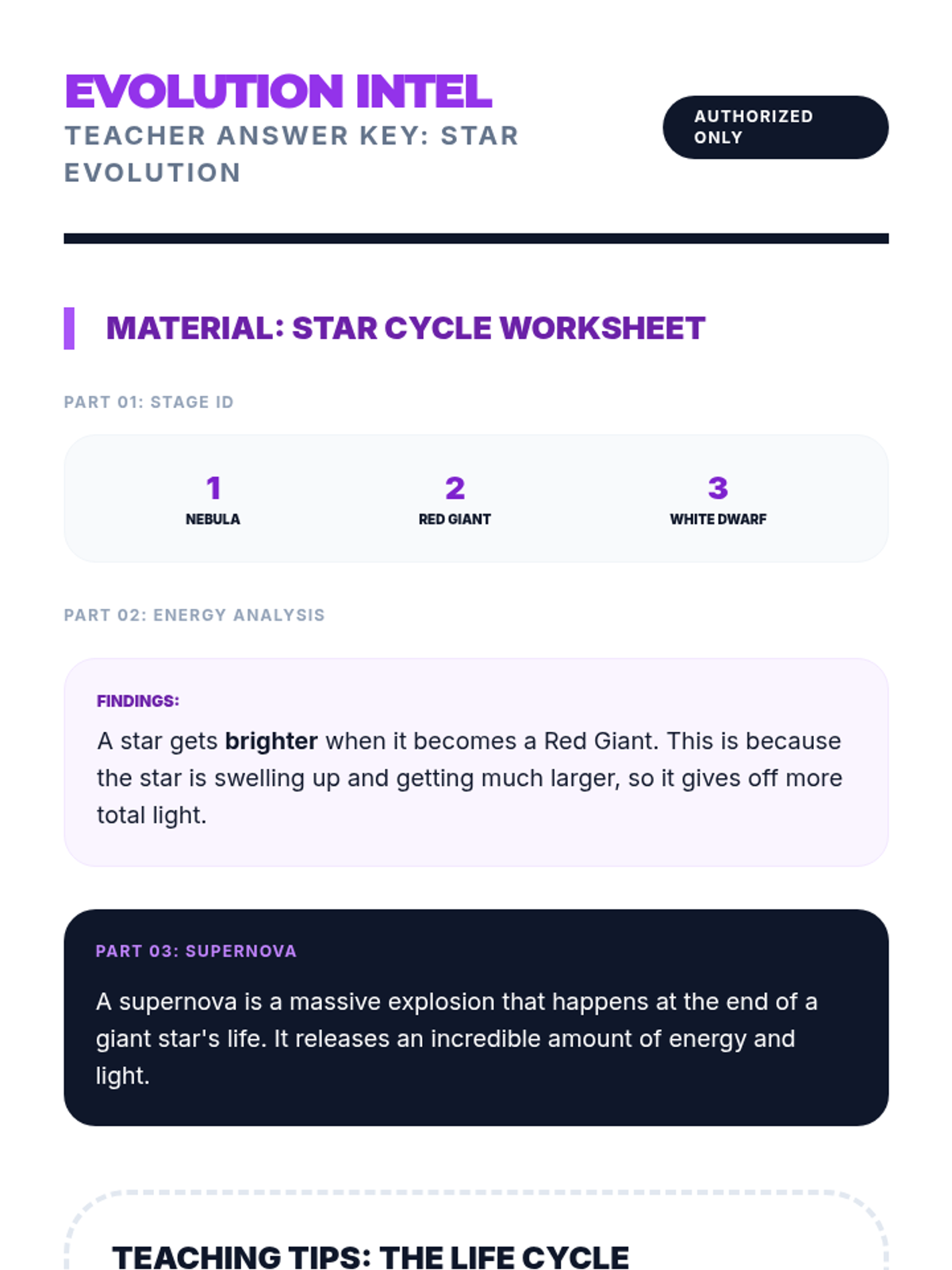
A lesson on the life cycle of stars, exploring how they are born in nebulae, grow, and eventually change brightness as they age or die.
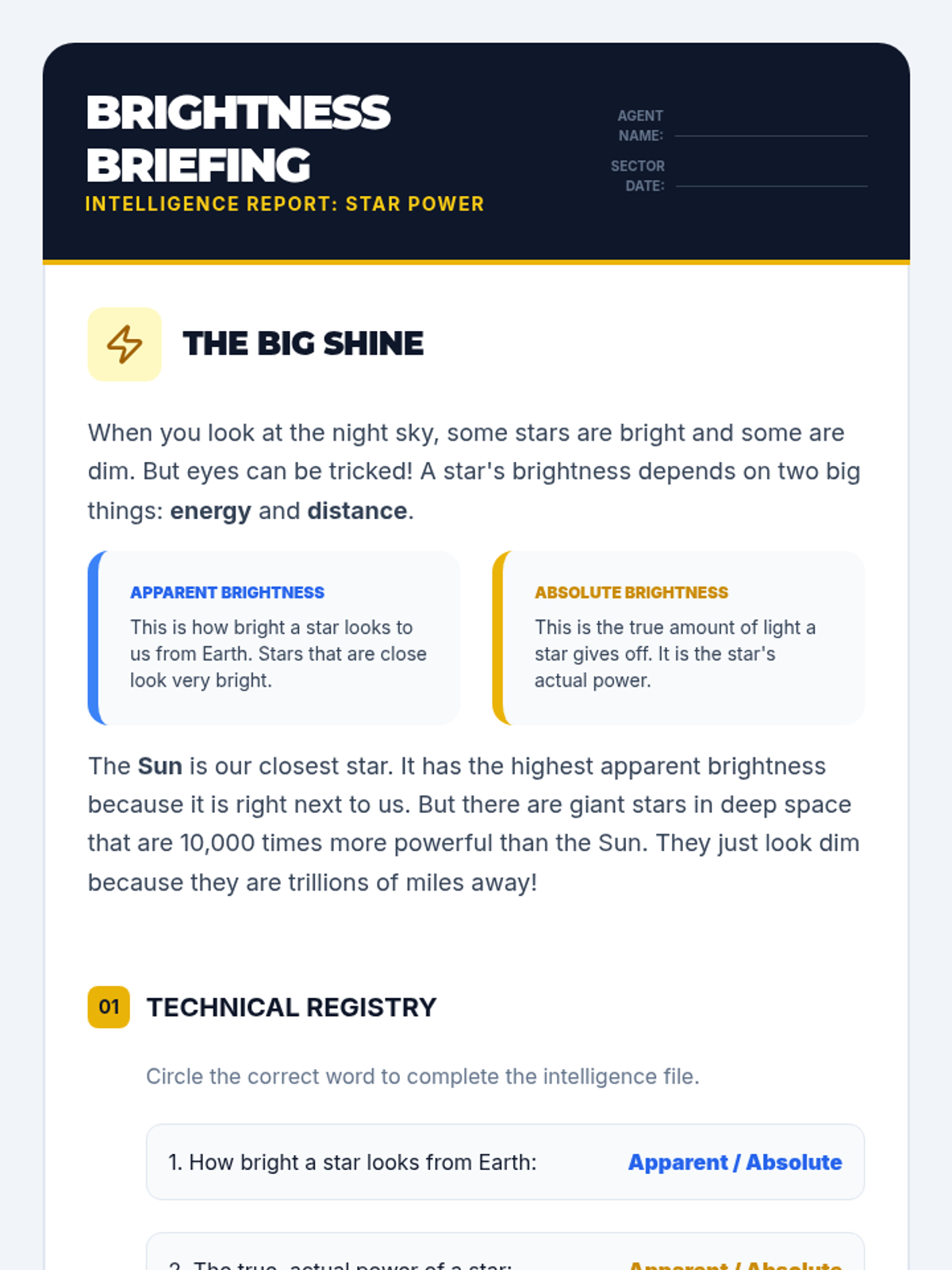
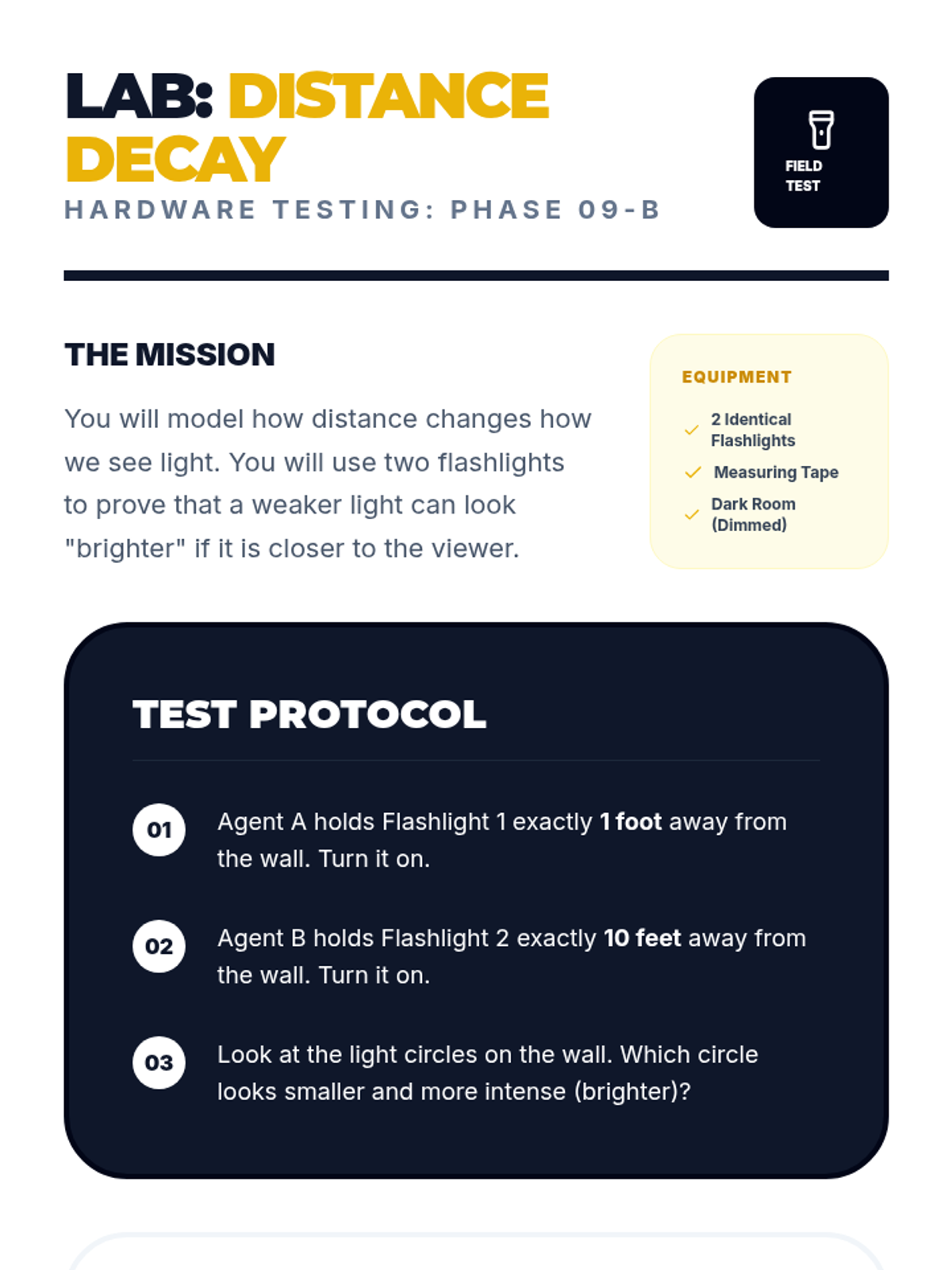
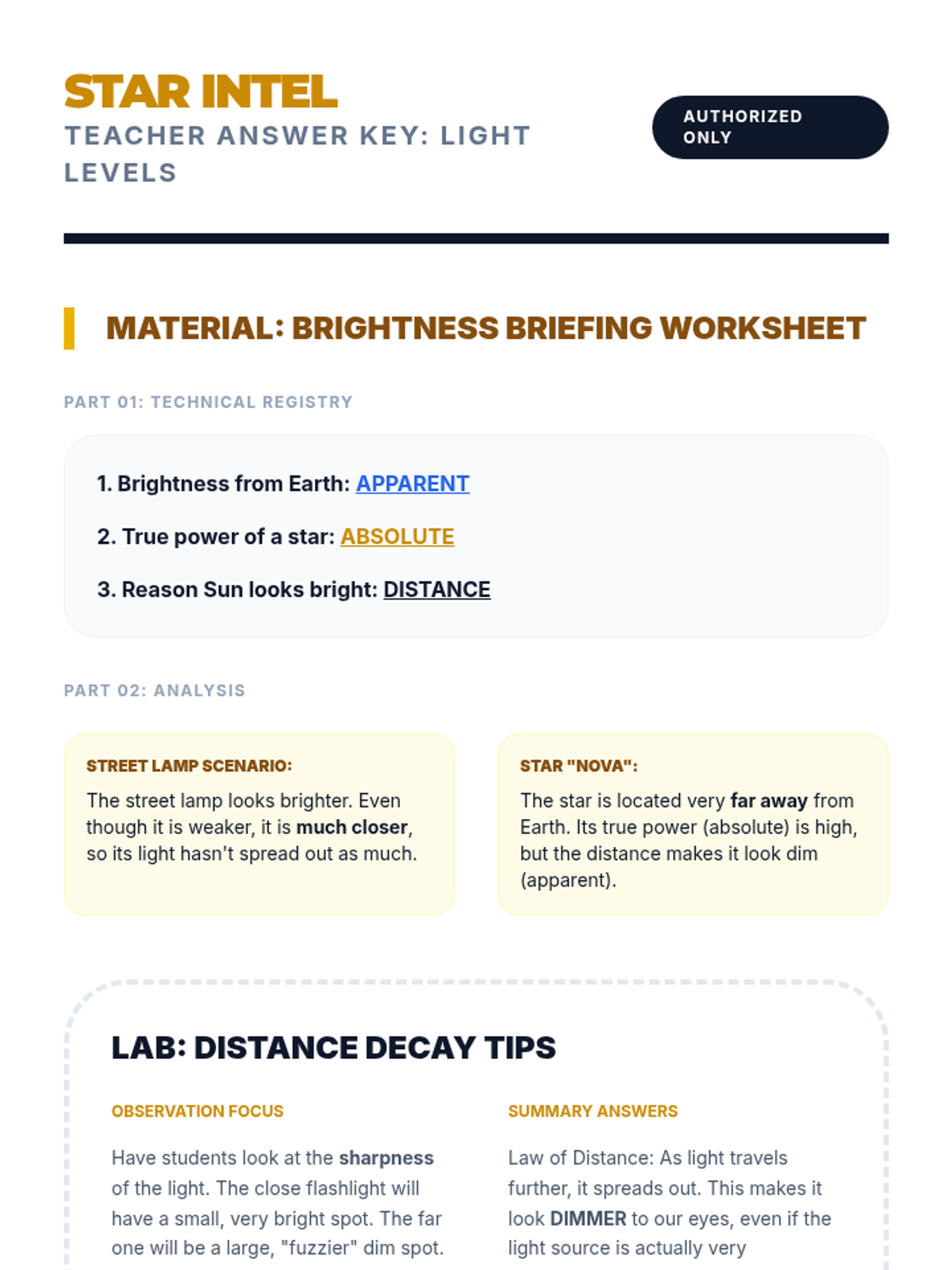
A lesson exploring why some stars look brighter than others, focusing on the difference between apparent and absolute brightness and the role of distance.
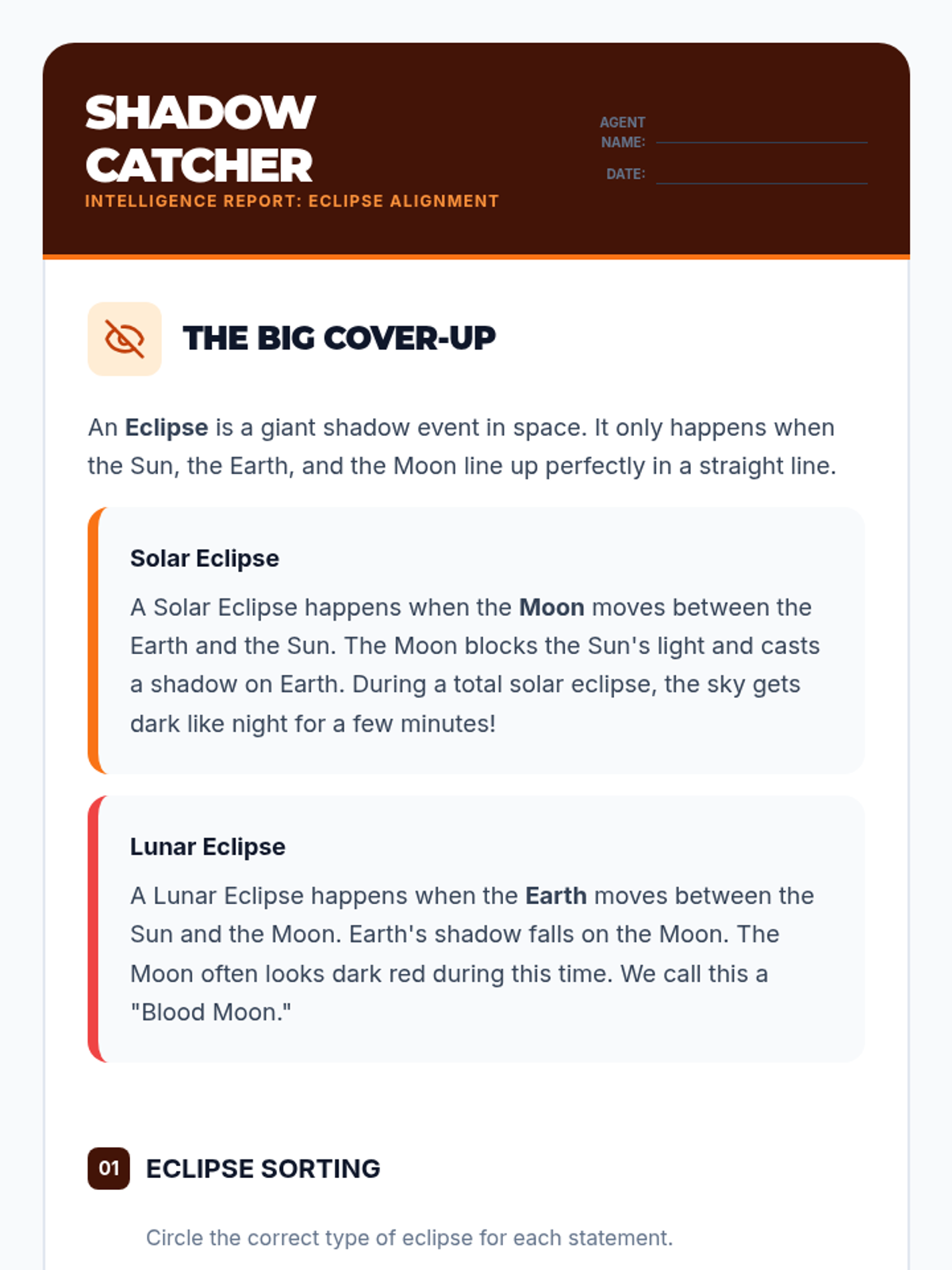
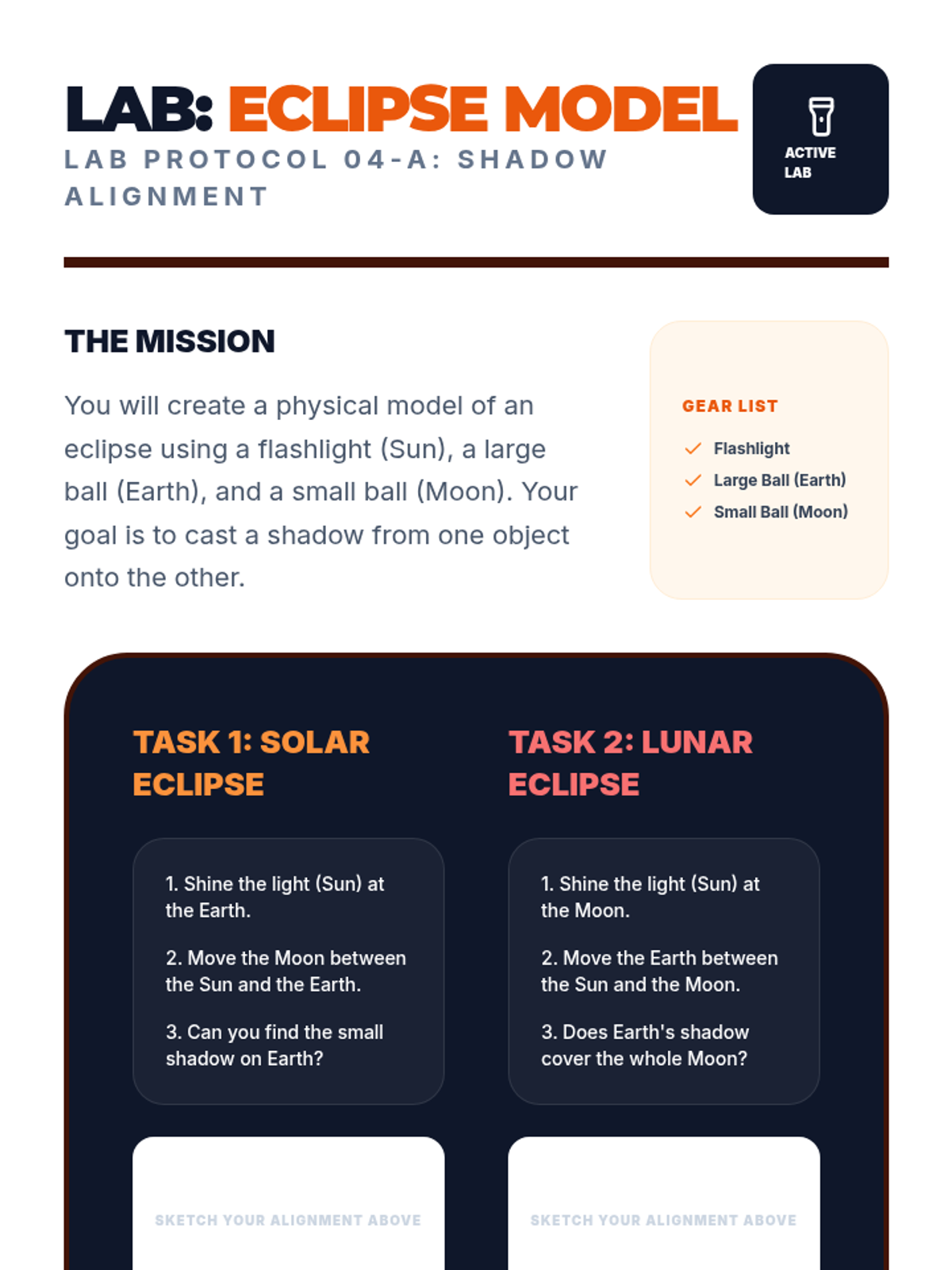
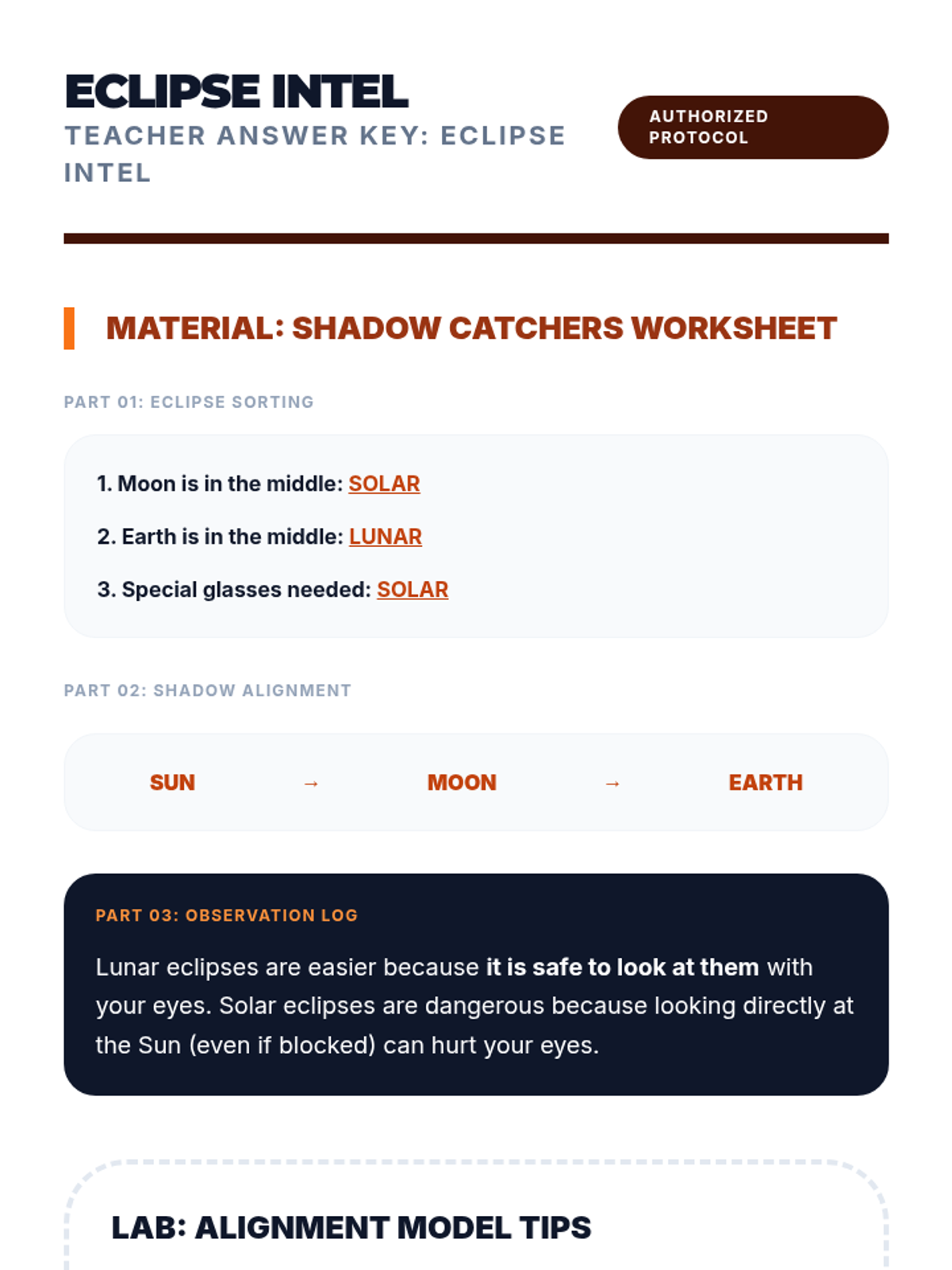
A lesson on solar and lunar eclipses, exploring how the alignment of the Sun, Earth, and Moon creates dramatic shadows in space.
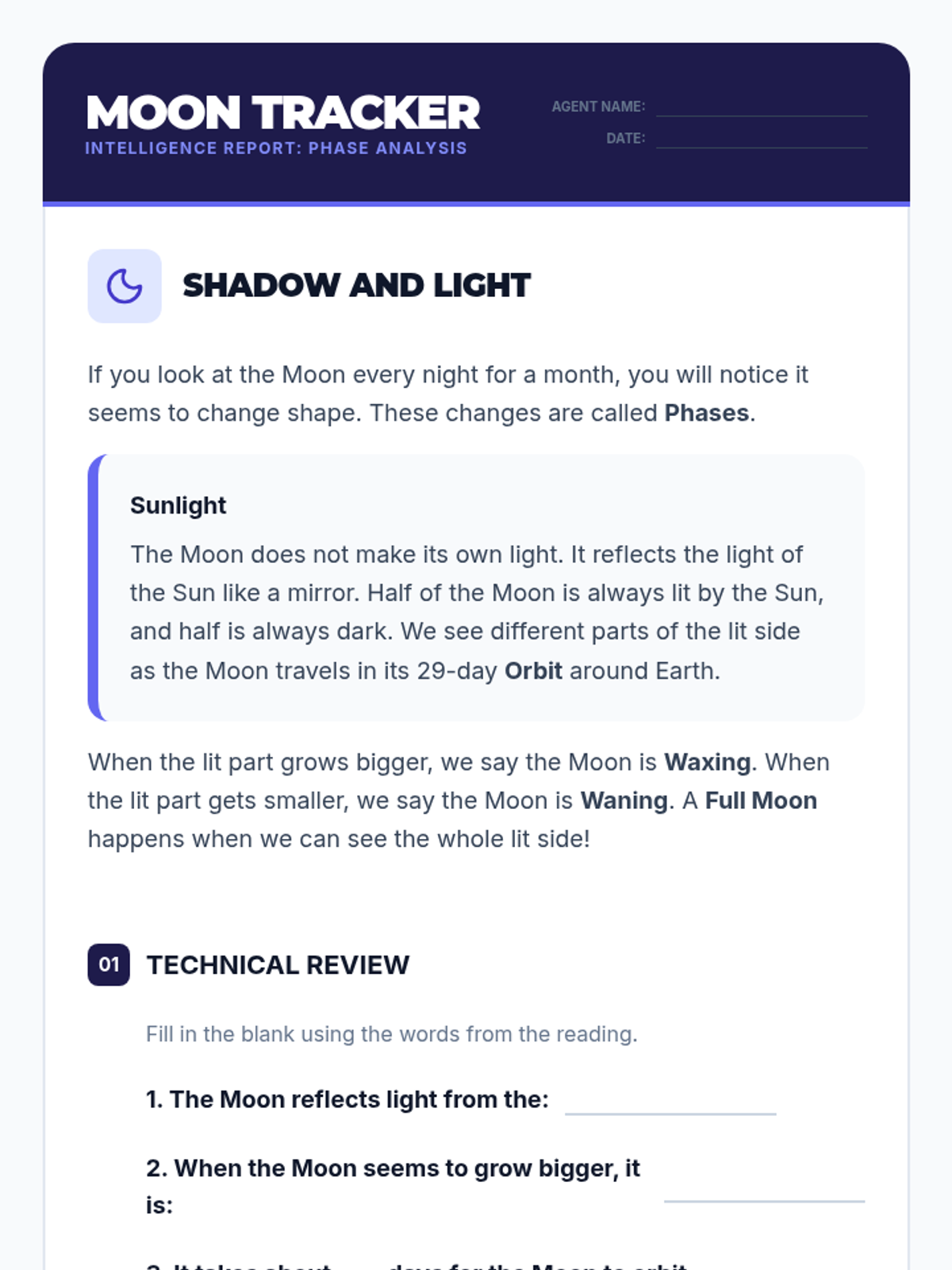
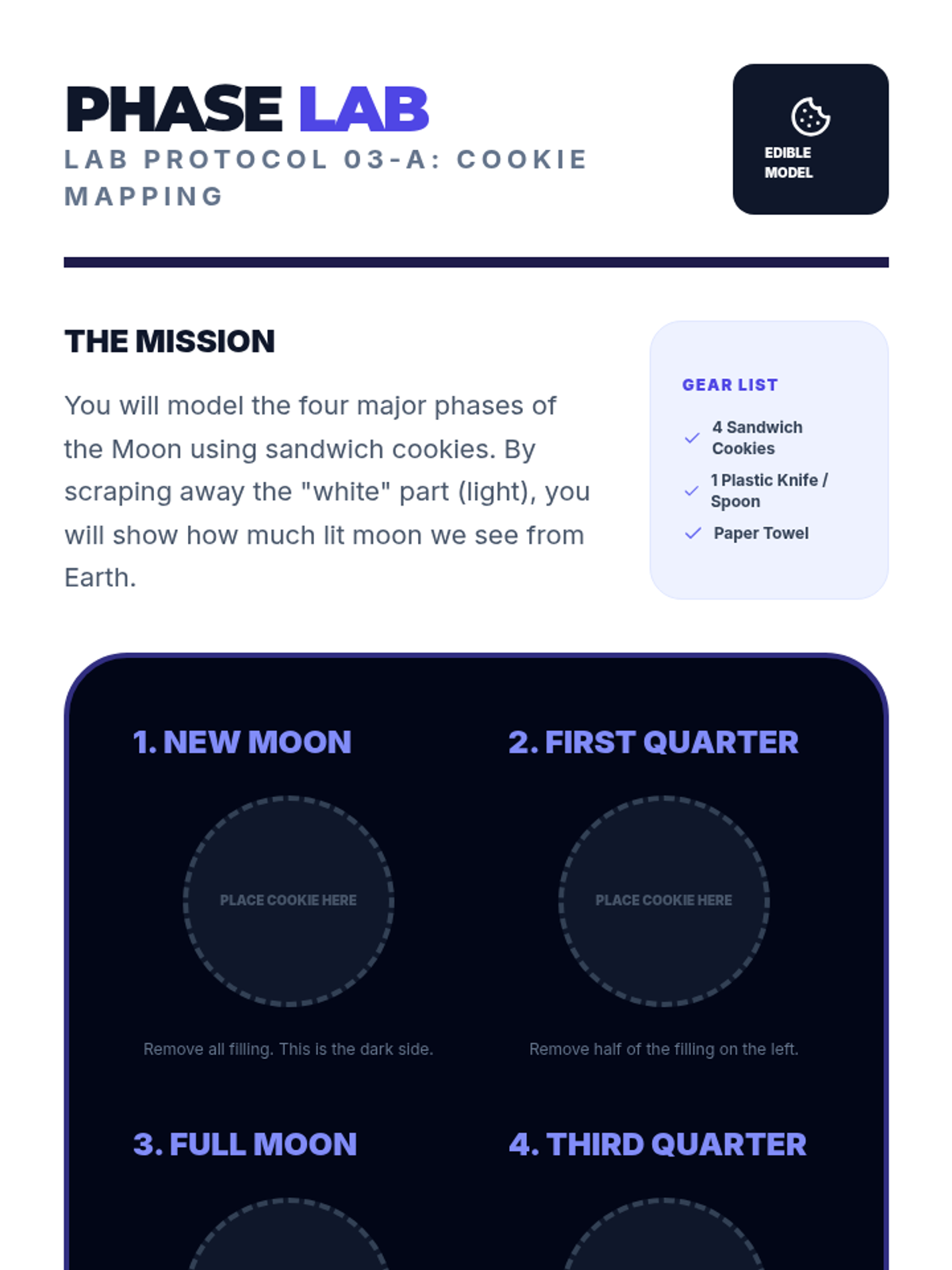
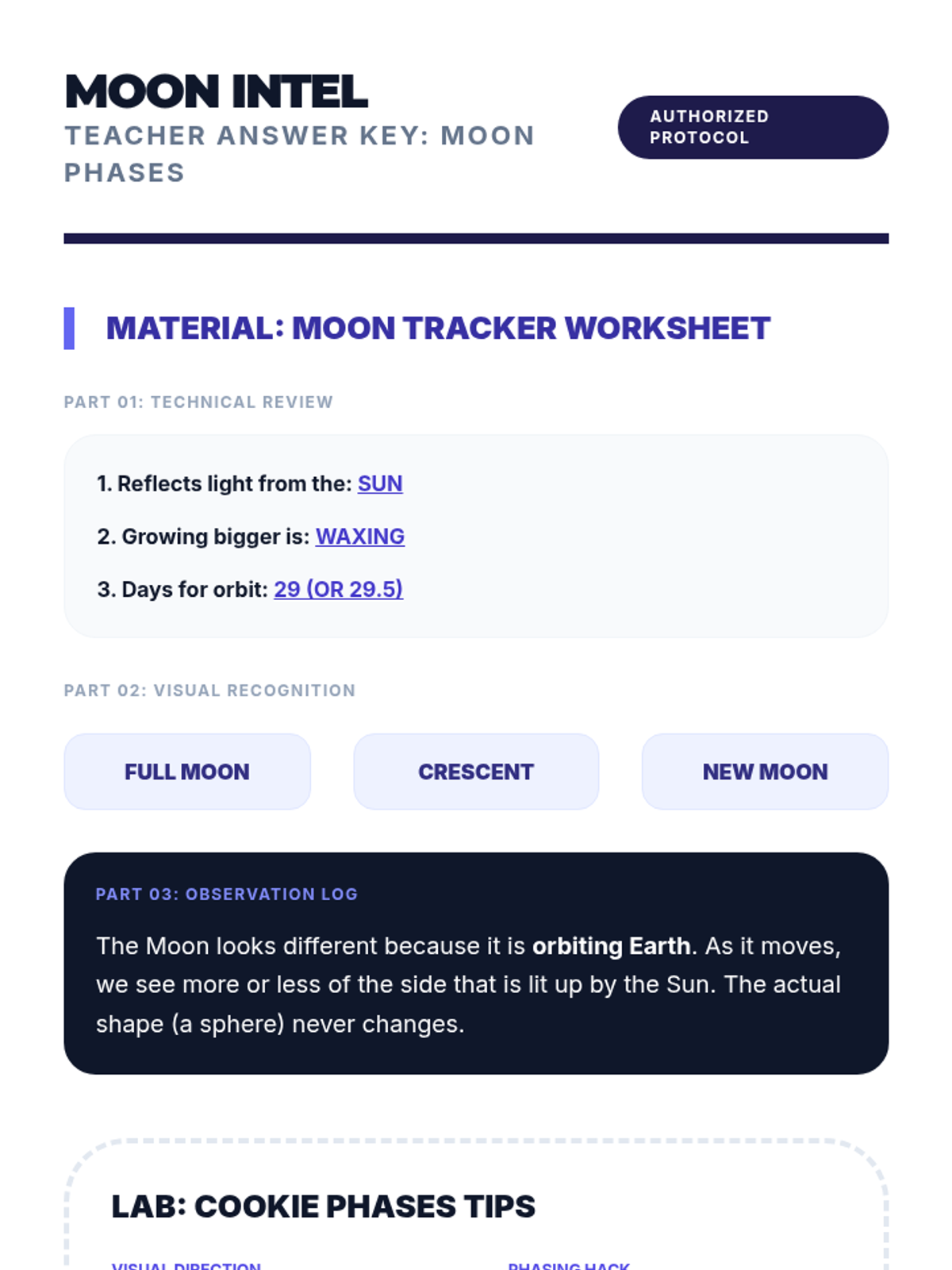
A lesson exploring the eight phases of the Moon, why the Moon seems to change shape, and the 29.5-day lunar cycle.
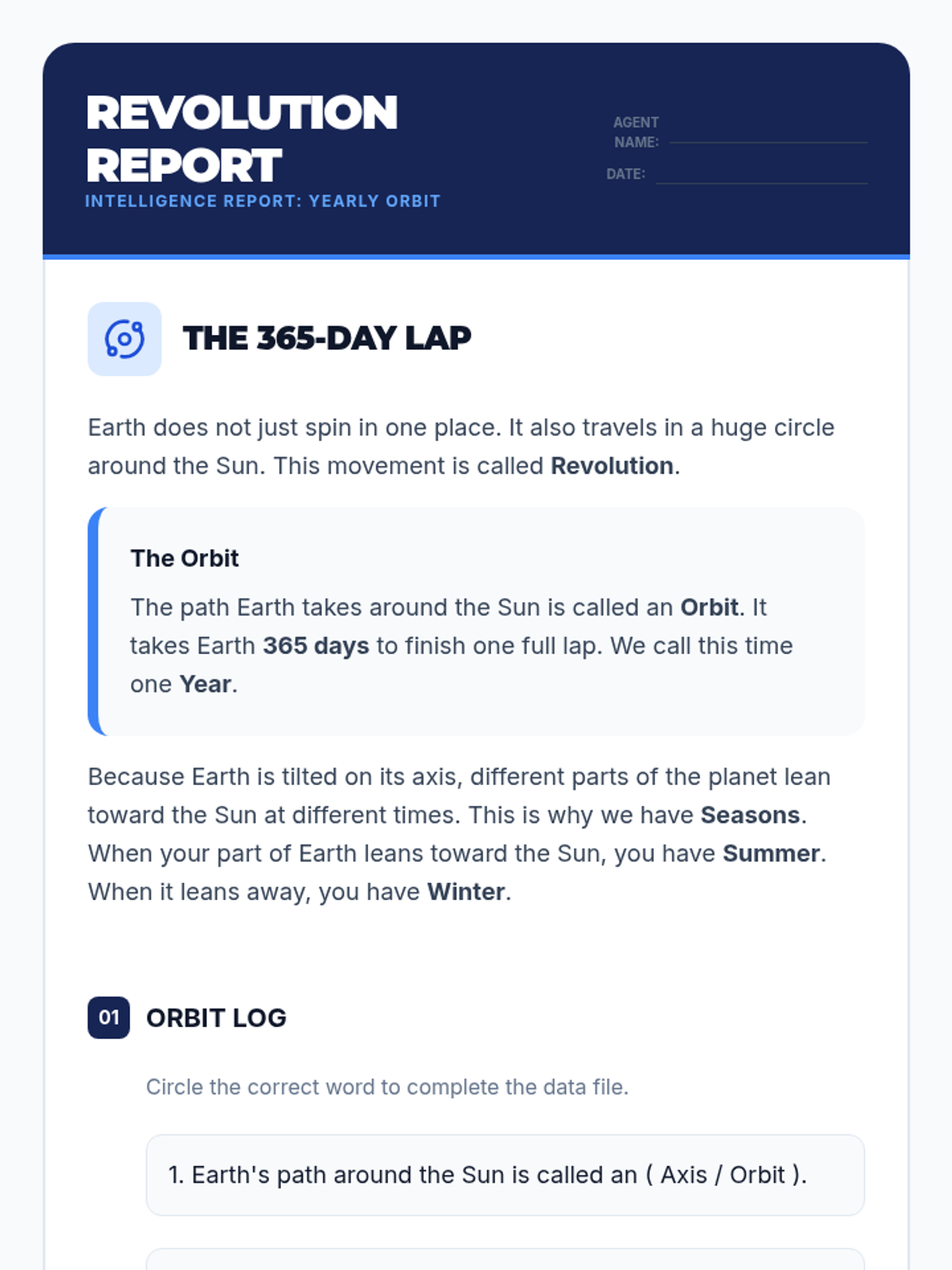
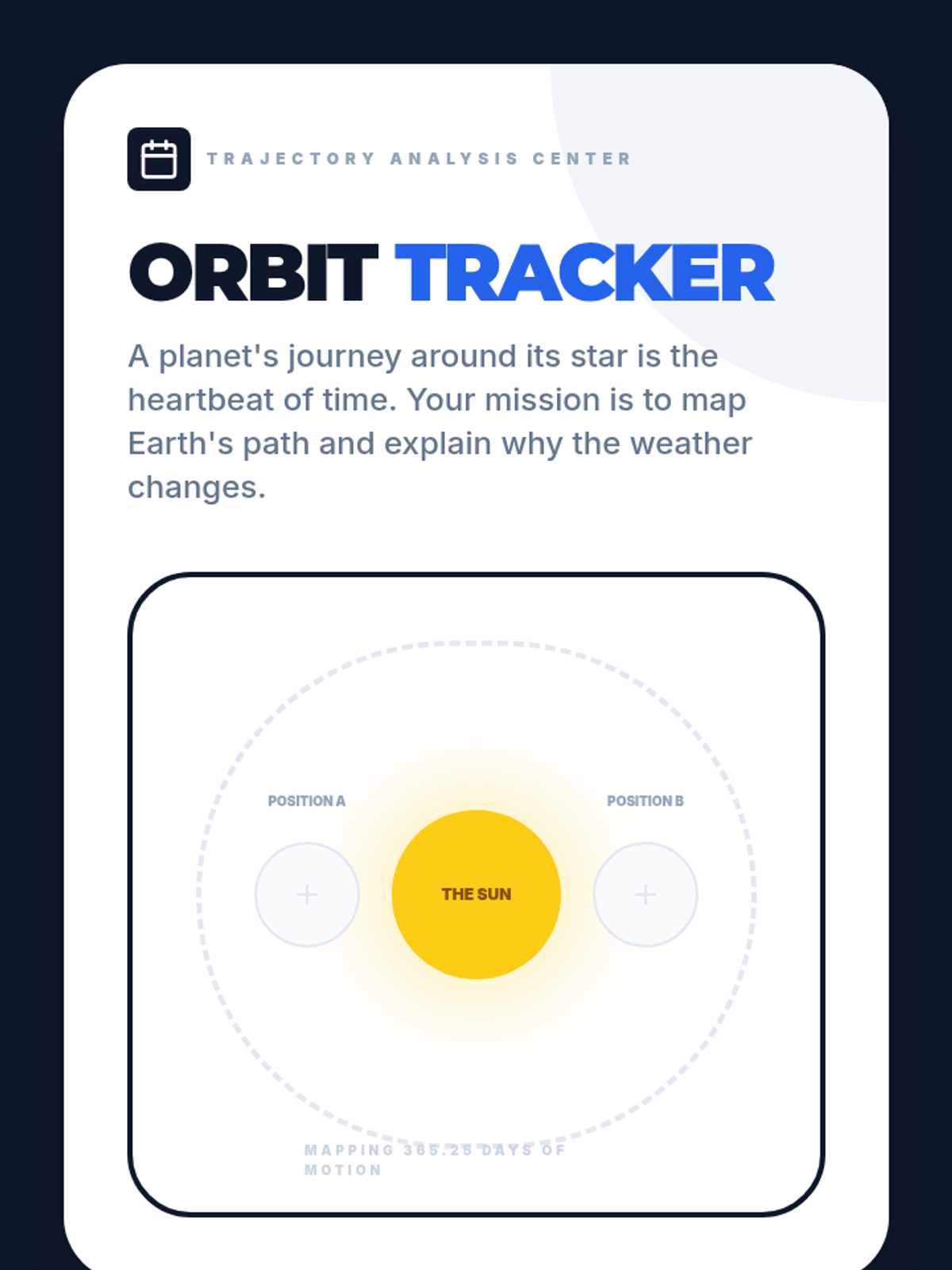
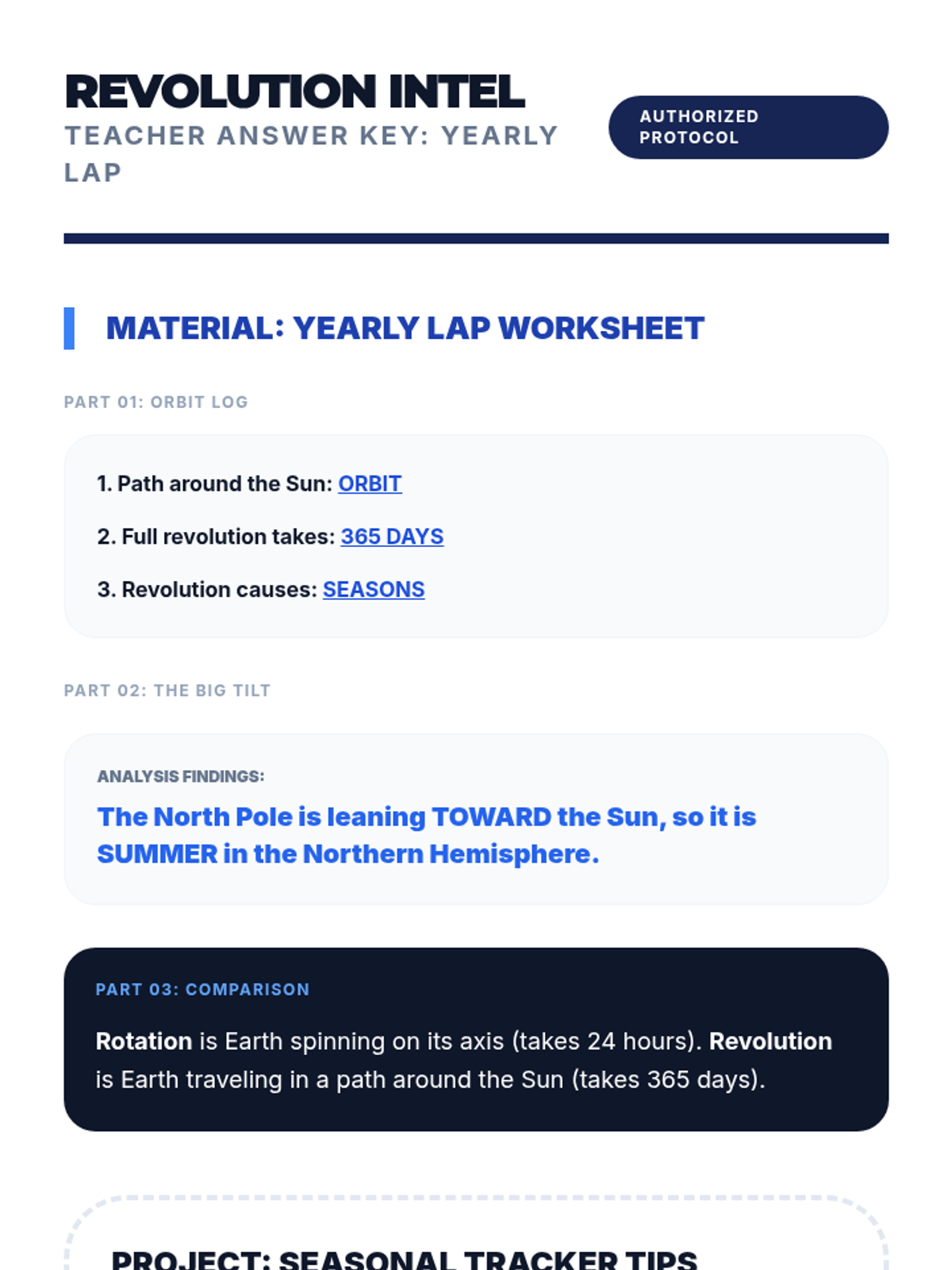
A lesson on Earth's revolution, exploring the path Earth takes around the sun and how its tilted axis leads to the change of seasons.
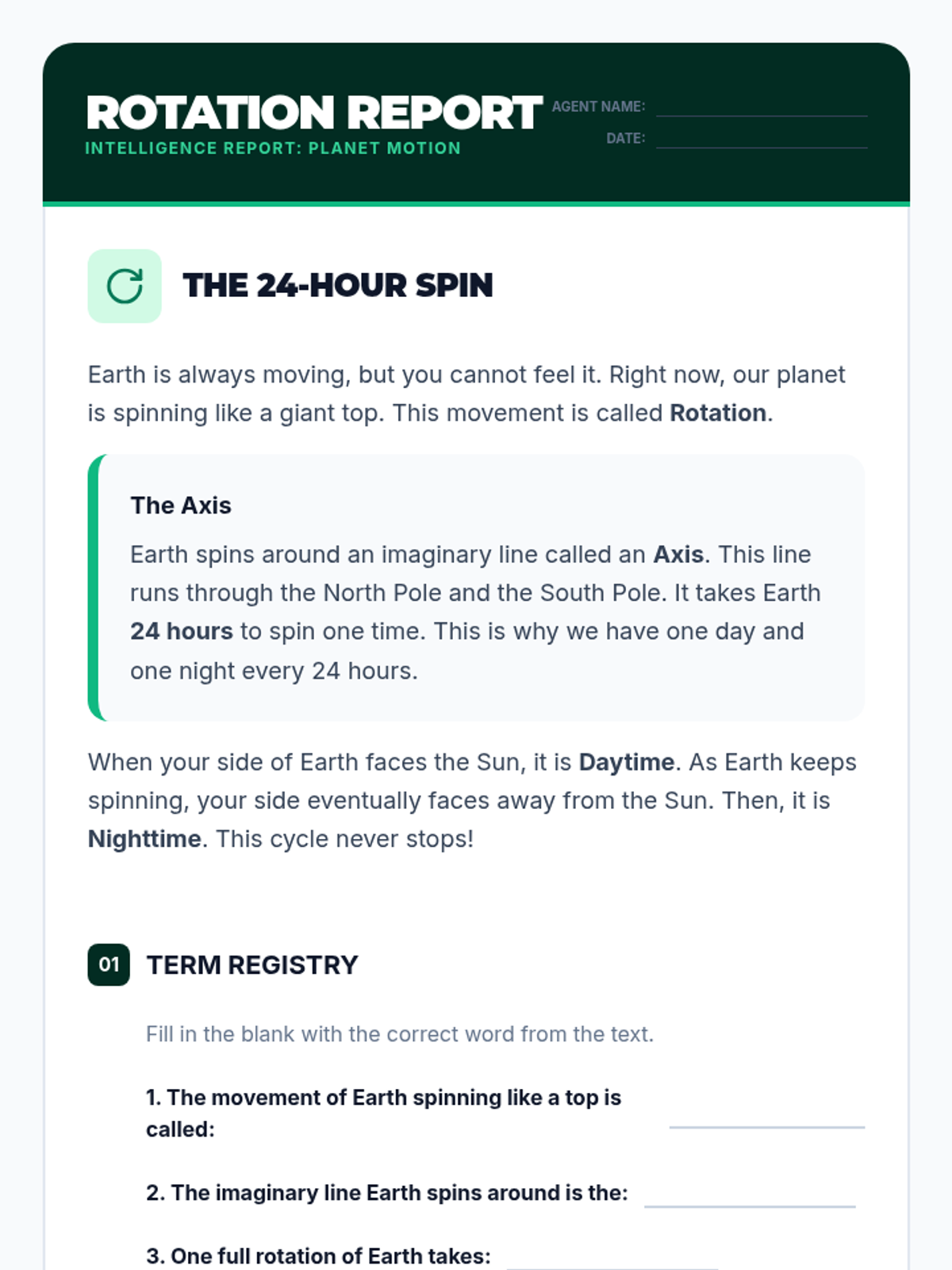
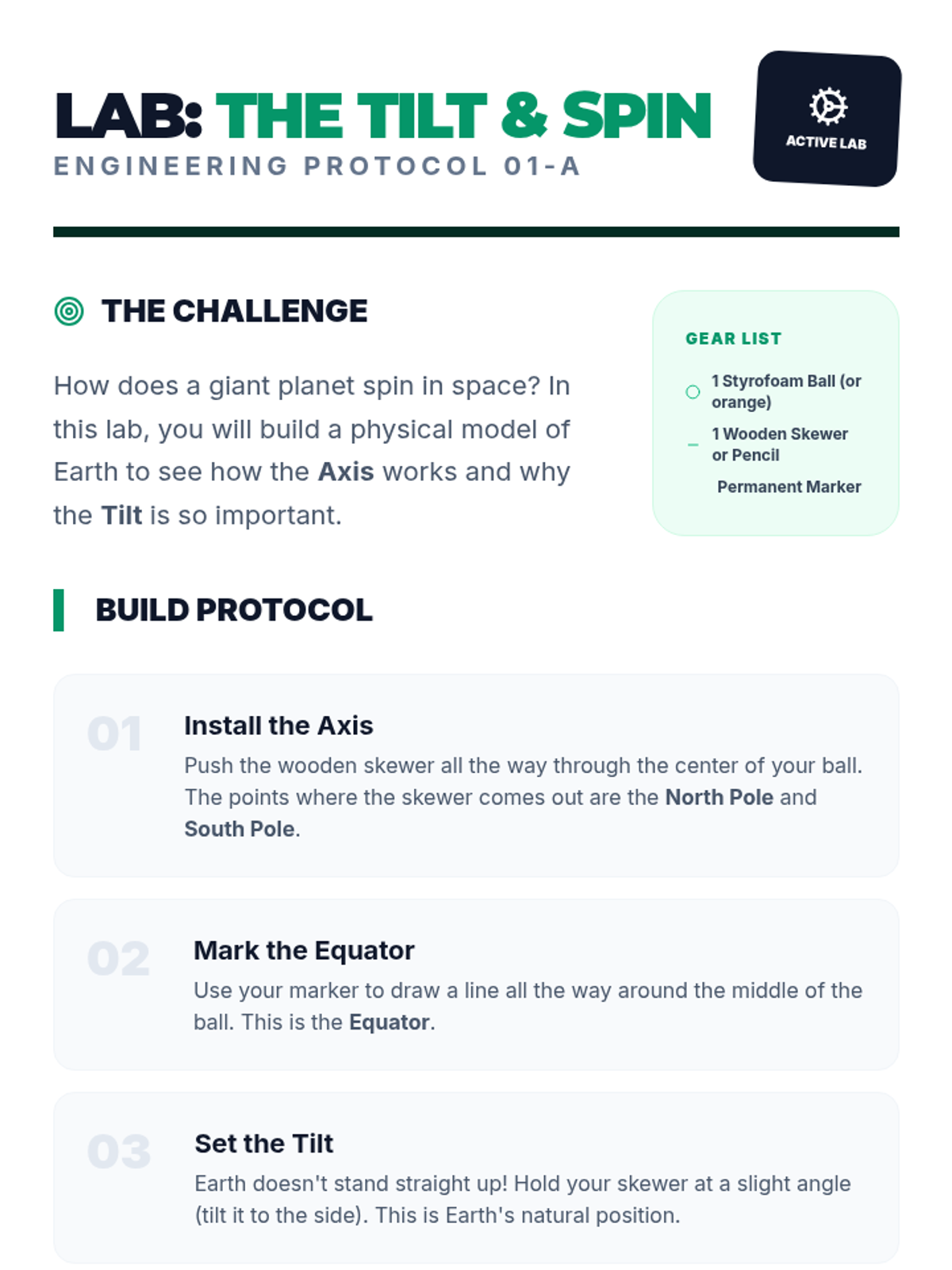
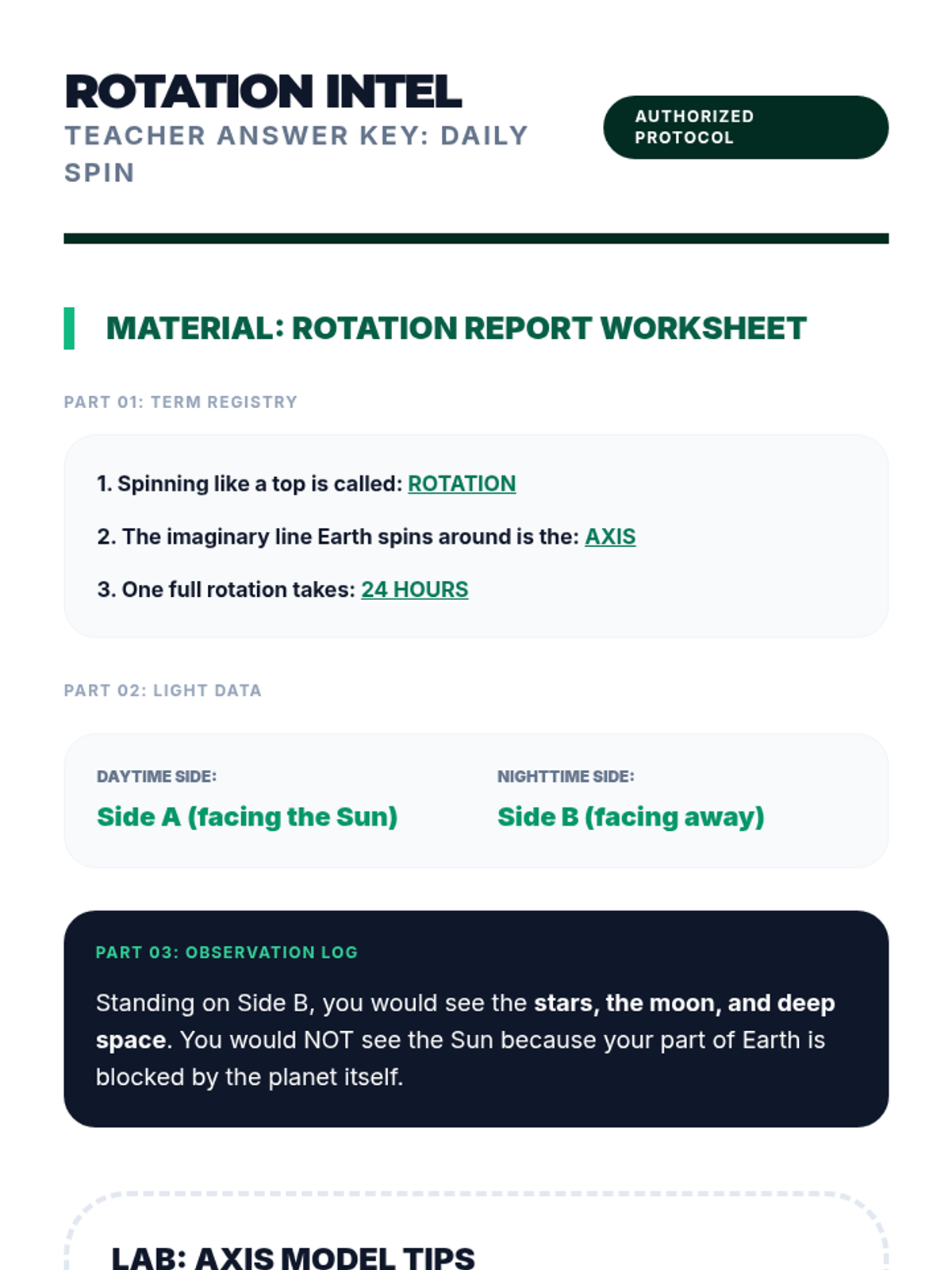
A lesson on Earth's rotation, focusing on the concept of an axis and how spinning creates the cycle of day and night.
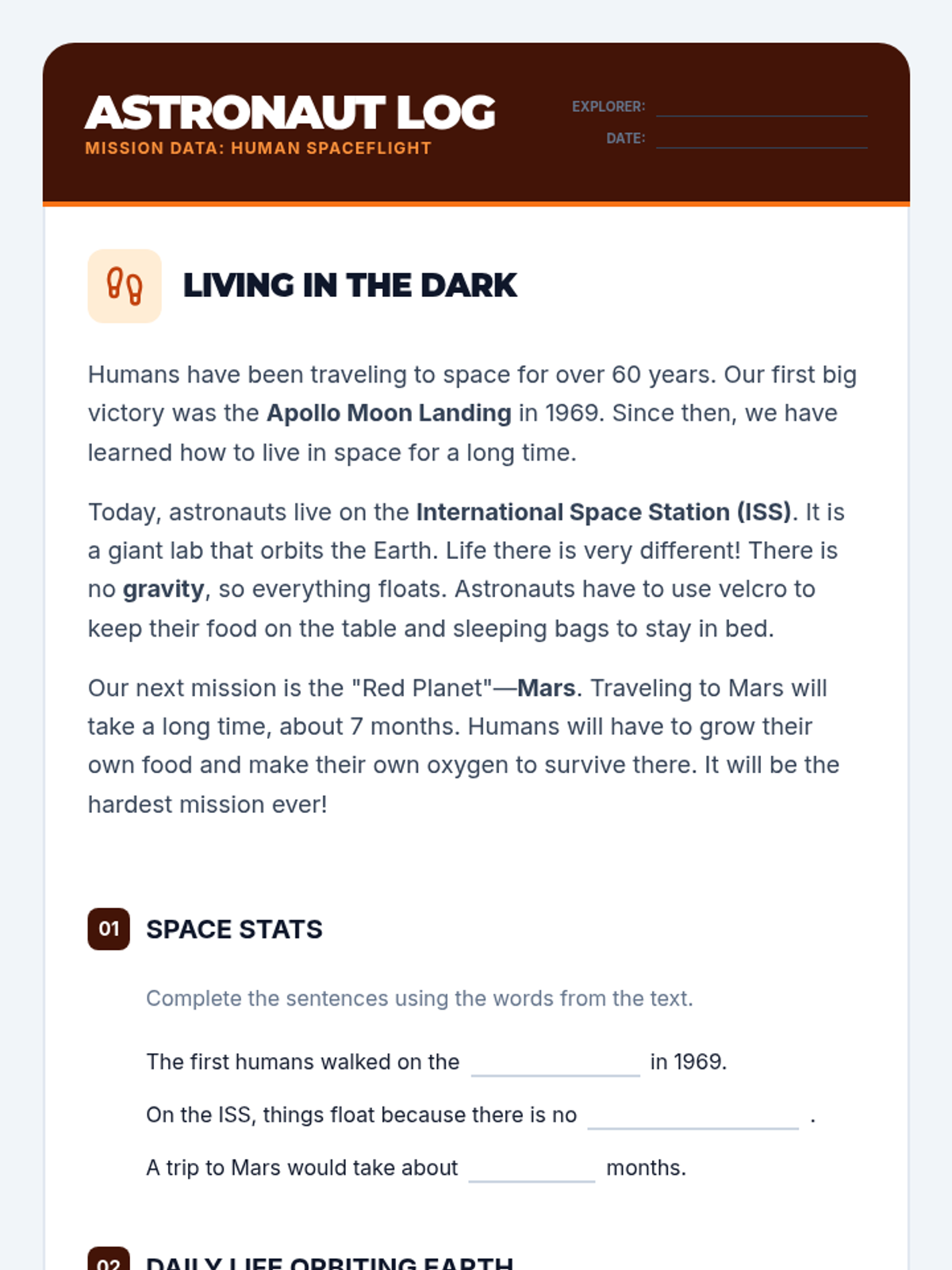
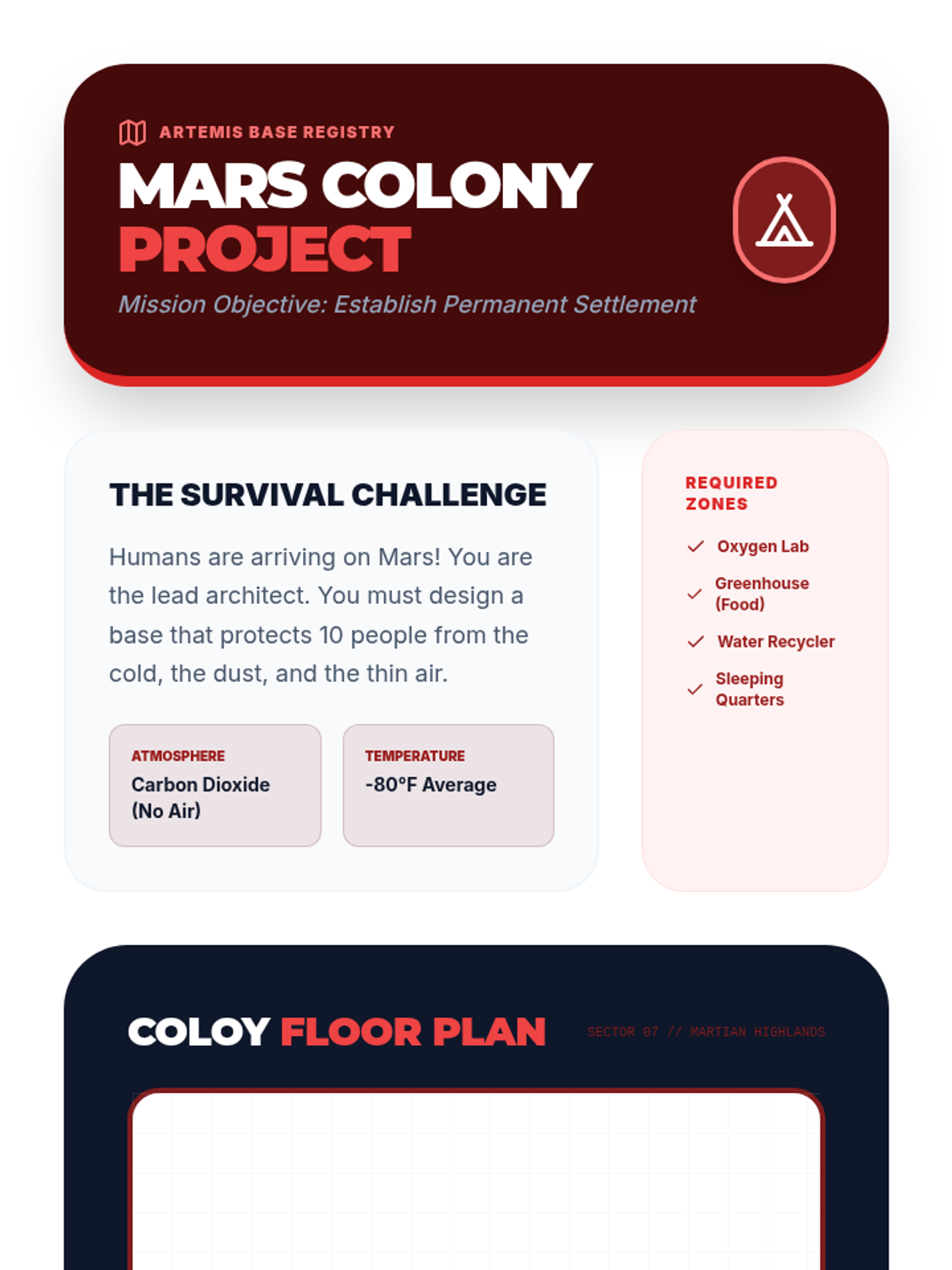
A lesson exploring the history and future of human space exploration. From the Apollo moon landings to living on the International Space Station and planning the first human missions to Mars.
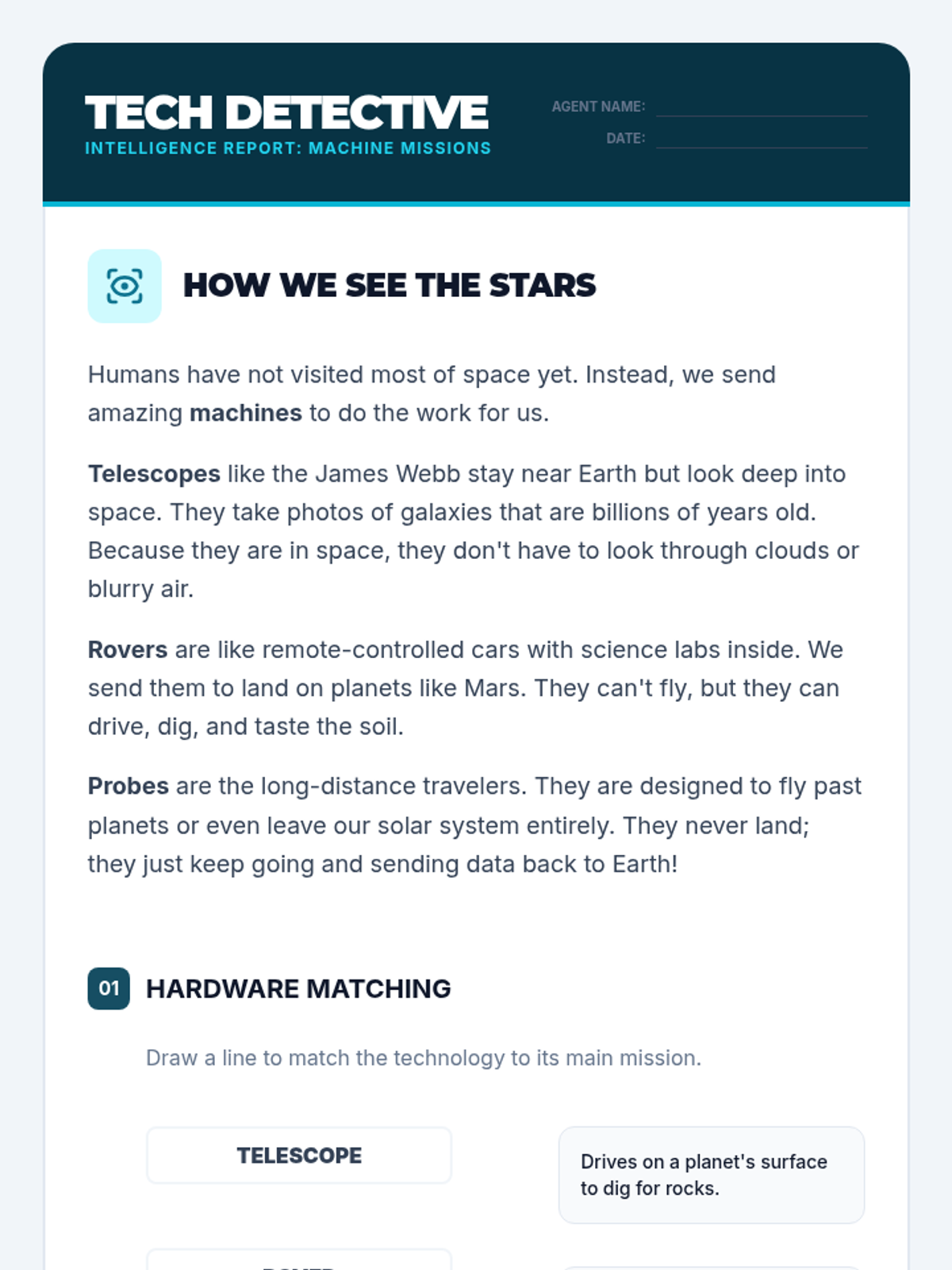
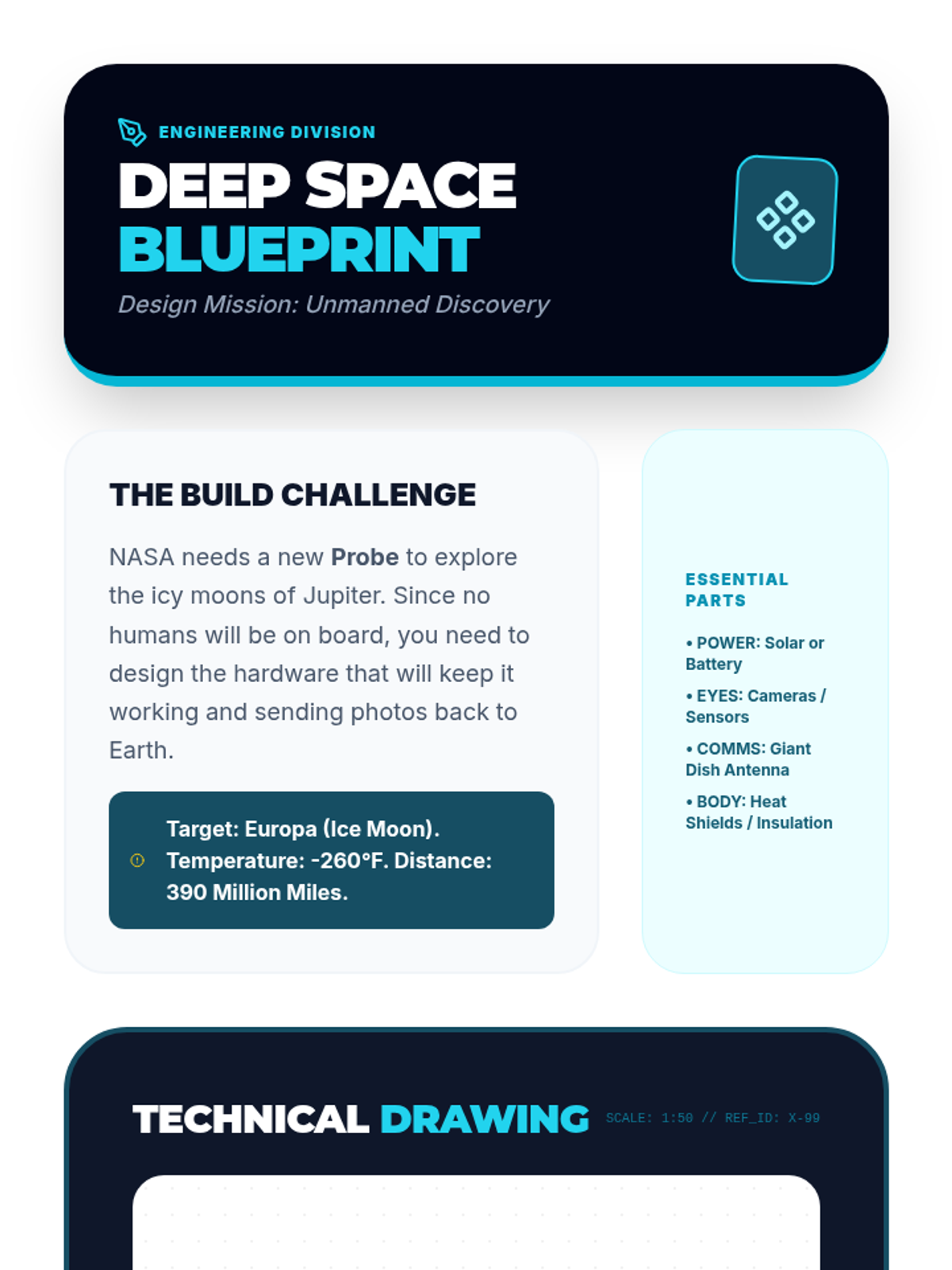
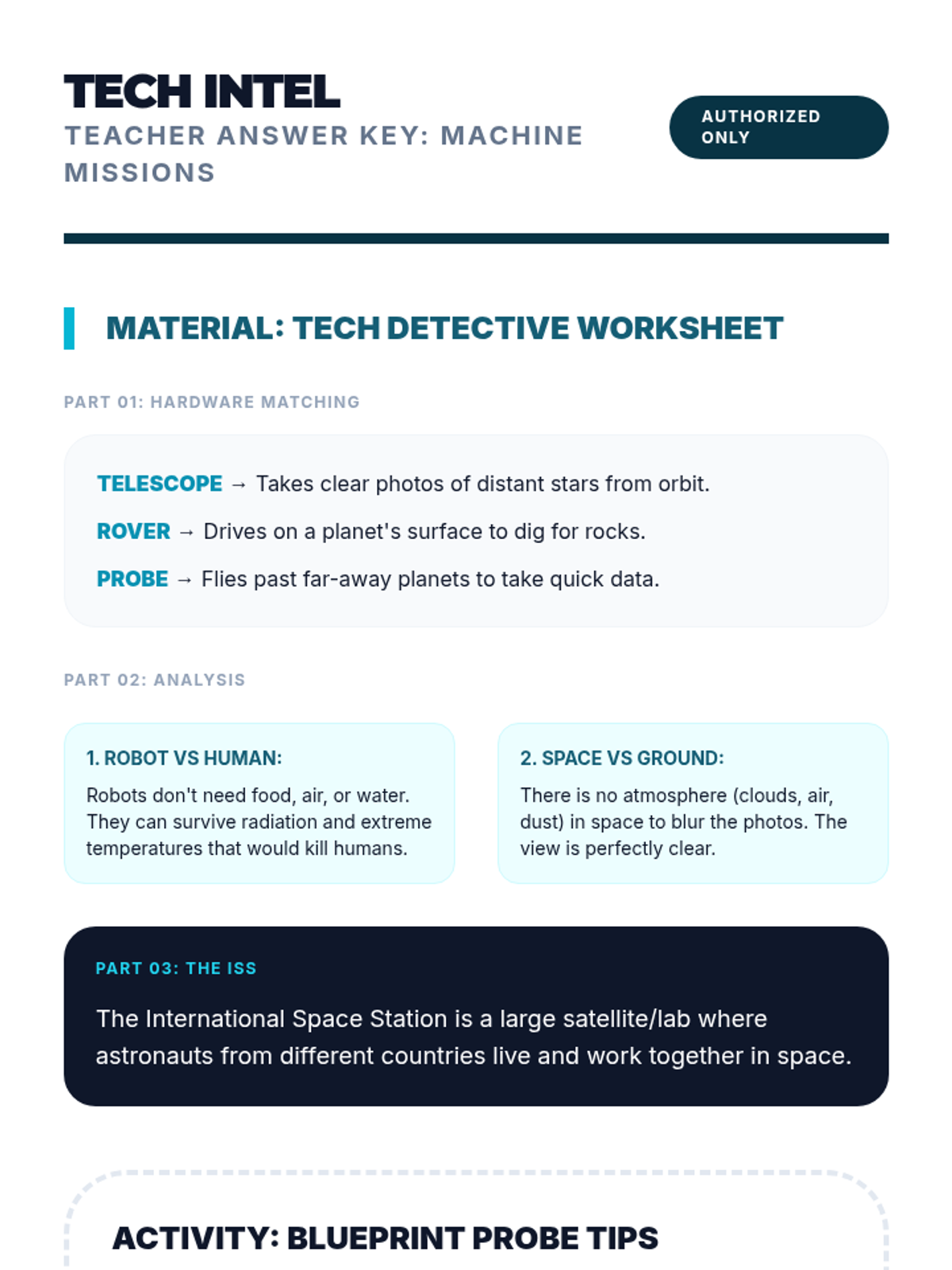
A lesson exploring how we use technology like rovers, probes, satellites, and telescopes to study space. Highlights famous missions like Mars Rovers and the James Webb Space Telescope.
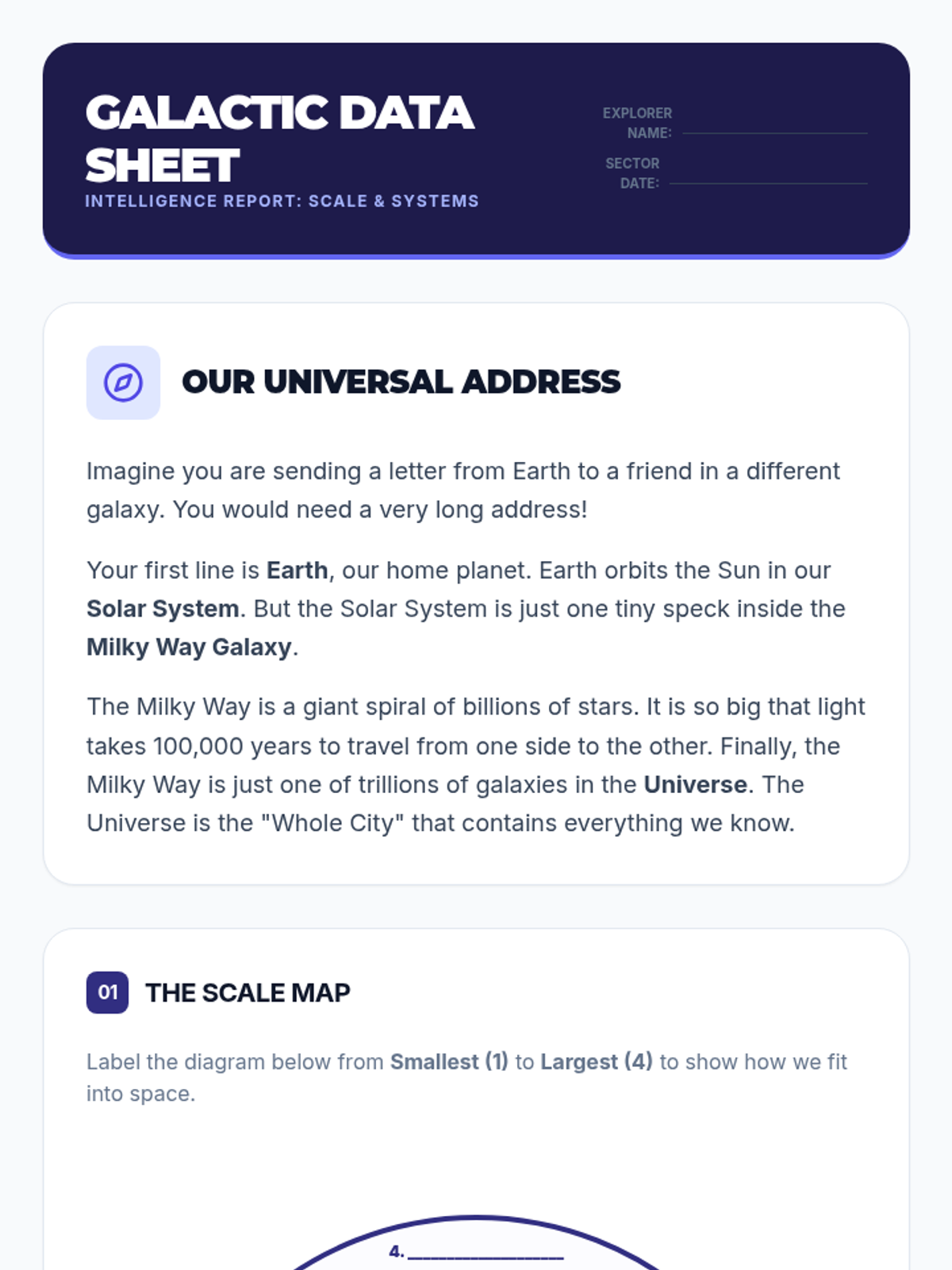
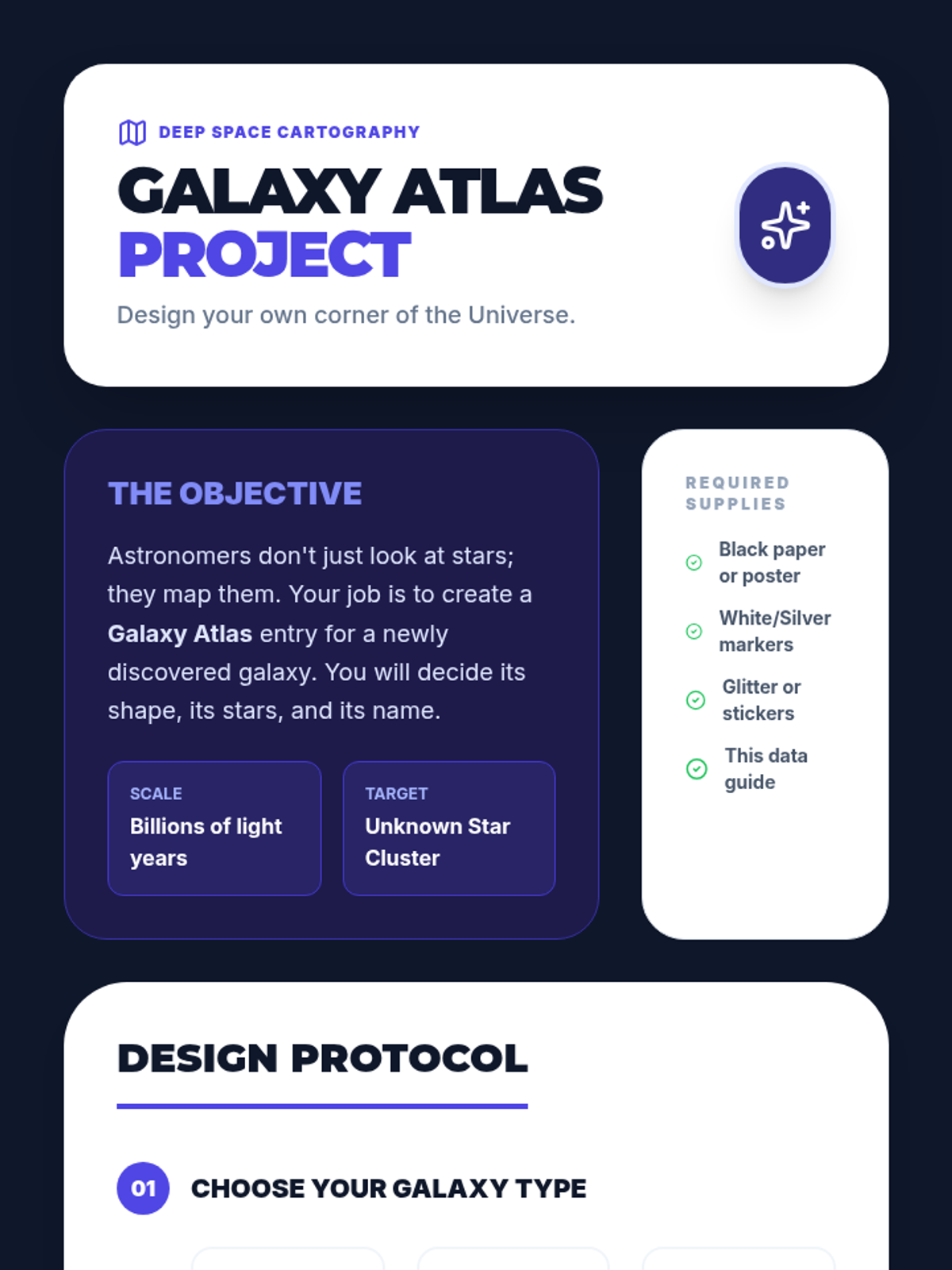
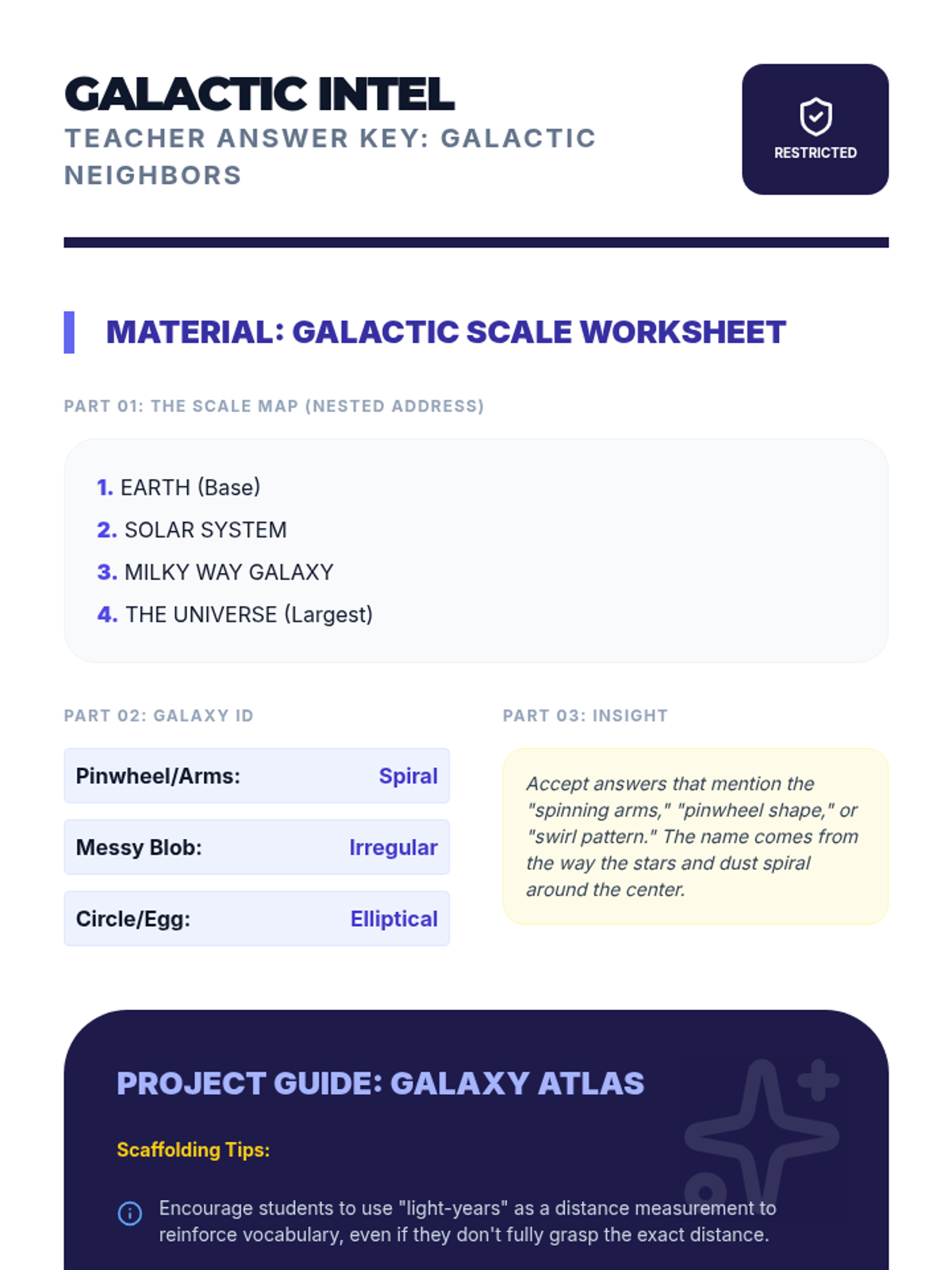
A lesson exploring the hierarchy of space, from our solar system to the Milky Way galaxy and the vast universe beyond. Focuses on relative scale and the concept of galaxies.
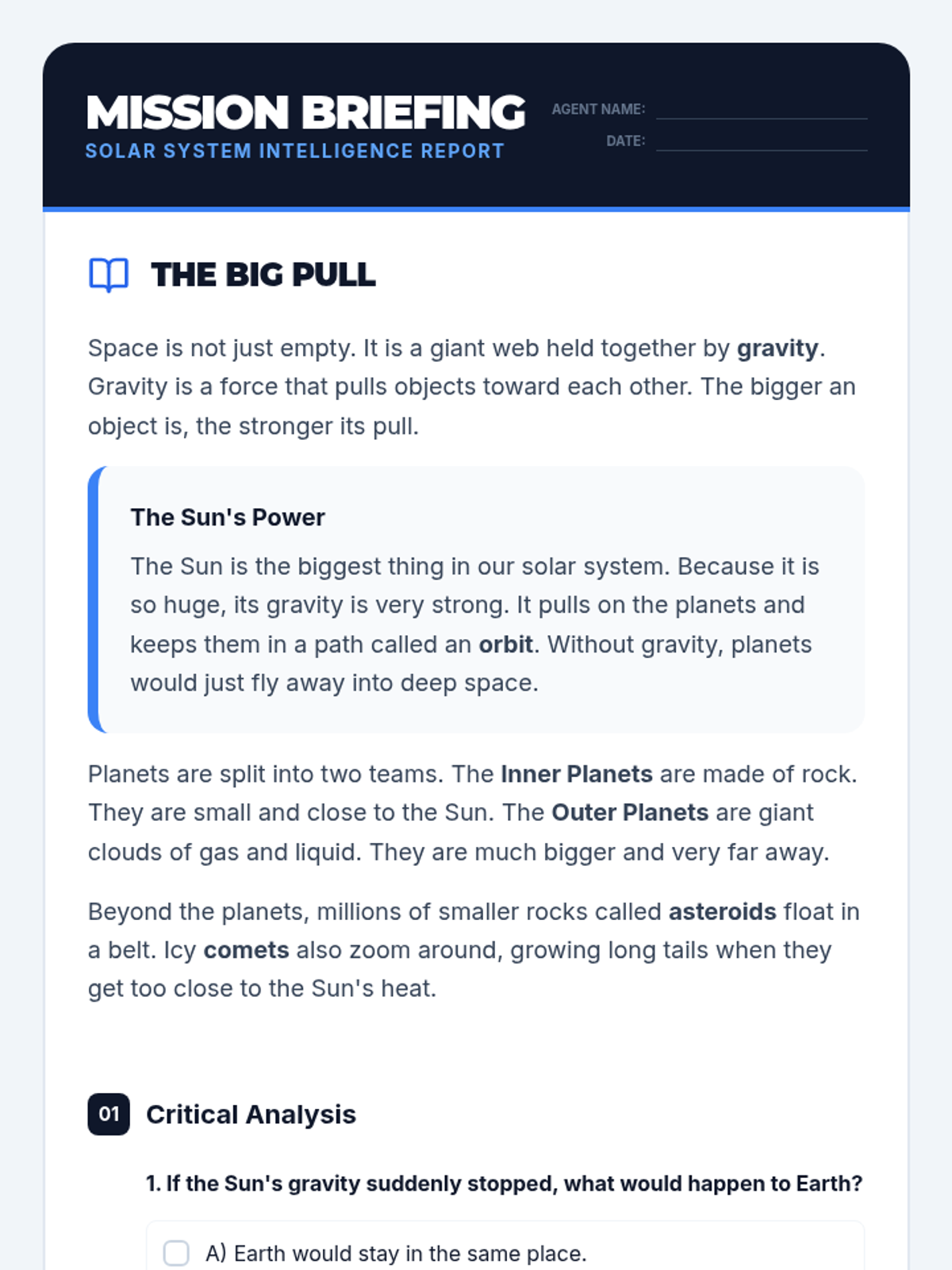
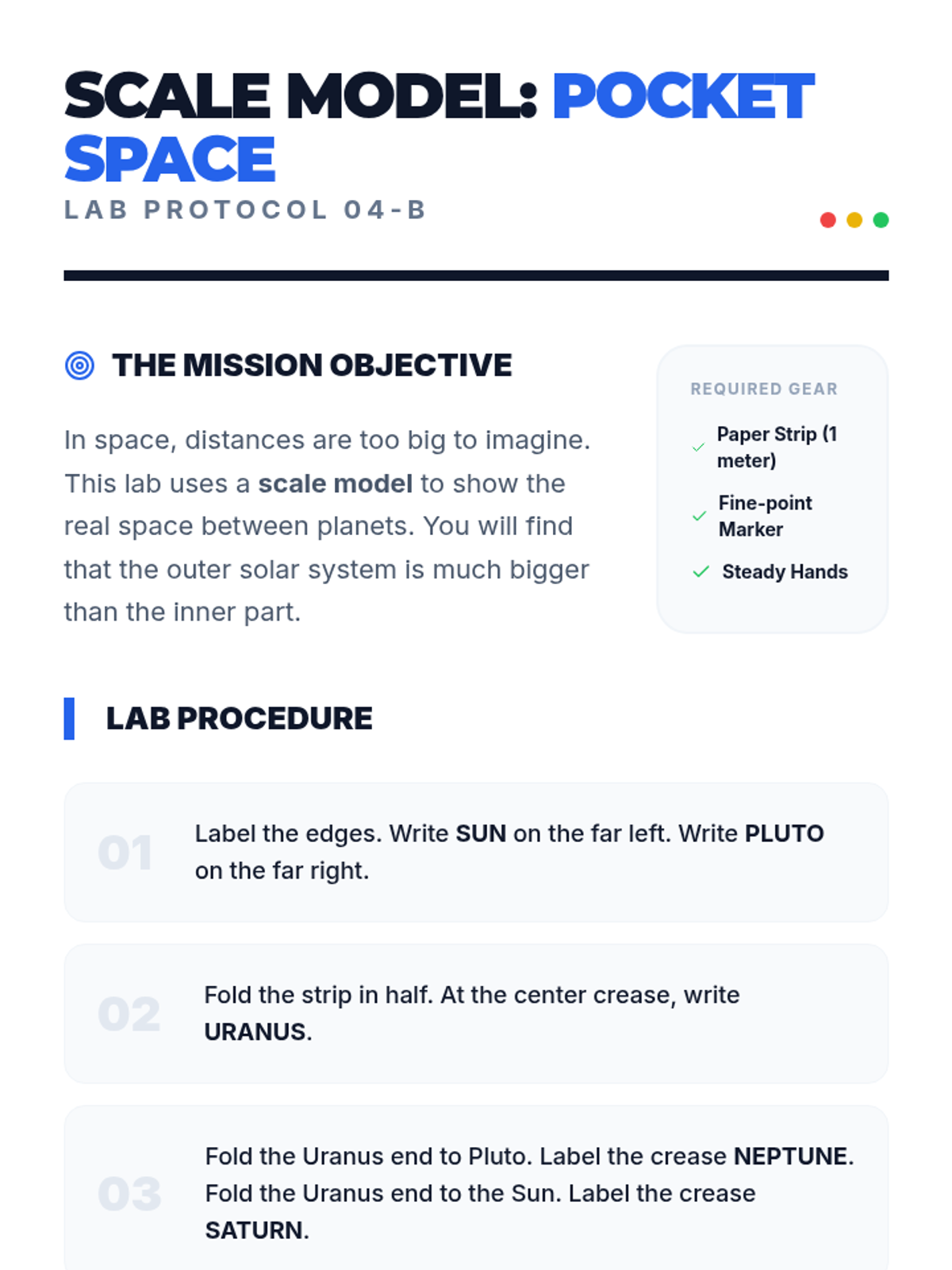
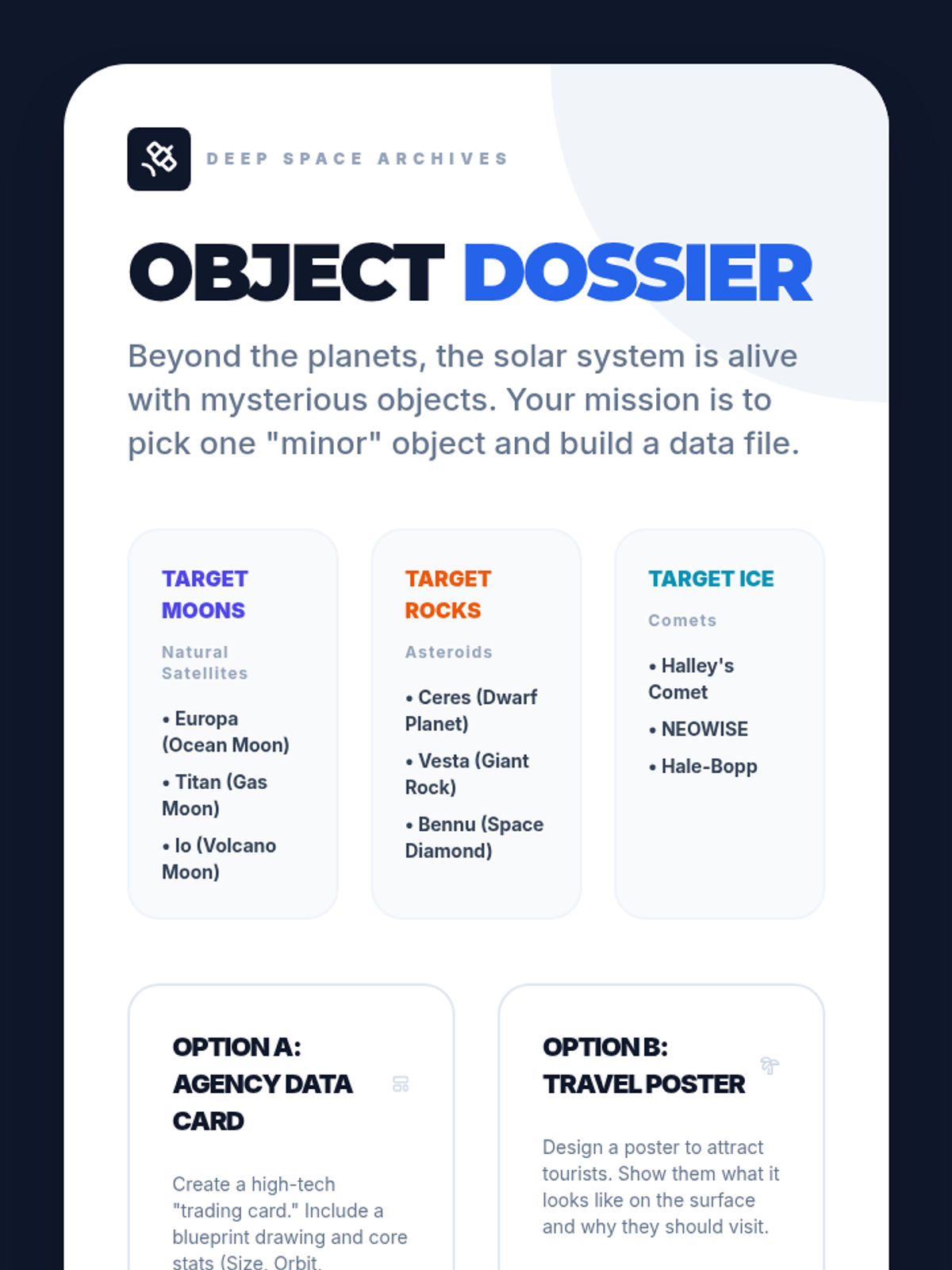
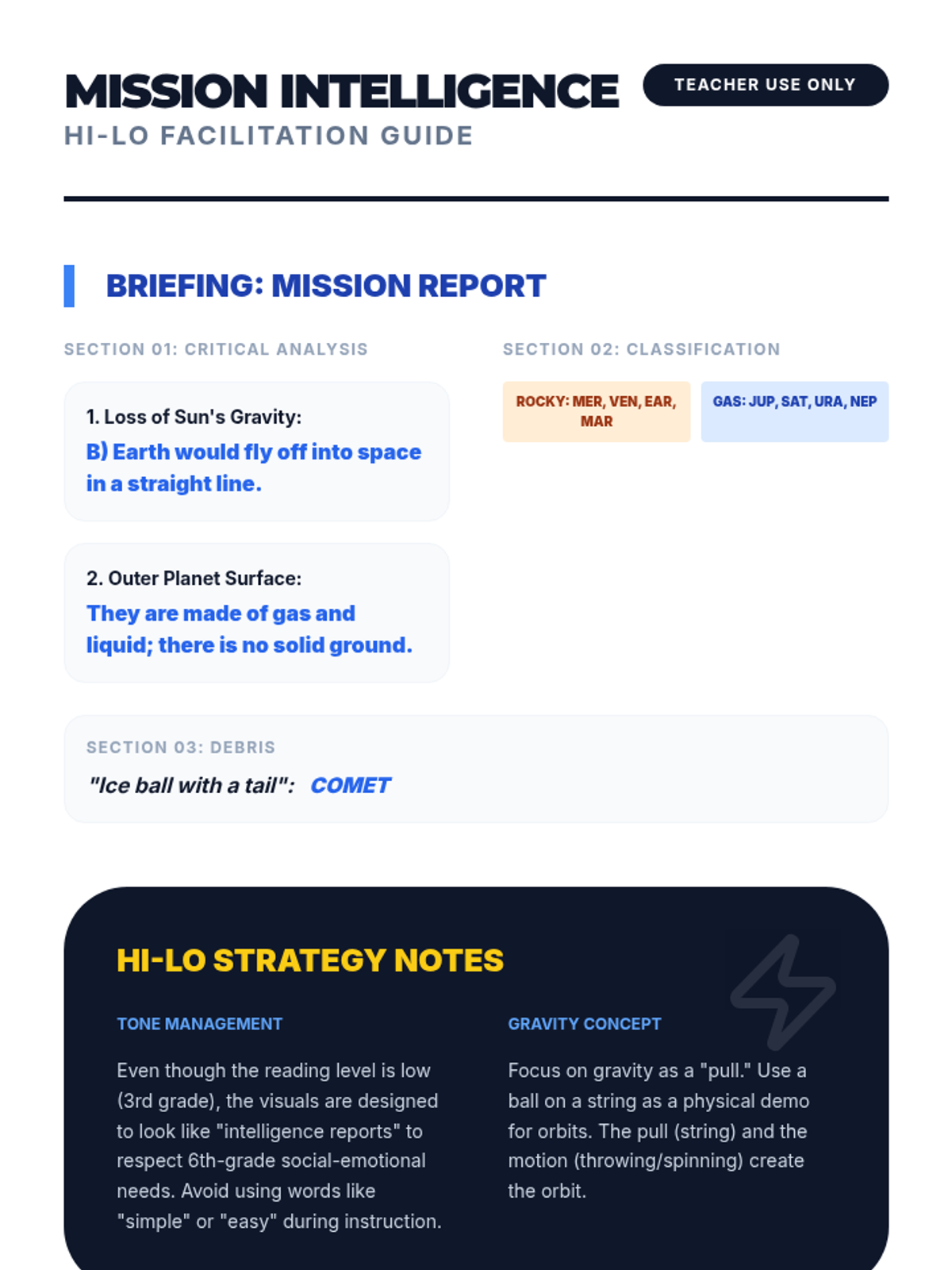
A "Hi-Lo" lesson on the solar system for 6th graders reading at a 3rd-grade level. It explores planetary characteristics, the role of gravity, and scale through accessible text and high-interest visuals.
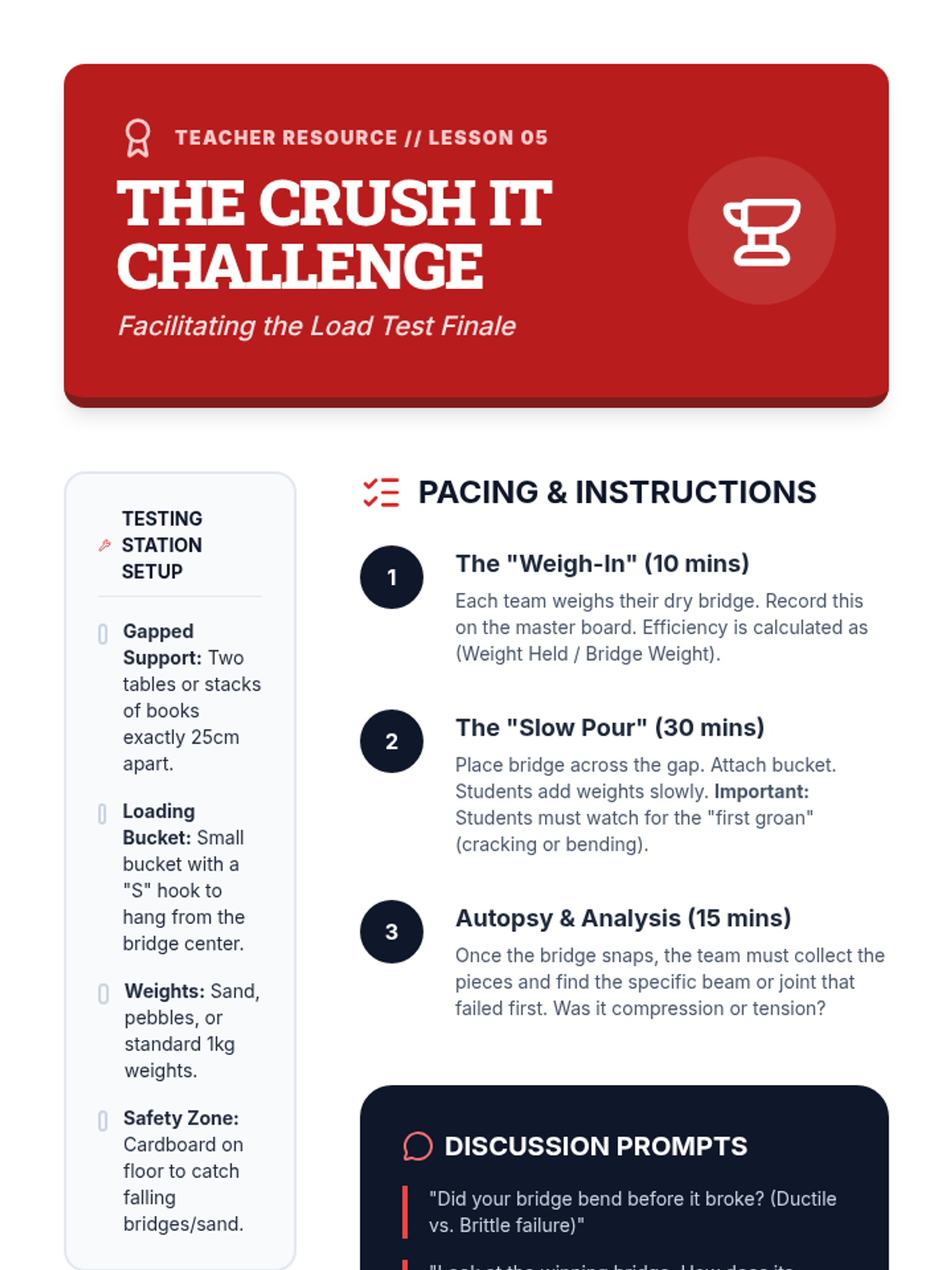
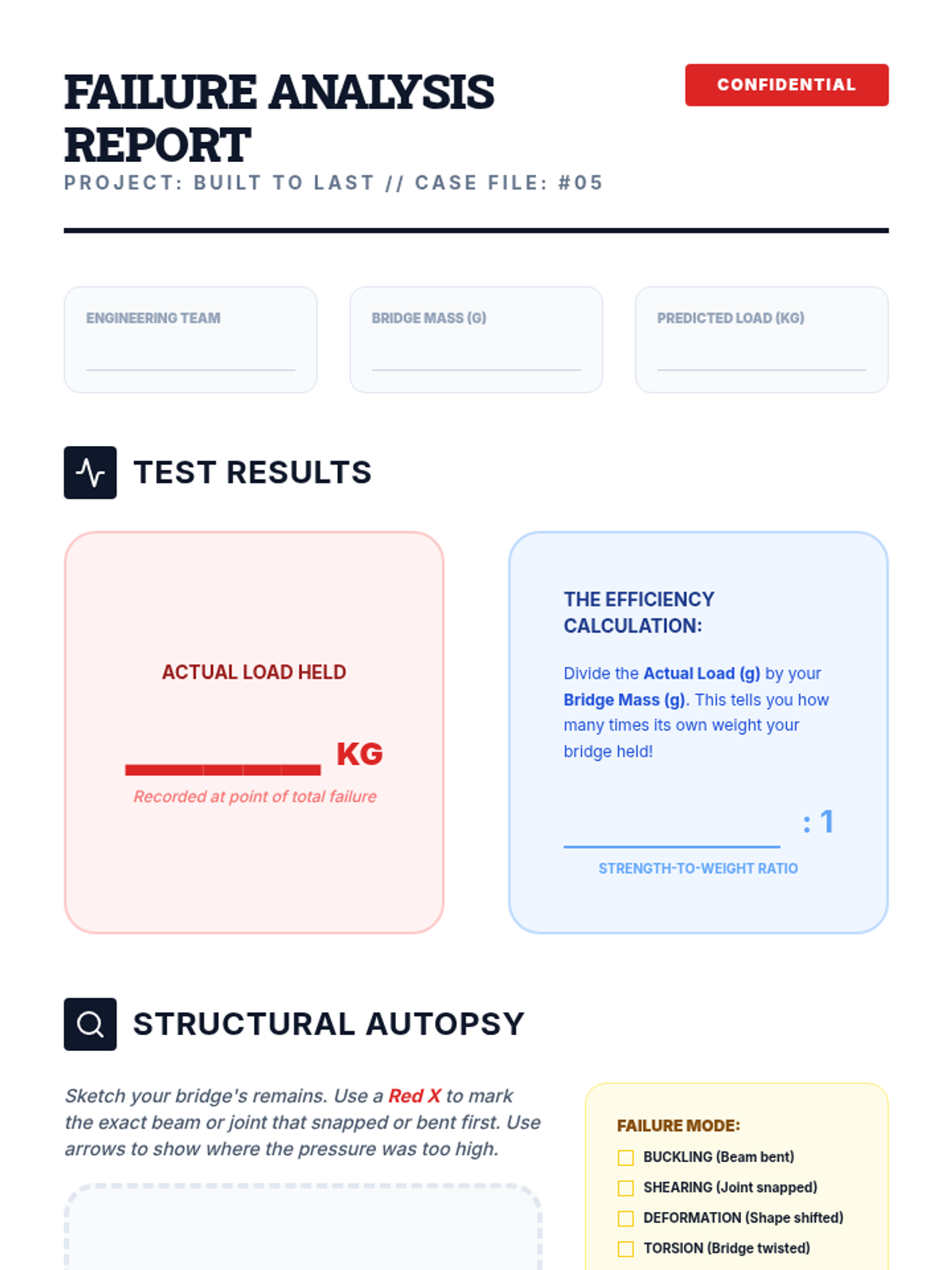
The culminating challenge where students build and test their truss designs to failure, analyzing the physics of why they broke.
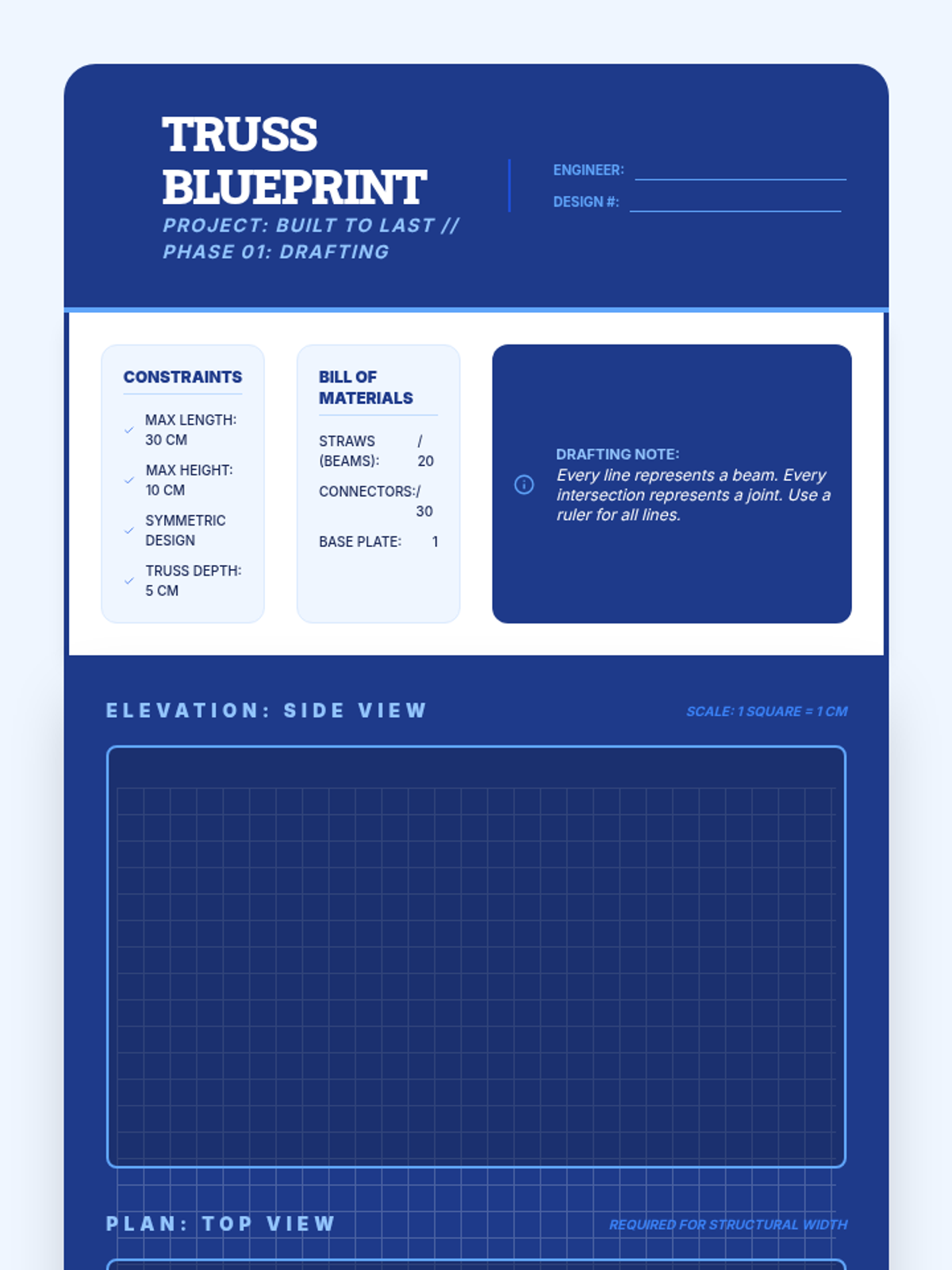
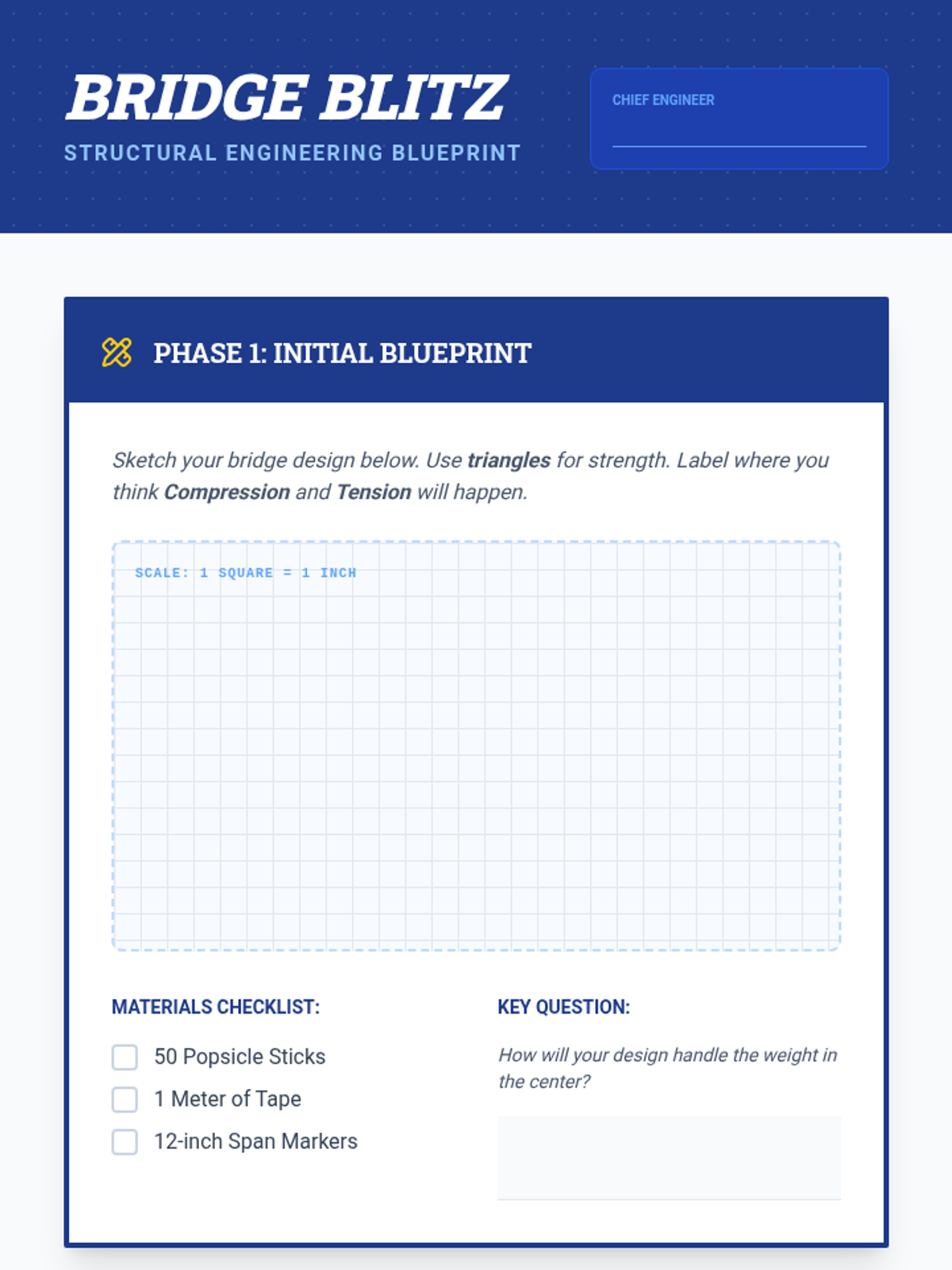
Students apply their knowledge of triangulation to draft a technical blueprint for a bridge truss.
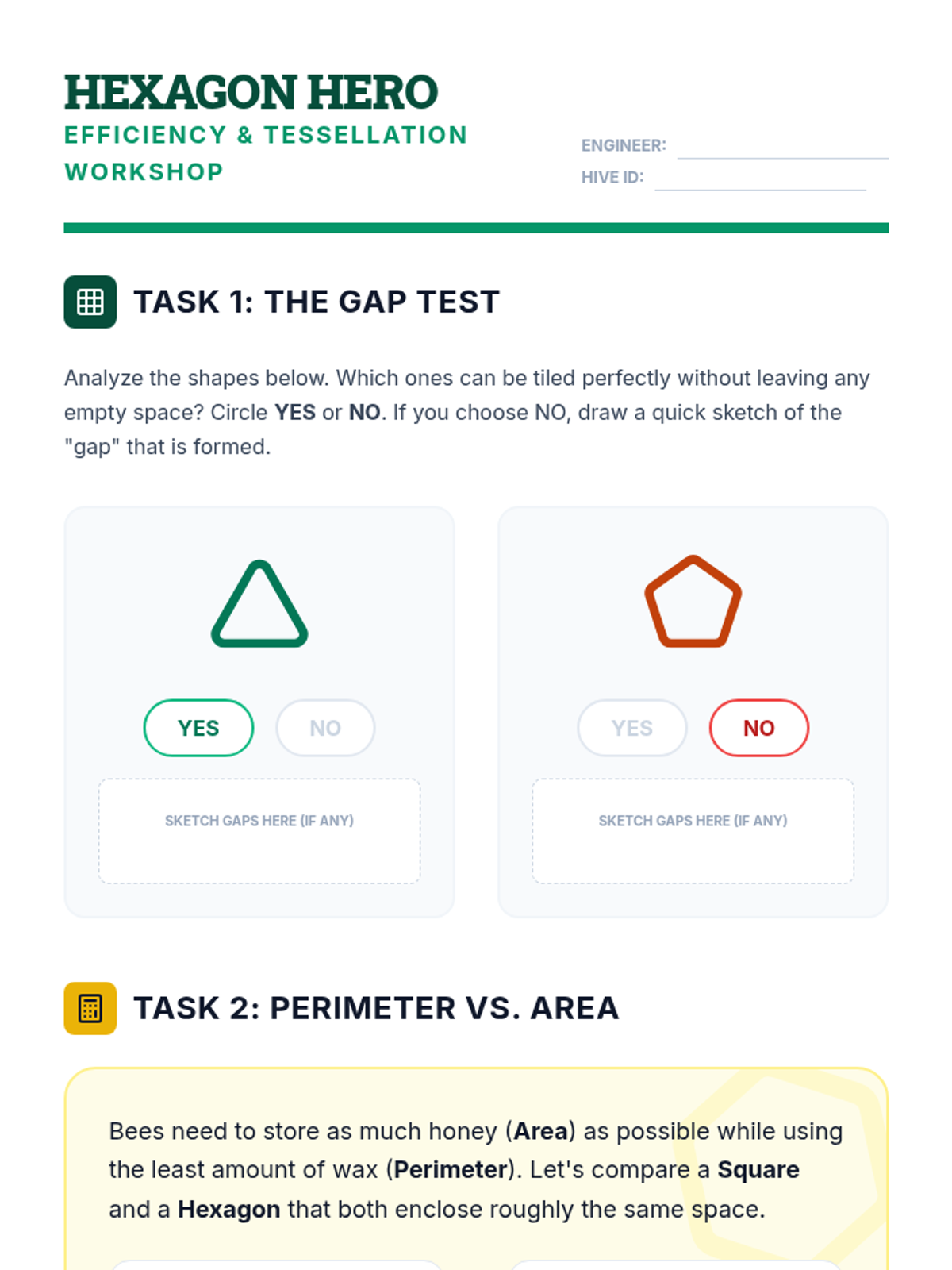
Students investigate how repeating patterns and tiling contribute to surface strength and efficient space-filling in nature and engineering.
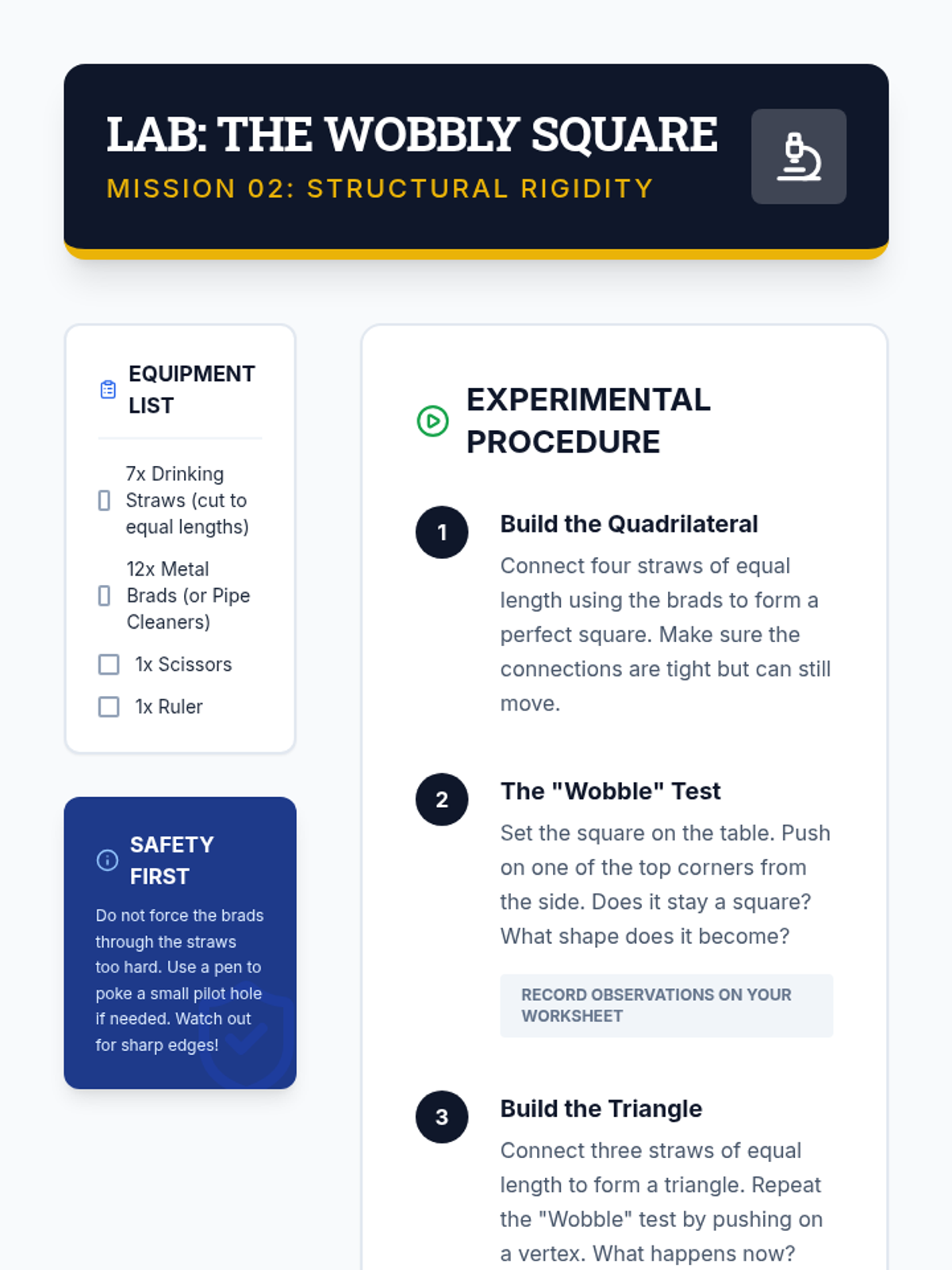
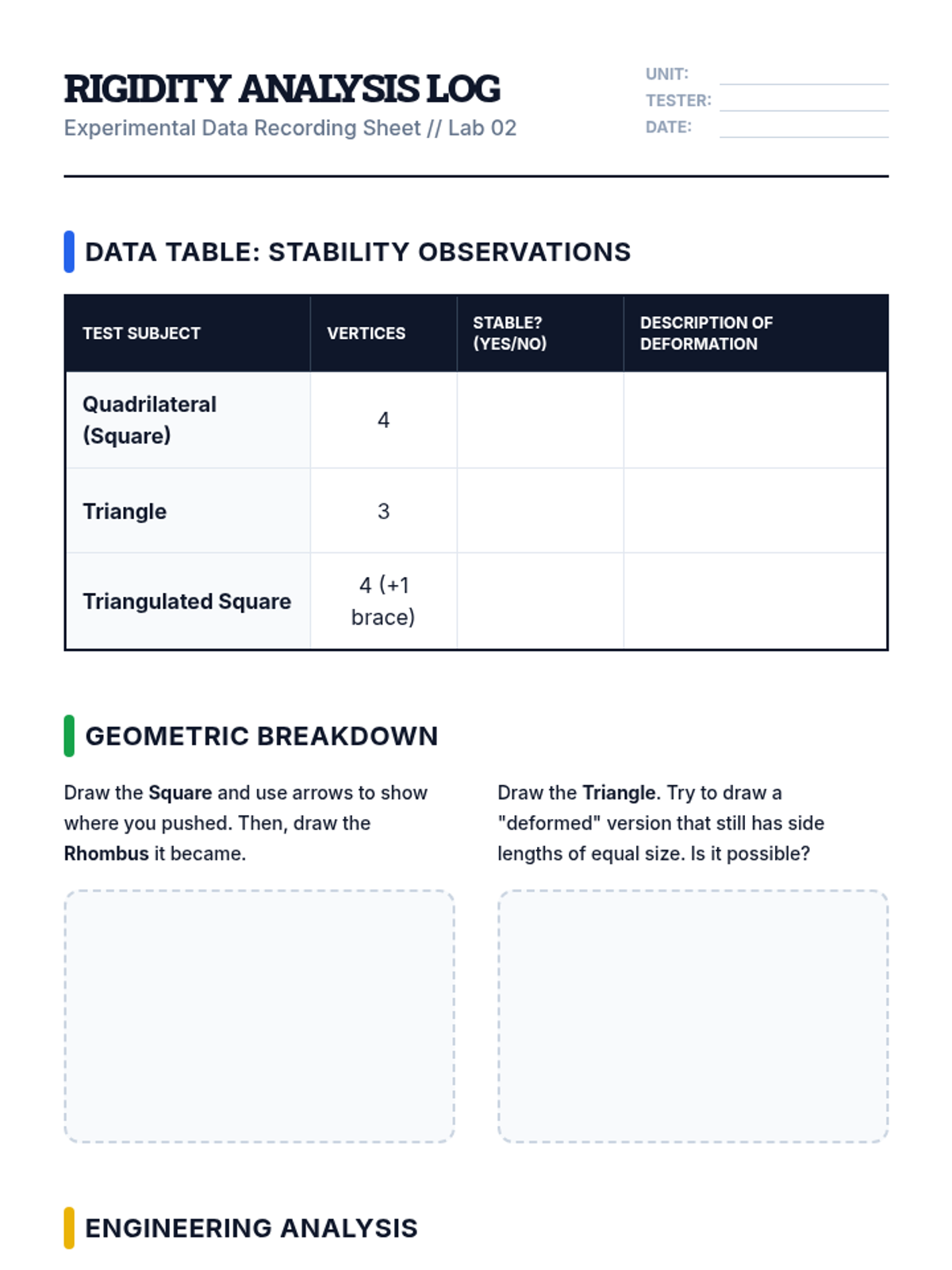
An inquiry-based exploration comparing the structural rigidity of triangles versus quadrilaterals through physical modeling.
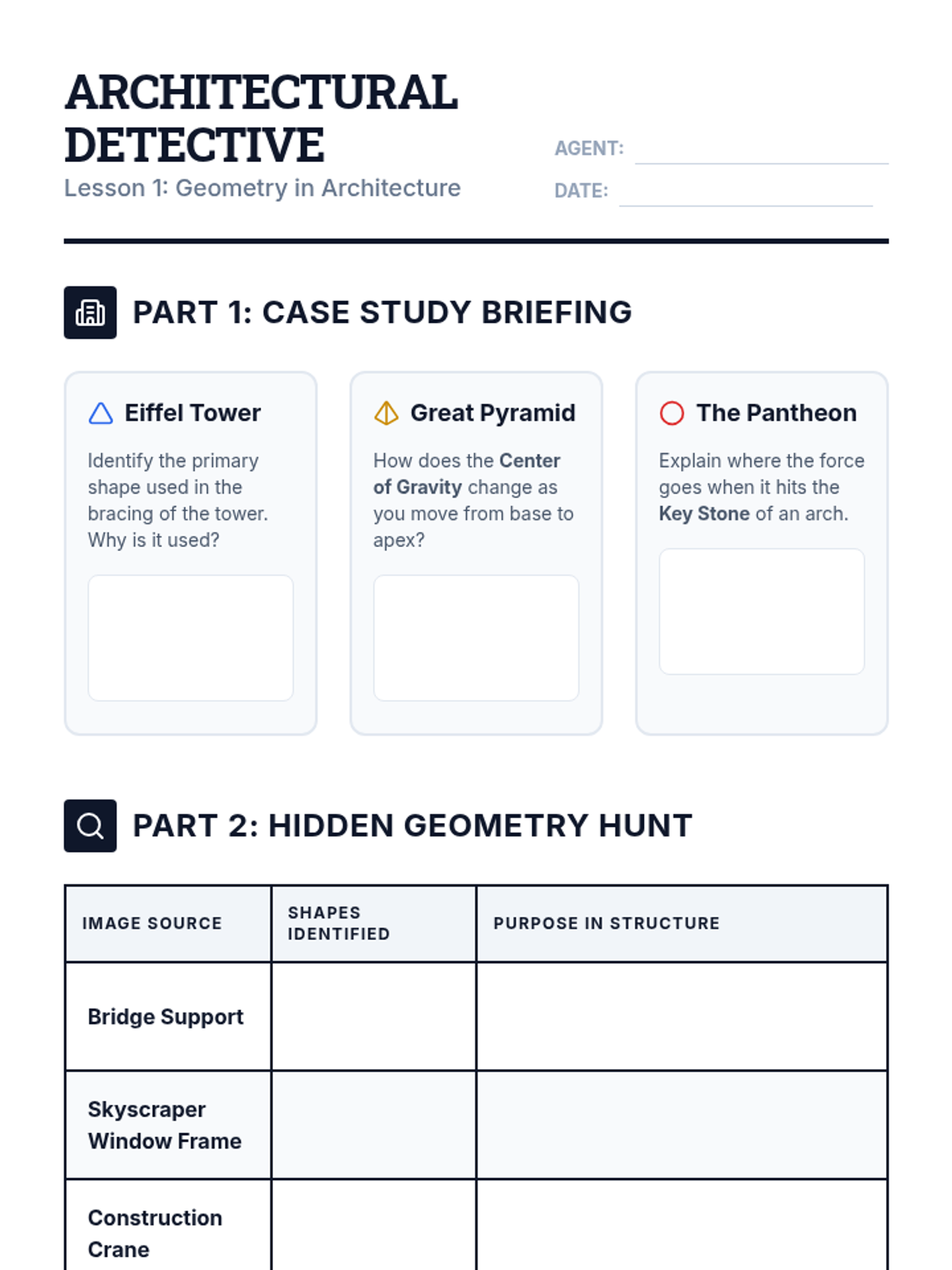
Students analyze famous architectural wonders to identify how geometry provides strength and aesthetic value.
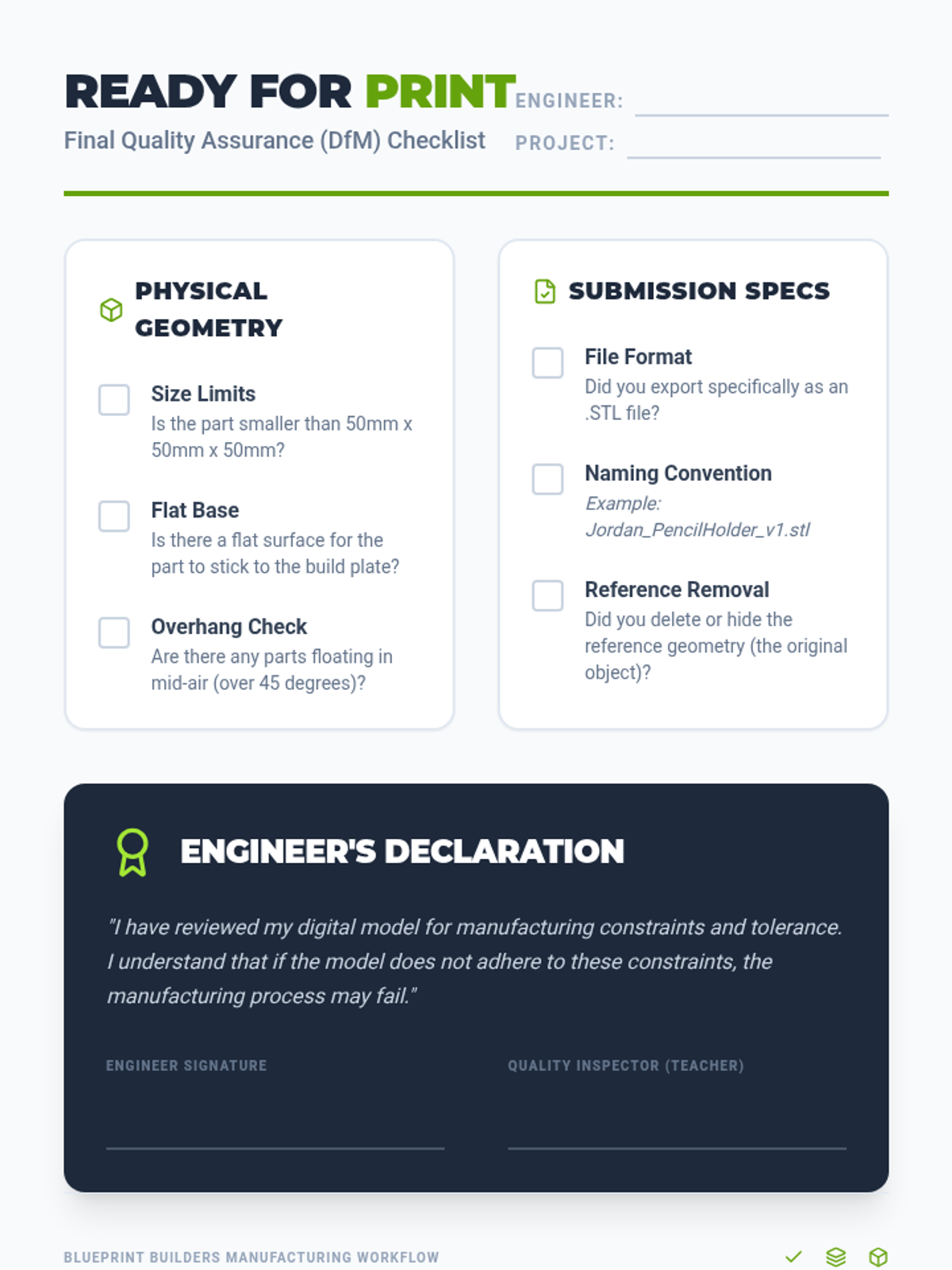
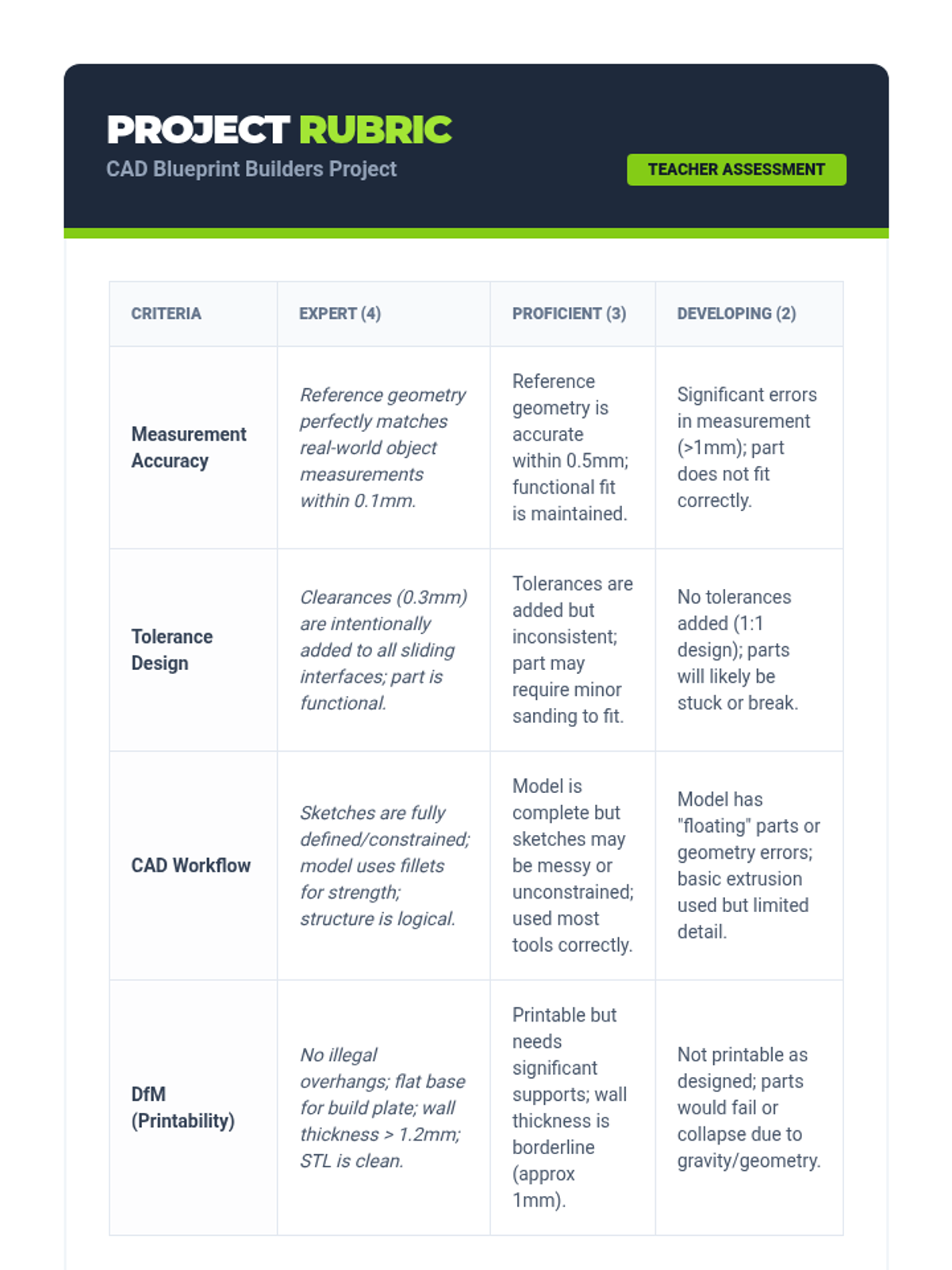
Students analyze their final models for printability, checking for overhangs and surface area contact. They finalize the design and export it as an STL file, ready for the manufacturing workflow.
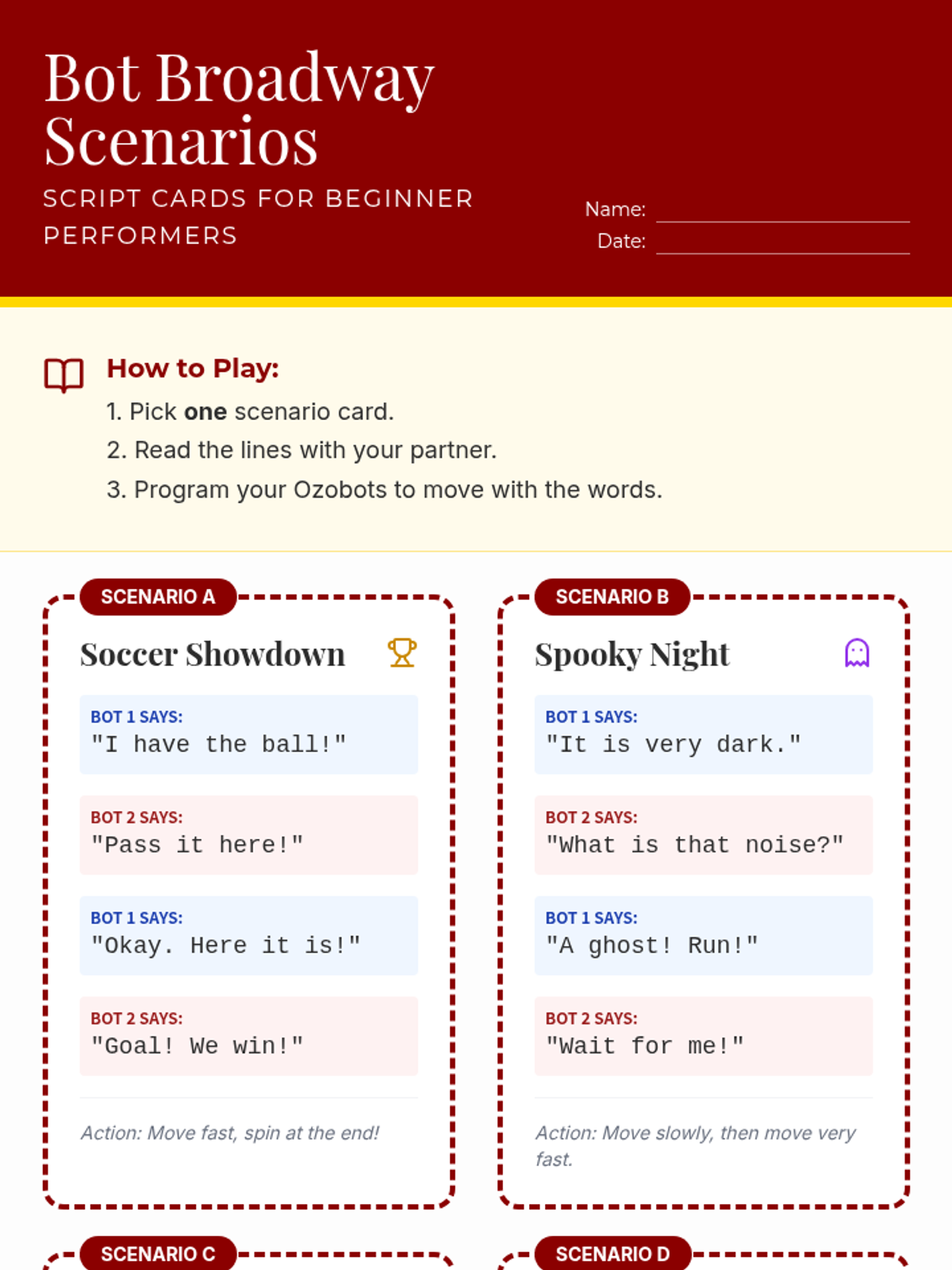
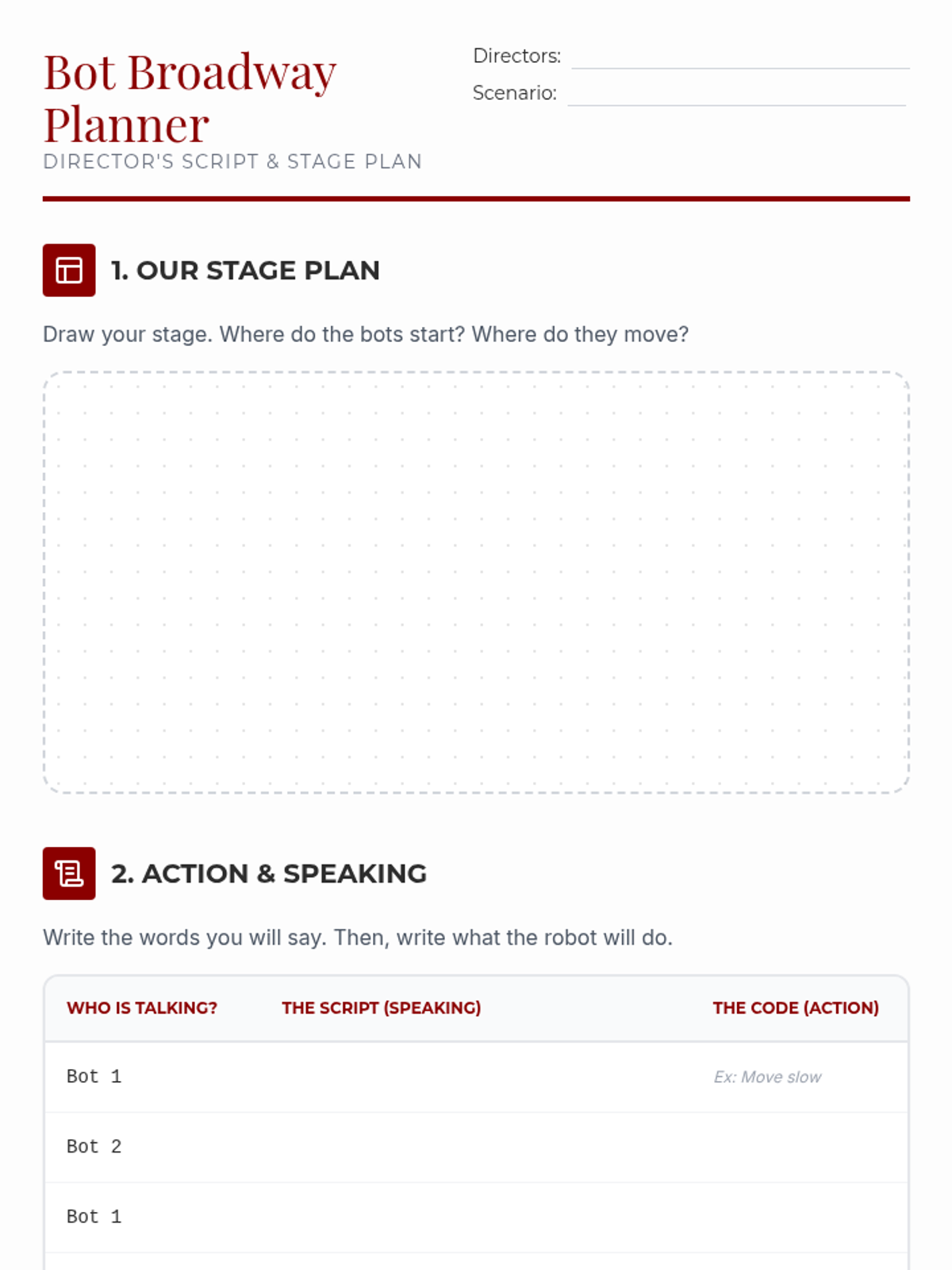
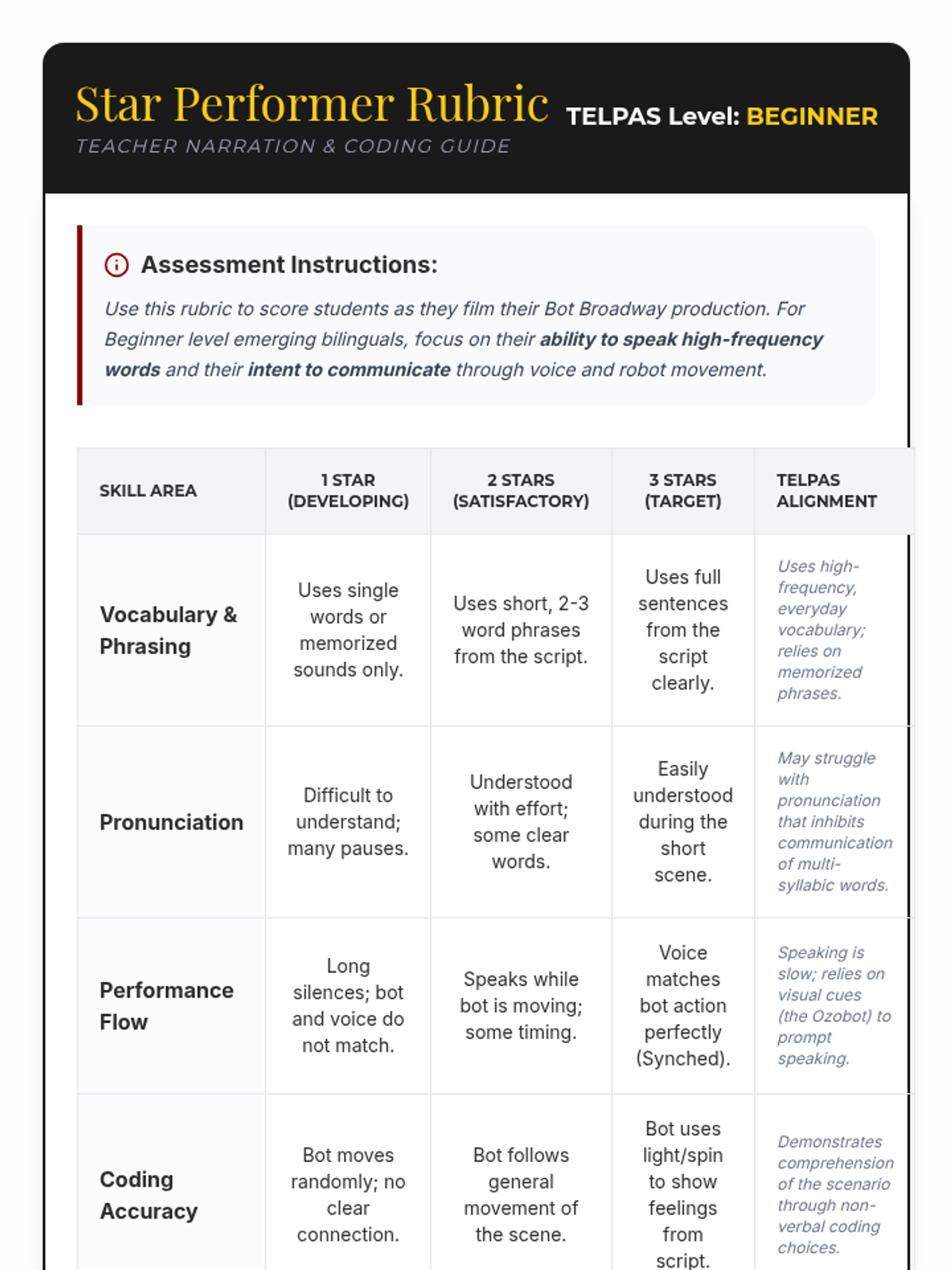
A hands-on STEAM lesson where emerging bilingual students use Ozobots to act out short scenarios, focusing on beginner-level English speaking, listening, reading, and writing skills.
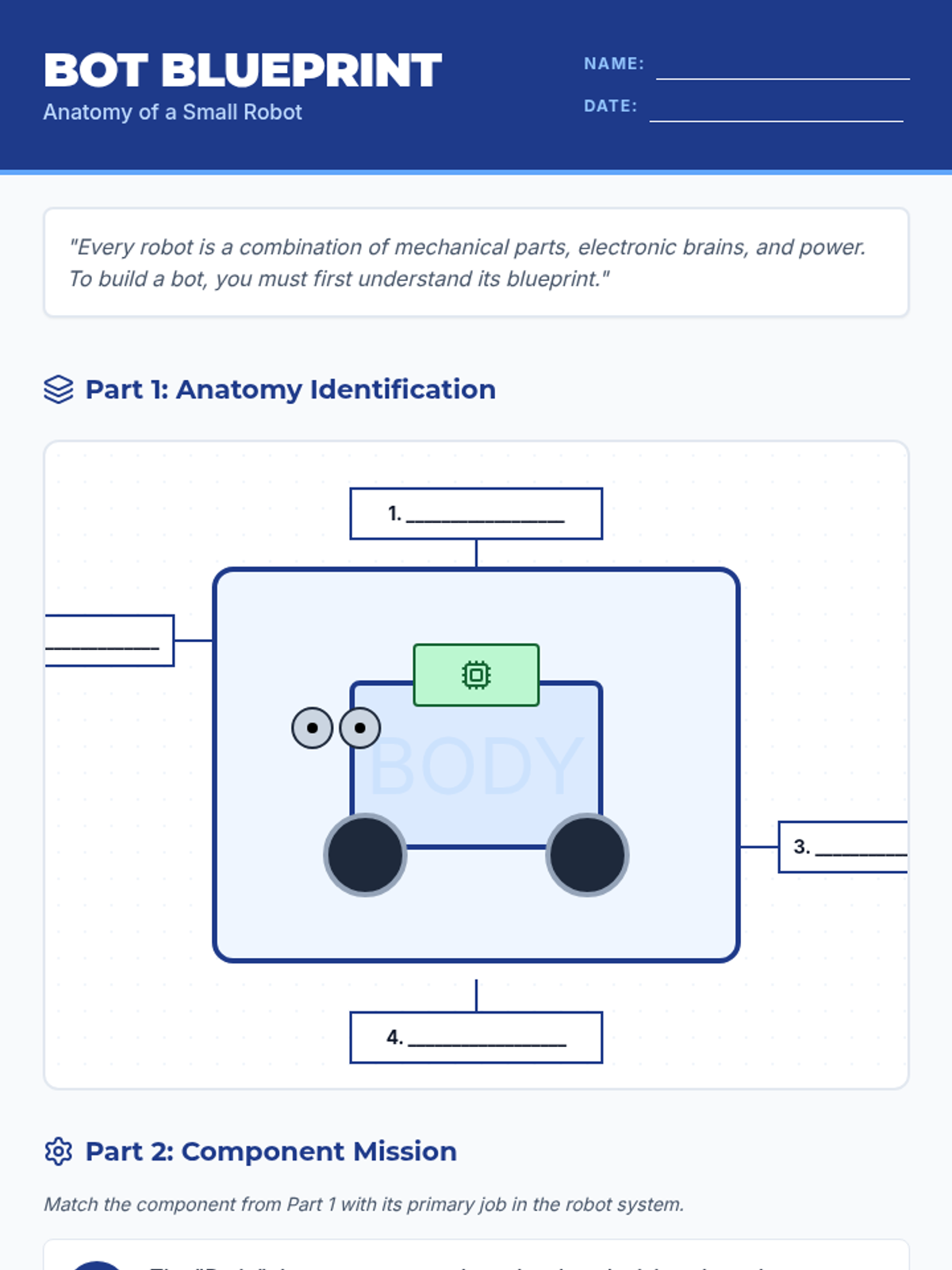
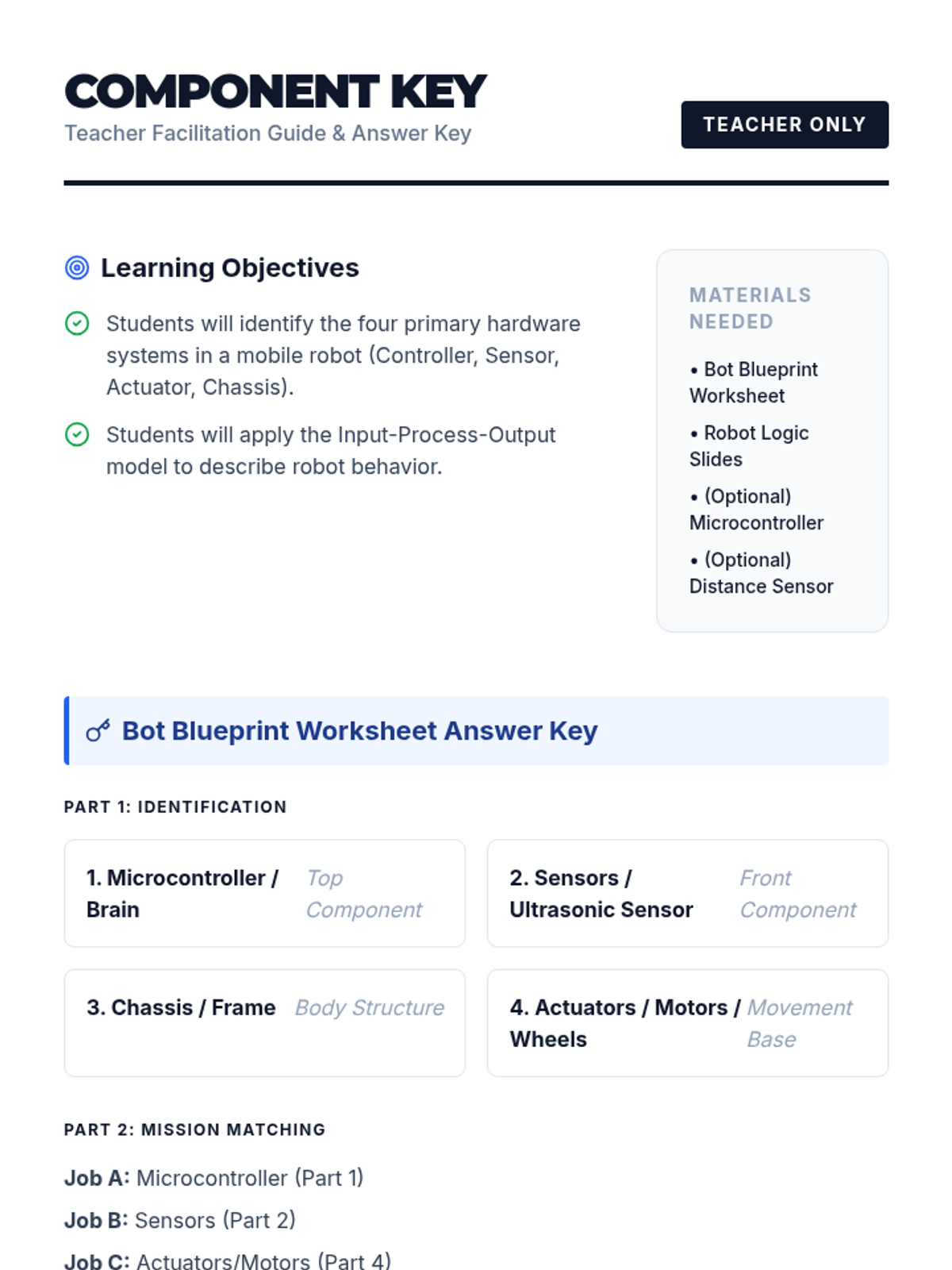
A foundational look at robot anatomy, exploring how sensors, actuators, and controllers work together to create a functional machine.
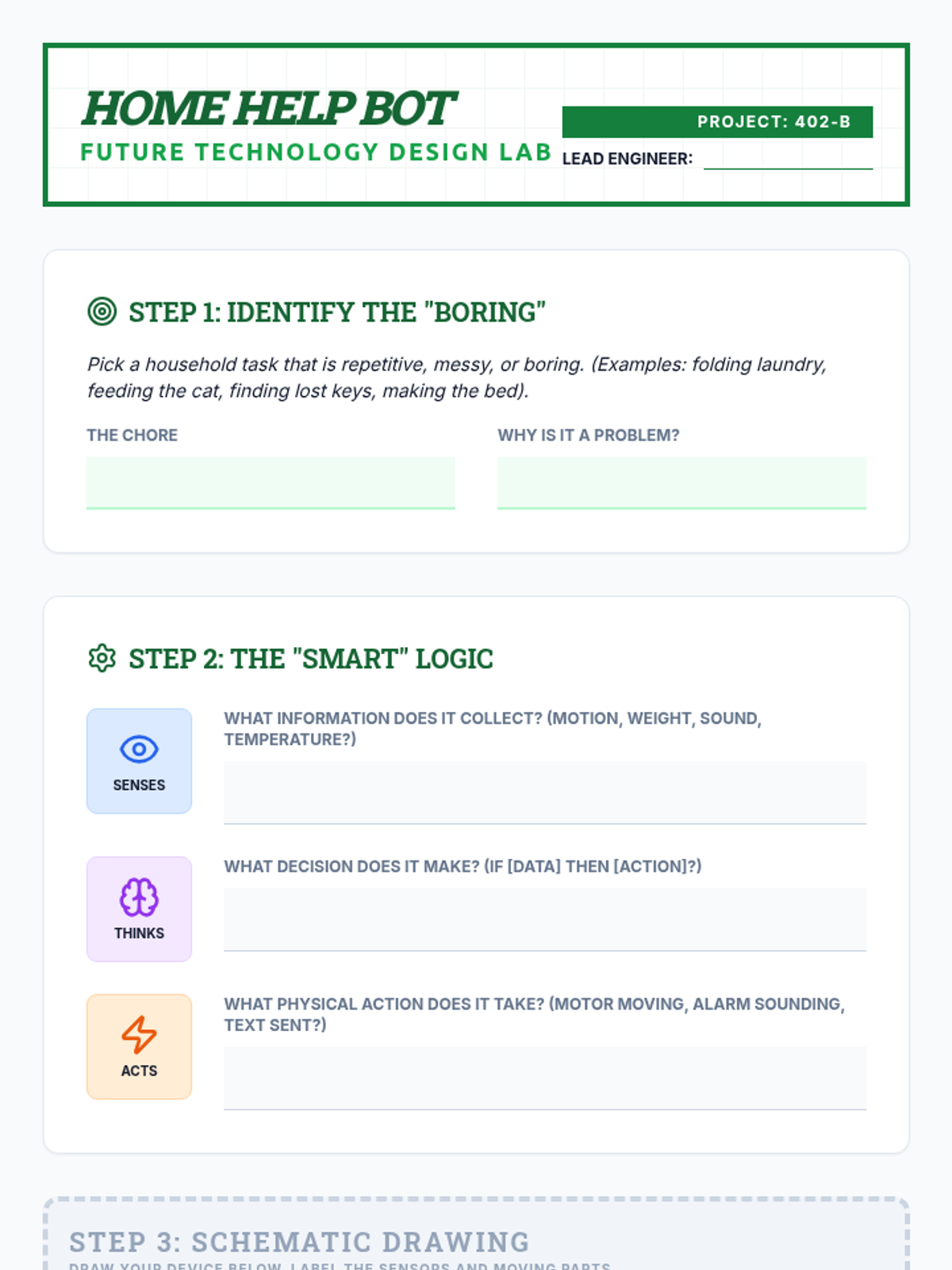
Exploring the rise of 'Smart' homes, automation, and the Internet of Things (IoT), culminating in a design project for a future household helper.
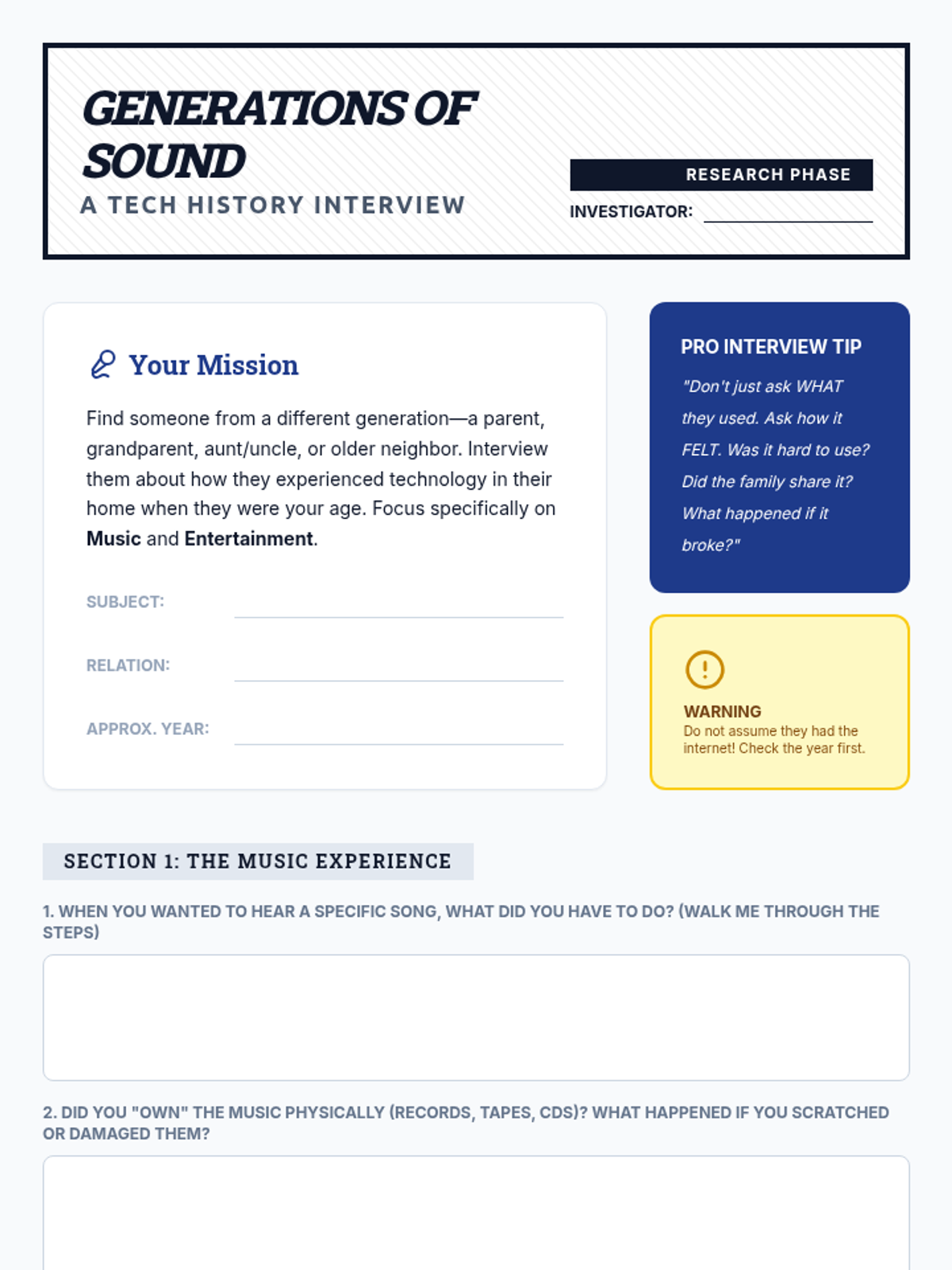
Tracing the history of home entertainment and communication, comparing analog technologies of the past with today's digital streaming landscape.
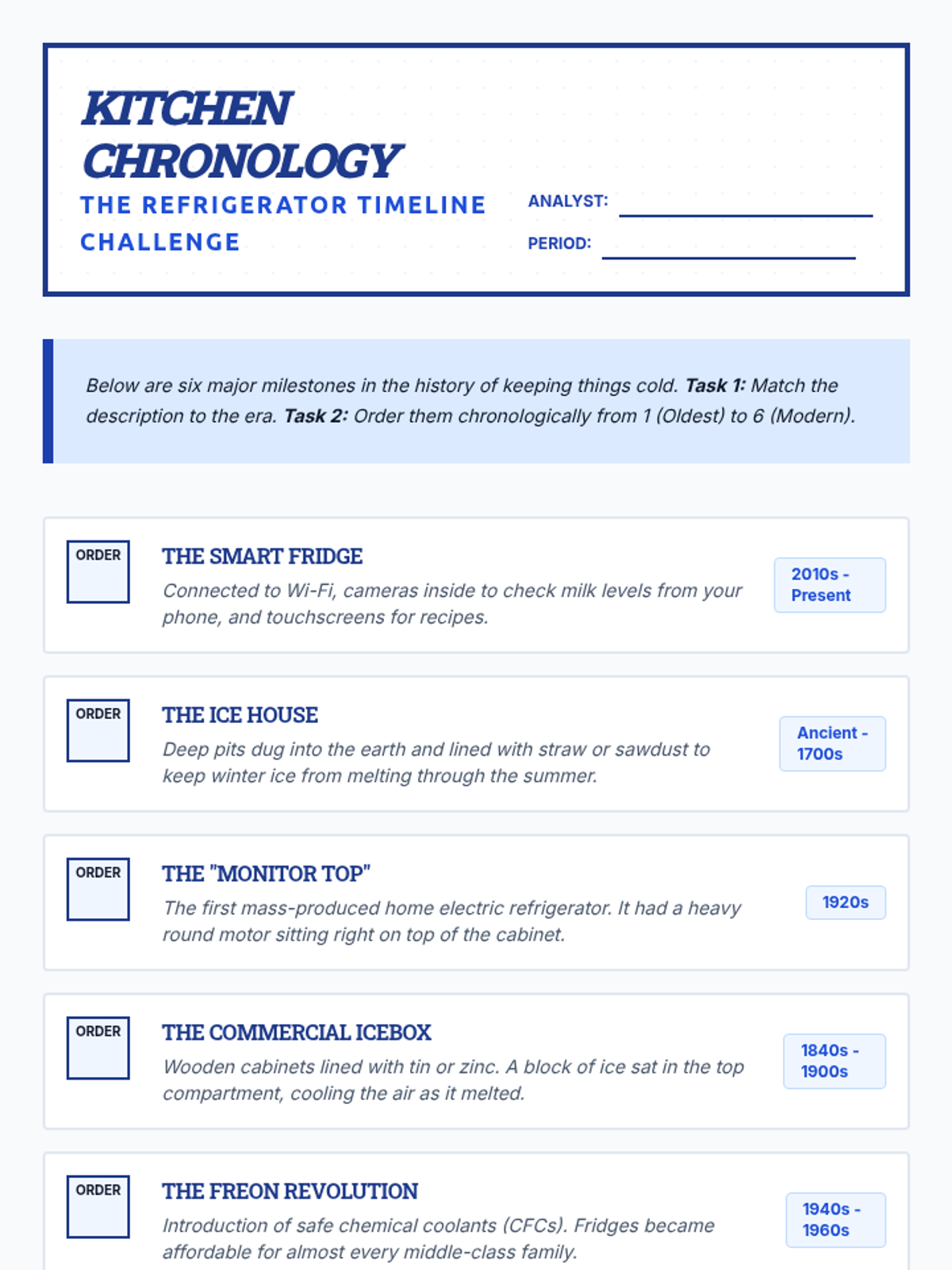
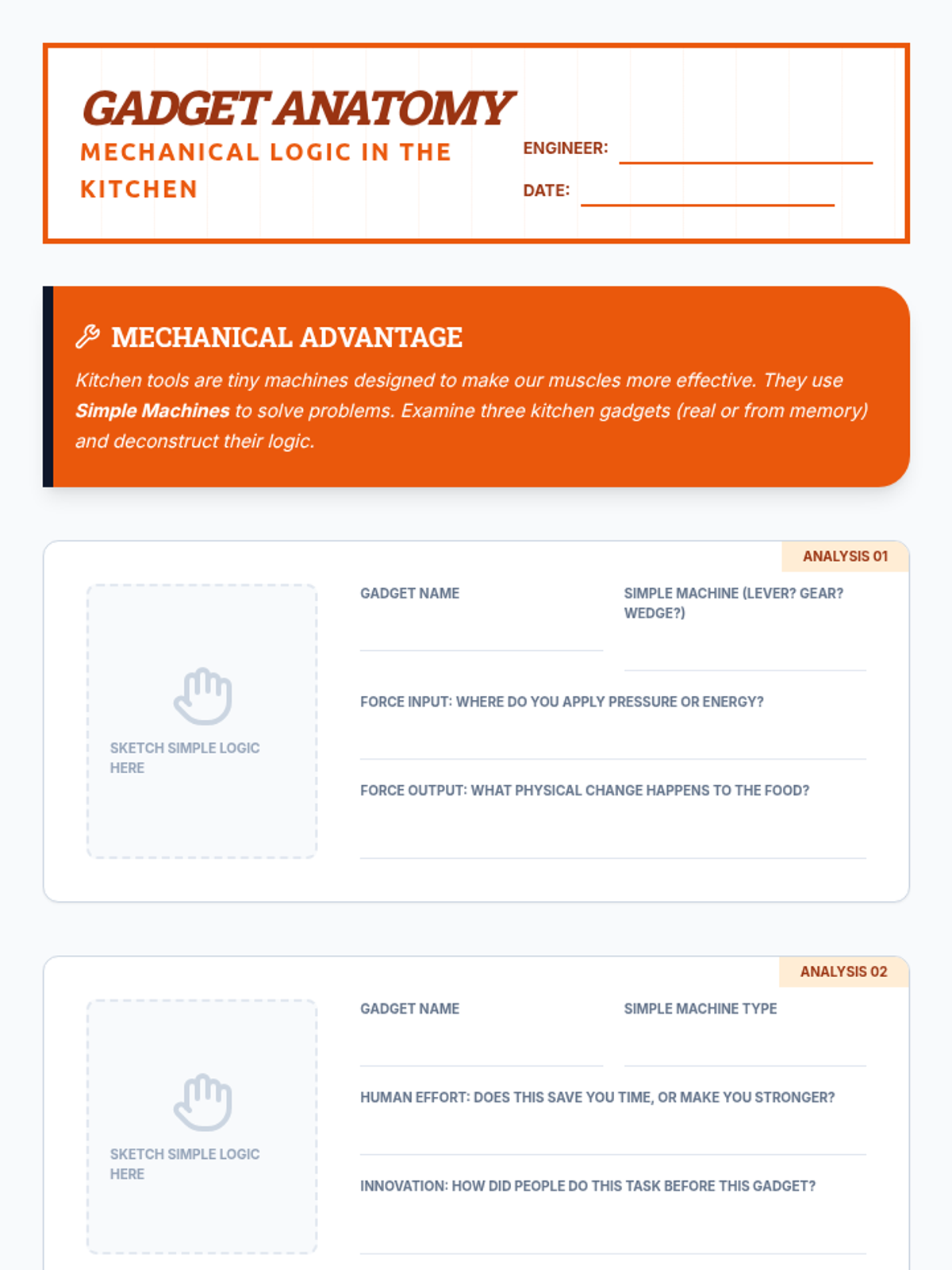
An investigation into how kitchen technology has evolved to solve the problems of cooking, preservation, and preparation, from fire and ice to microwaves and smart appliances.
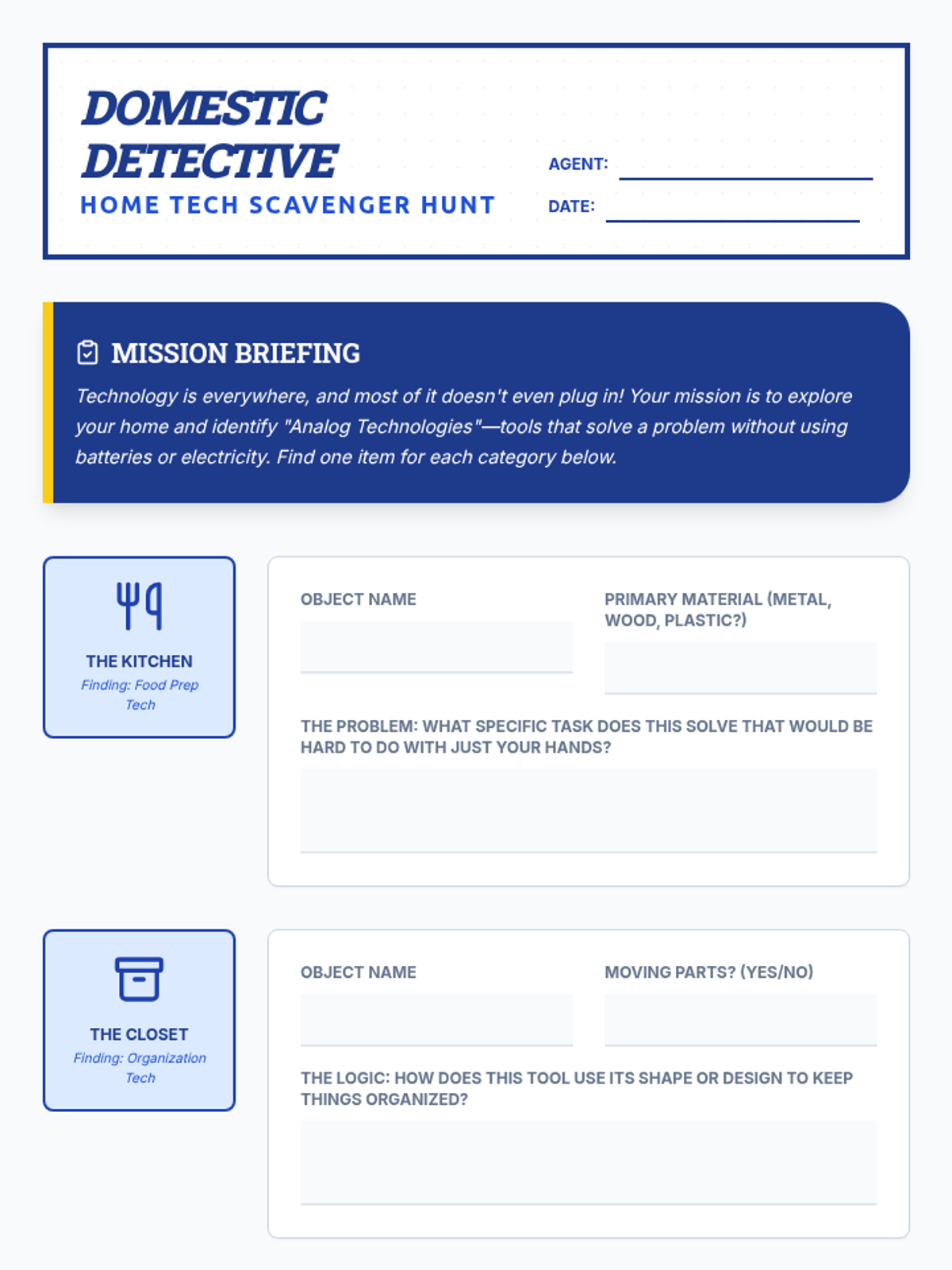
Students define technology as any tool created to solve a problem and conduct a home scavenger hunt to identify different categories of tech in their own living spaces.
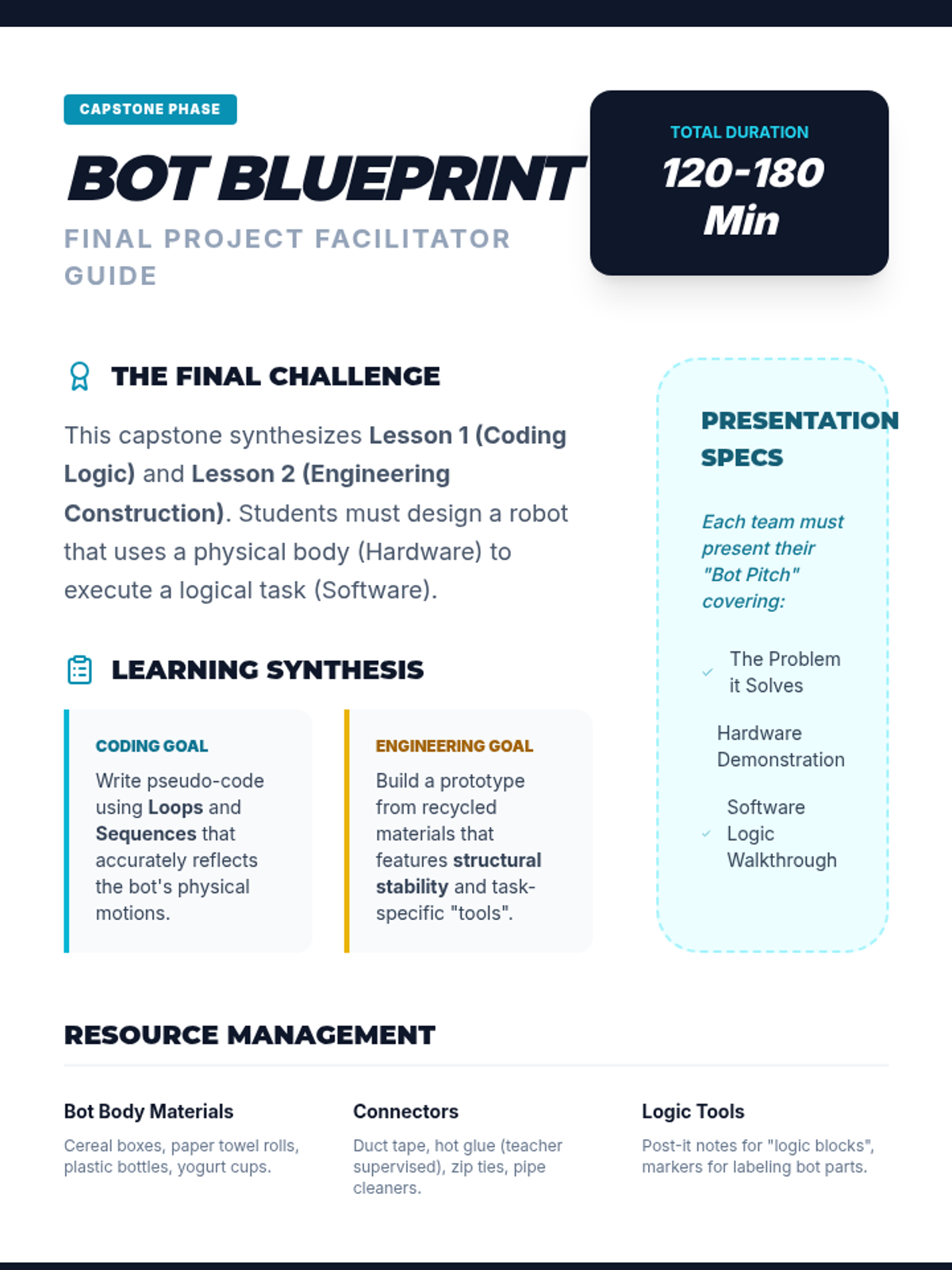
The capstone project where students combine their coding knowledge and engineering skills. Students design a functional 'helper bot' using recycled materials and write the pseudo-code for its operations.
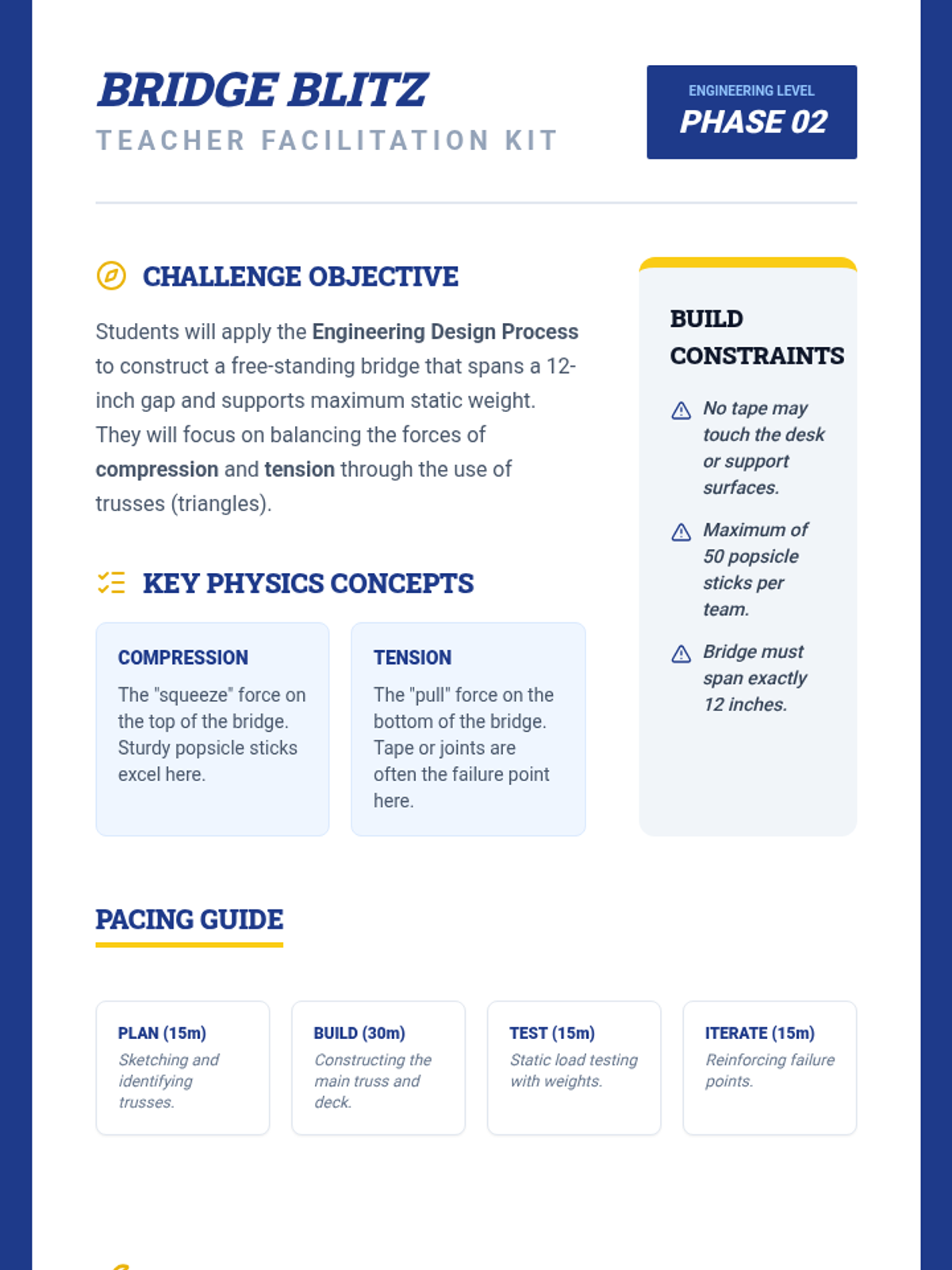
A hands-on engineering challenge where students apply the Engineering Design Process to build stable structures. This lesson focuses on physics, materials science, and iterative testing.
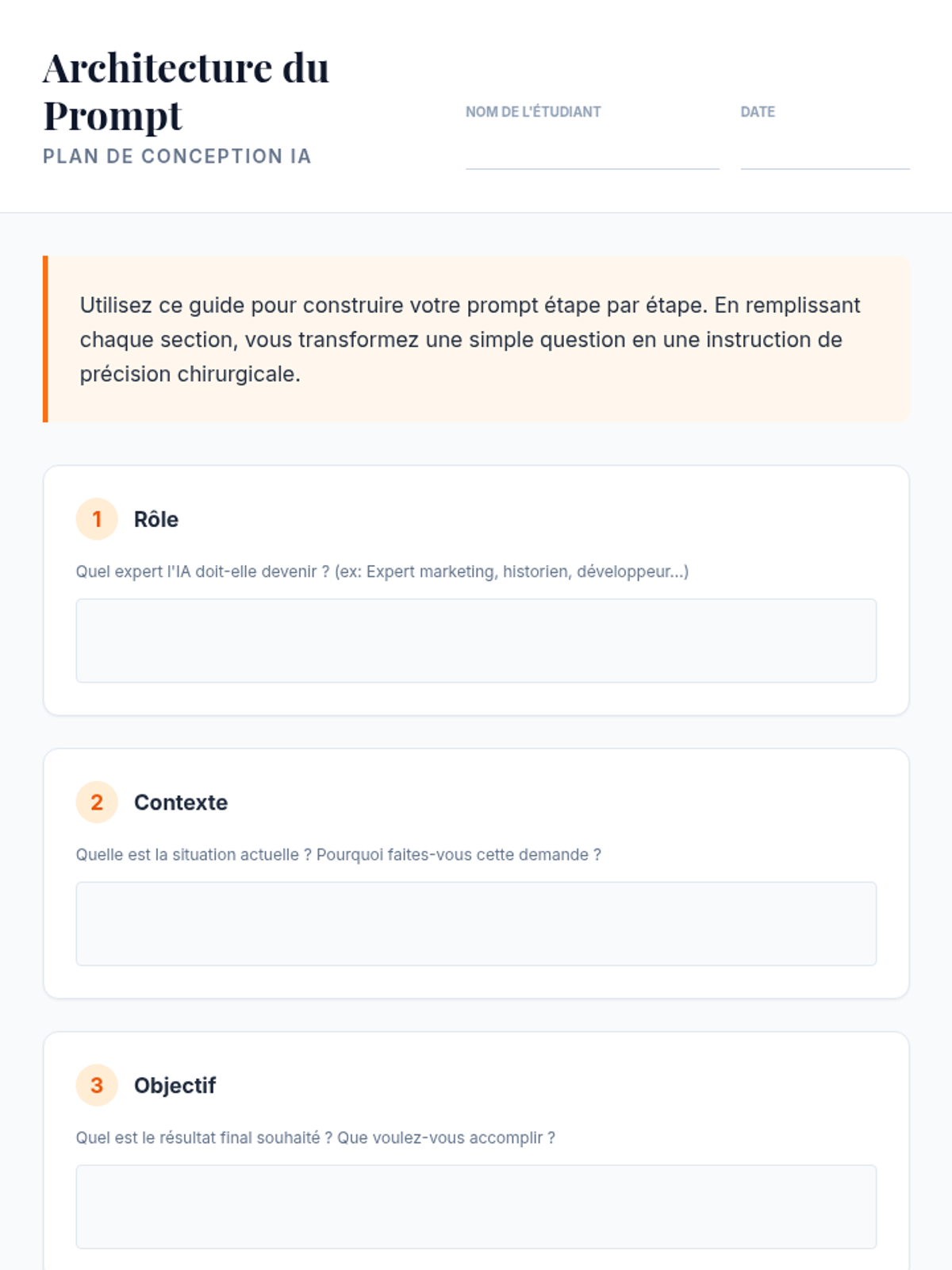
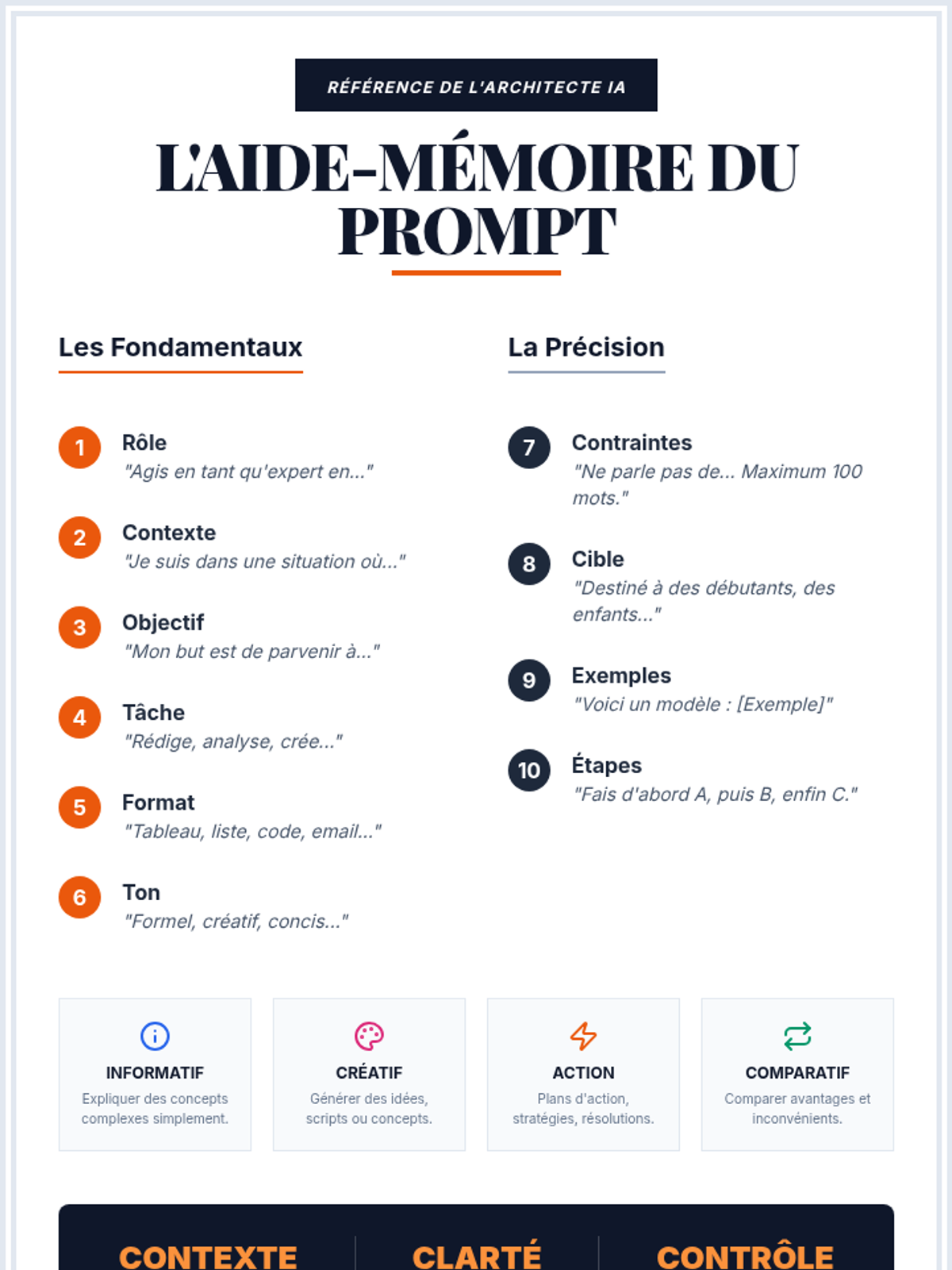
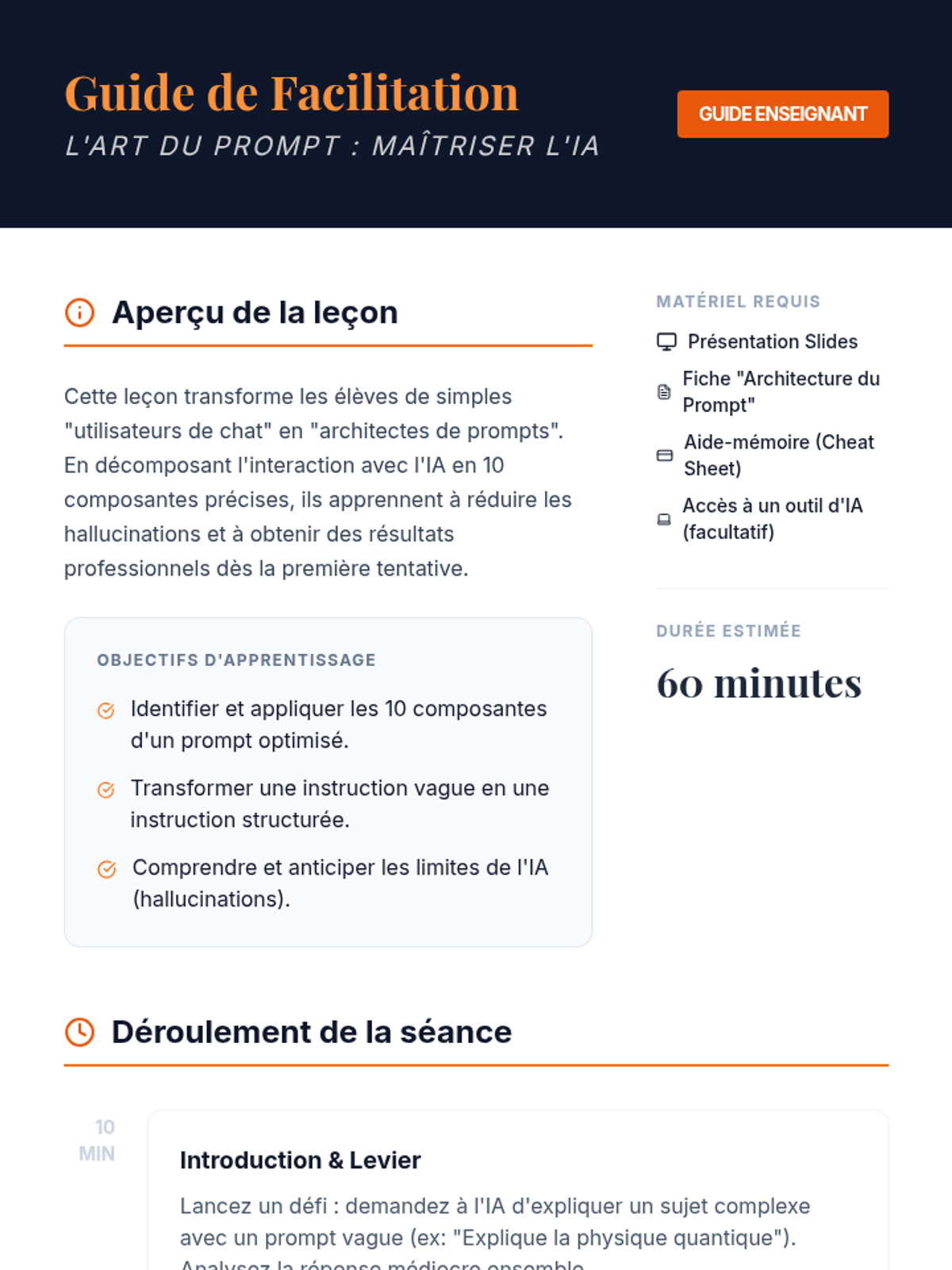
Cette leçon enseigne l'art de concevoir des prompts efficaces pour l'IA en utilisant 10 composantes clés, de la définition du rôle à l'itération finale.
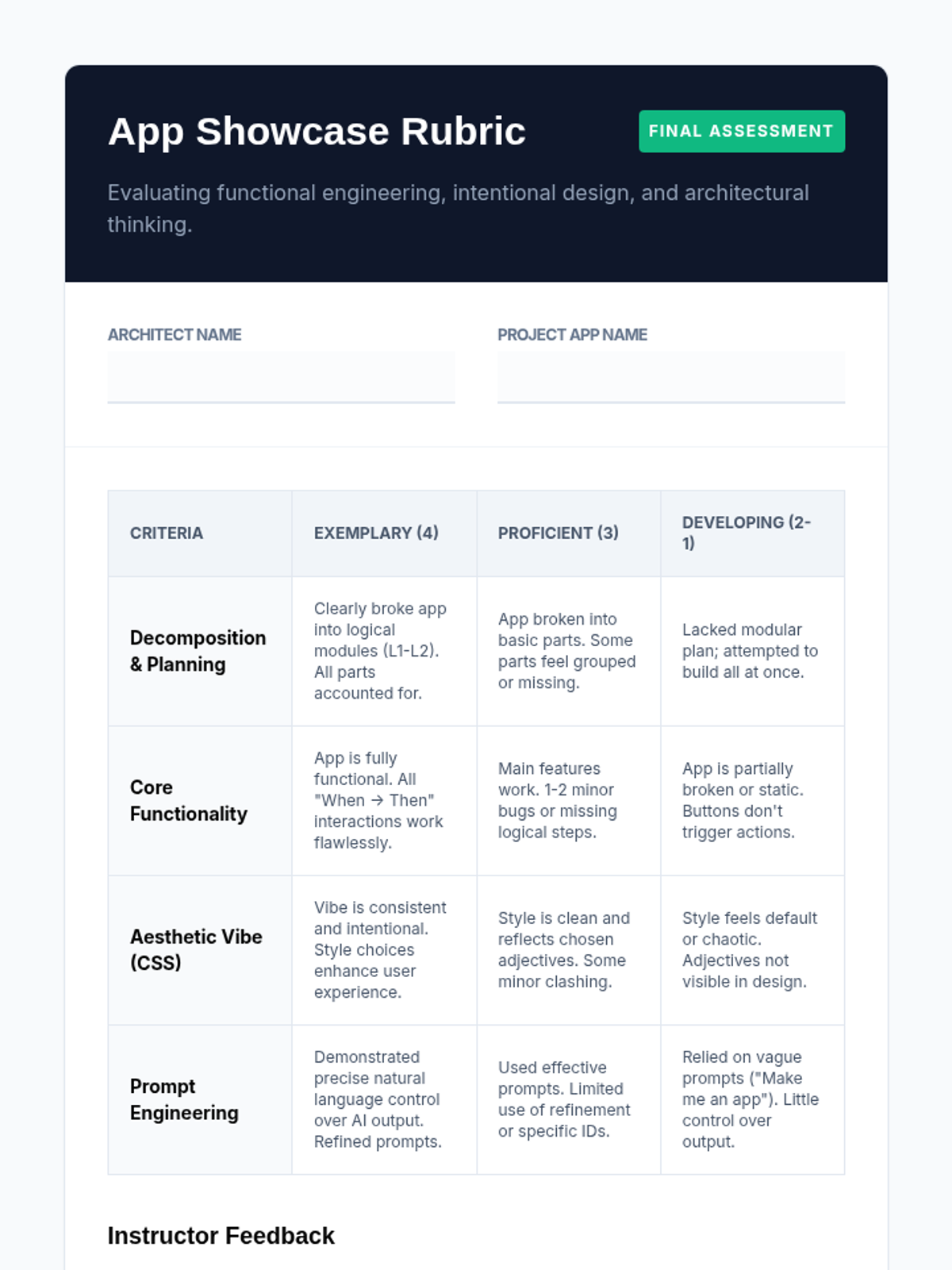
Students assemble their final code, run a full test, and present their functional apps while reflecting on the modular approach and prompt effectiveness.
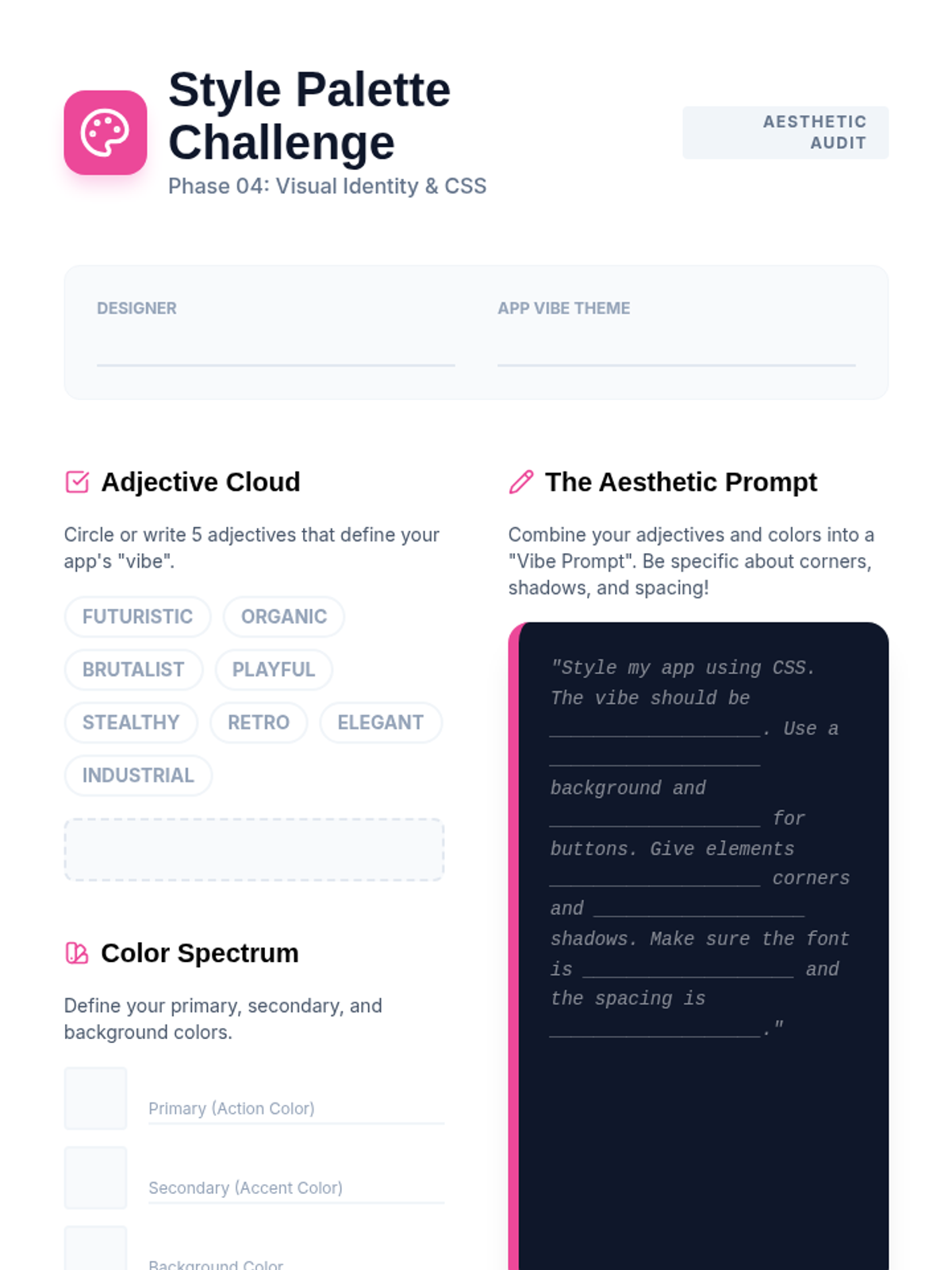
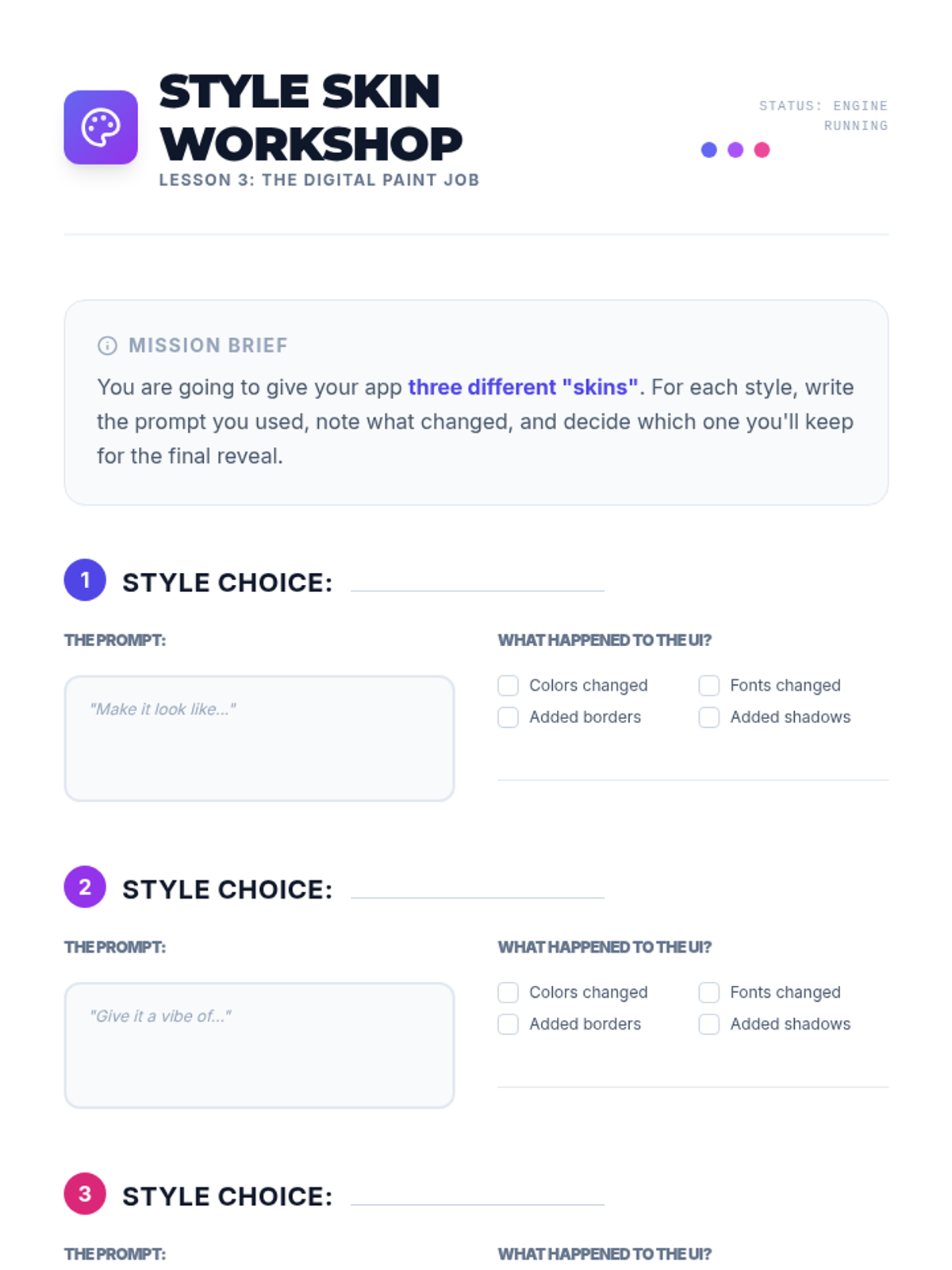
Students use descriptive language to apply CSS styling and experiment with visual vibes to match specific user experience goals.
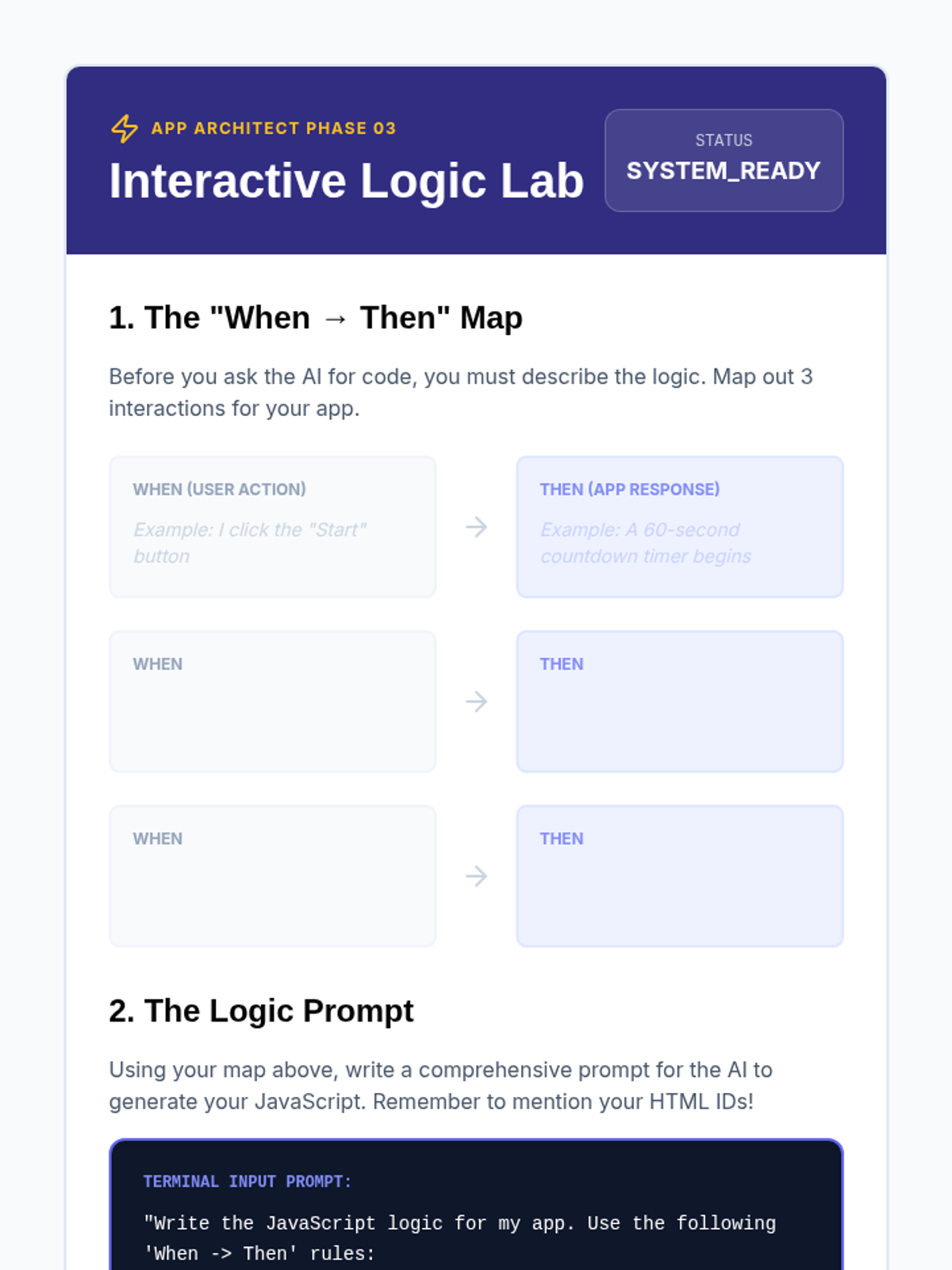
Focusing on JavaScript logic, students write prompts to make their static skeletons interactive by describing logic flows and event-driven actions.
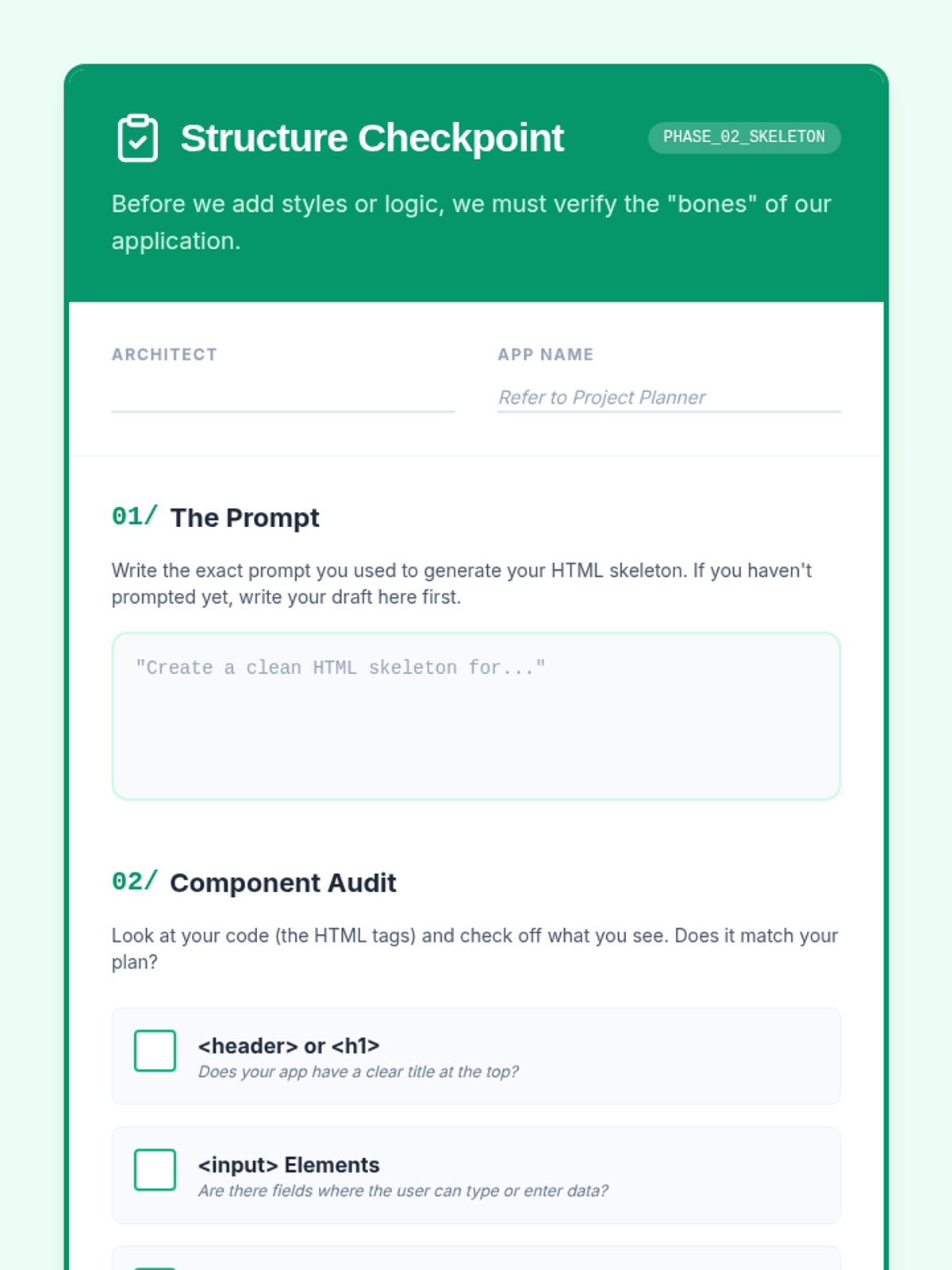
Students use AI to generate the 'skeleton' or HTML structure of their app based on their plan, focusing on structural hierarchy and blueprint validation.
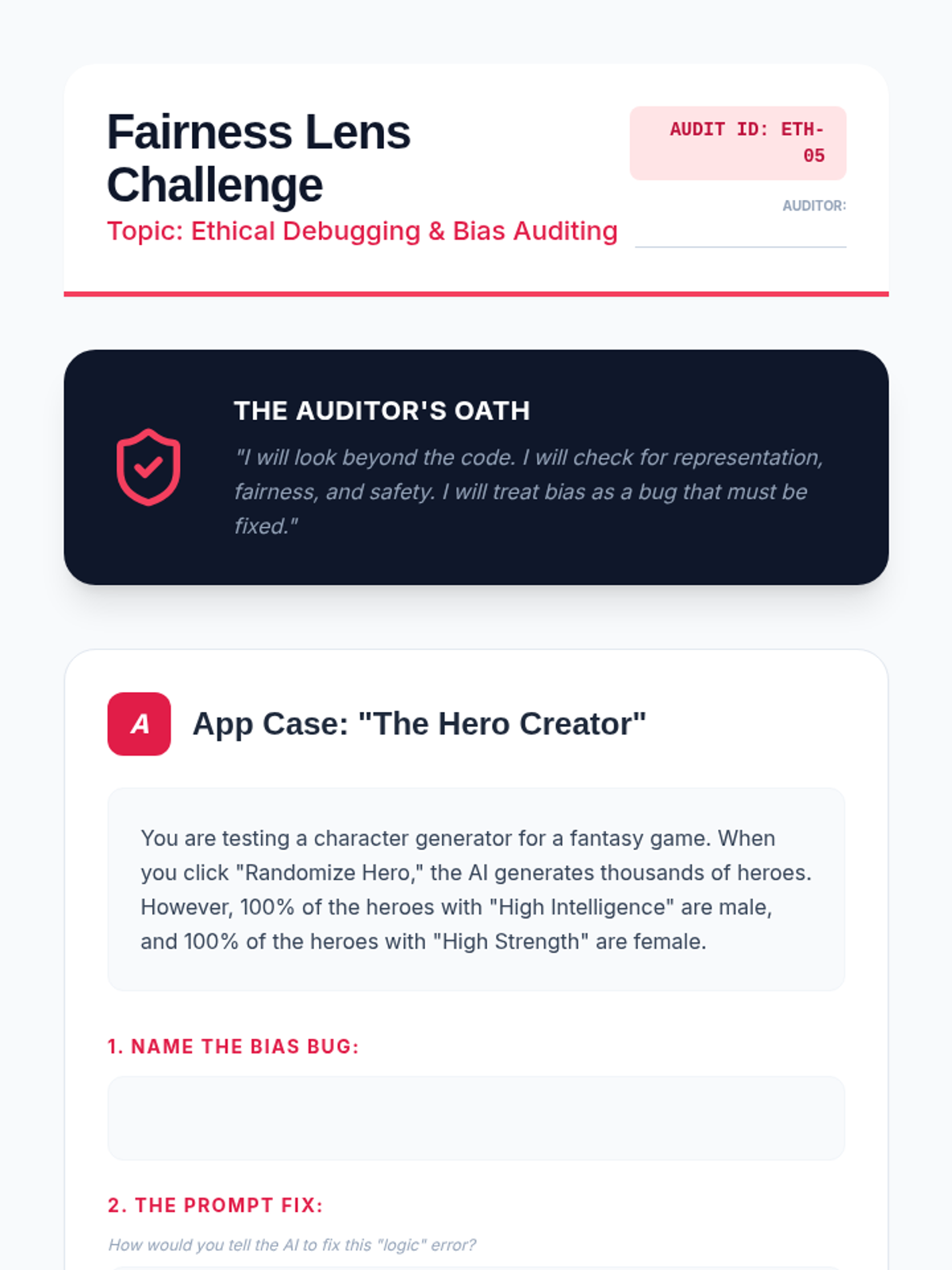
Students discuss non-technical 'bugs' such as bias in generated content or unsafe outputs. They learn to evaluate AI generations for fairness and appropriateness.
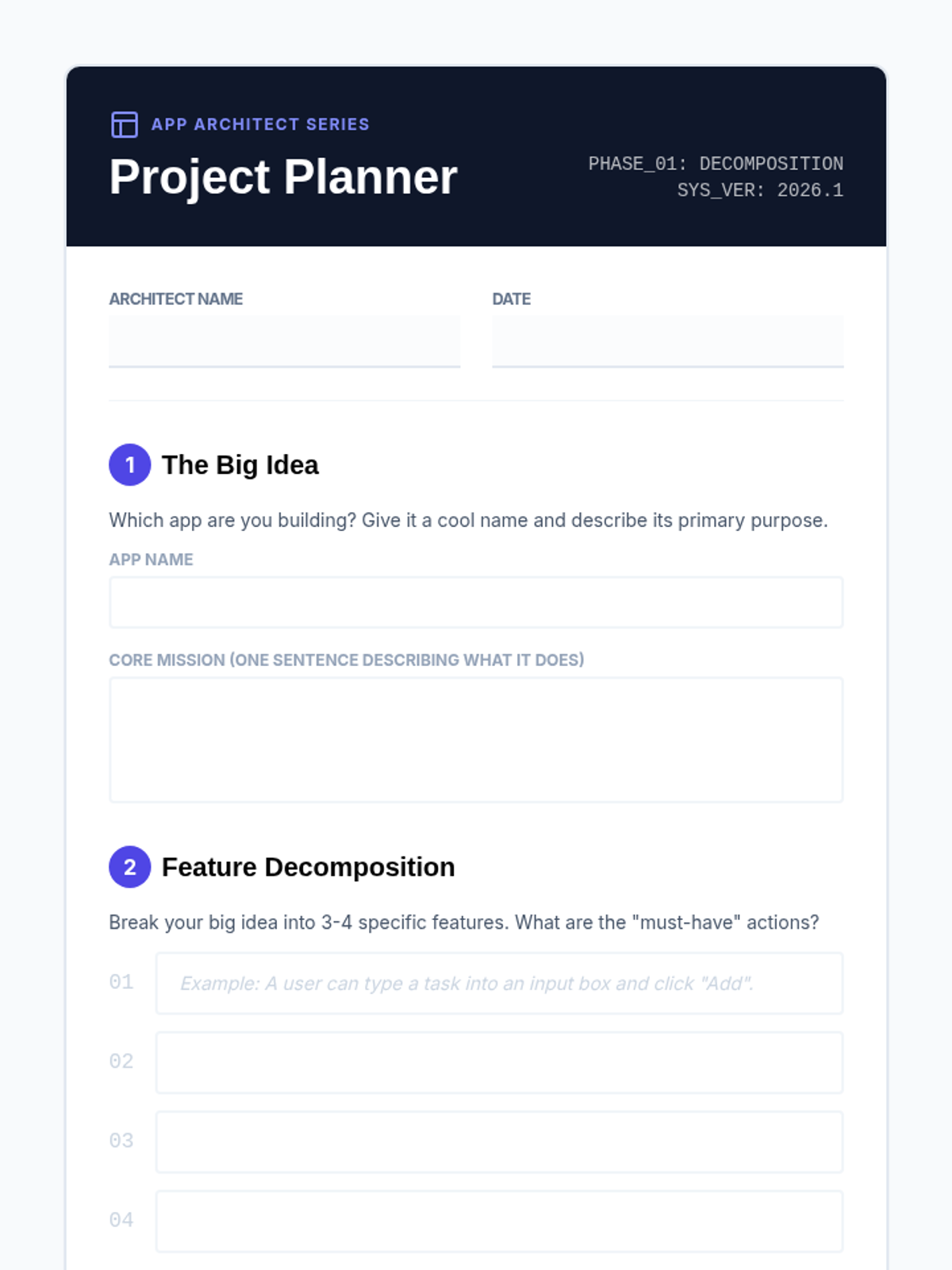
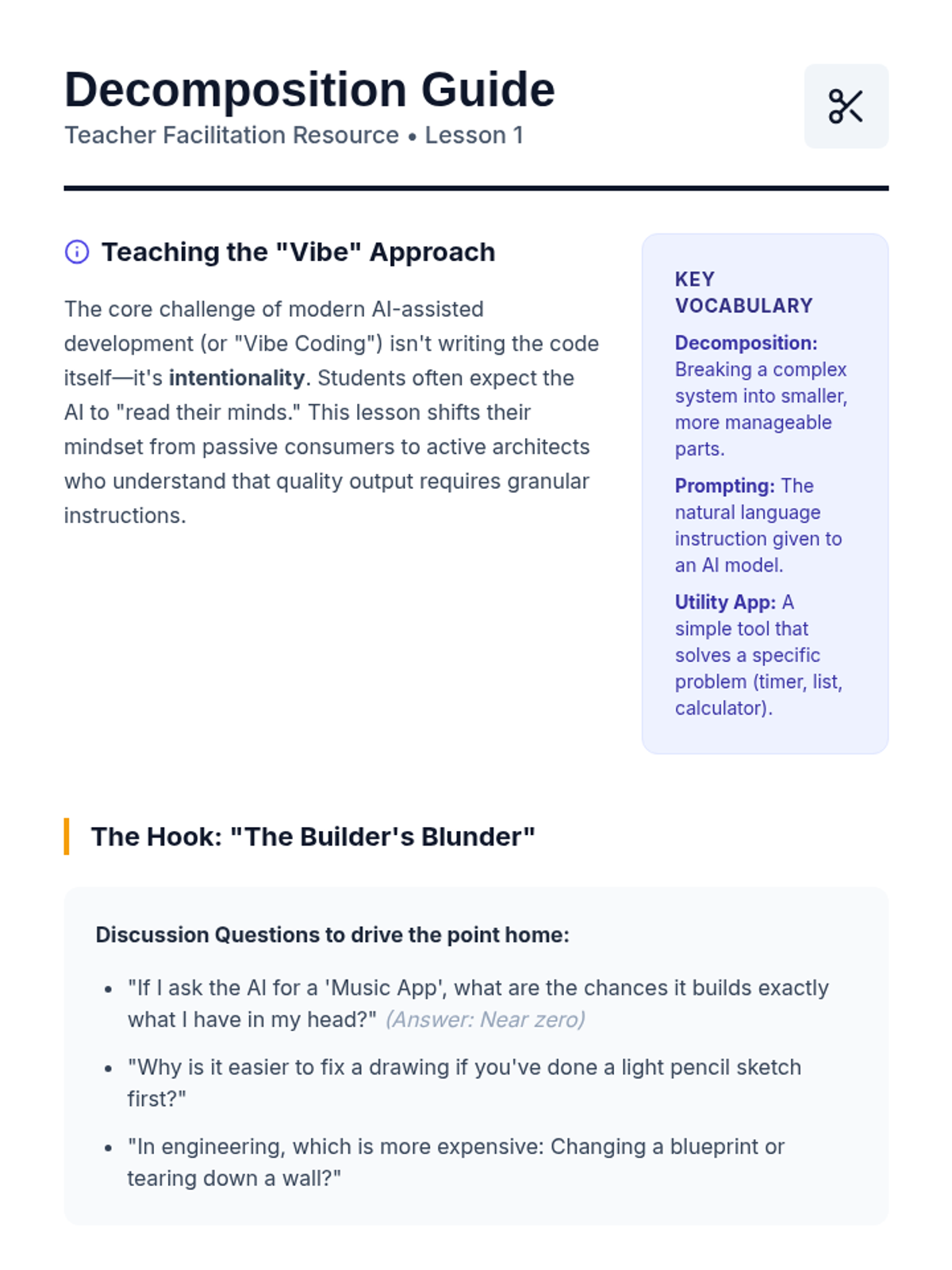
Students define the requirements for a simple web utility app and practice 'decomposition'—breaking big ideas into specific, promptable features.
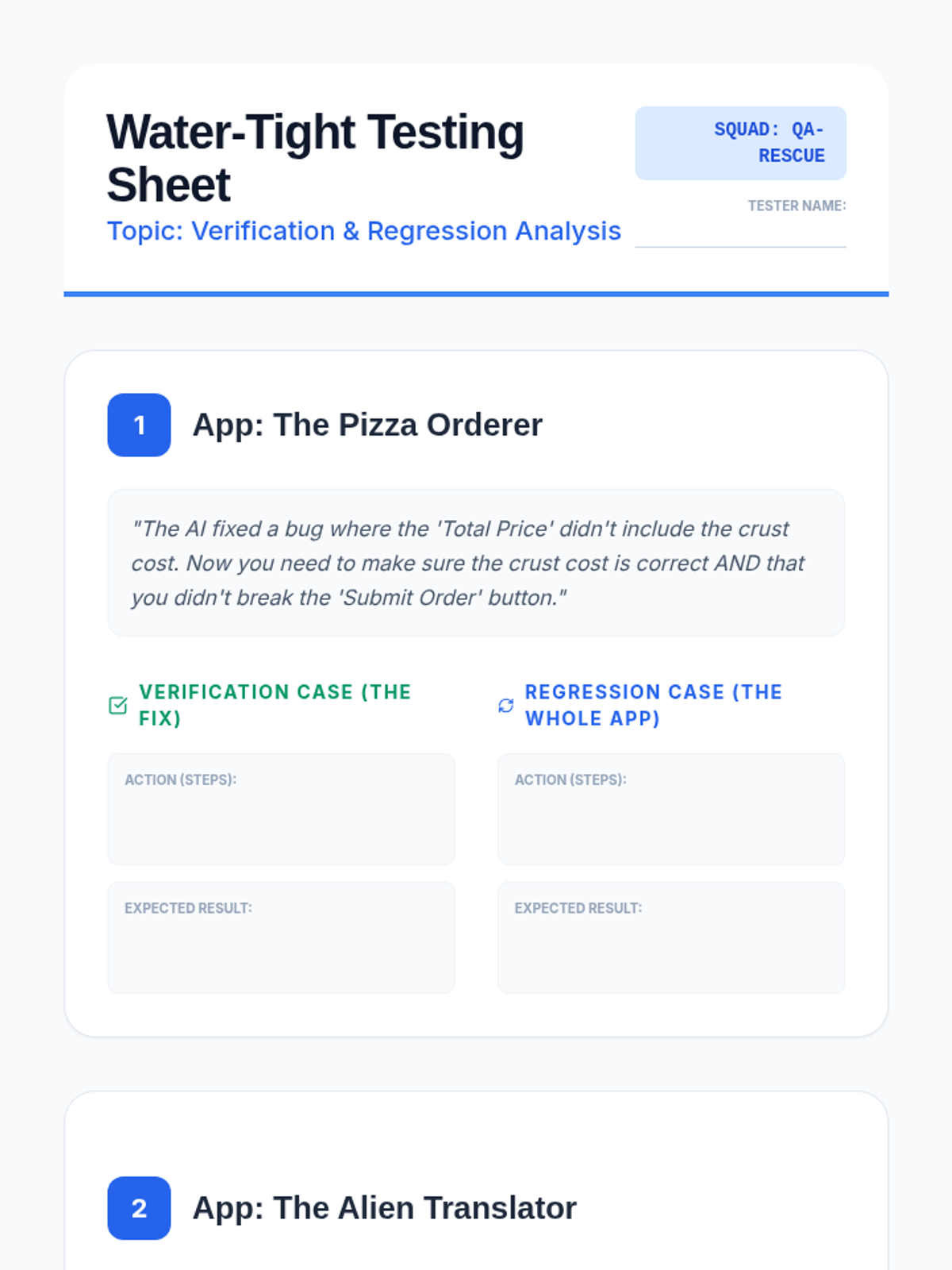
Students learn to test whether the AI's proposed solution actually solved the problem without introducing new ones (regression testing). They practice running test cases after a new generation.
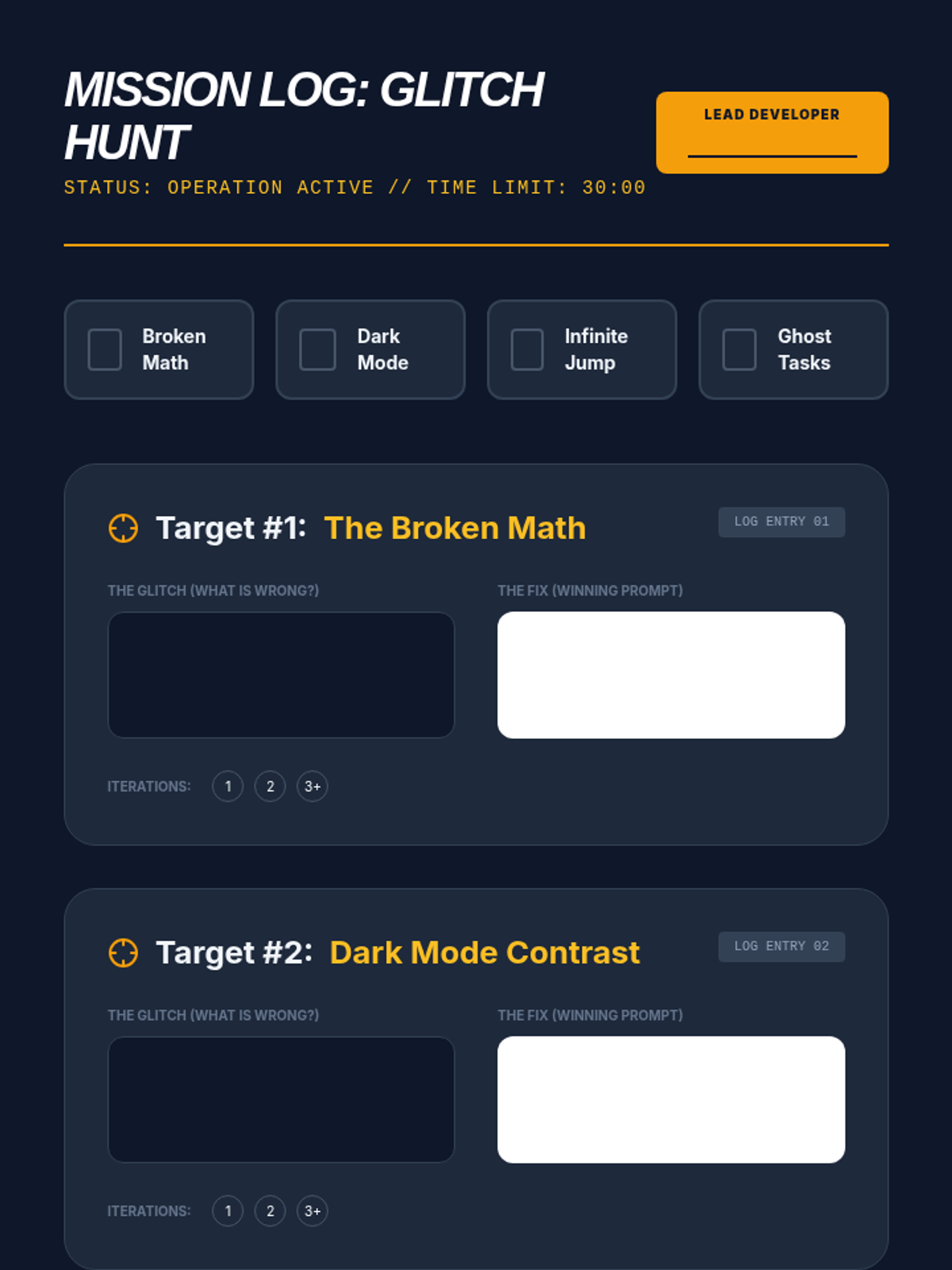
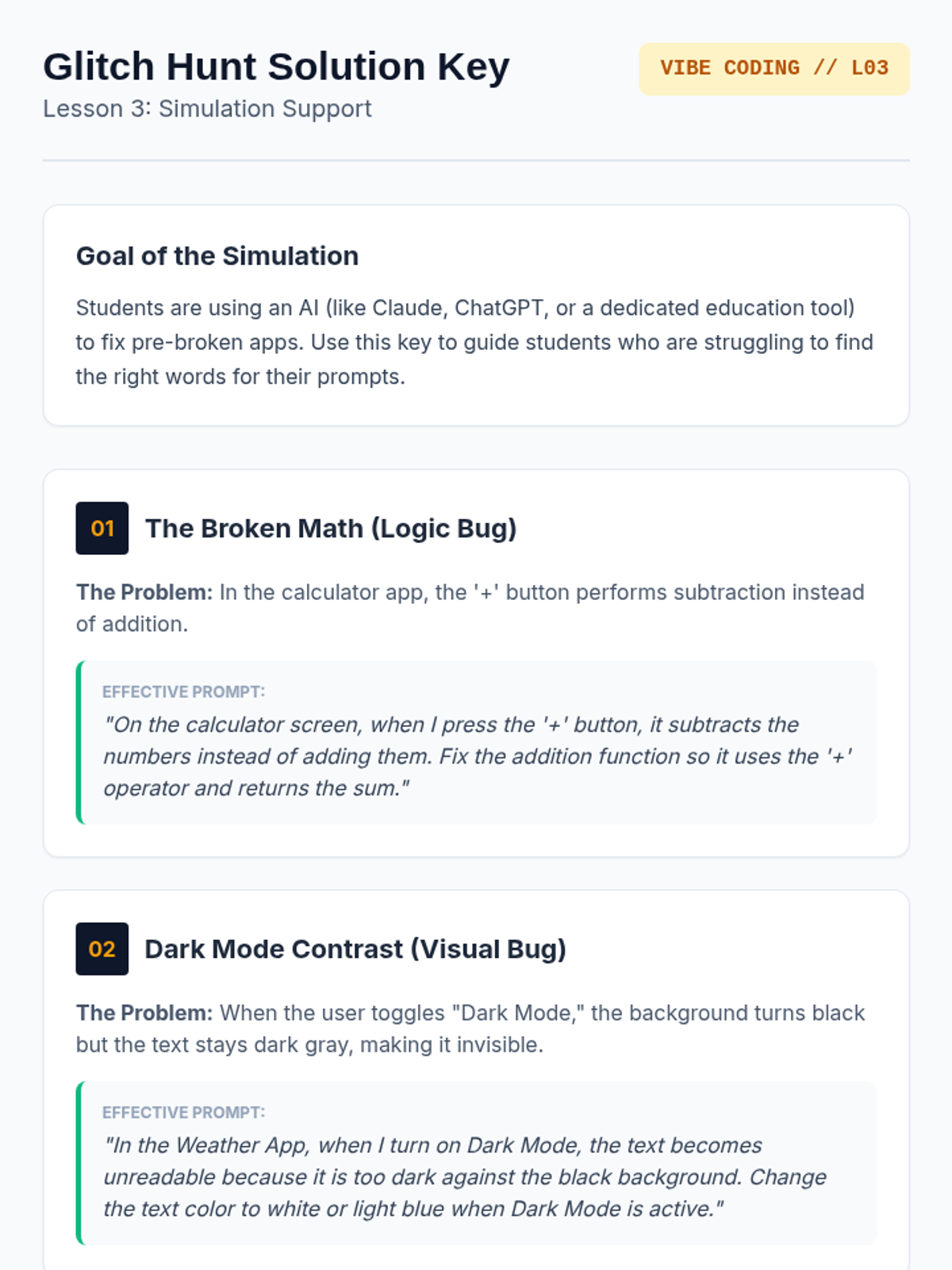
In a controlled simulation, students are given a suite of 'buggy' mini-programs. They must use an AI interface to prompt fixes for as many bugs as possible within a time limit.
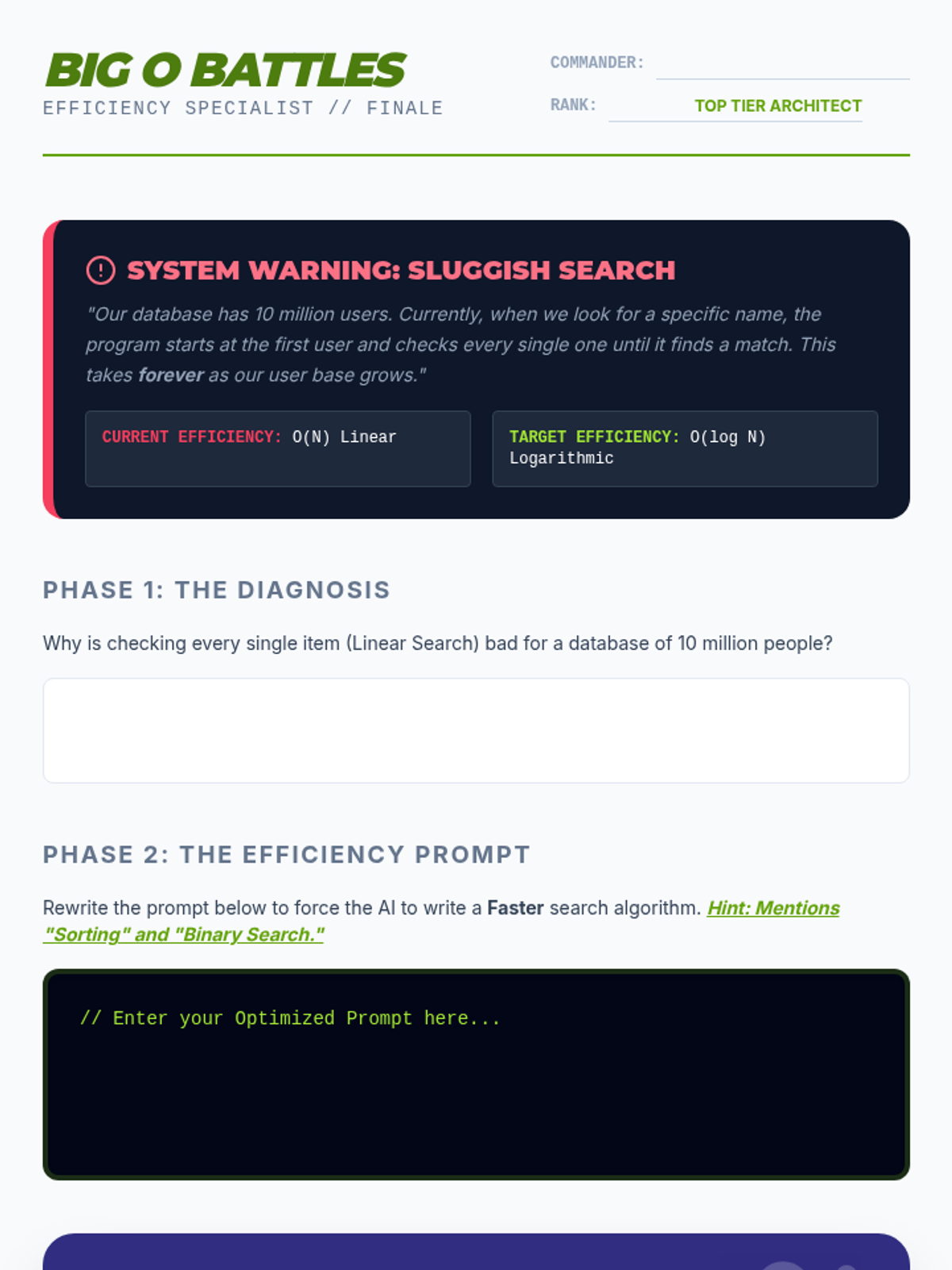
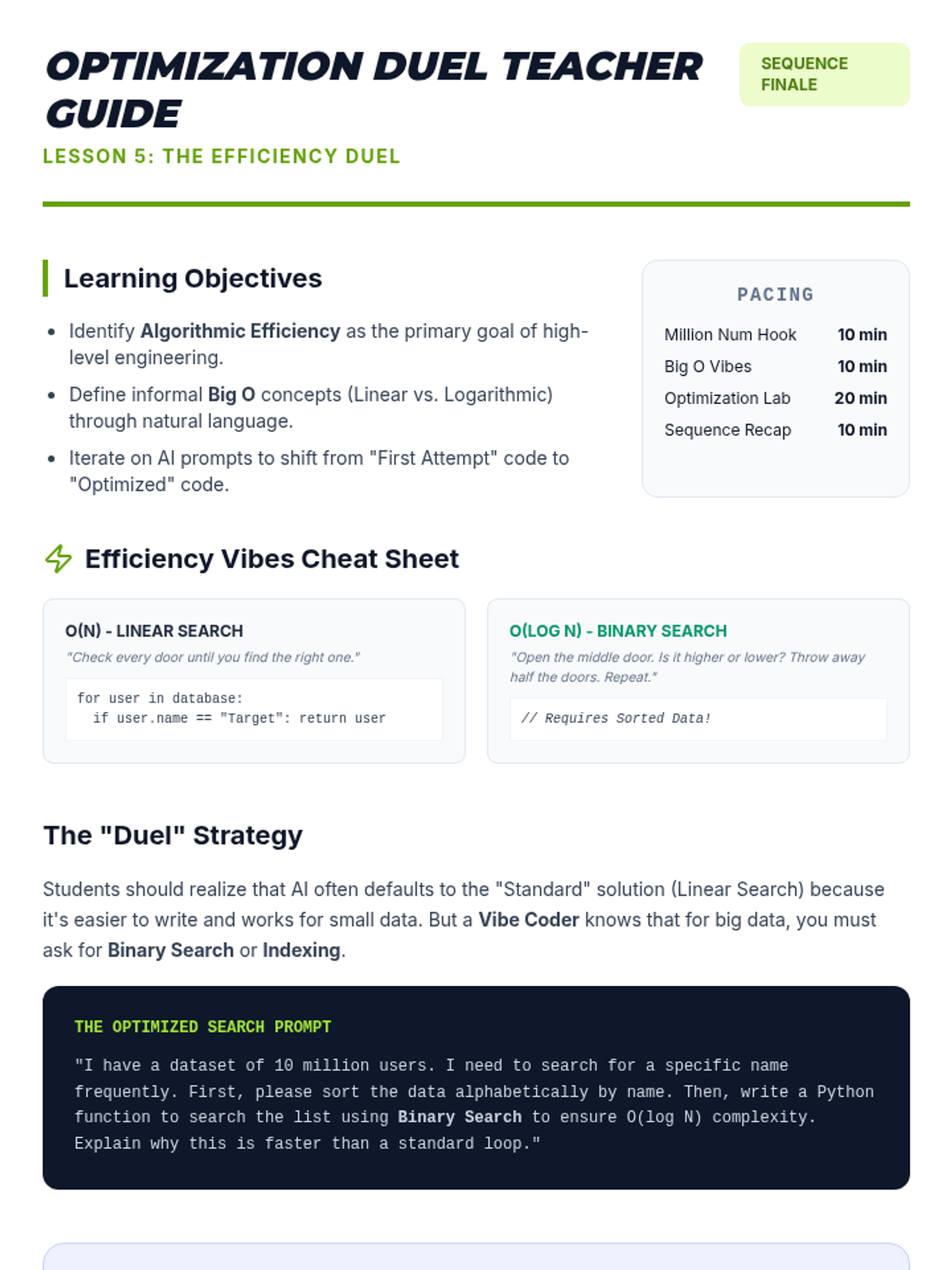
Students iterate on AI-generated solutions to improve efficiency and speed, learning informal Big O concepts through natural language.
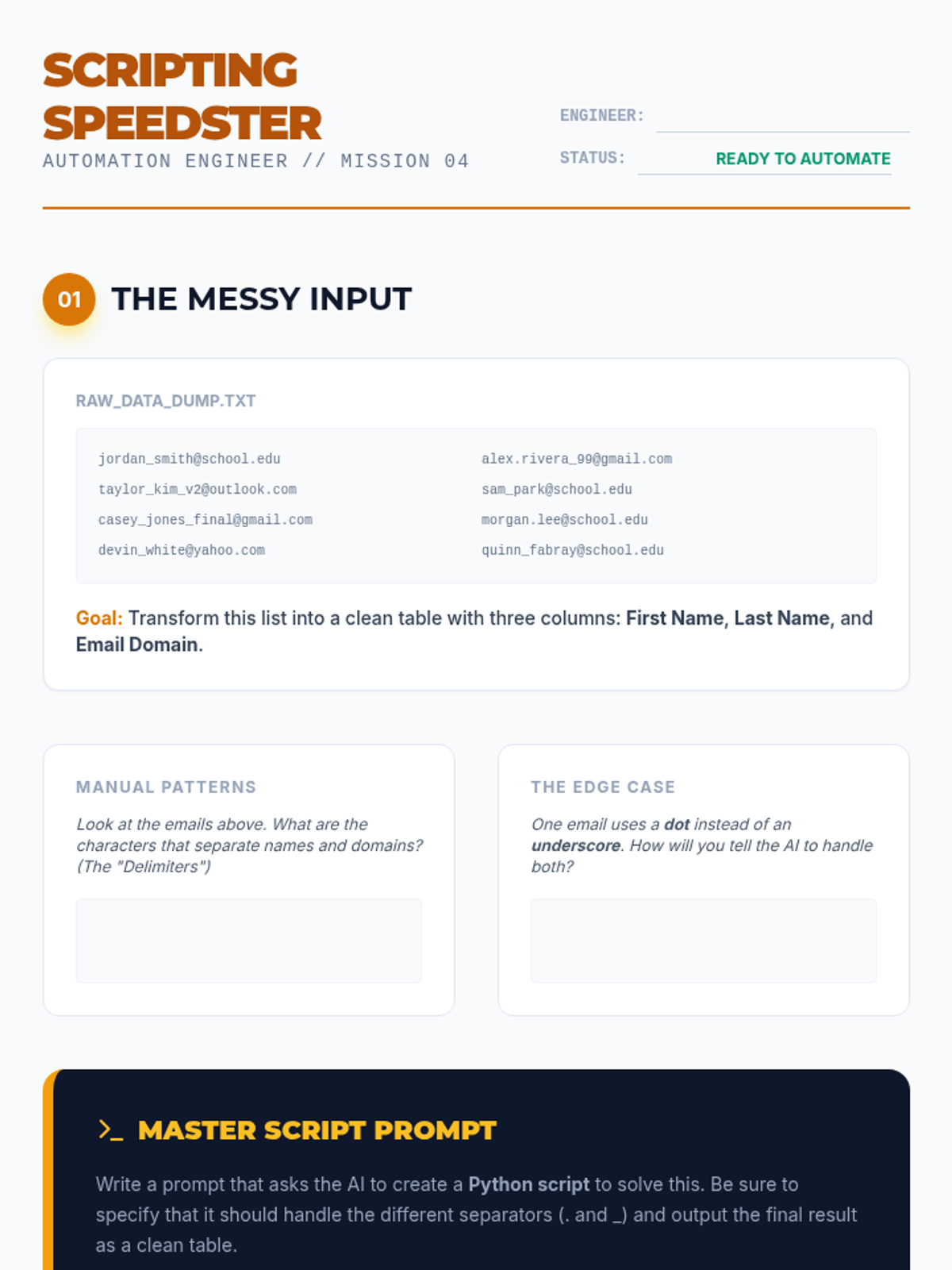
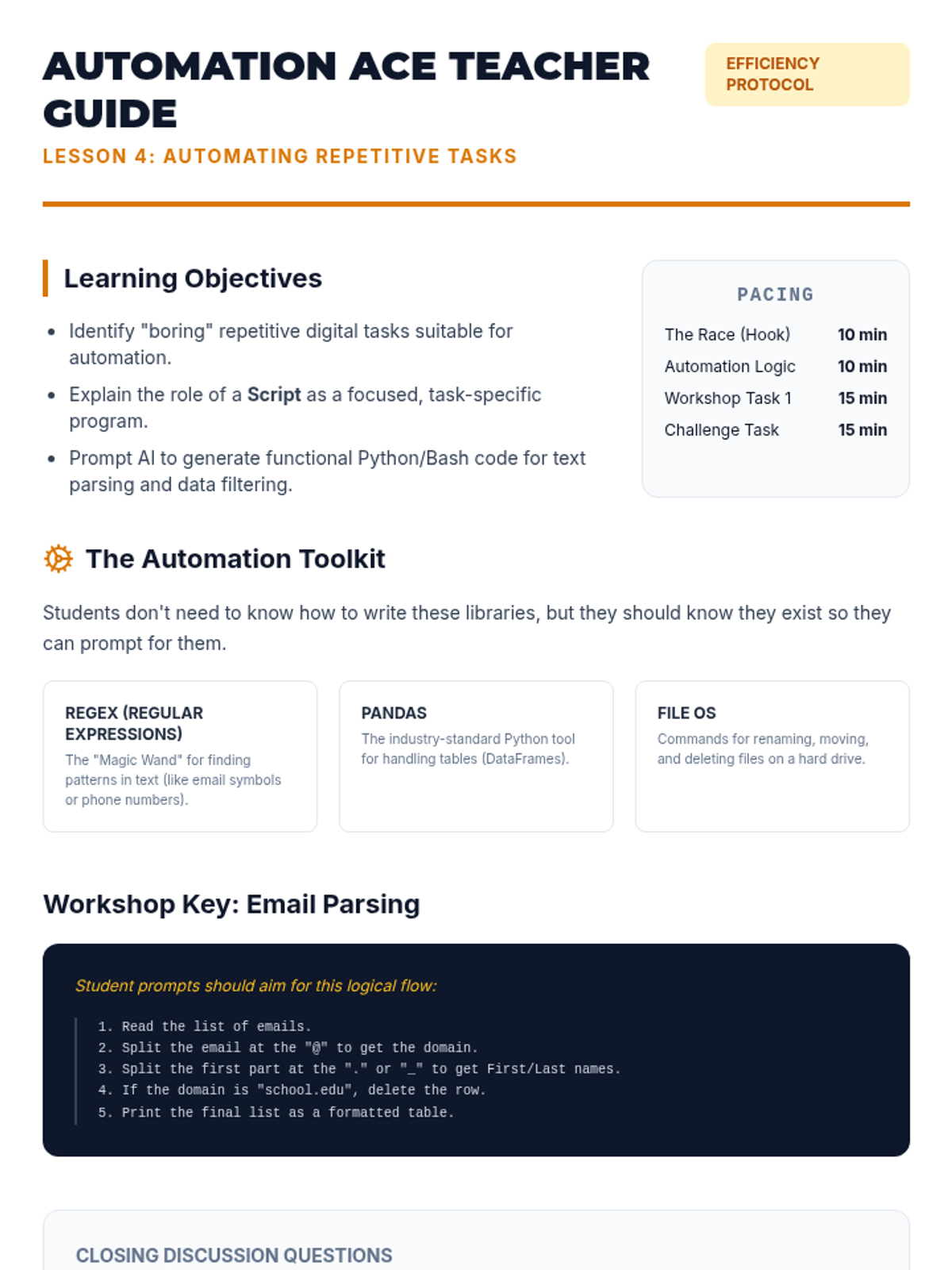
Students identify repetitive digital tasks and use AI to create automation scripts, connecting coding to real-world efficiency.
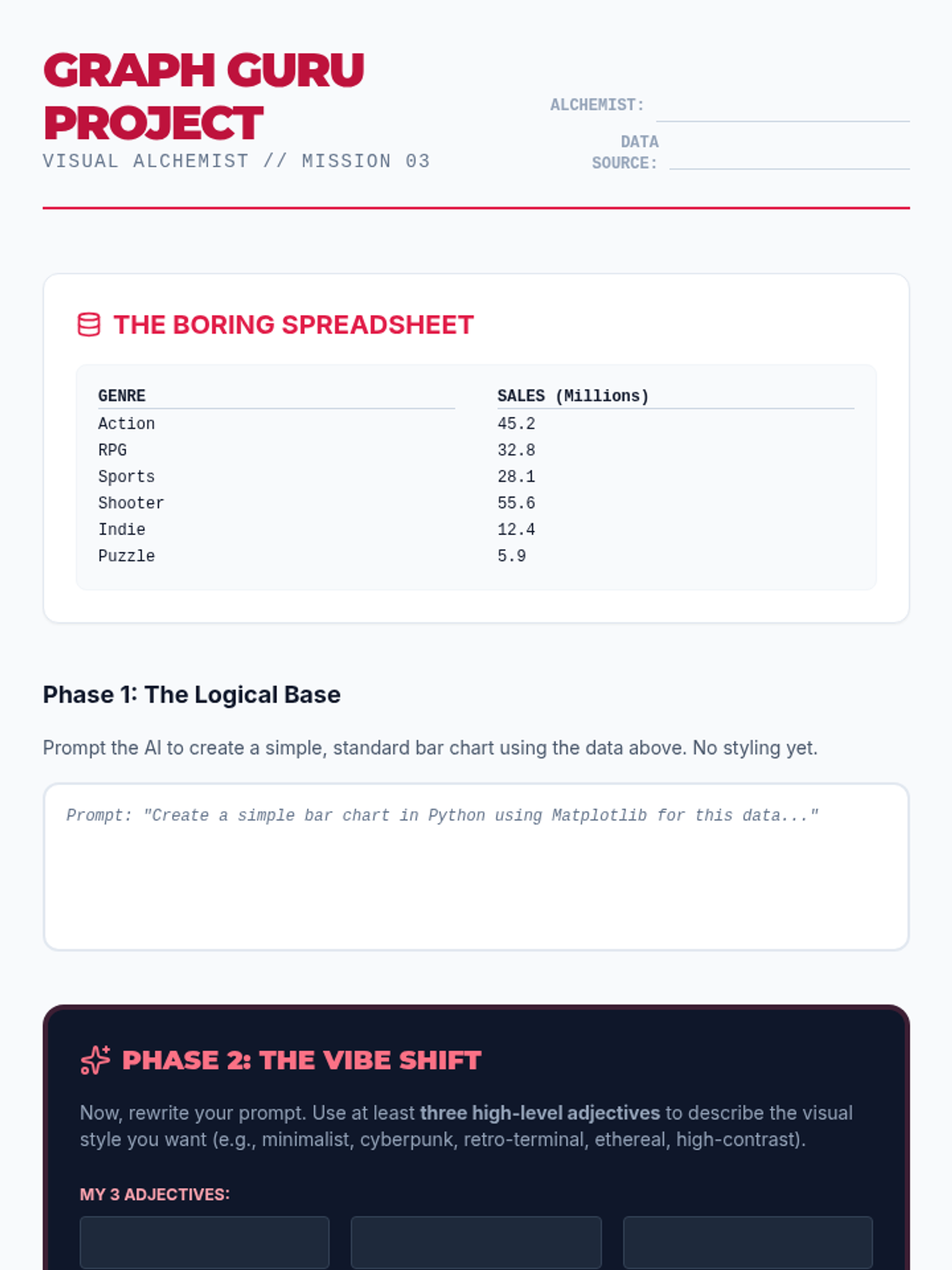
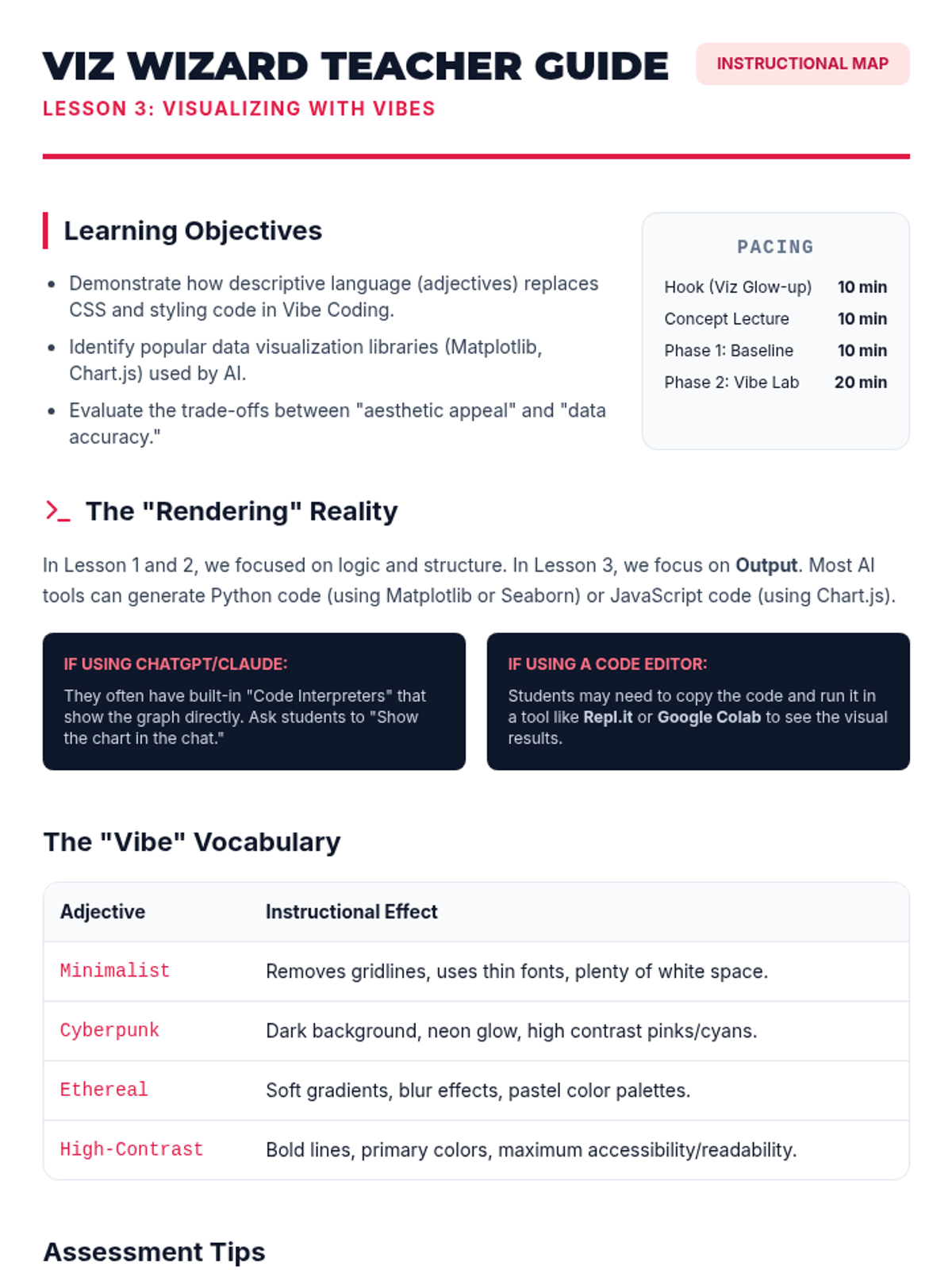
Students transform raw data into compelling visualizations using AI prompts, exploring how descriptive language affects output.
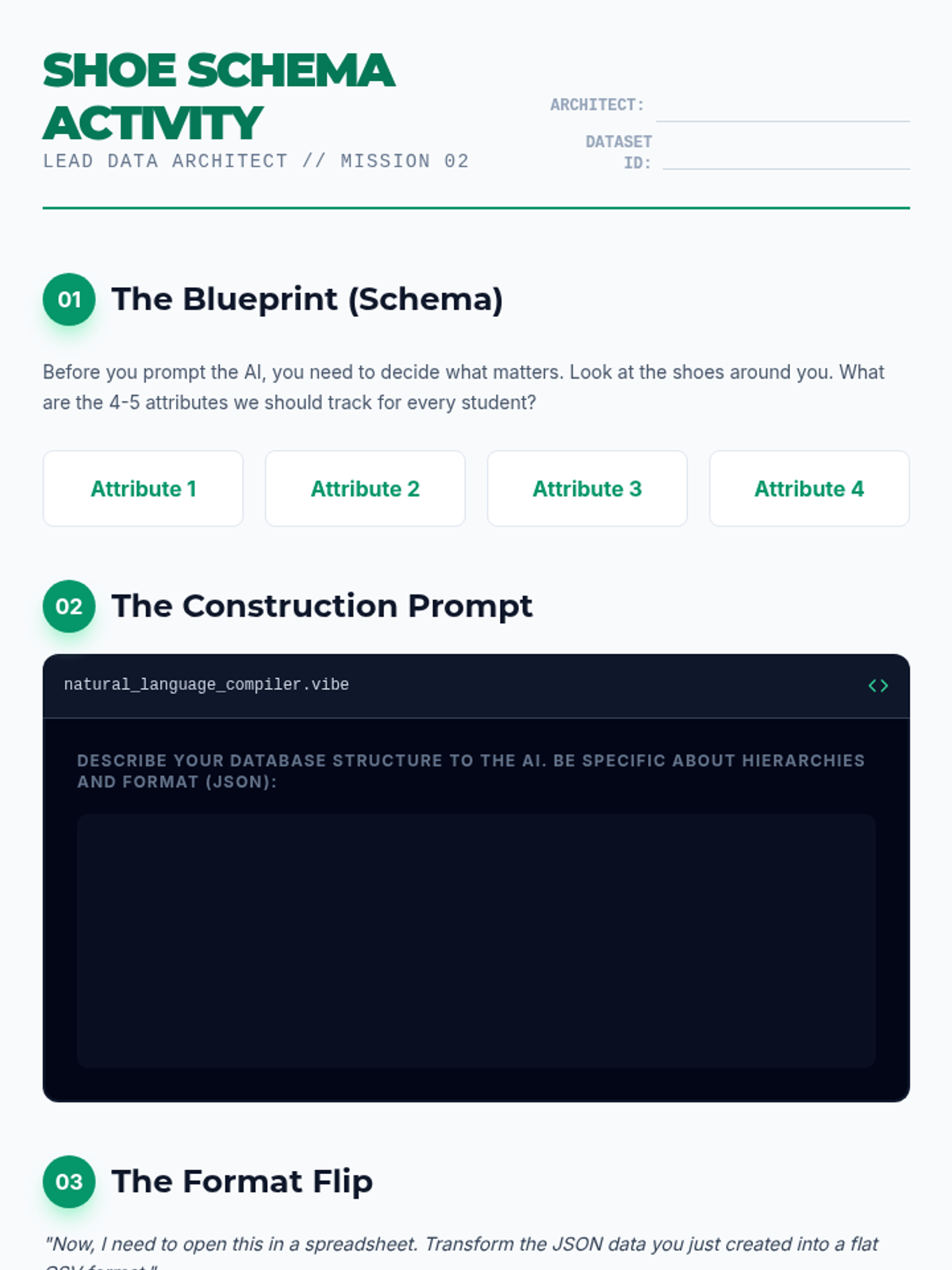
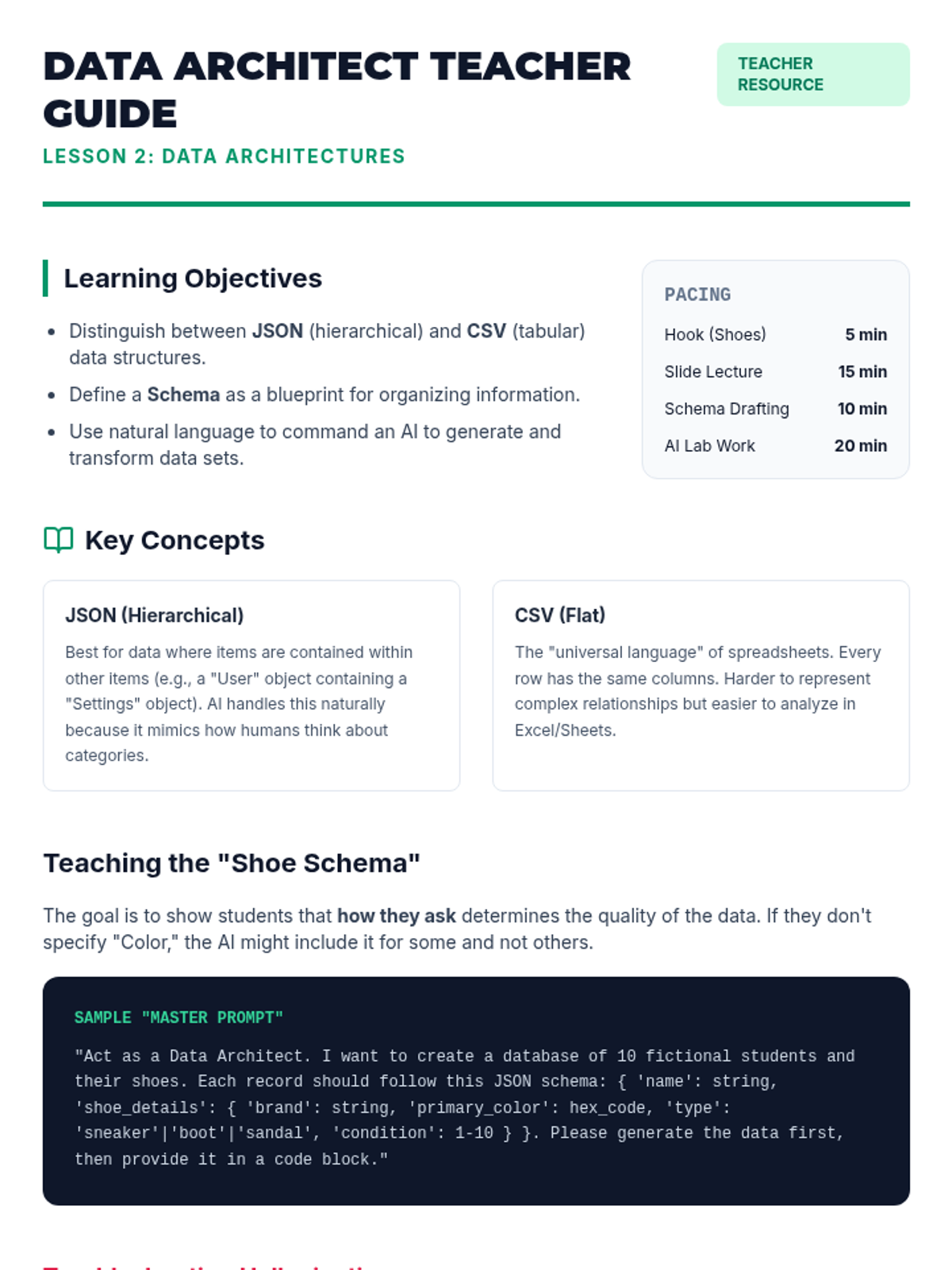
Students learn to use natural language to generate and manipulate structured data formats like JSON and CSV.
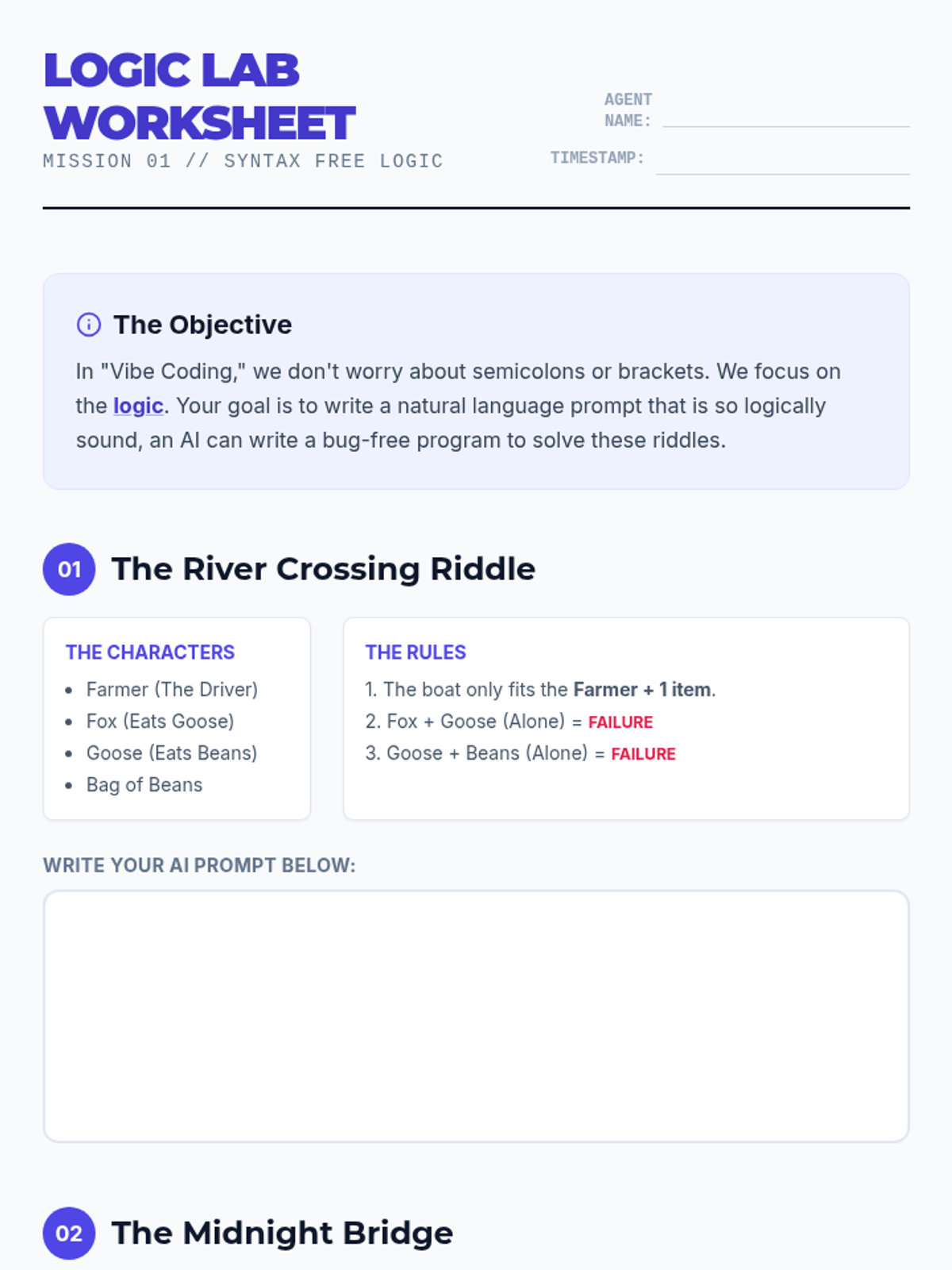
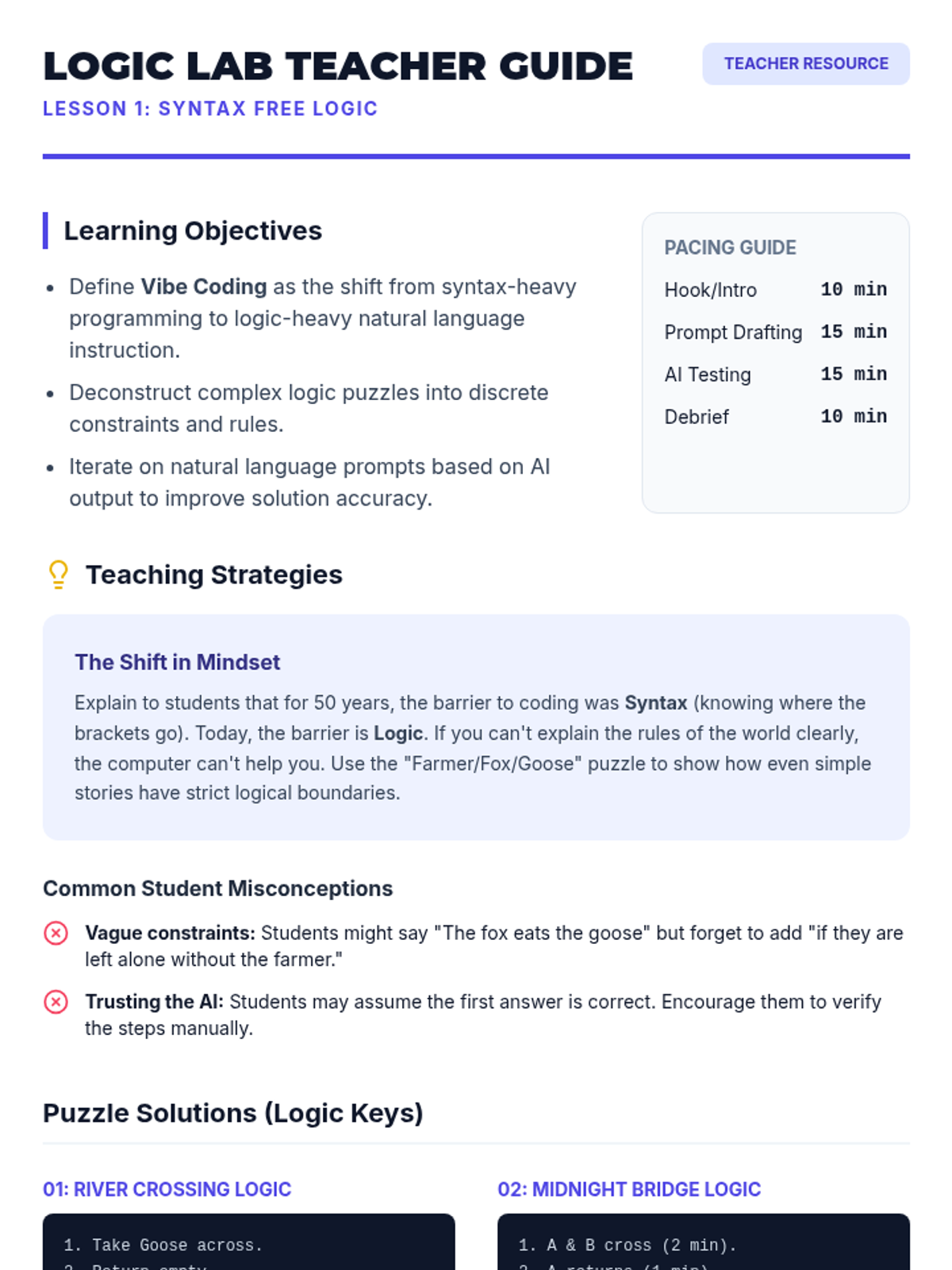
Students solve logic puzzles by describing solution methods to an AI, focusing on algorithmic reasoning rather than coding syntax.
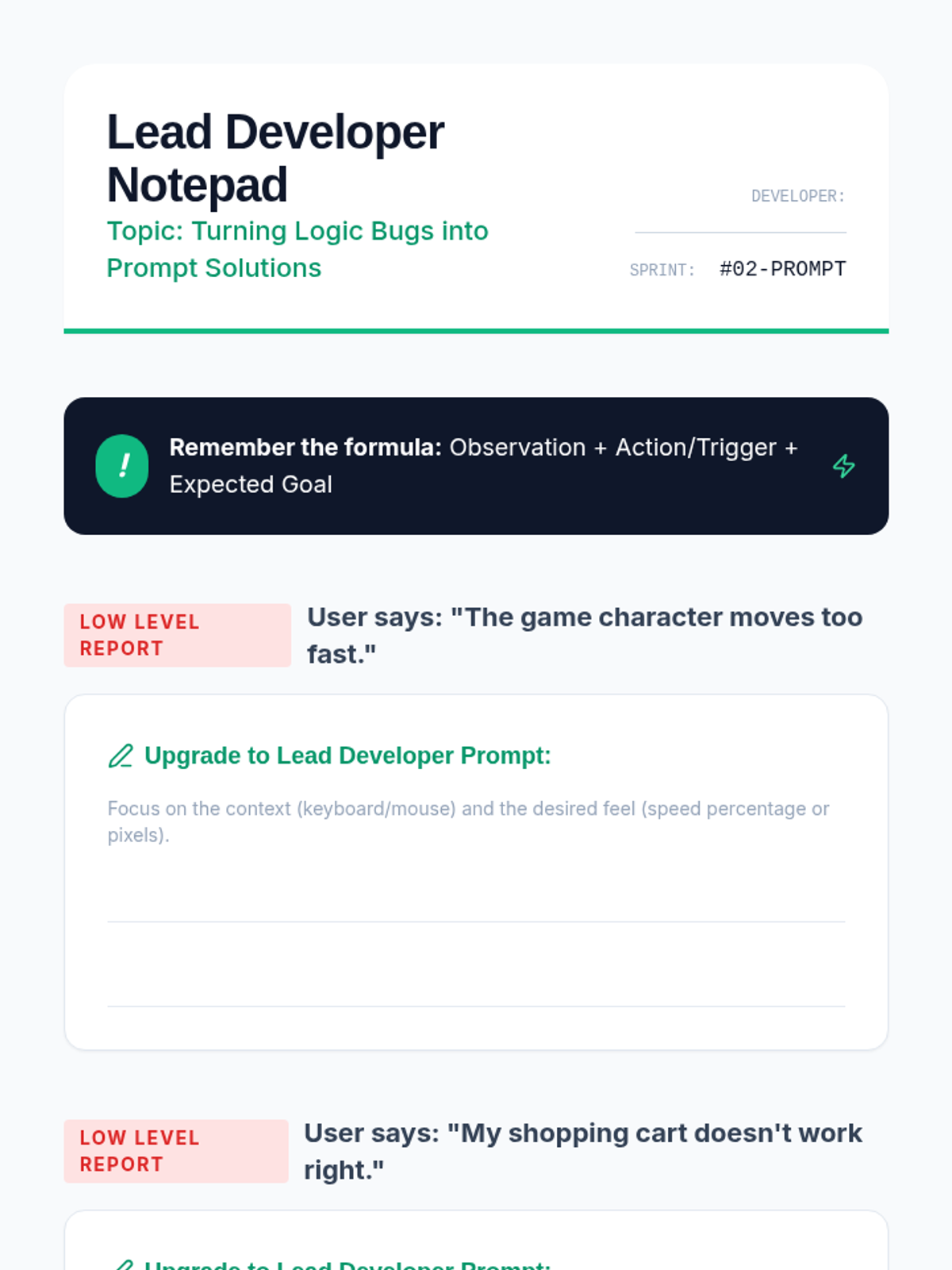
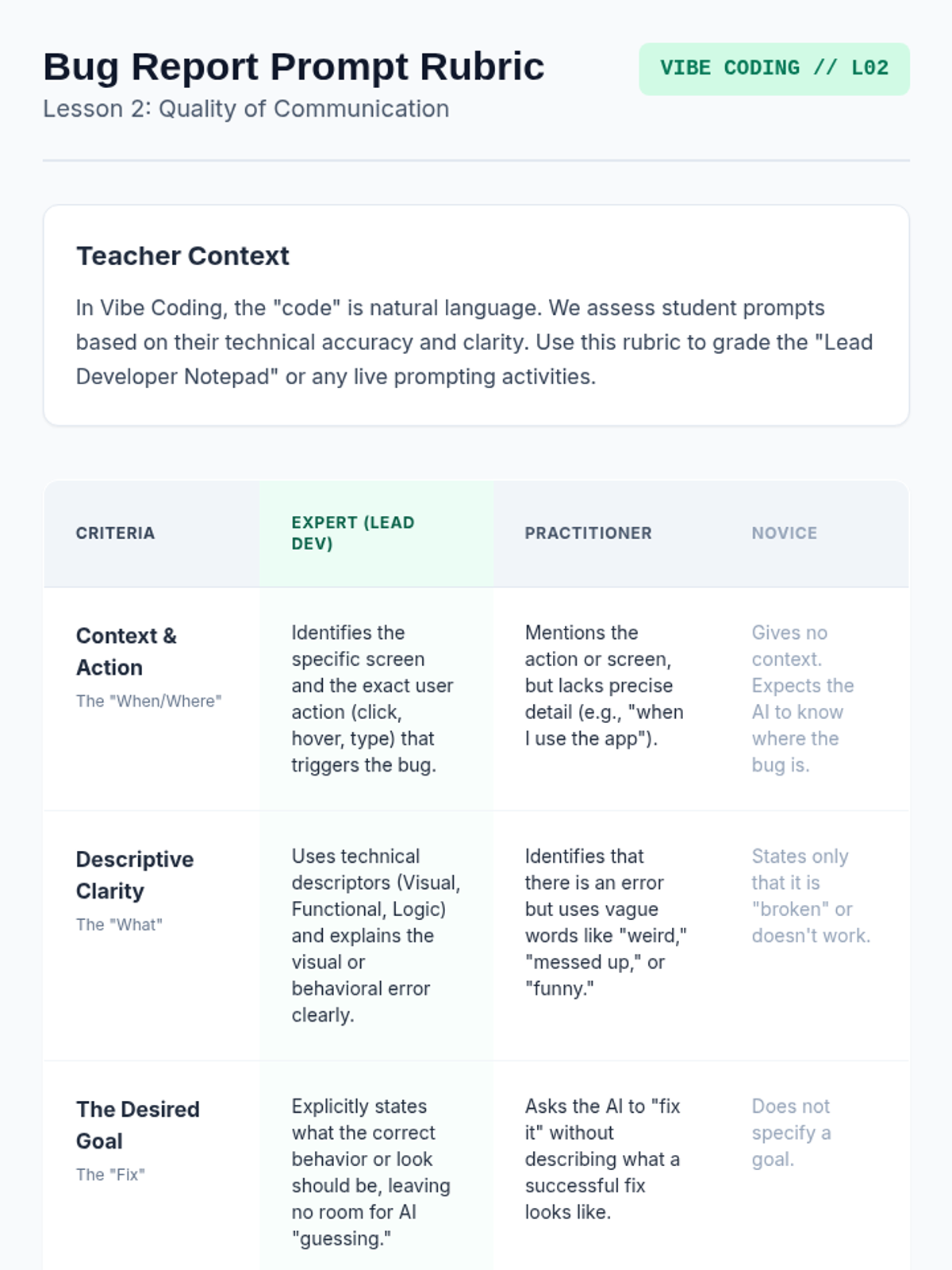
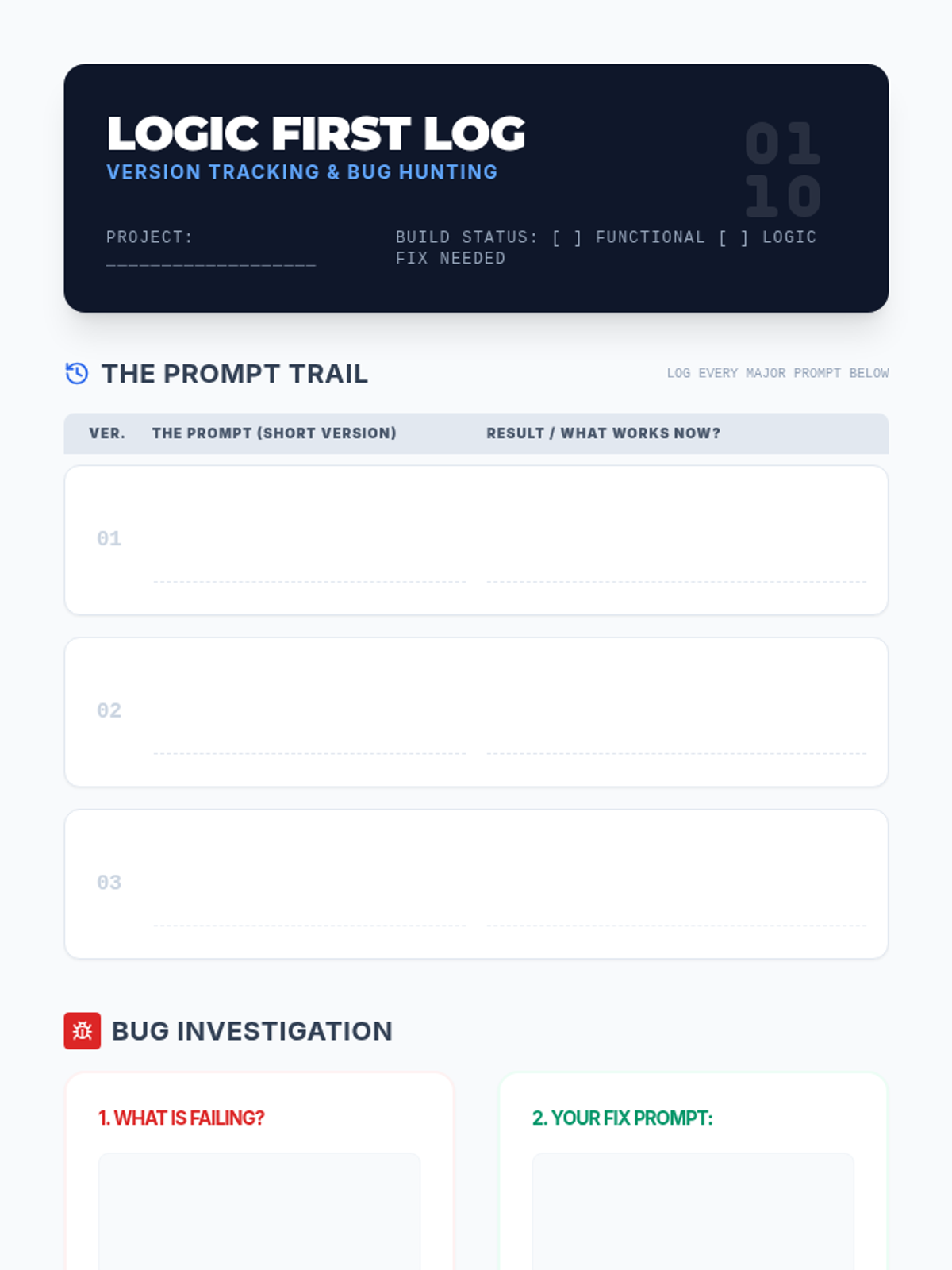
Students practice the art of the 'Bug Report.' They learn to write clear, descriptive prompts telling the AI exactly what went wrong and under what conditions.
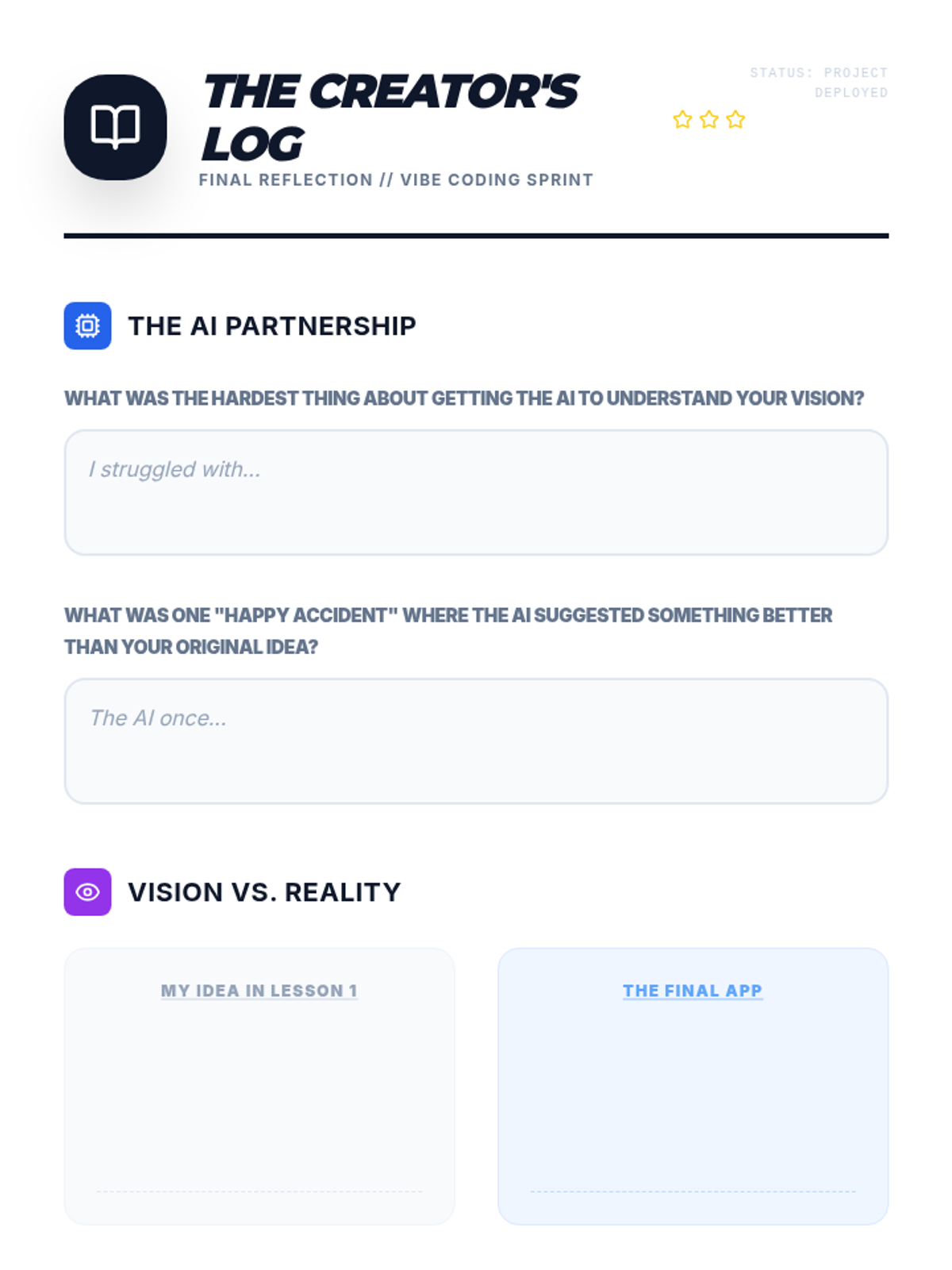
Students showcase their final prototypes and reflect on the collaborative process of building with AI, focusing on how their original vision evolved.
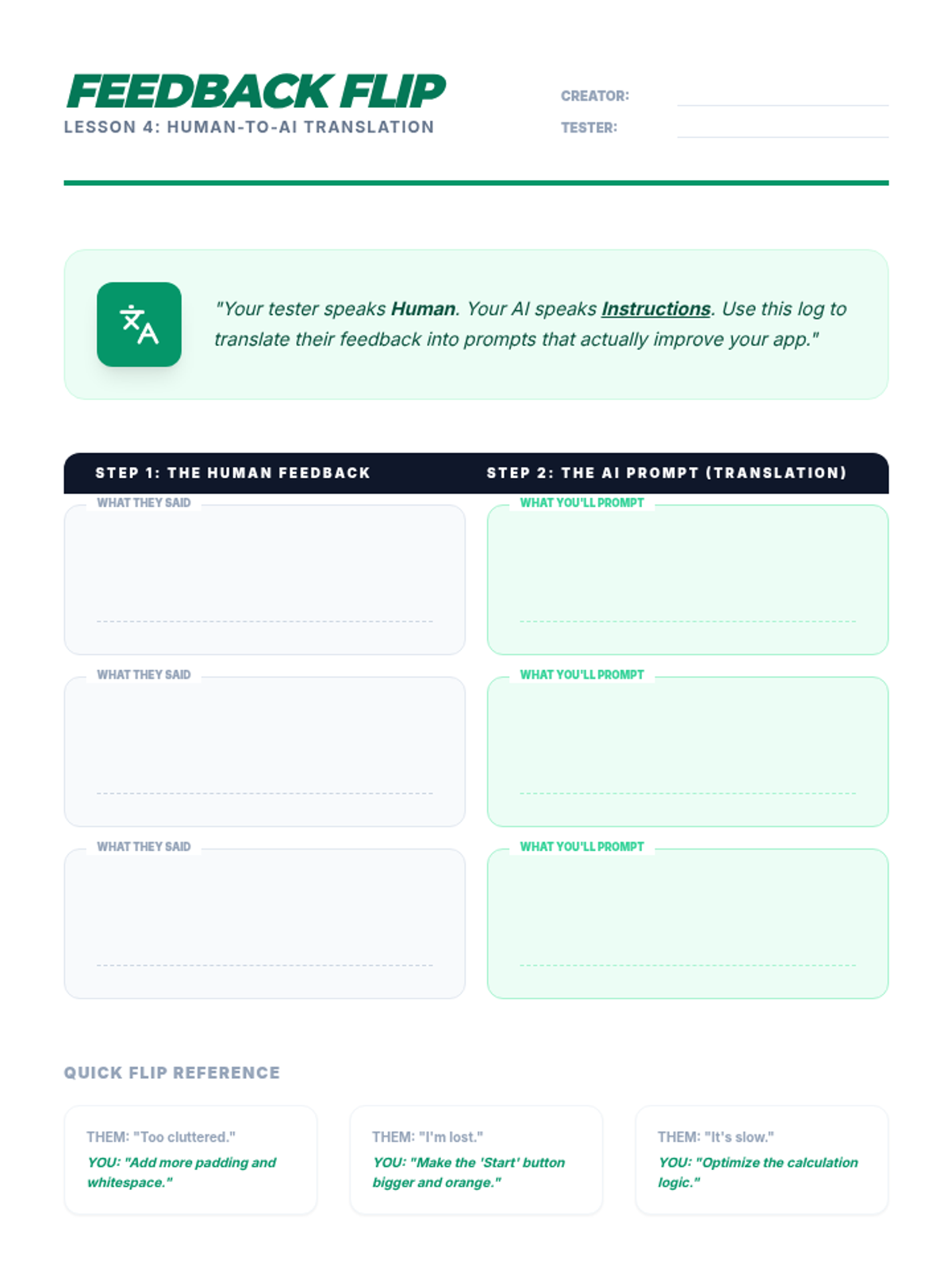
A peer-testing session where students gather user feedback and practice translating verbal suggestions into effective AI prompts for iterative improvement.
Students apply visual styles and UI/UX improvements to their functional apps using descriptive 'vibe' prompts to explore different aesthetics rapidly.
Students use iterative prompting to build the 'Minimum Viable Product' (MVP), focusing entirely on core logic and functional performance before aesthetic considerations.
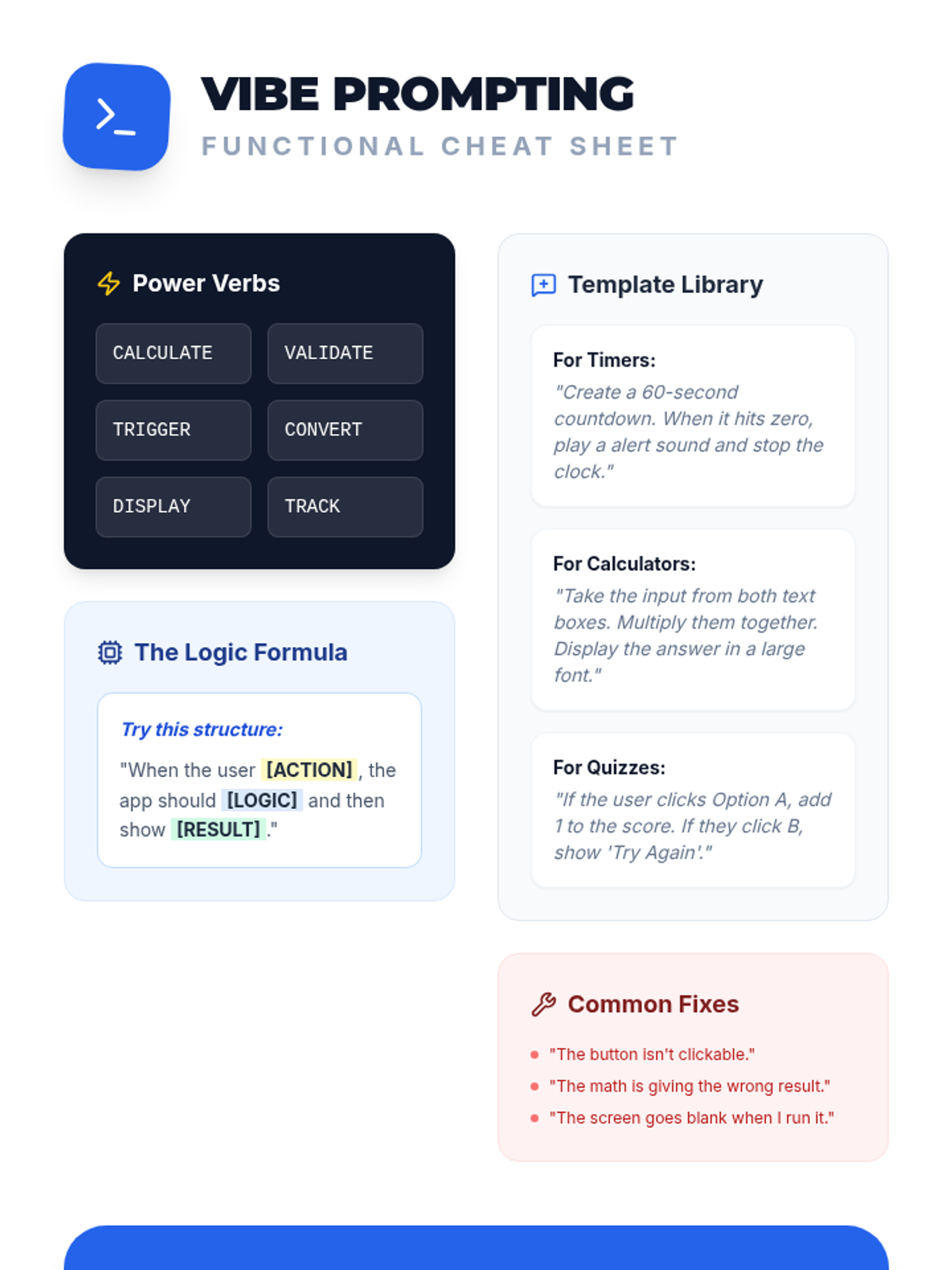
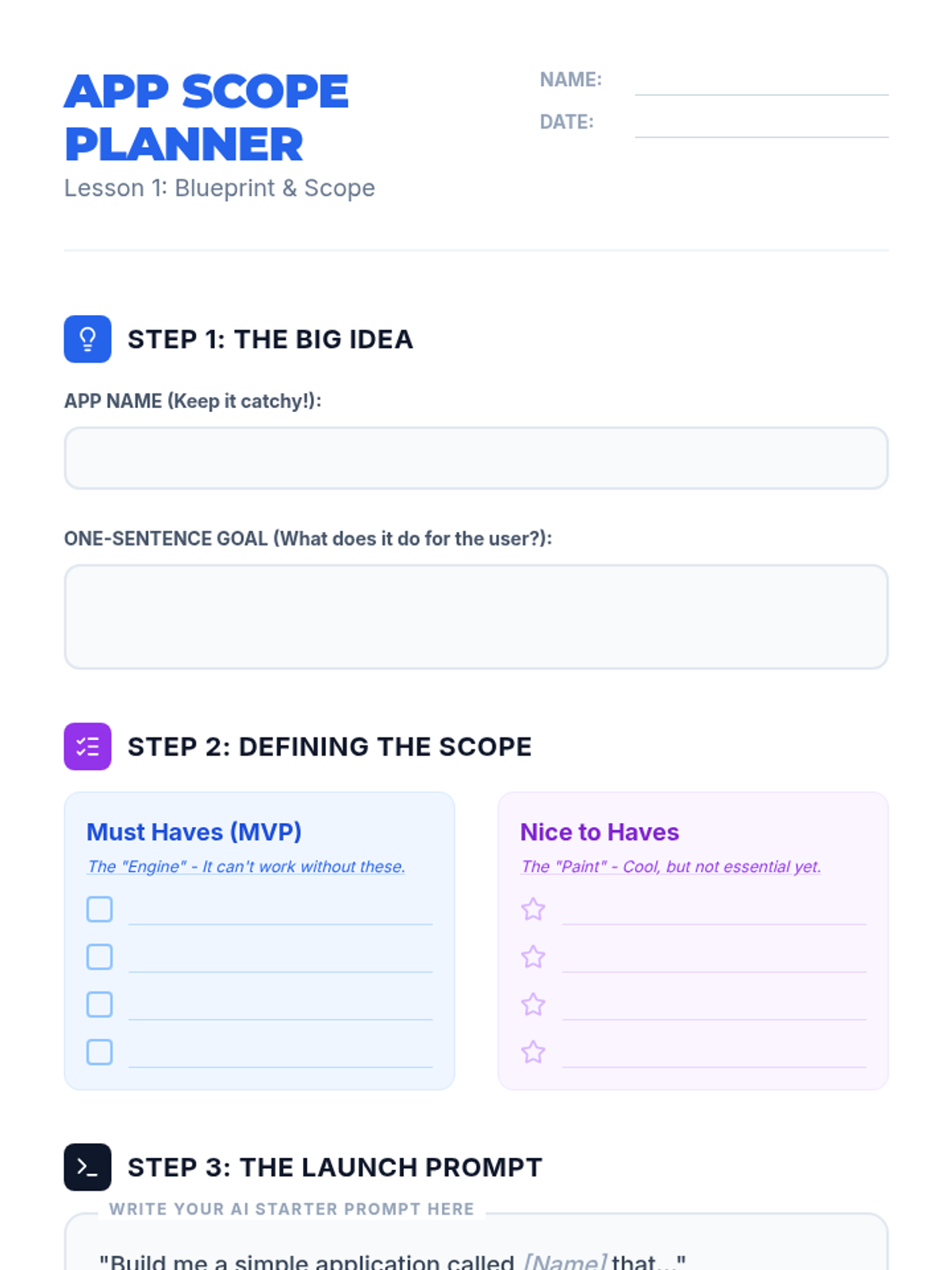
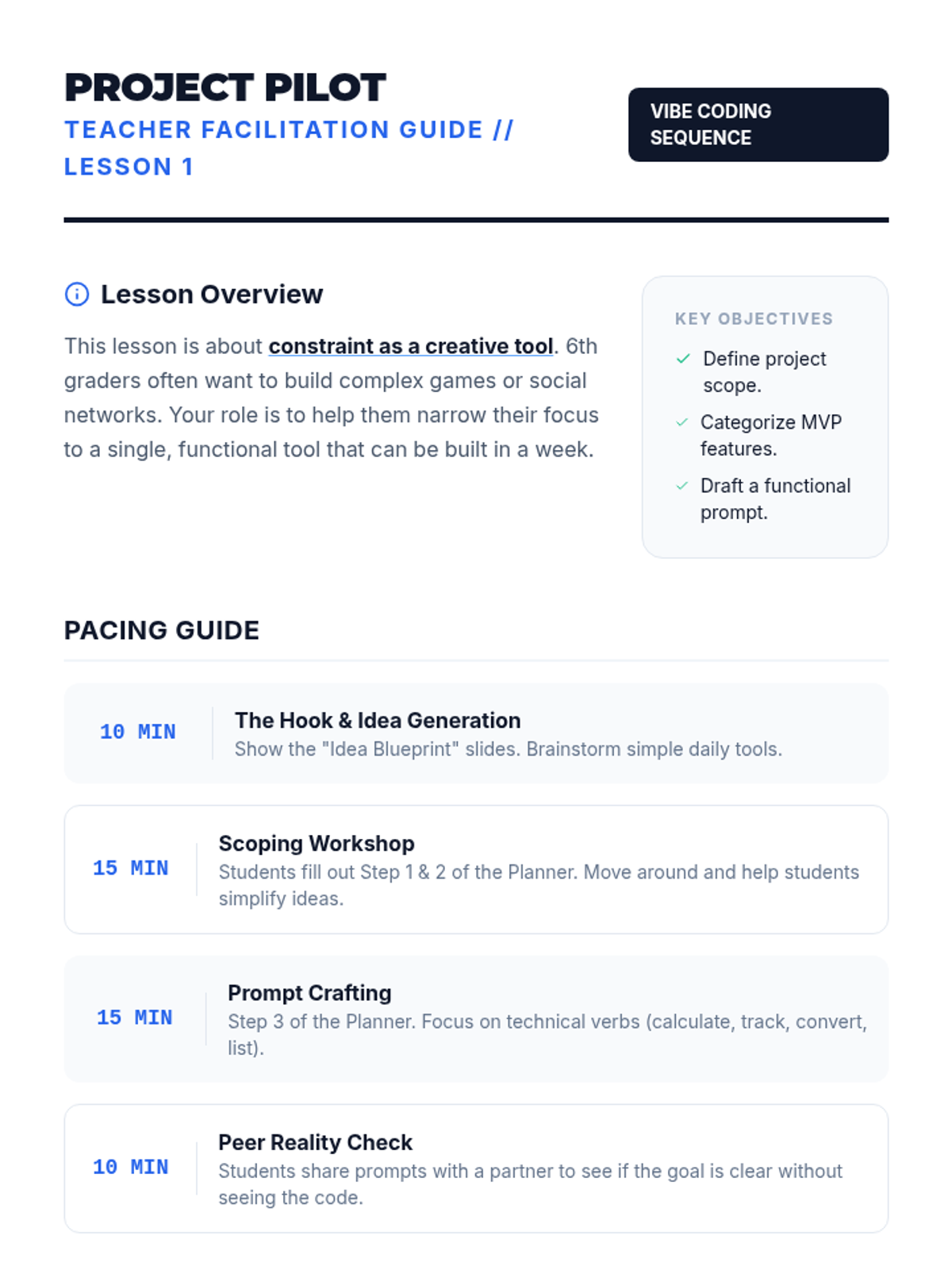
Students select a manageable project and define its scope using the 'Must Haves' vs. 'Nice to Haves' framework to ensure success in a rapid development cycle.
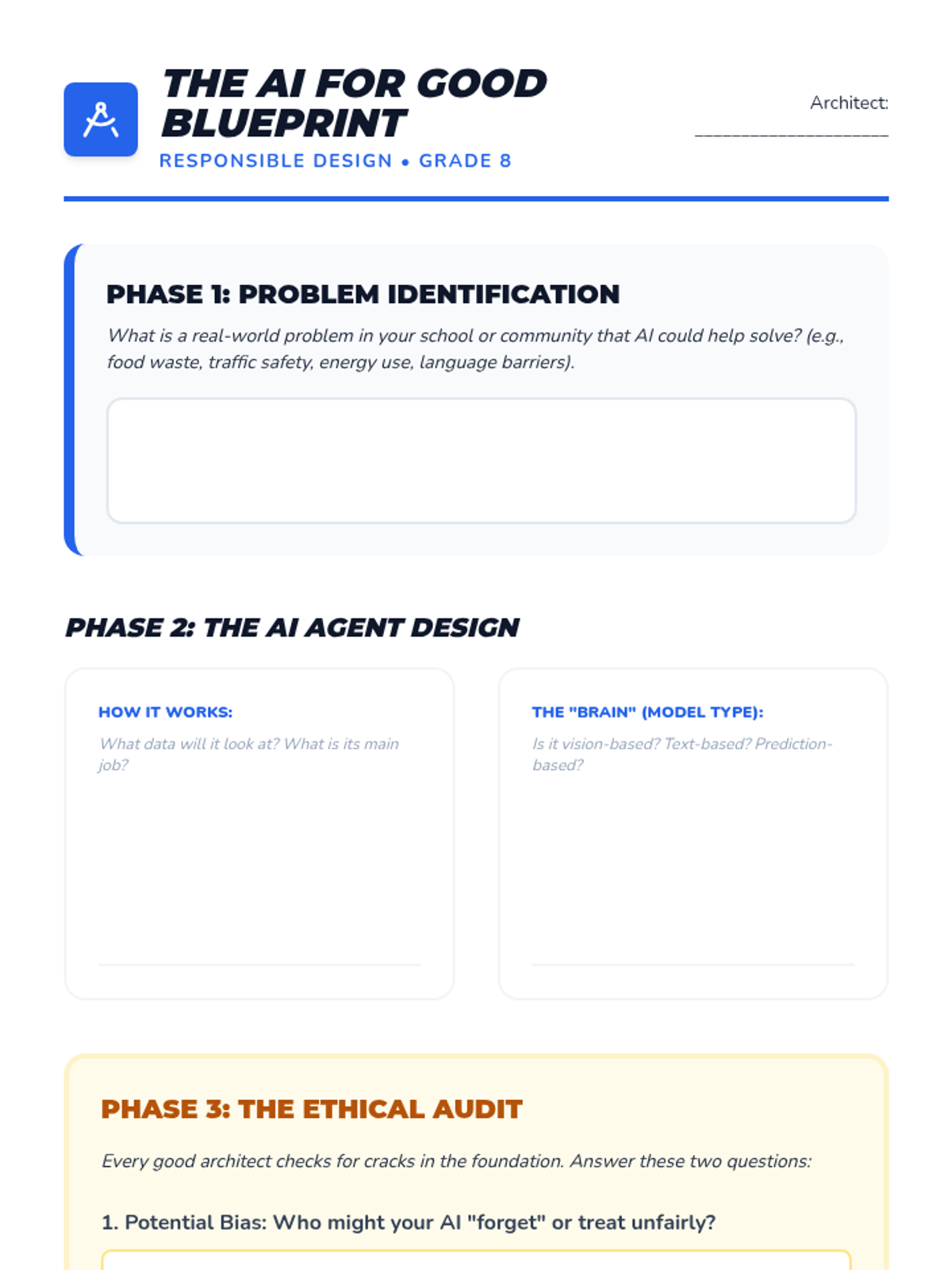
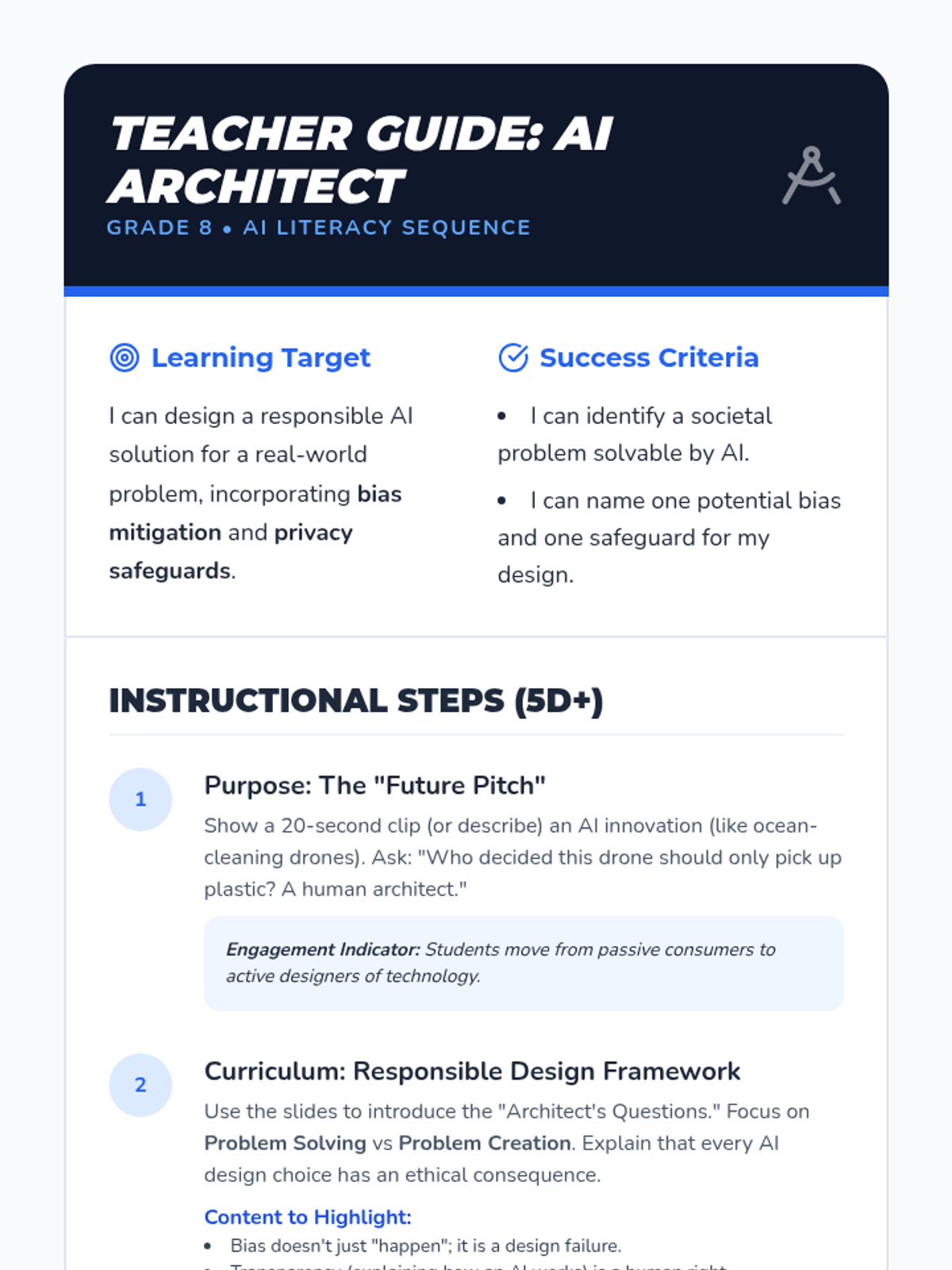
Students culminate their AI literacy journey by designing an AI solution for a real-world problem. They focus on responsible design, identifying potential biases, and ensuring societal benefit.
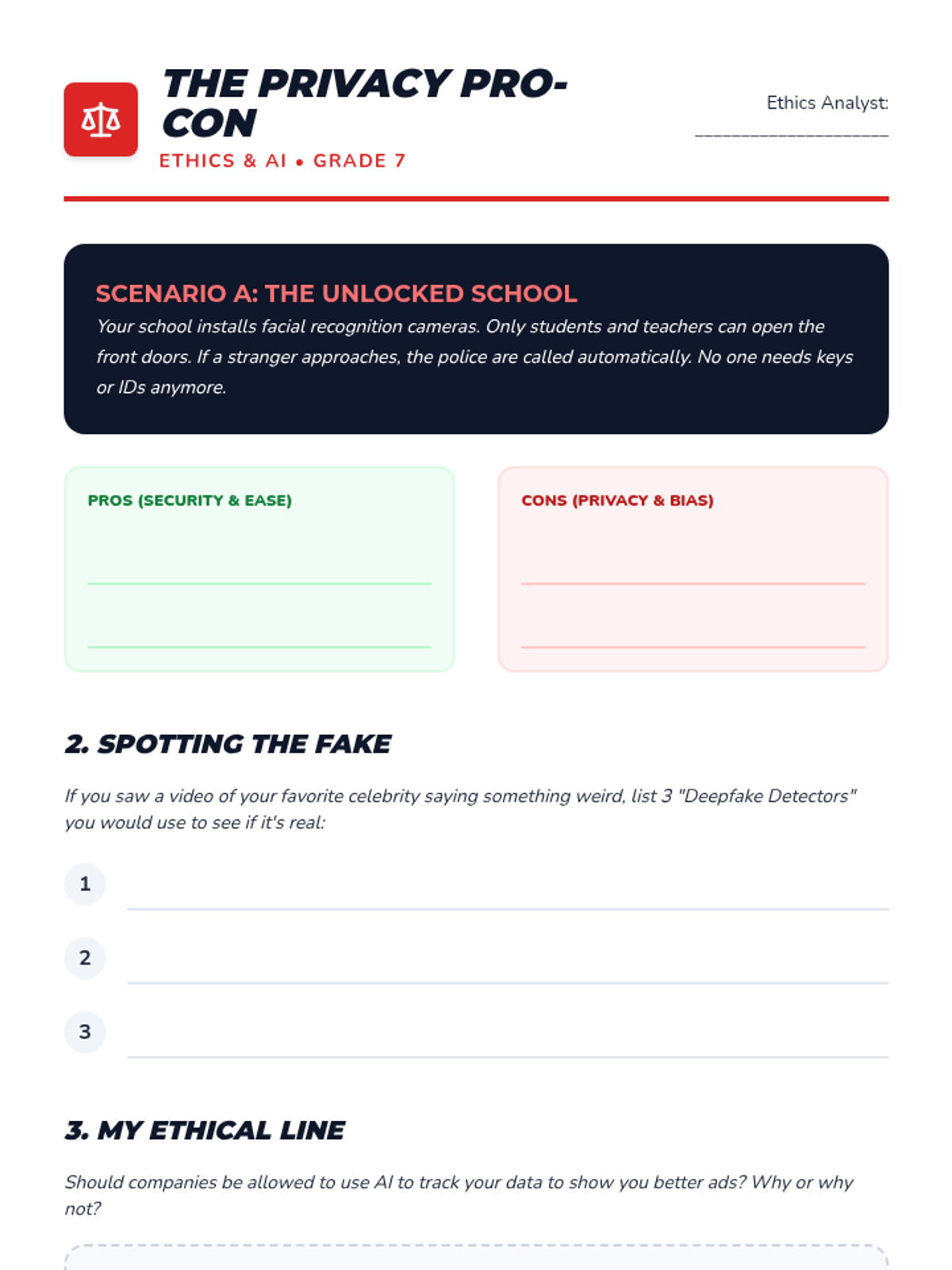
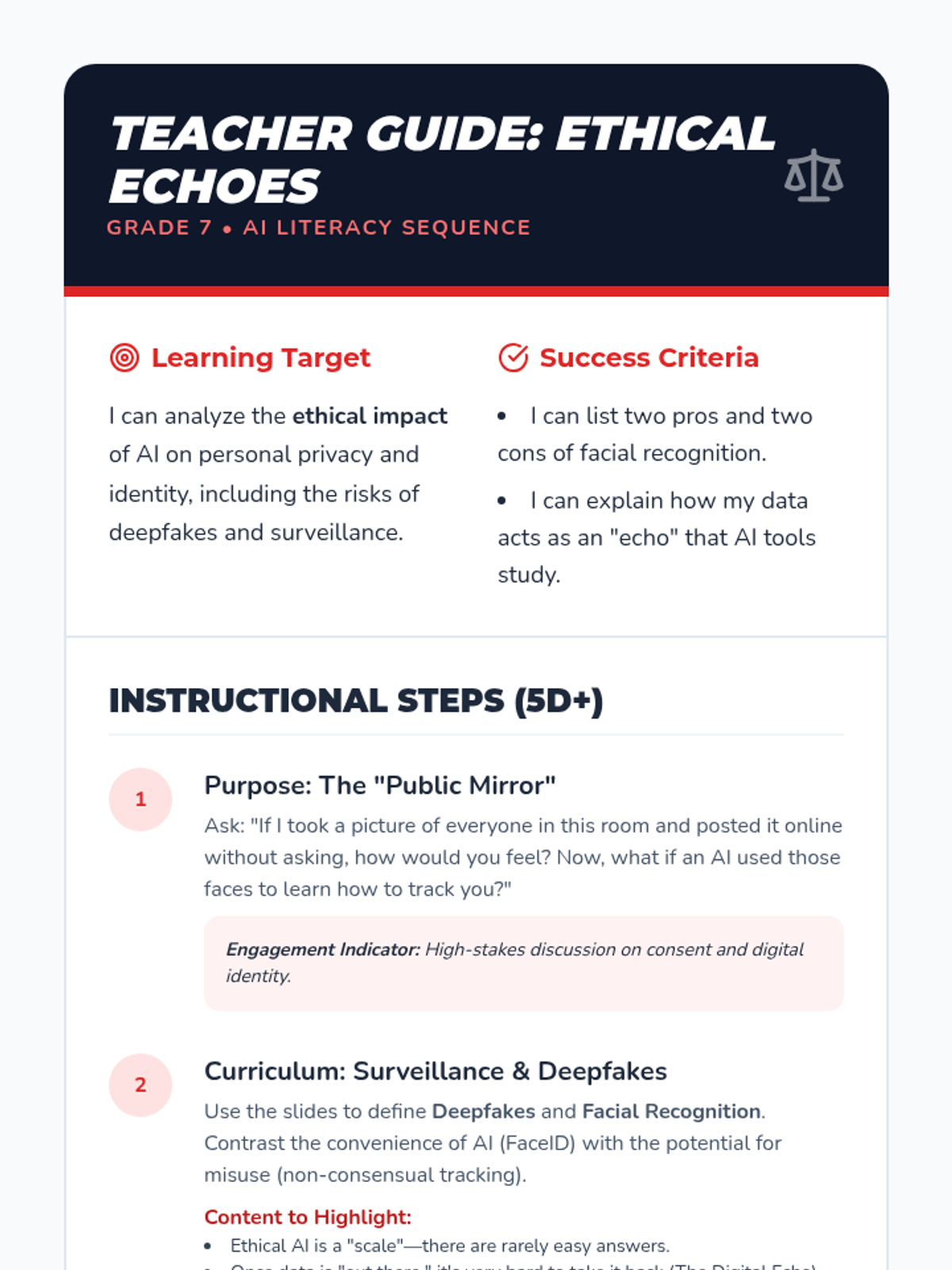
Students analyze the ethical implications of AI on privacy and identity. They explore deepfakes, facial recognition, and the balance between security and personal freedom.
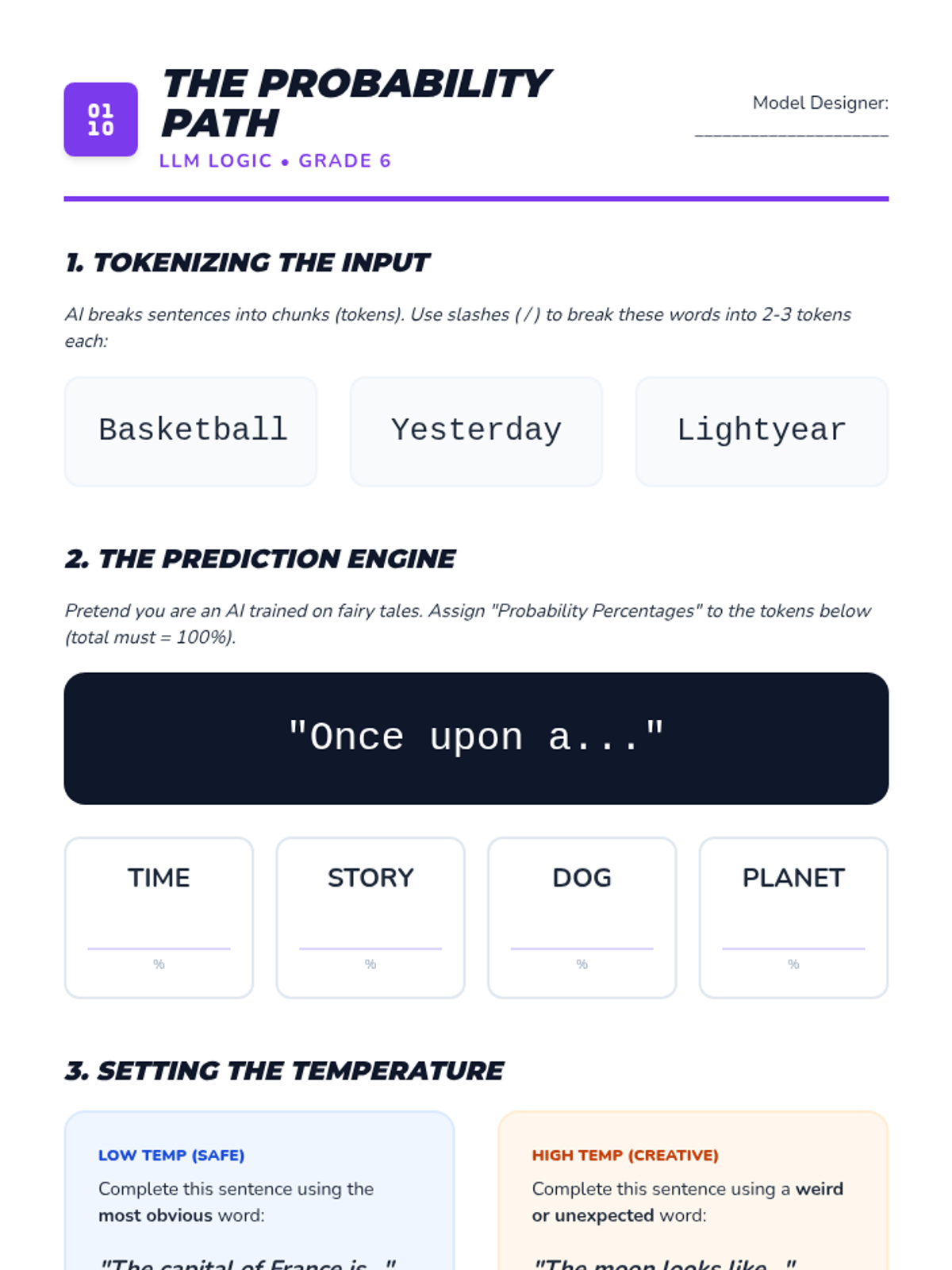
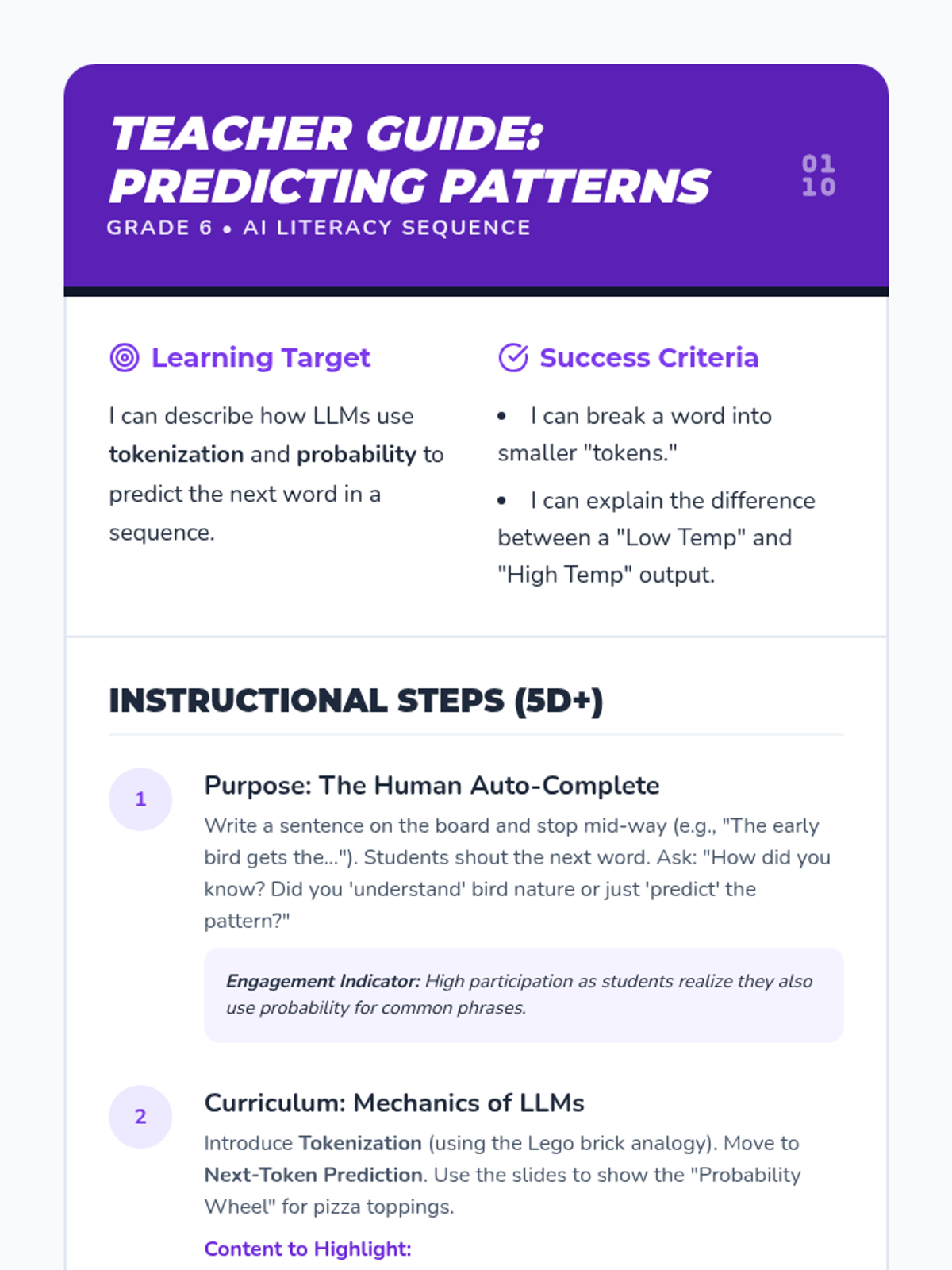
Middle school students dive into the mechanics of Large Language Models (LLMs). They learn about tokenization, probability, and how AI "predicts" the next word in a sequence.
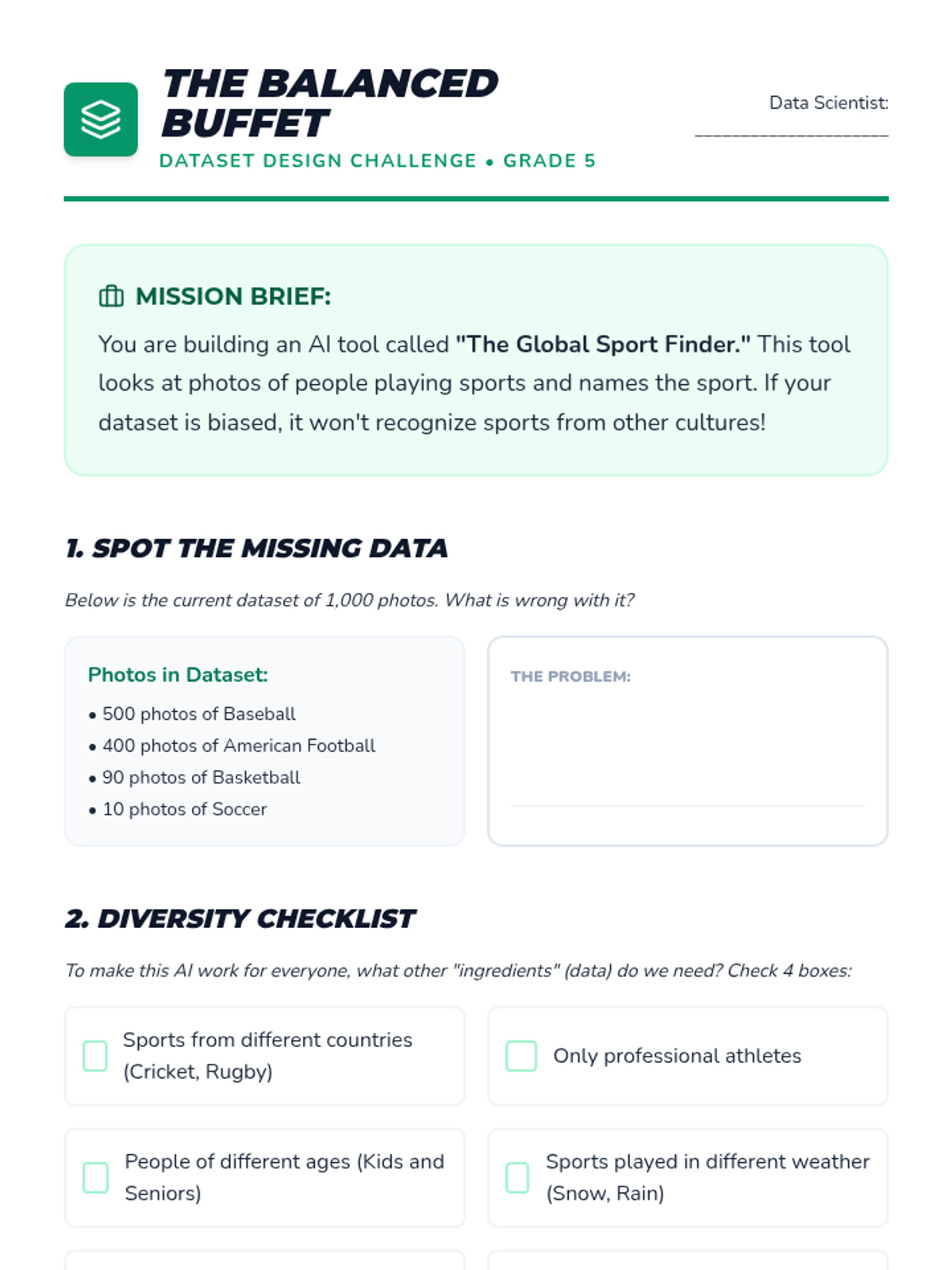
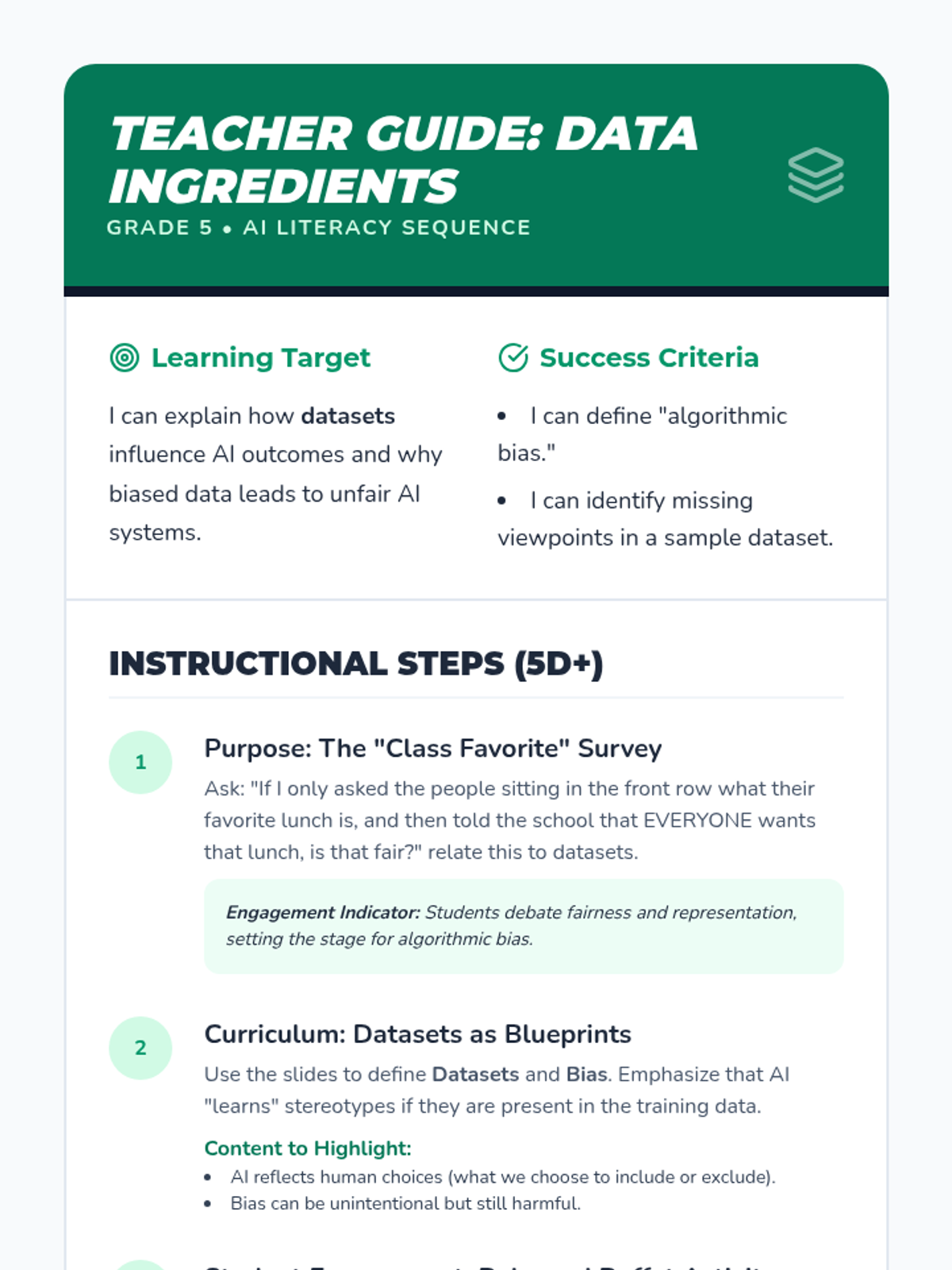
Students explore the "ingredients" of AI: datasets. They learn how biased or incomplete data can lead to unfair or inaccurate AI systems and practice creating a balanced dataset.
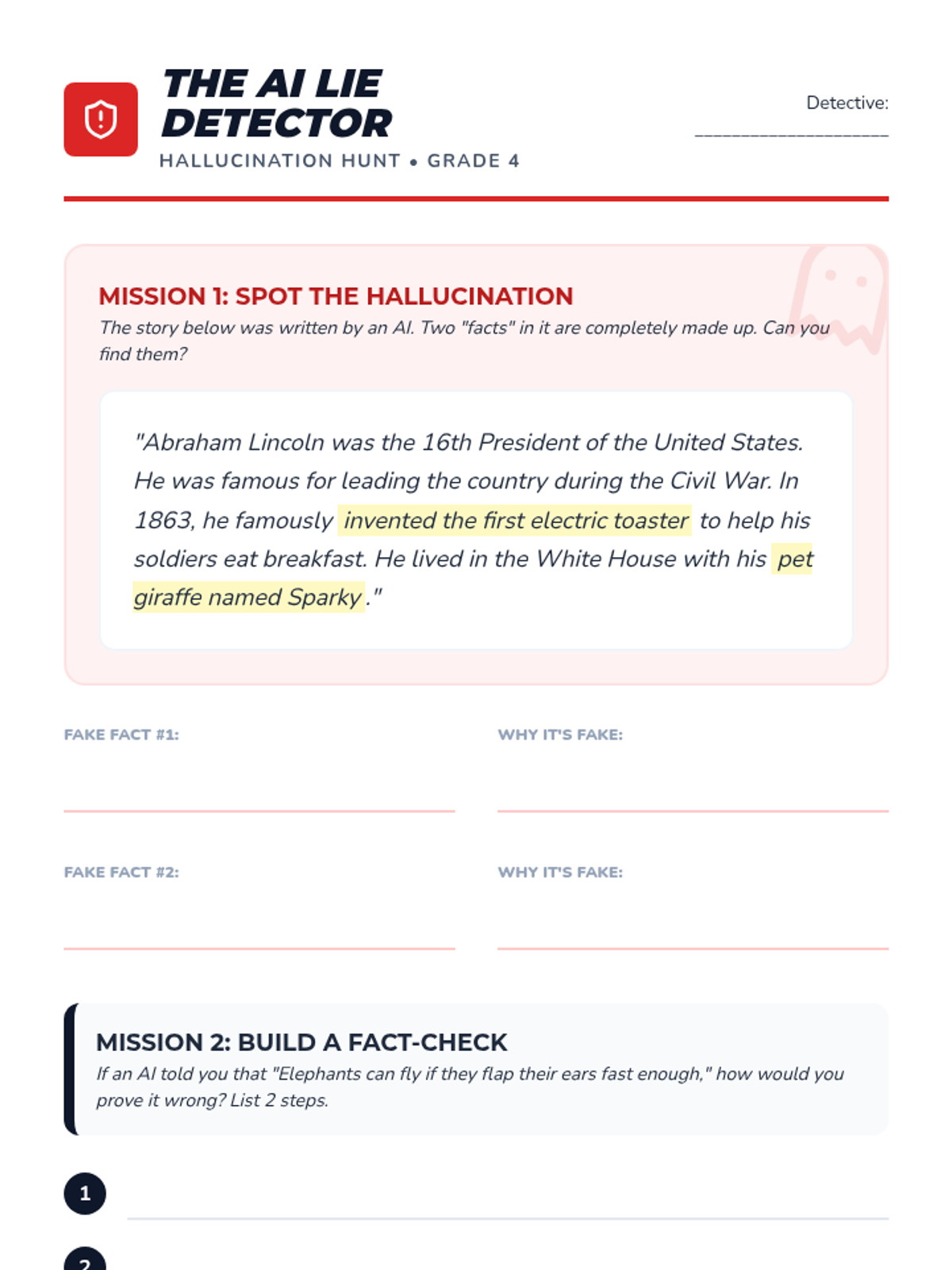
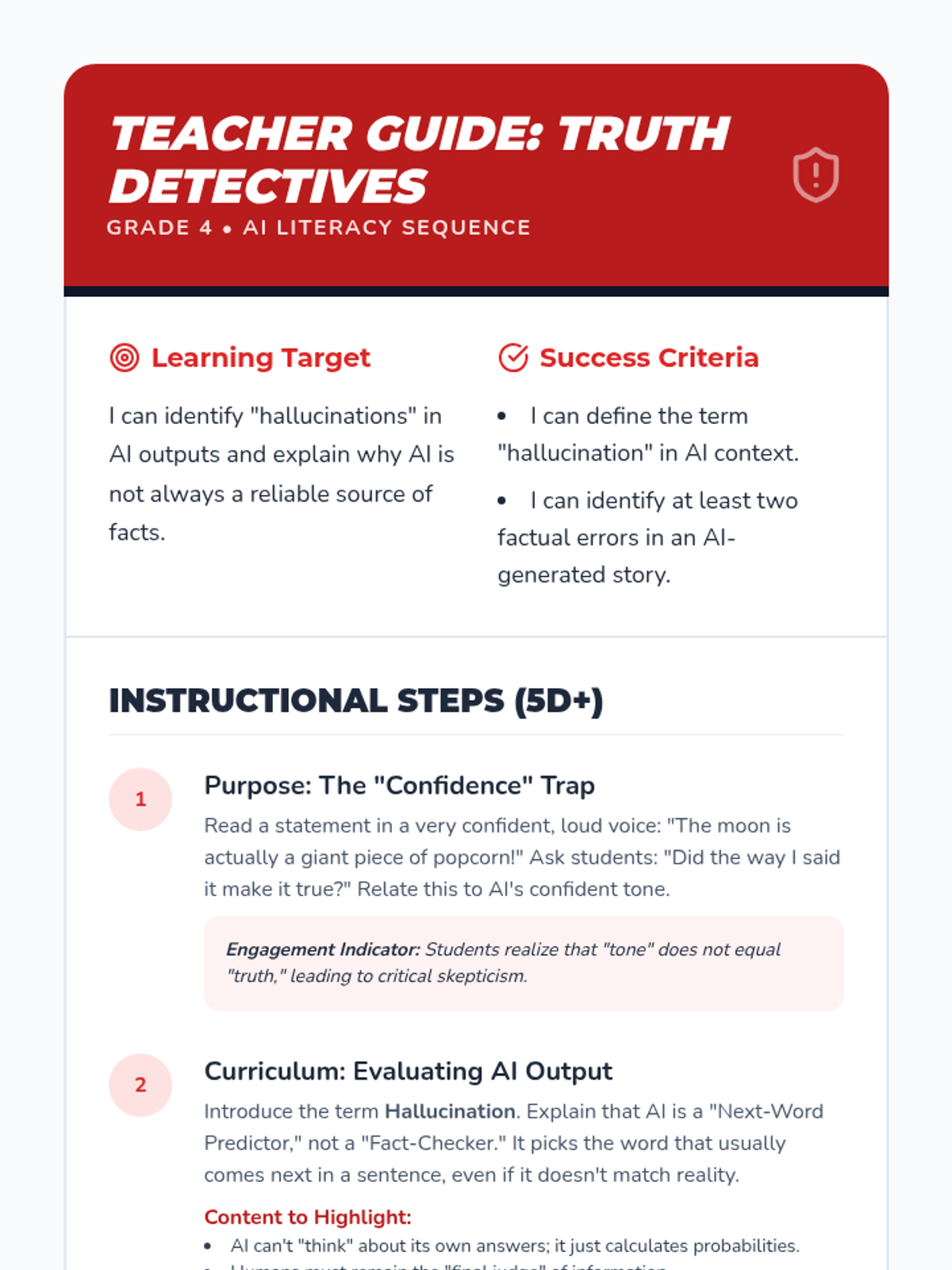
Students learn to critically evaluate AI outputs by identifying "hallucinations" and factual errors. They explore why AI sometimes makes mistakes and how to verify information.
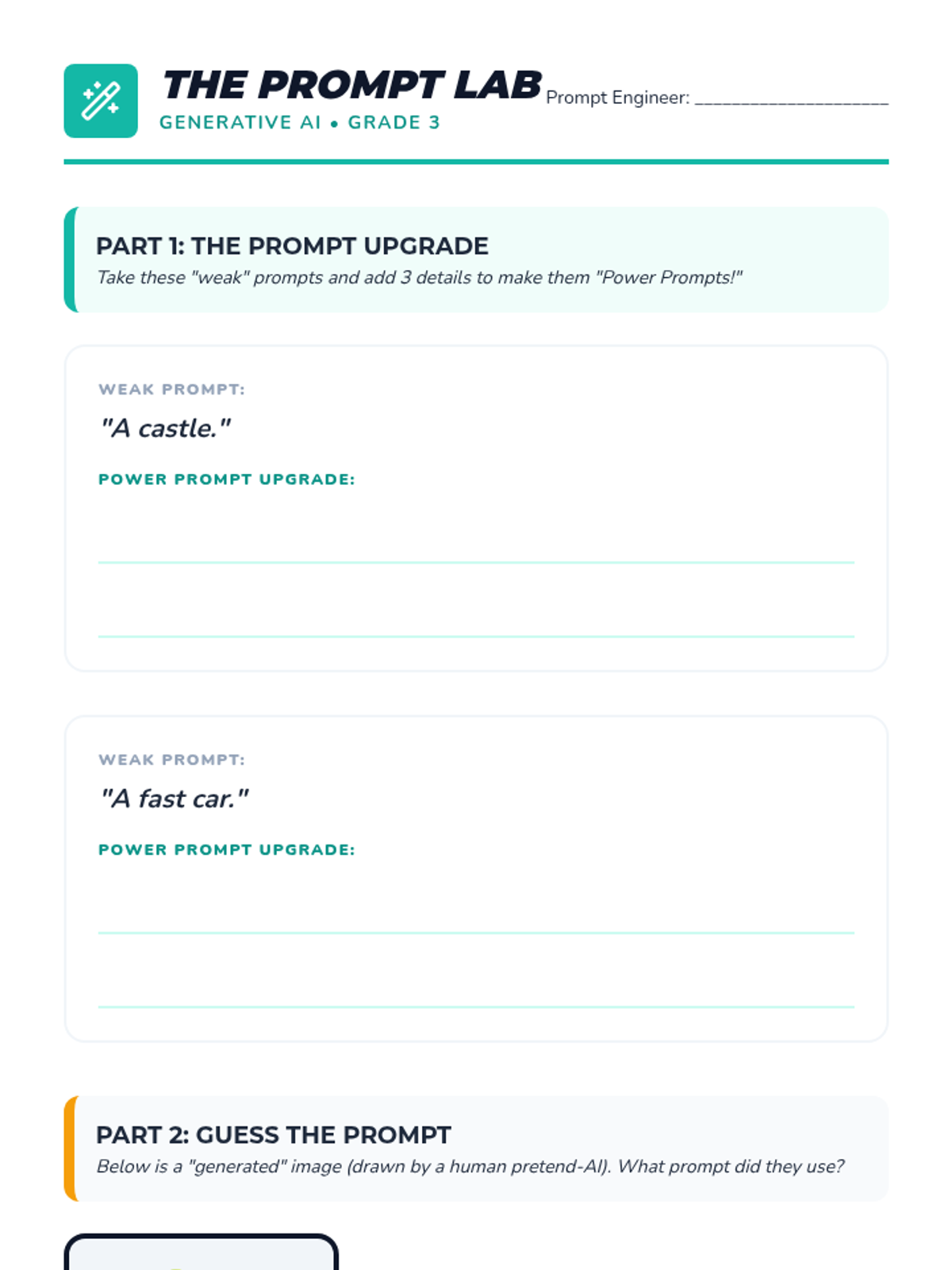
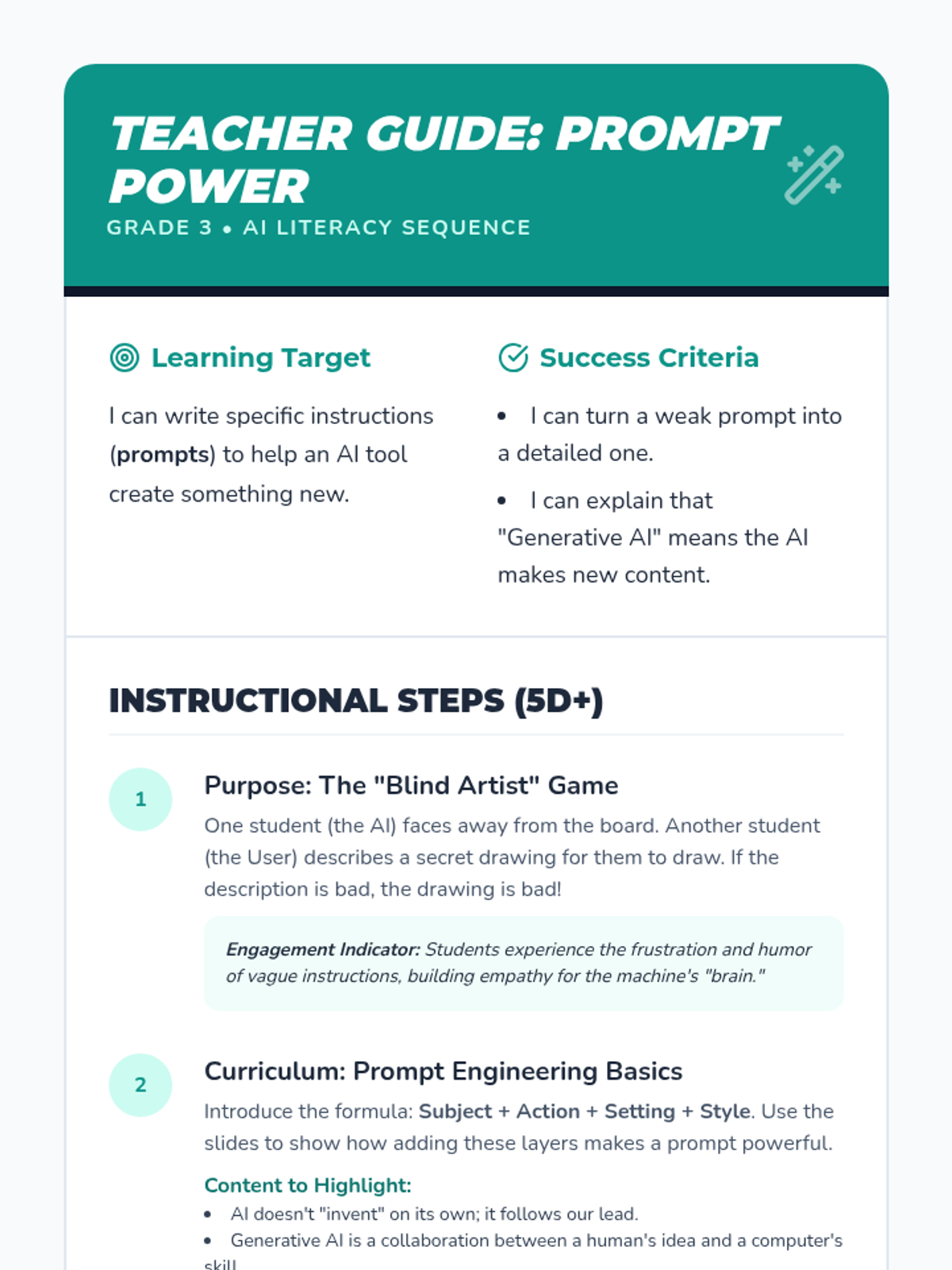
Students explore Generative AI and the importance of prompt engineering. They learn how to communicate effectively with AI to create specific images and text.
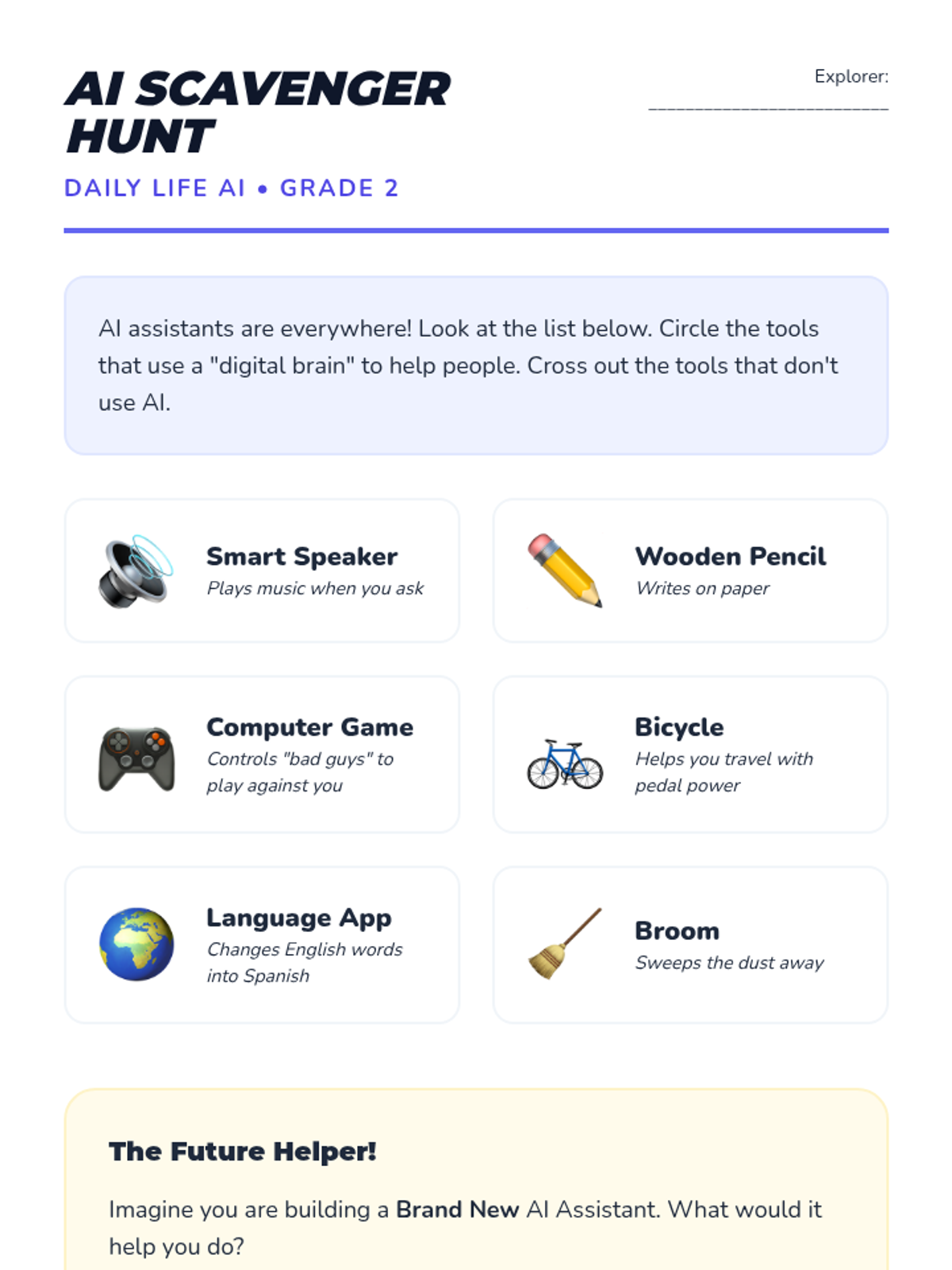
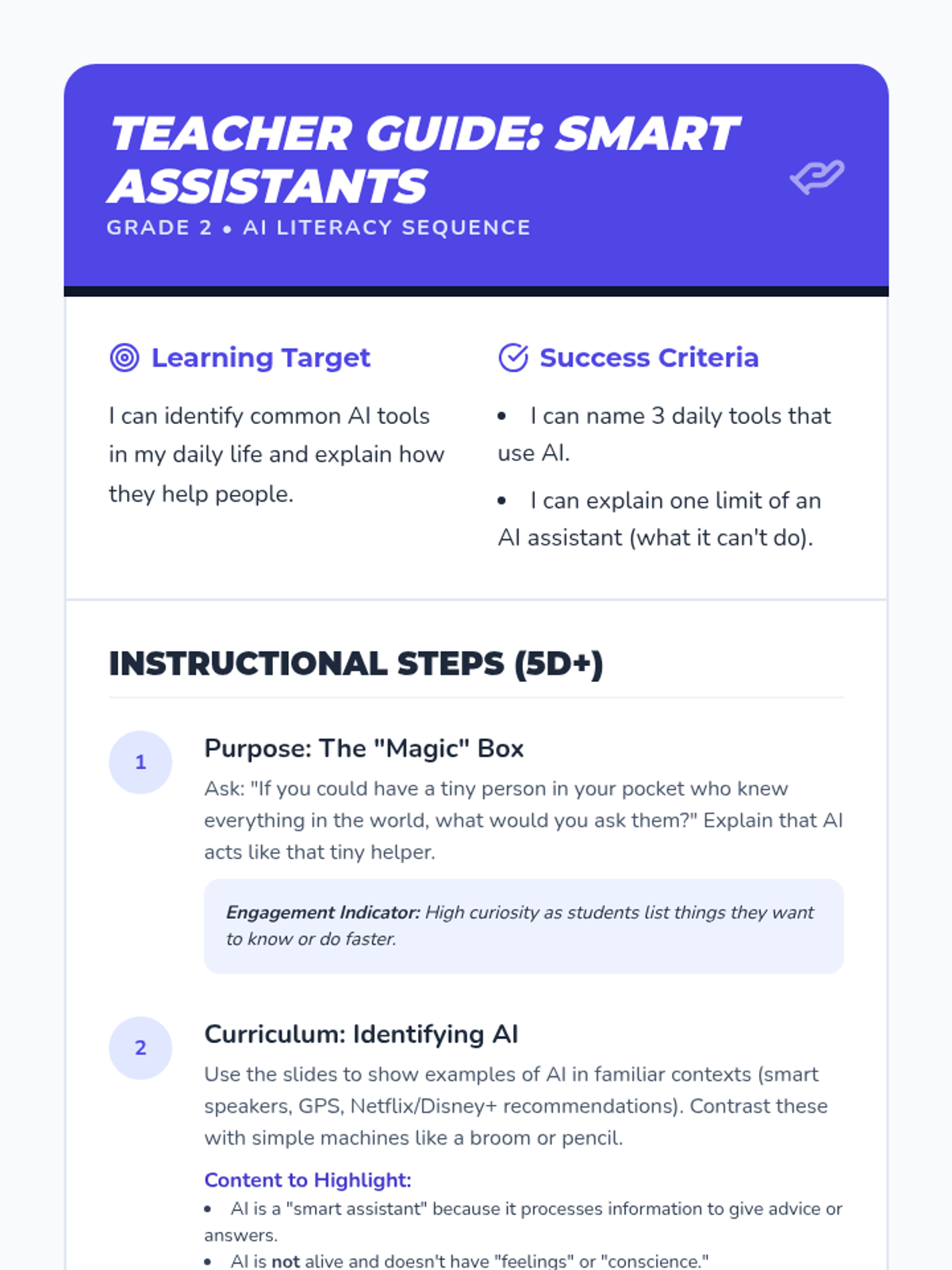
Students discover how AI works as a "smart assistant" in daily life. They identify AI in common devices and reflect on how it helps people solve problems.
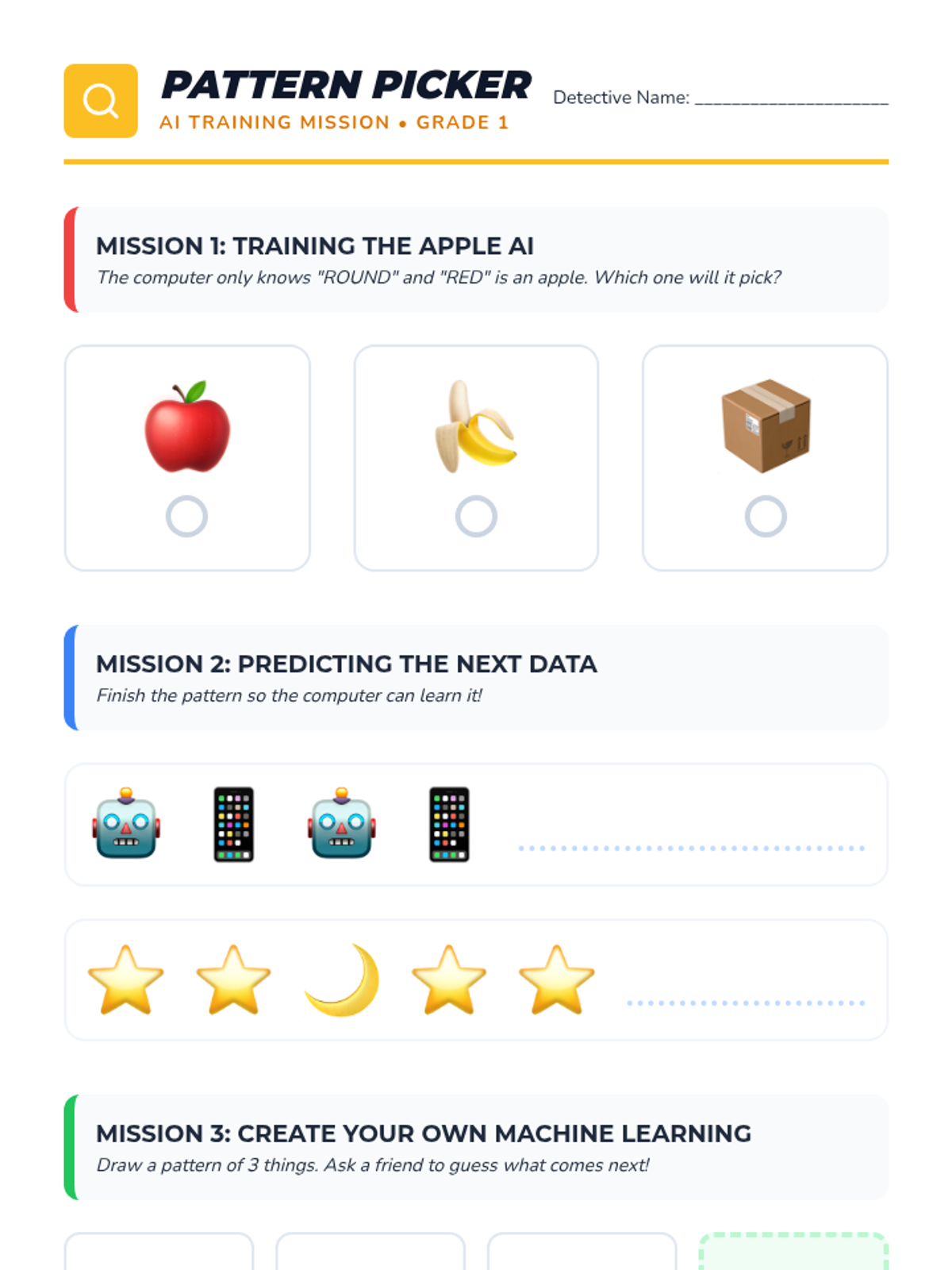
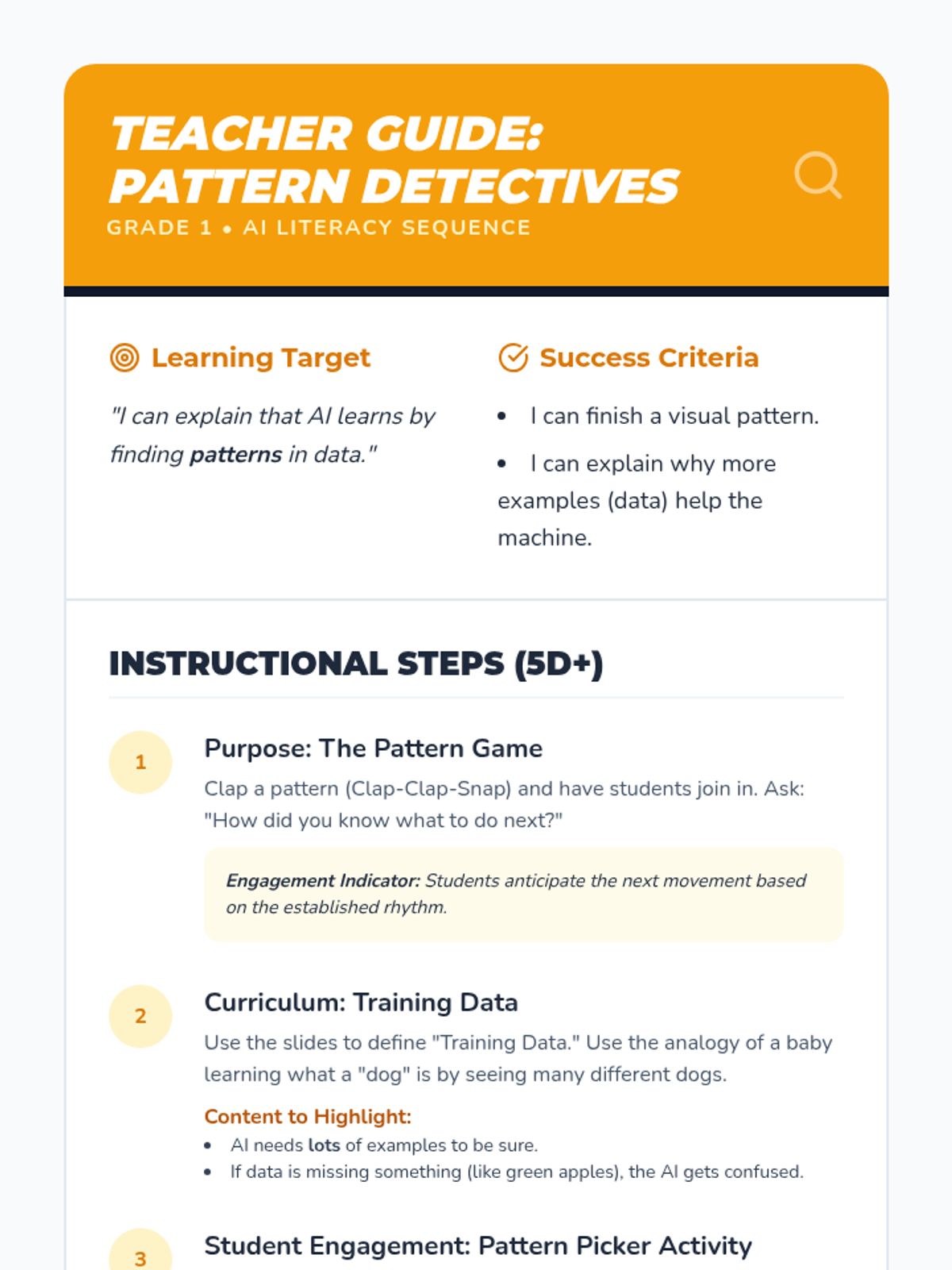
Students explore the foundation of AI learning: pattern recognition. They learn that computers need many examples (data) to understand rules and make predictions.
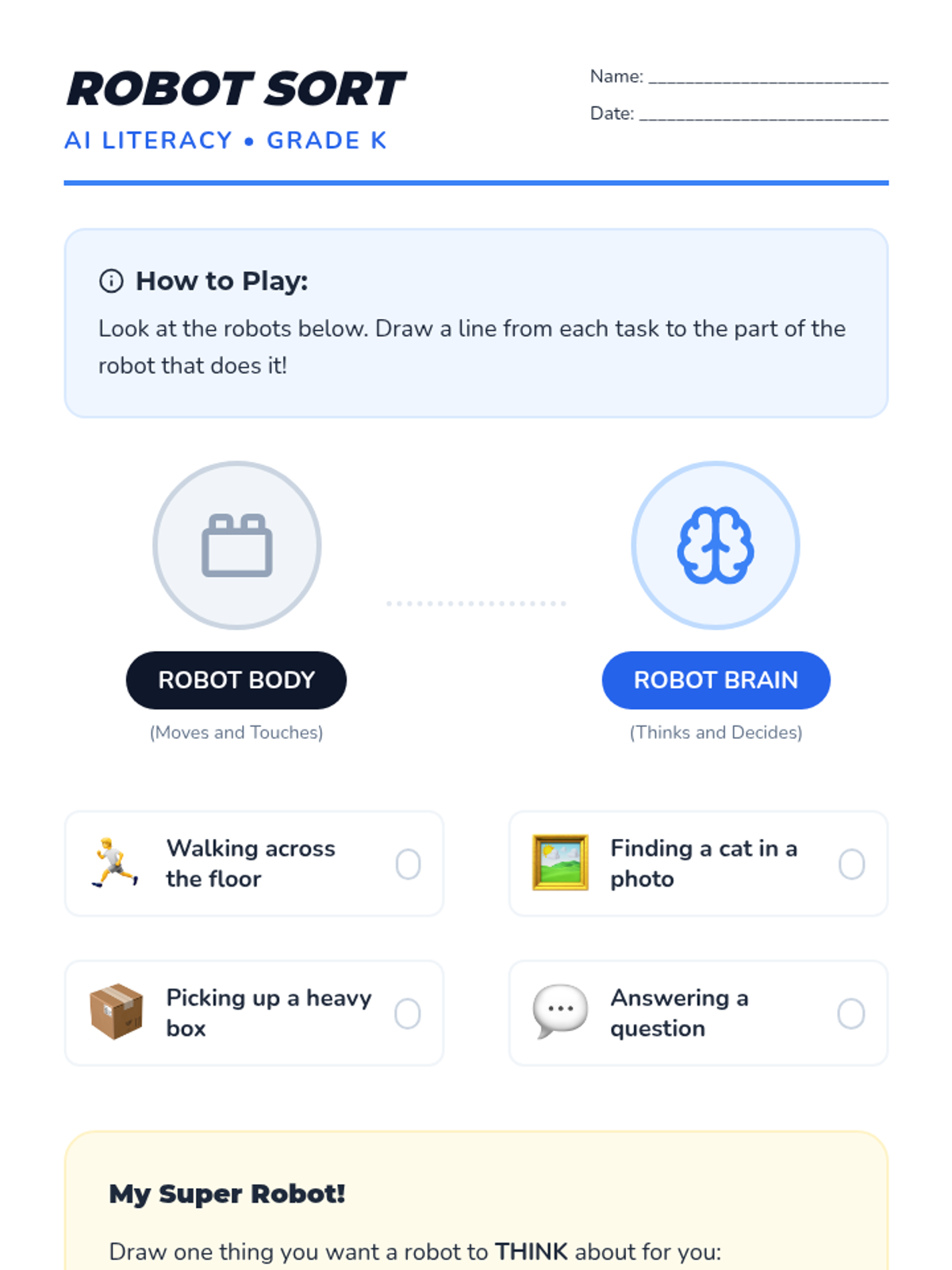
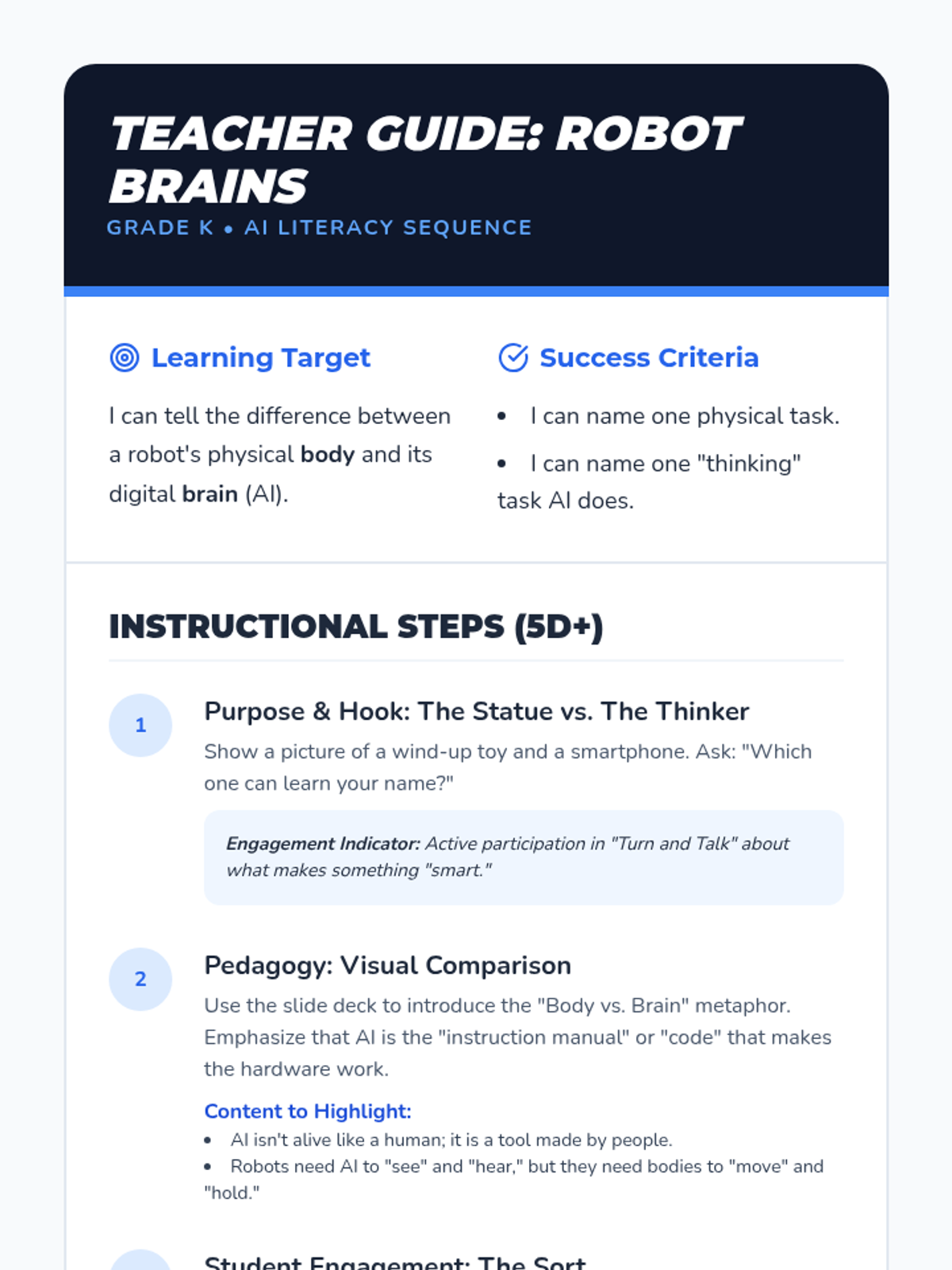
Introduces the concept of AI by distinguishing between a robot's physical body and its digital 'brain'. Students explore how AI 'thinks' differently than humans and machines.
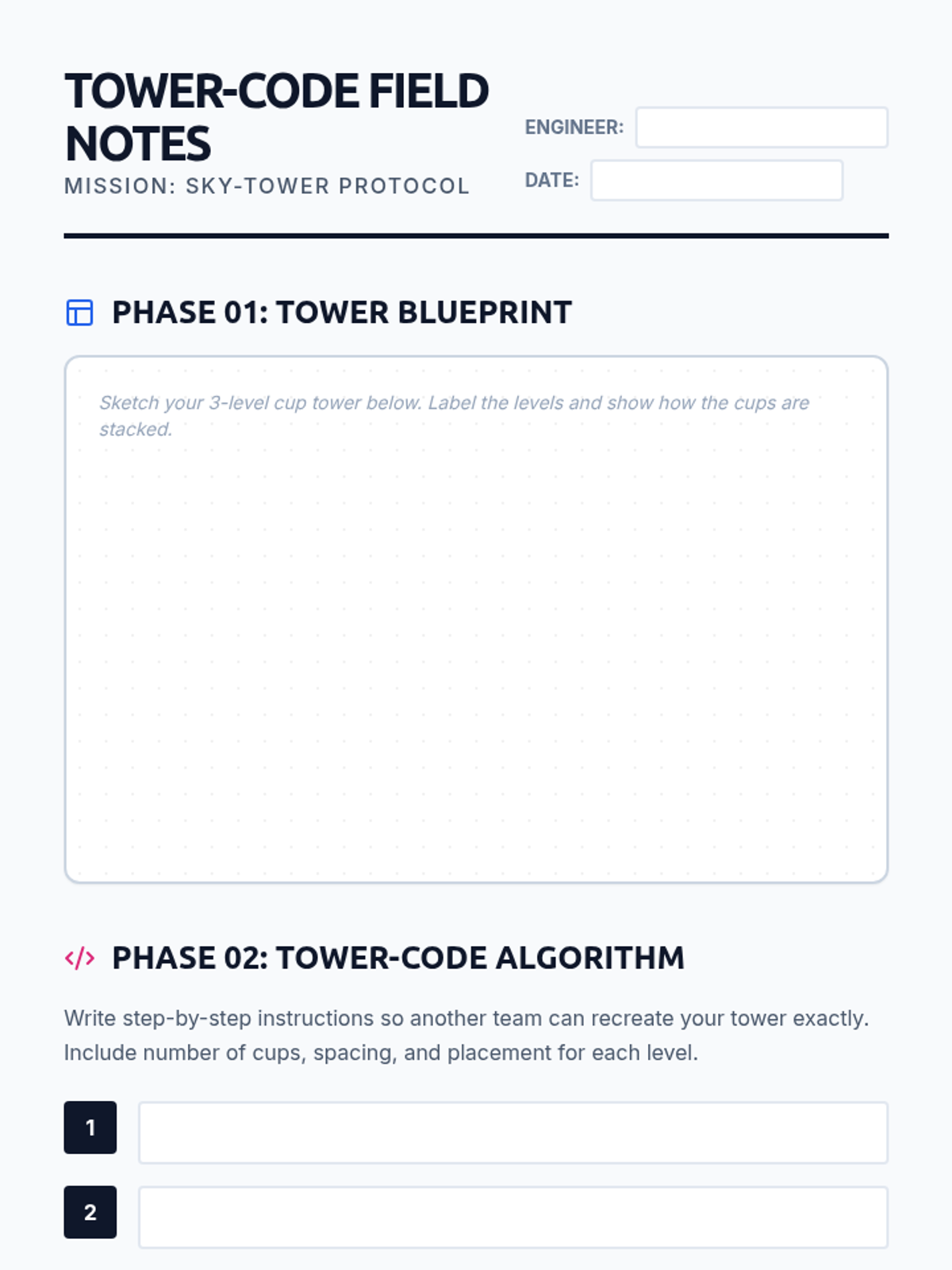
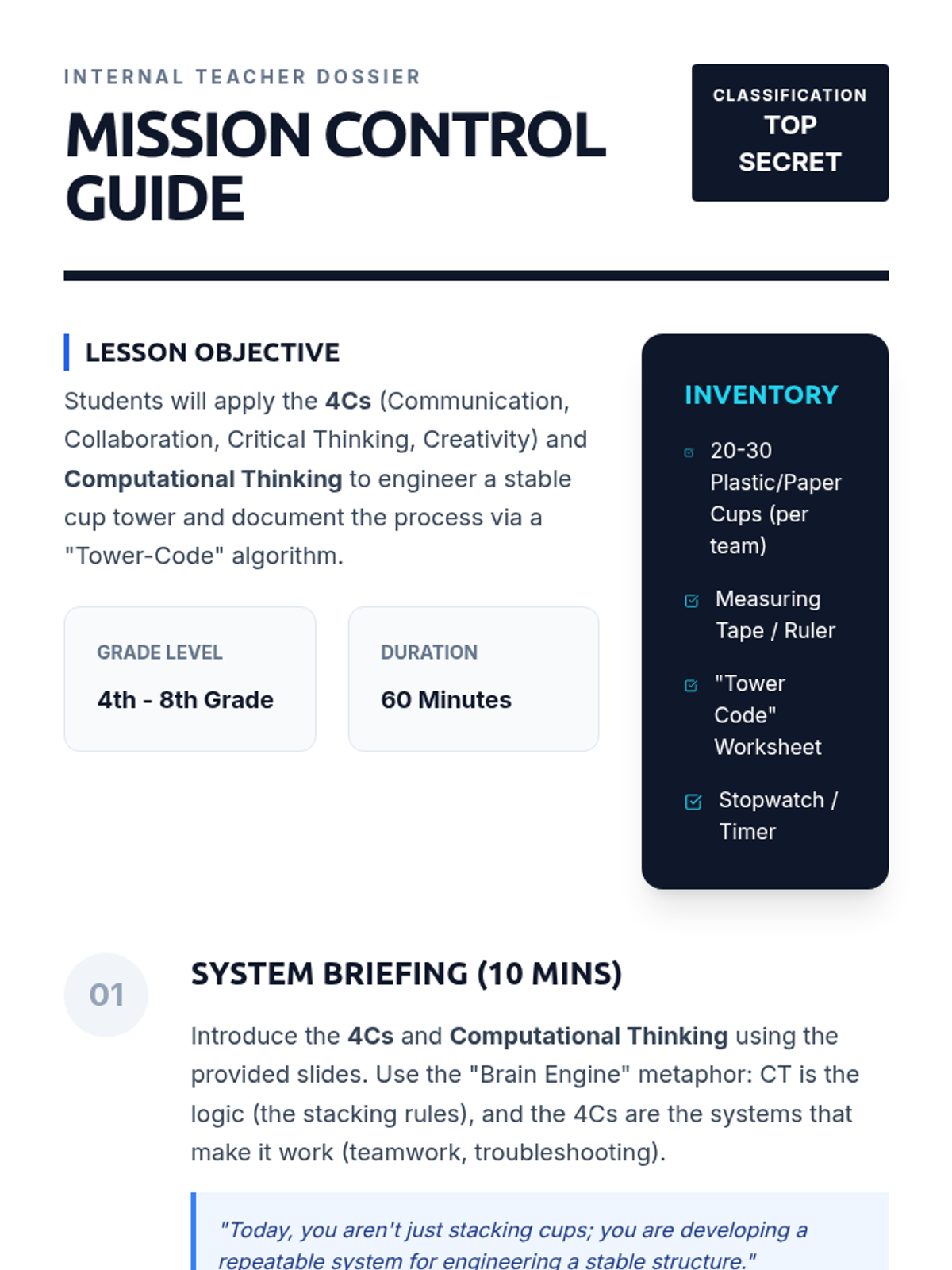
A high-stakes engineering challenge where students use the 4Cs and Computational Thinking to design, build, and document the ultimate cup tower structure.
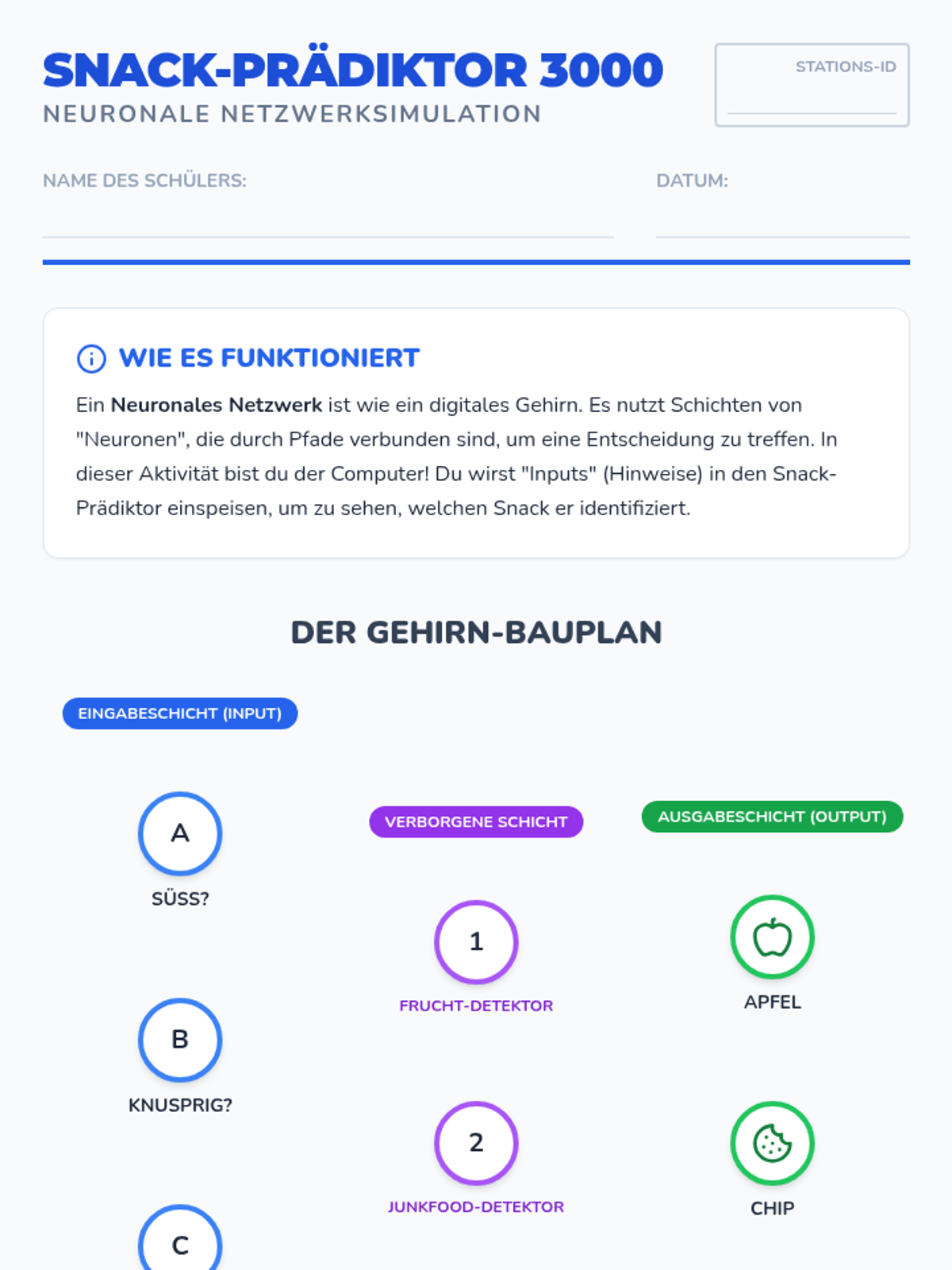
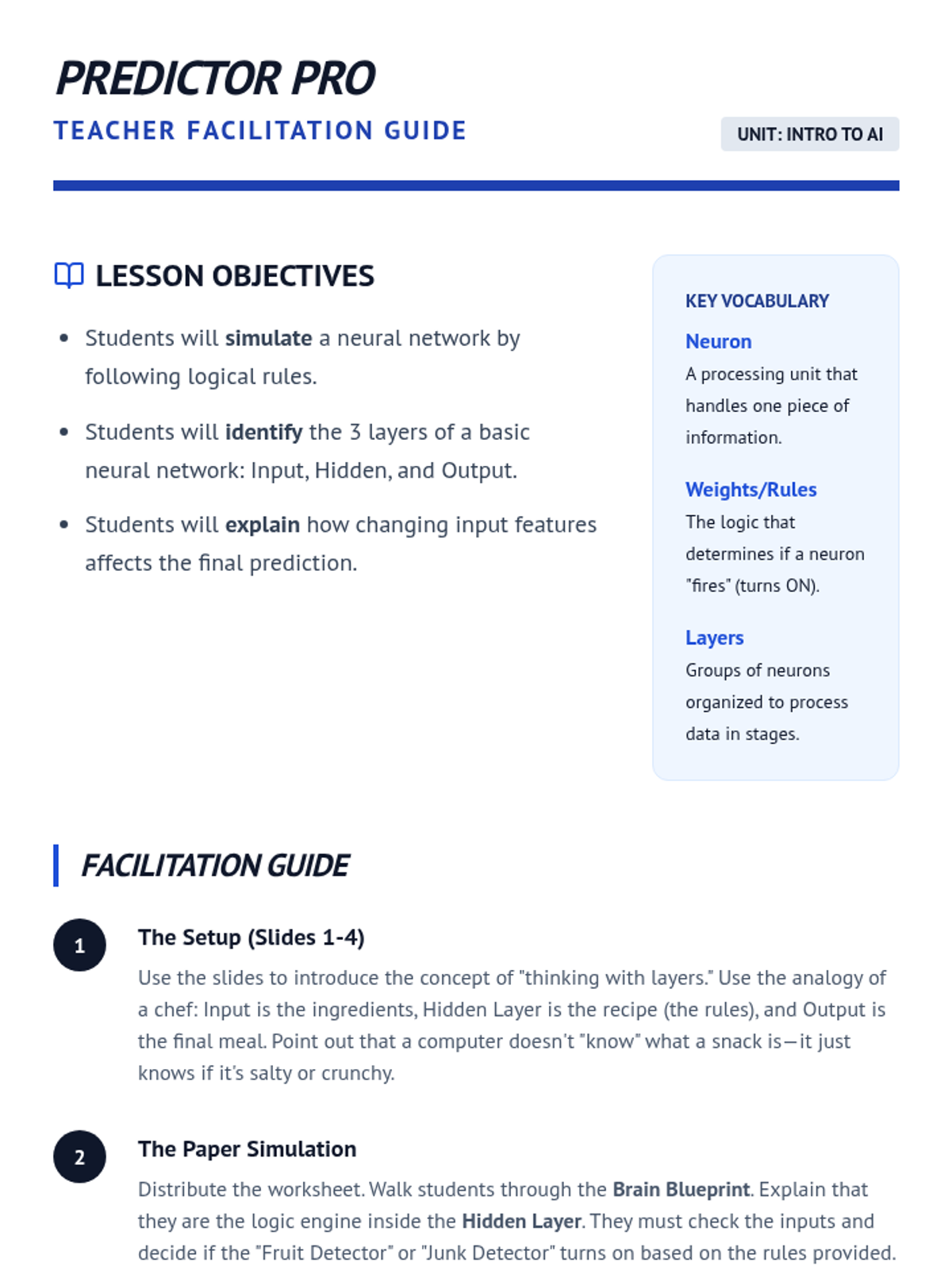
A hands-on introduction to neural networks for 6th graders, using a paper-based simulation to understand how computers 'think' using layers and connections.
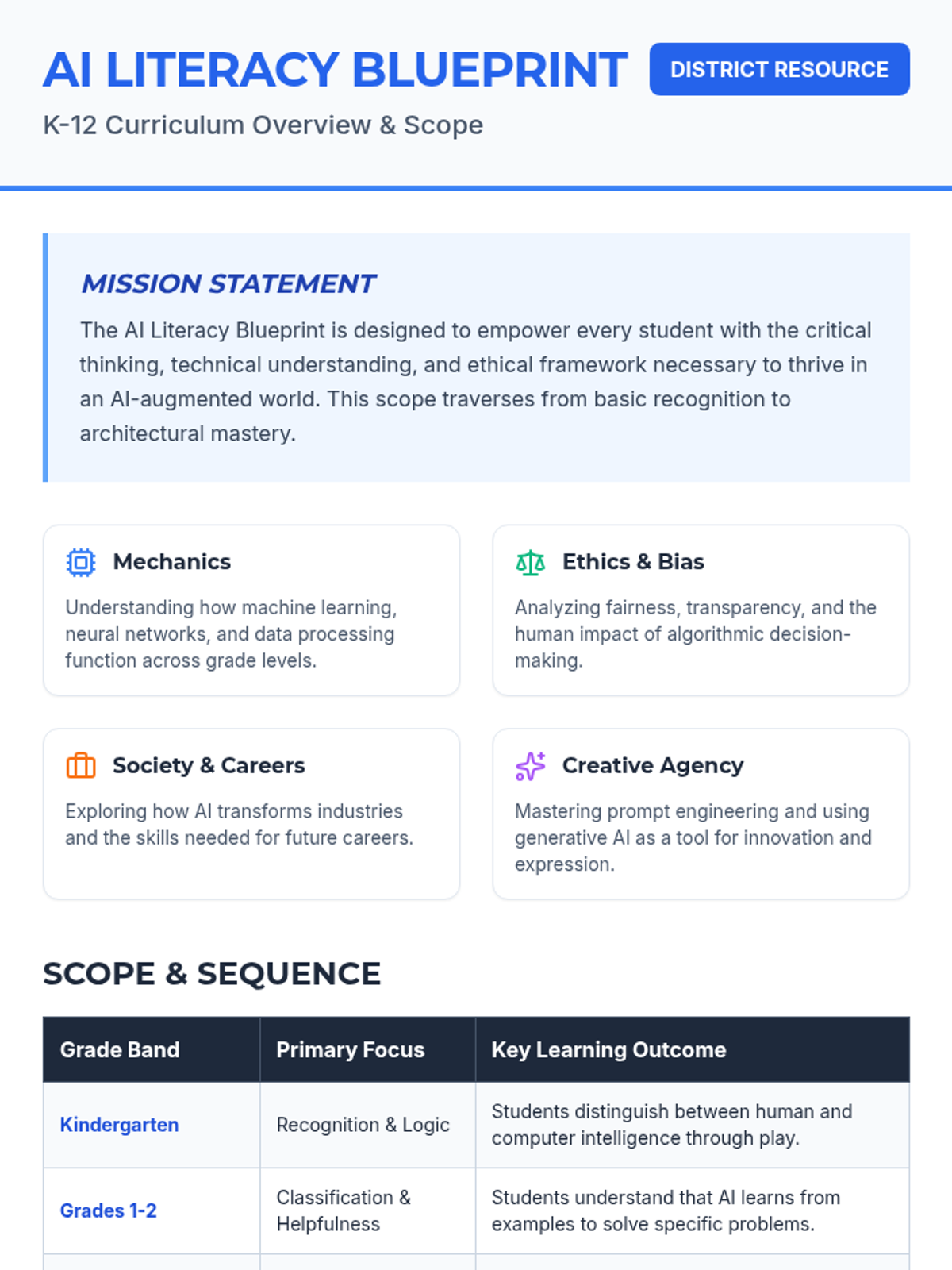
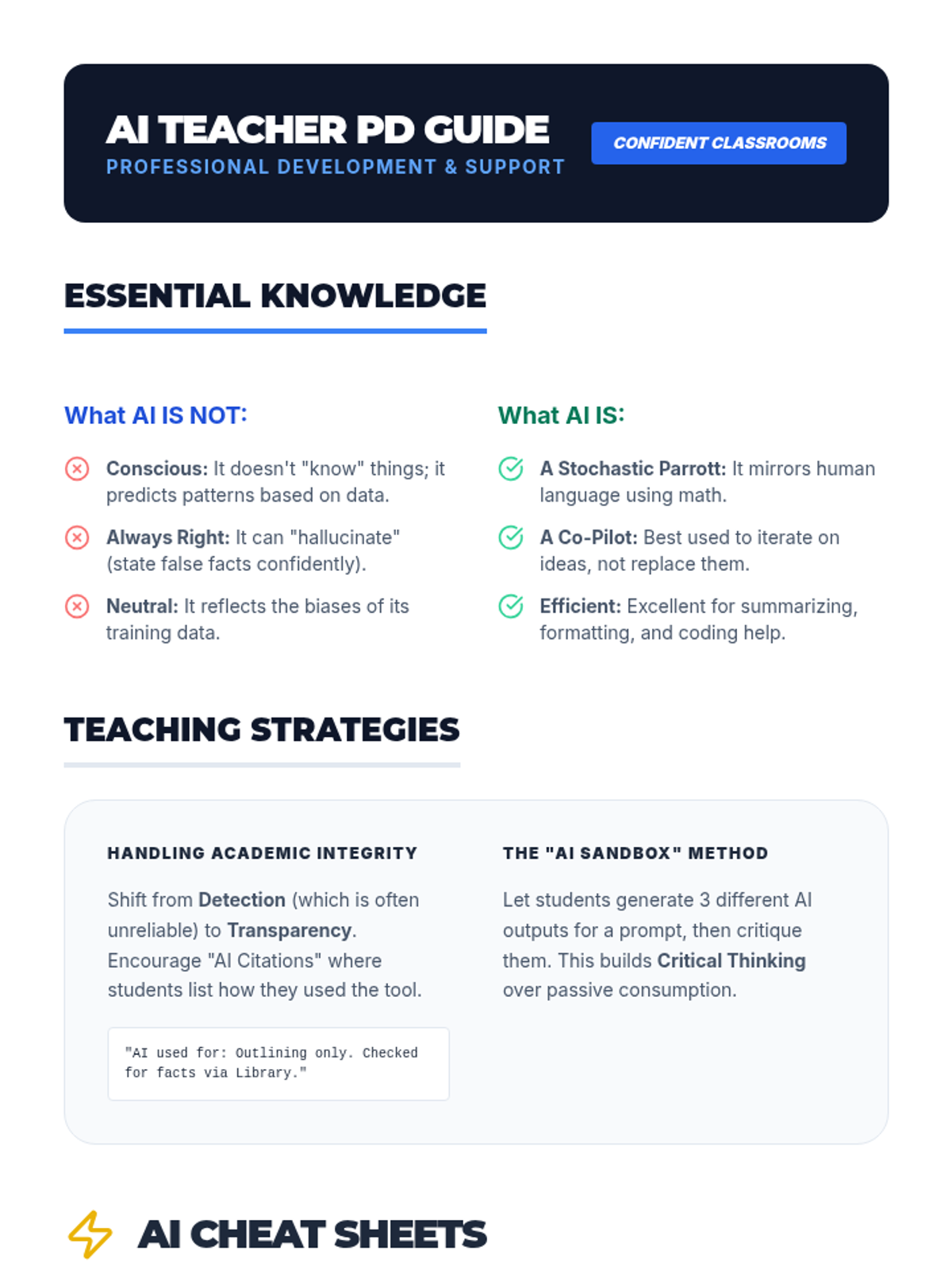
A dedicated hub for educators featuring a K-12 curriculum scope, professional development guides, and quick-reference AI cheat sheets.
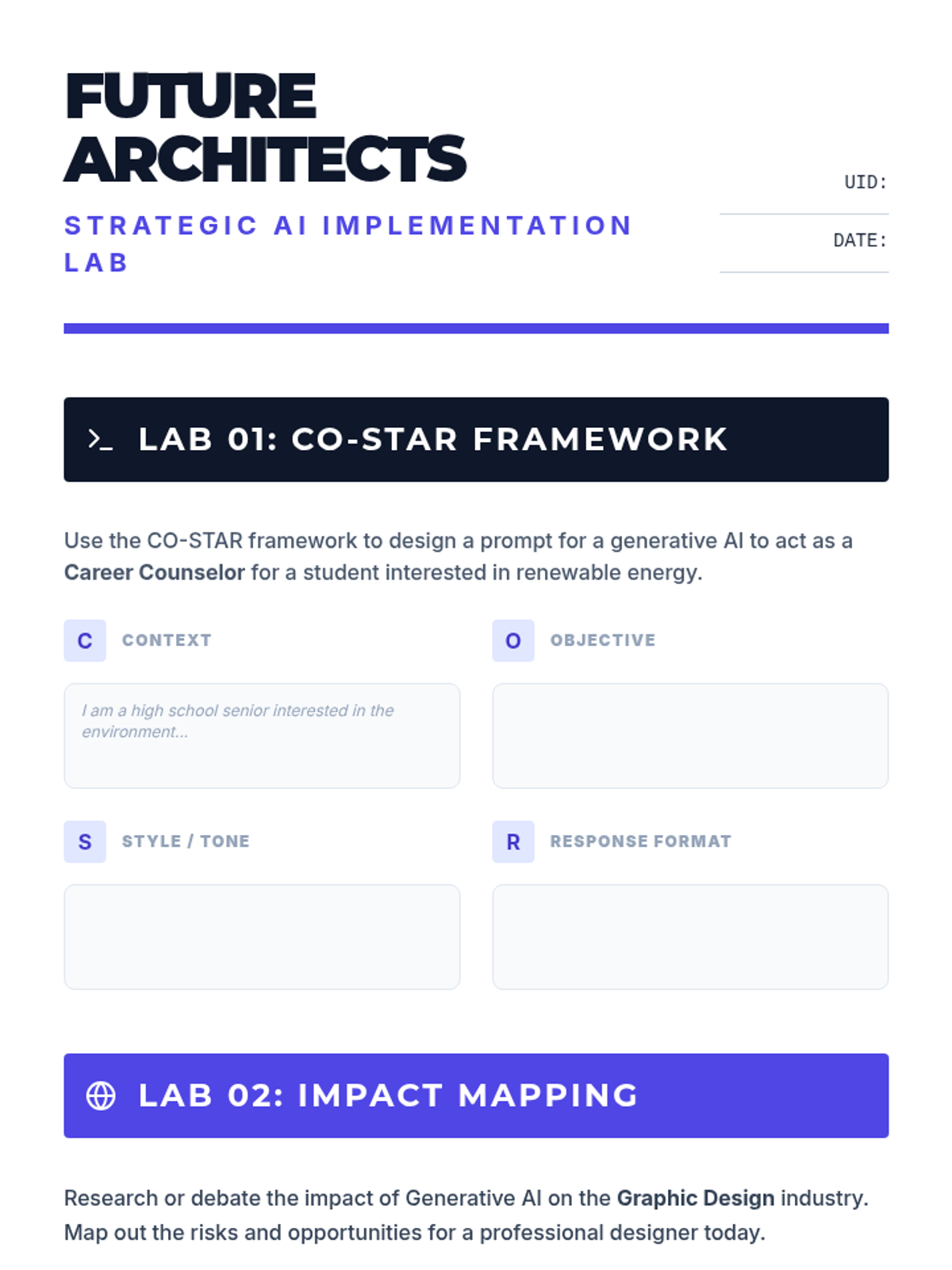
High school students analyze the impact of generative AI on careers and society, mastering advanced prompt engineering and debating complex ethical dilemmas.
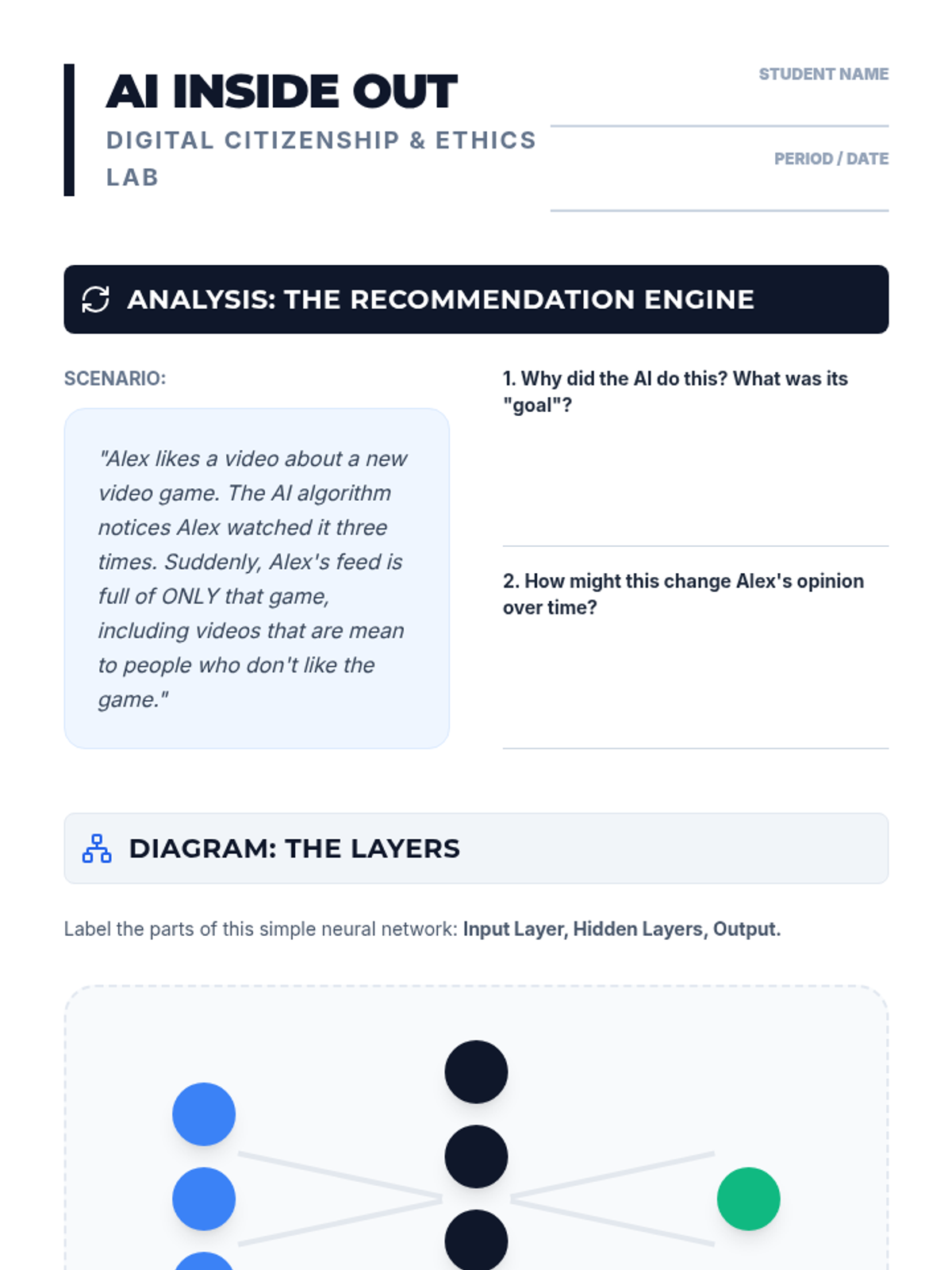
Middle schoolers dive into the mechanics of neural networks and the ethical implications of AI in daily life, focusing on digital citizenship and algorithmic fairness.
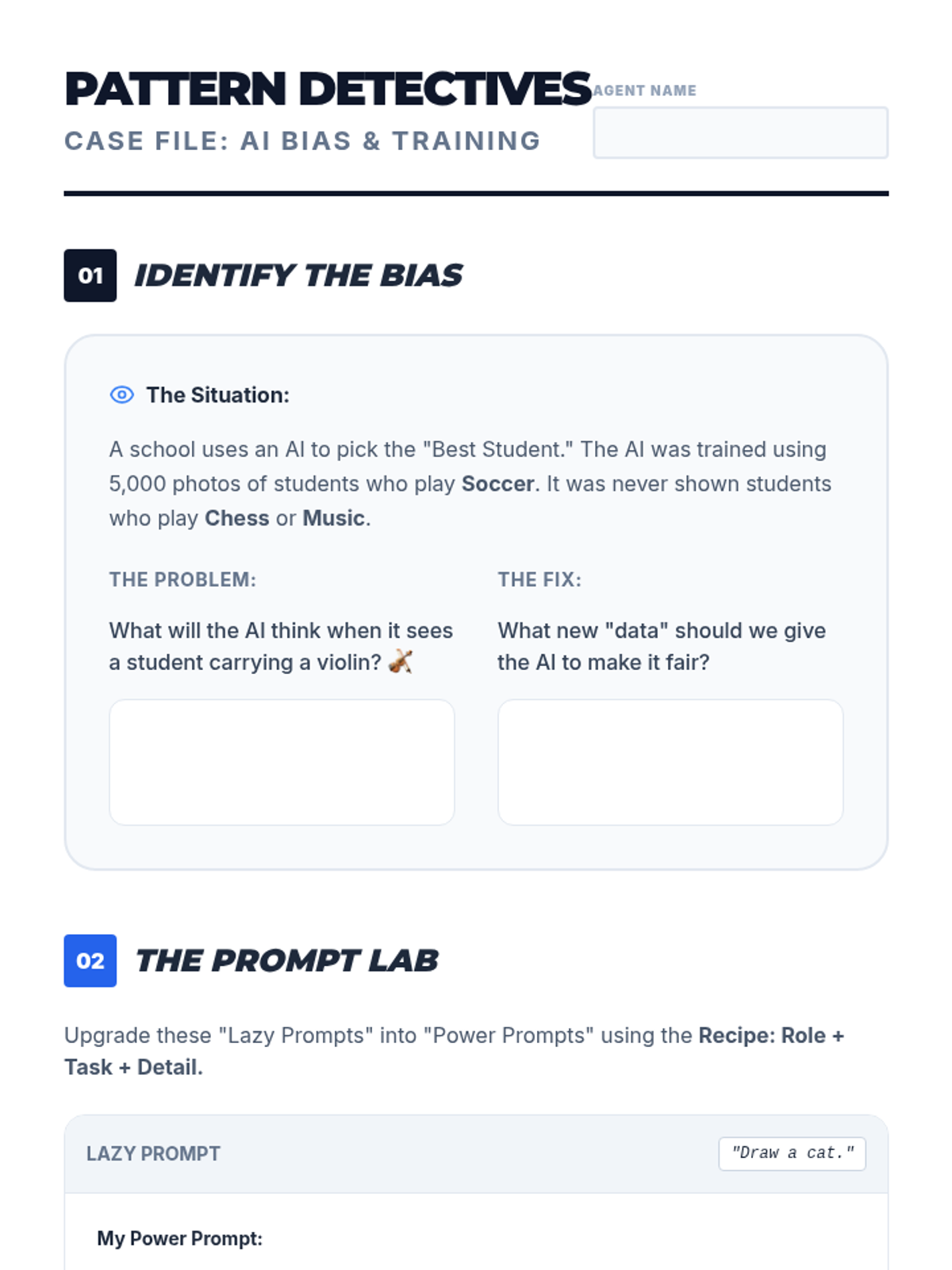
Middle elementary students investigate how training data shapes AI behavior, identifying bias in simple systems and experimenting with basic prompt engineering.
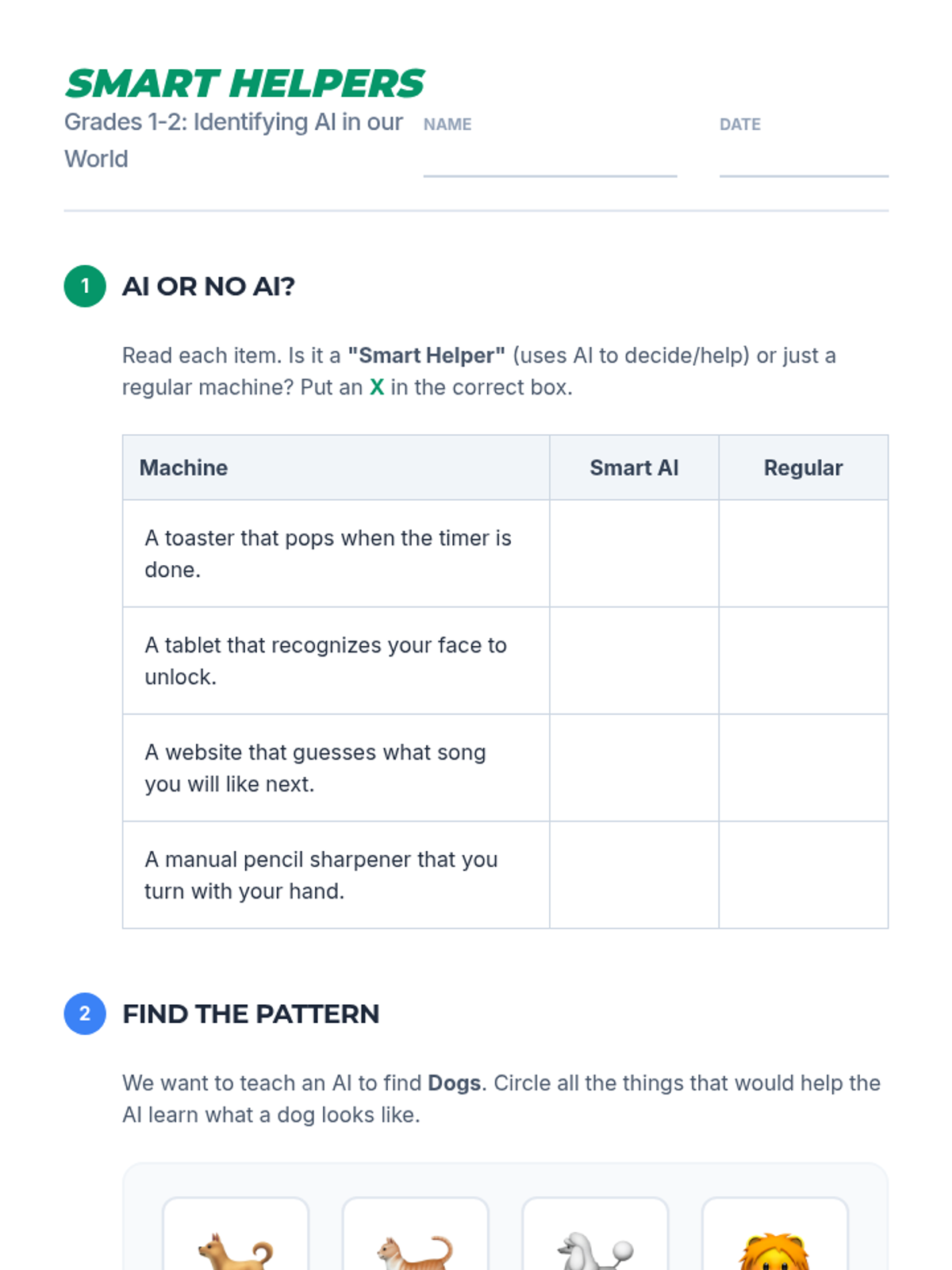
Students in grades 1-2 explore how machines learn to recognize patterns and assist humans, introducing basic classification and the idea of helpful technology.
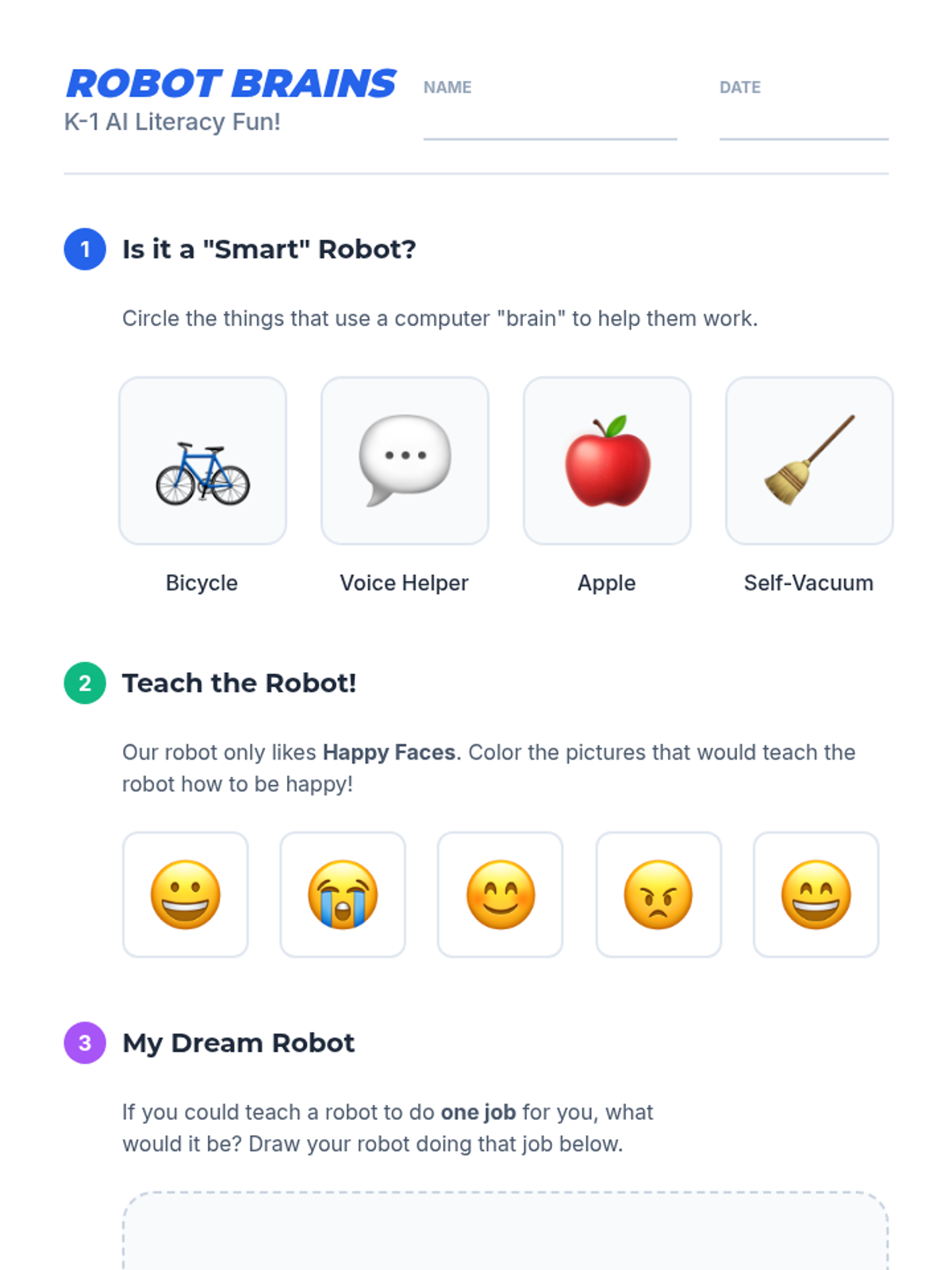
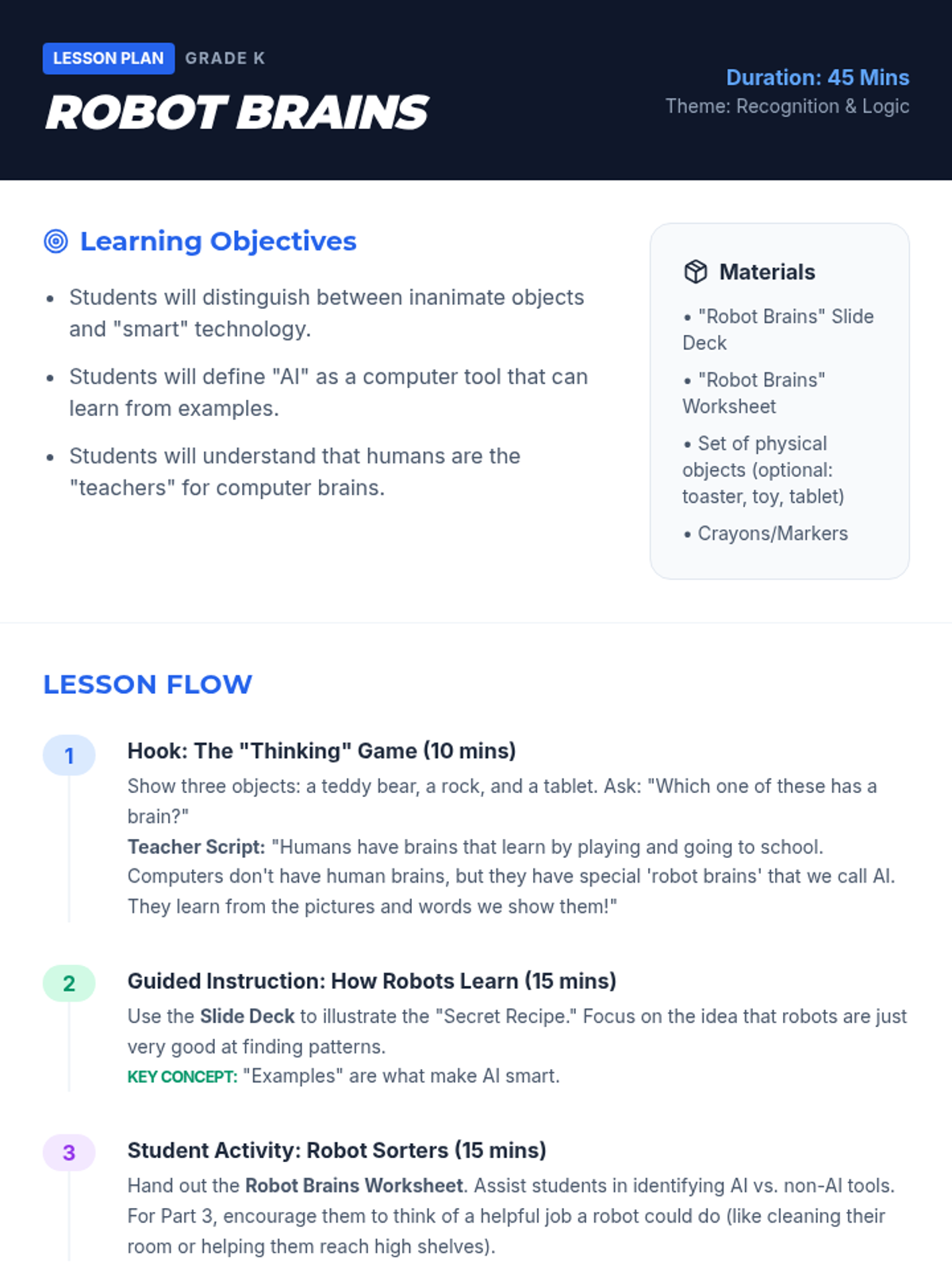
Introduces Kindergarteners to the concept of AI as a 'thinking' tool that follows instructions and learns from examples, focusing on the difference between robots and AI.
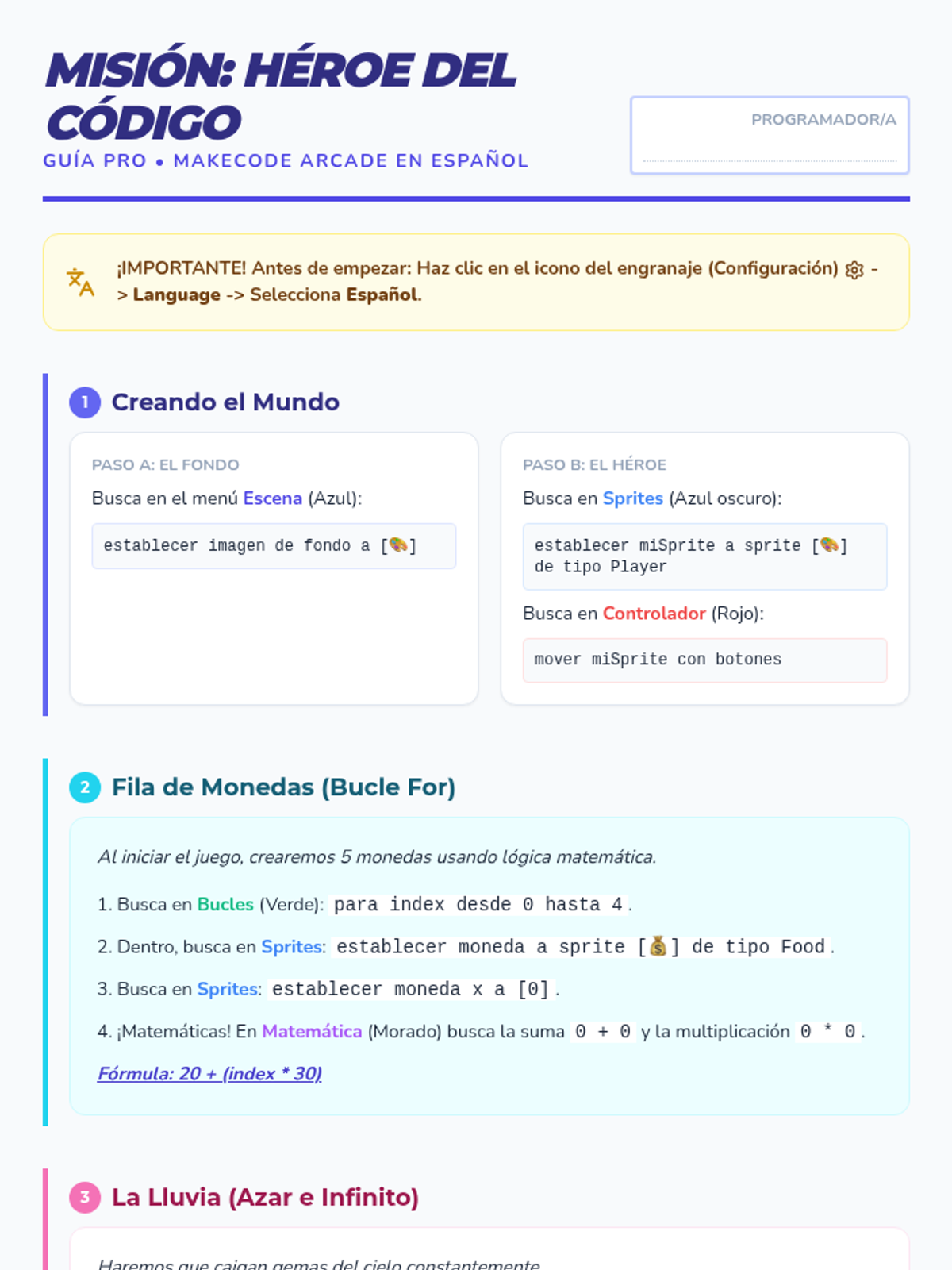
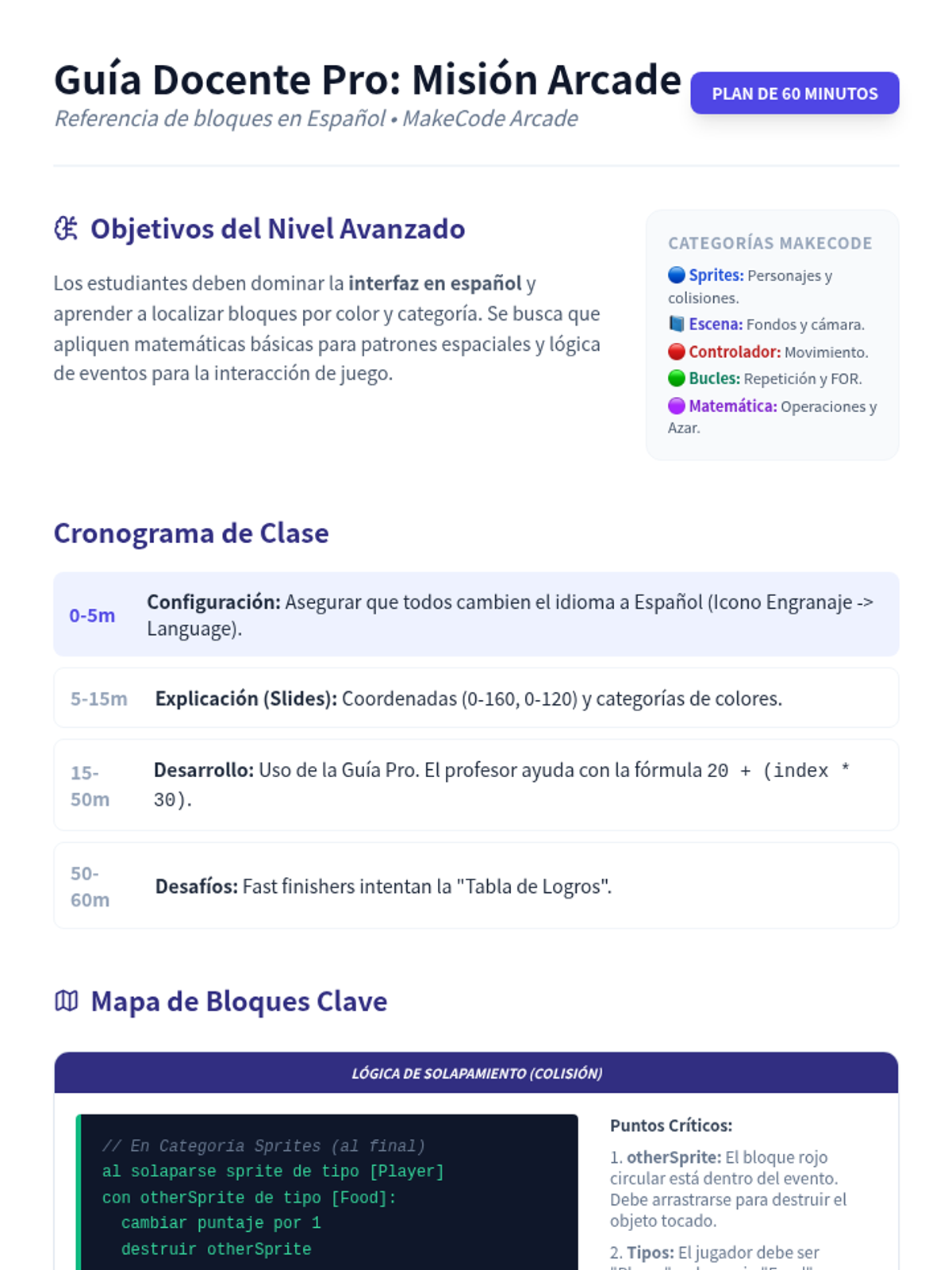
Una lección introductoria a la programación de videojuegos usando MakeCode Arcade, cubriendo lógica de bucles, coordenadas y eventos para estudiantes de 6to grado.
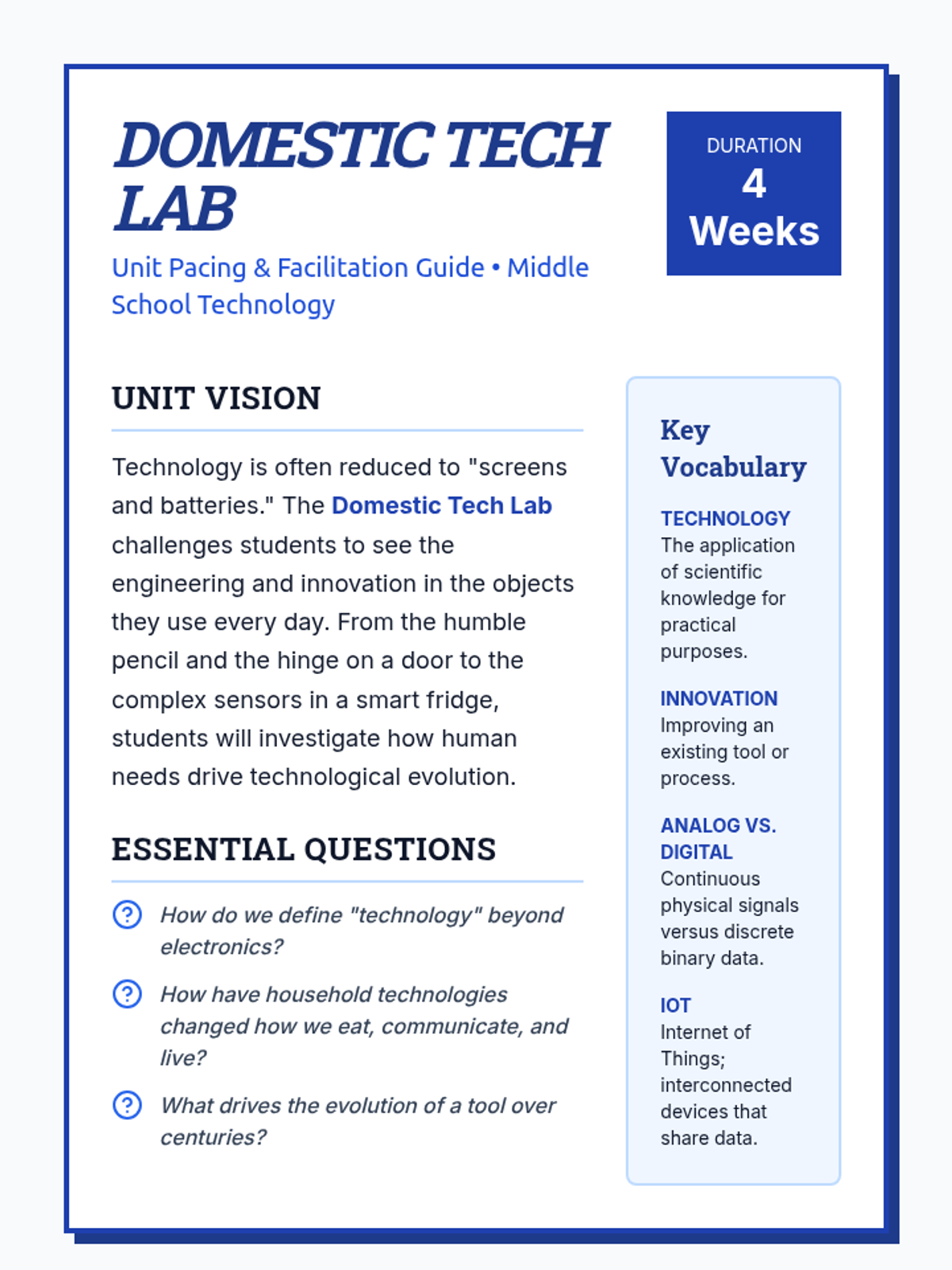
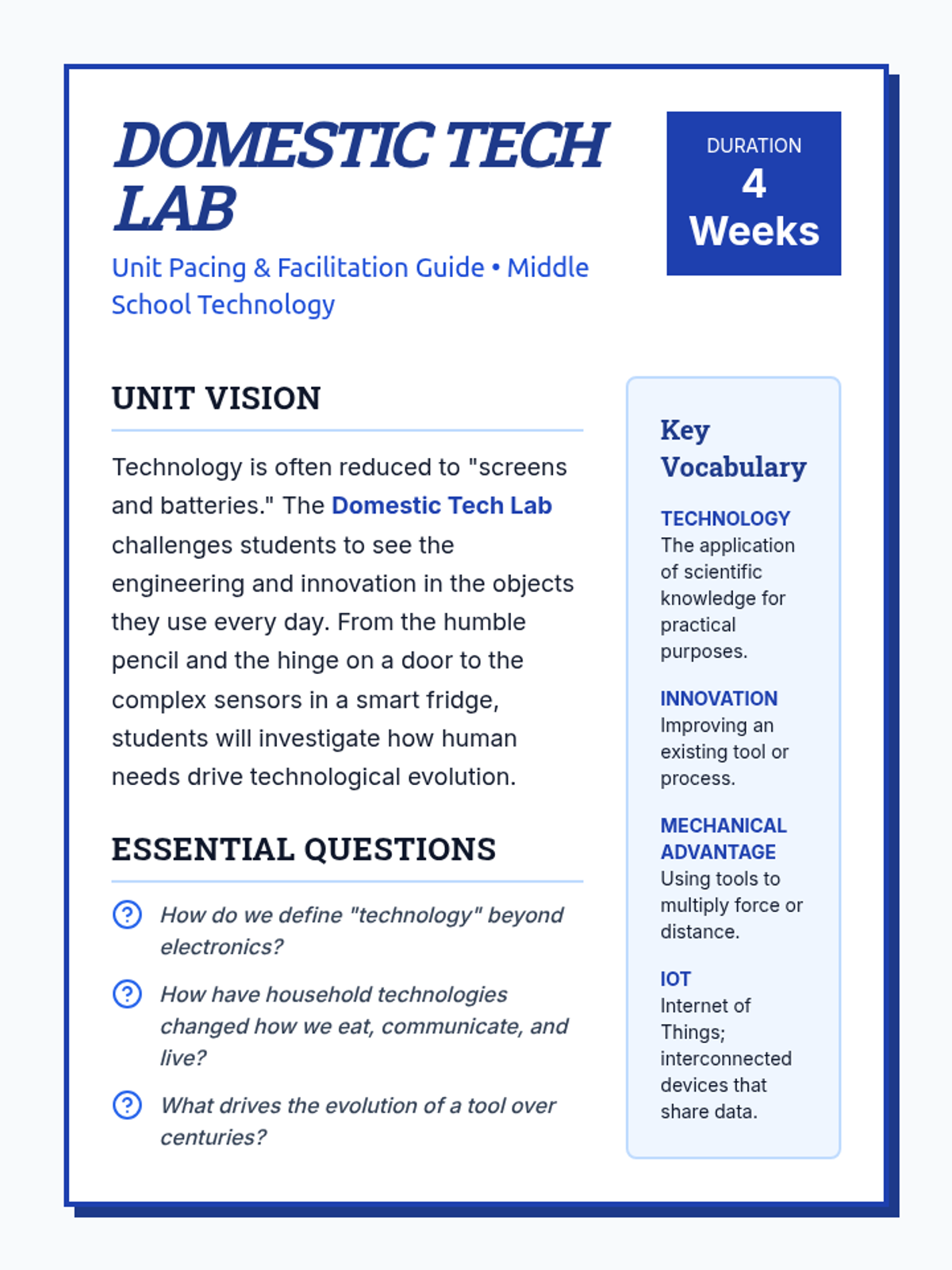
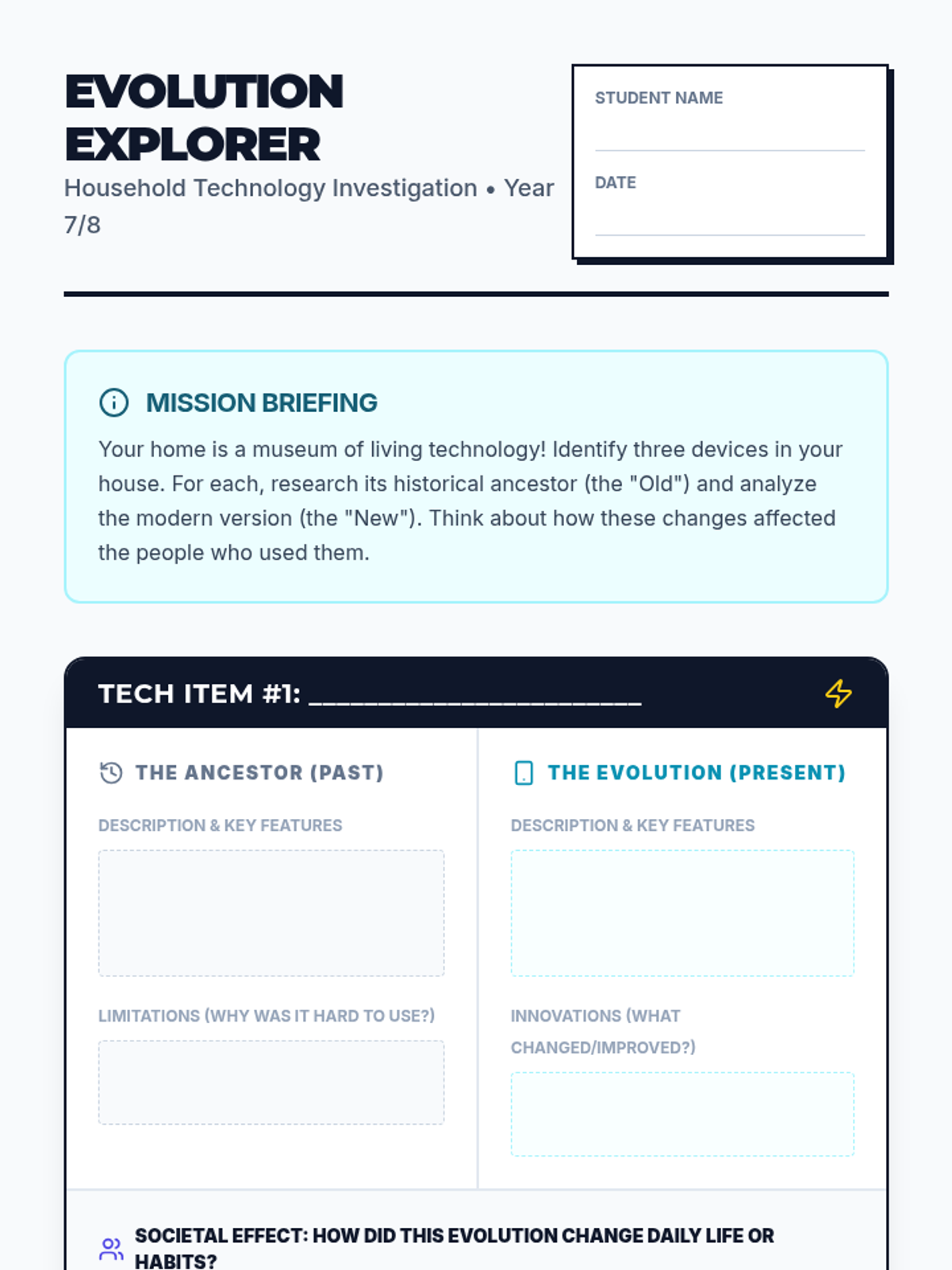
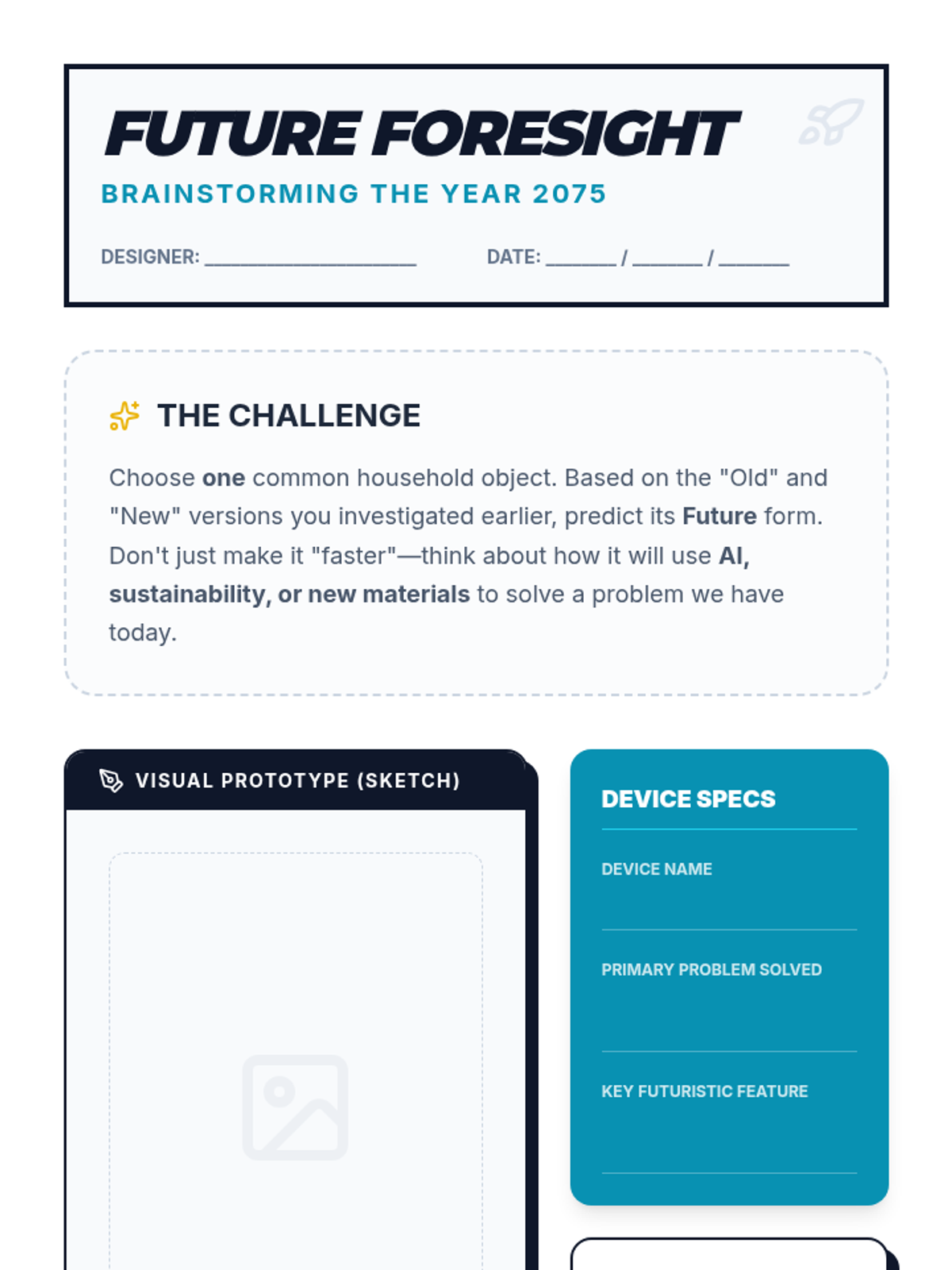
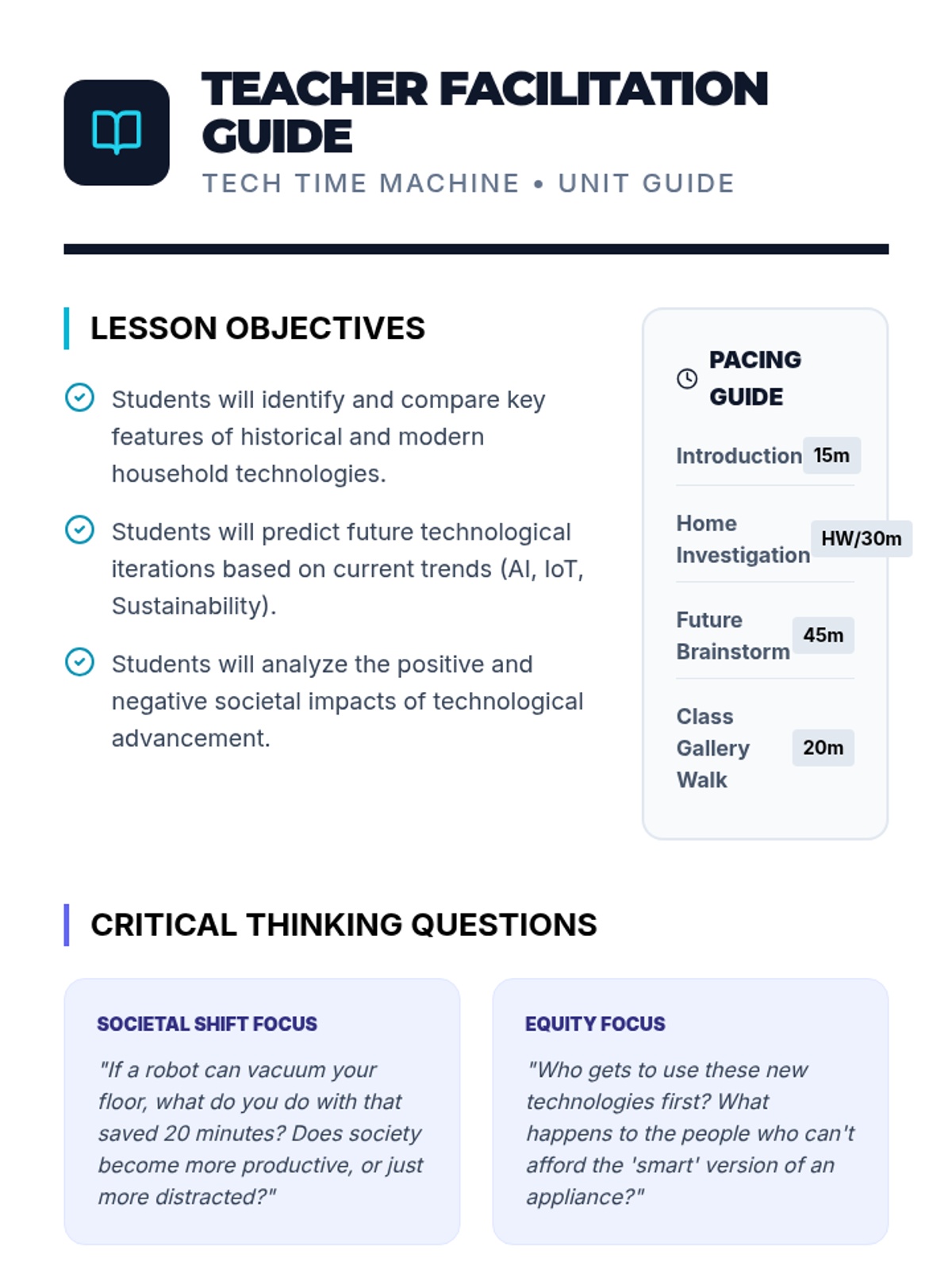
Students investigate the evolution of household technology, comparing historical devices with modern equivalents and predicting future innovations while analyzing their impact on society.
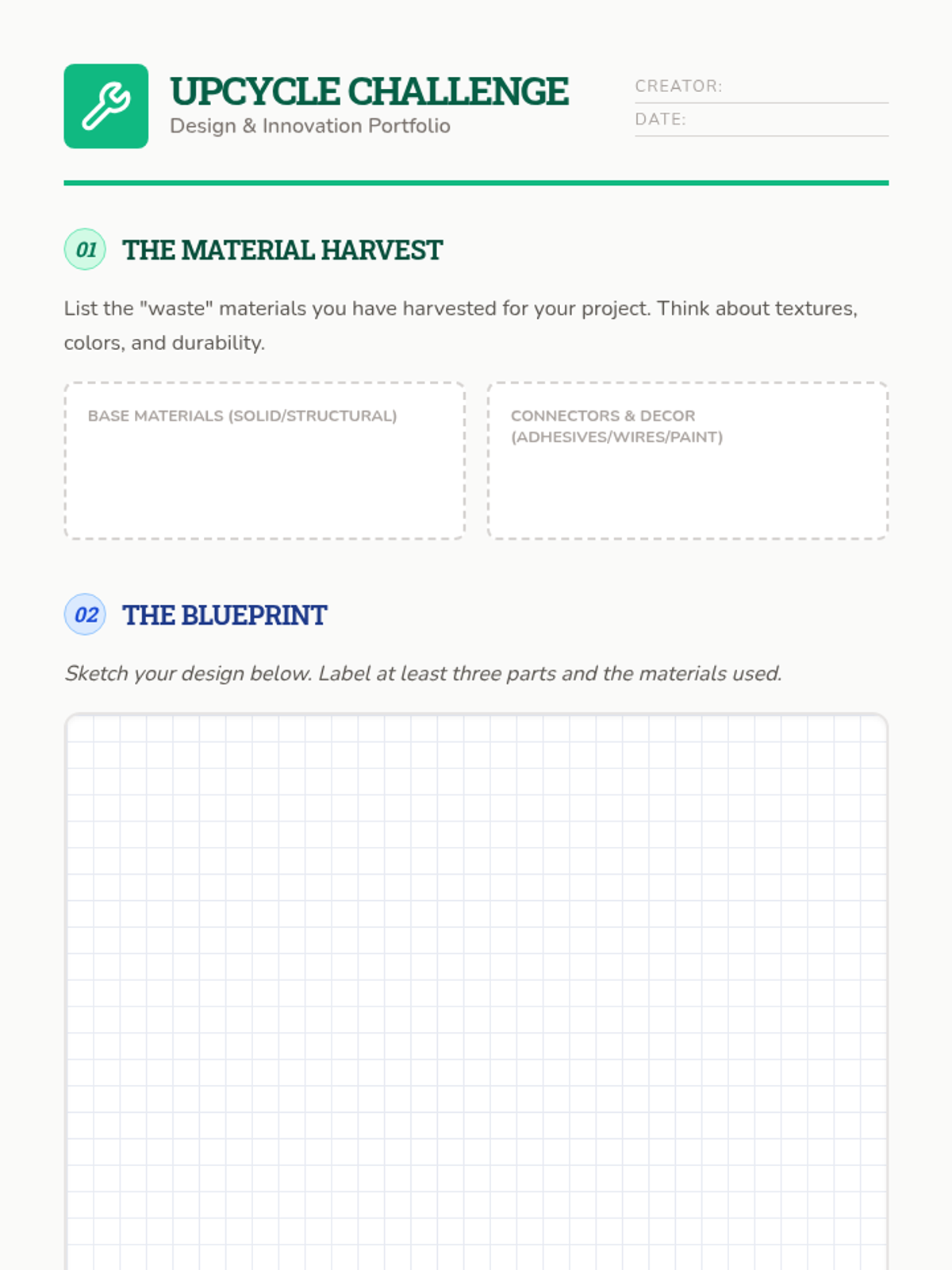
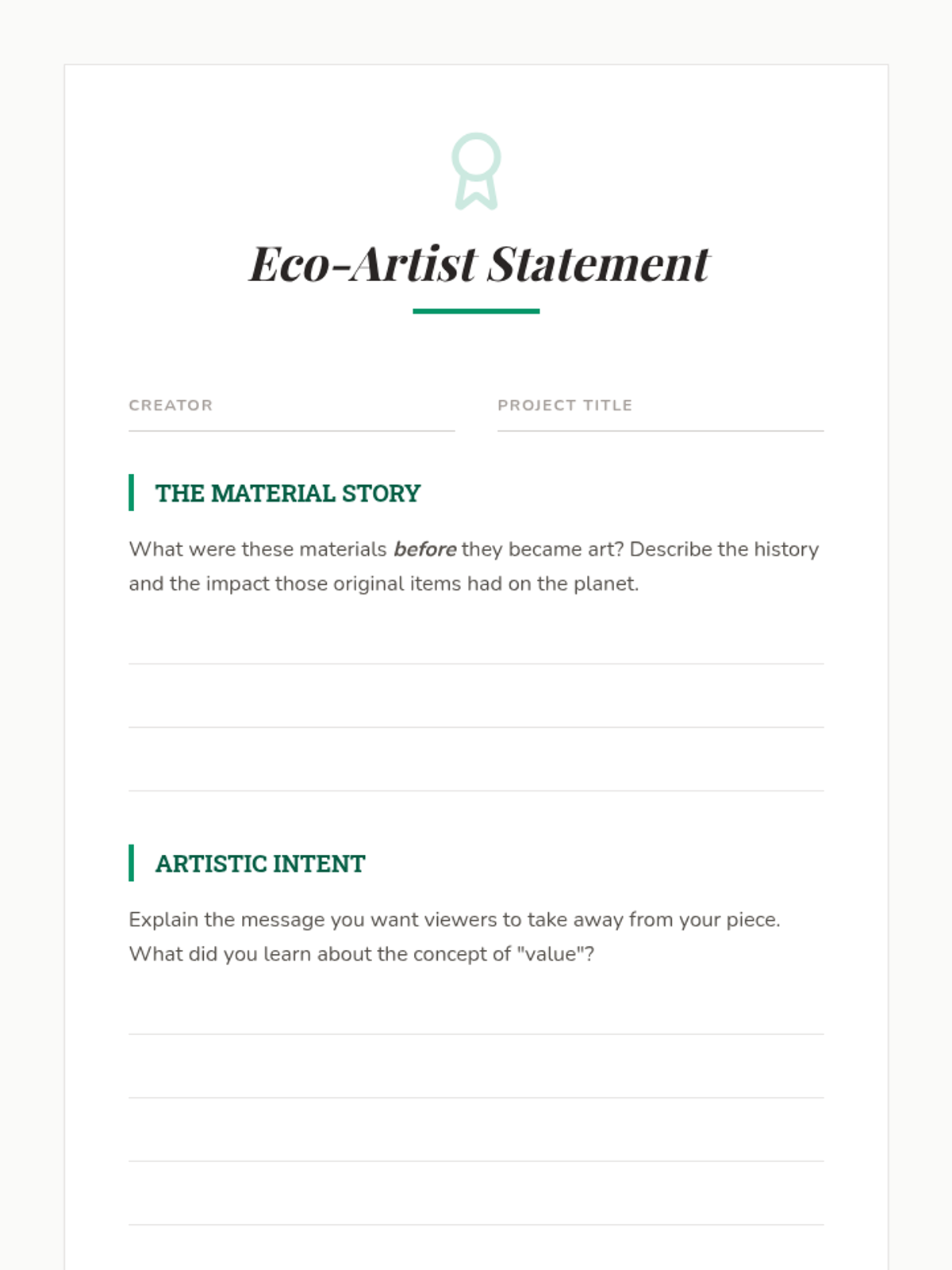
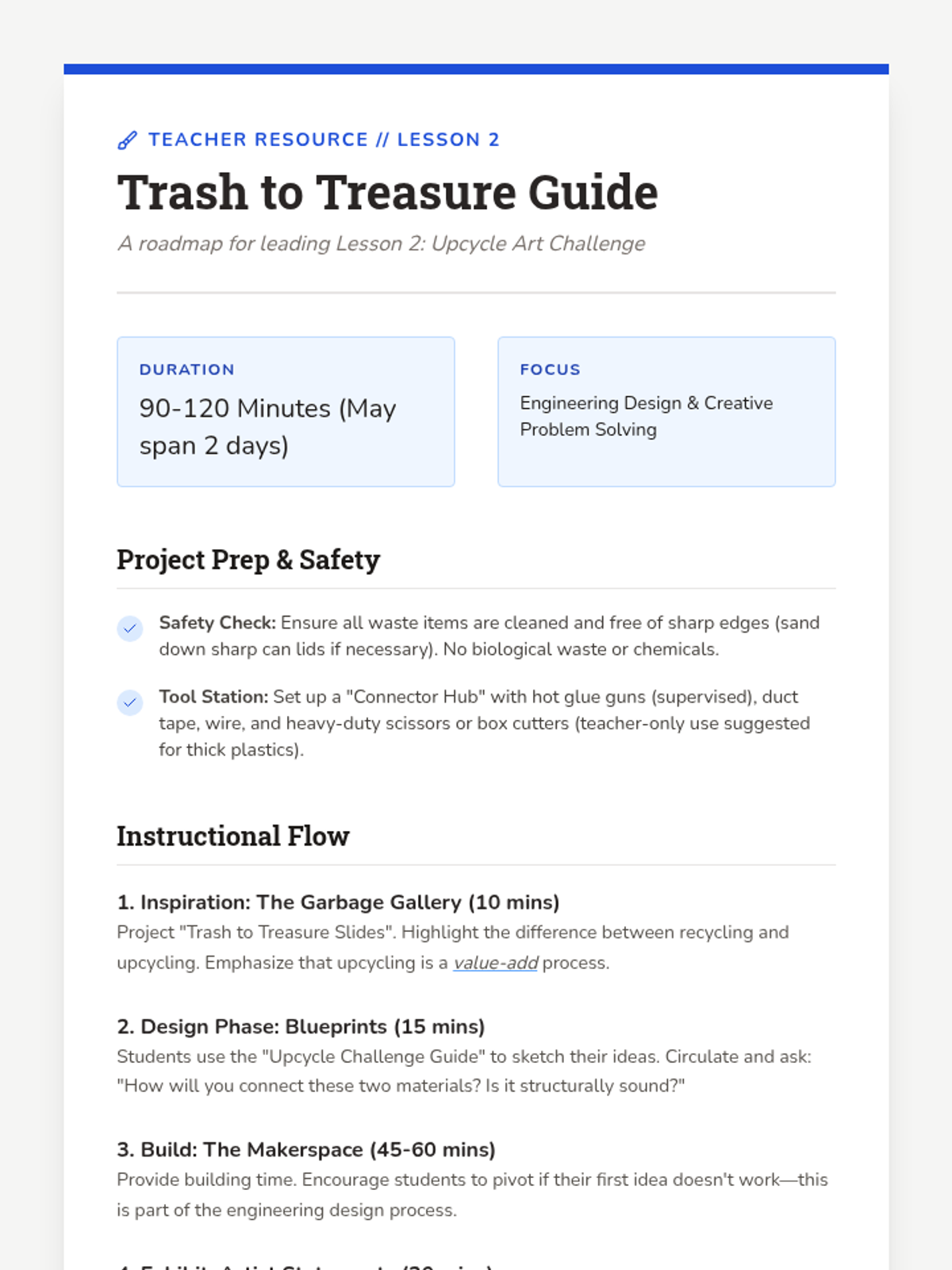
Students transition from scientific analysis to creative application by exploring the world of upcycling and transforming everyday 'trash' into meaningful art or functional objects.
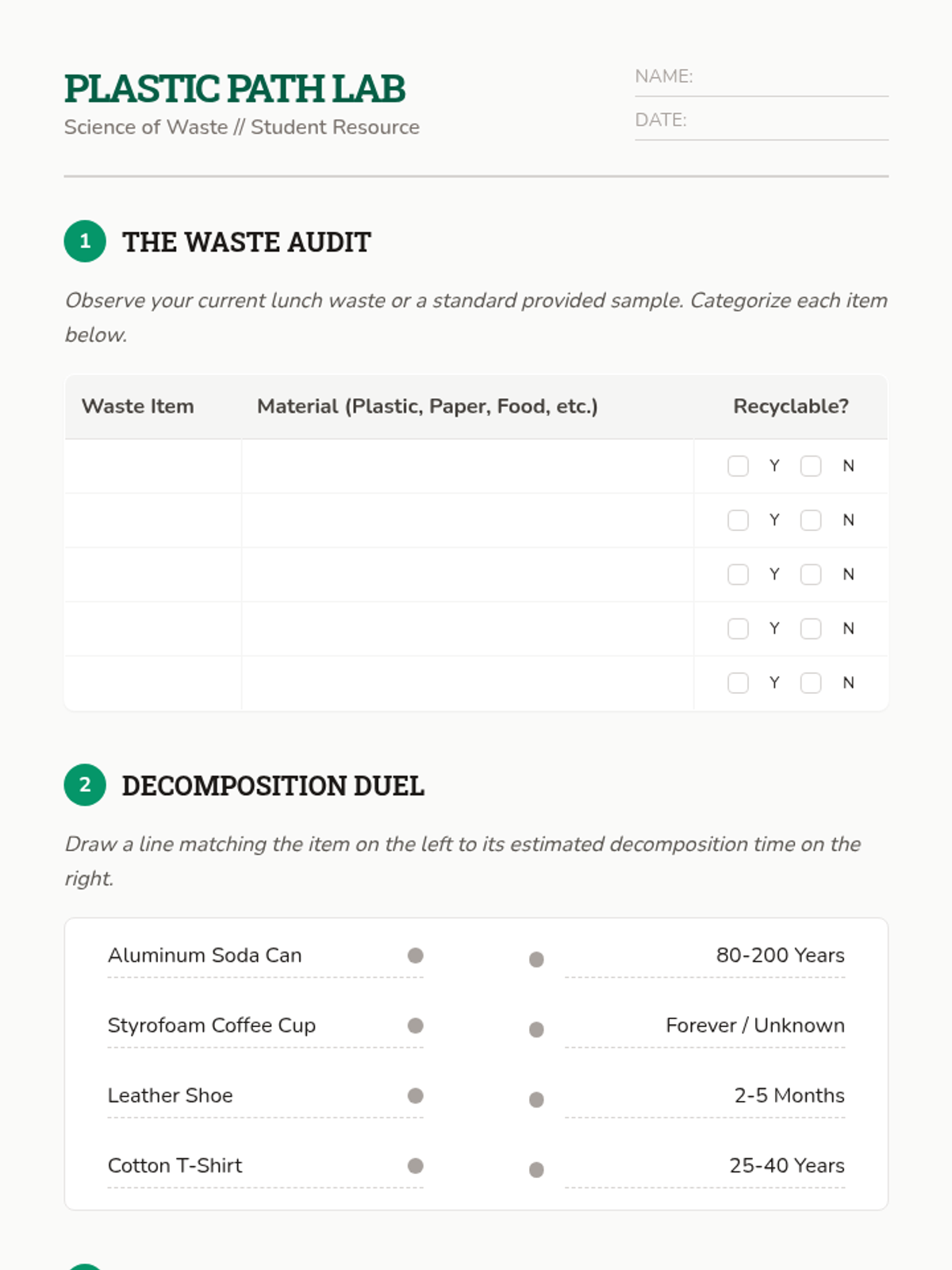
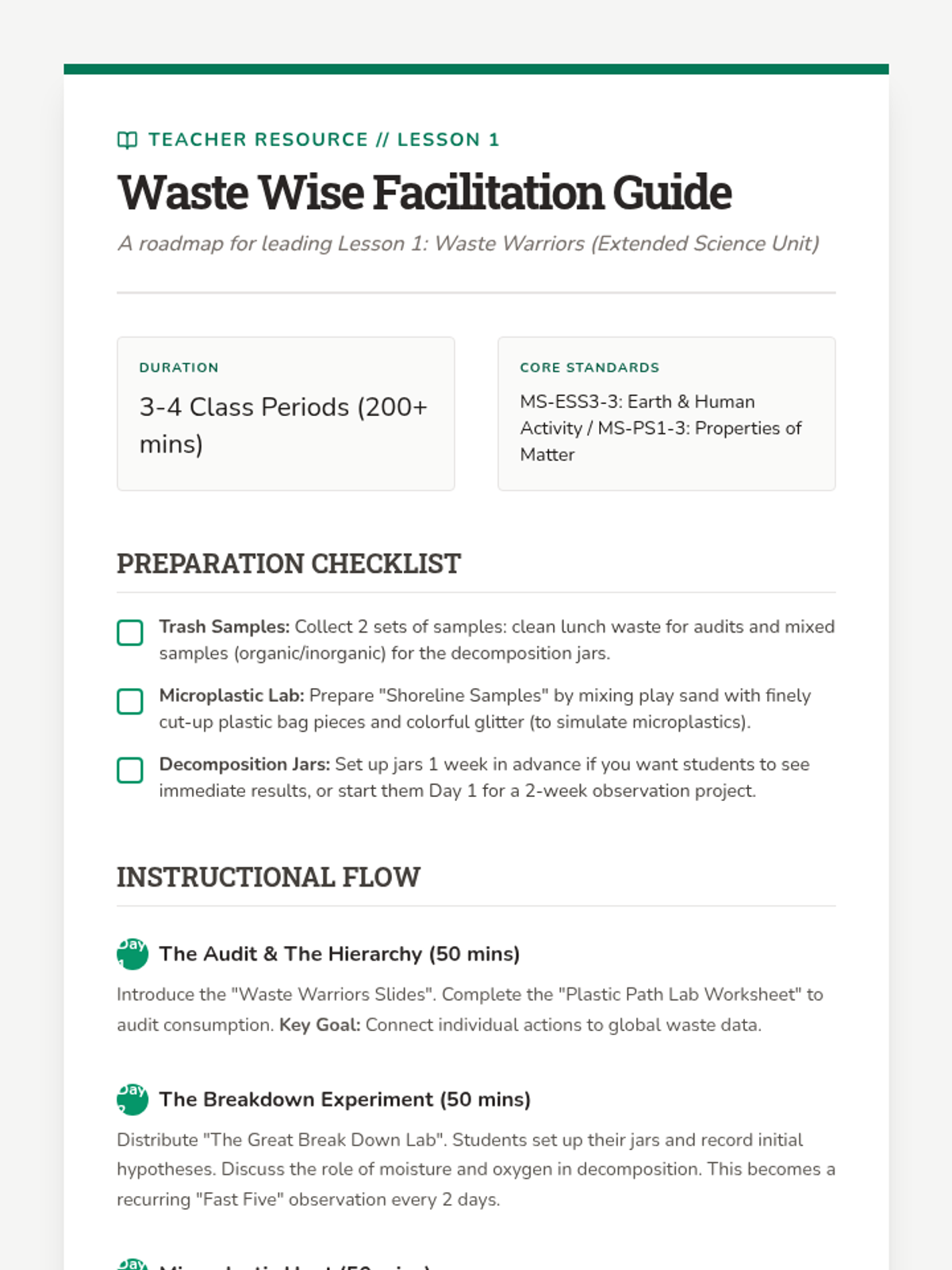
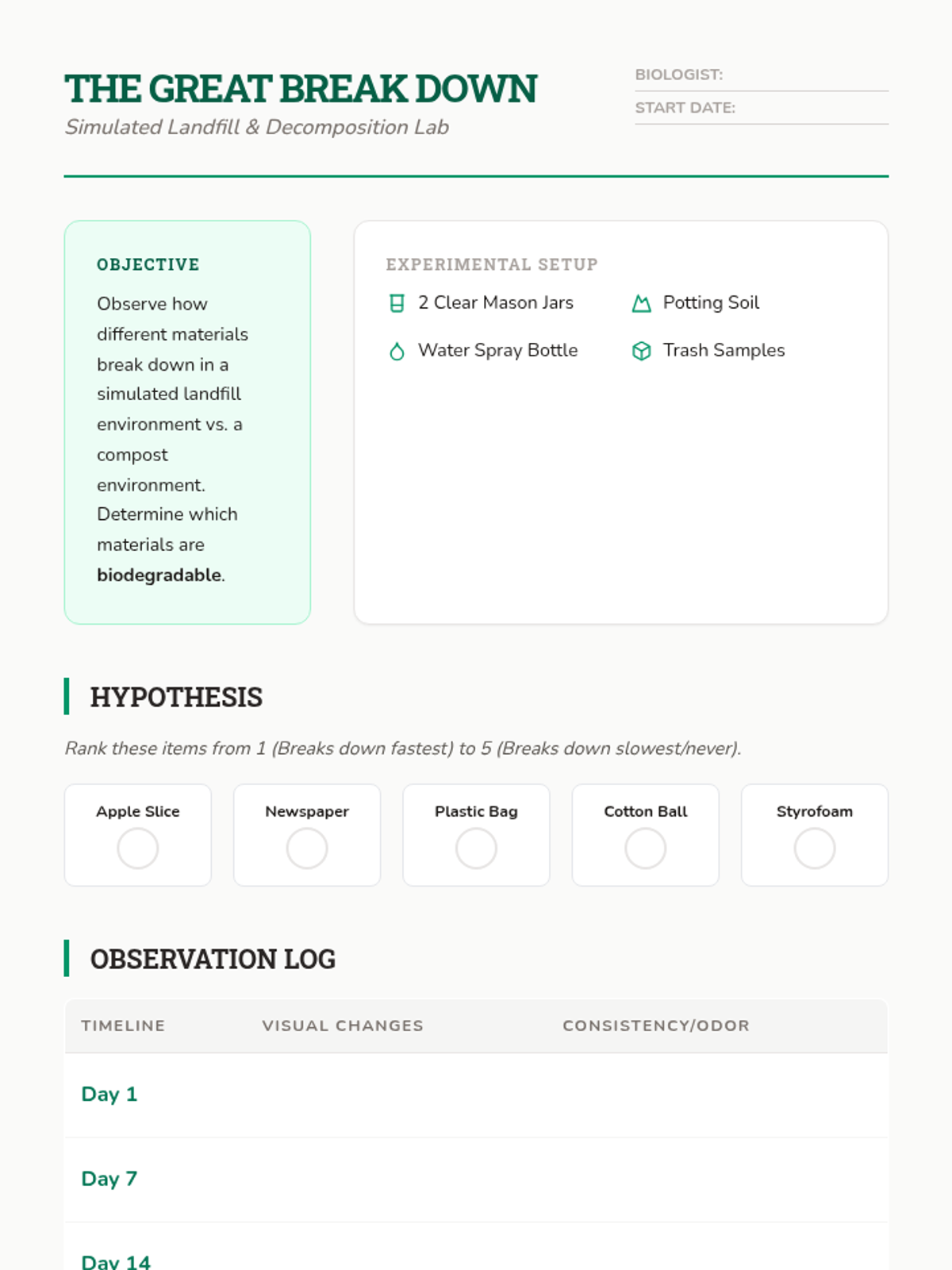
Students investigate the science of waste management, decomposition rates, and the life cycle of common materials to understand why reducing and recycling are critical for the planet.
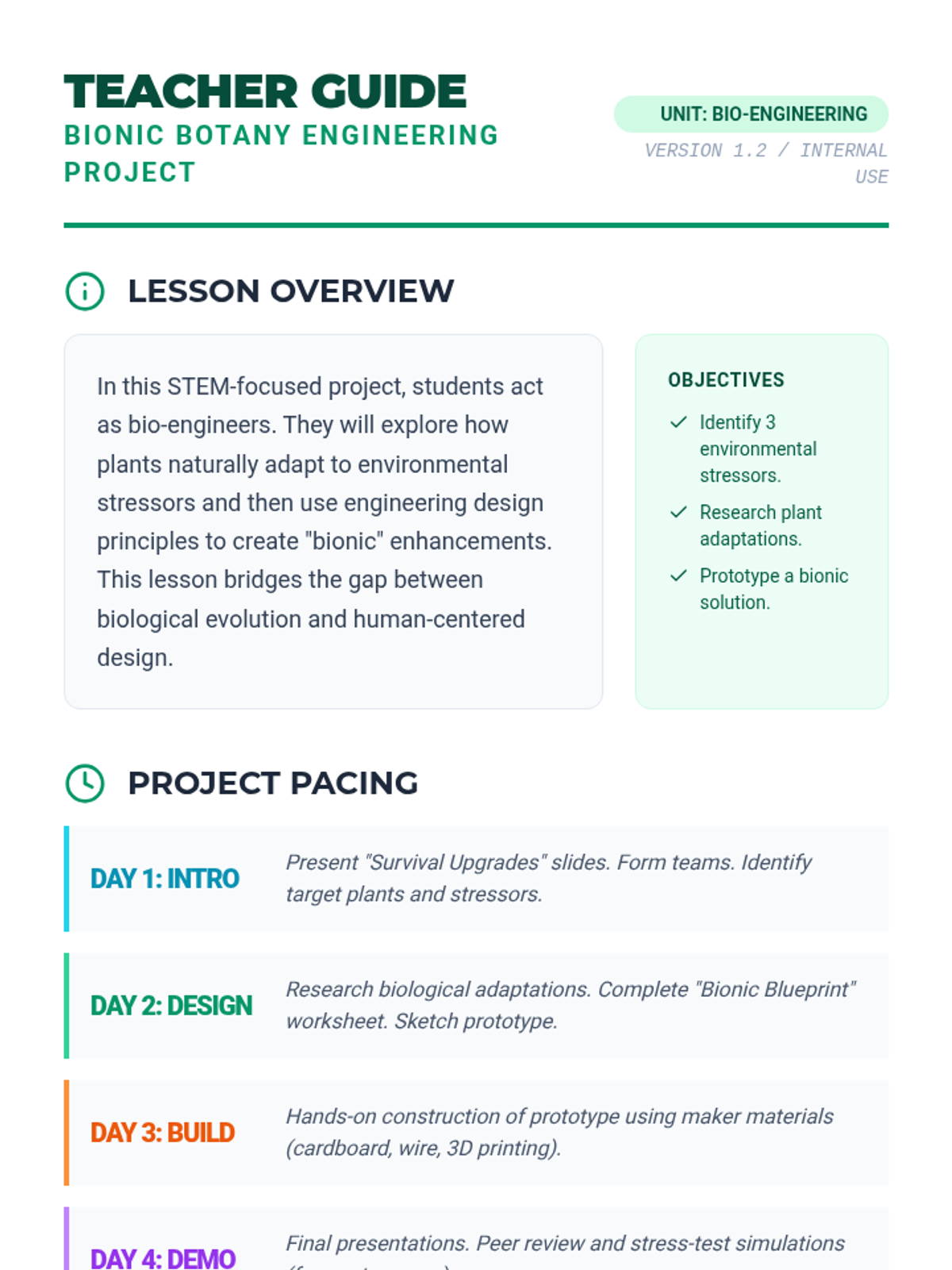
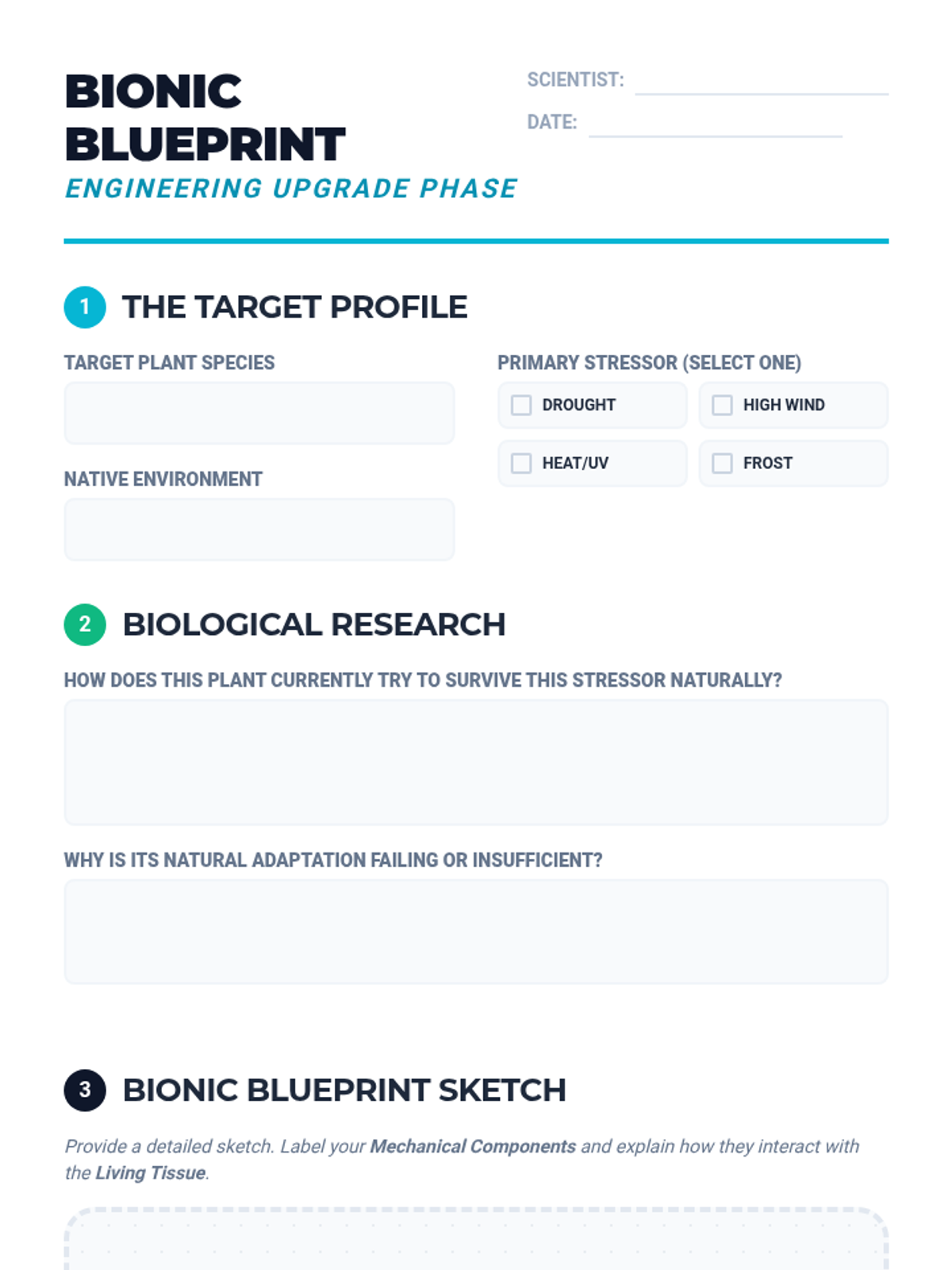
A STEM-focused lesson where students explore biological adaptations and apply engineering design principles to create 'bionic' enhancements for plants facing environmental stressors. Students research specific threats, brainstorm mechanical solutions, and prototype protective structures.
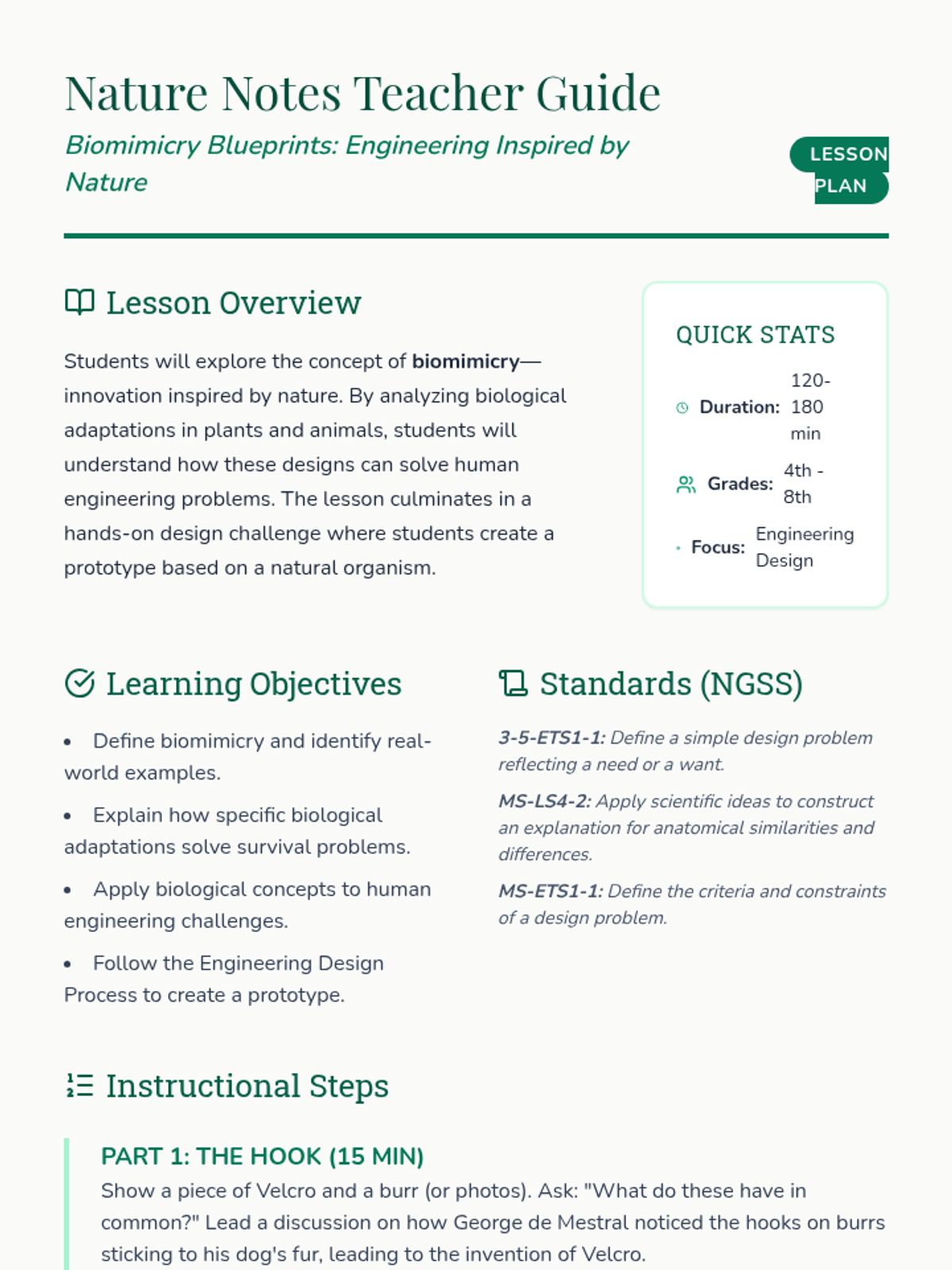
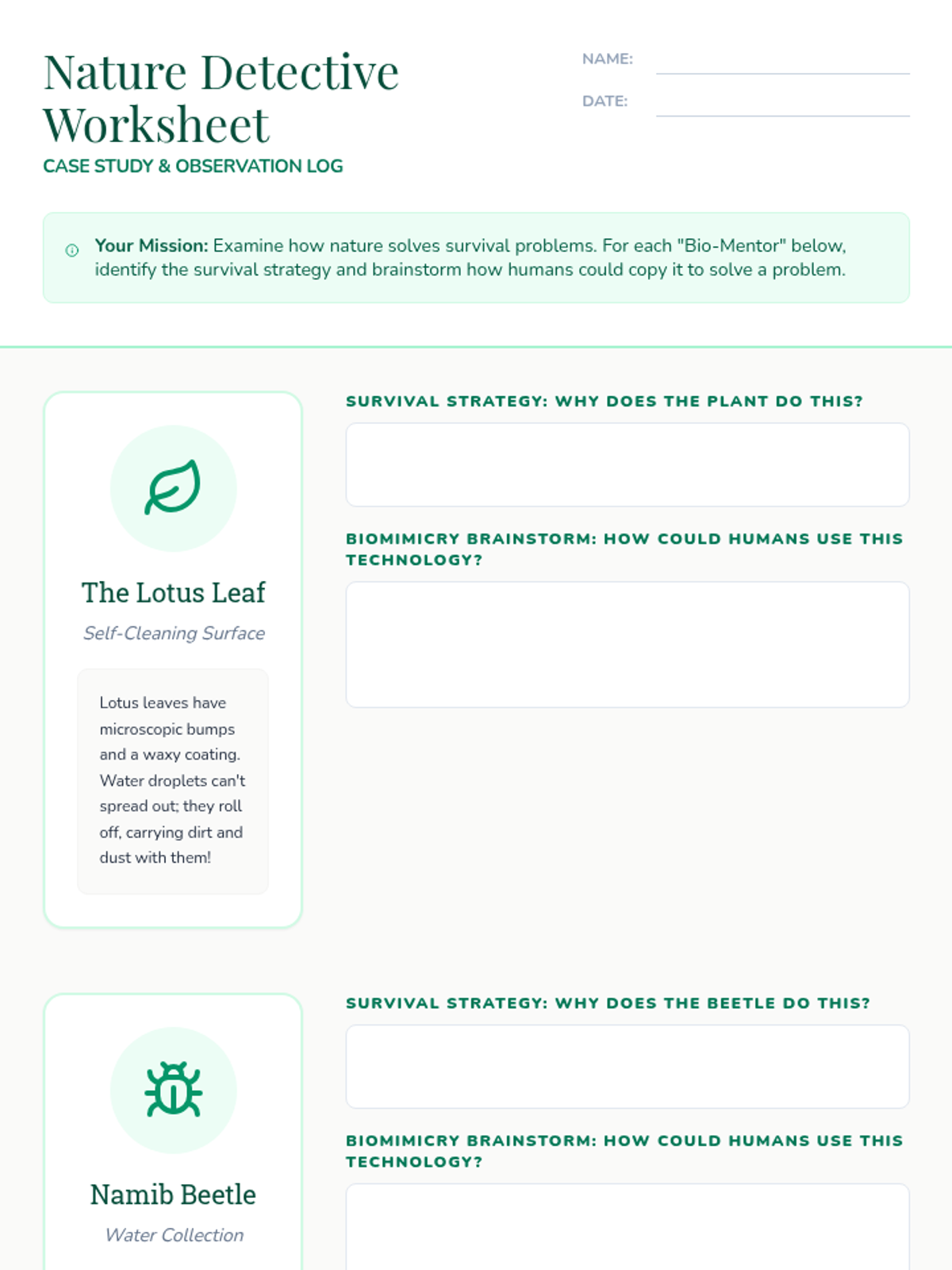
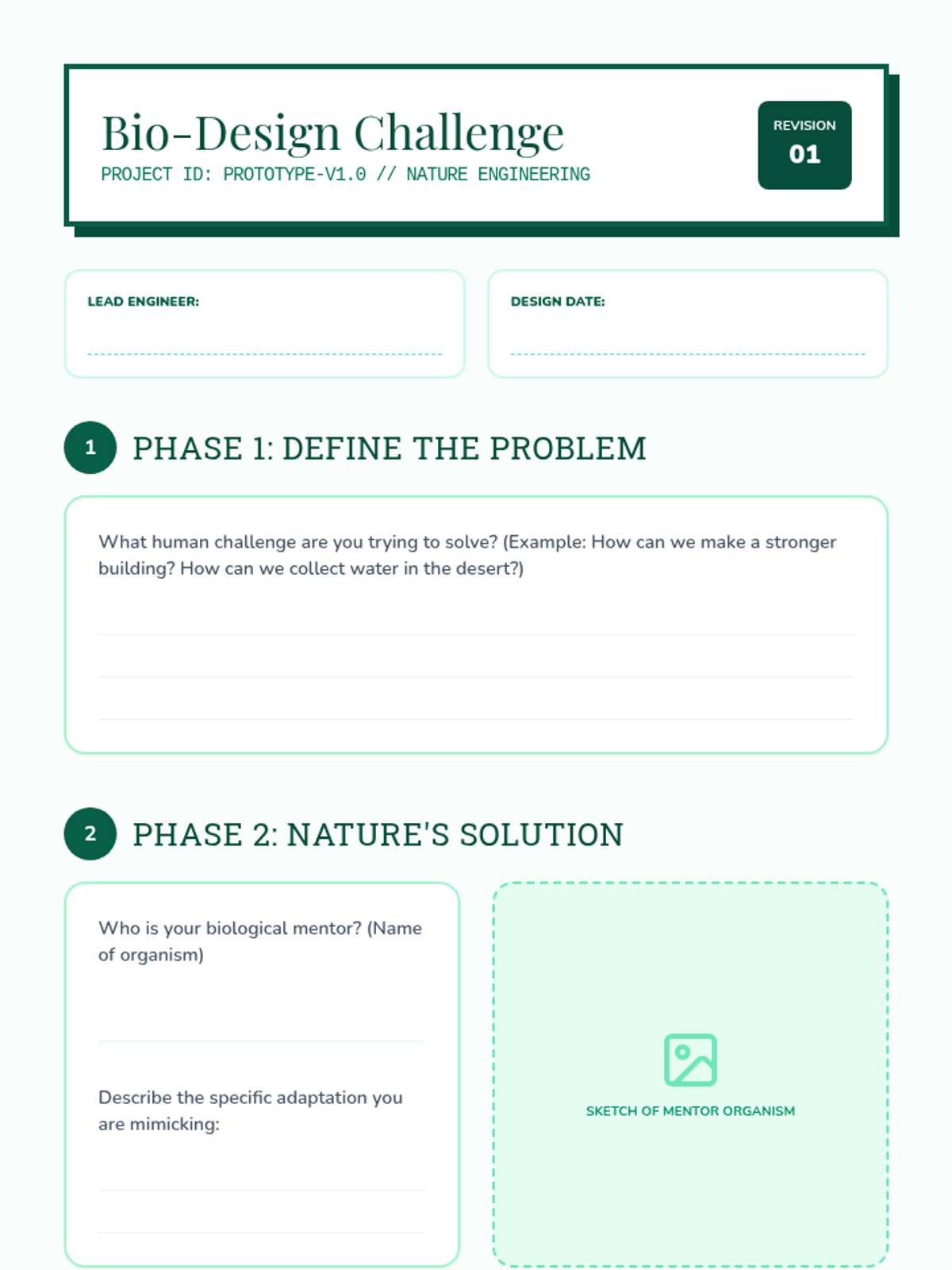
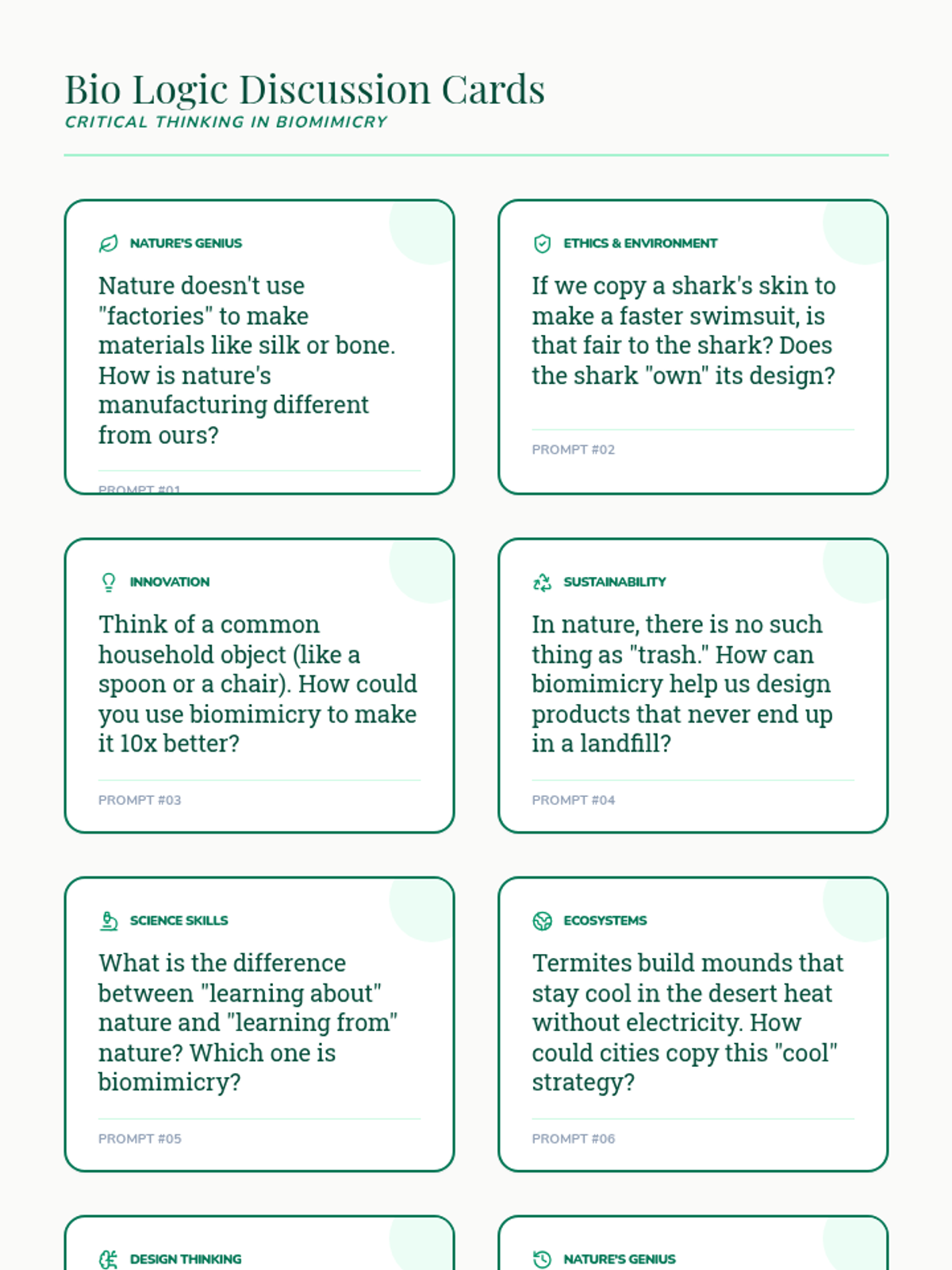
A comprehensive introduction to biomimicry where students explore how nature's best designs solve human challenges, culminating in a creative engineering project.
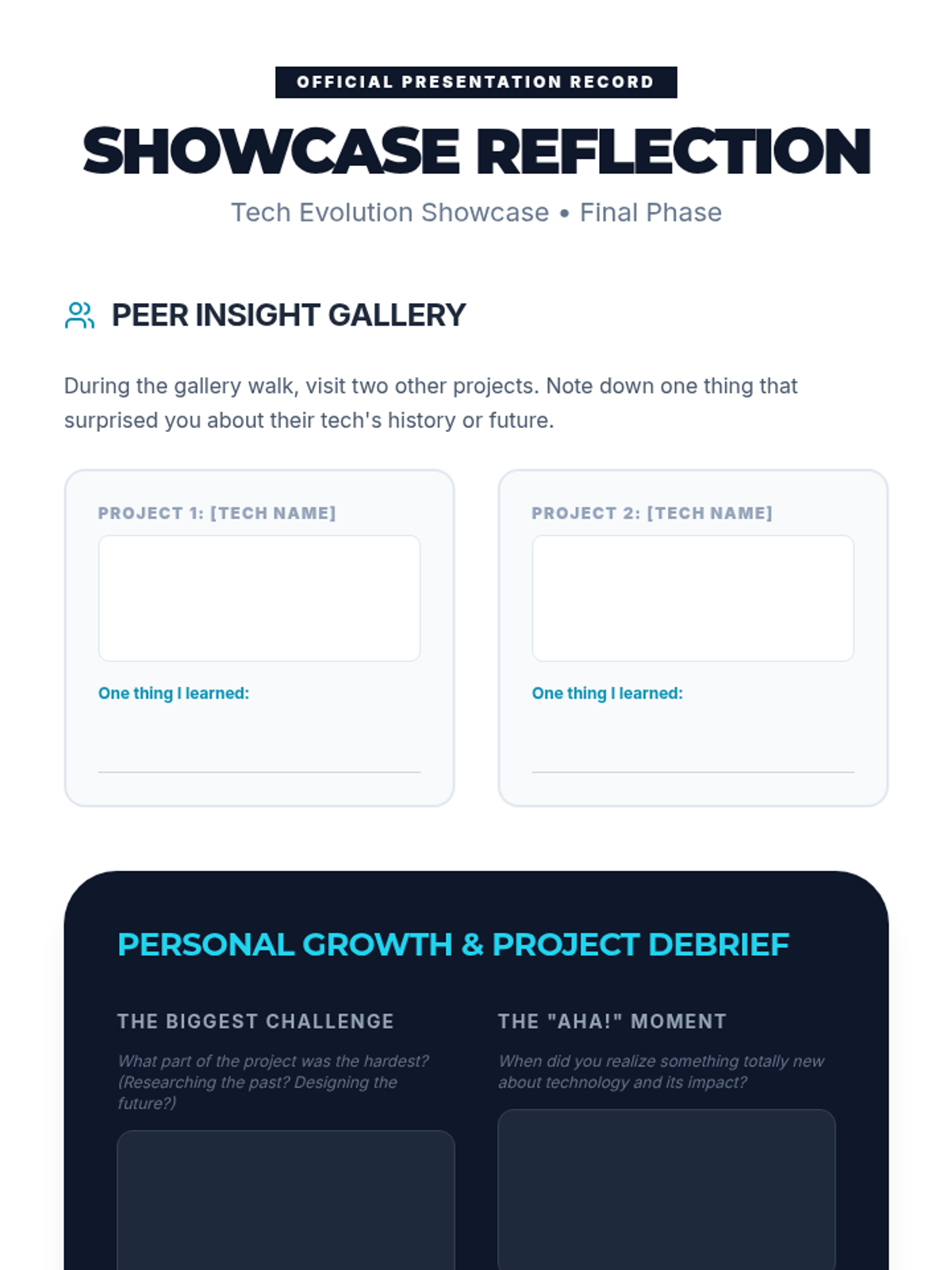
Students present their evolution maps and prototypes in a class showcase and reflect on the project.
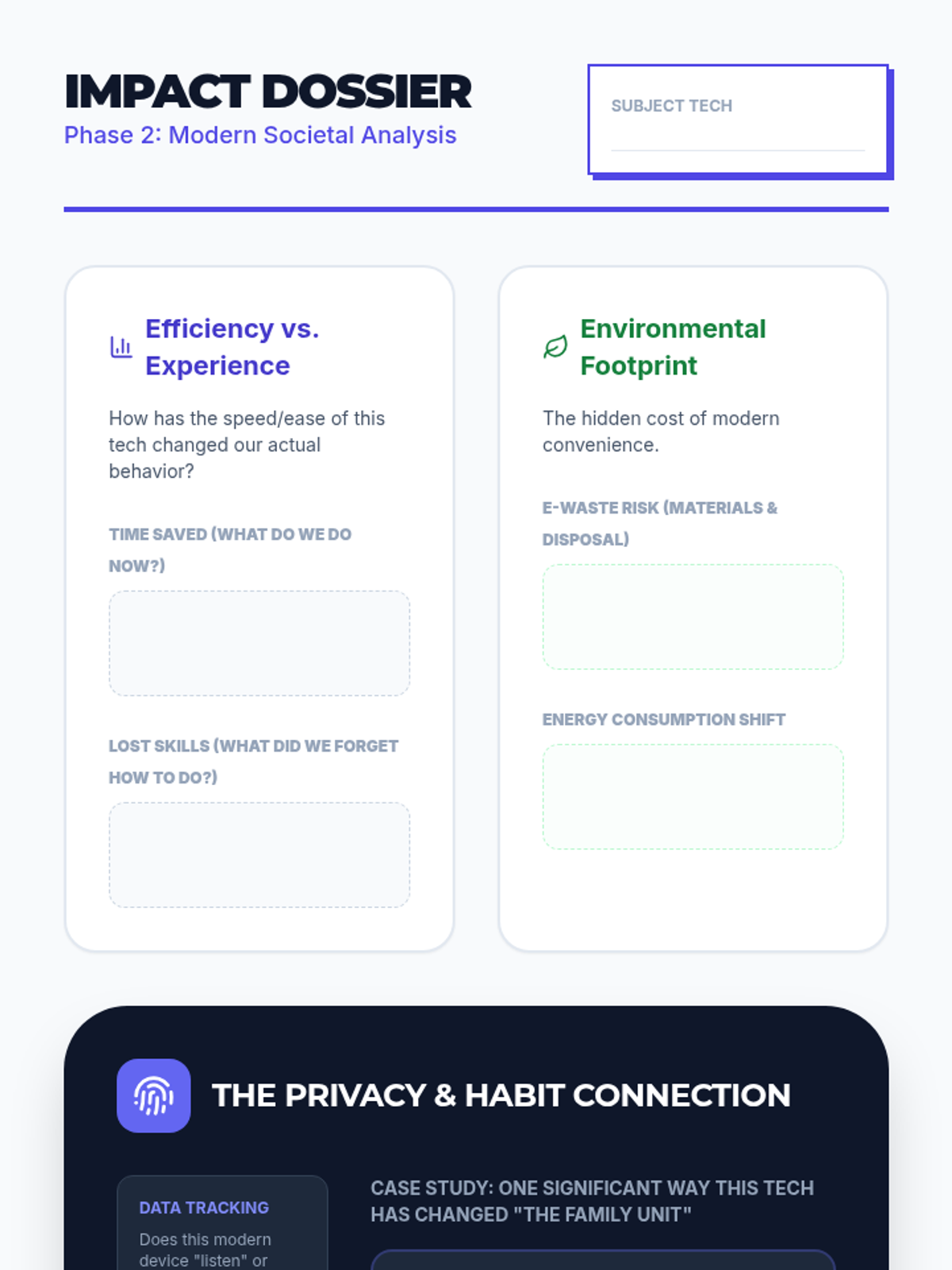
Students analyze the societal impact of their chosen technology, focusing on communication, privacy, and environmental changes.
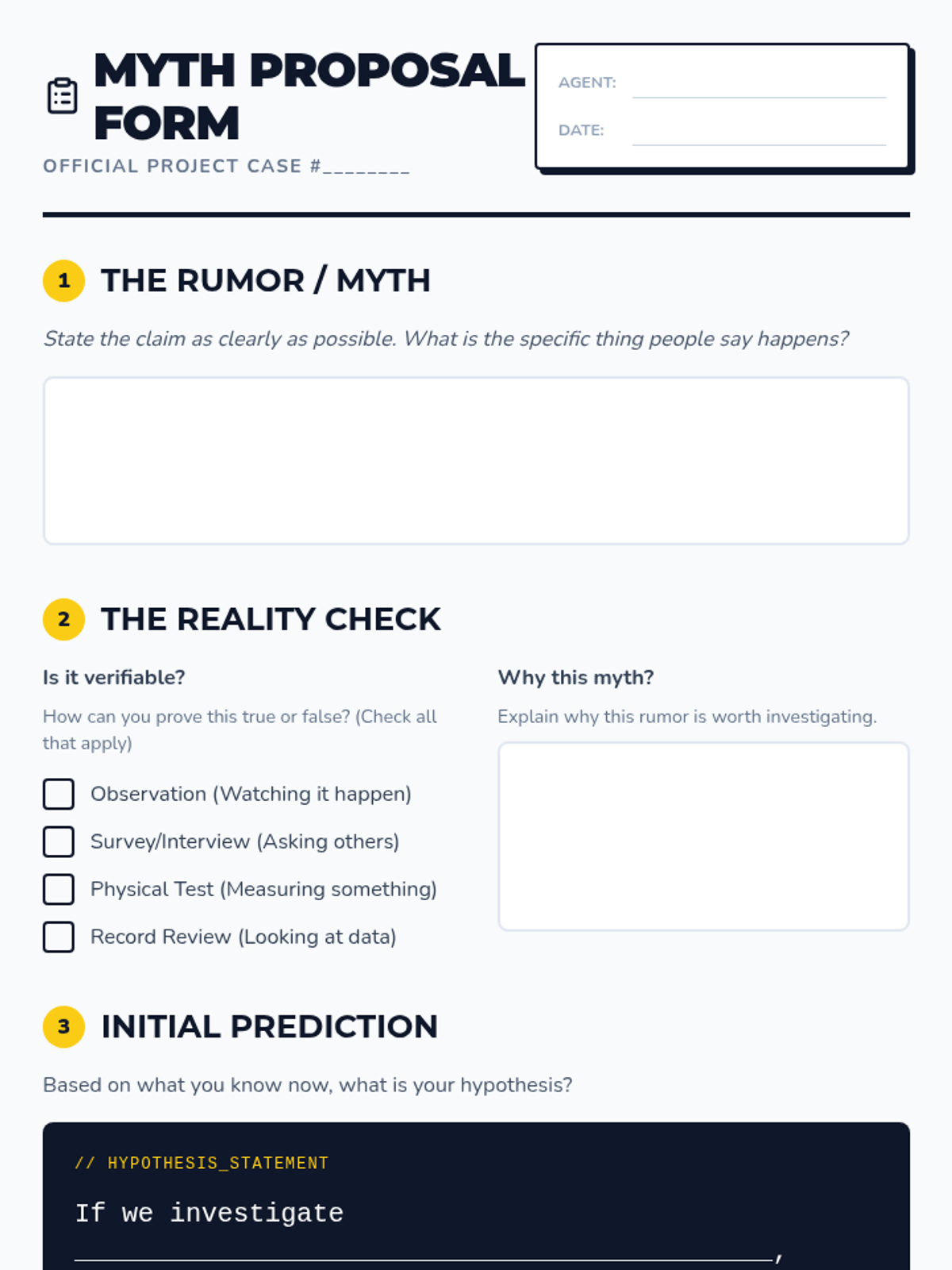
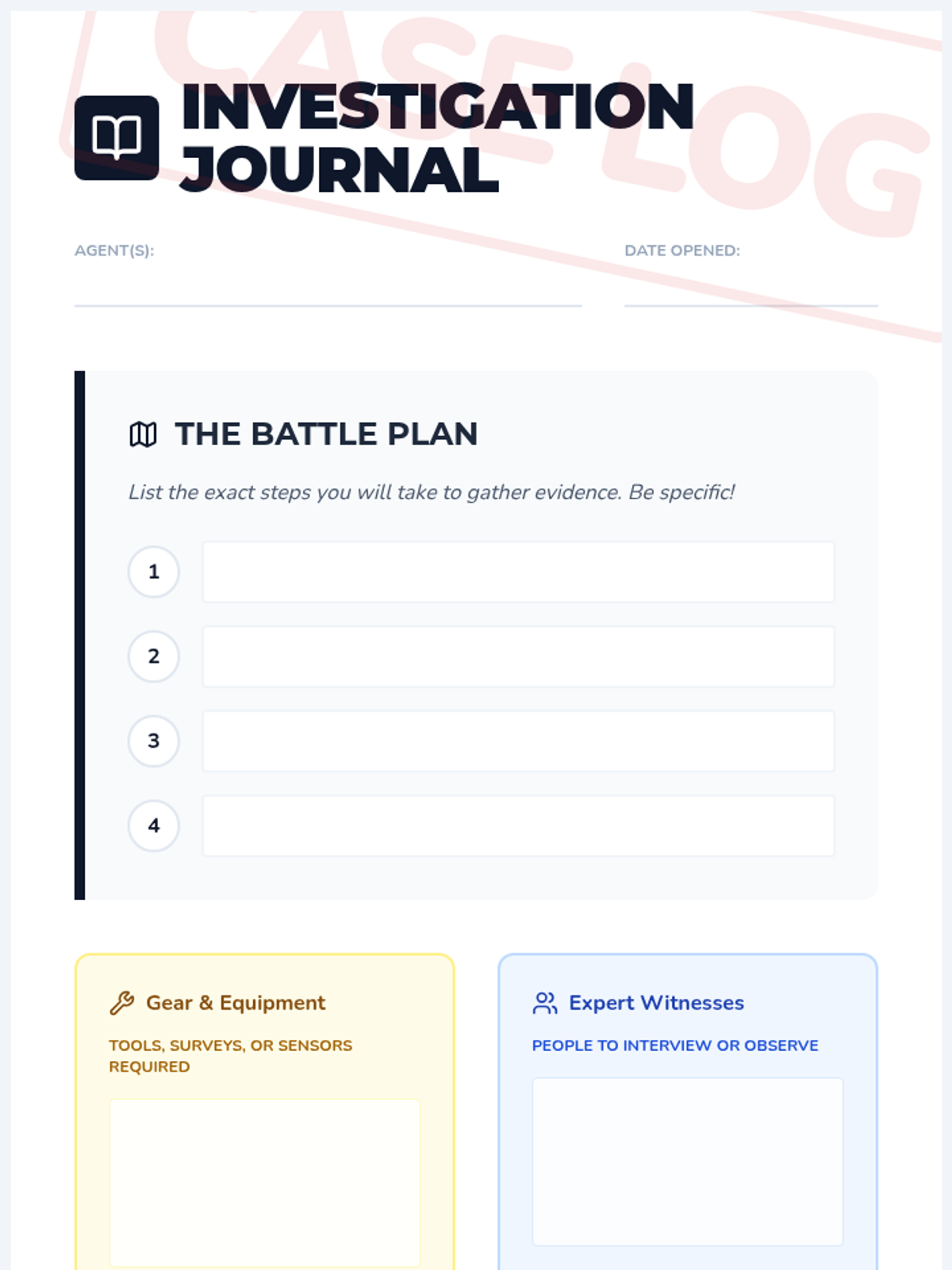
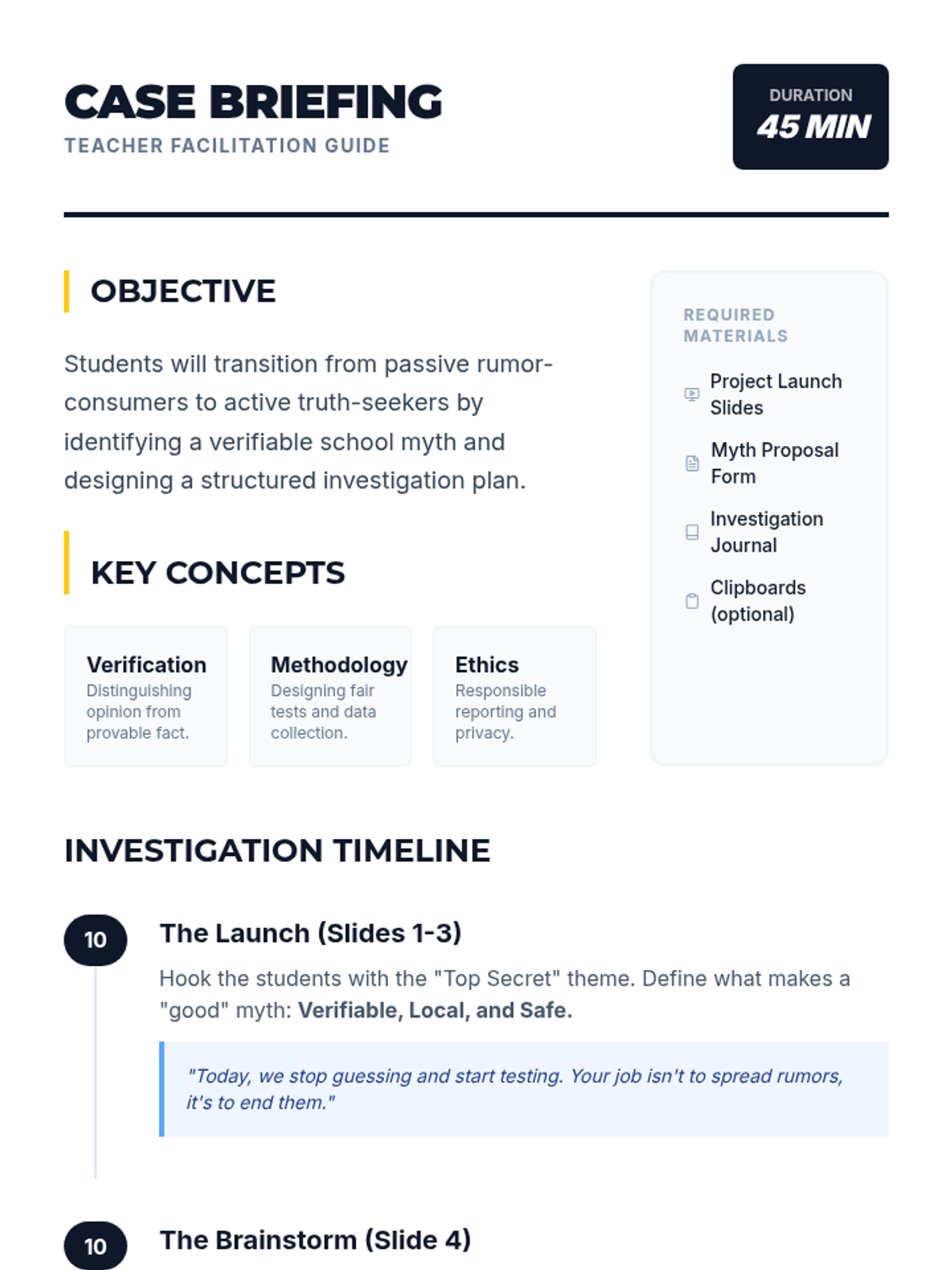
A 6th-grade lesson where students transition from passive rumor-consumers to active investigators by identifying a school-based myth and designing a scientific or journalistic plan to verify it.
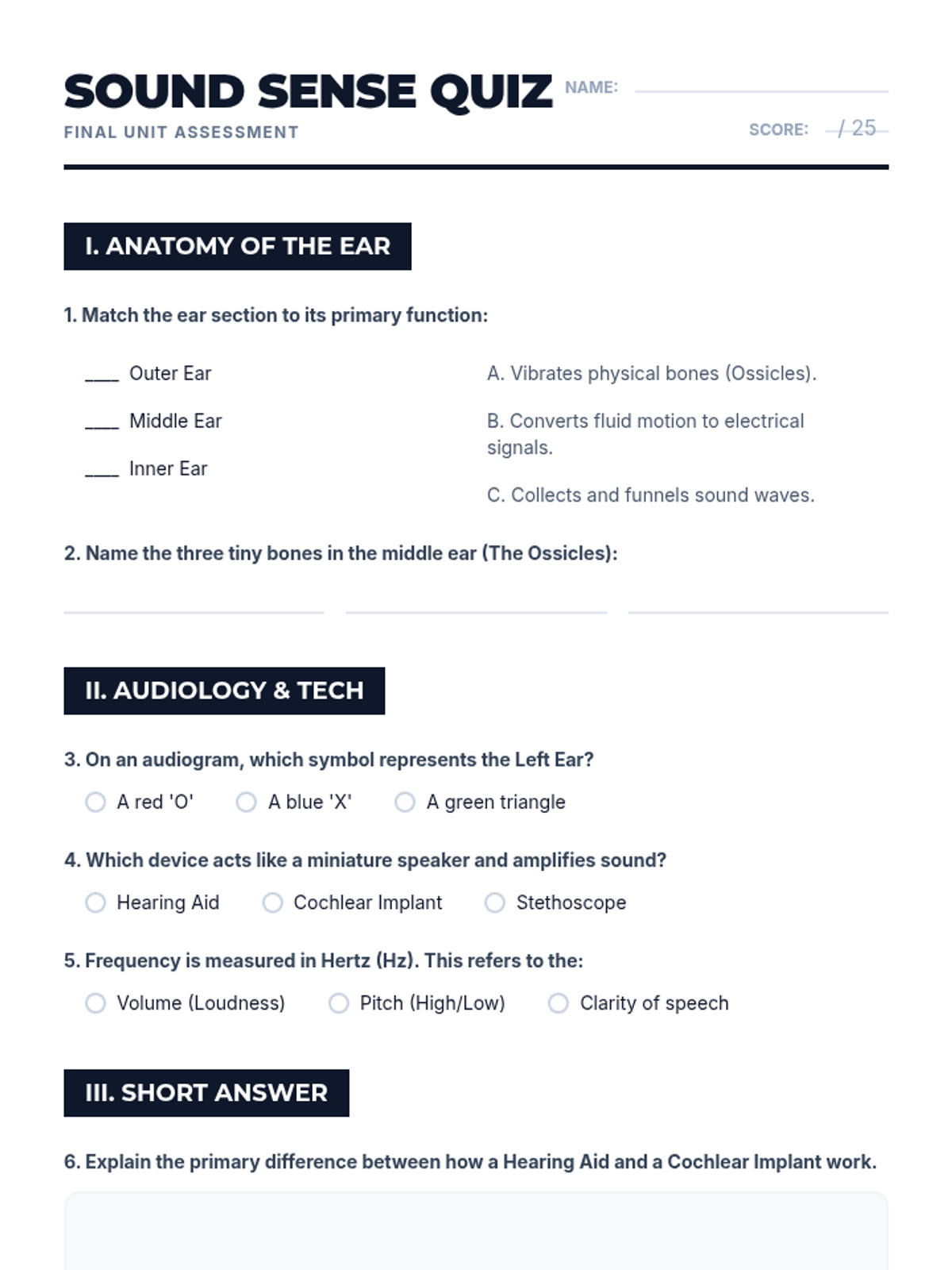
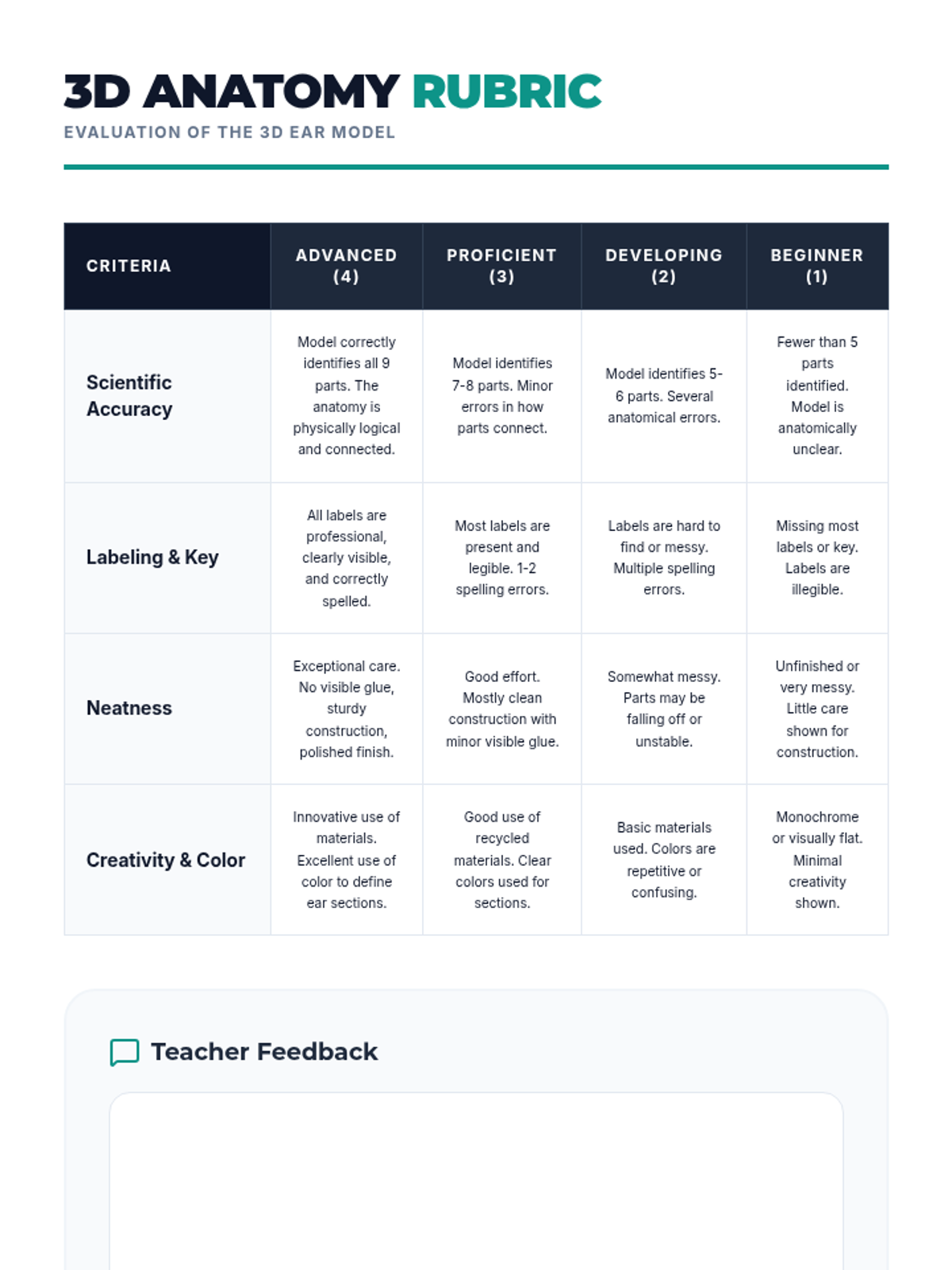
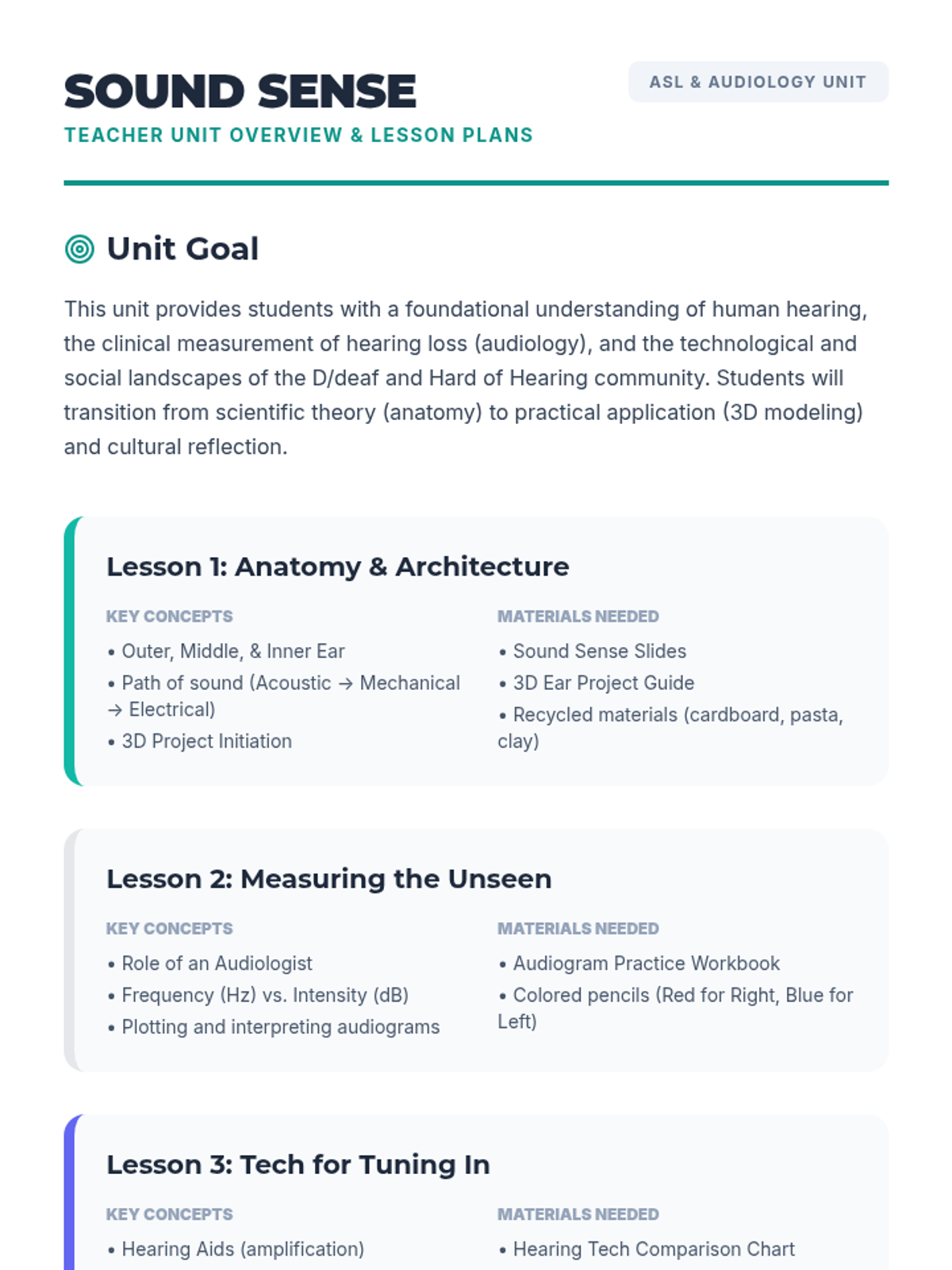
Final assessment of the unit through a formal quiz and the final evaluation of the 3D ear model project.
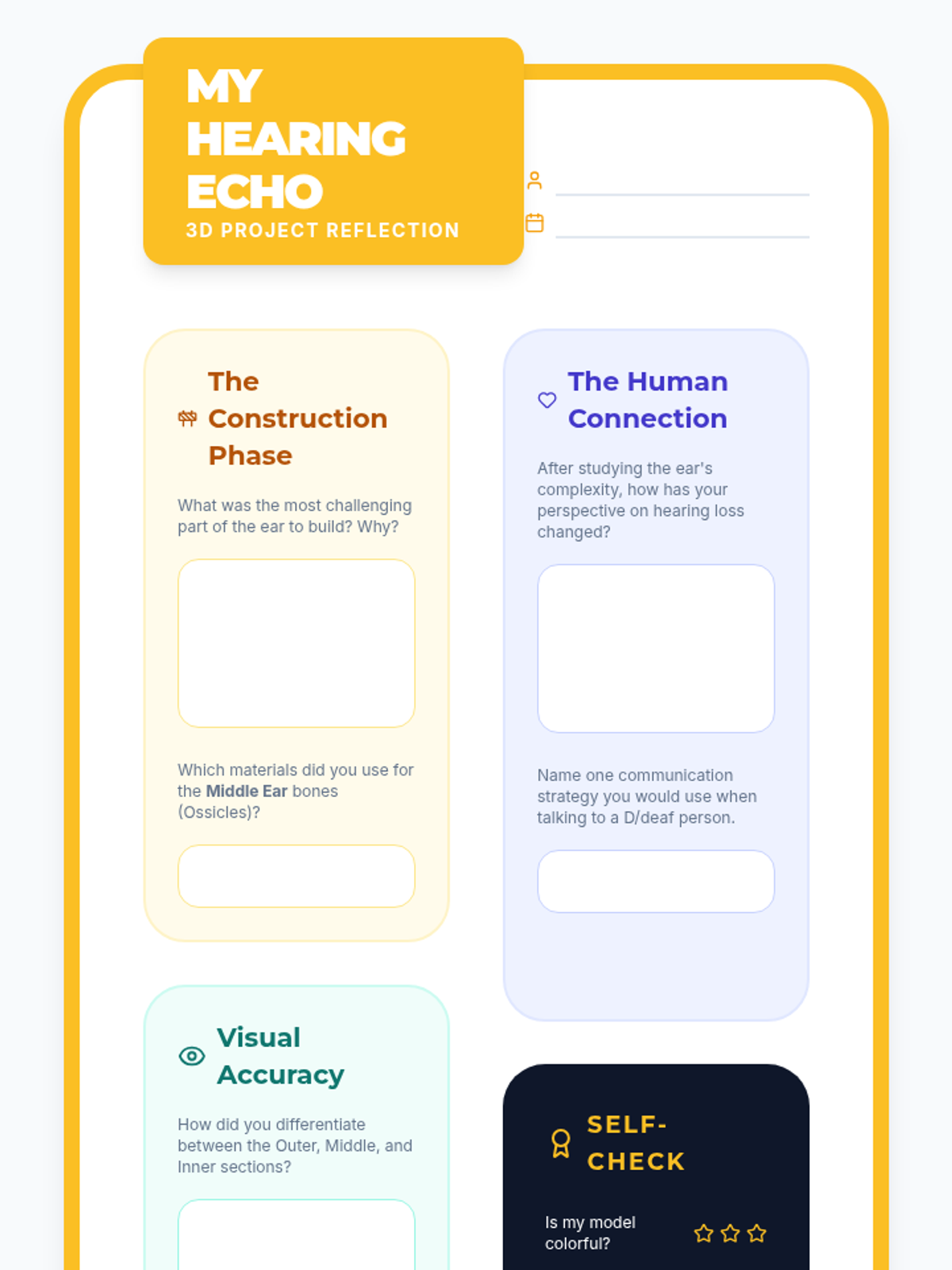
Students examine the social, emotional, and practical impacts of hearing loss on daily life and reflect on their own 3D project creation.
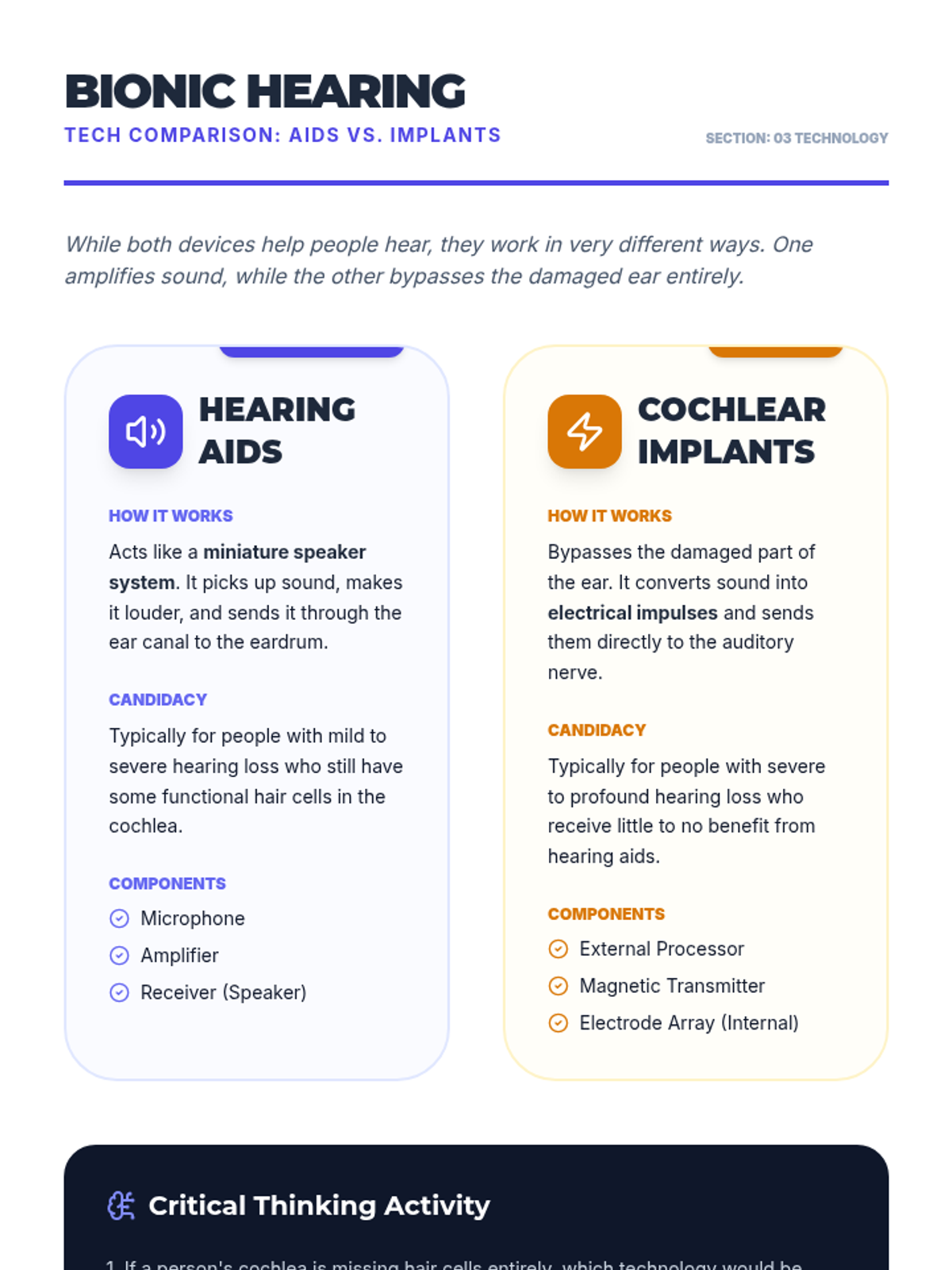
A deep dive into hearing technology, specifically comparing the functions and surgical/non-surgical aspects of hearing aids and cochlear implants.
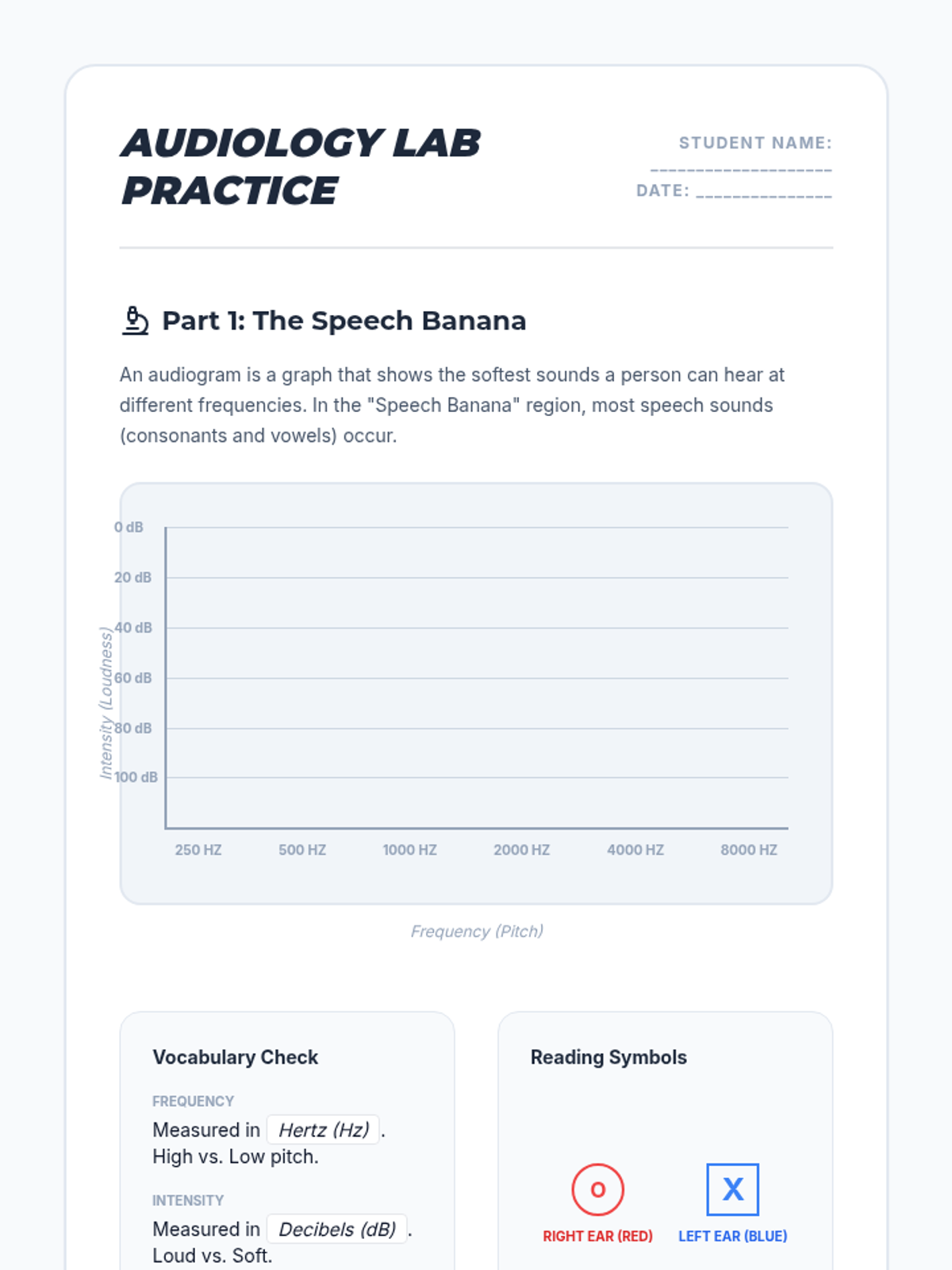
An introduction to the field of audiology, where students learn how hearing is measured and practice reading and plotting data on an audiogram.
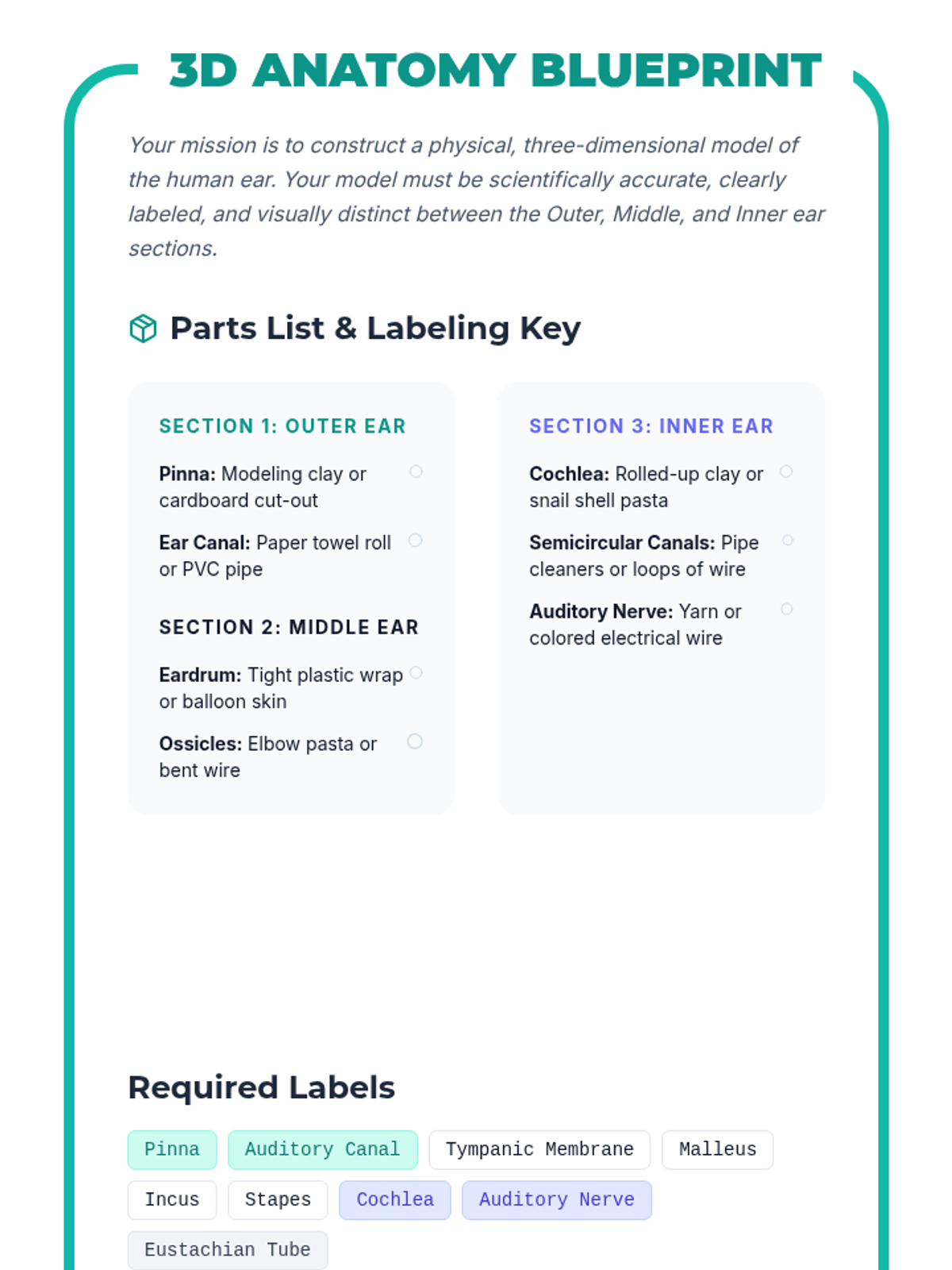
Students explore the anatomy of the ear and begin their journey into the 3D ear model project, learning how sound travels through the outer, middle, and inner ear.
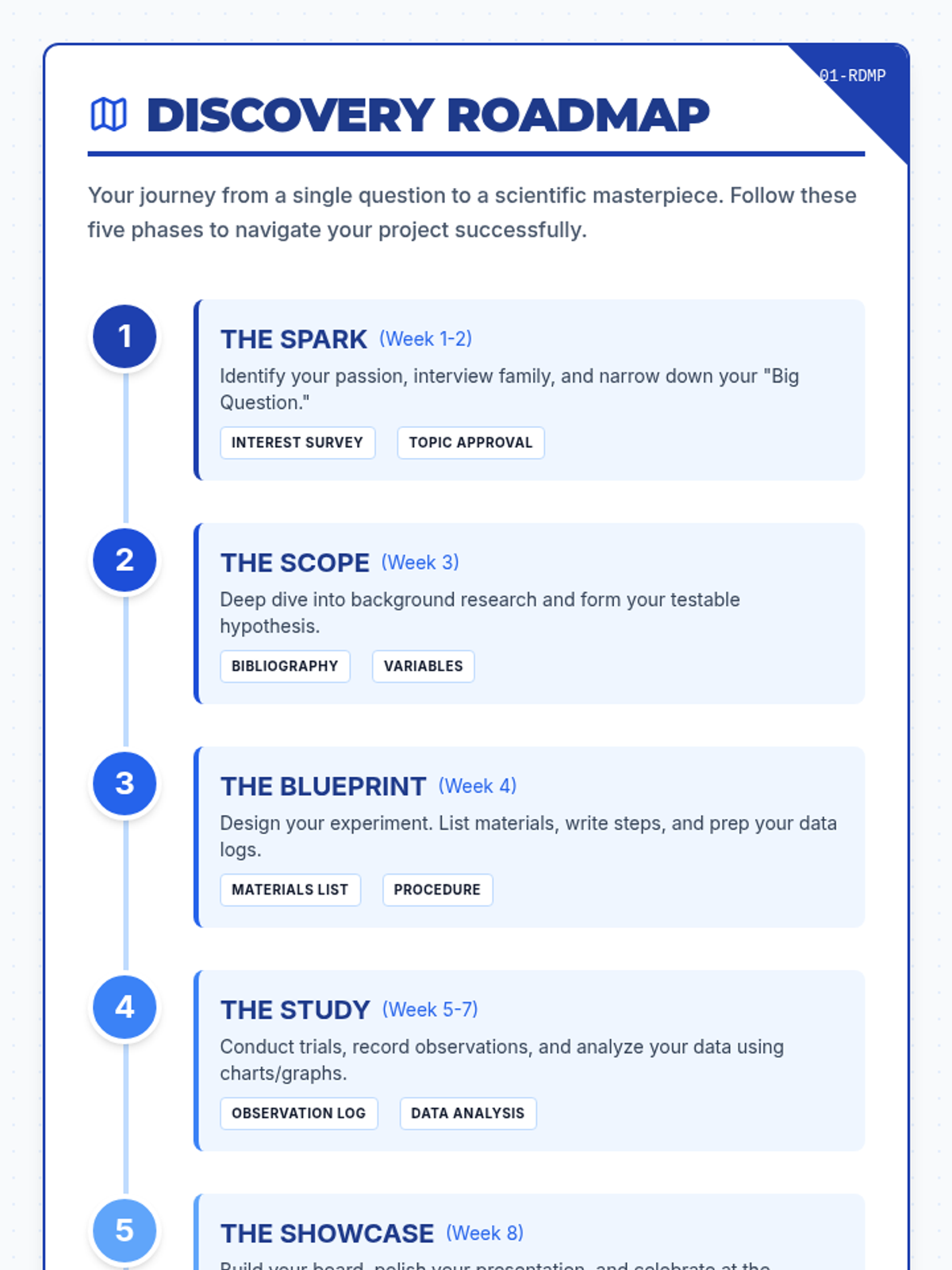
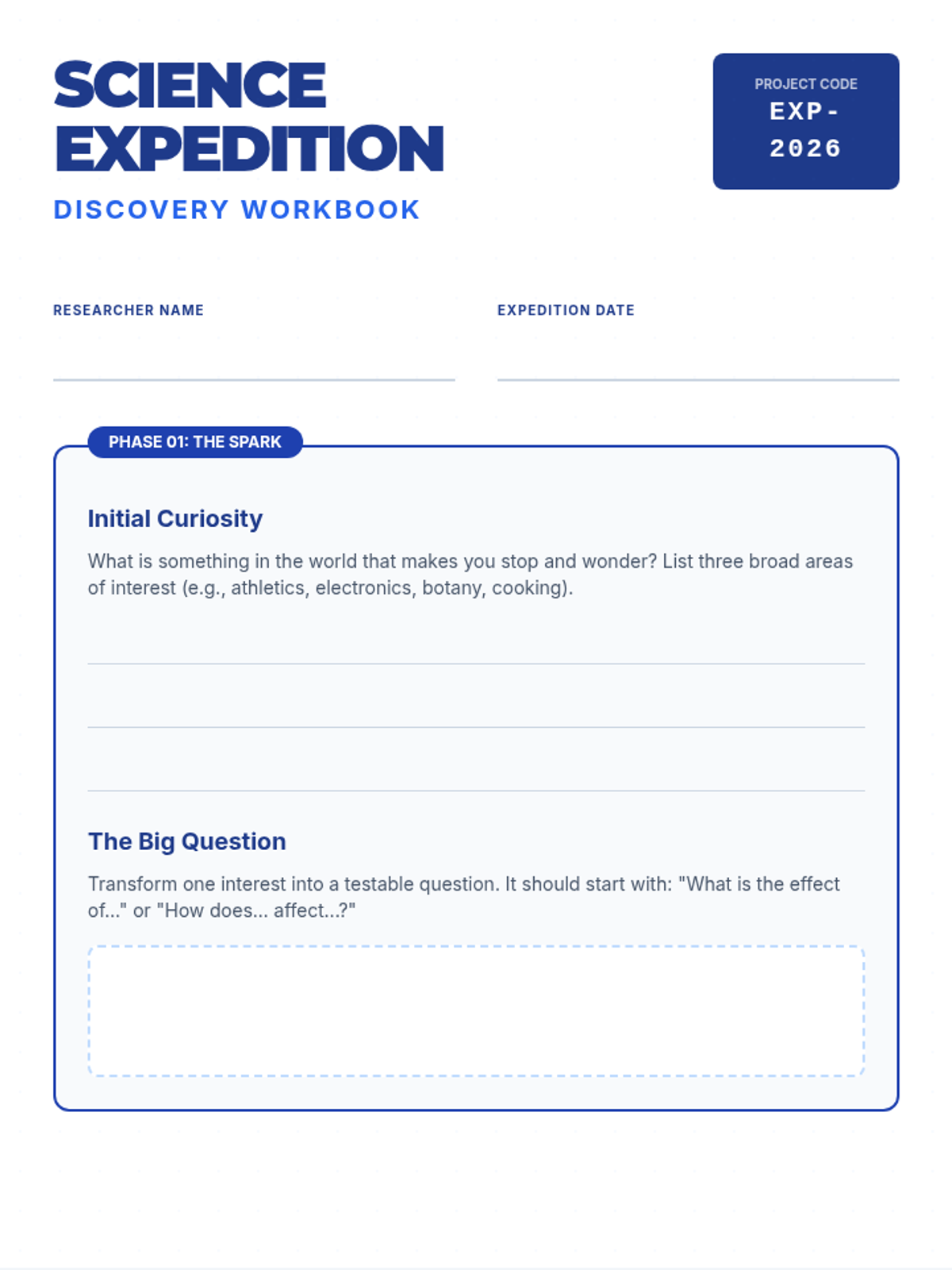
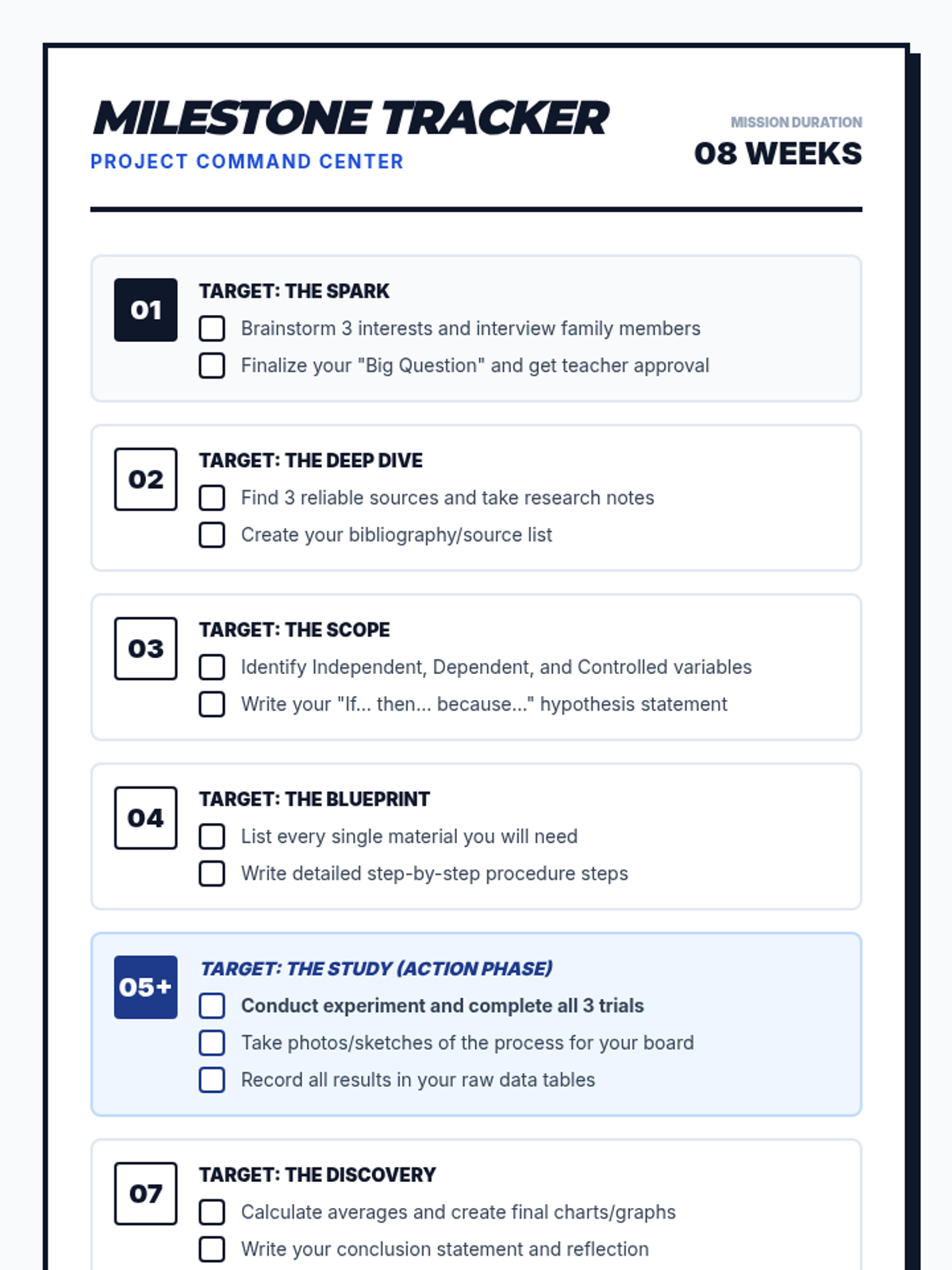
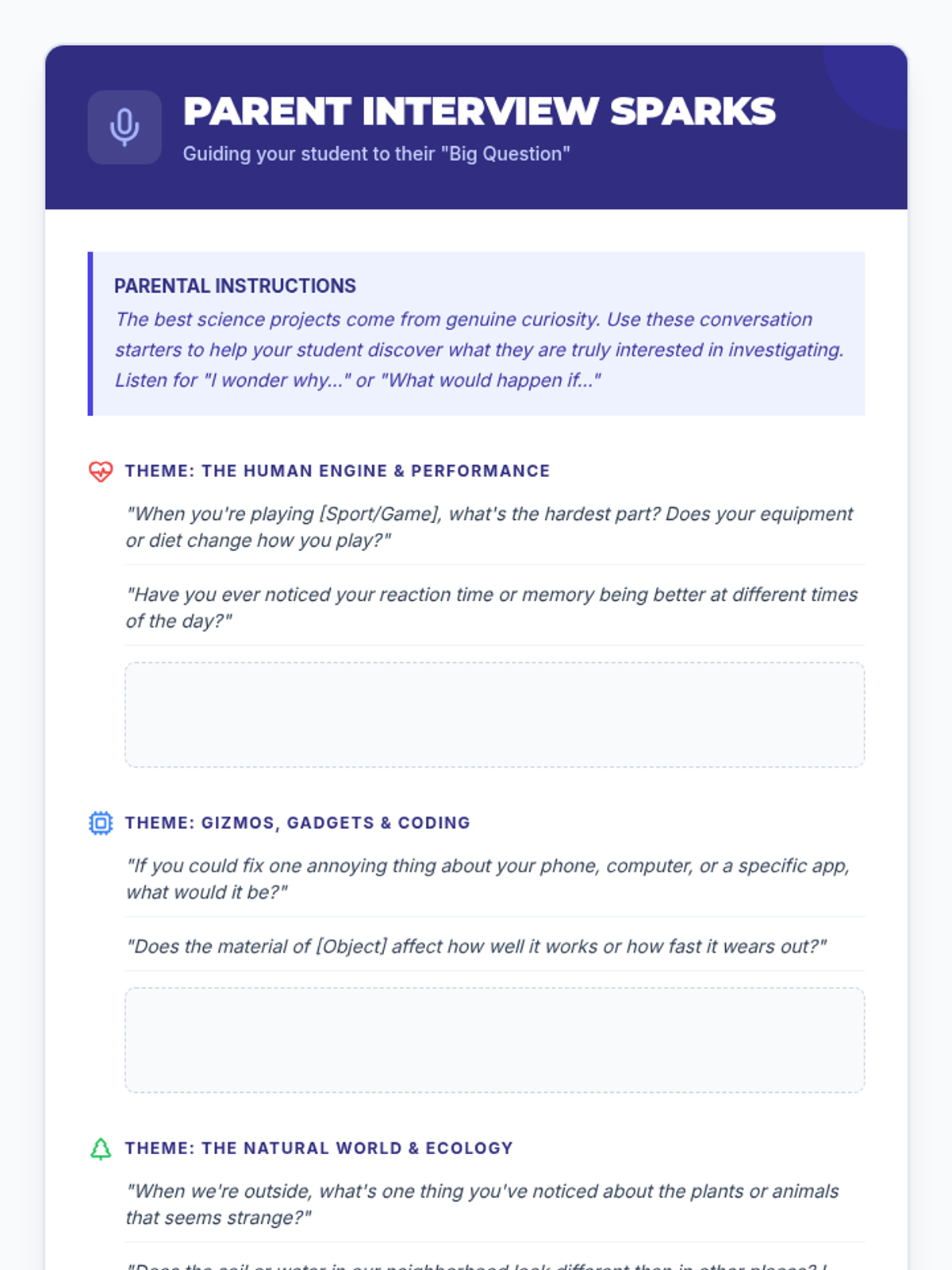
A comprehensive 7-week guide for middle school students to conduct a deep-dive study into a scientific topic of their choice. This project shifts focus from experimentation to expertise, guiding students from initial brainstorming to a final exhibition.
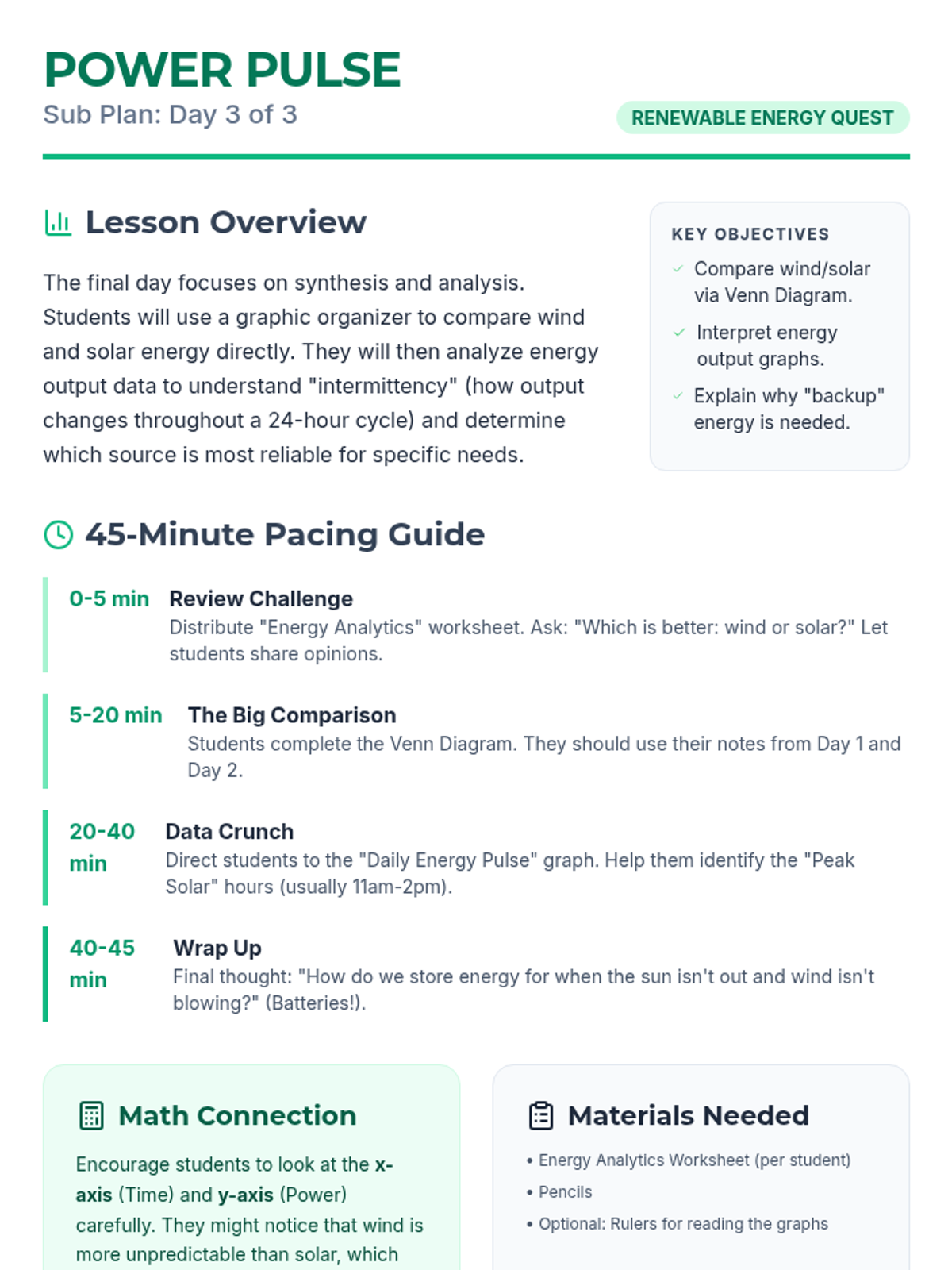
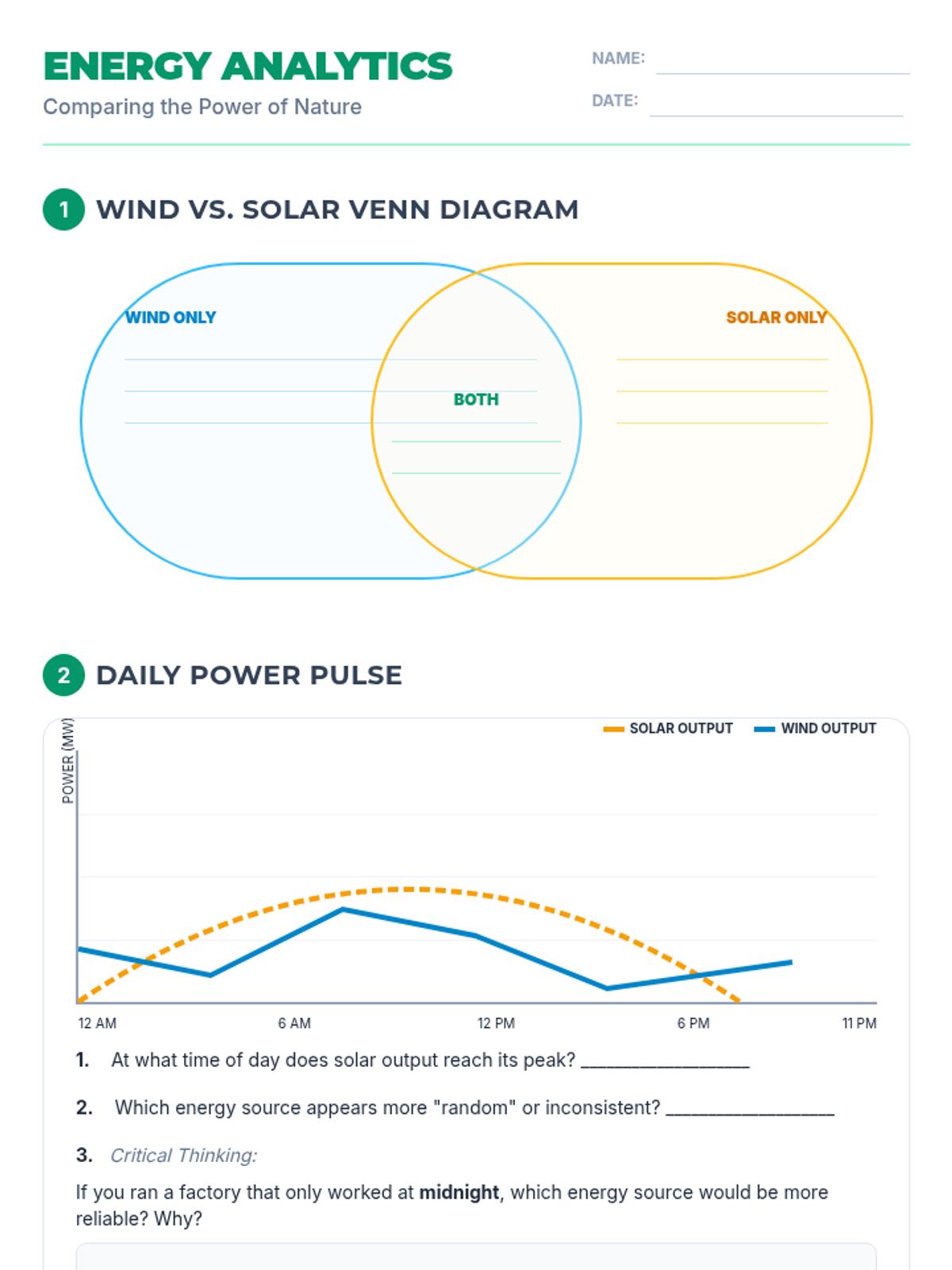
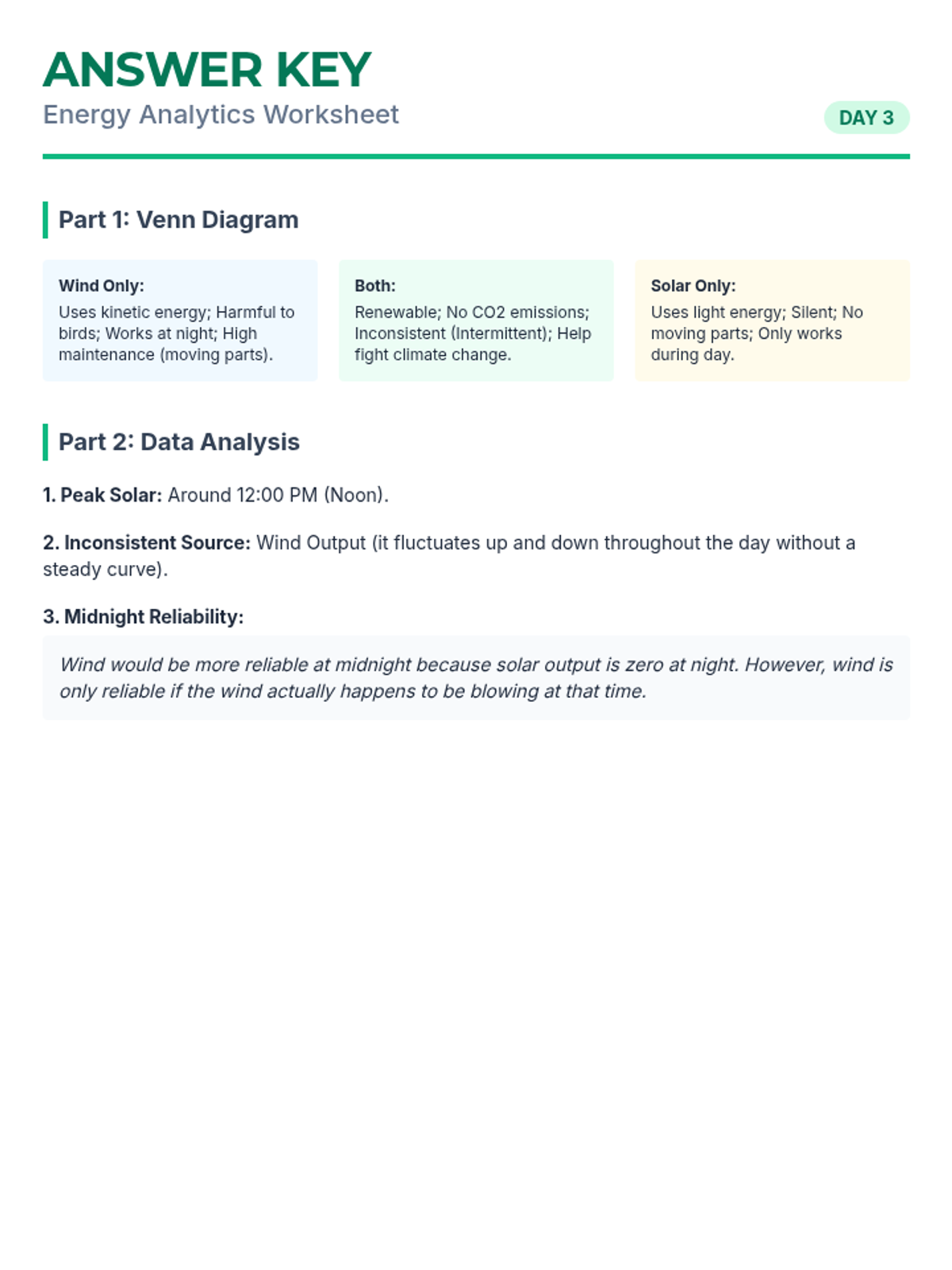
A culminating lesson where students compare wind and solar energy using graphic organizers and analyze real-world energy output data to understand reliability and efficiency.
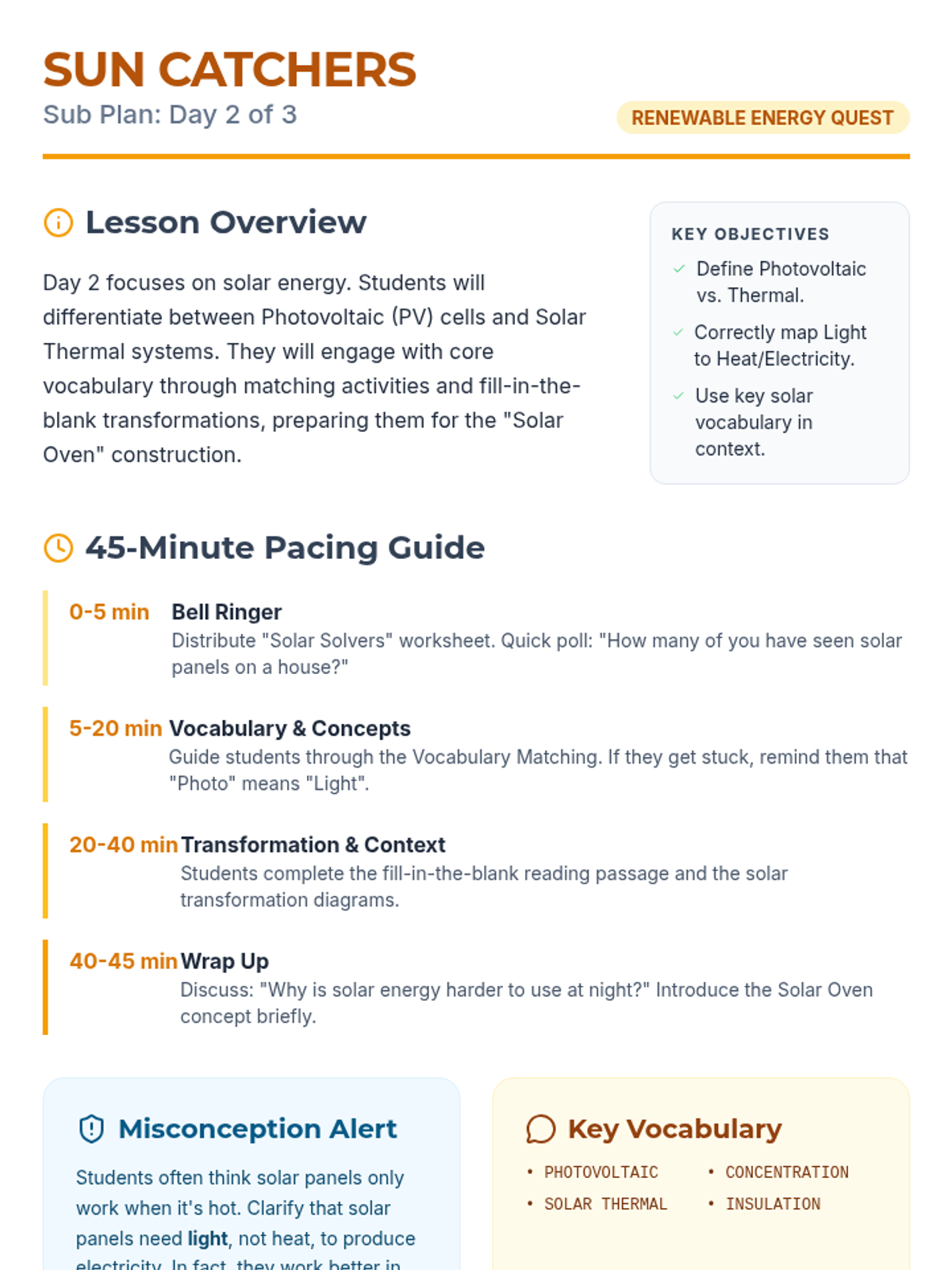
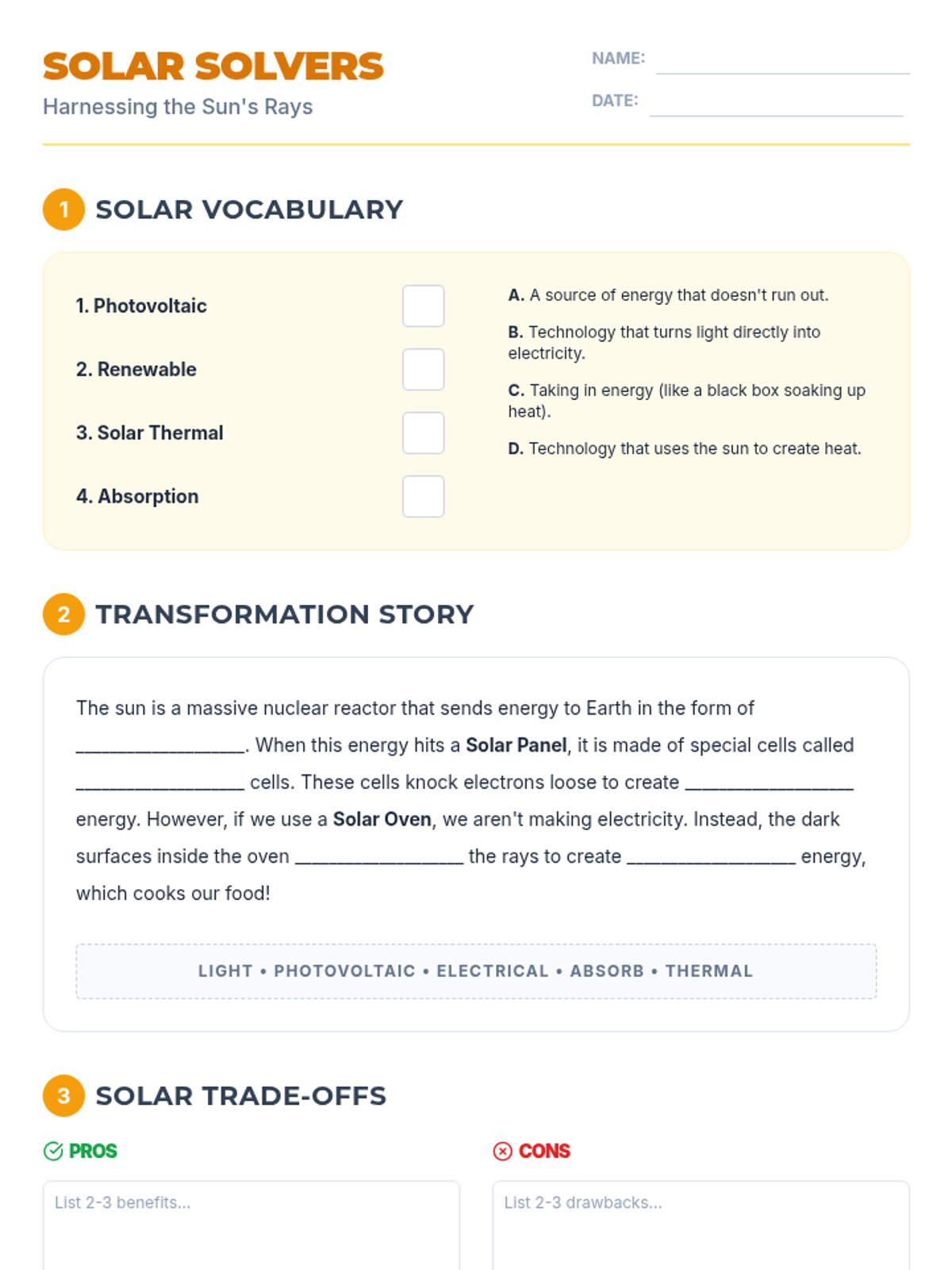
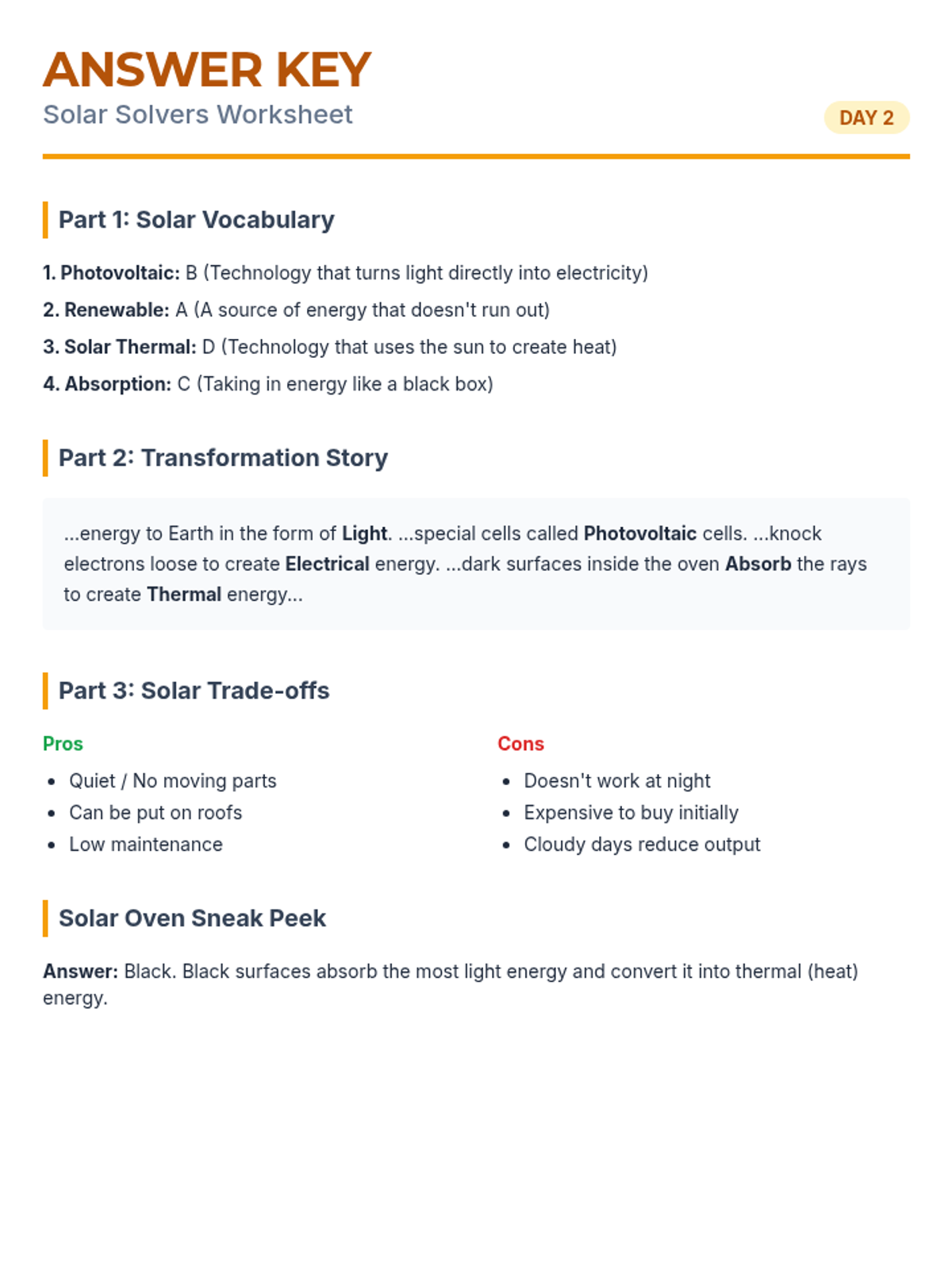
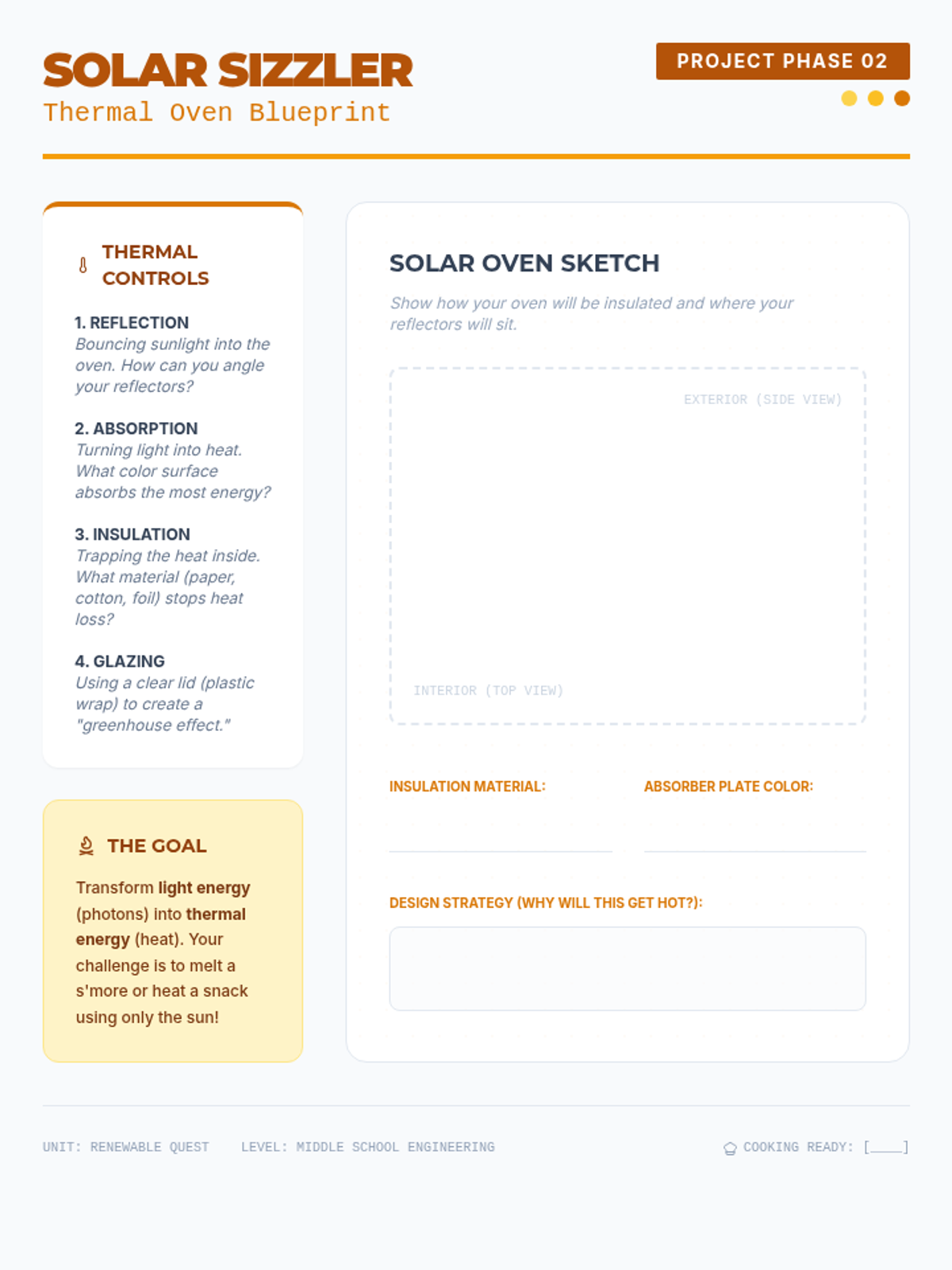
A lesson exploring solar energy technology, including photovoltaic and thermal systems, energy transformation from light to heat/electricity, and solar energy vocabulary.
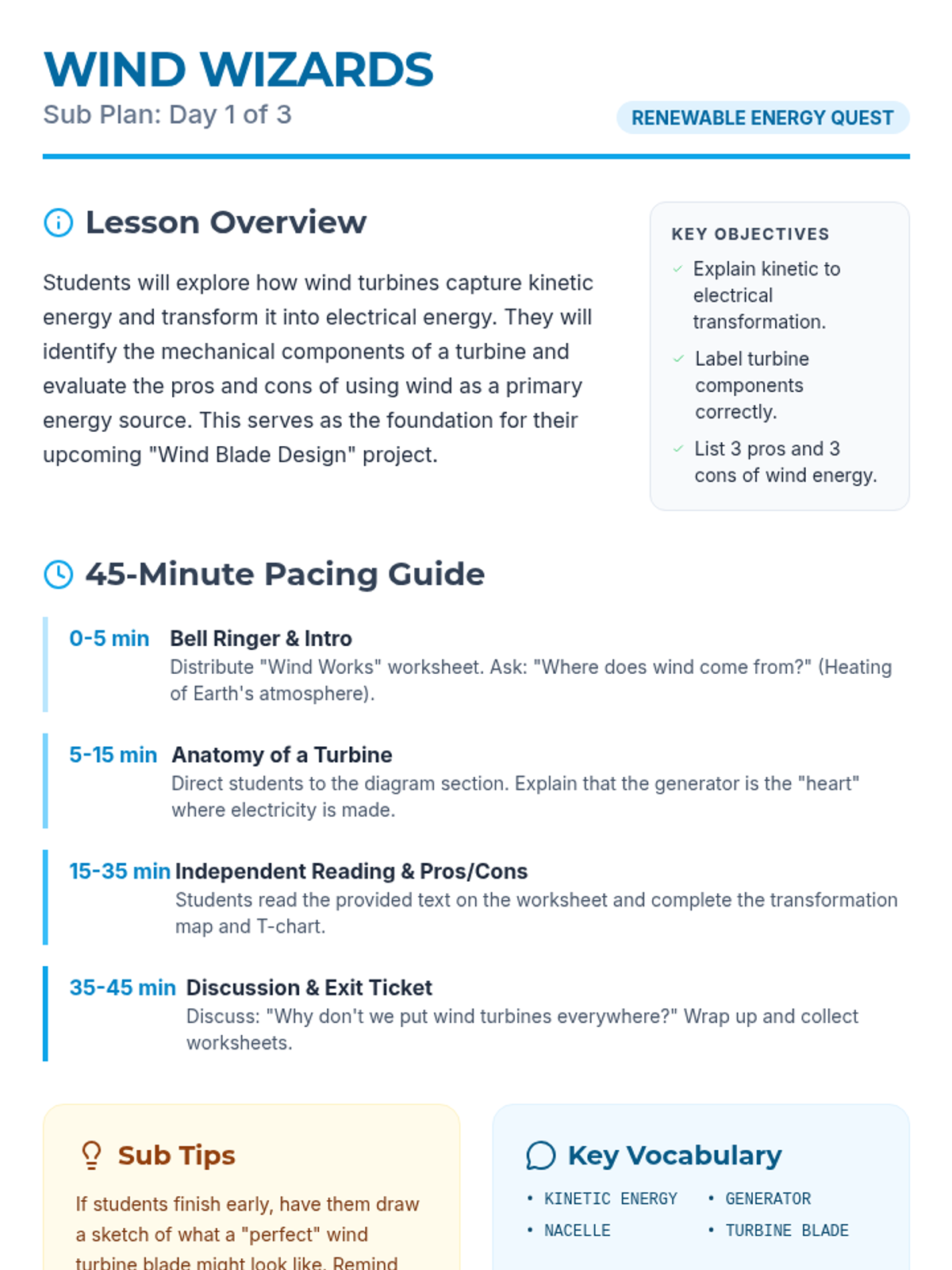
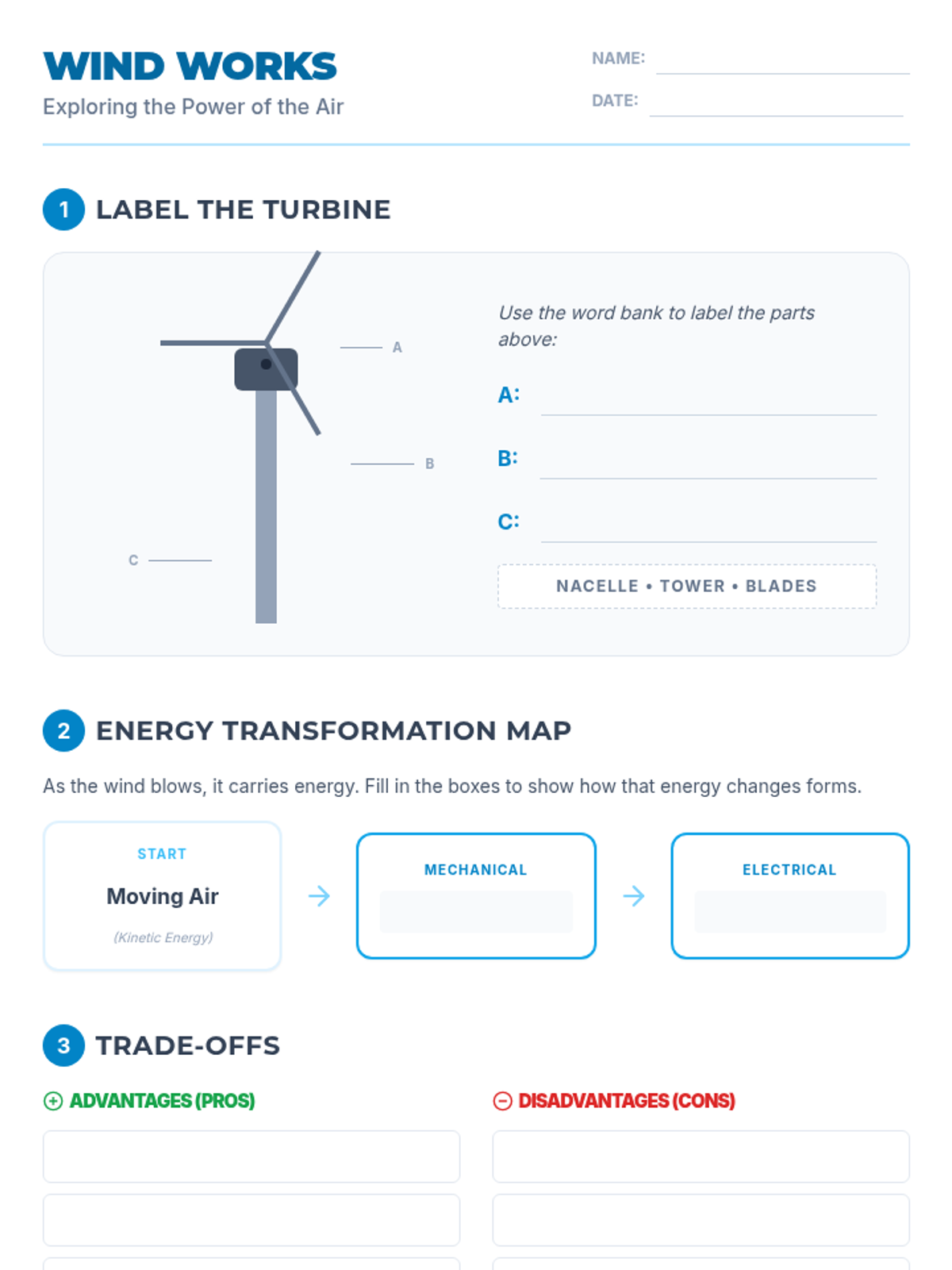
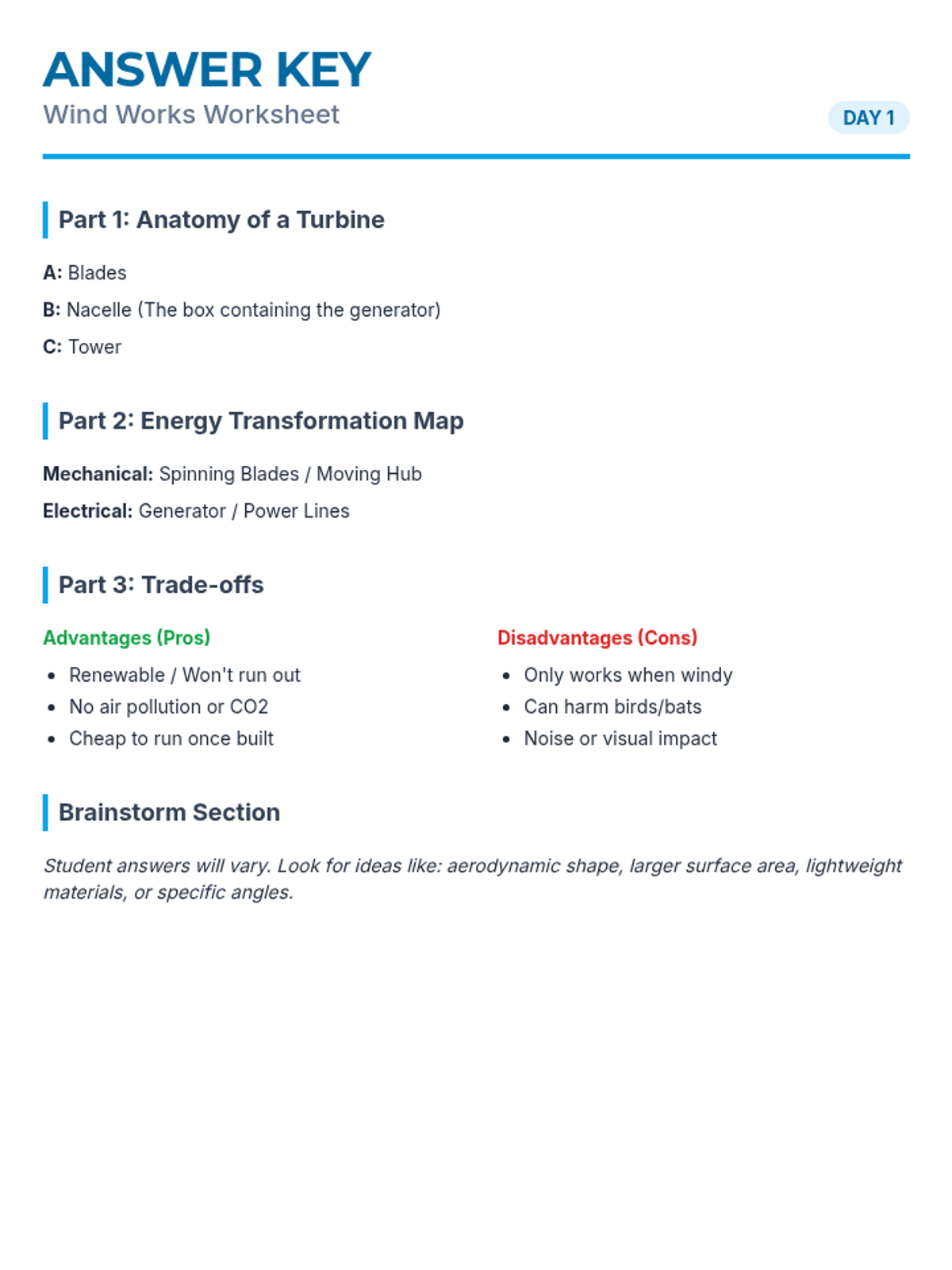
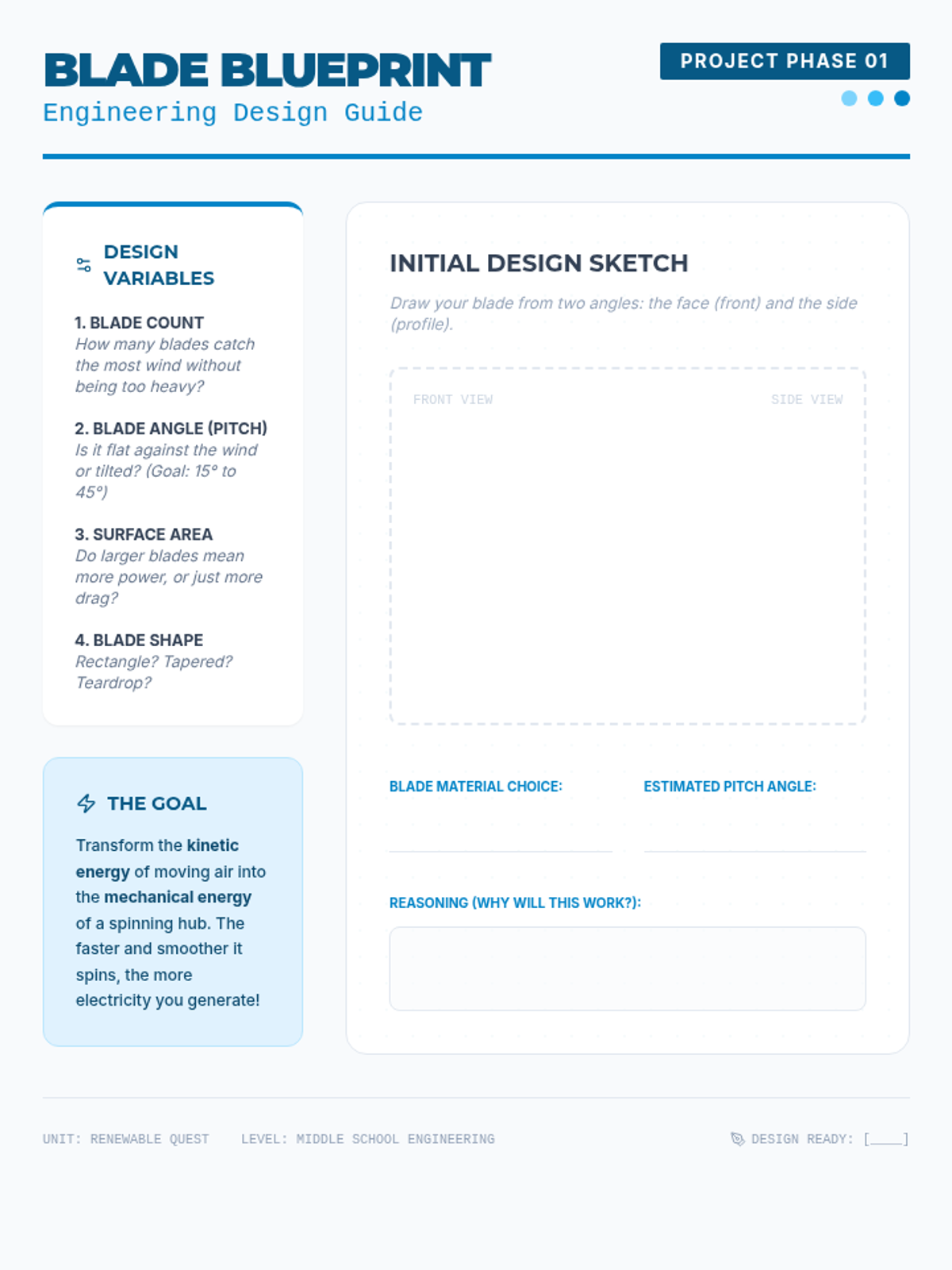
An introductory lesson on wind energy focusing on the mechanics of turbines, energy transformations from kinetic to electrical, and the trade-offs of wind power.
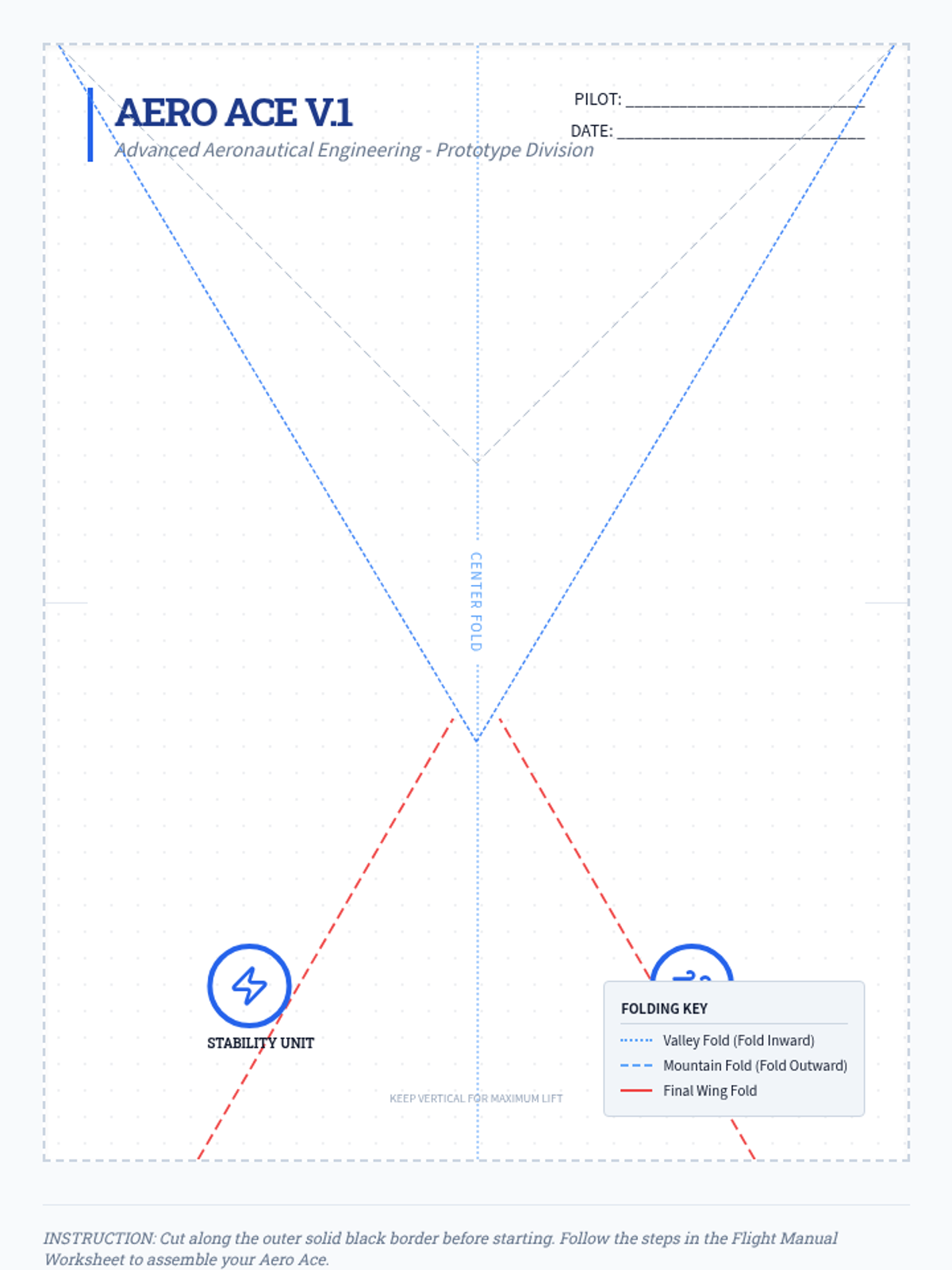
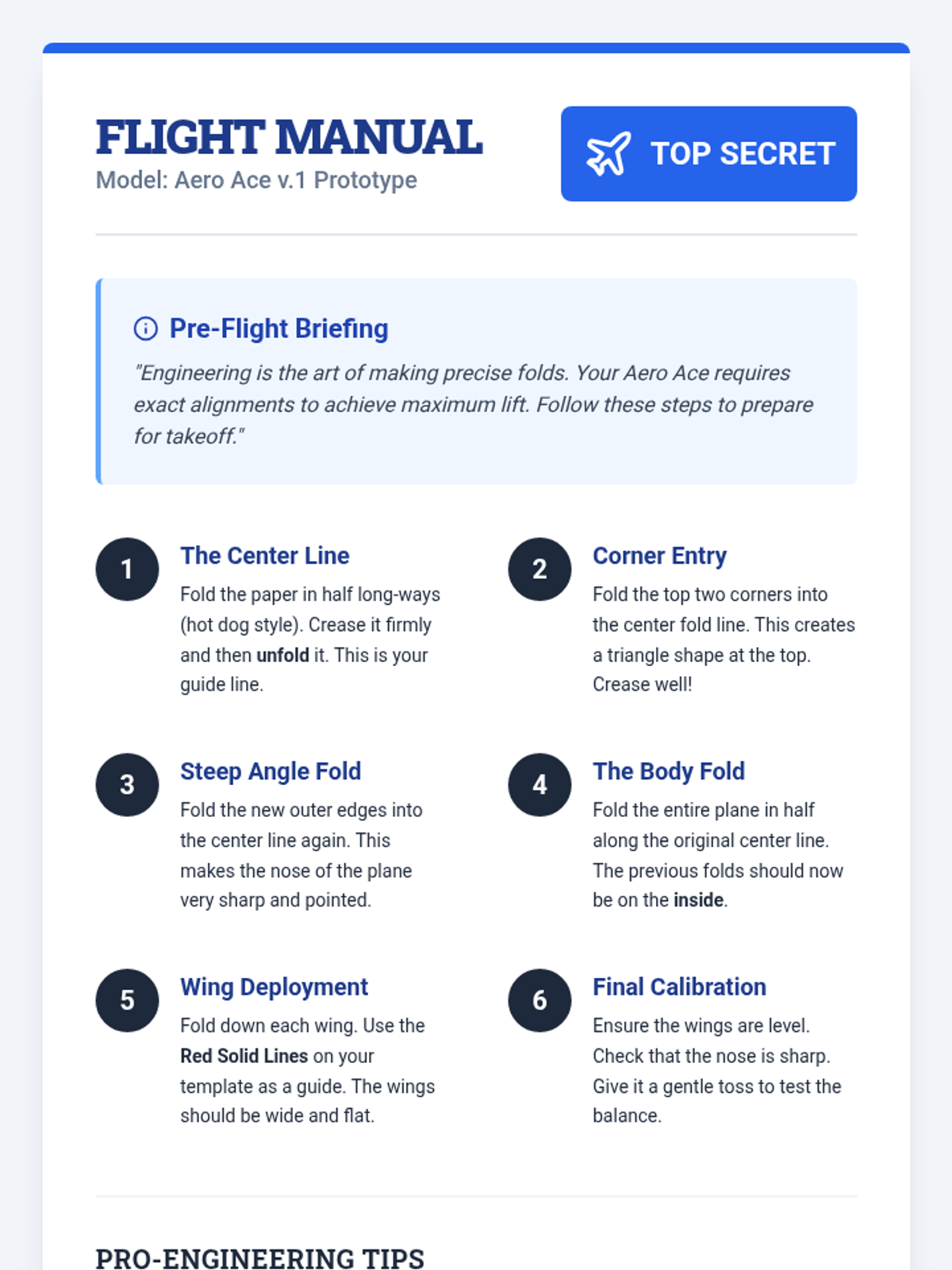
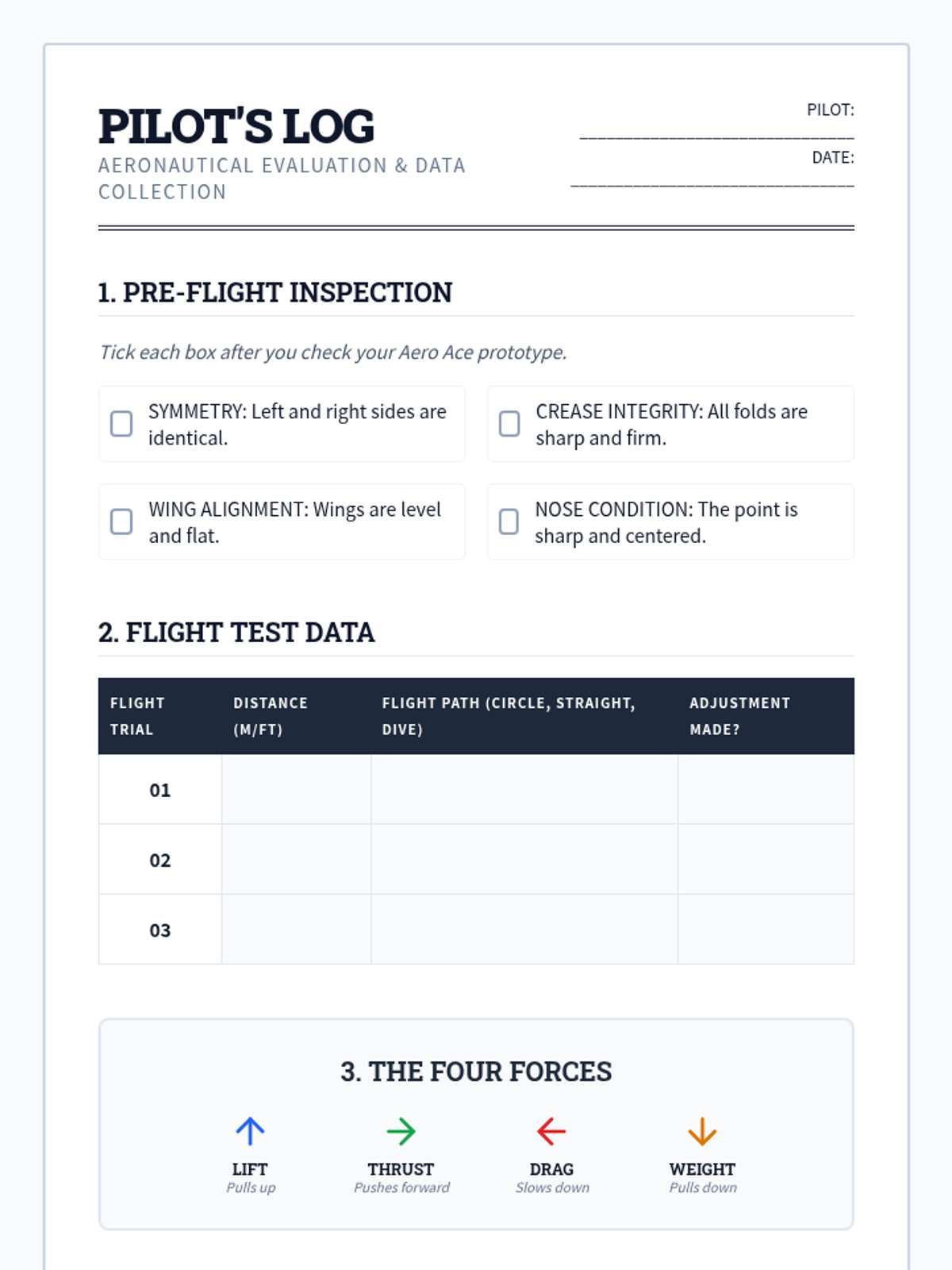
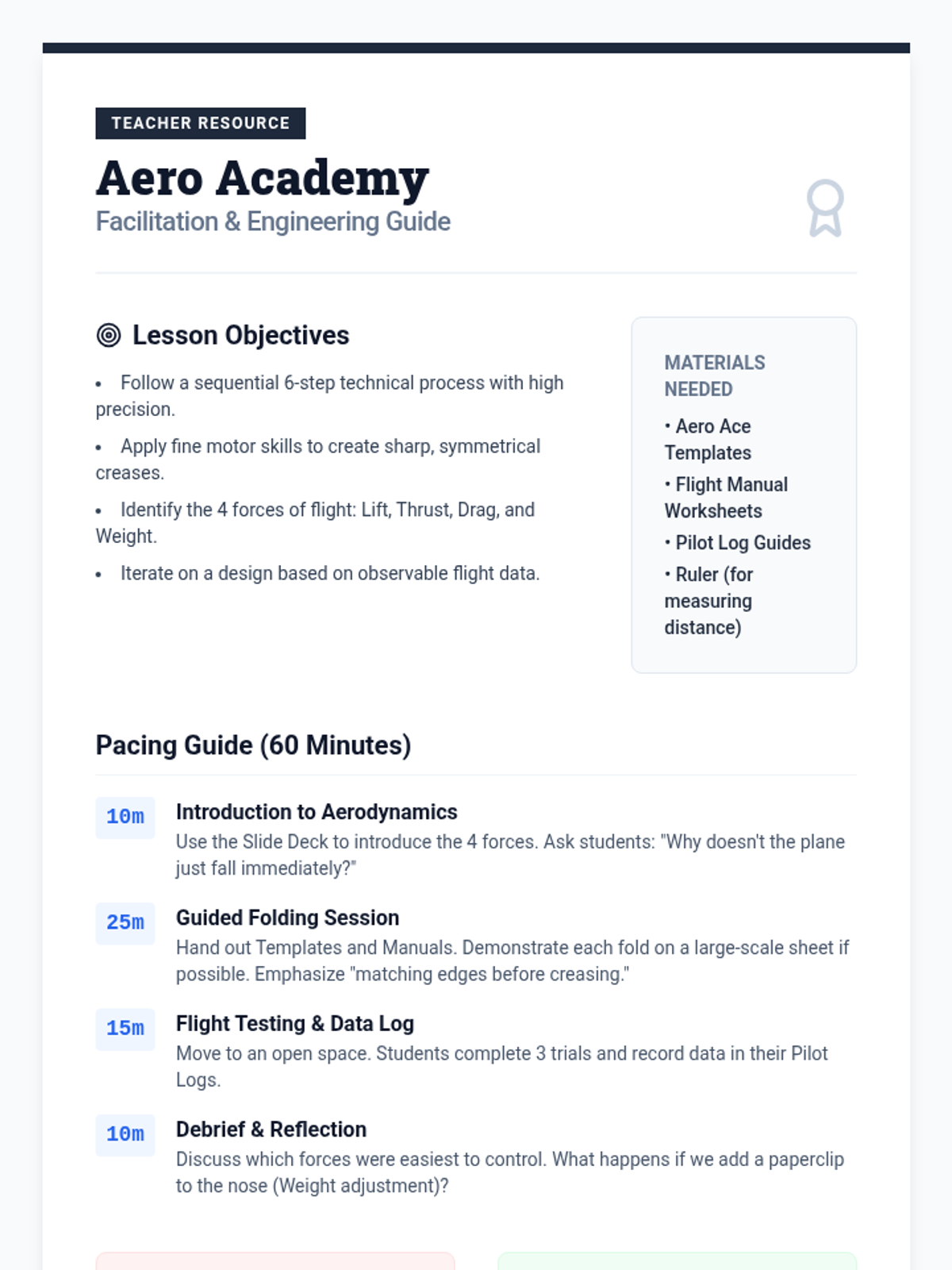
A hands-on engineering lesson where students follow precise directions to fold a high-performance paper airplane while learning the four forces of flight.
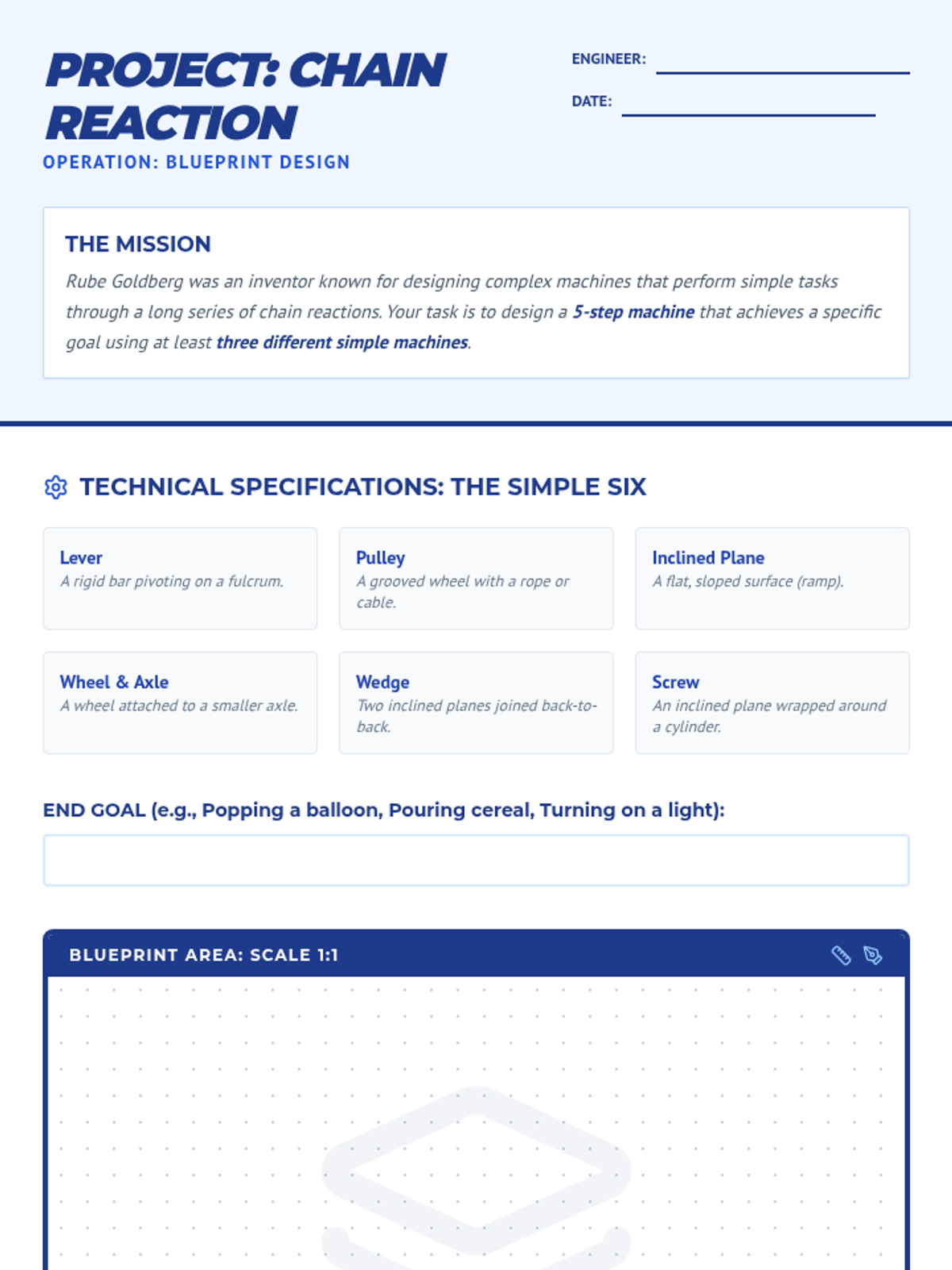
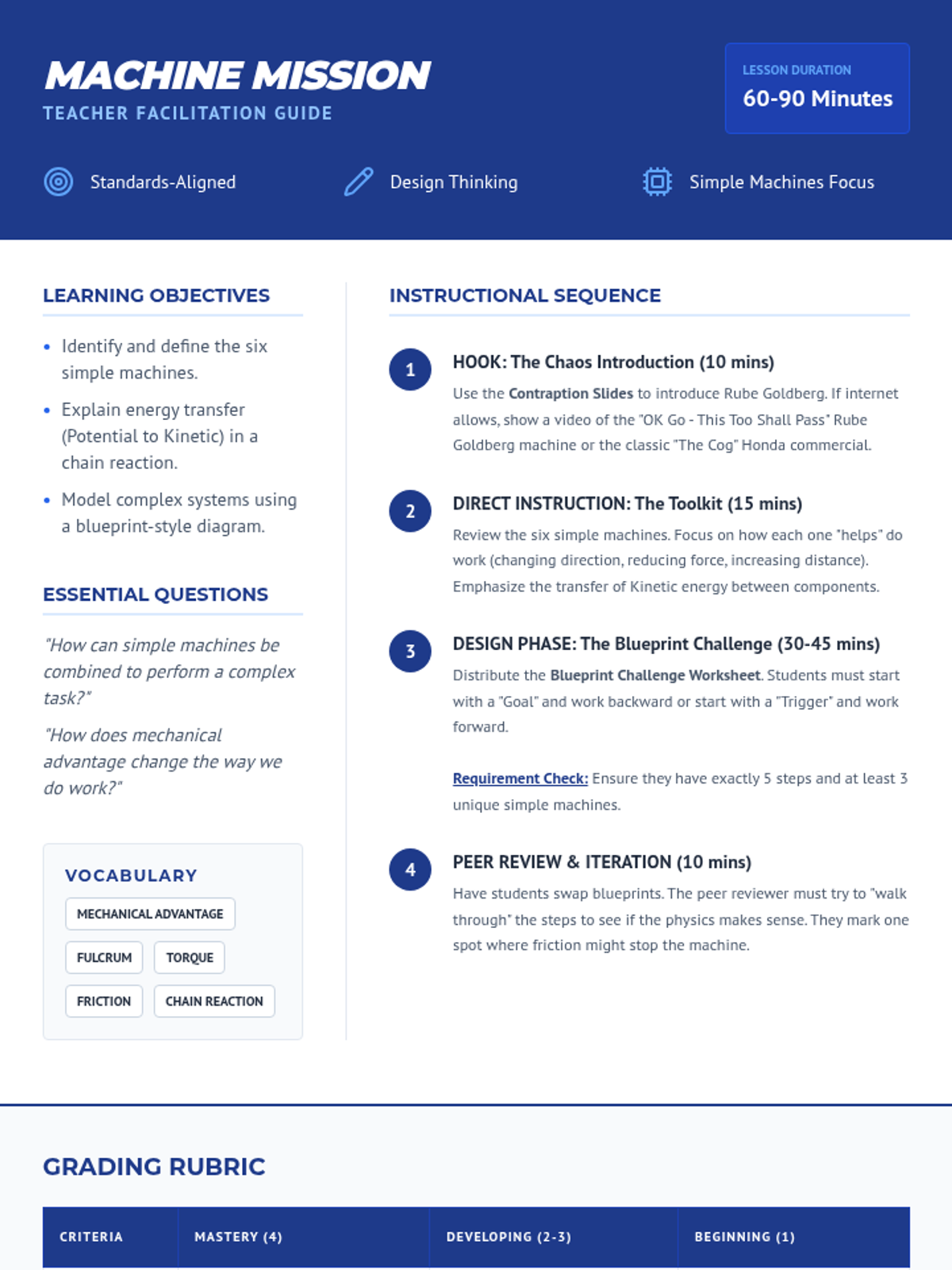
A design-focused lesson where middle school students apply their knowledge of simple machines to create a complex Rube Goldberg contraption on paper. Students will define, identify, and explain the mechanical advantage of various components in their 'blueprint' design.
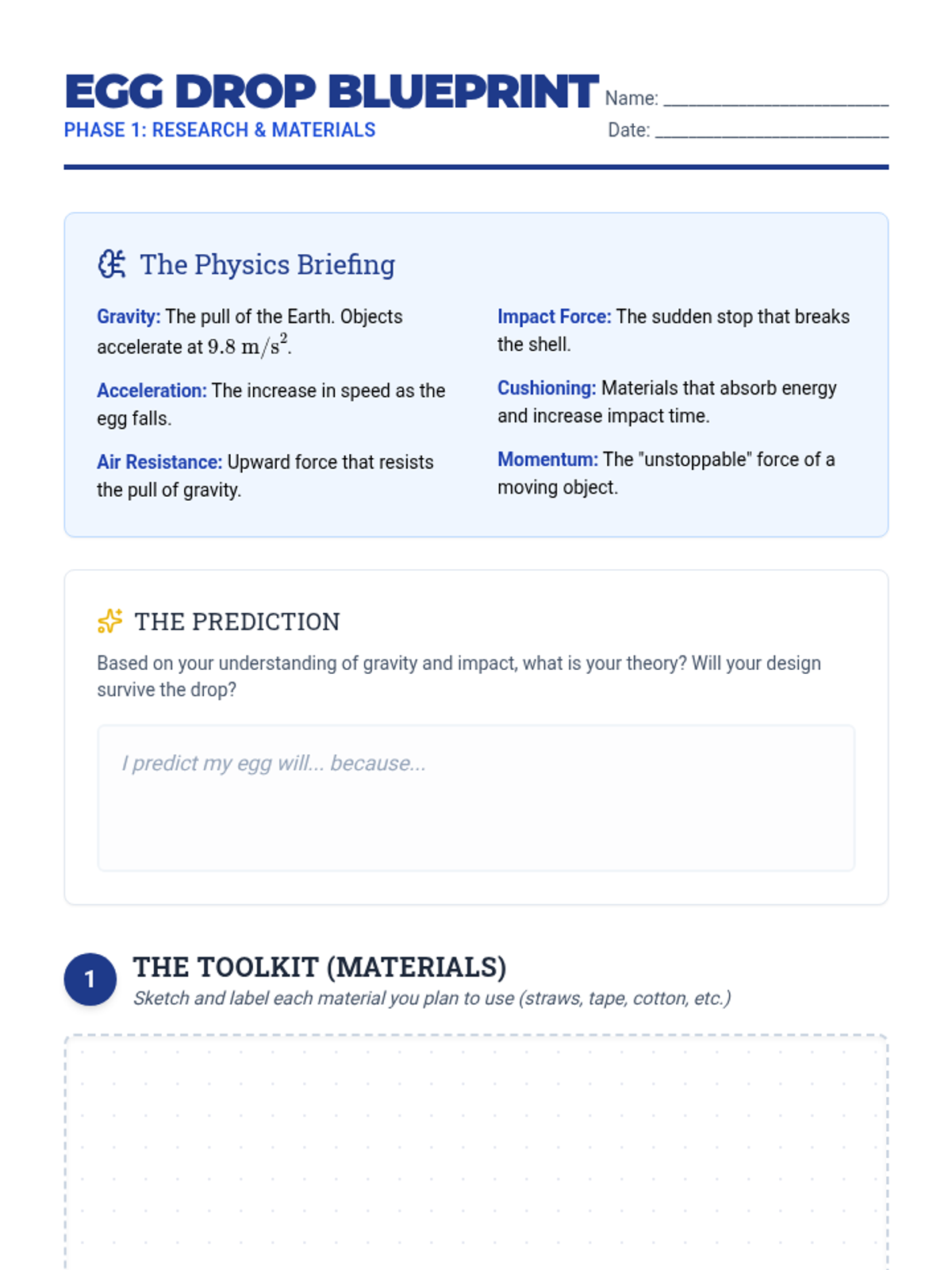
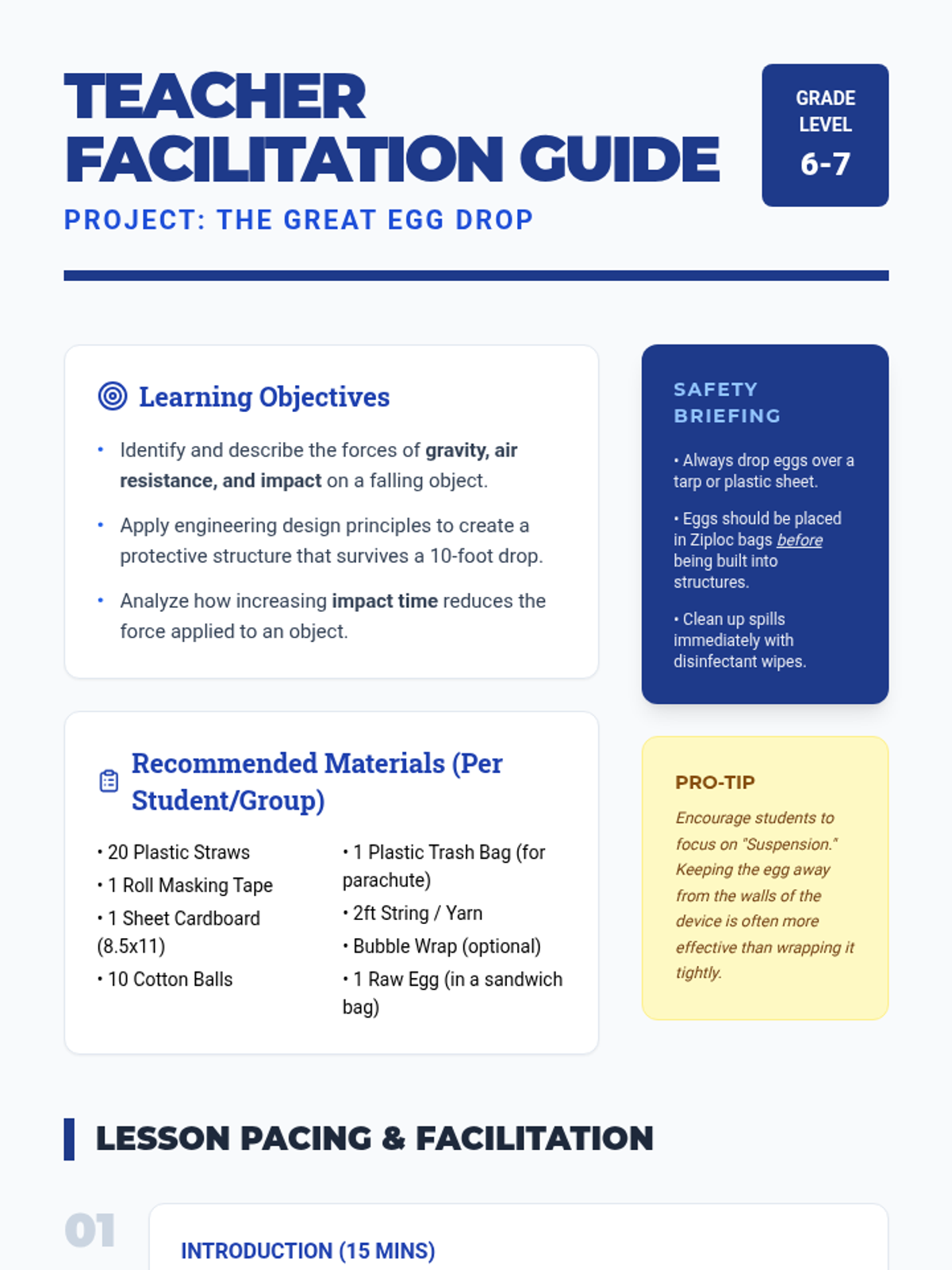
A hands-on engineering challenge where students apply physics concepts like gravity, acceleration, and impact force to design and build a protective casing for an egg drop.
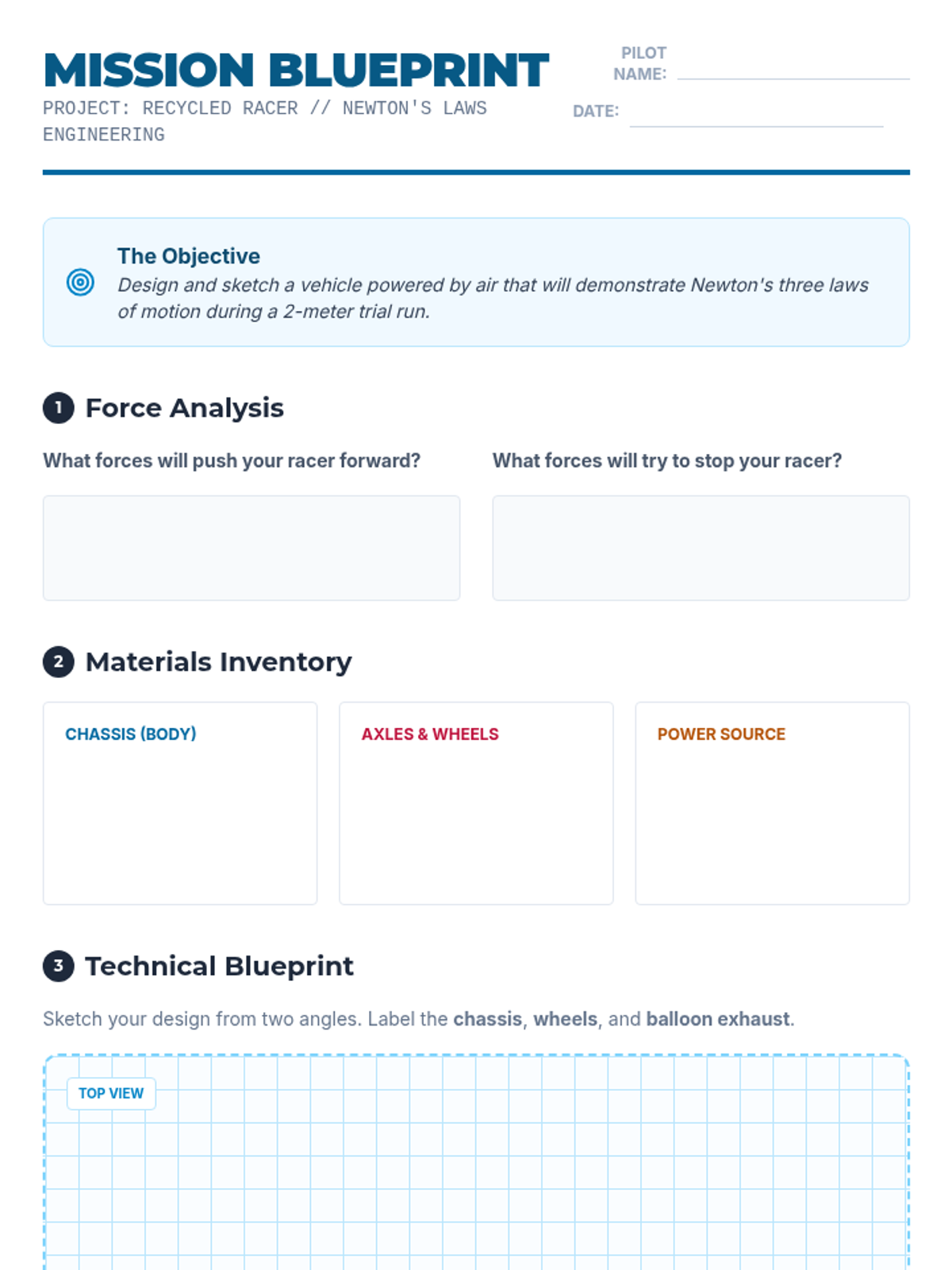
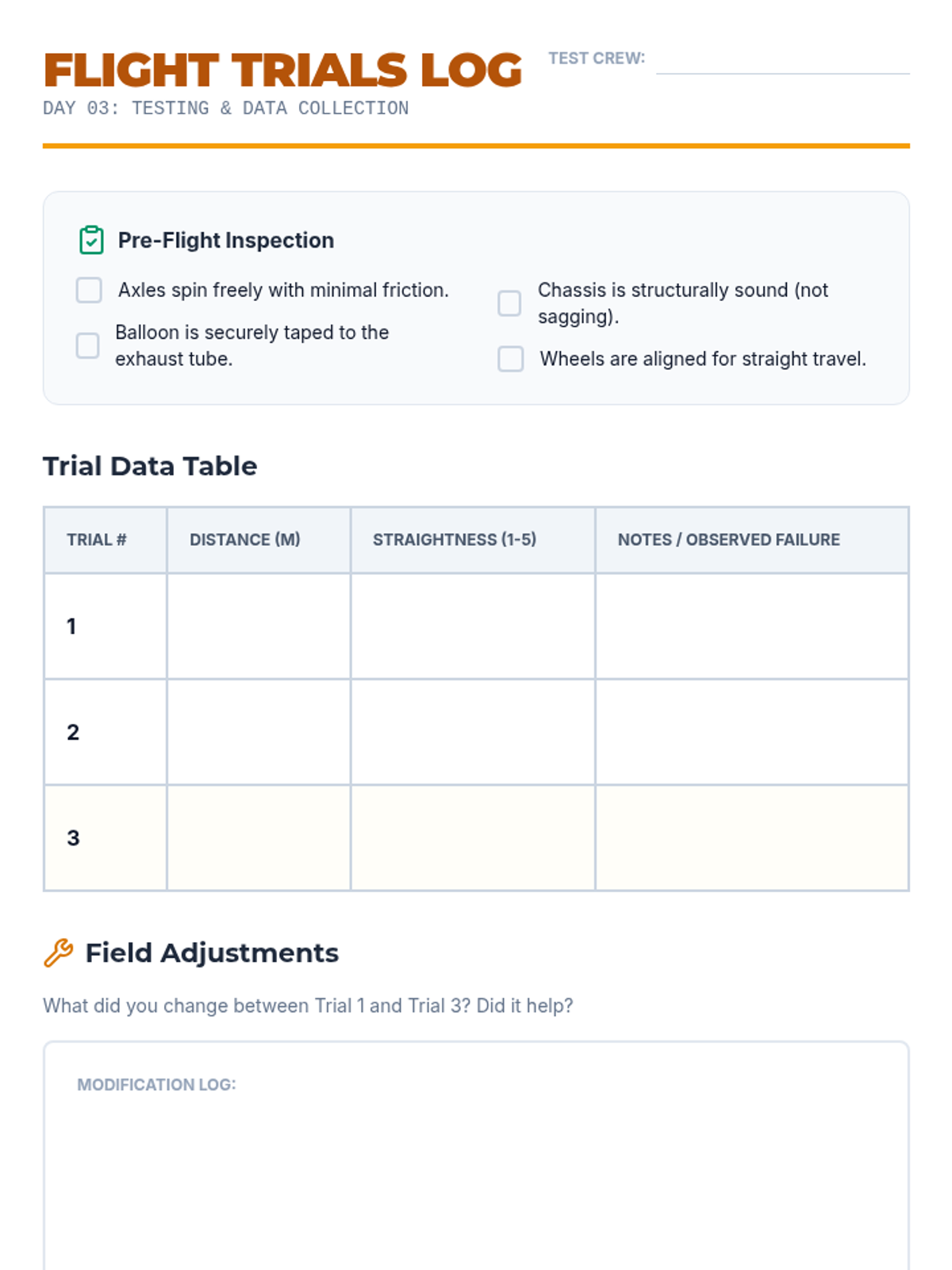
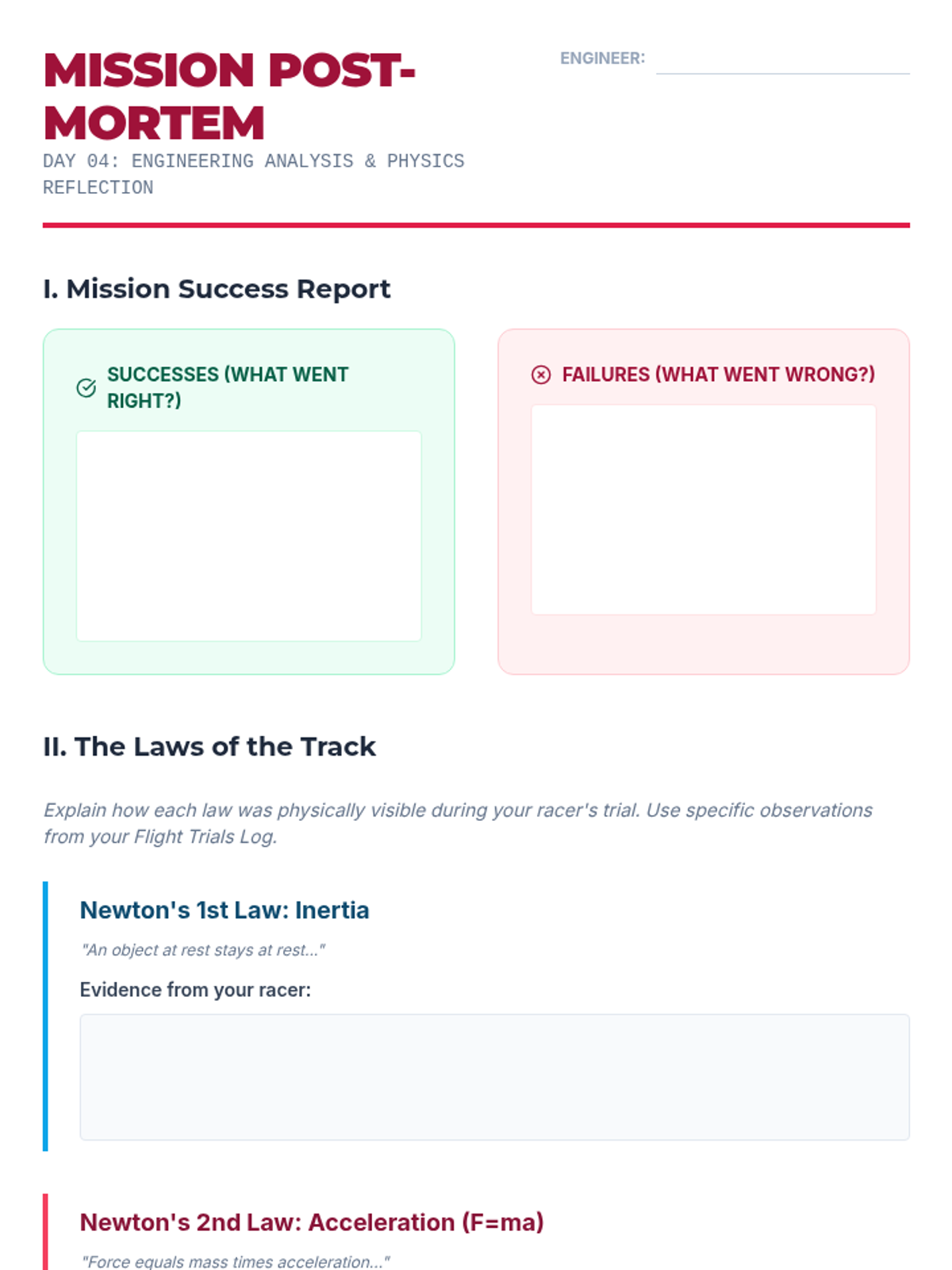
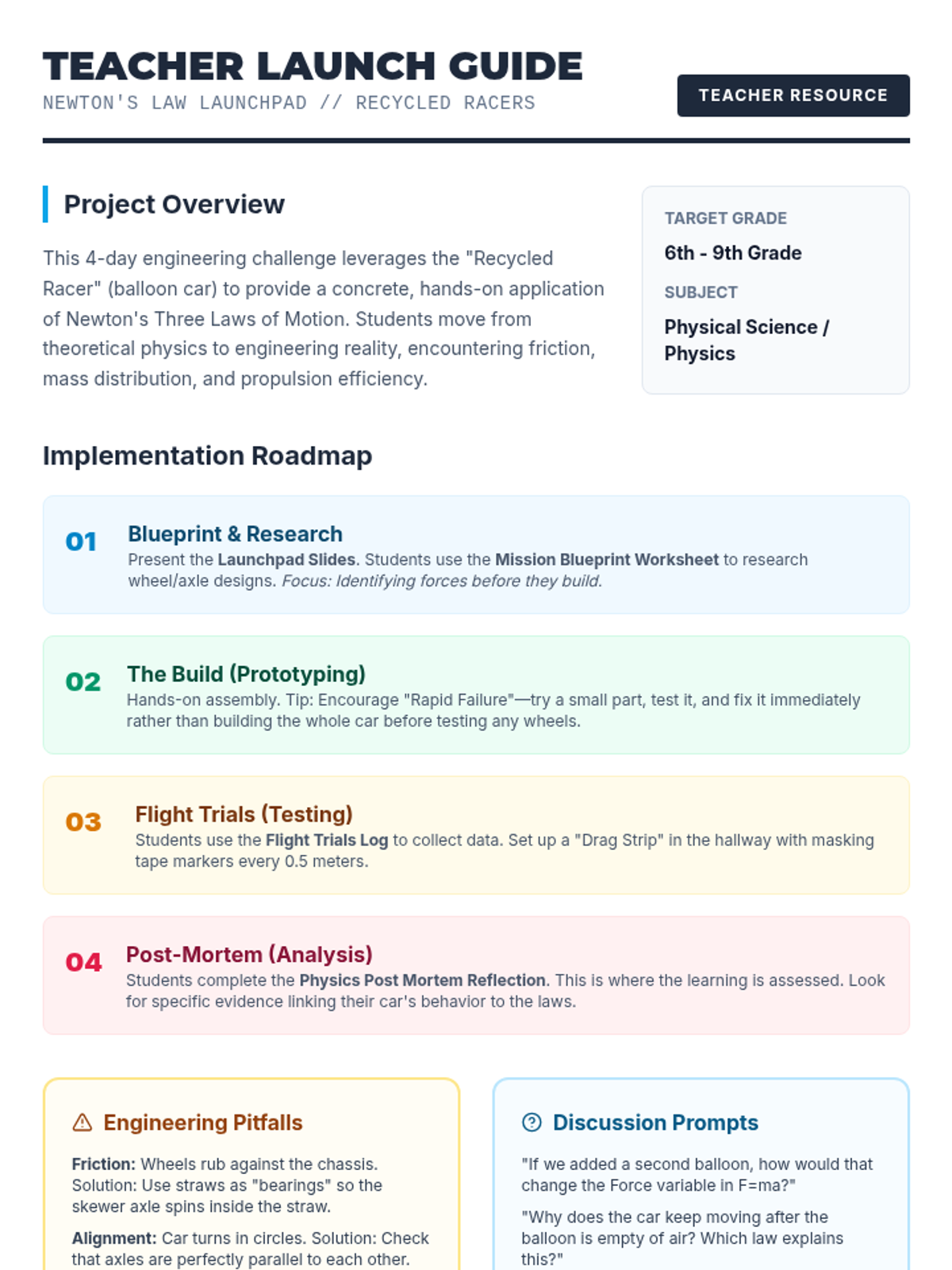
A 4-day hands-on engineering challenge where students design and build a device that demonstrates Newton's three laws of motion using low-cost recycled materials. Students progress through research, blueprinting, prototyping, testing, and a final reflection on the physics at play.
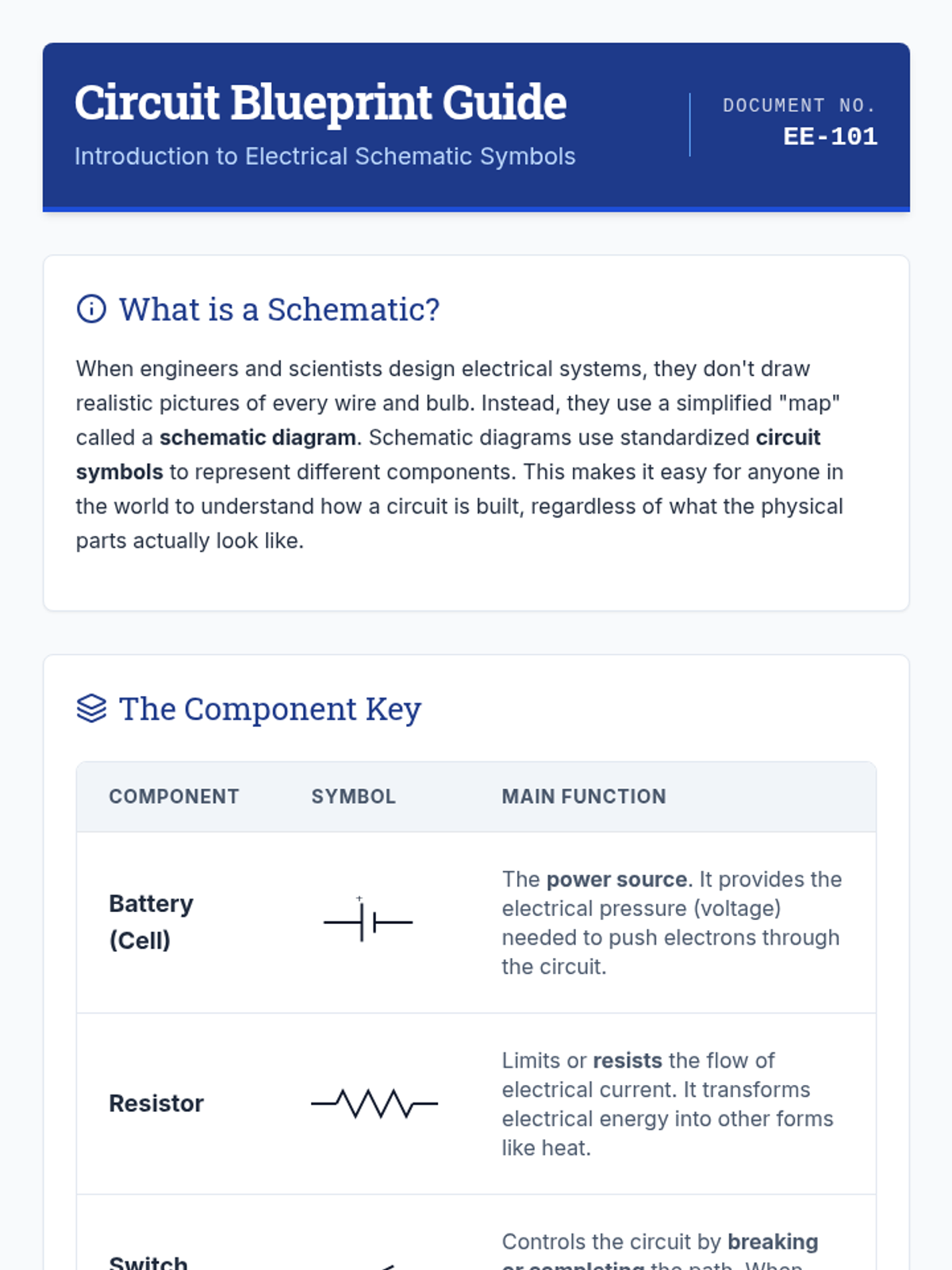
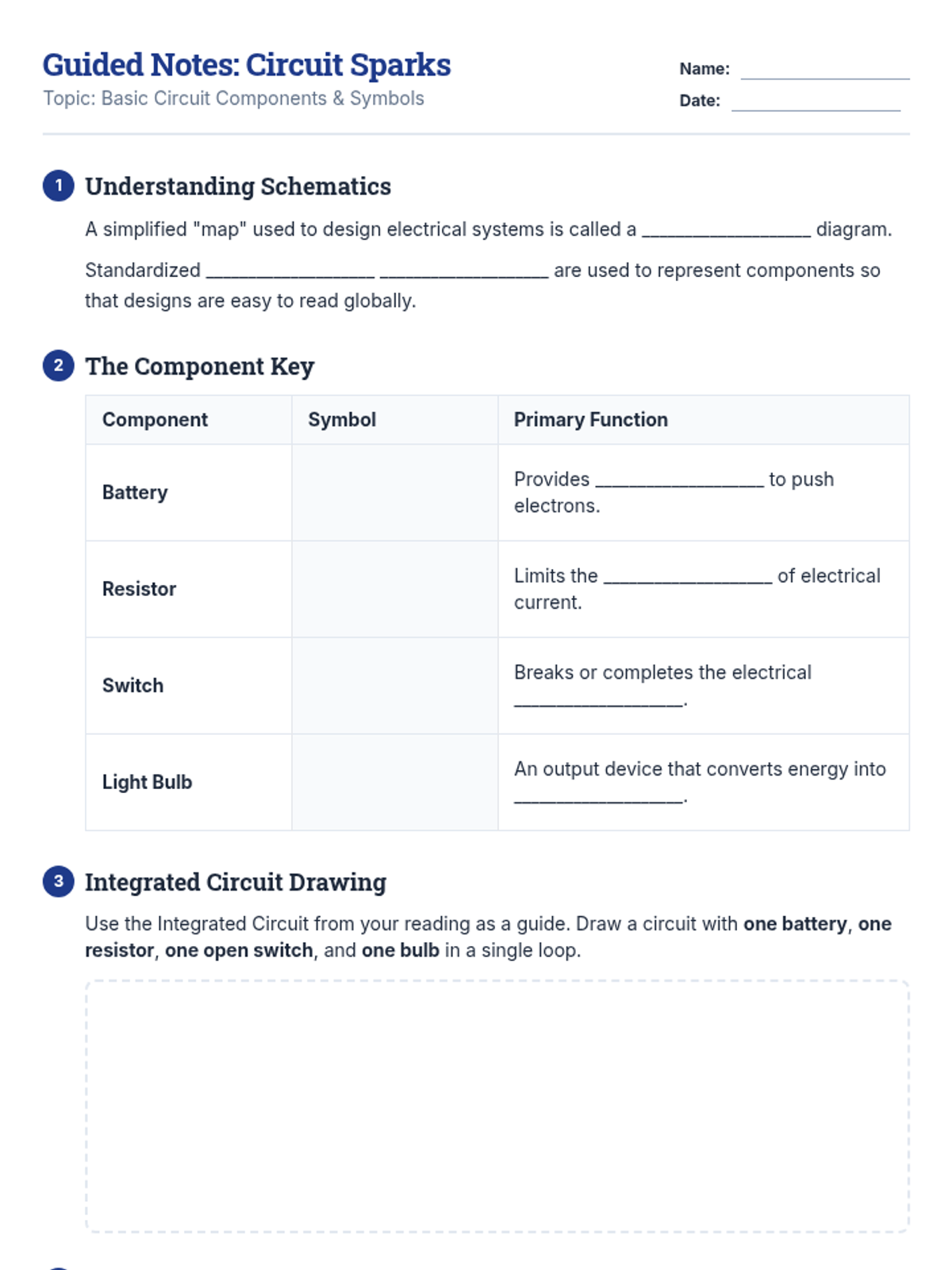
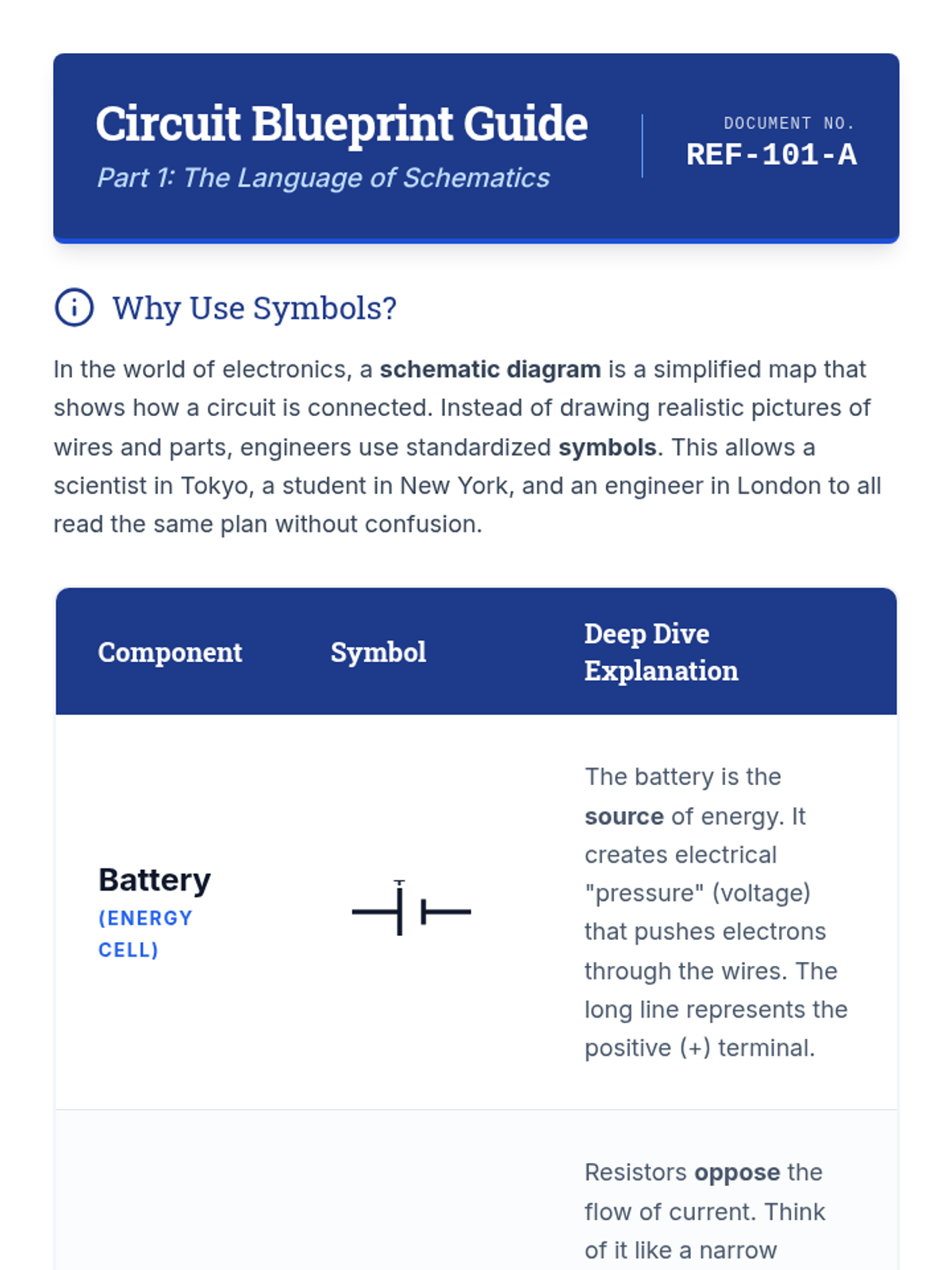
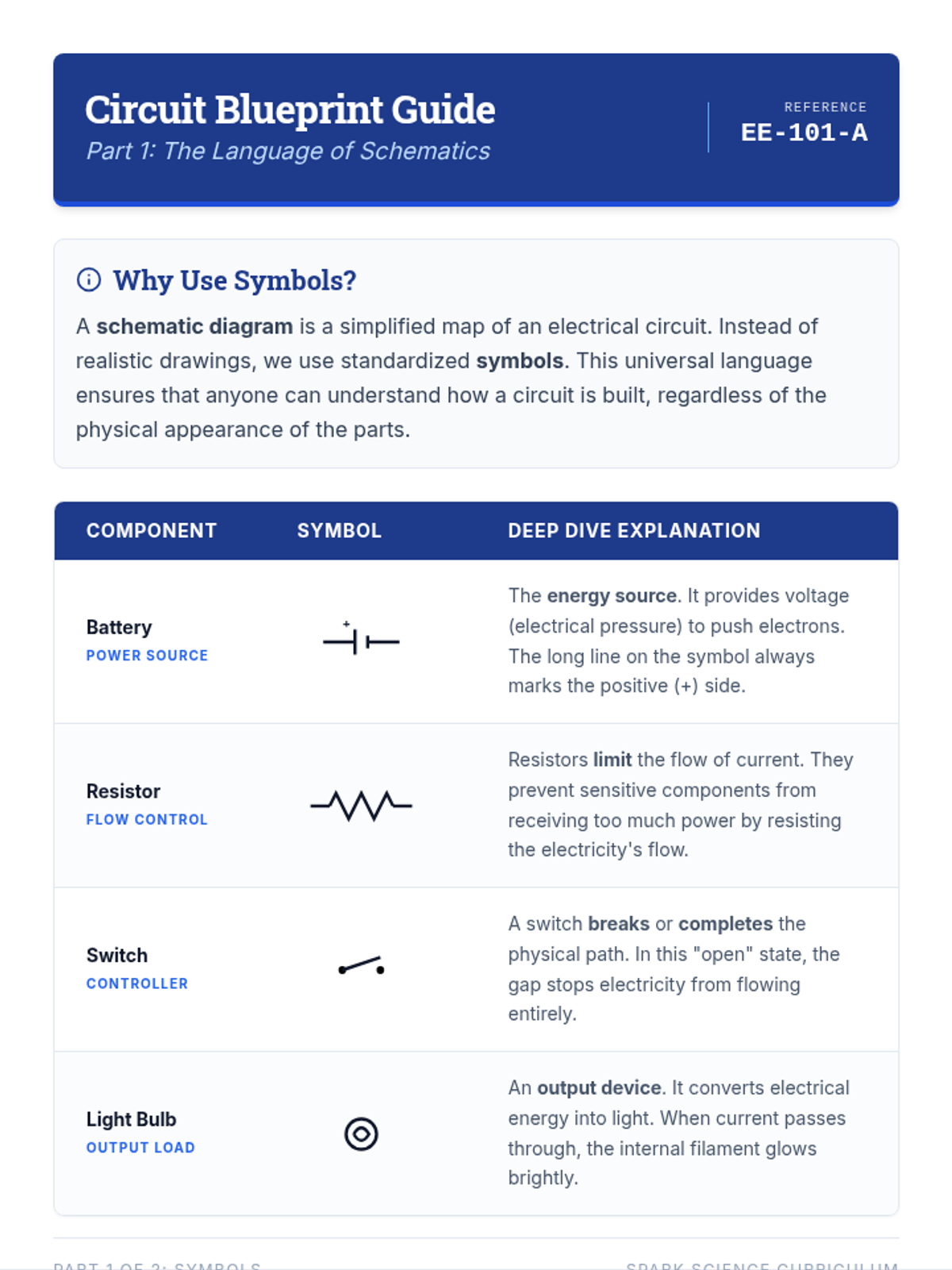
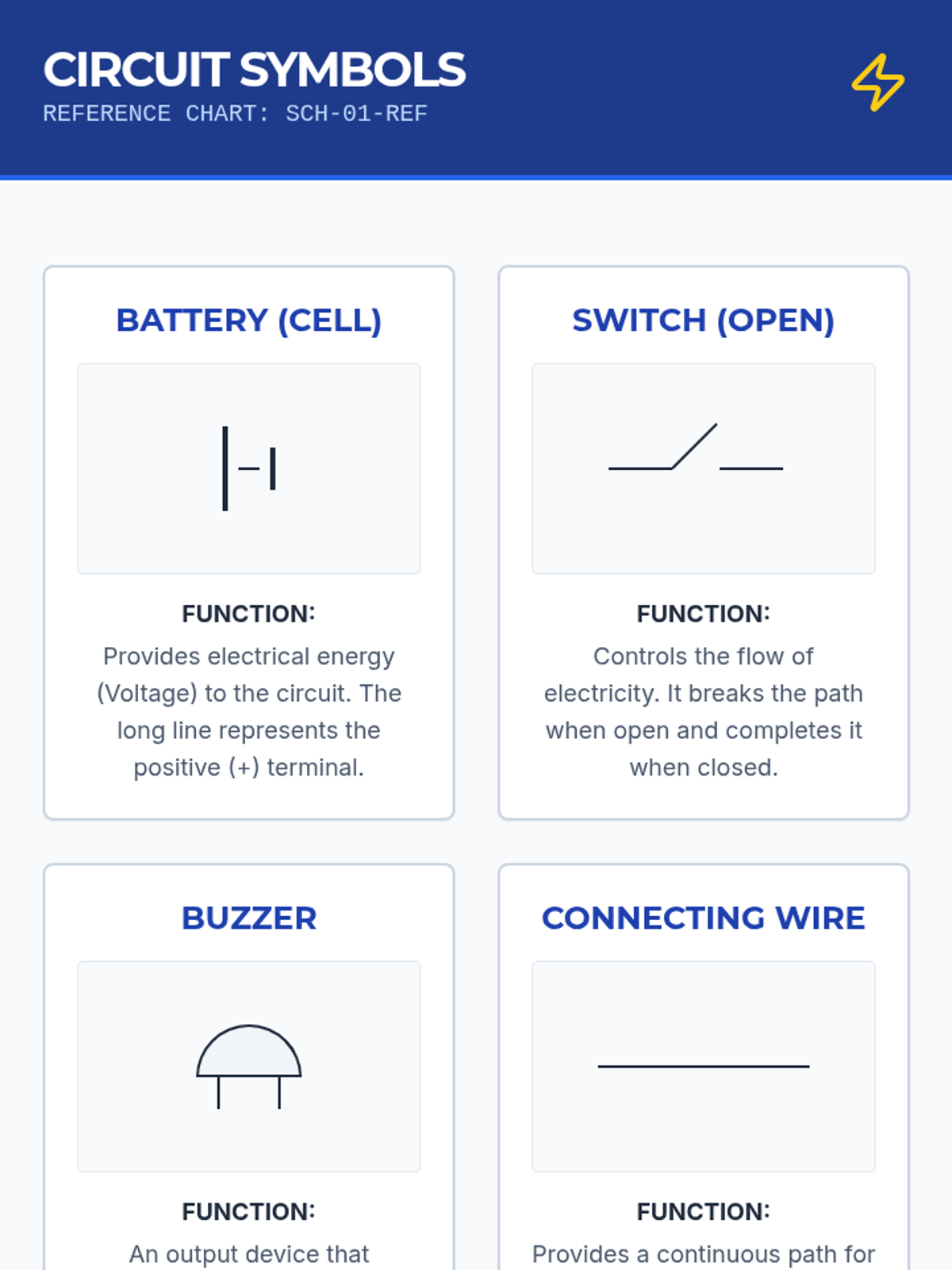
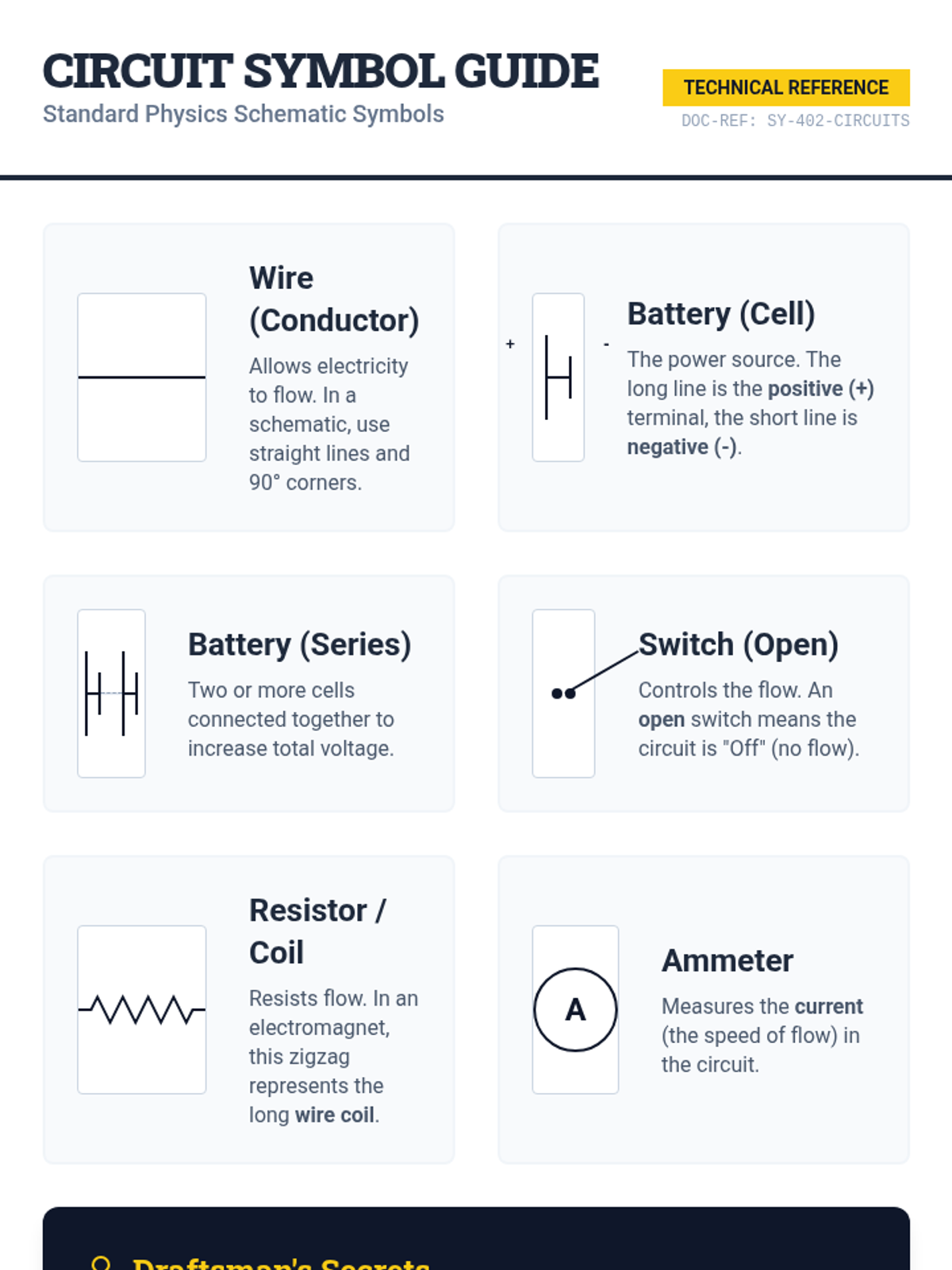
An introductory lesson on common electrical circuit symbols, their functions, and how they are represented in schematic diagrams.
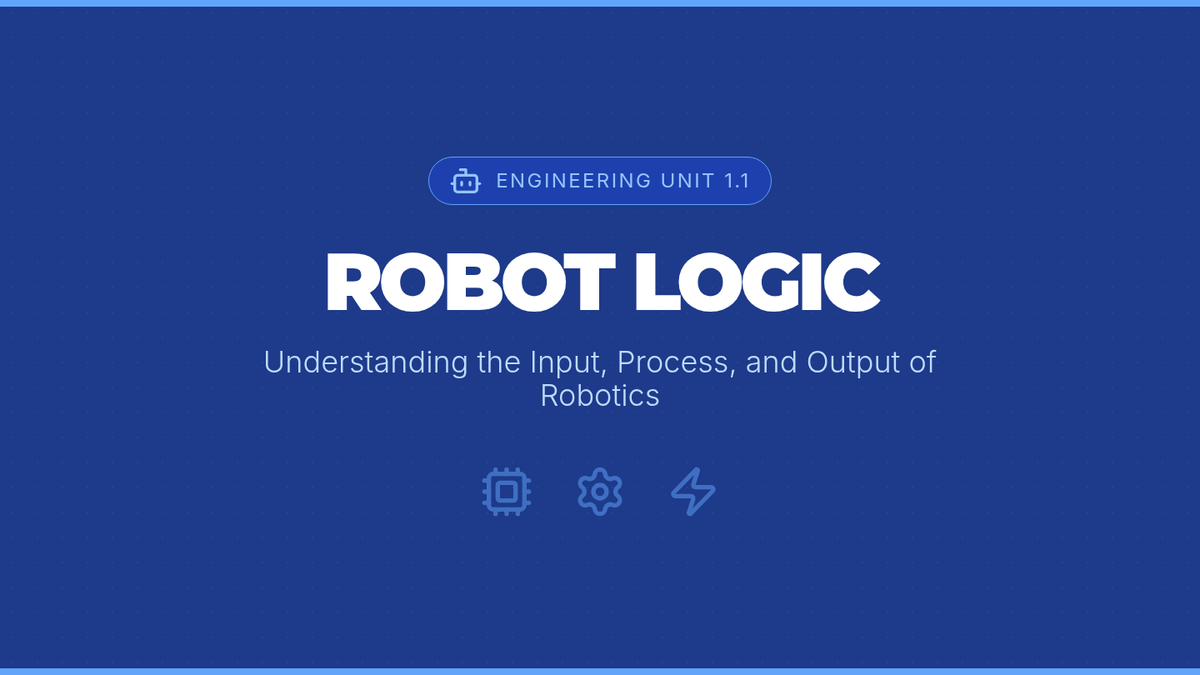
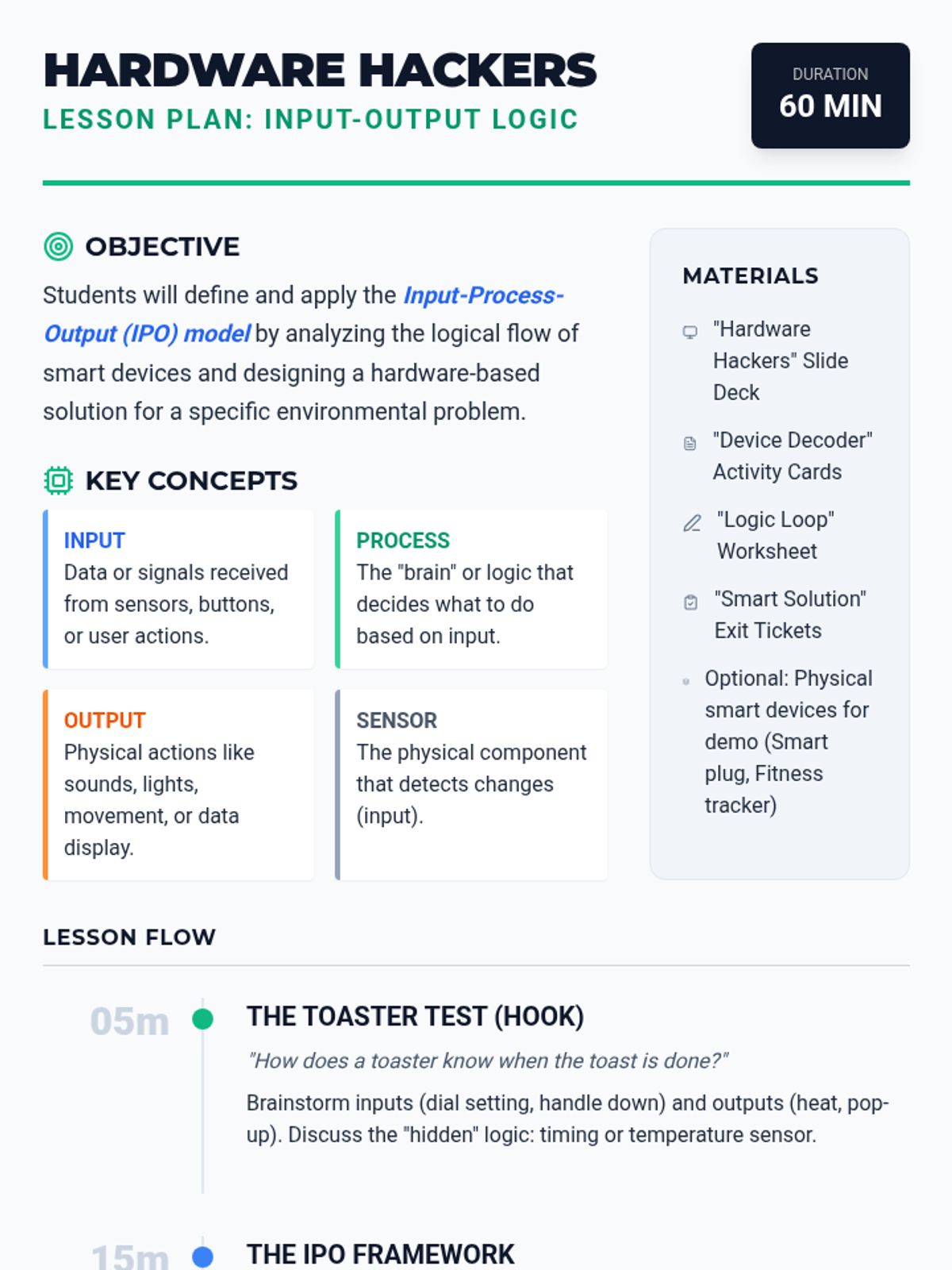
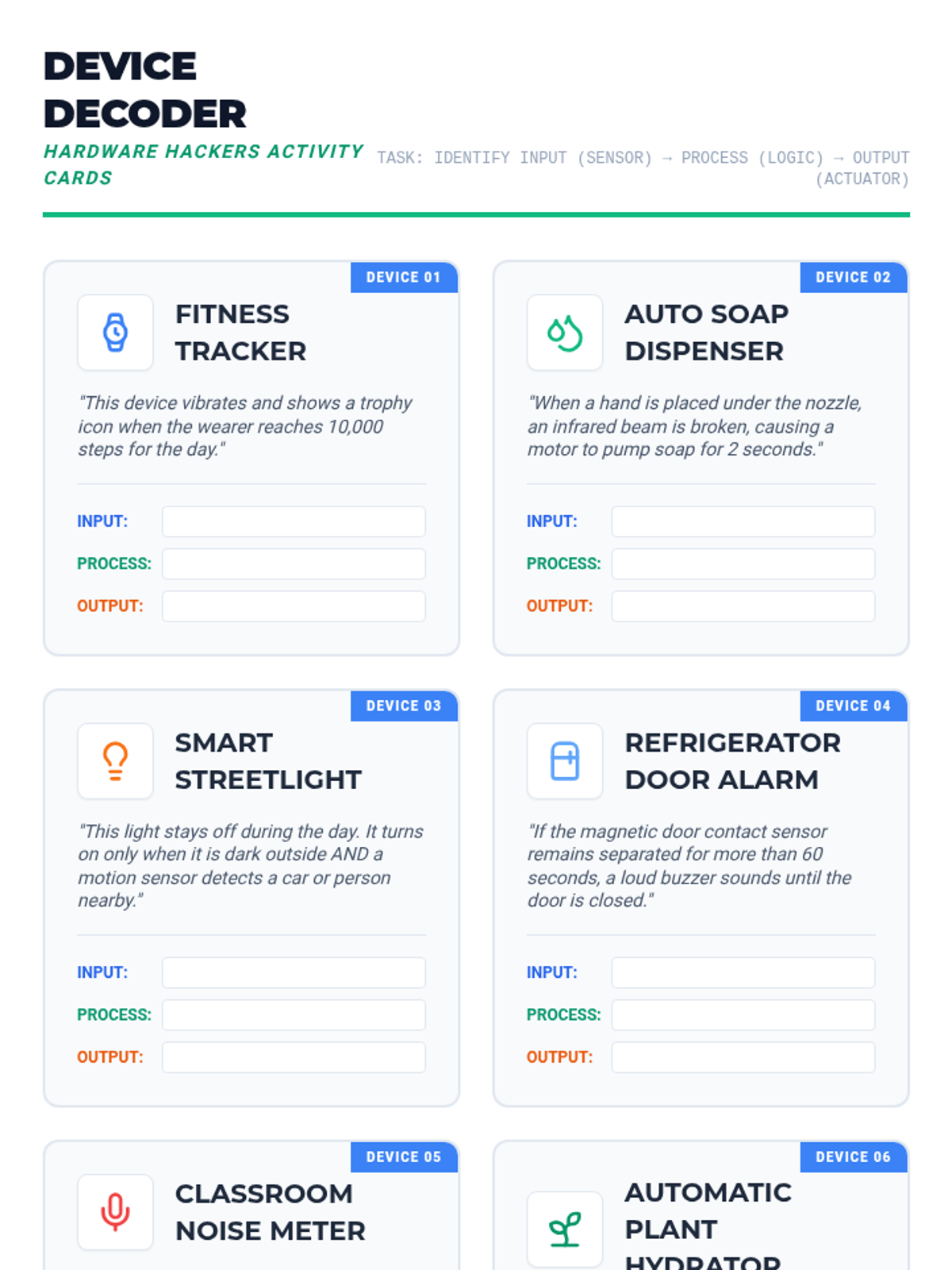
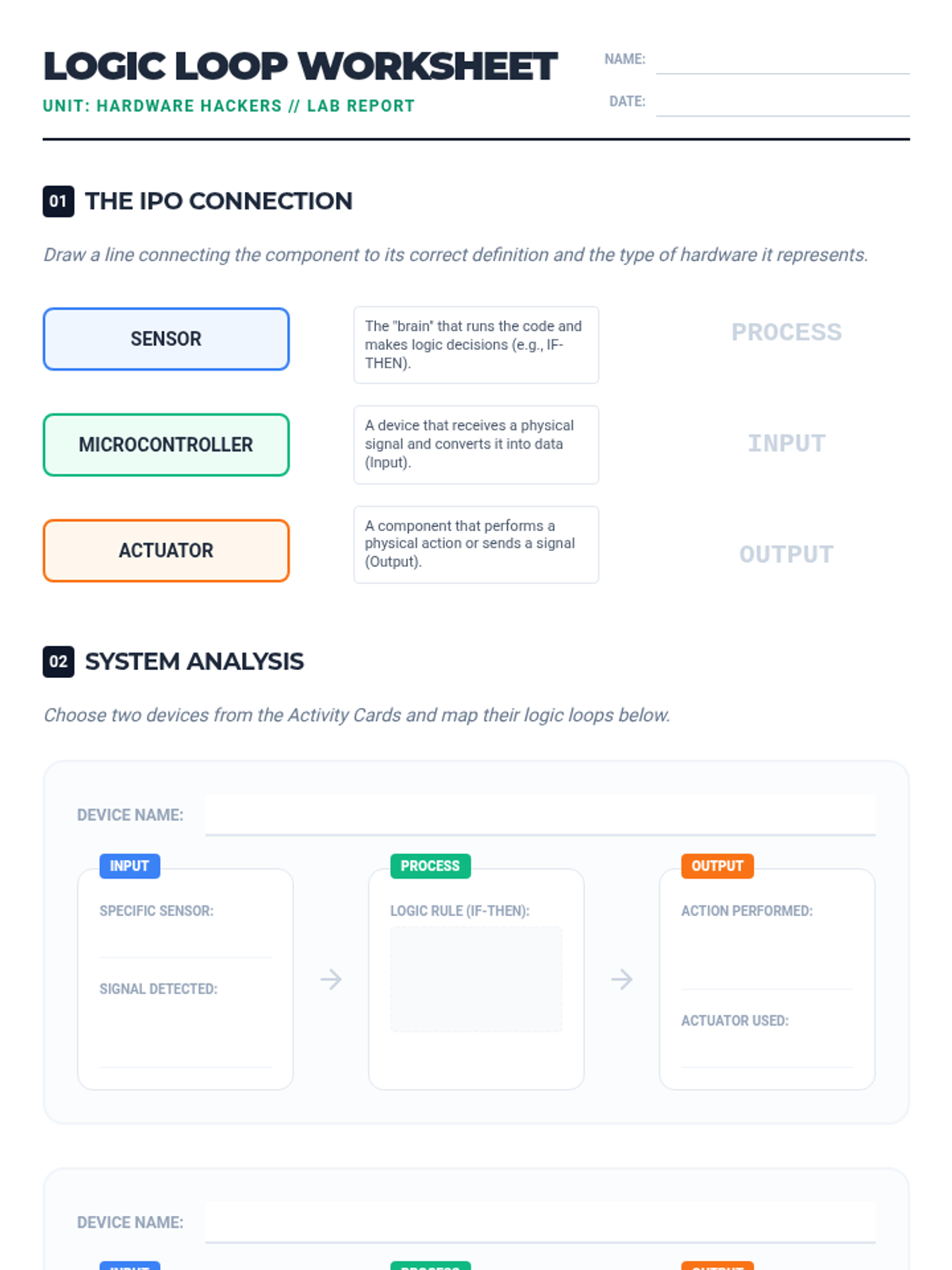
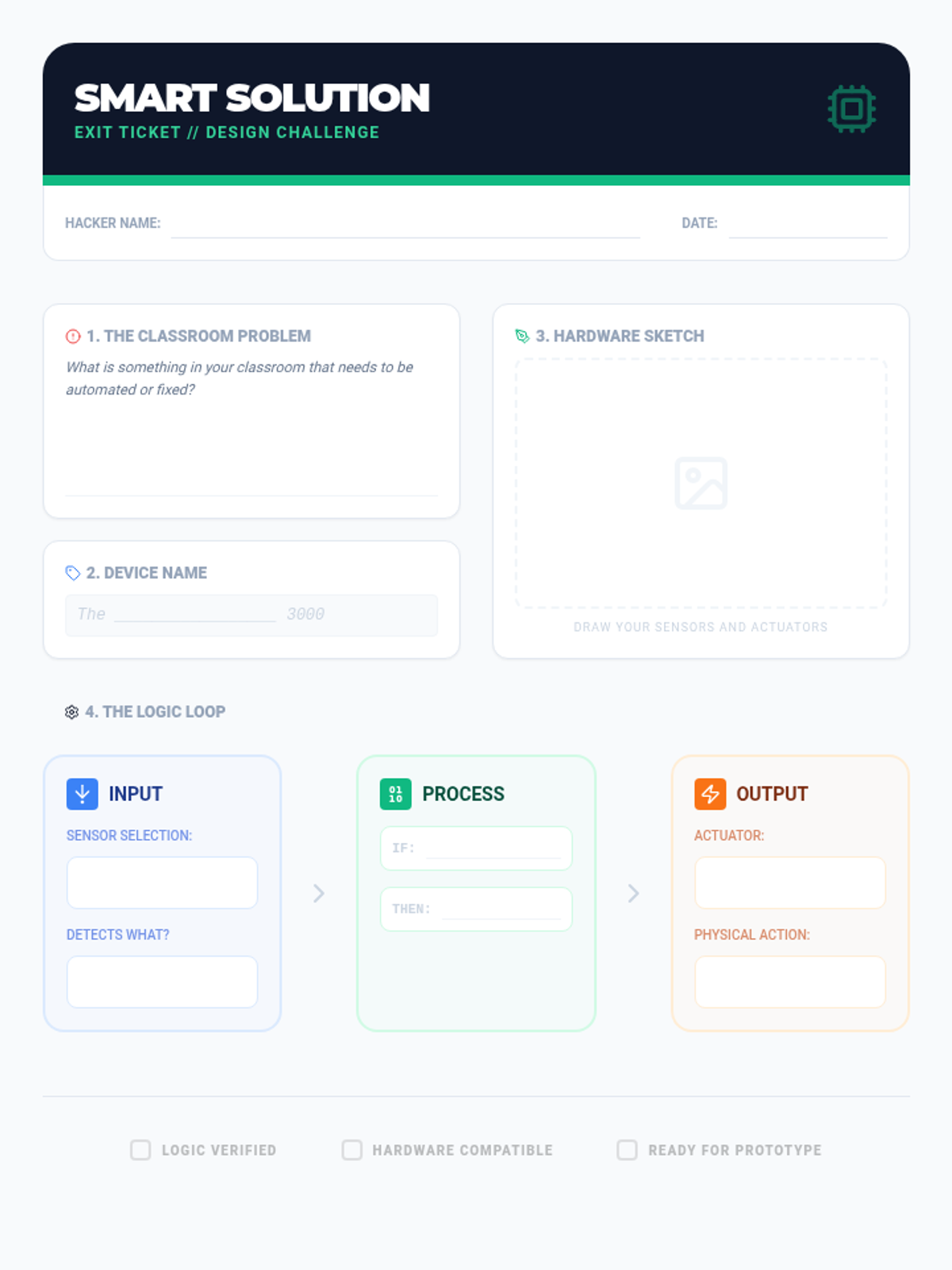
Students explore the Input-Process-Output (IPO) model by deconstructing everyday smart devices and designing their own tech solutions to classroom challenges. This lesson bridges the gap between physical hardware and programmatic logic through hands-on analysis and creative problem-solving.
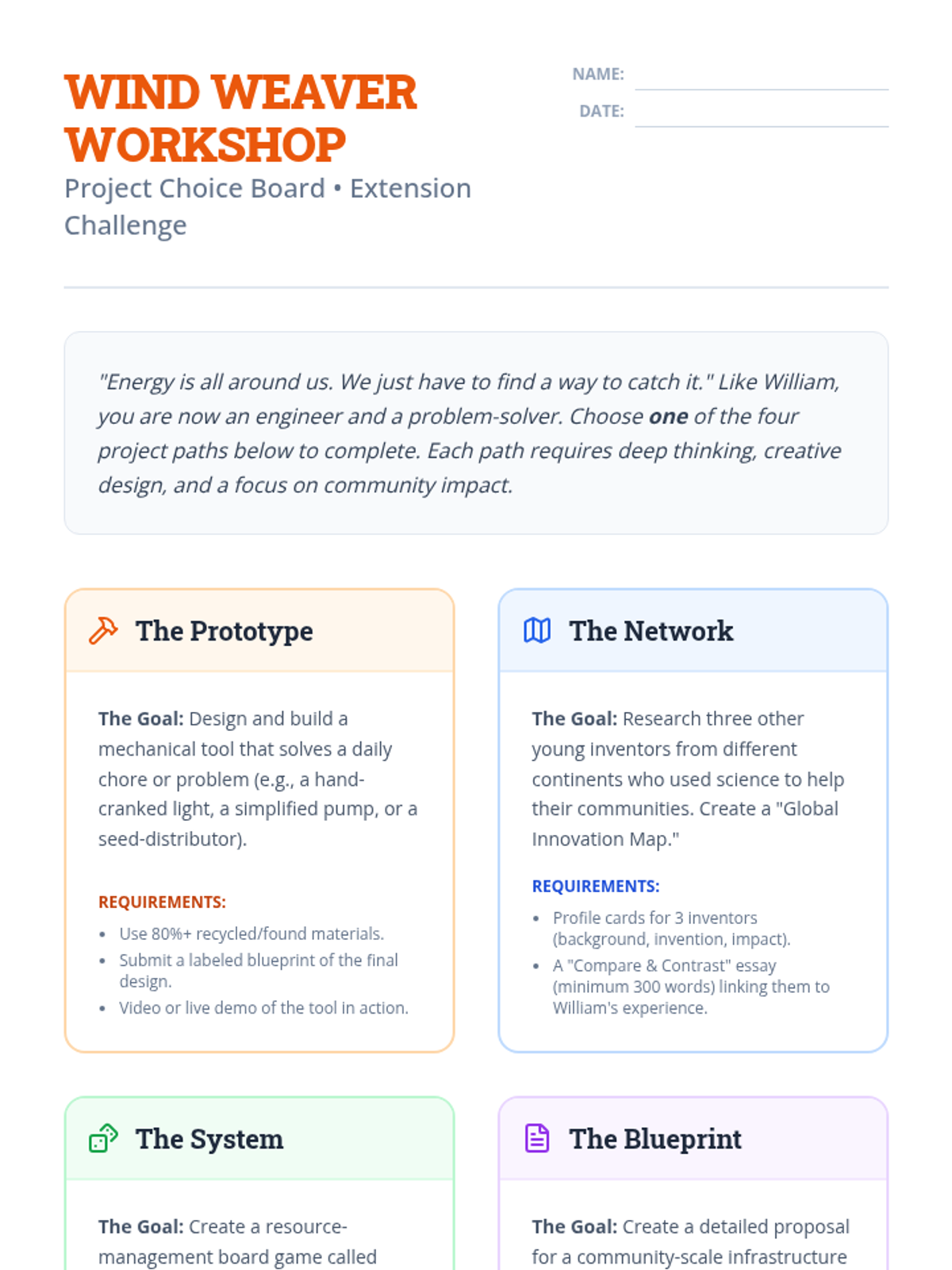
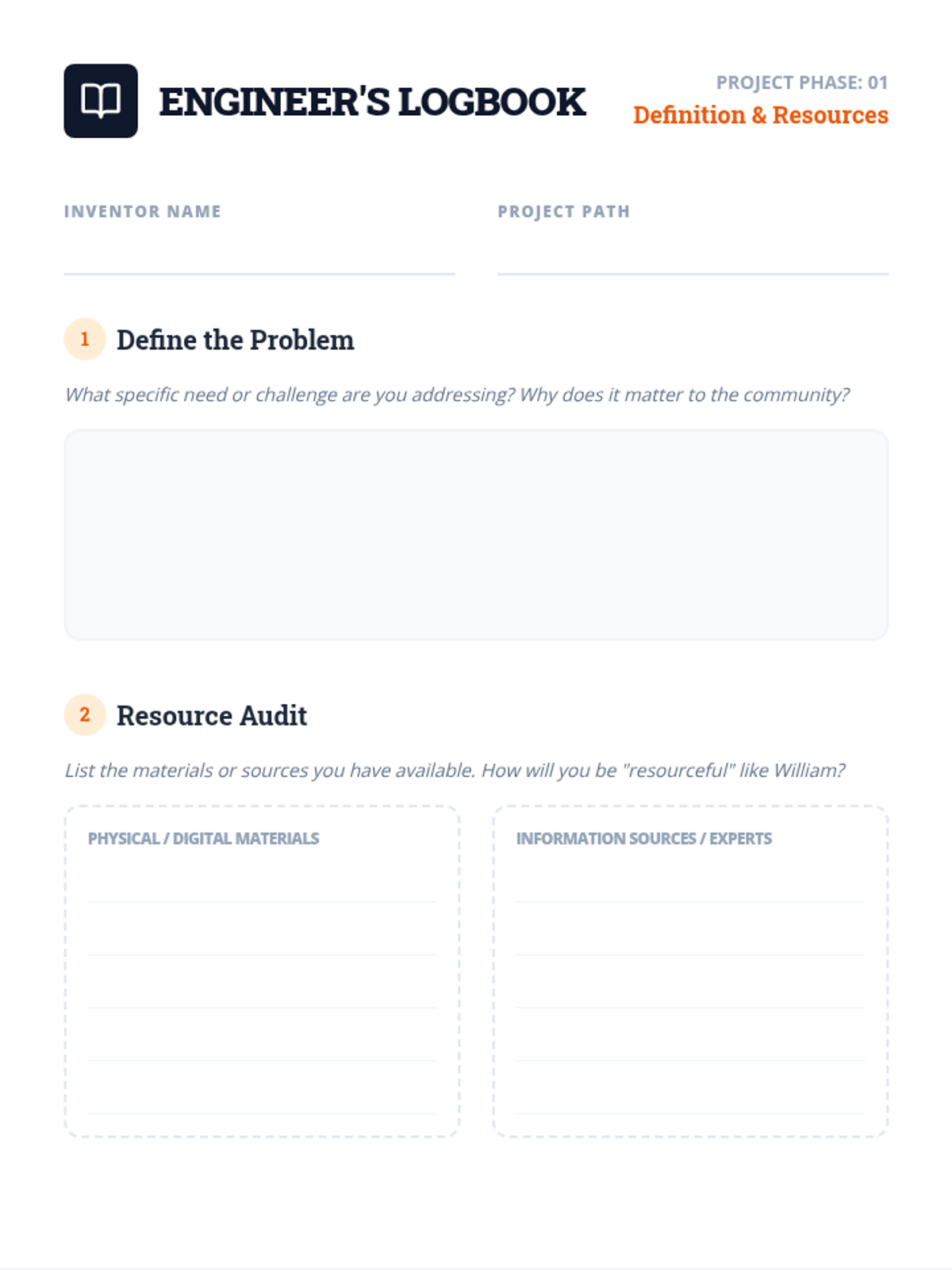
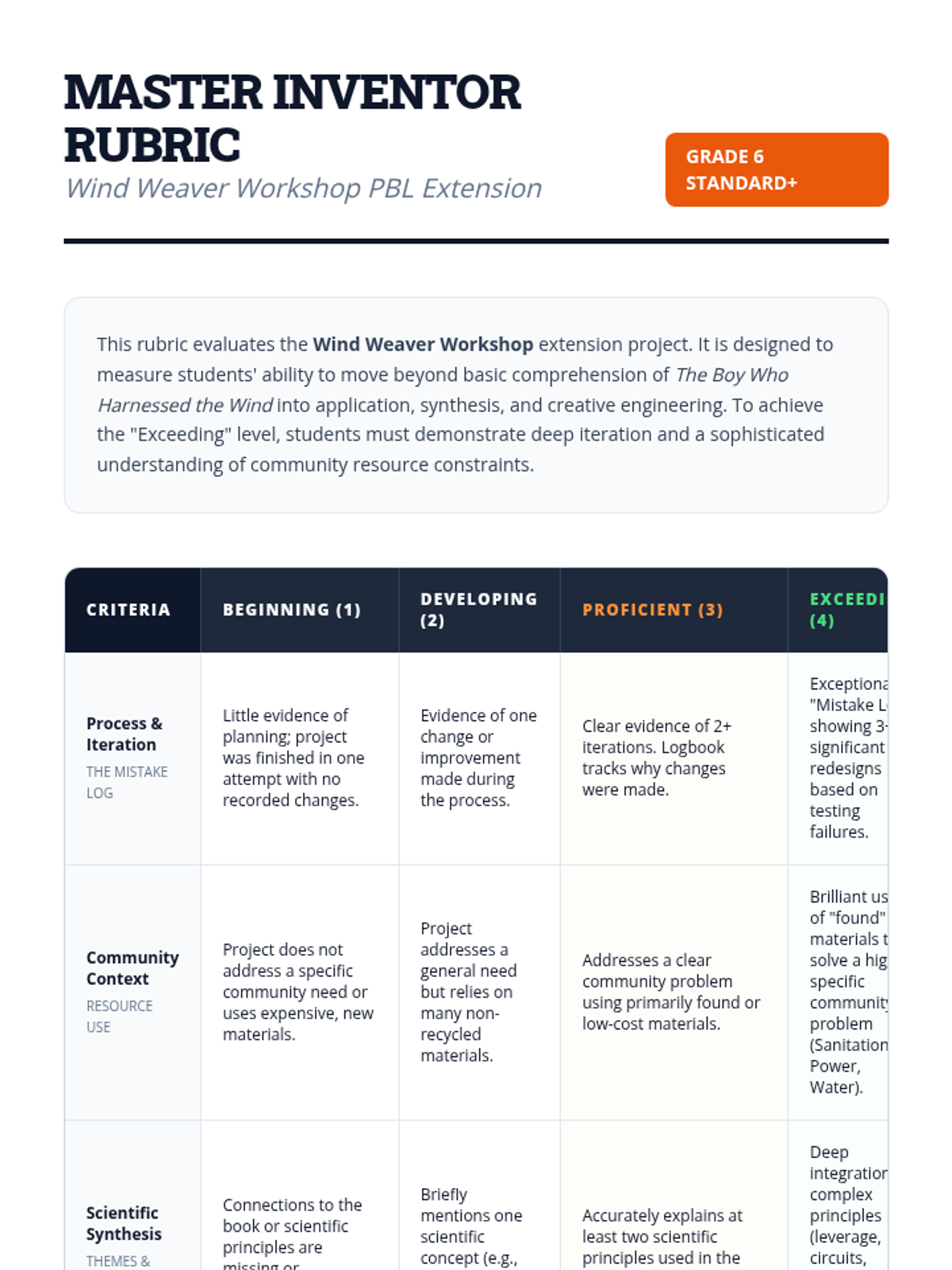
An advanced extension unit for Grade 6 students who have completed 'The Boy Who Harnessed the Wind'. This project-based learning experience focuses on engineering, resourcefulness, and community-driven innovation through a variety of high-level project choices.
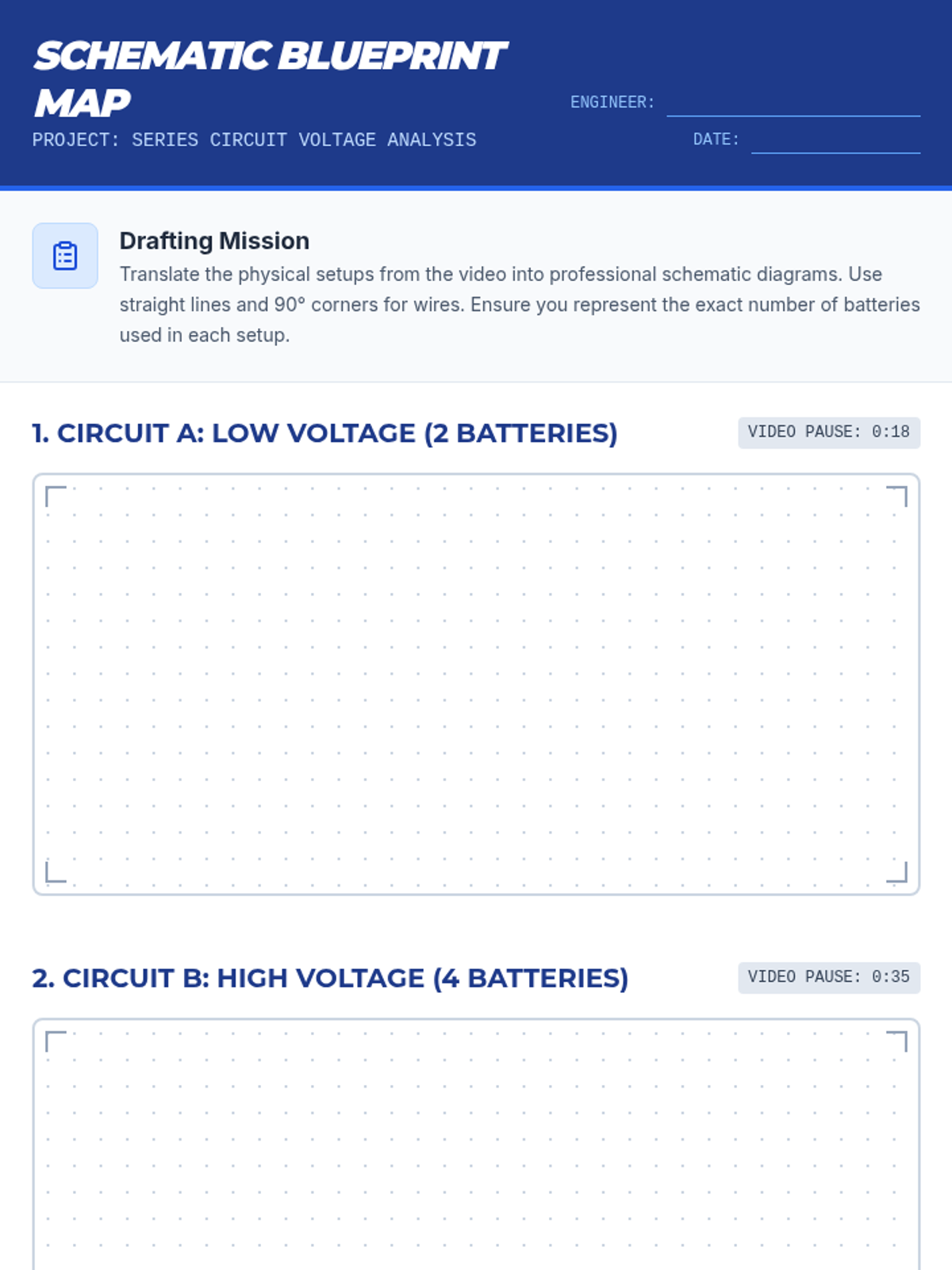
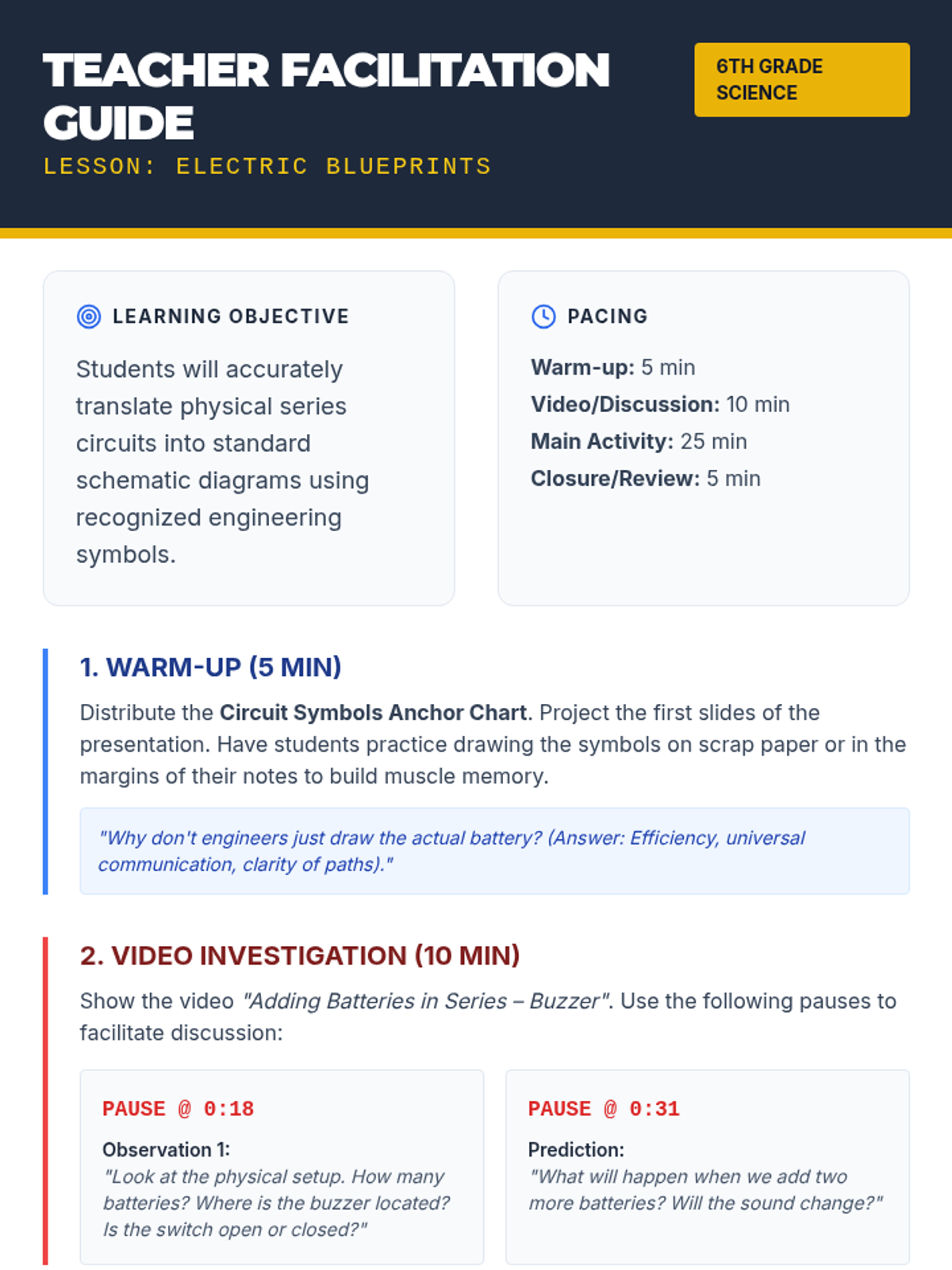
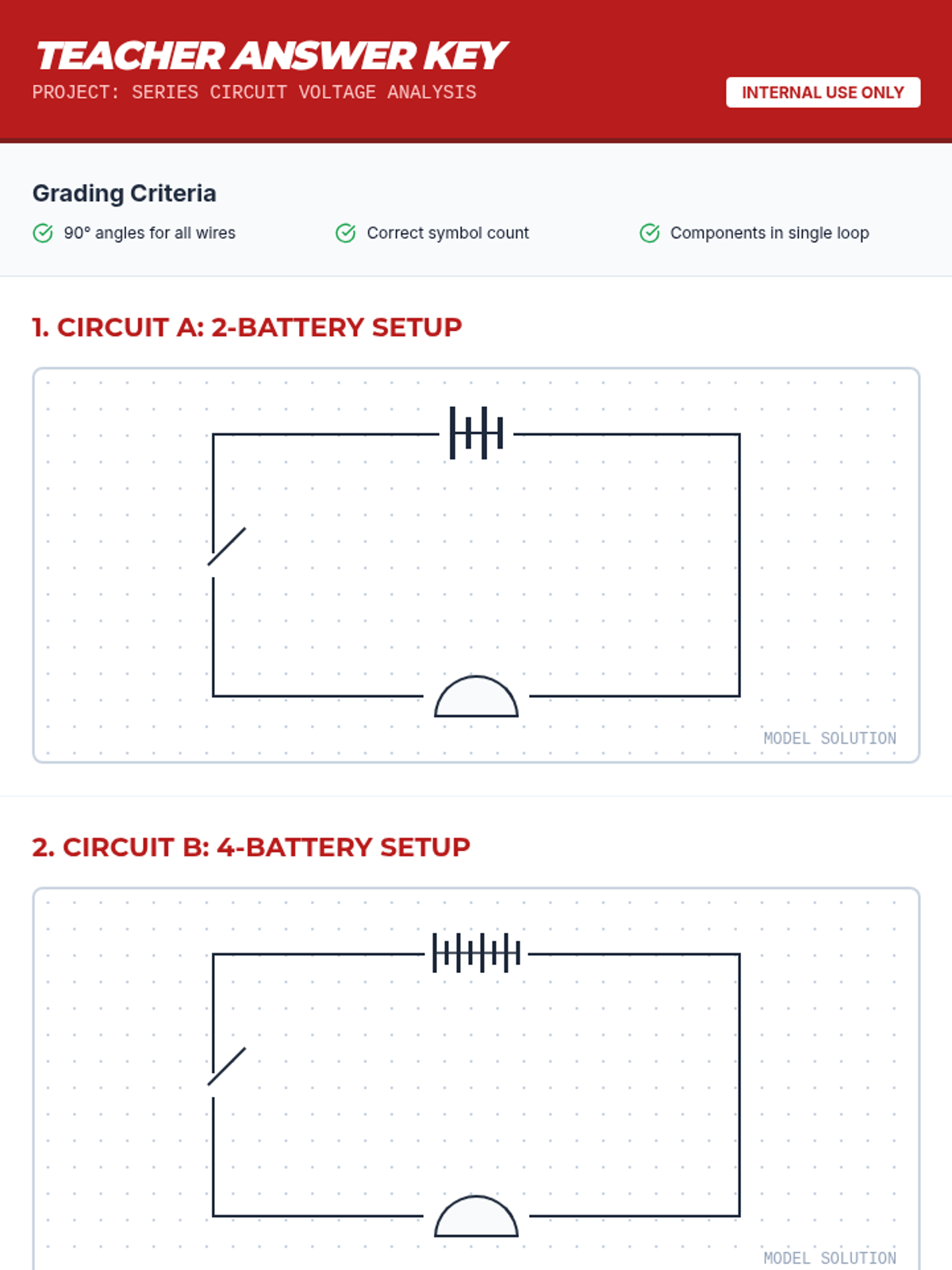
A hands-on lesson where 6th-grade students learn to translate physical circuit components into professional schematic diagrams using a series circuit with a buzzer.
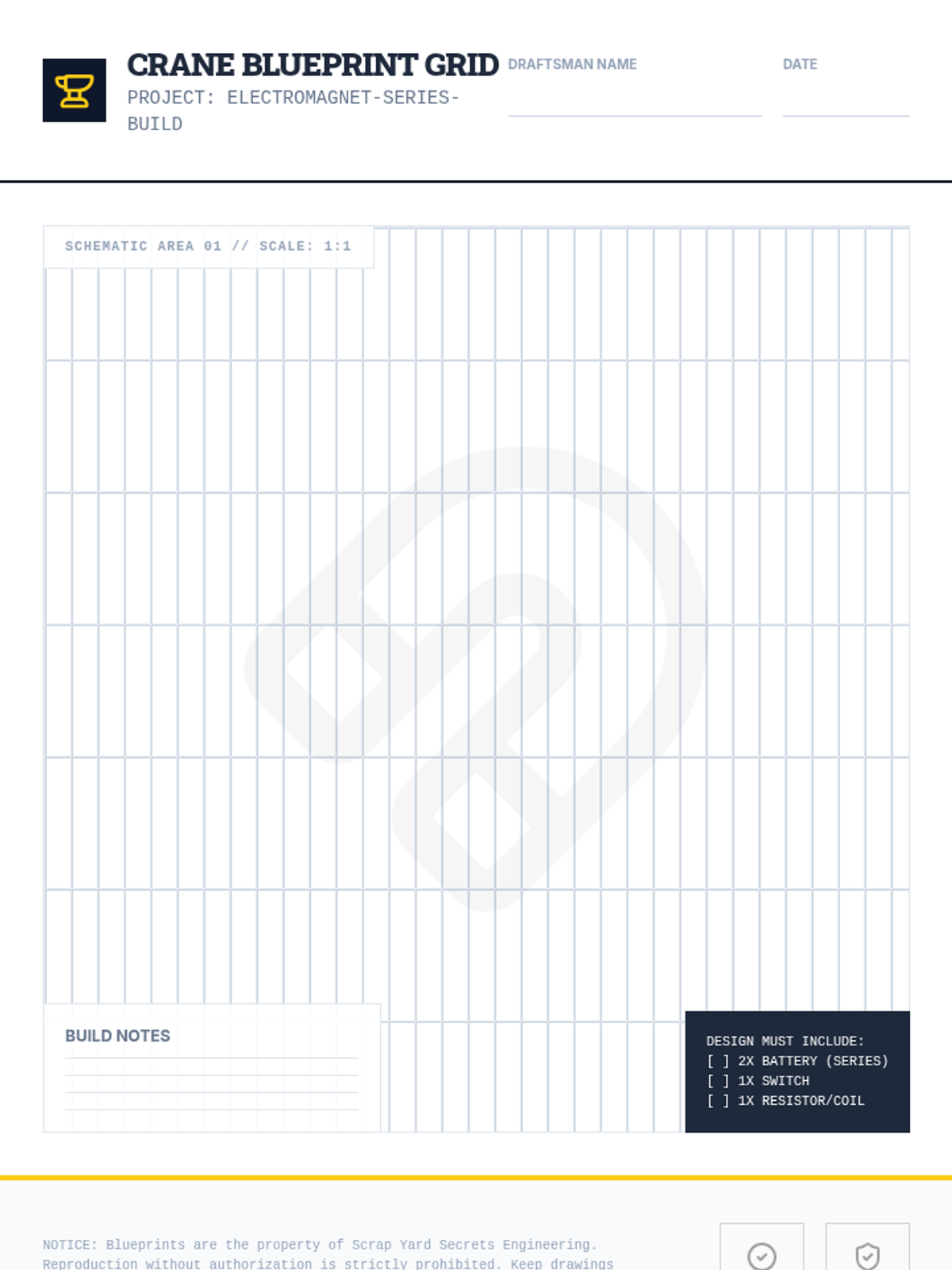
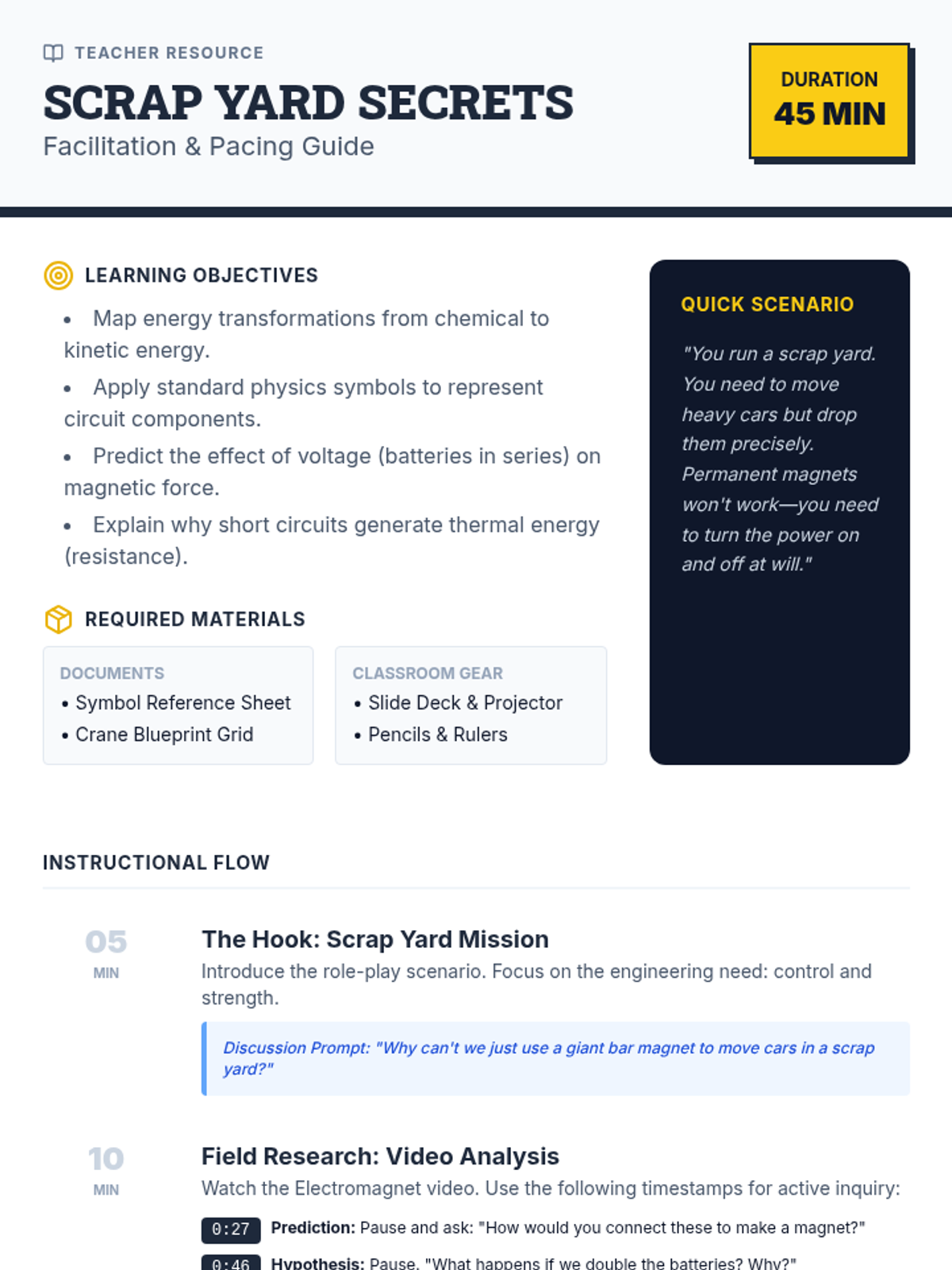
Students explore energy transformation and circuit design through the lens of building a powerful electromagnet for a scrap yard crane. They will map energy flow, learn standard circuit symbols, and diagram a multi-battery electromagnet system while discussing resistance and safety.
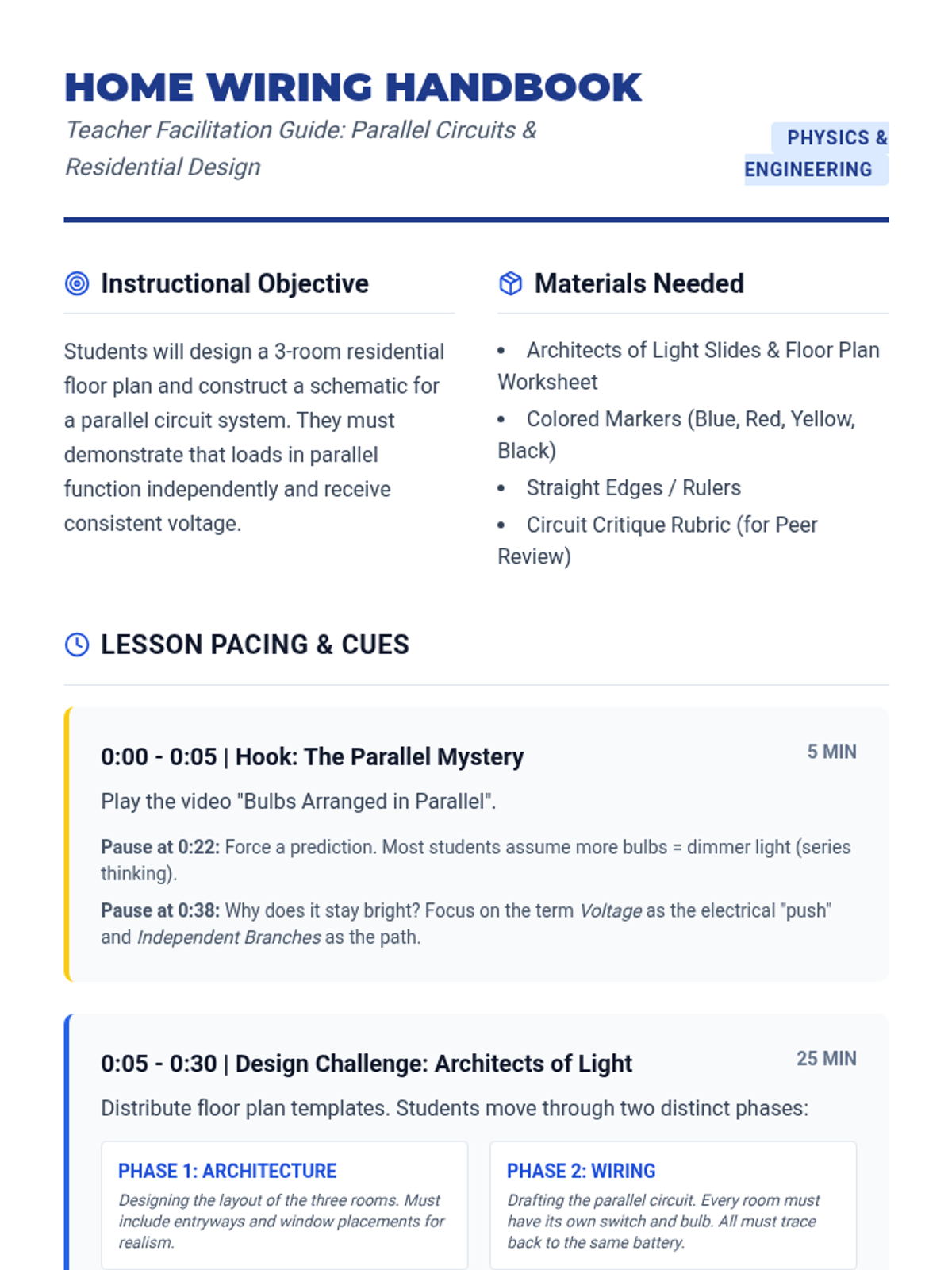
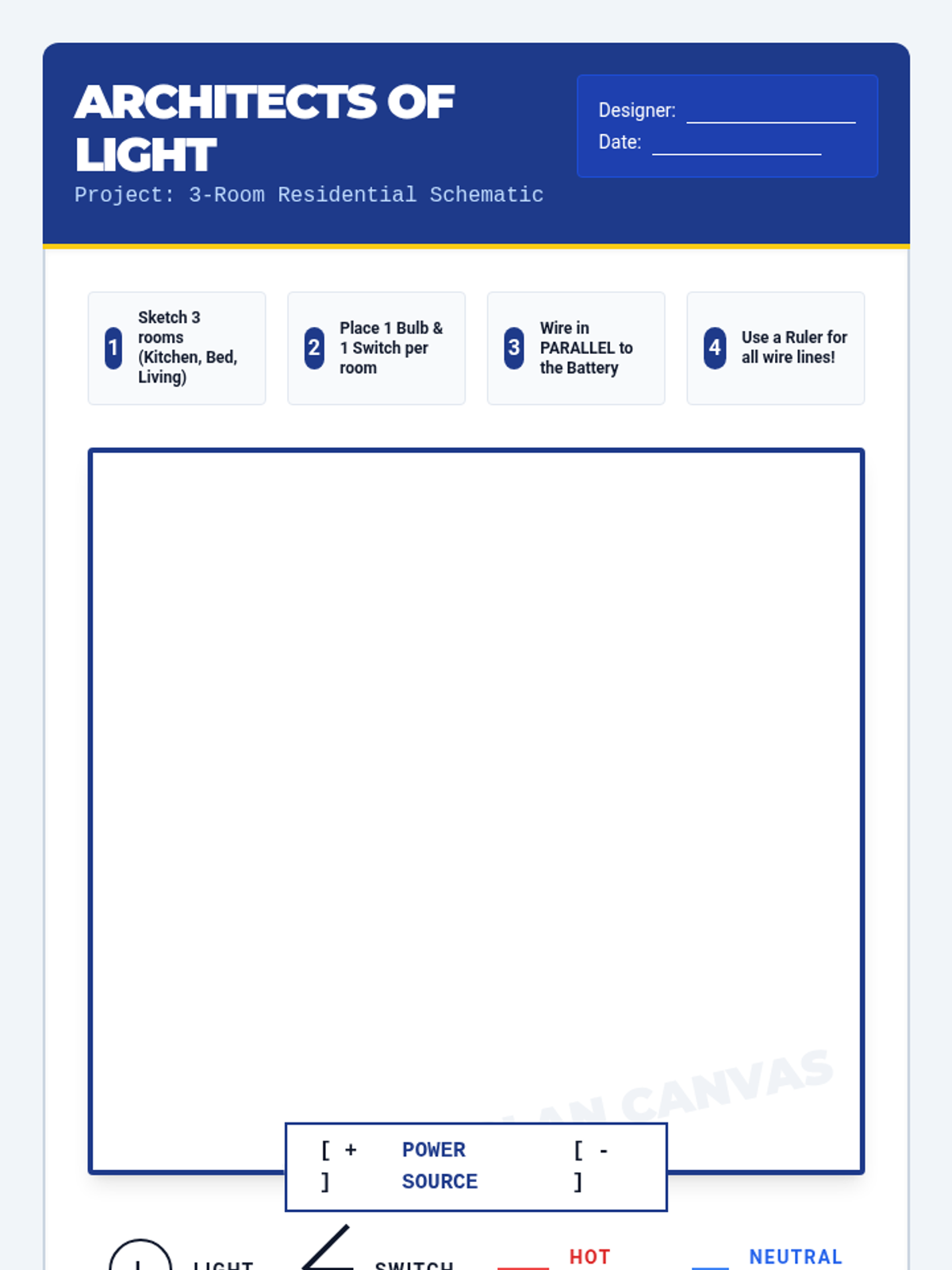
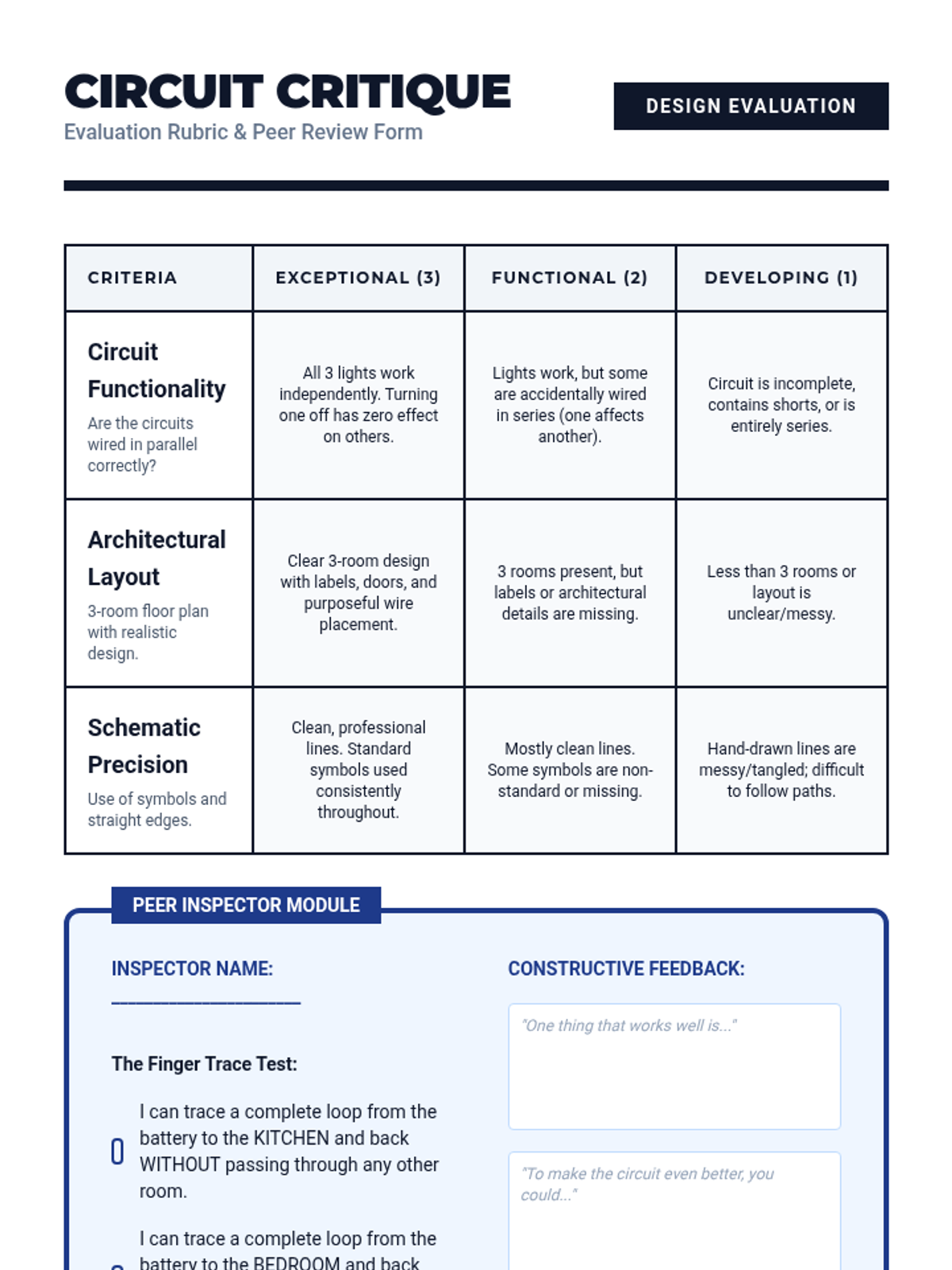
Students will transition from understanding simple circuits to designing a parallel circuit system for a 3-room house model. The lesson uses a video hook to demonstrate the constant brightness of parallel loads and challenges students to apply this 'Architect of Light' mindset to floor plan wiring.
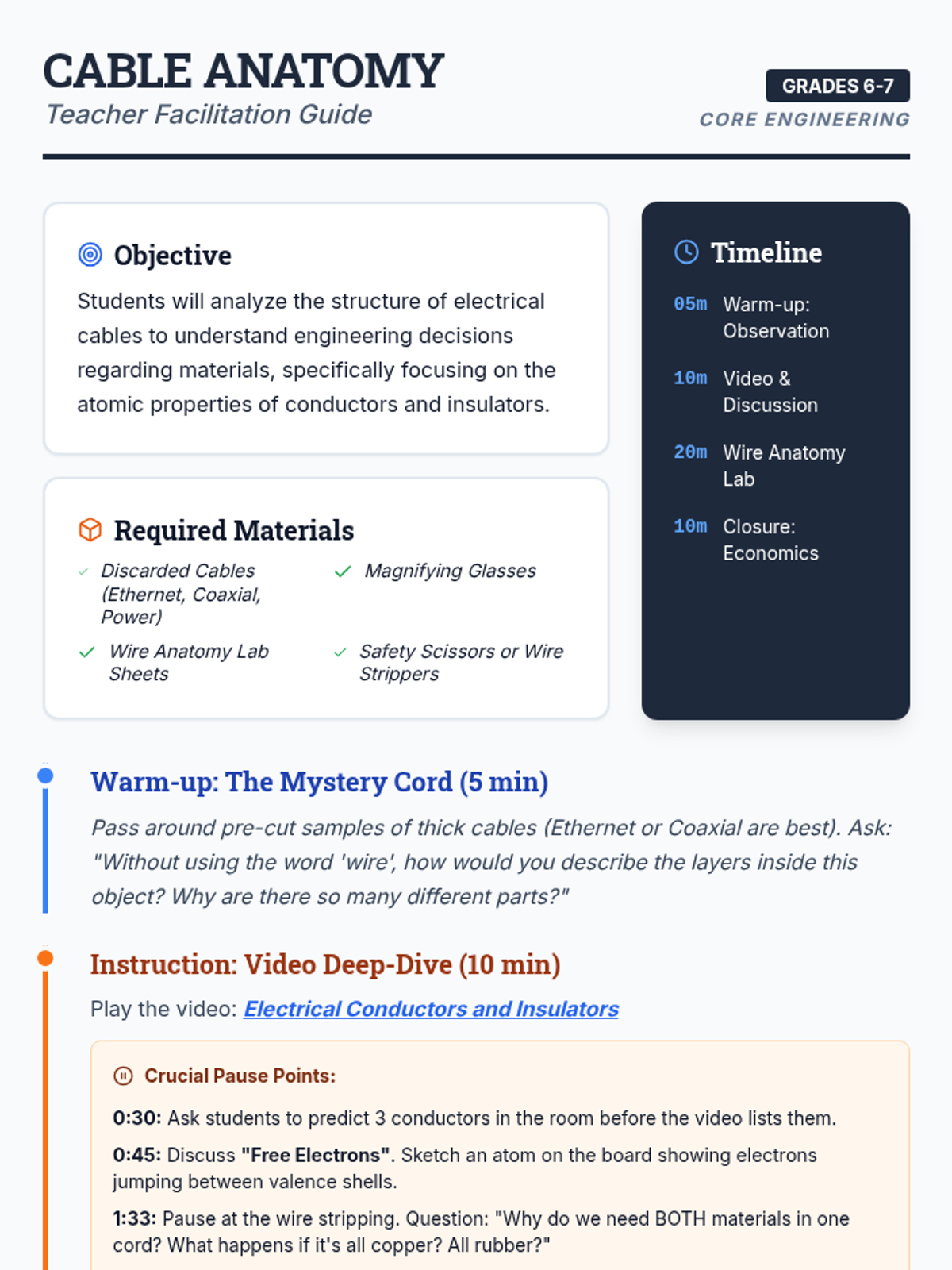
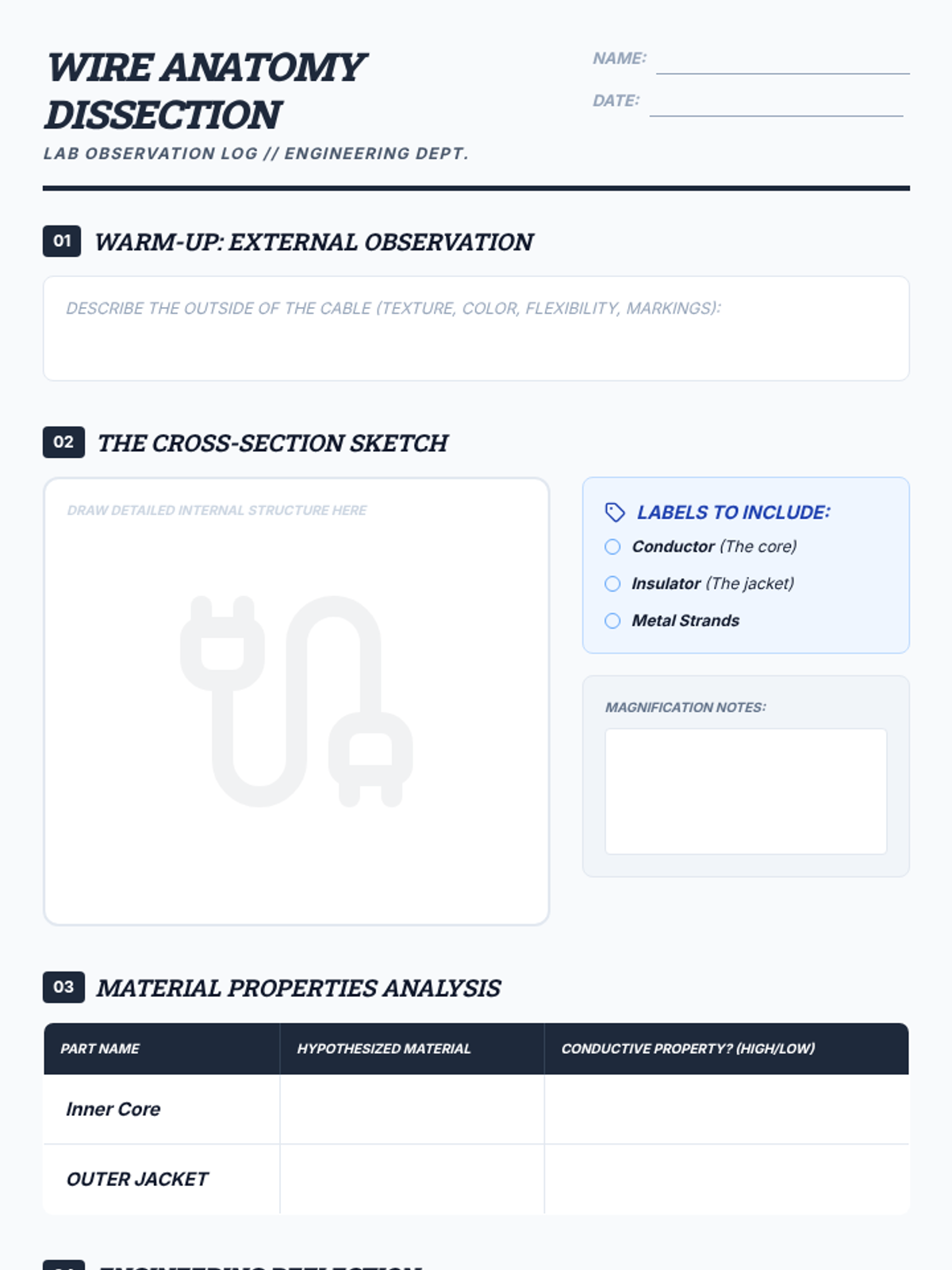
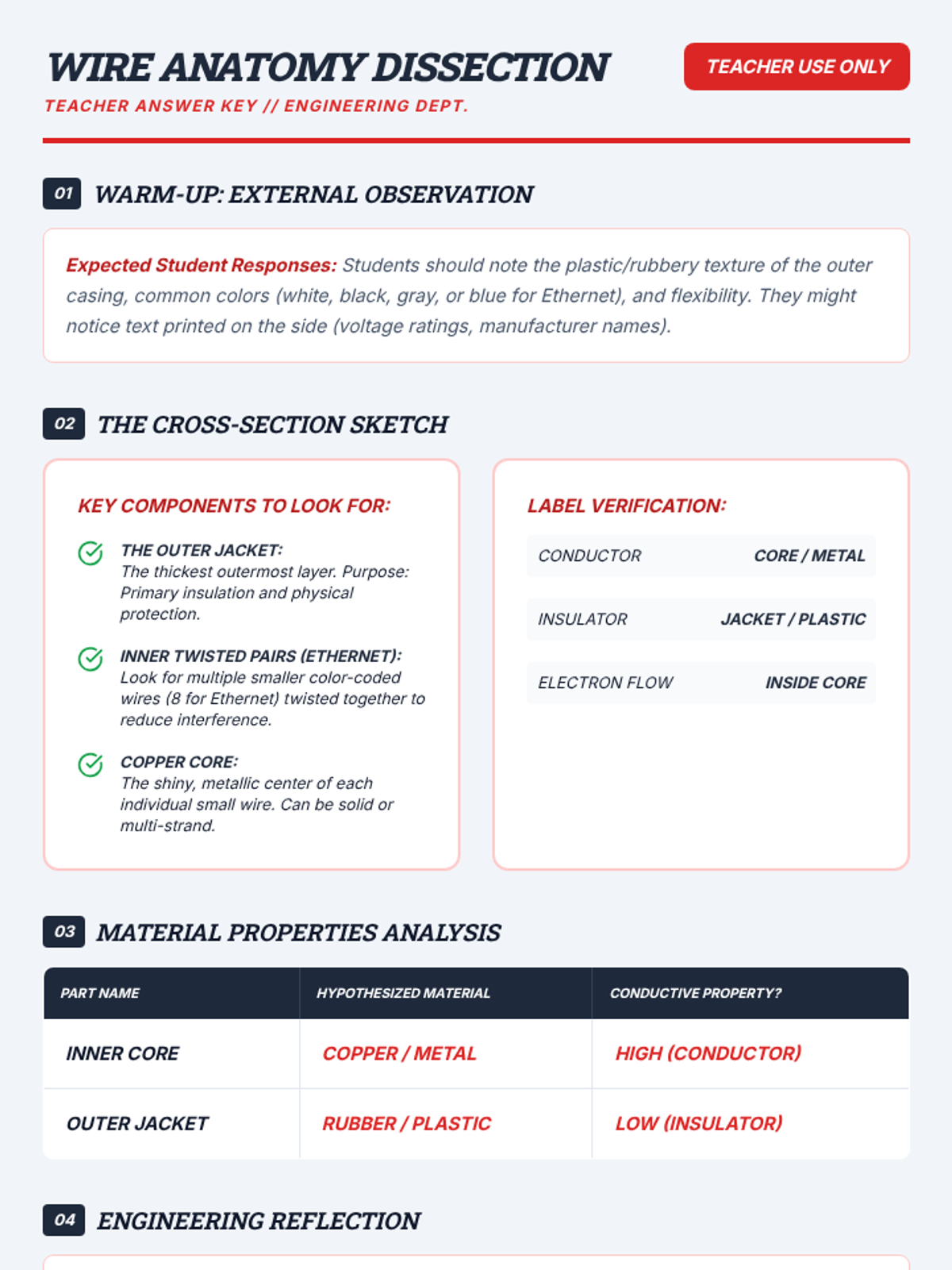
A hands-on engineering lesson where students dissect electrical cables to explore the atomic properties of conductors and insulators, material selection in engineering, and the economics of resource scarcity.
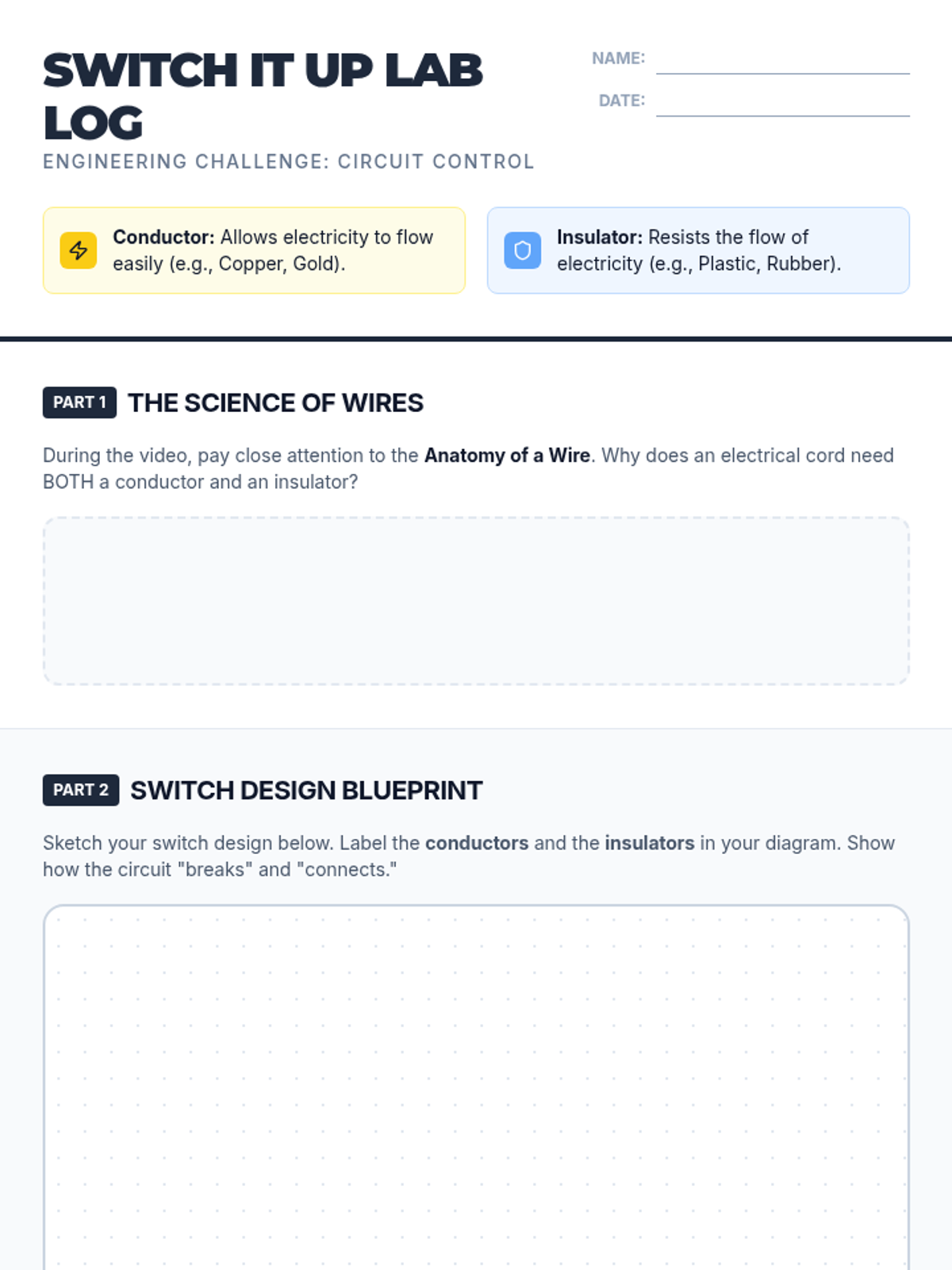
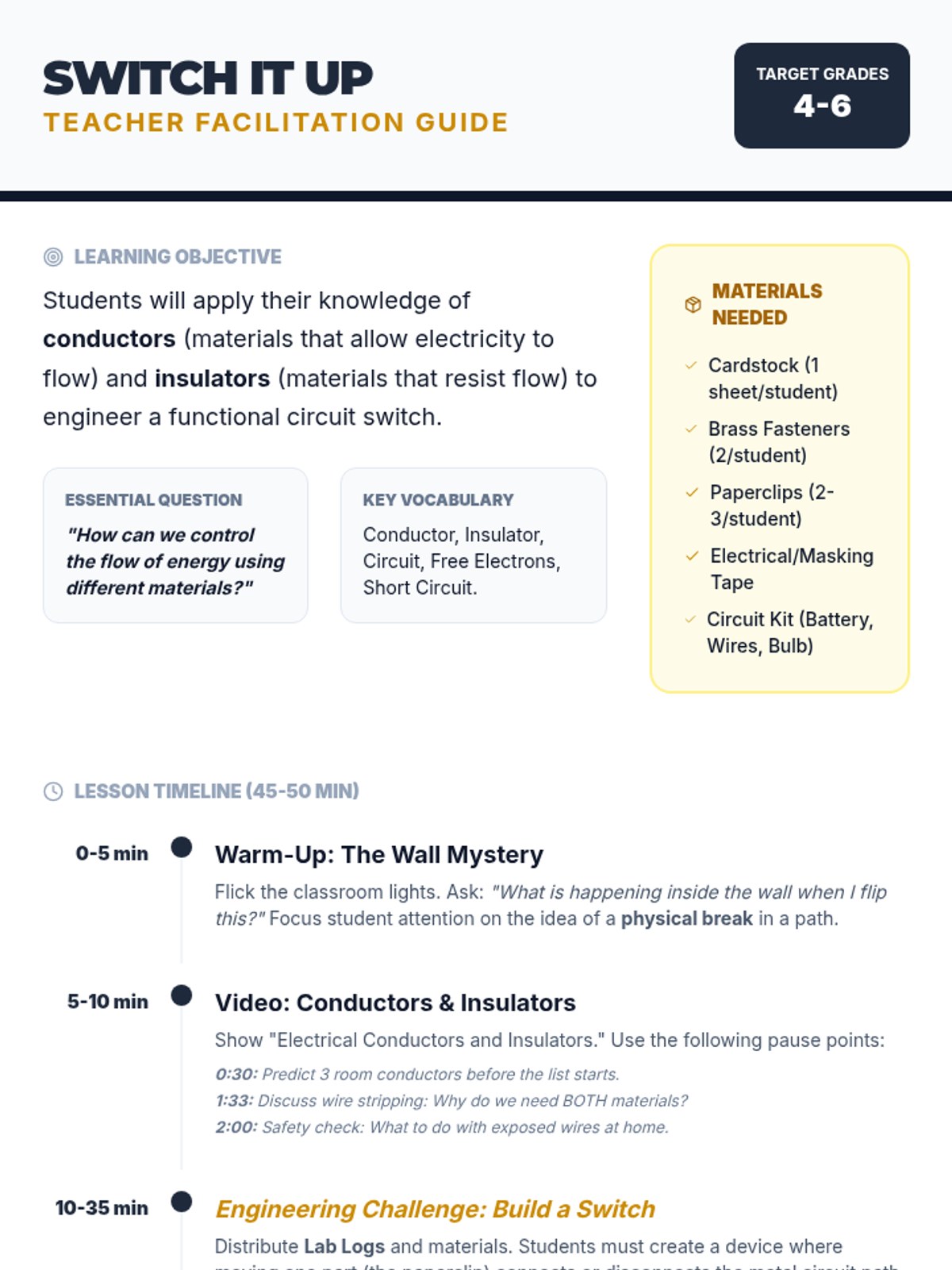
Students explore the properties of conductors and insulators by designing and building their own functional circuit switches using everyday materials.
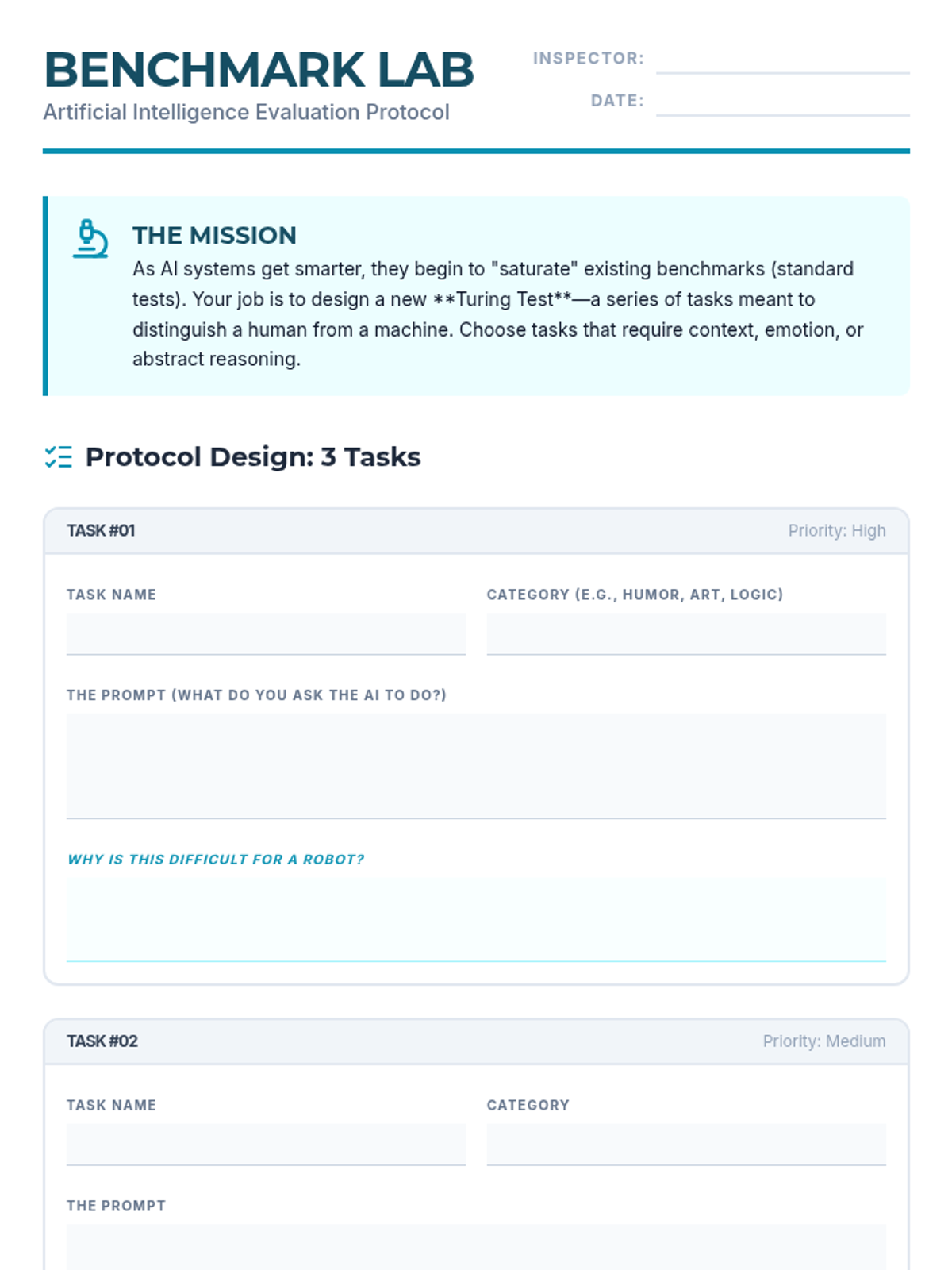
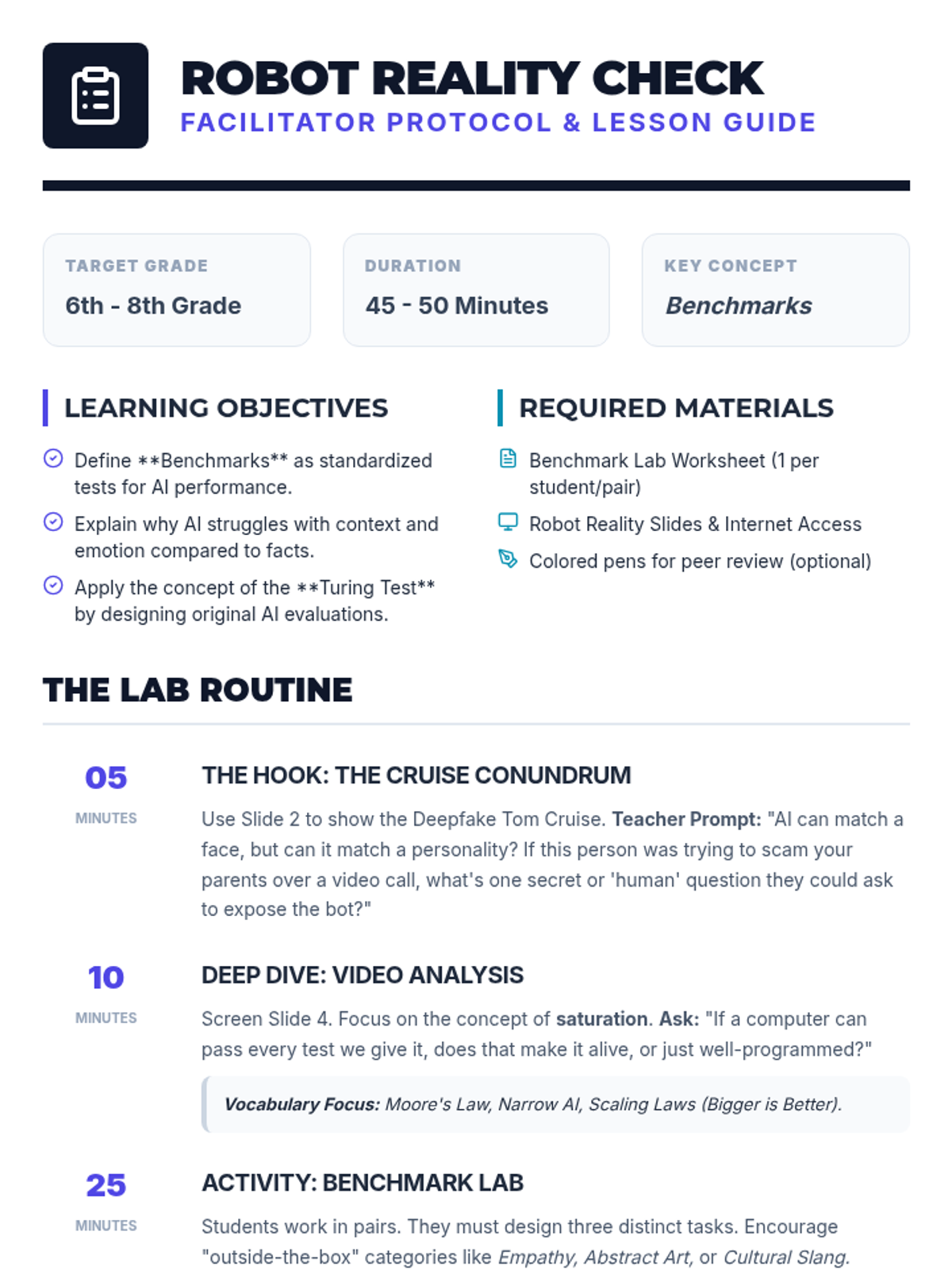
Students explore the concept of AI benchmarks by analyzing deepfakes and designing their own 'Turing Test' style evaluations for artificial intelligence.
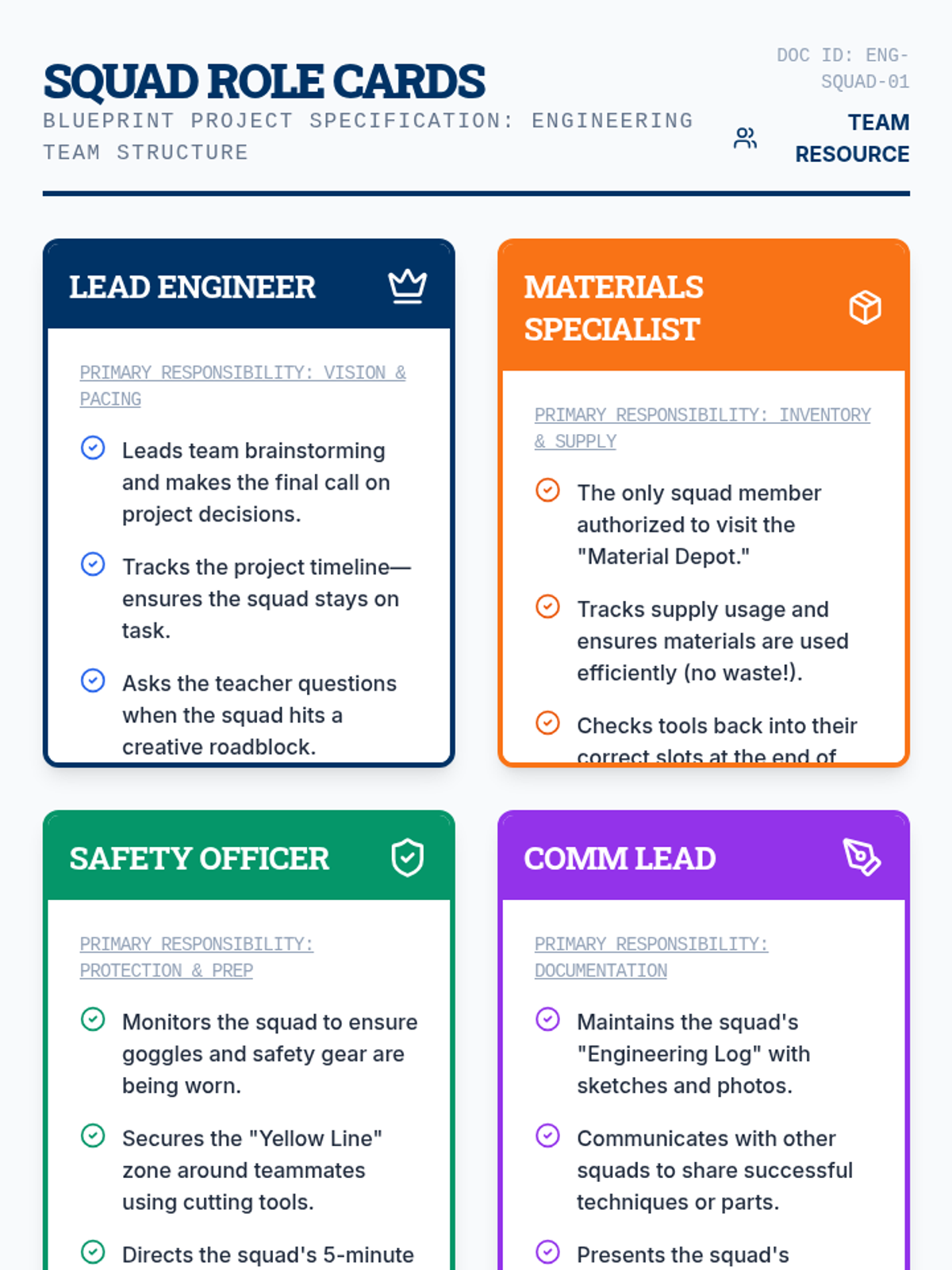
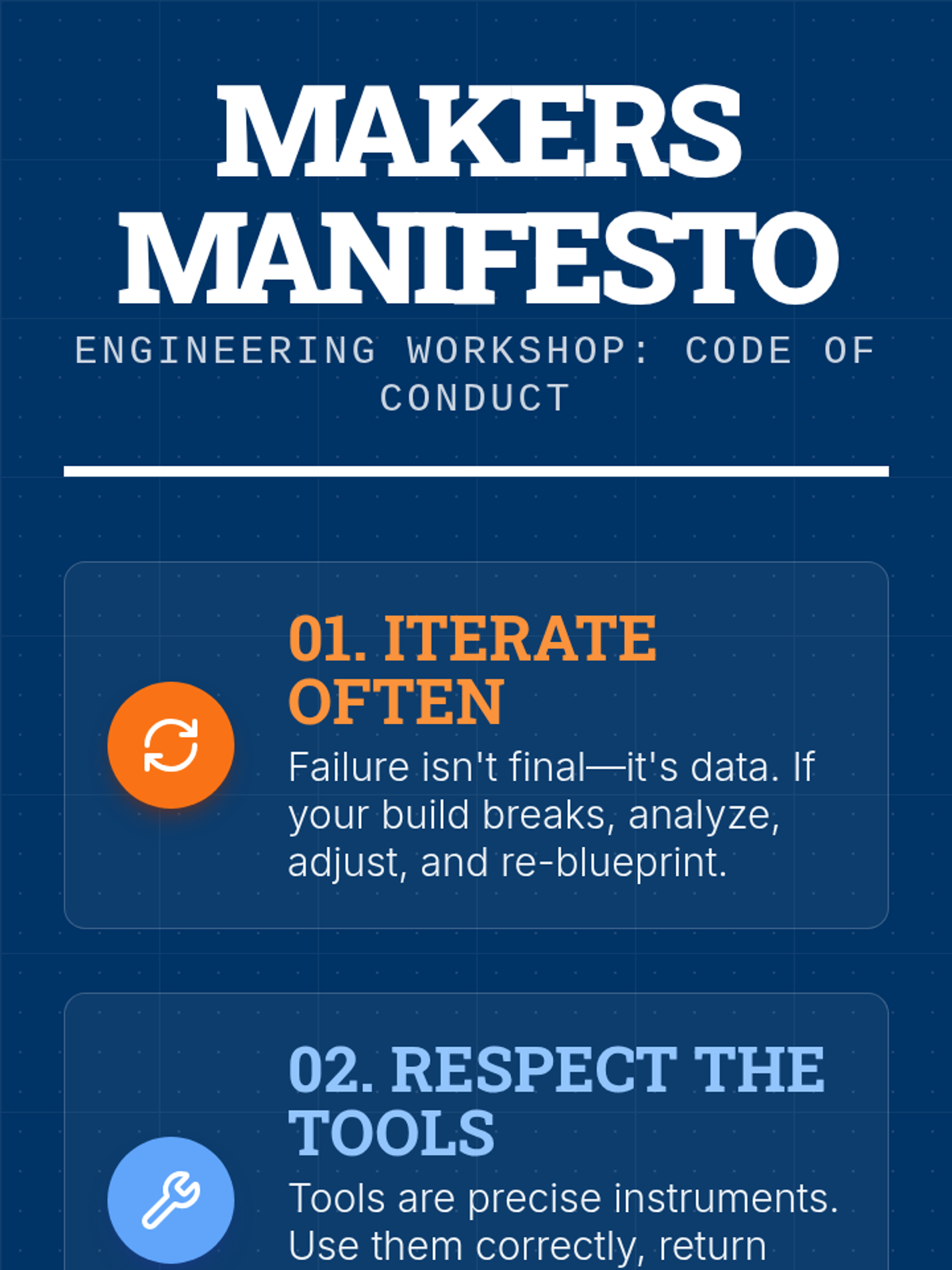
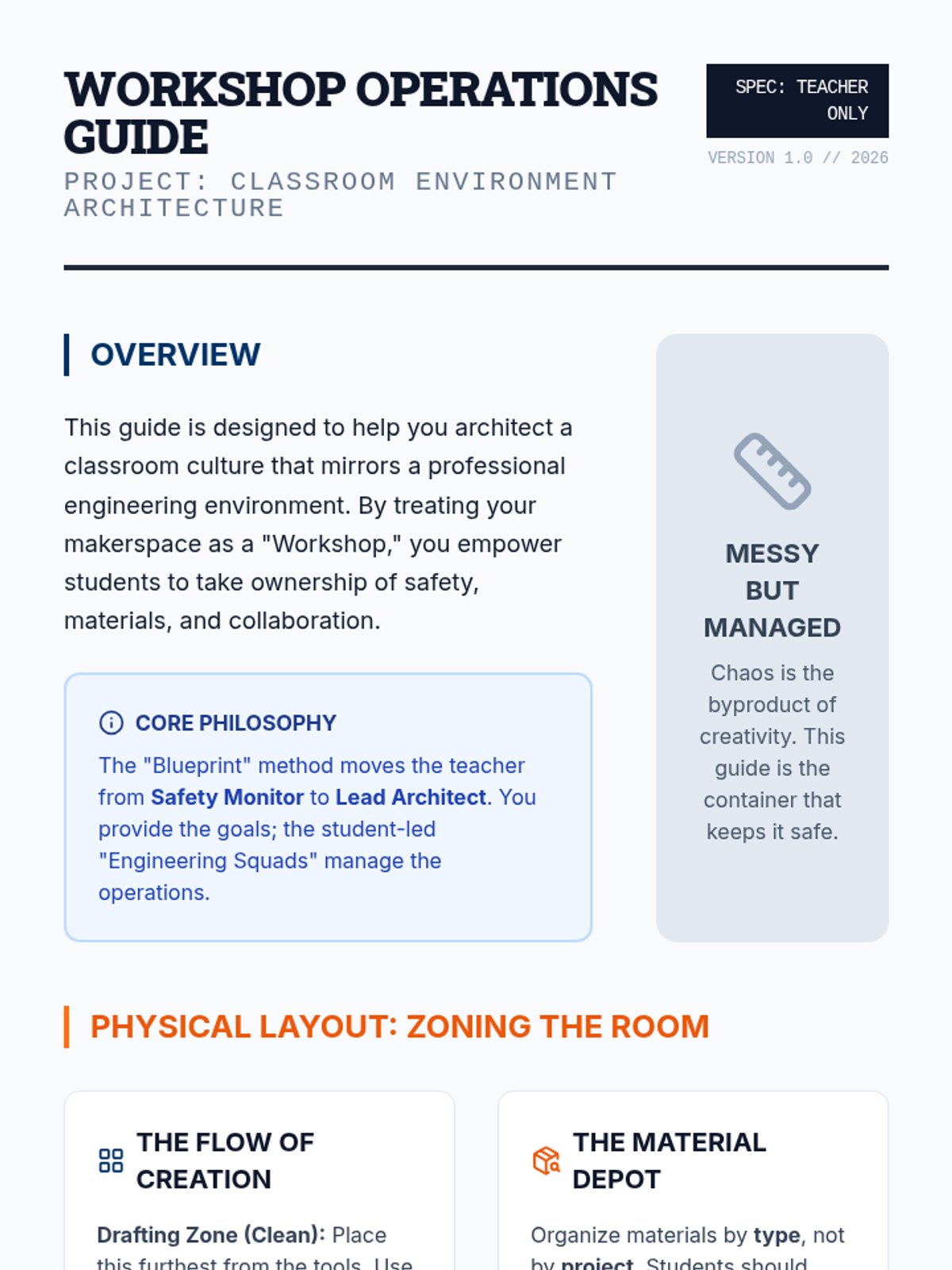
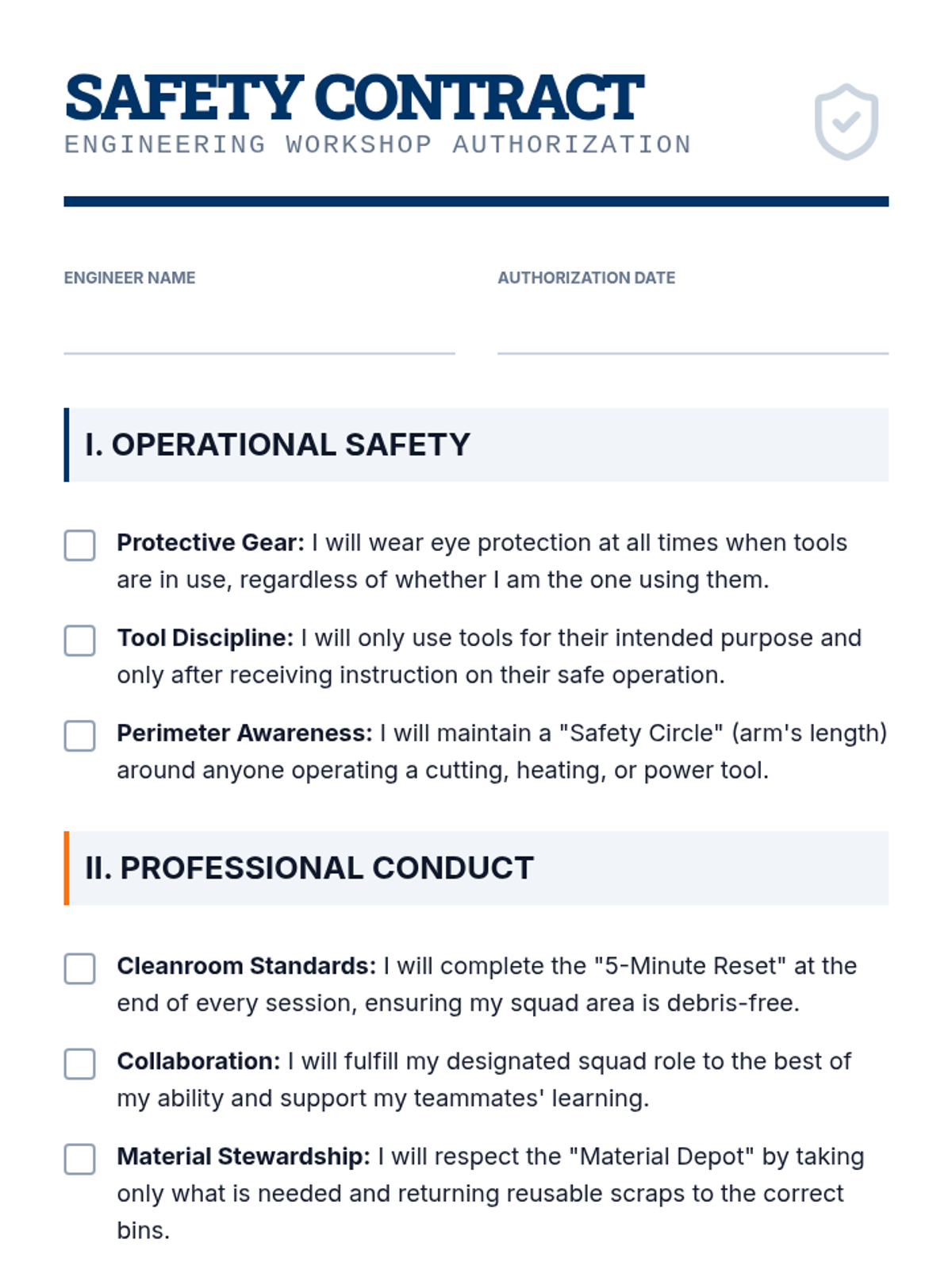
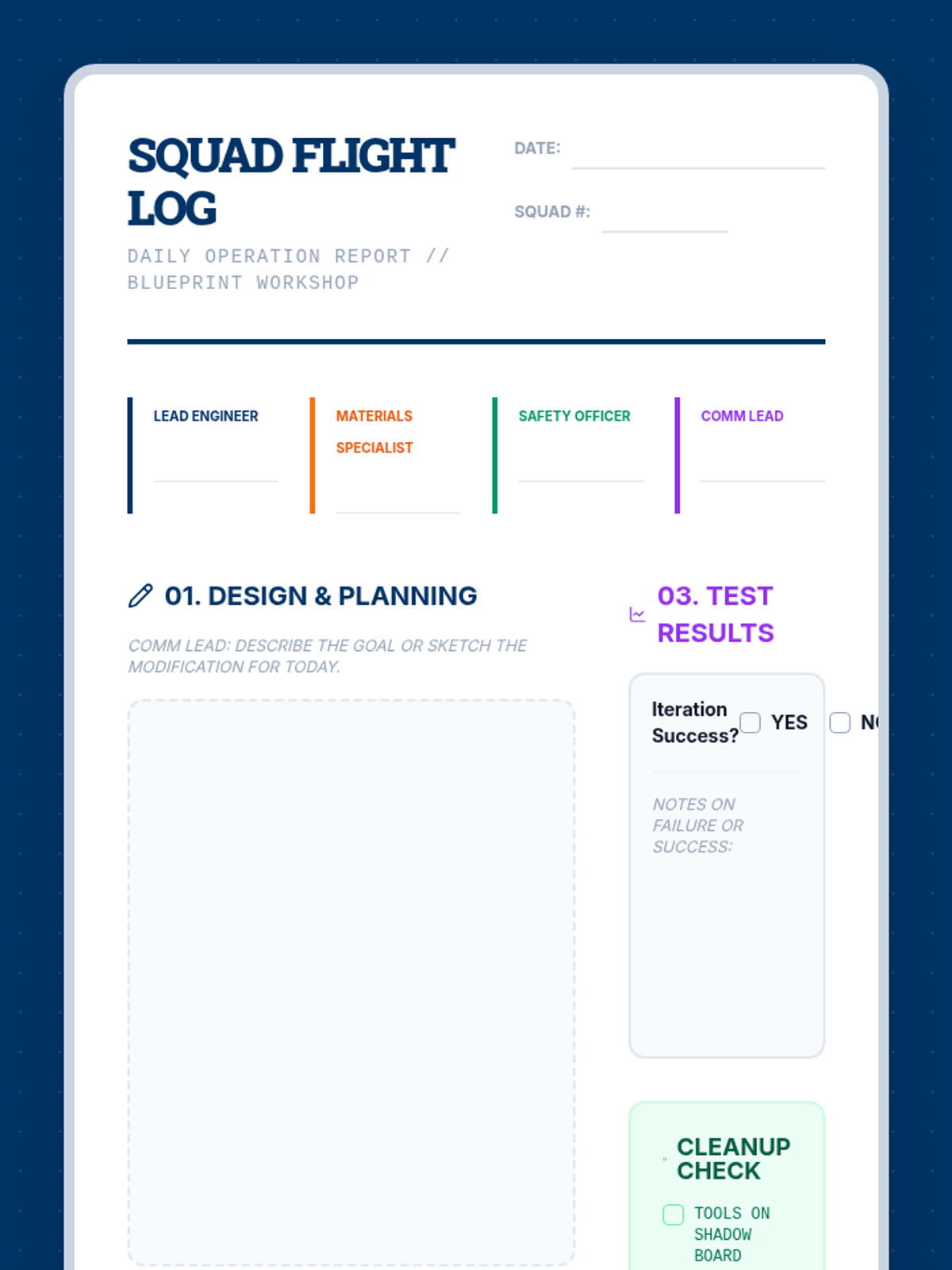
A foundational toolkit for setting up a physical engineering and maker space, covering physical layout, collaborative roles, and essential classroom routines.
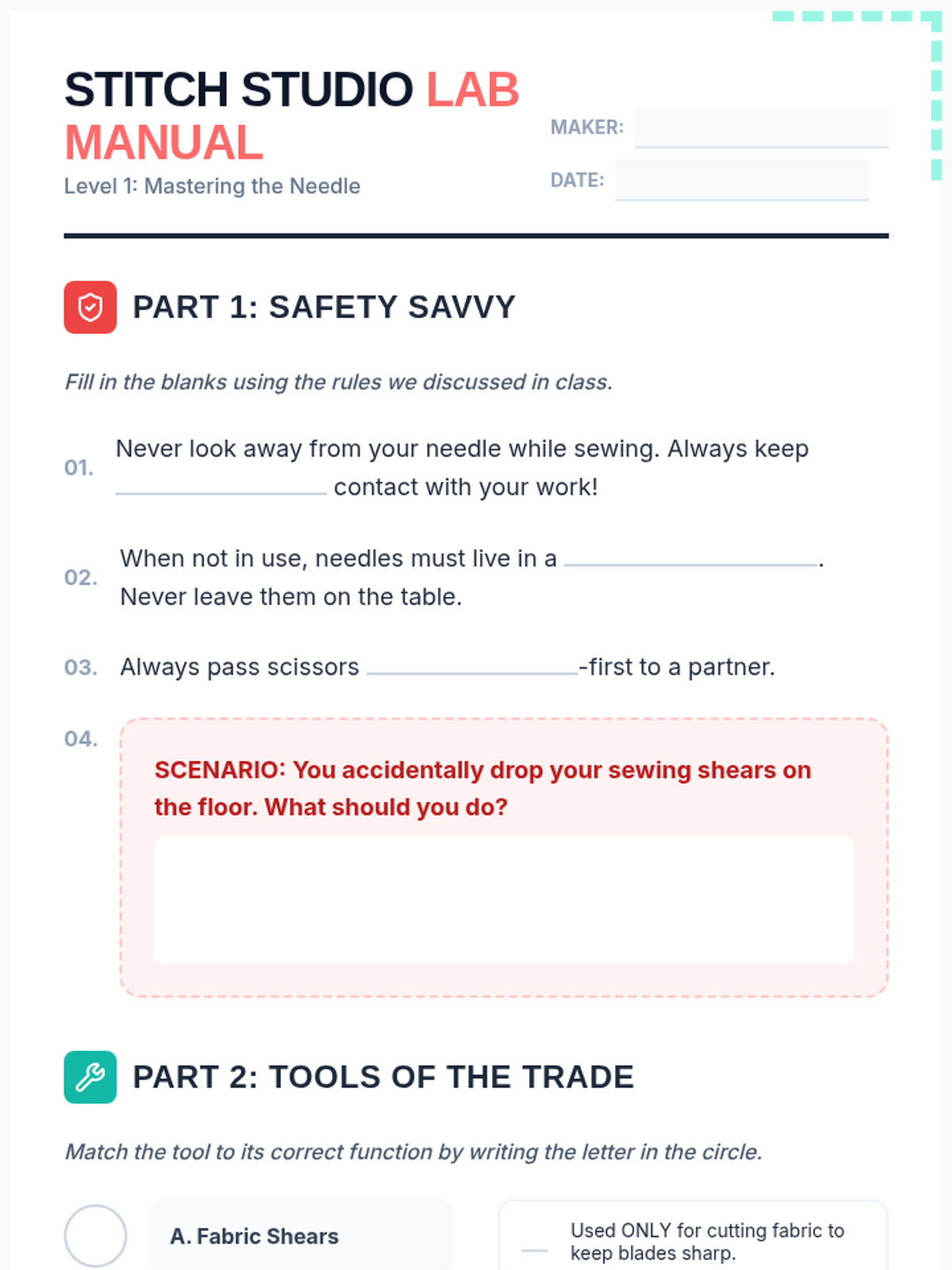
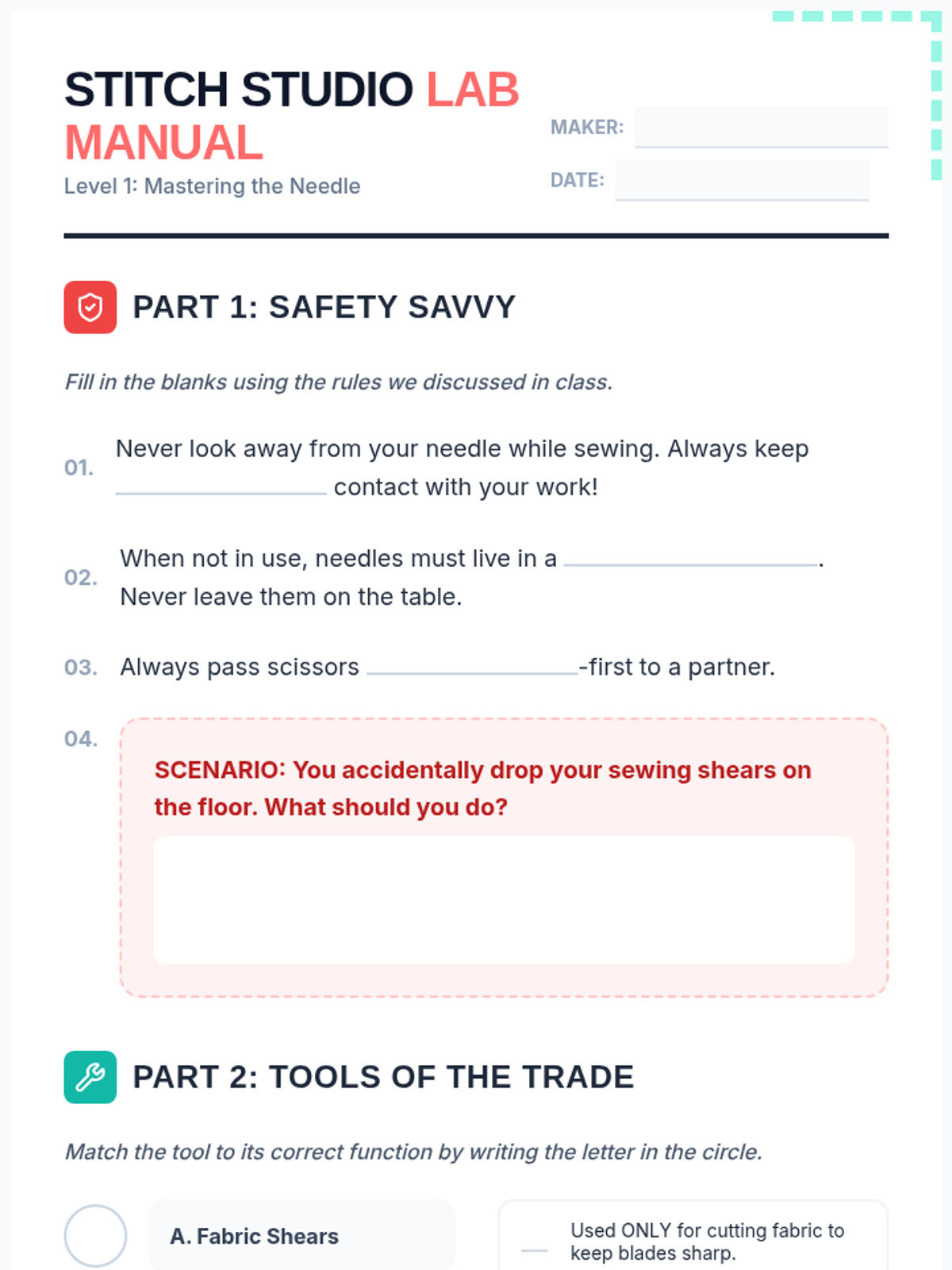
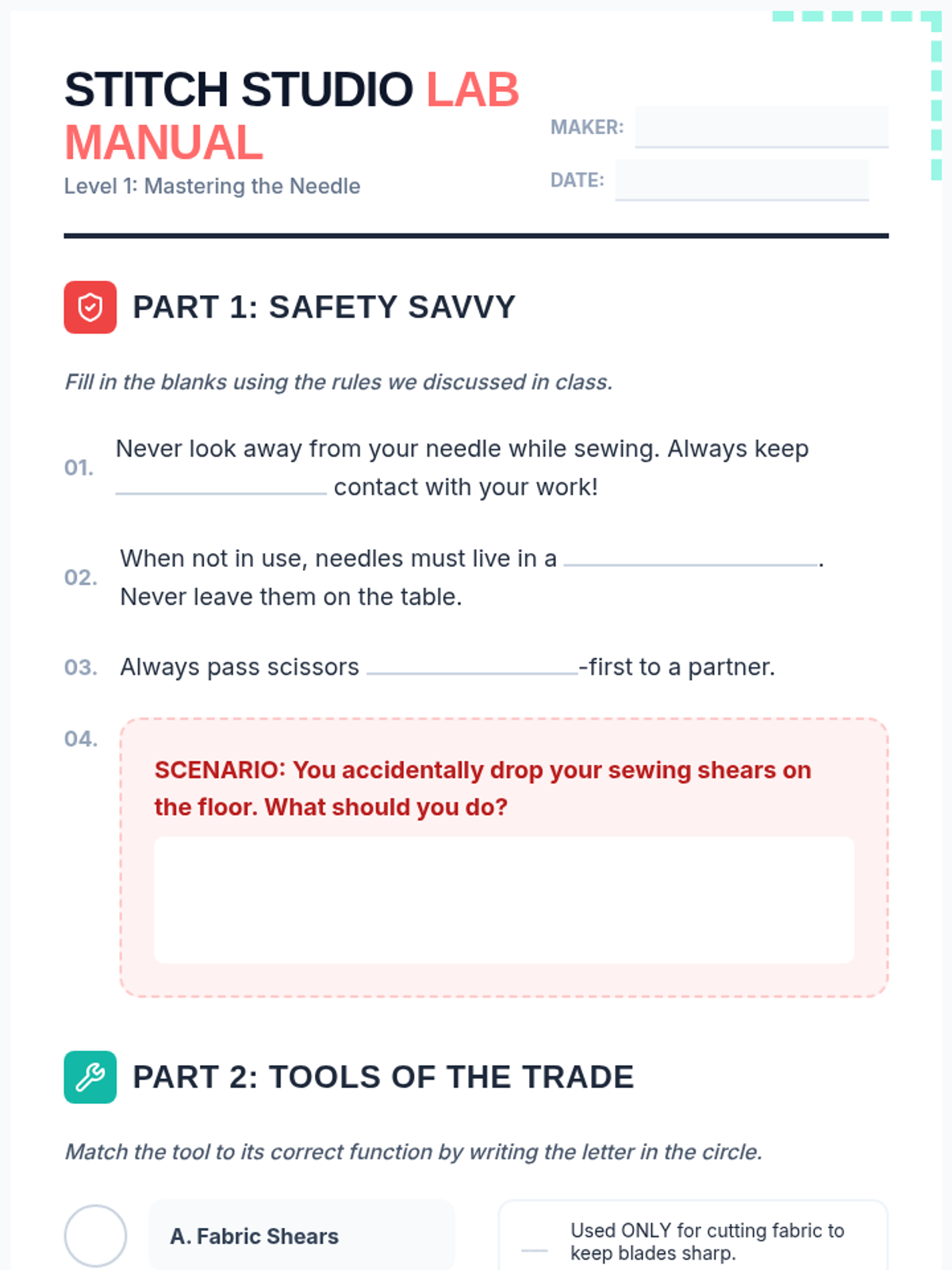
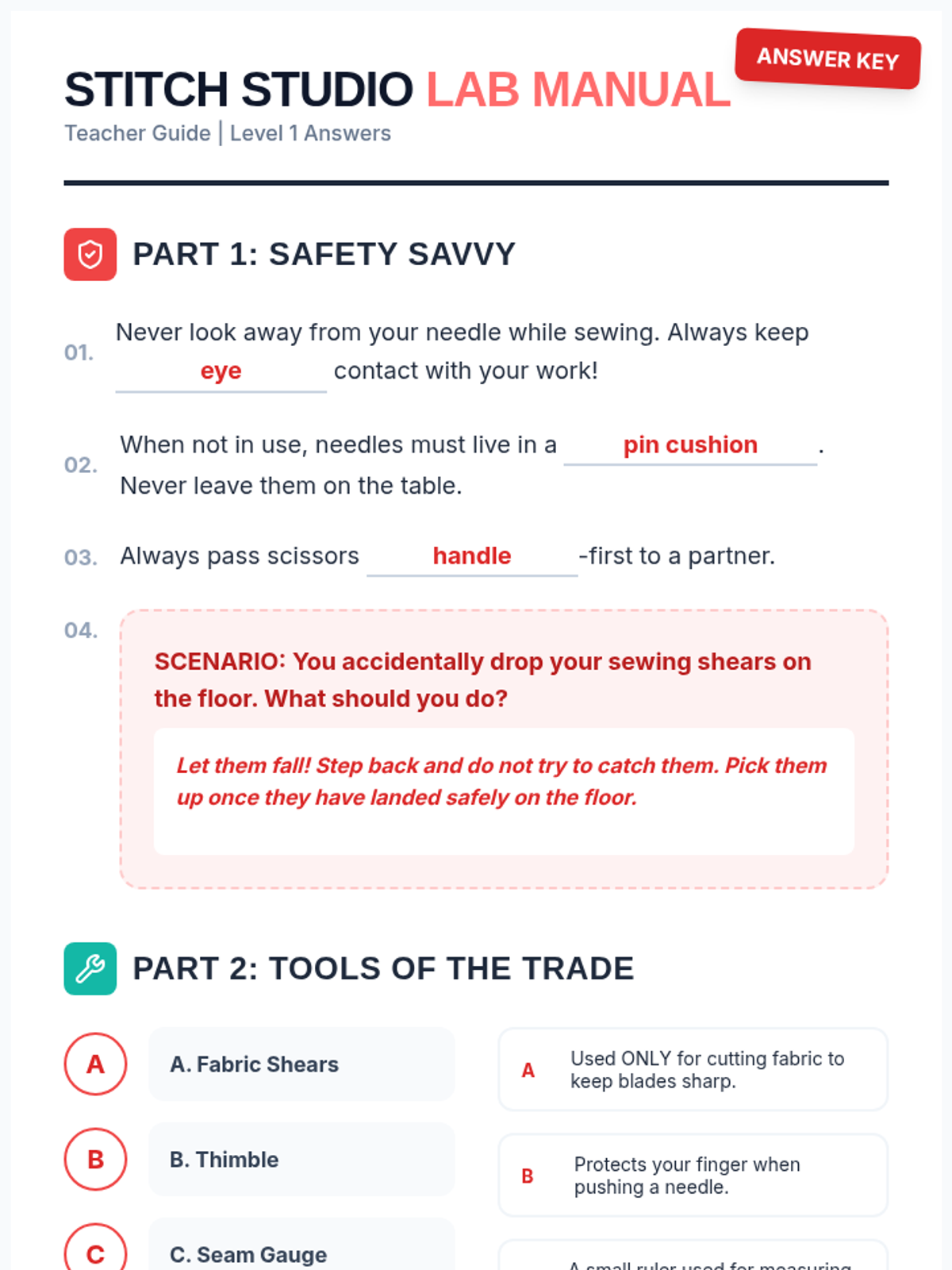
A comprehensive introduction to hand sewing for 6th graders, covering essential safety rules, tool usage, and five fundamental hand stitches: running, basting, backstitch, blanket, and tailor's stitch.
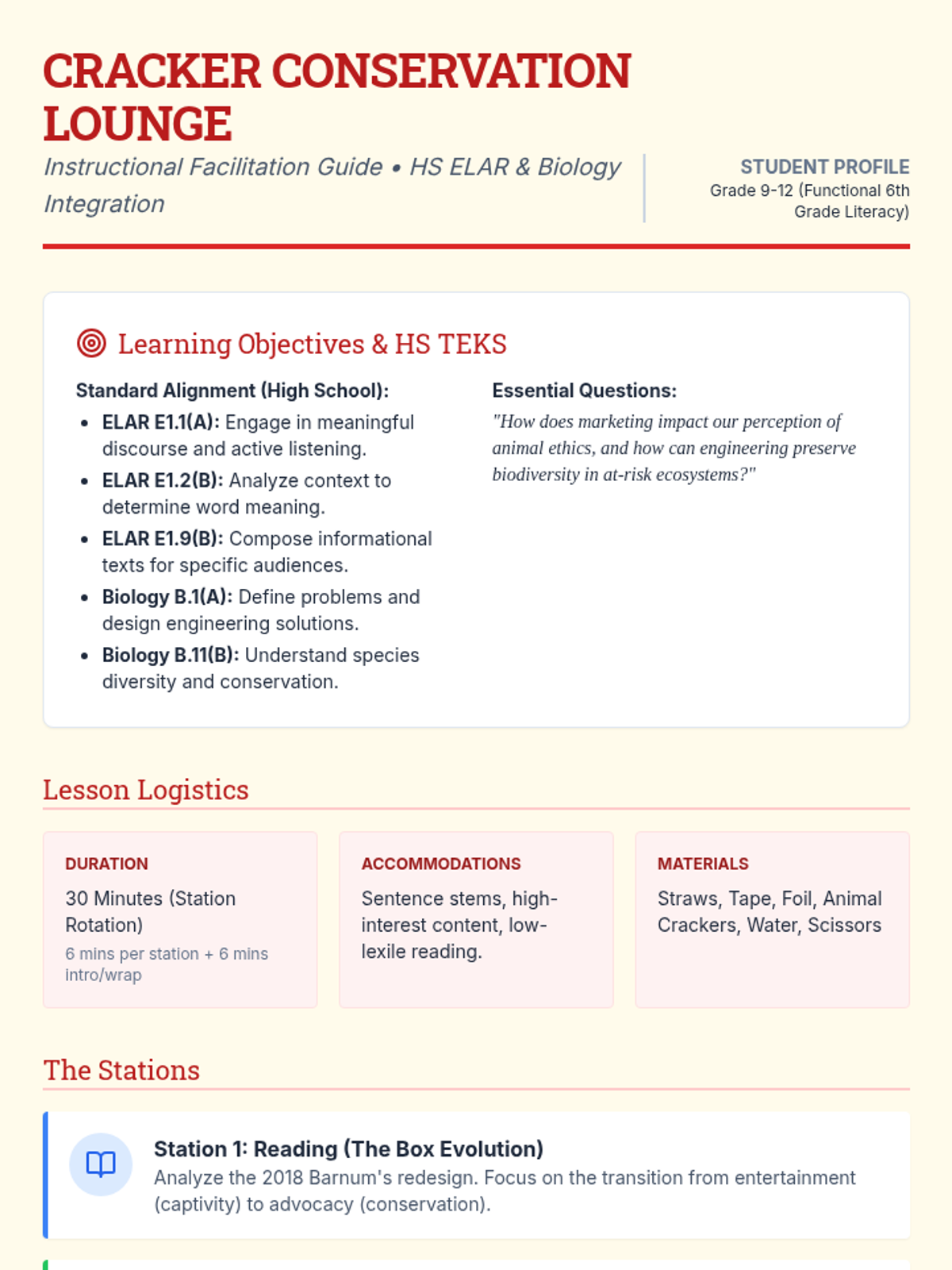
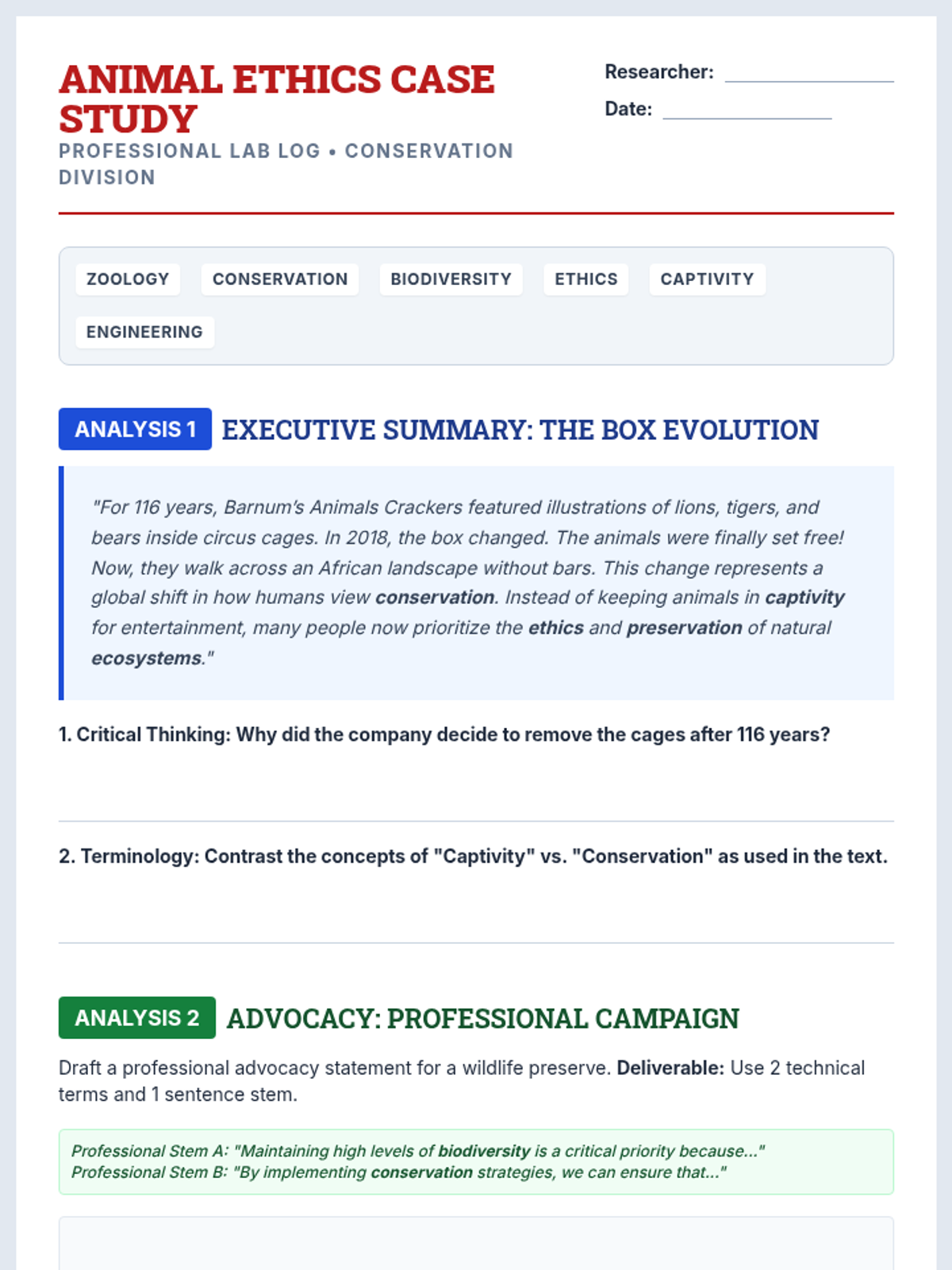
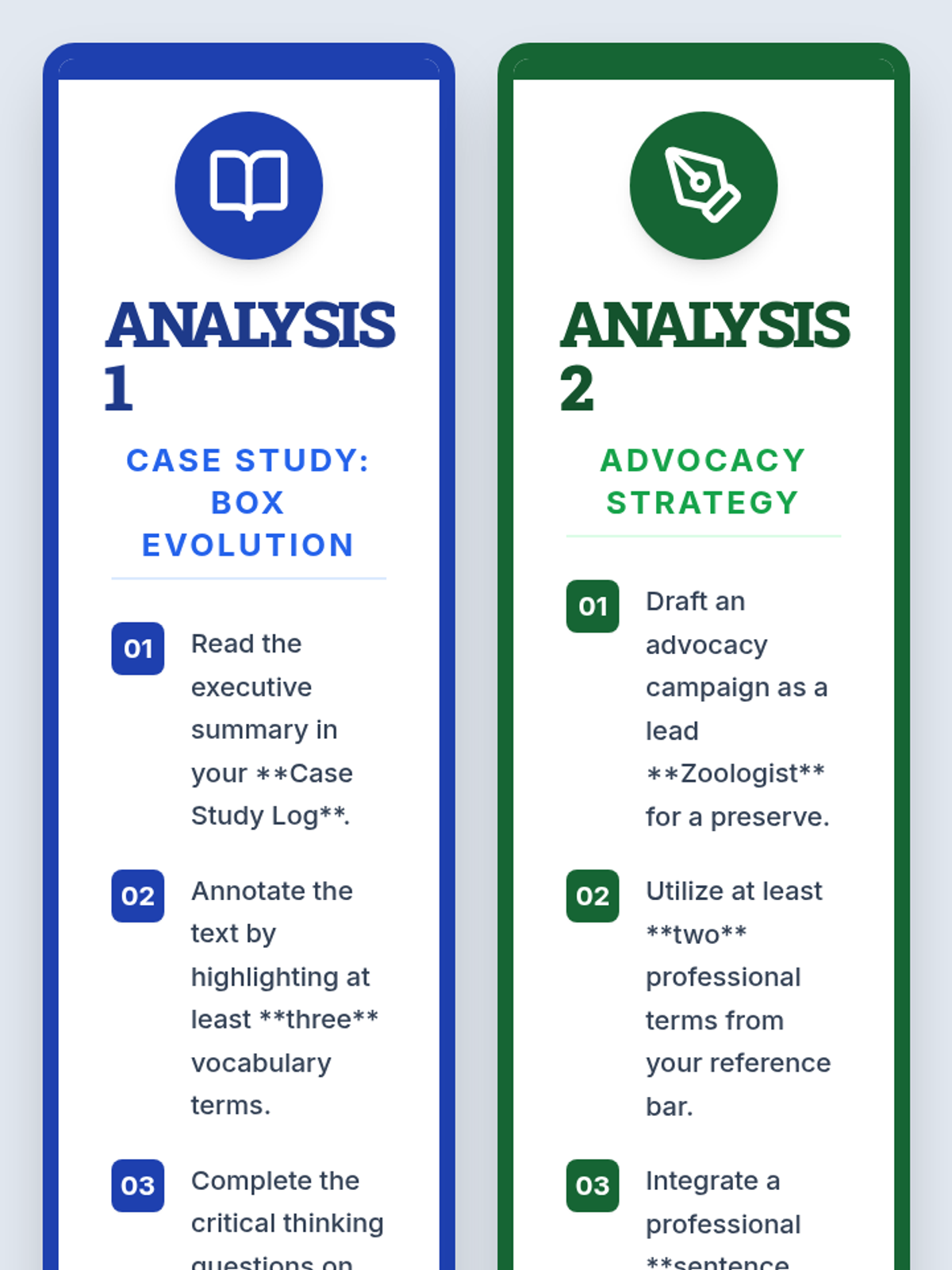
A station-rotation lesson themed around animal crackers that integrates zoology and conservation vocabulary through reading, writing, speaking, and a STEM challenge. Designed for 6th-grade students to practice multimodal literacy skills while exploring animal ethics and habitat preservation.
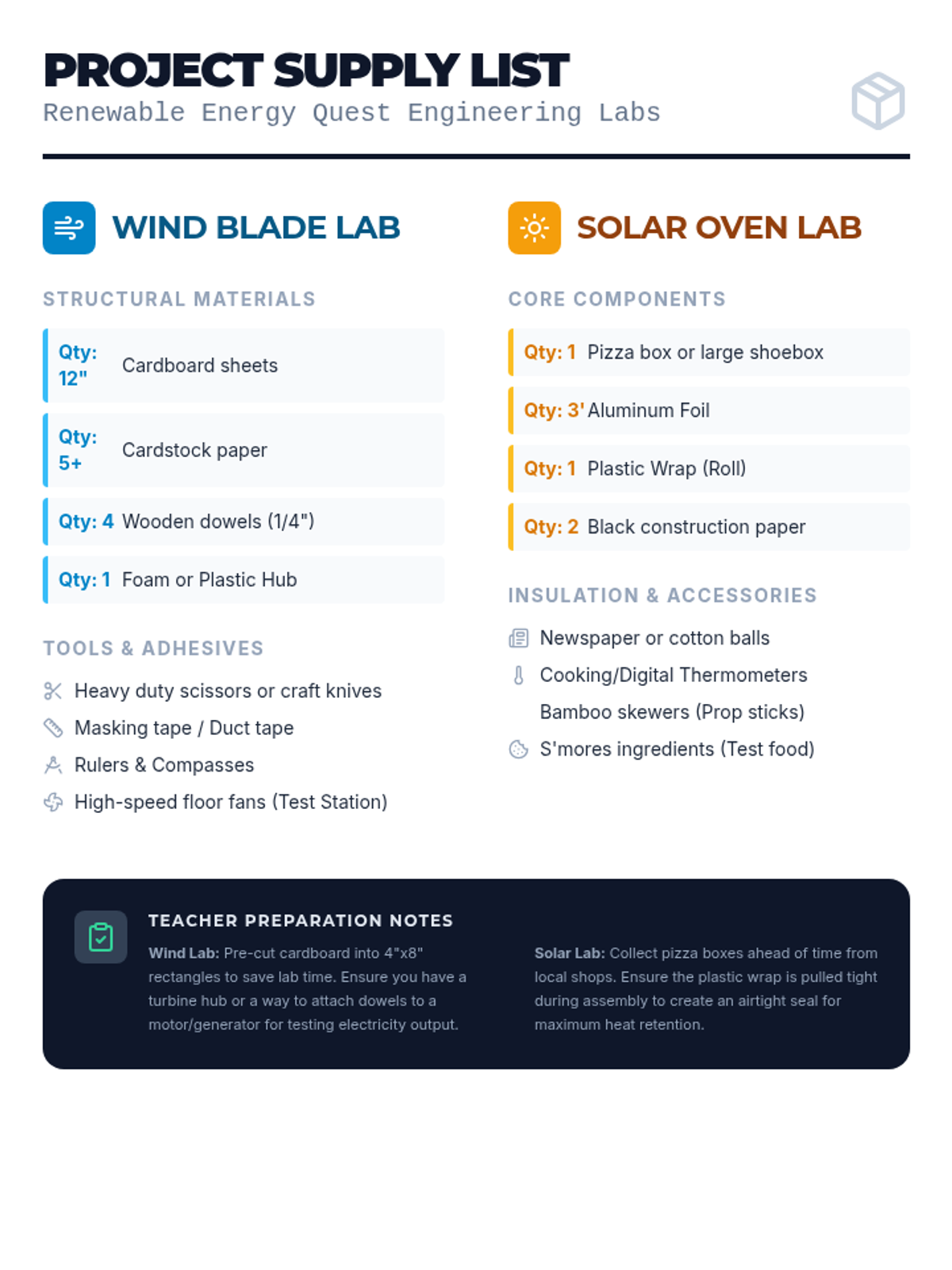
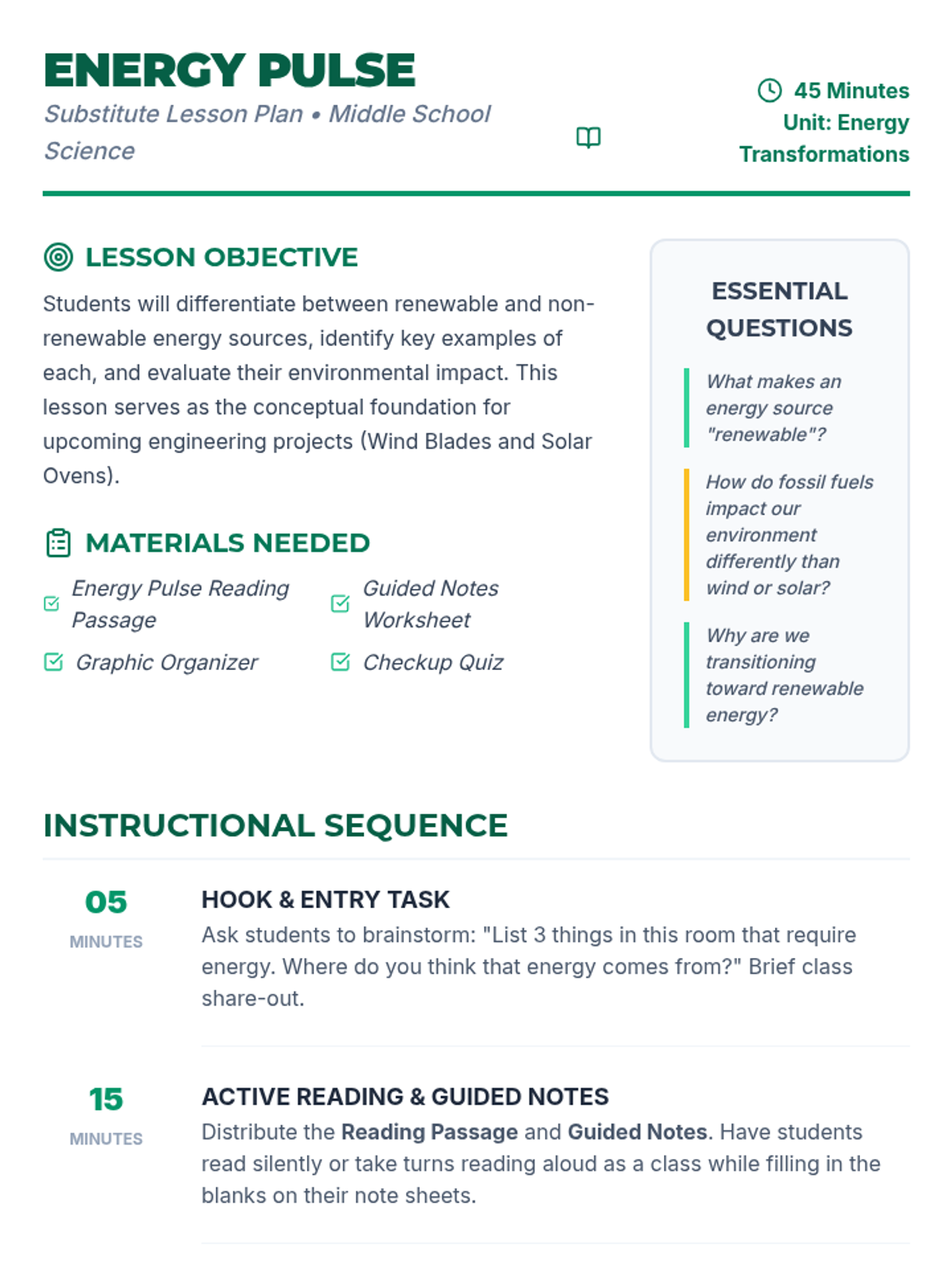
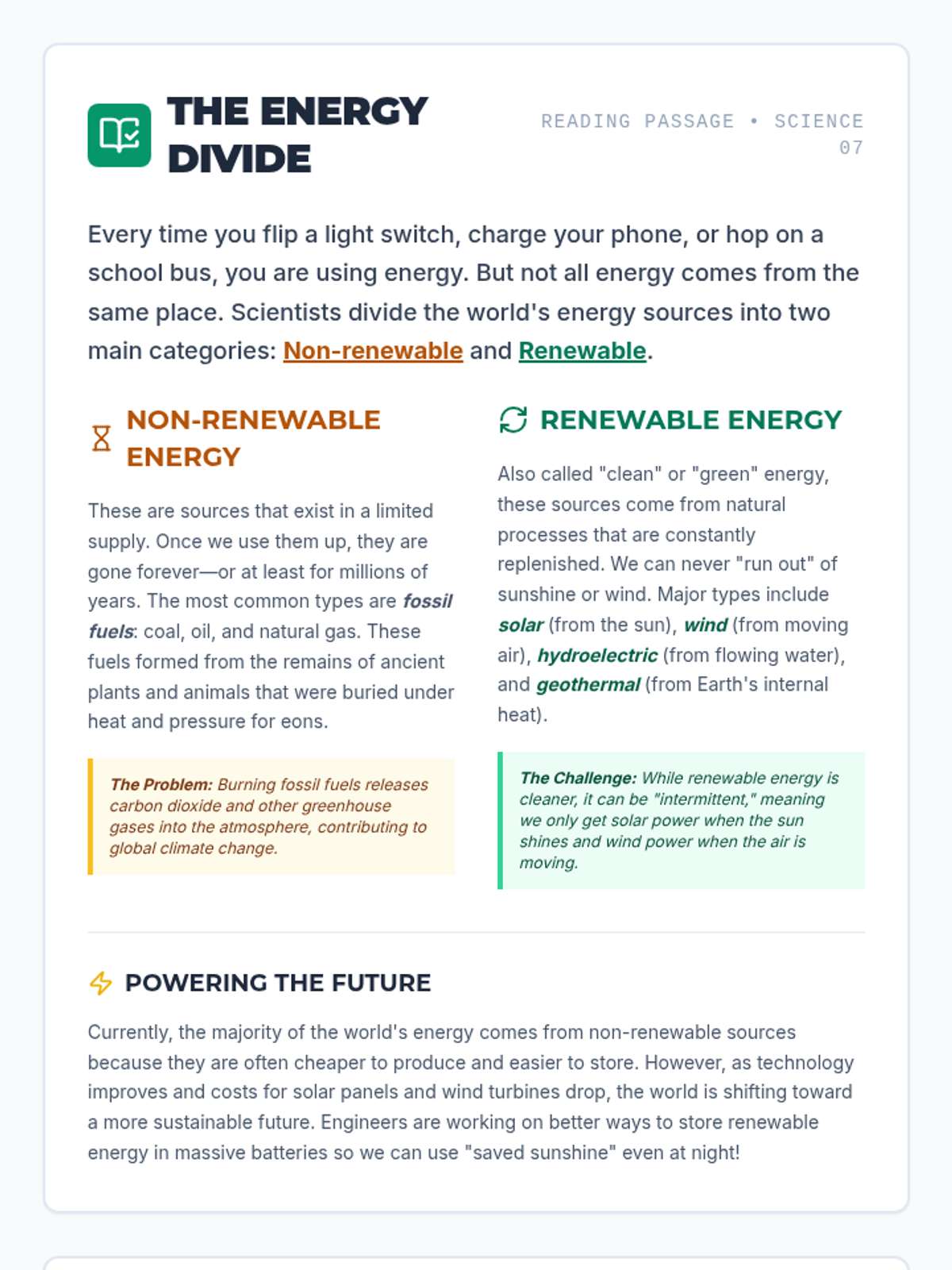
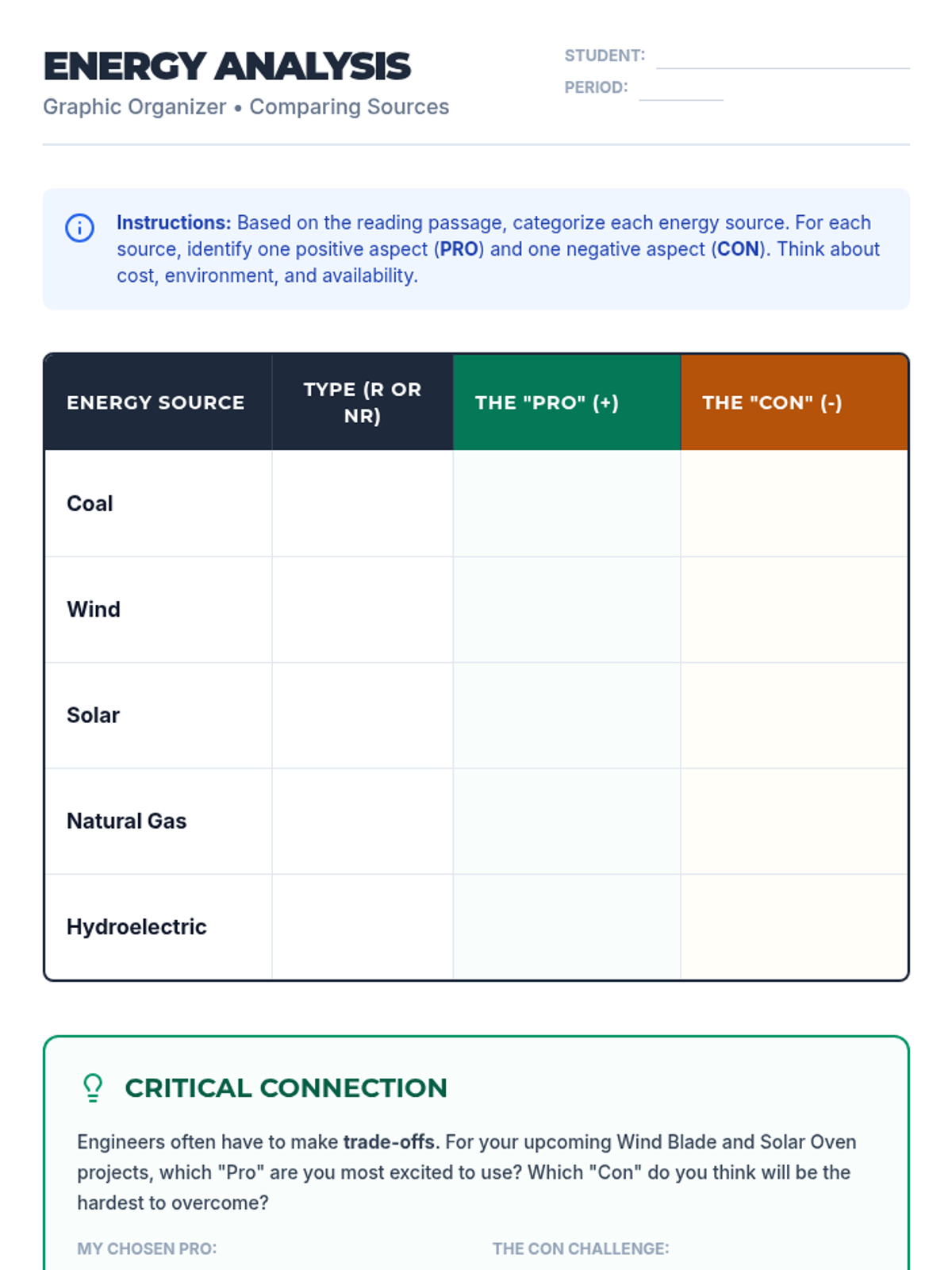
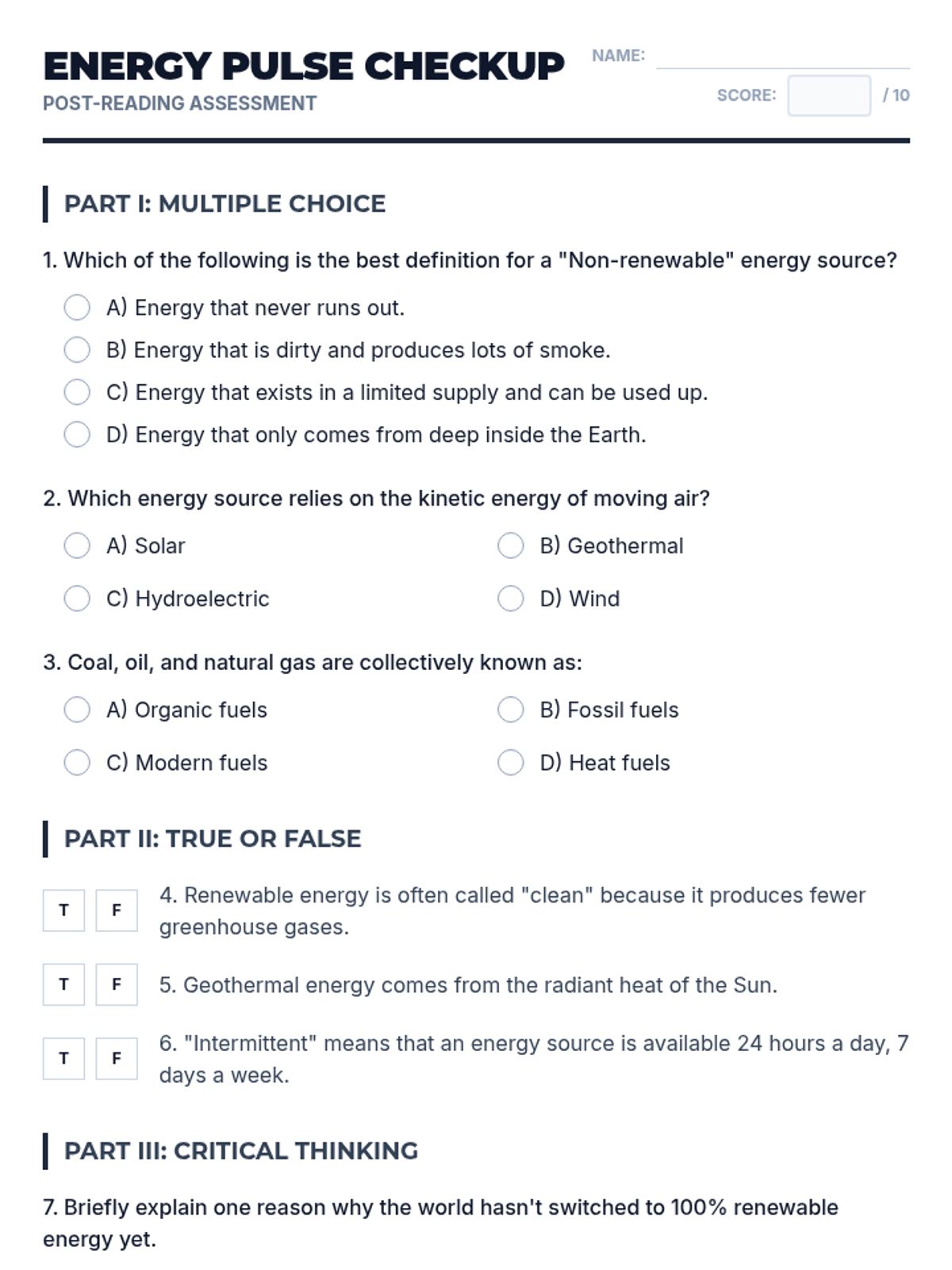
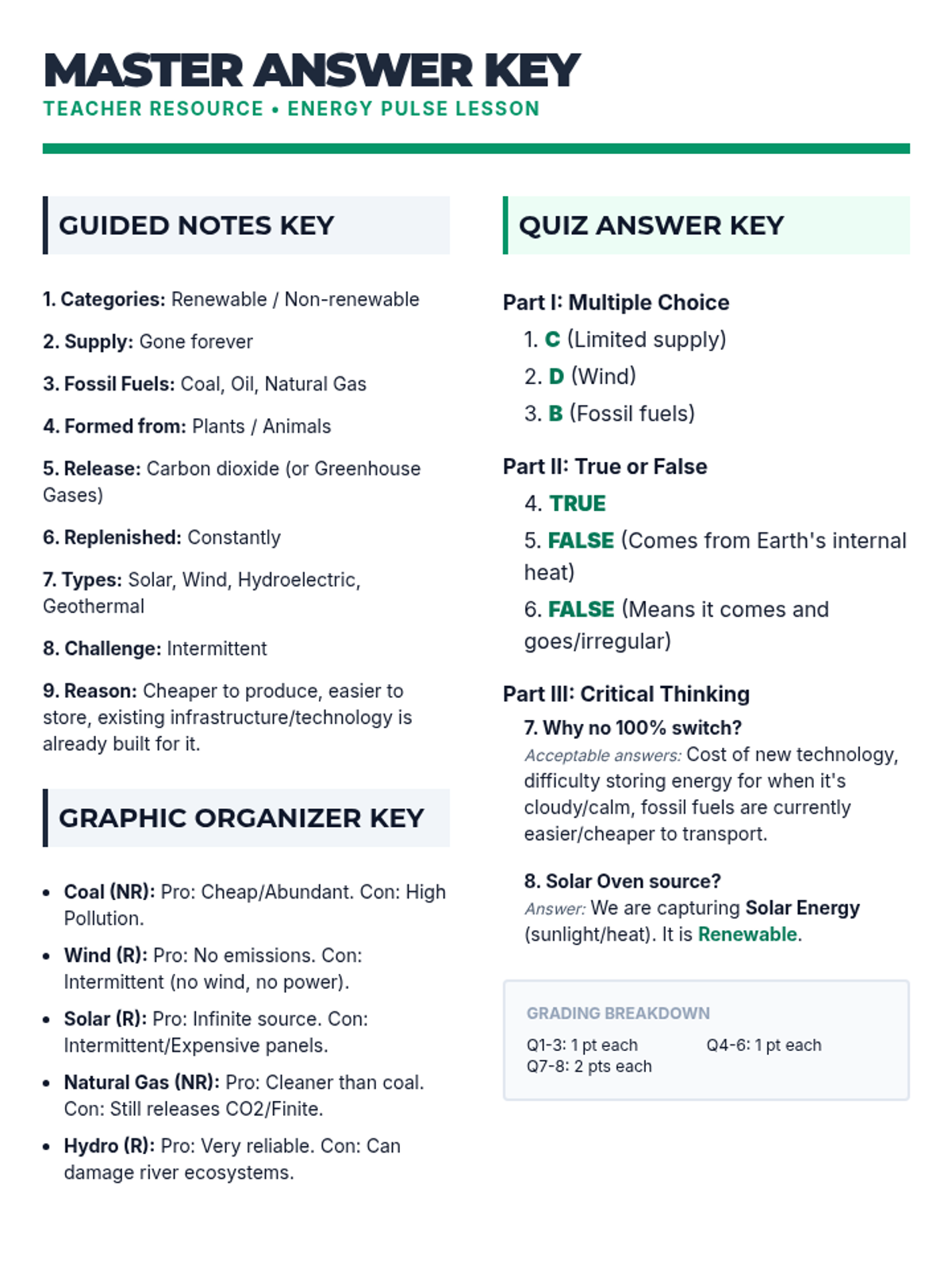
A comprehensive 45-minute introductory lesson on renewable and non-renewable energy sources, designed for a substitute teacher. This lesson prepares middle school students for hands-on engineering projects like wind blades and solar ovens.