Atomic structure, quantum models, and periodic trends establish the fundamental nature of matter. Stoichiometry, gas properties, and equilibrium constants facilitate quantitative analysis of chemical reactions and molecular interactions.
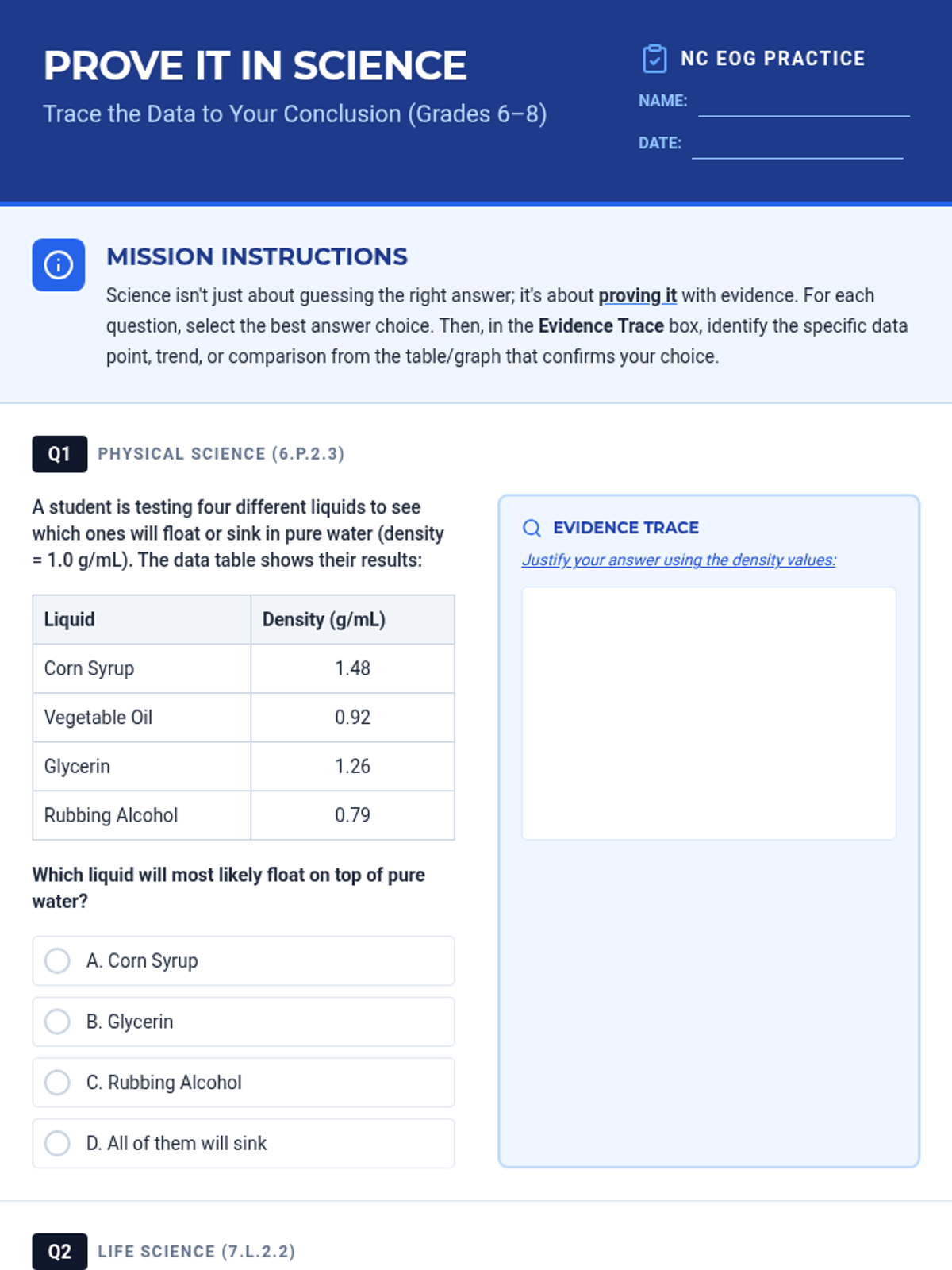
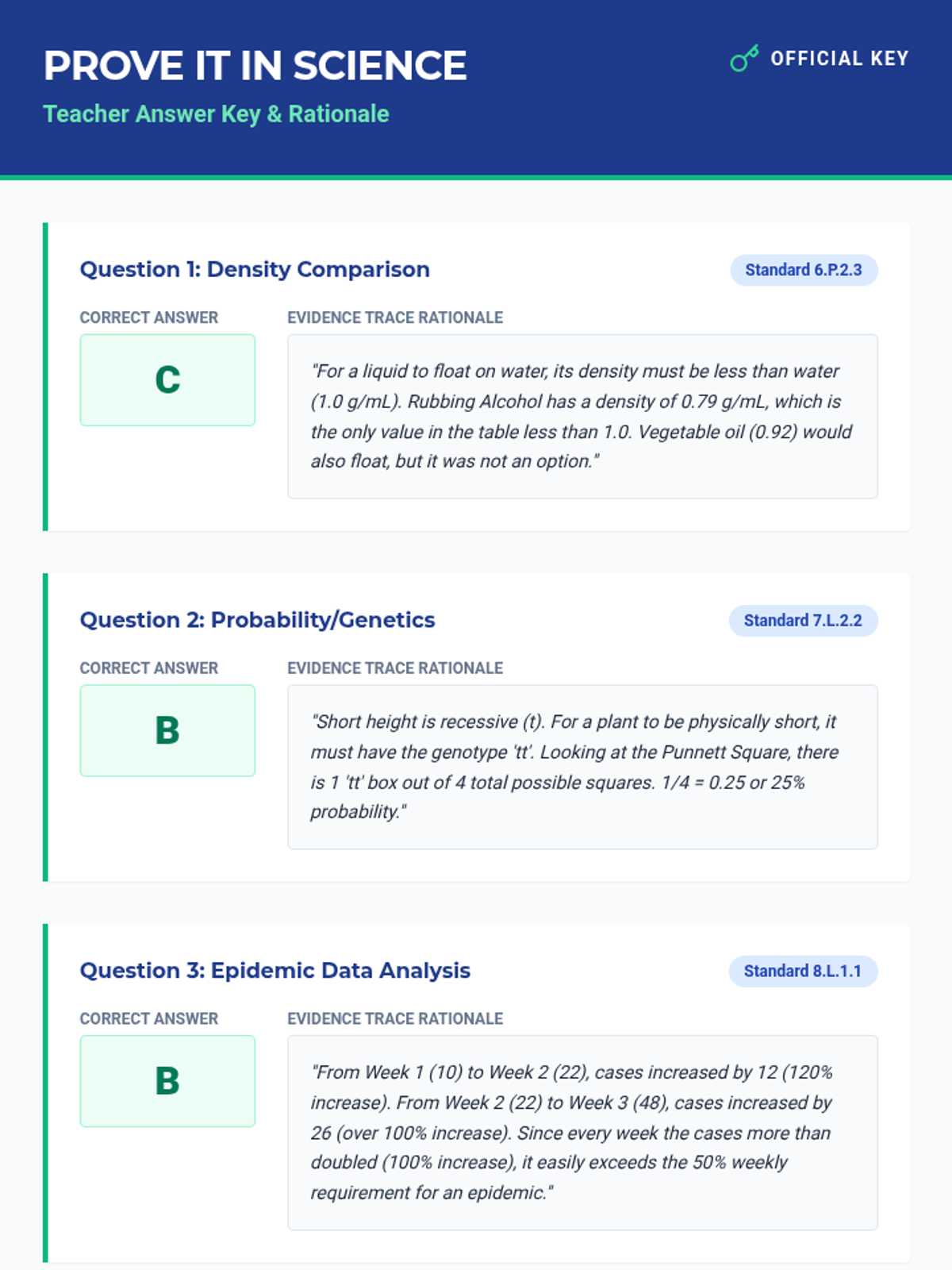
A guided practice set for middle school students focusing on the NC Science EOG requirement of using specific data evidence to support scientific conclusions. Students analyze 6 EOG-style scenarios across 6th, 7th, and 8th-grade curriculum standards.
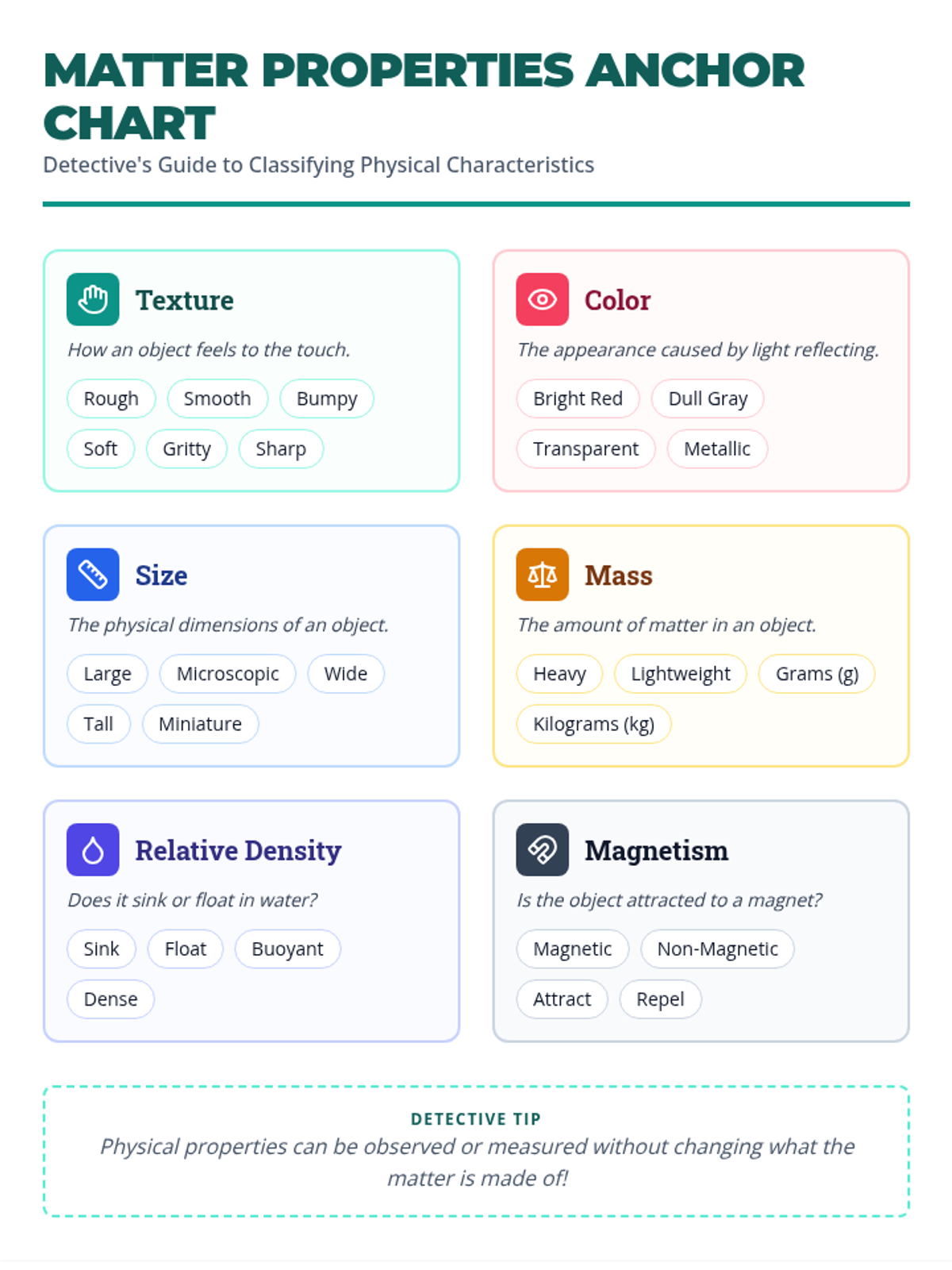
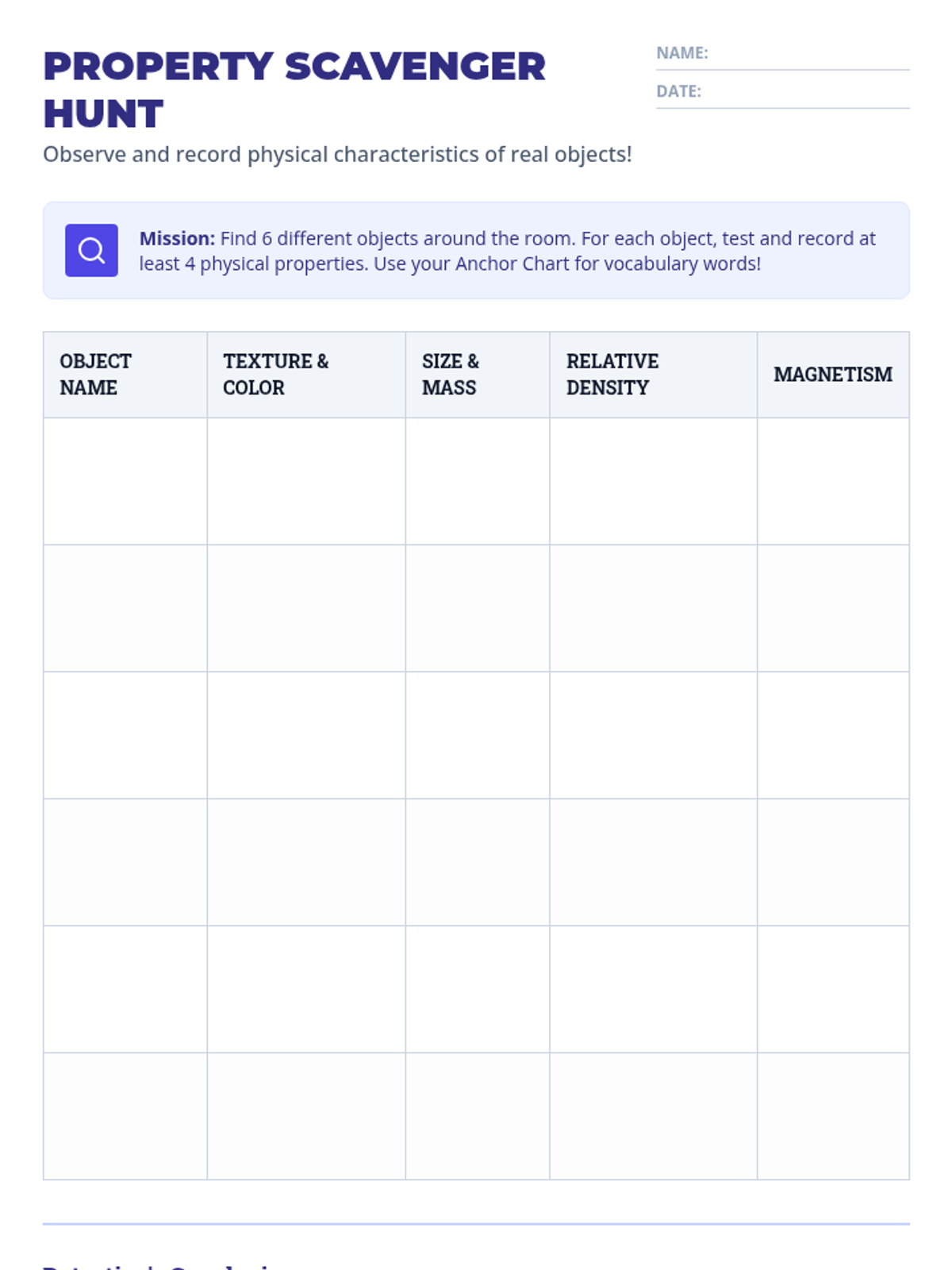
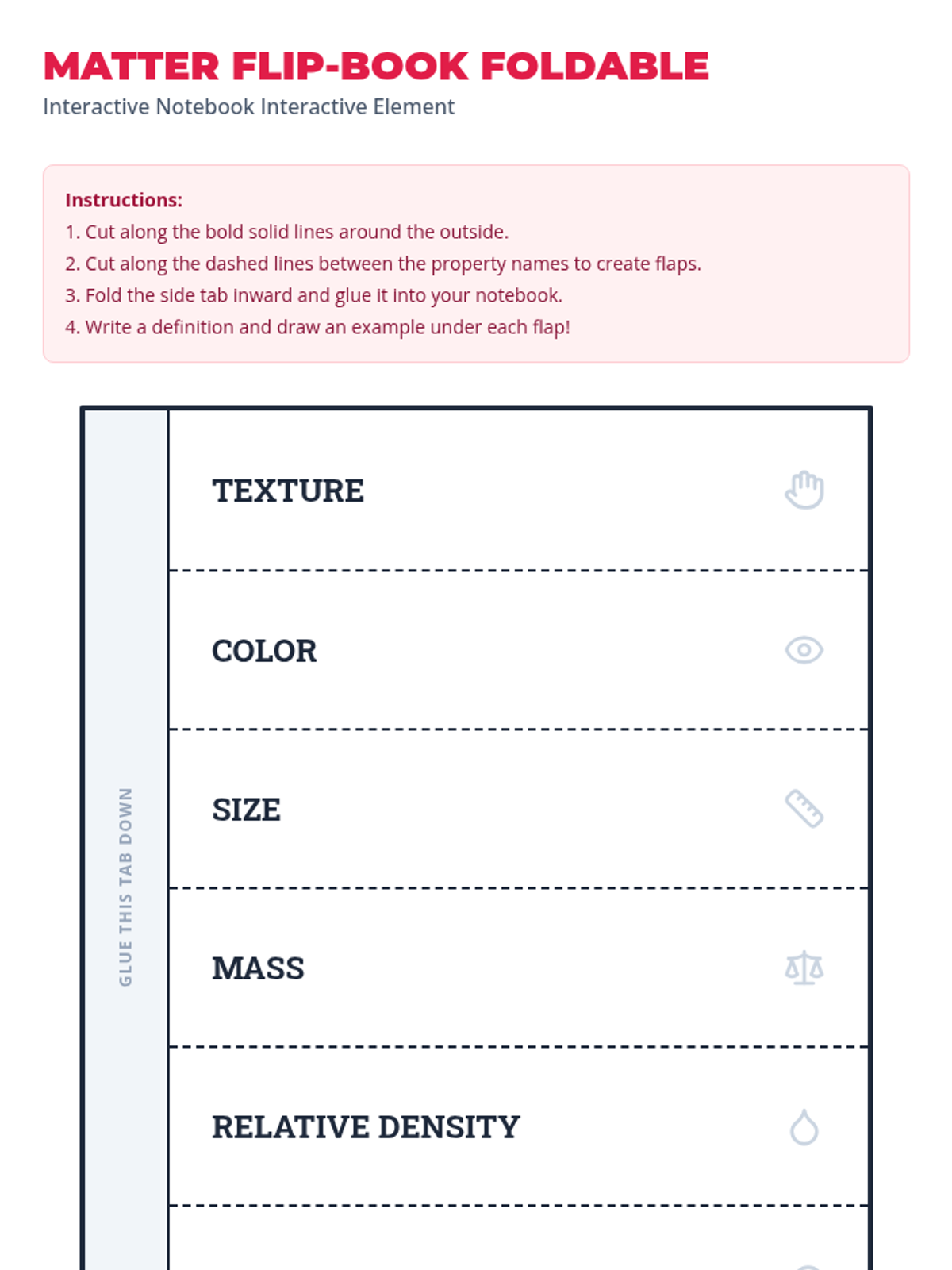
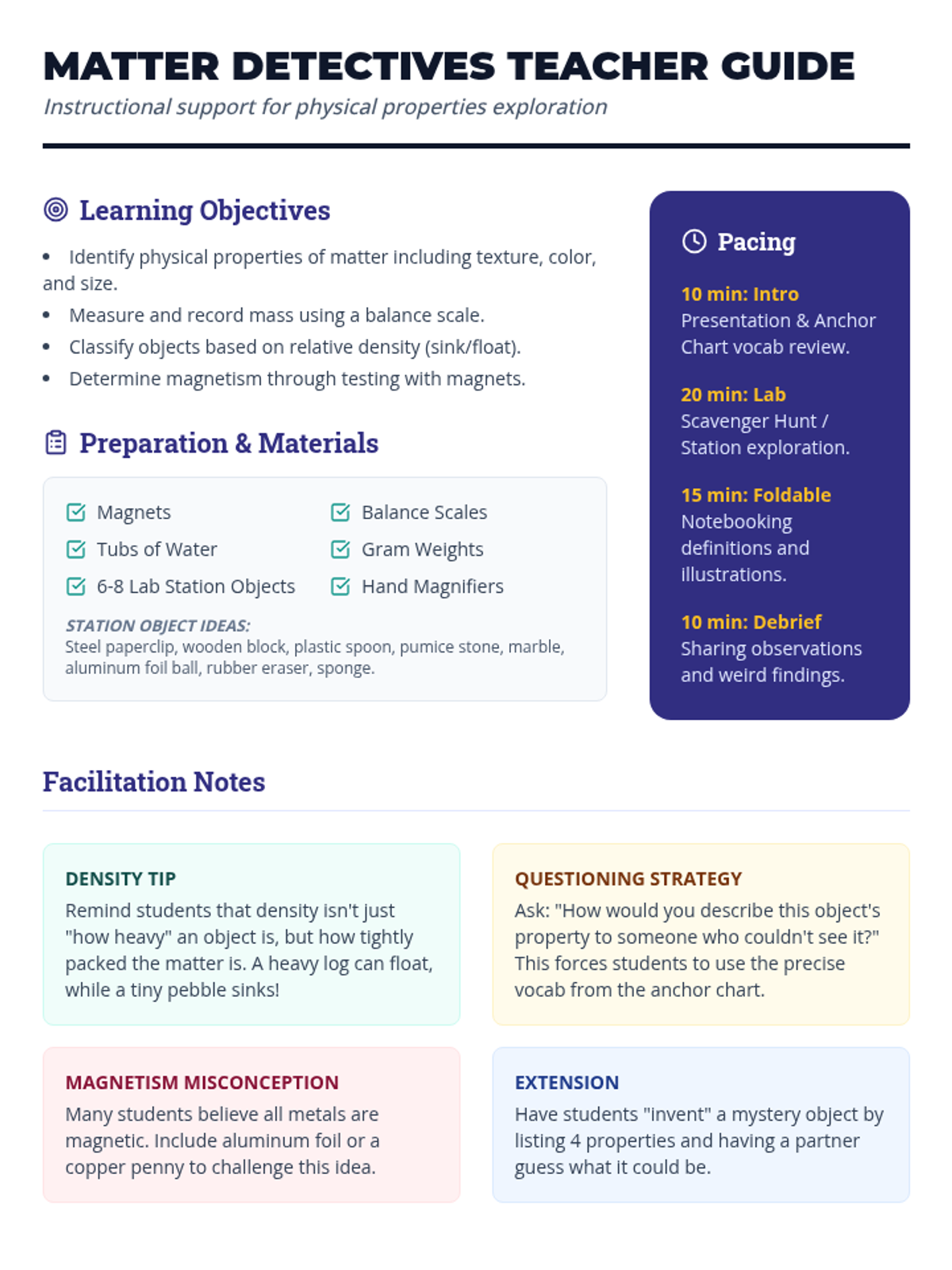
An engaging, hands-on lesson where students explore the physical properties of matter through a structured anchor chart, an interactive notebook foldable, and a real-world scavenger hunt.
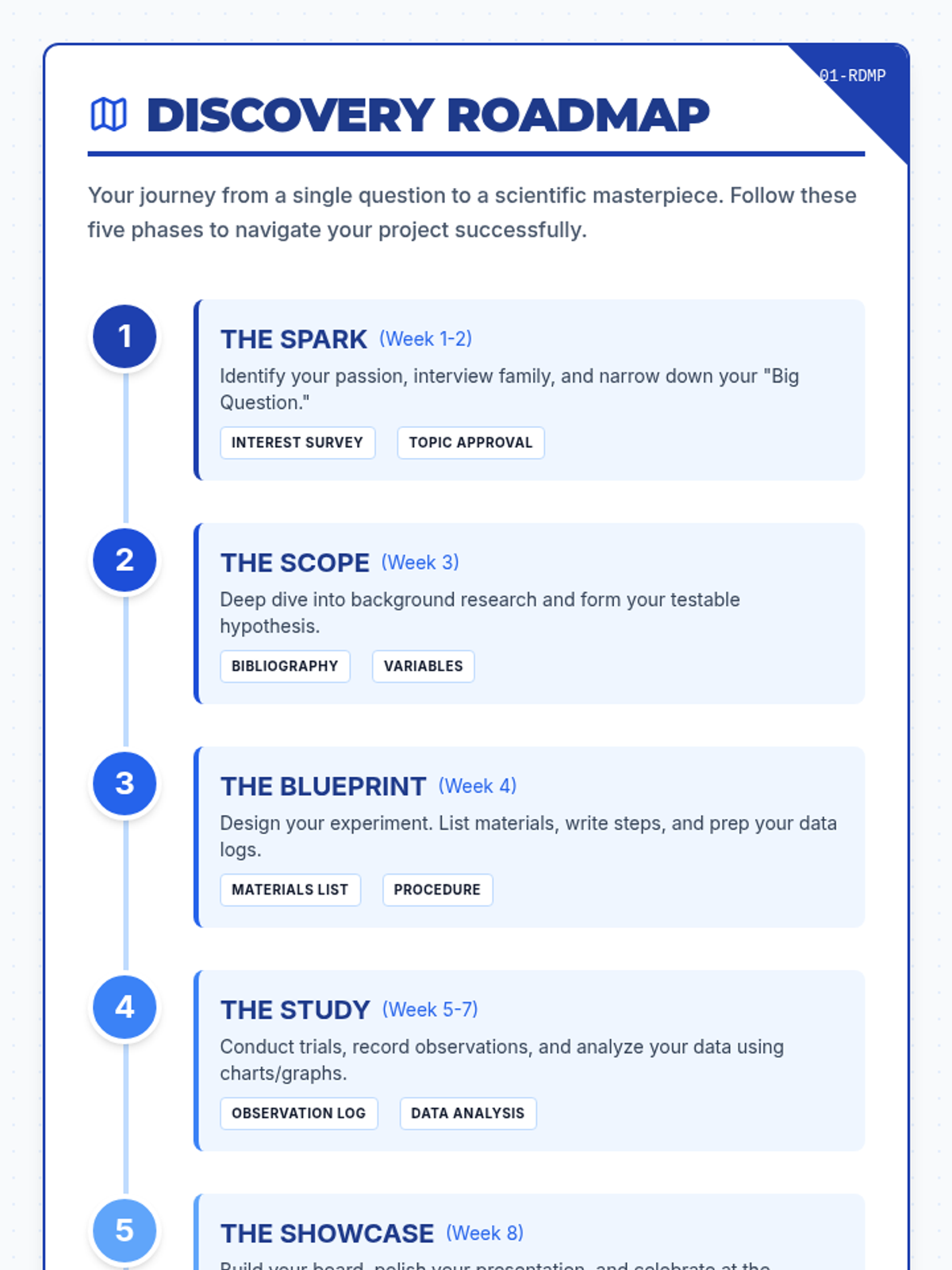
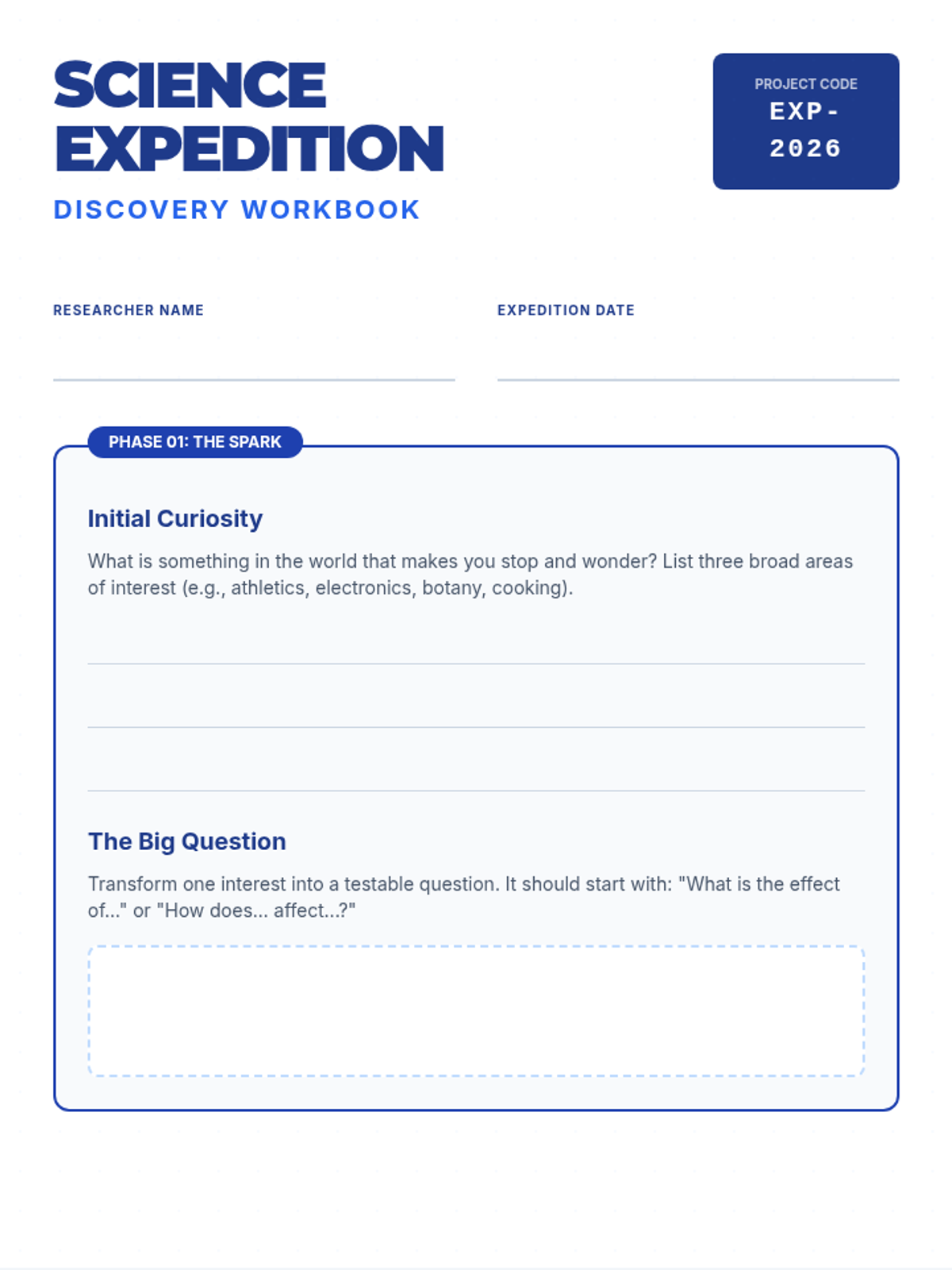
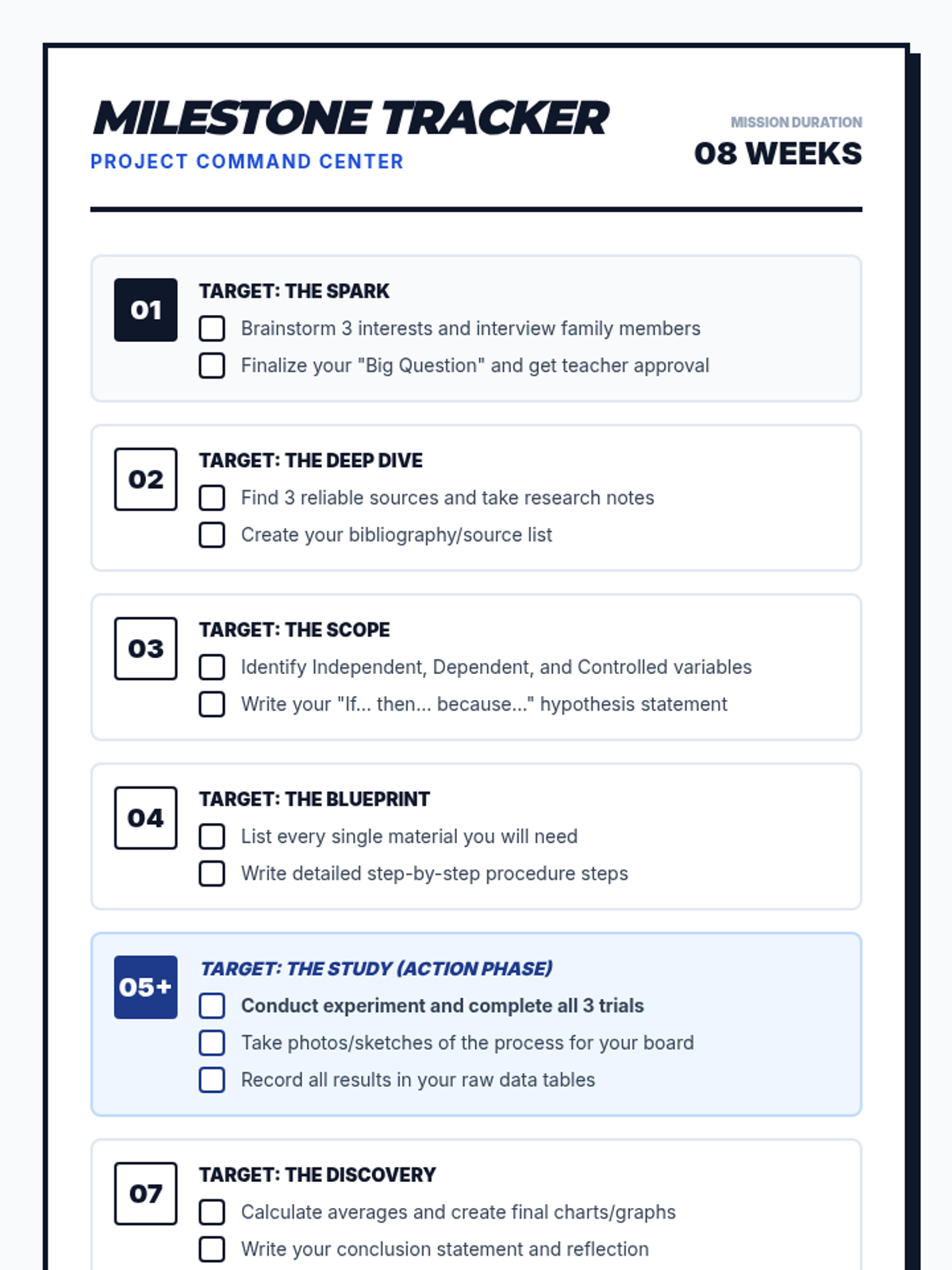
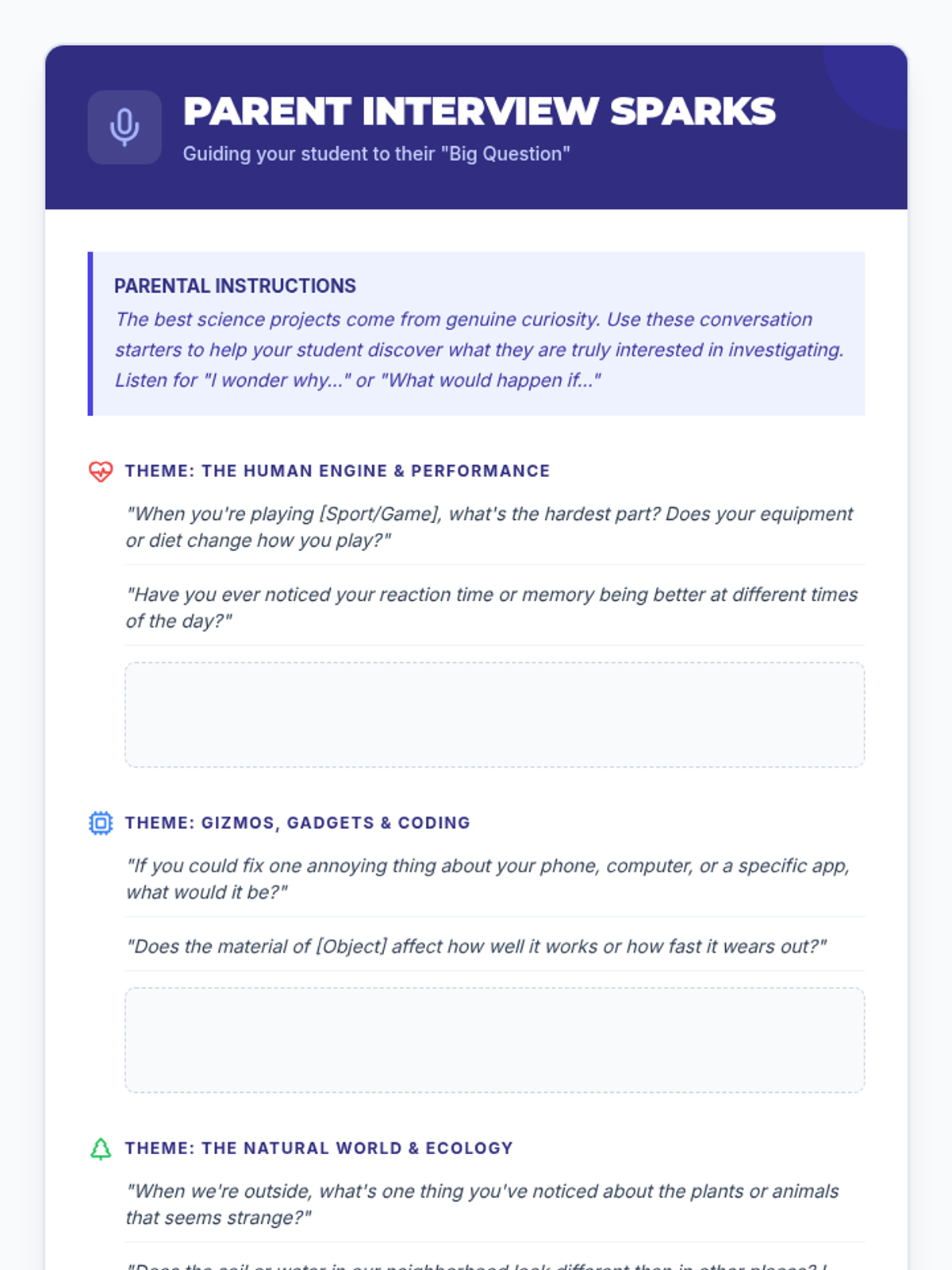
A comprehensive 7-week guide for middle school students to conduct a deep-dive study into a scientific topic of their choice. This project shifts focus from experimentation to expertise, guiding students from initial brainstorming to a final exhibition.
A hands-on exploration of ocean acidification where students simulate carbon dioxide absorption and observe the effects of acid on calcium carbonate structures like shells and chalk.
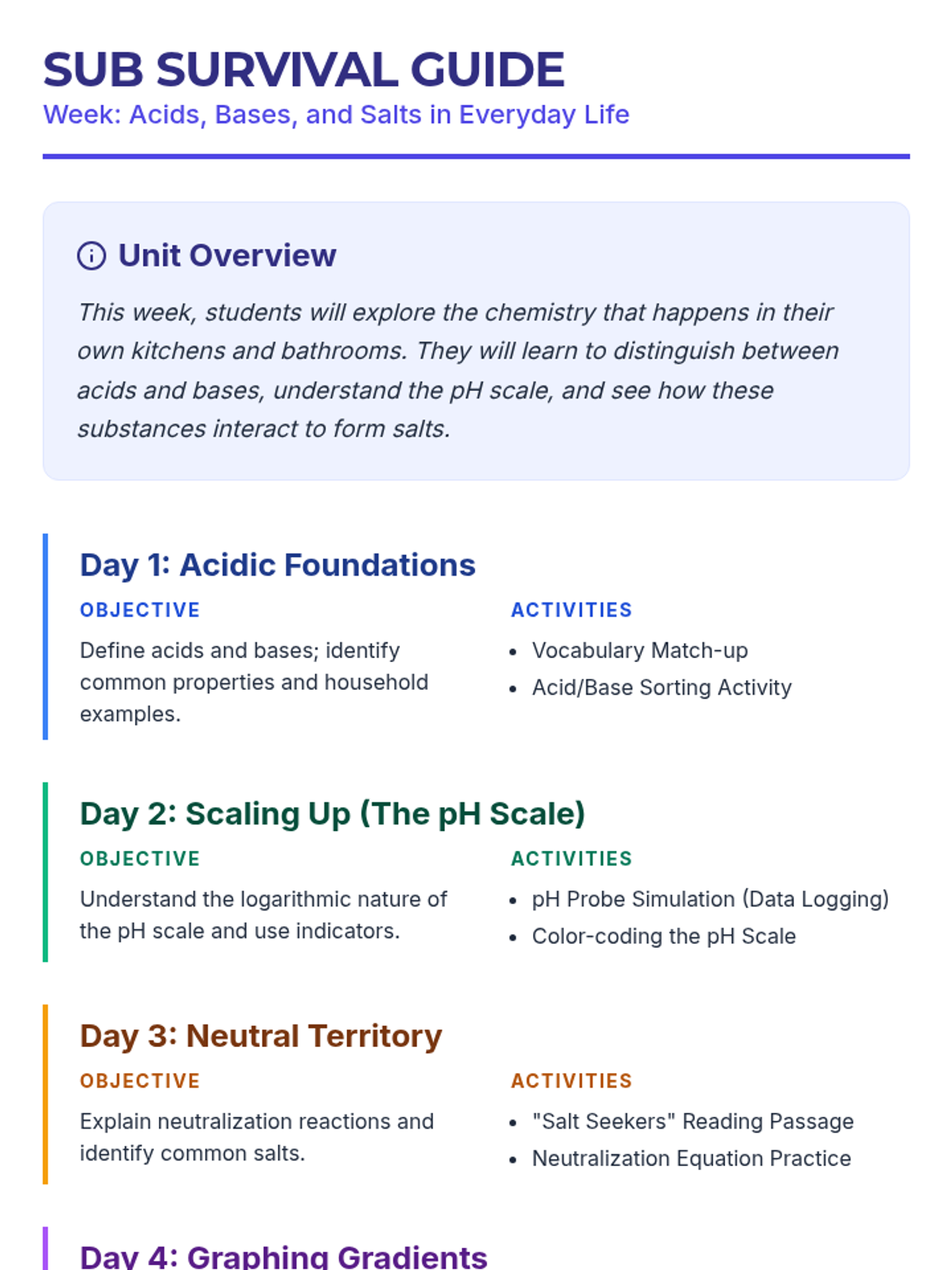
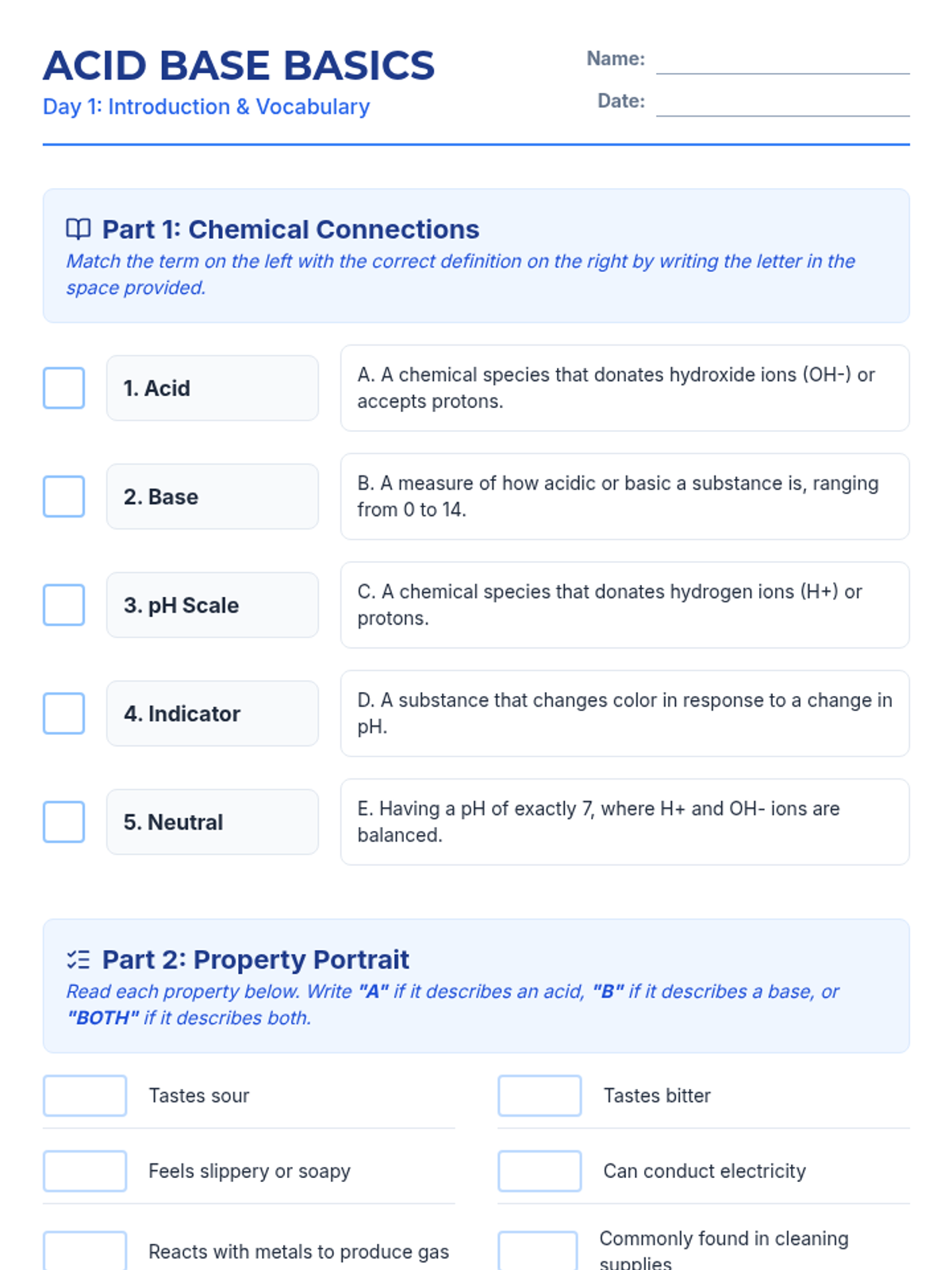
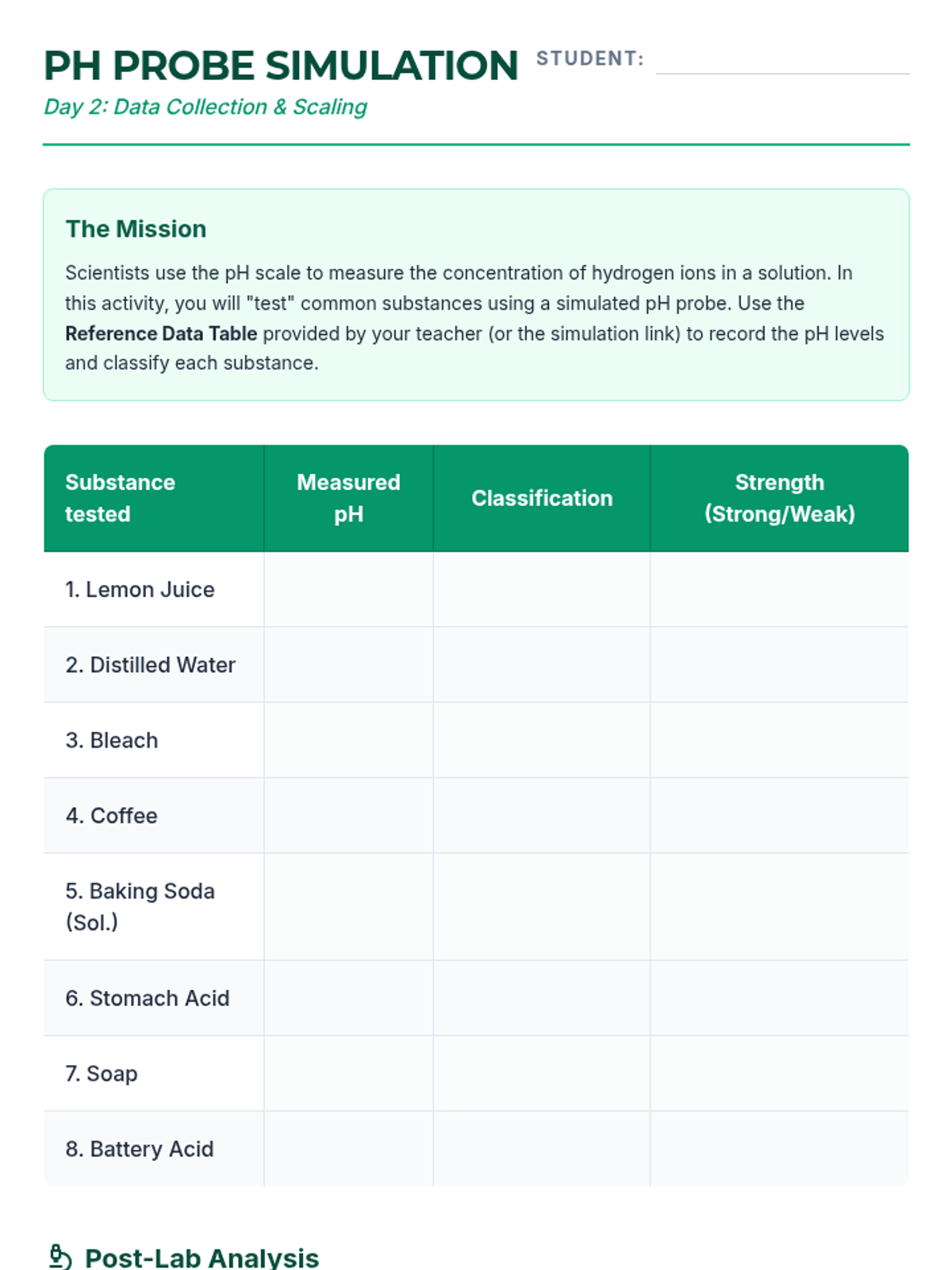
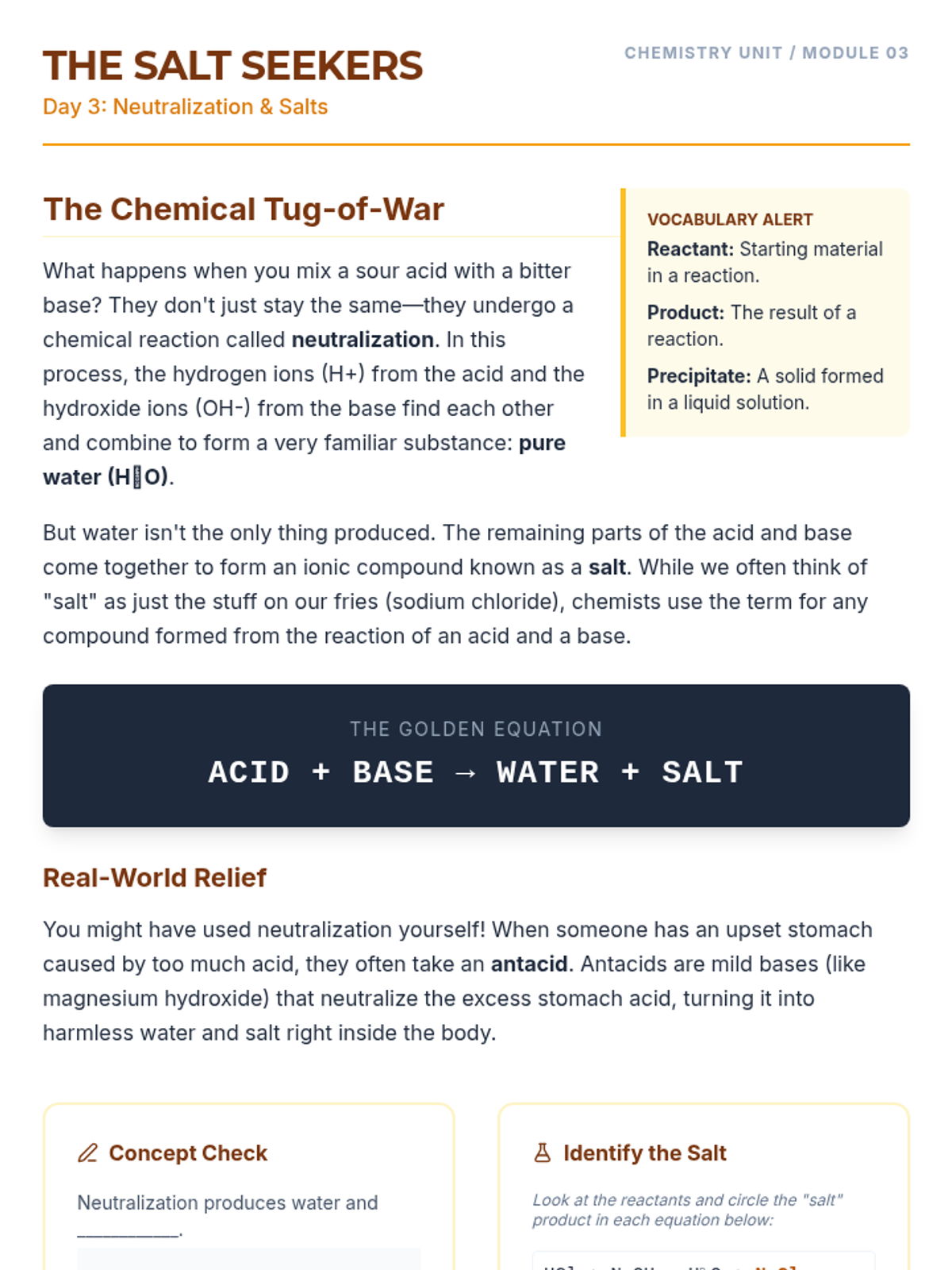
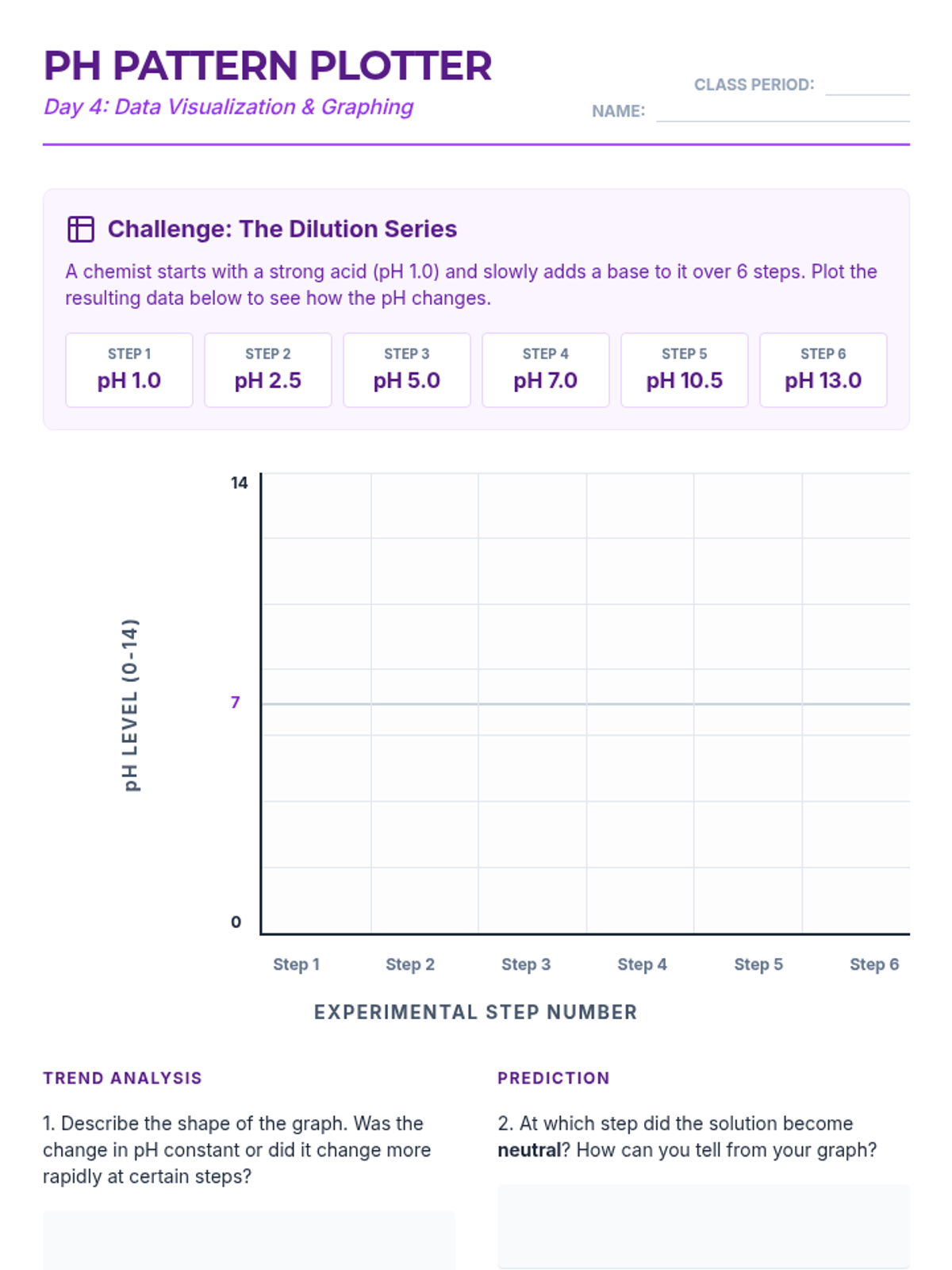
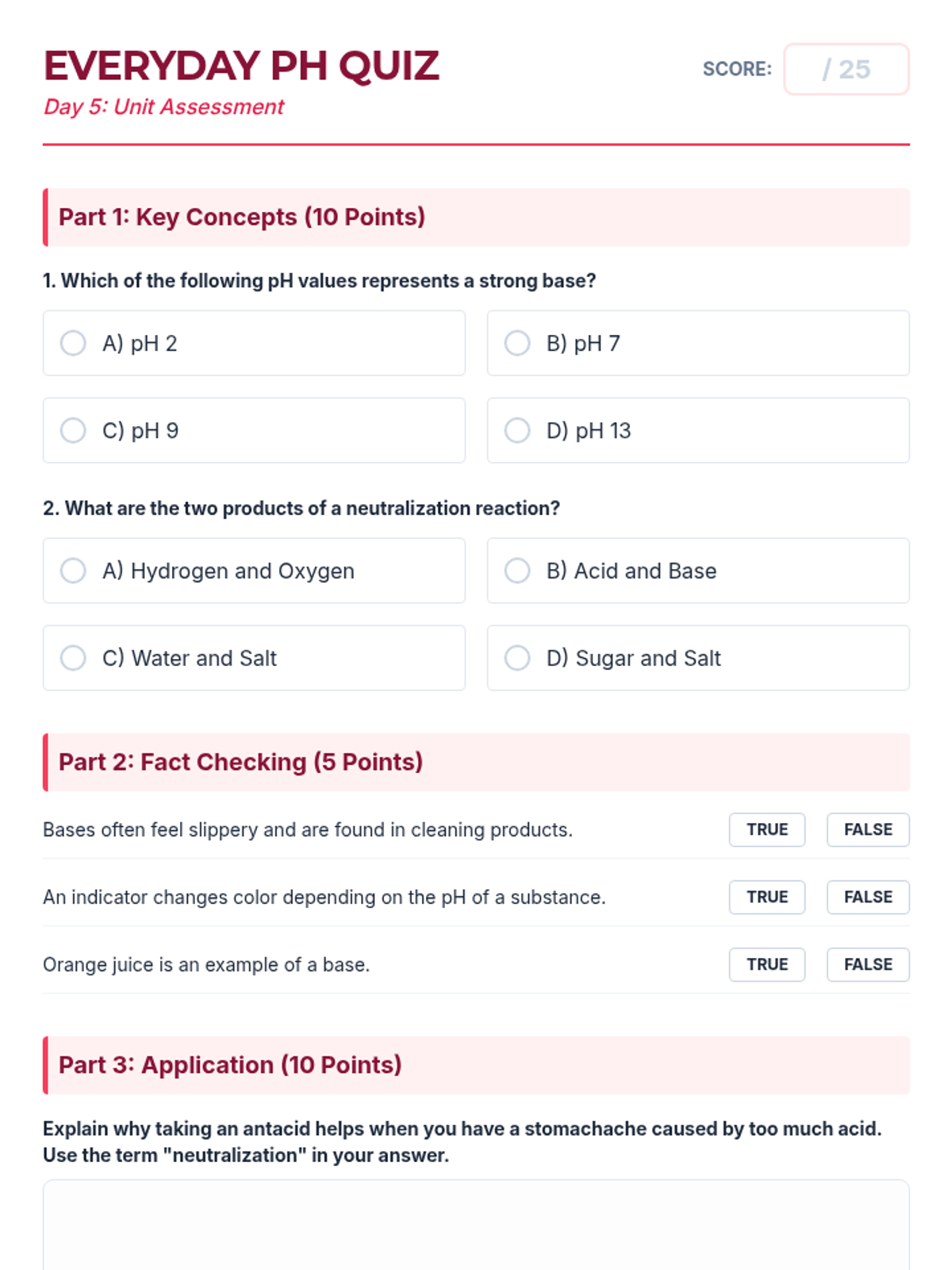
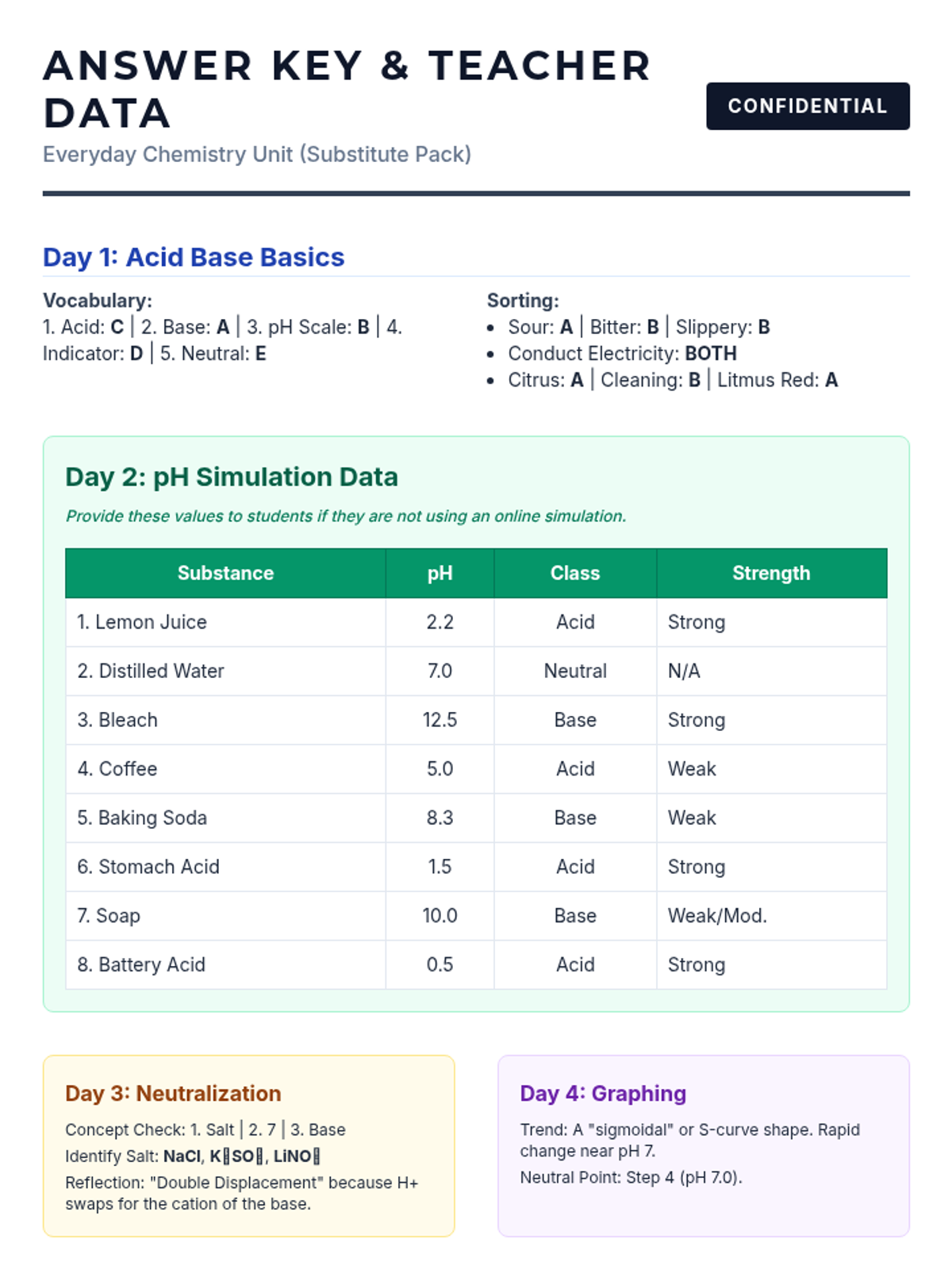
Students learn about the pH scale, use simulated data to identify the pH of common substances, and understand how indicators work.
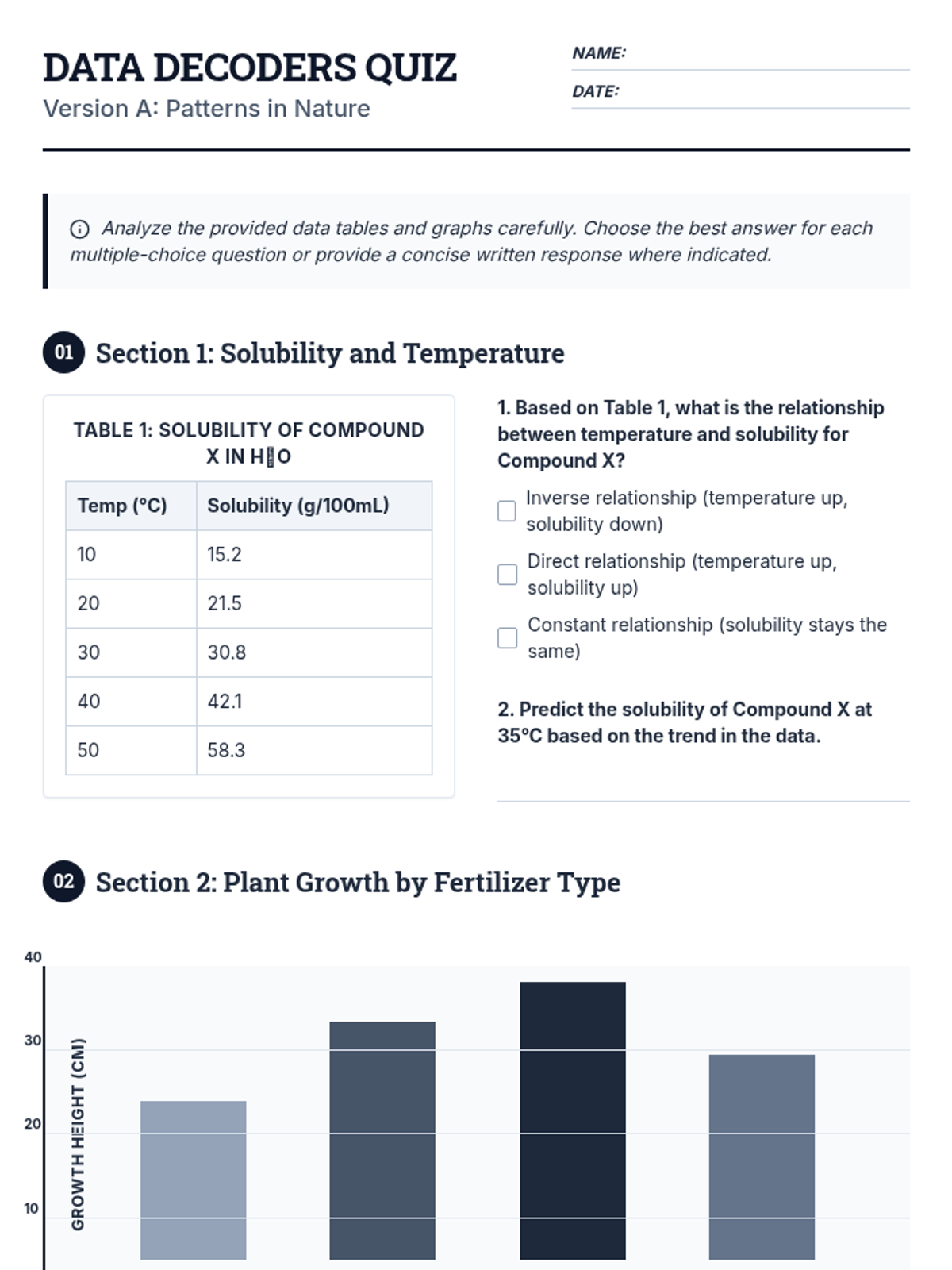
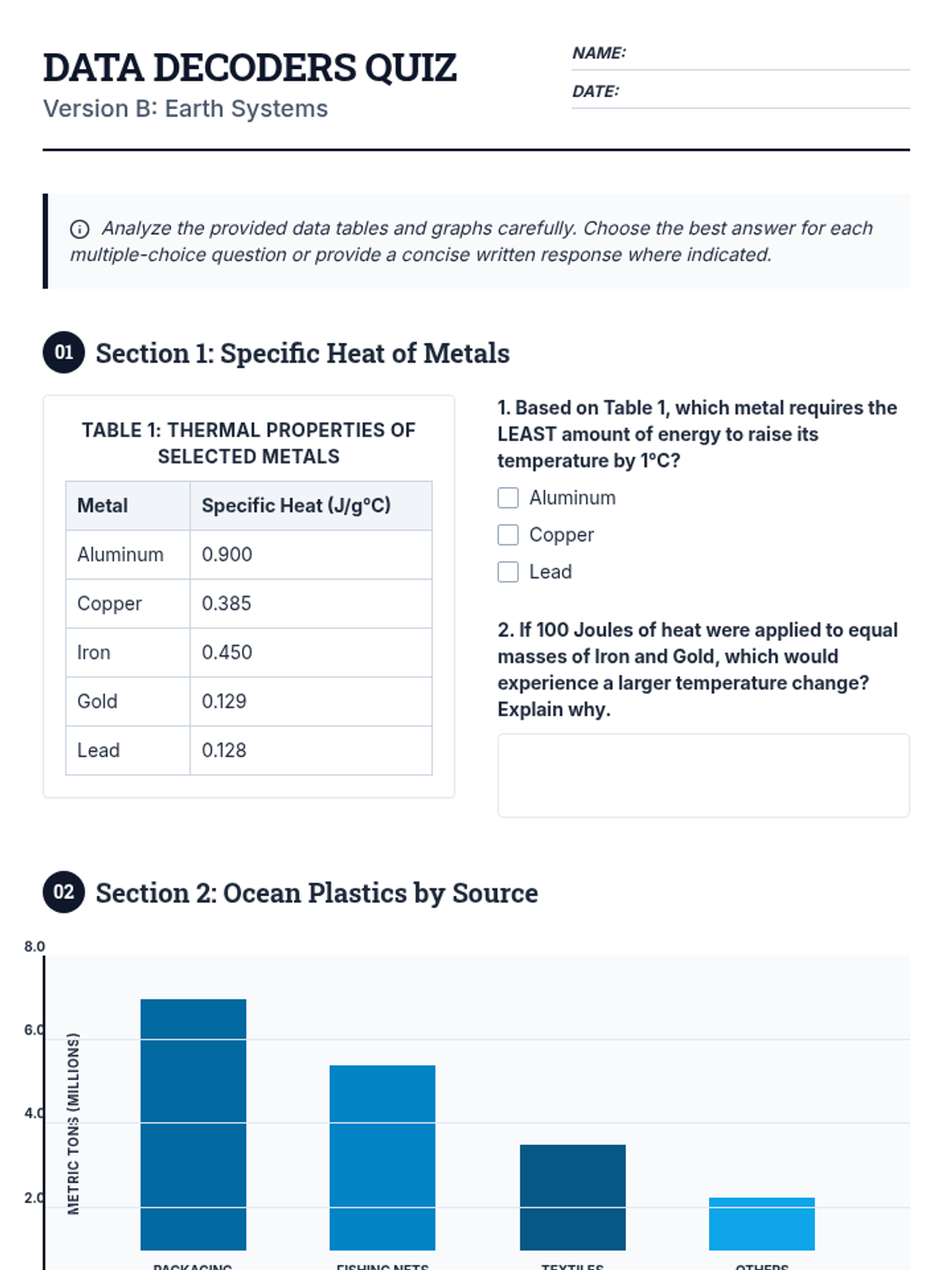
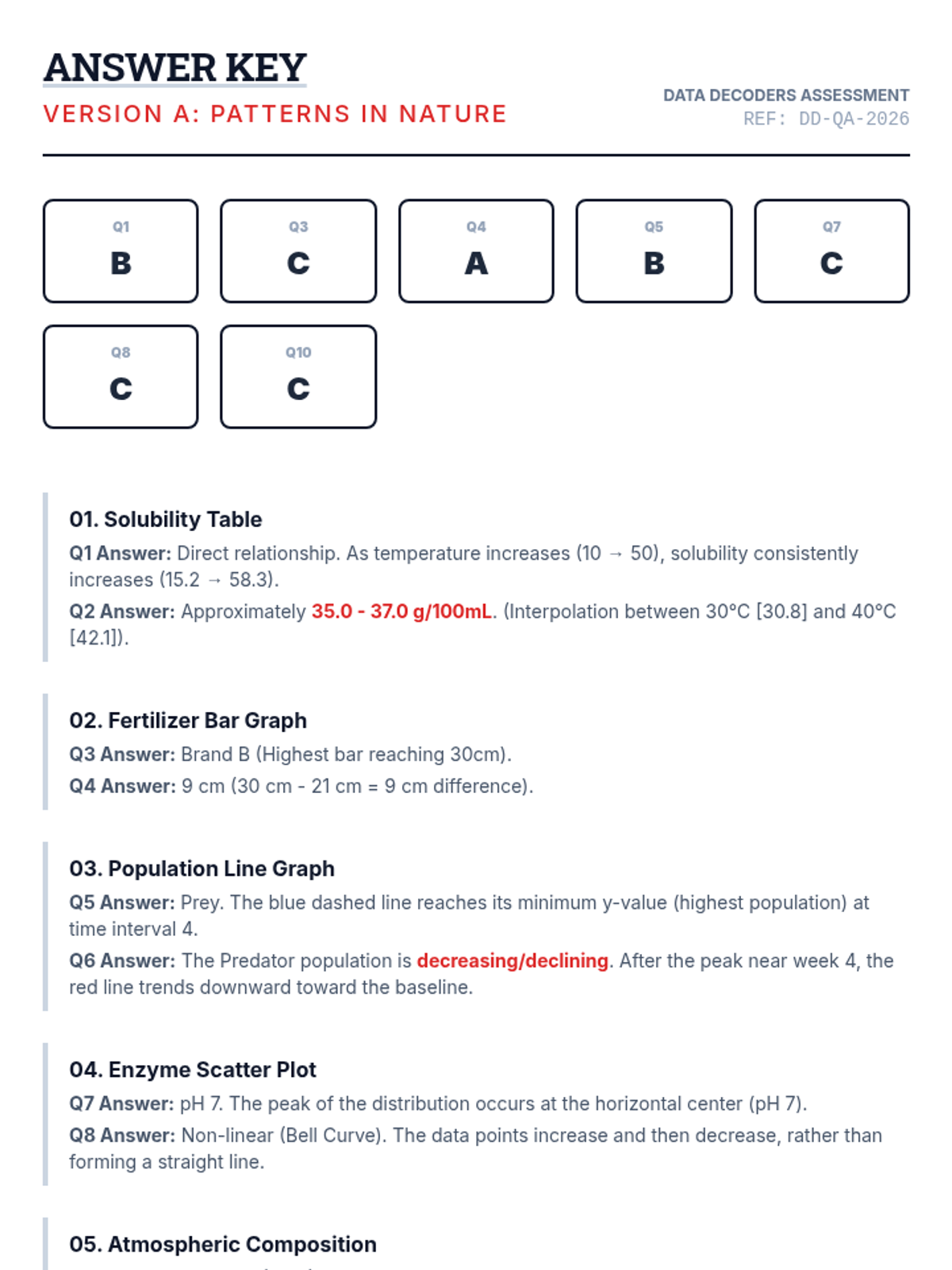
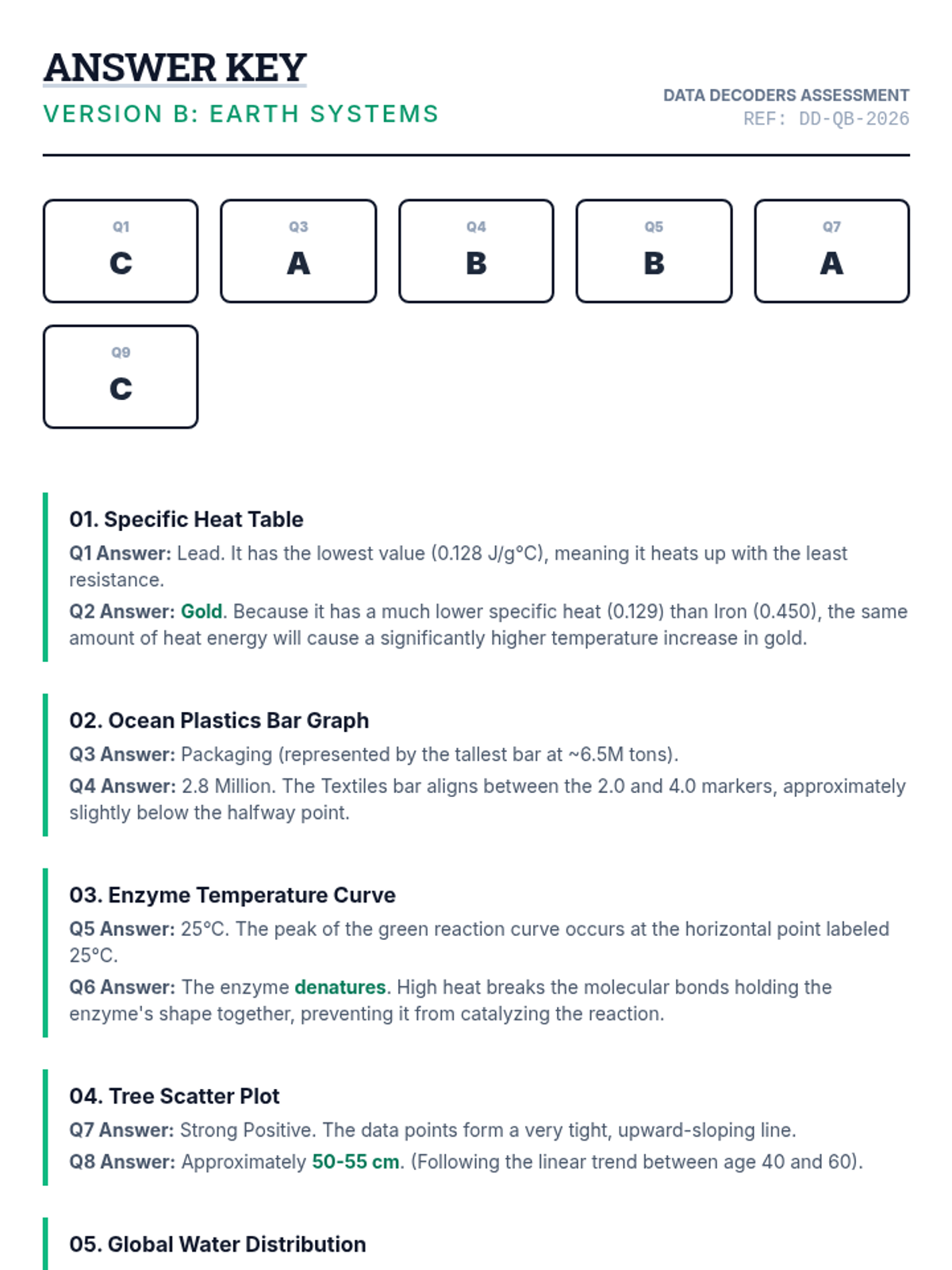
A high-stakes assessment focused on interpreting various scientific data representations, including tables, bar graphs, line graphs, and scatter plots. Students will analyze trends, identify variables, and draw conclusions from realistic scientific scenarios.
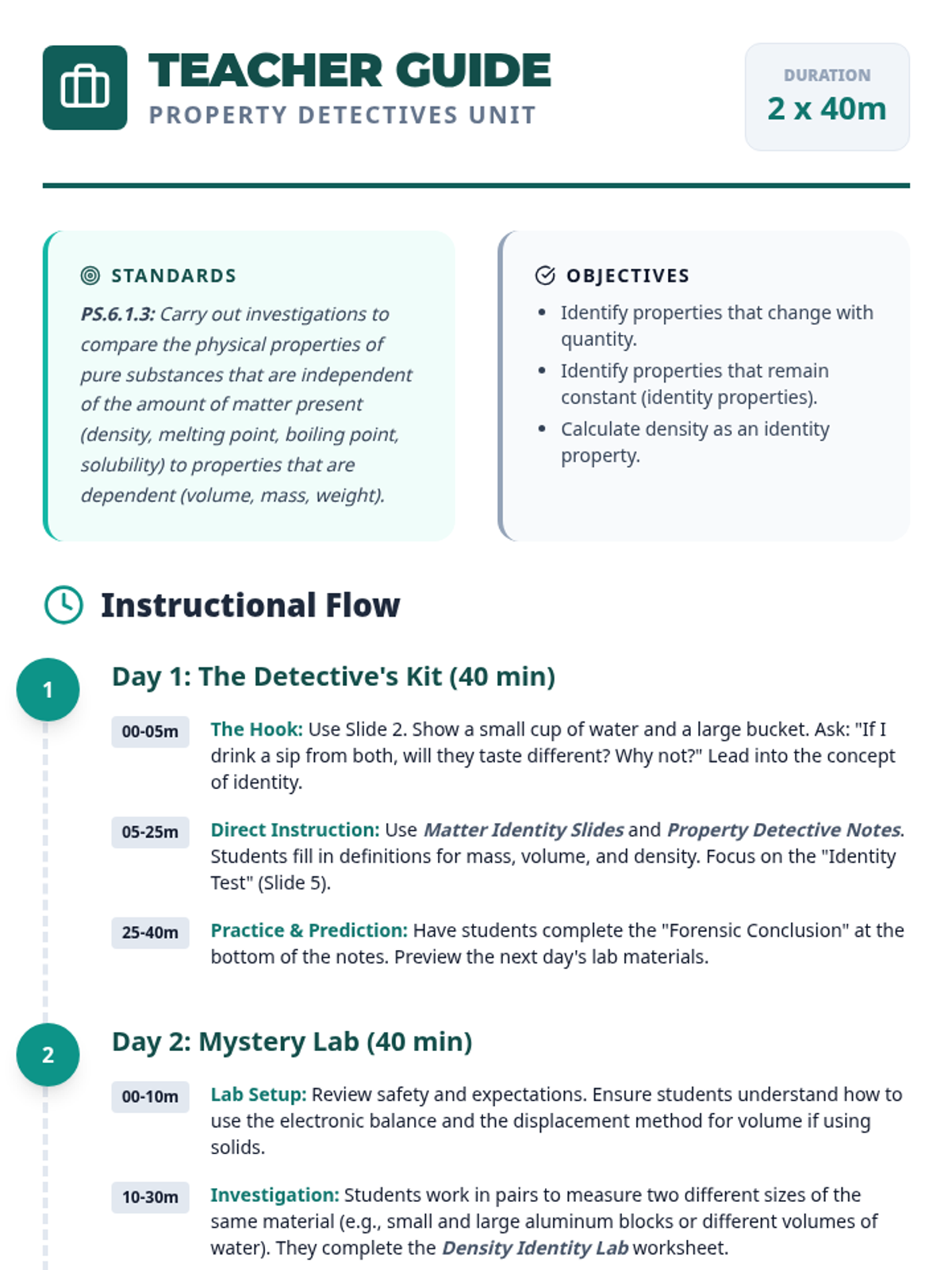
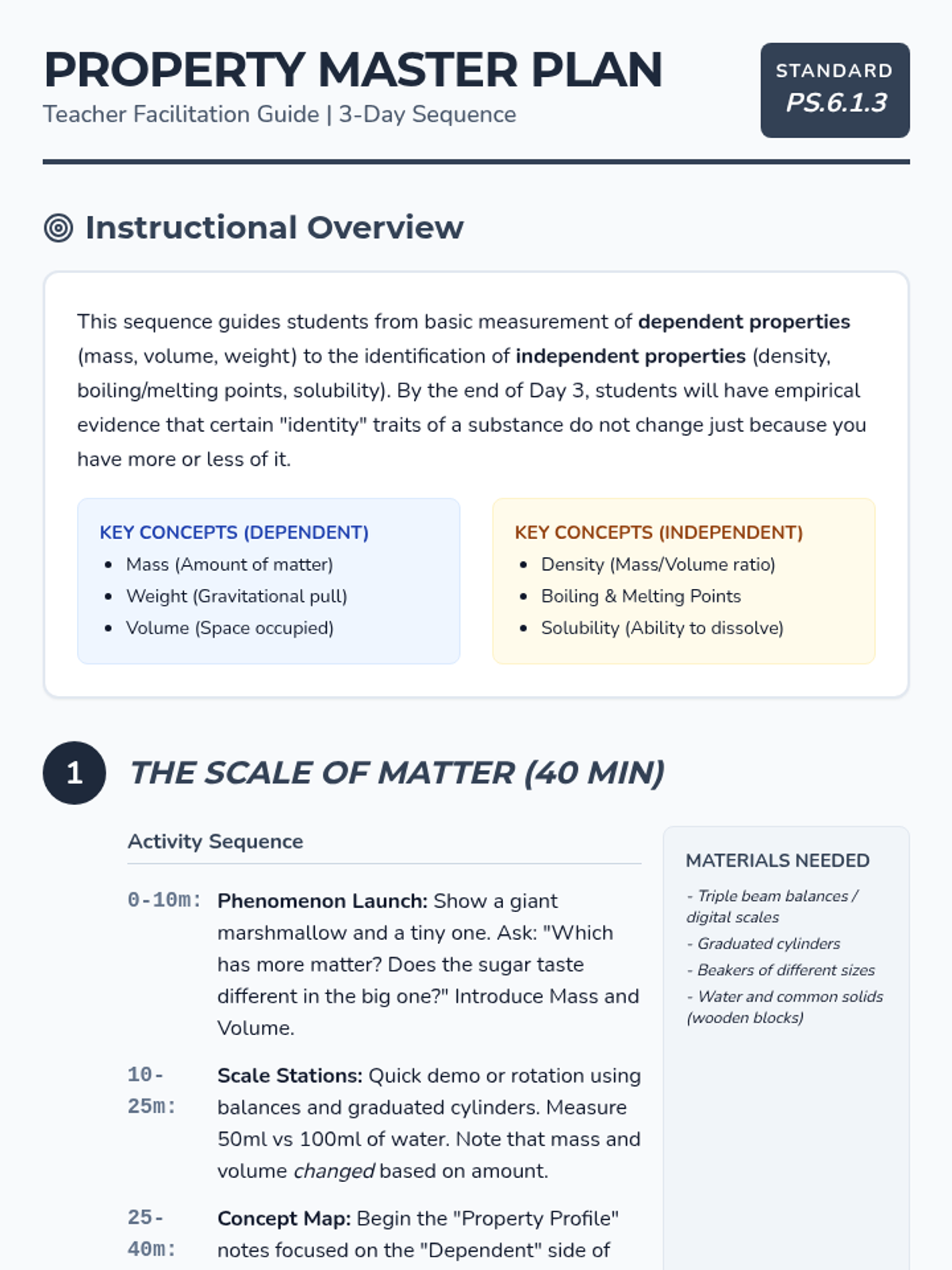
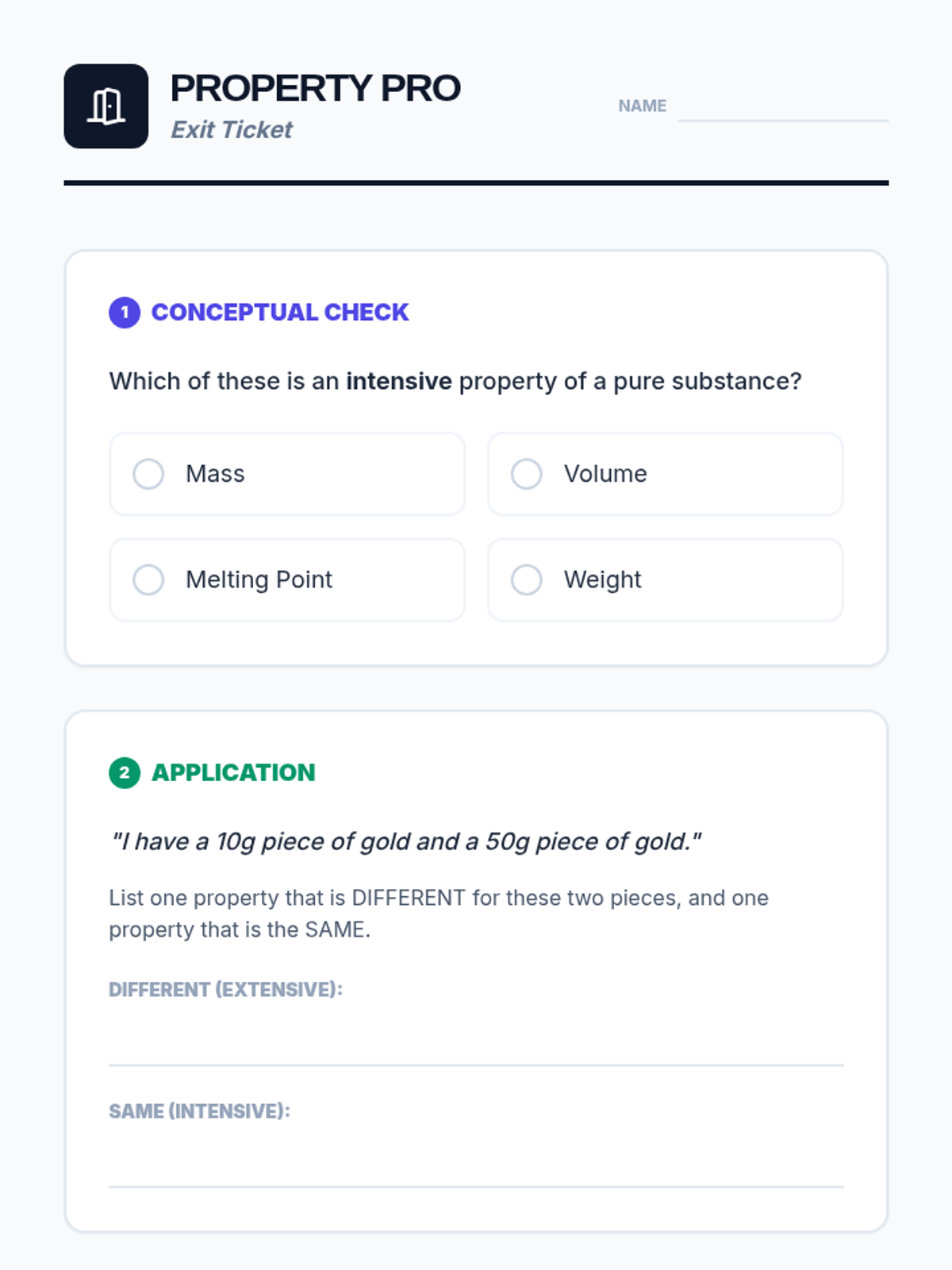
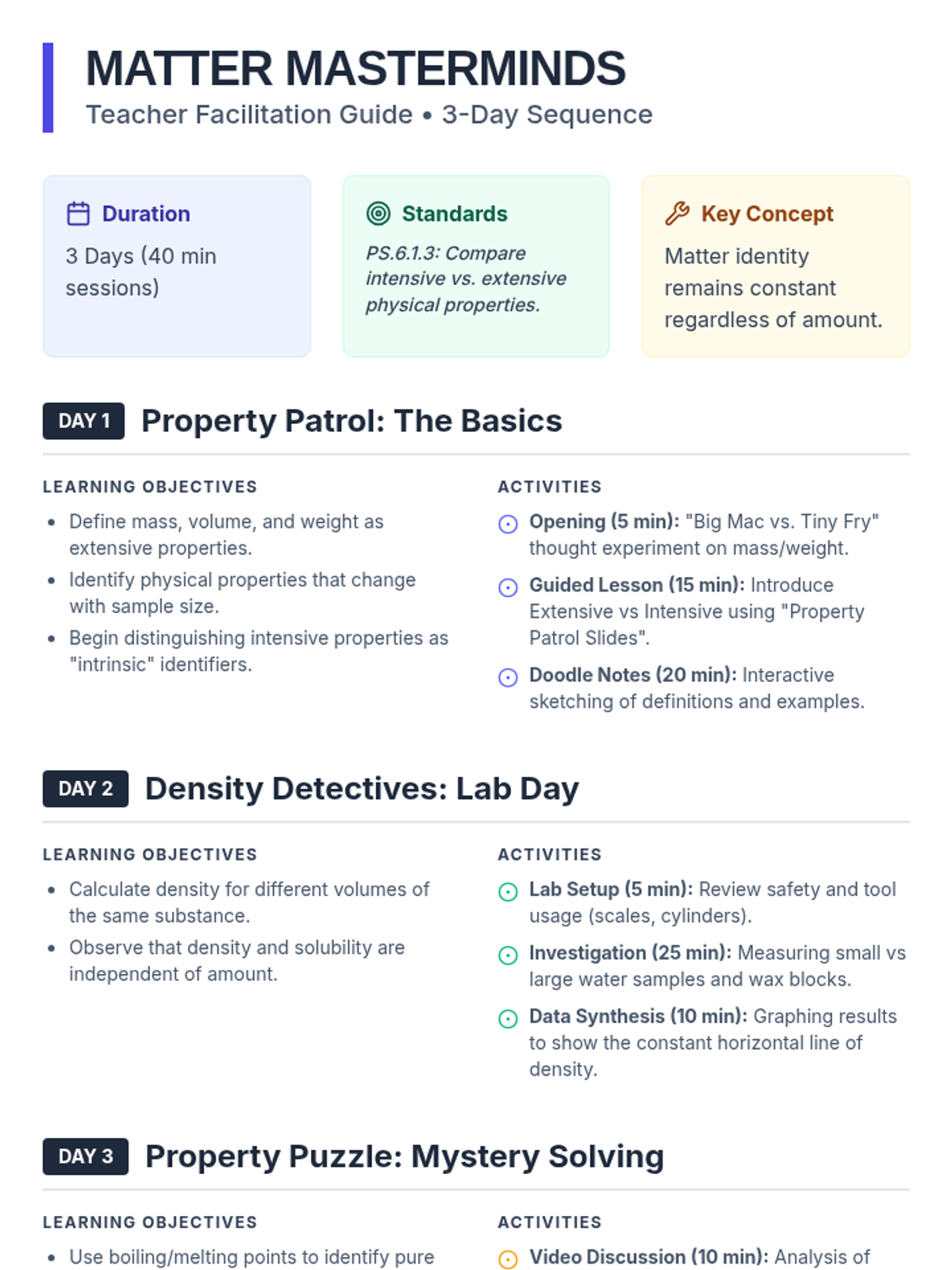
Students investigate how some properties change with quantity while others remain constant, using these 'identity' properties to identify pure substances.
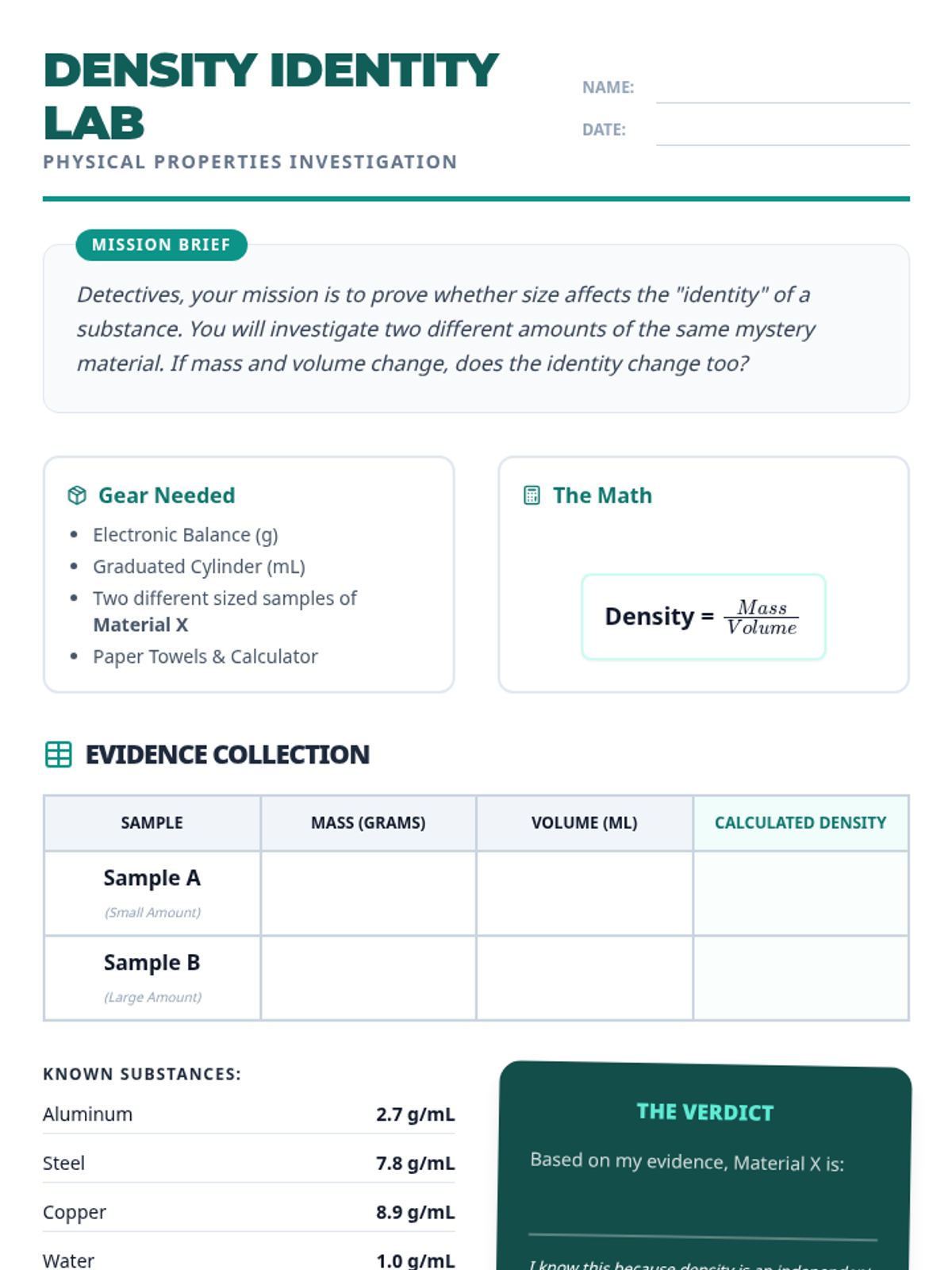
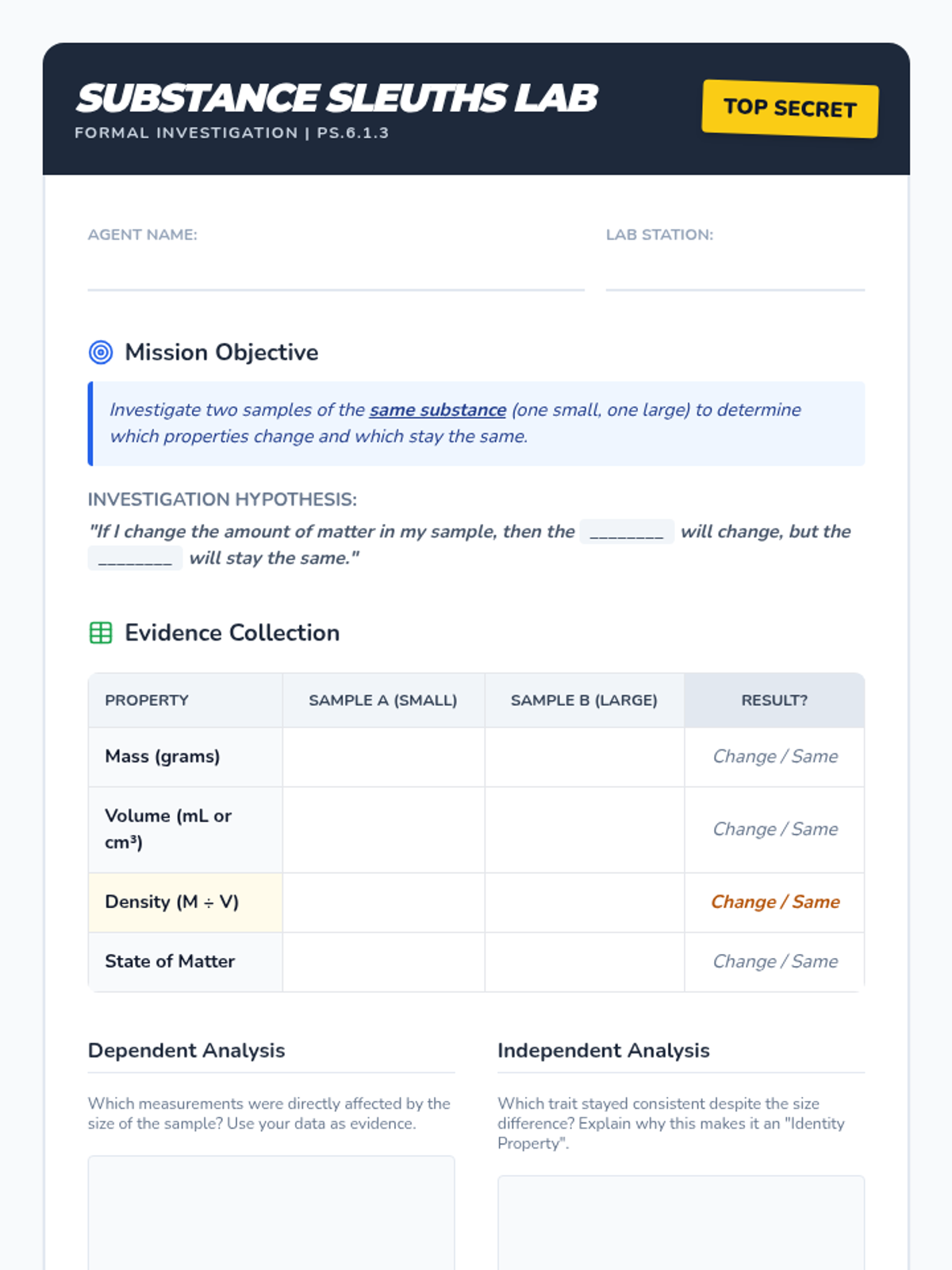
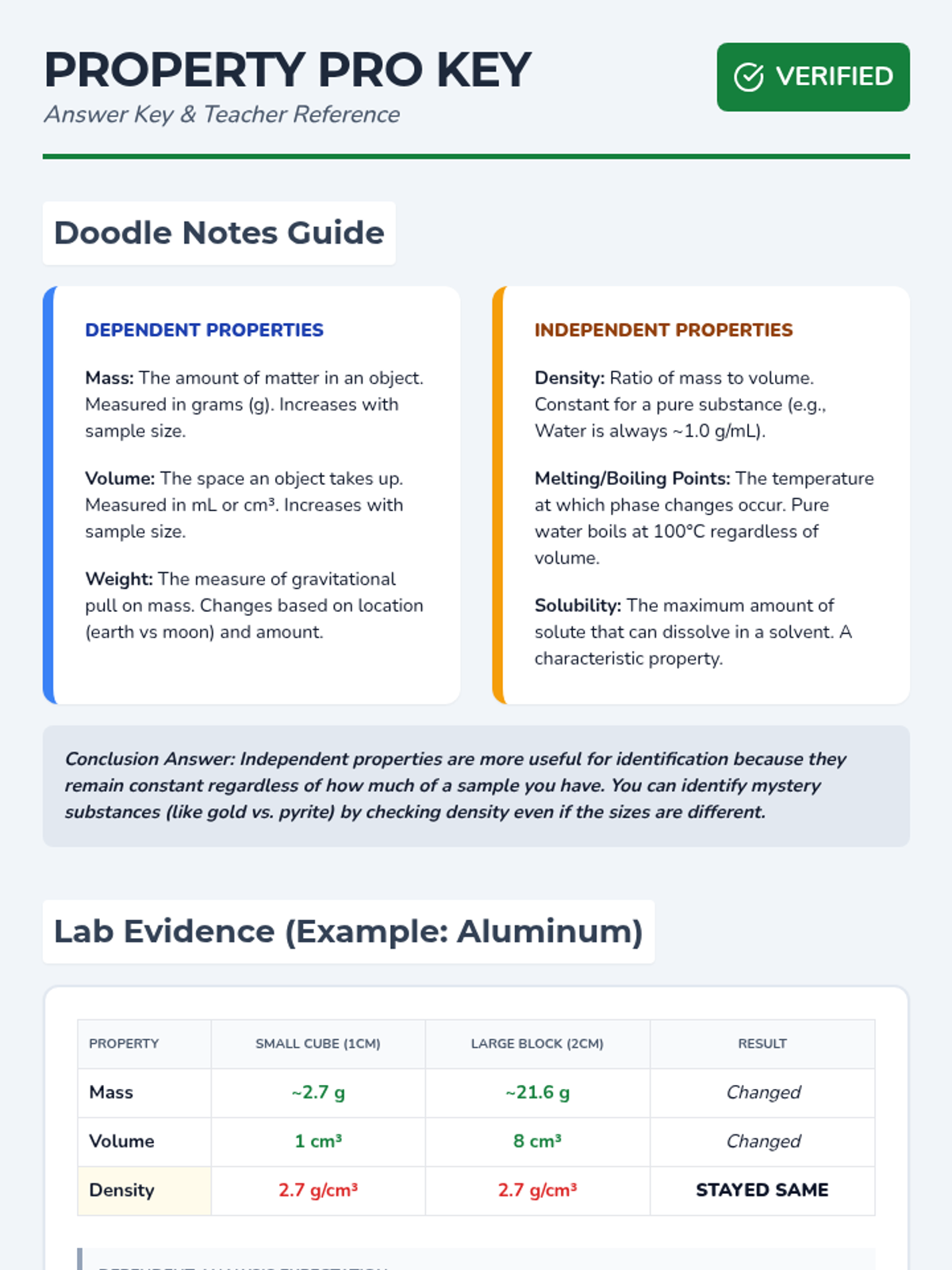
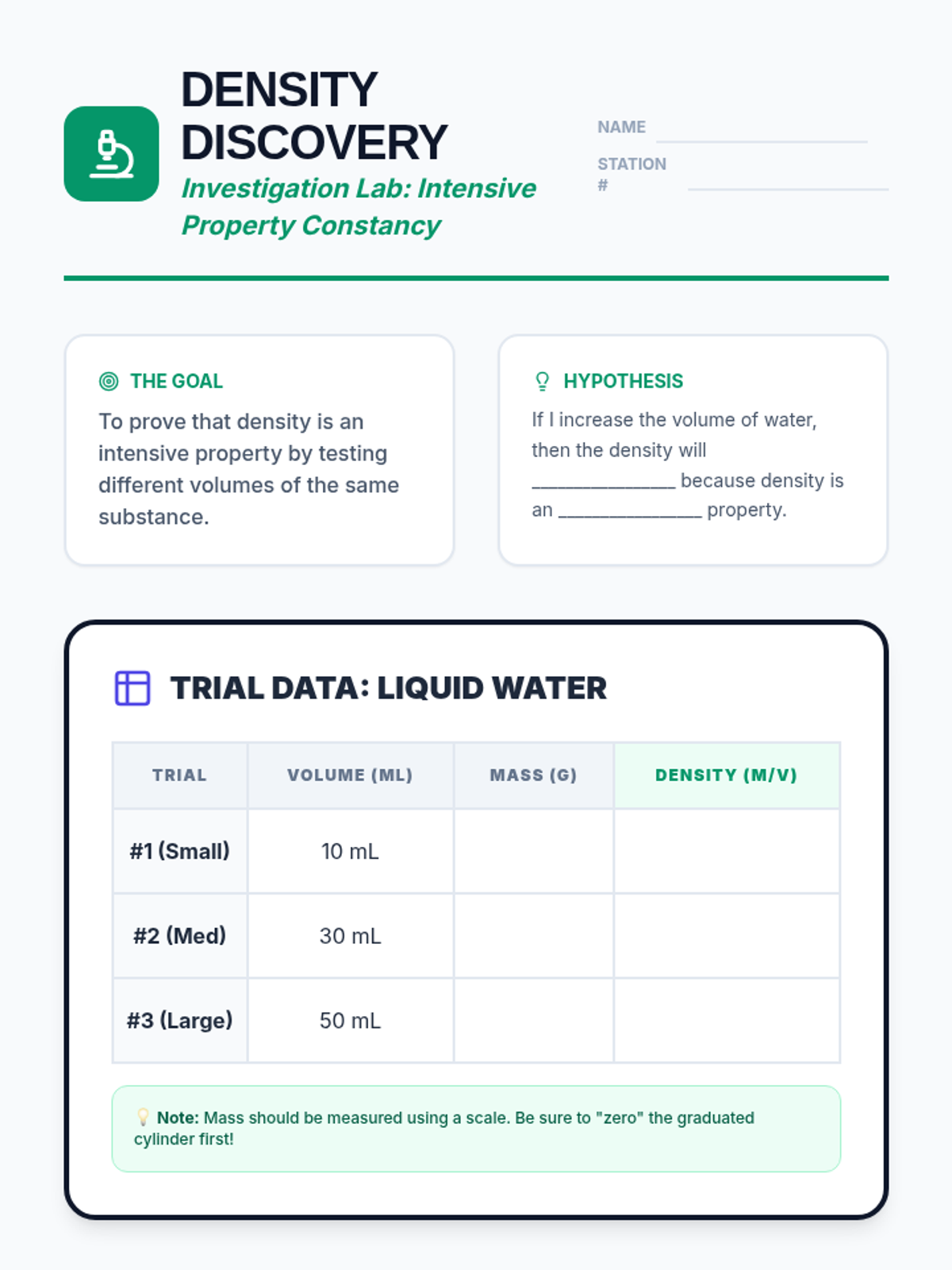
Students carry out a formal investigation comparing large and small samples of pure substances to prove which properties stay the same and which change, fulfilling standard PS.6.1.3.
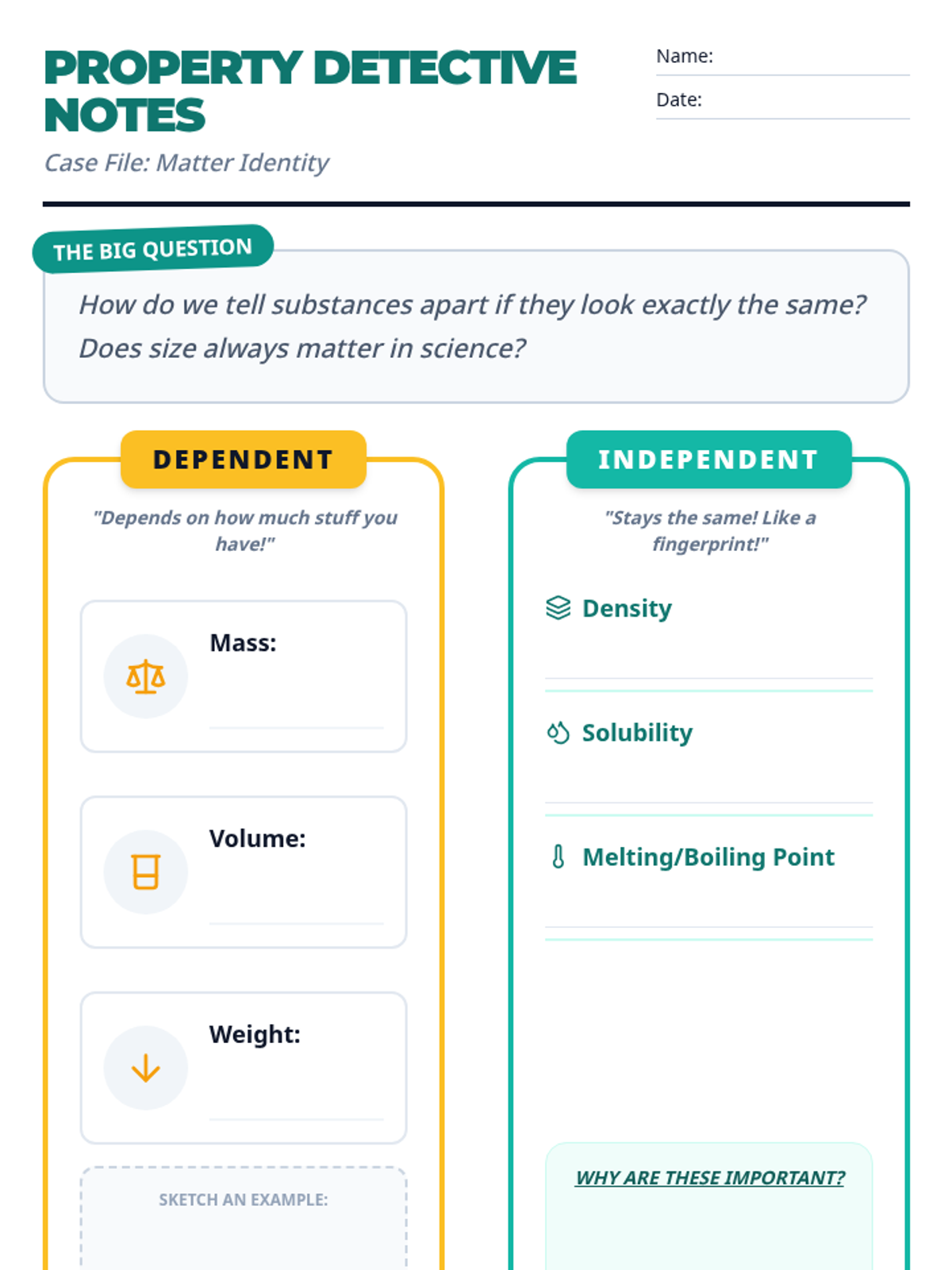
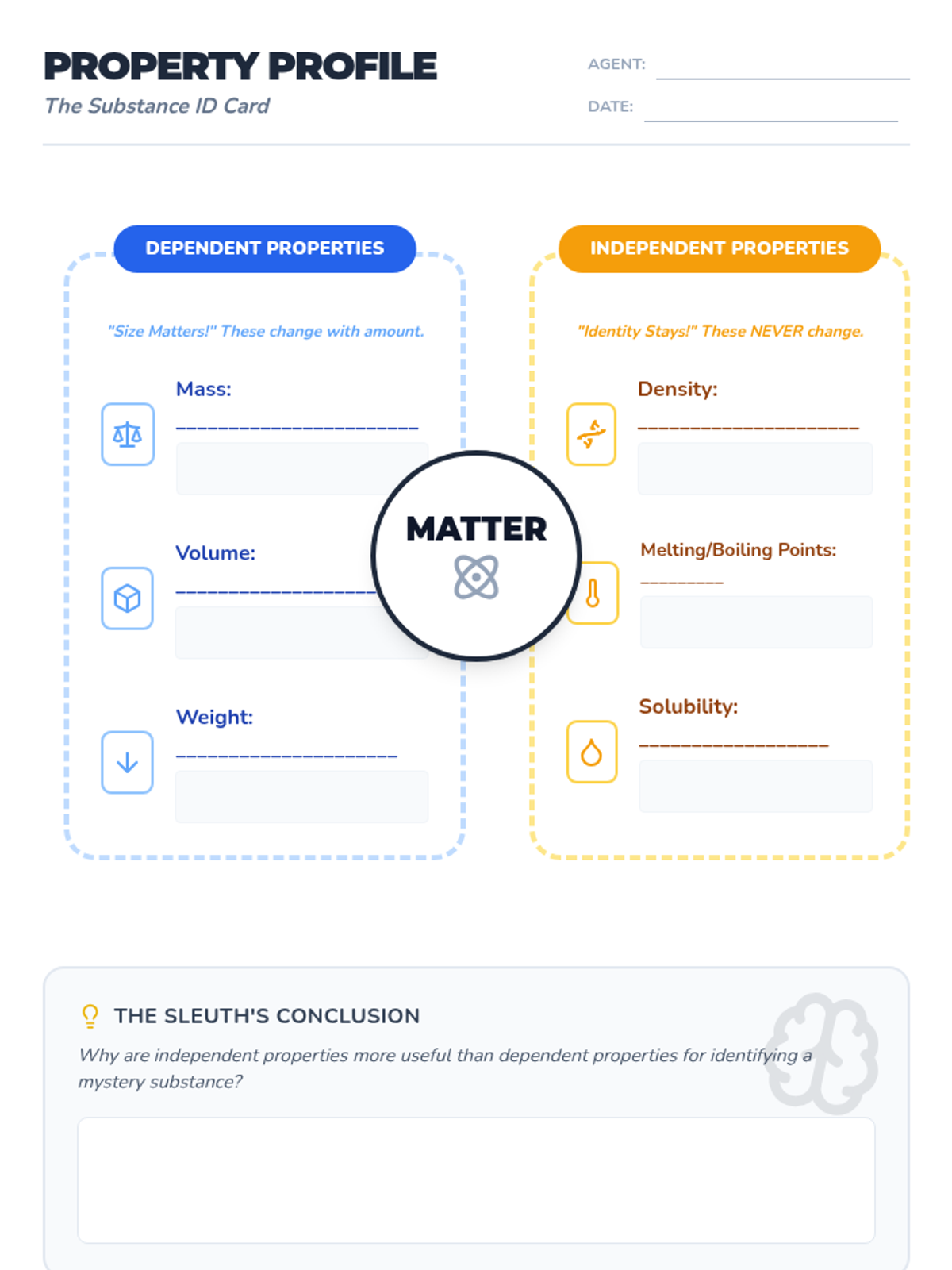
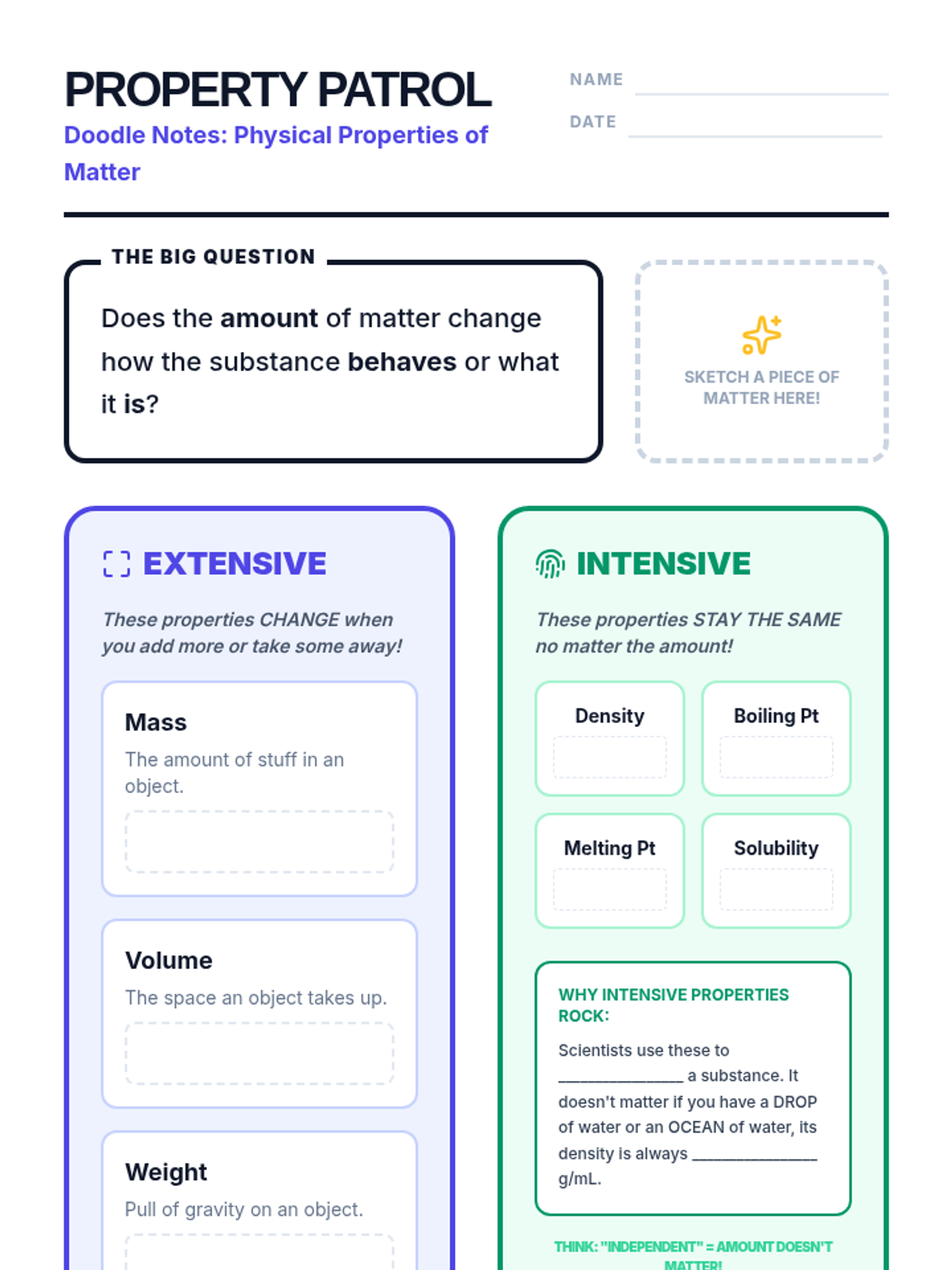
A focus on intensive properties that remain constant regardless of sample size, including density, melting point, boiling point, and solubility. Students use doodle notes to visualize these 'identity' traits.
An introduction to matter and properties that change based on the amount of a substance, specifically mass, weight, and volume. Students explore how these measurements vary with sample size.
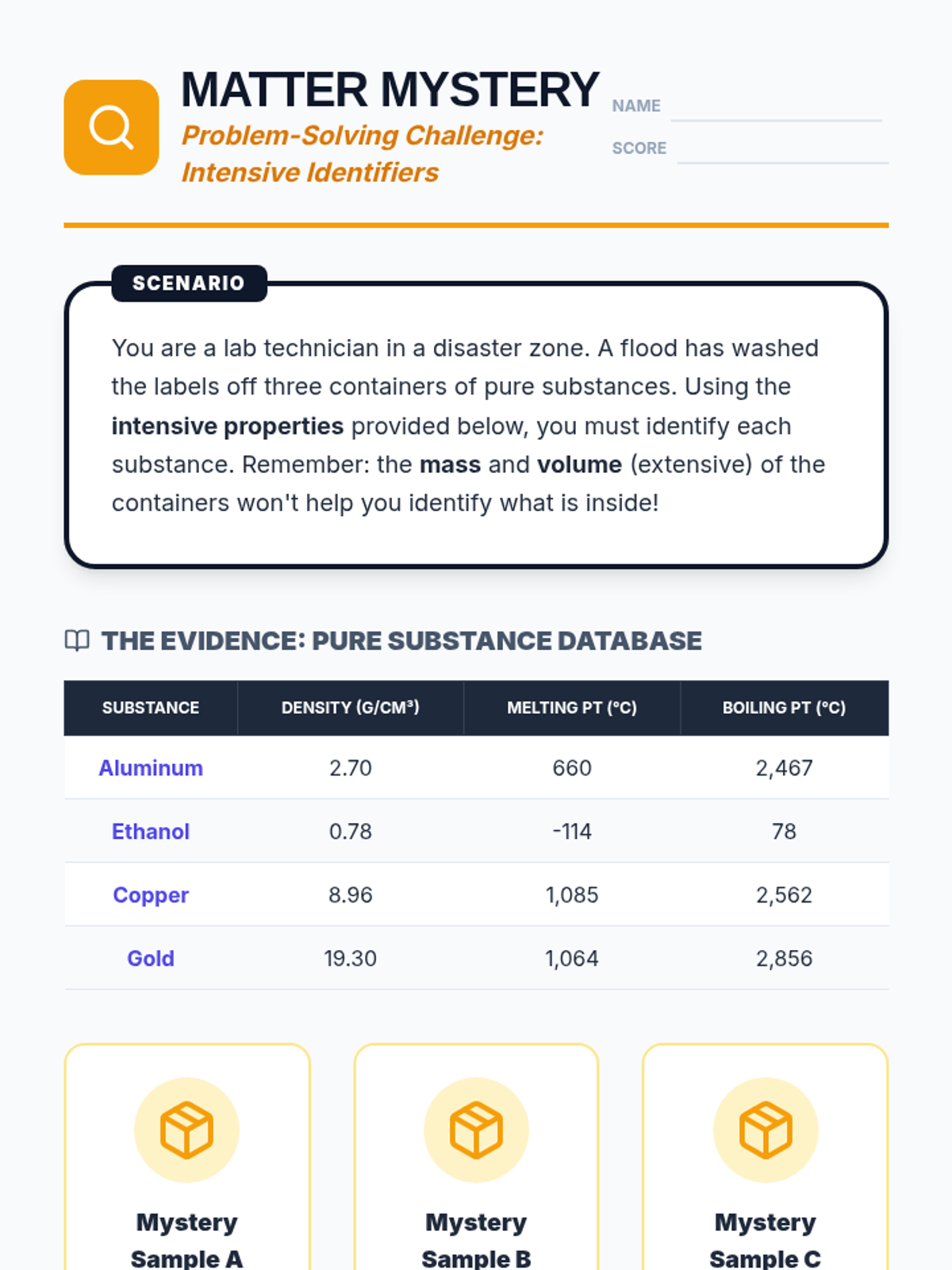
A problem-solving challenge and video-based discussion focusing on boiling point, melting point, and applying property knowledge to identify mystery substances.
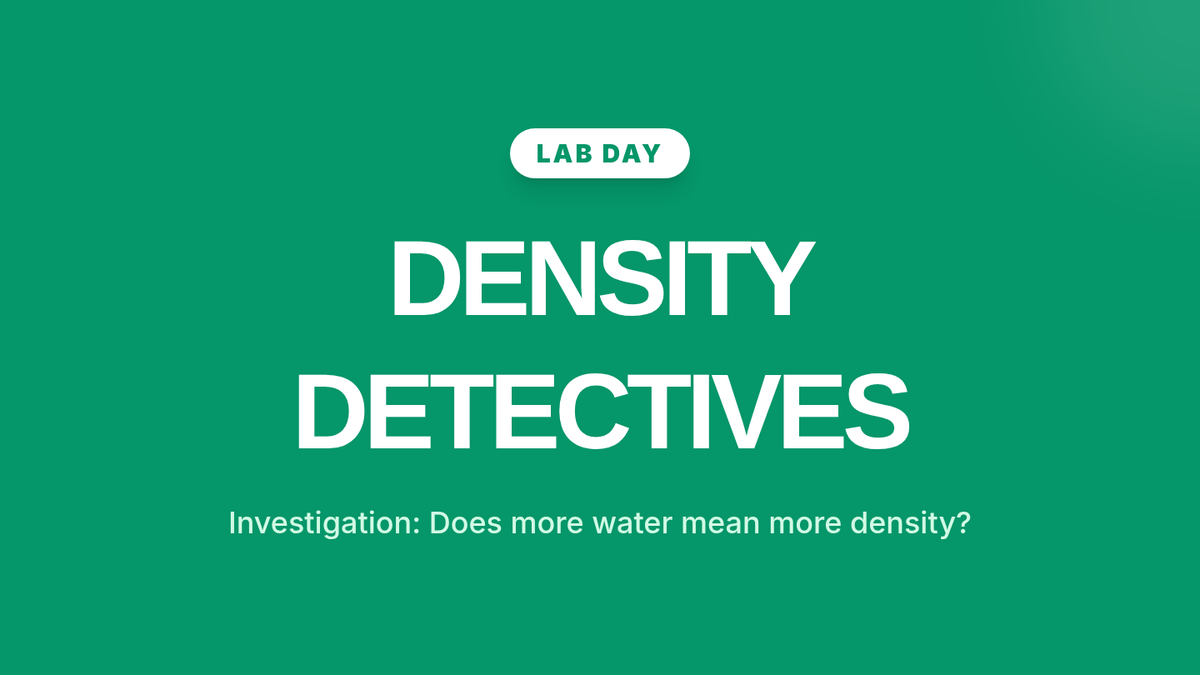
A hands-on laboratory investigation where students test the density and solubility of various amounts of the same substance to prove intensive property constancy.
An introduction to physical properties, differentiating between properties that change with amount (extensive) and those that stay the same (intensive) using creative doodle notes.
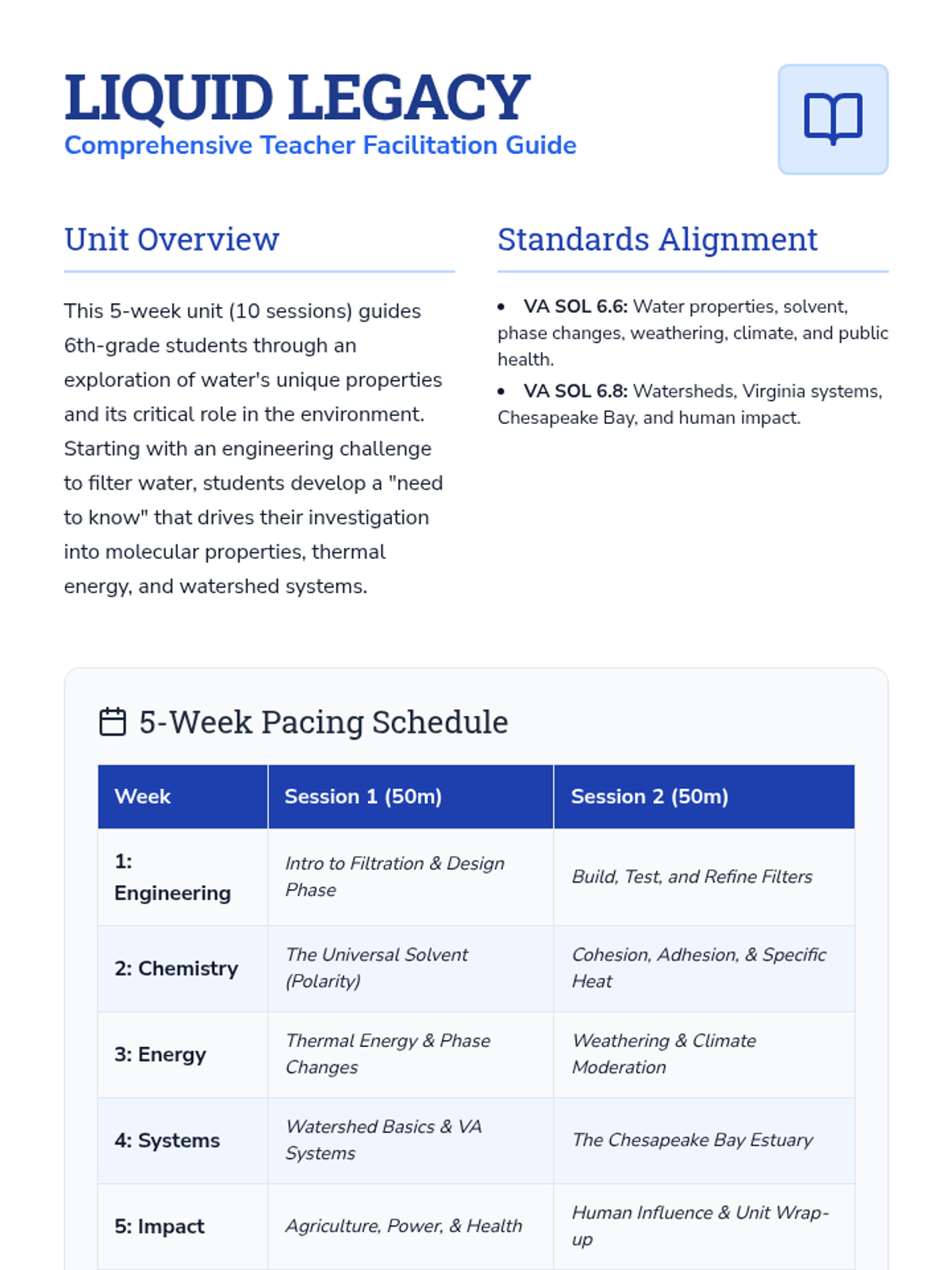
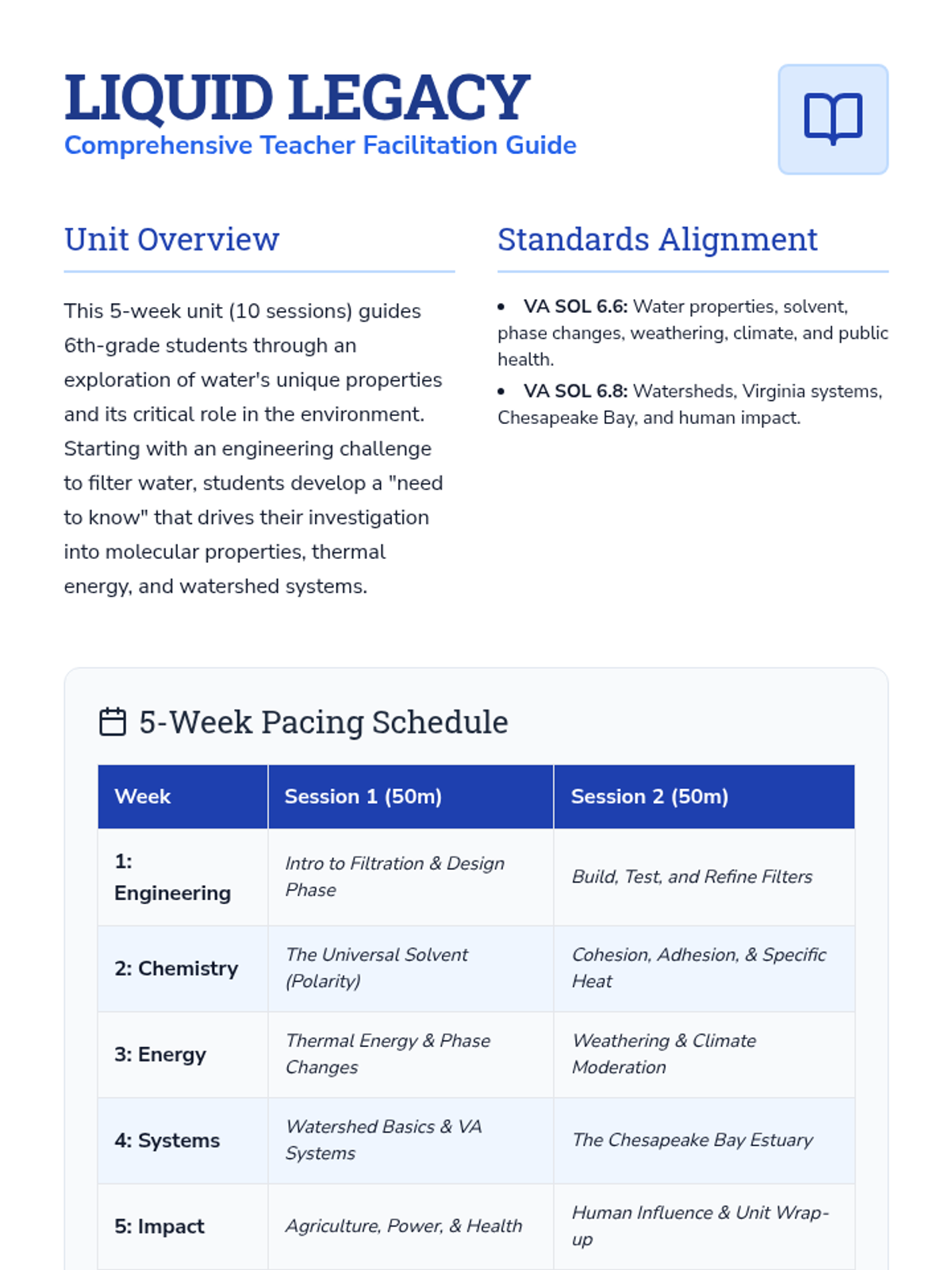
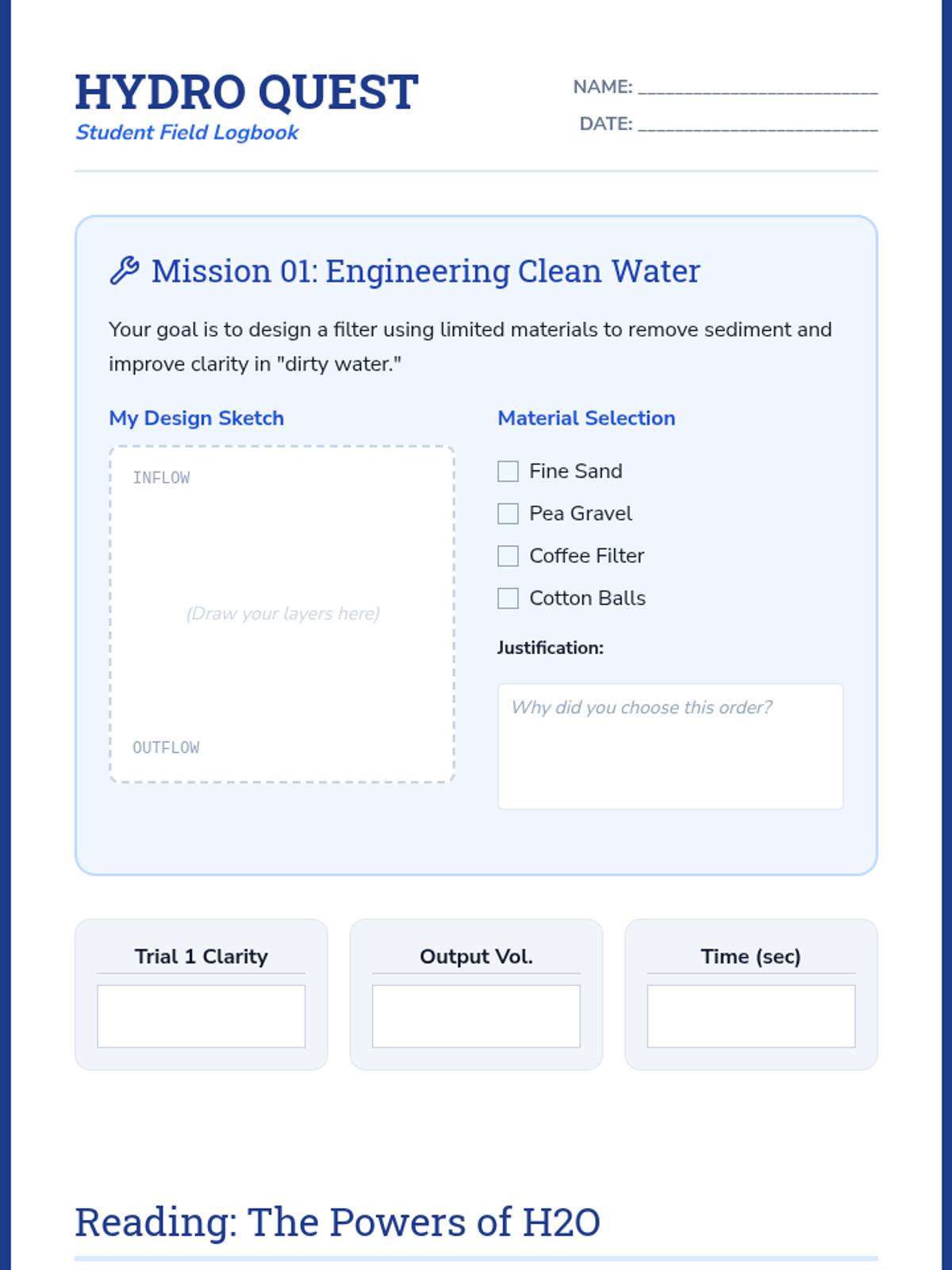
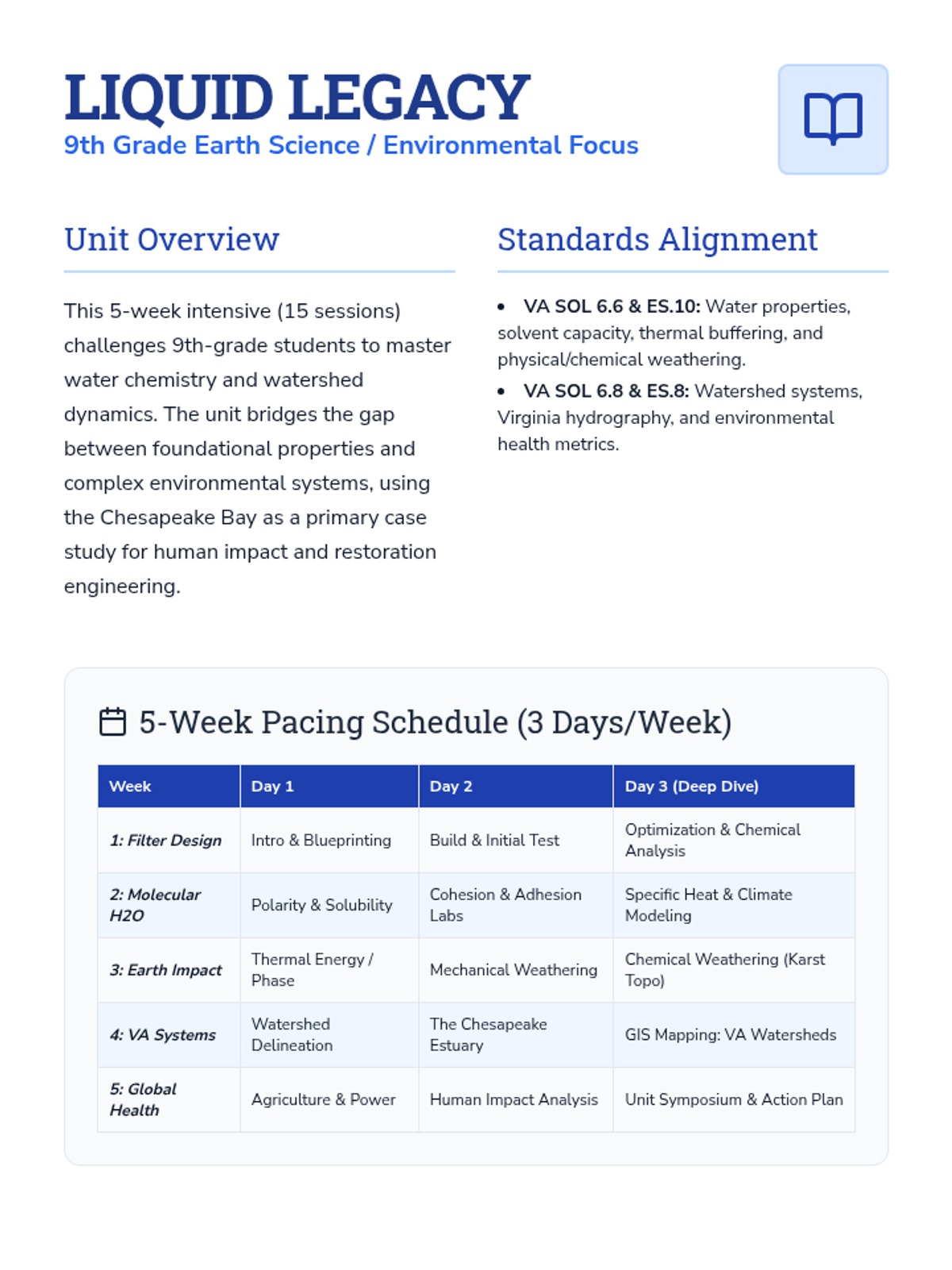
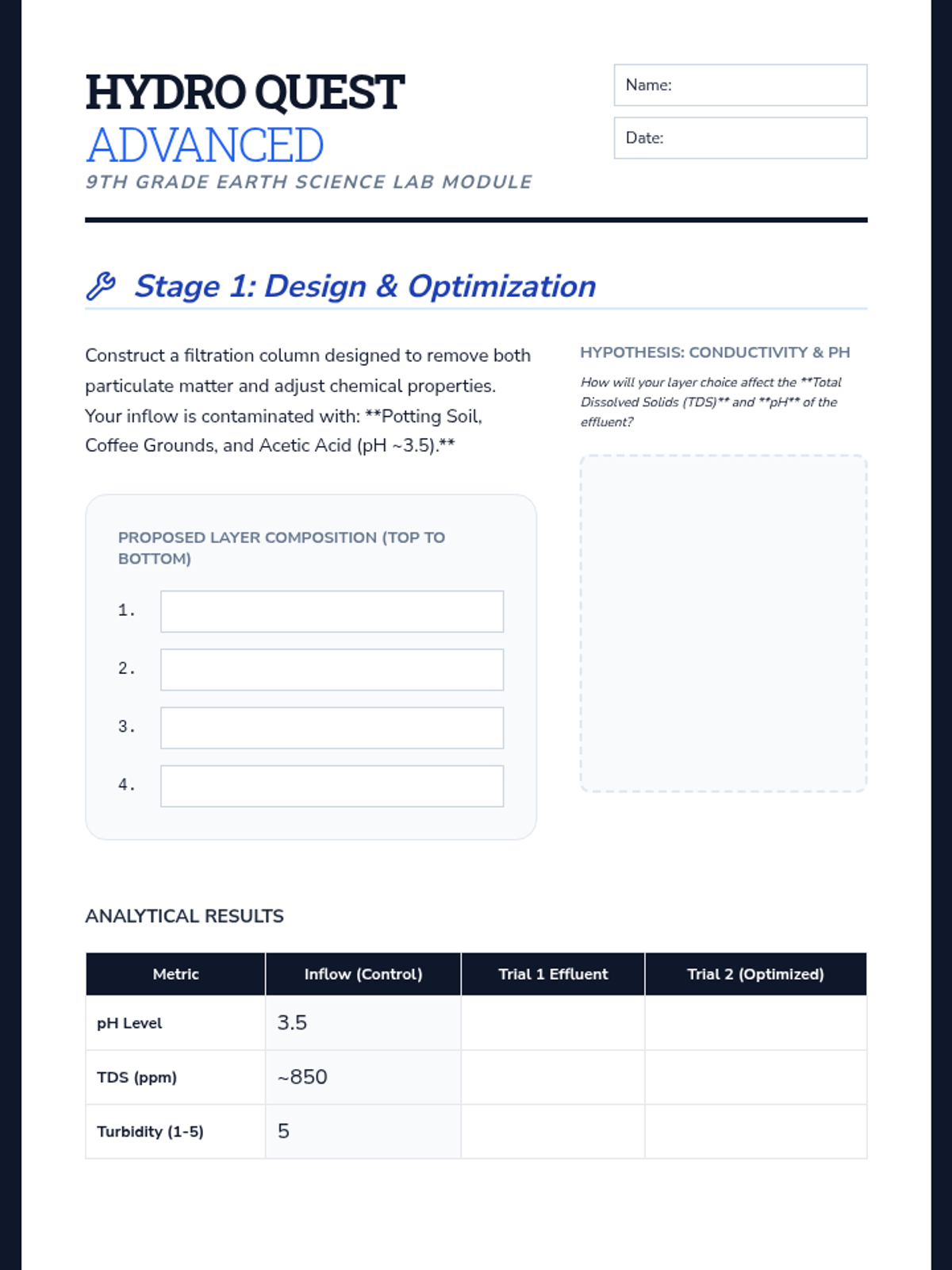
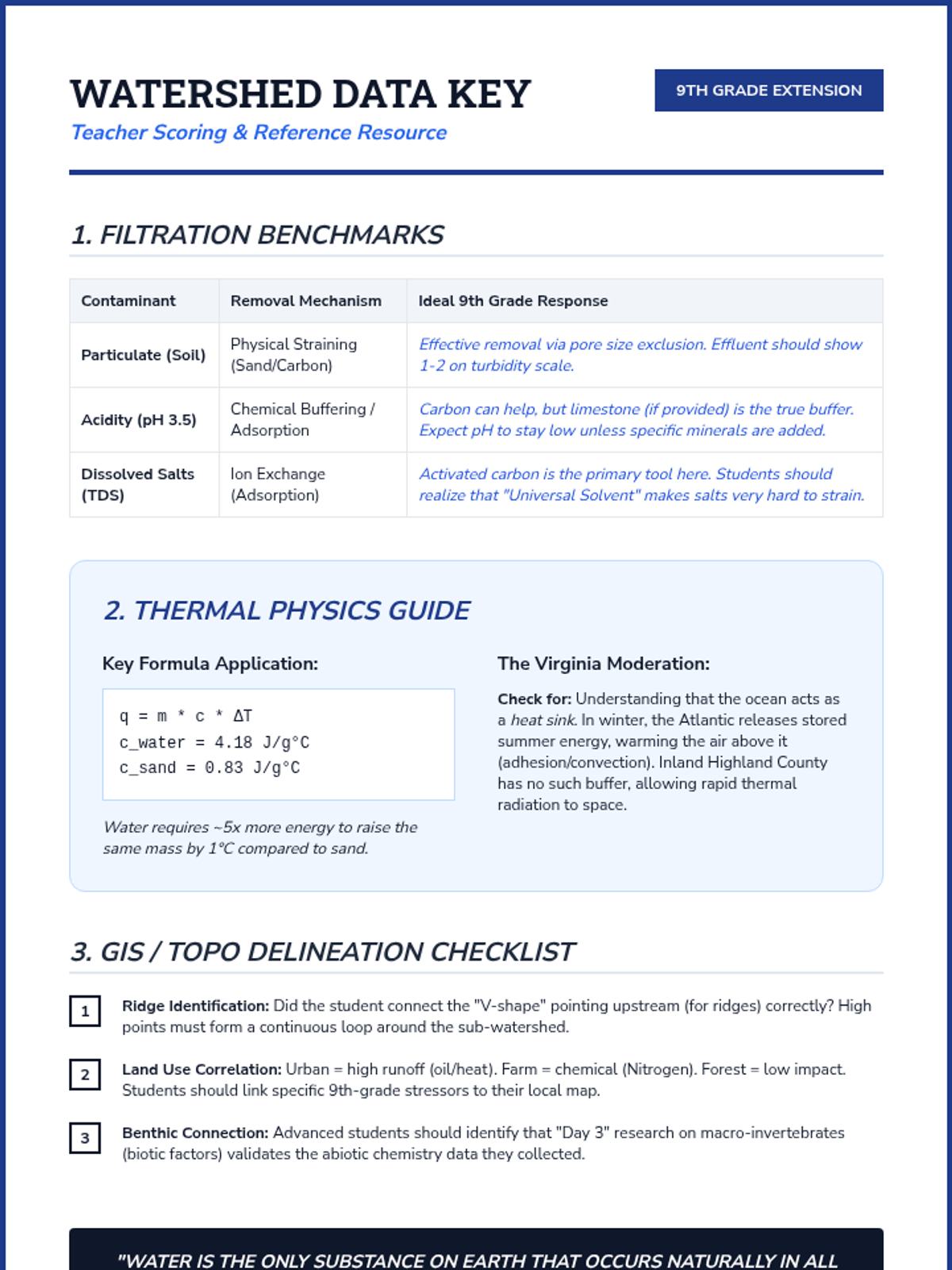
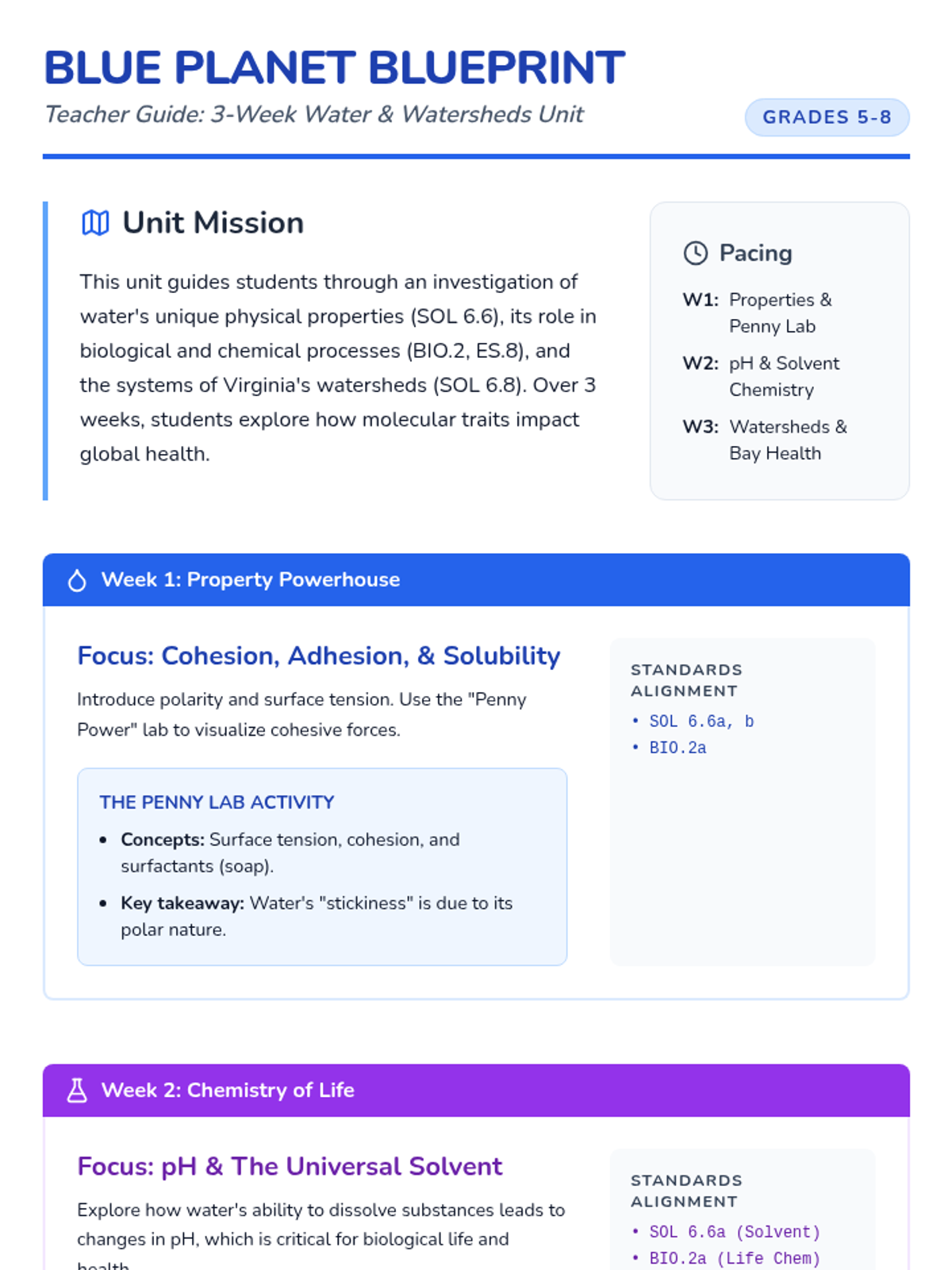
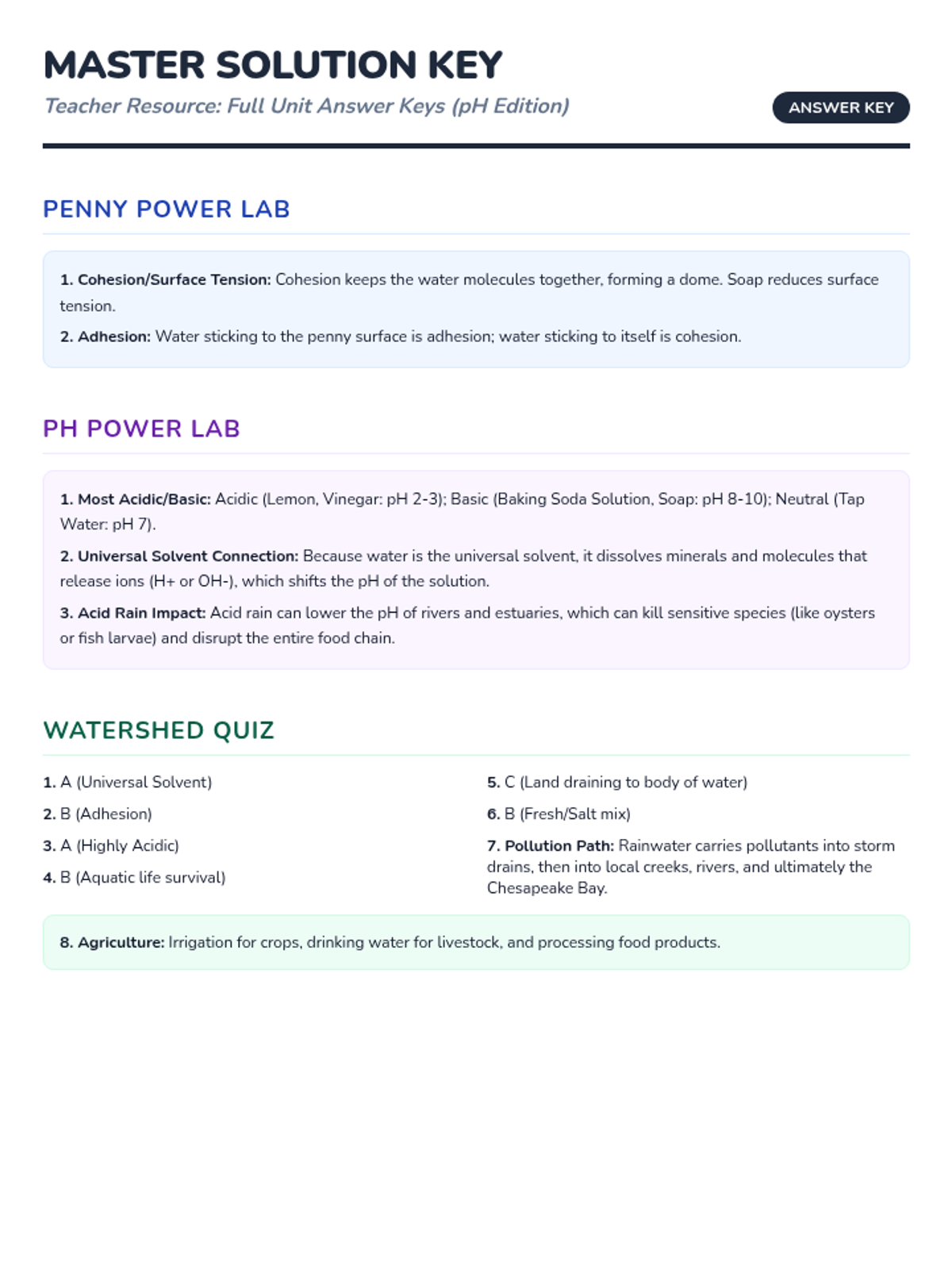
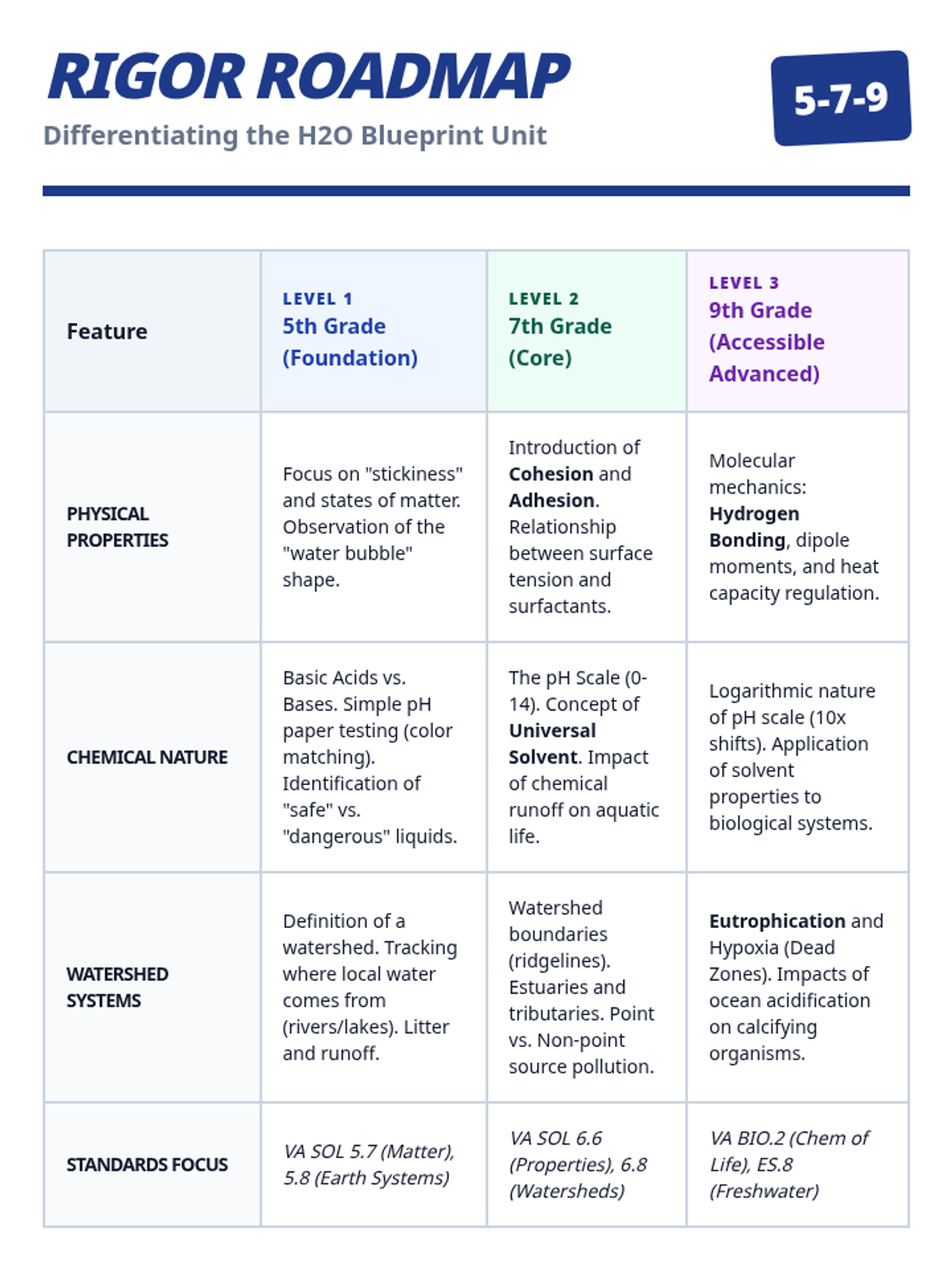
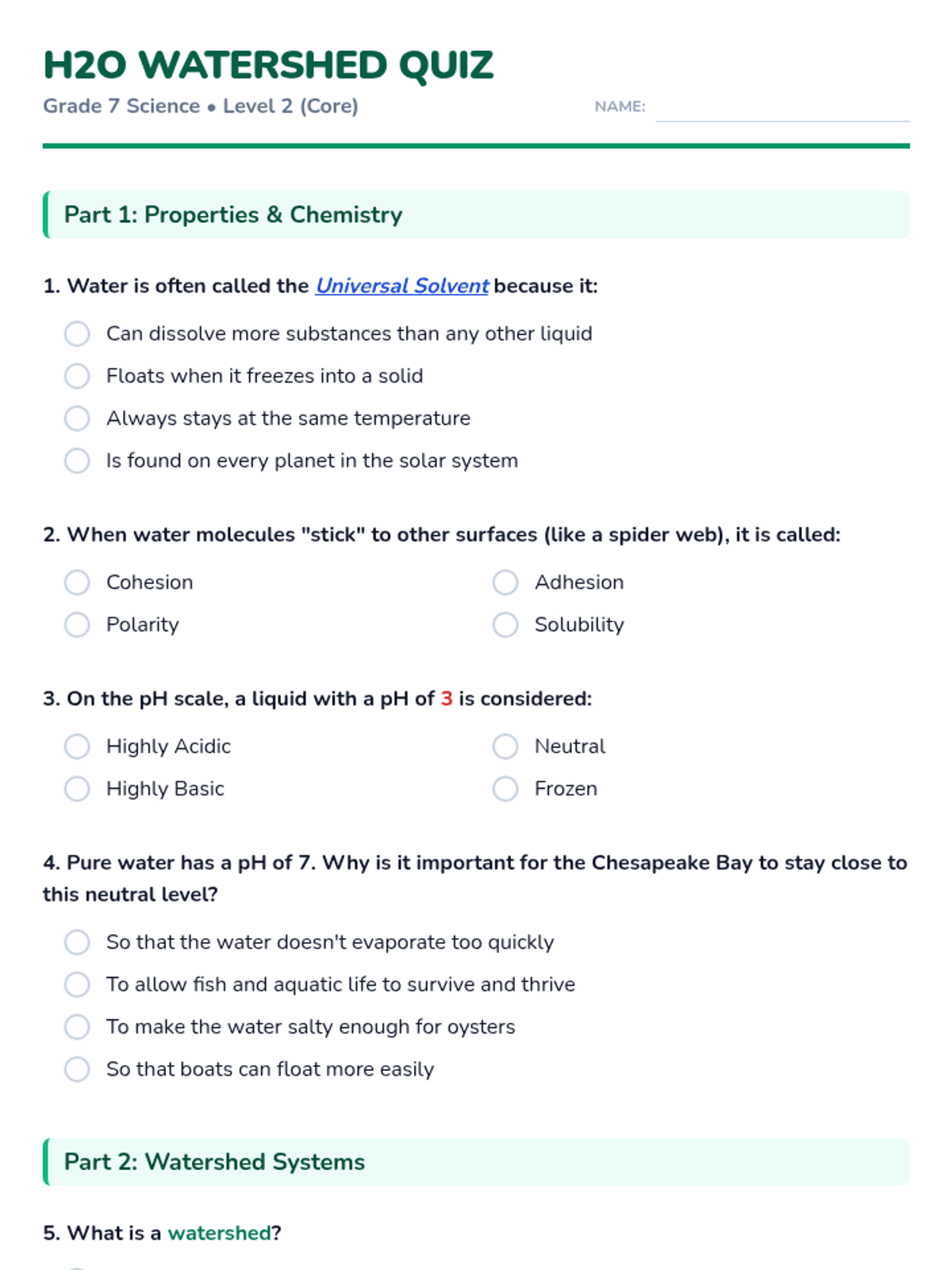
A 10-session unit covering Virginia Standards 6.6 and 6.8, beginning with a water filter engineering challenge and progressing through water chemistry and watershed systems.
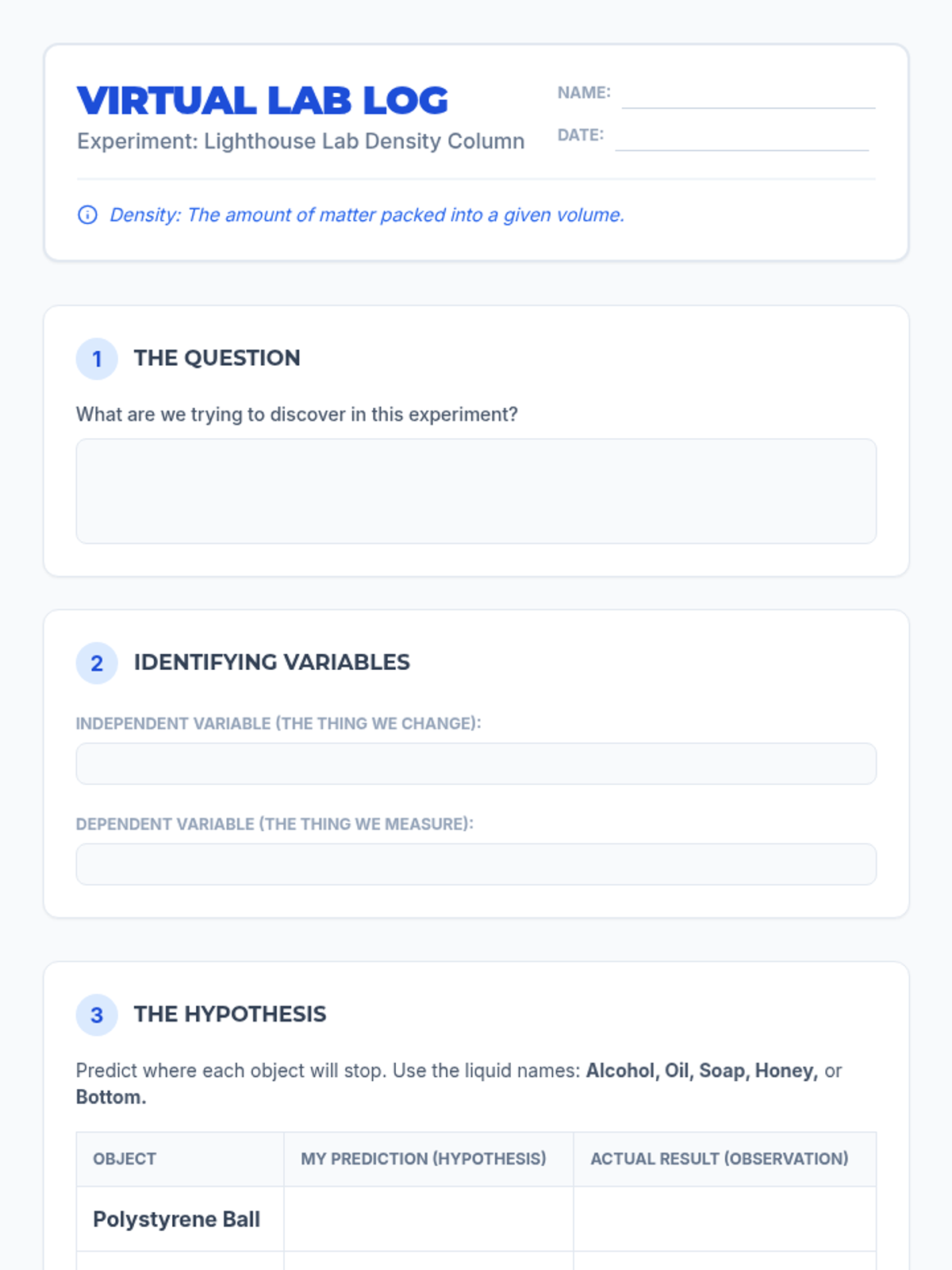
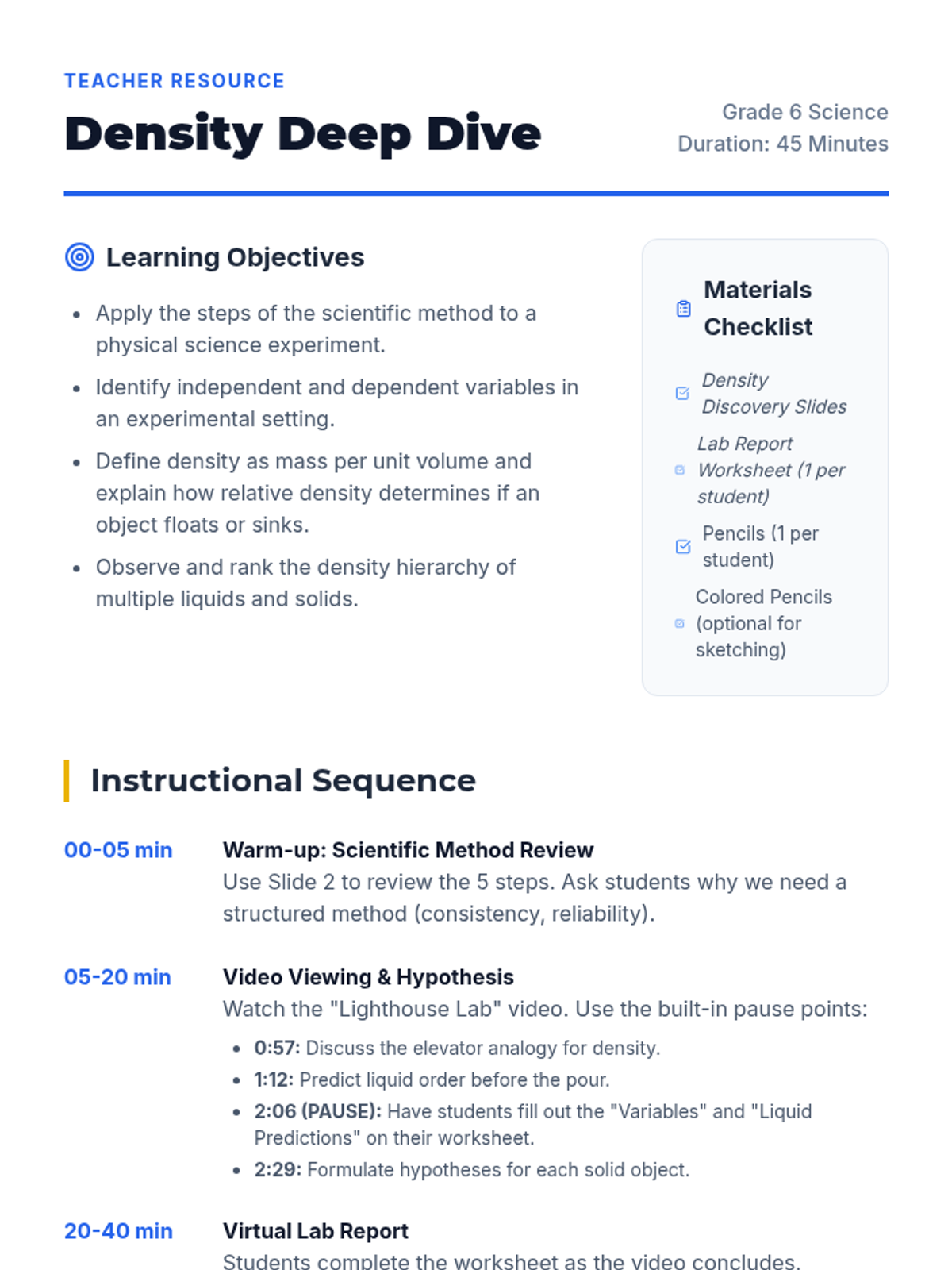
Students explore density through a virtual laboratory experiment, applying the scientific method to observe how different liquids and solids interact in a density column.
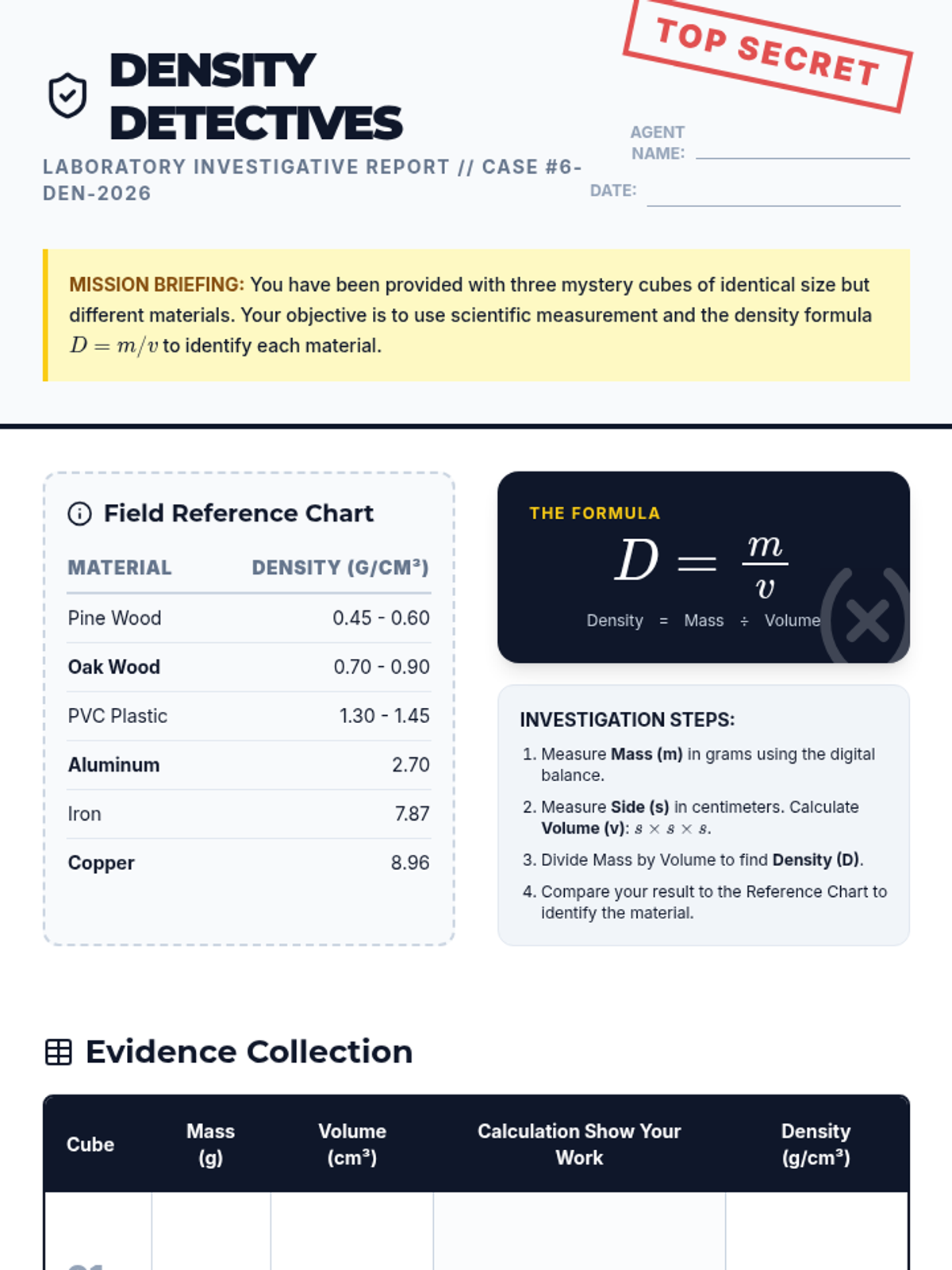
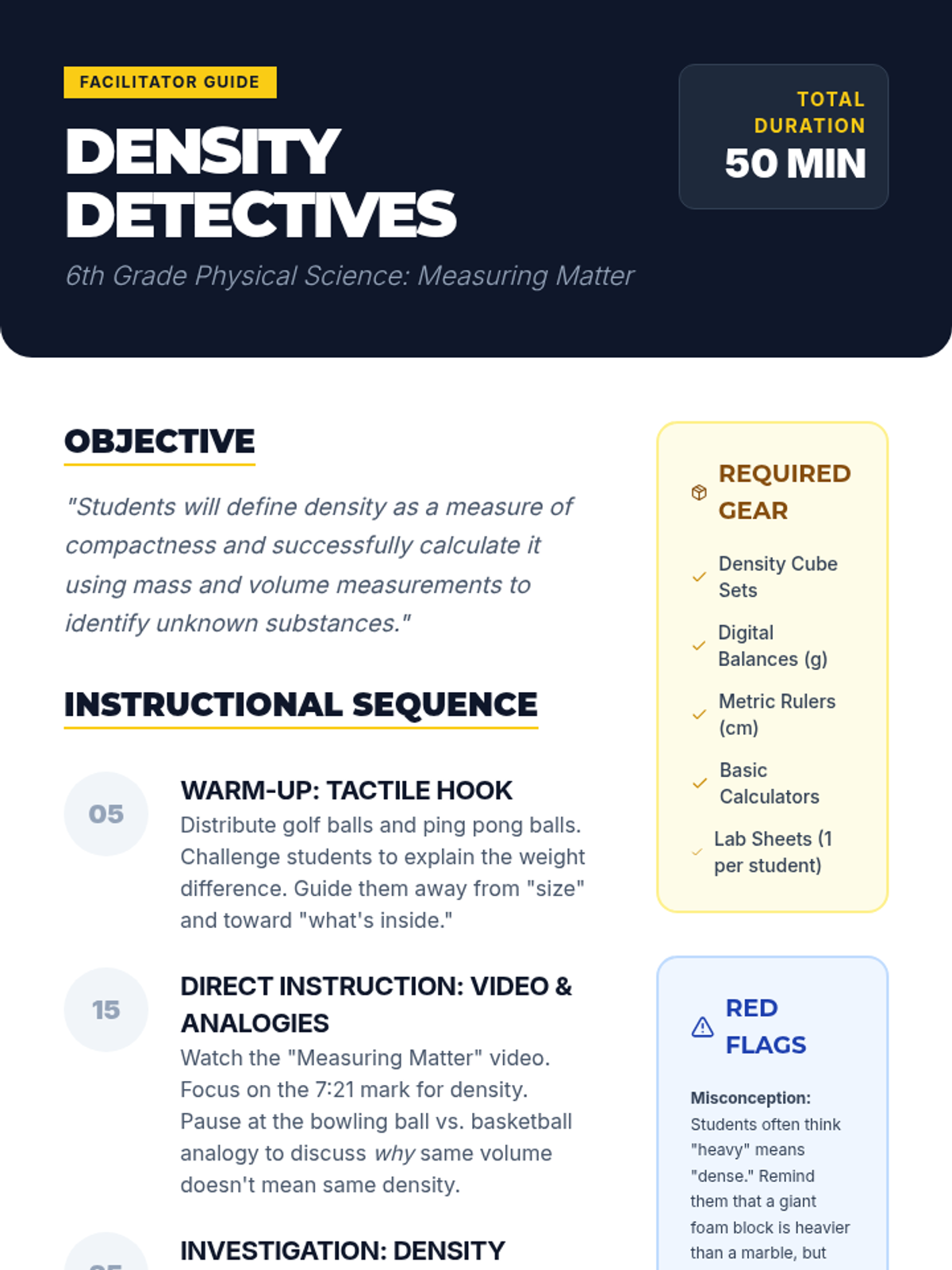
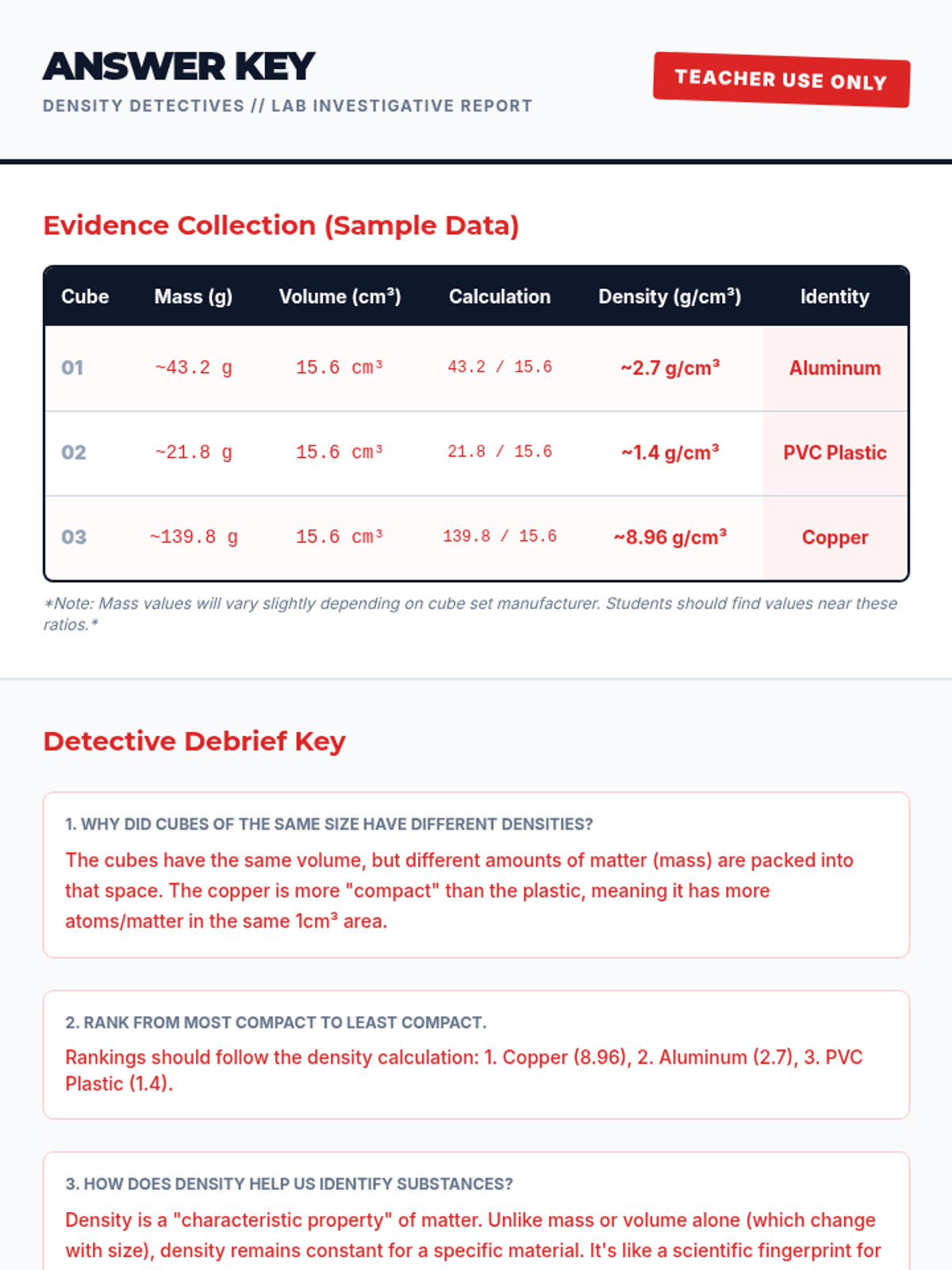
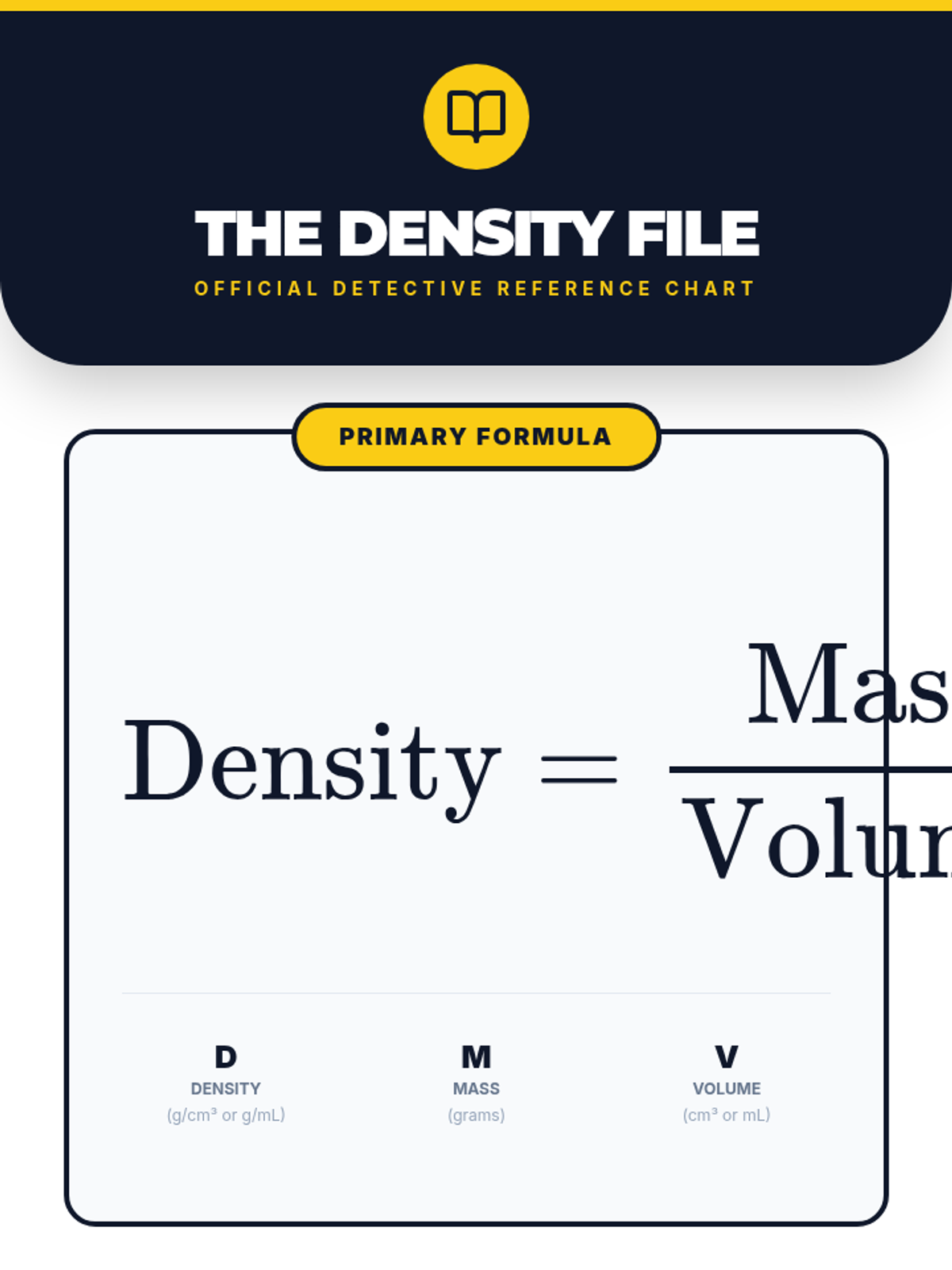
A comprehensive 6th-grade science lesson exploring density through hands-on measurement and a detective-themed investigation. Students will learn the density formula, calculate the density of various materials, and use a reference guide to identify unknown substances.
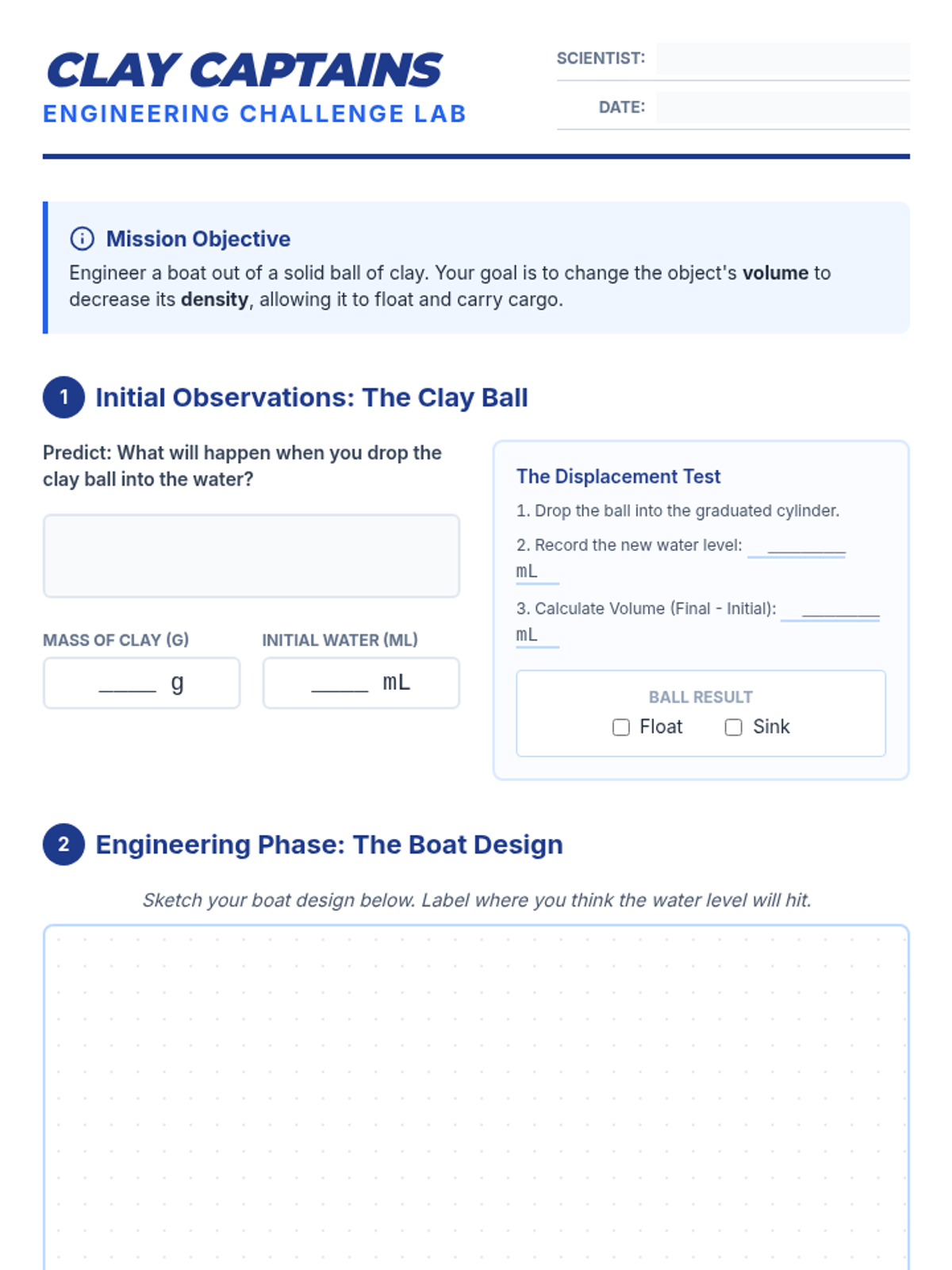
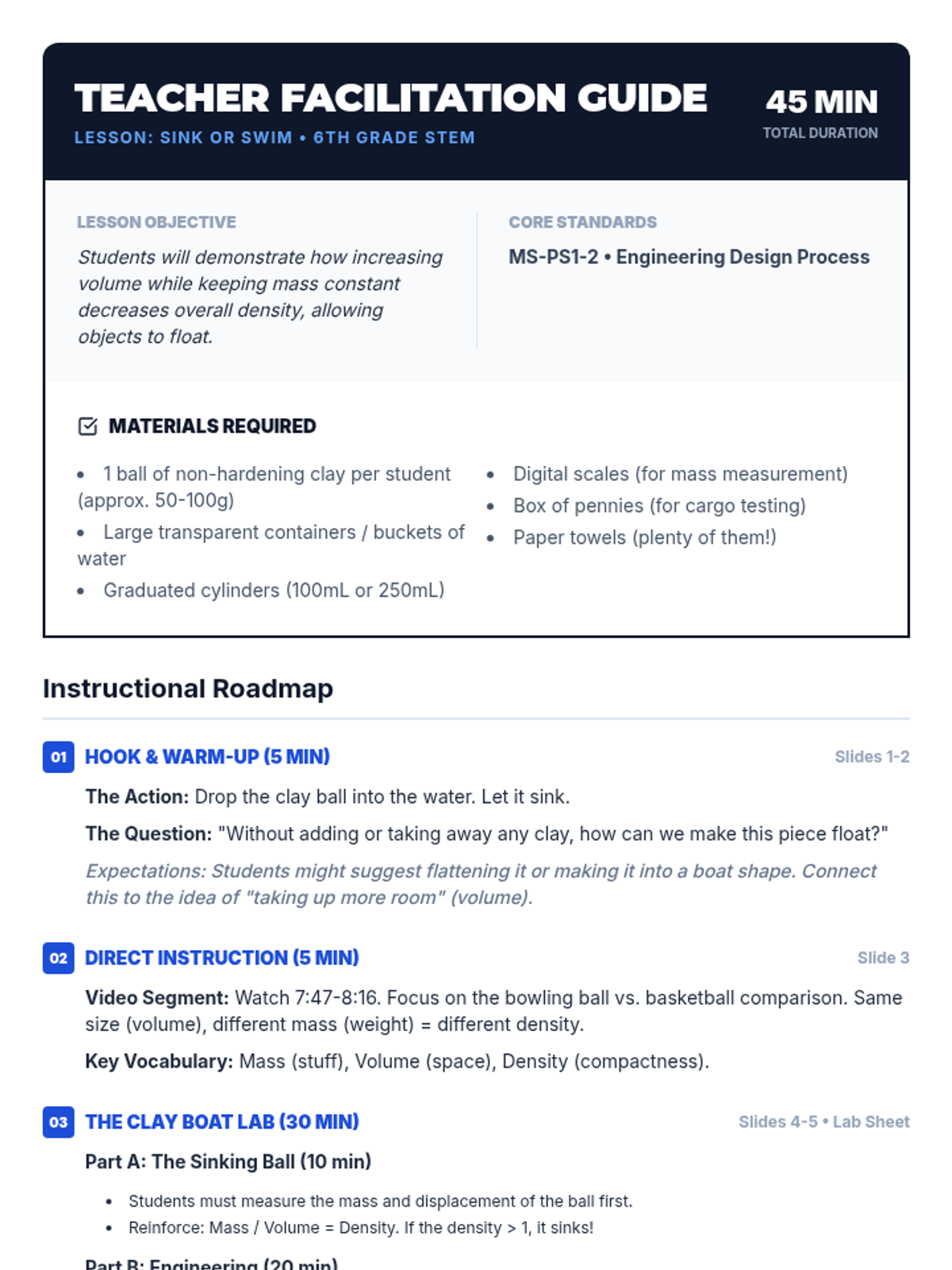
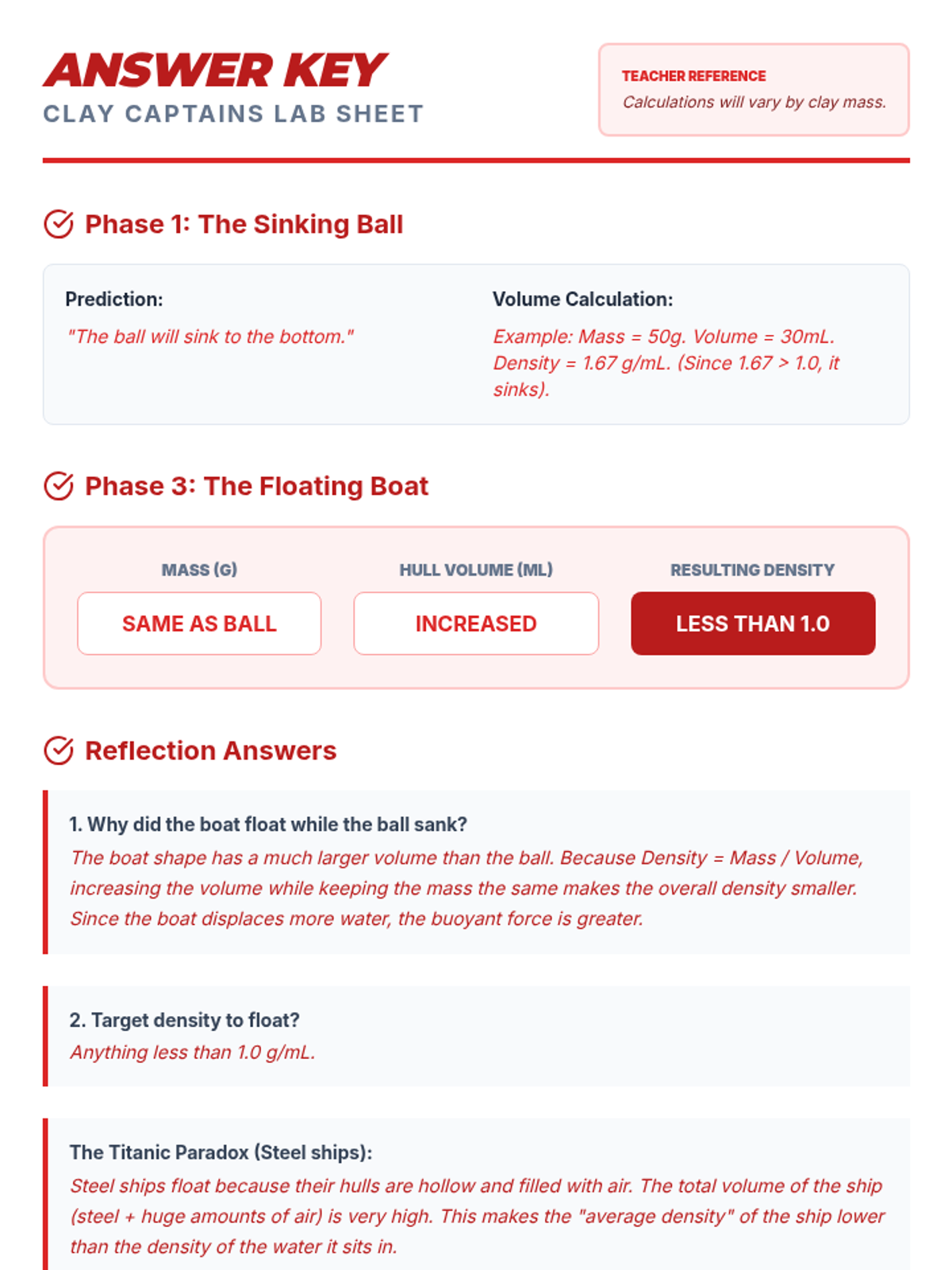
A hands-on STEM lesson where students explore the relationship between volume, density, and buoyancy by engineering clay boats. Students will use the displacement method to measure how changing an object's shape affects its ability to float.
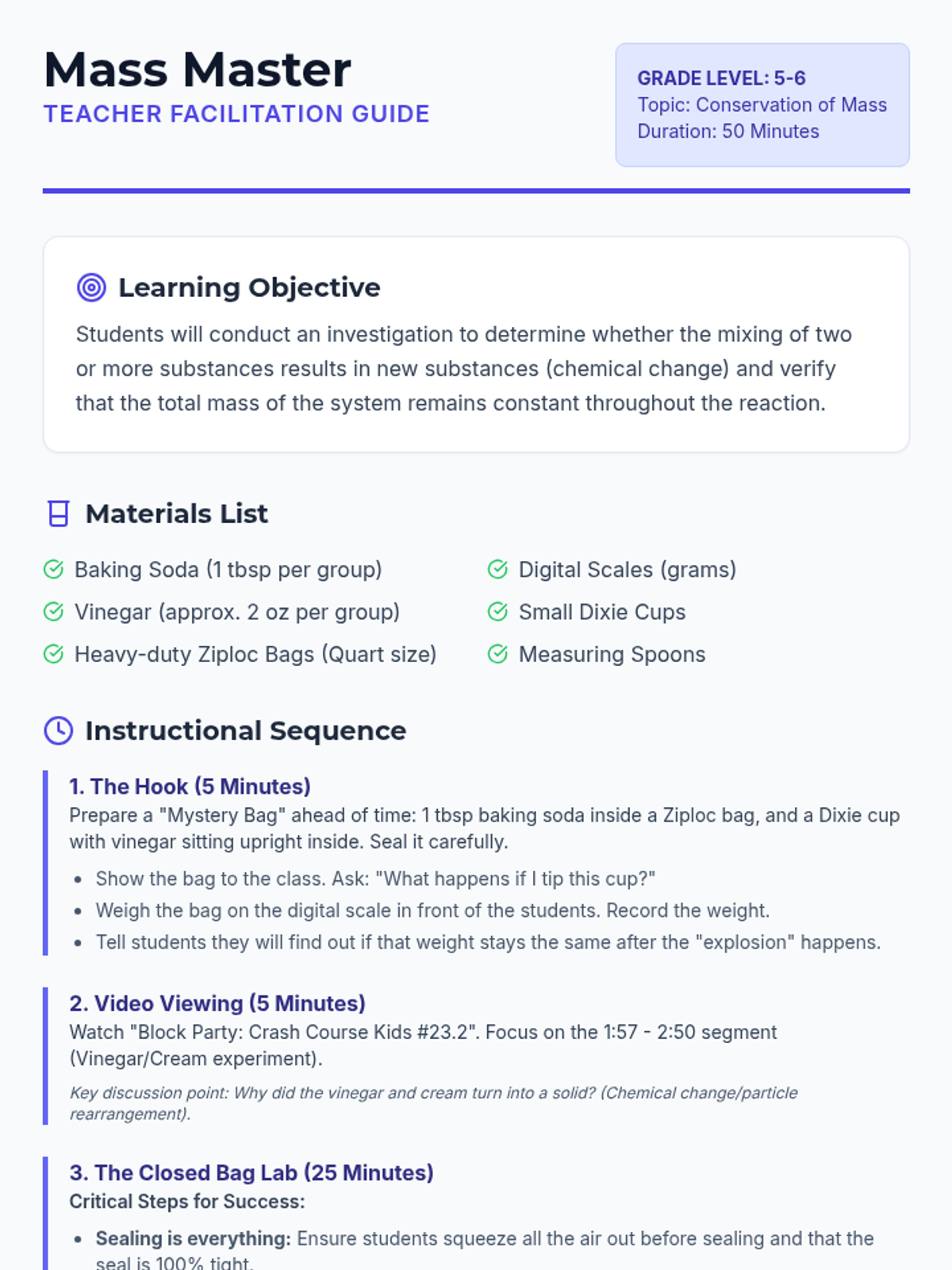
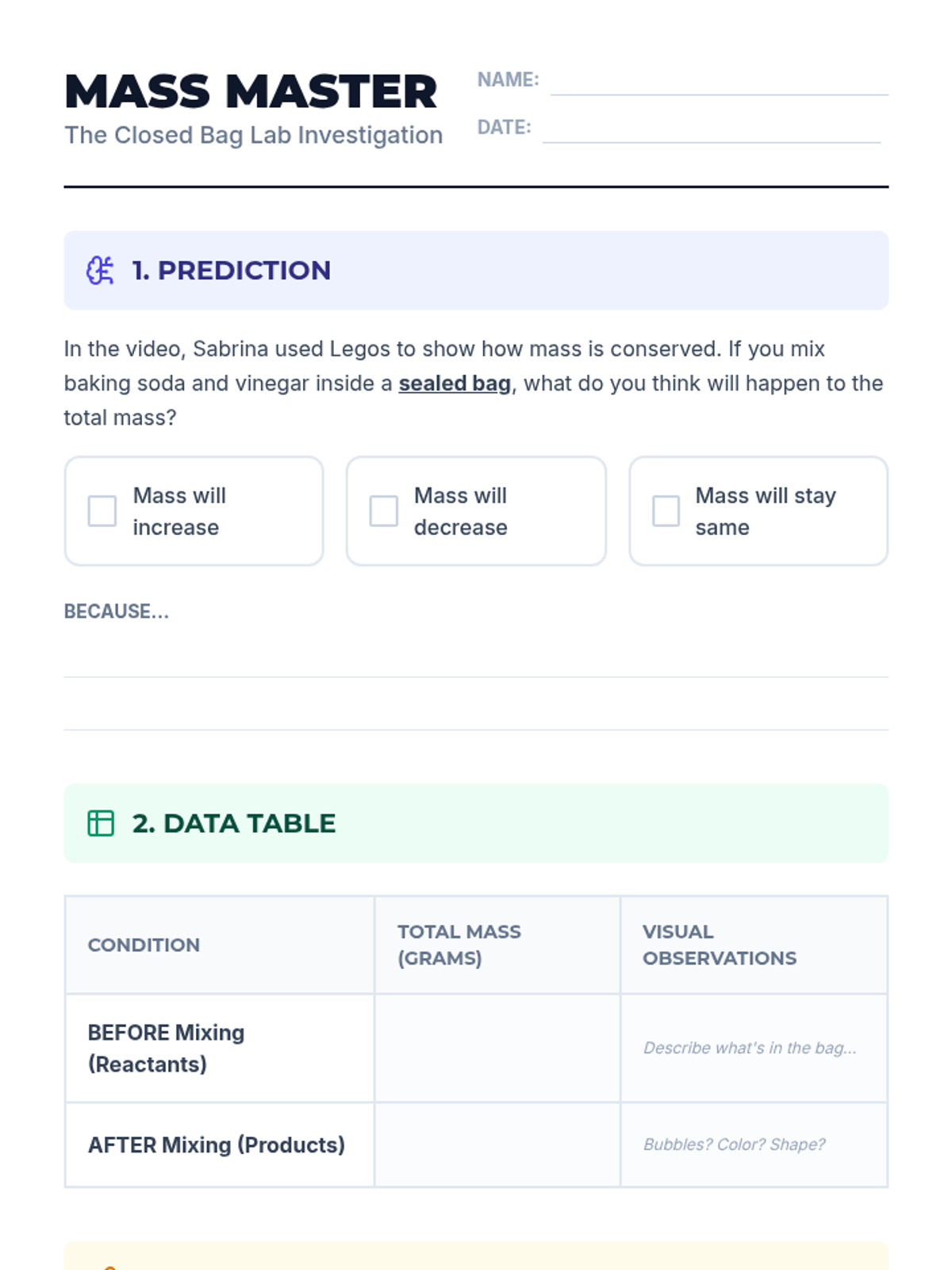
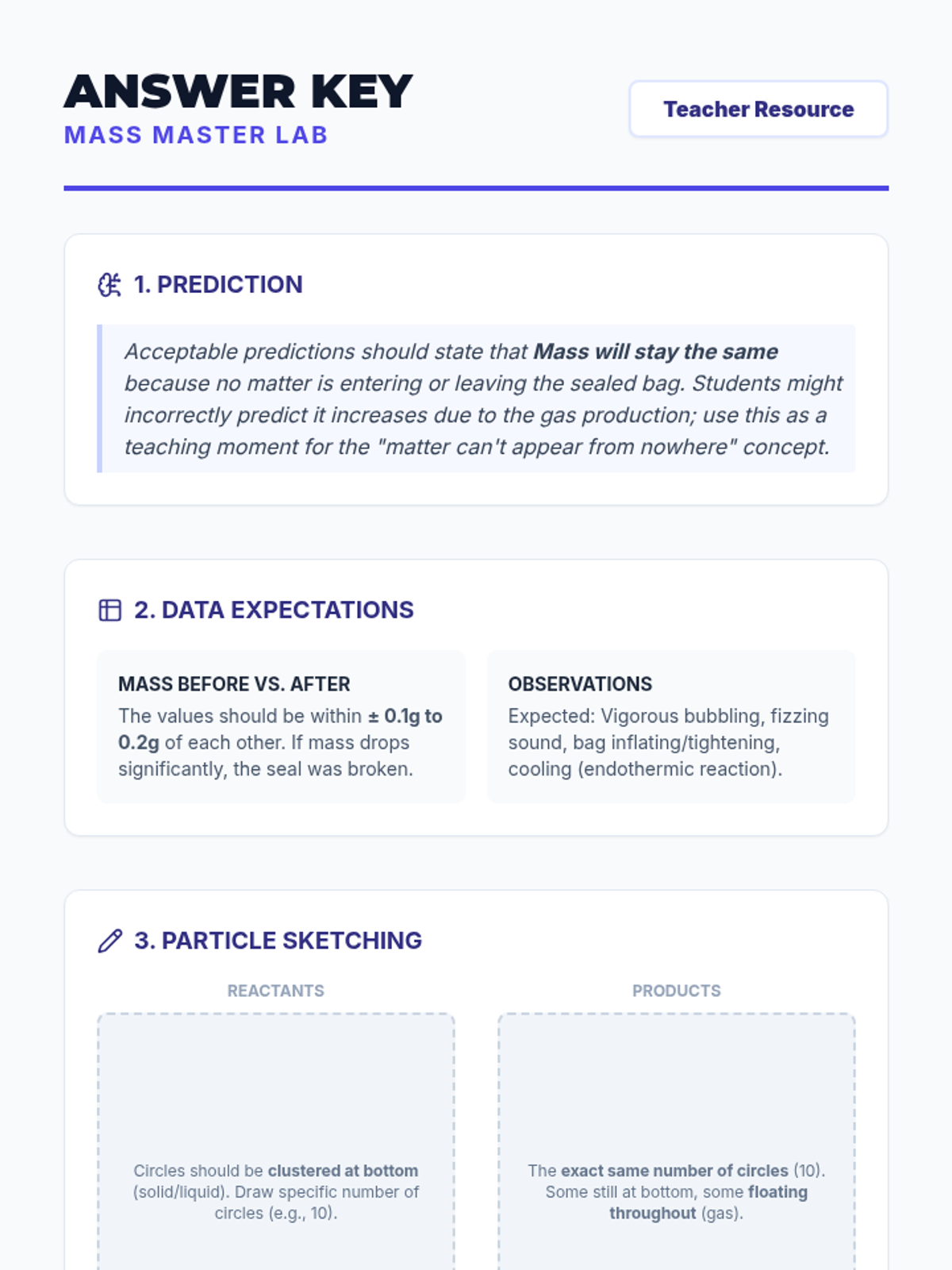
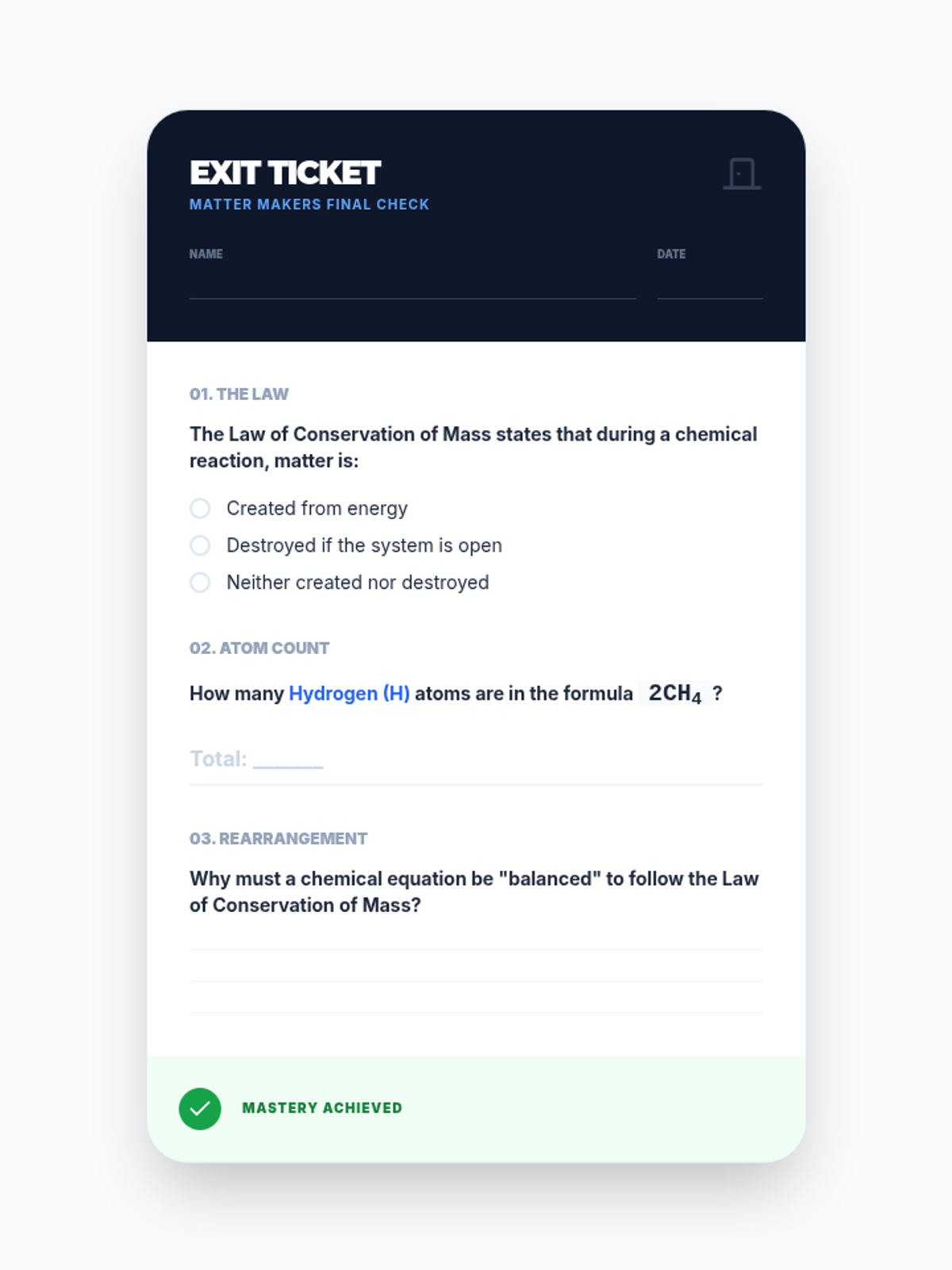
Students investigate the Conservation of Mass through a chemical reaction between baking soda and vinegar in a sealed system. They observe particle rearrangement, identify reactants and products, and verify that mass remains constant even when a gas is produced.
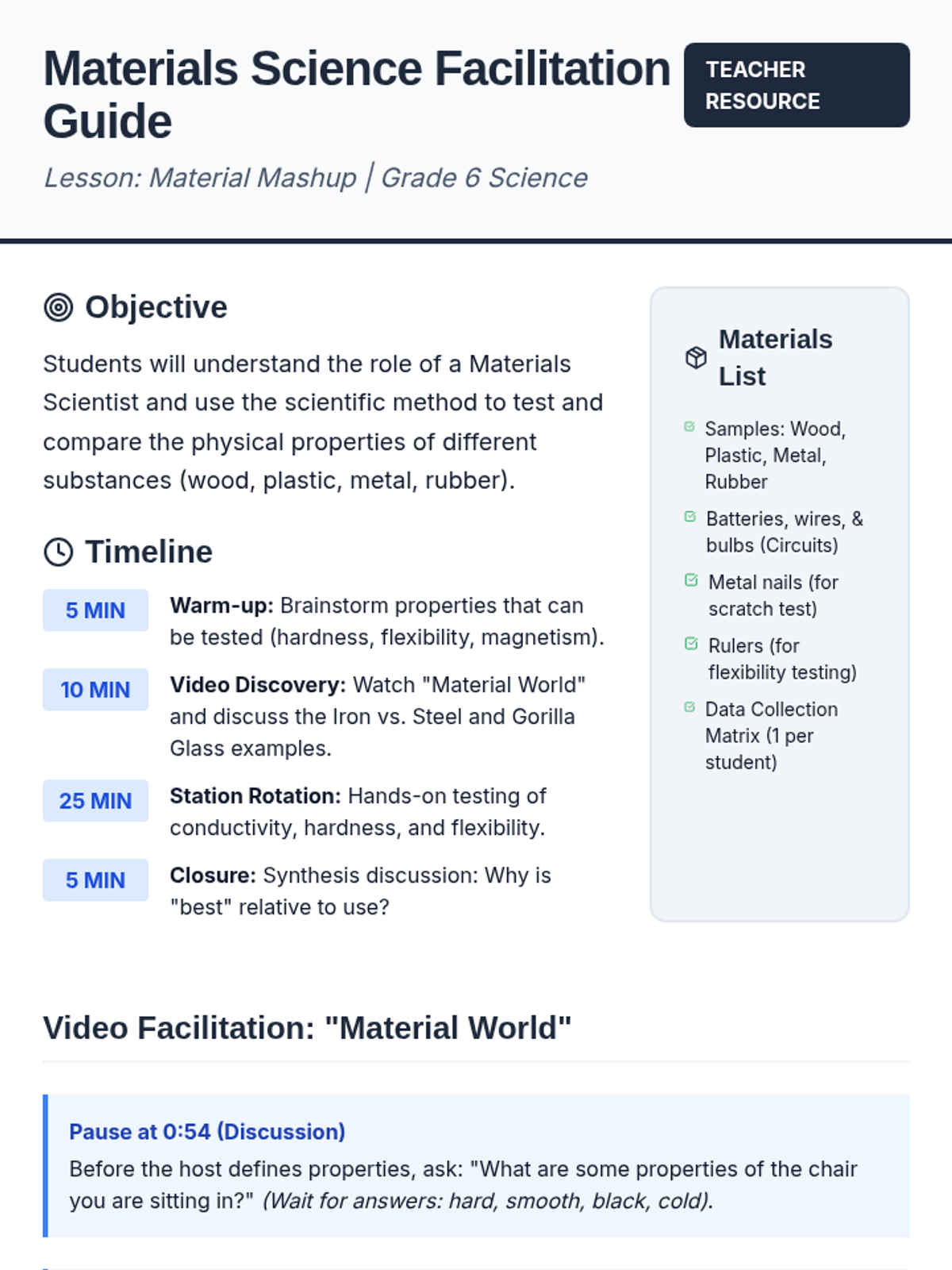
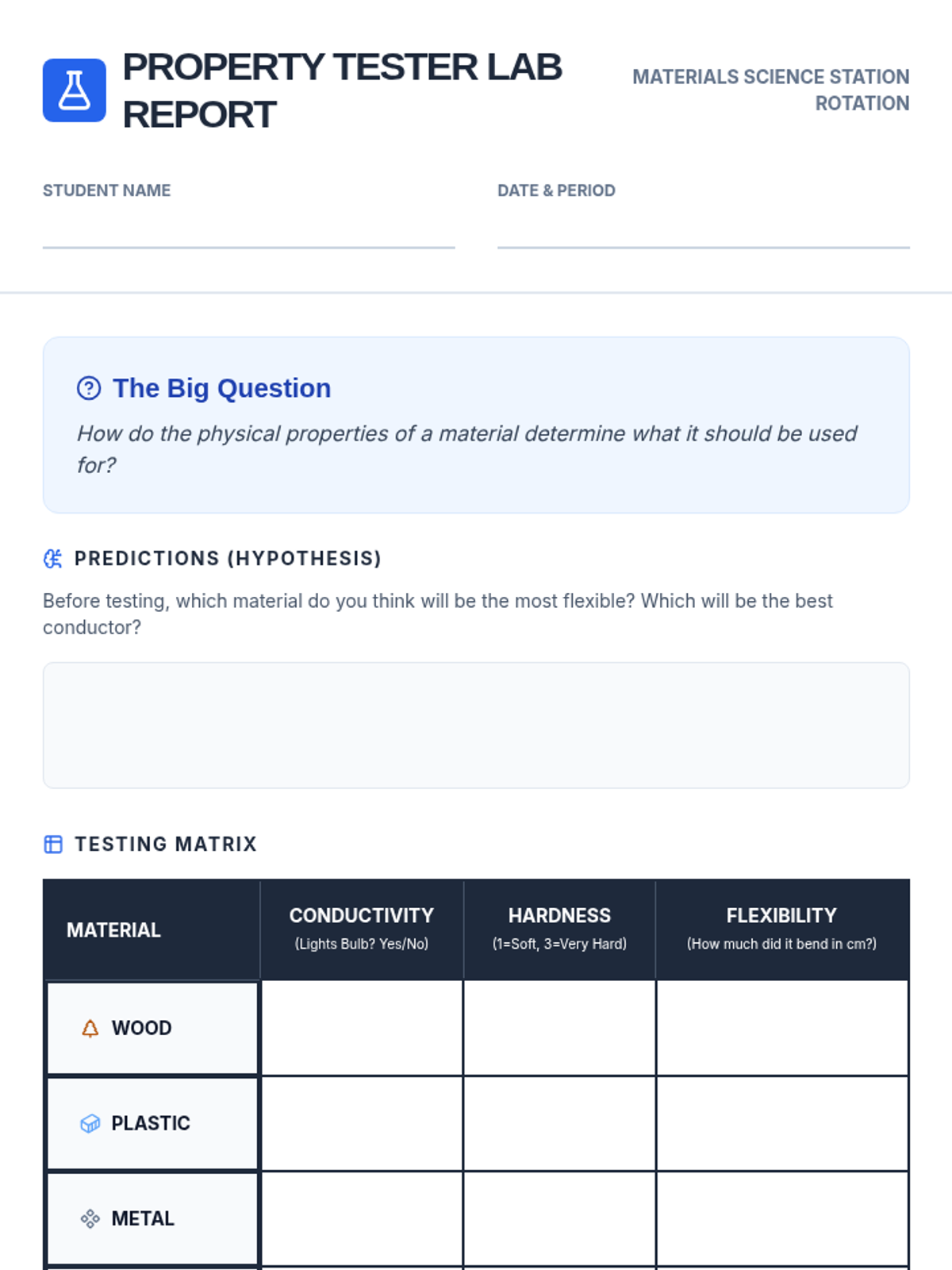
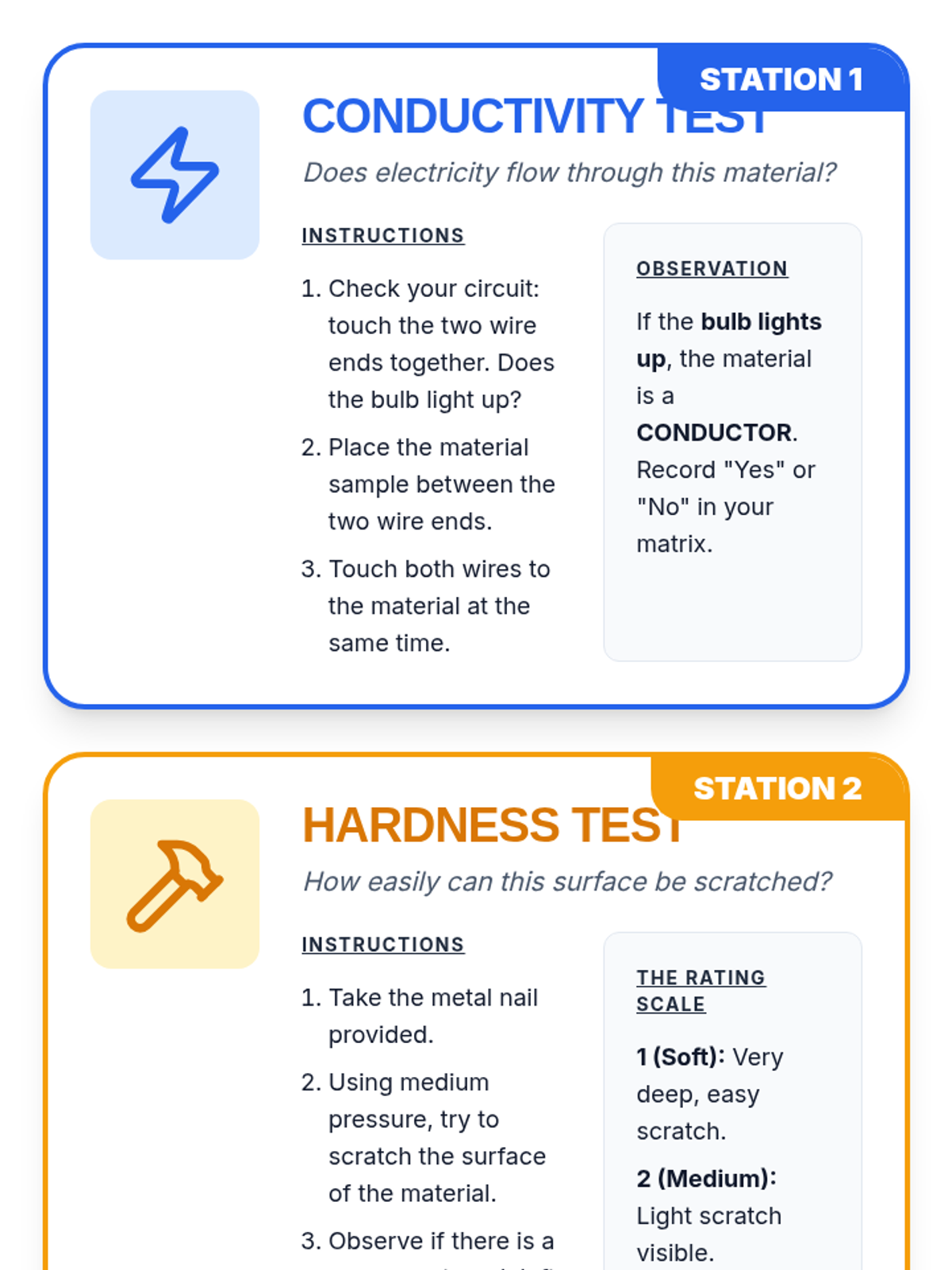
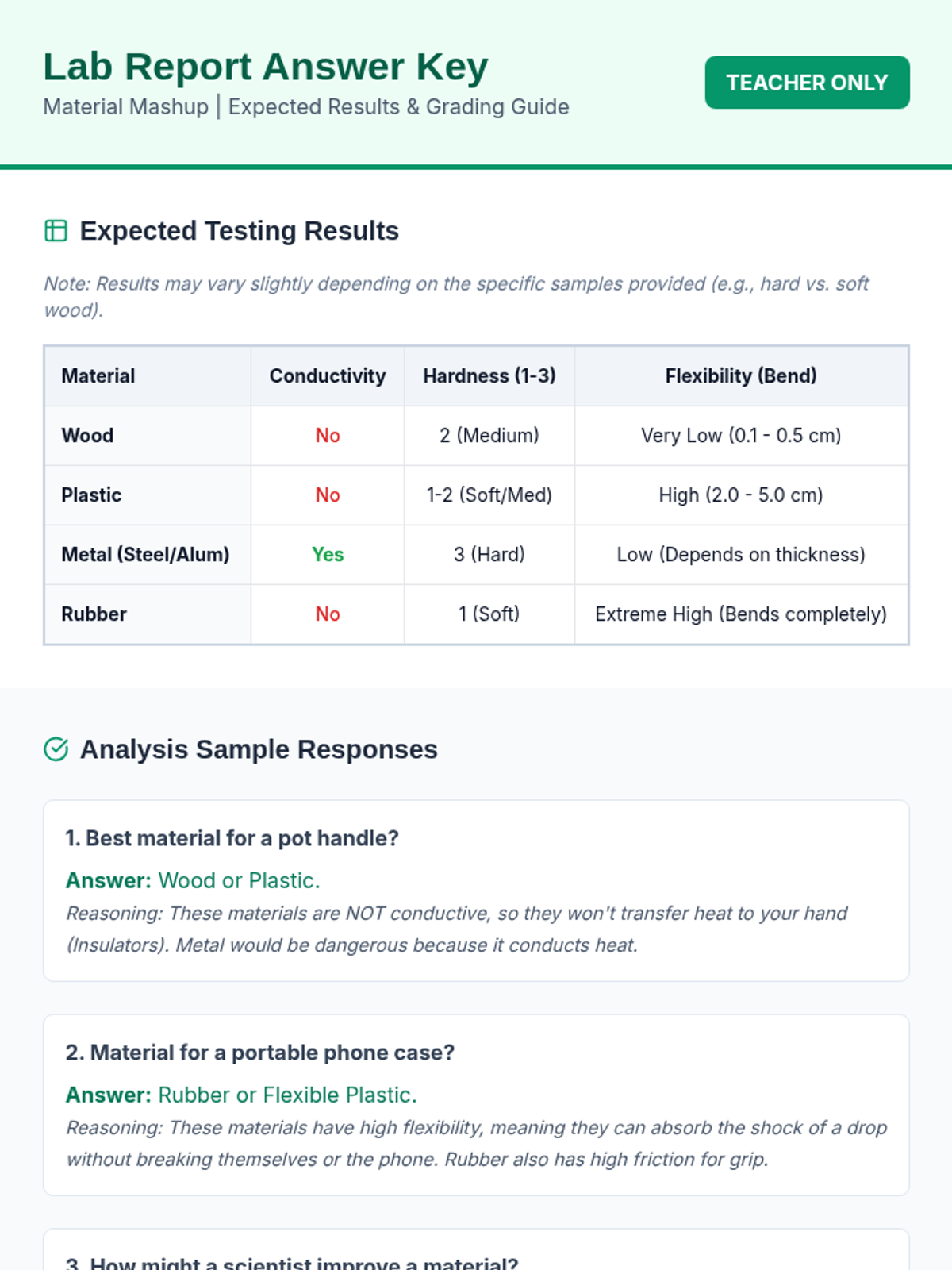
Students explore the world of materials science, testing various substances for conductivity, hardness, and flexibility to understand how properties dictate a material's use.
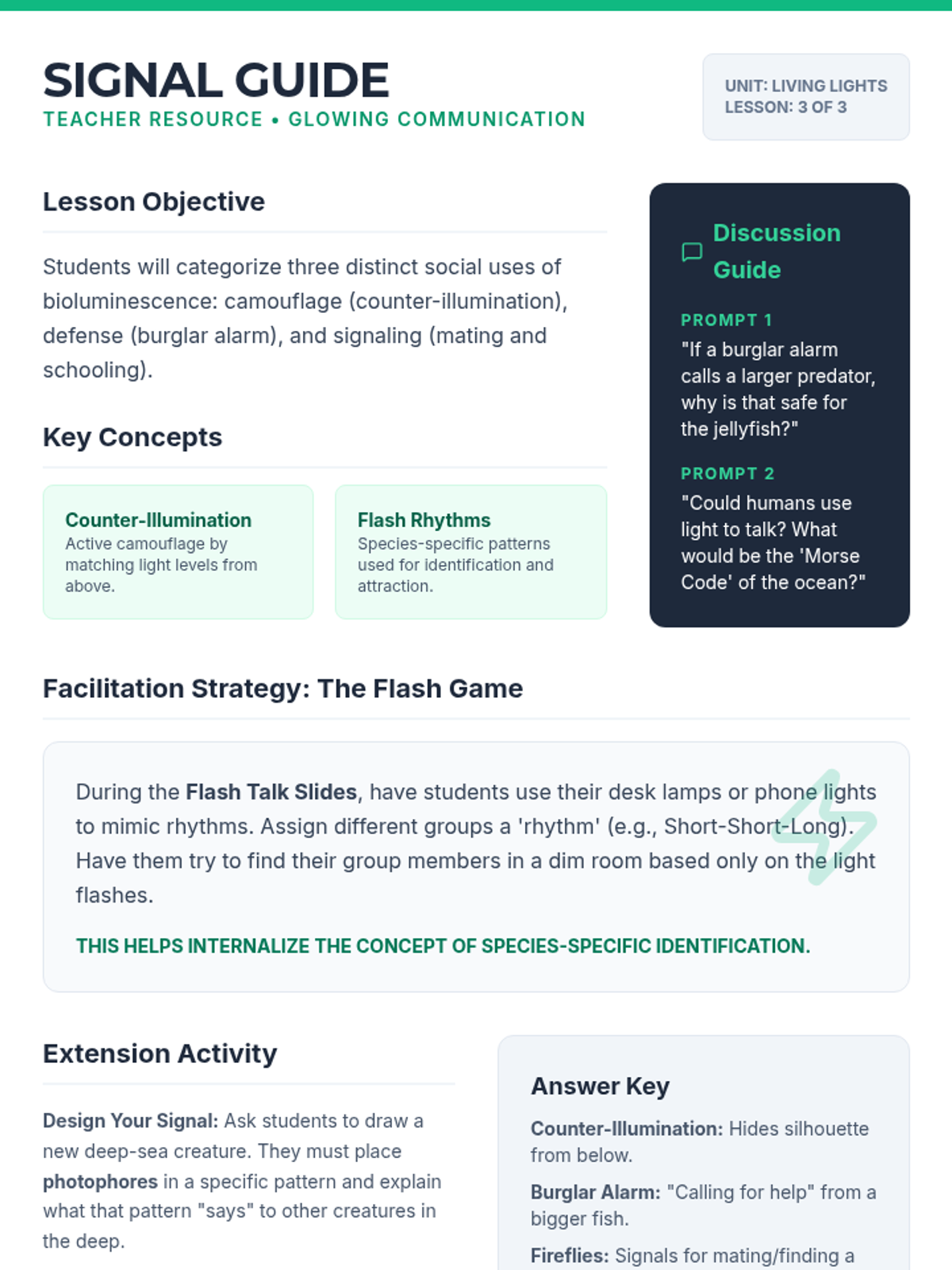
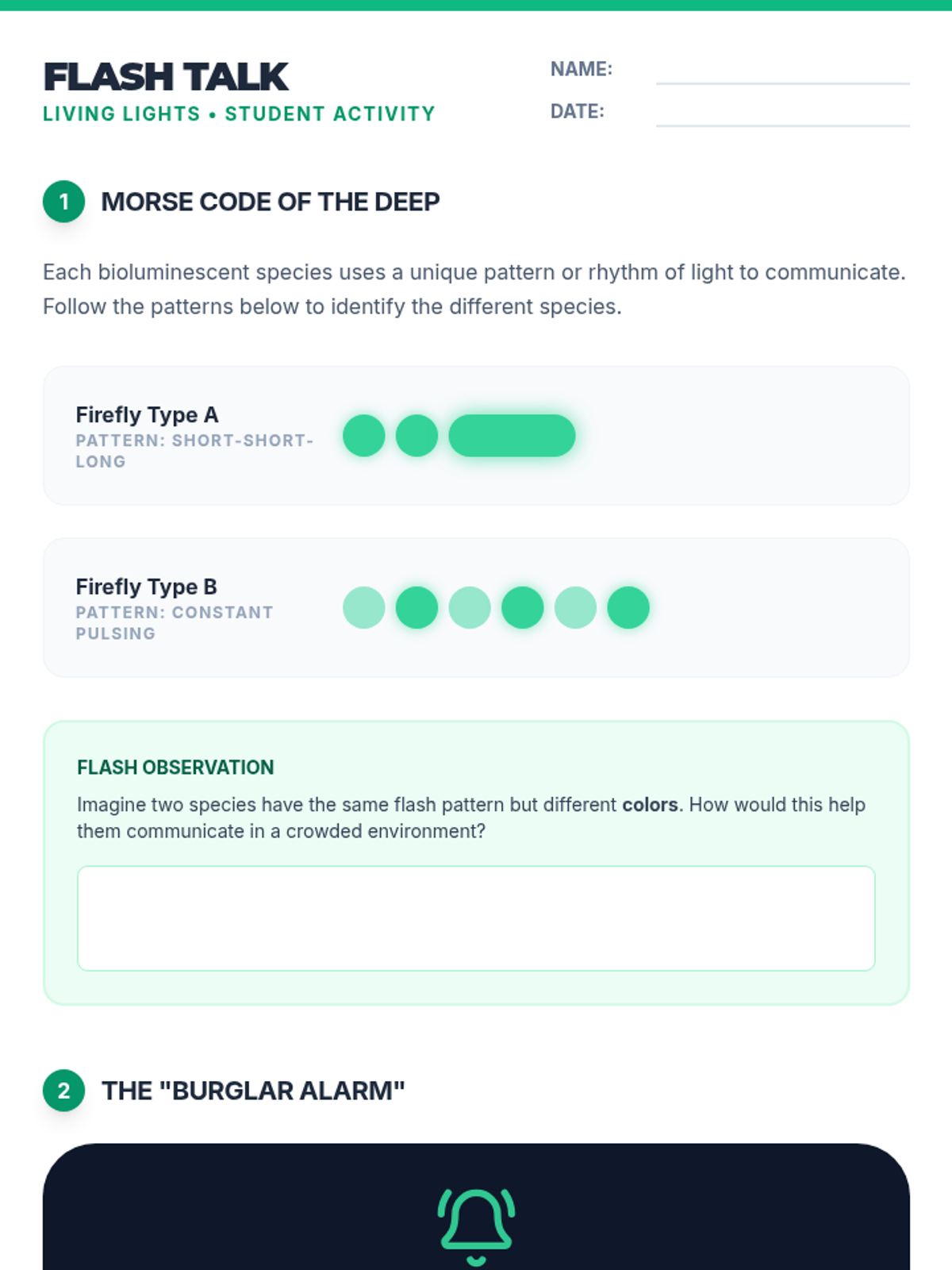
How and why organisms use light for social interactions, communication, and complex behaviors. Students explore strategies like counter-illumination and burglar alarms.
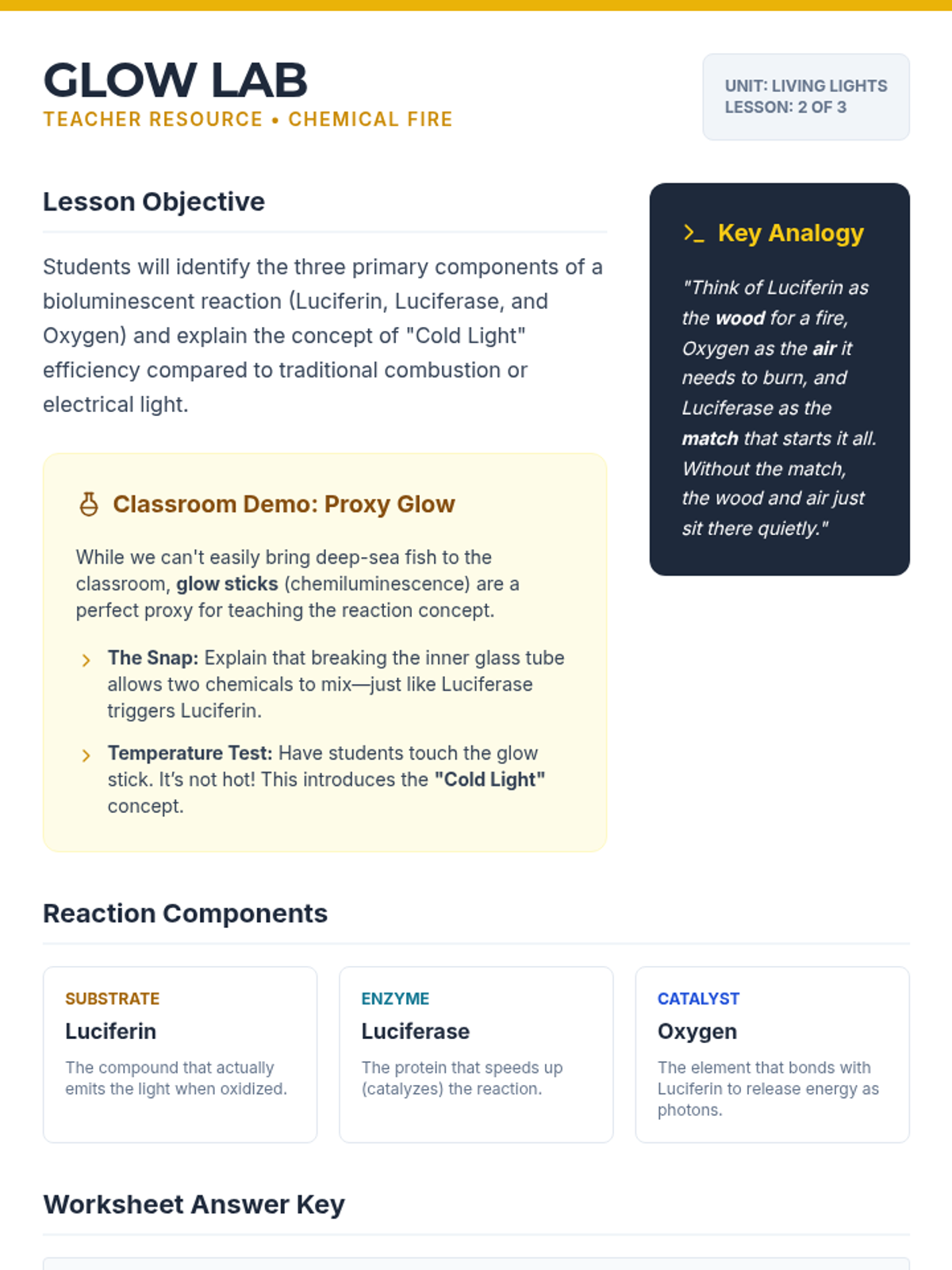
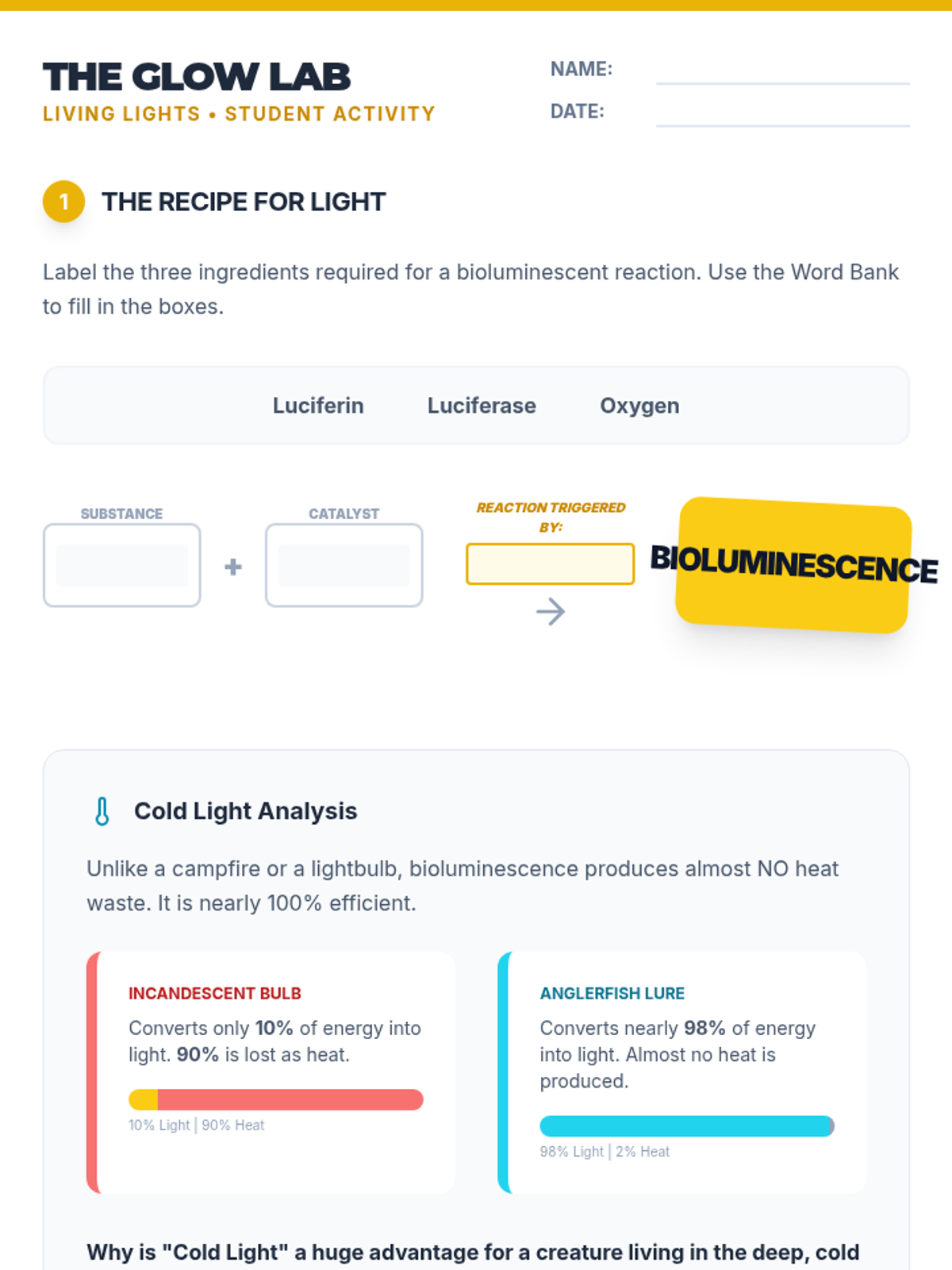
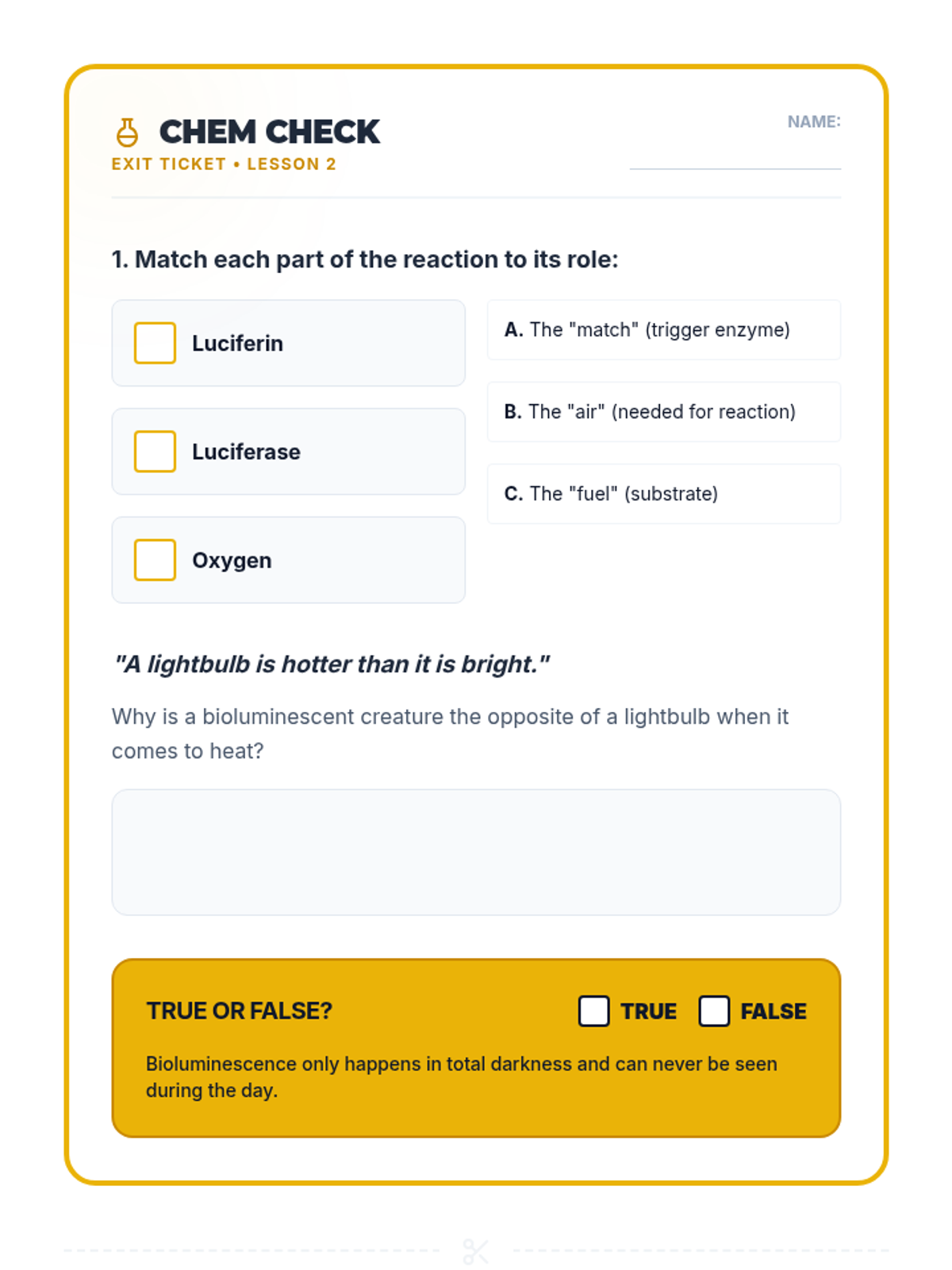
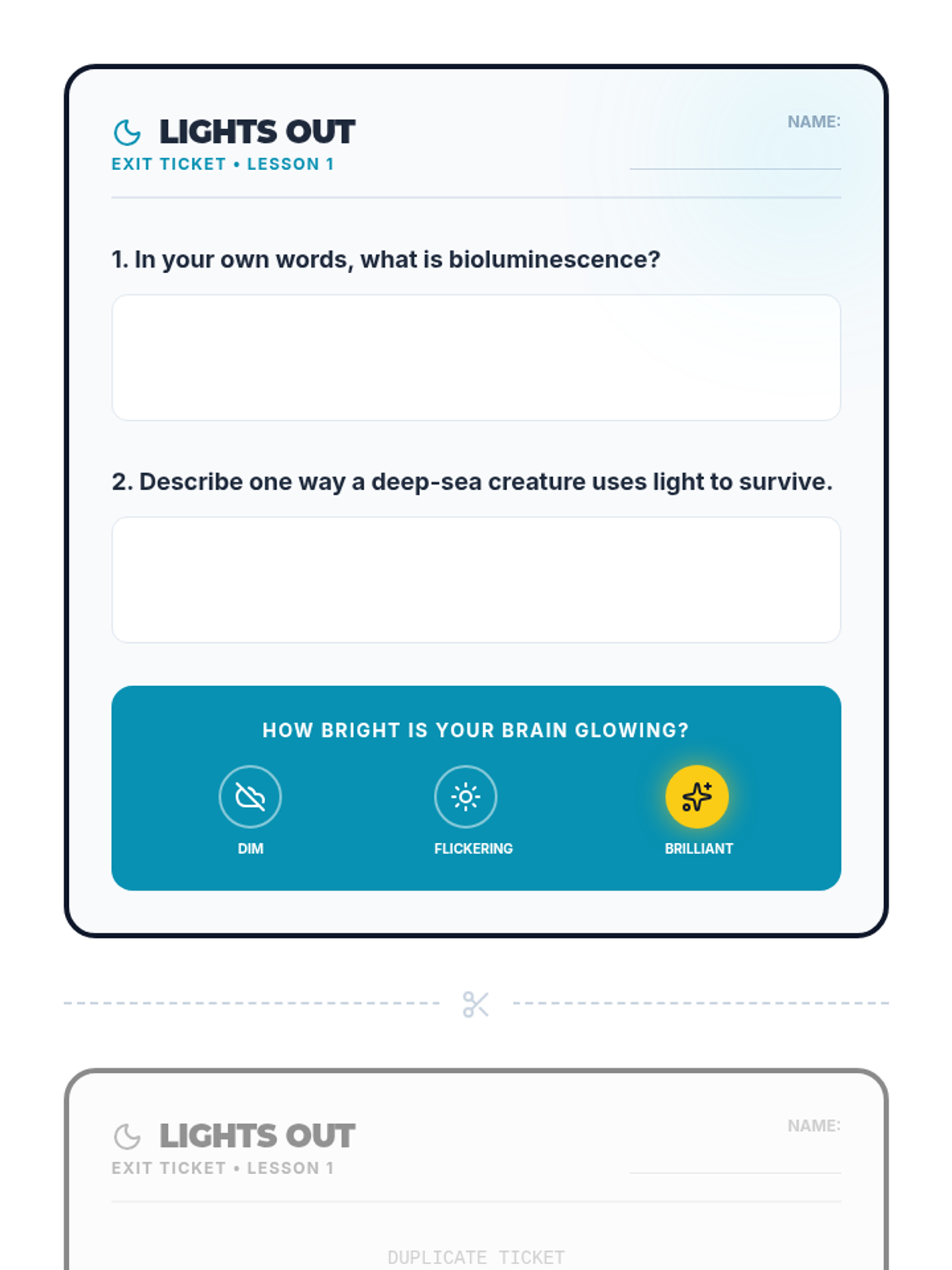
How is light made? Students break down the chemical reaction of bioluminescence, exploring the interaction between luciferin, luciferase, and oxygen.
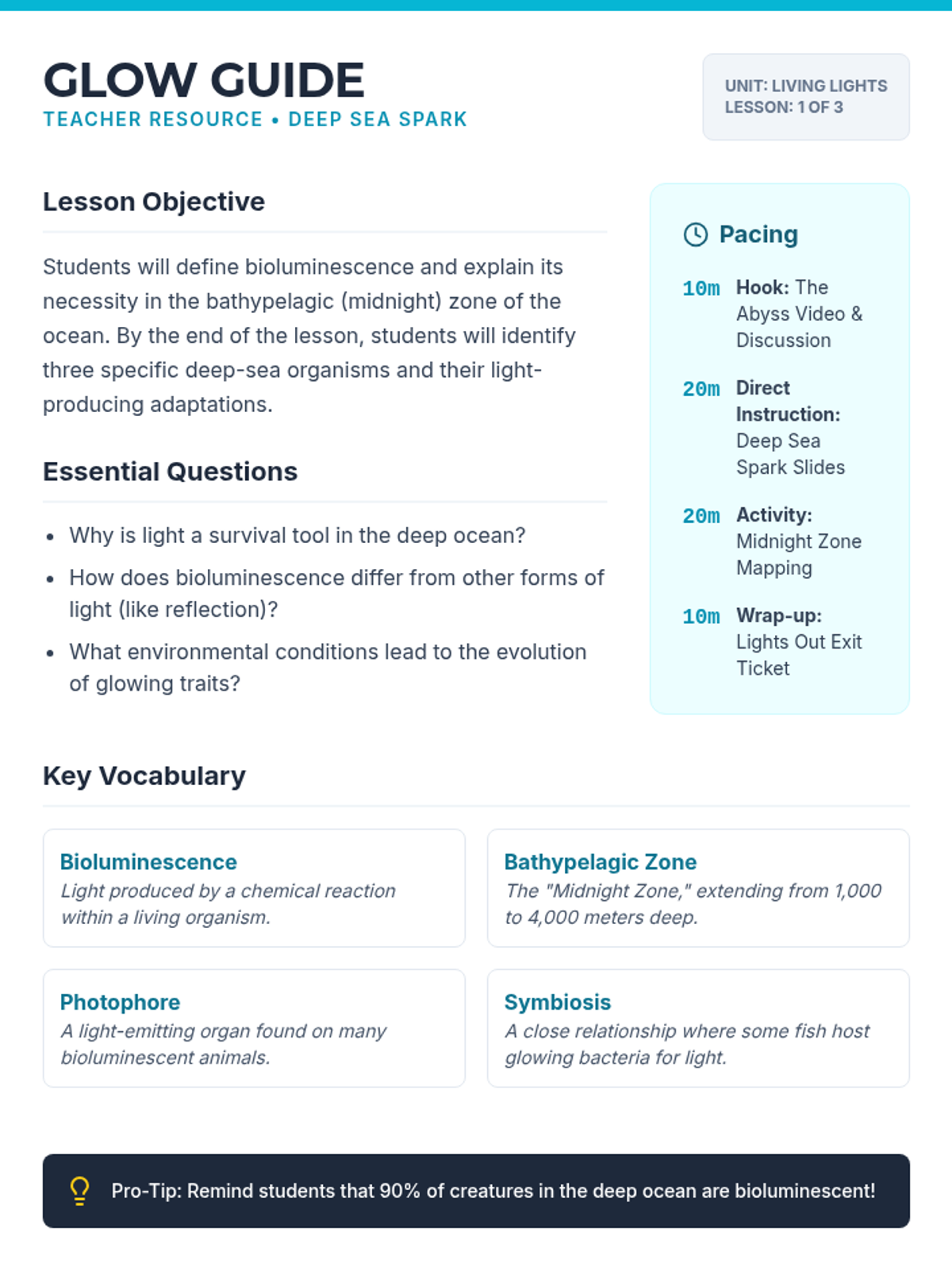
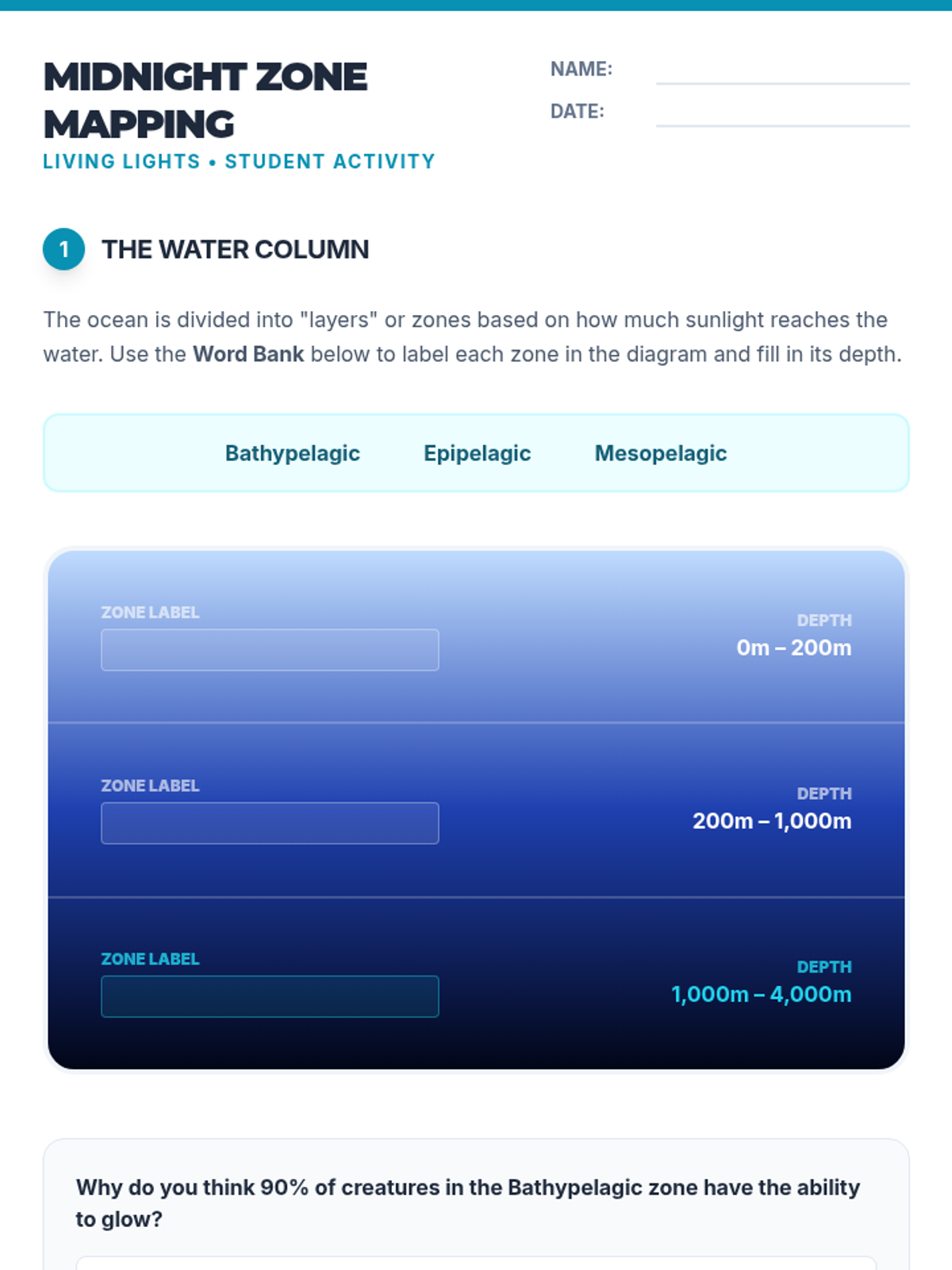
Discover the mysterious world of the deep ocean's midnight zone. Students explore how creatures create light in total darkness and identify the physical adaptations of bioluminescent marine life.
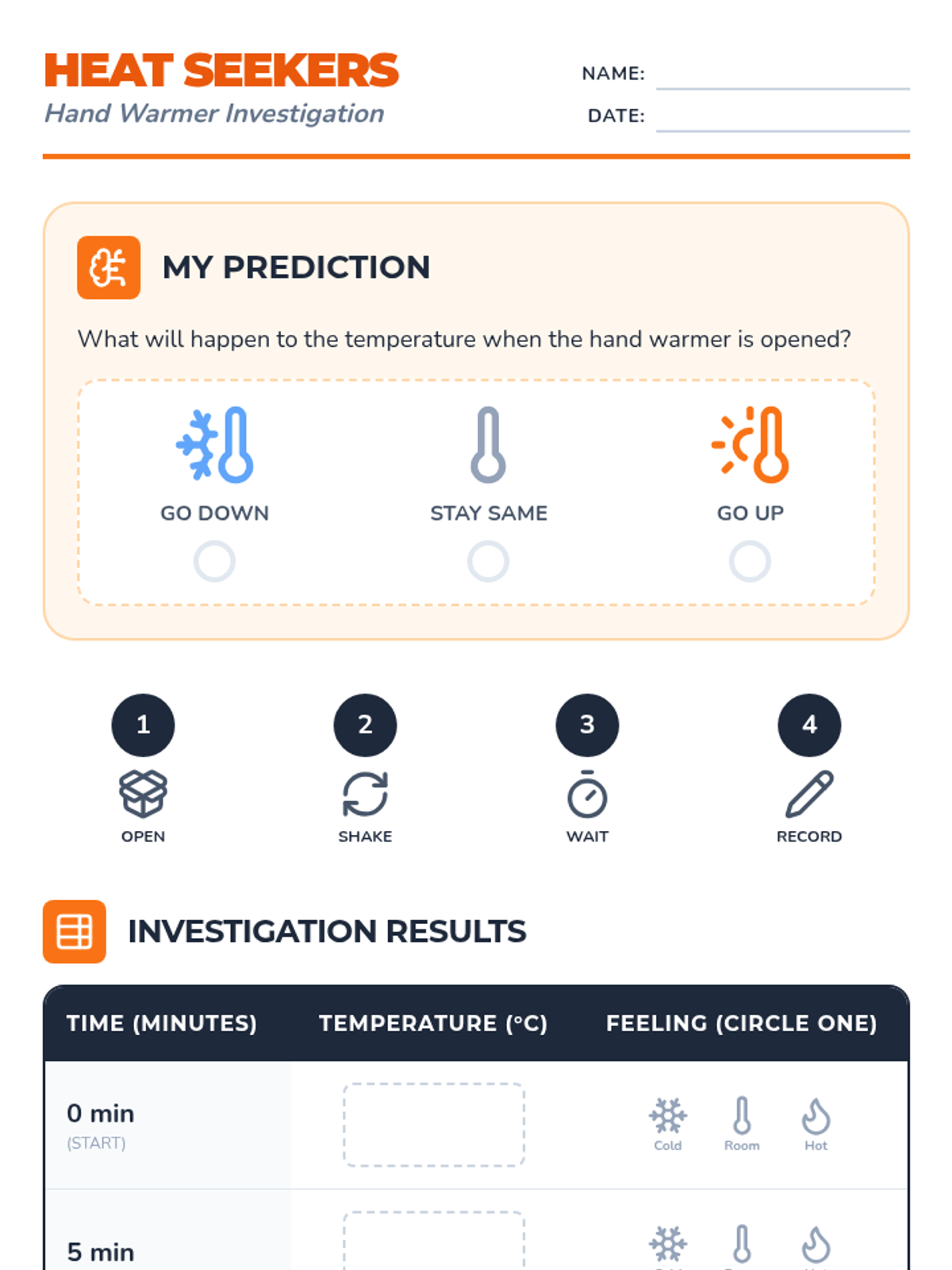
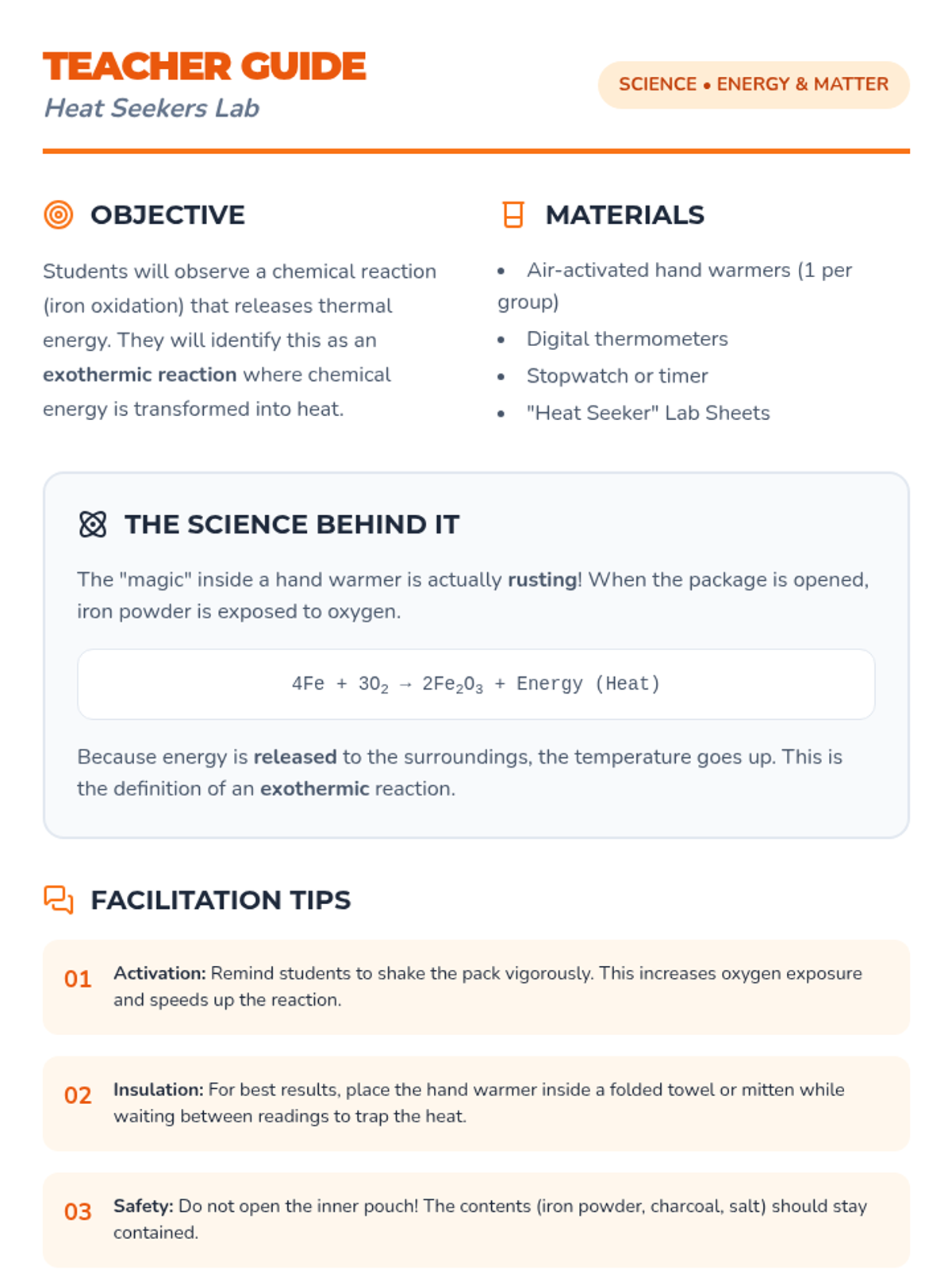
An investigation into exothermic reactions using hand warmers. Students observe and record temperature changes to understand how chemical energy transforms into heat energy.
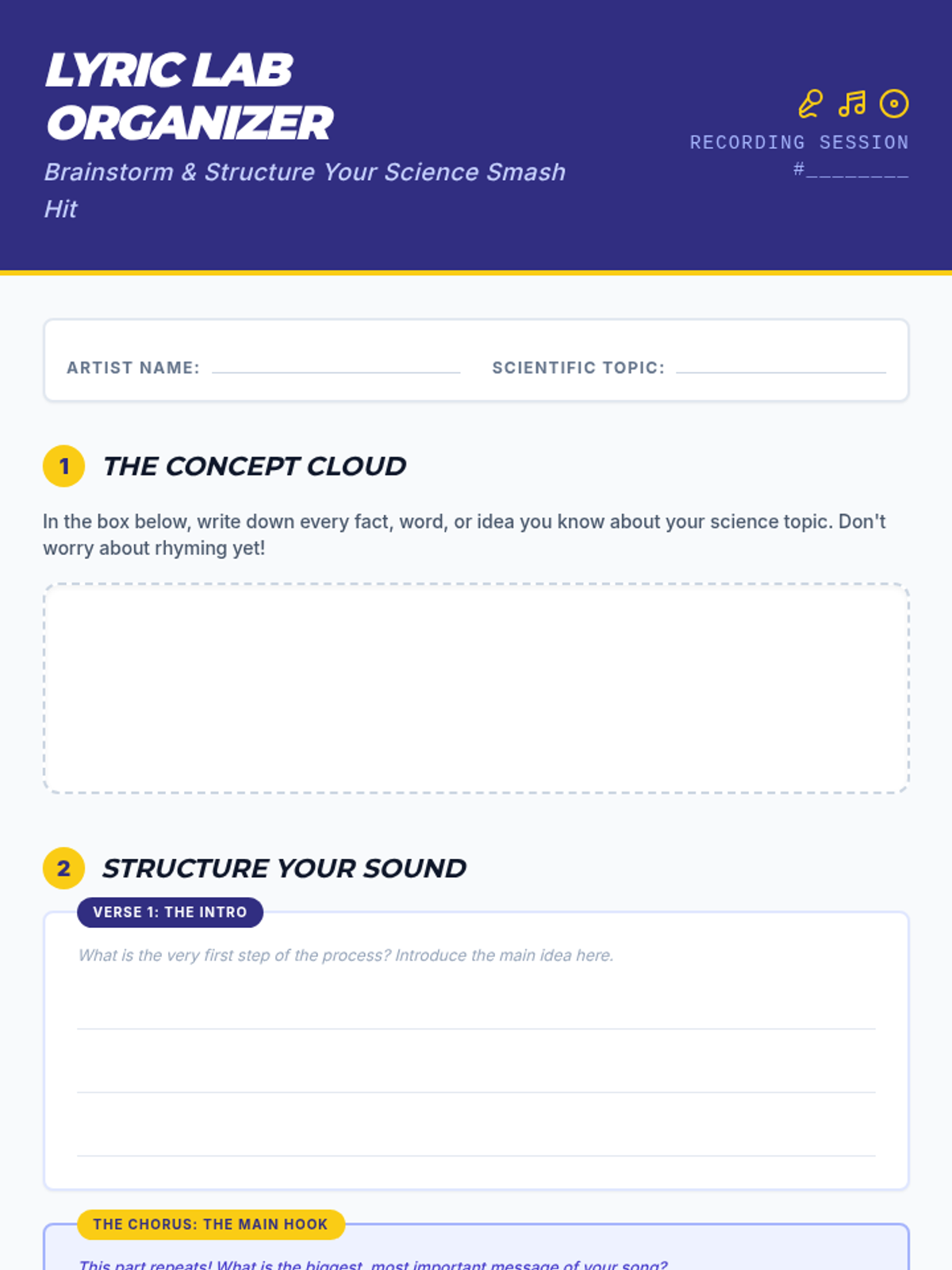
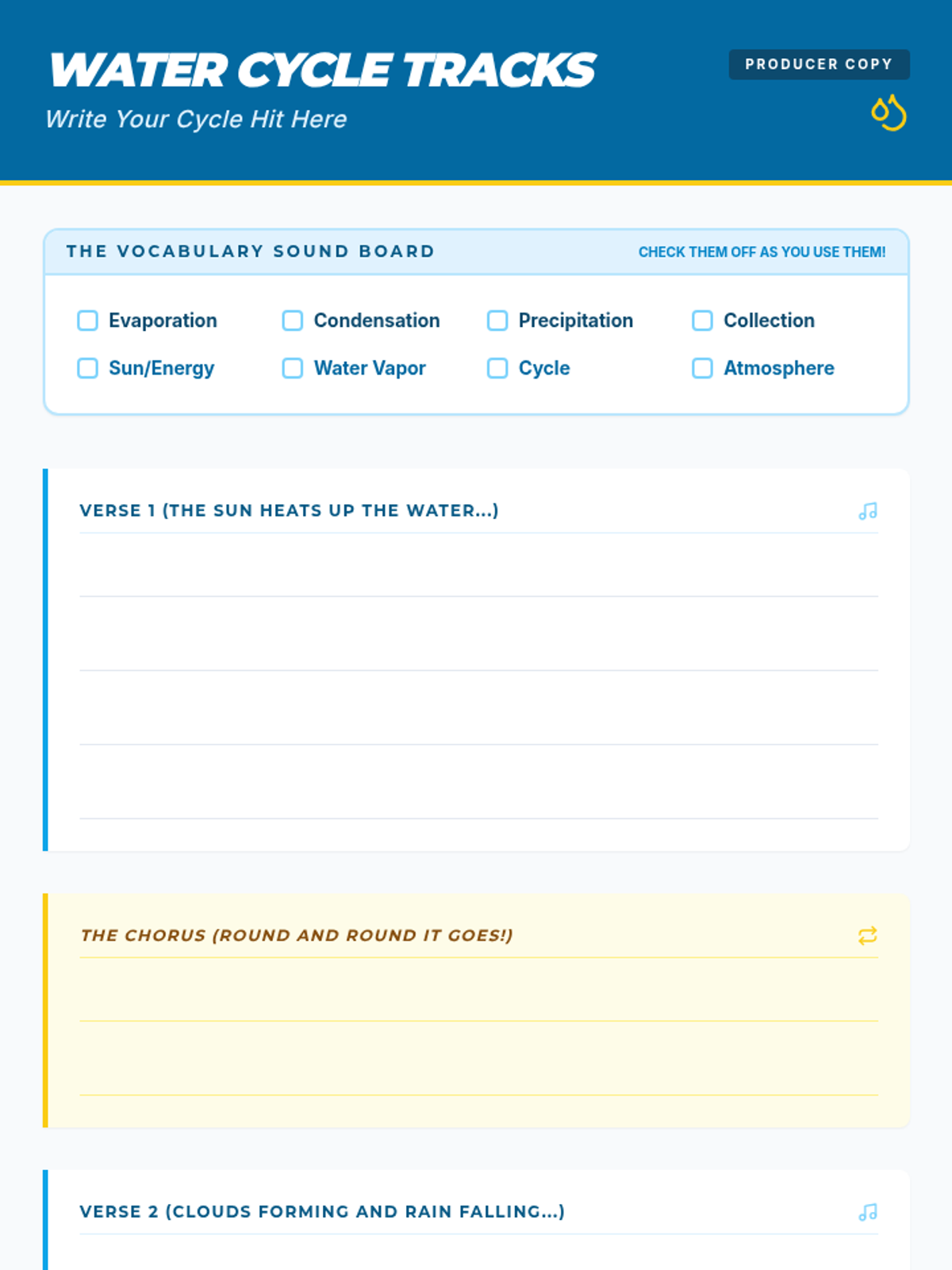
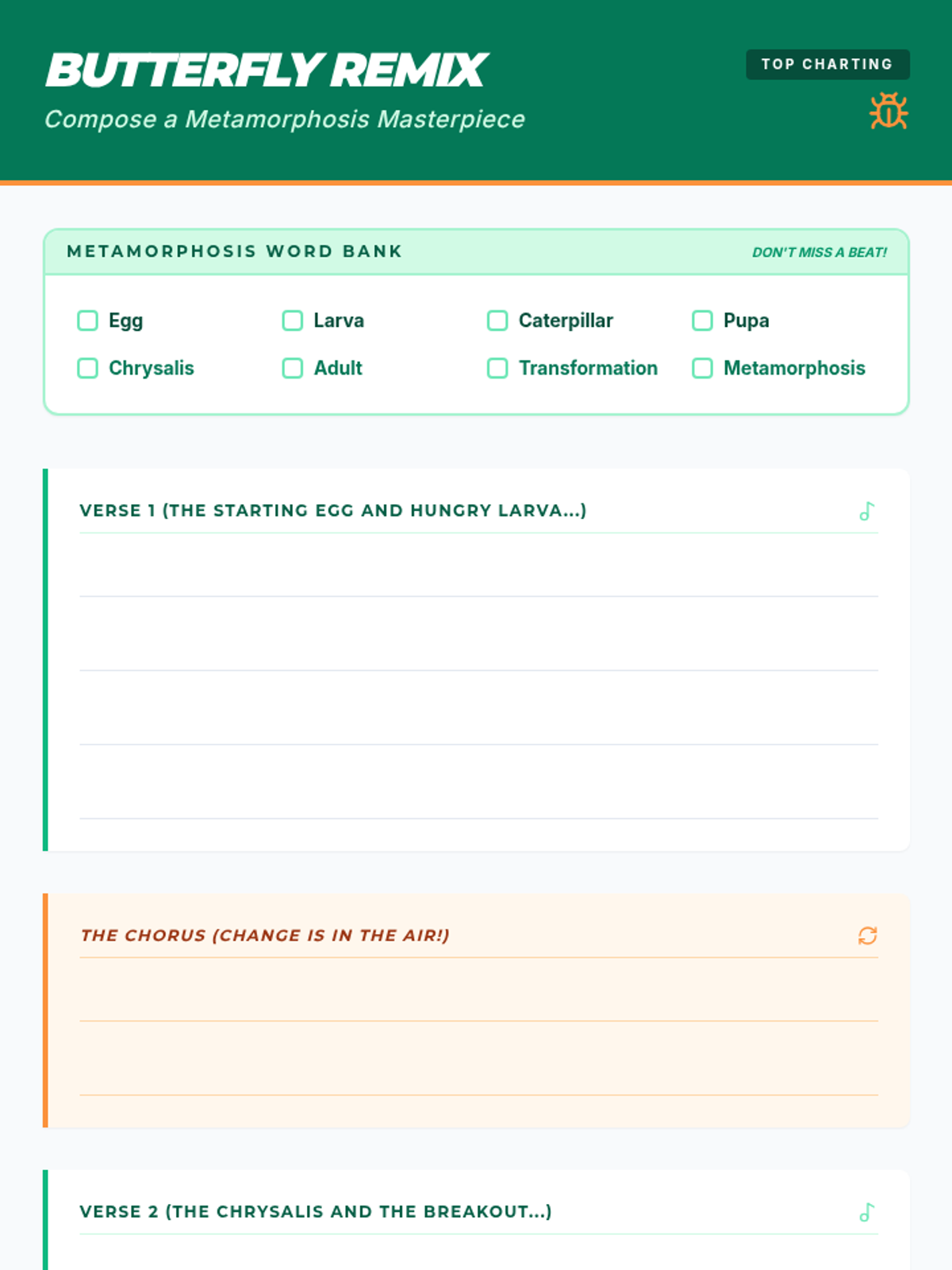
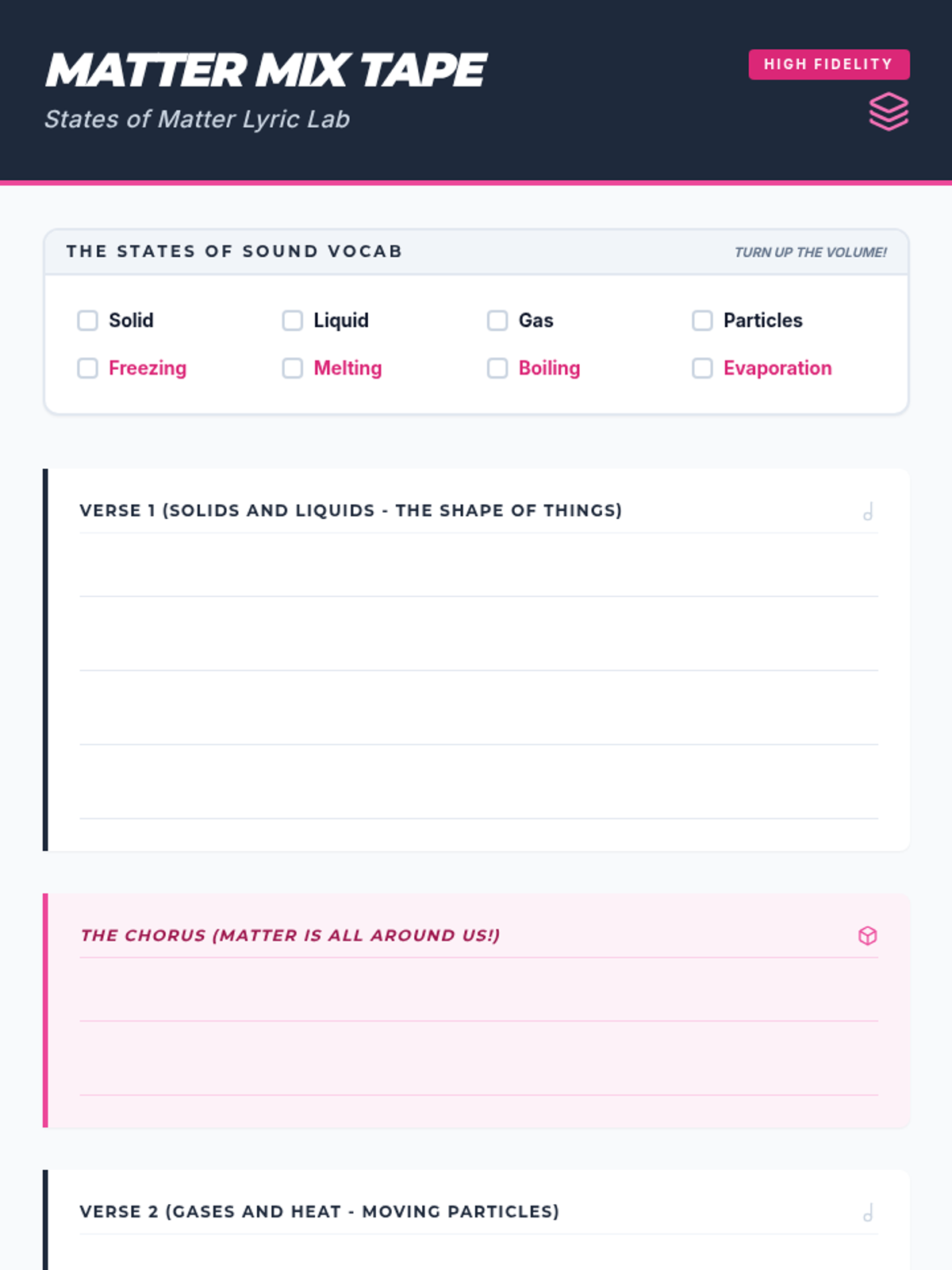
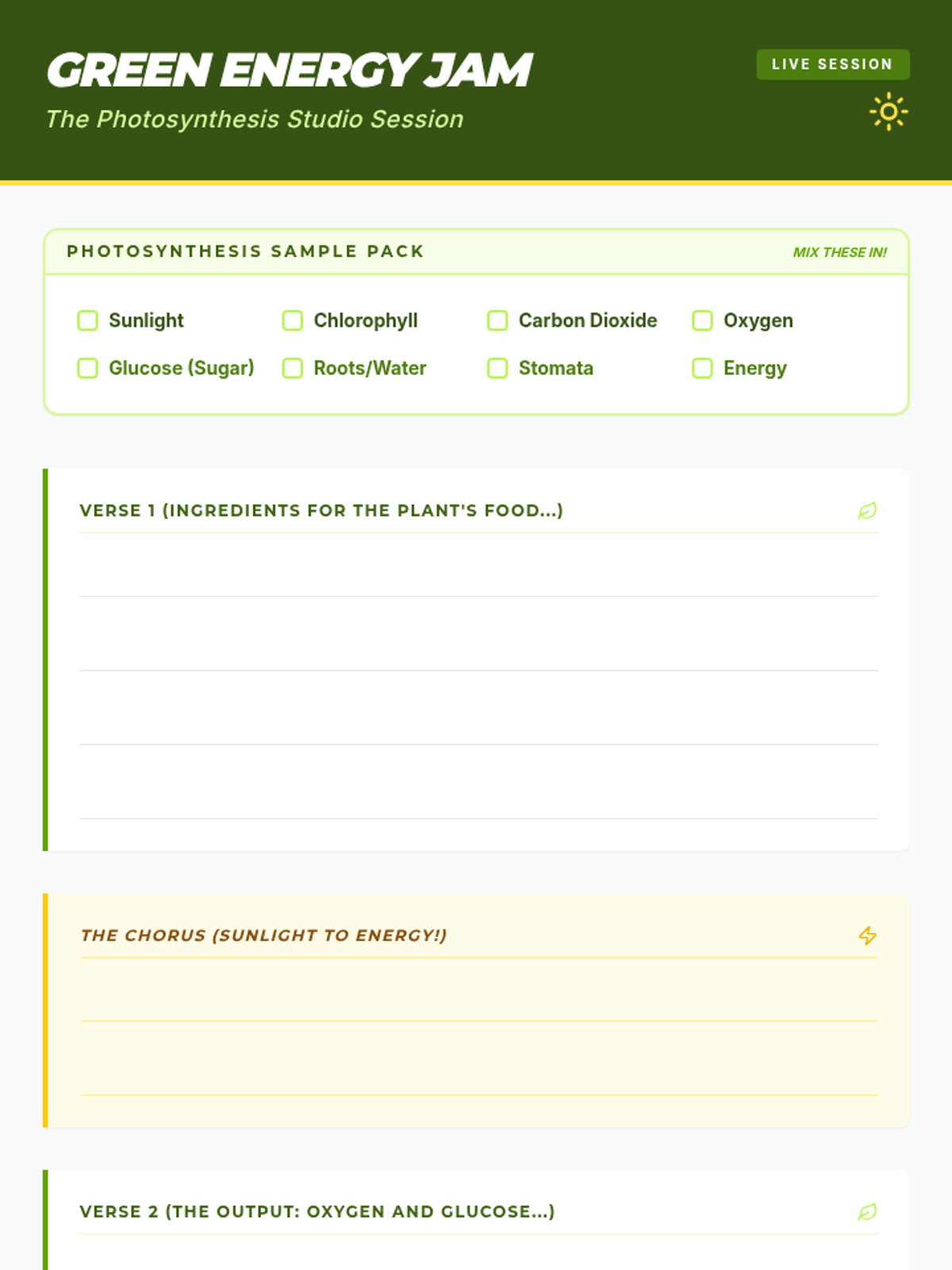
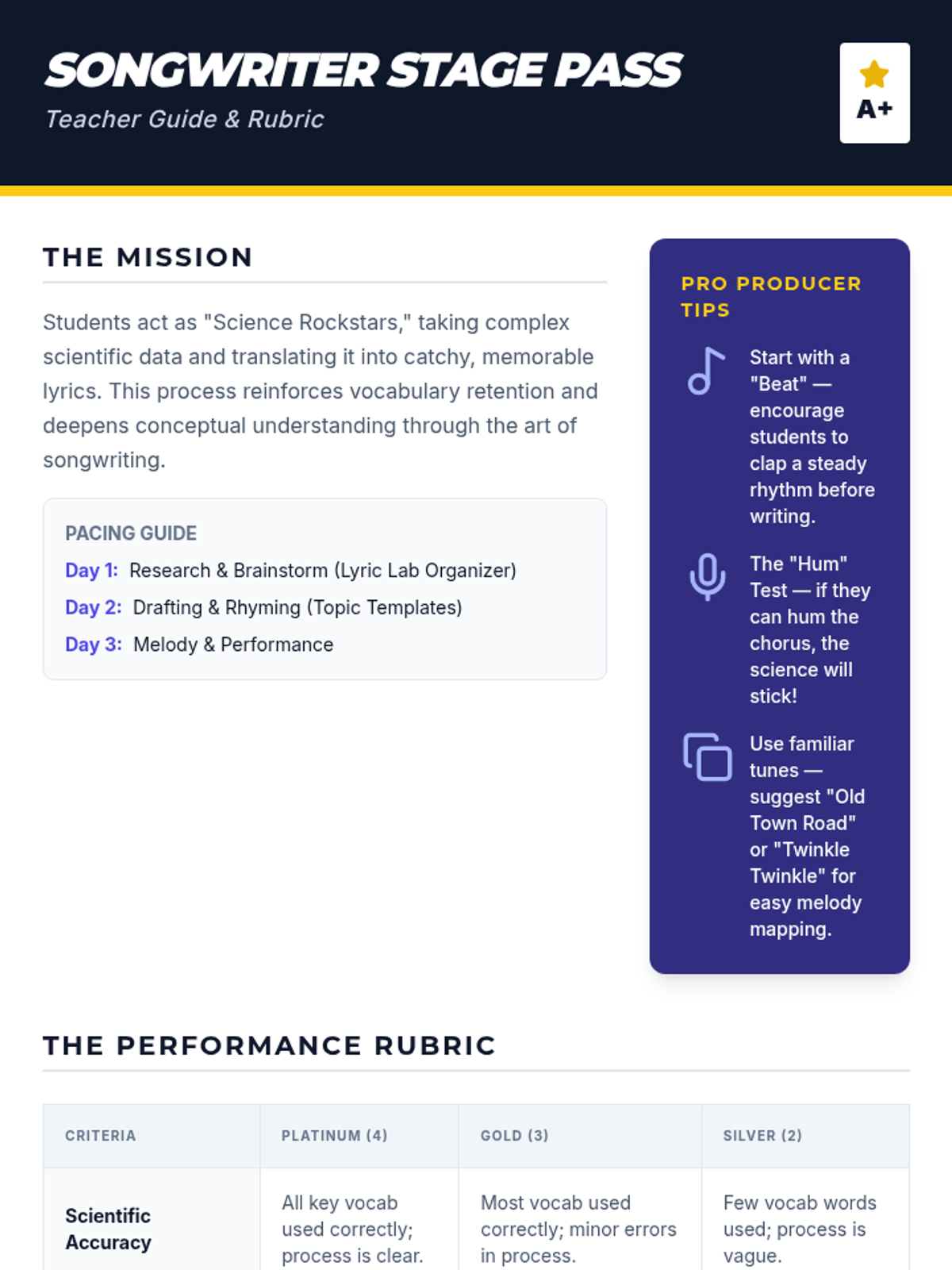
A cross-curricular lesson where students transform complex scientific processes into catchy songs. Students will use graphic organizers to map out lyrics and templates with vocabulary banks to ensure scientific accuracy in their musical compositions.
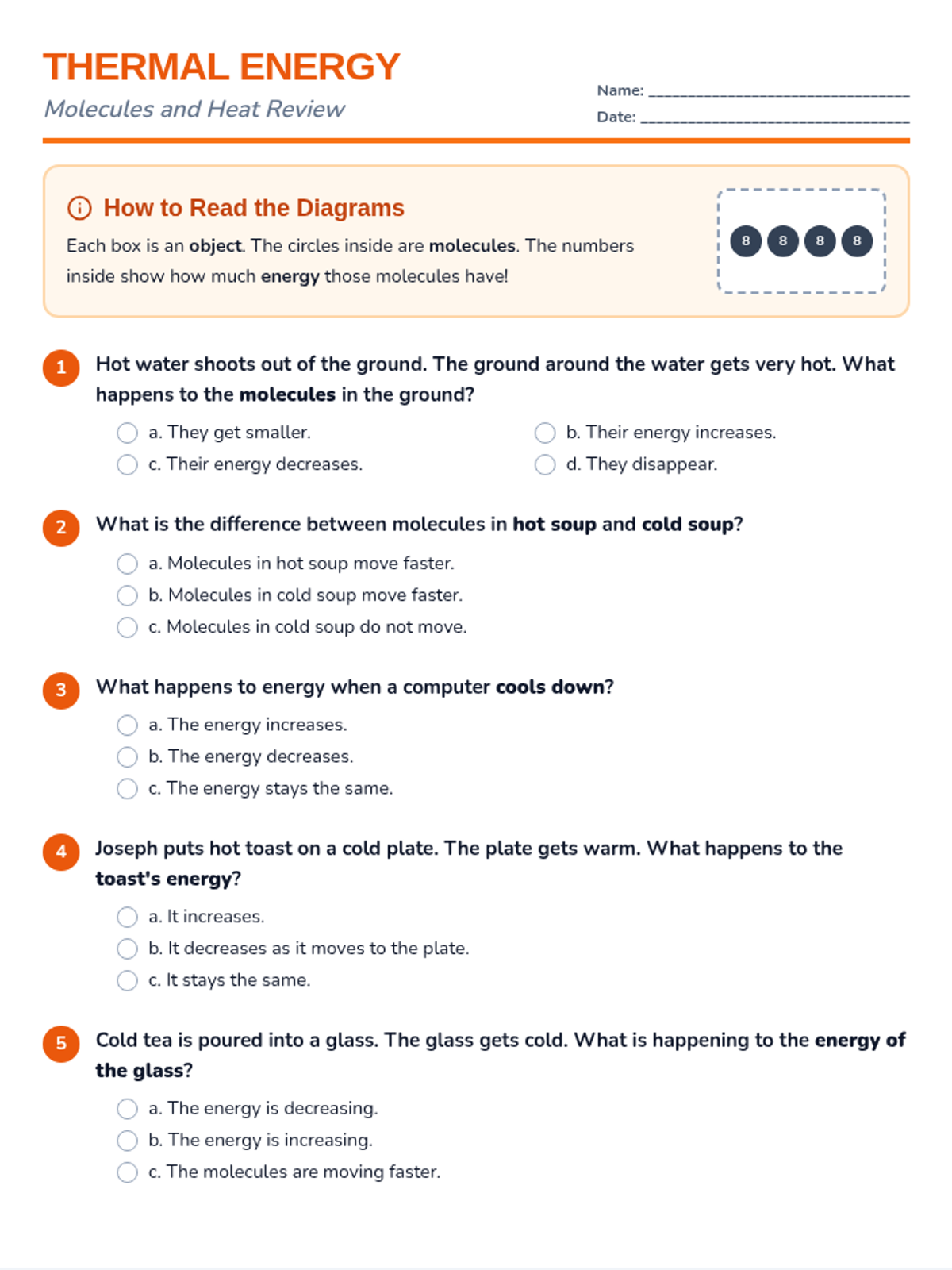
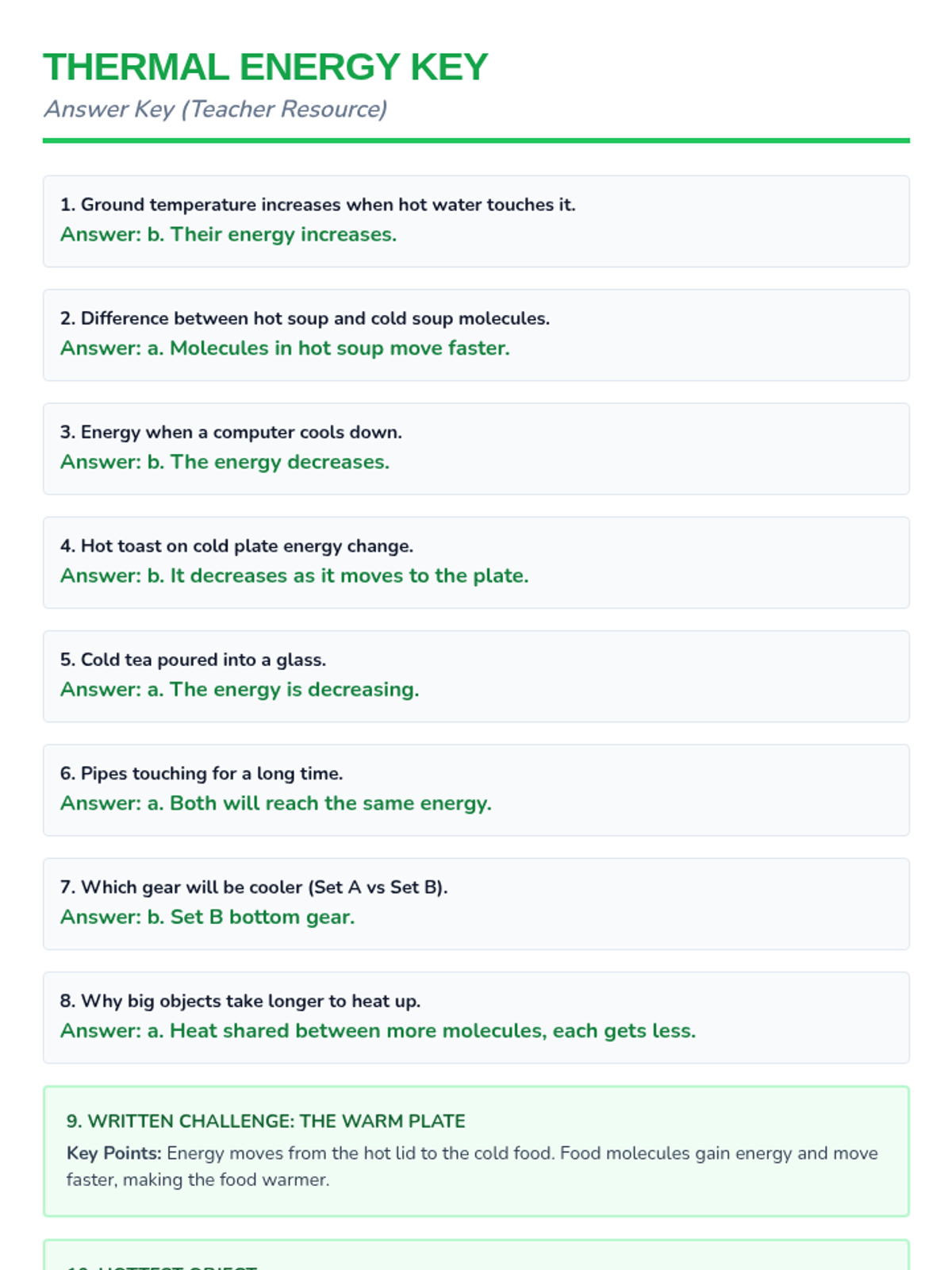
This lesson introduces 3rd-grade students to thermal energy, molecules, and heat transfer using visual diagrams. Students will explore how energy moves between objects and how the speed of molecules relates to temperature.
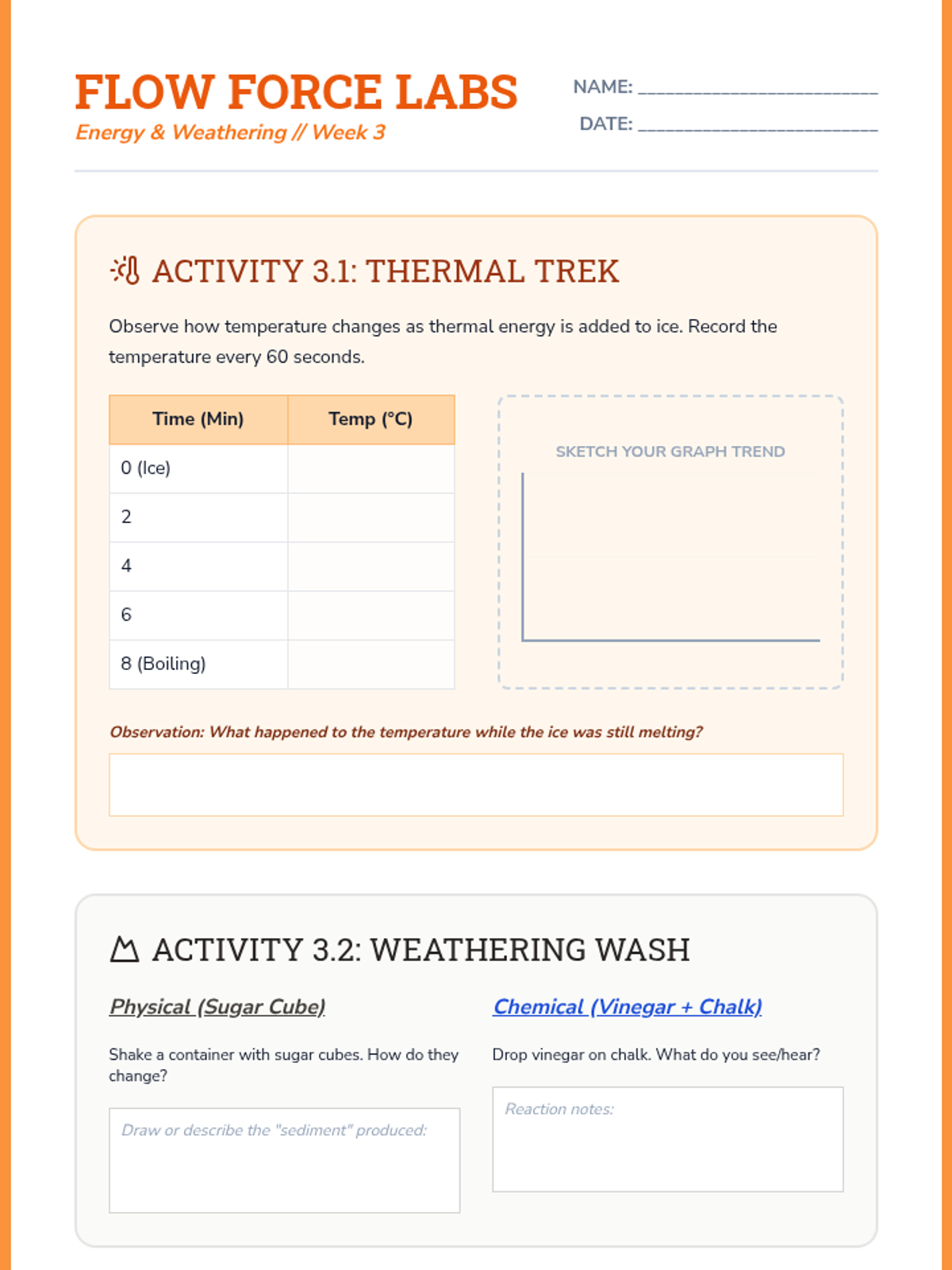
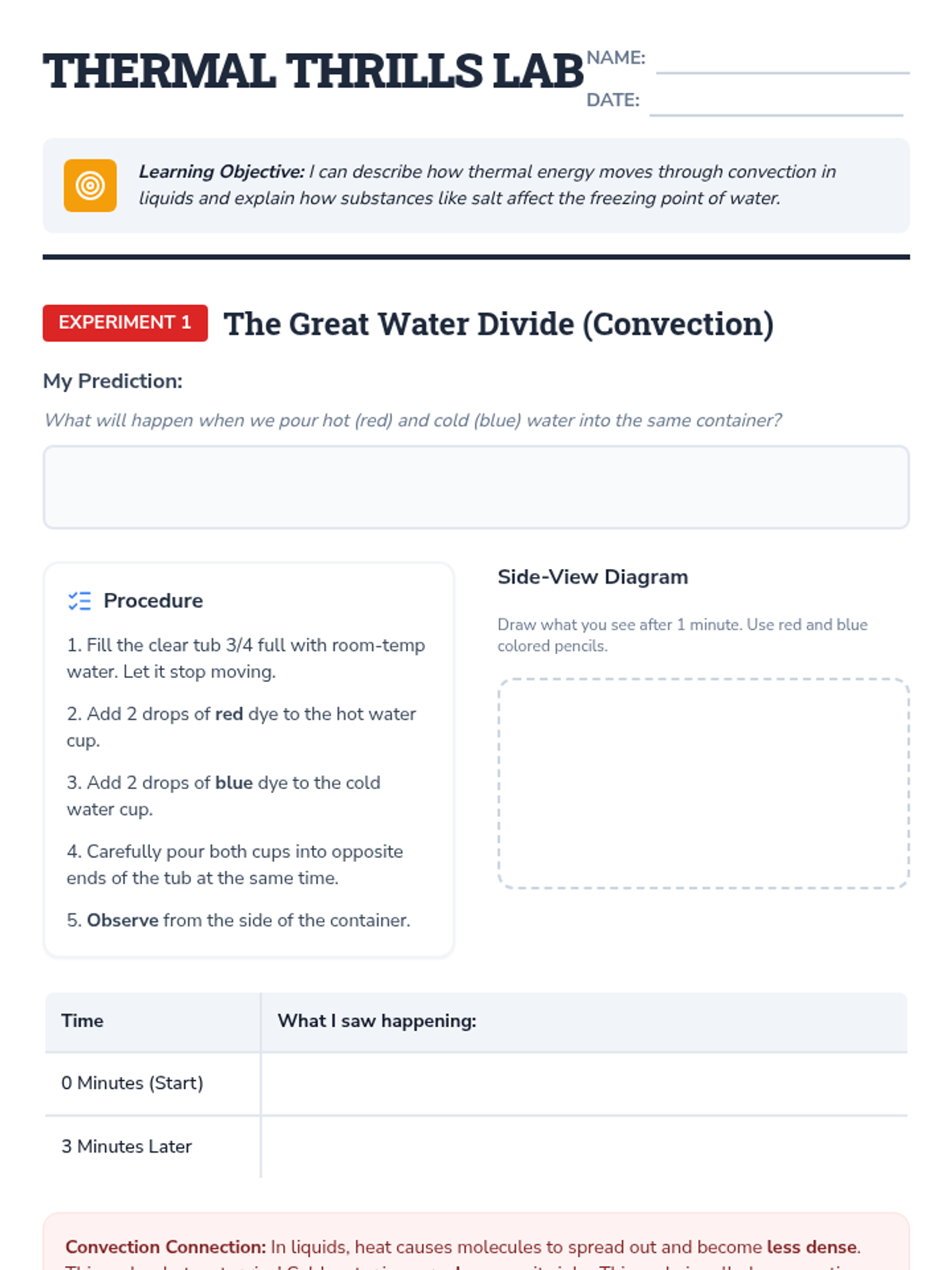
A hands-on exploration of thermal energy transfer through convection and freezing point depression experiments. Students observe how density and temperature interact in water and how salt affects the melting process of ice.
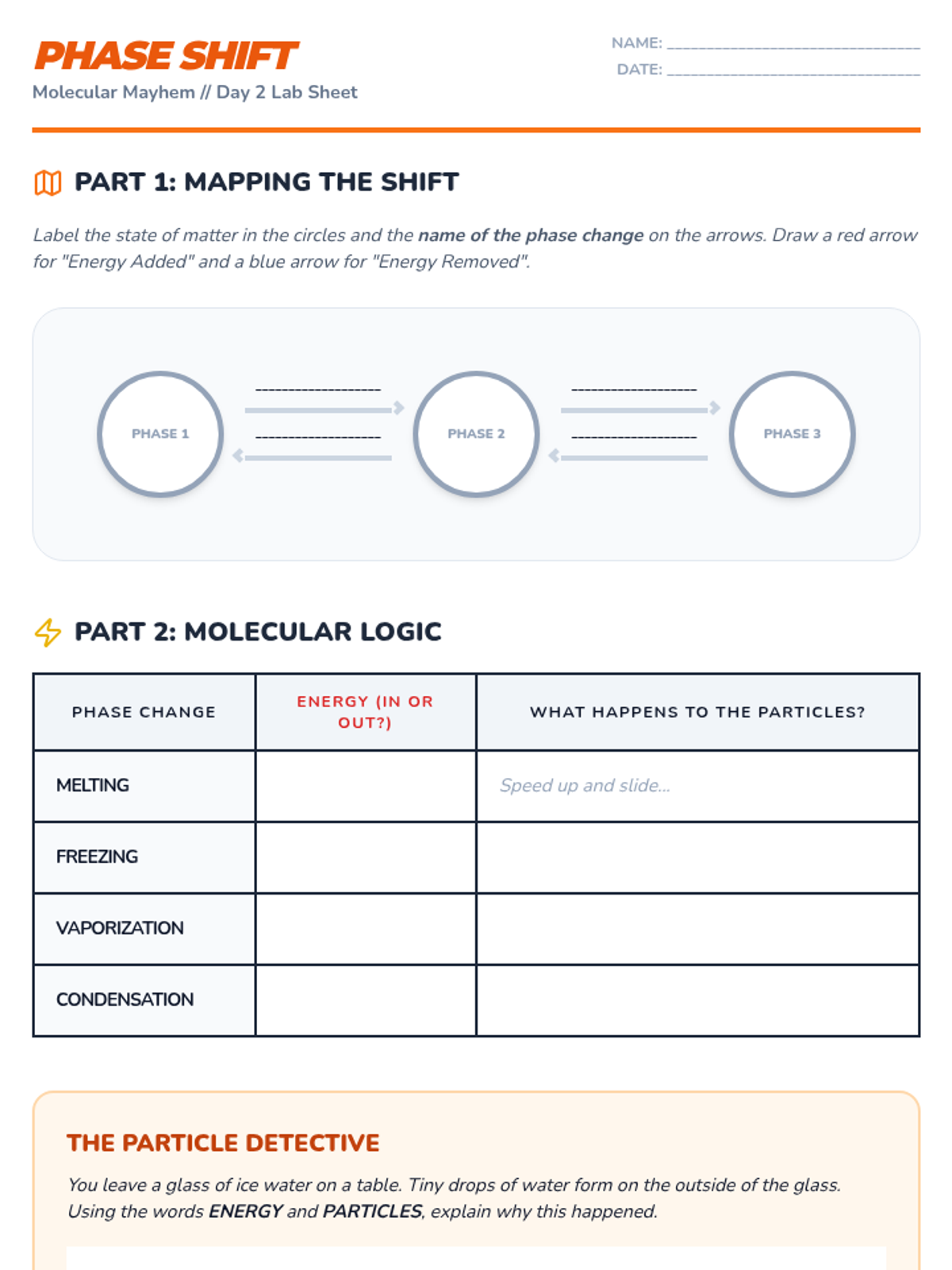
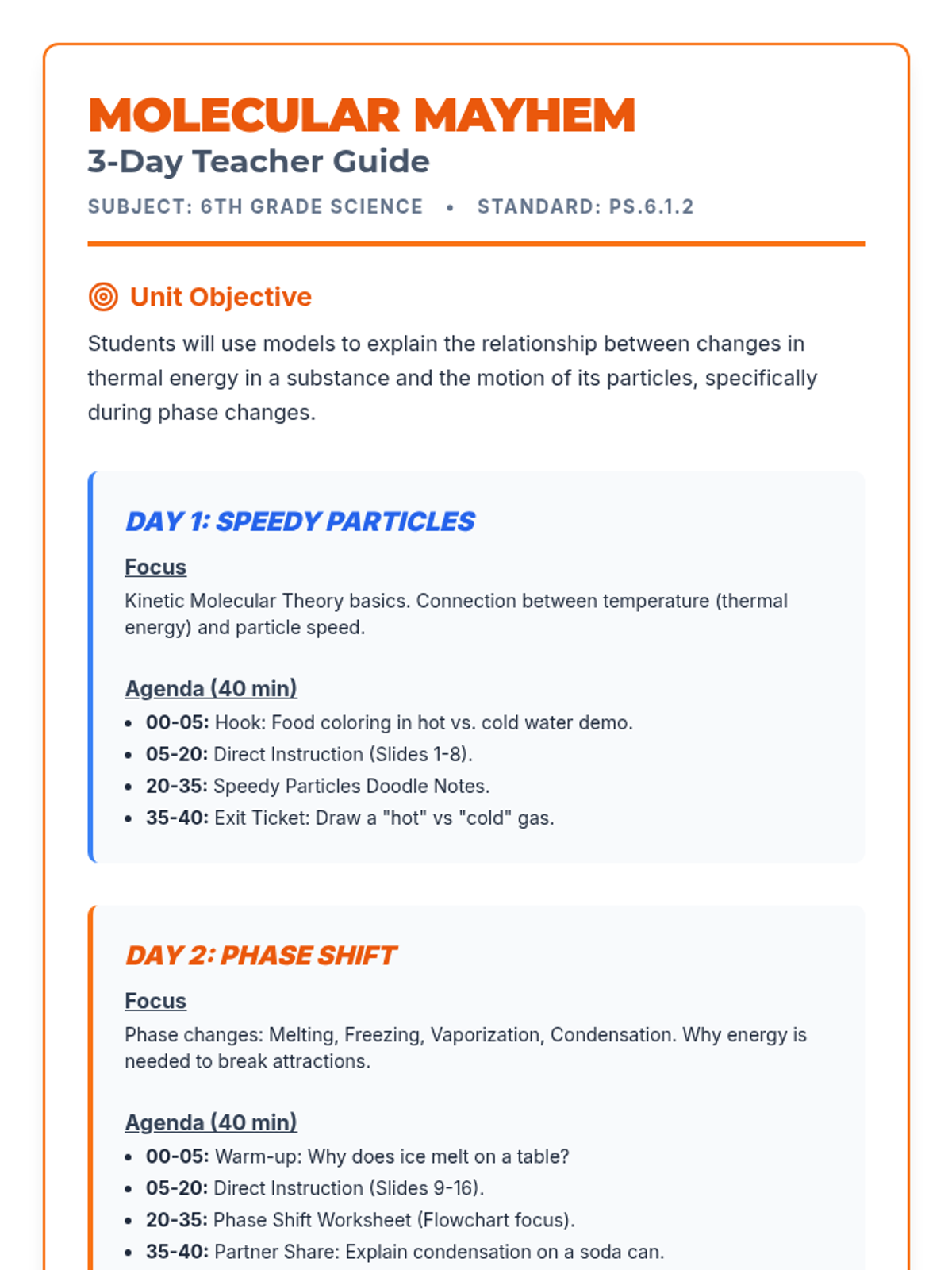
Day 2 focuses on phase changes, specifically how energy is used to break or form attractions between particles during transitions like melting and boiling.
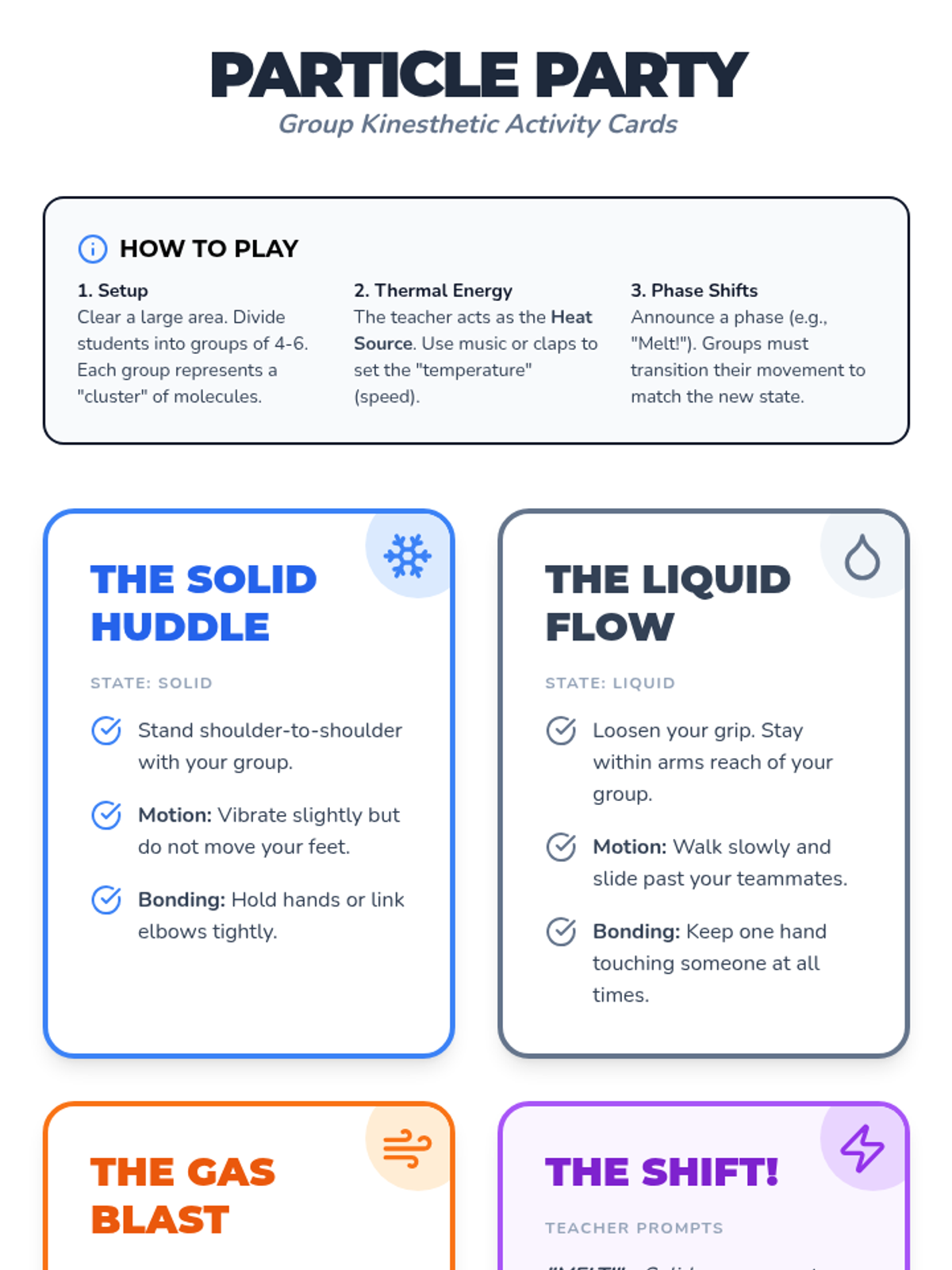
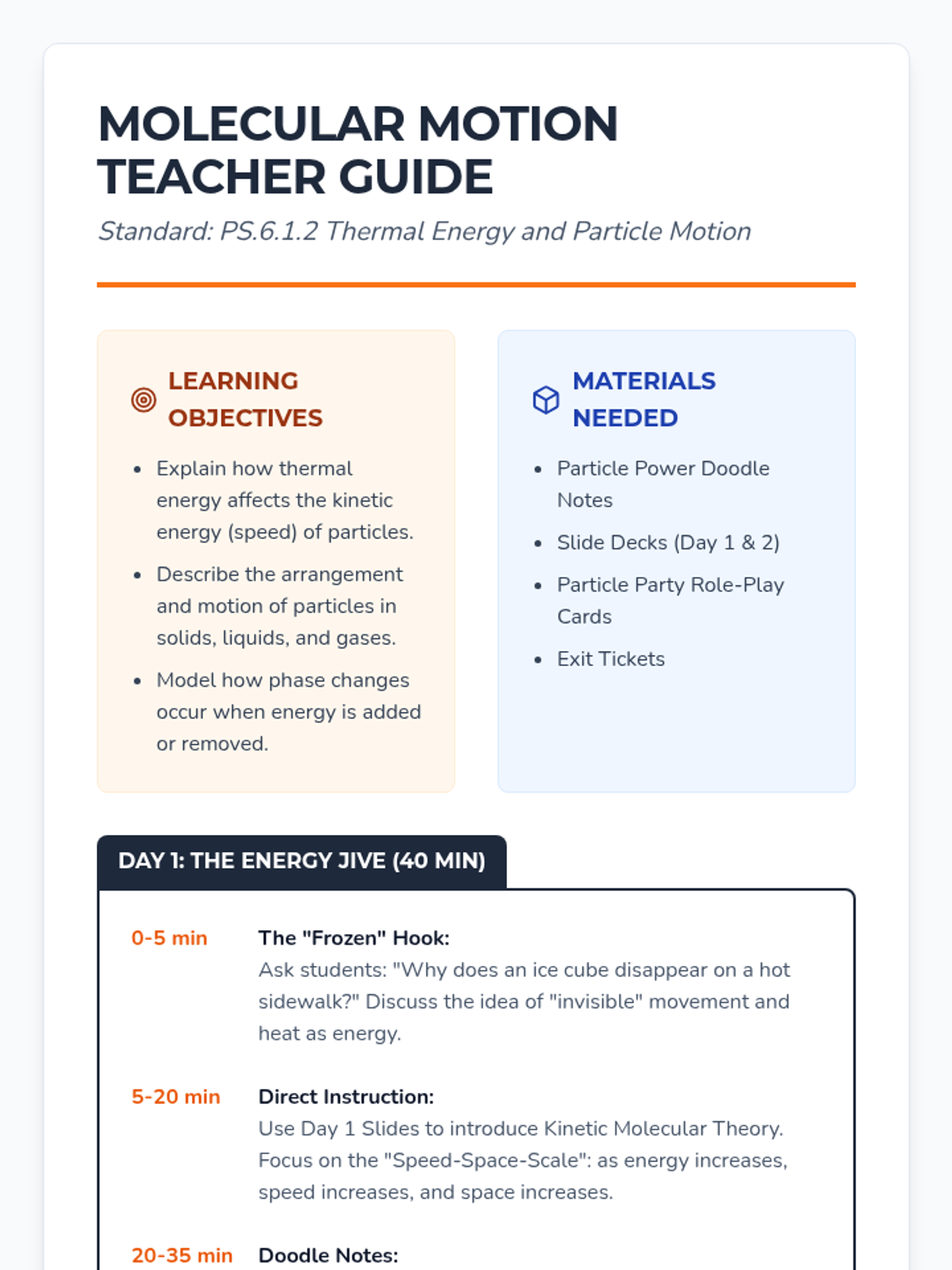
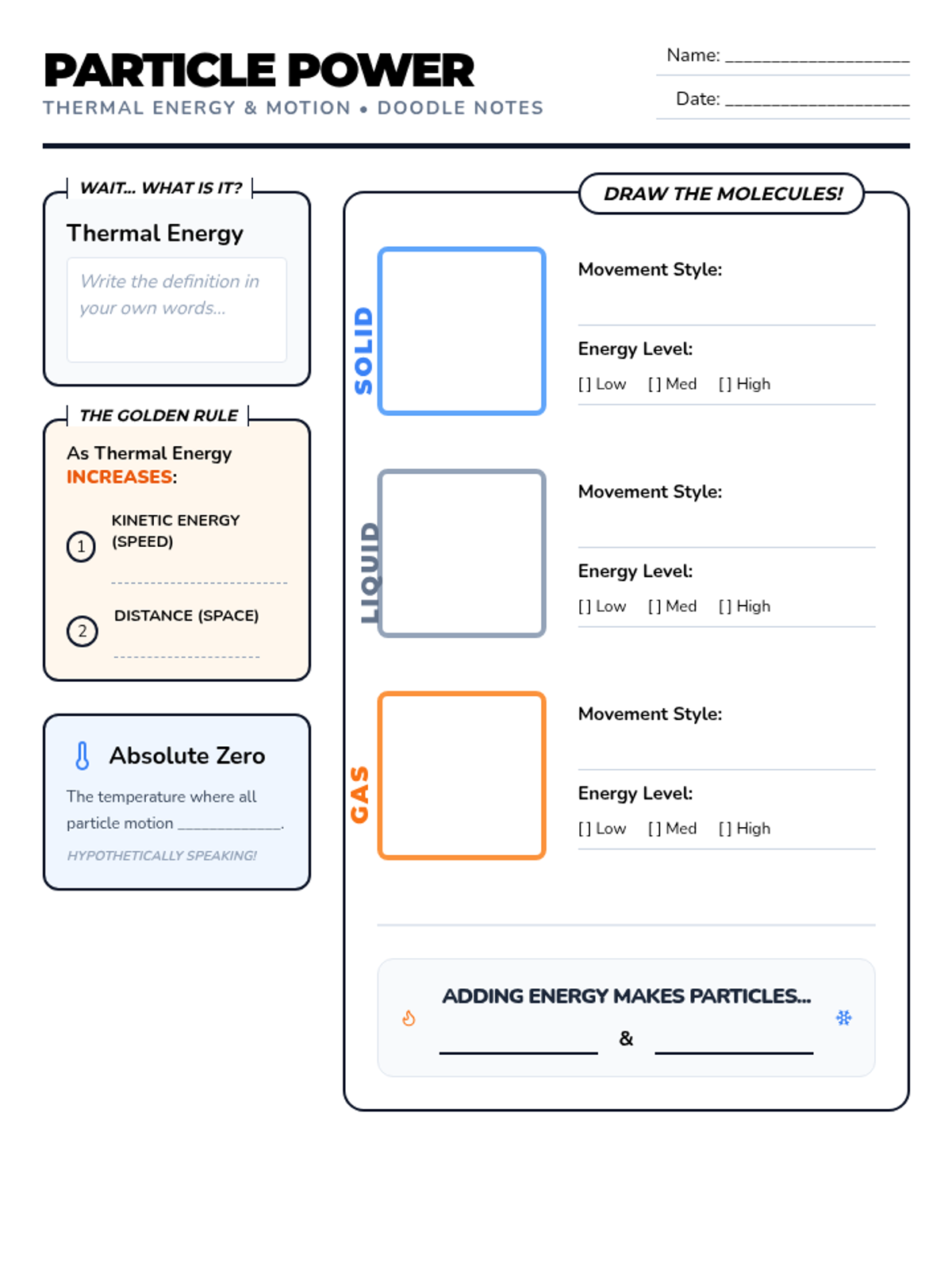
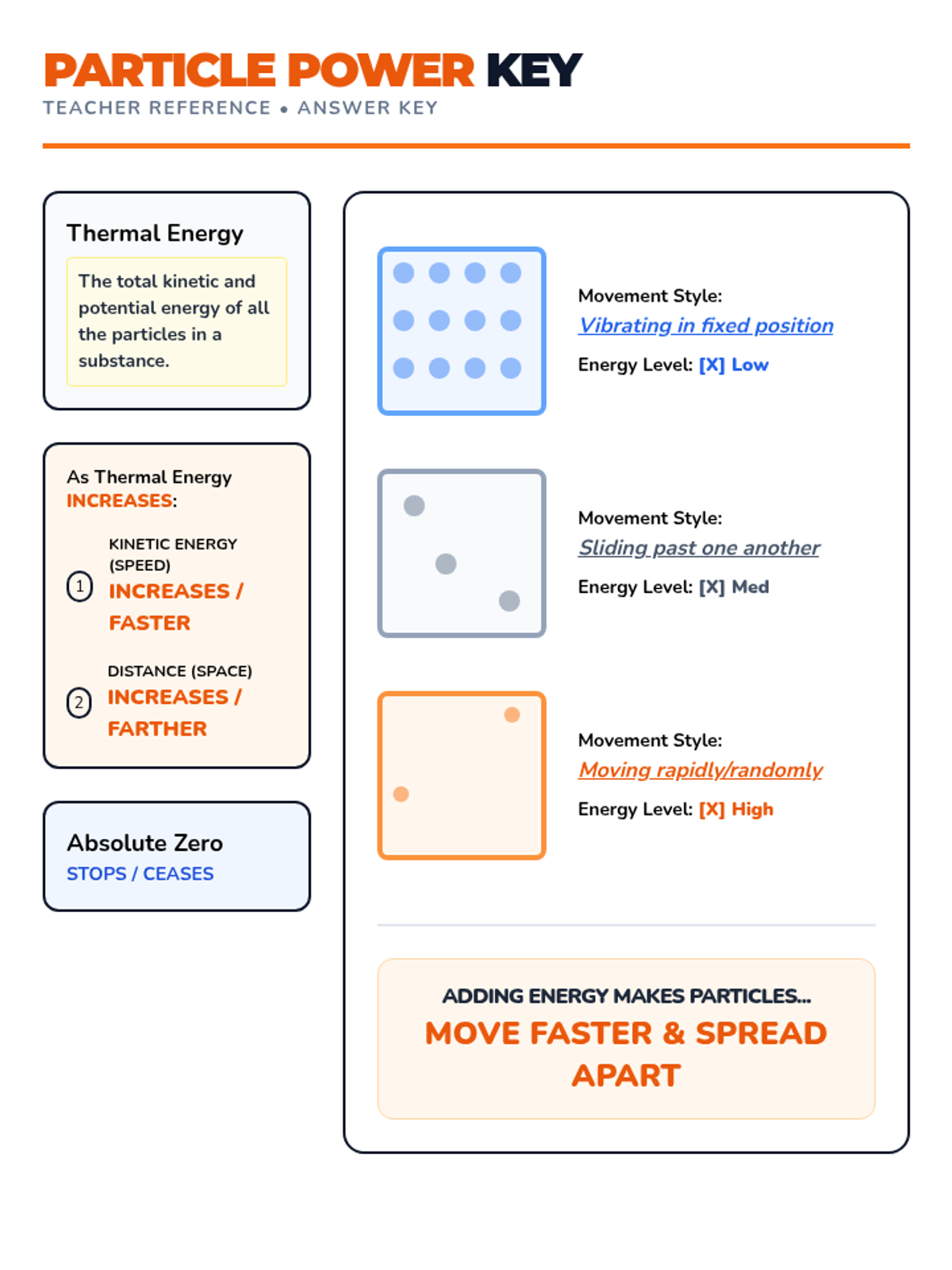
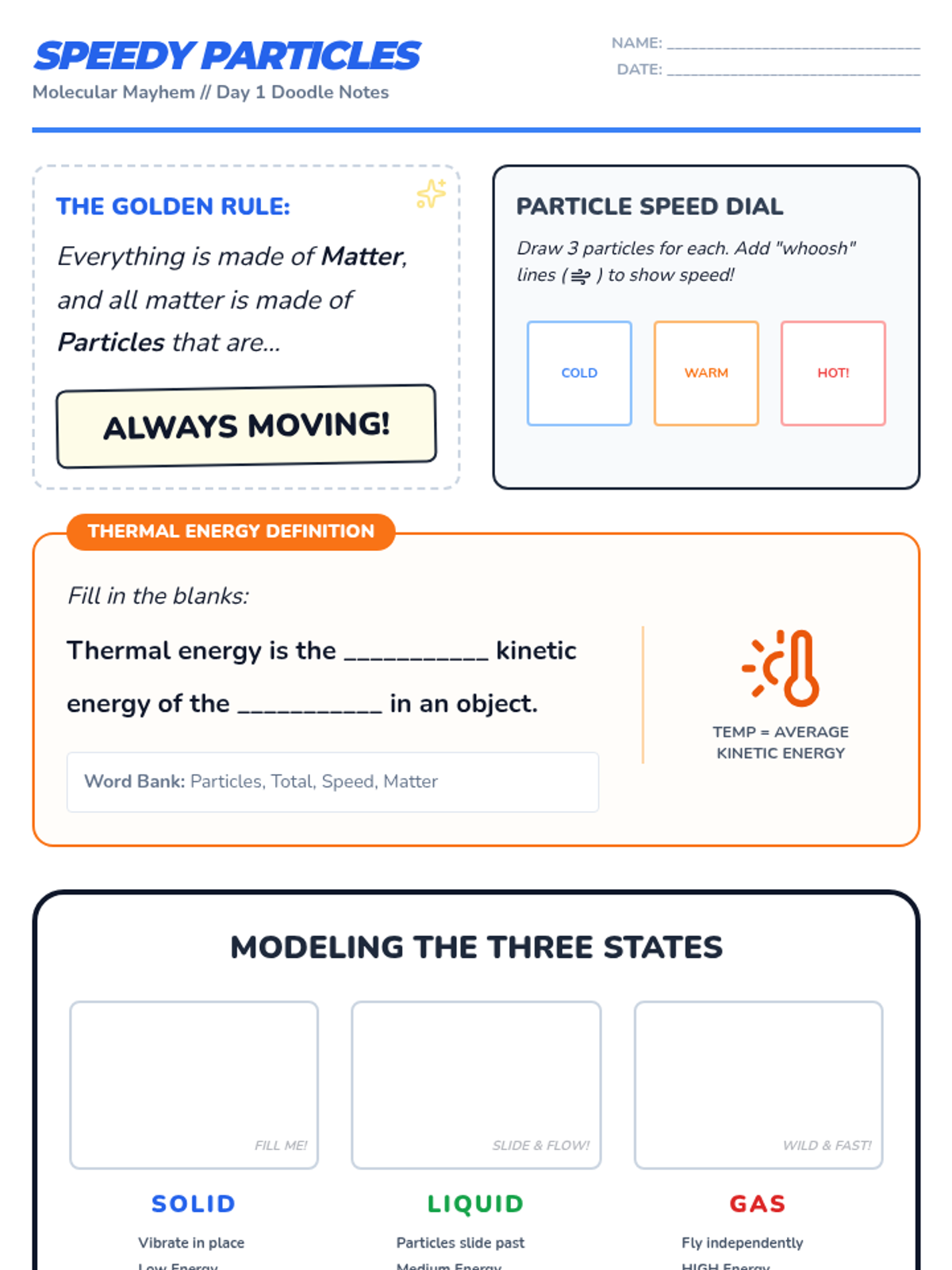
Day 1 focuses on the Kinetic Molecular Theory, exploring how adding or removing thermal energy changes the speed and spacing of particles in solids, liquids, and gases.
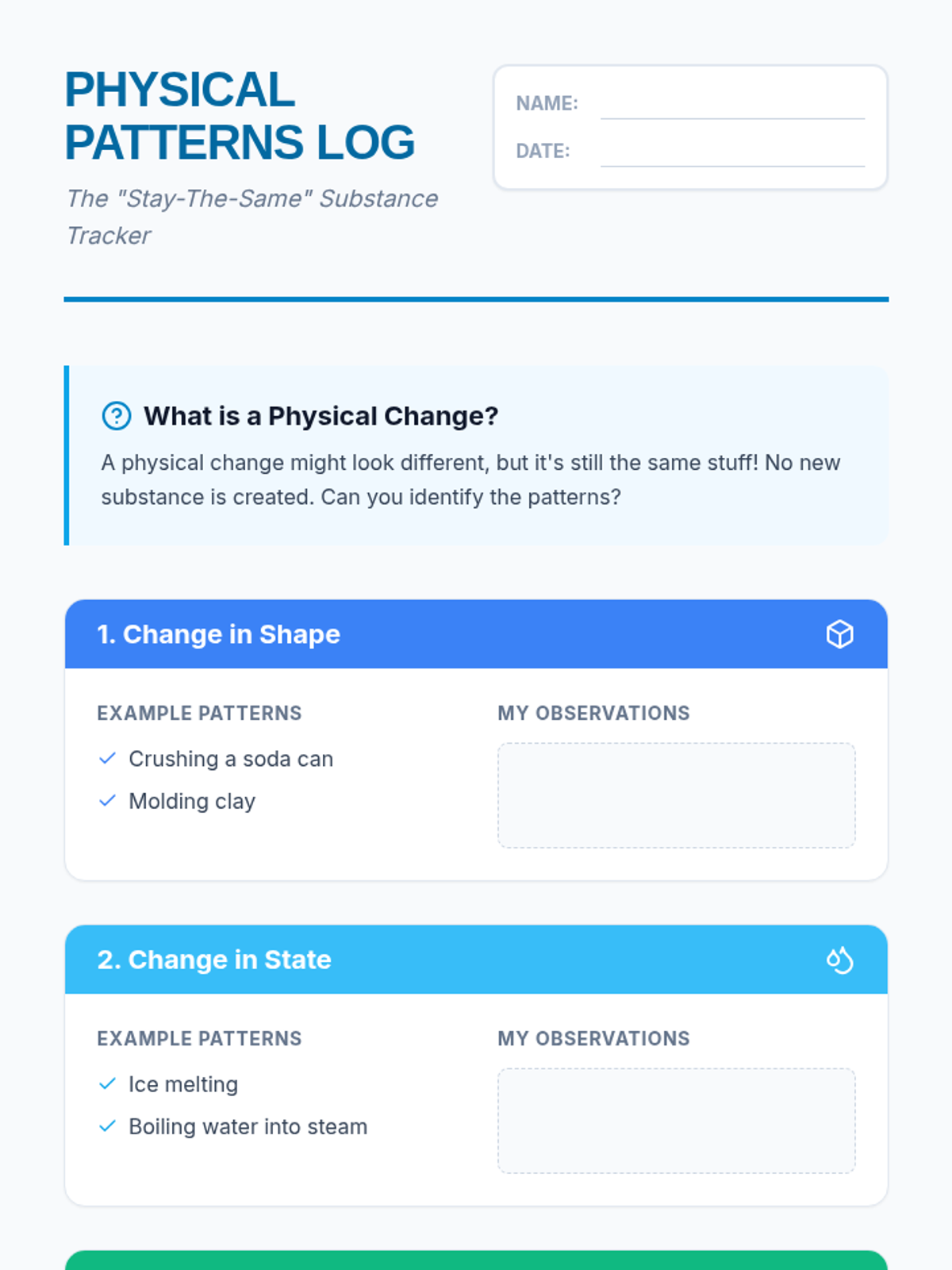
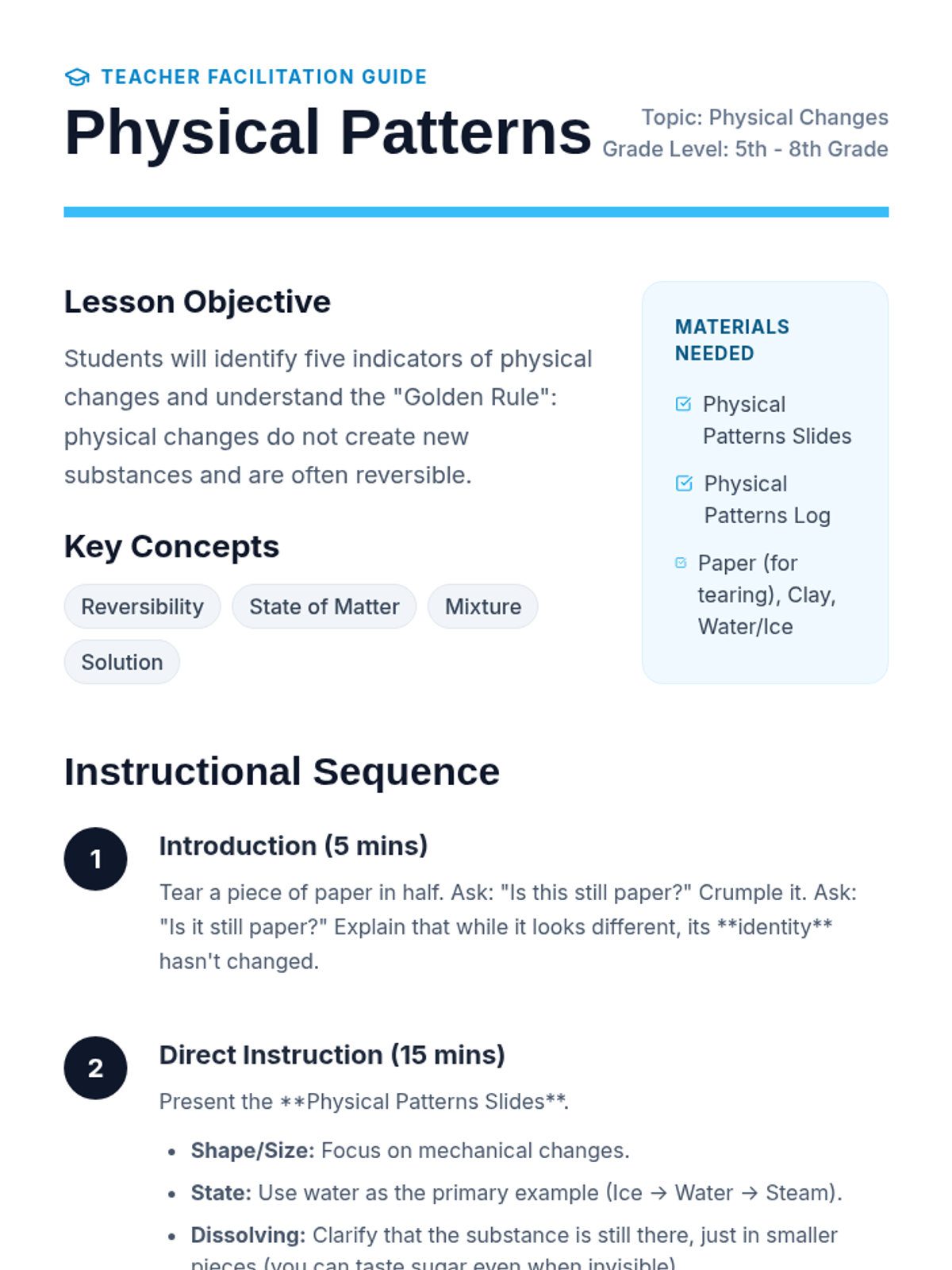
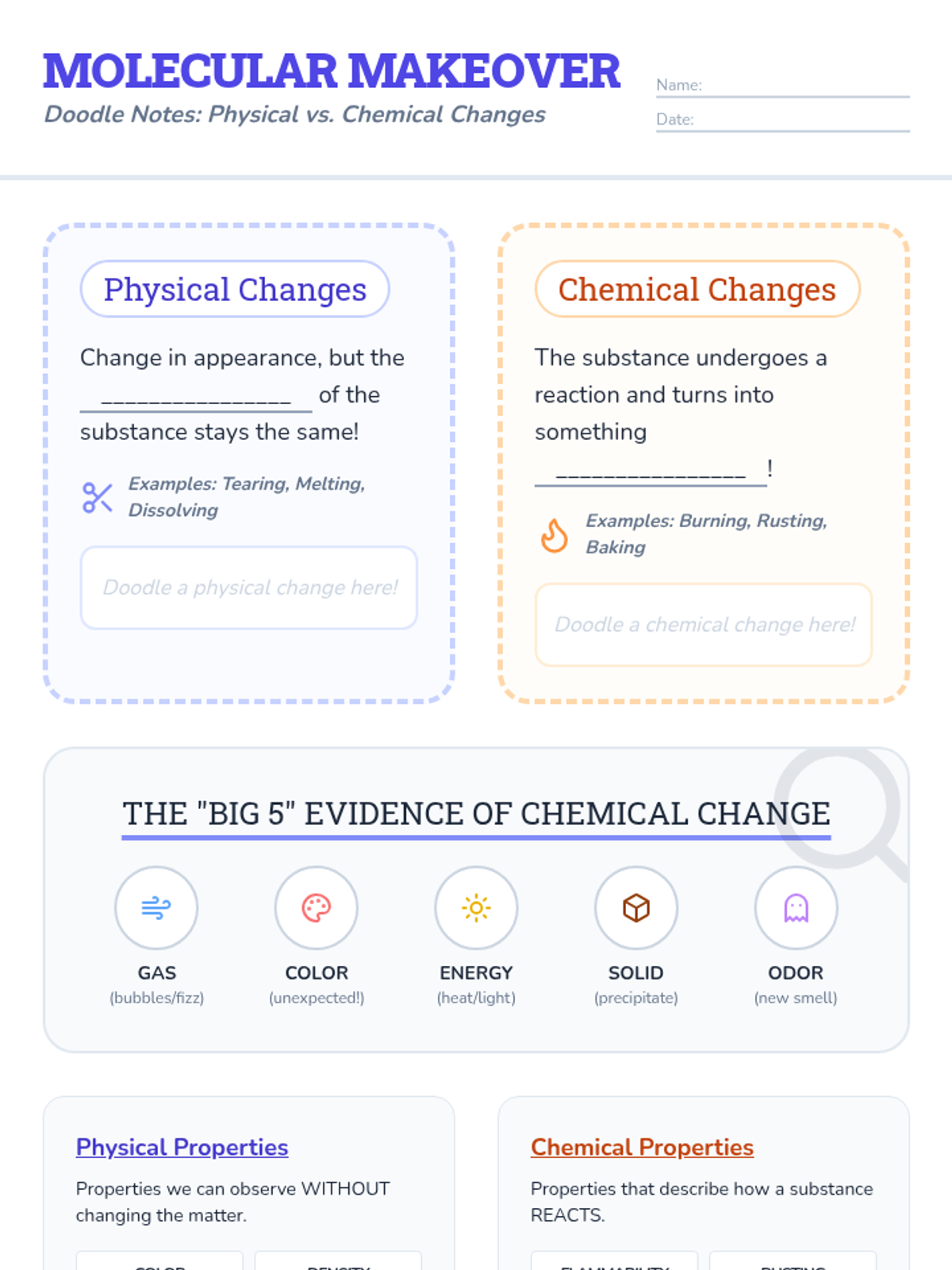
An introductory lesson on identifying physical changes through five key indicators: change in shape, change in state, change in color (mixing), change in size, and dissolving. Students will understand that no new substance is created during these changes.
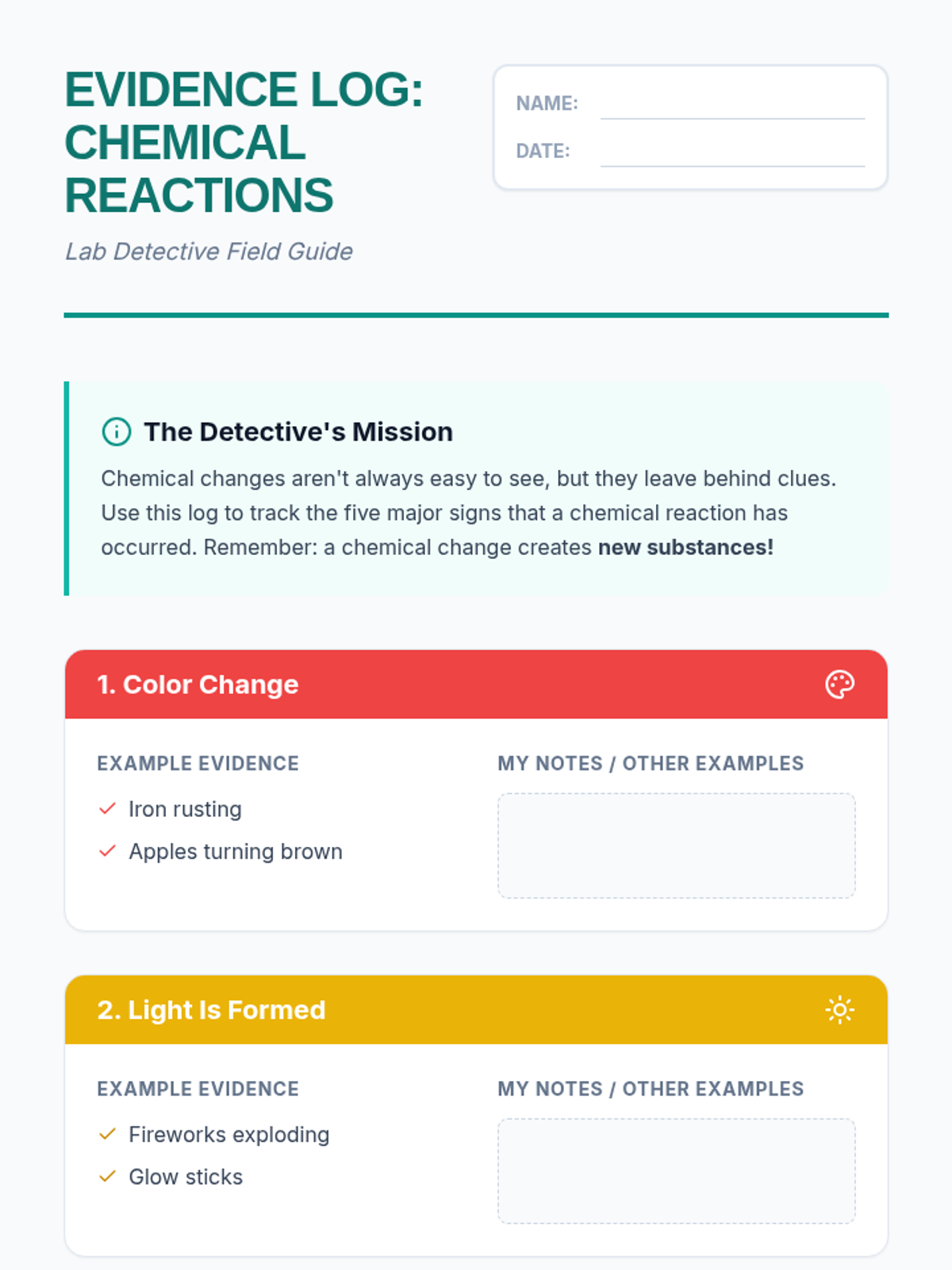
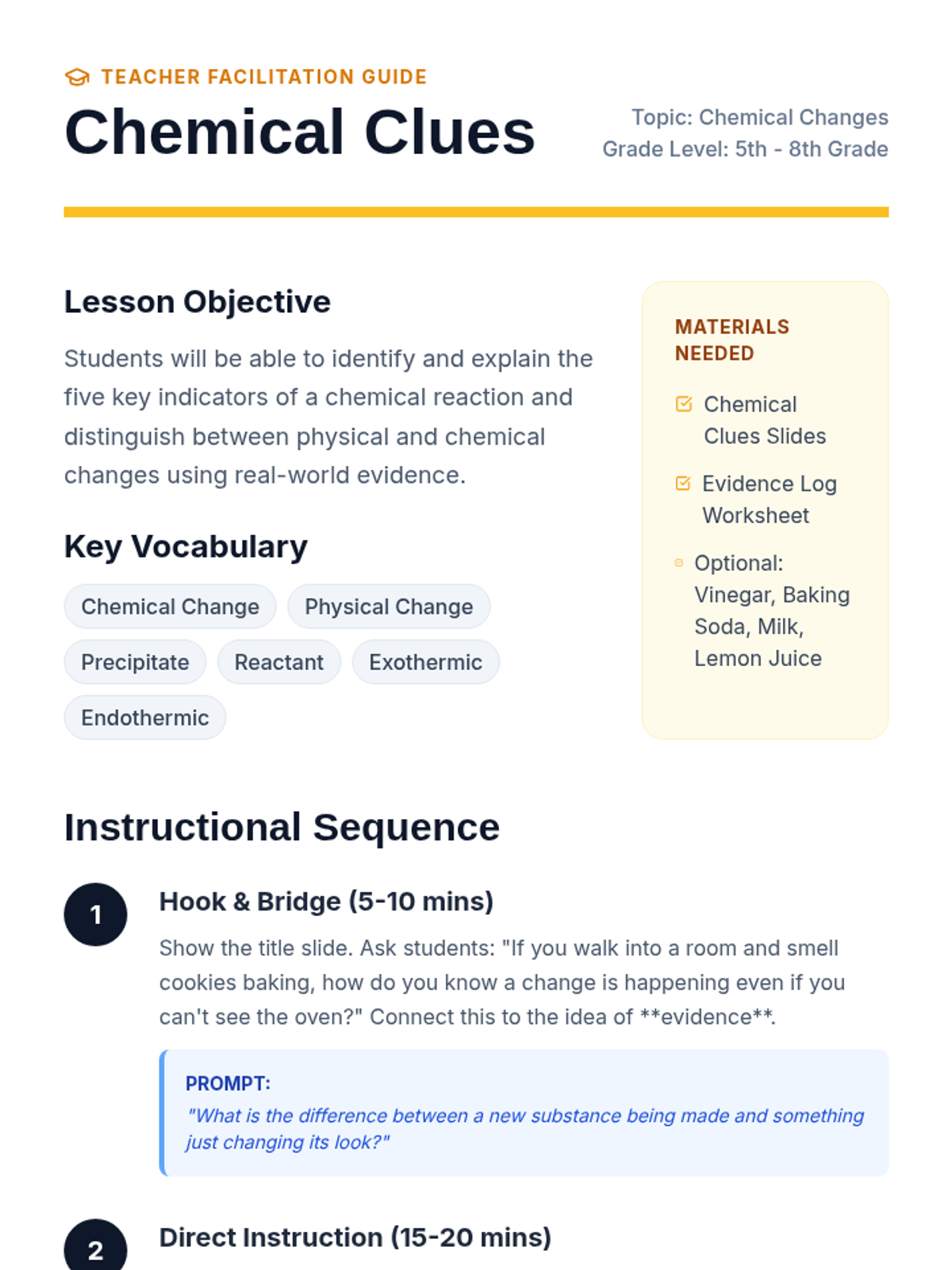
An introductory lesson on identifying chemical changes through five key indicators: color change, light formation, temperature change, gas production, and precipitate formation. Students will learn to distinguish between physical and chemical changes using real-world examples.
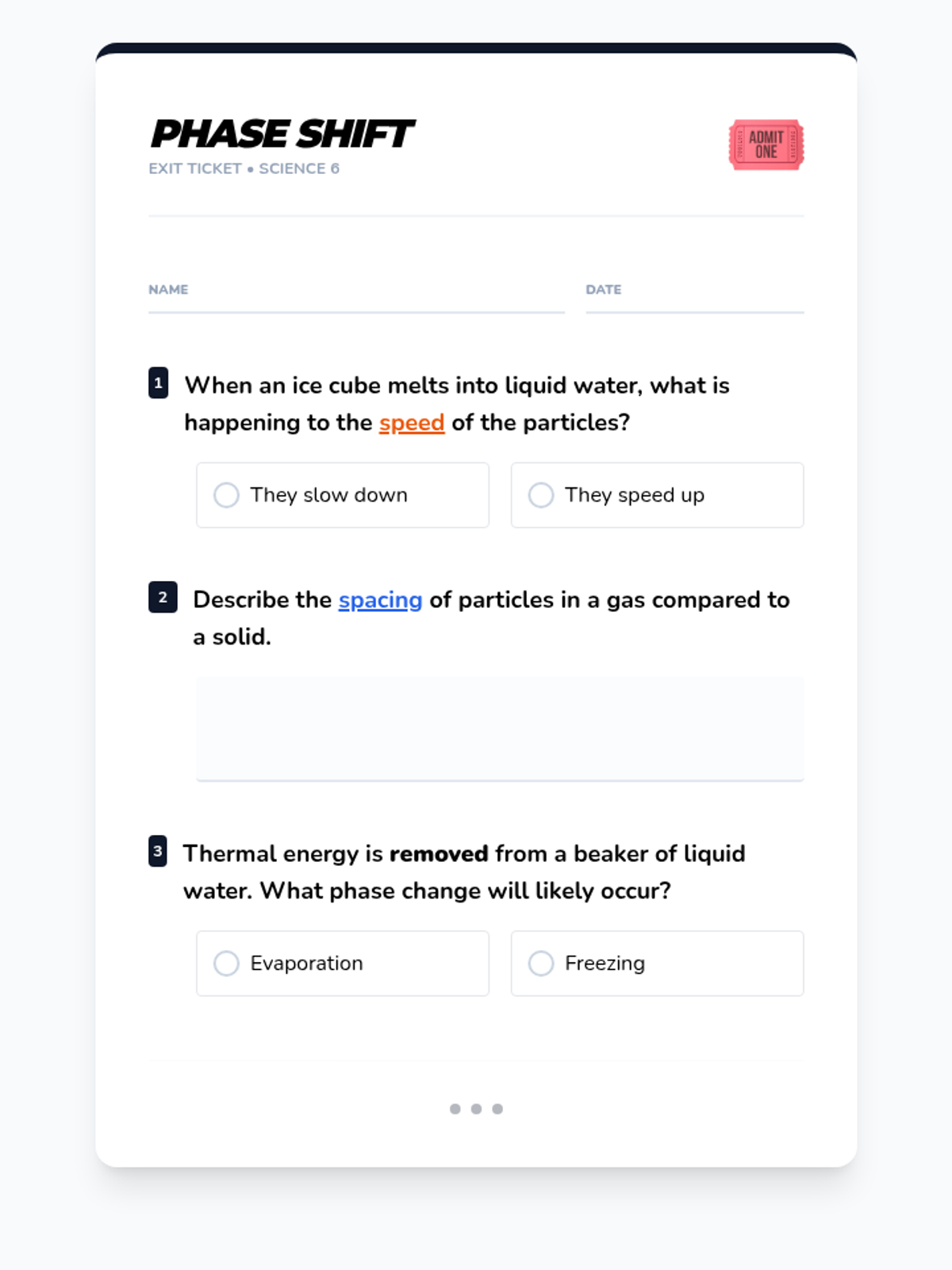
Day 2 dives into particle motion and spacing during phase changes, featuring a CER practice and a comprehensive exit ticket review.
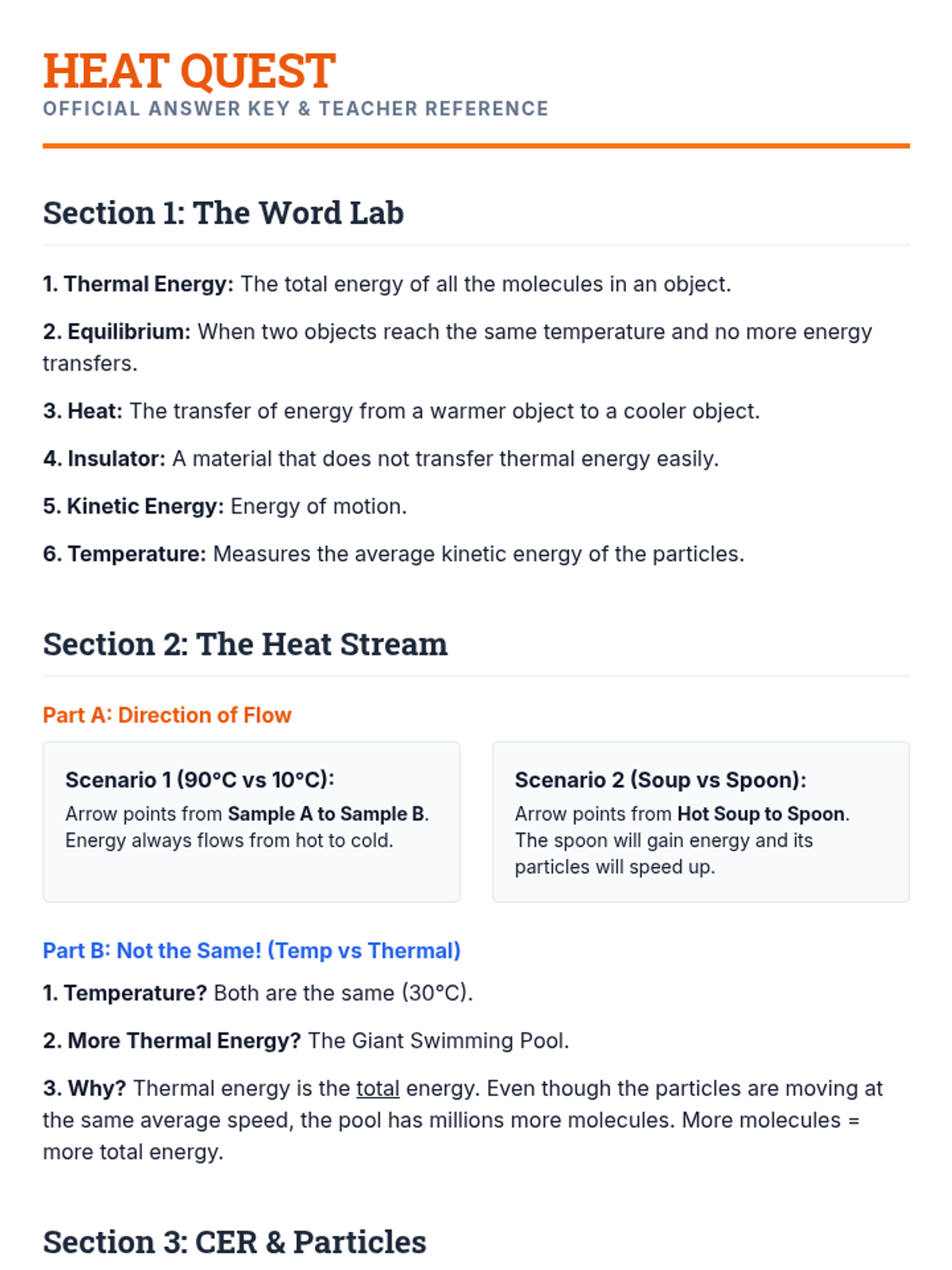
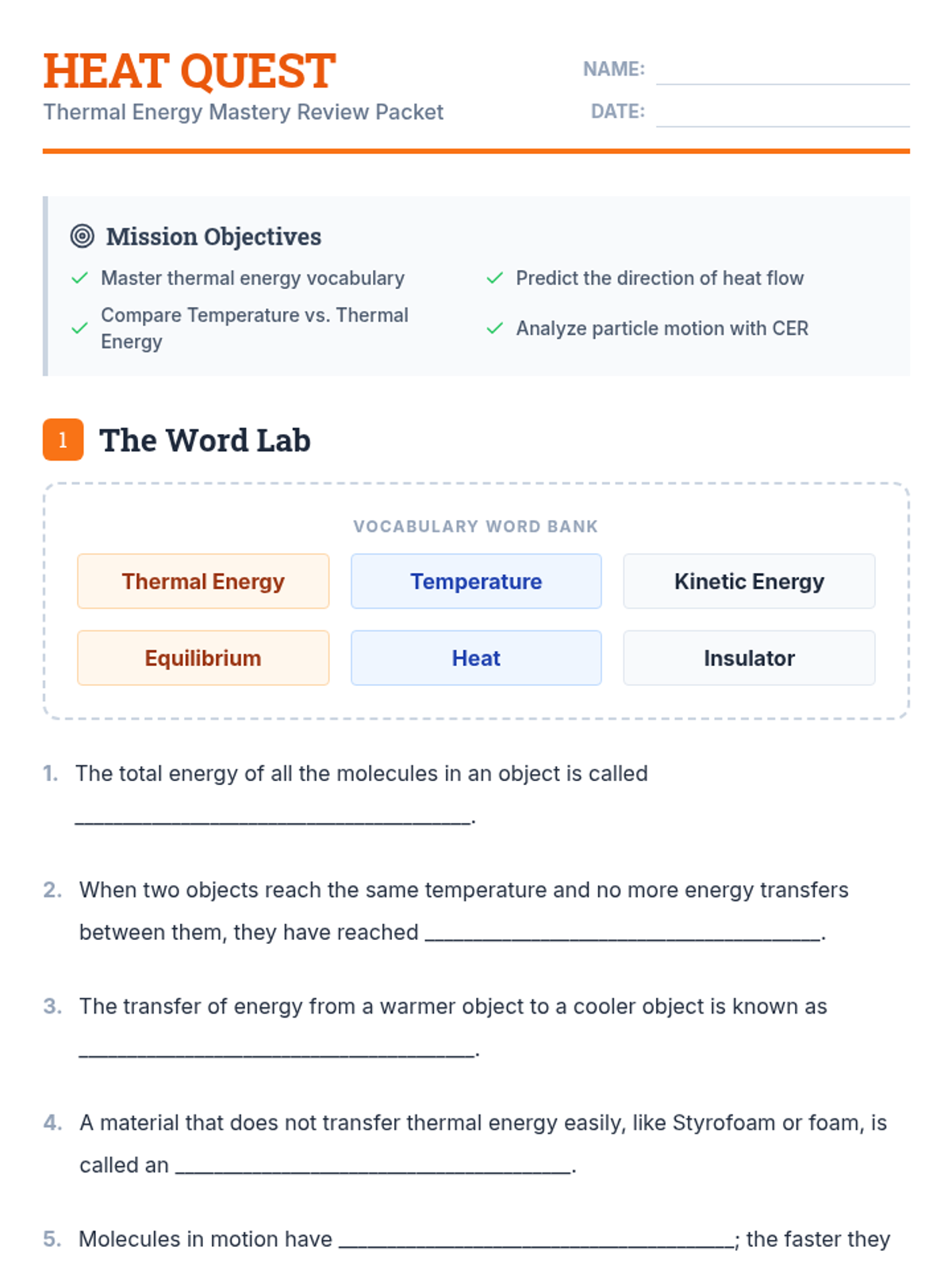
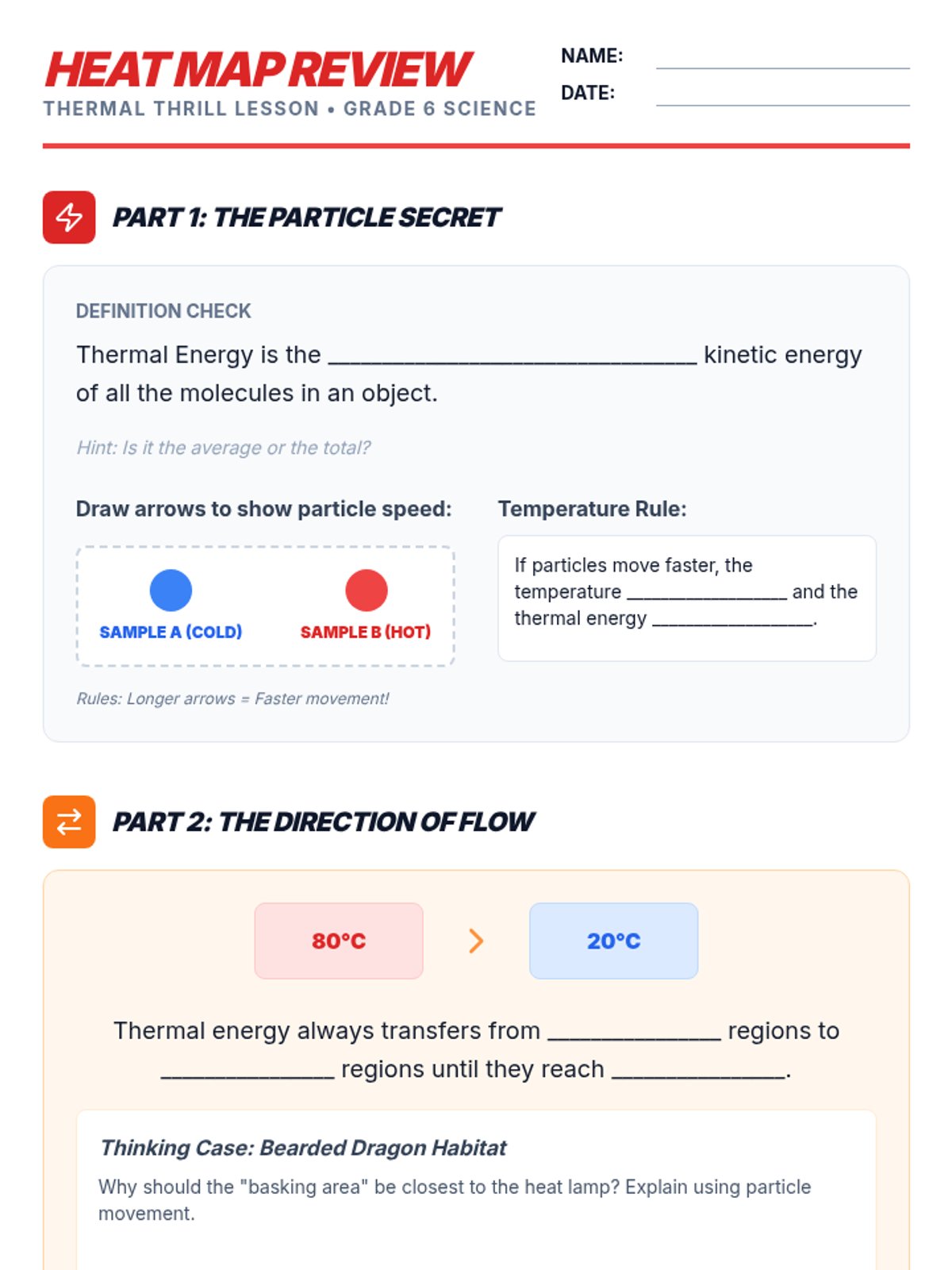
Day 1 focuses on vocabulary, the direction of heat transfer, and the fundamental differences between temperature and thermal energy.
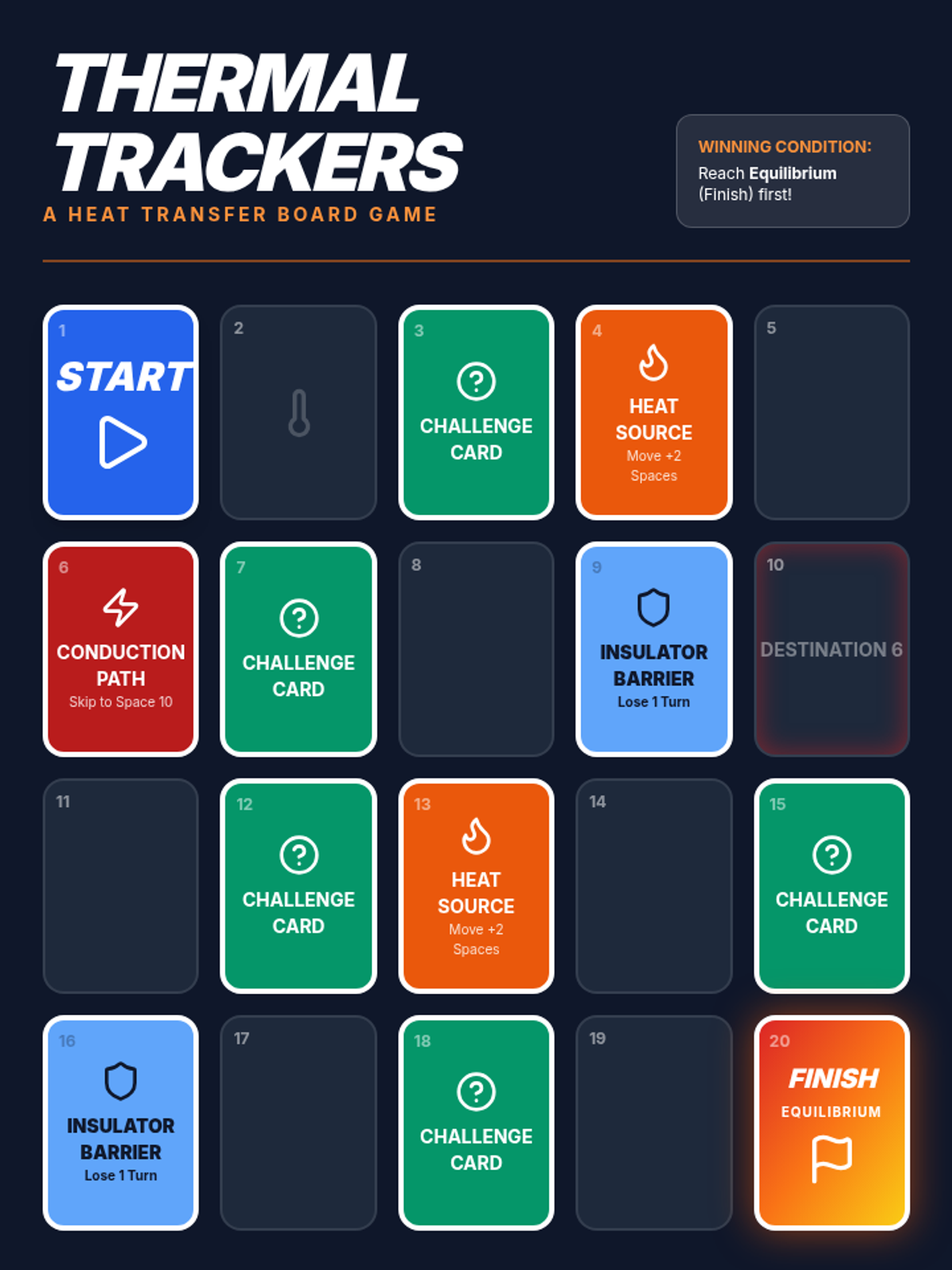
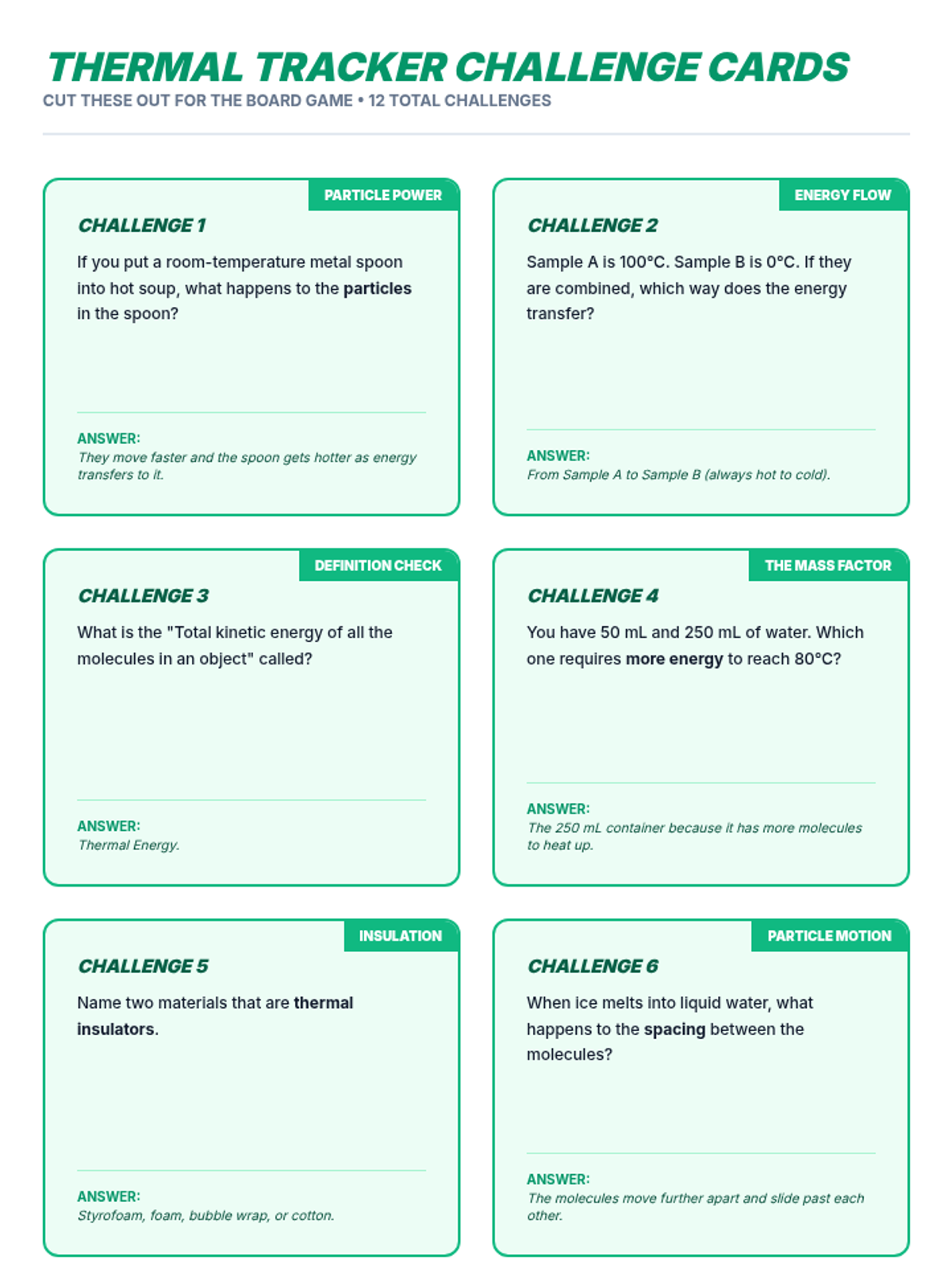
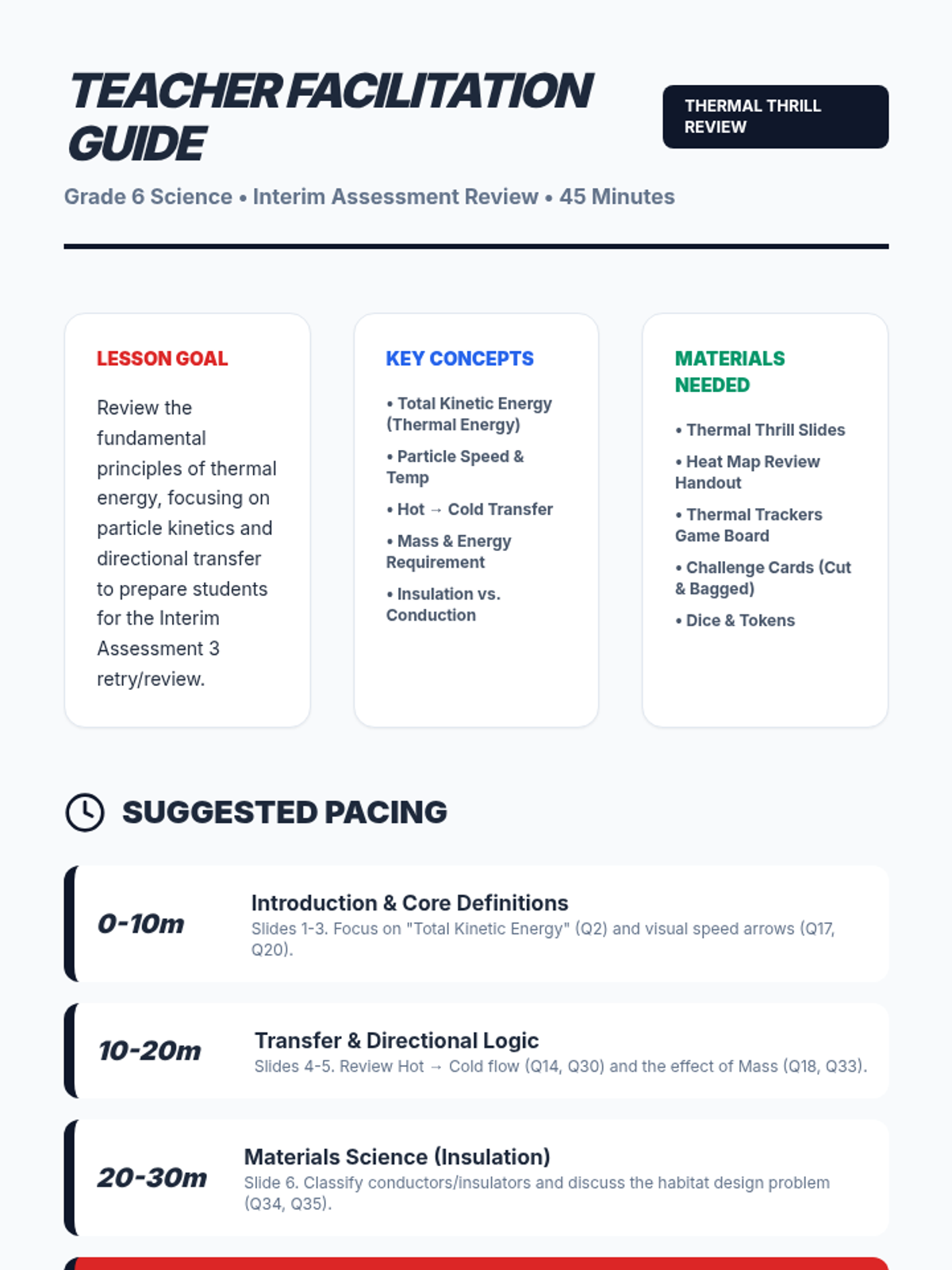
A comprehensive 45-minute review lesson focusing on thermal energy, particle movement, and heat transfer. Students revisit key concepts from their interim assessment through interactive slides and a collaborative board game.
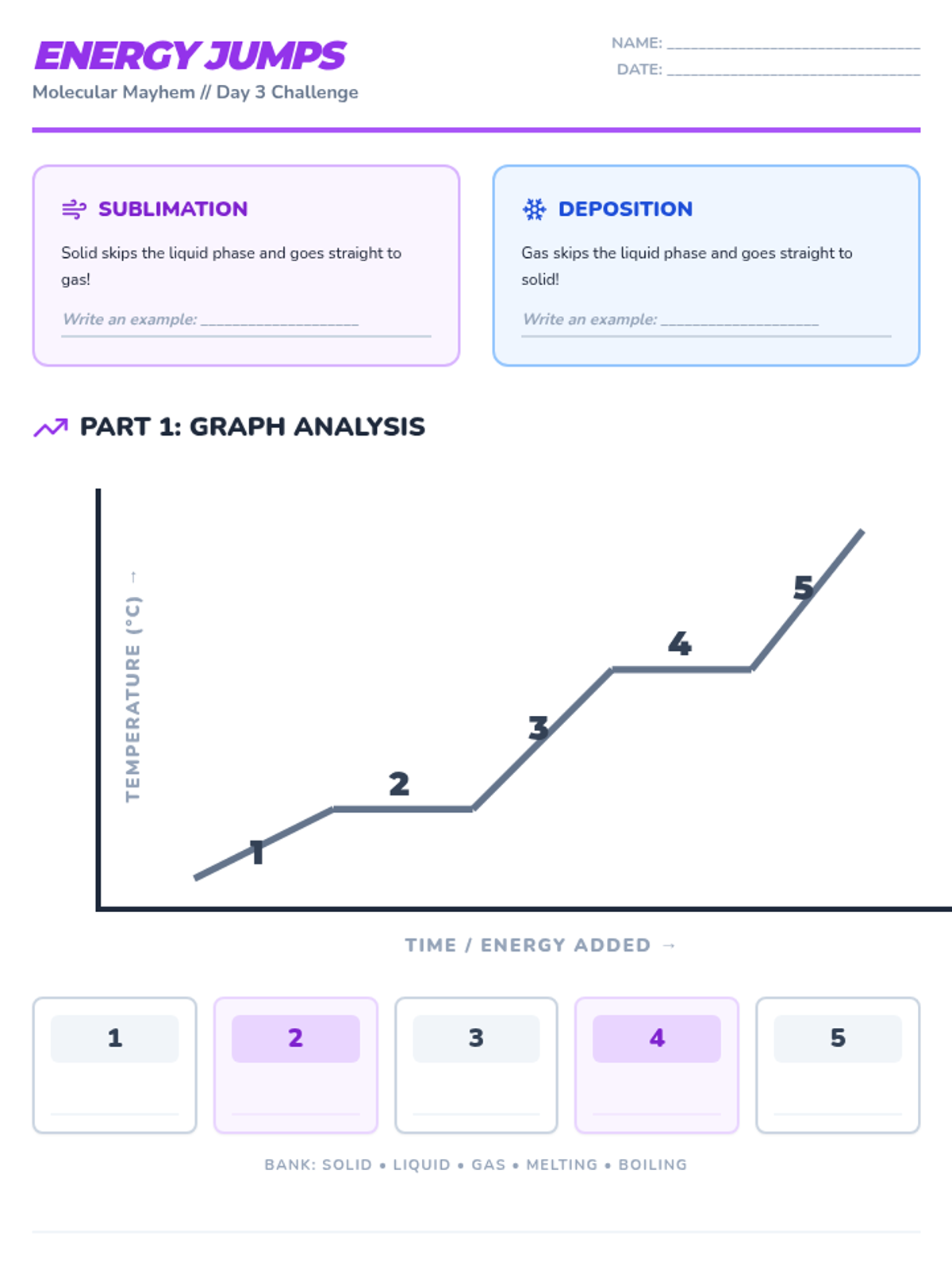
Model energy changes through heating curves and explore rare phase changes like sublimation and deposition.
Investigate phase changes (melting, freezing, vaporization, condensation) and how particles behave during these transitions.
Explore how thermal energy affects the speed and spacing of particles in solids, liquids, and gases.
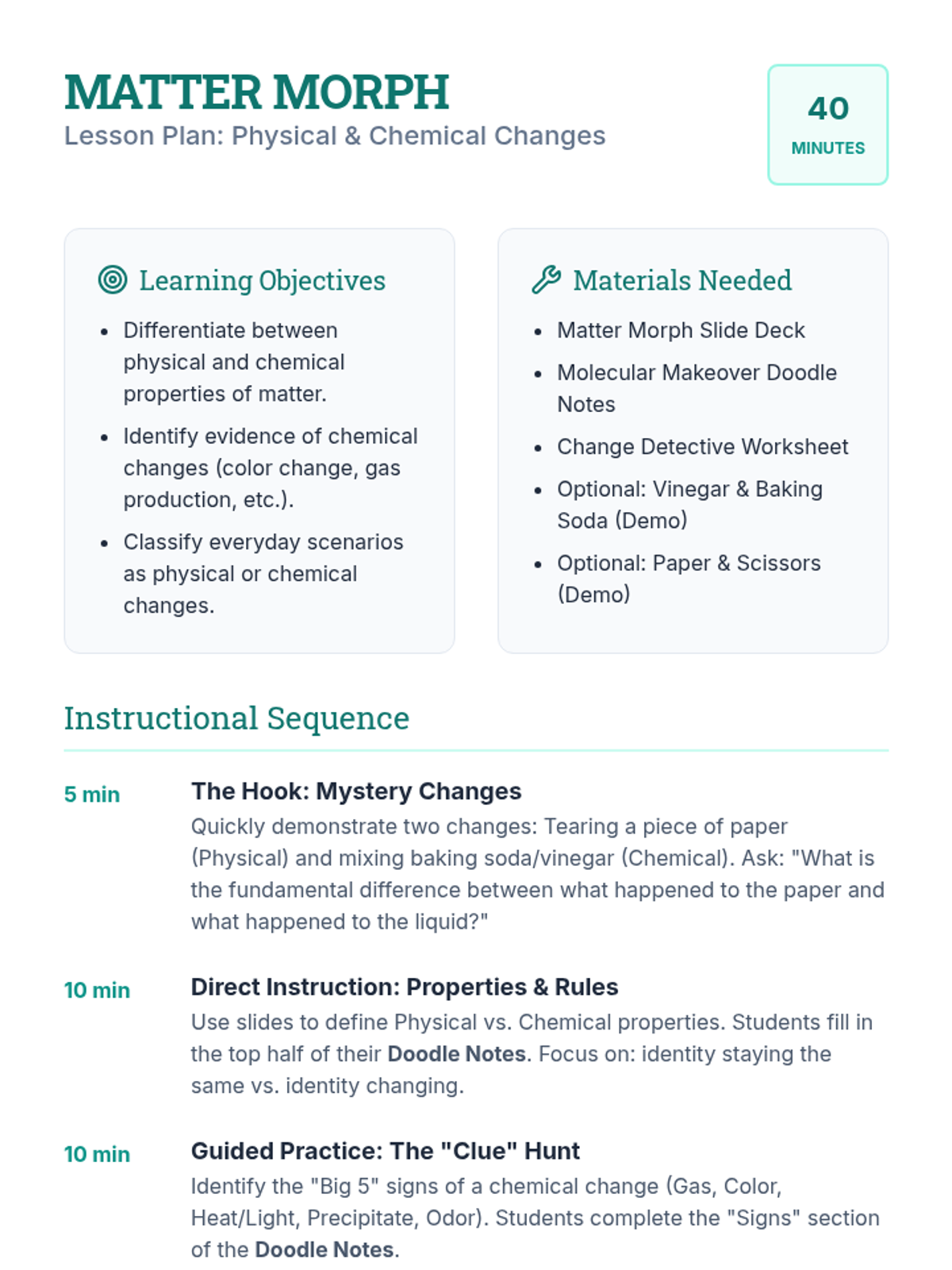
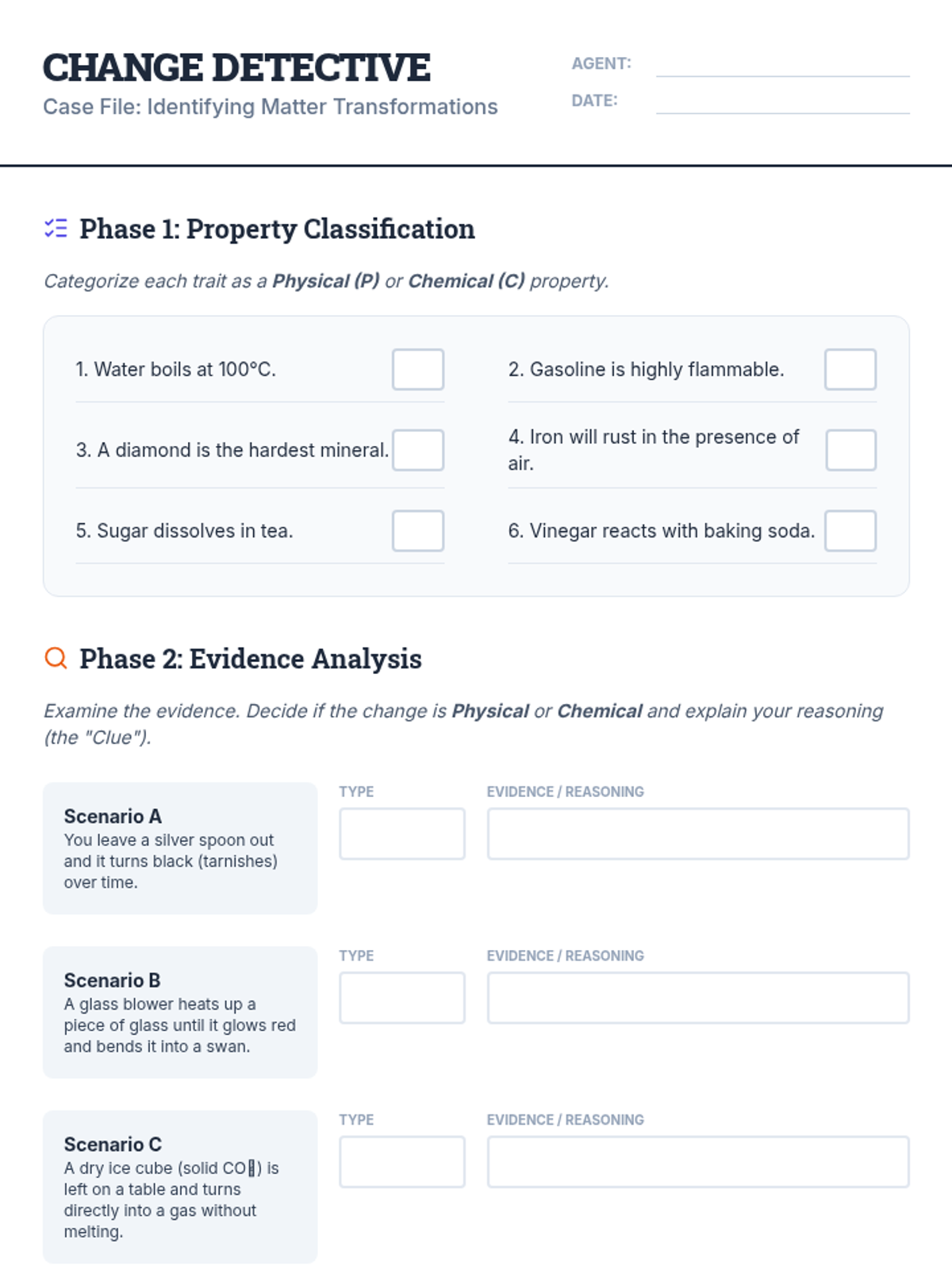
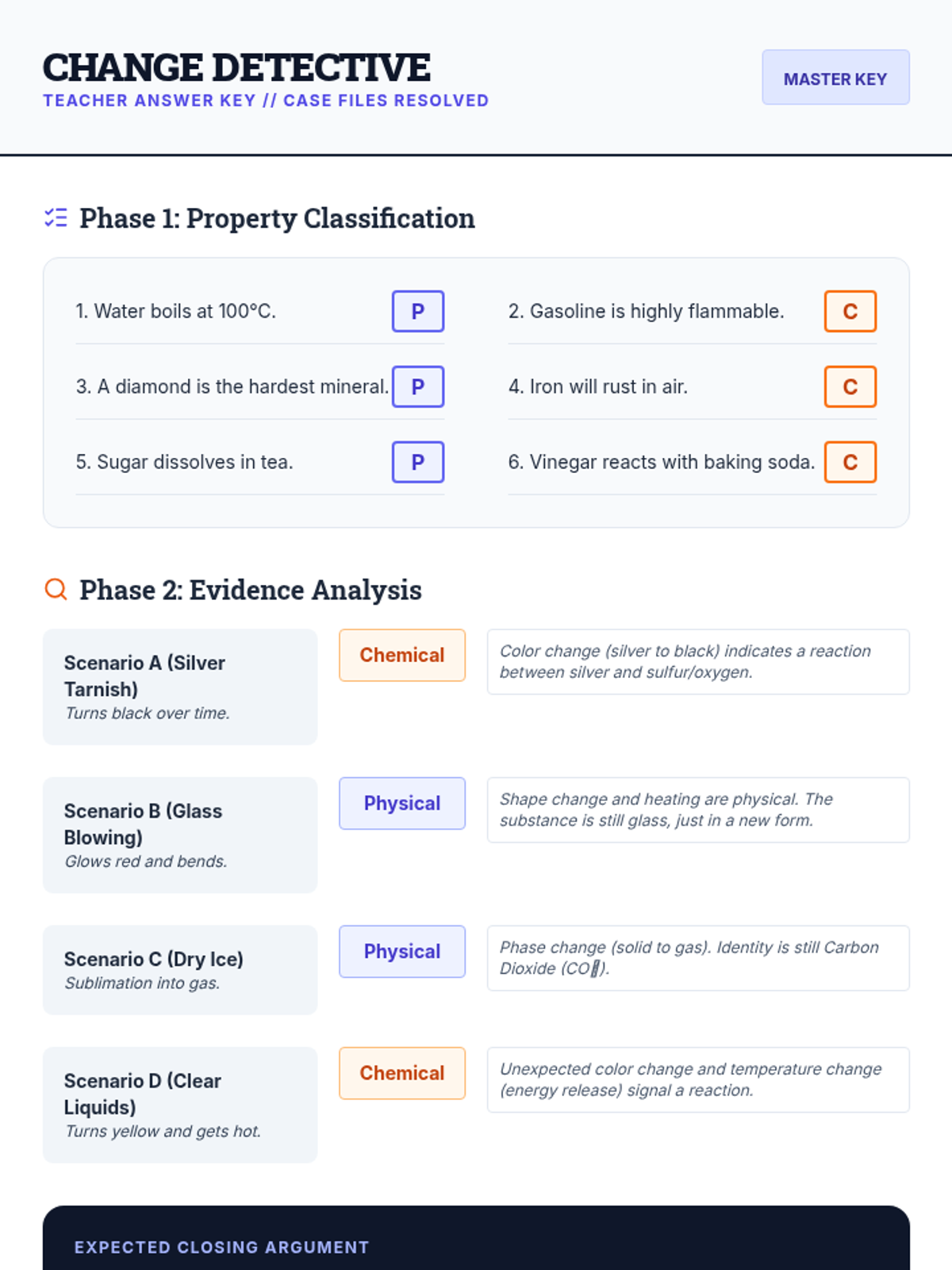
A comprehensive 40-minute lesson on distinguishing between physical and chemical changes in matter through everyday examples and property analysis.
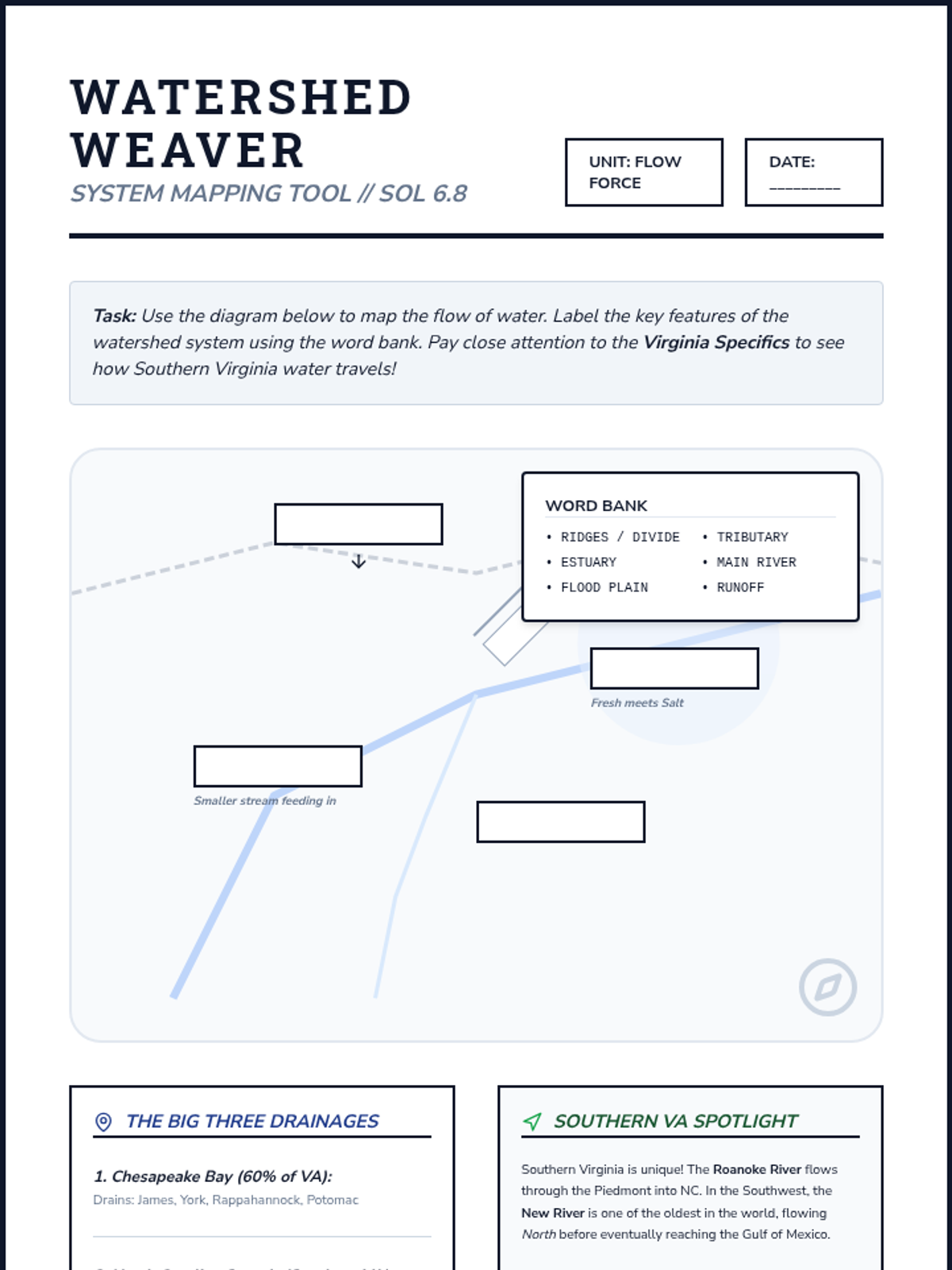
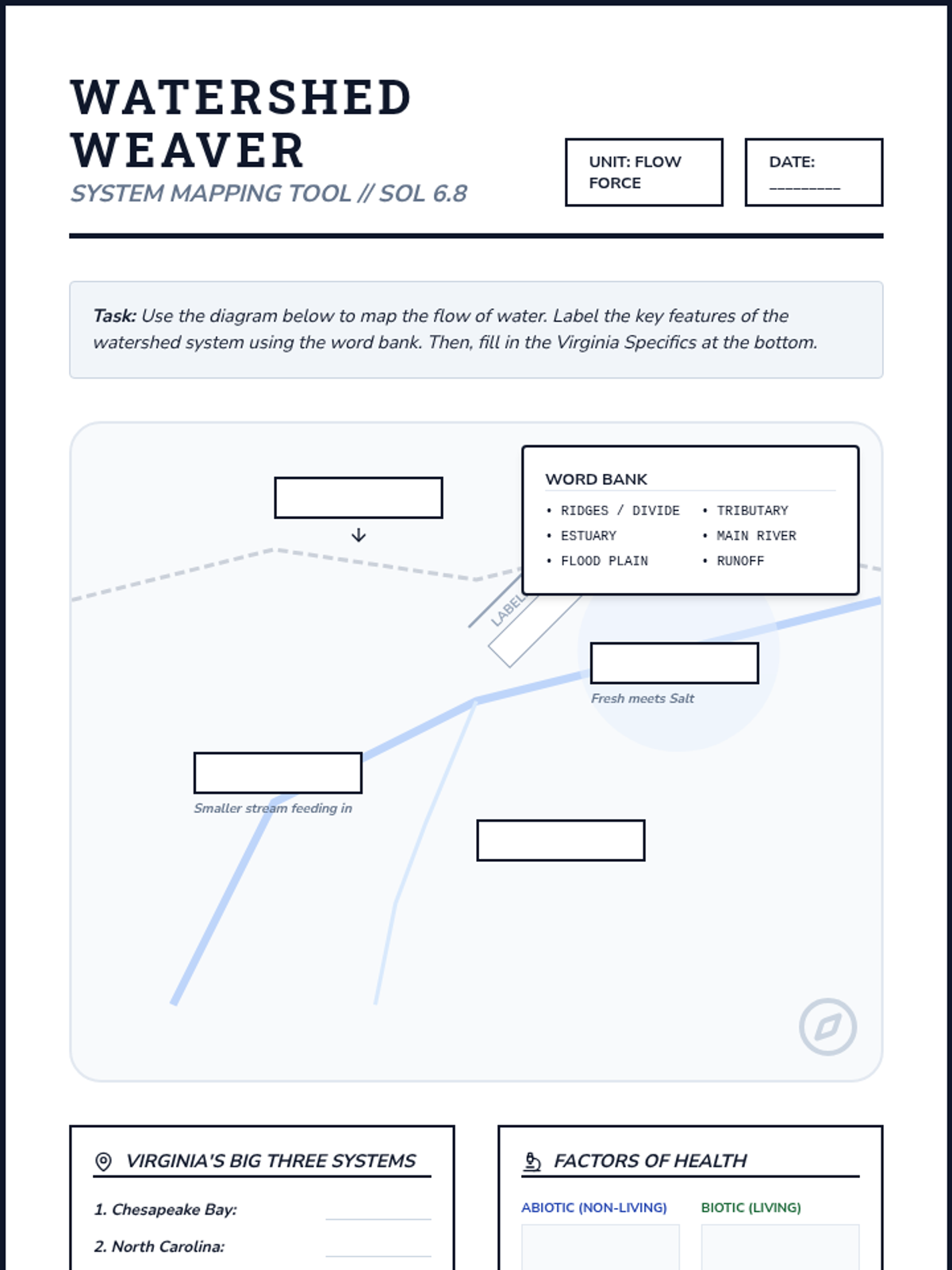
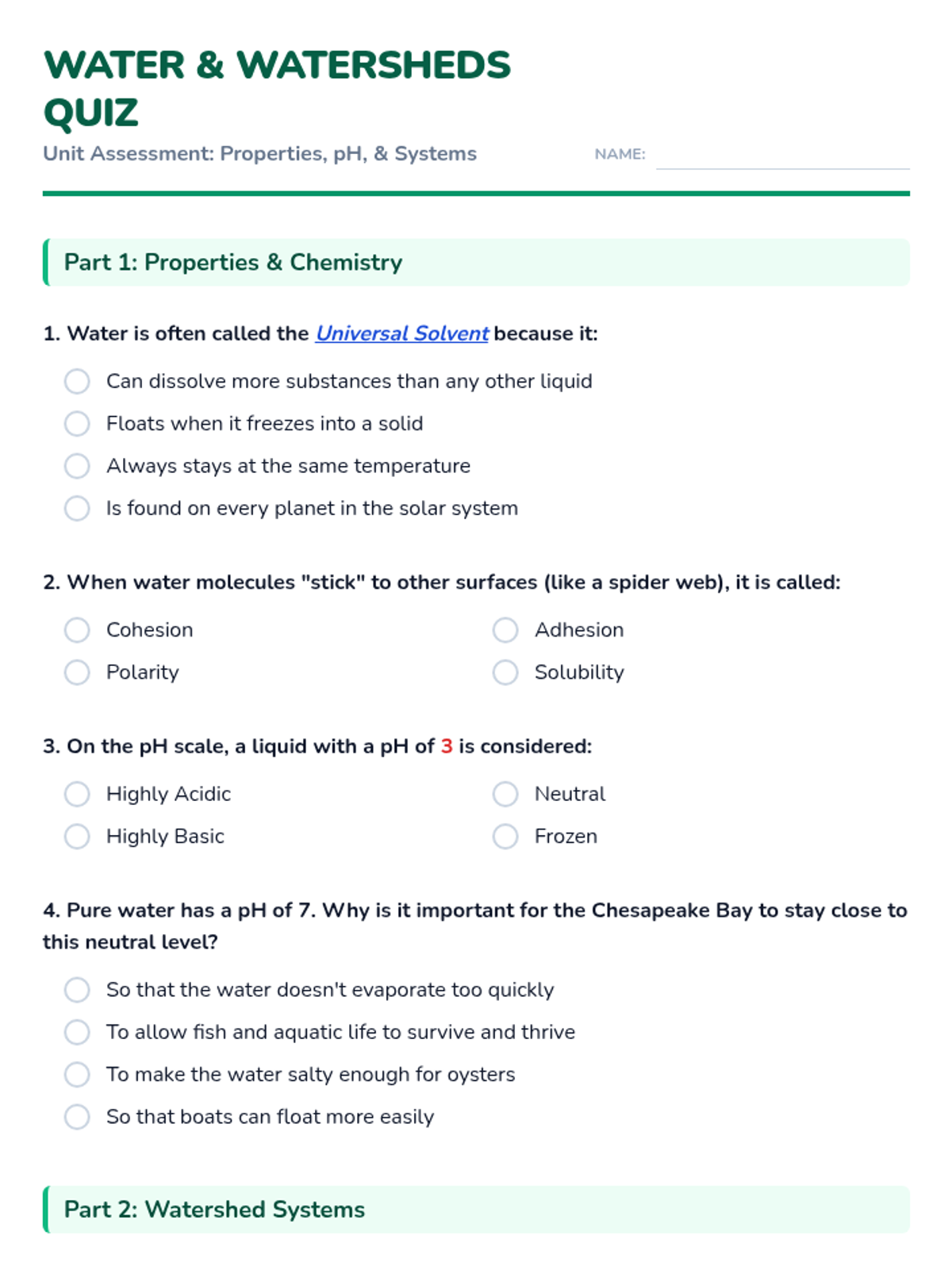
Discover the structure of watershed systems, the importance of the Chesapeake Bay, and how human activity impacts water quality.
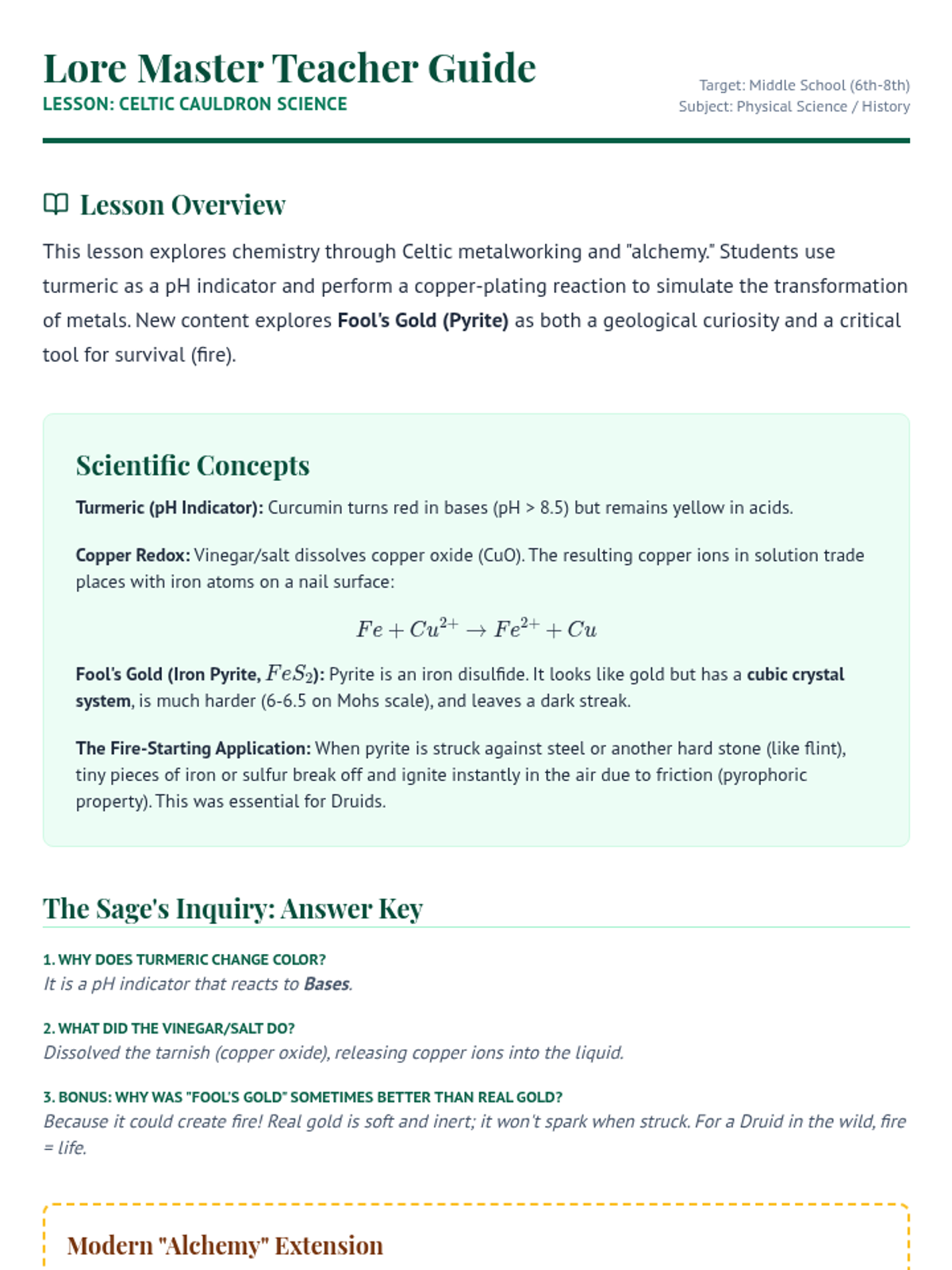
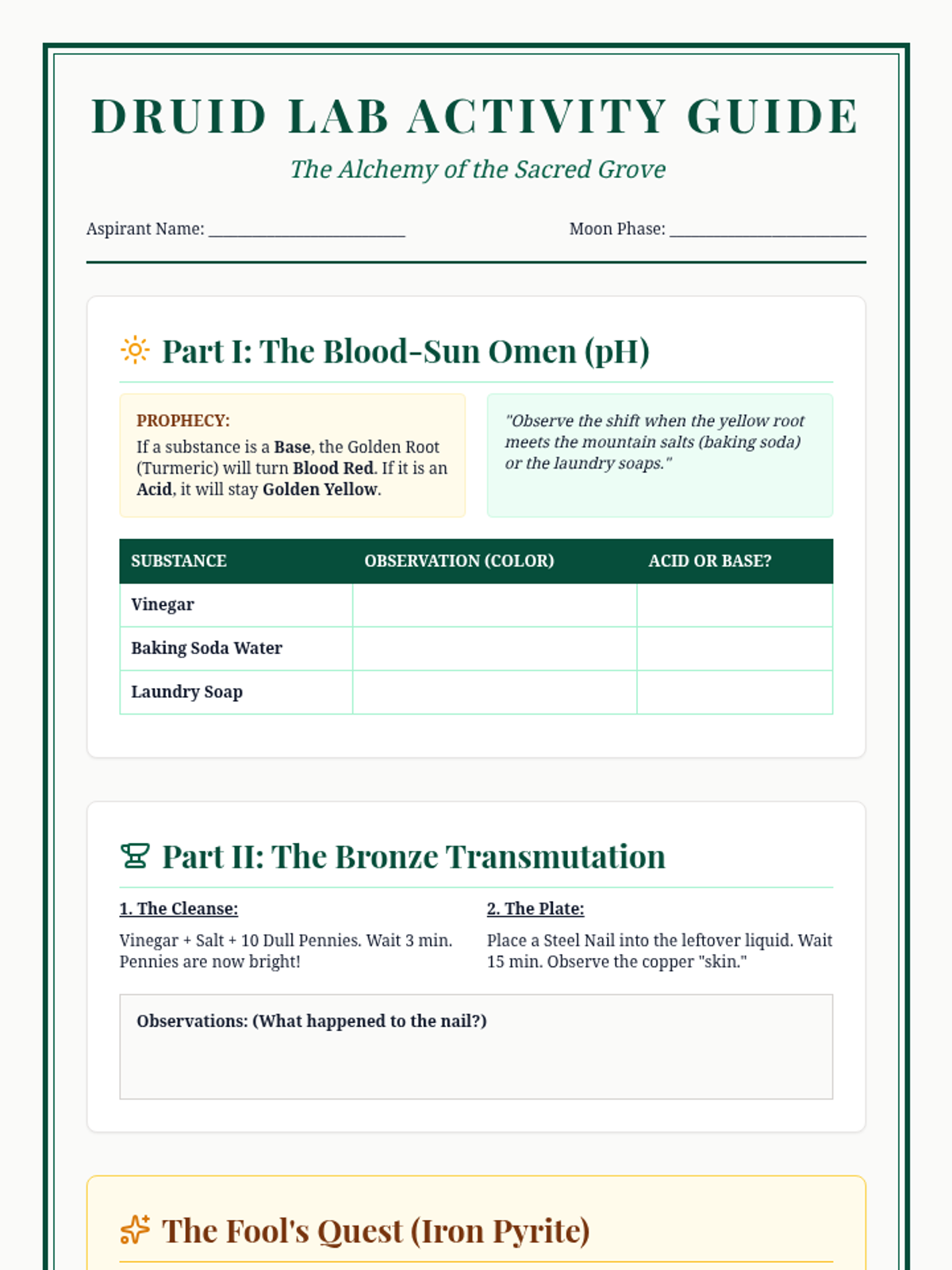
A hands-on science lesson exploring pH and chemical reactions through the lens of Ancient Celtic herbalism and druidic traditions.
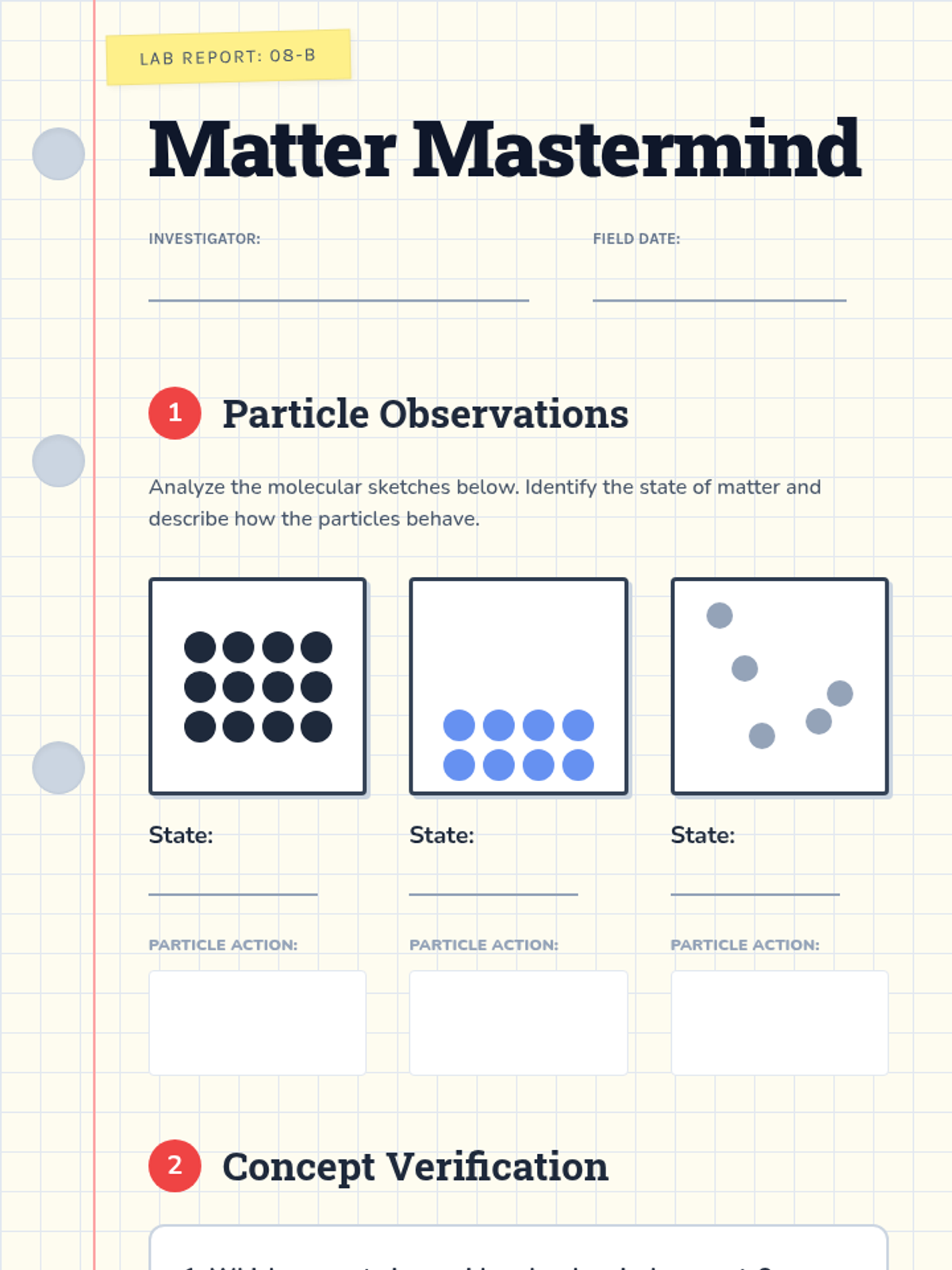
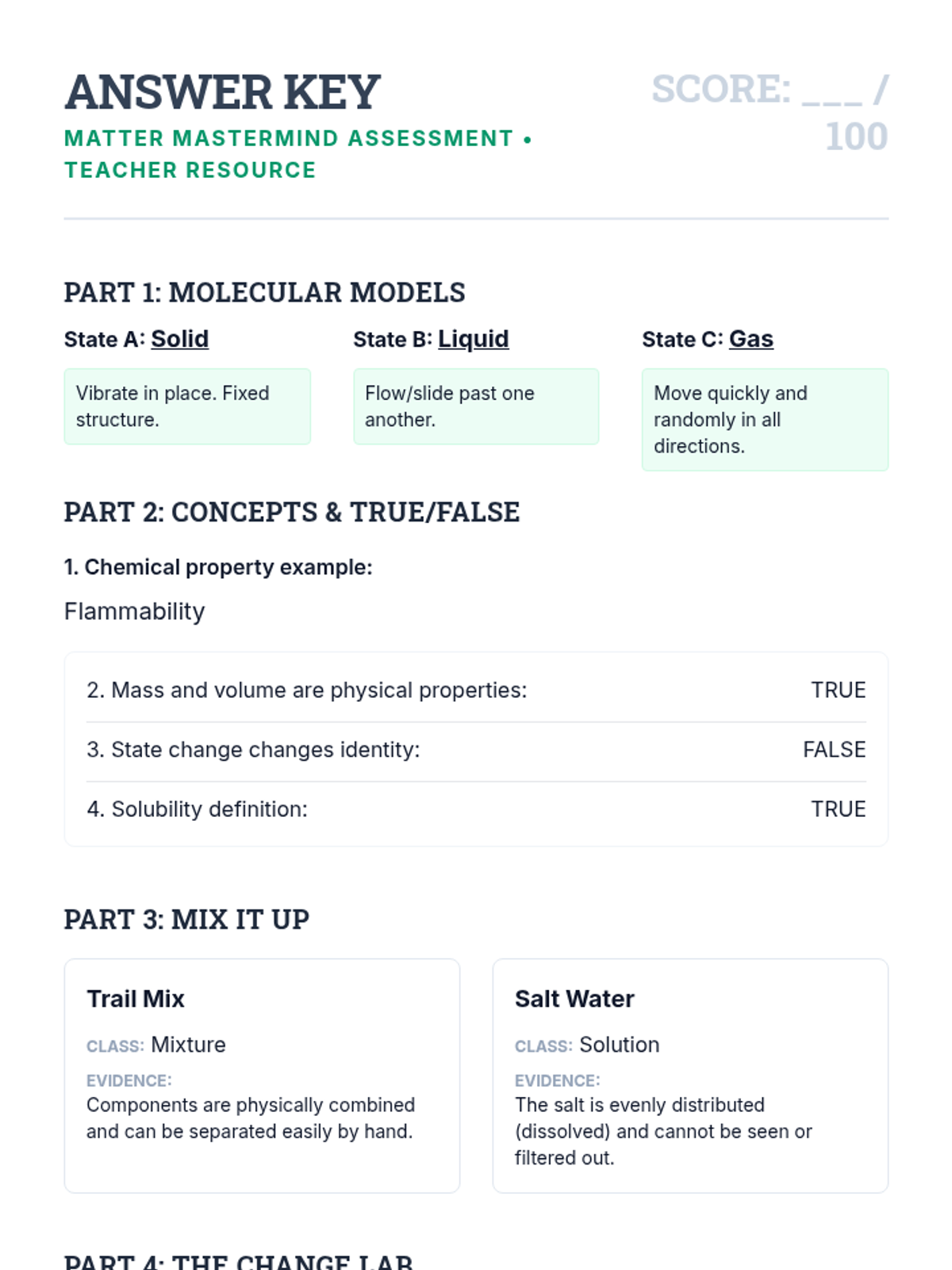
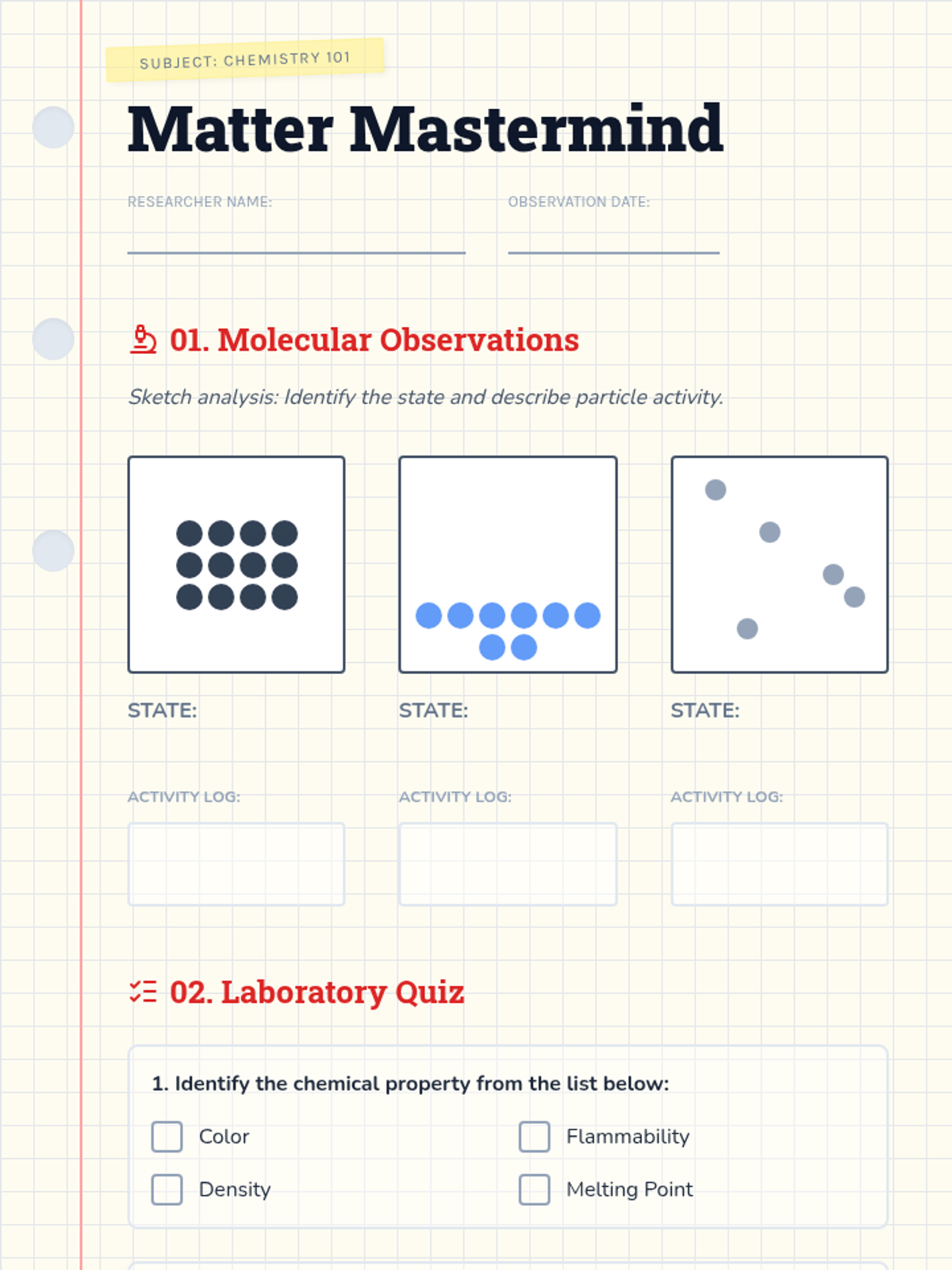
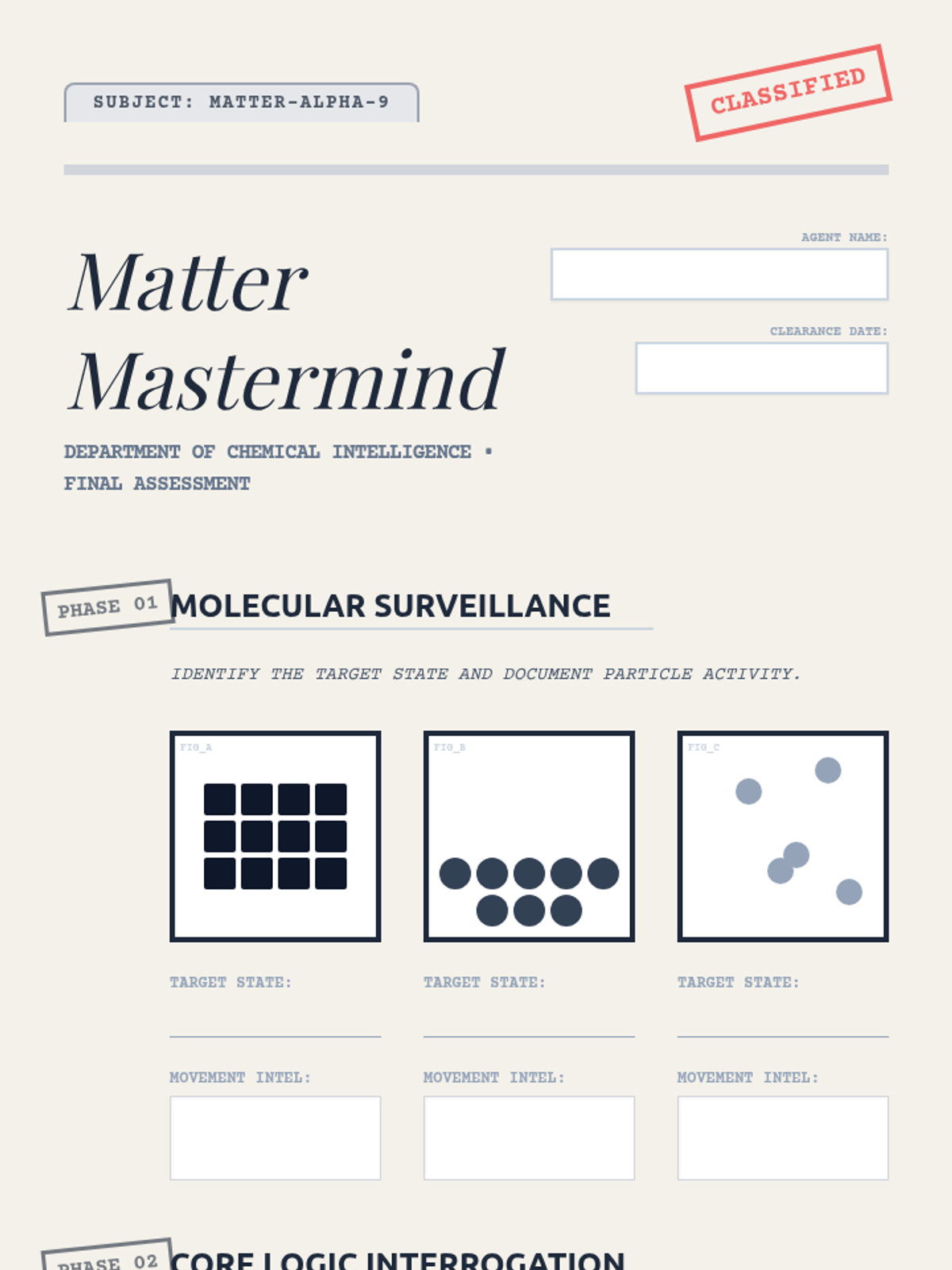
A comprehensive assessment covering states of matter, physical and chemical properties, mixtures and solutions, and physical and chemical changes. Includes diagrams, multiple-choice questions, and short-answer prompts.
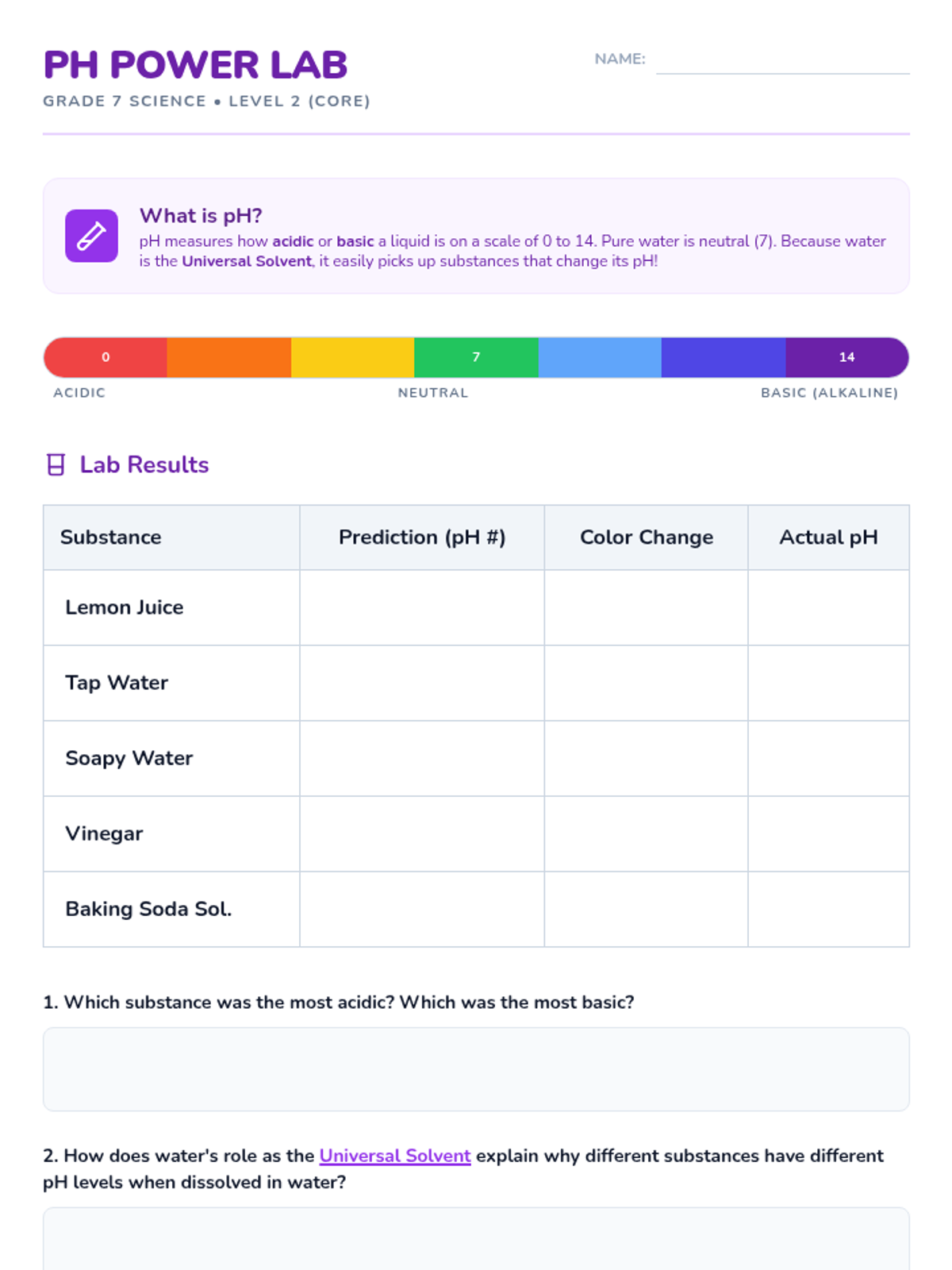
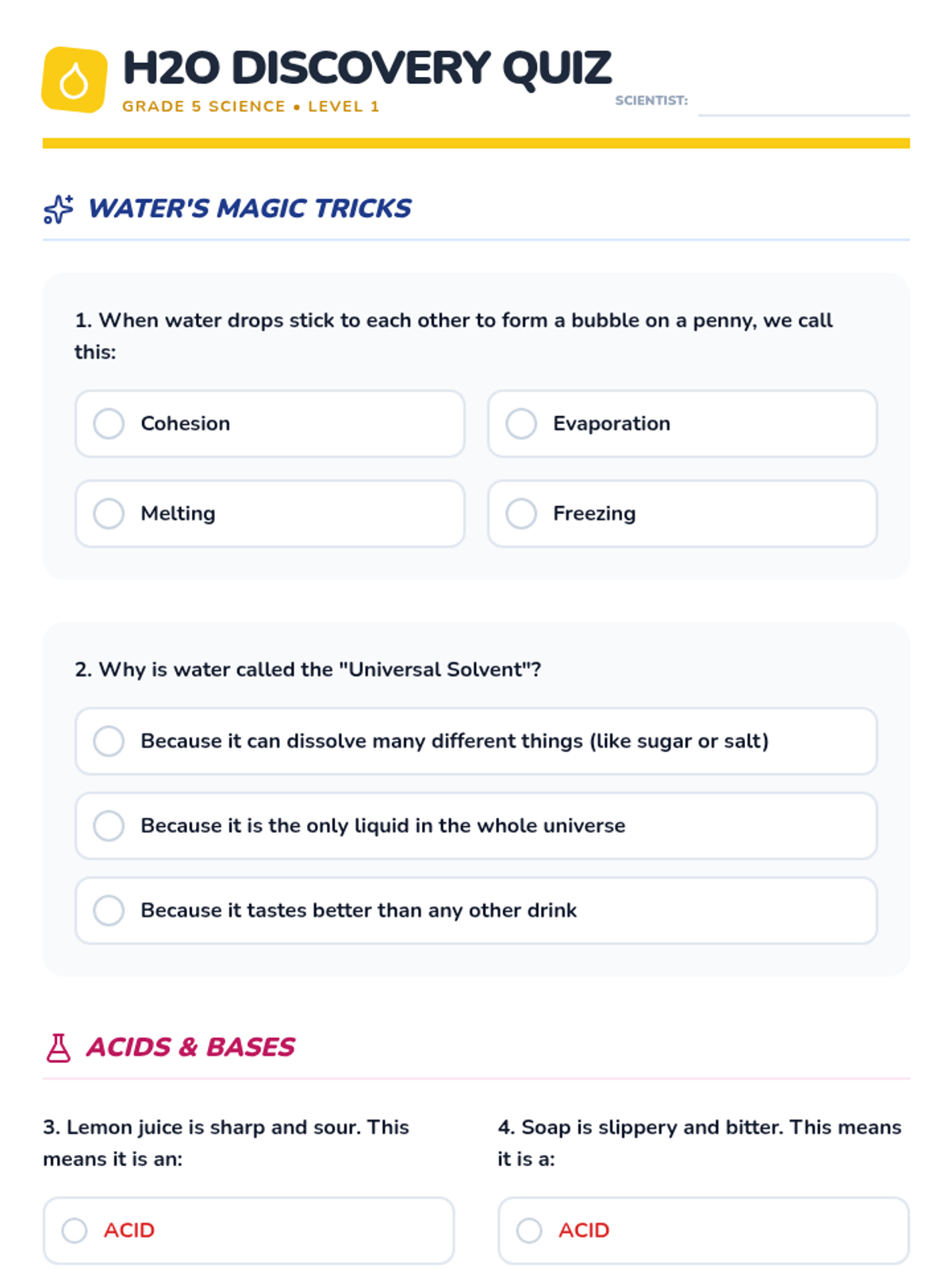
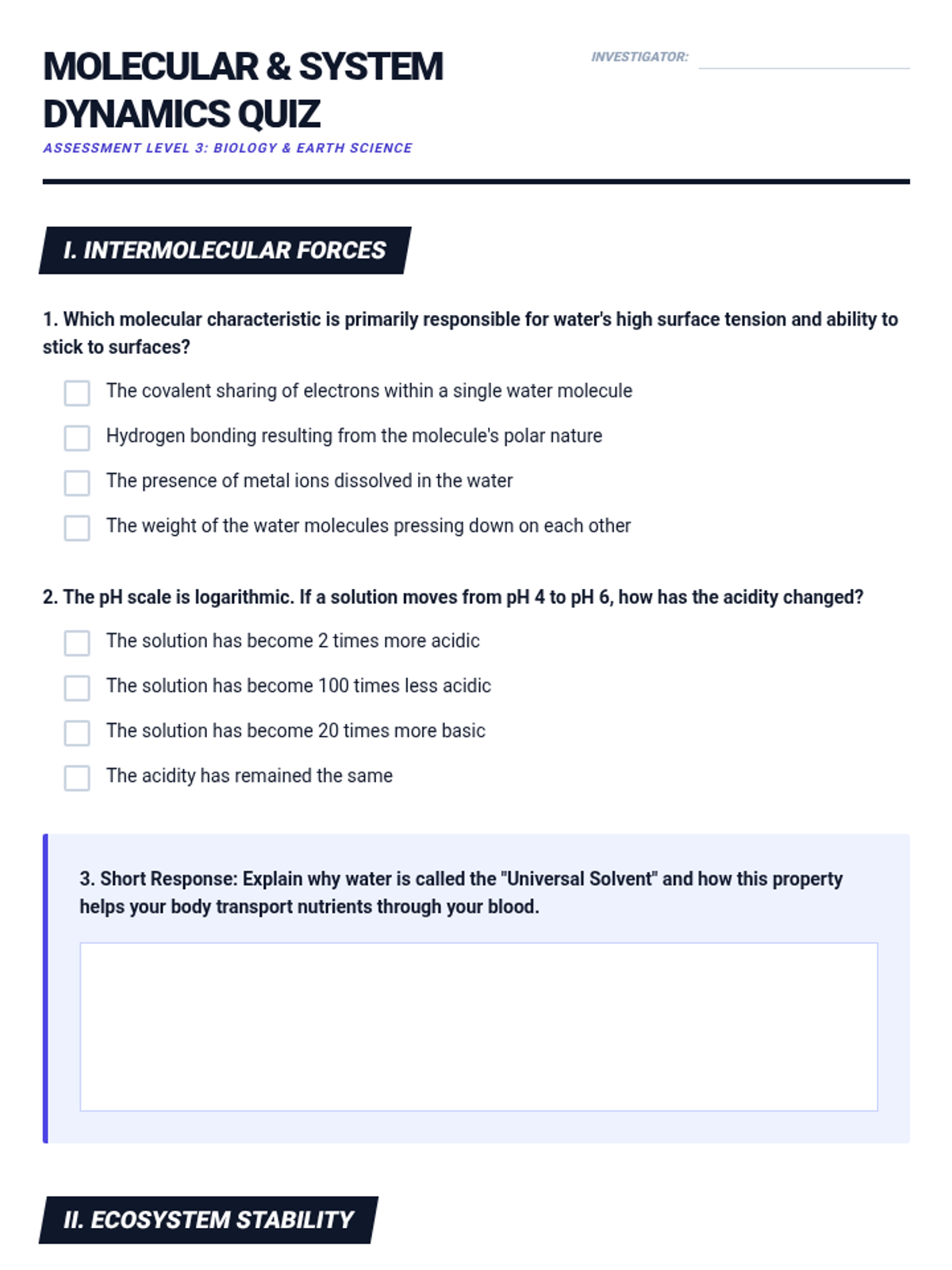
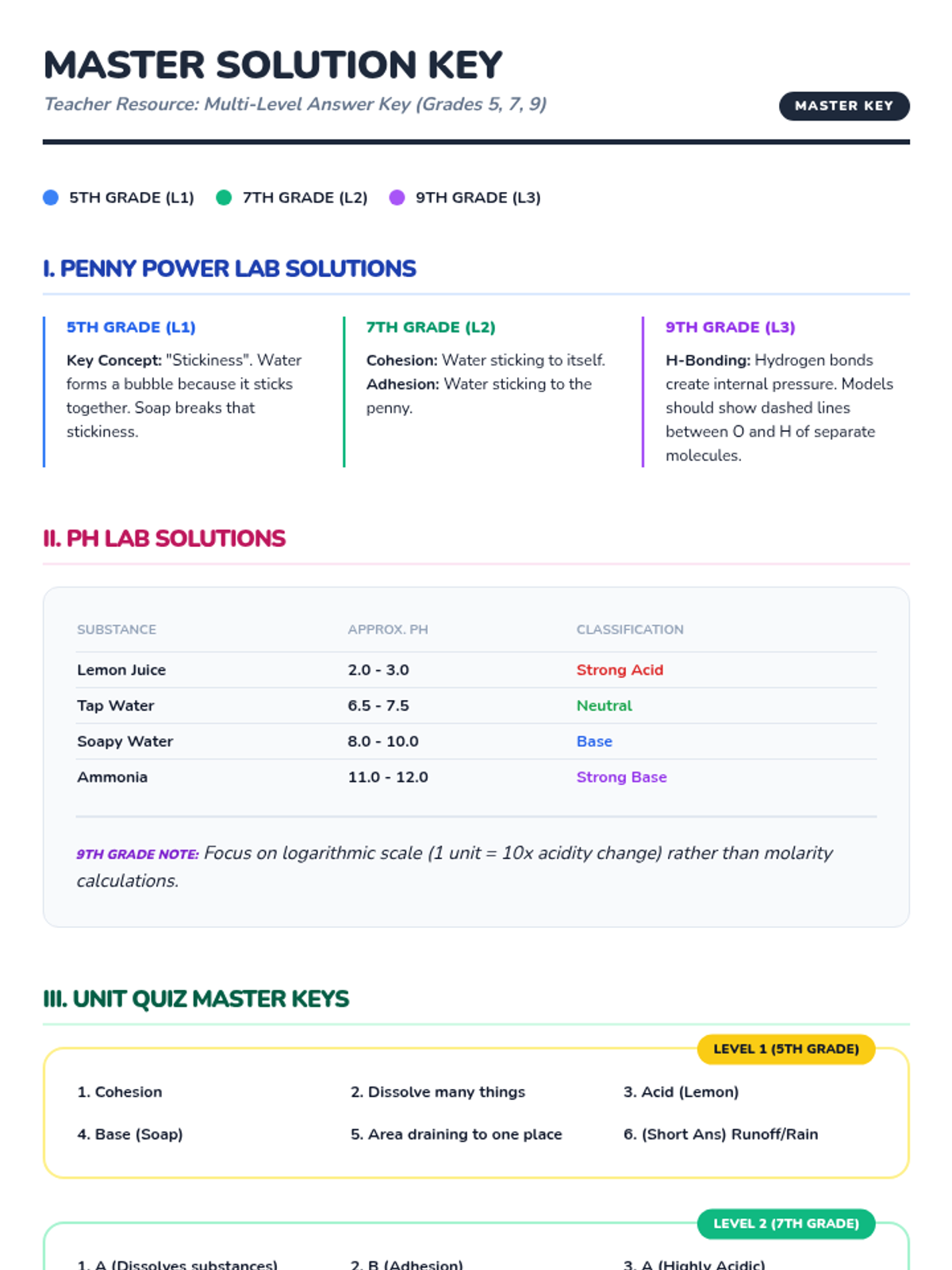
Investigate the chemical nature of water through pH testing, exploring acidity, alkalinity, and how water's role as a solvent impacts life and the environment.
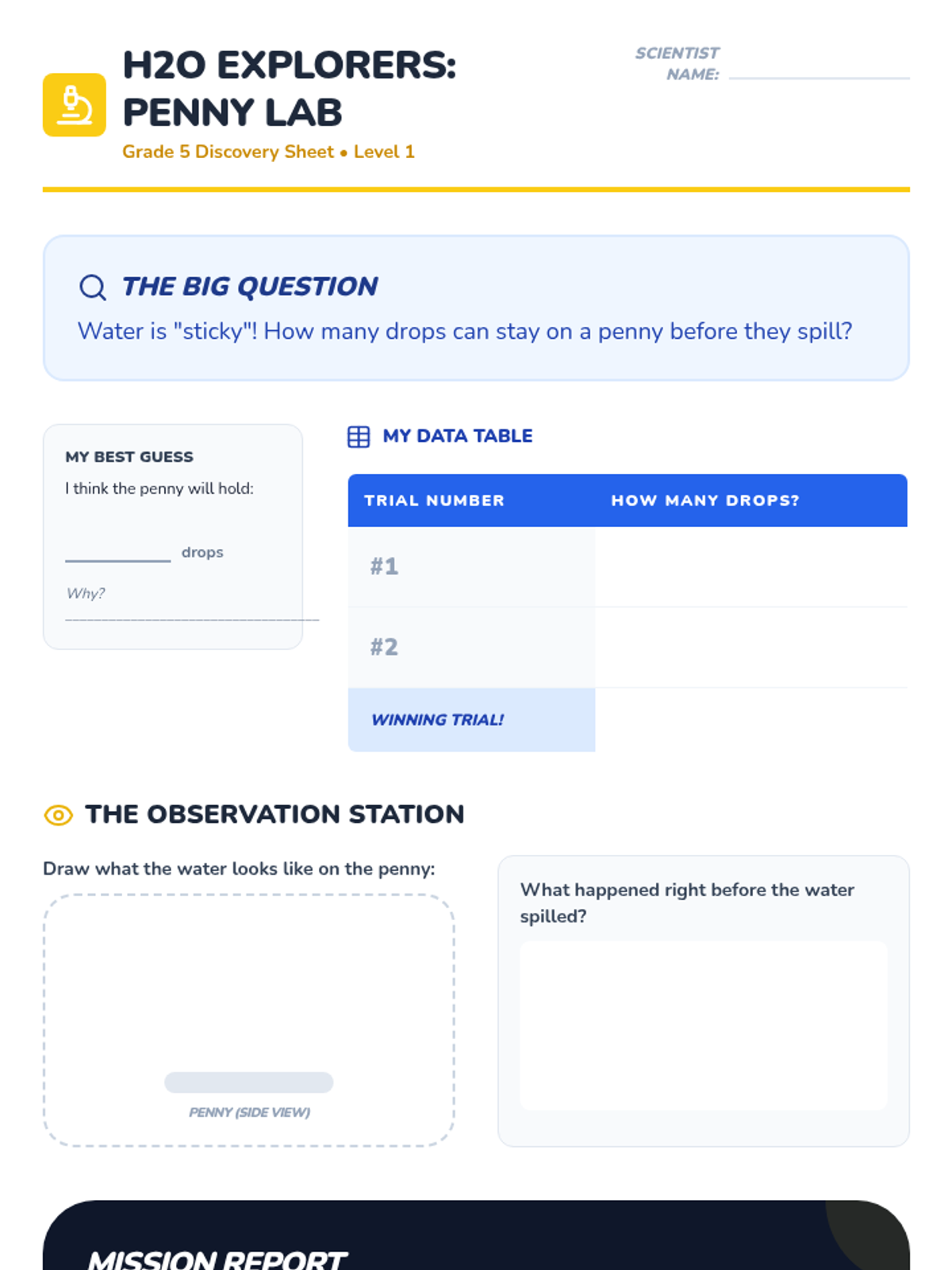
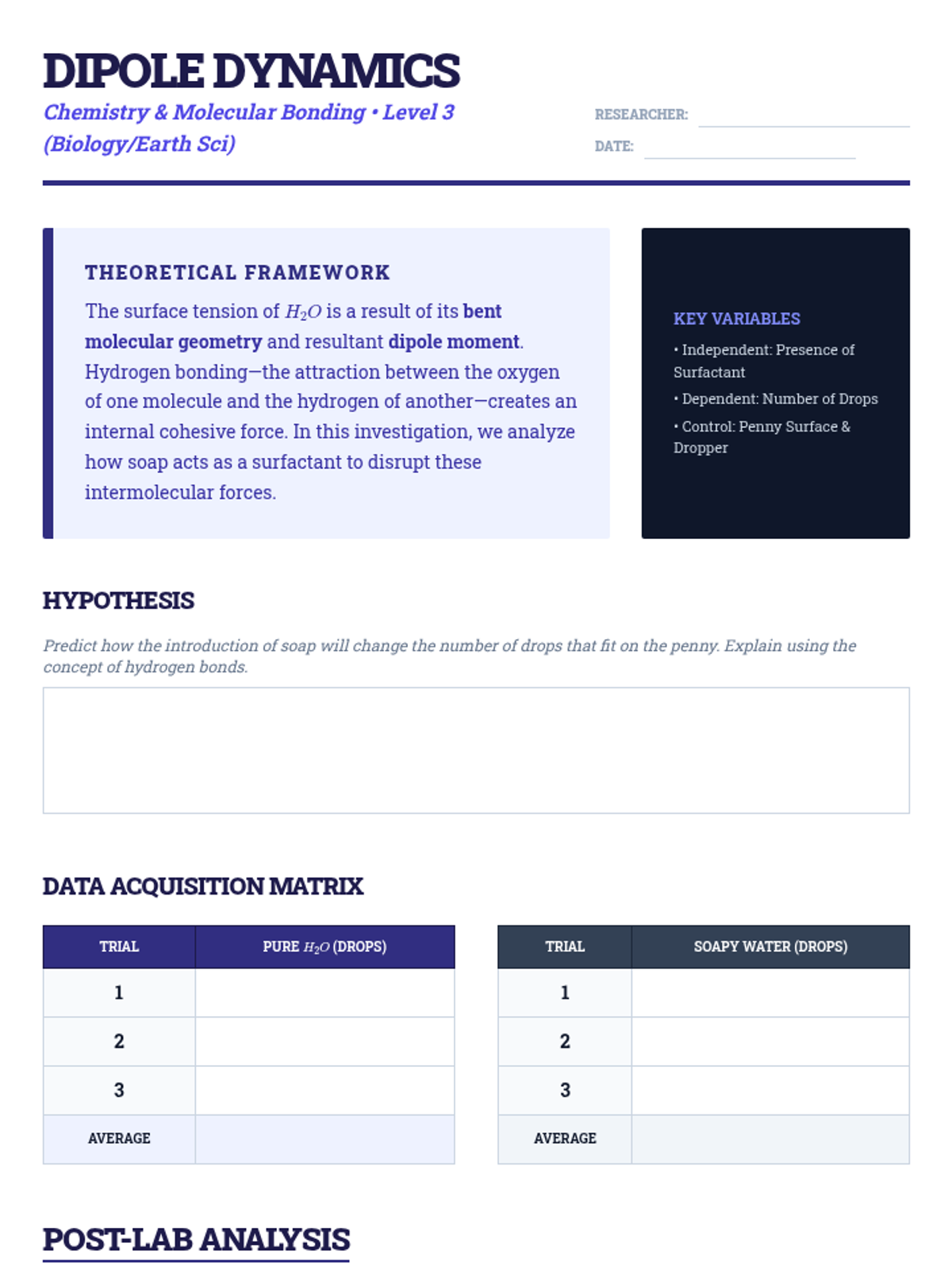
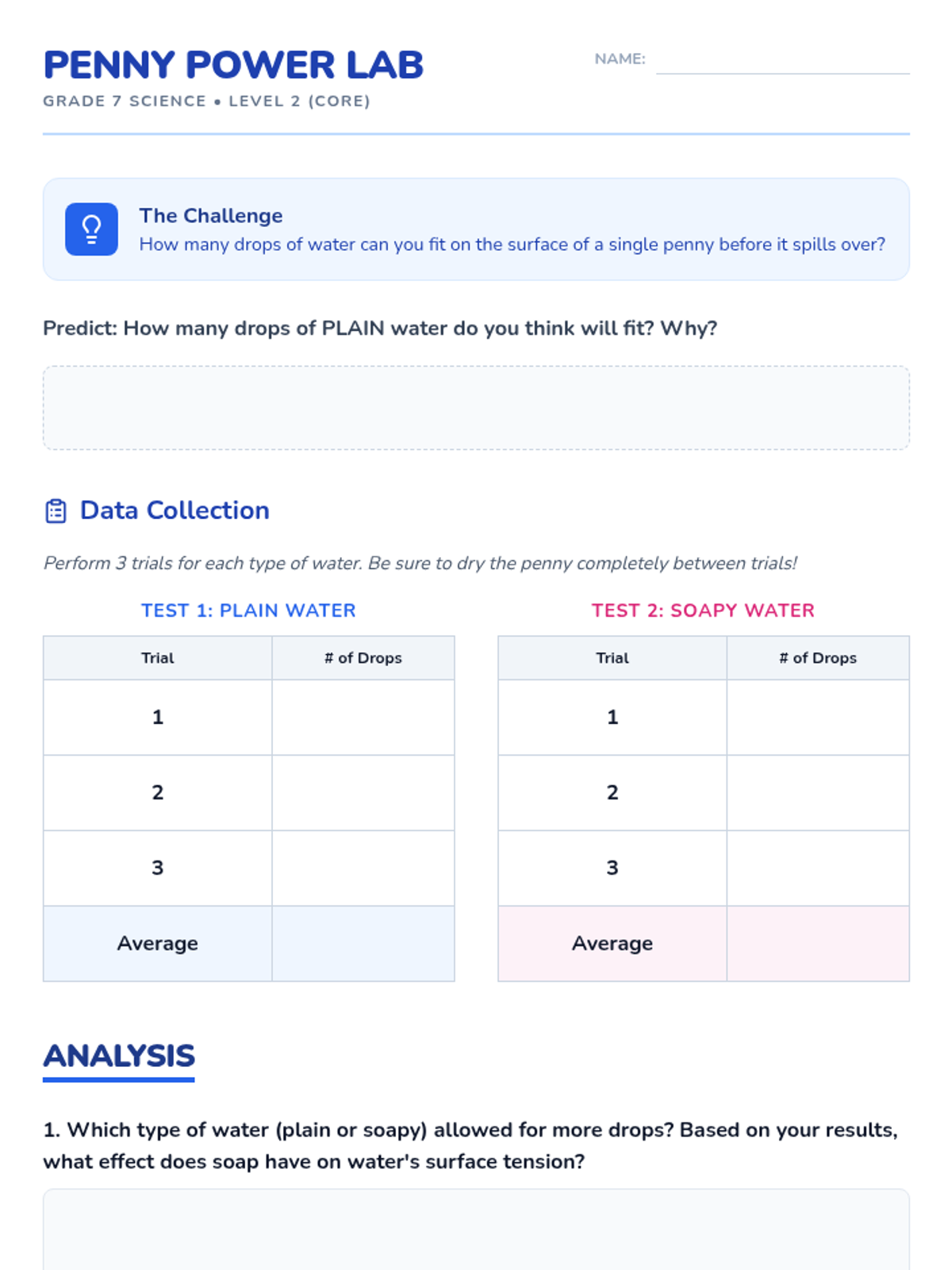
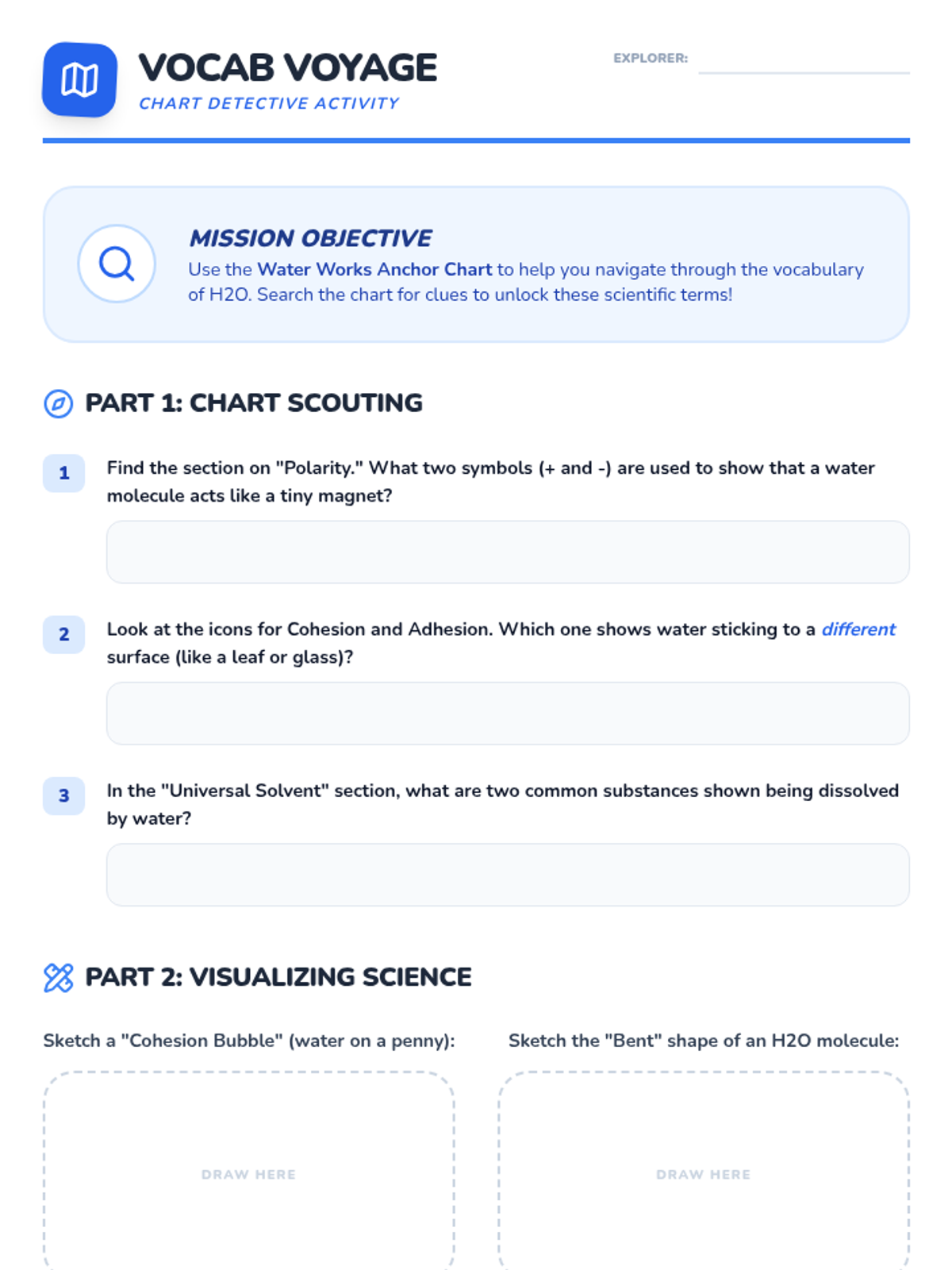
Explore the unique molecular properties of water, including cohesion, adhesion, and surface tension, through the 'Penny Power' lab and interactive demonstrations.
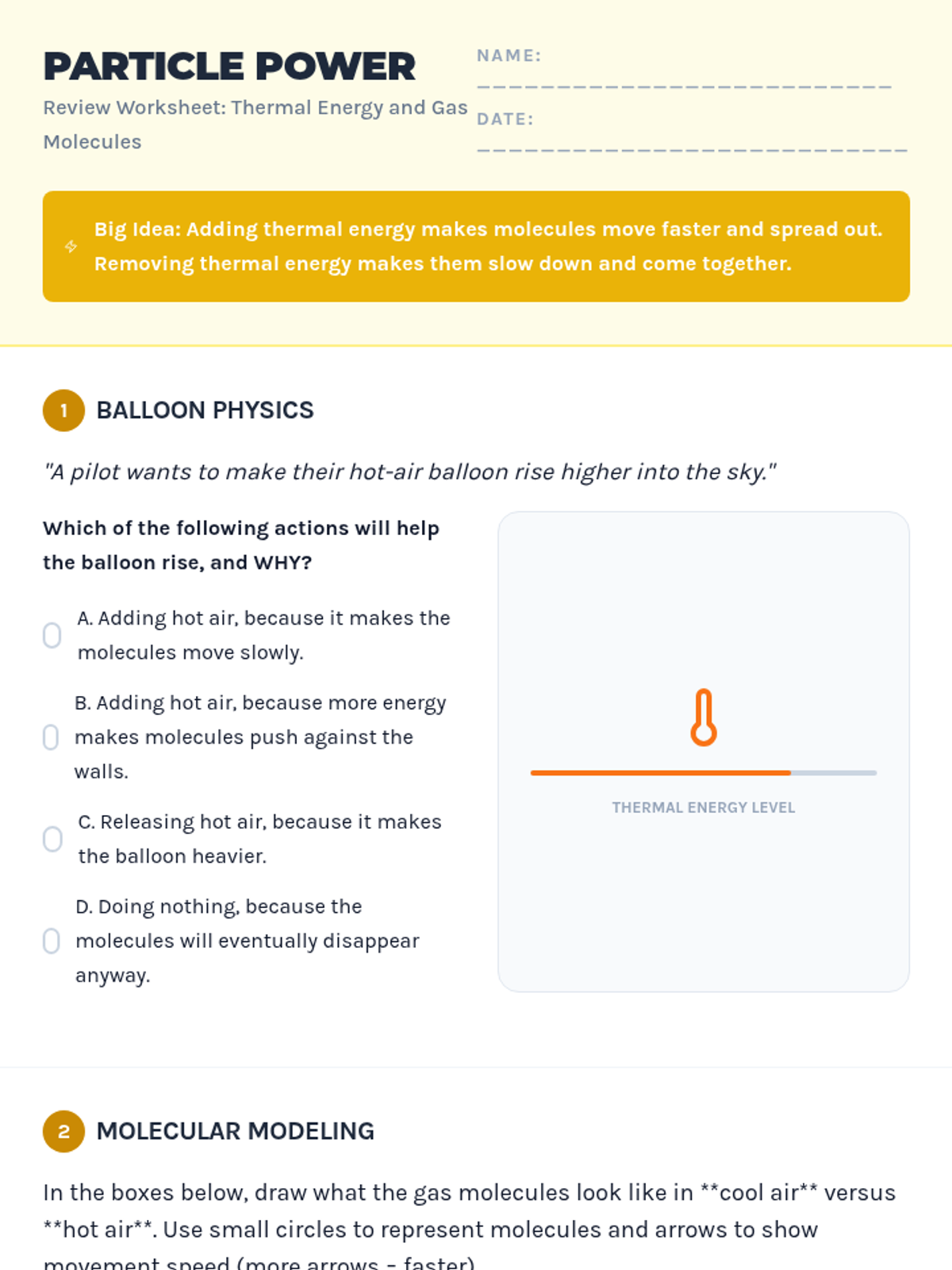
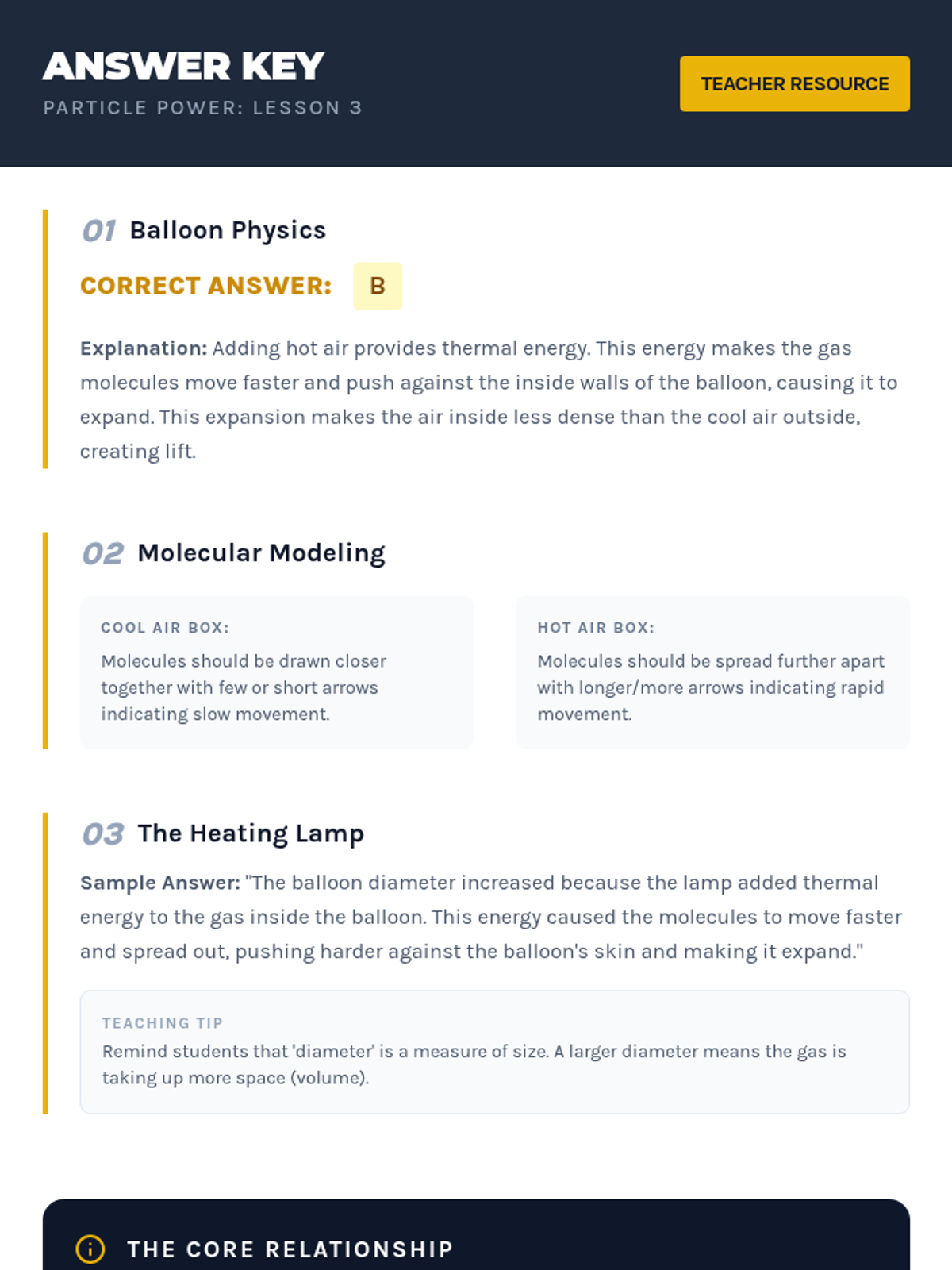
Students will investigate how thermal energy affects the speed and spacing of particles in a gas. They will interpret models and data to explain why hot air rises and how this principle is applied to technologies like hot-air balloons.
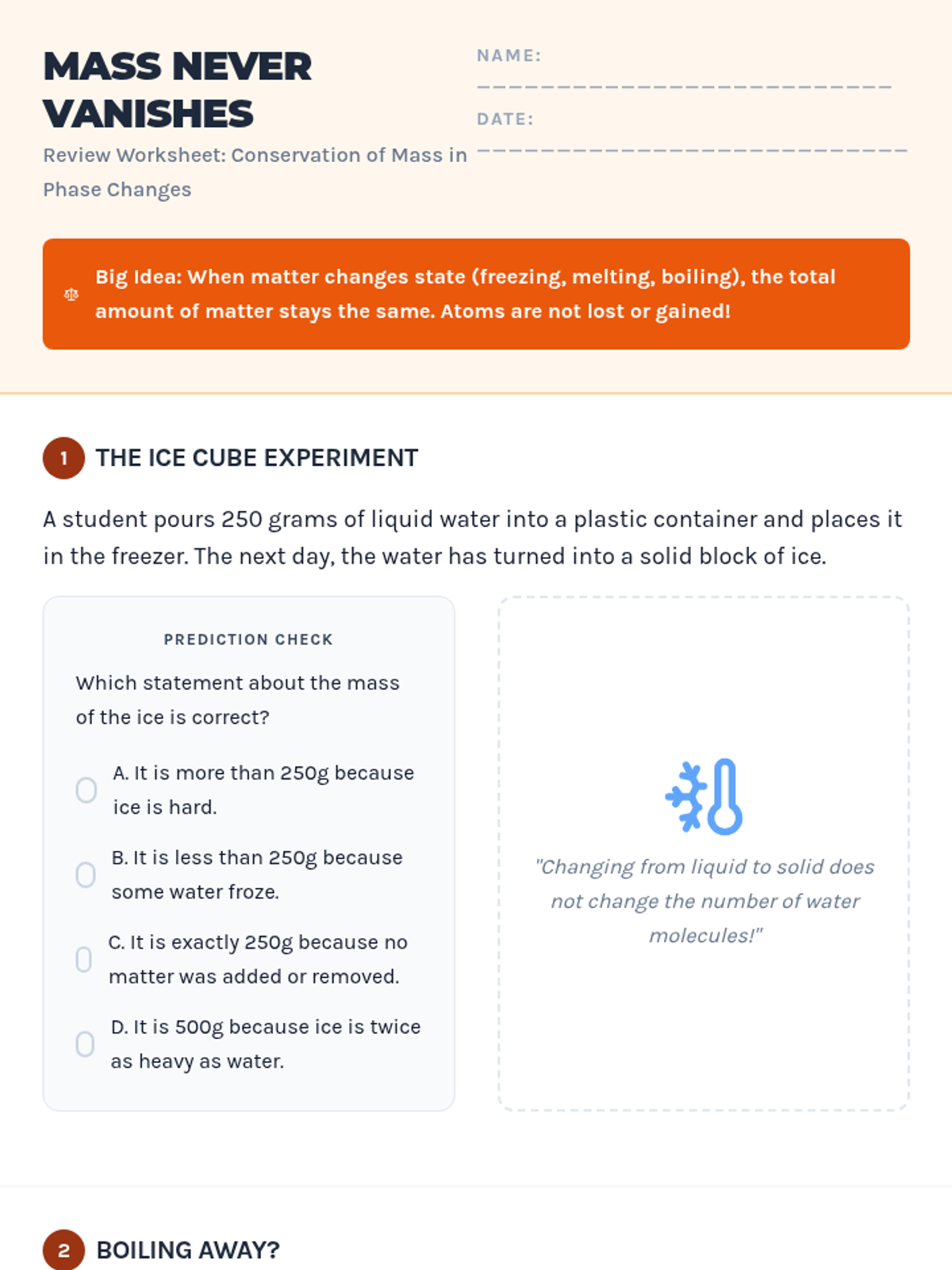
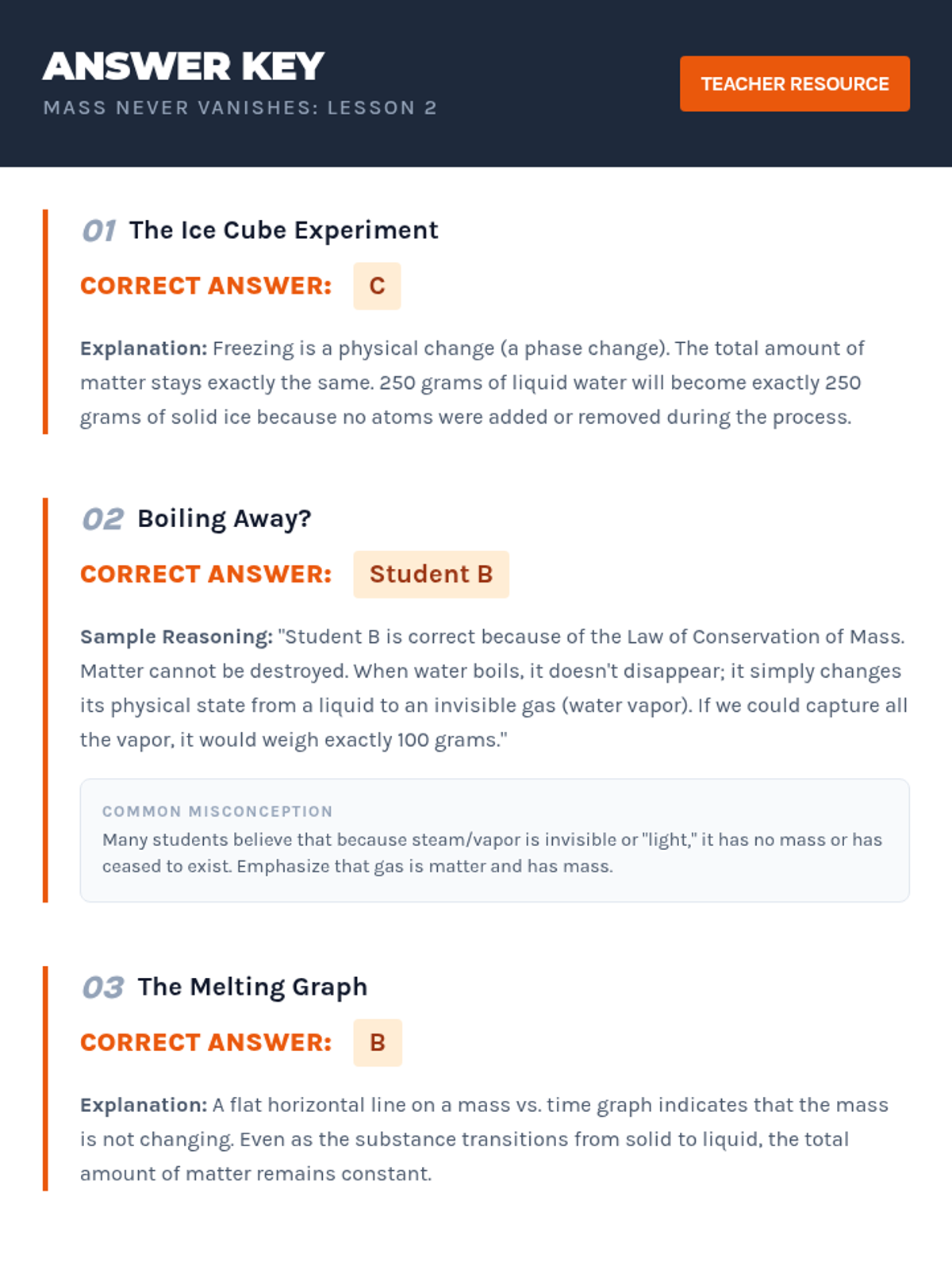
Students will explore how the mass of a substance remains constant even as it undergoes phase changes (freezing, melting, boiling). They will analyze data involving state changes and evaluate scientific claims about matter 'disappearing' during evaporation.
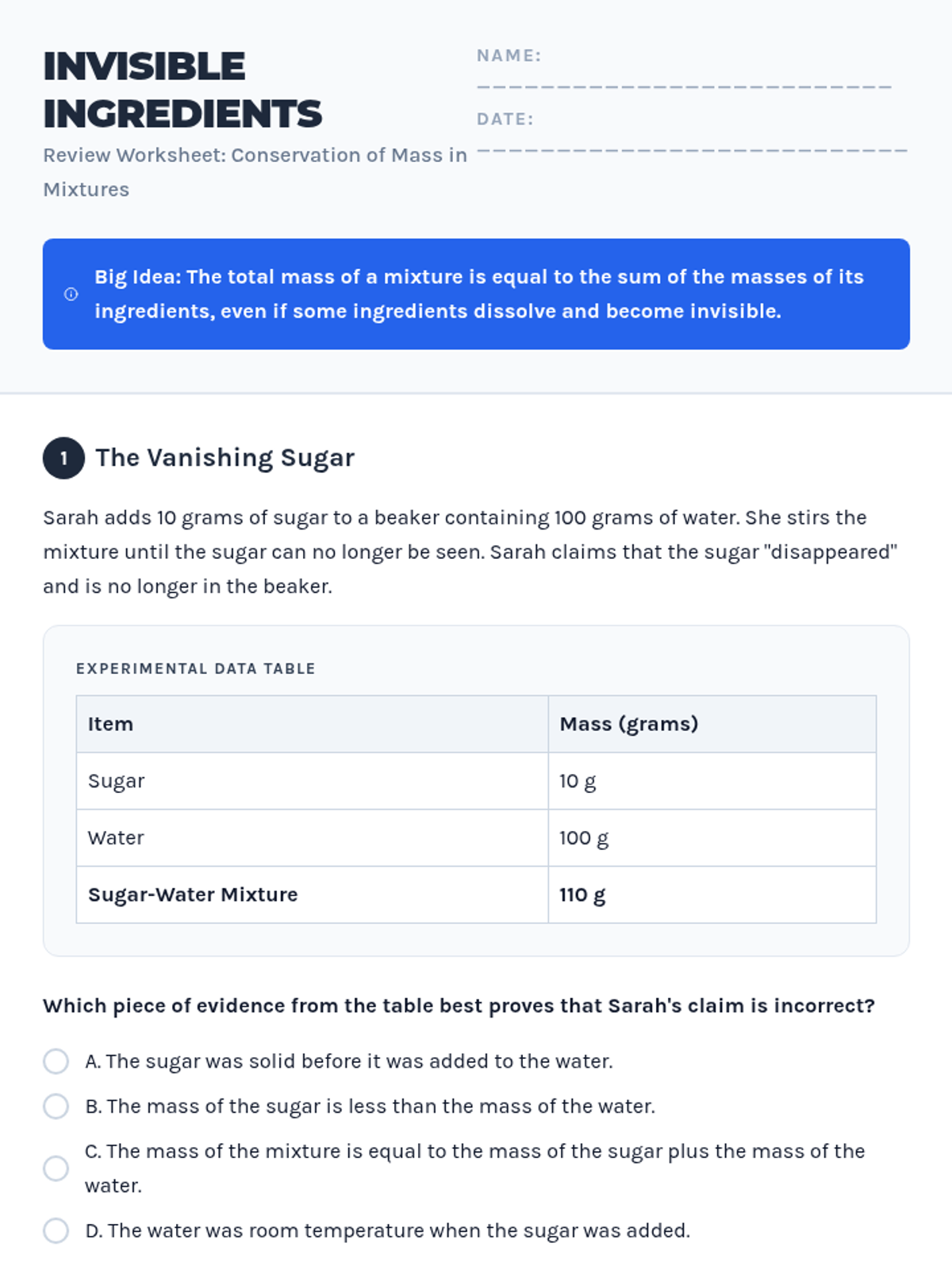
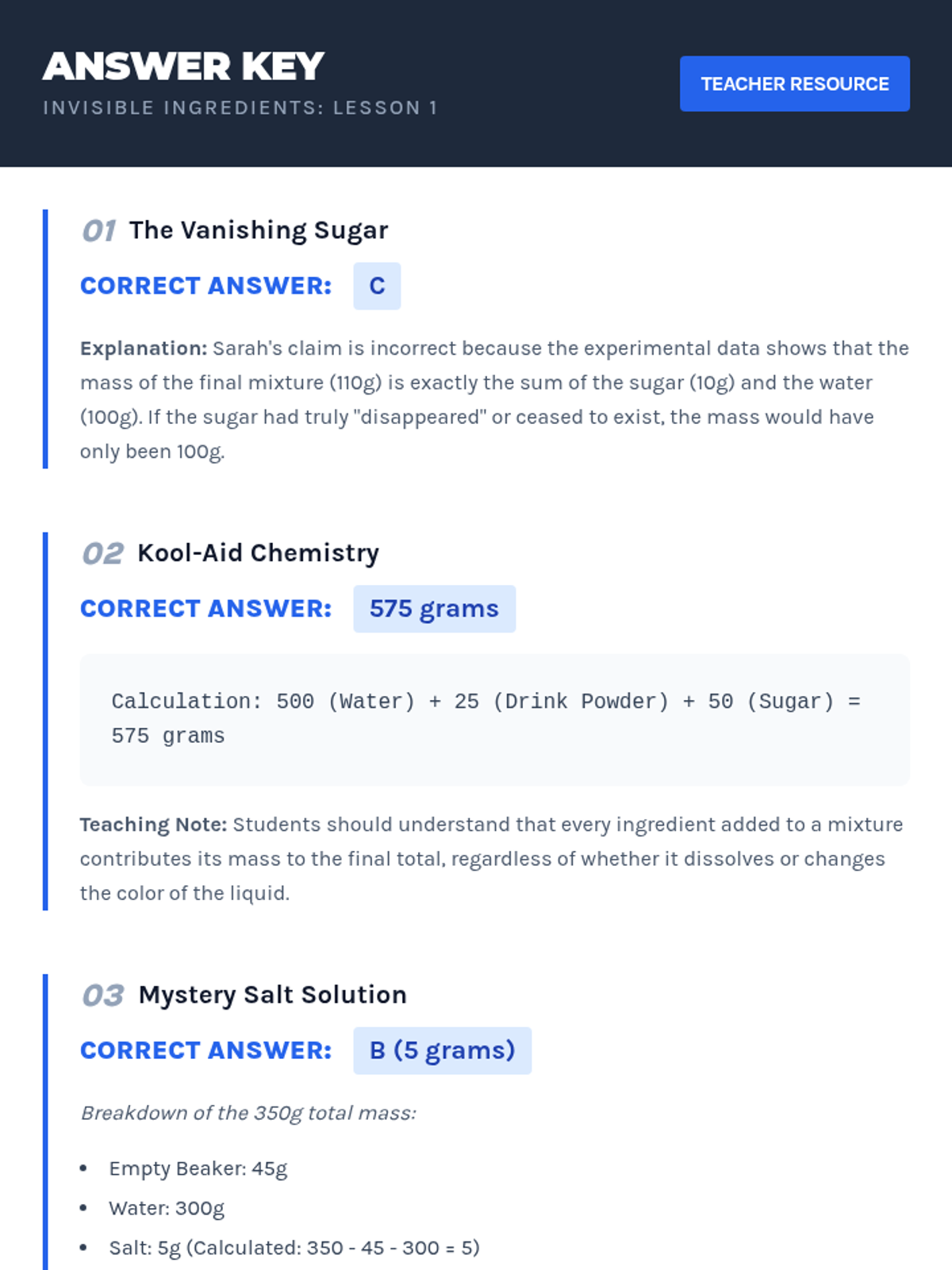
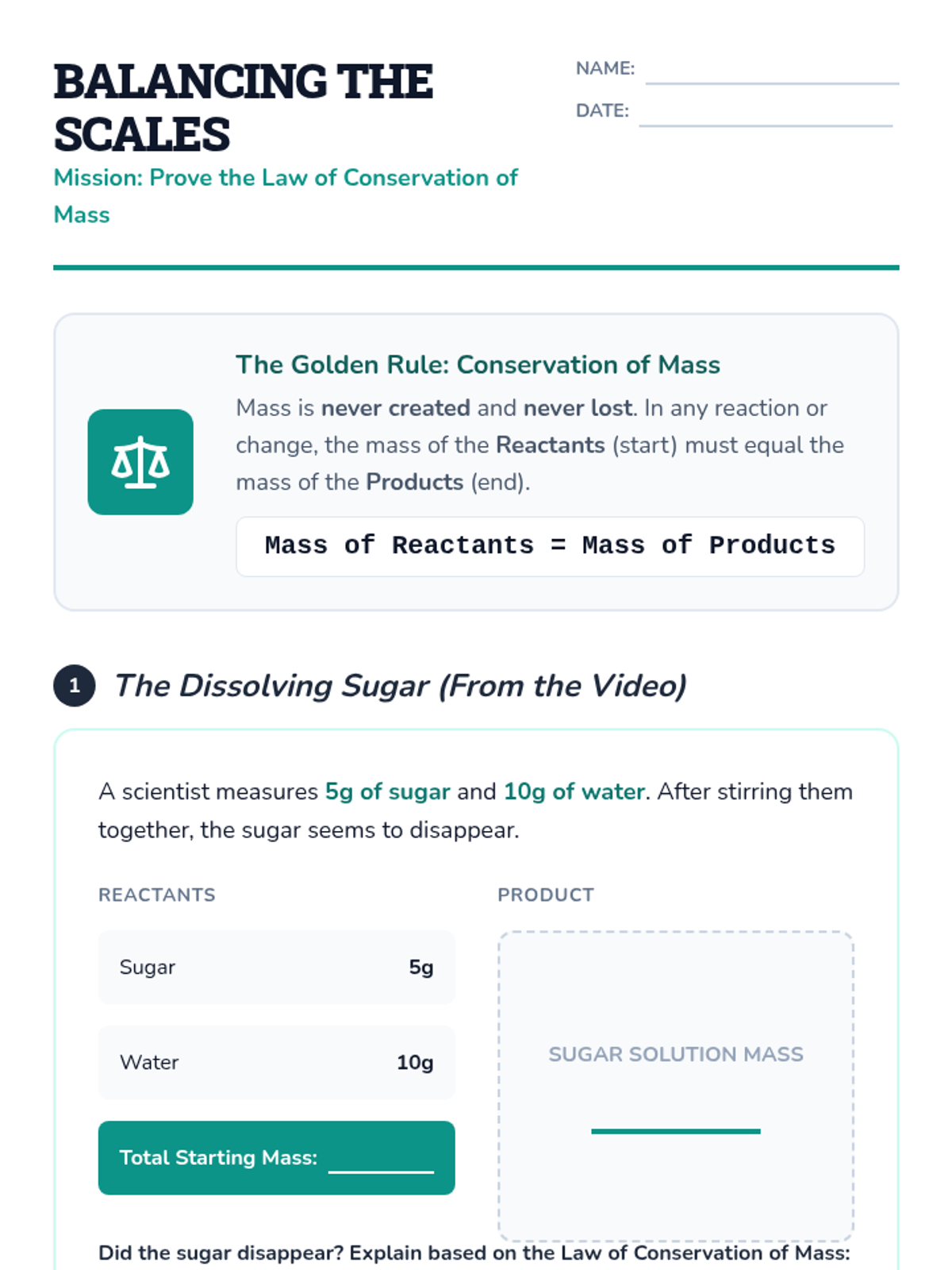
Students will review the law of conservation of mass as it applies to mixtures and dissolving. They will practice interpreting data tables to prove that matter still exists even when it is no longer visible in a solution.
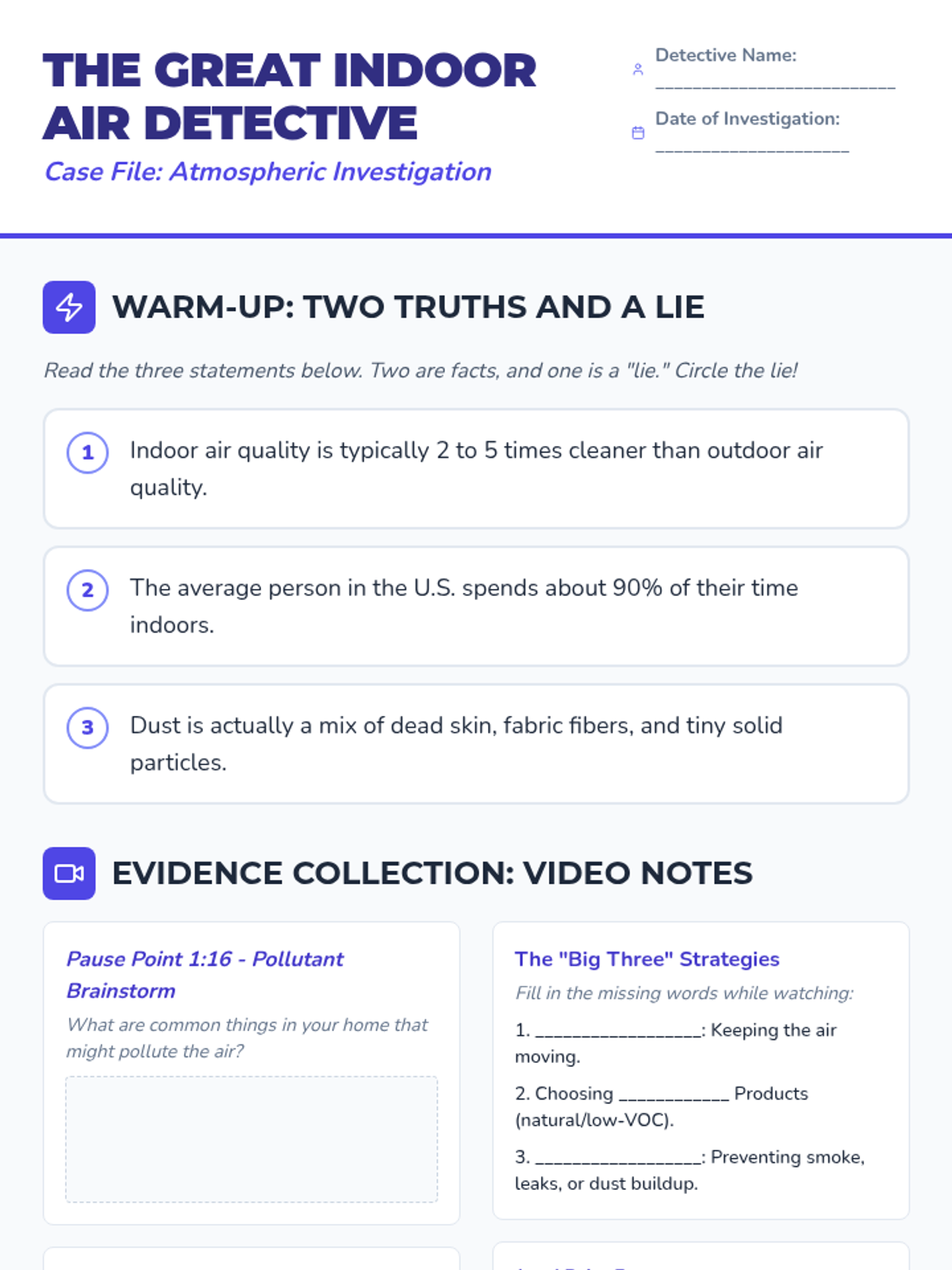
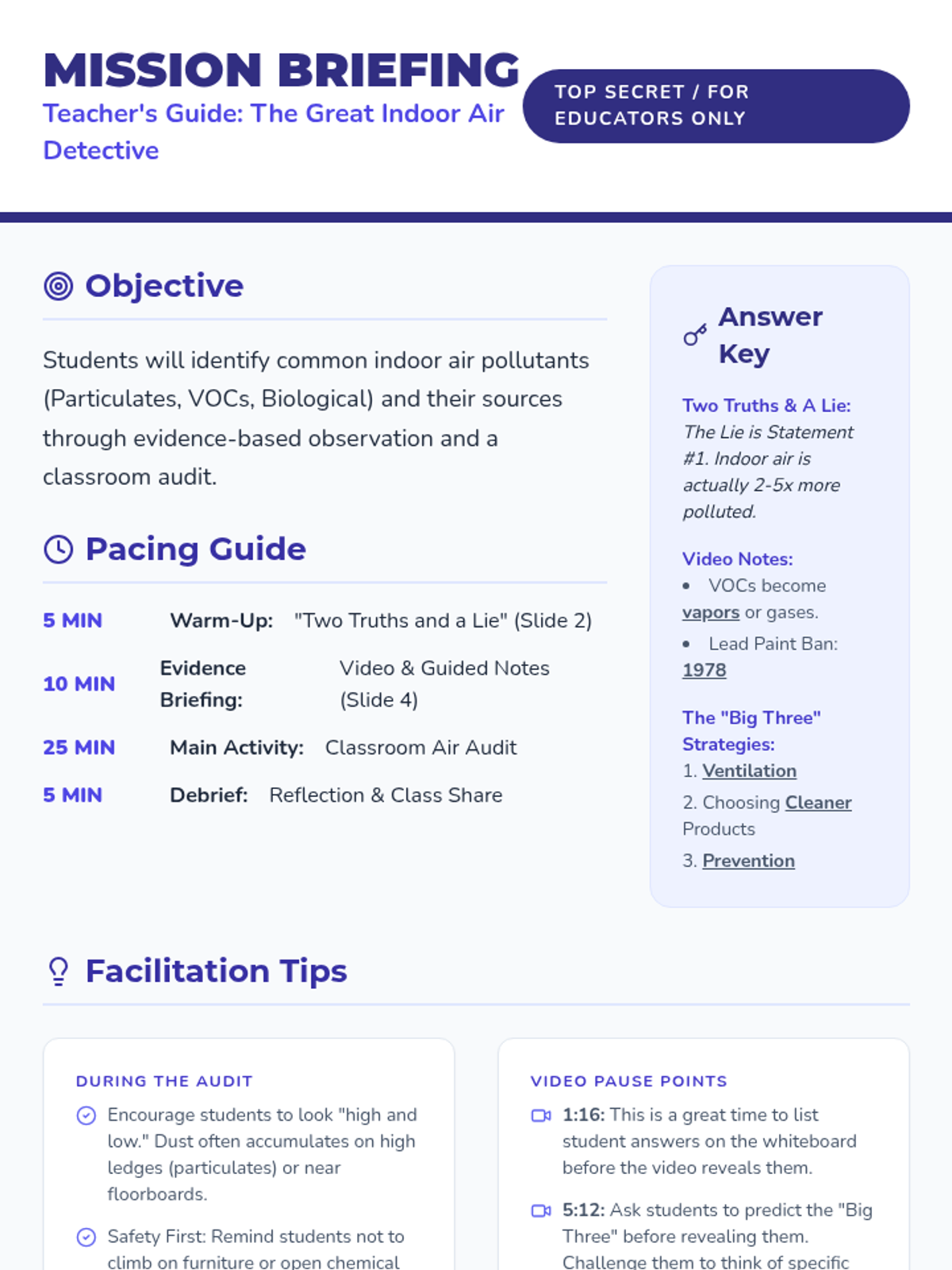
A detective-themed lesson where students investigate indoor air quality, identifying common pollutants like VOCs and particulate matter through a classroom audit activity.
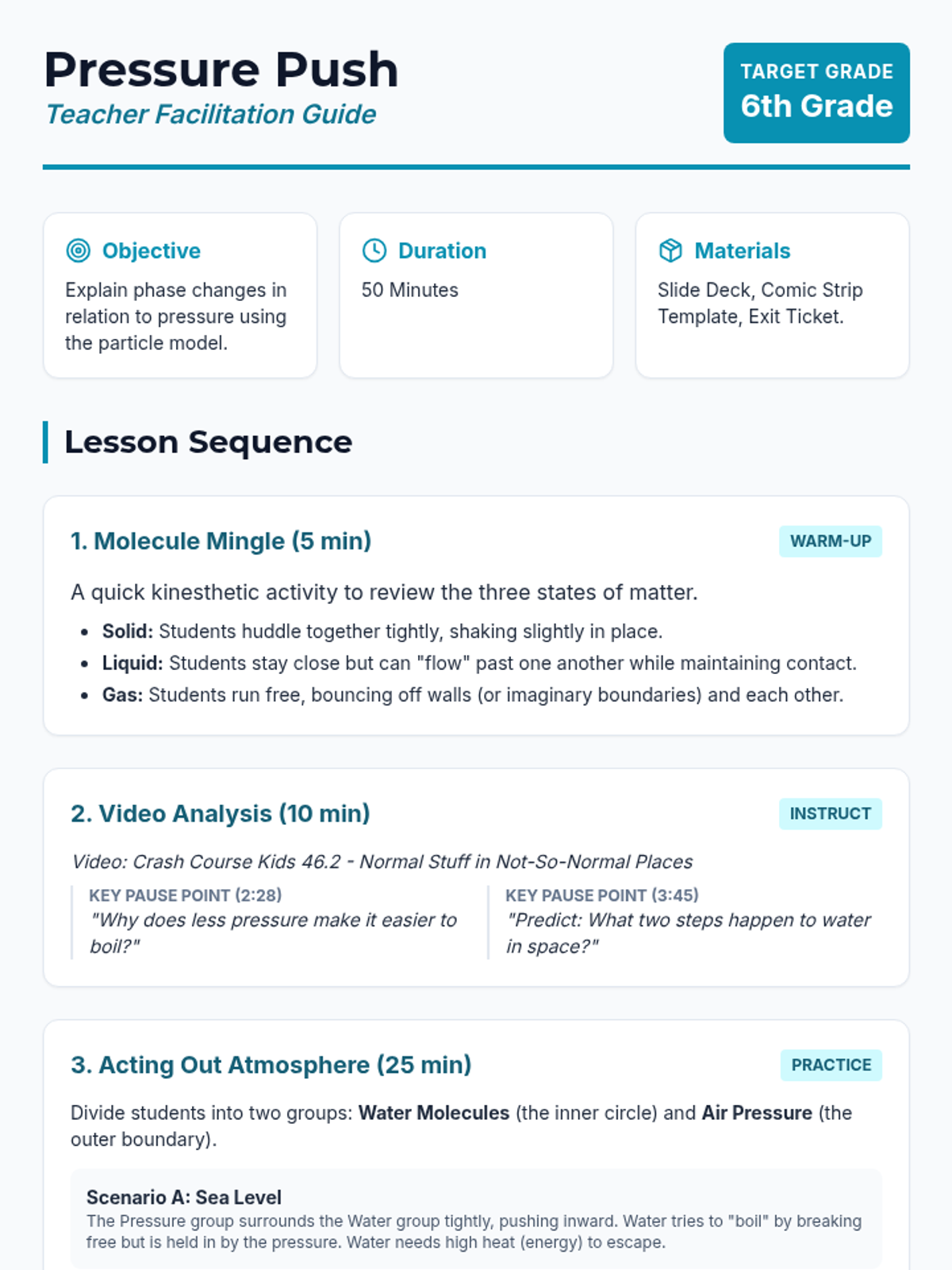
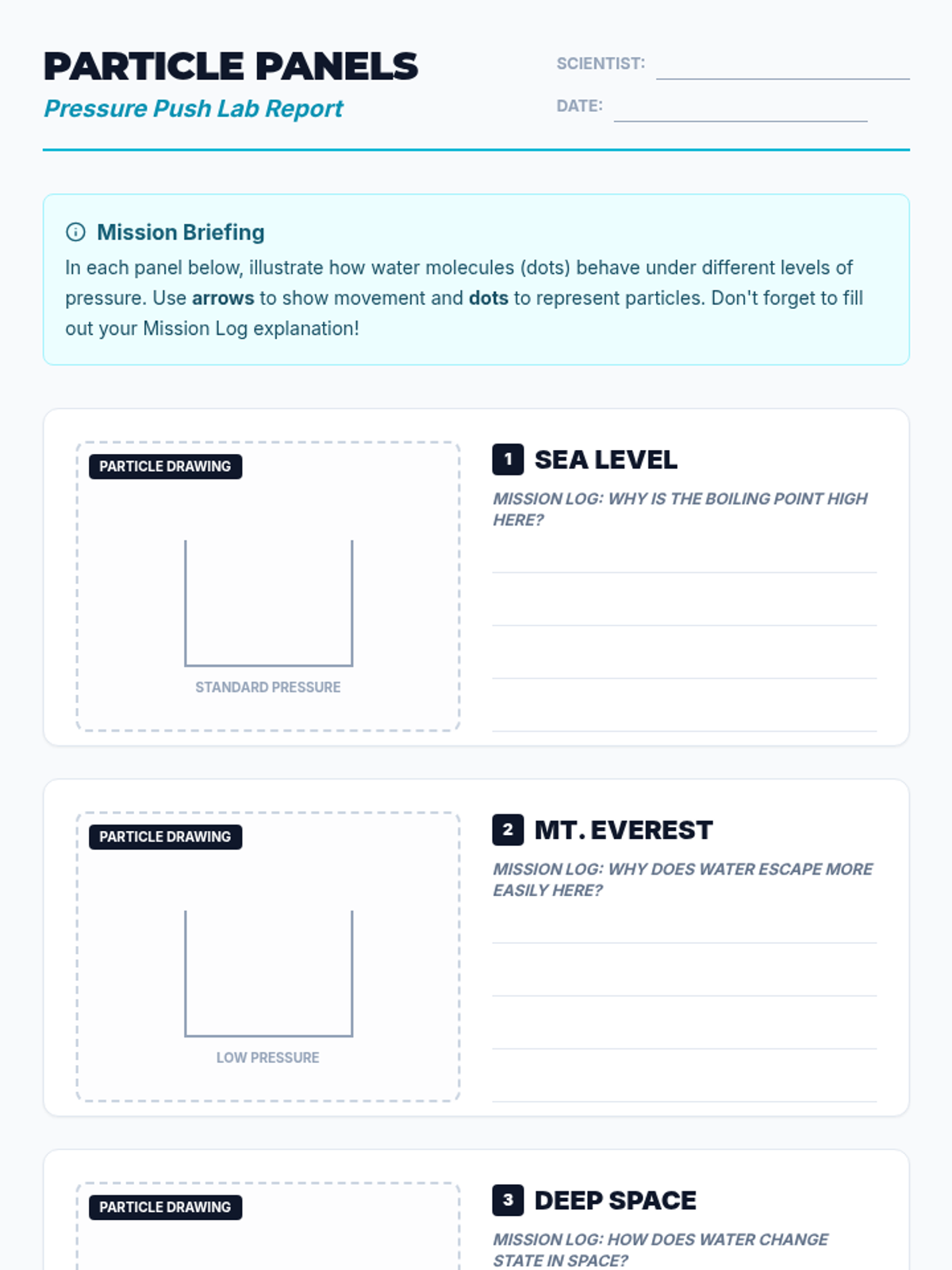
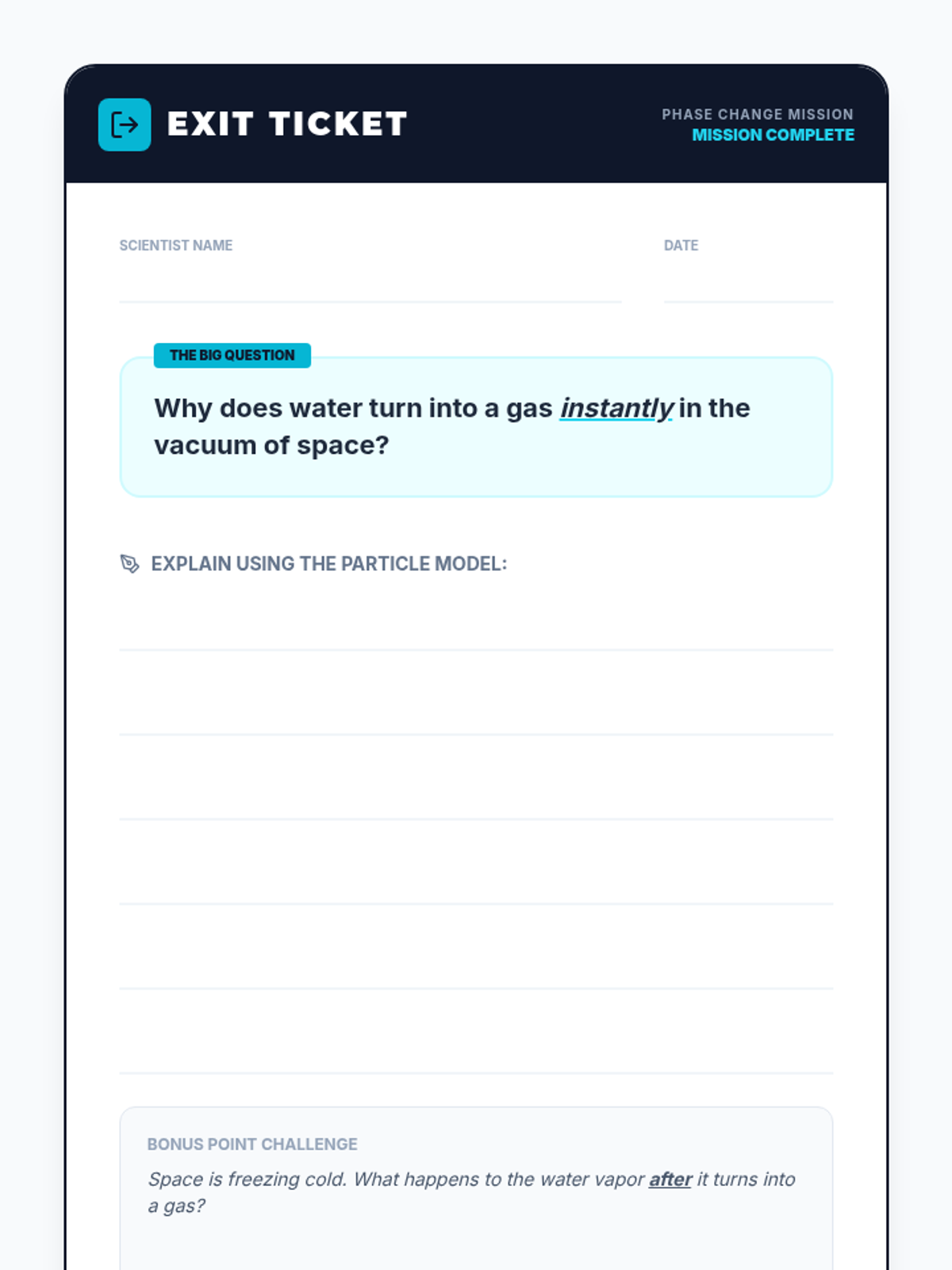
Students will explore how atmospheric pressure affects states of matter and boiling points using a particle-based model. The lesson includes a physical roleplay activity, a video analysis, and a creative comic strip application.
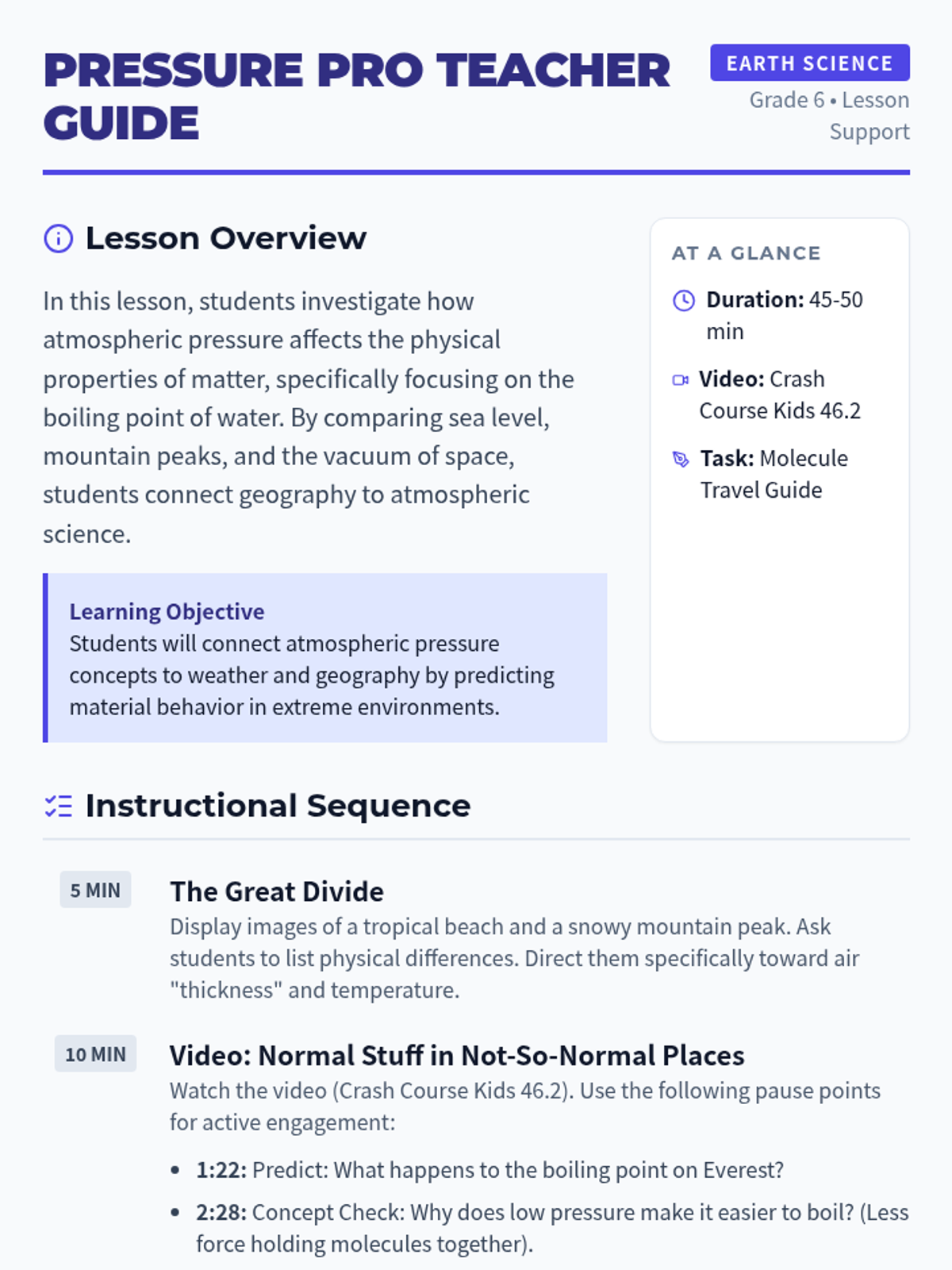
Students explore the relationship between atmospheric pressure, altitude, and boiling points by creating a travel guide for a water molecule visiting extreme environments.
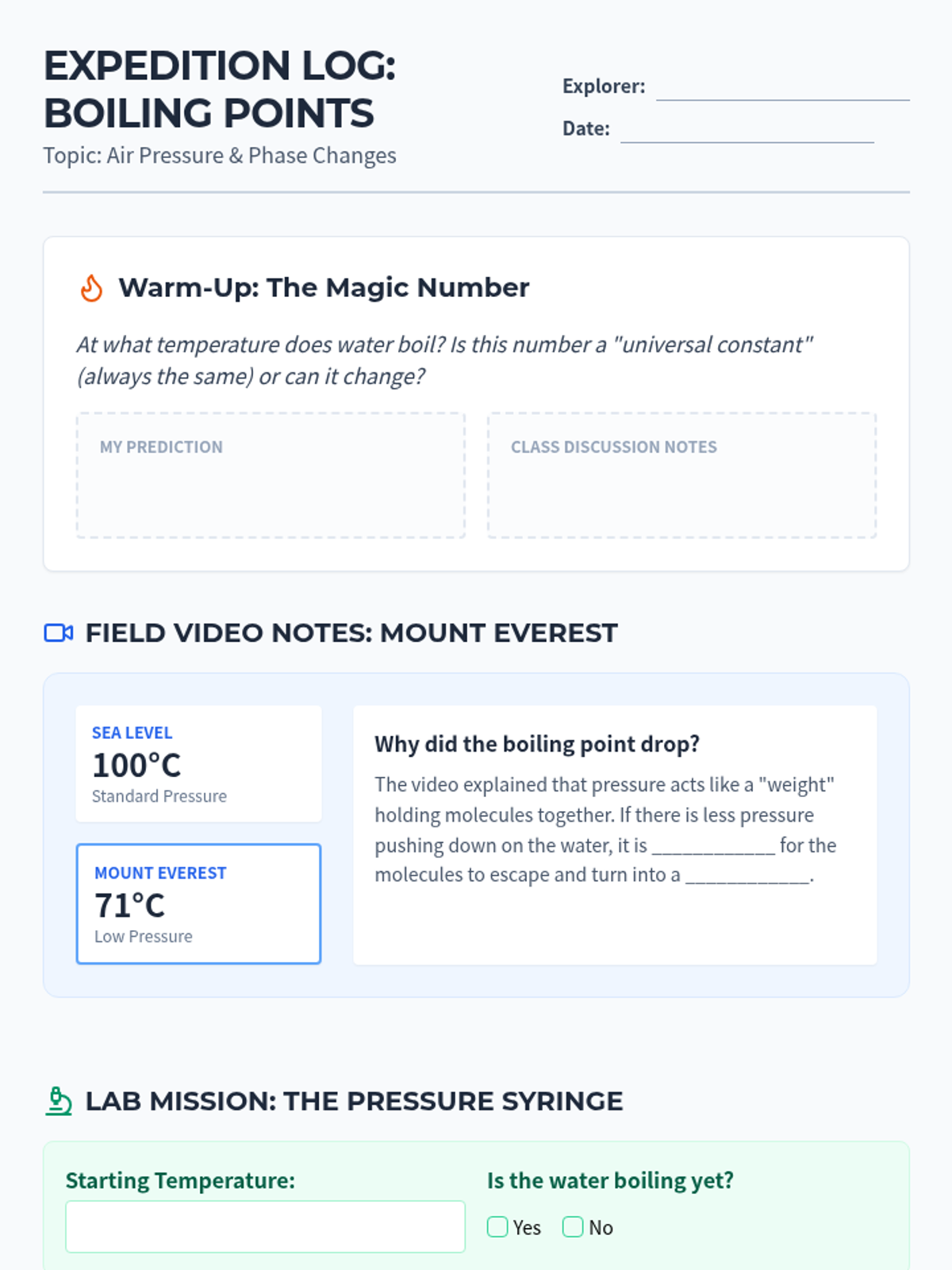
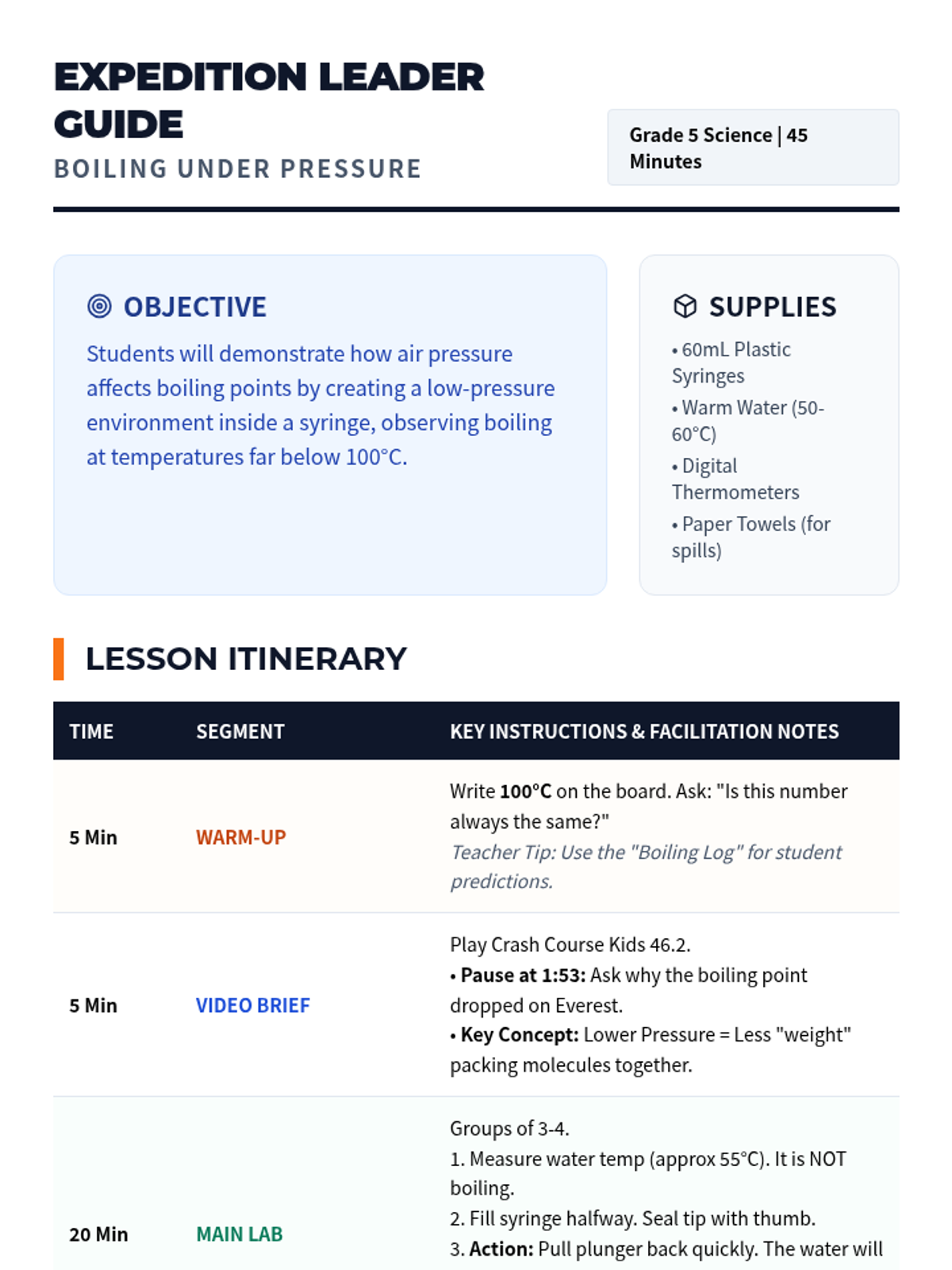
A hands-on science lesson exploring how atmospheric pressure influences the boiling point of water through a syringe model and a 'Postcard from Everest' writing task.
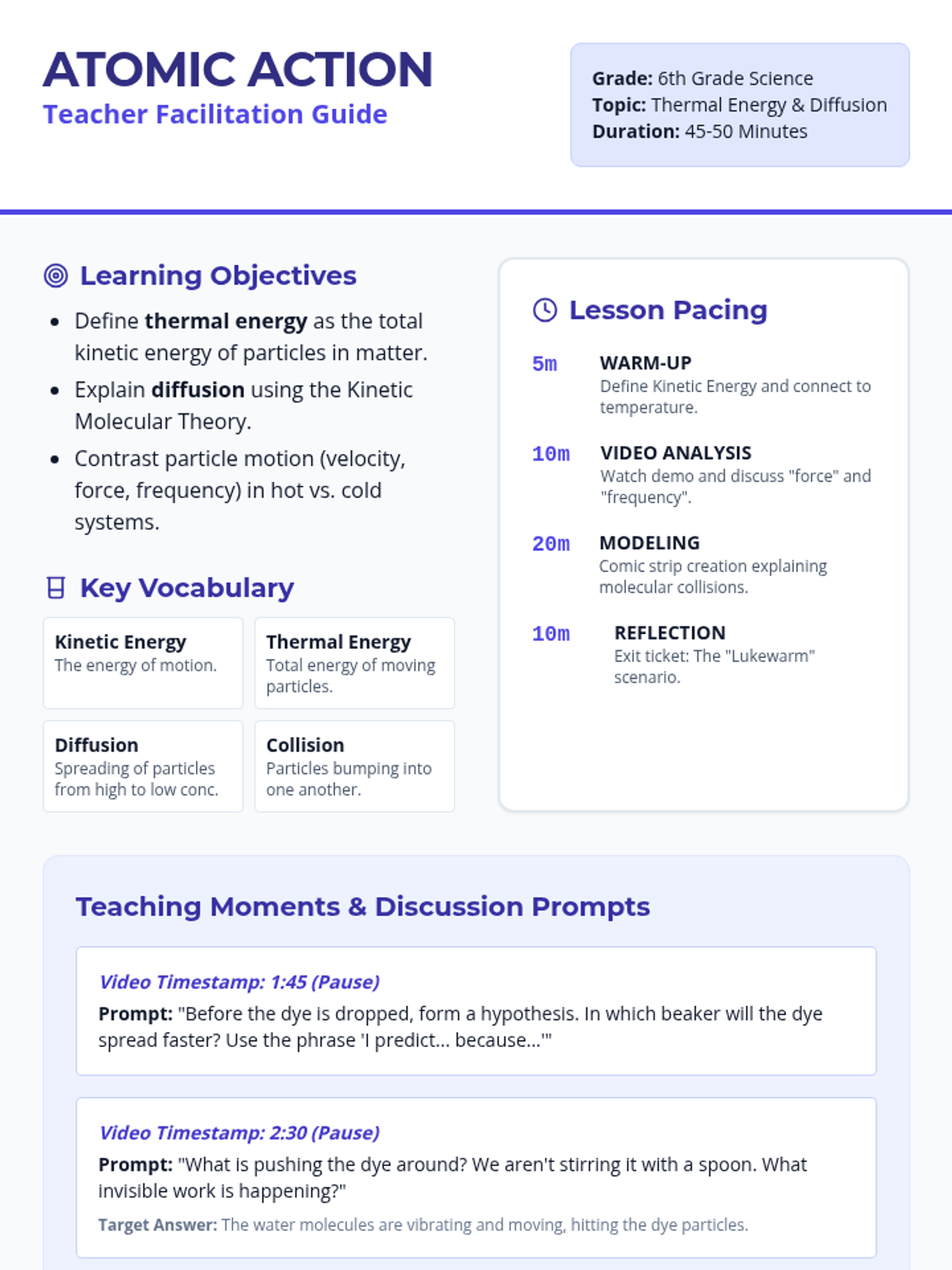
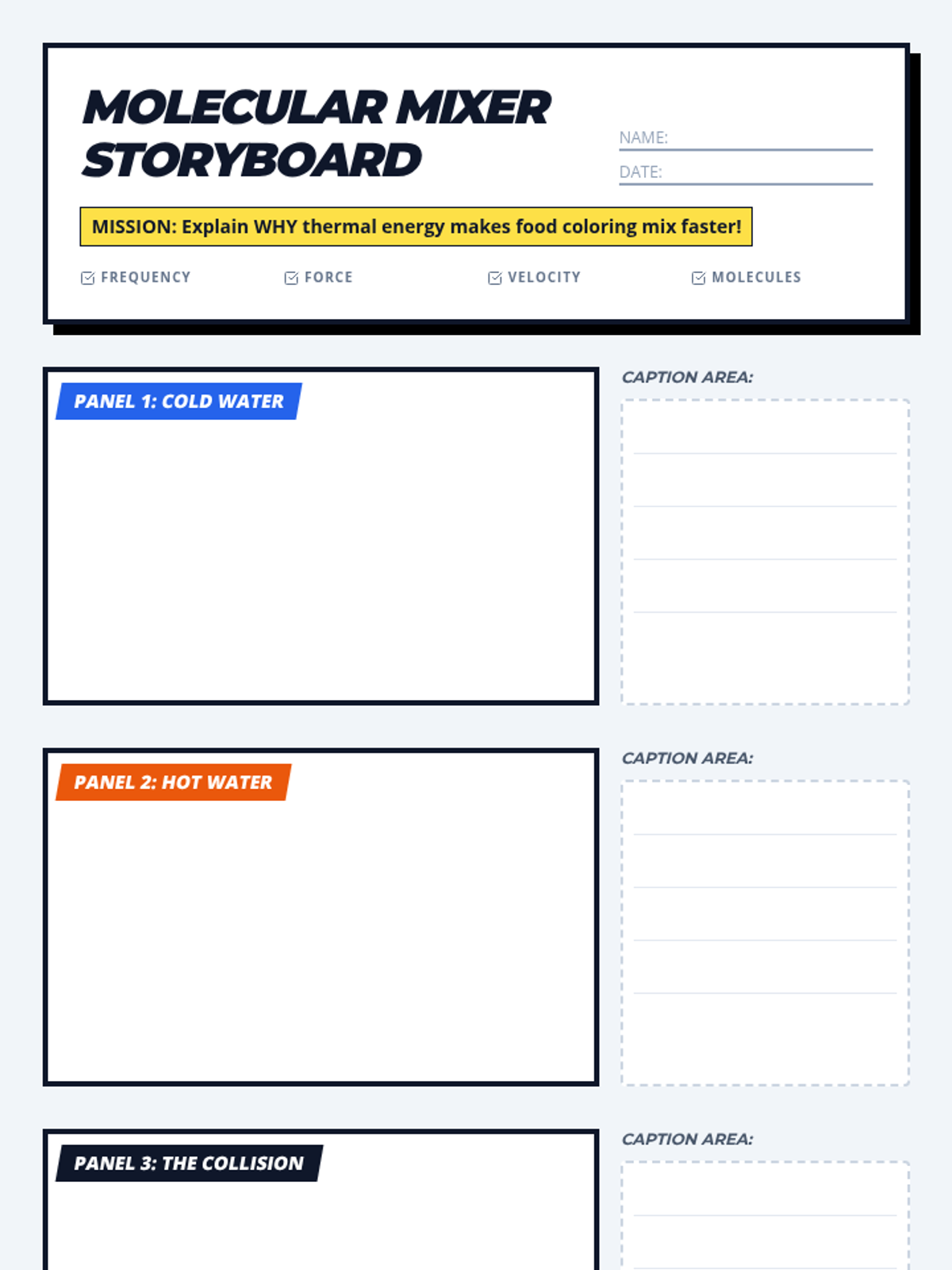
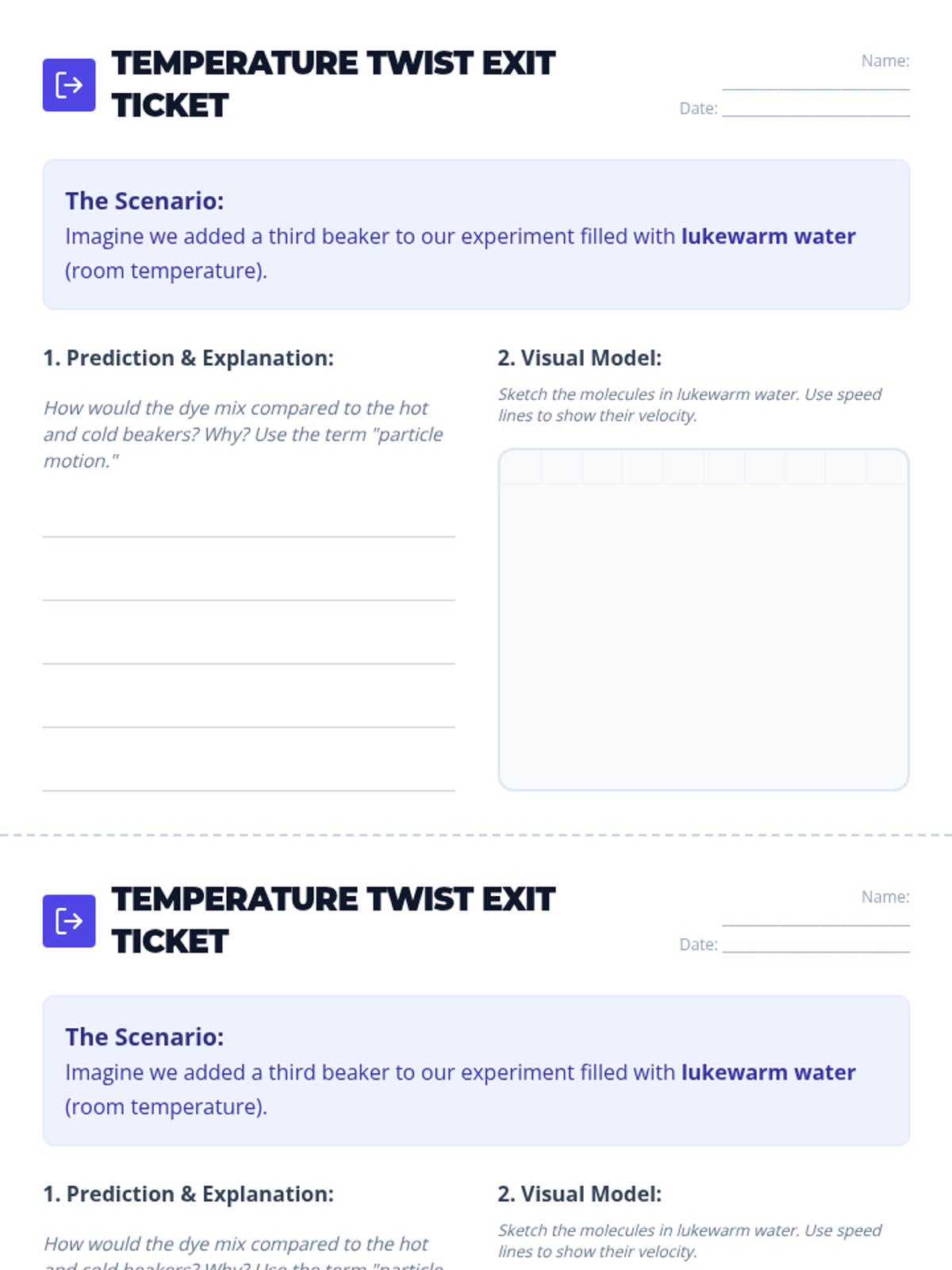
Students explore thermal energy and diffusion through a food coloring experiment, using the Kinetic Molecular Theory to explain how particle velocity and collision force change with temperature.
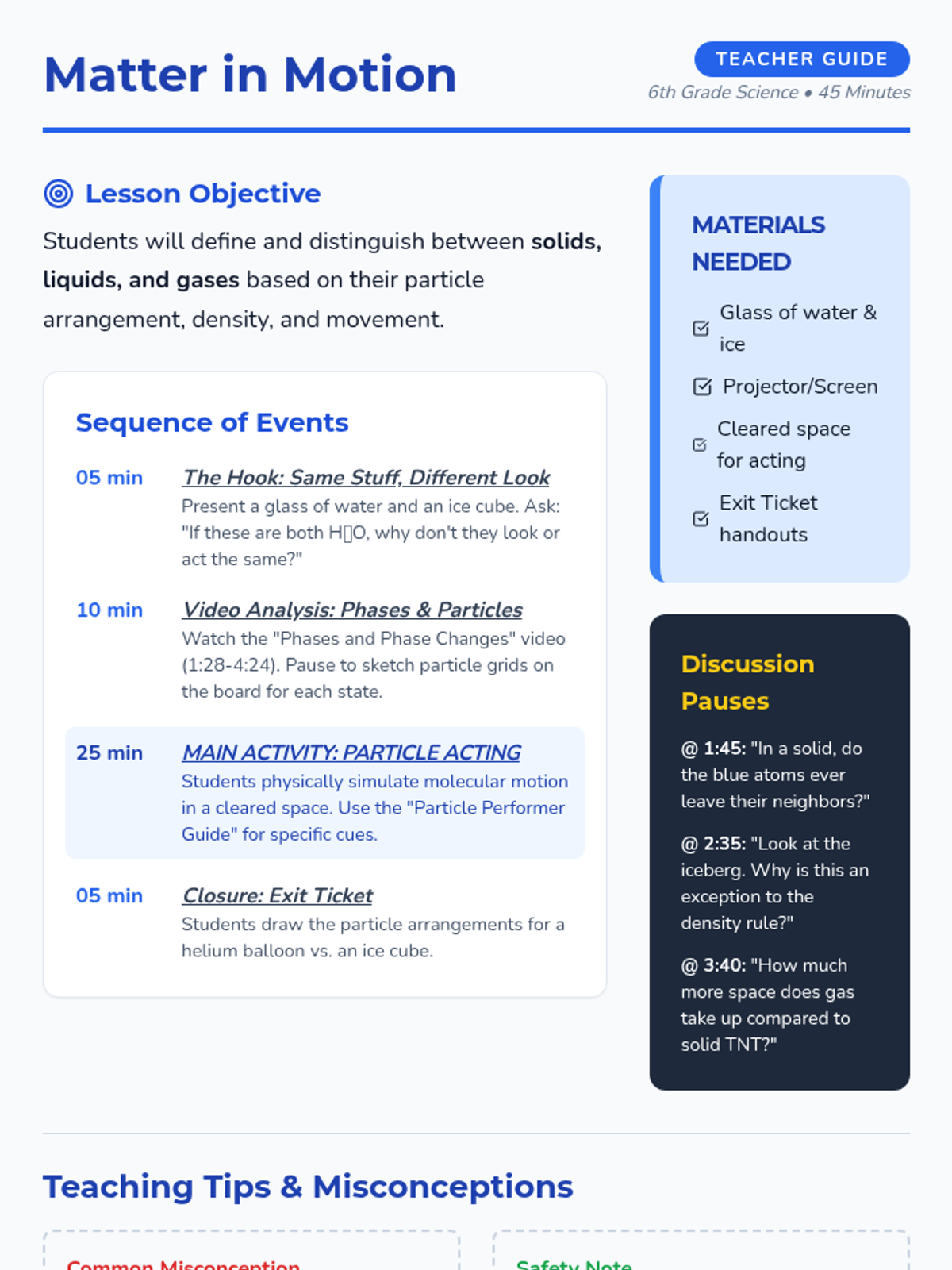
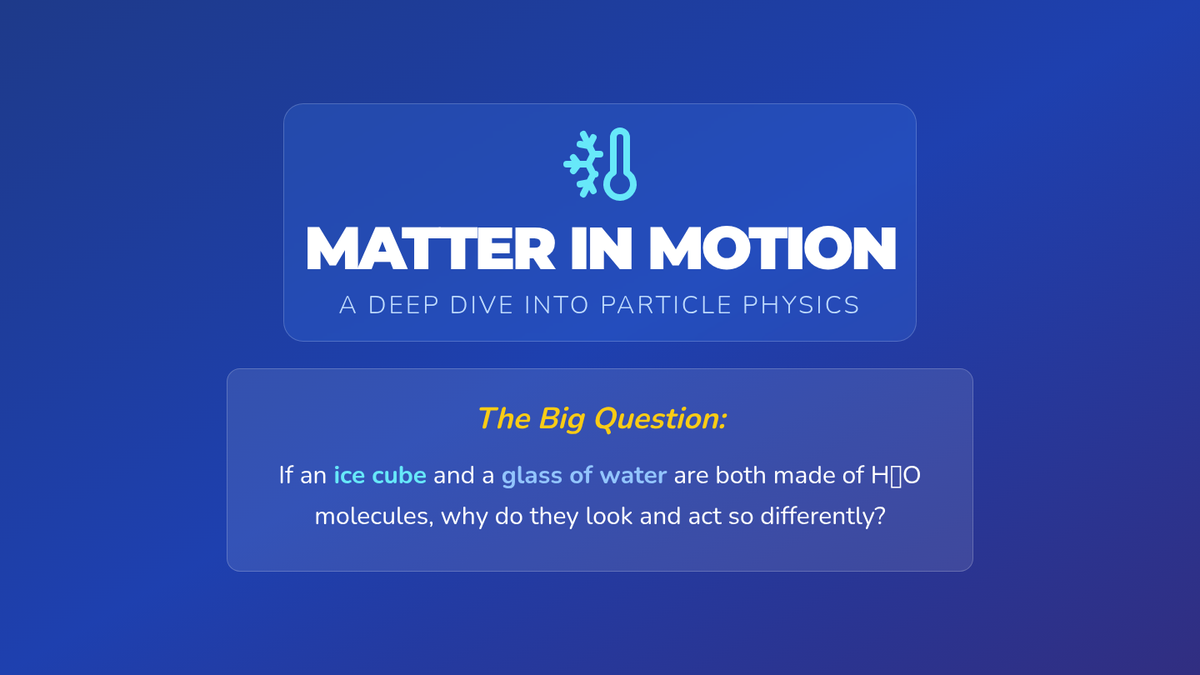
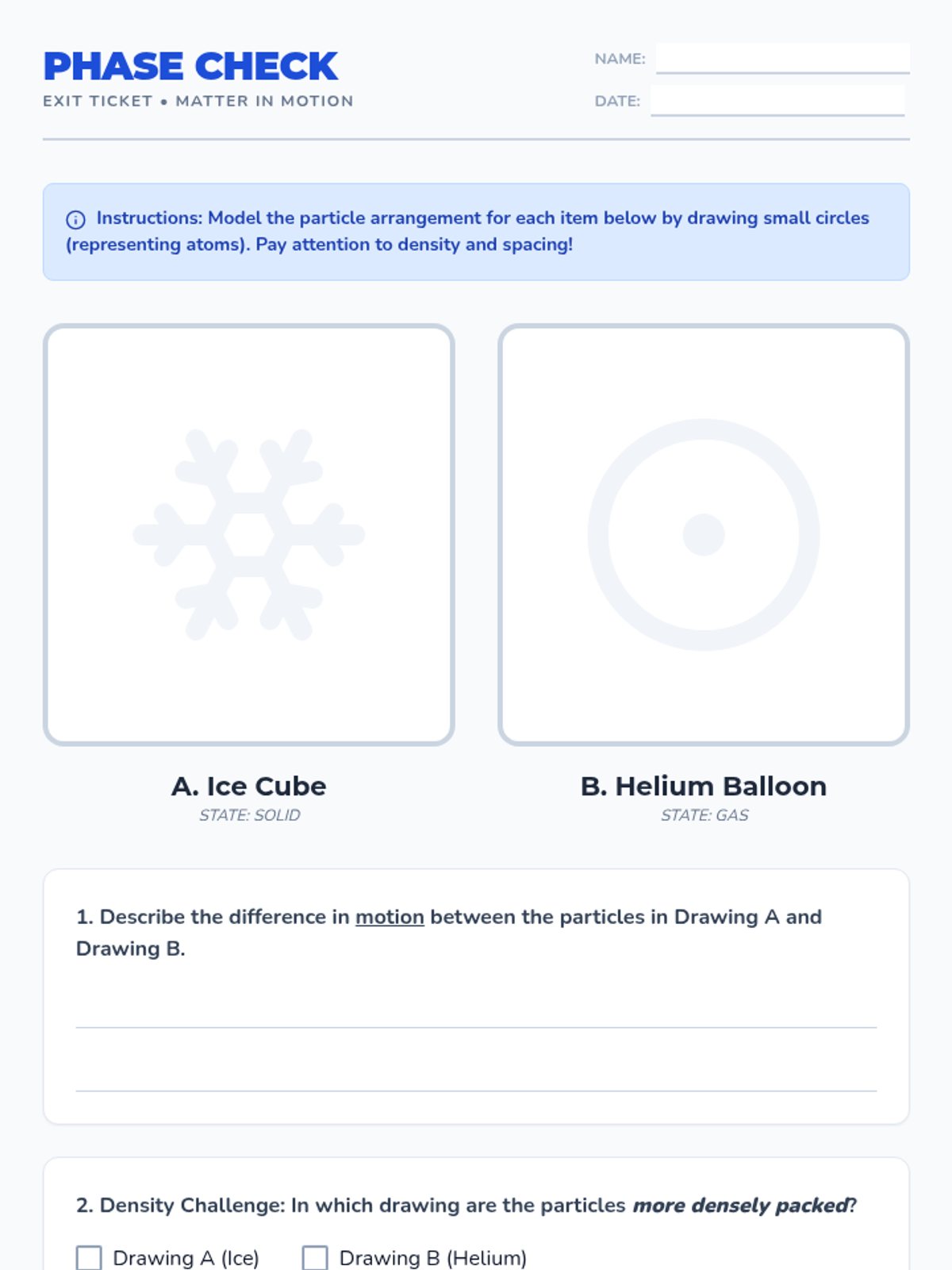
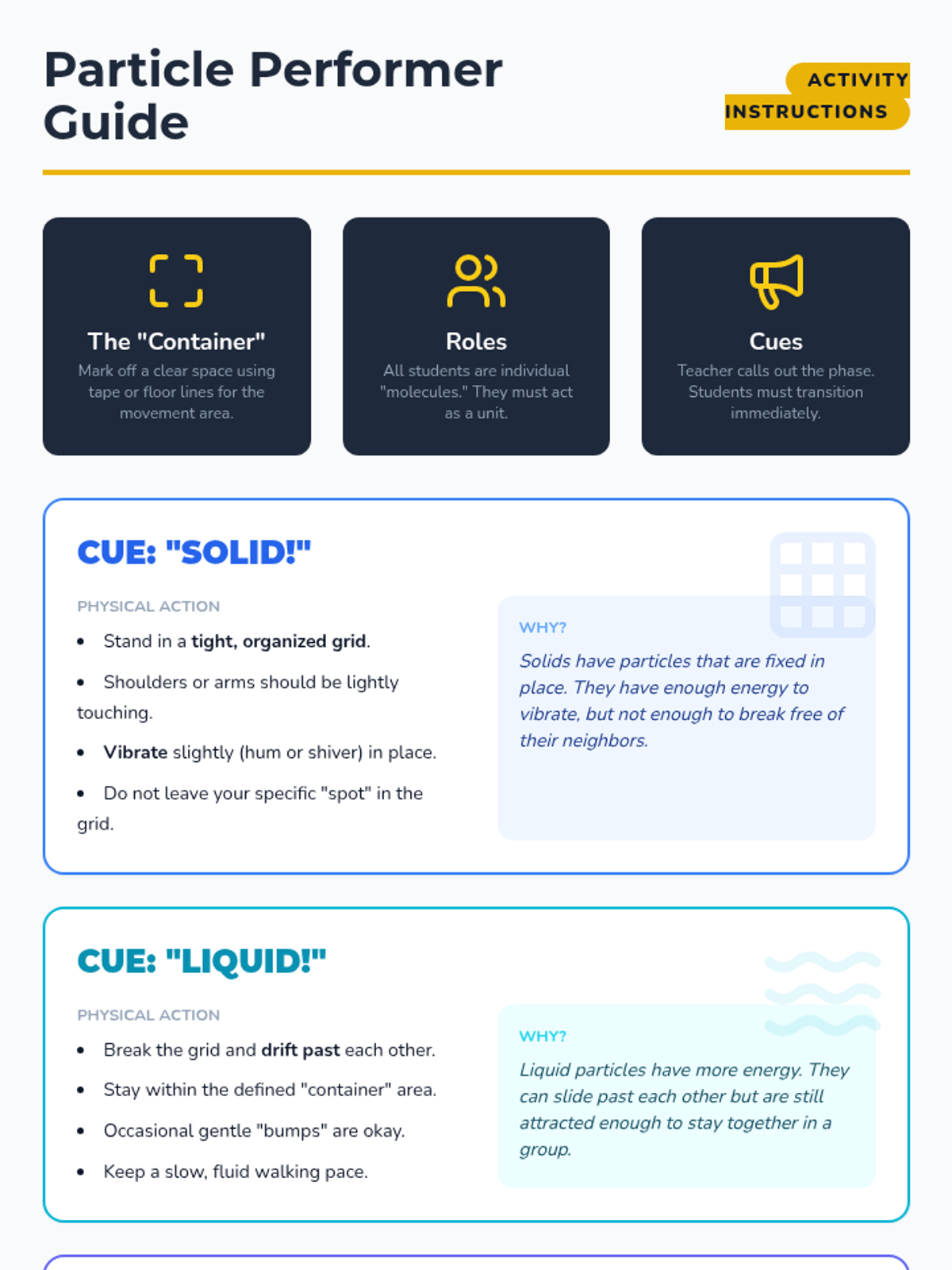
An interactive 6th-grade science lesson exploring the three primary states of matter through video analysis, kinesthetic movement, and visual modeling. Students will compare solids, liquids, and gases by acting as molecules and drawing their arrangements.
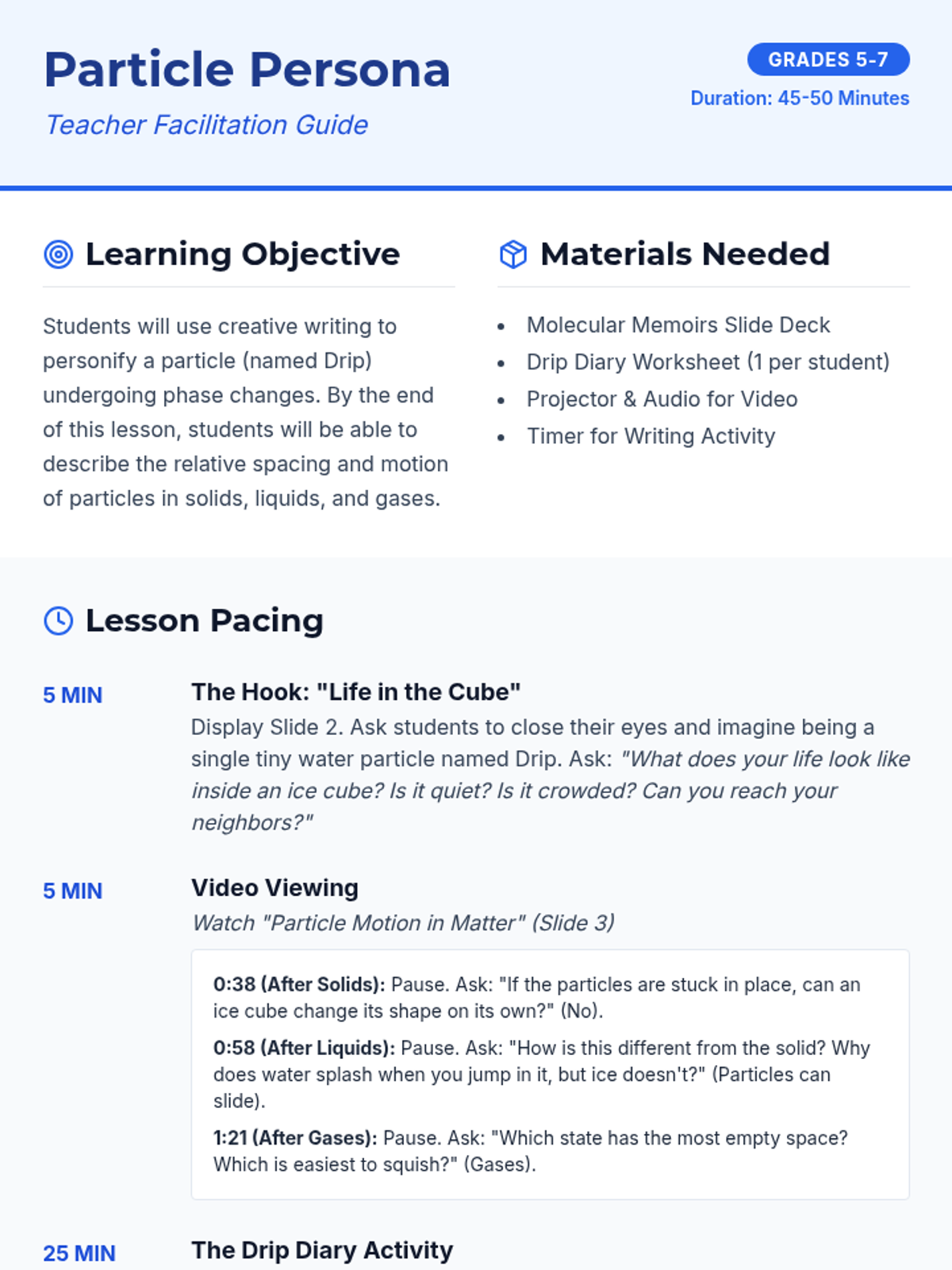
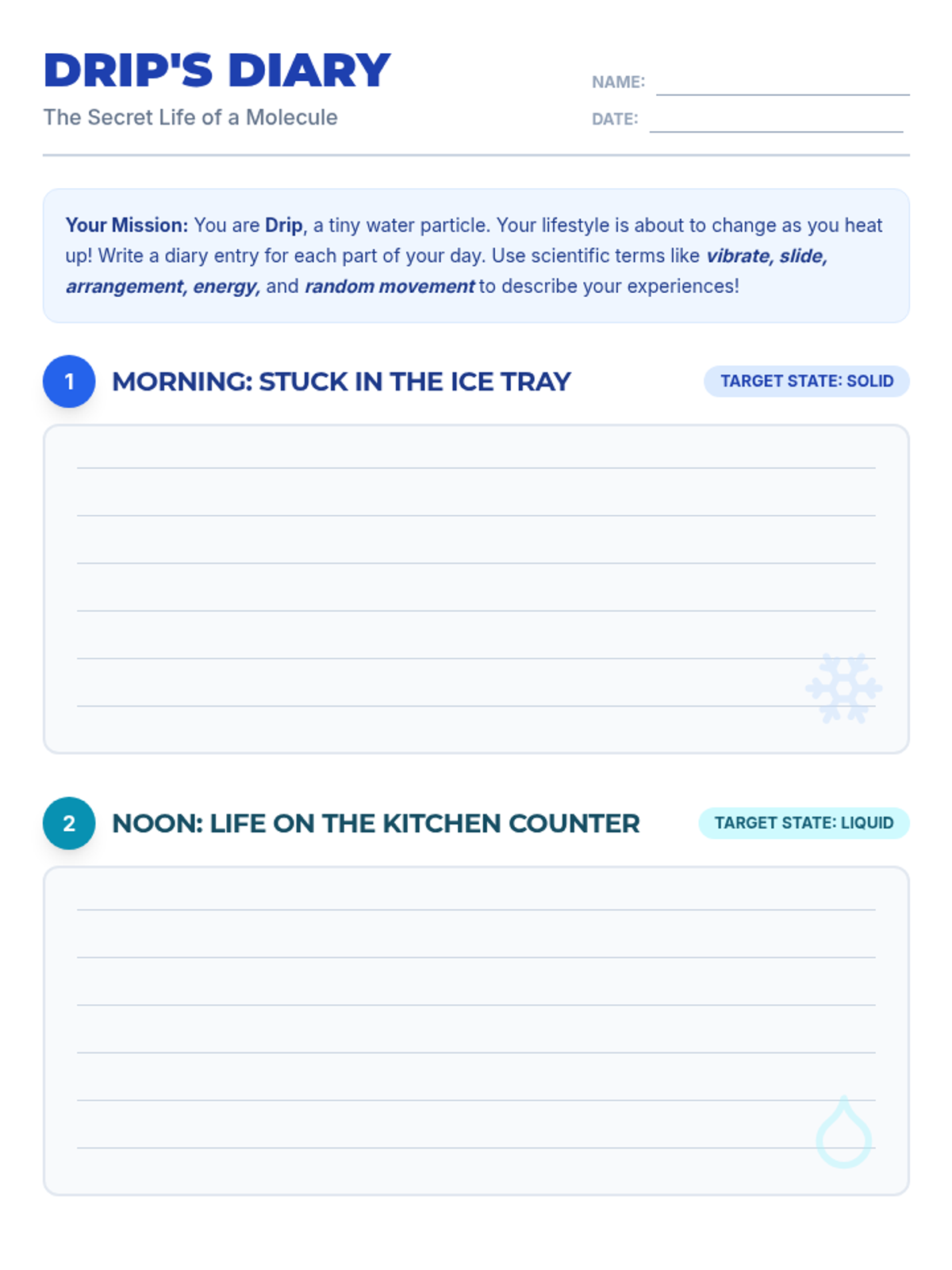
Students personify a water particle named Drip as it transitions from a solid to a liquid and finally a gas, using creative writing to demonstrate understanding of particle motion.
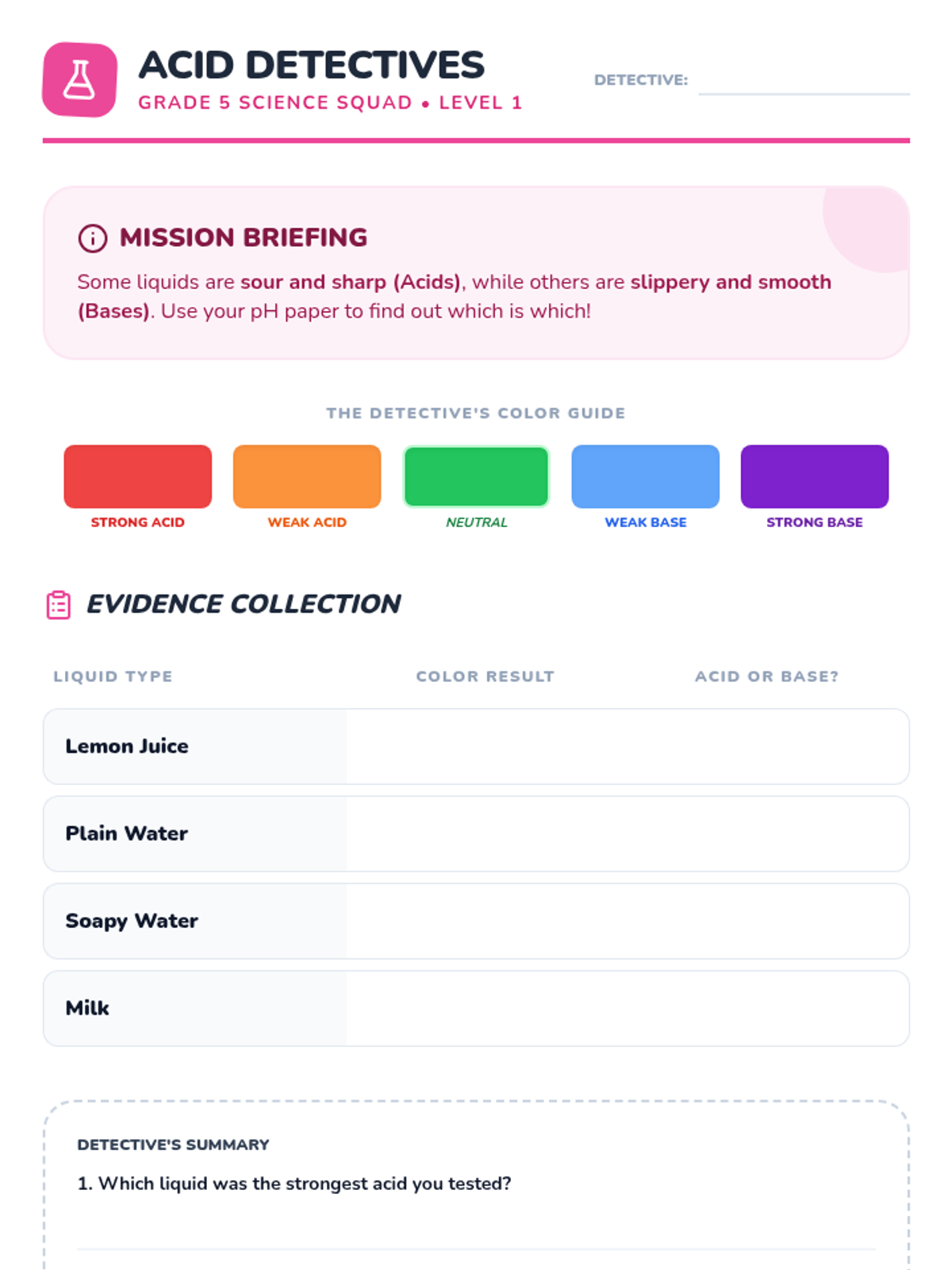
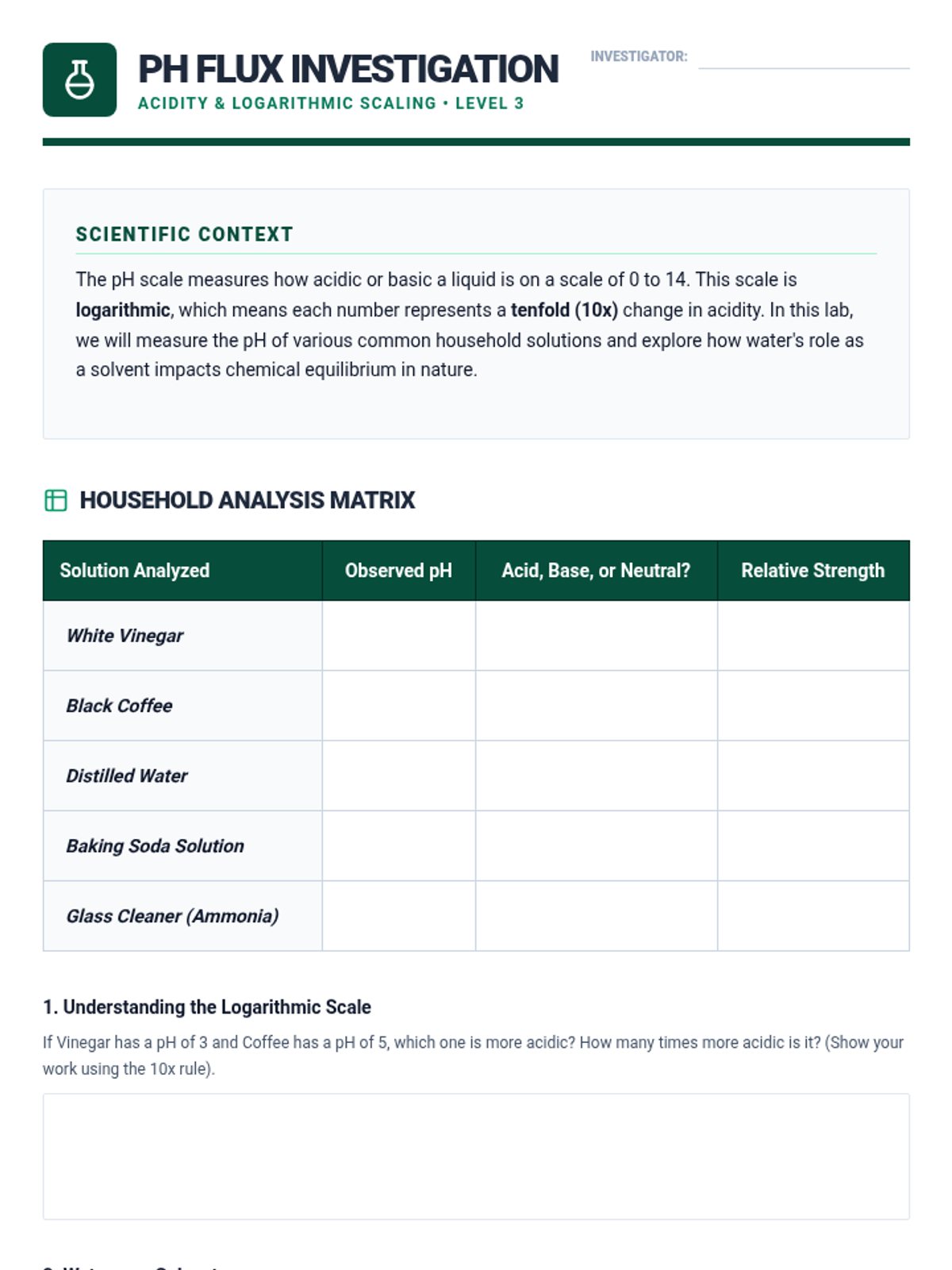
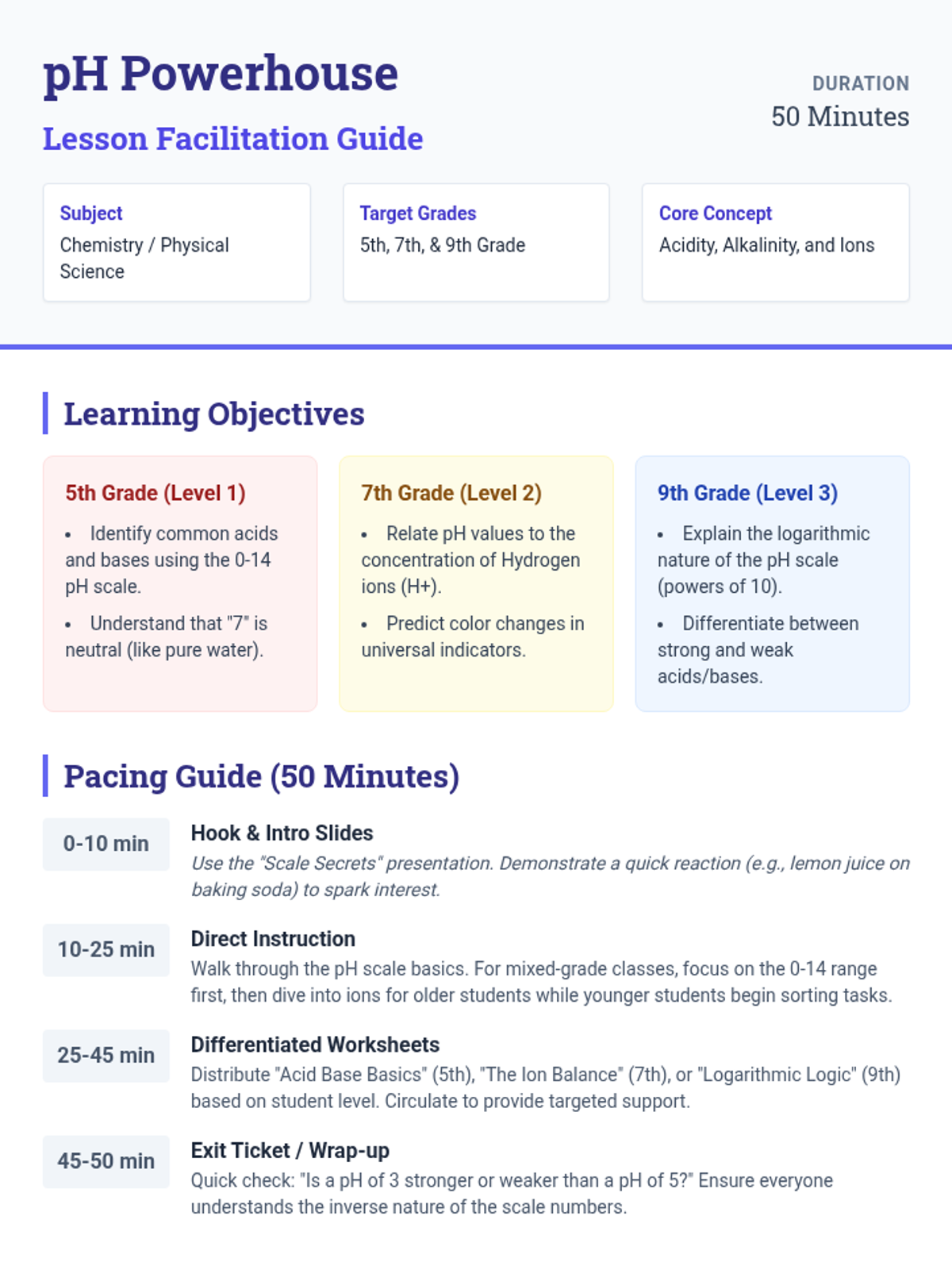
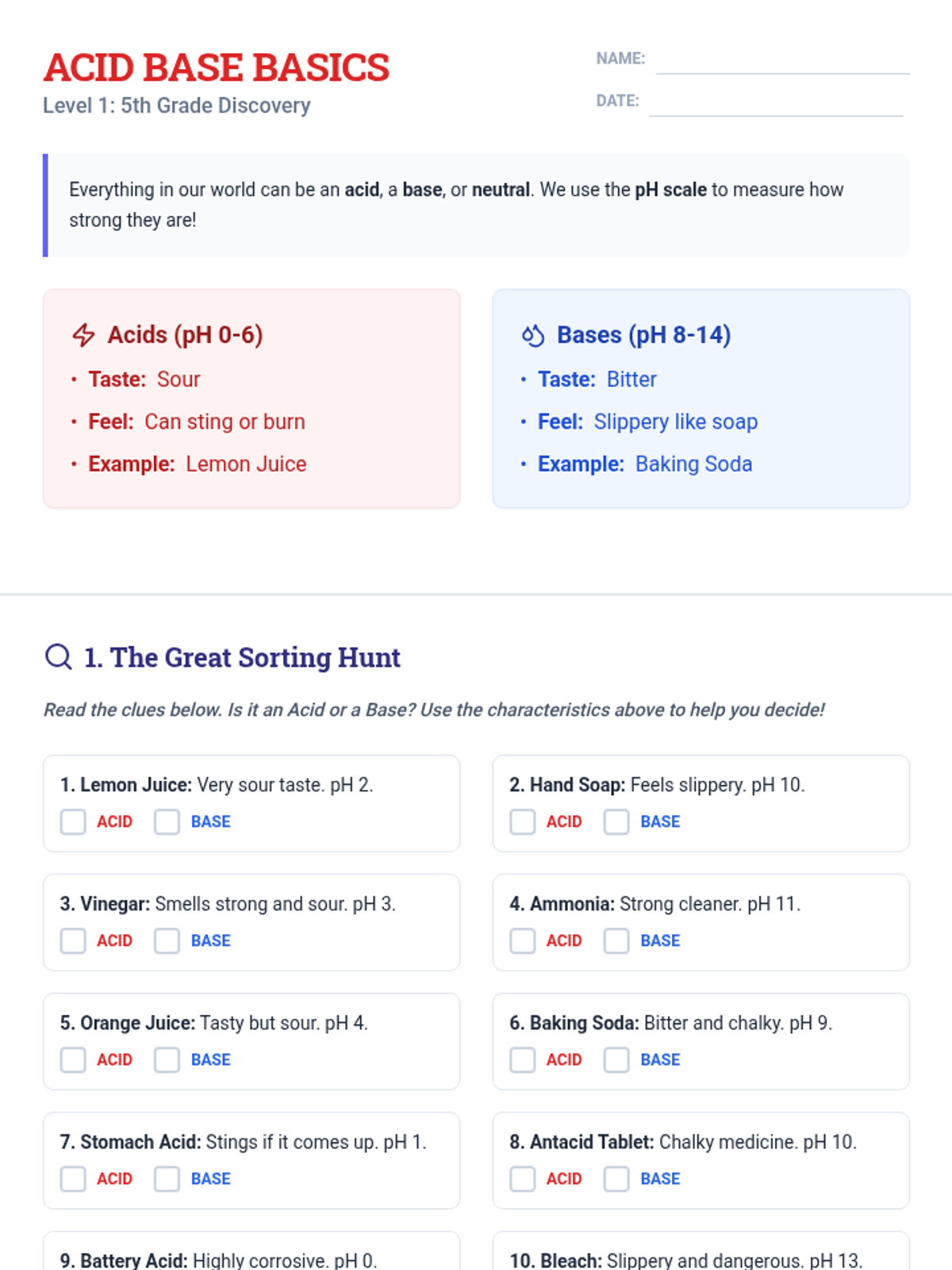
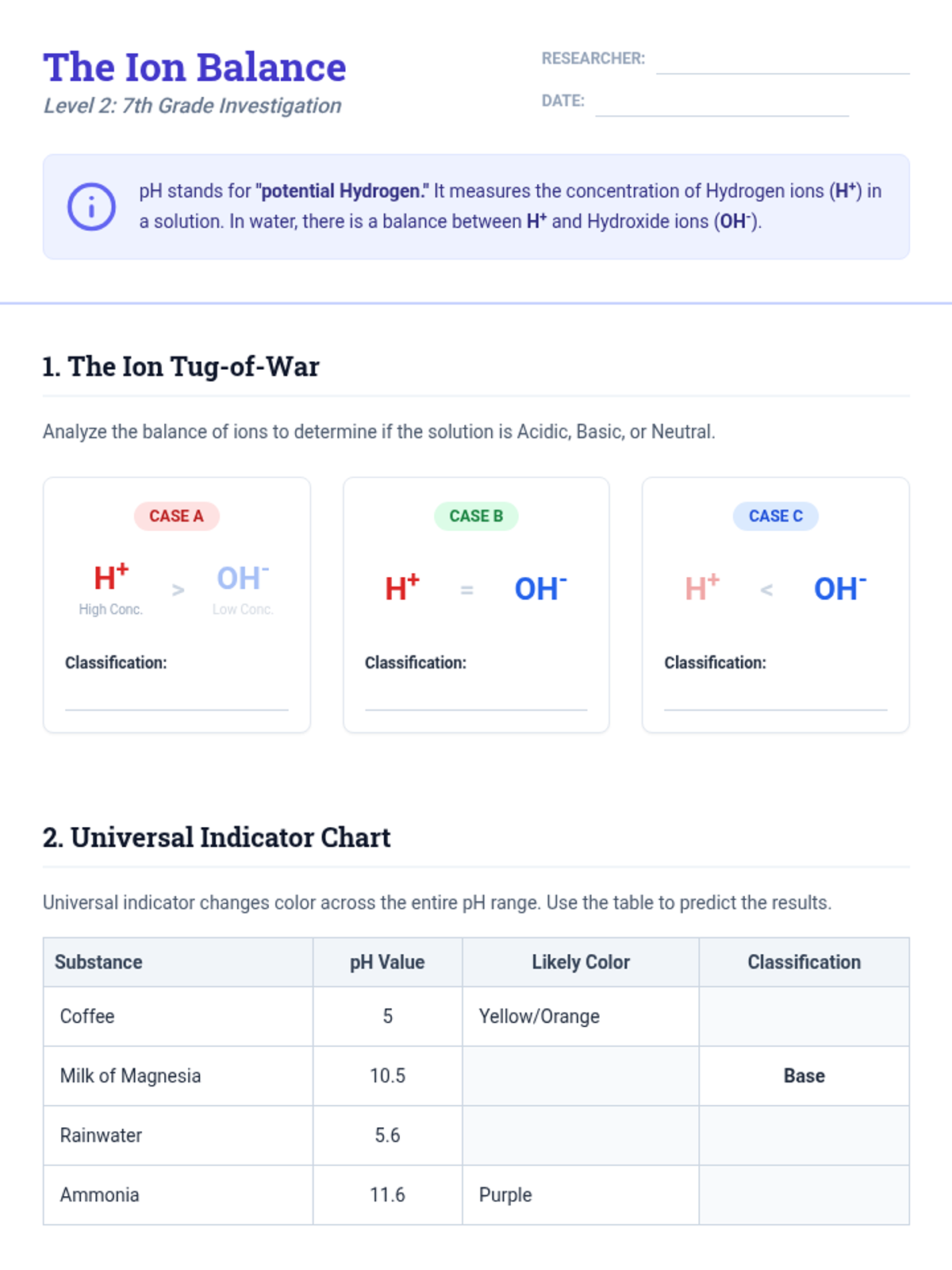
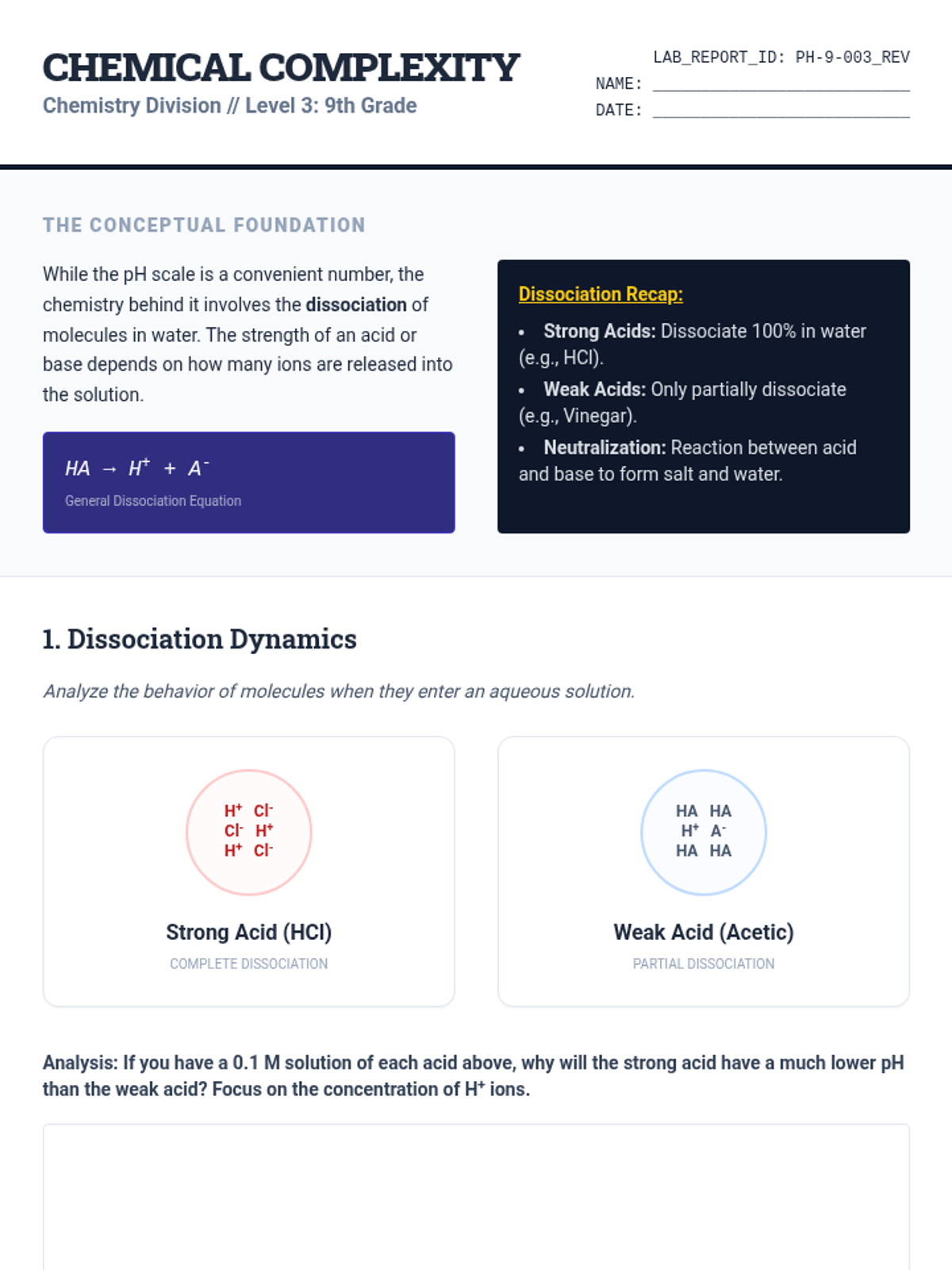
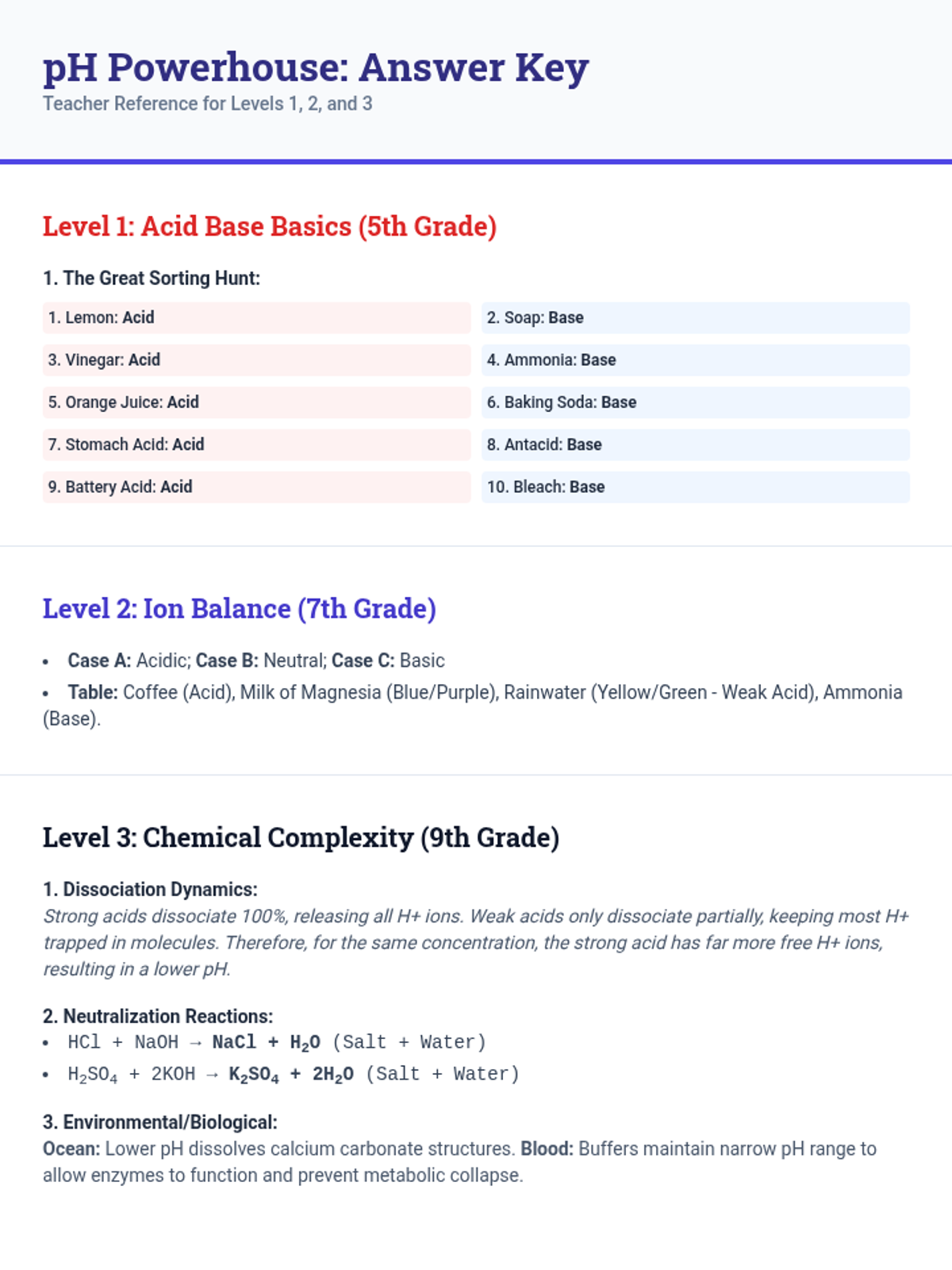
A comprehensive introduction to the pH scale, covering the characteristics of acids and bases, the logarithmic nature of the scale, and real-world applications across three differentiated levels (5th, 7th, and 9th grade).
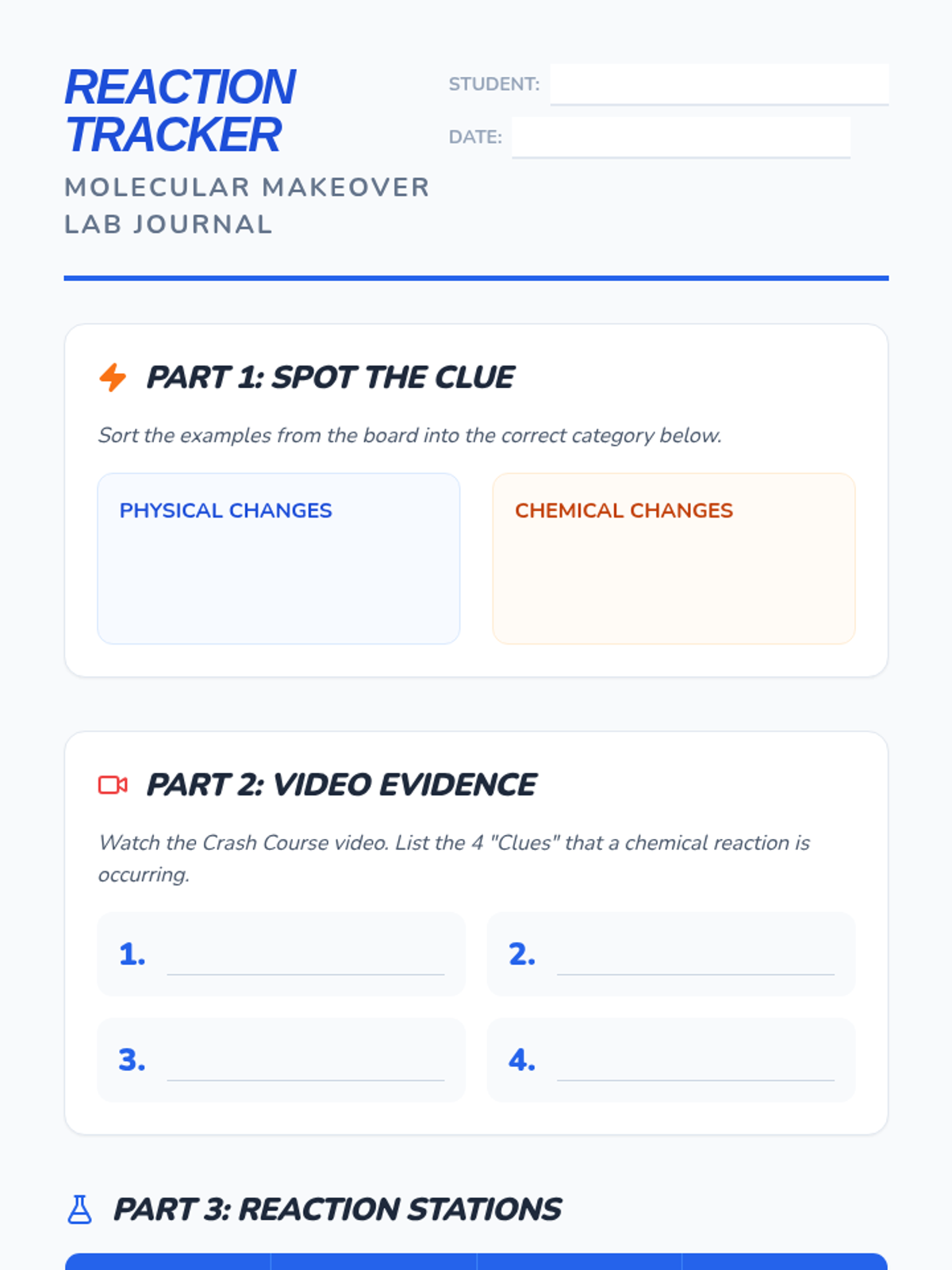
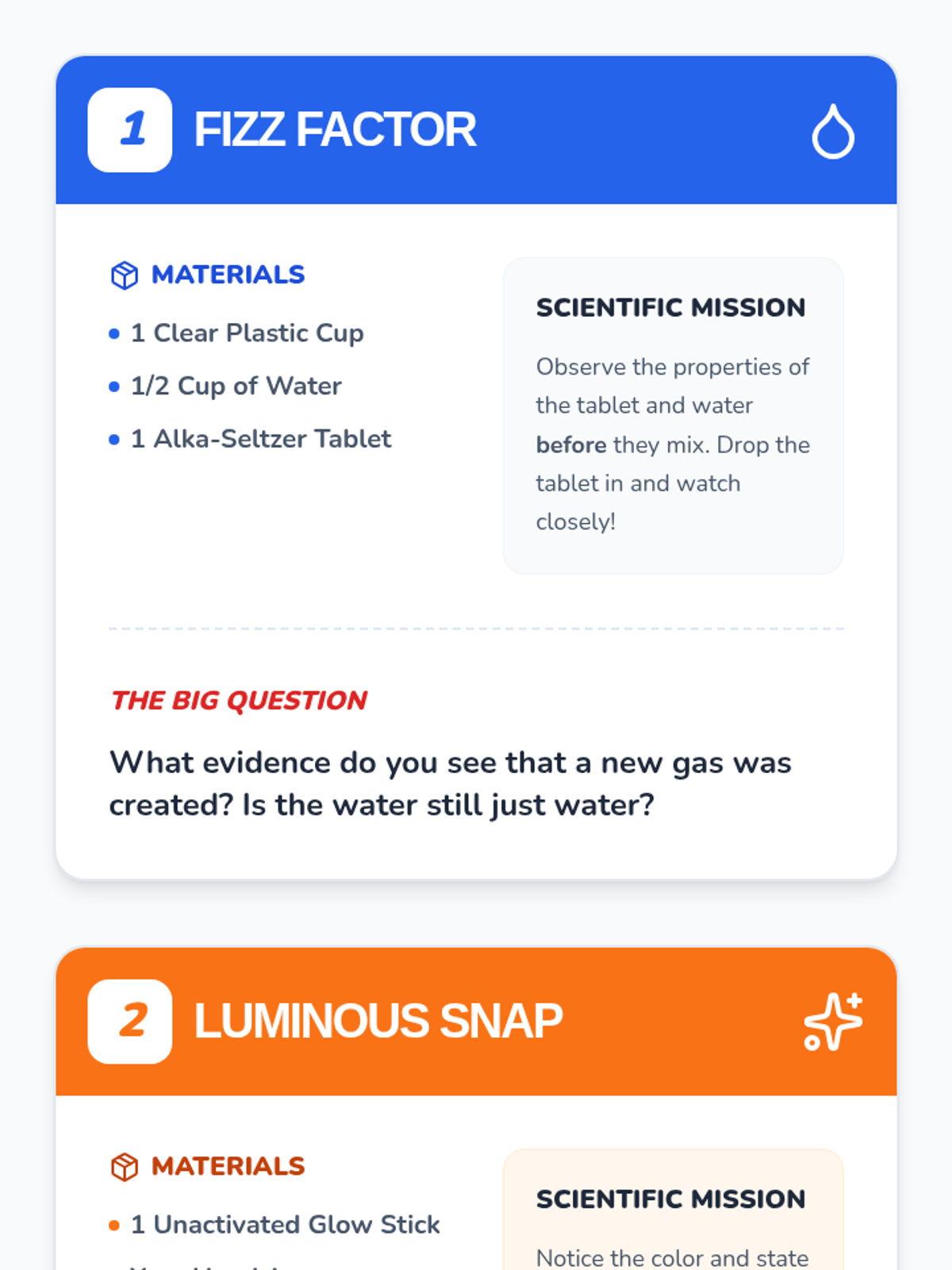
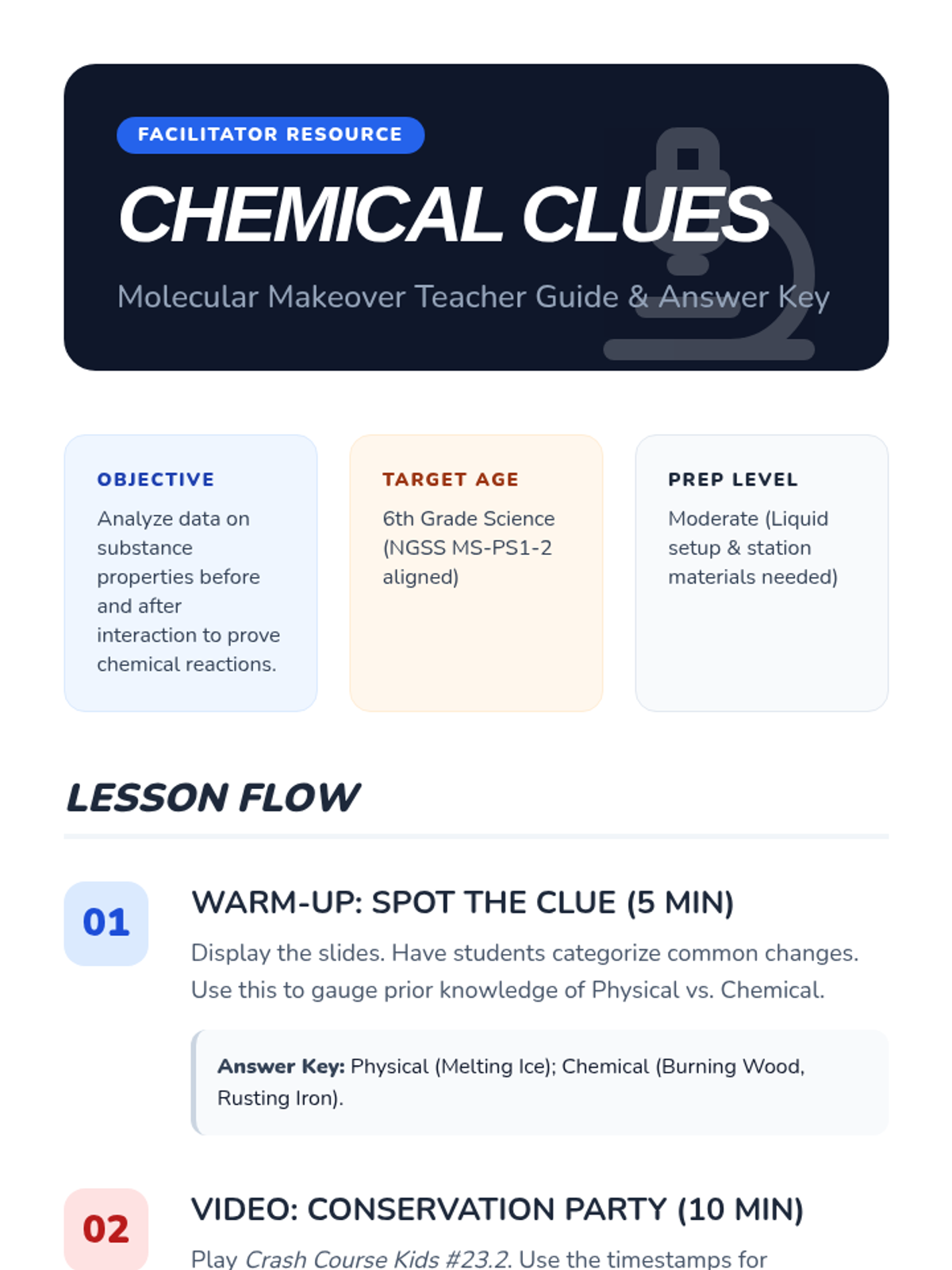
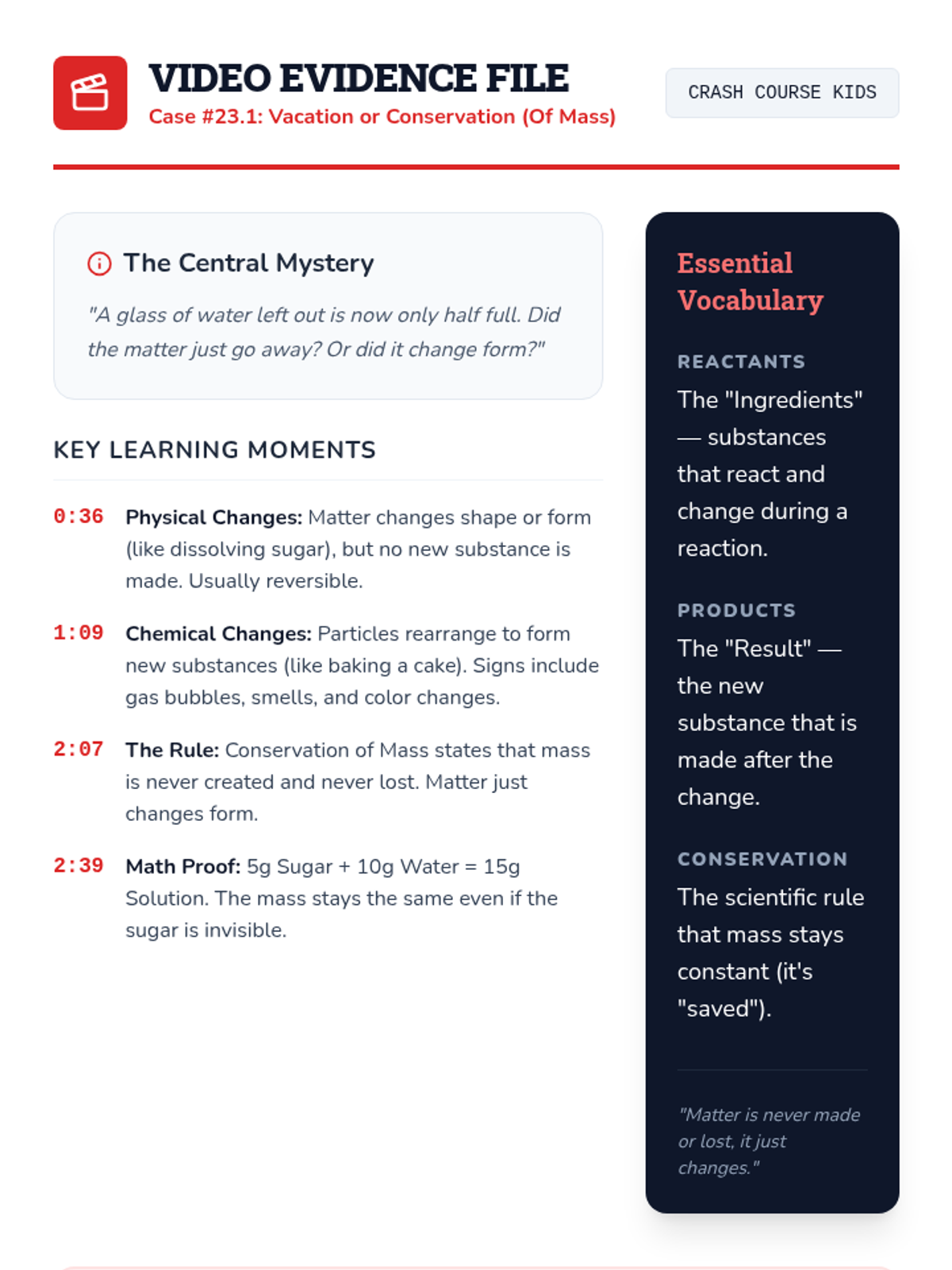
Students investigate the properties of matter and identify the signs of chemical reactions through a video analysis of the conservation of mass and hands-on laboratory stations.
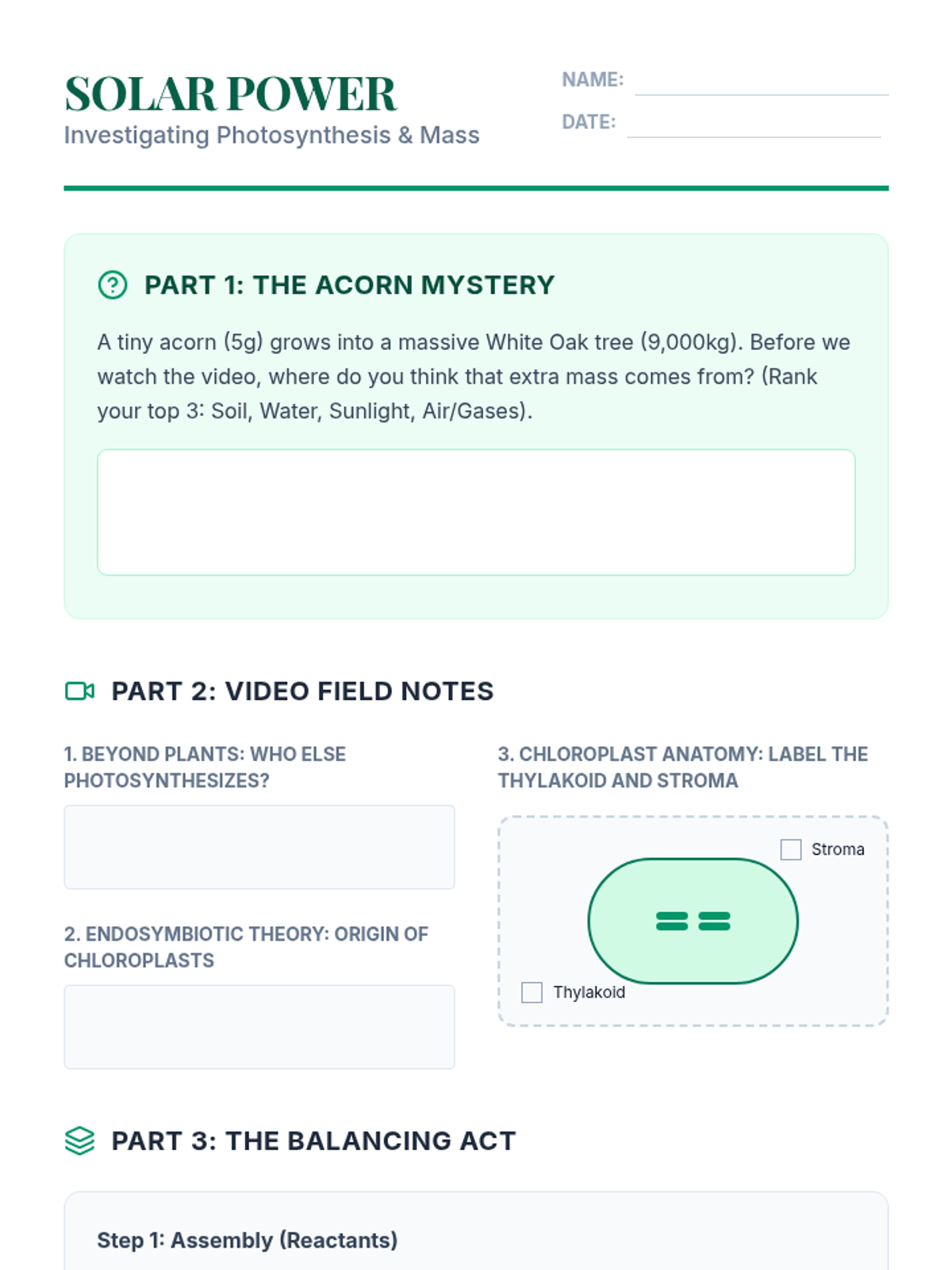
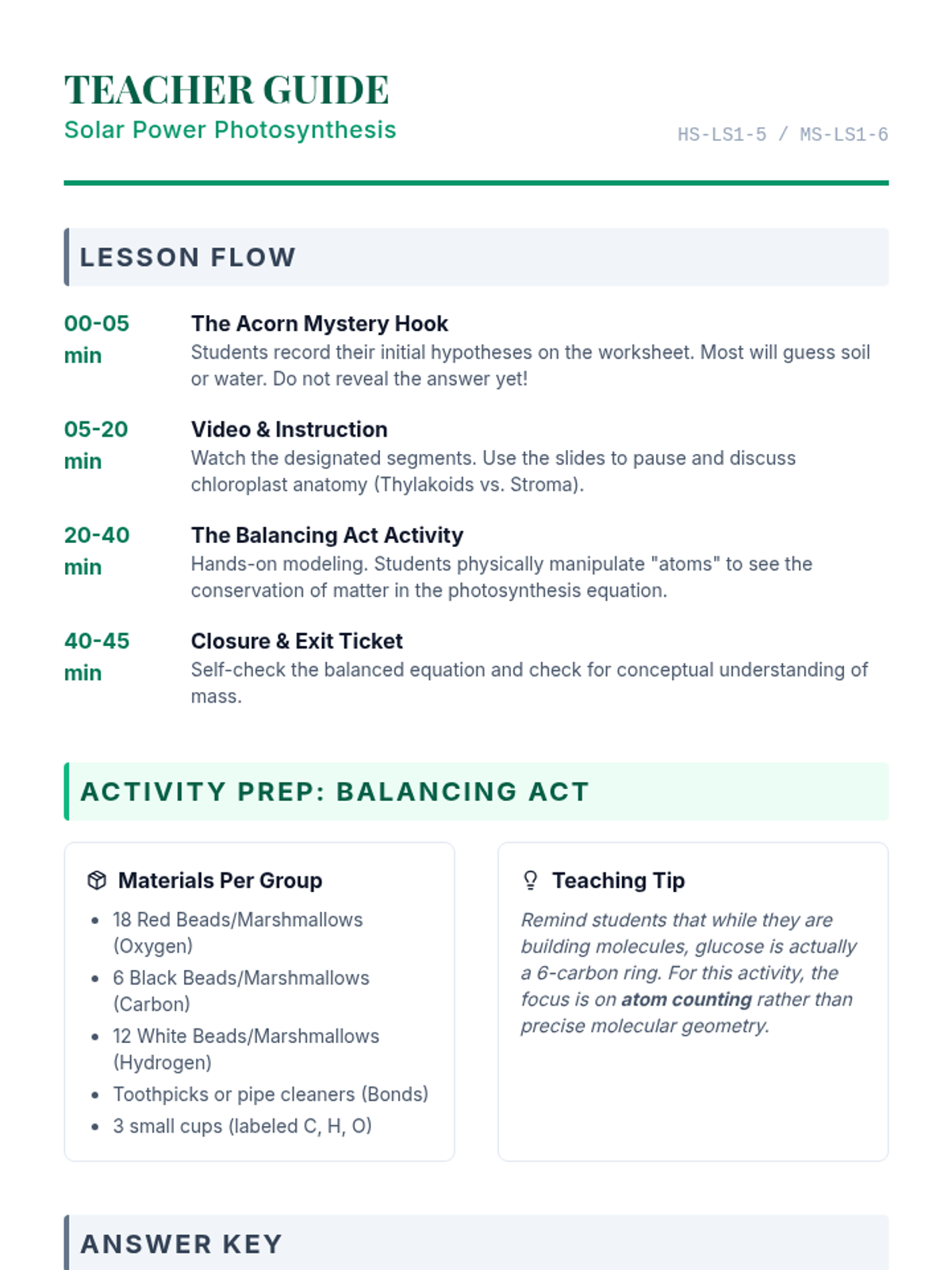
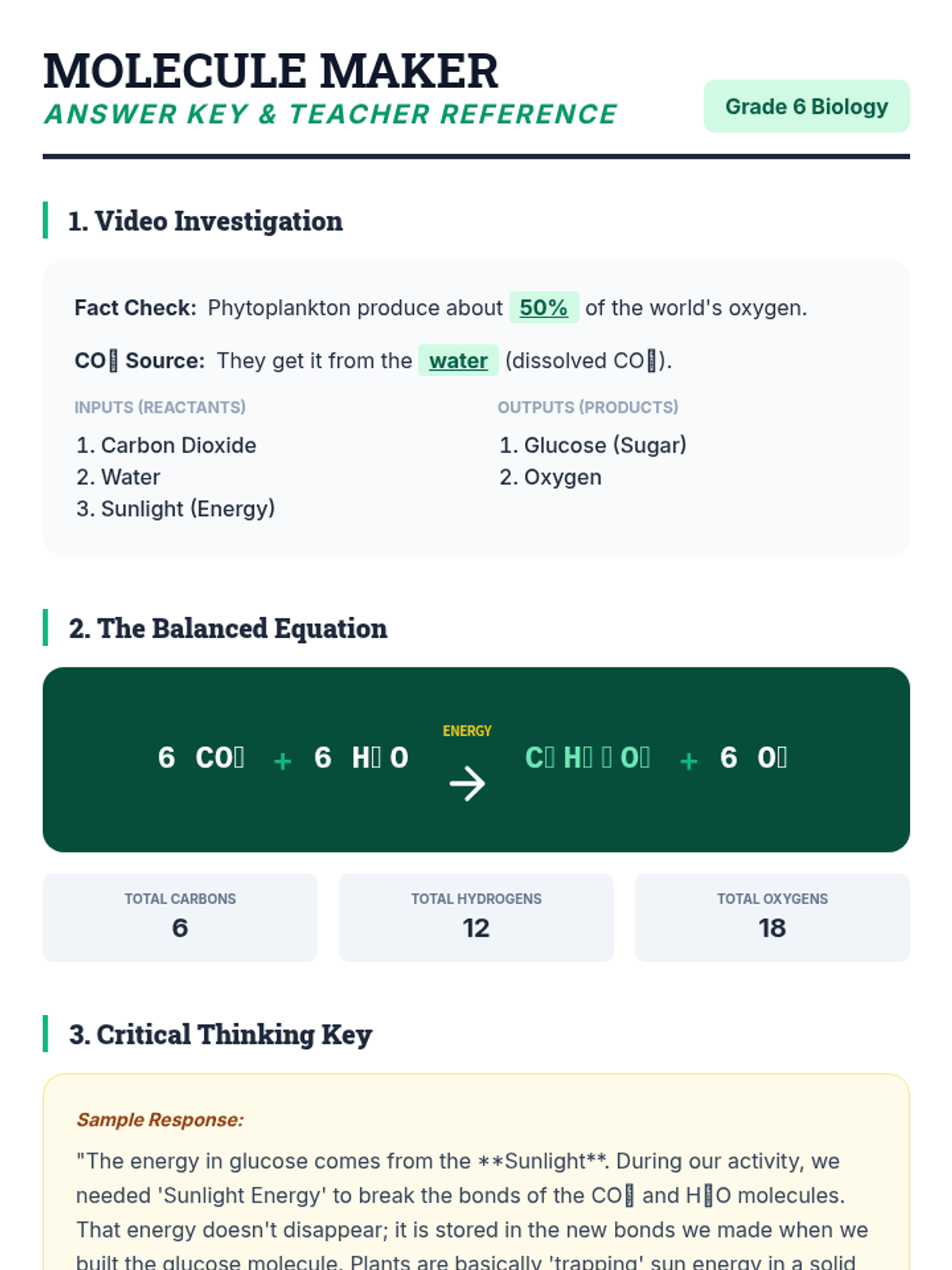
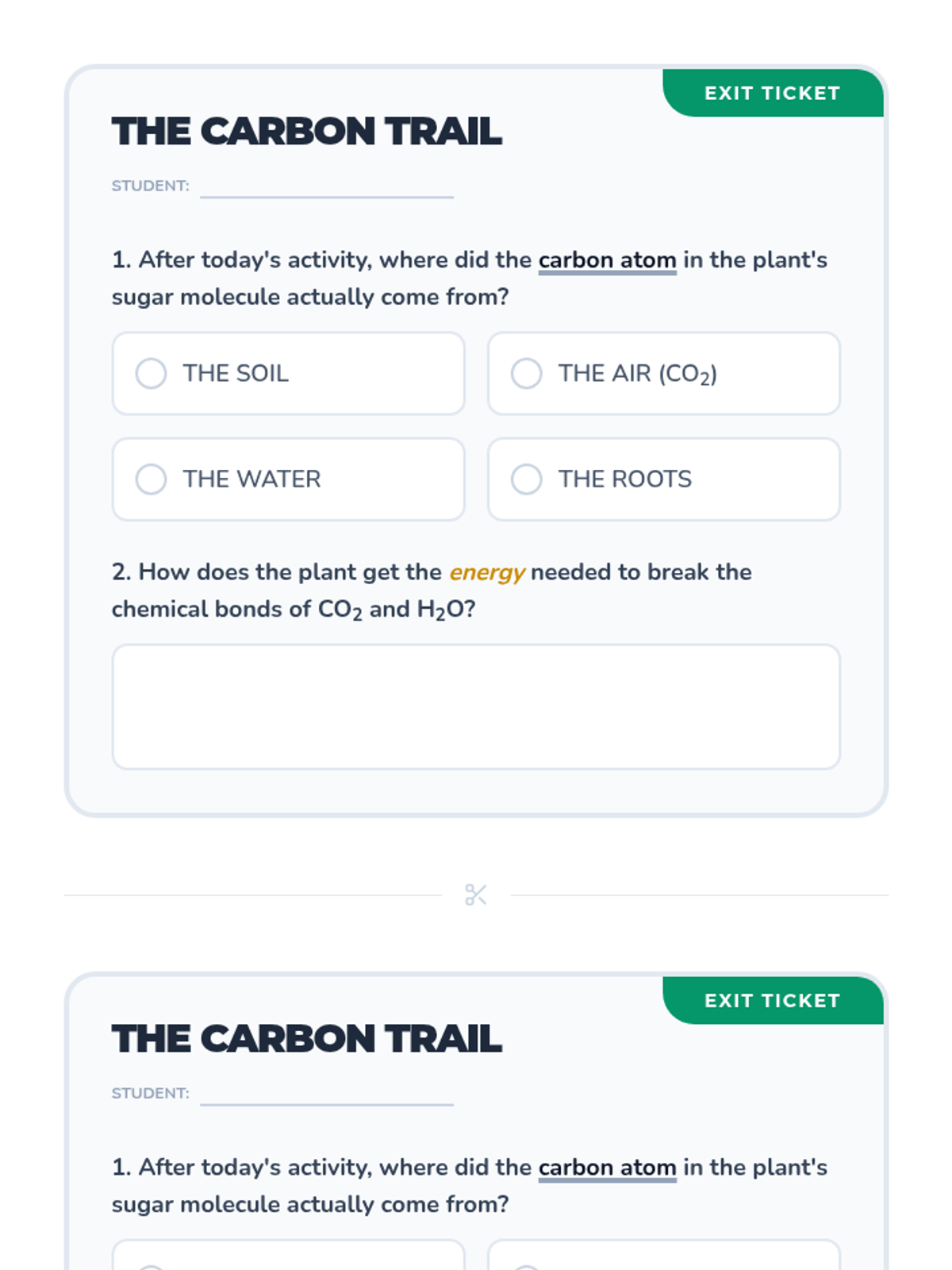
Students investigate the 'Acorn Mystery' to discover where plant mass comes from, watch a video on chloroplast function, and participate in a hands-on modeling activity to balance the photosynthesis equation.
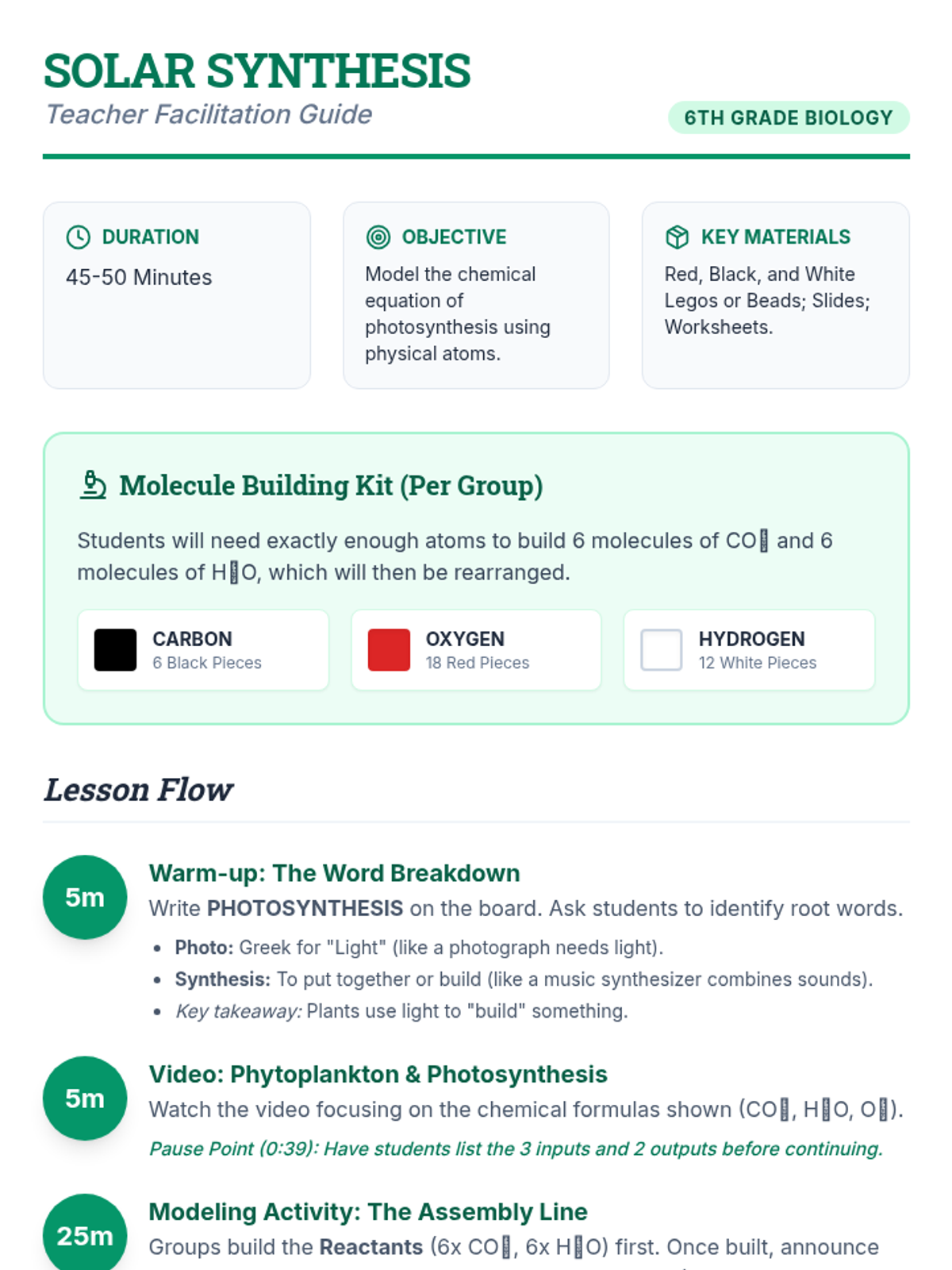
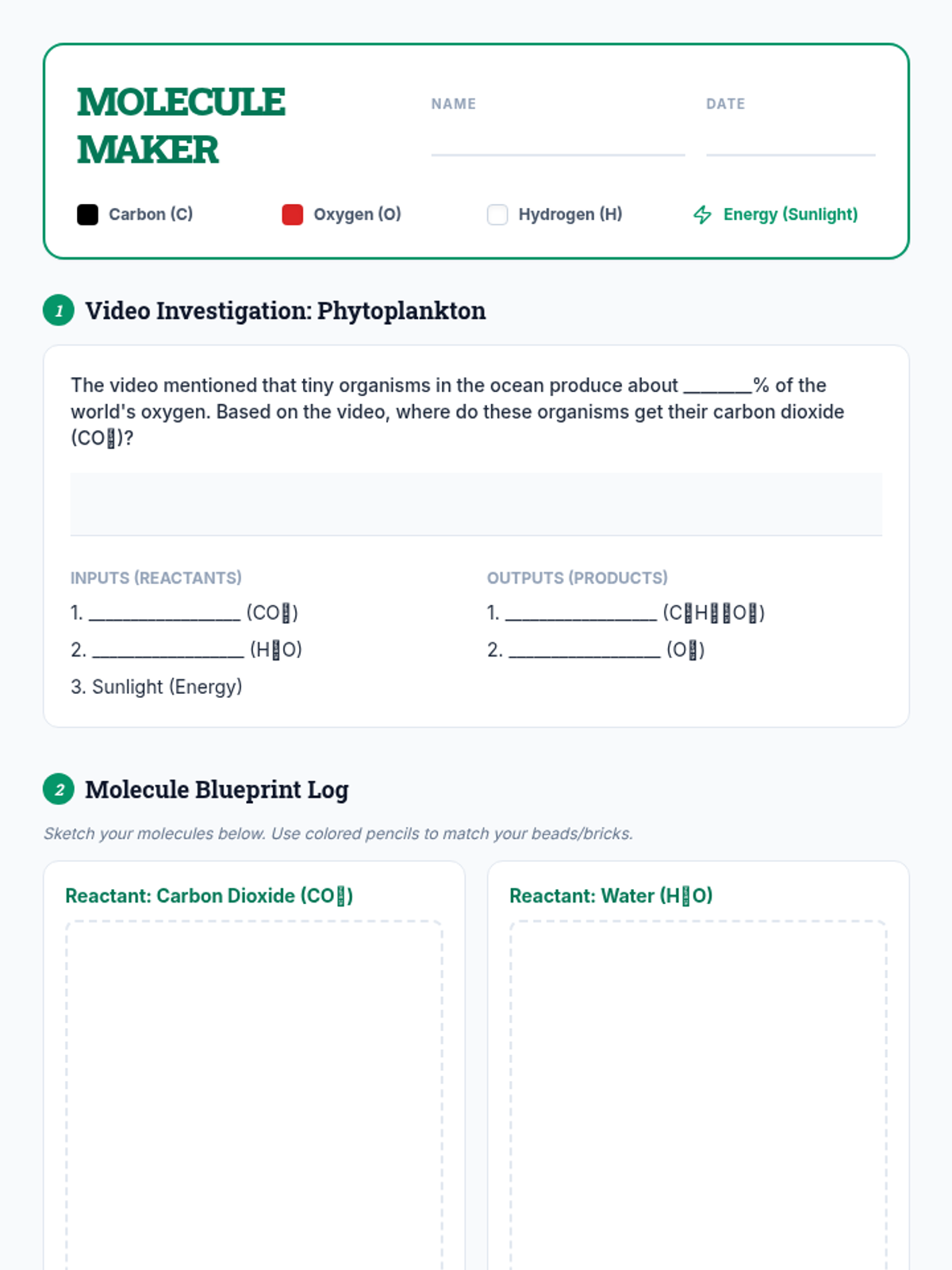
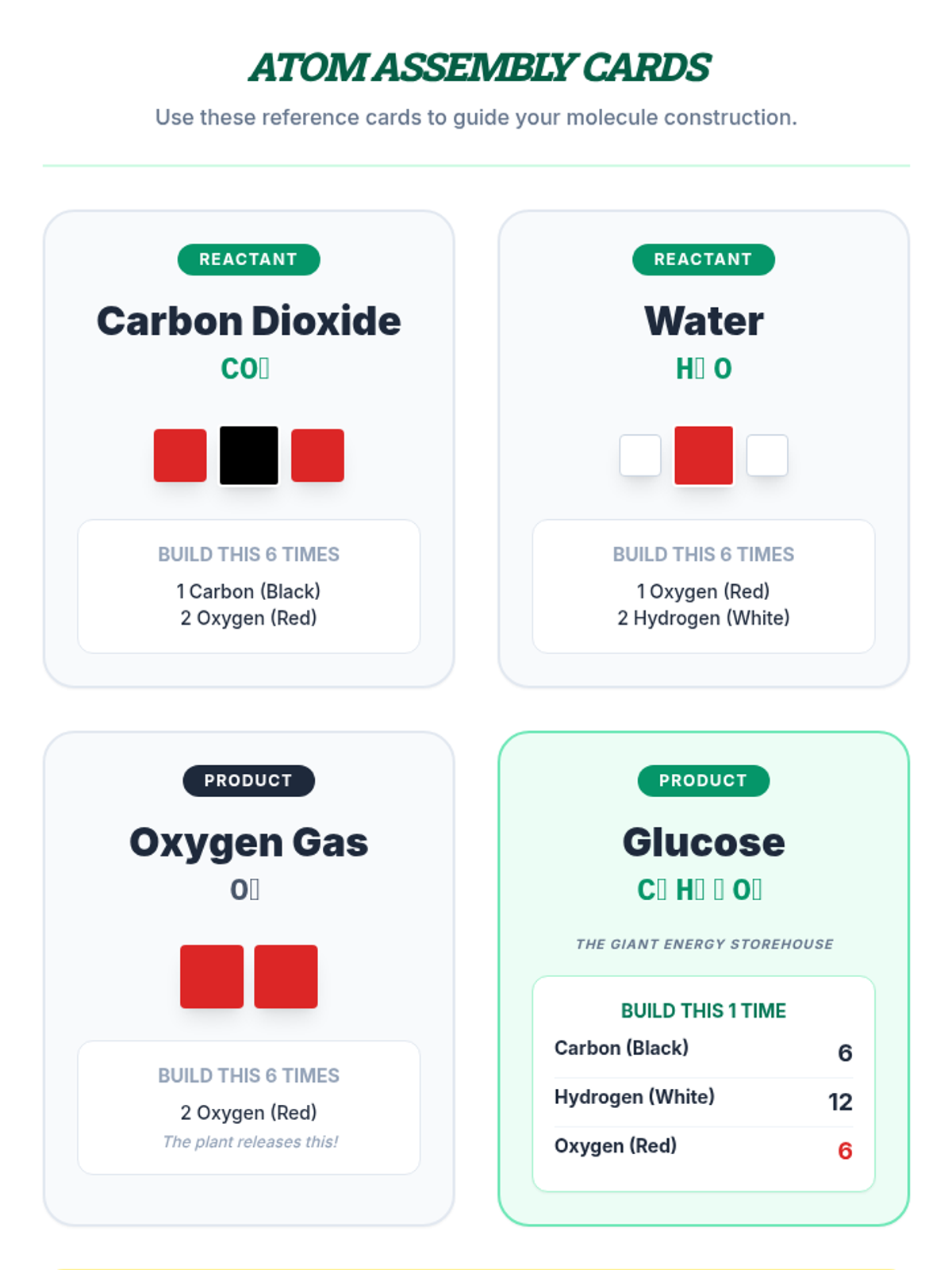
A hands-on biology lesson where 6th-grade students use Lego bricks or beads to model the chemical transformation of photosynthesis, moving from carbon dioxide and water to glucose and oxygen.
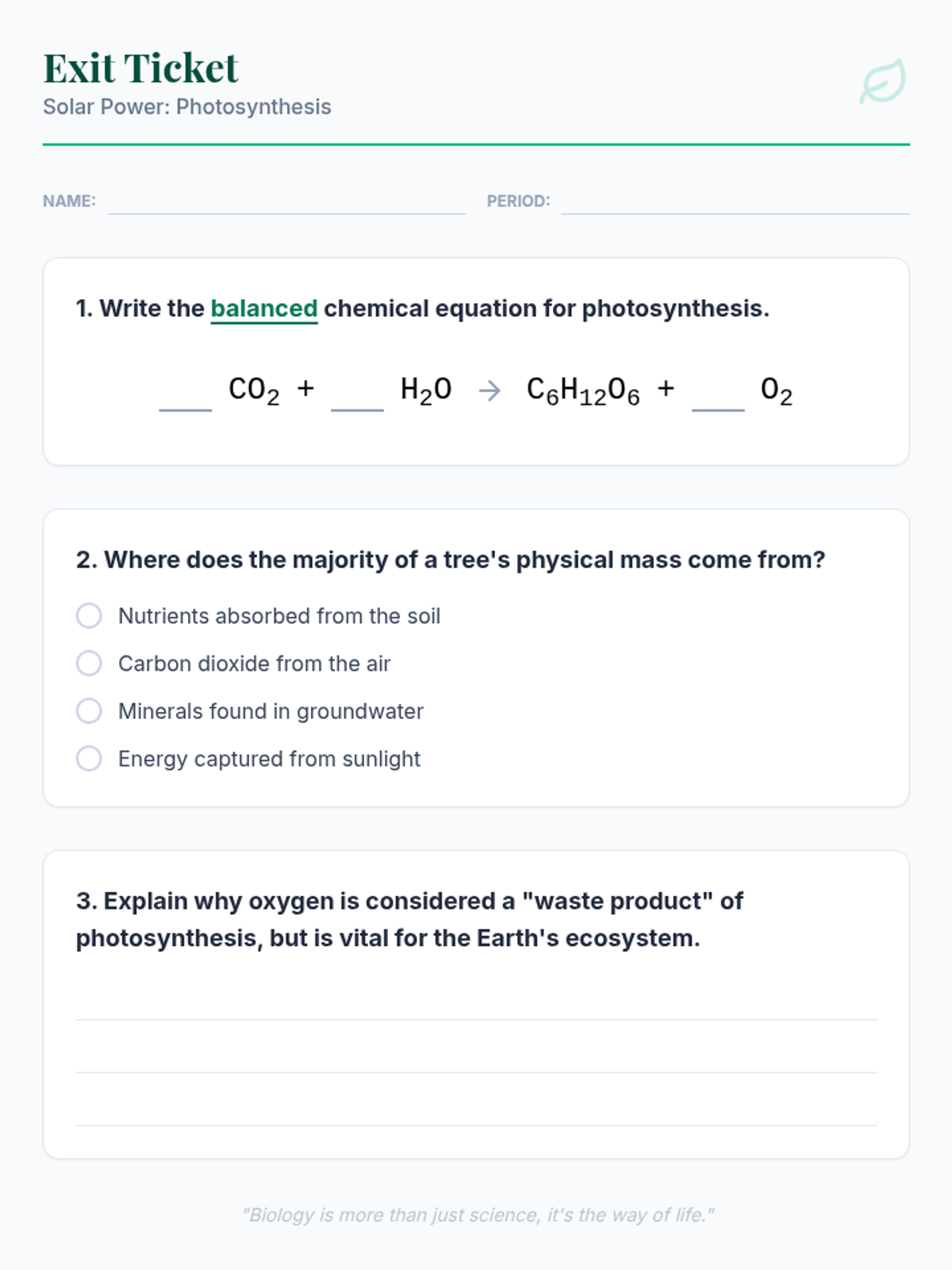
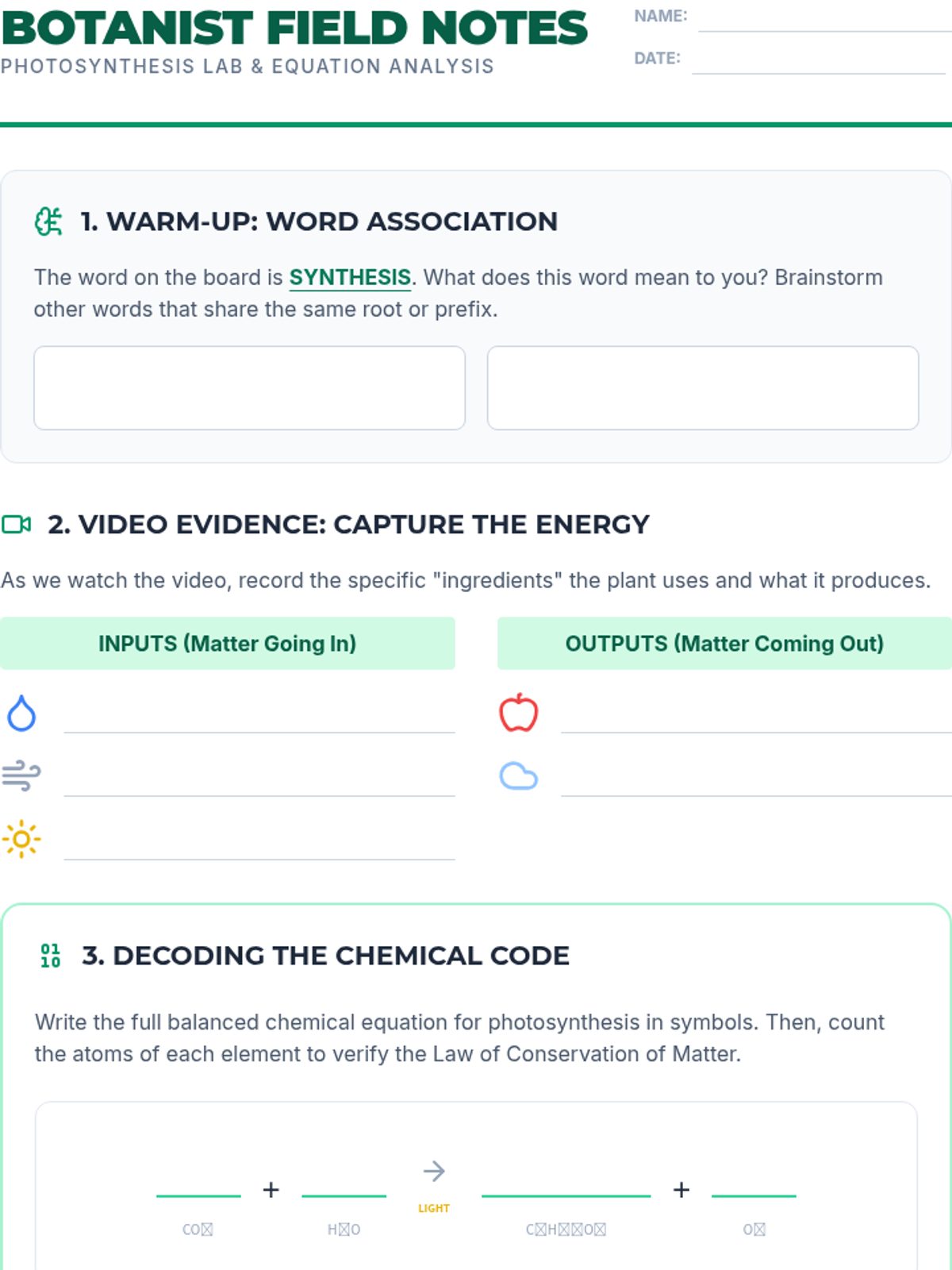
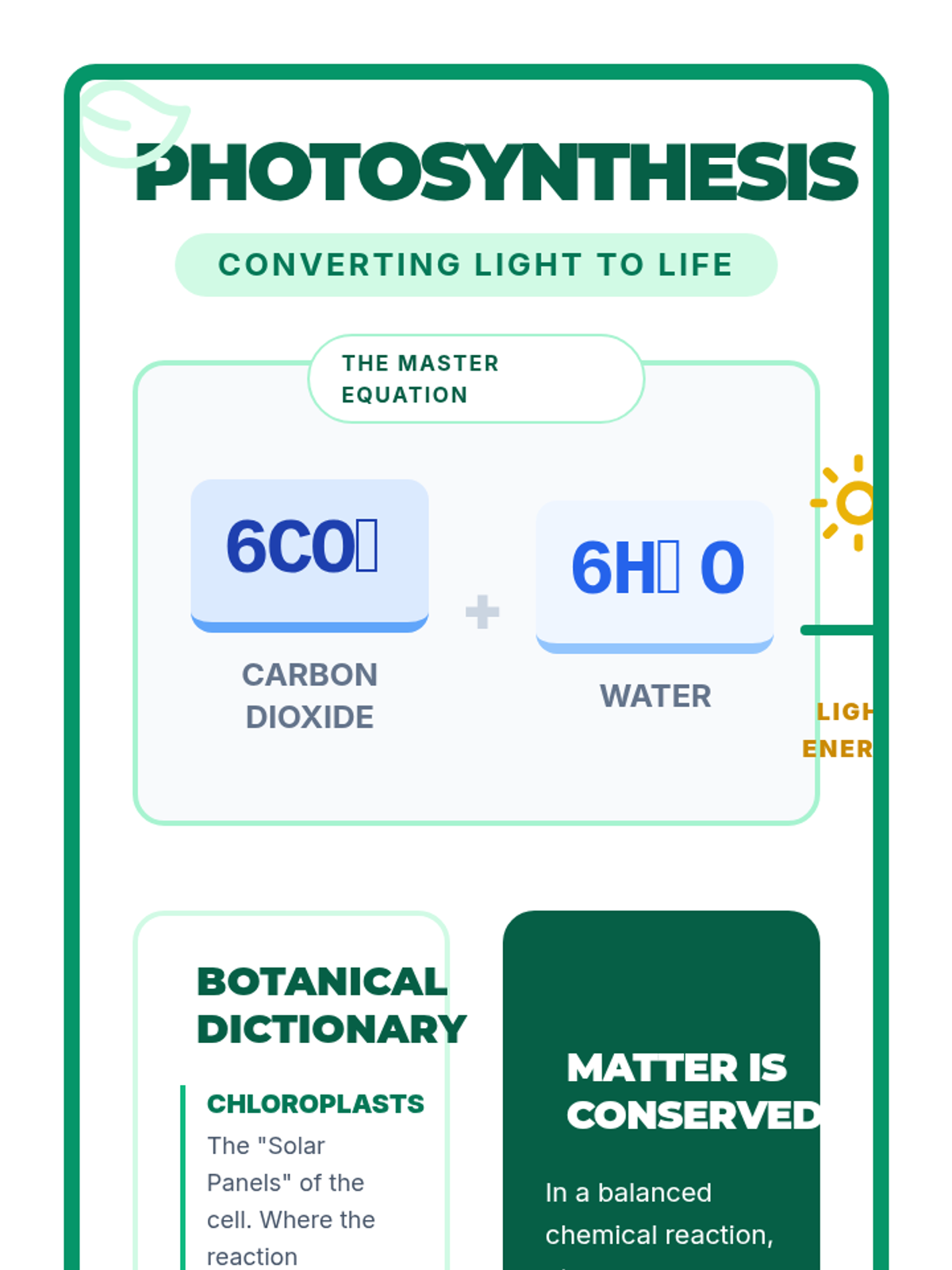
A 6th-grade science lesson exploring the chemical process of photosynthesis. Students identify inputs and outputs, analyze the balanced chemical equation, and create a visual representation of how plants transform light energy into chemical energy.
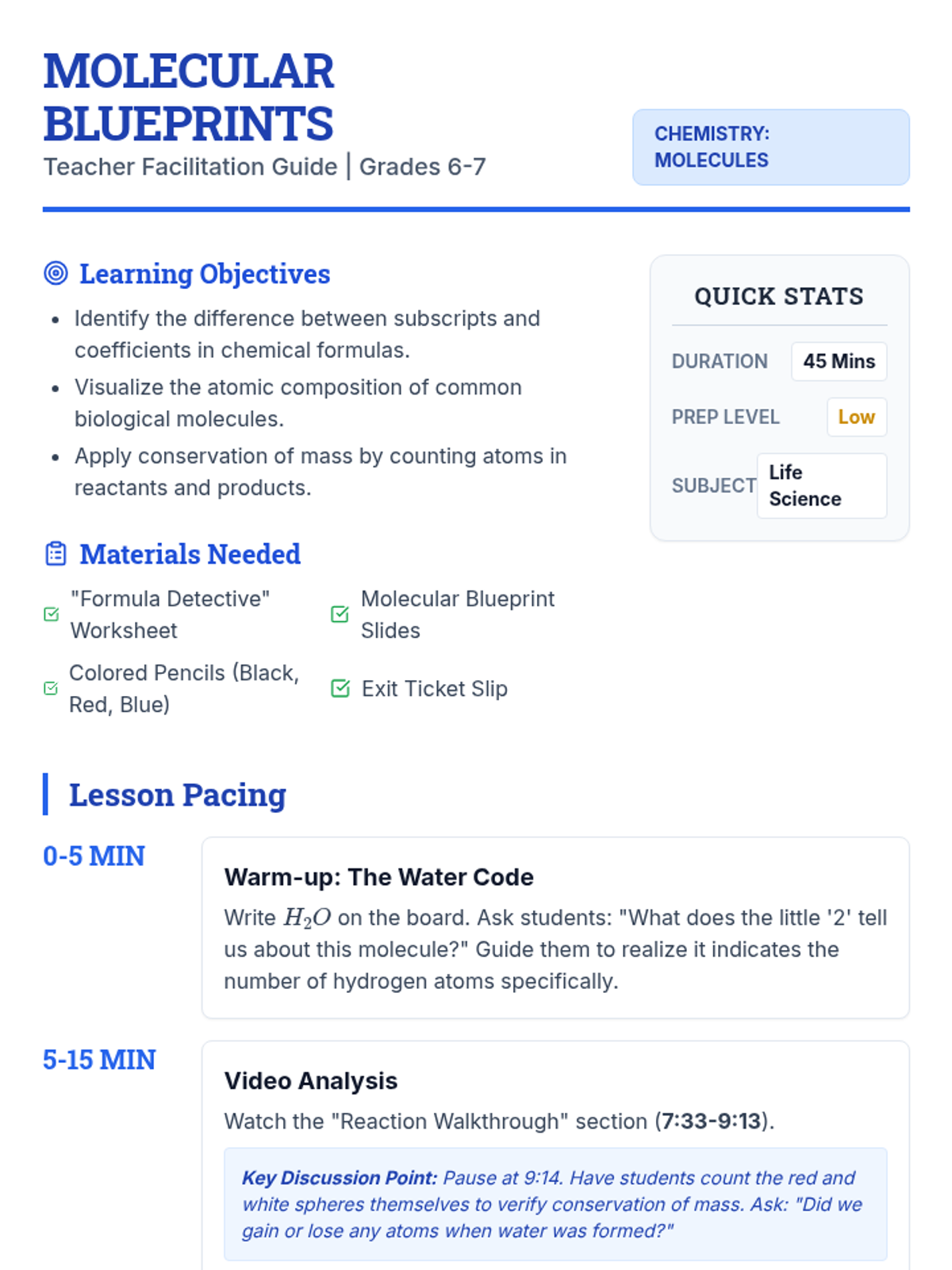
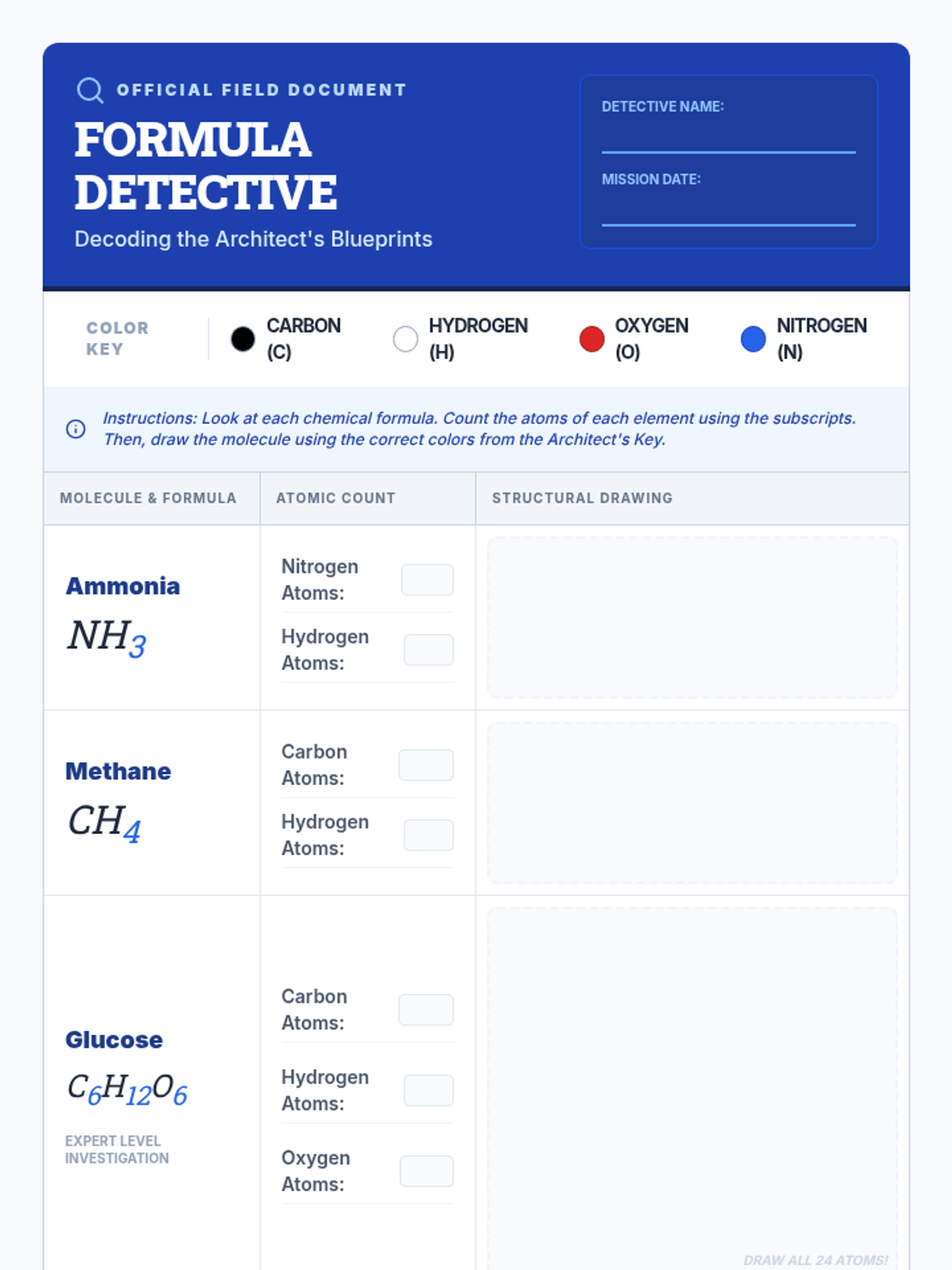
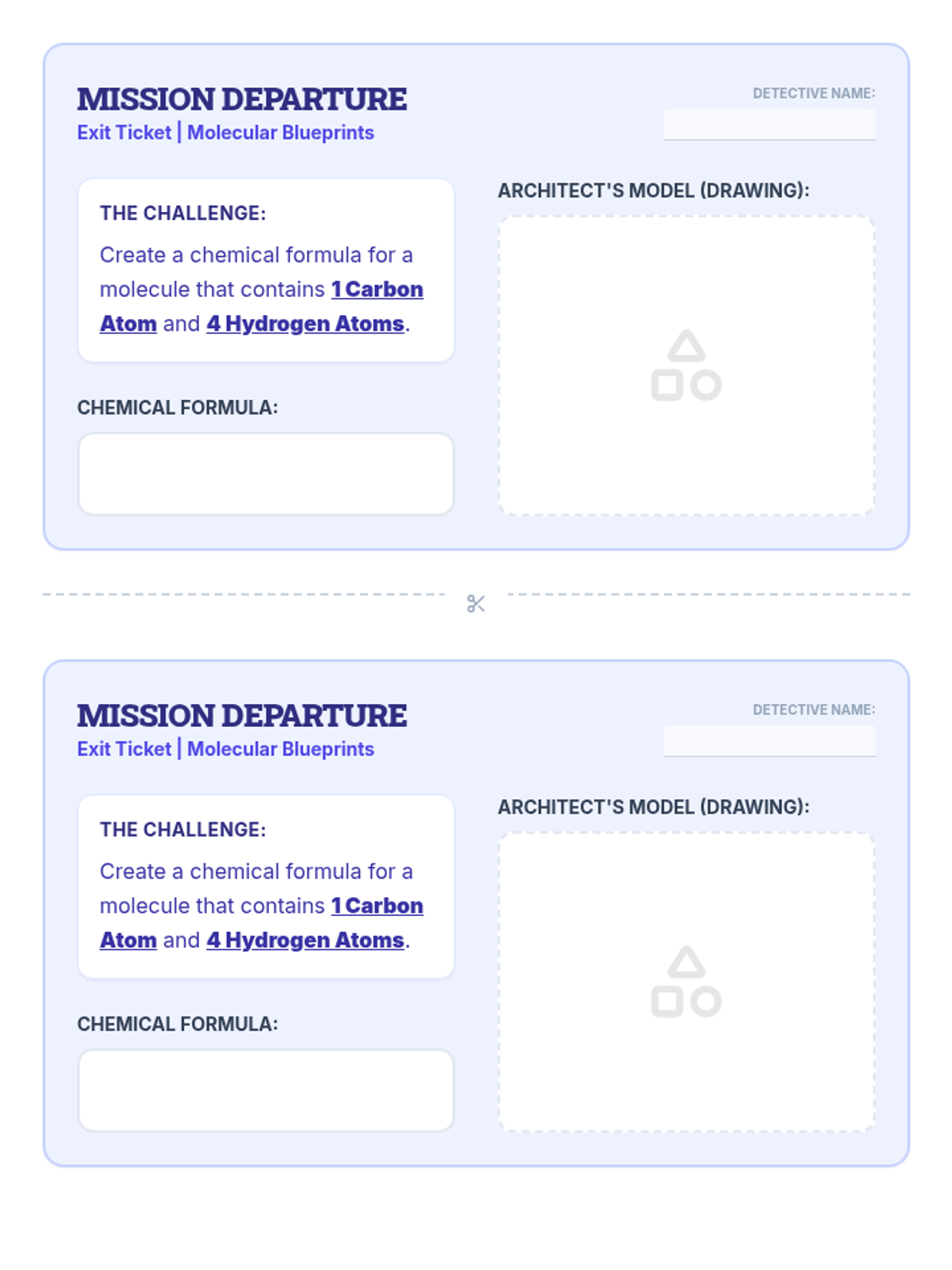
Students will learn to visualize chemical formulas by distinguishing between subscripts and coefficients. Through a hands-on drawing activity called 'Formula Detective,' they will model molecules like glucose and methane using specific color codes.
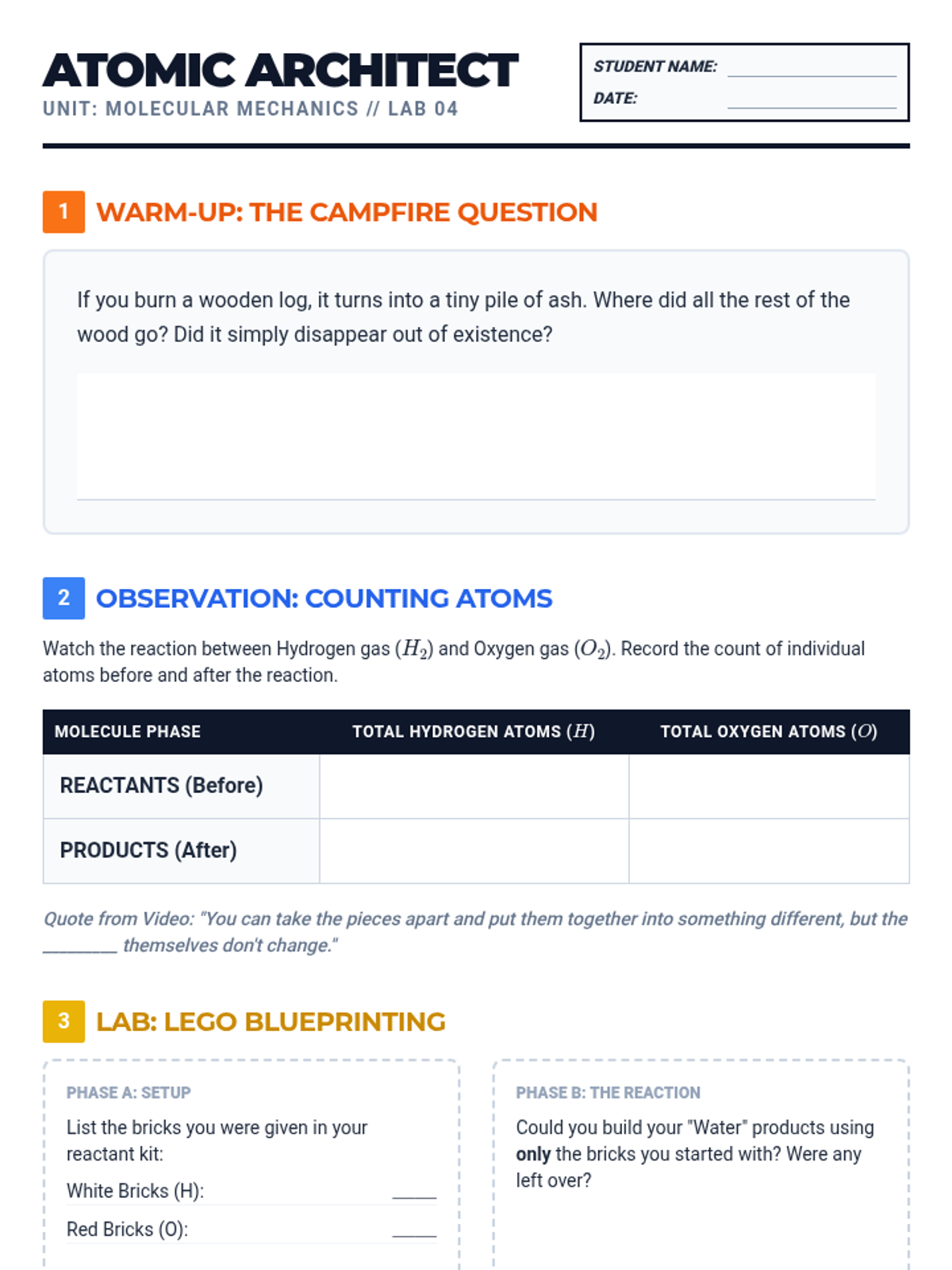
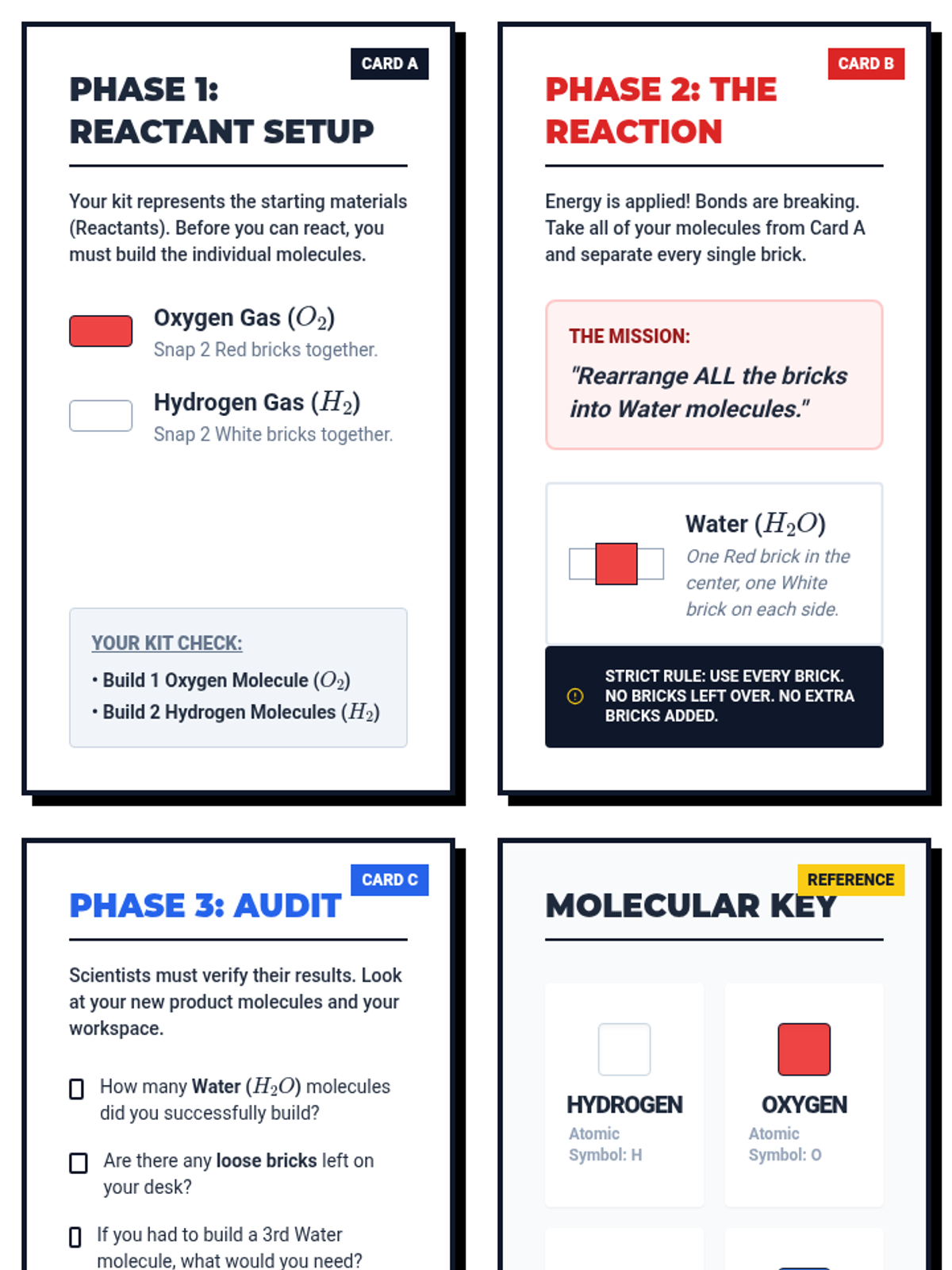
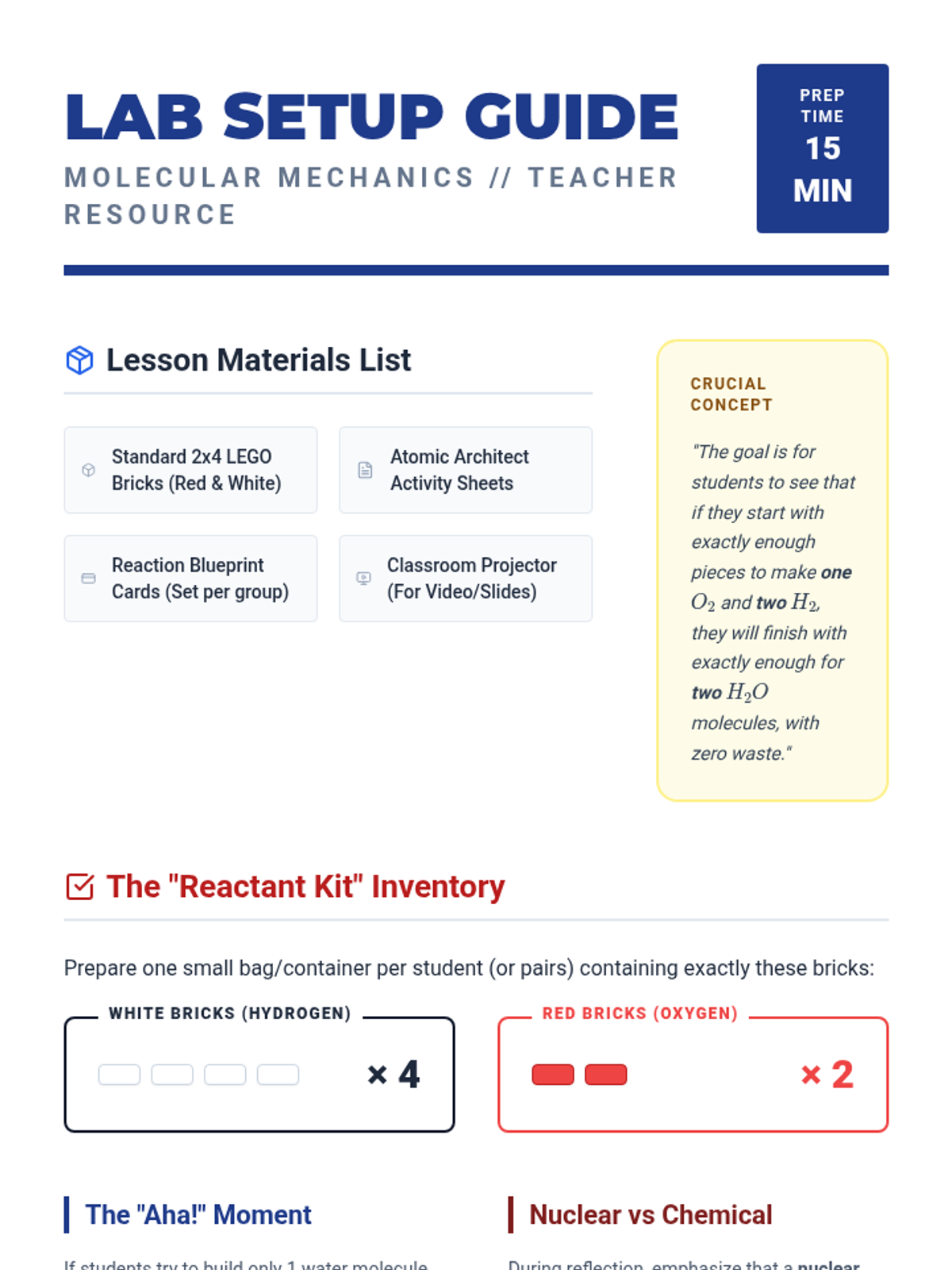
Students explore the conservation of mass and chemical reactions through a LEGO-based analogy, verifying that atoms are never created or destroyed, only rearranged. The lesson includes a video analysis, a hands-on building activity, and a reflection on chemical vs. nuclear reactions.
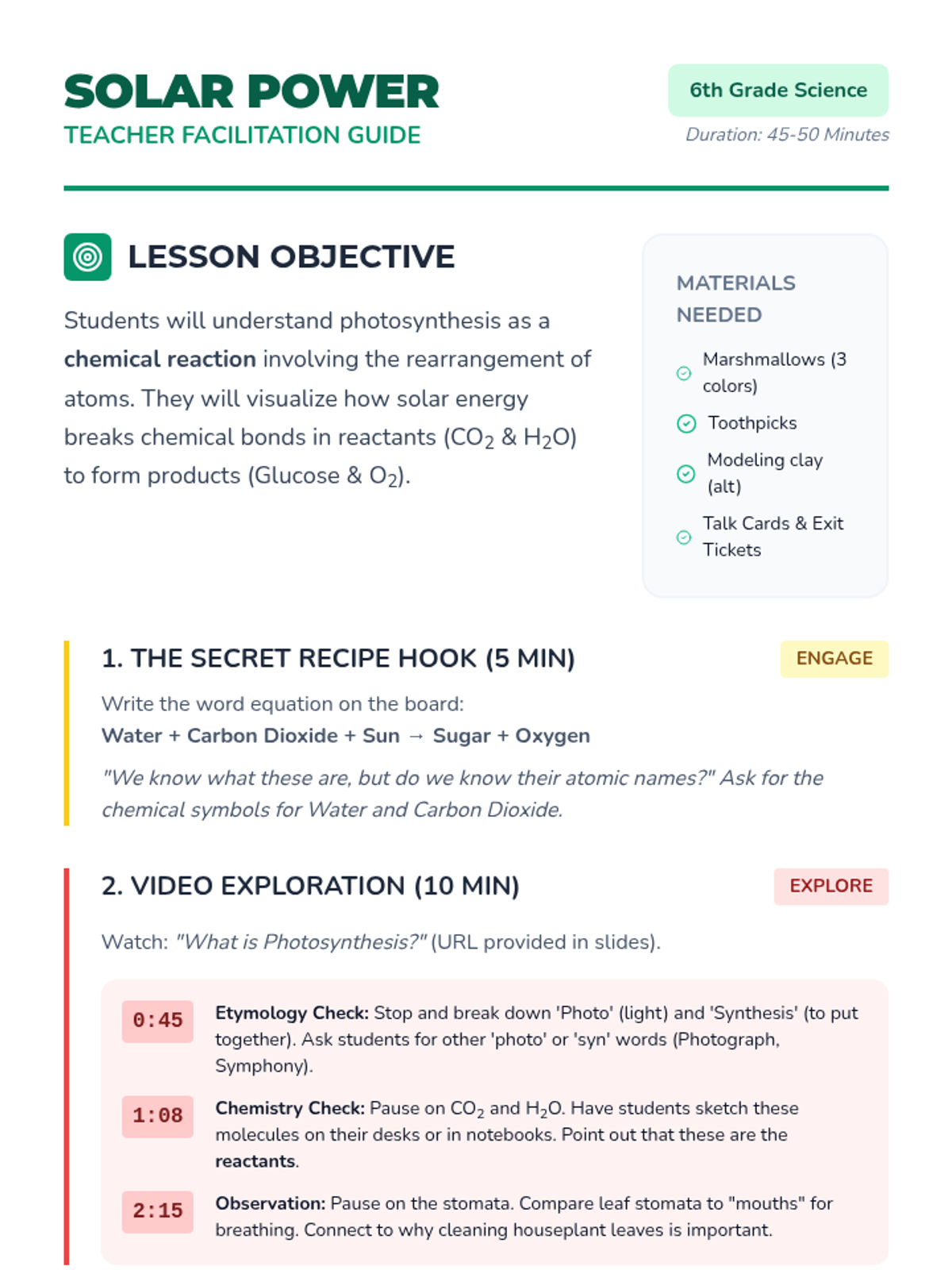
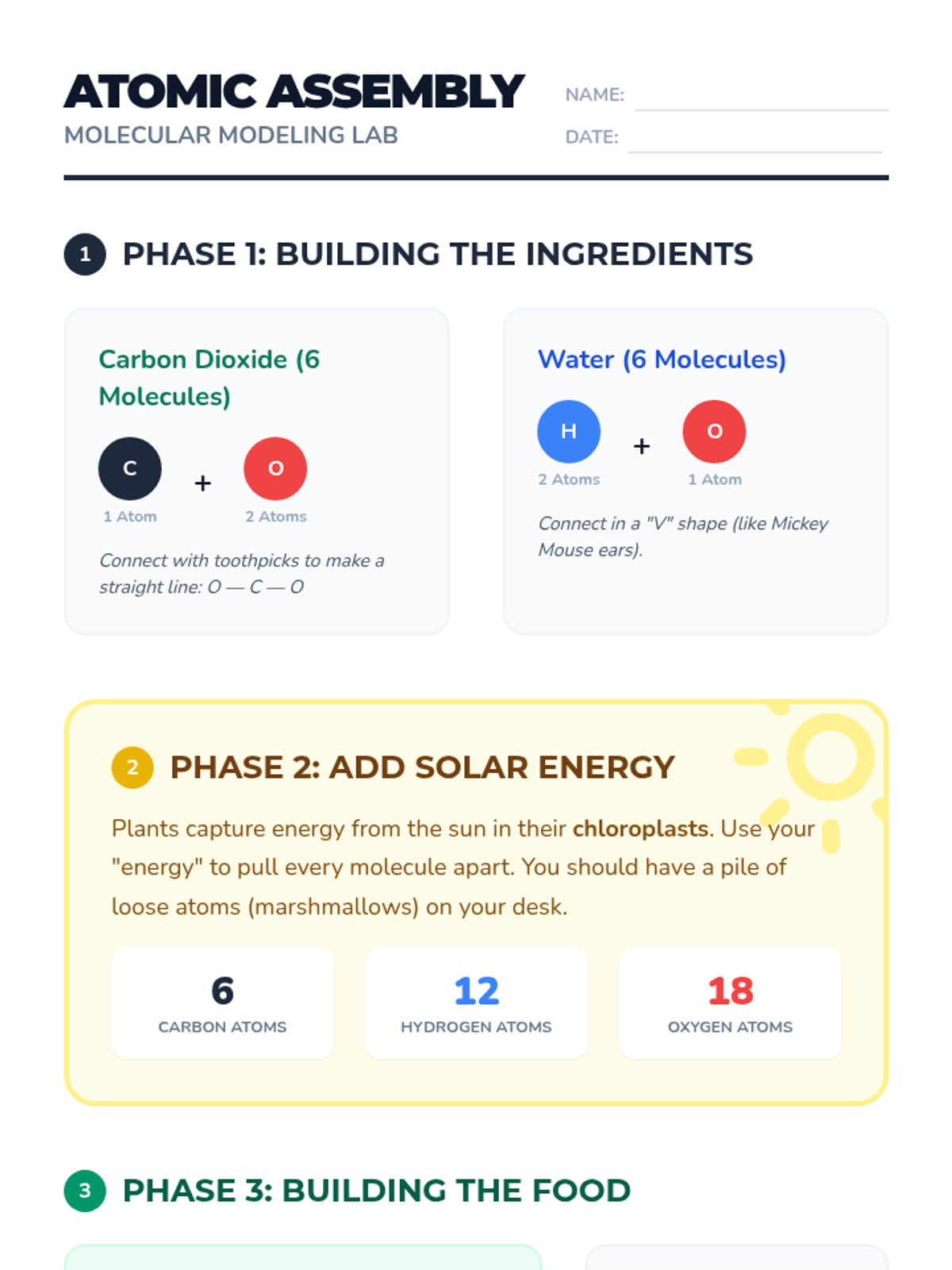
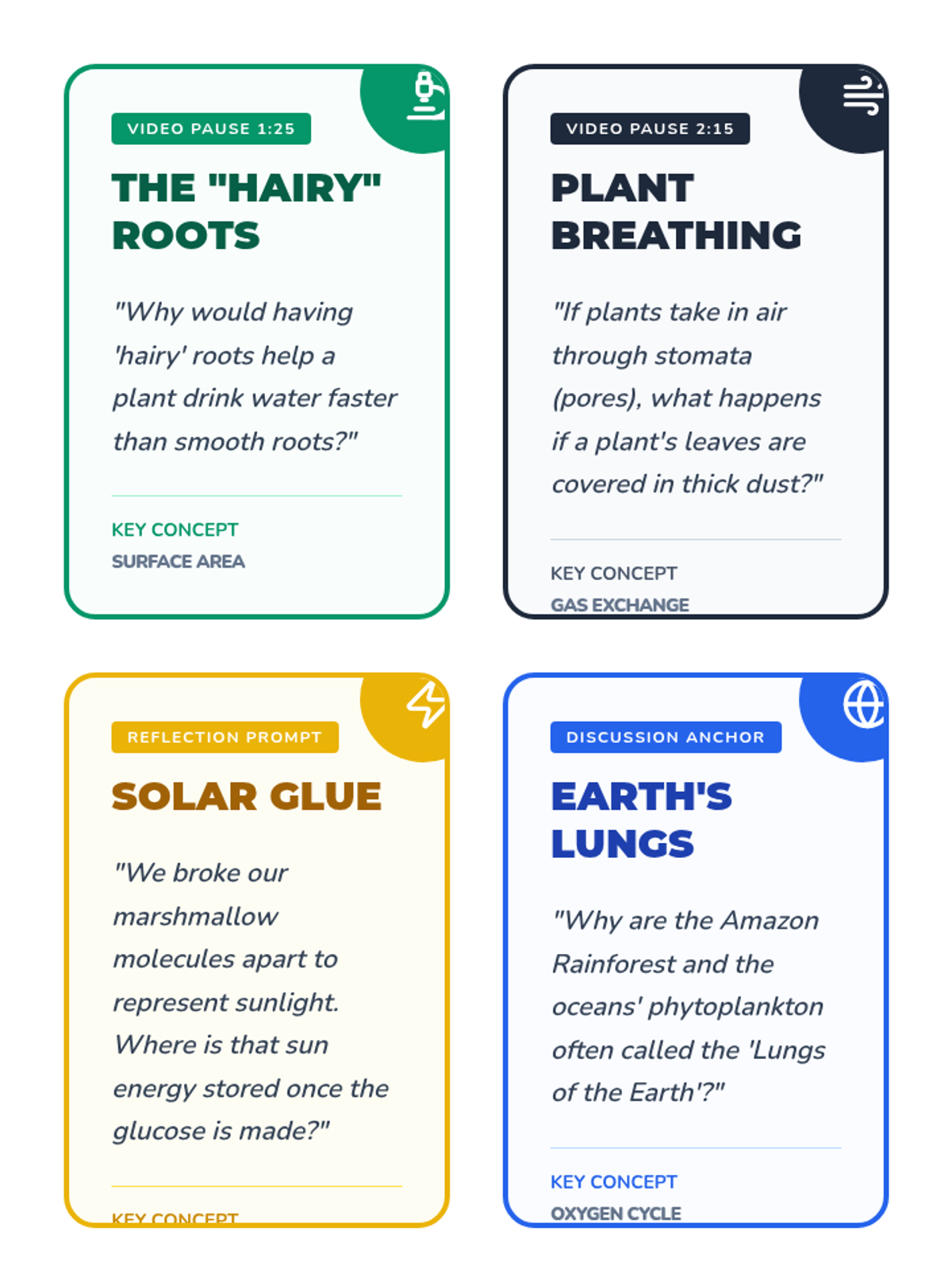
A 6th-grade science lesson where students explore photosynthesis as a chemical reaction. They use molecular models (marshmallows or clay) to visualize how atoms in carbon dioxide and water are rearranged into glucose and oxygen using light energy.
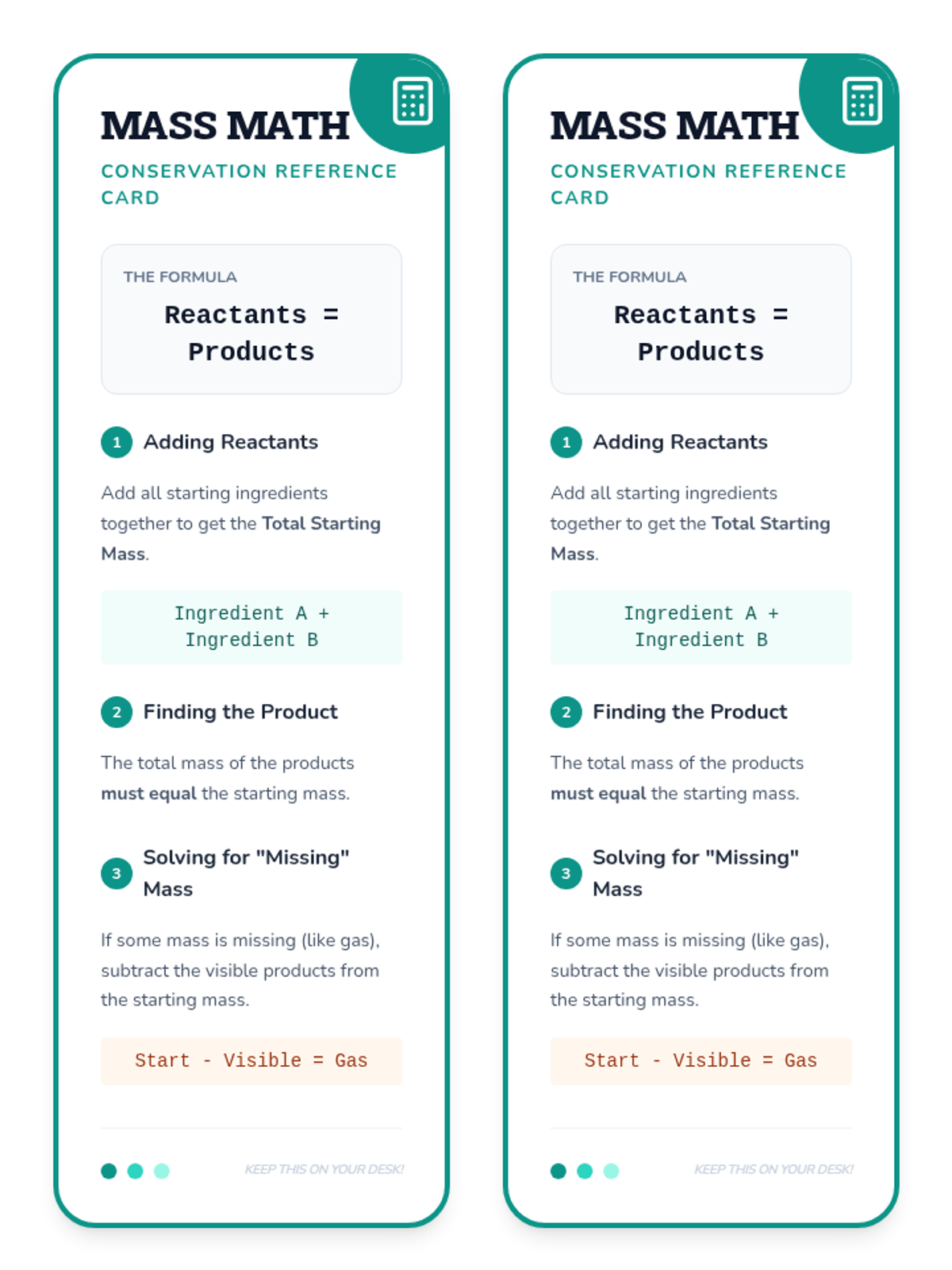
A 6th-grade science lesson focused on the Law of Conservation of Mass, where students use math to solve for unknown masses in chemical and physical changes. Includes a video-based hook, interactive slides, and a math-focused worksheet.
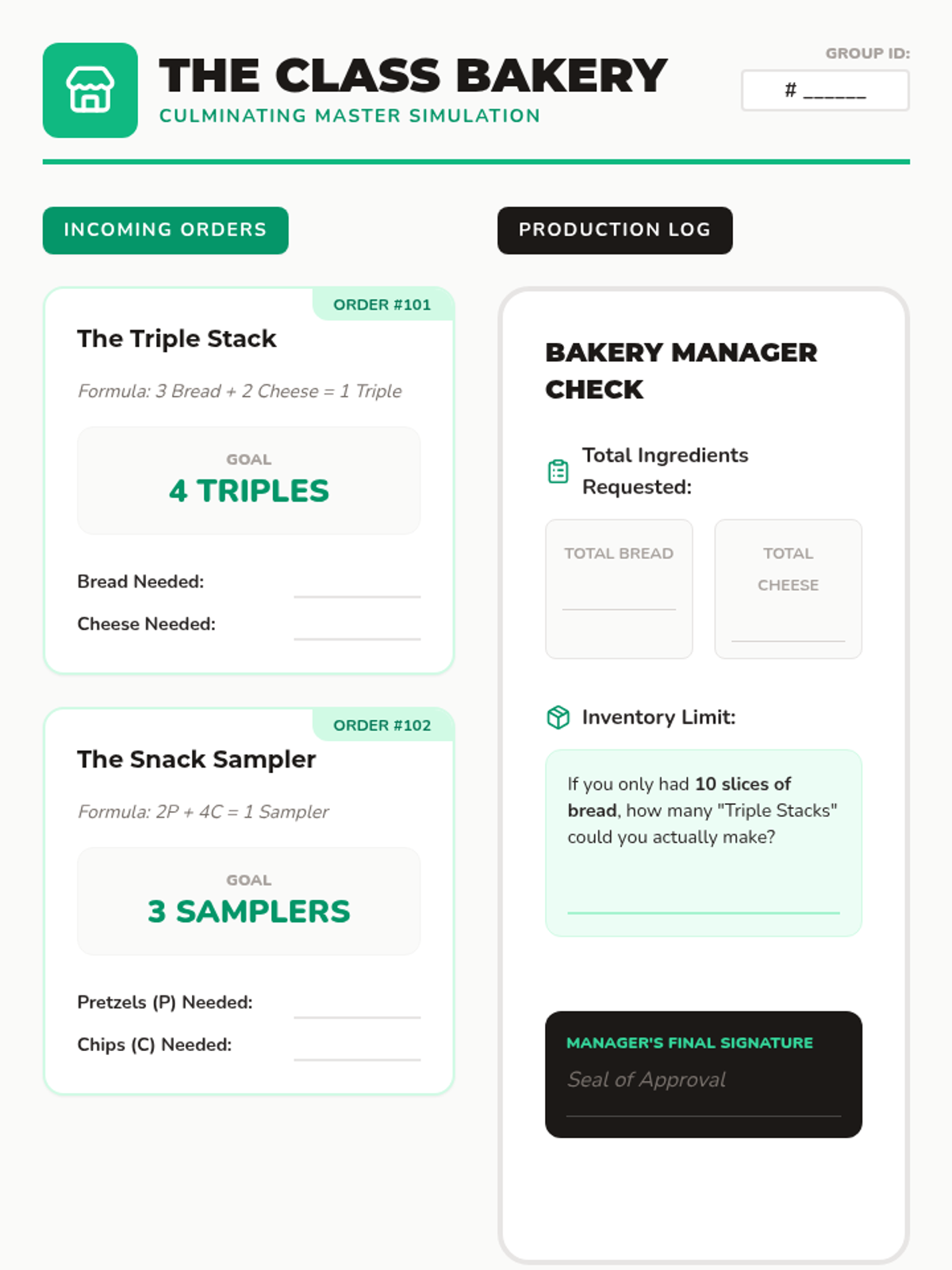
A final simulation where students apply their knowledge of inputs, outputs, and scaling to run a successful class bakery.
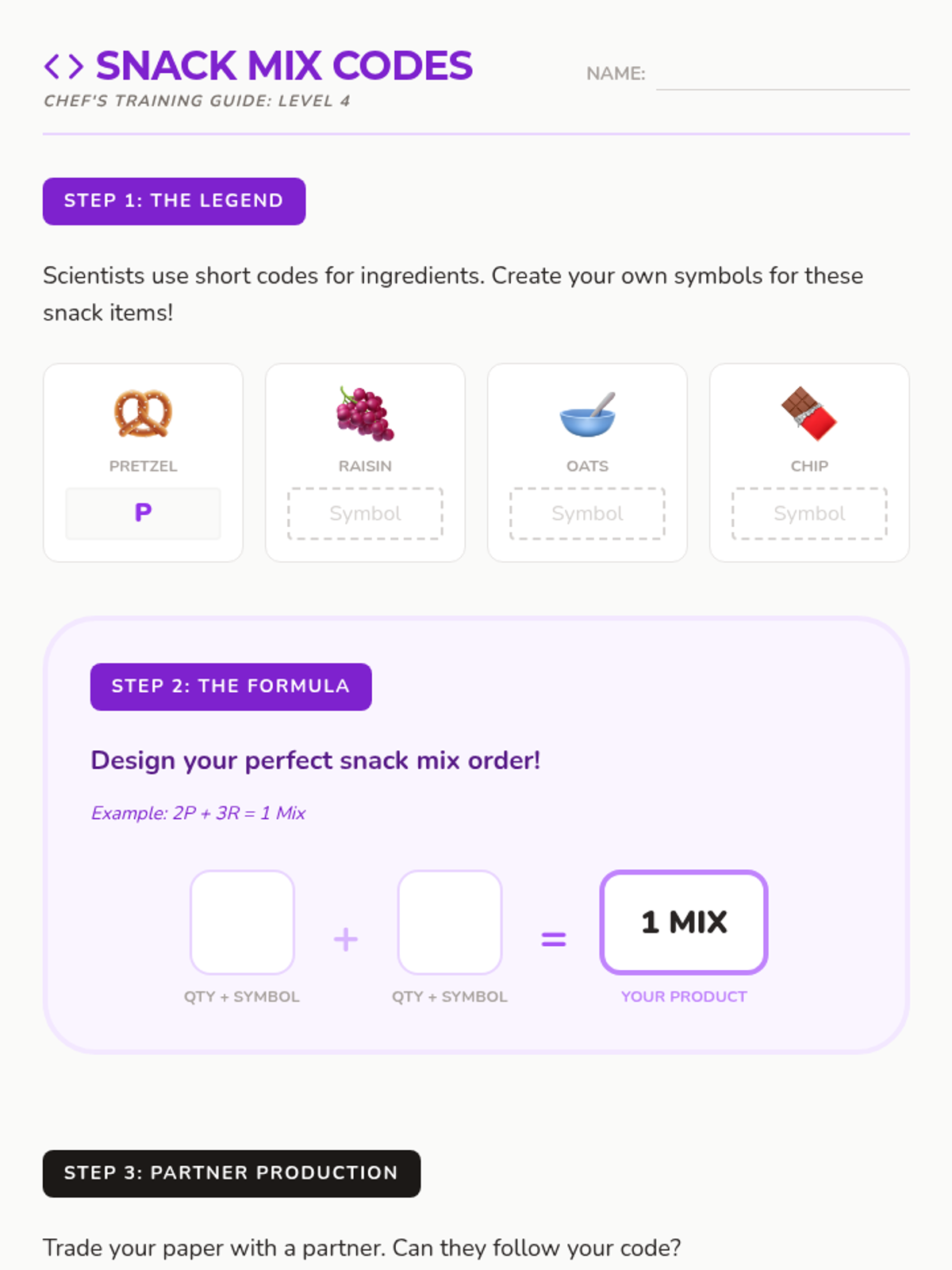
Students transition from words to symbols, creating their own 'equations' for snack mixes and trading them with peers.
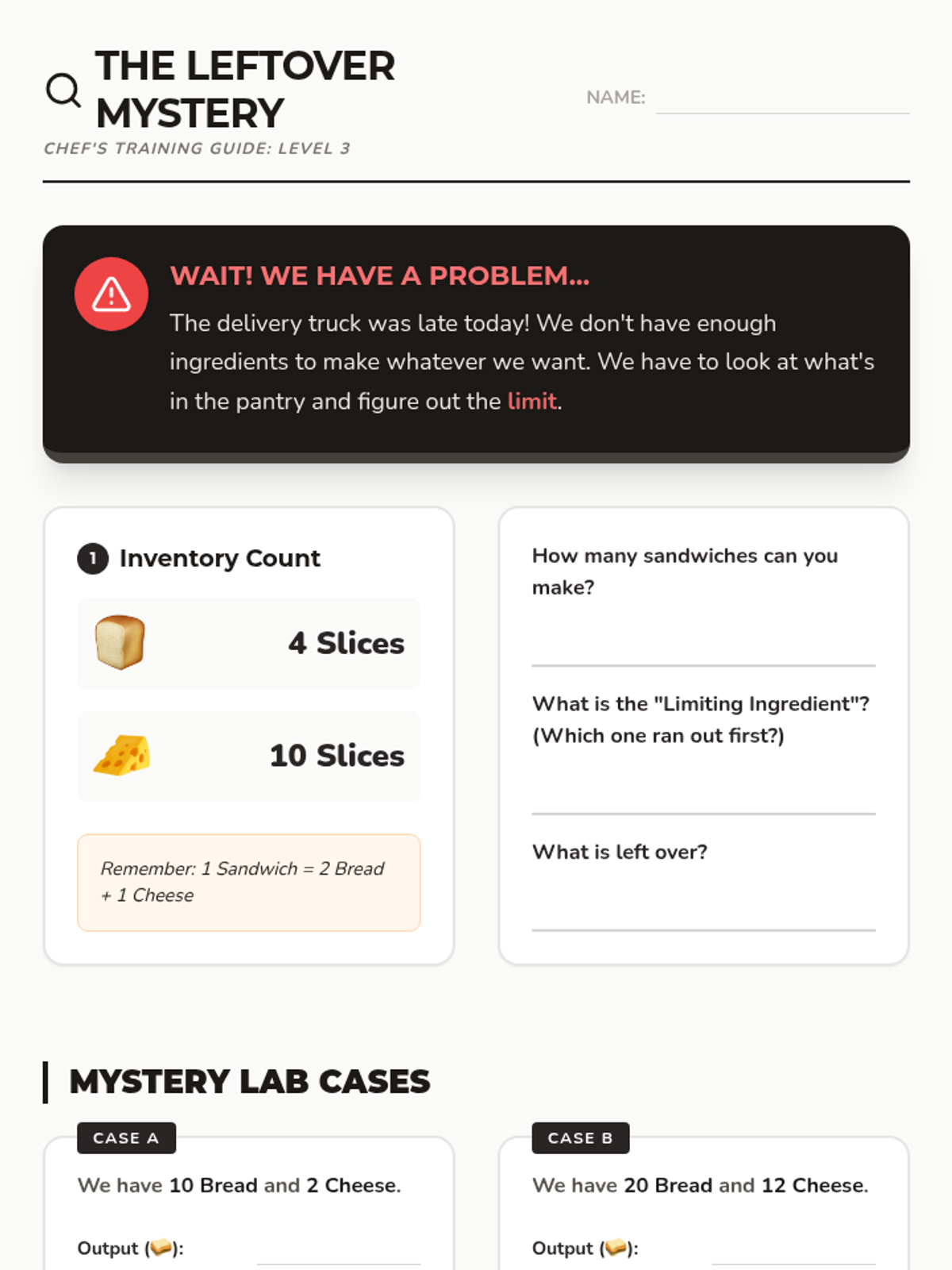
Students investigate what happens when they have uneven amounts of ingredients, learning the concept of limiting reagents in a kitchen context.
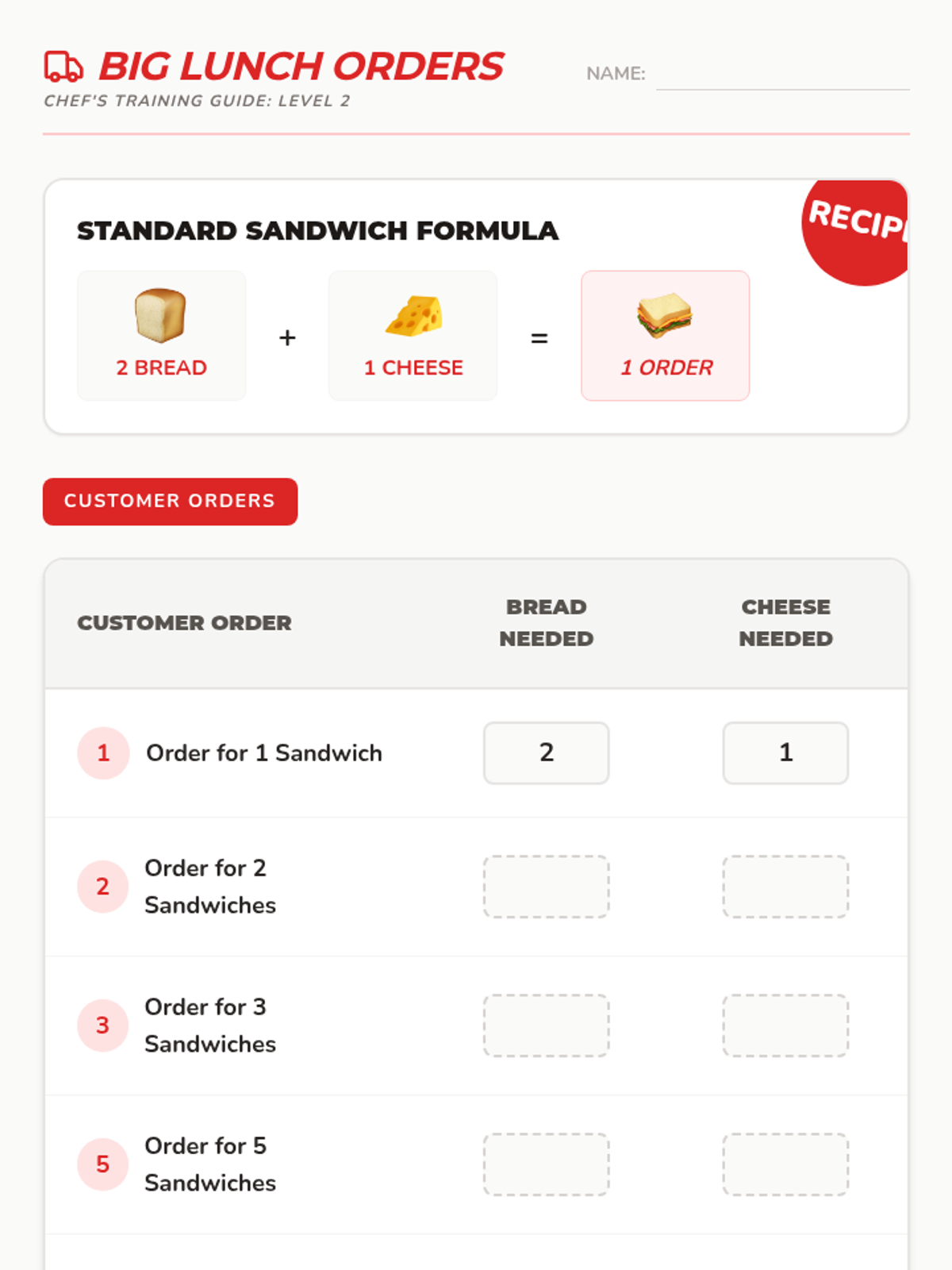
Students practice scaling up formulas to meet larger demands, introducing the concept of coefficients through repeated addition.
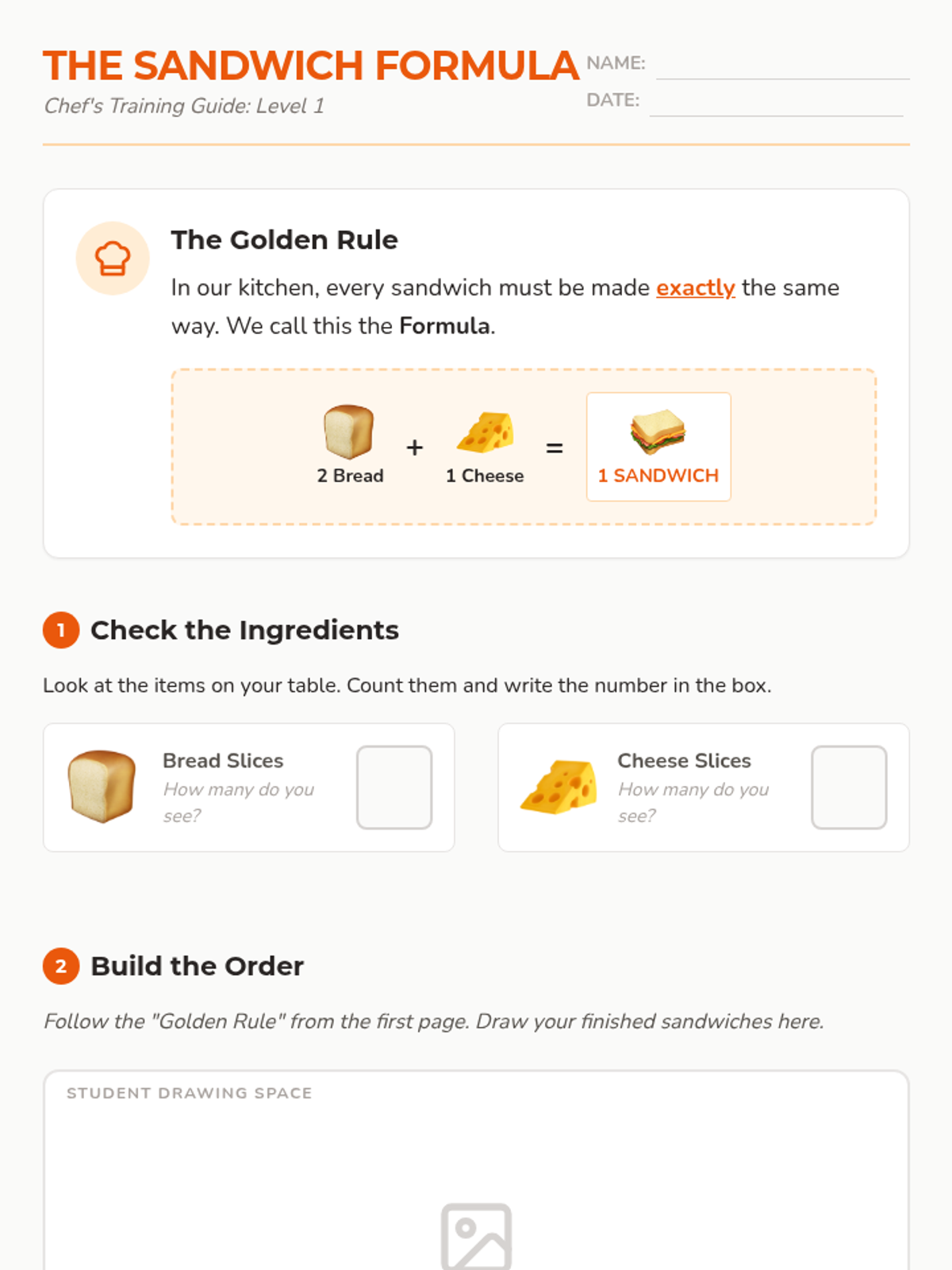
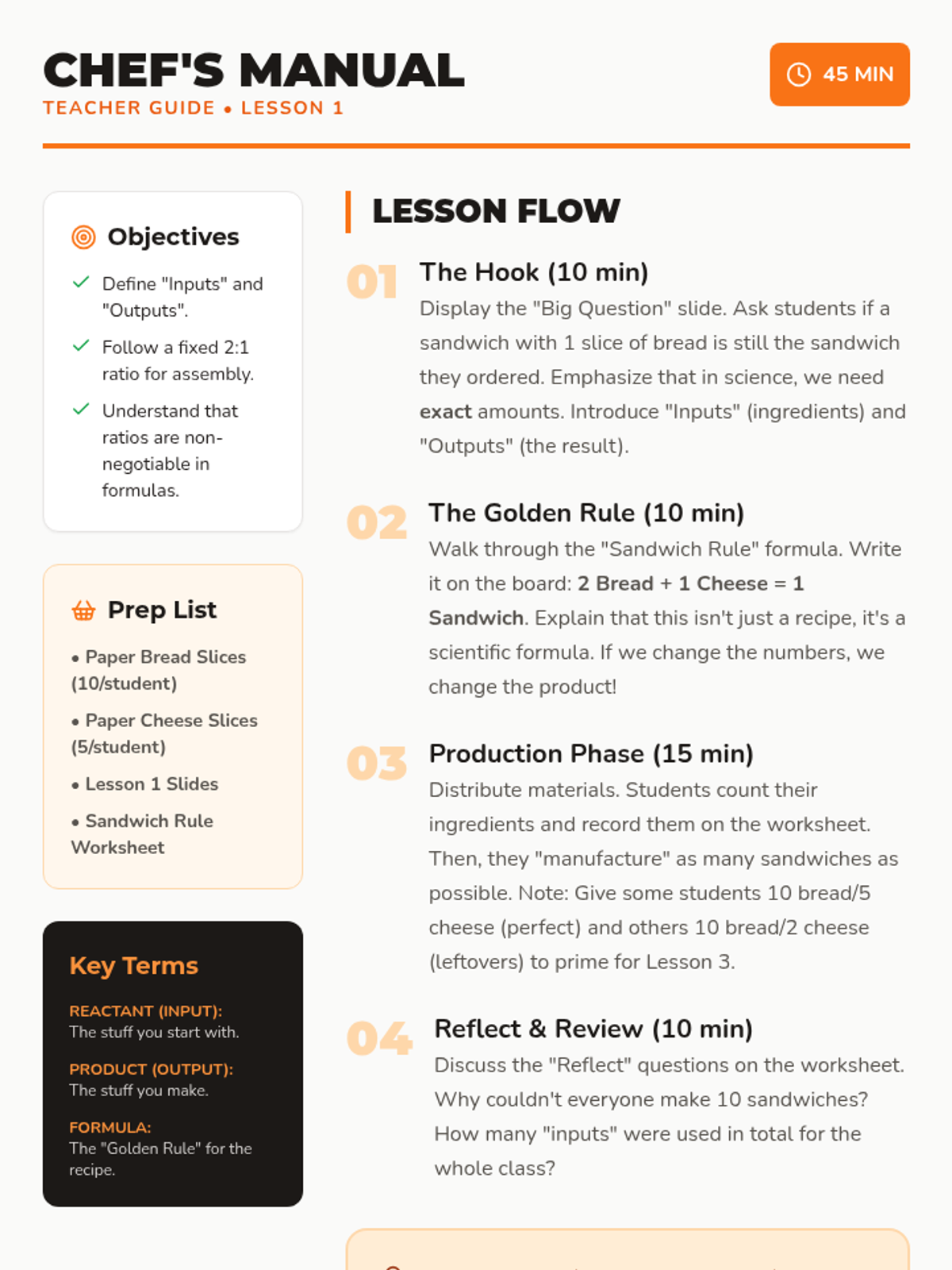
Students learn to follow a strict formula for building sandwiches, establishing the idea that specific inputs are required for a specific output.
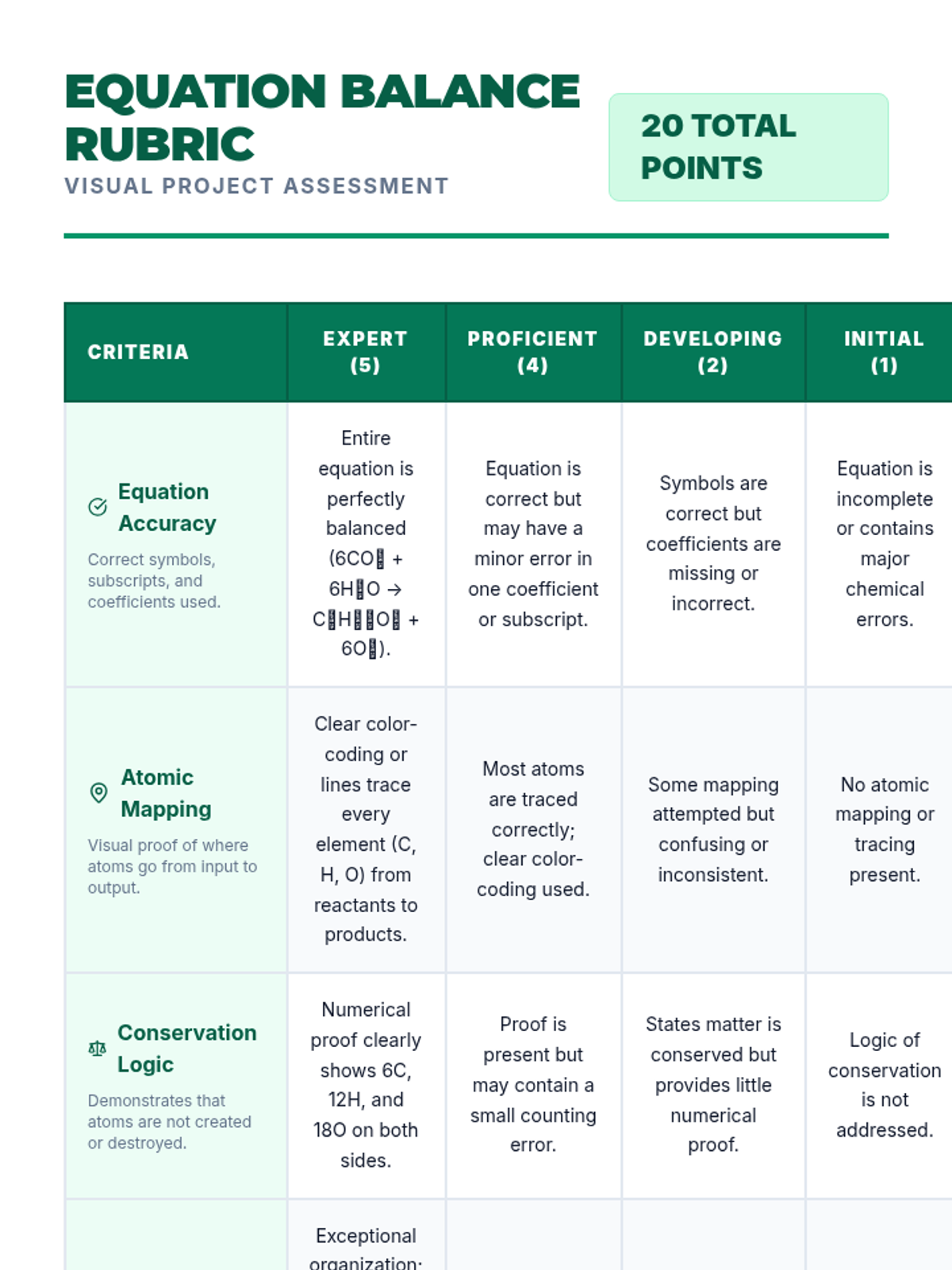
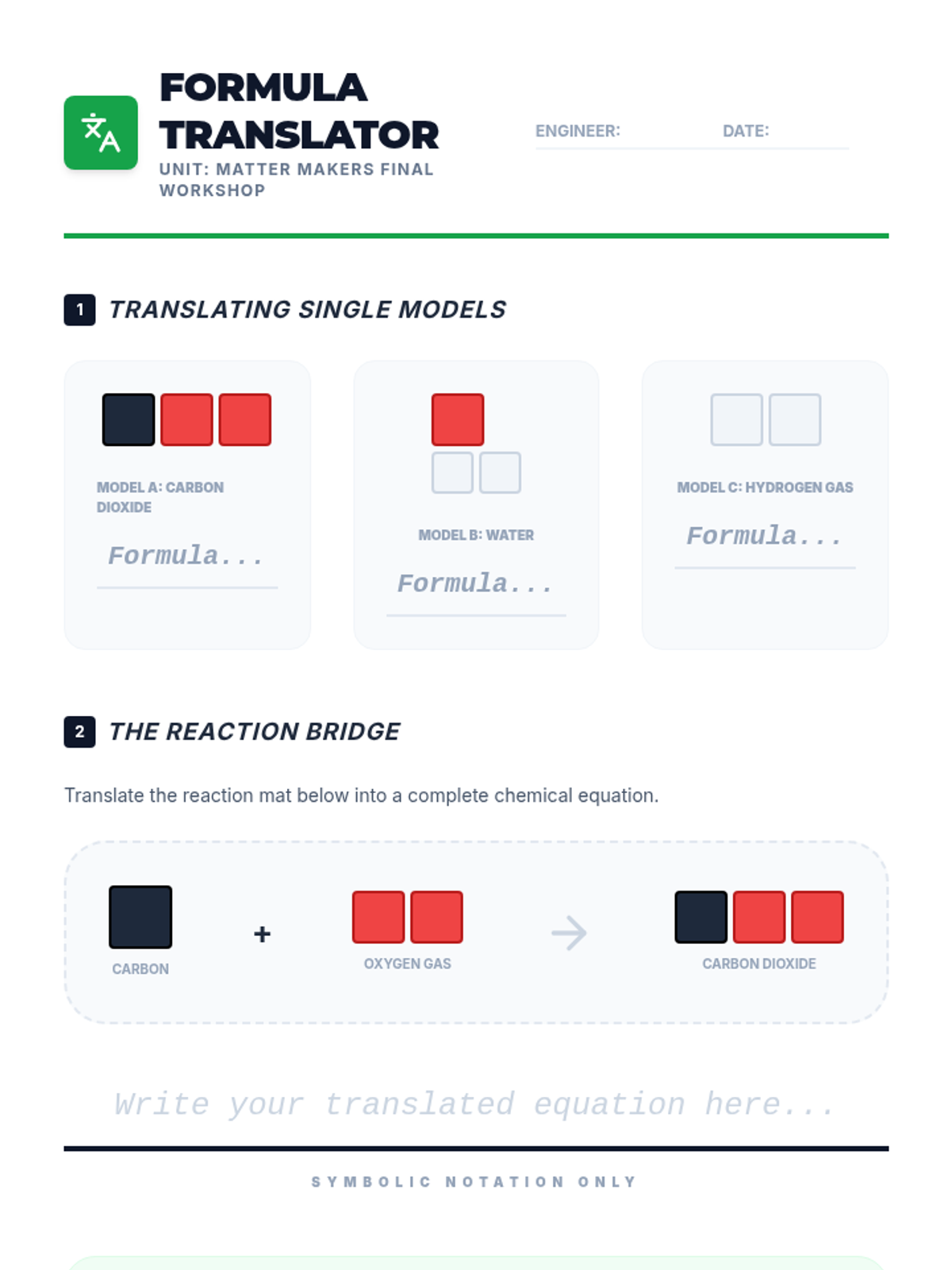
Students translate their physical models into written chemical equations, identifying where adjustments are needed to balance.
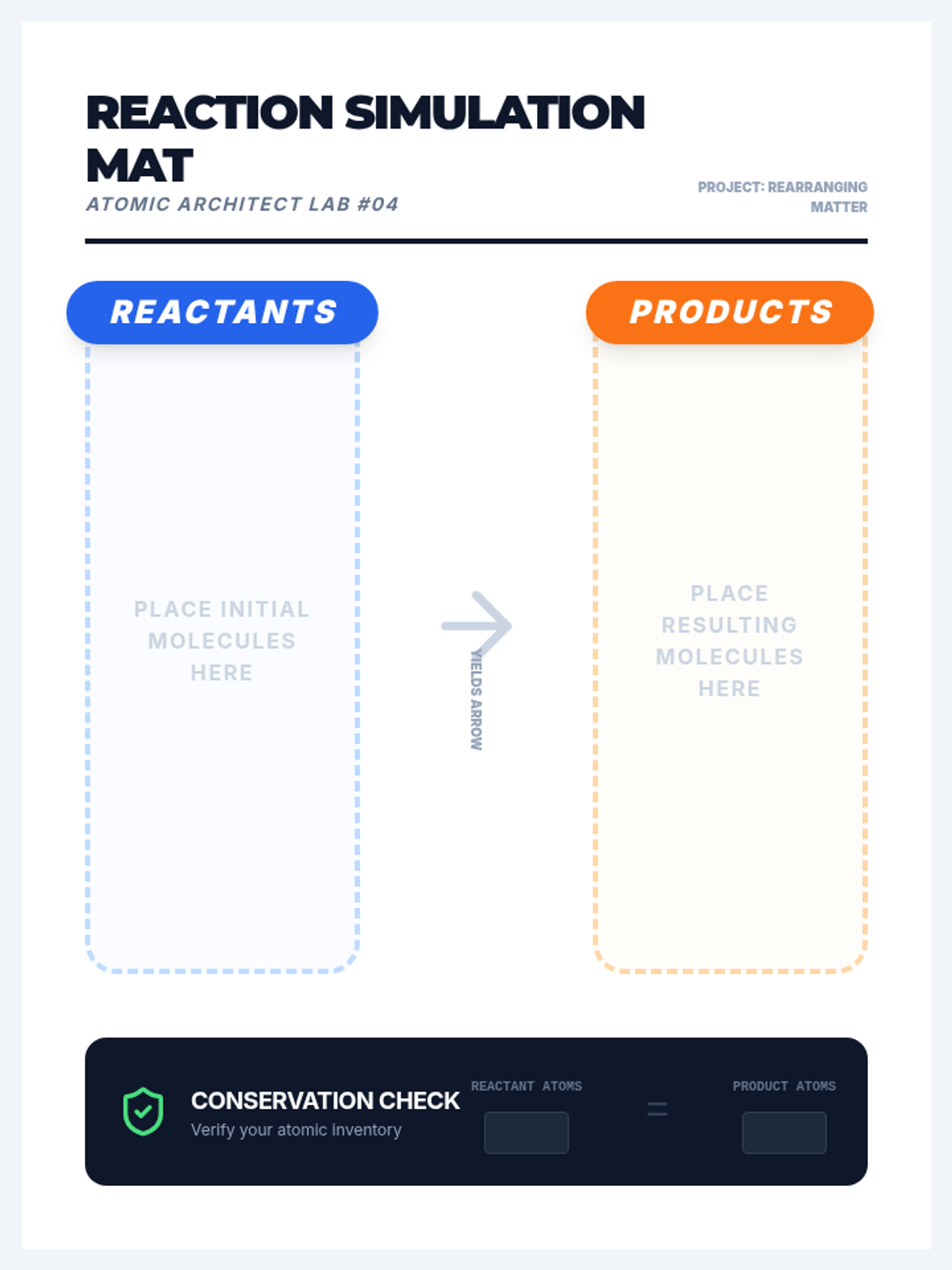
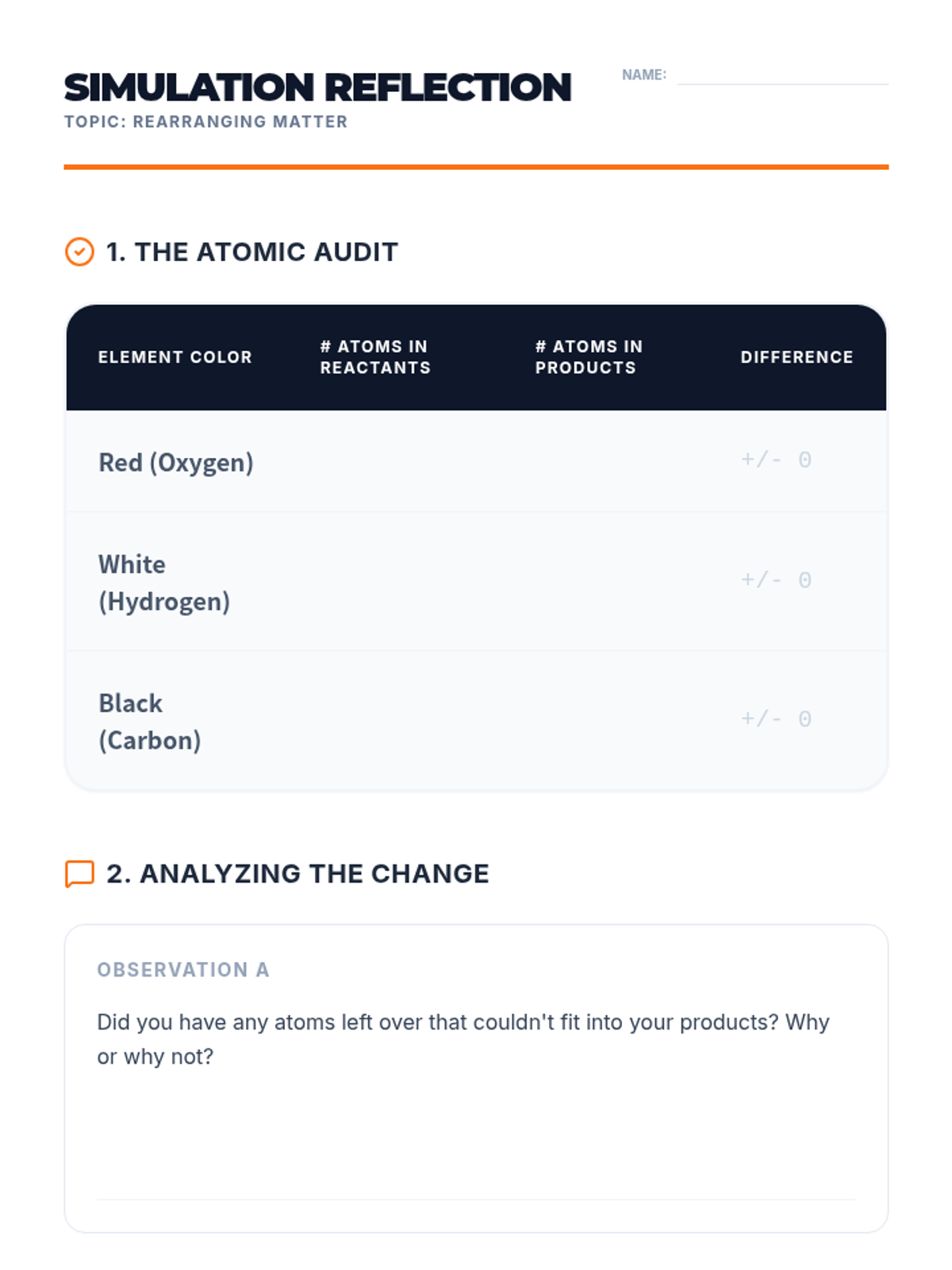
A simulation where students physically rearrange 'reactant' atoms into 'product' molecules to prove mass is conserved.