Lenny LearningLenny
Create
Explore
Workspace
LoginSign up
MathEnglish Language ArtsScience & EngineeringSocial StudiesGlobal LanguagesHealth & Physical EducationSpecial EducationCounseling & Life SkillsArts & CreativityESL
Lenny LearningLenny
Lenny Learning
About
Training
Pricing
Support
Contact
© 2026 Lenny Learning Inc.

Chemistry

SequencesLessonsMaterialsVideos
  1. Science & Engineering

Chemistry

SequencesLessonsMaterialsVideos

Atomic structure, quantum models, and periodic trends establish the fundamental nature of matter. Stoichiometry, gas properties, and equilibrium constants facilitate quantitative analysis of chemical reactions and molecular interactions.

Units and MeasurementStandardized SI and customary units, conversion techniques, and precision in data collection. Equips students with dimensional analysis skills and the ability to use measurement tools accurately.
Properties of GasesKinetic molecular theory and the physical relationships between pressure, volume, and temperature. Applies gas laws to predict molecular behavior and calculate changes in state across varying conditions.
Balancing EquationsFundamental techniques for applying the law of conservation of mass to chemical reactions. Strengthens ability to adjust coefficients while identifying reactants and products in stoichiometric calculations.
Energy ChangesExothermic and endothermic reactions, enthalpy changes, and the law of conservation of energy. Examines bond energies and calorimetry to quantify heat transfer in chemical processes.
Science & EngineeringLife ScienceLiving ThingsAnimalsPlantsBody SystemsTraitsAdaptationsCellsEcosystemsHeredityGenes to TraitsCell DivisionPhysicsComparing MaterialsShapes and PropertiesMagnetsMagnetismLightSoundLight and SoundMatterStates of MatterChanges of StateMixturesPhysical and Chemical ChangeHeating and CoolingHeat and Thermal EnergyEnergyForce and MotionElectrical CircuitsAtoms and MoleculesPeriodic TableMotion in One DimensionMotion in Two DimensionsScalars and VectorsForces and Laws of MotionCircular Motion and GravityMomentum and ImpulseWork, Energy, and PowerWavesElectromagnetic WavesGeometric OpticsElectricity and MagnetismSimple Harmonic MotionThermodynamicsNuclear PhysicsEarth Science & AstronomyWeatherWater CycleRocks and MineralsFossilsEarth's FeaturesEarth's ResourcesEarth's StructureWeather and ClimateEarth EventsFossils and Geologic TimePlate TectonicsHuman ImpactsAstronomyChemistryUnits and MeasurementAtomic StructurePeriodic TrendsChemical BondingNomenclatureMolecular StructureIntermolecular ForcesThe MoleStoichiometryProperties of GasesSolutionsChemical ReactionsBalancing EquationsEnergy ChangesRates of ReactionsEquilibriumAcids and BasesQuantum ModelBiologyClassificationCell StructureThe Chemistry of LifeBiomoleculesCellular TransportCell EnergyCell Growth and DivisionDNAProtein SynthesisMeiosis and Sexual ReproductionPatterns of InheritanceMulticellular OrganismsEvolutionEcologyBiodiversityComputer ScienceAlgorithms and Computational ThinkingProgramming LanguagesComputing SystemsNetworks and InternetData AnalysisCybersecurityAI and Machine LearningSoftware Design and DevelopmentBlockchainEngineering & AIDesigning ExperimentsEngineering PracticesDesign ThinkingEngineering Design ProcessMechanical EngineeringElectrical EngineeringMaterials and StructuresCAD and 3D DesignRoboticsArtificial Intelligence BasicsVibe CodingMachine LearningAI Ethics and SocietySystems ThinkingEntrepreneurship & InnovationEntrepreneurial MindsetBusiness Idea DevelopmentBusiness Plan BasicsMarketing & Customer DiscoveryFinancial Management for Startups
Video
Does Matter Just Disappear? Investigating the Conservation of Mass

Does Matter Just Disappear? Investigating the Conservation of Mass

This educational video explores the fundamental scientific principle of the Conservation of Mass. Through engaging visuals and clear examples, the host investigates whether matter can ever truly disappear or be created from nothing. The video distinguishes between physical changes (like dissolving sugar in tea) and chemical changes (like baking a cake), explaining how matter behaves in each scenario. It specifically addresses the common misconception that when something dissolves or evaporates, it is gone forever. The content breaks down complex terminology into accessible concepts, defining key terms such as reactants, products, and physical versus chemical changes. It uses a concrete experiment—weighing sugar and water before and after mixing—to provide empirical evidence that mass remains constant even when visible properties change. The narrative connects everyday observations, like a glass of water evaporating or sugar dissolving, to the broader scientific law that mass is never made or lost. For educators, this video is an excellent tool for introducing the particle nature of matter and the law of conservation of mass. It provides a ready-made demonstration that can be replicated in the classroom and offers clear definitions of vocabulary essential for upper elementary and middle school science curricula. The visual proof provided by the digital scale reading serves as a powerful anchor for students grappling with abstract concepts of invisible matter.

Crash Course KidsCrash Course Kids

4mins 9s

Video
How Chemical Reactions Conserve Mass

How Chemical Reactions Conserve Mass

This engaging video explores the Law of Conservation of Mass specifically through the lens of chemical changes. Using Lego bricks as an accessible analogy, the host demonstrates how atoms (represented by blocks) are merely rearranged rather than created or destroyed during reactions. This visual metaphor helps bridge the gap between abstract atomic theory and observable phenomena. The video moves from theory to practice by conducting a "gross" but effective experiment mixing vinegar and cream to create curds. It introduces critical scientific vocabulary including reactants, products, and chemical changes, while teaching students how to identify evidence of reactions such as temperature shifts, bubbling, or light. The host also addresses the tricky concept of conserving mass when gases are produced, referencing closed systems like balloons. For educators, this resource serves as an excellent anchor for units on matter and chemical reactions. It directly addresses Next Generation Science Standards regarding conservation of matter (5-PS1-2 and MS-PS1-5). The combination of a concrete model (Legos) and a wet lab demonstration makes it perfect for visual learners and provides a clear framework for students to design their own investigations into mass conservation.

Crash Course KidsCrash Course Kids

3mins 53s

Video
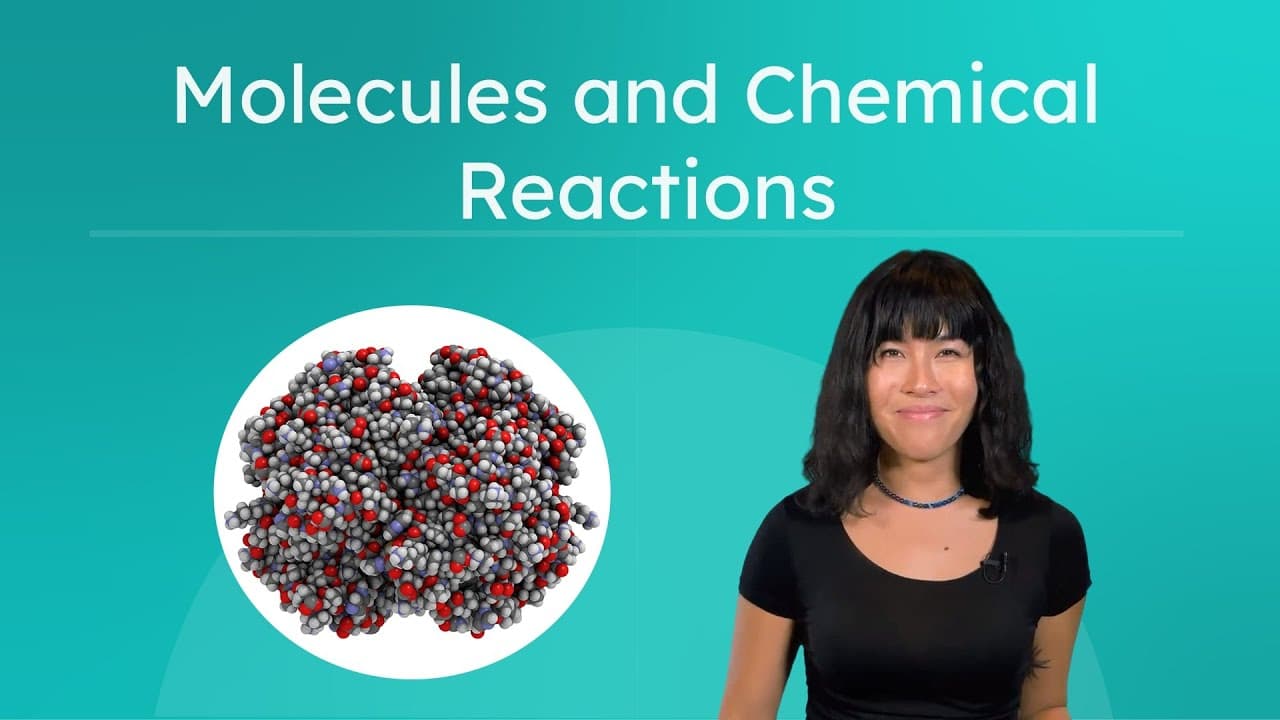
How Molecules and Chemical Reactions Power Life

How Molecules and Chemical Reactions Power Life

This educational video bridges the gap between basic chemistry and biology by explaining how the microscopic world of atoms and molecules powers living organisms. It begins with the familiar phrase "you are what you eat" to introduce the concept that our bodies are constructed from the atoms found in our food. The video uses clear visual models to explain fundamental concepts including atomic structure, the periodic table, chemical bonding, and the formation of molecules like oxygen, carbon dioxide, and water. The content progresses to explain chemical reactions as the mechanism that rearranges atoms—similar to reassembling LEGO bricks—transforming food molecules into body structures and energy. It distinguishes between reactants and products, demonstrates the conservation of atoms during reactions, and visually balances a chemical equation for the formation of water. The narrator emphasizes that while molecules change, the atoms themselves remain constant during biological processes. Finally, the video explores the role of energy in biological systems, explaining how breaking chemical bonds releases energy for life processes while other reactions, like photosynthesis, absorb energy. This resource is highly valuable for teachers introducing biochemistry or the flow of matter and energy in ecosystems, as it concretizes abstract concepts using relatable examples like apples, nutrition labels, and building blocks.

Miacademy & MiaPrep Learning ChannelMiacademy & MiaPrep Learning Channel

14mins 25s

Video
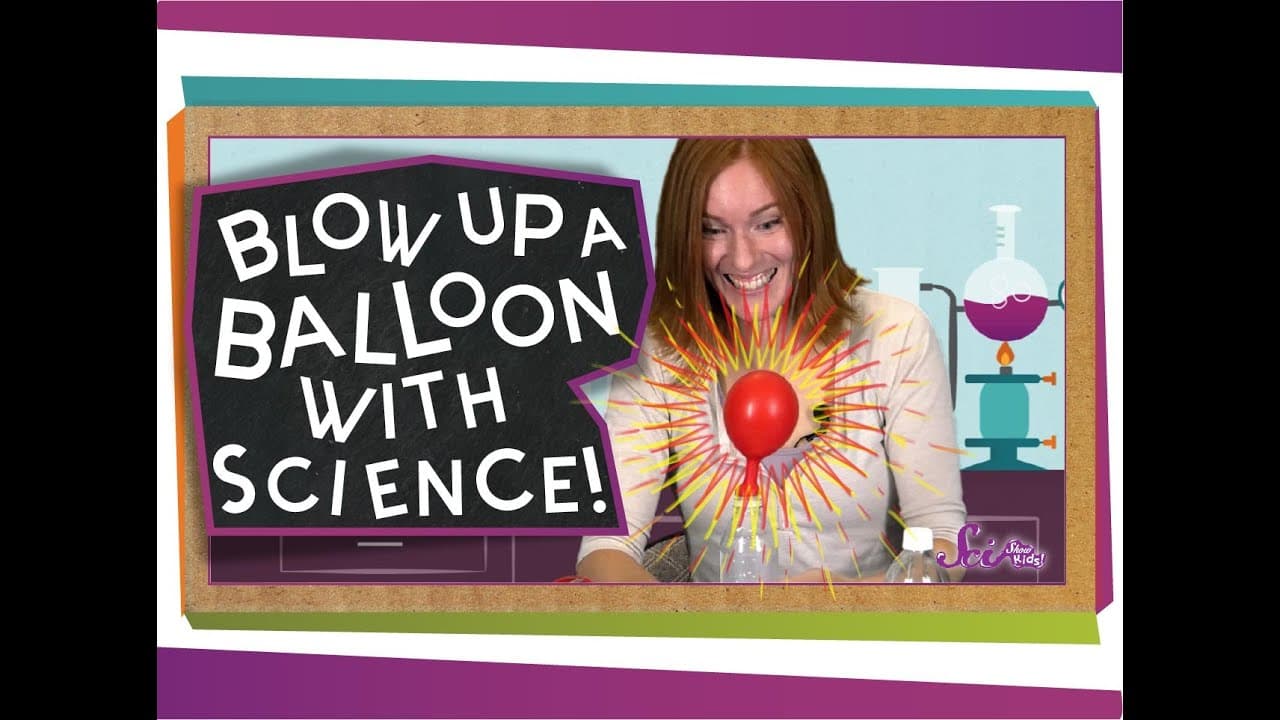
How Chemical Reactions Inflate a Balloon

How Chemical Reactions Inflate a Balloon

In this engaging episode of SciShow Kids, host Jessi and her robot friend Squeaks demonstrate a classic and exciting science experiment: inflating a balloon using a chemical reaction between baking soda and vinegar. The video breaks down the experiment step-by-step, making it easy for young learners to follow along, while simultaneously explaining the underlying scientific principles. It uses clear analogies, such as baking cookies, to simplify complex ideas like chemical changes. The video explores key chemistry themes including the definitions of "reactants" and "products," and the three states of matter: solids, liquids, and gases. It visually demonstrates how mixing a solid (baking soda) and a liquid (vinegar) creates a new substance—a gas (carbon dioxide)—which fills the balloon. The content encourages observation and critical thinking by asking students to predict what might happen if variables are changed. This resource is highly valuable for elementary classrooms as an introduction to chemistry and the scientific method. It provides a safe, accessible, and dramatic demonstration of abstract concepts. Teachers can use this video to anchor lessons on states of matter, to model how to set up an experiment, or as a hook for a unit on chemical reactions. The clear definitions and visual aids make it an excellent tool for building scientific vocabulary.

SciShow KidsSciShow Kids

4mins 25s

Video
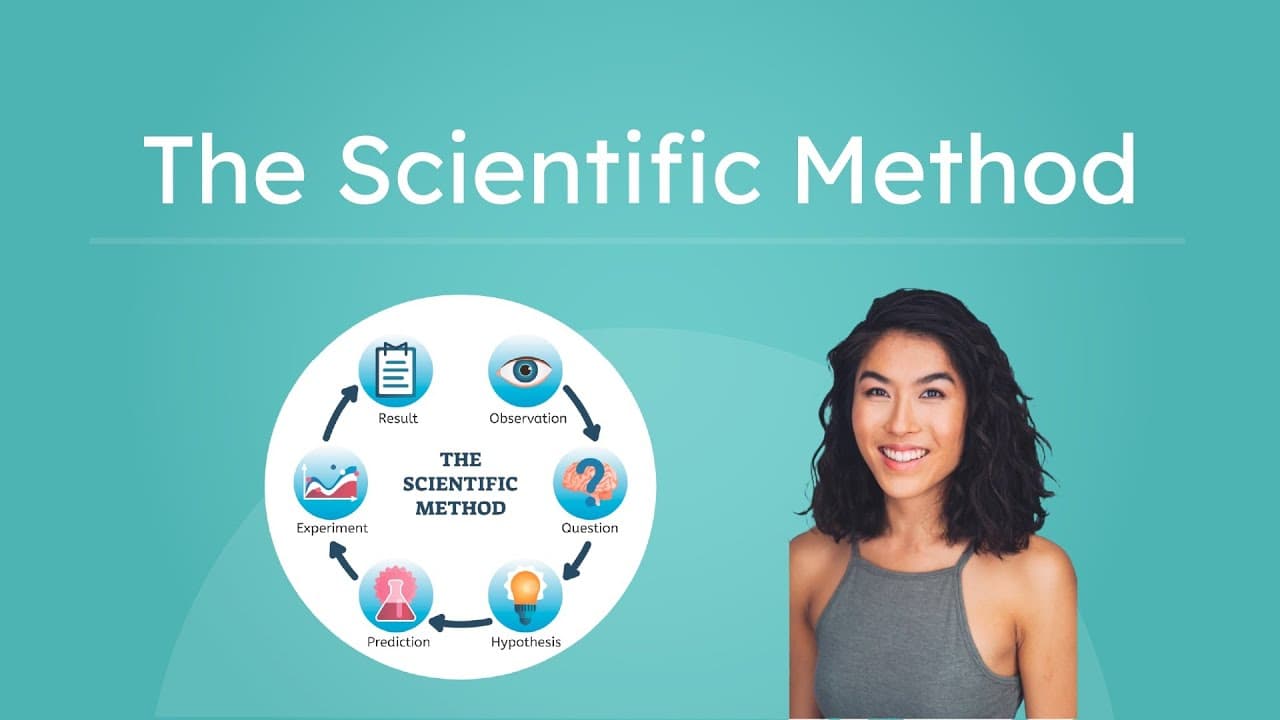
How to Think Like a Scientist: The Scientific Method Explained

How to Think Like a Scientist: The Scientific Method Explained

This educational video introduces students to the Scientific Method, presenting it as a structured way to investigate the world and solve problems like a detective. The host breaks down the process into five clear steps: stating a question, gathering information, forming a hypothesis, testing the hypothesis through experimentation, and analyzing results to draw conclusions. The video uses a relatable and engaging example—investigating how bubbles are formed—to demonstrate each step in practice, making abstract concepts concrete for young learners.

Miacademy & MiaPrep Learning ChannelMiacademy & MiaPrep Learning Channel

13mins 15s

Video
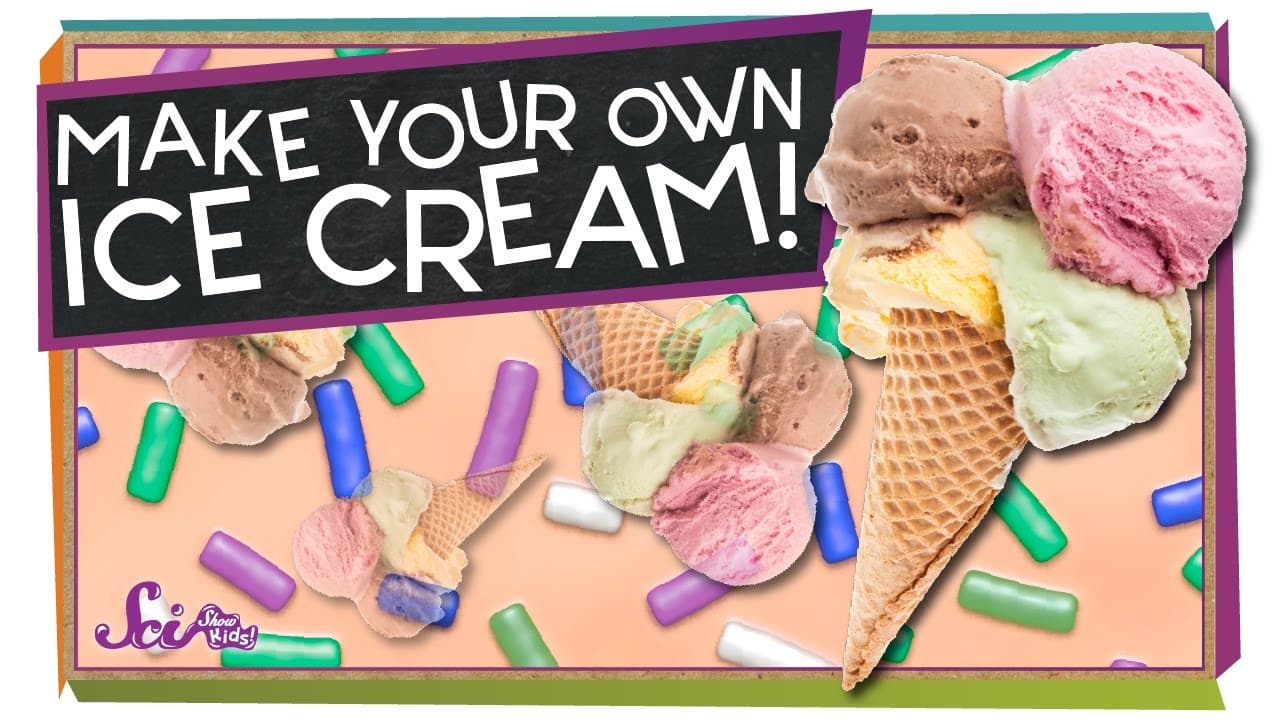
How to Make Homemade Ice Cream Using Science

How to Make Homemade Ice Cream Using Science

In this engaging episode of SciShow Kids, host Jessi and her robot mouse friend Squeaks demonstrate how to make homemade ice cream using basic kitchen ingredients and the power of chemistry. The video guides viewers through a hands-on experiment that transforms liquid cream into solid ice cream without using a freezer, relying instead on a chemical reaction between ice and salt. The content focuses heavily on the scientific concepts of states of matter and freezing point depression. It explains in accessible terms why salt is added to ice (similar to salting icy roads in winter) and how this process lowers the freezing temperature of water. The video uses clear animations to visualize how melting ice draws heat away from the cream mixture, allowing it to freeze rapidly. This video is an excellent resource for elementary science classrooms as it combines a fun, edible reward with rigorous scientific inquiry. It provides a perfect practical application for lessons on phase changes, temperature, and following procedural texts. Teachers can use this video to introduce thermodynamics or simply as a guide for a beloved classroom activity that reinforces measuring skills and observation.

SciShow KidsSciShow Kids

4mins 10s

Video
Exploring Solubility and Polarity Through Experiments

Exploring Solubility and Polarity Through Experiments

This educational science video provides a comprehensive introduction to solutions, solubility, and the molecular properties of water. Through a blend of clear animations and a guided laboratory experiment, the presenter explains the relationship between solvents and solutes, using lemonade as an initial analogy to define these terms. The video delves into the chemistry of water, illustrating how its polar nature and hydrogen bonds allow it to act as a universal solvent for other polar substances, while repelling nonpolar substances like oil. Key themes include the definitions of mixtures and solutions, the distinction between polar and nonpolar molecules, and the scientific method. The video breaks down the atomic structure of water molecules to explain *why* dissolving happens, visualizing how positive and negative charges interact. It then transitions into a practical demonstration, walking students through a four-part experiment testing salt, pepper, sugar, and oil to determine their solubility in water. For the classroom, this video serves as an excellent bridge between theoretical chemistry concepts and practical application. It models proper lab safety and experimental procedure, including hypothesis generation and observation. Teachers can use the built-in pause points to facilitate class discussions, allowing students to make predictions before seeing the results. The content is ideal for introducing unit on matter, mixtures, or basic chemistry.

Miacademy & MiaPrep Learning ChannelMiacademy & MiaPrep Learning Channel

13mins 58s

Video
Does Matter Just Disappear? Investigating the Conservation of Mass

Does Matter Just Disappear? Investigating the Conservation of Mass

This educational video explores the fundamental scientific principle of the Conservation of Mass. Through engaging visuals and clear examples, the host investigates whether matter can ever truly disappear or be created from nothing. The video distinguishes between physical changes (like dissolving sugar in tea) and chemical changes (like baking a cake), explaining how matter behaves in each scenario. It specifically addresses the common misconception that when something dissolves or evaporates, it is gone forever. The content breaks down complex terminology into accessible concepts, defining key terms such as reactants, products, and physical versus chemical changes. It uses a concrete experiment—weighing sugar and water before and after mixing—to provide empirical evidence that mass remains constant even when visible properties change. The narrative connects everyday observations, like a glass of water evaporating or sugar dissolving, to the broader scientific law that mass is never made or lost. For educators, this video is an excellent tool for introducing the particle nature of matter and the law of conservation of mass. It provides a ready-made demonstration that can be replicated in the classroom and offers clear definitions of vocabulary essential for upper elementary and middle school science curricula. The visual proof provided by the digital scale reading serves as a powerful anchor for students grappling with abstract concepts of invisible matter.

Crash Course KidsCrash Course Kids

4mins 9s

Video
Solving Mysteries with the Metric System

Solving Mysteries with the Metric System

This engaging episode of Crash Course Kids, hosted by Sabrina Cruz, introduces students to the scientific method of identifying matter through observation and measurement. Using a relatable narrative about tripping over an unknown object in the dark, the video guides viewers through an investigation to solve a "Measurement Mystery." It transitions from qualitative observations to quantitative data collection, emphasizing the importance of standard units. The video explores key themes such as the properties of matter (specifically length, width, height, and mass) and the International System of Units (Metric System). It explains why standard units like meters, centimeters, and grams are necessary for accurate scientific communication, contrasting them with non-standard units like "jellybeans." The distinction between simply observing an object and measuring it to gather specific data is a central focus. For educators, this video serves as an excellent hook for units on the physical properties of matter, measurement, or the metric system. It models scientific inquiry by asking a question ("What is this thing?"), gathering evidence through measurement, and using that evidence to draw a conclusion. The video is particularly useful for transitioning students from using non-standard measurement to using rulers and scales with precision.

Crash Course KidsCrash Course Kids

3mins 45s

Video
Understanding the Metric System and Scientific Measurements

Understanding the Metric System and Scientific Measurements

This video provides a comprehensive introduction to scientific data collection and measurement using the metric system. It begins with a humorous scenario involving a baking mishap caused by confusing unit conversions, effectively illustrating the need for a standardized system of measurement. The host then clearly defines data and distinguishes between the two primary types: qualitative (descriptive qualities like color or texture) and quantitative (numerical values like height or count), providing vivid examples from nature for each. The core of the video breaks down the metric system, explaining the three base units—grams for mass, meters for length, and liters for volume—and how prefixes like kilo-, centi-, and milli- are used to scale these units based on powers of ten. The video details specific tools and techniques for measurement, including using digital balances for mass, rulers for length, and graduated cylinders for volume. It places special emphasis on proper laboratory techniques, such as reading the meniscus at eye level when measuring liquids. Finally, the video covers the concepts of accuracy and estimation in scientific measurement. It demonstrates how to interpret measurements that fall between the markings on a tool and stresses the importance of selecting the appropriate instrument for the task. This resource is an excellent primer for upper elementary and middle school students preparing for laboratory work, as it establishes the vocabulary and practical skills necessary for conducting precise scientific investigations.

Miacademy & MiaPrep Learning ChannelMiacademy & MiaPrep Learning Channel

9mins 51s

Video
How to Make Your Own Watercolor Paints

How to Make Your Own Watercolor Paints

In this engaging episode of SciShow Kids, host Jessi and her robot rat friend Squeaks teach viewers how to create their own watercolor paints using common kitchen ingredients. The video transforms a simple art project into a science experiment, demonstrating how baking soda, cornstarch, vinegar, and food coloring can be combined to create functional art supplies. The step-by-step tutorial guides children through the measuring and mixing process, highlighting the chemical reaction between vinegar and baking soda along the way. Beyond the chemistry of making the paint base, the video explores fundamental color theory. It reviews primary colors (red, yellow, blue) and demonstrates how to mix them to create secondary colors (green, orange, purple). The visual demonstration clearly shows the color mixing process in an ice cube tray, reinforcing the concept that new colors are born from combining existing ones. This video is an excellent resource for early elementary classrooms as it bridges science, art, and math. Teachers can use it to introduce states of matter (solids, liquids, and gas bubbles), practice measurement skills, and teach color theory. It promotes hands-on learning and creativity, showing students that they can be 'makers' who engineer their own tools for expression rather than just consumers.

SciShow KidsSciShow Kids

3mins 17s

Video
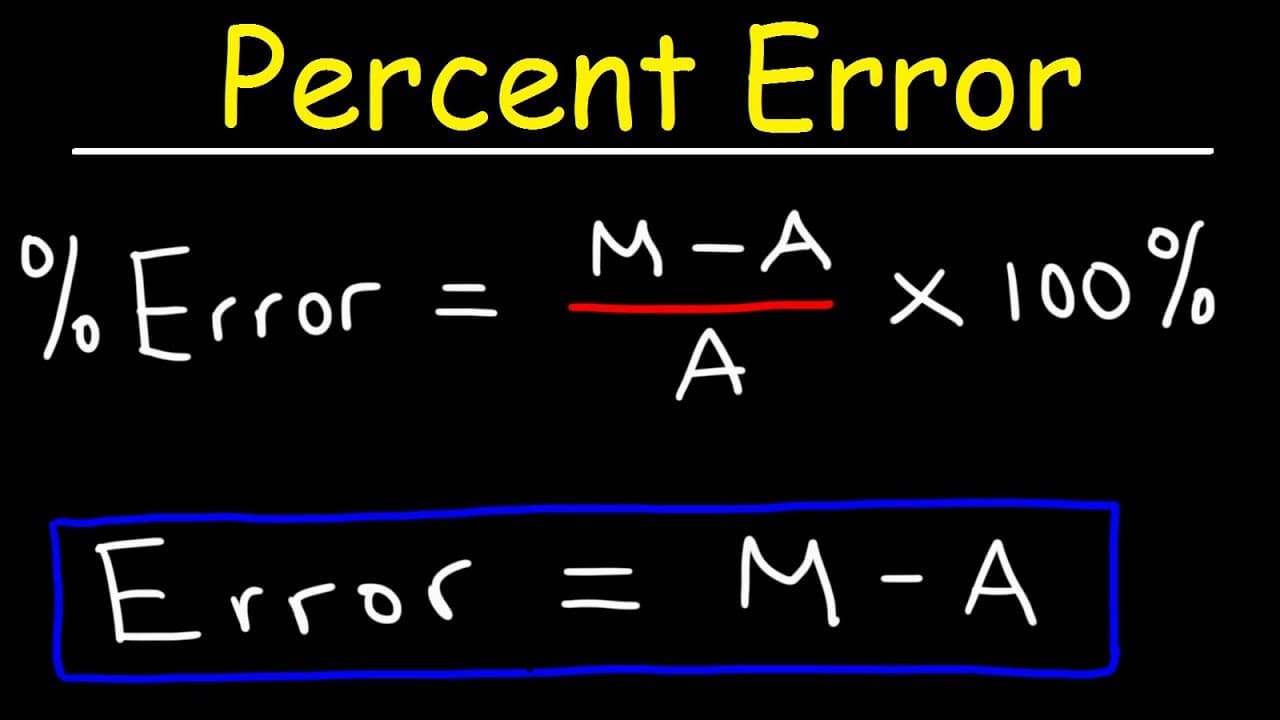
How to Calculate Percent Error and Absolute Error

How to Calculate Percent Error and Absolute Error

This educational video provides a clear, step-by-step tutorial on how to calculate percent error and absolute error, essential skills for analyzing data in science laboratories. The narrator uses specific examples involving the density of aluminum and iron to demonstrate the difference between measured (experimental) values and accepted (actual) values. The video breaks down the mathematical formulas required, showing how to handle absolute values and convert decimals to percentages. Key themes include data analysis, scientific measurement, and mathematical applications in science. The video distinguishes between simple "error" (which can be positive or negative) and "percent error" (which is always positive due to absolute value). It walks viewers through substituting values into the formula: |Measured - Actual| / Actual × 100%, emphasizing the importance of order of operations and correct calculator usage. For educators, this resource serves as an excellent flipped classroom tool or post-lab support for chemistry and physics students. It allows students to self-pace their learning of error analysis, a concept often struggled with in early laboratory courses. The clear handwriting and spoken explanations make abstract formulas concrete, helping students understand not just how to plug in numbers, but what the resulting percentage actually represents regarding the accuracy of their experiments.

The Organic Chemistry TutorThe Organic Chemistry Tutor

6mins 26s

Video
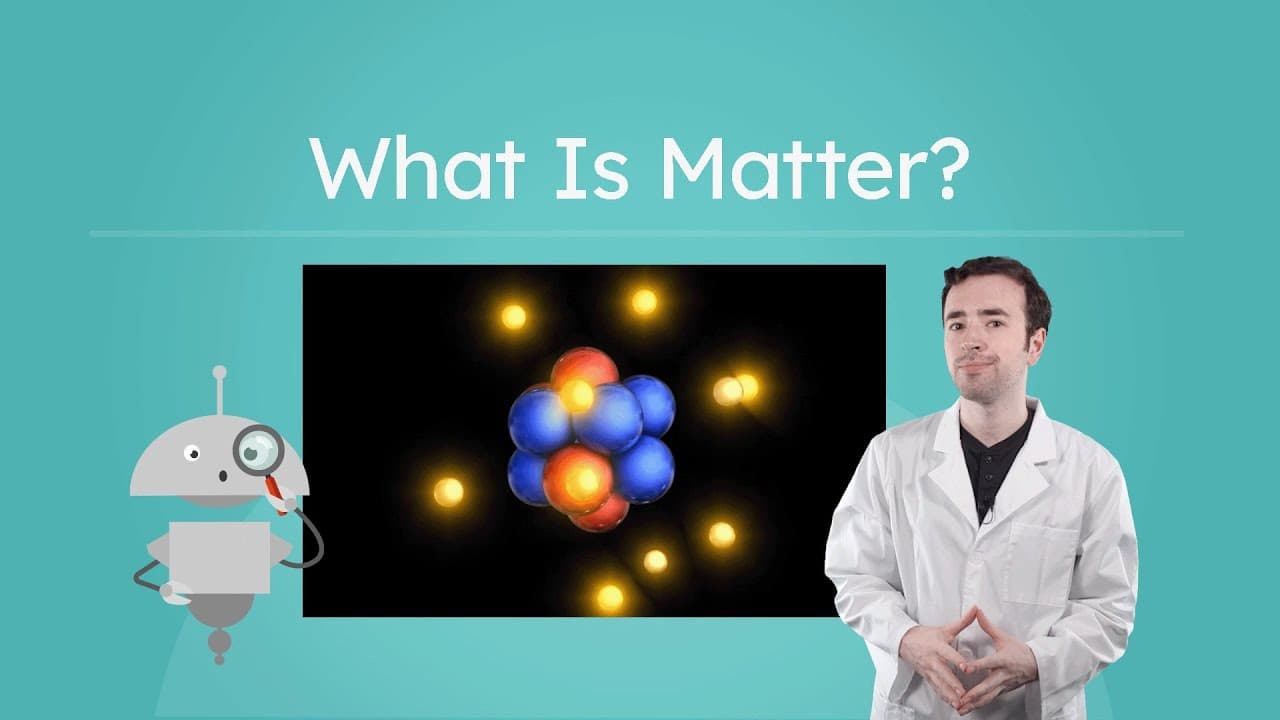
Understanding Matter: Mass, Volume, and Atoms

Understanding Matter: Mass, Volume, and Atoms

In this engaging general science lesson, host Justin breaks down the fundamental concept of matter, explaining that almost everything in the universe—from squirrels to water bottles—is made of it. The video simplifies abstract physical science concepts by defining matter through two main criteria: having mass and taking up space (volume). Through clear visual examples and animations, students learn to distinguish between objects with different masses and volumes, understanding that size doesn't always equal mass. The lesson explores key themes including the definitions of mass versus volume, the distinction between matter and non-matter (like ideas and light), and the physical properties of gases. A significant portion of the video demonstrates that air is indeed matter through a practical balloon experiment, addressing a common student misconception. It concludes by zooming in to the microscopic level, introducing atoms as the basic building blocks of all matter. This video is an excellent resource for elementary and middle school science classrooms introducing physical science. It includes built-in pause points for student reflection and note-taking, making it ready-to-use for direct instruction. Teachers can use the comparative examples (like the bowling ball vs. beach ball) to spark classroom debates about density and mass, while the segment on atoms provides a perfect segue into more advanced chemistry topics.

Miacademy & MiaPrep Learning ChannelMiacademy & MiaPrep Learning Channel

9mins 40s

Video
How Everyday Materials Are Made and Used

How Everyday Materials Are Made and Used

This comprehensive educational video provides a detailed exploration of common materials found in our everyday world, including wood, paper, rubber, metal, ceramics, glass, fabric, and plastic. It systematically breaks down each material category, explaining where it originates—whether from natural sources like trees and minerals or synthetic sources like fossil fuels—and how it is processed into usable forms. The narration clearly connects raw materials to the finished products students encounter daily, demystifying the manufacturing processes behind items like tires, windows, and clothing. Key themes include the relationship between a material's physical properties and its function, such as why metal is used for bridges while glass is used for windows. The video delves into specific characteristics like durability, flexibility, transparency, and conductivity. Significantly, it also addresses the environmental impact of material choices, contrasting sustainable forestry practices with the ecological challenges posed by single-use plastics and the importance of recycling. For educators, this video serves as an excellent anchor for physical science units on matter and its interactions. It supports classroom applications ranging from basic sorting and classification activities for younger students to more complex discussions about sustainability, engineering design choices, and the lifecycle of products for older elementary students. The clear visual examples and structured format make it easy to pause and discuss specific sections, facilitating deep learning about why engineers and designers choose specific materials for specific jobs.

Next Generation ScienceNext Generation Science

10mins 7s

Video
Exploring Matter: States, Properties, and Changes

Exploring Matter: States, Properties, and Changes

This energetic animated music video provides a comprehensive introduction to the concept of matter, setting fundamental physical science concepts to a catchy, rhythmic beat. Through a cast of colorful animated characters and clear visual diagrams, the song defines matter as anything that has mass and takes up space, distinguishing it from forms of energy like light and sound. The video breaks down the composition of matter into atoms and molecules, visualizing protons, neutrons, and electrons in a way that makes abstract atomic theory accessible to young learners. The content covers several critical curriculum standards, including the three primary states of matter (solid, liquid, gas) and the phase changes between them (melting, freezing, evaporation, condensation). It progresses to more advanced topics by distinguishing between physical changes—where the substance remains the same, like tearing paper—and chemical changes—where new substances are formed, illustrated by rusting locks, burning wood, and cooking food. The lyrics also introduce key properties used to describe matter, such as mass, volume, density, and texture. For educators, this video serves as an excellent engagement hook or review tool for units on physical science. The repetitive nature of the chorus helps reinforce the definition of matter, while the specific visual examples provide concrete anchors for difficult vocabulary. It successfully bridges the gap between simple observation (what things look like) and scientific explanation (molecular structure and chemical reactions), making it a versatile resource for upper elementary and middle school science classrooms.
Have Fun TeachingHave Fun Teaching

4mins 29s

Video
Mastering the Scientific Method with Ice Cream

Mastering the Scientific Method with Ice Cream

This engaging educational video breaks down the six core steps of the scientific method using a relatable and delicious analogy: melting ice cream. The narrator guides viewers through the history of scientific inquiry before diving into the modern framework used by scientists to understand the natural world. By transforming a simple observation about messy, melting ice cream into a rigorous experiment, the video demonstrates how to move from curiosity to concrete data collection and analysis.

Miacademy & MiaPrep Learning ChannelMiacademy & MiaPrep Learning Channel

12mins 31s

Video
Phase Changes, Energy, and Heating Curves

Phase Changes, Energy, and Heating Curves

This educational video explores the relationship between thermal energy and phase changes in matter. It begins by observing natural phenomena like the water cycle to introduce the concept that energy from the sun drives phase transitions. The narrator then delves into the molecular level, explaining how attractive forces hold molecules together and why energy is required to separate them during phase changes like melting and boiling. The video uses clear visuals and heating curve graphs to demonstrate why temperature remains constant during a phase change despite the continuous addition of heat. The content covers key thermodynamic concepts including Latent Heat of Vaporization and Latent Heat of Fusion. It provides specific numerical values for water (2,256 J/g for vaporization and 334 J/g for fusion) and compares these to other substances like Helium and Ethanol. The video explains that condensation is a warming process because combining molecules releases energy, a counter-intuitive concept for many students illustrated through the example of a sweating glass of iced tea. This resource is highly valuable for chemistry and physics classrooms as it bridges conceptual understanding with mathematical application. It walks students through three distinct practice problems involving calculating the energy required for phase changes using both unit analysis and the formula q = m x L. The step-by-step problem solving, attention to significant figures, and real-world examples make complex thermodynamic principles accessible and practical for learners.

Miacademy & MiaPrep Learning ChannelMiacademy & MiaPrep Learning Channel

11mins 33s

Video
Mastering Metric Measurements: A Hands-On Lab

Mastering Metric Measurements: A Hands-On Lab

This educational video serves as a comprehensive, guided laboratory tutorial on taking scientific measurements using the metric system. Hosted by Caroline, the video walks students through the practical application of measuring three fundamental properties of matter: mass, length, and volume. The lesson is designed to be interactive, encouraging students to pause the video to perform their own measurements using household items alongside the presenter, or to record the data provided on screen if materials are unavailable. The narrative is framed by a relatable hook involving baking cookies, emphasizing the real-world importance of precision.

Miacademy & MiaPrep Learning ChannelMiacademy & MiaPrep Learning Channel

15mins 50s

Video
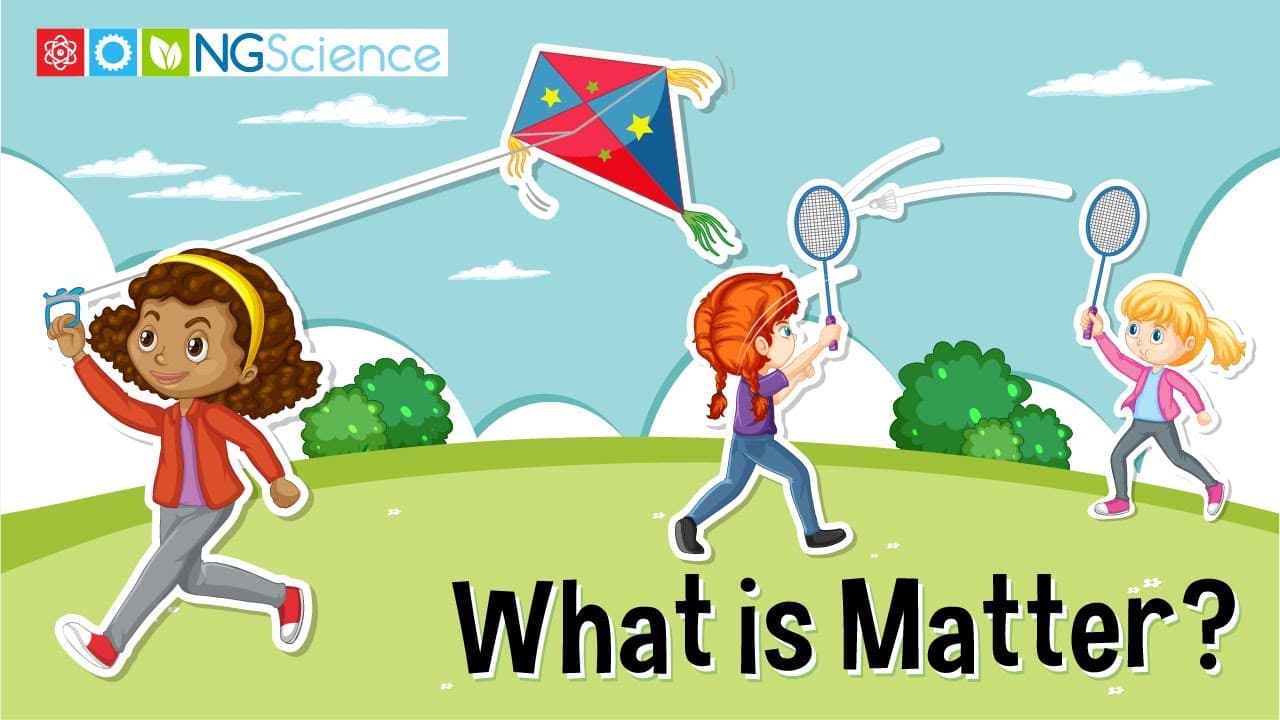
What Is Matter? Solids, Liquids, and Gases Explained

What Is Matter? Solids, Liquids, and Gases Explained

Host Sabrina Cruz introduces students to the fundamental scientific concept of matter in this engaging Crash Course Kids episode. The video breaks down the core definition of matter as anything that has weight and takes up space (volume), moving beyond simple definitions to provide concrete examples and demonstrations that make abstract concepts tangible for young learners. The content explores the three primary states of matter—solids, liquids, and gases—providing familiar examples for each. A significant portion of the video is dedicated to proving that invisible matter, specifically air (gas), is indeed matter. Through two clear experiments, the host demonstrates that air has volume (it fills a balloon that then won't fit in a small box) and weight (a balloon filled with air weighs more than an empty one on a balance scale). This video is an excellent instructional tool for introducing physical science units in elementary classrooms. It effectively addresses the common misconception that gases aren't "real" matter because they are invisible, provides a clear definition of volume suitable for young students, and models the scientific method through simple, replicable experiments.

Crash Course KidsCrash Course Kids

3mins 31s

Video
Thermal Energy and Temperature Scale Conversions

Thermal Energy and Temperature Scale Conversions

This educational video provides a comprehensive introduction to thermal energy and its relationship to temperature. It explains that thermal energy is essentially the kinetic energy of atoms and molecules moving within a substance; the faster they move, the higher the temperature. The host uses real-world examples, such as a solar power plant and boiling water, to illustrate these concepts visually before diving into the microscopic level to show molecular motion. The video details the three primary temperature scales used in science and daily life: Fahrenheit, Celsius, and Kelvin. It compares their key reference points—the freezing and boiling points of water—and introduces the concept of absolute zero, the theoretical point where all molecular motion ceases. The distinction between these scales is clarified to help students understand why different systems are used in different contexts. Finally, the video transitions into a practical math tutorial, guiding students through the algebraic formulas needed to convert temperatures between these scales. Step-by-step examples demonstrate how to solve for unknown variables using the conversion equations, including proper attention to significant figures. This makes the video highly useful for physical science, chemistry, and physics classrooms where unit conversion is a fundamental skill.

Miacademy & MiaPrep Learning ChannelMiacademy & MiaPrep Learning Channel

11mins 26s

Video
What Is Matter? Defining Mass and Volume

What Is Matter? Defining Mass and Volume

This engaging educational video provides a clear and age-appropriate introduction to the concept of matter for elementary students. It begins by answering the fundamental question "What is matter?" by connecting it to everyday sensory experiences—things we can see, touch, smell, and taste. The narration guides students through identifying common examples of matter, from toys and water to the air we breathe and even pets, making abstract concepts concrete and relatable. The video delves into the specific scientific properties that define matter: mass and volume. Through clear visual demonstrations, such as a balance scale comparing two different balls and water being poured into a glass, students learn that mass is the amount of "stuff" in an object and volume is the space it takes up. Uniquely, the video also explicitly teaches what is *not* matter—illustrating concepts like rainbows, light, sound, thoughts, and feelings—helping students distinguish between physical substances and abstract phenomena. Teachers can use this video as a foundational hook for a unit on physical science. It serves as an excellent tool for sparking classroom discussions about the physical world and setting the stage for hands-on activities involving weighing objects or measuring liquids. The clear definitions and contrasting examples (matter vs. non-matter) provide a solid framework for addressing common student misconceptions about air, light, and emotions in the context of science.

Next Generation ScienceNext Generation Science

2mins 13s

Video
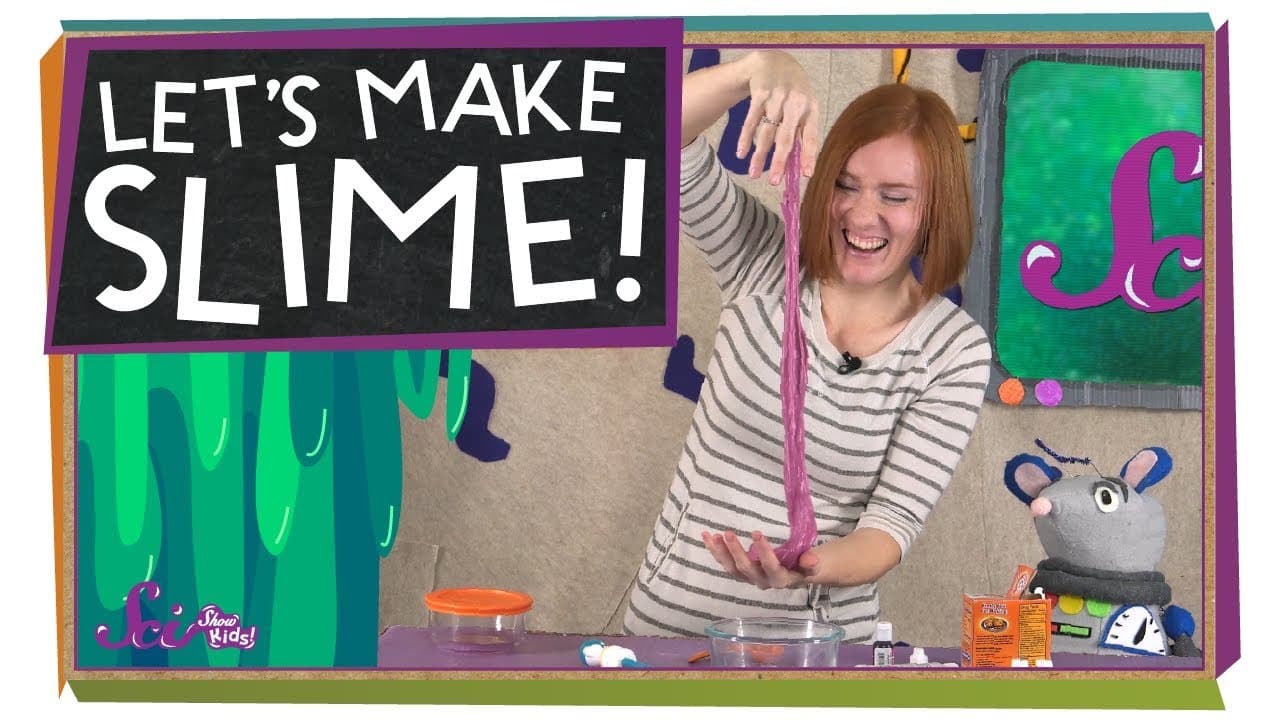
How to Make Slime and Understand States of Matter

How to Make Slime and Understand States of Matter

This engaging episode of SciShow Kids guides young learners through the popular hands-on experiment of making slime, transforming simple household ingredients into a fun scientific investigation. Hosted by Jessi and her robot friend Squeaks, the video provides a clear, step-by-step tutorial on combining school glue, baking soda, and contact solution to create the stretchy substance. Beyond just a recipe, the video emphasizes safety and the importance of specific chemical components like boric acid in the activation process. The content delves into introductory chemistry and physics concepts, specifically focusing on states of matter and molecular structures. Through clear animations, the video illustrates how glue molecules act like long chains that slide past one another in liquid form, but become "tangled" when the activating ingredients are added. This visual analogy helps students grasp the complex concept of polymerization and cross-linking in an age-appropriate way. For educators, this video serves as an excellent anchor for lessons on matter, chemical reactions, and procedural writing. It connects abstract ideas about molecules to a tangible product students can touch and manipulate. The video encourages scientific inquiry by asking students to predict changes, observe physical properties (viscosity, stickiness), and compare the slime's behavior to both solids and liquids, making it a perfect launchpad for a STEM lab activity.

SciShow KidsSciShow Kids

4mins 32s

Video
Choosing the Right Materials: Properties of Matter

Choosing the Right Materials: Properties of Matter

This educational video introduces students to the scientific concept of materials and their properties through engaging storytelling and practical examples. Using the familiar fairy tale of "The Three Little Pigs," the host explains how specific properties like mass, malleability, and hardness determine why certain materials (like brick) are better suited for specific tasks (like building a strong house) than others. The video breaks down complex vocabulary into easy-to-understand definitions supported by visual aids and comparisons. The lesson expands beyond the fairy tale to introduce an engineering challenge: building a raft to cross a river. This scenario introduces more advanced properties such as density and solubility. Students watch a demonstration comparing how metal, styrofoam, and concrete behave in water, leading to a discussion about density and buoyancy. The host emphasizes how engineers use these properties to make decisions, such as designing rockets that are both sturdy and lightweight. In the classroom, this video serves as an excellent foundation for units on matter, engineering design, or environmental science. It not only teaches scientific vocabulary but also introduces the concept of trade-offs, noting that while styrofoam is good for floating, it is man-made and harmful to the environment because it takes centuries to decompose. This invites discussions about sustainability alongside engineering utility.

Miacademy & MiaPrep Learning ChannelMiacademy & MiaPrep Learning Channel

11mins 10s

Video
How Chemical Reactions Inflate a Balloon

How Chemical Reactions Inflate a Balloon

In this engaging episode of SciShow Kids, host Jessi and her robot friend Squeaks demonstrate a classic and exciting science experiment: inflating a balloon using a chemical reaction between baking soda and vinegar. The video breaks down the experiment step-by-step, making it easy for young learners to follow along, while simultaneously explaining the underlying scientific principles. It uses clear analogies, such as baking cookies, to simplify complex ideas like chemical changes. The video explores key chemistry themes including the definitions of "reactants" and "products," and the three states of matter: solids, liquids, and gases. It visually demonstrates how mixing a solid (baking soda) and a liquid (vinegar) creates a new substance—a gas (carbon dioxide)—which fills the balloon. The content encourages observation and critical thinking by asking students to predict what might happen if variables are changed. This resource is highly valuable for elementary classrooms as an introduction to chemistry and the scientific method. It provides a safe, accessible, and dramatic demonstration of abstract concepts. Teachers can use this video to anchor lessons on states of matter, to model how to set up an experiment, or as a hook for a unit on chemical reactions. The clear definitions and visual aids make it an excellent tool for building scientific vocabulary.

SciShow KidsSciShow Kids

4mins 25s

Video
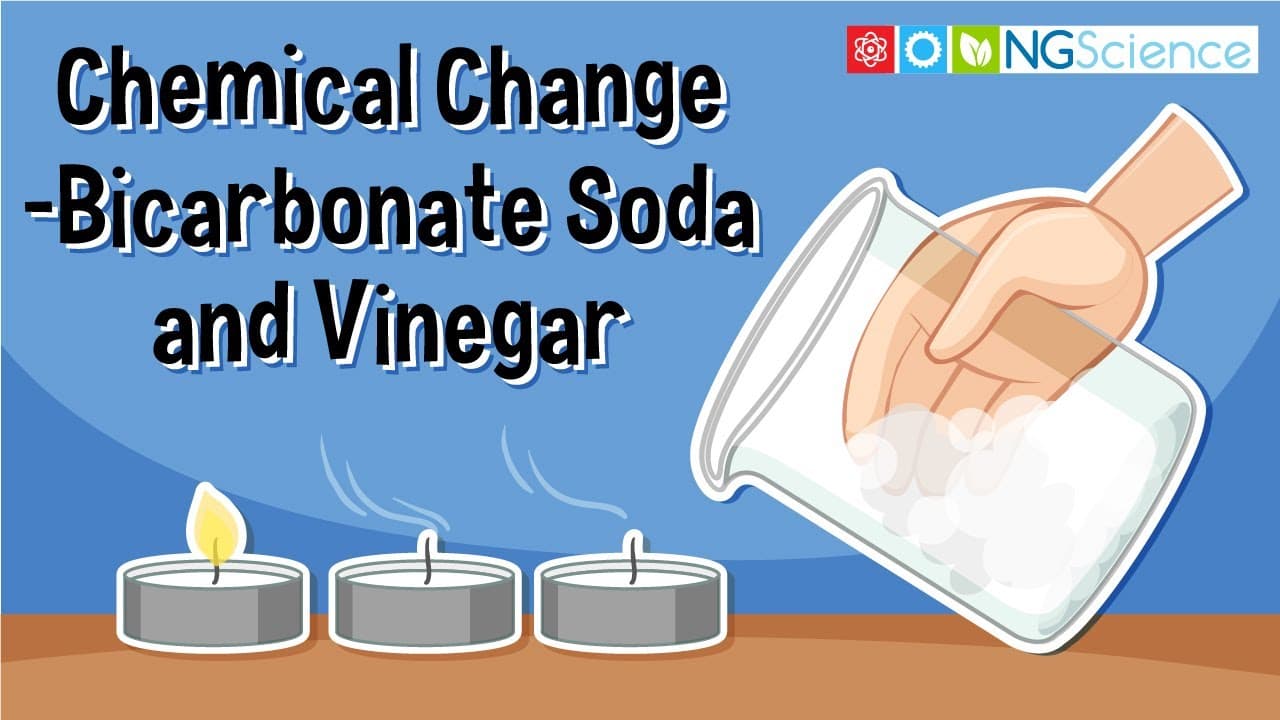
Creating an Invisible Fire Extinguisher with Chemistry

Creating an Invisible Fire Extinguisher with Chemistry

This video demonstrates a classic science experiment that illustrates evidence of a chemical change and the properties of carbon dioxide gas. Using common household items—vinegar and bicarbonate soda (baking soda)—the presenter creates a chemical reaction inside a beaker. The video clearly visualizes the immediate reaction, characterized by rapid foaming and bubbling, which serves as a primary indicator that a chemical change is occurring. The second half of the video explores the invisible byproduct of this reaction: carbon dioxide gas. The presenter performs a fascinating demonstration by "pouring" the invisible gas over lit tea light candles. Although no liquid touches the flames, the candles are extinguished one by one. This powerful visual helps students understand that gases are matter, have mass, and can displace other gases like oxygen. For educators, this video serves as an excellent hook for units on matter, chemical reactions, or fire safety. It provides a safe, clear visualization of concepts that are often abstract, such as the existence and behavior of invisible gases. The clear text overlays and narration make it accessible for upper elementary and middle school students to grasp the connection between chemical changes and the formation of new substances.

Next Generation ScienceNext Generation Science

1min 39s

Video
Explaining Kinetic Molecular Theory and Gas Laws Through Song

Explaining Kinetic Molecular Theory and Gas Laws Through Song

This high-energy educational music video serves as a memorable mnemonic device for mastering the complexities of gas behavior in high school chemistry. Set to a catchy parody rhythm of Falco's 'Rock Me Amadeus,' the song systematically breaks down the Kinetic Molecular Theory, explaining how gas particles move, collide, and interact with their containers. It distinguishes between 'ideal' and 'real' gases, highlighting the specific conditions—high temperature and low pressure—under which real gases behave ideally. The content covers essential chemistry concepts including Avogadro's Hypothesis (equal volumes contain equal molecules at the same temperature and pressure), the definition of a mole (6.02 x 10^23), and the mathematical relationships found in Boyle's, Charles', and Gay-Lussac's laws. It visualizes abstract ideas through diagrams of molecular motion and clearly displays the formulas for calculating changes in pressure, volume, and temperature, culminating in the Combined Gas Law. Teachers can use this video as an engaging hook to introduce a unit on gases or as a powerful review tool before an assessment. The lyrics provide a verbatim checklist of the assumptions of the Kinetic Molecular Theory, making it an excellent resource for 'decoding the text' activities where students identify scientific principles hidden within the rhyme. The humor and rhythm help solidify abstract facts, such as the conditions for ideal gas behavior, into long-term memory.

Mark RosengartenMark Rosengarten

3mins 8s

Video
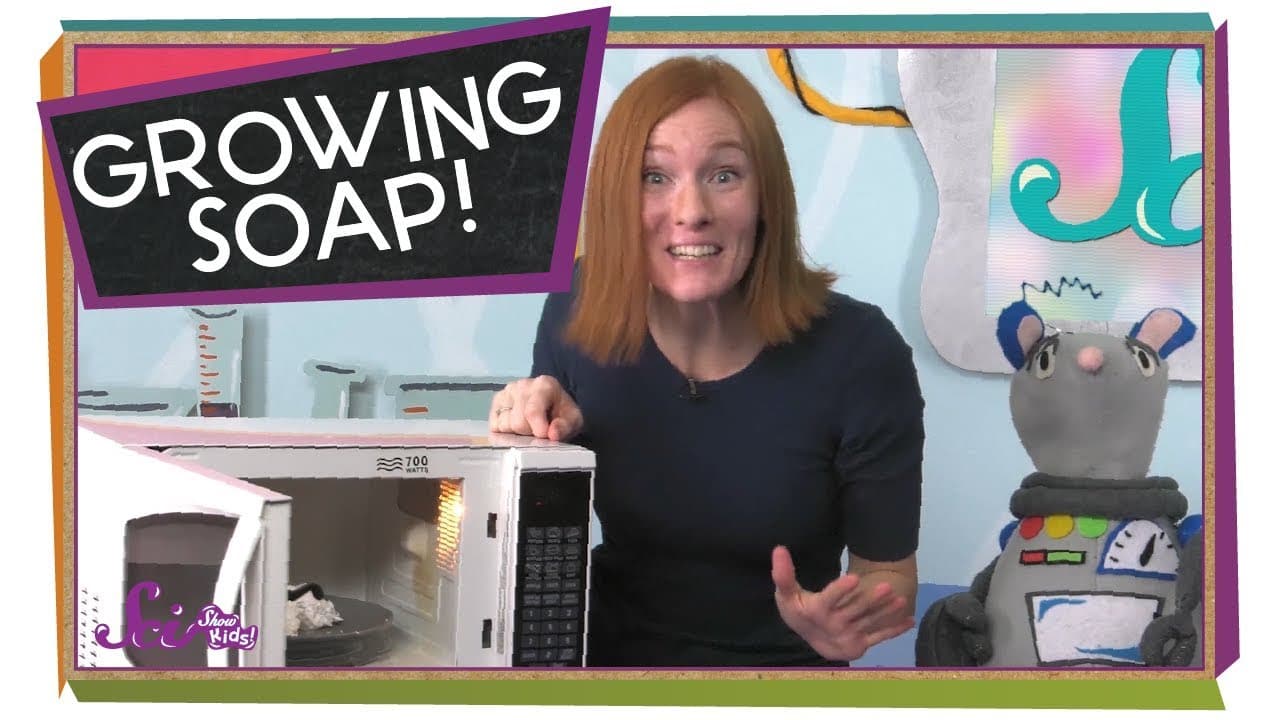
The Science of Exploding Soap

The Science of Exploding Soap

In this engaging episode of SciShow Kids, host Jessi and her robot friend Squeaks demonstrate a classic and dramatic kitchen science experiment: the "exploding" soap trick. The video guides young viewers through the process of microwaving a specific type of soap to witness it expand into a massive, fluffy cloud. It explains the manufacturing process of Ivory soap, specifically how air is whipped into it, distinguishing it from other brands and making this specific reaction possible. The content explores key scientific concepts including states of matter, specifically the behavior of gases when heated. It introduces the term "water vapor" and uses clear animations to explain how heat energy causes gas molecules to move faster and expand. The narrative connects the microscopic behavior of air pockets and water trapped inside the soap to the macroscopic expansion seen in the microwave. This video is highly valuable for early elementary science classrooms as a safe, accessible introduction to thermal expansion and states of matter. It models the scientific method by encouraging predictions and observations. Teachers can use this video as a hook for lessons on heat energy, a demonstration of physical changes, or as a guide for a hands-on experiment that requires minimal materials but delivers maximum engagement.

SciShow KidsSciShow Kids

4mins 17s

Video
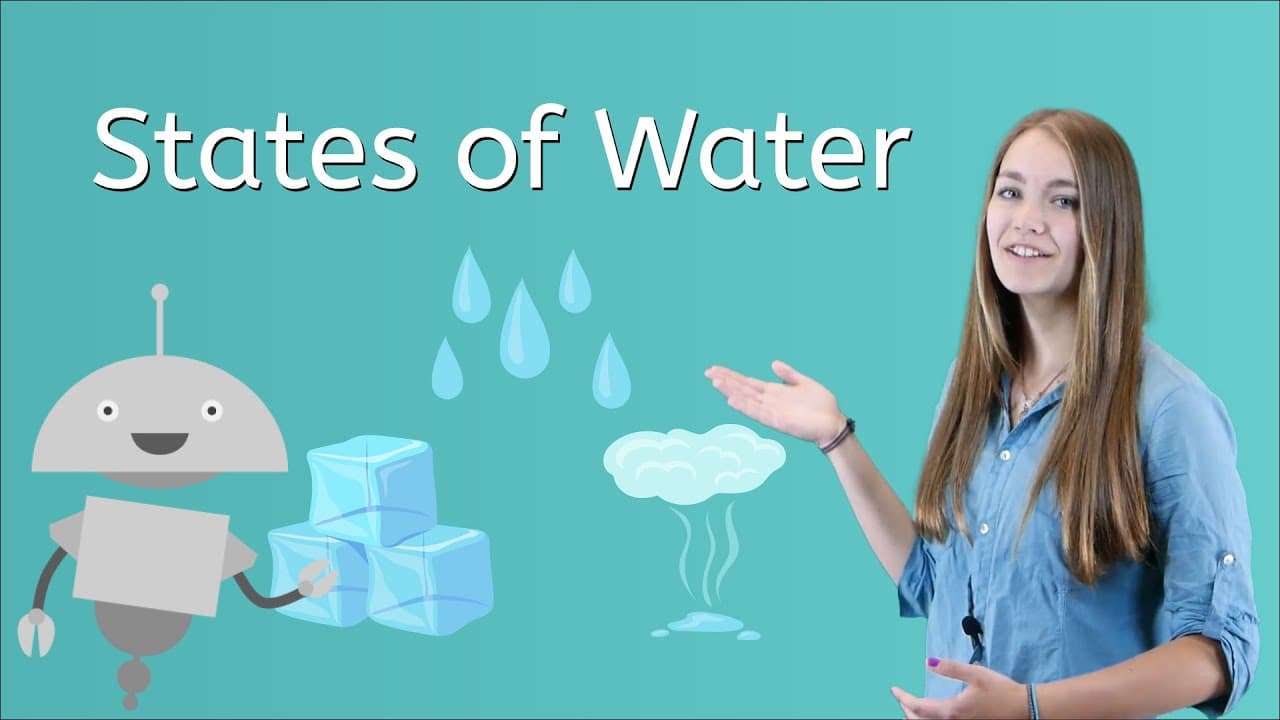
How Water Changes States

How Water Changes States

This educational animation explores the three states of water—solid, liquid, and gas—and the scientific processes that cause transitions between them. The video explains how temperature changes drive these transformations, providing specific data points in both Fahrenheit and Celsius for freezing and boiling points. Through clear visuals and narration, it breaks down complex concepts like evaporation, condensation, melting, and freezing into easily digestible segments suitable for young learners. Key themes include the physical properties of matter, the influence of thermal energy on state changes, and the cyclical nature of these transitions. The video introduces essential scientific vocabulary such as "water vapor," "condensation," and "evaporation," reinforcing these terms with a visual summary that maps the complete cycle of changes. It also touches upon Earth science concepts by noting how much of the planet is covered by water. For educators, this video serves as an excellent foundational tool for science units on matter or the water cycle. The clear visual representation of a thermometer alongside the phase changes helps students connect abstract temperature numbers to observable physical changes. The step-by-step breakdown allows teachers to pause and discuss each transition individually, making it easy to facilitate predictions and check for understanding regarding how heating and cooling affect matter.

Miacademy & MiaPrep Learning ChannelMiacademy & MiaPrep Learning Channel

3mins 11s

Video
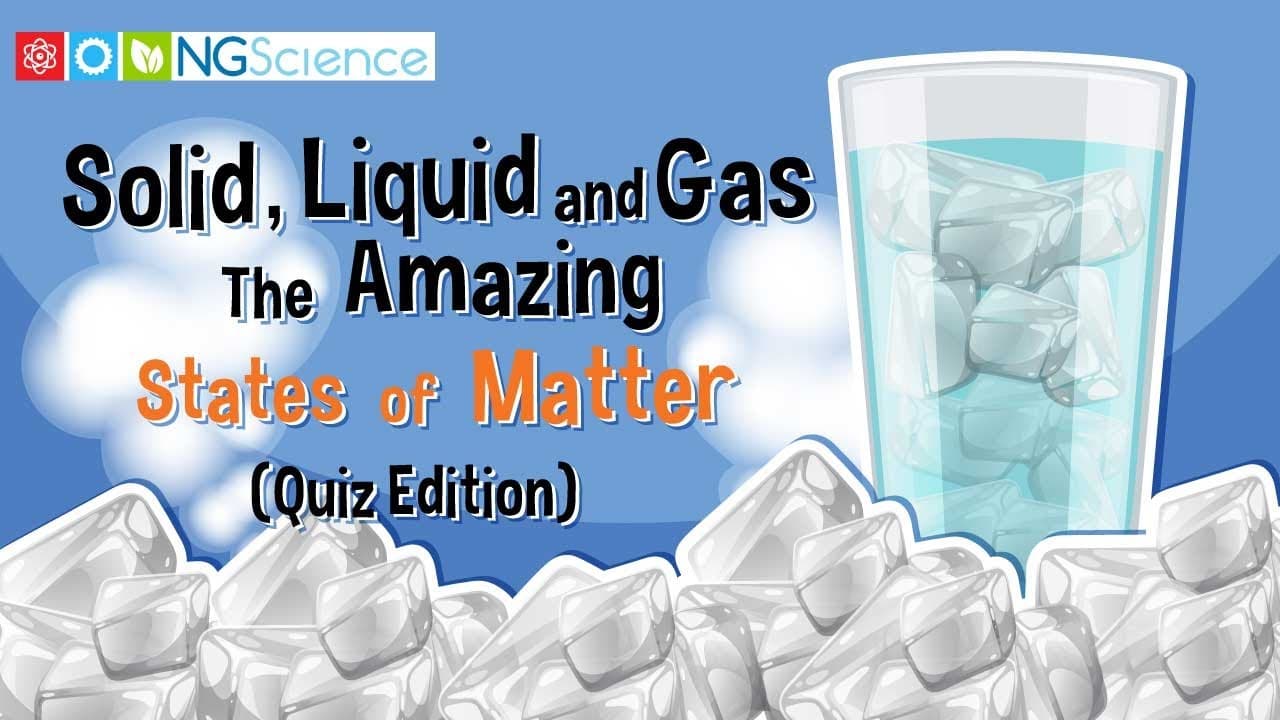
Exploring the Three States of Matter: Solids, Liquids, and Gases

Exploring the Three States of Matter: Solids, Liquids, and Gases

This engaging educational video introduces young learners to the fundamental concept of matter and its three primary states: solids, liquids, and gases. Through vibrant high-definition footage of nature, toys, and everyday objects, the video clearly defines matter as anything that takes up space and has weight. It breaks down complex scientific concepts into digestible examples, using rocks to explain solids, water to demonstrate liquids, and air to illustrate gases. The narrative guides students through the distinct properties of each state. It highlights how solids keep their shape, liquids flow and take the shape of their container, and gases spread out to fill space. The video effectively uses relatable items like teddy bears, apples, and puddles to make abstract definitions concrete. It also touches on the water cycle briefly by discussing clouds and addresses the invisibility of air. Ideal for early elementary science curriculums, this resource includes a built-in interactive quiz at the end to reinforce learning. Teachers can use this video to launch a unit on physical sciences, serving as a visual anchor for lessons about observation, categorization, and the physical world. It encourages curiosity by asking students to look at their own environment to identify different forms of matter.

Next Generation ScienceNext Generation Science

5mins 24s

Video
Understanding Matter: Mass, Volume, and Atoms

Understanding Matter: Mass, Volume, and Atoms

In this engaging general science lesson, host Justin breaks down the fundamental concept of matter, explaining that almost everything in the universe—from squirrels to water bottles—is made of it. The video simplifies abstract physical science concepts by defining matter through two main criteria: having mass and taking up space (volume). Through clear visual examples and animations, students learn to distinguish between objects with different masses and volumes, understanding that size doesn't always equal mass. The lesson explores key themes including the definitions of mass versus volume, the distinction between matter and non-matter (like ideas and light), and the physical properties of gases. A significant portion of the video demonstrates that air is indeed matter through a practical balloon experiment, addressing a common student misconception. It concludes by zooming in to the microscopic level, introducing atoms as the basic building blocks of all matter. This video is an excellent resource for elementary and middle school science classrooms introducing physical science. It includes built-in pause points for student reflection and note-taking, making it ready-to-use for direct instruction. Teachers can use the comparative examples (like the bowling ball vs. beach ball) to spark classroom debates about density and mass, while the segment on atoms provides a perfect segue into more advanced chemistry topics.

Miacademy & MiaPrep Learning ChannelMiacademy & MiaPrep Learning Channel

9mins 40s

Video
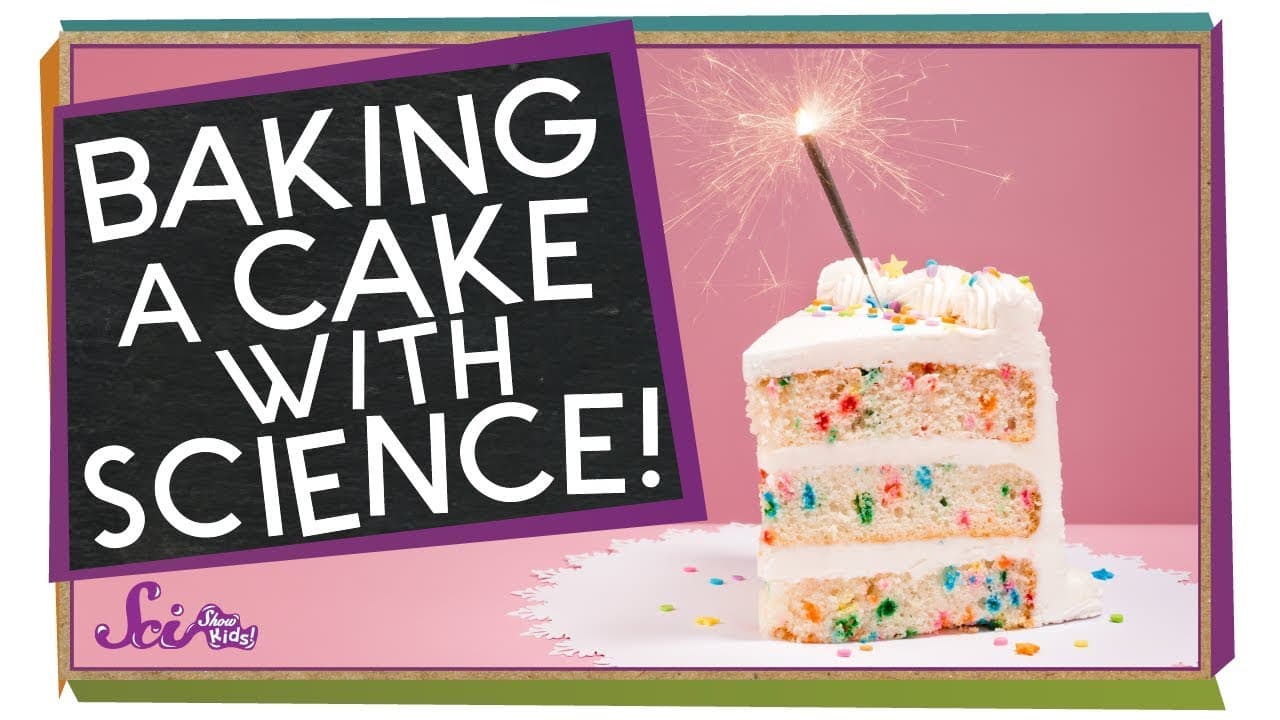
How Chemistry Bakes a Cake

How Chemistry Bakes a Cake

Jessi and her robot mouse friend, Squeaks, take viewers into the kitchen to explore the fascinating science behind baking a birthday cake. Rather than just following a recipe, the video breaks down baking as a series of chemical reactions, explaining how individual ingredients like flour, eggs, and baking soda interact to transform gooey batter into a delicious, fluffy solid. The narrative follows the step-by-step process of mixing and baking, culminating in a surprise celebration. The video explores key chemistry concepts simplified for young learners, including states of matter (liquid batter to solid cake), gas production (carbon dioxide bubbles helping the cake rise), and the role of heat in facilitating chemical changes. It specifically details the function of each main ingredient: flour provides structure, baking soda creates bubbles for rising, fat (butter) ensures softness by coating flour, and eggs help solidify the structure while trapping air. This resource is an excellent tool for introducing early elementary students to kitchen chemistry and the scientific method in everyday life. It demystifies abstract concepts like 'chemical reactions' by anchoring them in a familiar context. Teachers can use this video to launch units on states of matter, mixtures versus solutions, or procedural writing, showing students that science isn't just for laboratories—it happens right in their ovens.

SciShow KidsSciShow Kids

4mins 20s

Video
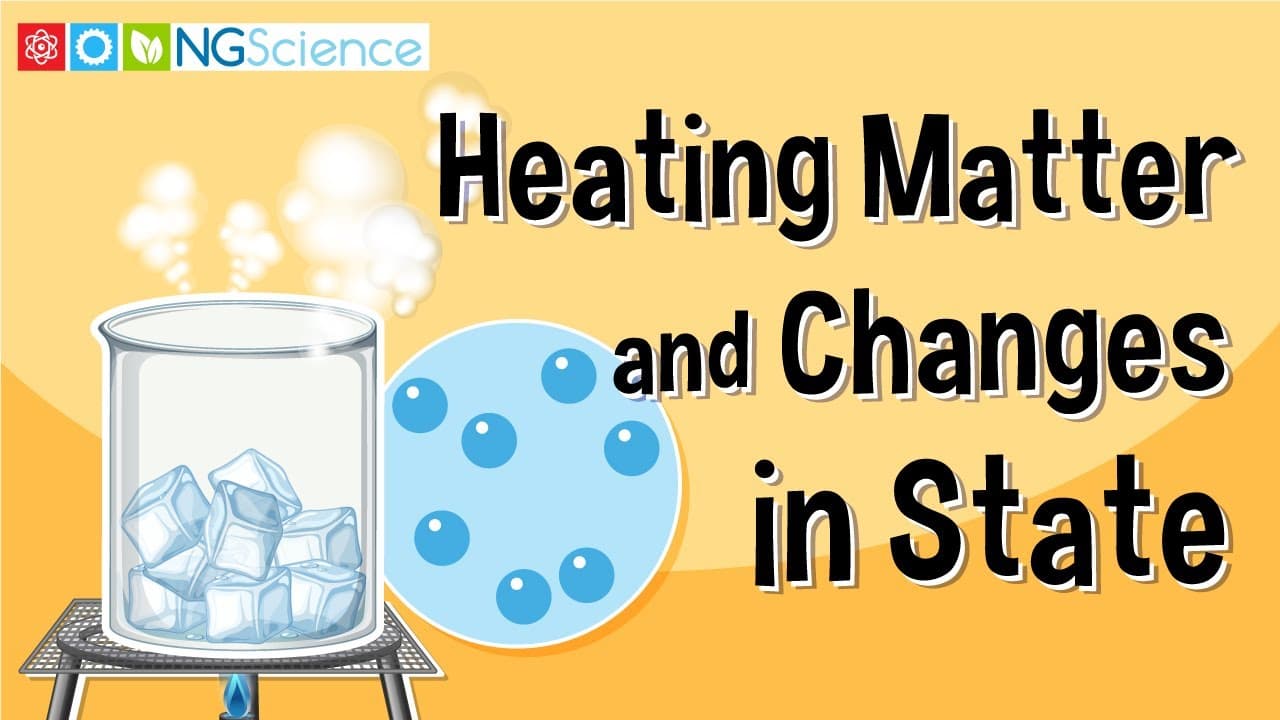
Heating Matter: From Ice to Steam Explained

Heating Matter: From Ice to Steam Explained

This educational video provides a clear, visual demonstration of the three states of matter—solid, liquid, and gas—using water as the primary example. Through a live laboratory demonstration, a presenter heats ice in a beaker to show the transformation from solid ice to liquid water, and finally to water vapor. The video explicitly connects the addition of heat energy to these phase changes, known as melting and evaporating. Key themes explored include the physical properties of matter, such as how solids maintain their shape while liquids take the shape of their container but maintain their volume. Crucially, the video introduces the particle theory of matter using animated diagrams overlaid on the footage. These animations visualize how particles are tightly packed in solids, slide past one another in liquids, and move freely in gases. This resource is highly valuable for elementary science classrooms as it bridges the gap between observable phenomena (ice melting) and abstract concepts (molecular arrangement). Teachers can use this video to introduce the water cycle, thermodynamics, or the basic definitions of matter. It provides a "virtual lab" experience that allows students to see the process of boiling and evaporation safely and clearly, serving as a perfect anchor for lessons on physical changes.

Next Generation ScienceNext Generation Science

2mins 40s

Video
Making Soda Erupt: The Science of Bubbles

Making Soda Erupt: The Science of Bubbles

This engaging video from SciShow Kids features host Anthony and his robot mouse friend Squeaks exploring the science behind carbonation and the famous Mentos and diet soda geyser experiment. The video begins by investigating why soda is fizzy, demonstrating how gas bubbles behave when poured over ice or interacting with a straw. It progressively builds understanding by showing how different surface textures—from a smooth straw to a fuzzy chenille stick—affect the release of bubbles.

SciShow KidsSciShow Kids

4mins 55s

Video
Understanding and Improving Indoor Air Quality

Understanding and Improving Indoor Air Quality

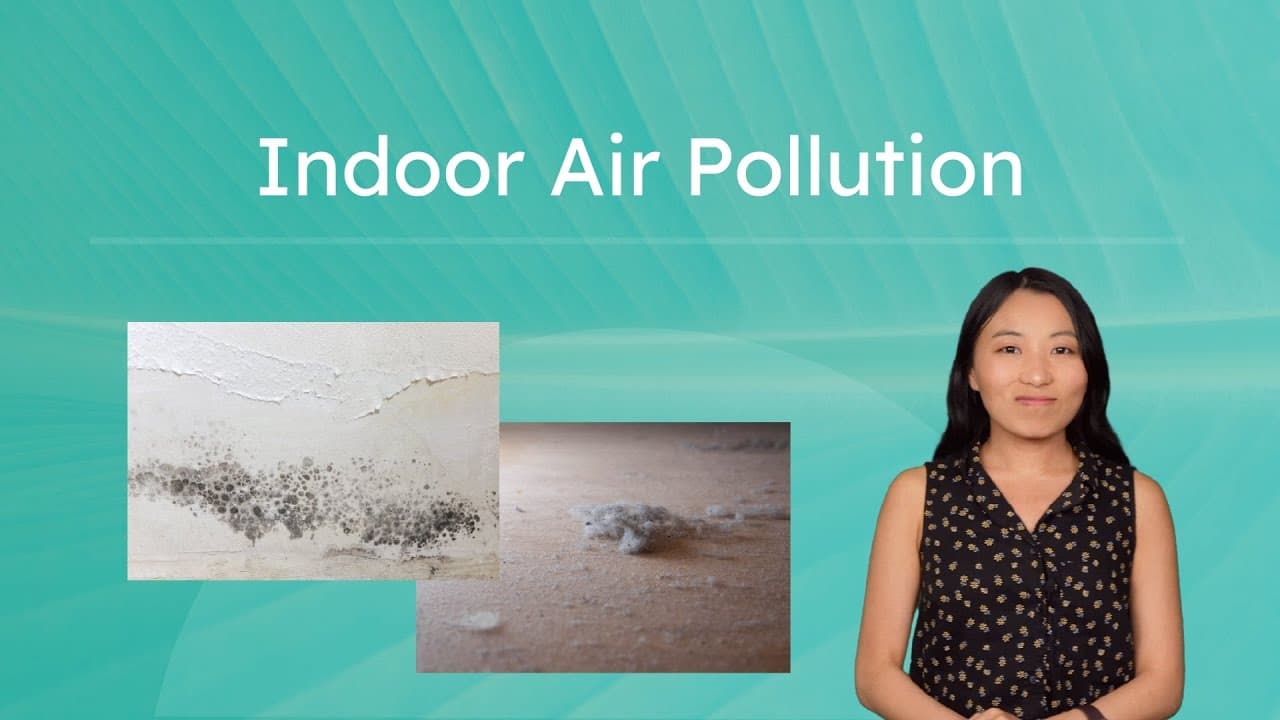
This educational video explores the critical topic of indoor air pollution, revealing the surprising fact that indoor air quality is often significantly worse than outdoor air. The video breaks down the primary sources of indoor pollutants, categorization them into visible particles like dust and smoke, chemical compounds like Volatile Organic Compounds (VOCs), and hidden hazards such as mold, carbon monoxide, lead, and asbestos. It explains the scientific composition of these pollutants and how they become airborne and affect our respiratory systems. The content delves into the health implications of poor indoor air quality, noting that humans spend approximately 90% of their time indoors. It provides a historical case study on lead paint regulations to illustrate how scientific evidence leads to public health protections. The video connects these concepts to human biology, specifically how pollutants trigger asthma, allergies, and other health issues over long periods of exposure. Designed for students, the video emphasizes practical application by offering actionable strategies to improve air quality. It covers ventilation techniques, smarter consumer choices regarding cleaning products and paints, and preventative habits like removing shoes and using exhaust fans. The host encourages students to become "scientists" in their own homes by identifying potential hazards and making simple changes to create a healthier living environment.

Miacademy & MiaPrep Learning ChannelMiacademy & MiaPrep Learning Channel

9mins 10s

Video
Extreme Weather on the Gas Giants: Diamond Rain and Mega Storms

Extreme Weather on the Gas Giants: Diamond Rain and Mega Storms

This engaging educational video takes students on a virtual tour of the outer solar system to explore the extreme weather conditions found on the gas giants: Jupiter, Saturn, Uranus, and Neptune. Hosted by Sabrina Cruz, the video contrasts the solid surfaces of rocky planets with the turbulent, gaseous atmospheres of these massive worlds. It explains complex meteorological phenomena using clear comparisons to Earth, helping students understand the scale and intensity of planetary weather. The video covers key scientific themes including the difference between weather and climate, the mechanics of jet streams, and how atmospheric pressure affects states of matter. Specific topics include Jupiter's Great Red Spot, Saturn's supersonic winds, the chemical composition leading to Uranus's "diamond rain," and the mystery of Neptune's energy source. The content bridges planetary science with basic chemistry and physics concepts appropriate for elementary and middle school learners. For educators, this resource serves as an excellent hook for units on the solar system, meteorology, or states of matter. It transforms abstract facts into memorable visual narratives—like rains of diamonds or storms that last for centuries—that spark student curiosity. The video's clear definitions and visual aids make it a versatile tool for introducing vocabulary, prompting creative writing assignments about space travel, or launching inquiry-based research projects about planetary atmospheres.

Crash Course KidsCrash Course Kids

4mins 43s

Video
Exploring Matter: States, Properties, and Changes

Exploring Matter: States, Properties, and Changes

This energetic animated music video provides a comprehensive introduction to the concept of matter, setting fundamental physical science concepts to a catchy, rhythmic beat. Through a cast of colorful animated characters and clear visual diagrams, the song defines matter as anything that has mass and takes up space, distinguishing it from forms of energy like light and sound. The video breaks down the composition of matter into atoms and molecules, visualizing protons, neutrons, and electrons in a way that makes abstract atomic theory accessible to young learners. The content covers several critical curriculum standards, including the three primary states of matter (solid, liquid, gas) and the phase changes between them (melting, freezing, evaporation, condensation). It progresses to more advanced topics by distinguishing between physical changes—where the substance remains the same, like tearing paper—and chemical changes—where new substances are formed, illustrated by rusting locks, burning wood, and cooking food. The lyrics also introduce key properties used to describe matter, such as mass, volume, density, and texture. For educators, this video serves as an excellent engagement hook or review tool for units on physical science. The repetitive nature of the chorus helps reinforce the definition of matter, while the specific visual examples provide concrete anchors for difficult vocabulary. It successfully bridges the gap between simple observation (what things look like) and scientific explanation (molecular structure and chemical reactions), making it a versatile resource for upper elementary and middle school science classrooms.
Have Fun TeachingHave Fun Teaching

4mins 29s

Video
How Particles Make Up All Matter and Change States

How Particles Make Up All Matter and Change States

This engaging science video introduces students to the fundamental concept that all matter is made of tiny building blocks called particles. Hosted by Sabrina Cruz, the video uses clear analogies and animation to explain that while we see large objects like people, devices, or dogs, they are actually composed of microscopic particles that determine how the object looks and behaves. The video breaks down the three primary states of matter—solids, liquids, and gases—by visualizing how the arrangement and movement of particles differ in each state.

Crash Course KidsCrash Course Kids

3mins 50s

Video
How Different Things Fly: Planes, Balloons, and Rockets

How Different Things Fly: Planes, Balloons, and Rockets

This comprehensive educational compilation explores the science of flight through various lenses, including mechanical engineering, physics, and biology. Hosted by the engaging SciShow Kids team and featuring the puppet character Squeaks the Robot Mouse, the video breaks down complex aerodynamic concepts into digestible segments for young learners. It covers how airplanes generate lift, the physics of hot air balloons, the engineering challenges of flying helicopters on Mars, the massive force behind rockets, and the diverse wing structures of flying animals.

SciShow KidsSciShow Kids

24mins 16s

Video
How Heat and Pressure Turn Corn Into Popcorn

How Heat and Pressure Turn Corn Into Popcorn

This engaging video breaks down the science behind one of the world's most popular snacks: popcorn. Hosted by a young presenter in a "Lighthouse Lab" setting, the video takes students on a journey from the farm to the bowl, explaining specifically how hard corn kernels transform into fluffy white clouds. It introduces the specific type of corn required for popping (Zea mays everta) and dissects the anatomy of a kernel to reveal the critical components: the hull, the starch, and the tiny droplet of water trapped inside. The core of the video focuses on the physical changes that occur during heating. Through clear animations, students visualize how heat turns the internal water into steam, creating immense pressure against the strong hull until it eventually explodes. This demonstration of phase changes (liquid to gas) and pressure offers a perfect real-world example of chemistry and physics concepts in action. The video concludes with a practical demonstration using an air popper and a five-question interactive quiz to reinforce learning. For educators, this resource serves as an excellent hook for lessons on states of matter, heat energy, or plant biology. It provides a relatable entry point for discussing how temperature affects matter and introduces scientific vocabulary like "starch," "hull," and "pressure" in a context students already enjoy. The combination of live-action demonstration and diagrammatic animation helps varied learners grasp the invisible forces at work inside the kernel.

Next Generation ScienceNext Generation Science

4mins 52s

Video
What Is Matter? Solids, Liquids, and Gases Explained

What Is Matter? Solids, Liquids, and Gases Explained

Host Sabrina Cruz introduces students to the fundamental scientific concept of matter in this engaging Crash Course Kids episode. The video breaks down the core definition of matter as anything that has weight and takes up space (volume), moving beyond simple definitions to provide concrete examples and demonstrations that make abstract concepts tangible for young learners. The content explores the three primary states of matter—solids, liquids, and gases—providing familiar examples for each. A significant portion of the video is dedicated to proving that invisible matter, specifically air (gas), is indeed matter. Through two clear experiments, the host demonstrates that air has volume (it fills a balloon that then won't fit in a small box) and weight (a balloon filled with air weighs more than an empty one on a balance scale). This video is an excellent instructional tool for introducing physical science units in elementary classrooms. It effectively addresses the common misconception that gases aren't "real" matter because they are invisible, provides a clear definition of volume suitable for young students, and models the scientific method through simple, replicable experiments.
Crash Course KidsCrash Course Kids

3mins 31s

Video
What Is Matter? Properties and States Explained

What Is Matter? Properties and States Explained

A high-energy, animated musical video that defines matter and explores its fundamental properties through a catchy rock song. The video utilizes colorful characters and clear diagrams to explain abstract physical science concepts like mass, volume, and atomic structure in an accessible way for elementary students. The content covers the definition of matter (anything that has mass and takes up space), its composition (atoms, molecules, protons, neutrons, electrons), and the distinction between matter and energy forms like light and sound. It concludes by introducing the three primary states of matter: solids, liquids, and gases. Teachers can use this video as an engaging hook to start a unit on matter, a mnemonic device to help students memorize definitions, or a review tool. The clear visuals distinguish between tangible matter and intangible energy, addressing a common conceptual hurdle for young science students.

Have Fun TeachingHave Fun Teaching

1min

Video
The Matter Song: Properties, States, and Changes

The Matter Song: Properties, States, and Changes

A high-energy, pop-rock educational song that provides a comprehensive overview of the scientific concept of matter. The video features a static visual while the lyrics deliver a dense stream of scientific definitions, examples, and distinctions, covering everything from atomic structure to phase changes. The song breaks down complex chemistry topics into rhyming verses that are easy for students to memorize and recall. The content moves systematically through key topics: defining matter (mass and volume), atomic composition (protons, neutrons, electrons), states of matter (solid, liquid, gas), phase changes (melting, freezing, evaporation, condensation), and the difference between physical and chemical changes. It explicitly addresses misconceptions by listing things that are not matter, such as energy forms like light and sound. This resource is an excellent tool for auditory learners and can serve as an engaging hook to start a unit or a mnemonic device for review. Teachers can use the lyrics as a text for close reading to unpack vocabulary like "oxidation," "density," and "substance," or use the song's structure to organize a series of lessons on the properties and changes of matter.

Have Fun TeachingHave Fun Teaching

4mins 33s

Video
How Matter Changes State: Melting, Freezing, and Evaporation

How Matter Changes State: Melting, Freezing, and Evaporation

This educational video provides a clear and visually engaging explanation of how matter changes states through heating and cooling. It begins by distinguishing between physical changes that alter shape—such as cutting celery or squishing clay—and phase changes that alter the state of matter itself. The core of the lesson demonstrates the water cycle on a micro scale, showing how ice melts into water and water evaporates into vapor when heated, introducing the concept of conservation of matter by explaining that the "disappearing" water has simply turned into a gas.

Next Generation ScienceNext Generation Science

6mins 16s

Video
How to Make Caramel Apples and Learn Chemistry

How to Make Caramel Apples and Learn Chemistry

In this engaging episode of Sci Kids!, host Jessi and her puppet friend Sam explore the chemistry behind cooking by making caramel apples. The video introduces the concept of the Maillard reaction, a chemical process responsible for the browning and flavor development in cooked foods. Through the practical application of making caramel, students learn that cooking is essentially a form of edible science that requires specific ingredients (proteins and sugars) and conditions (heat) to work.

SciShow KidsSciShow Kids

7mins 1s

Video
How Heat and Work Change Energy

How Heat and Work Change Energy

This engaging video lesson provides a clear and practical introduction to the First Law of Thermodynamics, using real-world examples like the SR-71 Blackbird spy plane and hot air balloons to ground abstract physics concepts. The narrator explains the fundamental relationship between heat ($q$), work ($w$), and the change in internal energy ($ΔE$), demonstrating that energy is conserved and can only be transferred, not created or destroyed. The video breaks down the mathematical formula $ΔE = q + w$ and provides specific rules for determining positive and negative signs based on whether a system gains or loses energy. Key themes explored include the definitions of thermodynamic systems and surroundings, the conversion of heat into mechanical work, and the principle of conservation of energy. The video specifically focuses on the crucial skill of identifying sign conventions—understanding when heat and work values should be positive or negative in calculations. It walks students through multiple practice problems, moving from conceptual identification to calculating energy changes in kilojoules. For educators, this video is an excellent resource for high school chemistry or physics units on thermodynamics. It bridges the gap between conceptual understanding and mathematical application. The step-by-step problem-solving sections allow for natural pause points where students can attempt calculations before seeing the solution, making it ideal for direct instruction or flipped classroom models. The use of the SR-71 Blackbird as a hook effectively demonstrates how thermodynamic principles solve real engineering problems.
Miacademy & MiaPrep Learning ChannelMiacademy & MiaPrep Learning Channel

12mins 34s

Video
Exploring Energy Transformations in Everyday Life

Exploring Energy Transformations in Everyday Life

This educational video provides a clear and visually engaging introduction to the concept of energy transformations. It defines energy as a pervasive force that shifts forms and systematically explores various types of conversions, such as chemical to thermal, thermal to chemical, light to chemical, and the interplay between kinetic and potential energy (elastic and gravitational). Through high-quality demonstrations involving everyday items like candles, cooking eggs, glow sticks, and toys, the video makes abstract physics concepts concrete and observable. Key themes include the law of conservation of energy (demonstrated through transformation), the specific mechanics of potential versus kinetic energy, and the role of energy in biological processes like photosynthesis. The video breaks down complex interactions—such as how the mechanical action of snapping a glow stick initiates a chemical reaction—into easy-to-understand segments labeled with clear text overlays. It covers a wide spectrum of energy types including thermal, chemical, light, elastic, kinetic, and gravitational potential energy. For educators, this resource serves as an excellent visual anchor for units on physics and matter. It is particularly useful for bridging the gap between textbook definitions and real-world phenomena. Teachers can use the segmented examples to introduce specific energy types or as a review tool to check student understanding of how energy changes form. The varied examples, from archery to cooking, ensure that the content appeals to diverse student interests and provides multiple entry points for discussion.
Next Generation ScienceNext Generation Science

5mins 1s

Video
Everyday Chemical Reactions: From Cooking to Fireworks

Everyday Chemical Reactions: From Cooking to Fireworks

This engaging educational video introduces students to the concept of chemical reactions by exploring how they occur in everyday life. Through relatable examples like cooking an egg, baking a cake, and watching fireworks, the narration explains how substances combine and transform into something new. The video breaks down complex chemical processes into observable phenomena, highlighting the key indicators of reactions such as color changes, gas production (bubbles), heat, and light. The content covers a wide range of scientific themes, including physical vs. chemical changes, the role of heat in reactions, biological processes like digestion and photosynthesis, and oxidation (rusting). It specifically addresses how distinct elements like oxygen, carbon dioxide, and various metals play roles in these transformations. The video creates connections between the chemistry laboratory and the real world, showing that science is happening constantly in our bodies and environments. For educators, this resource serves as an excellent introduction or review tool for a unit on matter and chemical changes. The visual demonstrations provide concrete evidence for abstract concepts, making them accessible to elementary and middle school students. The video concludes with a comprehensive 12-question quiz, making it a ready-to-use lesson that includes direct assessment of student understanding.

Next Generation ScienceNext Generation Science

6mins 54s

Video
How to Make Homemade Ice Cream Using Science

How to Make Homemade Ice Cream Using Science

In this engaging episode of SciShow Kids, host Jessi and her robot mouse friend Squeaks demonstrate how to make homemade ice cream using basic kitchen ingredients and the power of chemistry. The video guides viewers through a hands-on experiment that transforms liquid cream into solid ice cream without using a freezer, relying instead on a chemical reaction between ice and salt. The content focuses heavily on the scientific concepts of states of matter and freezing point depression. It explains in accessible terms why salt is added to ice (similar to salting icy roads in winter) and how this process lowers the freezing temperature of water. The video uses clear animations to visualize how melting ice draws heat away from the cream mixture, allowing it to freeze rapidly. This video is an excellent resource for elementary science classrooms as it combines a fun, edible reward with rigorous scientific inquiry. It provides a perfect practical application for lessons on phase changes, temperature, and following procedural texts. Teachers can use this video to introduce thermodynamics or simply as a guide for a beloved classroom activity that reinforces measuring skills and observation.

SciShow KidsSciShow Kids

4mins 10s

Video
Why Is Fire Hot? The Science of Energy and Combustion

Why Is Fire Hot? The Science of Energy and Combustion

This engaging episode of SciShow Kids tackles a common childhood question: "Why is fire hot?" Host Jessi and her robot mouse companion, Squeaks, break down the complex physics of heat and energy into kid-friendly concepts. The video explains that heat is a form of energy and uses the relatable analogy of how our bodies get warm when we exercise to explain how fire releases energy. It introduces the scientific concept of "combustion" and clearly delineates the three essential ingredients needed for a fire: fuel, oxygen, and heat. The video explores key themes of energy transformation and chemical changes. It visually demonstrates how wood (fuel) changes physically into charcoal and ash as it releases stored energy in the form of heat. The narrative connects abstract scientific principles to concrete examples, such as eating food for energy or using a match to start a birthday candle. It also reinforces critical fire safety rules, reminding young viewers never to play with matches or get too close to fires. For educators, this video serves as an excellent introduction to physical science concepts like energy, heat, and chemical reactions. It provides a natural bridge between basic observations (fire is hot) and scientific explanations (combustion). Teachers can use this resource to launch lessons on the "Fire Triangle," discuss the difference between physical and chemical changes, or reinforce health and safety curriculums regarding fire prevention. The clear visual aids and simple analogies make it highly accessible for early elementary students.

SciShow KidsSciShow Kids

3mins 41s

Video
Kitchen Chemistry: Identifying Chemical Changes

Kitchen Chemistry: Identifying Chemical Changes

This educational video from Crash Course Kids uses the relatable context of baking to explain the scientific concept of chemical changes. Host Sabrina Cruz introduces chemistry as the science of matter and how it changes, distinguishing between simple mixtures (like a fruit salad) that can be separated and chemical changes that create entirely new substances. The video defines a chemical change as the rearrangement of particles to form a new substance, a process that is typically irreversible. The content explores specific evidence that indicates a chemical change has occurred, using two primary examples: a burning match and a baking cake. Through these examples, students learn to identify key indicators such as color change, the release of smells, the production of light or gases, and the absorption or release of heat. The video specifically highlights how the holes in a sponge cake are evidence of carbon dioxide gas released during the baking process. This resource is highly valuable for elementary and middle school science classrooms as it bridges the gap between abstract chemical concepts and everyday experiences. It provides a clear, visual framework for students to distinguish between physical and chemical changes. Teachers can use this video to launch units on properties of matter, to support hands-on kitchen chemistry experiments, or as a visual aid to reinforce the indicators of chemical reactions.

Crash Course KidsCrash Course Kids

3mins 51s

Video
The Science of Exploding Soap

The Science of Exploding Soap

In this engaging episode of SciShow Kids, host Jessi and her robot friend Squeaks demonstrate a classic and dramatic kitchen science experiment: the "exploding" soap trick. The video guides young viewers through the process of microwaving a specific type of soap to witness it expand into a massive, fluffy cloud. It explains the manufacturing process of Ivory soap, specifically how air is whipped into it, distinguishing it from other brands and making this specific reaction possible. The content explores key scientific concepts including states of matter, specifically the behavior of gases when heated. It introduces the term "water vapor" and uses clear animations to explain how heat energy causes gas molecules to move faster and expand. The narrative connects the microscopic behavior of air pockets and water trapped inside the soap to the macroscopic expansion seen in the microwave. This video is highly valuable for early elementary science classrooms as a safe, accessible introduction to thermal expansion and states of matter. It models the scientific method by encouraging predictions and observations. Teachers can use this video as a hook for lessons on heat energy, a demonstration of physical changes, or as a guide for a hands-on experiment that requires minimal materials but delivers maximum engagement.

SciShow KidsSciShow Kids

4mins 17s

Video
How Heat Changes the States of Matter

How Heat Changes the States of Matter

This educational video explores the science behind how matter changes between solid, liquid, and gas states through the addition and removal of heat energy. Using the relatable example of melting ice cream, the instructor guides students through the molecular behavior of matter, explaining how atoms speed up and spread apart when heated (melting, evaporation) and slow down and condense when heat is removed (condensation, freezing). The video effectively uses particle animations to visualize these invisible processes, making abstract concepts concrete for young learners. Key themes include the relationship between heat energy and particle movement, the specific terms for phase changes (melting, freezing, evaporation, boiling, condensation), and the distinction between "cold" as an energy versus the absence of heat. The instructor also addresses the conservation of mass, demonstrating that while matter changes form, its amount remains constant. This resource is highly valuable for elementary science classrooms as it covers core physical science standards regarding states of matter. It provides clear definitions, addresses common misconceptions about "cold energy," and connects scientific concepts to everyday phenomena like drying towels, morning dew, and boiling water. The built-in pauses for note-taking and reflection make it an excellent interactive tool for direct instruction or independent study.

Miacademy & MiaPrep Learning ChannelMiacademy & MiaPrep Learning Channel

8mins 58s

Video
How Water Changes States

How Water Changes States

This educational animation explores the three states of water—solid, liquid, and gas—and the scientific processes that cause transitions between them. The video explains how temperature changes drive these transformations, providing specific data points in both Fahrenheit and Celsius for freezing and boiling points. Through clear visuals and narration, it breaks down complex concepts like evaporation, condensation, melting, and freezing into easily digestible segments suitable for young learners. Key themes include the physical properties of matter, the influence of thermal energy on state changes, and the cyclical nature of these transitions. The video introduces essential scientific vocabulary such as "water vapor," "condensation," and "evaporation," reinforcing these terms with a visual summary that maps the complete cycle of changes. It also touches upon Earth science concepts by noting how much of the planet is covered by water. For educators, this video serves as an excellent foundational tool for science units on matter or the water cycle. The clear visual representation of a thermometer alongside the phase changes helps students connect abstract temperature numbers to observable physical changes. The step-by-step breakdown allows teachers to pause and discuss each transition individually, making it easy to facilitate predictions and check for understanding regarding how heating and cooling affect matter.

Miacademy & MiaPrep Learning ChannelMiacademy & MiaPrep Learning Channel

3mins 11s

Video
How Solid Sugar Becomes Fluffy Cotton Candy

How Solid Sugar Becomes Fluffy Cotton Candy

This engaging video from Sci Kids! takes young learners on a tasty trip to the carnival to uncover the science behind a favorite treat: cotton candy. Hosted by Anthony and his robot friend Squeaks, the episode demystifies how hard, crunchy sugar crystals are transformed into soft, fluffy clouds. Through clear explanations and helpful animations, the video breaks down the physical changes that occur when sugar is heated and spun.

SciShow KidsSciShow Kids

4mins 47s

Video
Exploring Physical and Chemical Changes in Matter

Exploring Physical and Chemical Changes in Matter

This educational video provides a clear and comprehensive comparison between physical and chemical changes in matter. Through high-quality real-world footage and clear narration, it explains that physical changes alter the form or state of a substance without changing its molecular structure, while chemical changes result in the formation of entirely new substances. The video uses relatable examples—such as melting ice, chopping vegetables, rusting iron, and baking a cake—to illustrate these concepts concretely.

Next Generation ScienceNext Generation Science

10mins 40s

Video
How to Tell the Difference Between Physical and Chemical Changes

How to Tell the Difference Between Physical and Chemical Changes

This educational video provides a clear and visually engaging introduction to the differences between physical and chemical changes in matter. Through high-quality footage of everyday occurrences—such as melting snow, baking cookies, rusting metal, and exploding fireworks—the narration explains how to distinguish between changes that create new substances and those that merely alter the form or state of an object. The video breaks down the specific evidence of chemical changes, including color shifts, temperature changes, and gas production, making abstract concepts concrete for students. The content is structured into three distinct segments: an introduction to the core concepts, detailed examples of each type of change, and an interactive quiz section. The explanation of physical changes uses relatable examples like molding clay, freezing water, and stretching a hair tie to demonstrate that the underlying substance remains the same despite changes in appearance. Conversely, the chemical change section emphasizes the irreversible nature of reactions and the creation of new materials with different properties. Teachers will find this resource particularly valuable for introducing or reviewing the properties of matter. The built-in quiz at the end transforms passive viewing into active learning, allowing students to immediately apply their knowledge. The video serves as an excellent anchor for lessons on matter, reactions, and the scientific method of observation, providing a solid foundation for understanding basic chemistry concepts.

Next Generation ScienceNext Generation Science

8mins 5s

Video
How Pollution Disrupts Earth's Natural Balance

How Pollution Disrupts Earth's Natural Balance

This episode of Crash Course Ecology dives deep into the complex nature of pollution, challenging the common misconception that it is simply trash or synthetic chemicals. Hank Green explains that pollution is fundamentally about substances—whether natural or synthetic—existing in the wrong place or at the wrong concentrations. The video explores how human activities disrupt Earth's natural biogeochemical cycles, specifically looking at how overloading the carbon, nitrogen, and phosphorus cycles leads to climate change and massive aquatic dead zones.

CrashCourseCrashCourse

9mins 22s

Video
Heating Matter: From Ice to Steam Explained

Heating Matter: From Ice to Steam Explained

This educational video provides a clear, visual demonstration of the three states of matter—solid, liquid, and gas—using water as the primary example. Through a live laboratory demonstration, a presenter heats ice in a beaker to show the transformation from solid ice to liquid water, and finally to water vapor. The video explicitly connects the addition of heat energy to these phase changes, known as melting and evaporating. Key themes explored include the physical properties of matter, such as how solids maintain their shape while liquids take the shape of their container but maintain their volume. Crucially, the video introduces the particle theory of matter using animated diagrams overlaid on the footage. These animations visualize how particles are tightly packed in solids, slide past one another in liquids, and move freely in gases. This resource is highly valuable for elementary science classrooms as it bridges the gap between observable phenomena (ice melting) and abstract concepts (molecular arrangement). Teachers can use this video to introduce the water cycle, thermodynamics, or the basic definitions of matter. It provides a "virtual lab" experience that allows students to see the process of boiling and evaporation safely and clearly, serving as a perfect anchor for lessons on physical changes.

Next Generation ScienceNext Generation Science

2mins 40s

Video
Why the Universe Becomes Disordered: Entropy Explained

Why the Universe Becomes Disordered: Entropy Explained

This educational video provides a clear and accessible introduction to the Second Law of Thermodynamics and the concept of entropy. Using relatable analogies like a messy bedroom and a sandcastle, the narrator explains why the universe naturally tends toward disorder. The video breaks down complex physics concepts into digestible parts, defining entropy as a measure of disorder based on the statistical probability of particle arrangements. It transitions from macroscopic examples to the molecular level, illustrating how phases of matter (solids, liquids, gases, plasmas) and temperature influence entropy. Key themes explored include the relationship between order and disorder, the definition of systems versus surroundings, and the mathematical representation of entropy change. The video specifically addresses the common confusion regarding local decreases in entropy (like cleaning a room or water freezing) by explaining that these must be offset by a greater increase in entropy in the surroundings. Visual aids include particle diagrams, text overlays of definitions, and step-by-step practice problems. For educators, this video serves as an excellent foundational resource for high school chemistry and physics units on thermodynamics. It effectively bridges the gap between conceptual understanding and application, providing specific practice scenarios (like a balloon heating up or water condensing) that allow students to test their grasp of sign conventions for entropy change. The content encourages critical thinking about energy transfer and the inevitable march toward thermodynamic equilibrium.

Miacademy & MiaPrep Learning ChannelMiacademy & MiaPrep Learning Channel

12mins 11s

Video
Visualizing Thermal Energy: The Food Coloring Experiment

Visualizing Thermal Energy: The Food Coloring Experiment

This educational video provides a clear, visual demonstration of thermal energy and the kinetic theory of matter using a simple water and food coloring experiment. It begins by using animations to visualize how water molecules behave at different temperatures, introducing the concept that thermal energy is essentially the movement of molecules. The video explains that higher temperatures correspond to faster molecular motion and more energetic collisions.

Next Generation ScienceNext Generation Science

3mins 16s

Video
How Chemical Potential Energy Powers Our World

How Chemical Potential Energy Powers Our World

This educational video provides a clear and comprehensive introduction to chemical potential energy, defining it as the energy stored within the bonds of atoms and molecules. It distinguishes this form of energy from elastic potential energy, explaining that energy is released when chemical bonds are broken during reactions. The video uses high-quality visuals to illustrate abstract concepts, making the physics and chemistry accessible to students.

Next Generation ScienceNext Generation Science

4mins 30s

Video
Phase Changes, Energy, and Heating Curves

Phase Changes, Energy, and Heating Curves

This educational video explores the relationship between thermal energy and phase changes in matter. It begins by observing natural phenomena like the water cycle to introduce the concept that energy from the sun drives phase transitions. The narrator then delves into the molecular level, explaining how attractive forces hold molecules together and why energy is required to separate them during phase changes like melting and boiling. The video uses clear visuals and heating curve graphs to demonstrate why temperature remains constant during a phase change despite the continuous addition of heat. The content covers key thermodynamic concepts including Latent Heat of Vaporization and Latent Heat of Fusion. It provides specific numerical values for water (2,256 J/g for vaporization and 334 J/g for fusion) and compares these to other substances like Helium and Ethanol. The video explains that condensation is a warming process because combining molecules releases energy, a counter-intuitive concept for many students illustrated through the example of a sweating glass of iced tea. This resource is highly valuable for chemistry and physics classrooms as it bridges conceptual understanding with mathematical application. It walks students through three distinct practice problems involving calculating the energy required for phase changes using both unit analysis and the formula q = m x L. The step-by-step problem solving, attention to significant figures, and real-world examples make complex thermodynamic principles accessible and practical for learners.

Miacademy & MiaPrep Learning ChannelMiacademy & MiaPrep Learning Channel

11mins 33s

Video
How Water Changes States of Matter

How Water Changes States of Matter

This animated video takes students inside a 'Virtual Science Lab' to demonstrate the four primary changes in states of matter using water as the subject. Through a clear, step-by-step experiment, the narrator guides viewers through the processes of melting, evaporation, condensation, and freezing. The video uses simple laboratory equipment—a beaker, burner, and cooling plate—to visually represent how adding or removing heat energy transforms matter from solid to liquid to gas and back again.

Next Generation ScienceNext Generation Science

1min 52s