A comprehensive 45-minute introductory lesson on renewable and non-renewable energy sources, designed for a substitute teacher. This lesson prepares middle school students for hands-on engineering projects like wind blades and solar ovens.
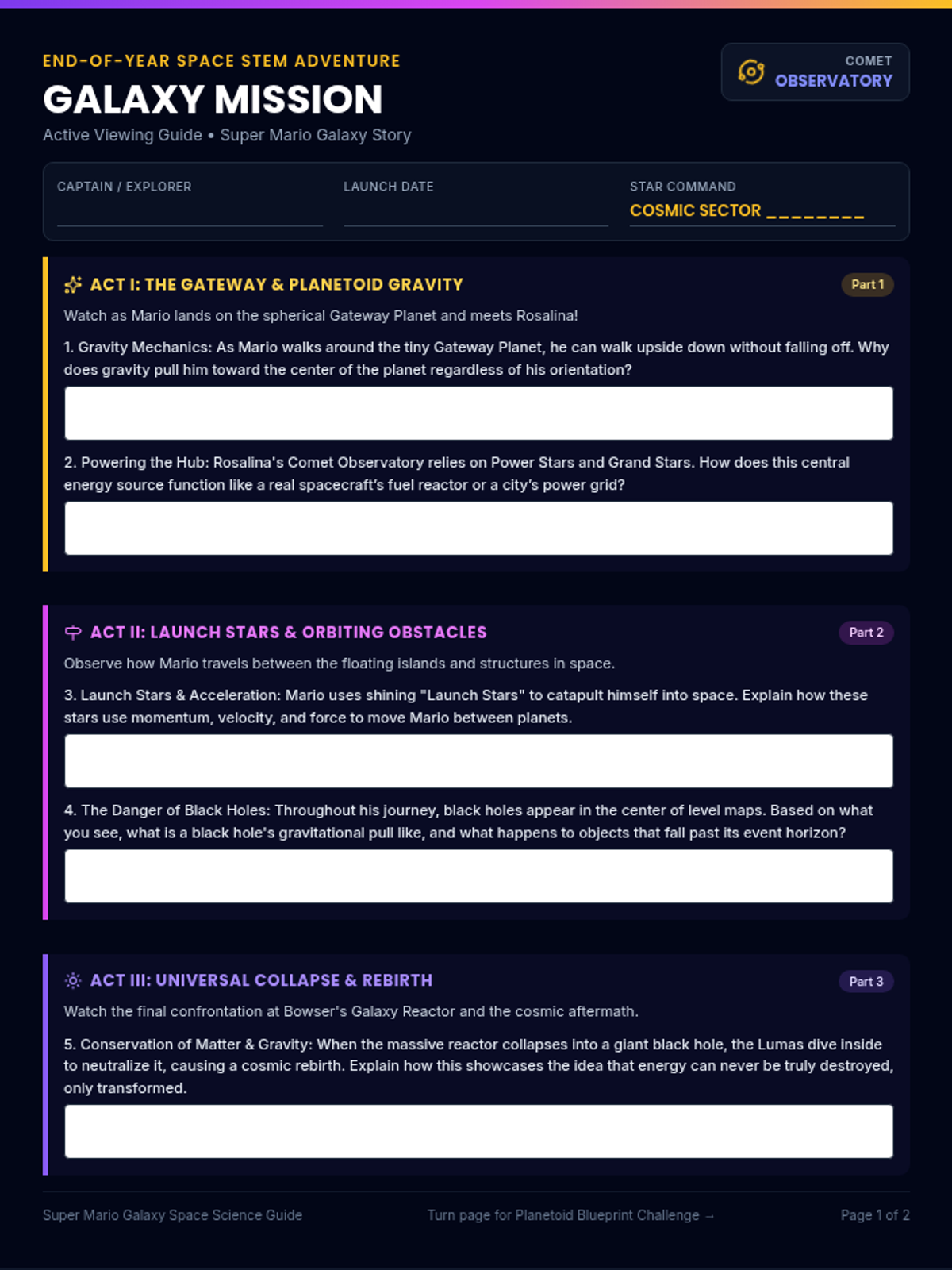
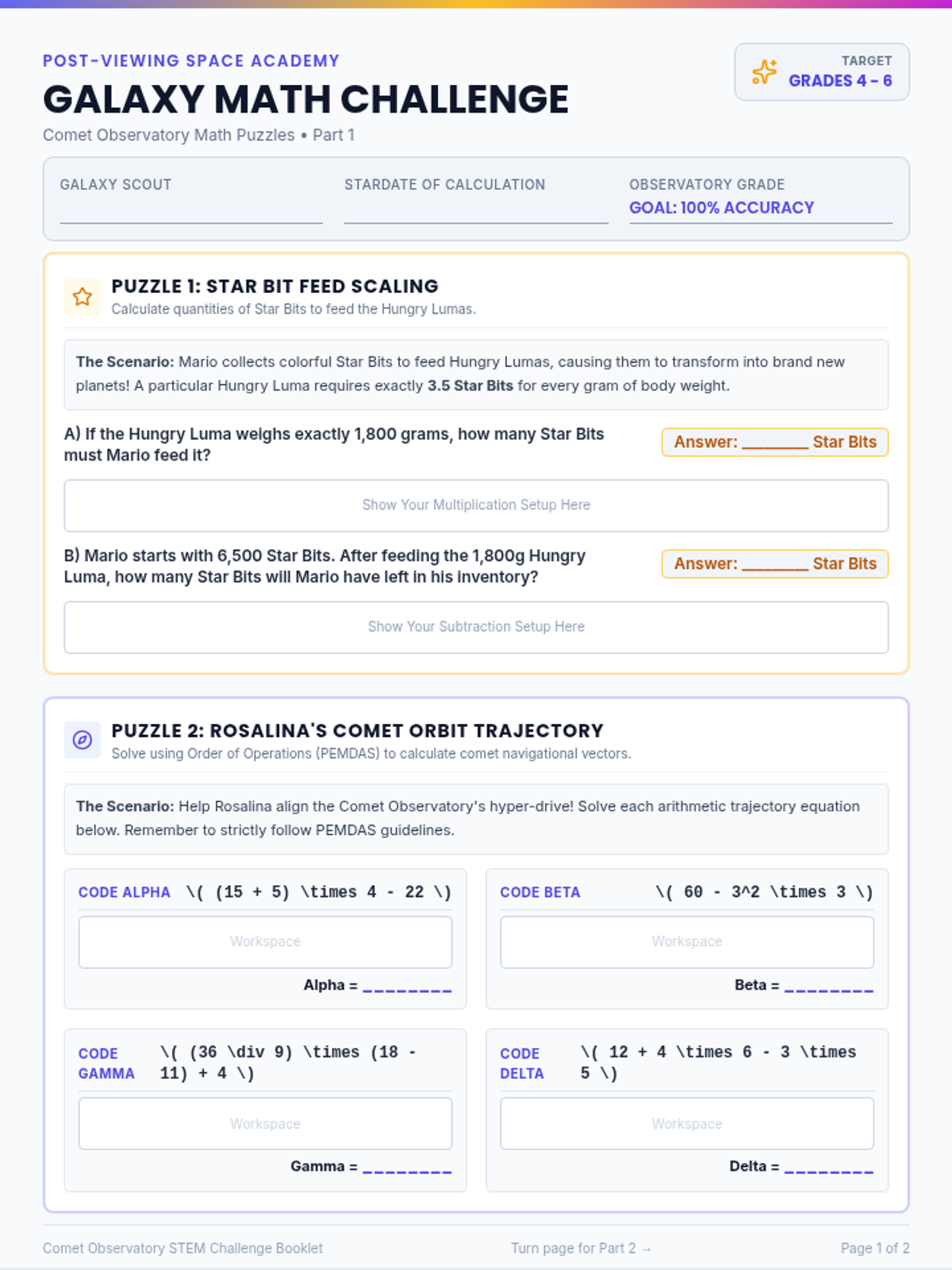
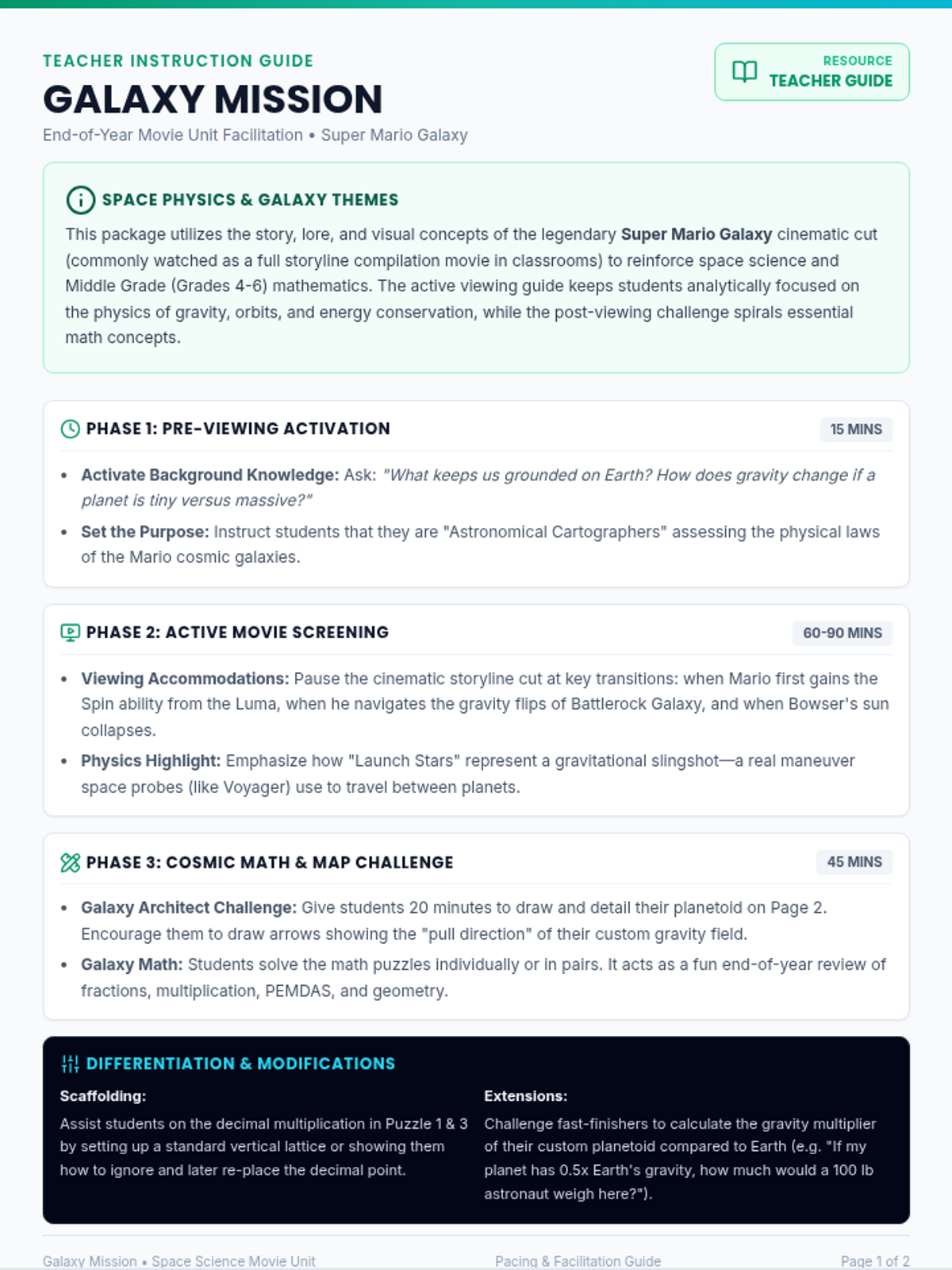
An end-of-year educational movie unit and math workbook based on the story of Super Mario Galaxy. Students explore gravity, orbits, and space physics through active viewing, followed by high-energy space-themed math puzzles.
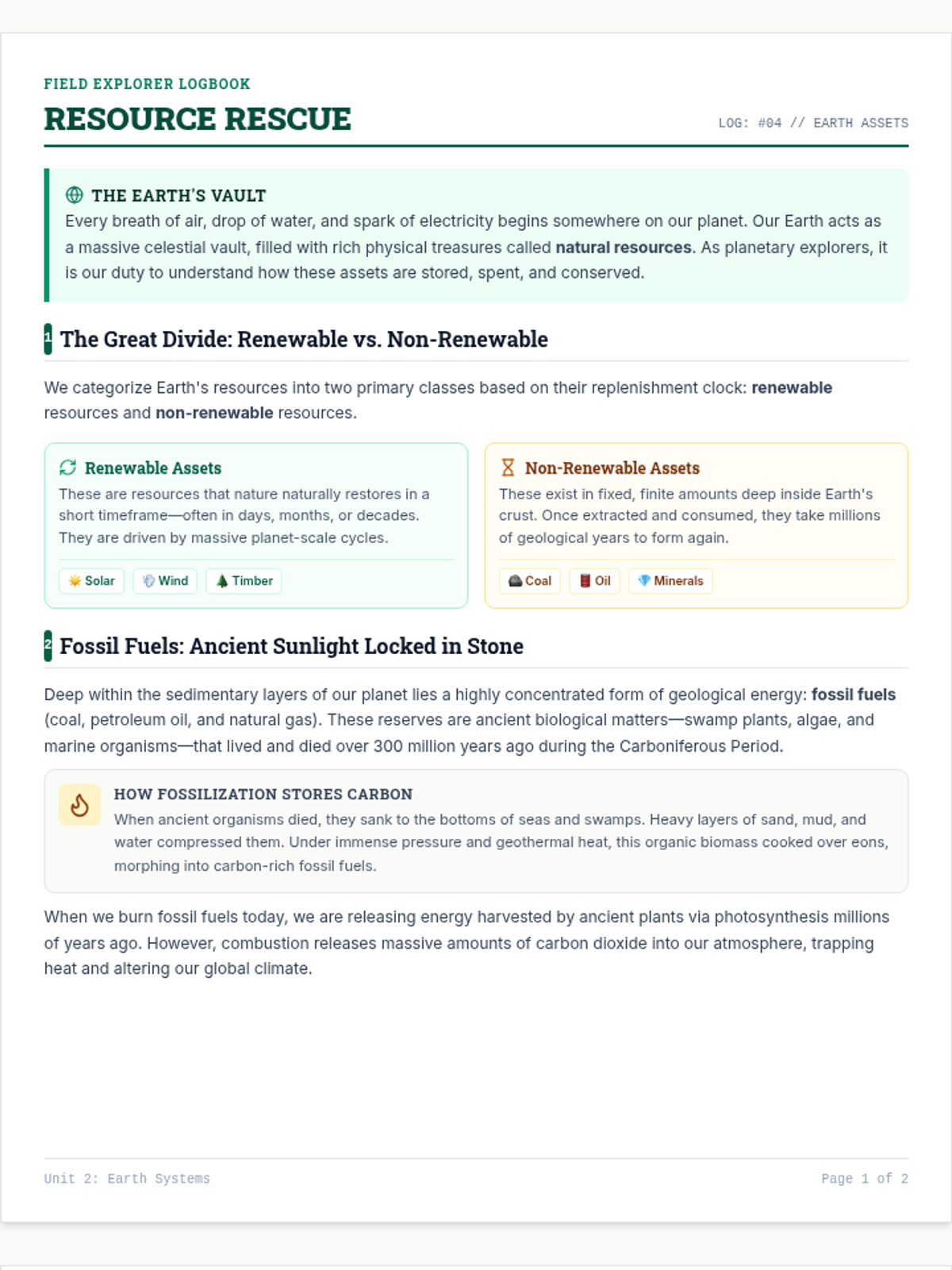
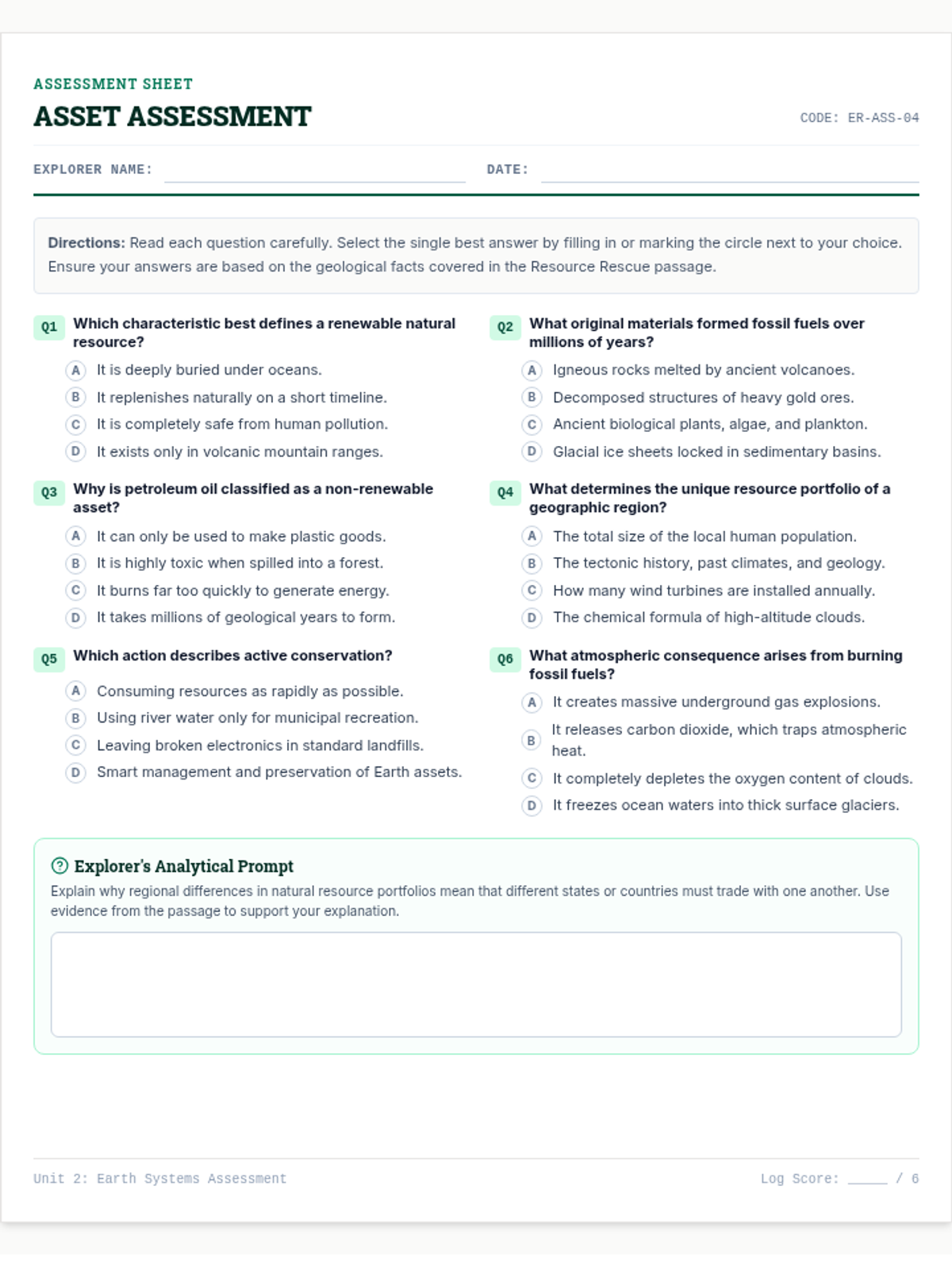
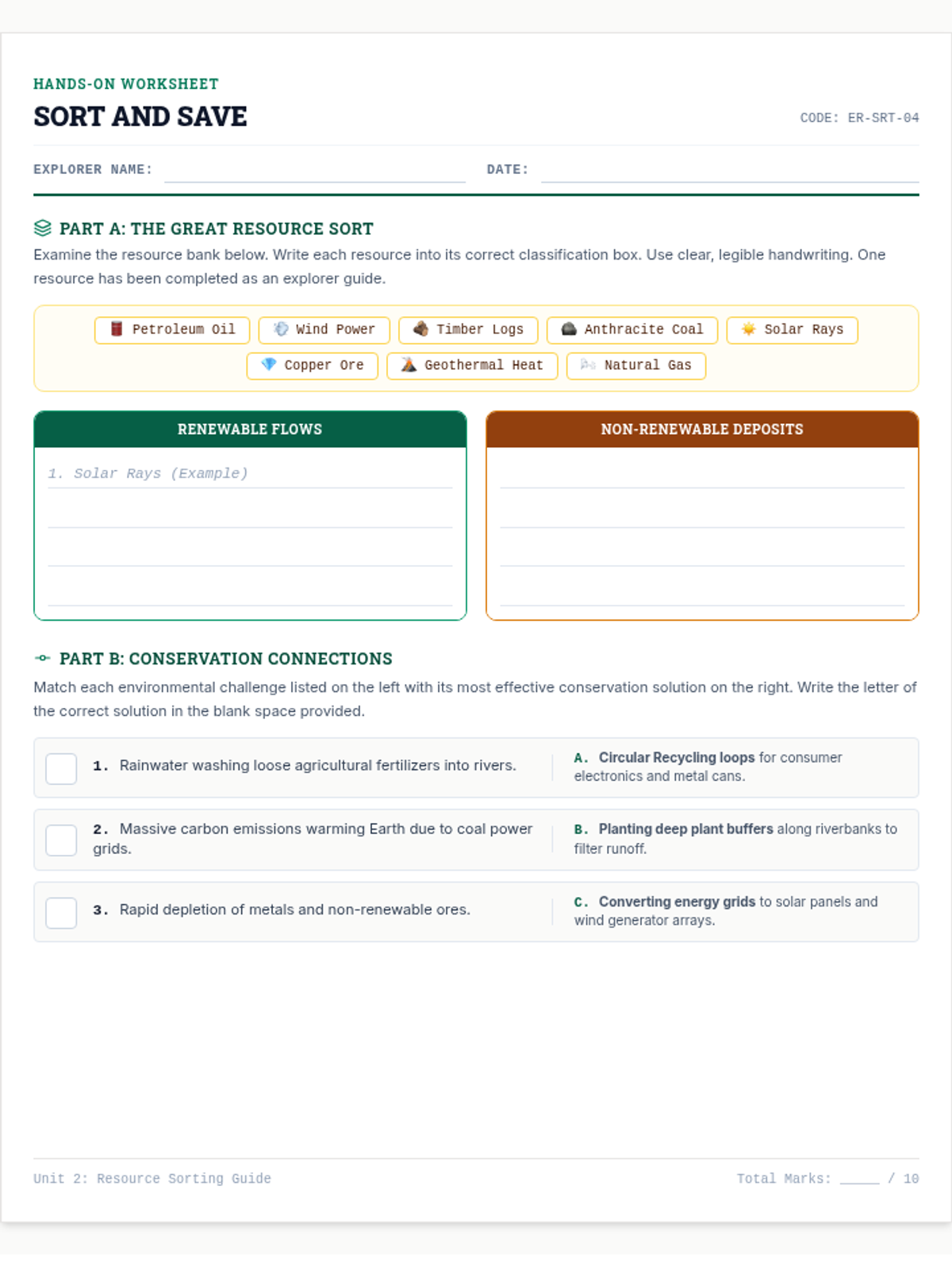
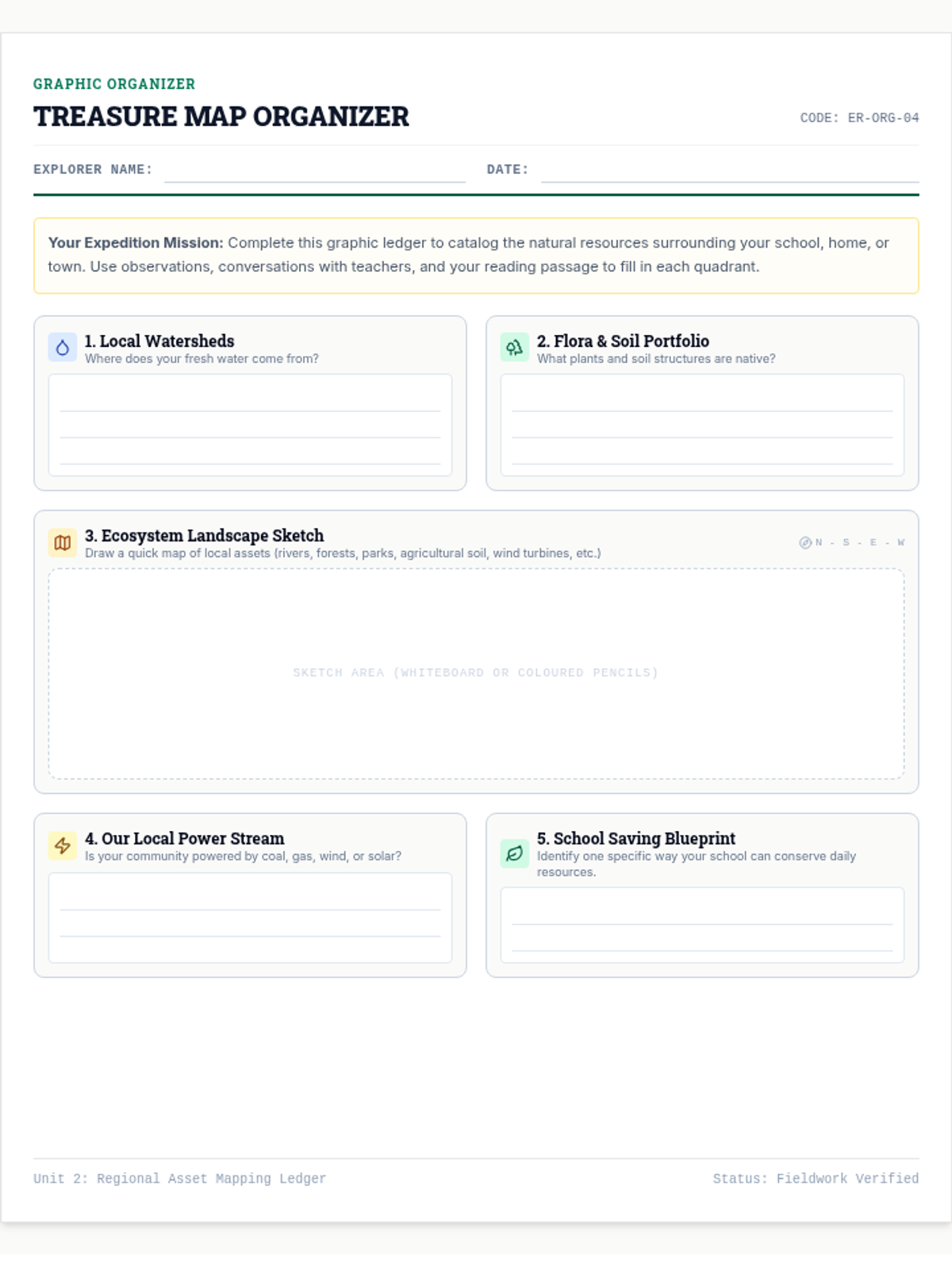
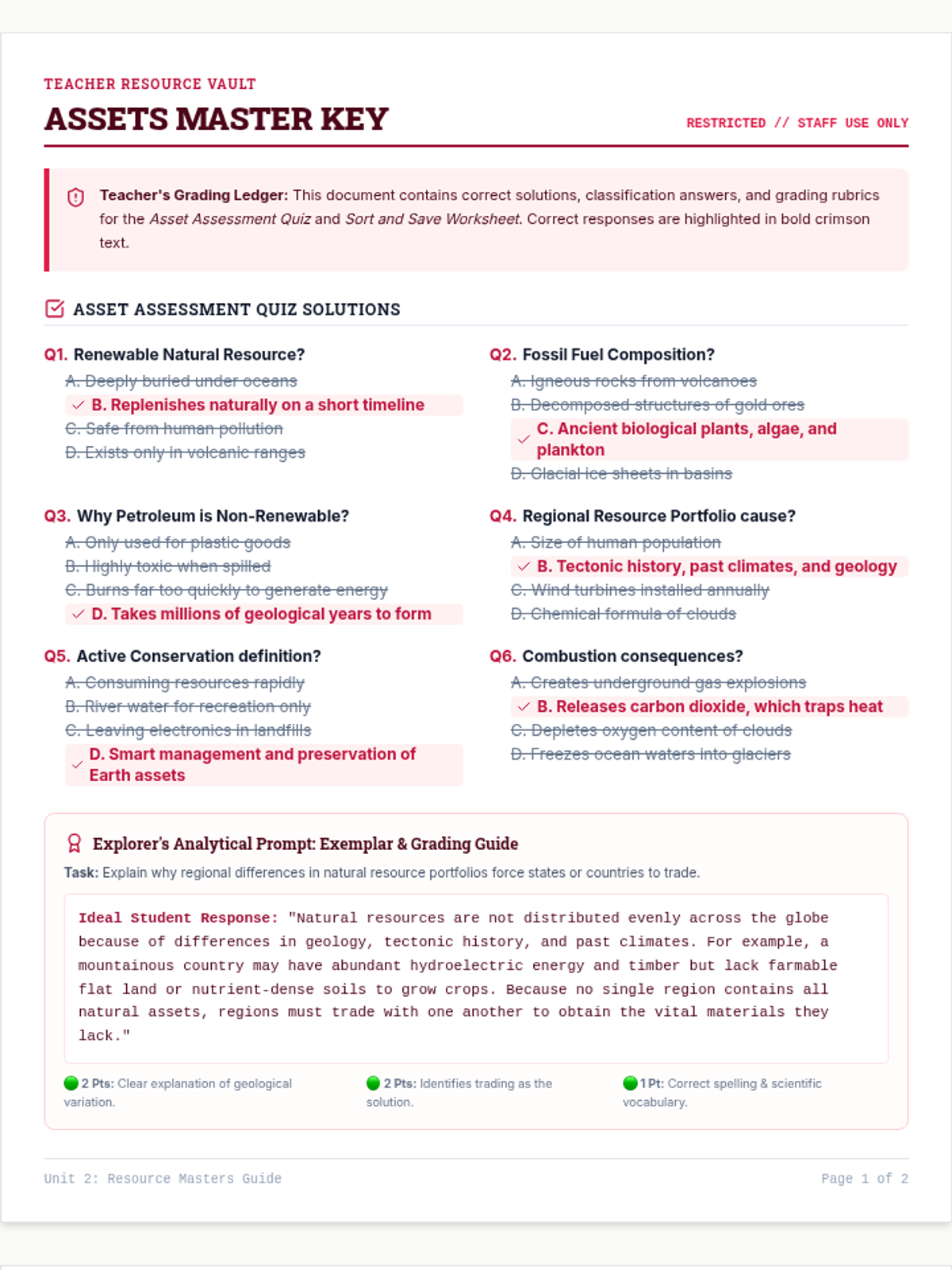
An engaging exploration of renewable and non-renewable natural resources, fossil fuels, and local conservation efforts through field-guide inspired readings, assessments, interactive sorting, and local mapping exercises.
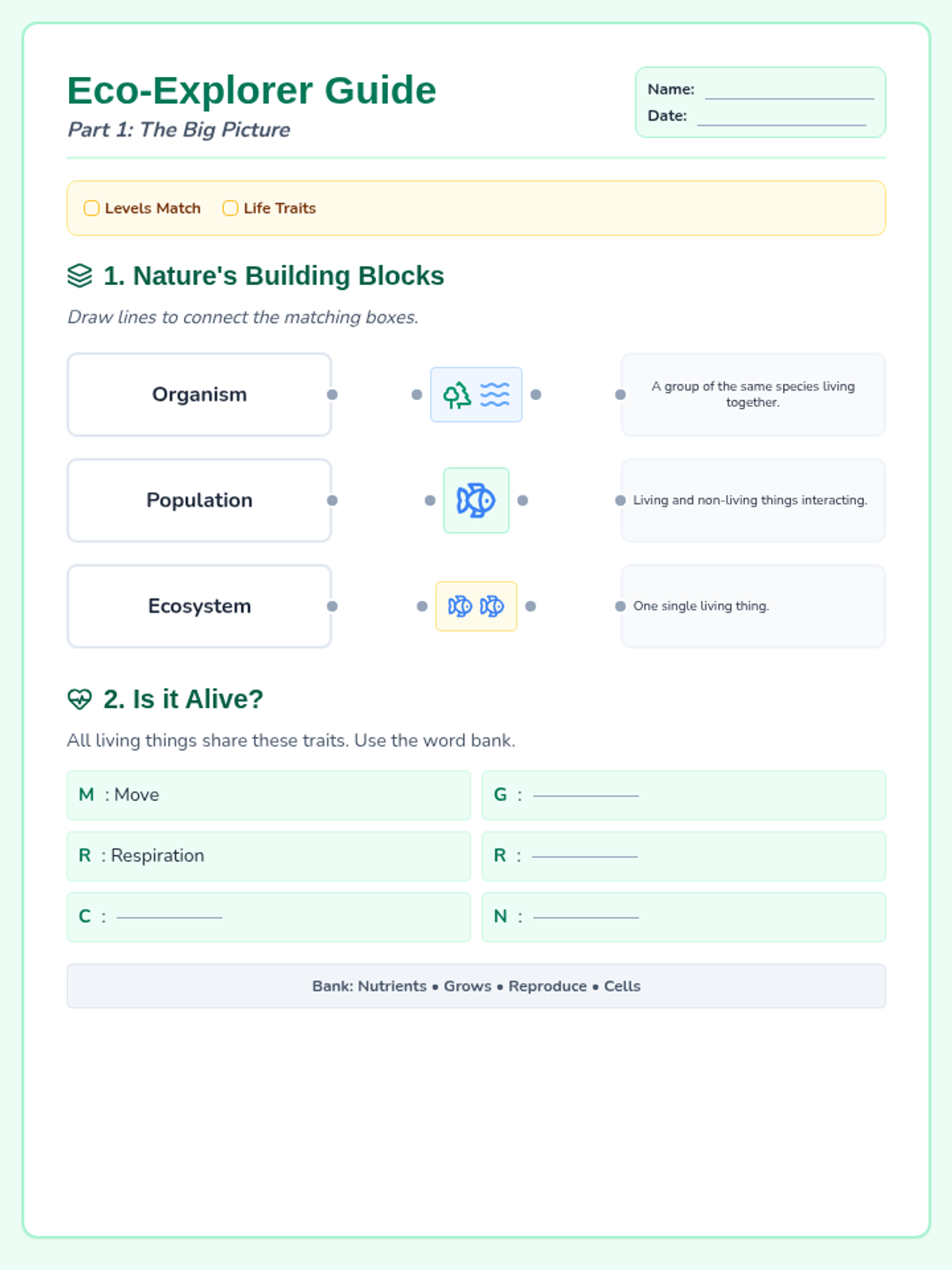
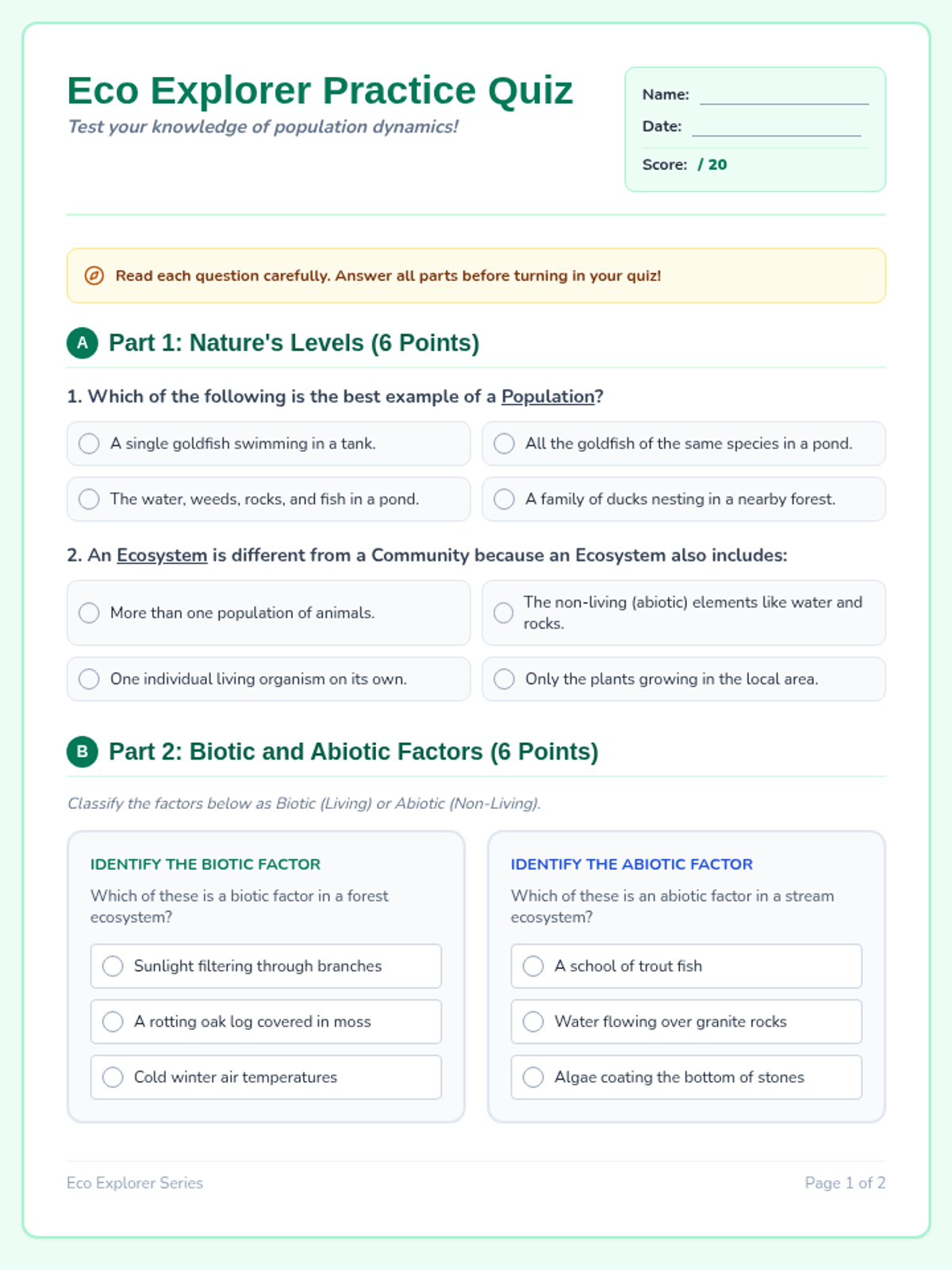
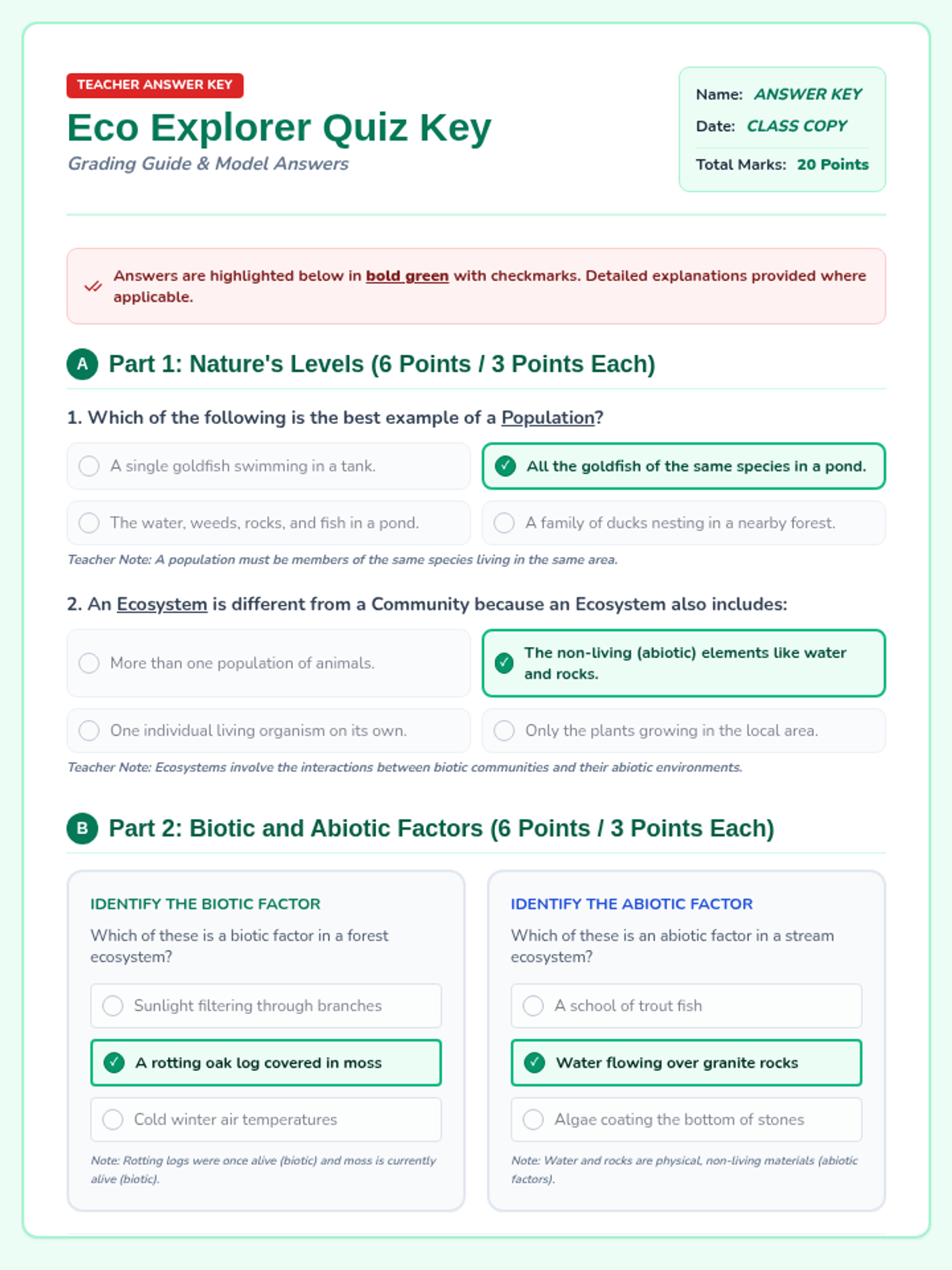
An introductory science lesson exploring ecological levels of organization, biotic versus abiotic factors, and population growth limits.
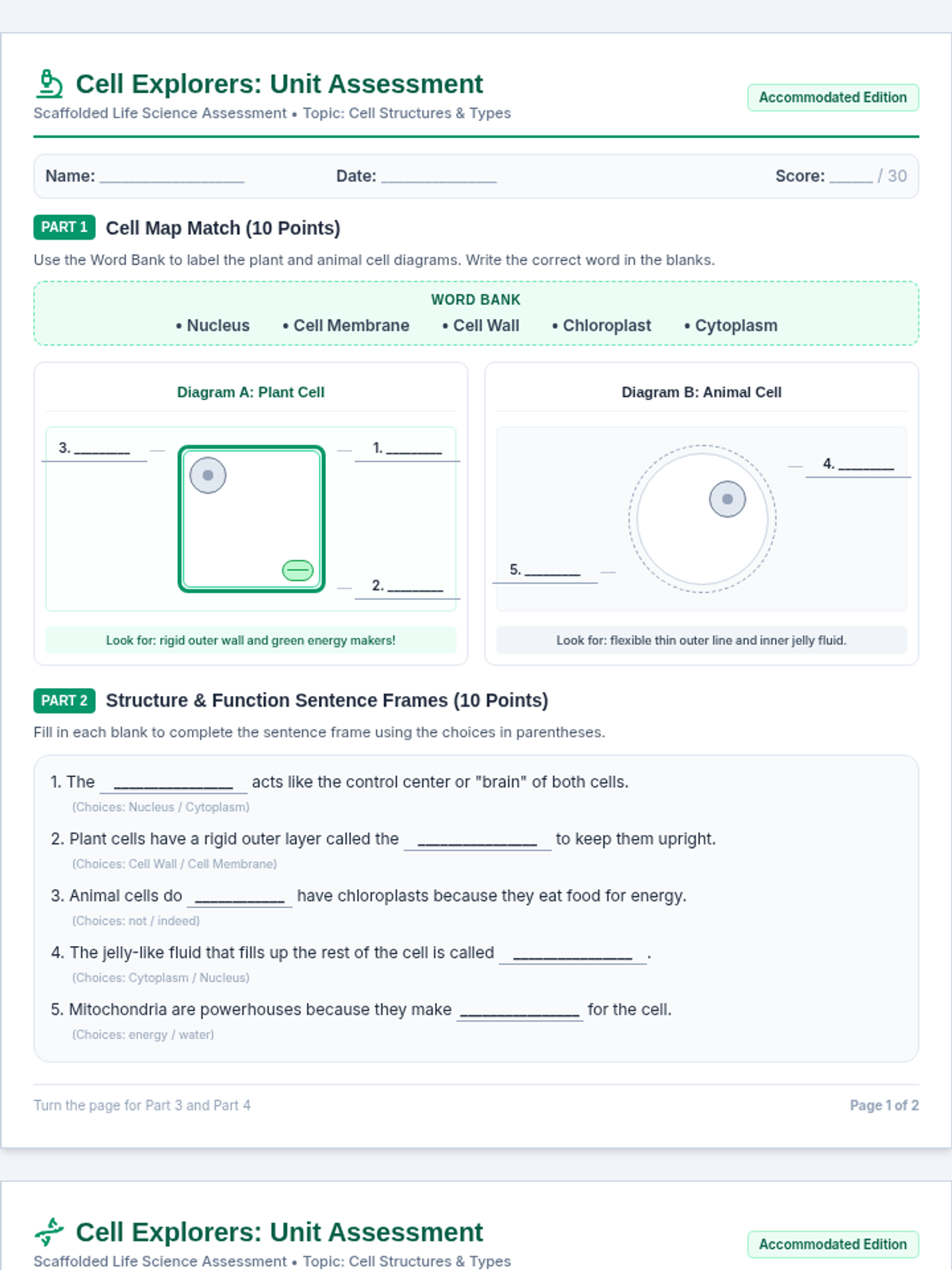
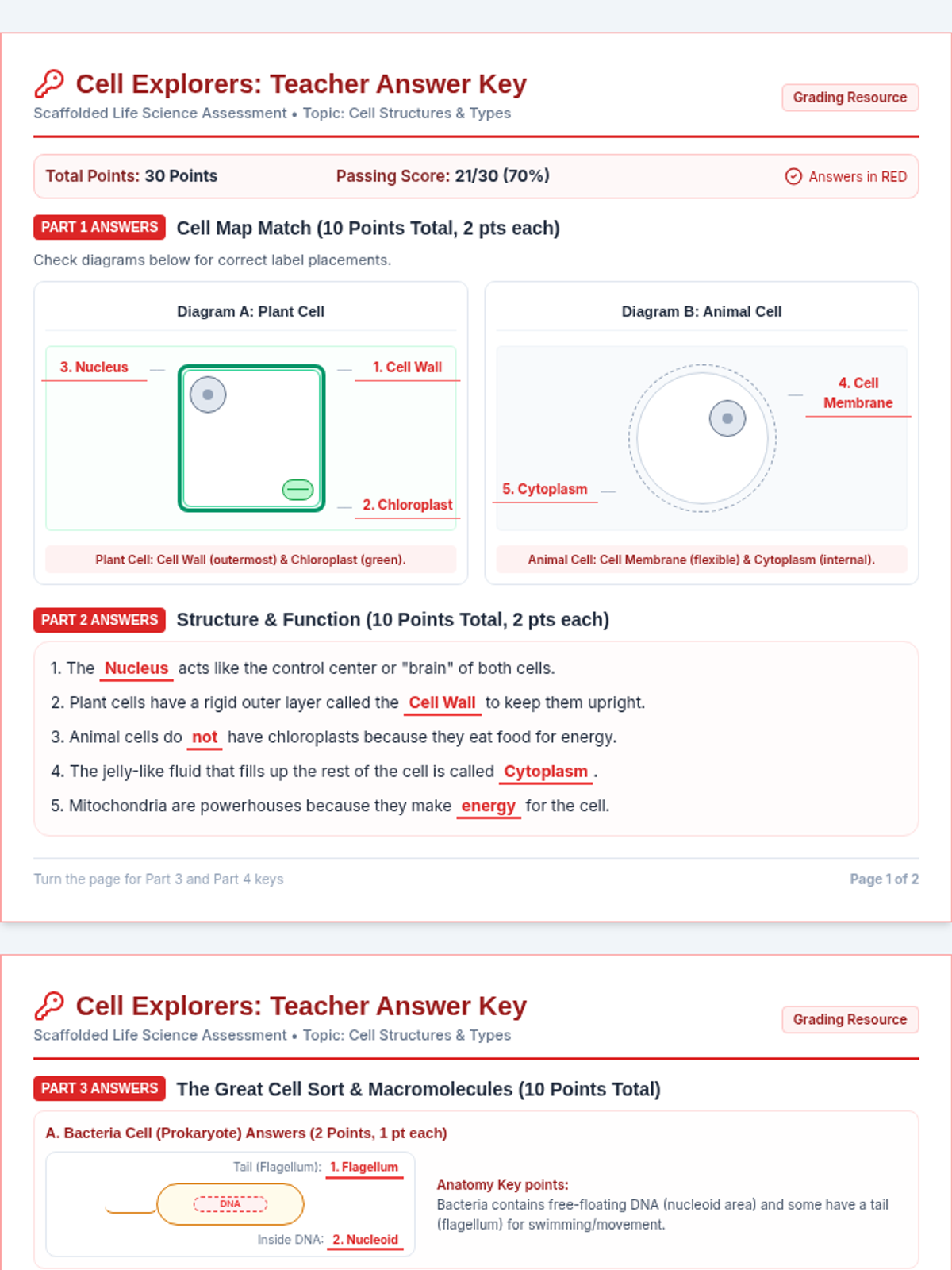
A scaffolded 2-page assessment and corresponding answer key covering prokaryotic and eukaryotic cells, including bacteria, plant, animal, and human cells. Features visual matching, labeling with word banks, sentence frames, and guided sentence starters.
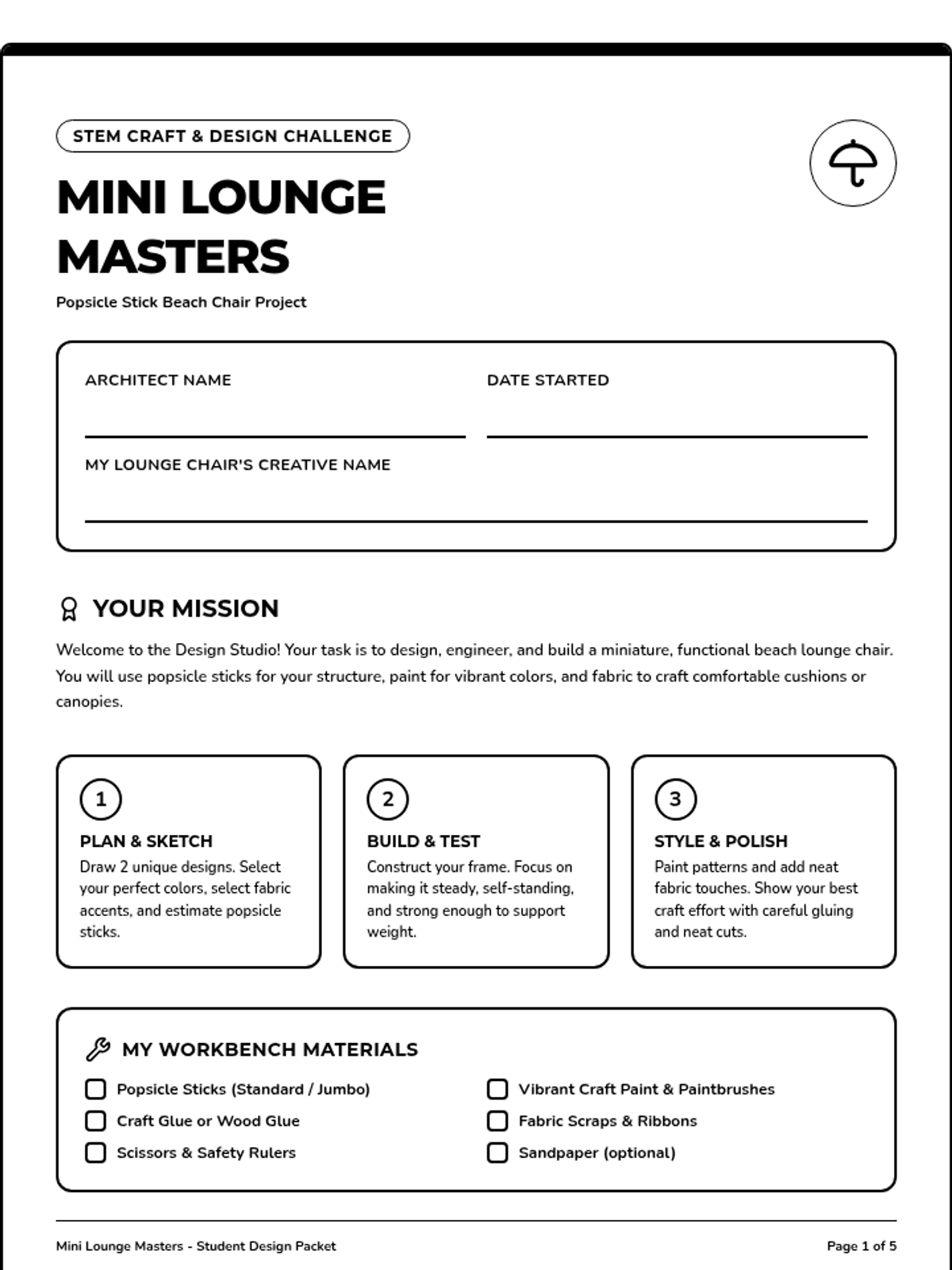
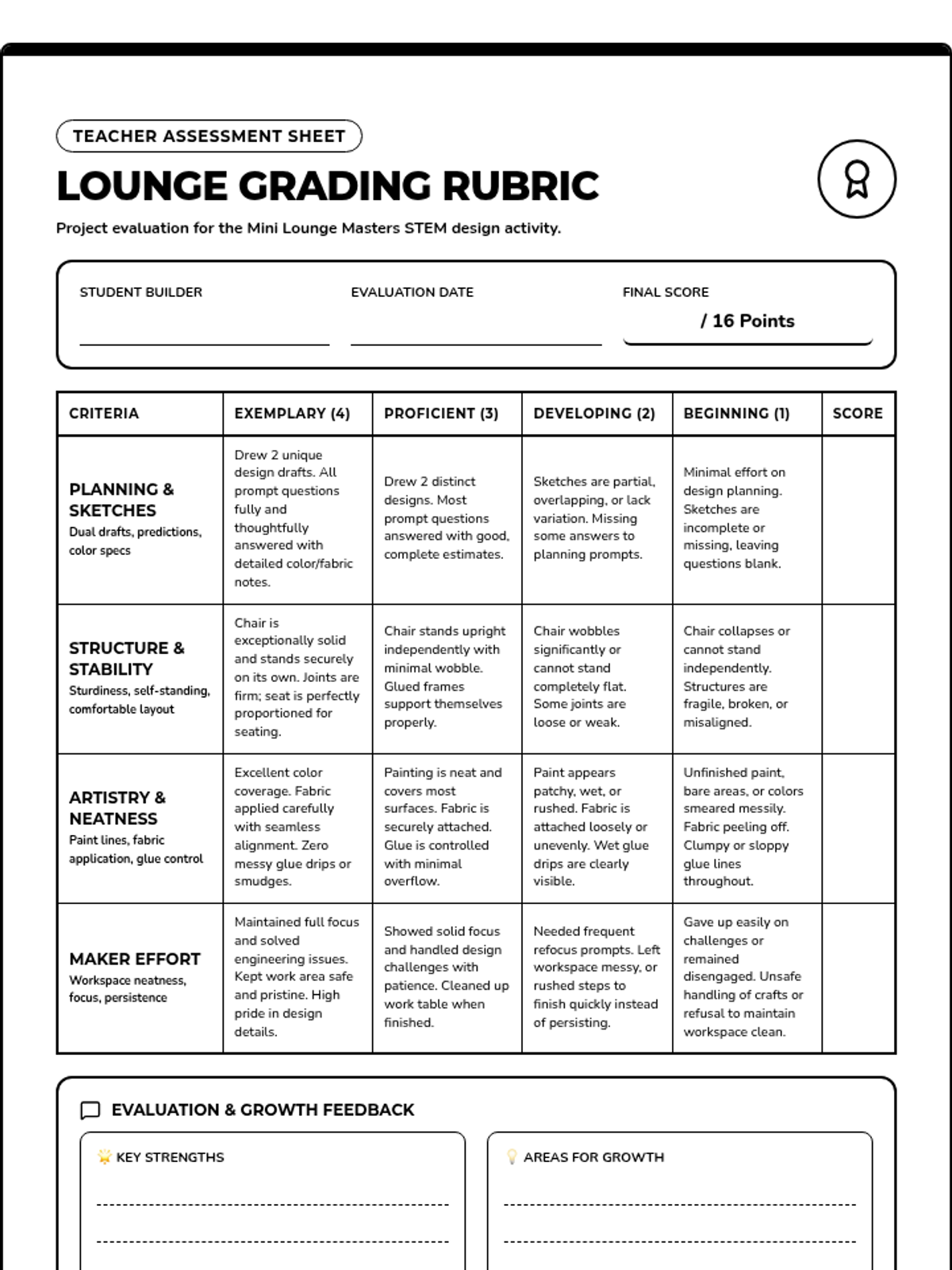
A hands-on engineering and design project where students sketch, build, and decorate a miniature beach chair using popsicle sticks, fabric, and paint. Includes a comprehensive student-facing project packet with milestone checklist and a teacher grading rubric.
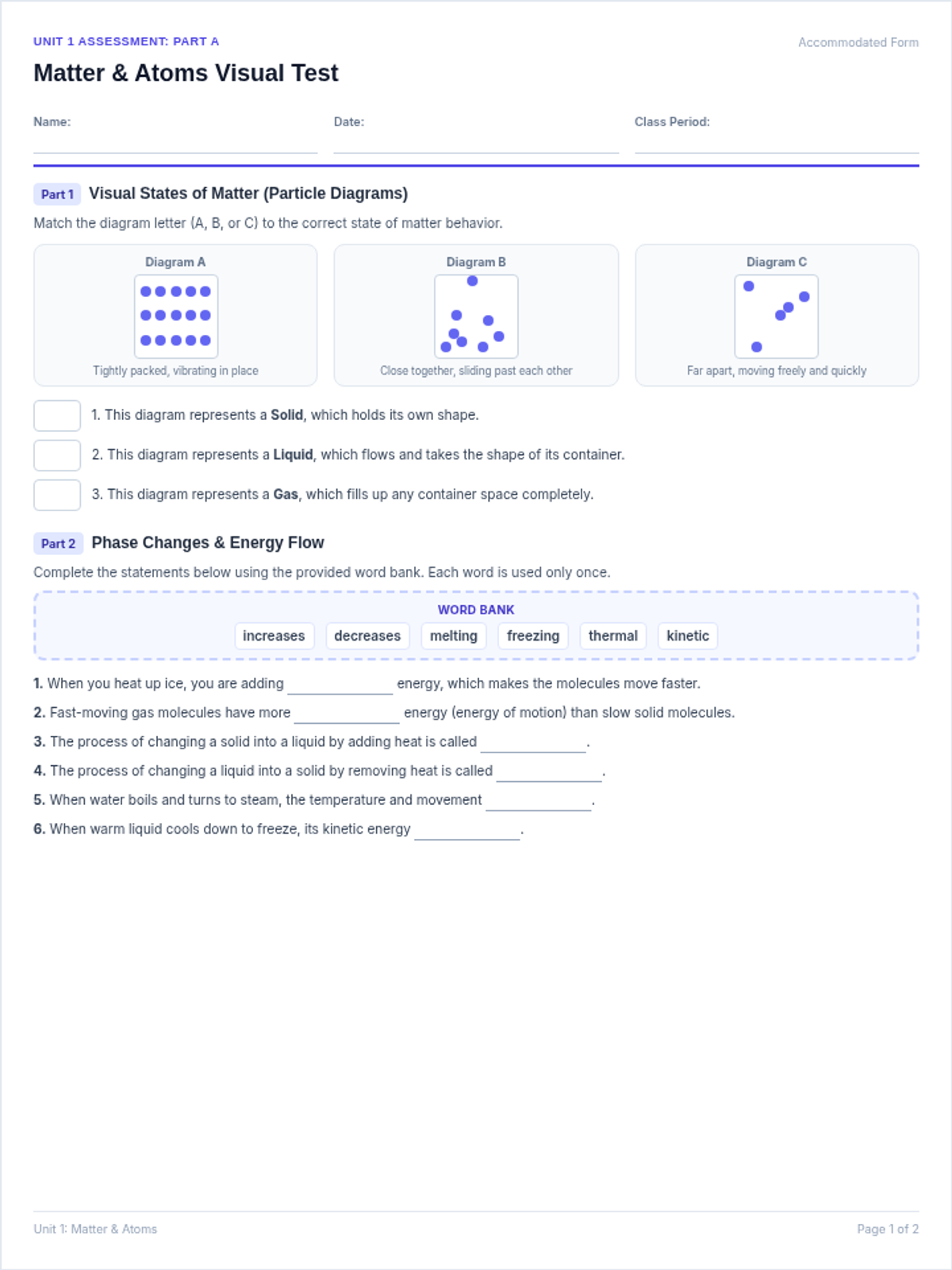
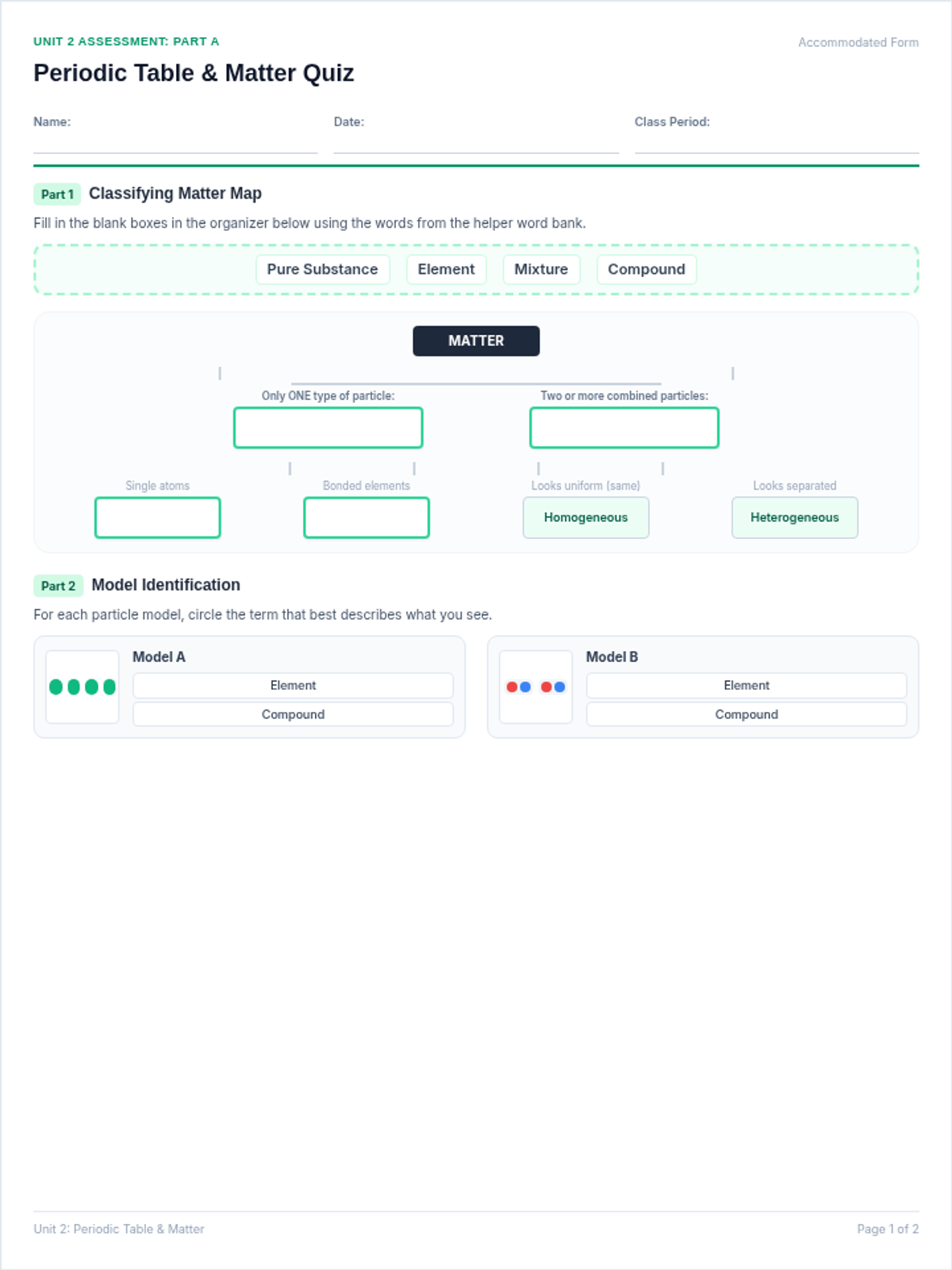
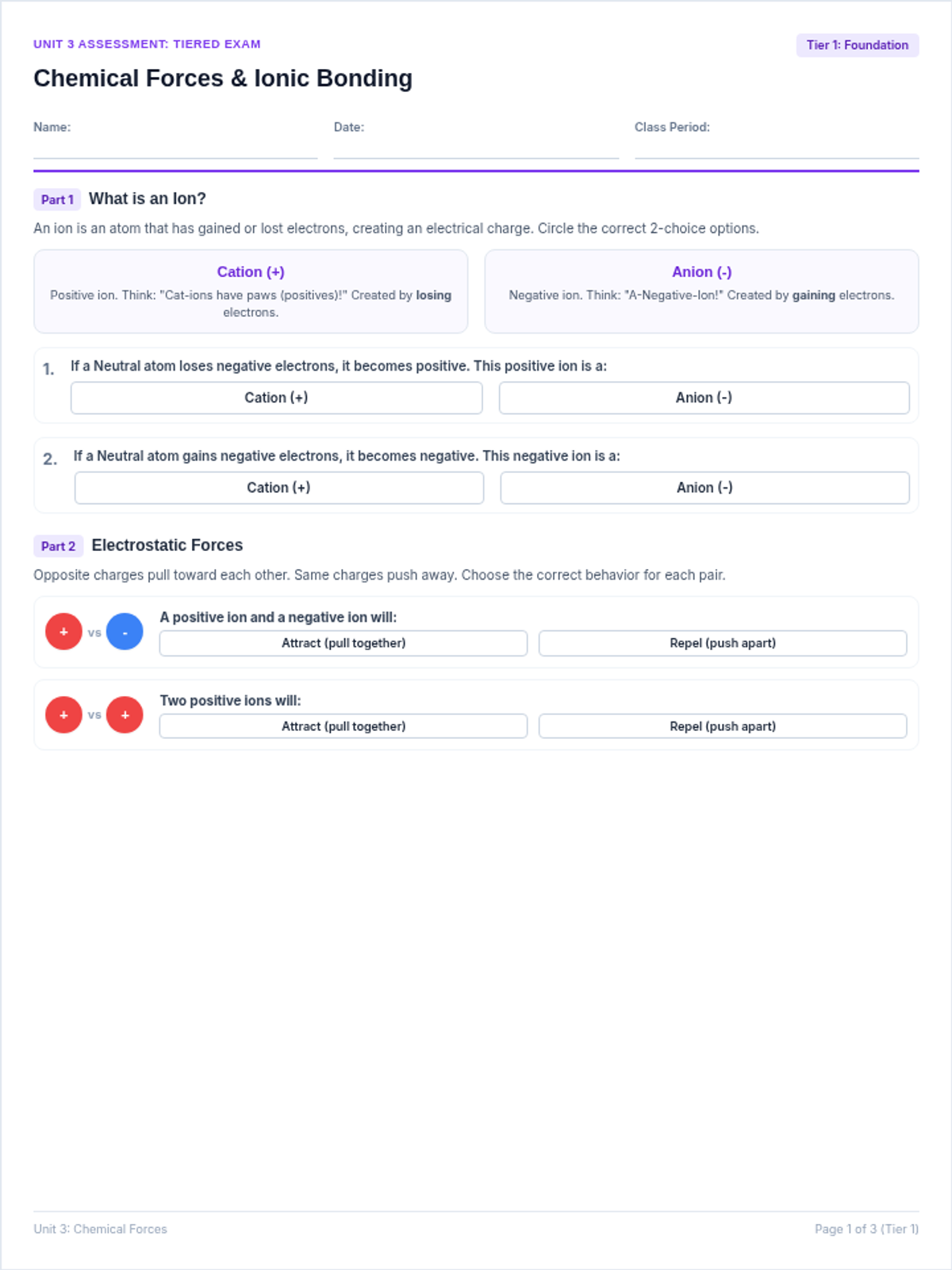
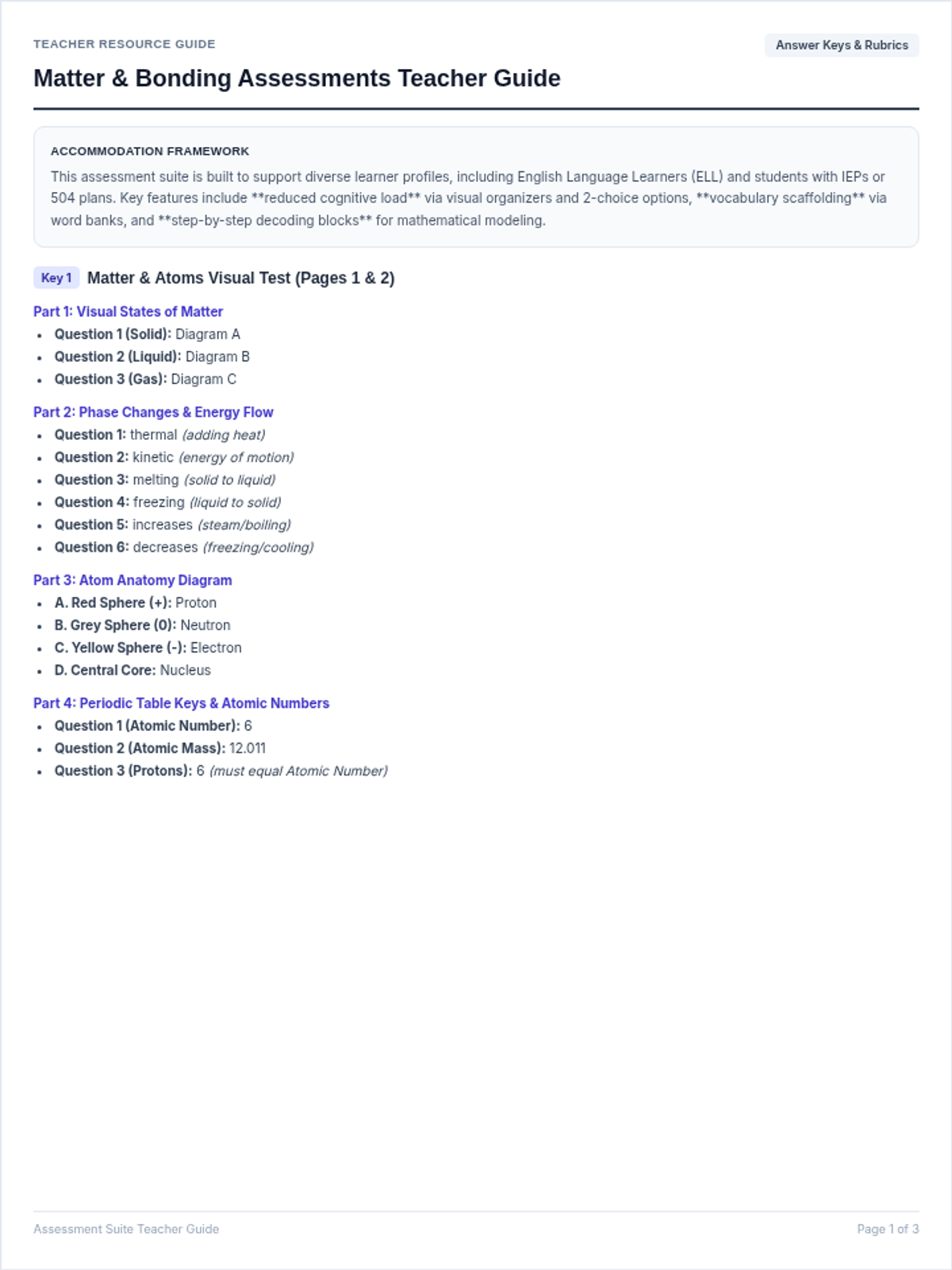
A comprehensive, highly accommodated, and tiered assessment suite covering states of matter, atomic structure, classifications of matter, periodic table trends, ions, and ionic bonding with Coulomb's Law. Built-in diverse learner supports include visual organizers, sentence starters, 2-choice questions, and step-by-step guided calculations.
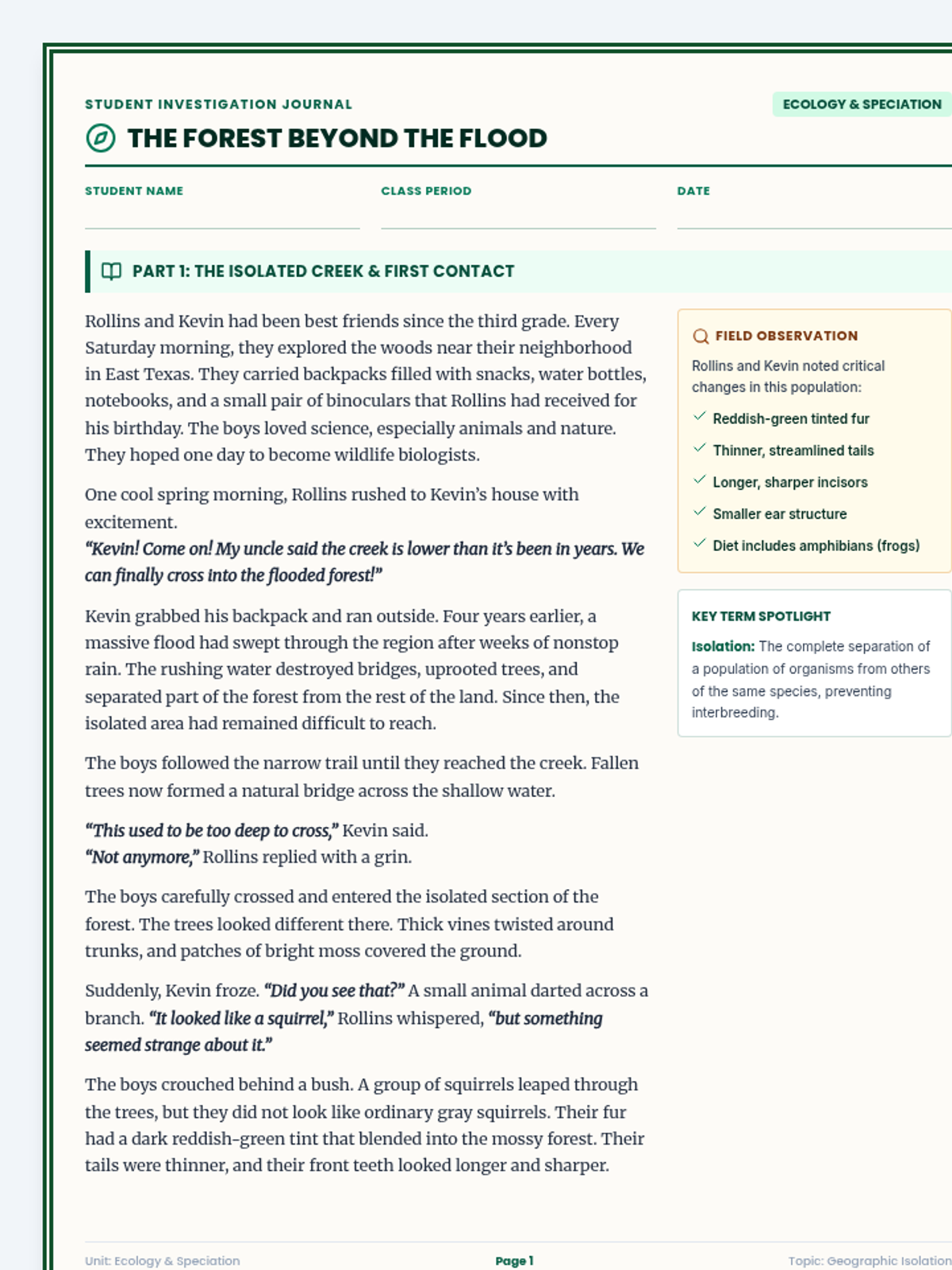
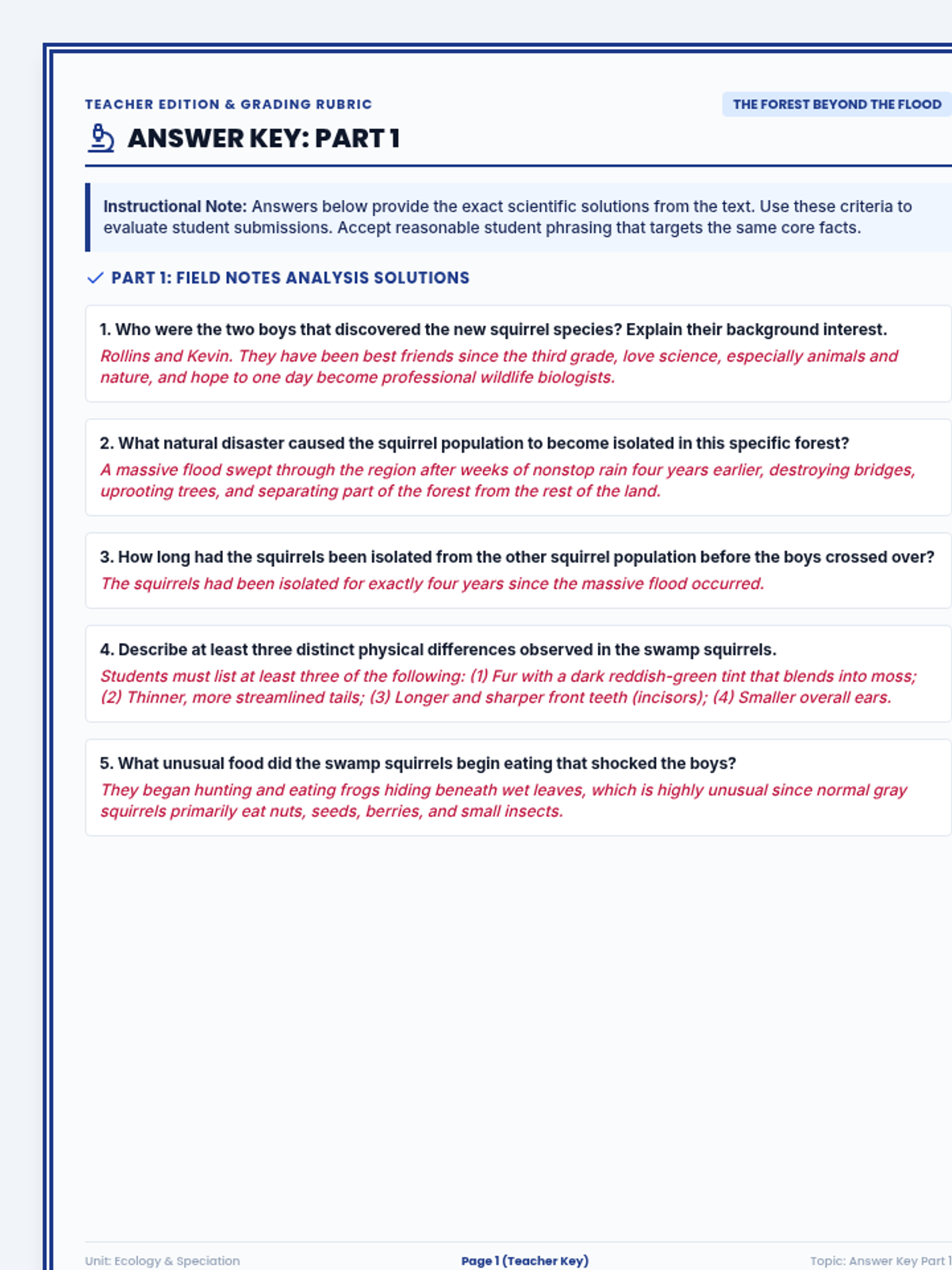
A complete lesson exploring natural selection, speciation, and invasive species through the story of Rollins and Kevin discovering the 'Swamp Squirrels' in an isolated East Texas forest. Includes a student reading packet with integrated comprehension questions and a detailed teacher answer key.
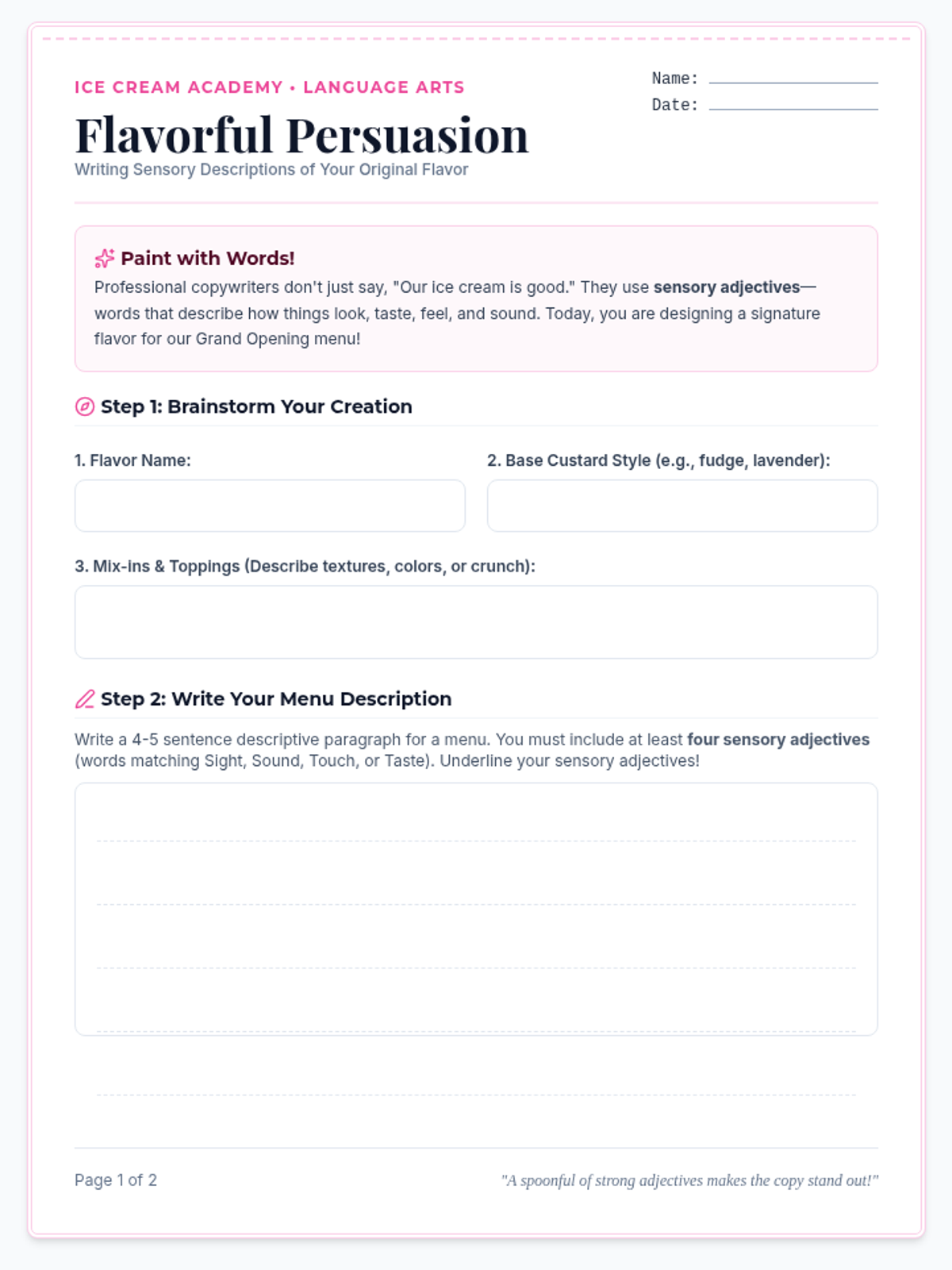
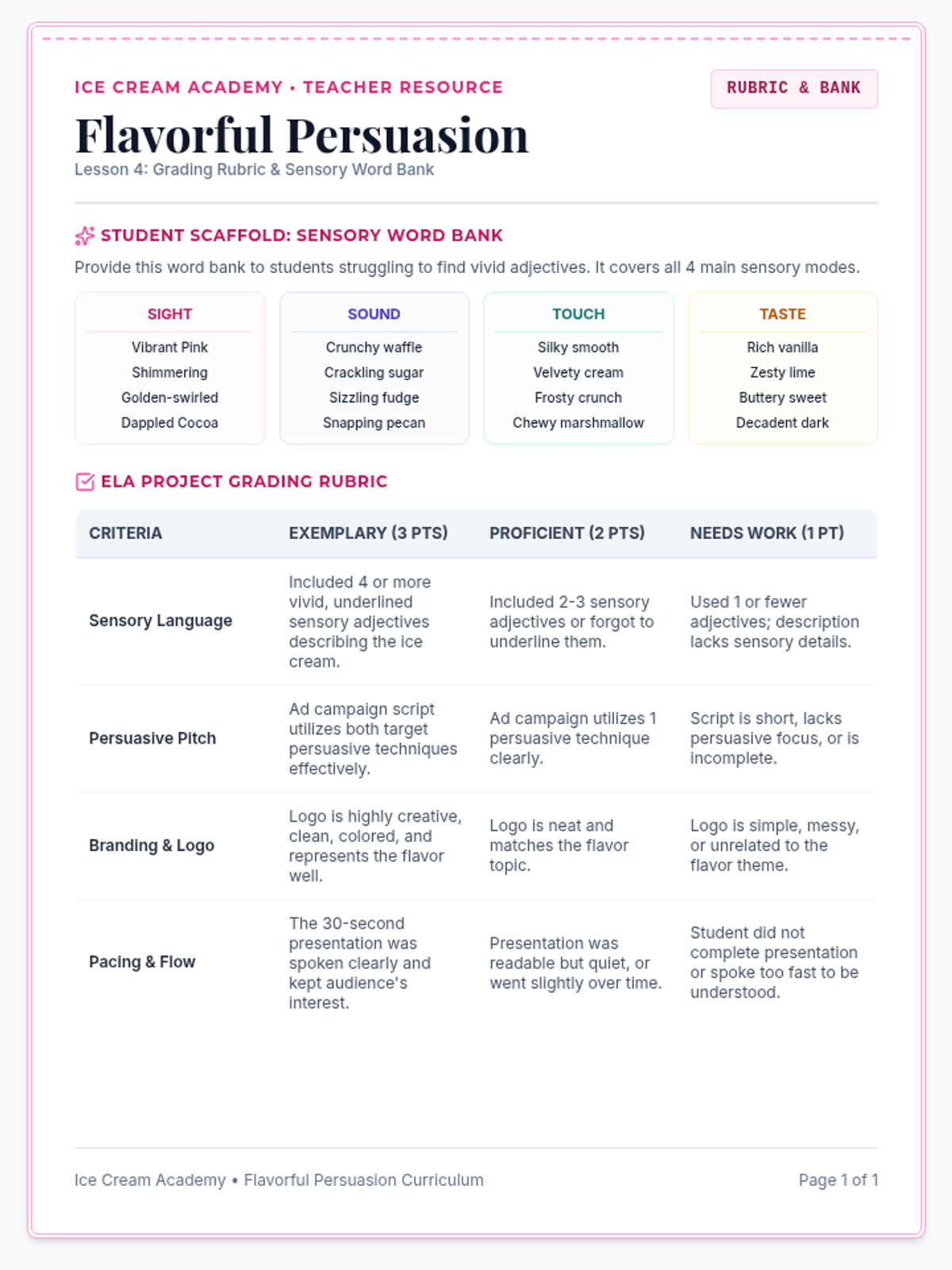
Master sensory language and persuasive advertising techniques by designing an original ice cream flavor, brand logo, and marketing pitch.
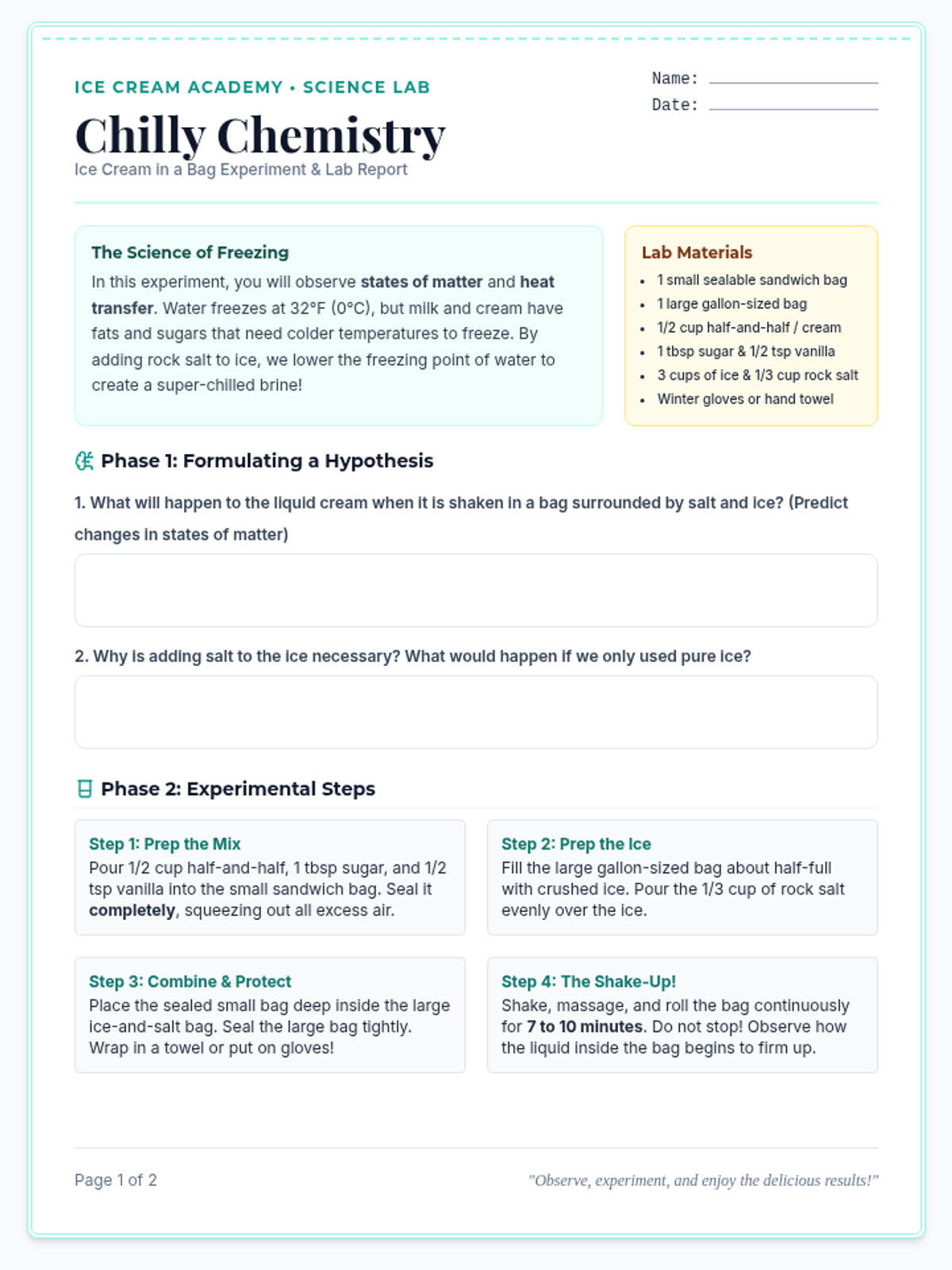
Explore states of matter, heat transfer, and freezing-point depression by making homemade ice cream in a bag using ice, salt, and cream.
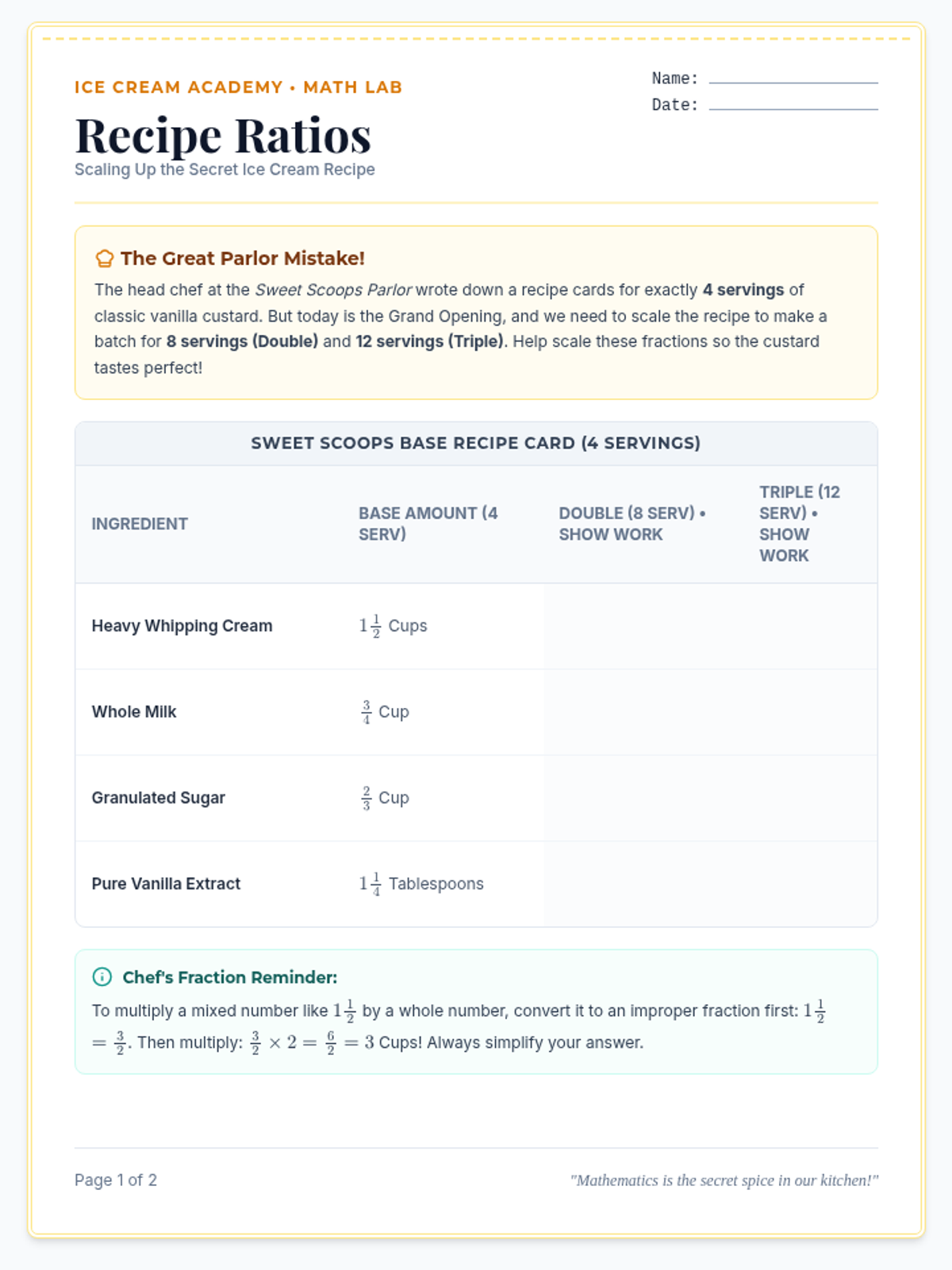
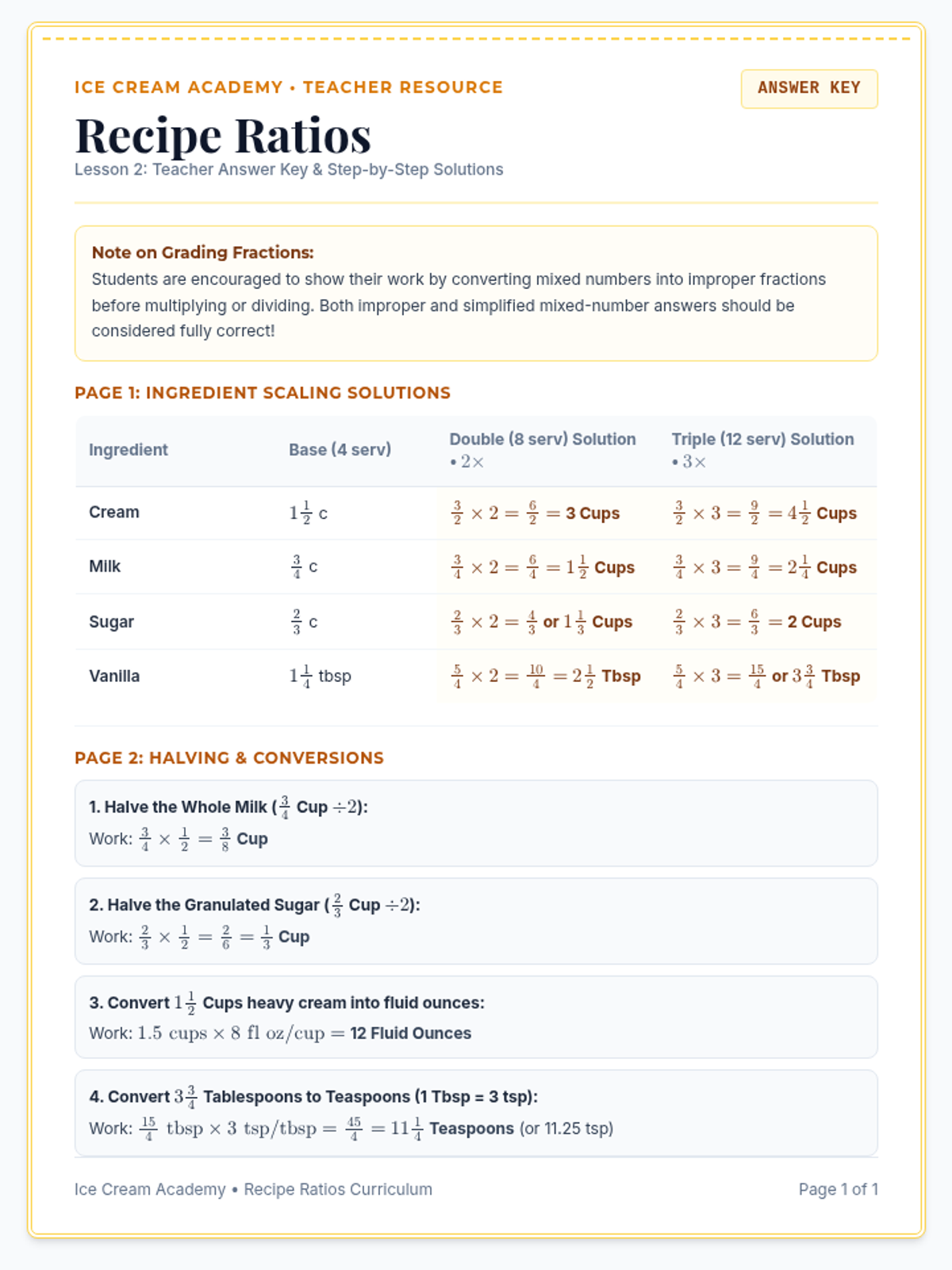
Apply fraction multiplication and division to scale ice cream recipes up and down, converting fluid ounces, cups, and tablespoons.
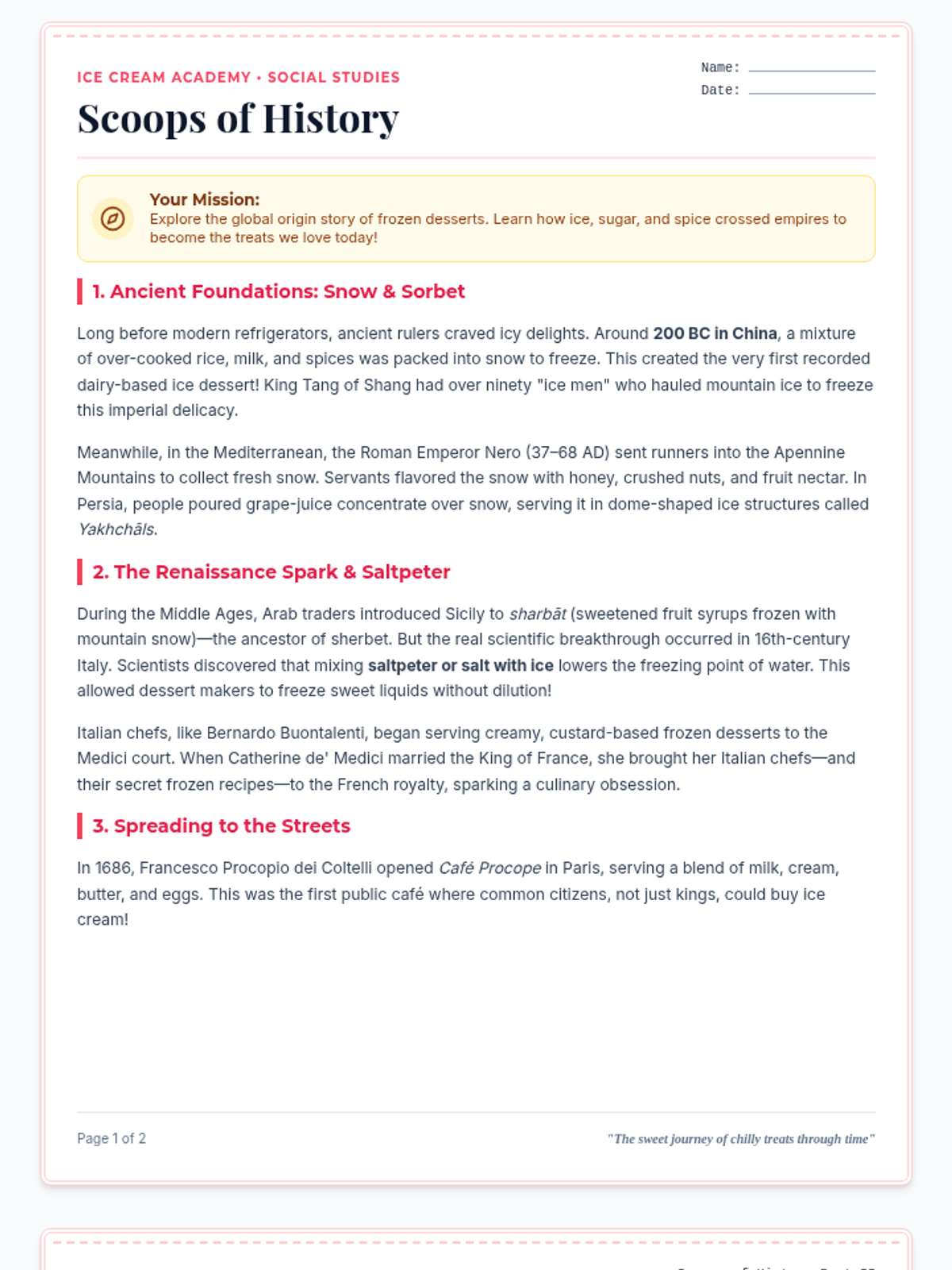
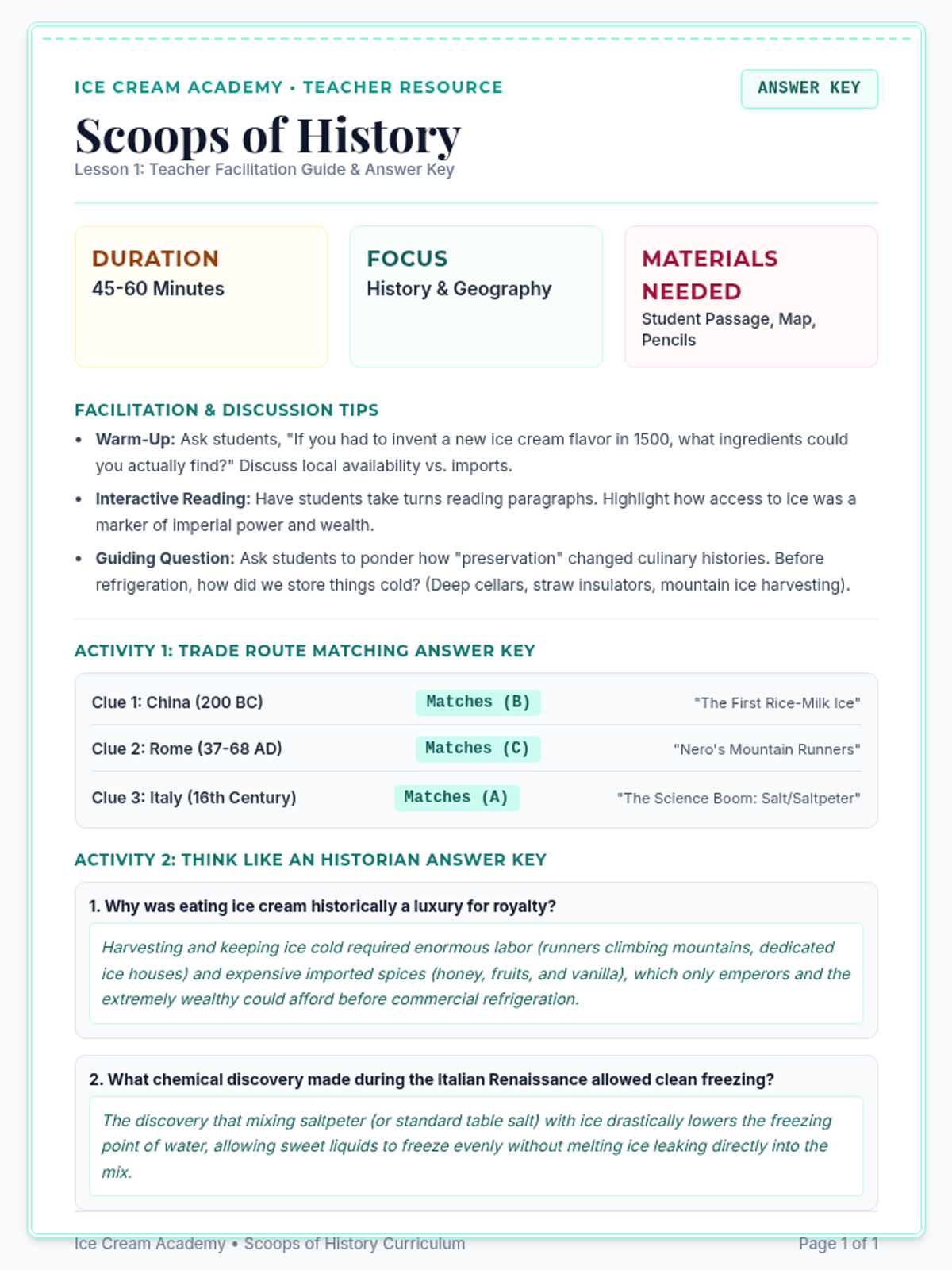
Trace the historical origins of frozen desserts from ancient China and Rome to modern day, mapping how ingredients like vanilla, sugar, and cacao traveled globally.
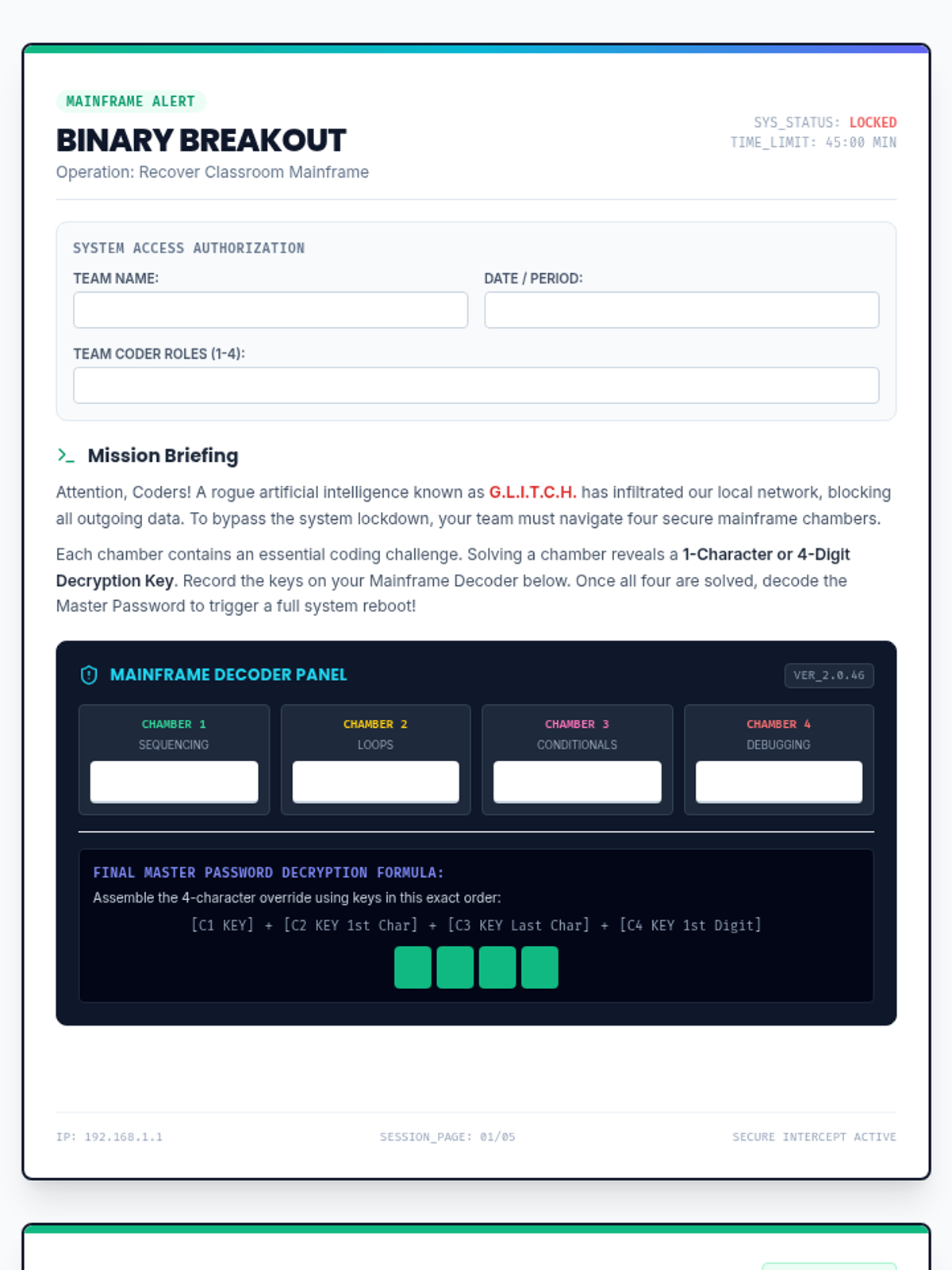
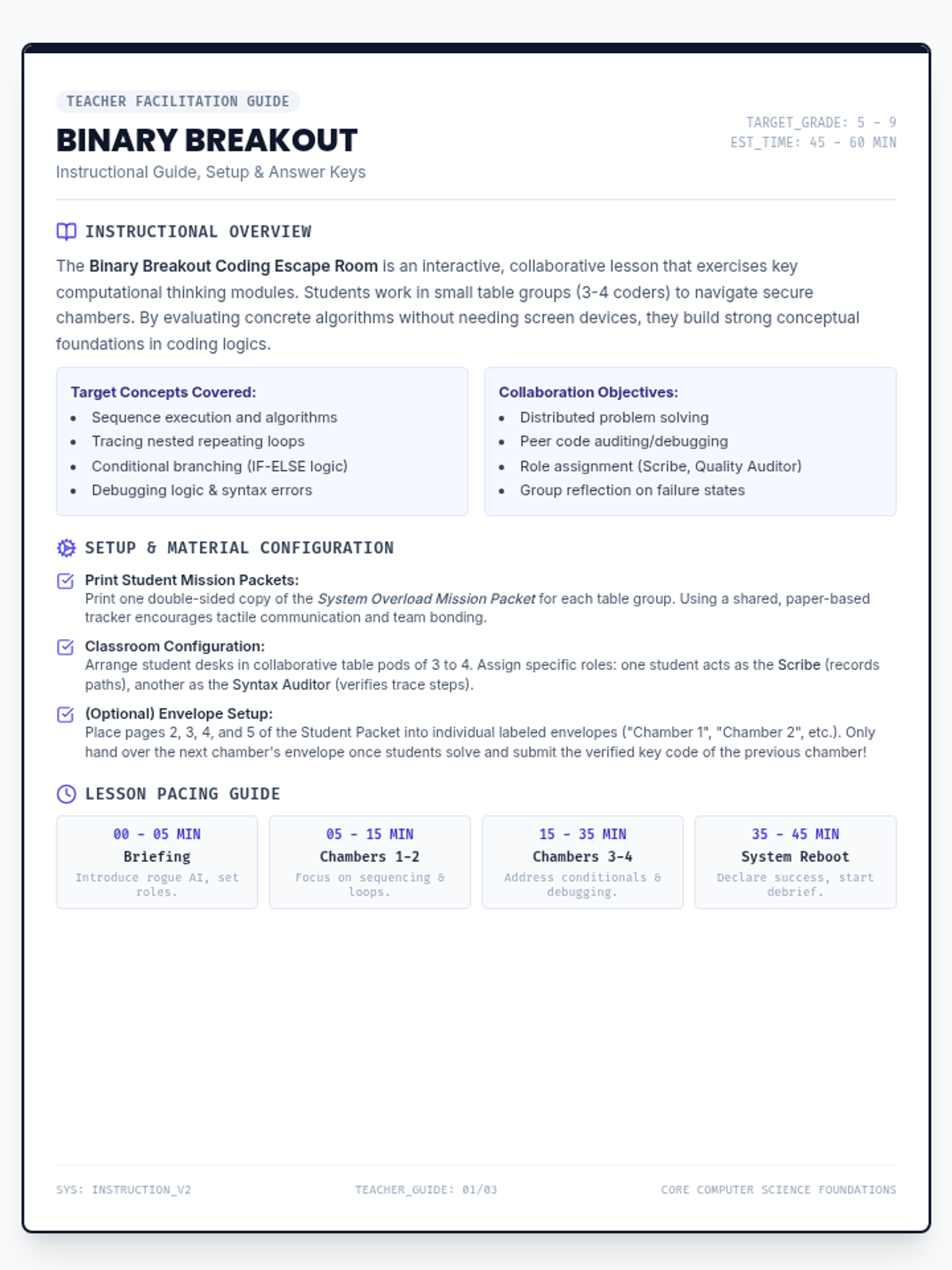
An immersive, puzzle-driven coding escape room where students work in table groups to defeat a rogue AI. By solving four distinct chambers focusing on sequencing, loops, conditionals, and debugging, students demonstrate core computational thinking skills.
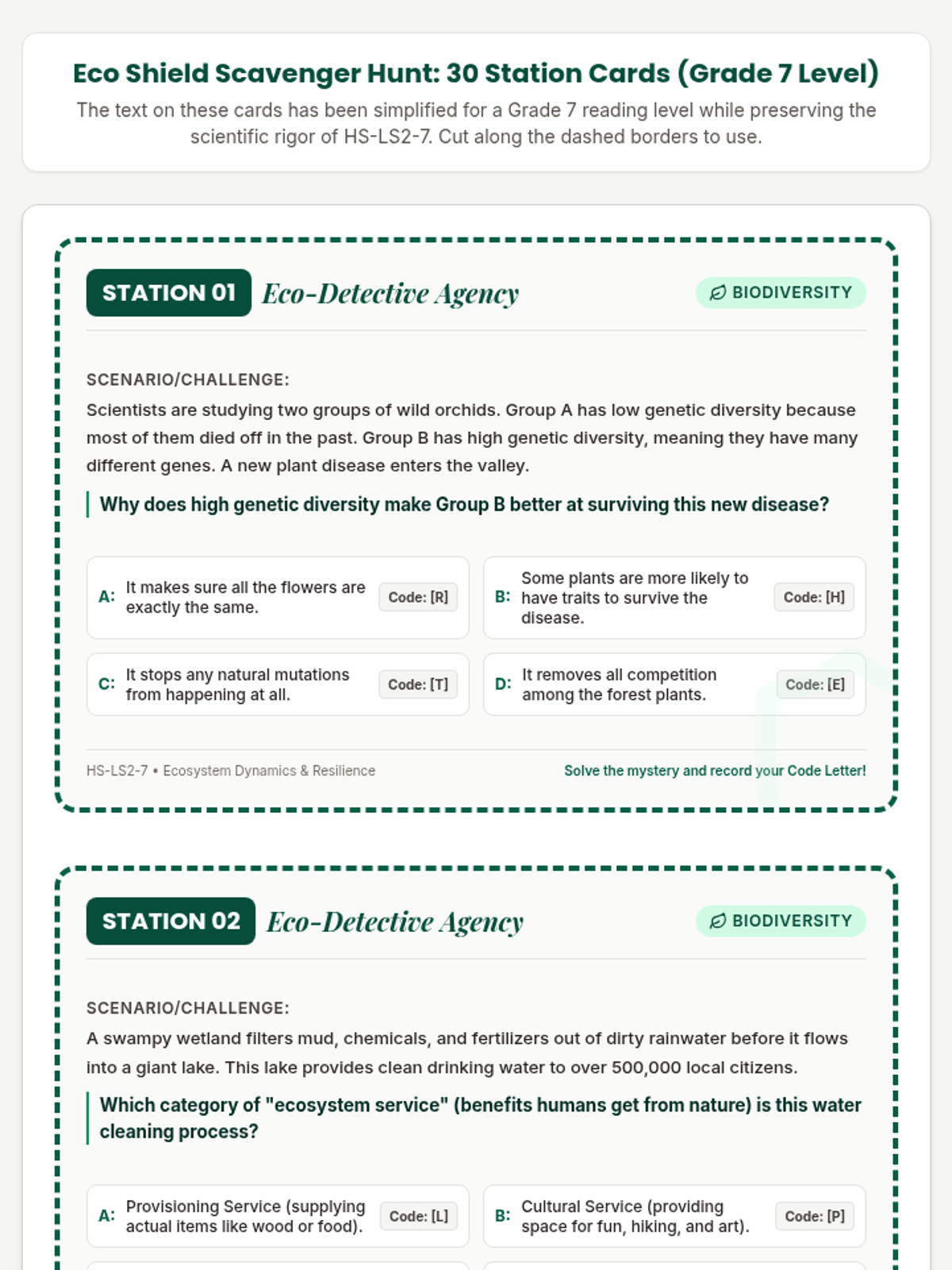
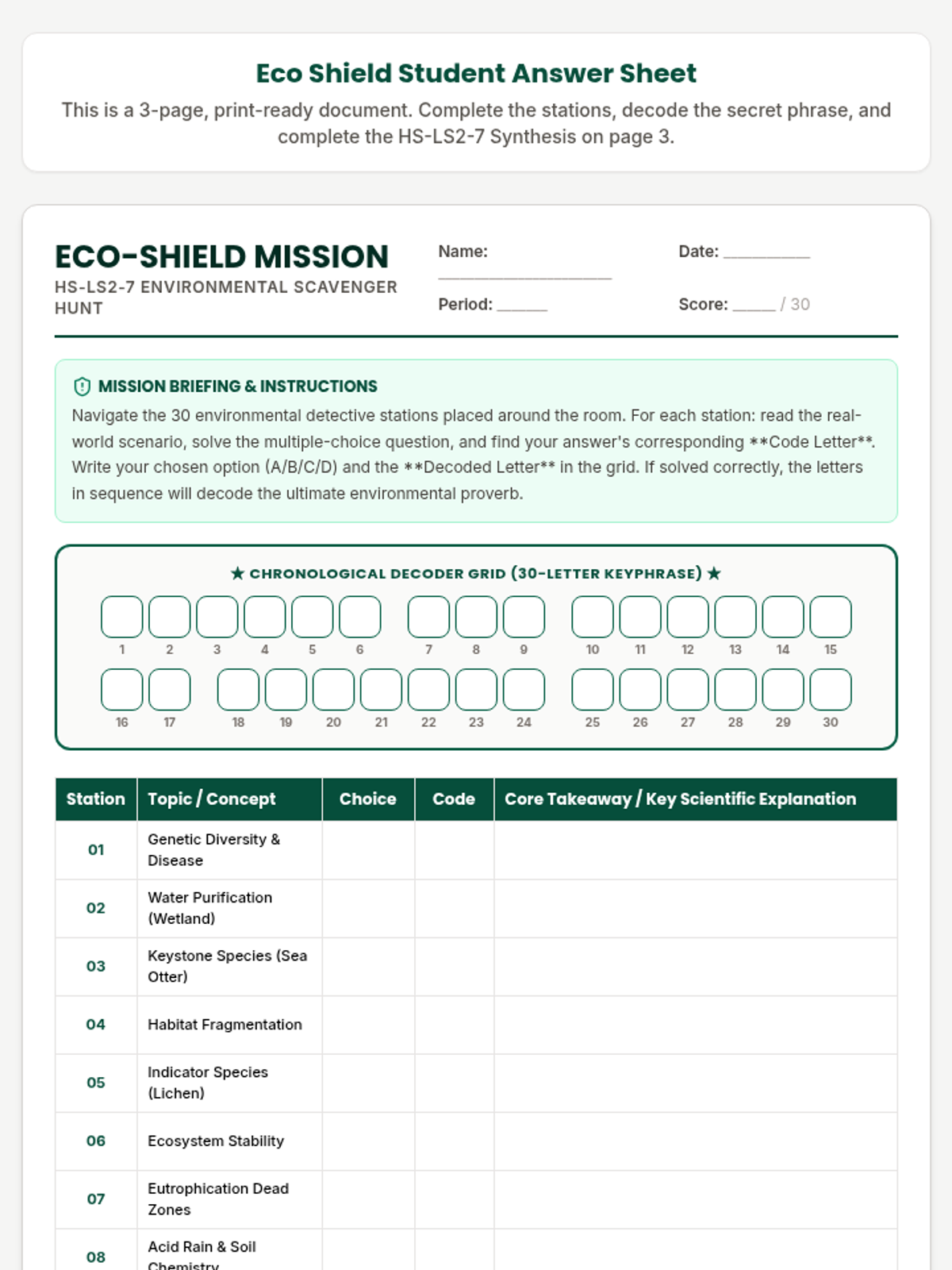
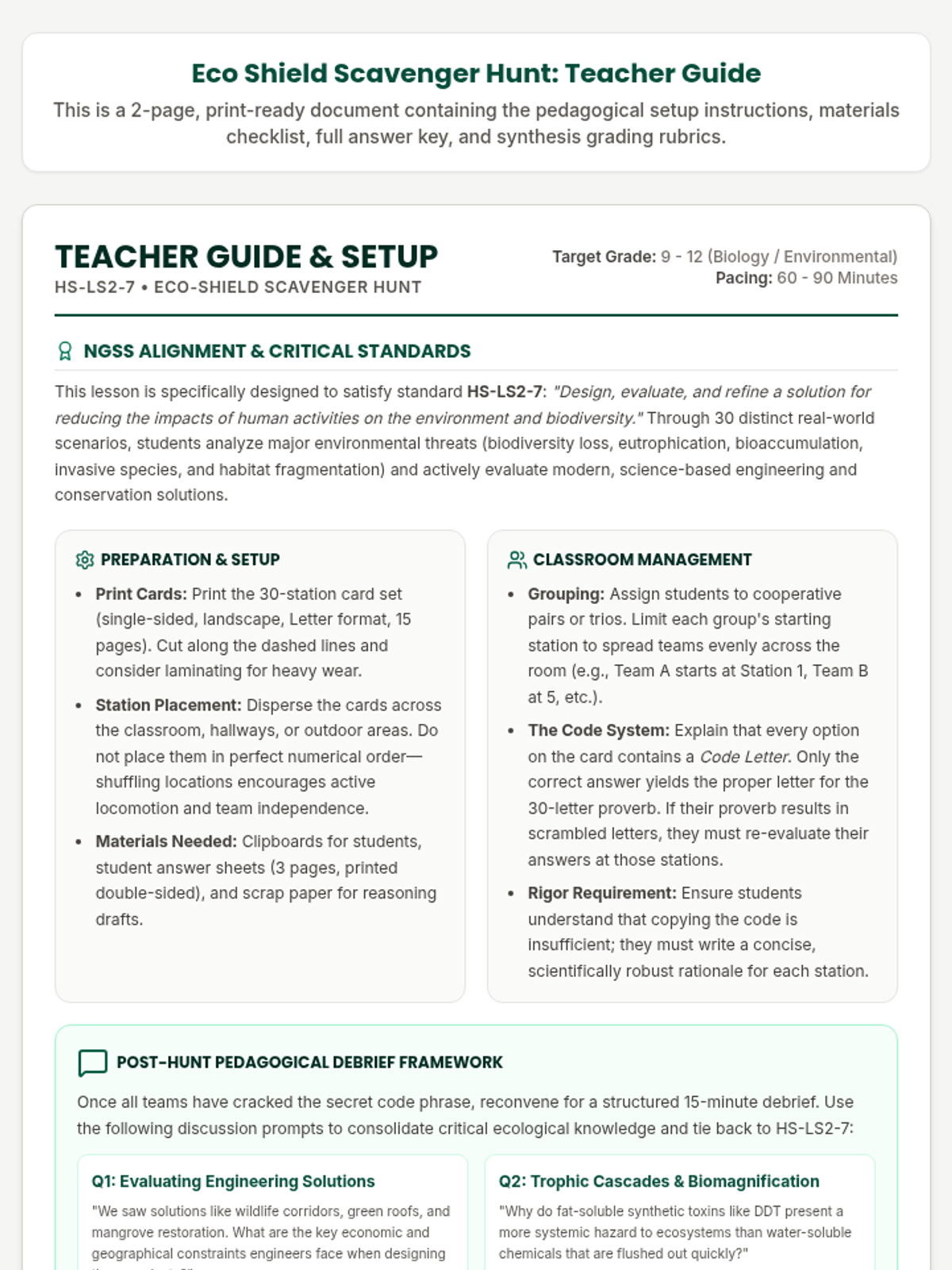
An active, movement-based scavenger hunt game for high school students to master human impact, biodiversity, sustainability, biological magnification, and invasive species (aligned to HS-LS2-7). Includes 30 custom-designed Station Cards, an interactive Student Answer Sheet, and a comprehensive Teacher Guide with Answer Key.
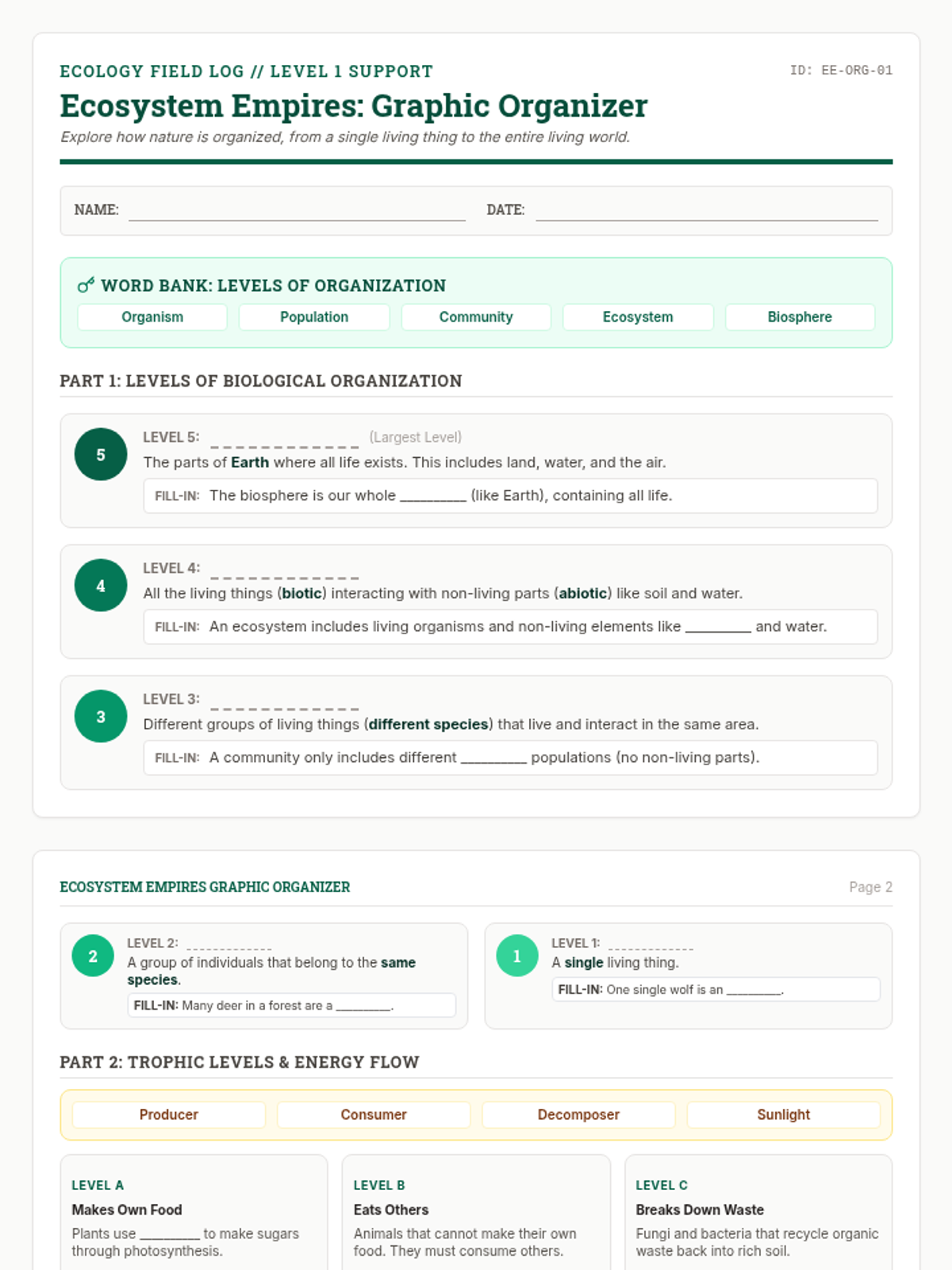
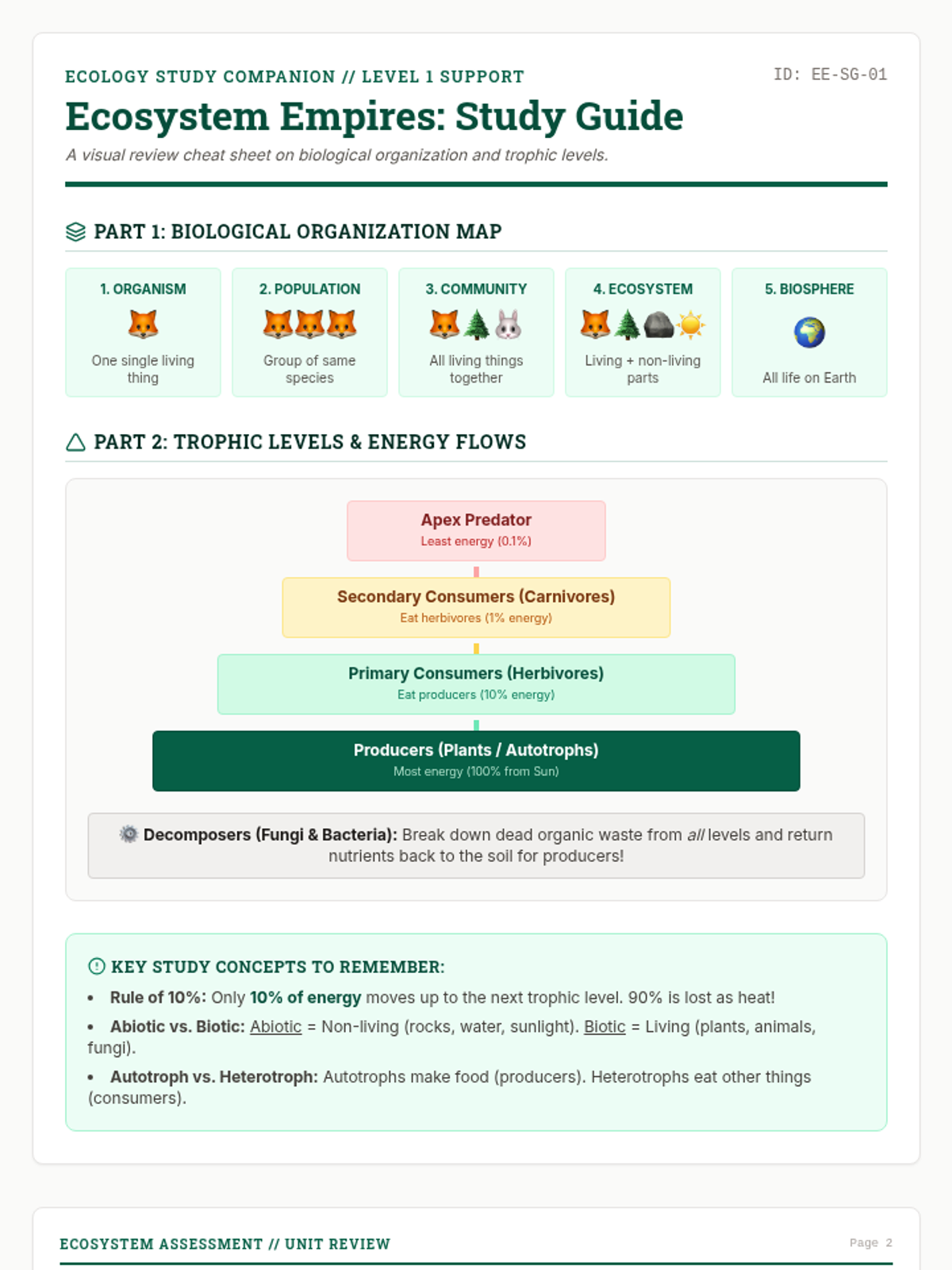
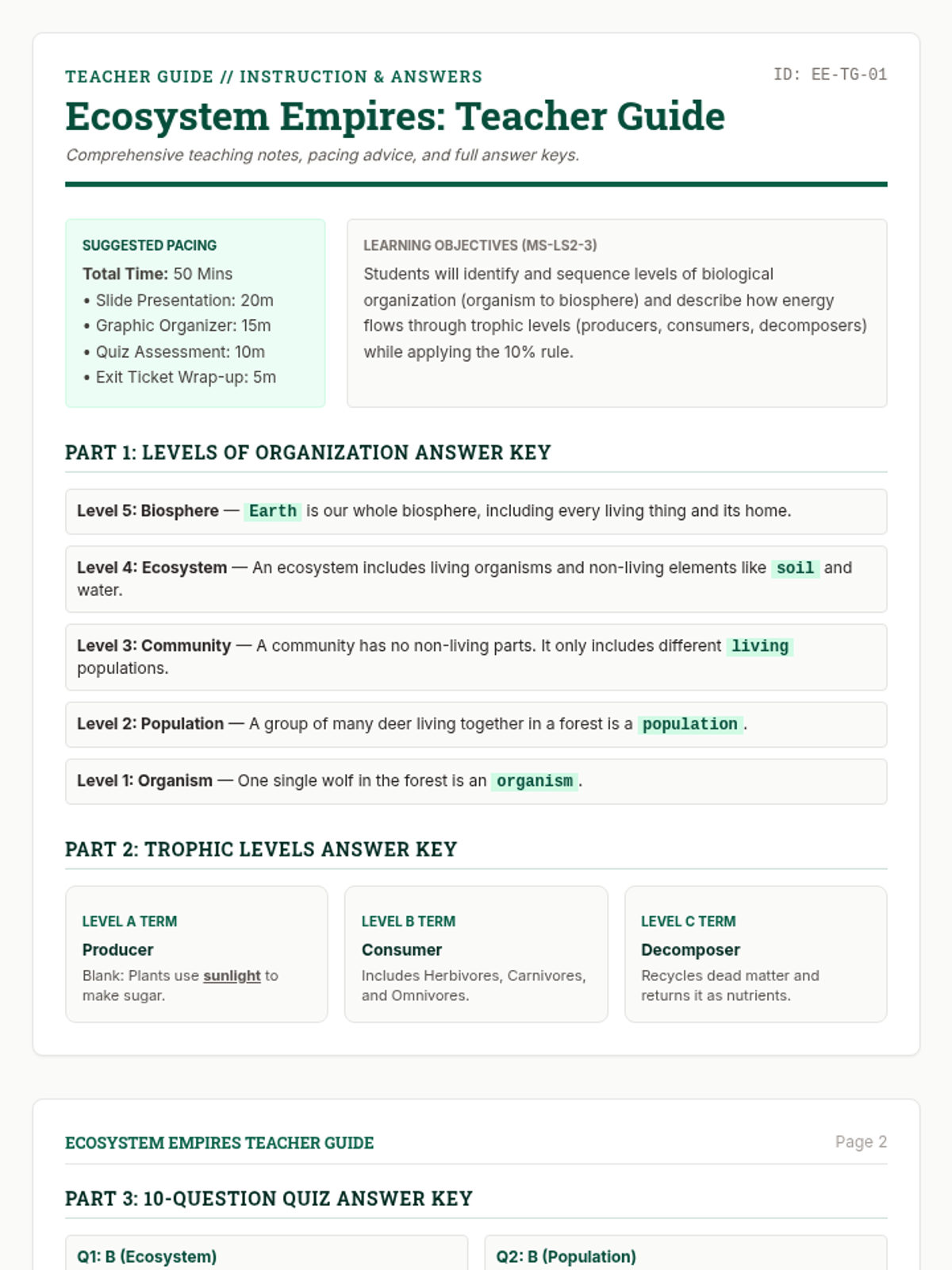
A comprehensive ecology review lesson focused on the levels of biological organization (organism to biosphere) and trophic levels (energy flow, producers, consumers, decomposers). Designed with scaffolded, modified text and guided fill-in-the-blanks for accessible learning.
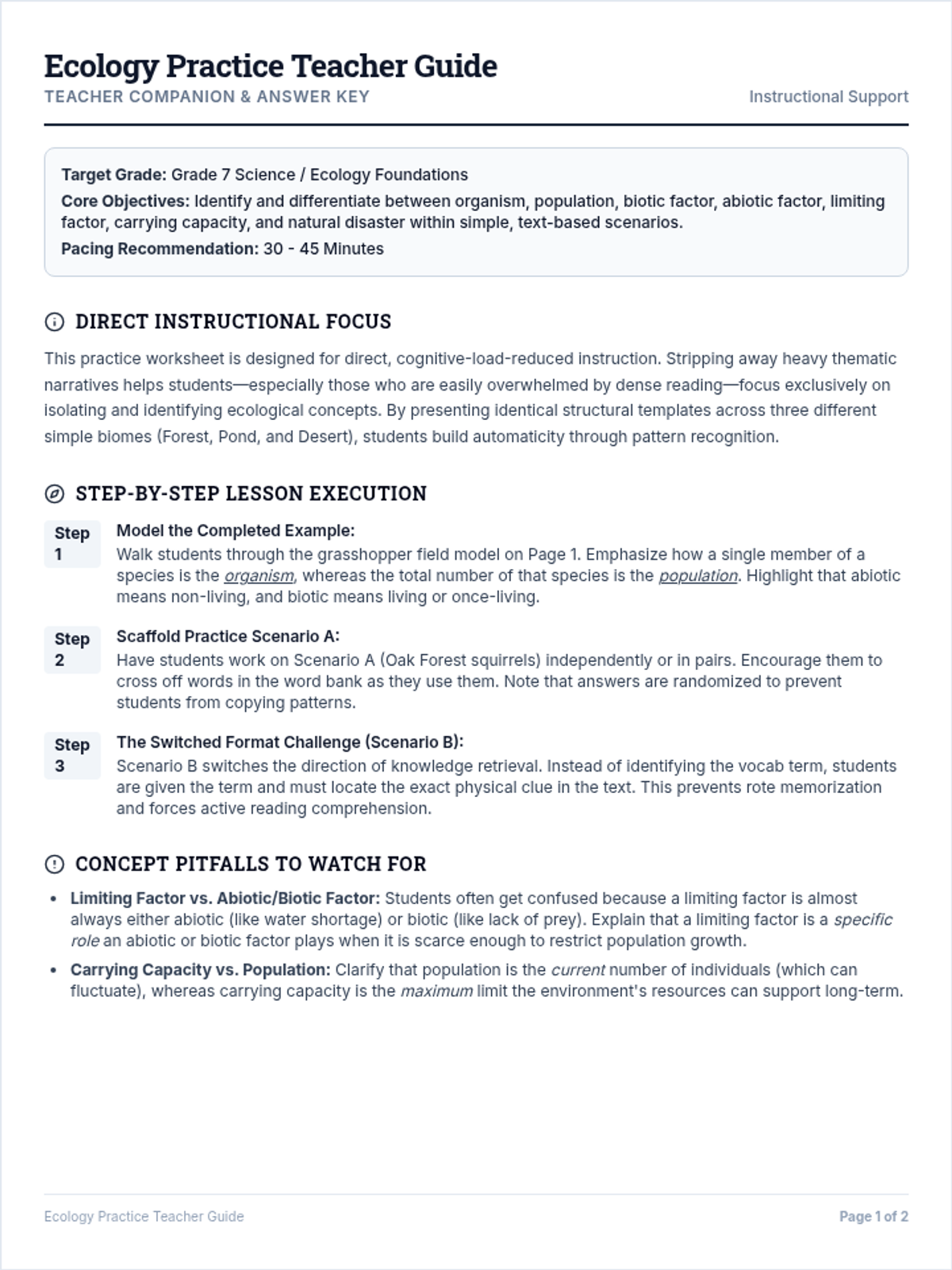
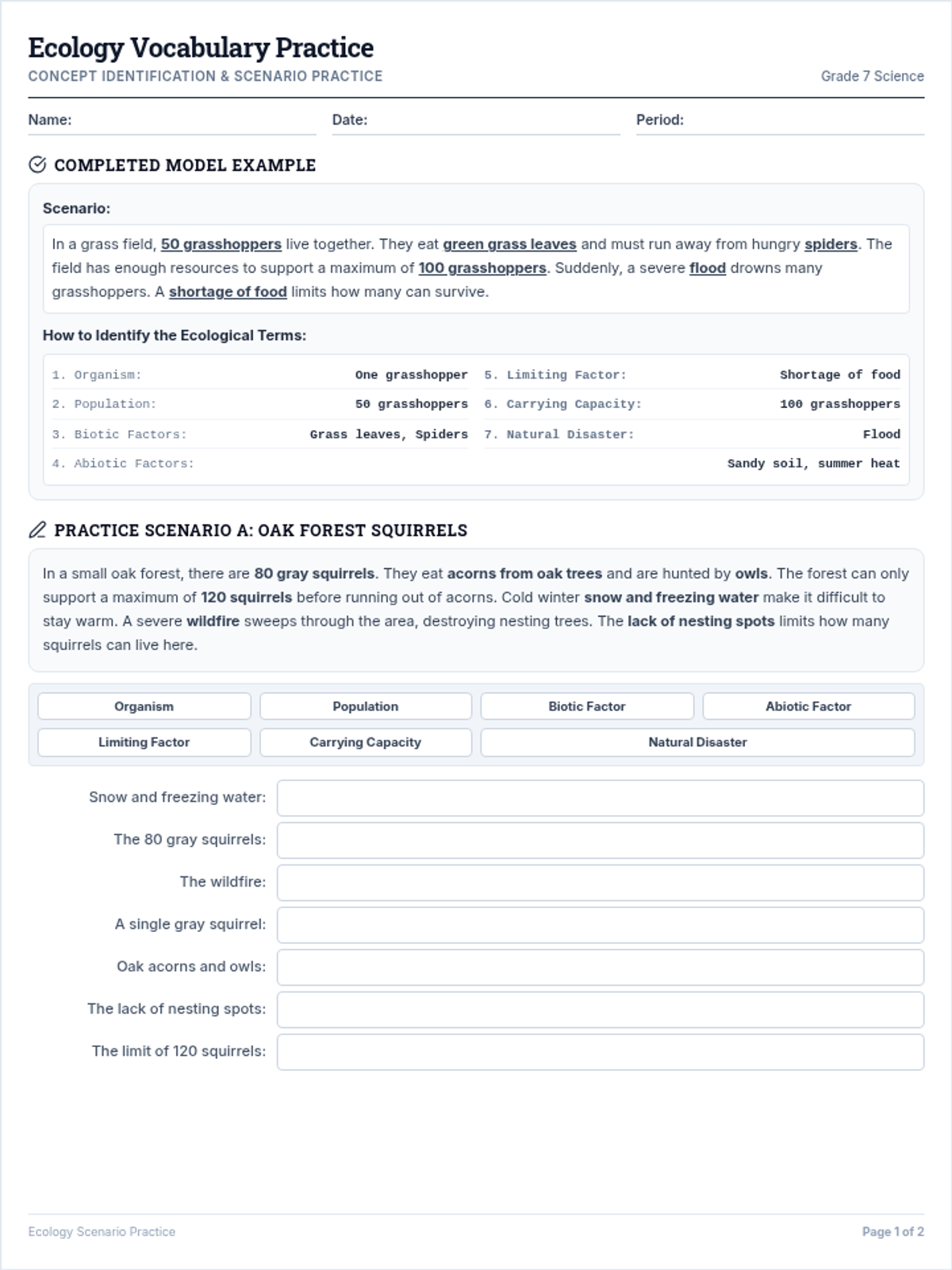
A simplified, unthemed practice packet and guide for middle school ecology. Students master ecological levels, abiotic/biotic factors, limiting factors, carrying capacity, and natural disasters through direct, step-by-step examples.
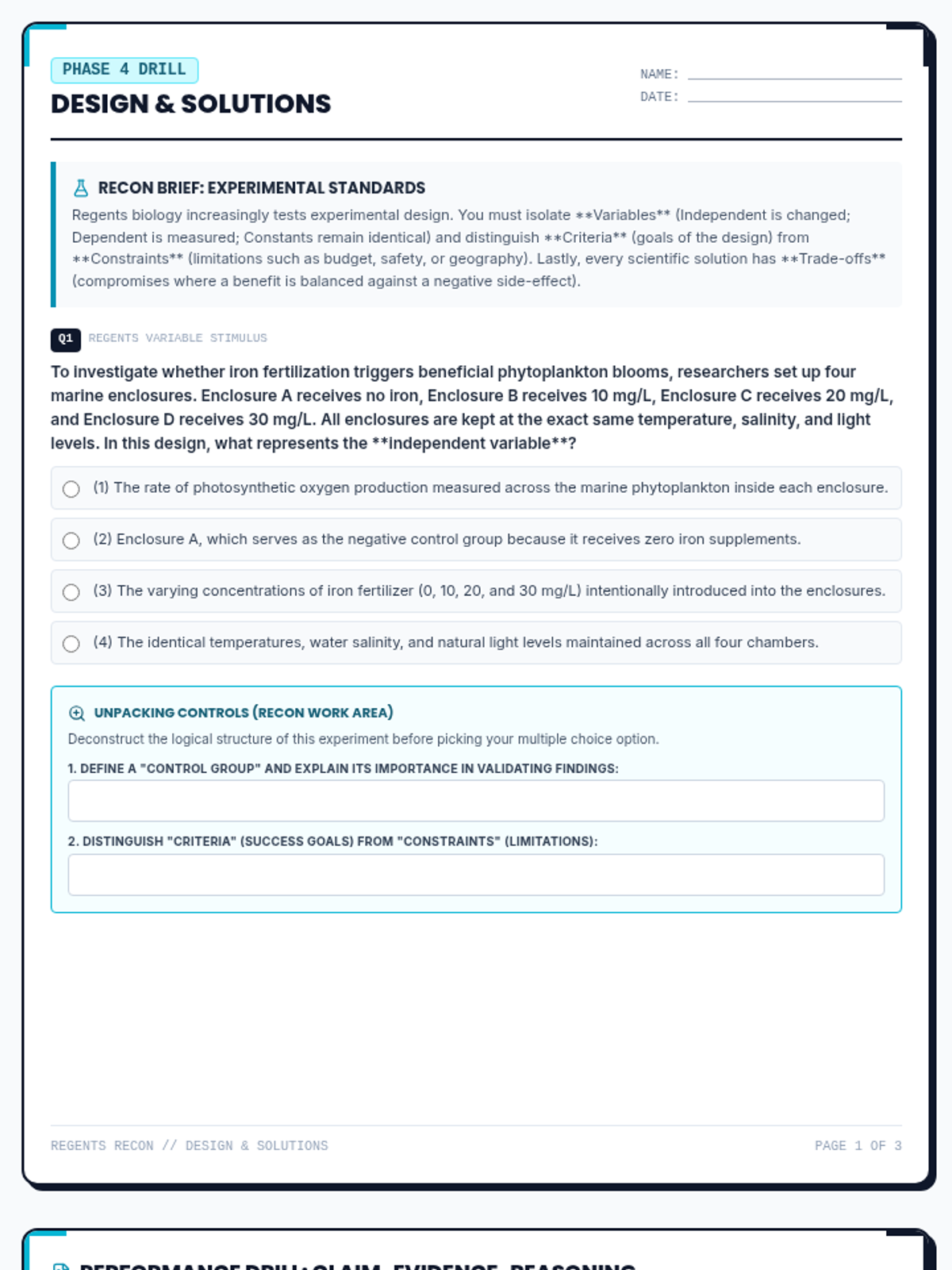
Days 15 to 19 of Regents preparation. Breaks down Regents experimental design standards, distinguishing criteria from constraints, identifying variables, and evaluating biological trade-offs.
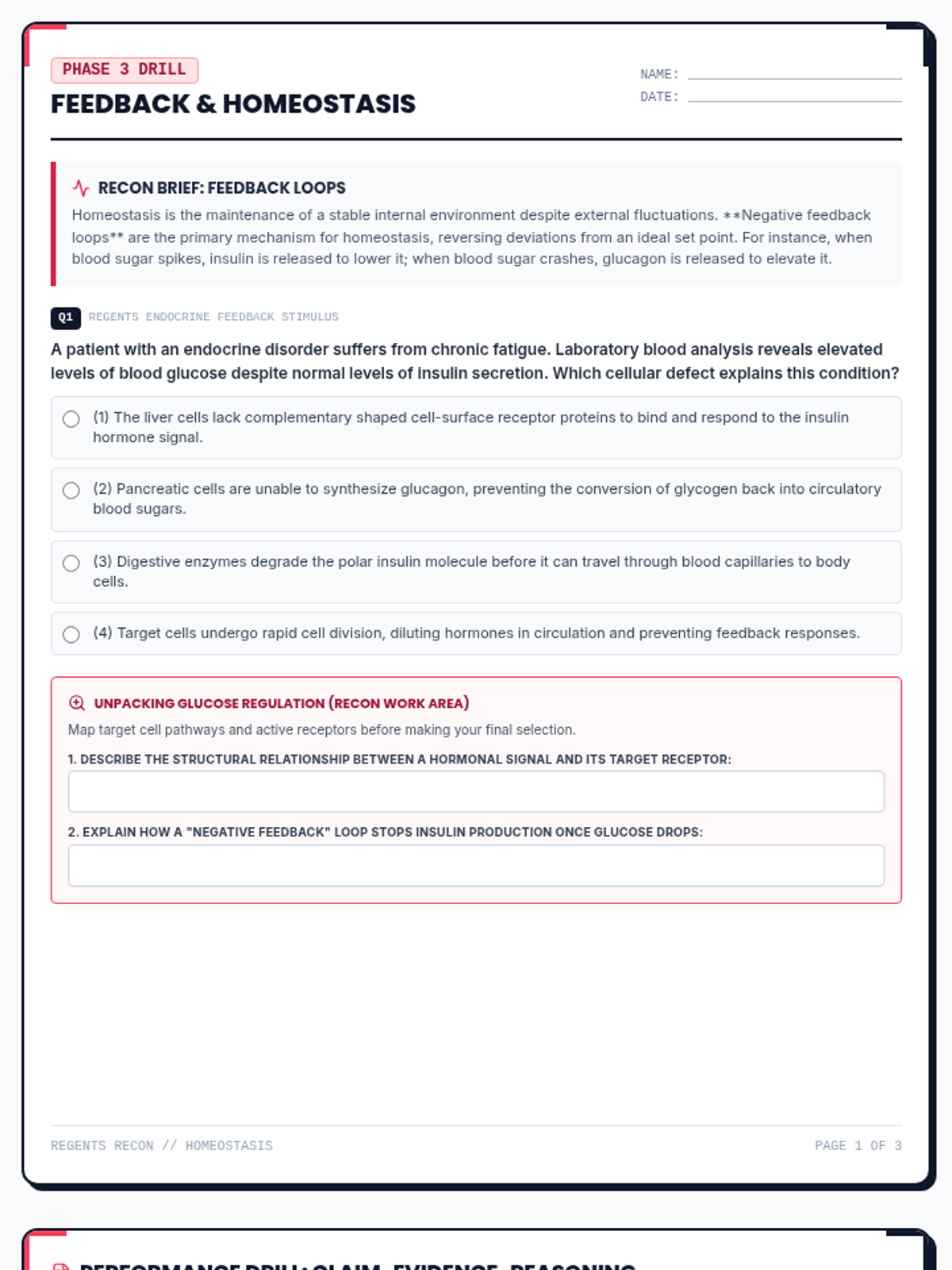
Days 10 to 14 of Regents preparation. Analyzes negative and positive feedback mechanisms, thermoregulation, blood glucose maintenance, and nervous/endocrine system integration.
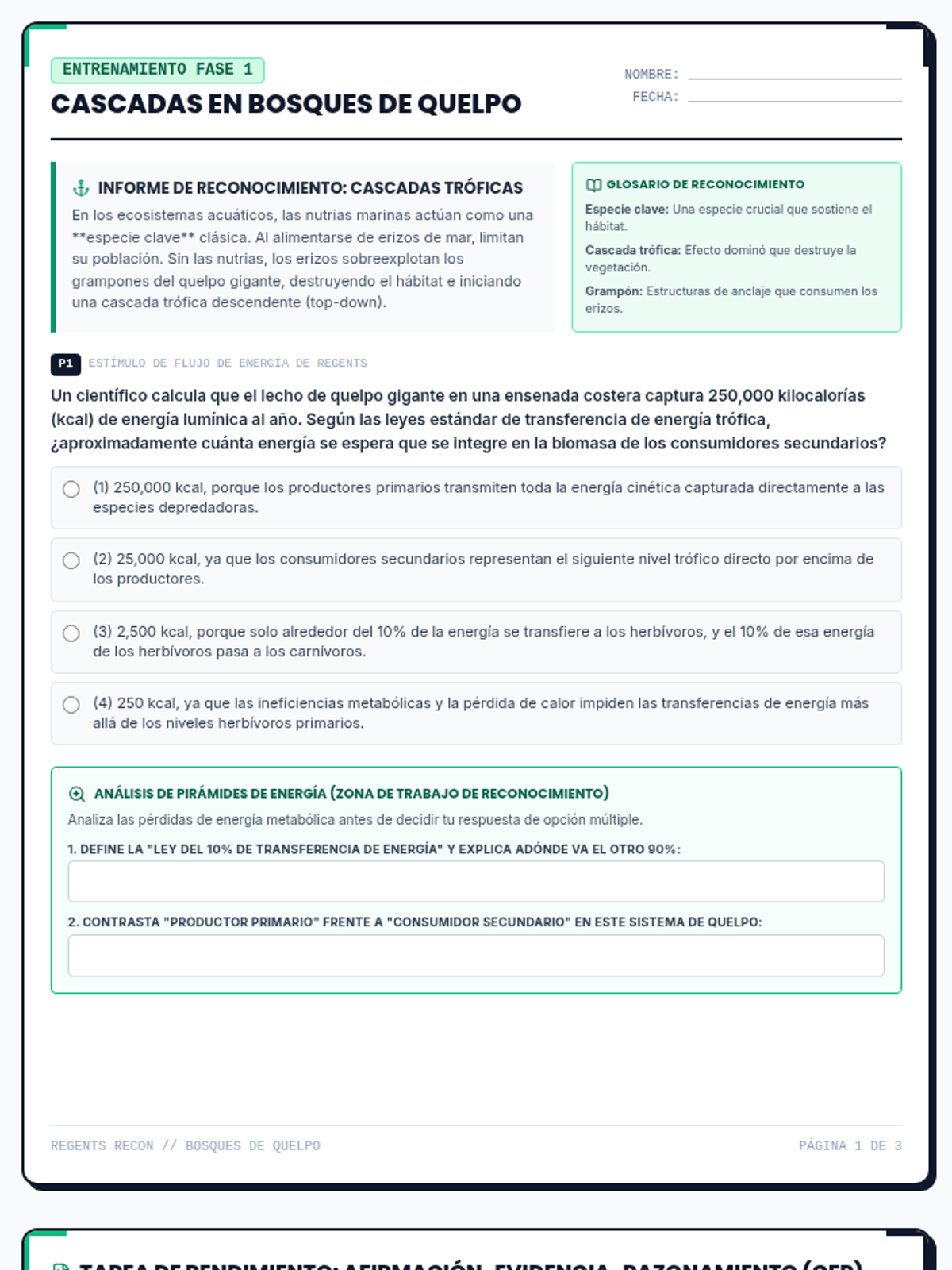
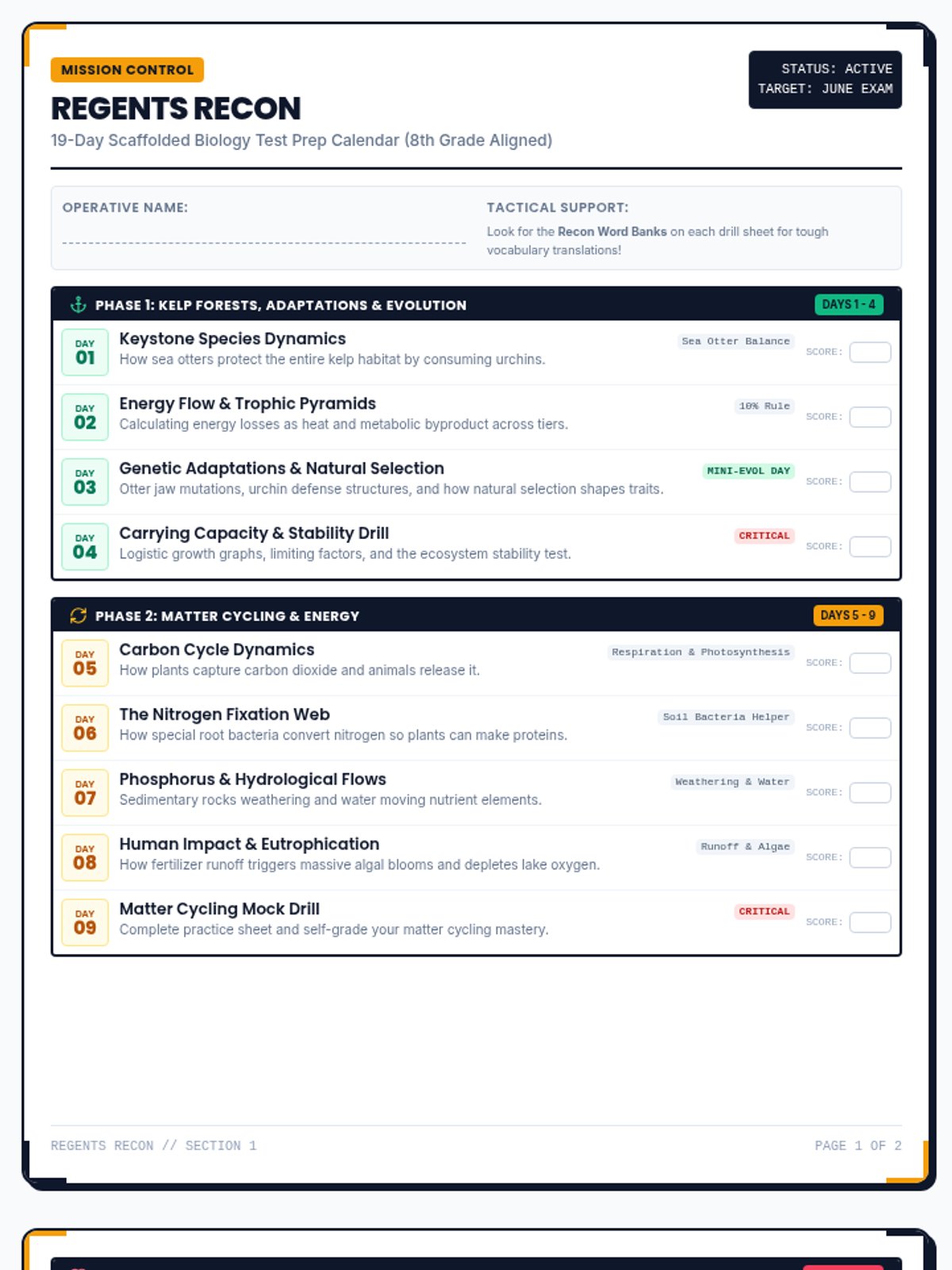
Days 1 to 4 of Regents preparation. Investigates trophic levels, carrying capacity, energy flow, adaptations, and the keystone role of sea otters in maintaining kelp forest homeostasis.
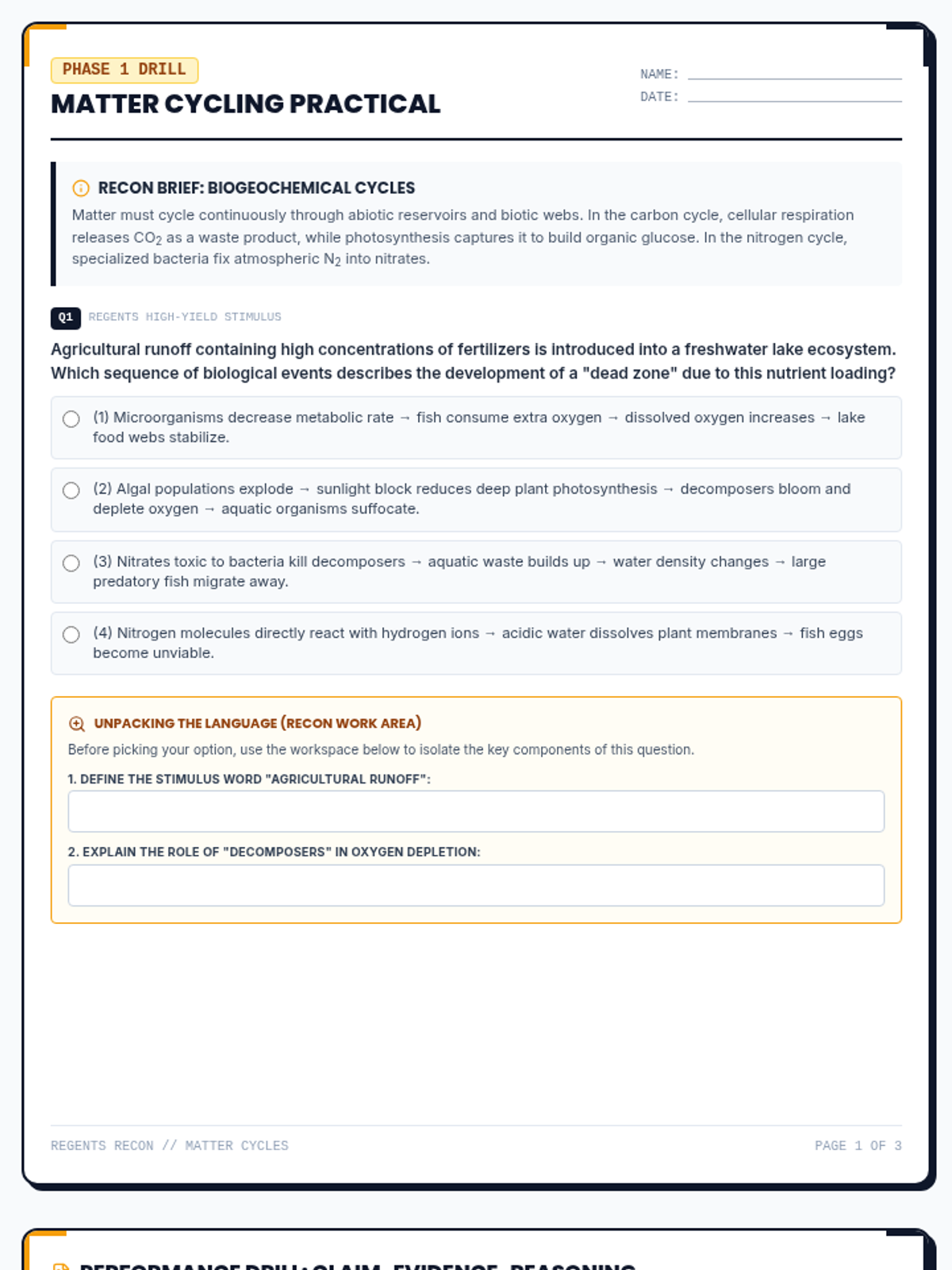
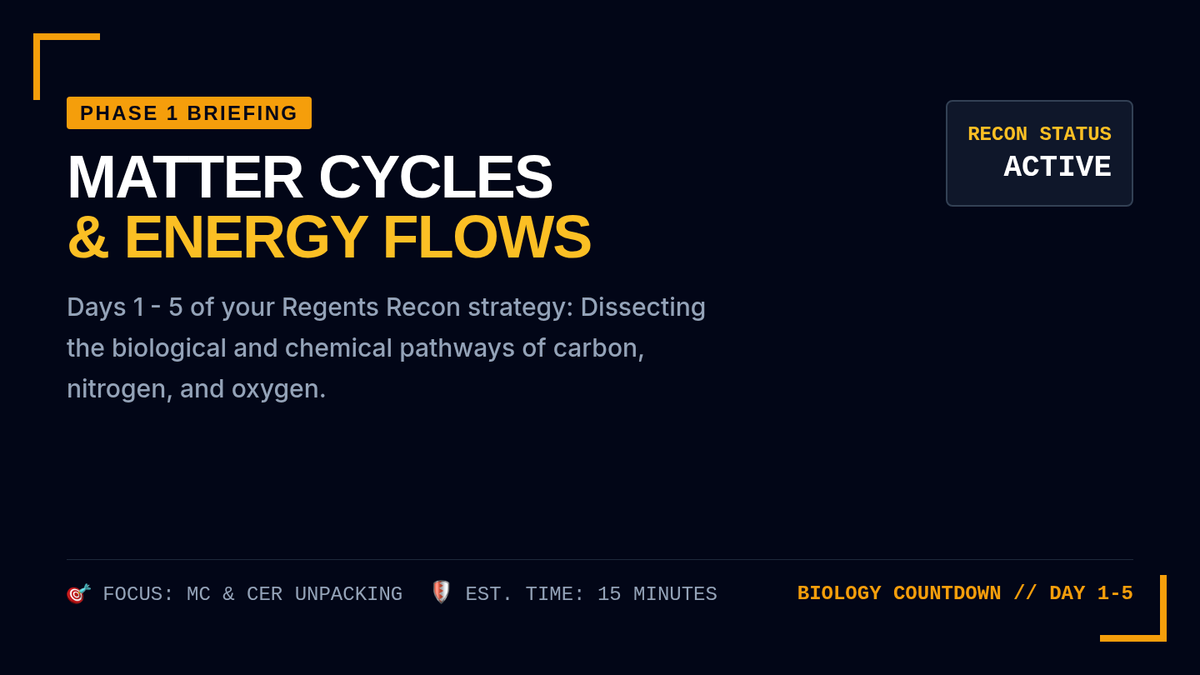
Days 5 to 9 of Regents preparation. Focuses on the biogeochemical cycling of carbon, nitrogen, water, and phosphorus, including cellular respiration and photosynthesis connections.
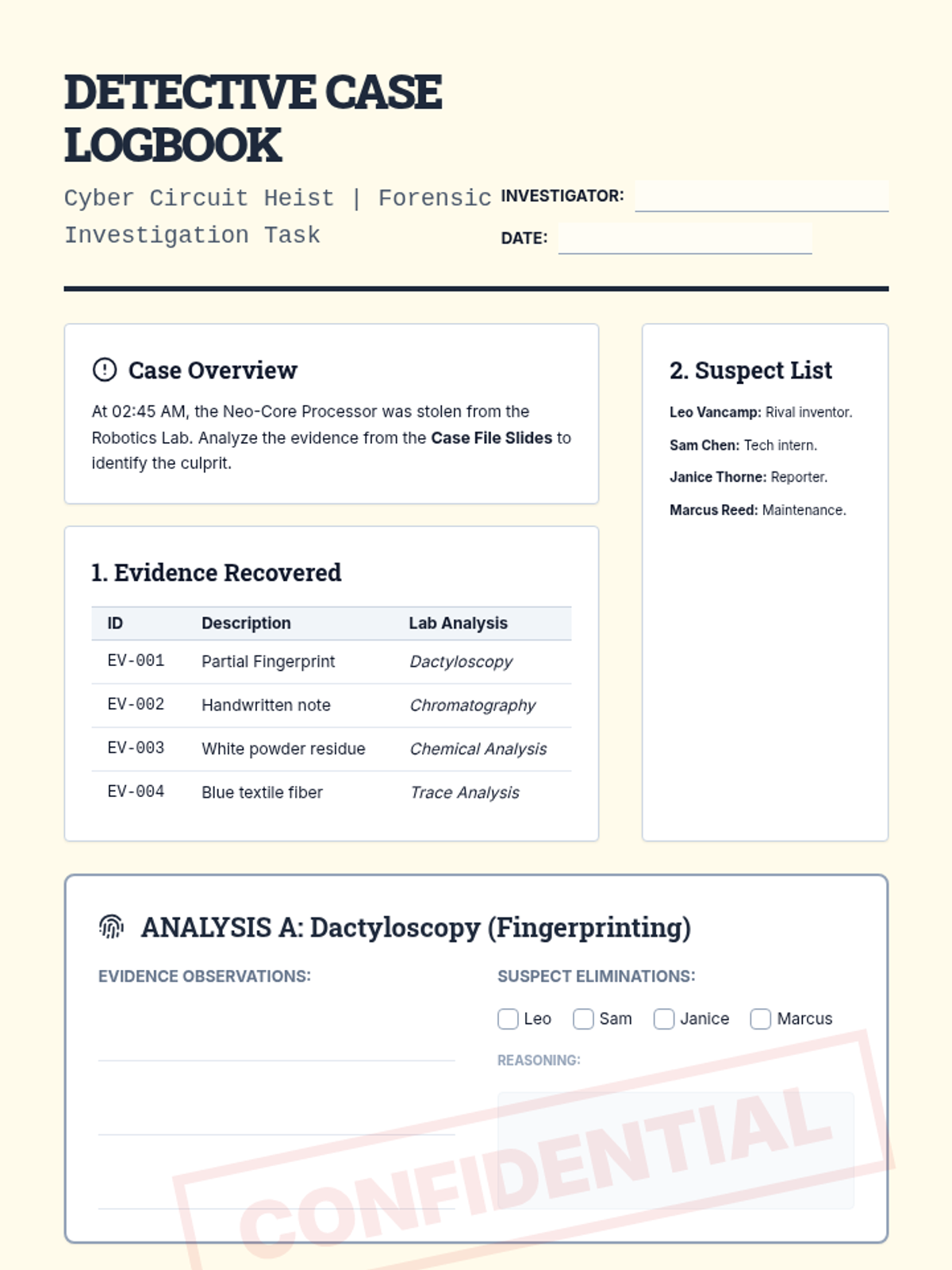
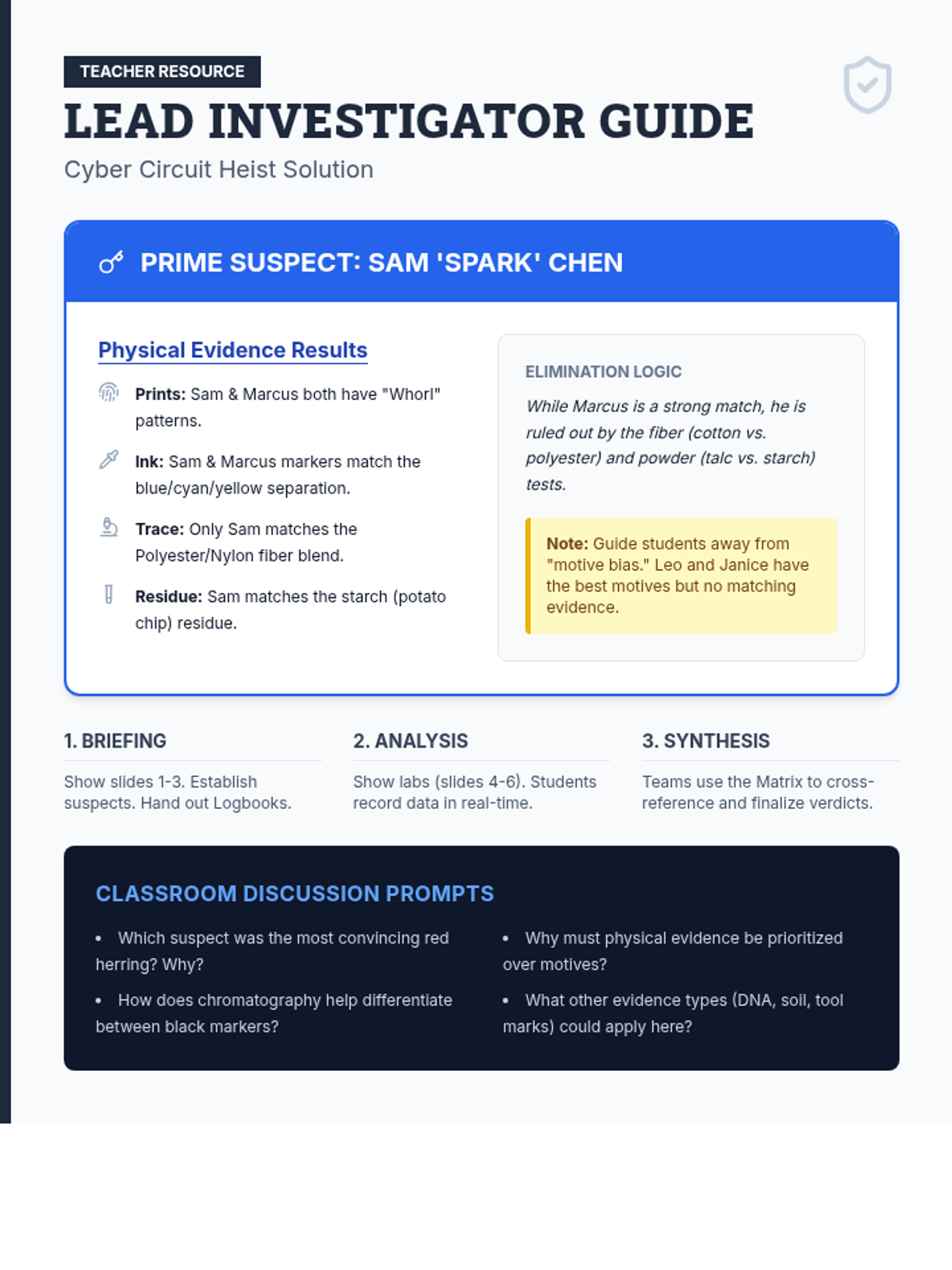
A high-stakes forensic science simulation where 7th-grade students analyze fingerprints, ink chromatography, and trace evidence to solve the theft of a high-tech robotics prototype. Students must synthesize multiple lines of evidence to narrow down four suspects to one culprit.
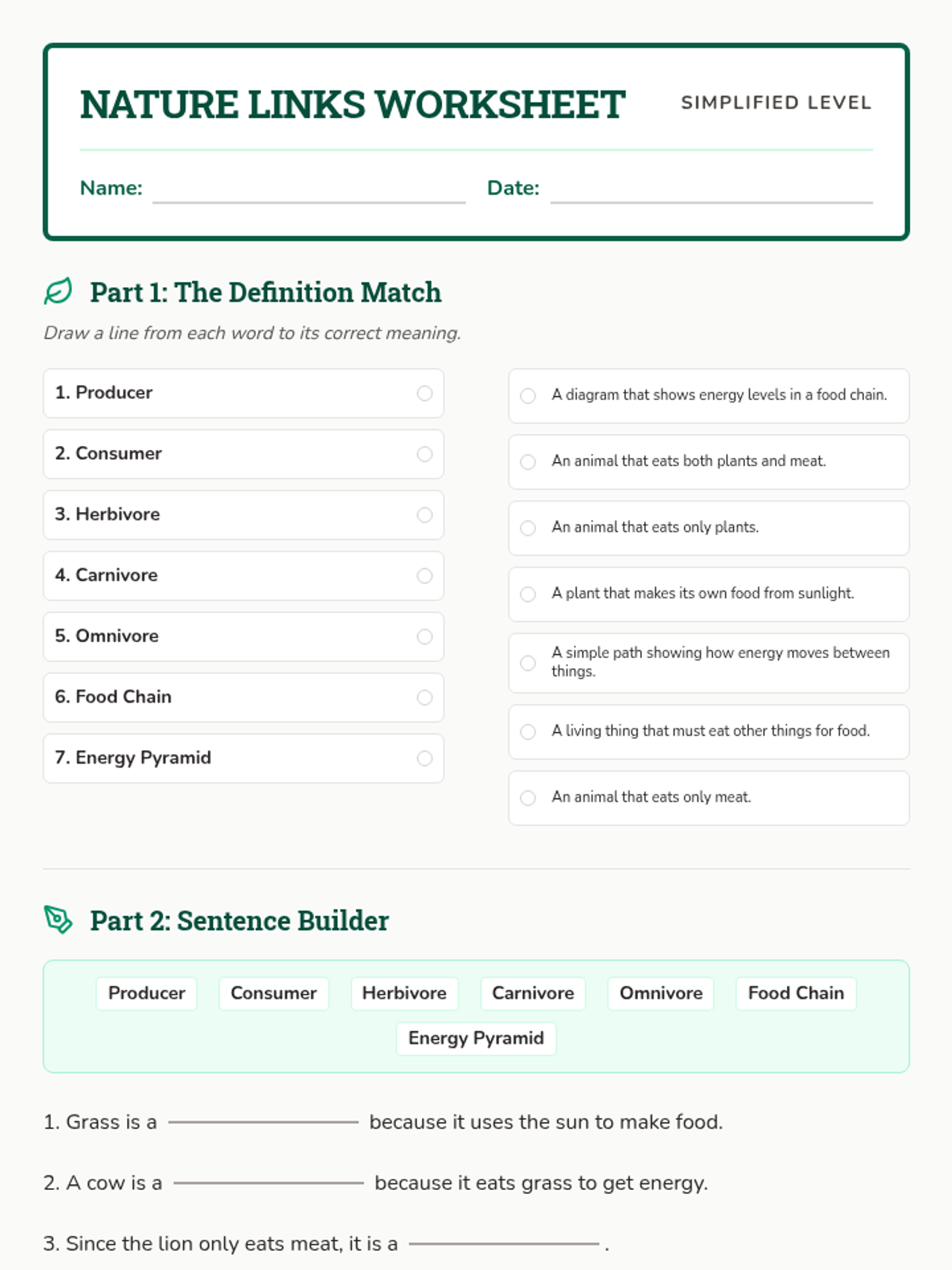
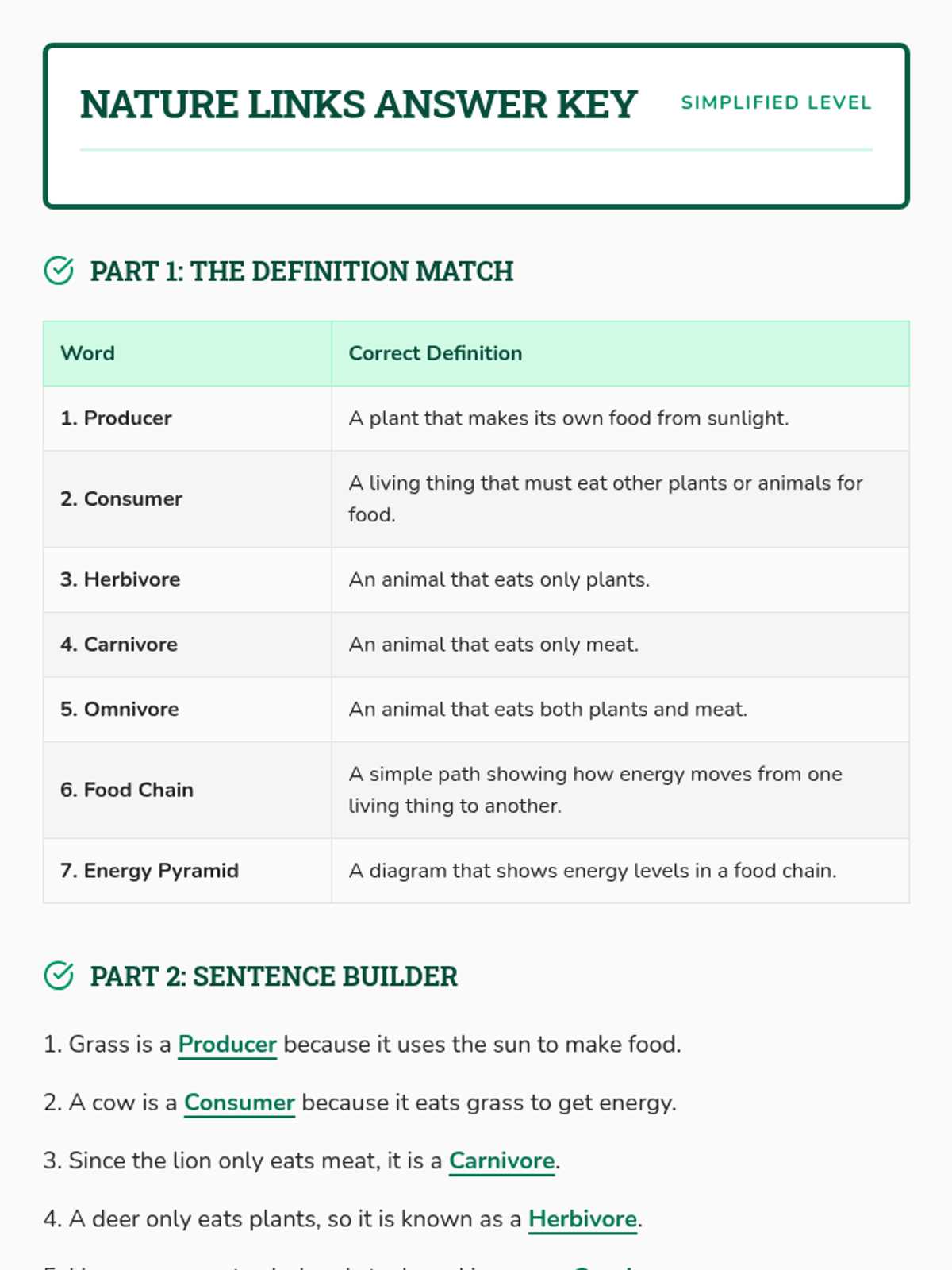
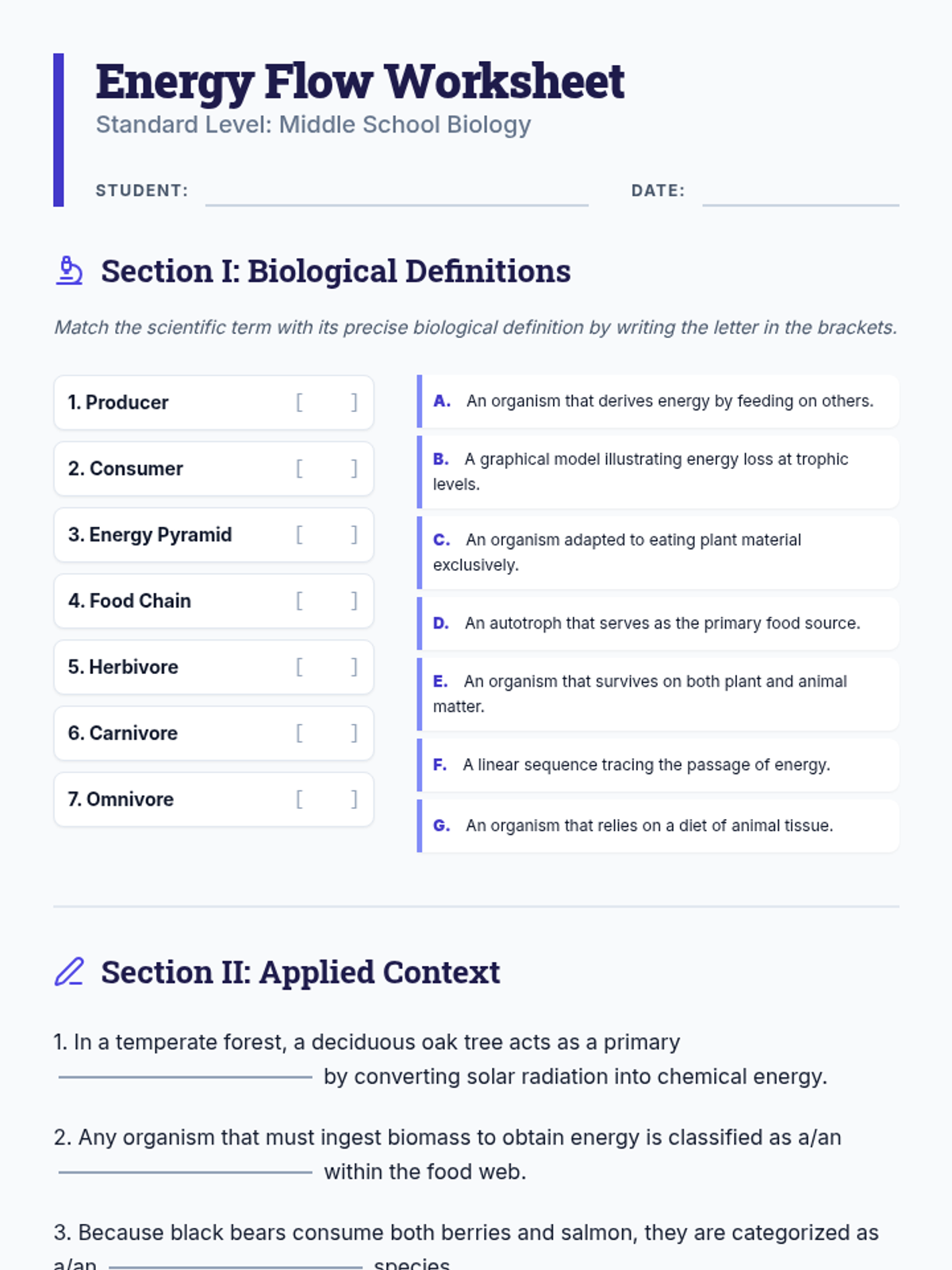
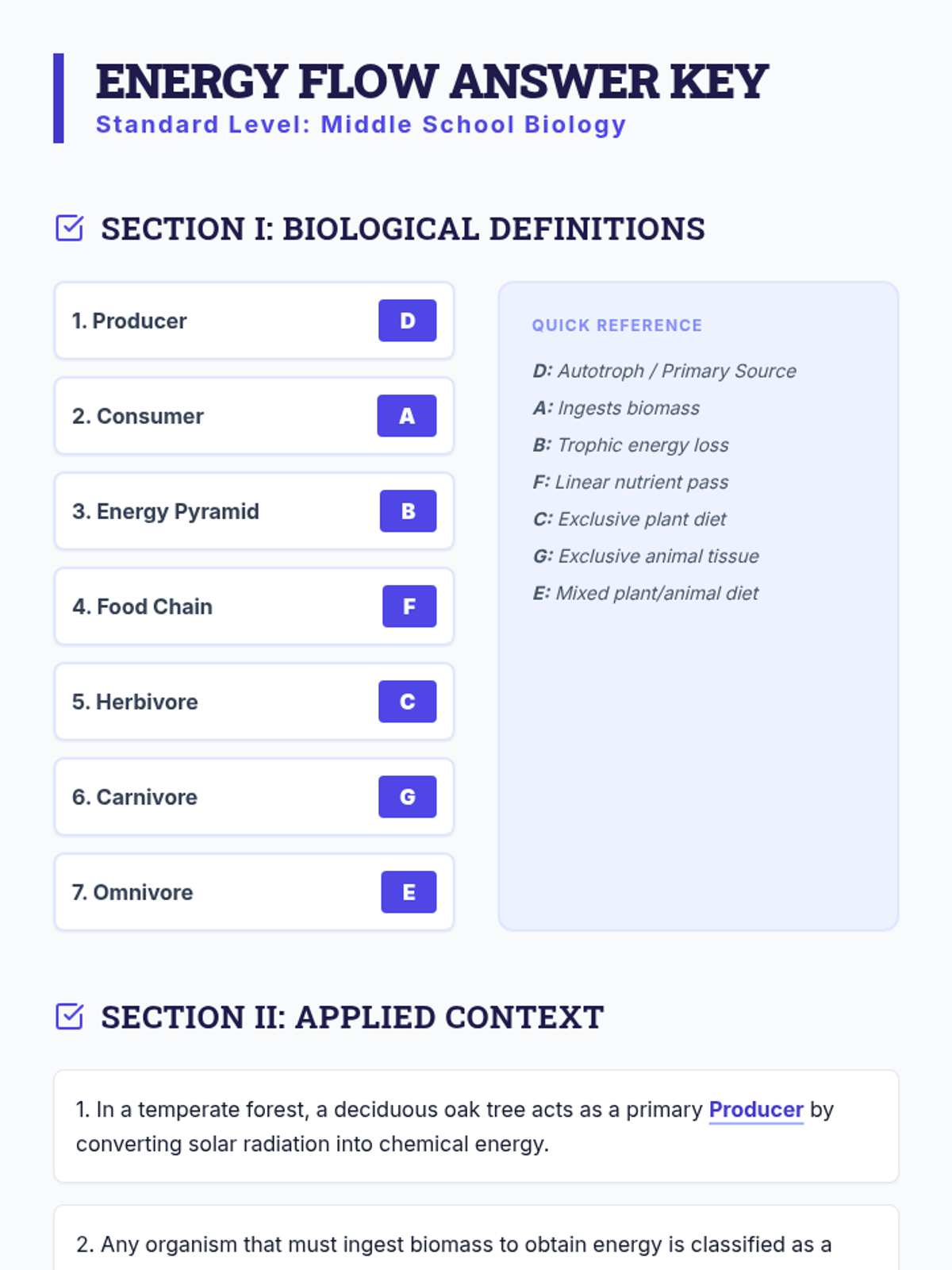
A lesson focusing on ecosystem vocabulary including producers, consumers, and energy flow through food chains and pyramids. Includes tiered materials for elementary and middle school levels.
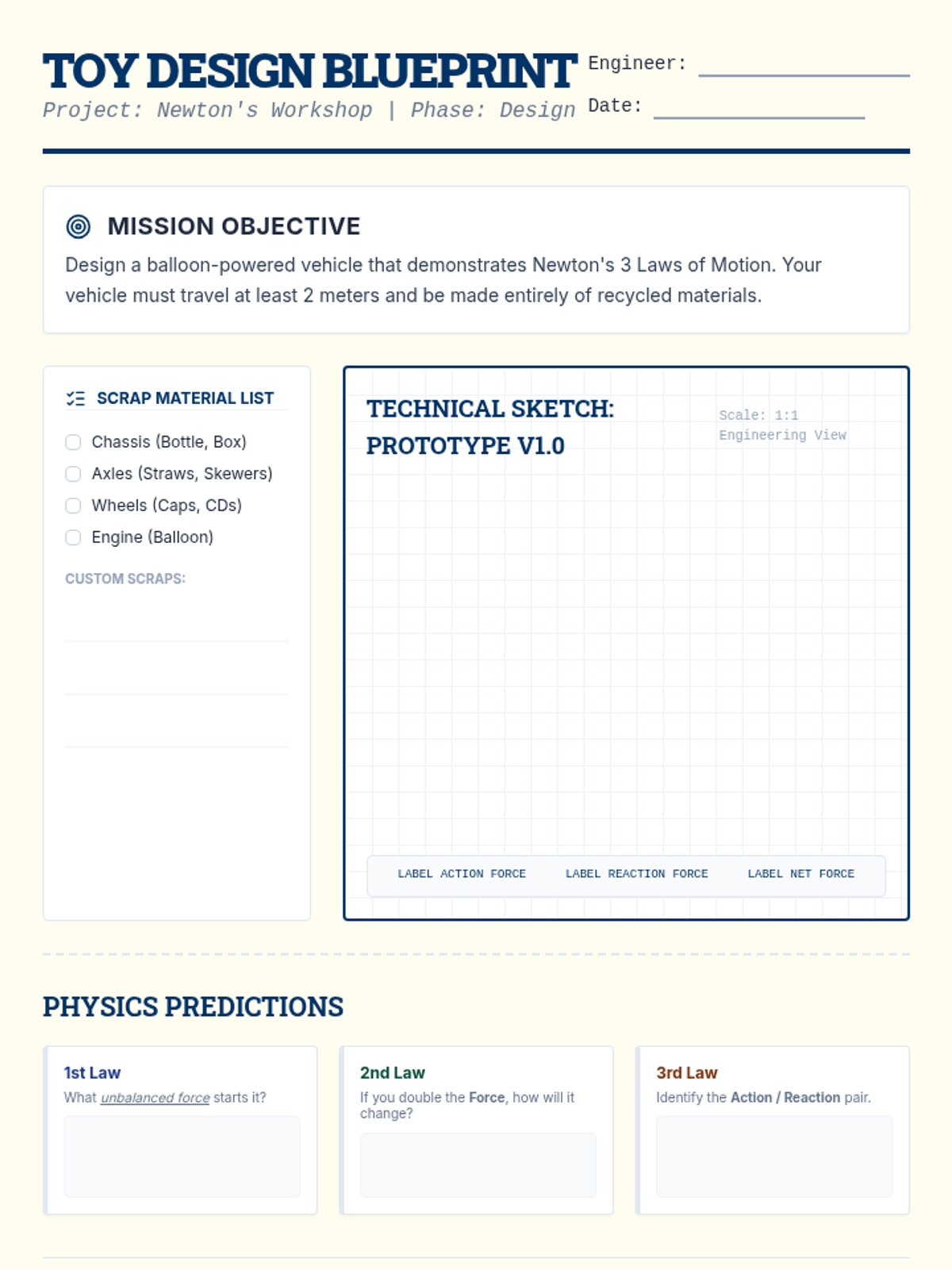
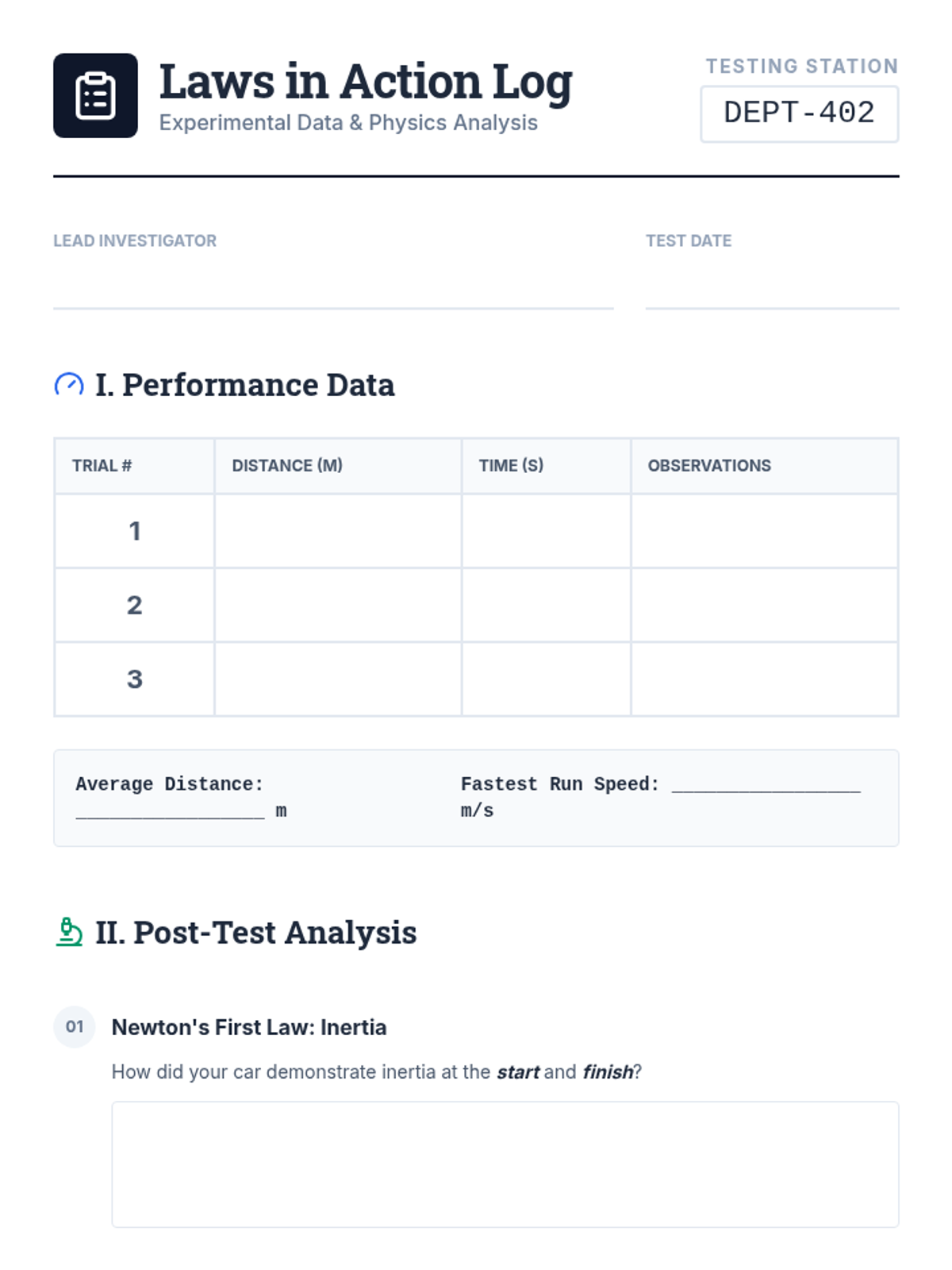
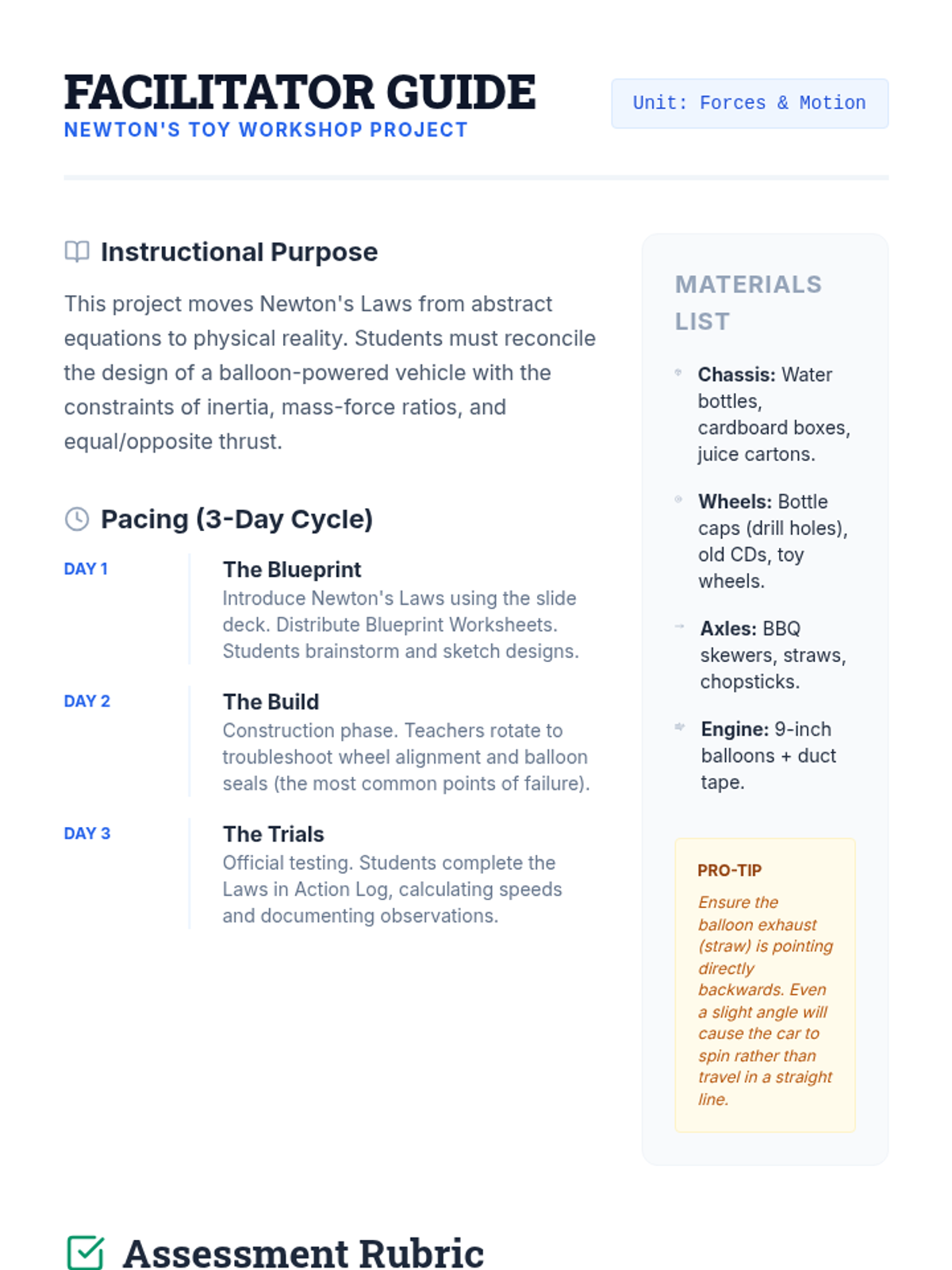
A project-based lesson where students design and build a balloon-powered vehicle to demonstrate Newton's Three Laws of Motion. Students act as 'Kinetic Engineers' to apply physics principles to a real-world engineering challenge.
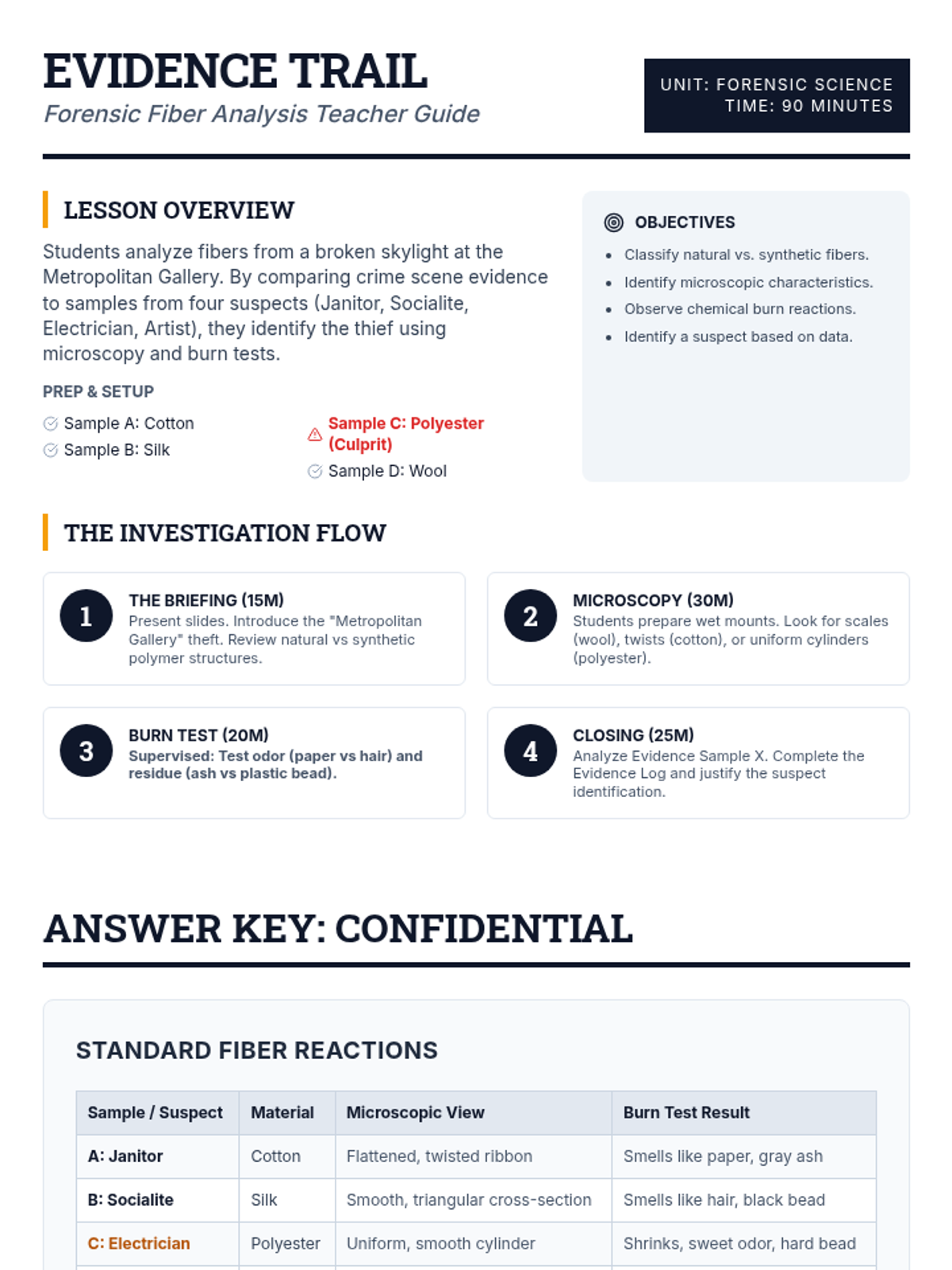
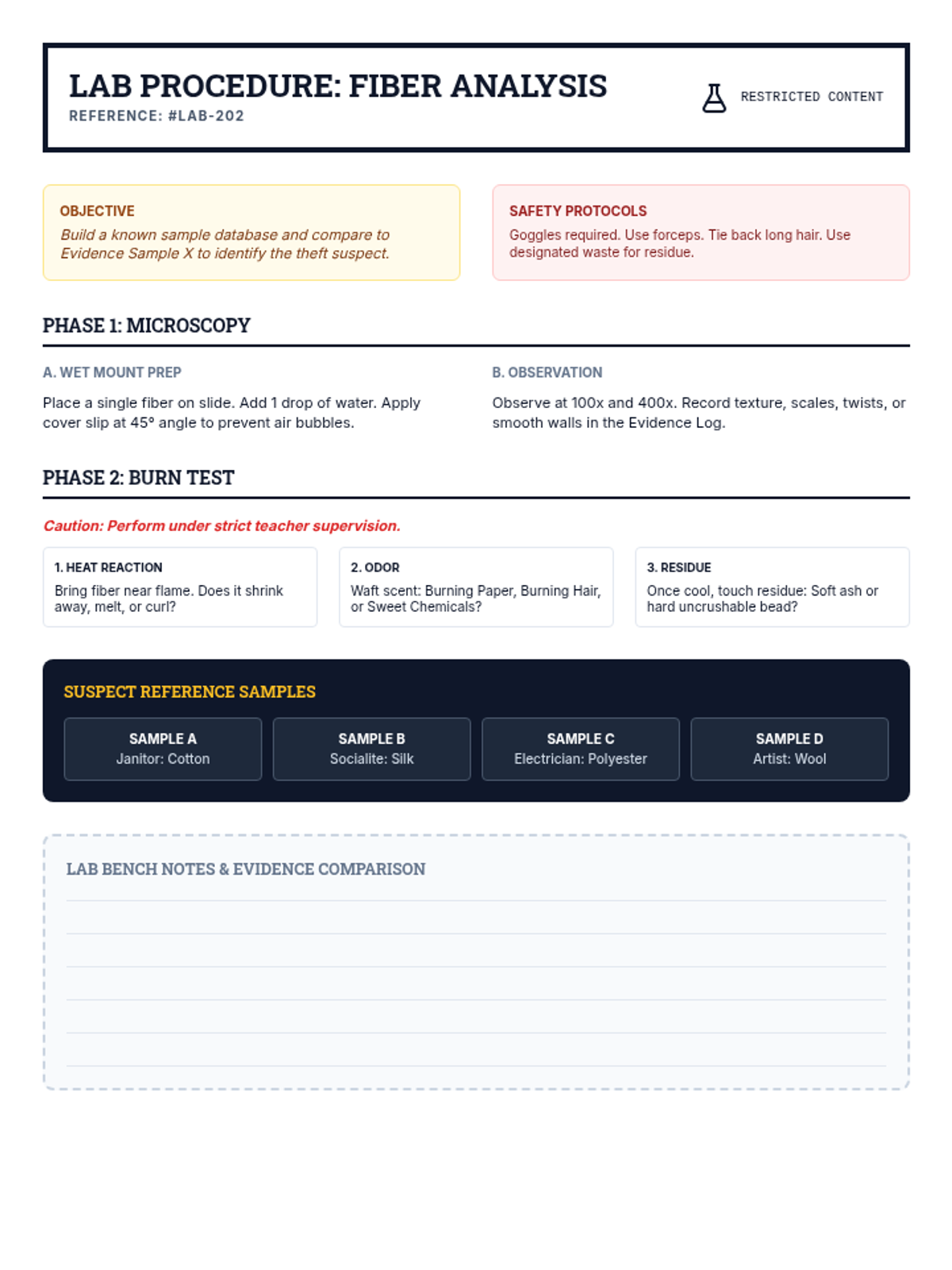
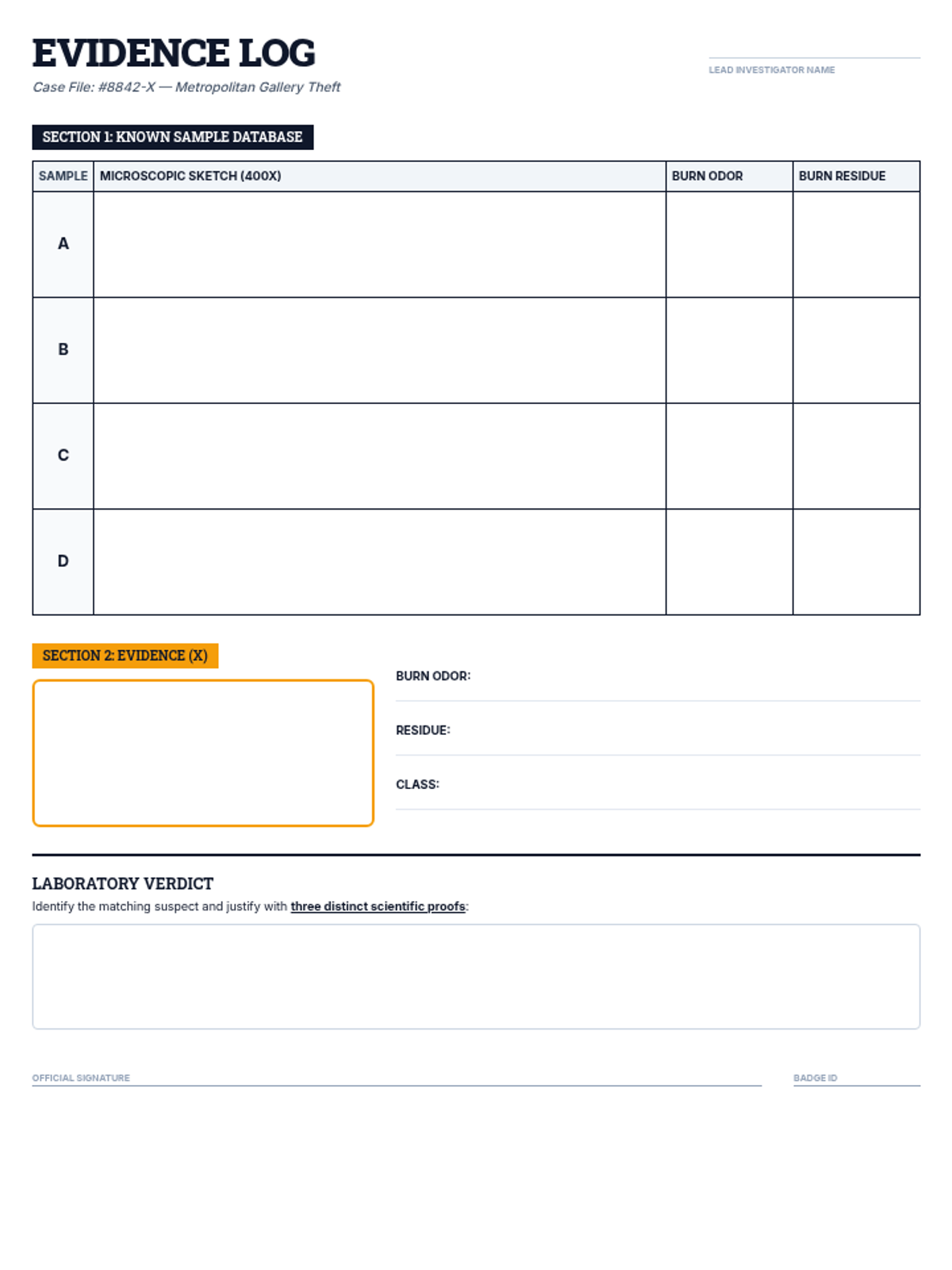
Students engage in a forensic investigation using microscopy and chemical testing to identify unknown fiber samples found at a crime scene. The lesson emphasizes scientific observation, deductive reasoning, and the classification of natural versus synthetic materials.
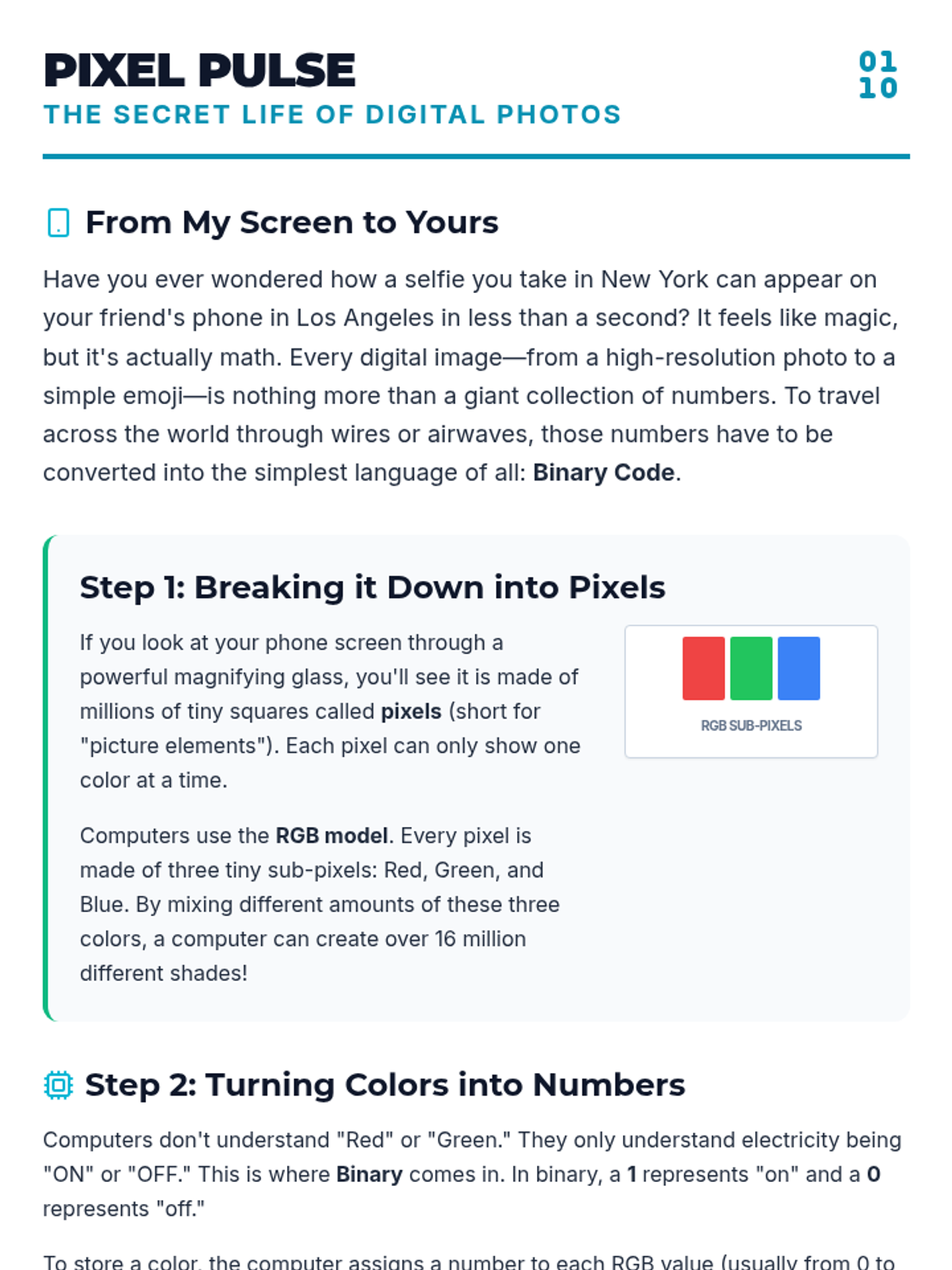
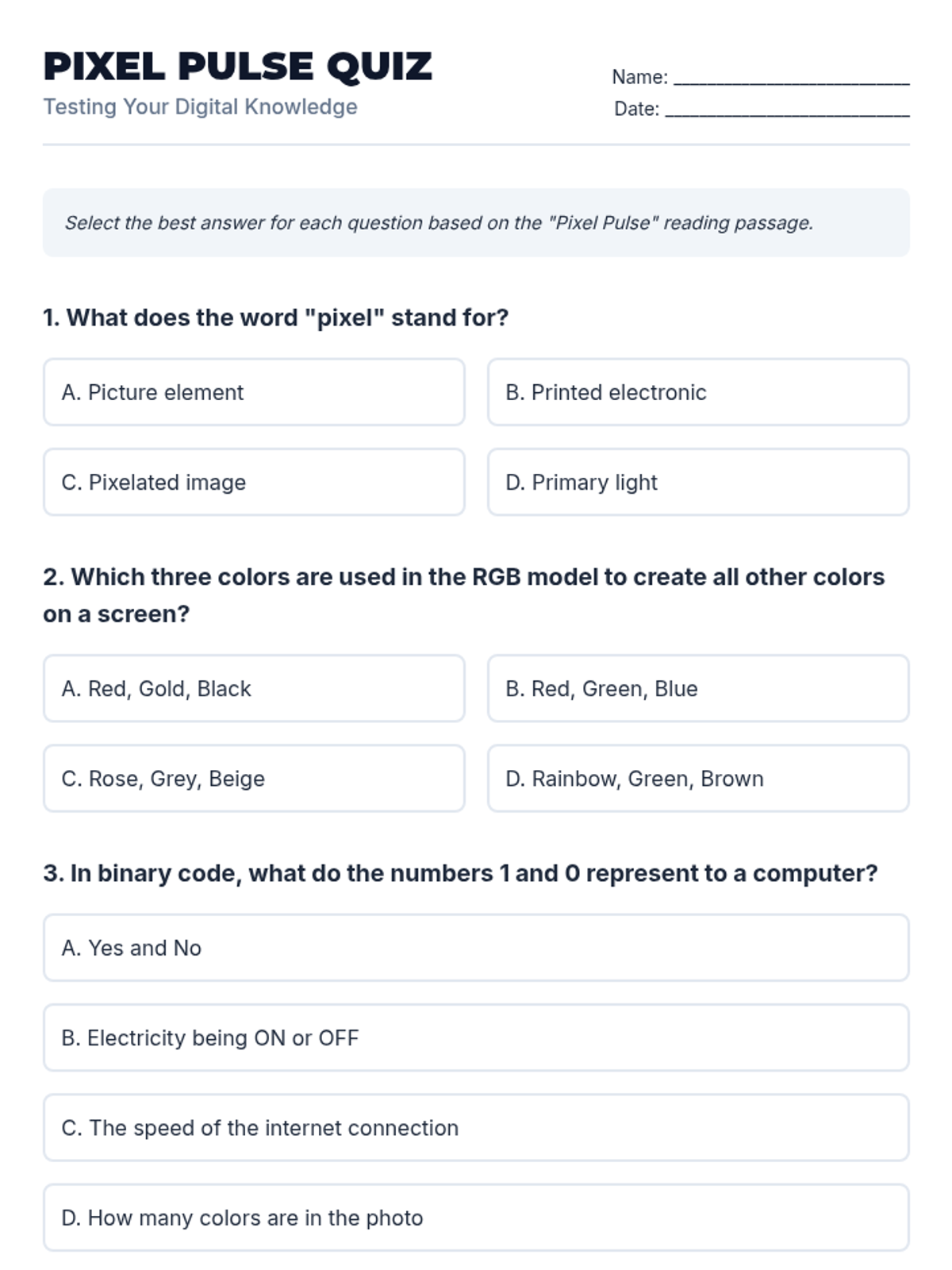
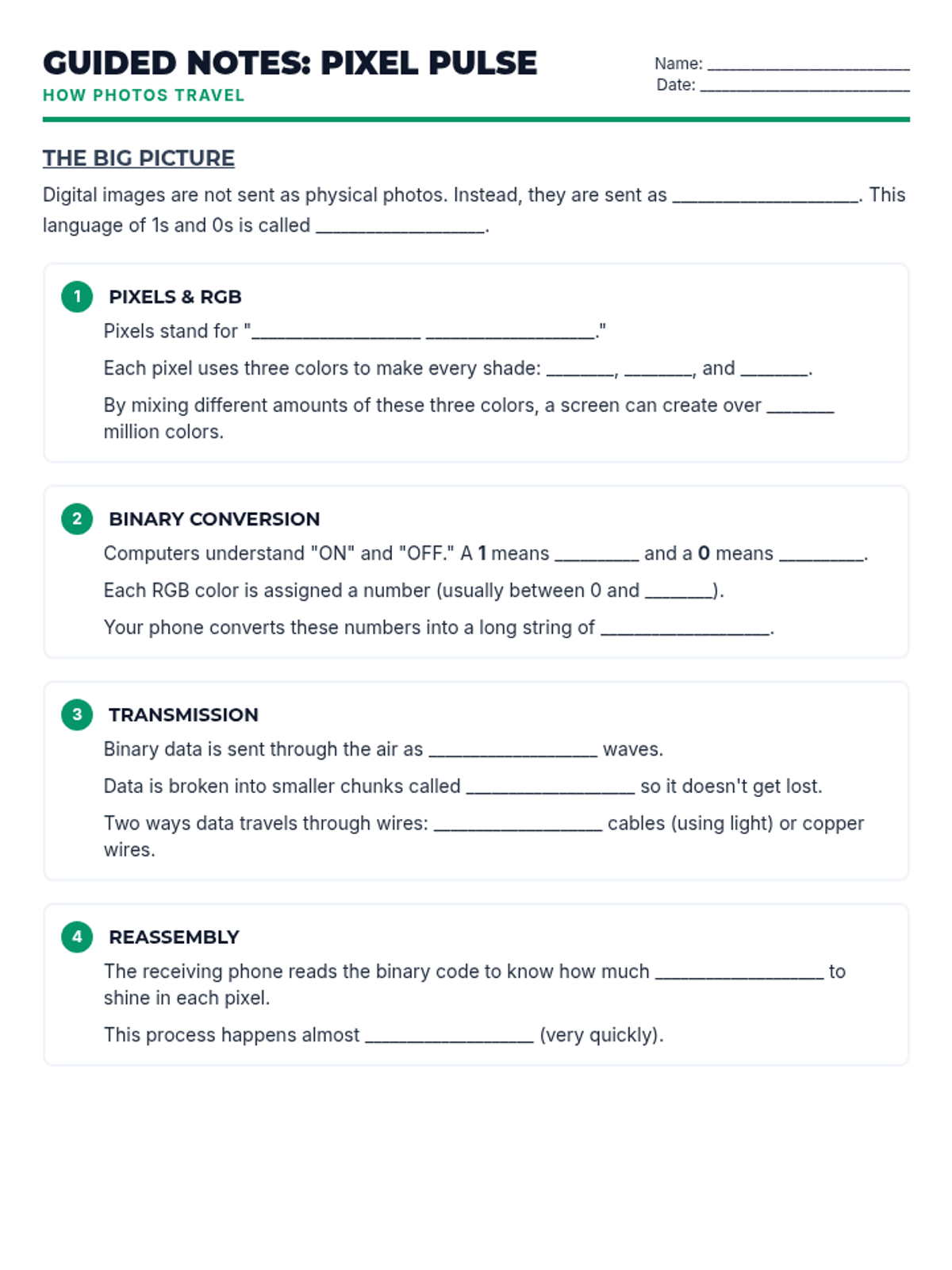
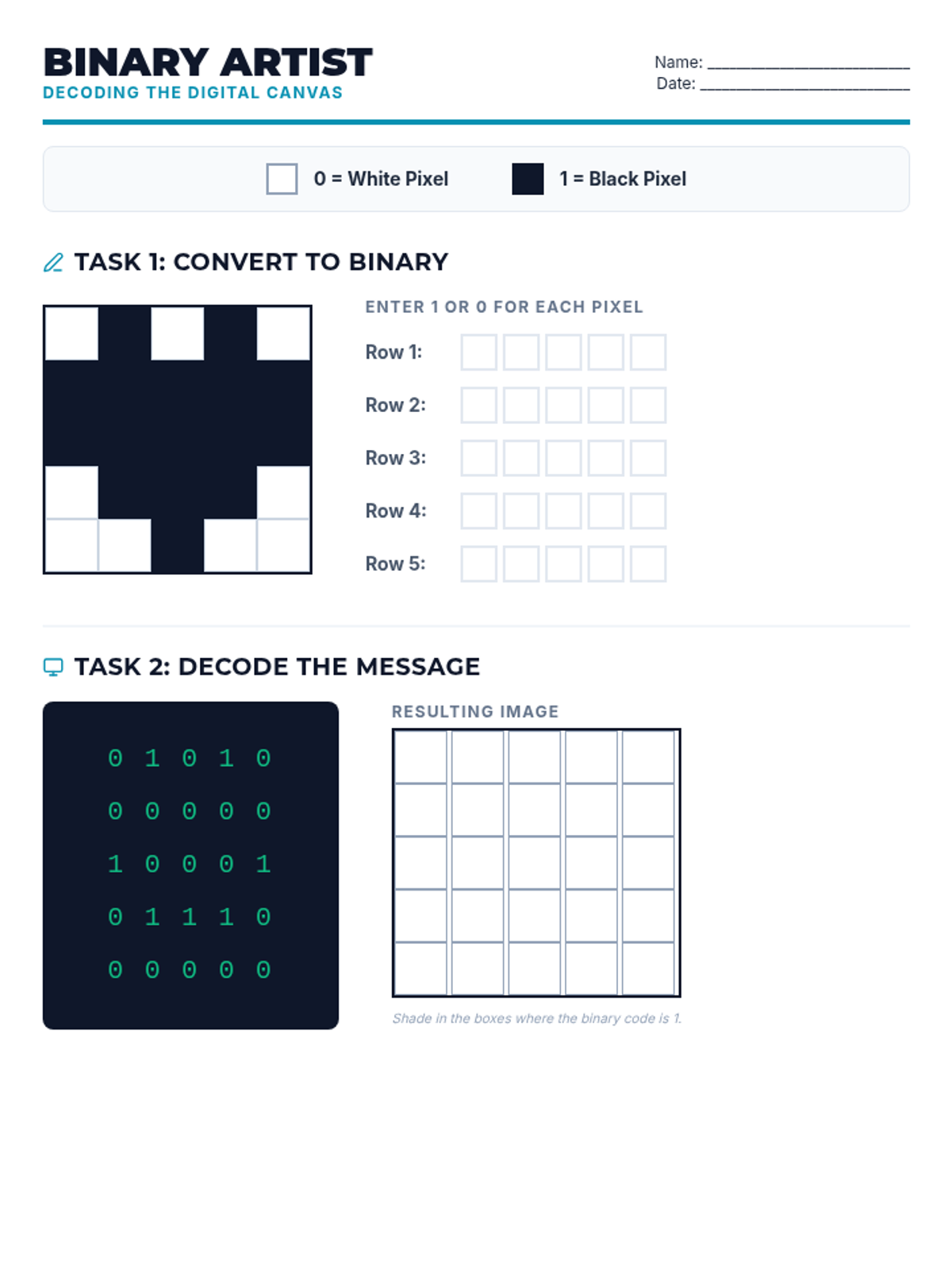
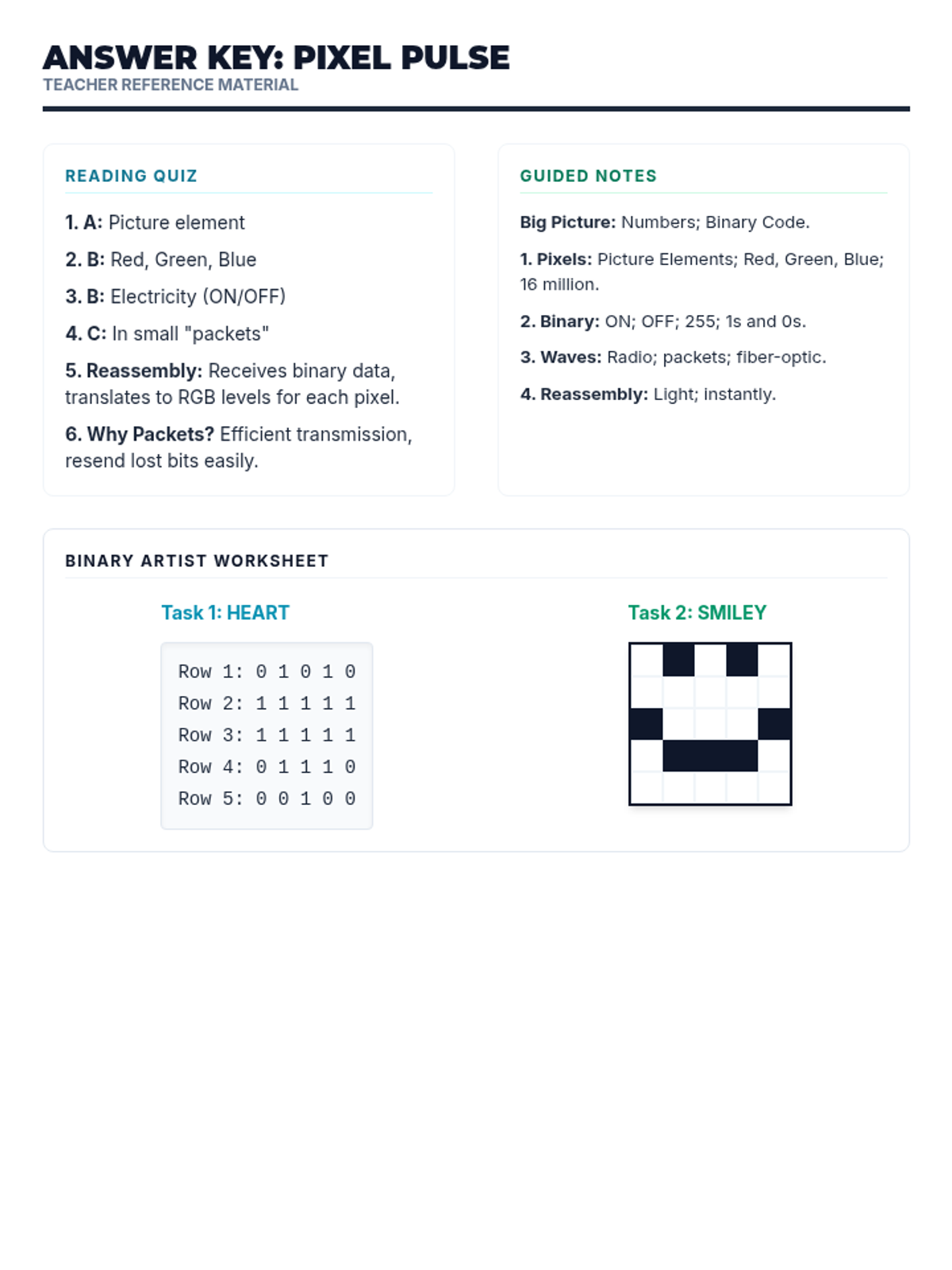
This lesson explores how digital images are broken down into pixels, converted into binary code (1s and 0s), transmitted across distances, and reassembled on another device. Students will learn about the RGB color model and the fundamentals of digital communication.
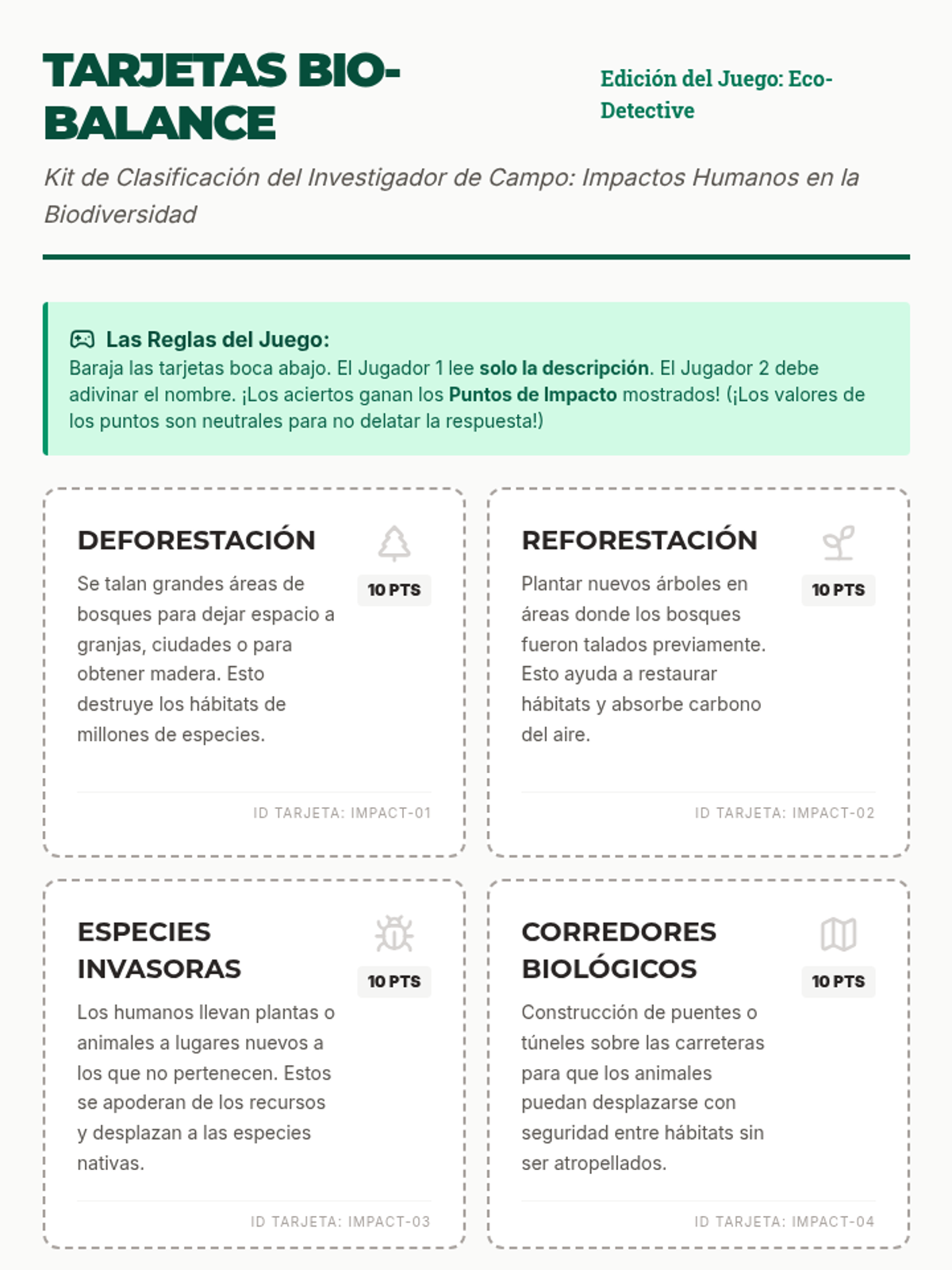
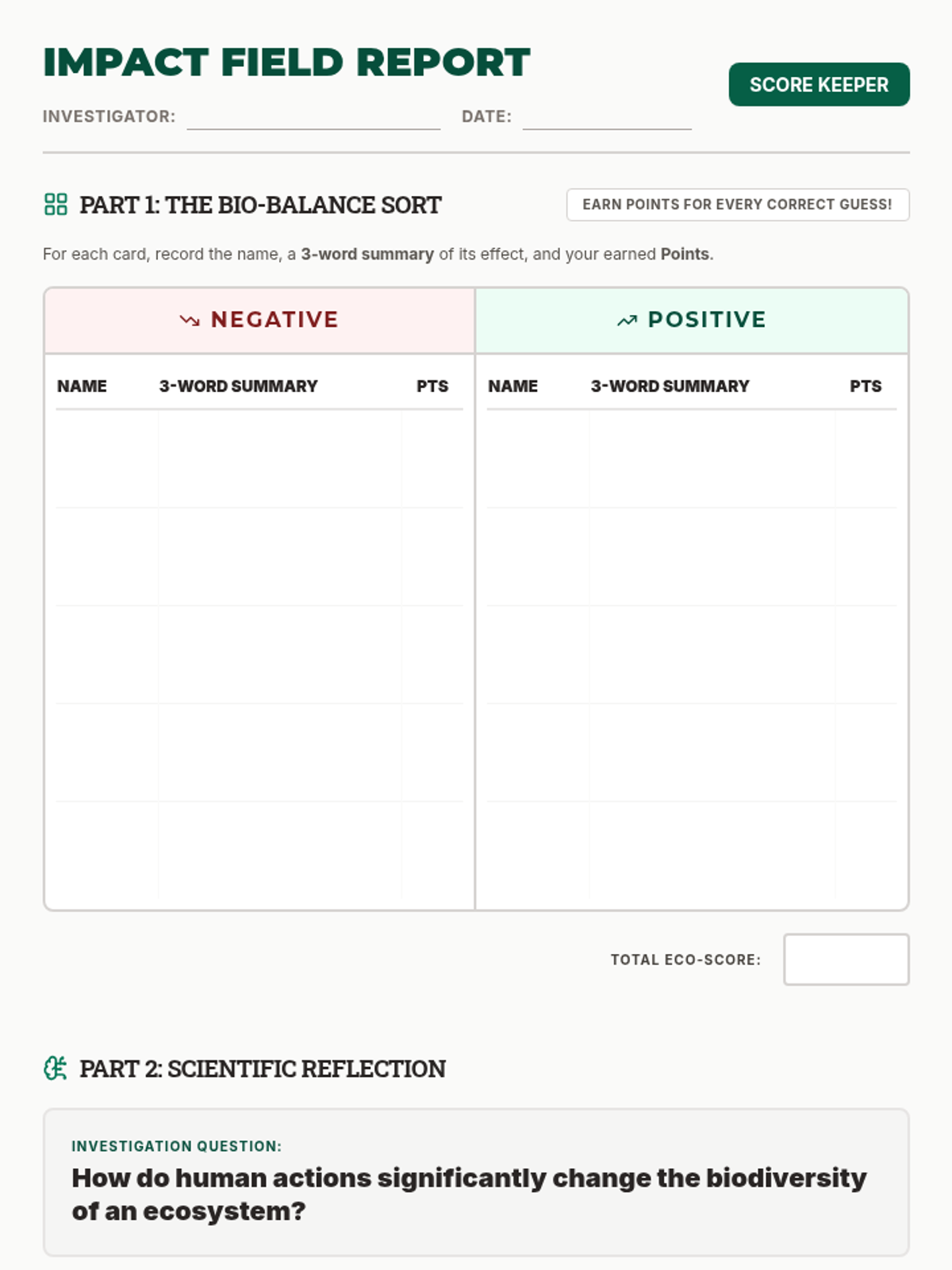
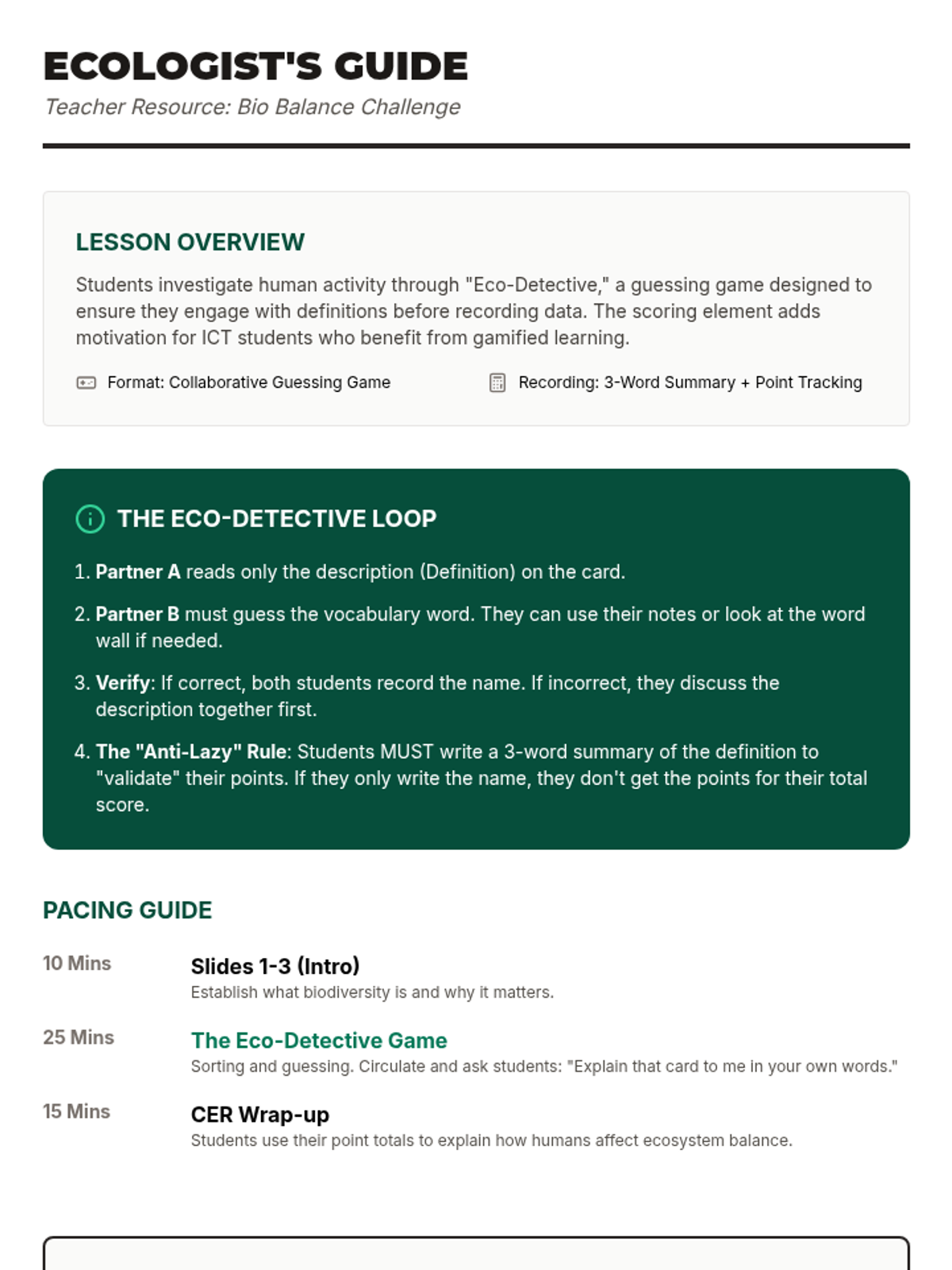
A hands-on exploration of human impacts on biodiversity, featuring a collaborative card sorting game and a reflective CER analysis. Students identify and categorize negative and positive impacts while building academic vocabulary.
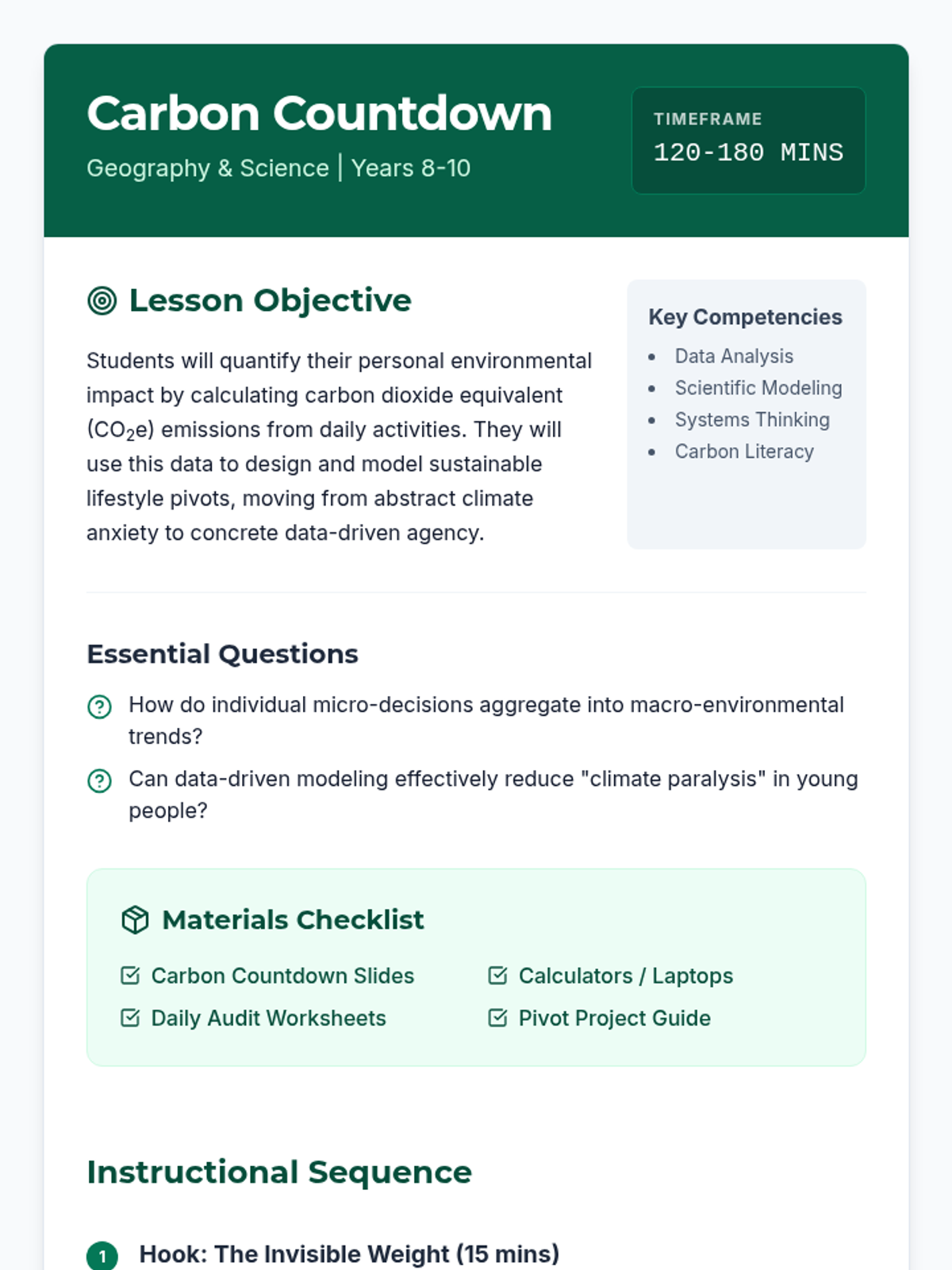
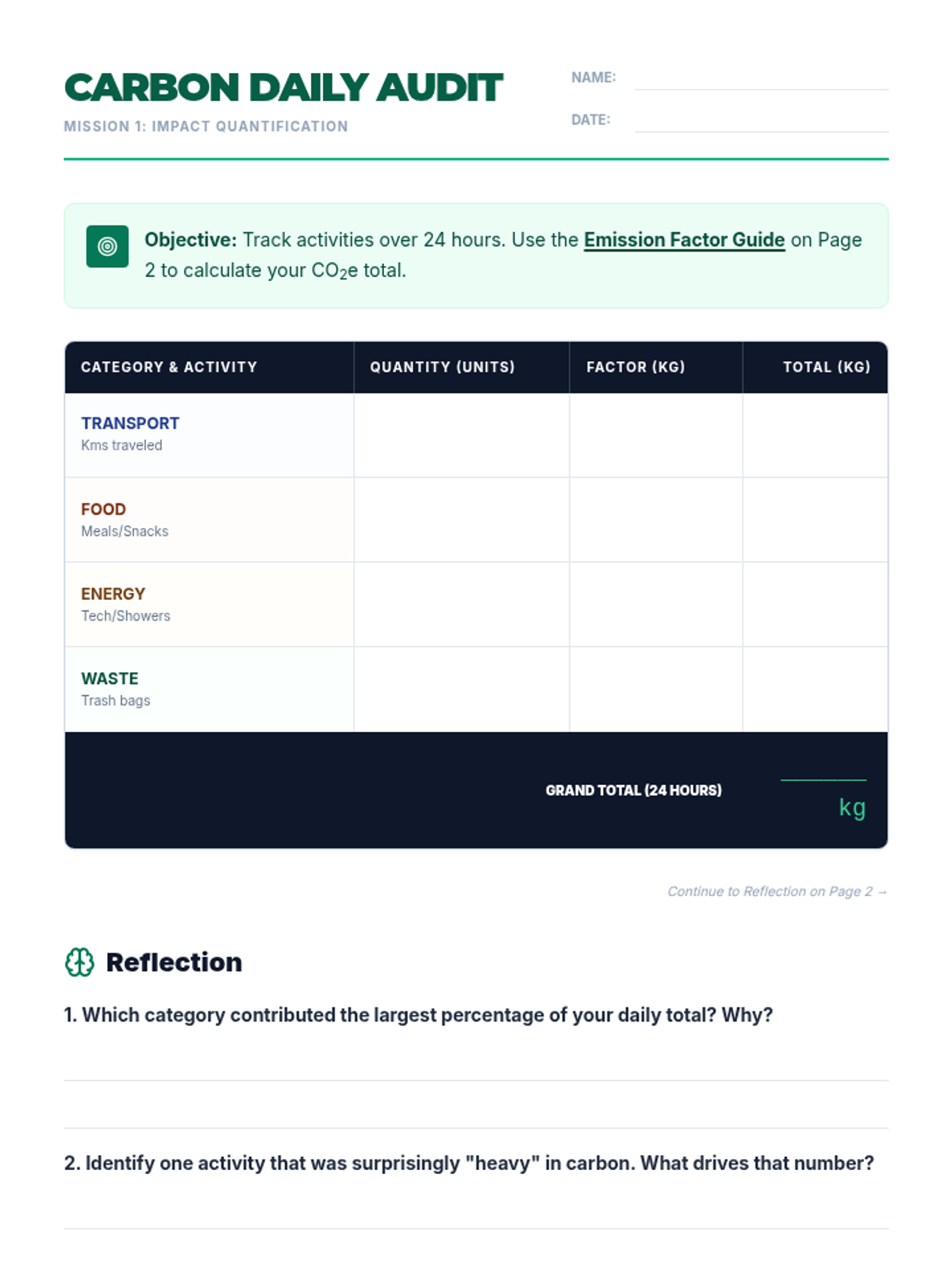
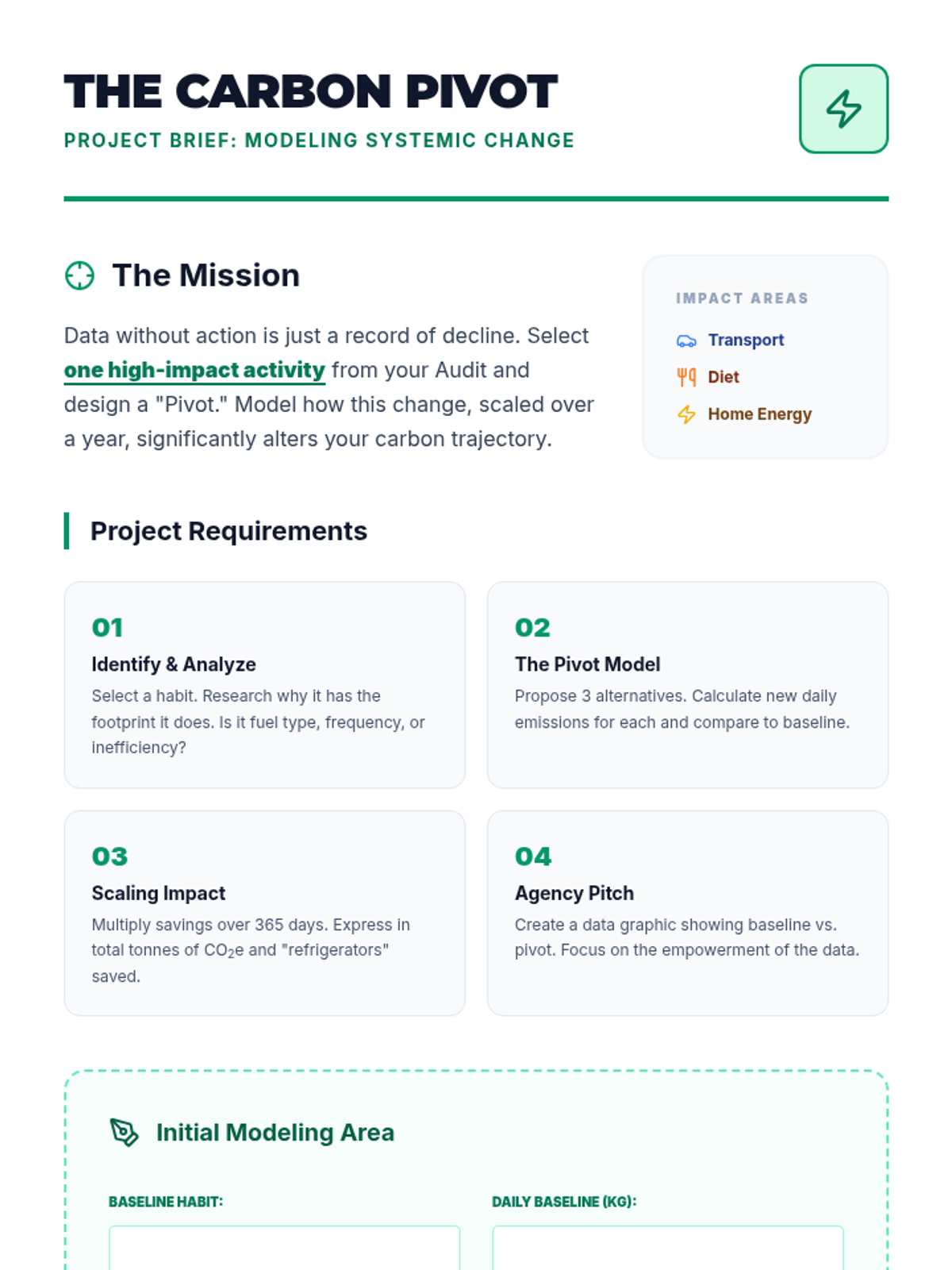
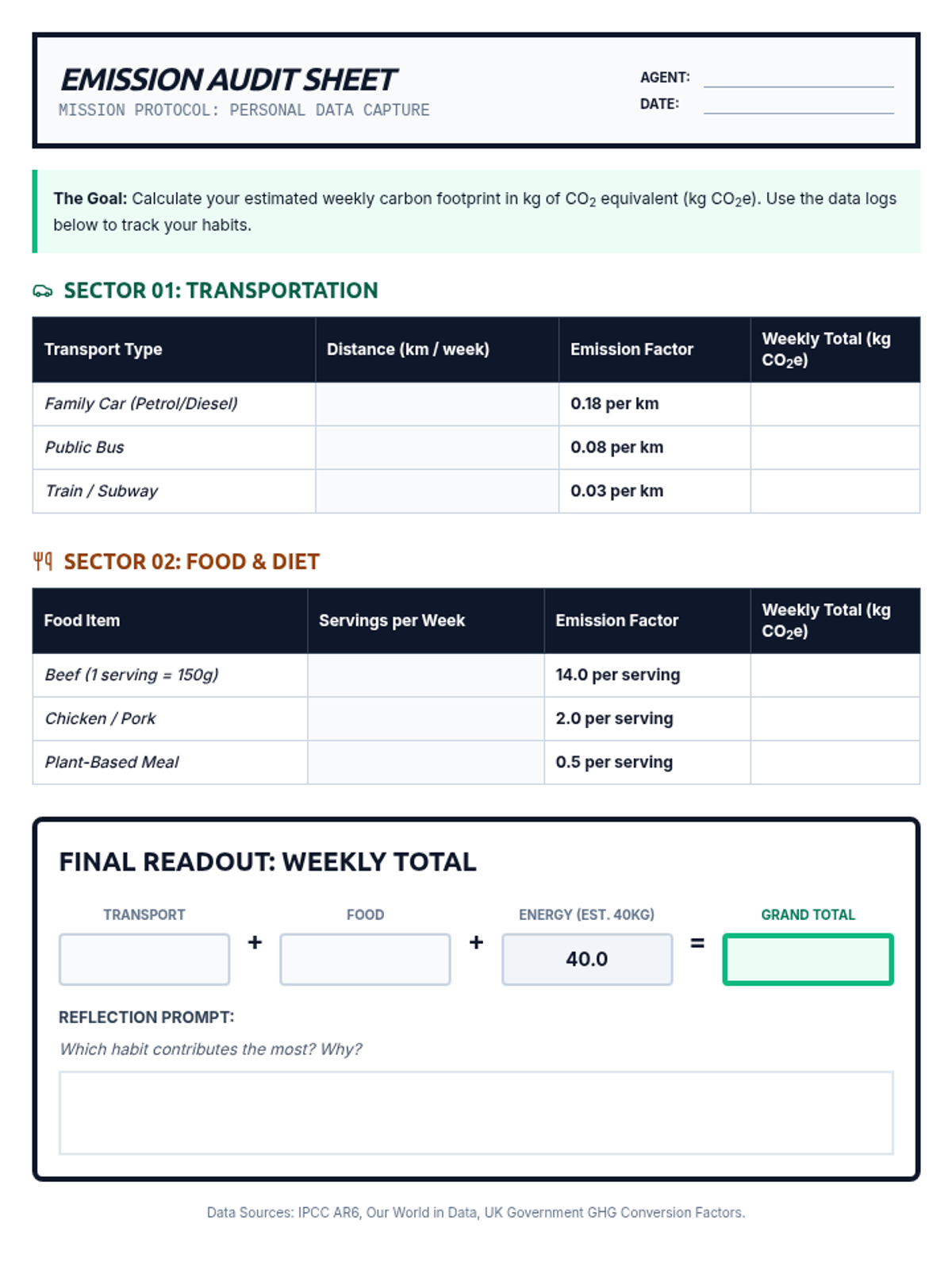
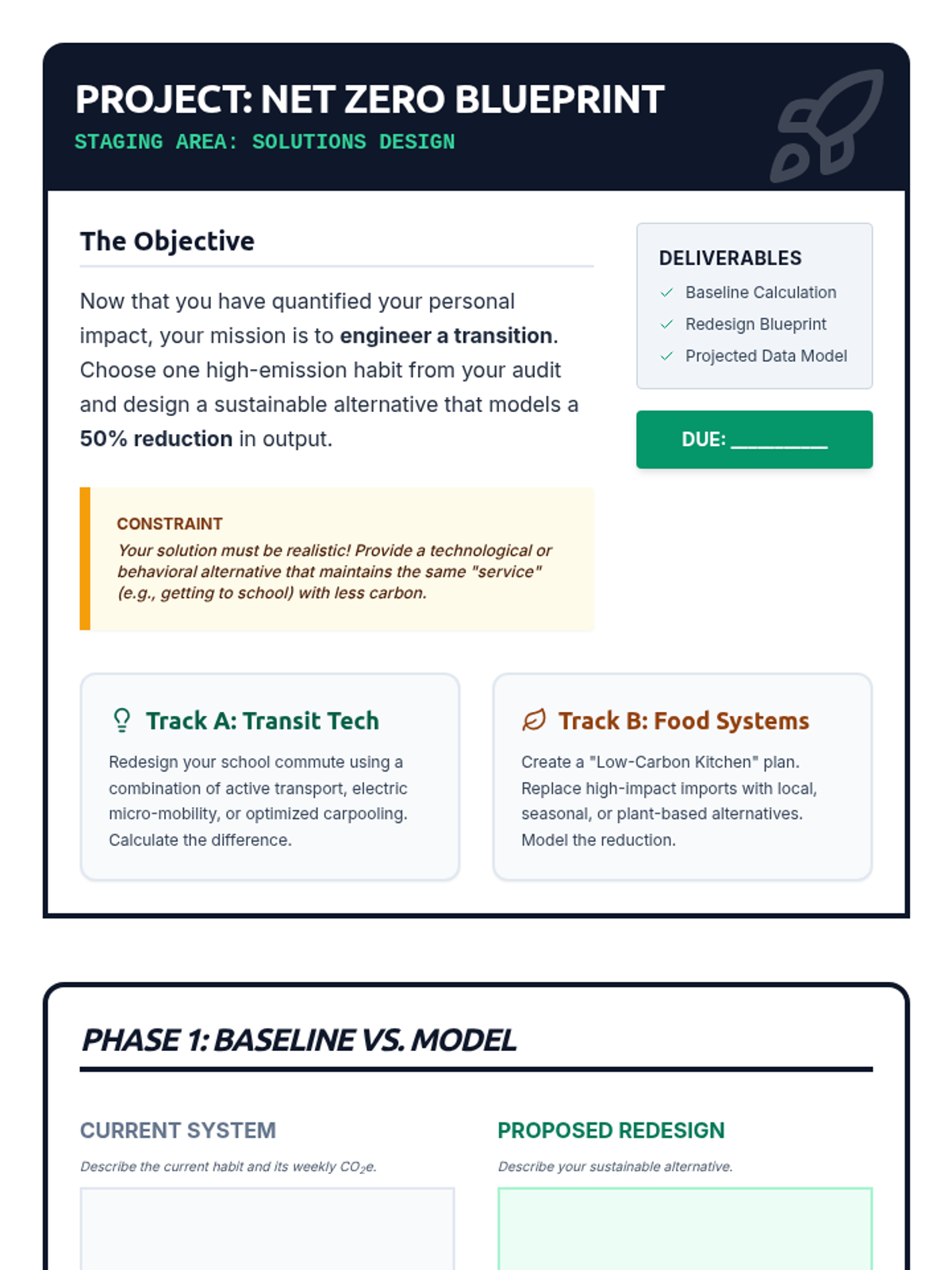
Students calculate carbon emissions from daily habits and model sustainable alternatives, bridging global climate data with personal agency through data-driven analysis.
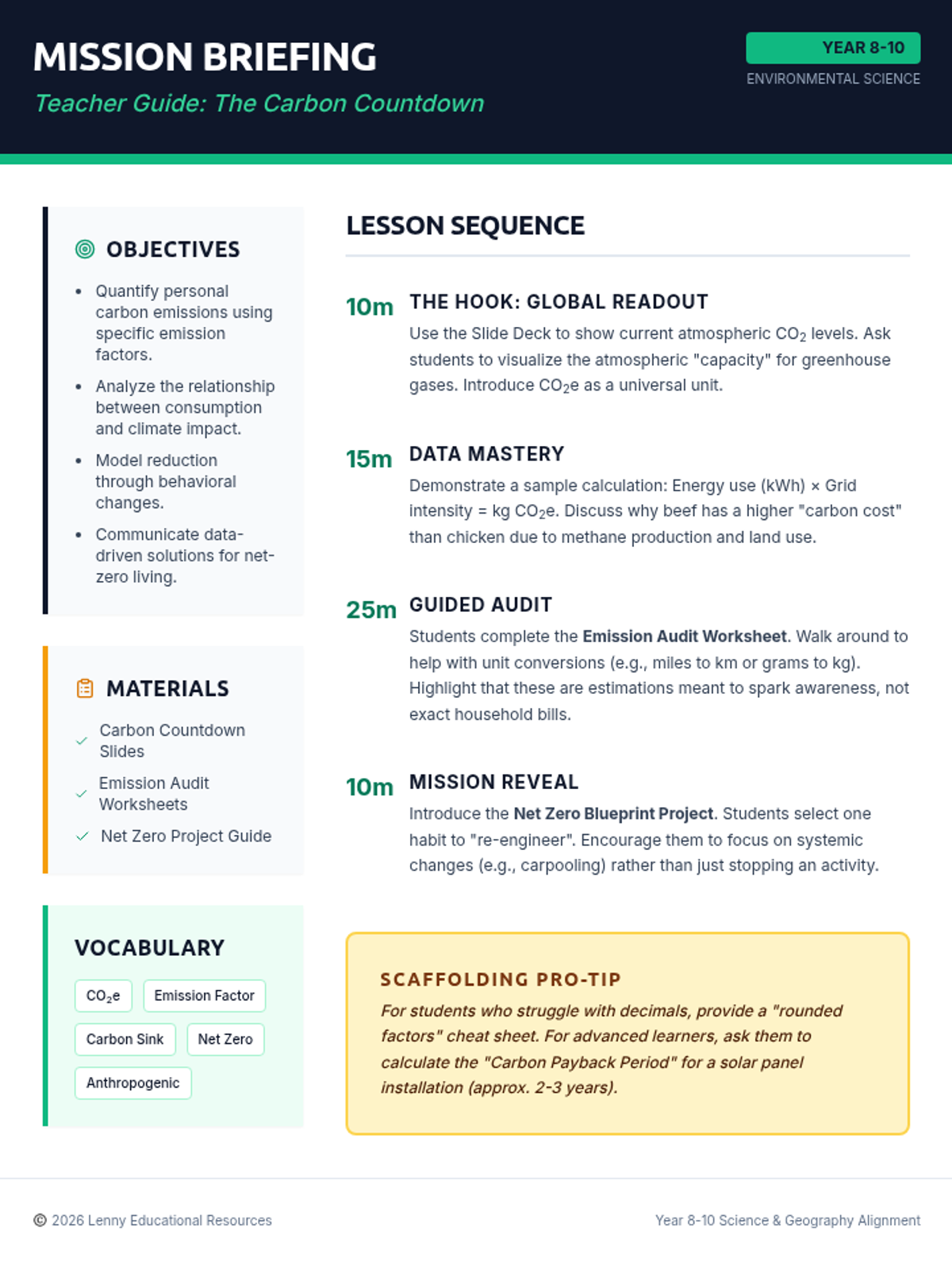
A high-impact lesson where students quantify their personal carbon footprint and design actionable, data-driven strategies for sustainability. Bridging the gap between global climate science and individual agency, students use mathematical modeling to project the impact of lifestyle changes.