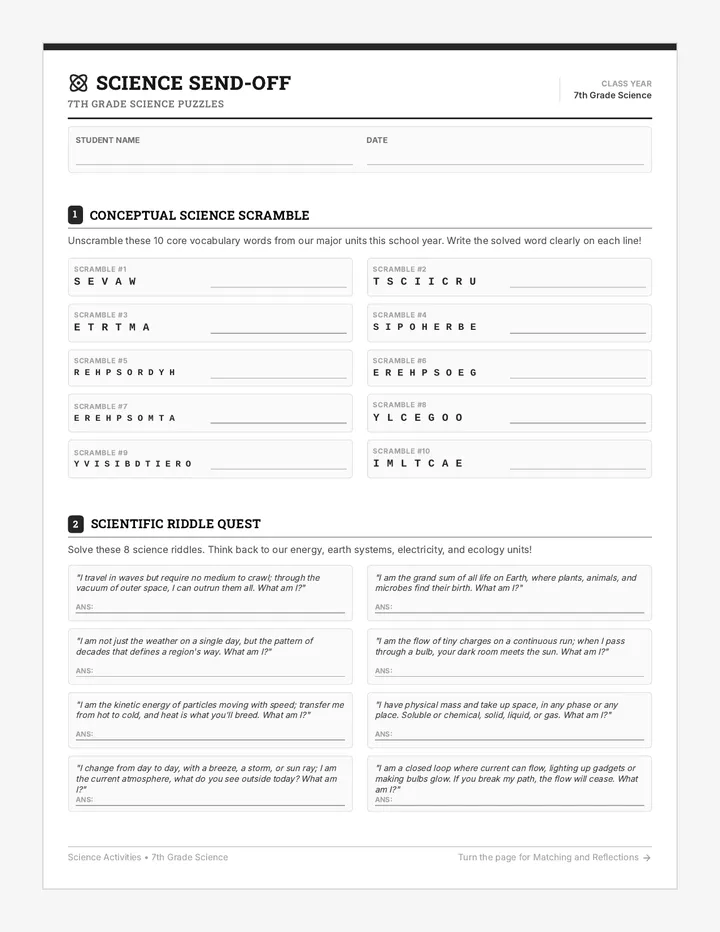
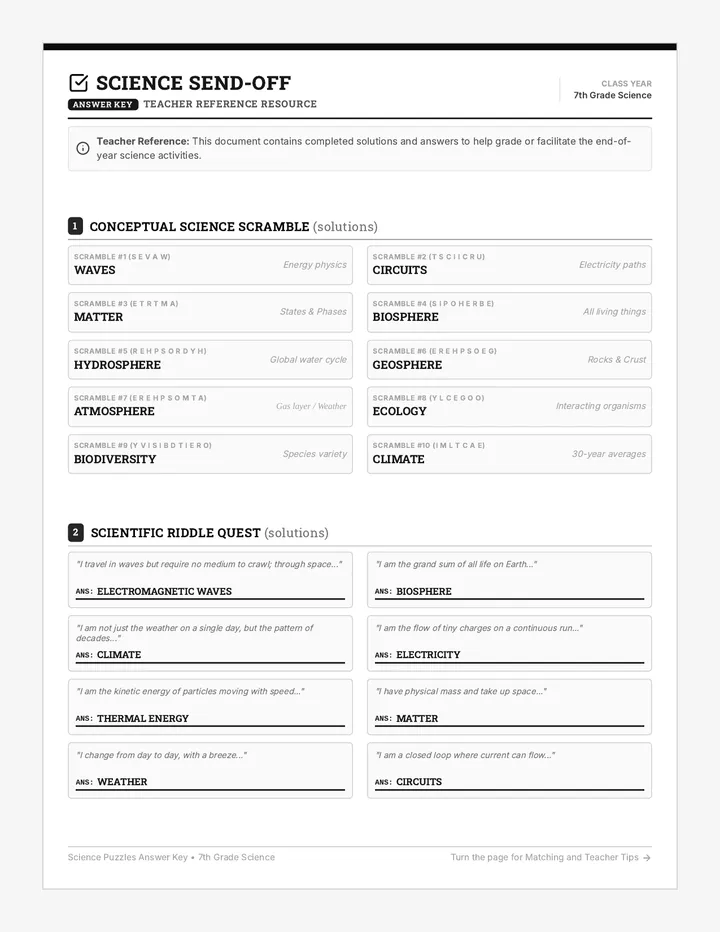
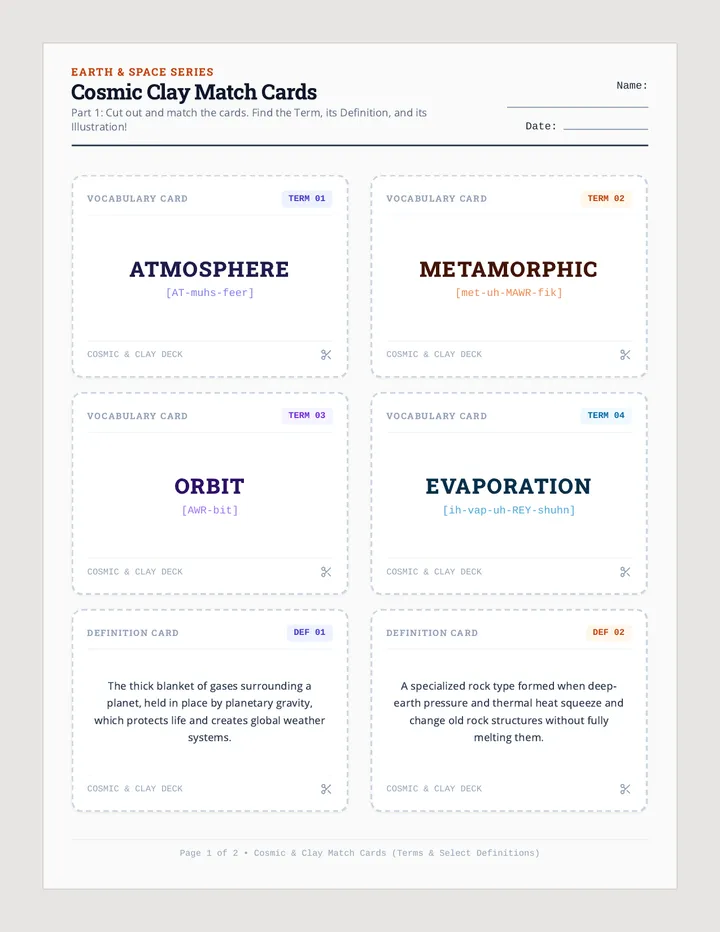
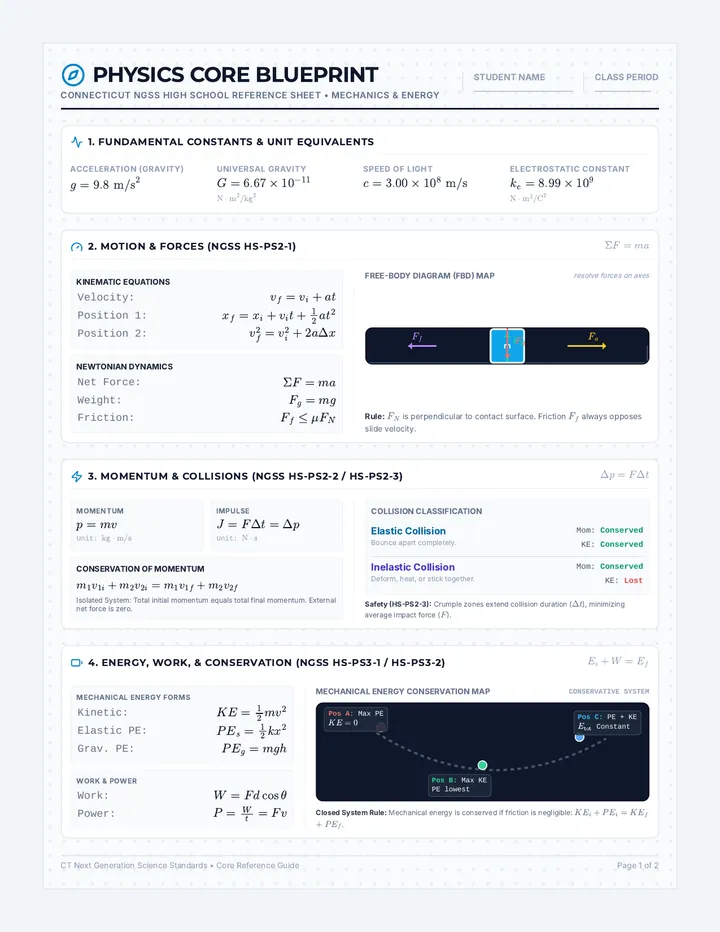
A comprehensive lesson exploring why Earth has seasons, focusing on axial tilt, revolution, and the intensity of solar radiation. Students will model the Earth-Sun system to understand solstices, equinoxes, and hemispheric differences.
Analysis of pedigrees to track traits through multiple generations and final unit assessment.
Deep dive into Punnett Square probability and complex monohybrid cross word problems to predict offspring variation.
Introduces the mechanics of inheritance, including dominant and recessive alleles, and the difference between genotype and phenotype.
Compares asexual and sexual reproduction, focusing on the differences in genetic diversity and cell division (mitosis vs. meiosis).
Explores the hierarchy of genetic material from the nucleus to individual genes. Students learn how DNA codes for traits and how chromosomes organize this information.
Students analyze data to describe the human role in rising global temperatures. They evaluate claims about natural resource use, the carbon cycle, and the greenhouse effect using historical evidence and climate models.
Explore the collision of air masses at cold and warm fronts and use weather data to predict the onset of storms and clear skies.
Identify and compare various air masses (maritime, continental, polar, tropical) and understand how air moves from high to low pressure systems.
Explore how mass and net force determine how quickly a vehicle can stop. This lesson uses braking scenarios to provide evidence for Newton's laws of motion.
A high-energy gameshow lesson where students identify "ancient" tech artifacts and explore how they evolved into the devices we use today.
A 30-minute introductory lesson for 9th graders exploring how passive data is collected through search history, location tracking, and device information. Students will transition from a baseline diagnostic to a guided visual exploration and hands-on vocabulary application.
A lesson focused on the fundamental principles of motion, including key vocabulary and Newton's First Law. Students will demonstrate their understanding of forces, acceleration, and inertia.
A lab-based lesson where students determine the densities of granite and basalt to understand the differences between continental and oceanic crust.
A lesson exploring the fundamental concepts of natural selection, evolution, and reproduction through interactive vocabulary practice and visual aids.
An introductory lesson on common electrical circuit symbols, their functions, and how they are represented in schematic diagrams.
An introductory lesson on photosynthesis and cellular respiration, focusing on the flow of energy and the exchange of gases in plants. Students will identify key inputs and outputs and compare the two vital processes.
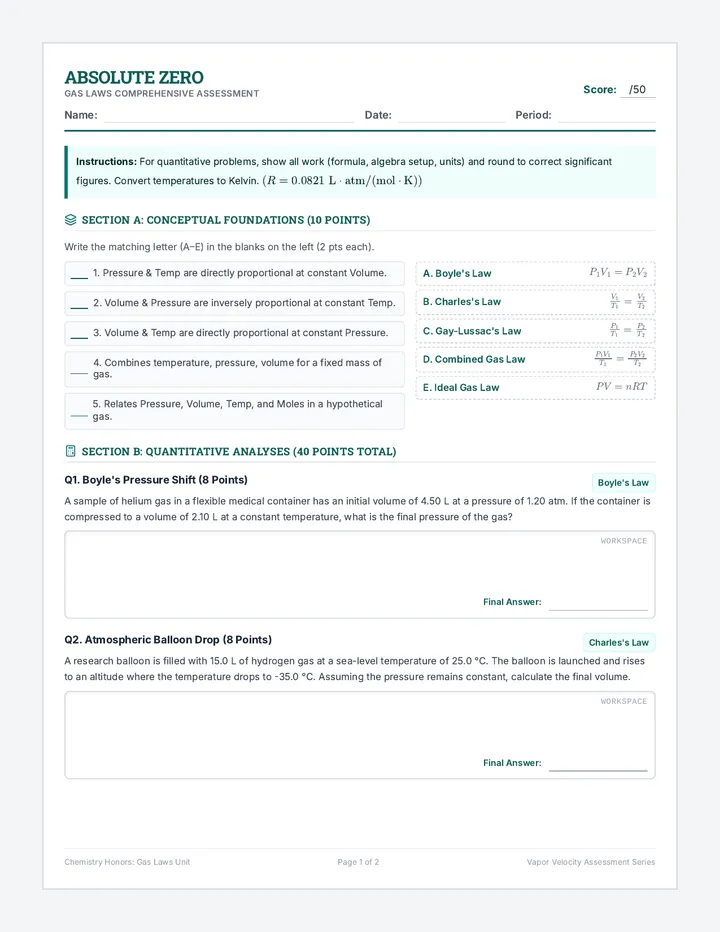
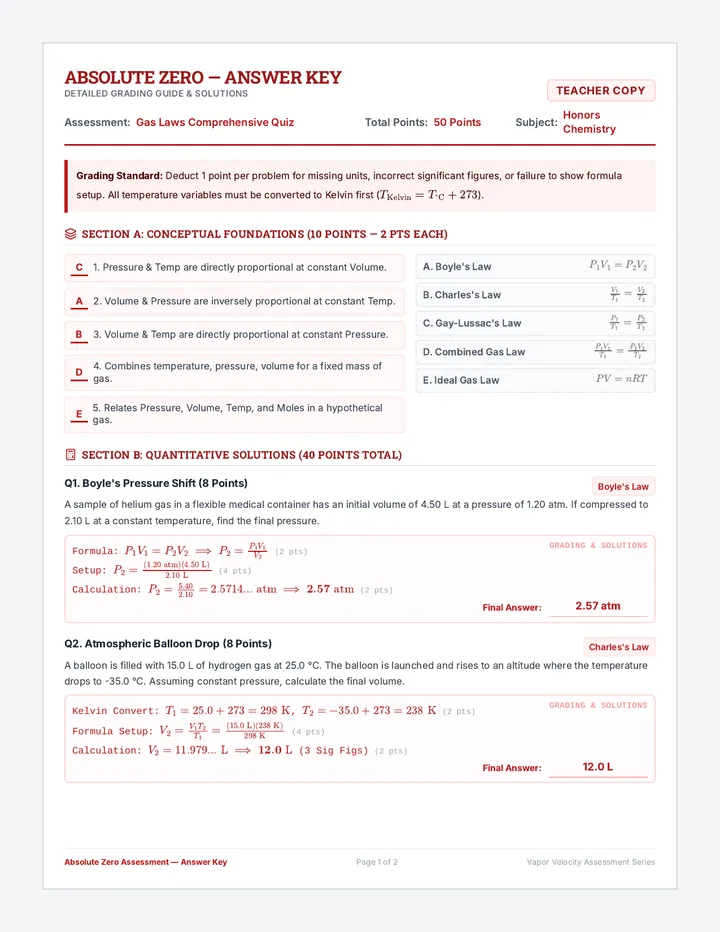
A focused practice session for calculating specific heat, heat energy, and temperature changes using the q=mc\Delta T formula.
The unit culminates in students finalizing their monster designs and creating a scientific presentation that explains the inheritance patterns of their creature.
Students explore more complex inheritance patterns, including incomplete dominance and codominance, to add unique variations and 'rare' traits to their monster designs.
Students learn to use Punnett squares as a tool for predicting the probability of traits in offspring, preparing them to calculate the genetics of their monster's lineage.
Students are introduced to the Monster Lab project and learn the fundamental concepts of genotypes, phenotypes, alleles, and traits through a 'Monster Trait' inventory.
A deep dive into DC circuit analysis, reviewing fundamental laws and practicing complex problem-solving with Ohm's Law and Kirchhoff's Rules.
A comprehensive 40-minute lesson on the safe and effective operation of the Milwaukee M18 FUEL HOLE HAWG Right Angle Drill, focusing on hole saw assembly and cutting 2-inch holes in structural studs.
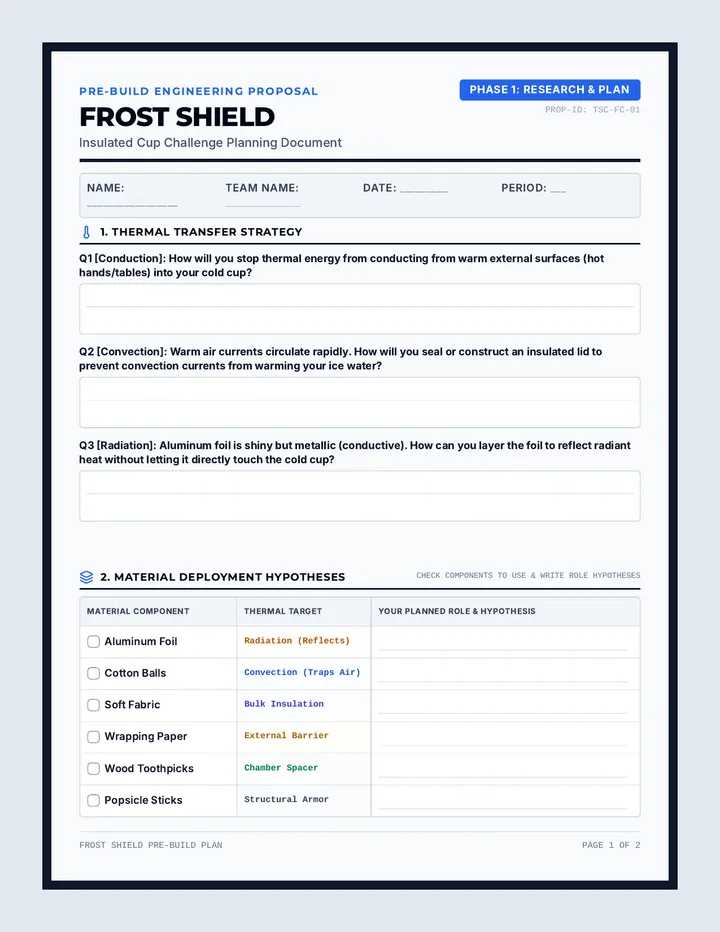
This lesson introduces 3rd-grade students to thermal energy, molecules, and heat transfer using visual diagrams. Students will explore how energy moves between objects and how the speed of molecules relates to temperature.
A tiered lesson on modeling genetic inheritance using Punnett squares, covering allele pairs, random assortment, and probability calculations for middle school students.
A 9th-grade conceptual physics lesson focusing on the relationship between mass, volume, and density, specifically applied to geological samples like basalt and granite. Students will learn to calculate density, understand its physical significance through analogies, and evaluate lab accuracy using percent error.