Active listening, assertive expression, and boundary-setting strategies for interpersonal success. Develops proficiency in conflict mediation, cooperative teamwork, and the cultivation of healthy romantic and platonic connections.
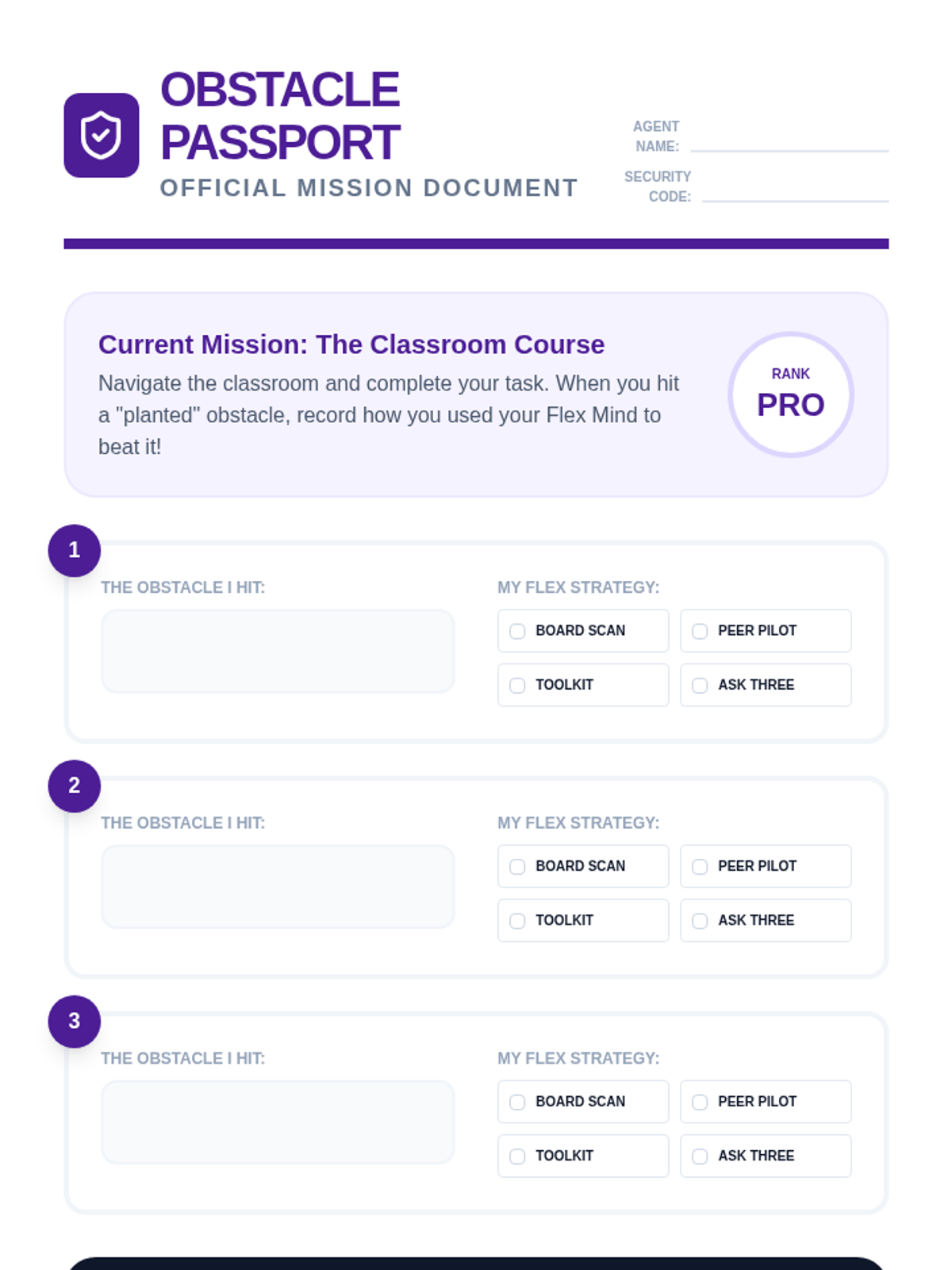
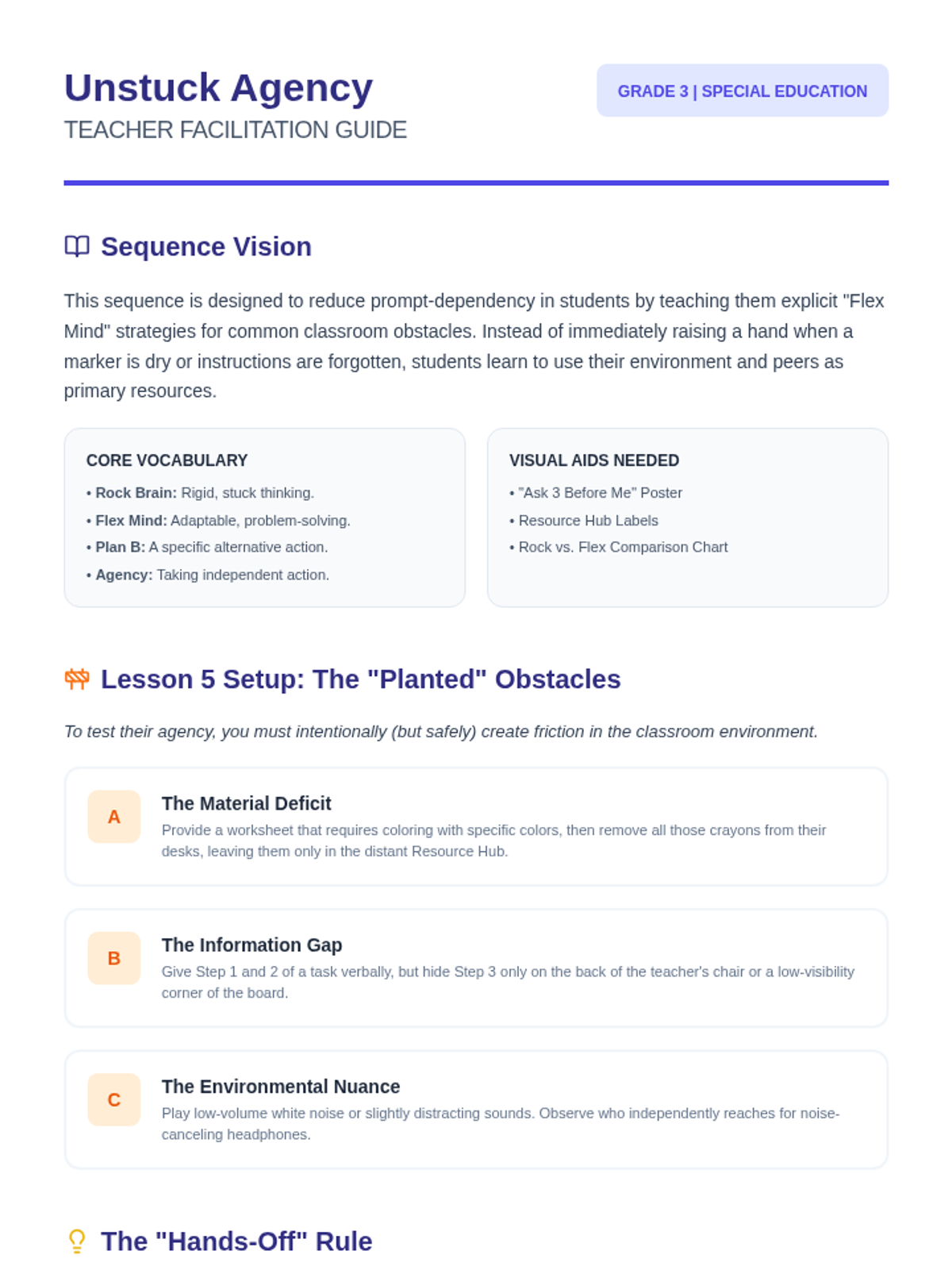
Students navigate a multi-step academic task where obstacles are intentionally planted. They must apply the strategies learned throughout the sequence to complete the task.
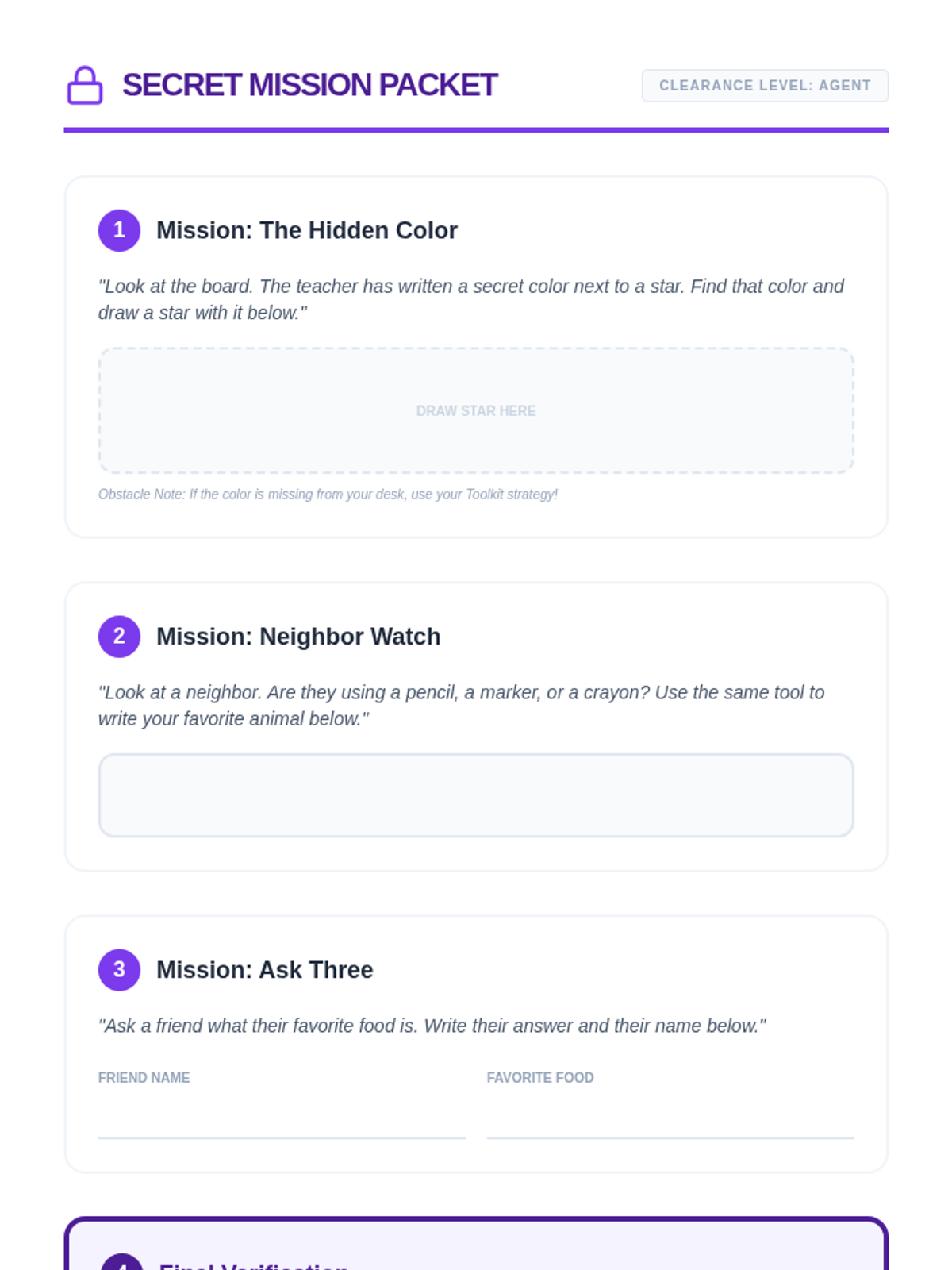
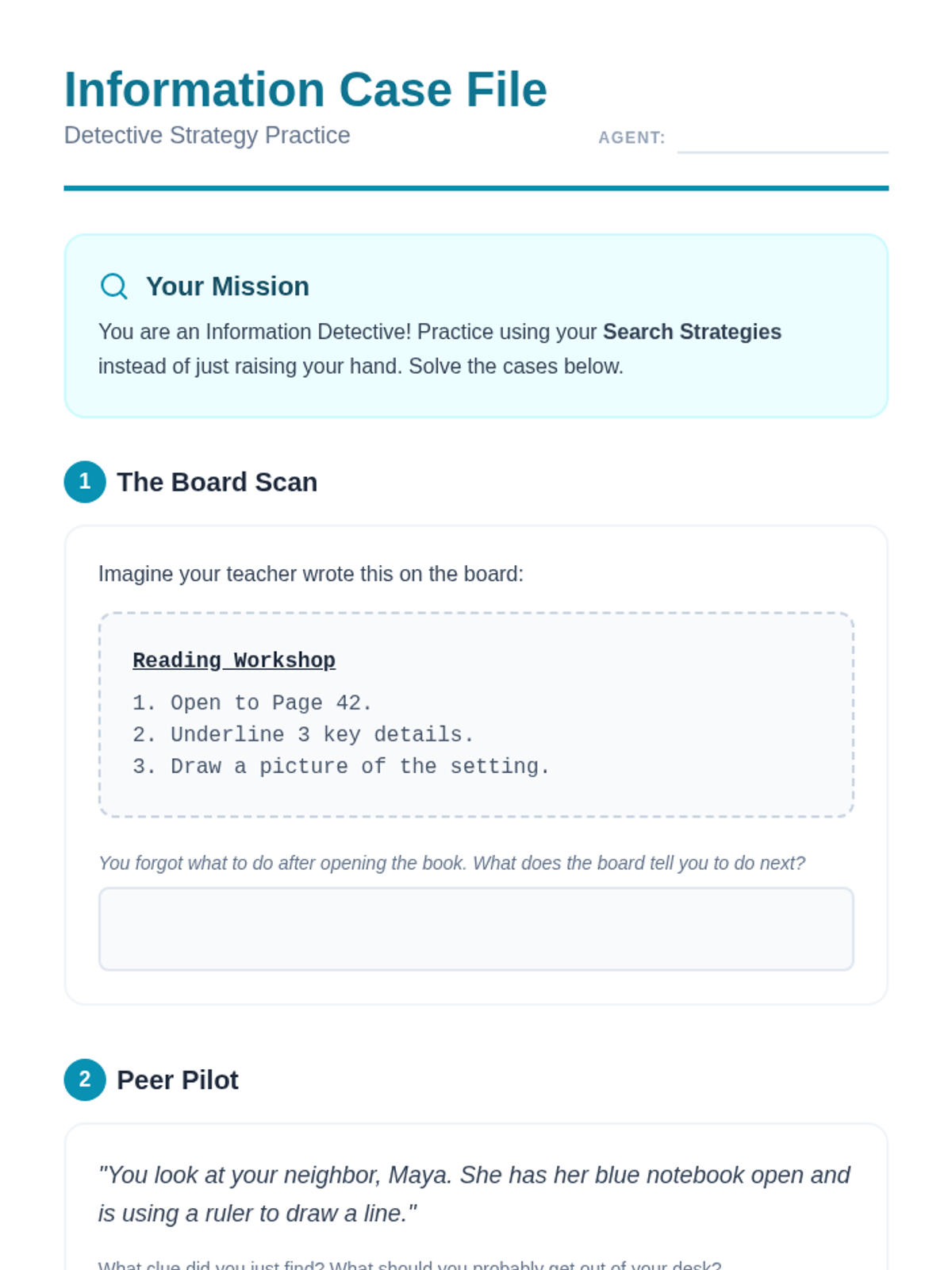
Students practice strategies for when they forget what to do, such as 'ask three before me,' checking the board, or looking at a peer's work. The focus is on finding information independently.
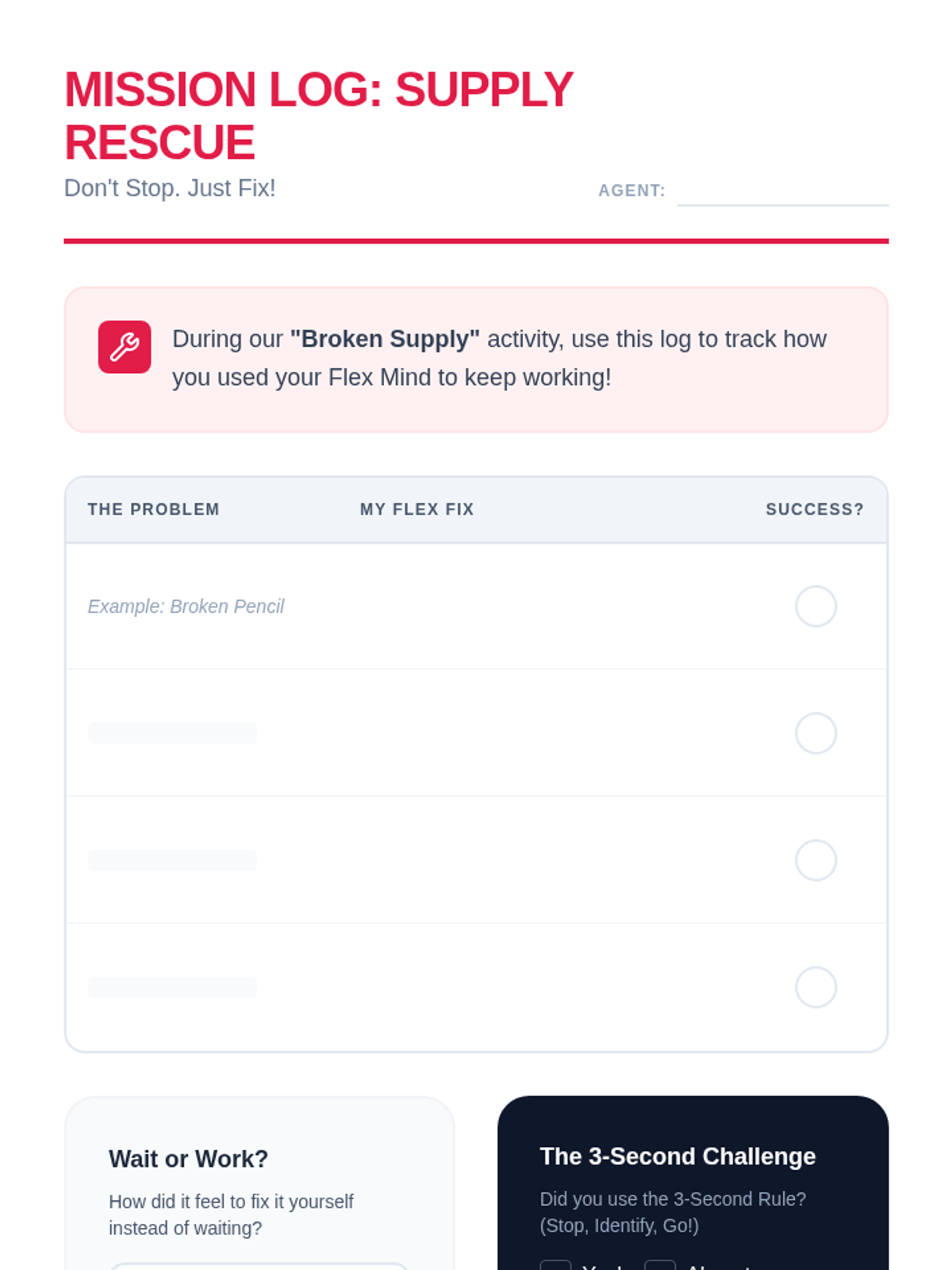
This lesson uses role-play to practice solving material deficits. Students act out scenarios like a dry marker or a broken pencil and practice the specific fix rather than stopping work.
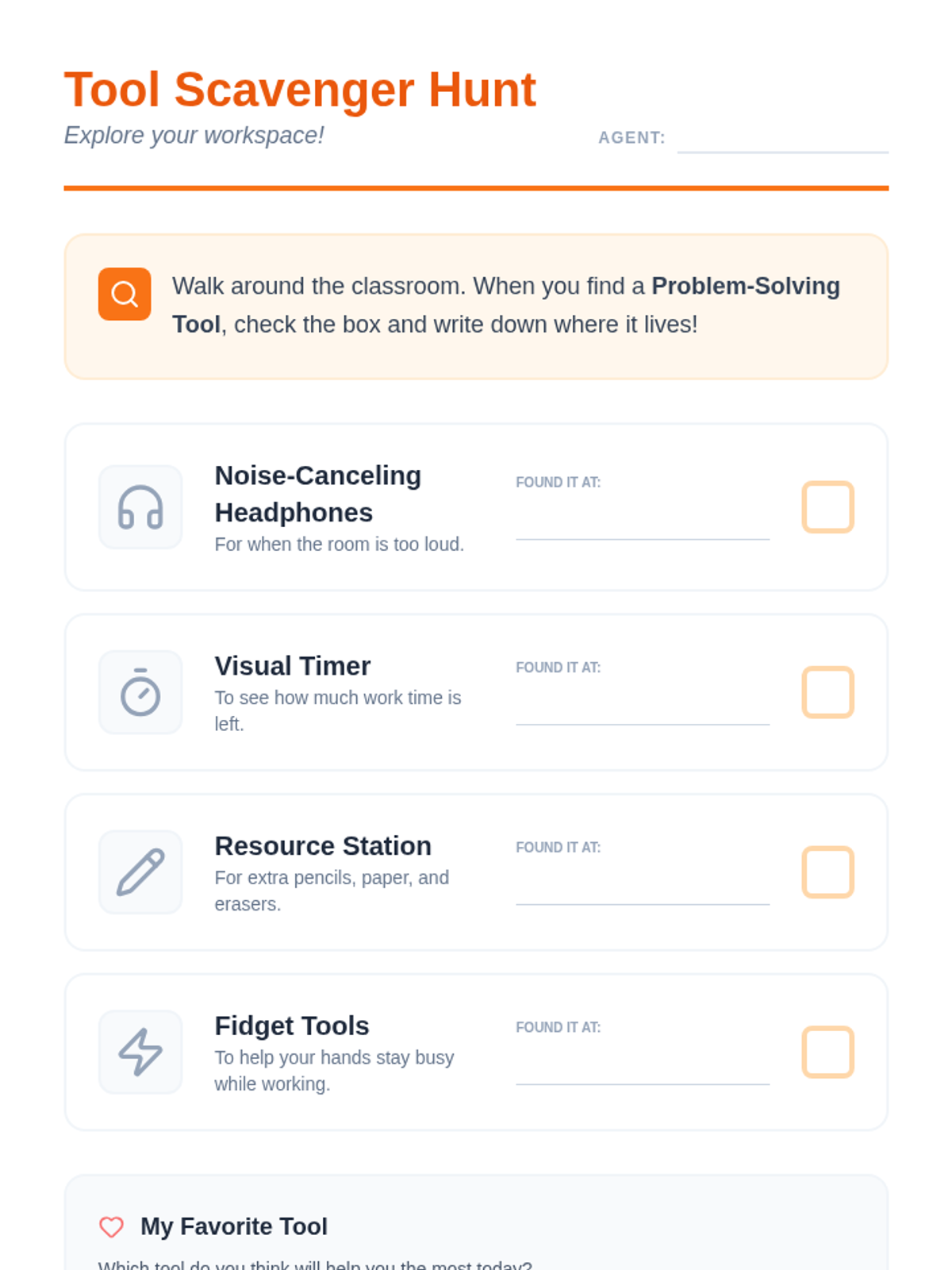
Students review common classroom resources available for problem-solving, such as noise-canceling headphones, visual timers, and resource centers. They engage in a scavenger hunt to locate these tools physically in the classroom.
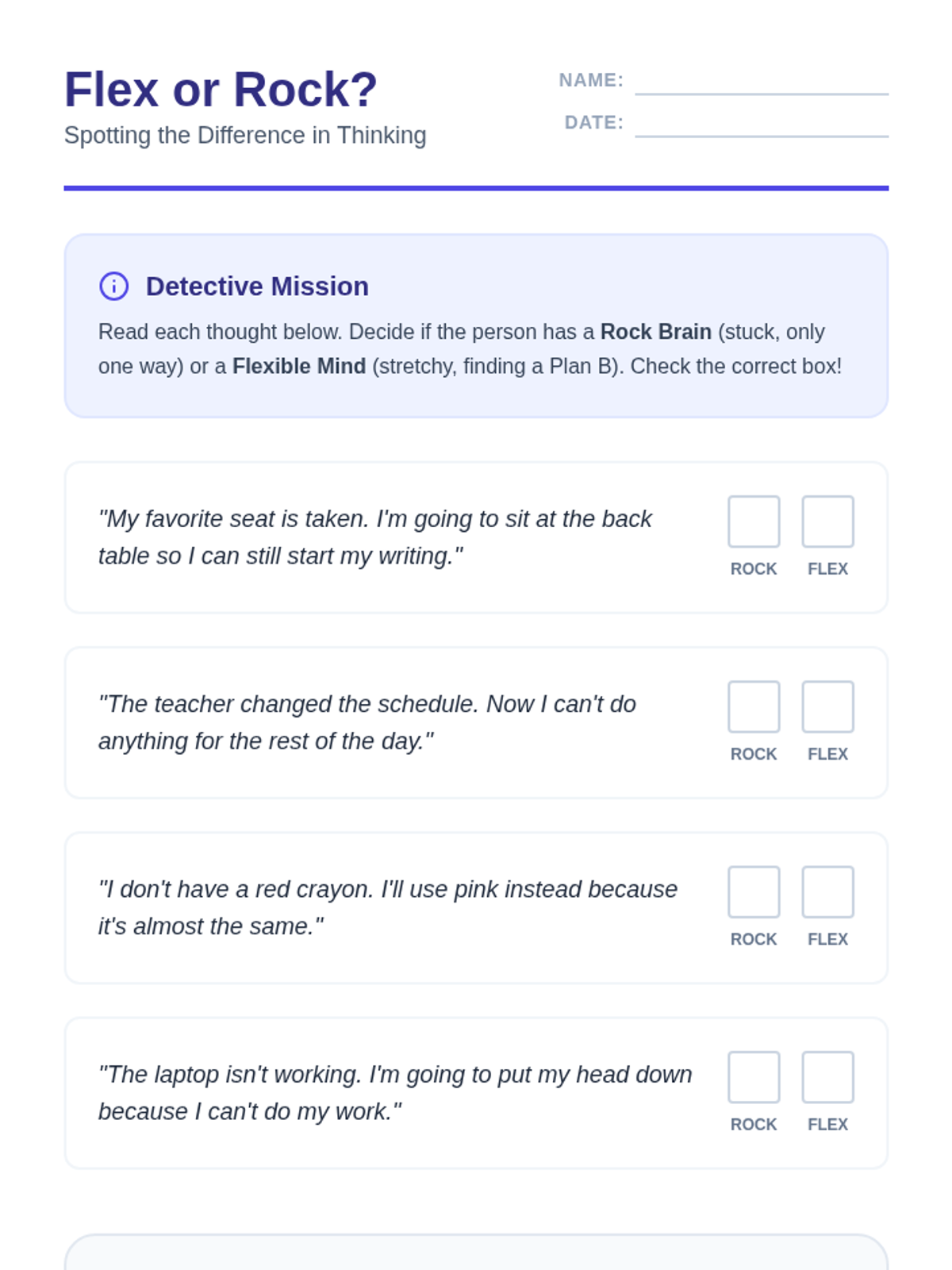
Students are introduced to the concept of 'flexible thinking' versus 'rock brain' thinking. They practice accepting changes to simple routines to understand that there is more than one way to reach a goal.
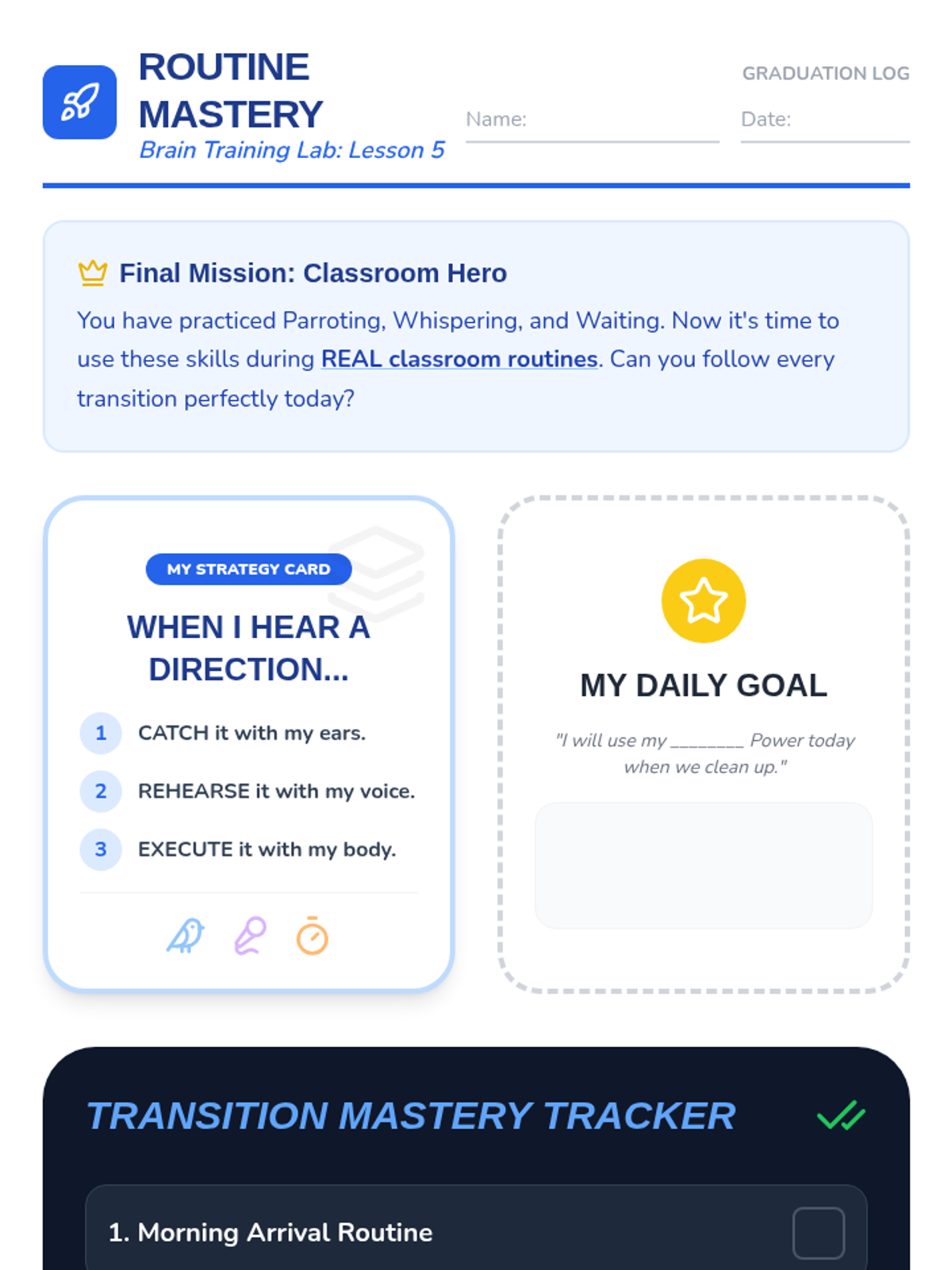
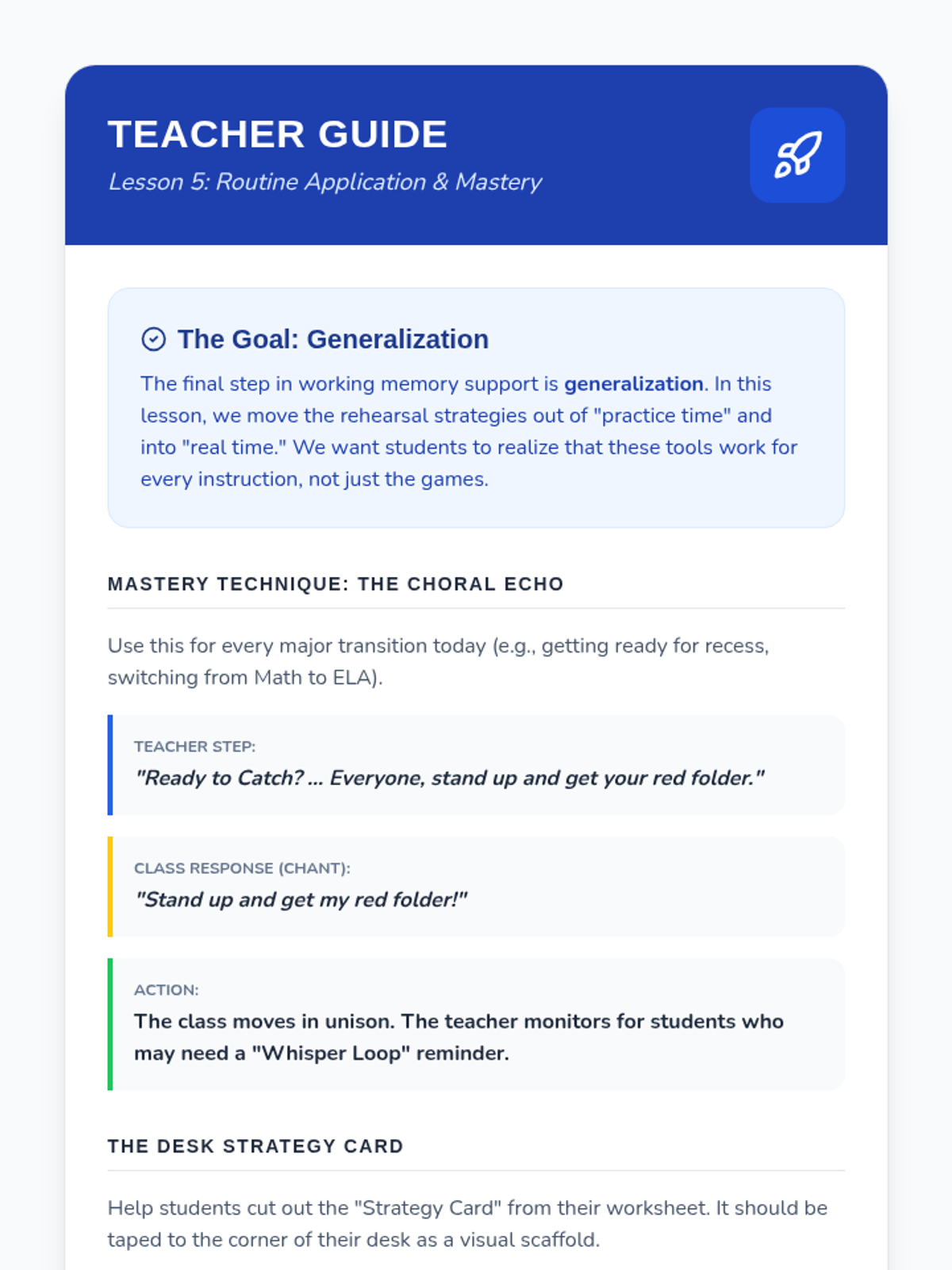
Students apply verbal strategies to actual classroom transition requests using choral responses to confirm steps.
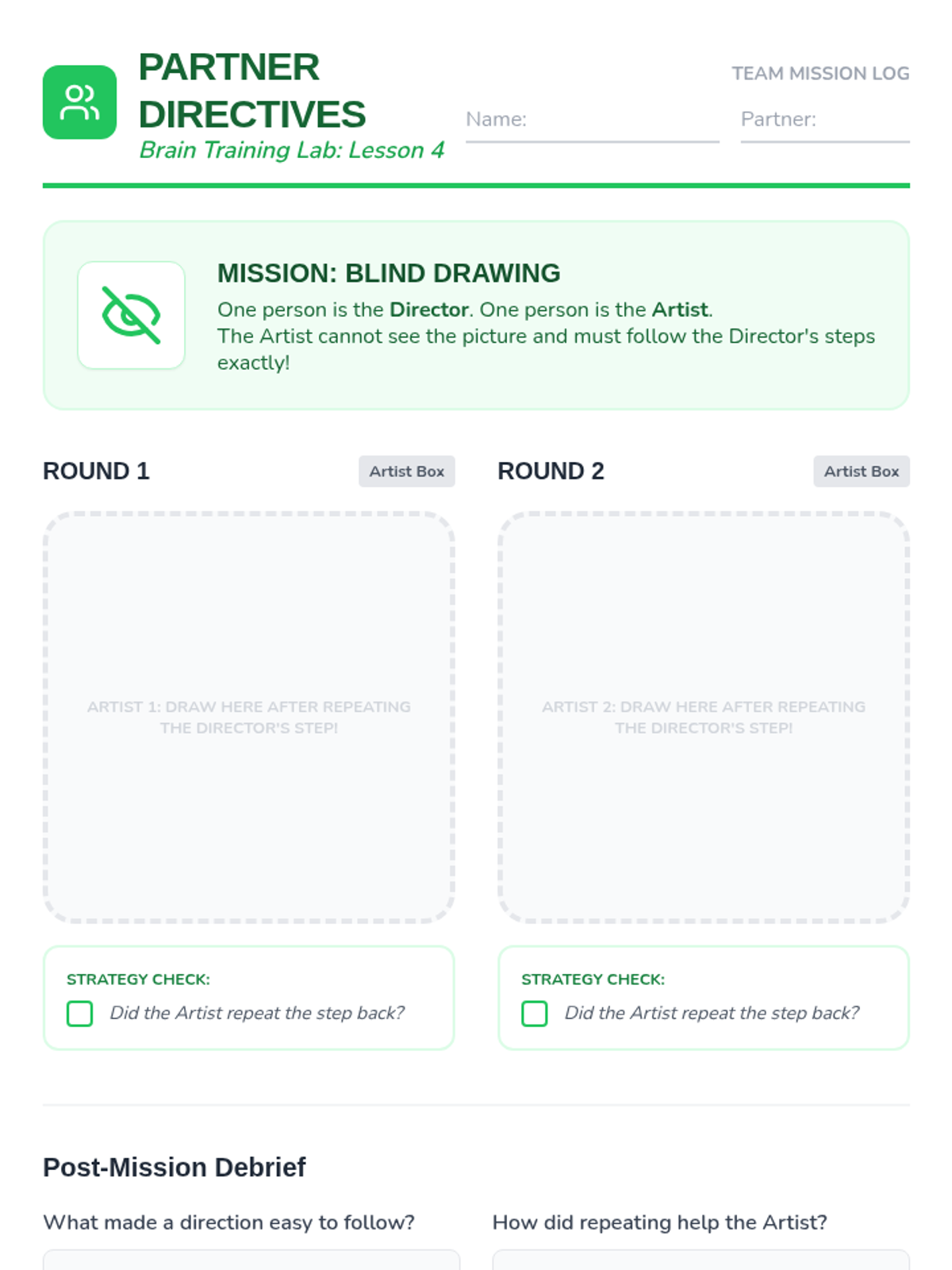
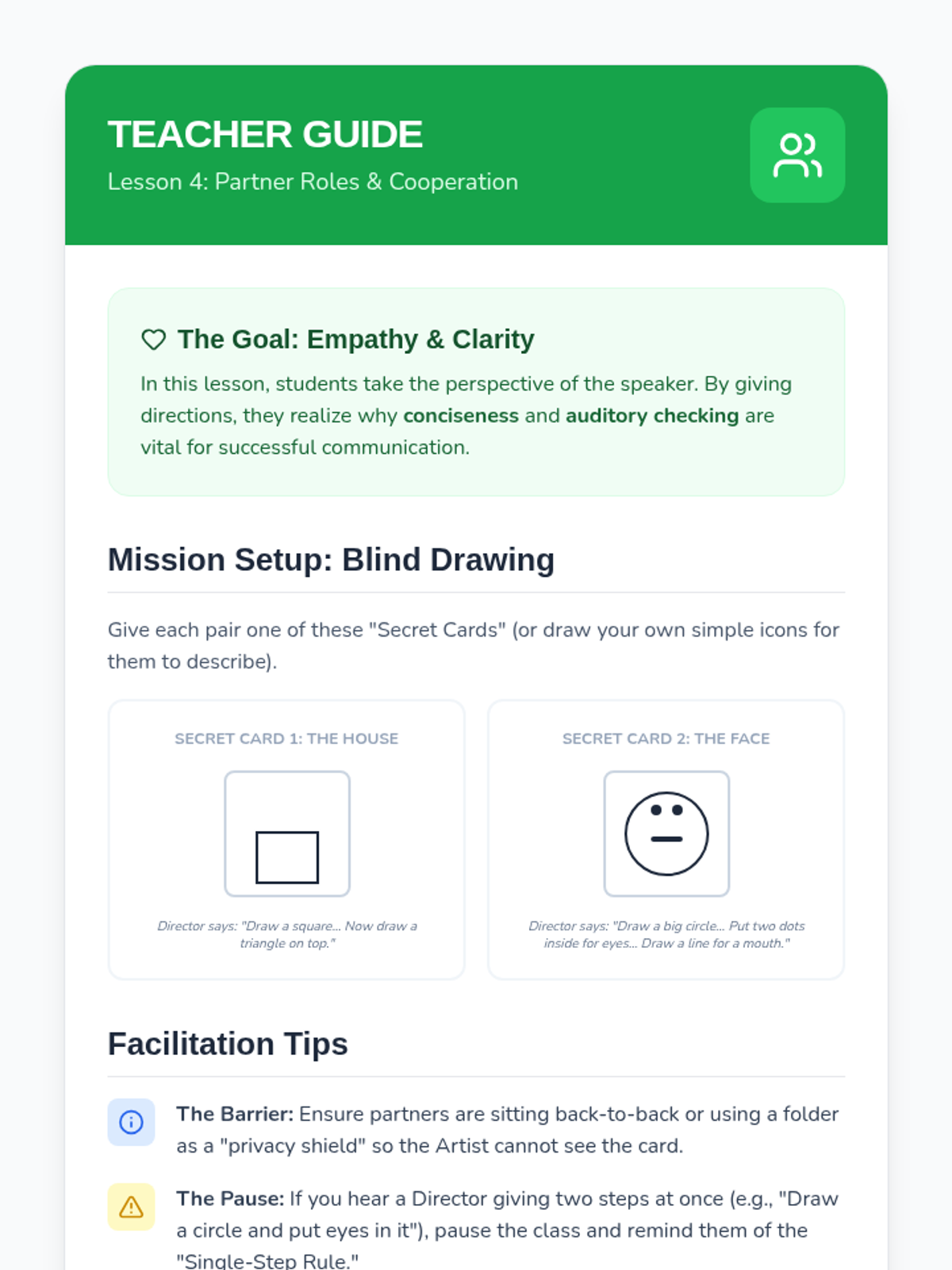
In pairs, students take turns being the 'Teacher' and the 'Student' to practice giving and repeating explicit steps.
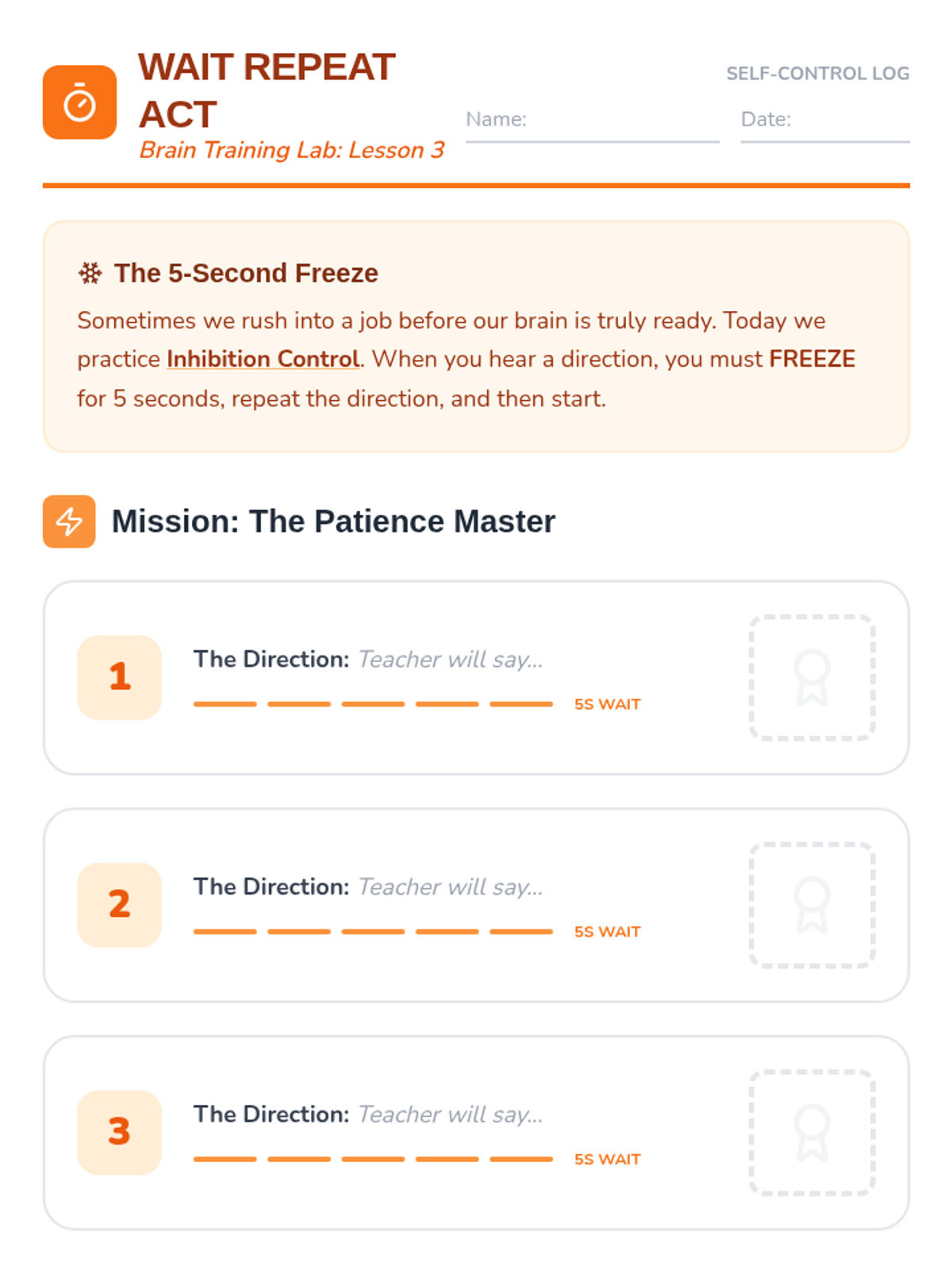
Students engage in inhibition control activities where they must wait 5 seconds after hearing a command, repeat it, and only then act.
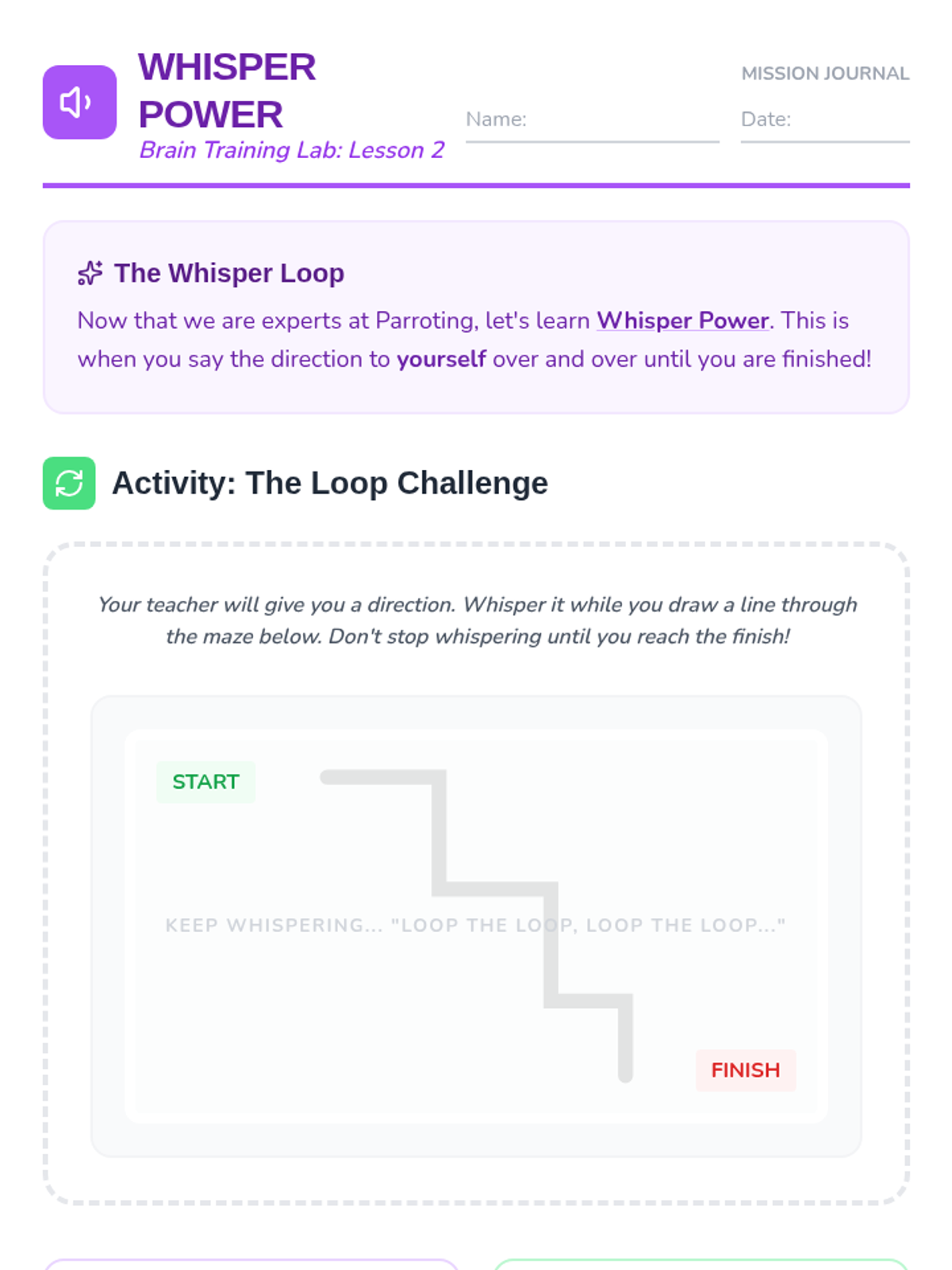
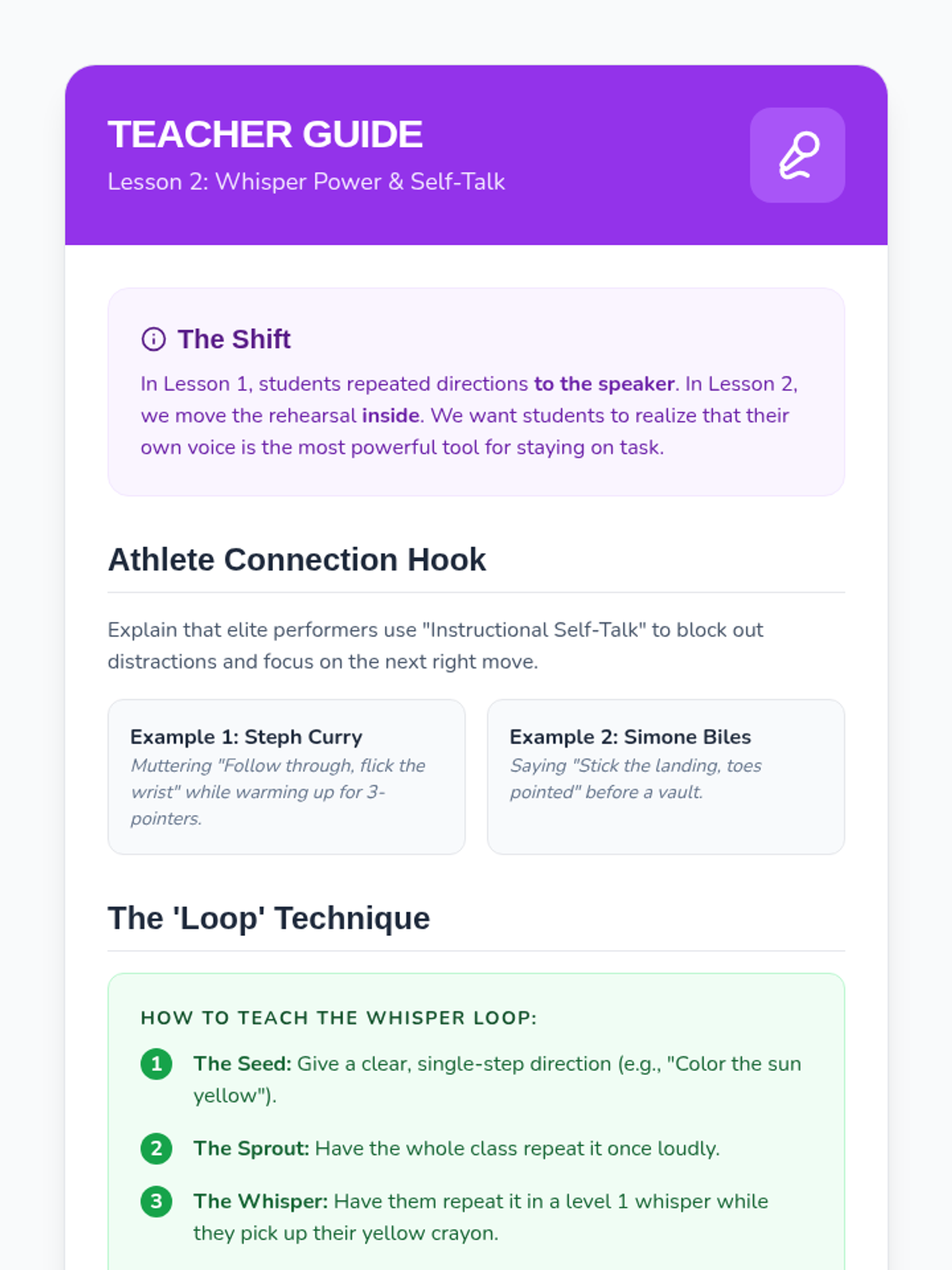
Moving from loud repetition to whispering, students practice 'self-talk.' They are given a single direction and must whisper it on a loop while performing the action.
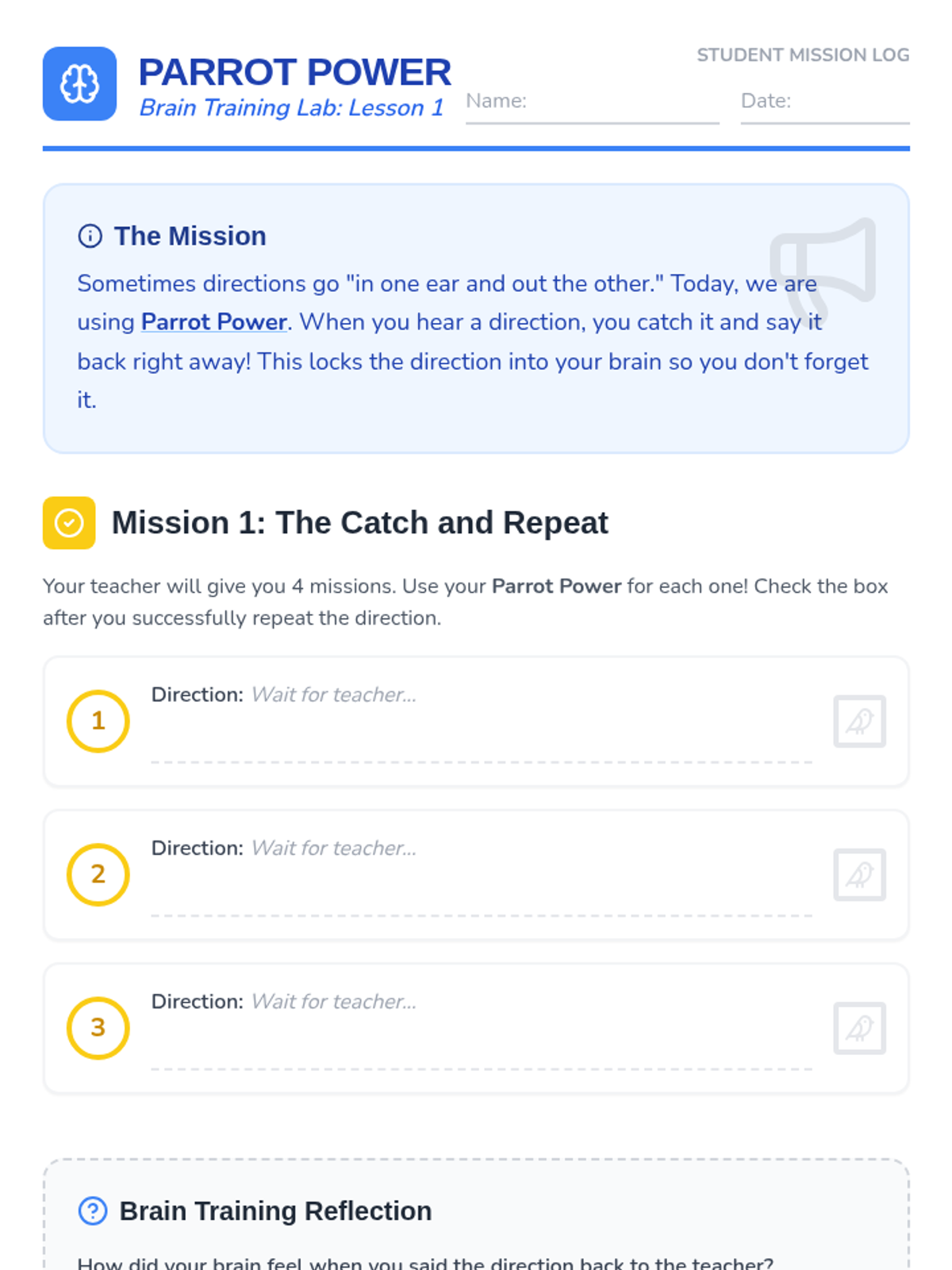
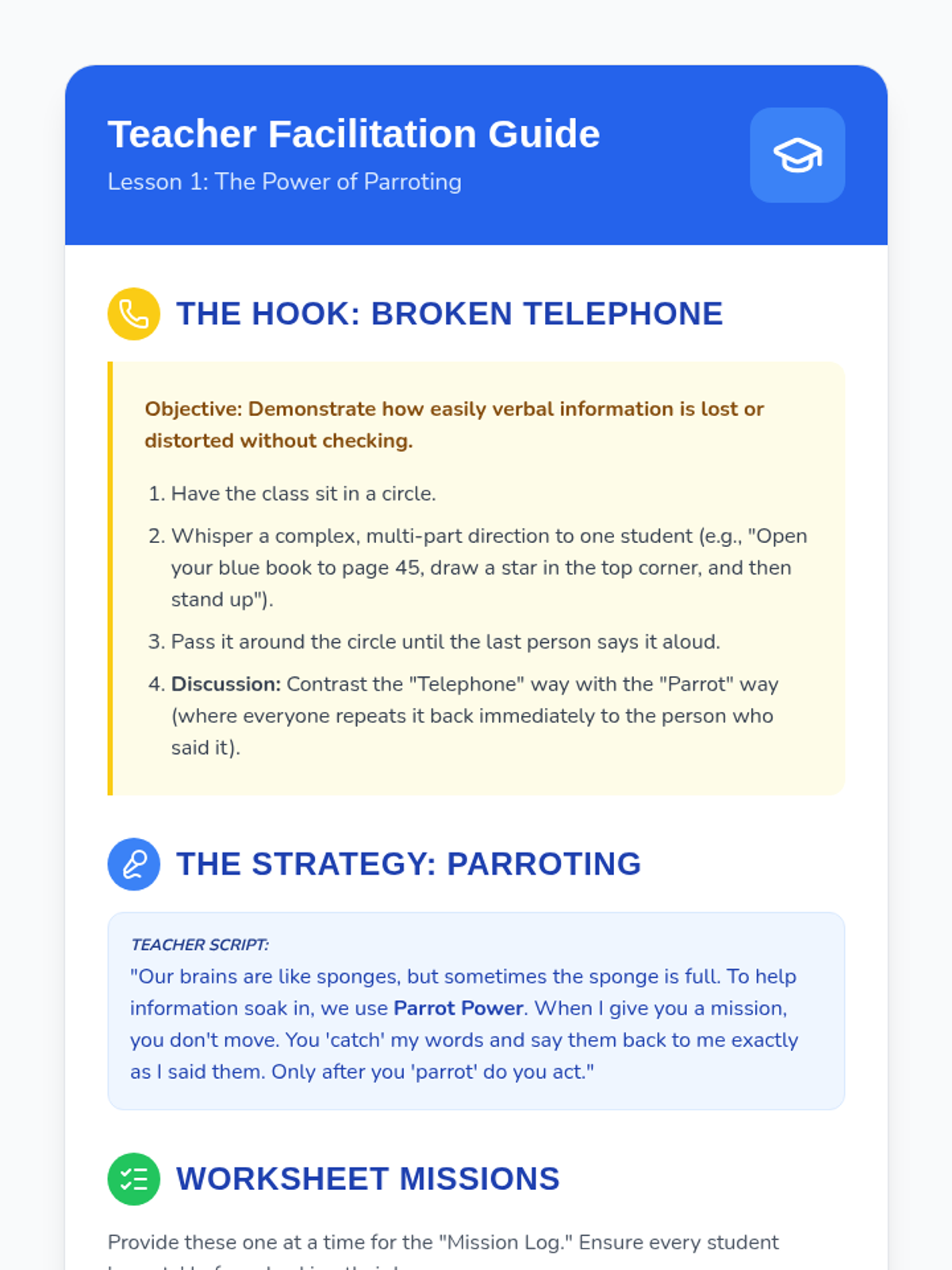
Students practice the 'parrot' technique, where they must immediately repeat a single-step direction back to the speaker before moving. The lesson emphasizes that saying it locks it into the brain.
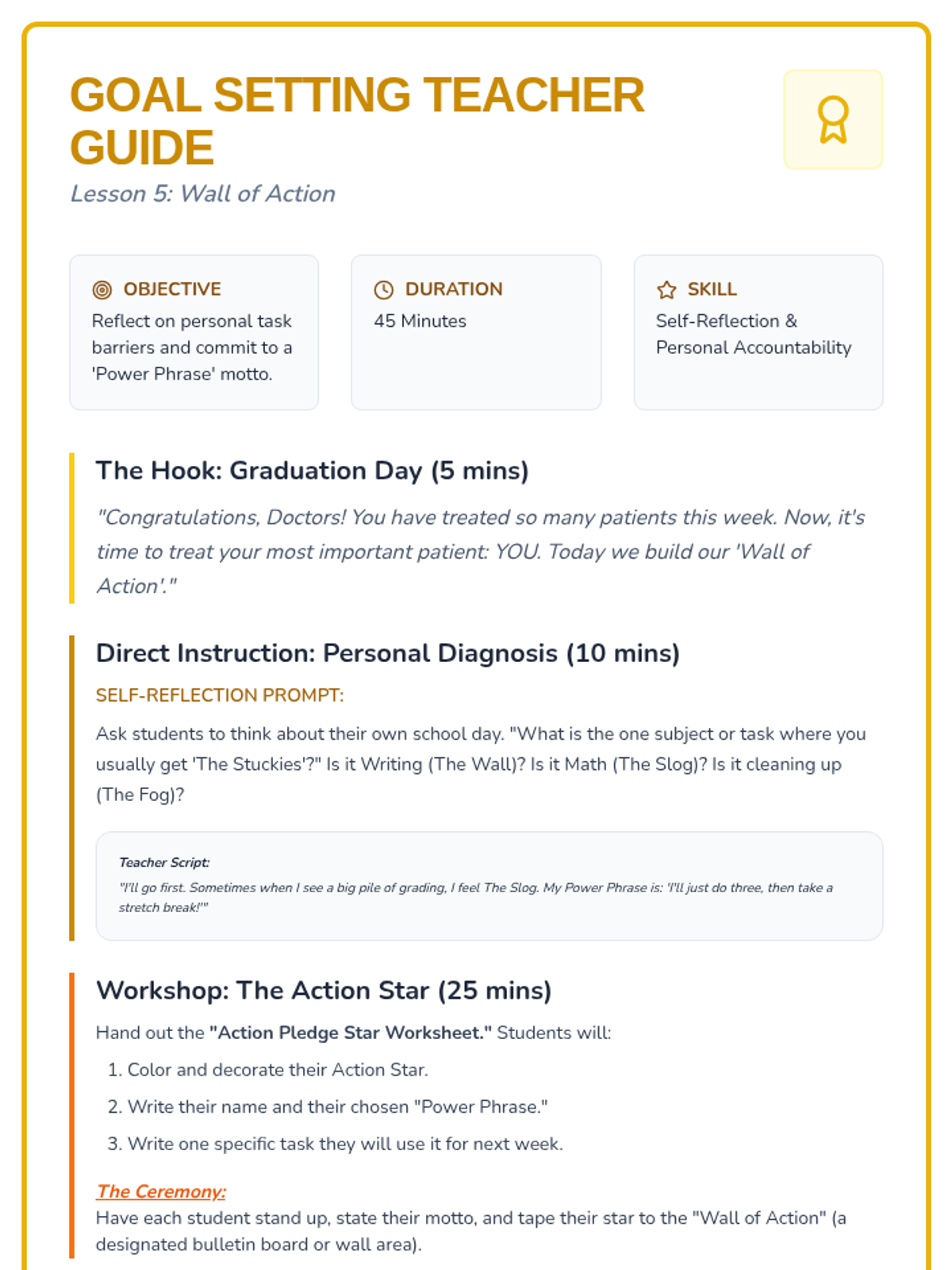
Students identify their own barriers to starting work and select a personal 'Power Phrase' motto for future tasks.
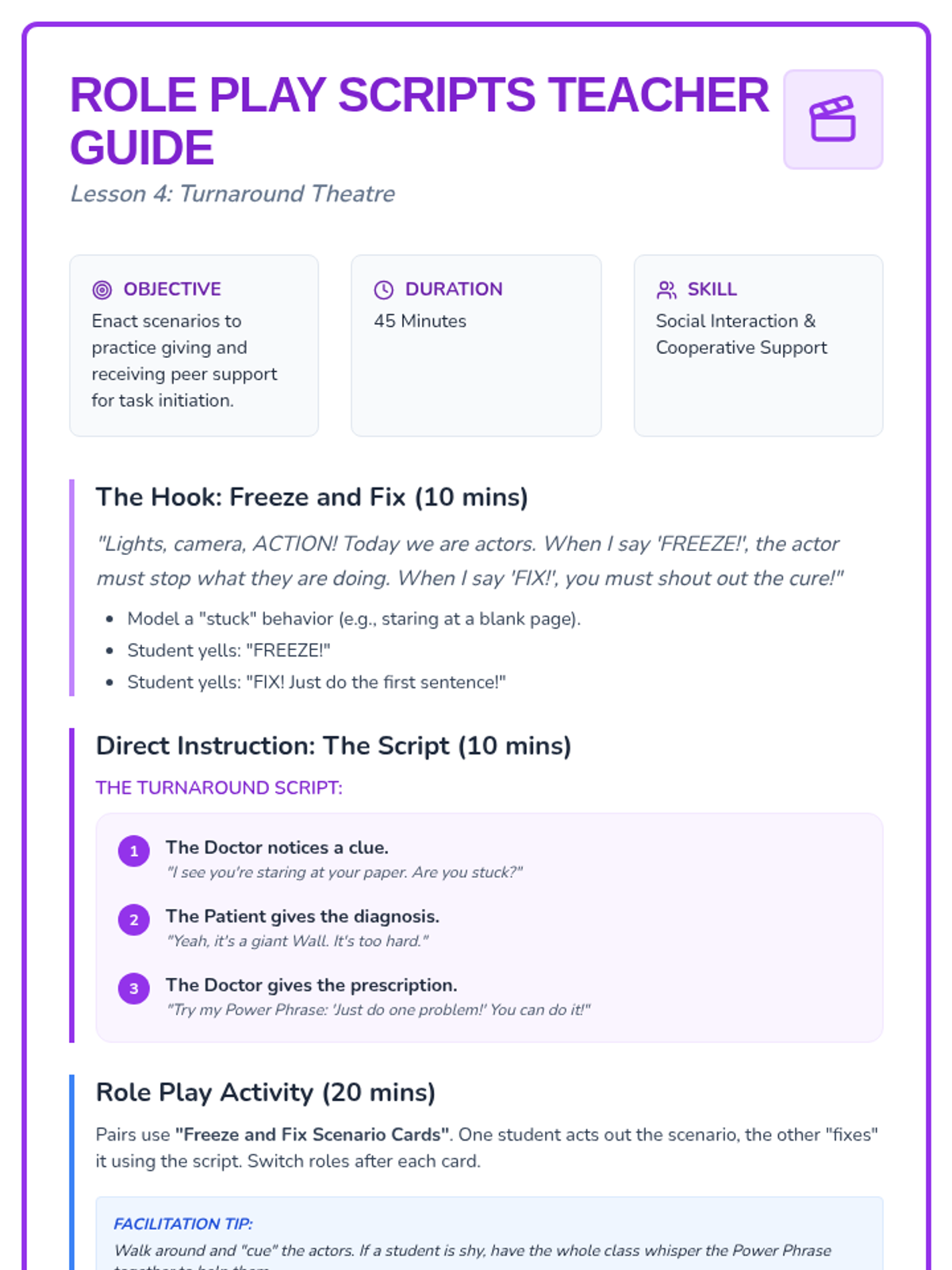
Students role-play scenarios where they help a peer get 'unstuck' using their self-talk prescriptions.
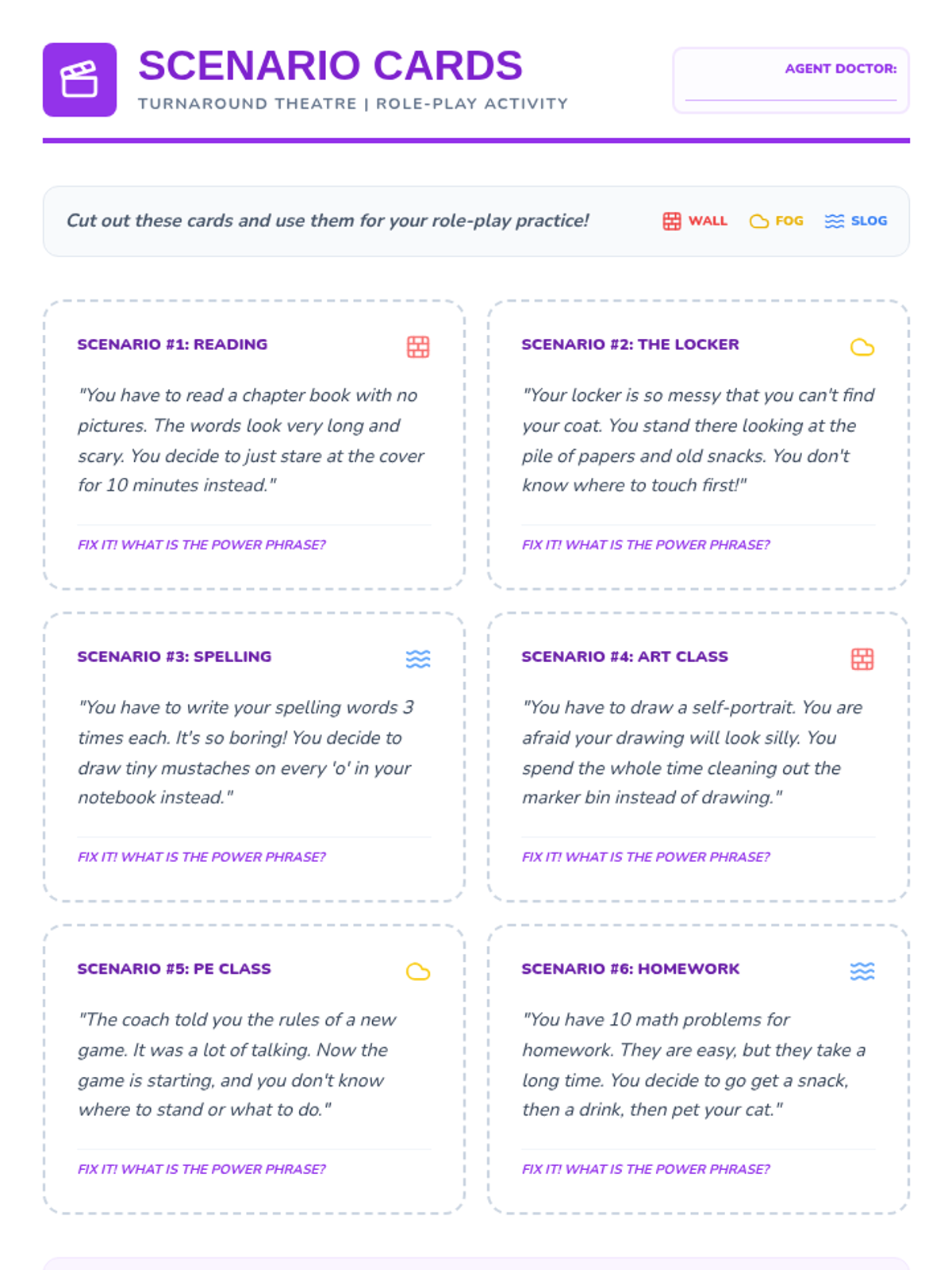
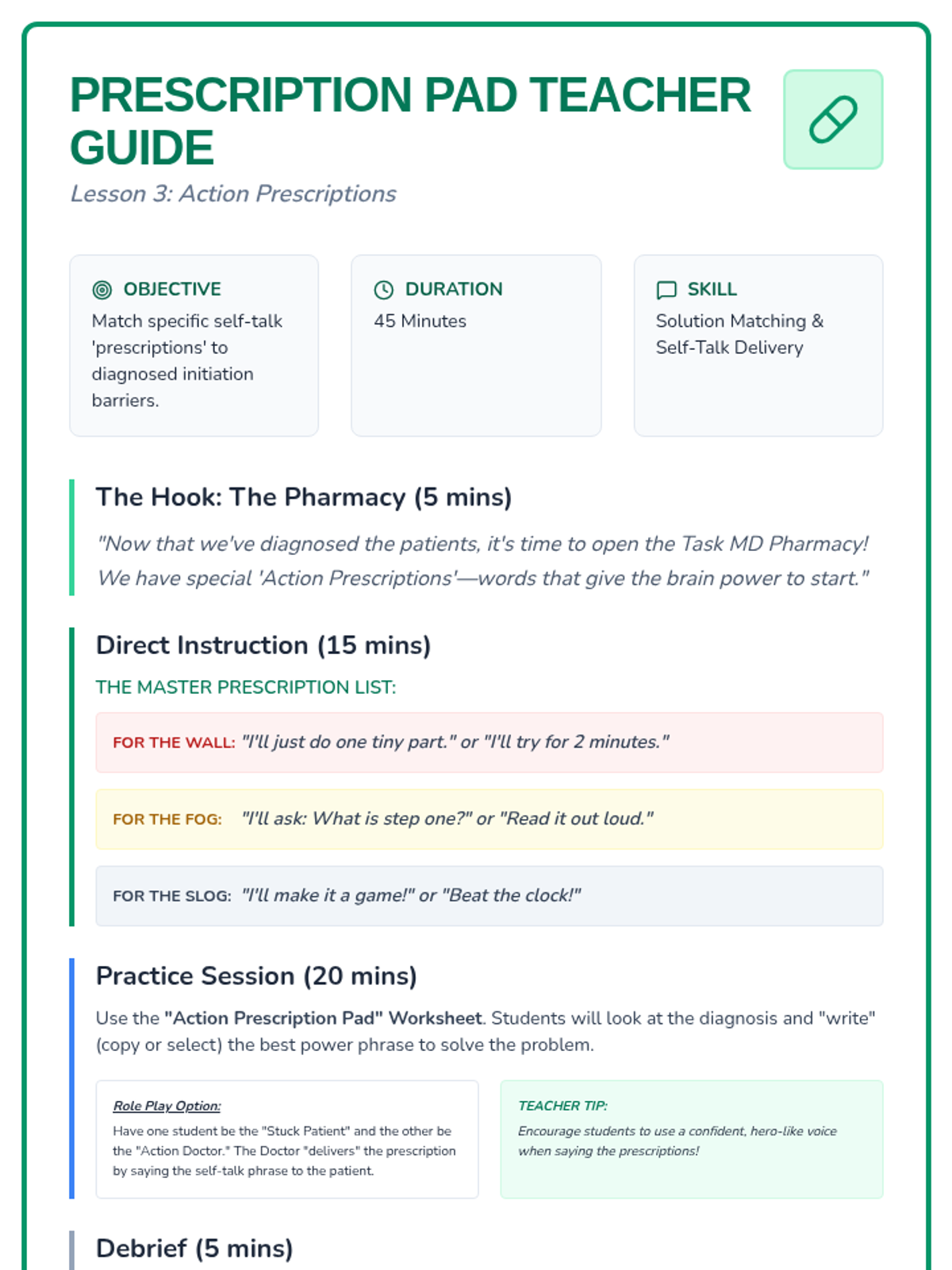
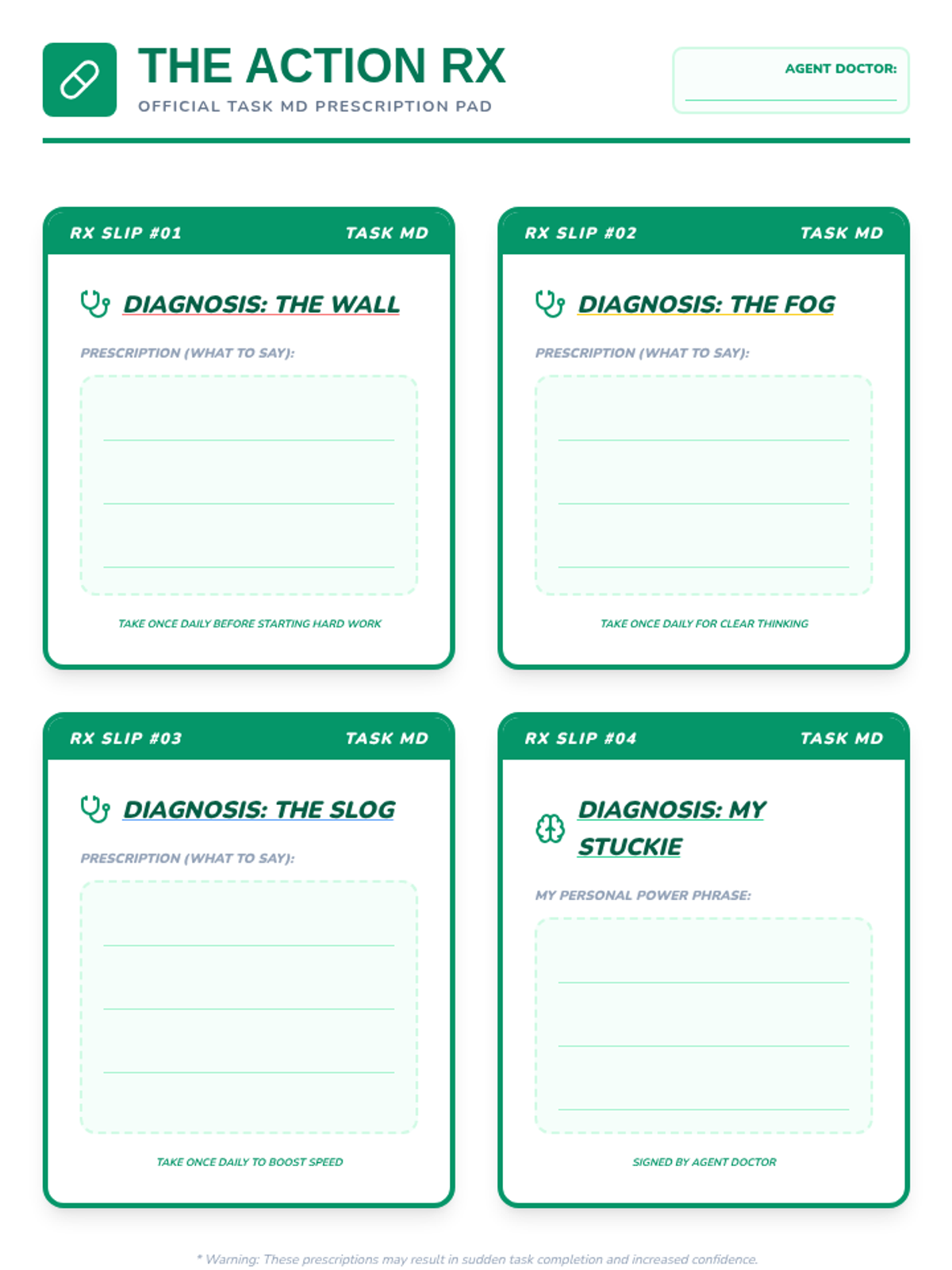
Students match specific self-talk 'prescriptions' to diagnosed problems and practice delivering these lines to characters.
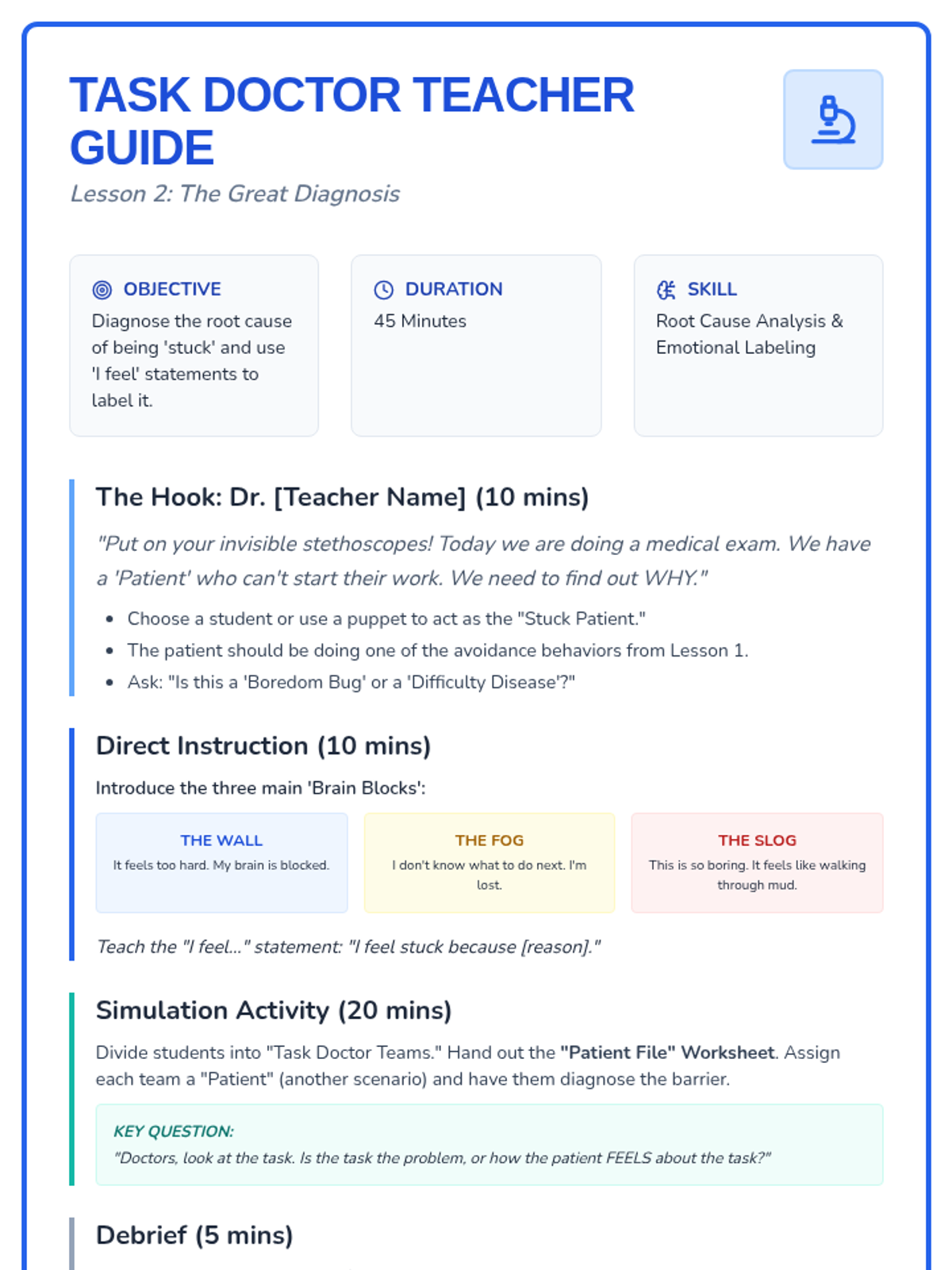
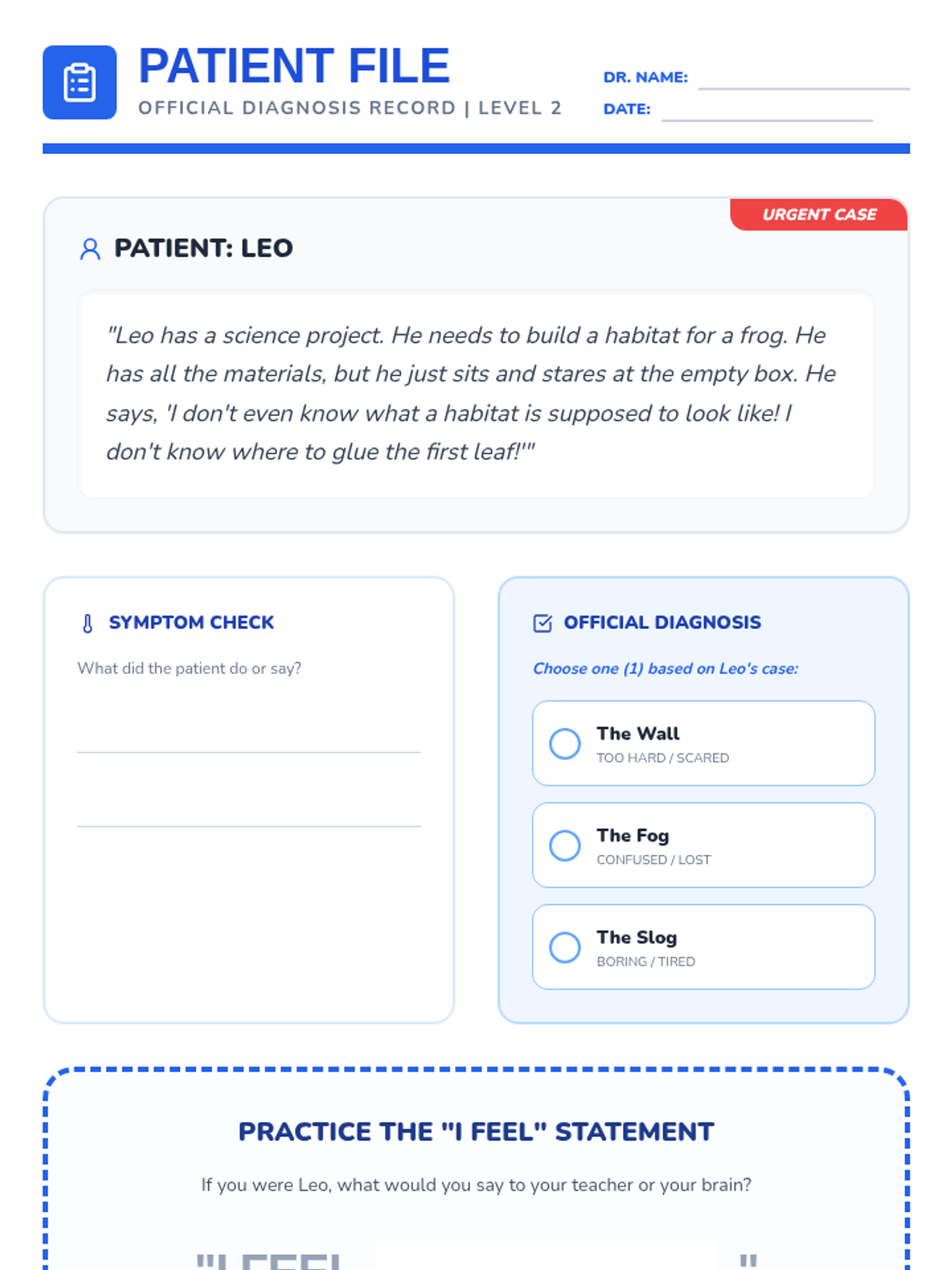
Students act as 'Task Doctors' to determine why a character is stuck (boredom, difficulty, fatigue) and practice labeling these emotions.
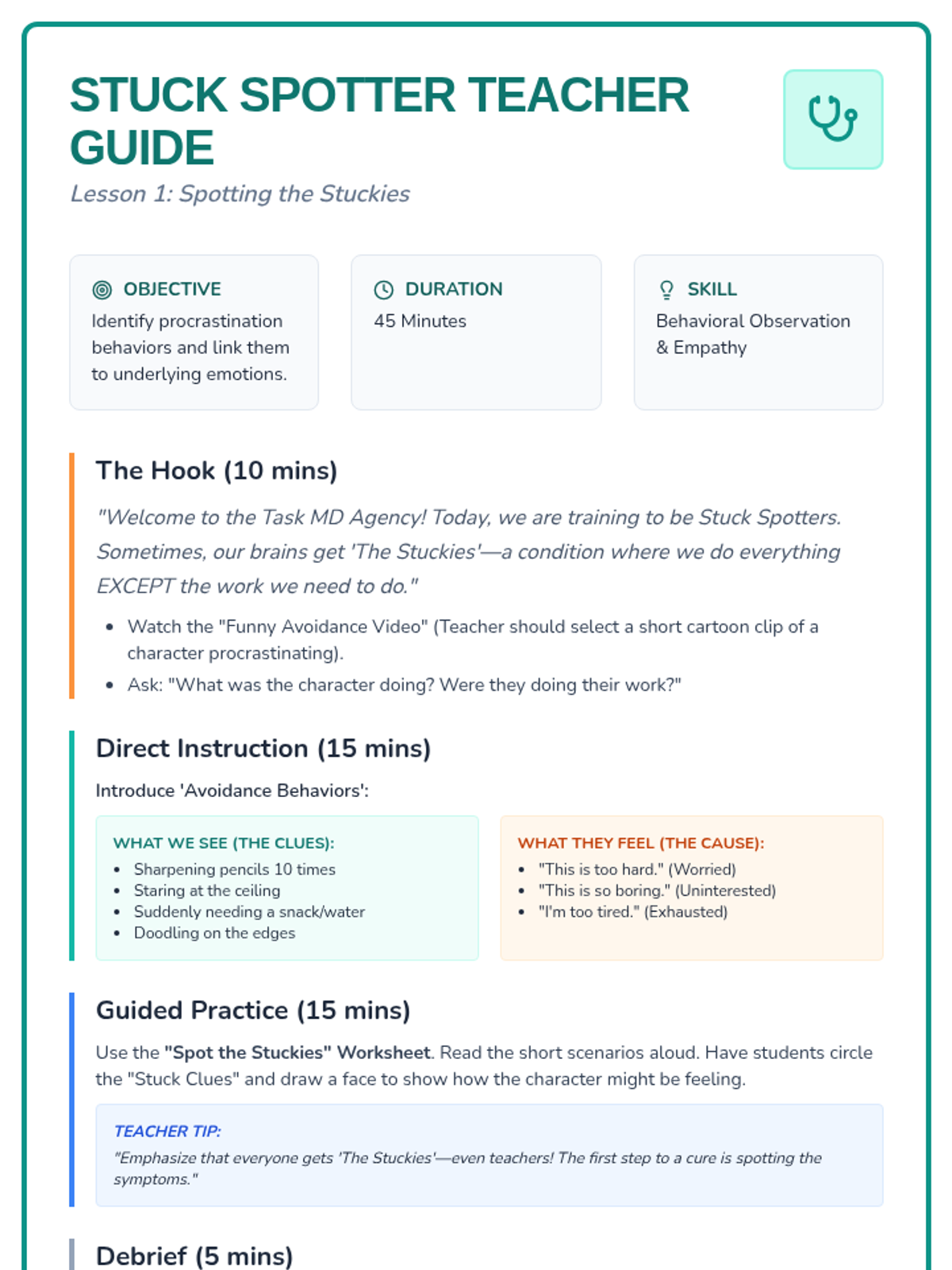
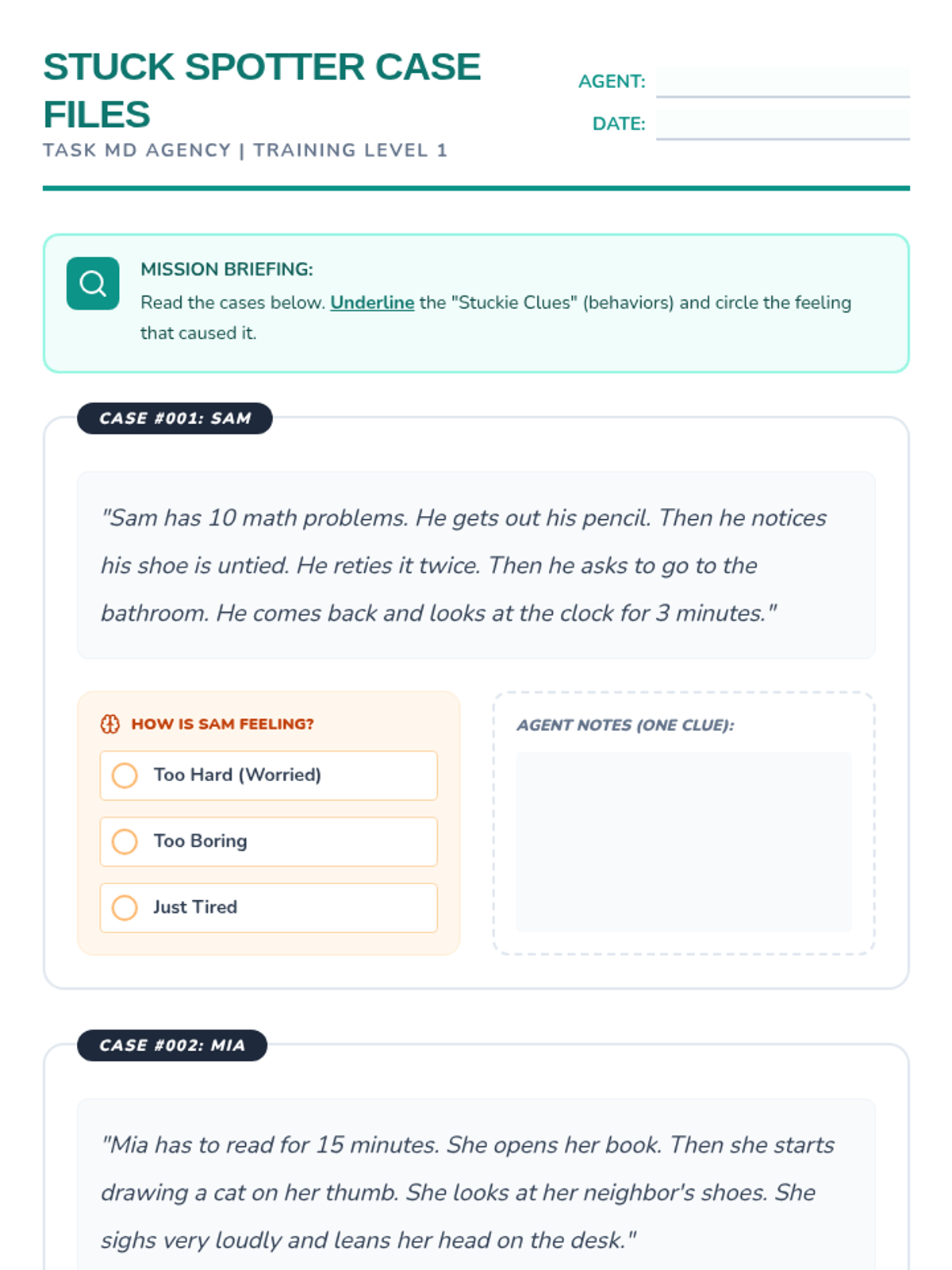
Students identify behaviors that show someone is avoiding work and brainstorm what emotions might be driving those behaviors through case studies.
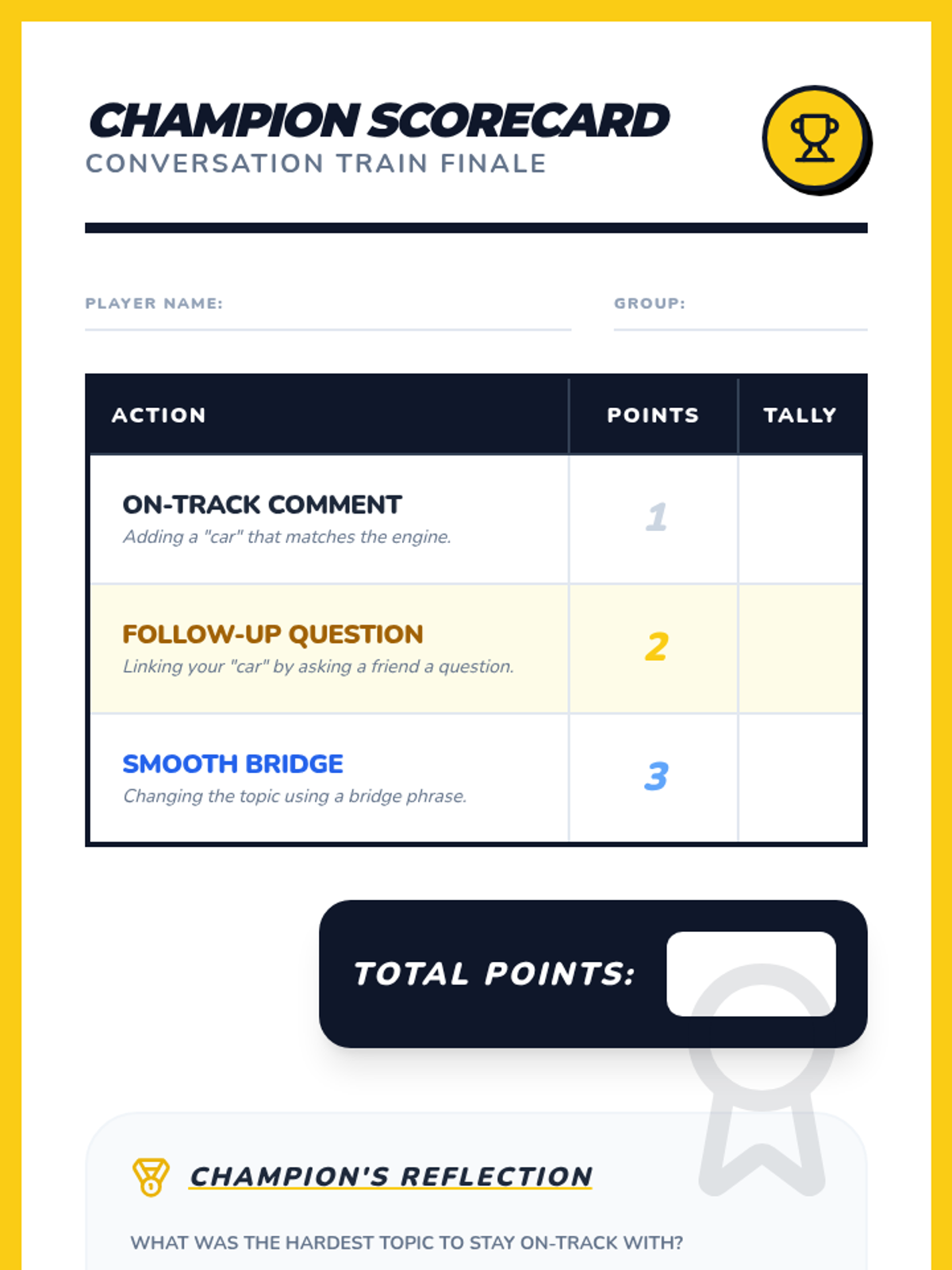
A culminating activity where students apply all previous strategies in a structured 'Conversation Championship' game to demonstrate mastery of topic maintenance.
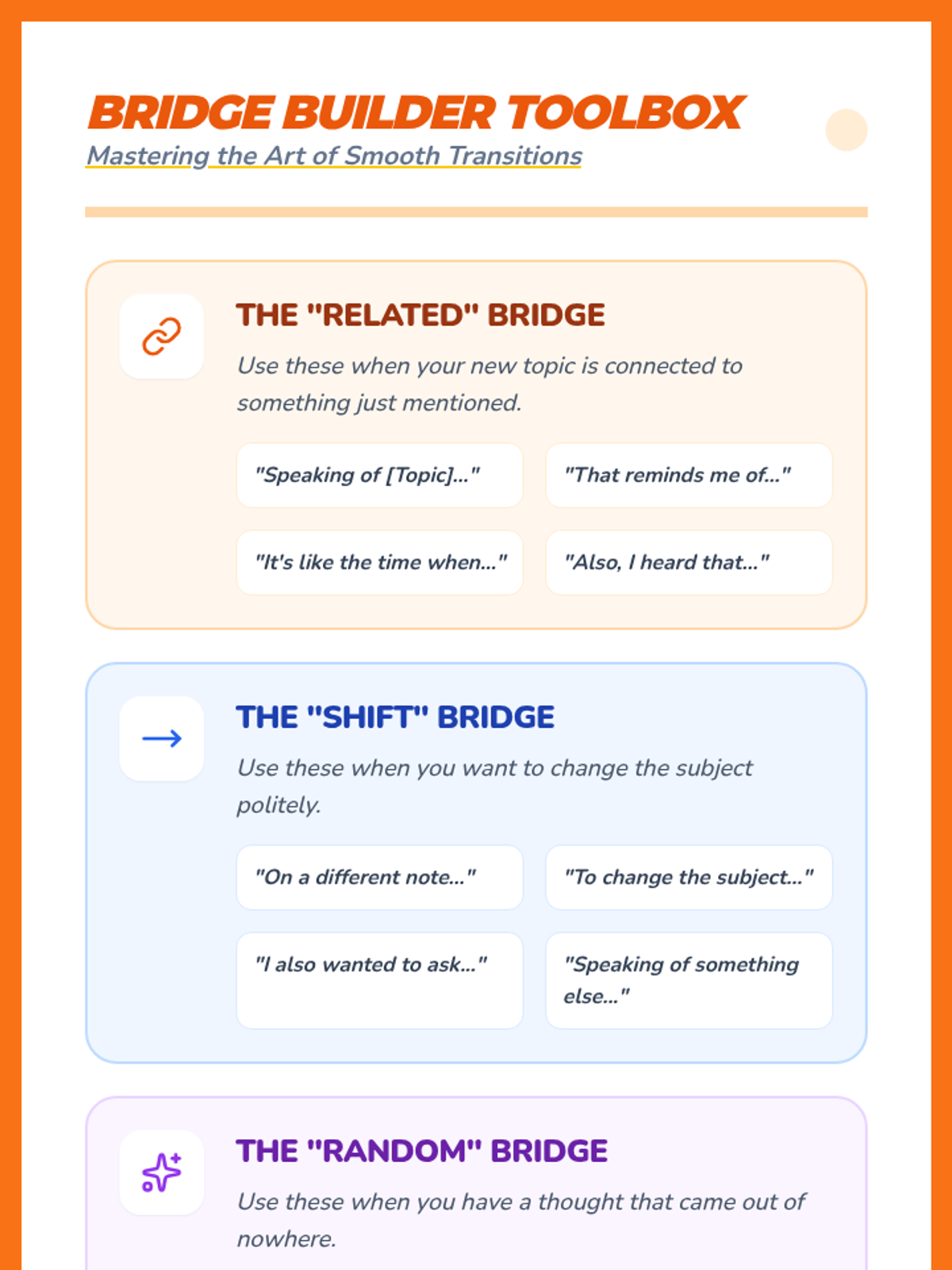
Teaches students how to use 'bridge phrases' to shift topics politely and purposefully without disrupting the flow of conversation.
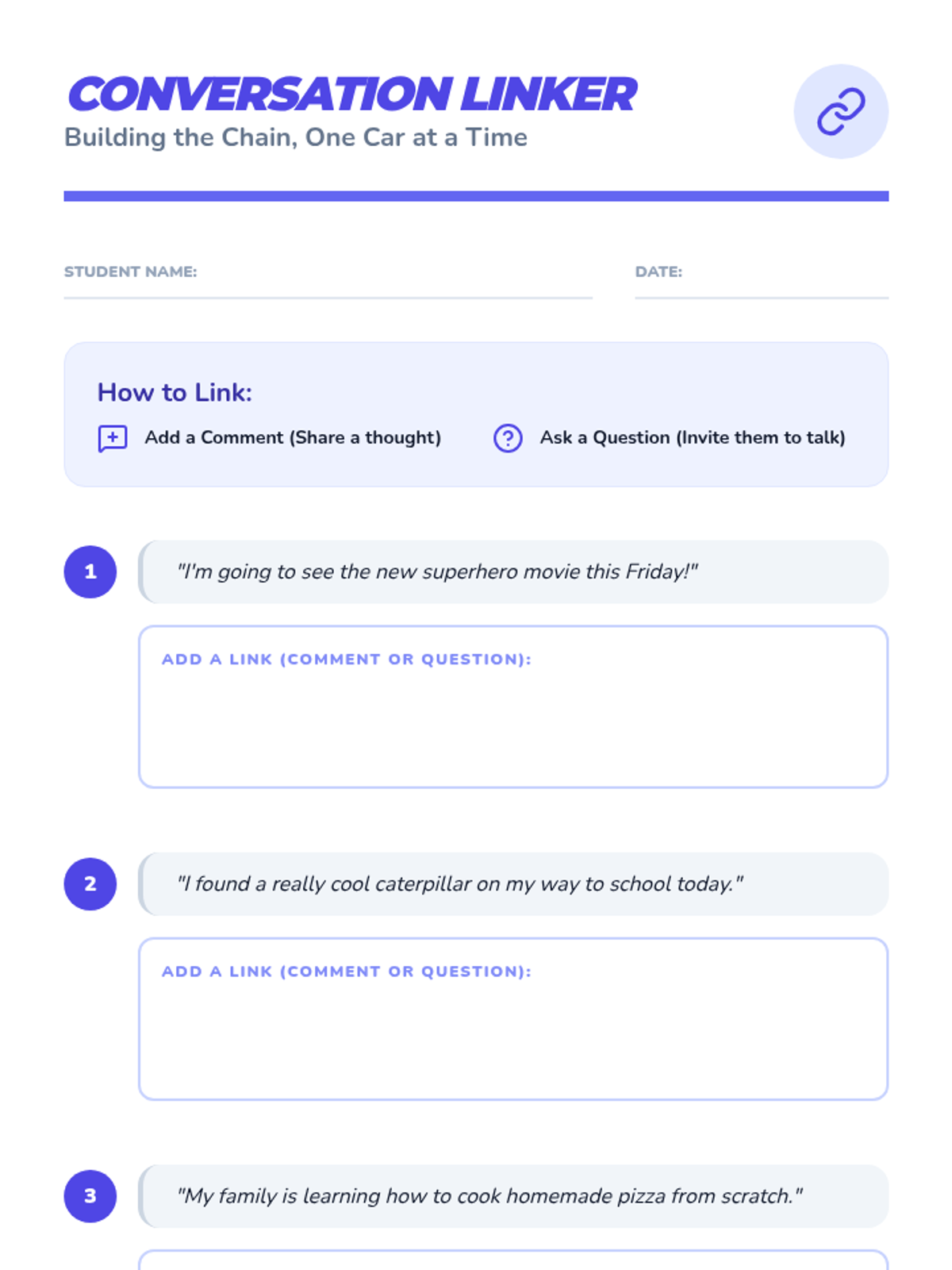
Focuses on building conversation momentum by using connecting blocks or paper chains to visualize follow-up questions and linked comments.
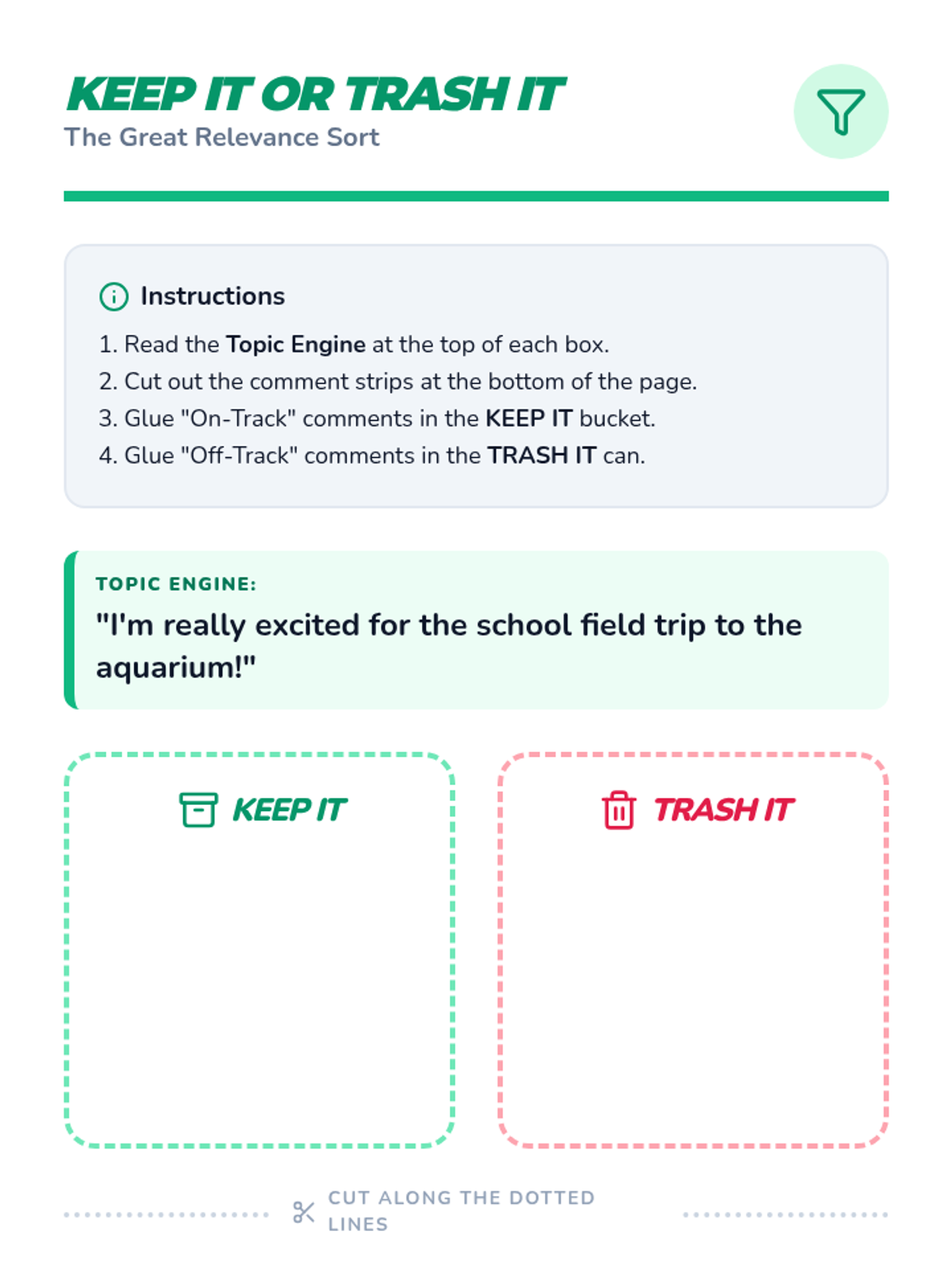
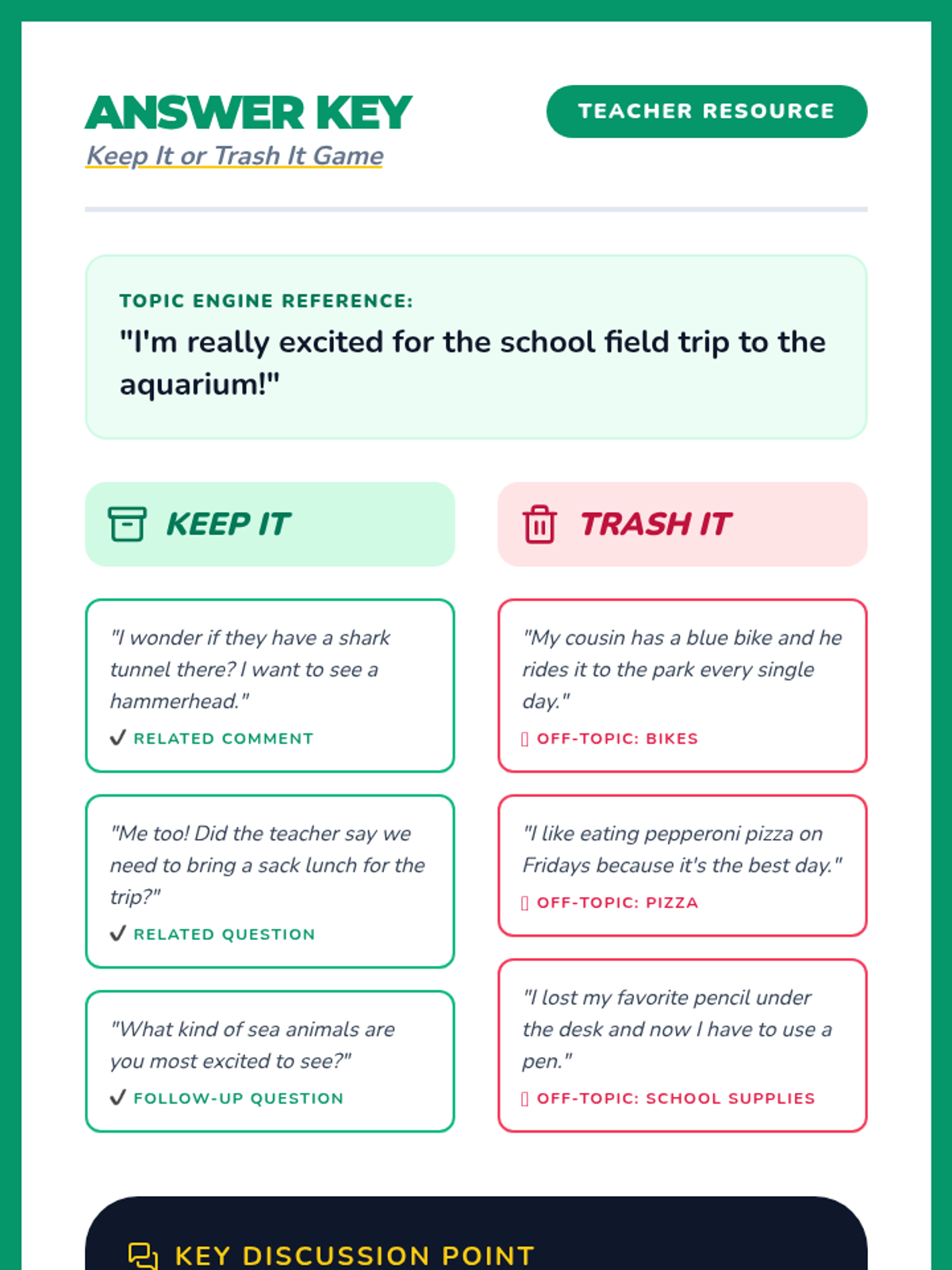
Students practice filtering their thoughts by distinguishing between 'on-track' and 'off-track' contributions using a 'Keep It or Trash It' sorting game.
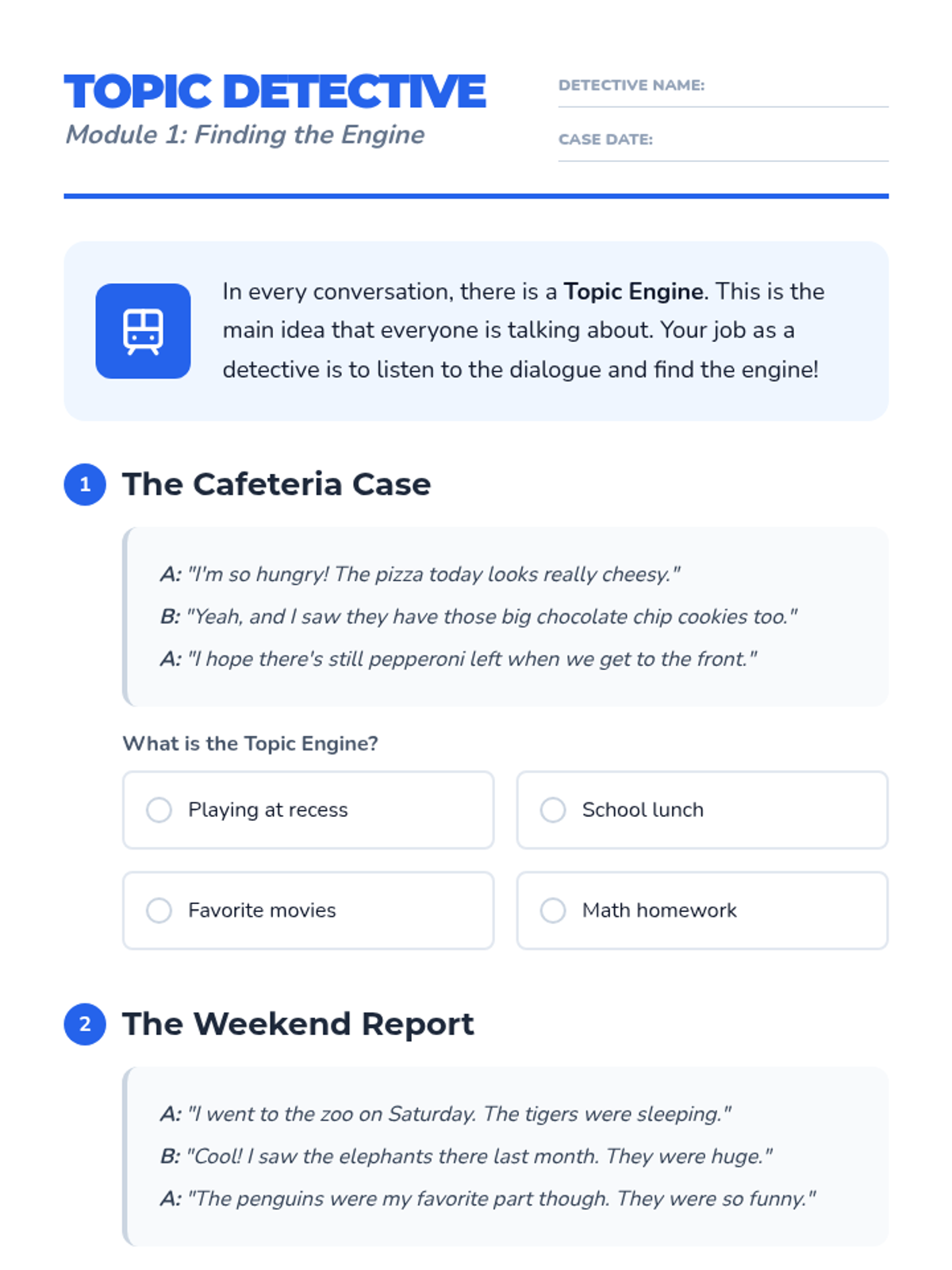
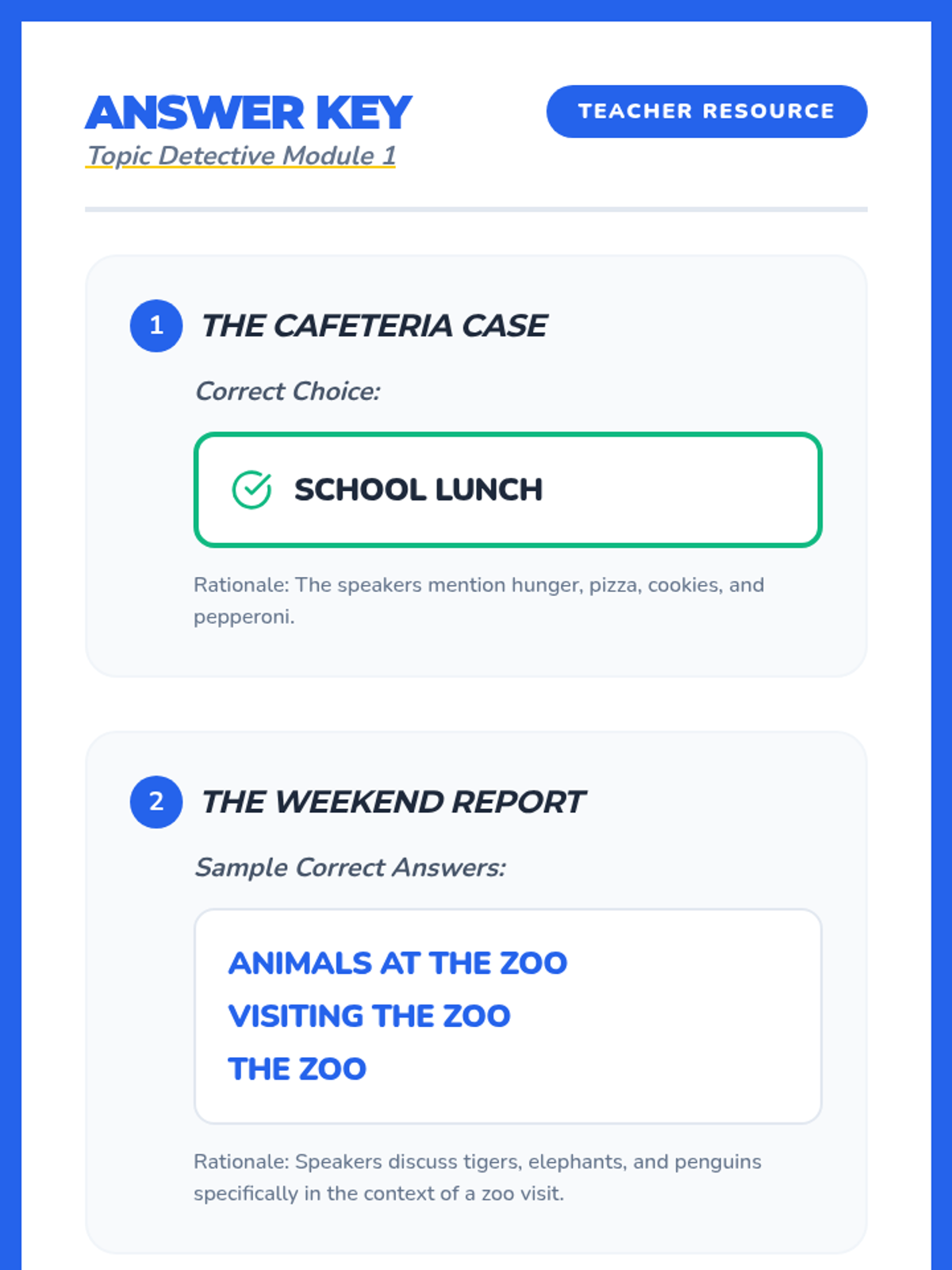
Introduces the 'Conversation Train' metaphor where the engine is the main topic, helping students identify the shared focus of group interactions through a mystery bag challenge.
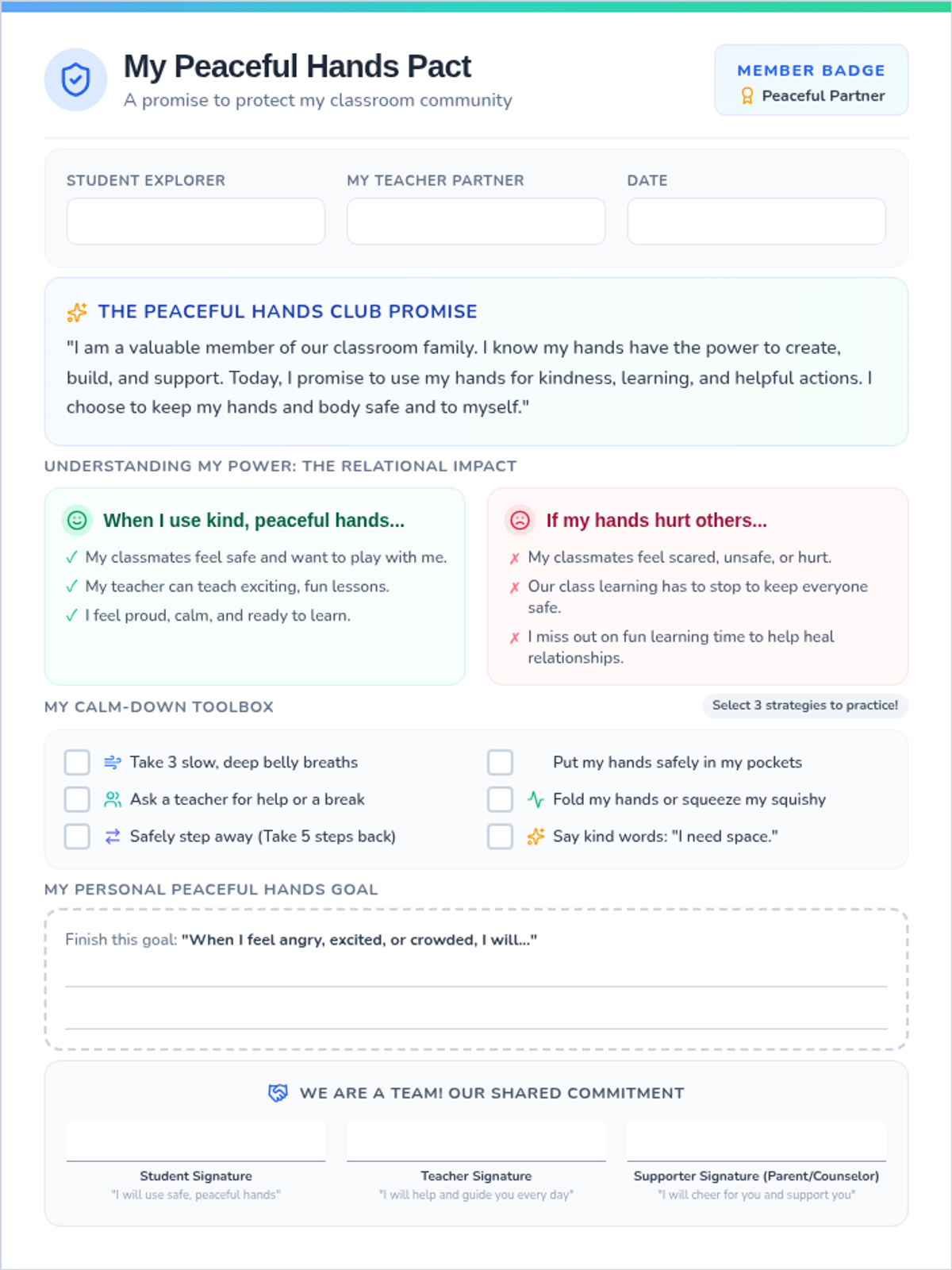
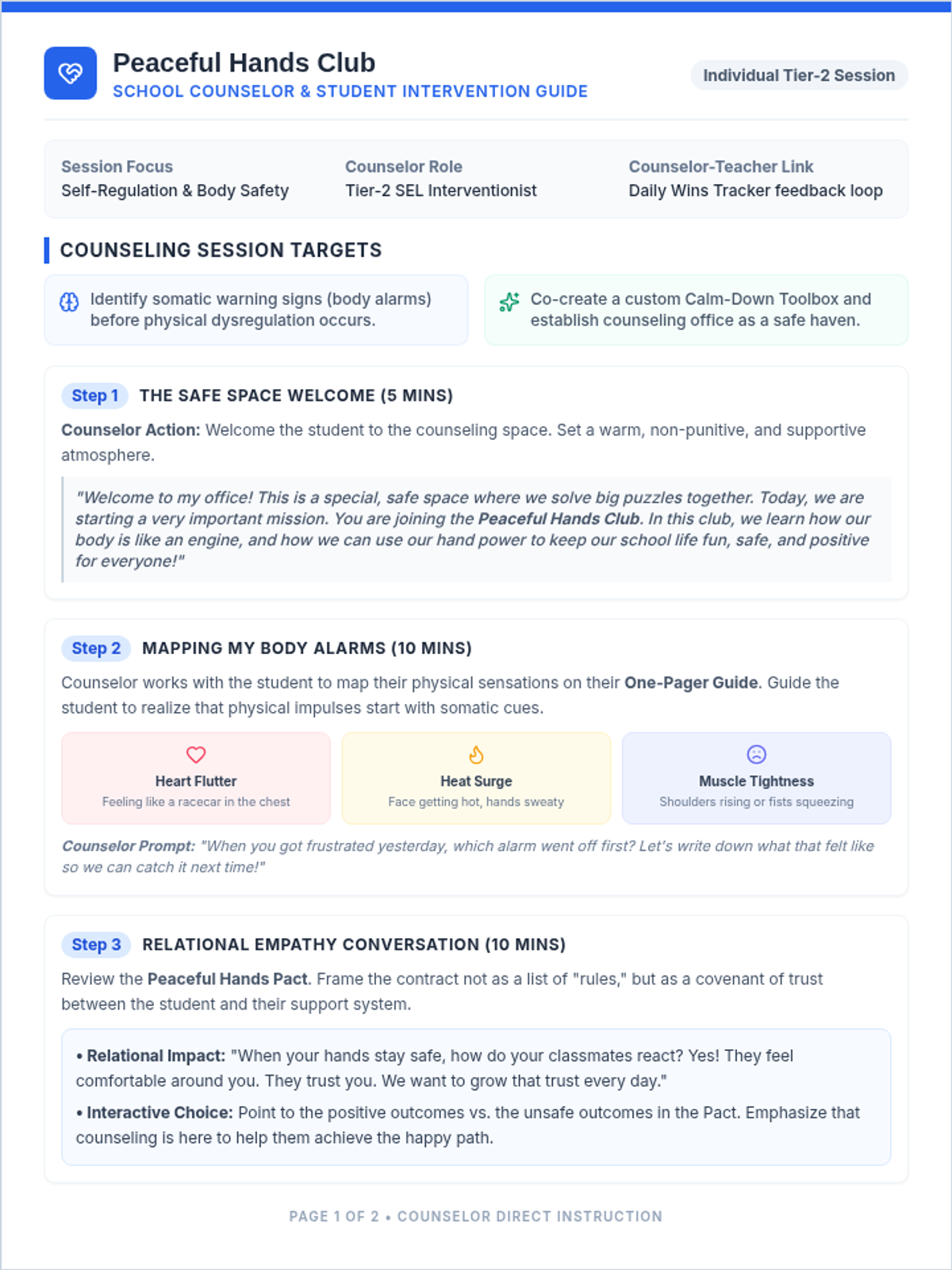
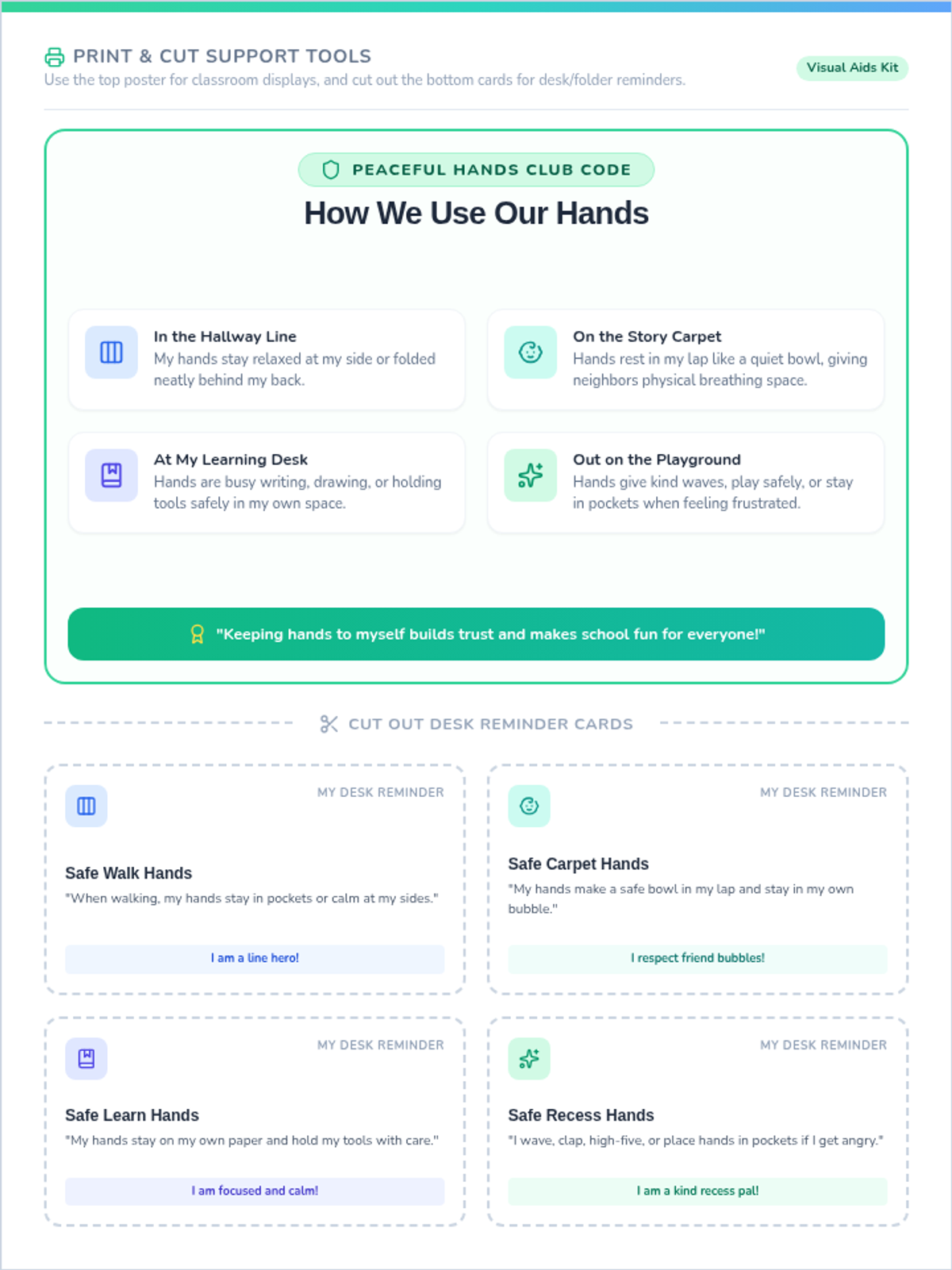
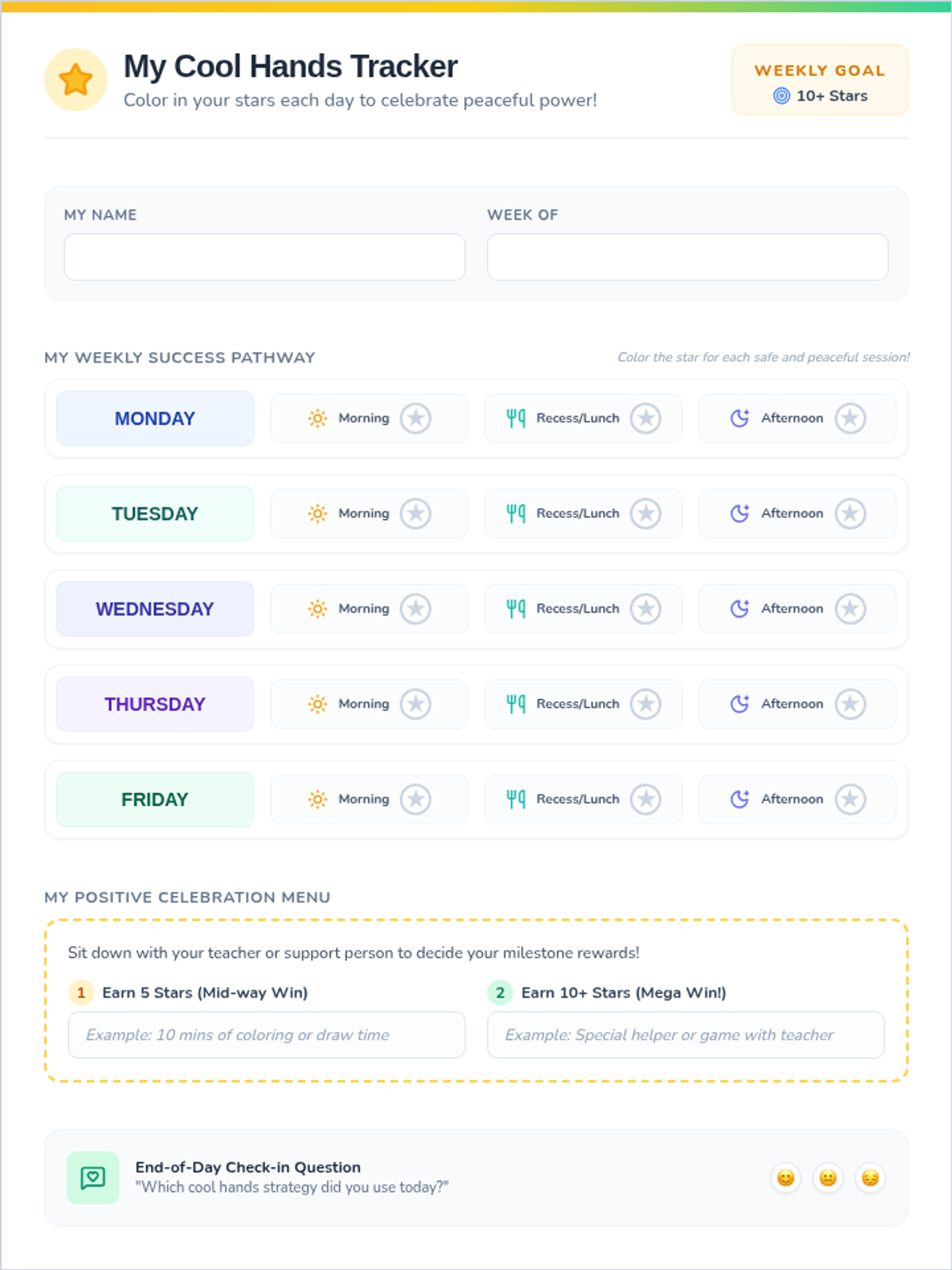
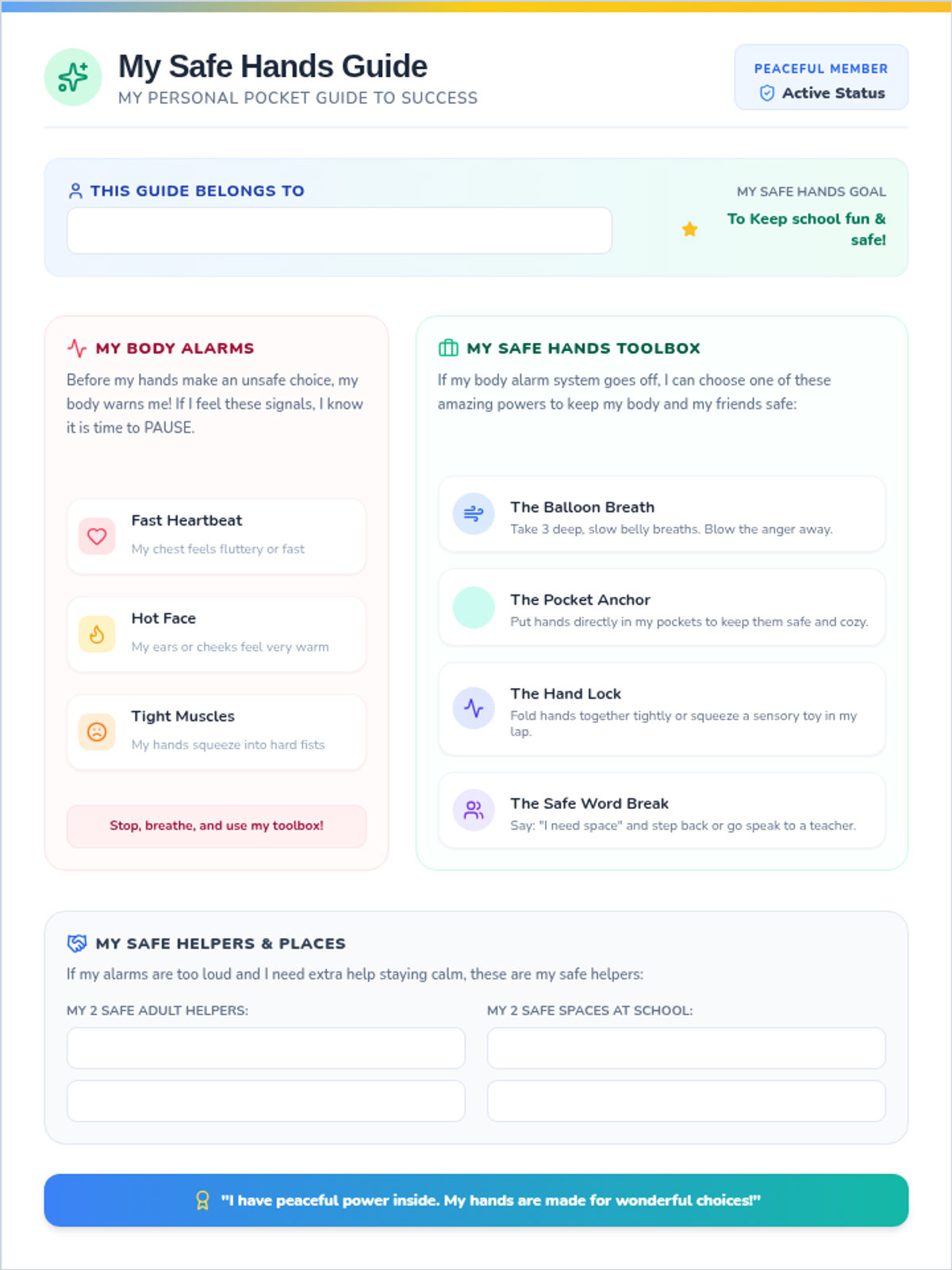
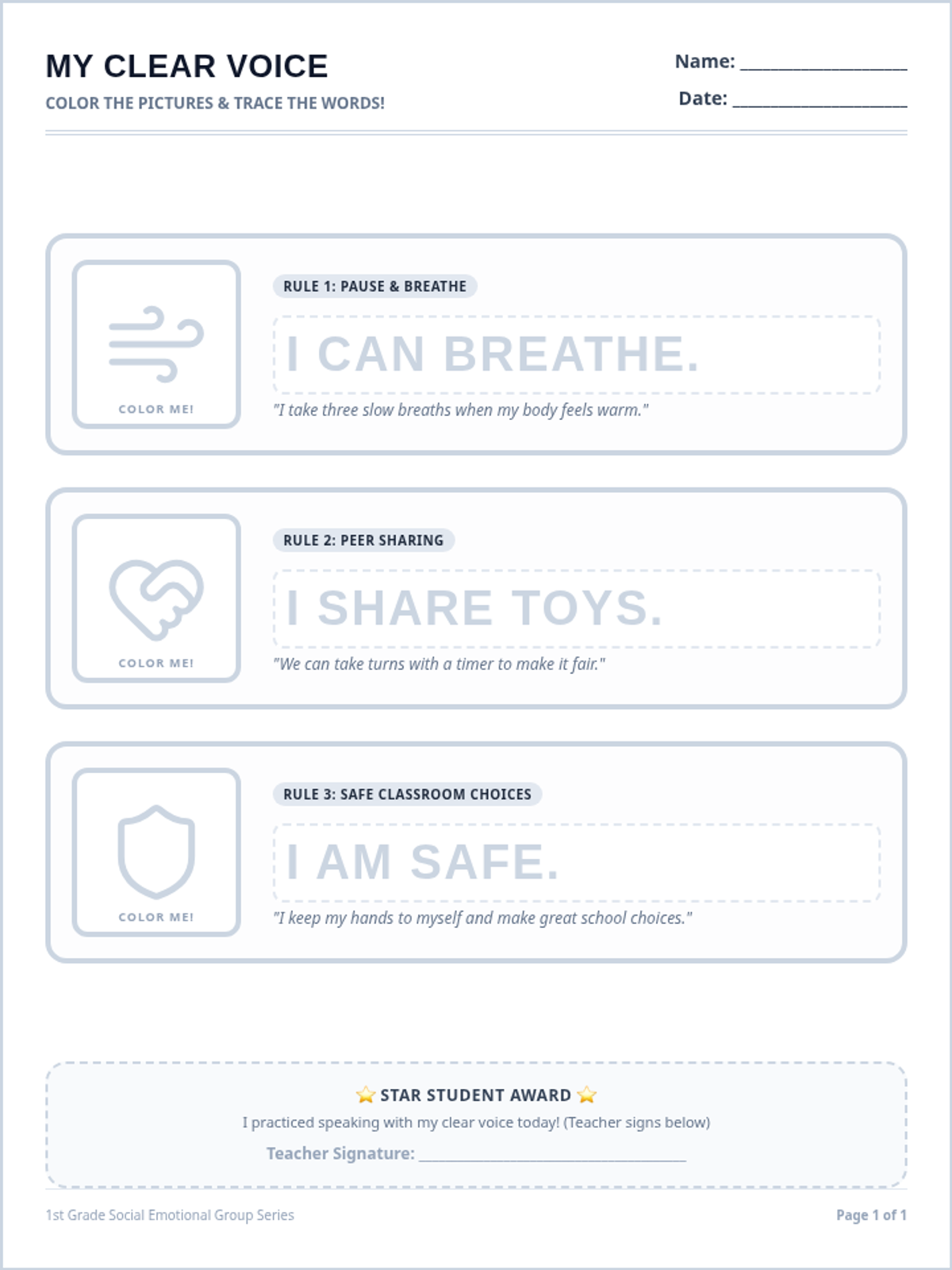
An intensive social-emotional intervention kit designed for lower elementary students to promote self-regulation and keep hands to themselves. This kit includes a relational behavior contract, an interactive lesson plan with role-play scenarios, visual aids, and a daily progress tracker.
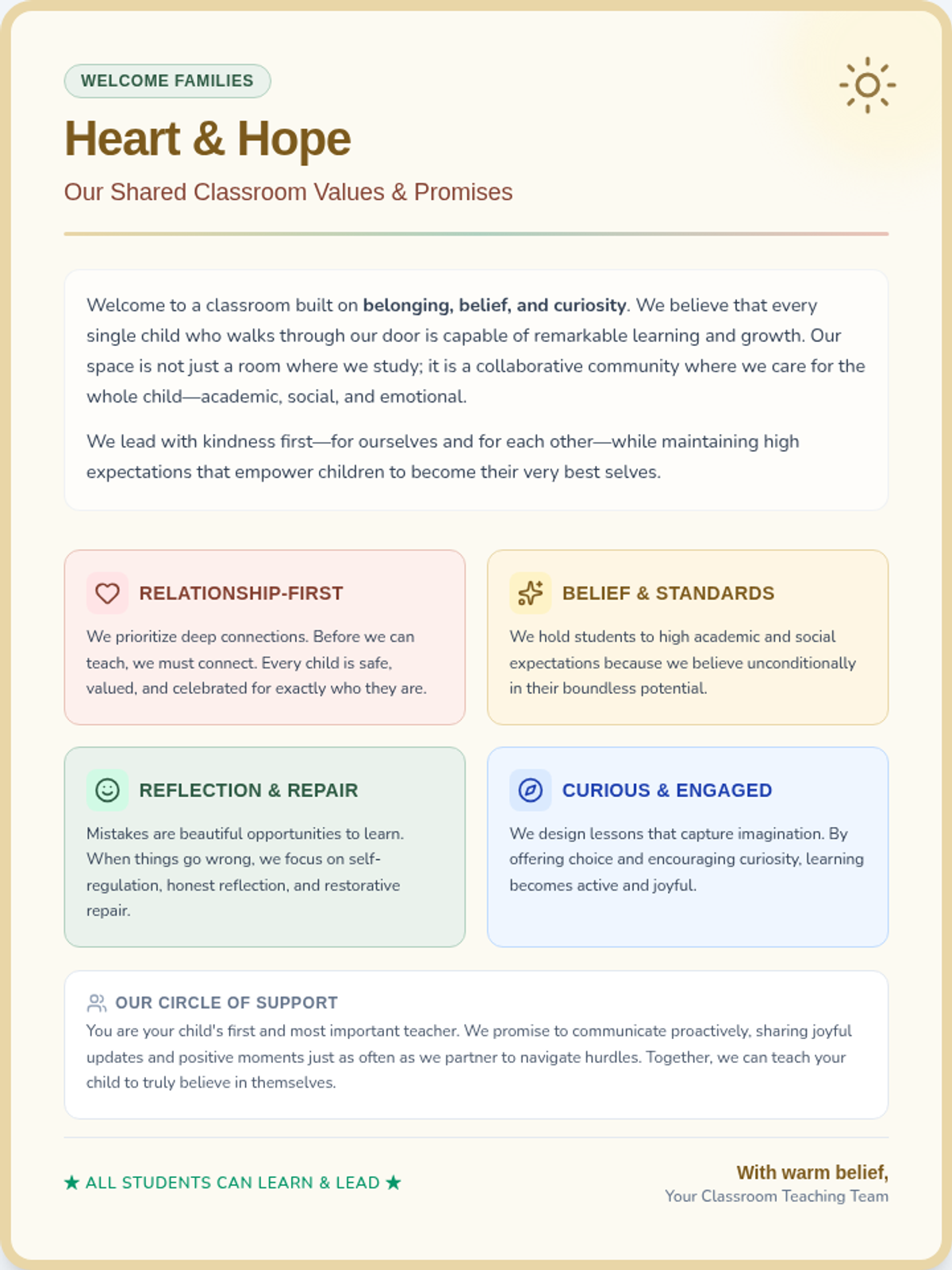
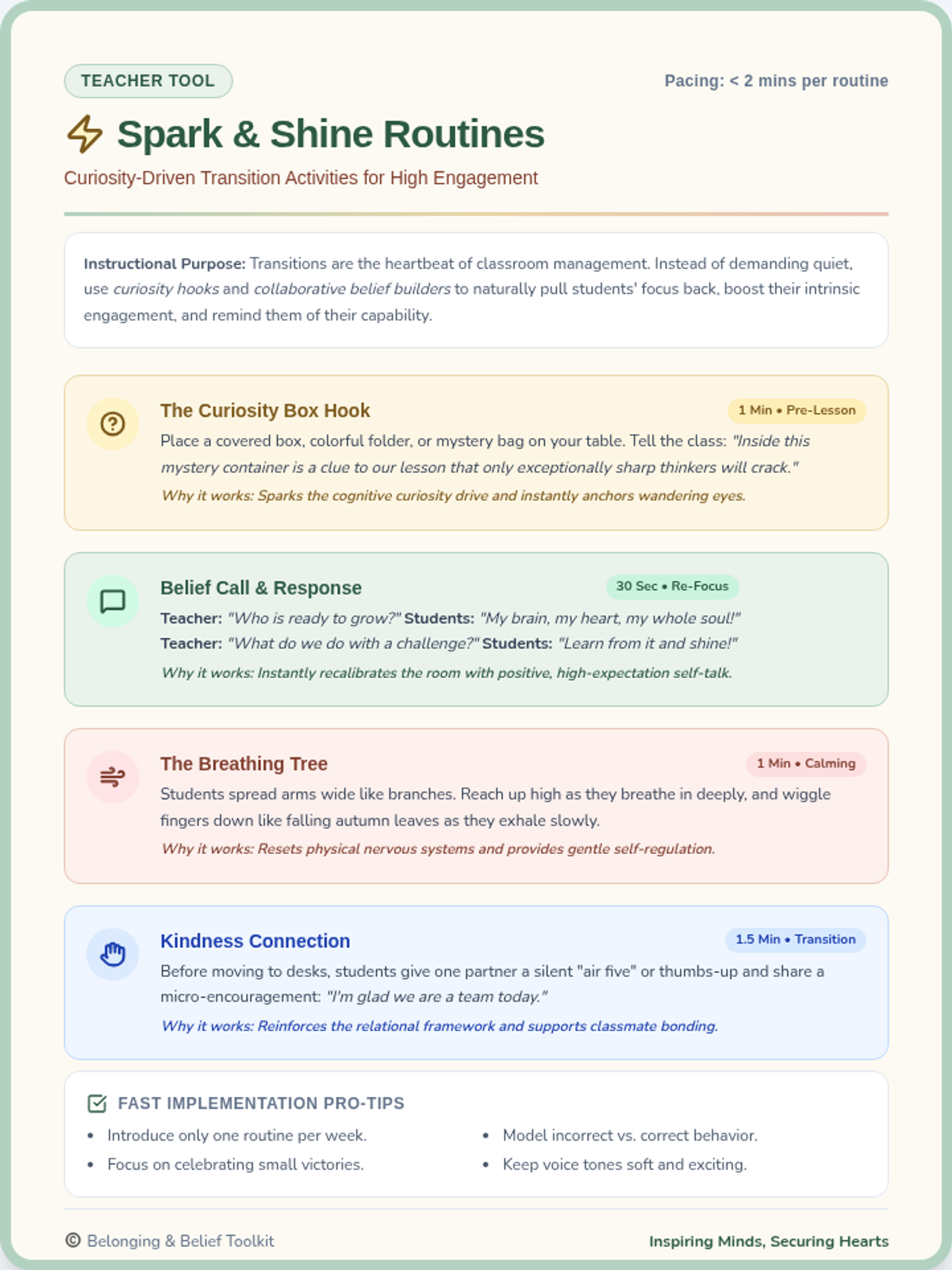
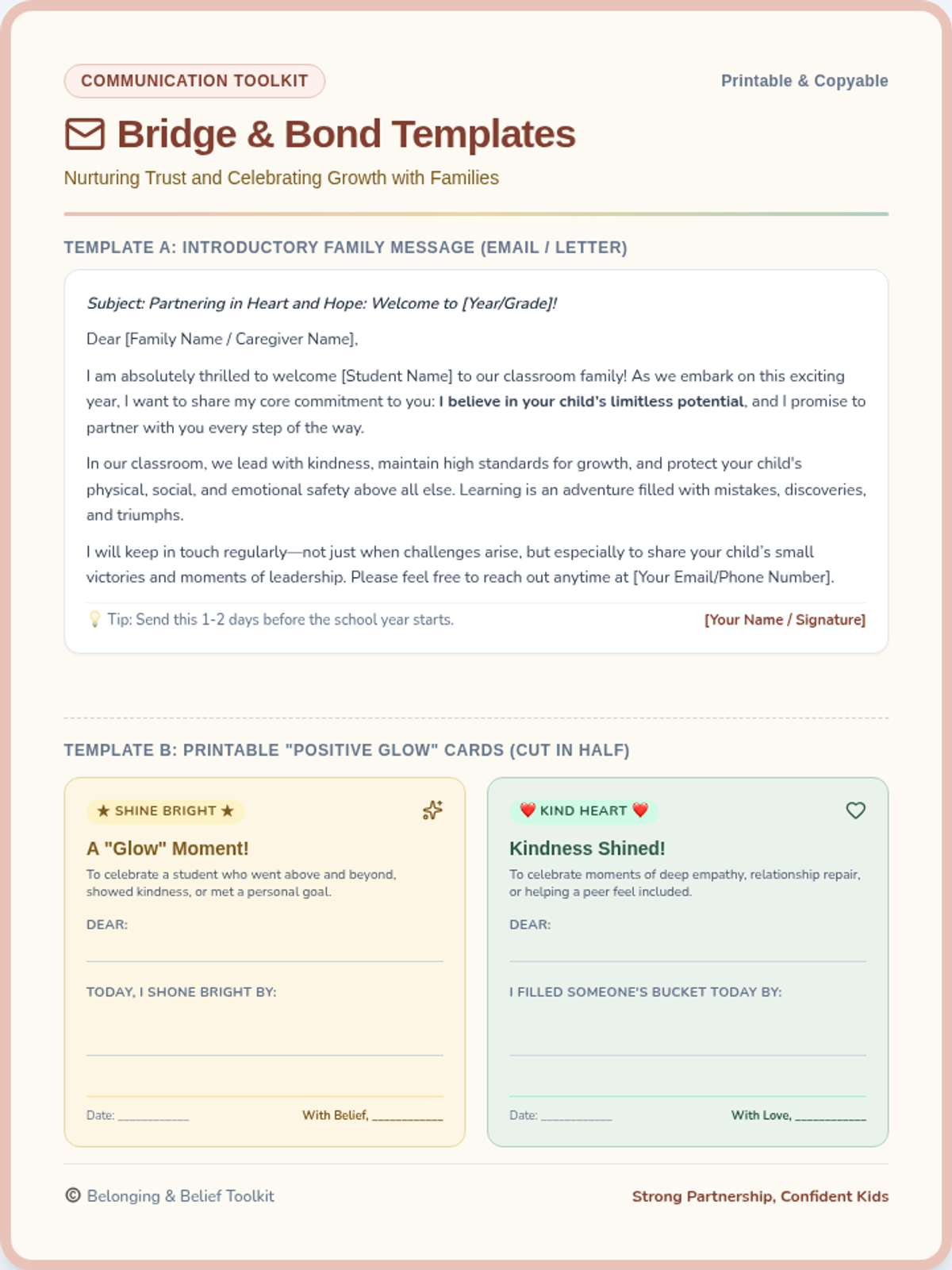
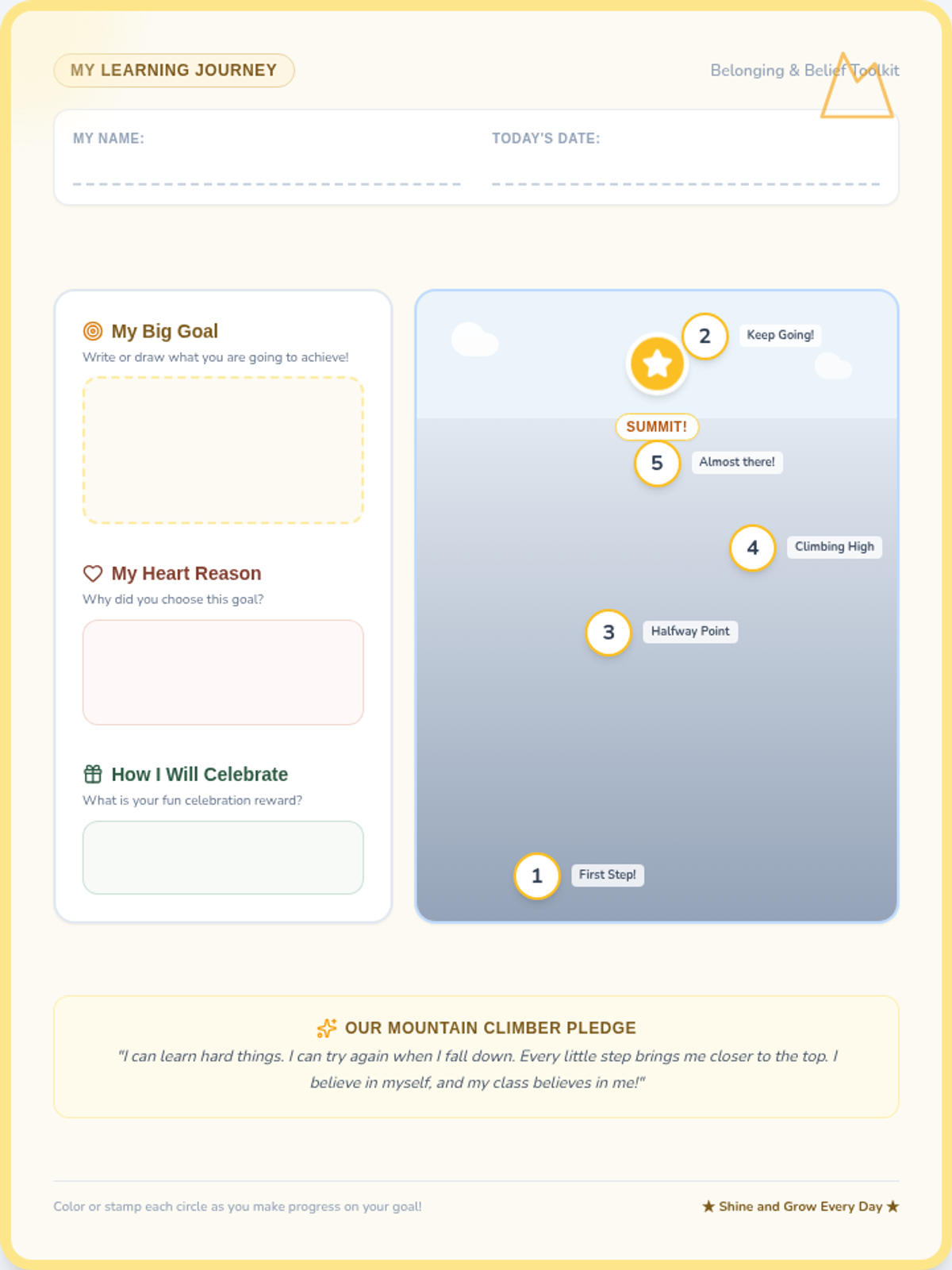
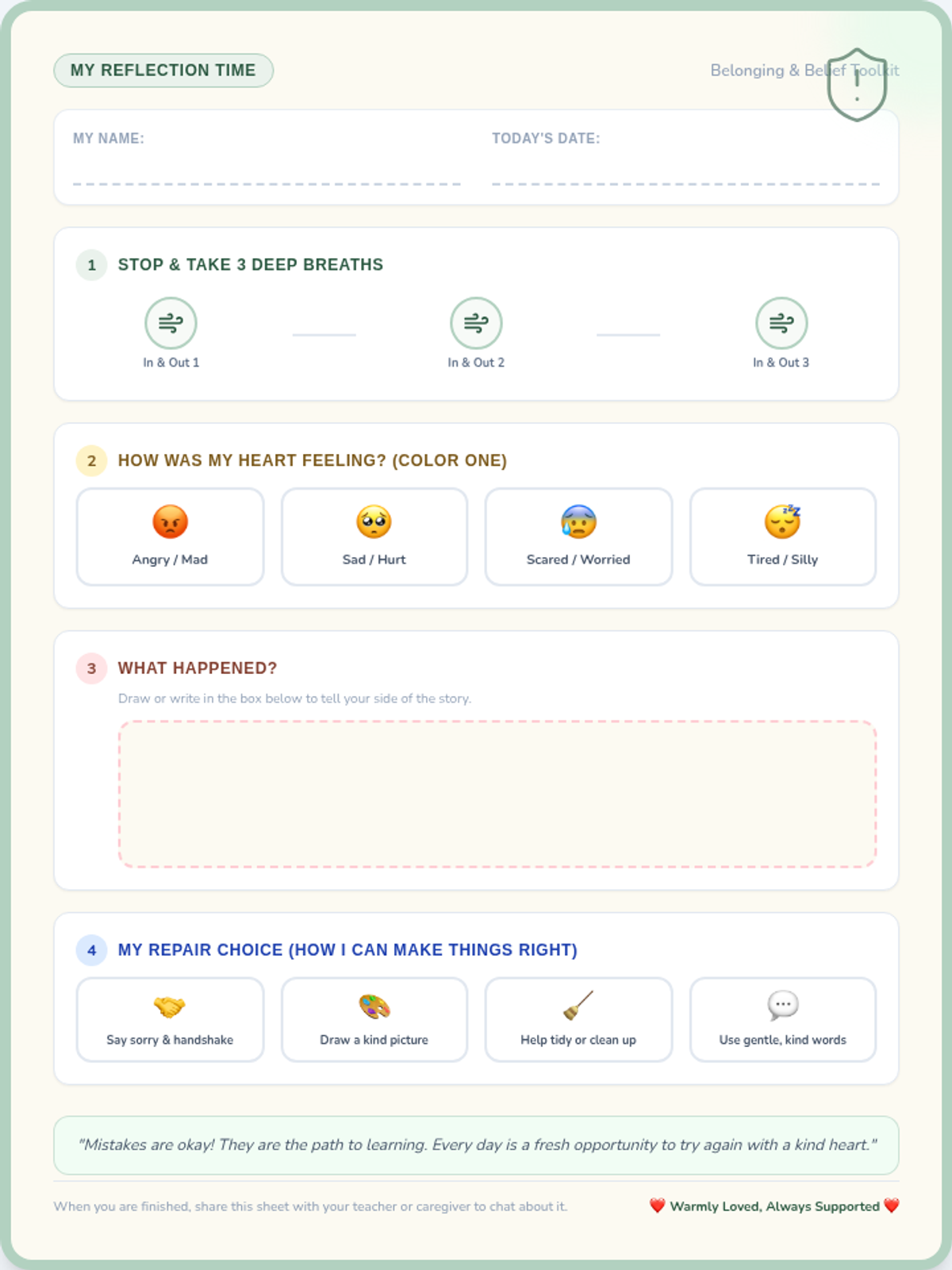
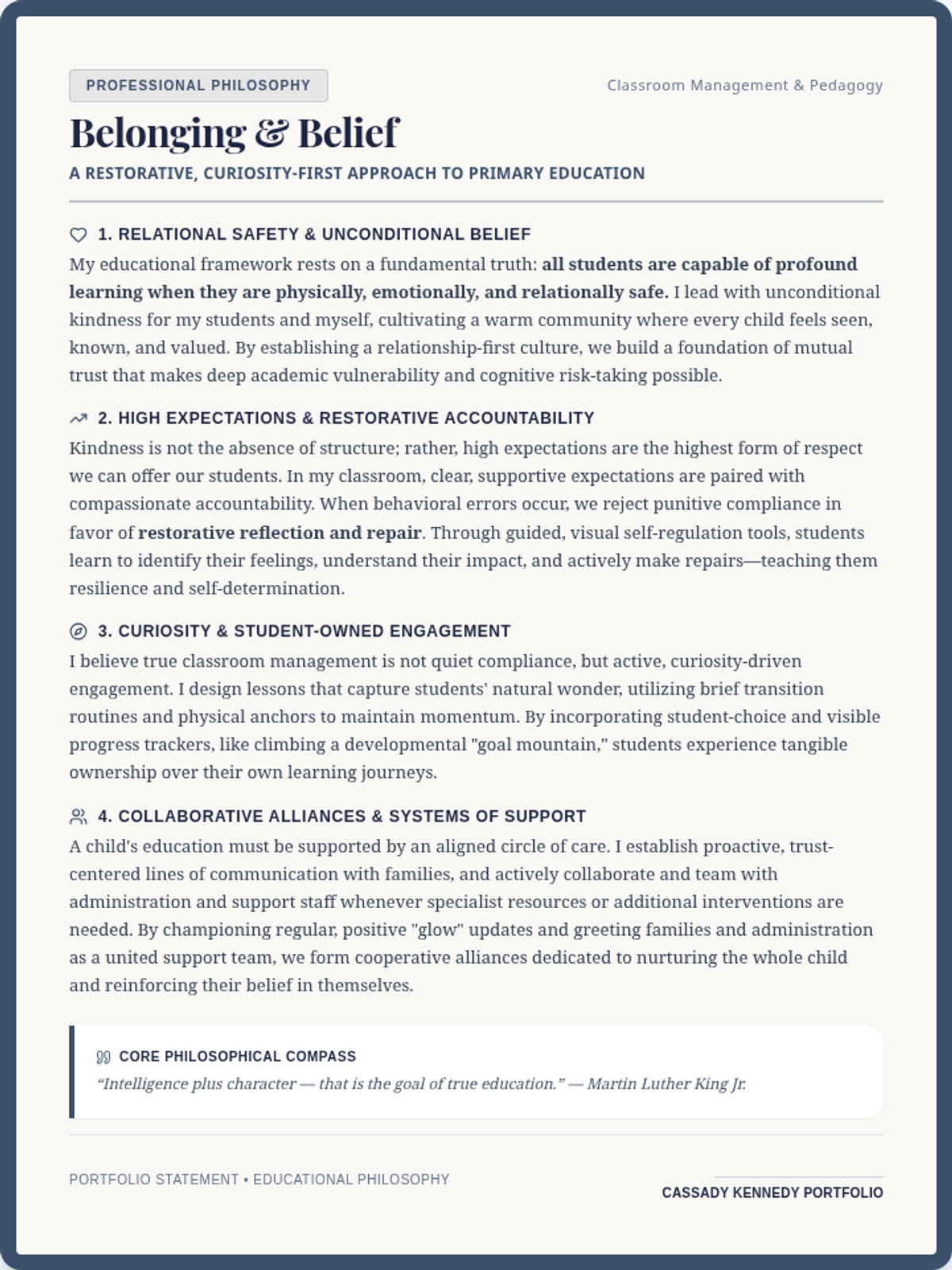
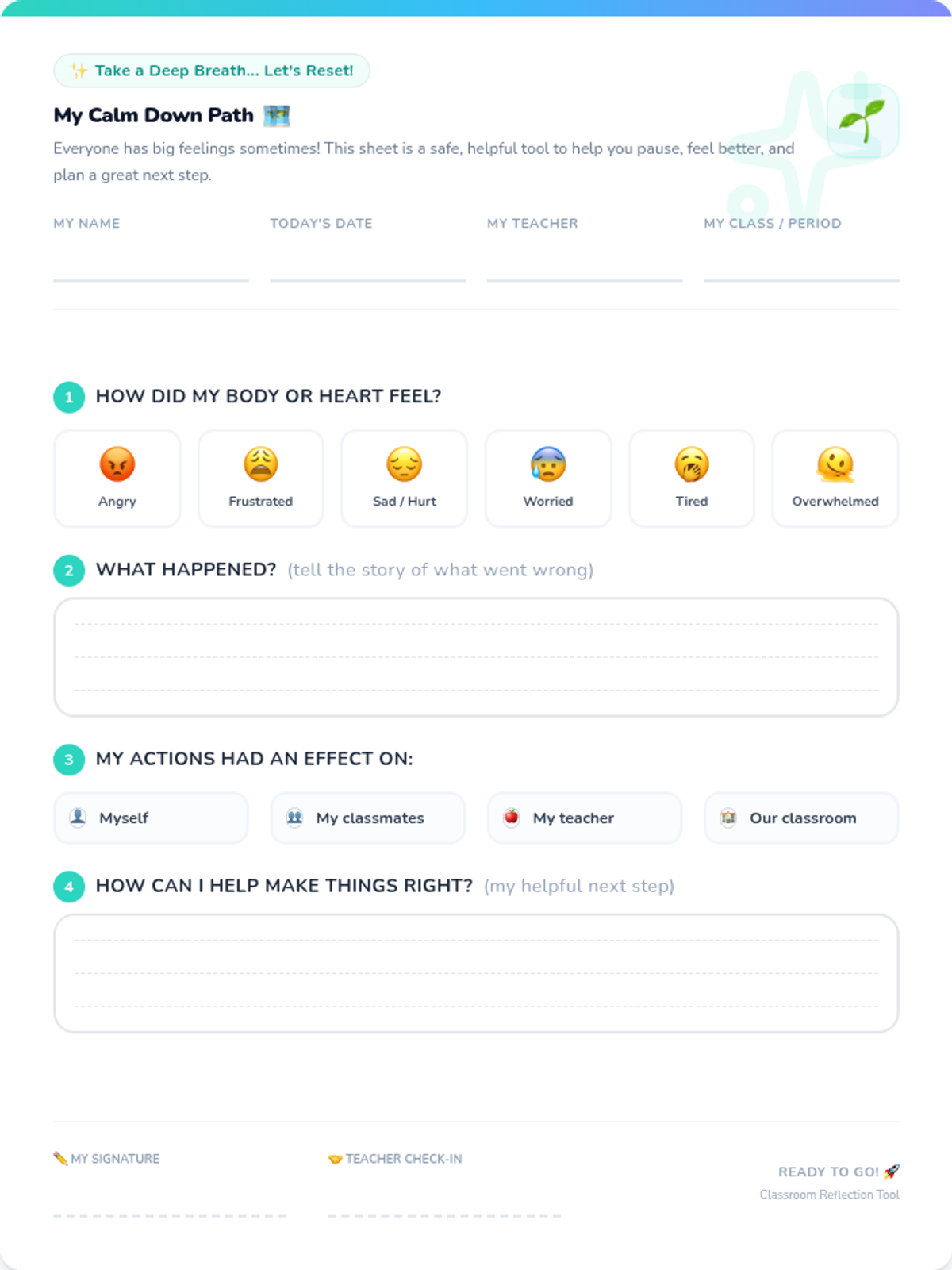
A comprehensive classroom management and family partnership kit designed to cultivate a warm, high-expectation, relationship-first classroom environment. It contains a warm family handbook introduction, positive outreach templates, student goal-tracking charts, curiosity-driven transition routines, and visual reflection/repair sheets for self-regulation.
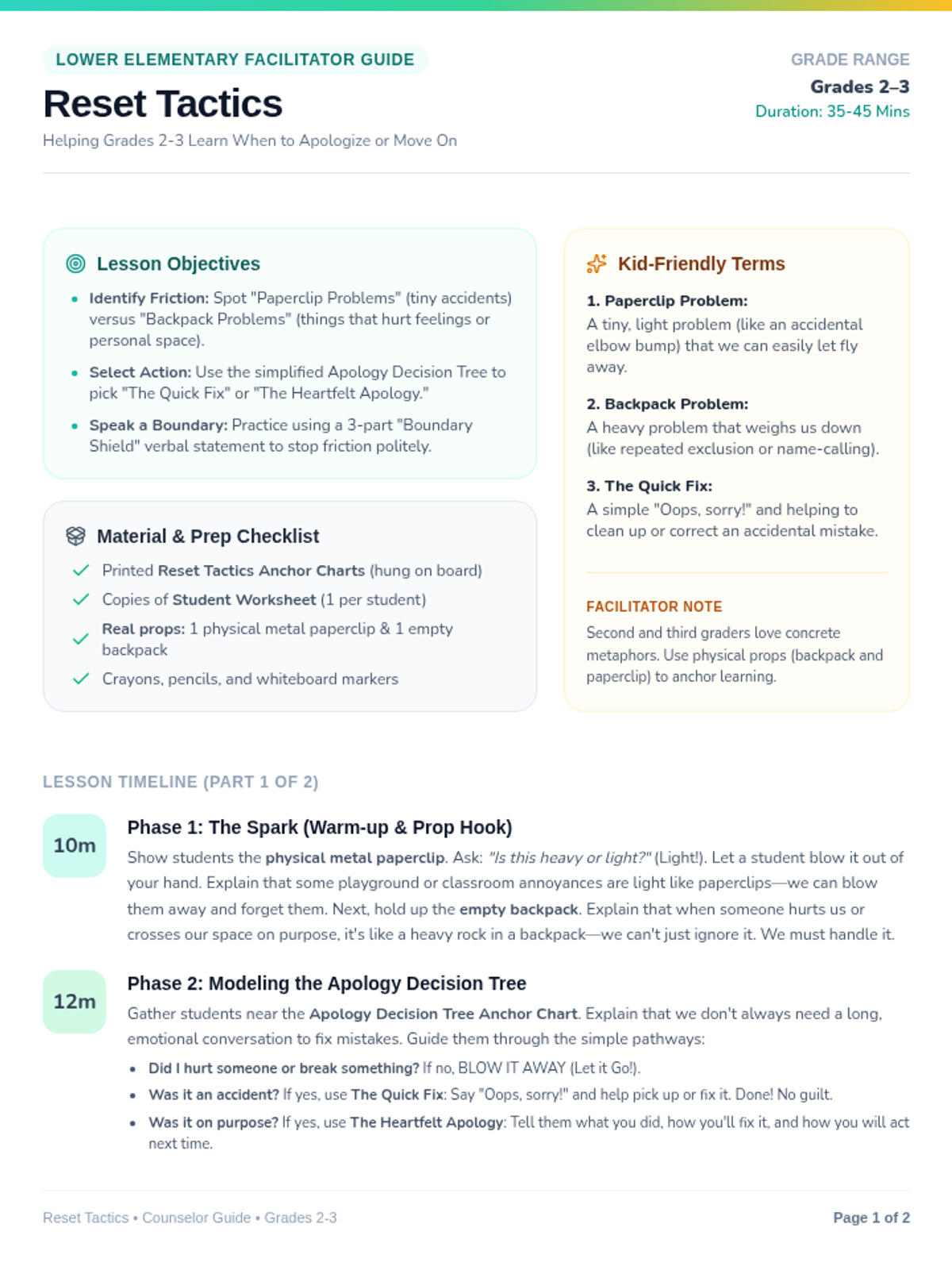
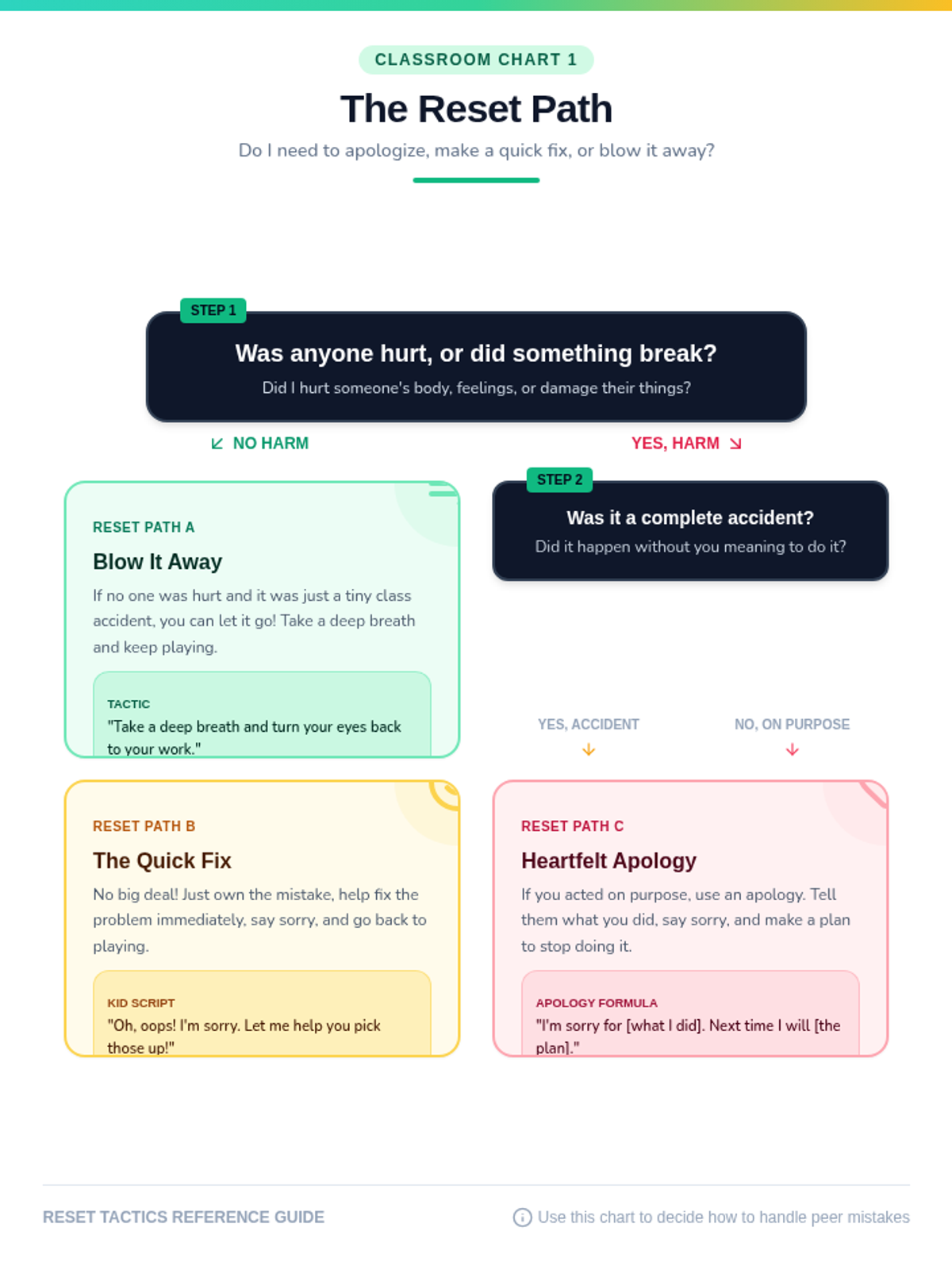
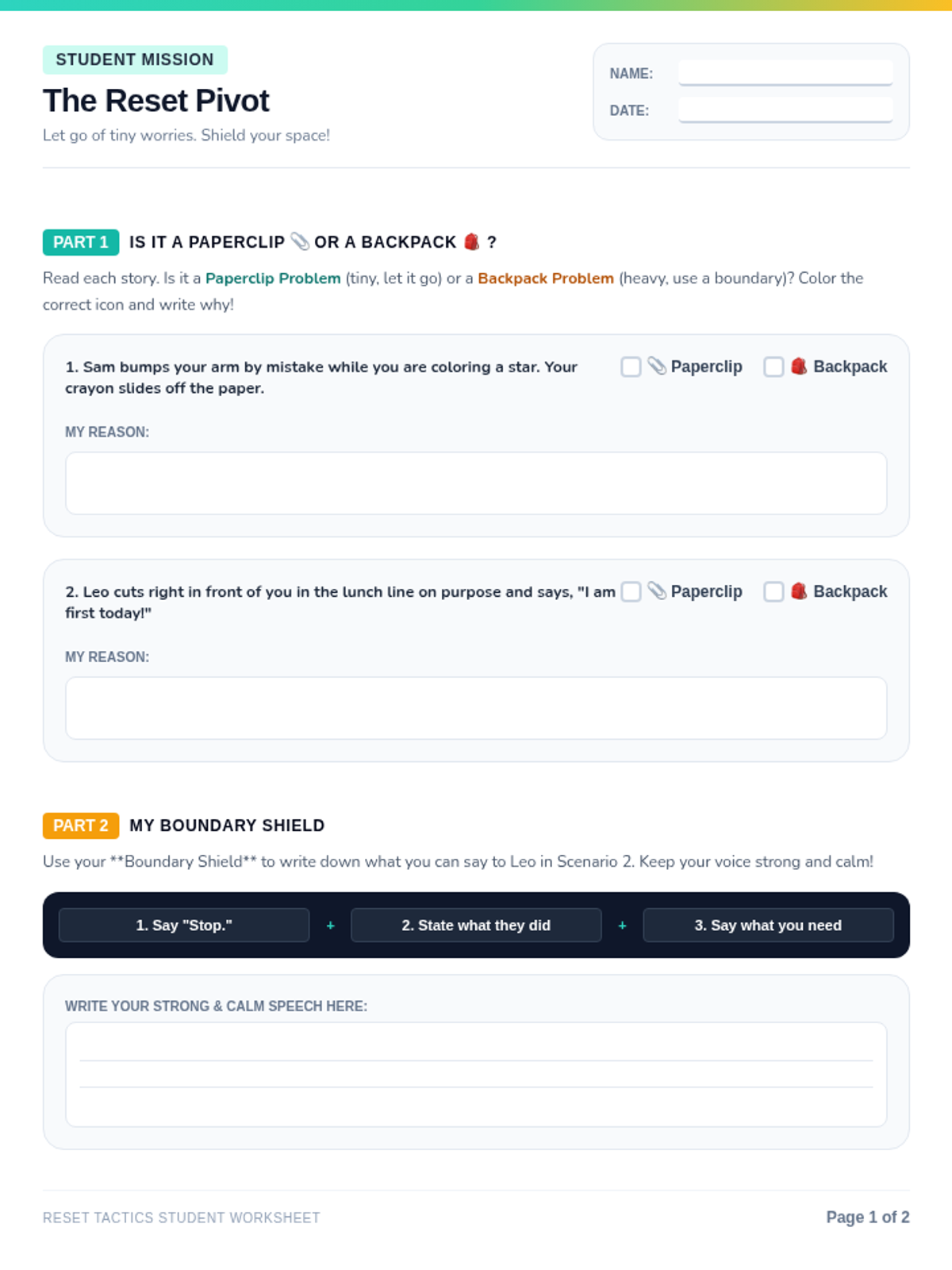
A counseling lesson designed for students in grades 2-3 to help them navigate peer friction, evaluate when to apologize or move on, let go of minor grievances, and set clear social boundaries.
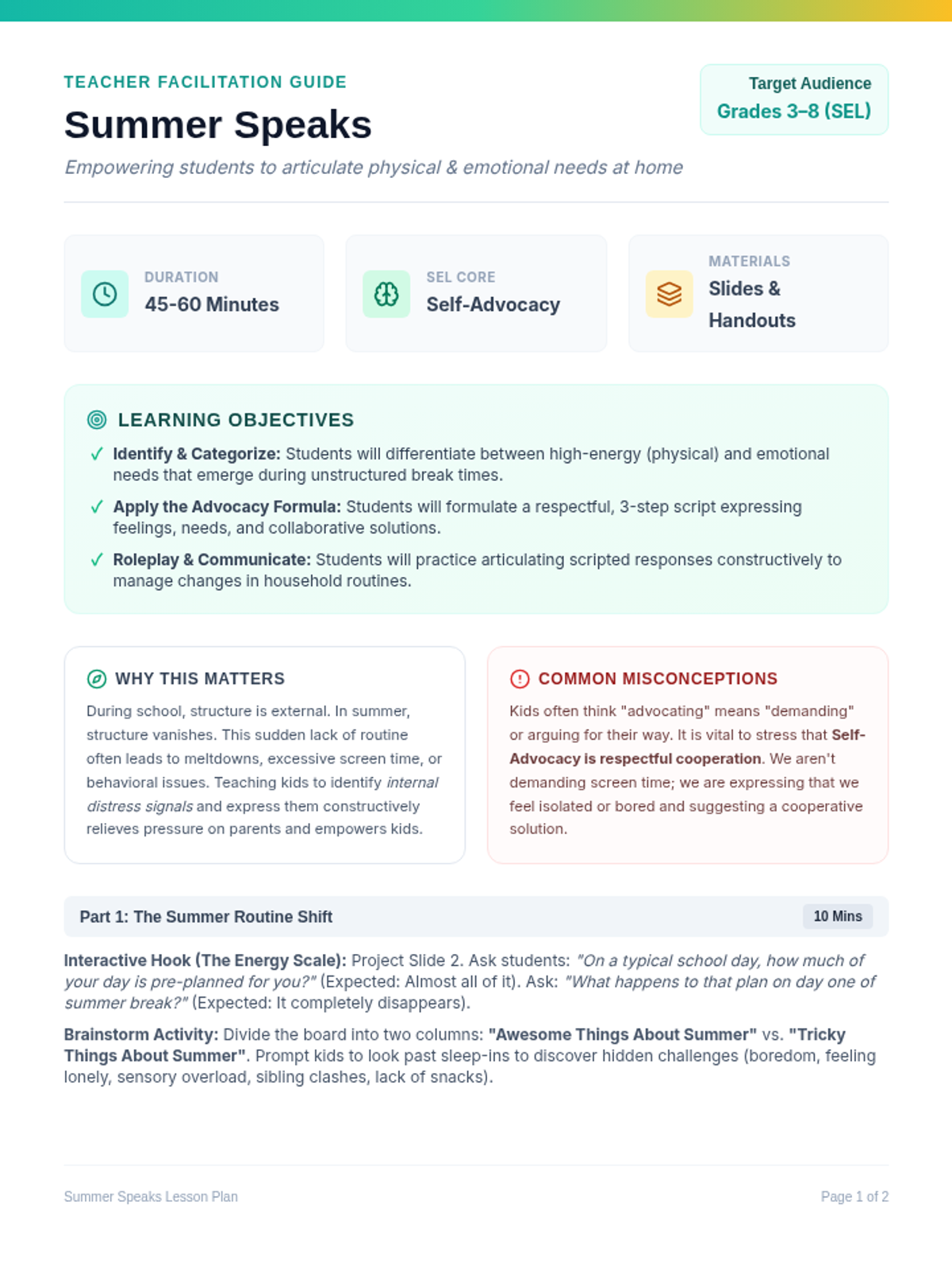
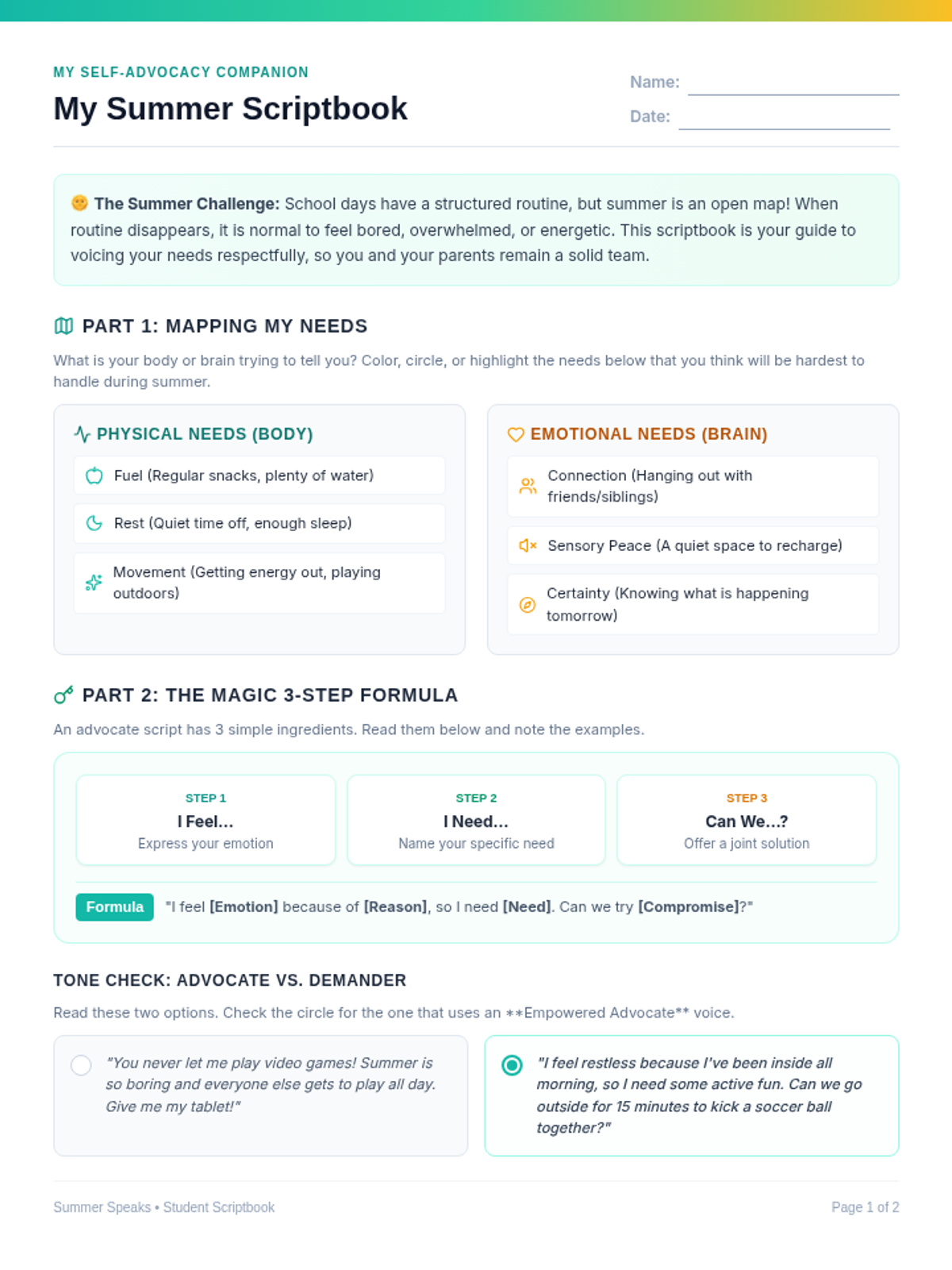
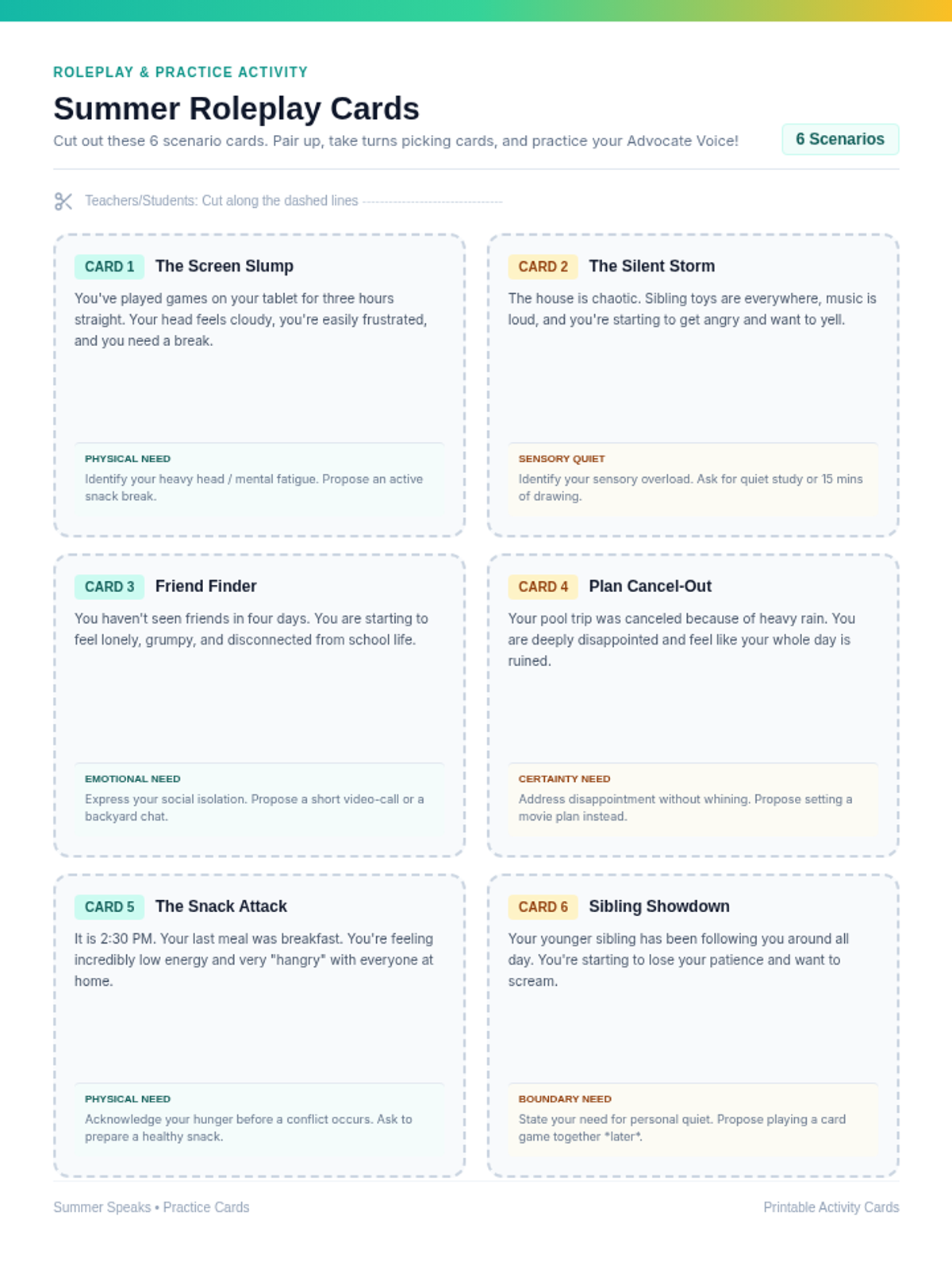
An empowering social-emotional learning lesson that teaches self-advocacy to elementary and middle school students. Students discover how to recognize their physical and emotional needs during unstructured summer breaks and articulate them to parents or guardians using structured, respectful script templates.
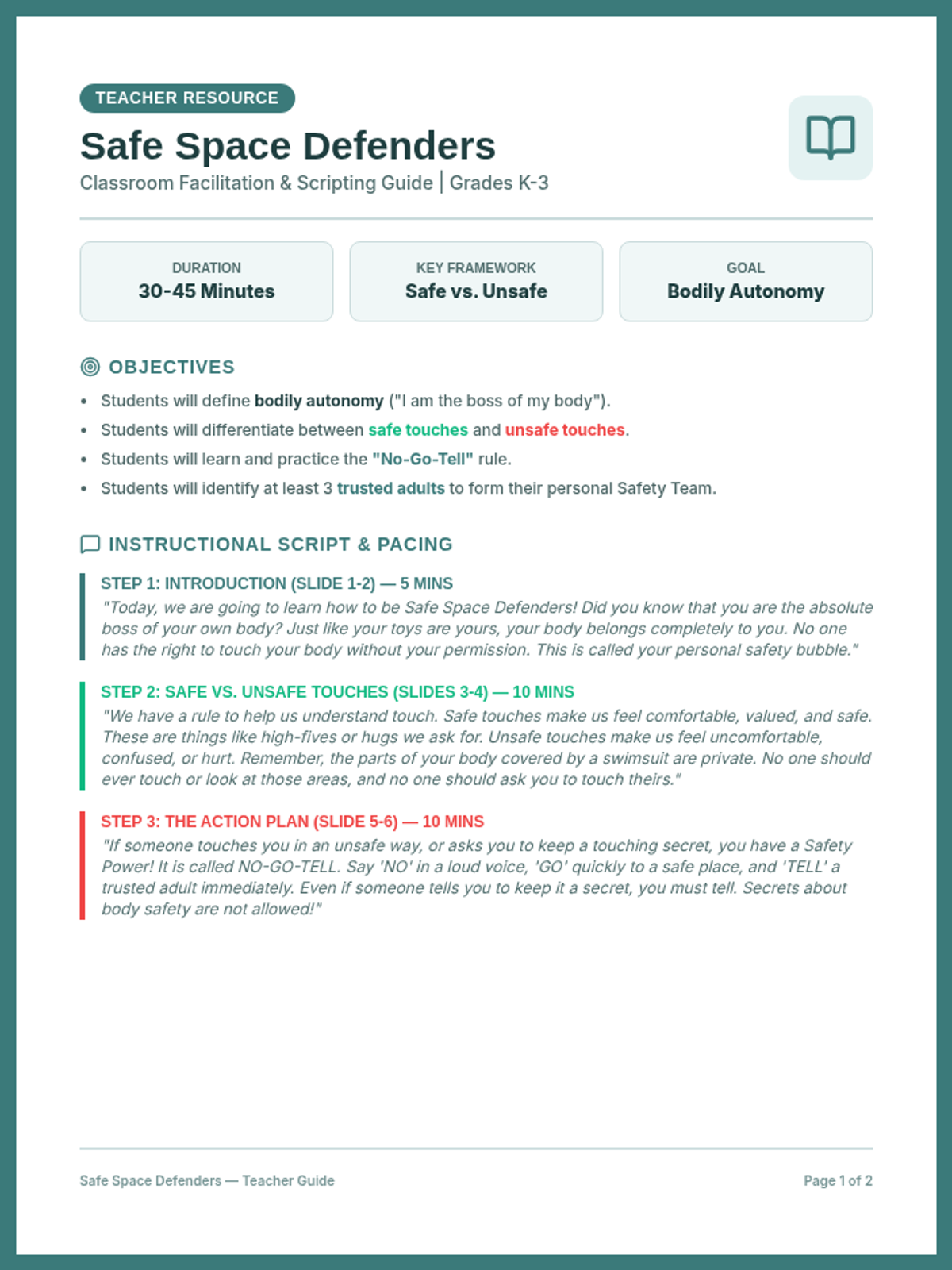
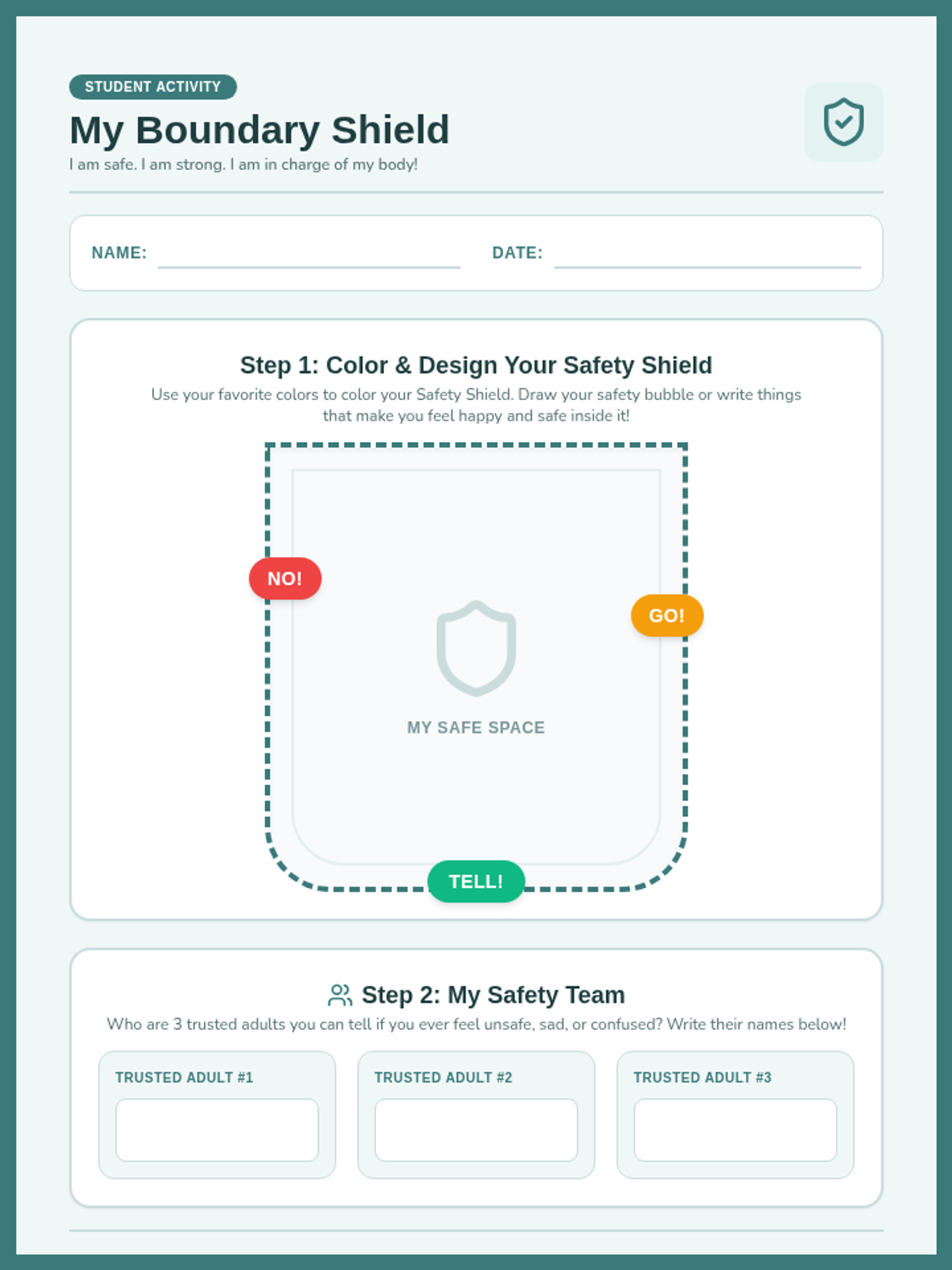
A sensitive and empowering Social-Emotional Learning (SEL) lesson designed to teach elementary students the concepts of safe versus unsafe touches, bodily autonomy, and how to identify and communicate boundaries with trusted adults.
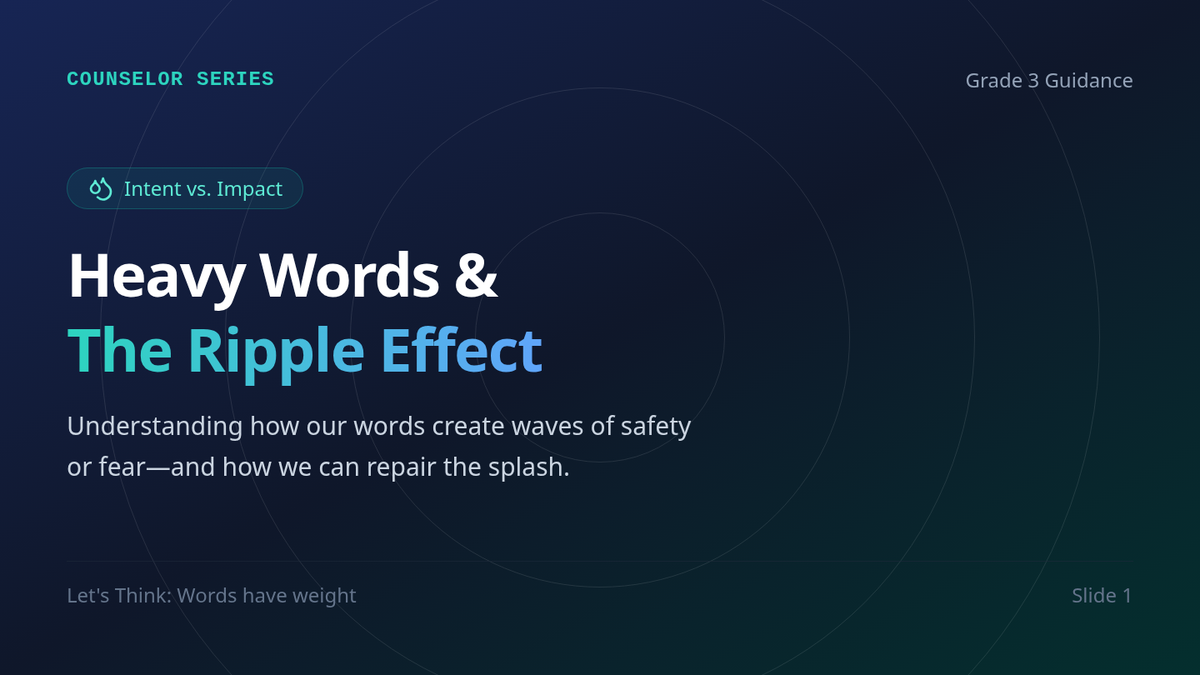
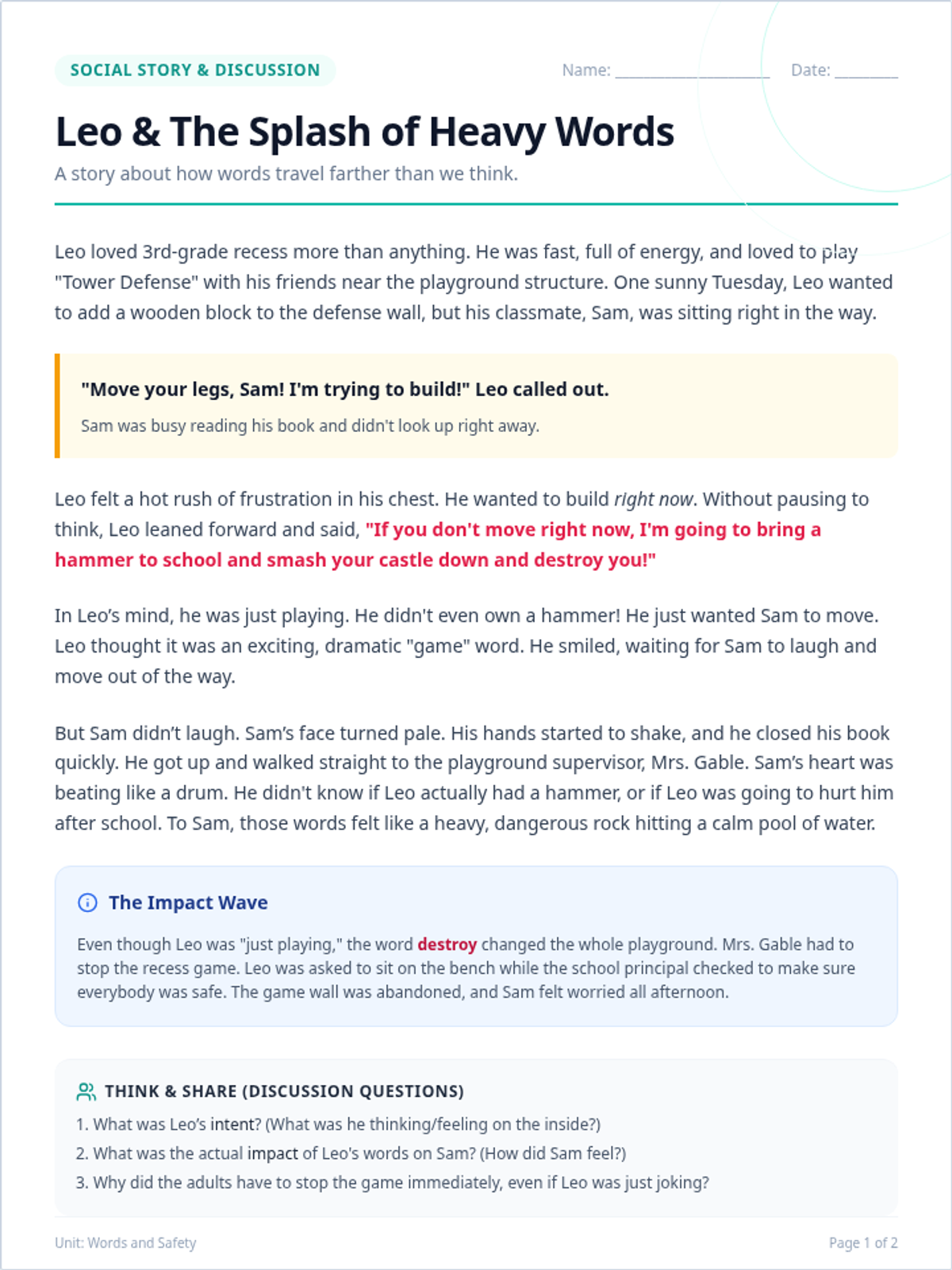
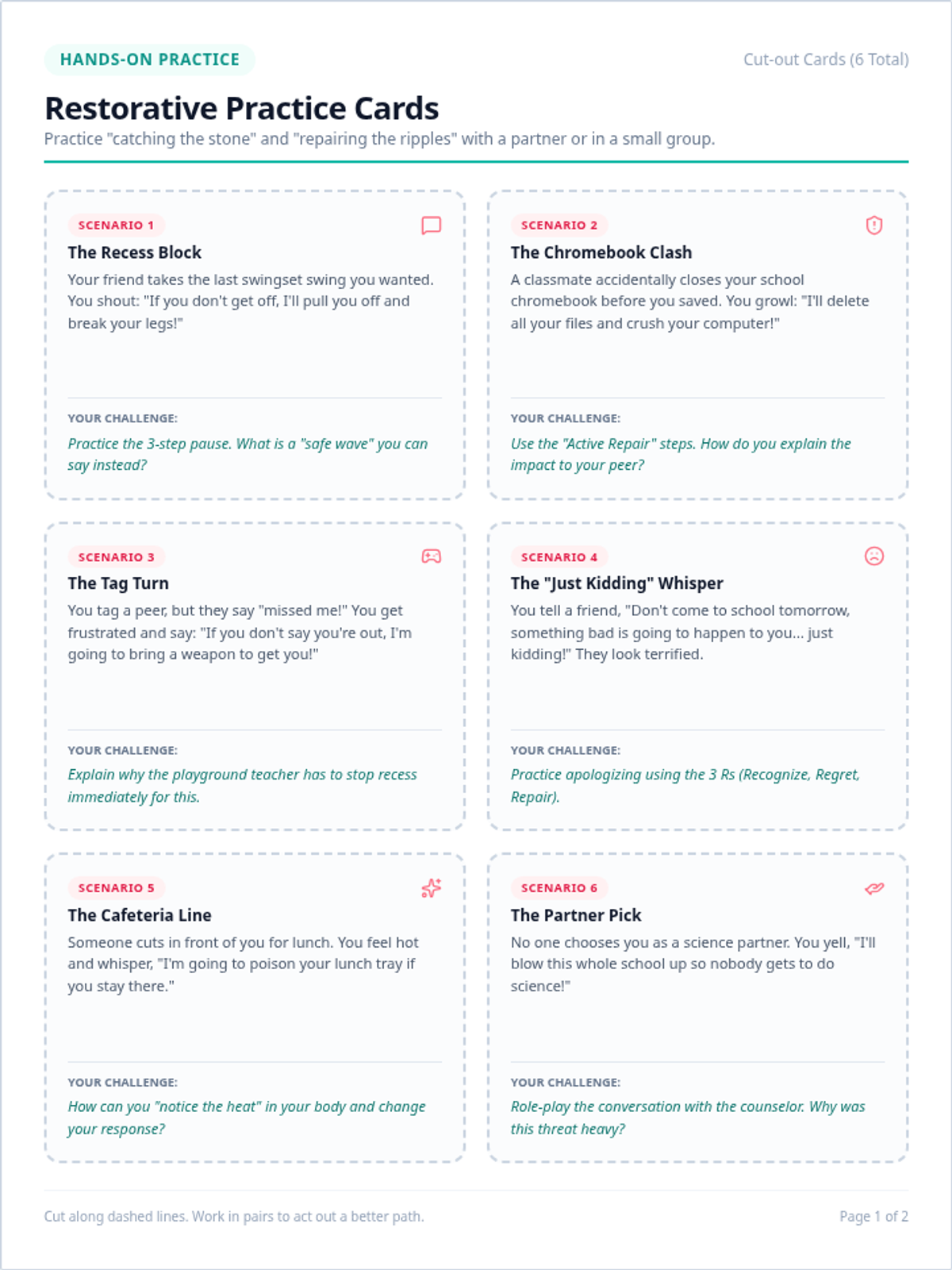
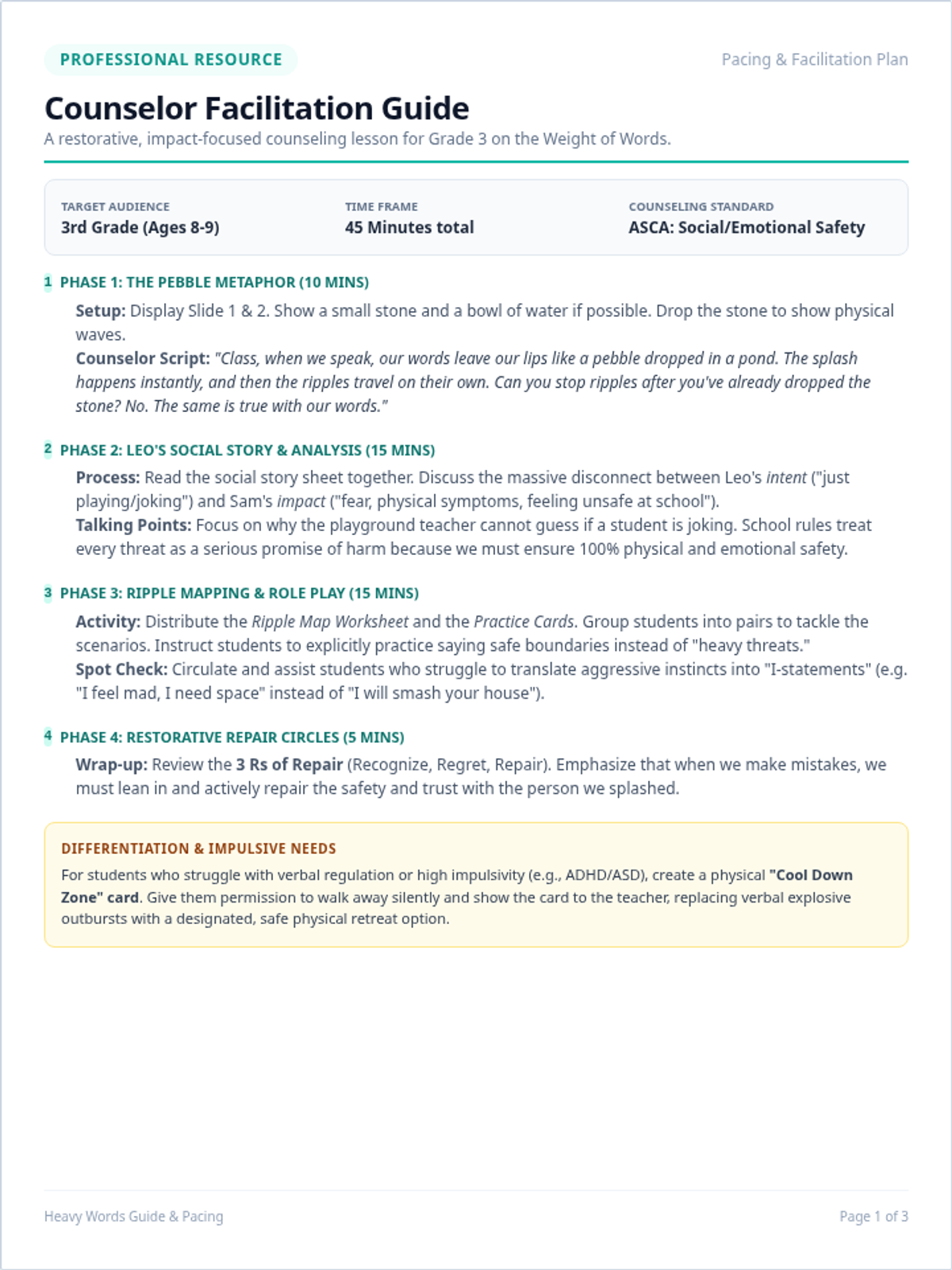
A guidance and counseling lesson designed for 3rd-grade students to understand the difference between intent and impact. Through a water-ripple metaphor, students discover how "just joking" threats create waves of fear and how to repair broken trust.
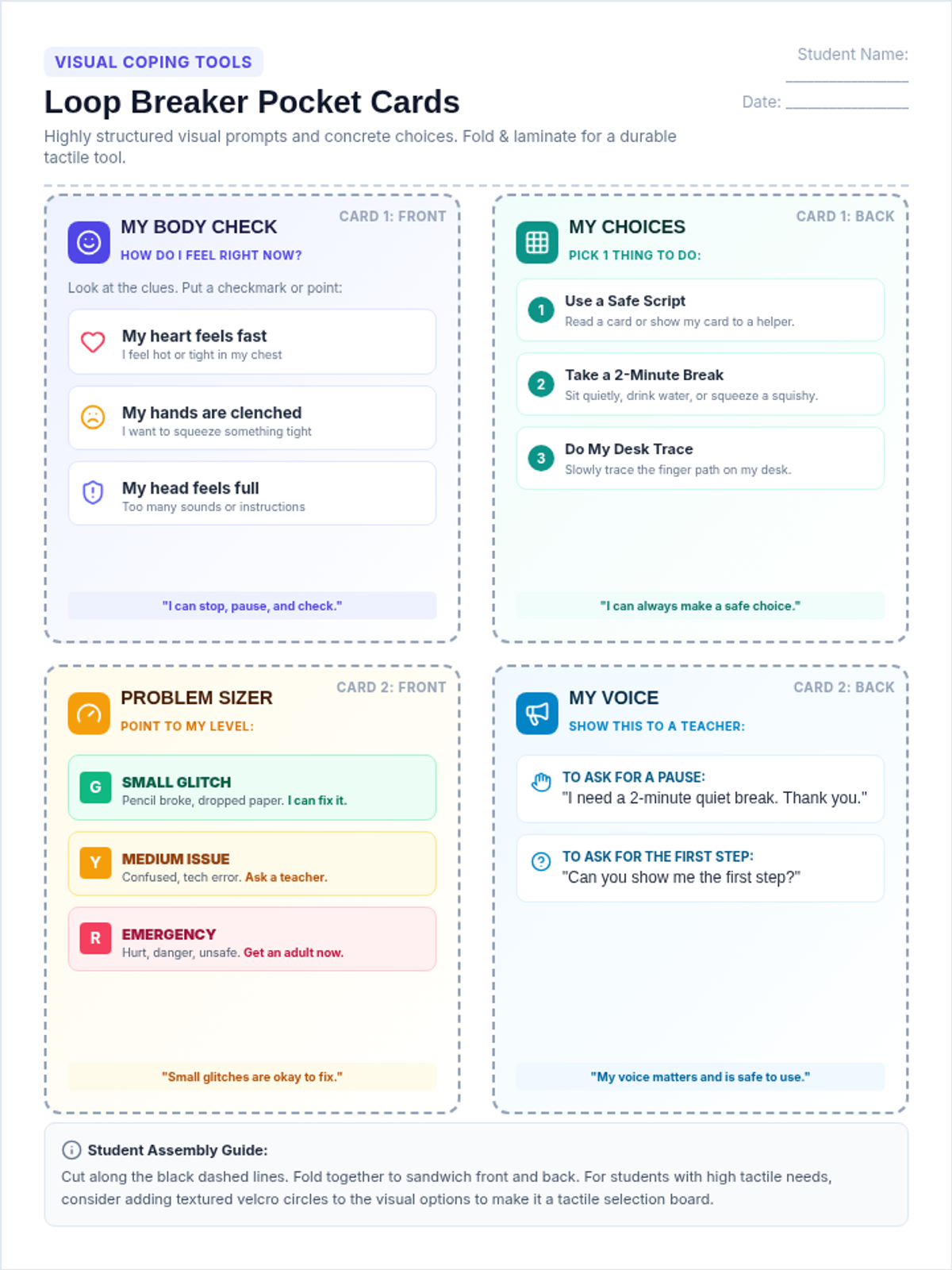
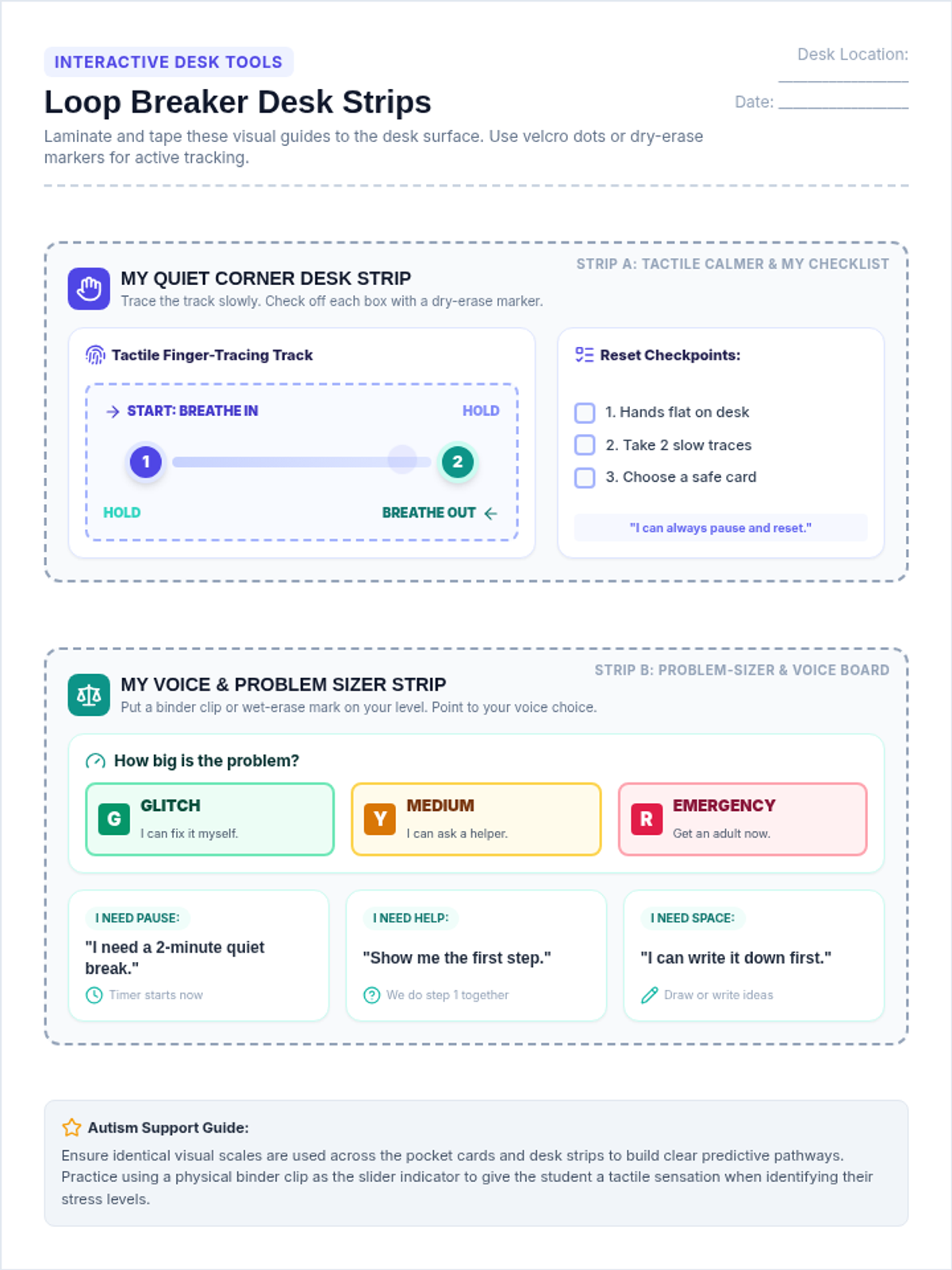
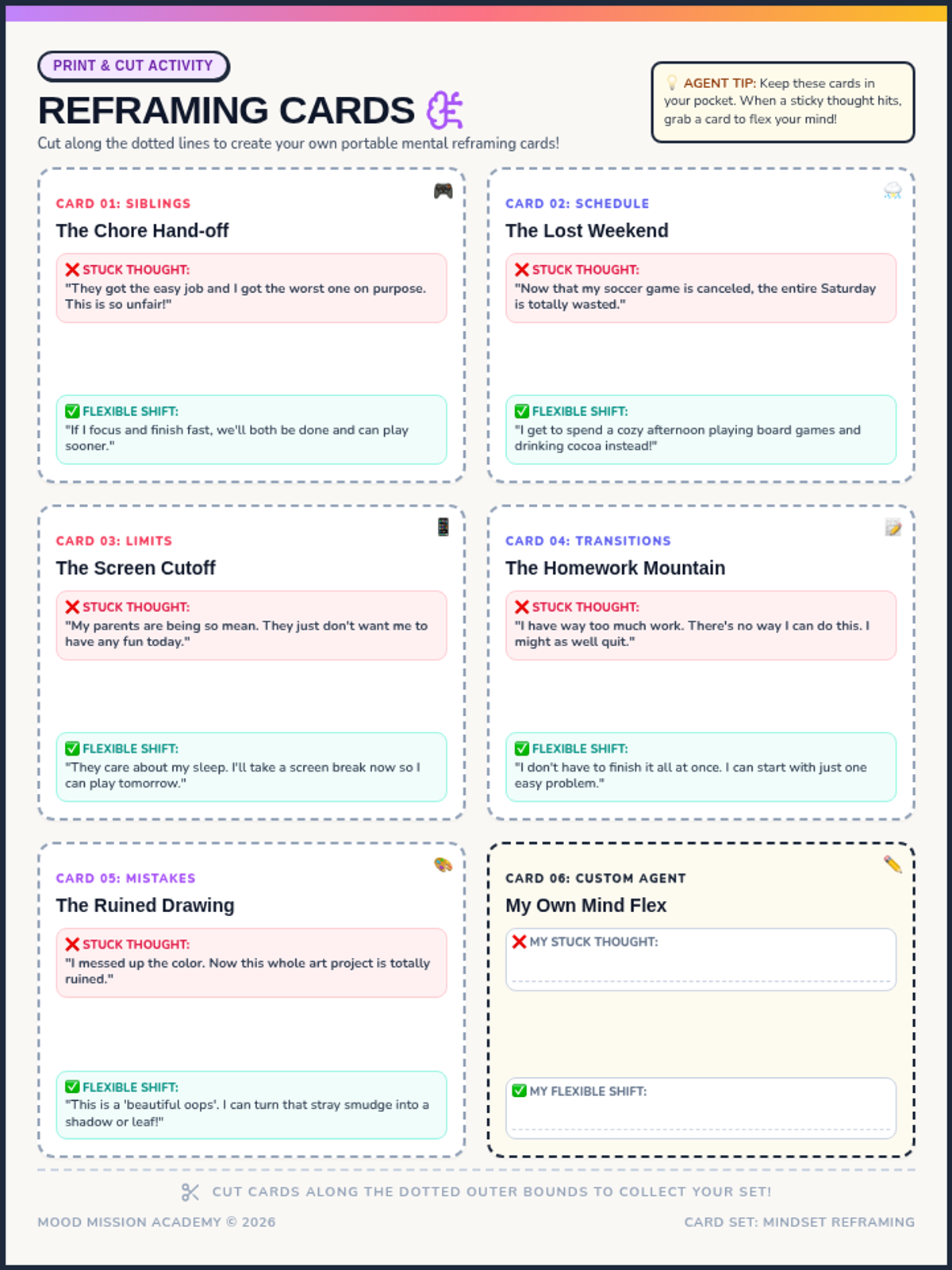
A set of portable, visual cognitive behavioral tools to help students disrupt automatic negative thoughts and set constructive boundaries when feeling overwhelmed by tasks.
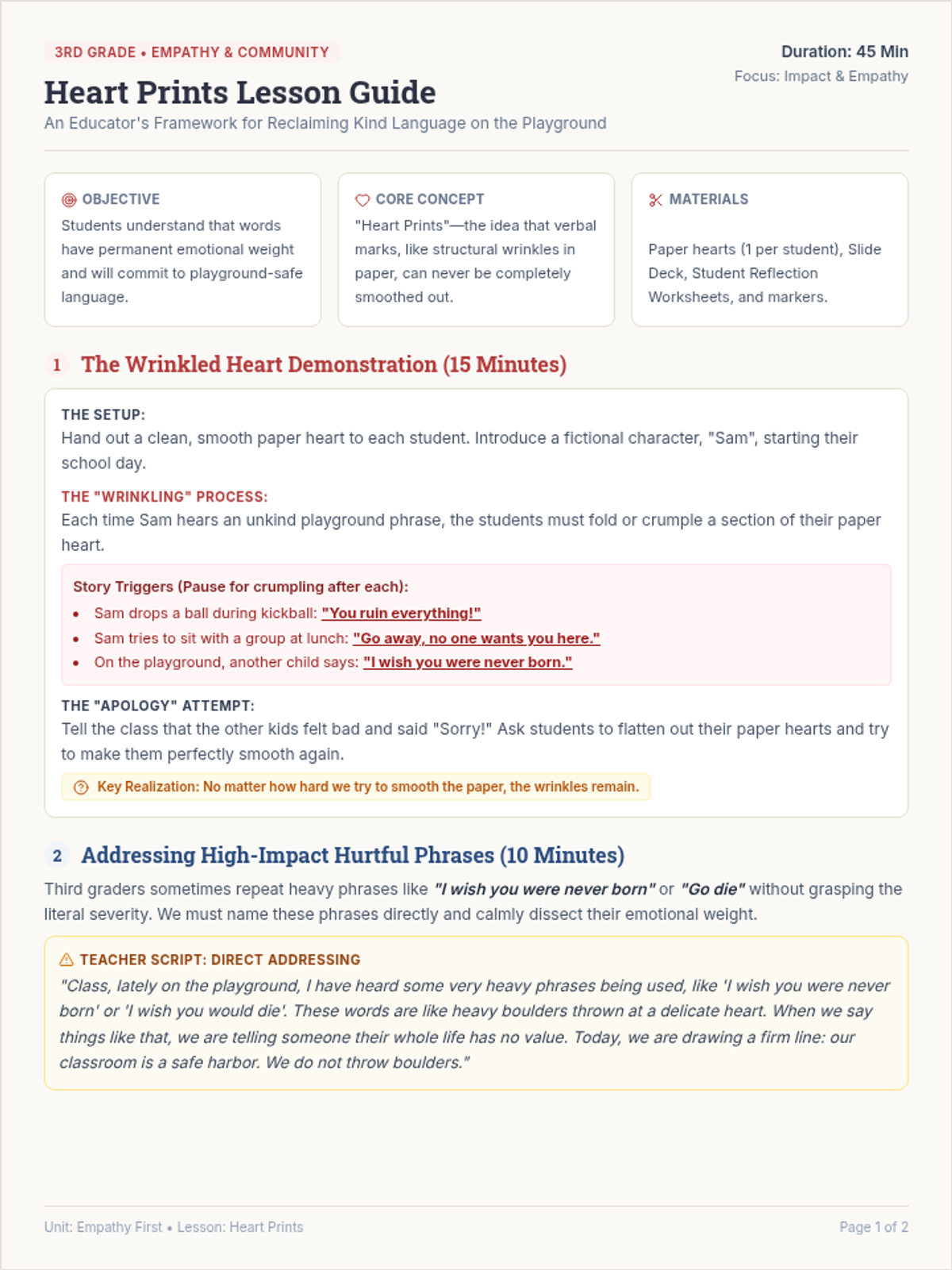
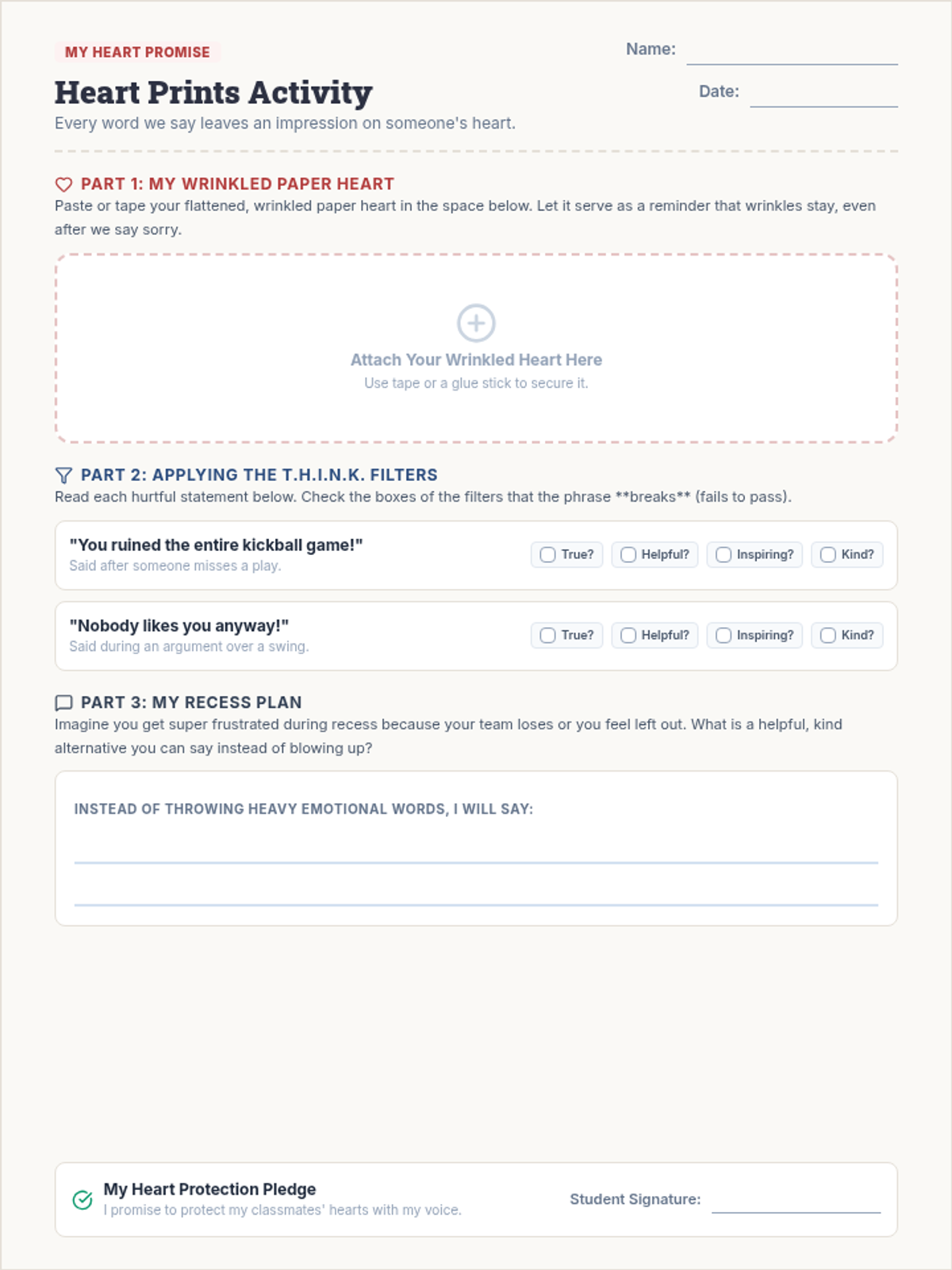
A powerful 3rd-grade lesson designed to help students understand the permanent impact of their words, specifically addressing hurtful playground behavior and fostering empathy through discussion and hands-on reflection.
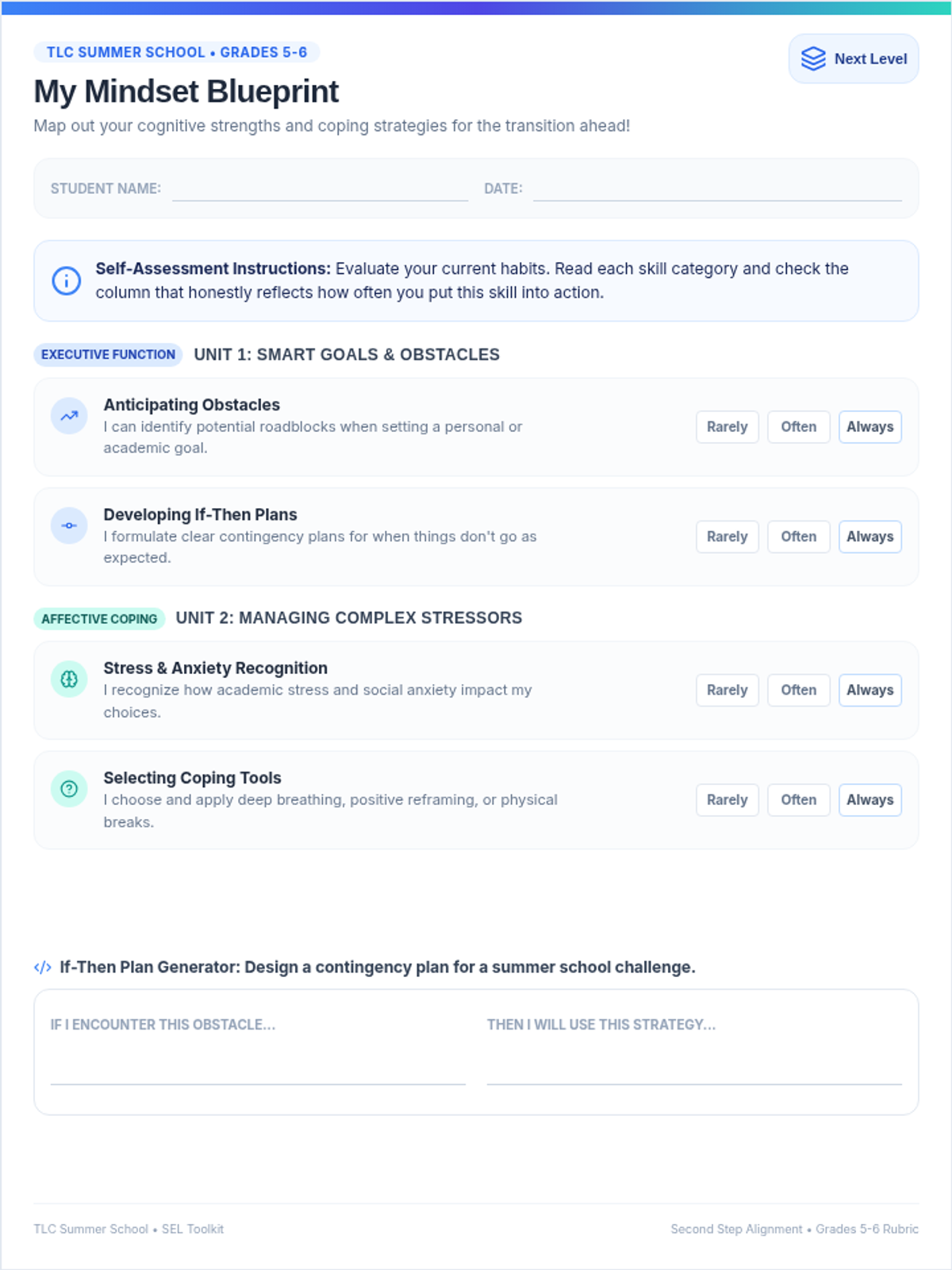
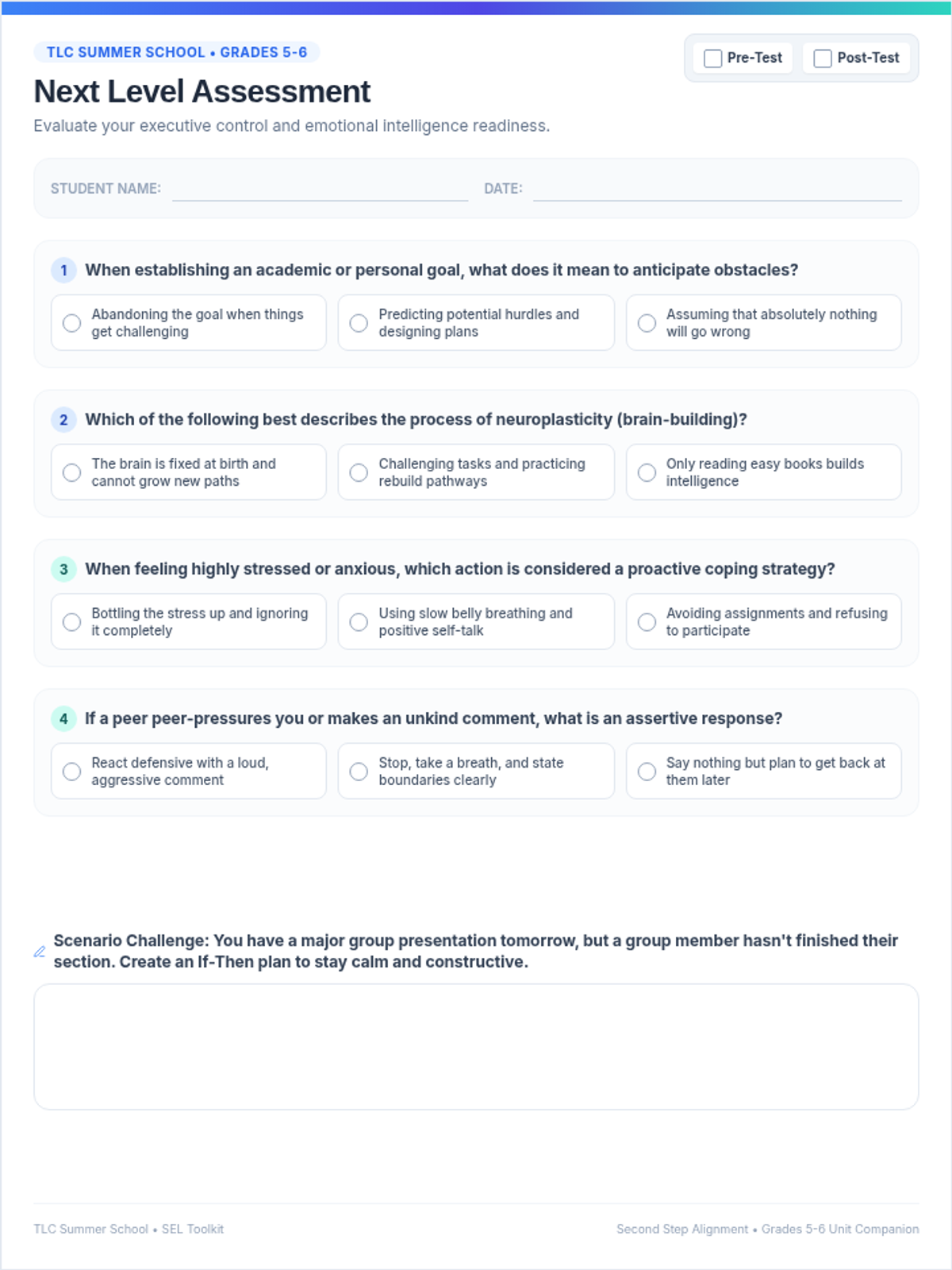
SEL assessments and tools tailored for middle school prep students (Grades 5-6). Focuses on executive function, goal setting, emotion management under stress, and preparing for middle school dynamics.
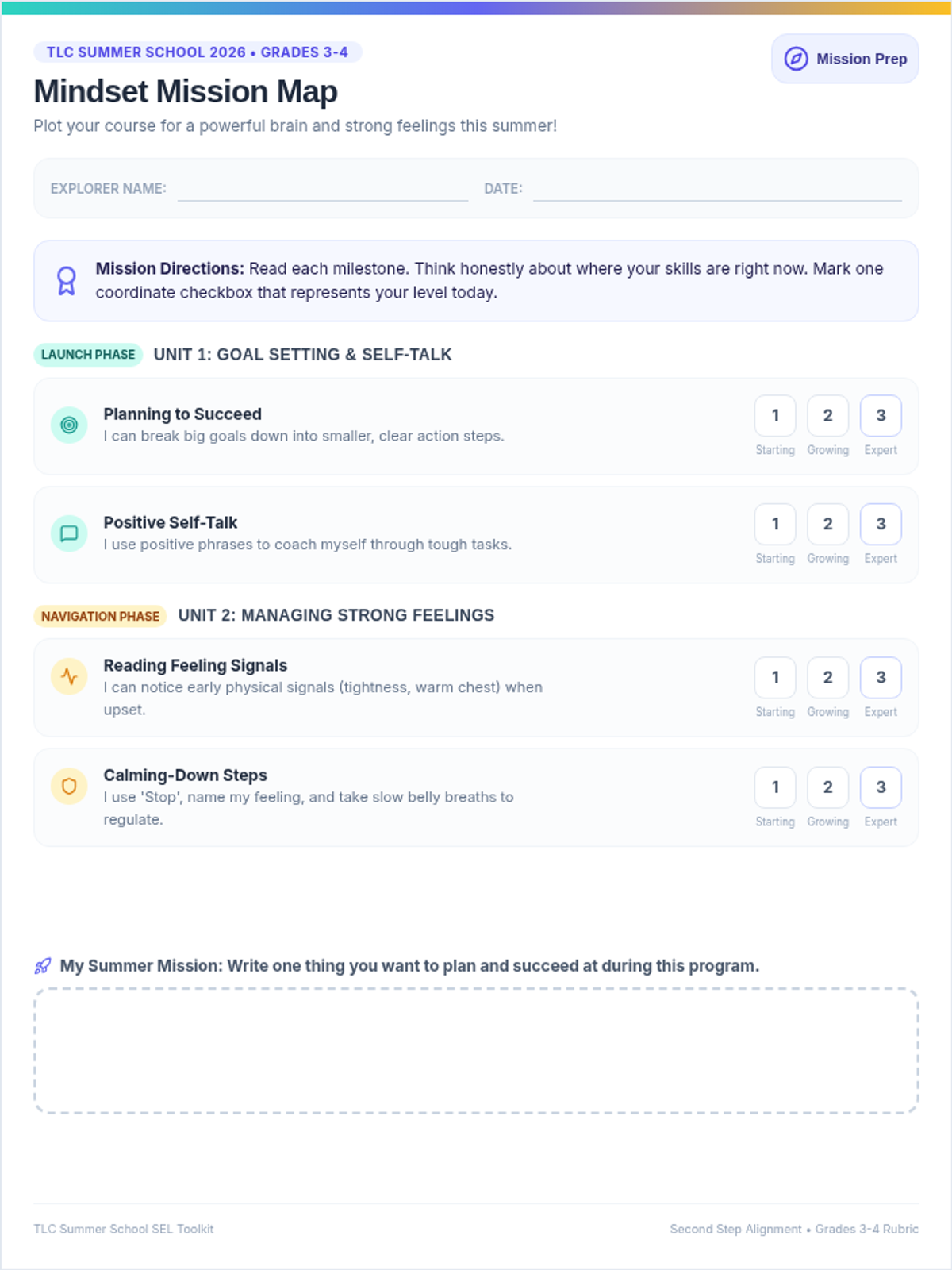
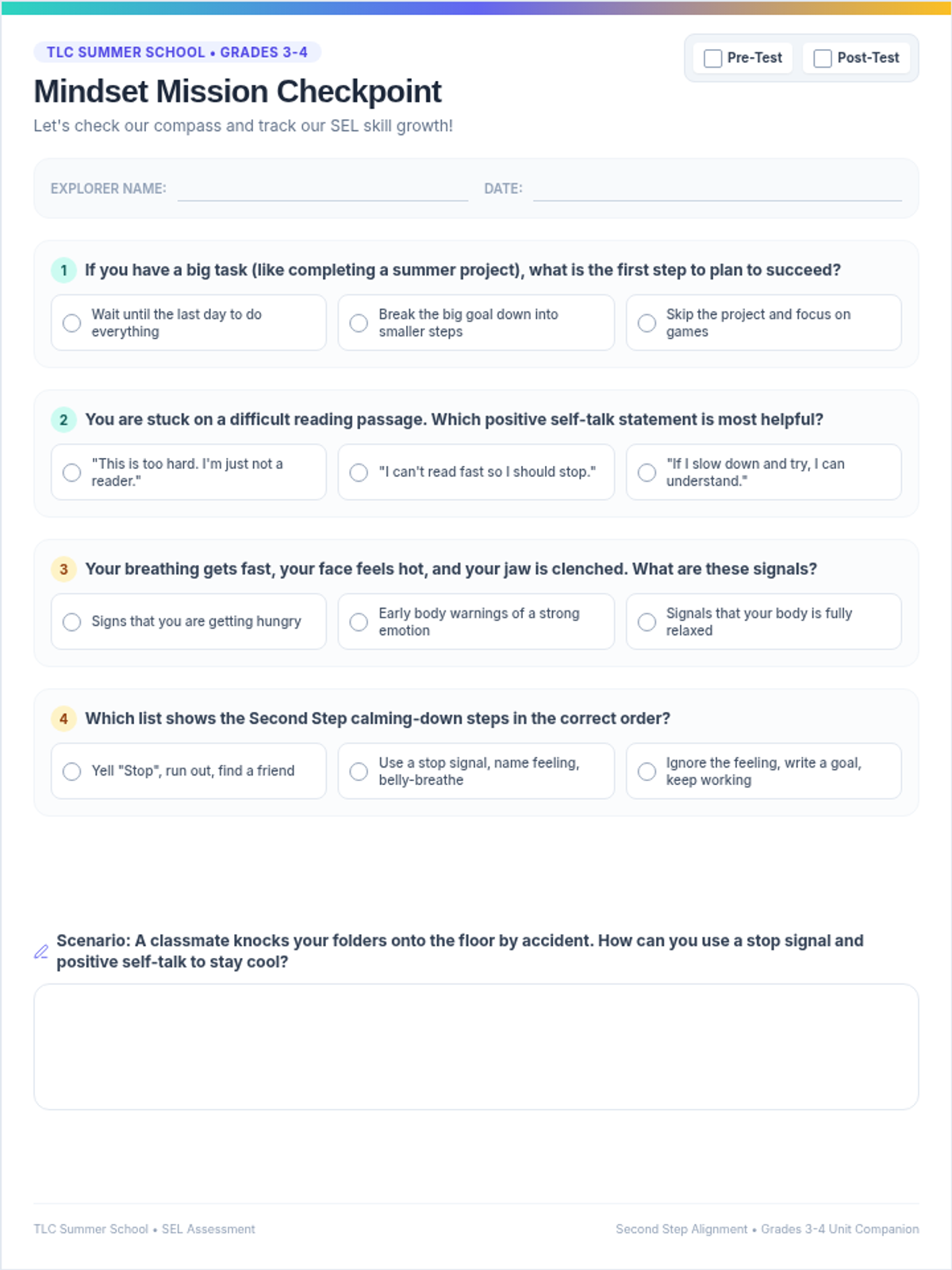
SEL assessments and tools tailored for upper primary students (Grades 3-4). Features reflective self-assessments and scenario-based tests focusing on planning to succeed, managing strong emotions, and using calming-down steps.
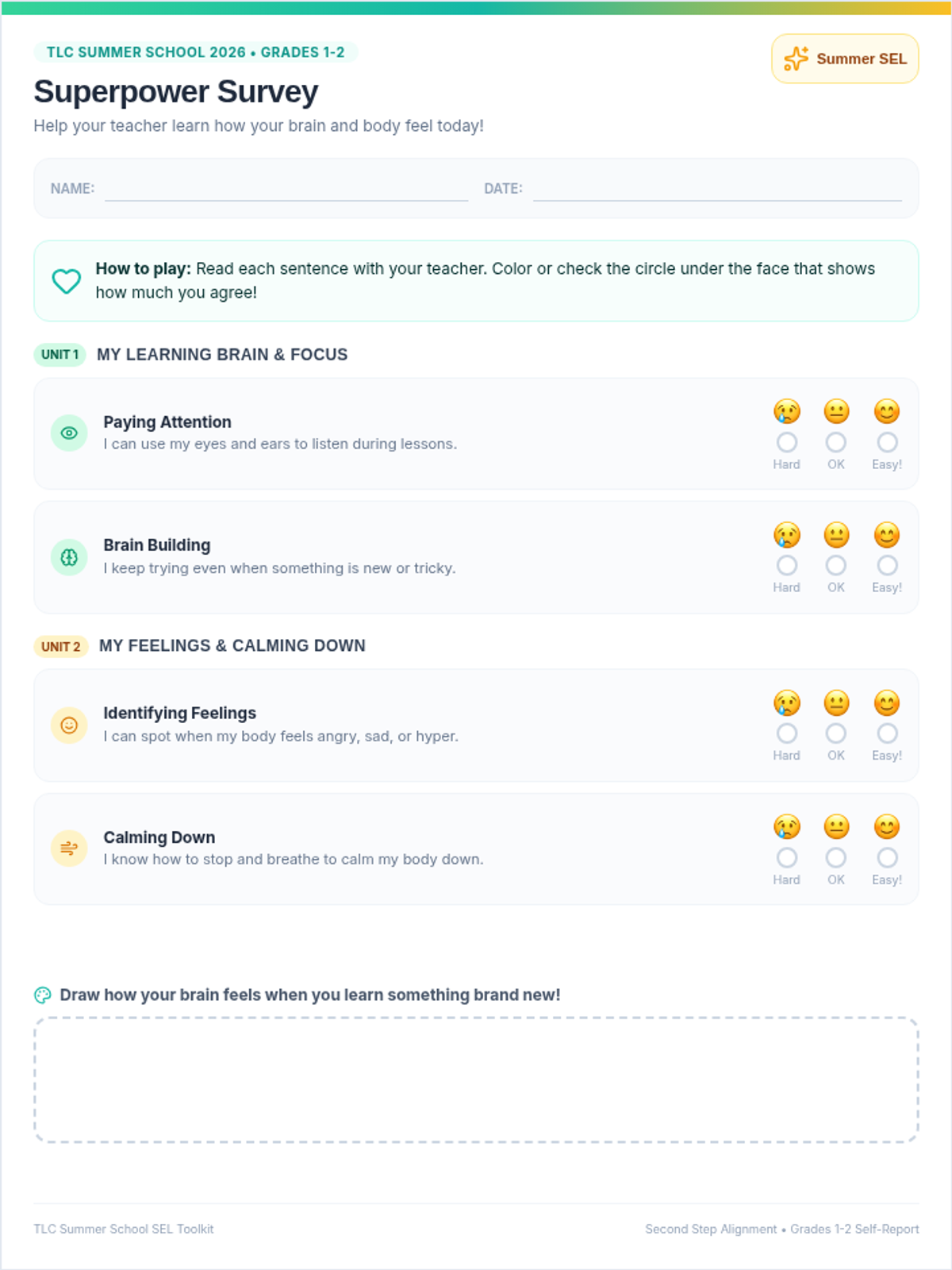
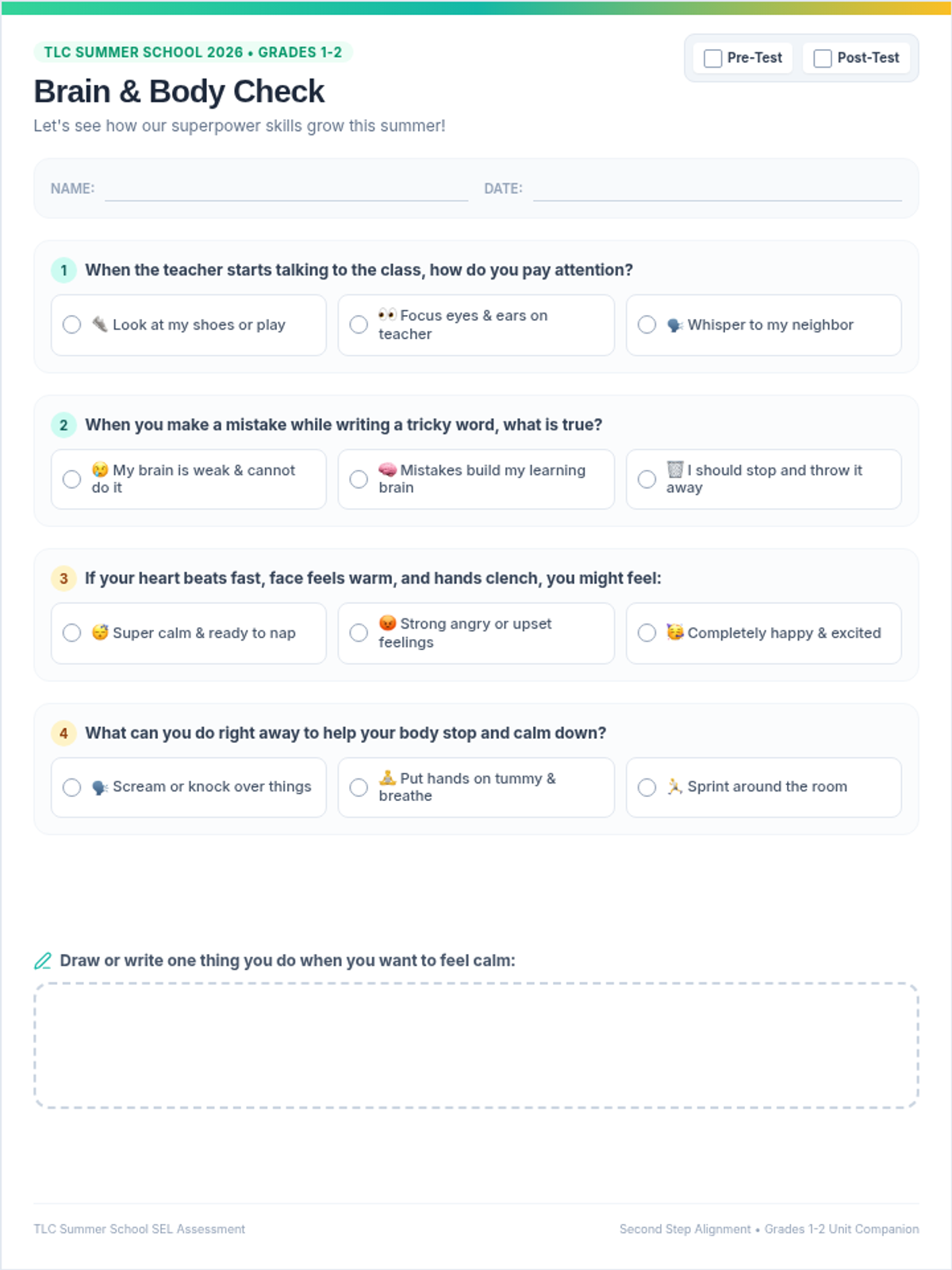
SEL assessments and tools tailored for early primary students (Grades 1-2). Uses highly visual emoji-based scales and simplified scenarios focusing on paying attention, brain building, and calming down.
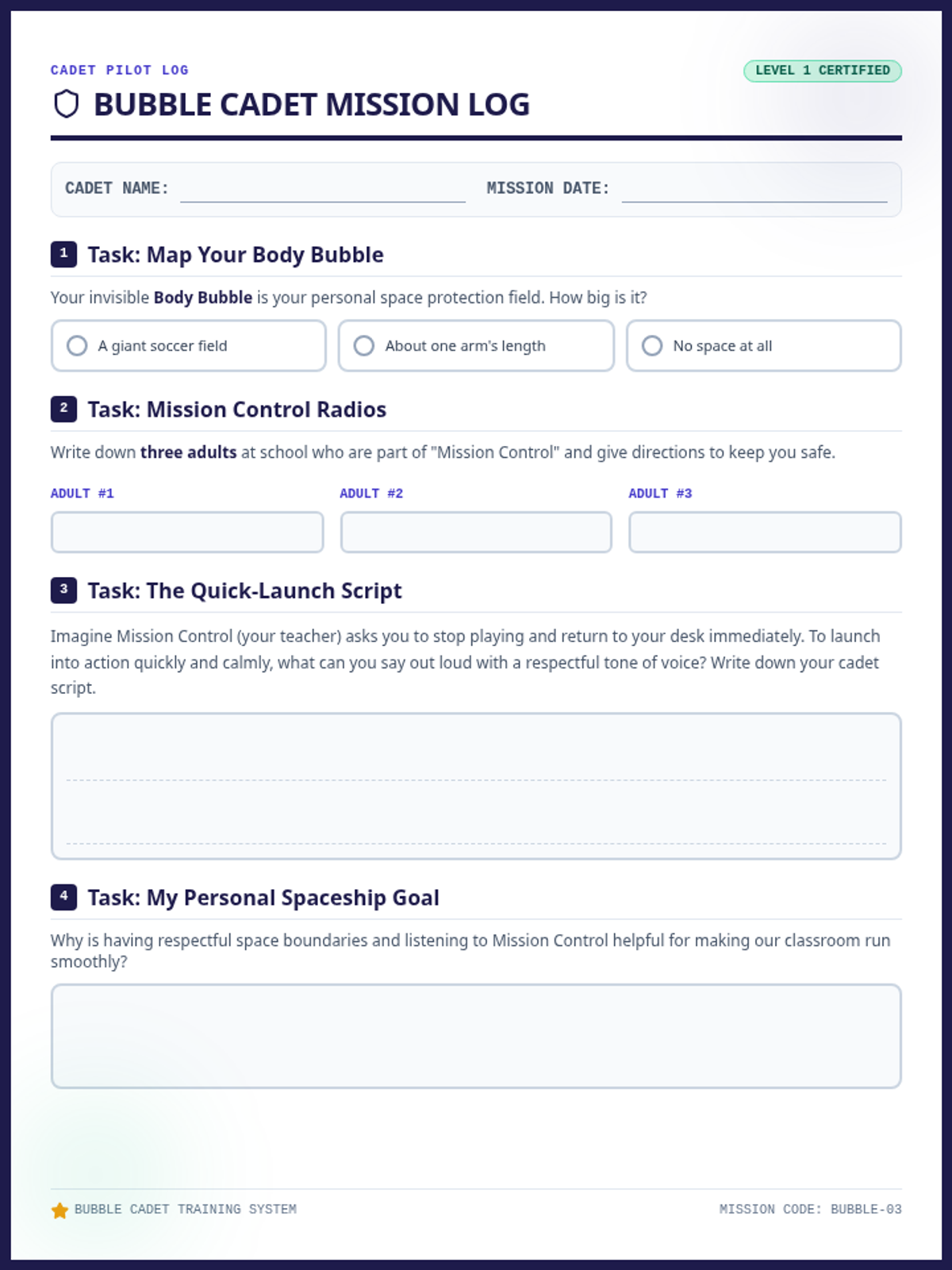
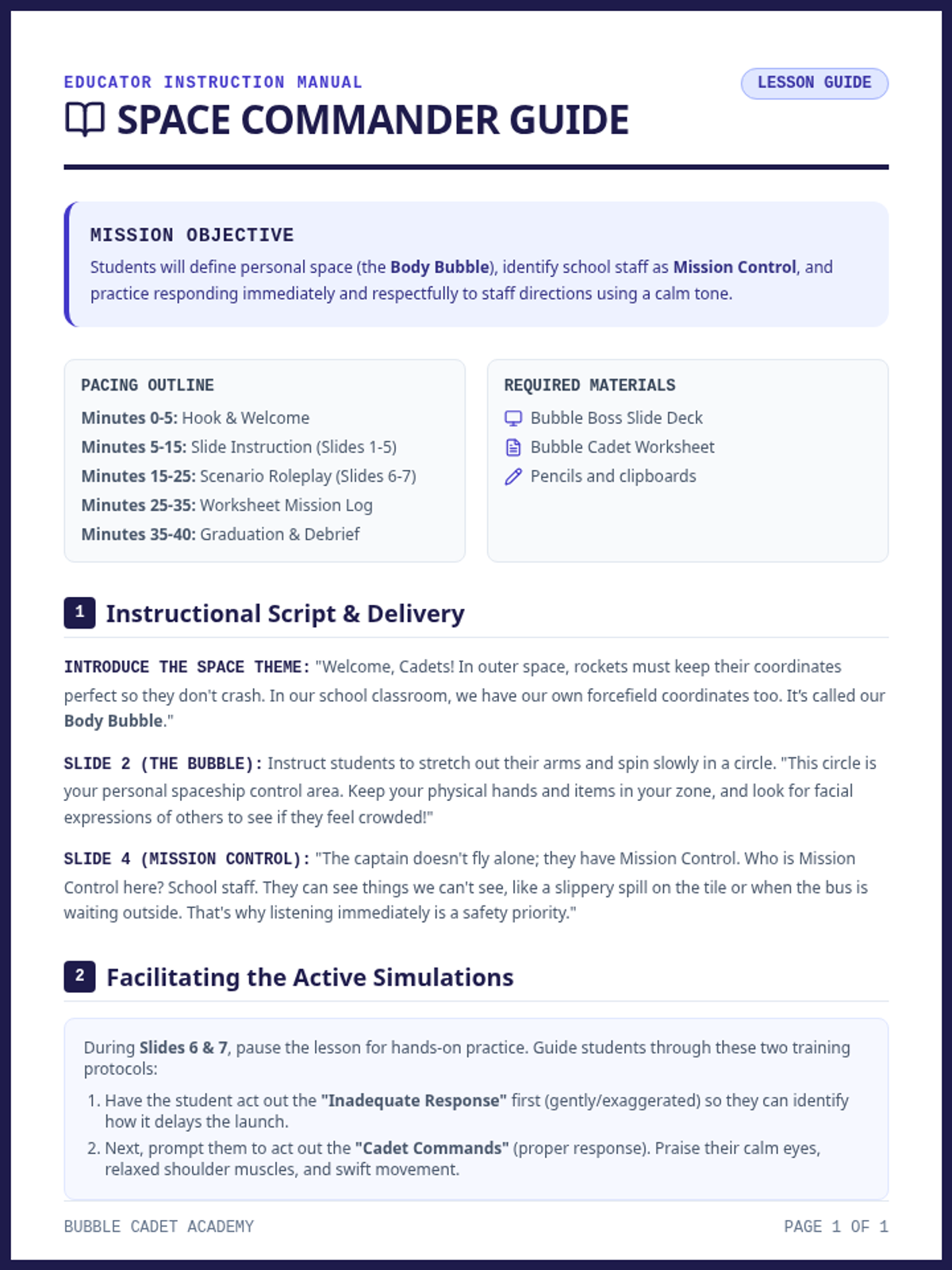
A social-emotional learning lesson for 3rd graders focusing on physical boundaries (the 'VIP Zone') and responding respectfully to school staff (the 'Stage Managers'). Includes pop-star themed discussion slides, a reflective student worksheet, and an educator guide.
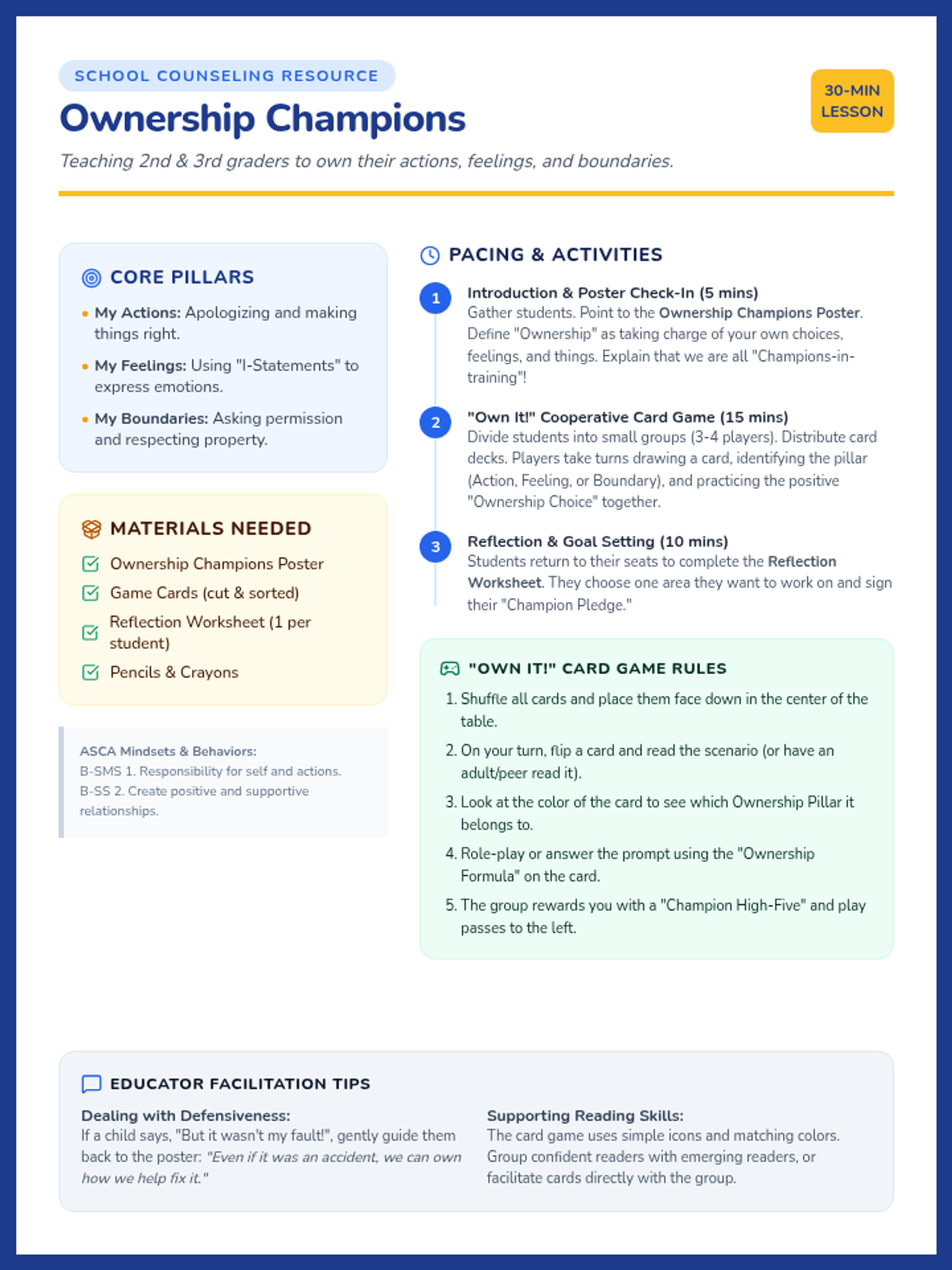
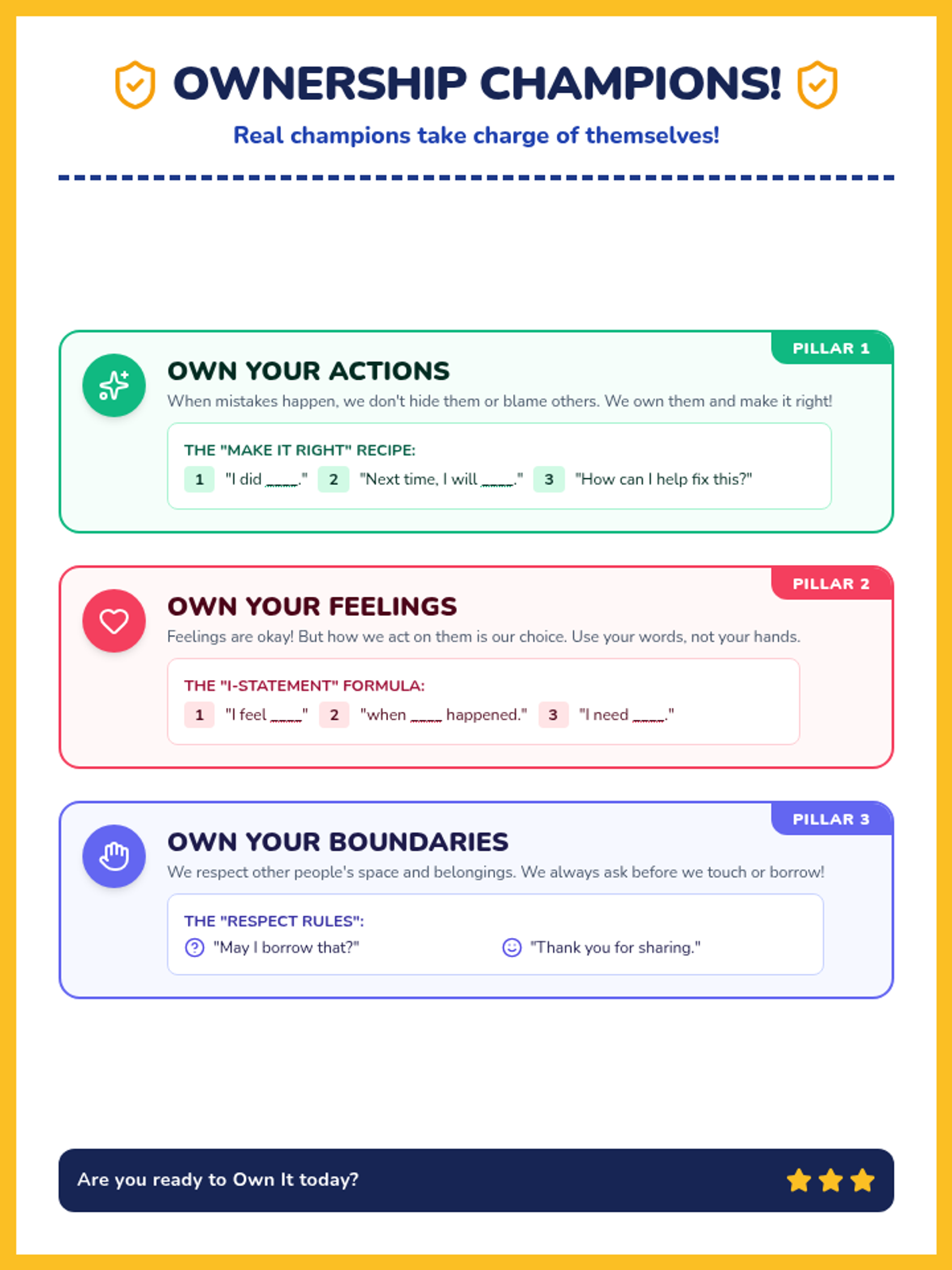
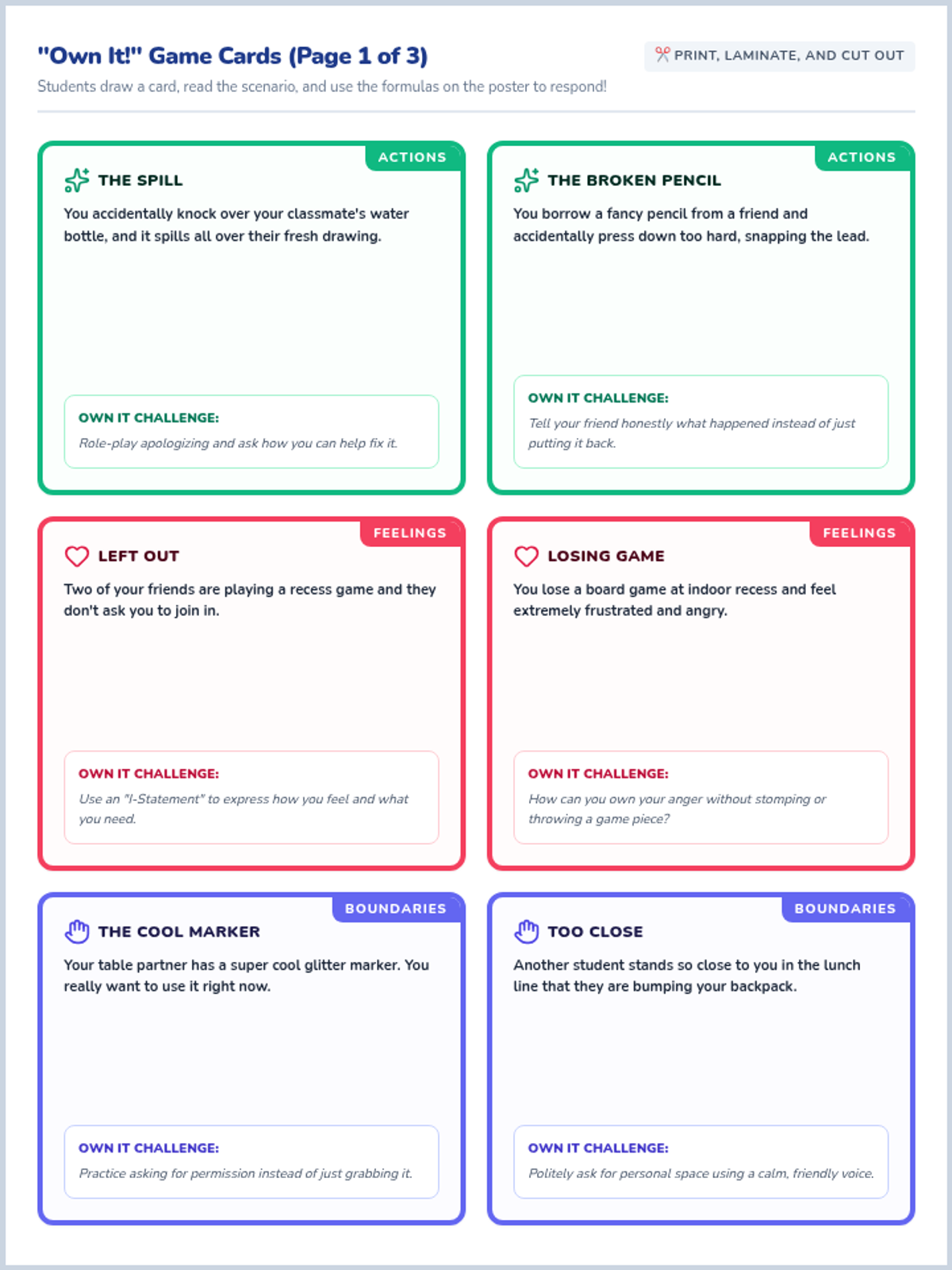
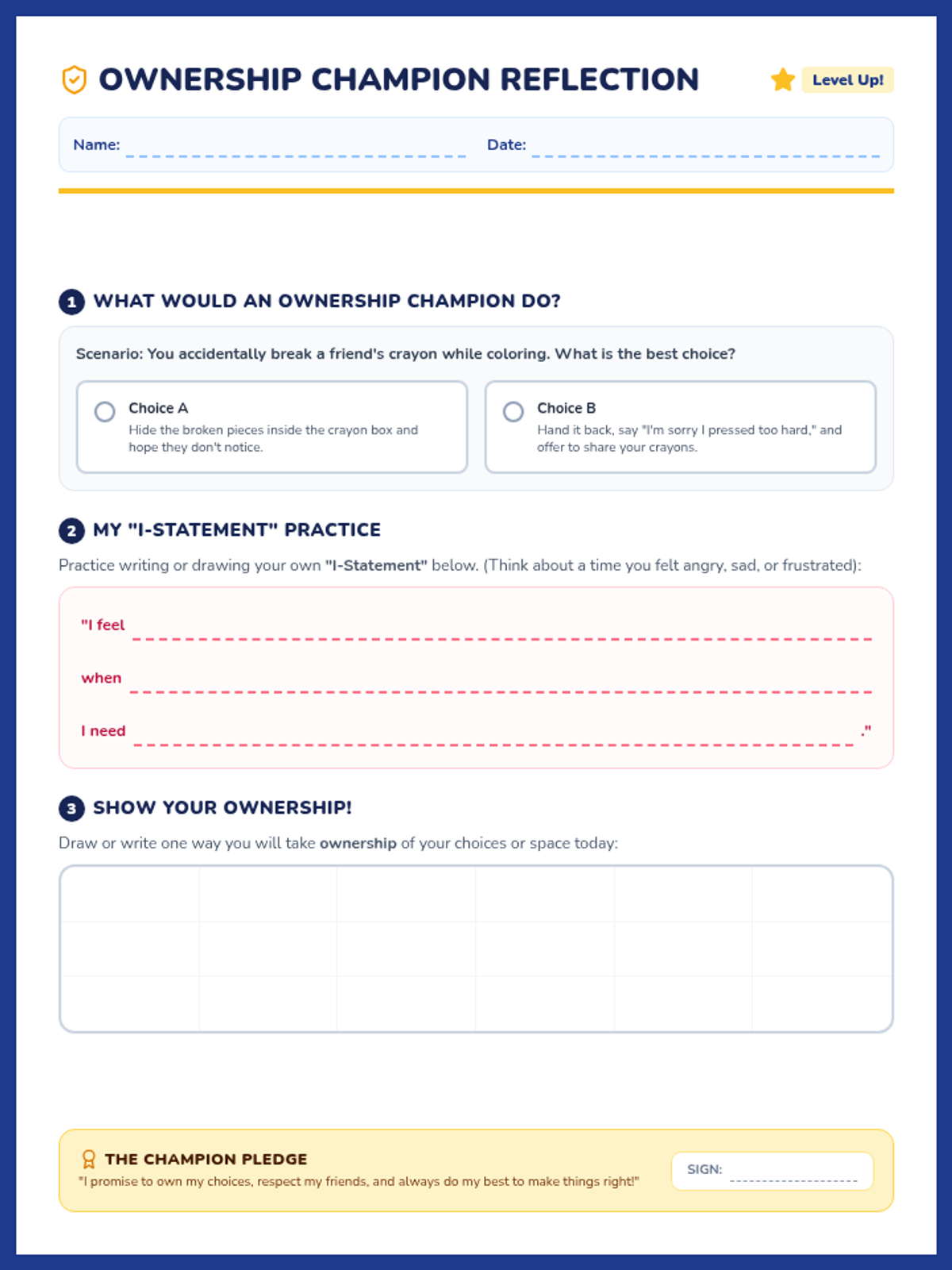
A comprehensive 30-minute counseling lesson for 2nd and 3rd grade students to learn personal ownership of actions, feelings, and physical boundaries through interactive discussion, a cooperative card game, and a reflection worksheet.
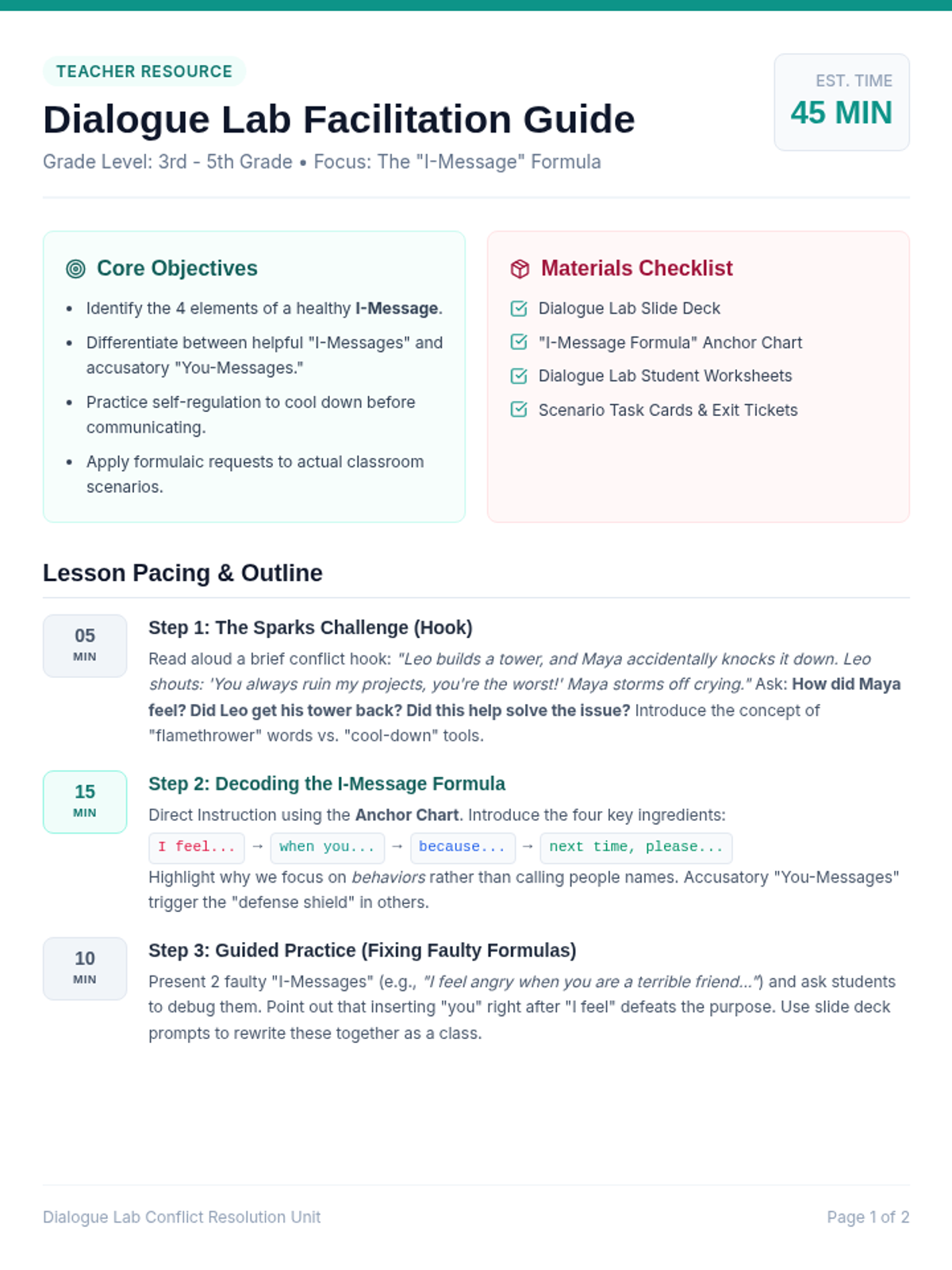
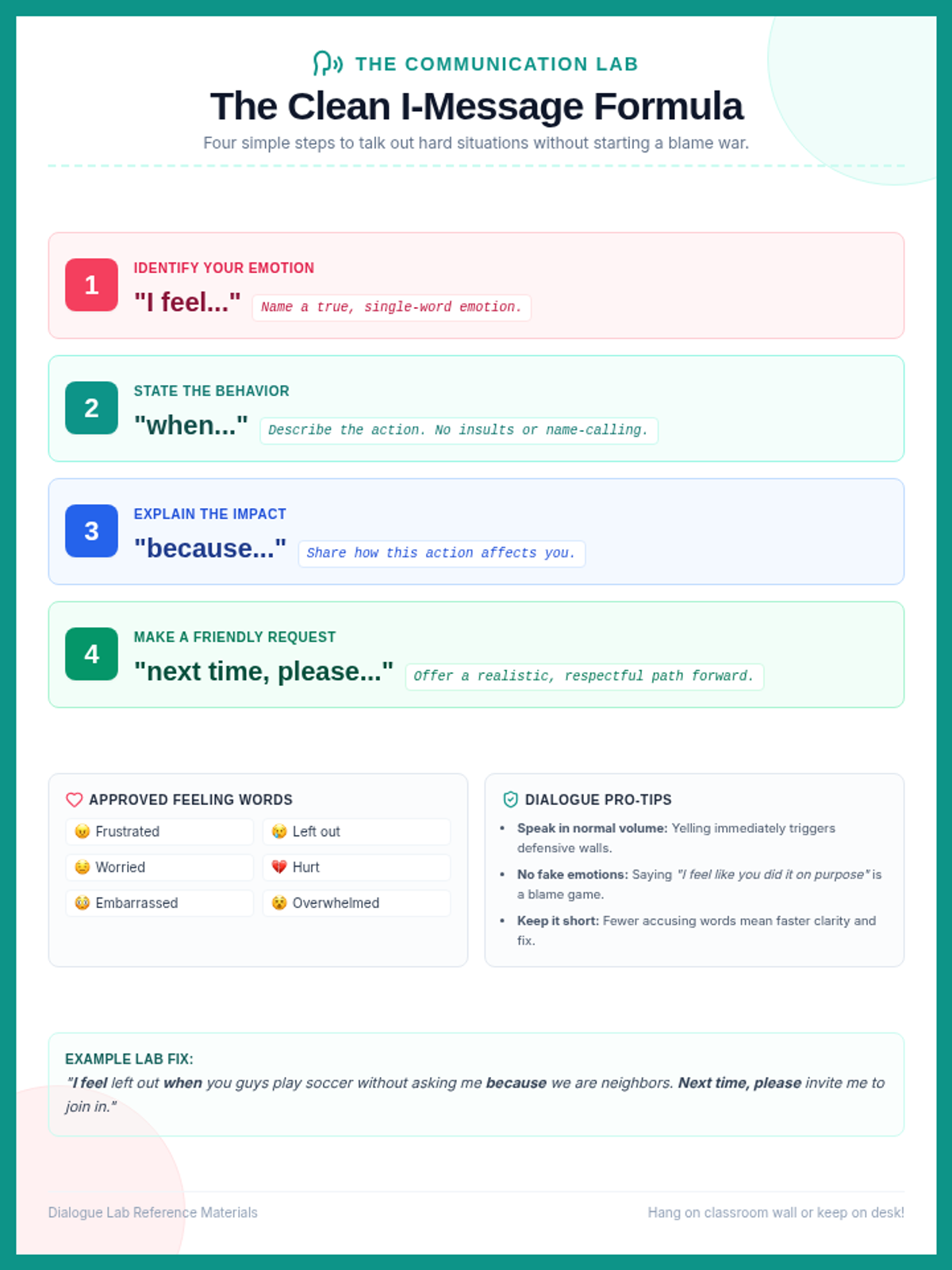
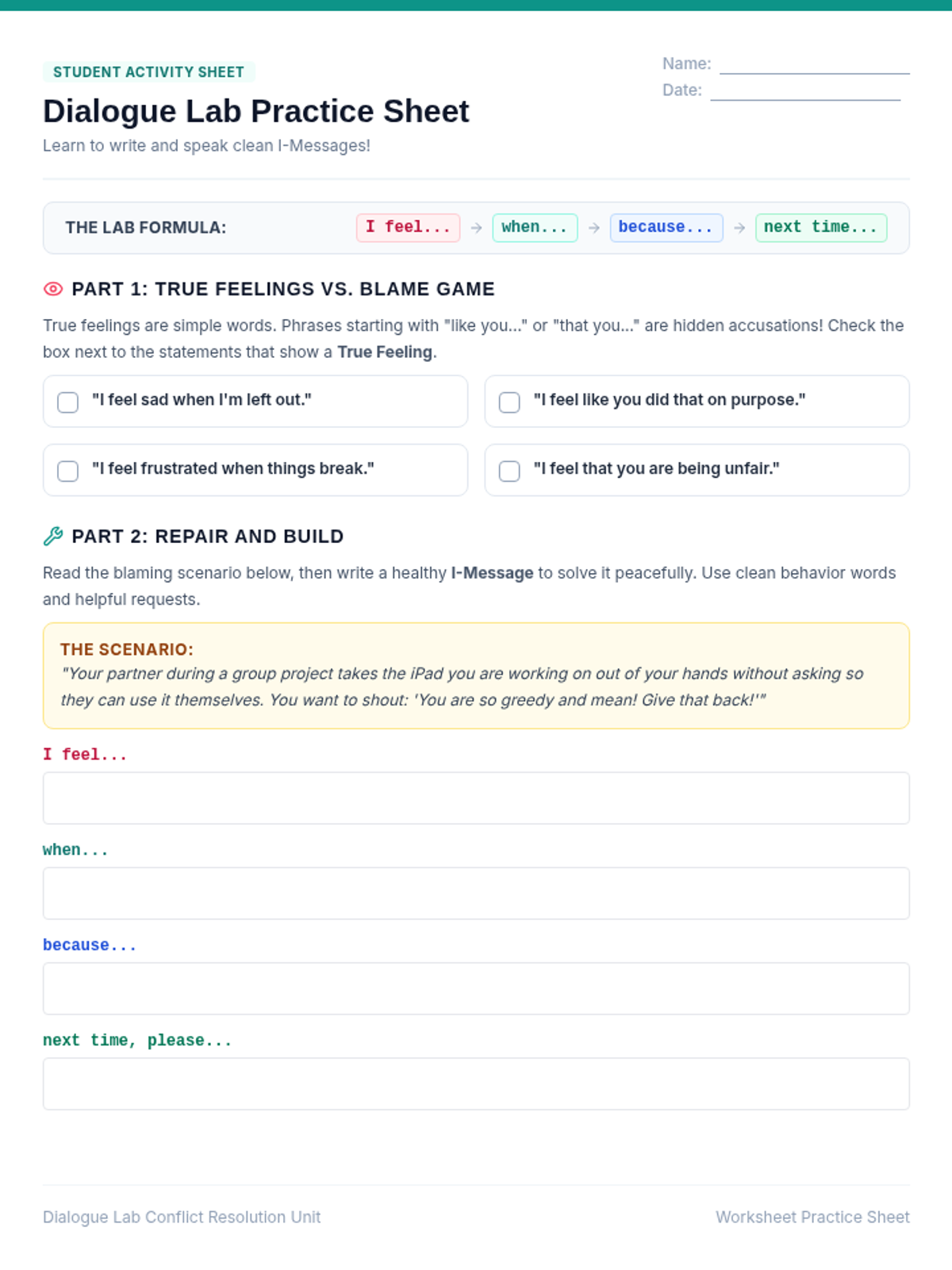
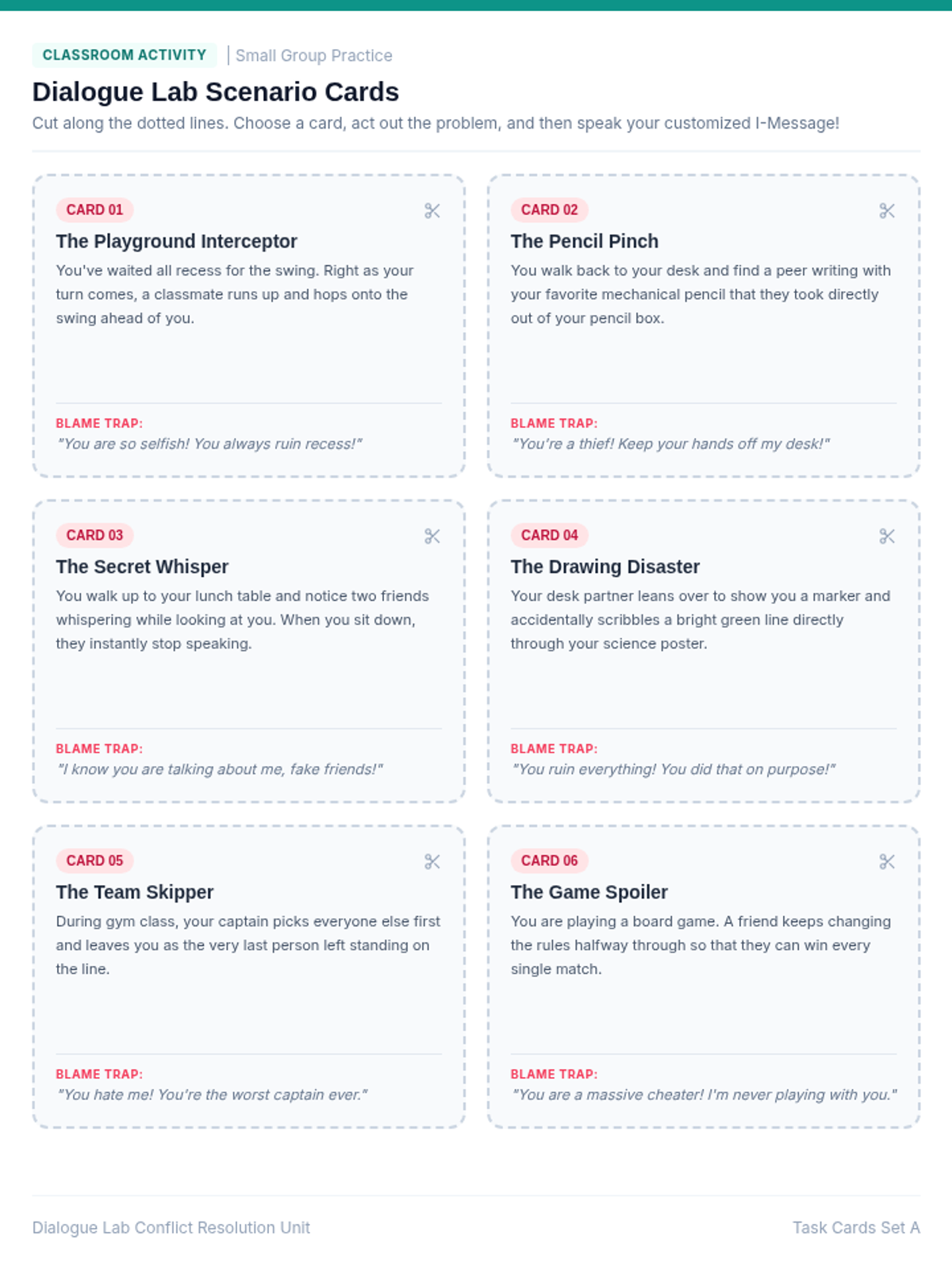
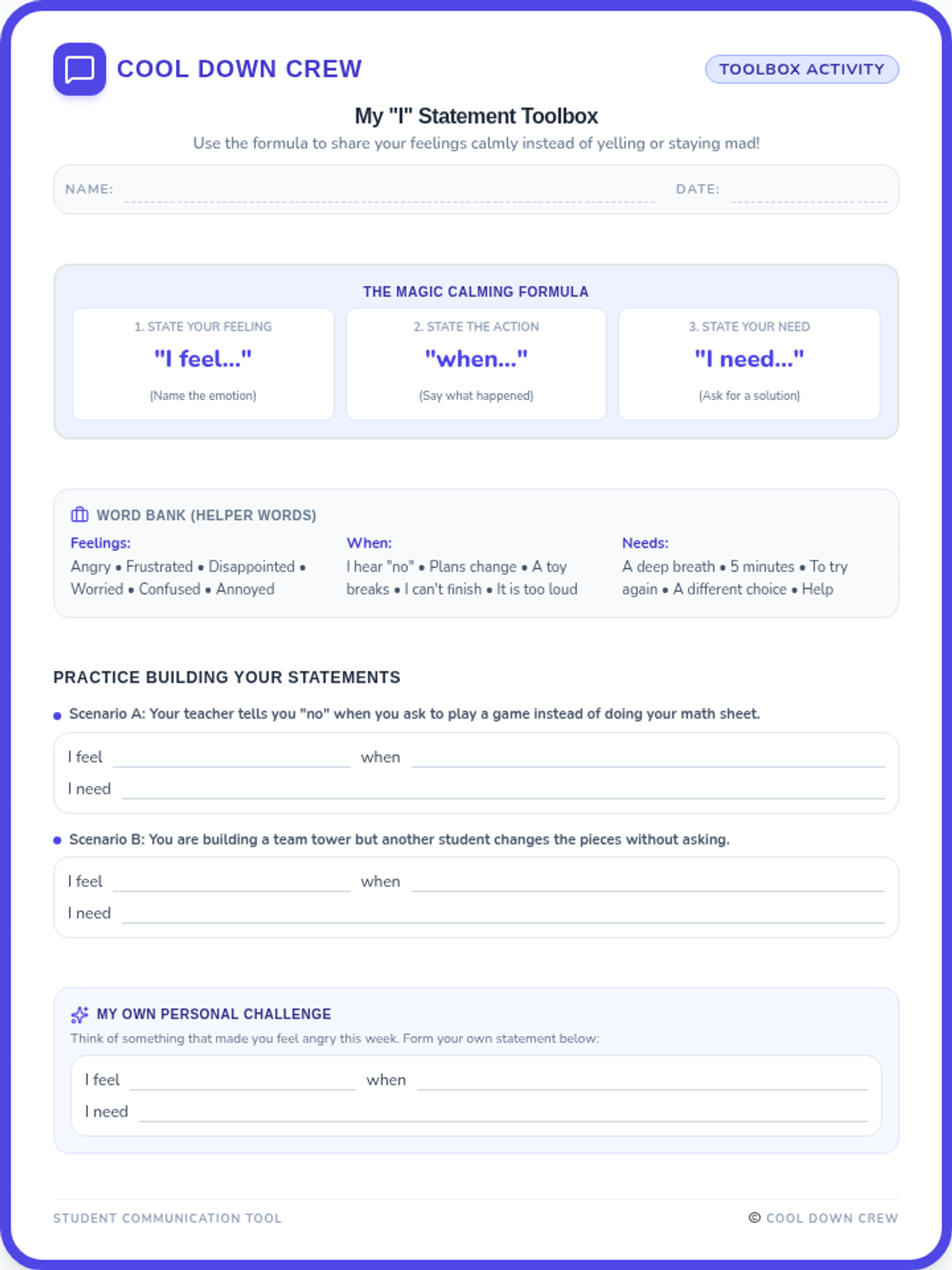
A comprehensive social skills lesson focusing on the 'I-Message' formula to resolve everyday conflicts. Includes an interactive slide deck, detailed lesson plan, anchor chart, student practice worksheet, and peer-to-peer scenario task cards.
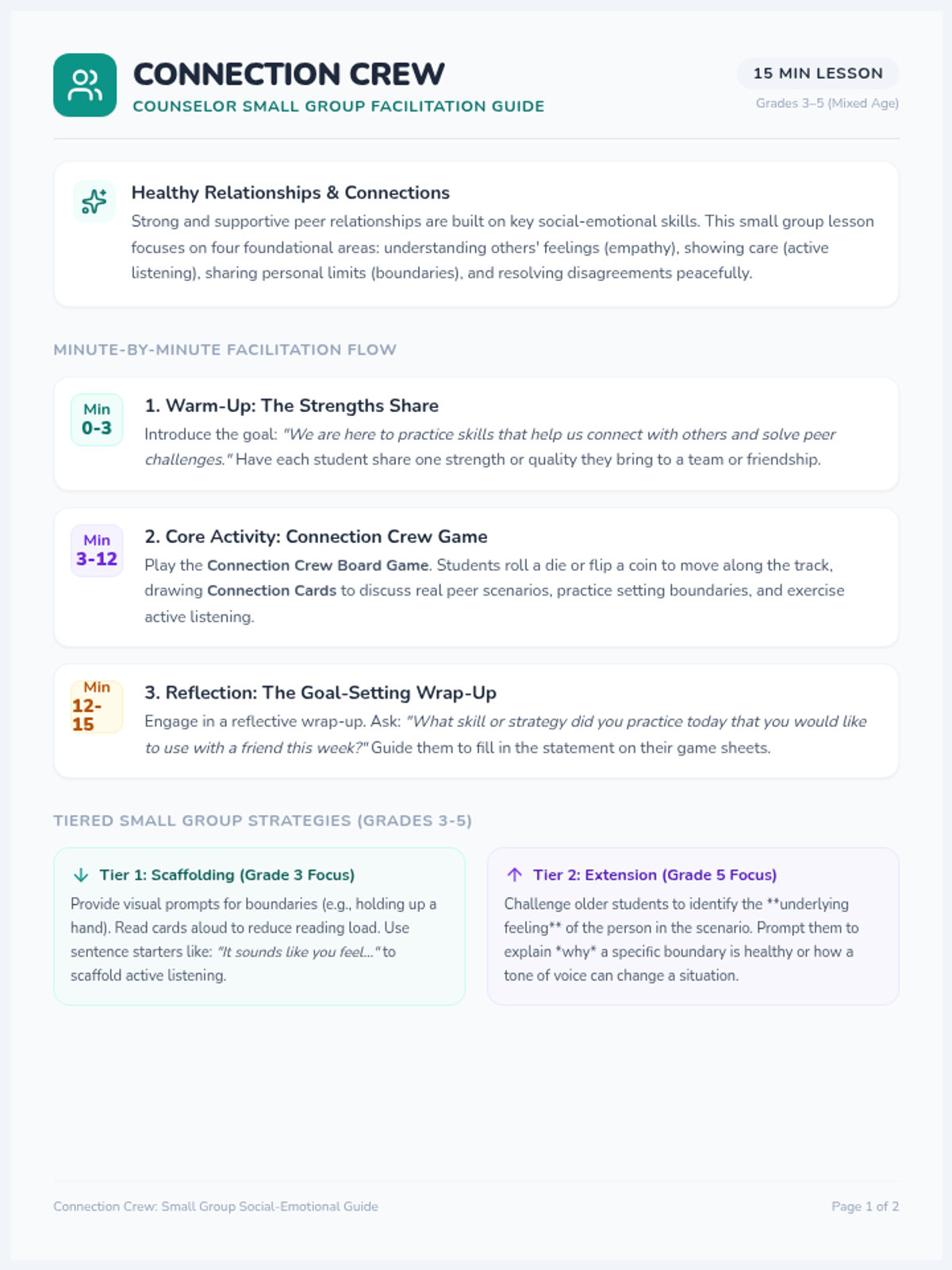
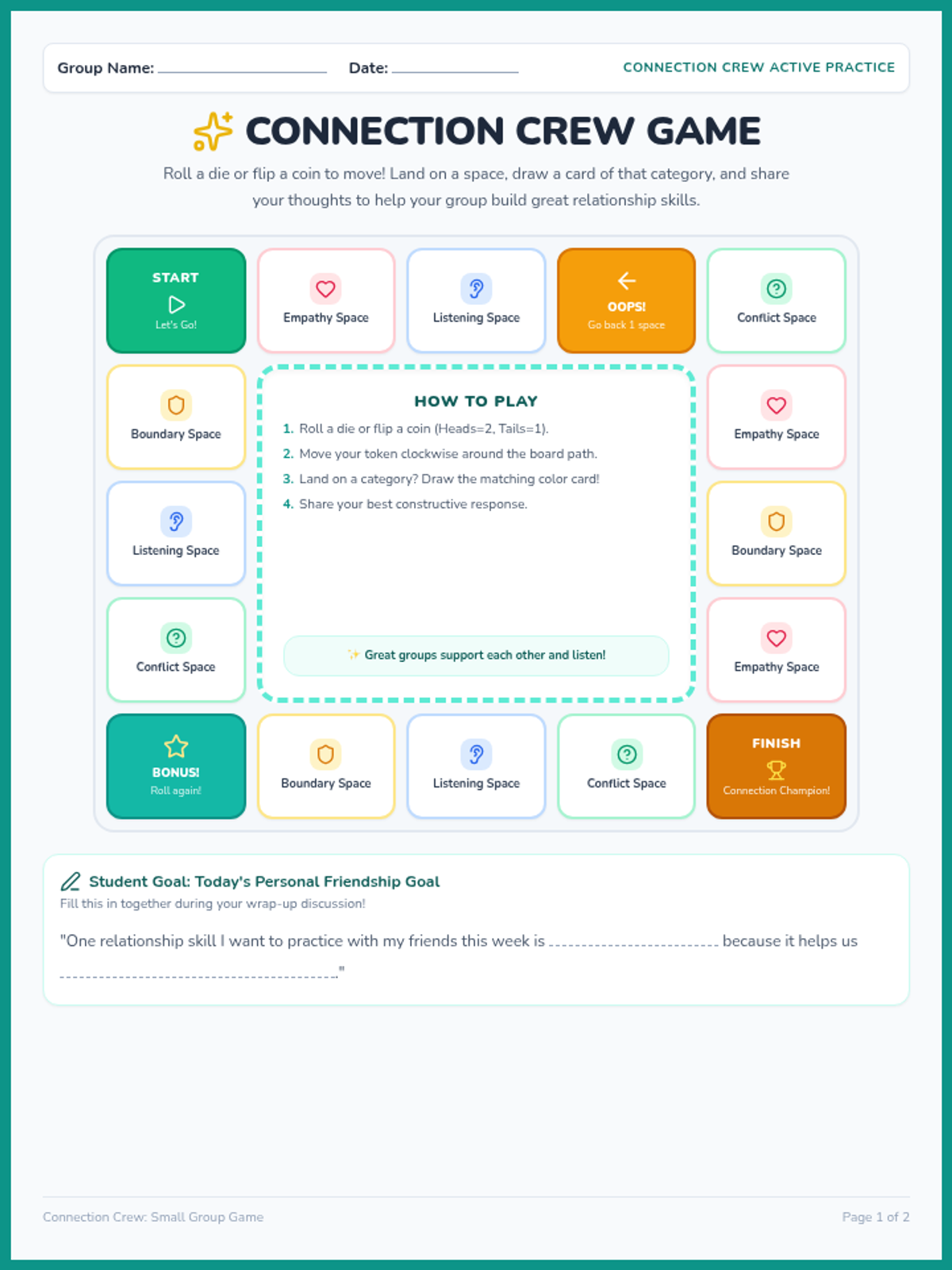
A 15-minute small group lesson designed for school counselors and educators to build social-emotional intelligence in upper elementary students. The lesson uses a fun kitchen metaphor to teach empathy, active listening, personal boundaries, and peer conflict resolution.
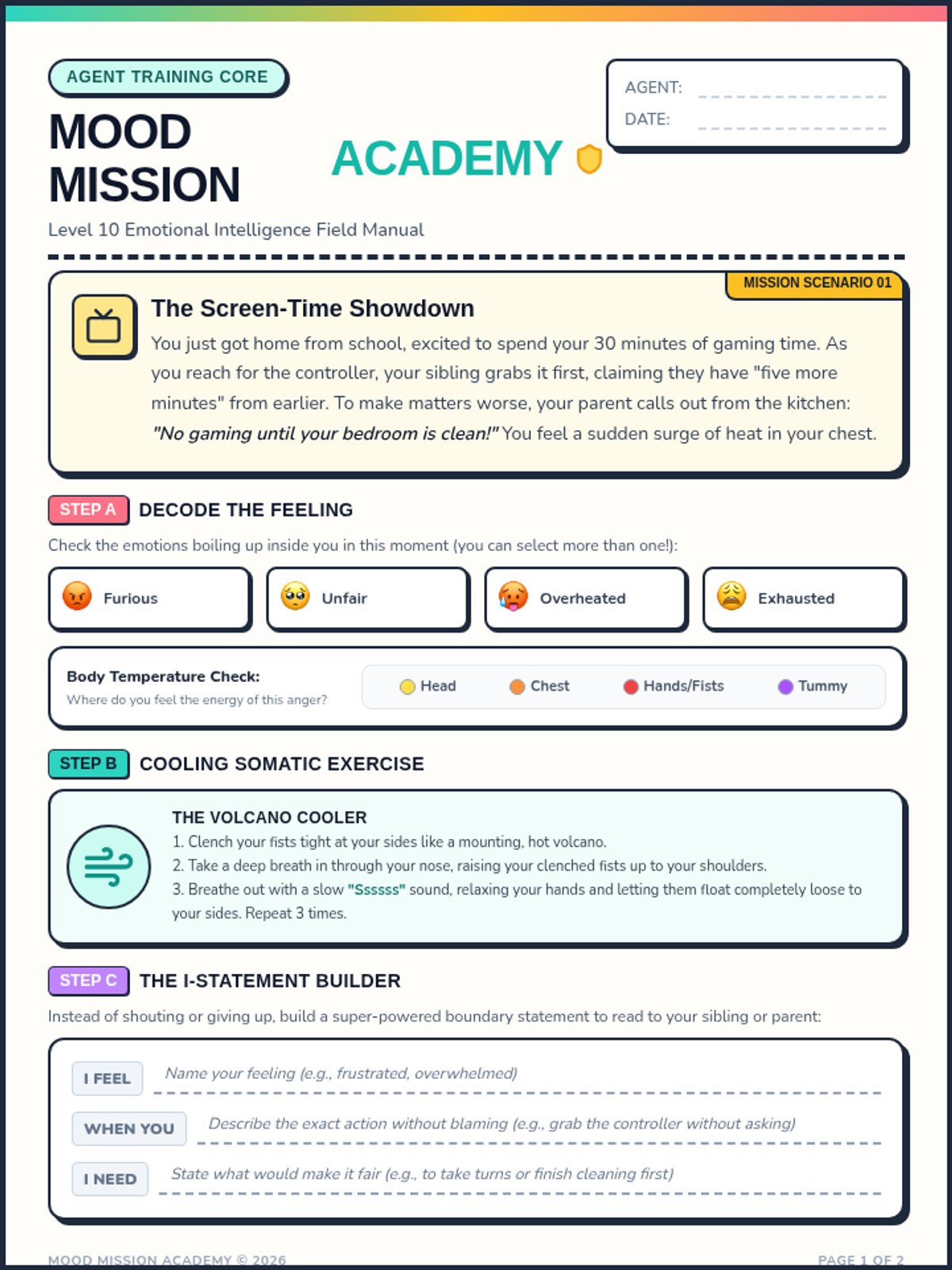
A playful social-emotional learning lesson focusing on identifying emotions, somatic regulation, cognitive reframing, and assertive communication through engaging social stories.
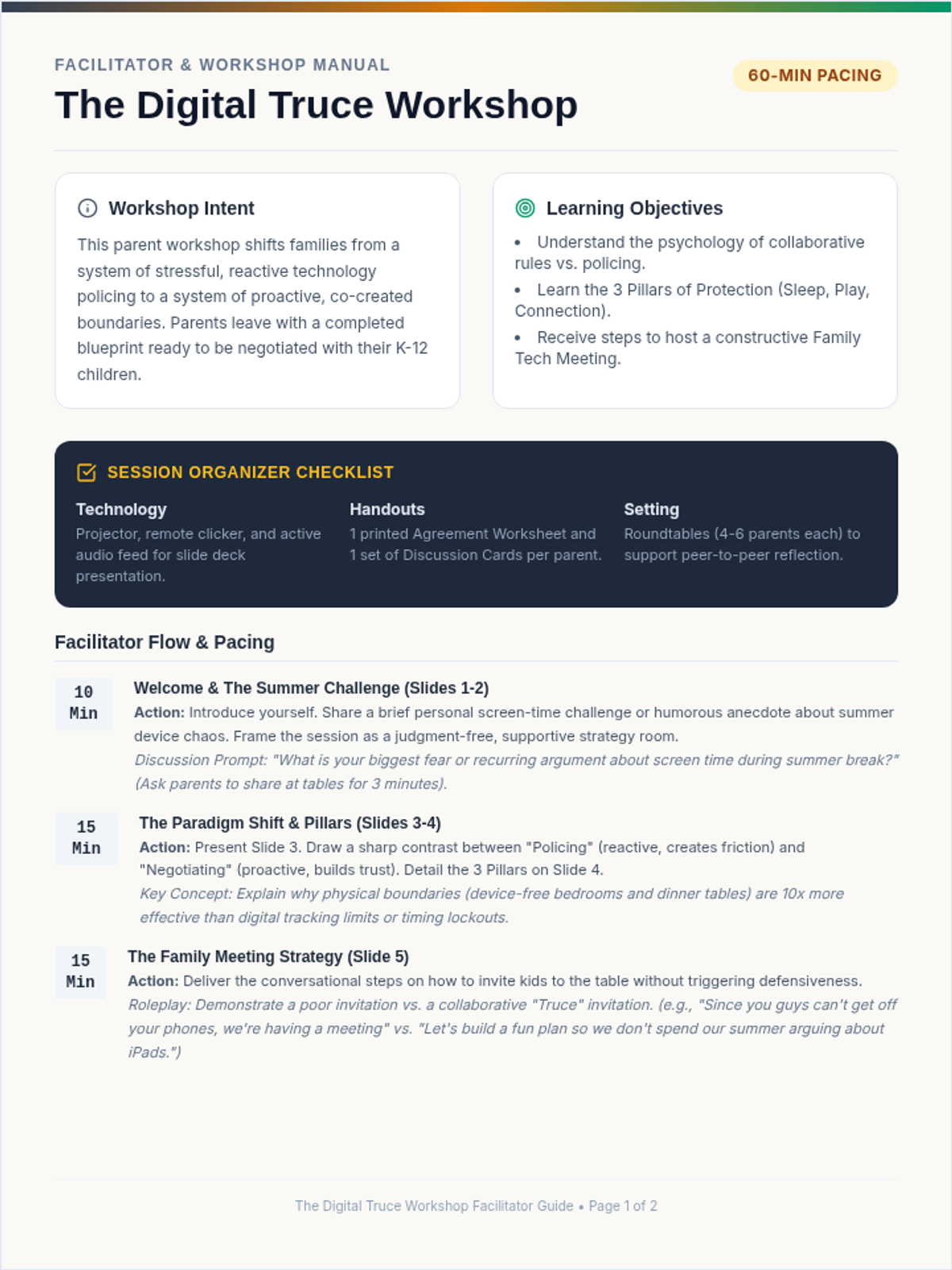
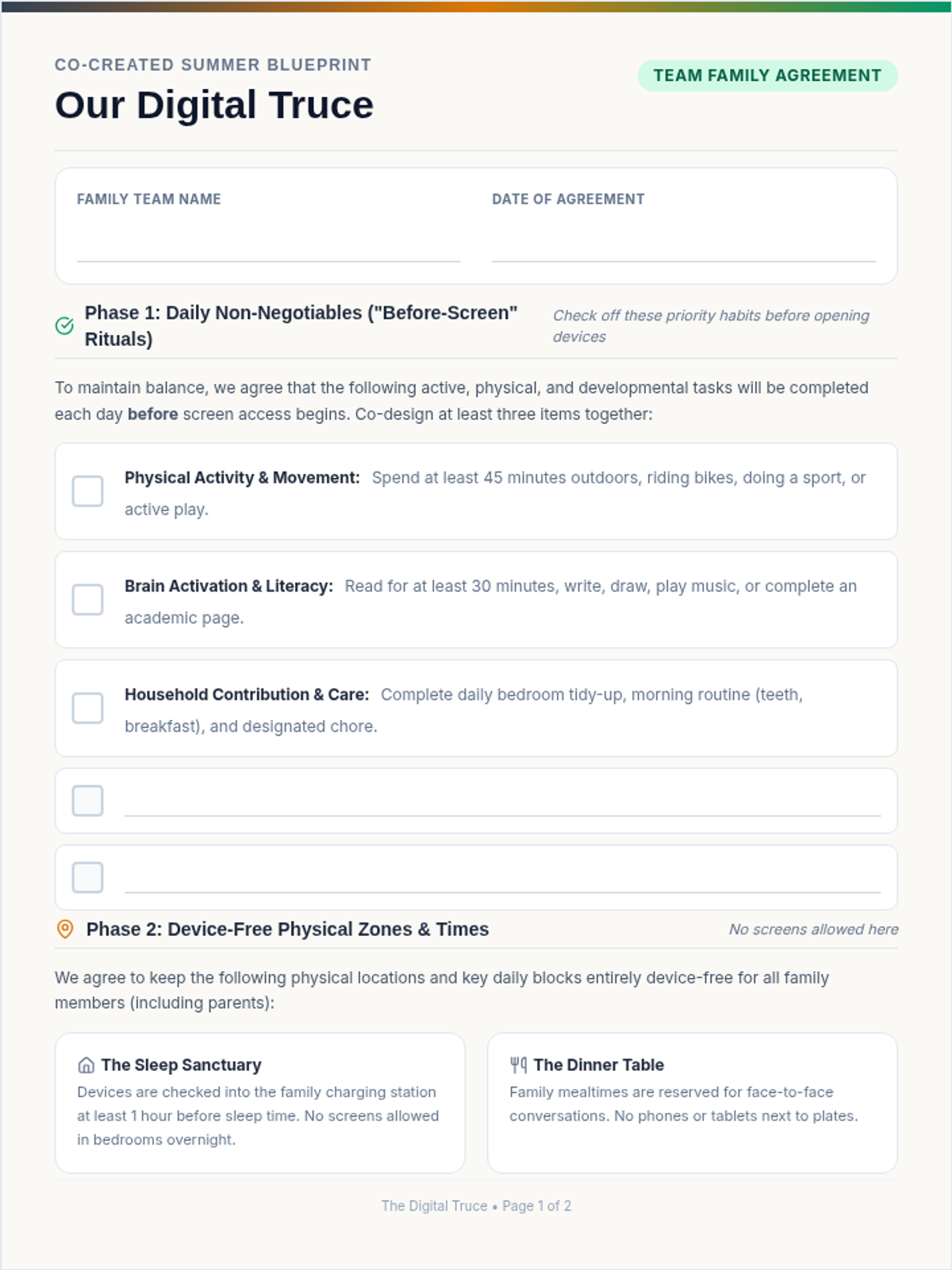
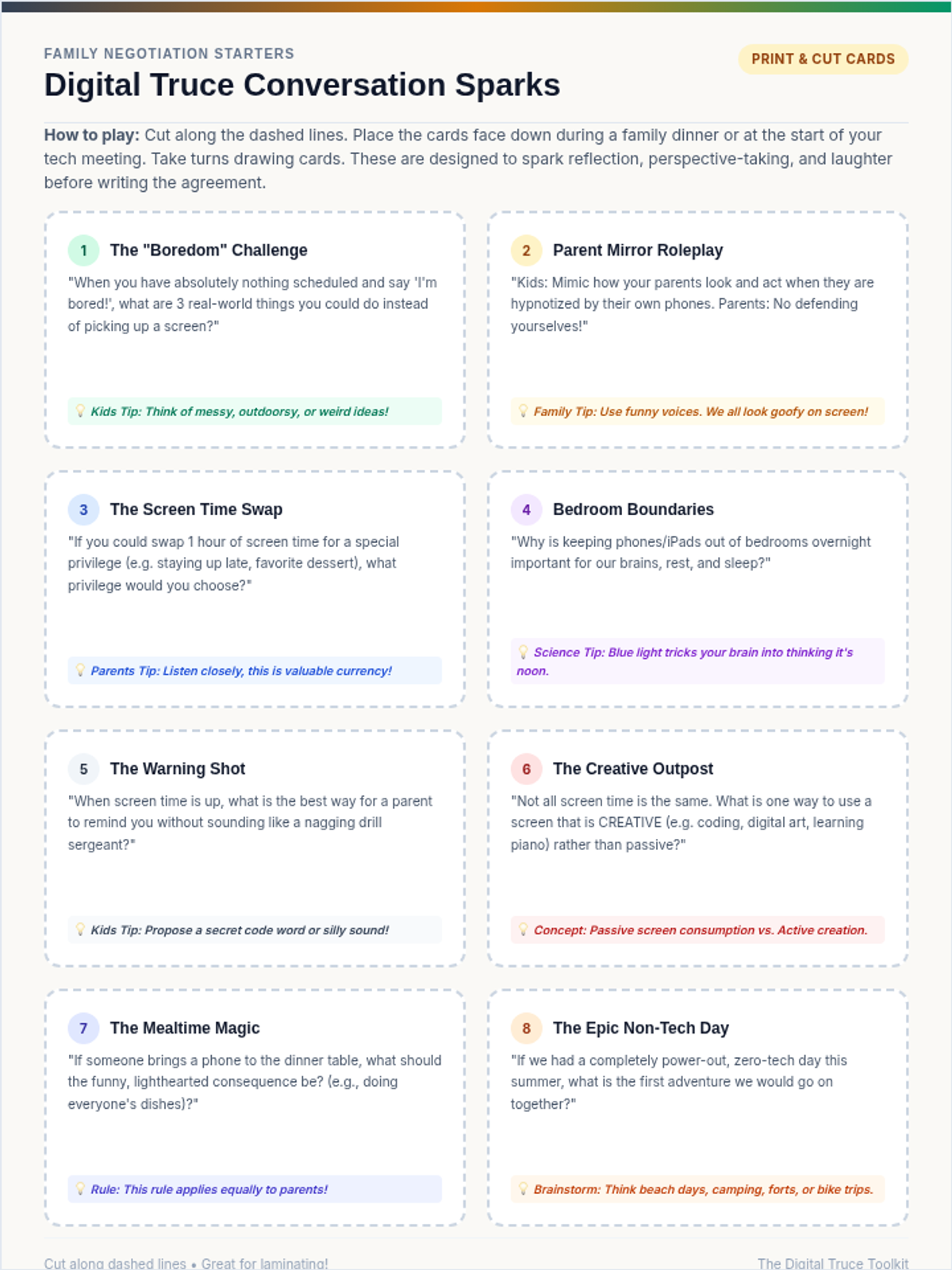
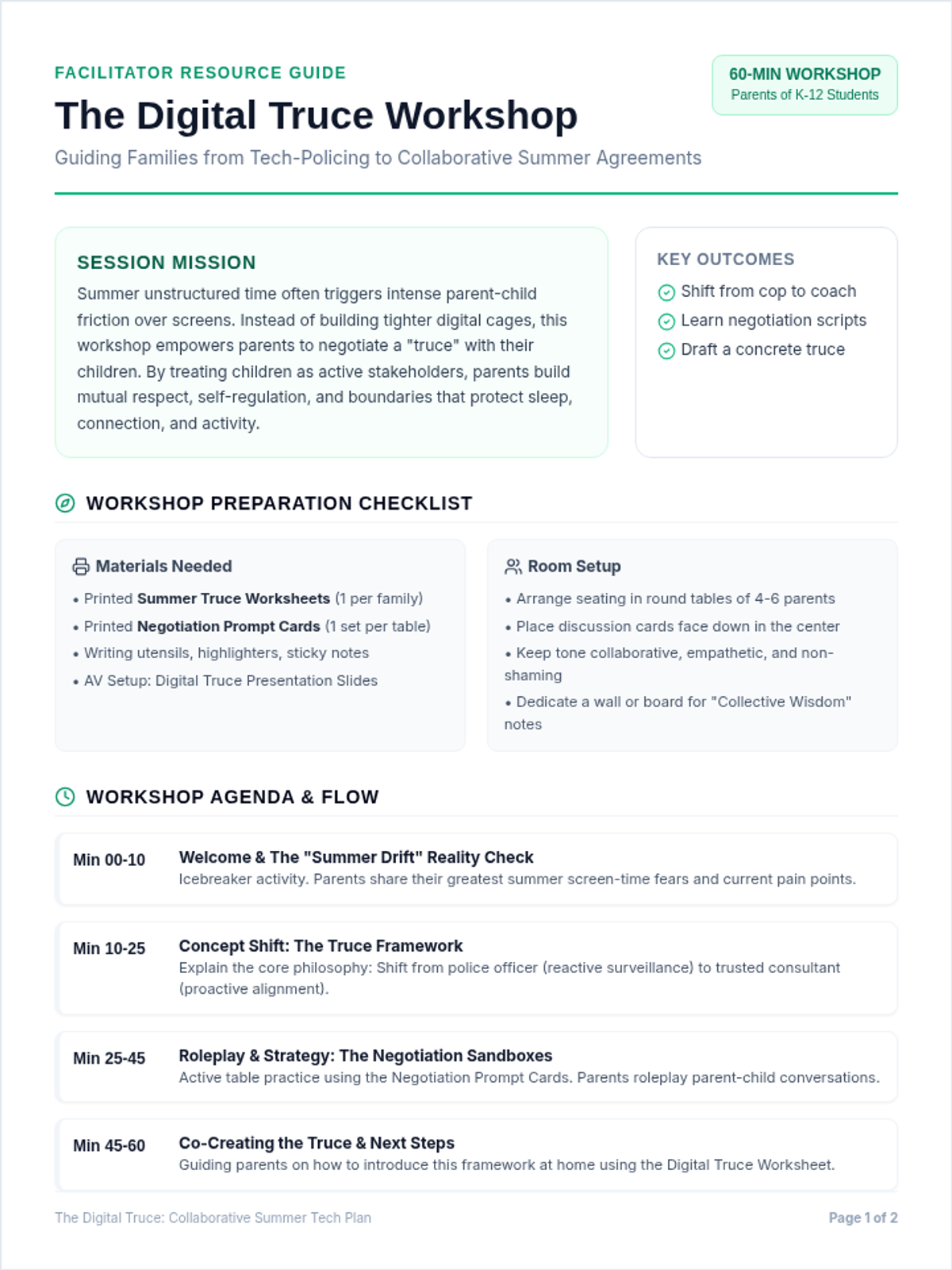
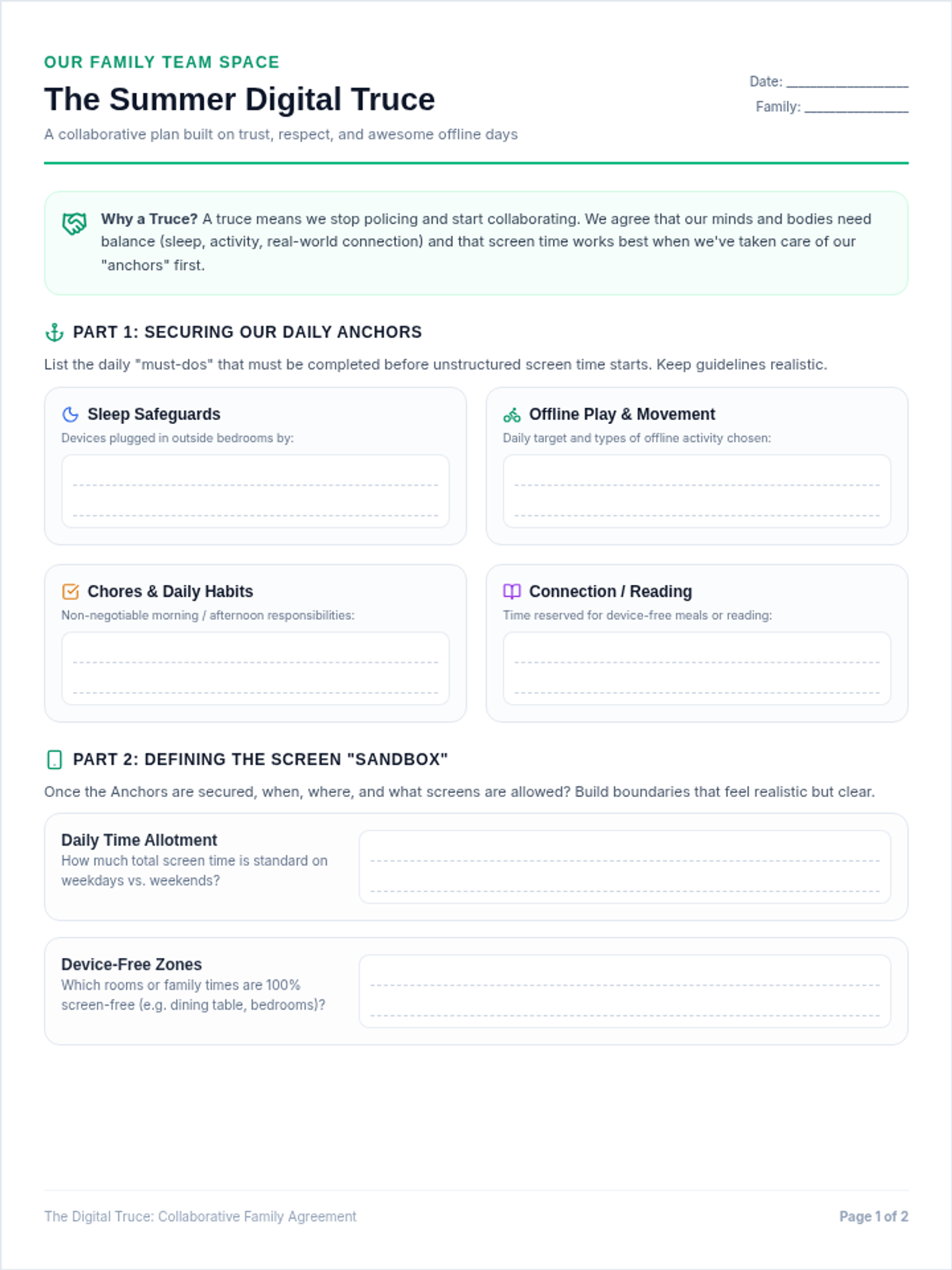
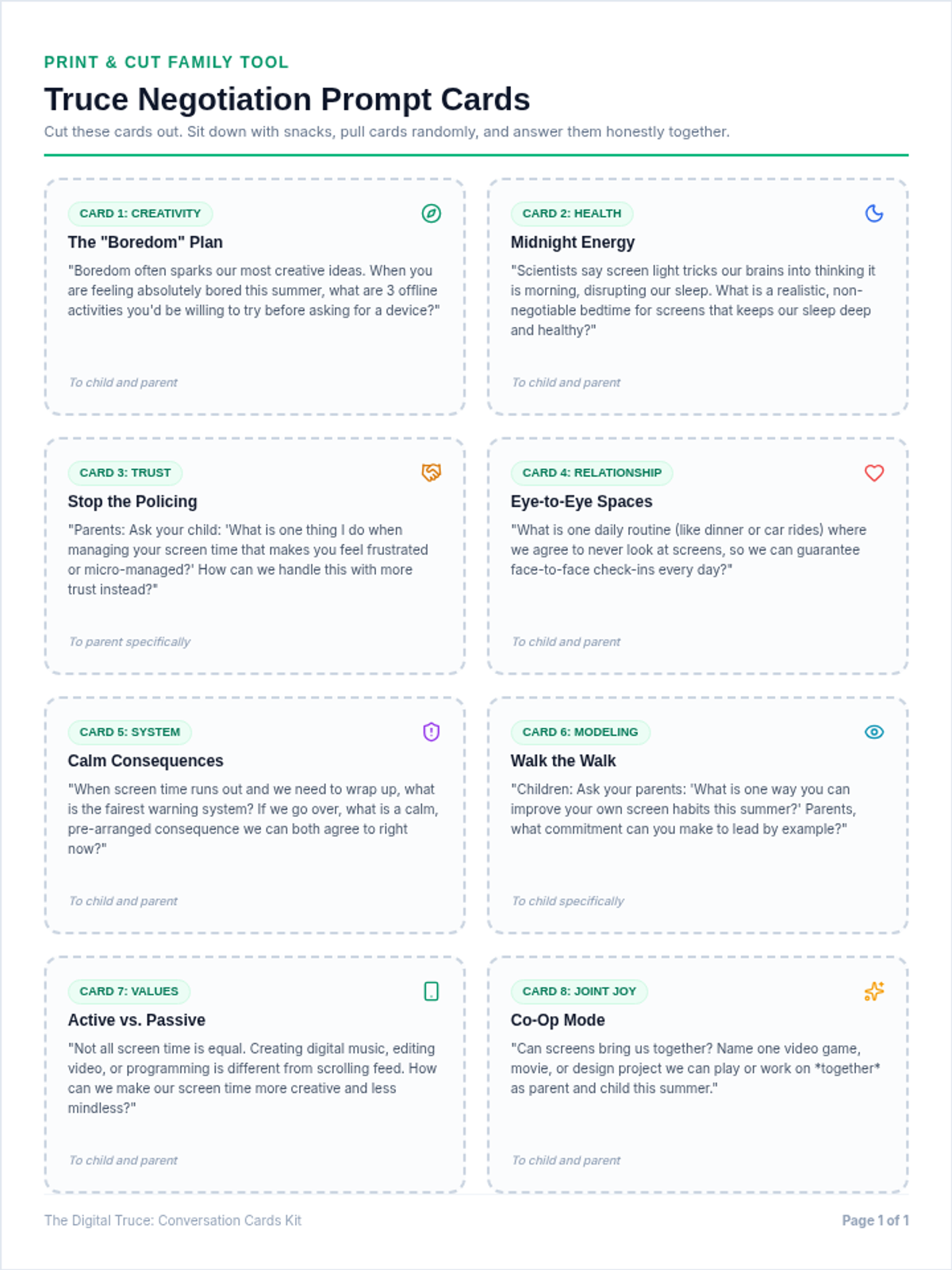
A collaborative workshop and toolkit designed to help parents of K-12 students establish healthy, co-created summer screen-time boundaries with their children through negotiation and mutual trust.
A collaborative parent workshop and family kit designed to help K-12 parents negotiate healthy, realistic summer screen-time agreements with their children, focusing on trust over policing.
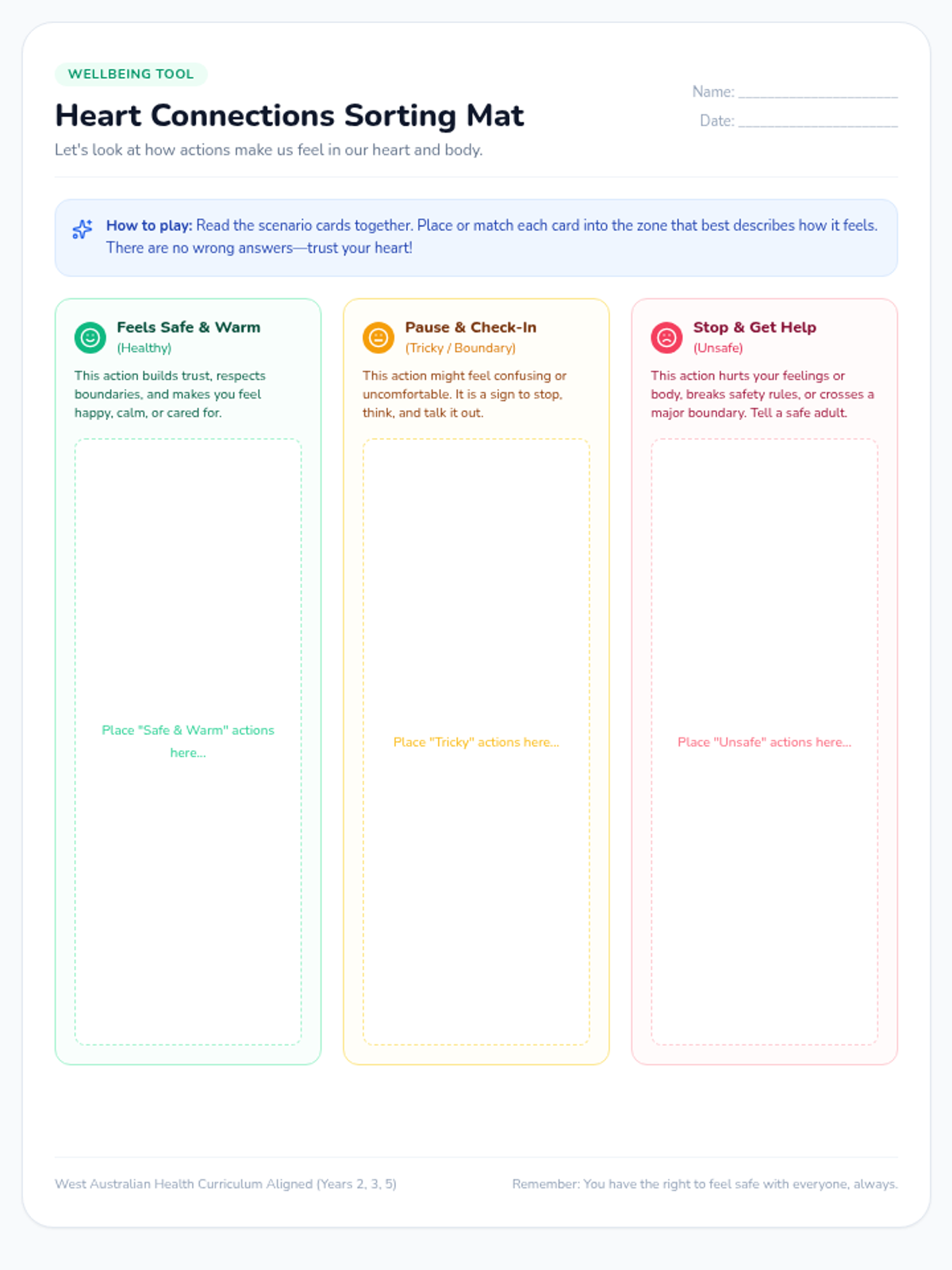
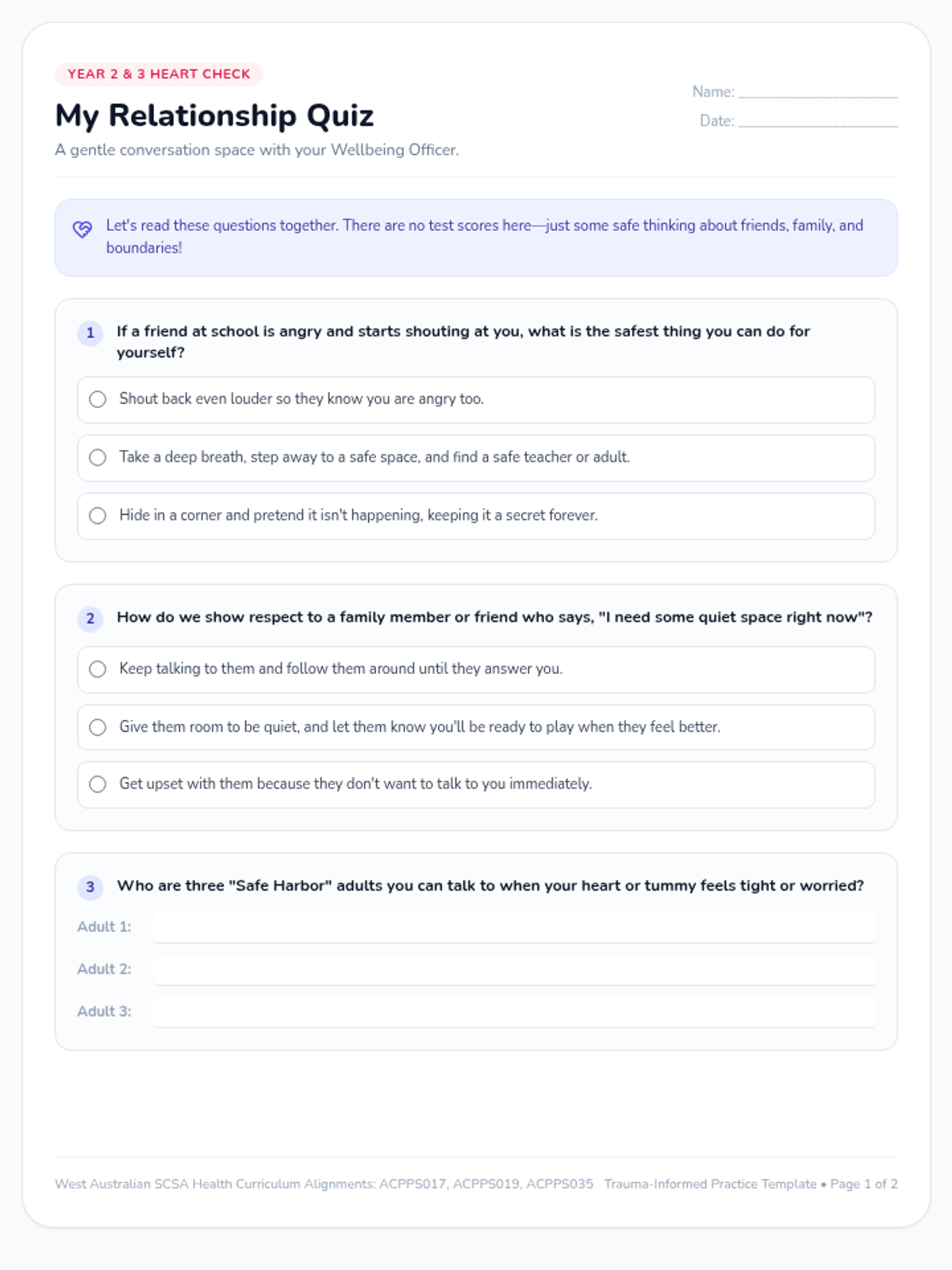
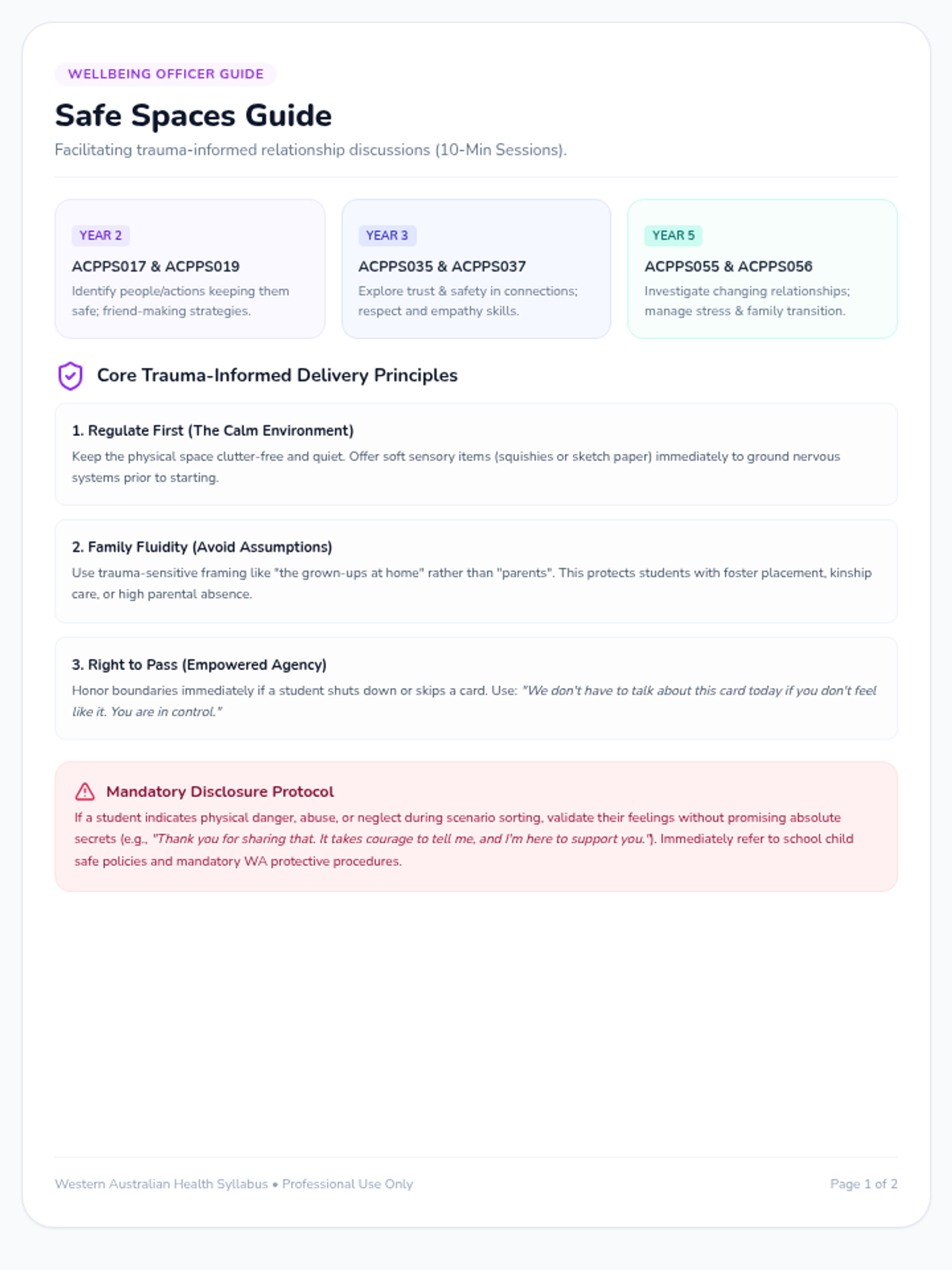
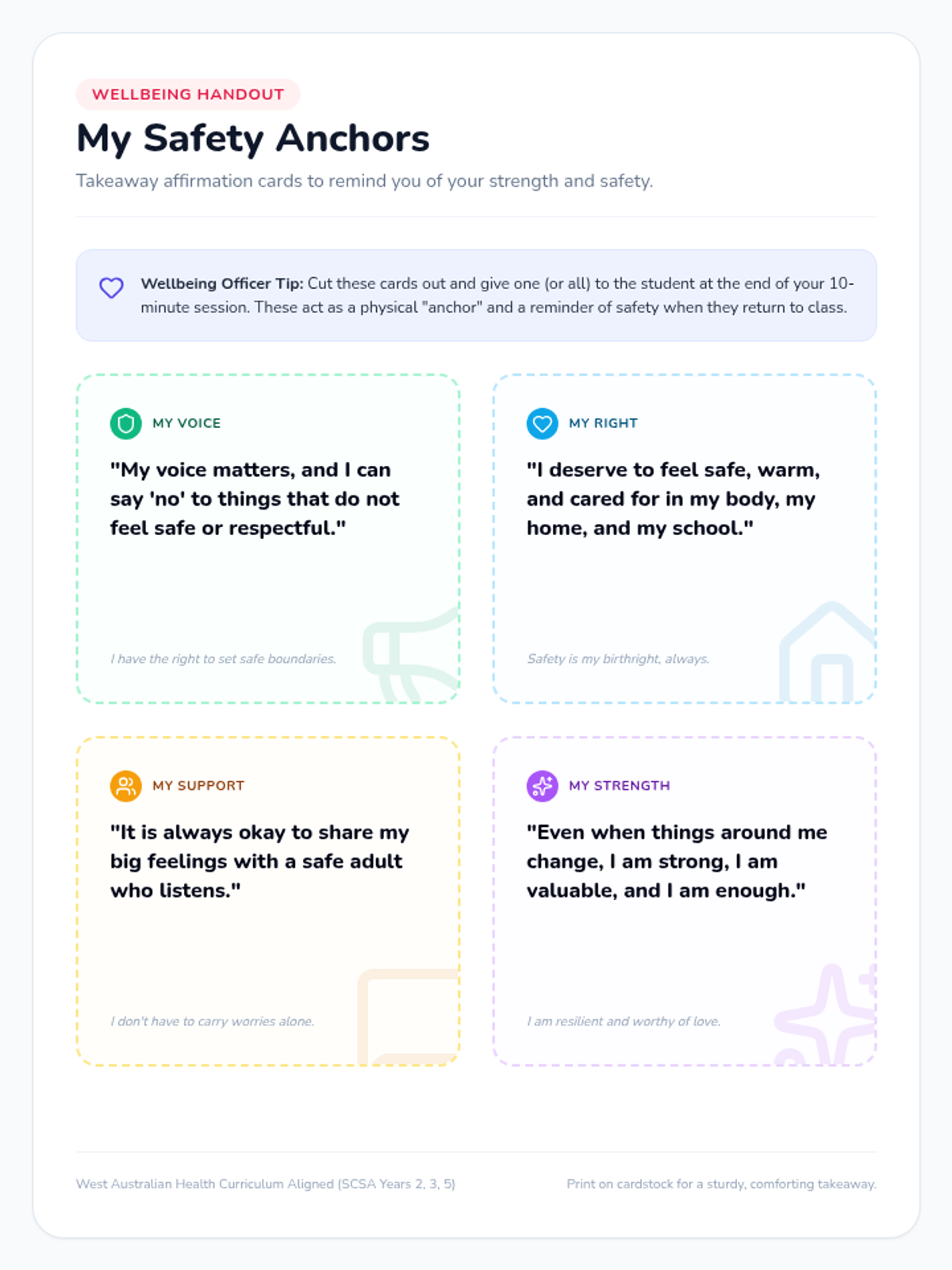
A trauma-informed wellbeing lesson focused on healthy relationships, family dynamics, and safe social interactions for Year 2, 3, and 5 students. Aligned to the Western Australian SCSA Health curriculum, this resource features visual sorting tasks and conversational quizzes designed for quick, impactful 1:1 sessions.
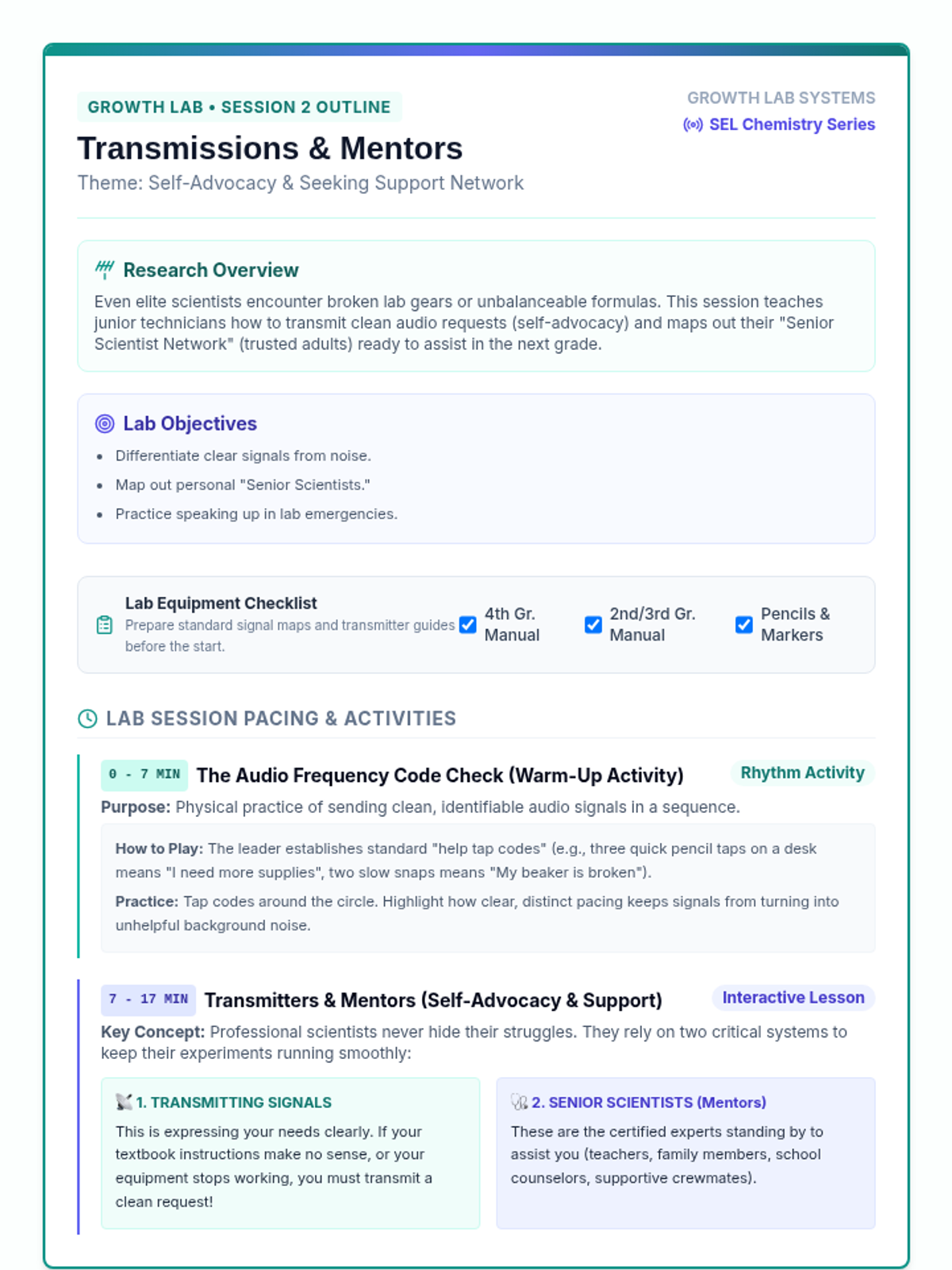
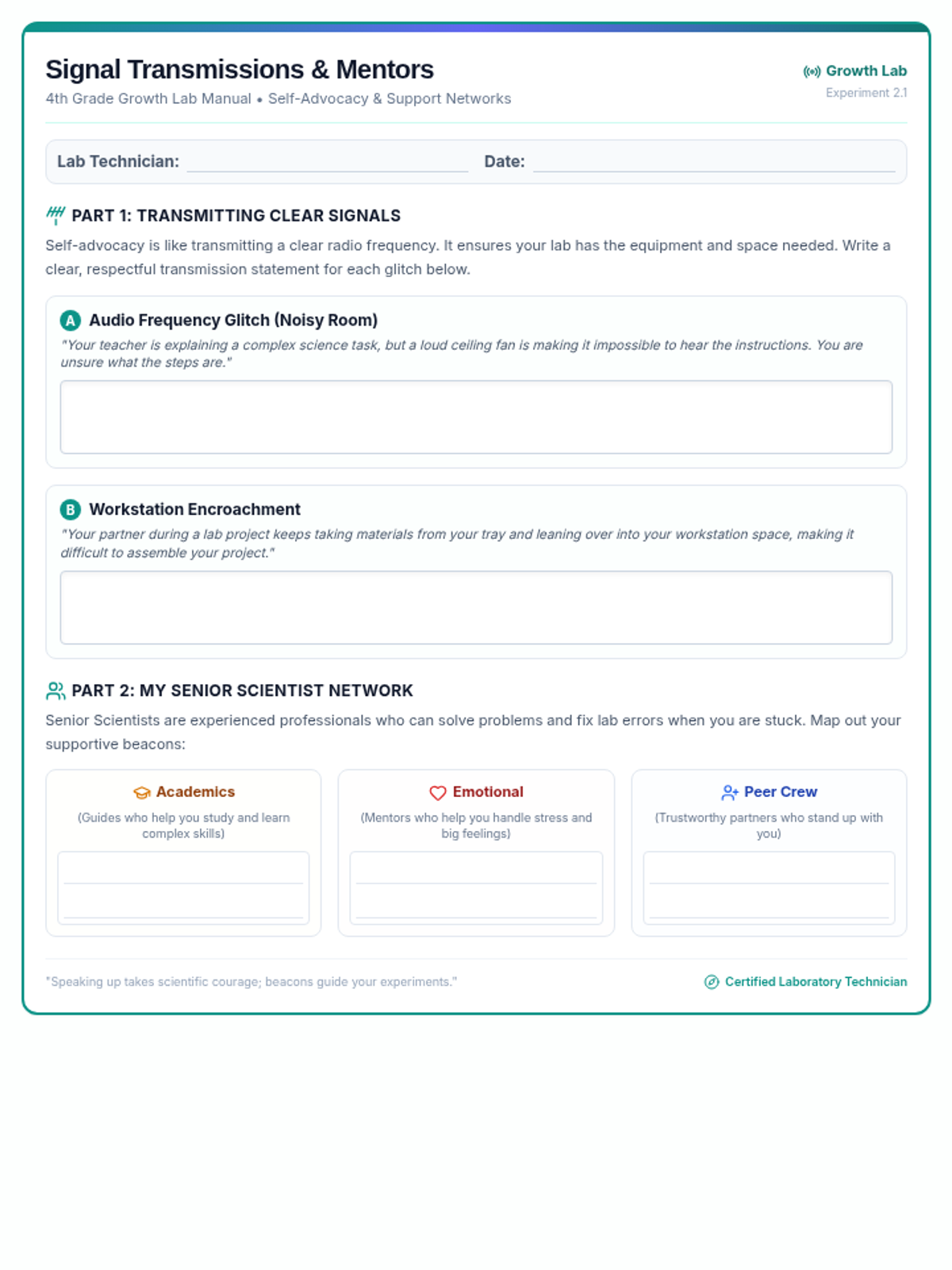
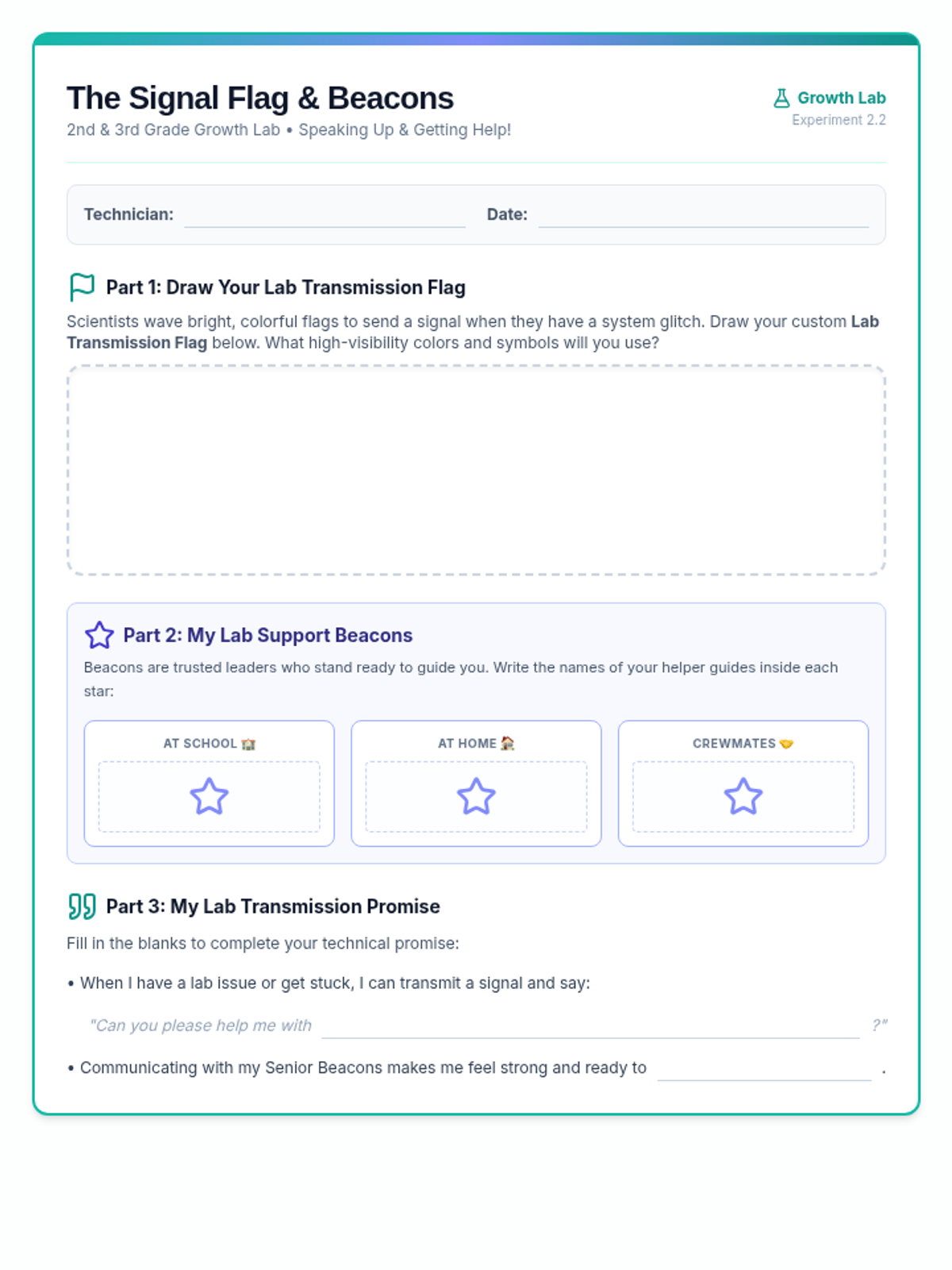
This session focuses on self-advocacy and seeking support. Students learn to recognize when to speak up for their physical and learning needs (trail signals) and identify trusted individuals who can help them navigate challenges (trail guides).
A highly visual, engaging interactive lesson where students act as 'Relationship Detectives' to investigate 12 friendship case files, sorting healthy green-flag behaviors from unhealthy red-flag behaviors.
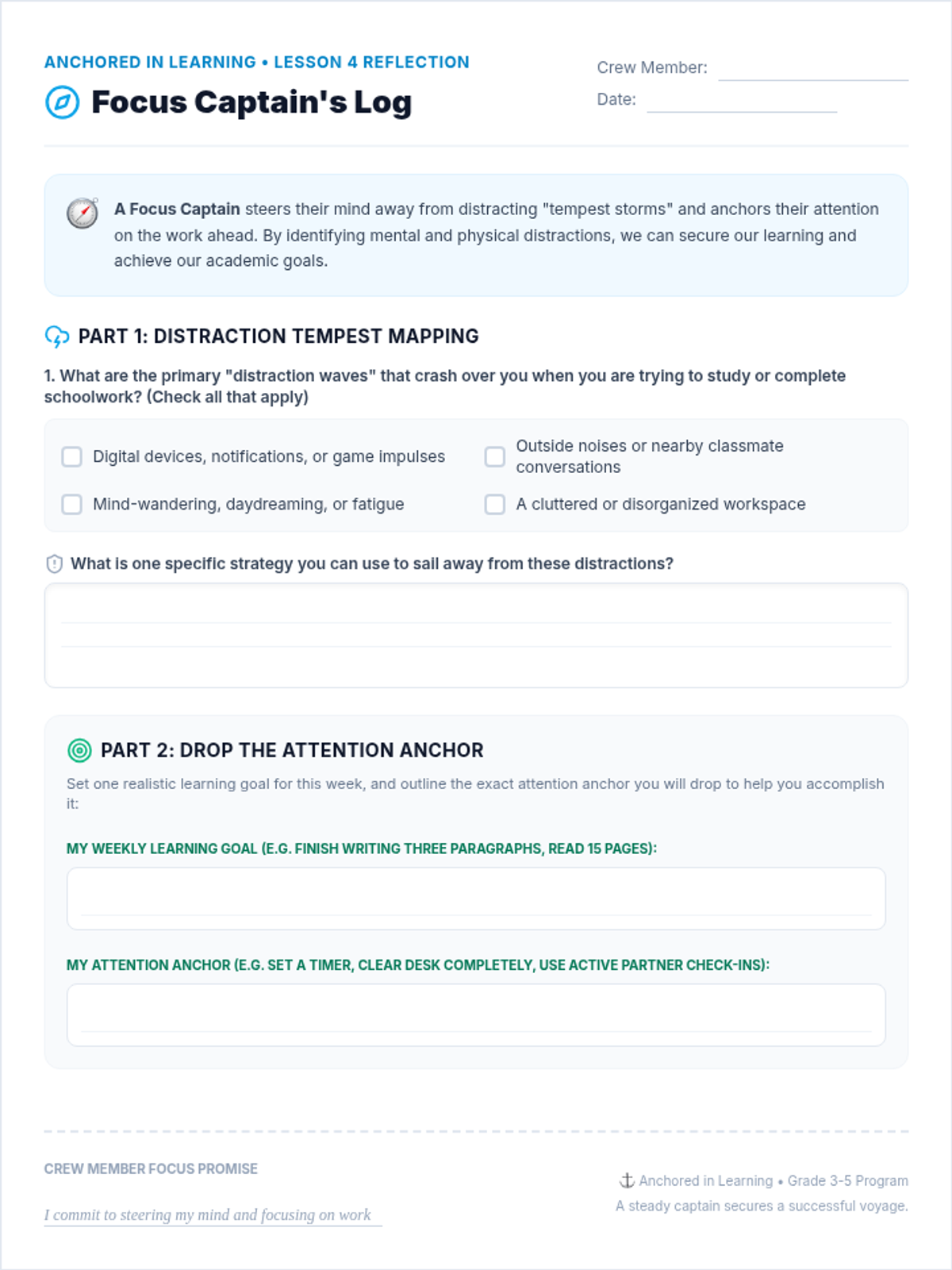
Lesson 4 of the SEL sequence. A complete, ready-to-go 15-minute lesson for 3rd-5th Grade students on focusing attention, managing digital/mental distractions, and anchoring executive attention.
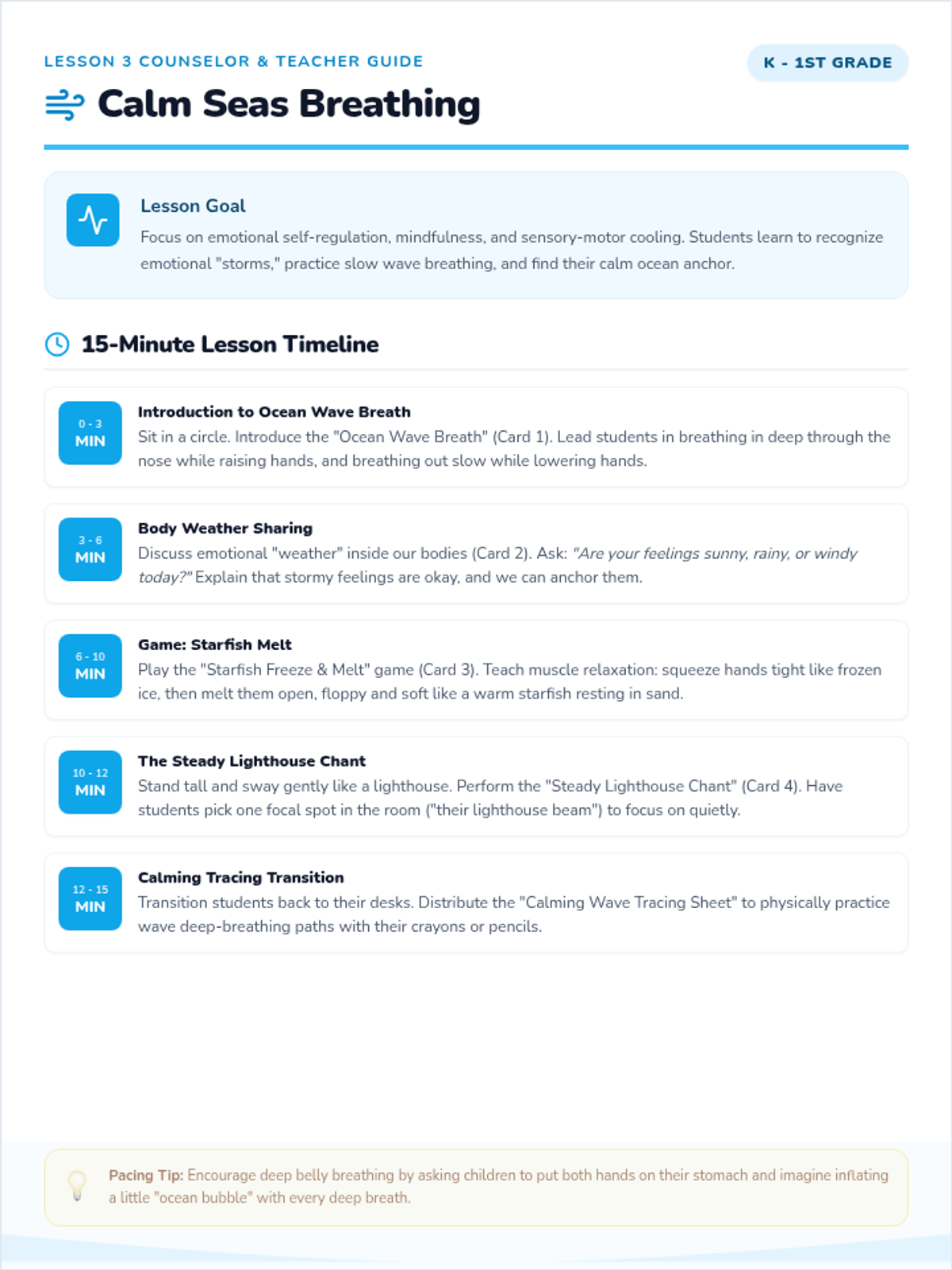
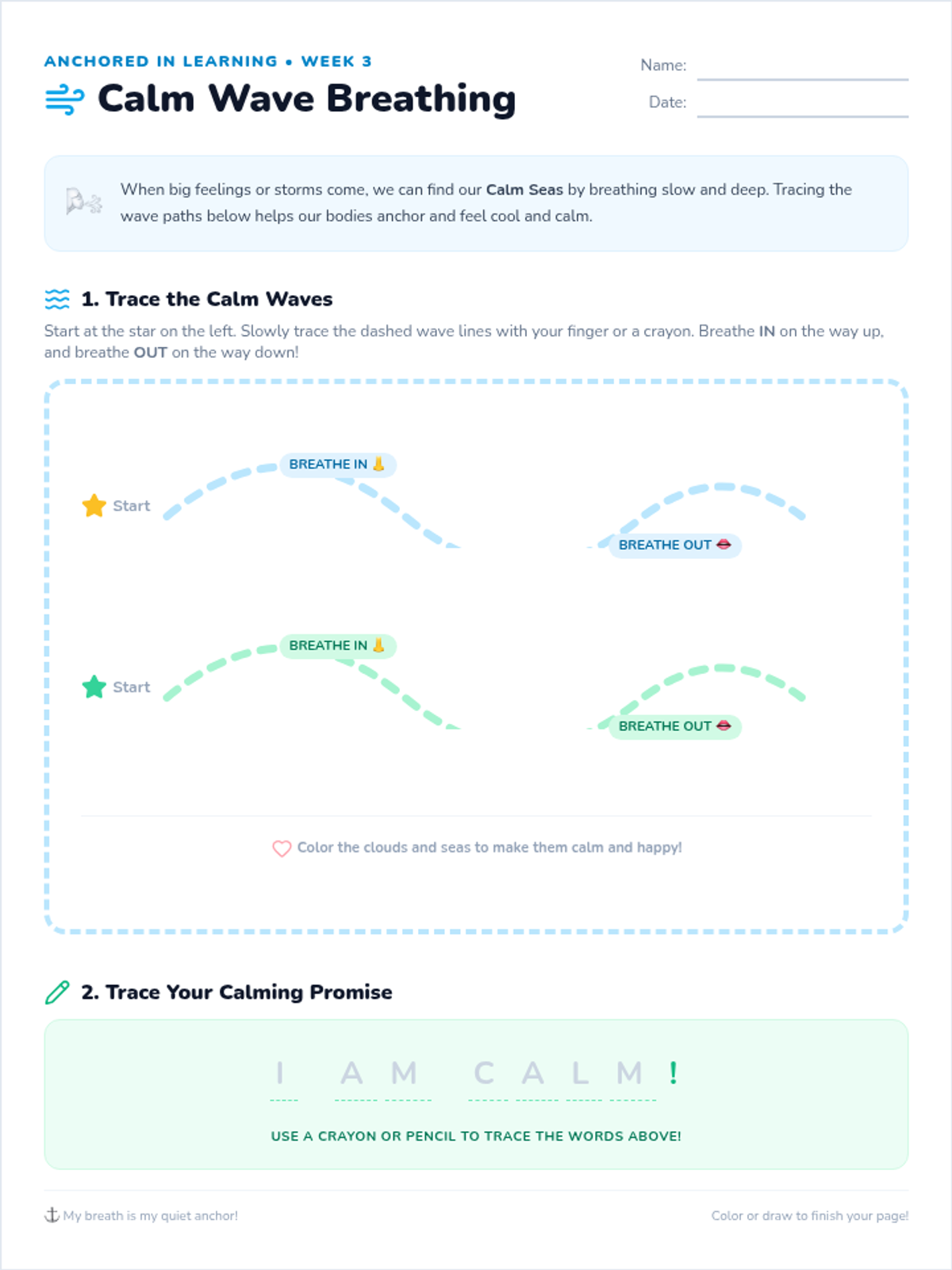
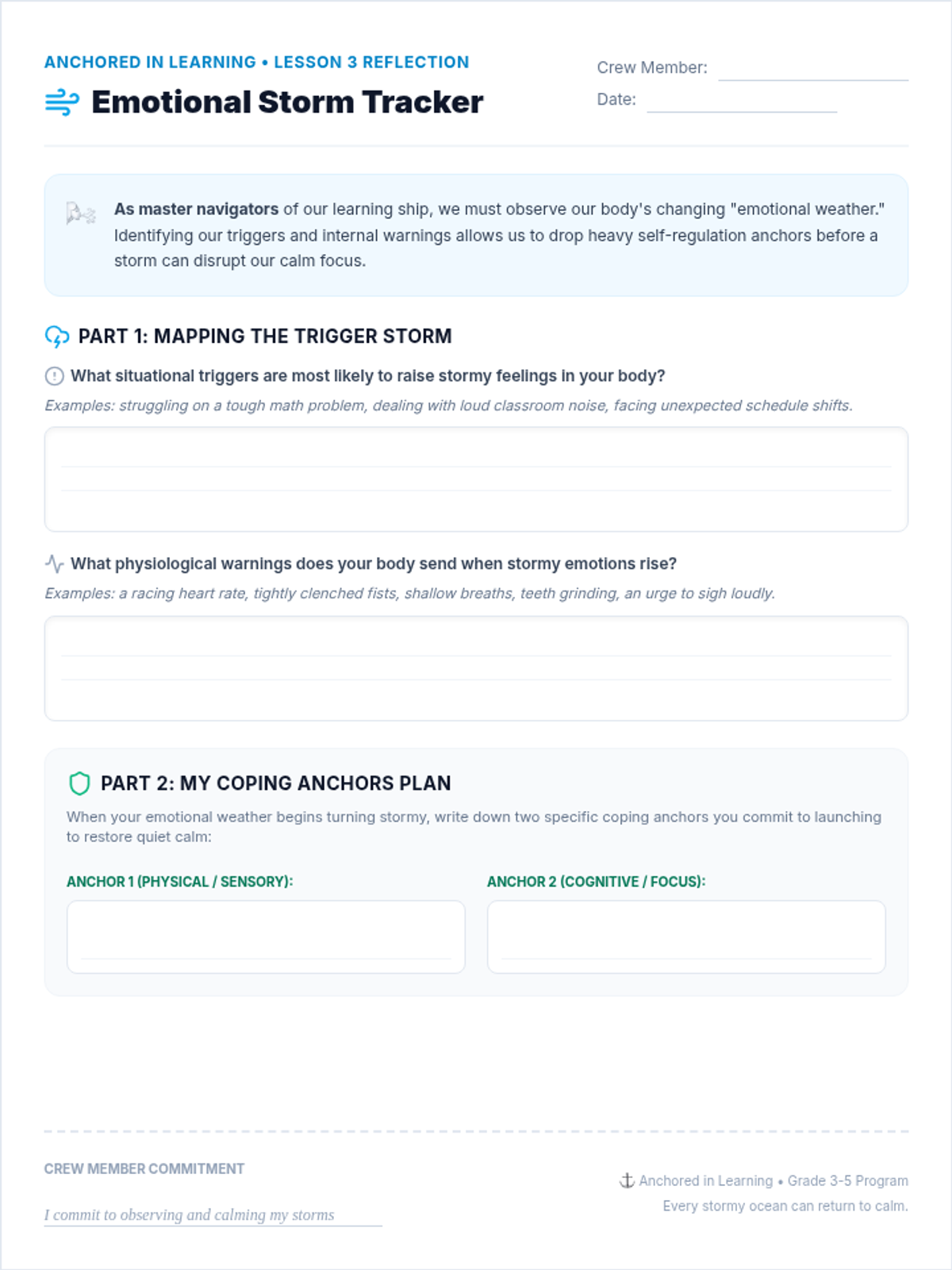
Lesson 3 of the SEL sequence. A complete, ready-to-go 15-minute lesson for 3rd-5th Grade students on emotional self-regulation, recognizing trigger storms, and physical calming strategies.
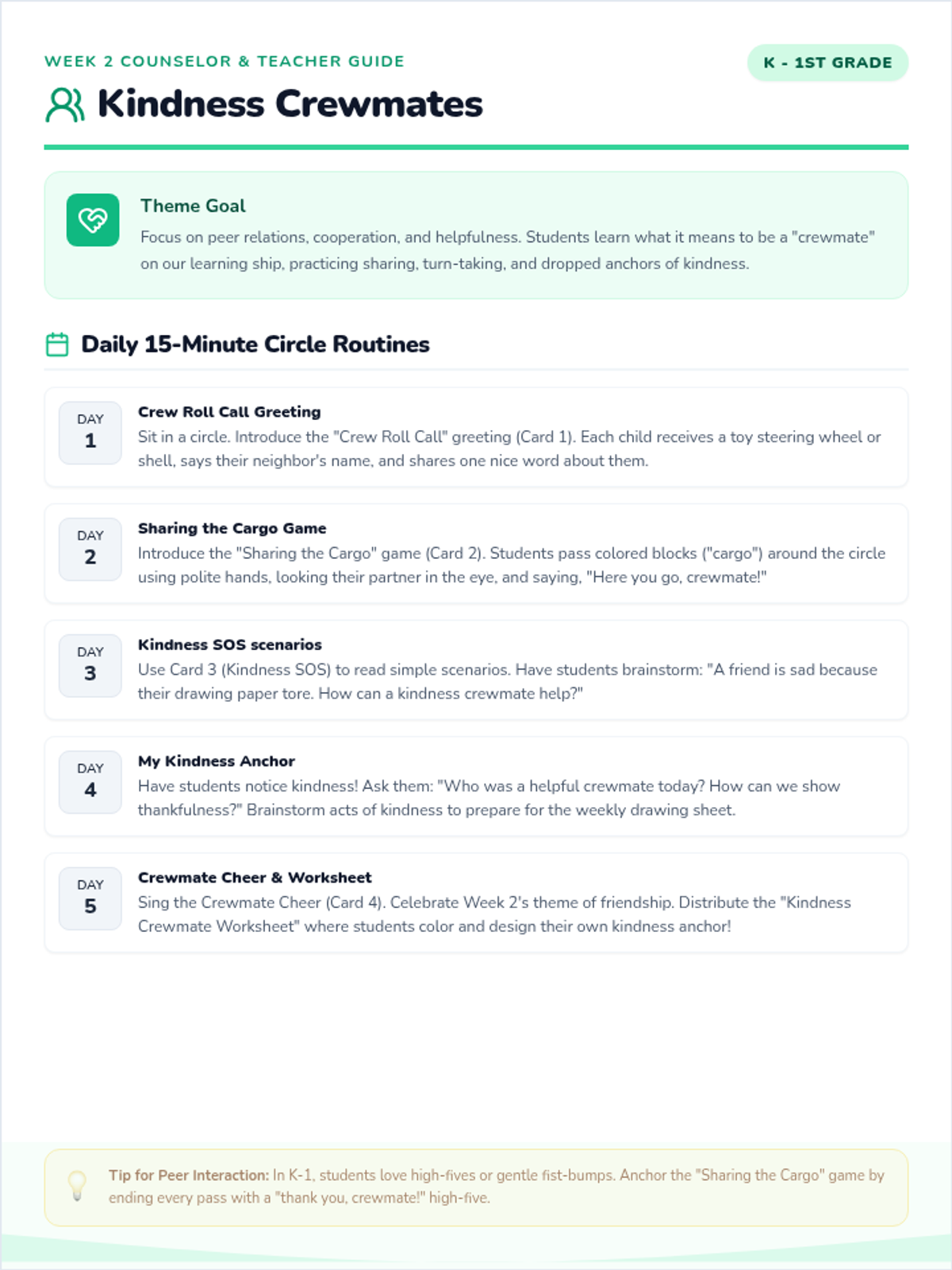
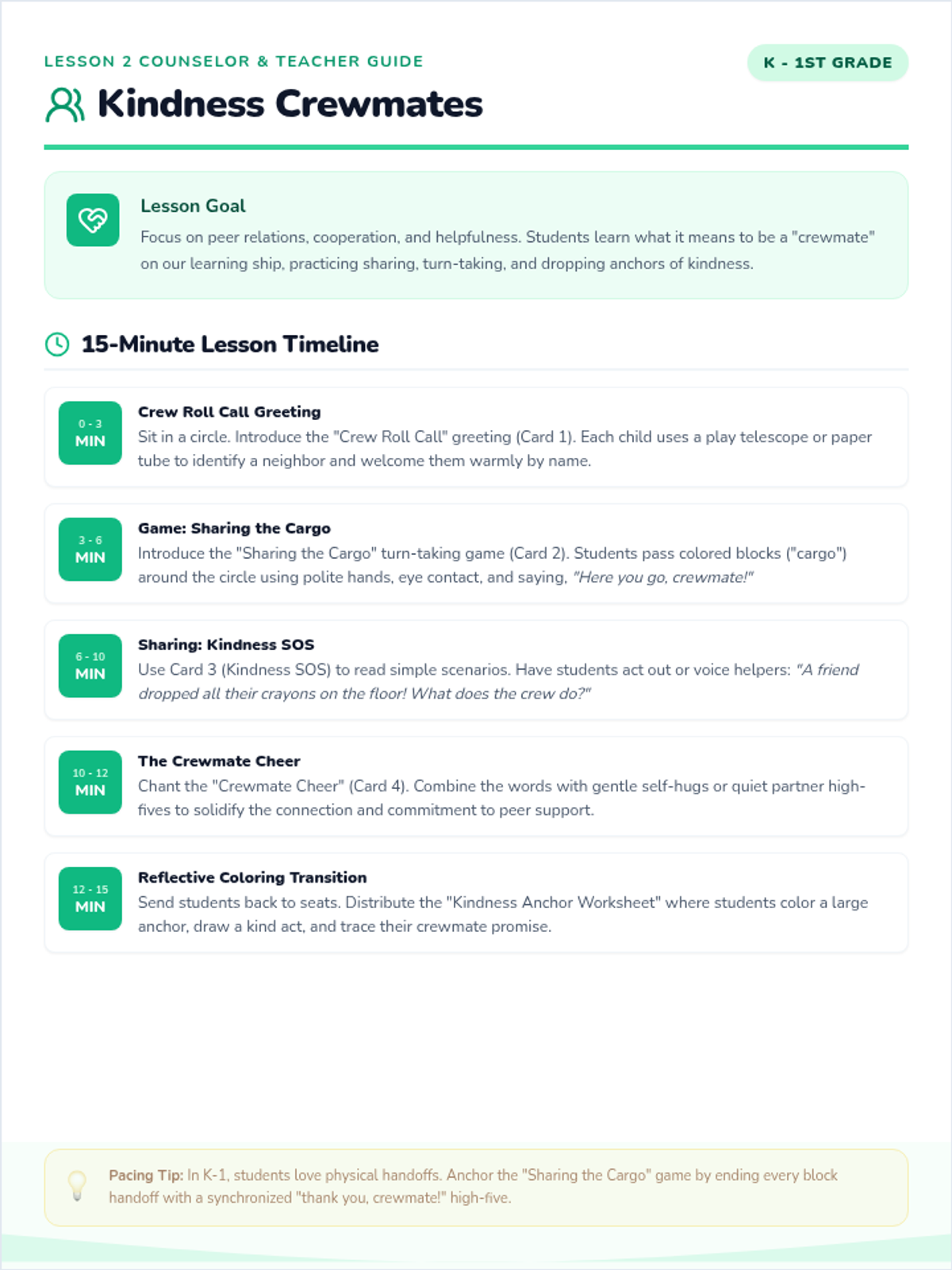
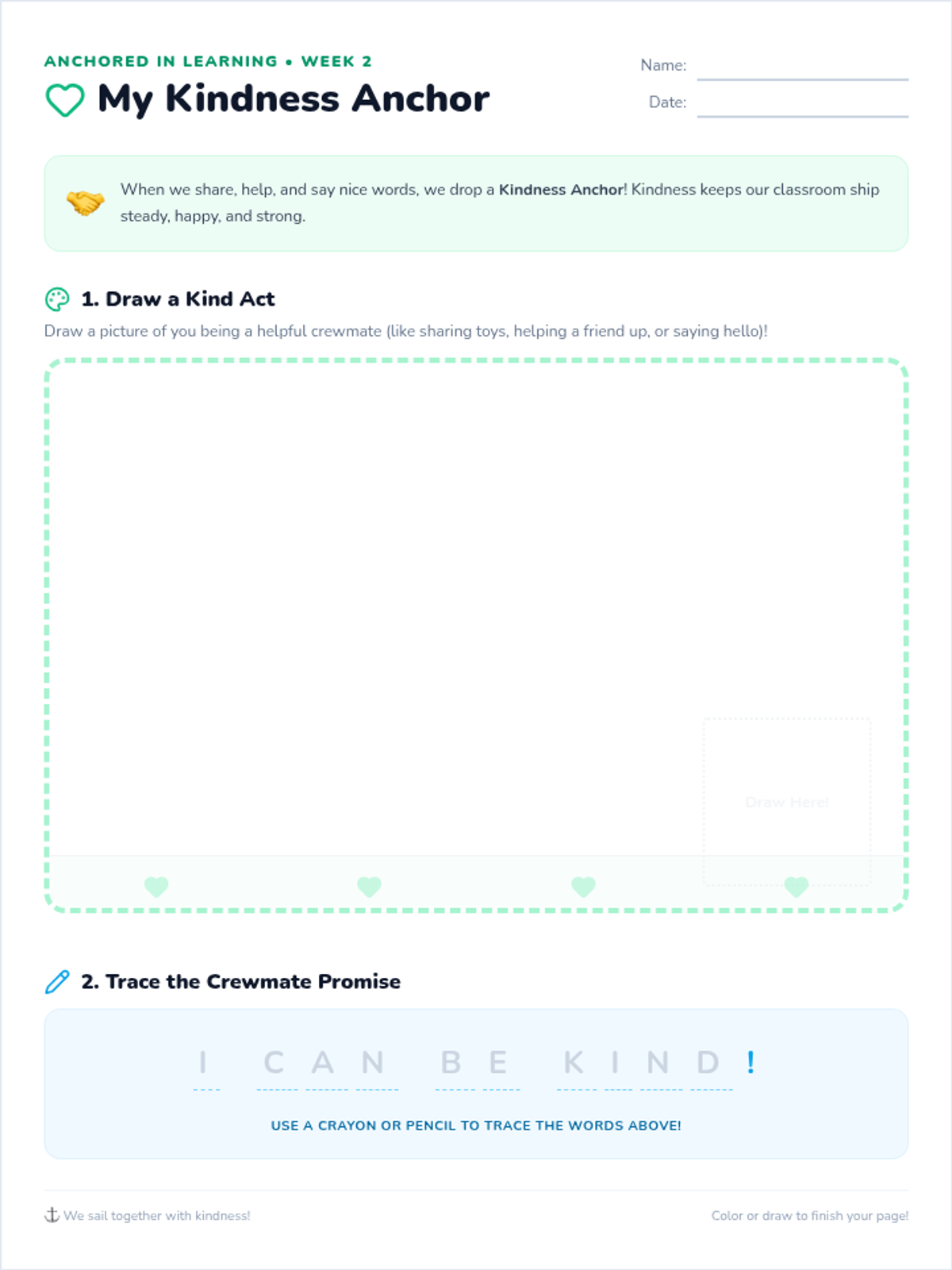
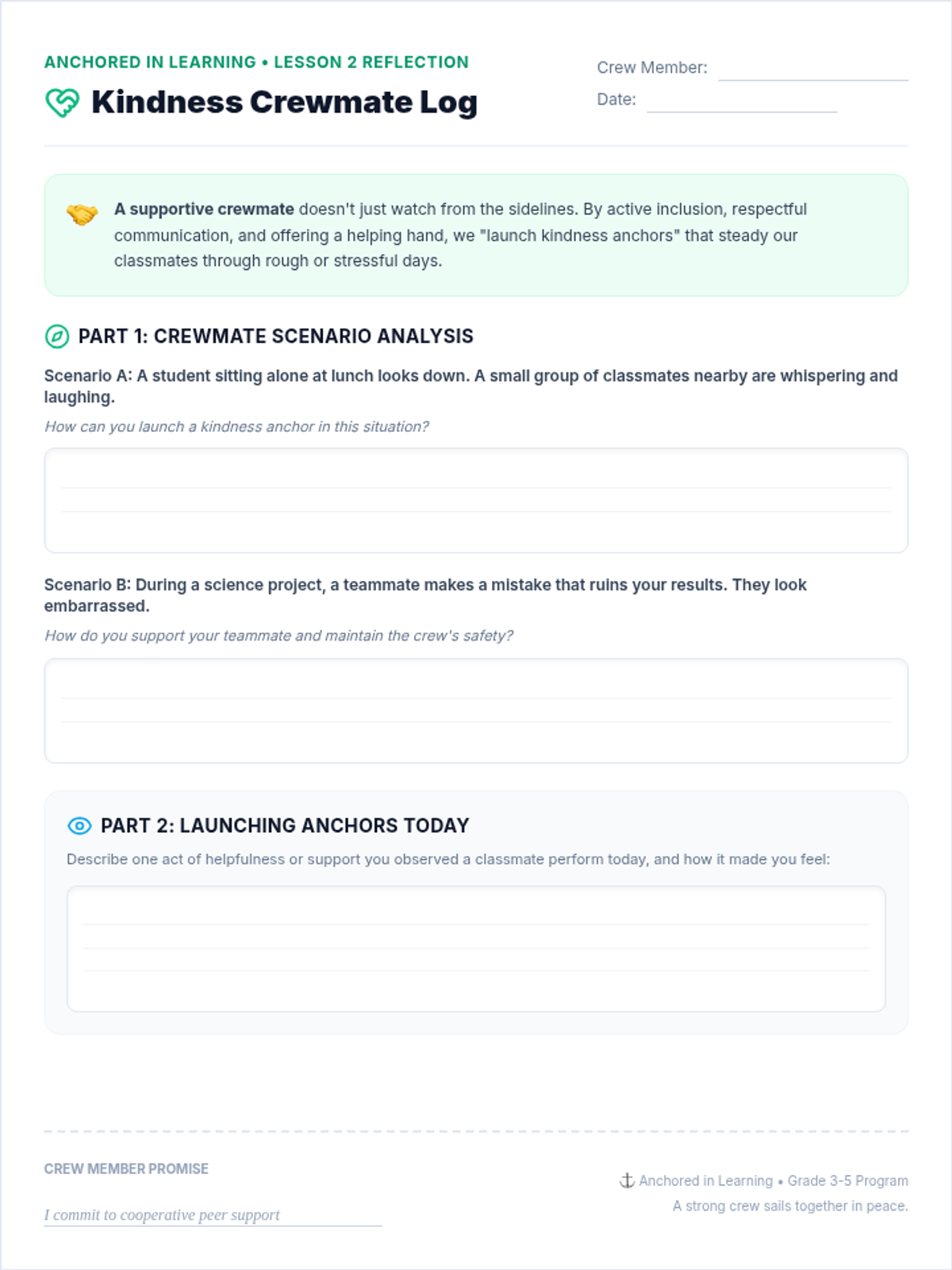
Lesson 2 of the SEL sequence. A complete, ready-to-go 15-minute lesson for 3rd-5th Grade students on cooperative peer relations, active inclusion, and launching kindness anchors.
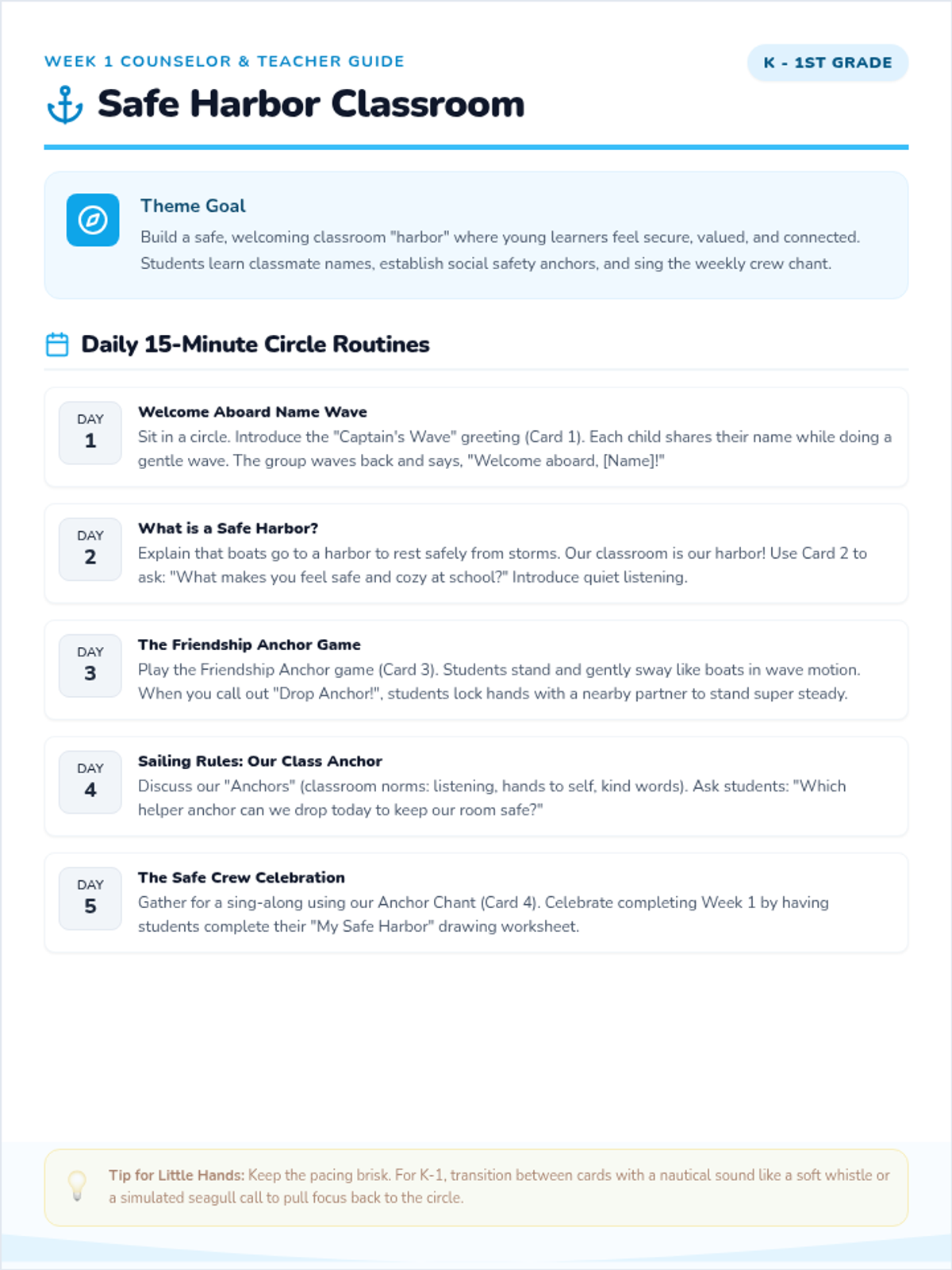
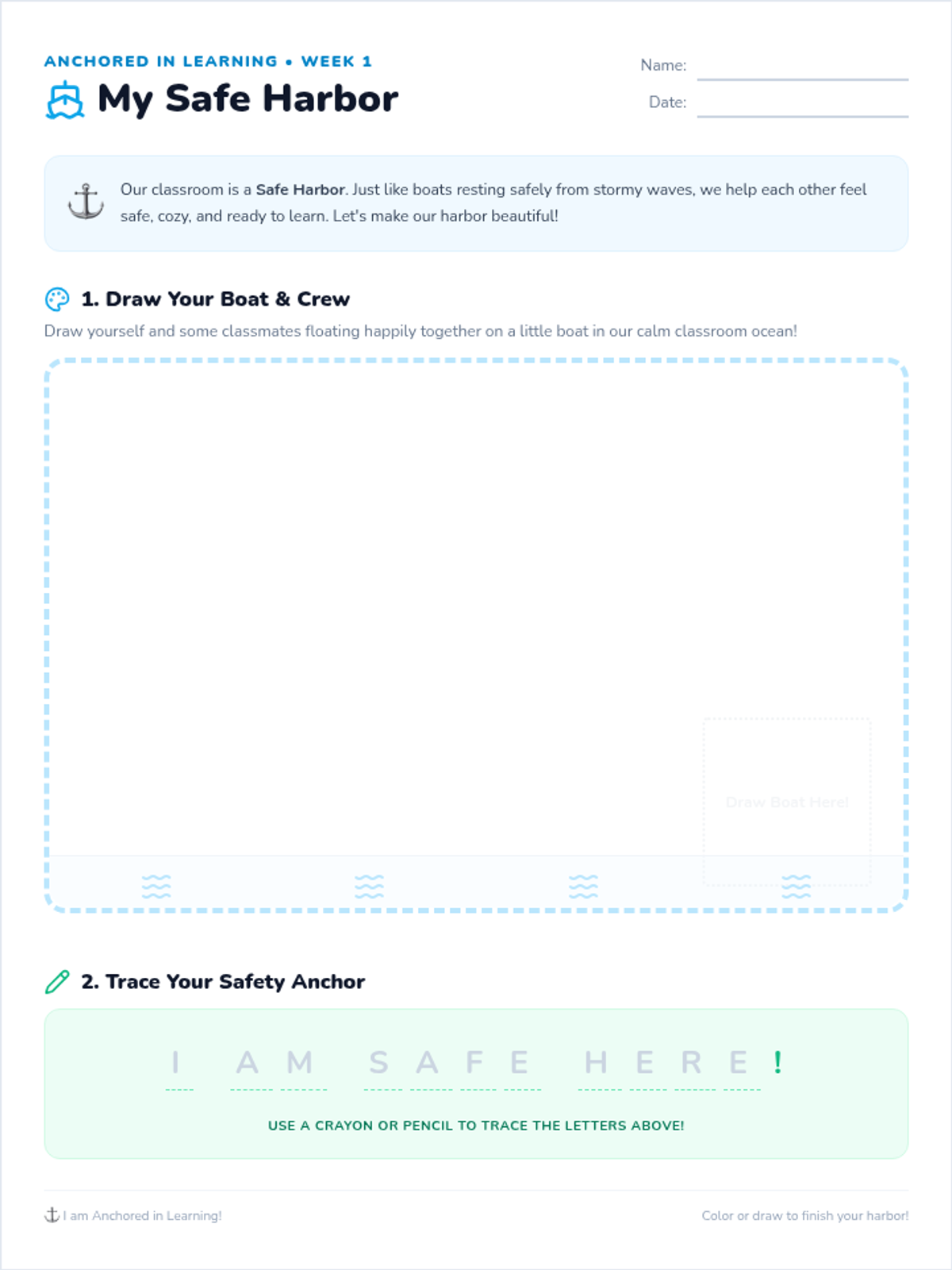
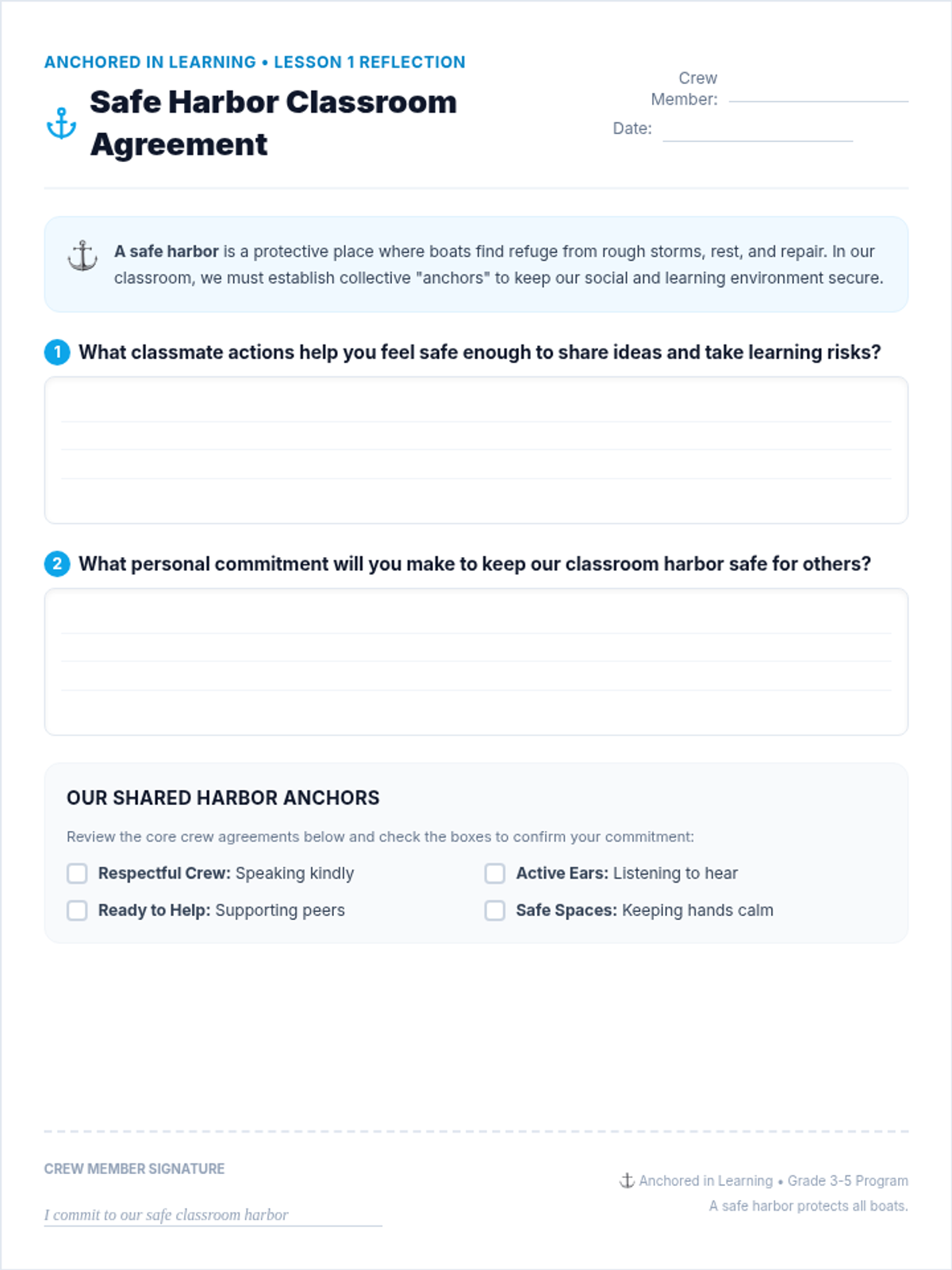
Lesson 1 of the SEL sequence. A complete, ready-to-go 15-minute lesson for 3rd-5th Grade students on building an emotionally safe classroom harbor and establishing mutual support anchors.
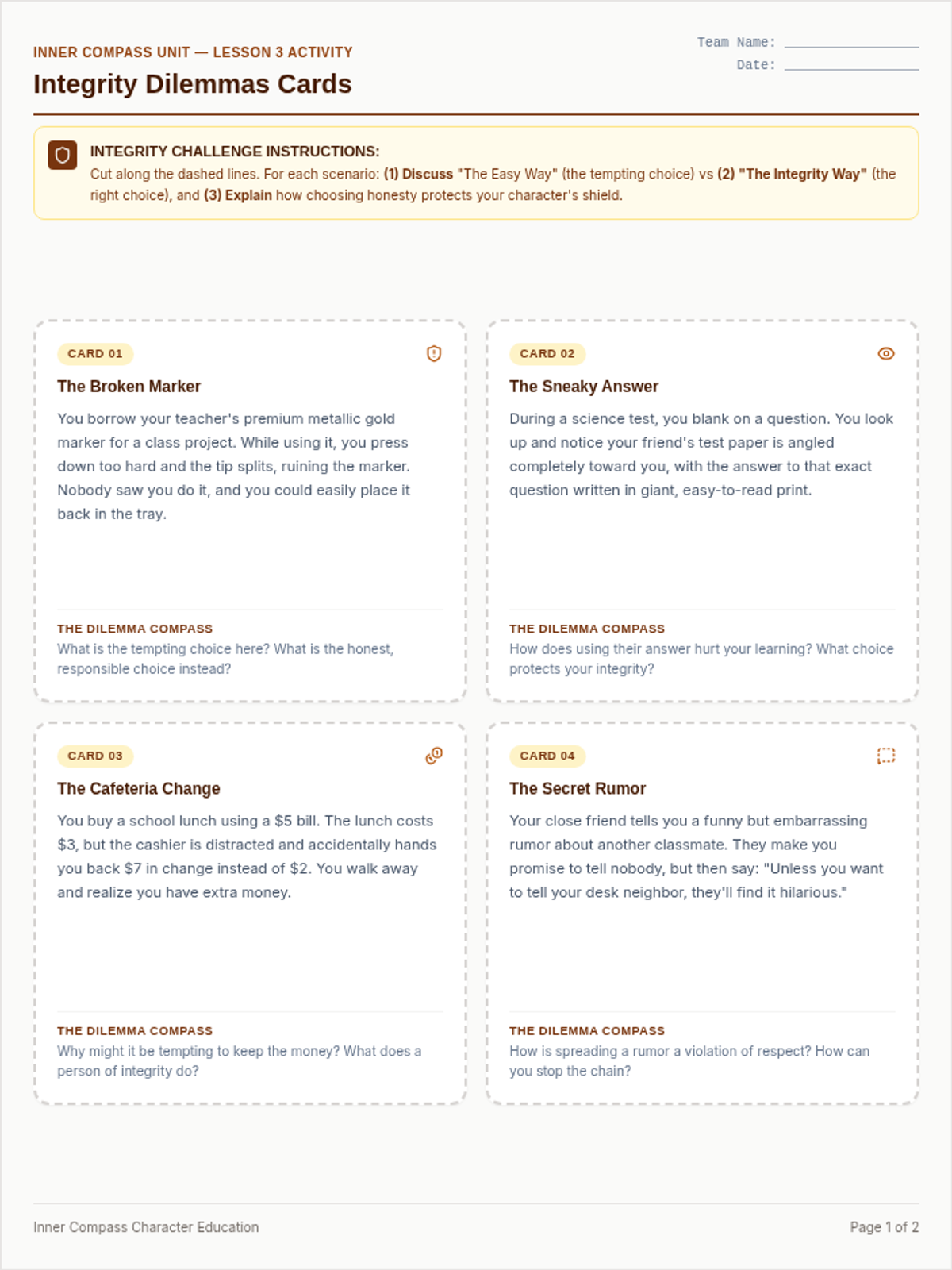
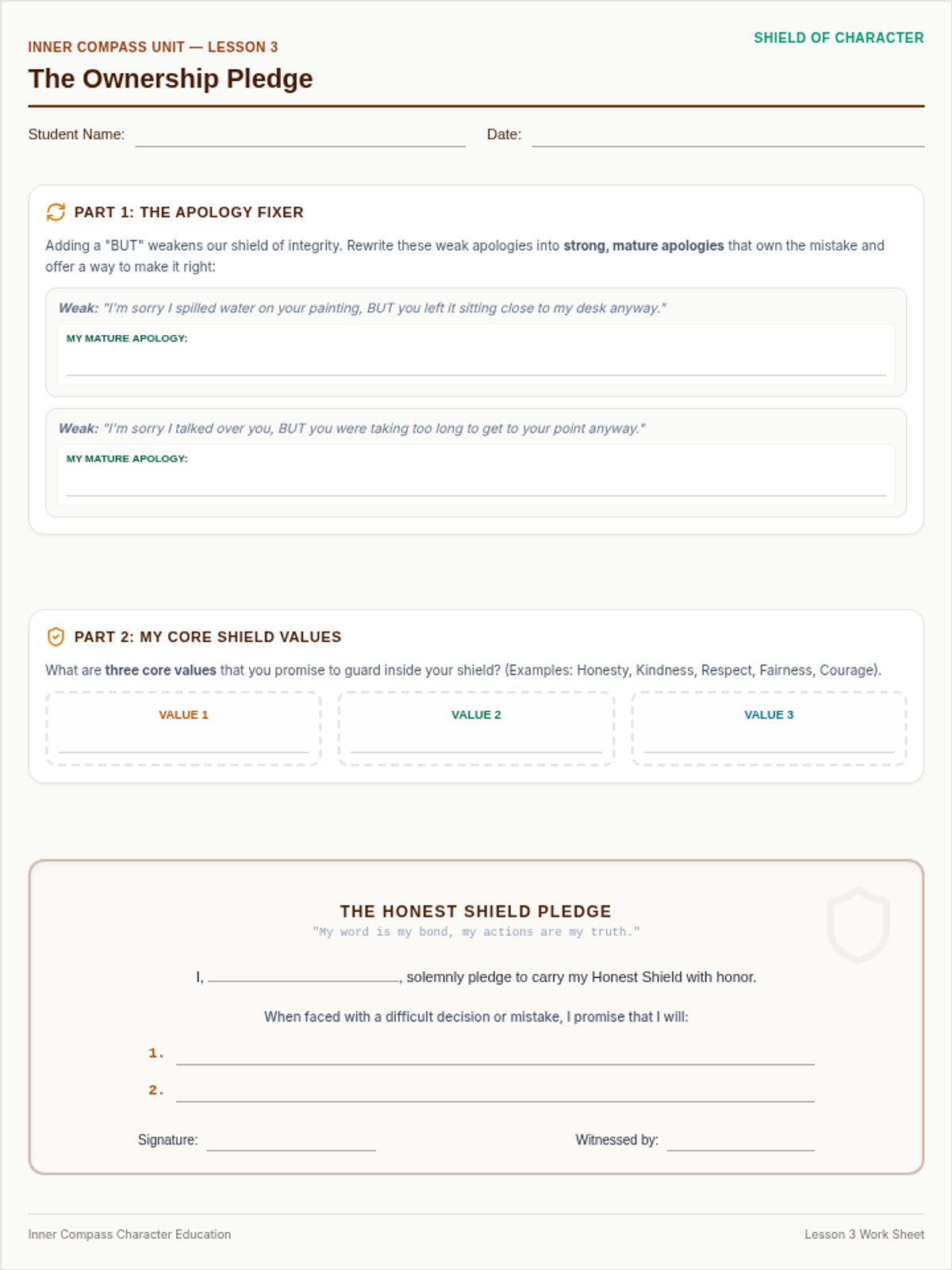
Students investigate responsibility, honesty, and integrity. They learn to make difficult choices, take ownership of mistakes, and construct a personal pledge for moral character.
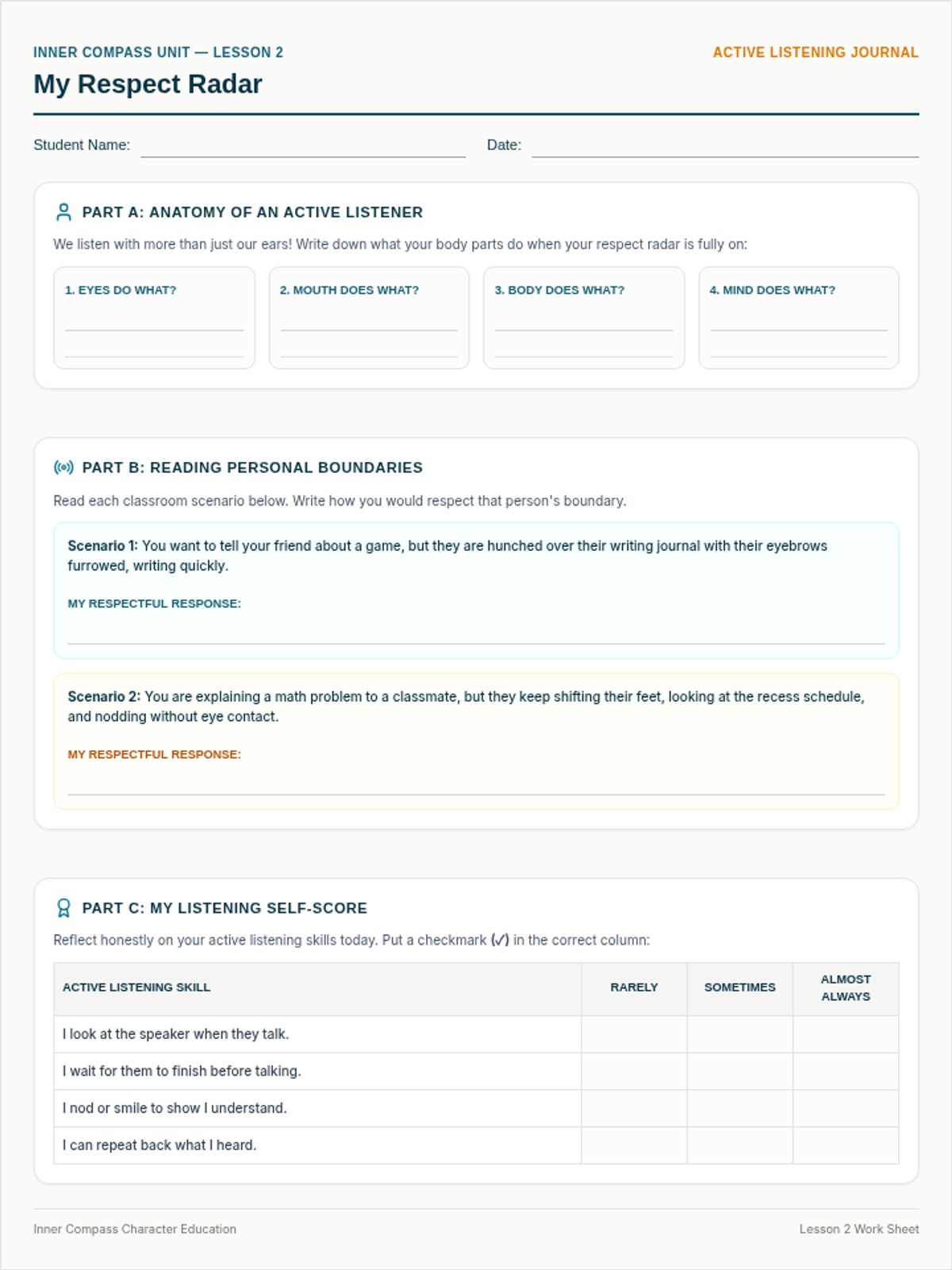
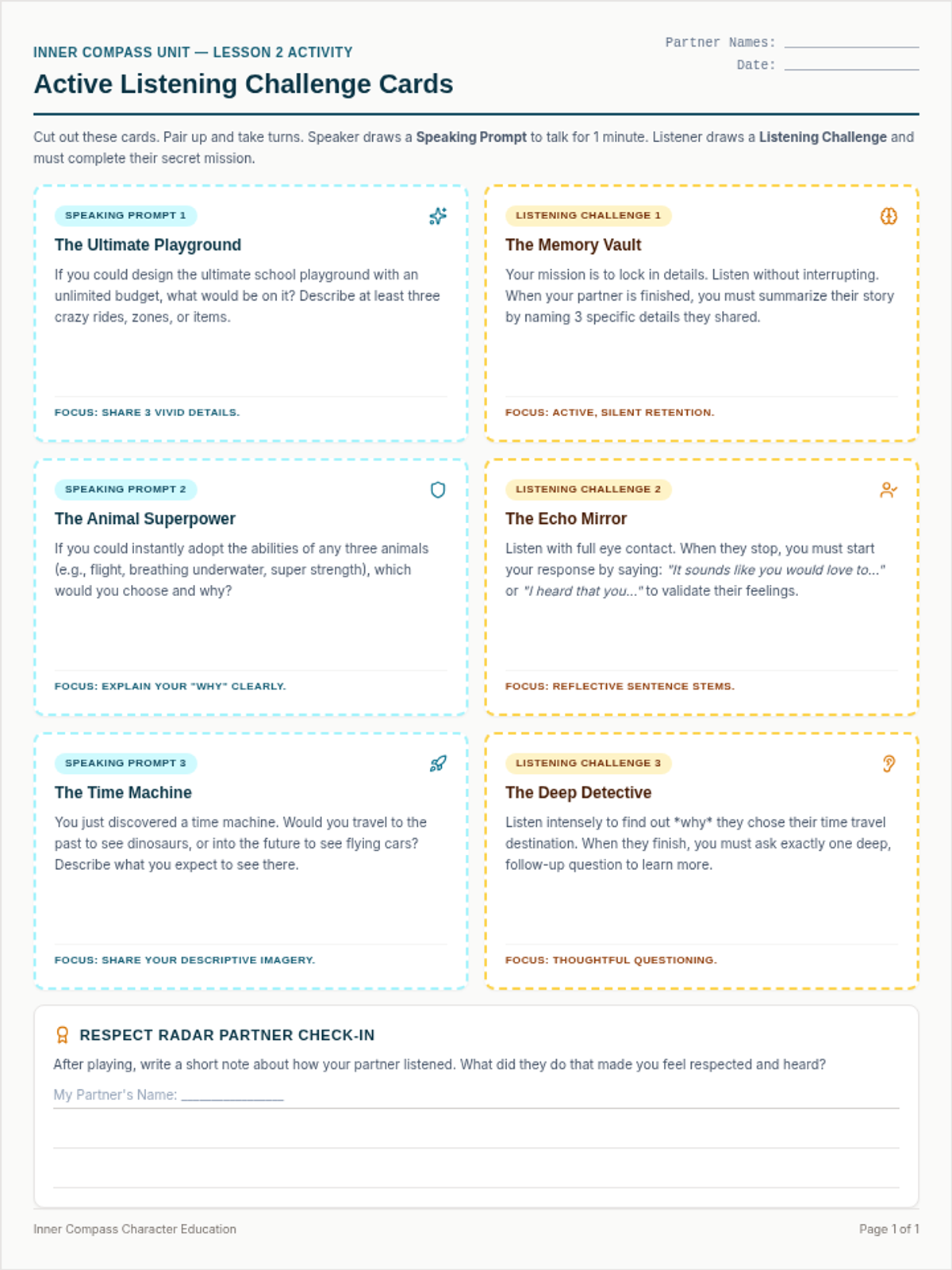
Students learn respect and active listening techniques. They engage in verbal exercises and boundary-setting activities to build effective communication and mutual respect.
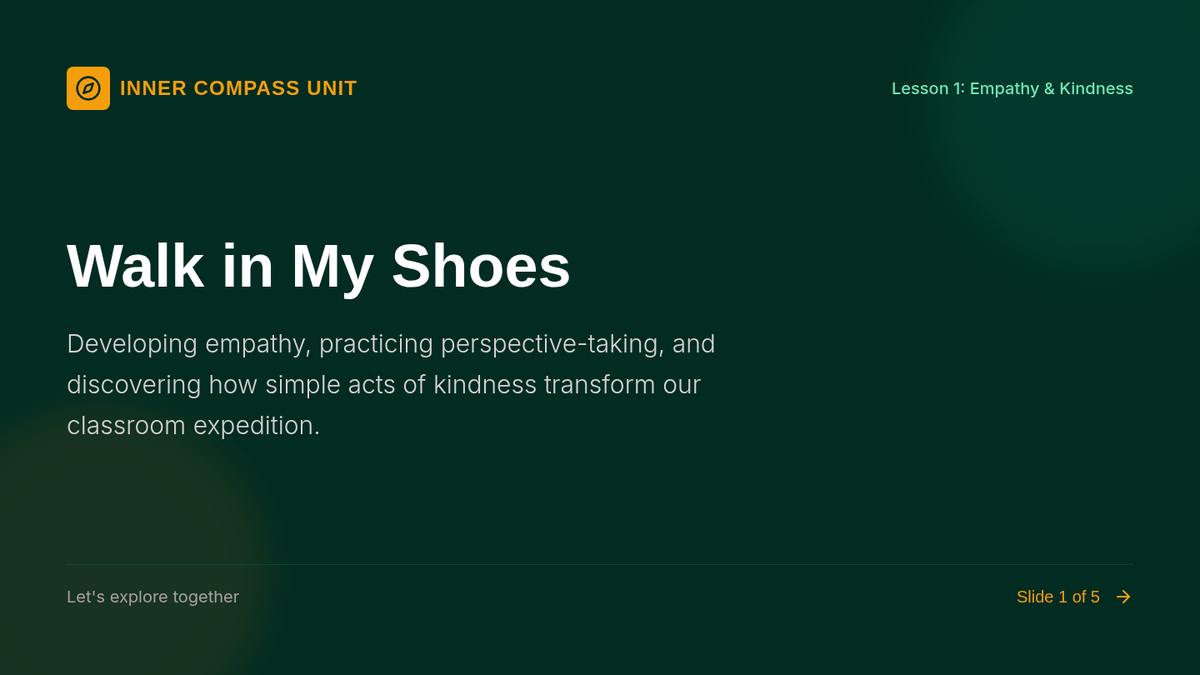
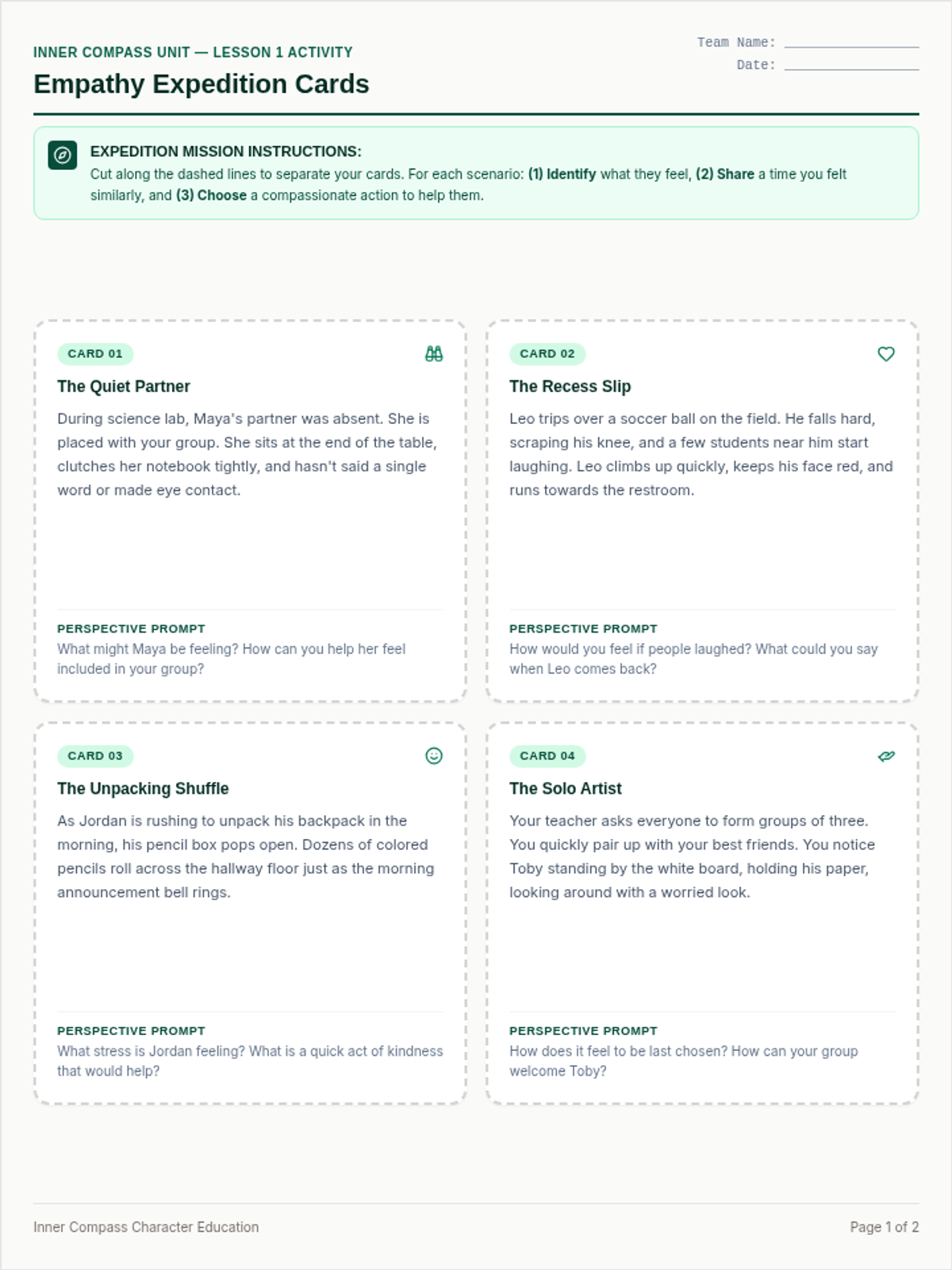
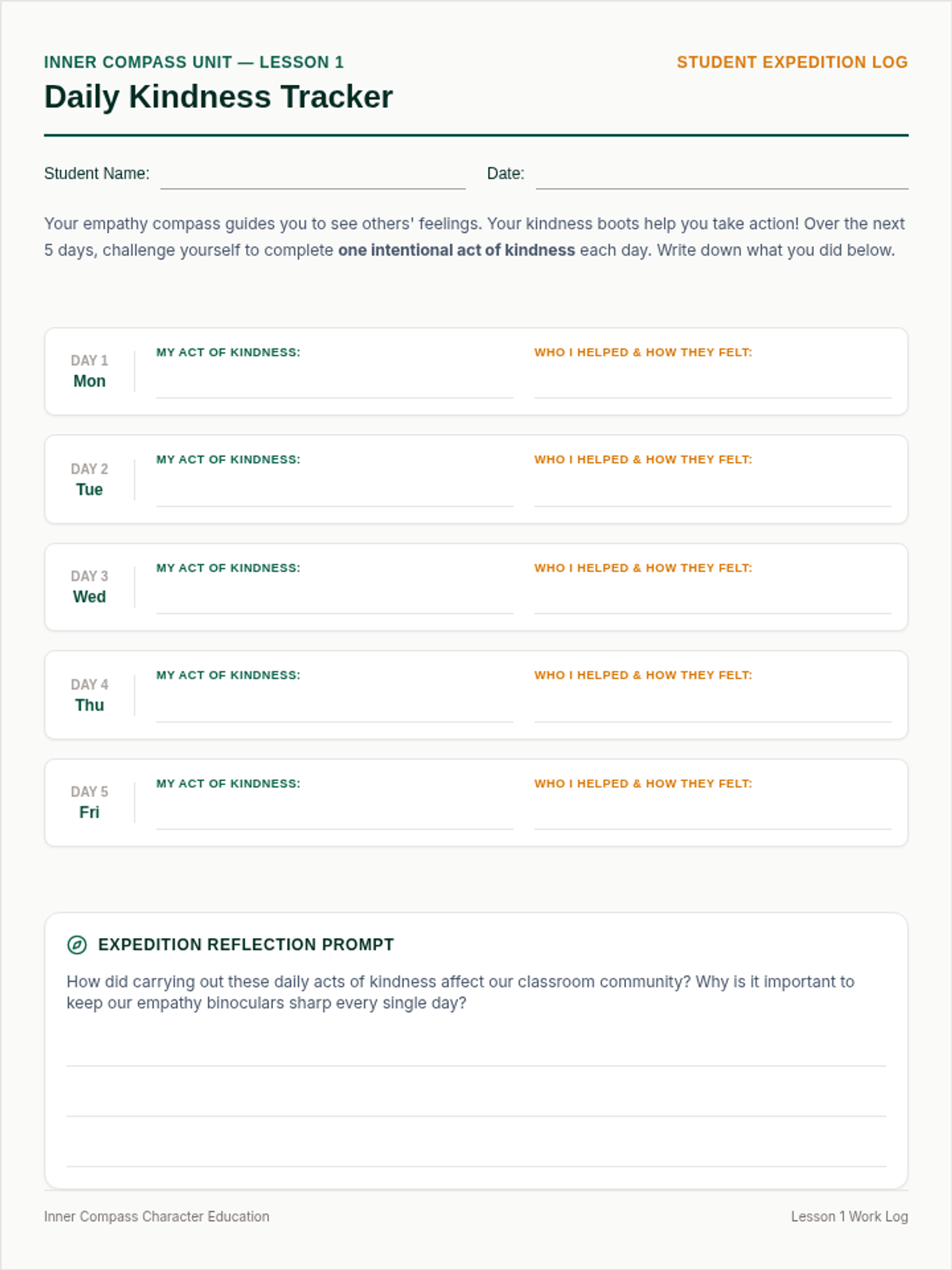
Students explore the power of empathy and kindness. Through looking at perspectives and performing small acts of helpfulness, students build connection and support in the classroom.
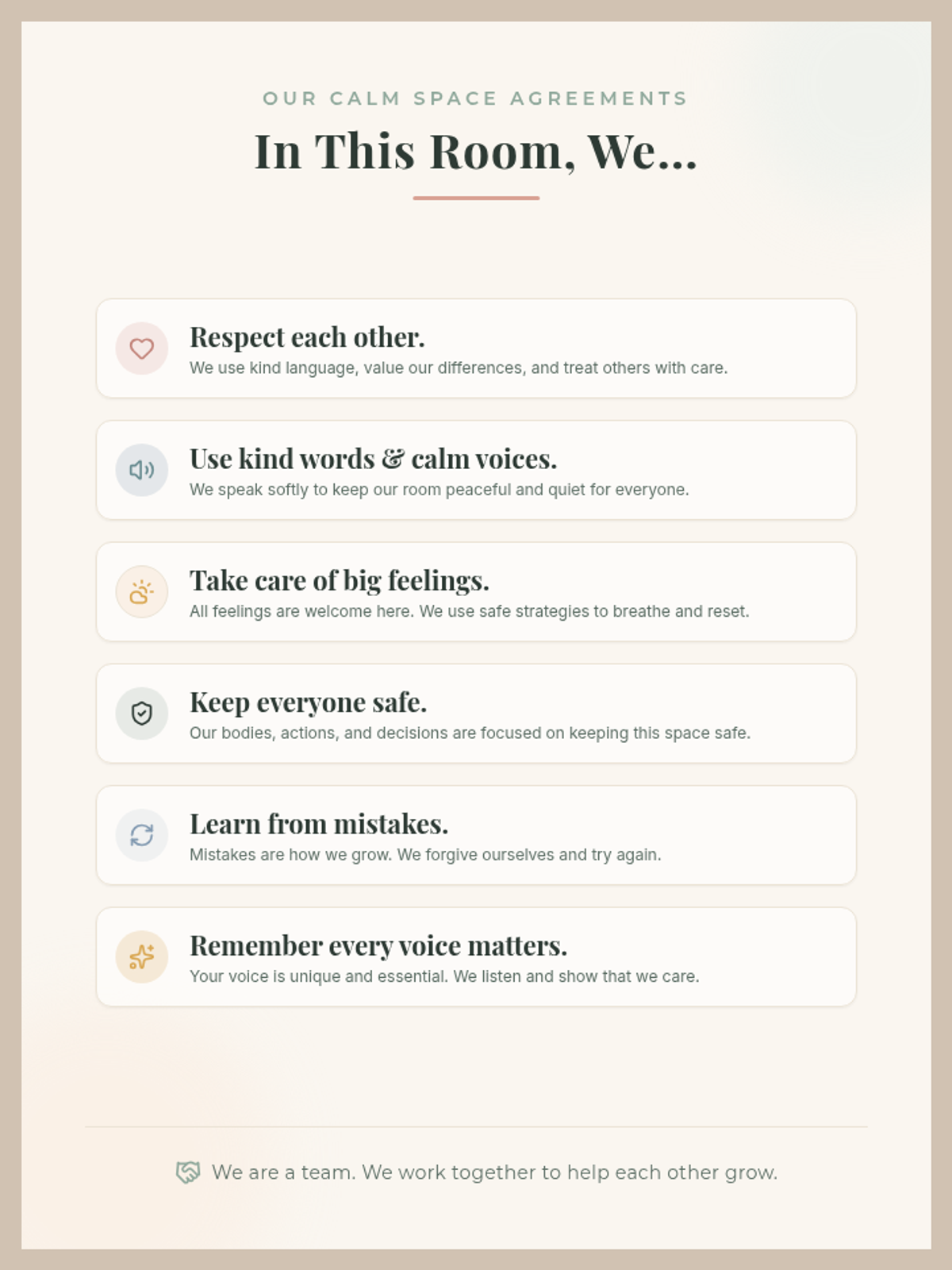
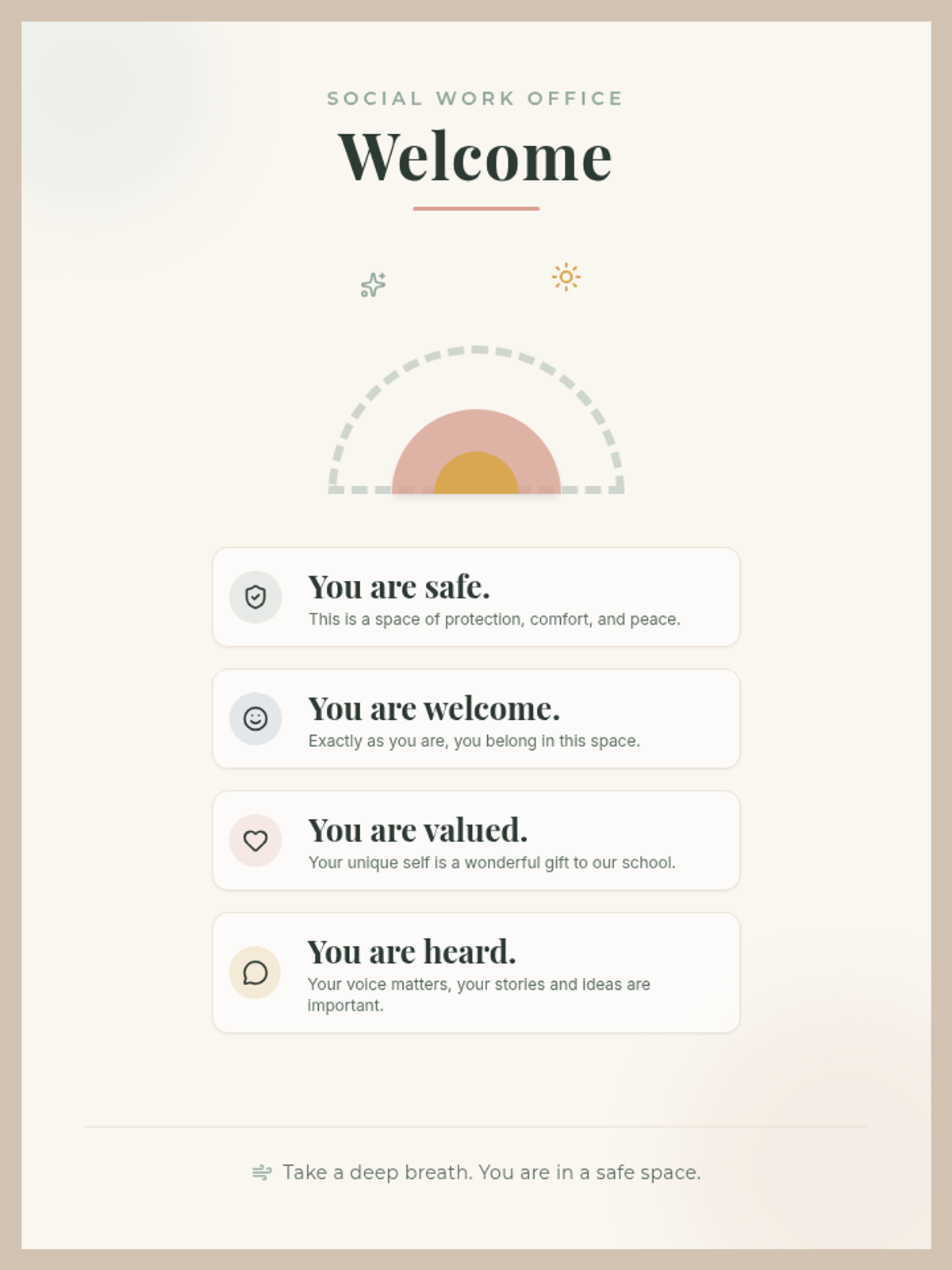
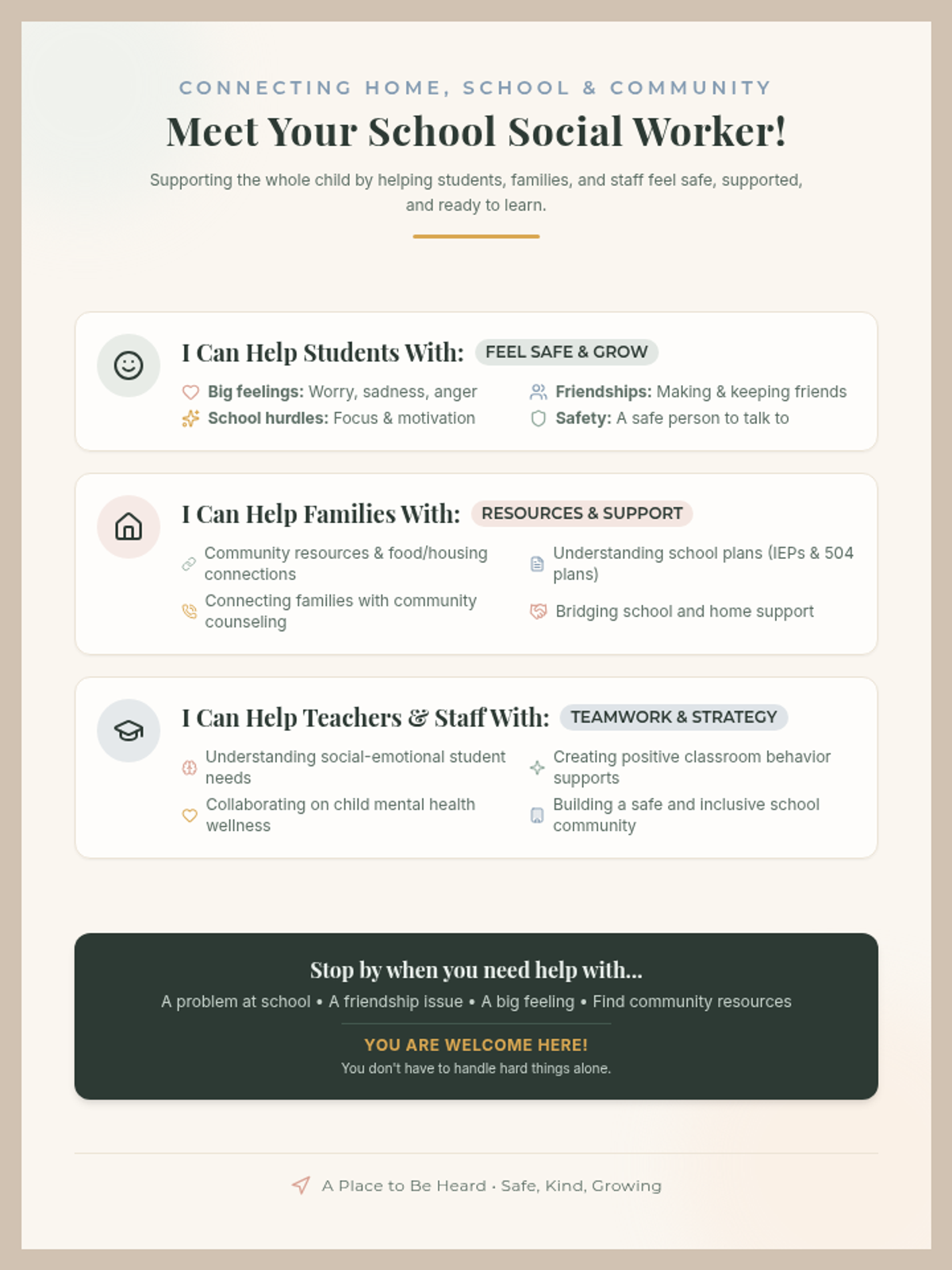
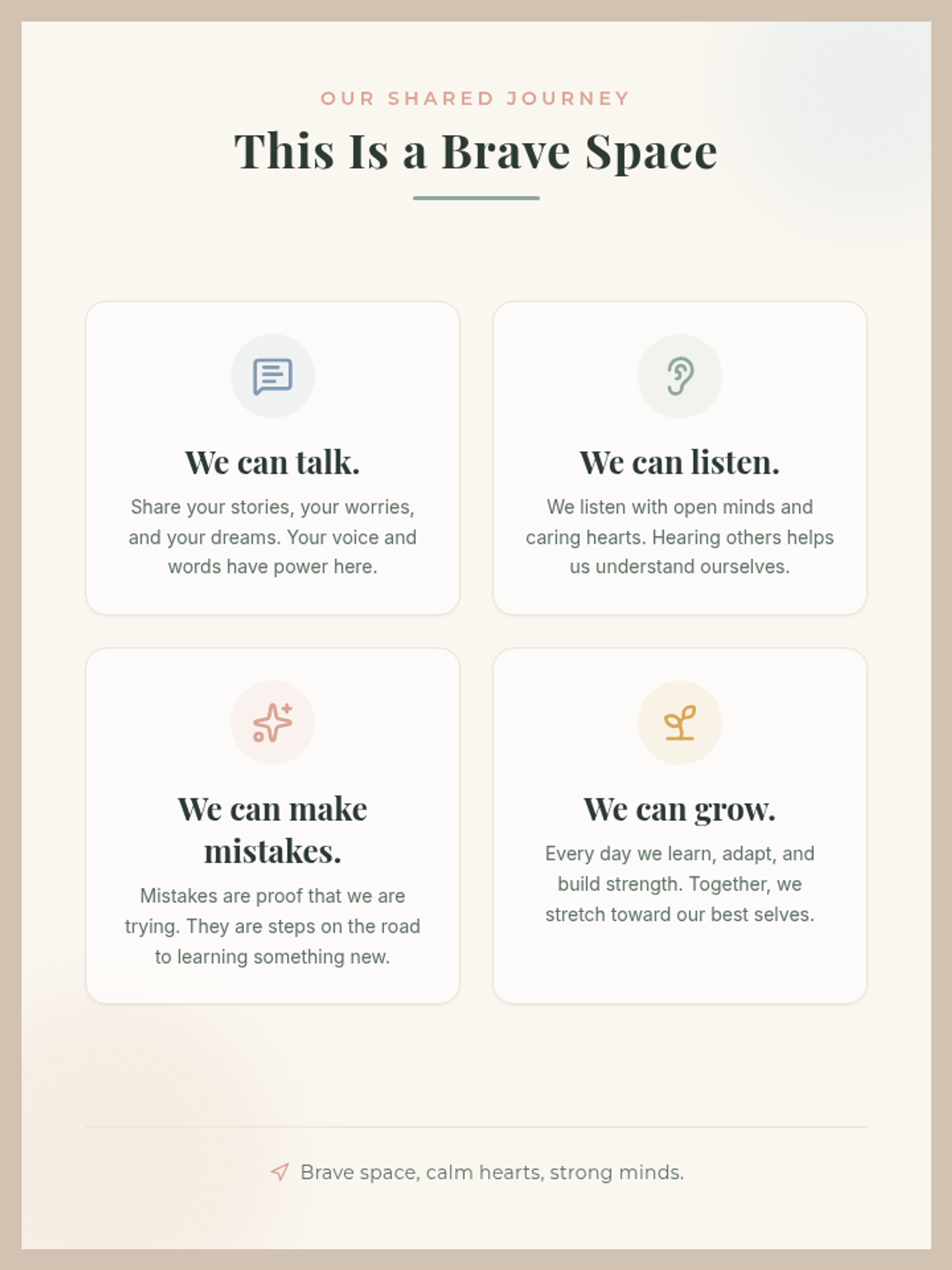
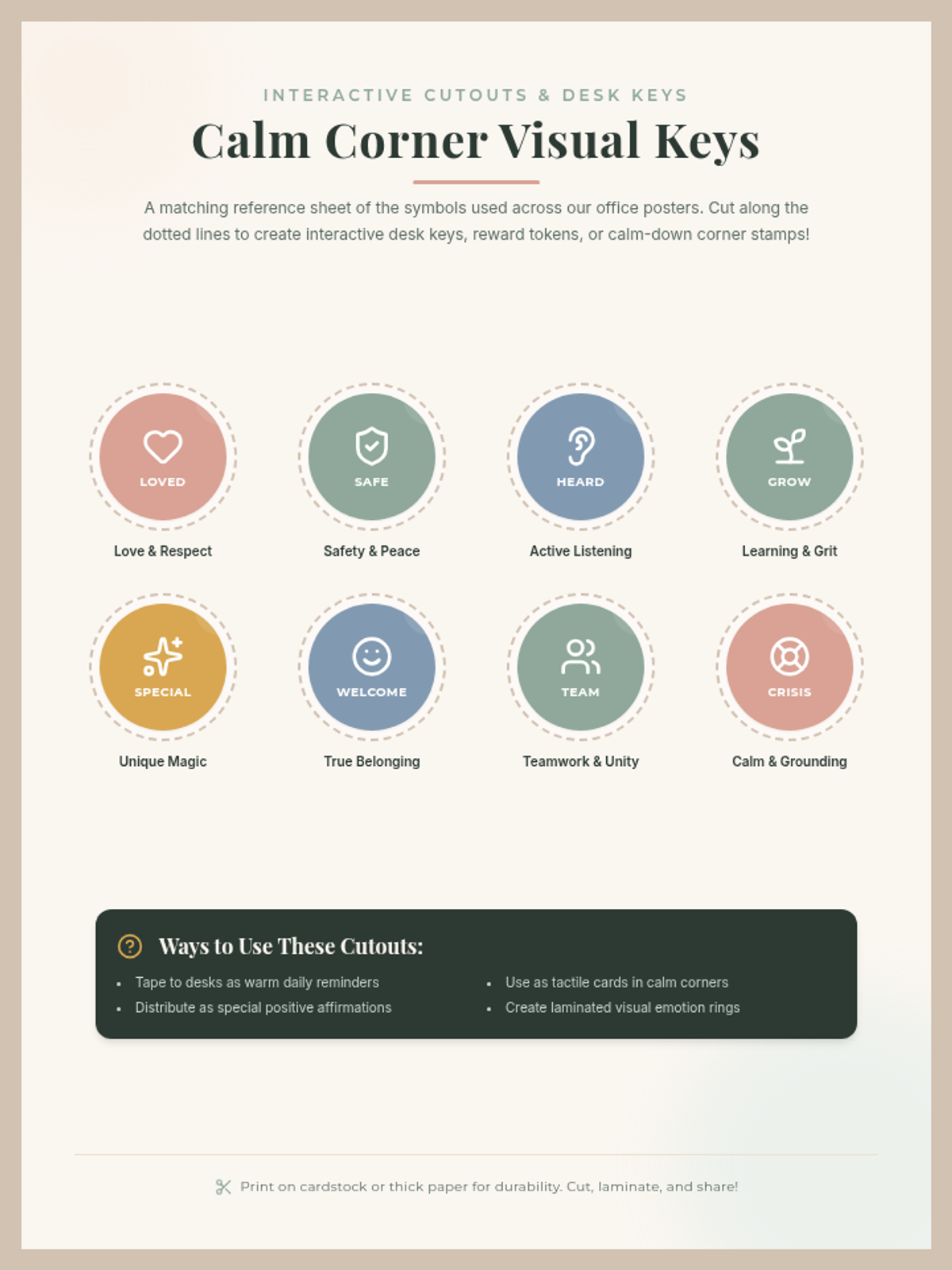
A cohesive suite of beautifully designed printable posters for an elementary school social work office or calm corner, utilizing soft earth tones, gentle affirmations, and clear supportive structures.
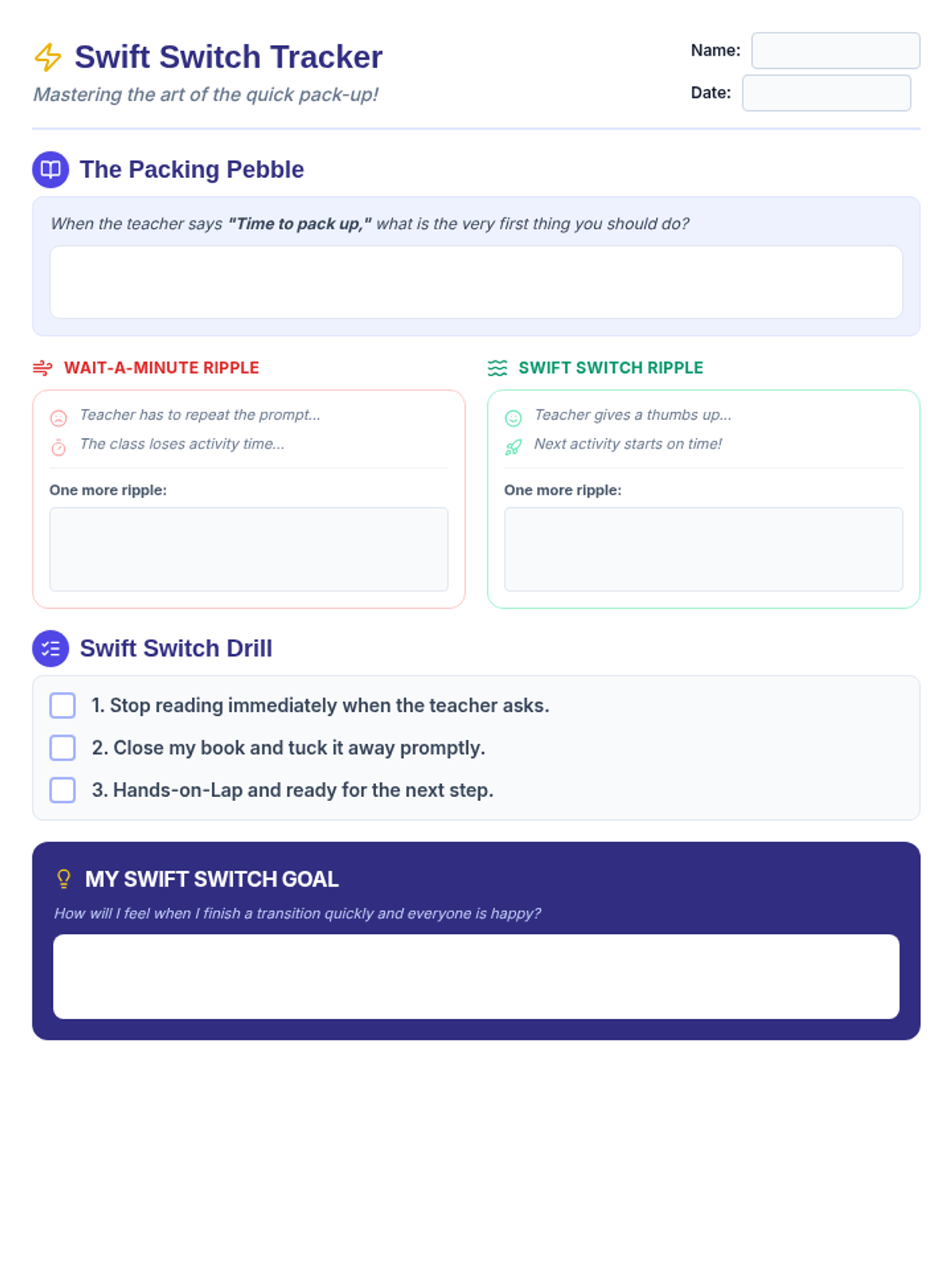
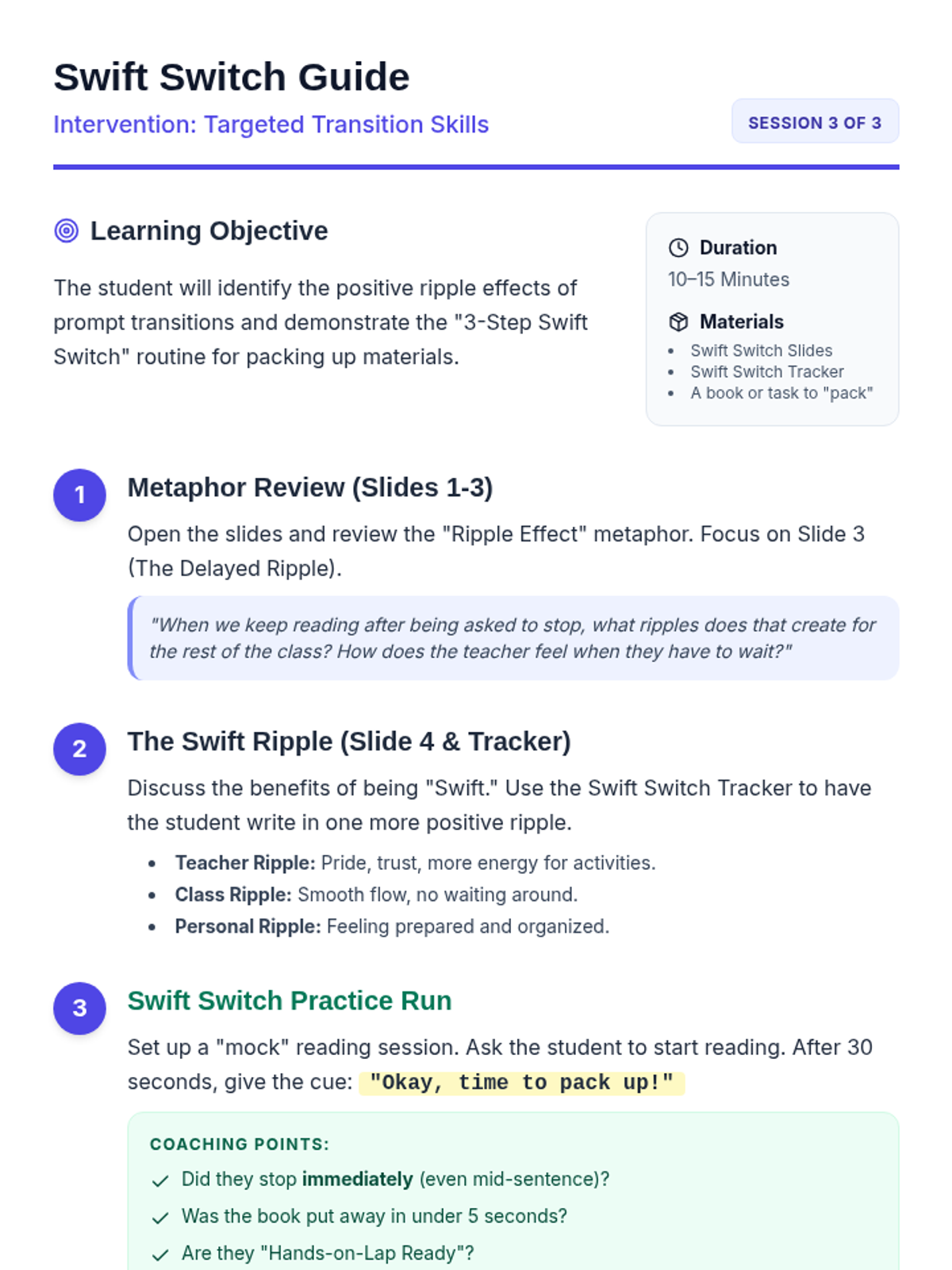
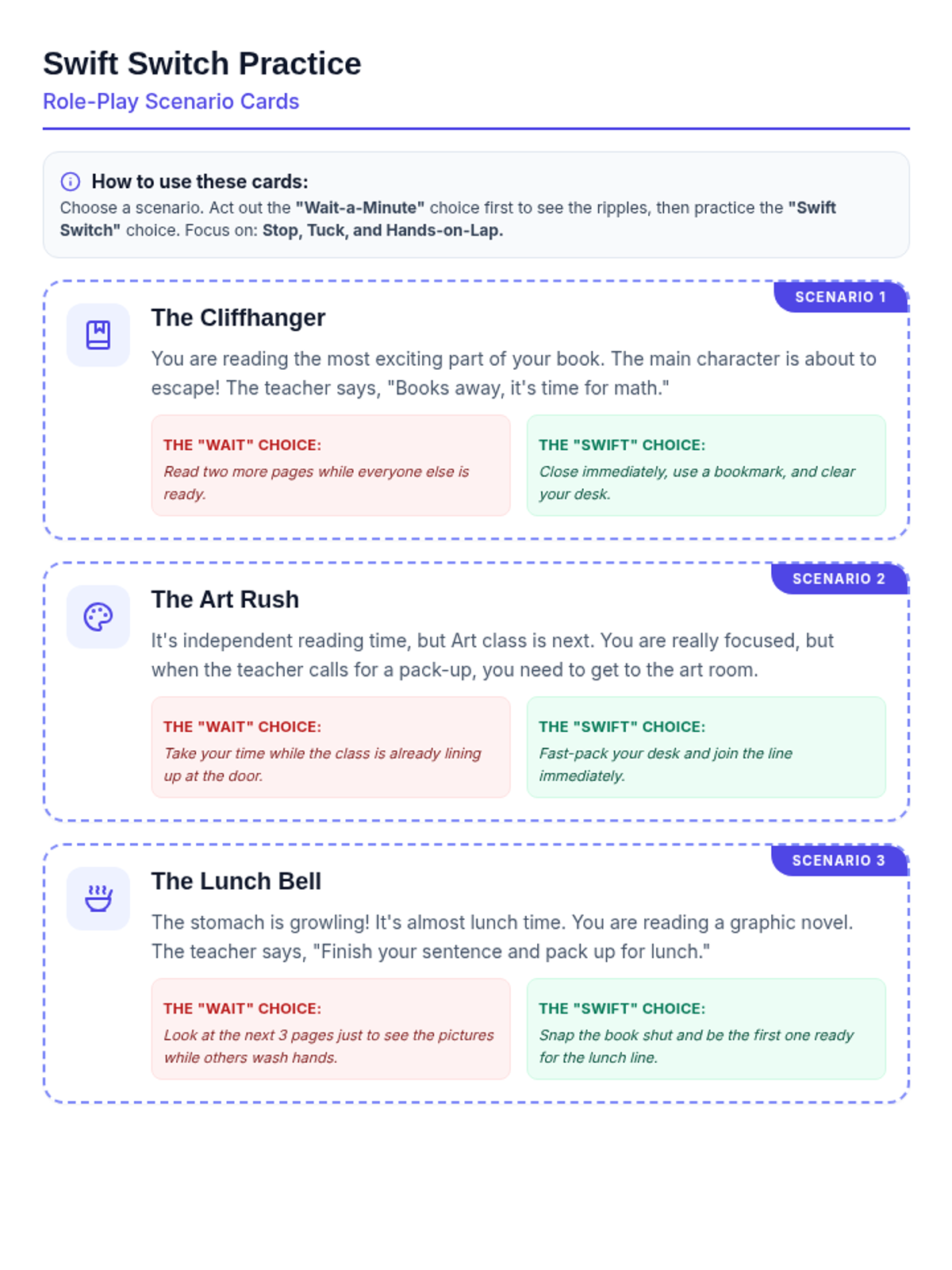
A targeted intervention focused on the transition skill of packing up materials promptly, highlighting the positive ripple effects of being ready for the next part of the day.
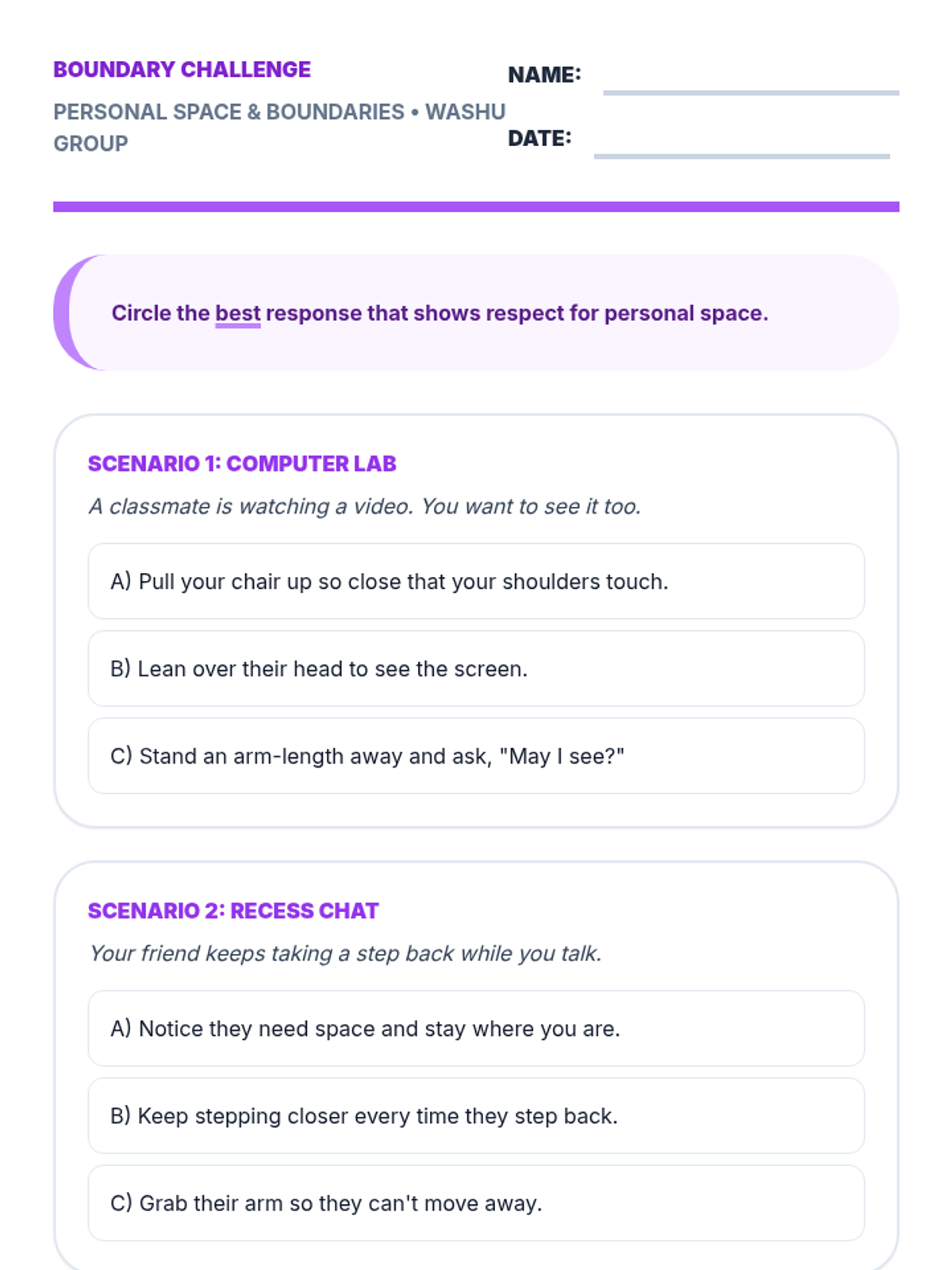
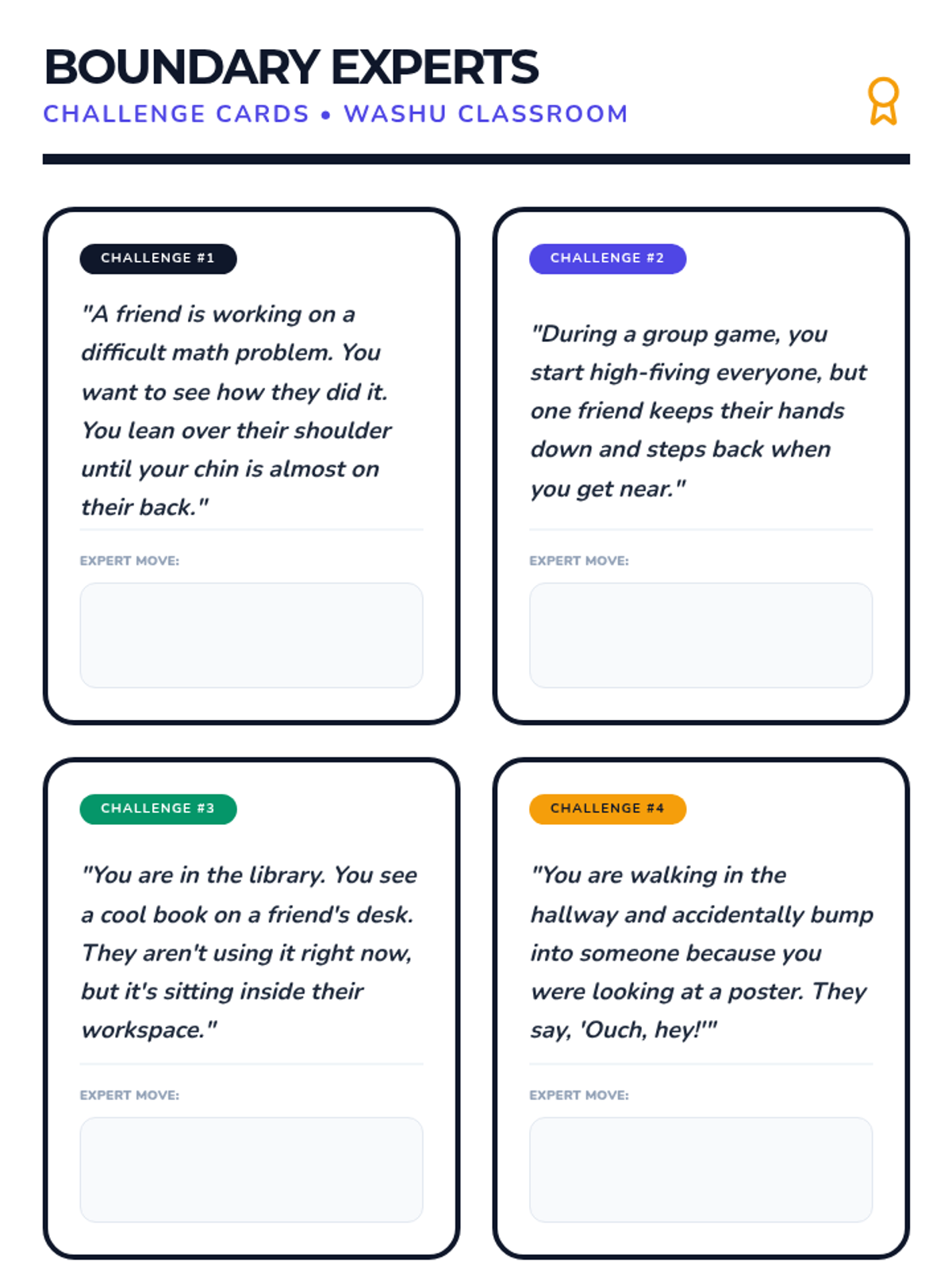
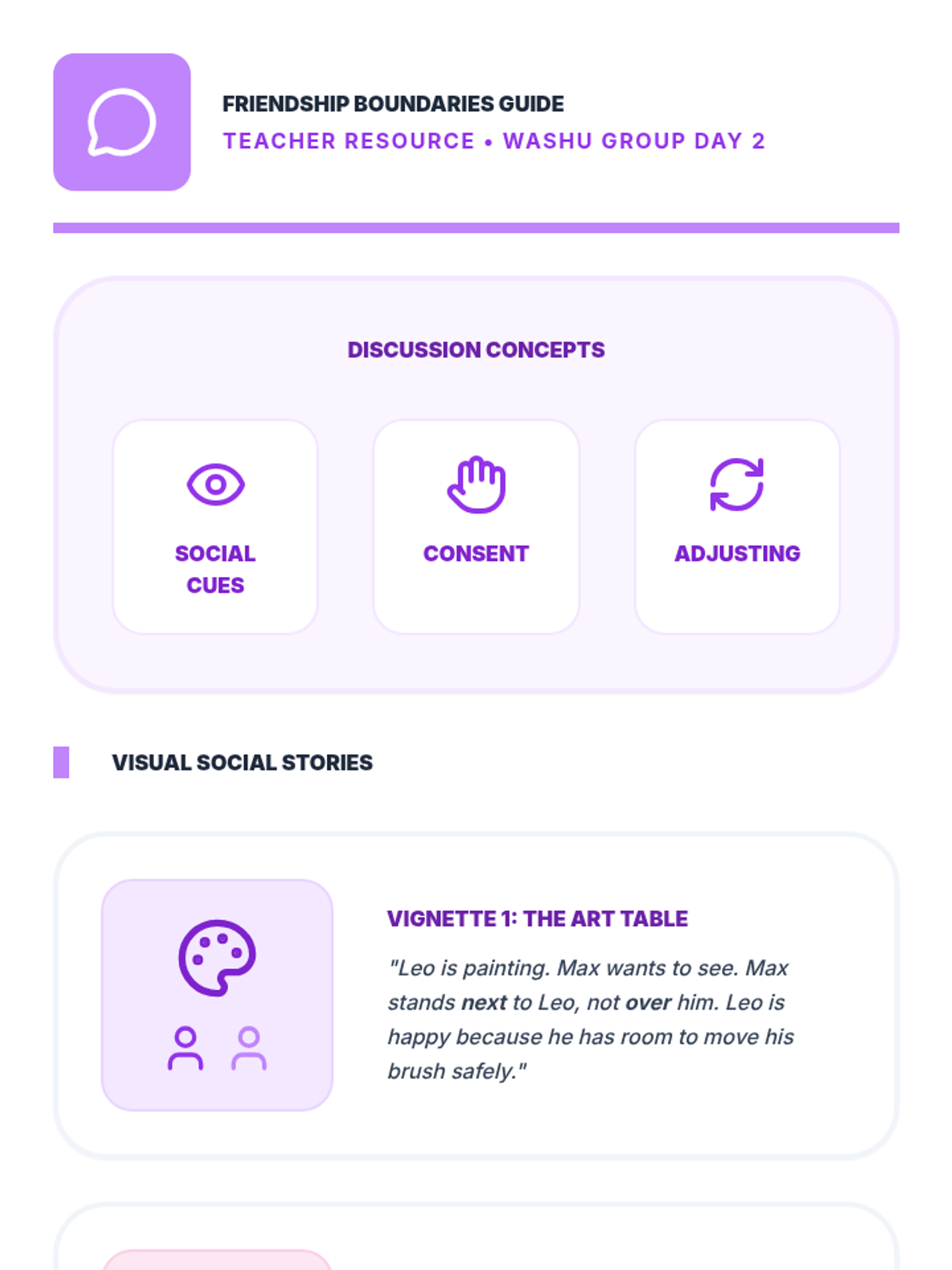
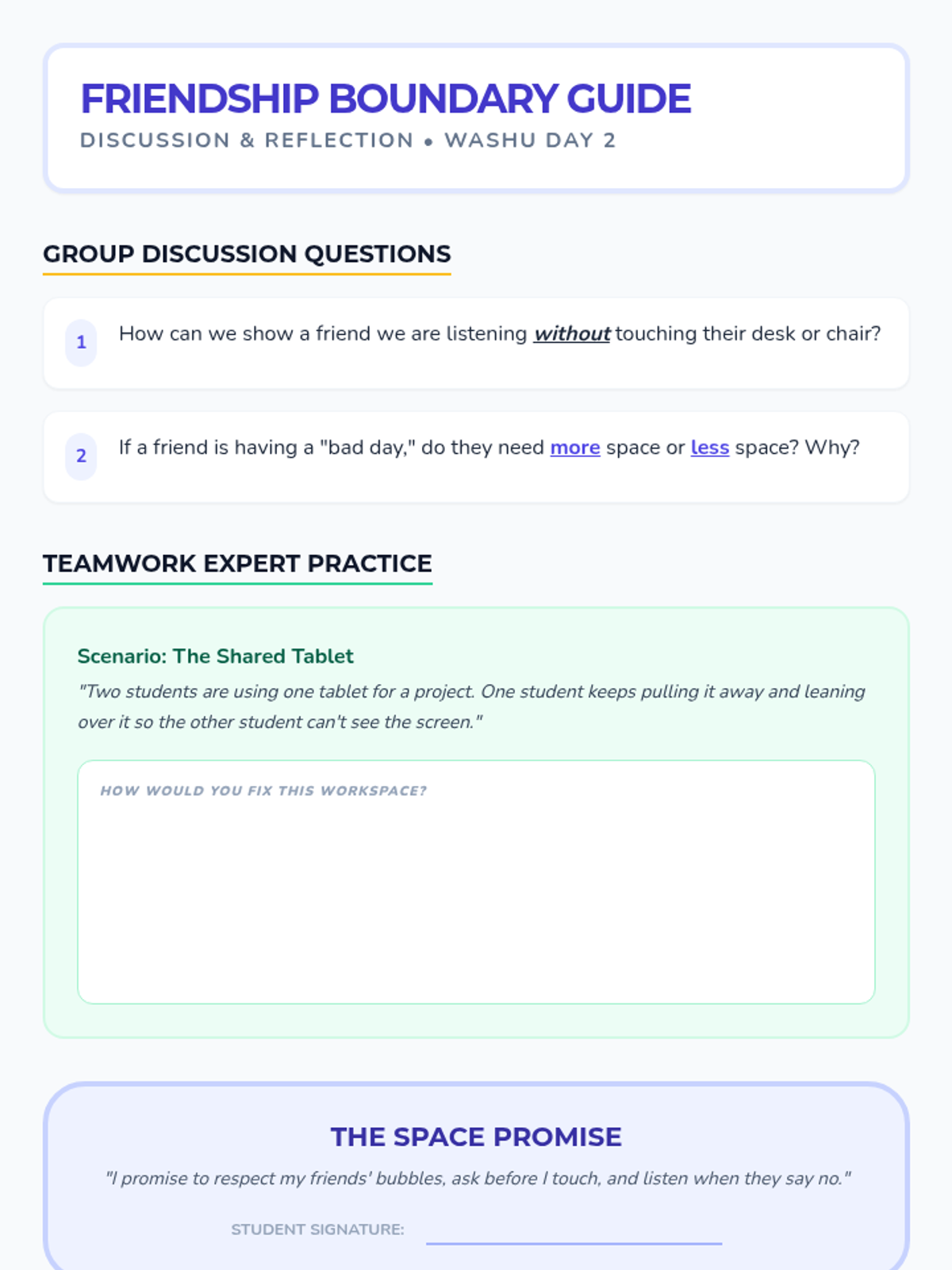
Advanced boundary application for WashU students, focusing on social challenges and respecting personal space within friendships and group work.
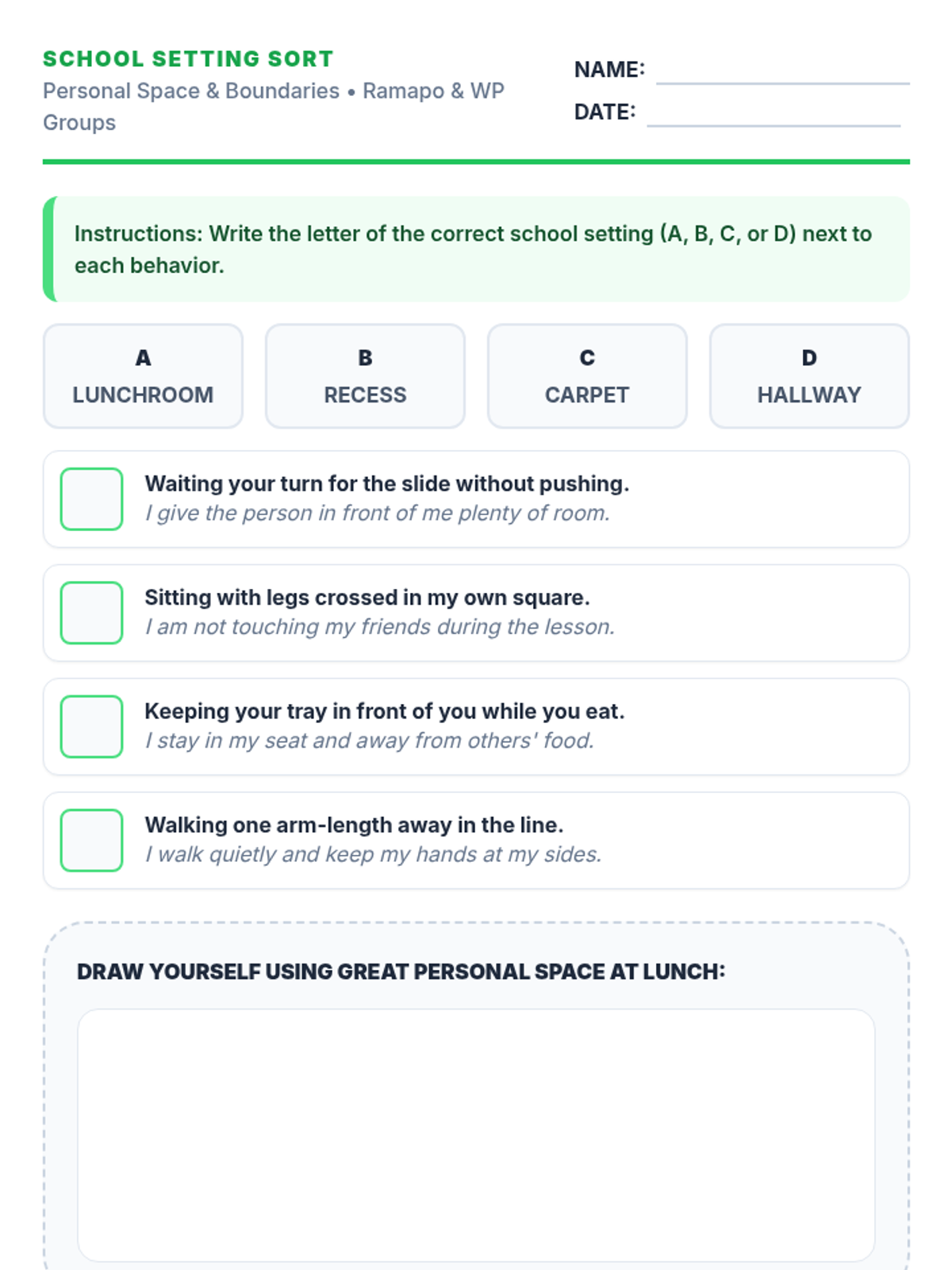
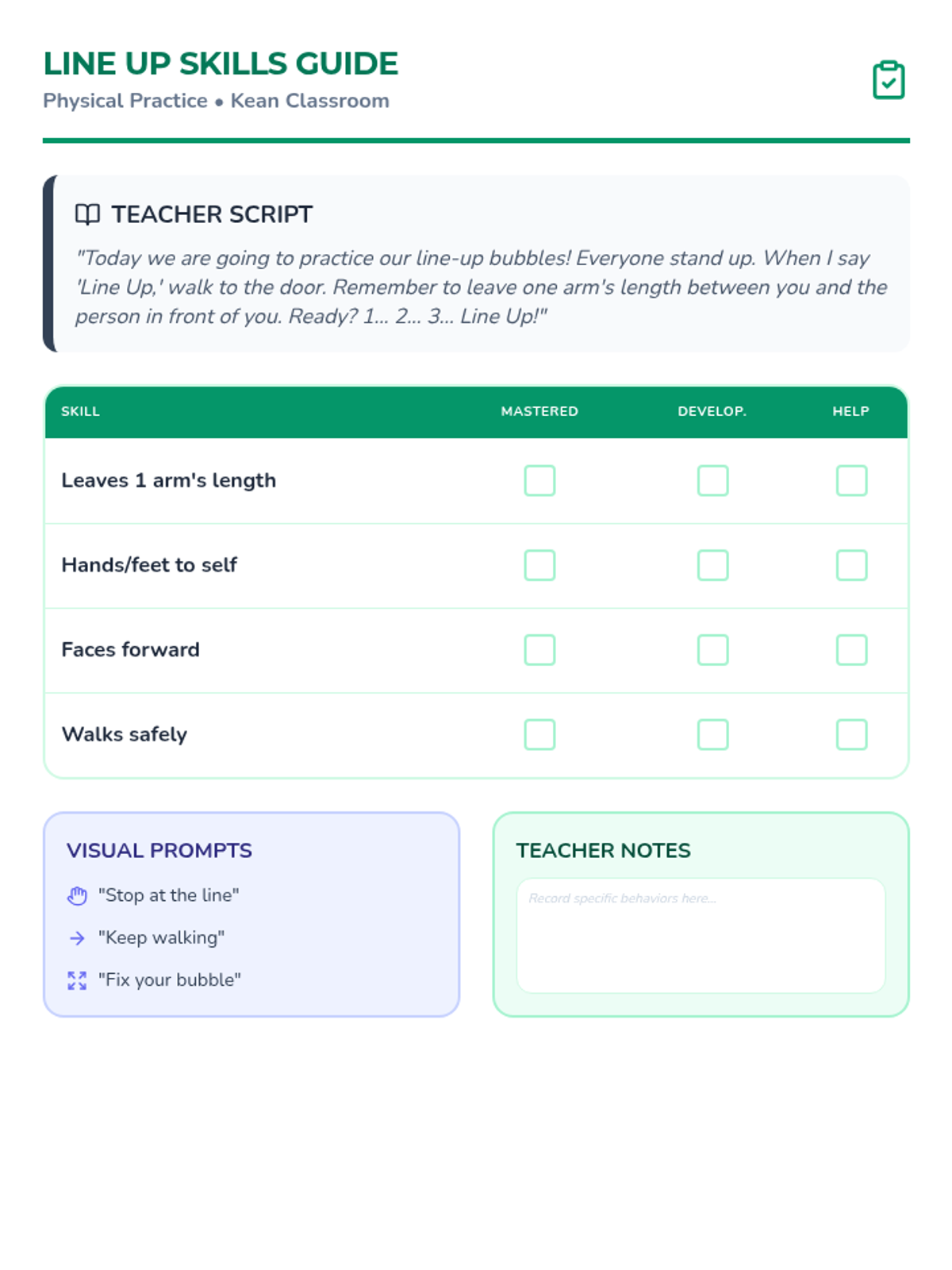
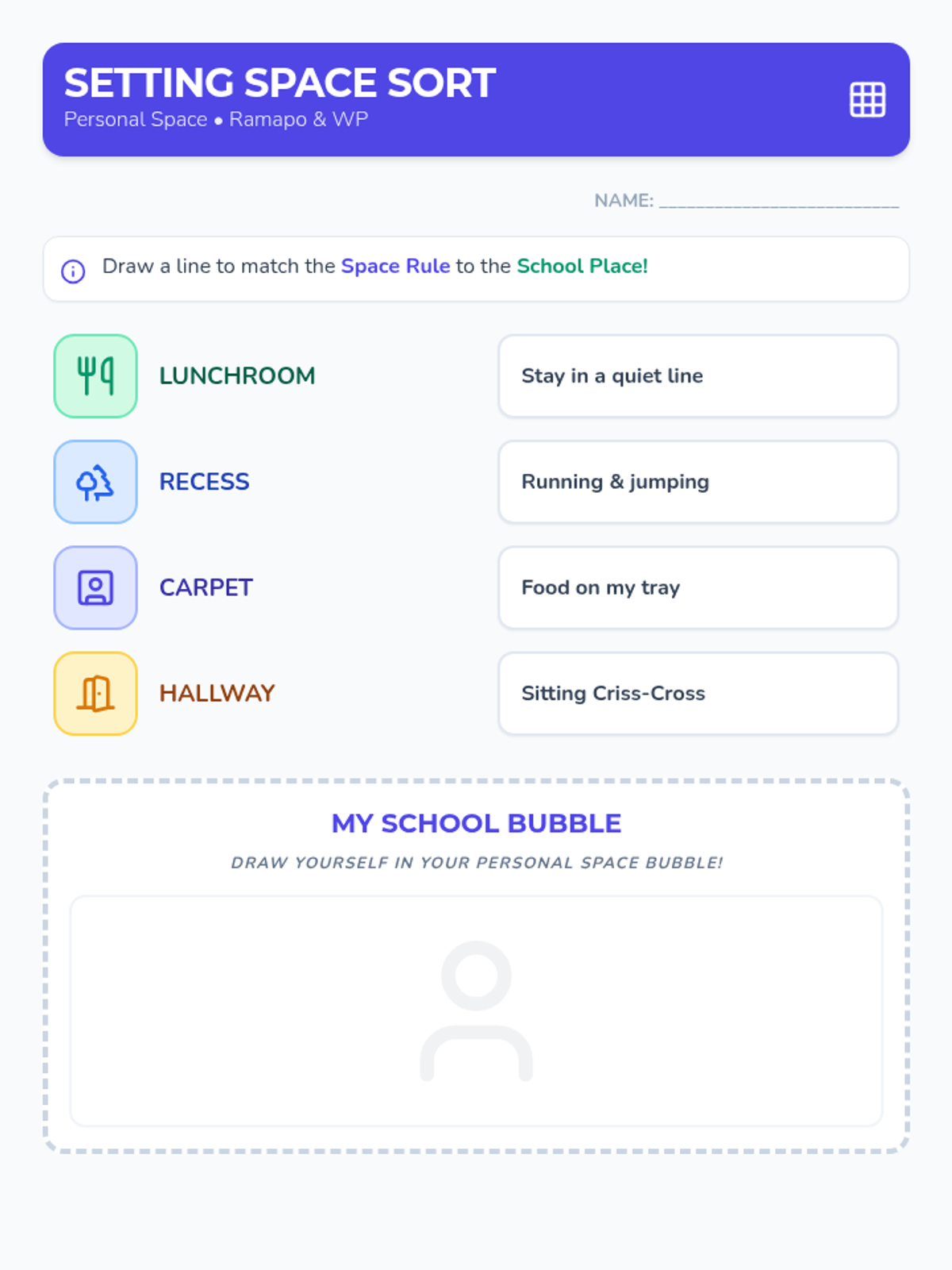
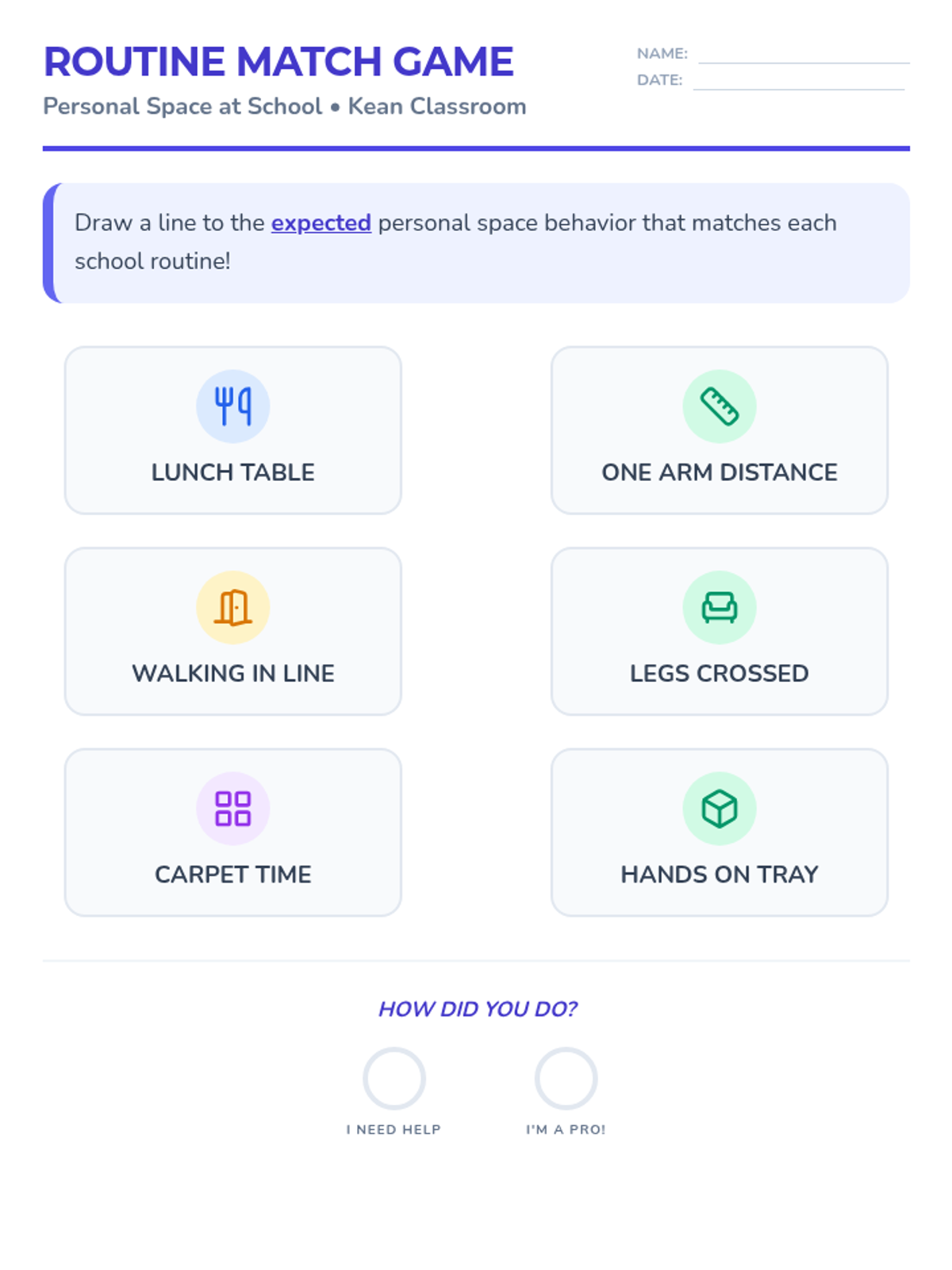
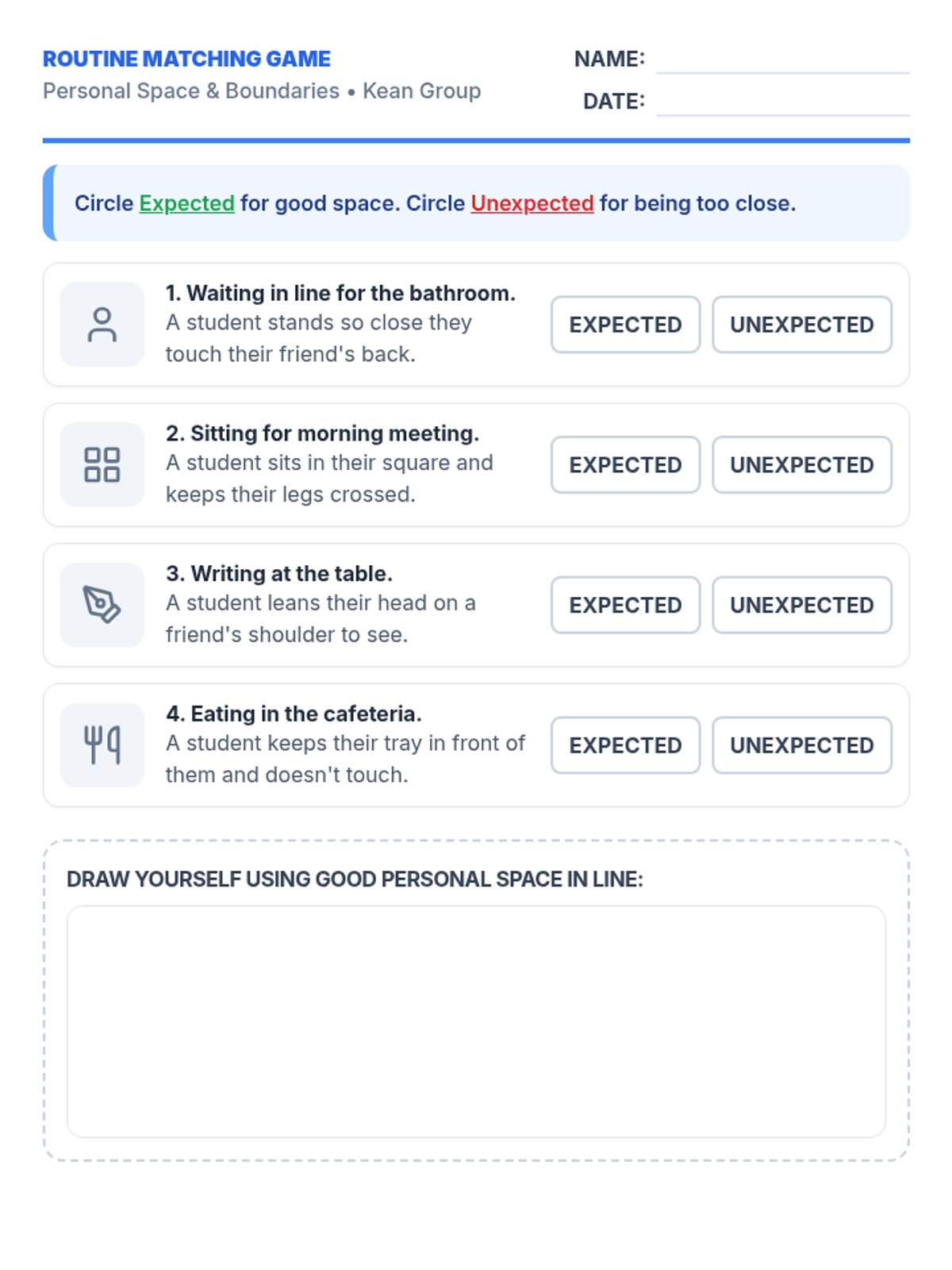
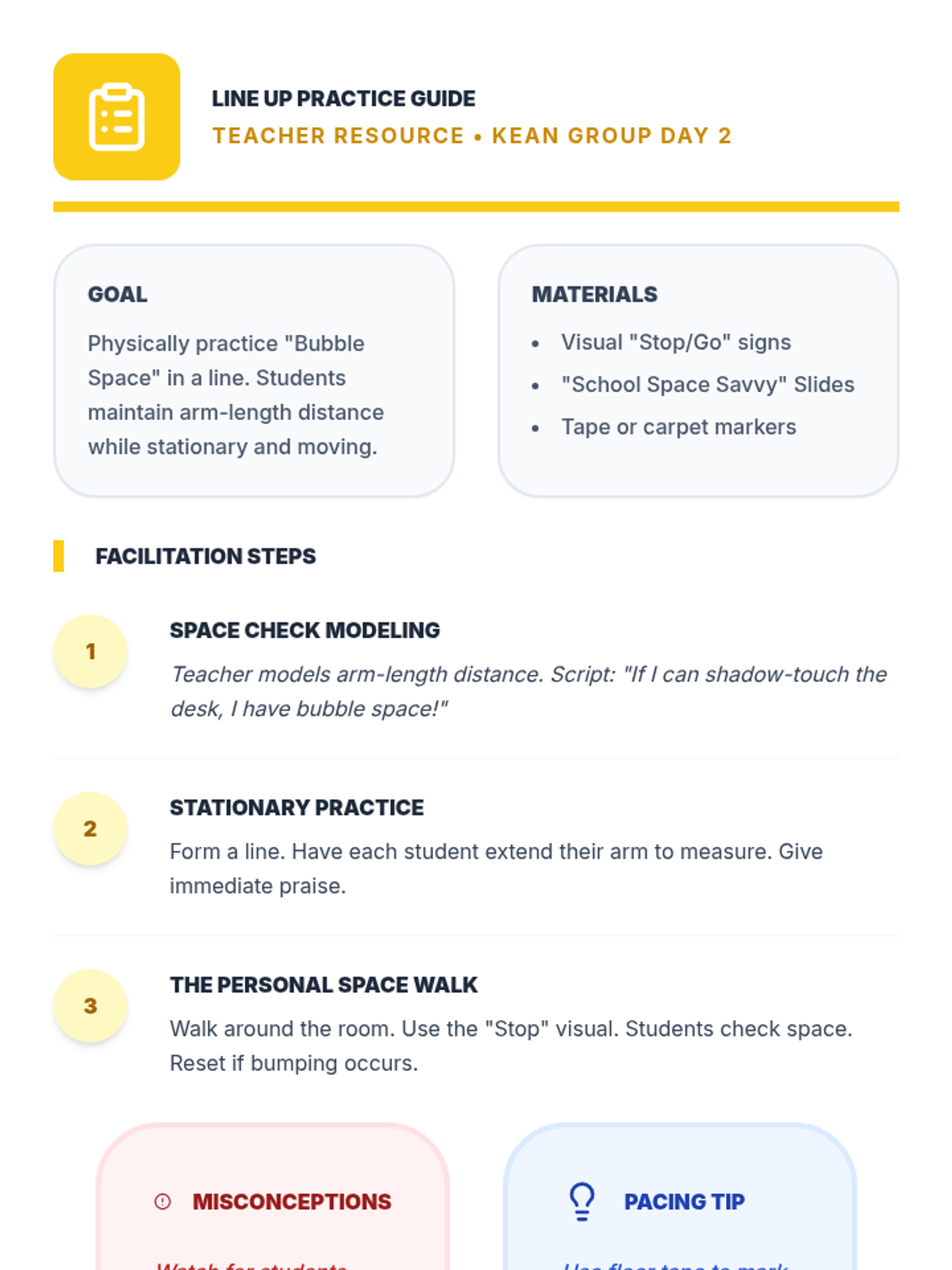
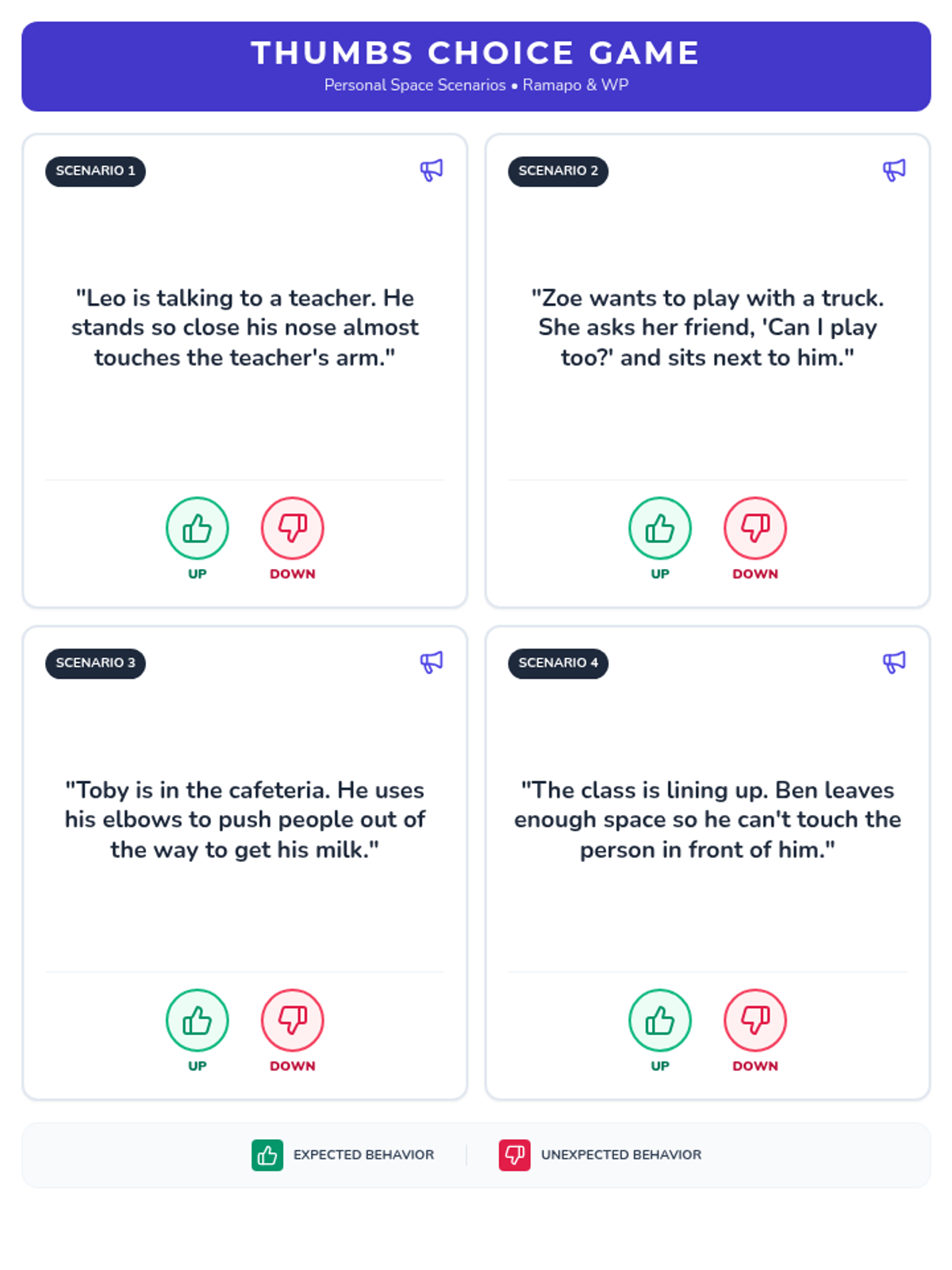
Involves hands-on practice for Kean (lining up) and sorting activities for Ramapo/WP to categorize expected vs. unexpected behaviors in specific school settings.
Focuses on identifying and practicing correct personal space behaviors during school routines such as lunch, recess, and transitions for Kean, Ramapo, and WP students.
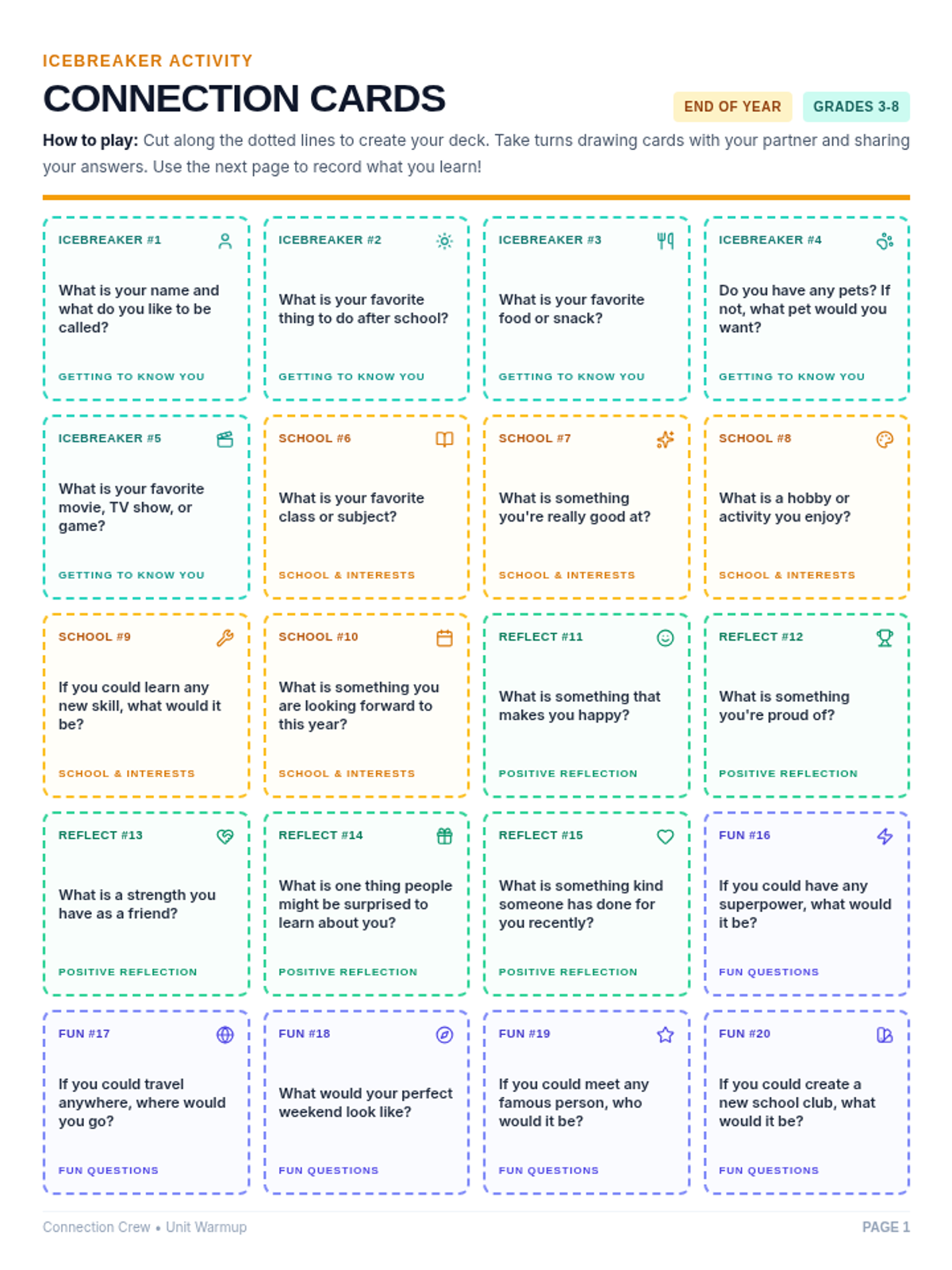
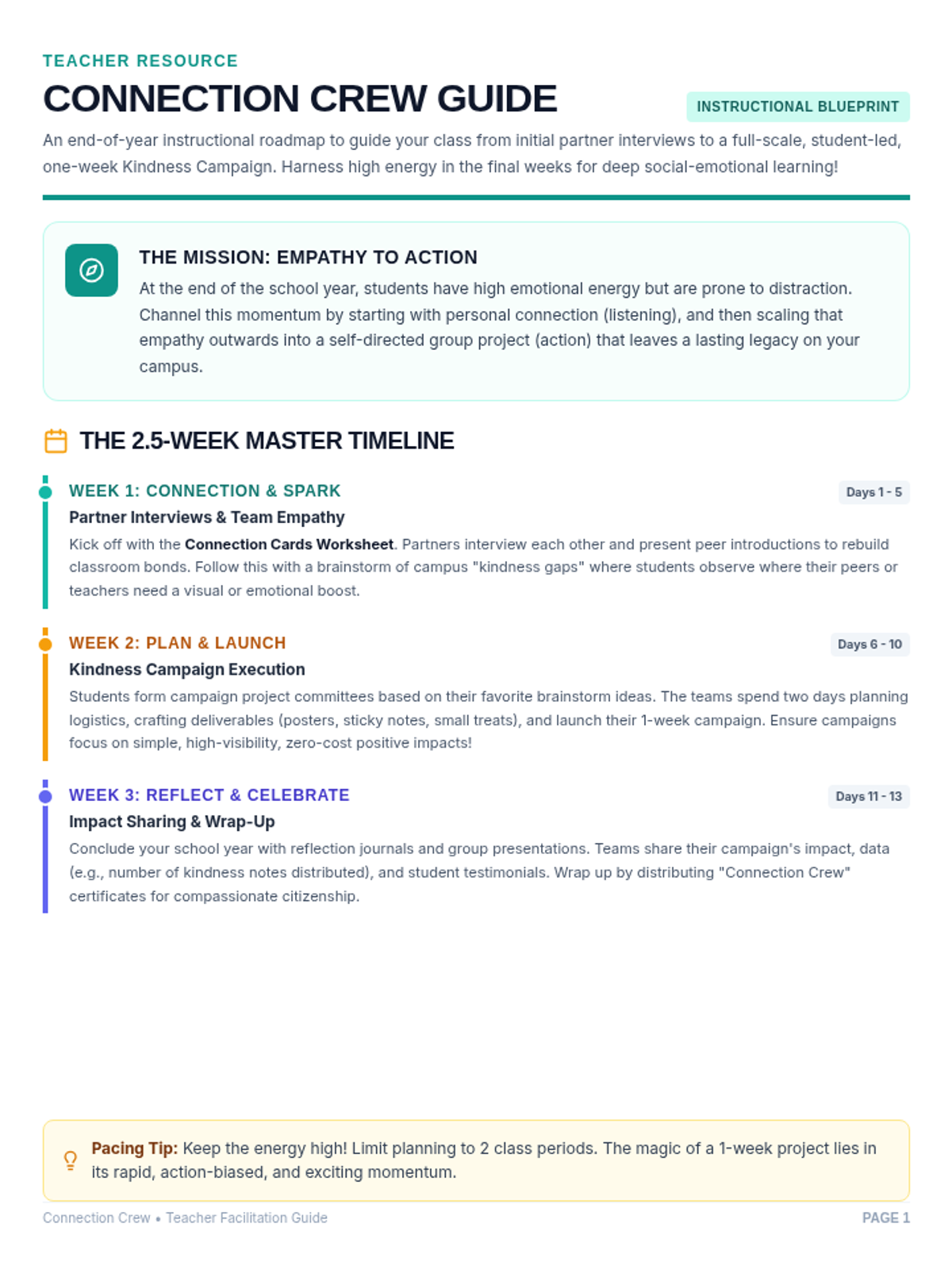
A quick-start end-of-year lesson plan and printable materials that utilize partner interviews to spark connection and transition students into planning a week-long Kindness Campaign.
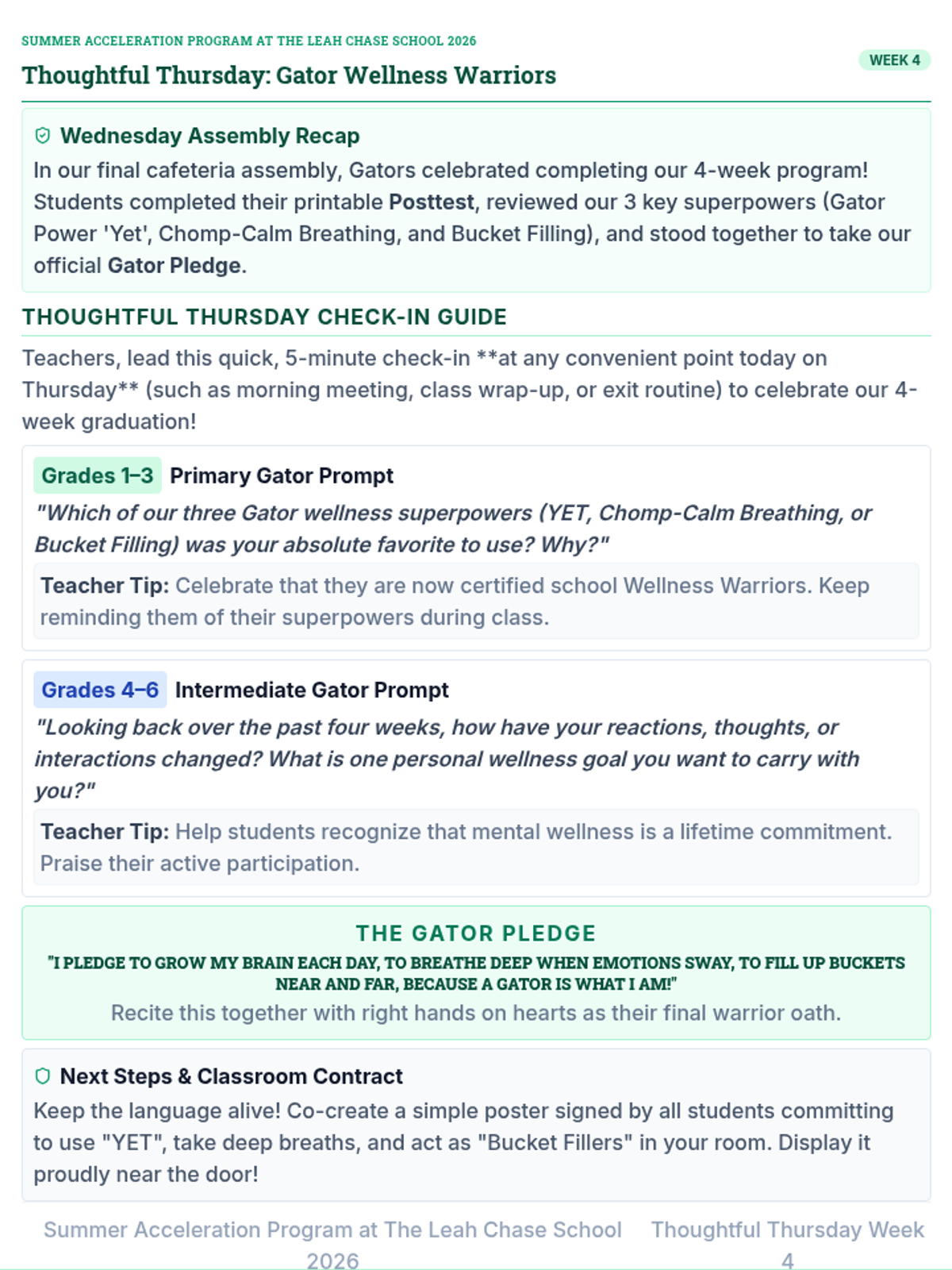
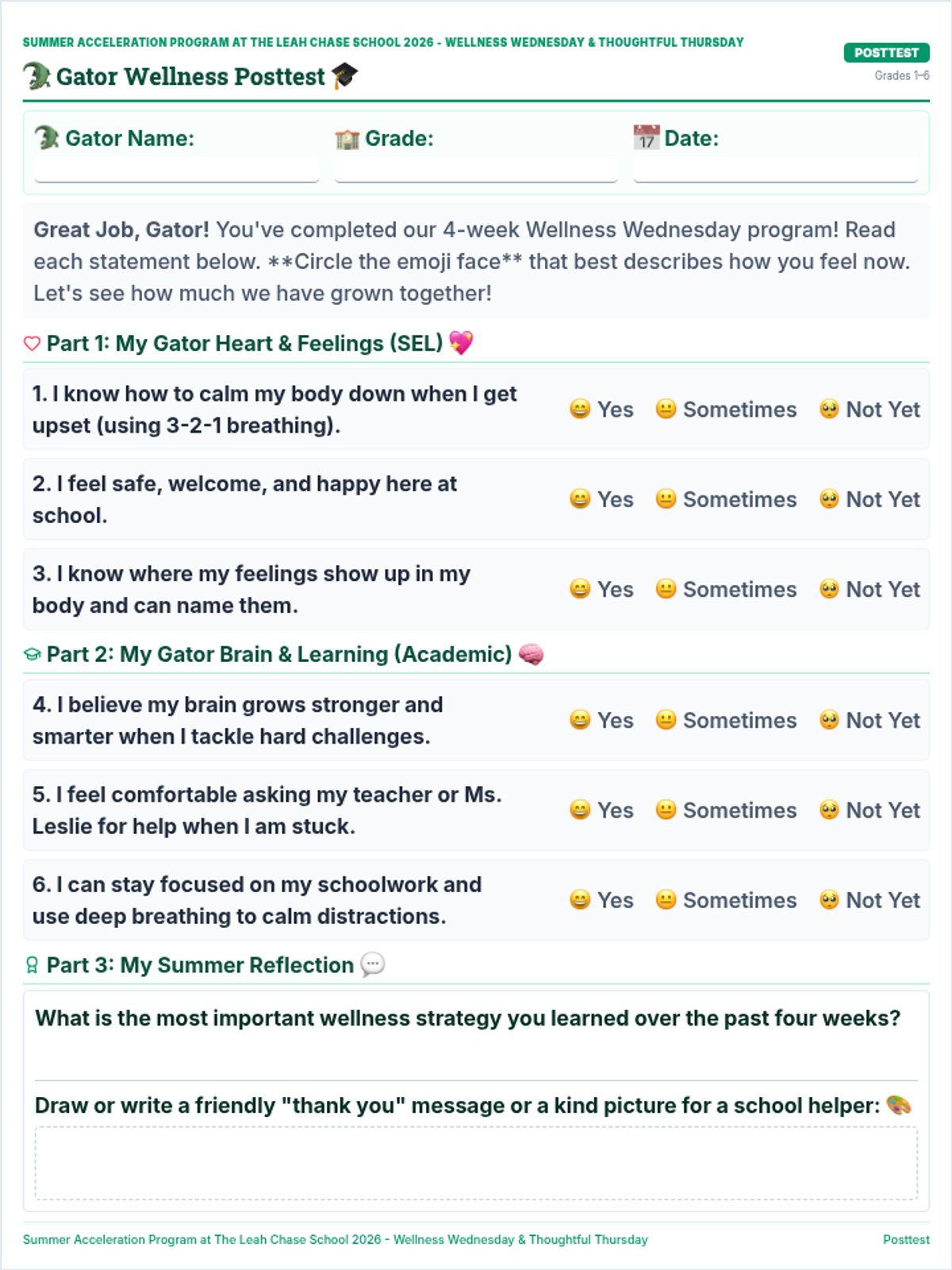
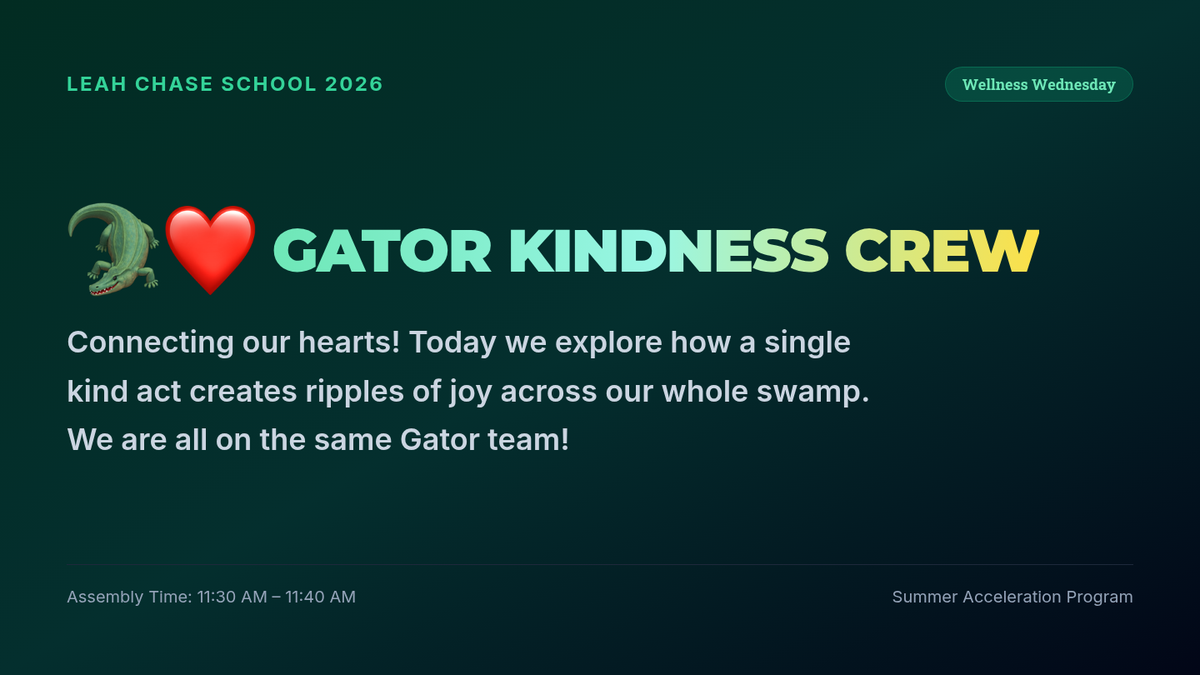
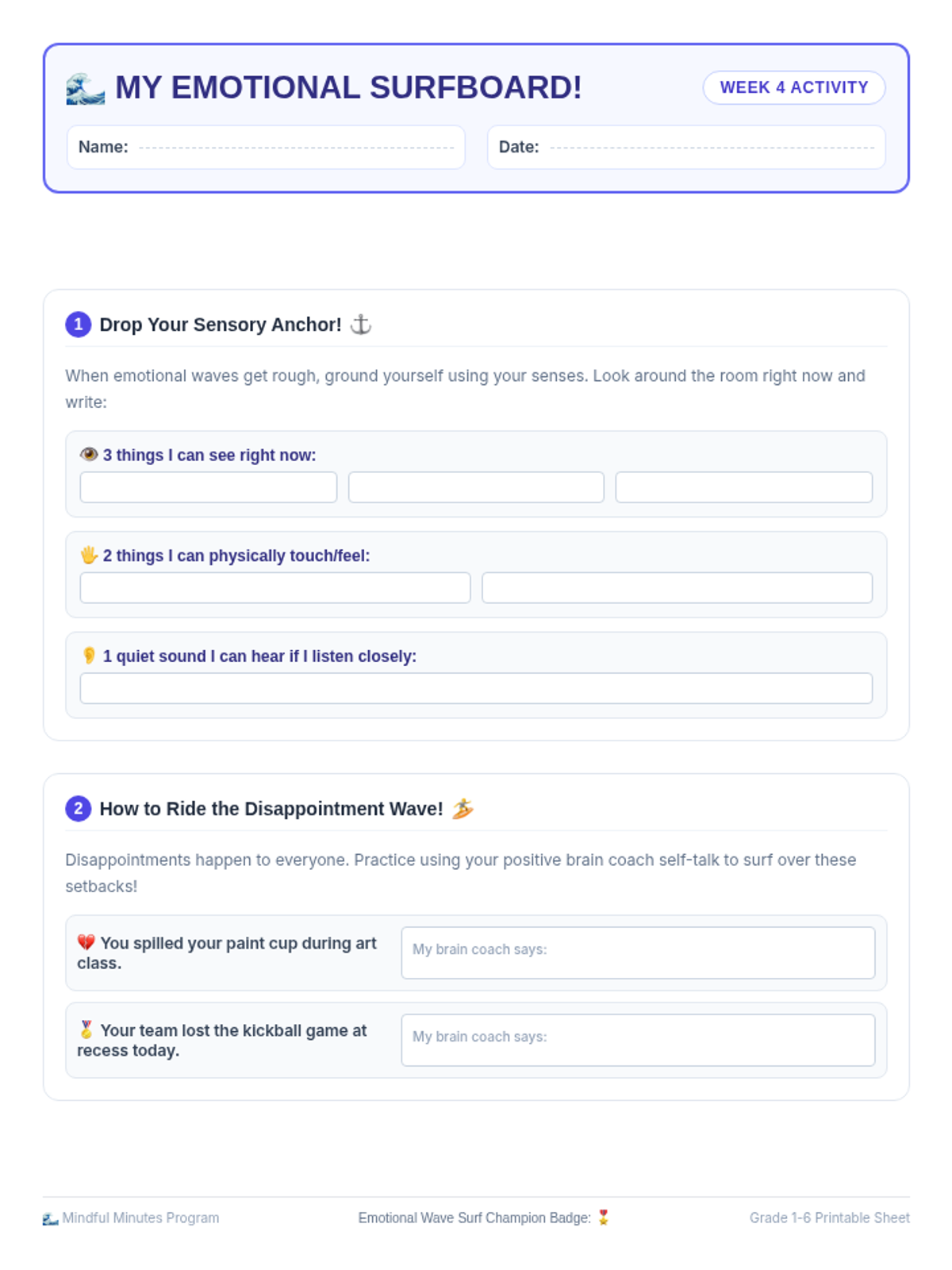
Week 4 of Wellness Wednesdays, celebrating student growth, reflecting on coping strategies, and completing the school-wide post-assessment.
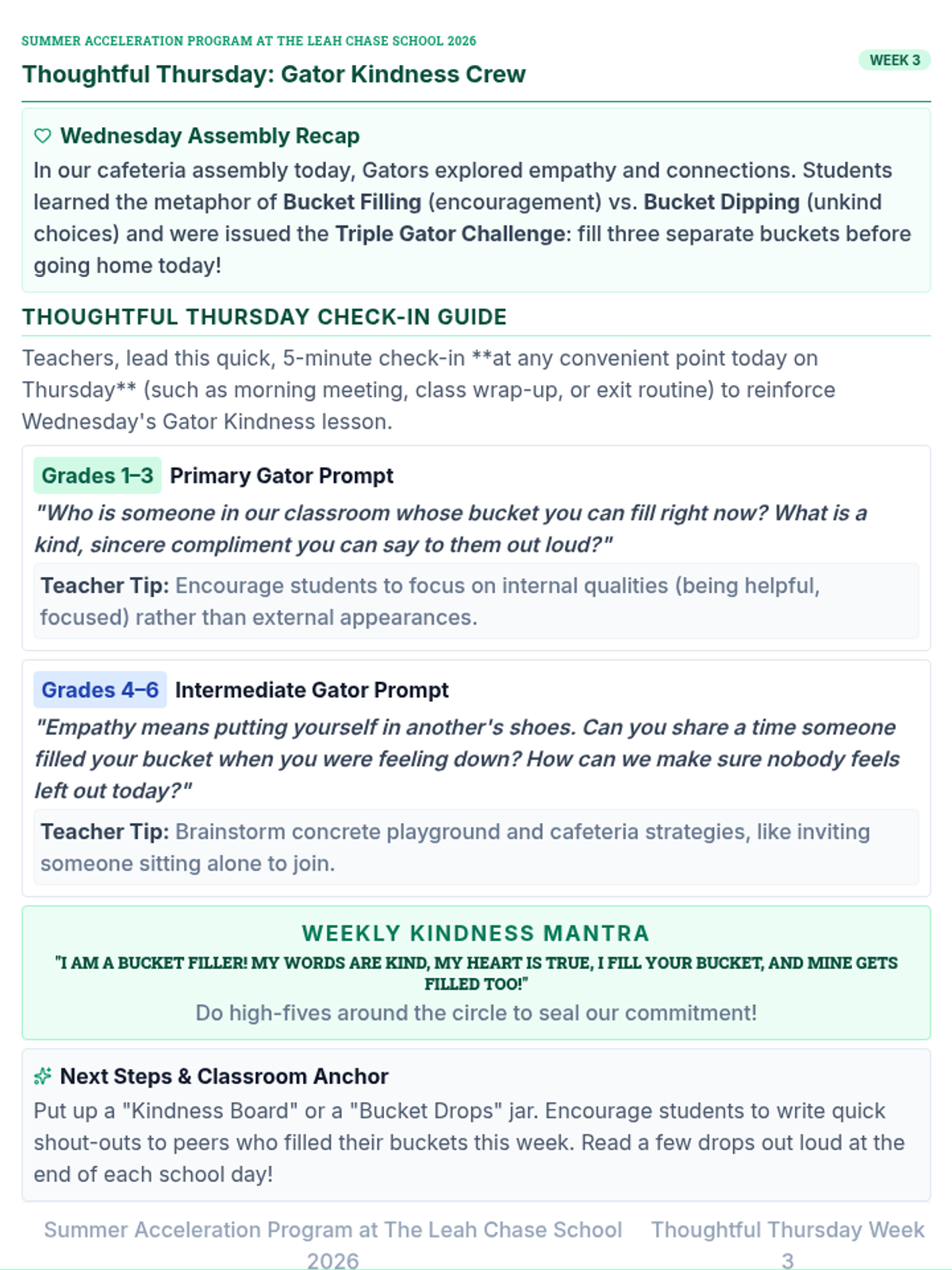
Week 3 of Wellness Wednesdays, exploring empathy, kindness, filling buckets, and building strong, supportive school relationships.
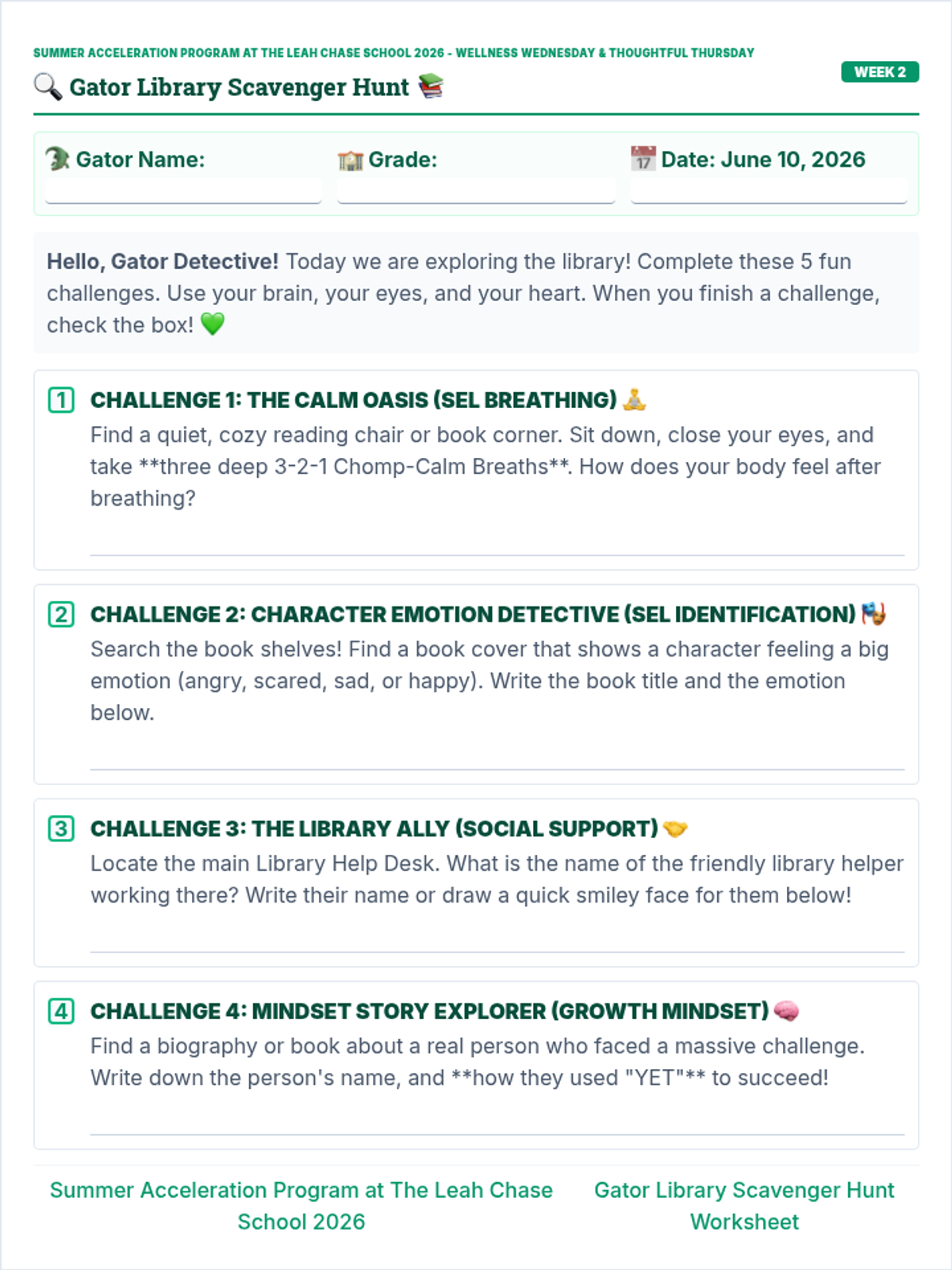
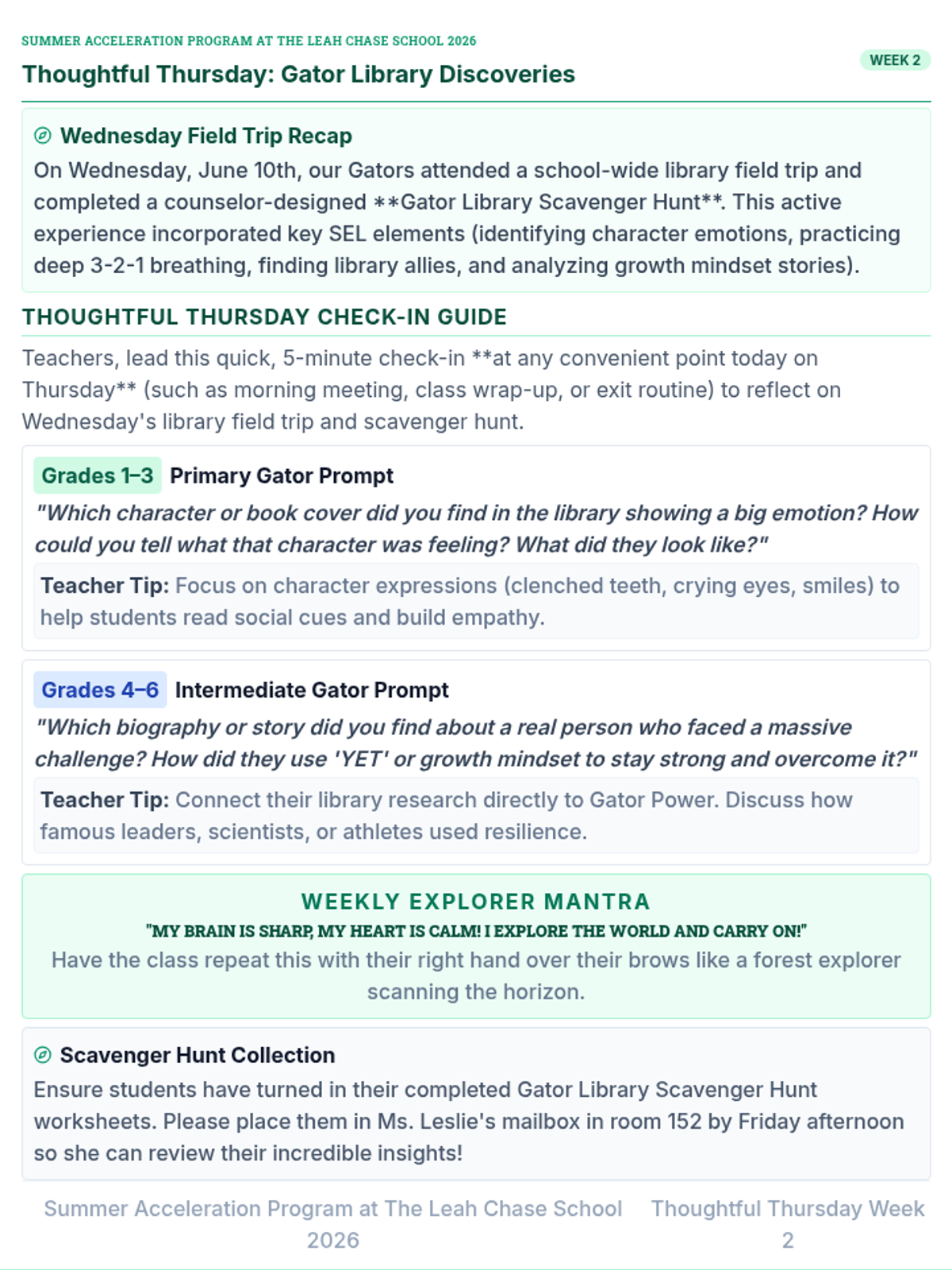
Week 2 of Wellness Wednesdays, teaching students to identify big emotions, understand physical responses, and apply calming strategies.
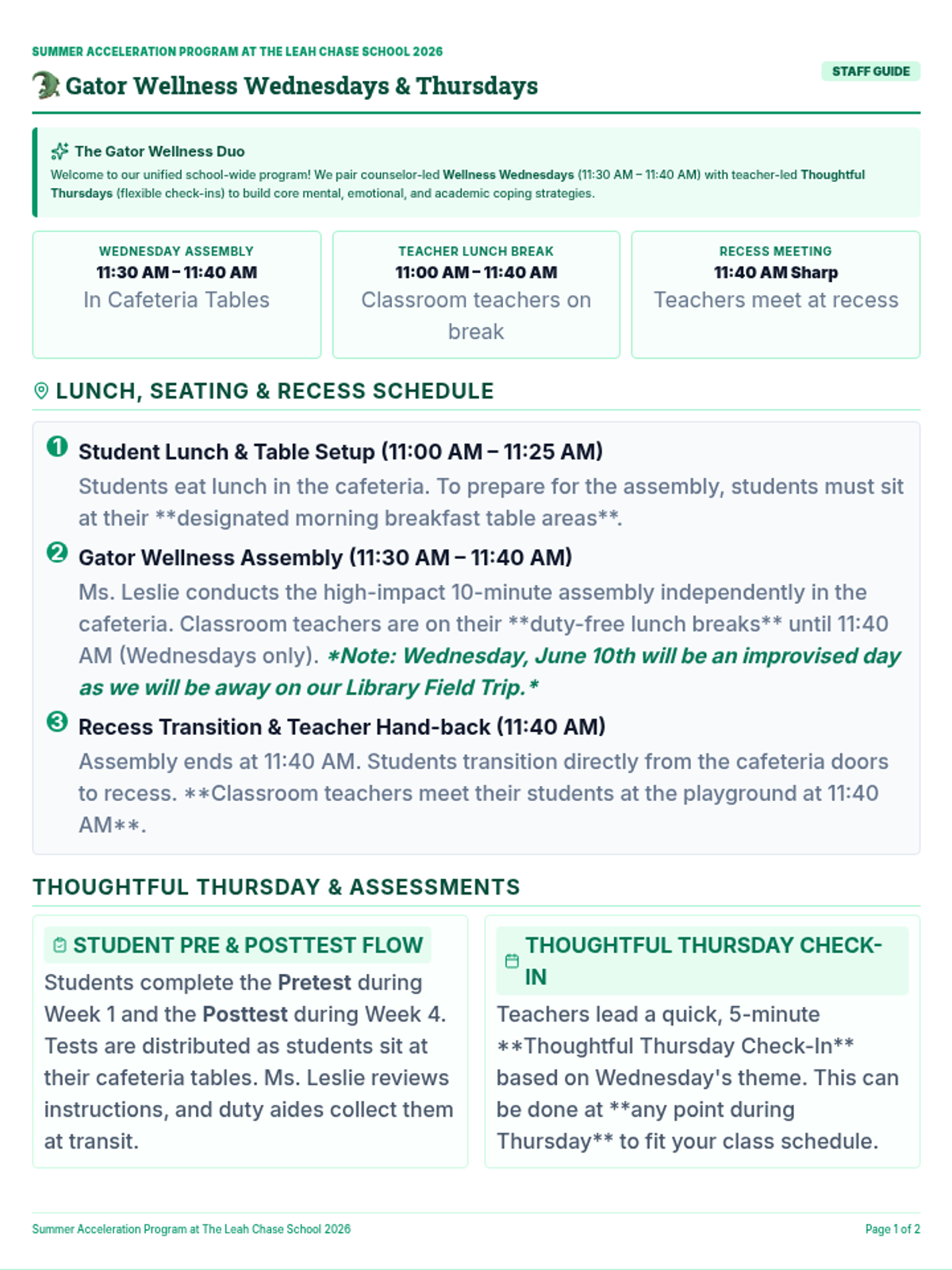
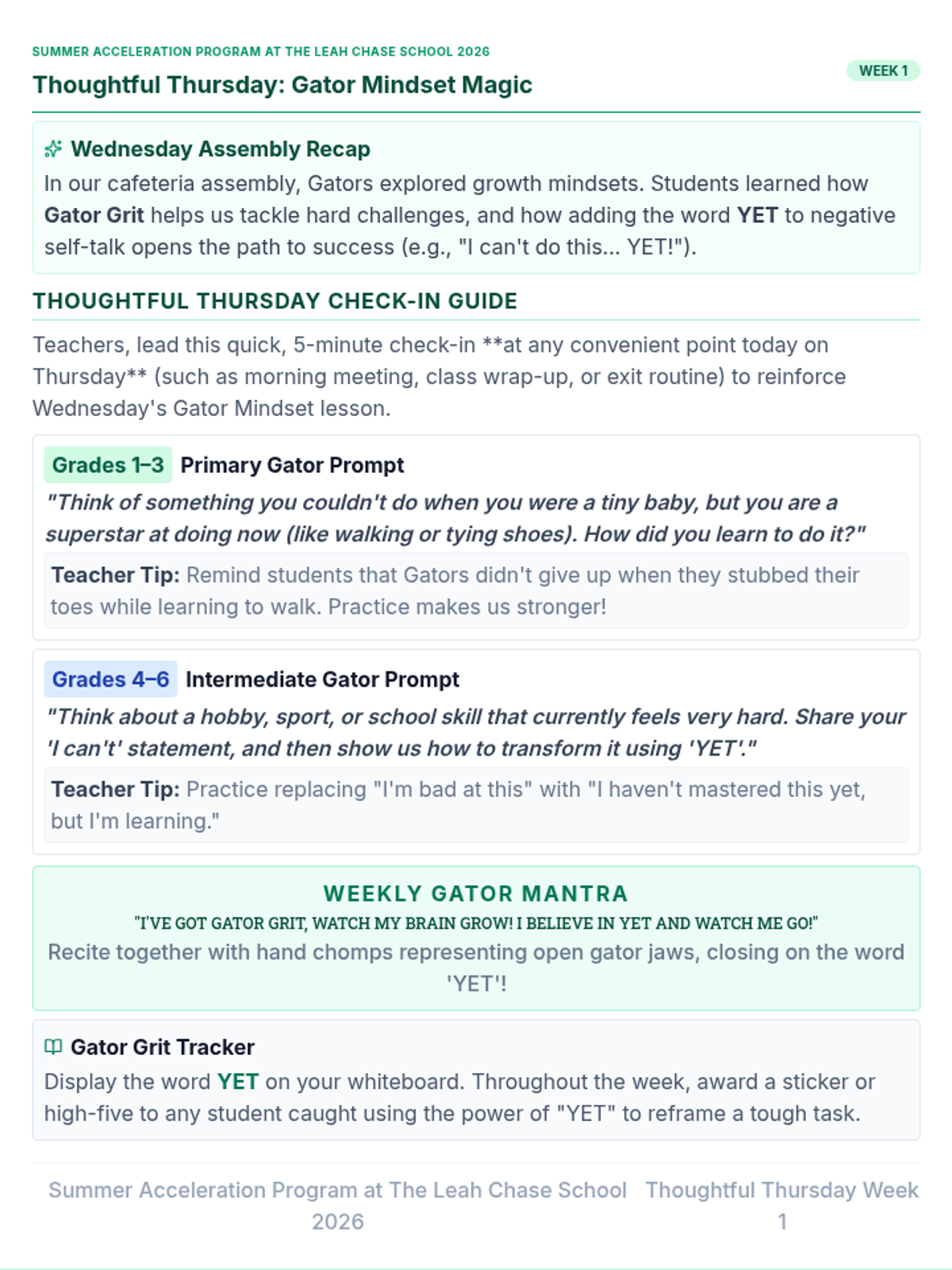
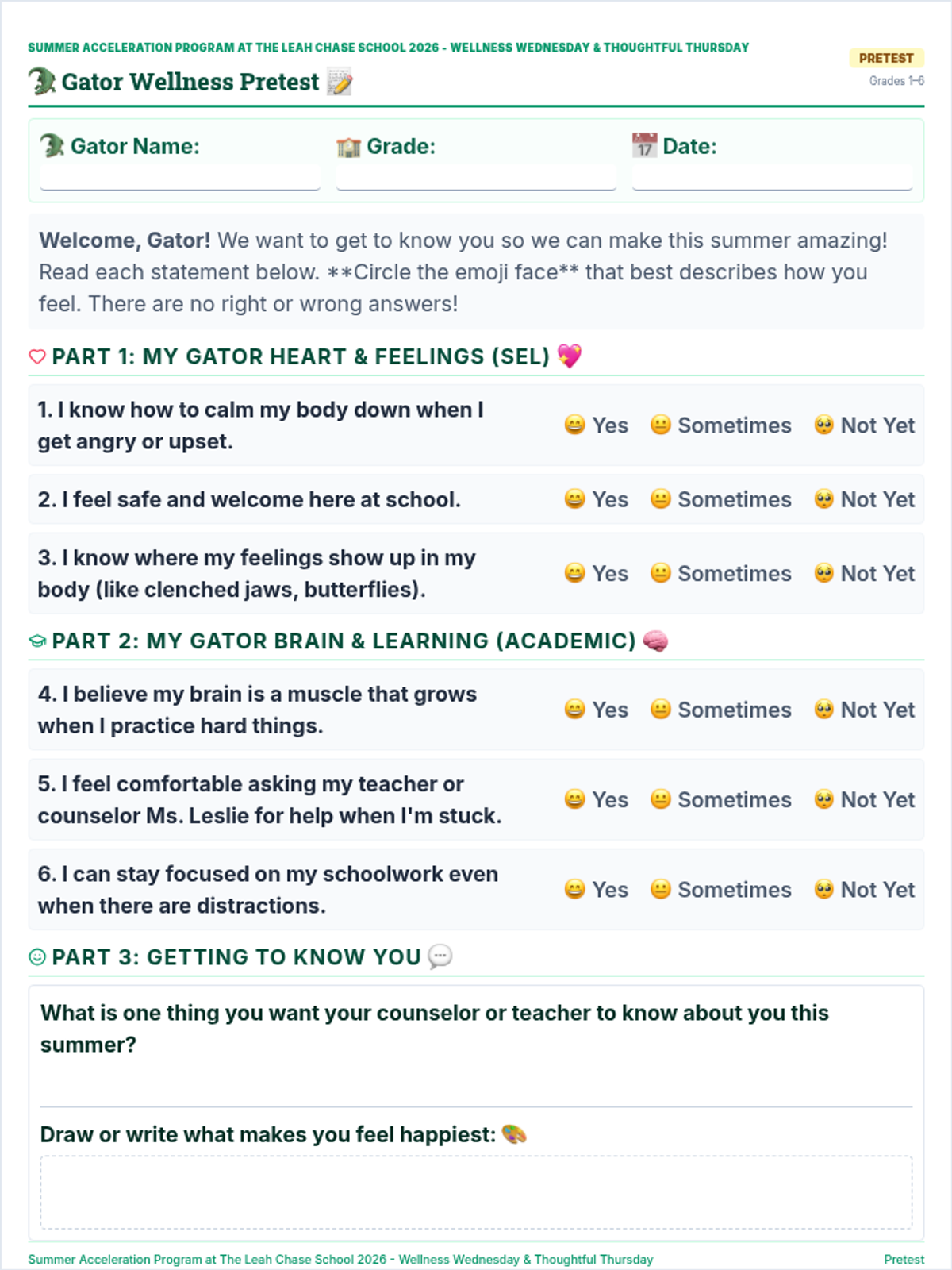
Week 1 of Wellness Wednesdays, introducing the growth mindset, the power of 'yet', and administering the school-wide student pre-assessment.
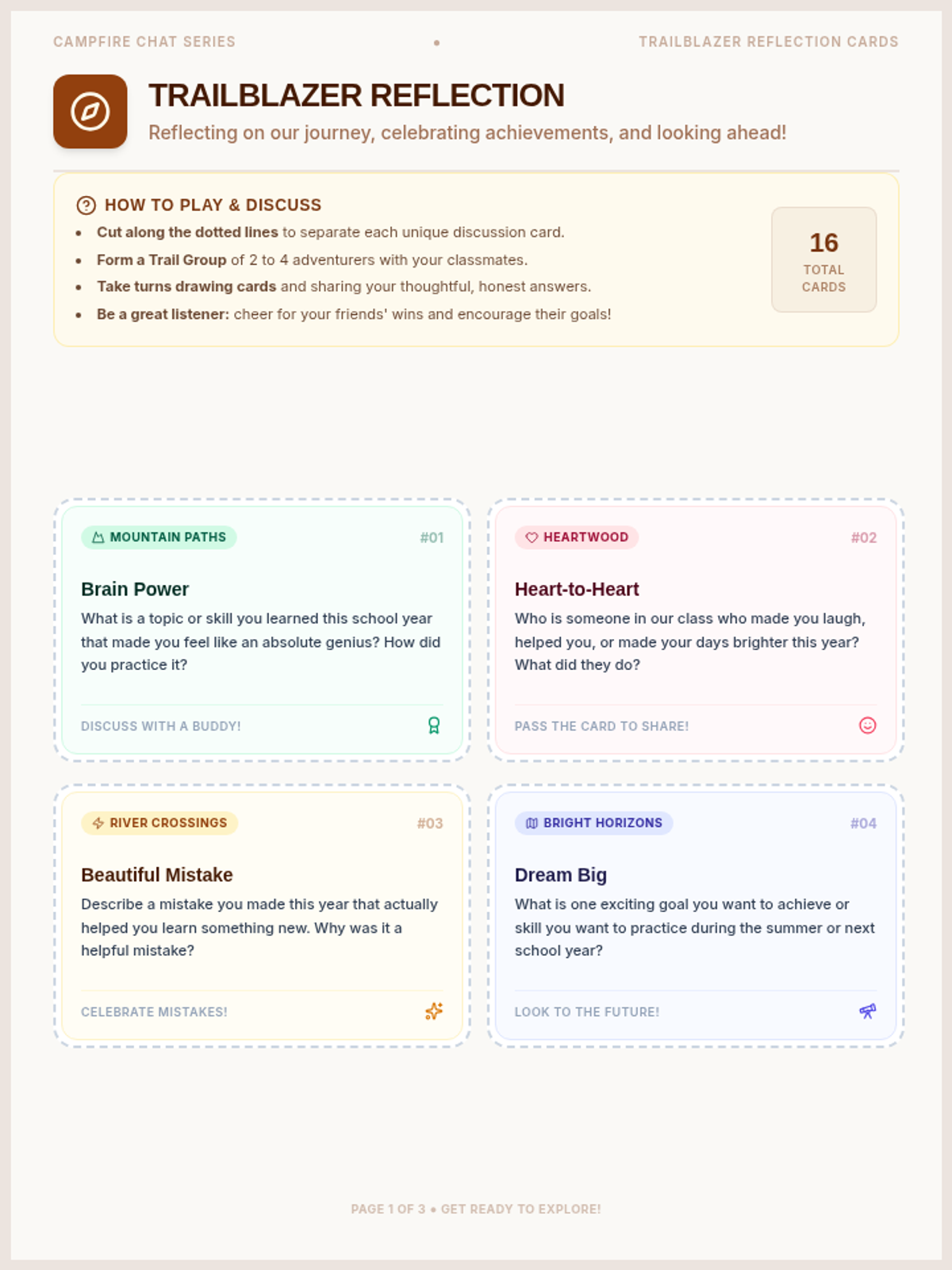
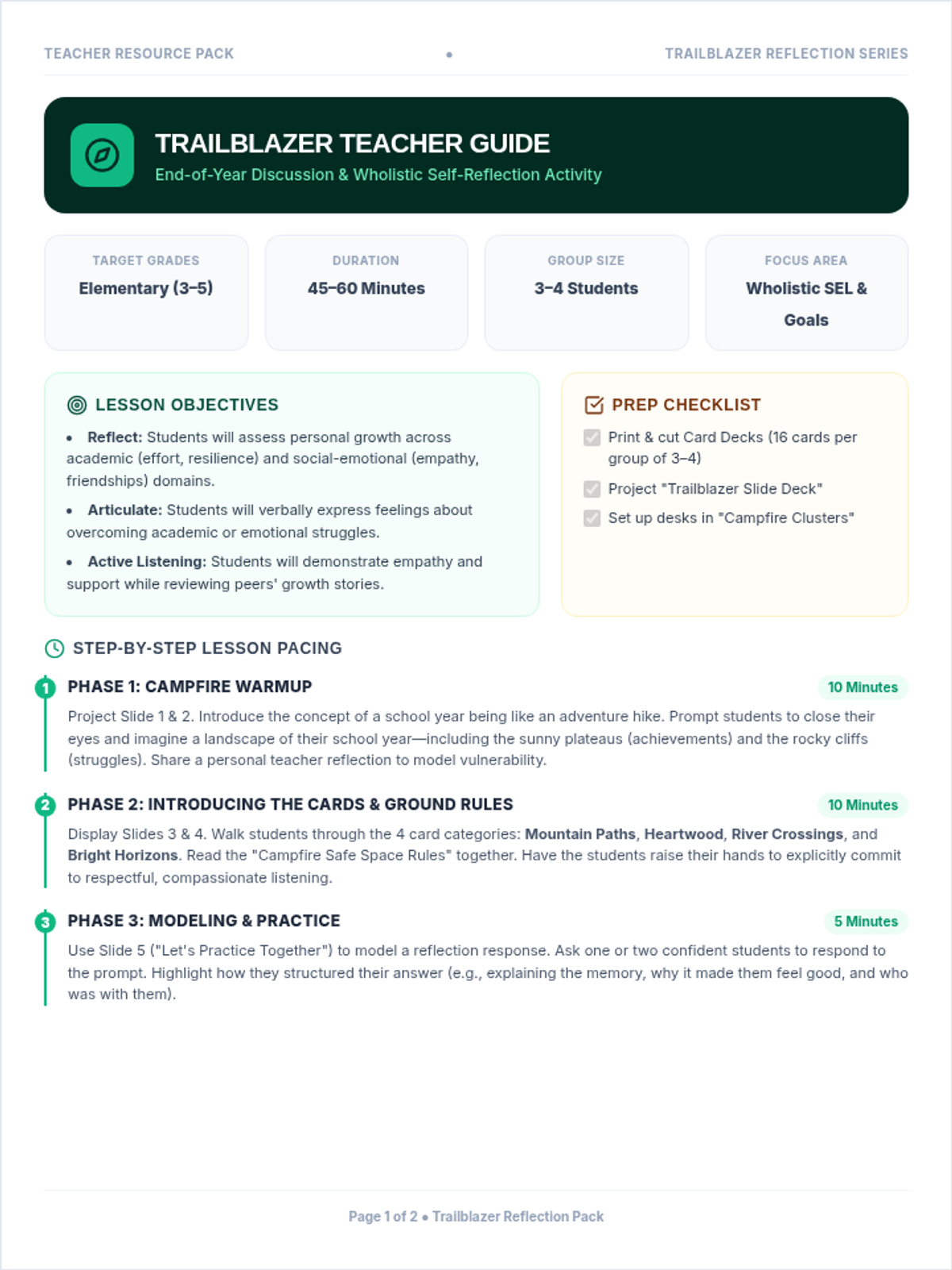
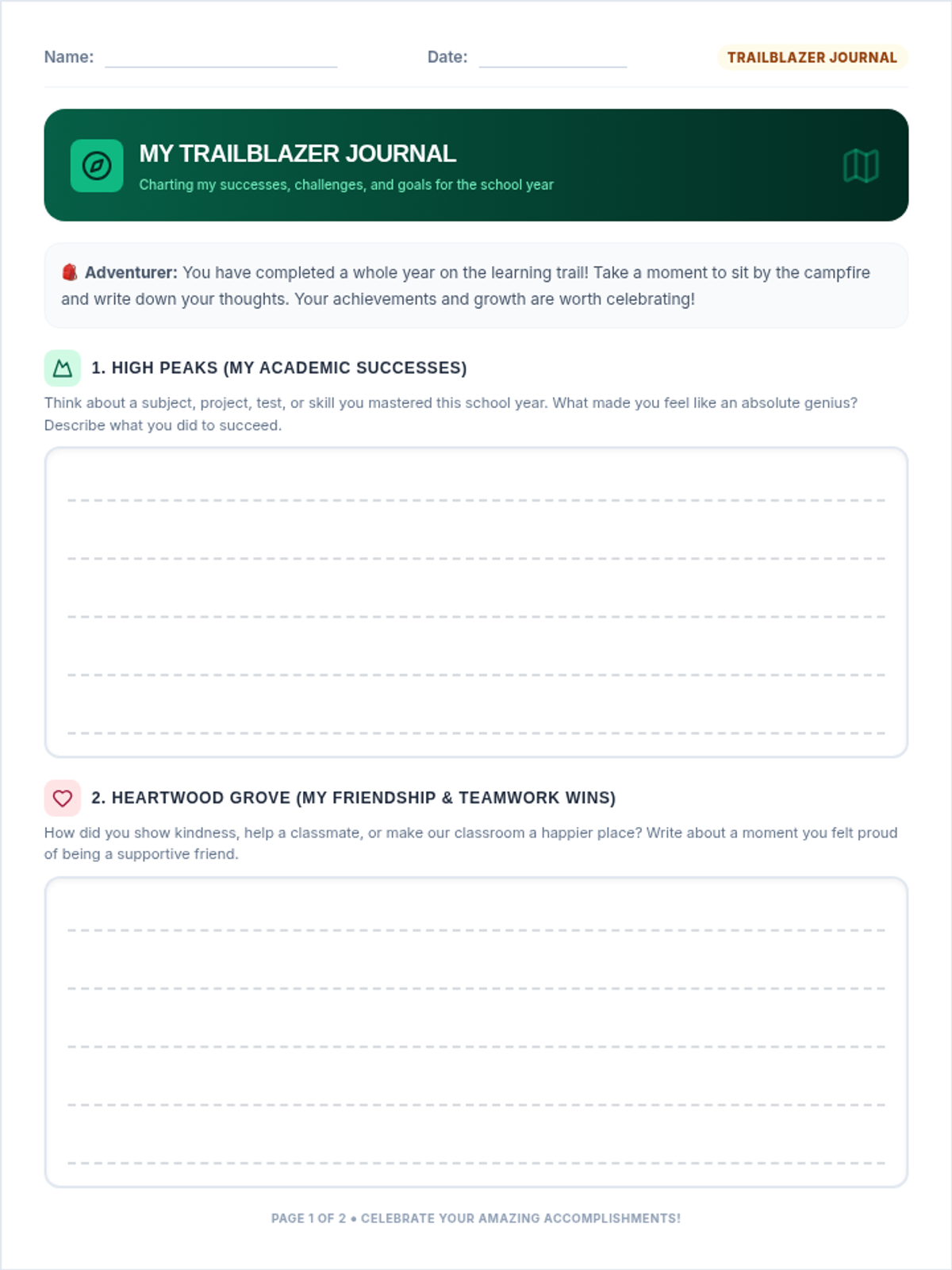
A reflective, engaging, and social-emotional lesson designed for the end of the school year, guiding students to celebrate achievements, reflect on growth, and set future goals.
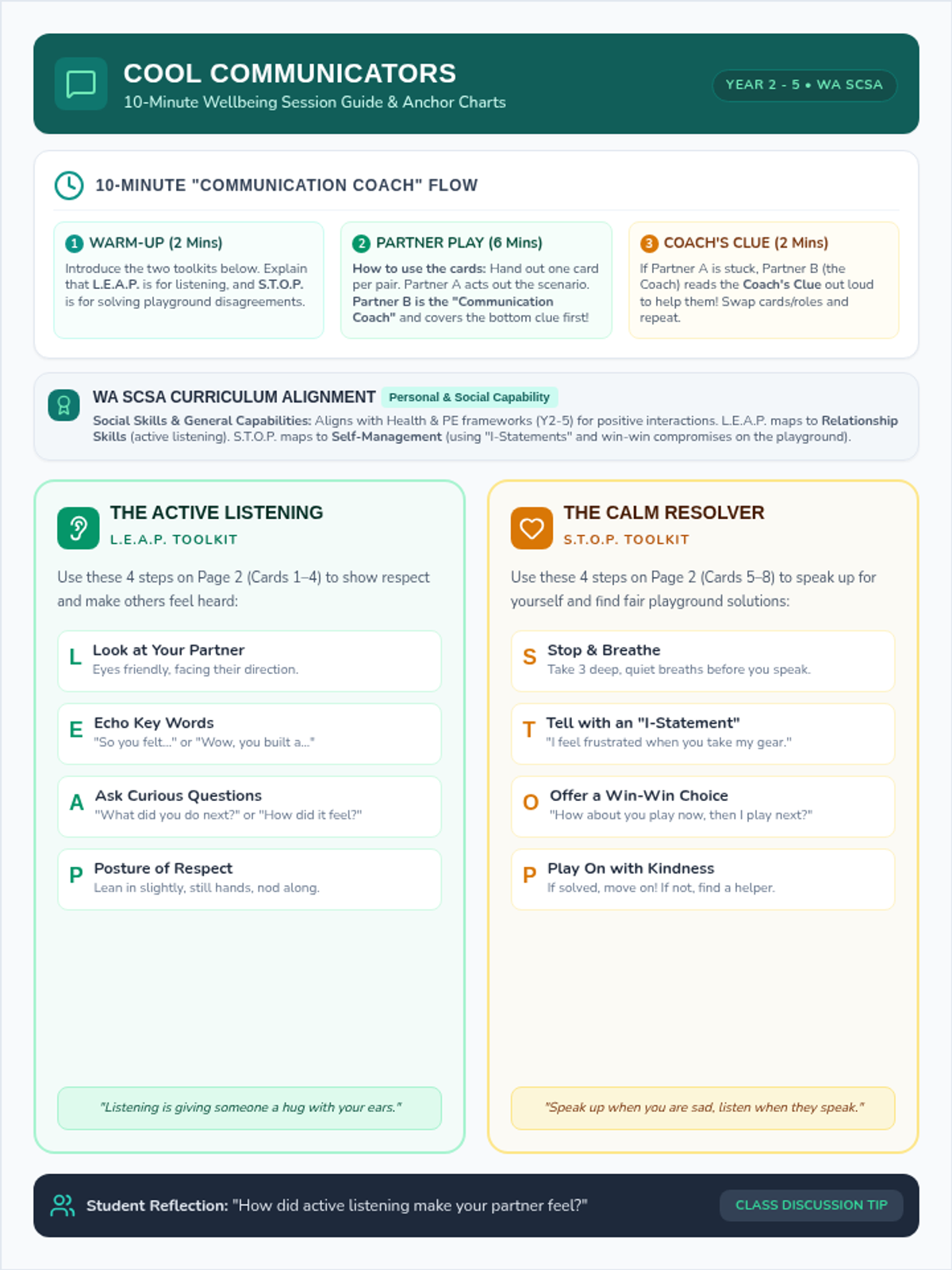
A rapid 10-minute wellbeing officer session on communication, aligned with WA SCSA guidelines. Features active listening techniques and conflict resolution role-play for Year 2-5 students.
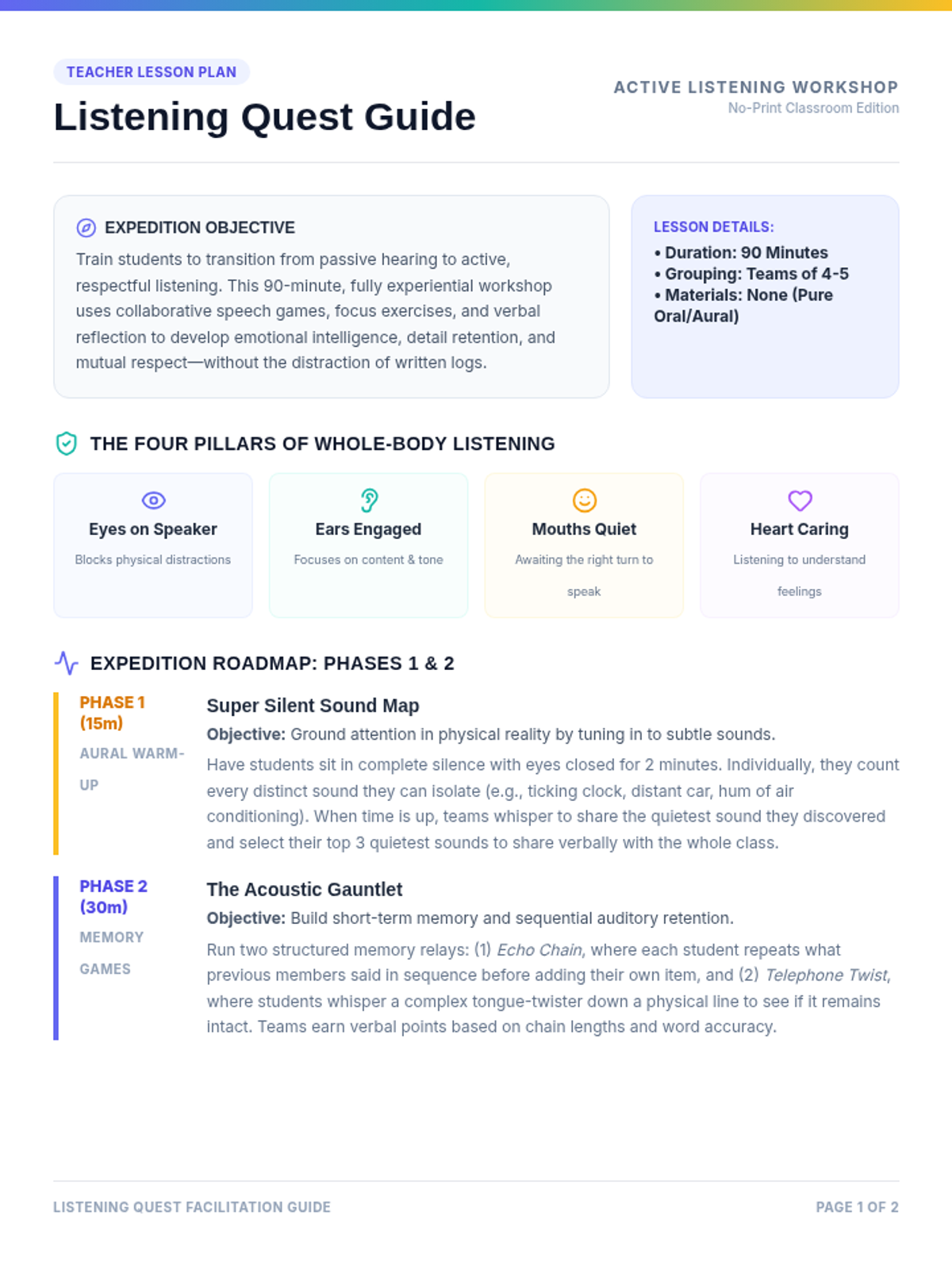
A 90-minute active learning lesson designed to build respectful, cooperative listening habits through engaging classroom challenges, without the distraction of physical worksheets.
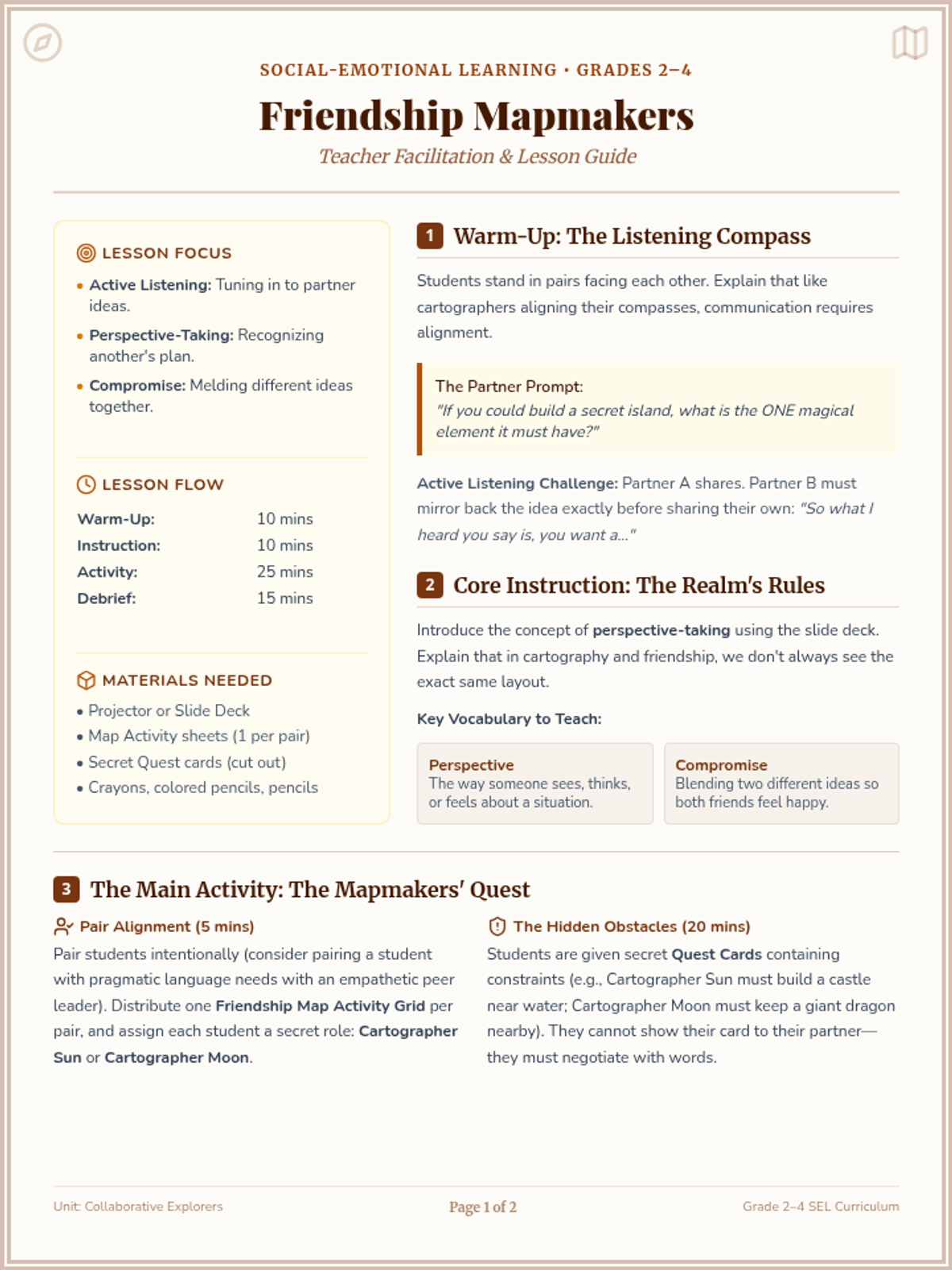
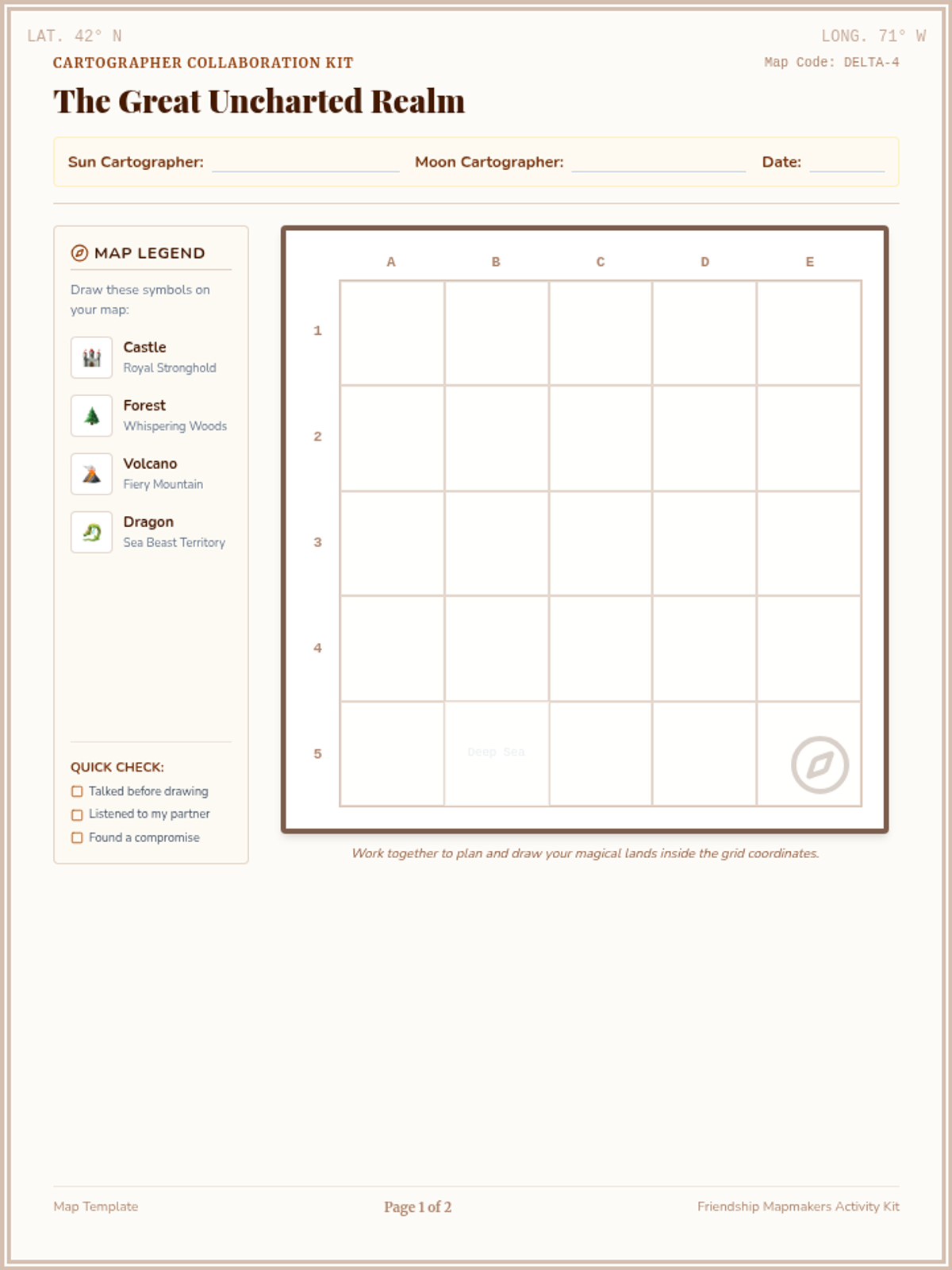
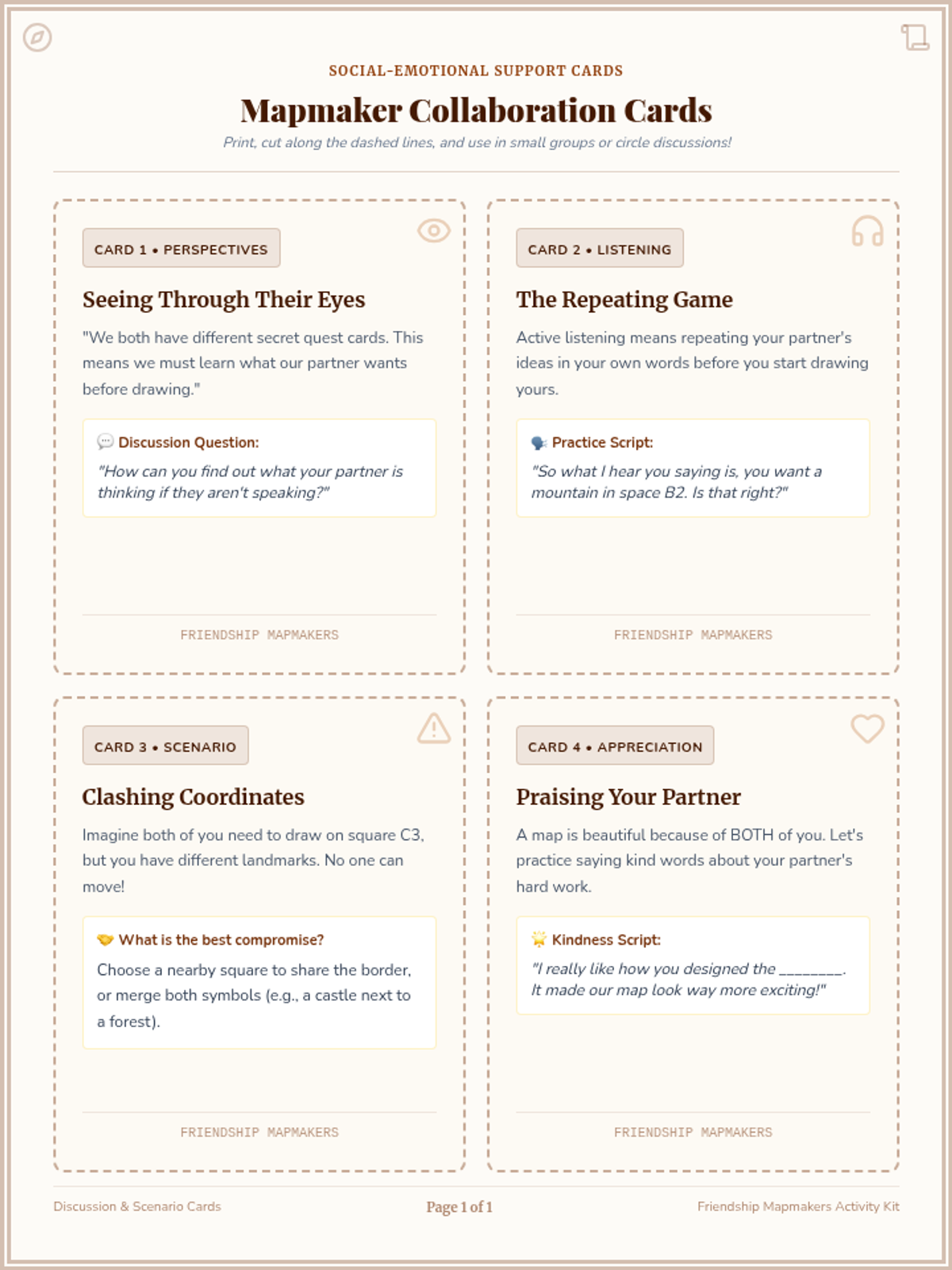
A collaborative social-emotional learning lesson where students work in pairs to design a fantasy map. Each player holds a secret navigation objective, requiring active listening, perspective-taking, and compromise to succeed.
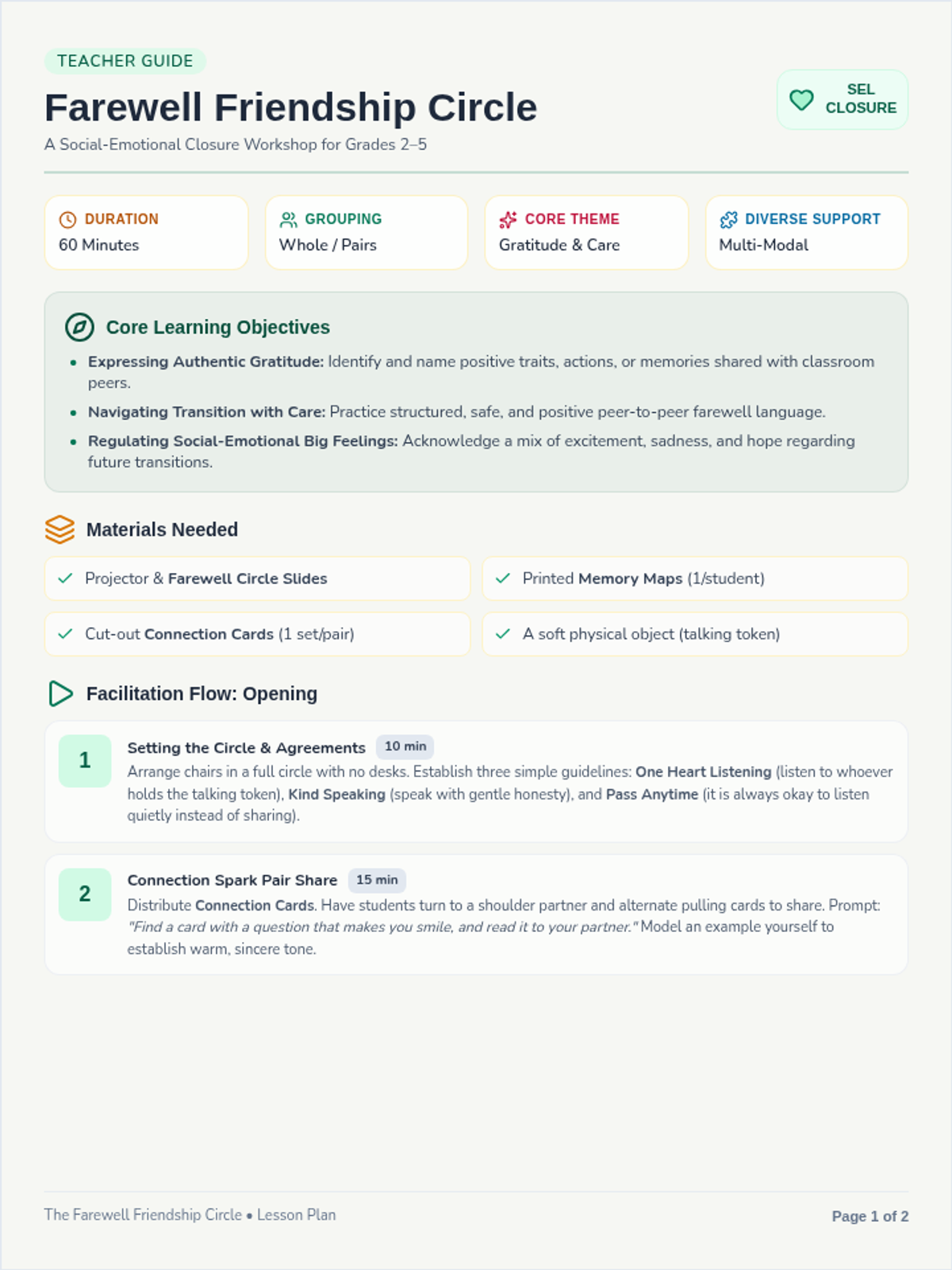
A social-emotional learning closure workshop for grades 2-5. Students practice gratitude, share constructive goodbyes, and celebrate classroom bonds as they prepare for transitions.
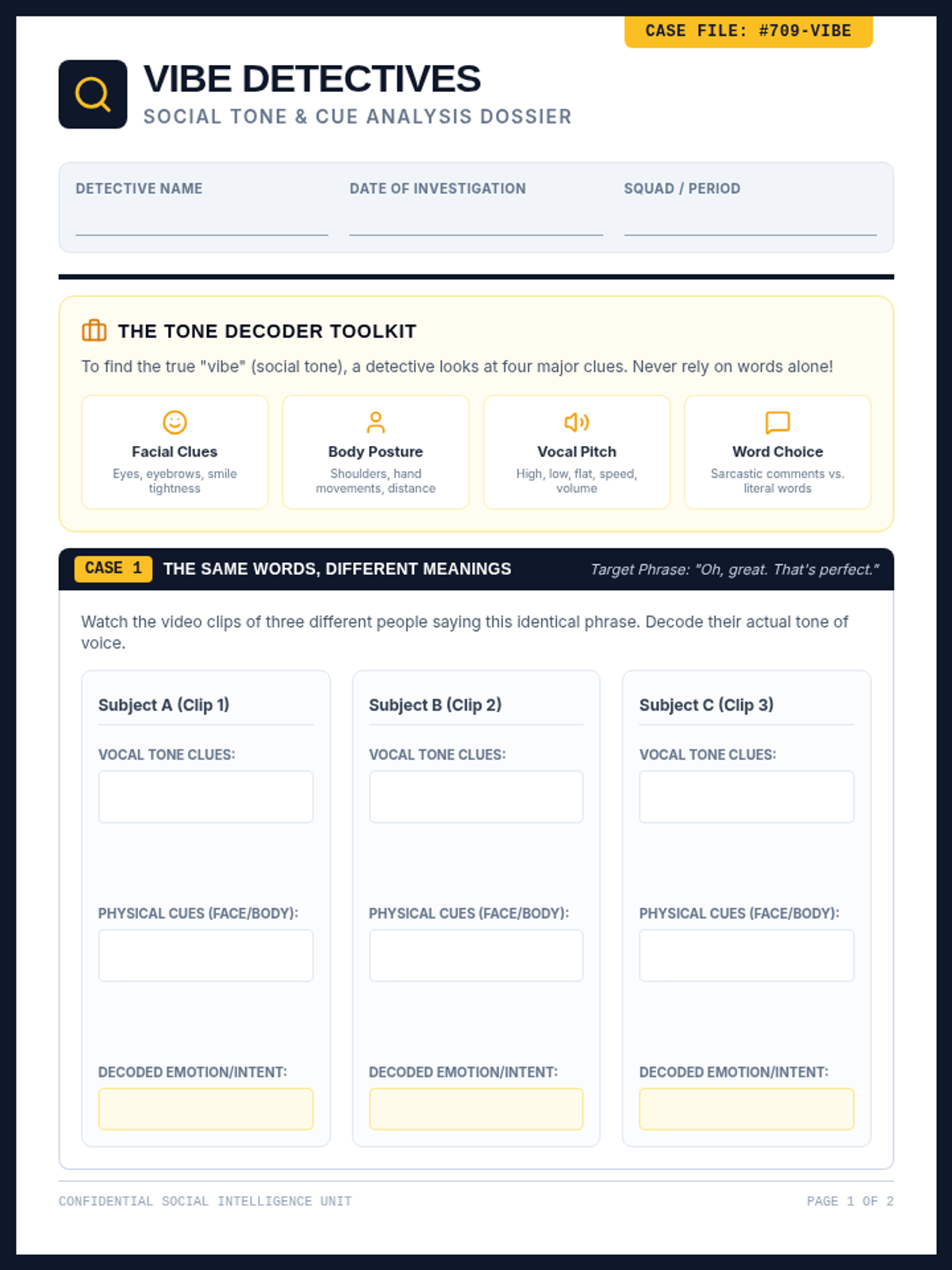
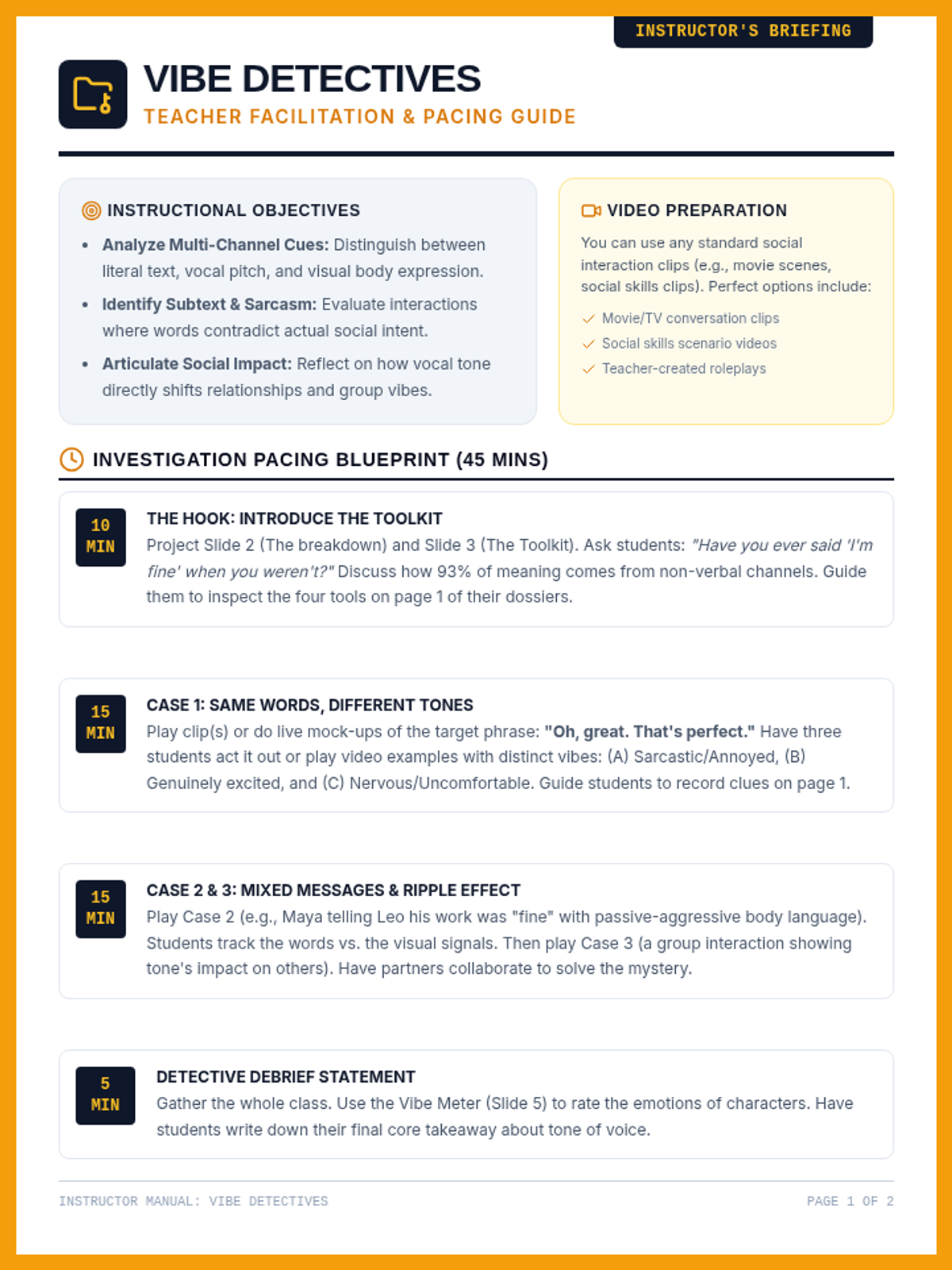
A highly engaging lesson where students analyze social cues, body language, and vocal pitch in videos to decode a character's true tone of voice and social intent.
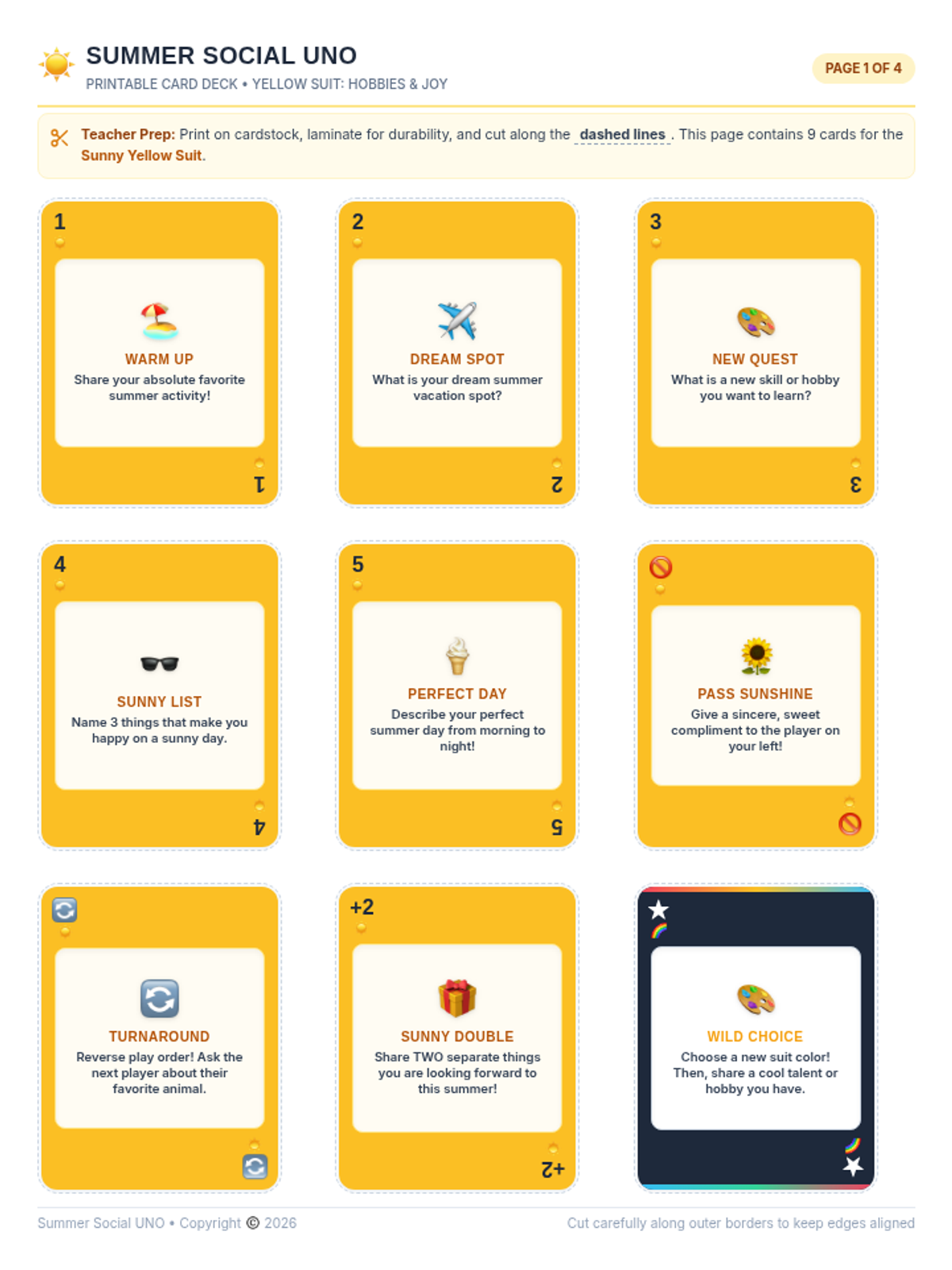
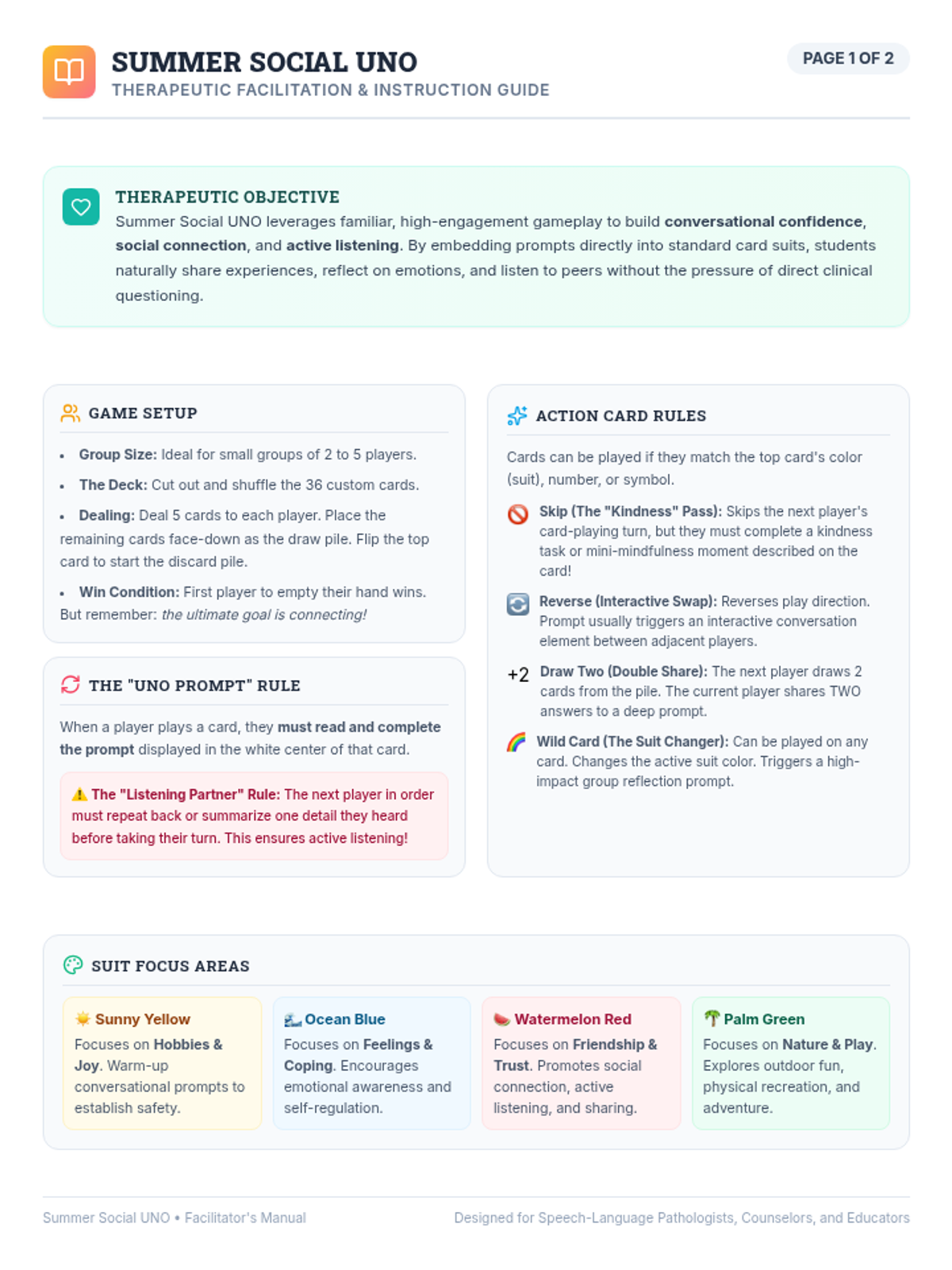
A therapeutic gameplay experience using a customized, summer-themed UNO card deck. Students practice conversational prompts, active listening, turn-taking, and relationship building in a fun, structured environment.
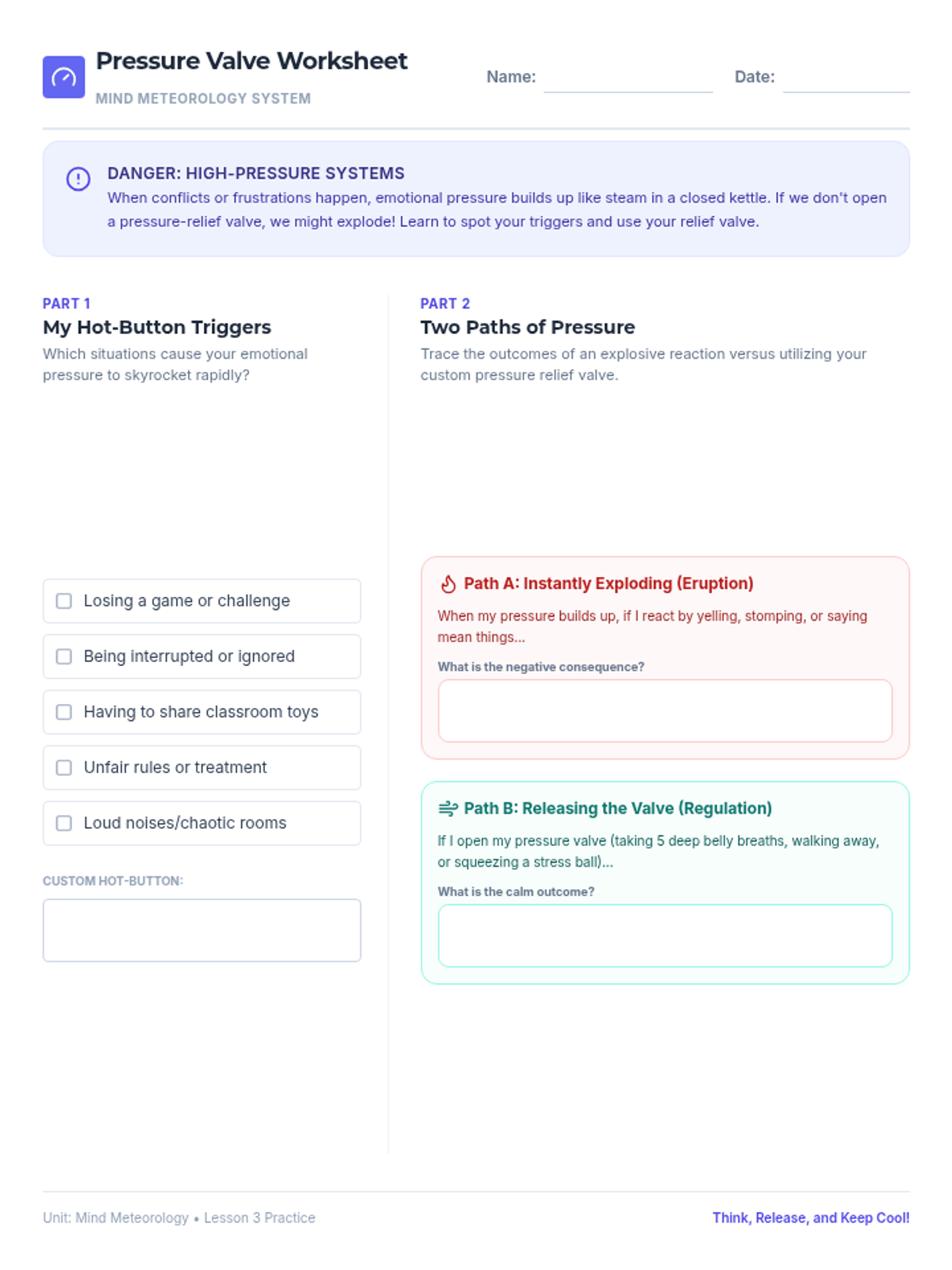
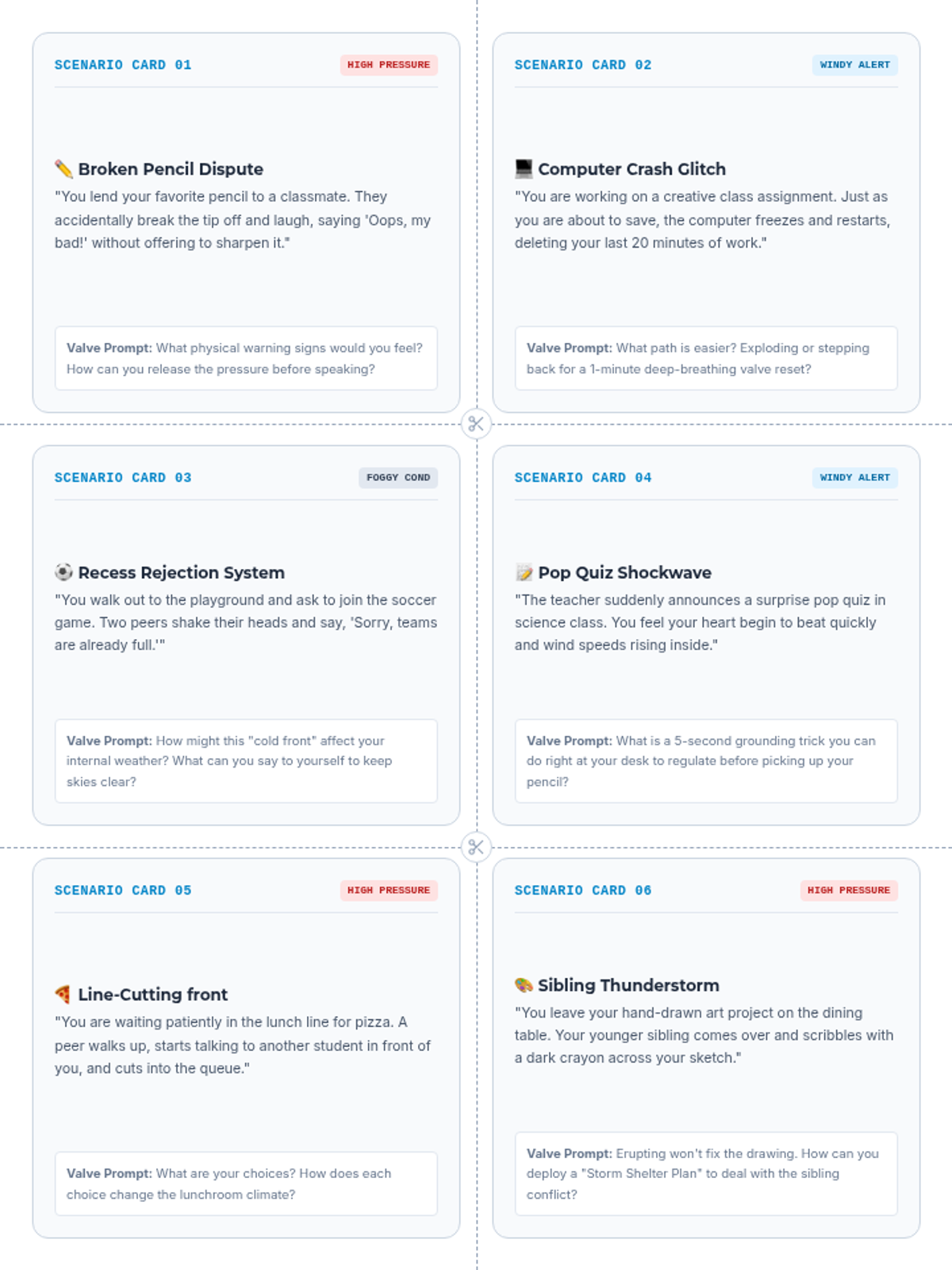
Focuses on responsible decision-making during high-stress conflicts, helping students identify hot-button triggers, evaluate action-consequences, and apply 'pressure relief valve' strategies.
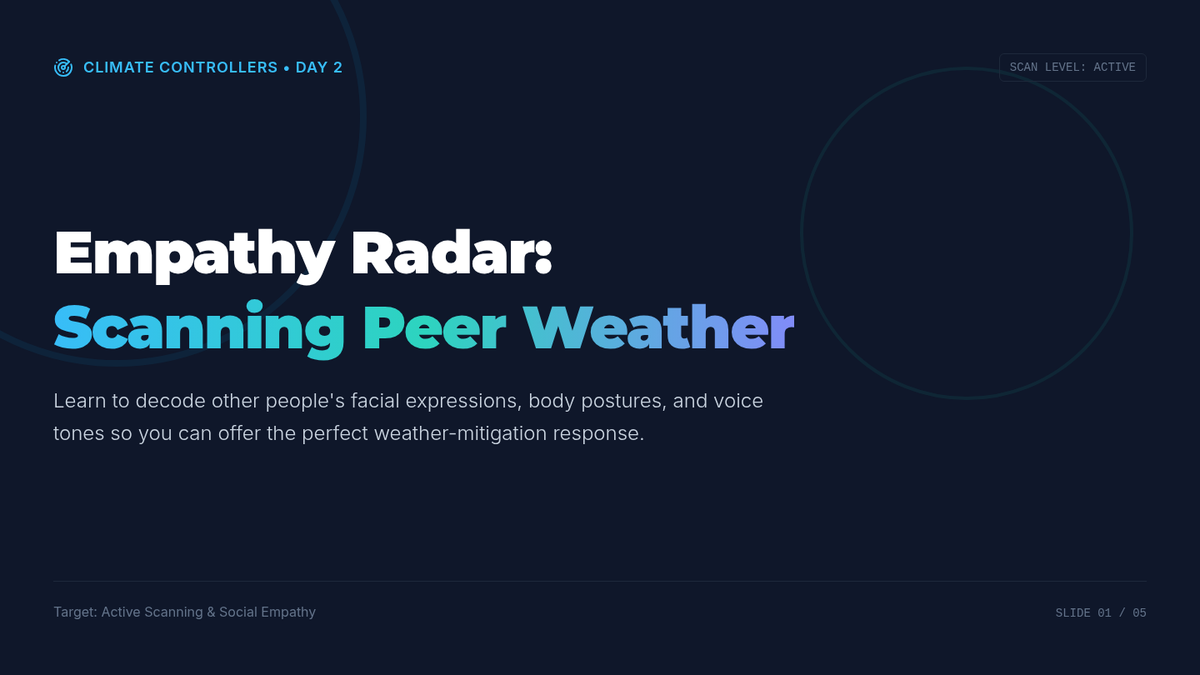
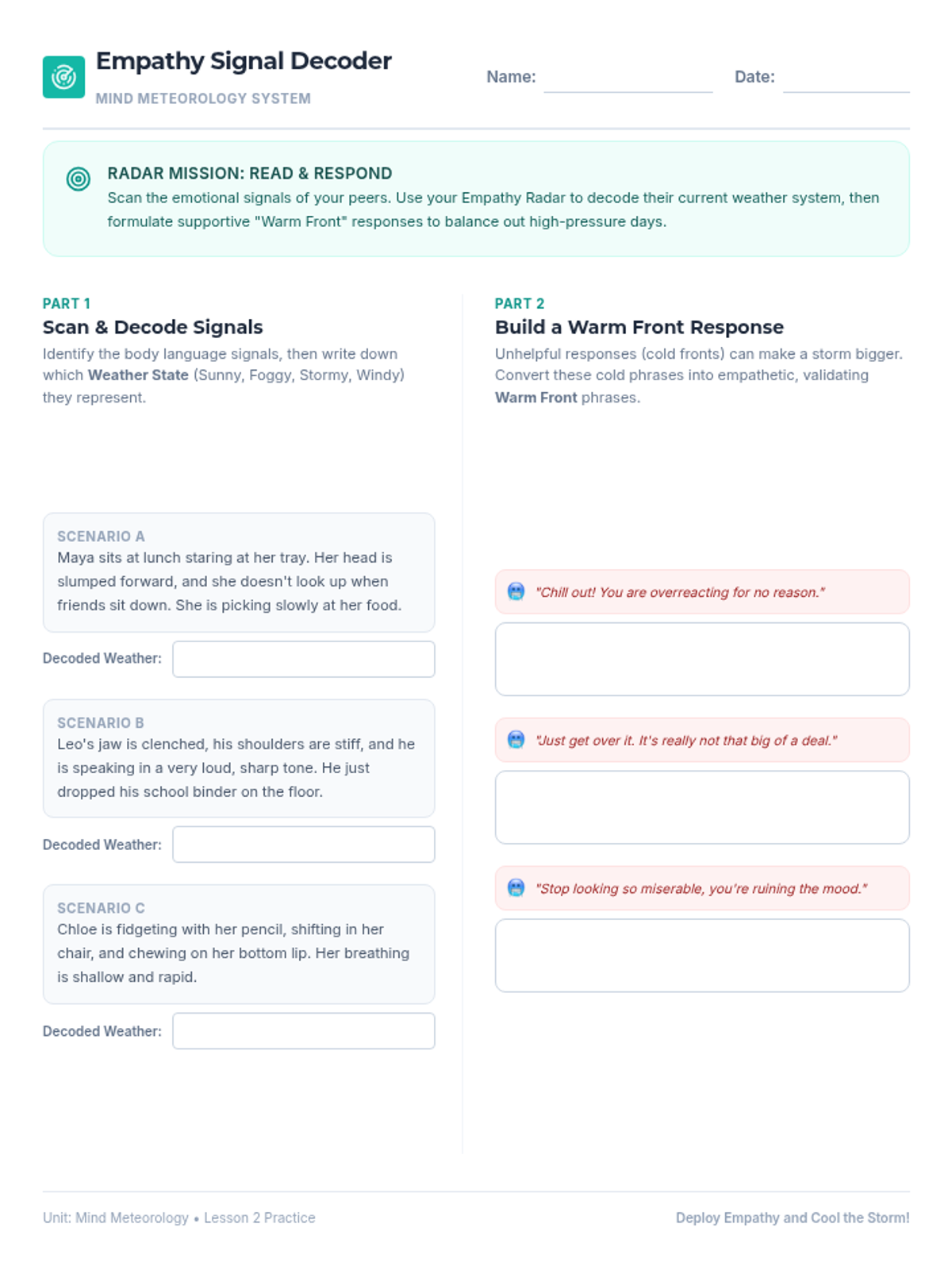
Focuses on active listening, reading other people's emotional signals (body language, tone), and matching our response to their weather state with empathy and validation.
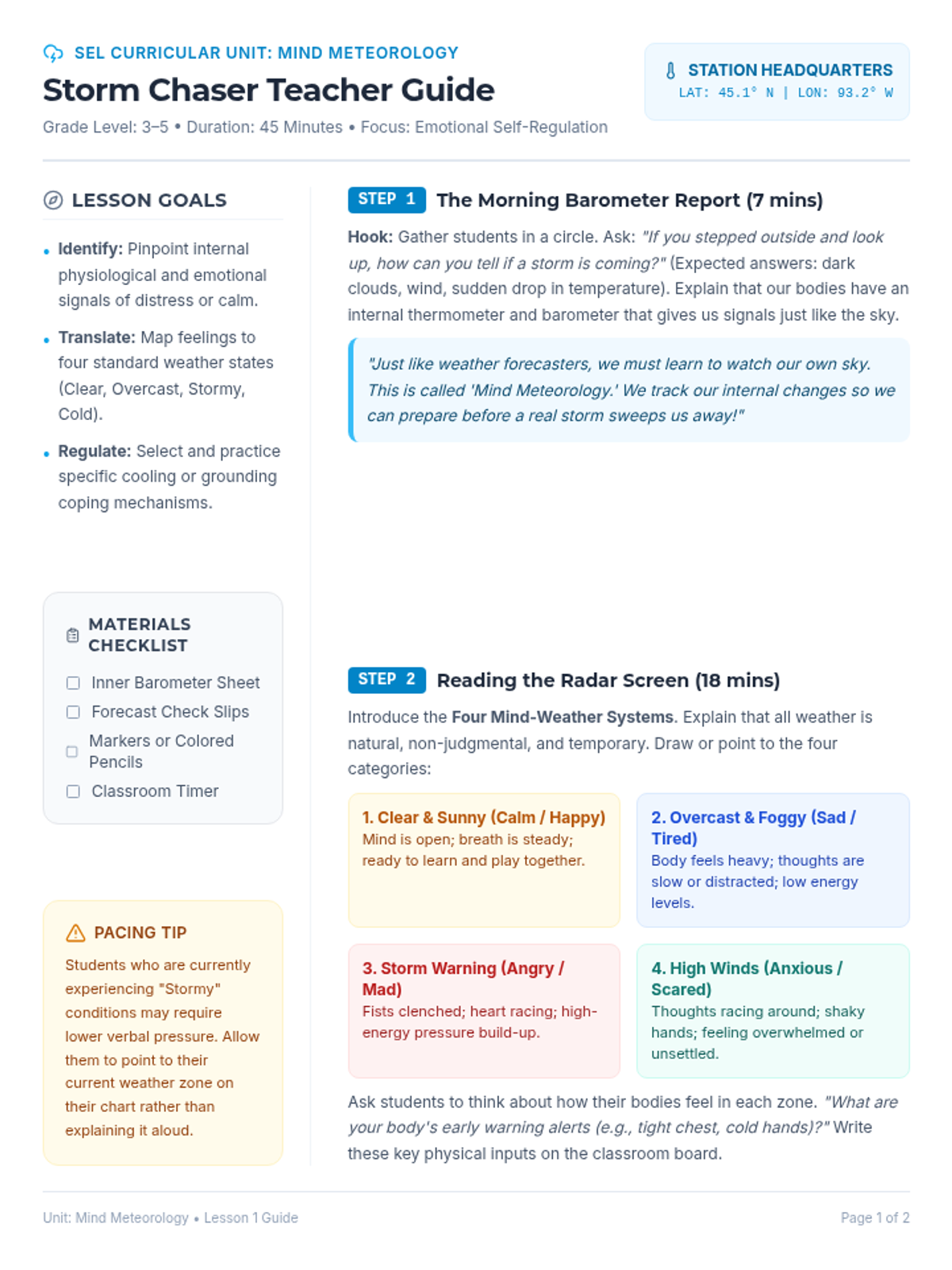
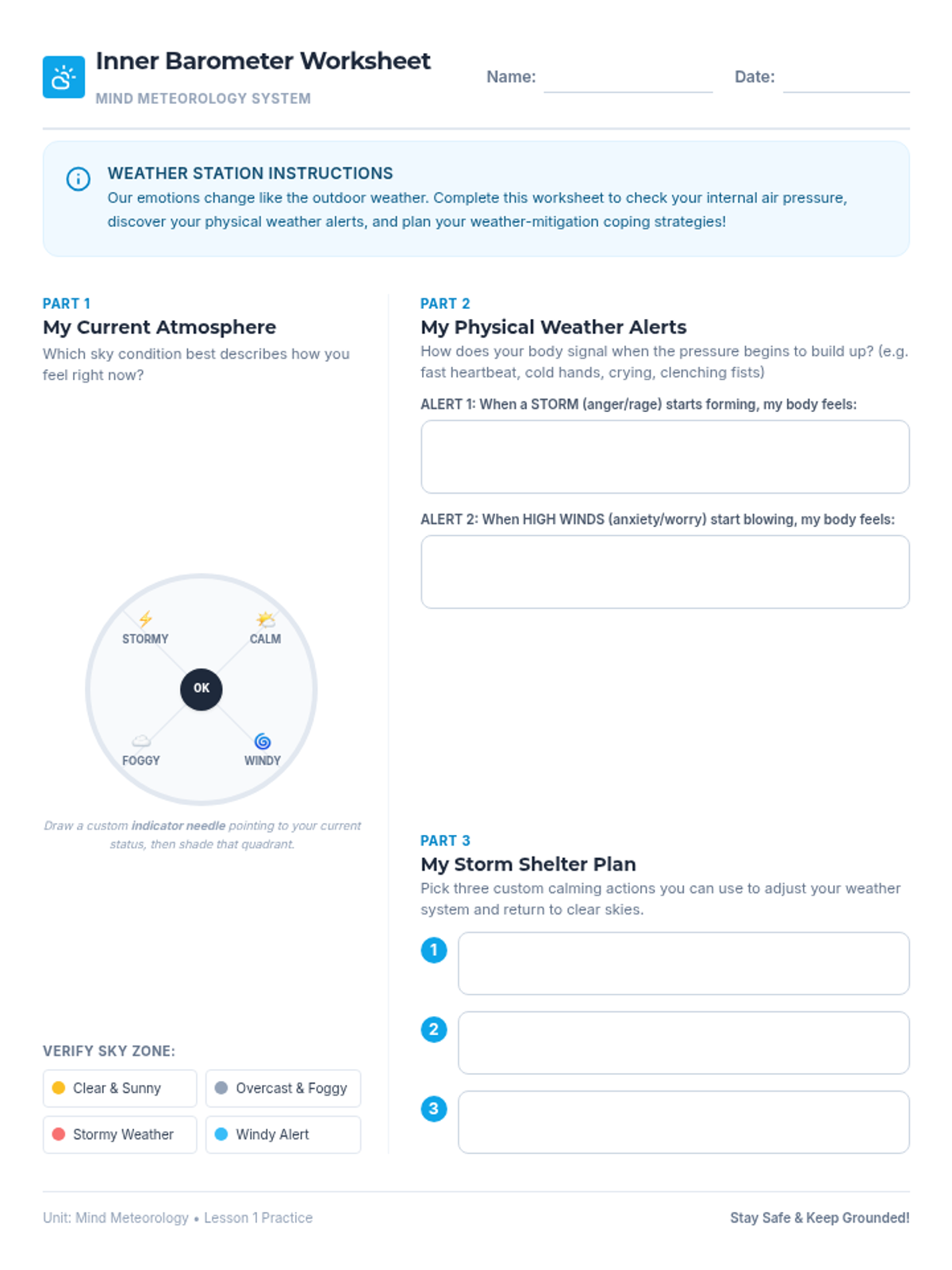
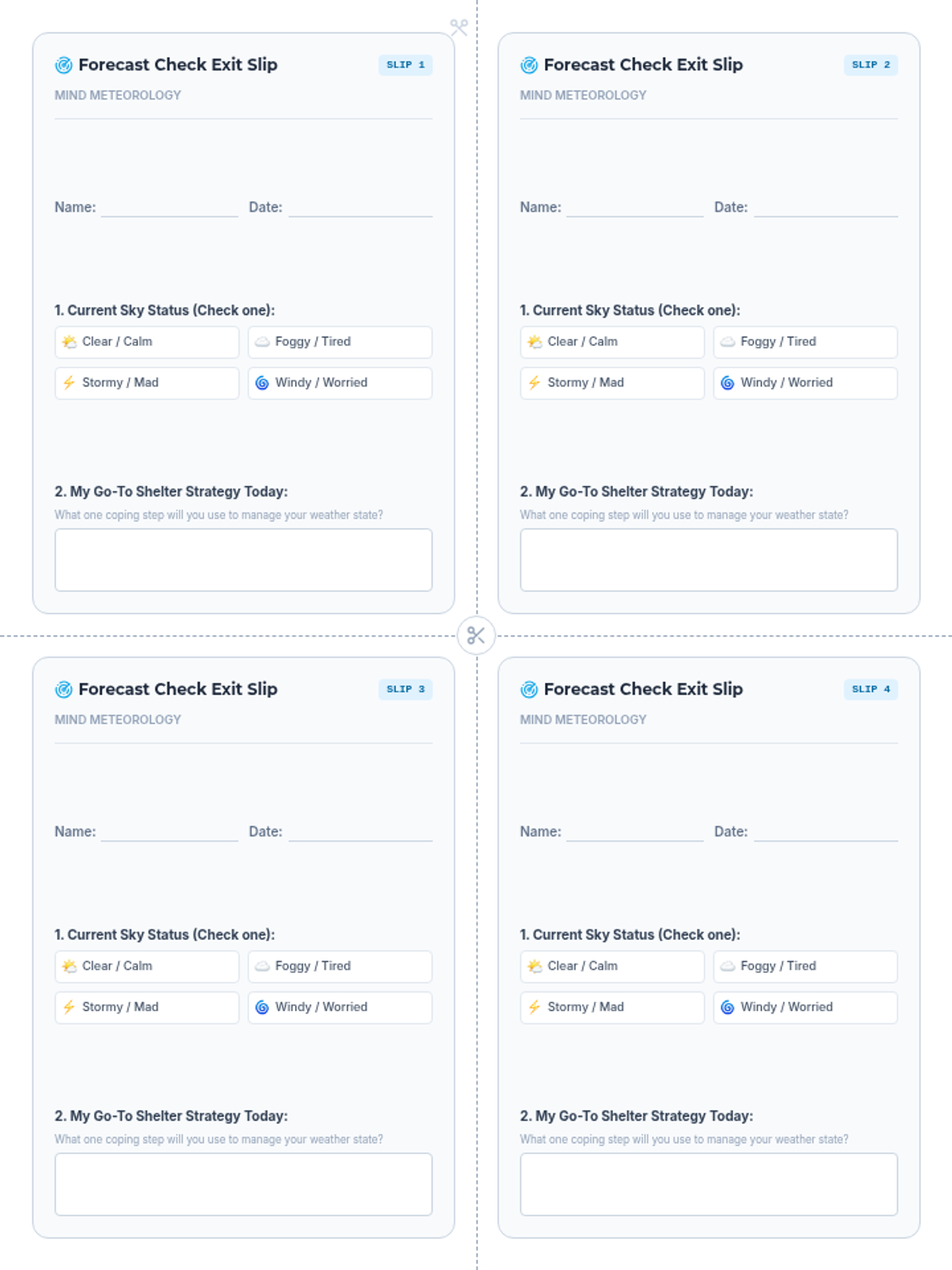
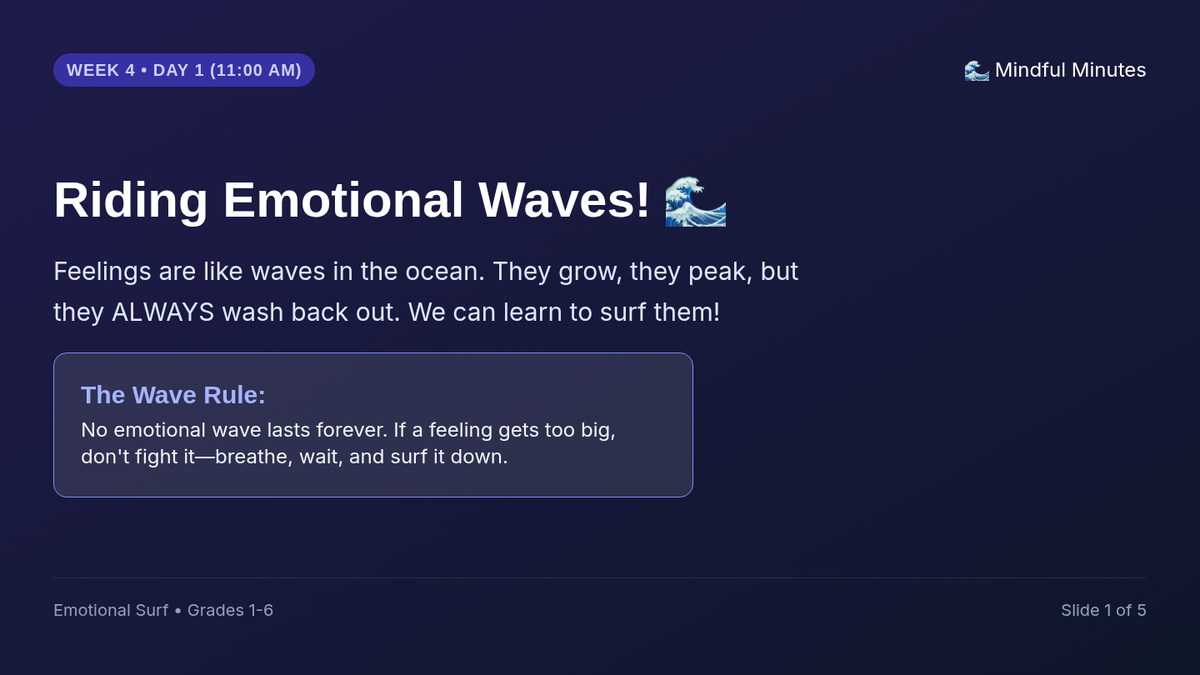
An engaging social-emotional learning lesson that teaches students to identify their emotional states as internal weather patterns and apply self-regulation coping strategies to return to calm, clear skies.
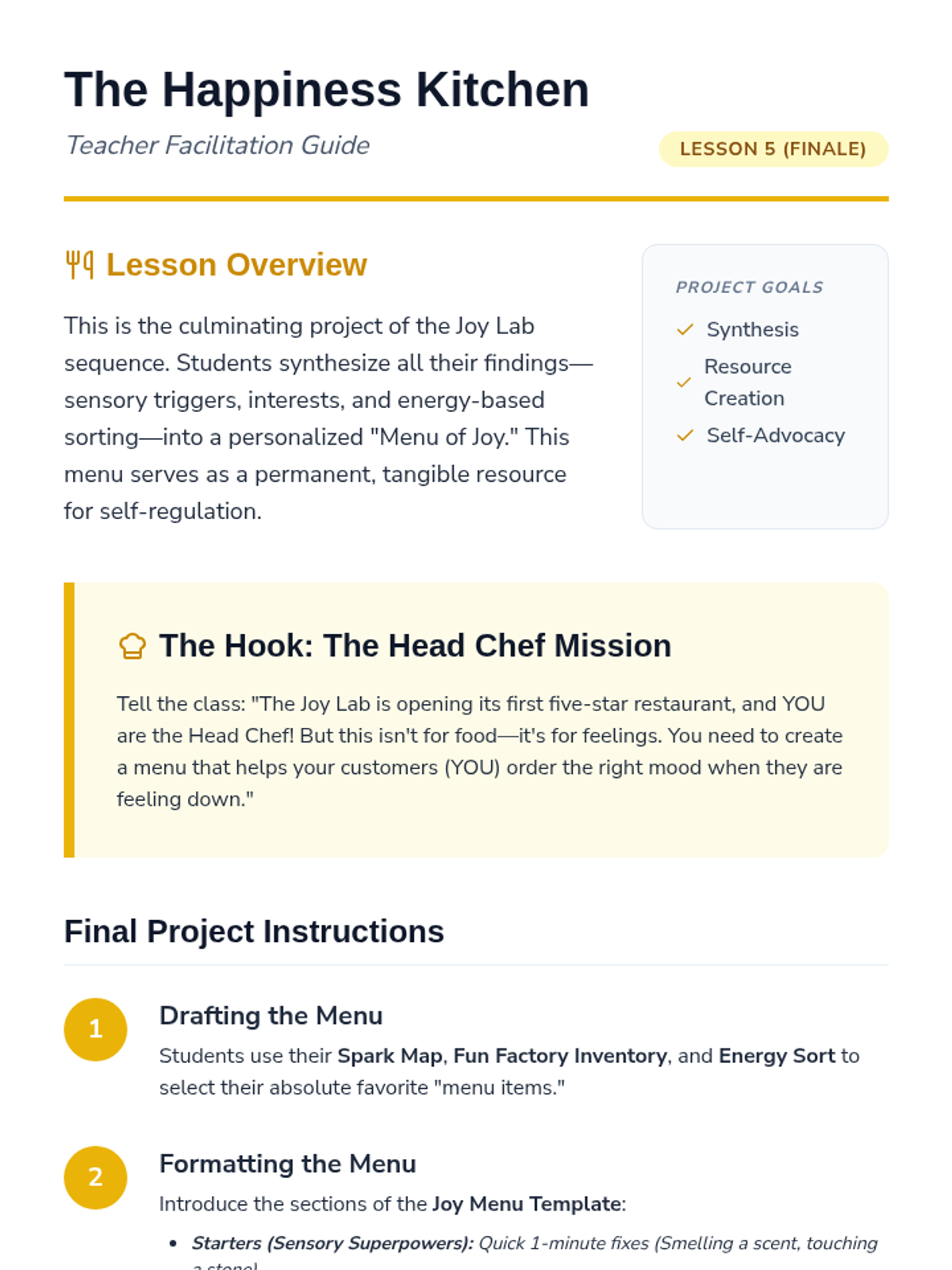
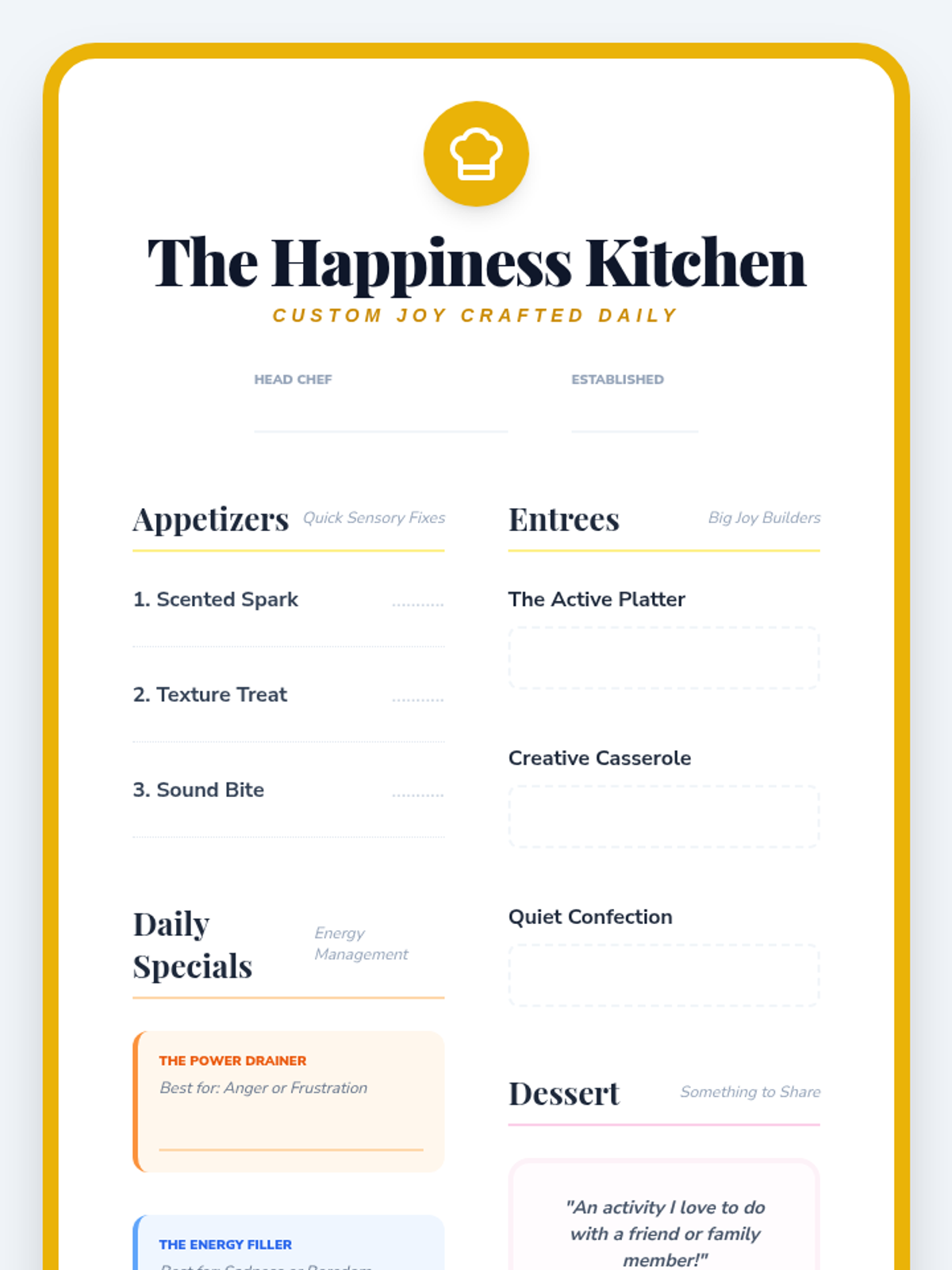
Students synthesize their findings to create a personalized, illustrated menu of 'Go-To' activities and role-play scenarios where they might order from their menu.
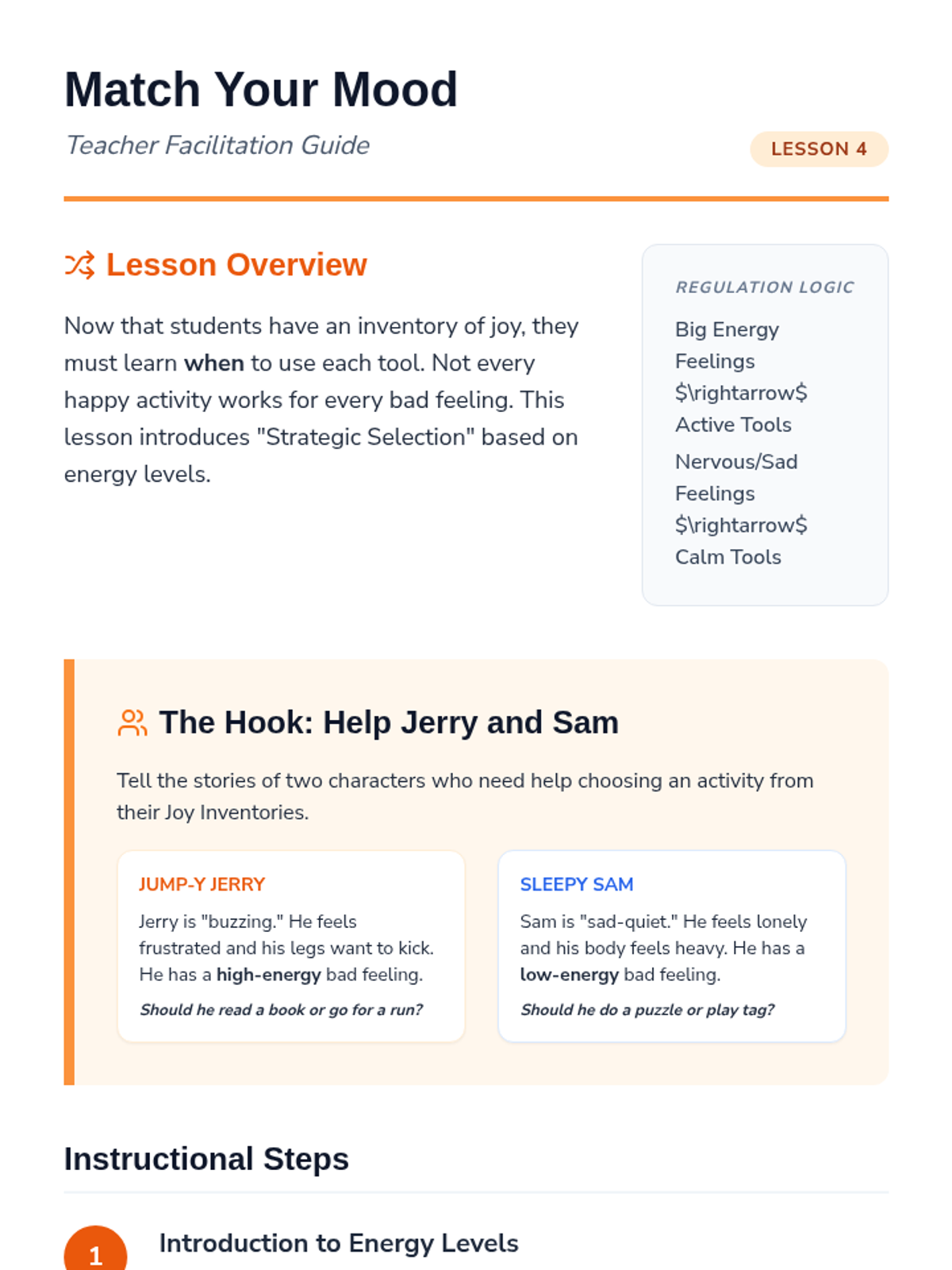
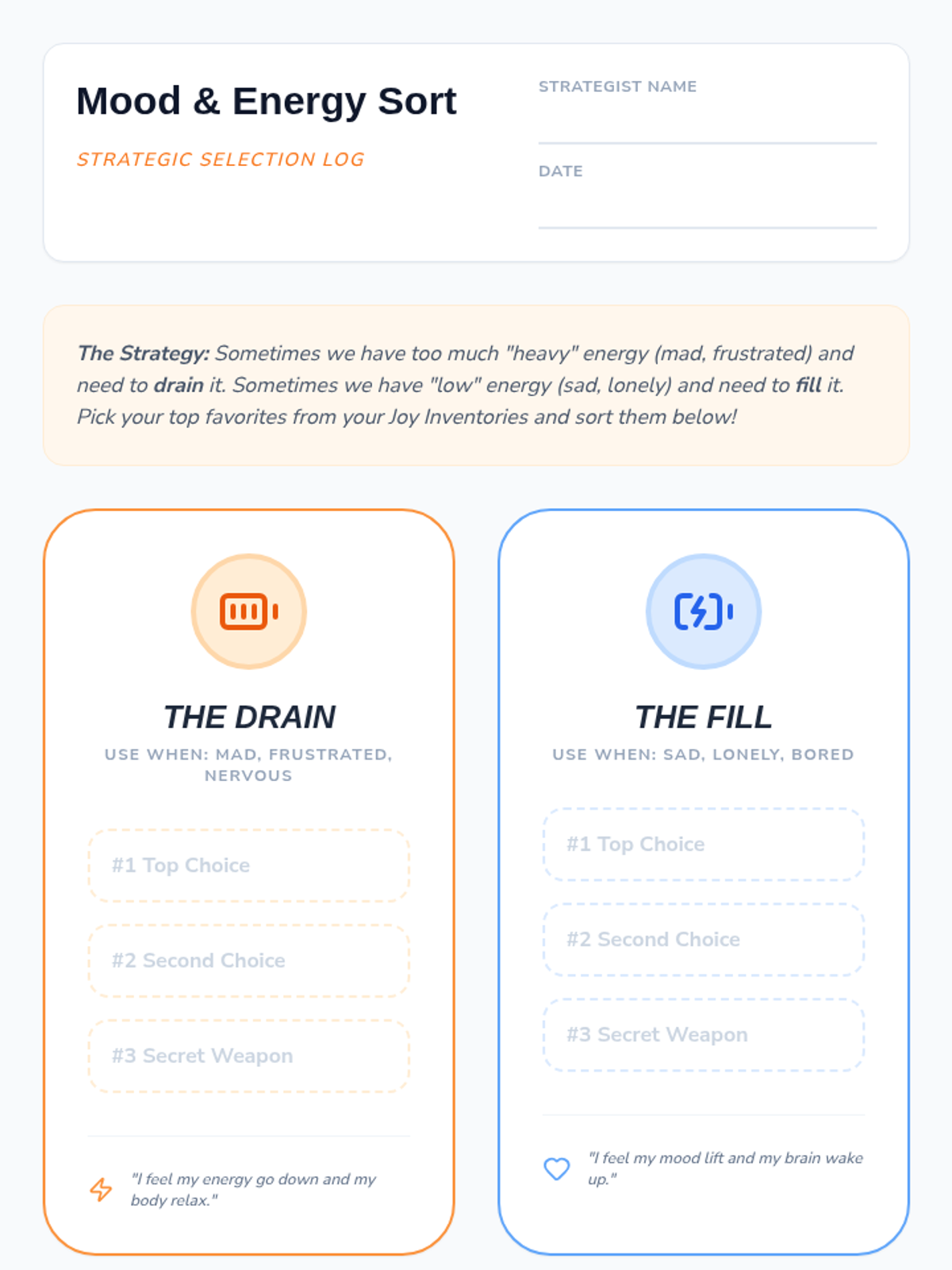
Students organize activities into categories based on energy levels: 'High Energy' for releasing frustration and 'Low Energy' for calming anxiety. They learn to strategically select activities based on current emotional needs.
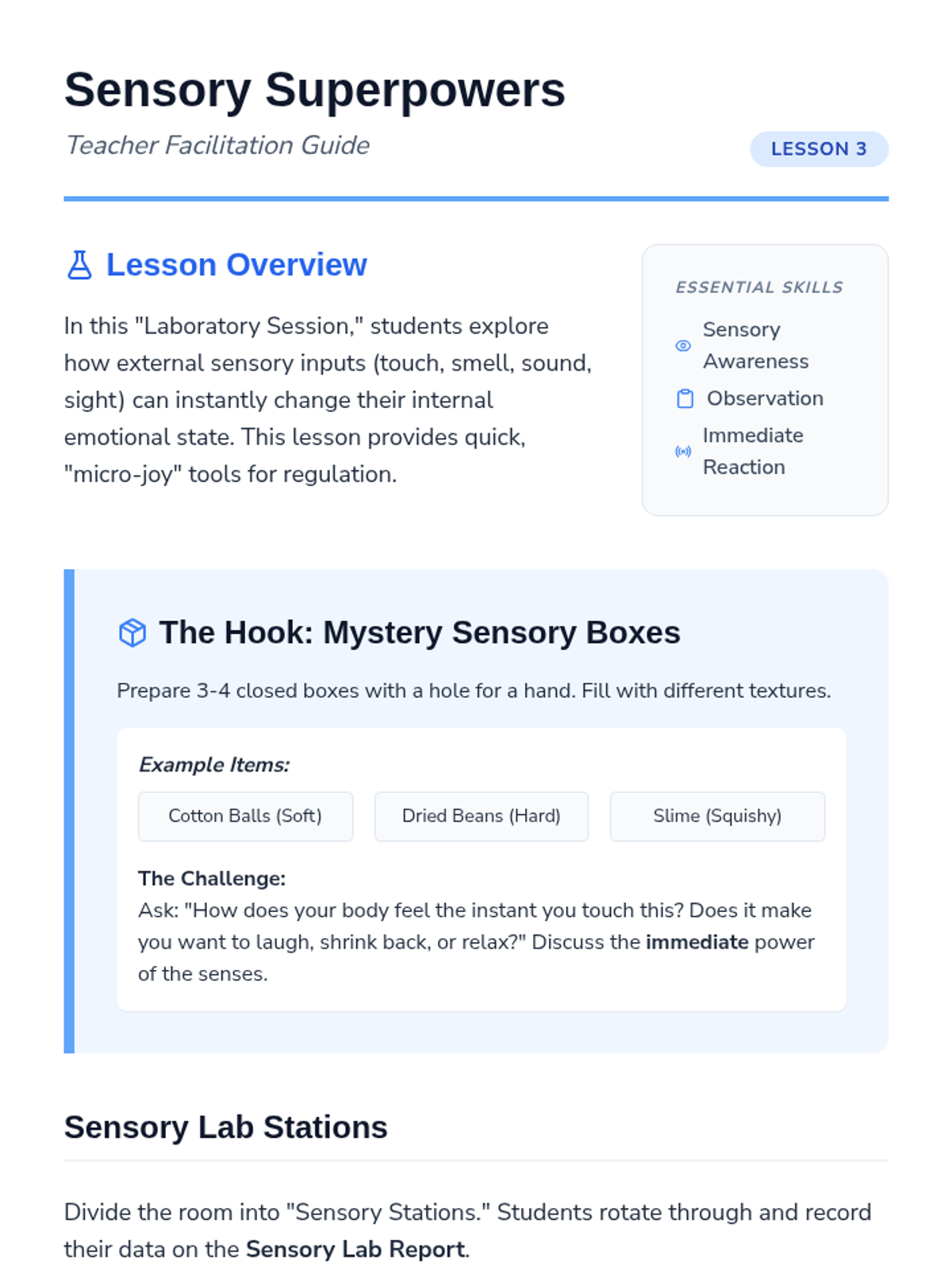
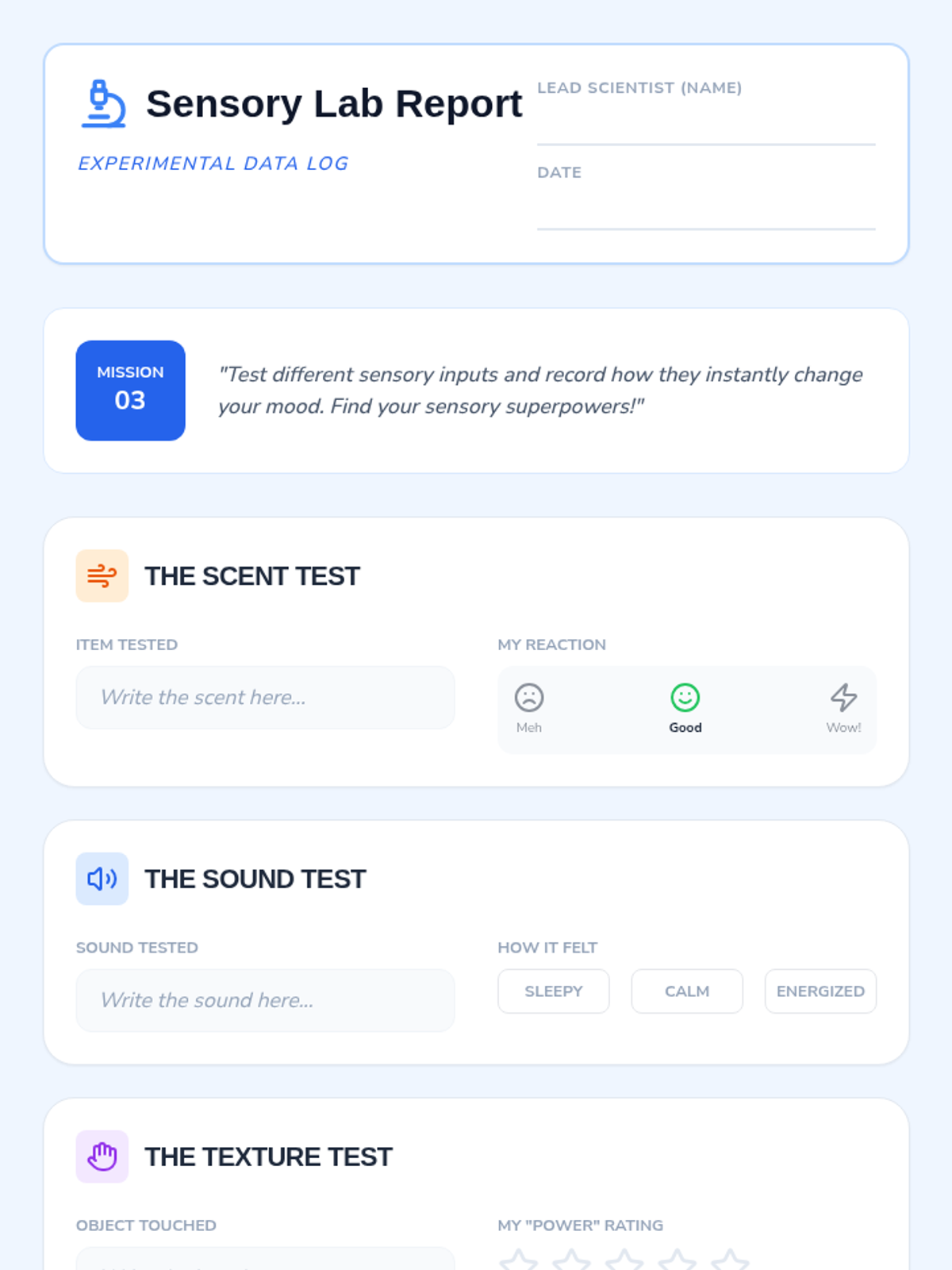
This lesson focuses on simple, sensory-based experiences that can boost mood quickly. Students test different sensory inputs and record their immediate reactions to connect external stimuli to internal emotional states.
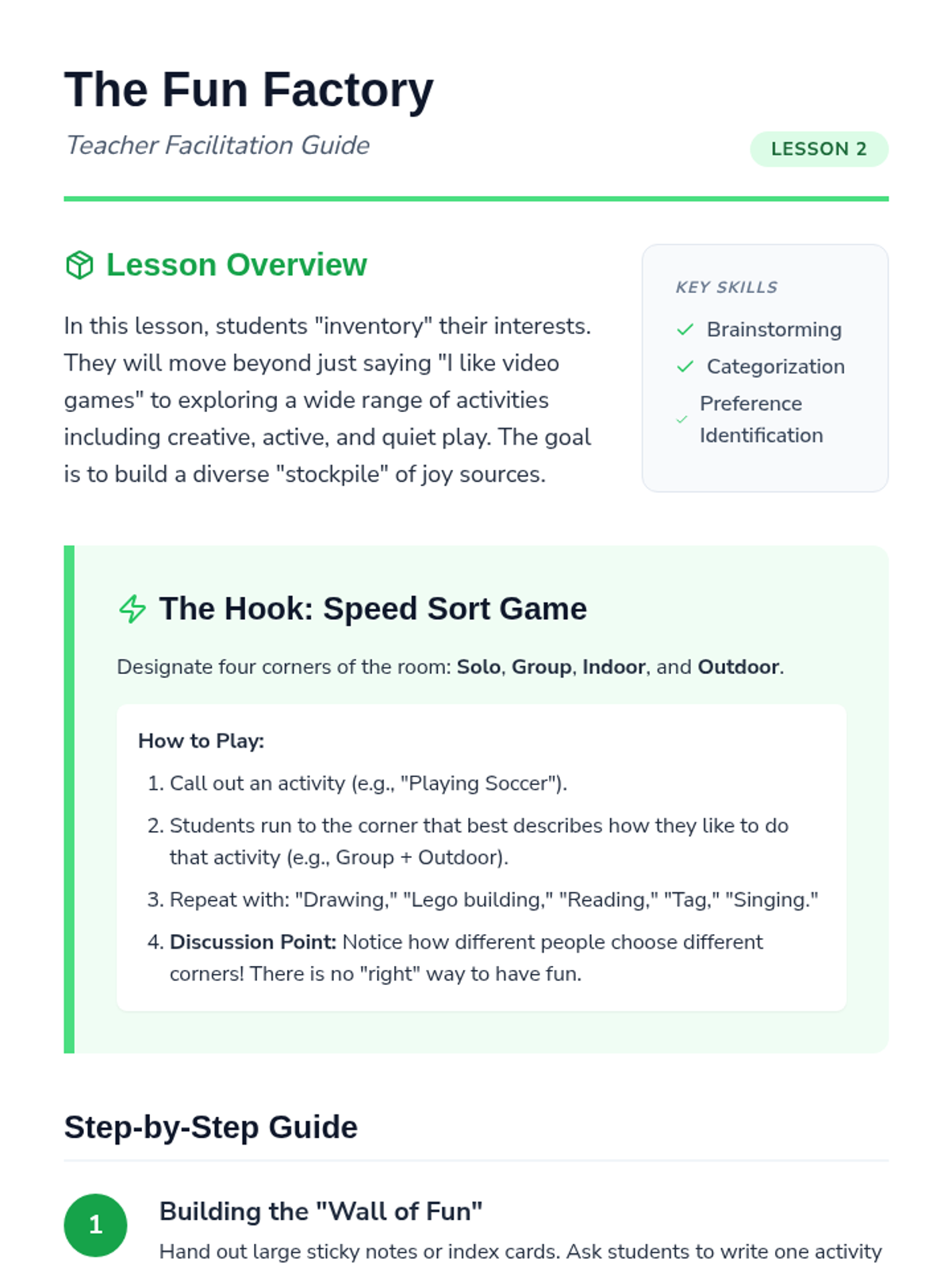
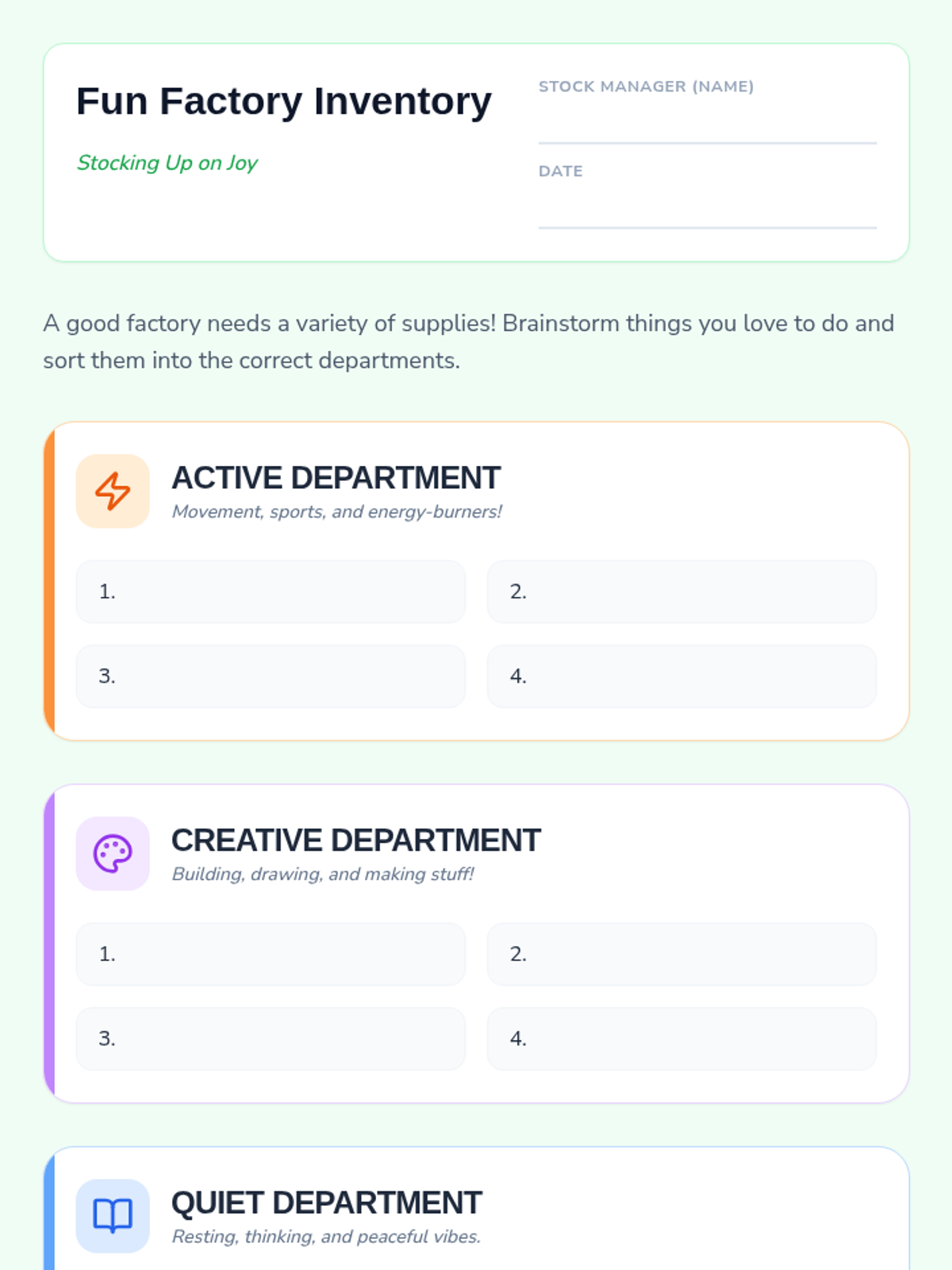
Students brainstorm a wide variety of activities they enjoy, distinguishing between active play, creative expression, and quiet relaxation. They learn that different types of fun serve different emotional needs.
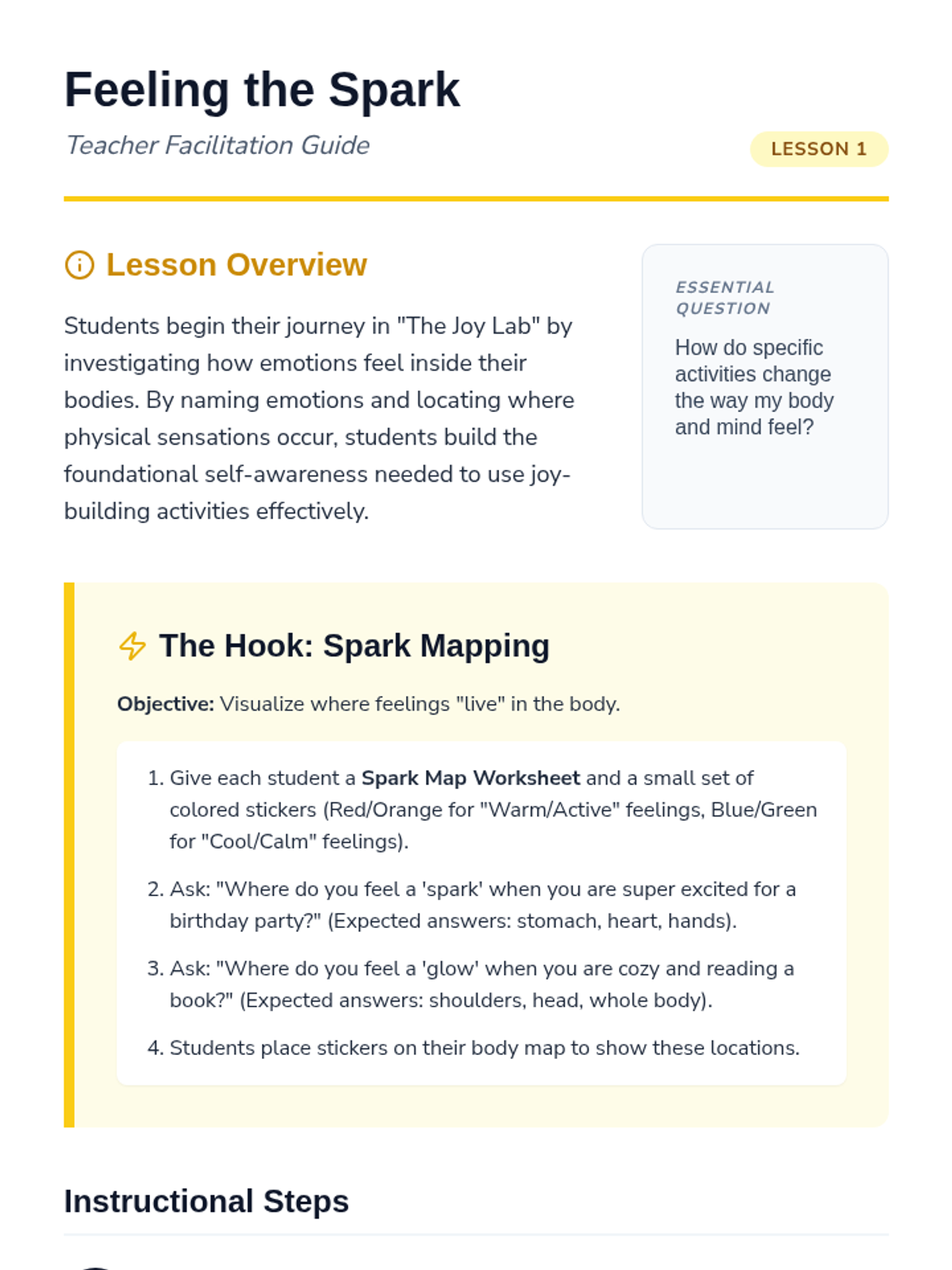
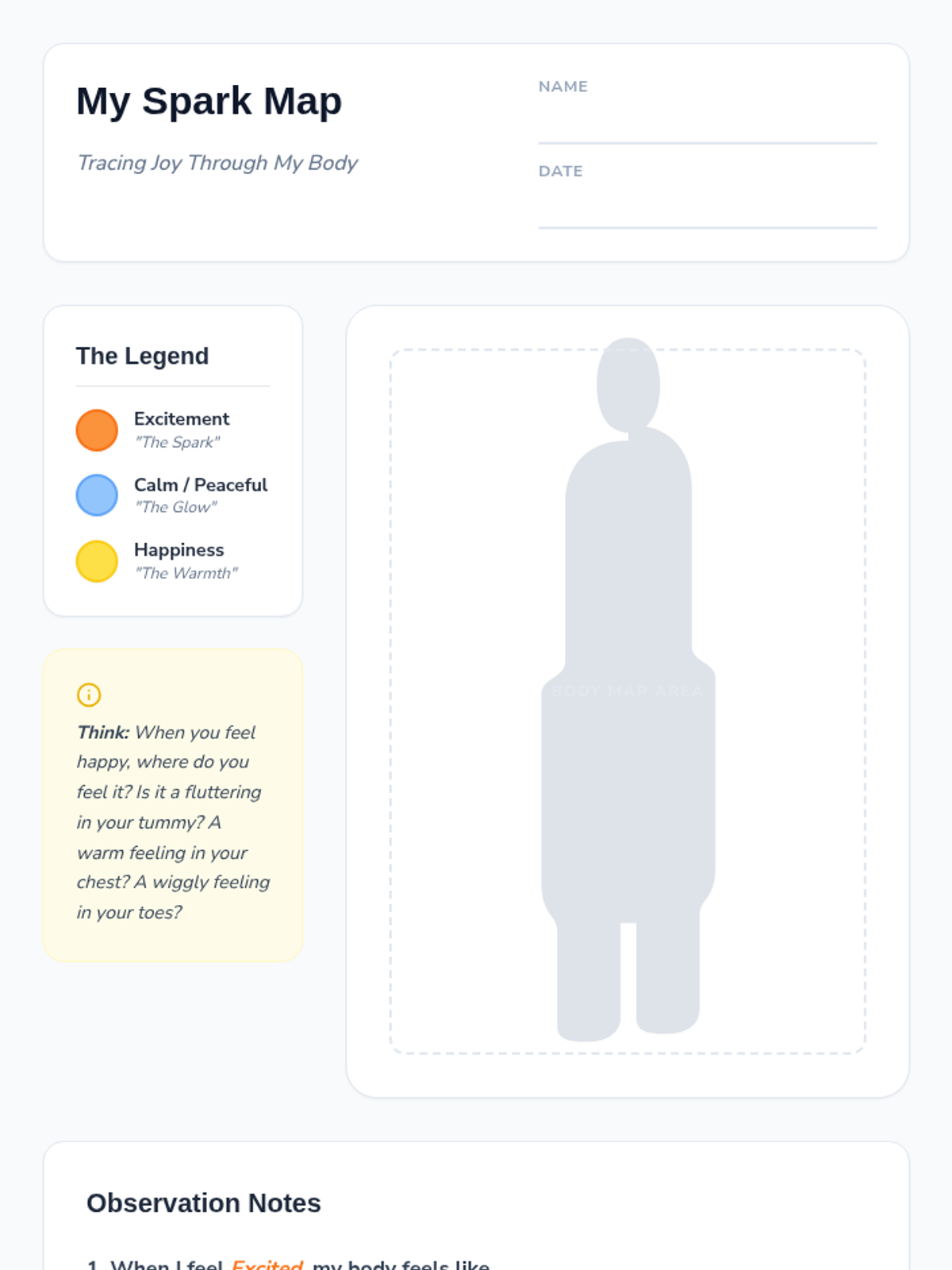
Students explore the vocabulary of emotions and identify physical sensations associated with happiness, calm, and excitement. They create a body map to visualize where they feel positive emotions.
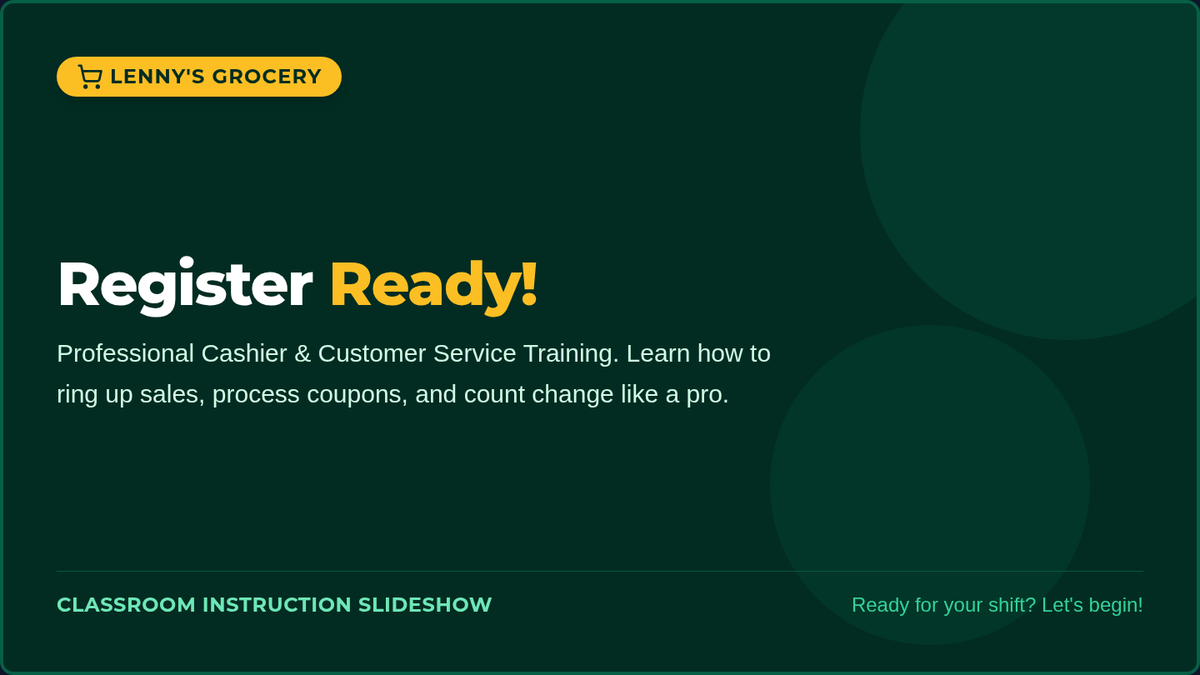
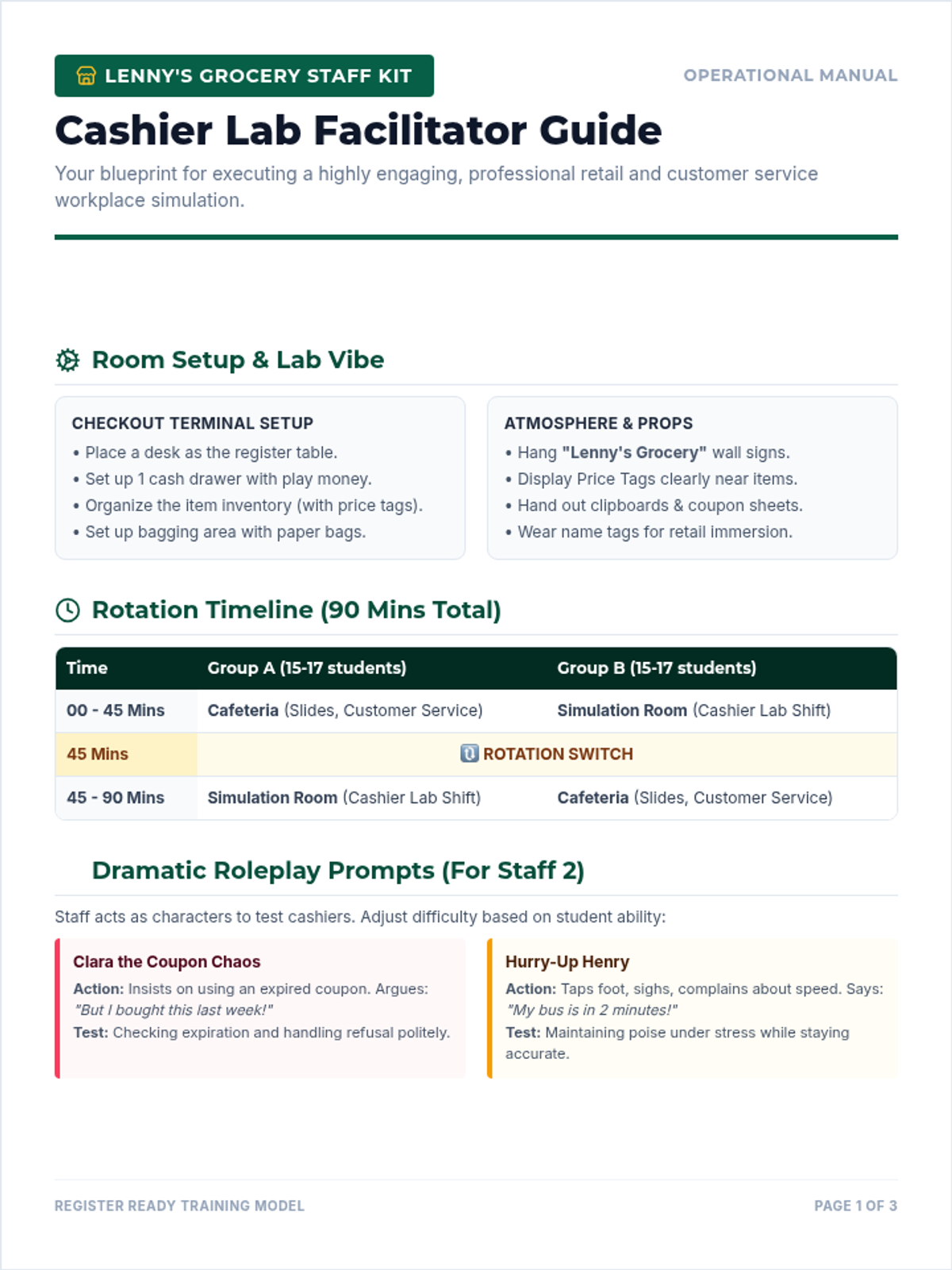
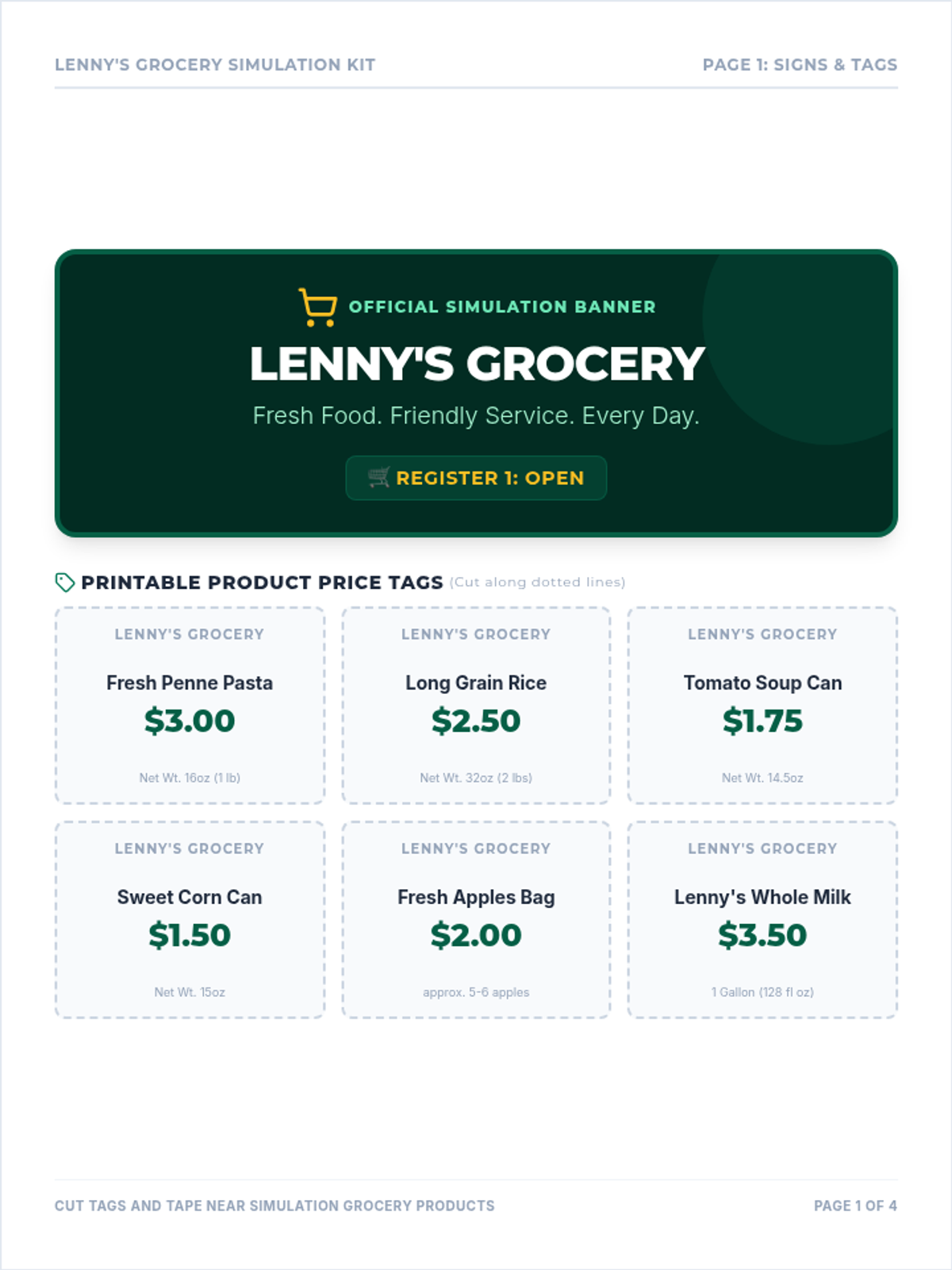
A dynamic rotation lesson where students split between a multimedia classroom training and a realistic, hands-on grocery checkout simulation.
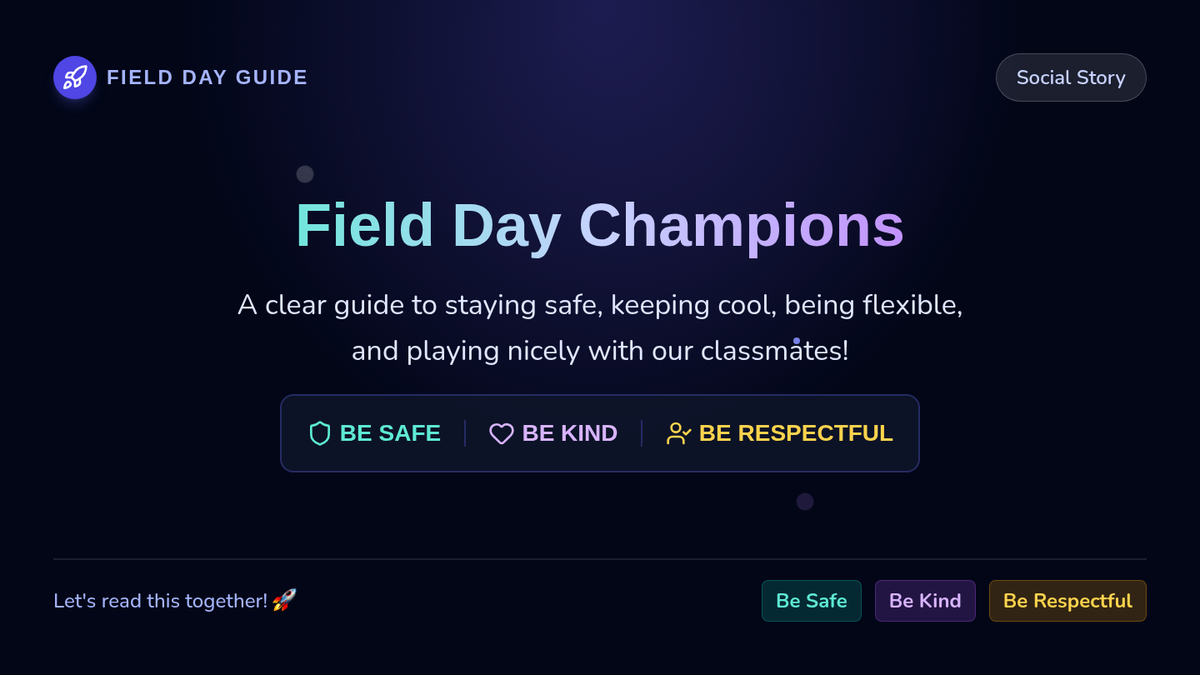
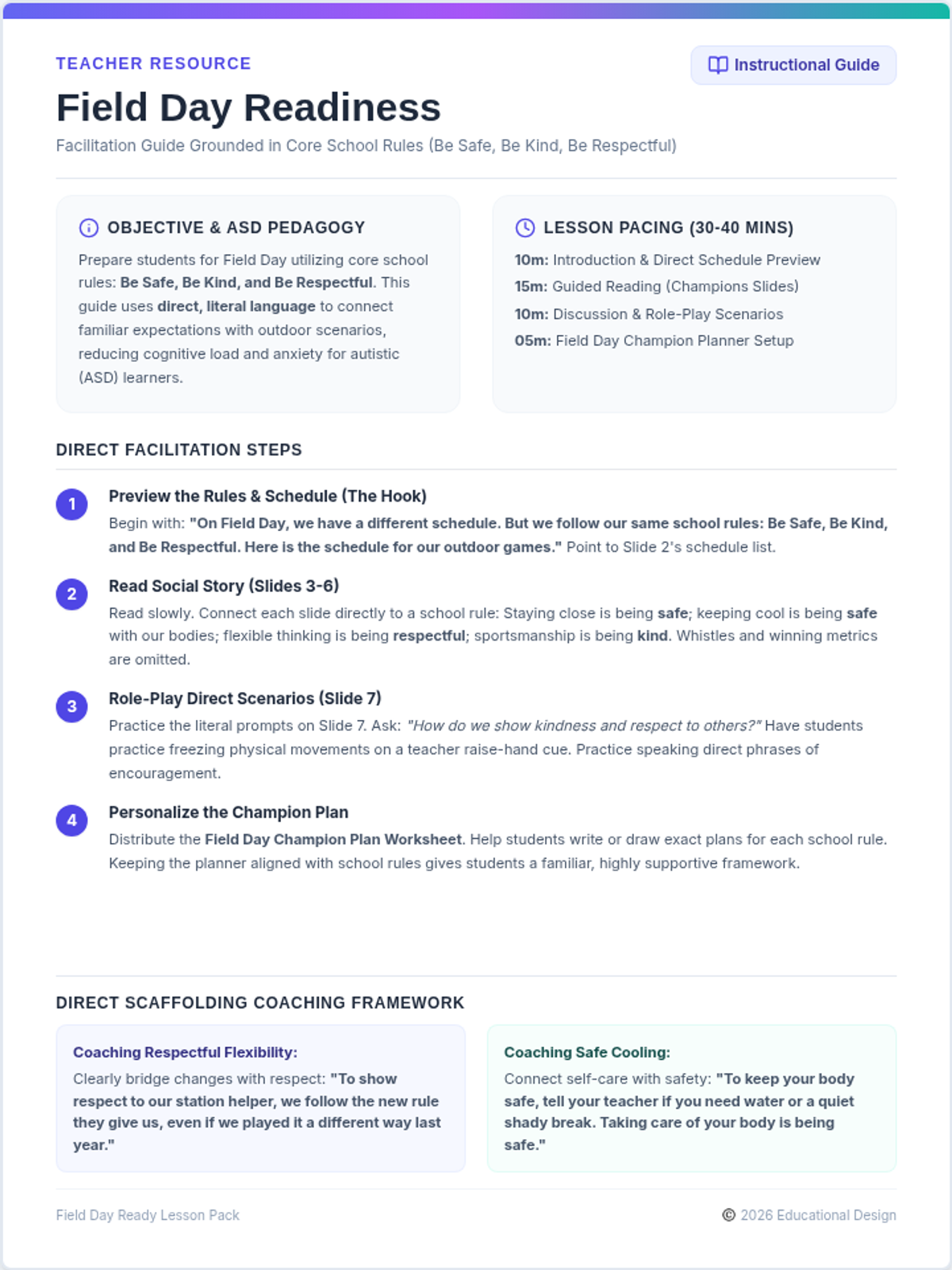
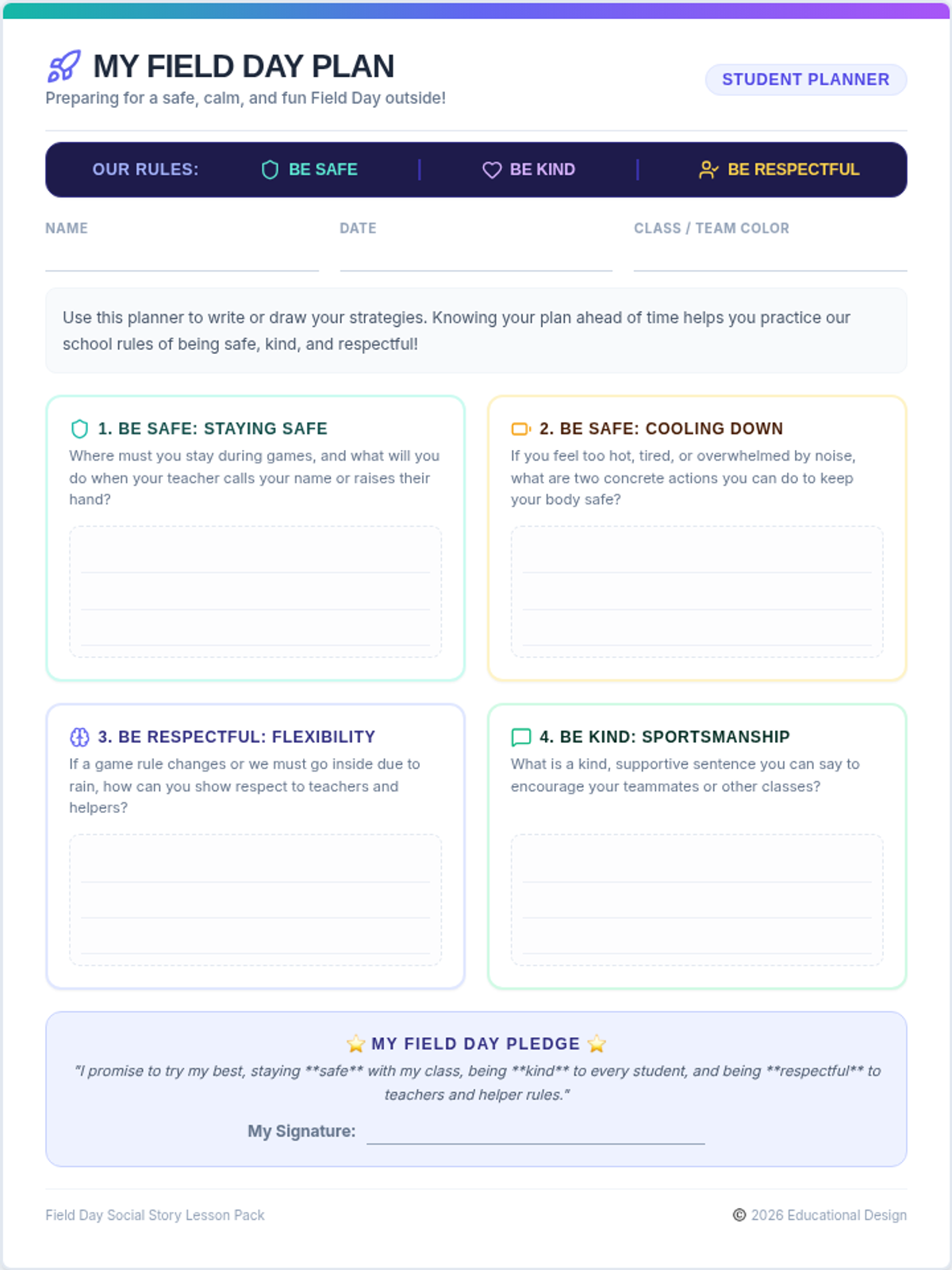
A lesson package focused on preparing elementary students for the unique social, emotional, and sensory challenges of Field Day, featuring a projectable social story slide deck.
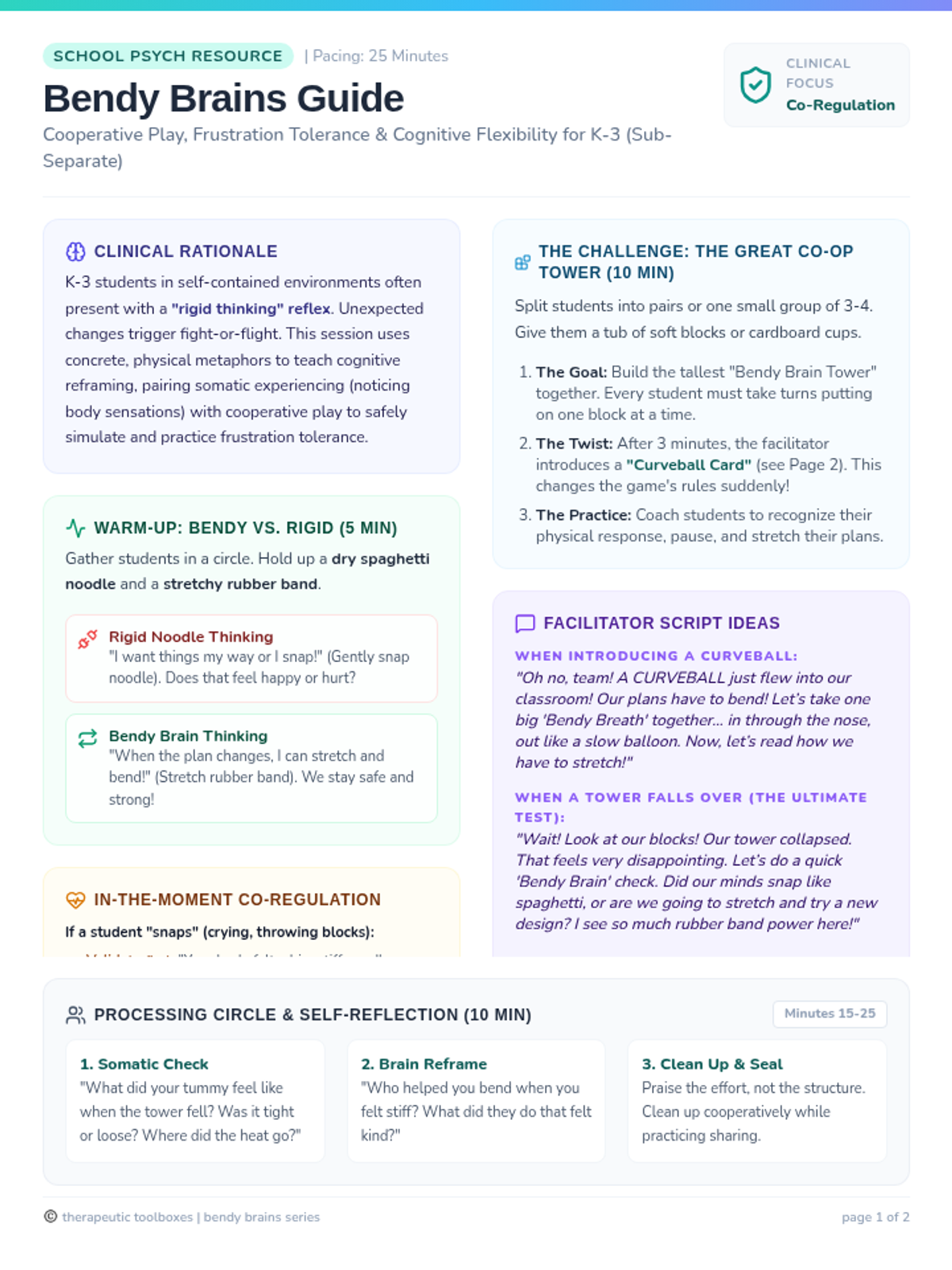
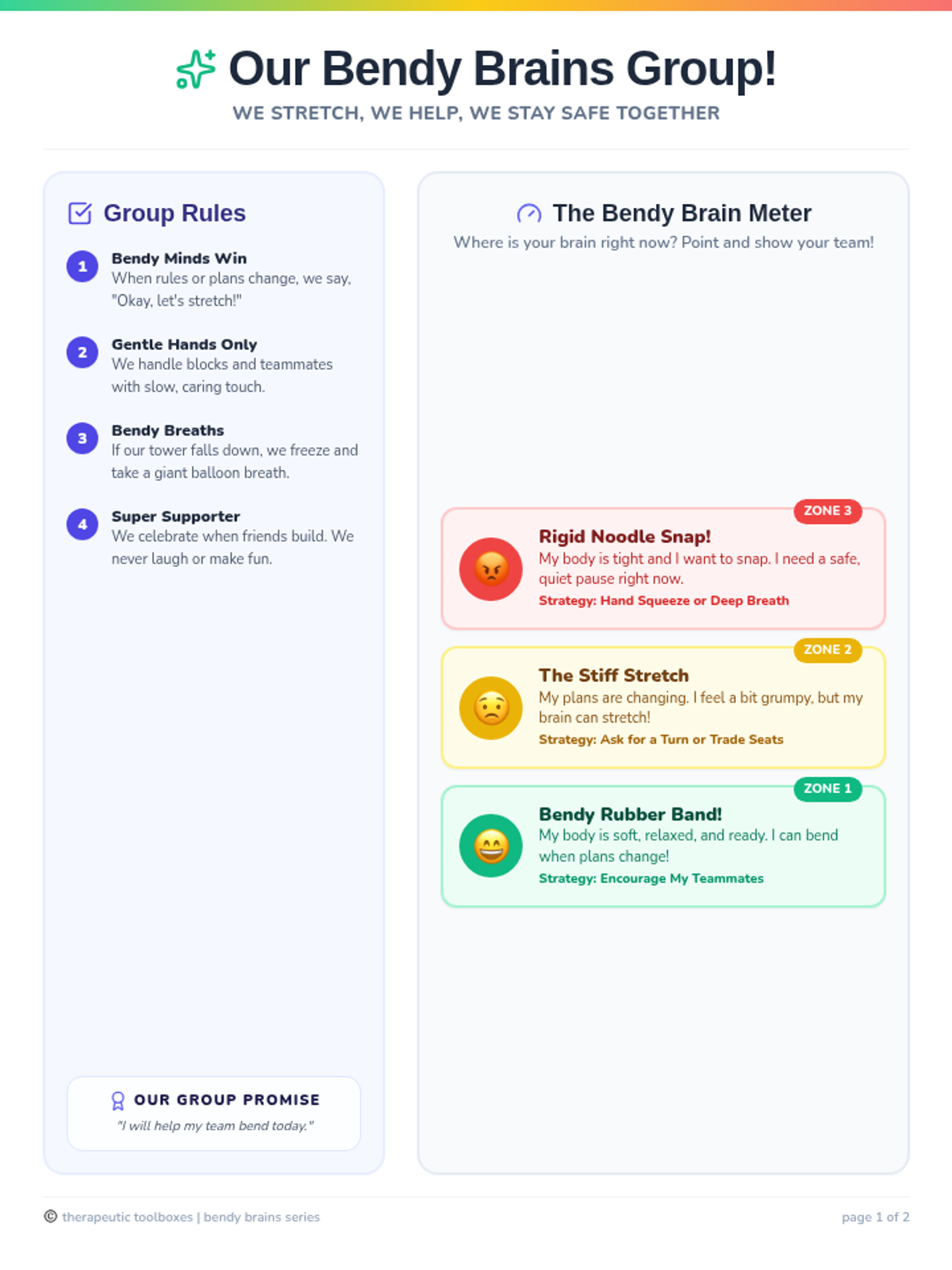
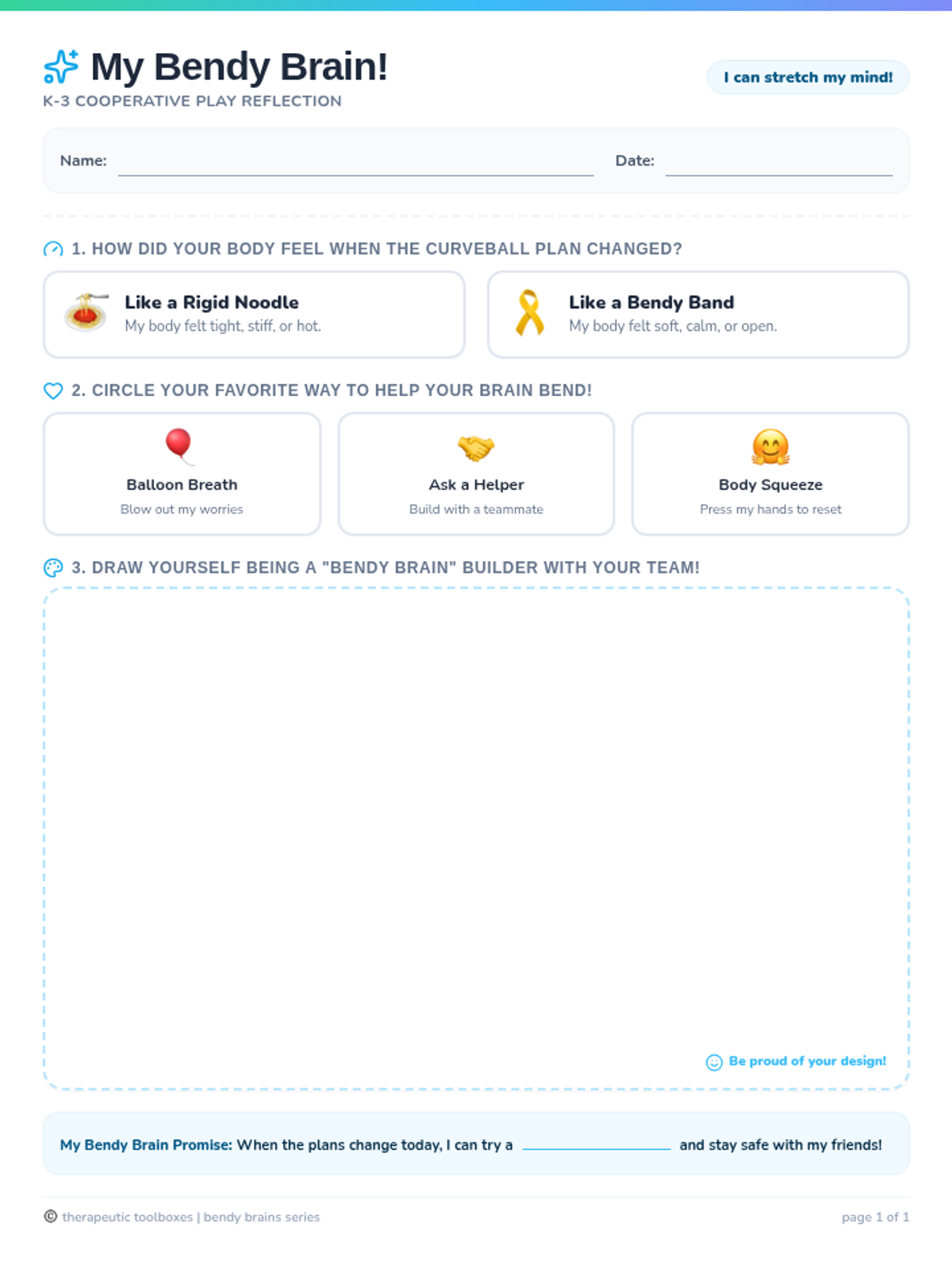
A 25-minute therapeutic team-building session designed for K-3 students in sub-separate classrooms to build cognitive flexibility and frustration tolerance using the concept of 'bendy' vs. 'rigid' thinking.
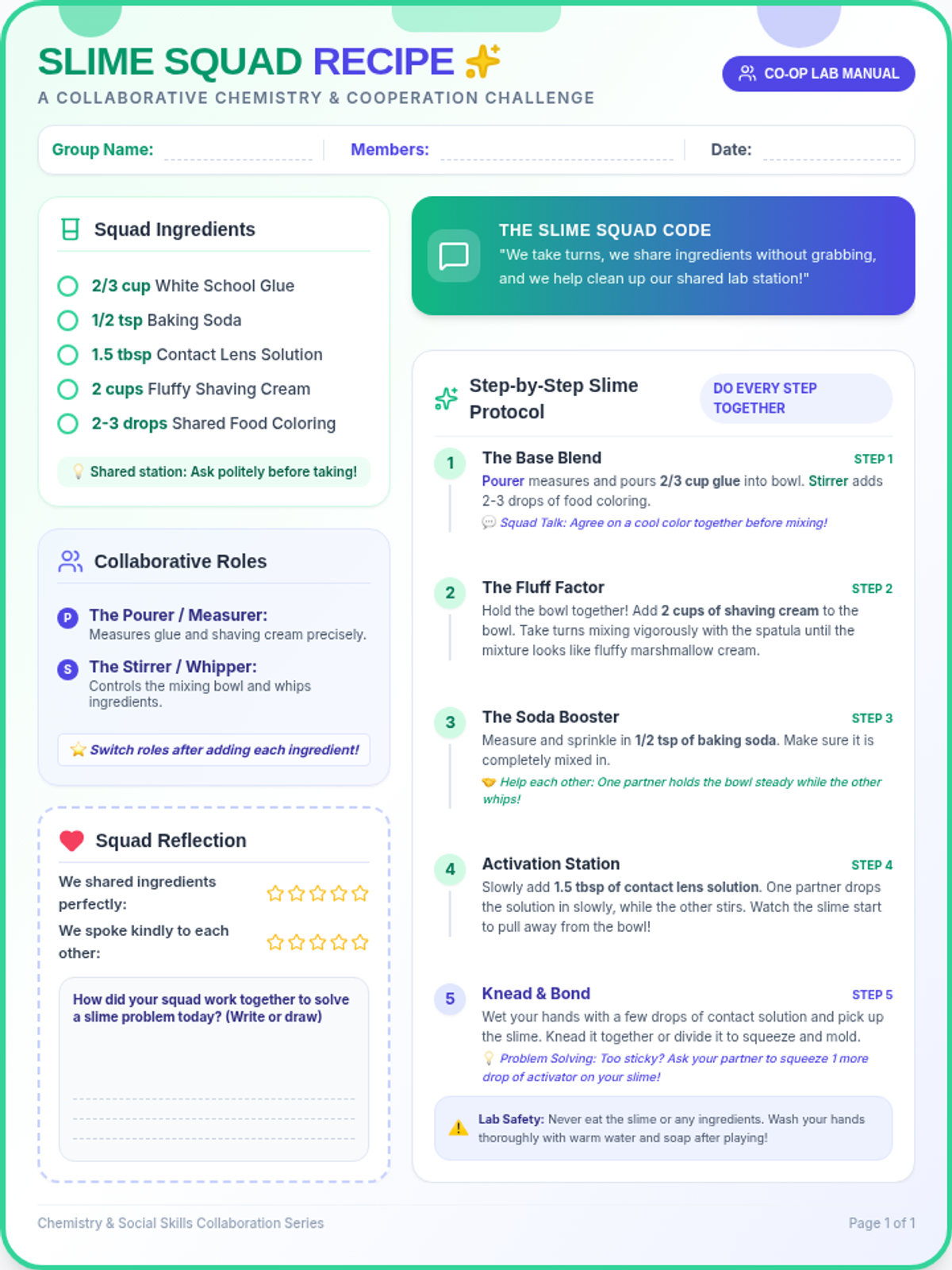
A collaborative chemistry lesson focused on social skills, cooperative roles, and problem-solving through the engaging creation of fluffy slime. Students practice communication, turn-taking, and collective decision-making.
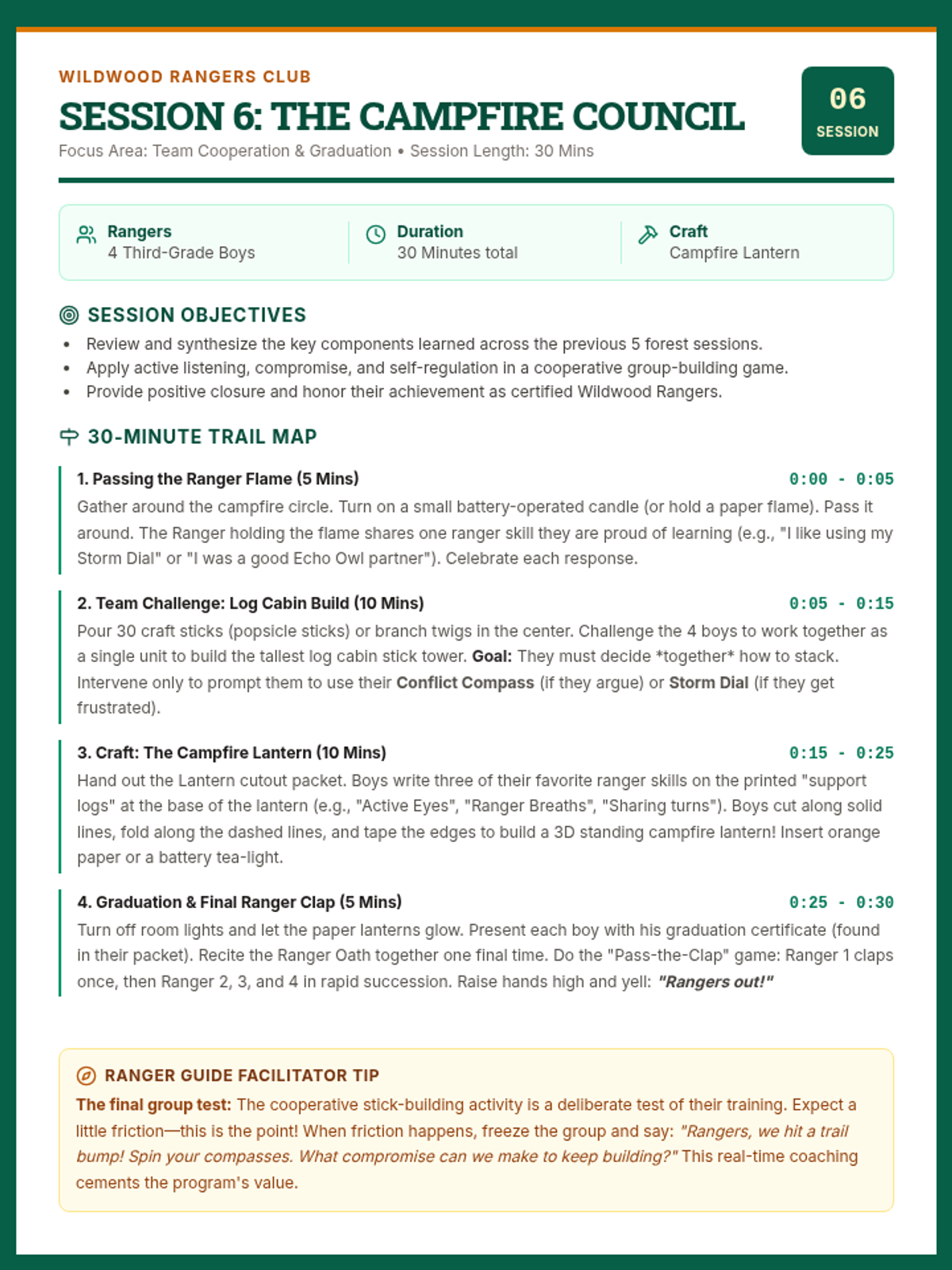
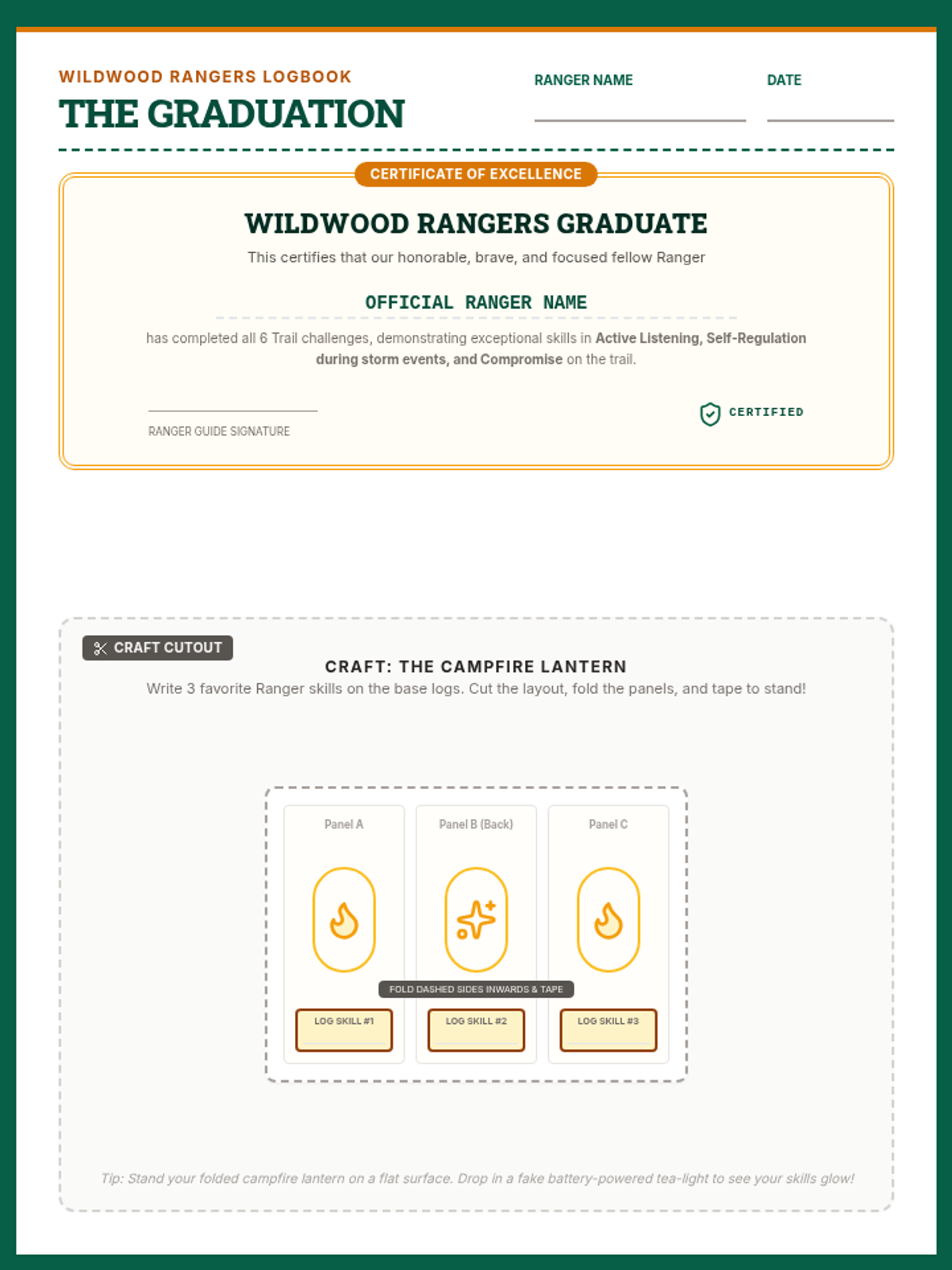
The final session where rangers celebrate their journey, demonstrate conflict resolution and active listening in a cooperative group game, and craft their 'Campfire Lantern' keepsake.
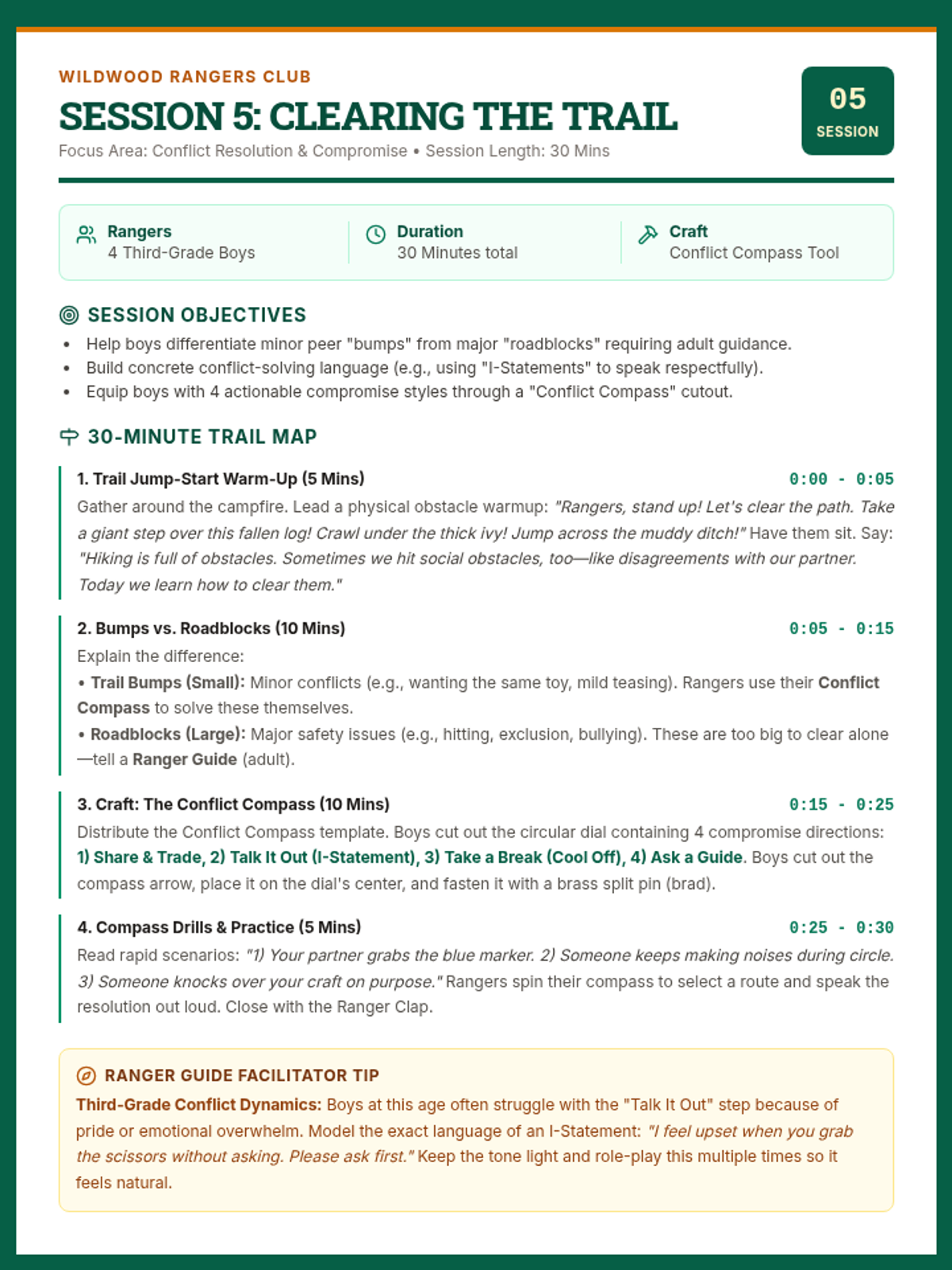
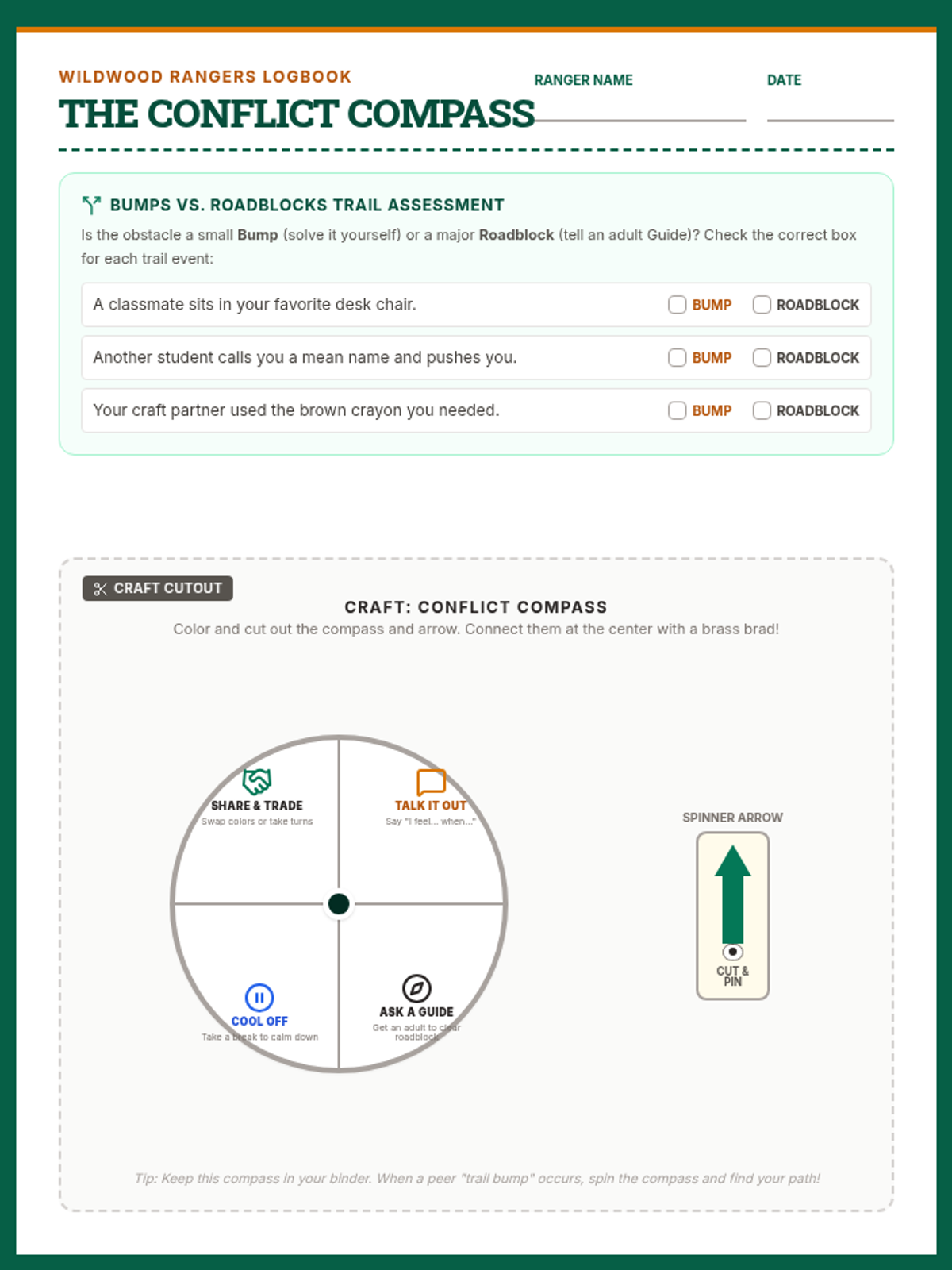
Rangers learn to distinguish between small peer-to-peer 'bumps' and large 'roadblocks', practicing compromises and crafting a custom 'Conflict Compass'.
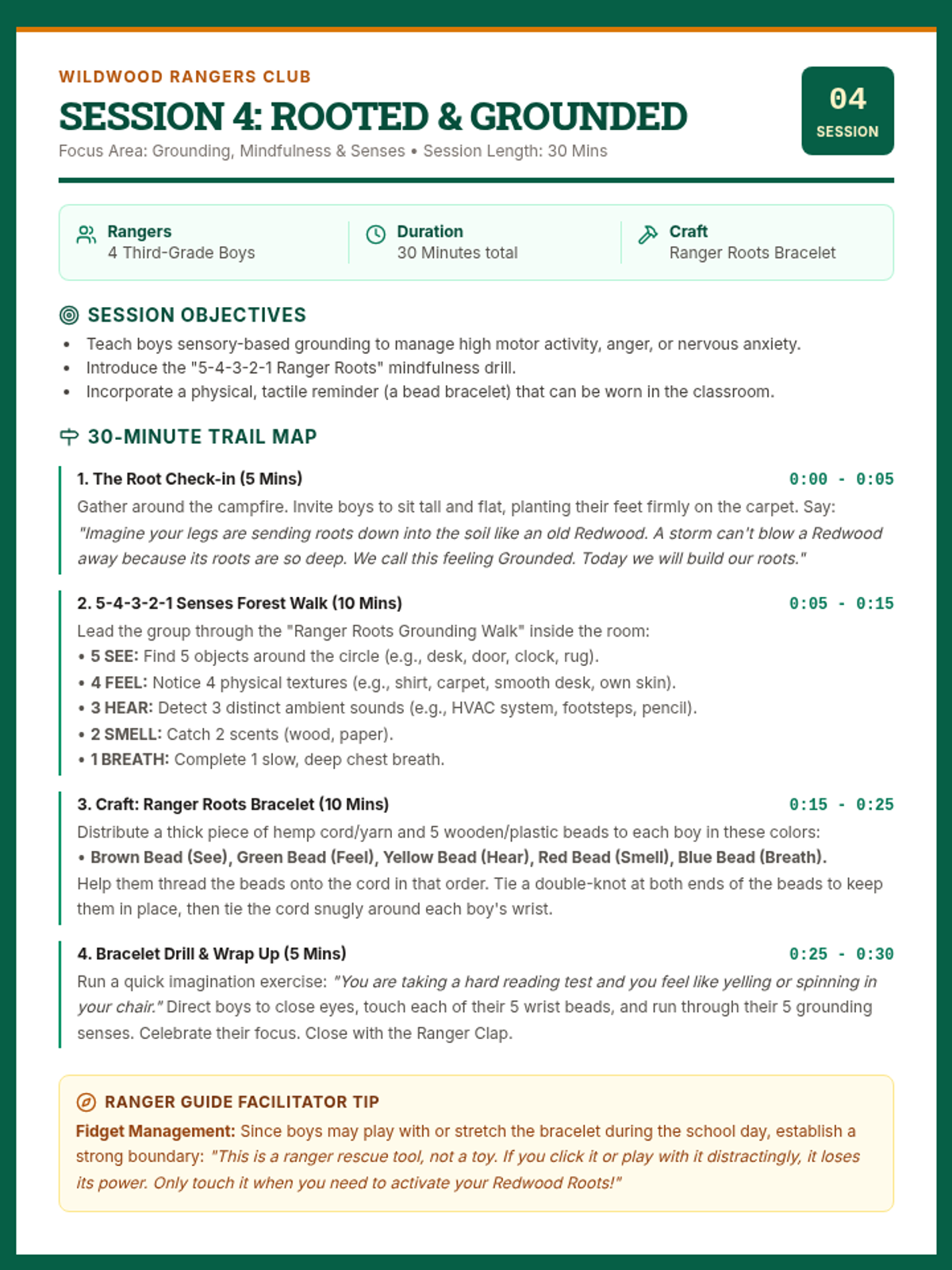
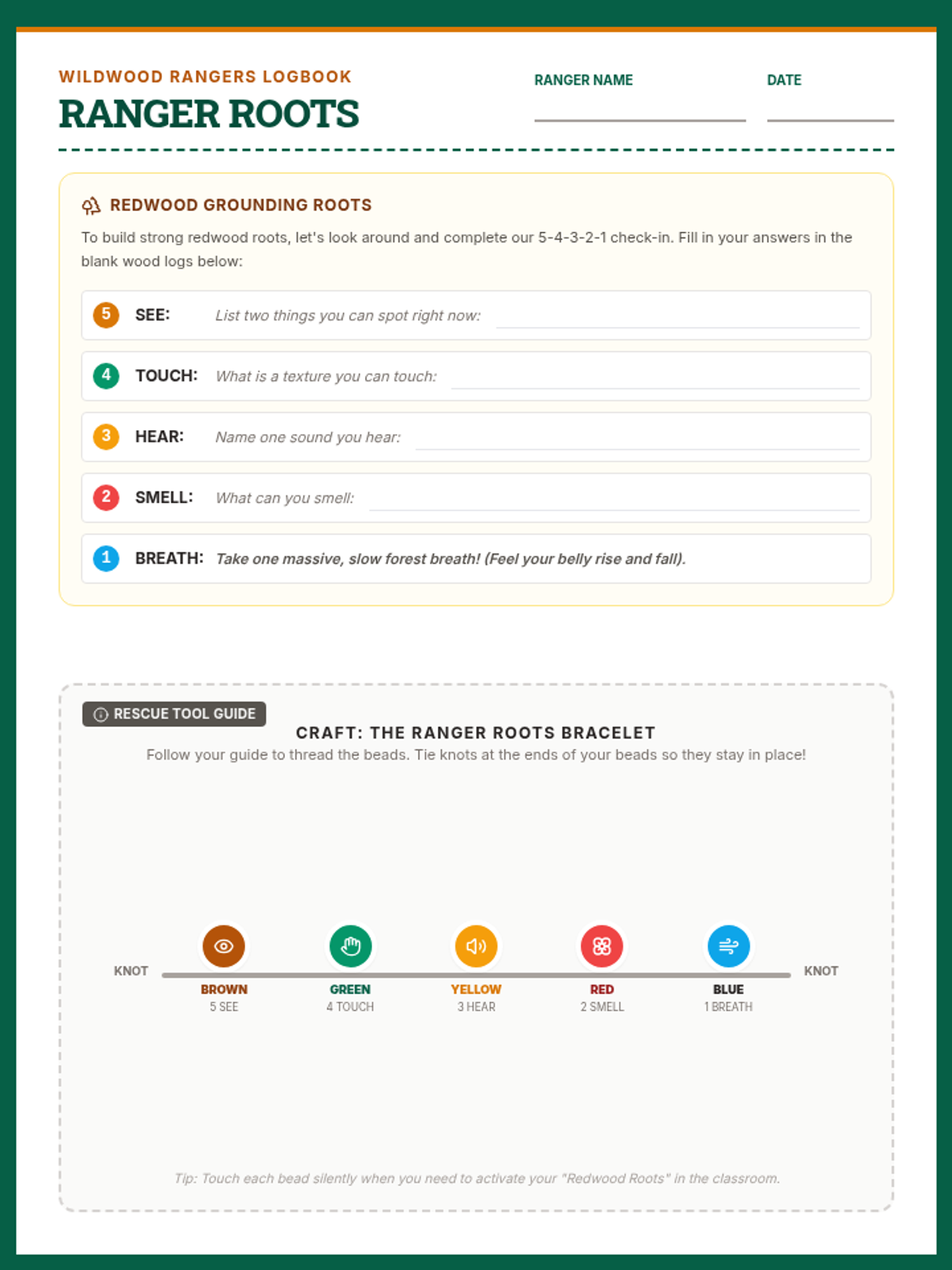
Rangers learn natural grounding and sensory strategies to calm high energy or frustration, crafting a custom 'Ranger Roots' breathing bead bracelet and practicing forest mindfulness.
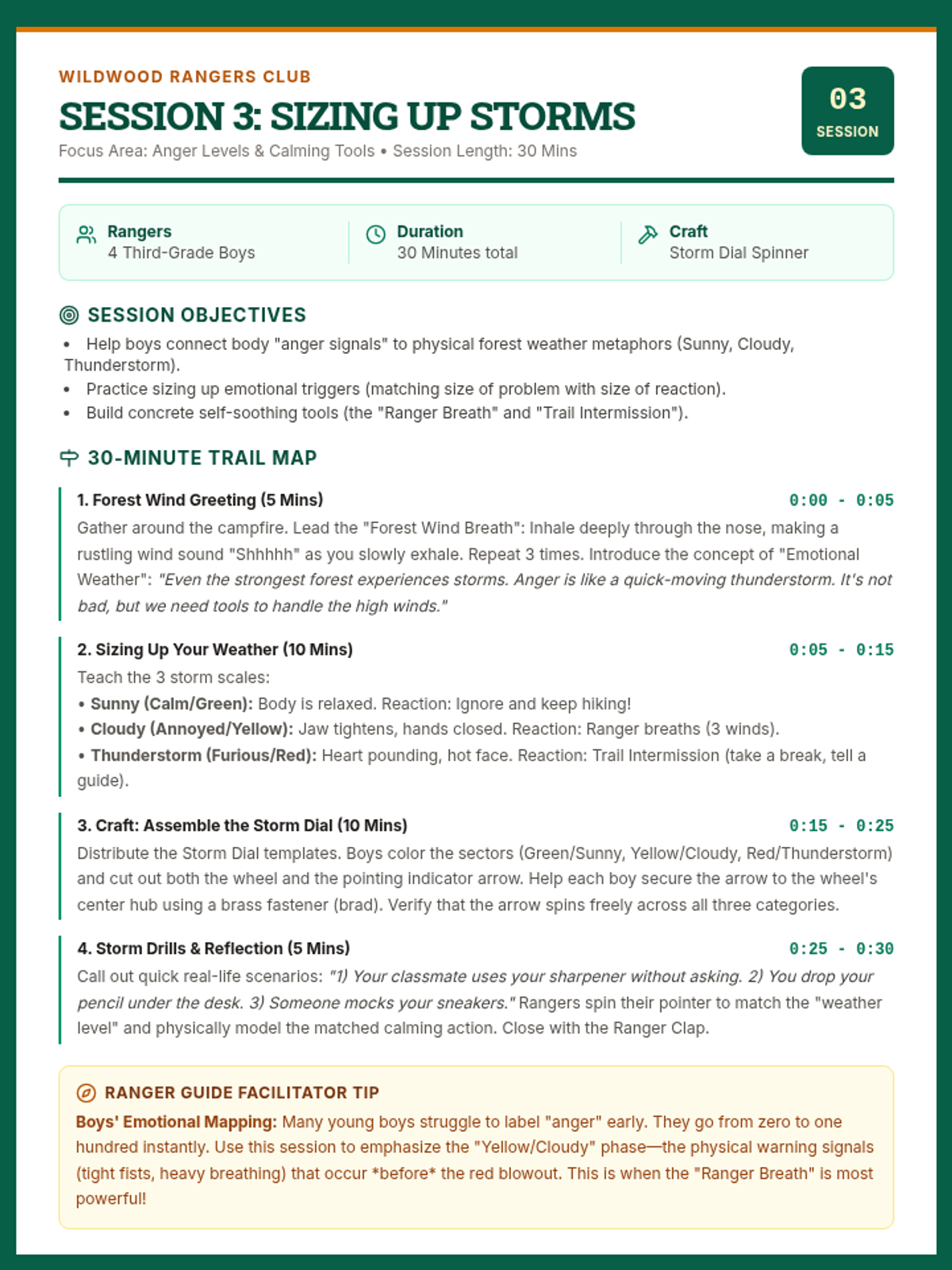
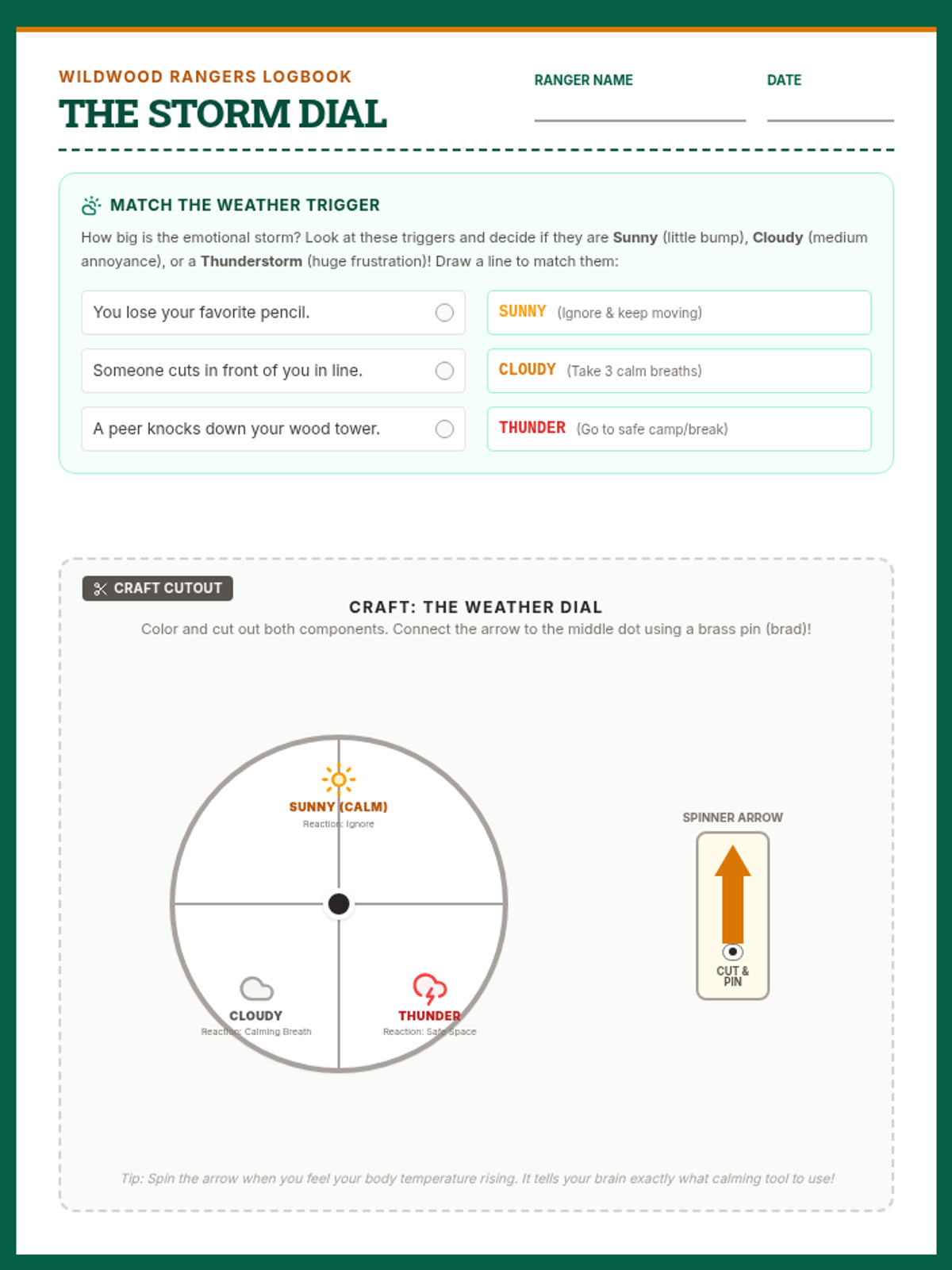
Rangers learn to identify the size of emotional 'storms' (anger triggers) and match them with appropriate calming strategies, crafting a custom Storm Dial craft.
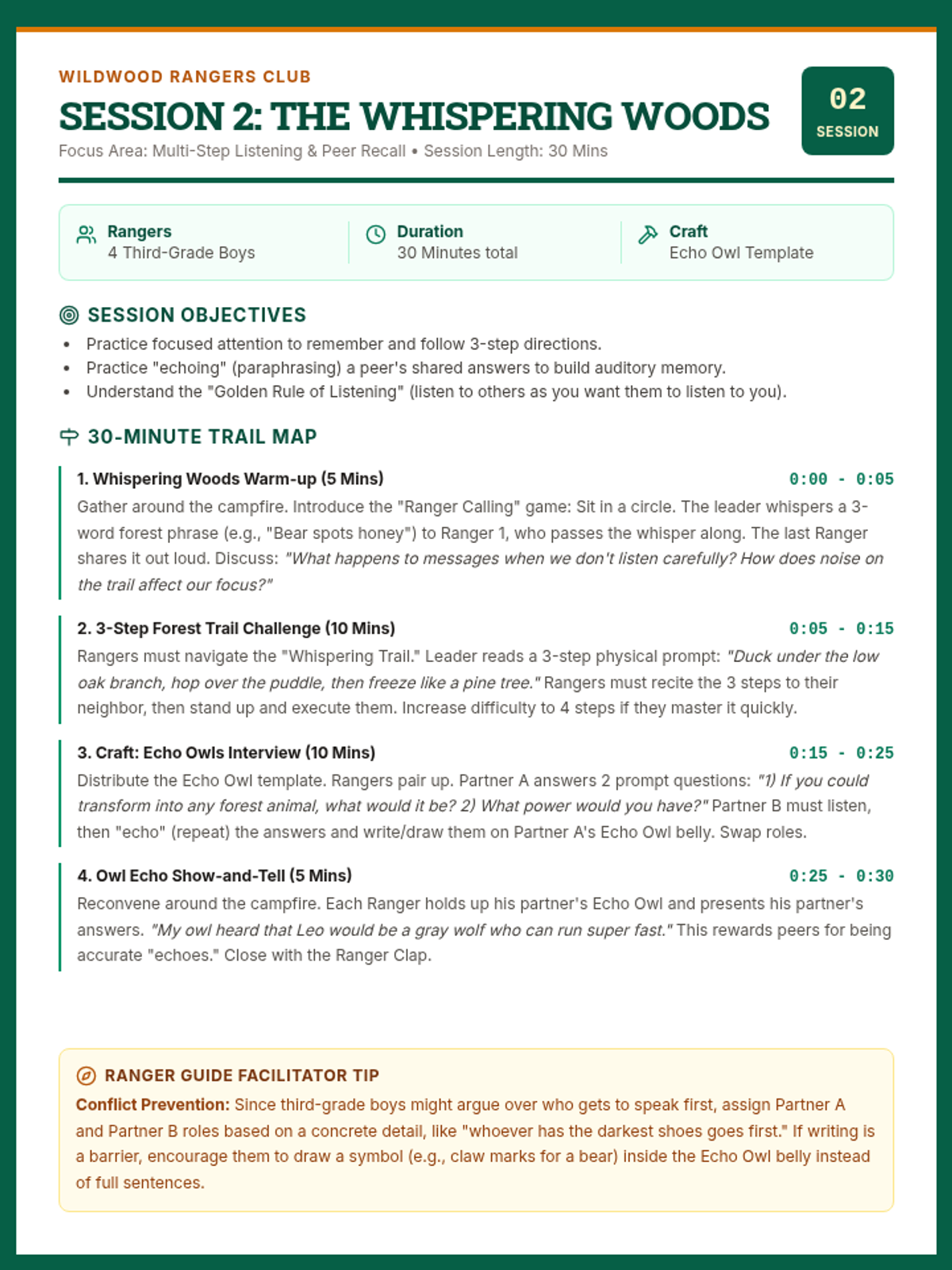
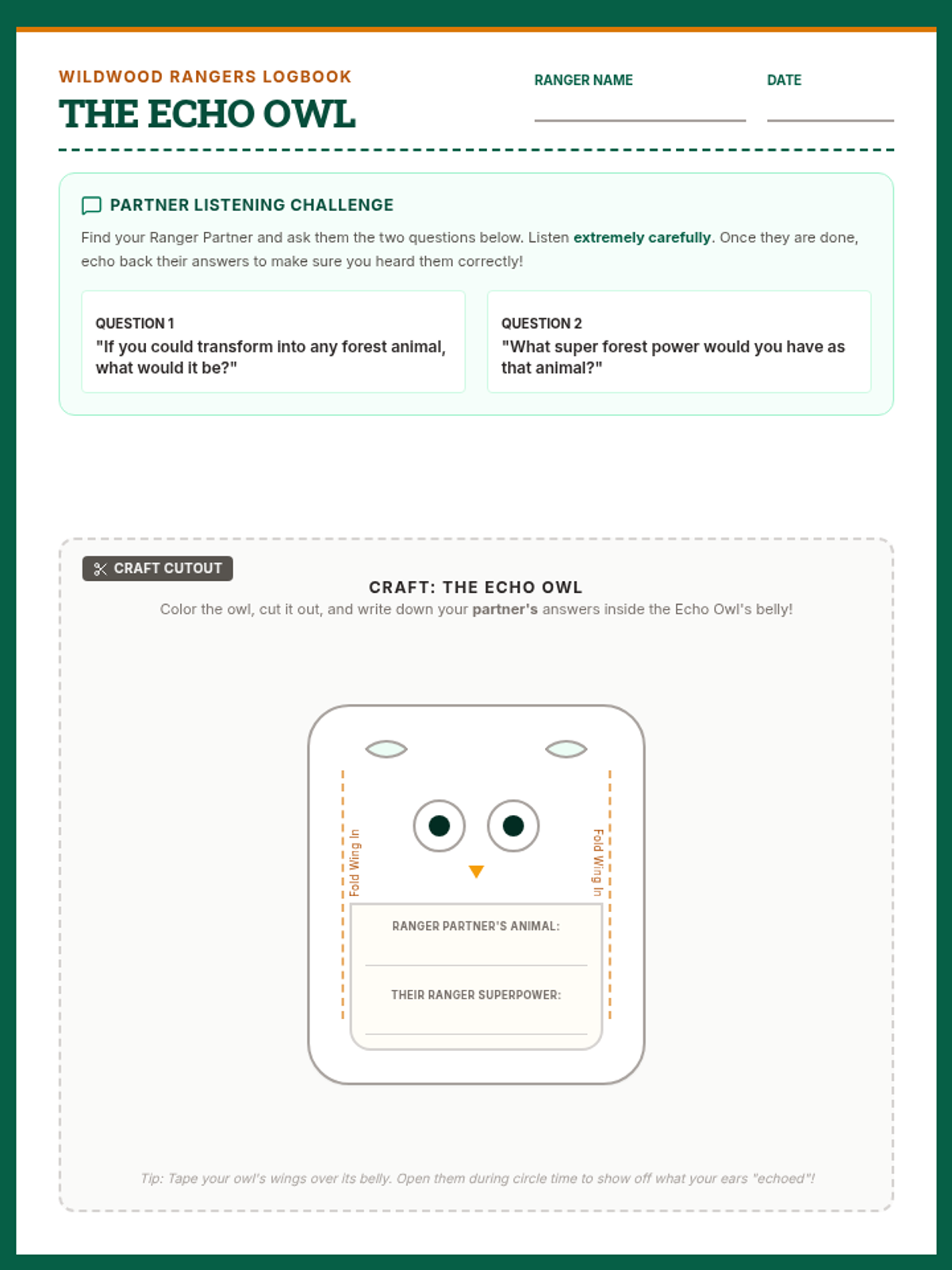
Rangers practice intense focus and multi-step active listening through forest-themed hearing challenges, crafting 'Echo Owls' to capture and repeat peer's ideas.
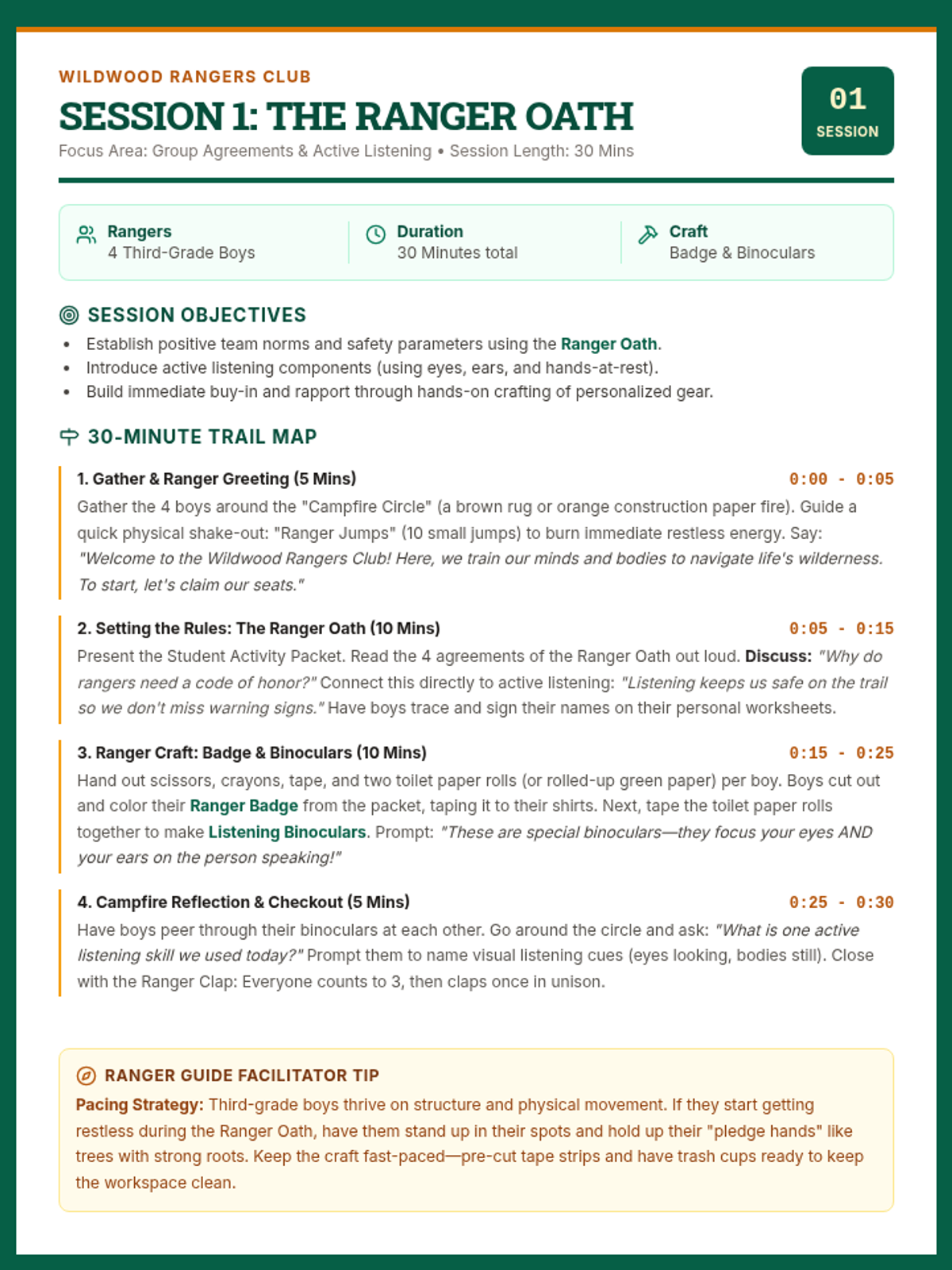
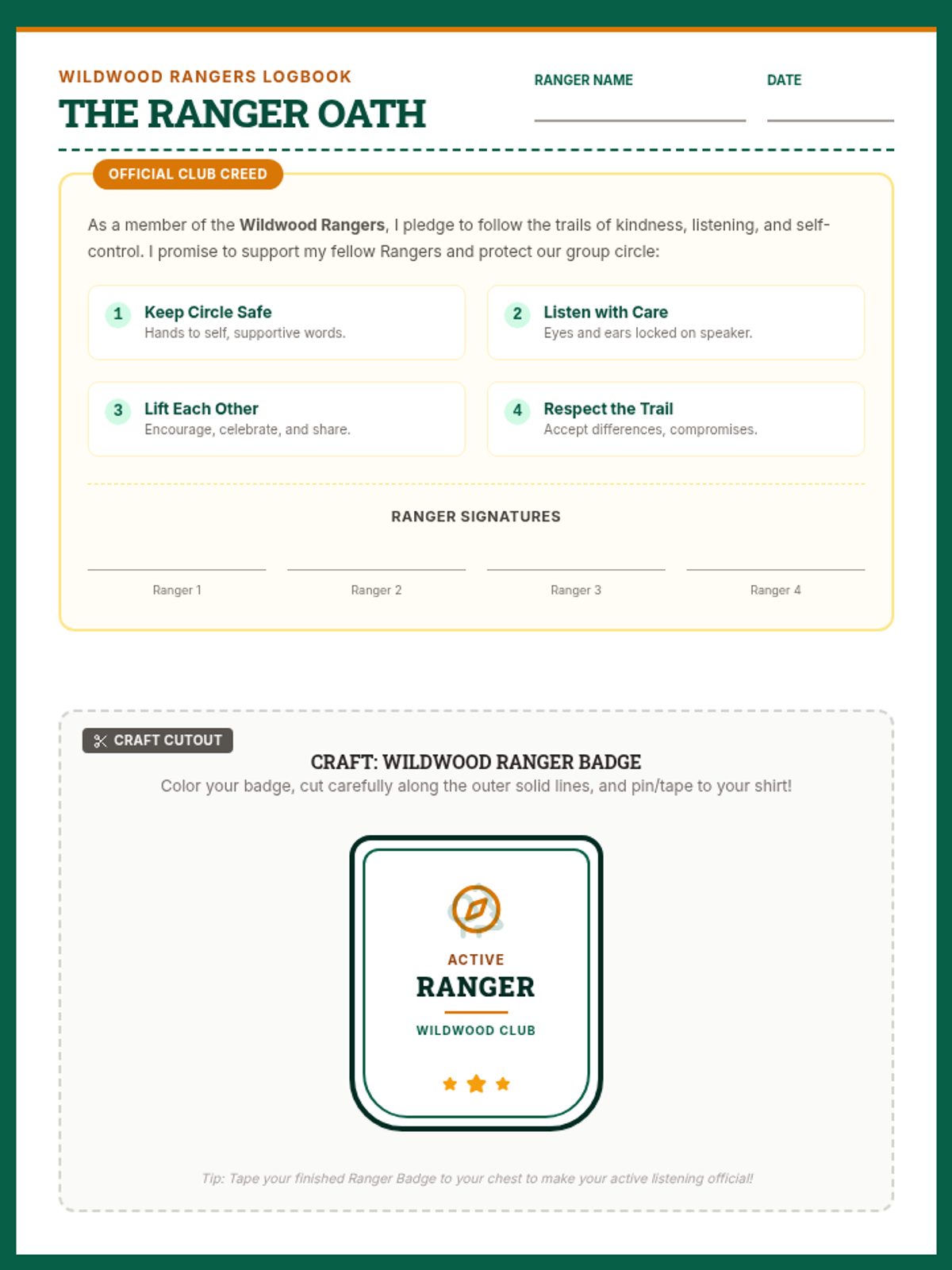
The introductory session where the 4 rangers establish their group contract (the Ranger Oath), learn active listening skills, and craft their official Ranger Badges and Listening Binoculars.
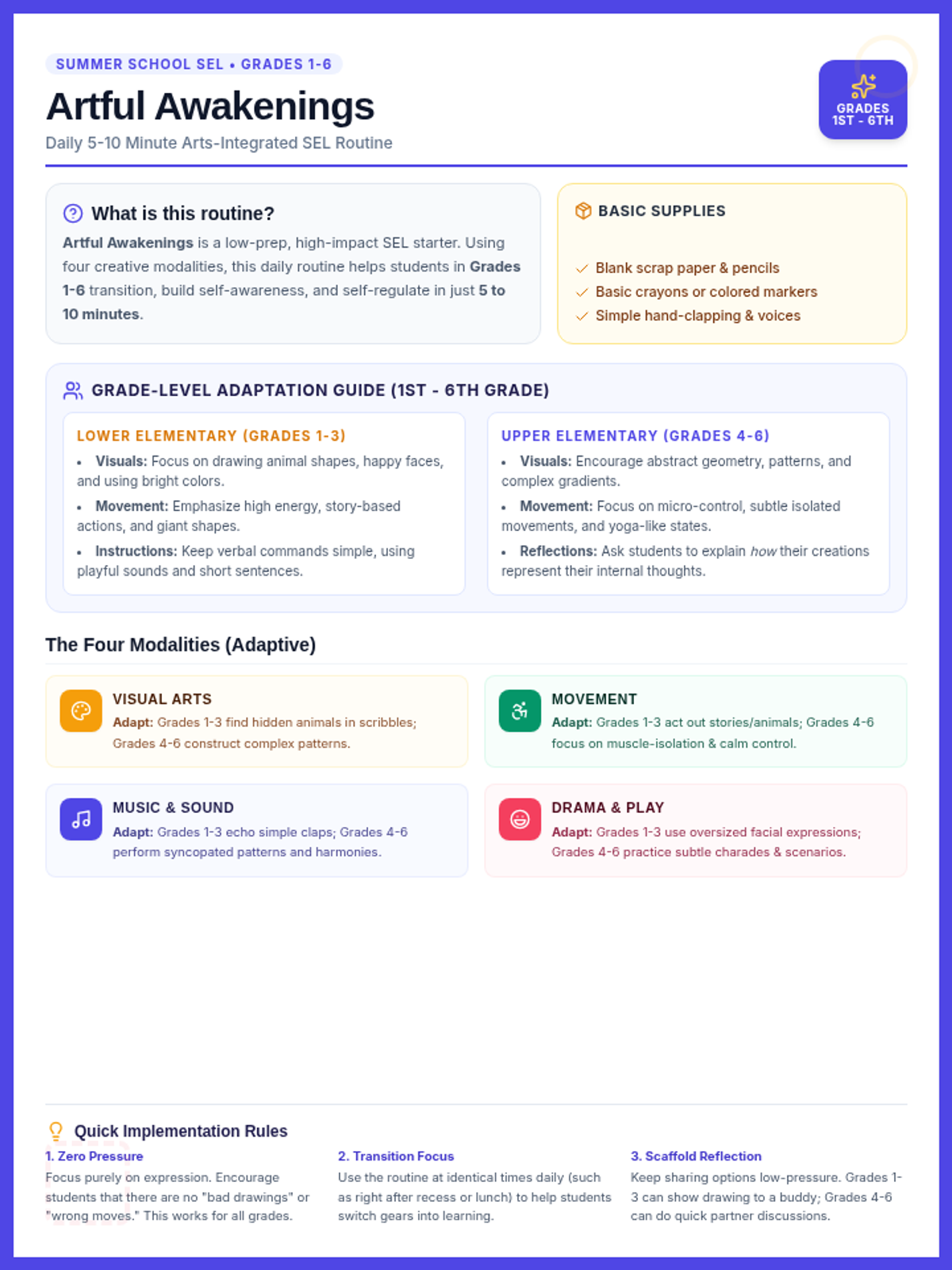
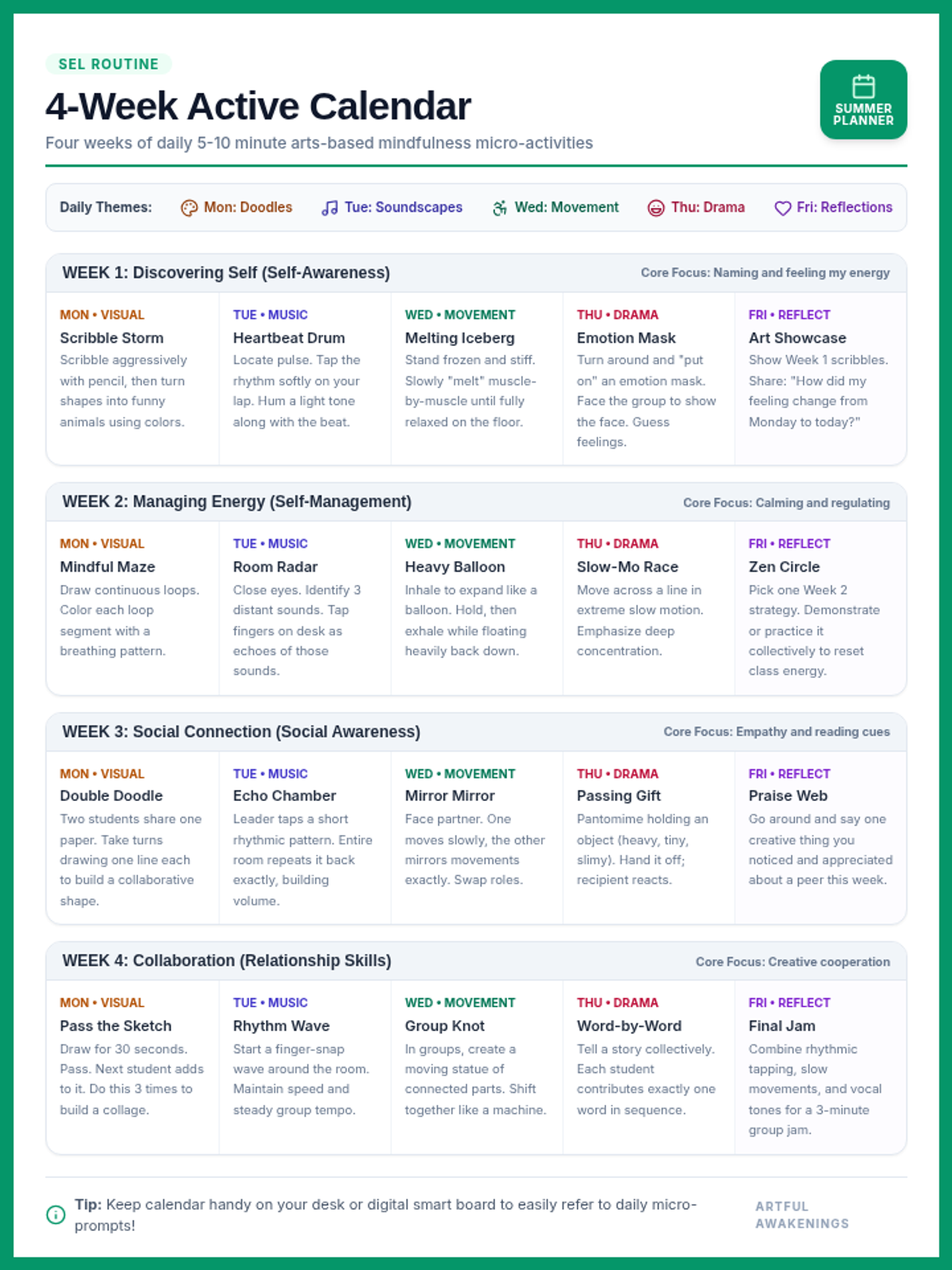
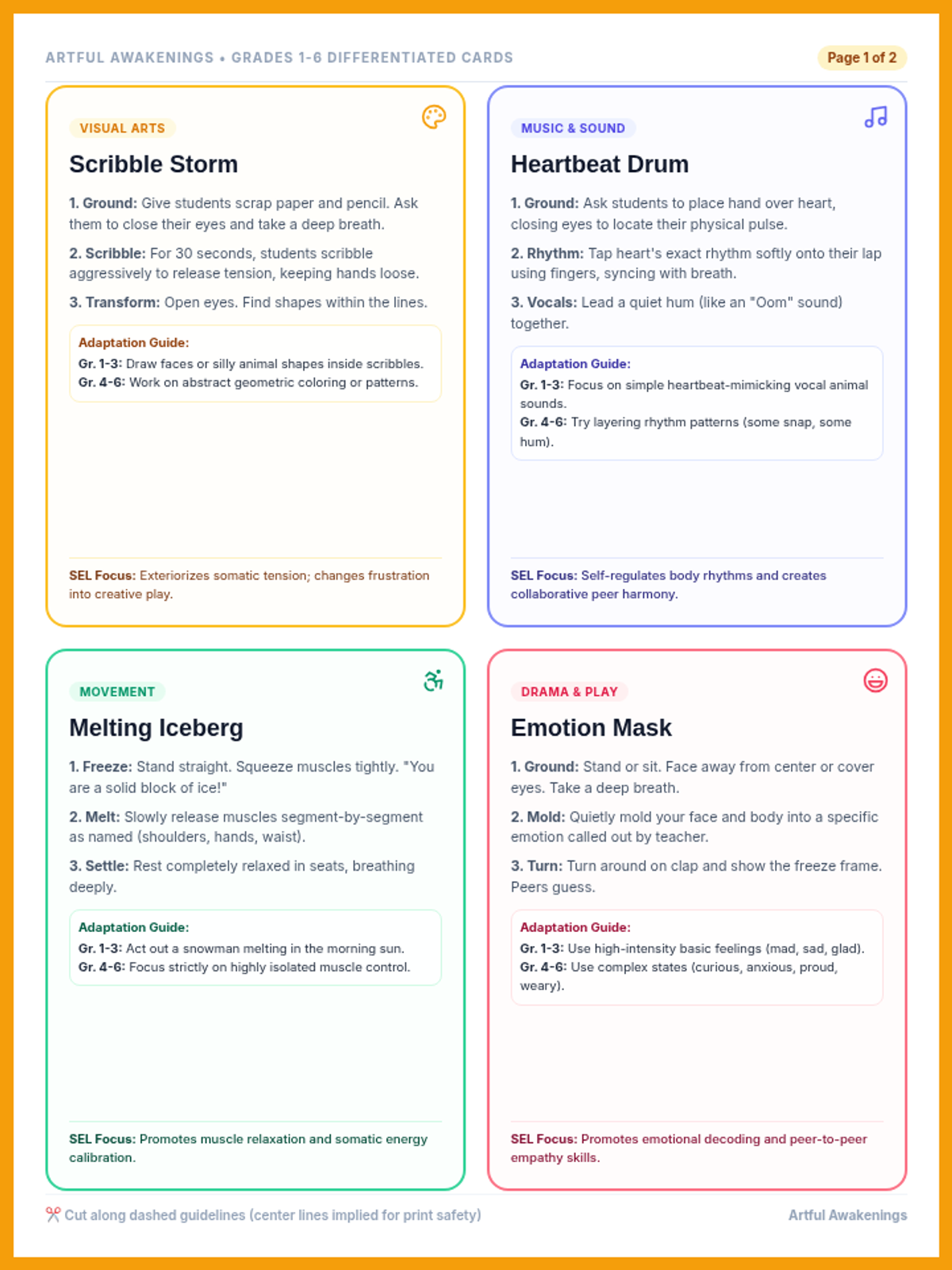
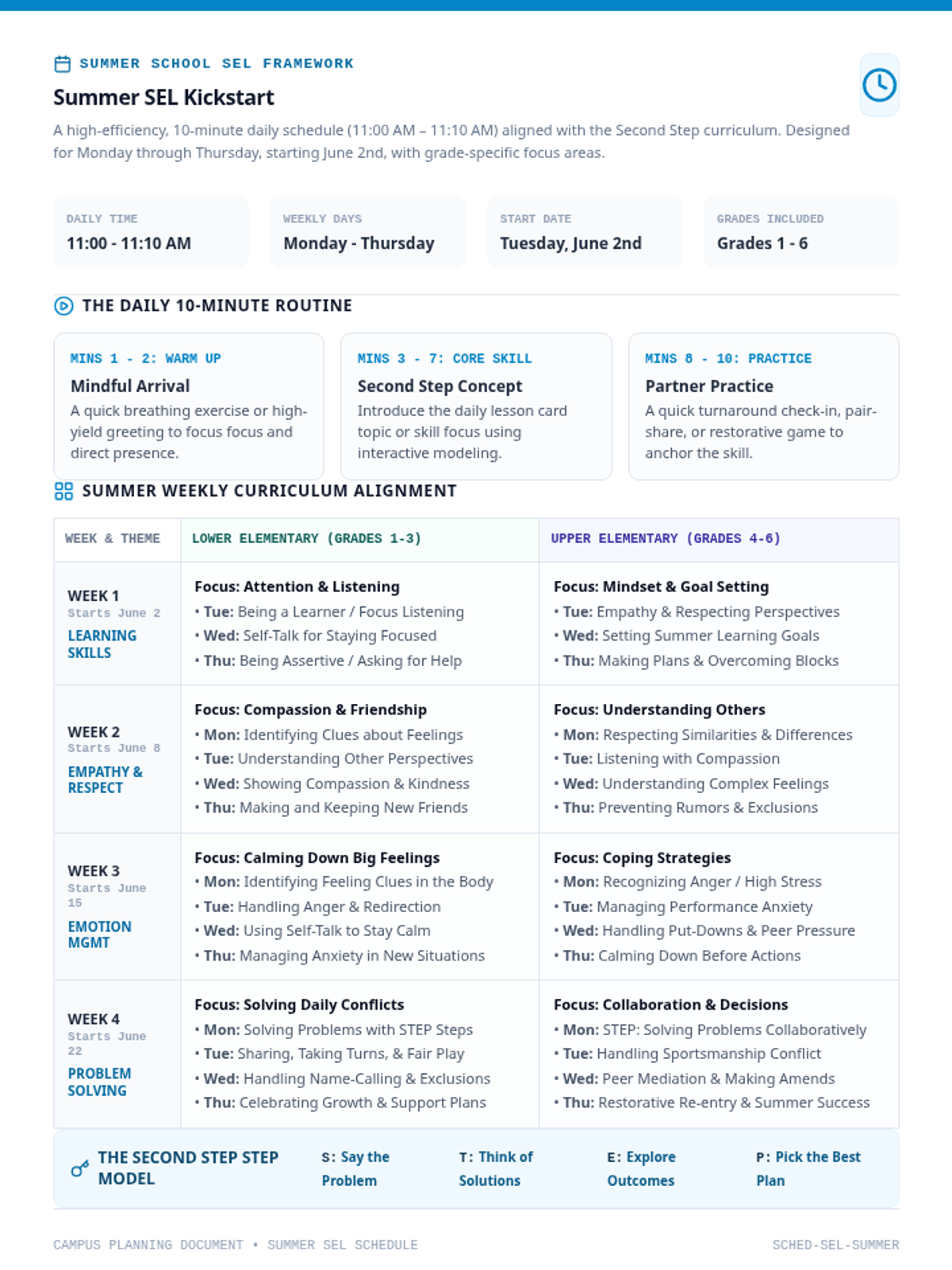
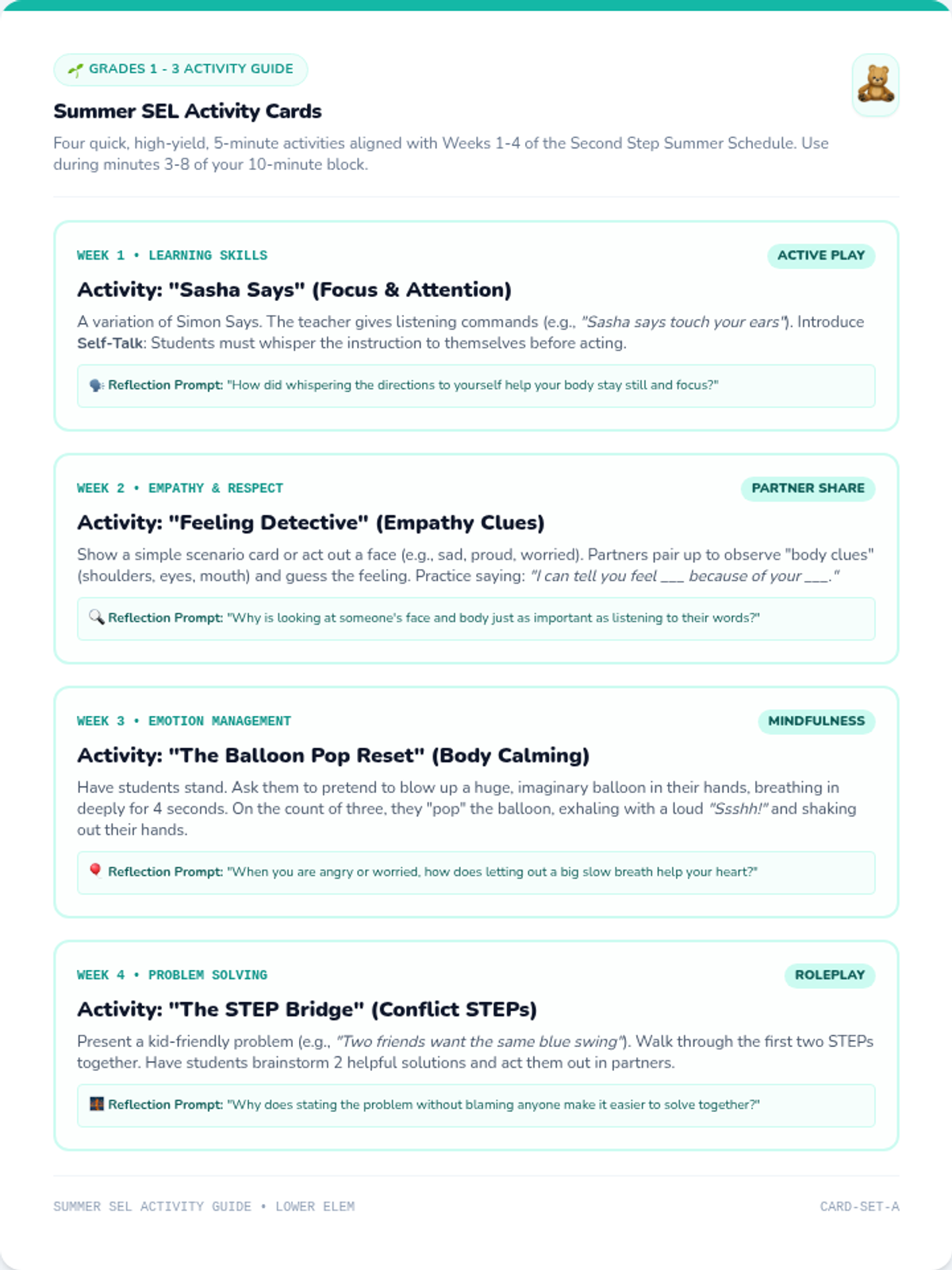
A daily 5-10 minute SEL routine incorporating visual arts, movement, music, and drama to build self-awareness and emotional regulation during summer school.
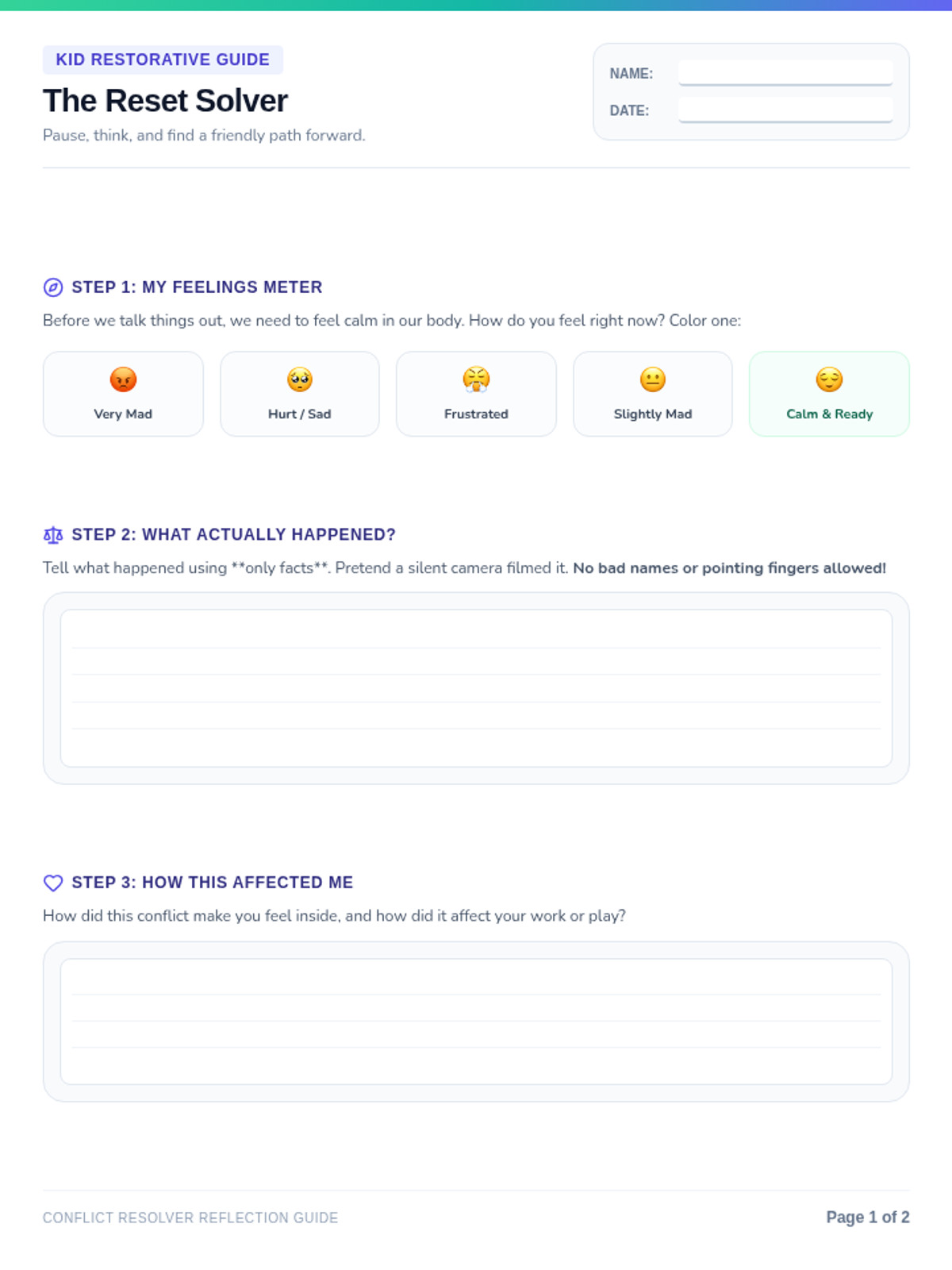
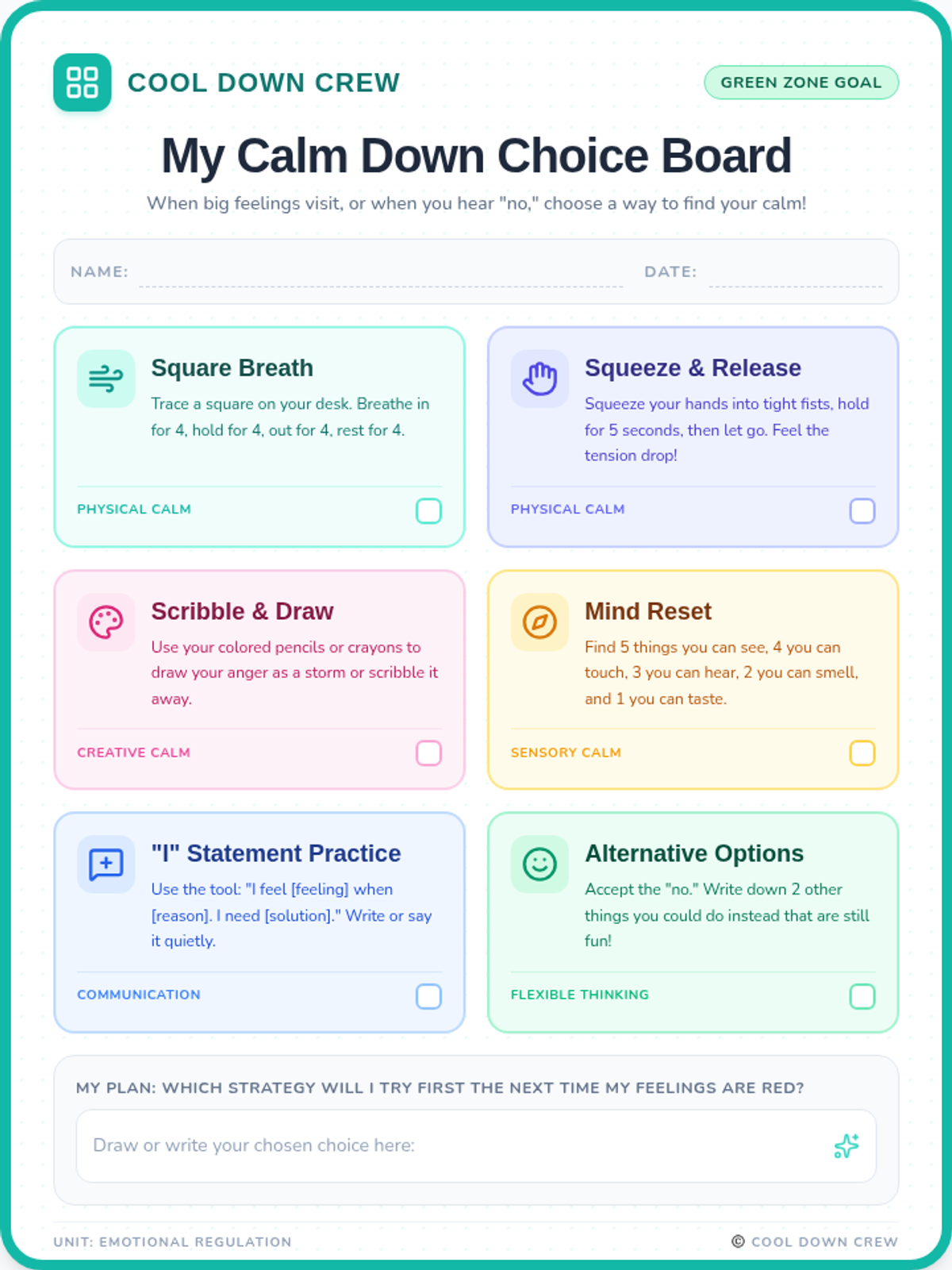
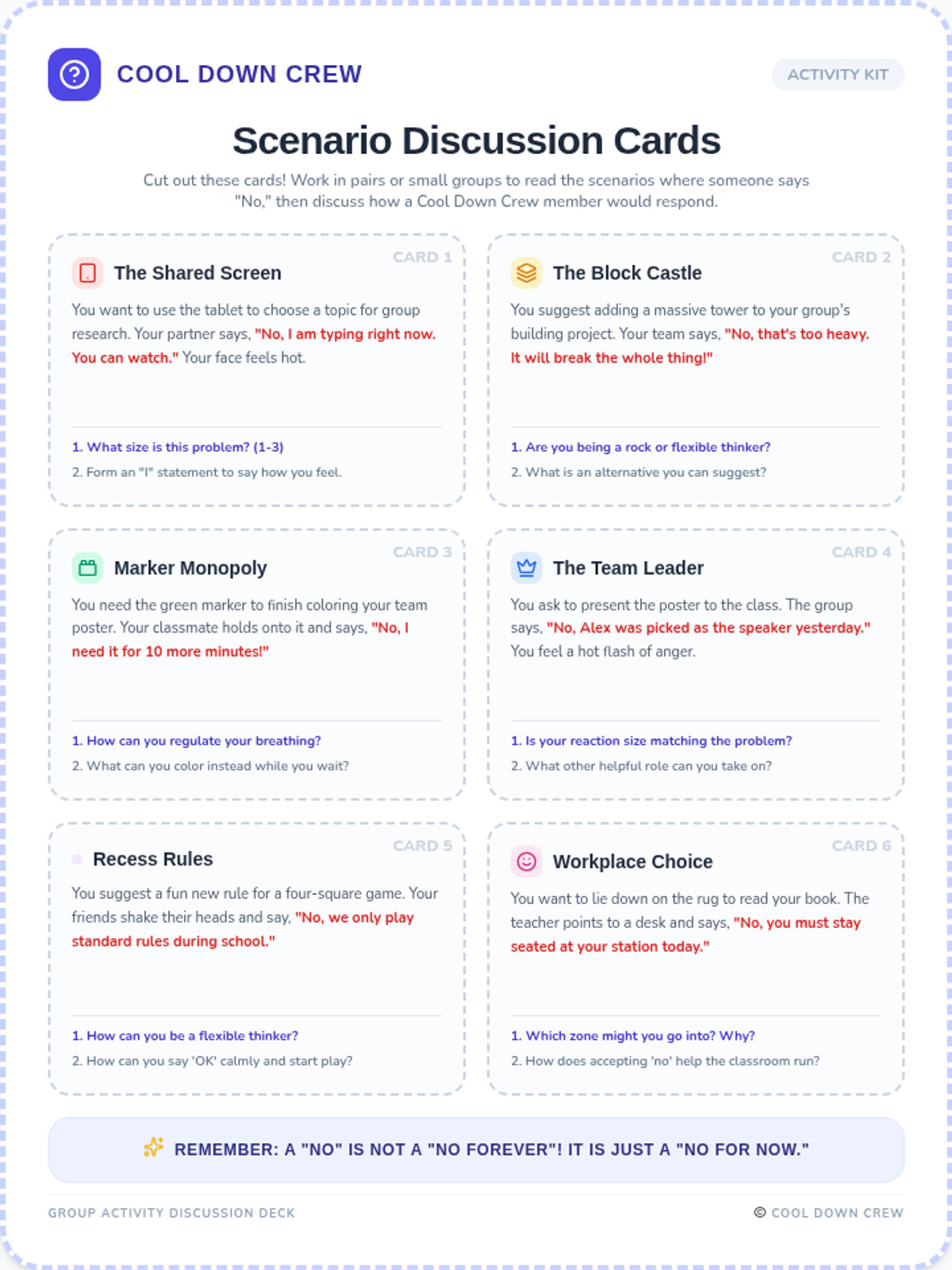
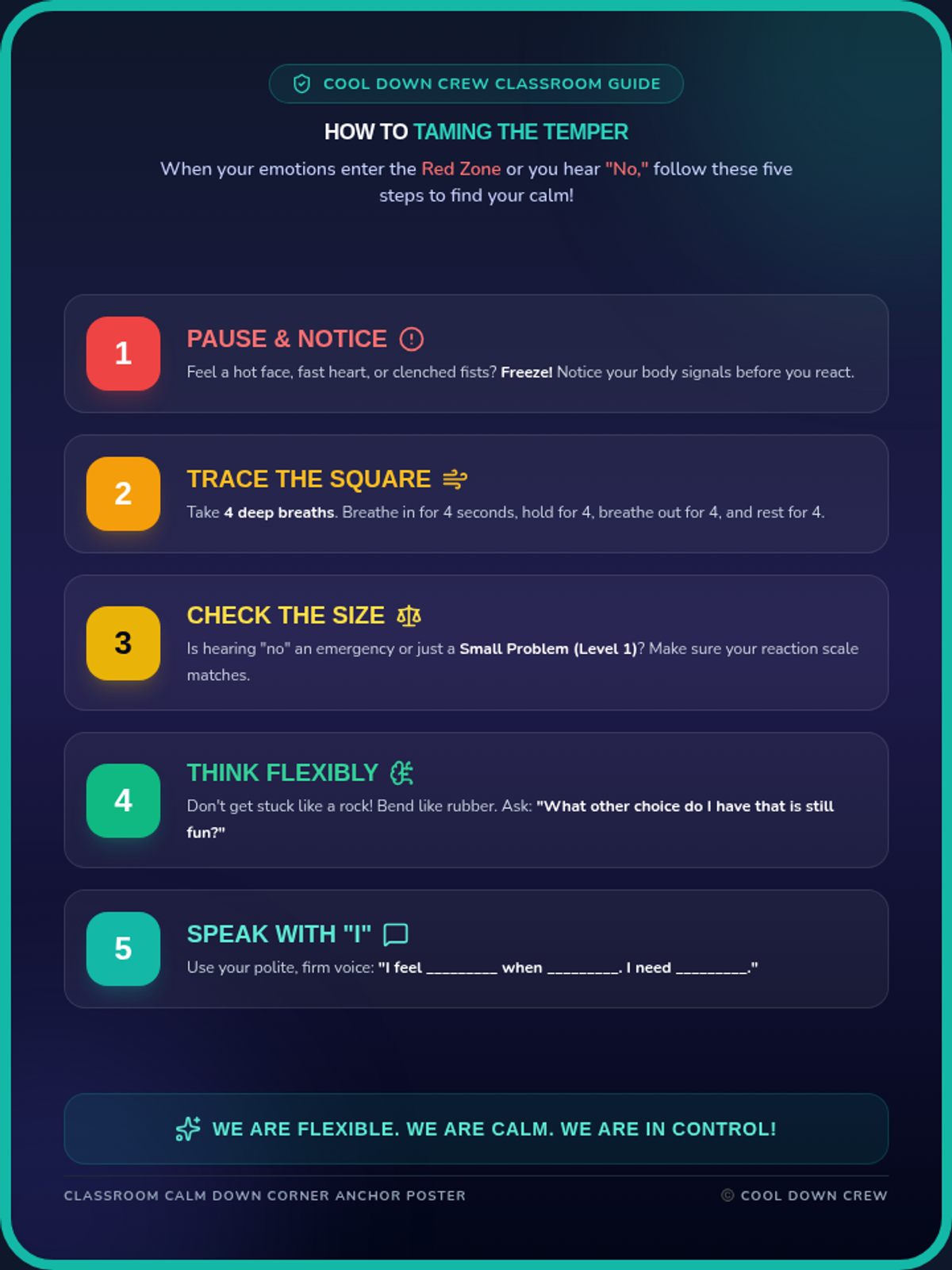
A specialized individual social-emotional learning lesson designed for 1-on-1 telehealth or therapy sessions. Helps individual students recognize the Red Zone, regulate big reactions to "no" using the Size of the Problem scale, practice at-home coping strategies, and use "I" statements constructively over screen-share.
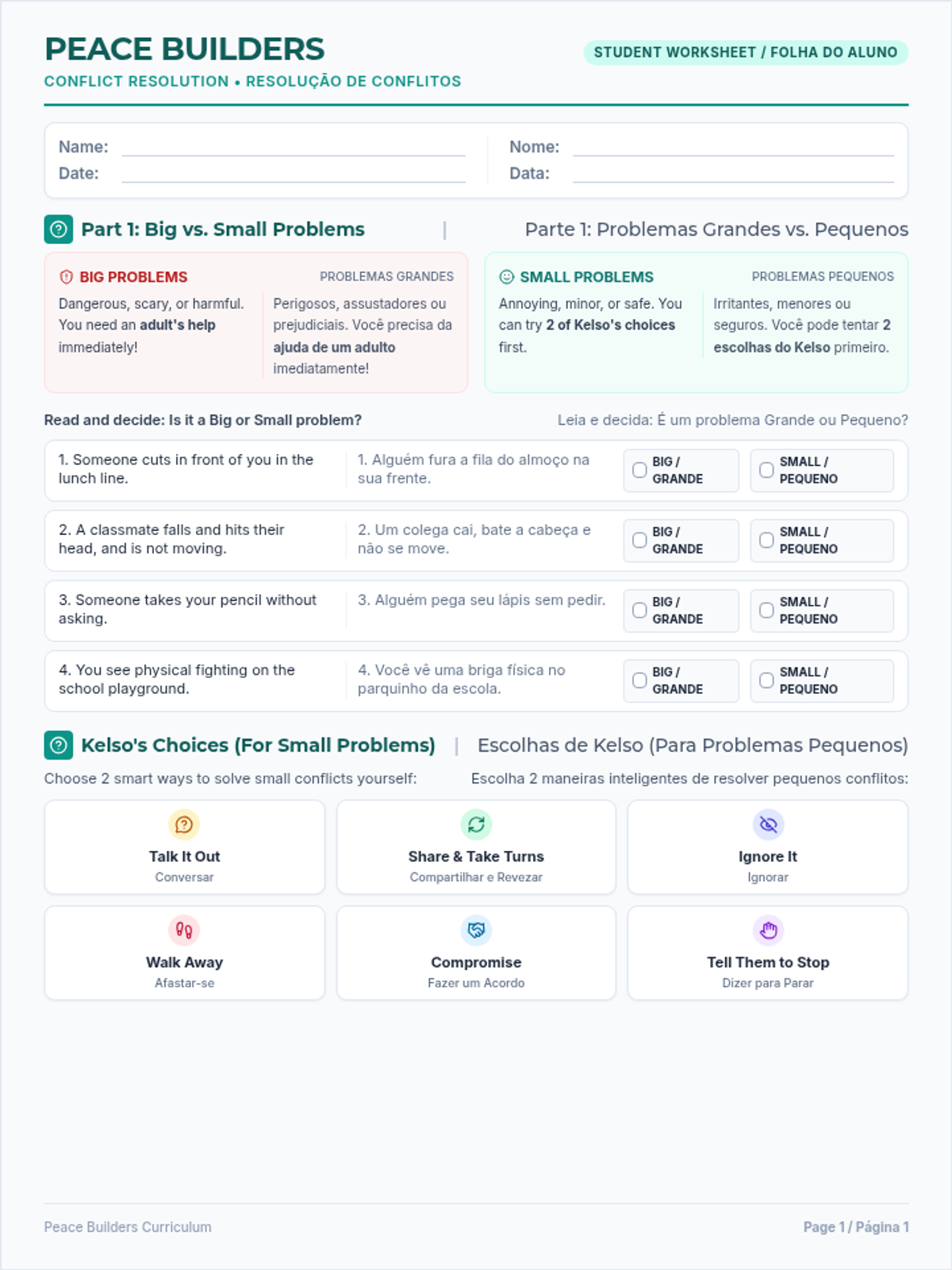
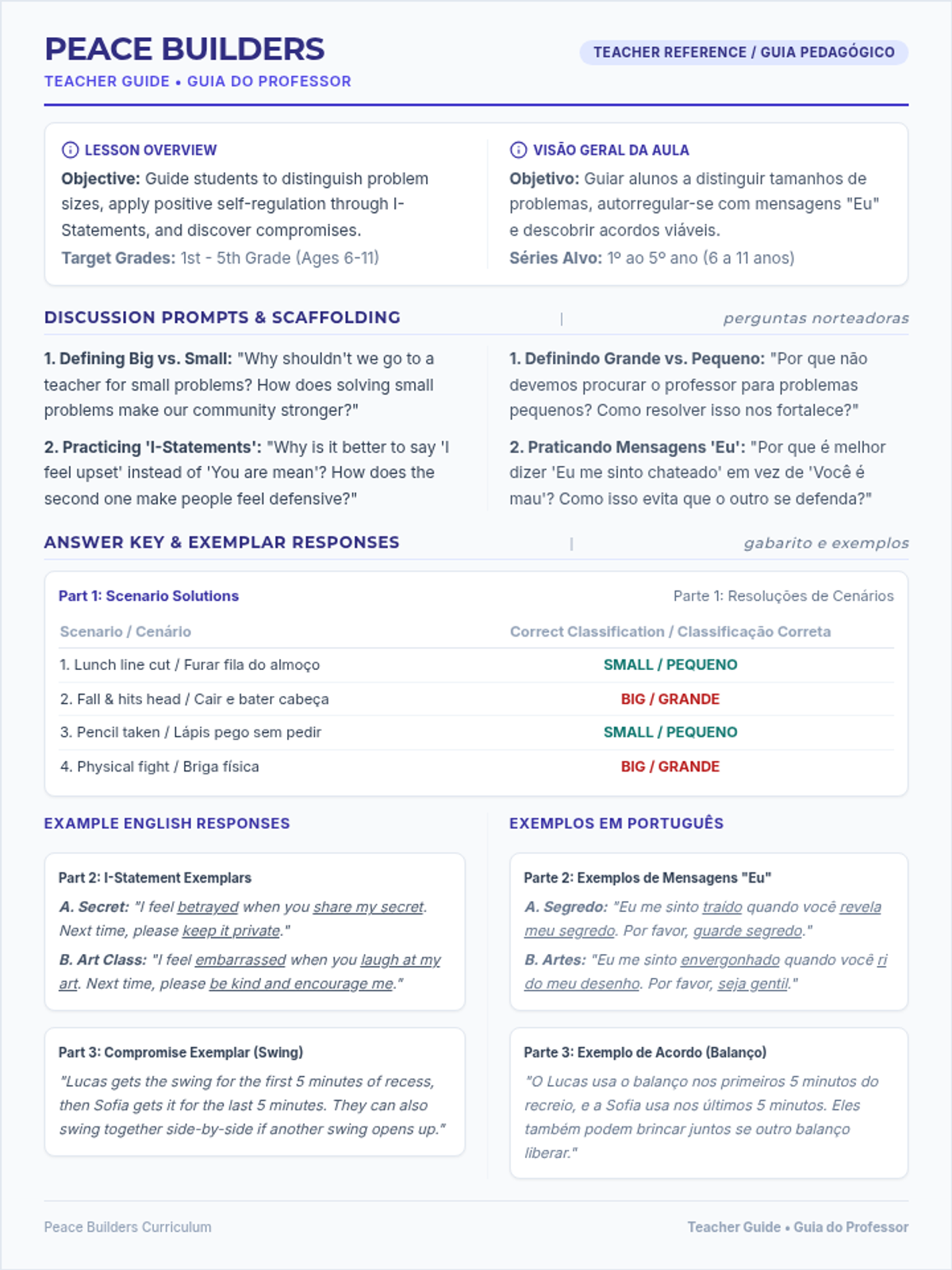
A lesson focused on conflict resolution strategies, introducing Kelso's Choices (Big vs. Small problems), I-Statements, and Compromising. Content is presented in a side-by-side bilingual (English and Portuguese) format for dual-language learning and accessibility.
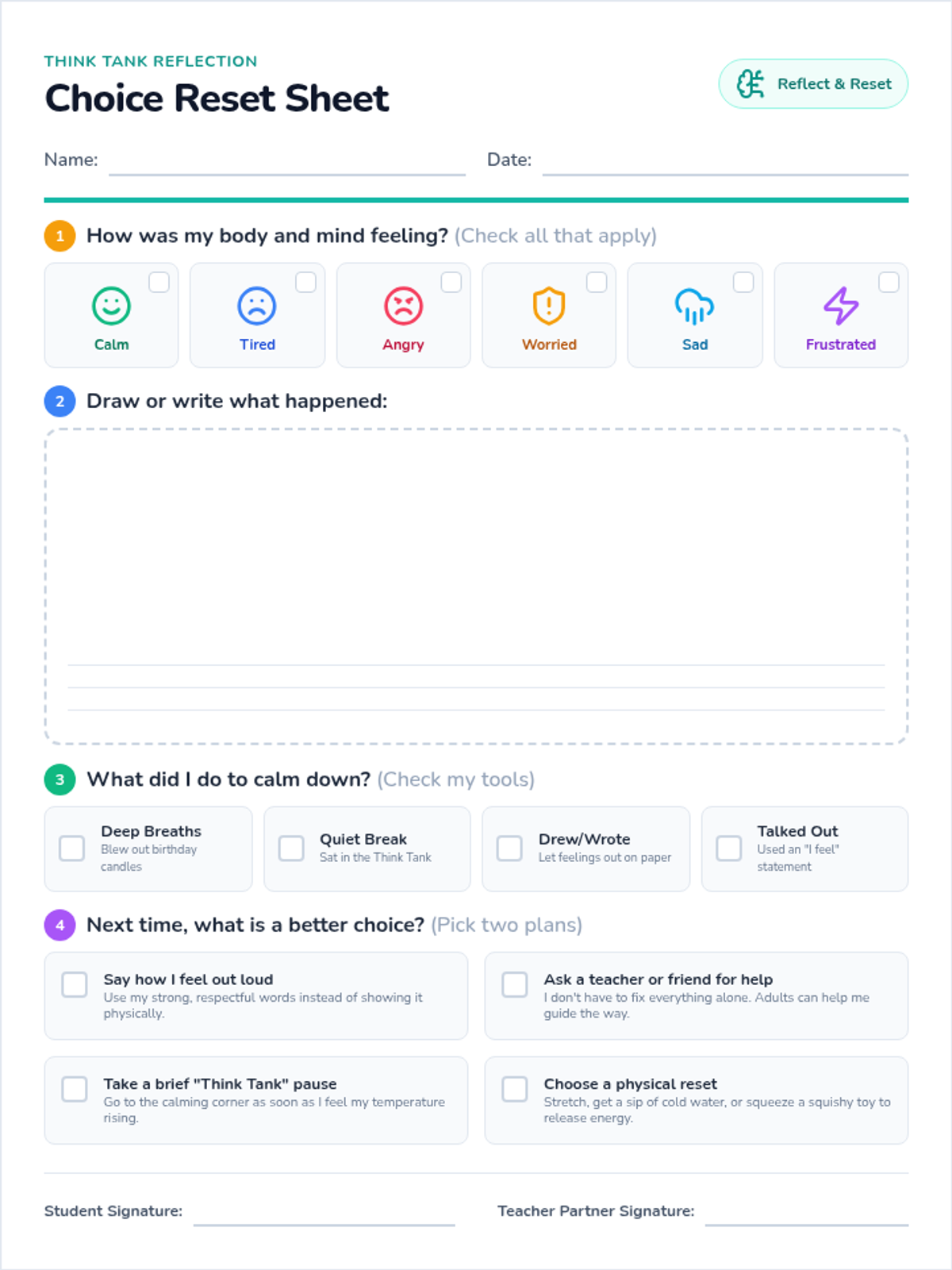
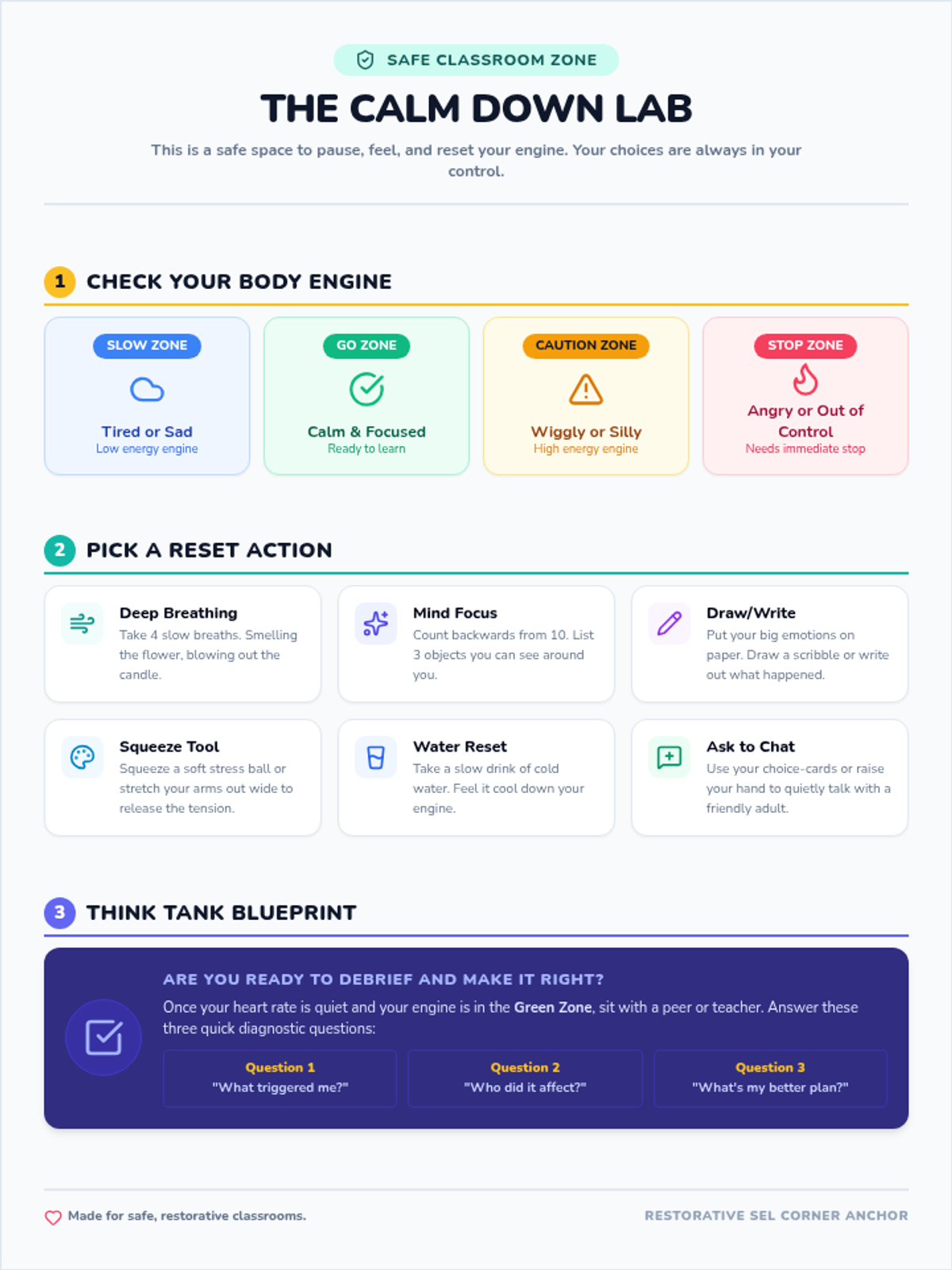
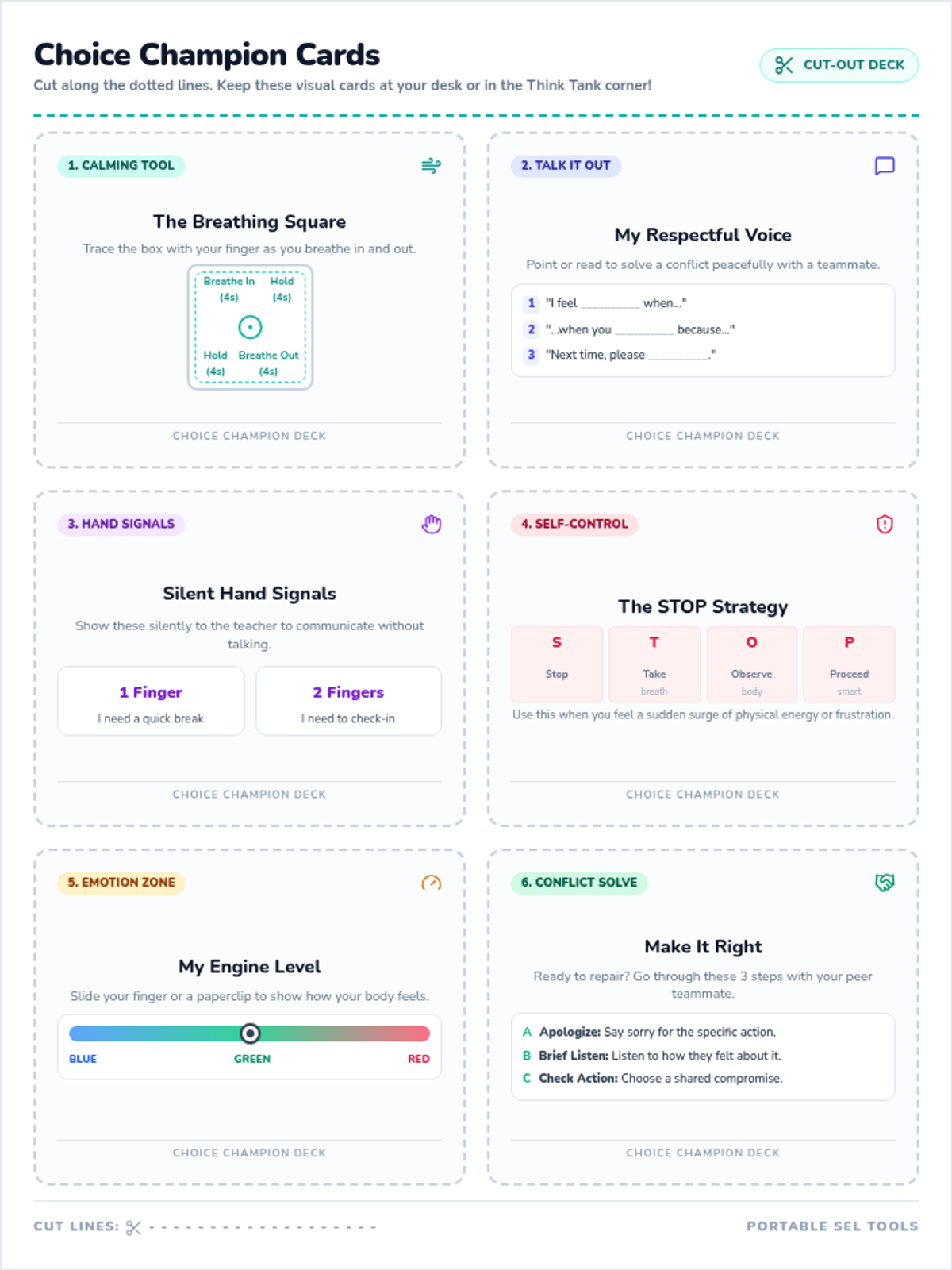
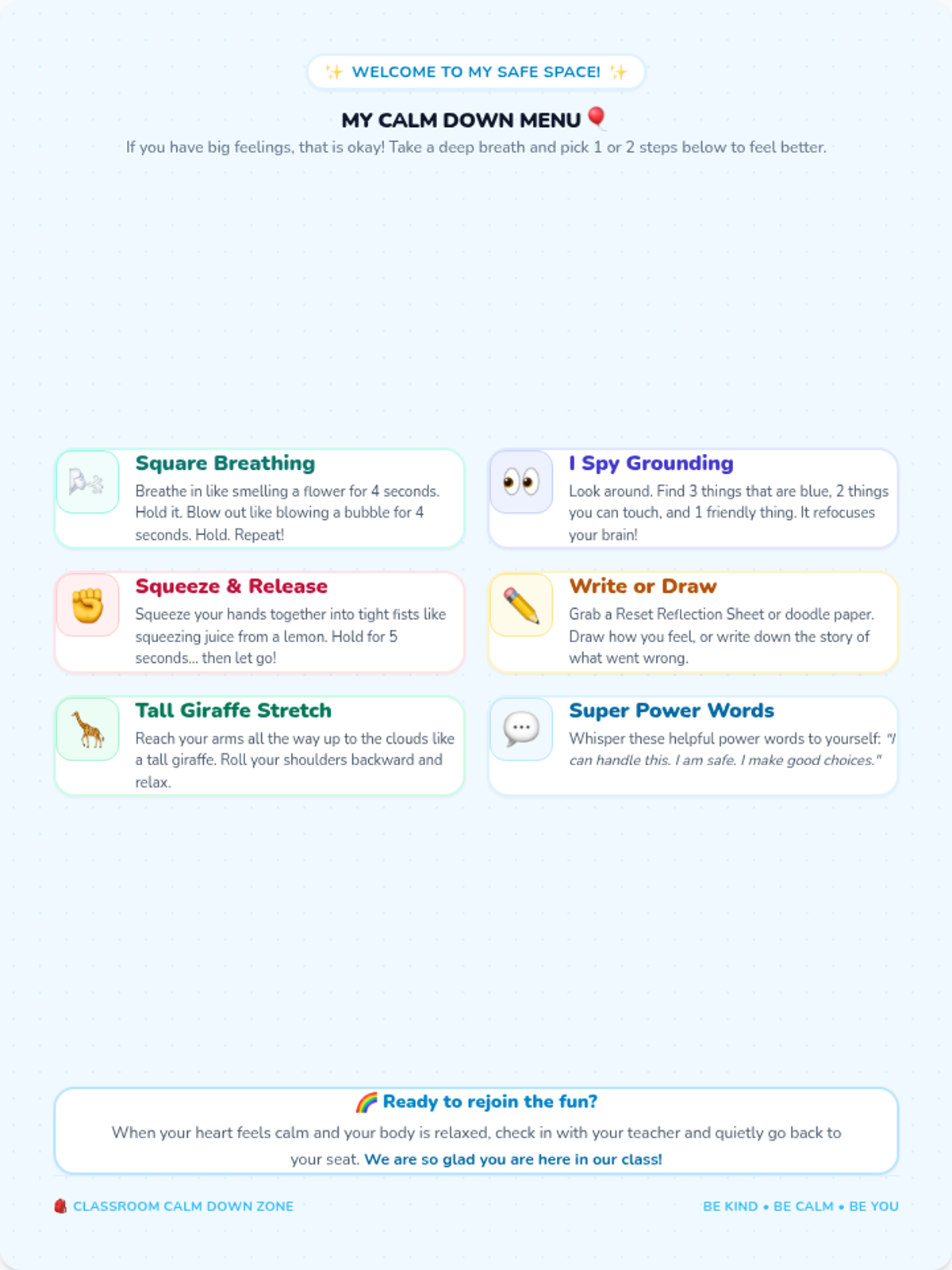
A comprehensive social-emotional toolkit for a classroom 'Think Tank' reflection corner. Includes a visual reflection sheet, a calming strategies poster, and portable visual choice cards to guide students in emotional self-regulation and positive conflict resolution.
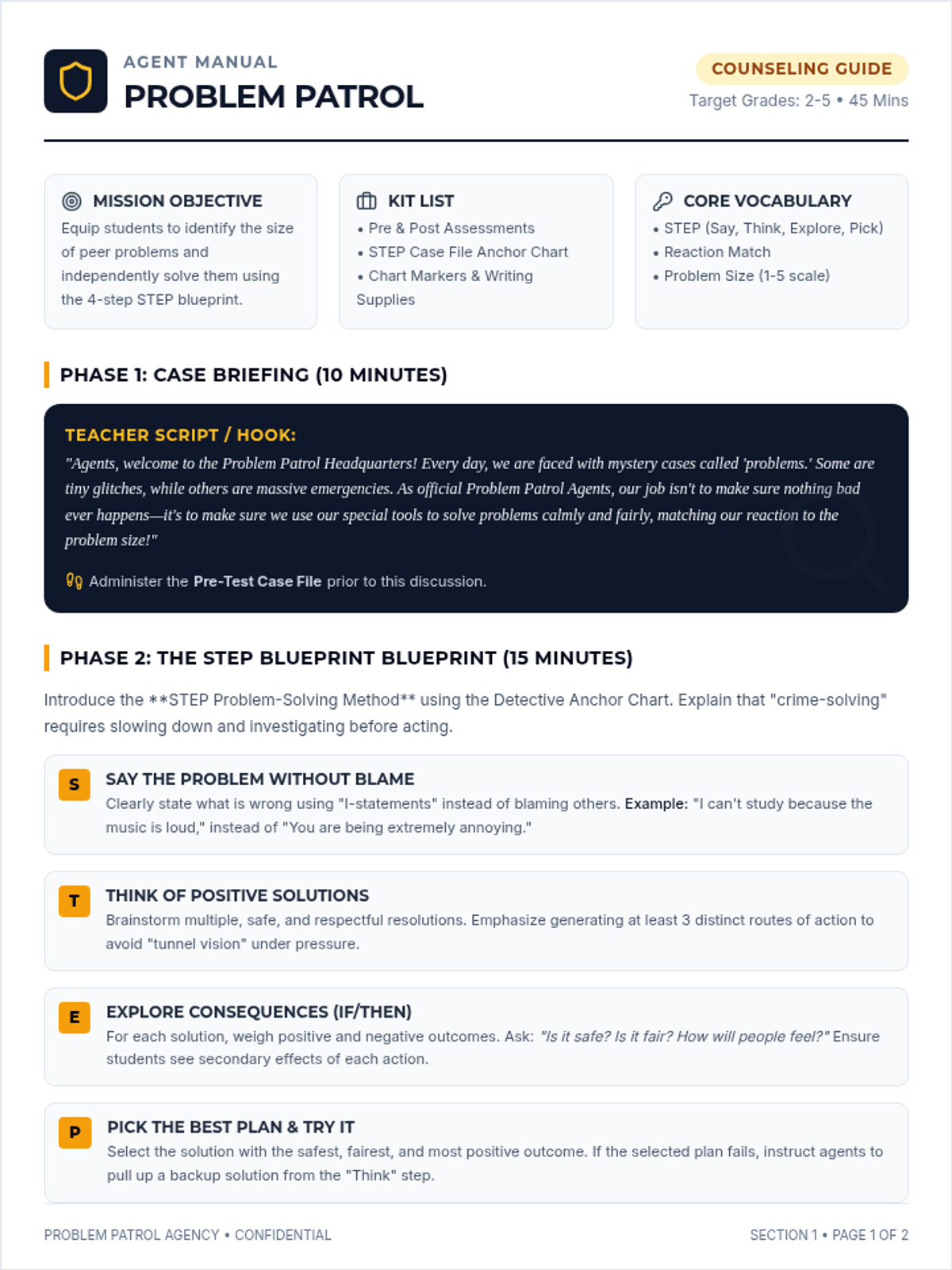
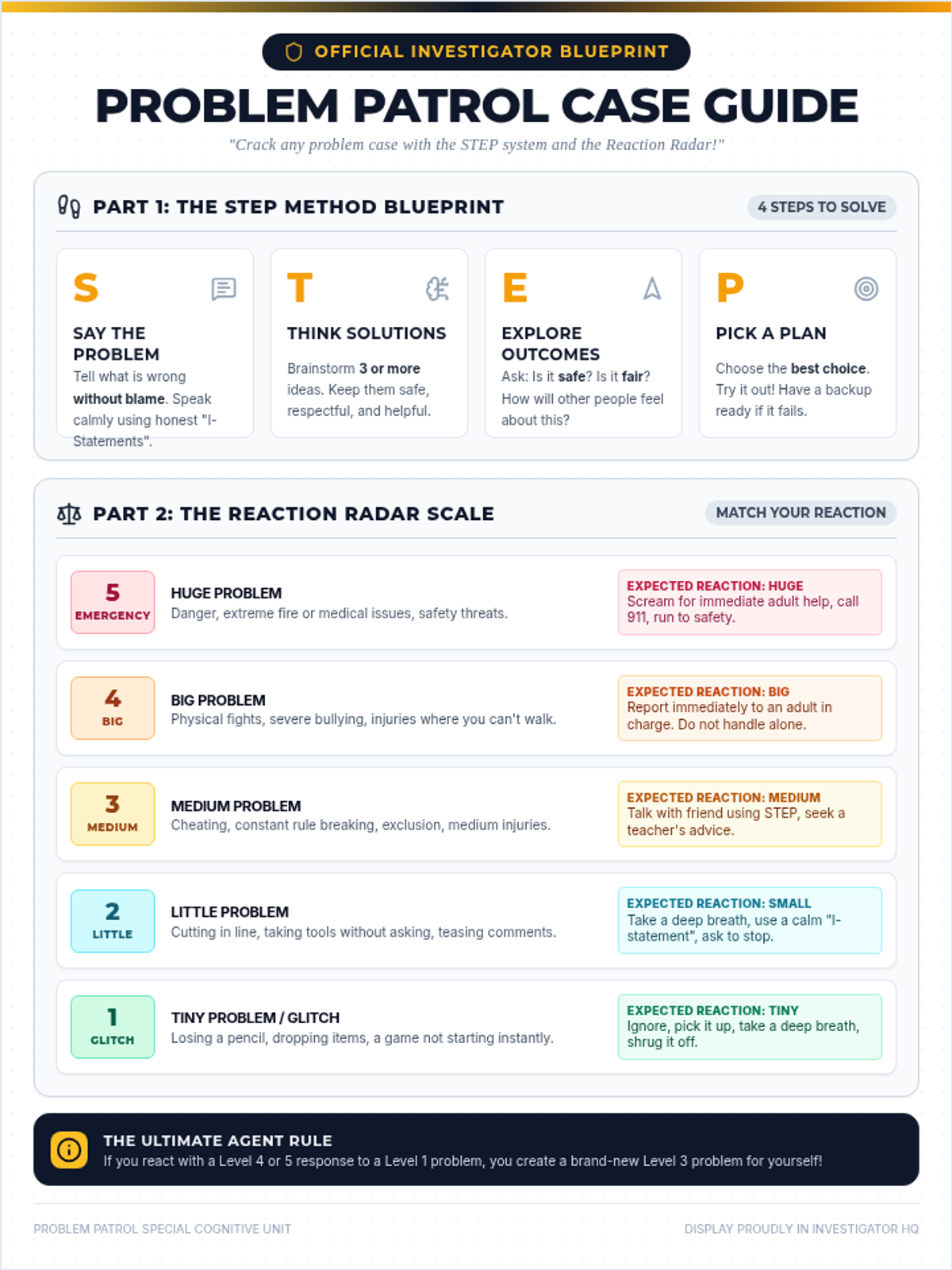
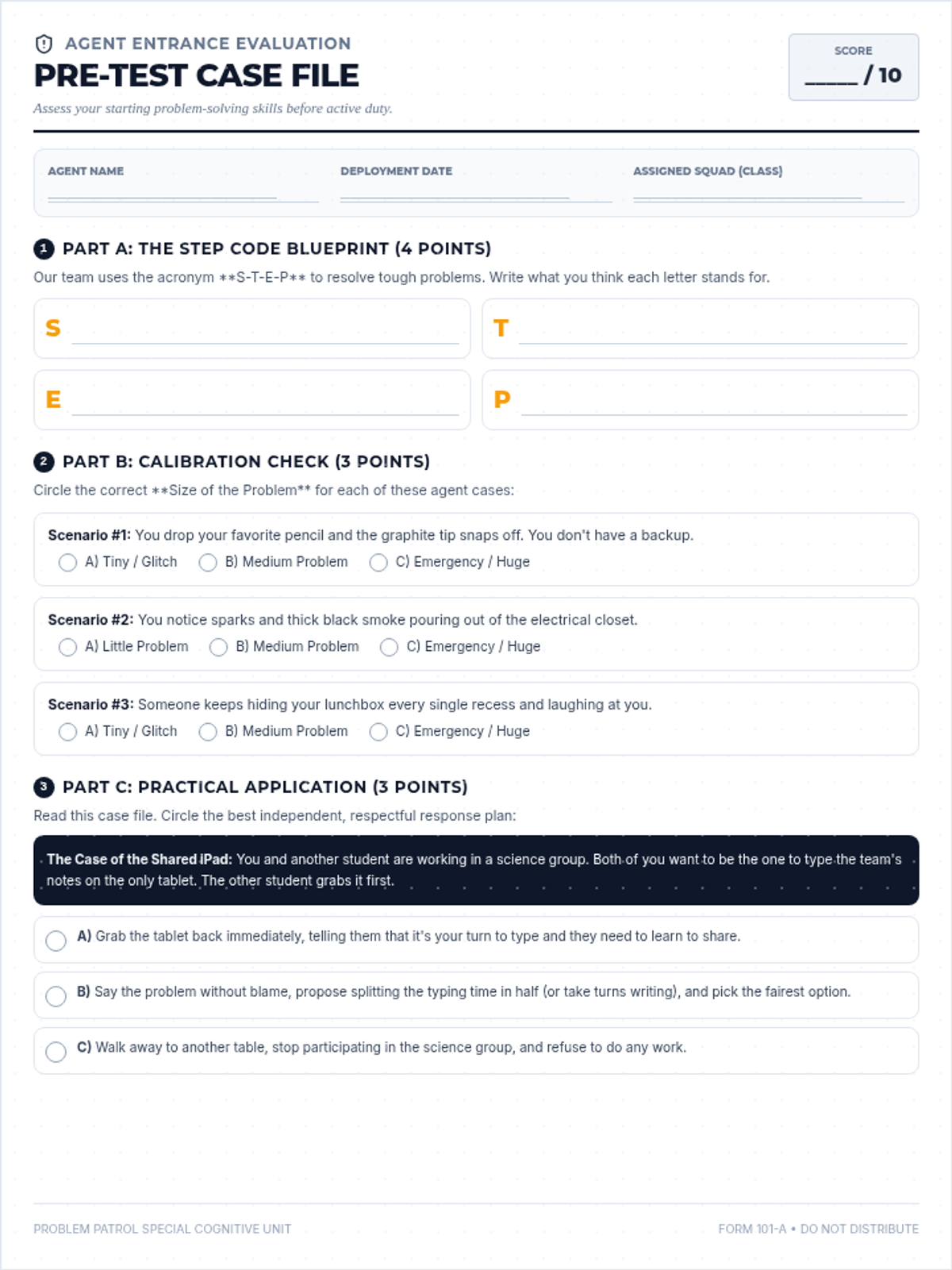
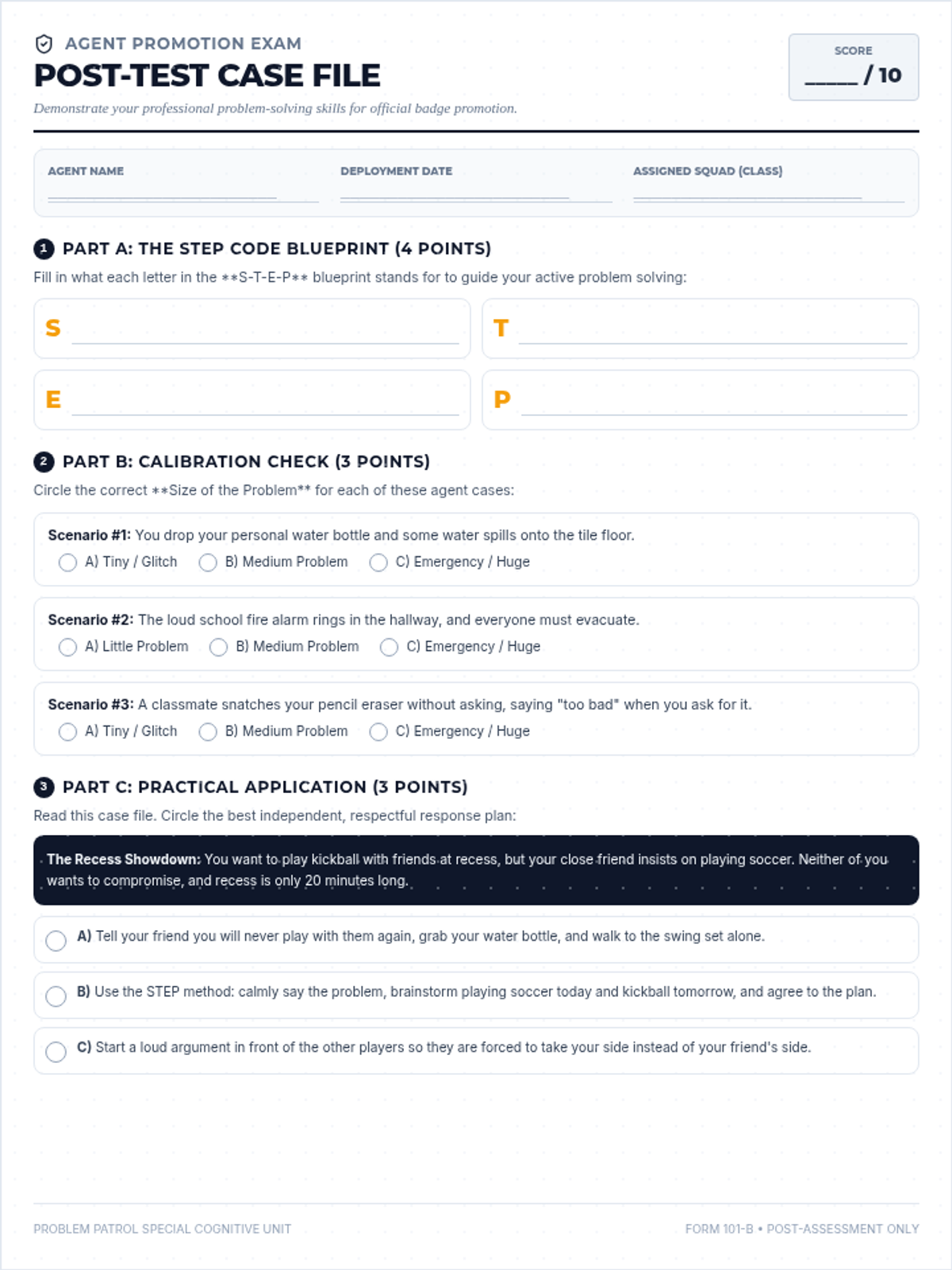
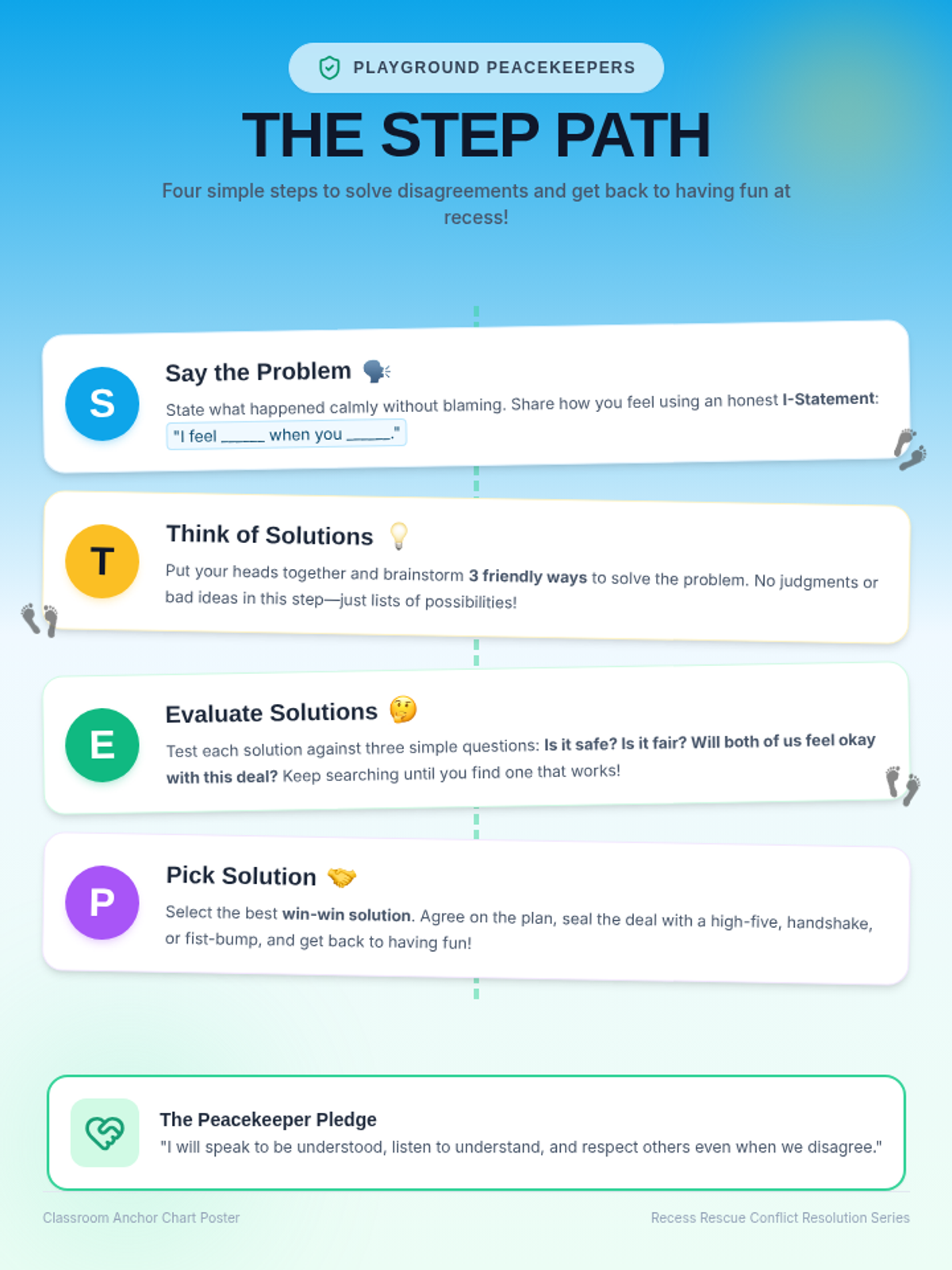
A comprehensive counseling lesson that empowers students to independently resolve conflicts and everyday challenges using the STEP Problem-Solving Method and the Size of the Problem visual scale. Includes assessment tools, an interactive anchor chart, and a step-by-step facilitation guide.
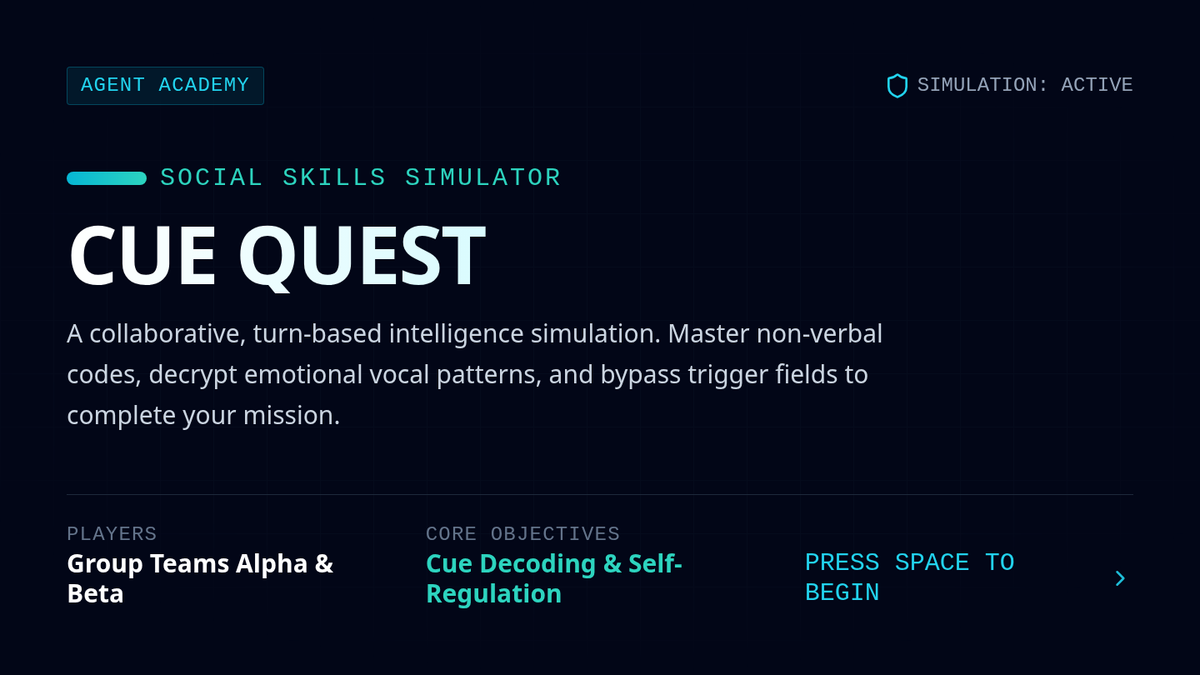
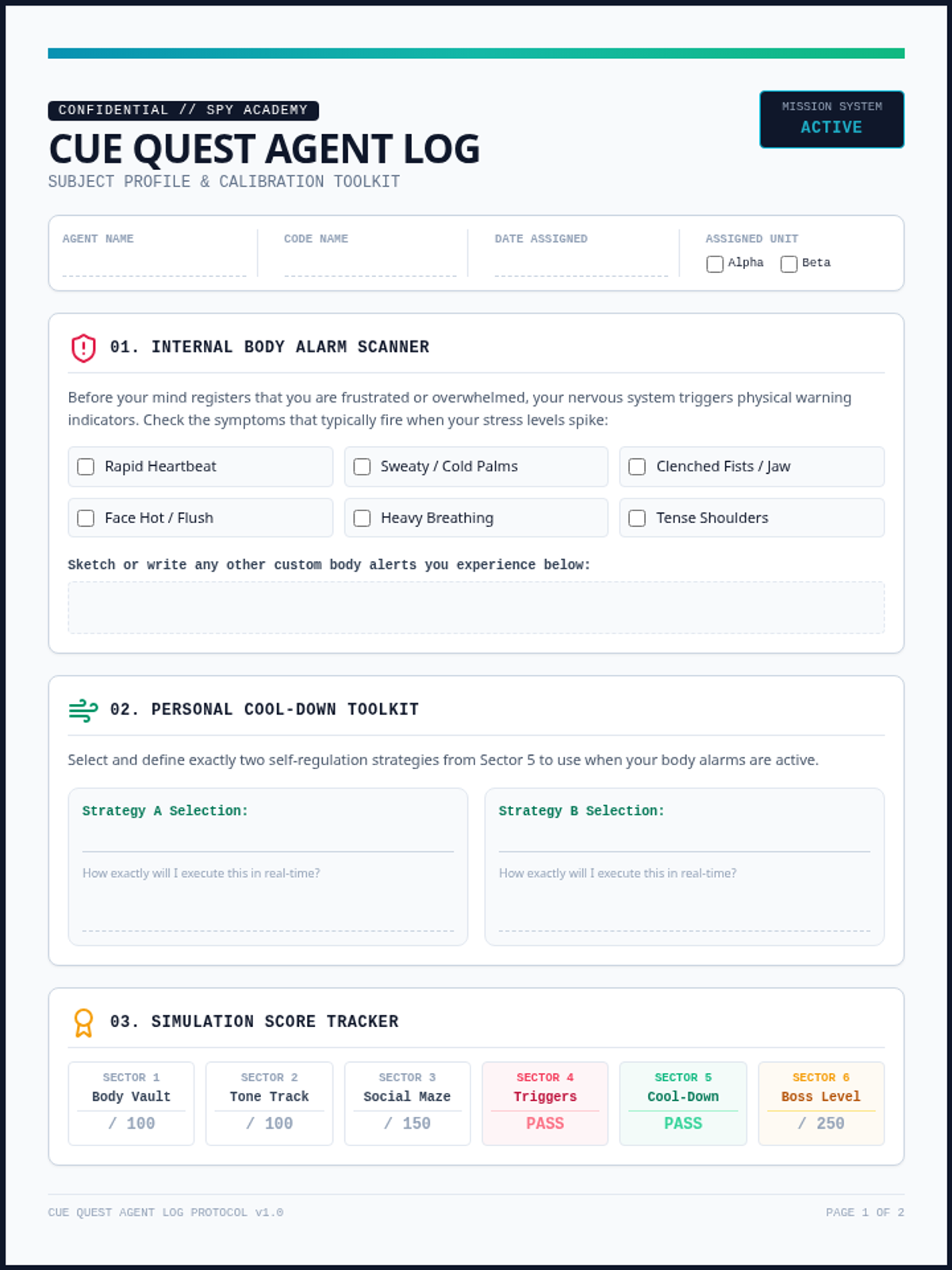
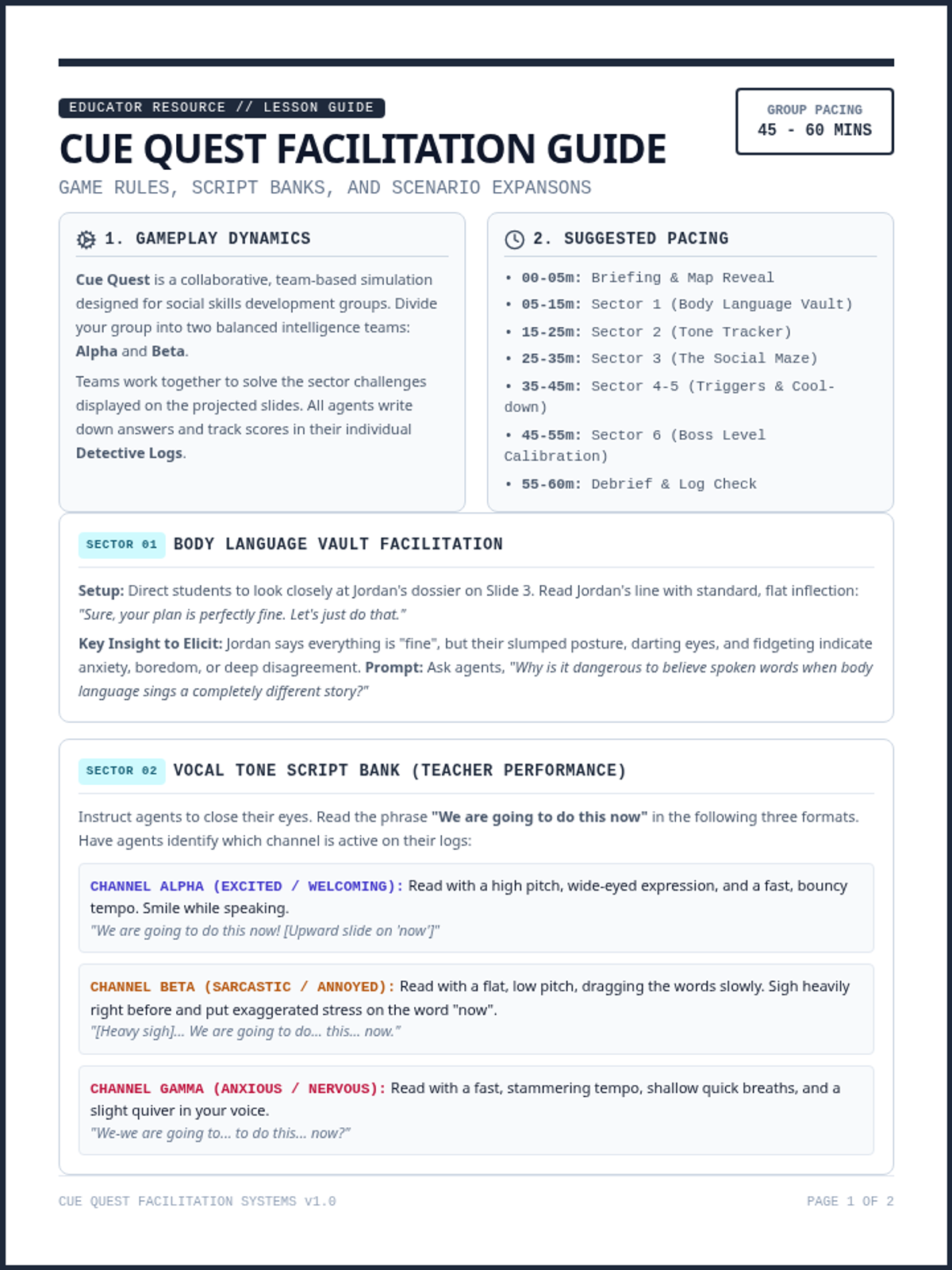
A gamified social skills lesson focusing on reading non-verbal cues, decoding tone of voice, and mastering emotional self-regulation through a collaborative turn-based simulation.
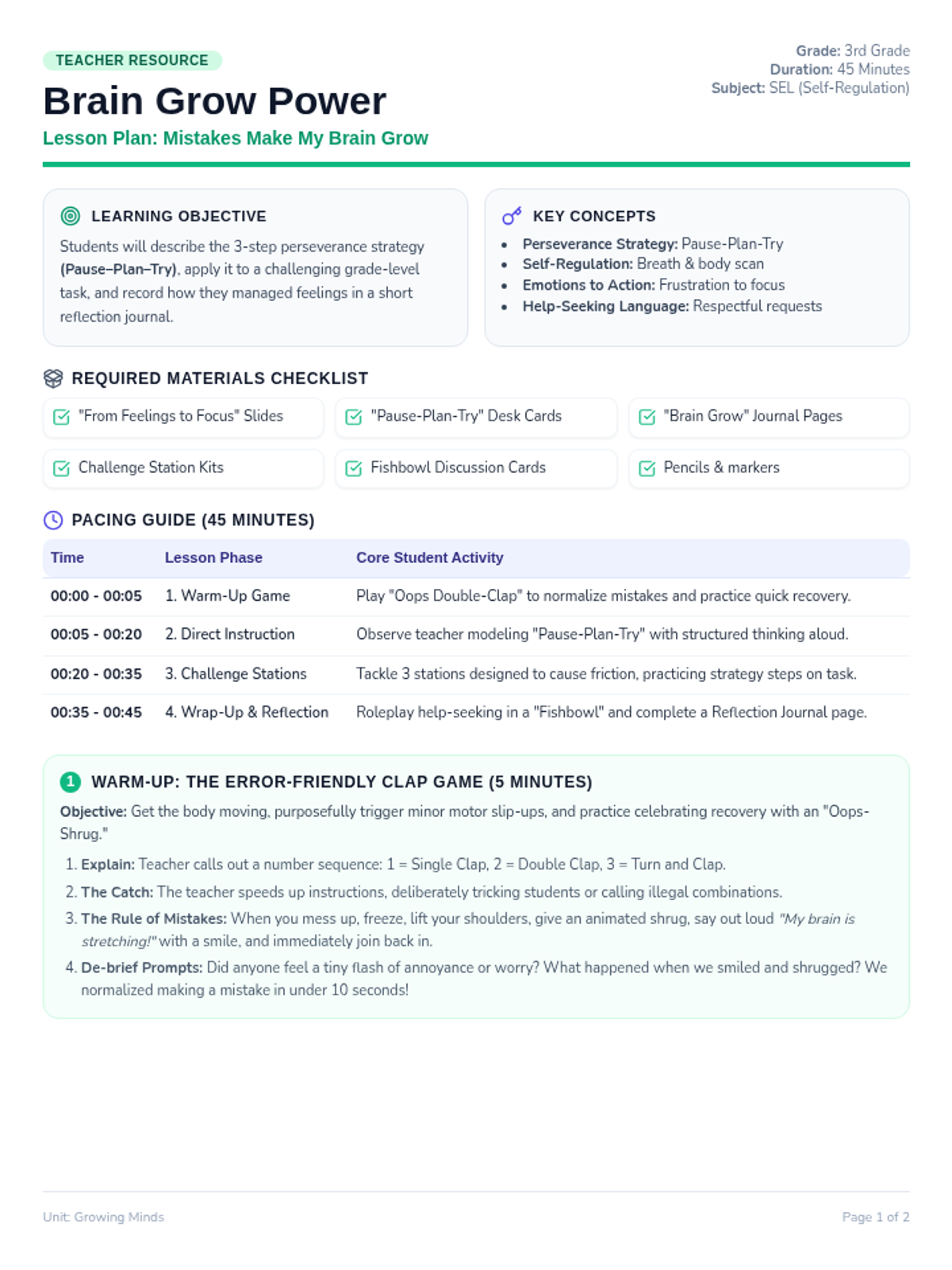
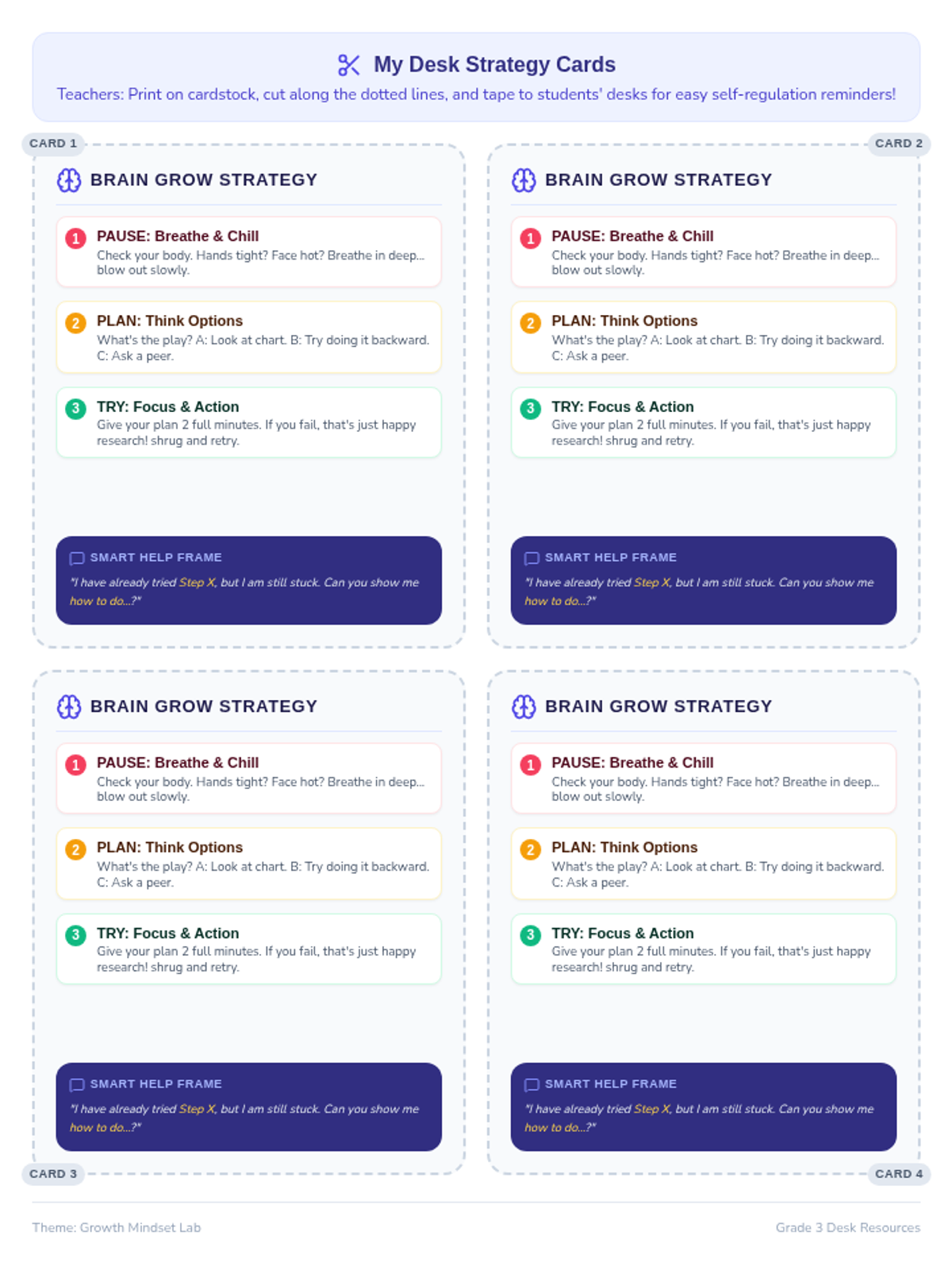
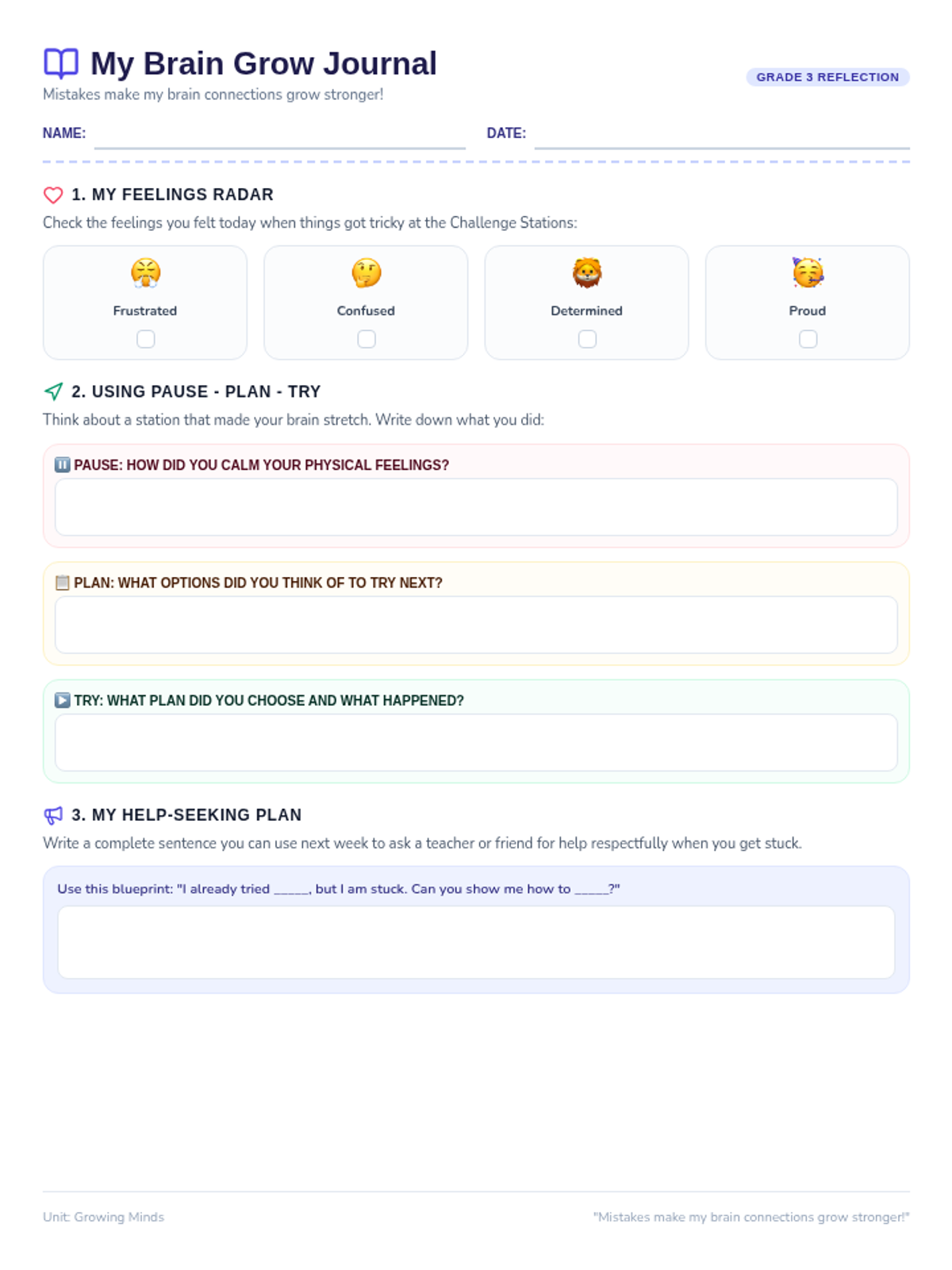
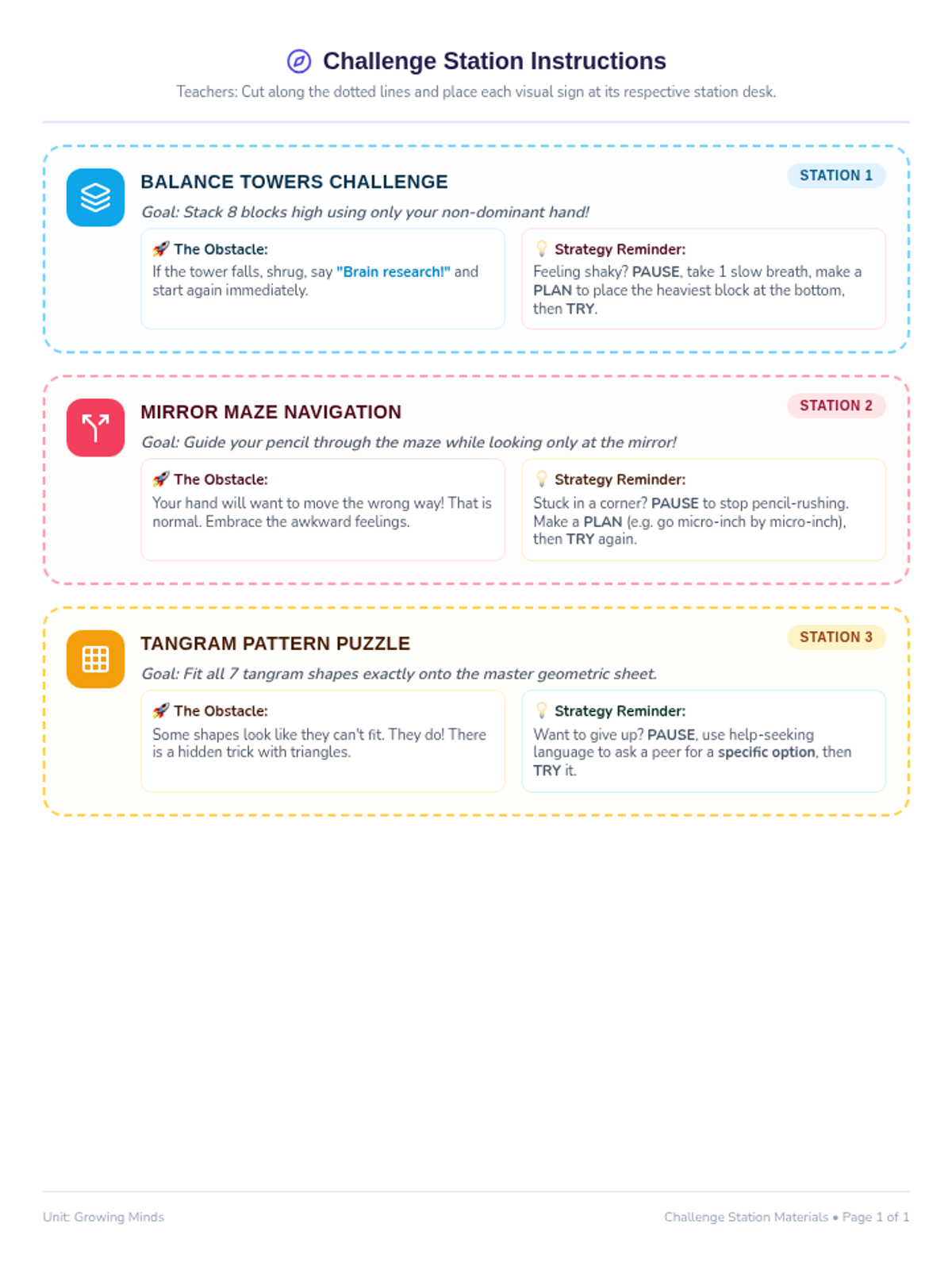
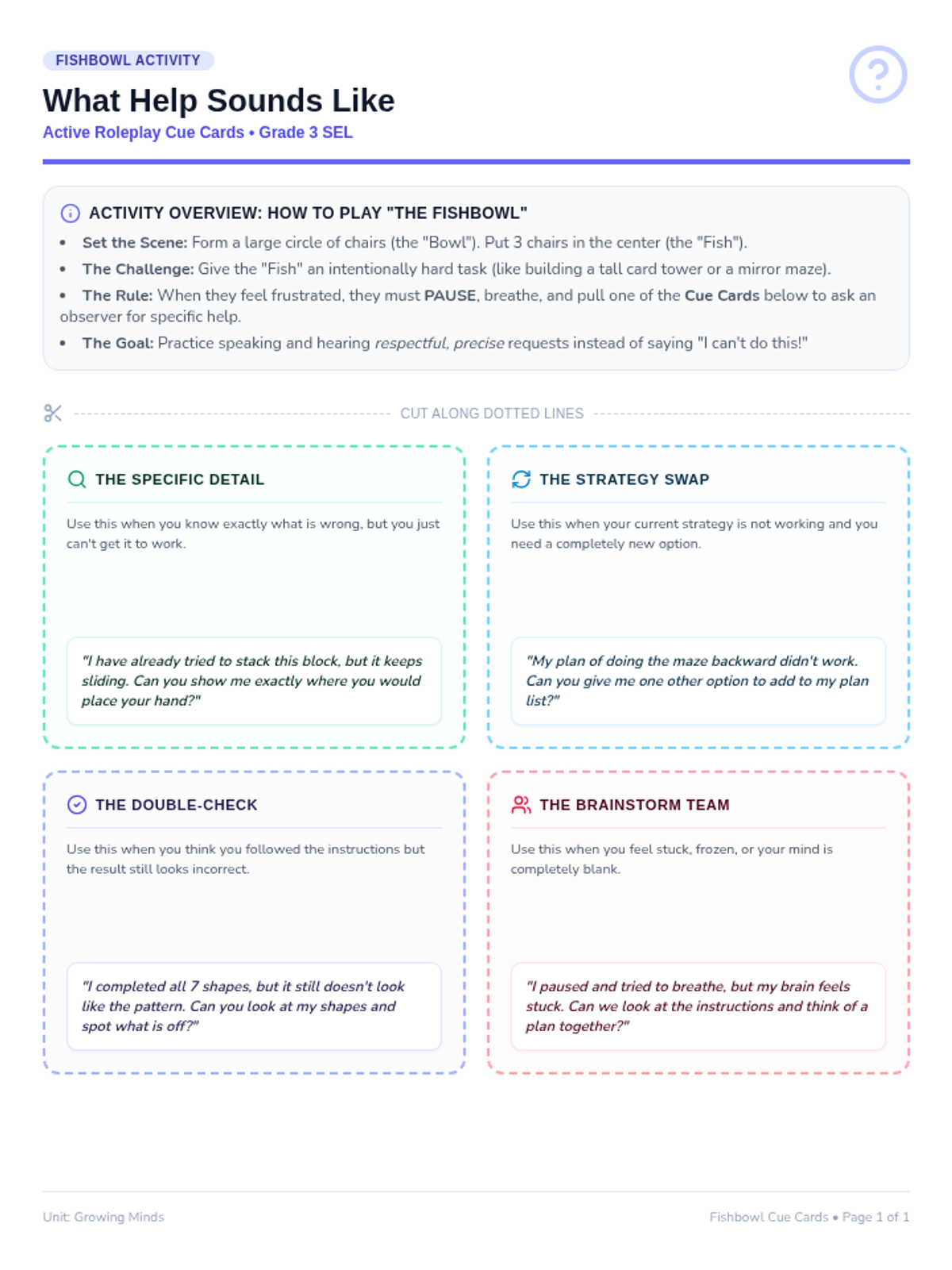
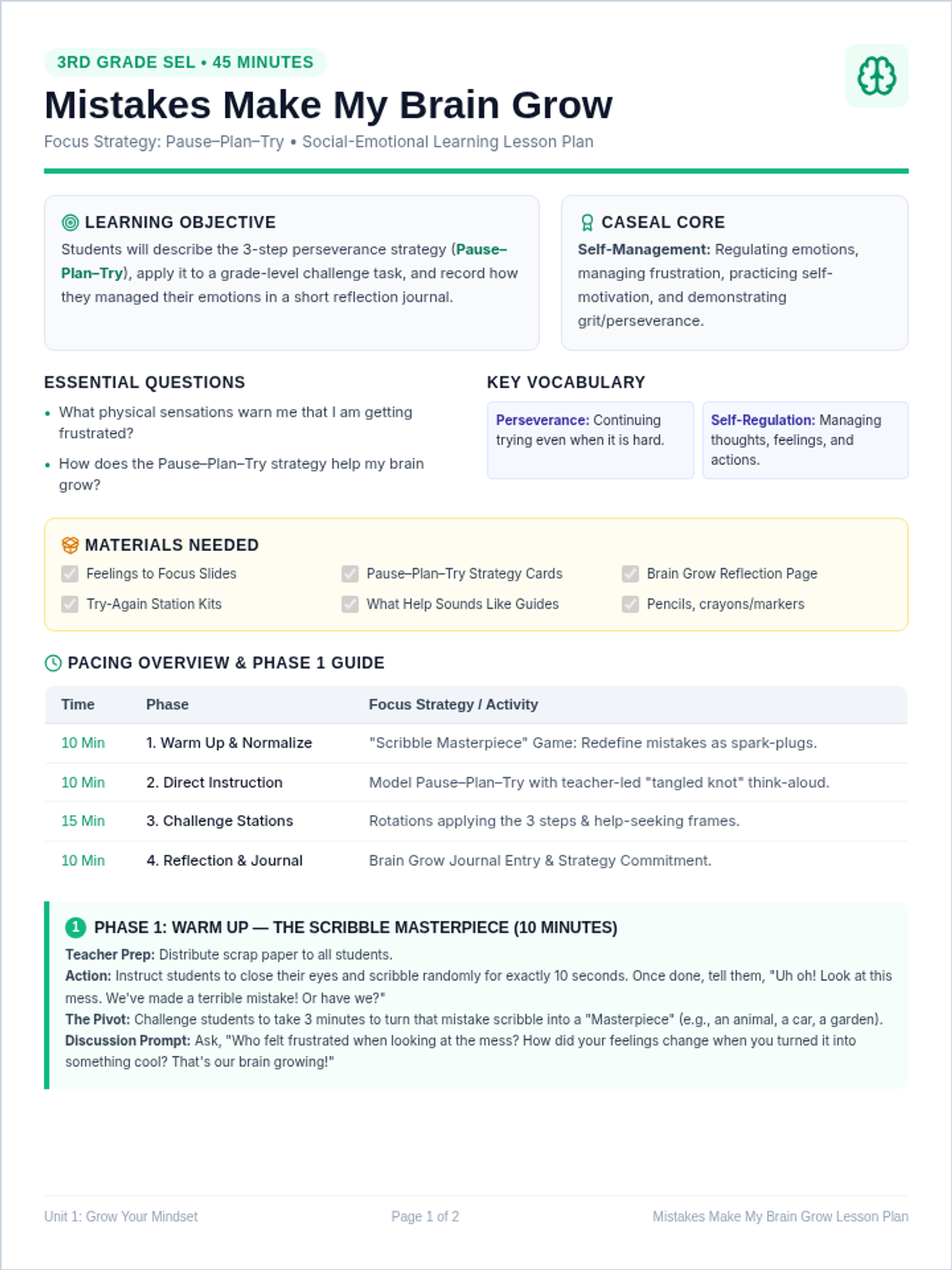
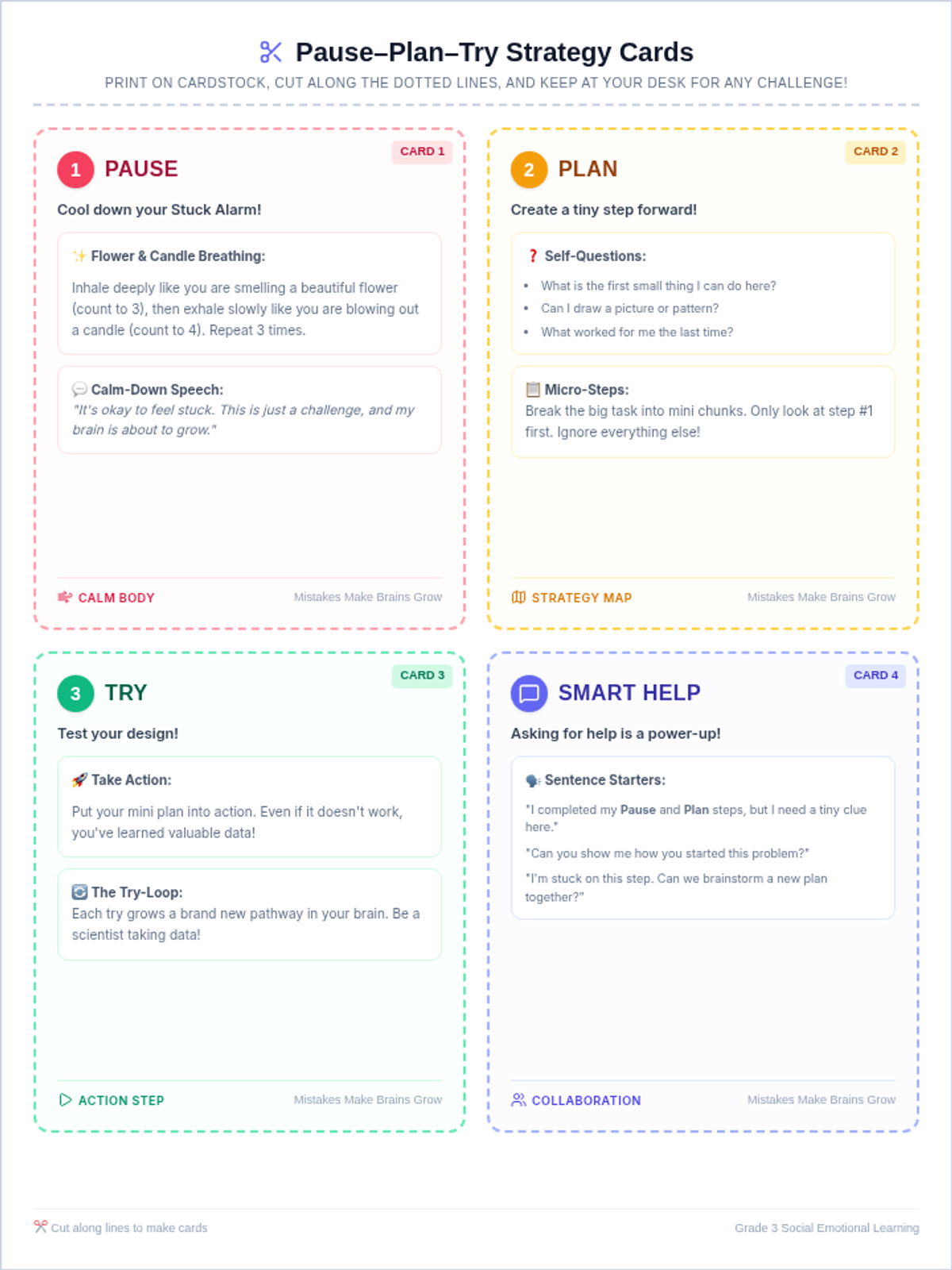
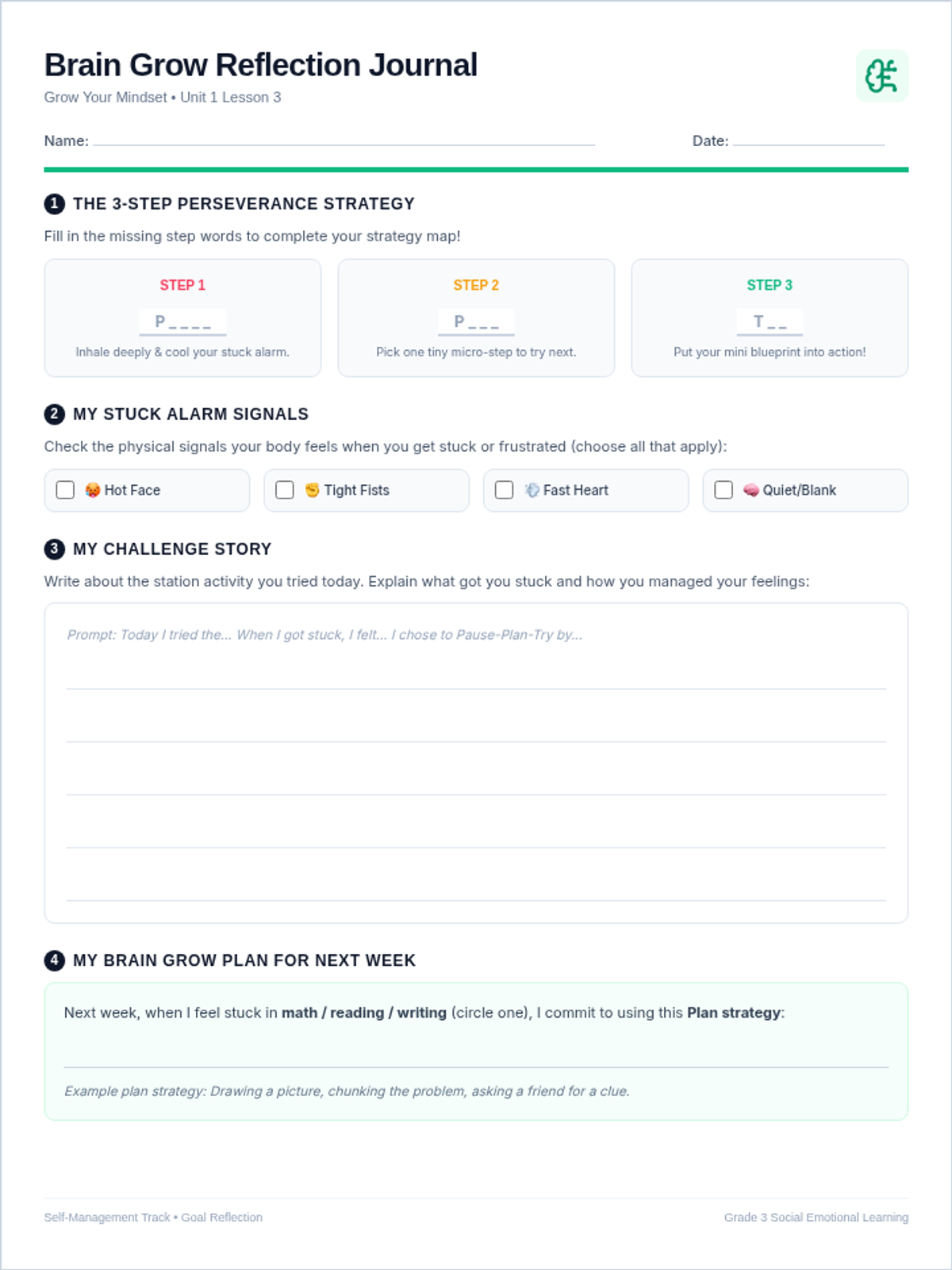
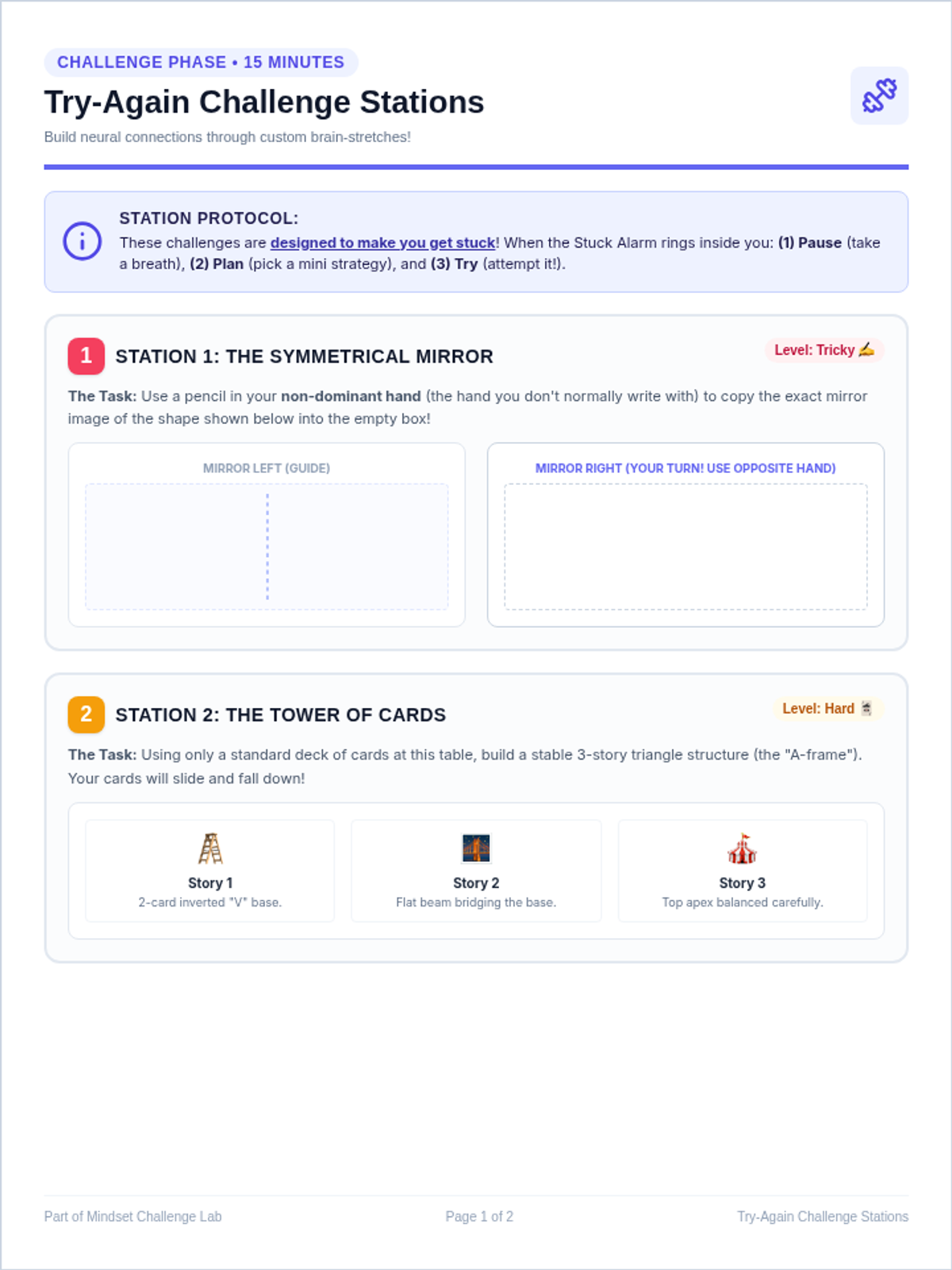
A 45-minute social-emotional learning lesson for 3rd graders that introduces the 'Pause-Plan-Try' perseverance strategy. Students learn to normalize mistakes, navigate challenging emotions, use self-regulation techniques, and apply productive help-seeking language.
A 3rd-grade social-emotional learning lesson focusing on the 'Pause-Plan-Try' perseverance strategy. Students learn to normalize mistakes, regulate emotions, and practice constructive help-seeking language through interactive challenge stations and self-reflection.
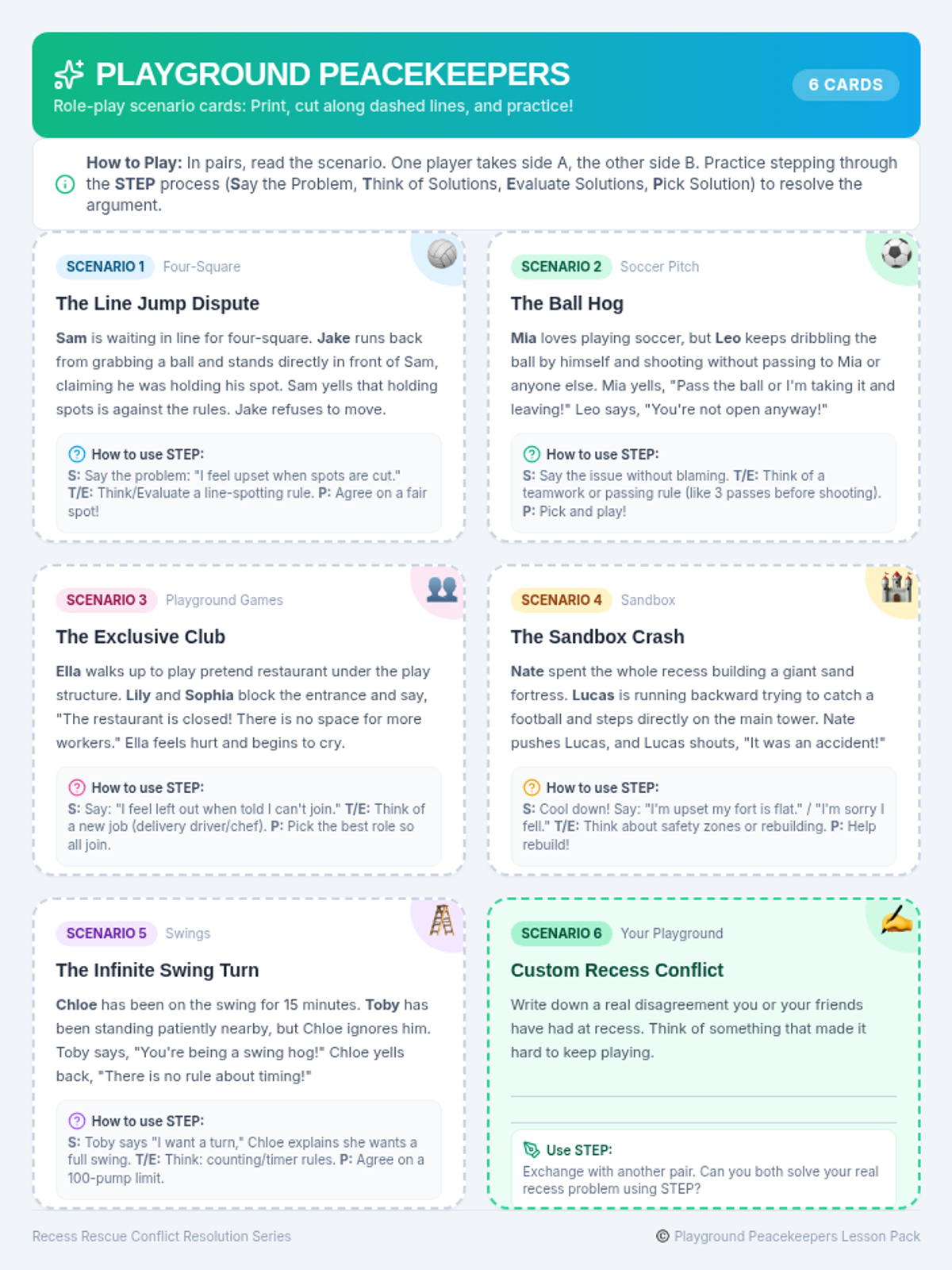
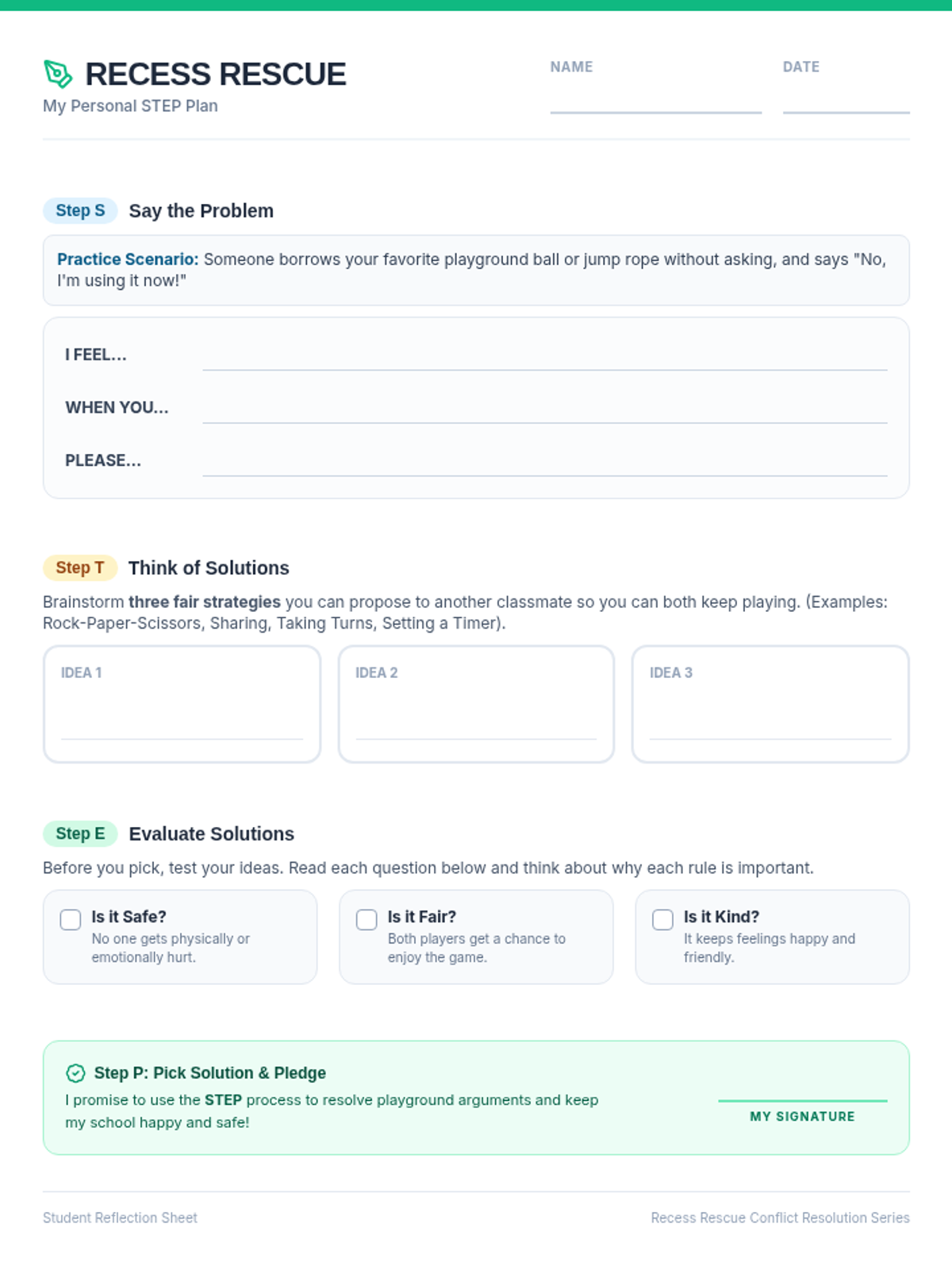
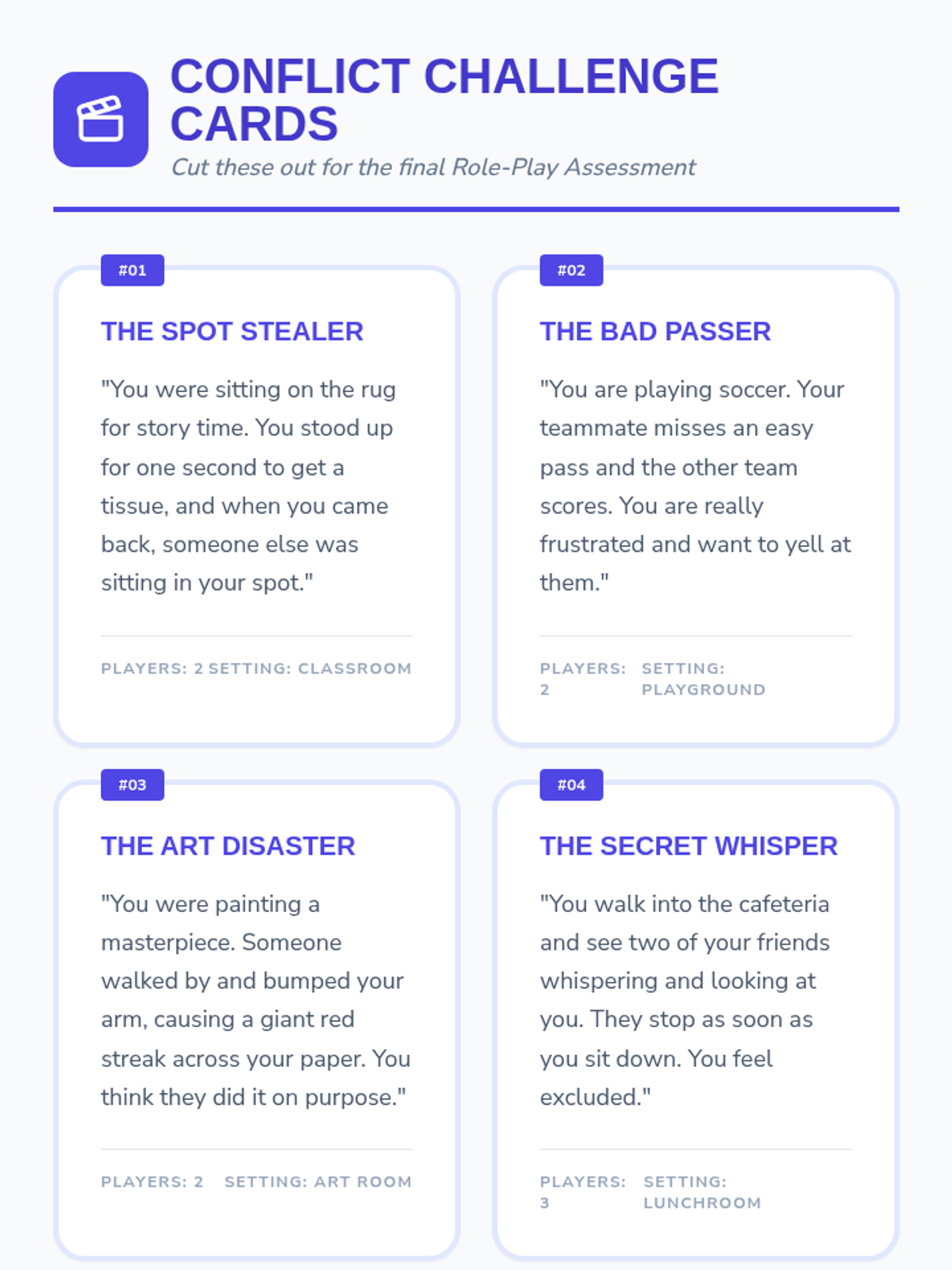
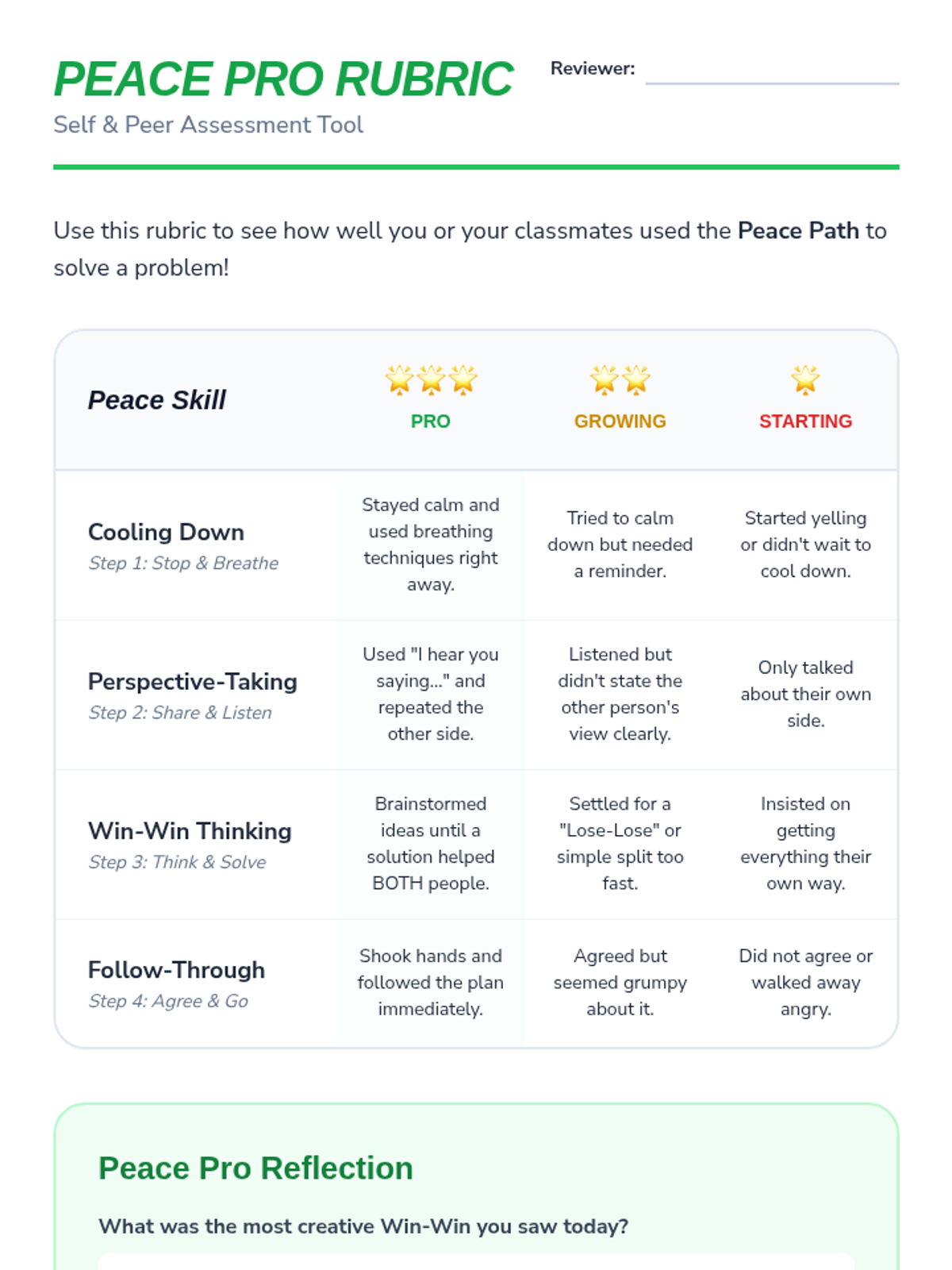
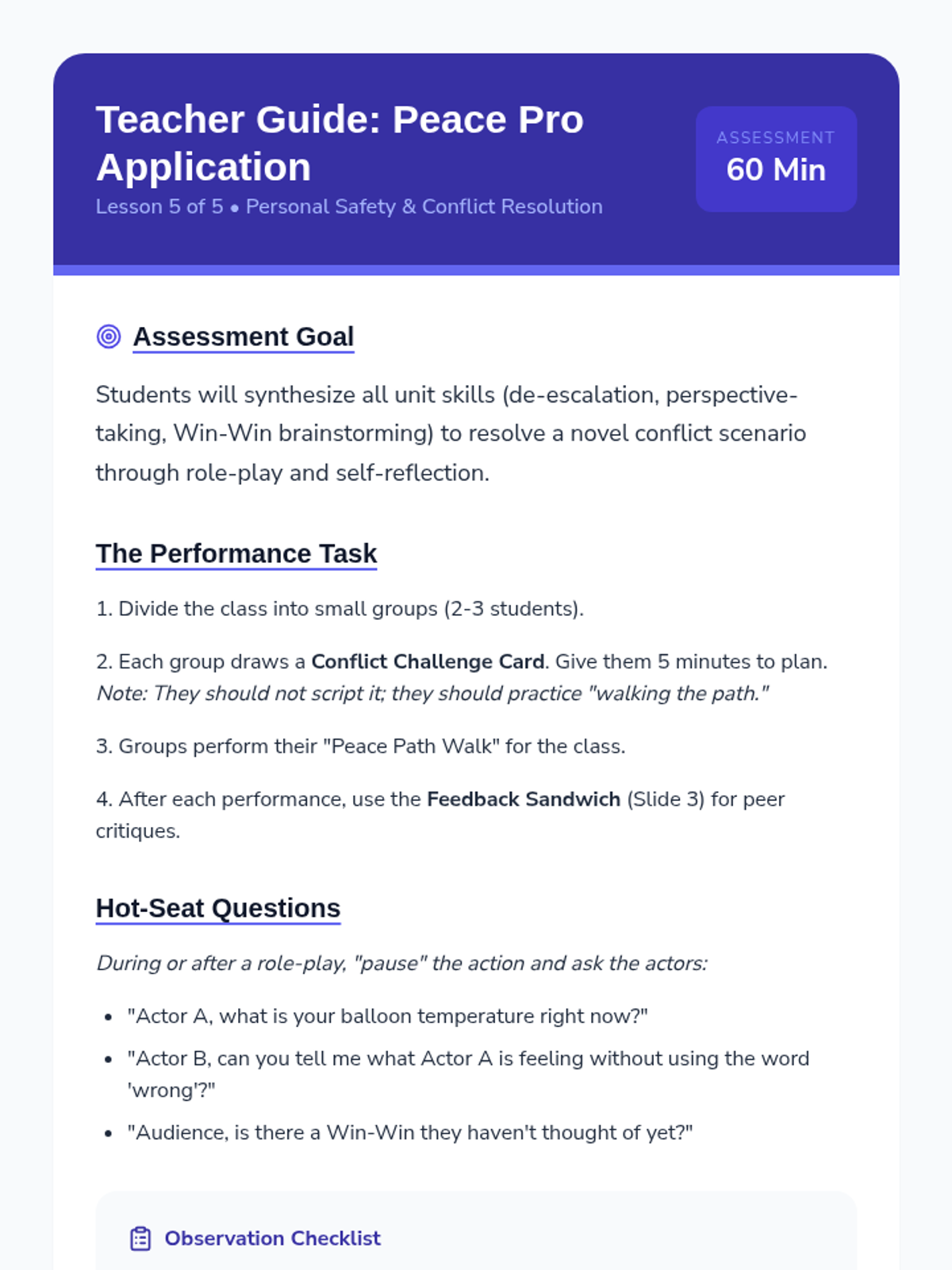
A lesson bundle designed to teach elementary students how to resolve playground conflicts using a structured, peer-to-peer 'Peace Path'. Students will learn self-regulation, active listening, and collaborative problem-solving through interactive slides, role-play scenario cards, a colorful classroom anchor chart, and an individual reflection worksheet.
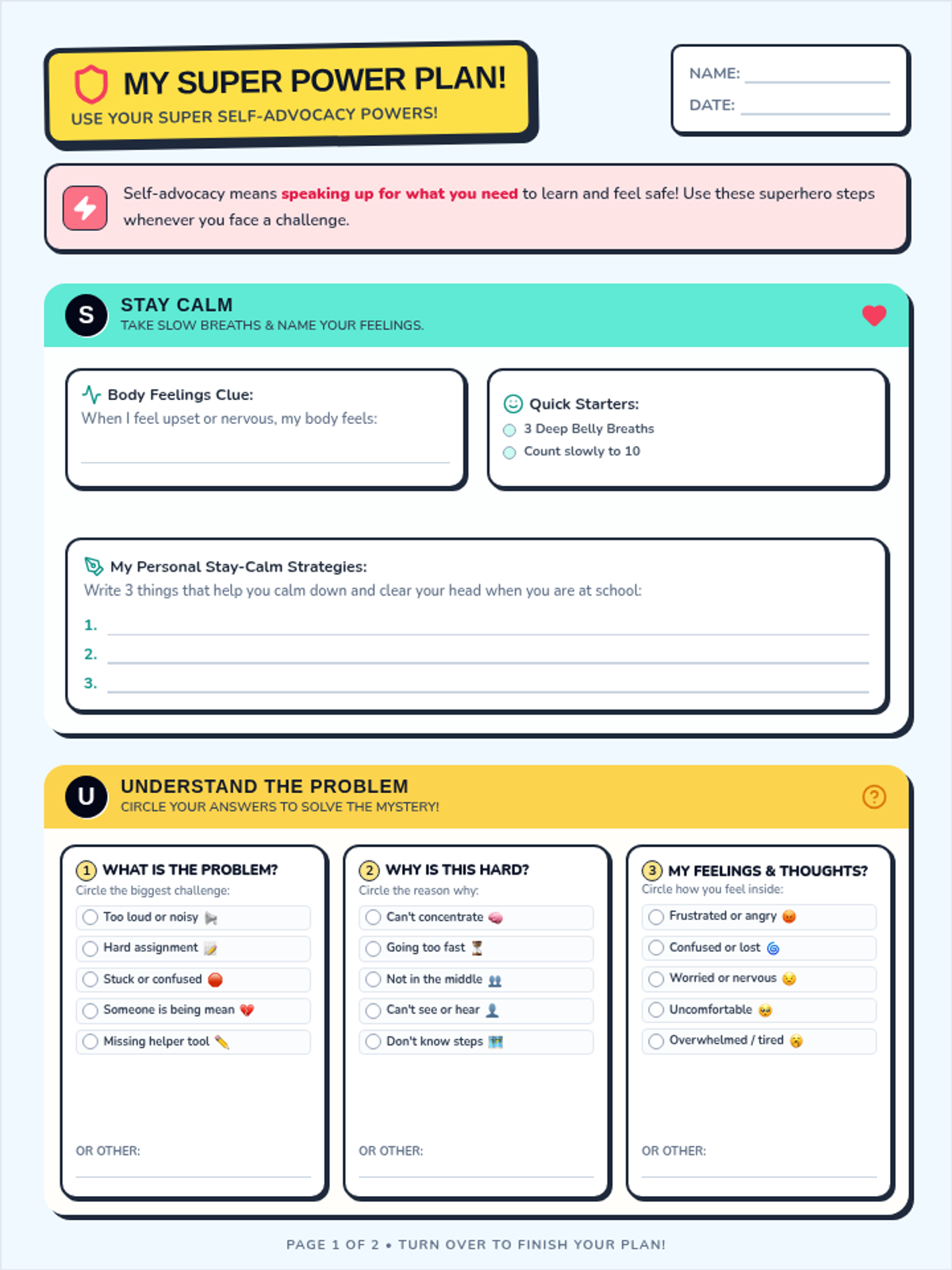
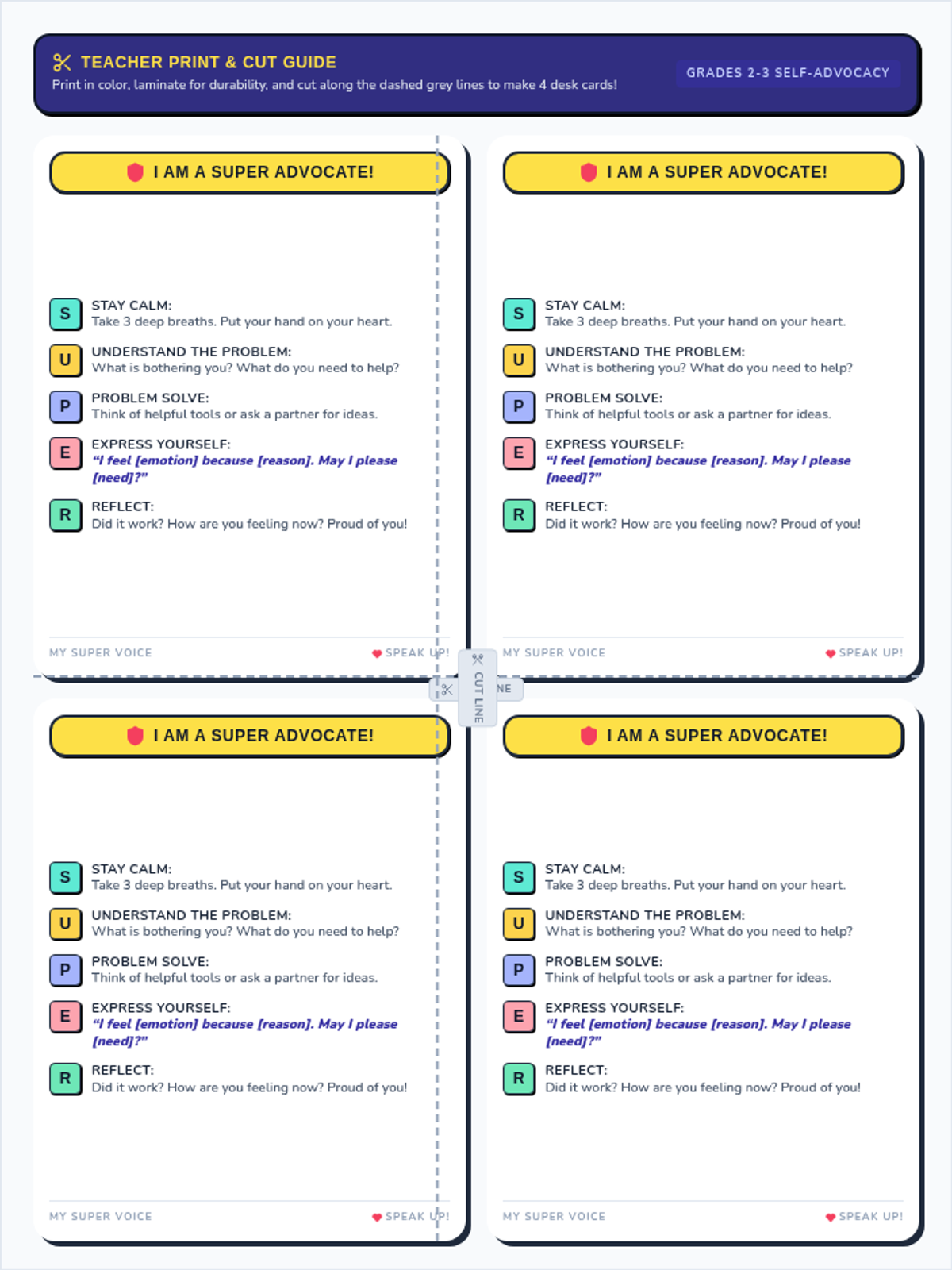
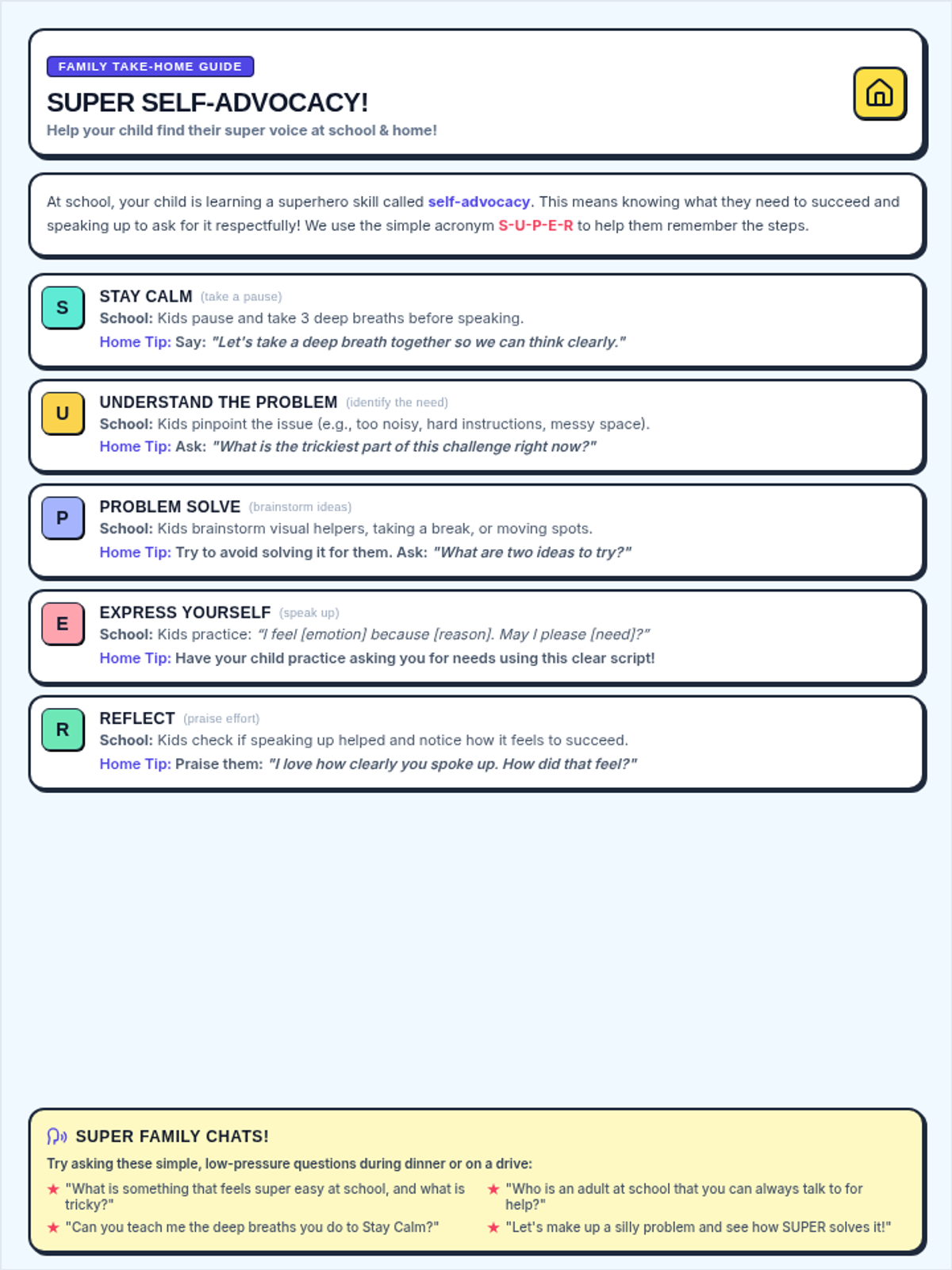
A lesson package focused on teaching middle elementary students (grades 2-3) the SUPER self-advocacy strategy: Stay Calm, Understand, Problem Solve, Express, and Reflect. It includes a student-facing comic-themed graphic organizer, a printable desktop anchor chart, and a take-home parent flyer.
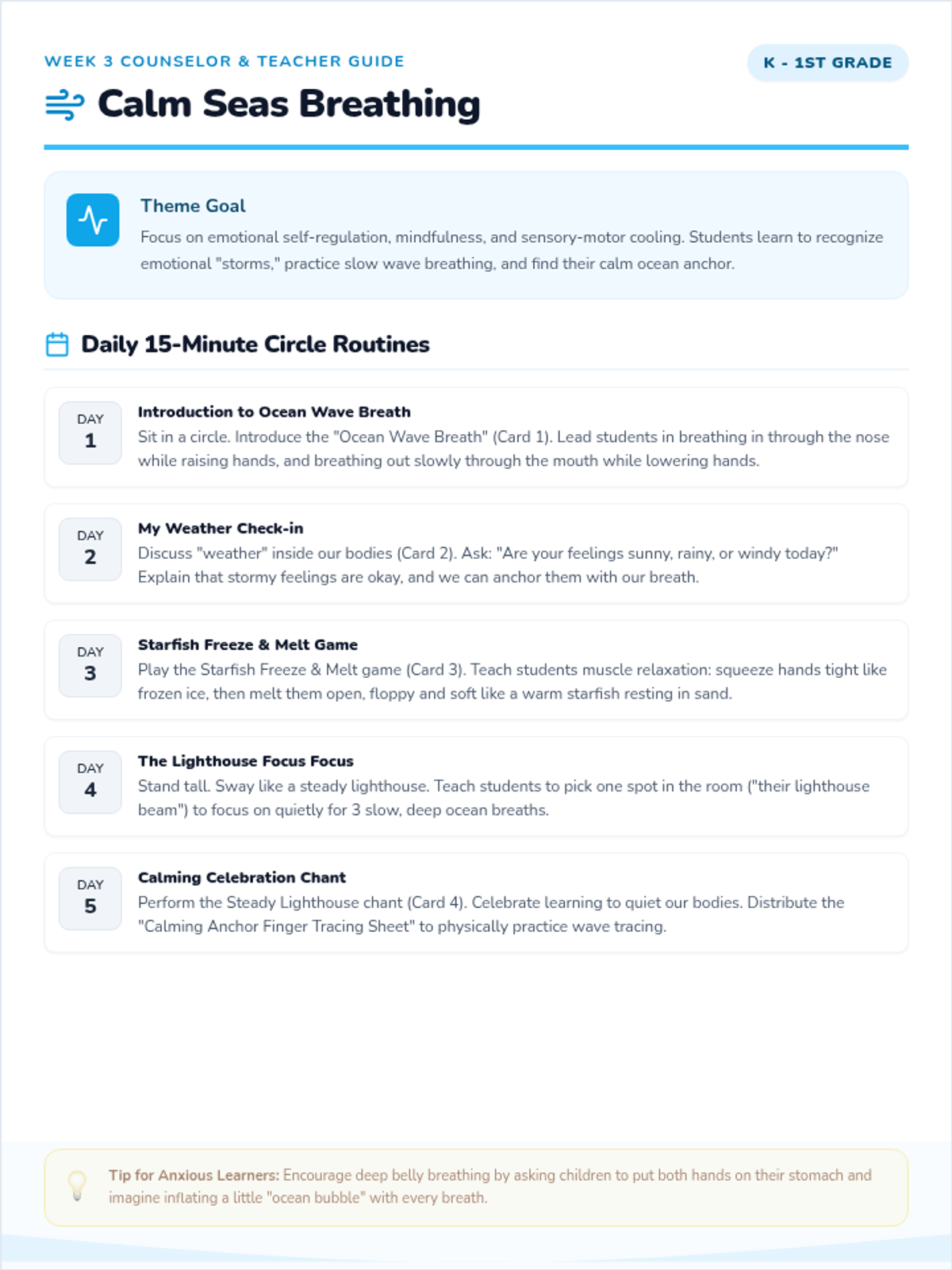
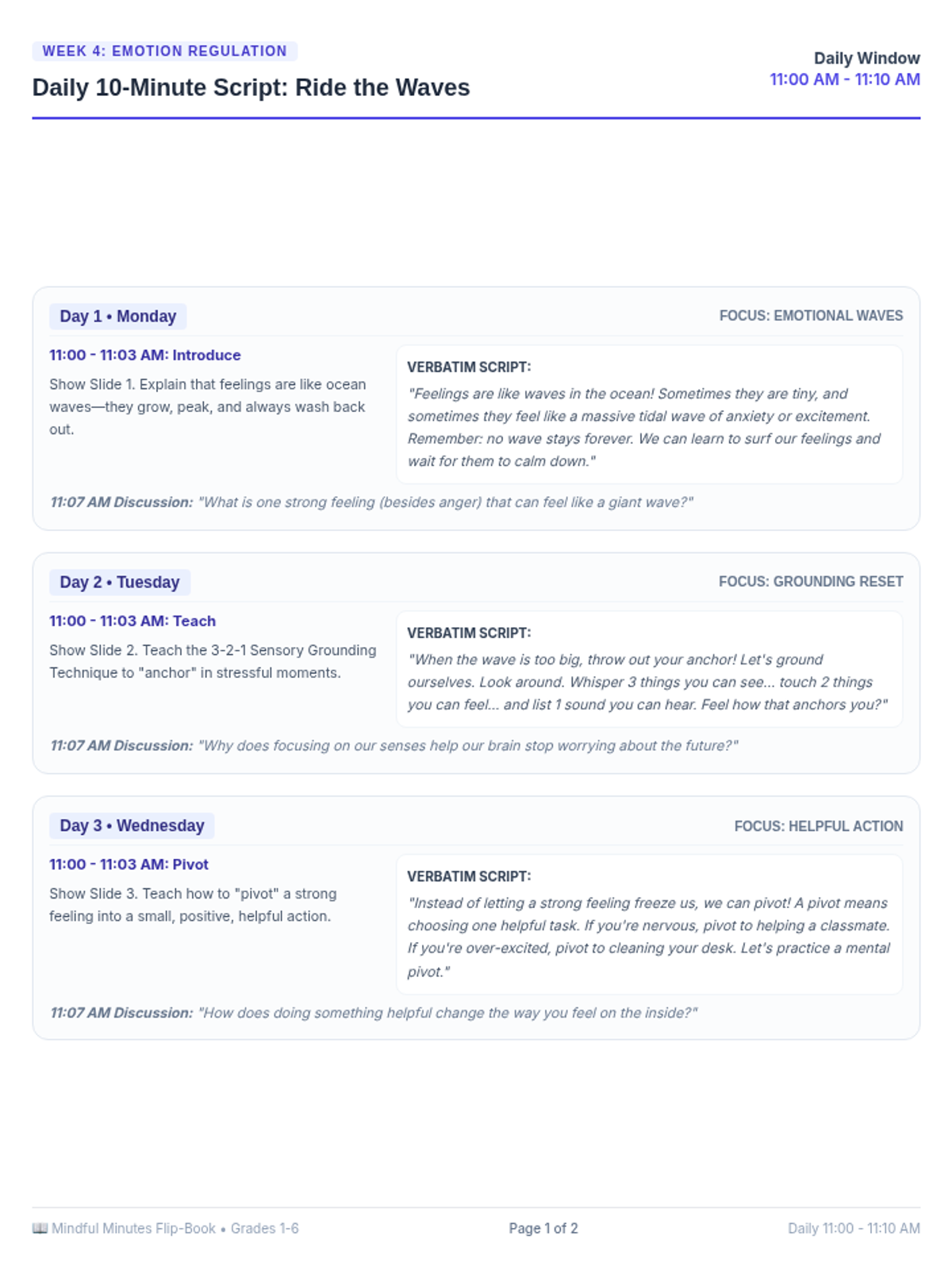
Five 10-minute daily SEL scripts and visual slides focusing on handling strong feelings and managing stress daily (emotion regulation).
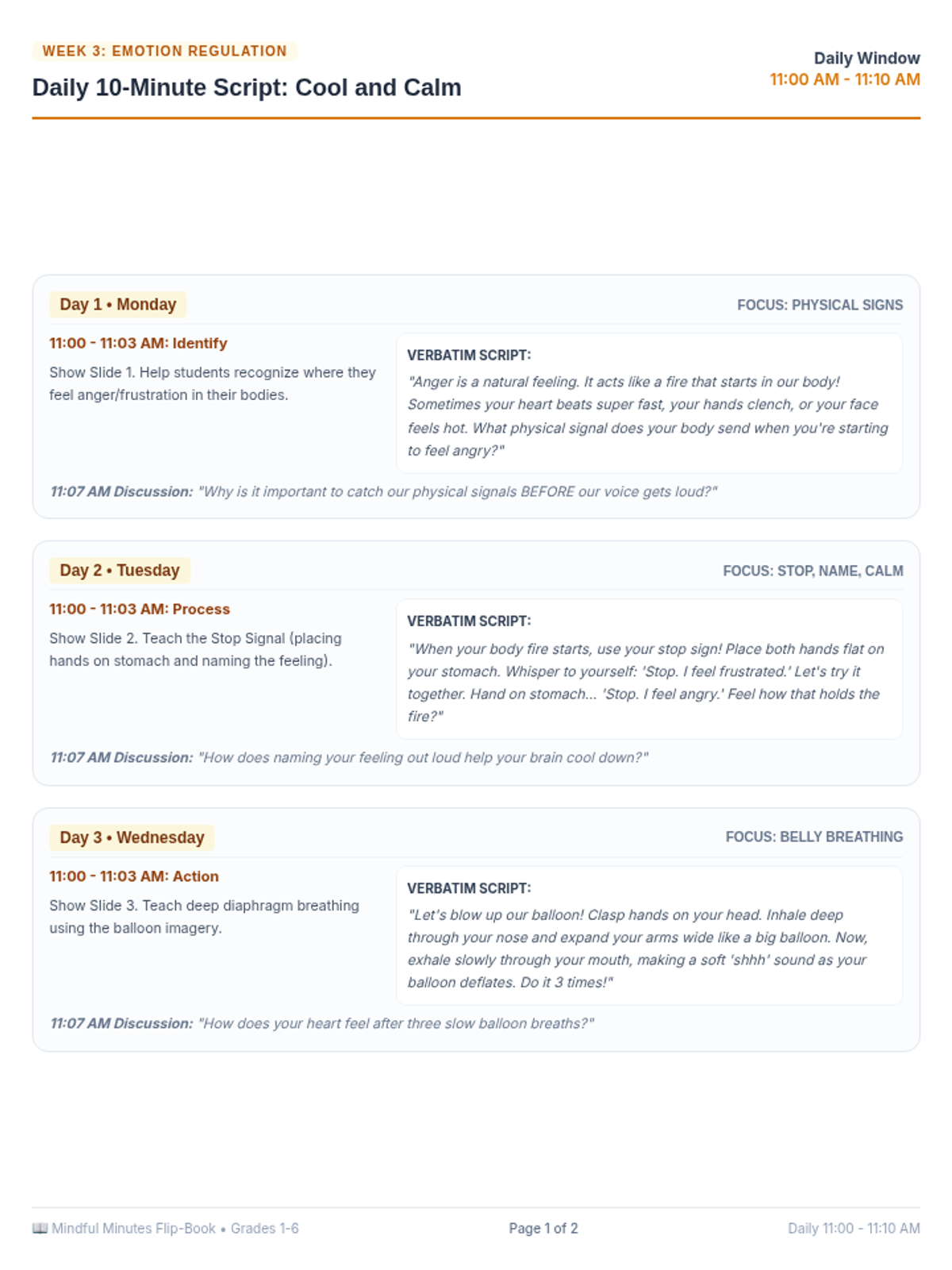
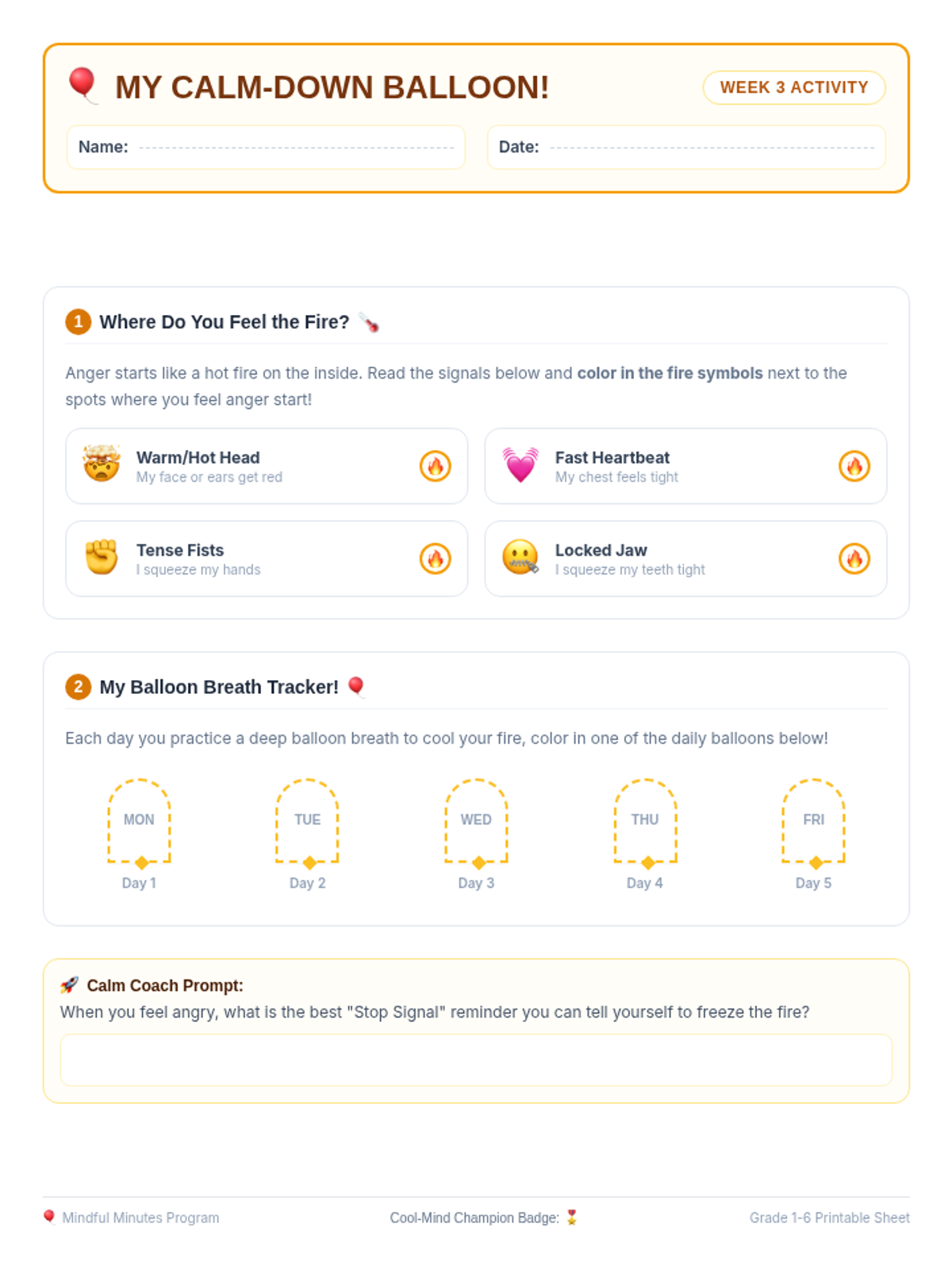
Five 10-minute daily SEL scripts and visual slides focusing on calming down and managing anger (emotion regulation).
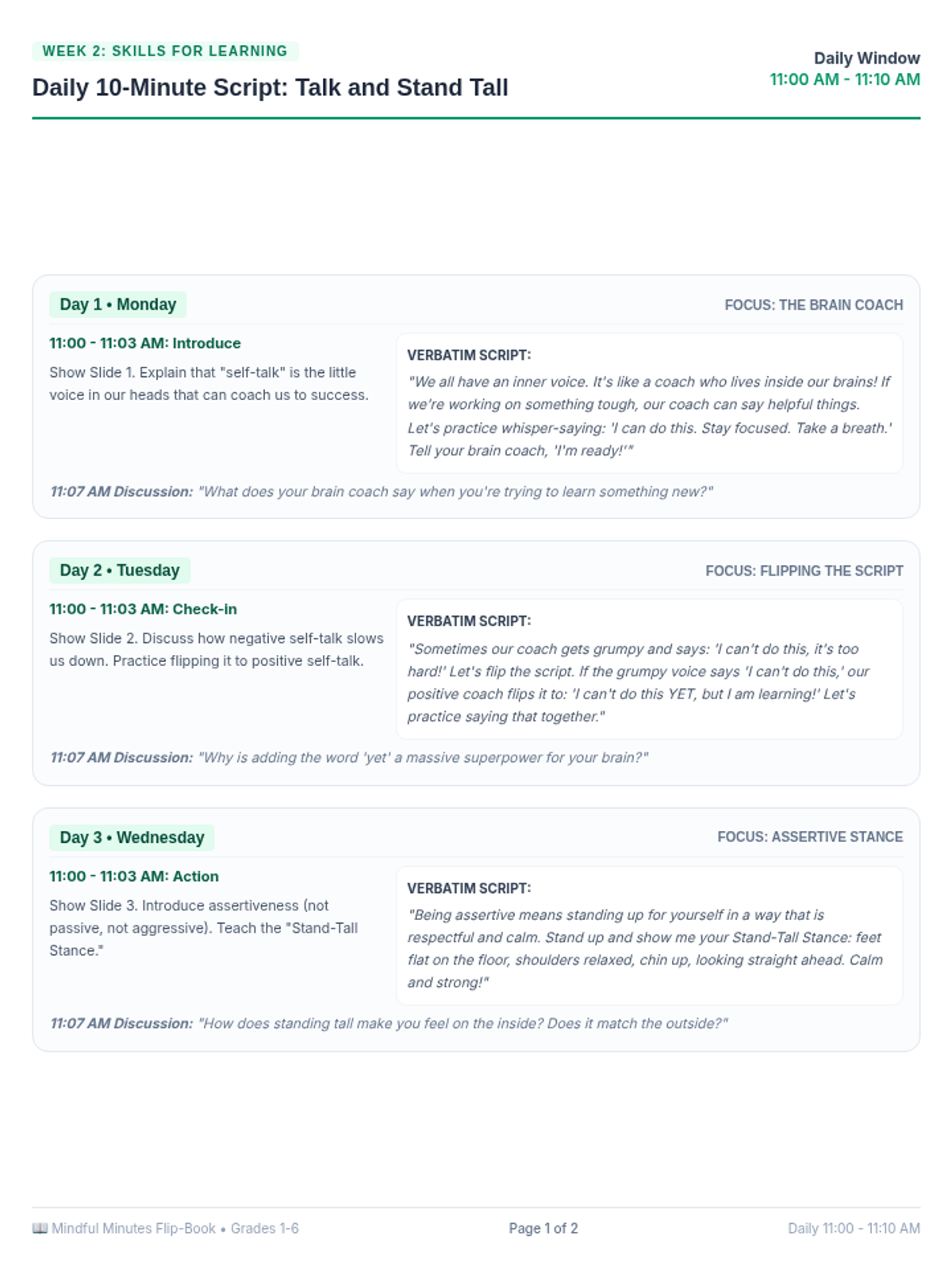
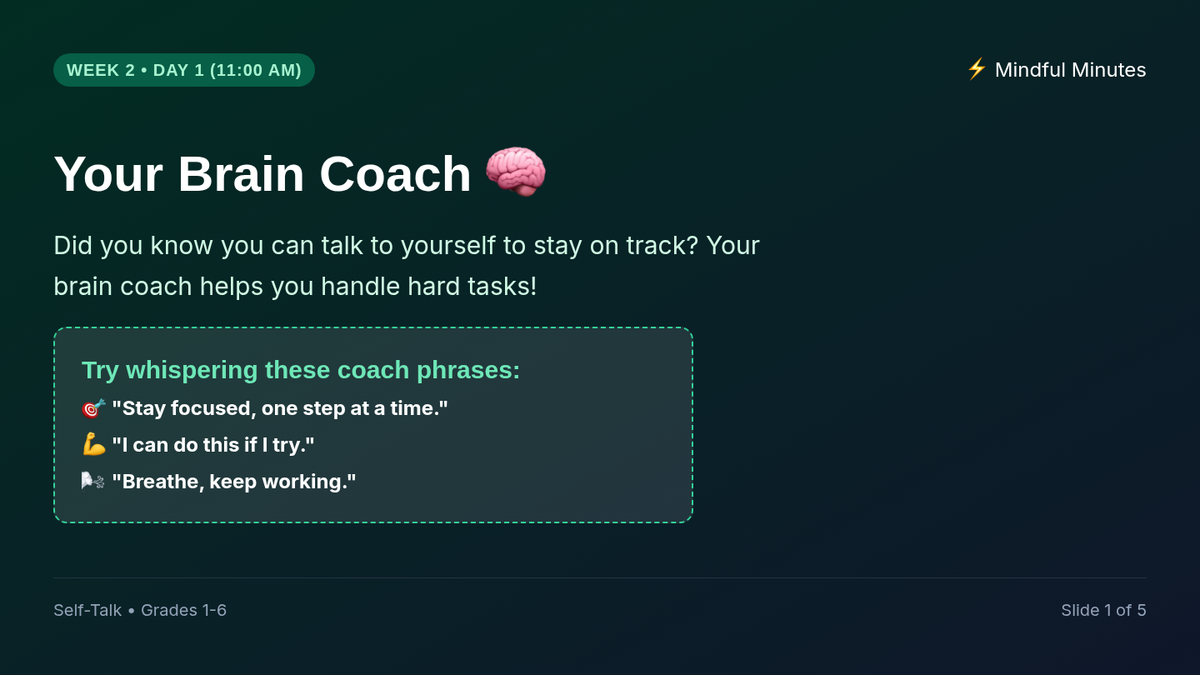
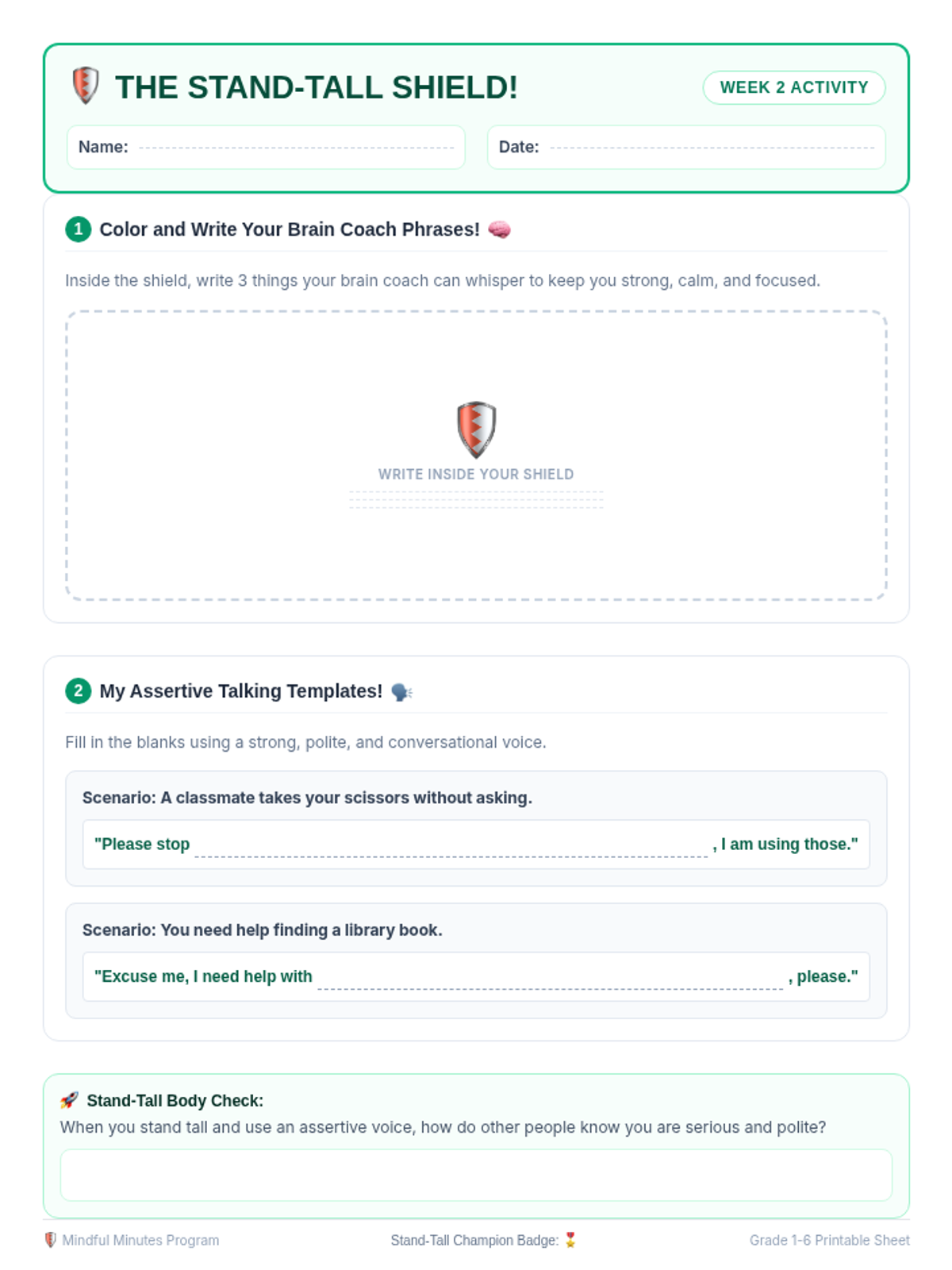
Five 10-minute daily SEL scripts and visual slides focusing on self-talk for focus and learning to be assertive (skills for learning).
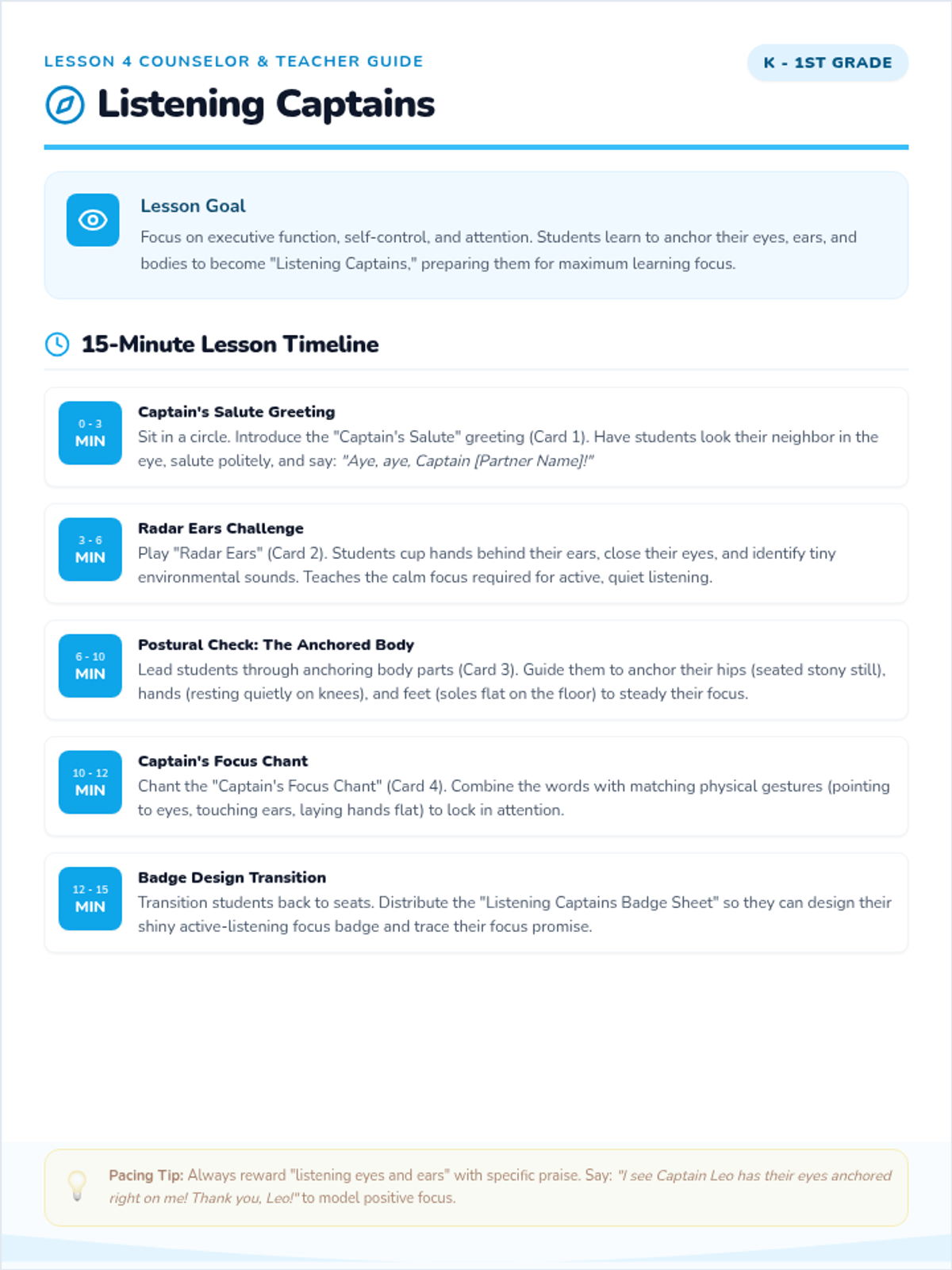
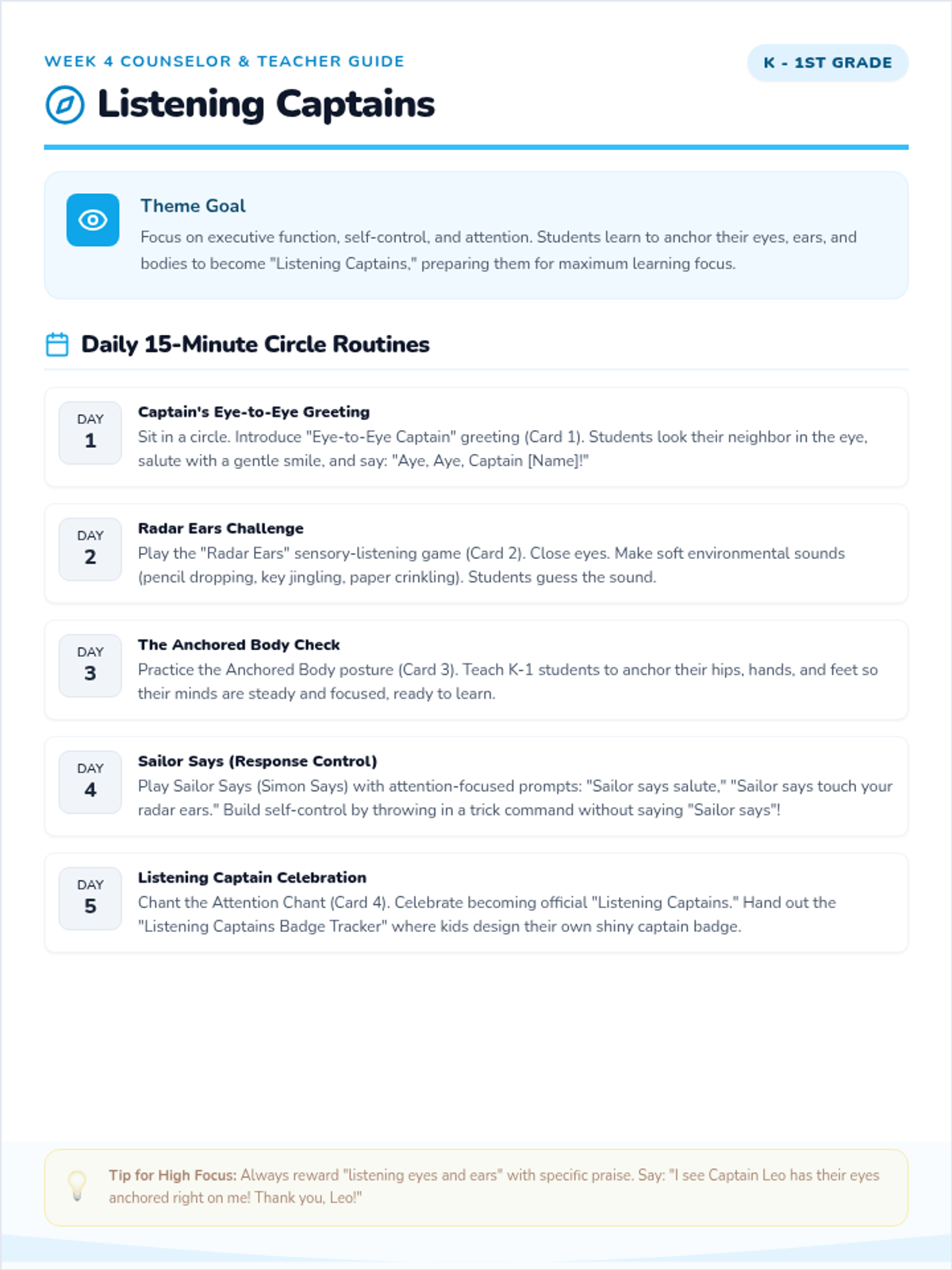
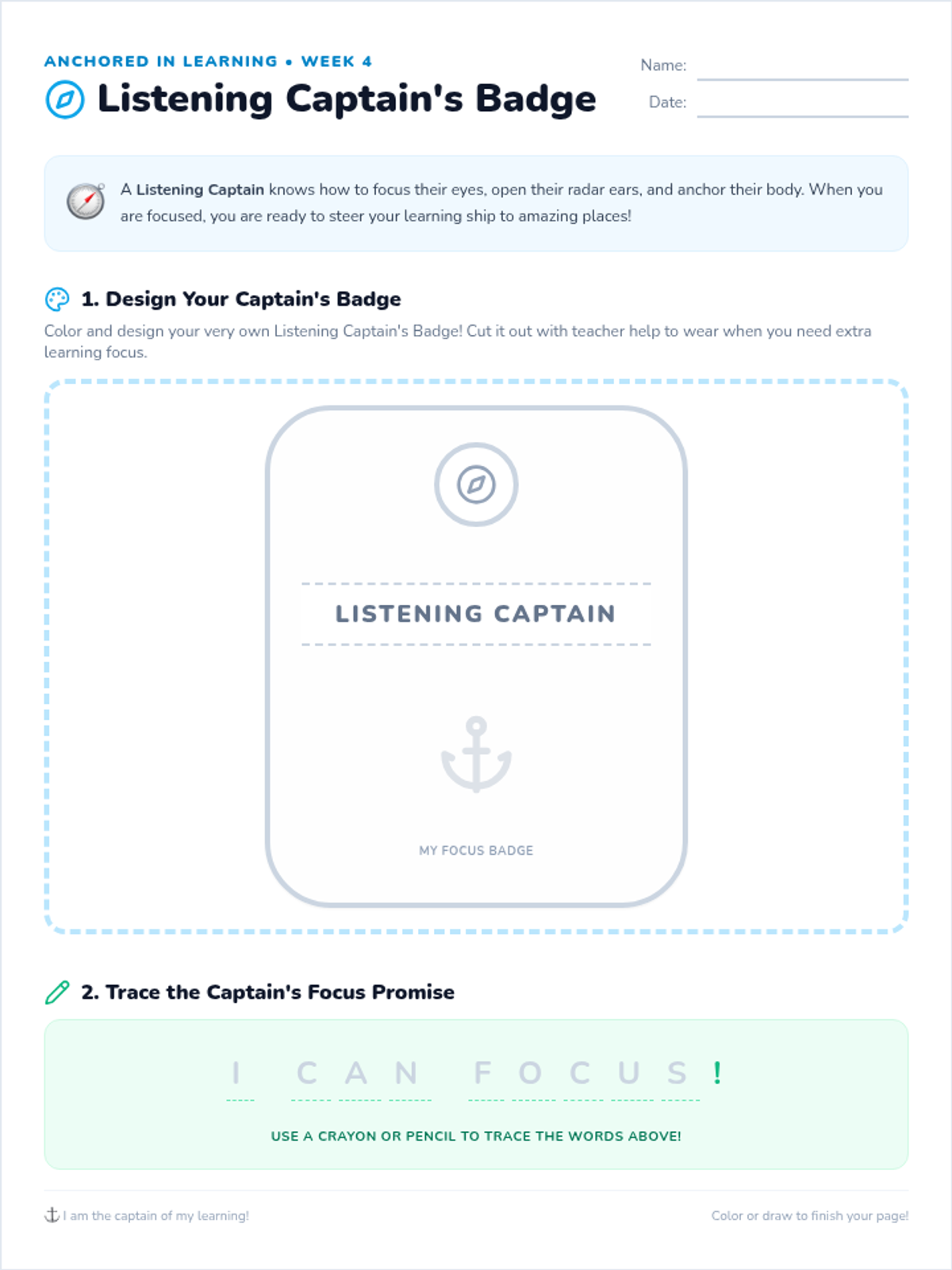
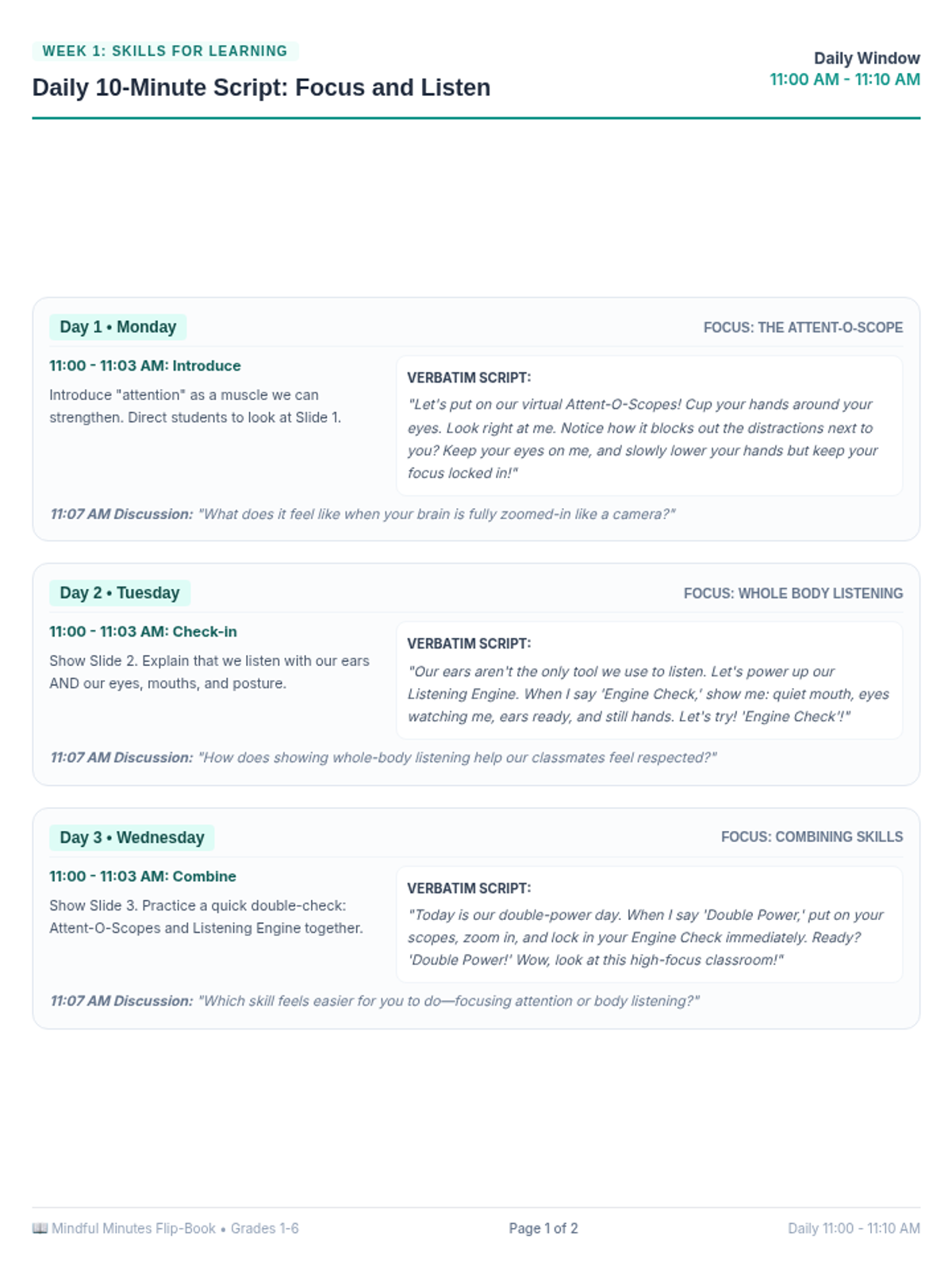
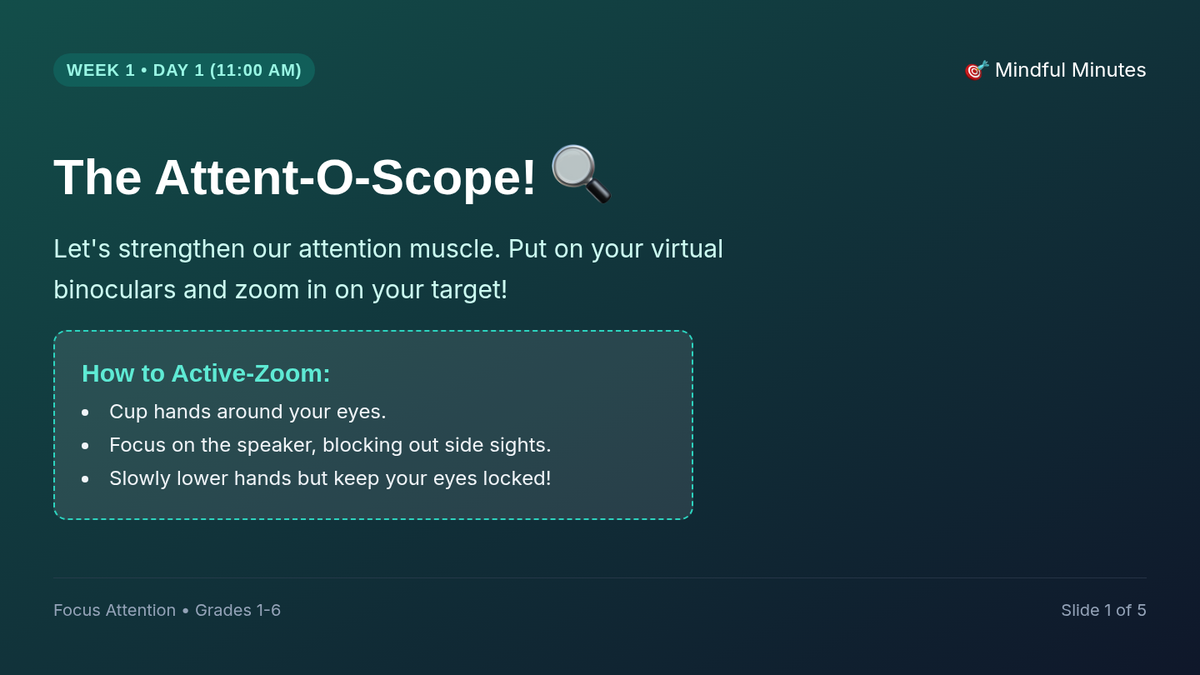
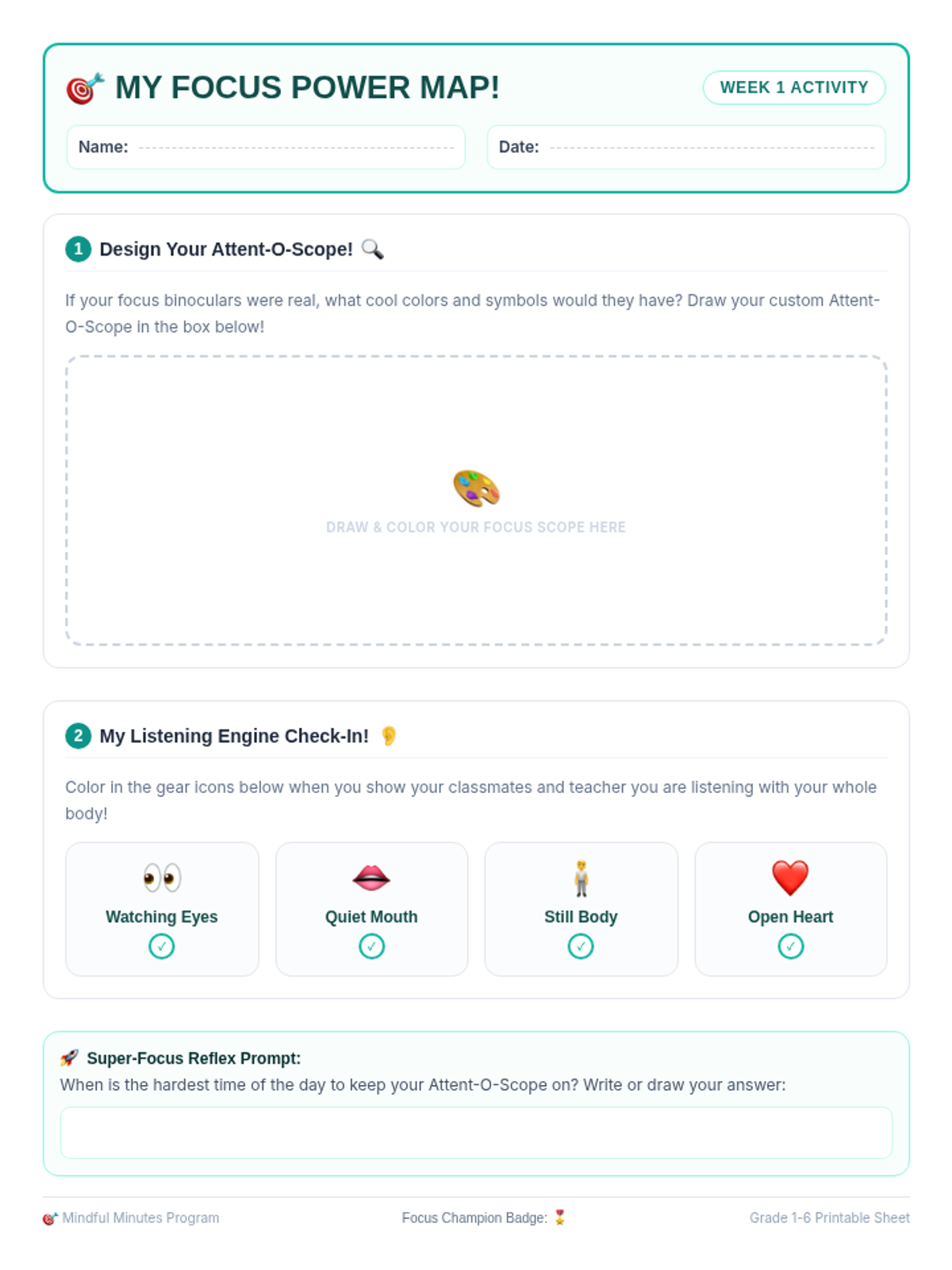
Five 10-minute daily SEL scripts and visual slides focusing on focusing attention and listening with the body (skills for learning).
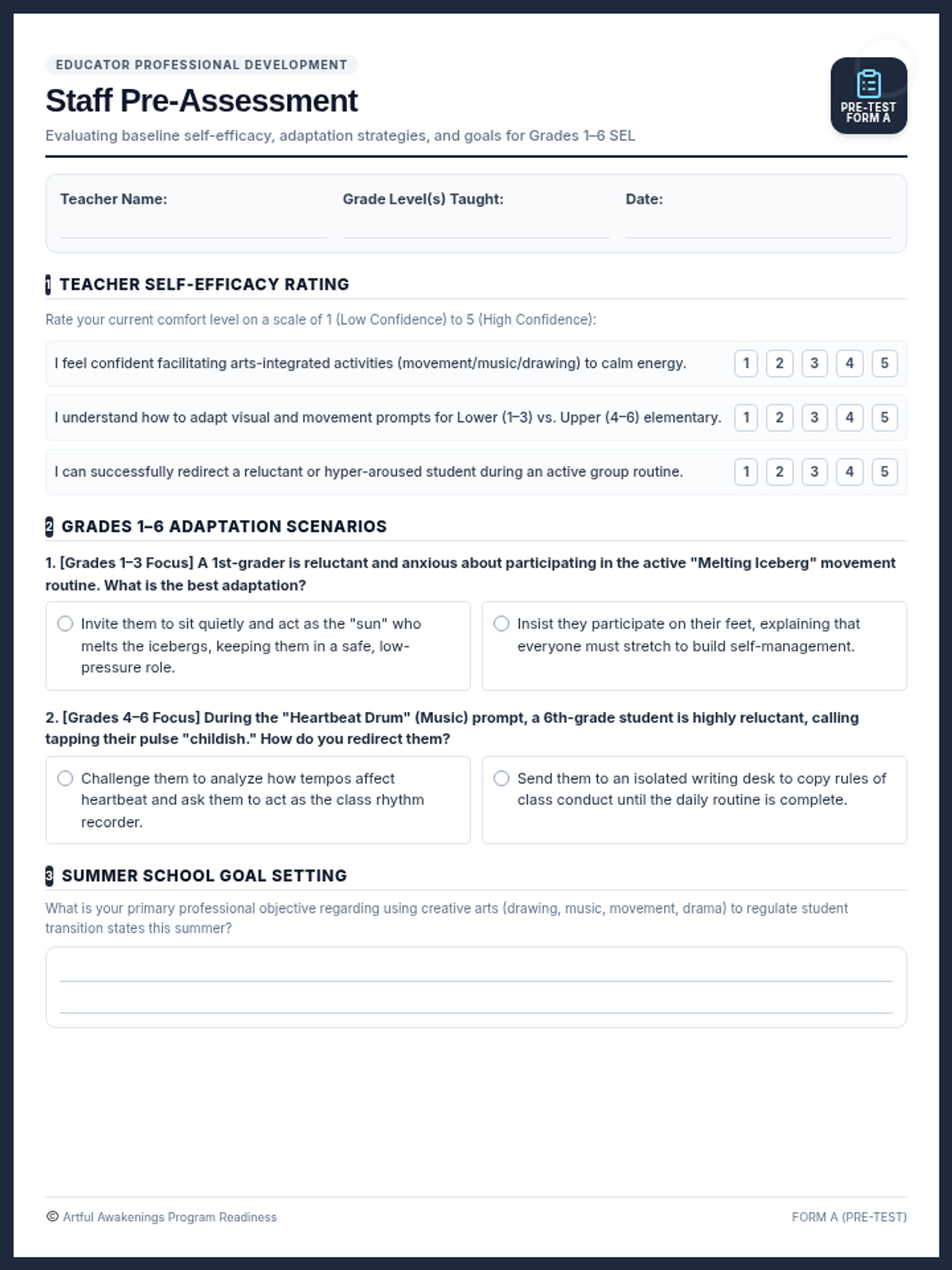
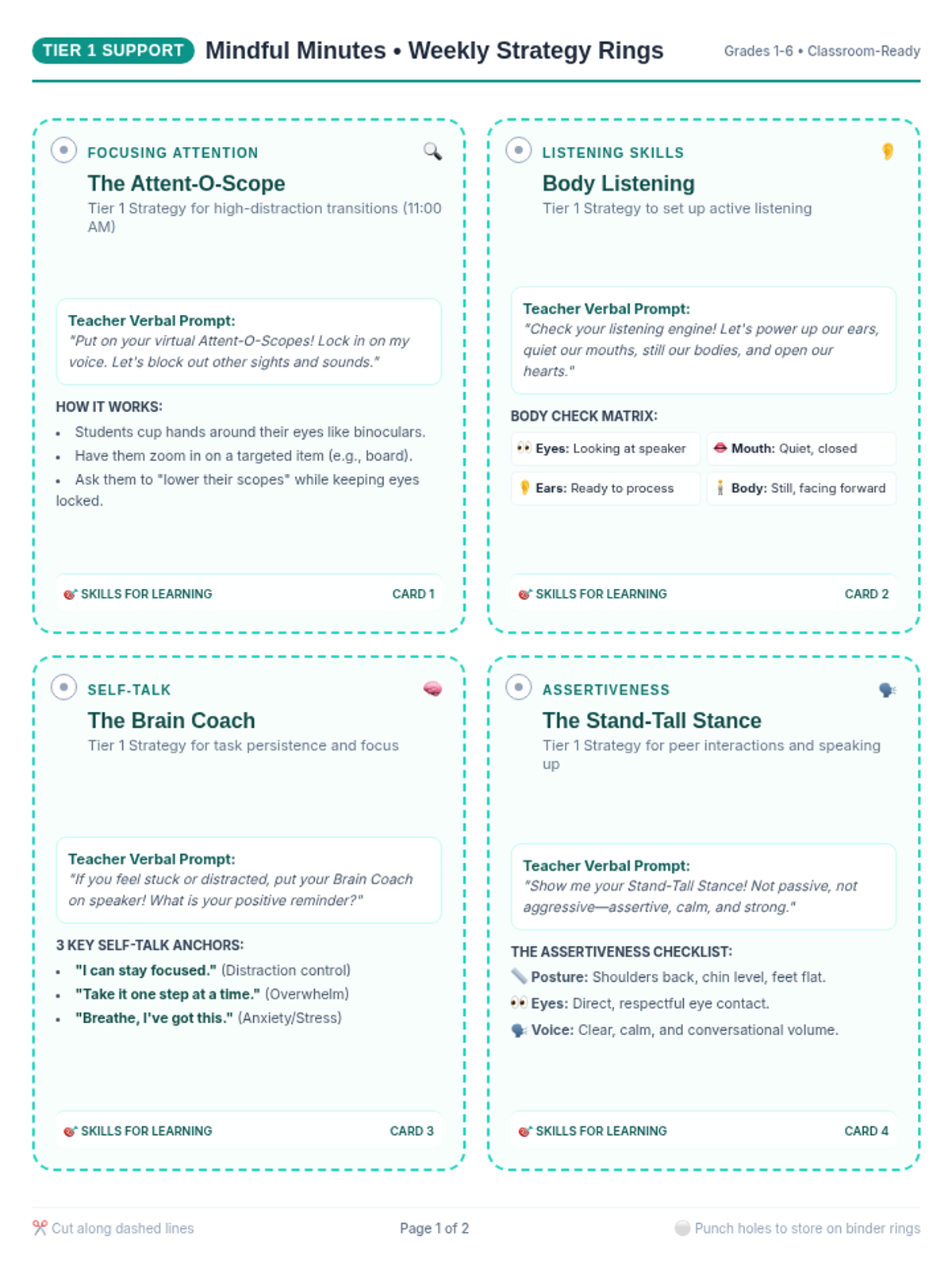
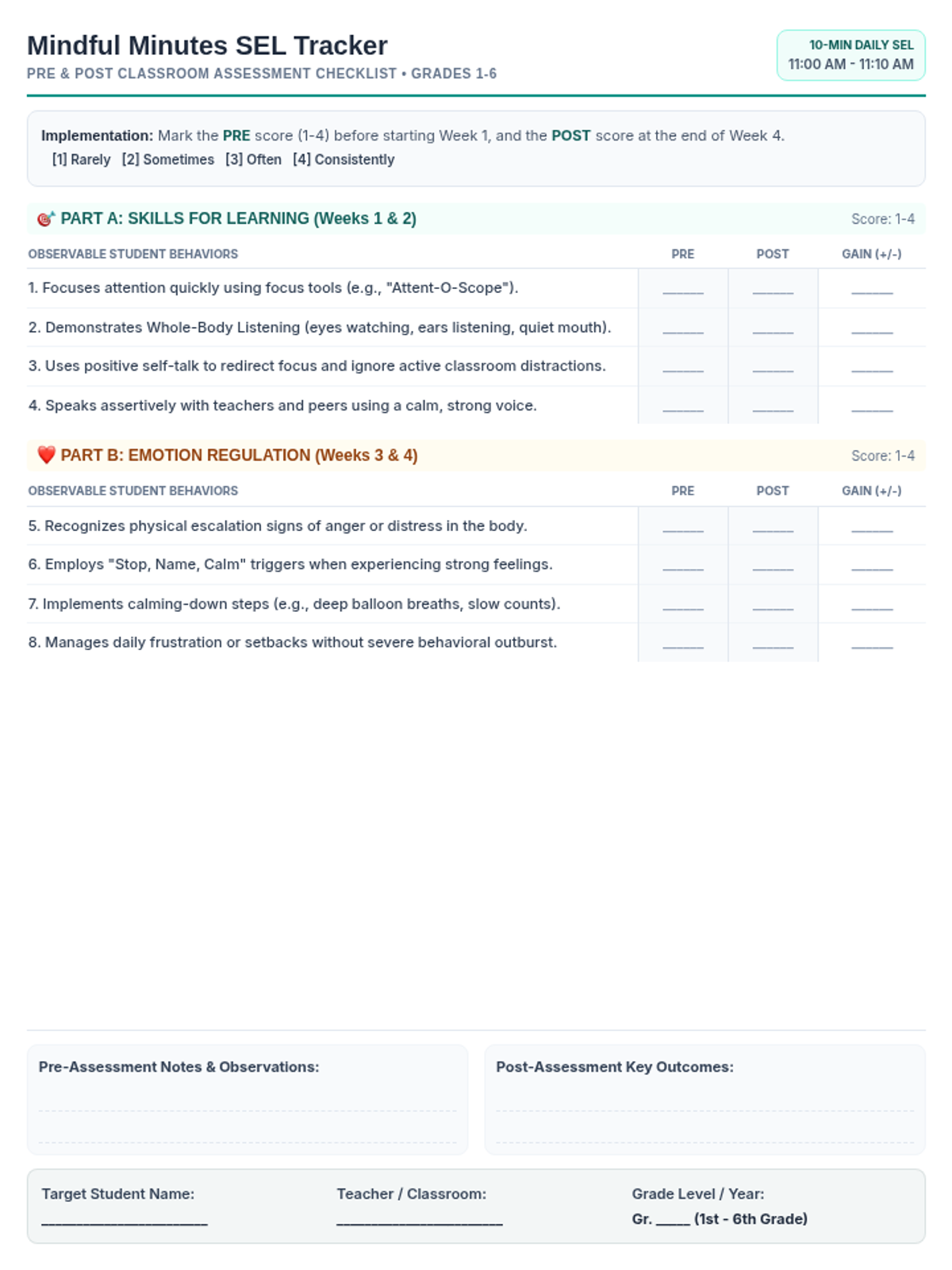
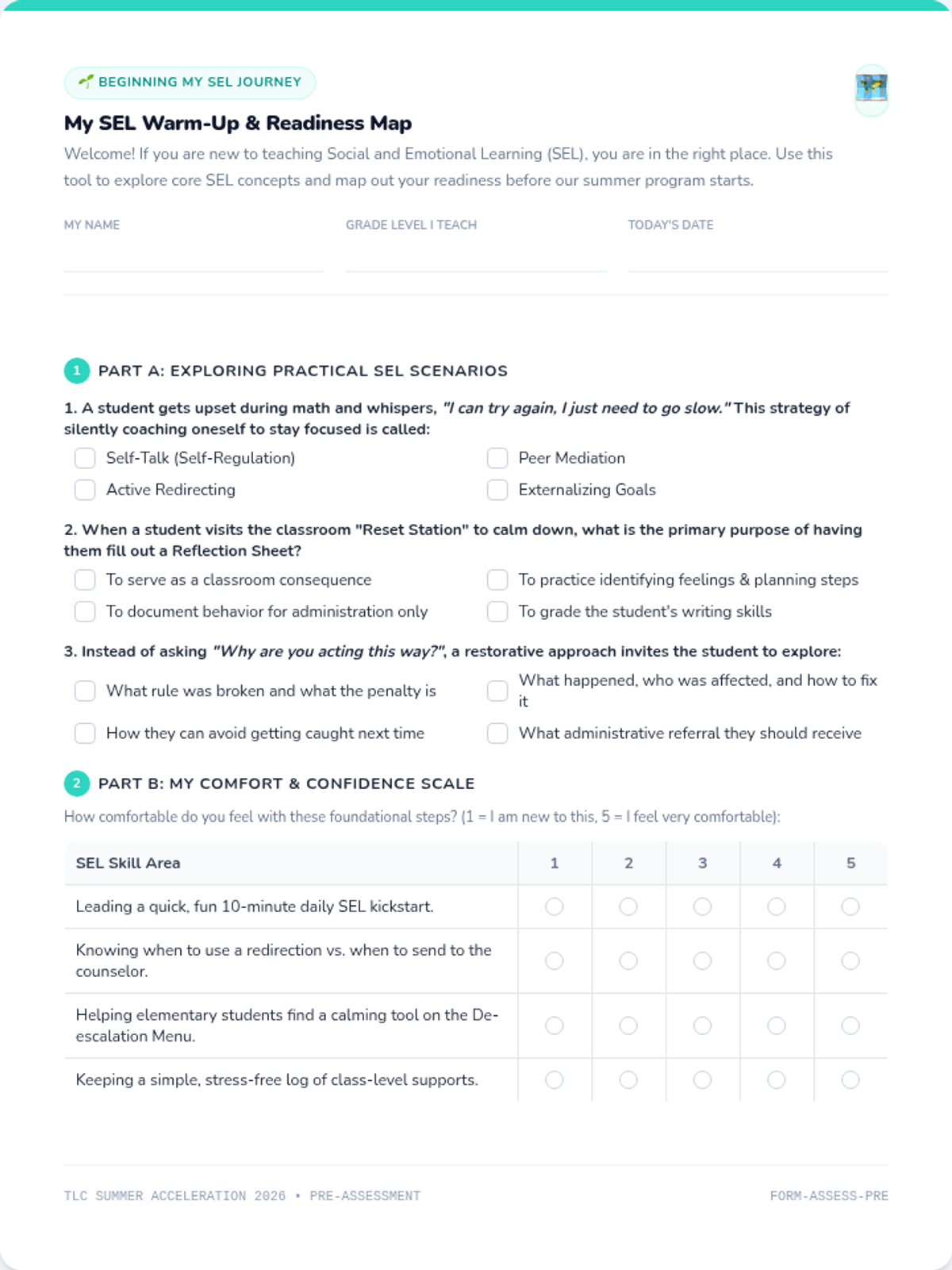
Foundational tools for the Mindful Minutes curriculum, containing Tier 1 behavioral strategy cards for printable rings and a teacher pre/post-assessment checklist.
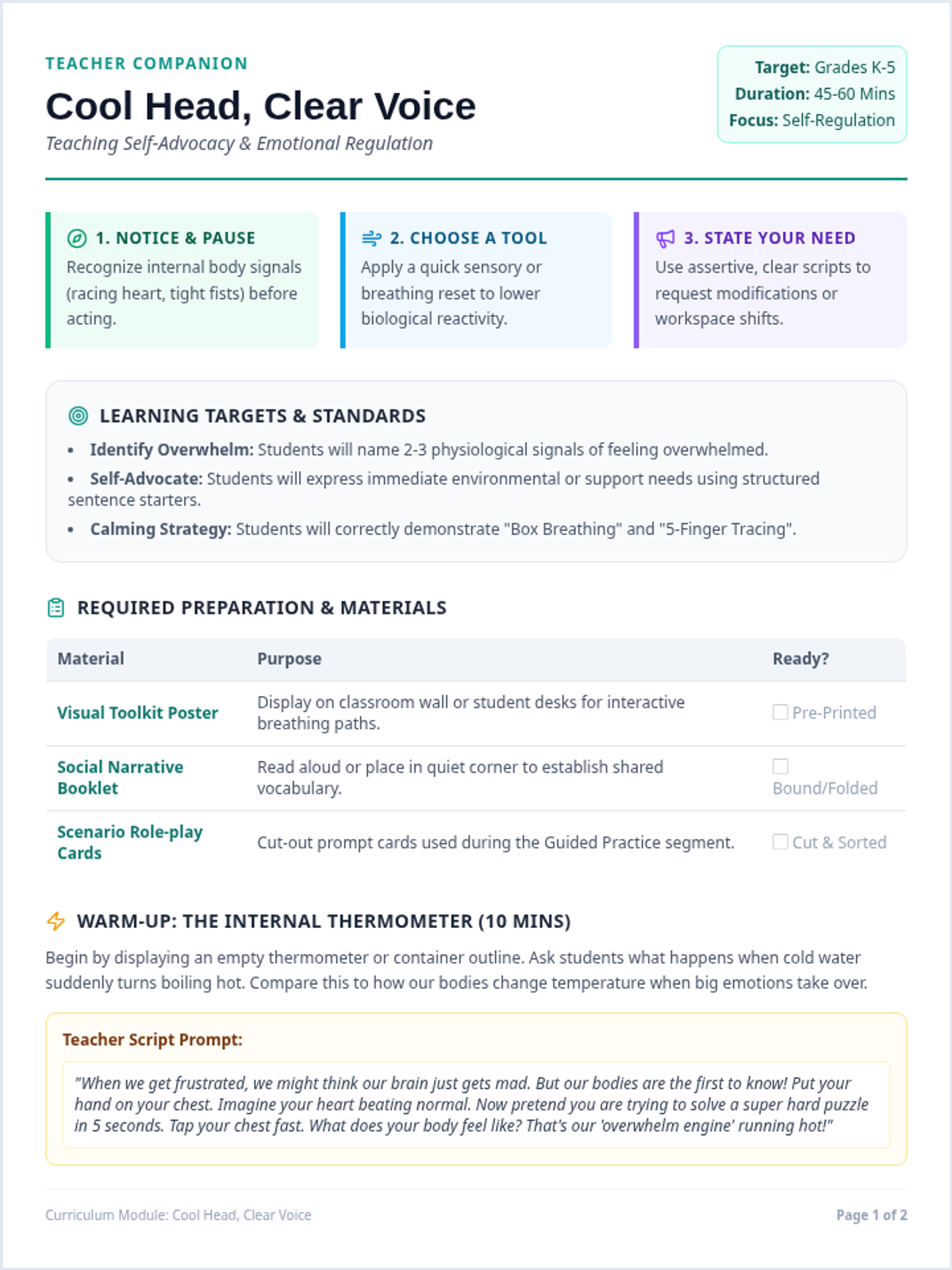
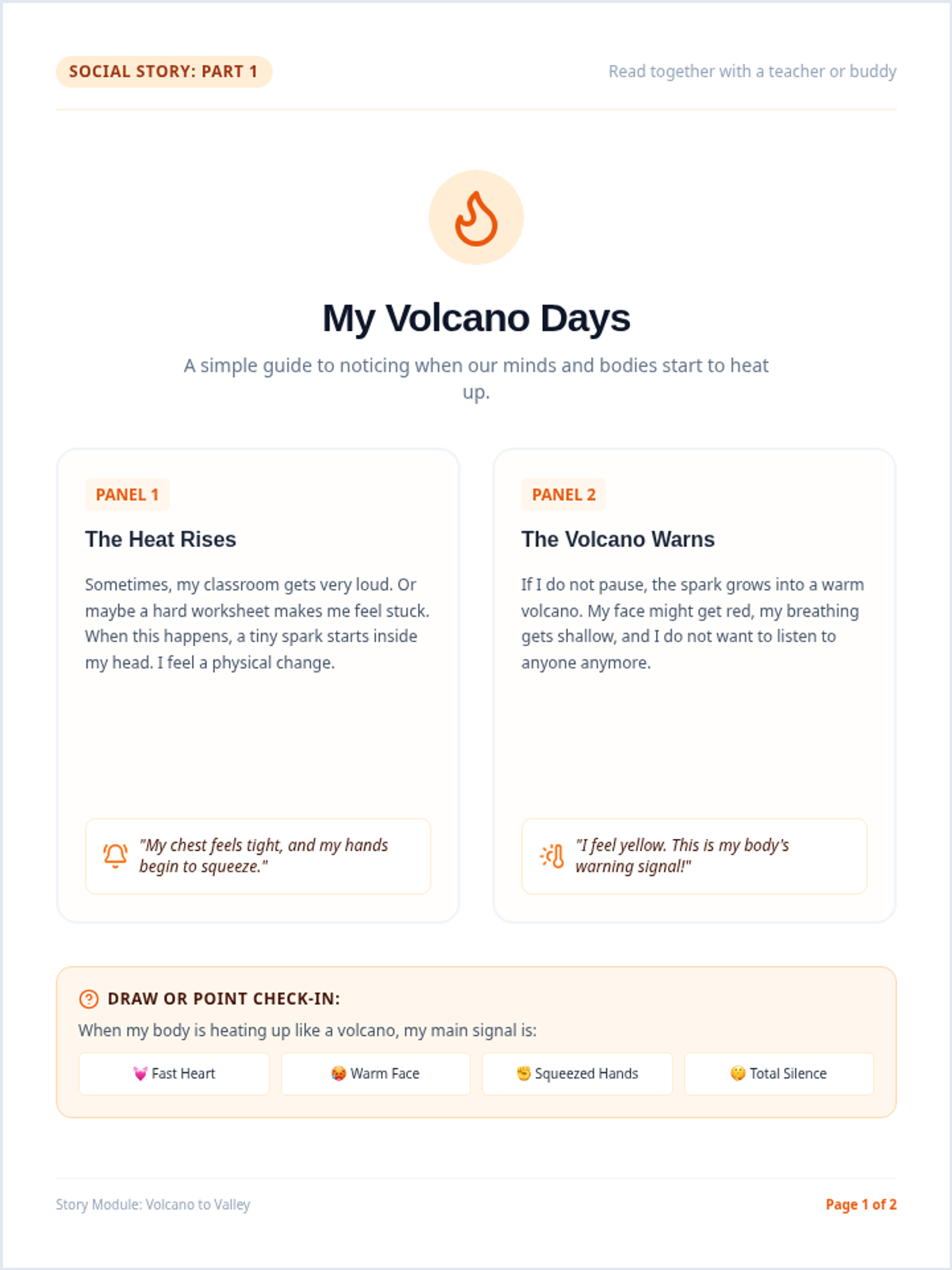
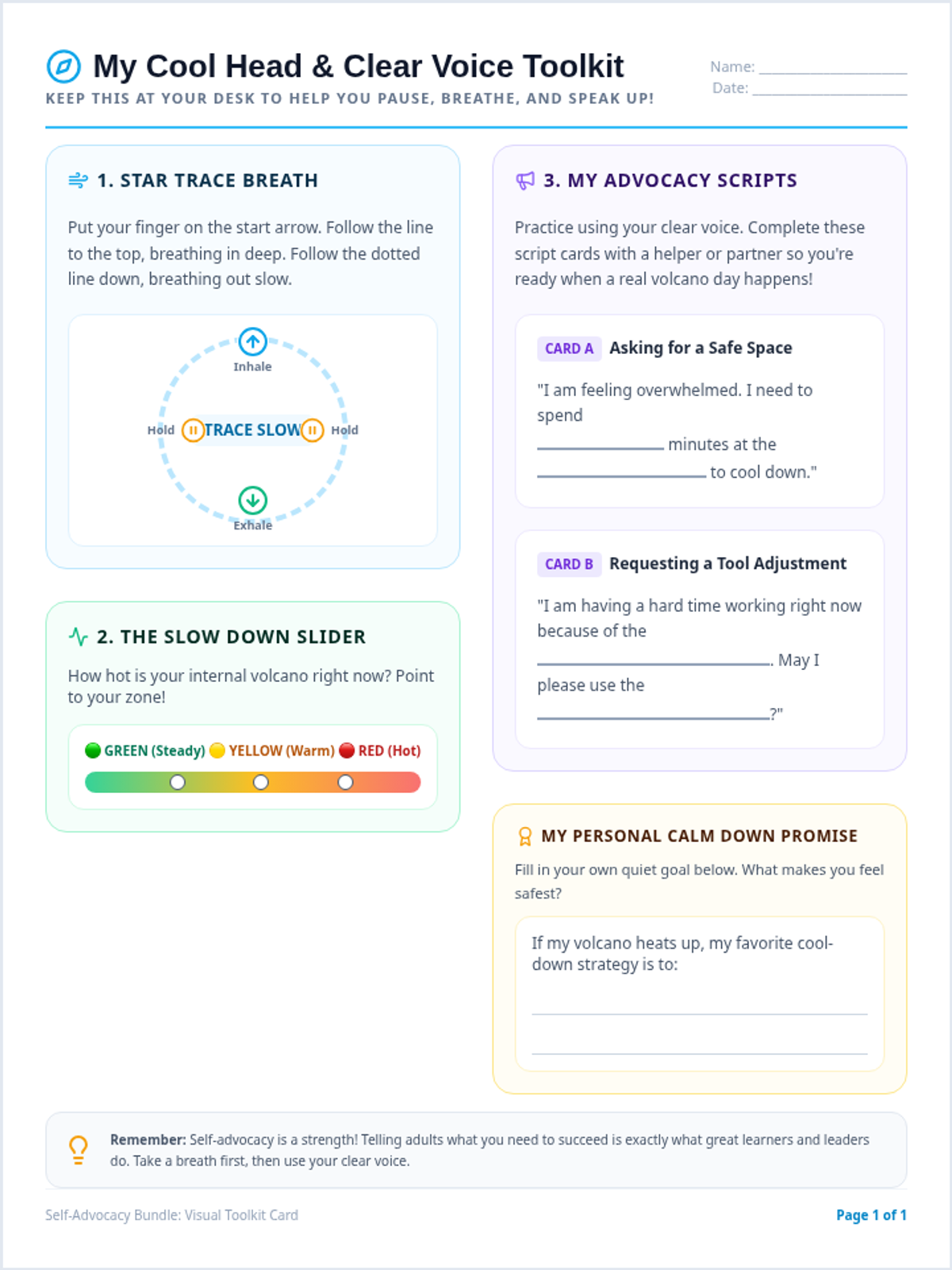
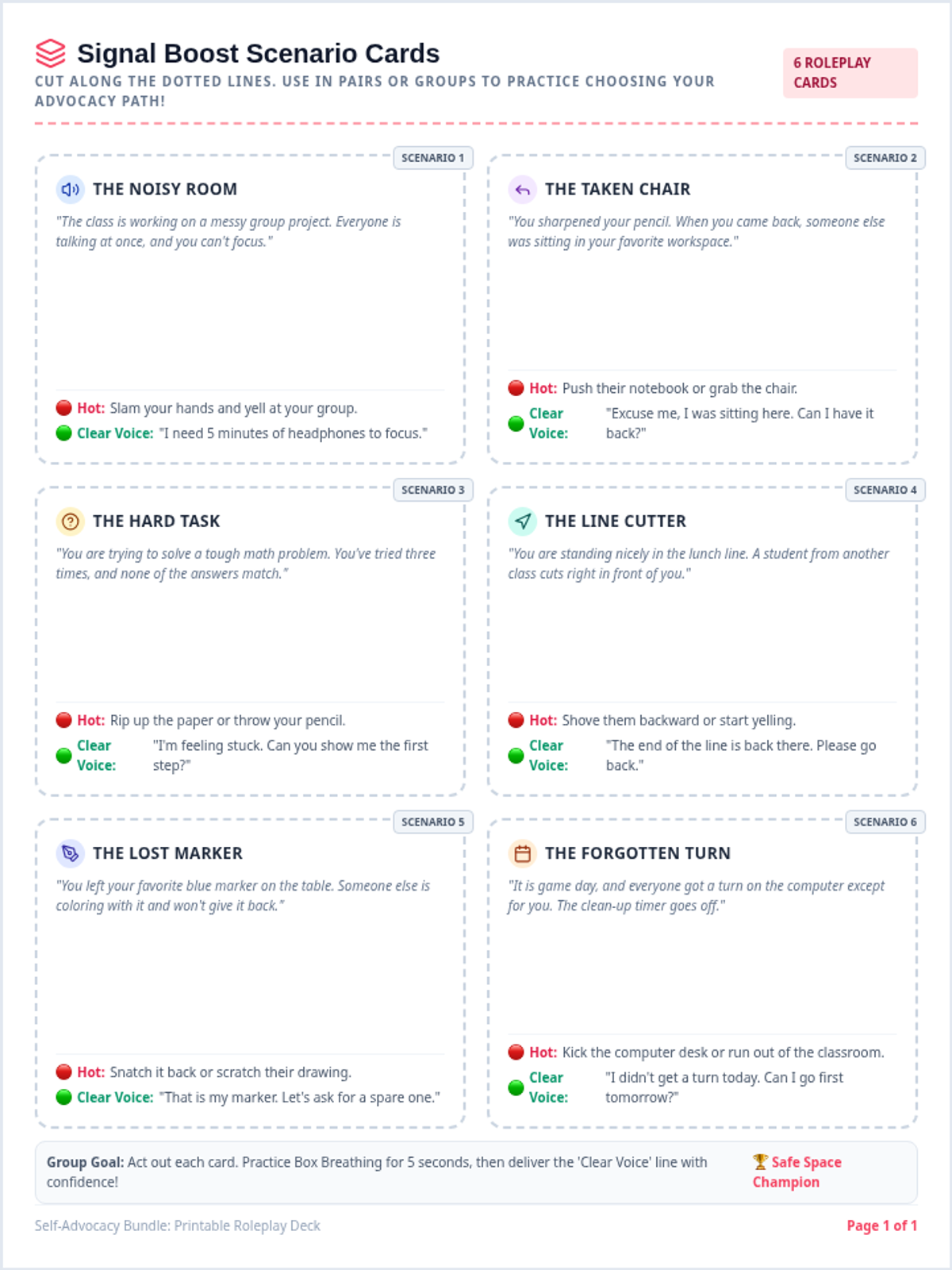
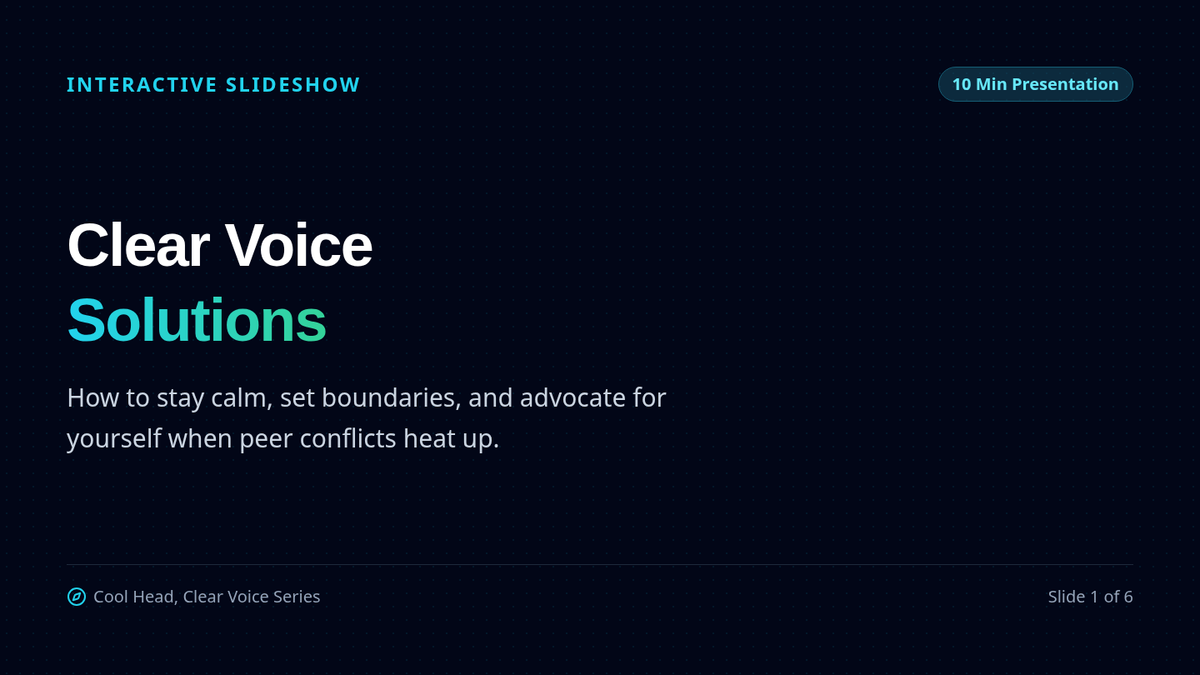
A complete lesson bundle on emotional regulation, self-advocacy, and calming strategies. Includes a comprehensive teacher's guide, a visual toolkit, a social narrative book, and interactive role-playing scenario cards.
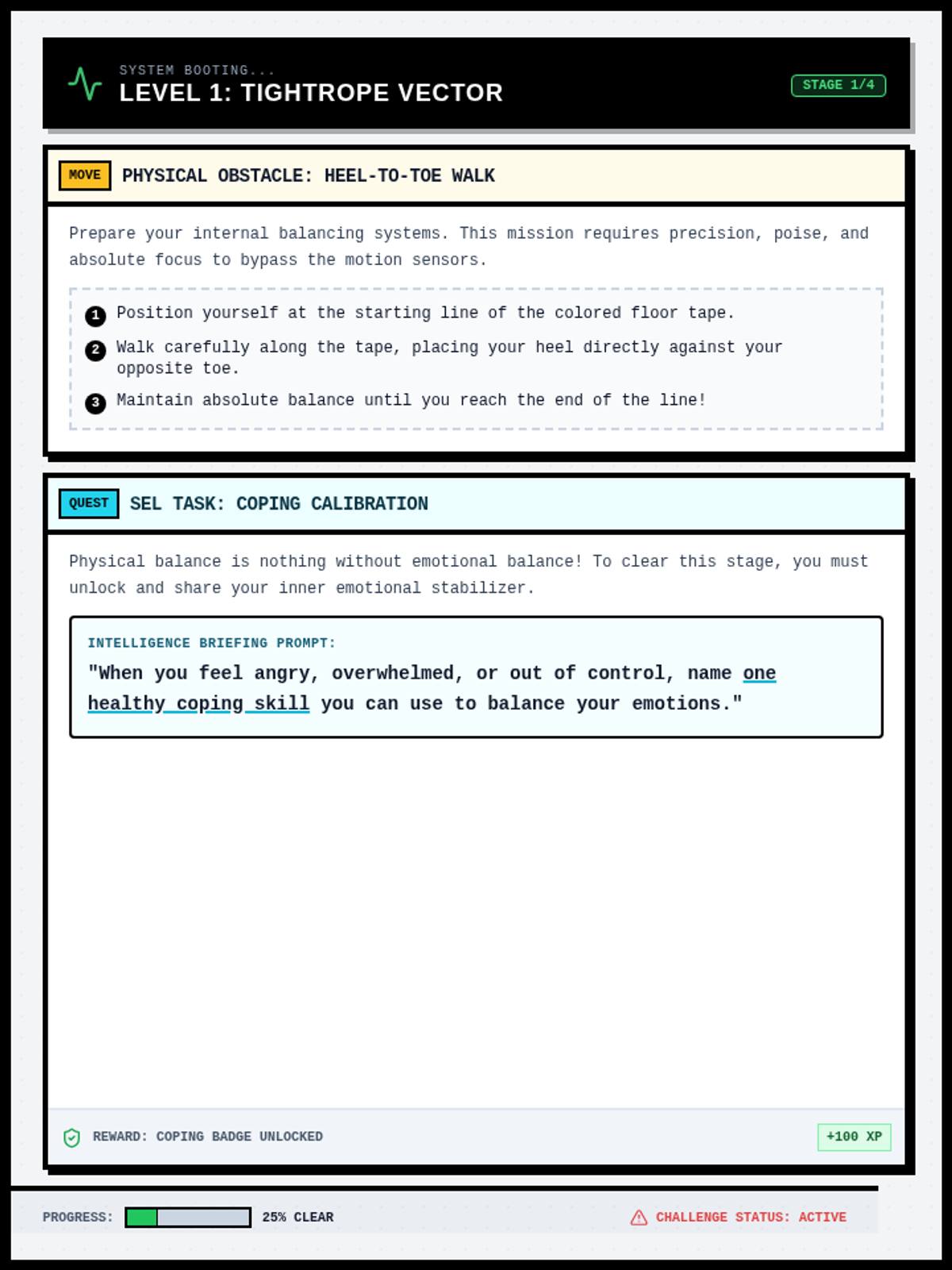
An action-packed obstacle course lesson where students complete physical challenges and social-emotional quests to graduate from their counseling group.
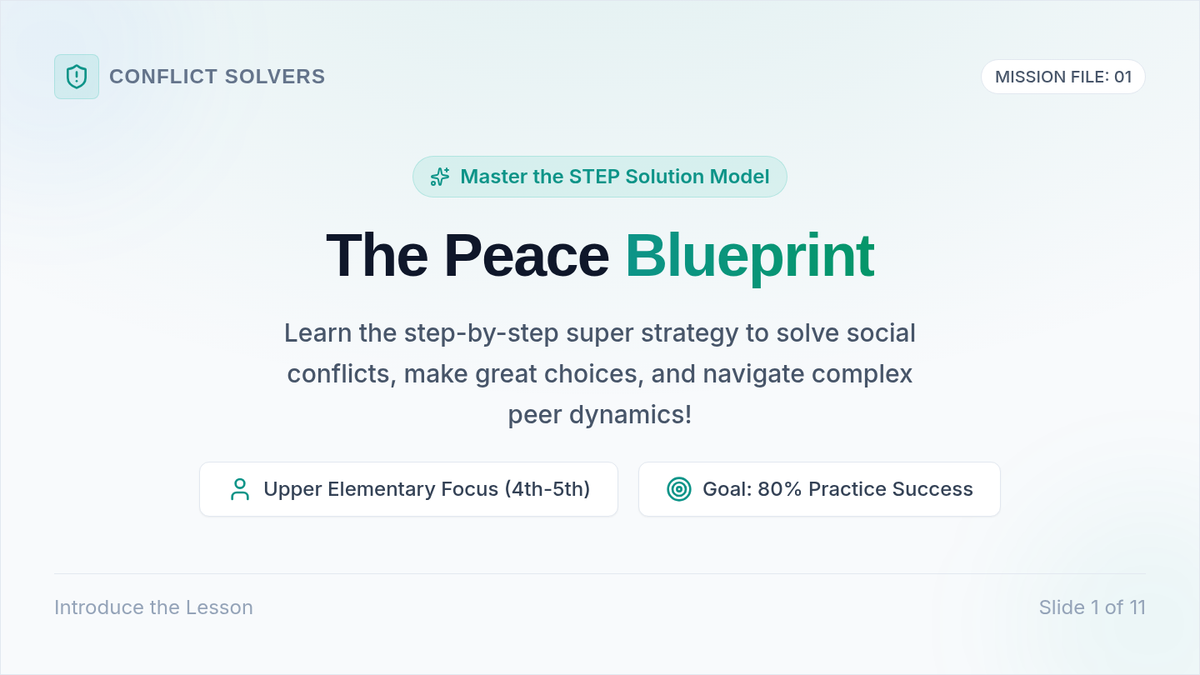
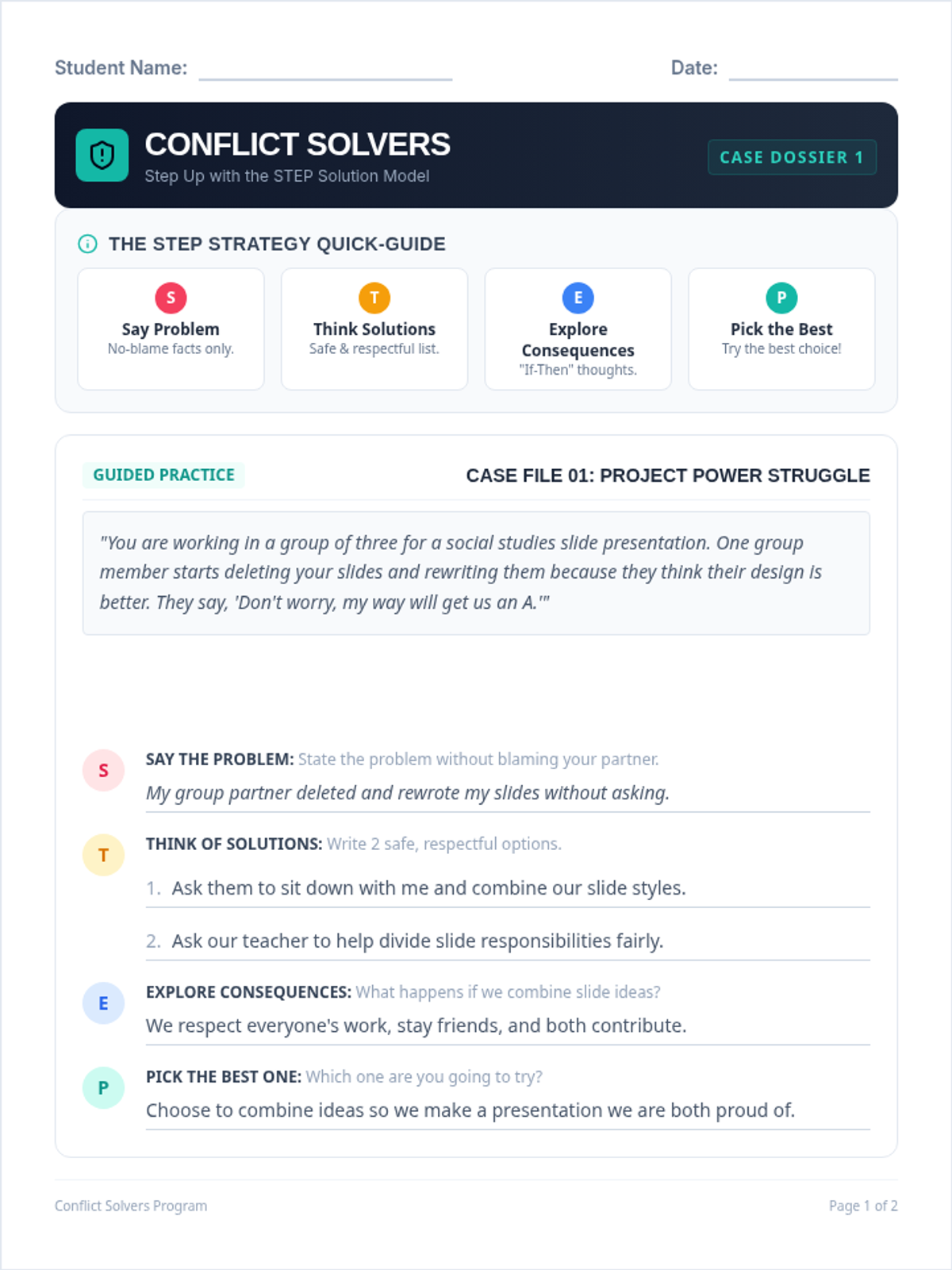
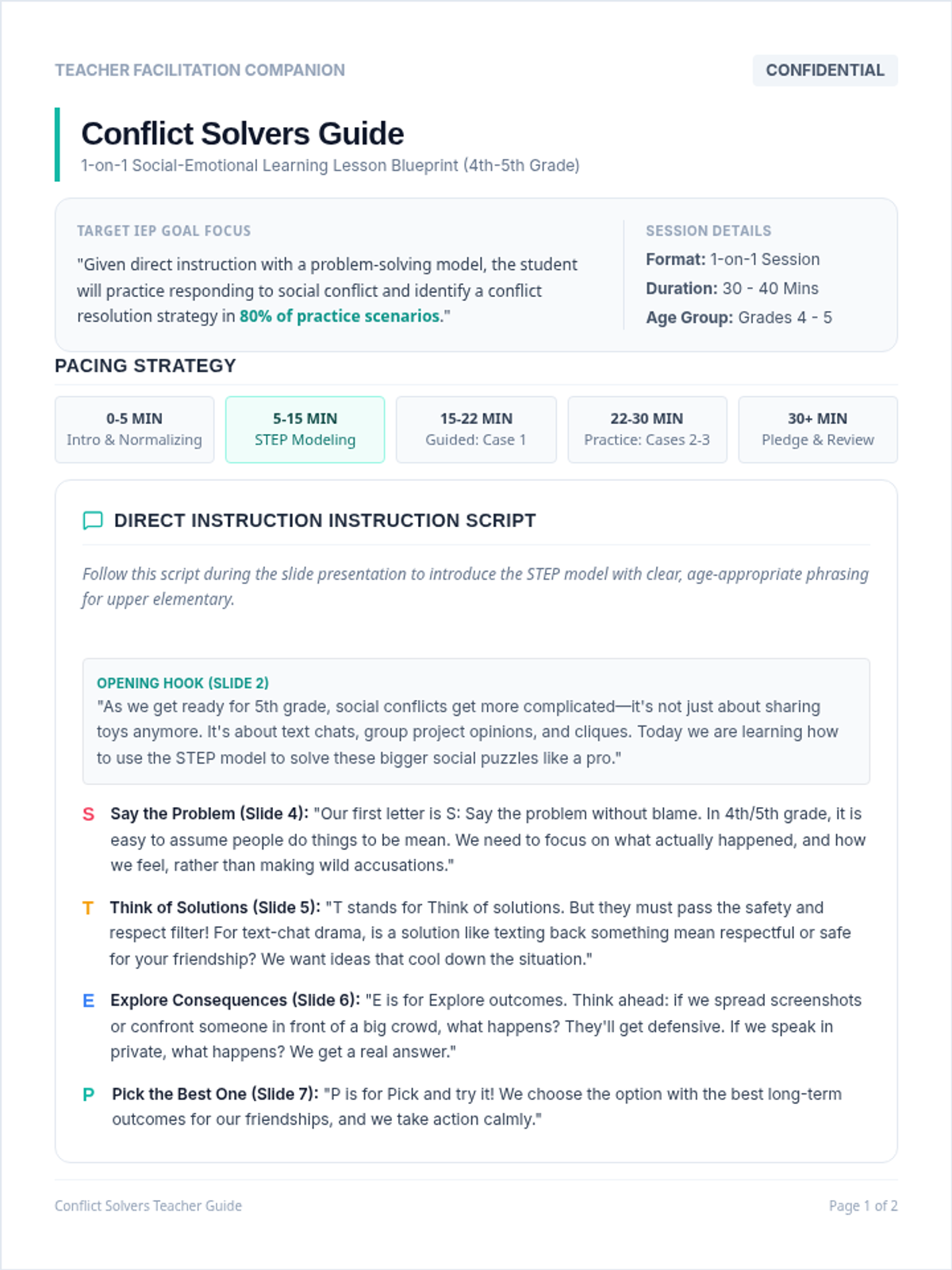
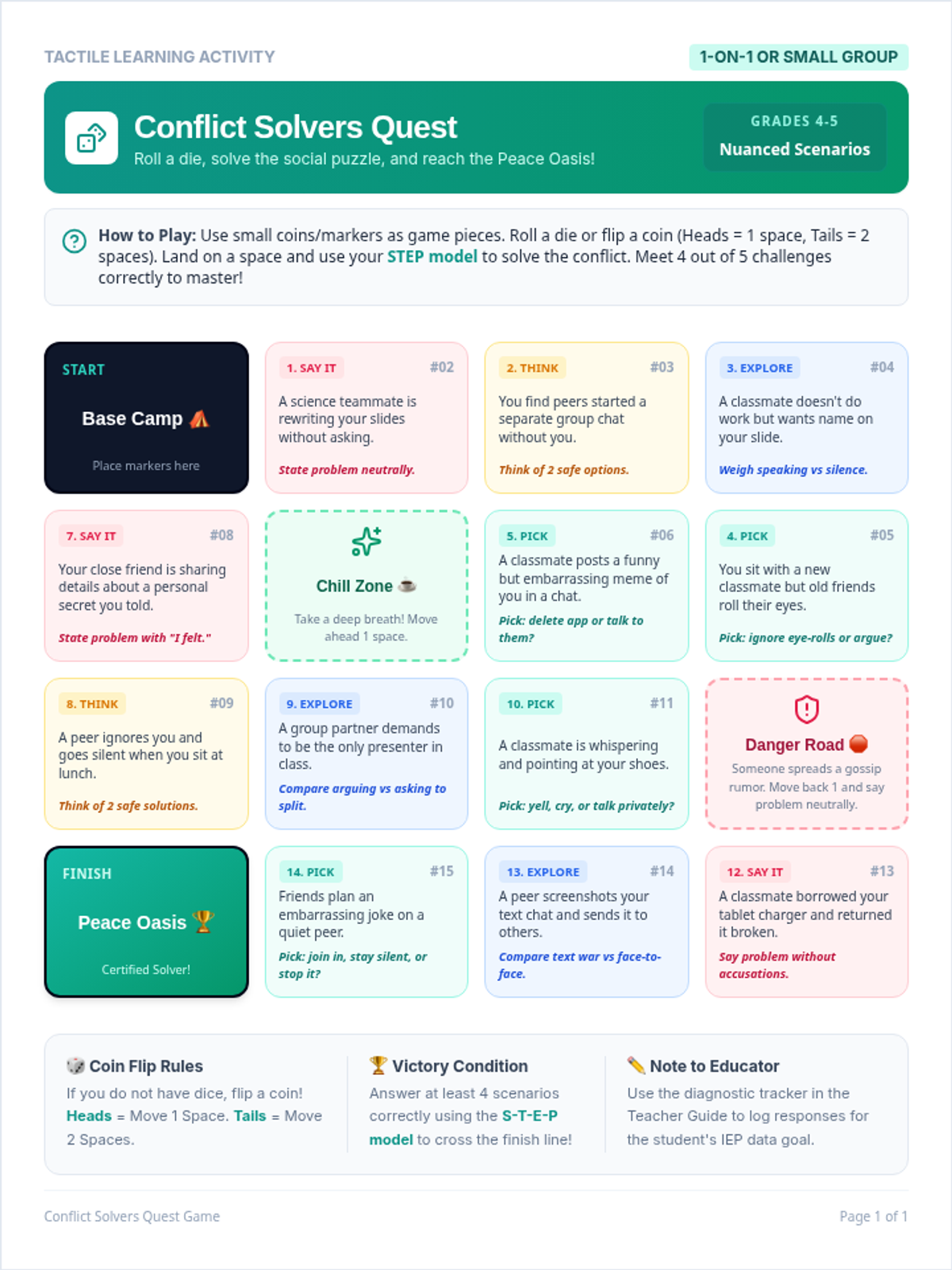
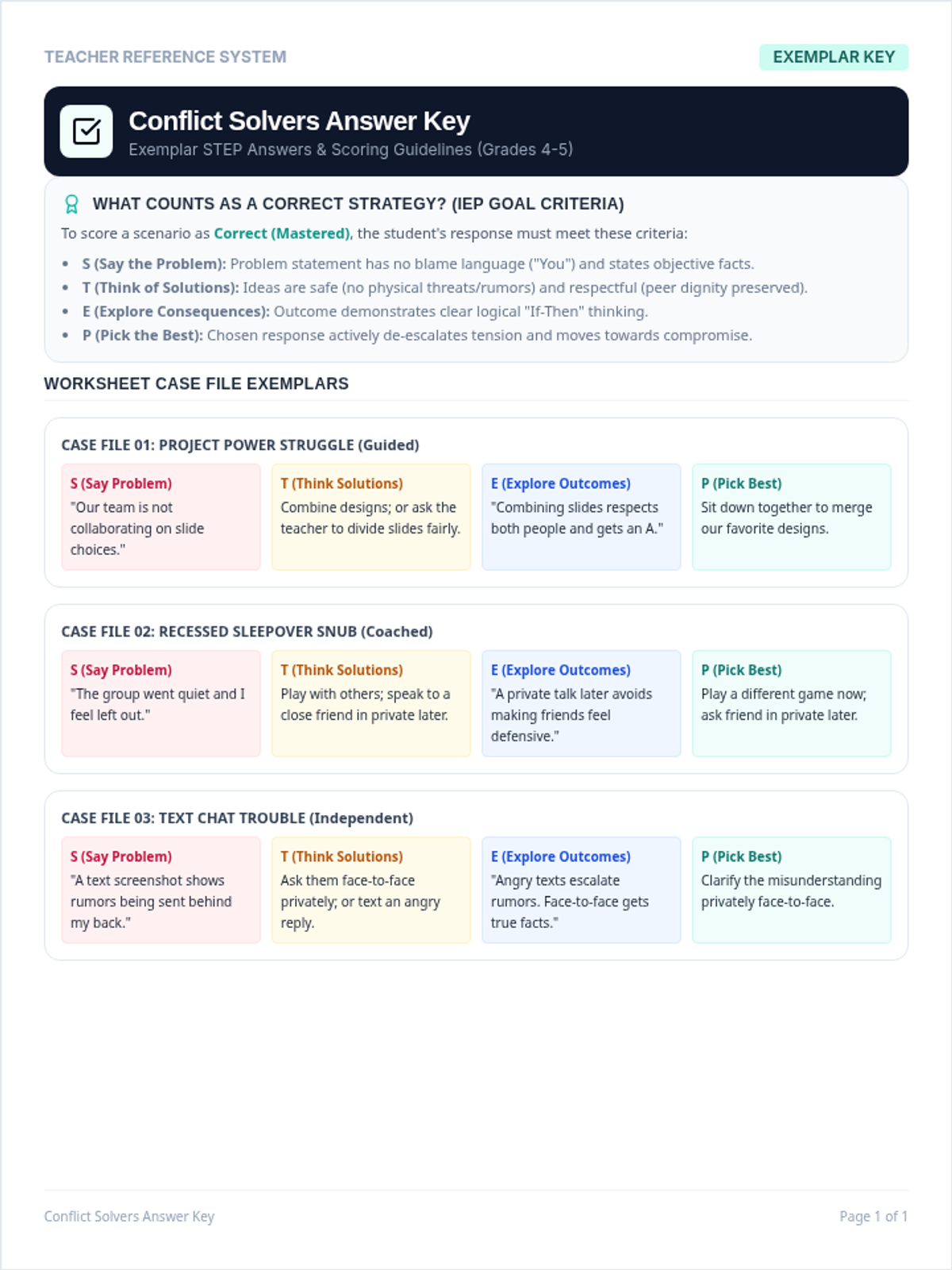
A structured social-emotional learning lesson introducing the STEP model for conflict resolution. Students learn to define problems, brainstorm solutions, weigh consequences, and select positive resolutions through interactive scenarios.
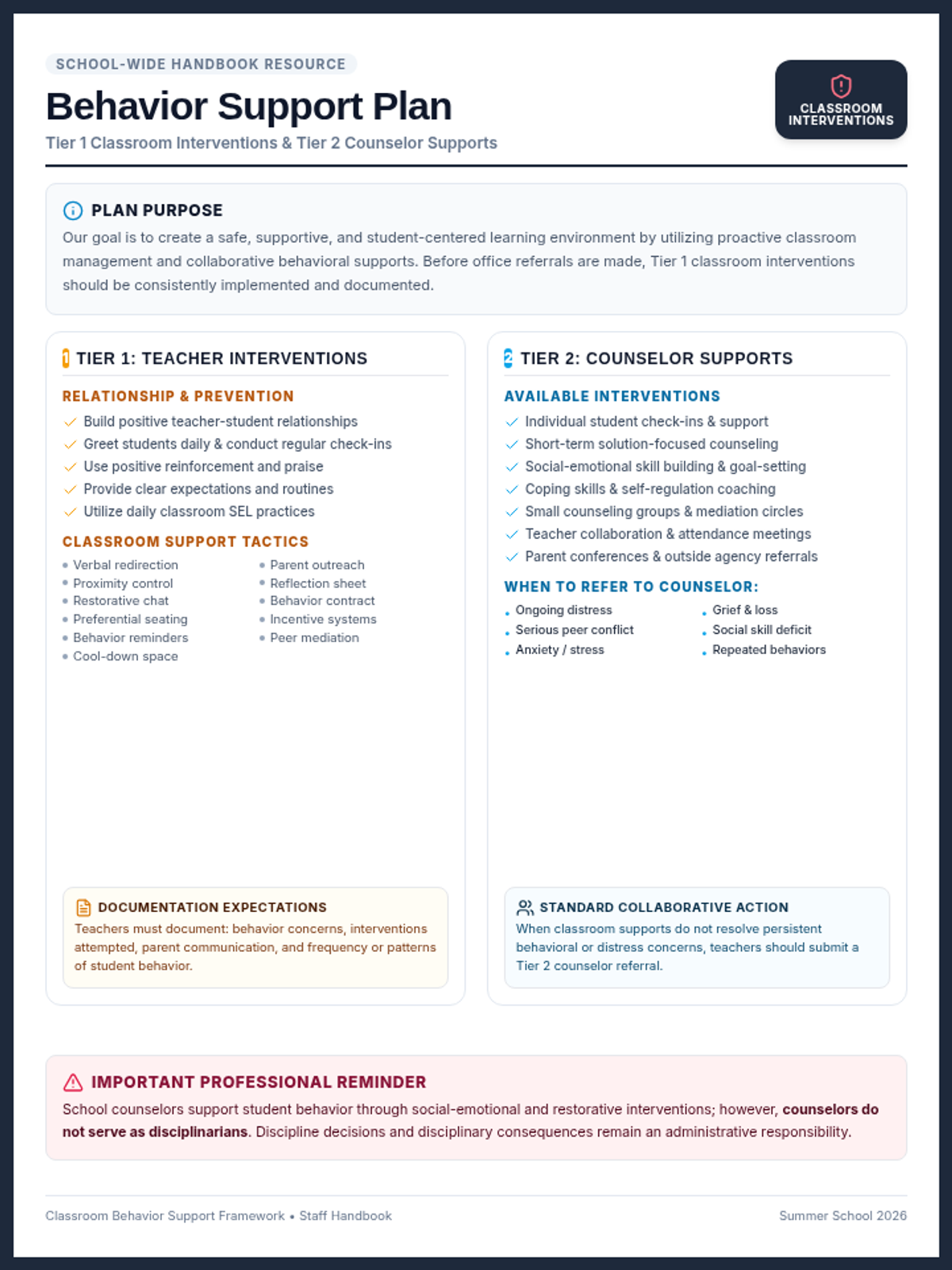
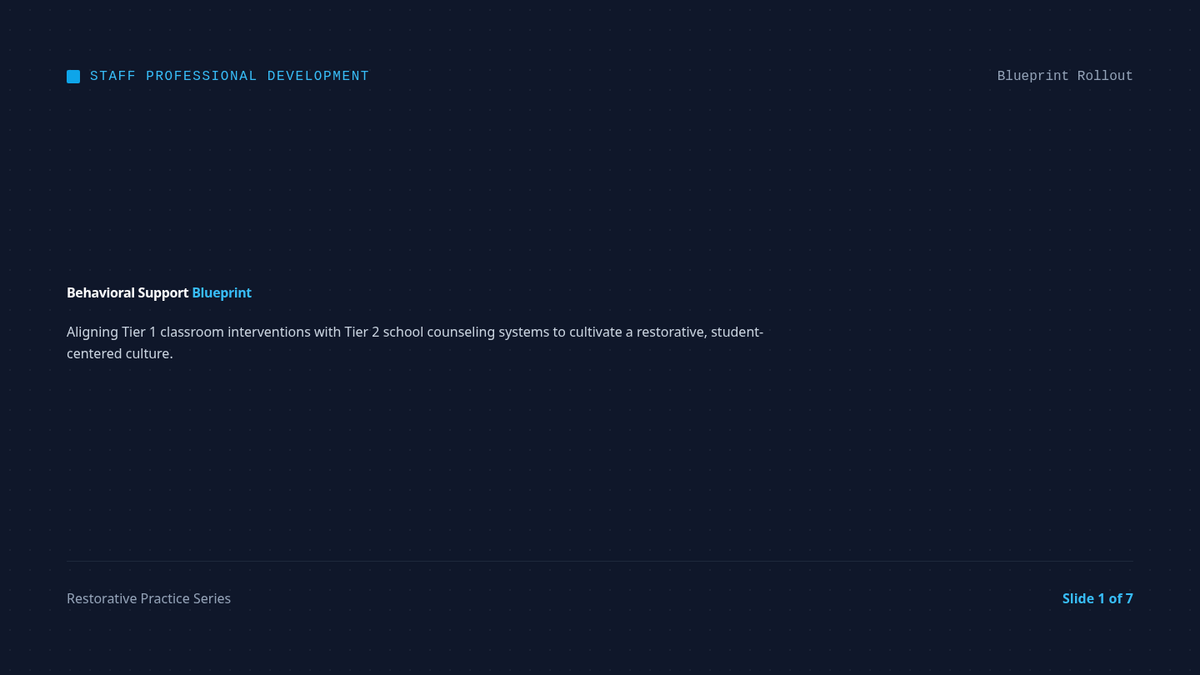
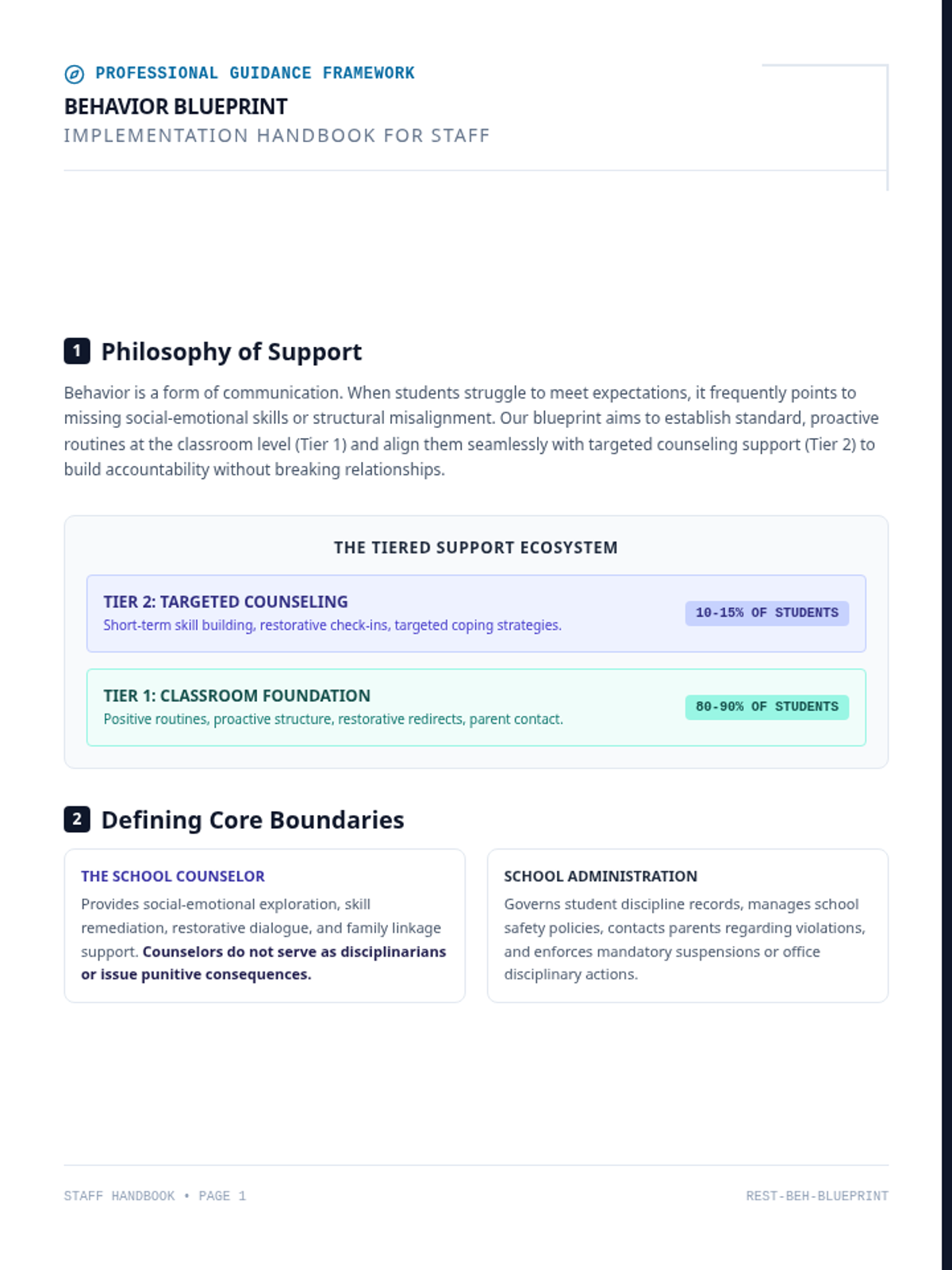
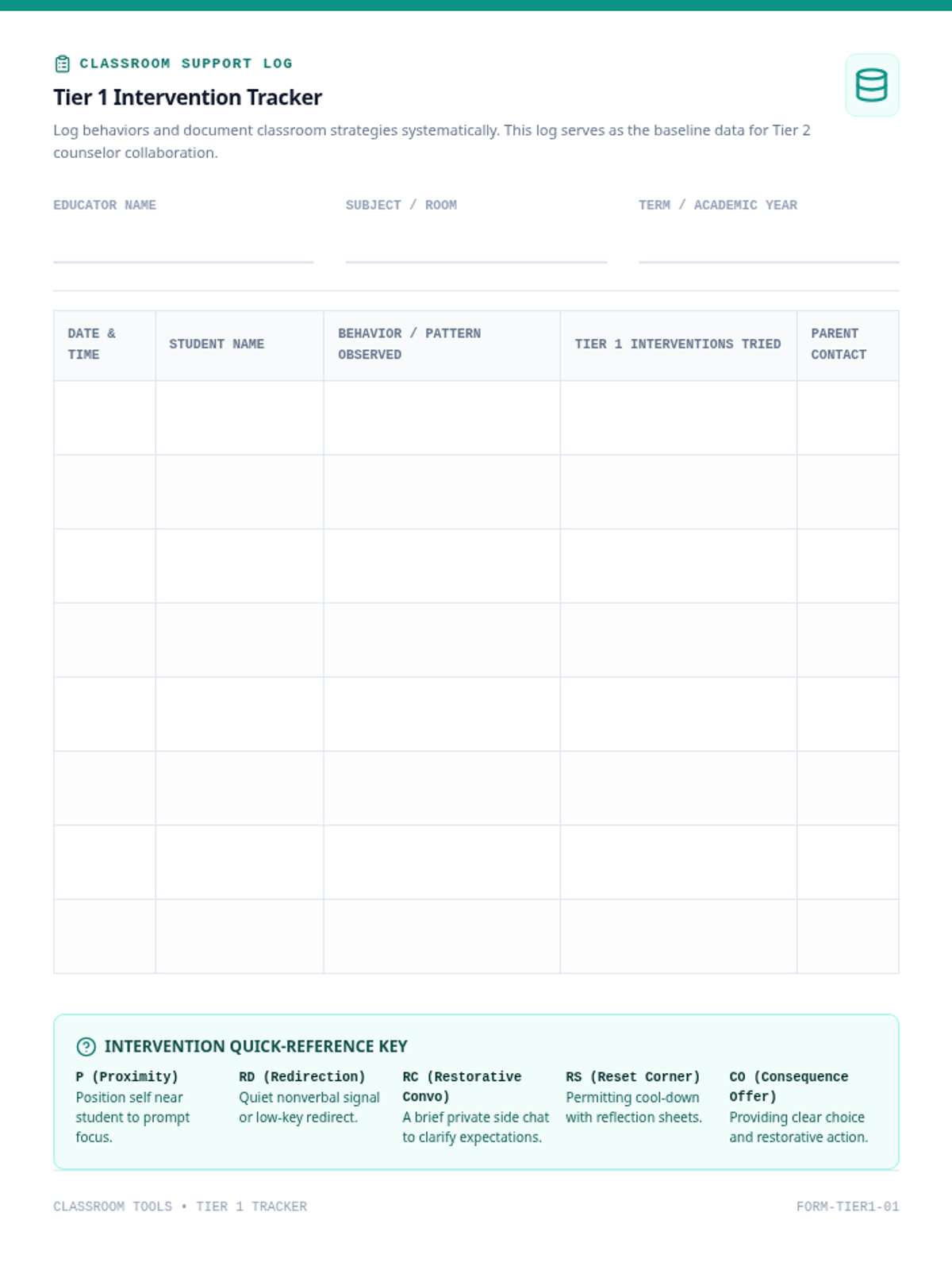
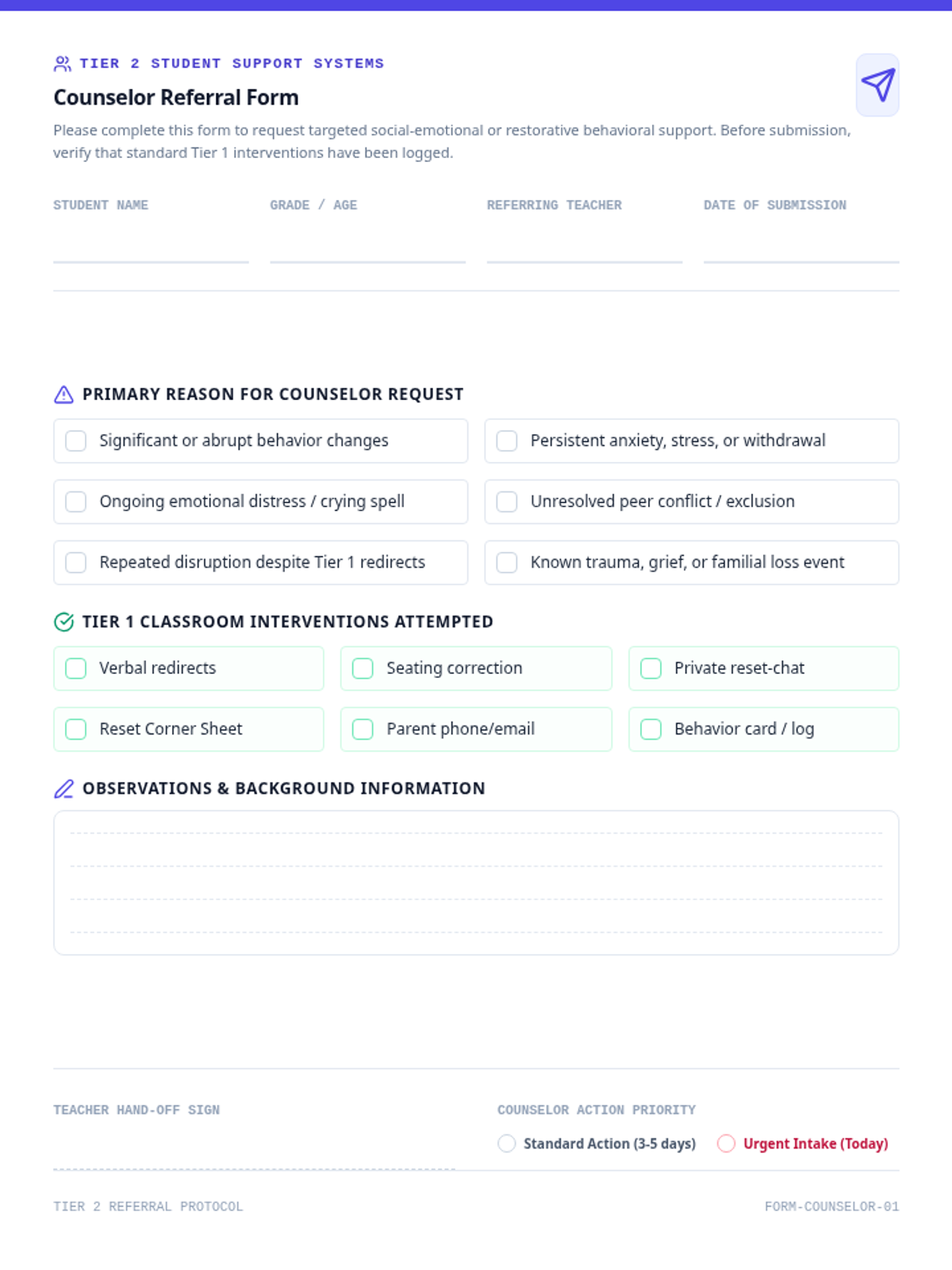
A comprehensive behavioral support and intervention rollout toolkit containing staff training materials, classroom de-escalation tools, student self-regulation resources, teacher tracking logs, and a structured counseling referral workflow.
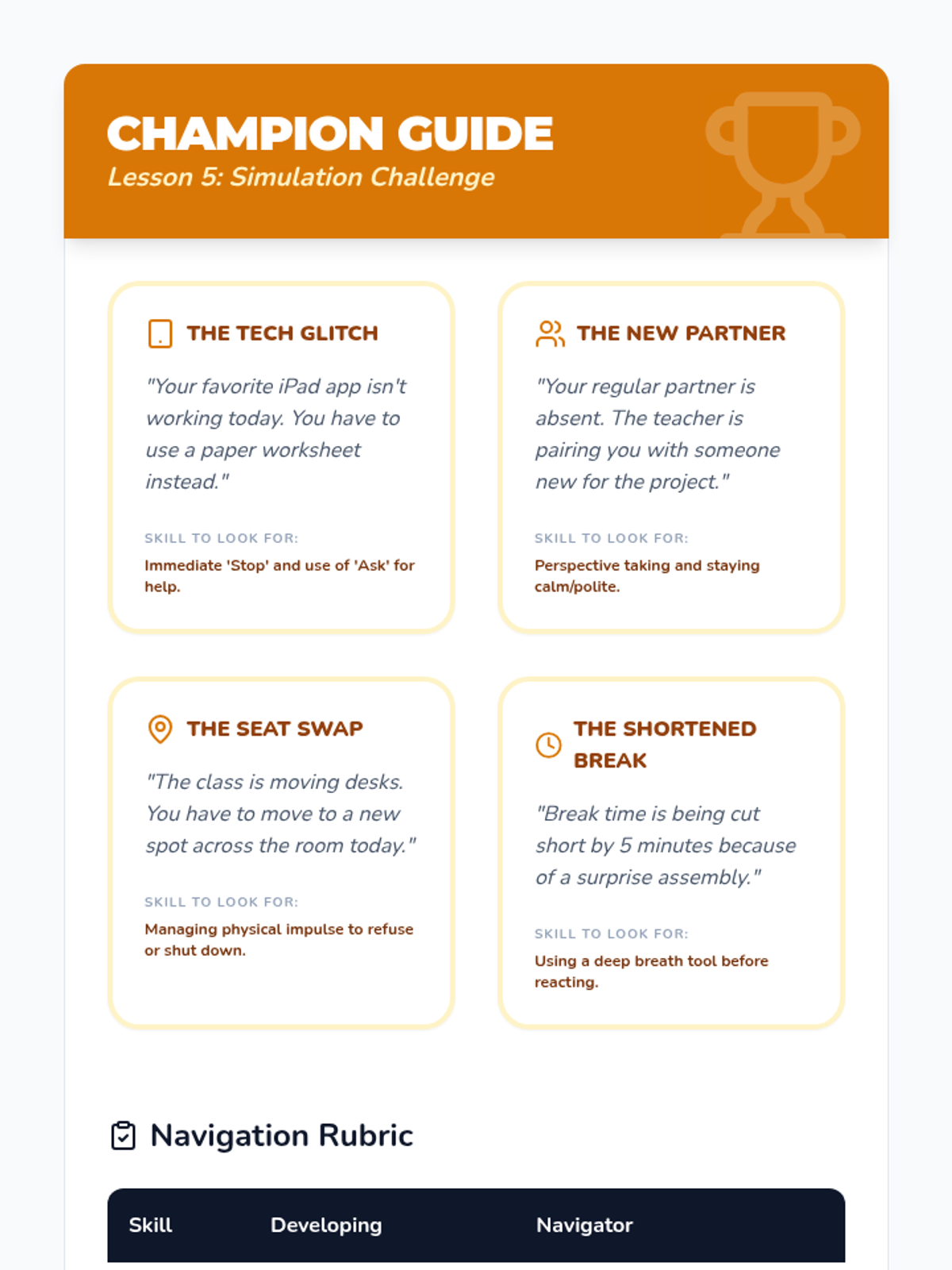
Students participate in simulations using 'Challenge Cards' to apply their coping skills and the 'Stop, Breathe, Ask' routine. Peer feedback reinforces positive adaptation strategies.
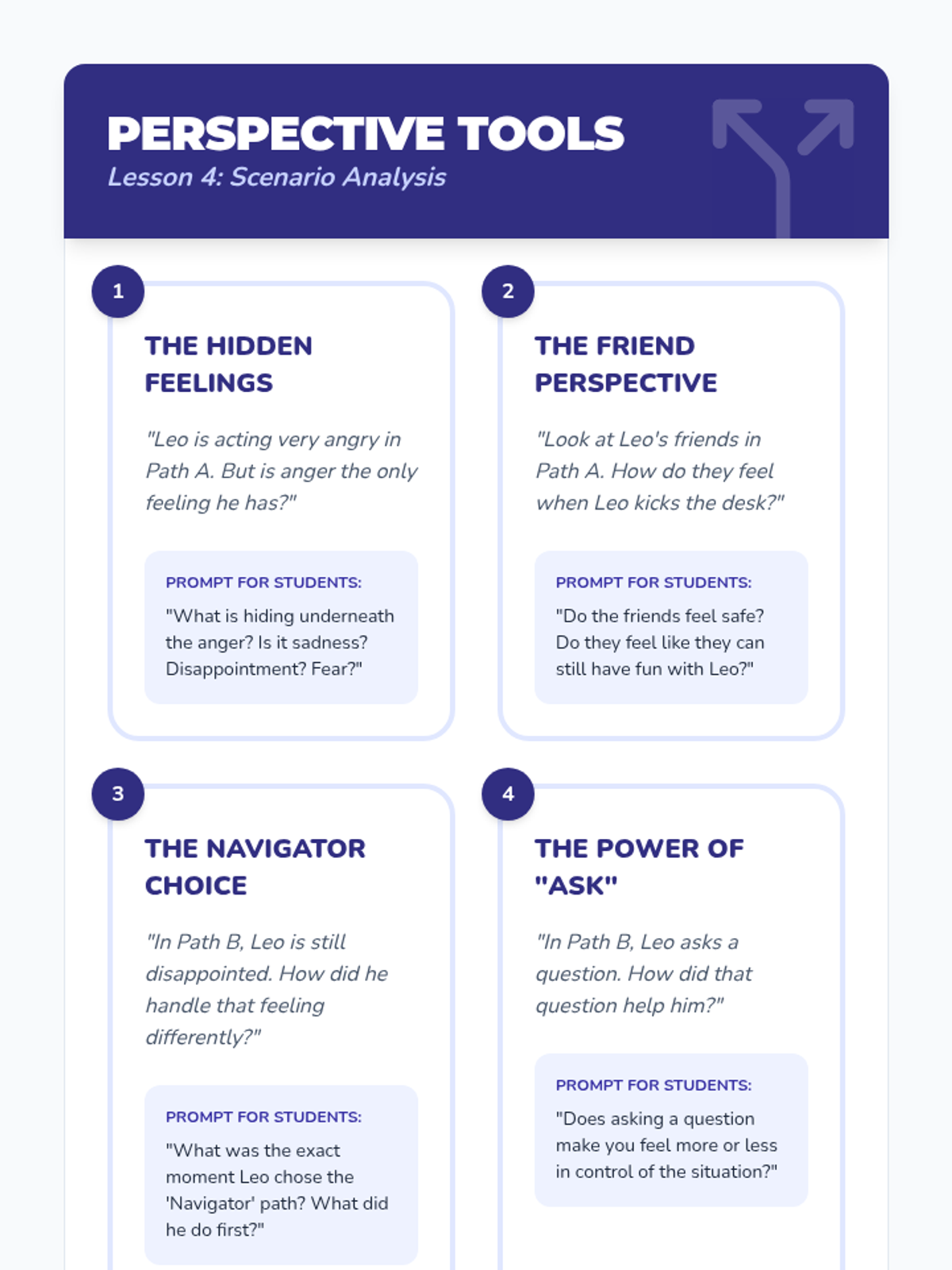
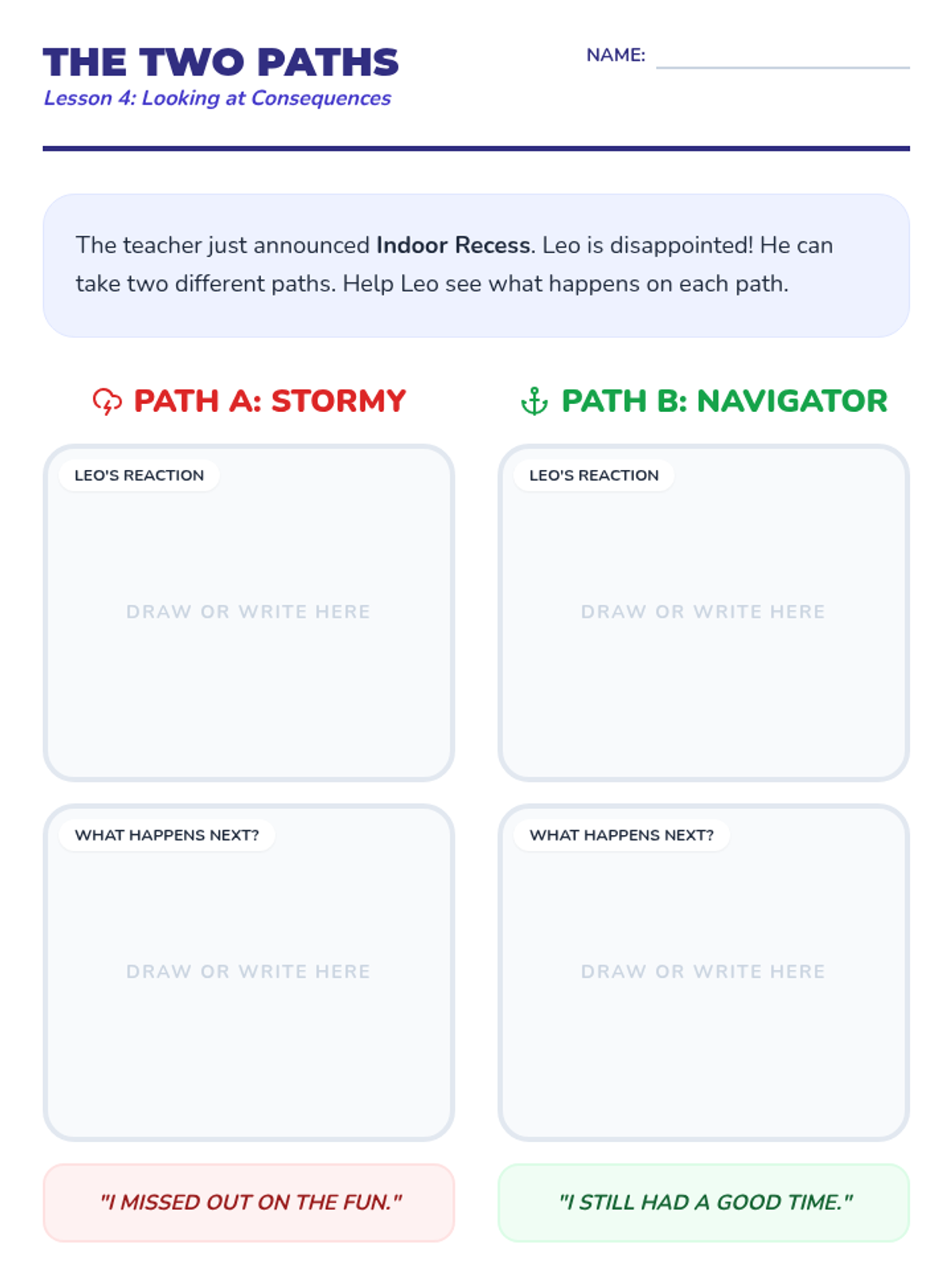
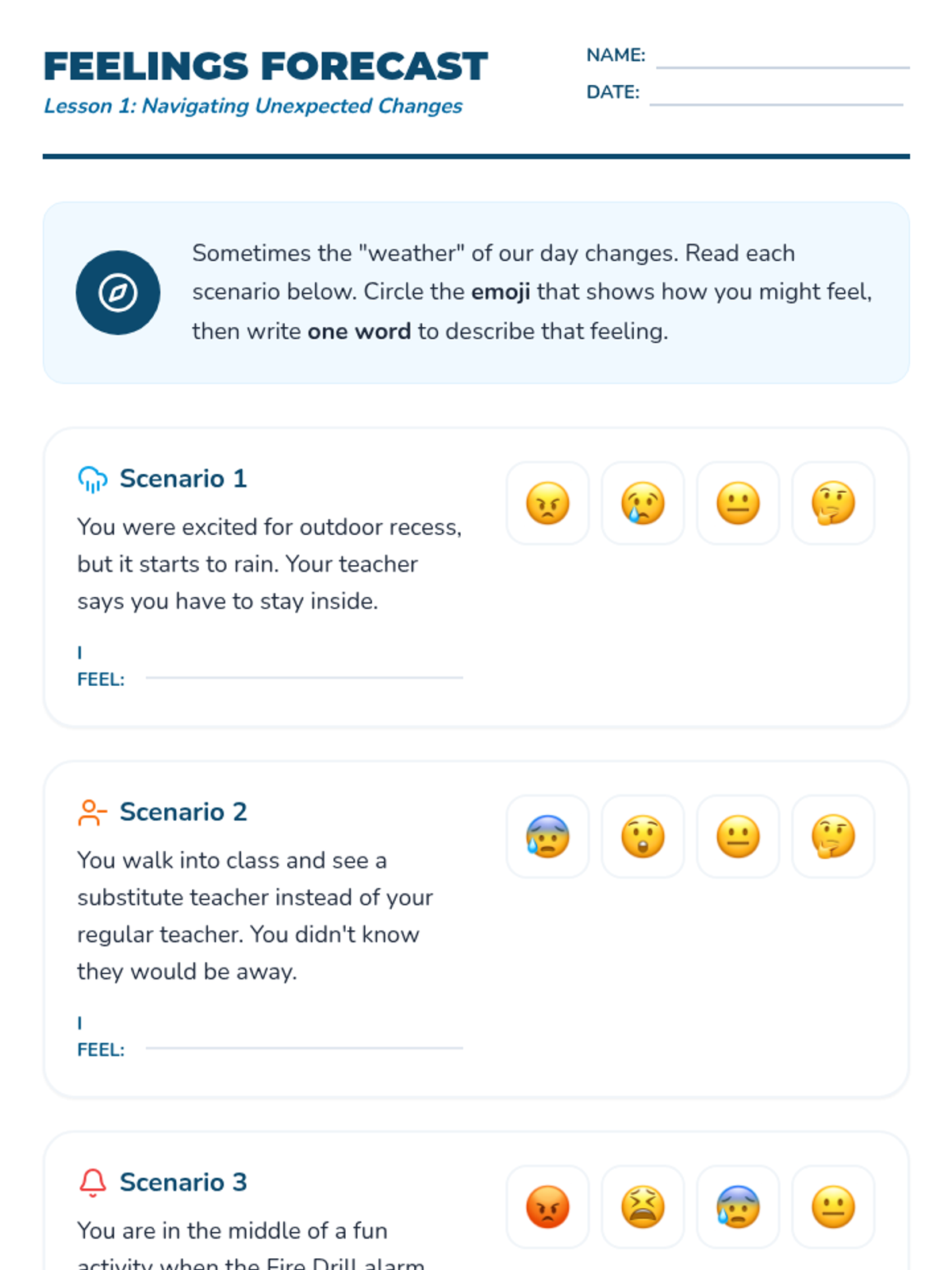
Using the 'Rainy Recess' scenario, students analyze different reactions to plan changes. They map out the consequences of various responses to build perspective-taking skills.
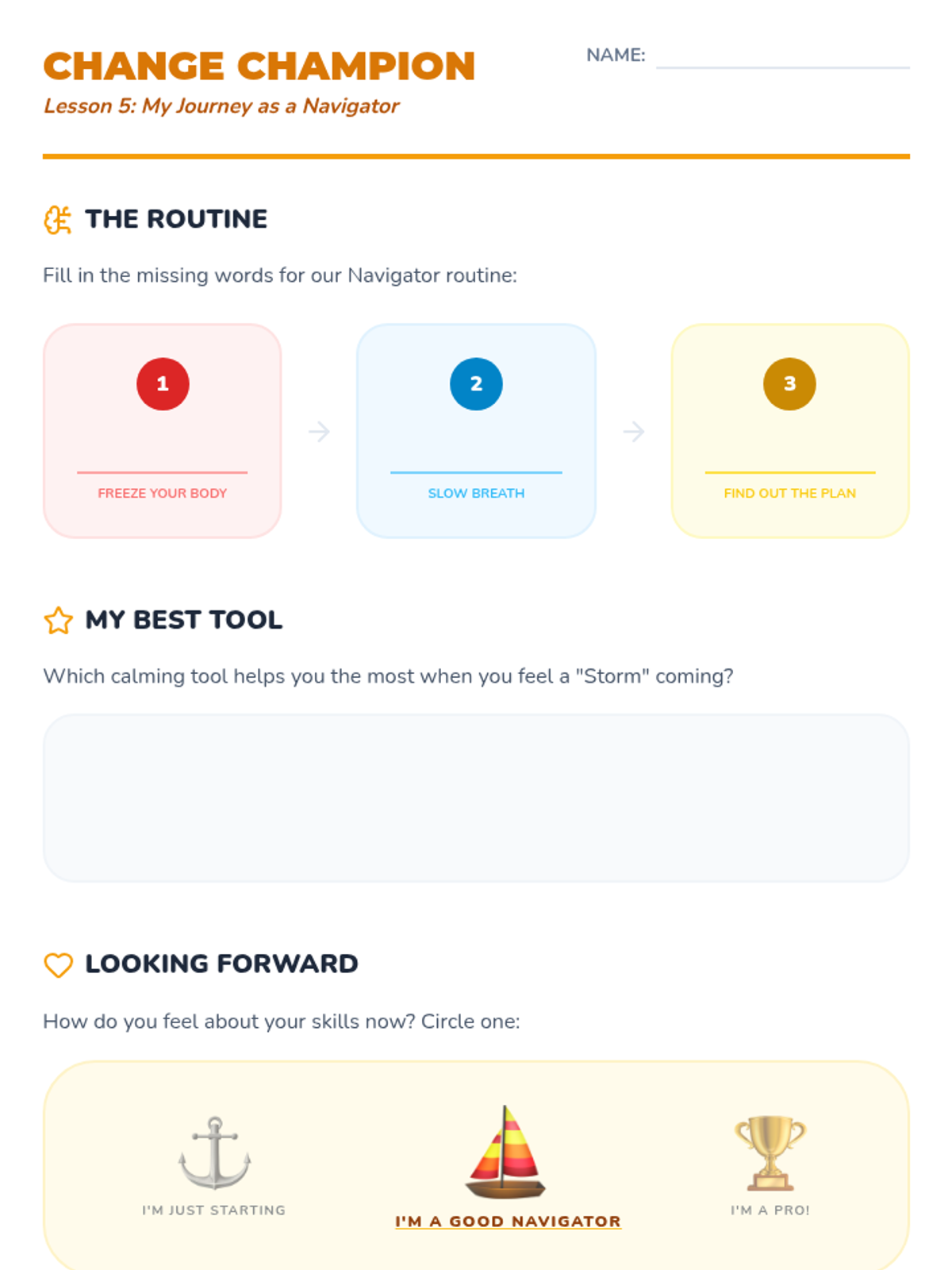
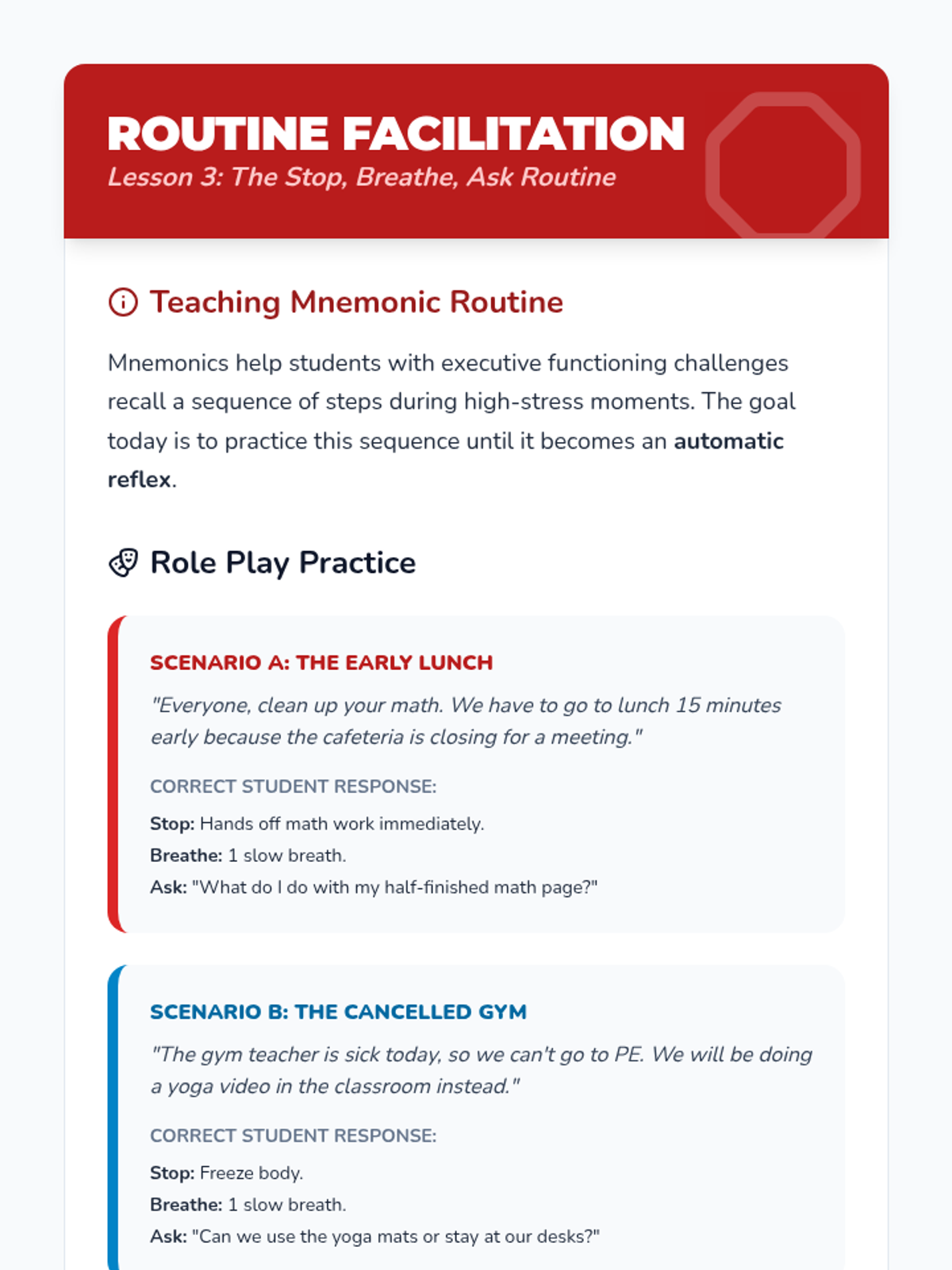
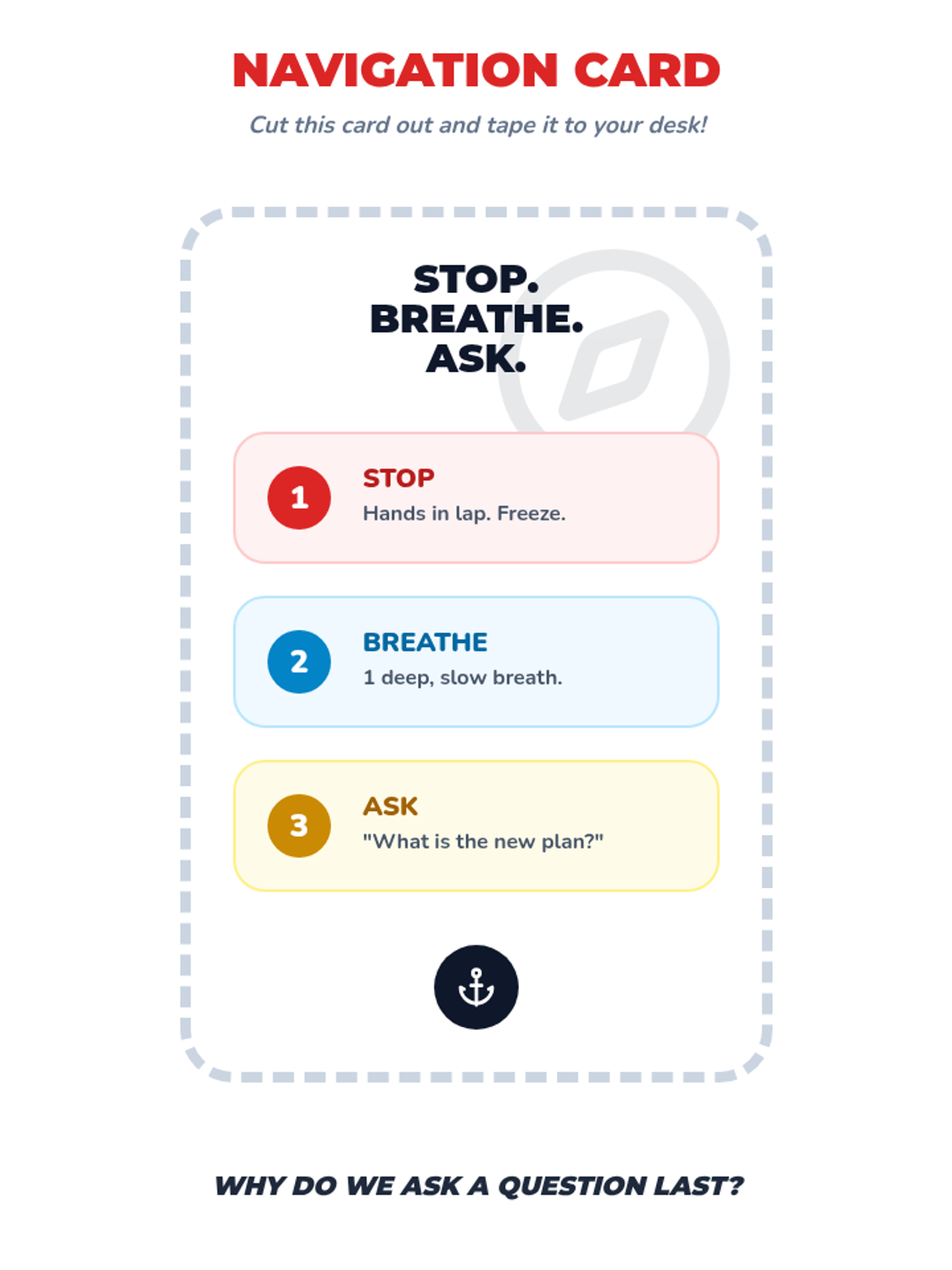
Students learn a three-step mnemonic routine (Stop, Breathe, Ask) to use when changes occur. Role-playing helps internalize the sequence of pausing, breathing, and clarifying the new plan.
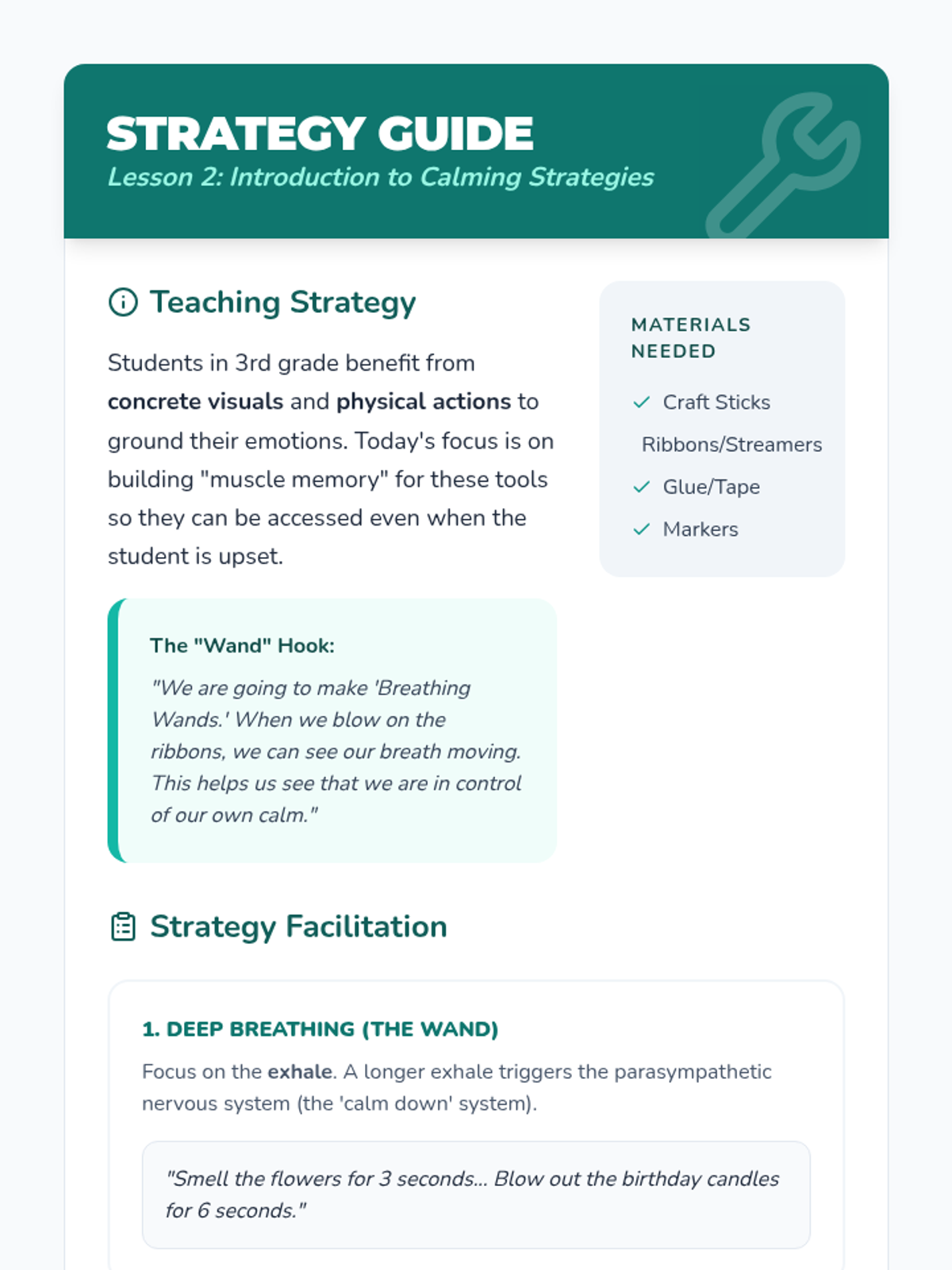
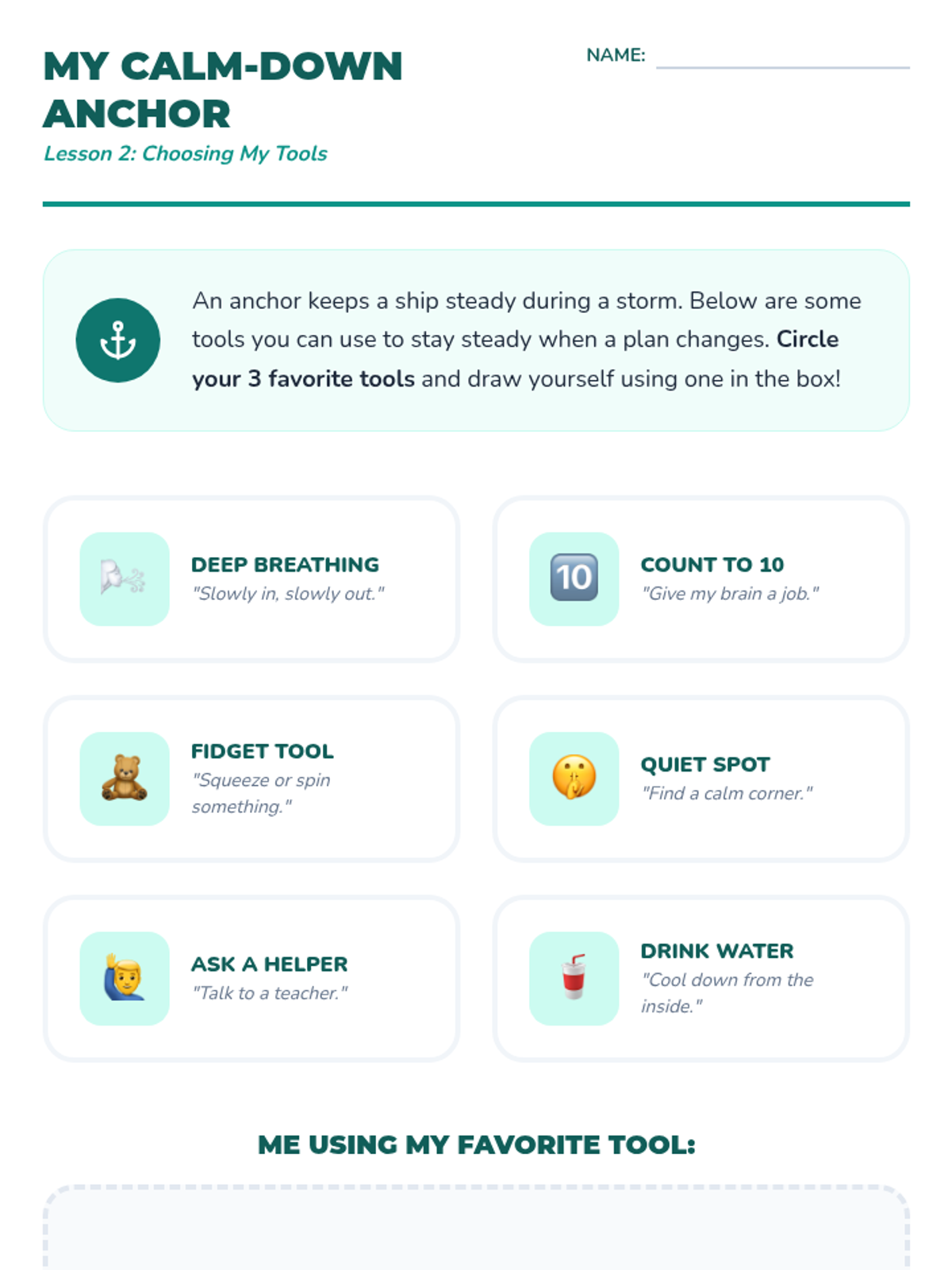
Introduces concrete coping mechanisms like deep breathing and counting to ten. Students build a 'toolbox' of strategies to access when they feel dysregulated.
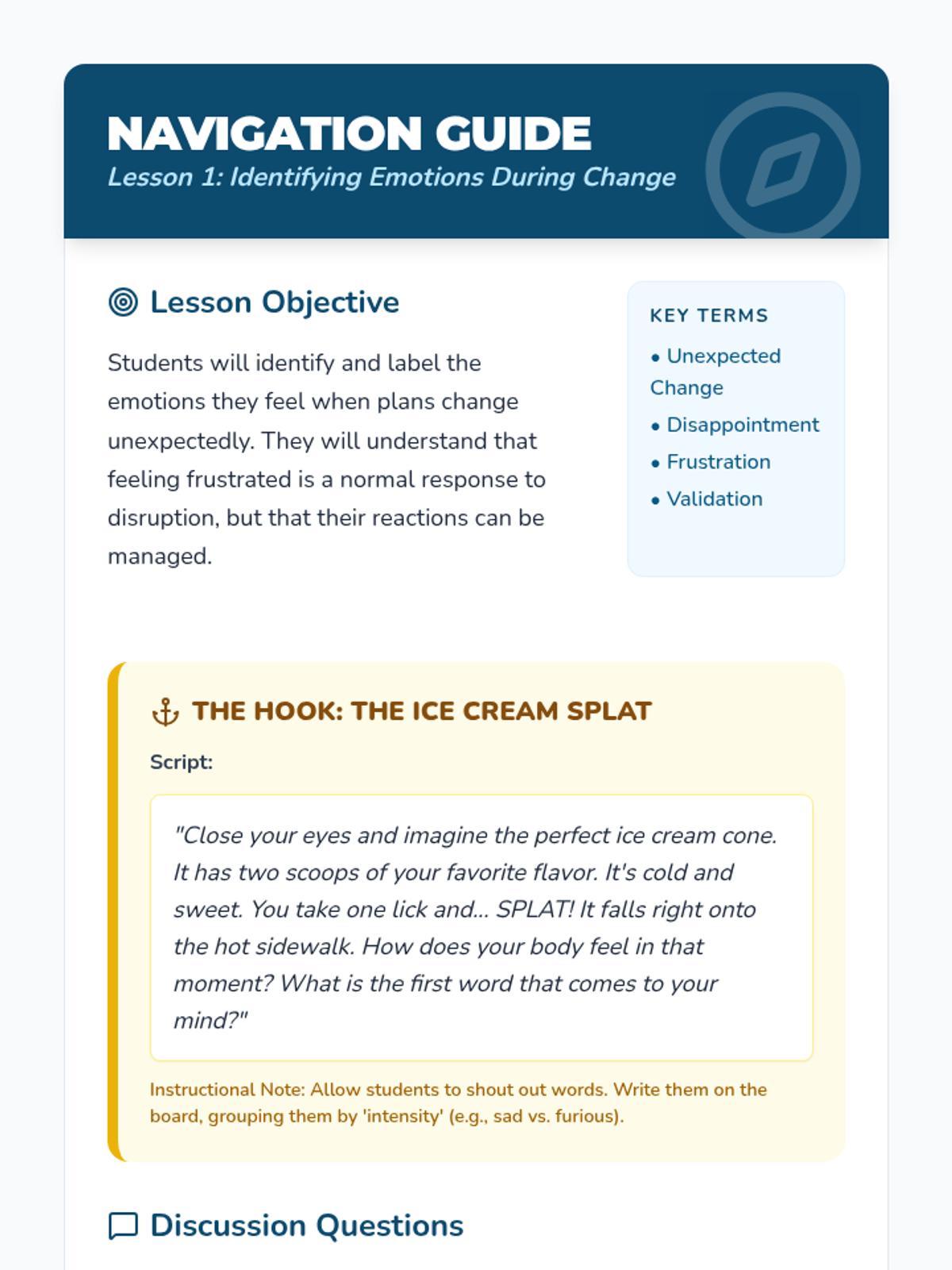
Students explore the range of emotions felt when plans are disrupted and build emotional vocabulary. The lesson validates that feeling frustrated is normal while teaching that reactions can be managed.
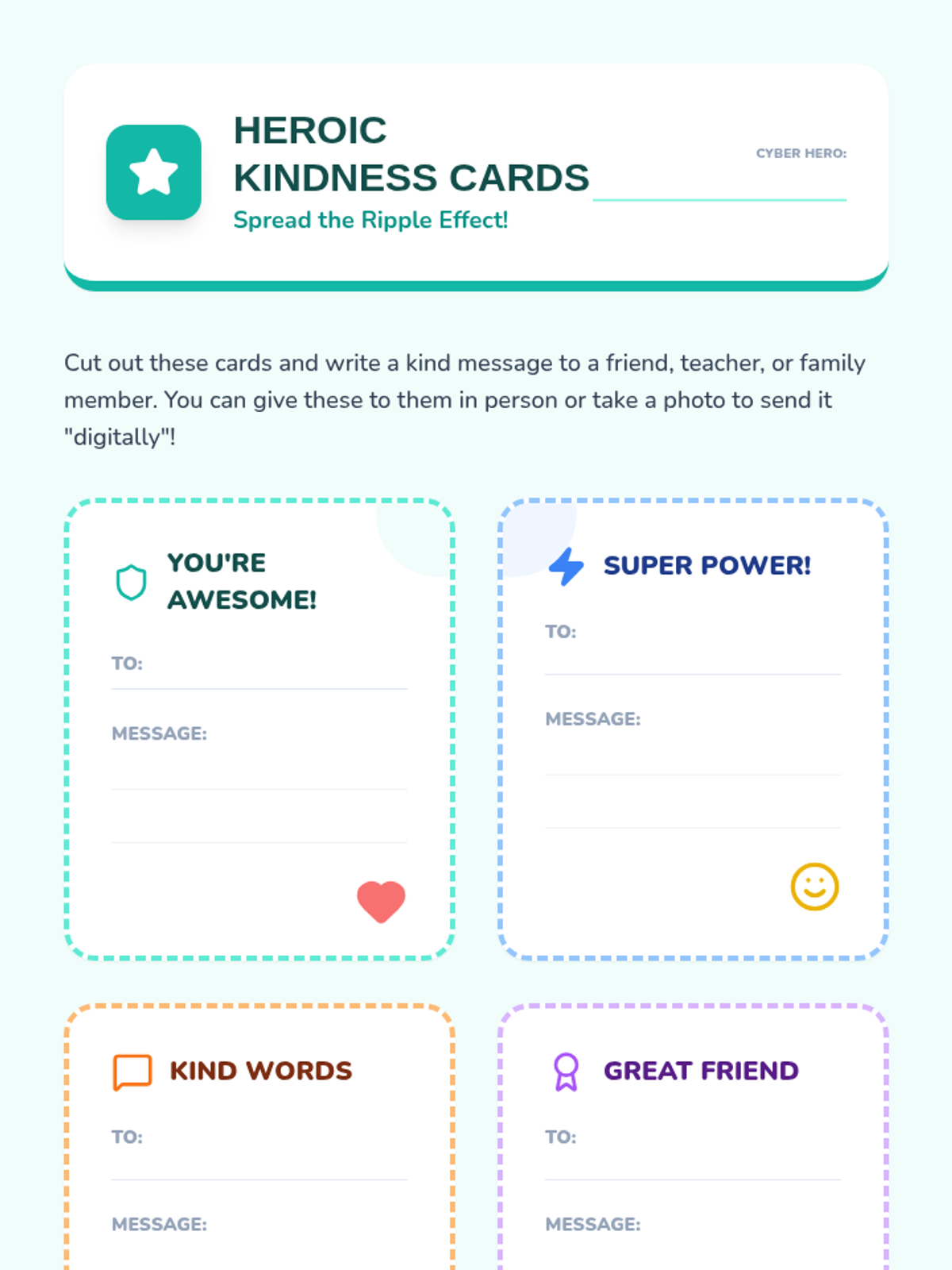
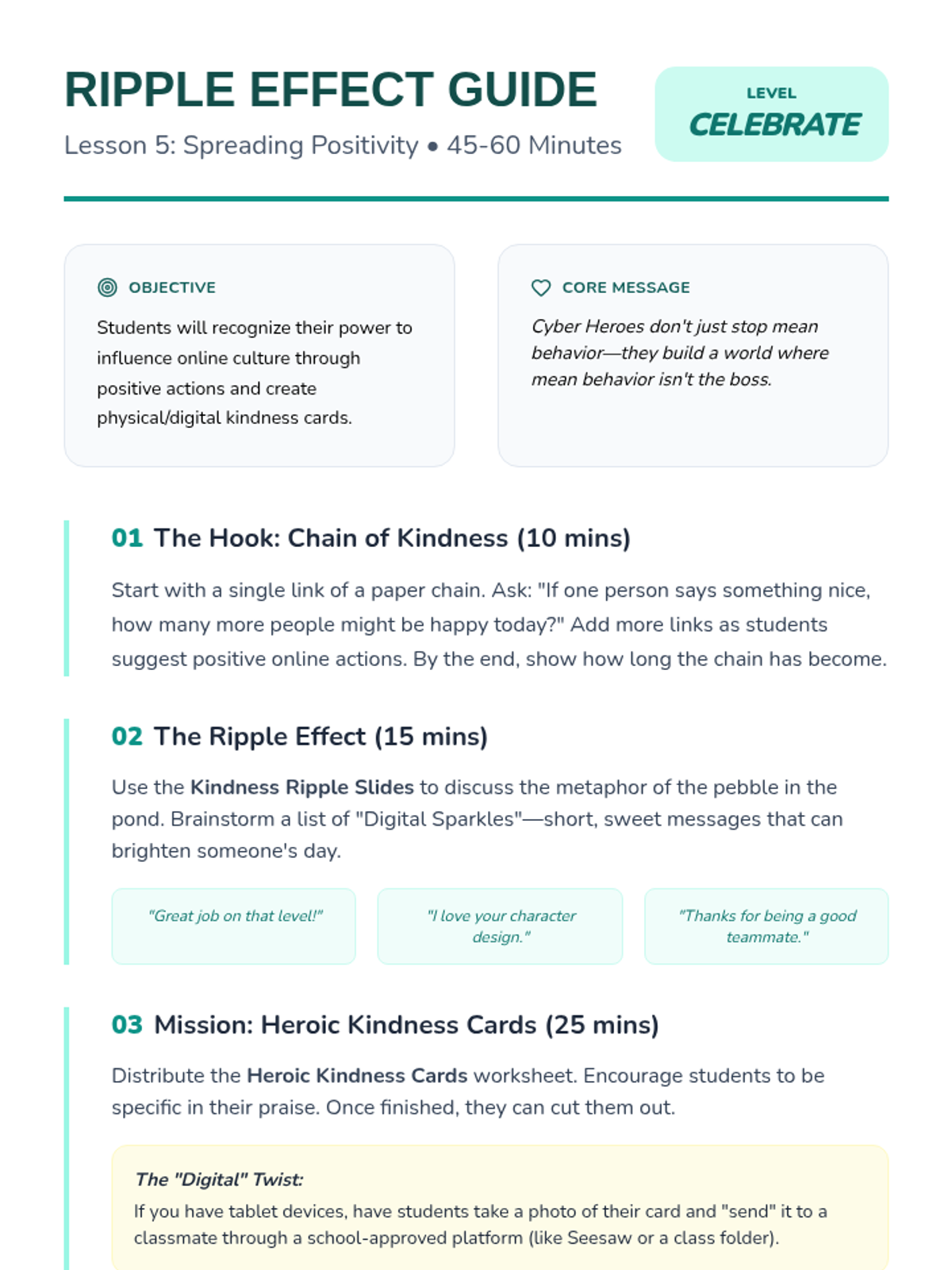
The sequence concludes with a positive project where students create digital kindness cards to promote a culture of positivity and prevent bullying.
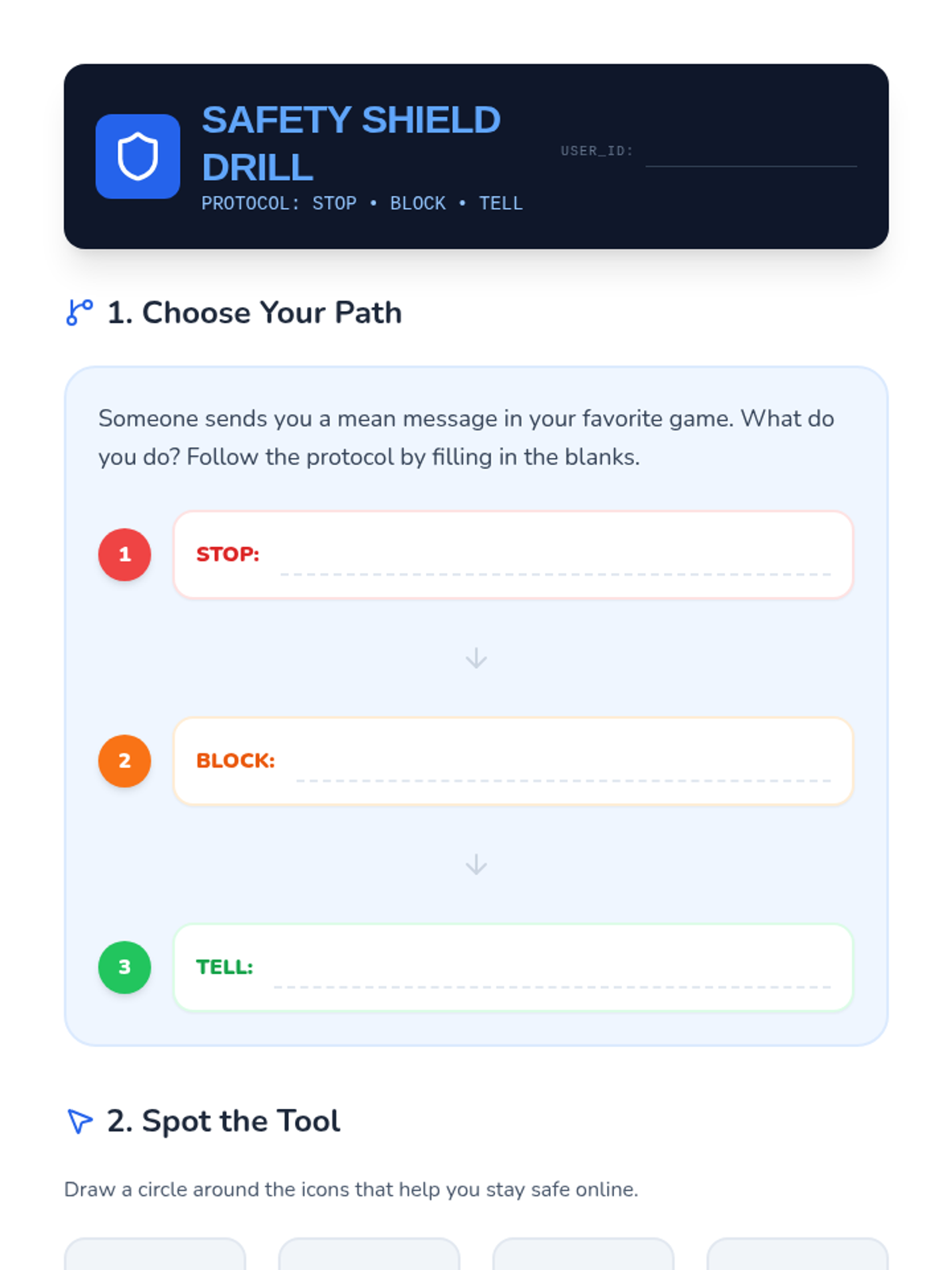
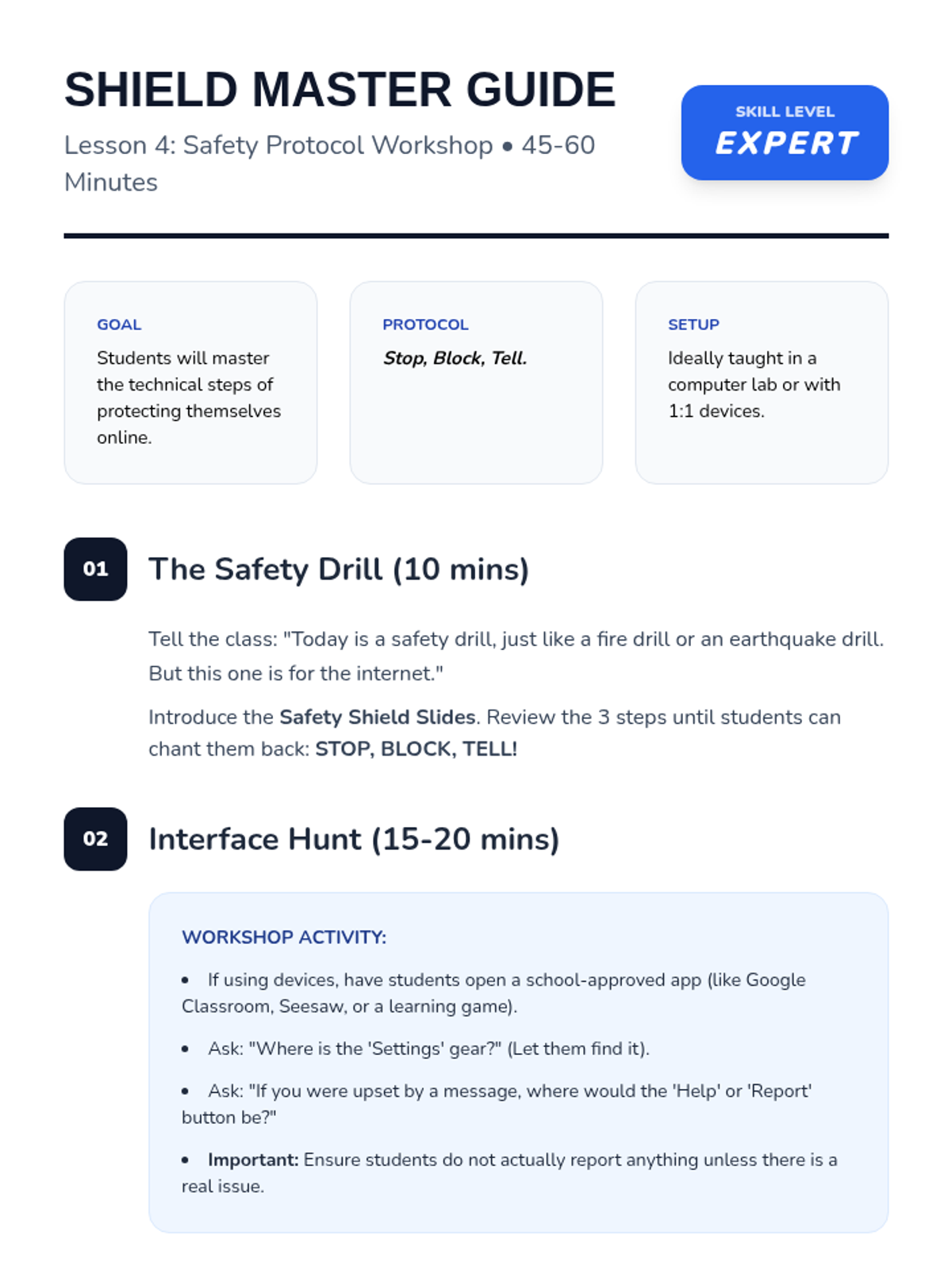
A practical skills workshop where students master the 'Stop, Block, Tell' protocol and practice navigating simulated reporting interfaces.
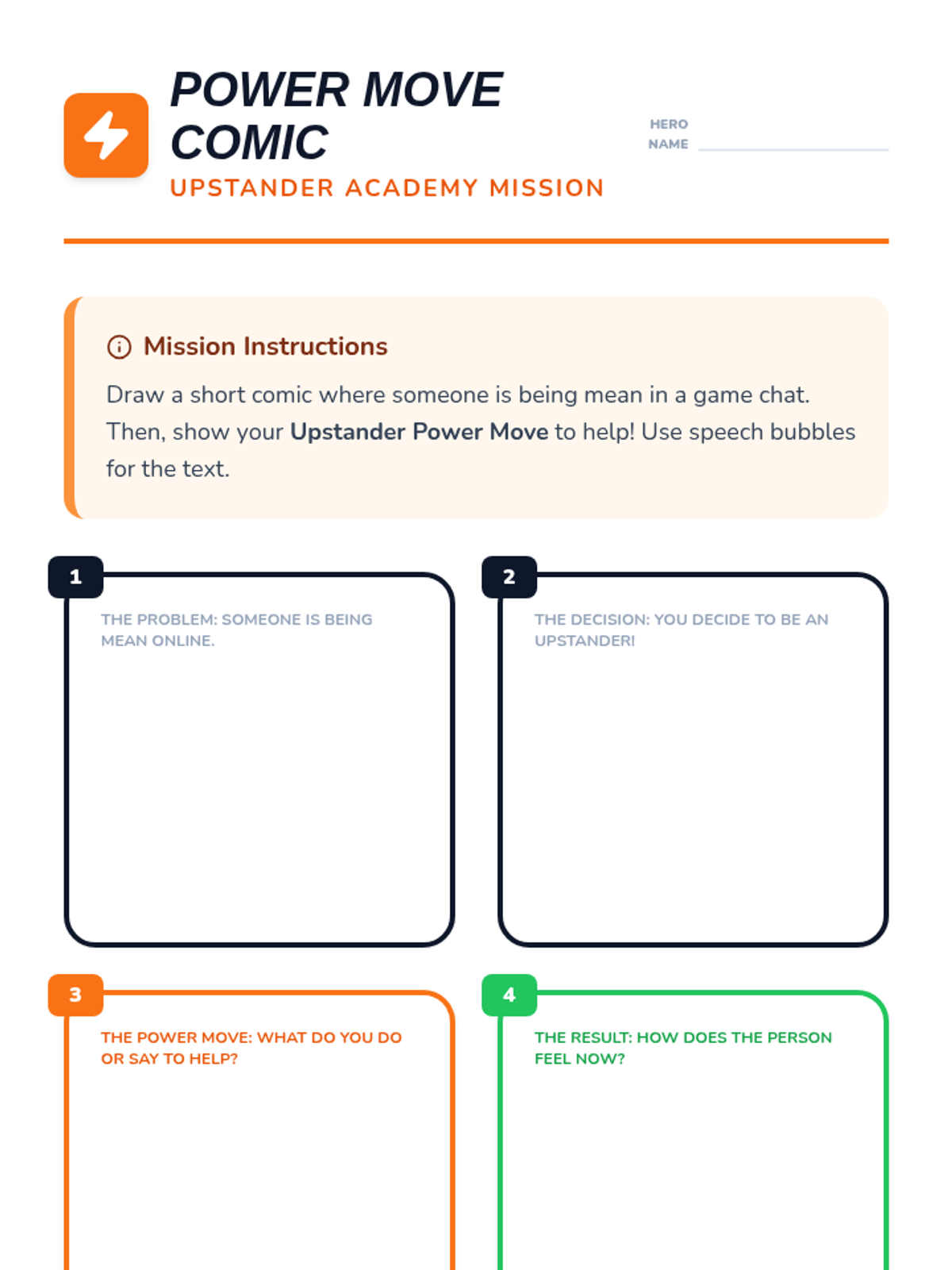
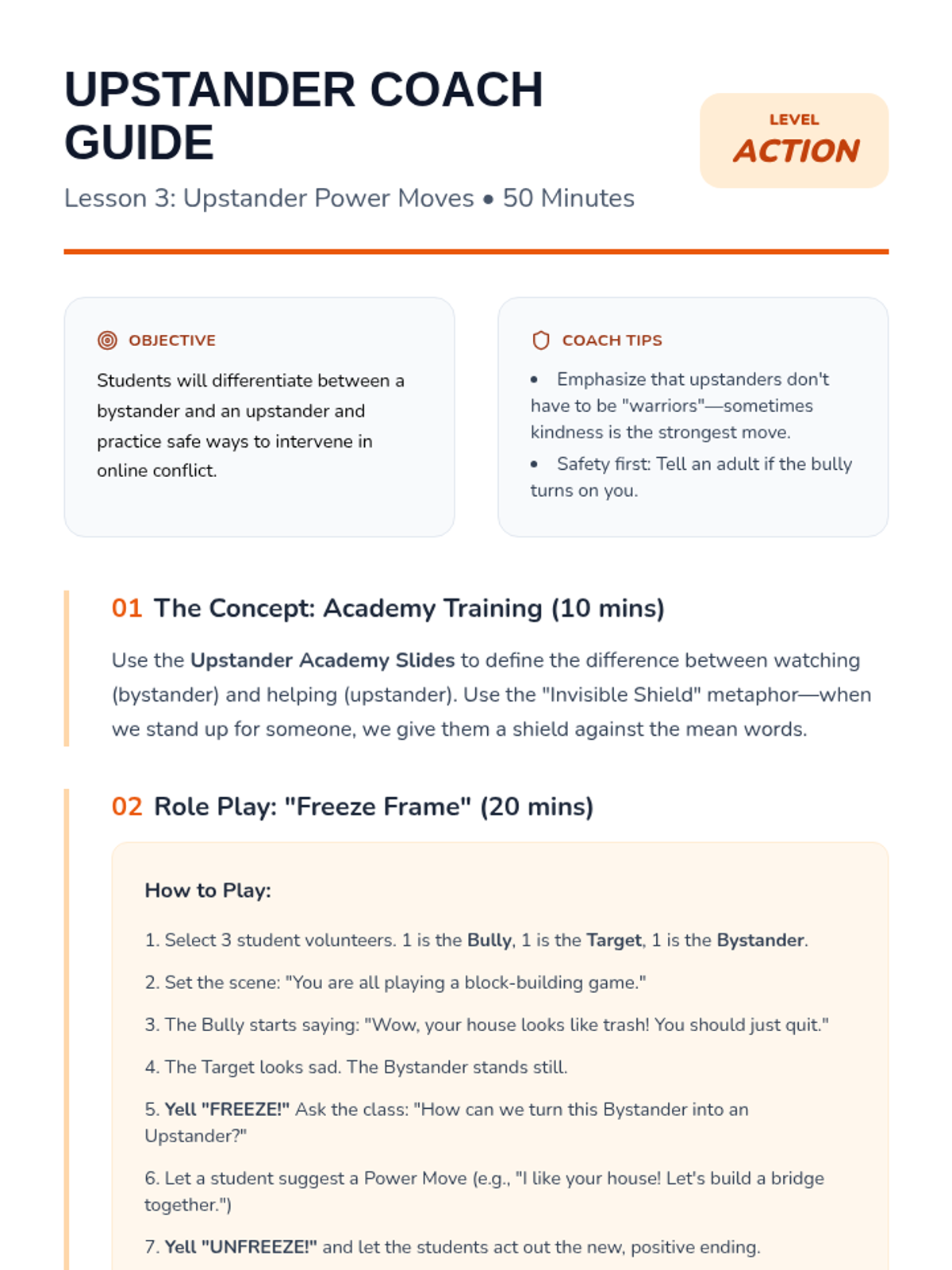
Students learn the crucial difference between a bystander and an upstander, practicing safe ways to support others in gaming chats and social spaces.
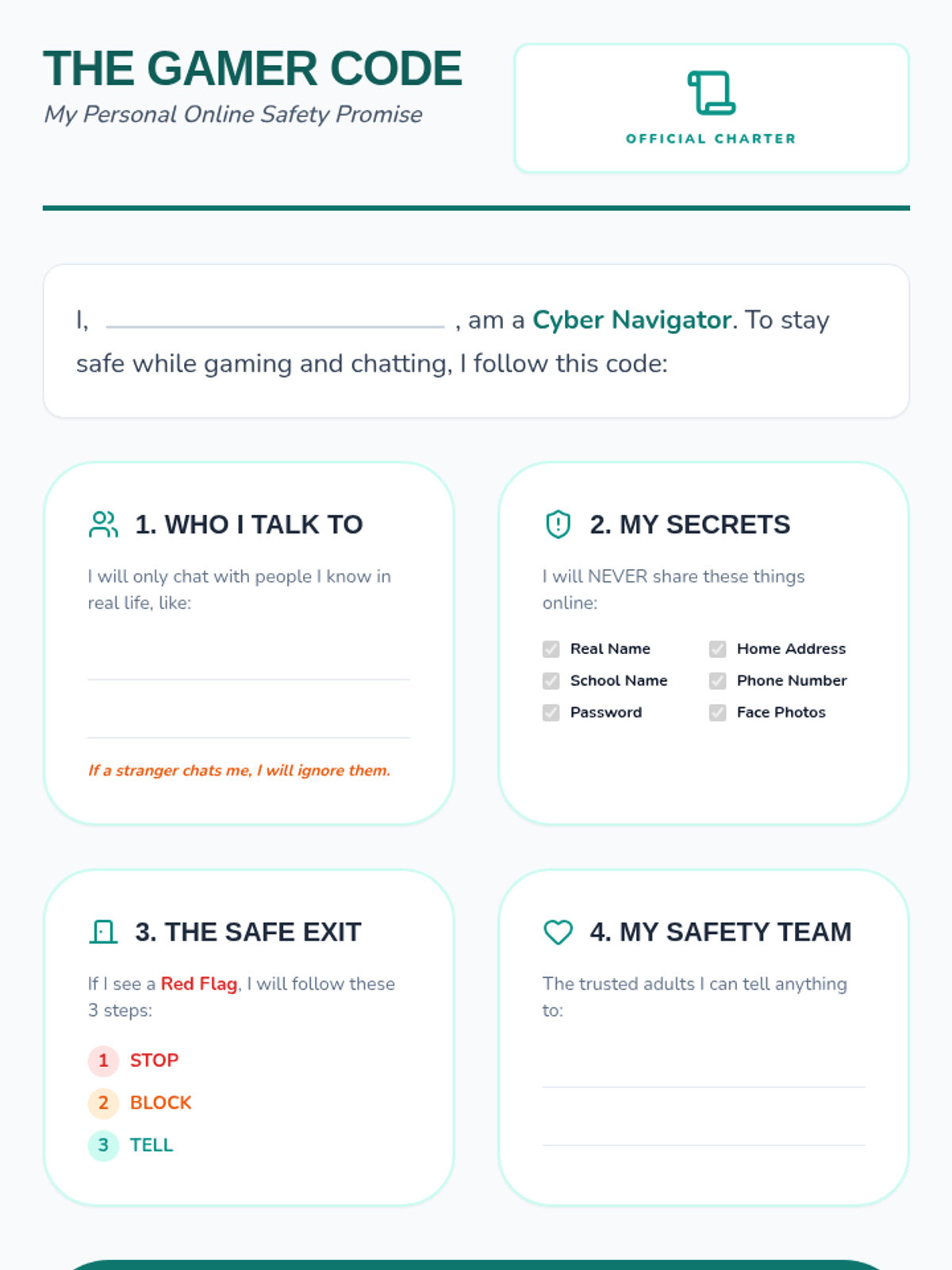
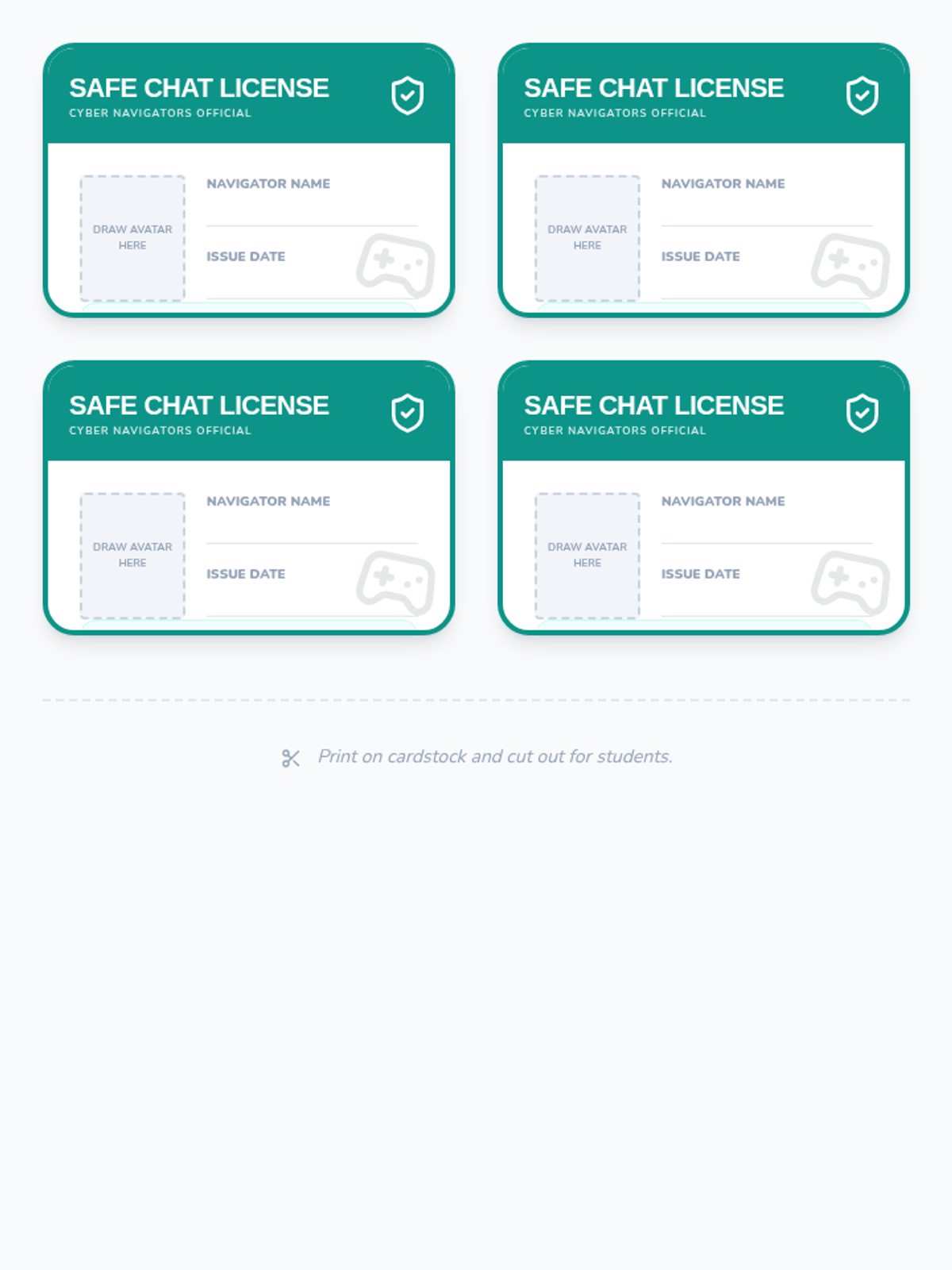
Students synthesize their learning by creating a personal code of conduct for safe online gaming and communication.
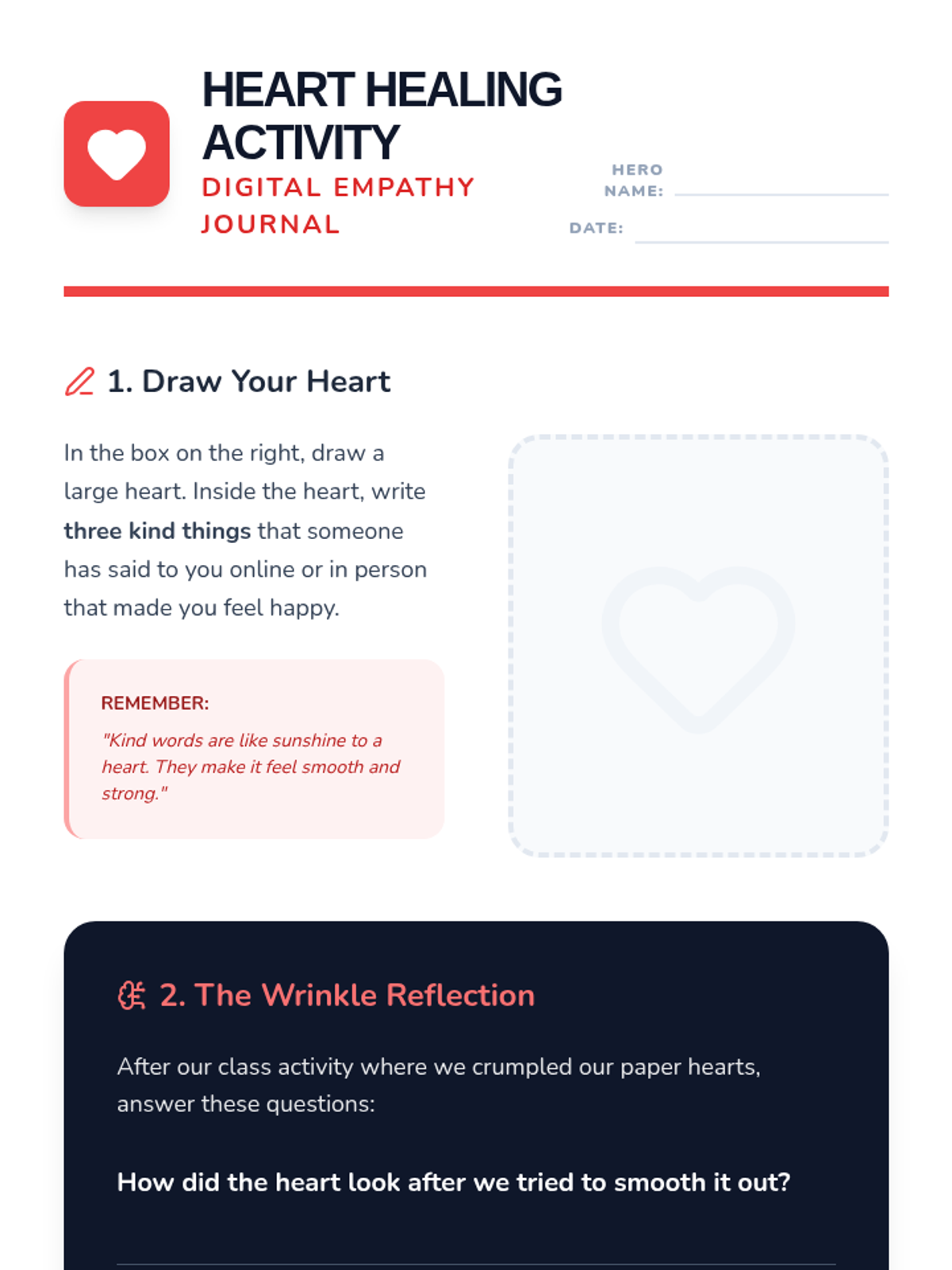
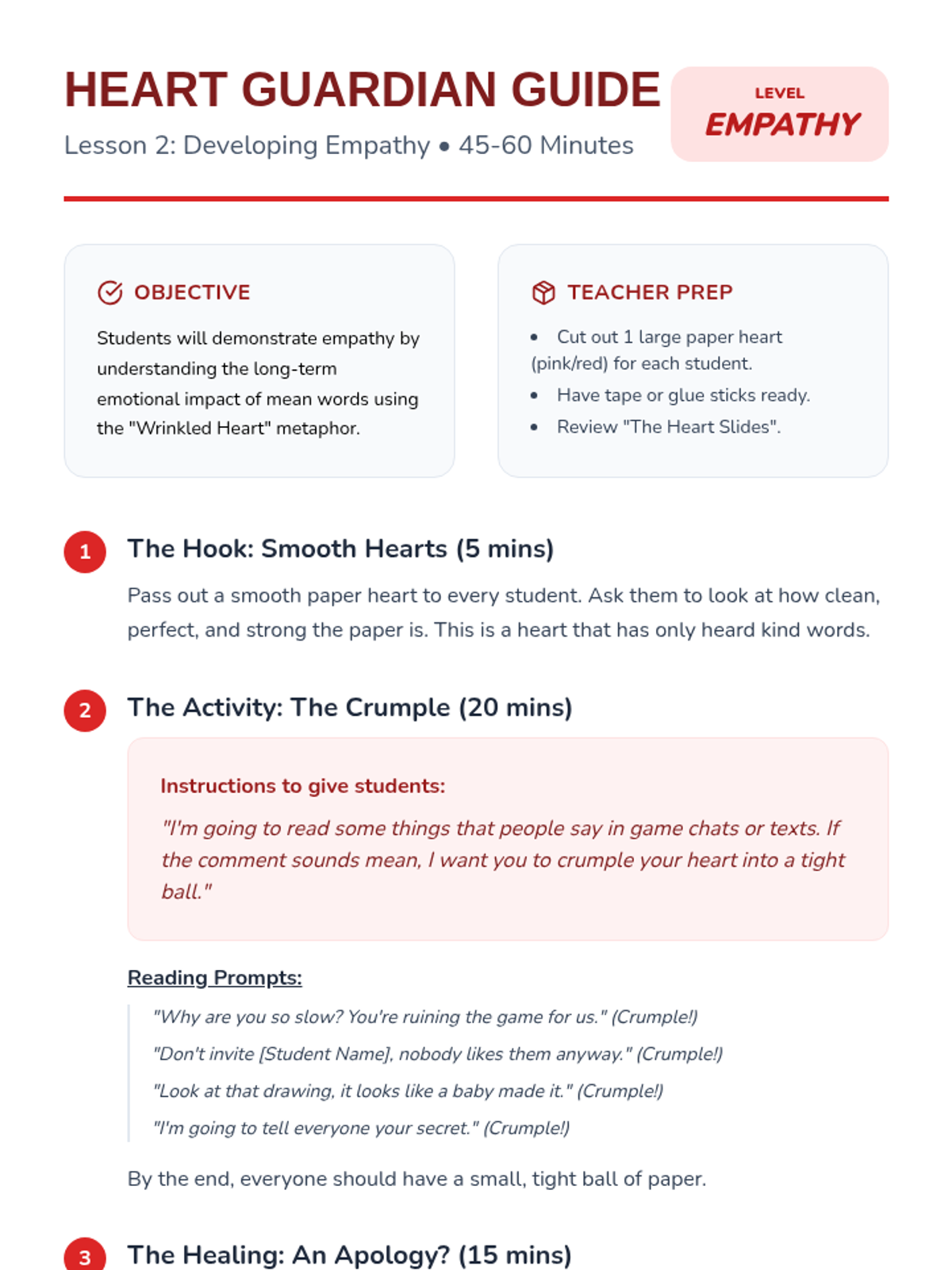
Through the 'Wrinkled Heart' activity and case studies, students explore the emotional impact of unkind online behavior and develop empathy for targets of cyberbullying.
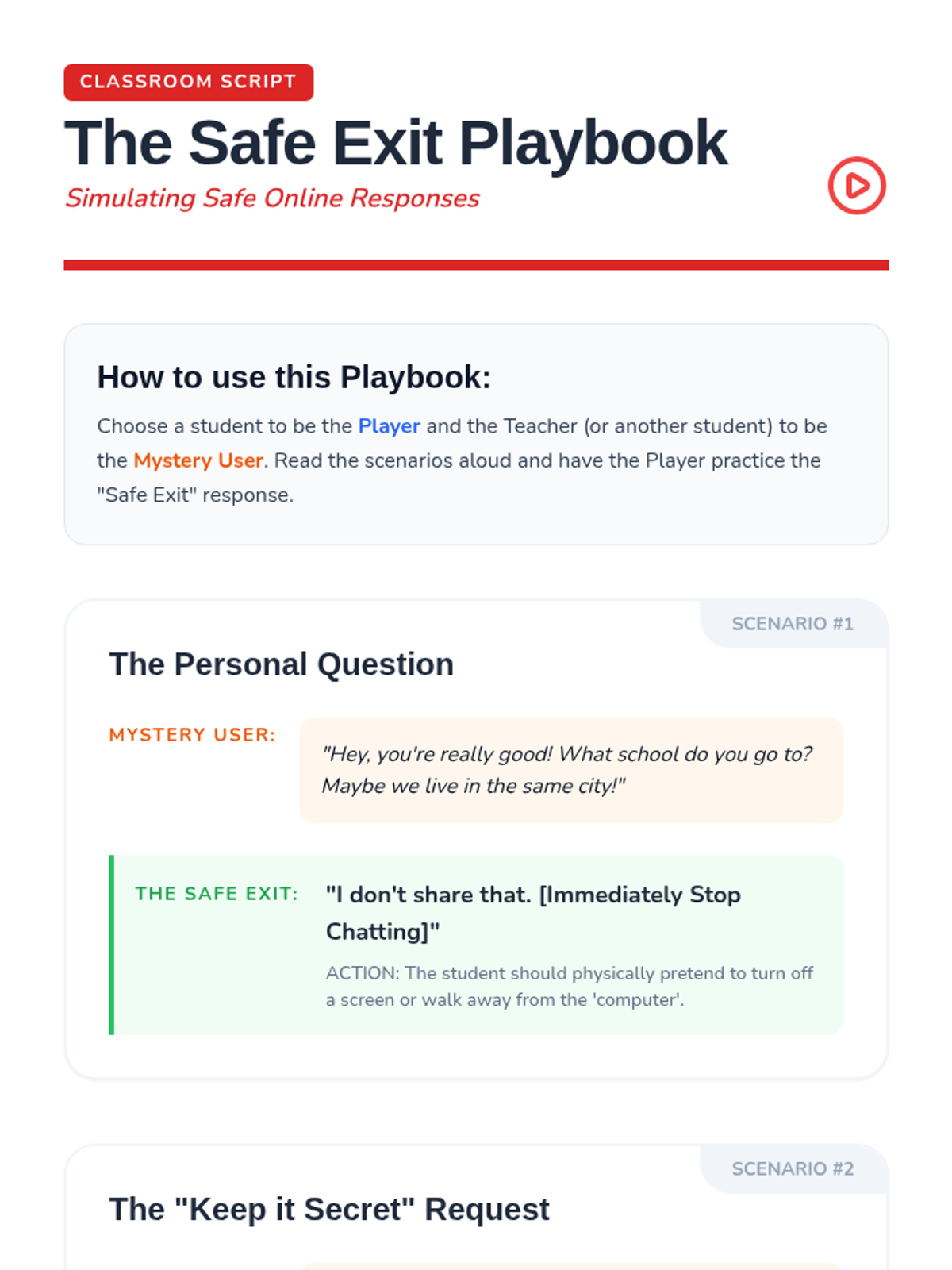
Students practice assertive responses to uncomfortable online situations, including saying no, blocking users, and reporting to trusted adults.
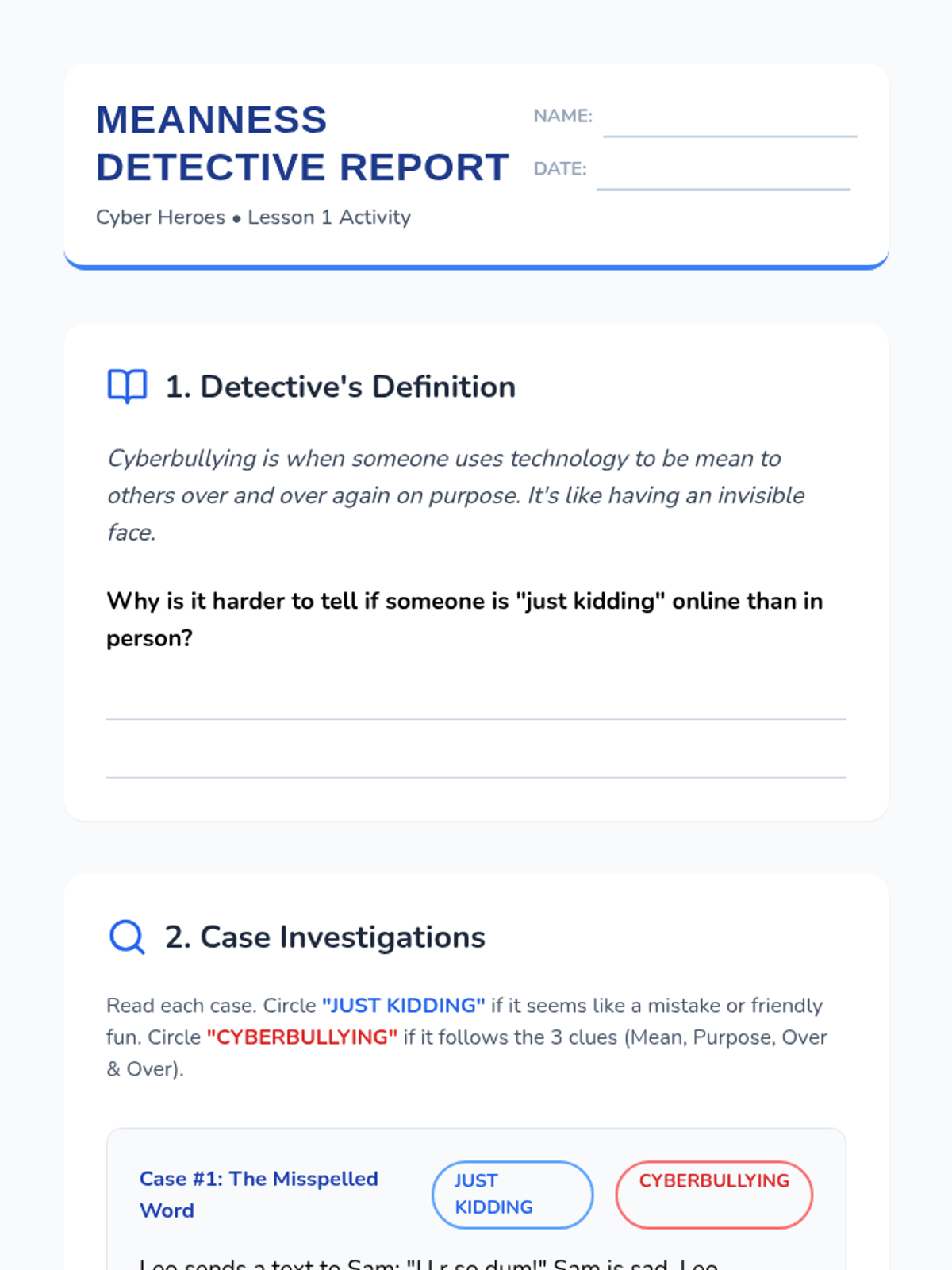
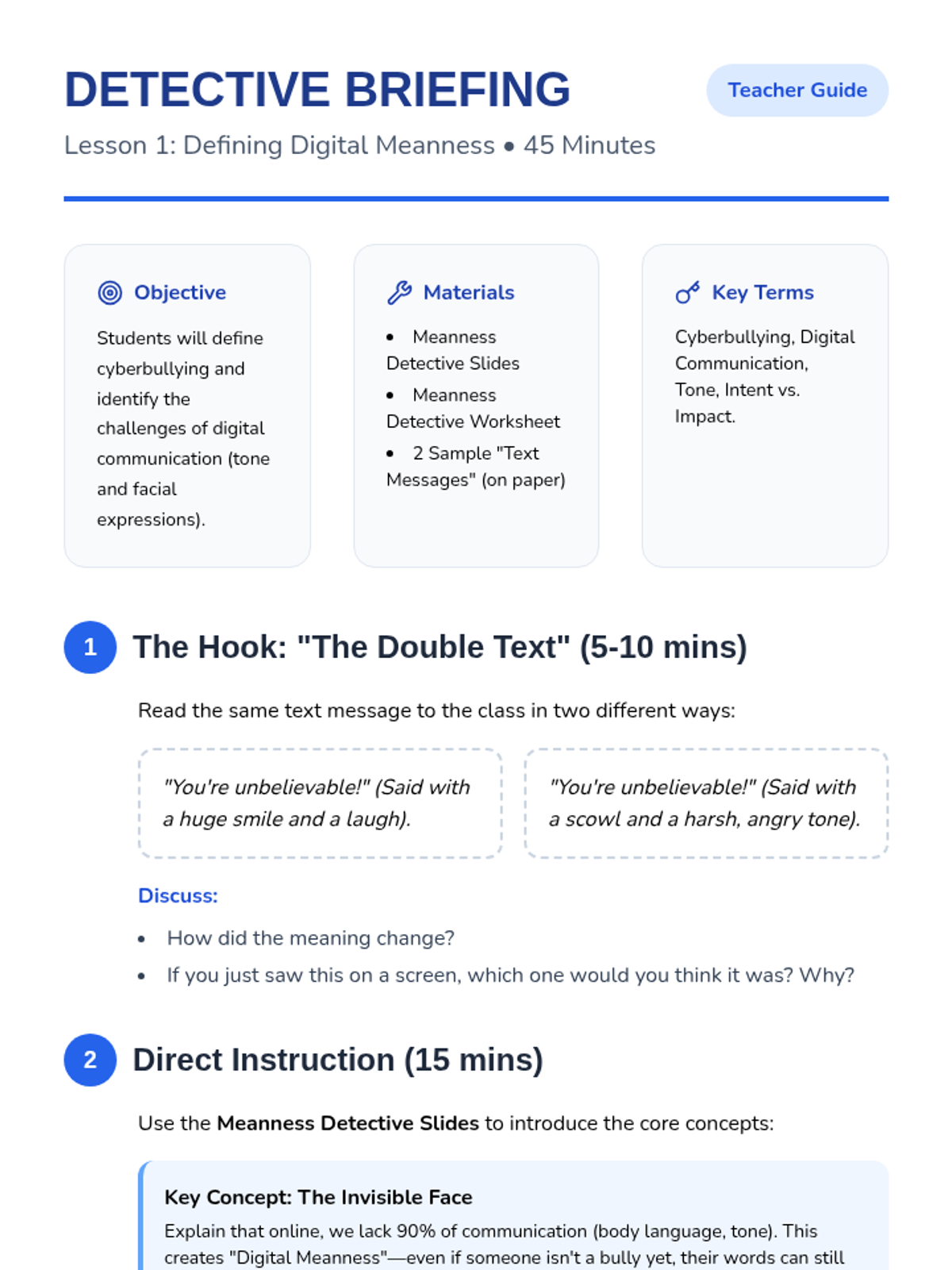
Students define cyberbullying and learn to distinguish it from joking or in-person teasing, focusing on how digital communication lacks facial expressions and tone.
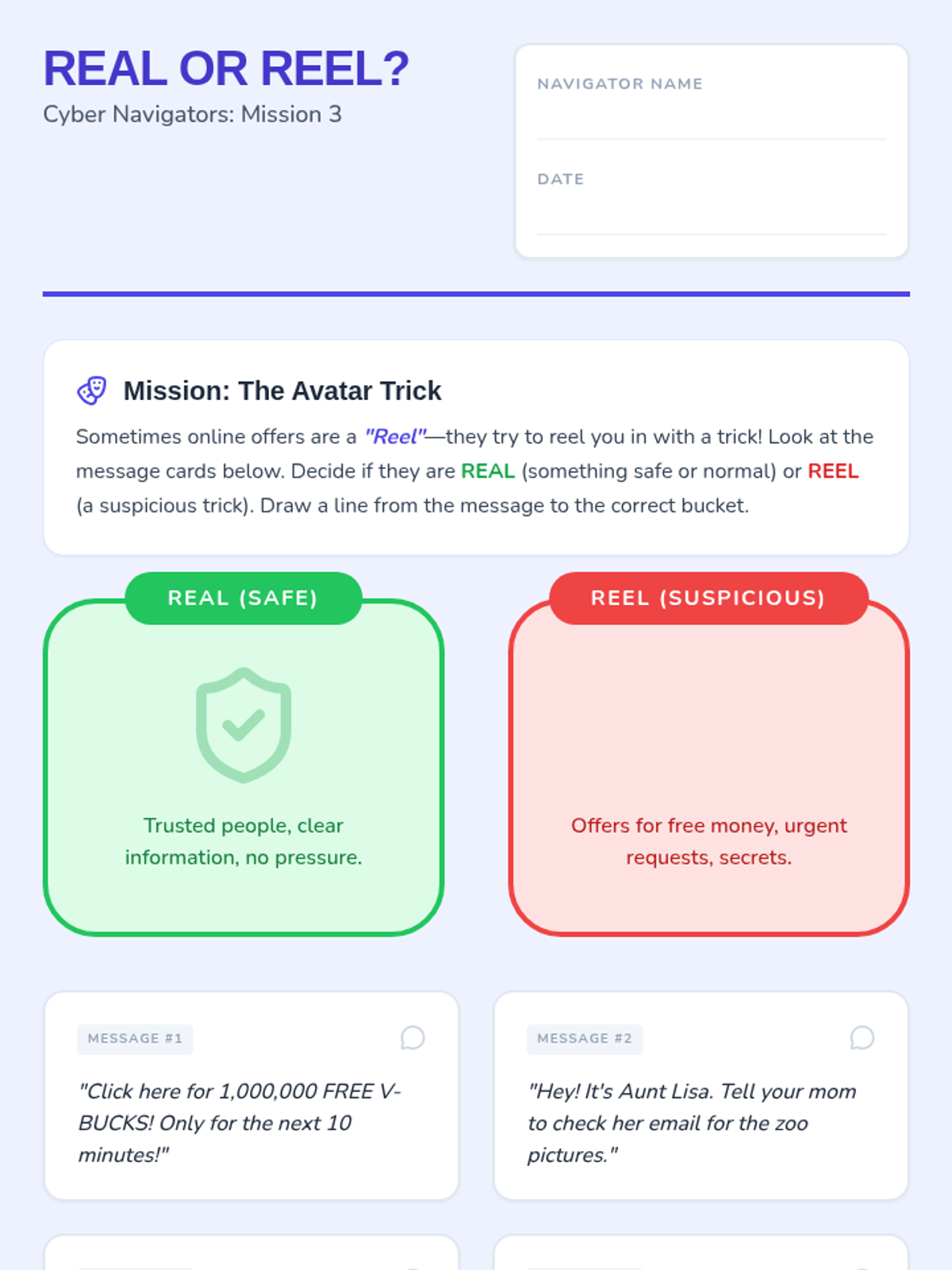
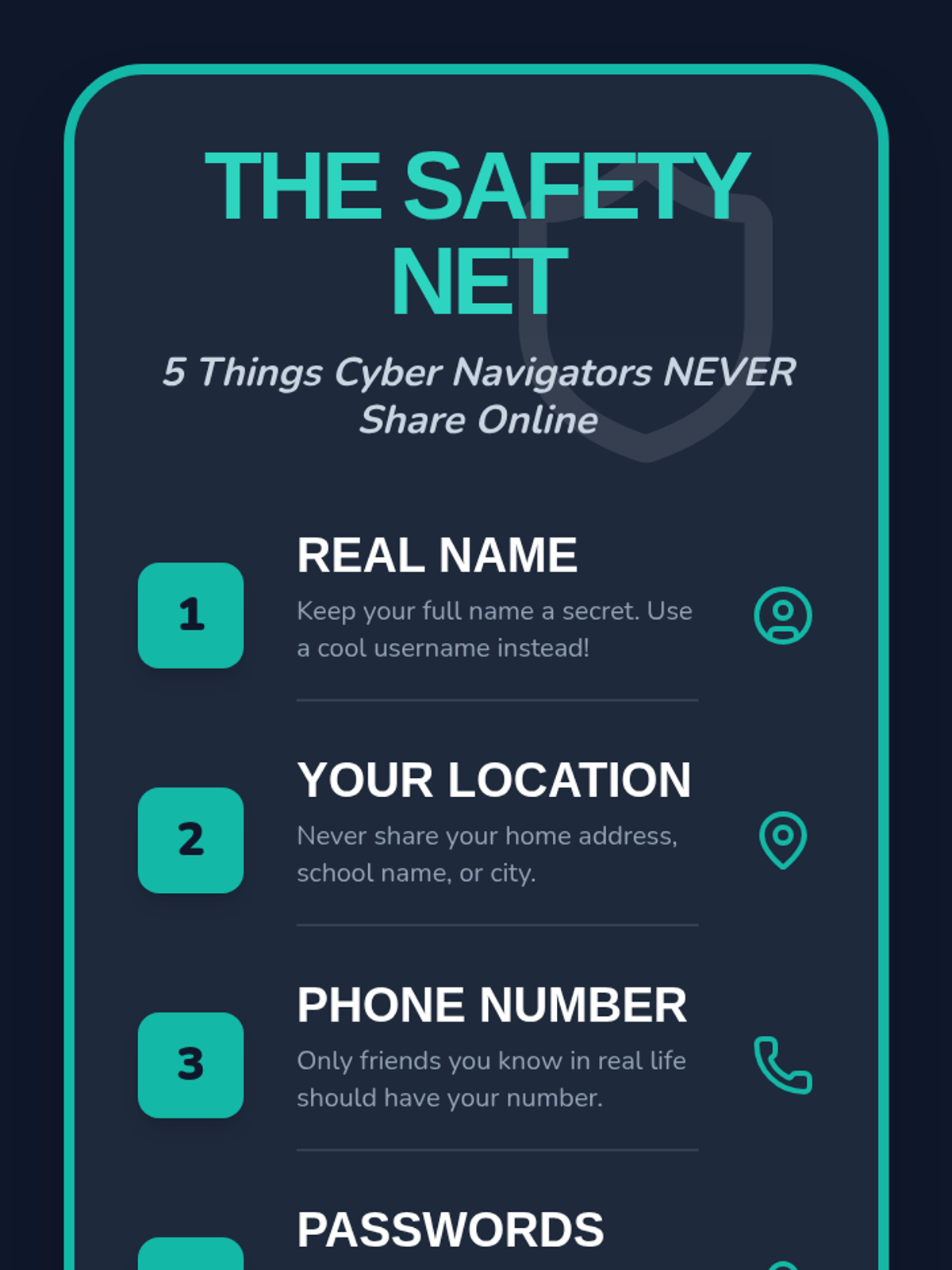
Focuses on the concept that online identities can be misleading and teaches students to be skeptical of suspicious offers or urgent requests.
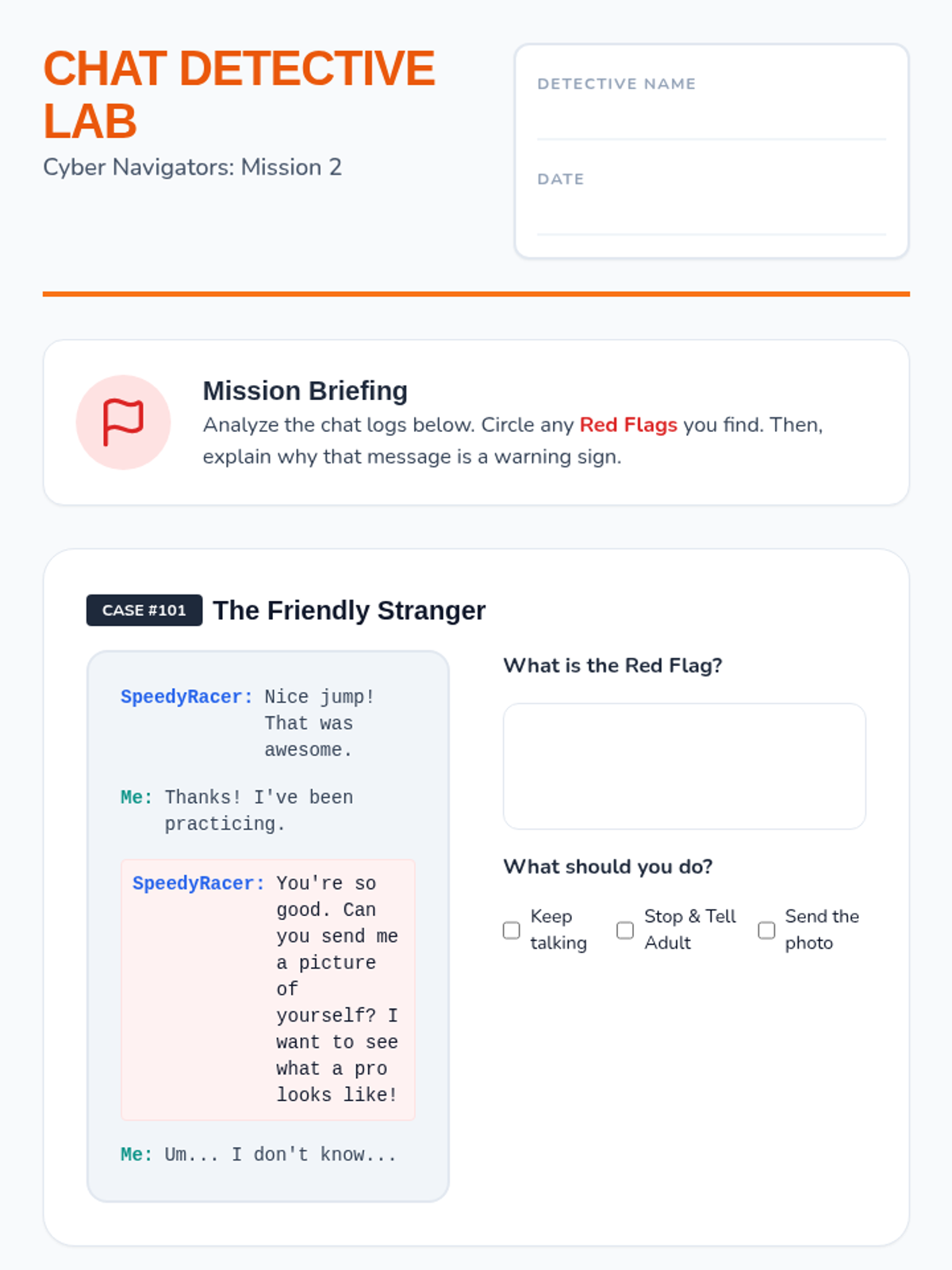
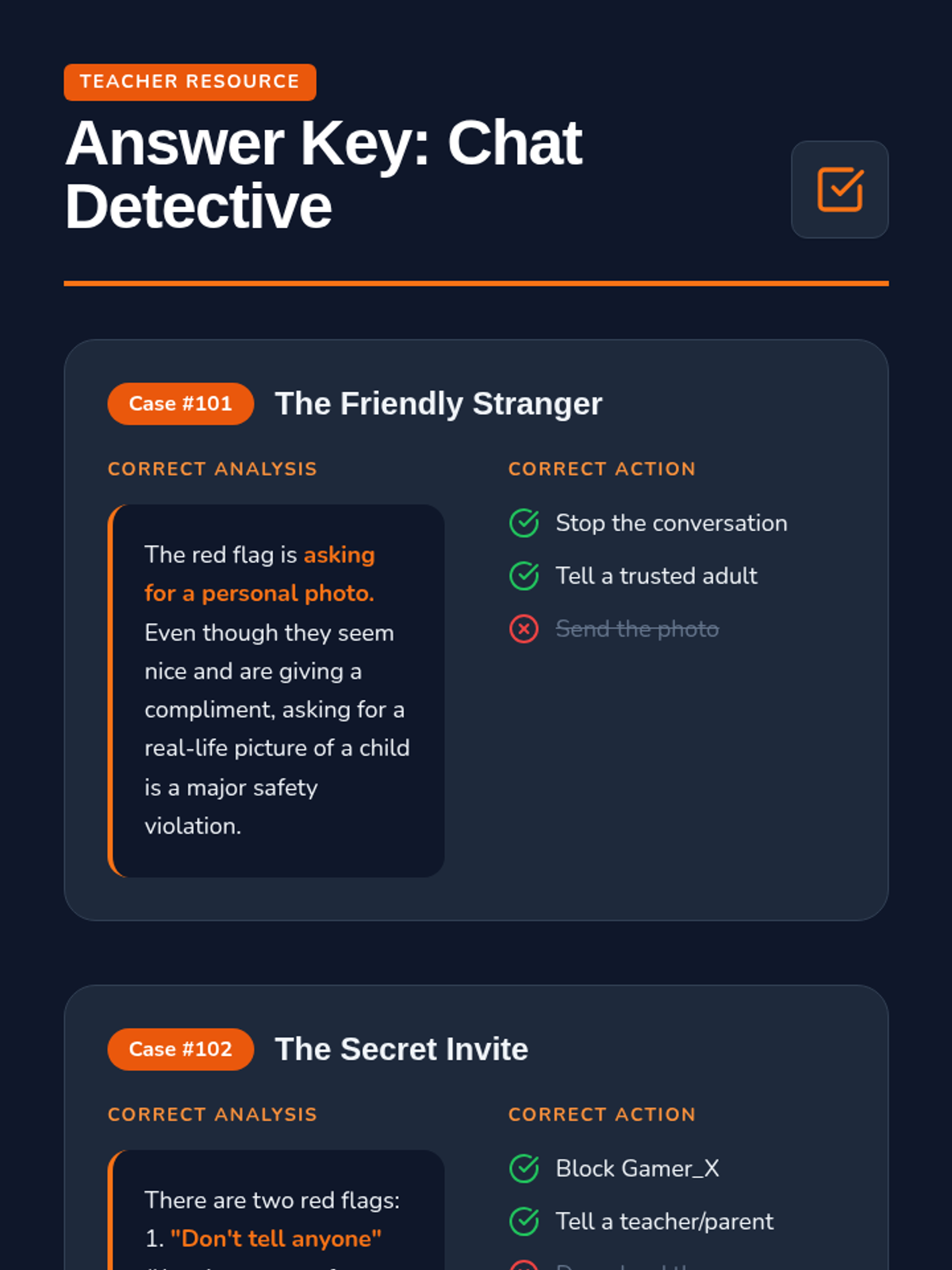
Students analyze simulated chat interactions to identify 'red flags' or warning signs that indicate a conversation is becoming unsafe or inappropriate.
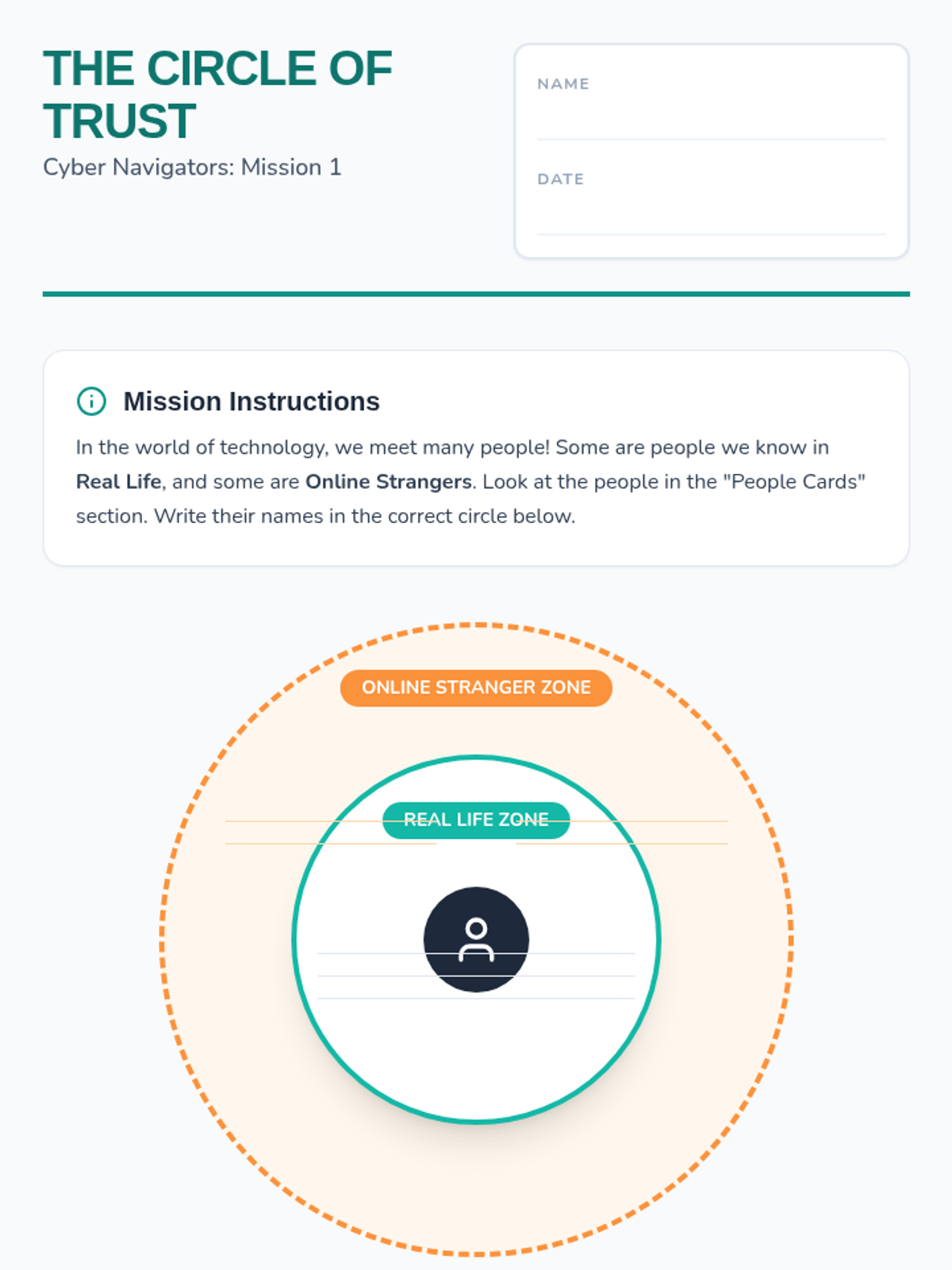
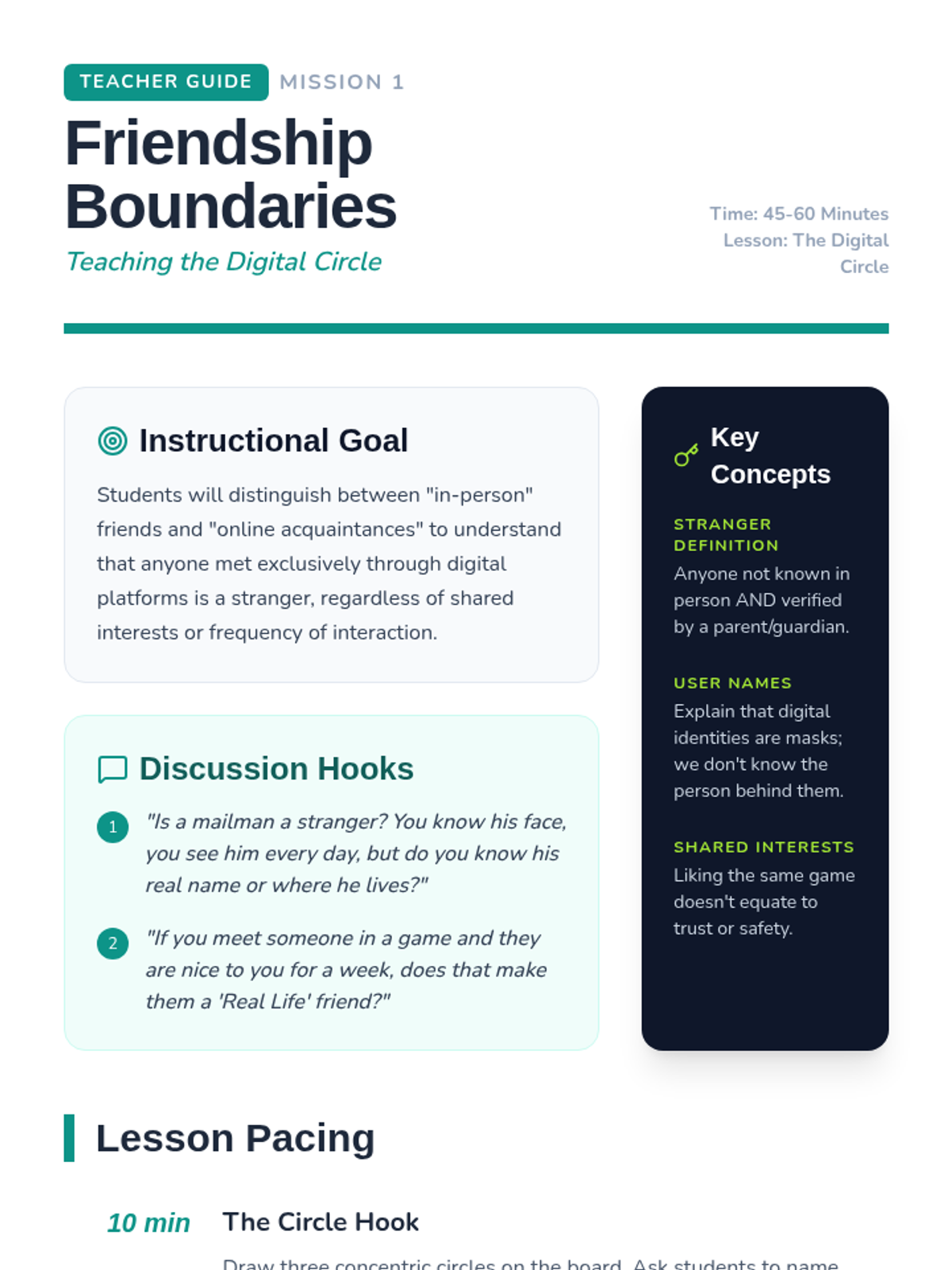
Students learn to classify their relationships to understand that online-only acquaintances are strangers, even if they share interests or play games together.
Students apply their skills to real-world scenarios through role-play and receive peer feedback on their resolution strategies.
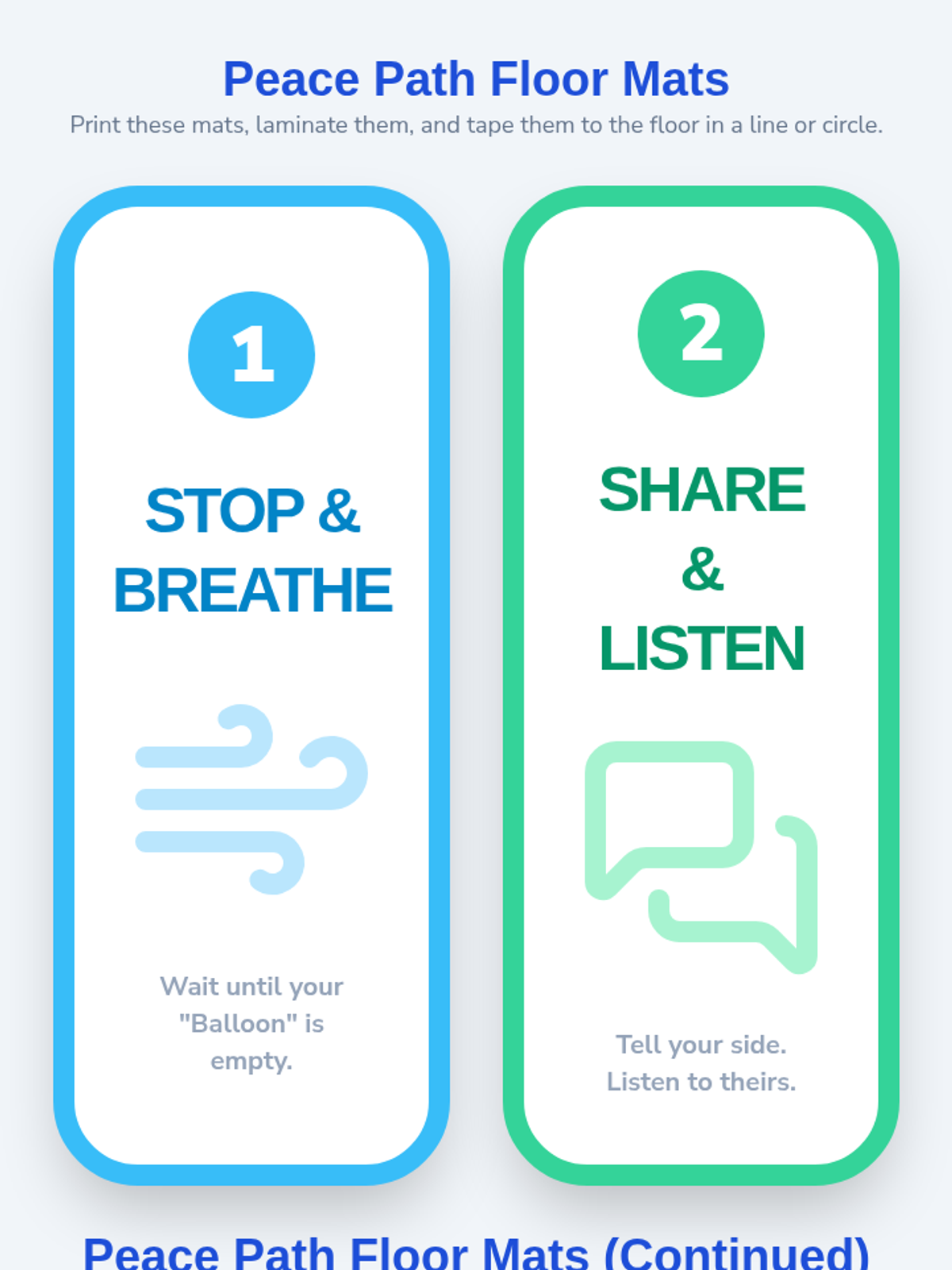
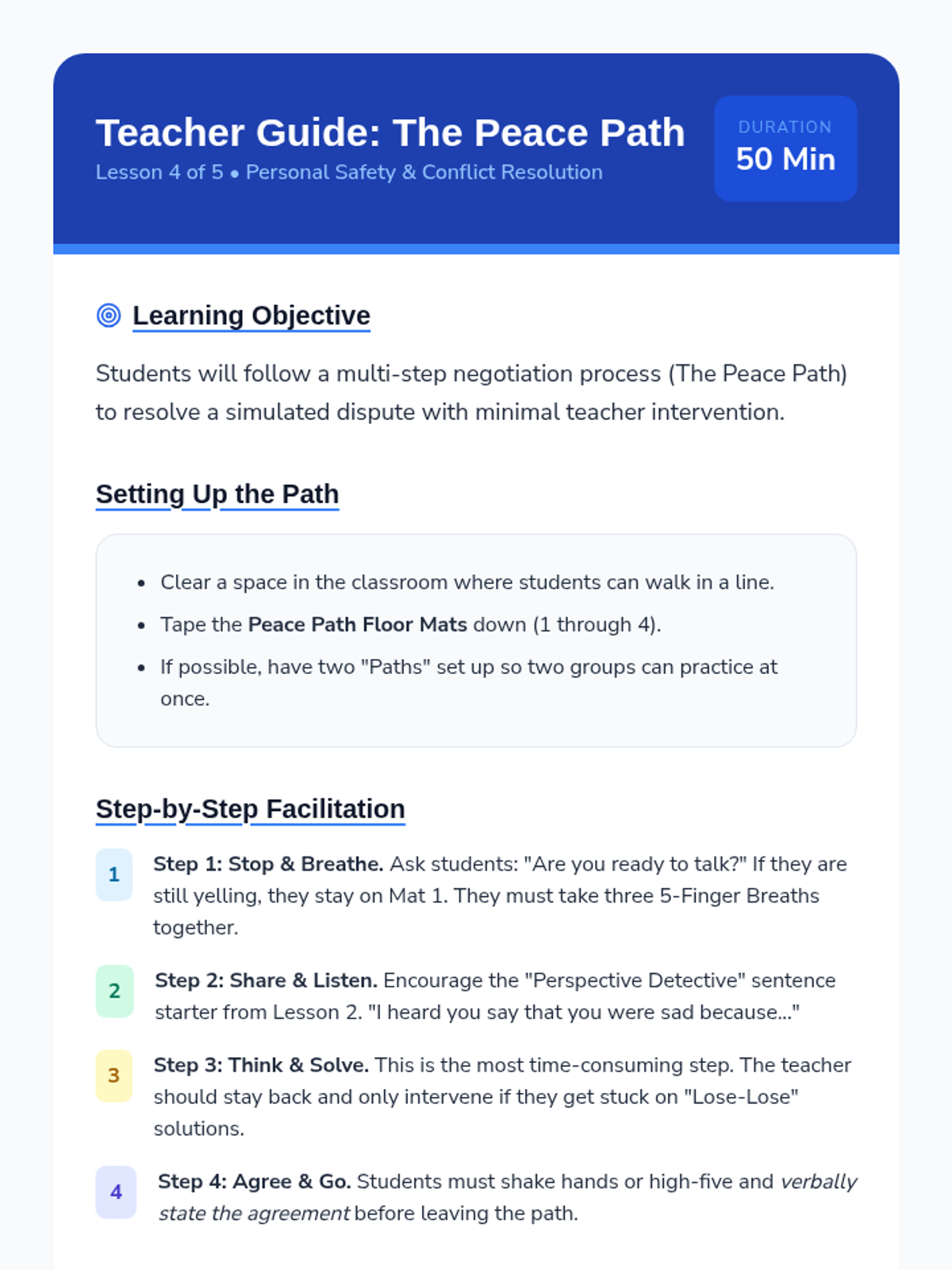
Students are introduced to the 'Peace Path'—a 4-step structured model for conflict resolution—and practice walking through it physically.
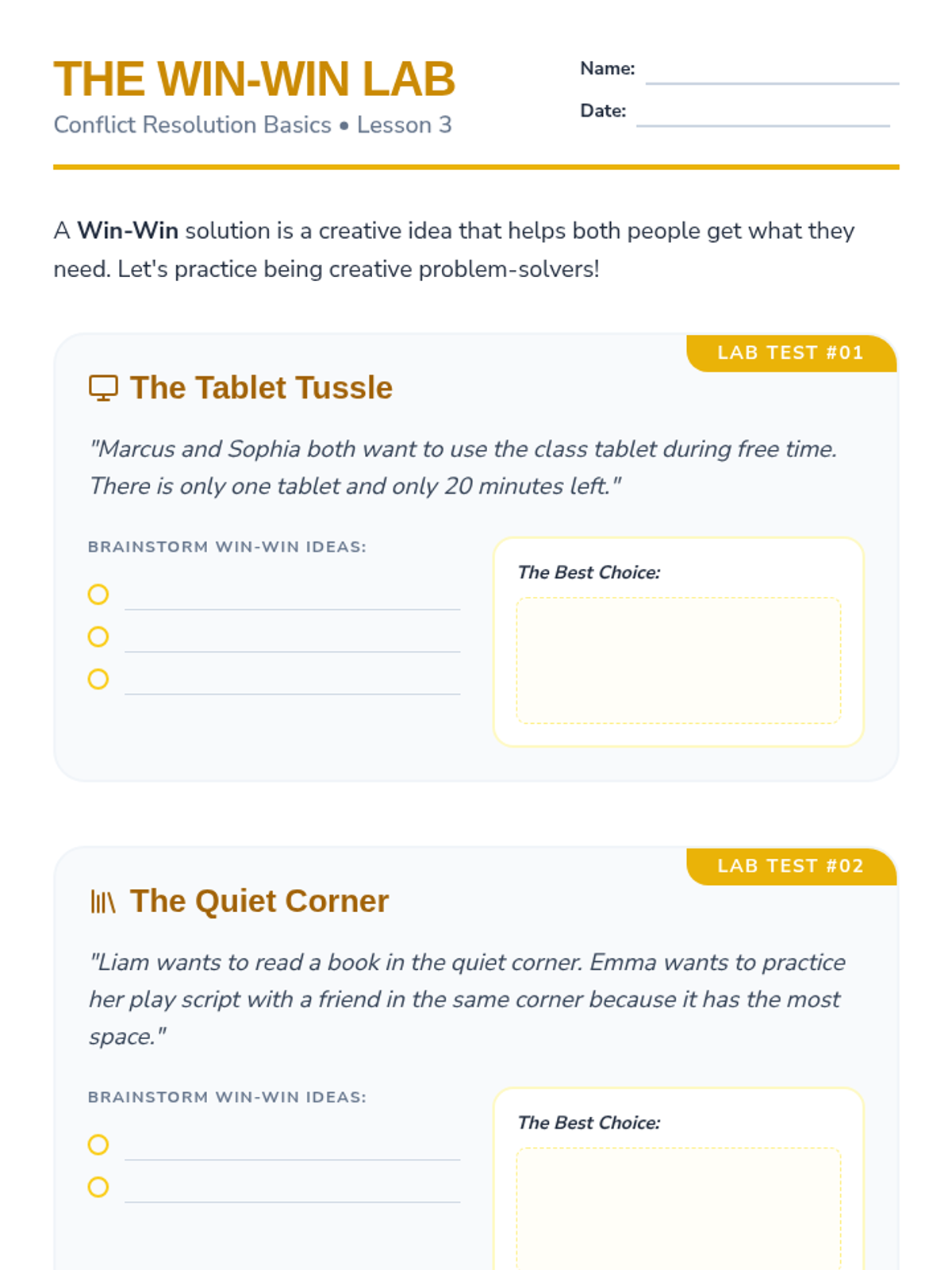
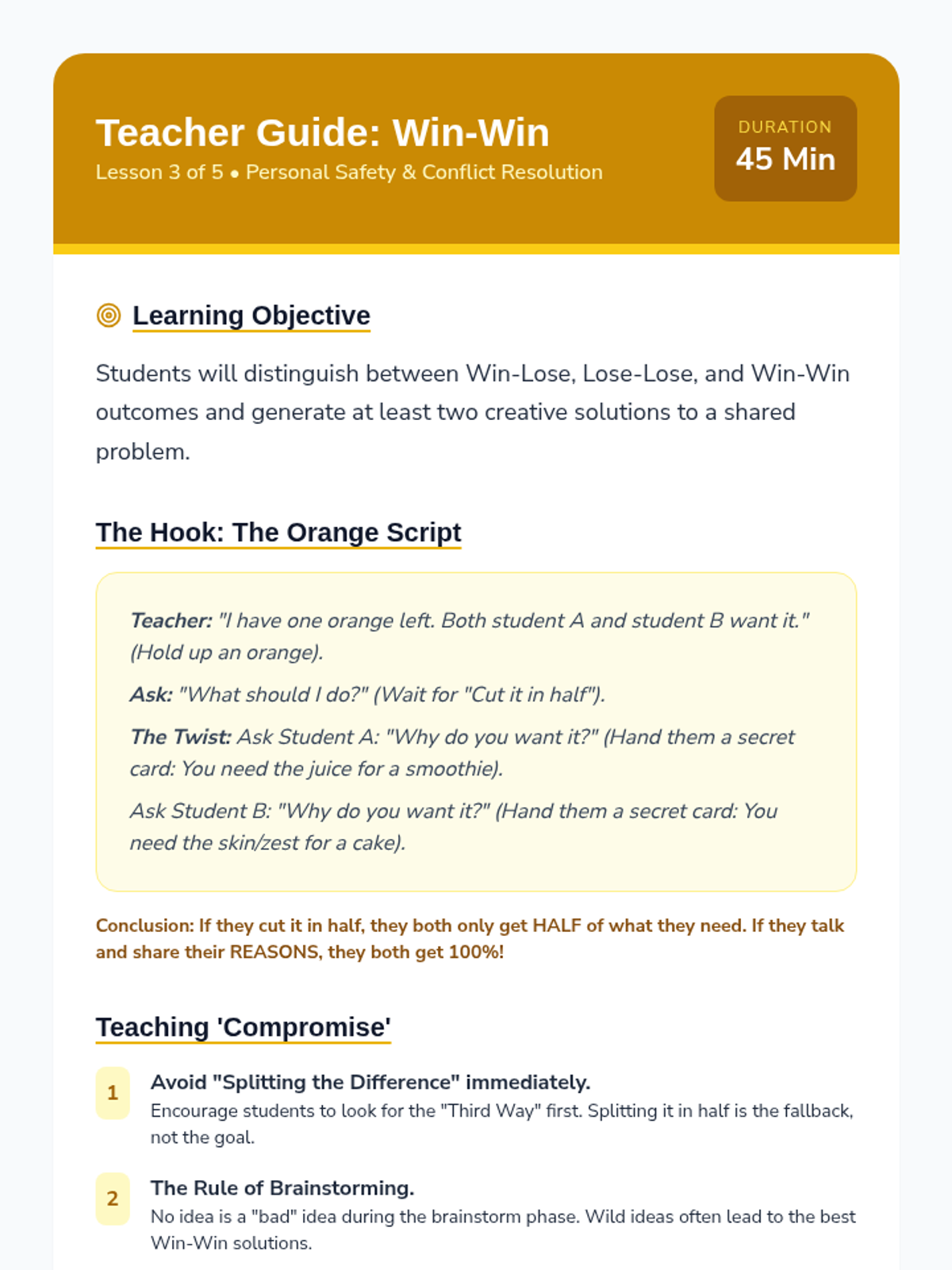
Students learn to brainstorm creative solutions where everyone wins, using the 'Orange Problem' as a case study for compromise.
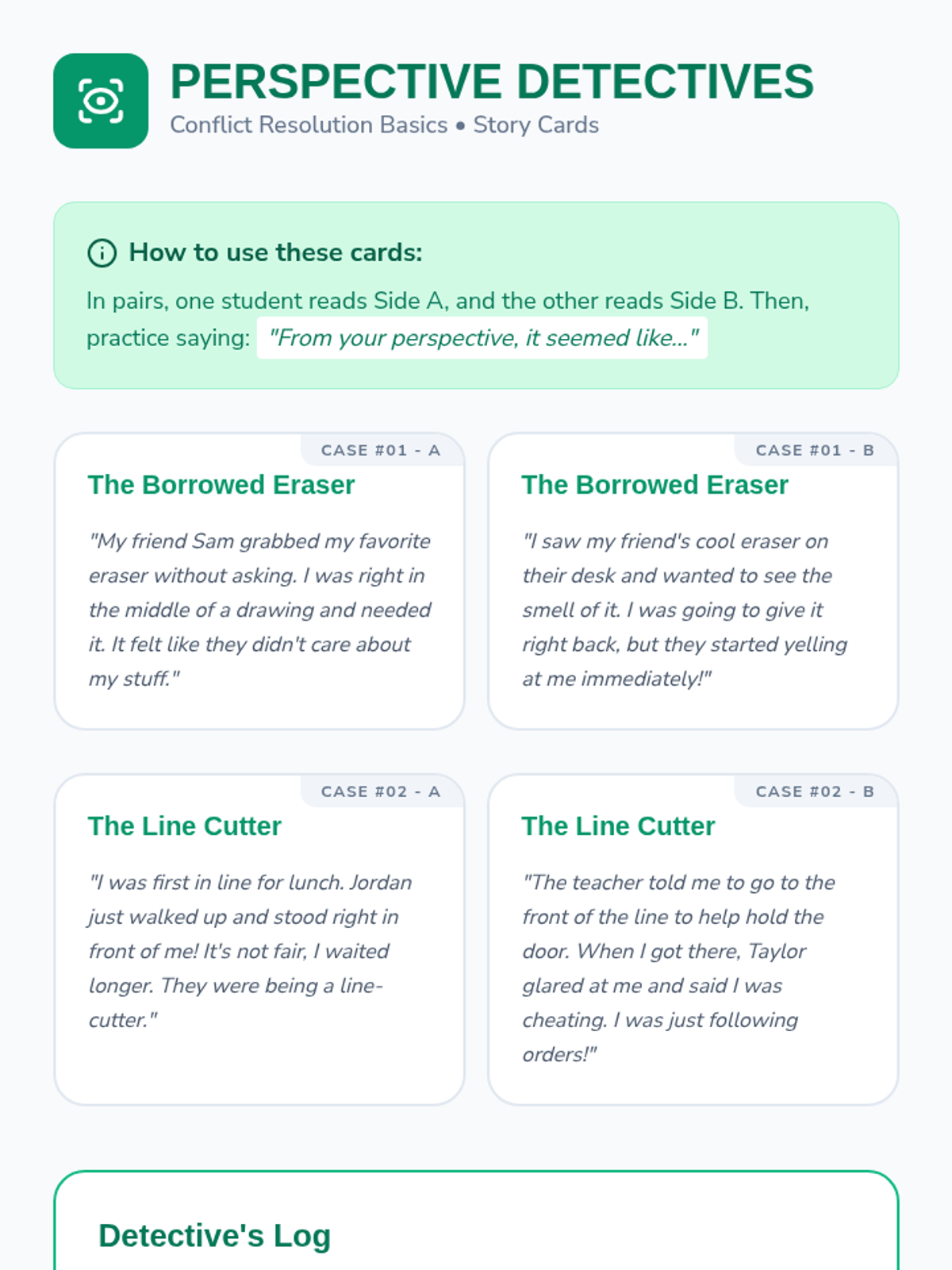
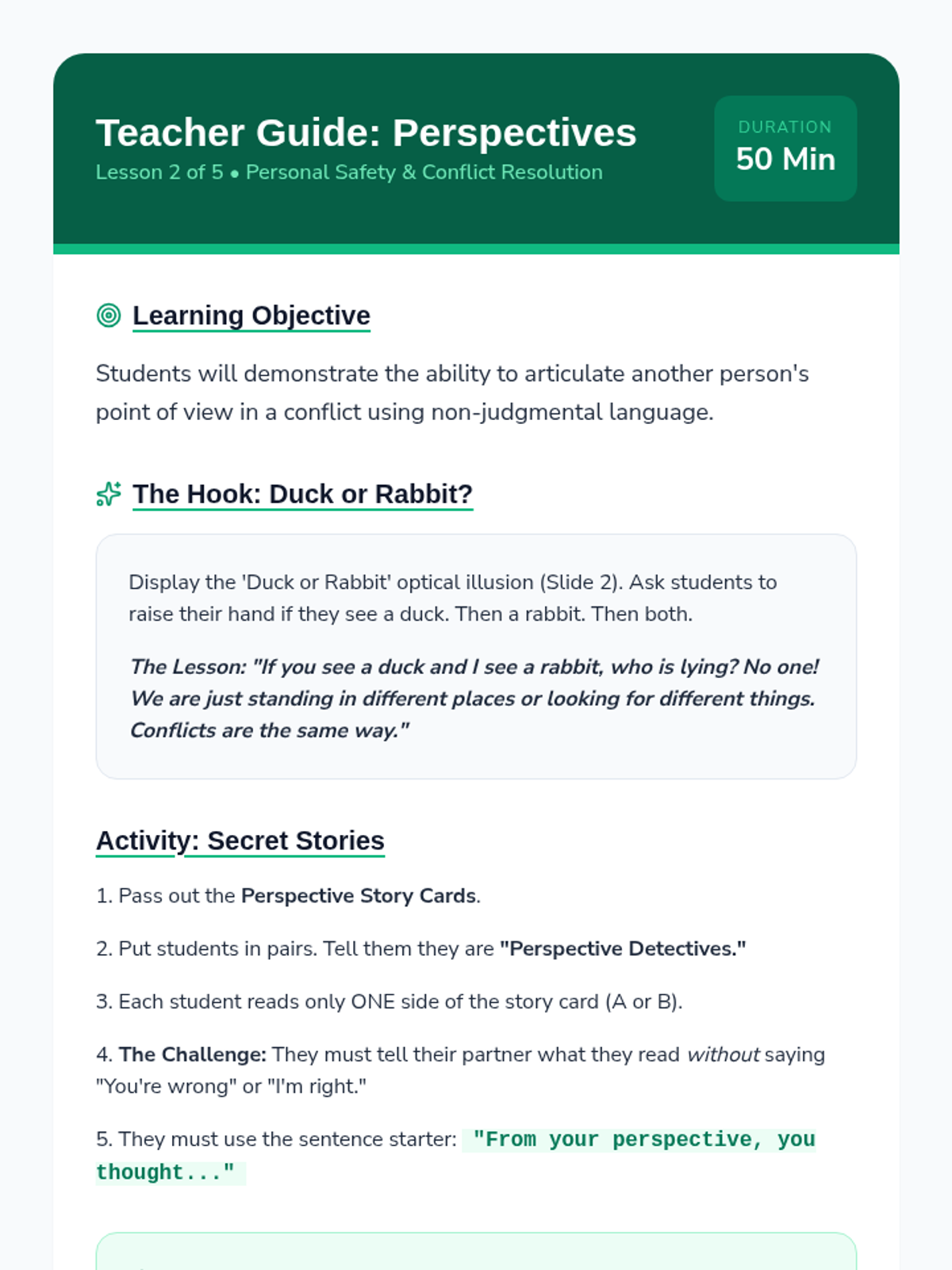
Students explore how two people can see the same event differently using optical illusions and dual-narrative stories.
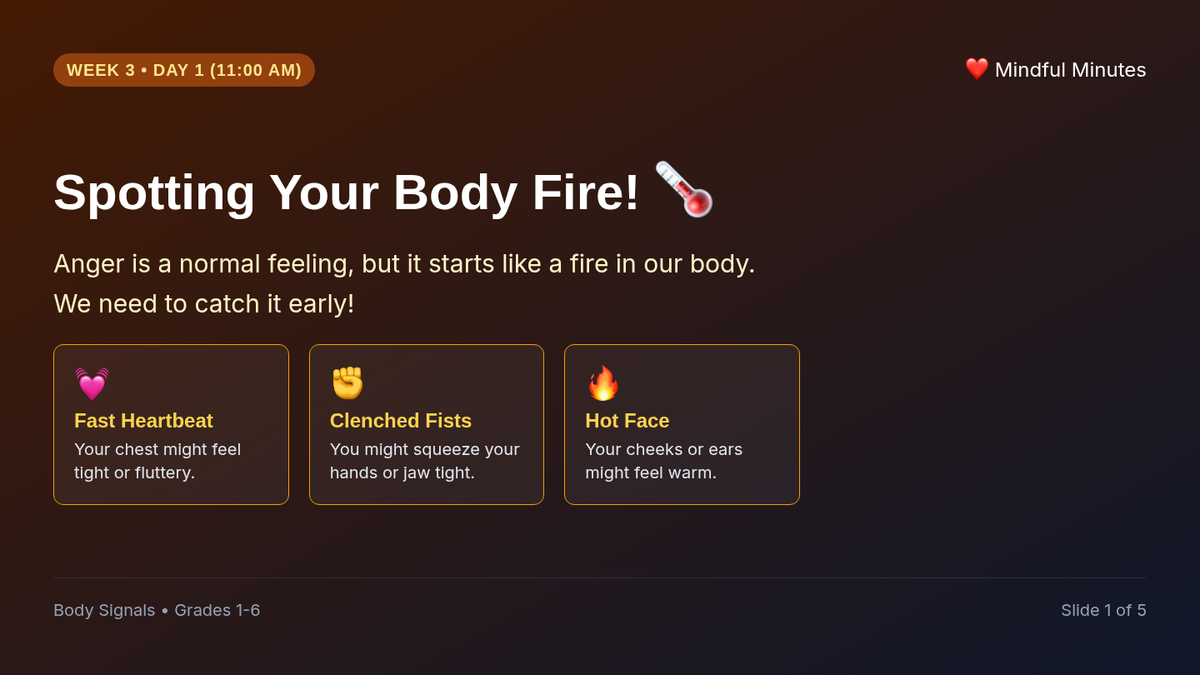
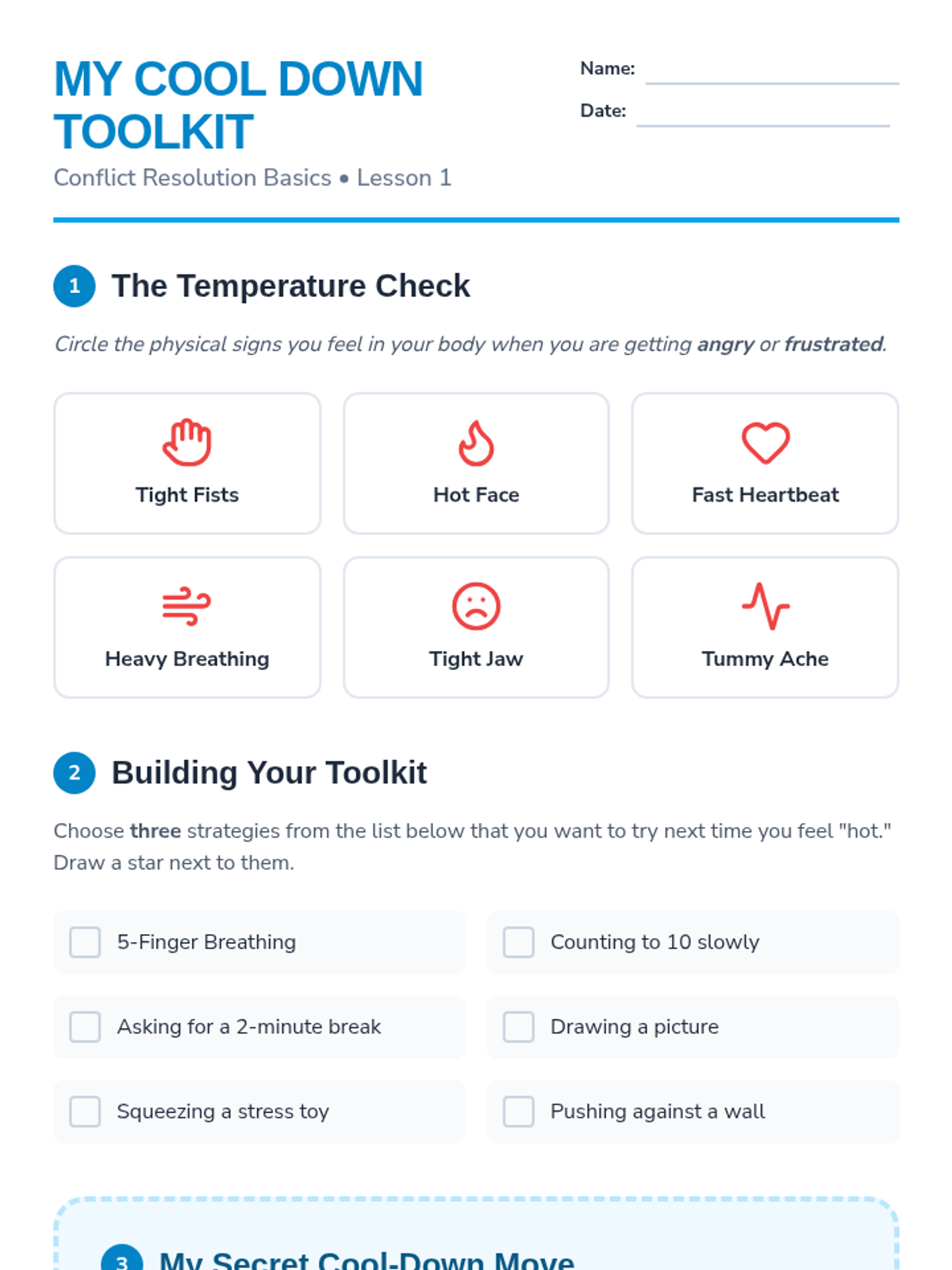
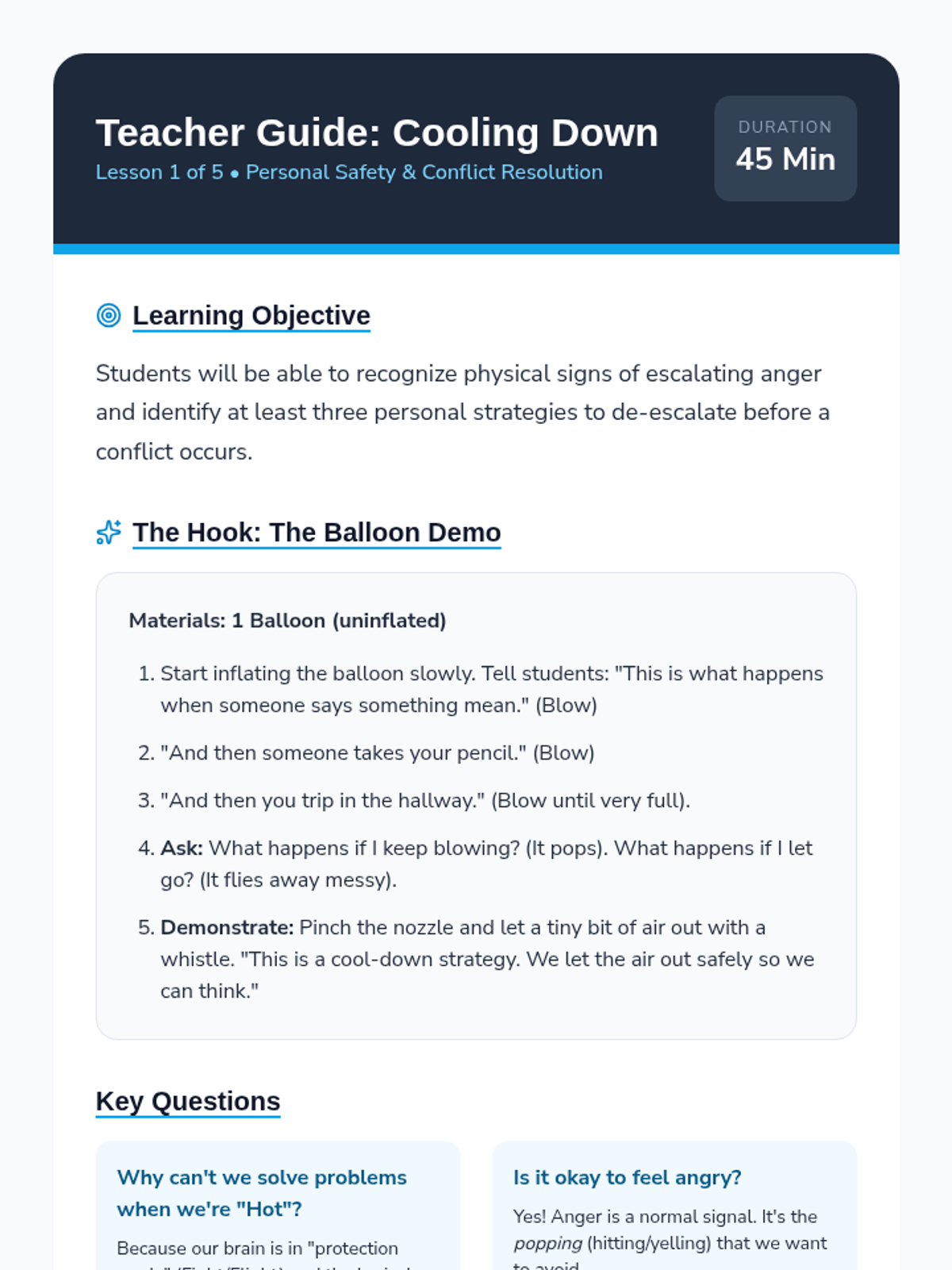
Students identify physical signs of anger and learn personal strategies to lower their emotional 'temperature' before attempting to resolve a conflict.