Budgeting, saving, and investment strategies alongside practical skills for managing credit, taxes, and banking. Addresses insurance needs, employment income, and major purchase decisions to support comprehensive long-term financial planning.
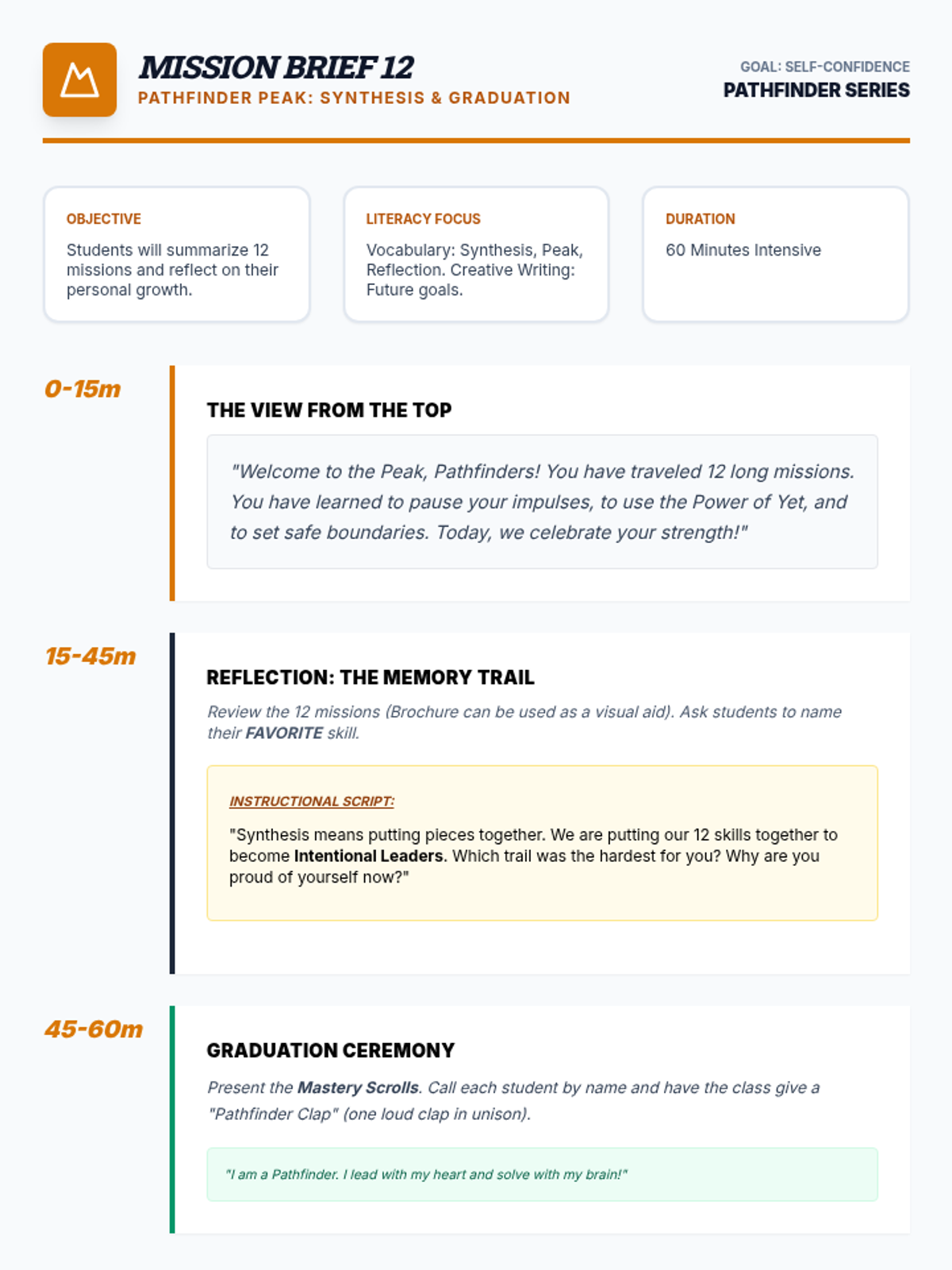
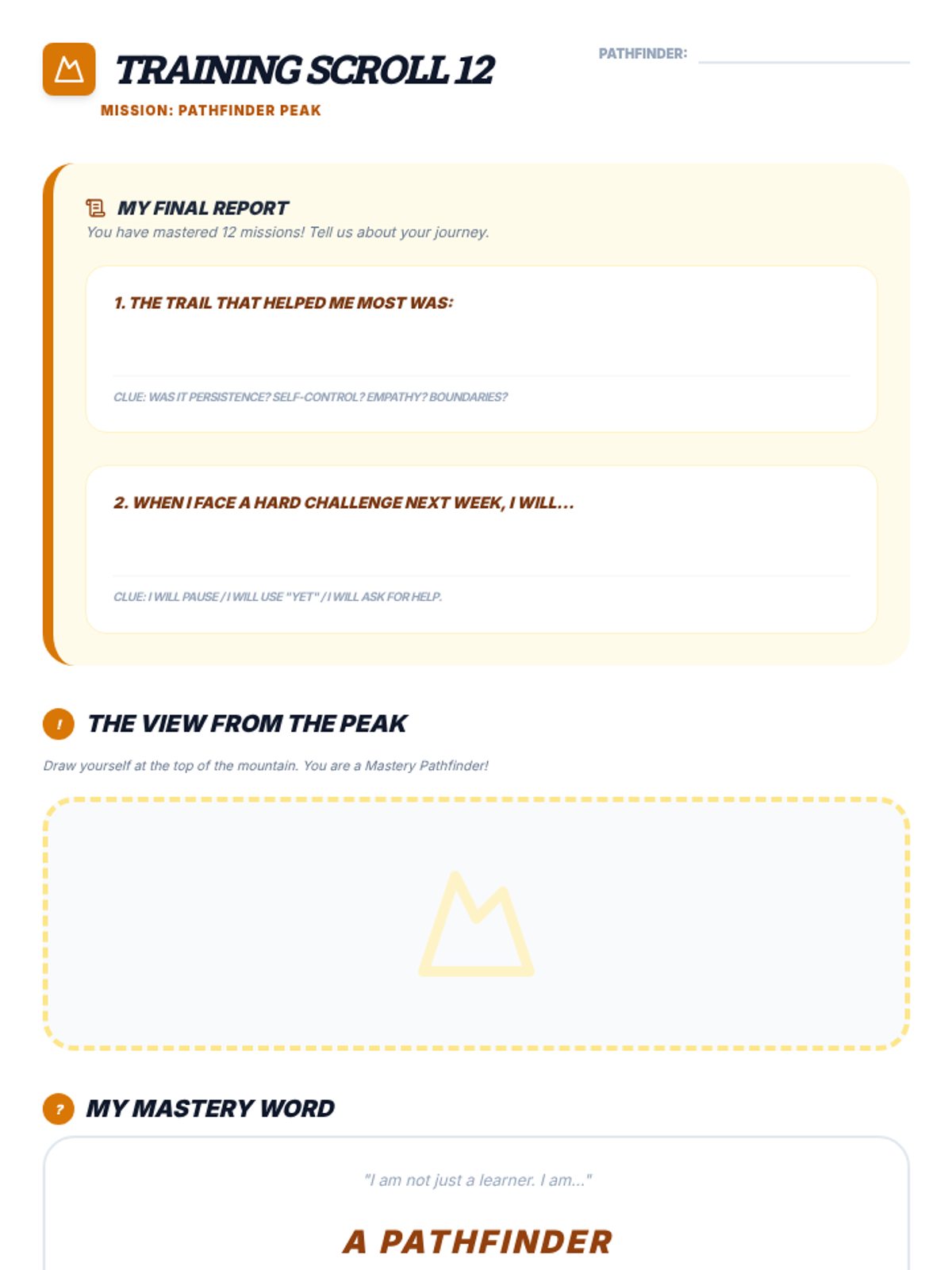
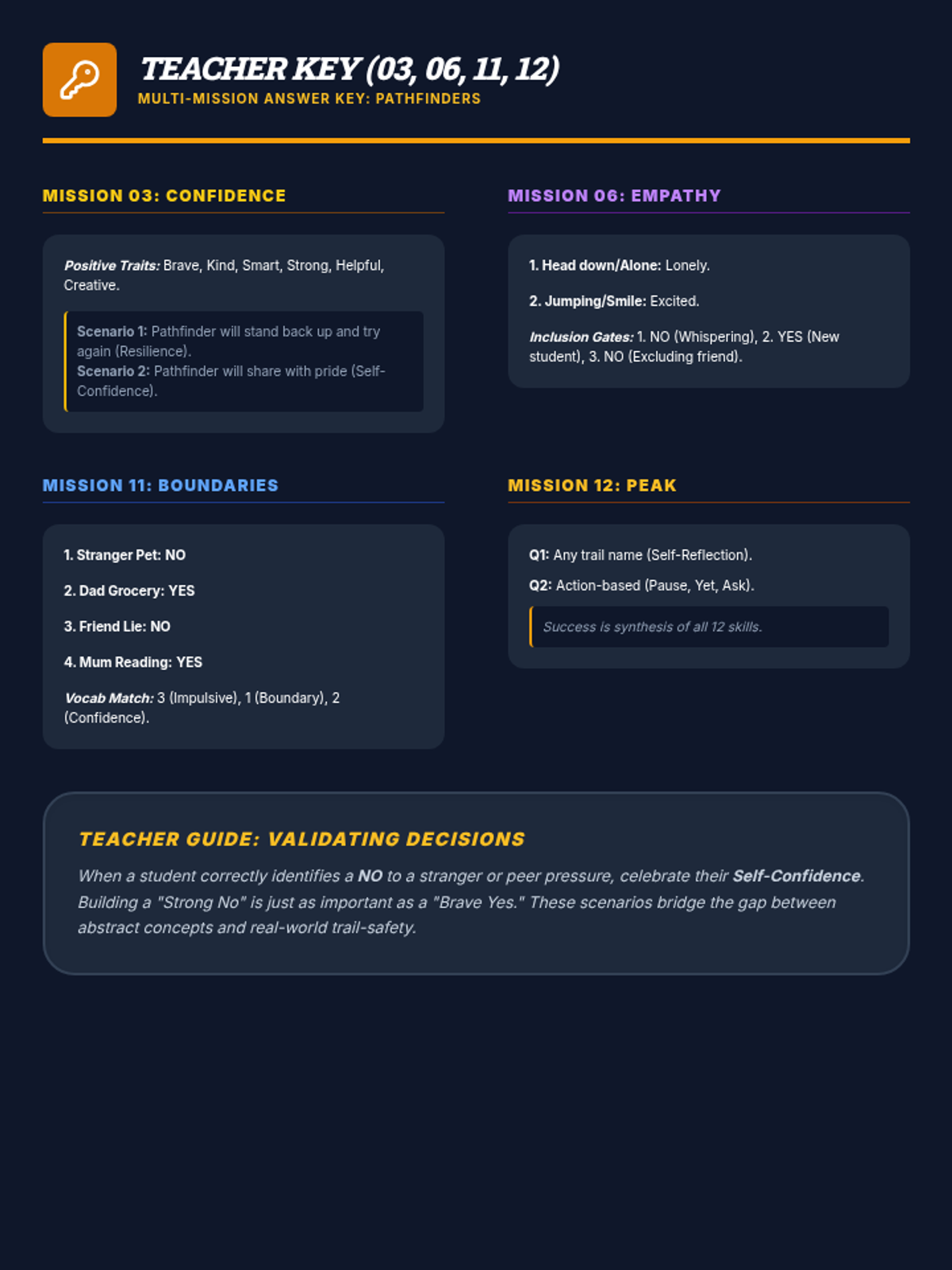
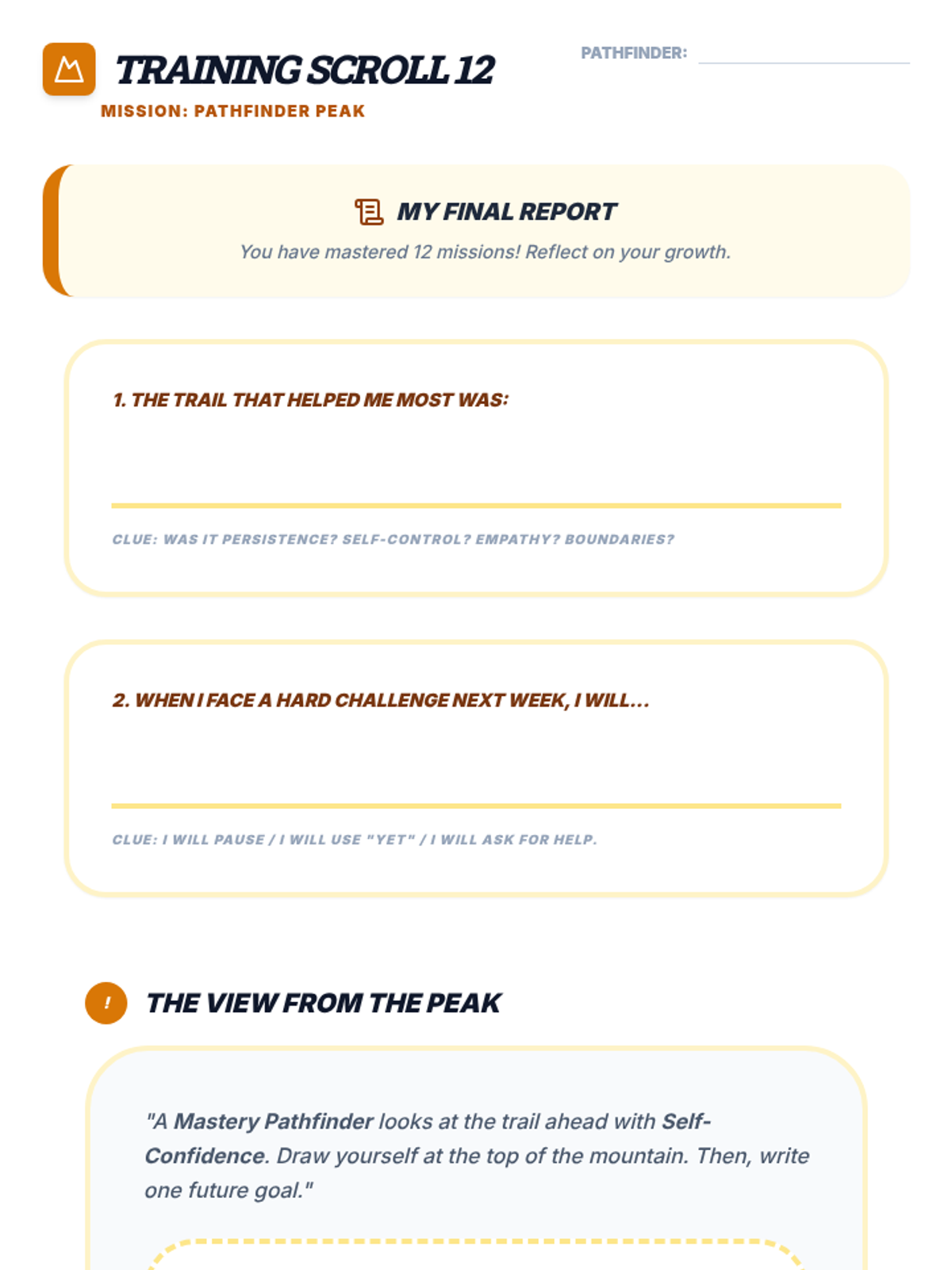
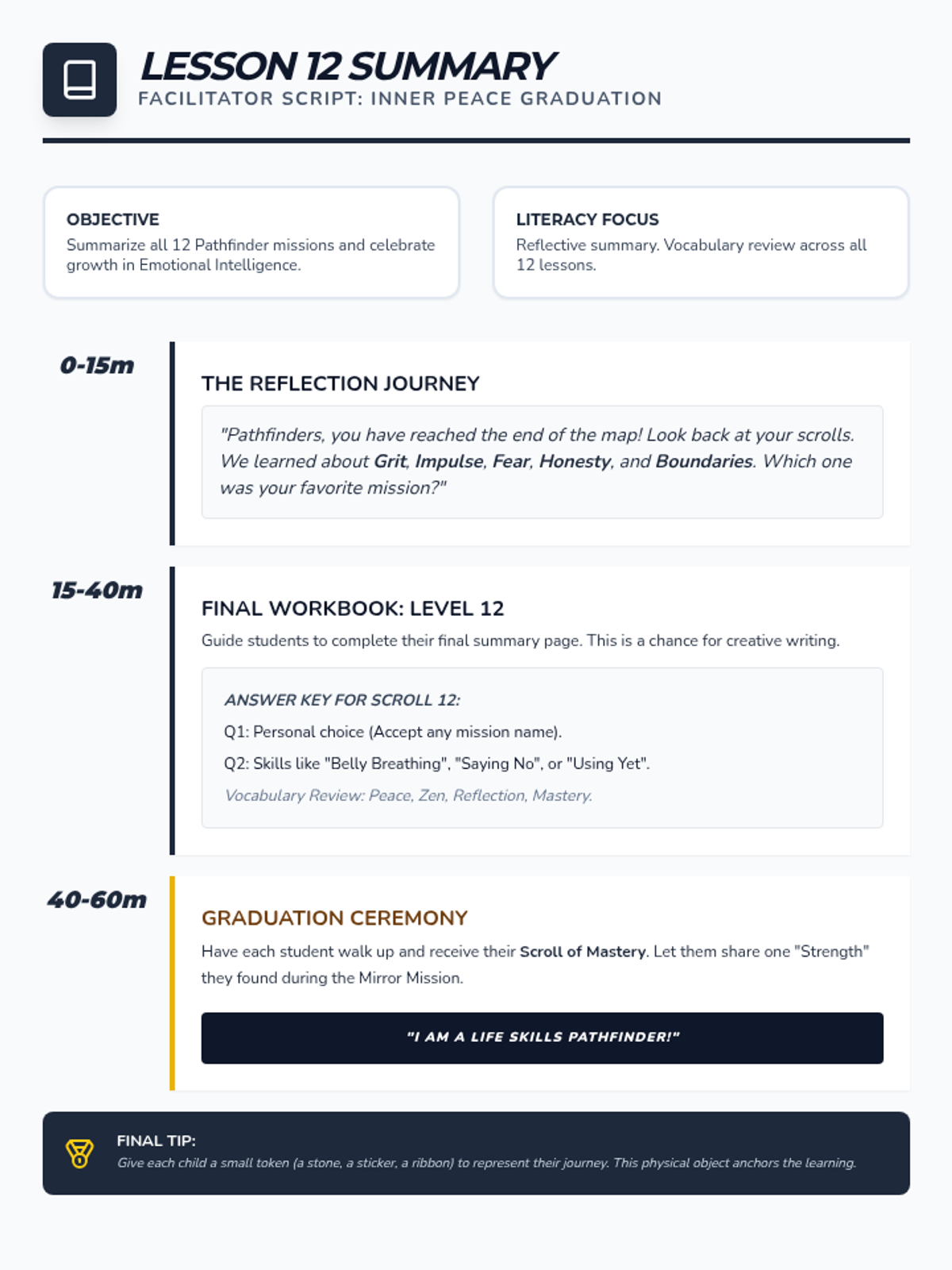
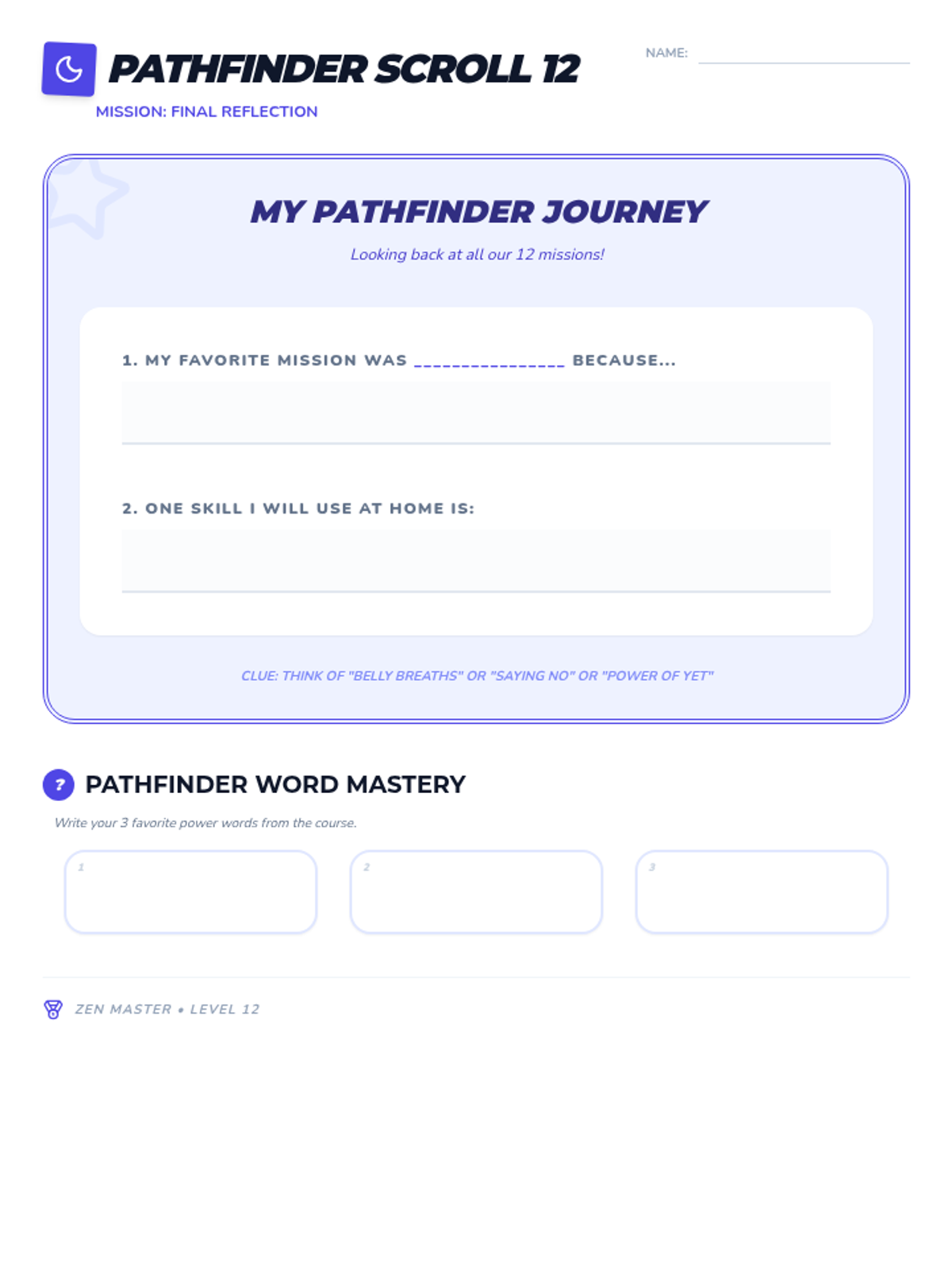
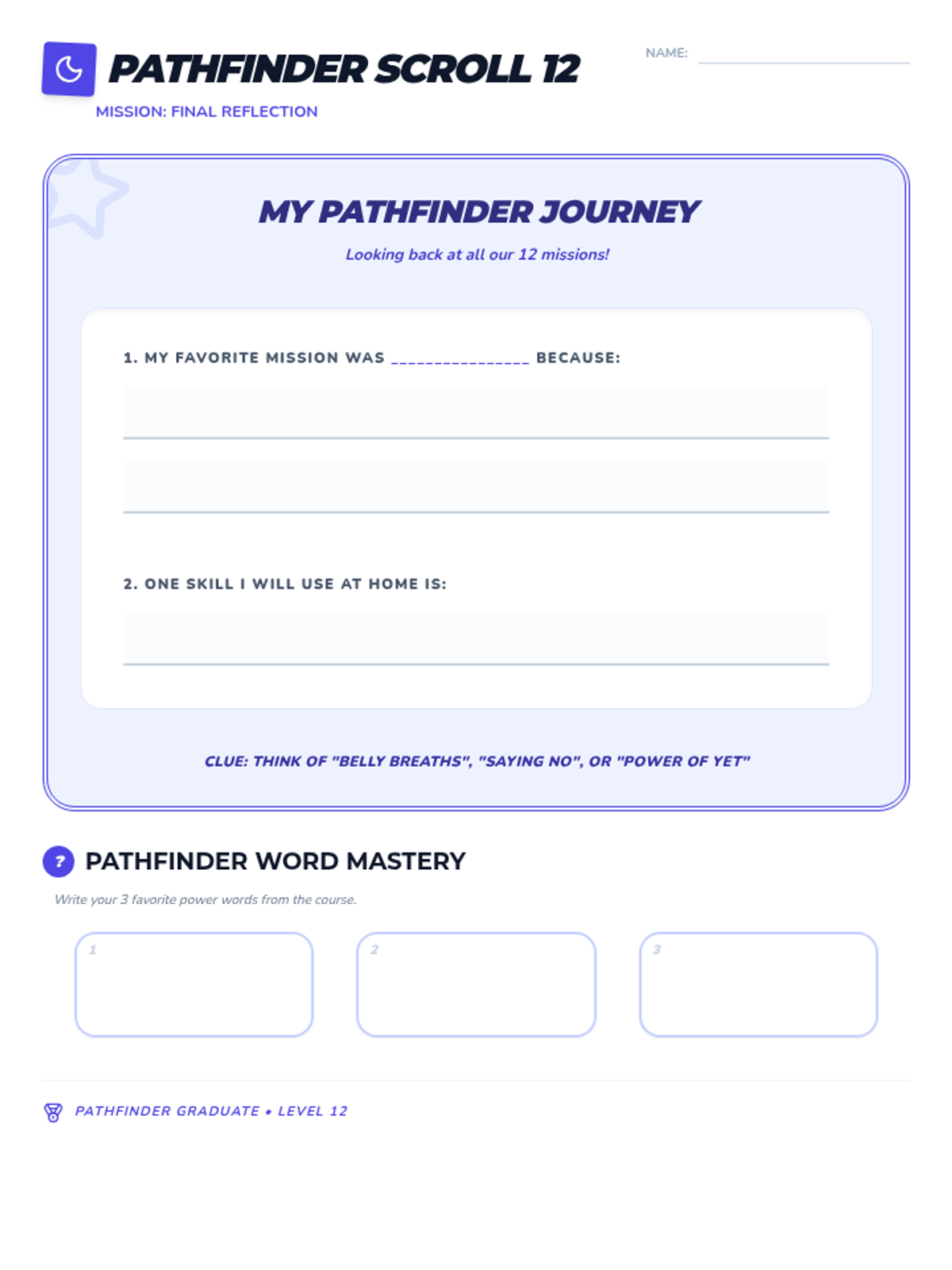
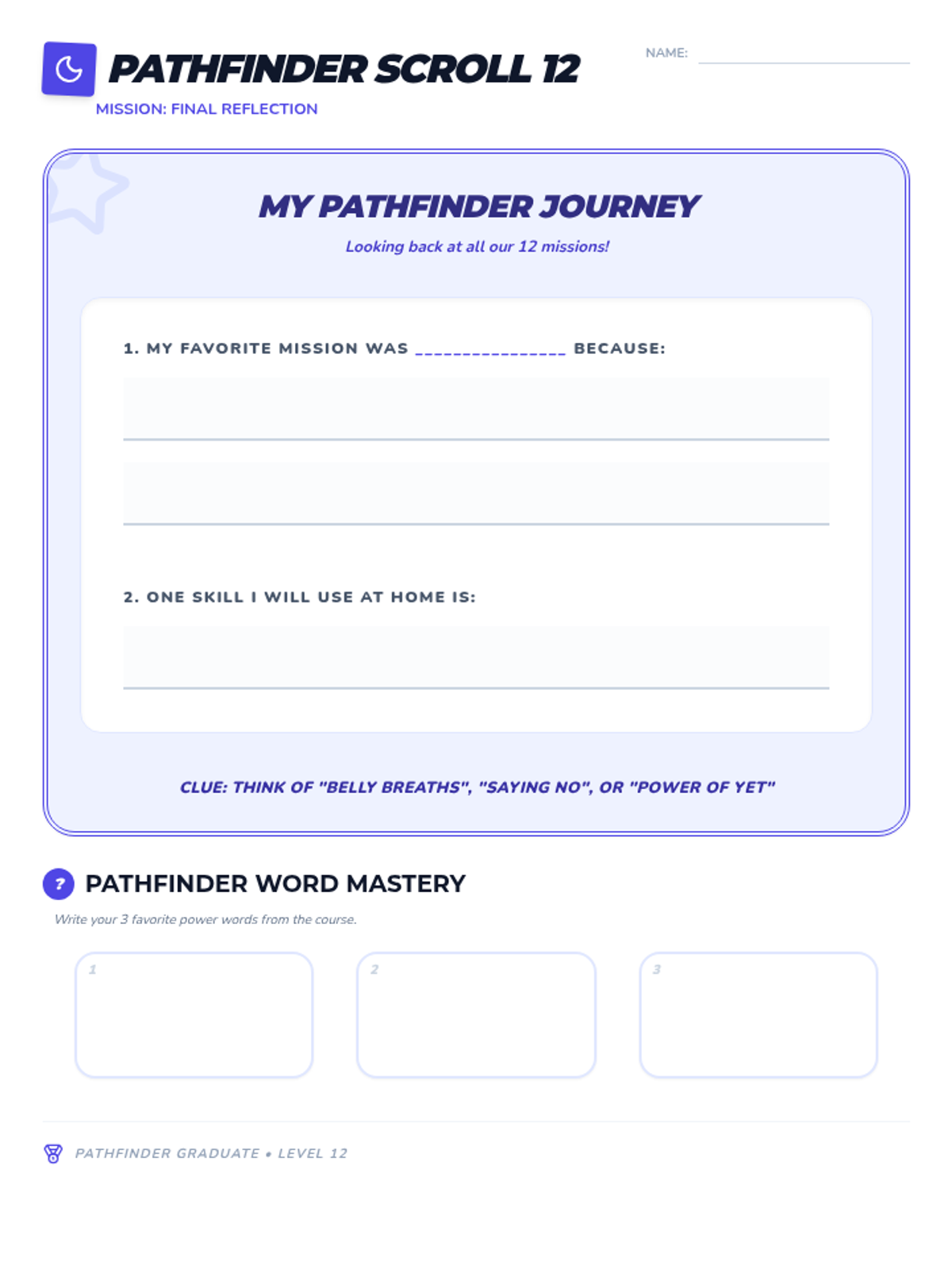
Course synthesis and graduation. Reflecting on the journey from impulsive to intentional Pathfinder.
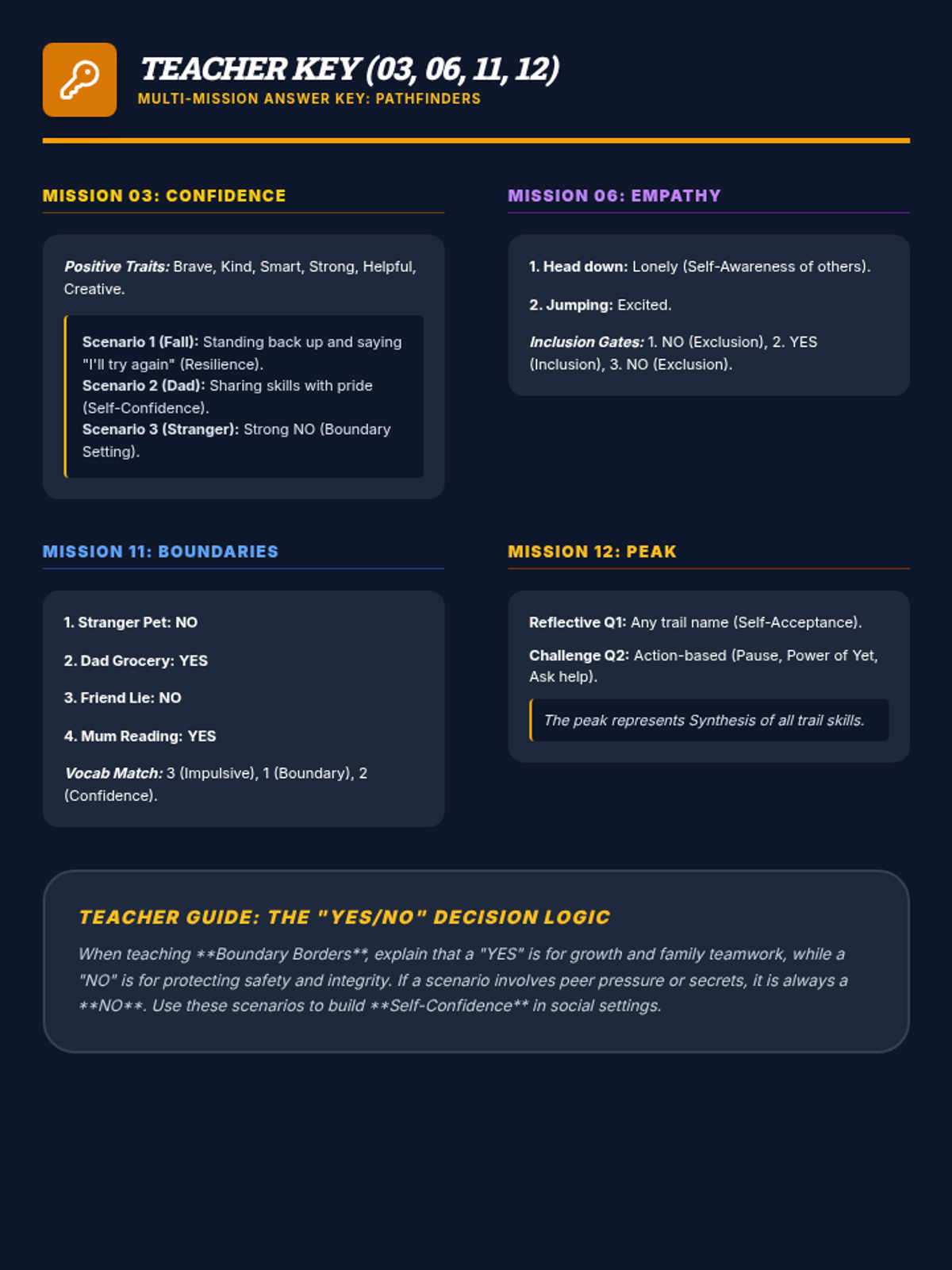
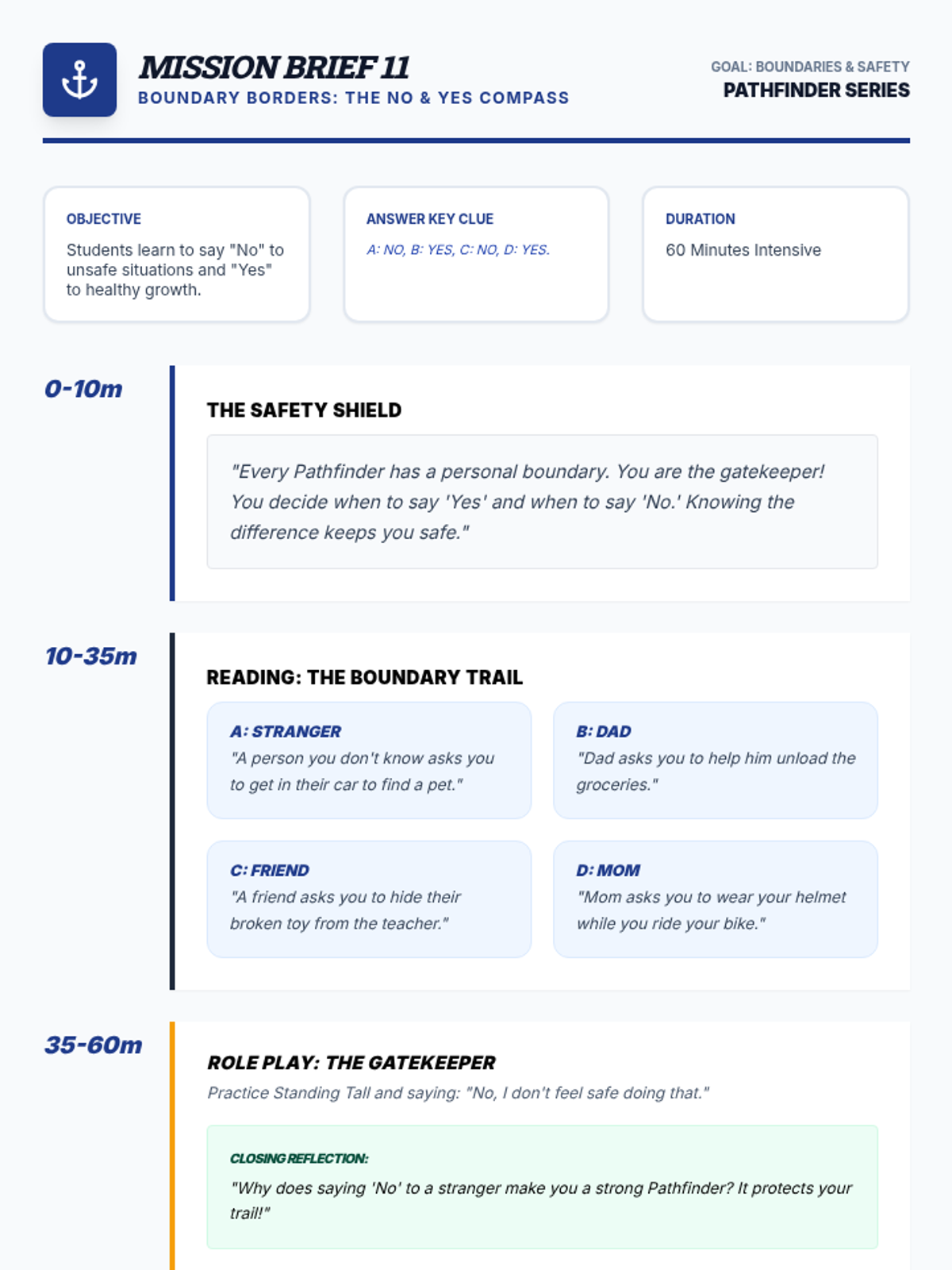
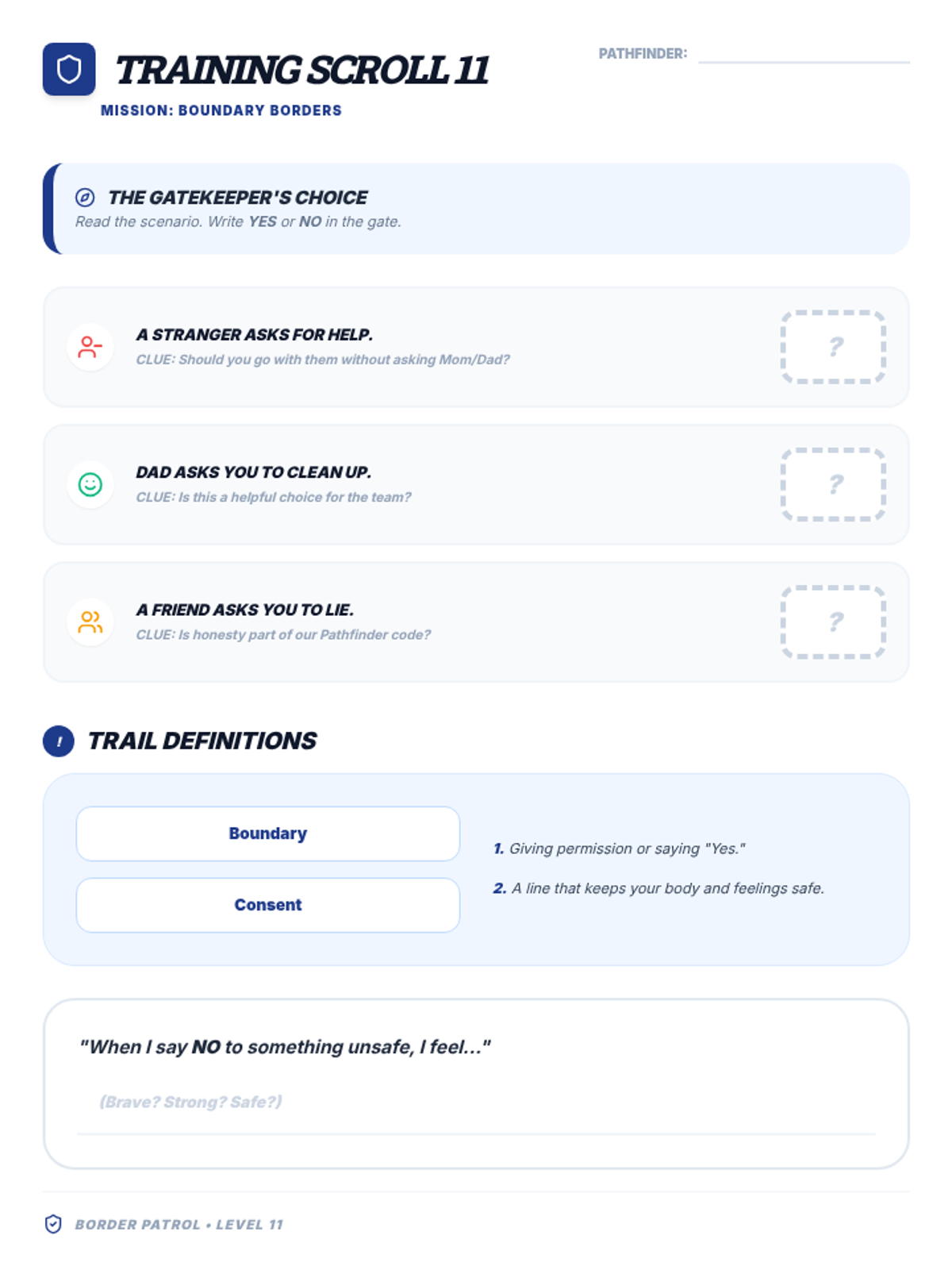
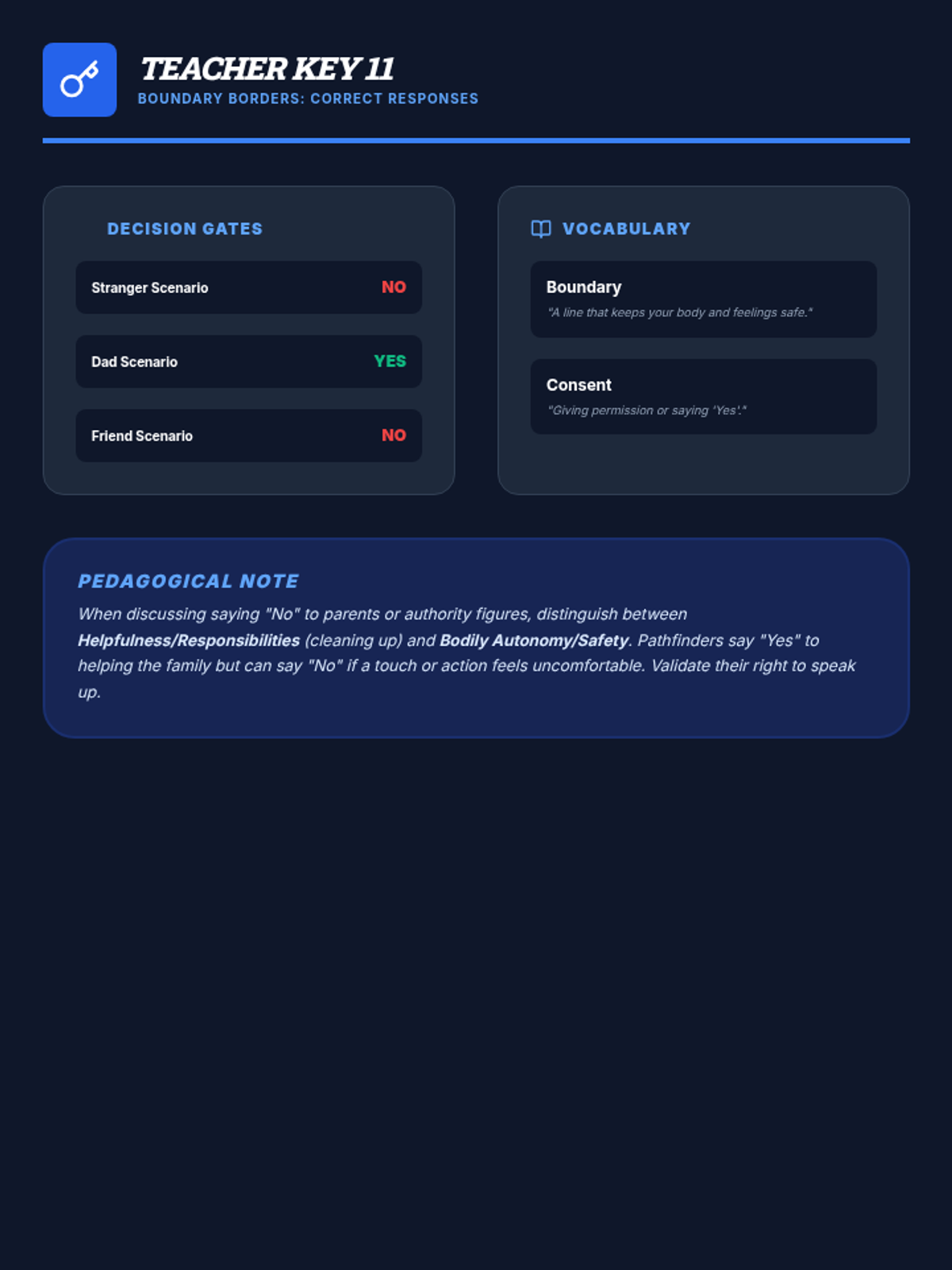
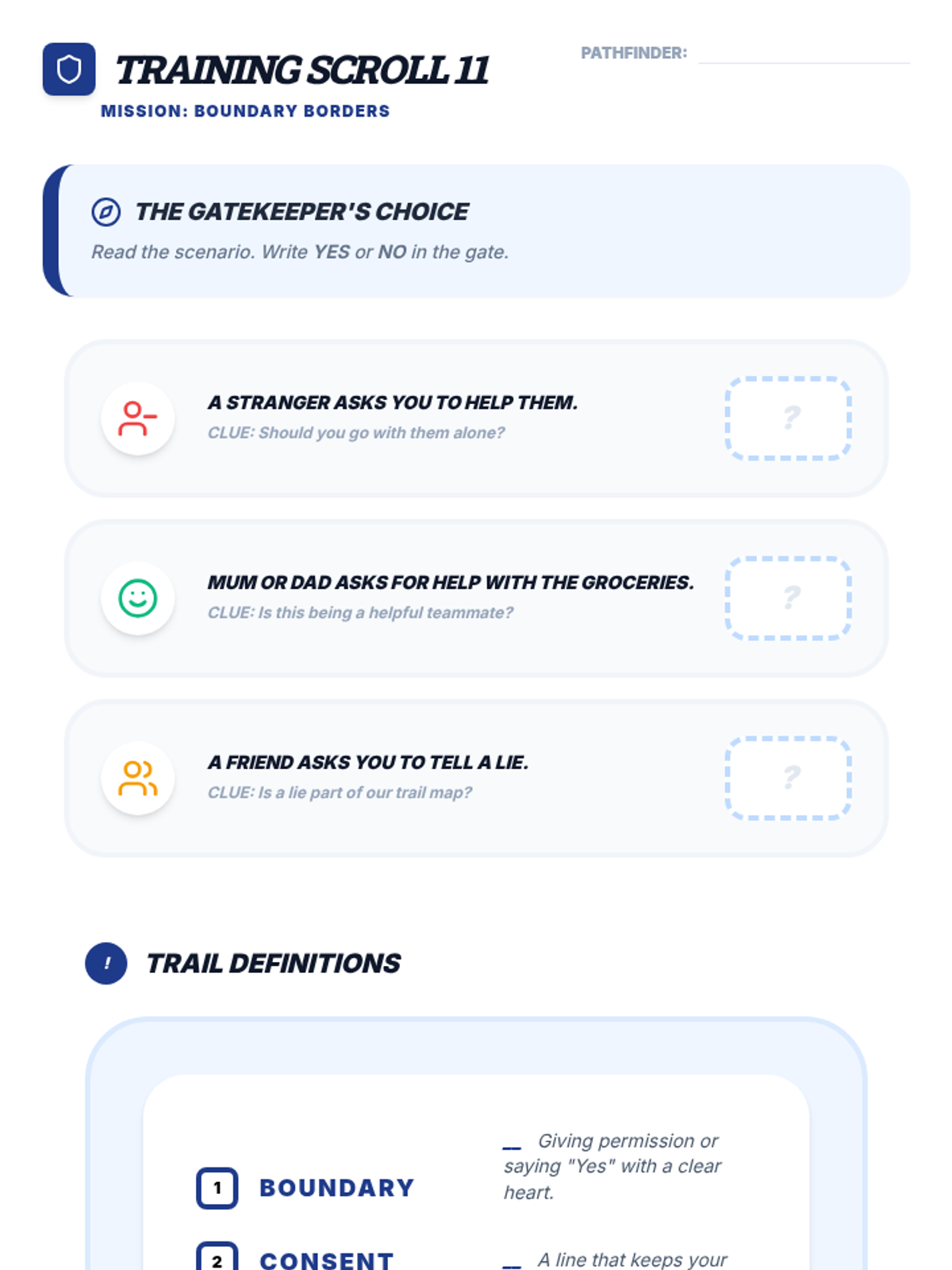
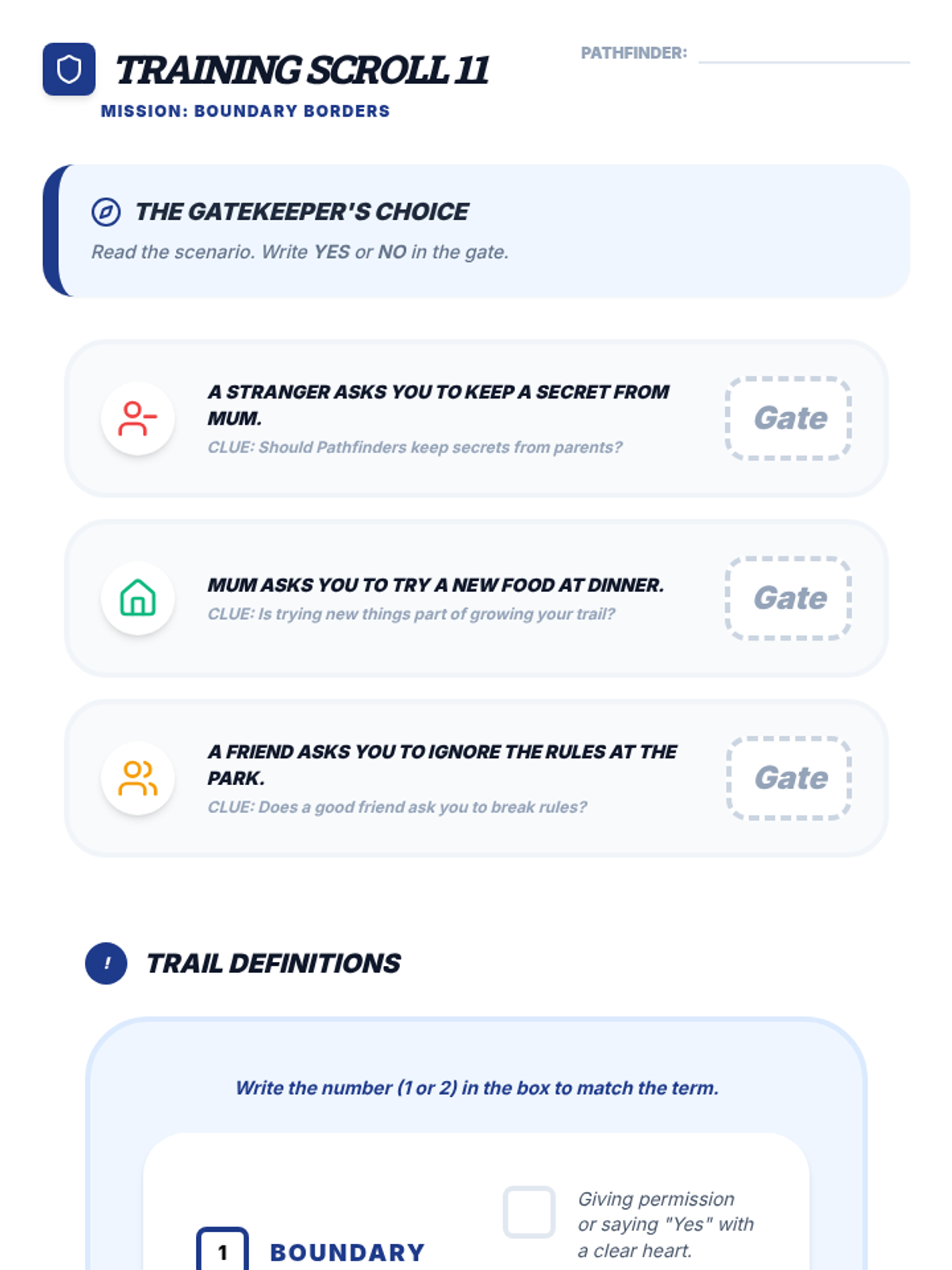
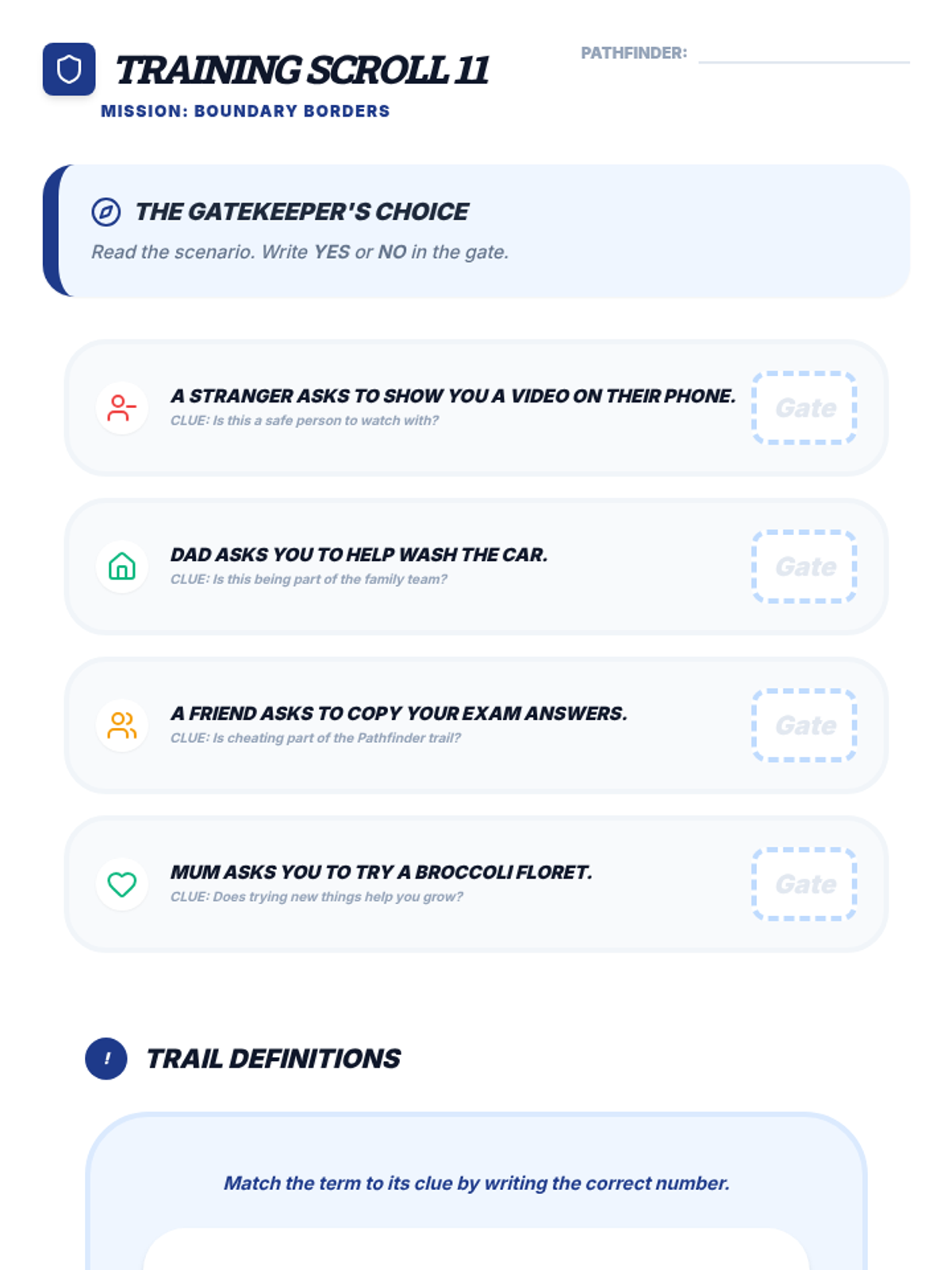
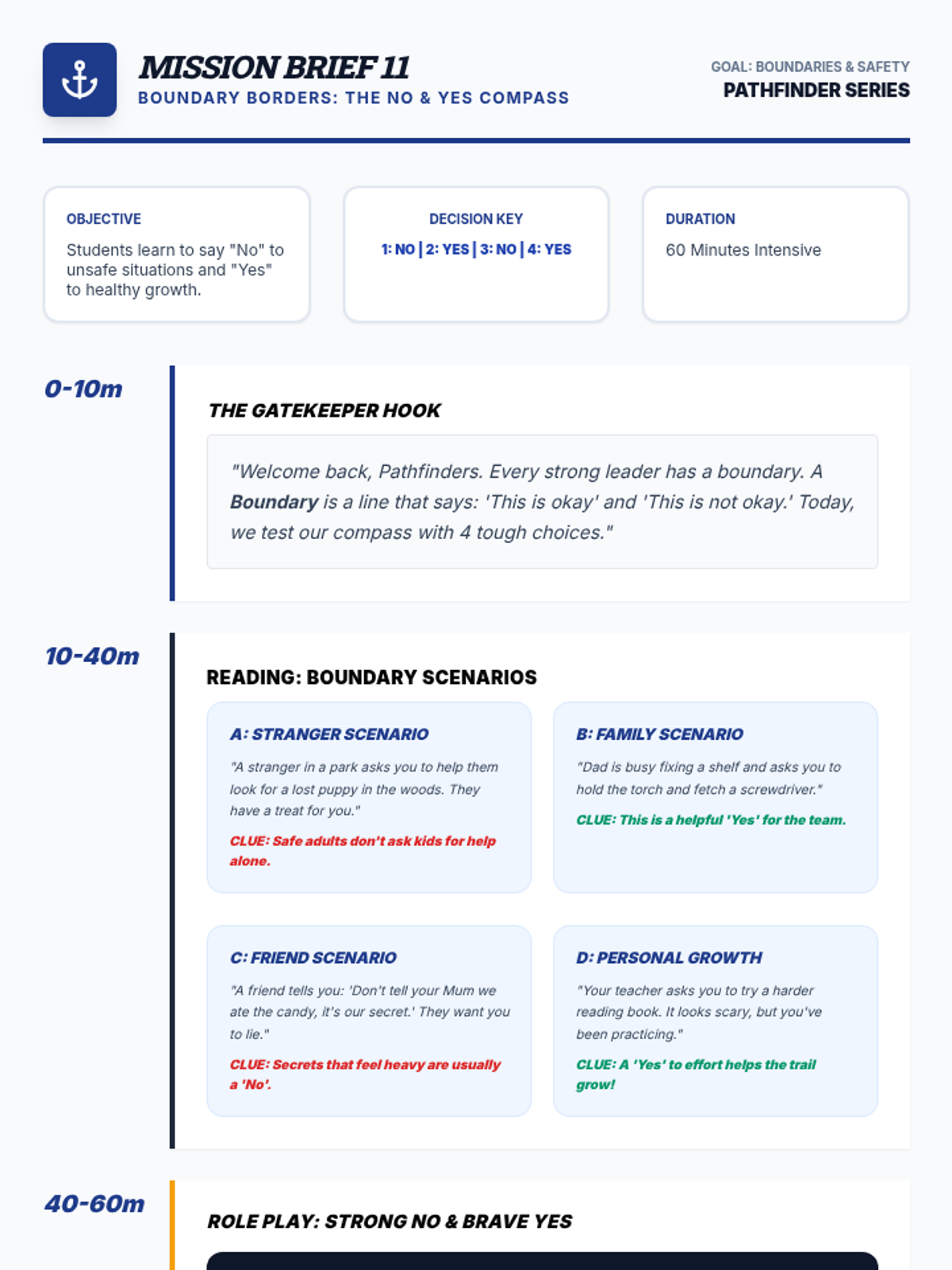
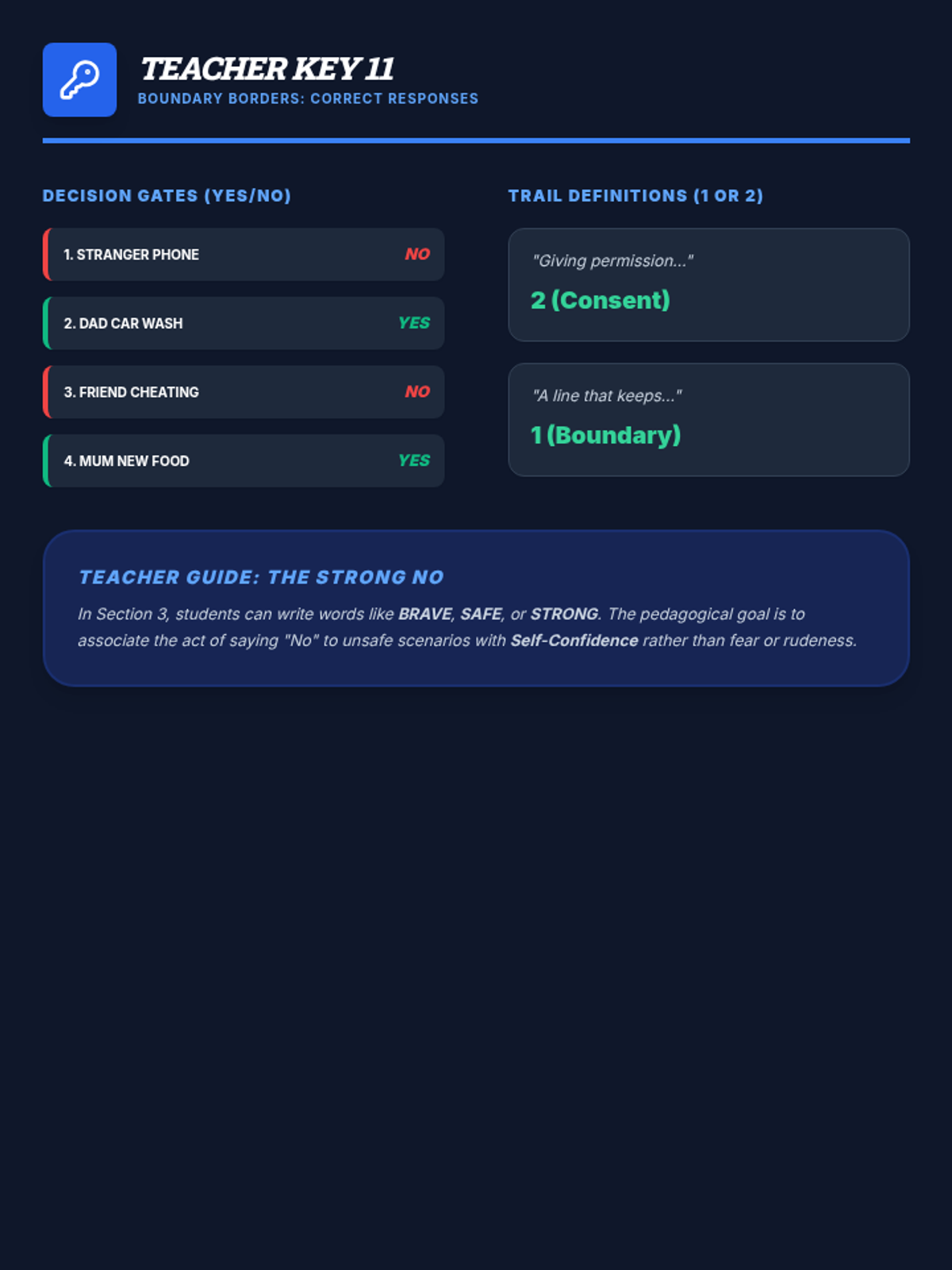
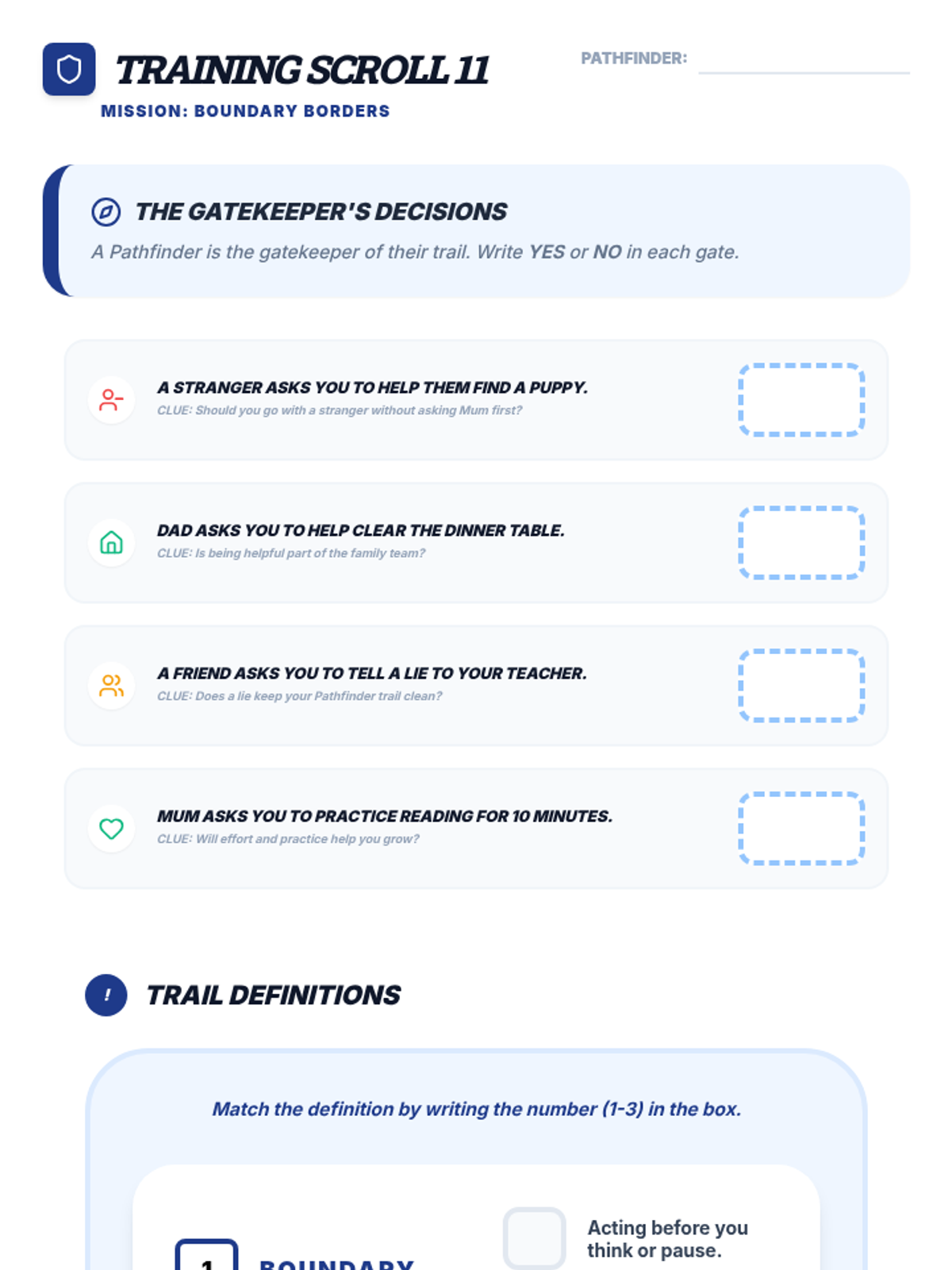
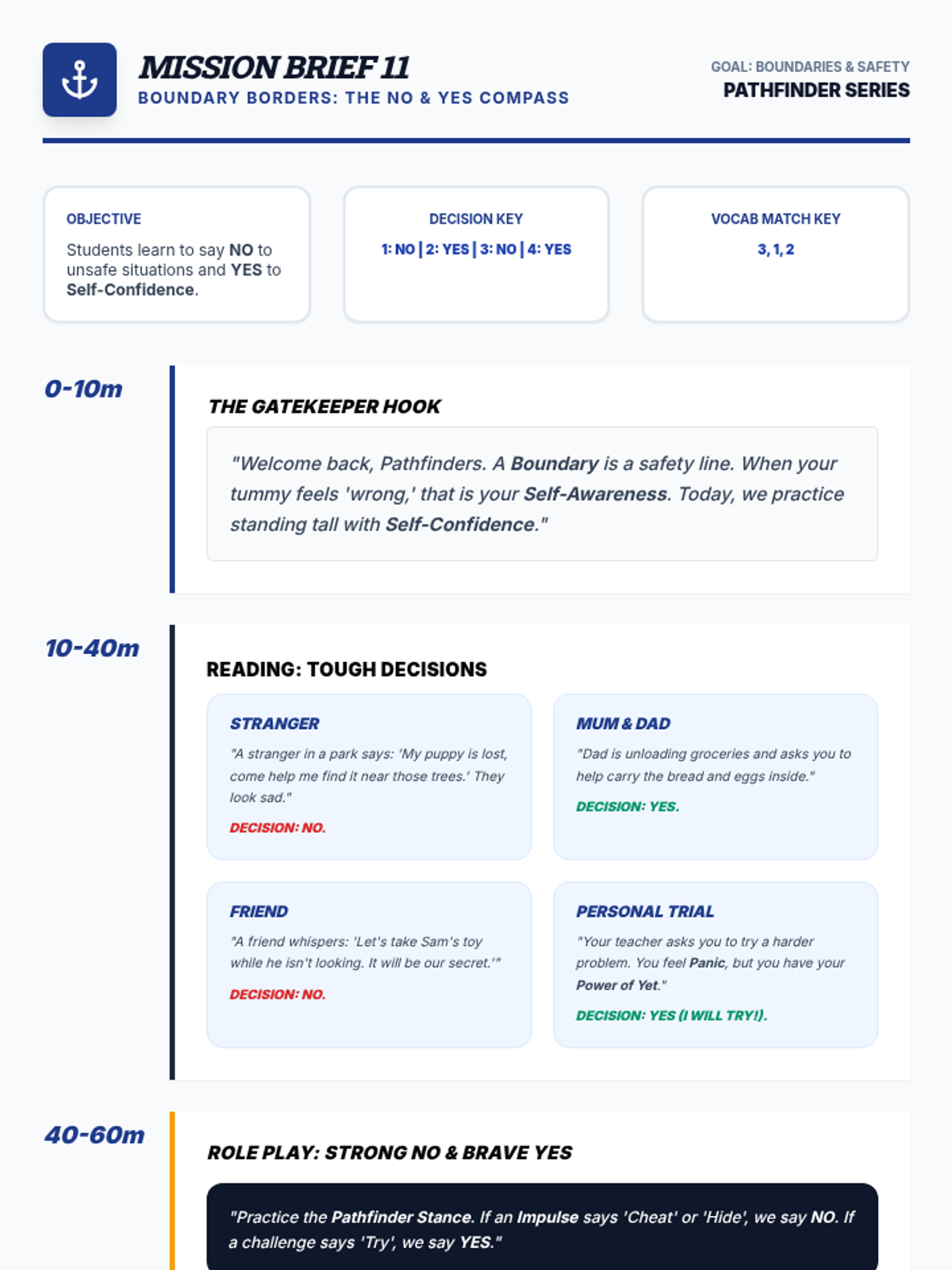
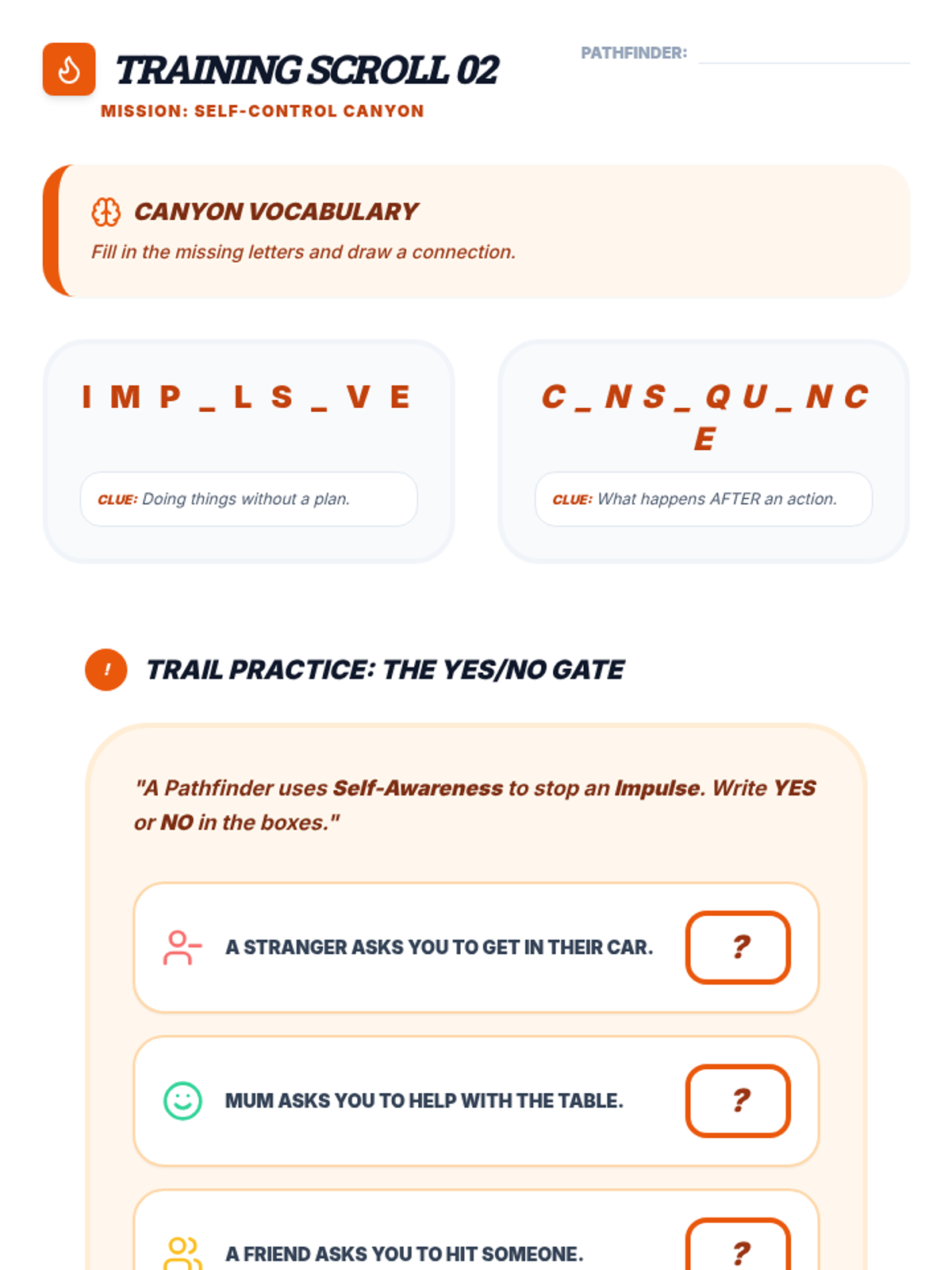
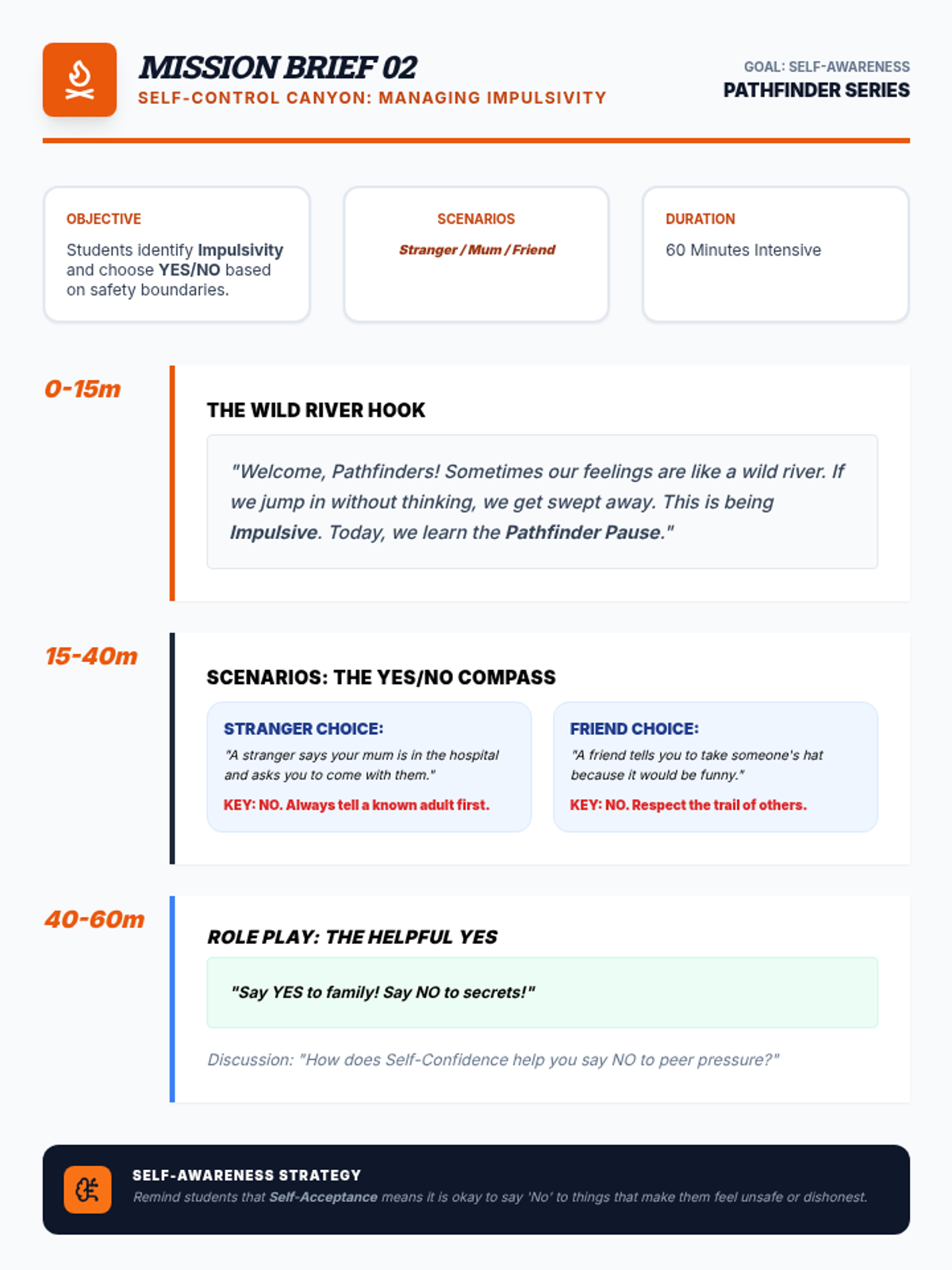
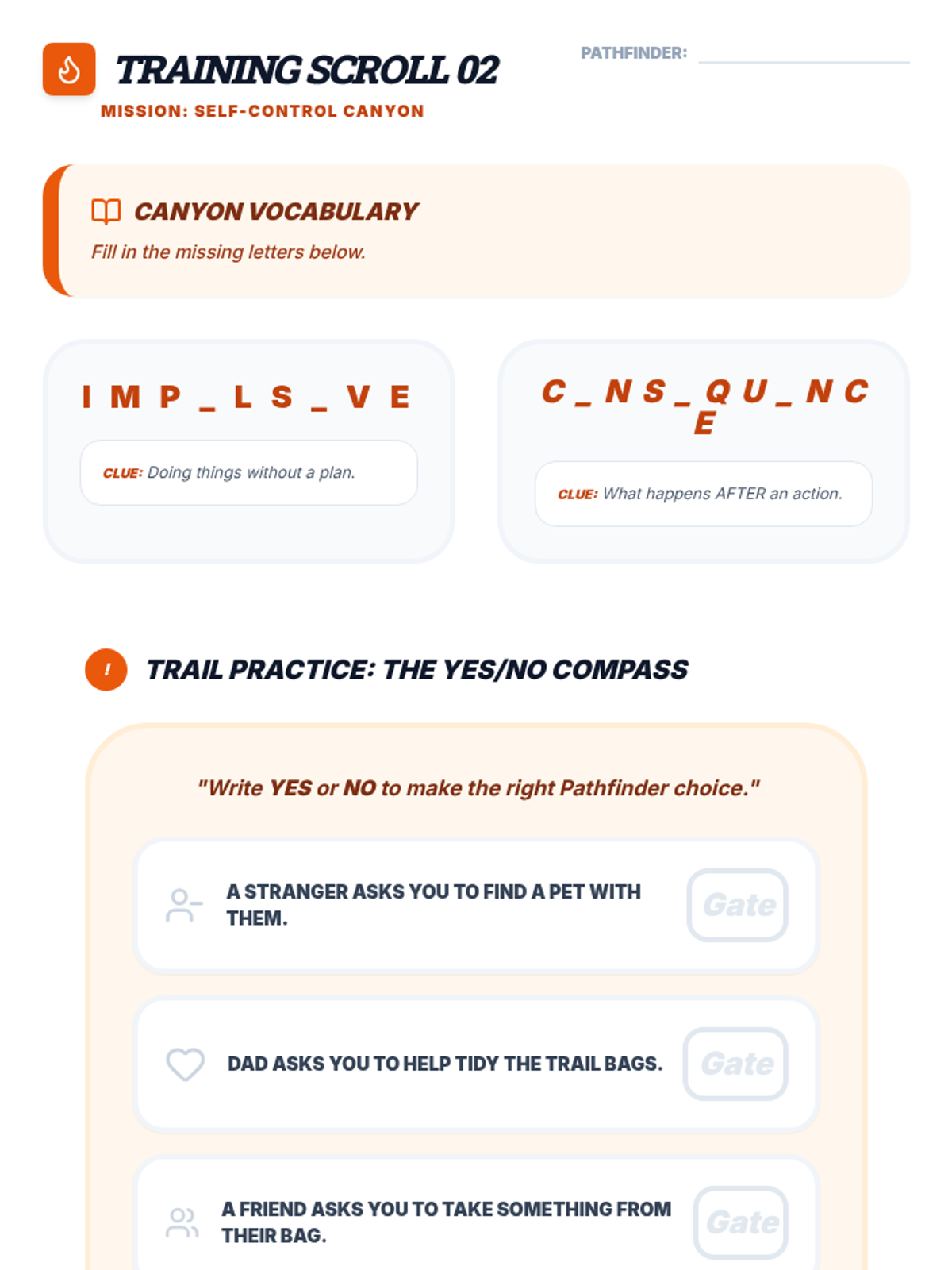
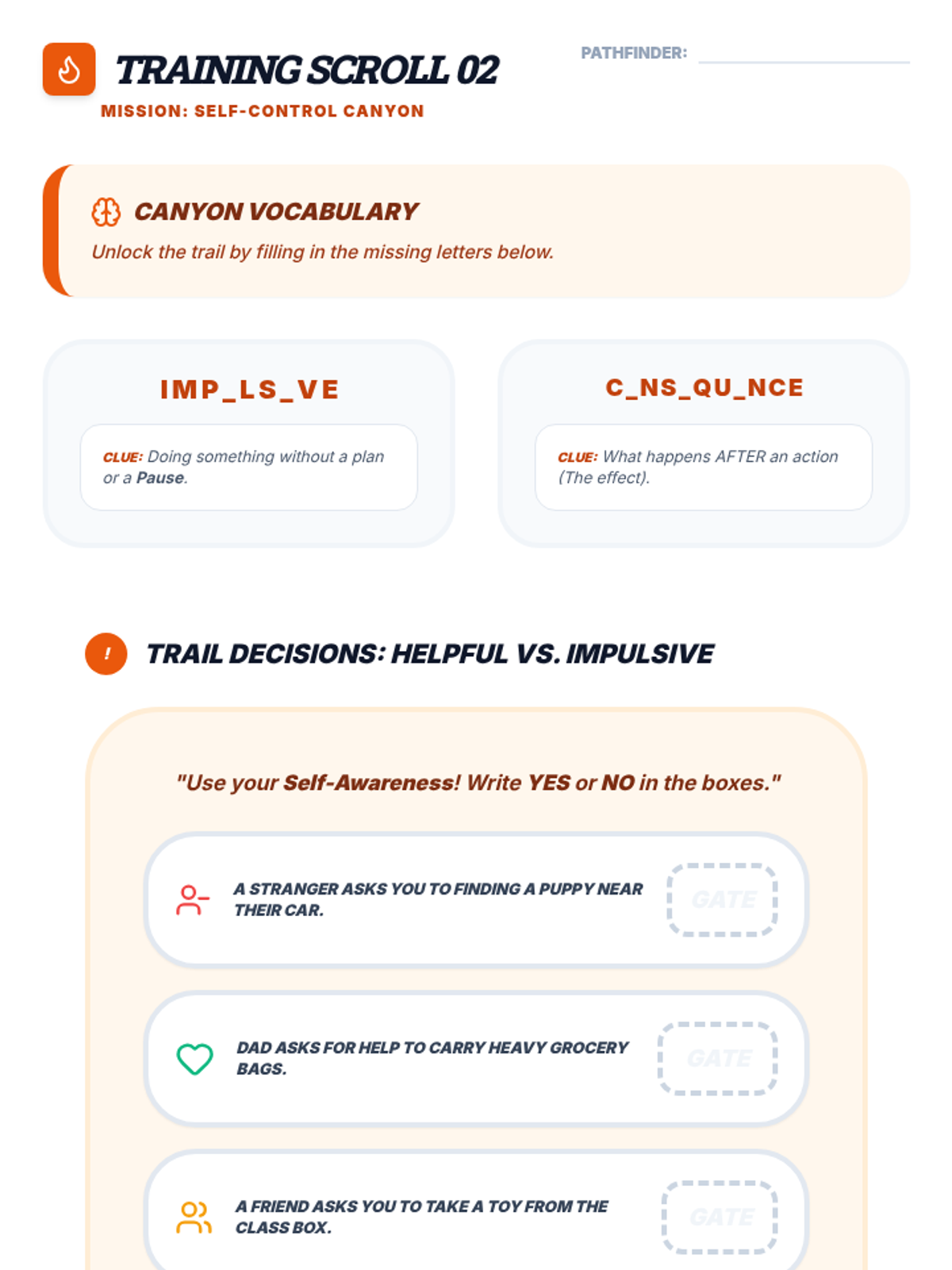
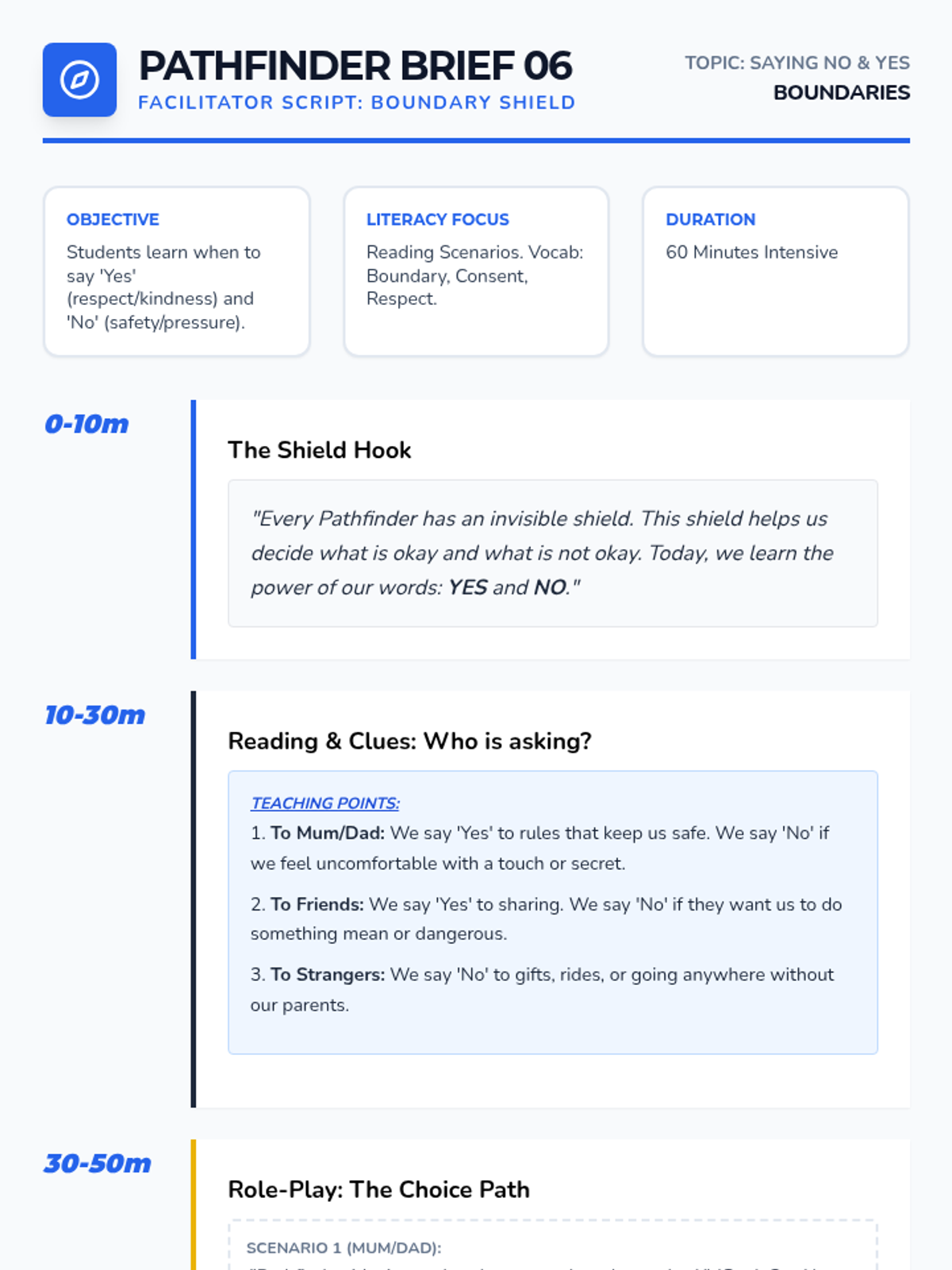
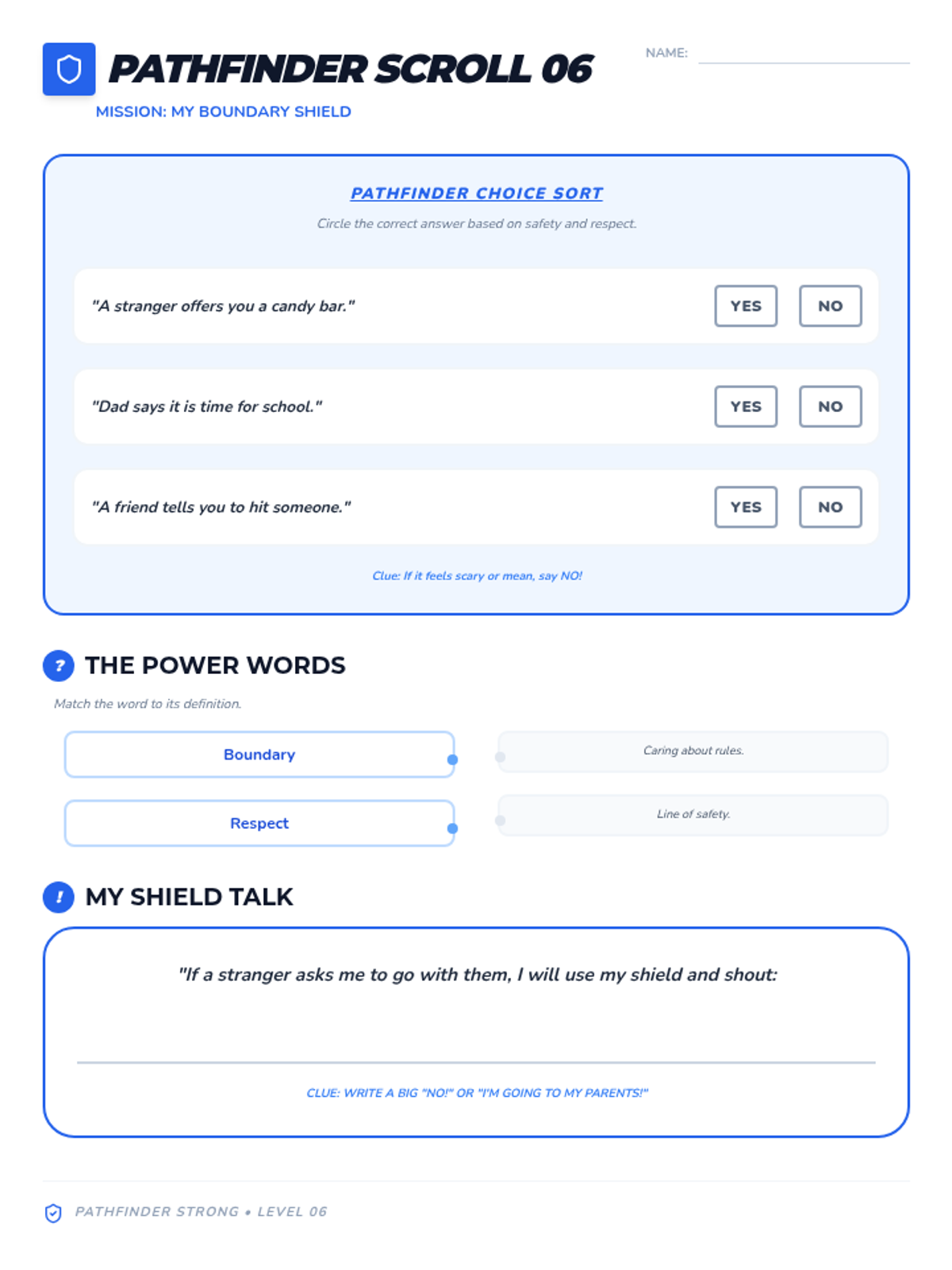
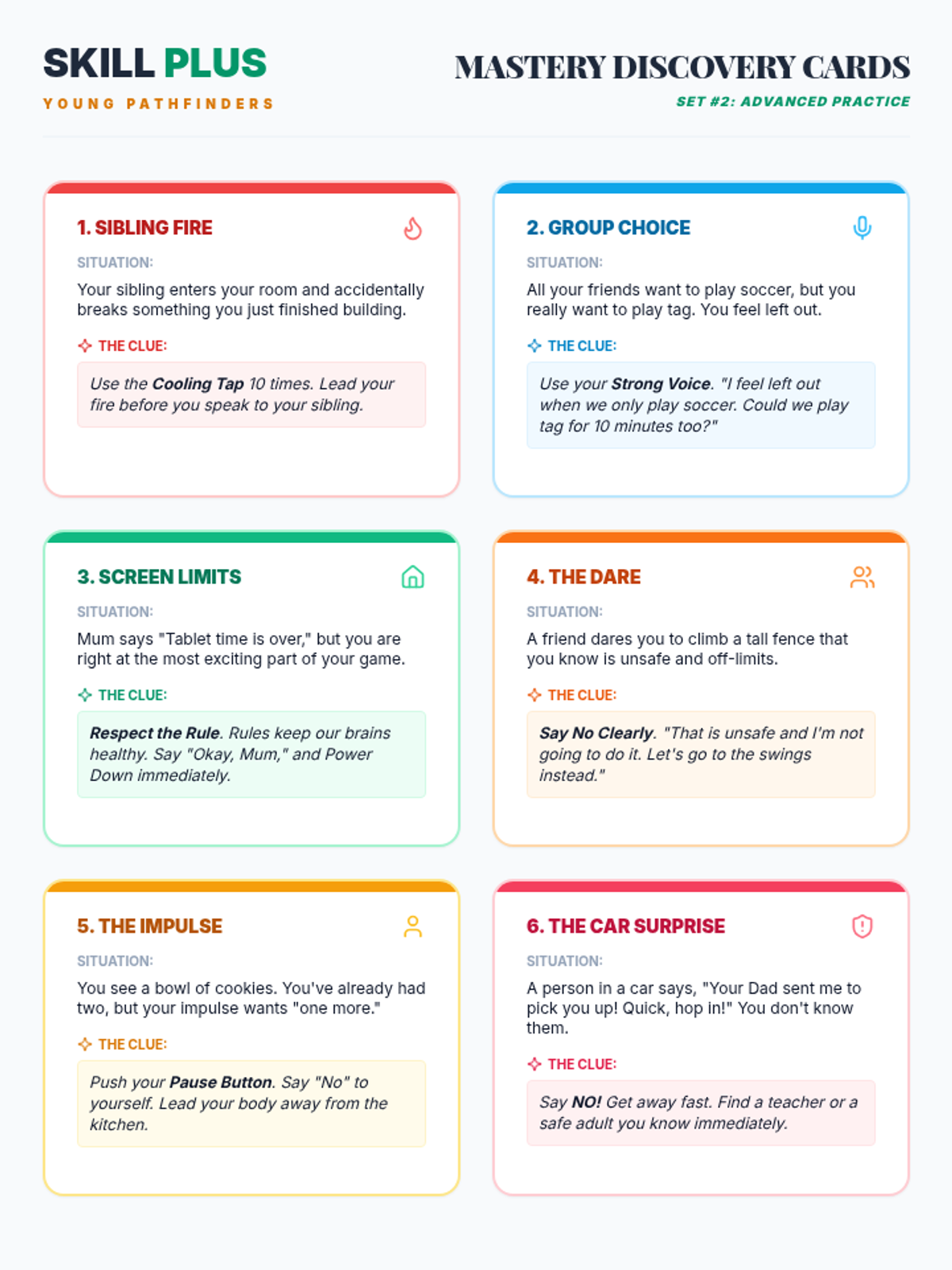
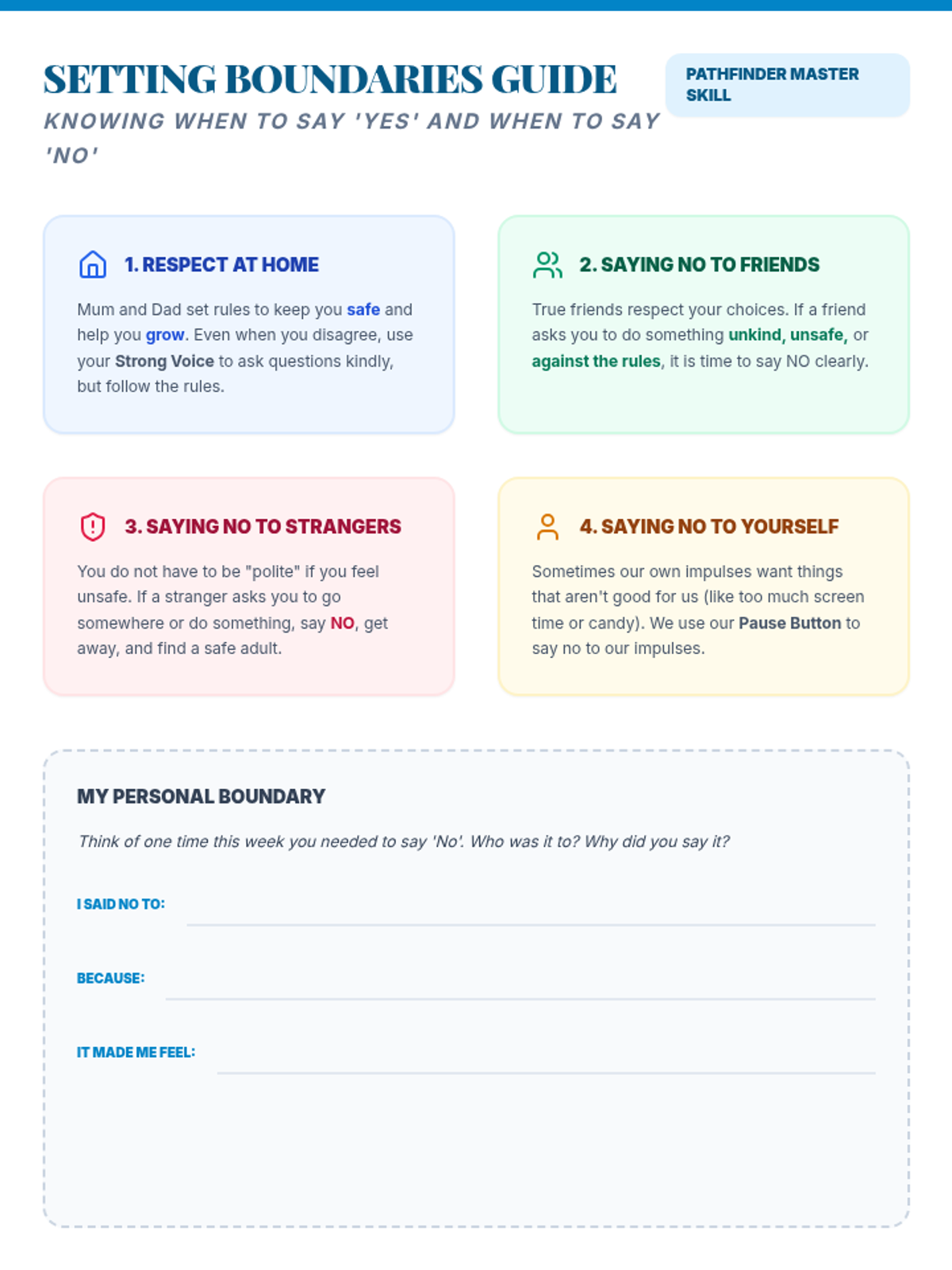
Mastering boundaries. Learning when and how to say 'No' or 'Yes' to family, friends, and strangers.
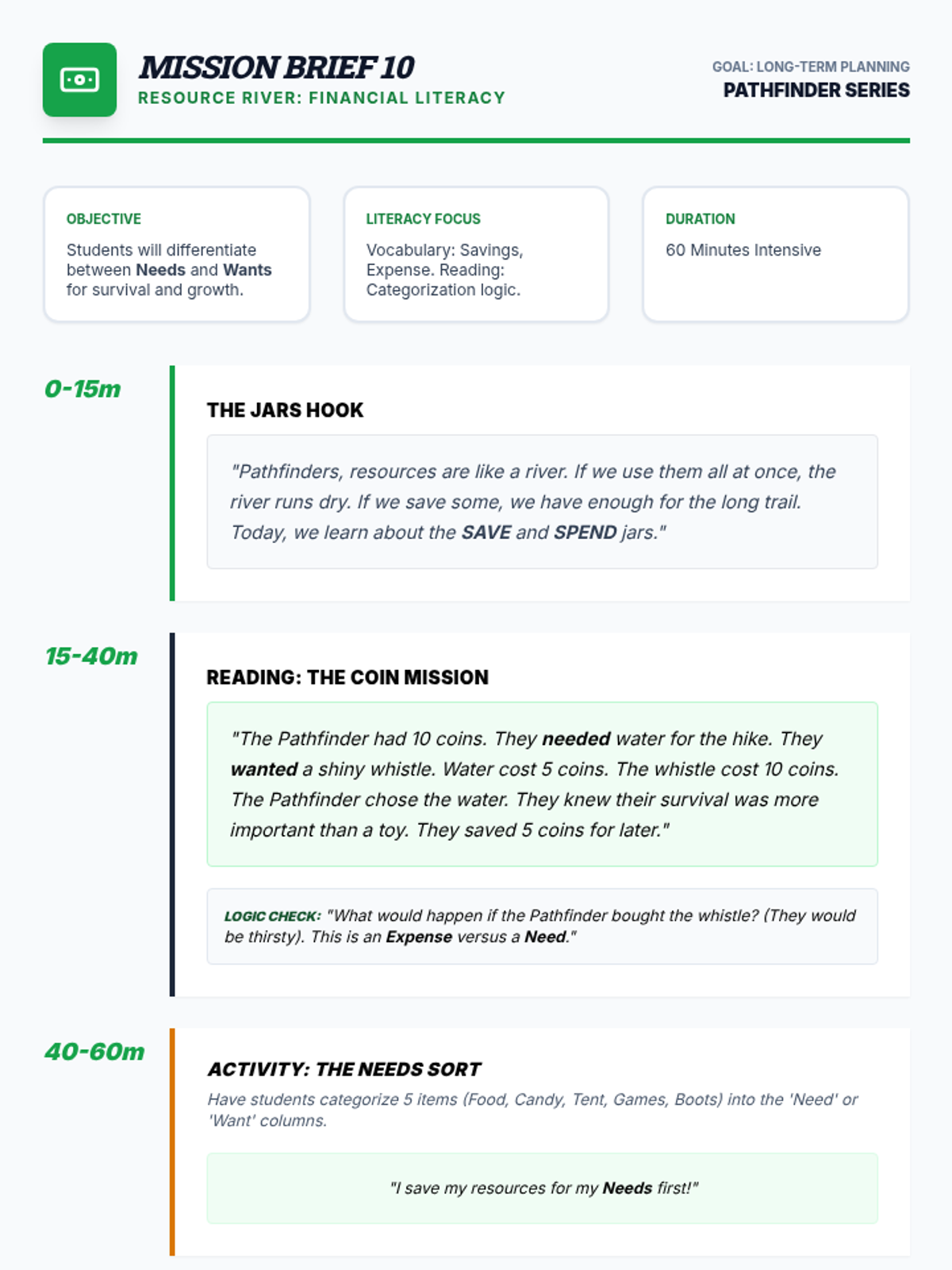
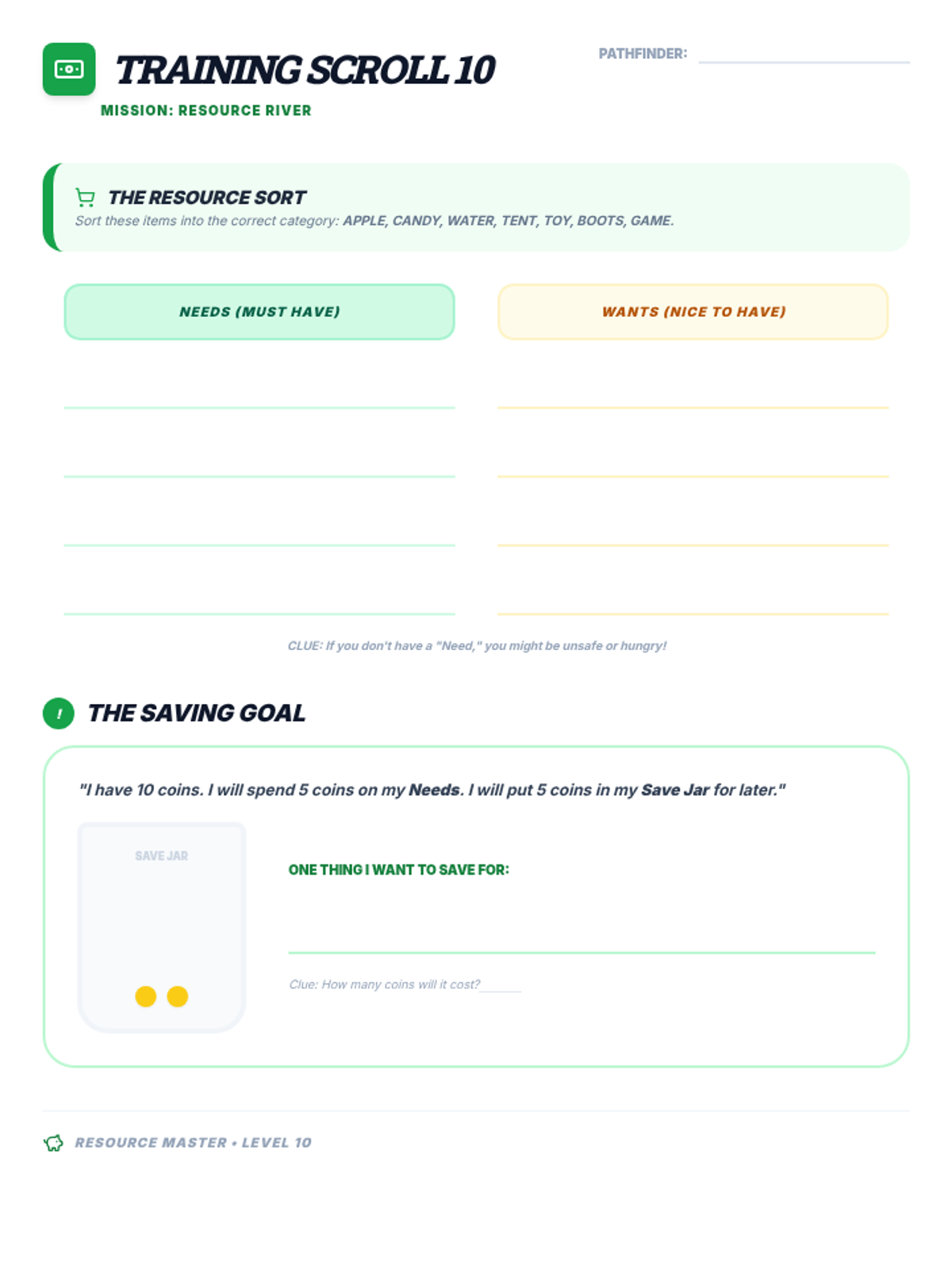
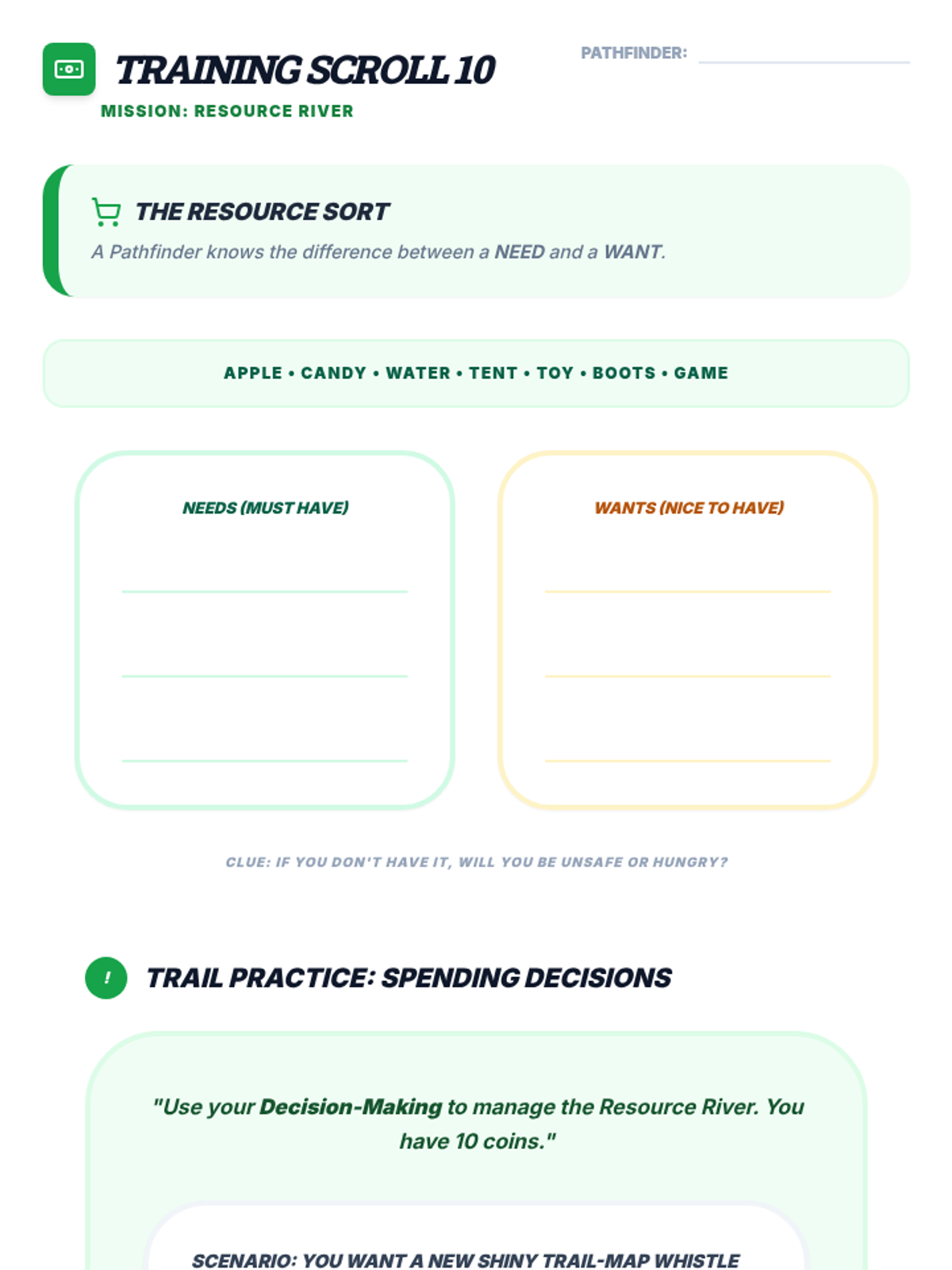
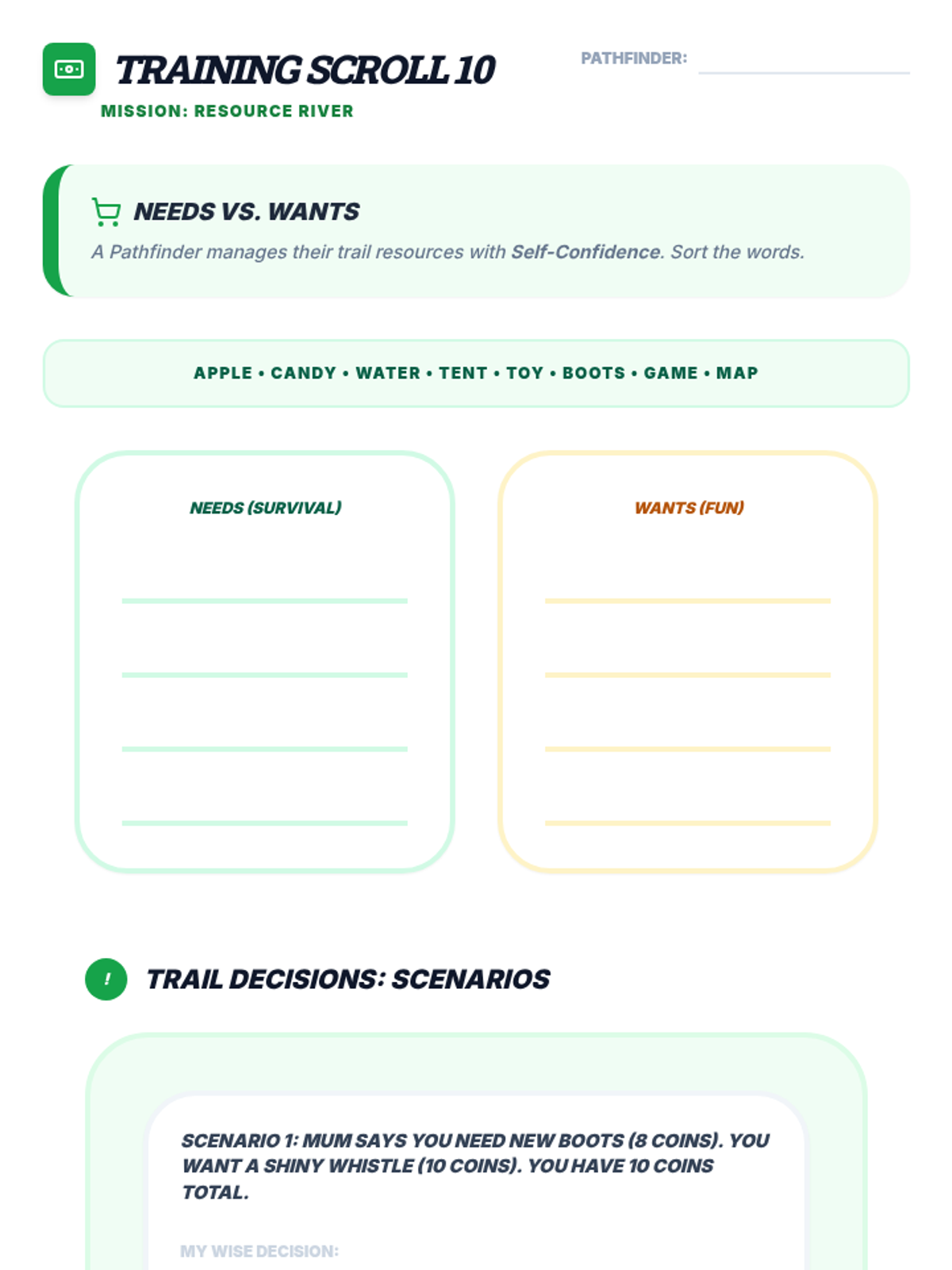
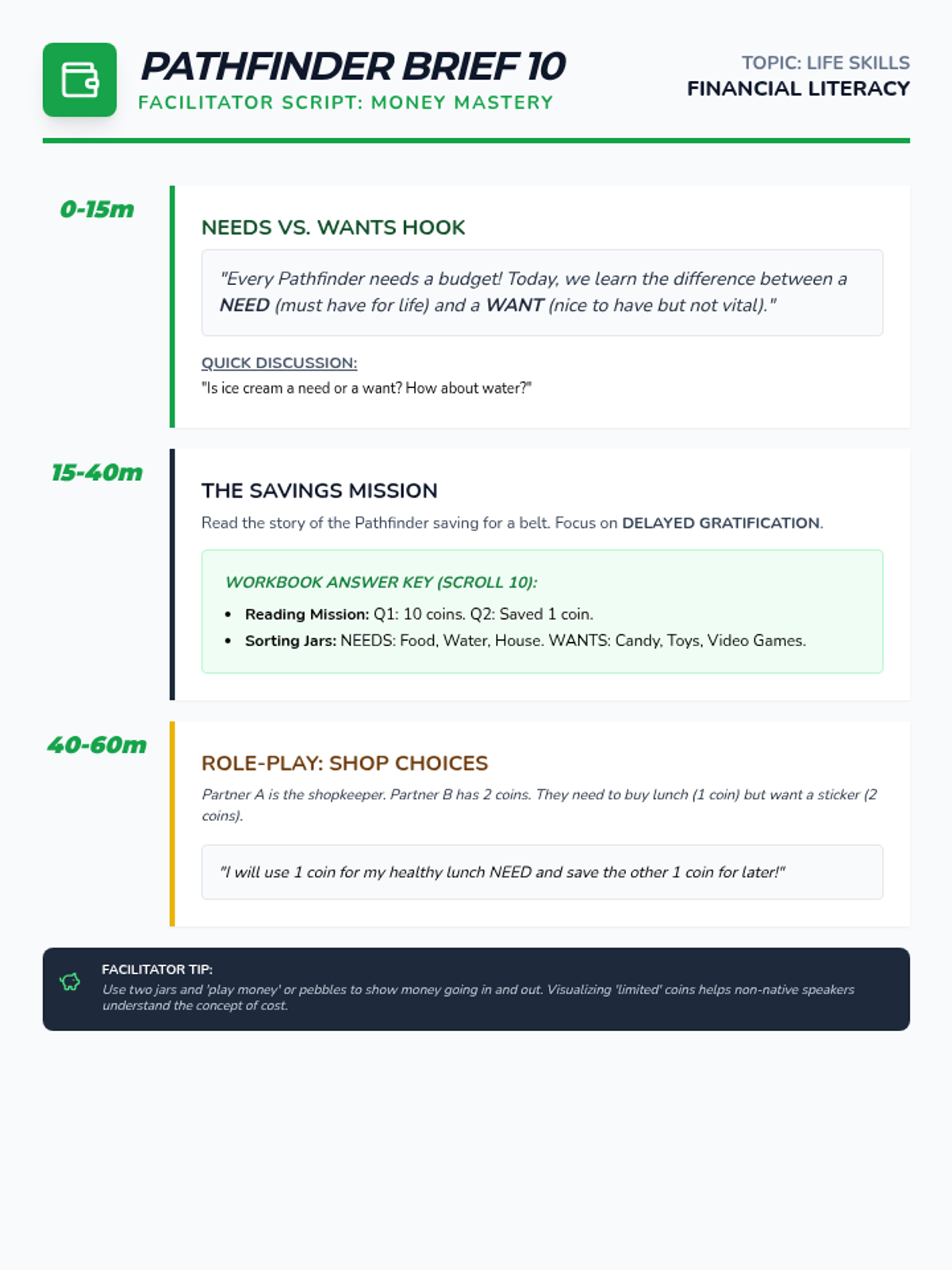
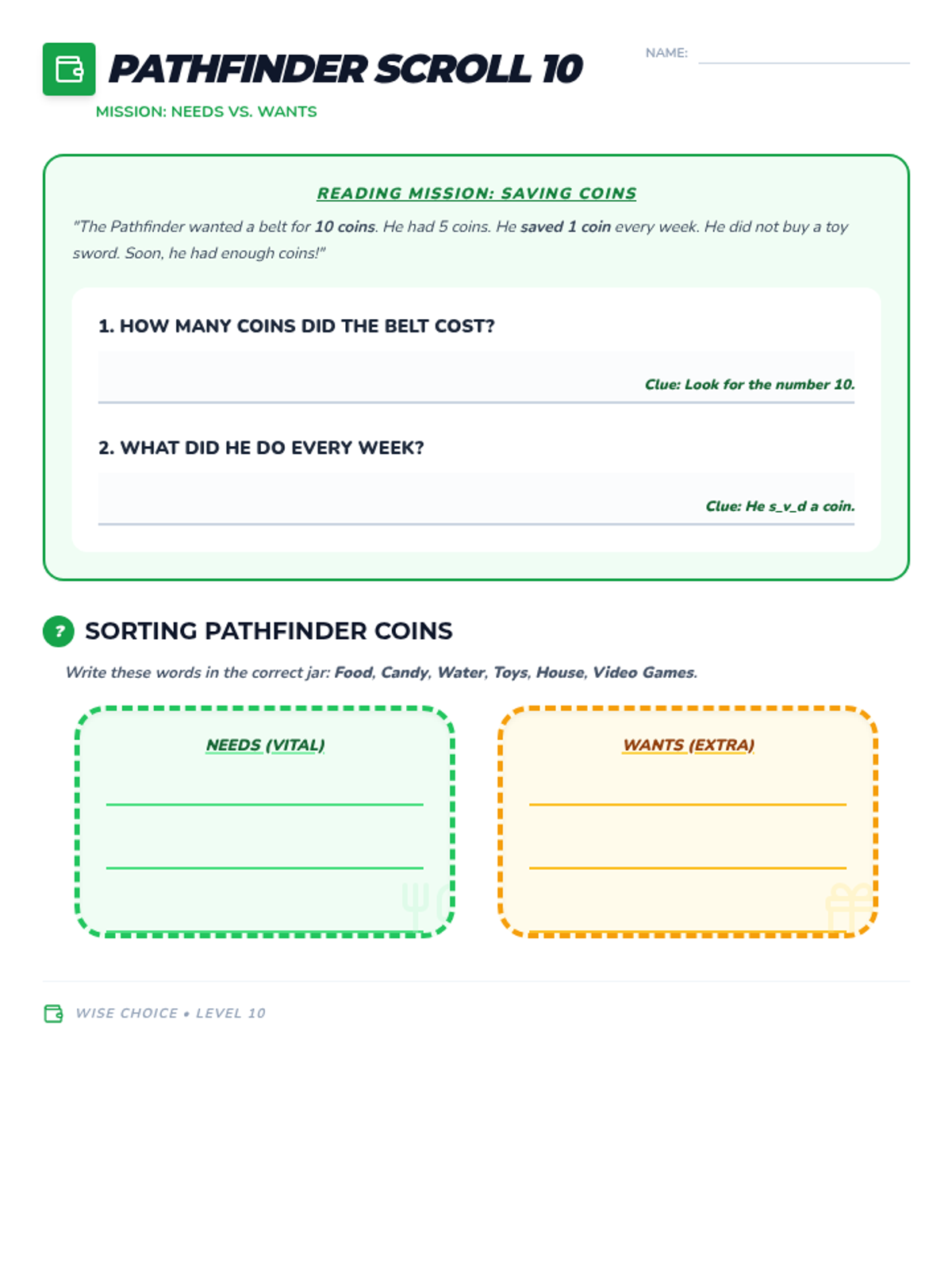
Financial literacy basics. Categorizing needs vs. wants to build long-term planning skills.
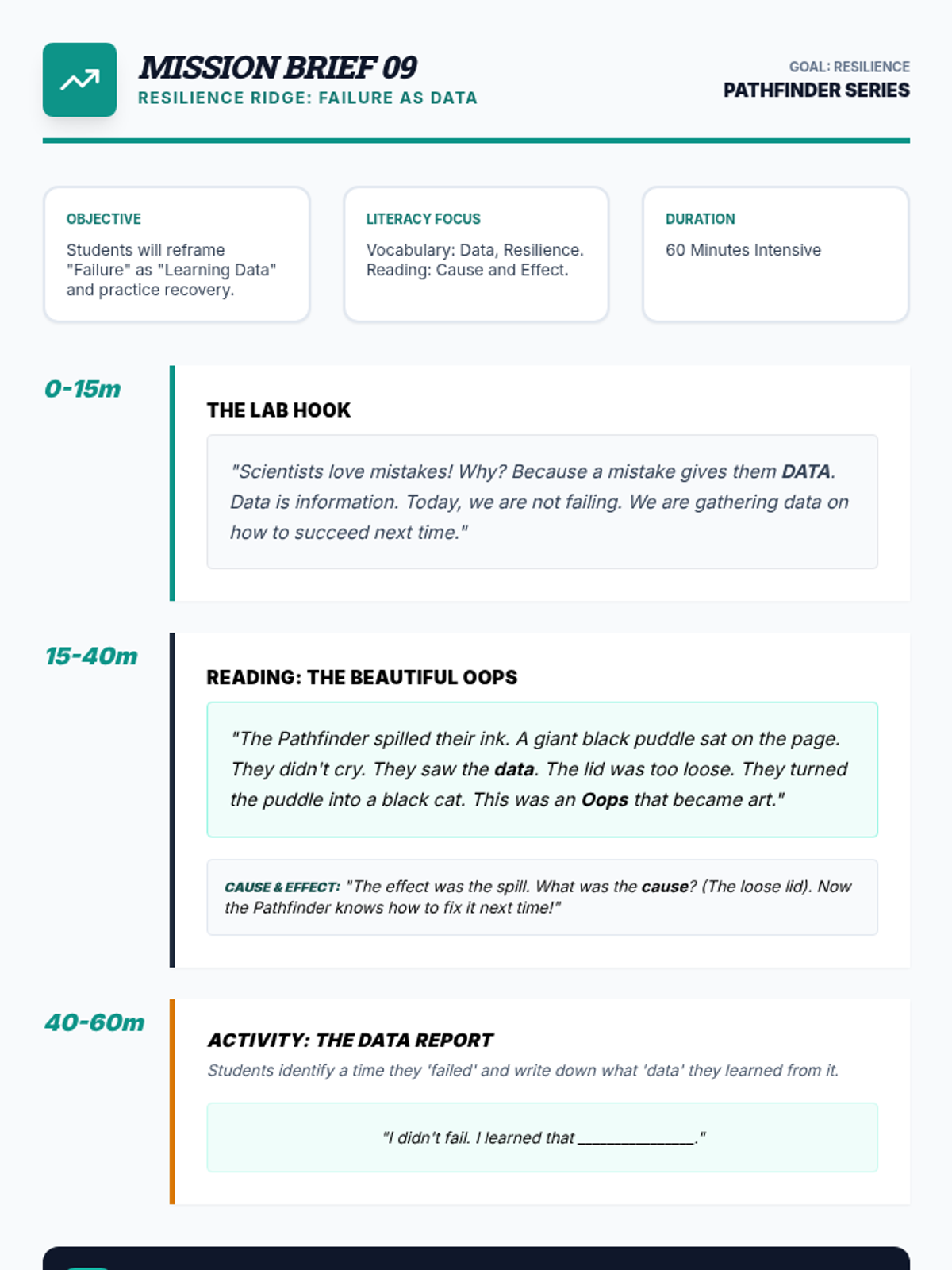
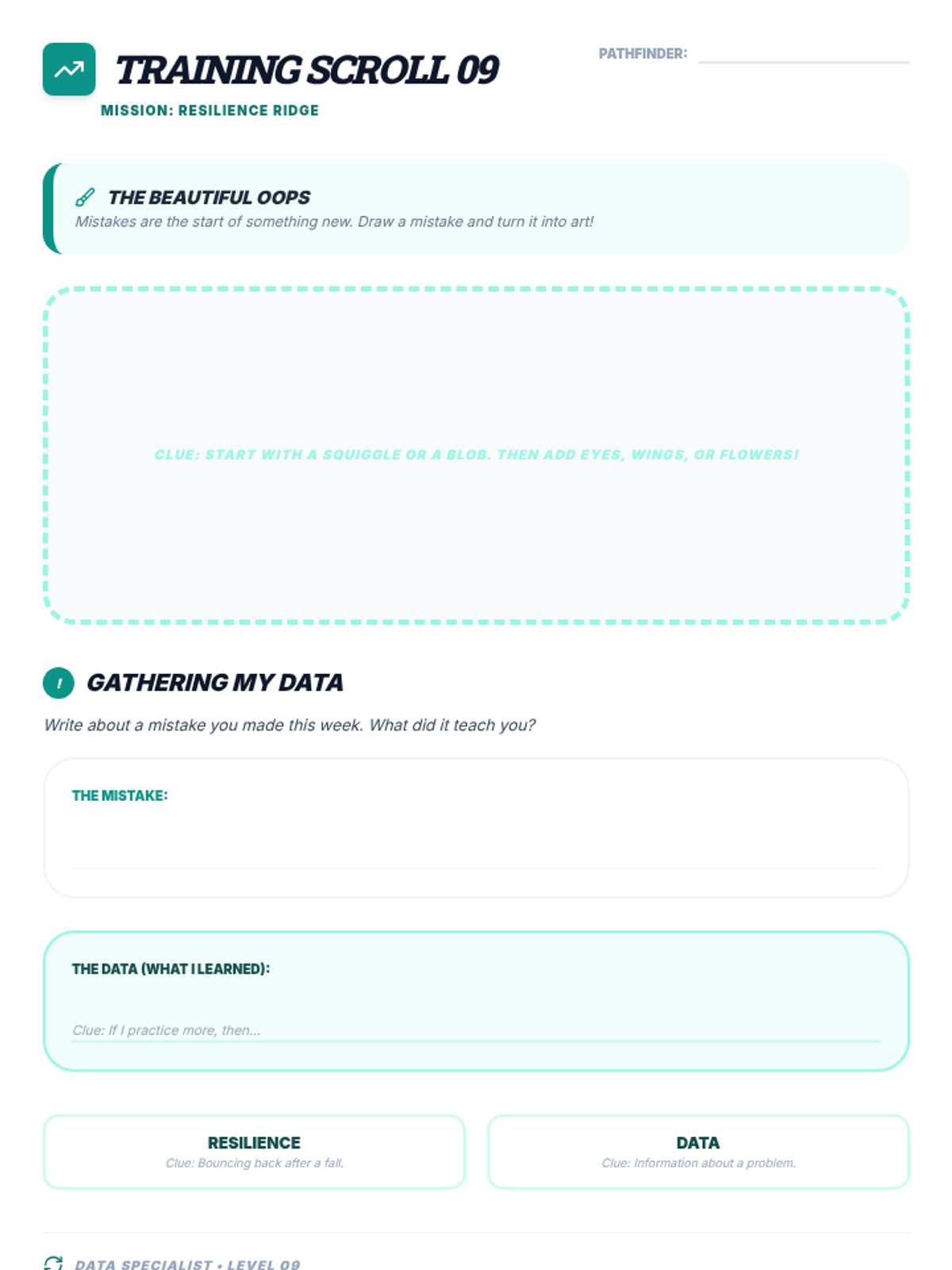
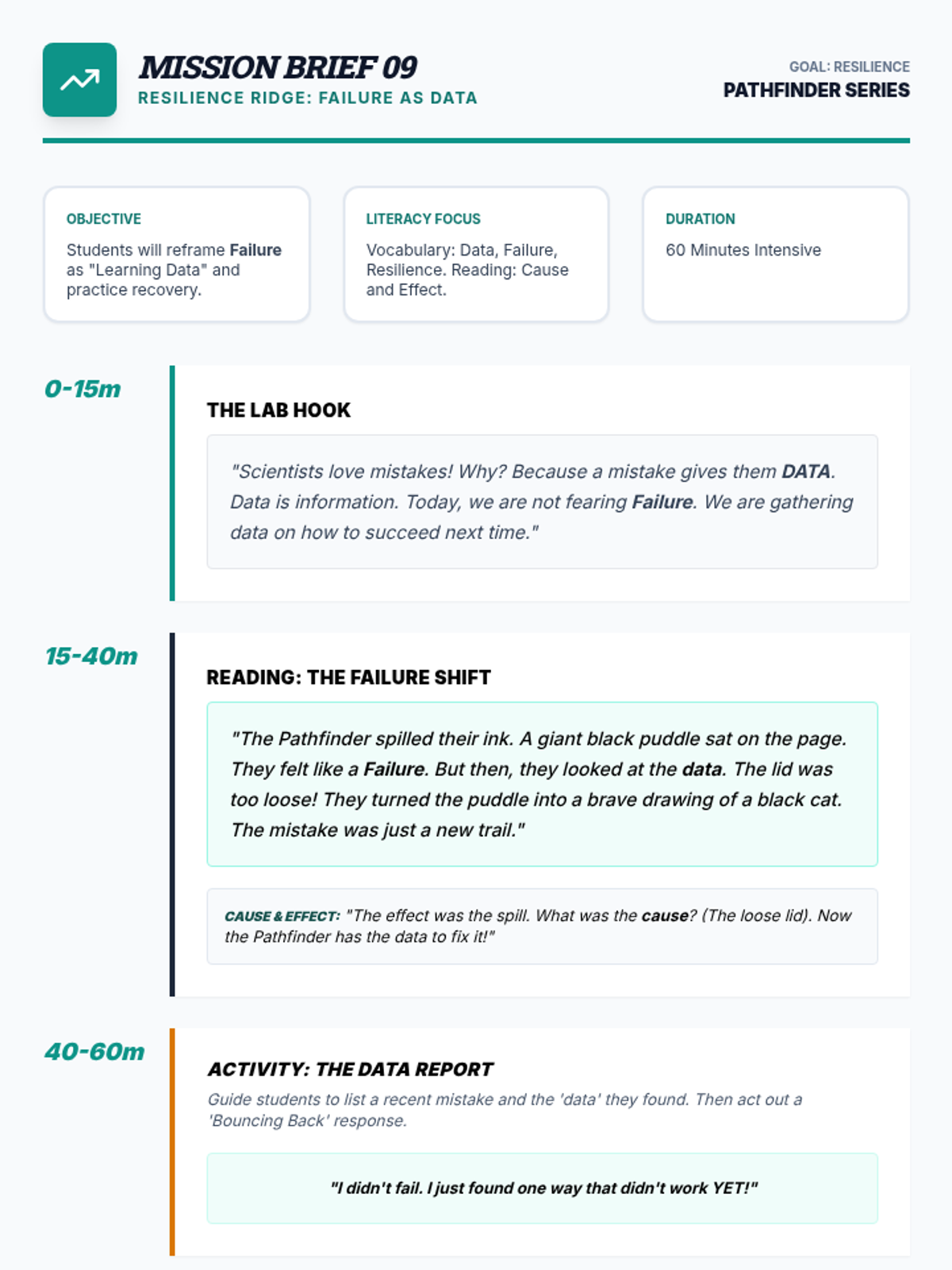
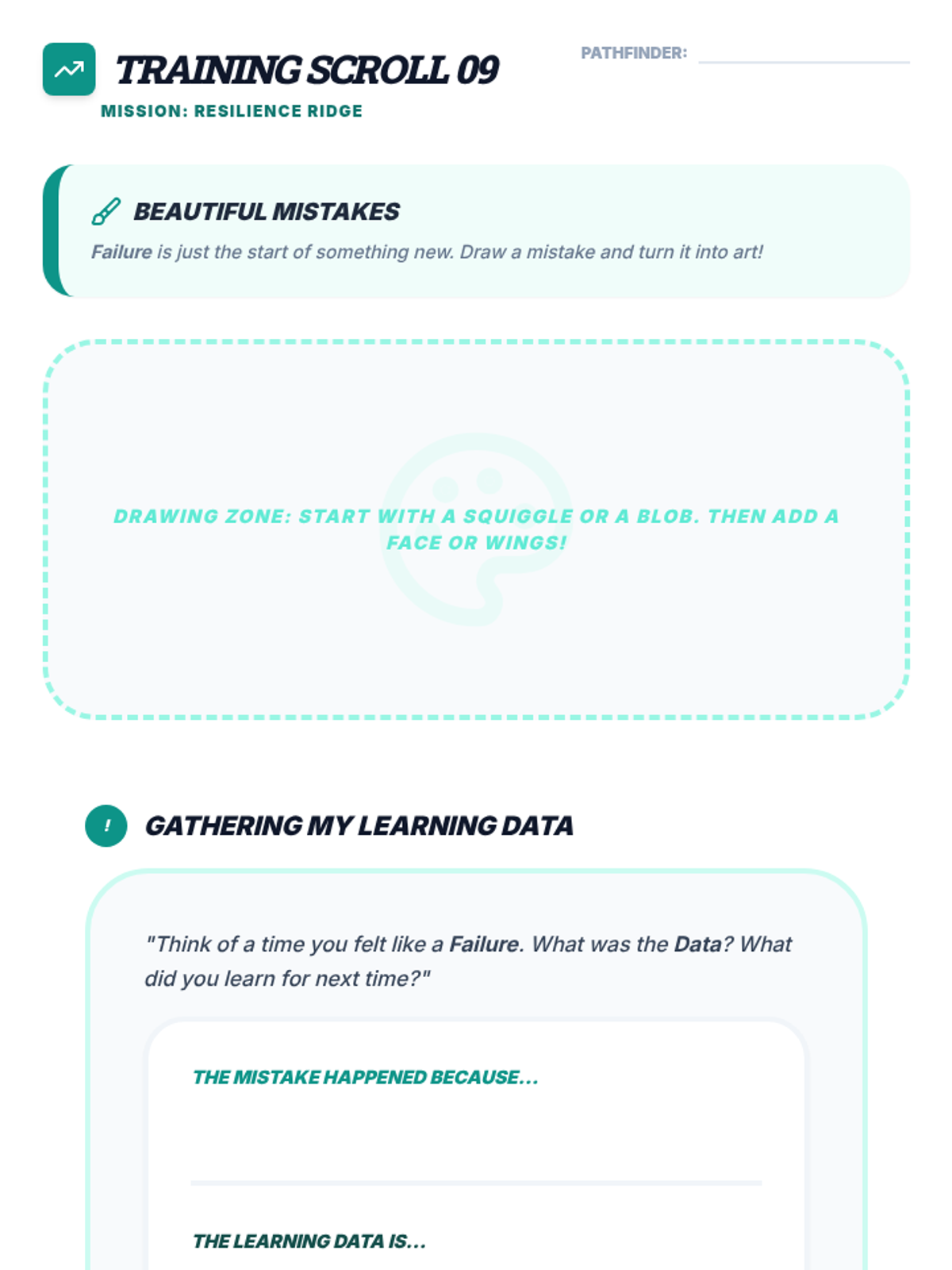
Learning to see failure as data. Celebrating 'Beautiful Oops' moments and messy progress.
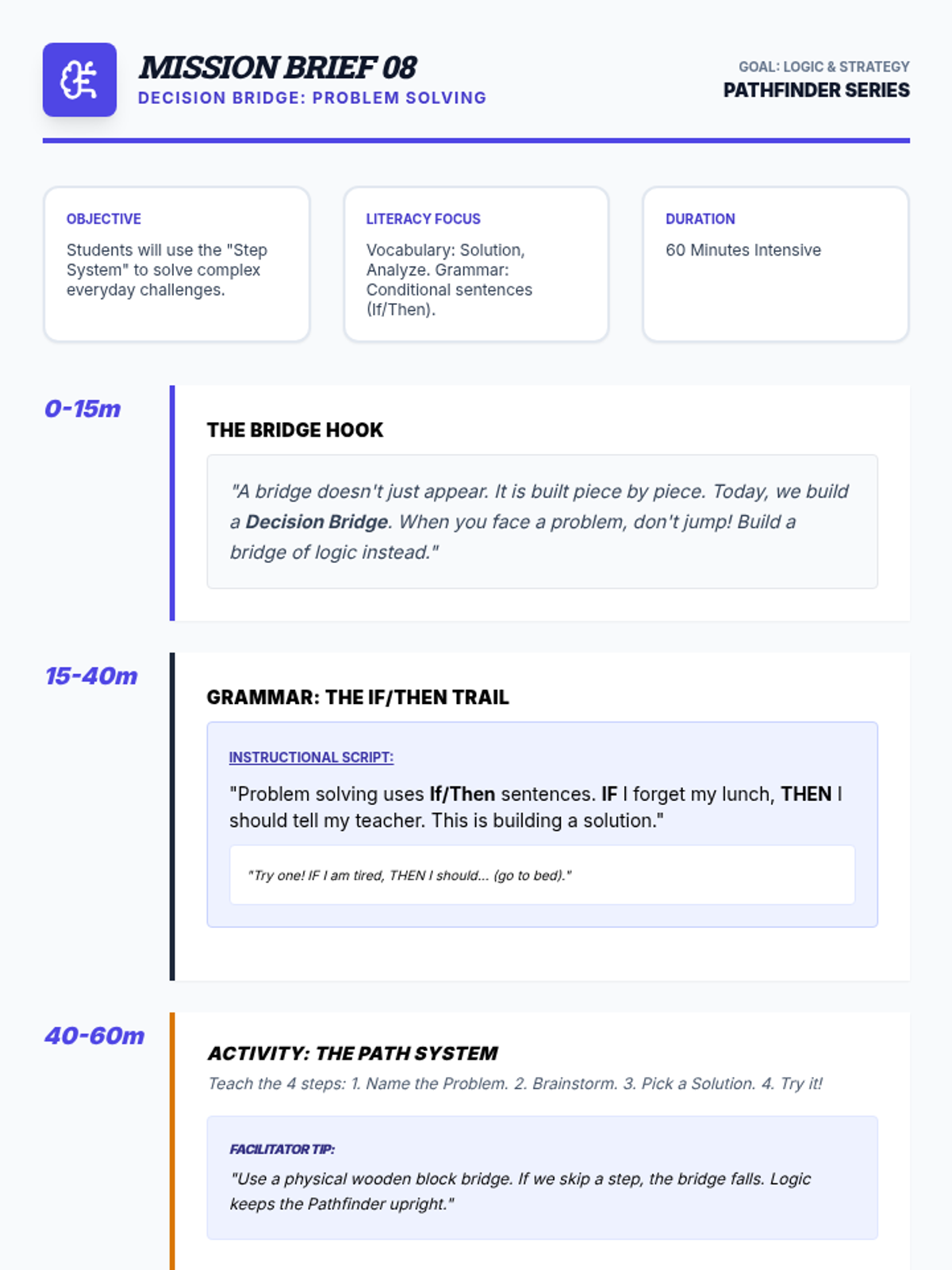
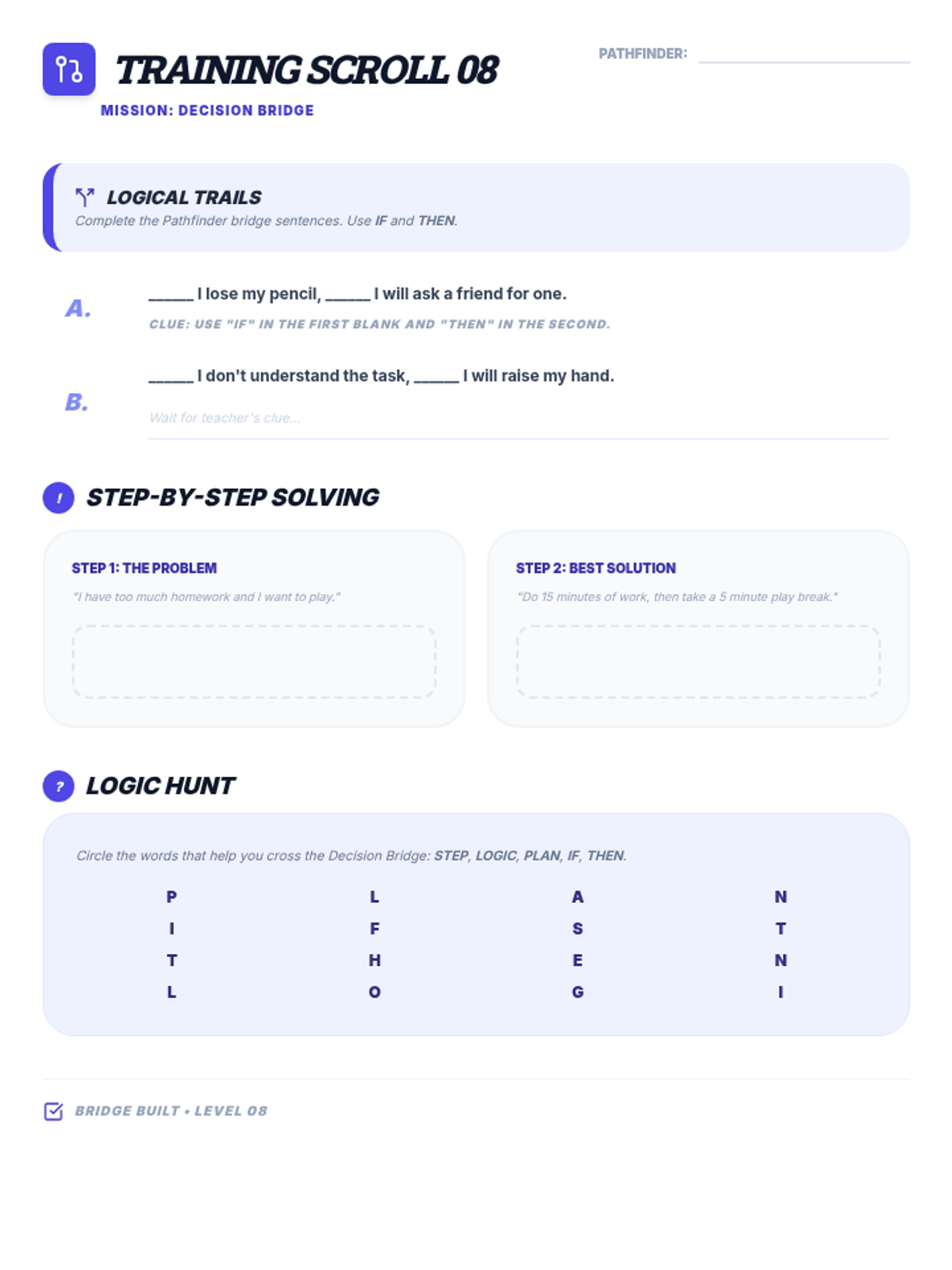
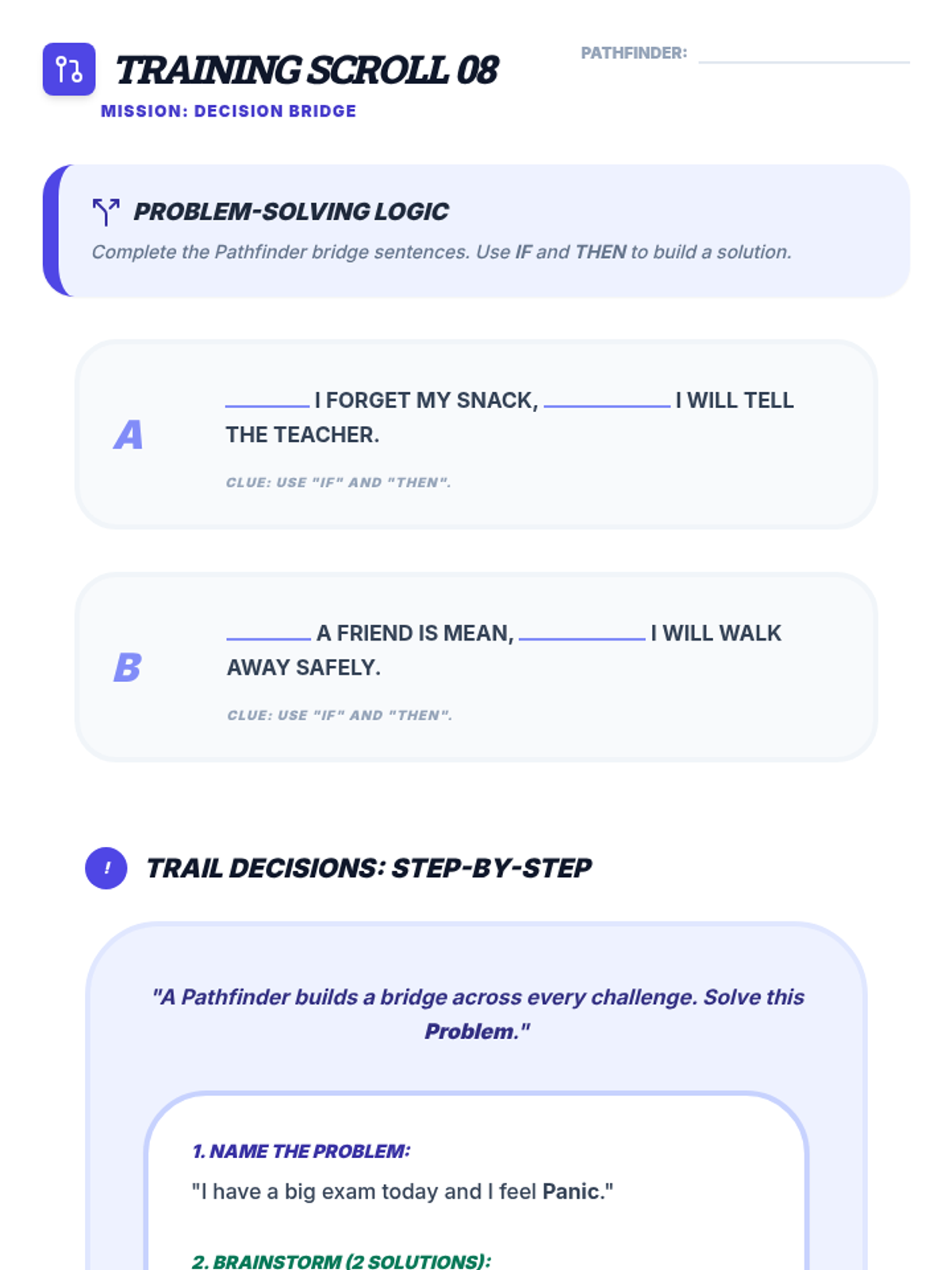
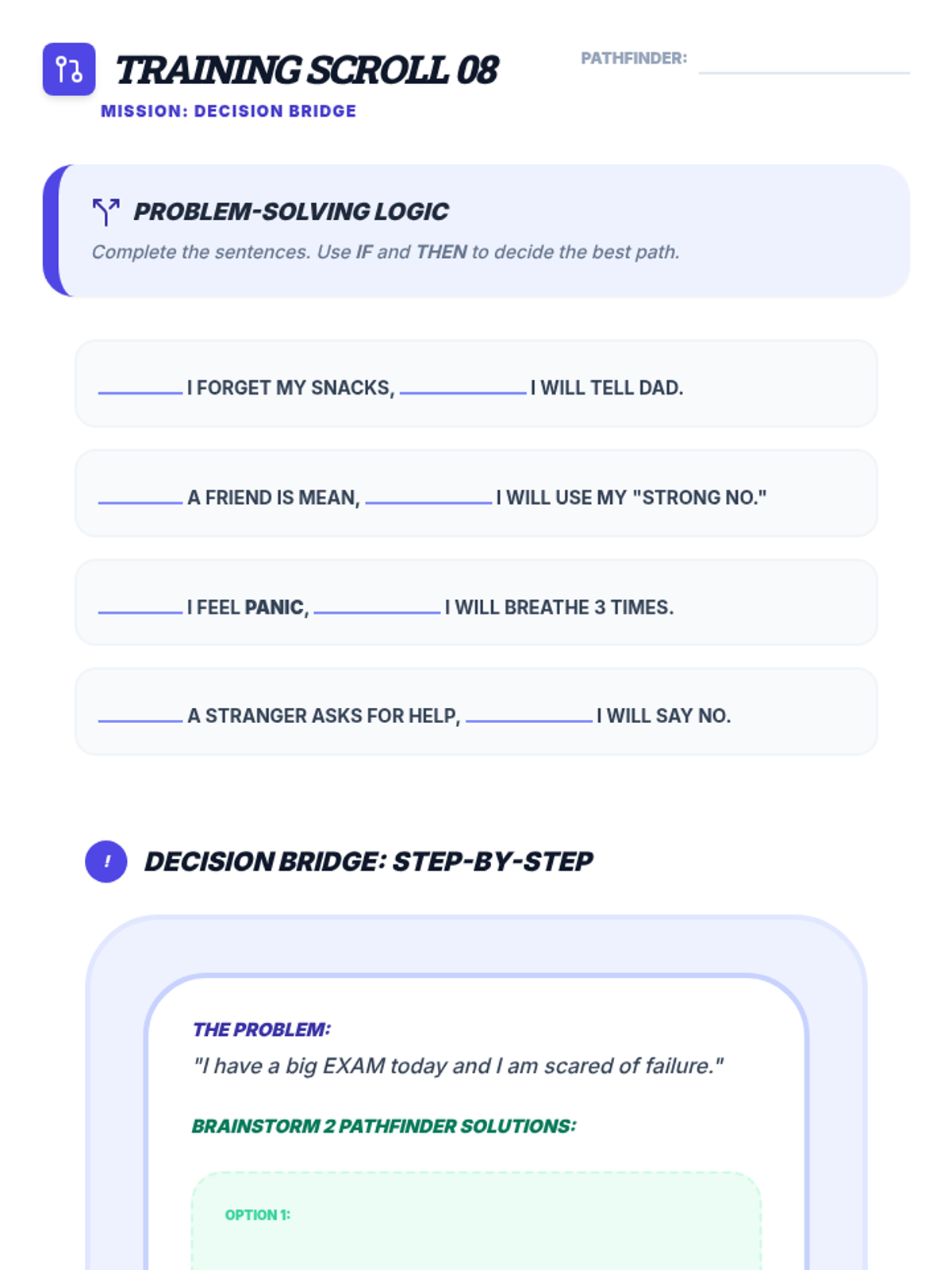
Applying logic to everyday challenges. The 'Pathfinder Step System' for making thoughtful choices.
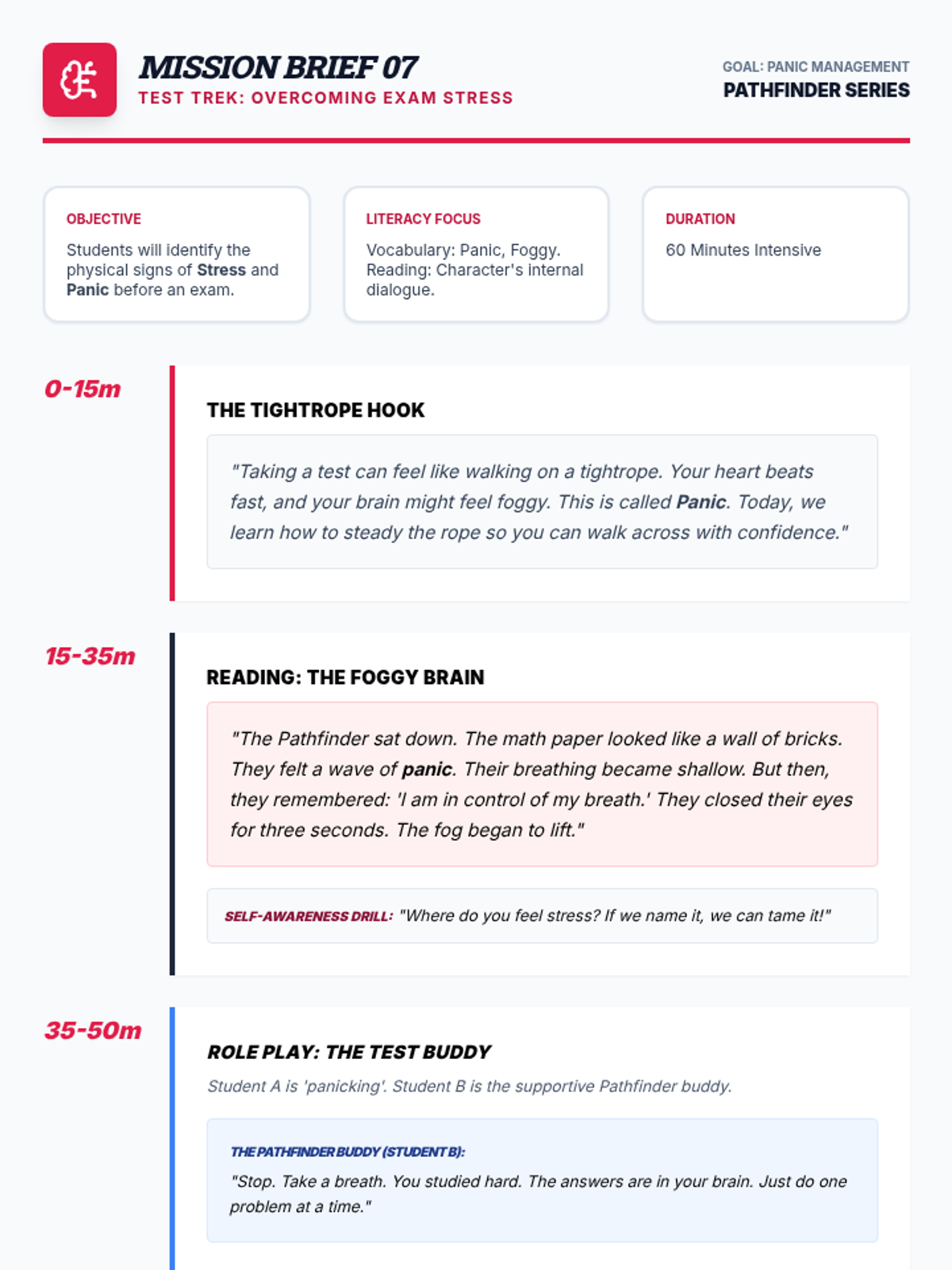
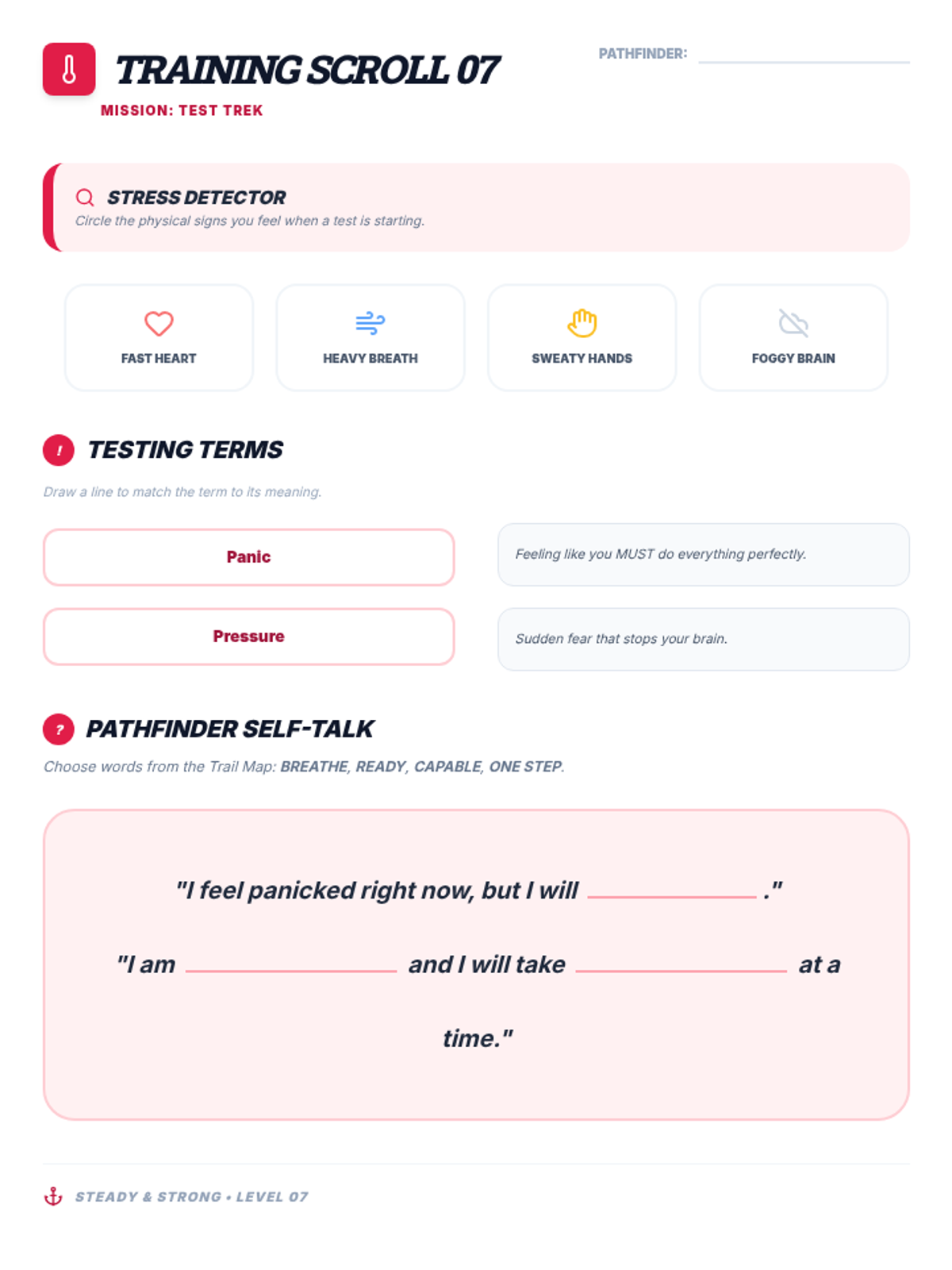
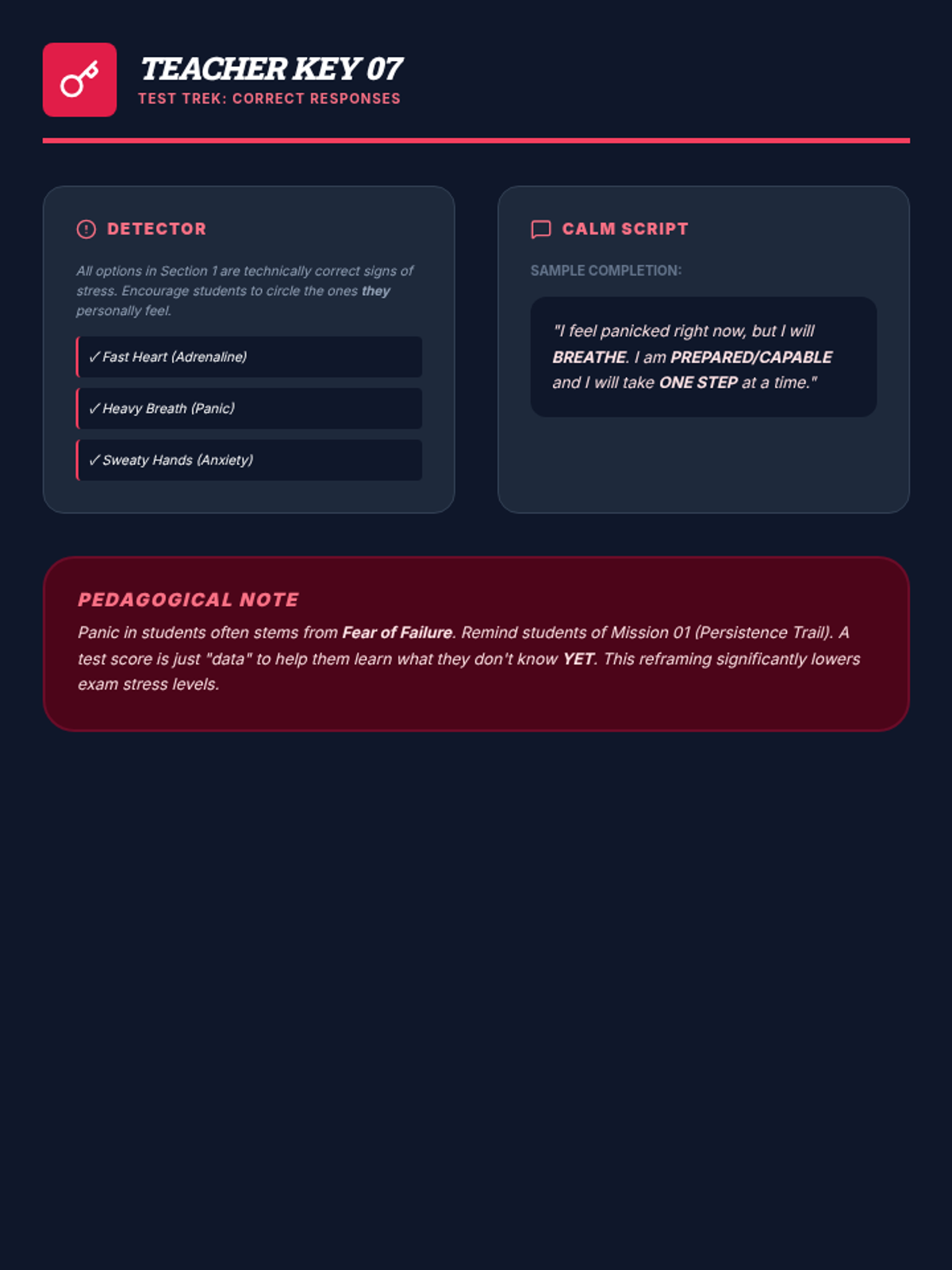
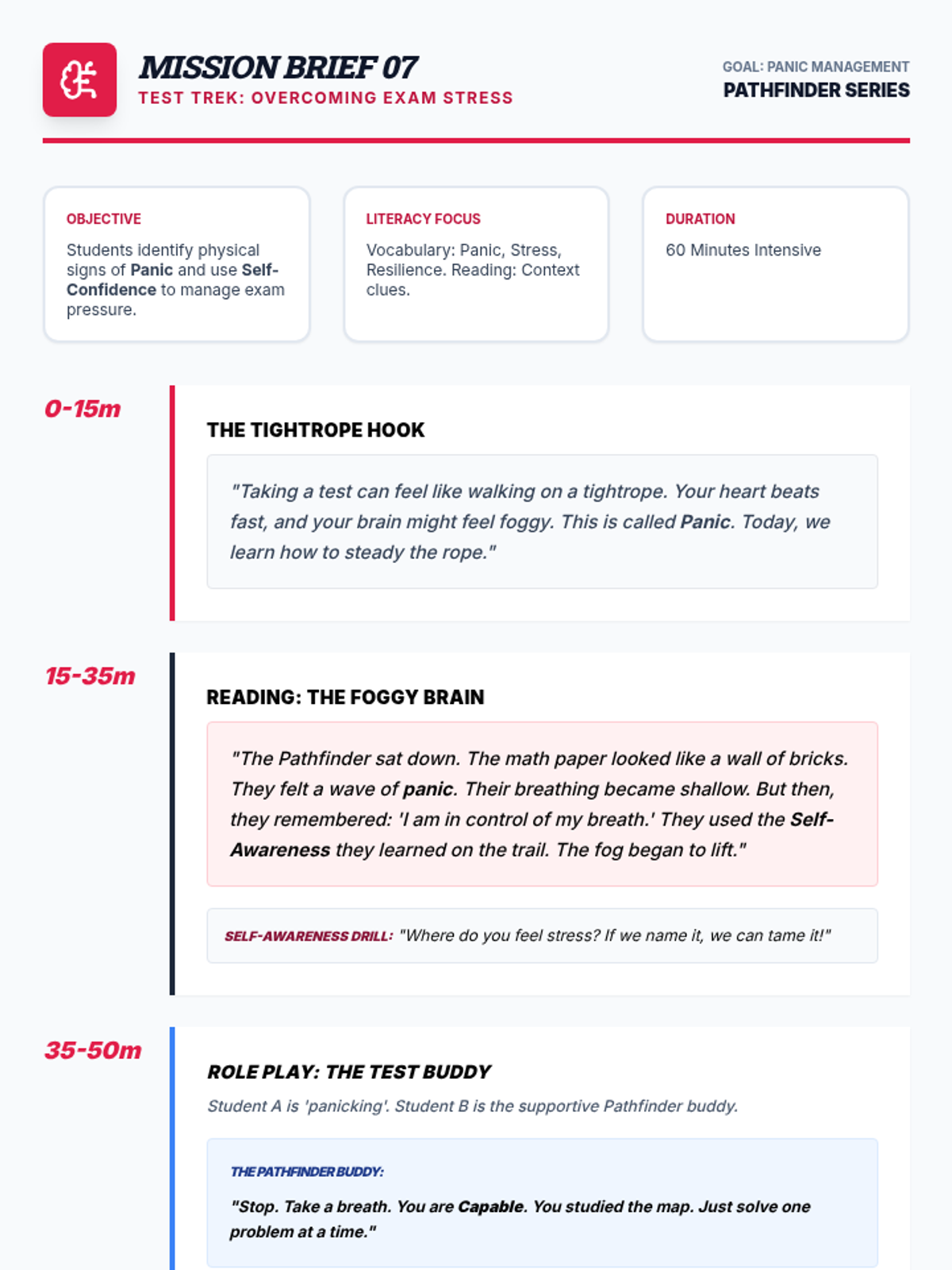
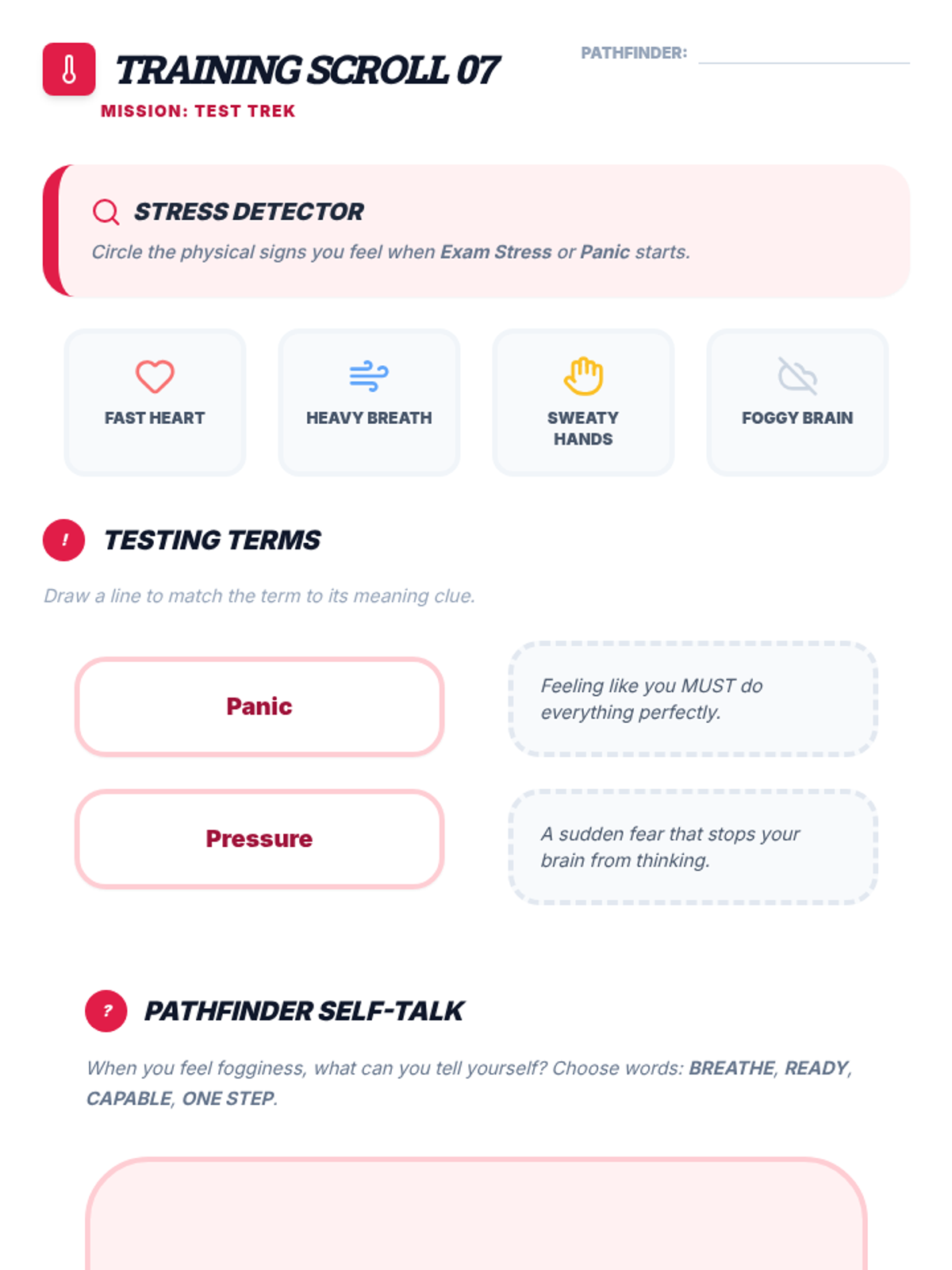
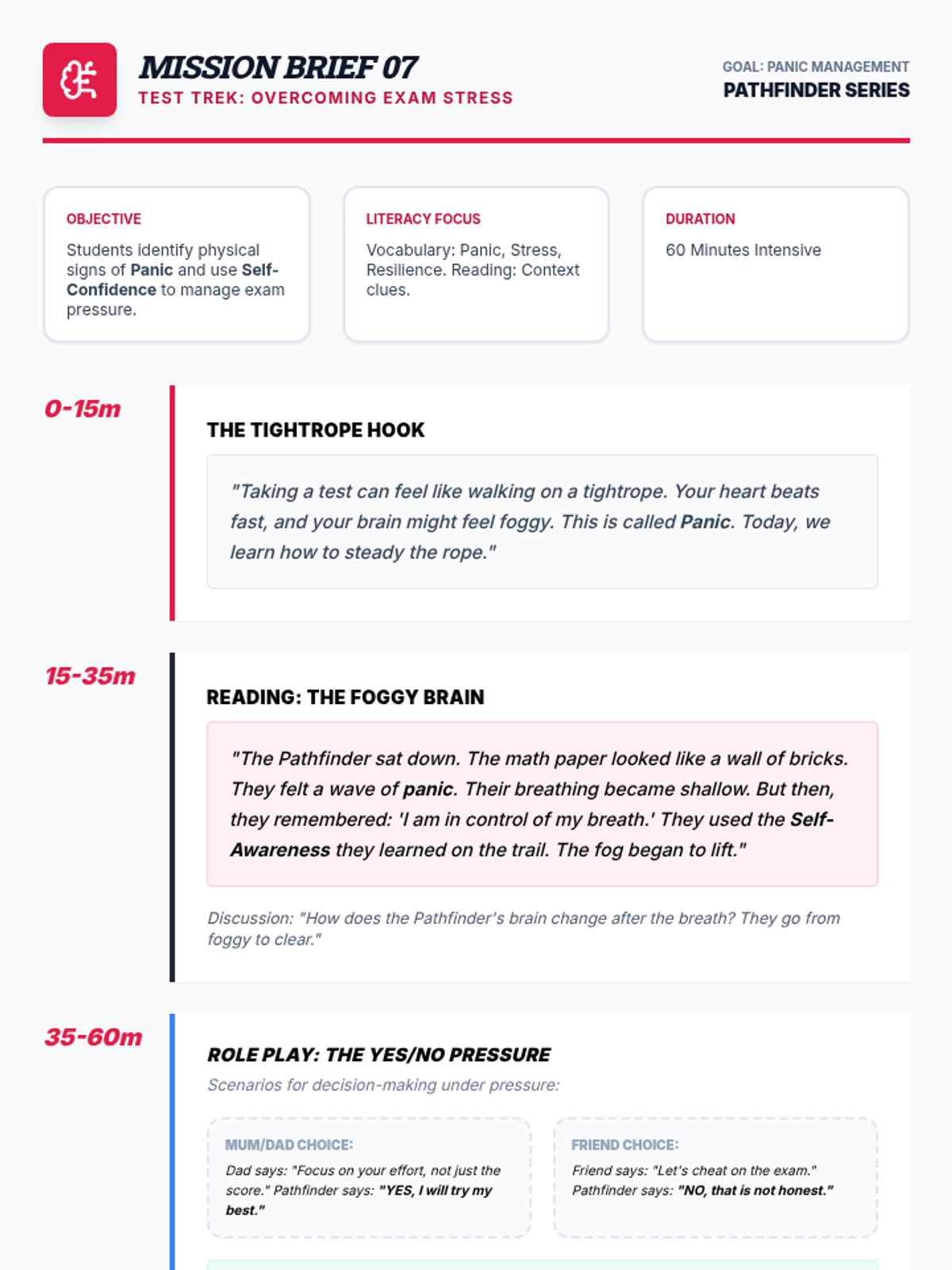
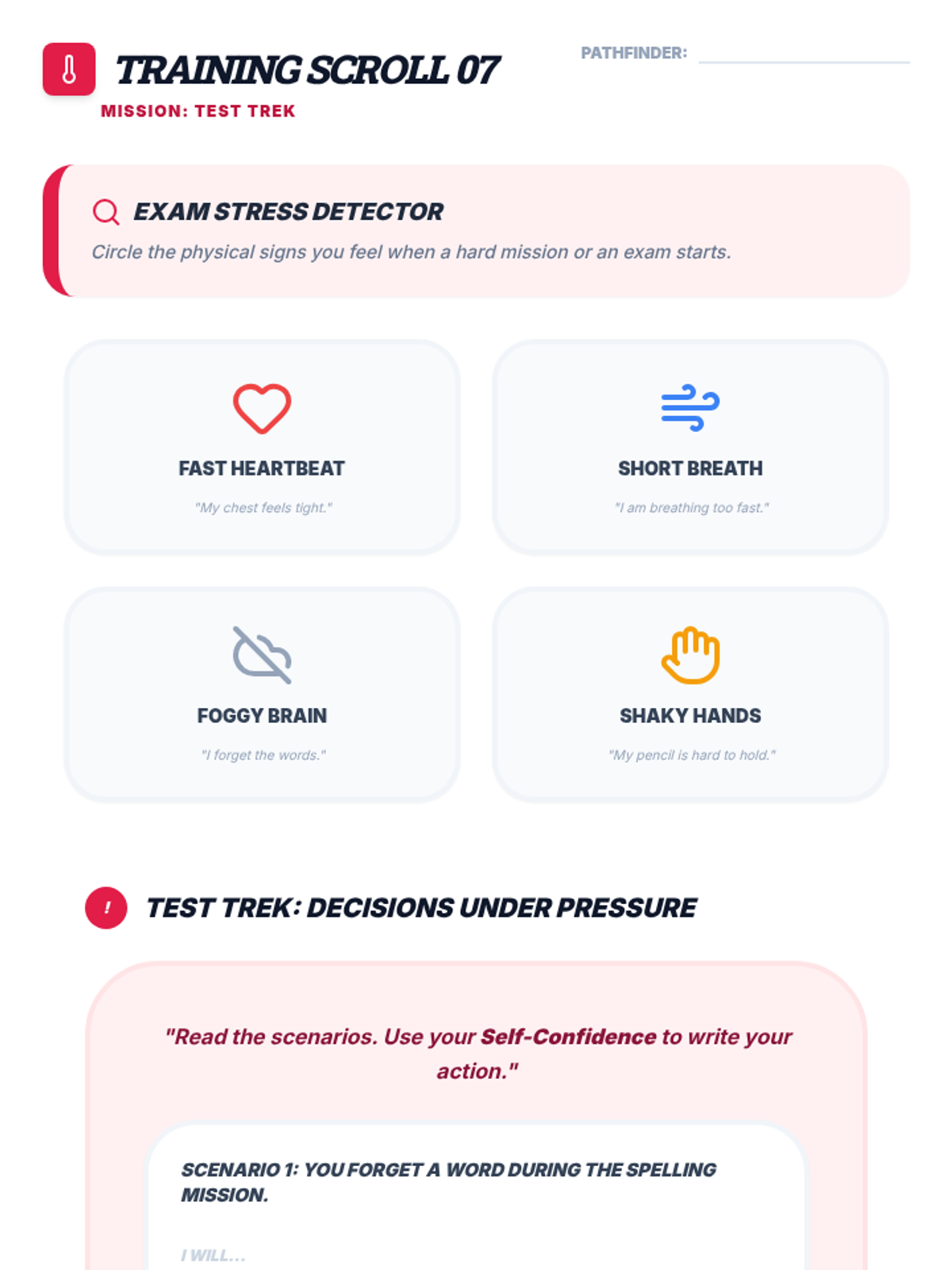
Practical tools for managing exam stress and academic pressure. Transitioning from panic to self-awareness.
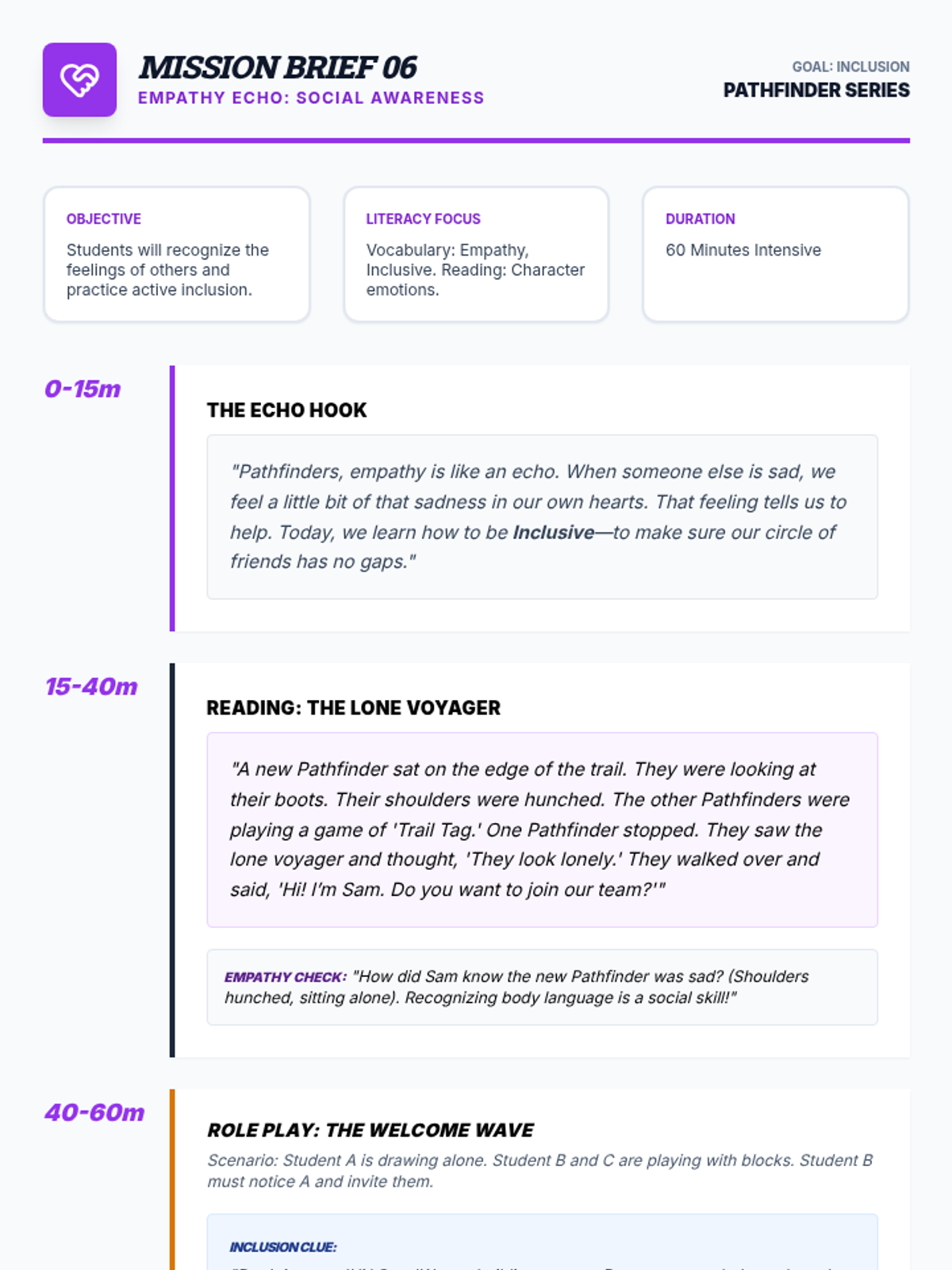
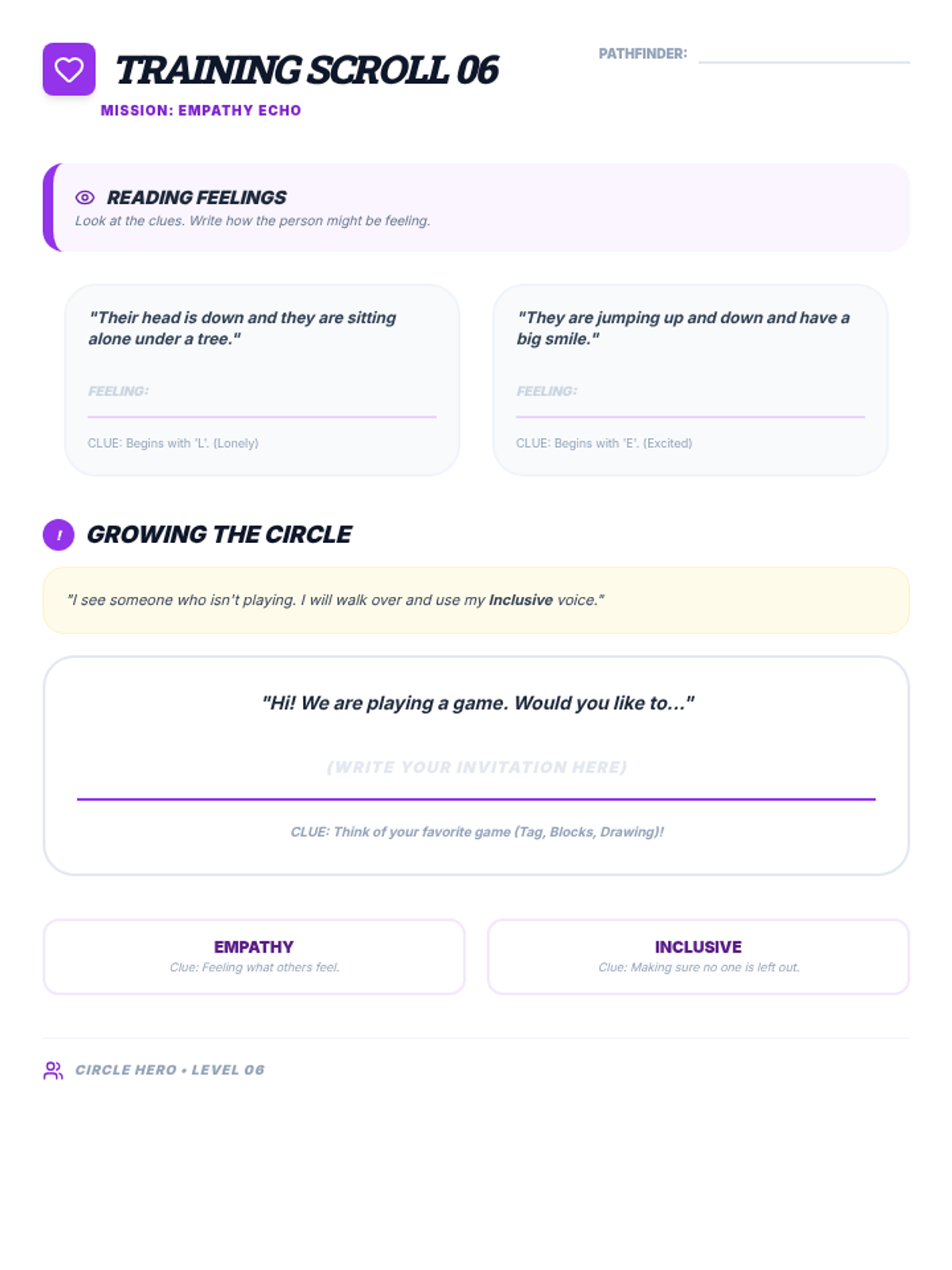
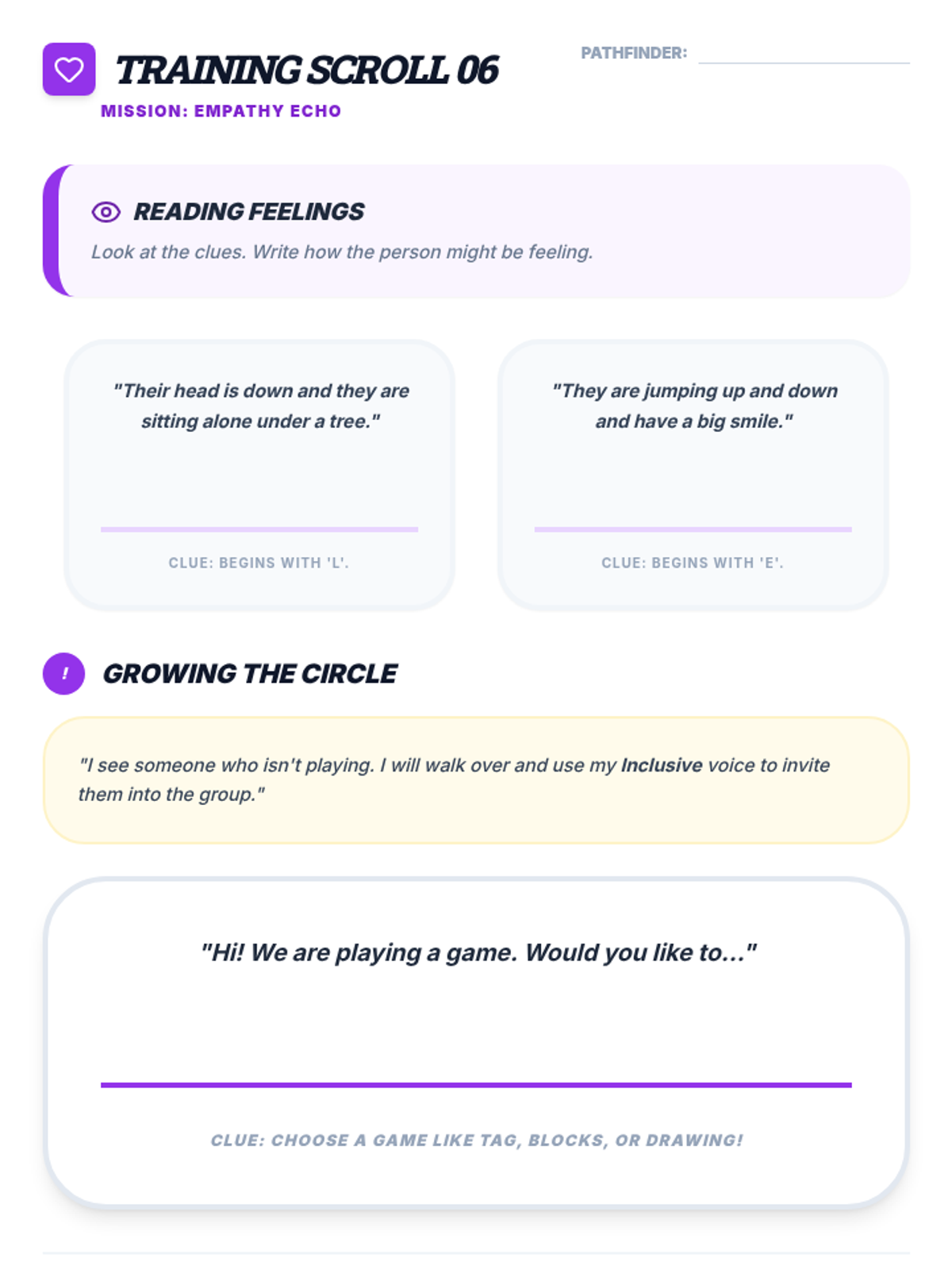
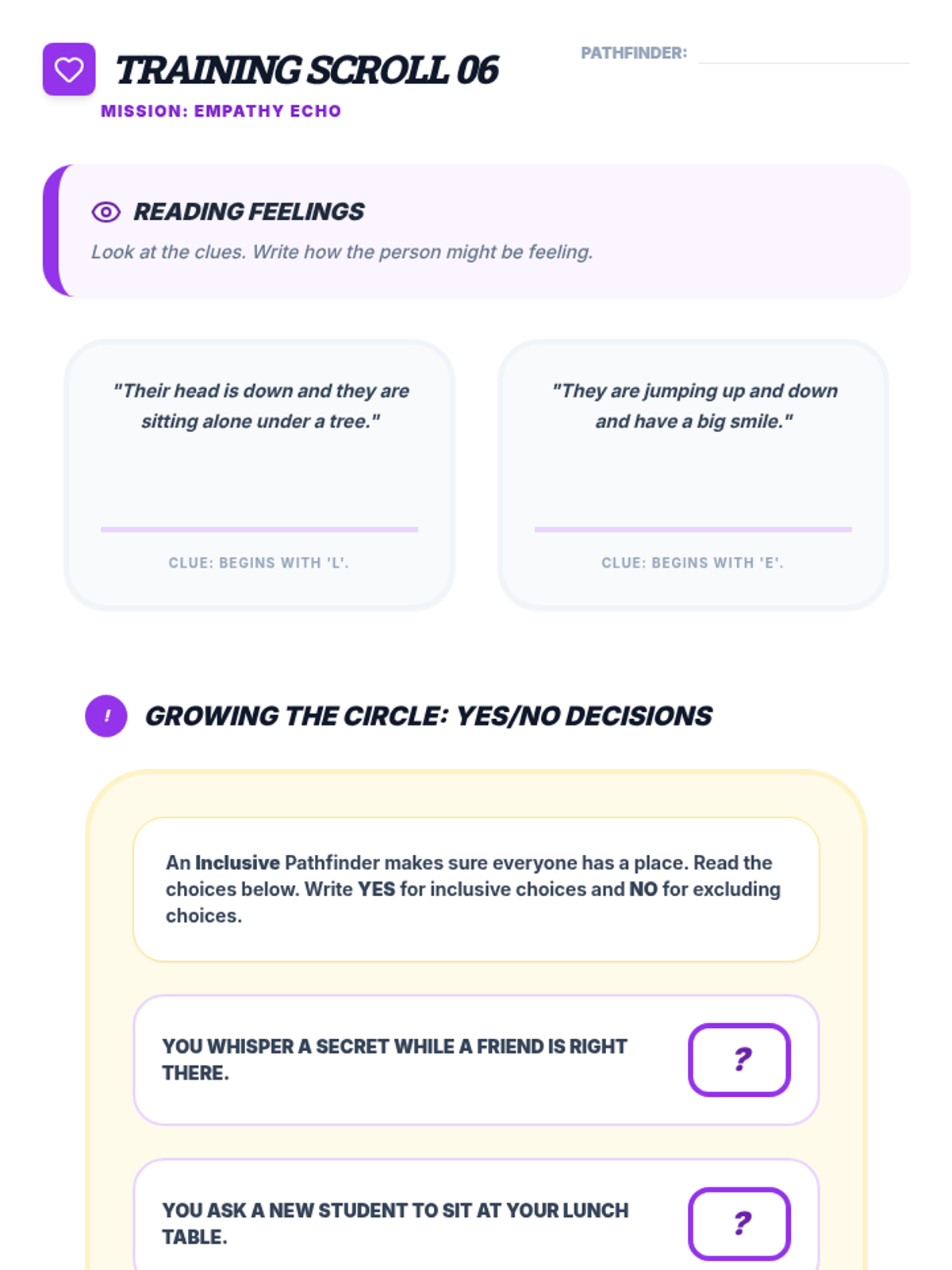
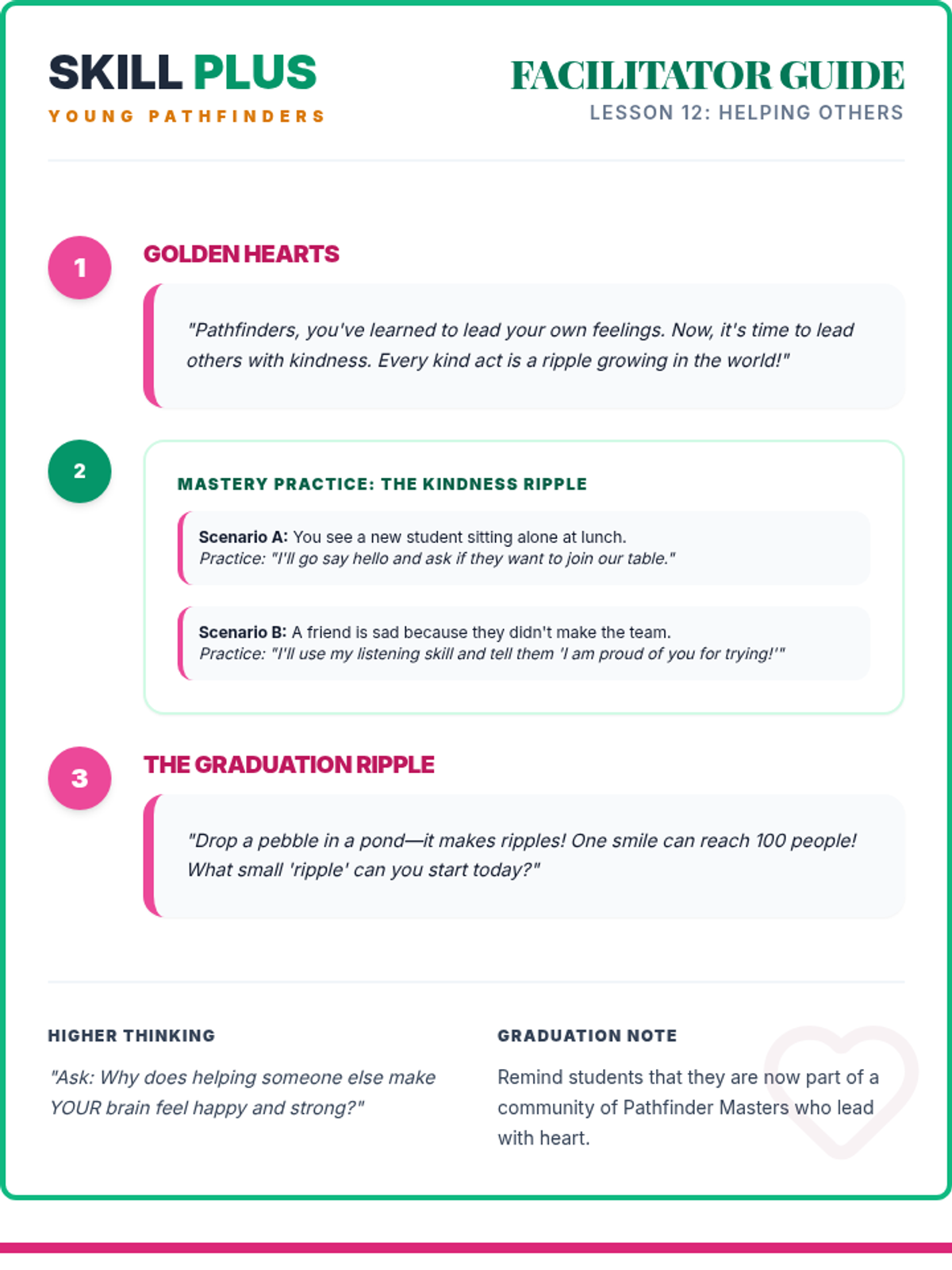
Developing empathy and social awareness to build an inclusive community.
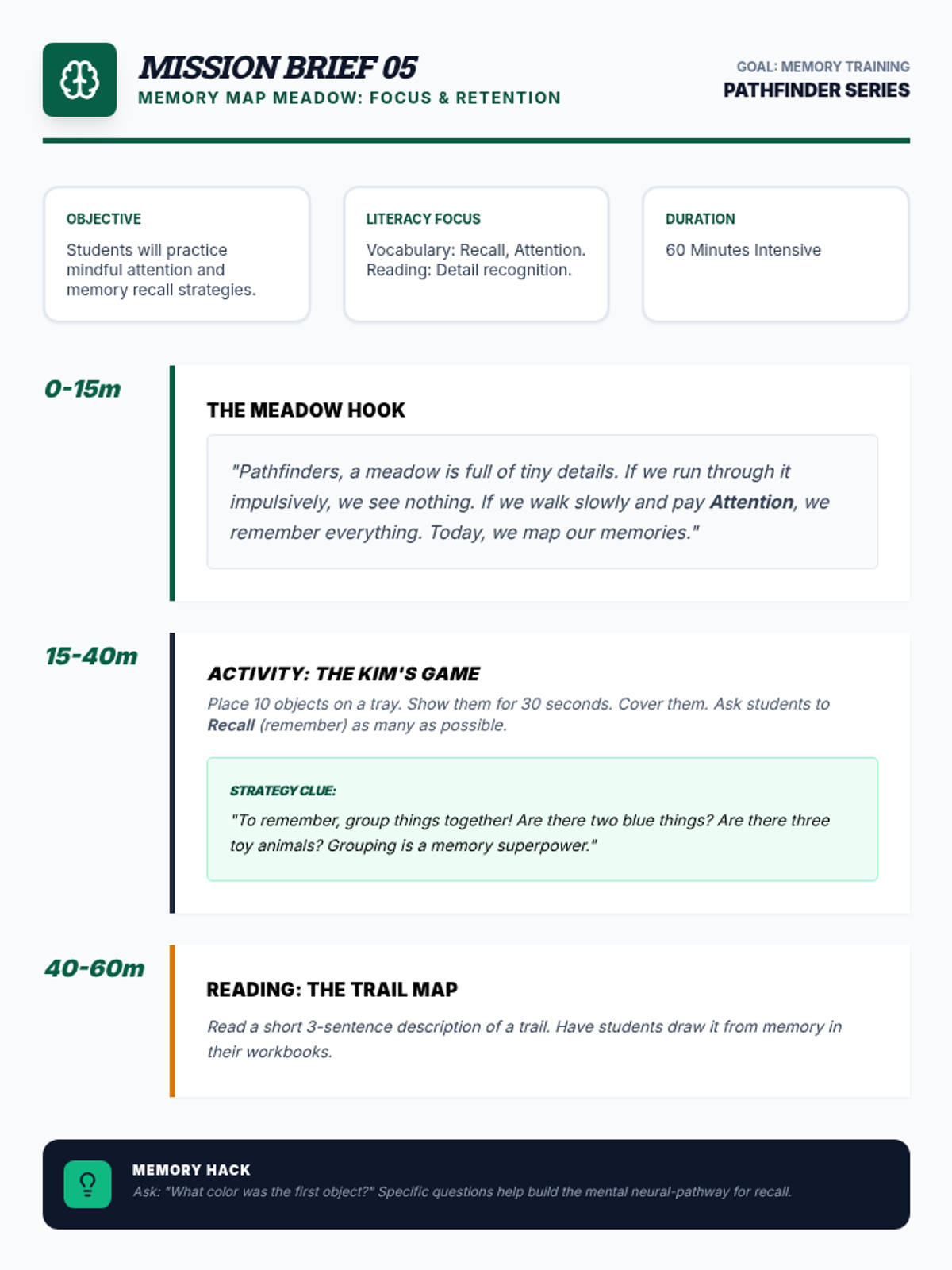
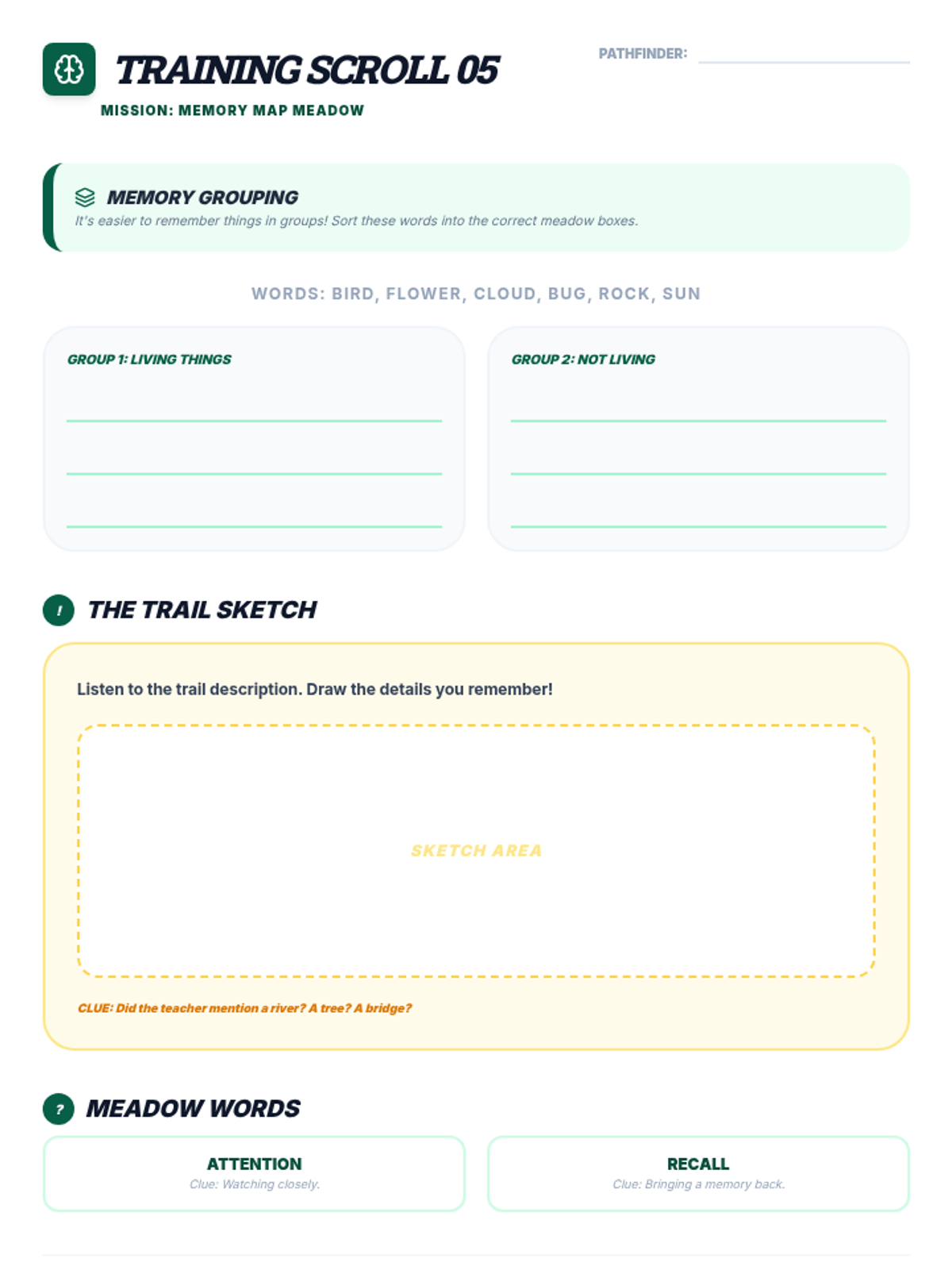
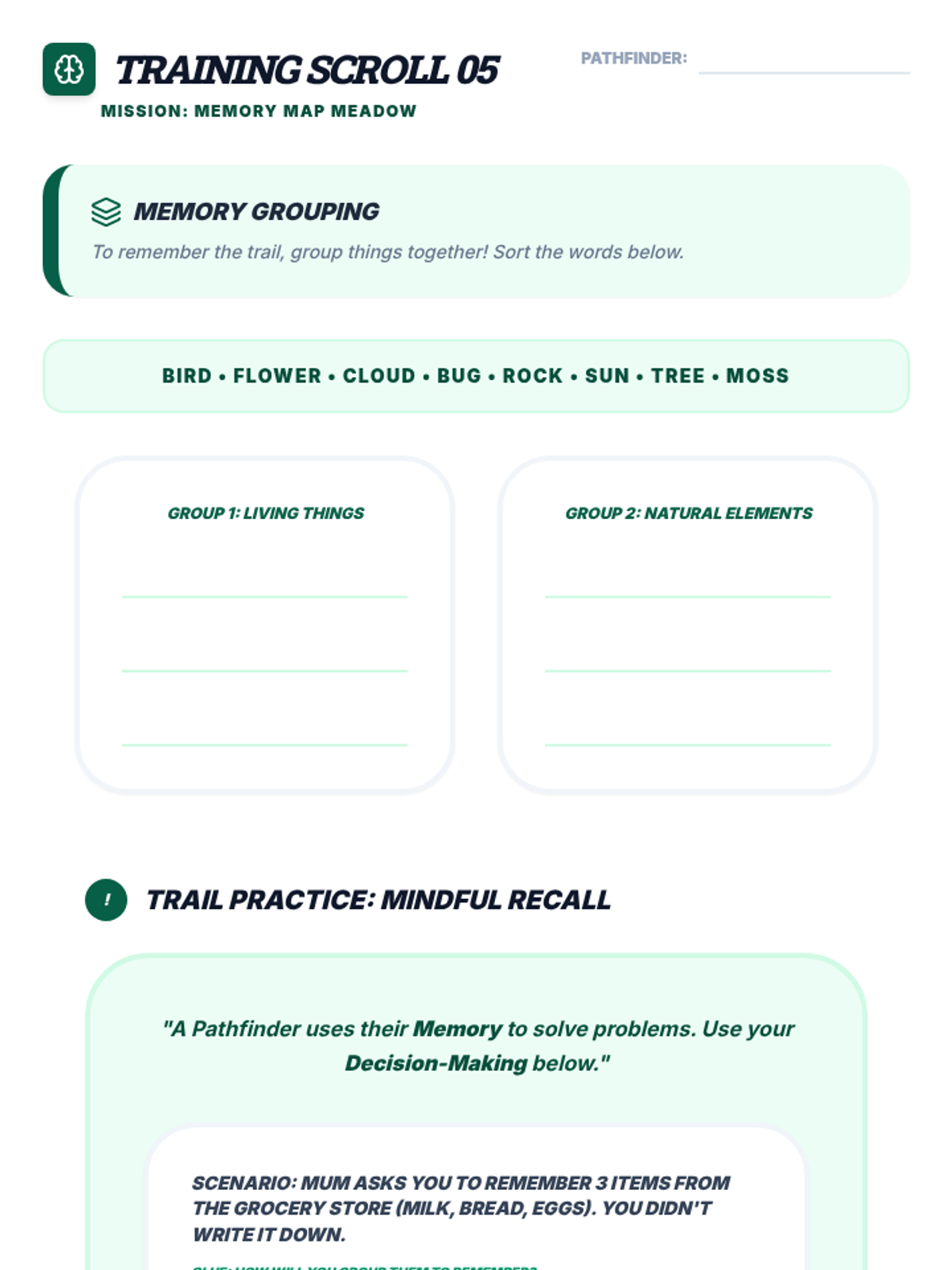
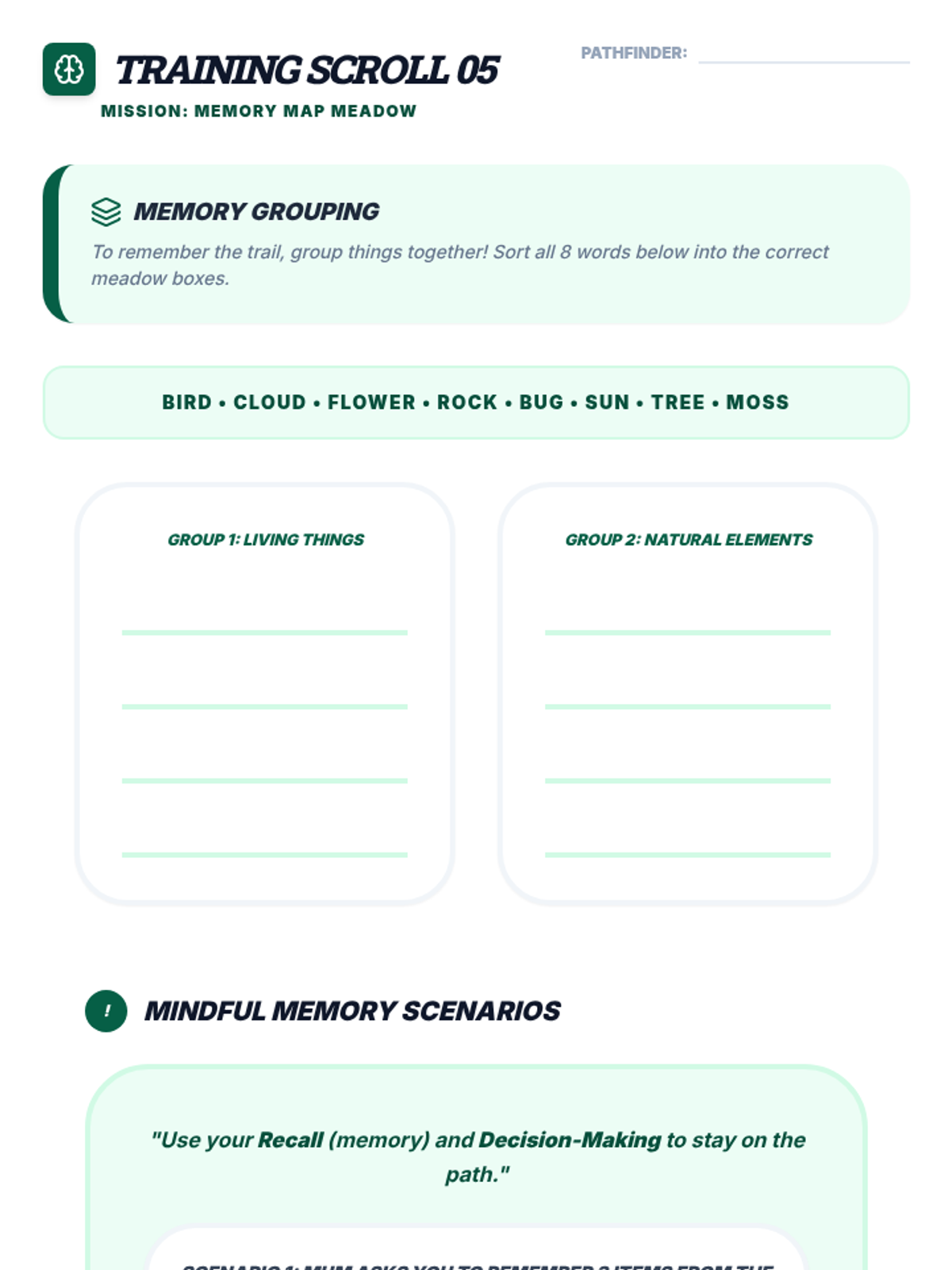
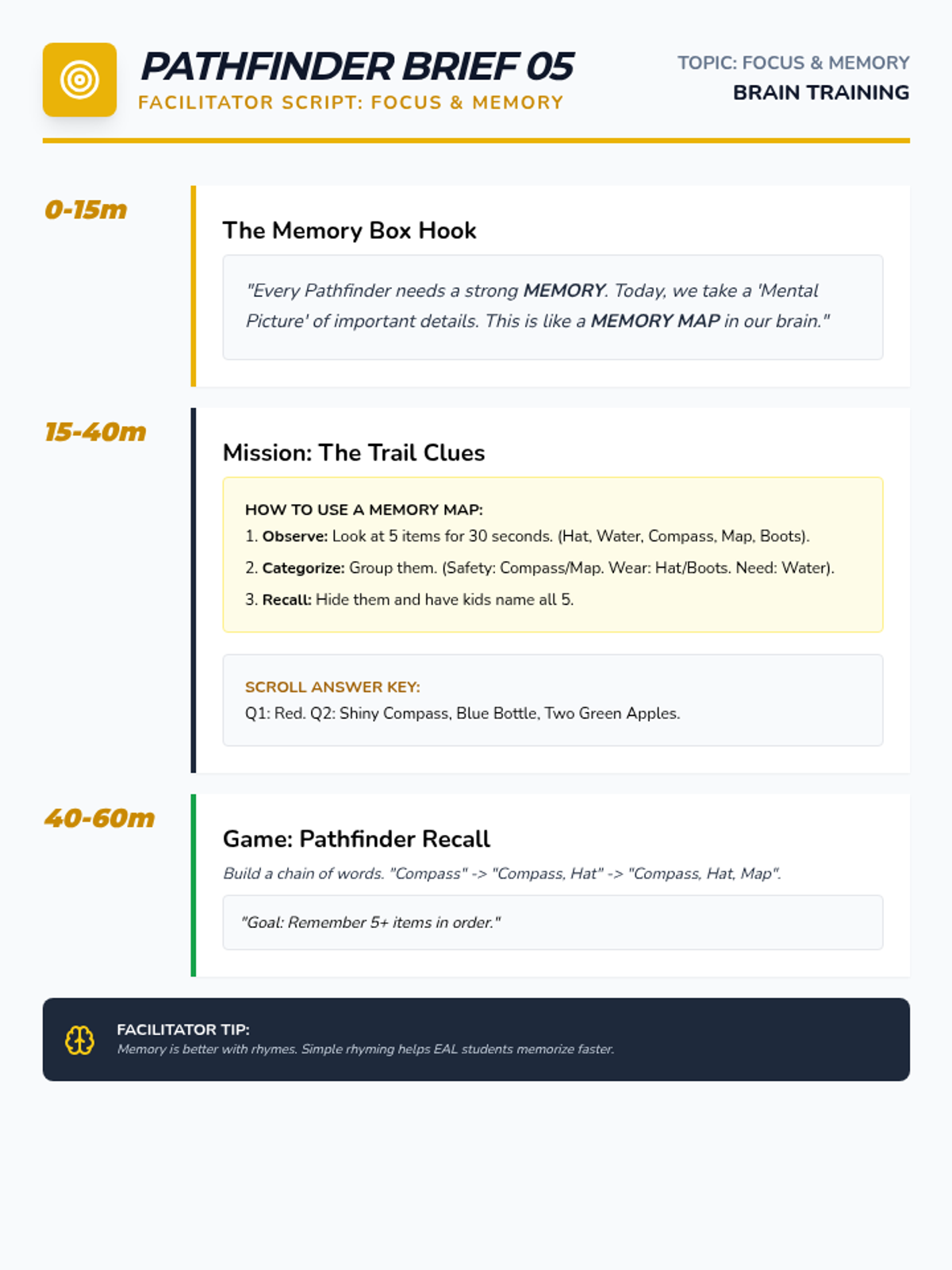
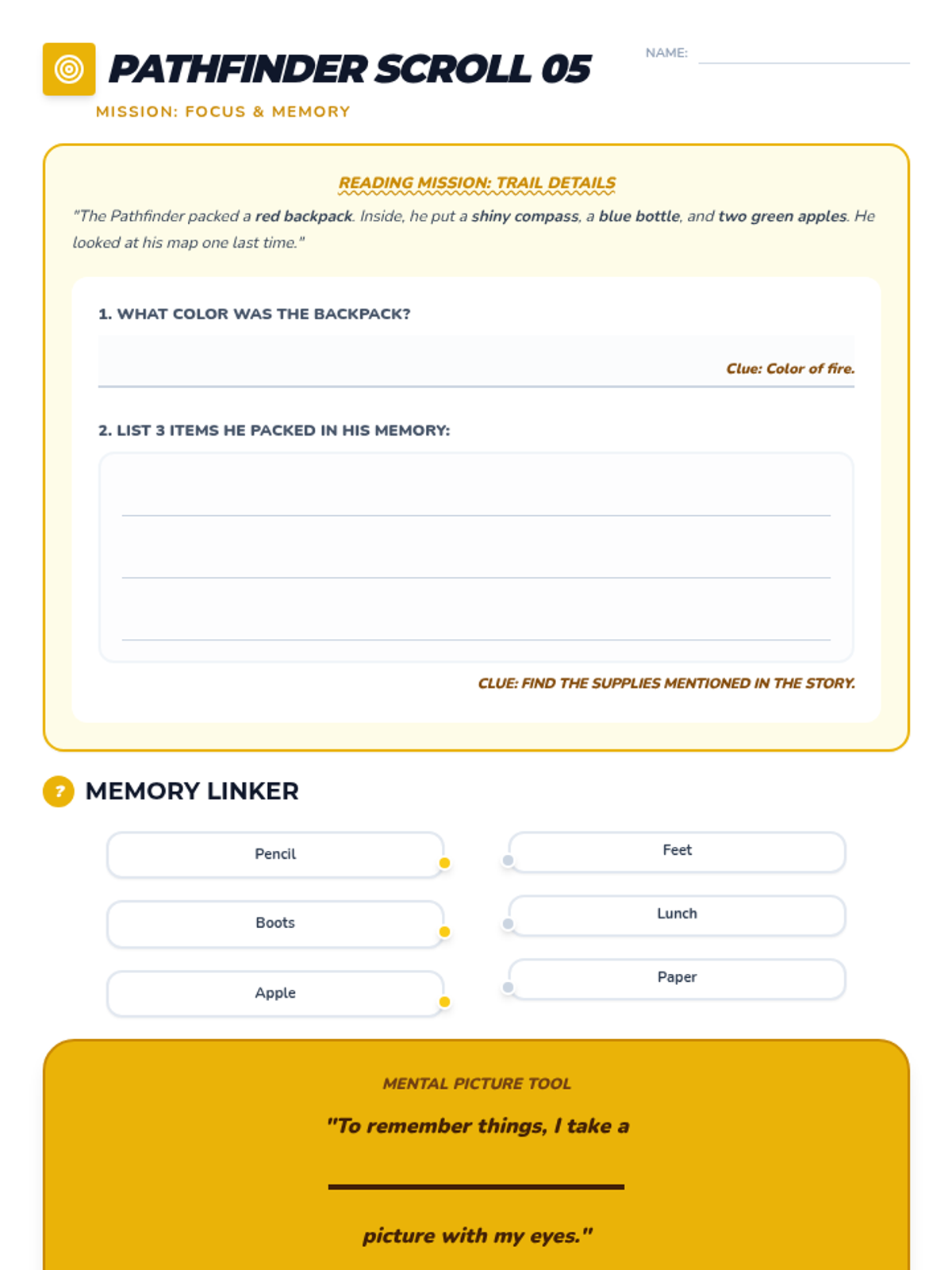
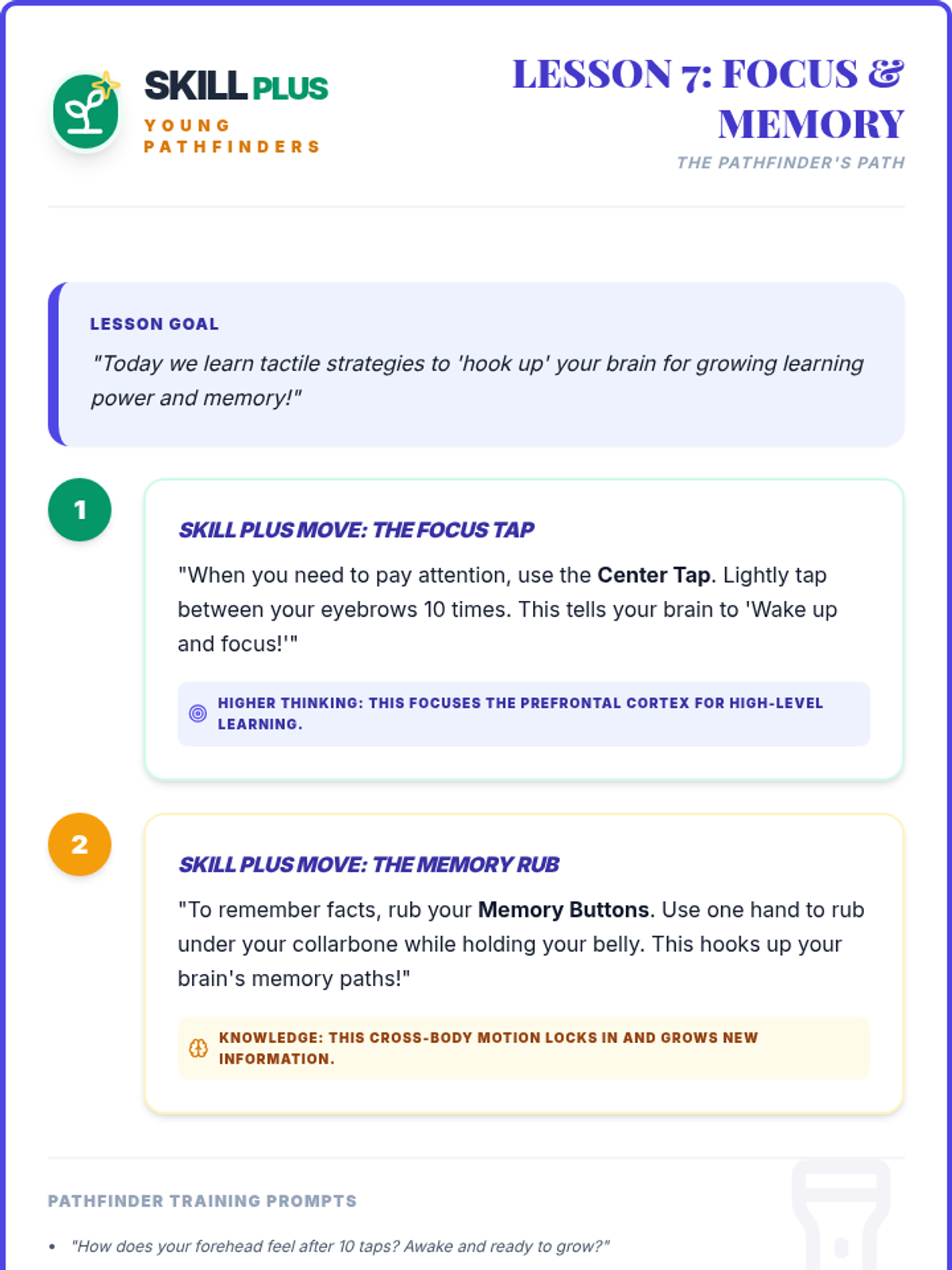
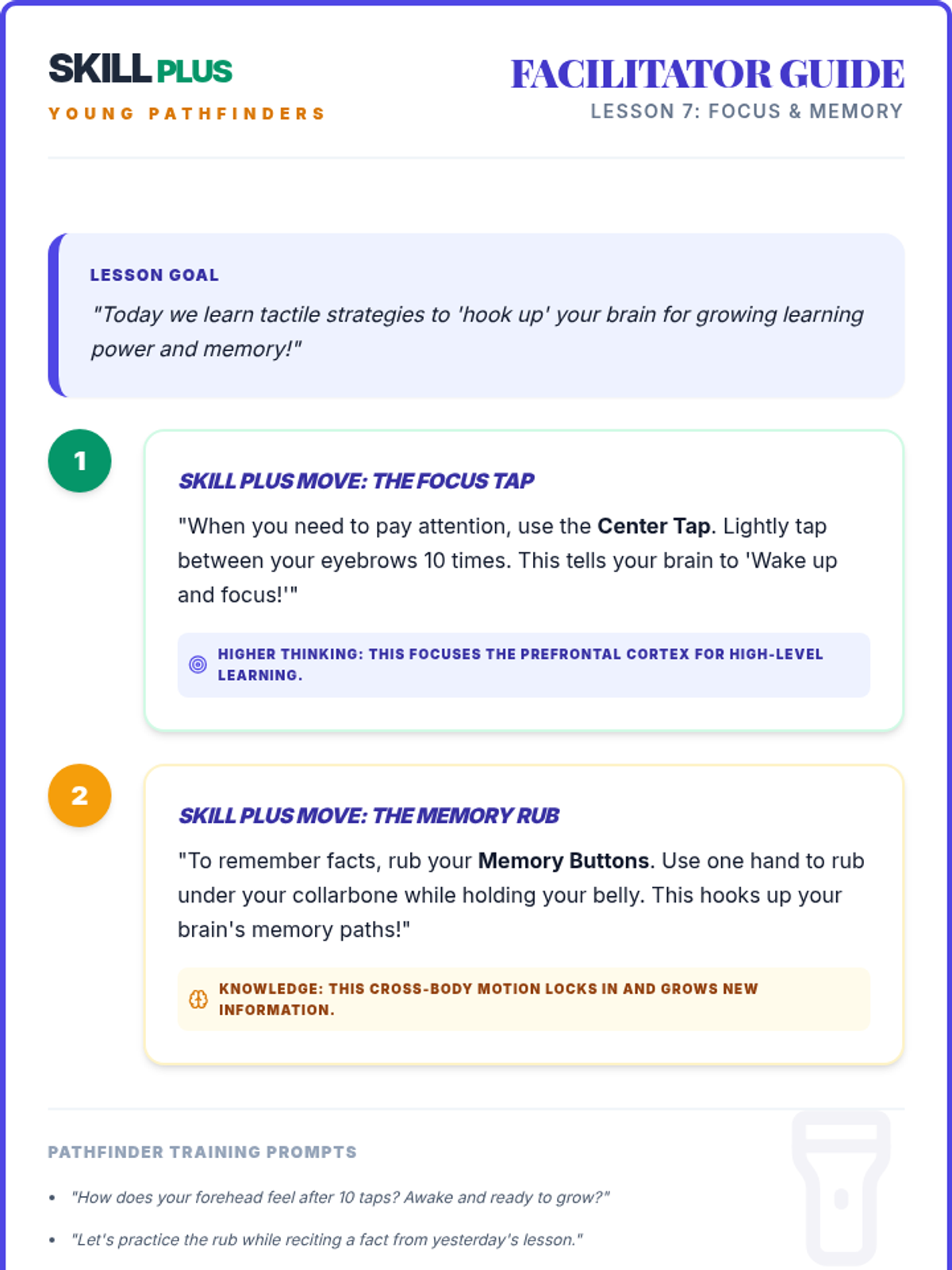
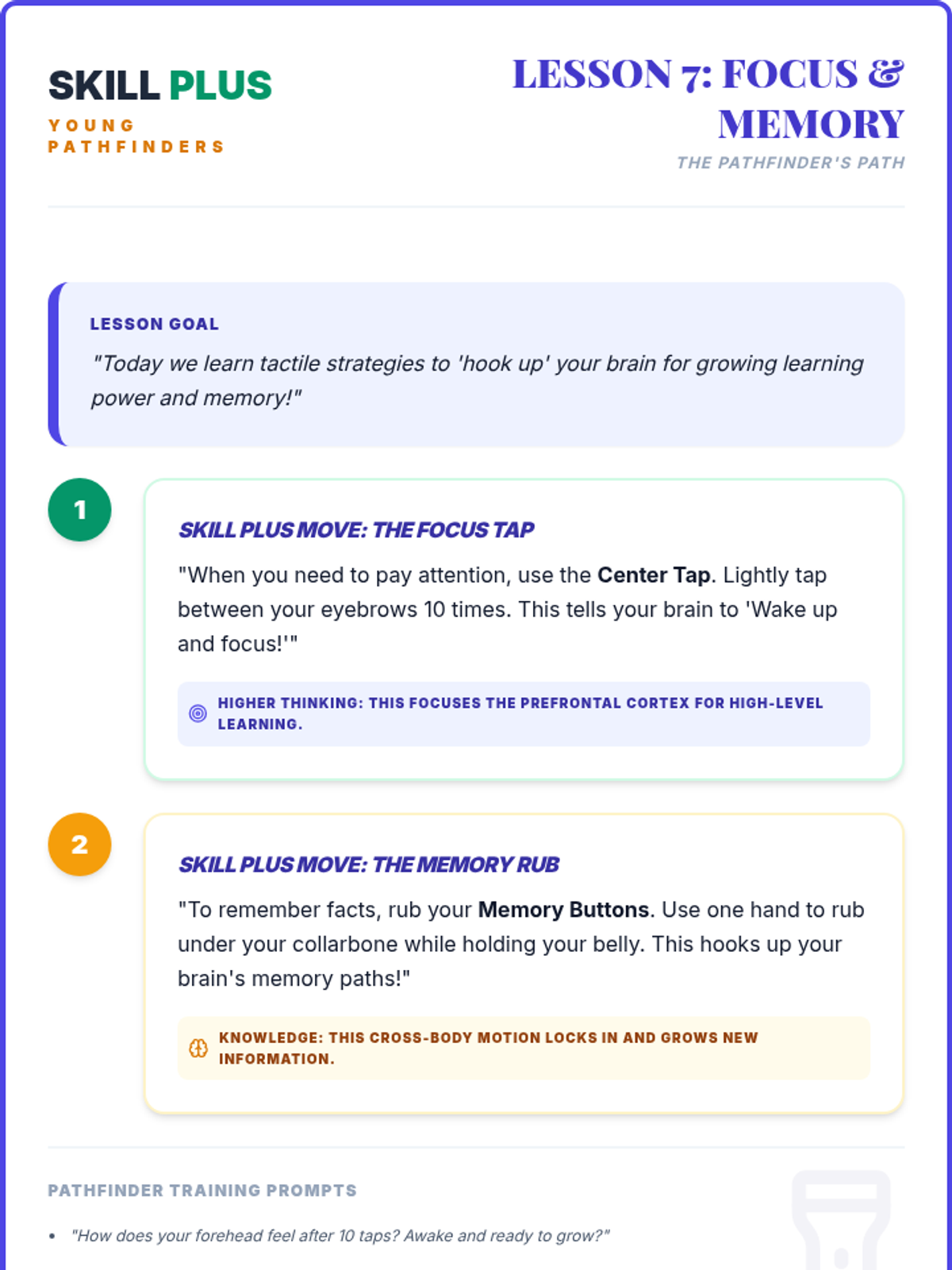
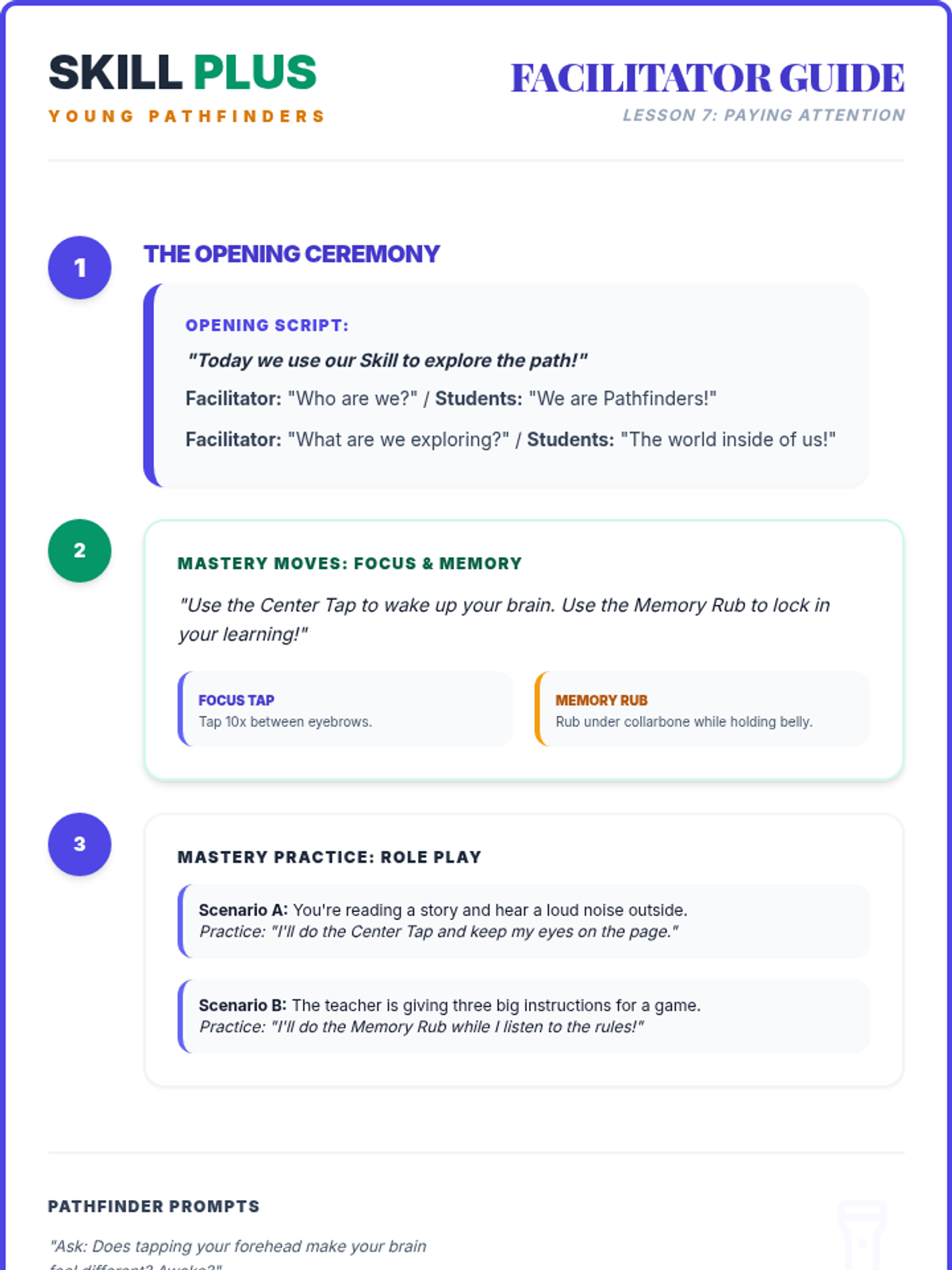
Training the brain for better focus and memory retention. Strategies for mindful attention.
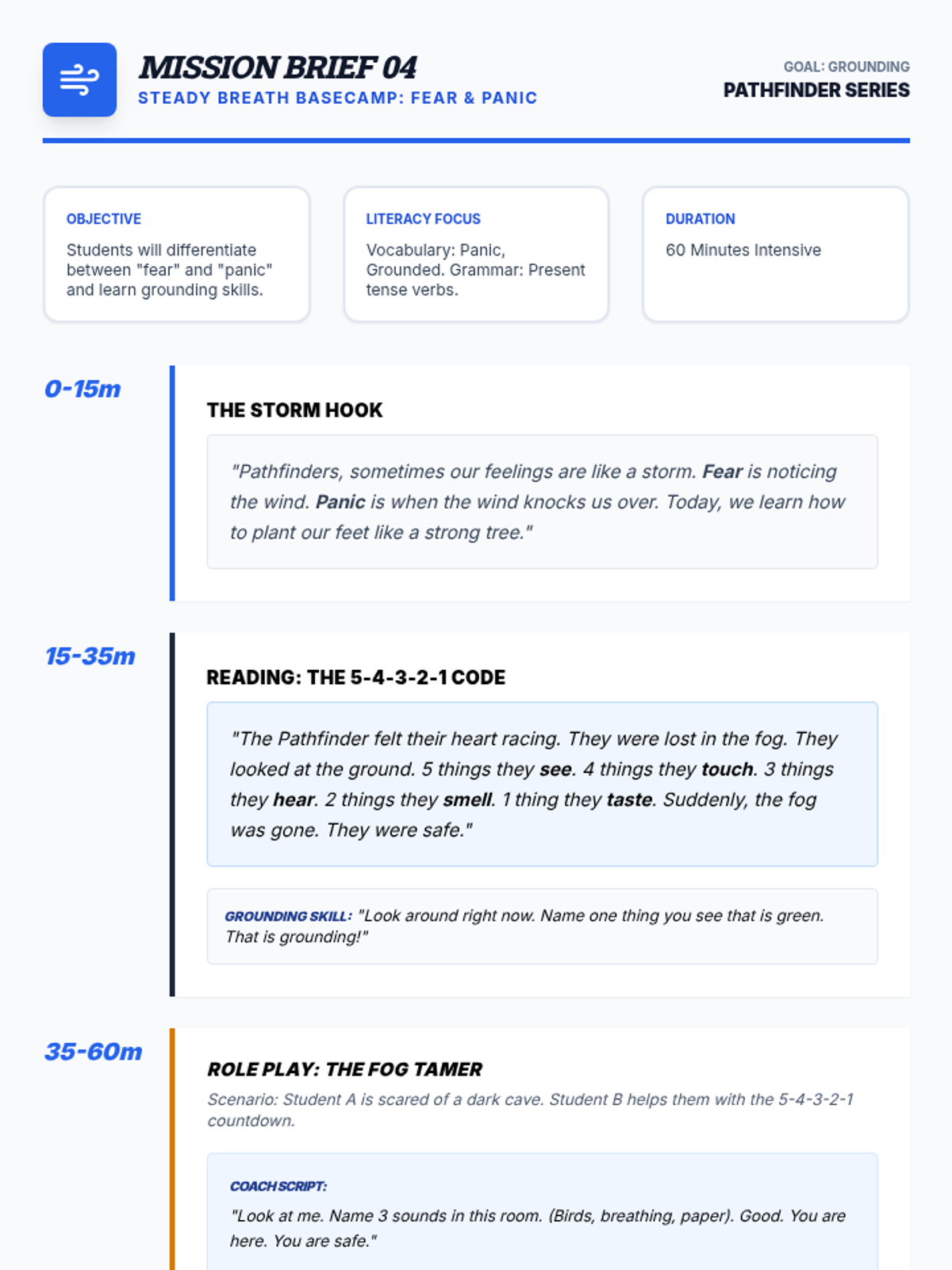
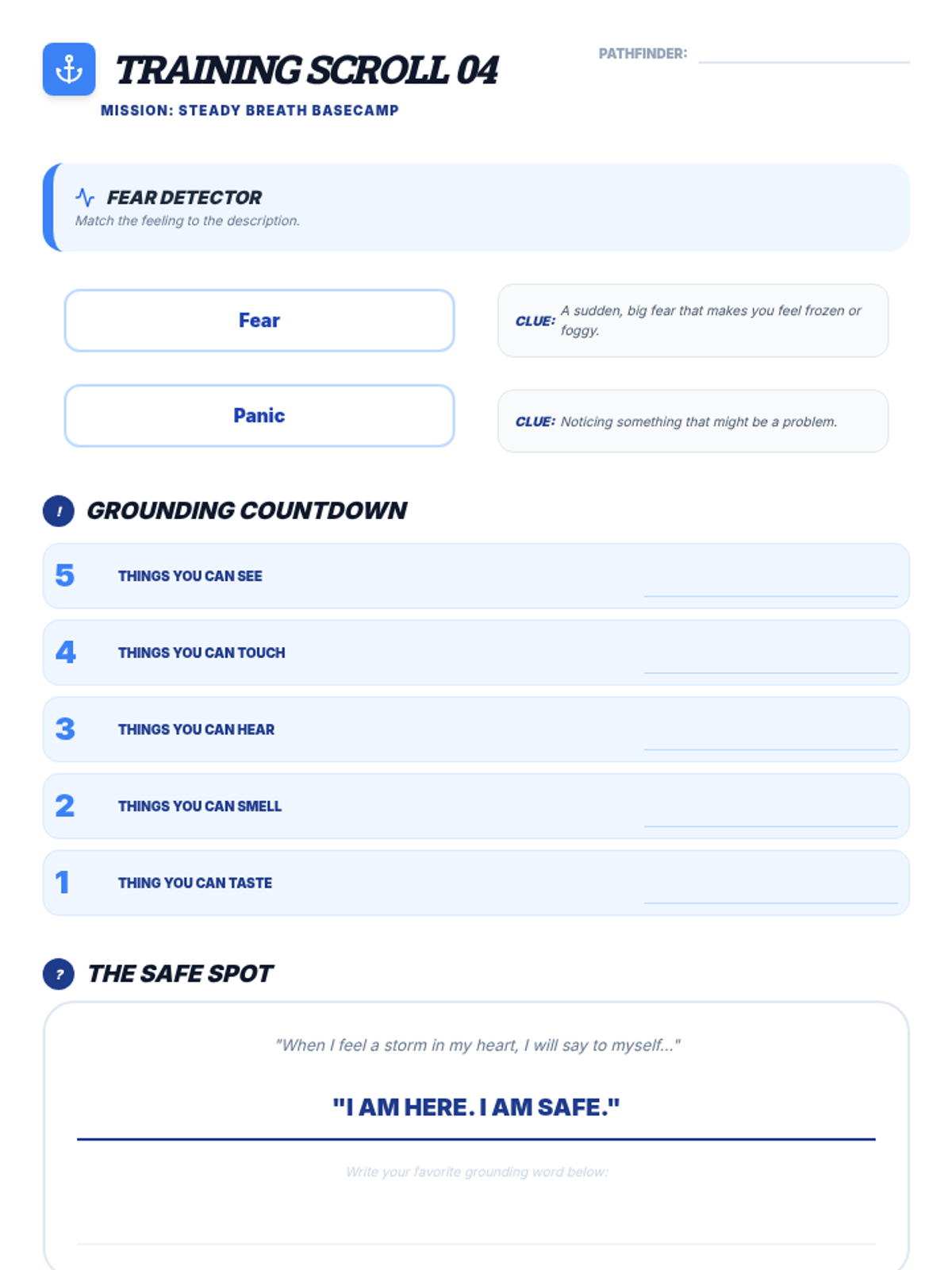
Recognizing physical signs of fear and panic. Grounding strategies for high-stress situations.
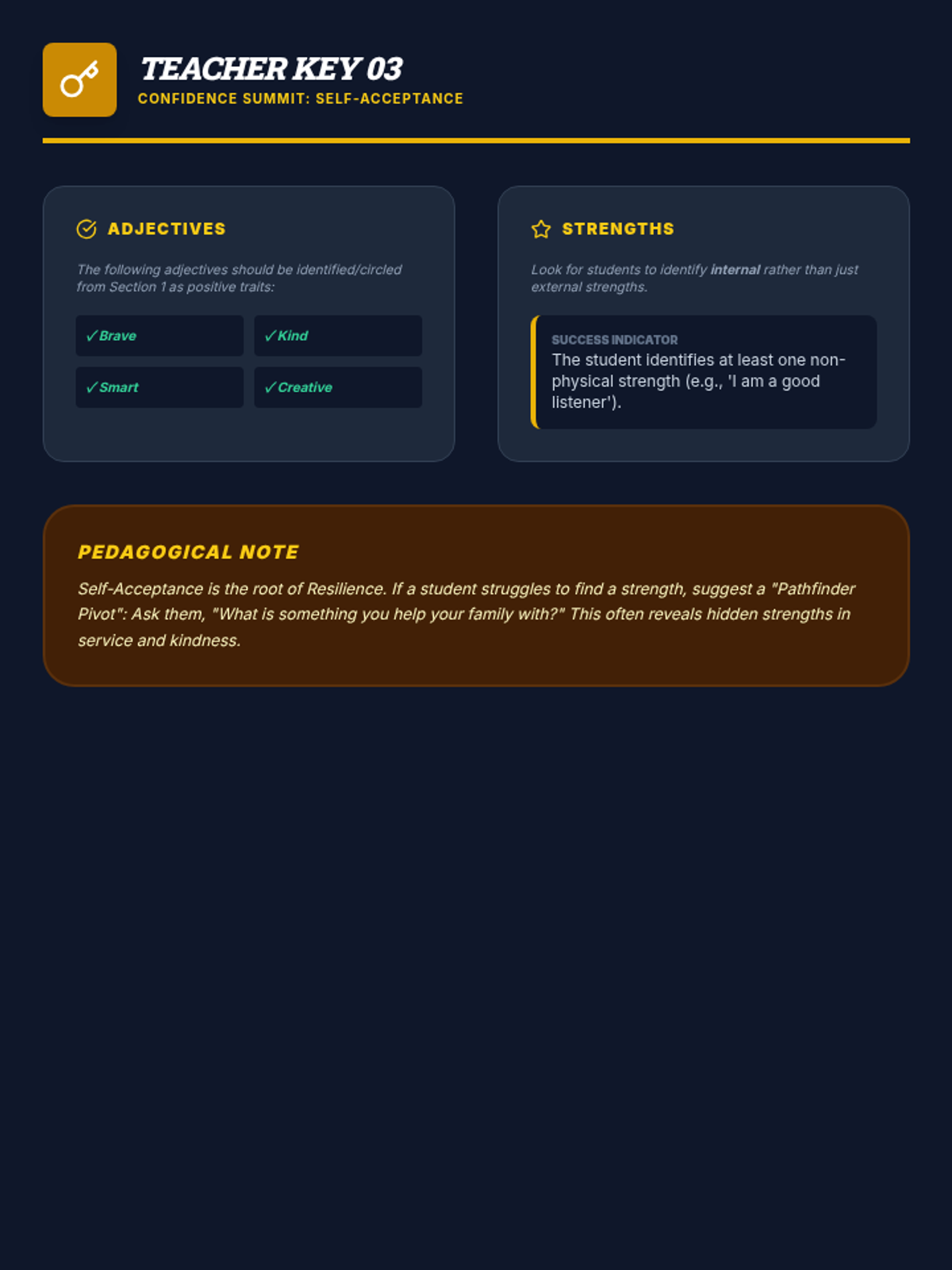
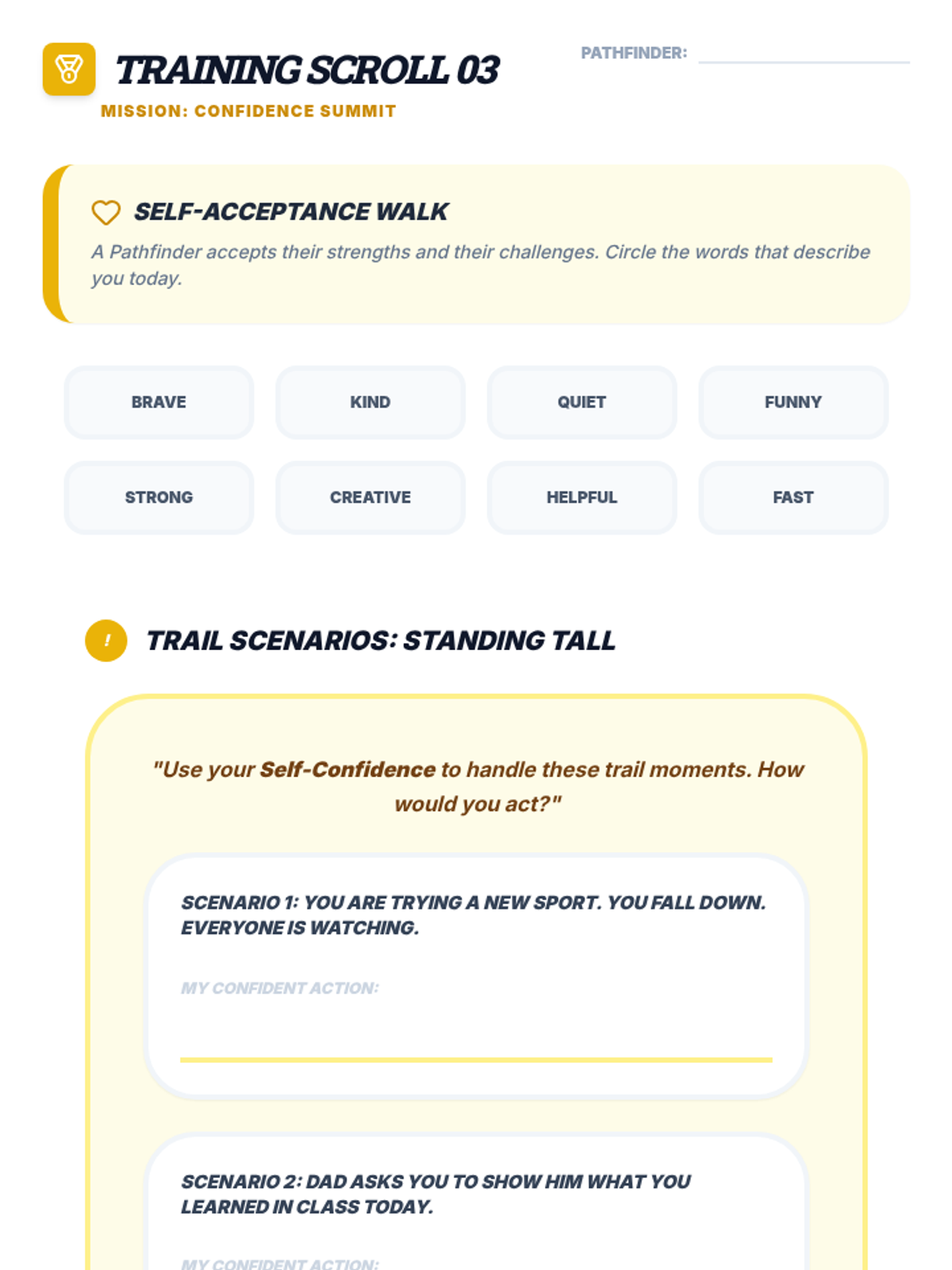
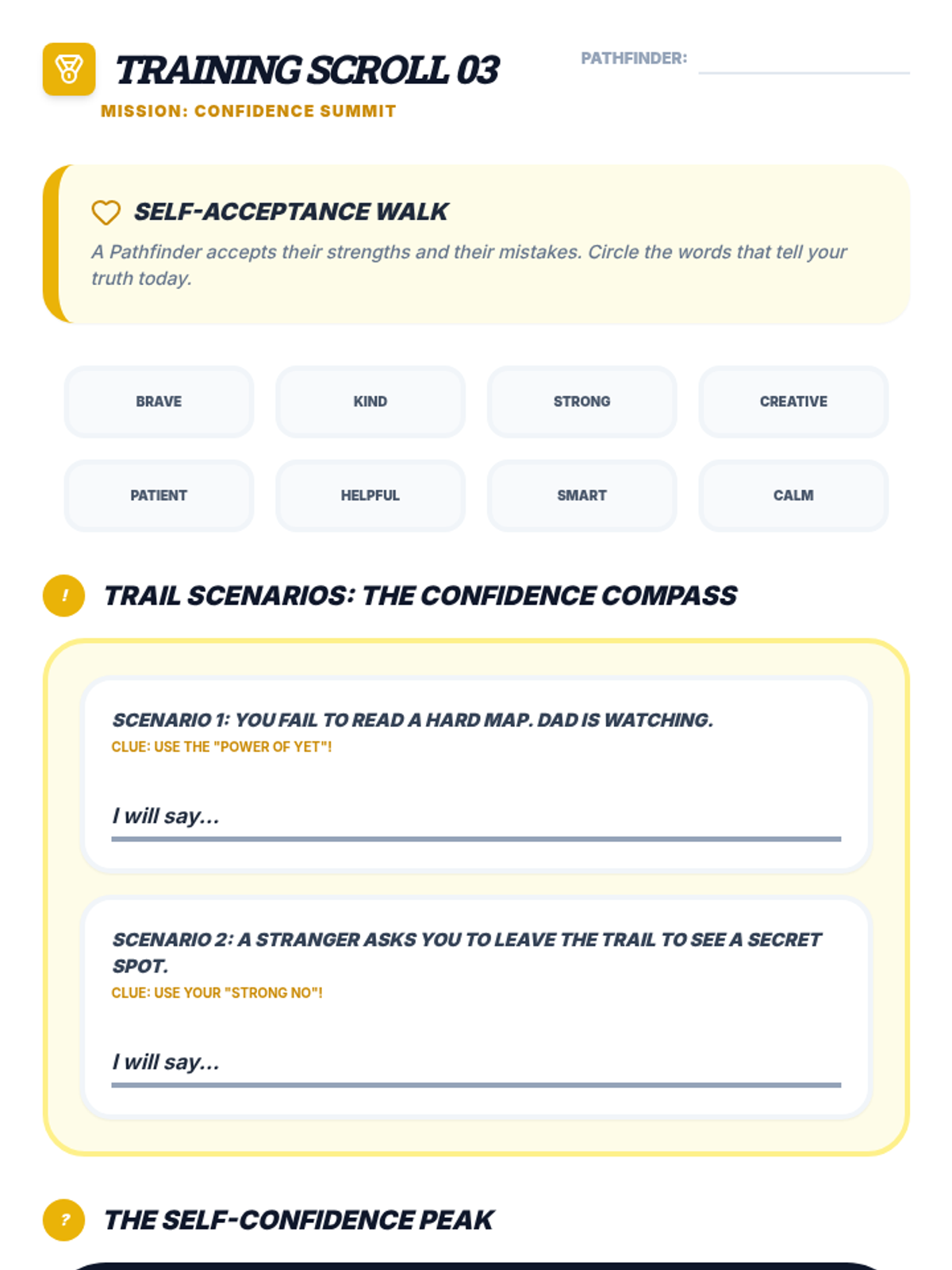
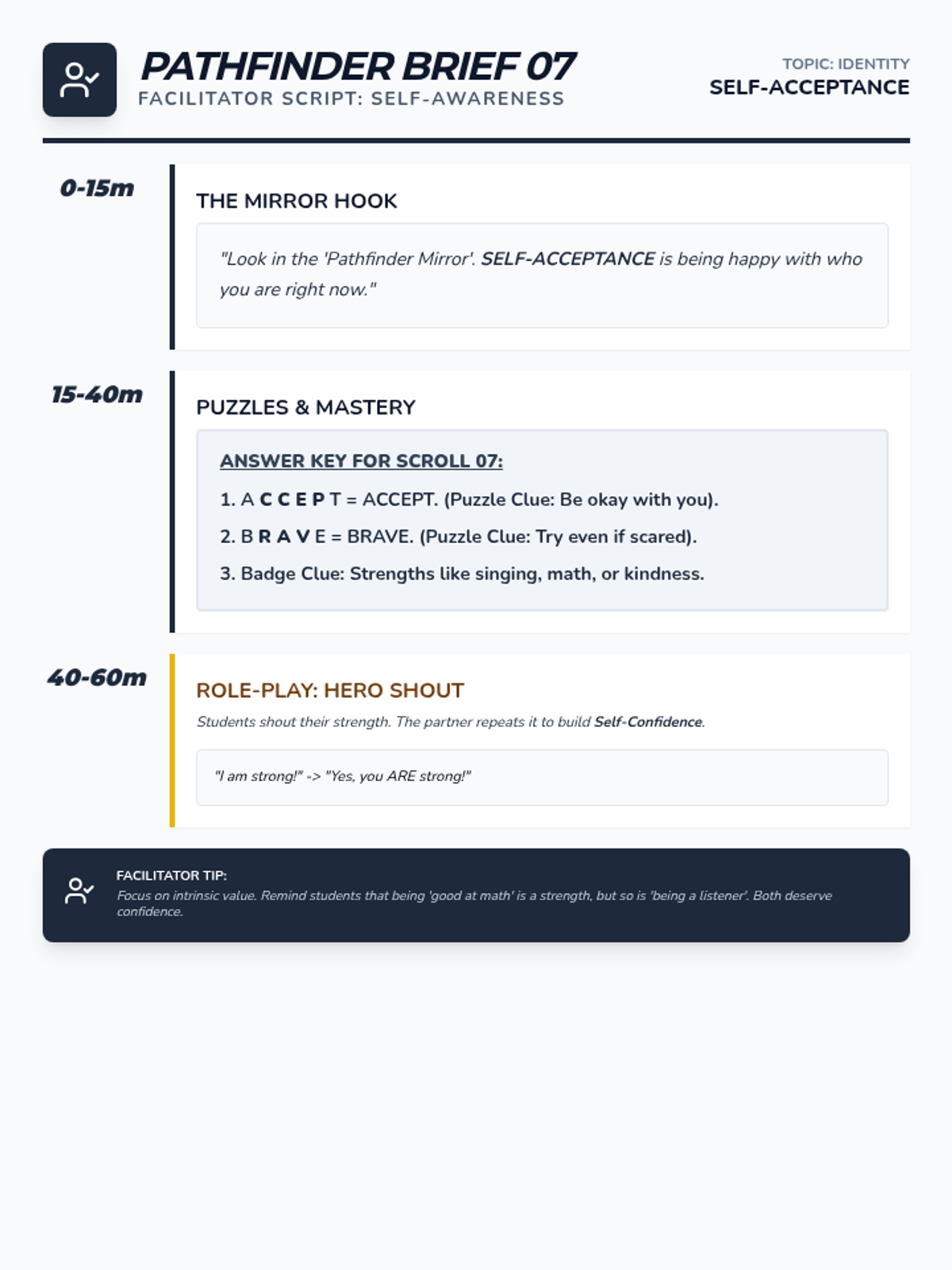
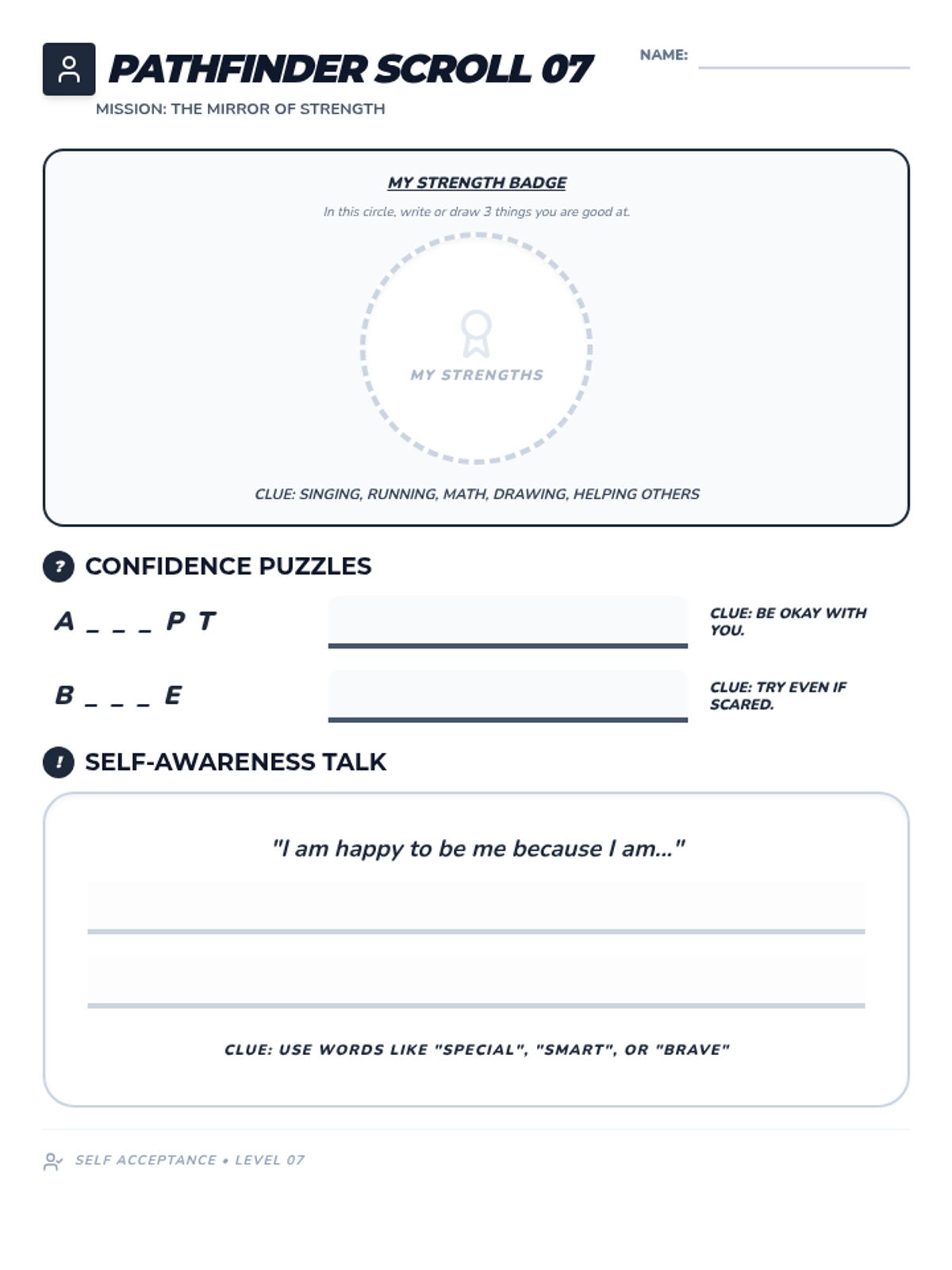
Exploring self-acceptance and building self-confidence by celebrating individual strengths.
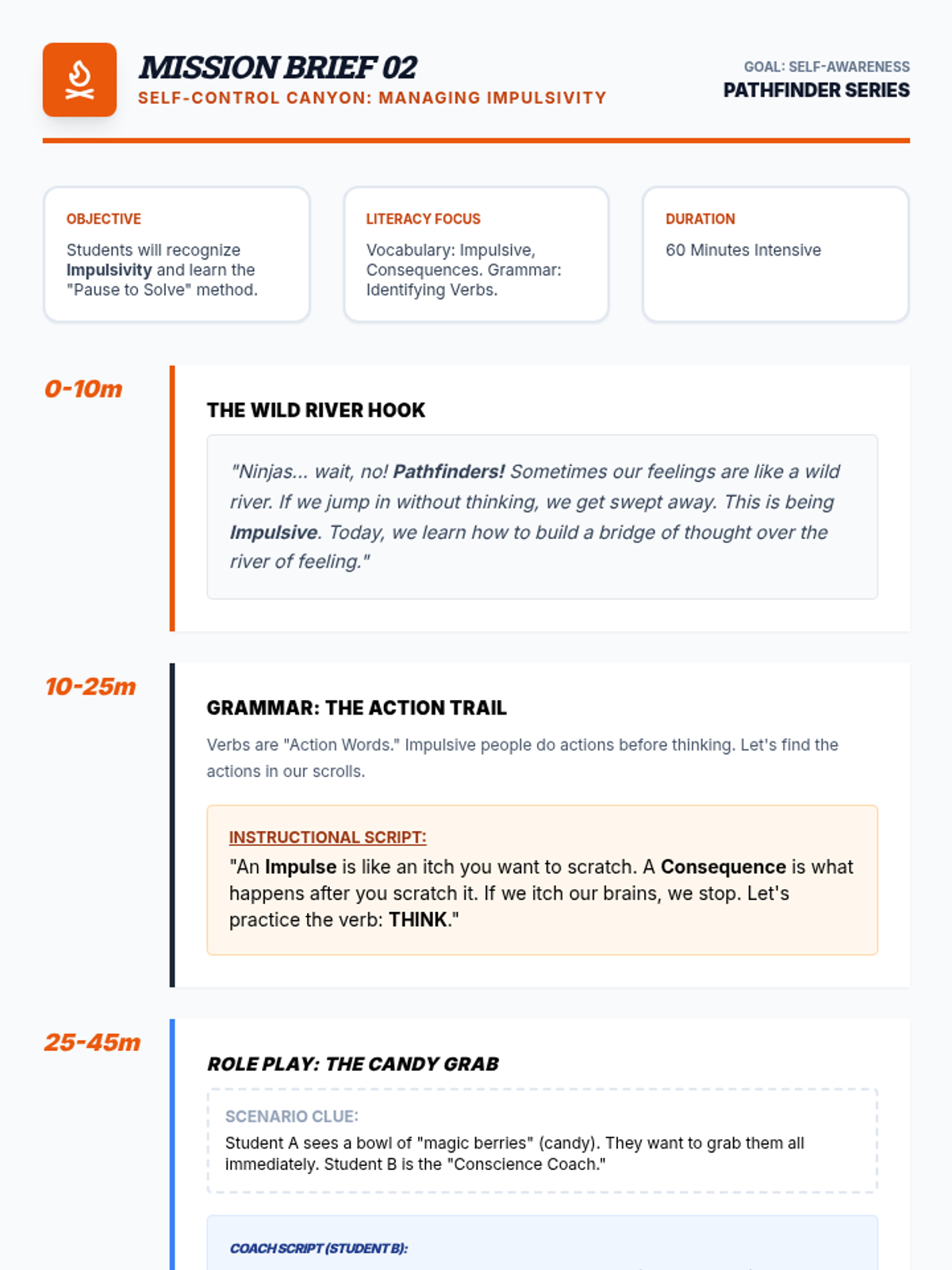
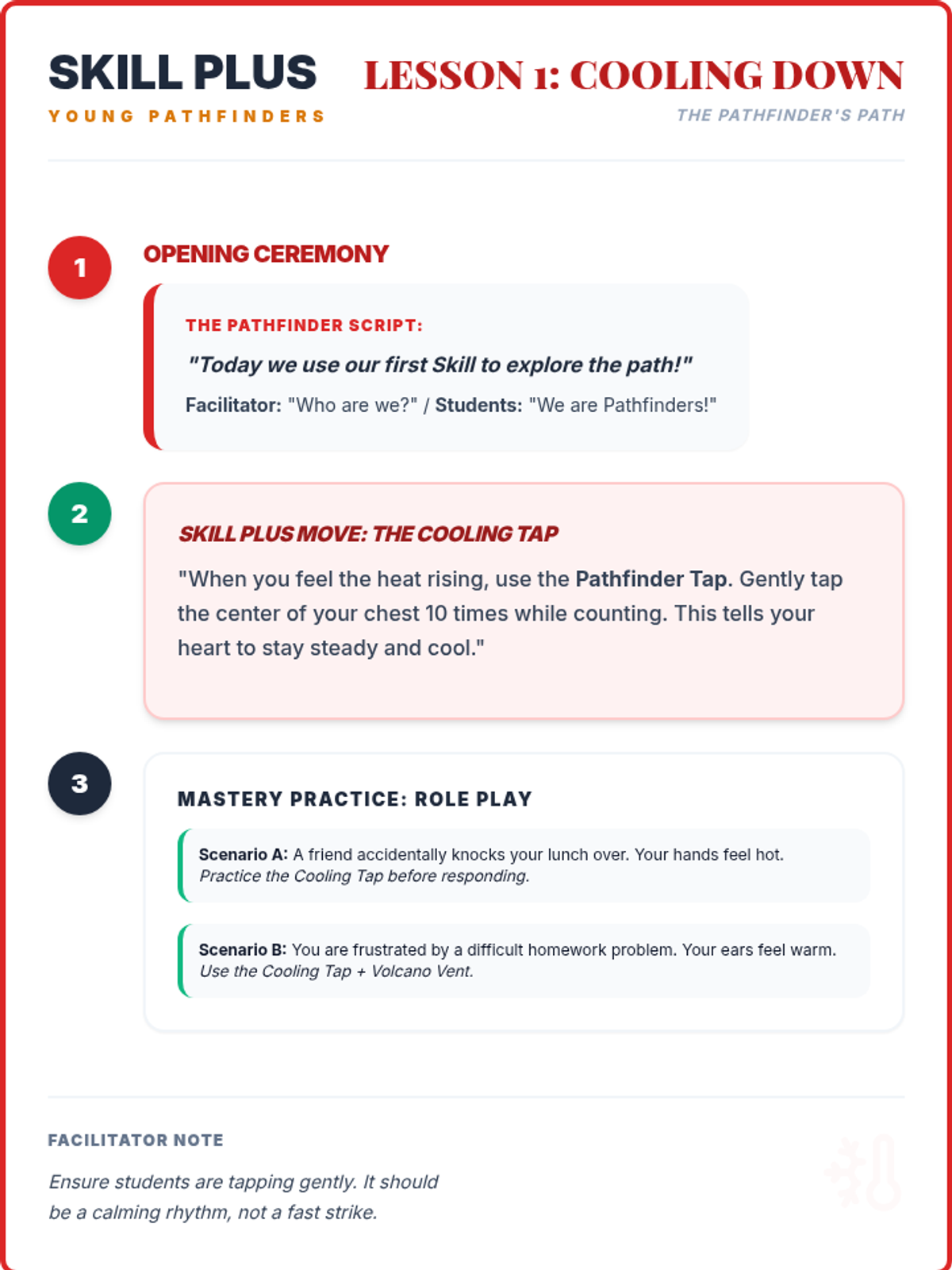
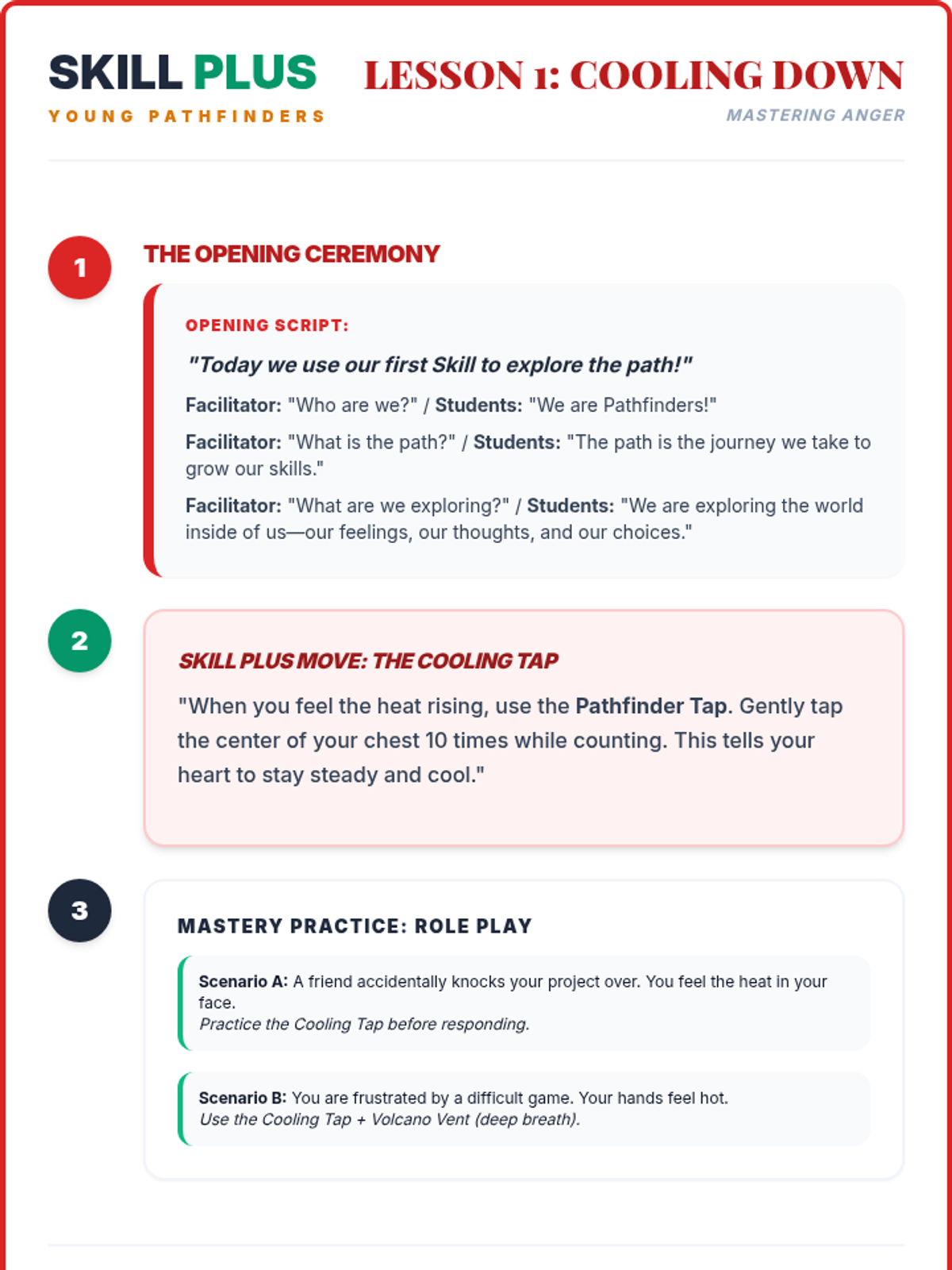
Managing big emotions and stopping impulsive reactions. Techniques for cooling down when feeling fear or anger.
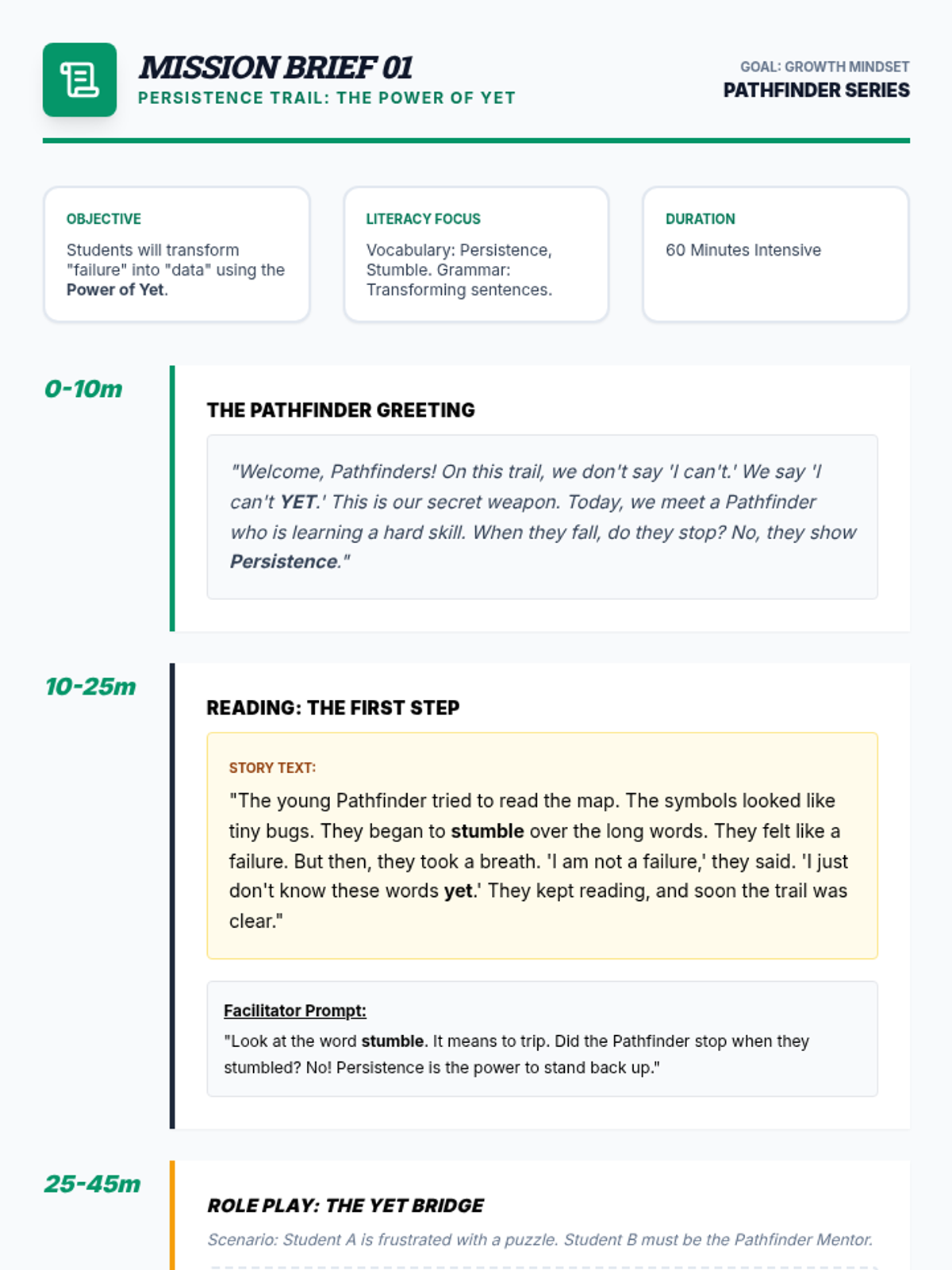
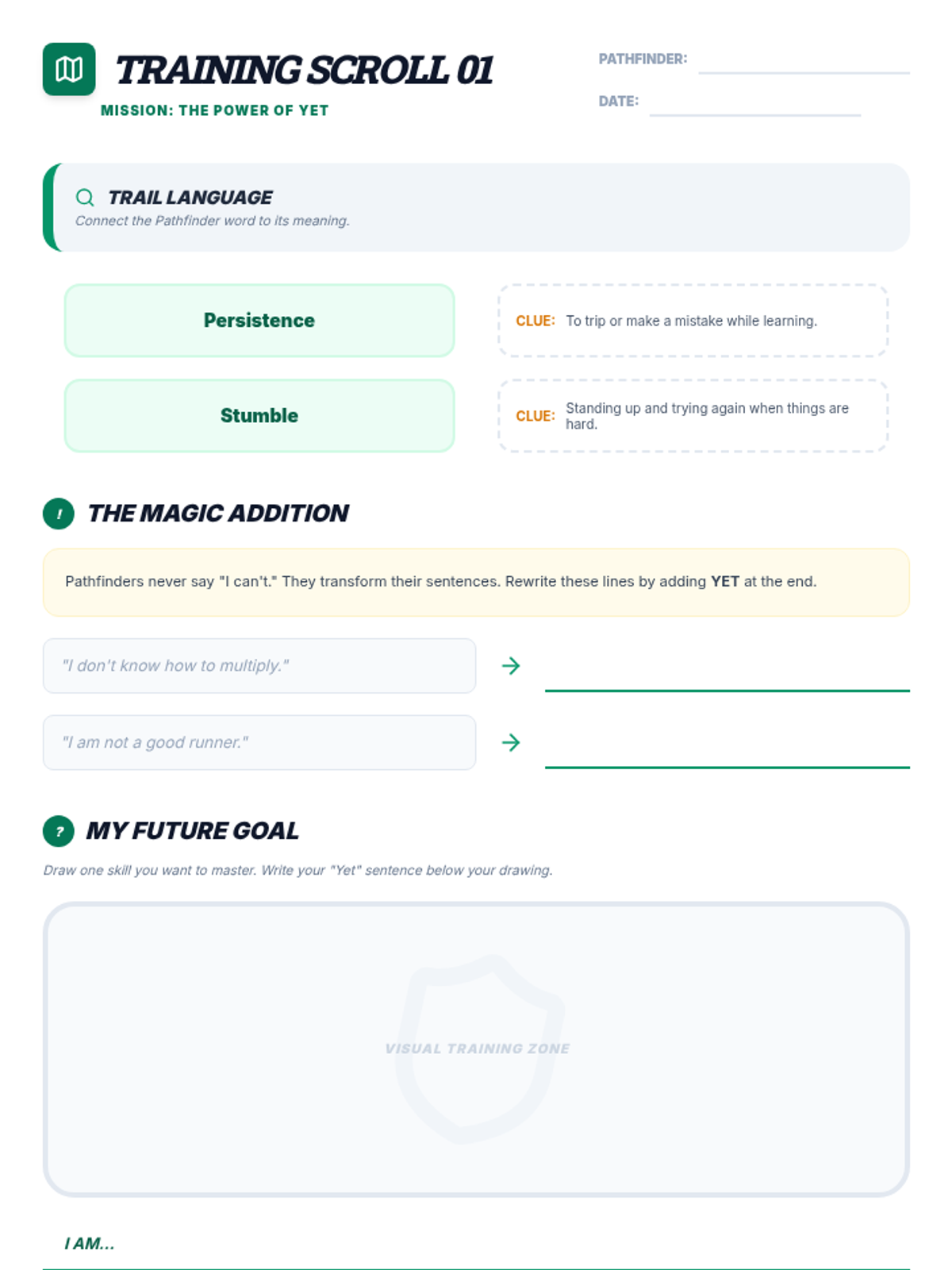
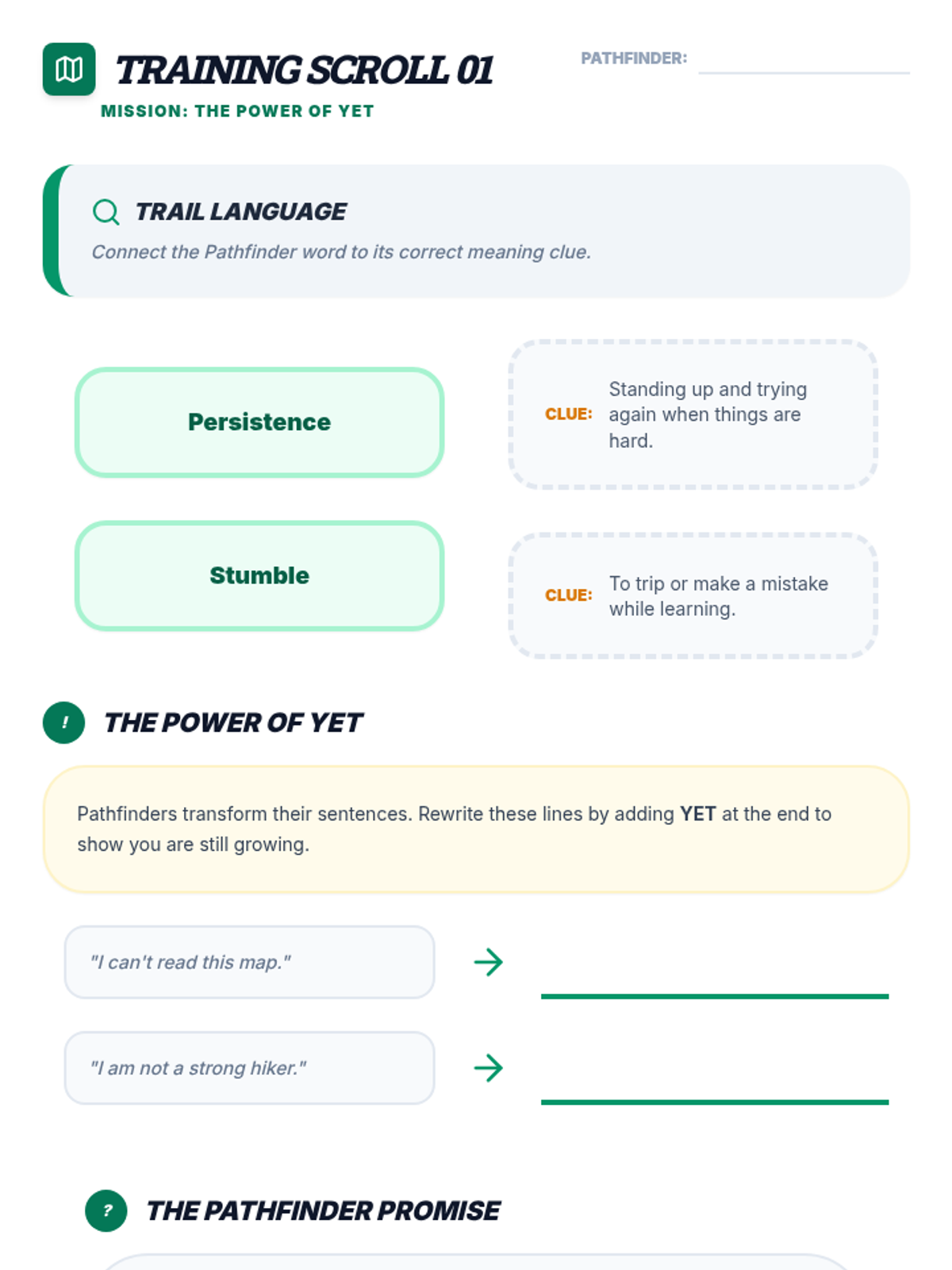
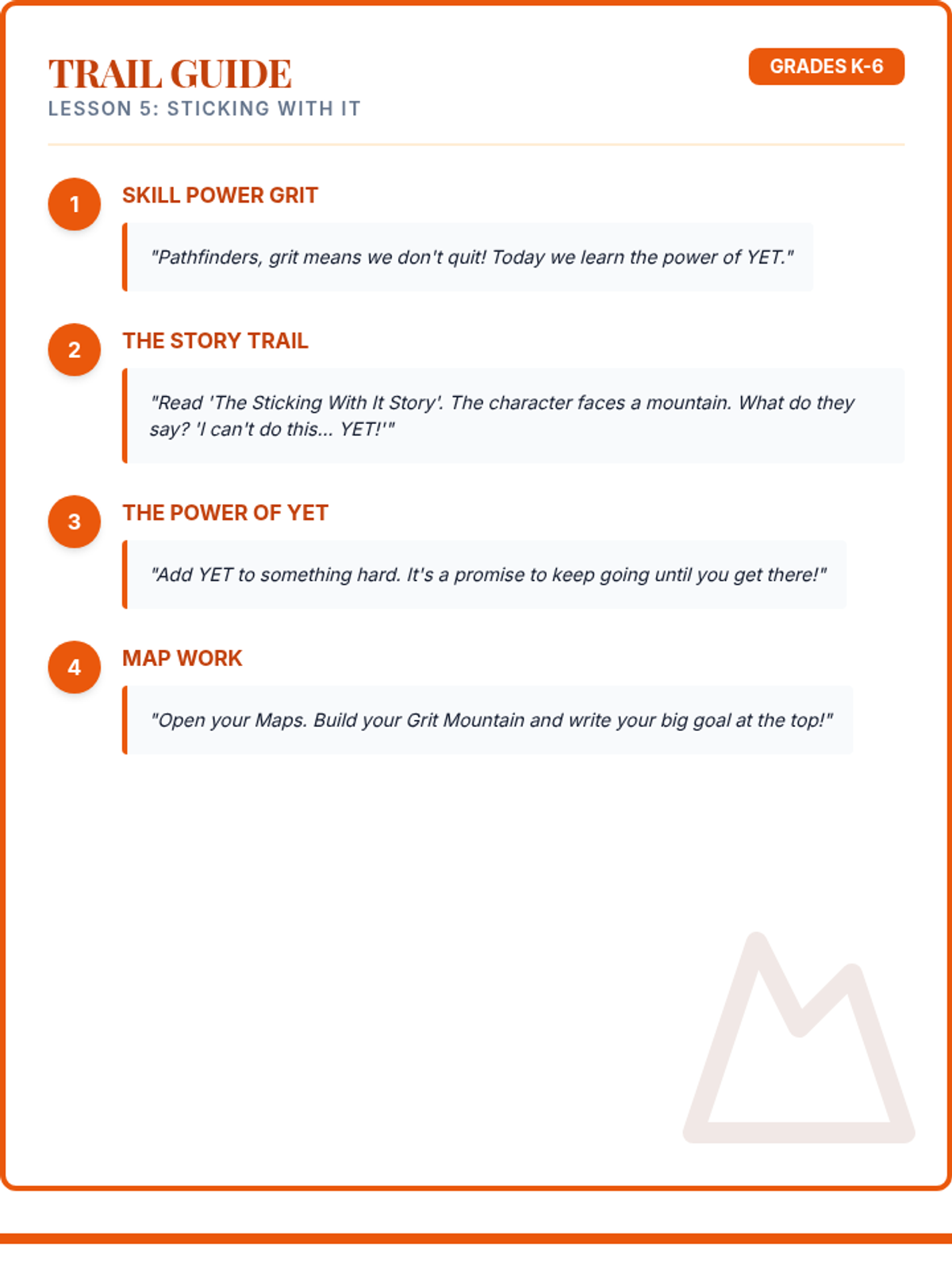
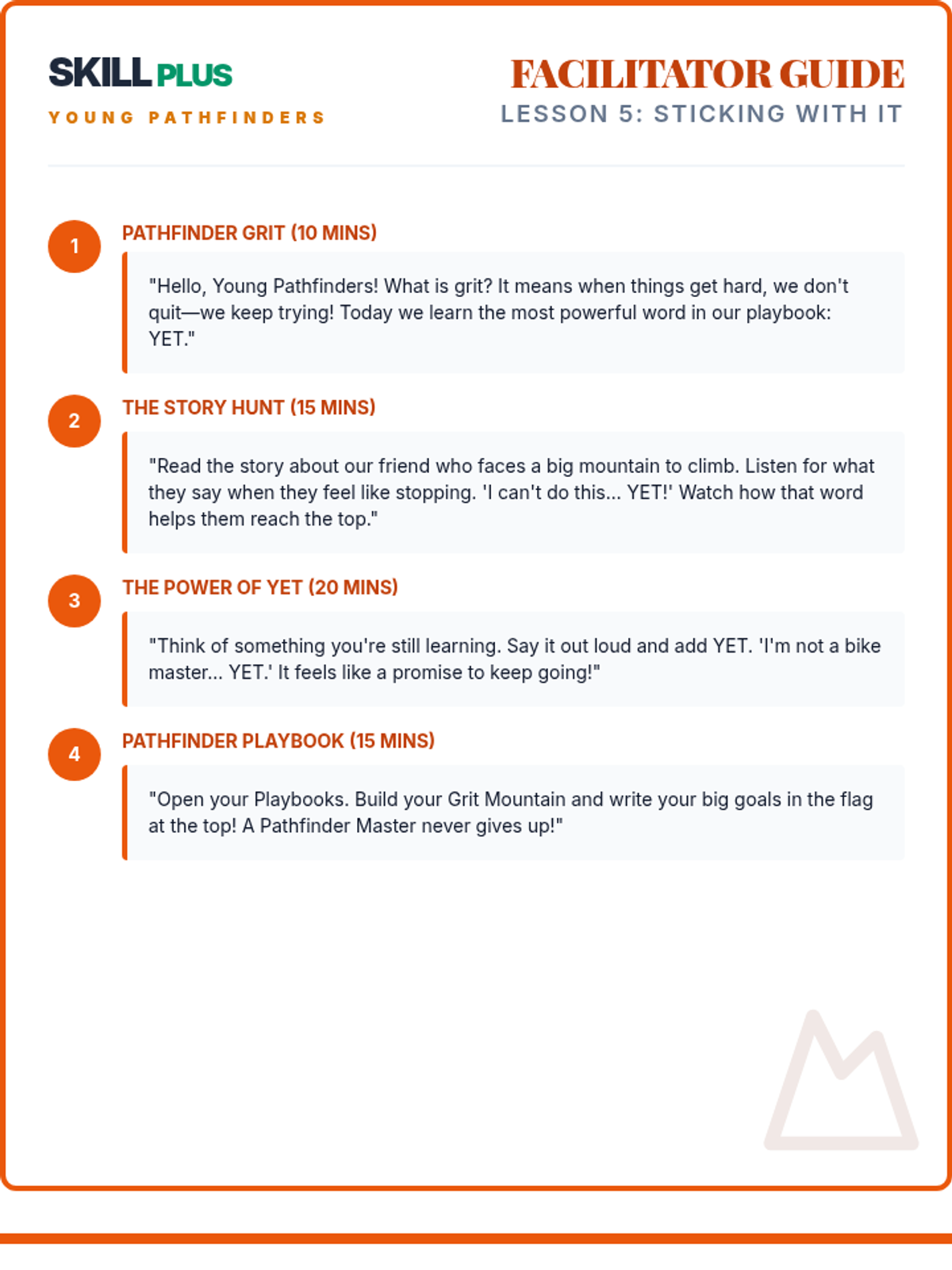
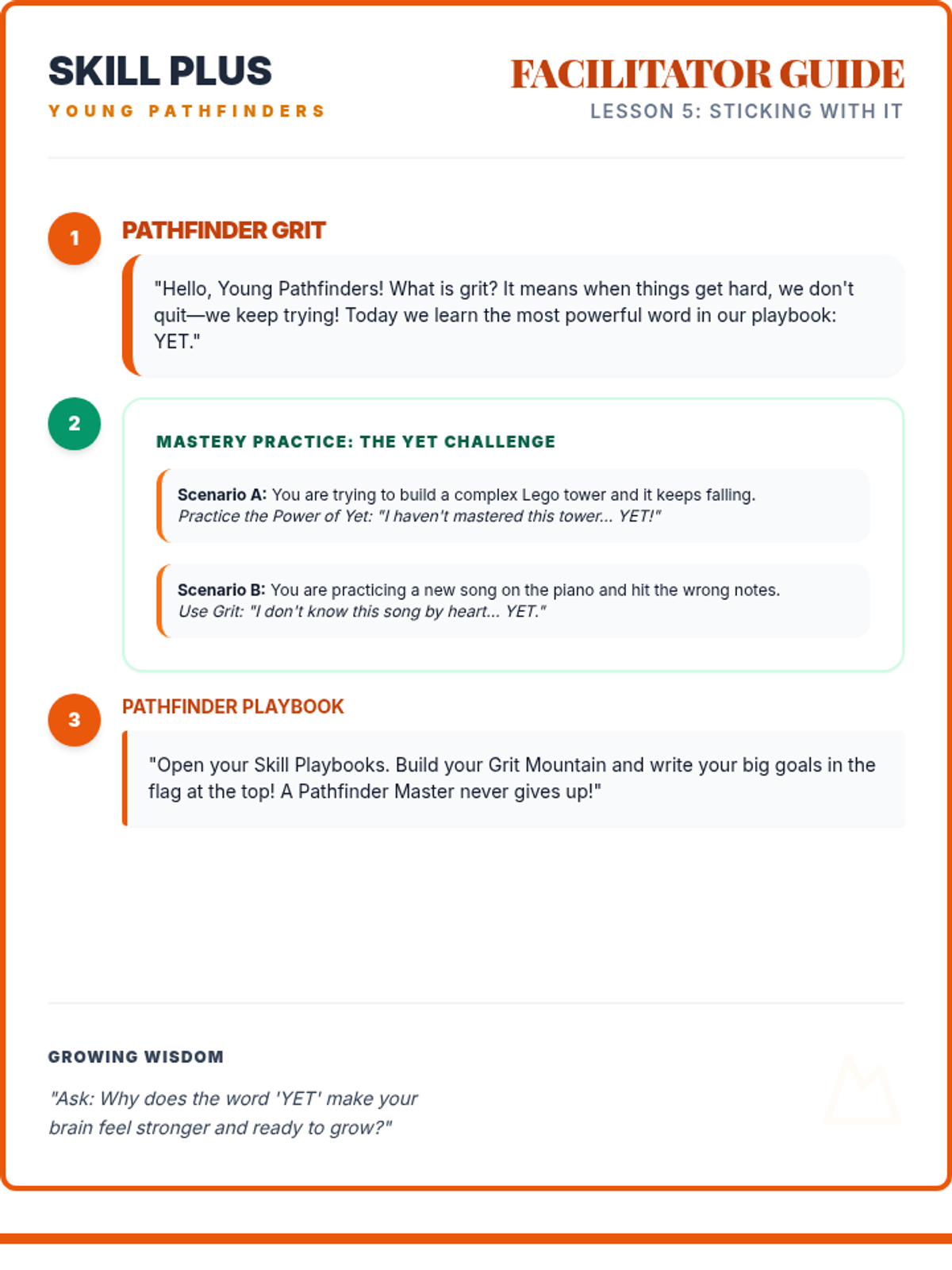
Introduction to the growth mindset. Focus on the 'Power of Yet' and building resilience when facing initial failure.
Achieving inner peace and summarizing the EQ journey for graduation.
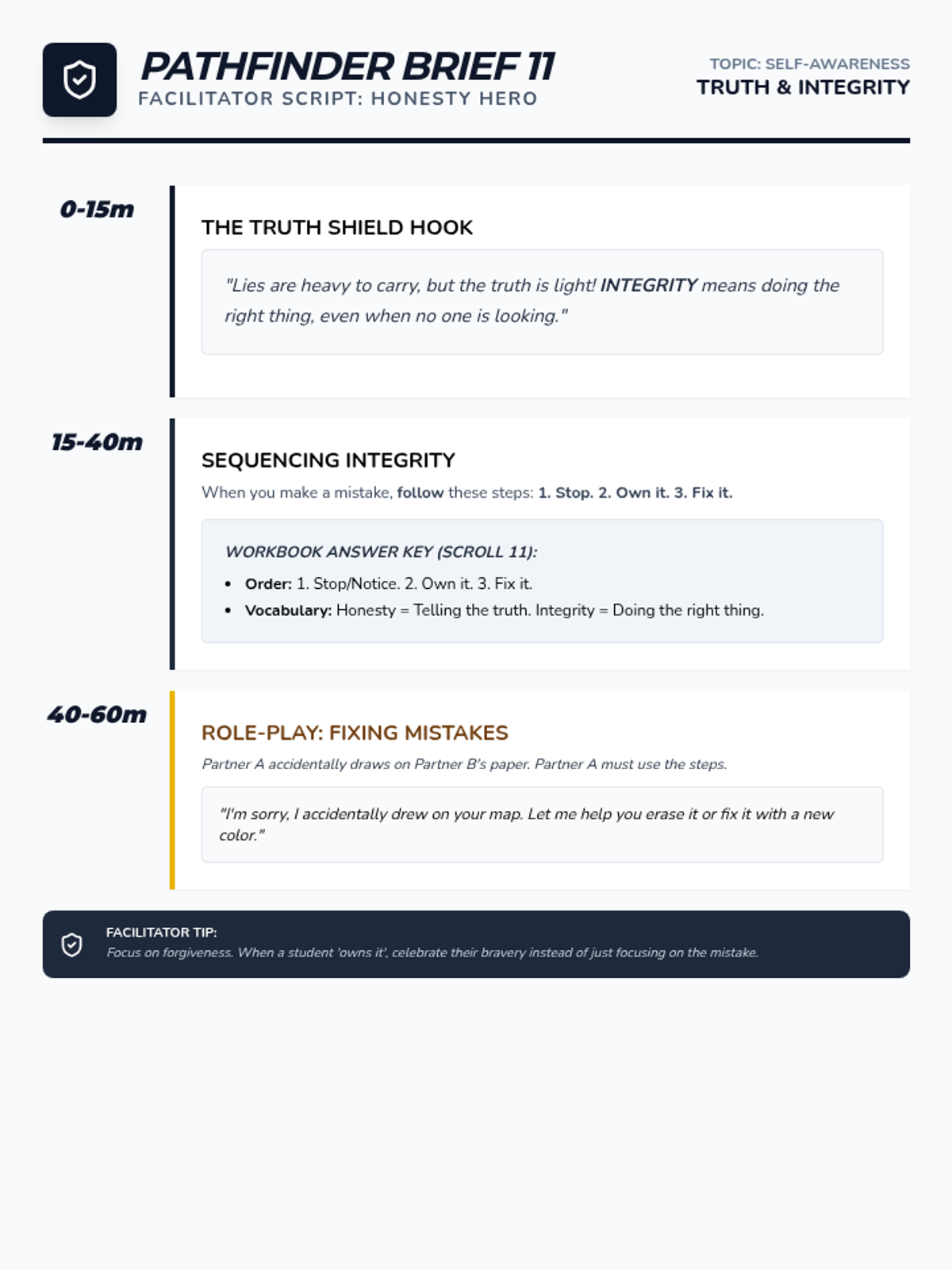
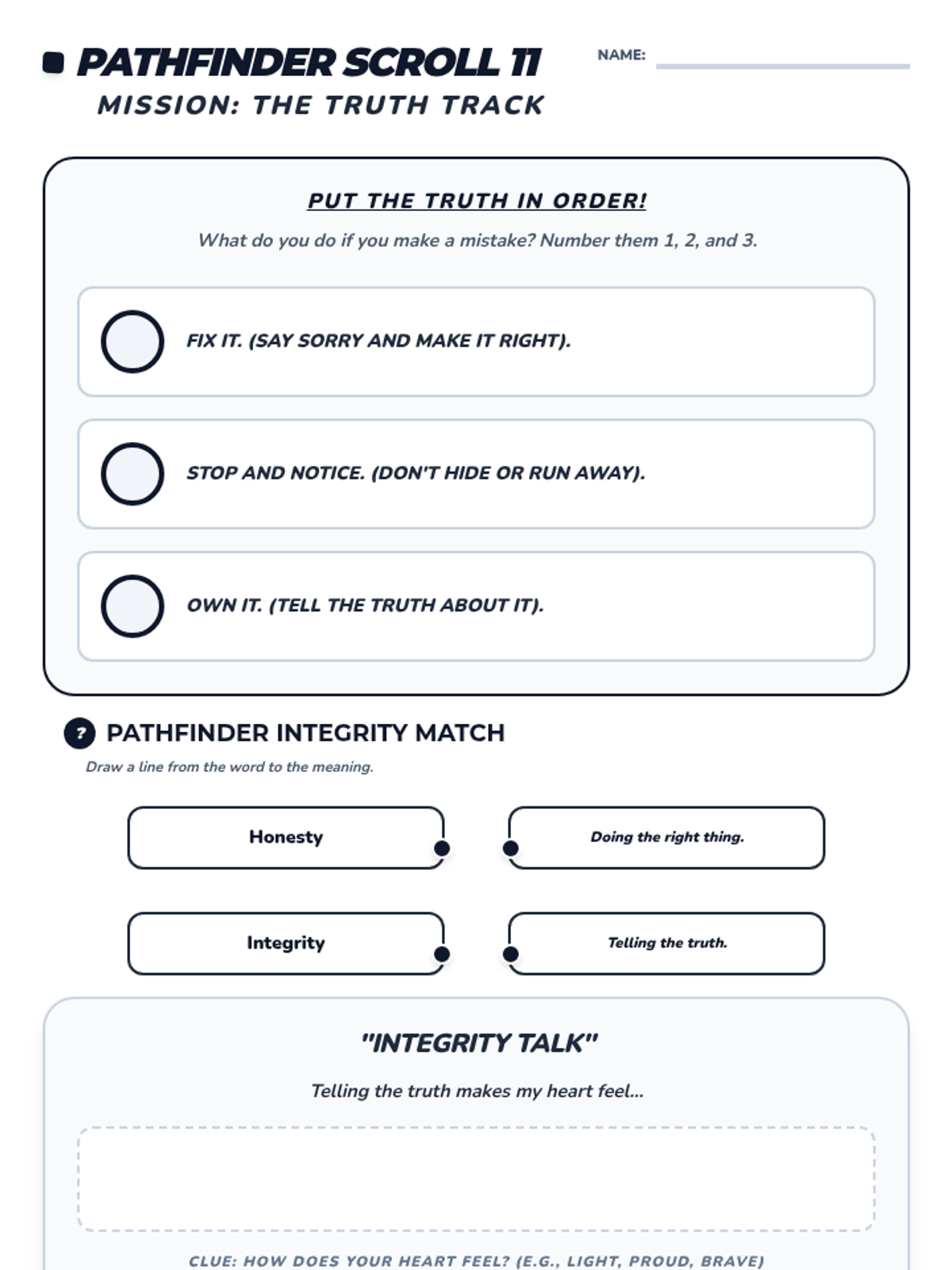
The importance of honesty and taking responsibility for one's actions.
Basic financial literacy: needs vs. wants and the value of saving.
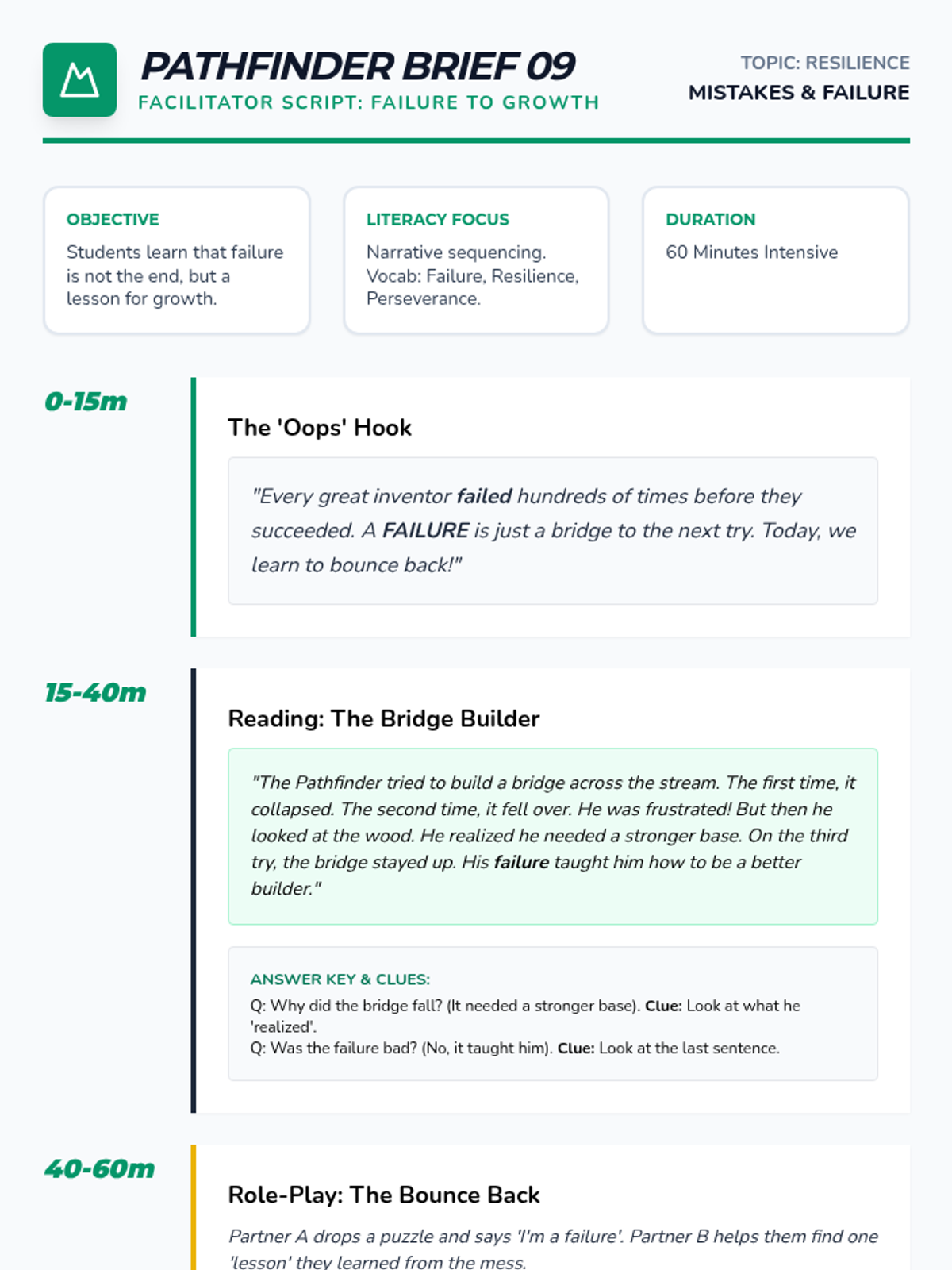
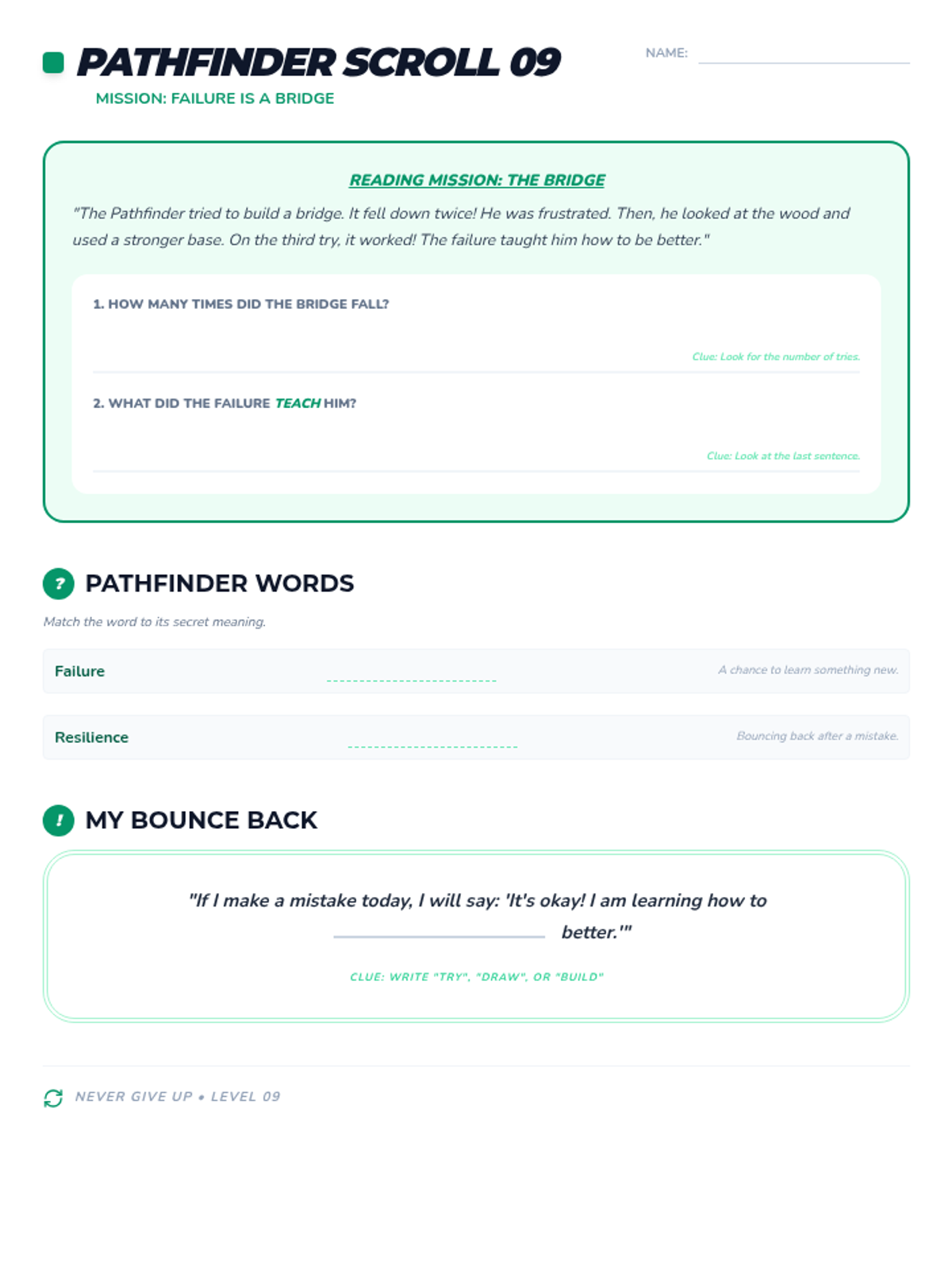
Viewing failure as a bridge to success and building resilience.
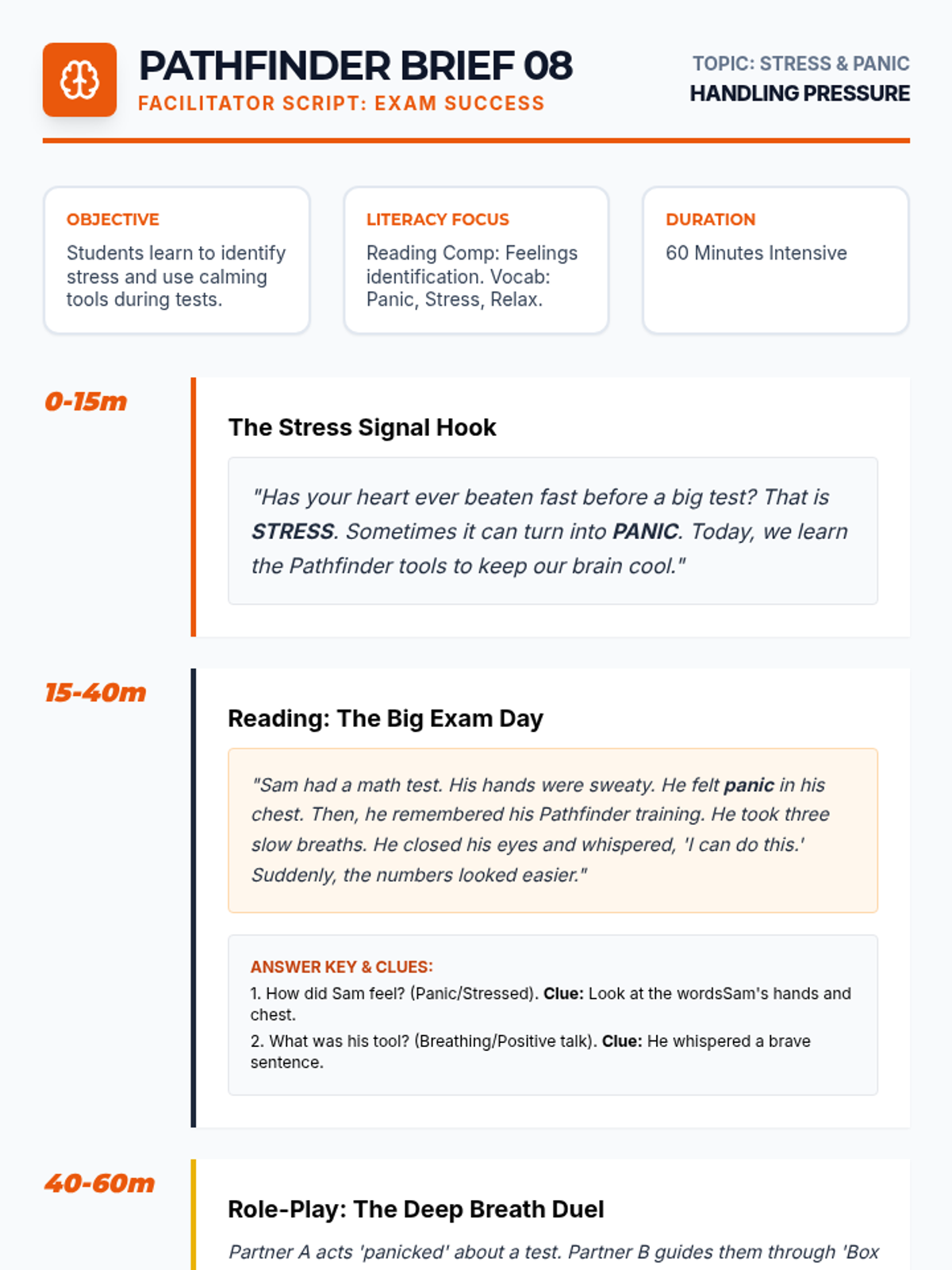
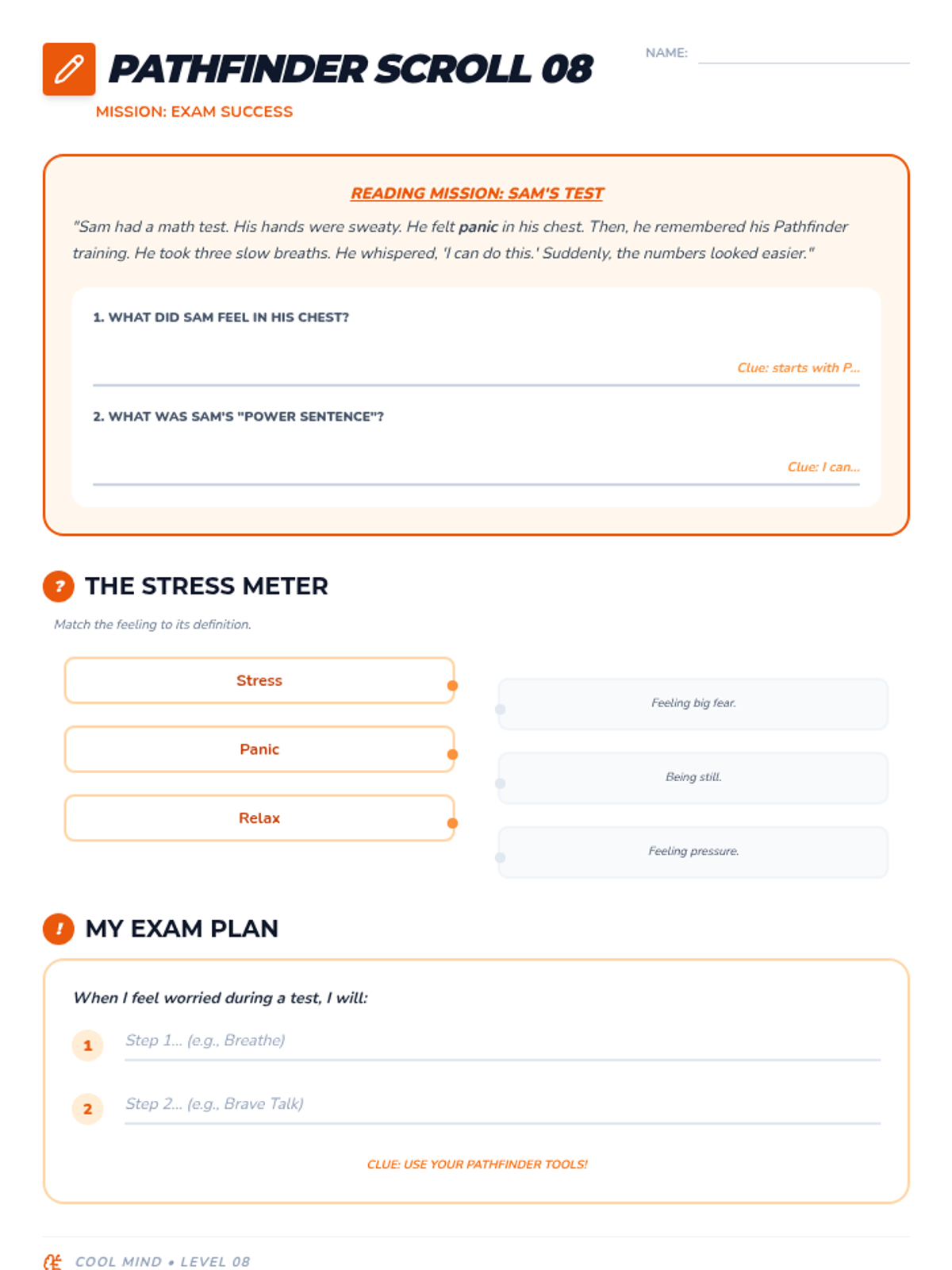
Managing the stress of exams and performance pressure through relaxation and planning.
Developing self-awareness and self-acceptance through identifying personal strengths.
Learning boundaries and when to say Yes or No to parents, friends, and strangers.
Boosting focus and memory skills for better learning and organizational habits.
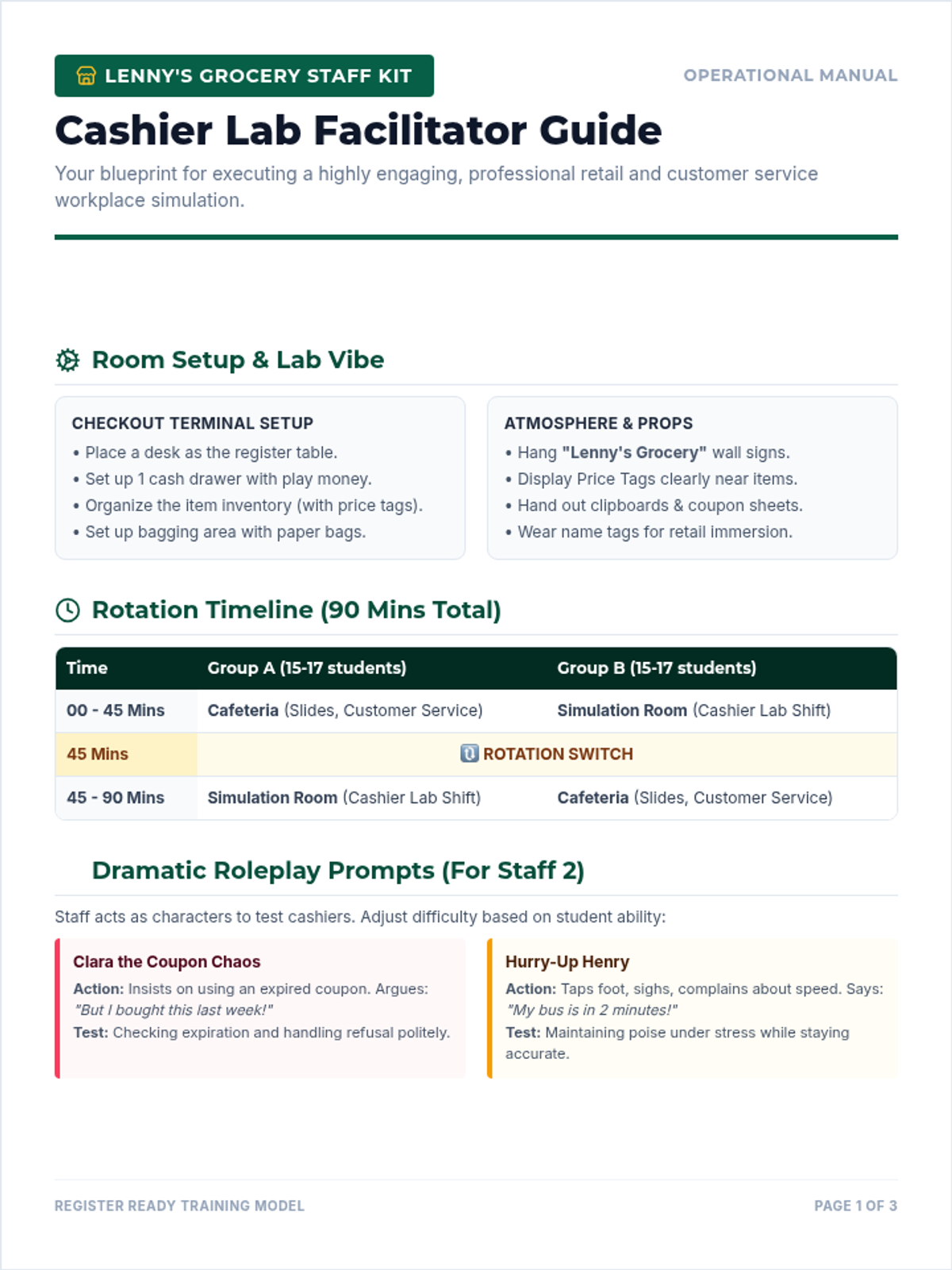
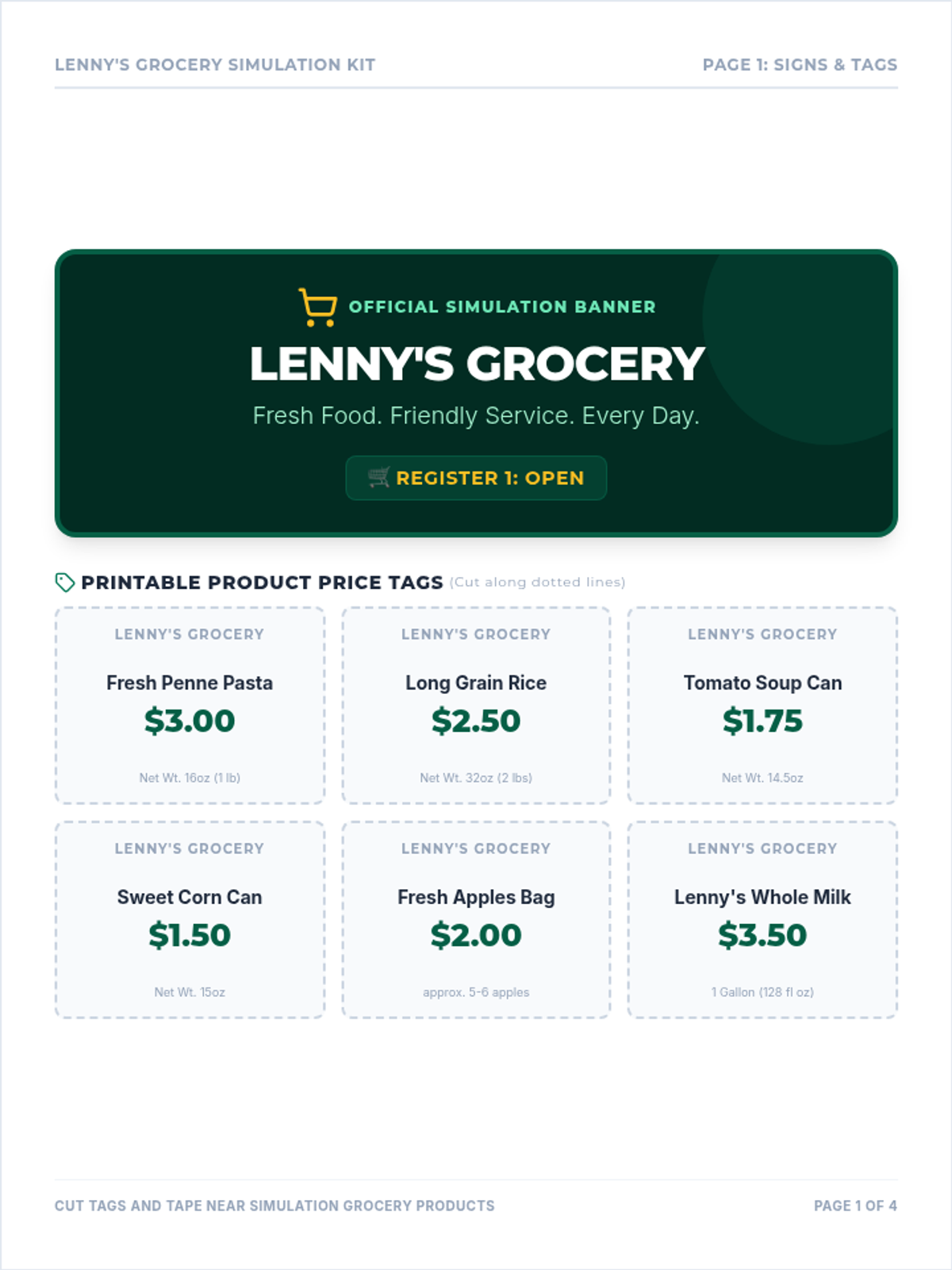
A dynamic rotation lesson where students split between a multimedia classroom training and a realistic, hands-on grocery checkout simulation.
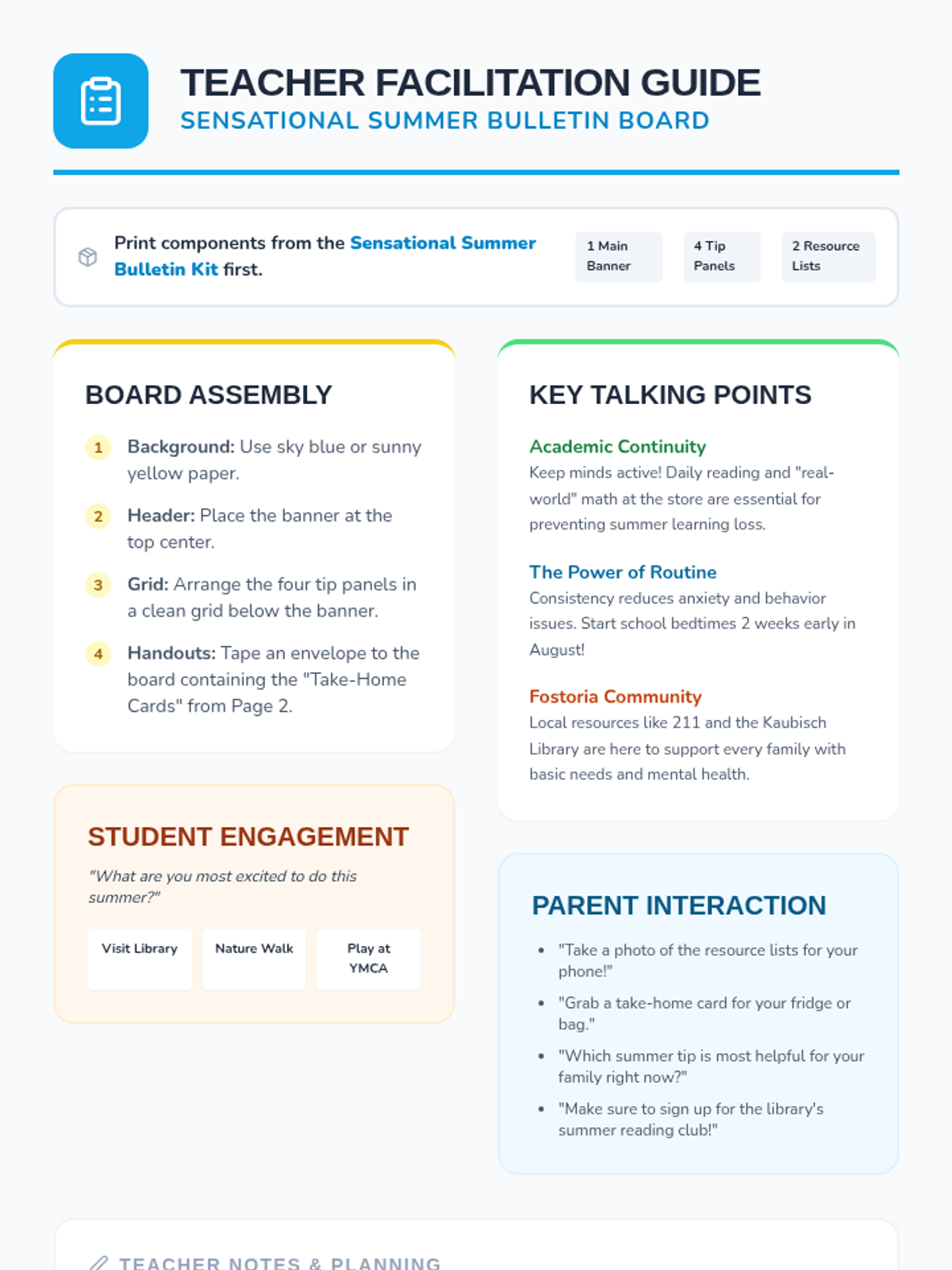
A comprehensive bulletin board kit and teacher guide focused on a successful 'Sensational Summer' for PreK-6 students and families in Fostoria, OH. The materials combine practical summer tips for academics and wellbeing with essential local community resources.
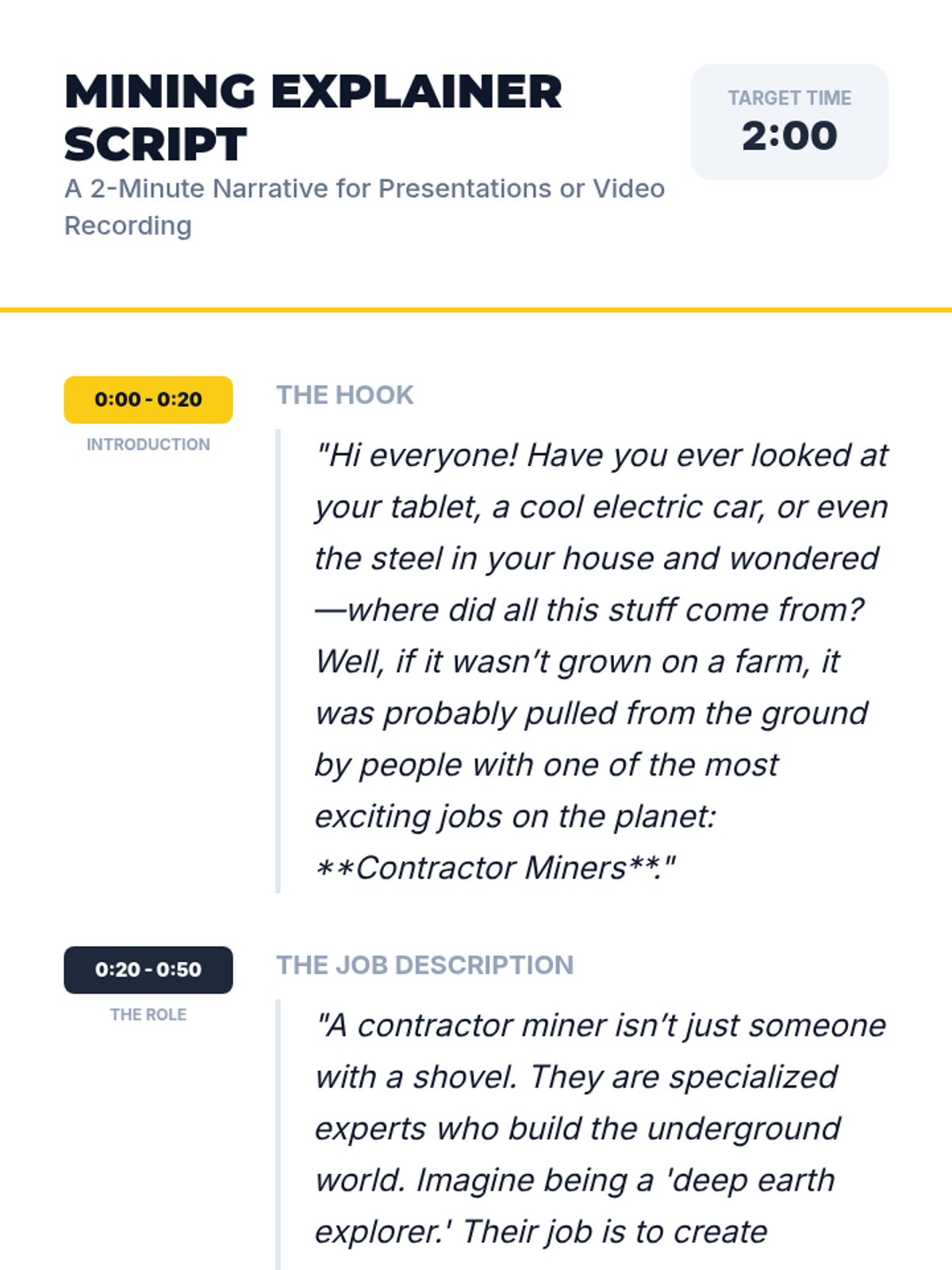
An introduction to the world of professional mining, focusing on the roles, skills, and daily life of contractor miners who work deep underground.
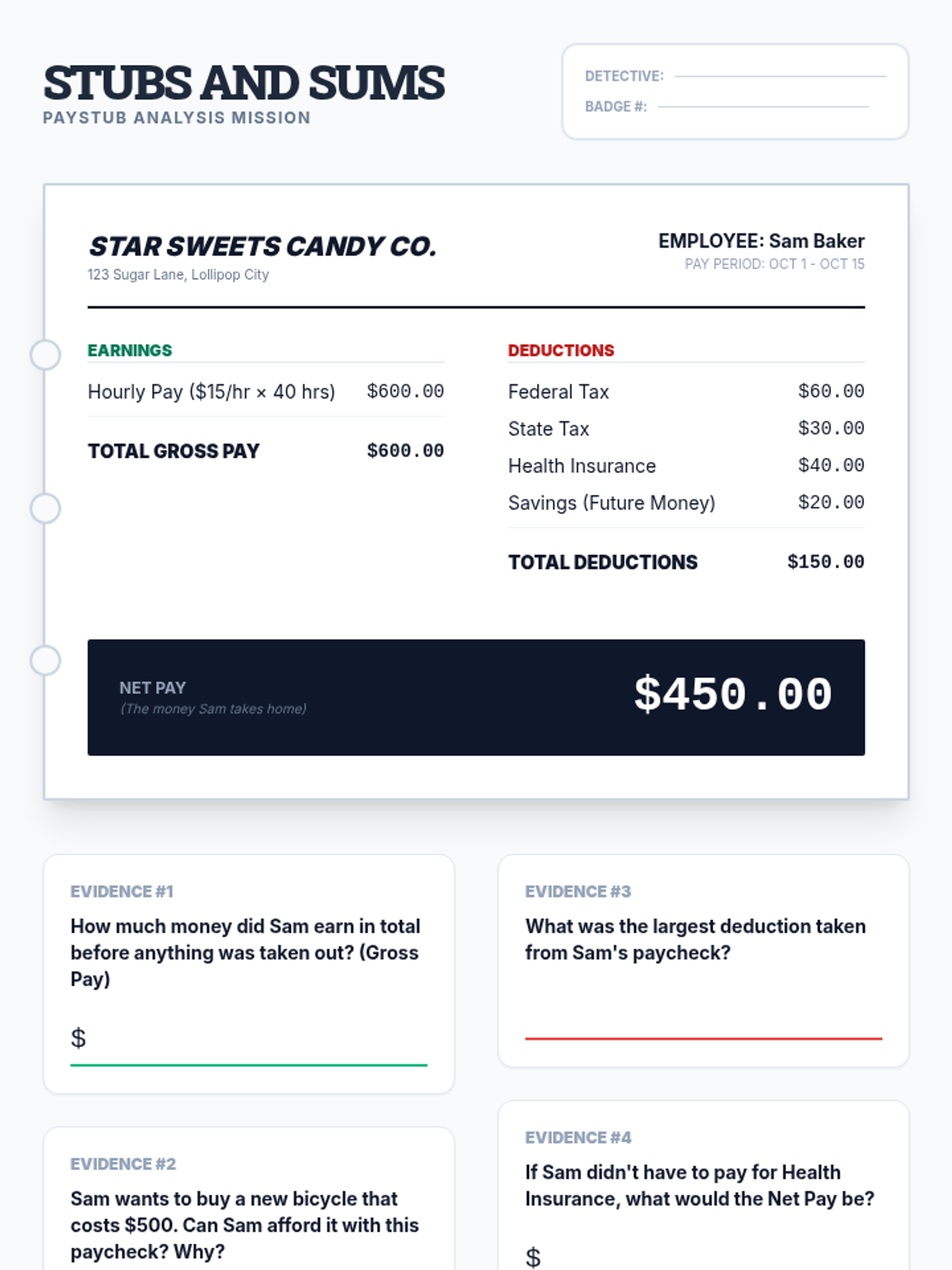
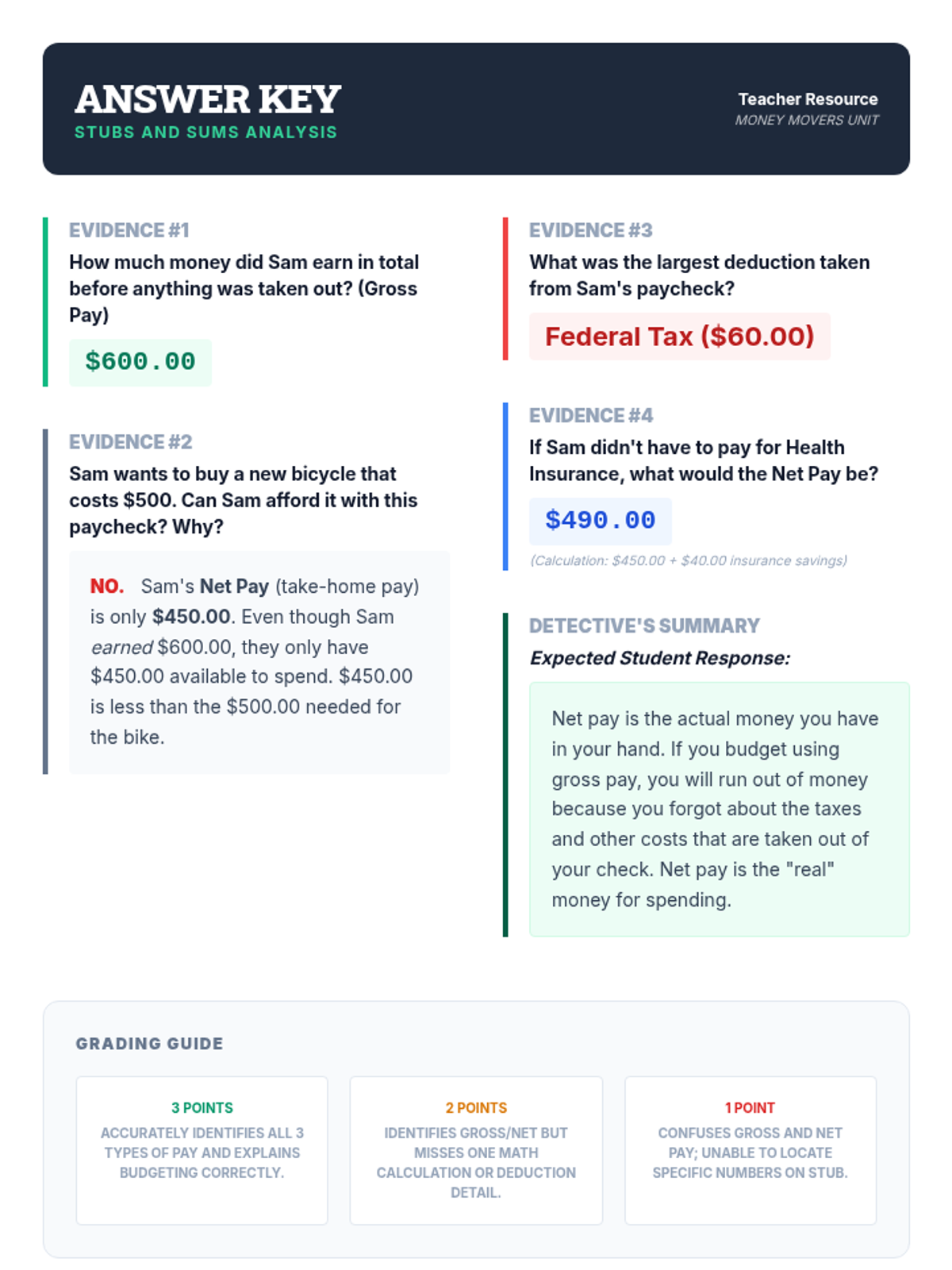
In the final lesson, students apply their knowledge to read and interpret a simplified pay stub. They identify gross pay, various deductions, and the final net pay.
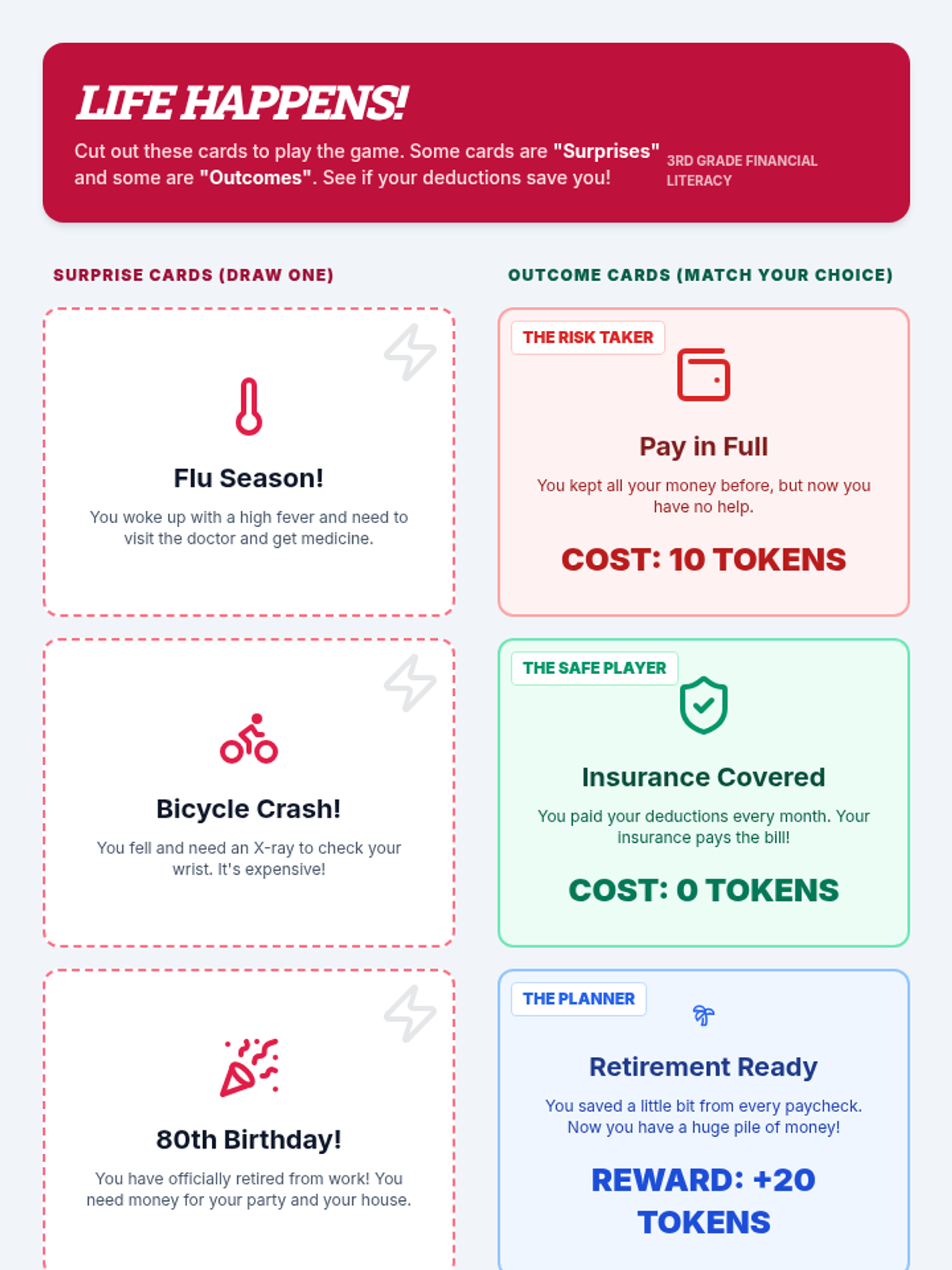
Students explore non-tax deductions like health insurance and retirement savings. They learn how these benefits protect workers and their families through a risk-management game.
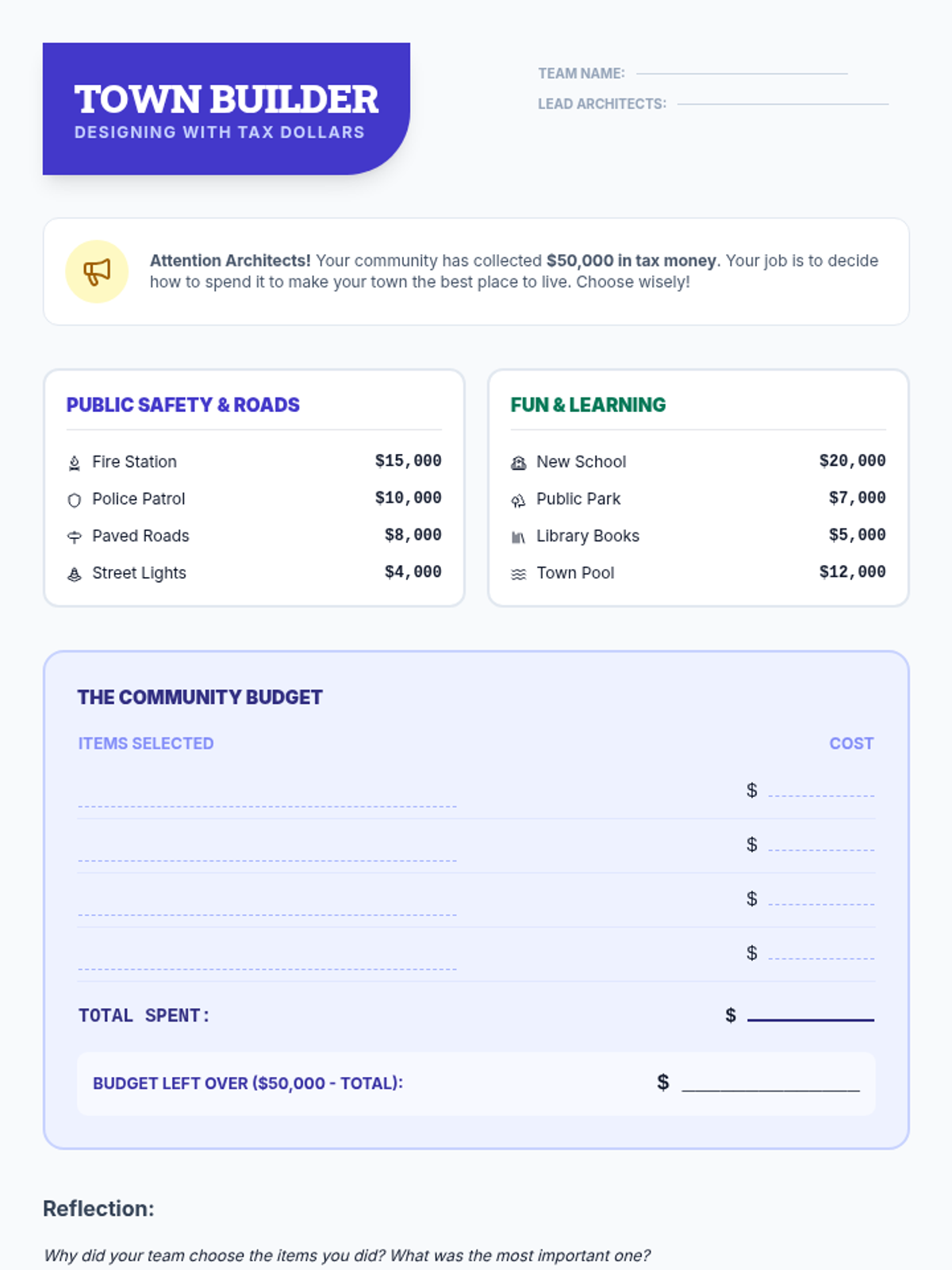
Students investigate the social contract of taxes. They explore how tax deductions from their paychecks fund essential community services like schools, parks, and emergency services.
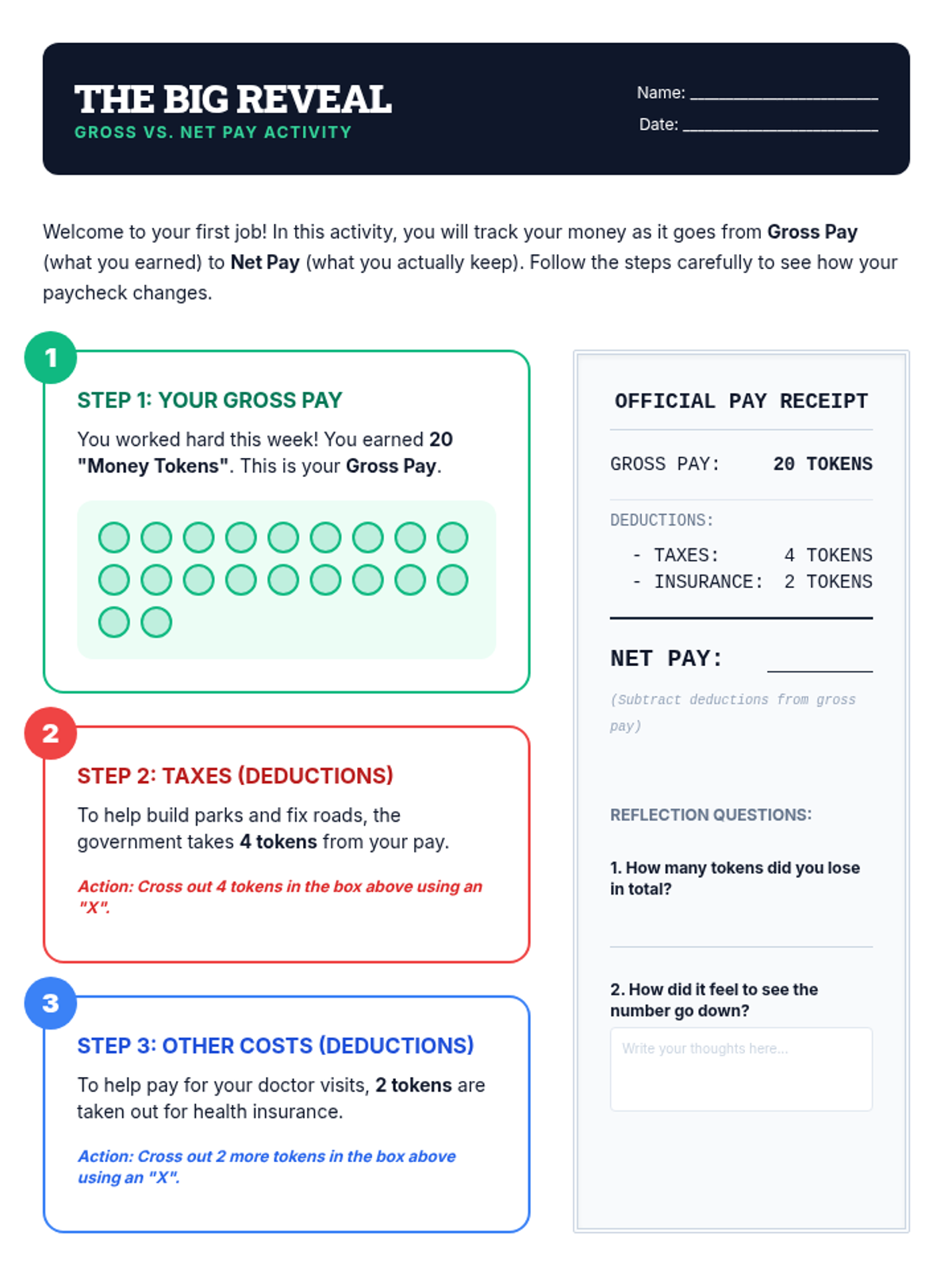
Students transition from understanding what they earn (Gross Pay) to what they actually take home (Net Pay). Through a hands-on simulation, they learn that deductions reduce their total pay for various reasons.
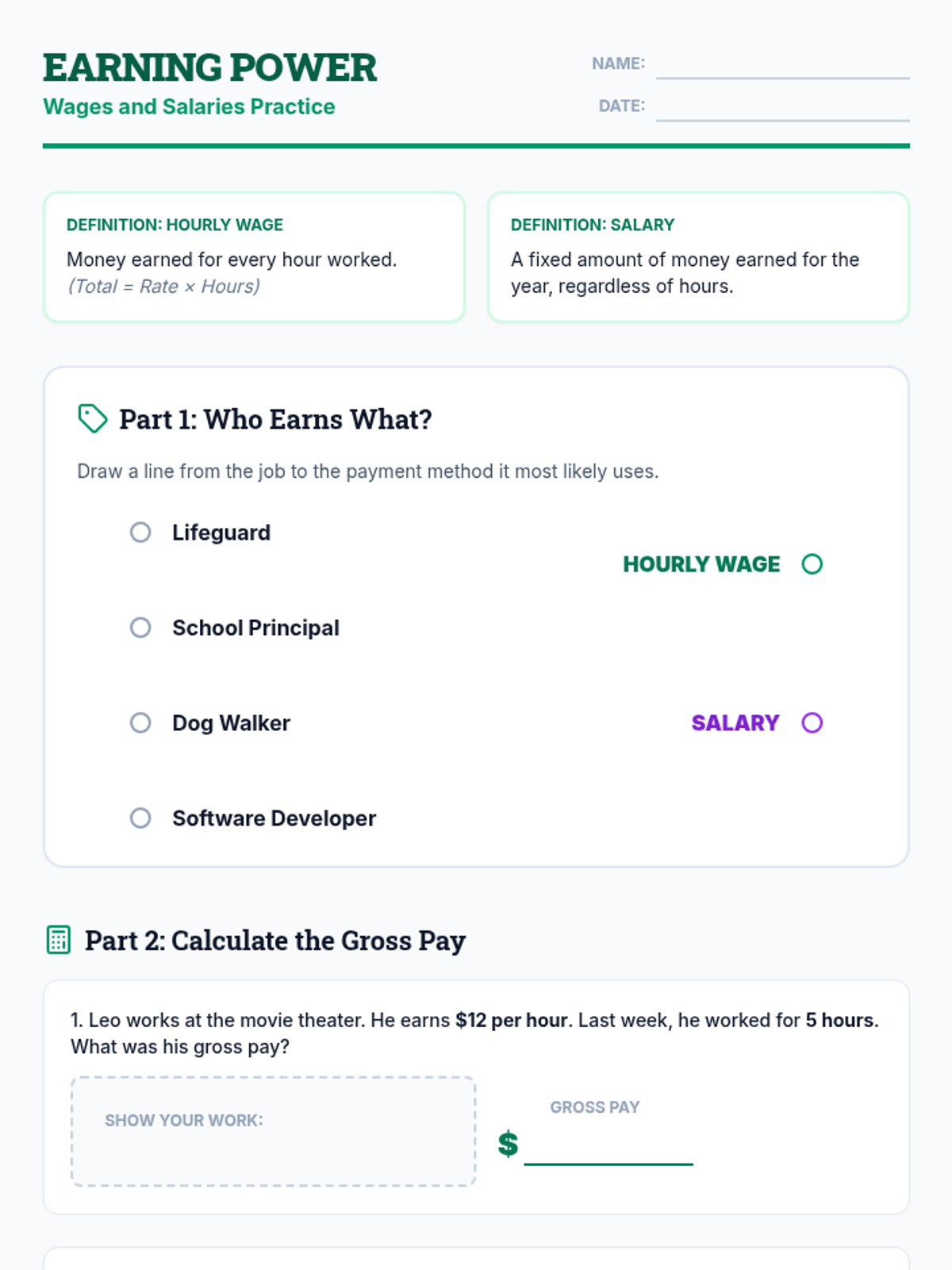
Students explore the different ways people are paid for their work, focusing on hourly wages and set salaries. They practice calculating gross pay using basic multiplication and addition.
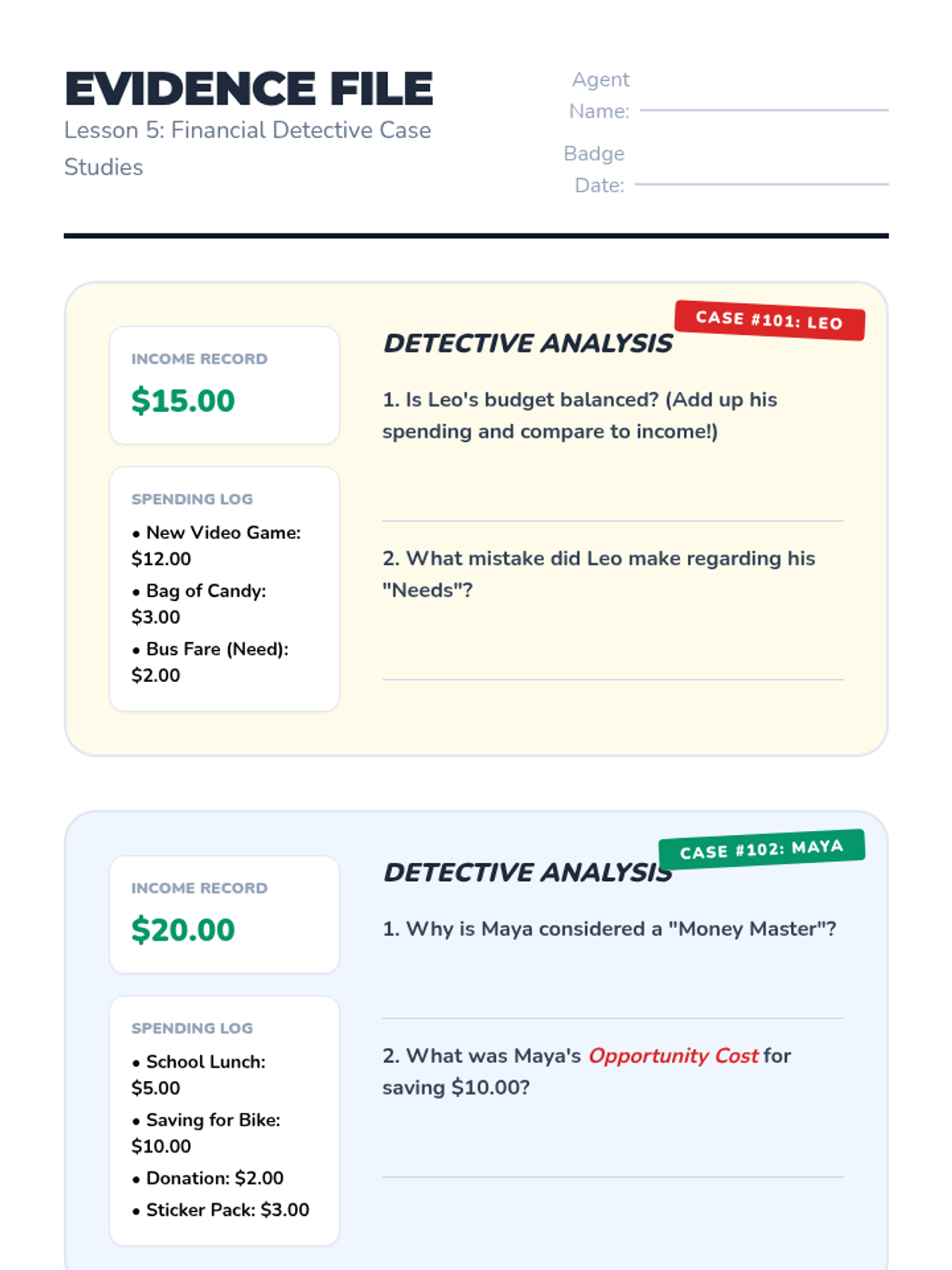
Students review case studies of fictional characters making financial decisions and critique their budgets. The lesson culminates in students presenting their own improved budget plans.
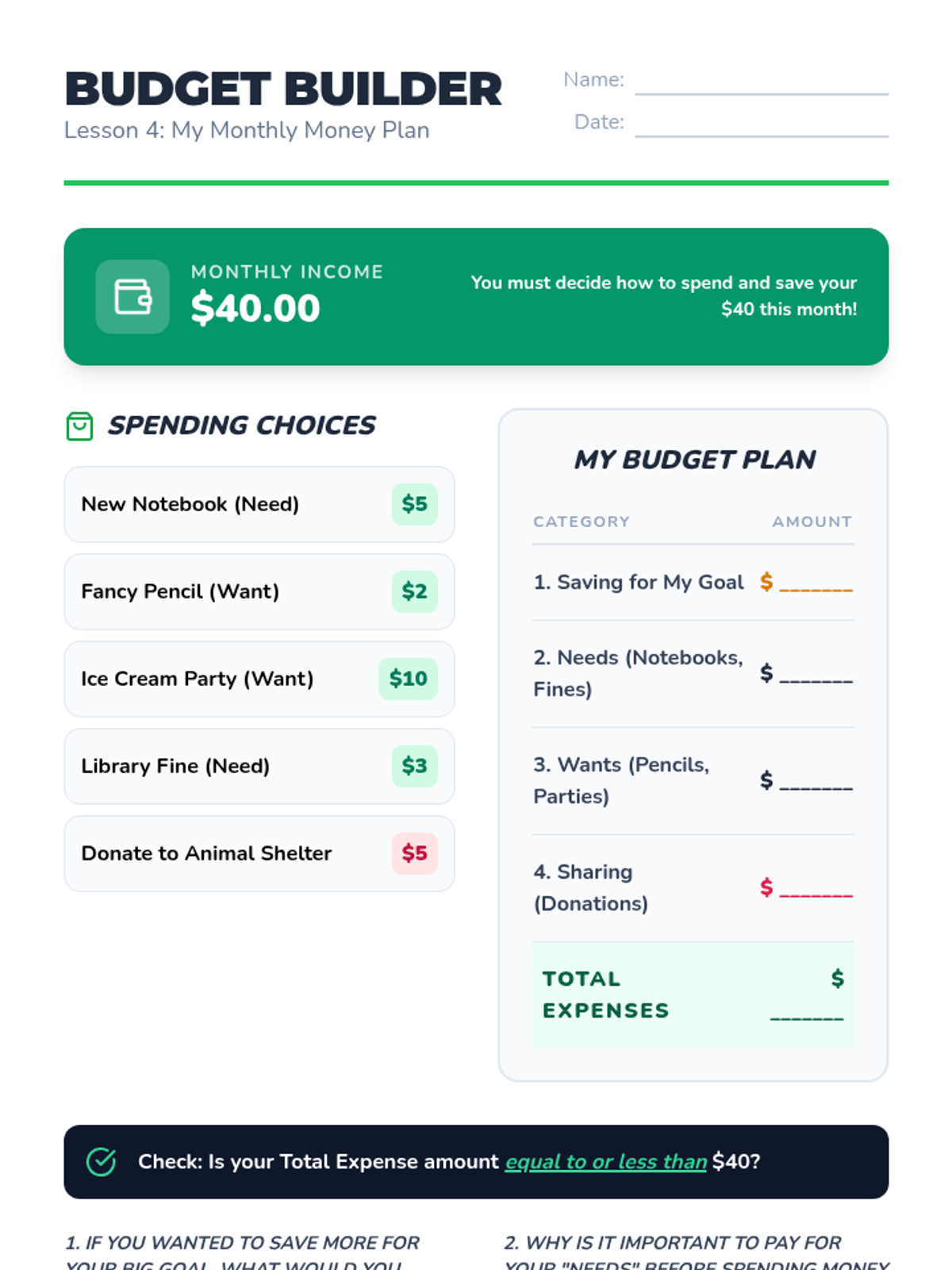
Students use a template to allocate a hypothetical monthly income into spending, saving, and sharing categories. They practice adjusting their numbers to ensure they do not spend more than they earn.
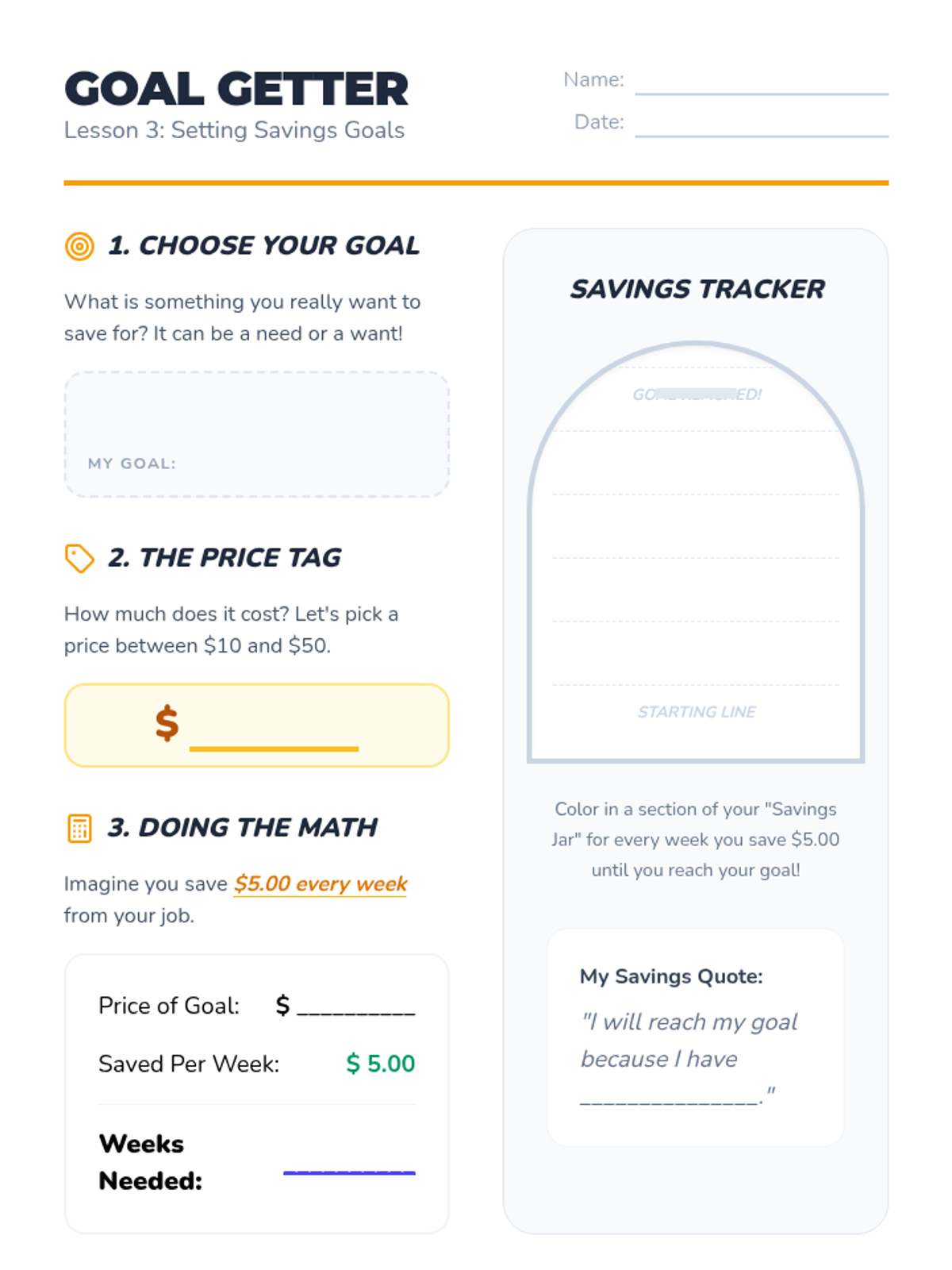
The lesson introduces the concept of saving money for short-term versus long-term goals. Students identify something they want to save for and calculate how long it would take to afford it based on a set weekly allowance.
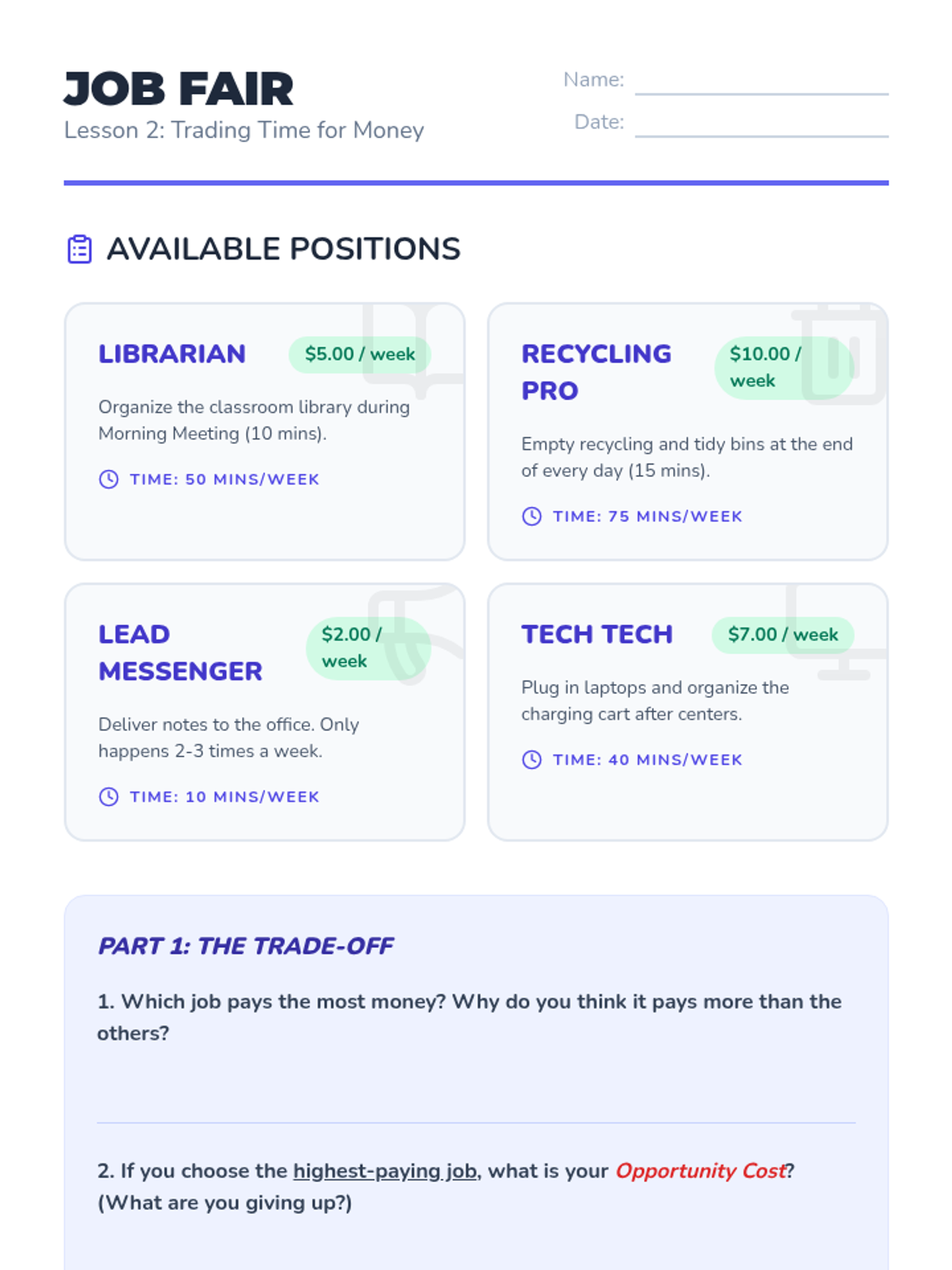
Students explore different ways people earn money and the concept of trading time for income. They engage in a role-play activity where they must choose between different 'jobs' based on time required and pay offered.
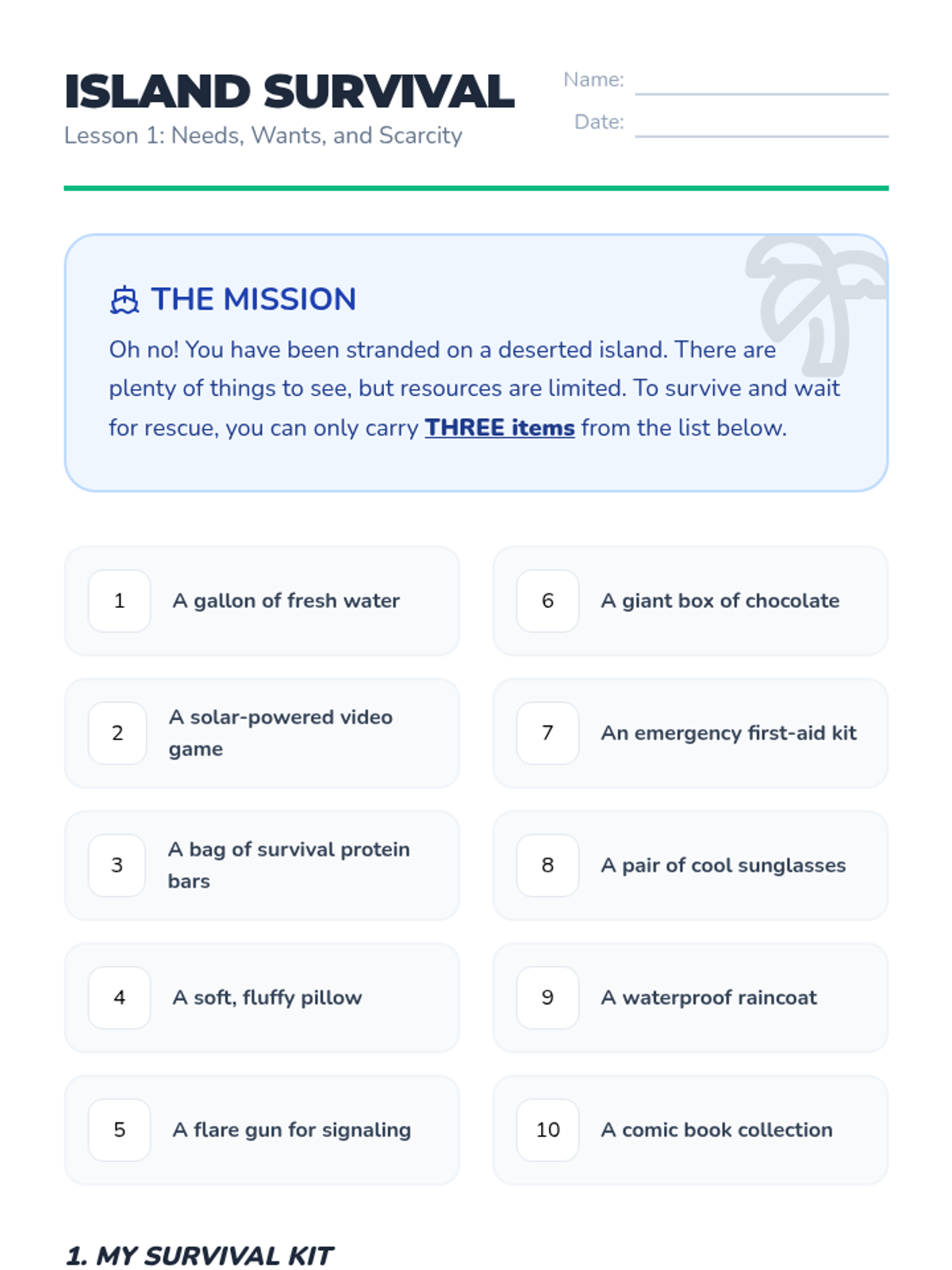
Students distinguish between essential needs and discretionary wants while exploring the concept of scarcity through a survival simulation.
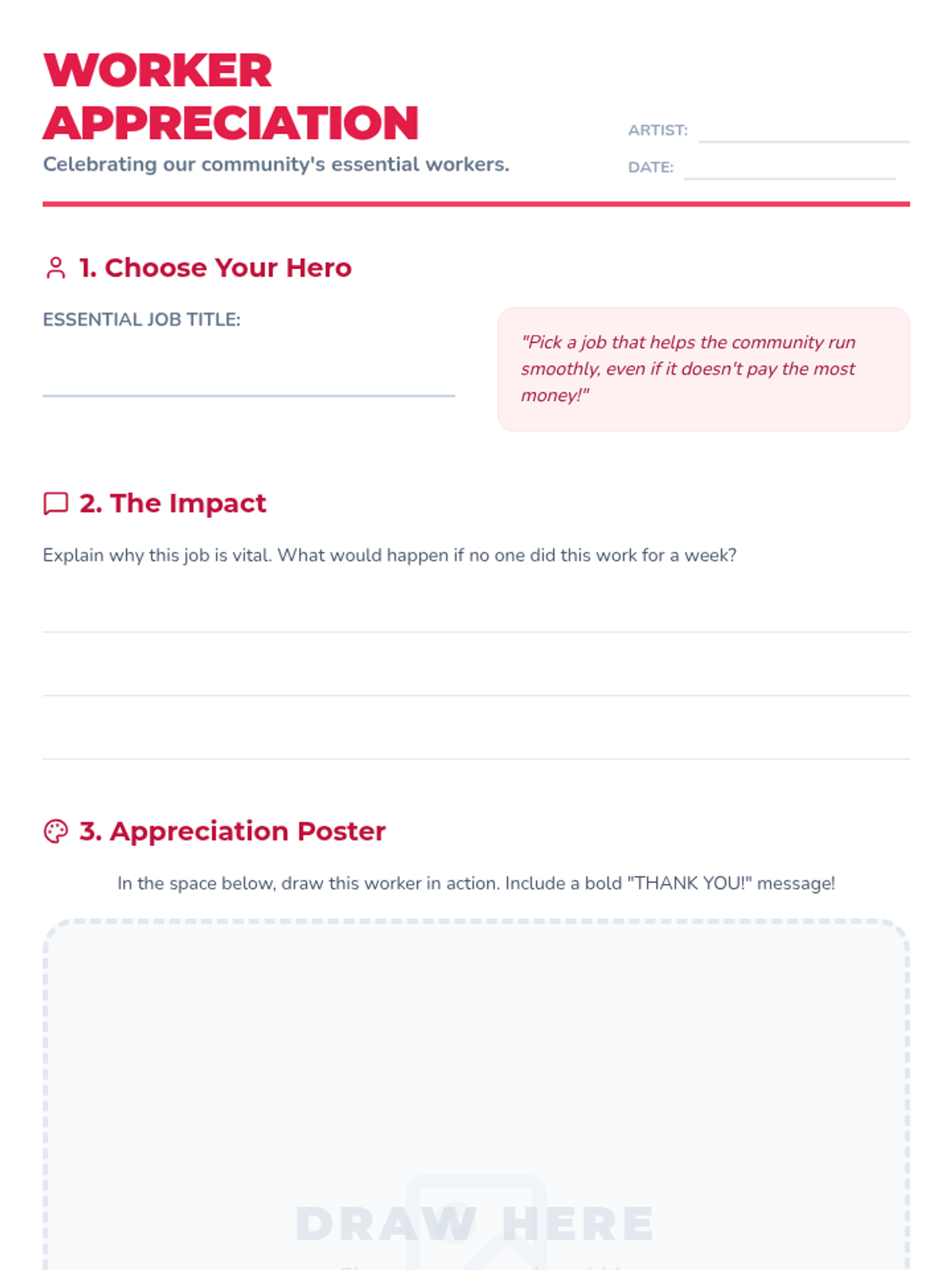
Students discuss the importance of essential workers who may not earn high wages but are vital to the community. They create appreciation projects for various workers.
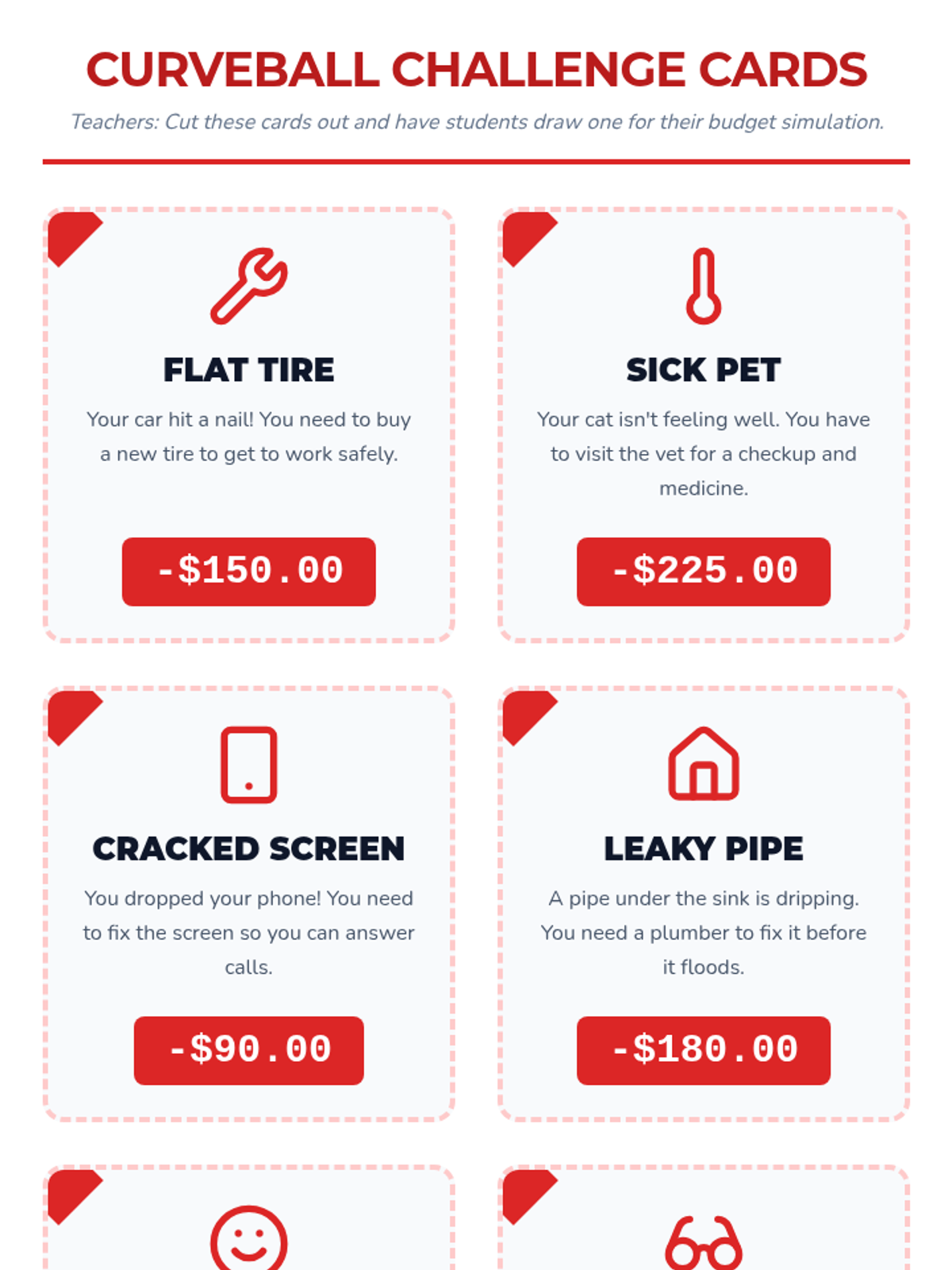
Students face unexpected expenses within their budget simulation. They discuss how having savings or higher income makes solving these problems easier.
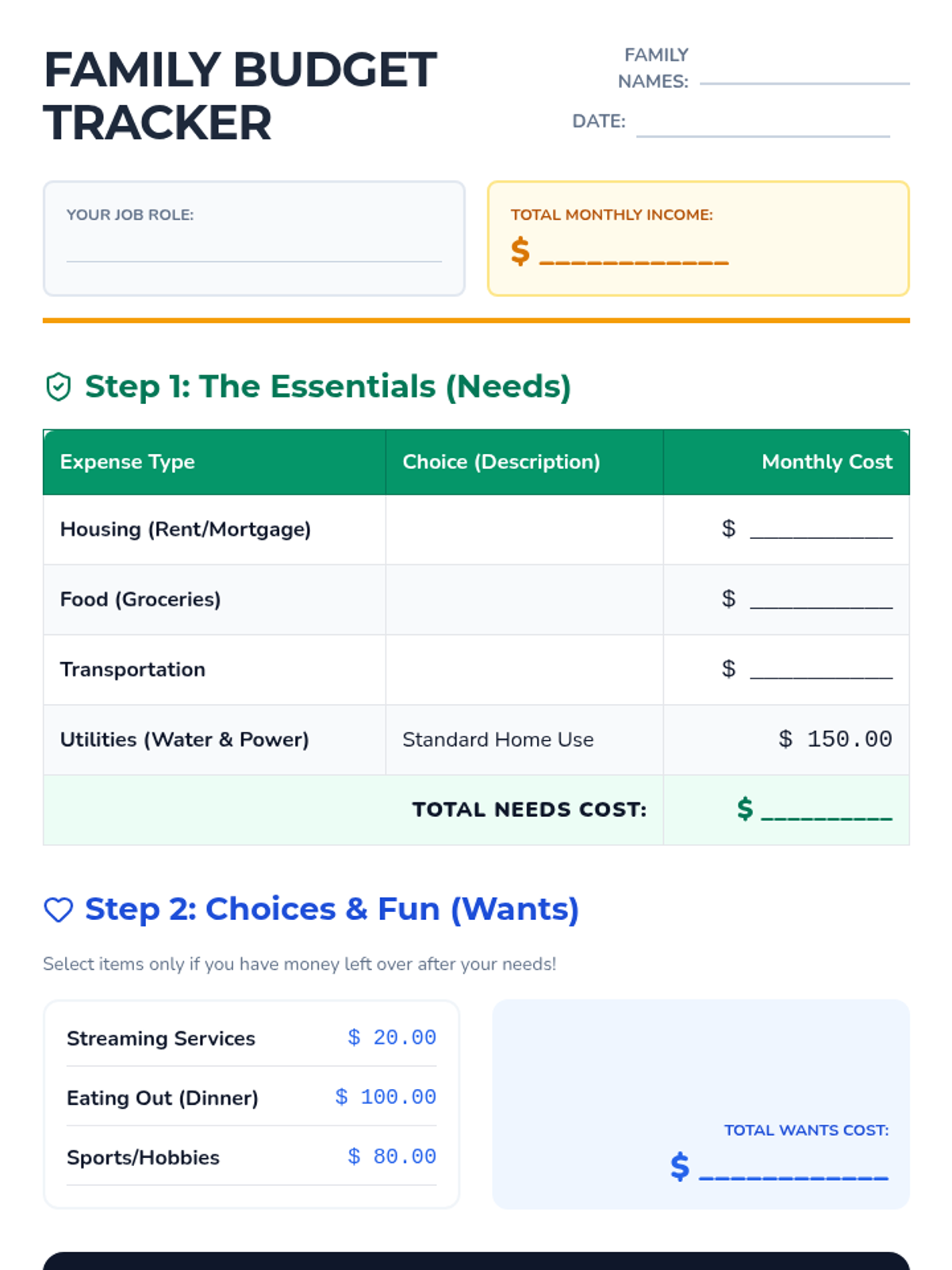
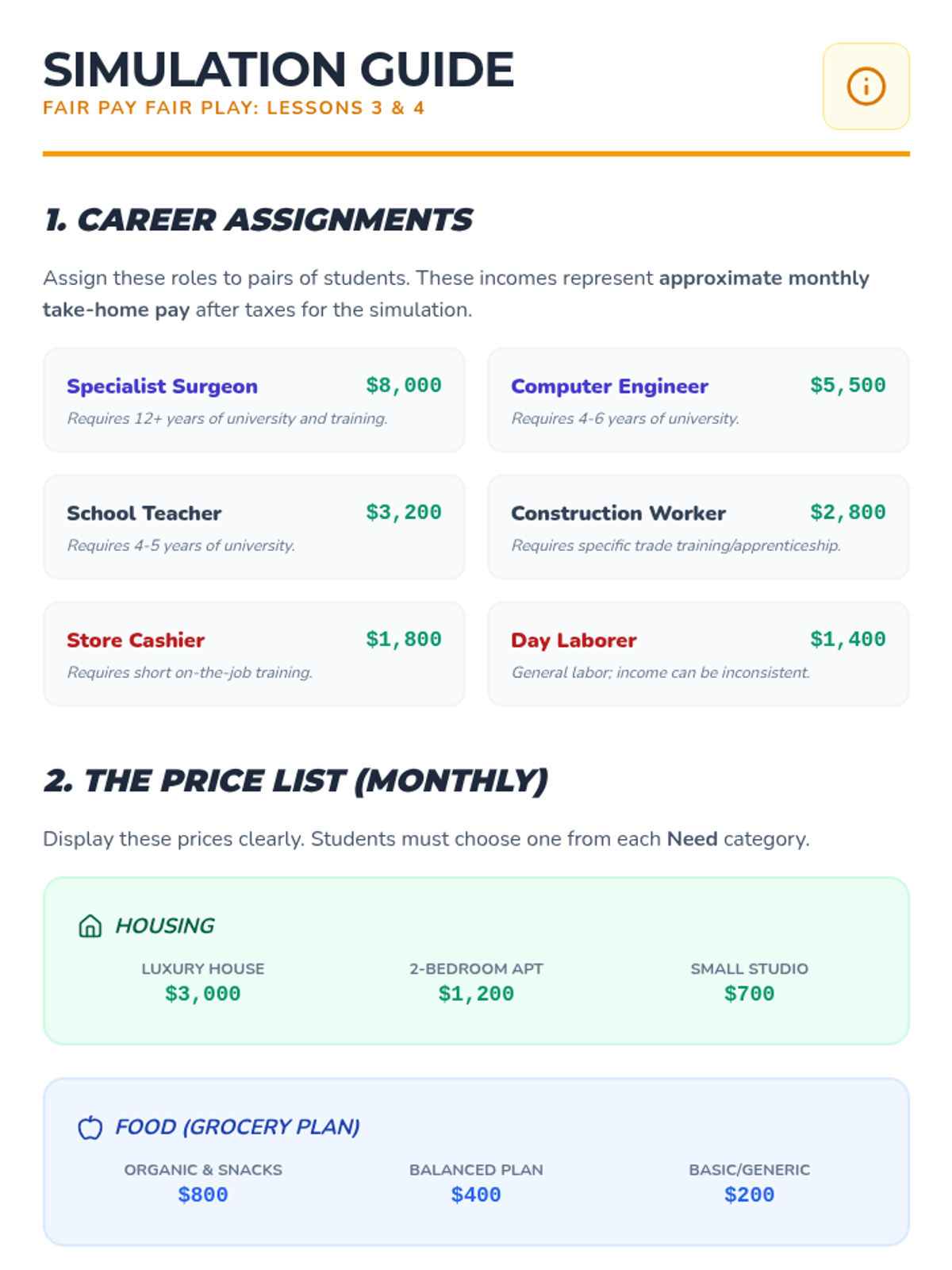
Working in pairs, students are assigned a fictional monthly income based on a specific job. They must allocate funds to cover housing, food, and clothing.
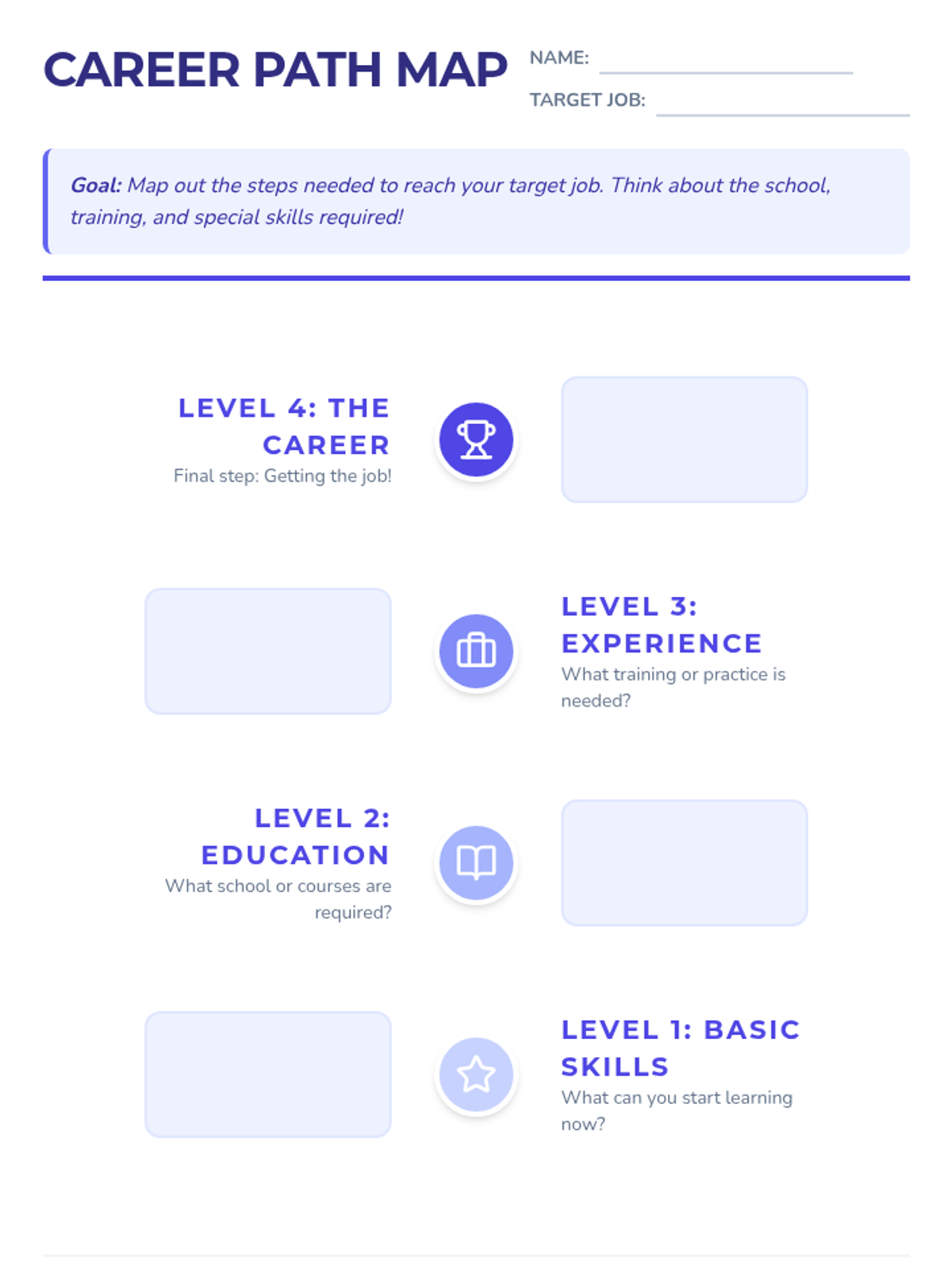
Students investigate the training required for different careers to understand one reason for wage differences. They create a 'career path' map showing the steps needed to acquire specific jobs.
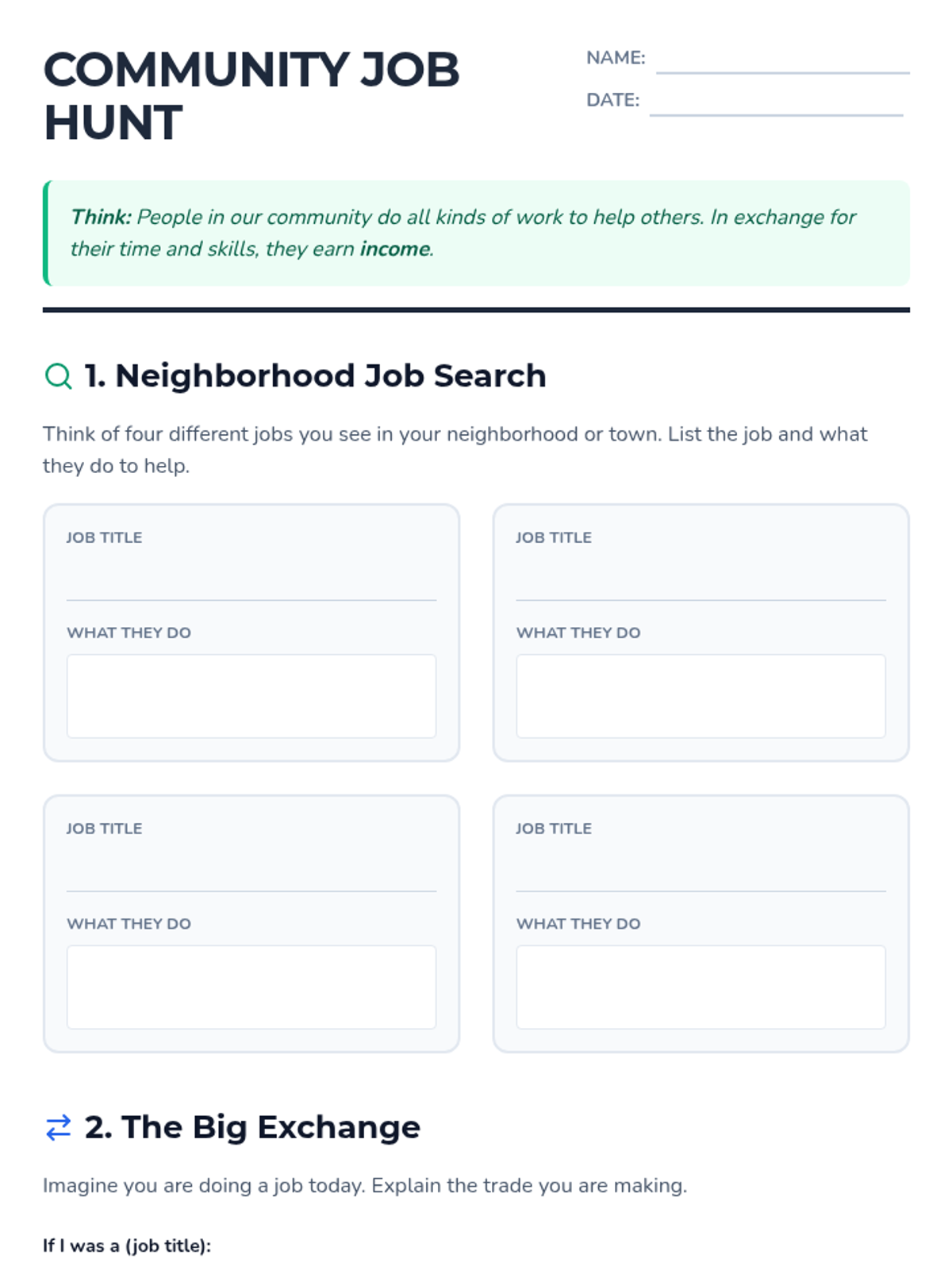
Students explore how people earn money through different jobs and the concept of income as an exchange for labor.
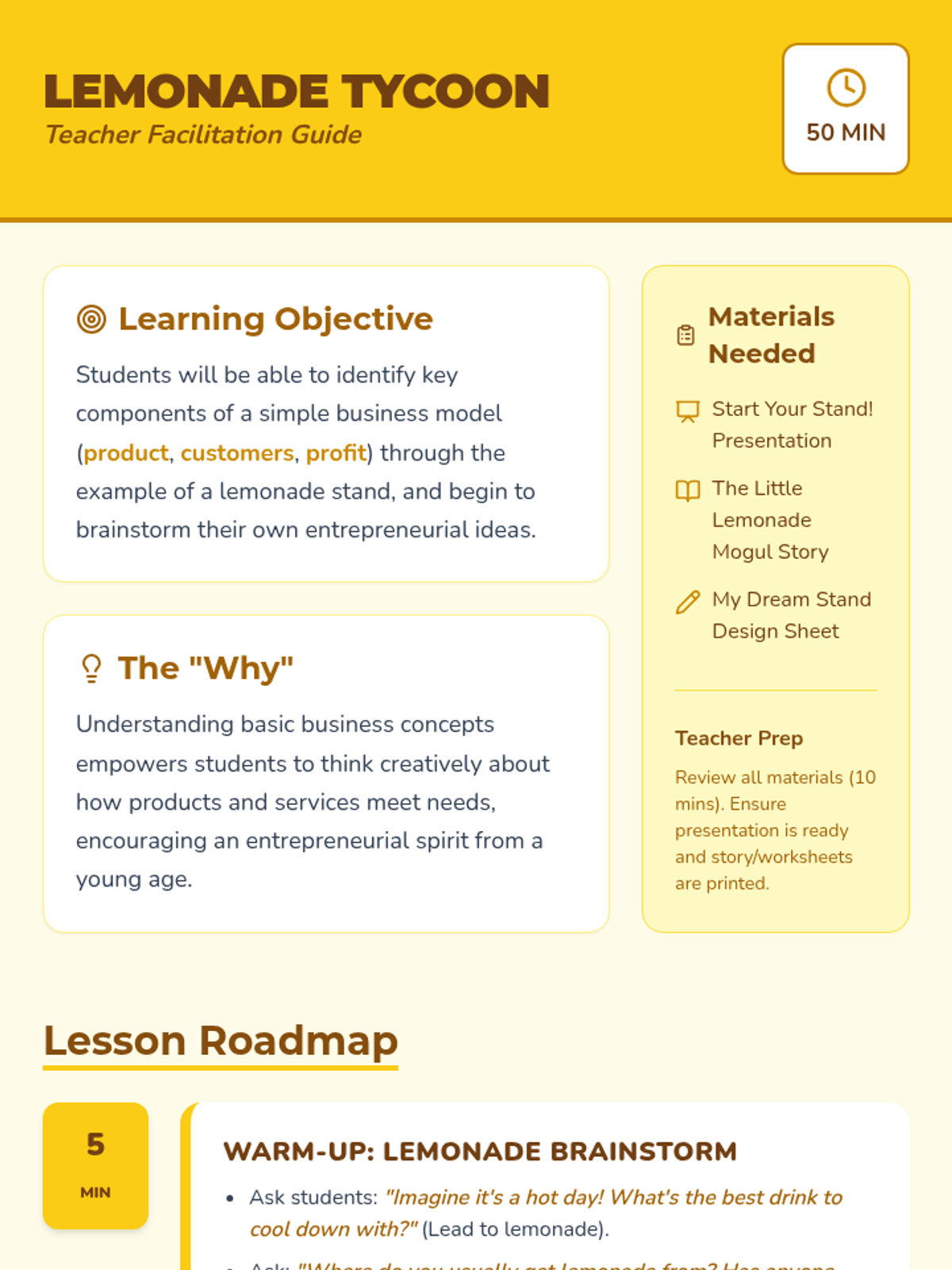
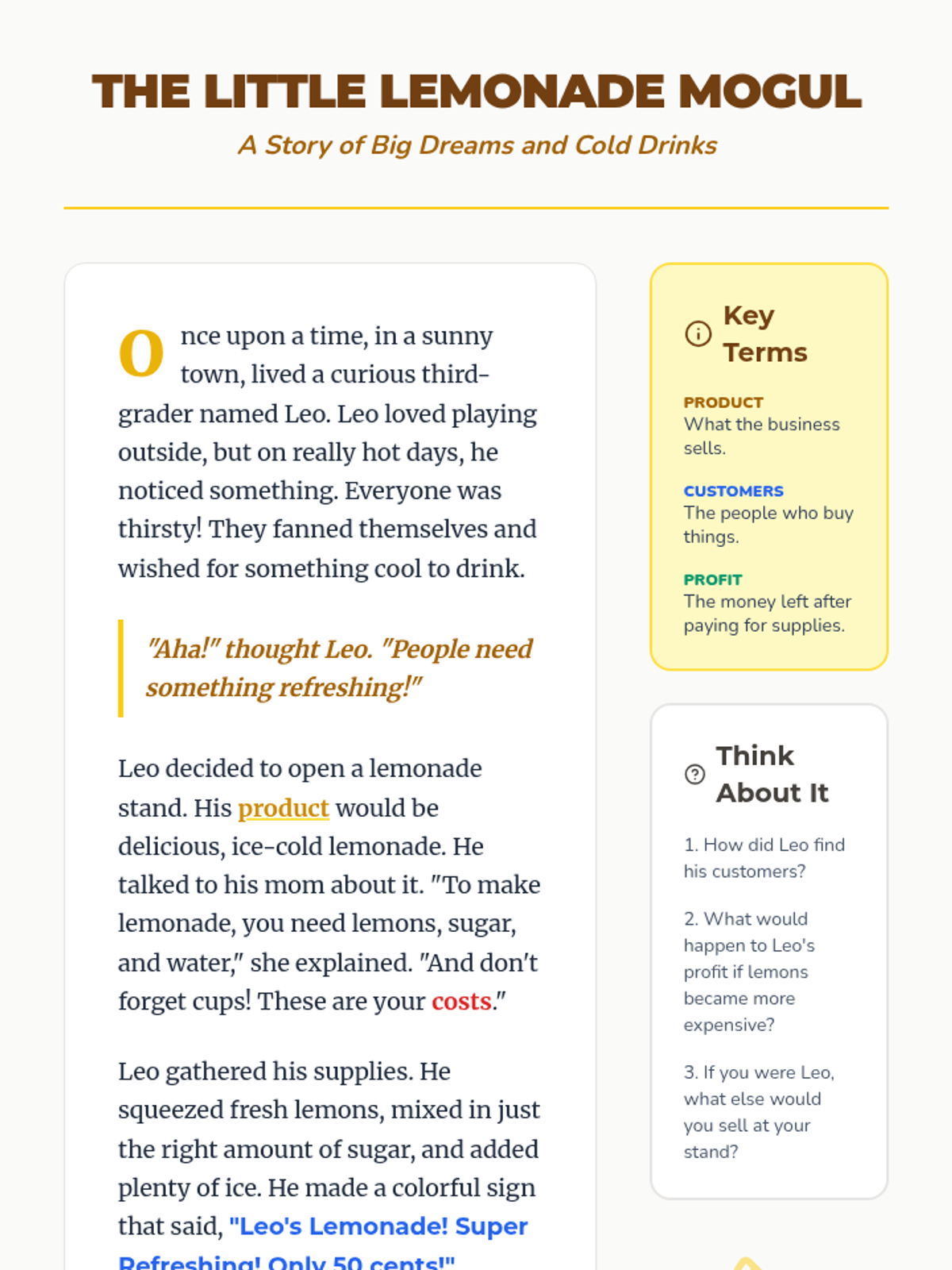
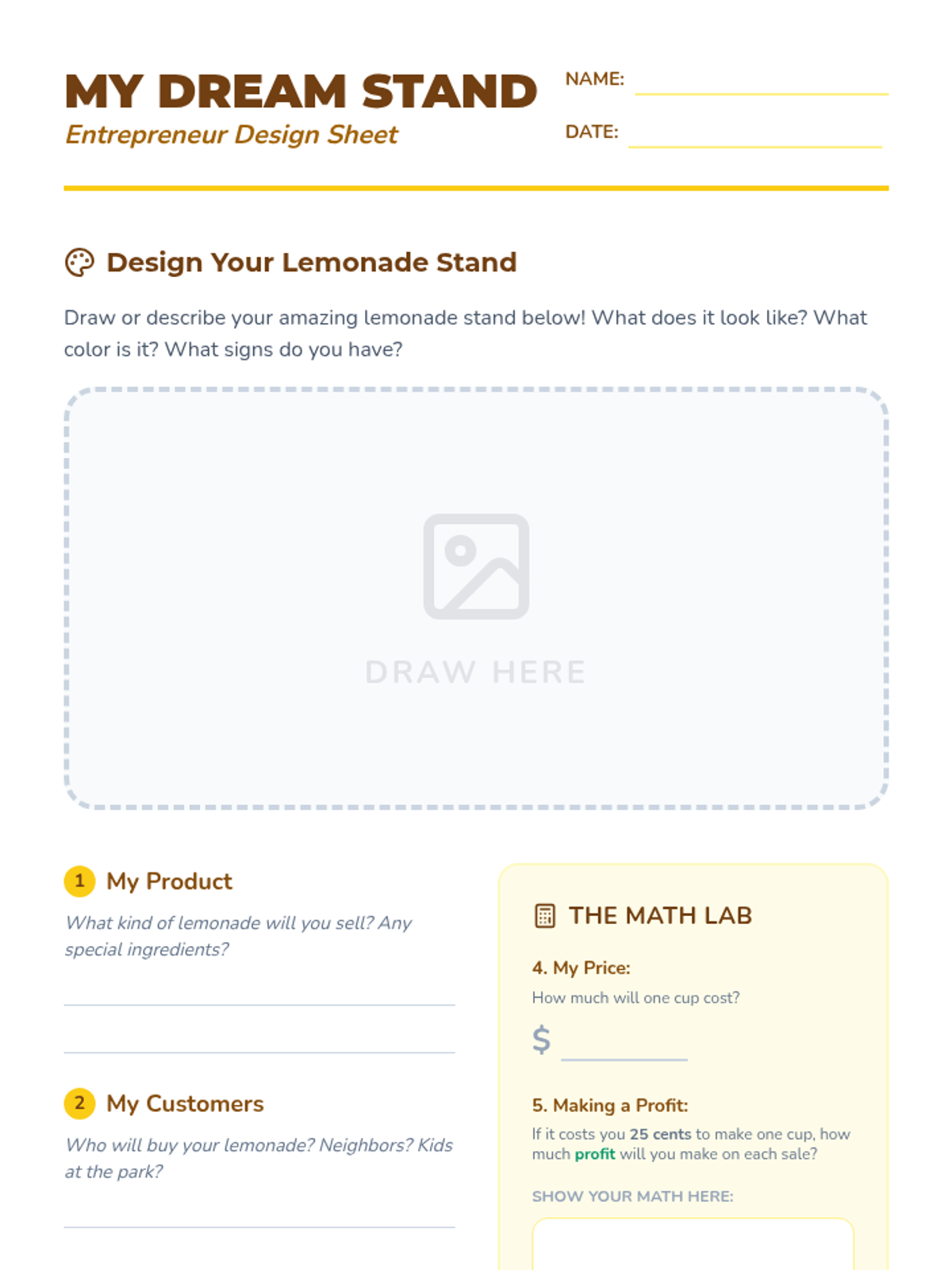
A 50-minute introductory lesson for 3rd graders on basic business concepts (product, customers, profit) using the classic lemonade stand model. Students explore these ideas through a story, a presentation, and a creative design activity.
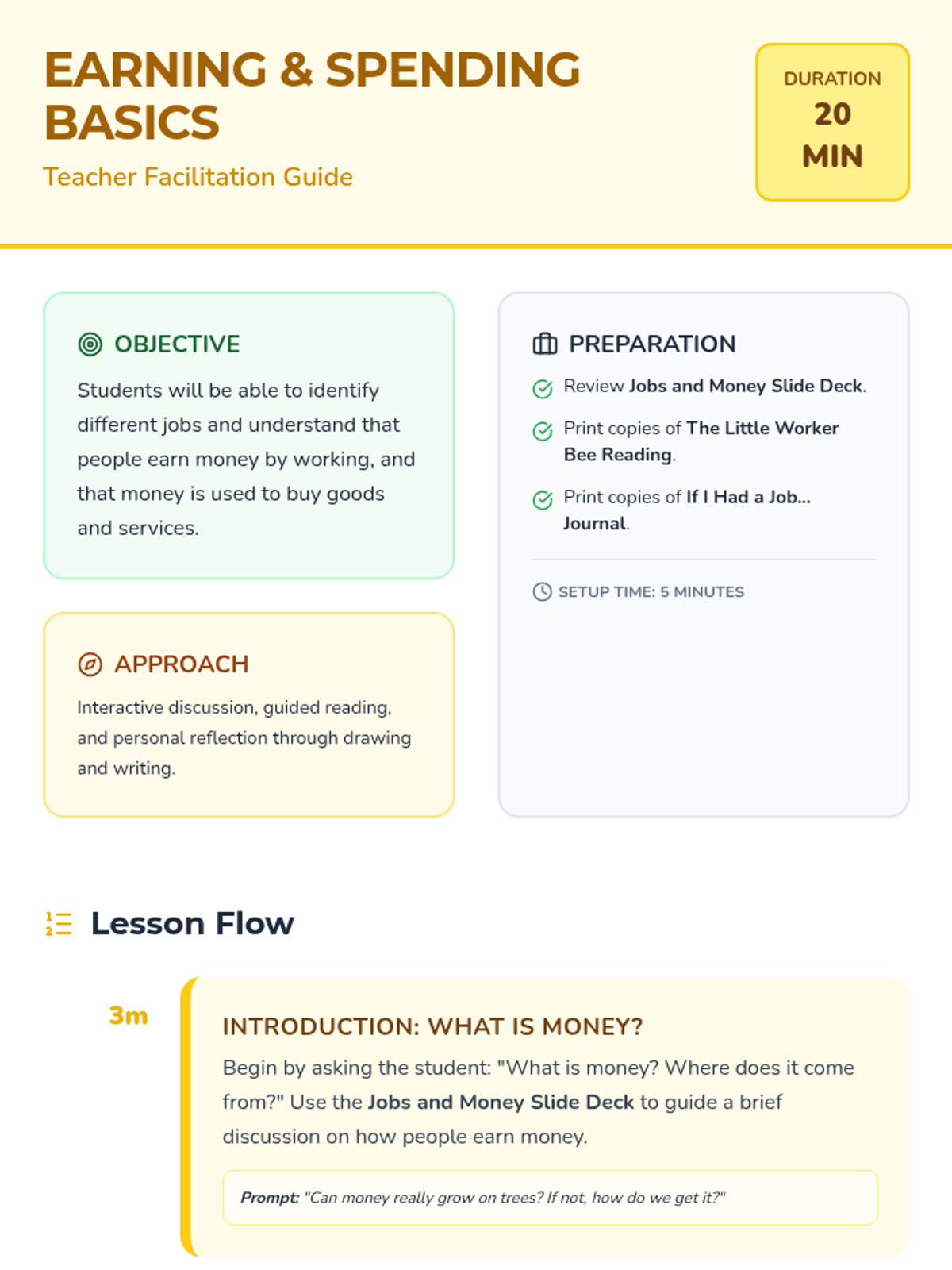
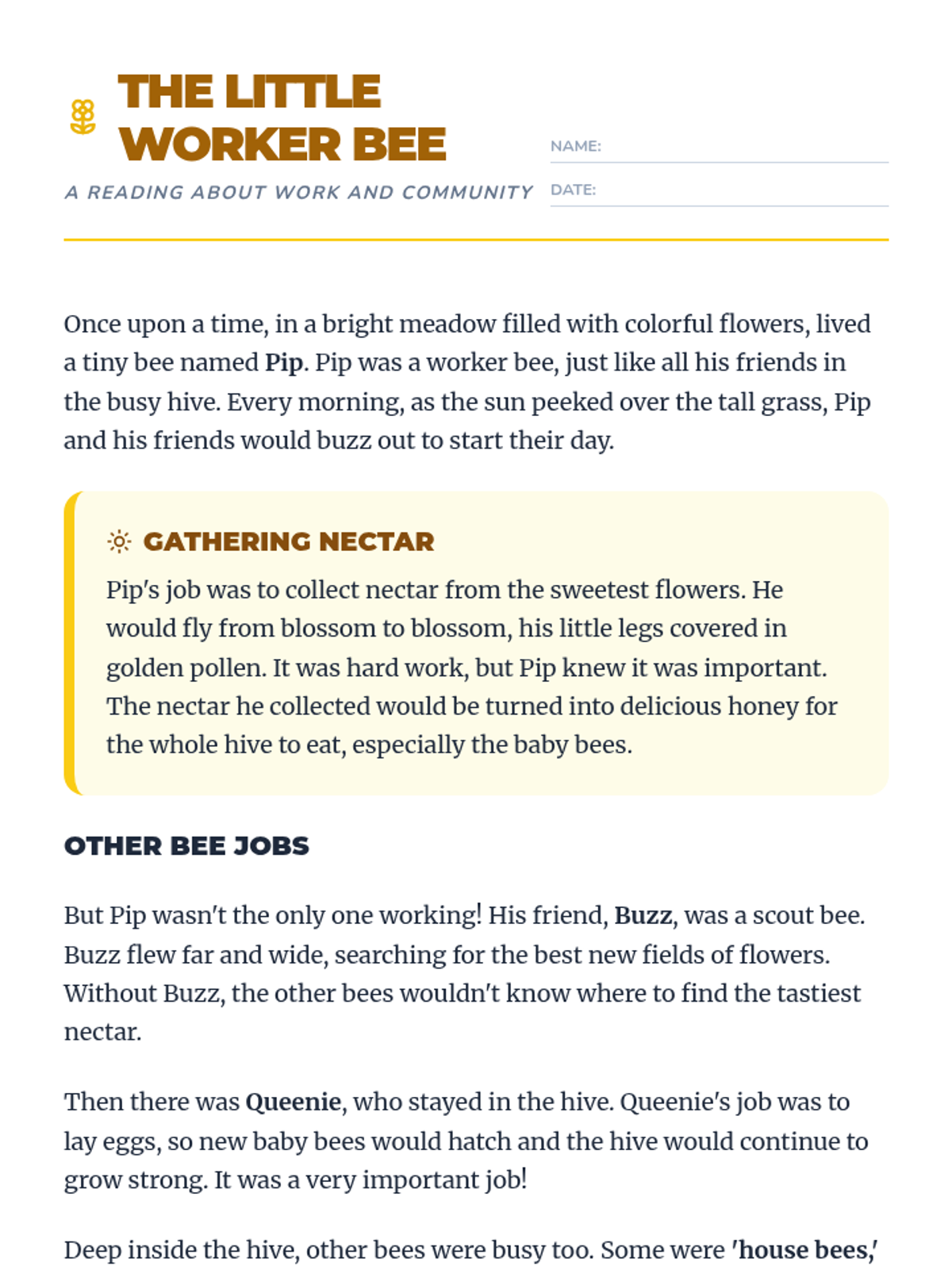
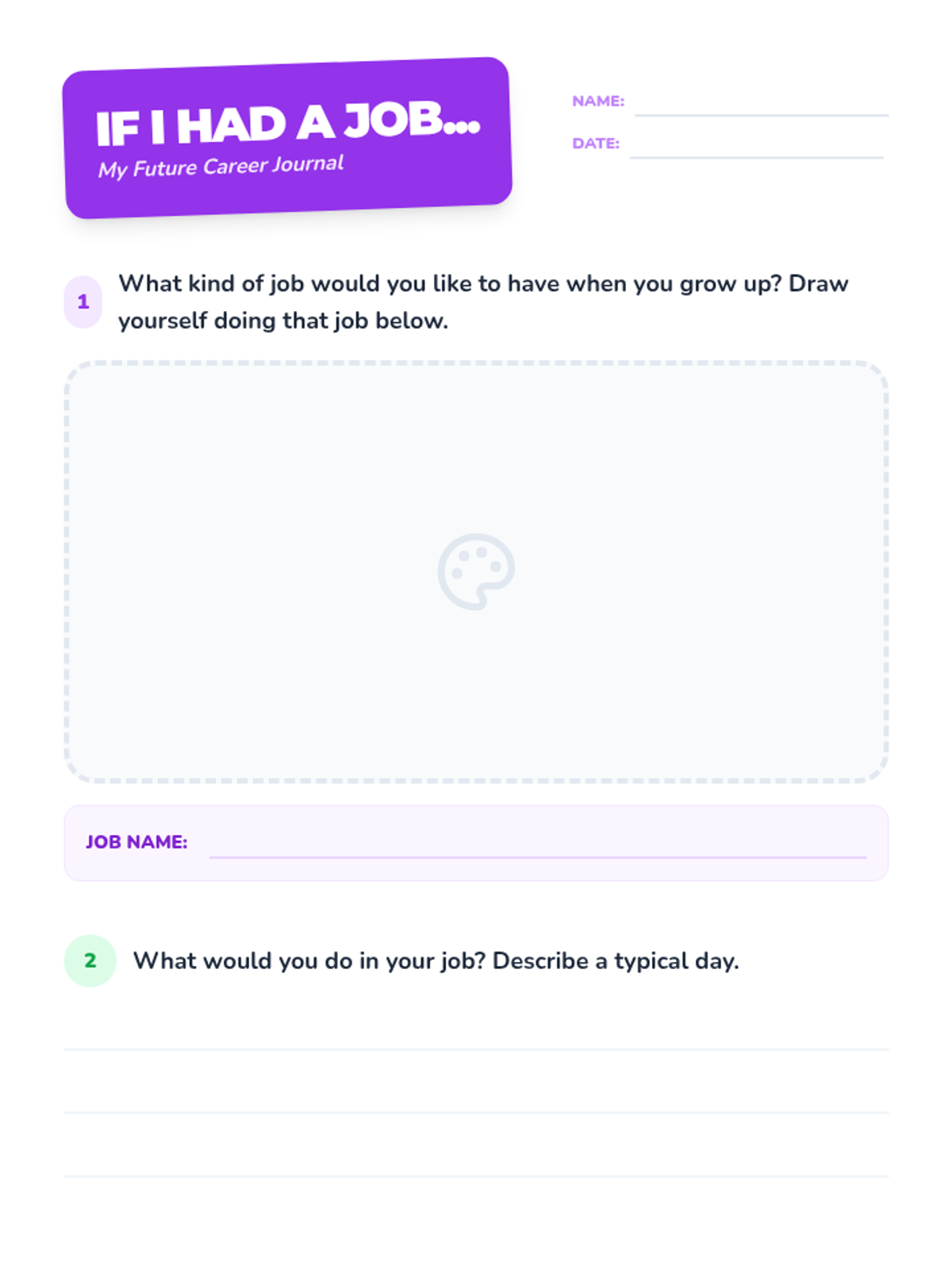
This lesson introduces 3rd-grade students to the concepts of earning money through work, the variety of jobs in a community, and the difference between needs and wants. Through a story about a worker bee and reflective journaling, students build foundational financial literacy.
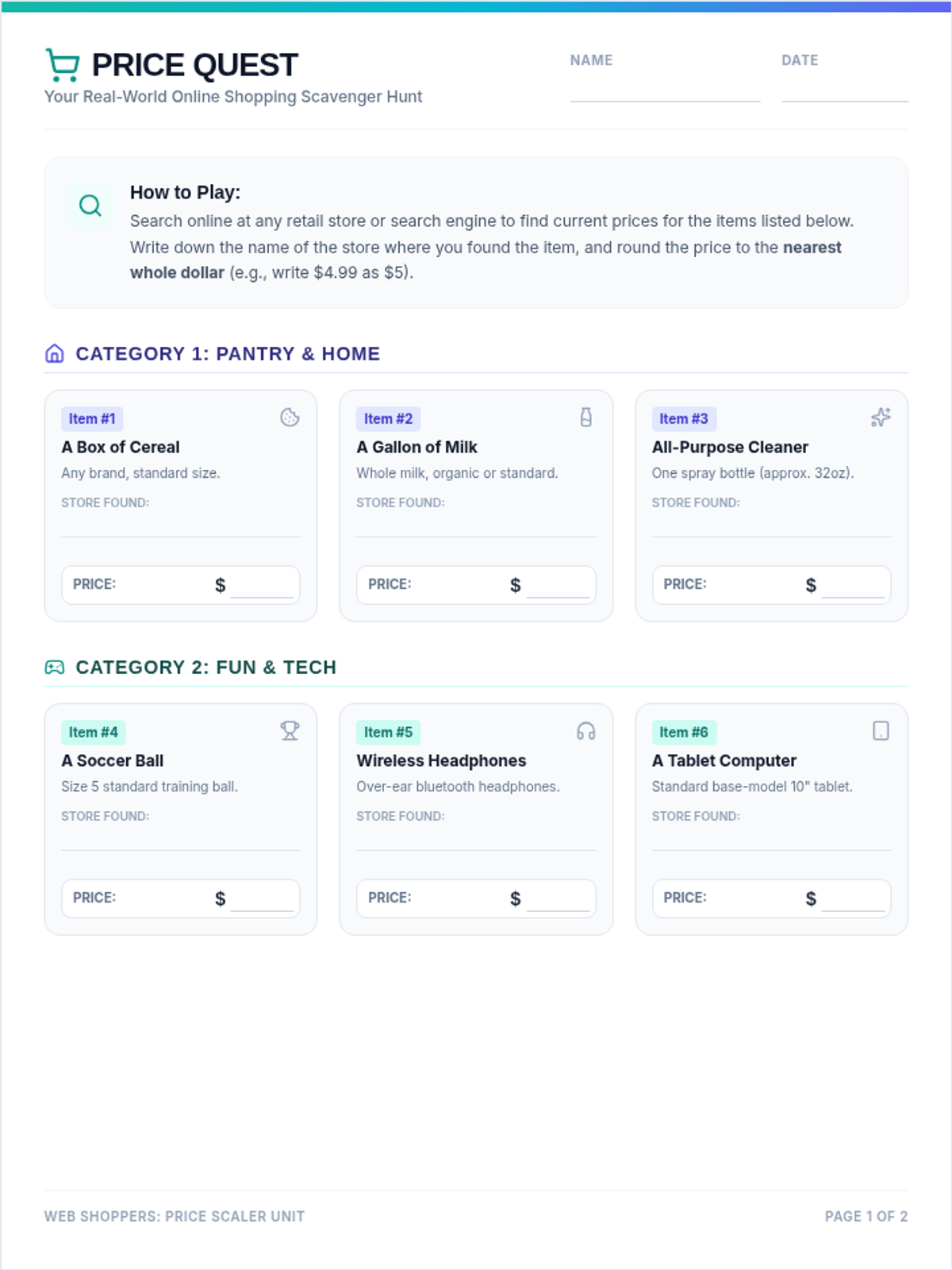
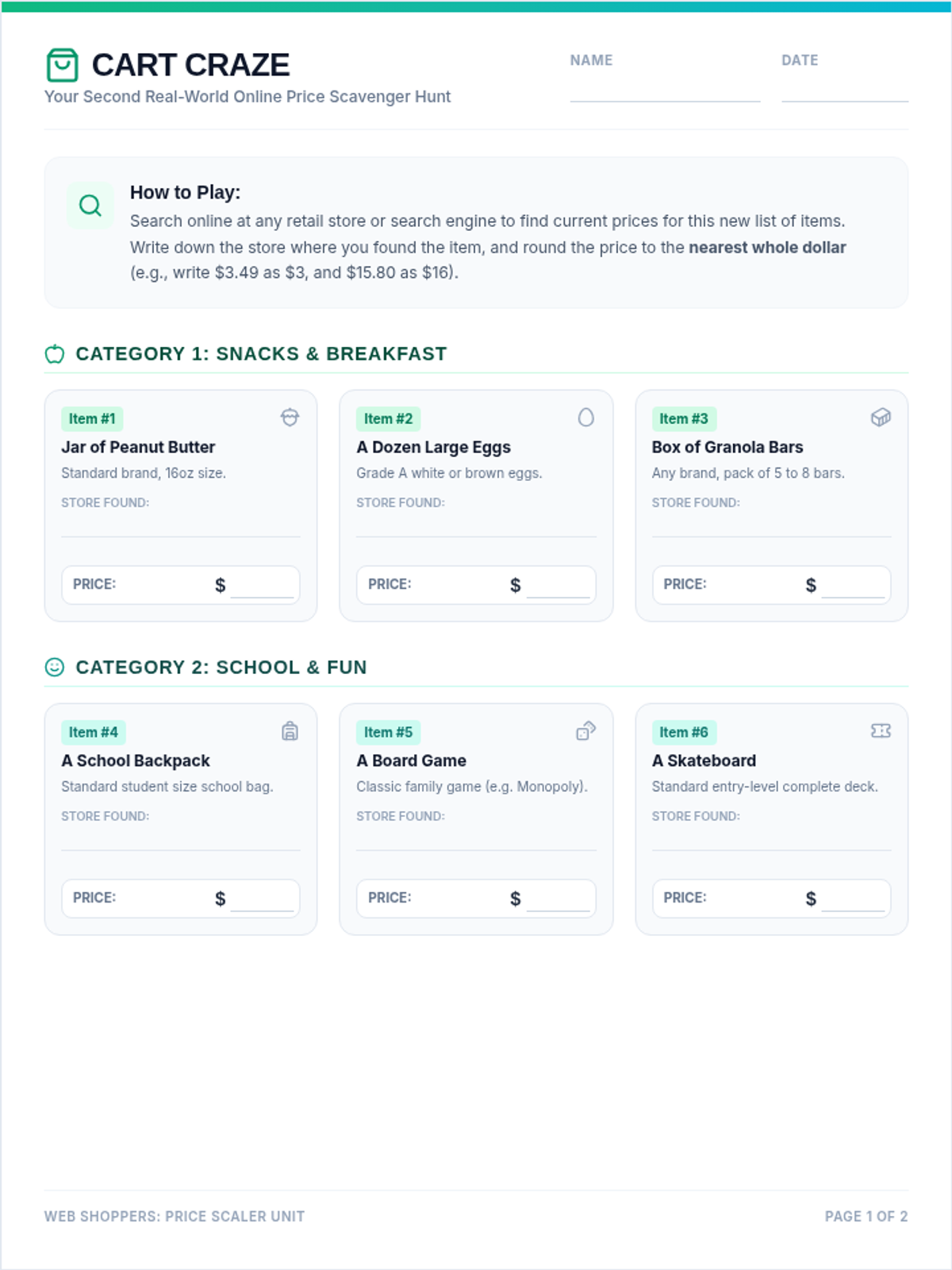
A lesson teaching students how to search for retail prices online, understand value, and perform basic budget additions using real-world items.
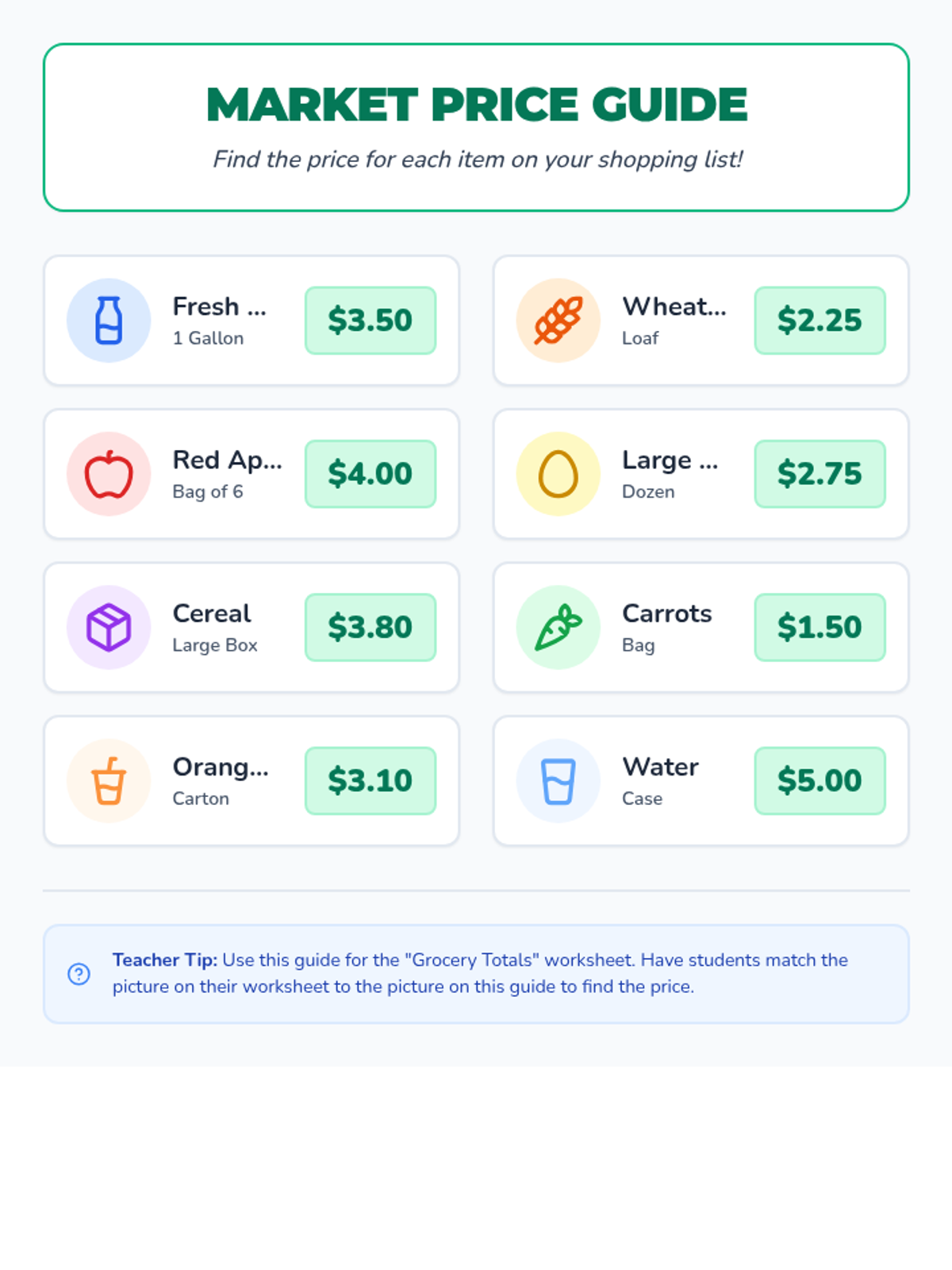
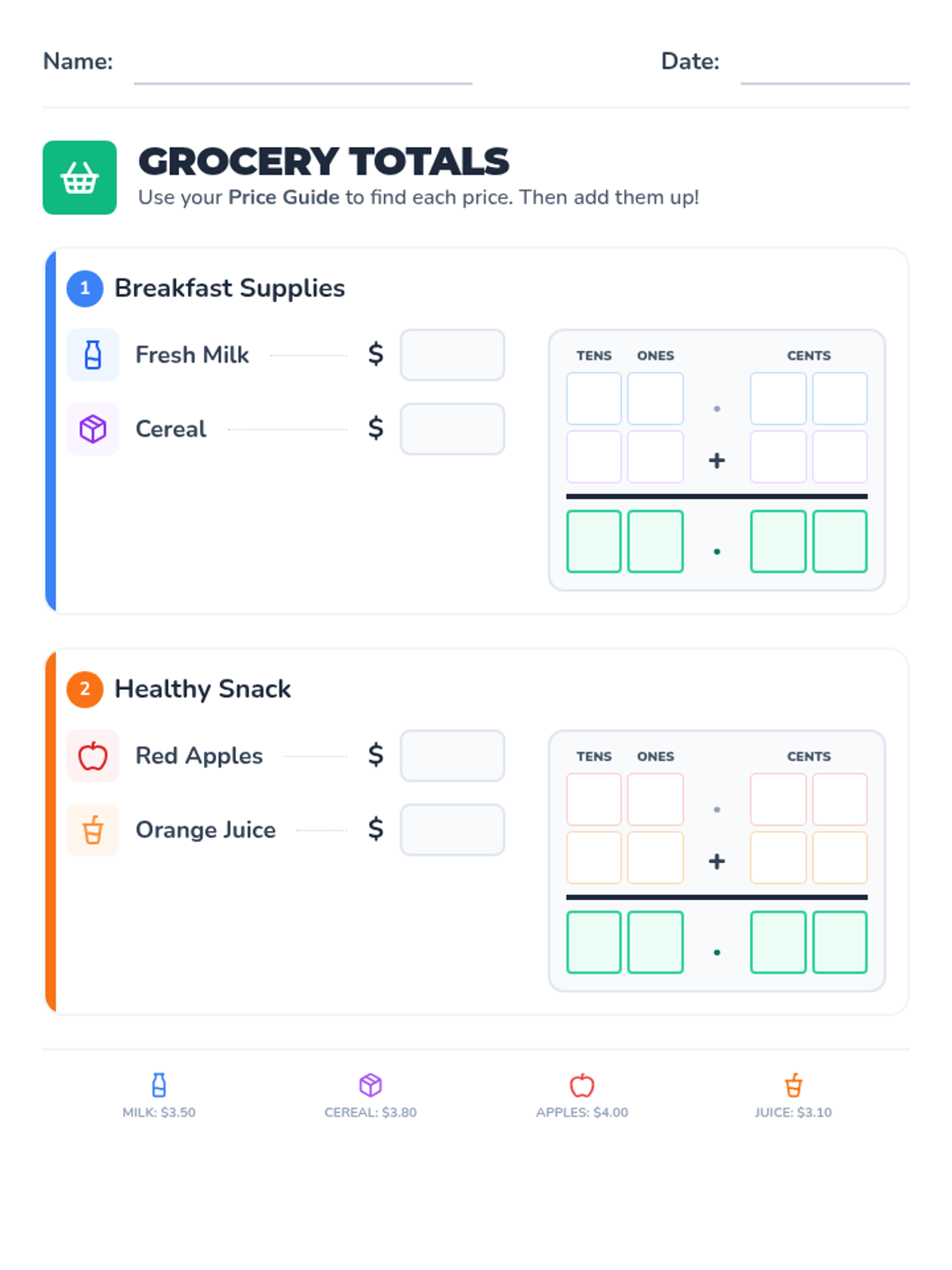
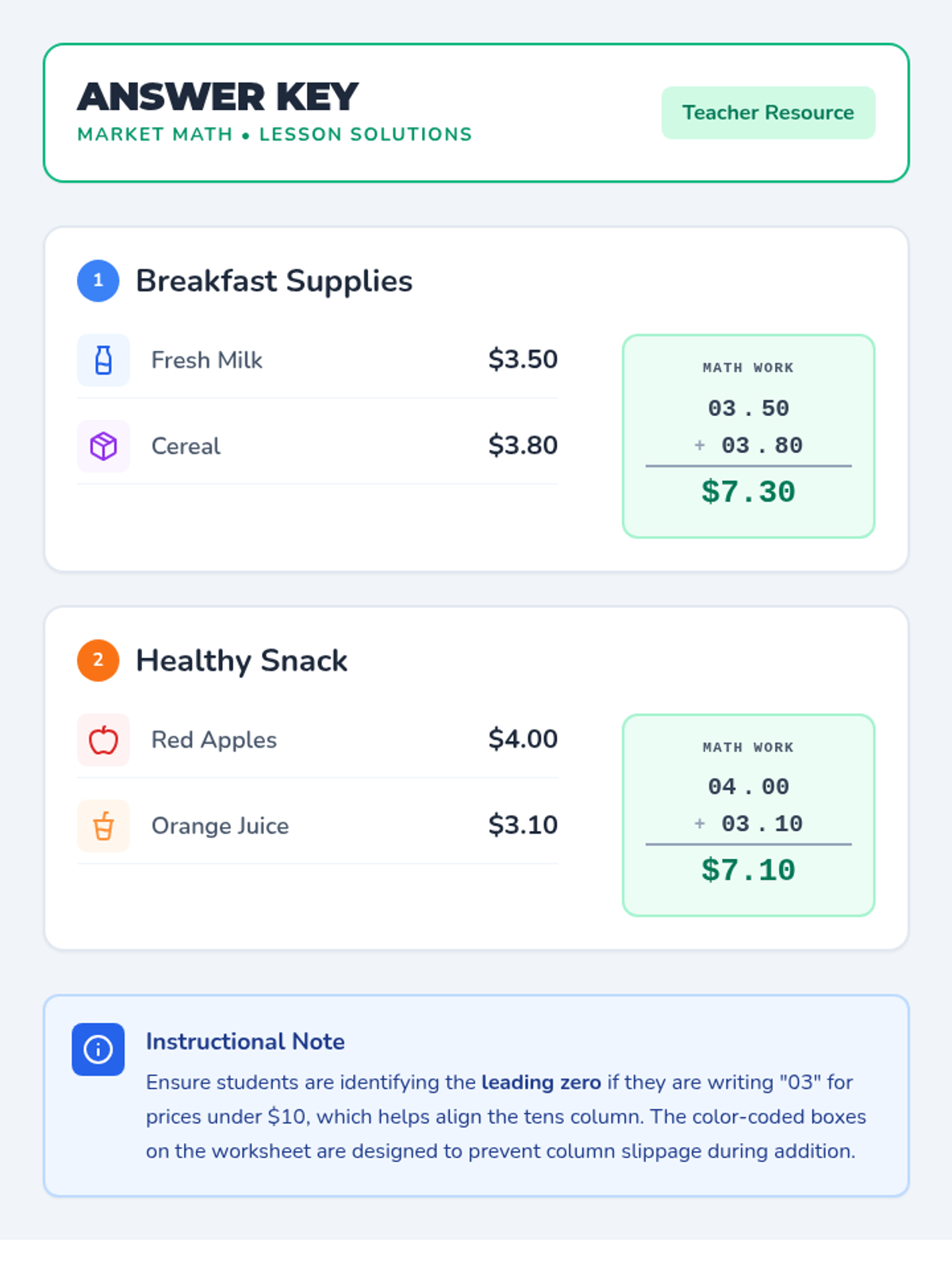
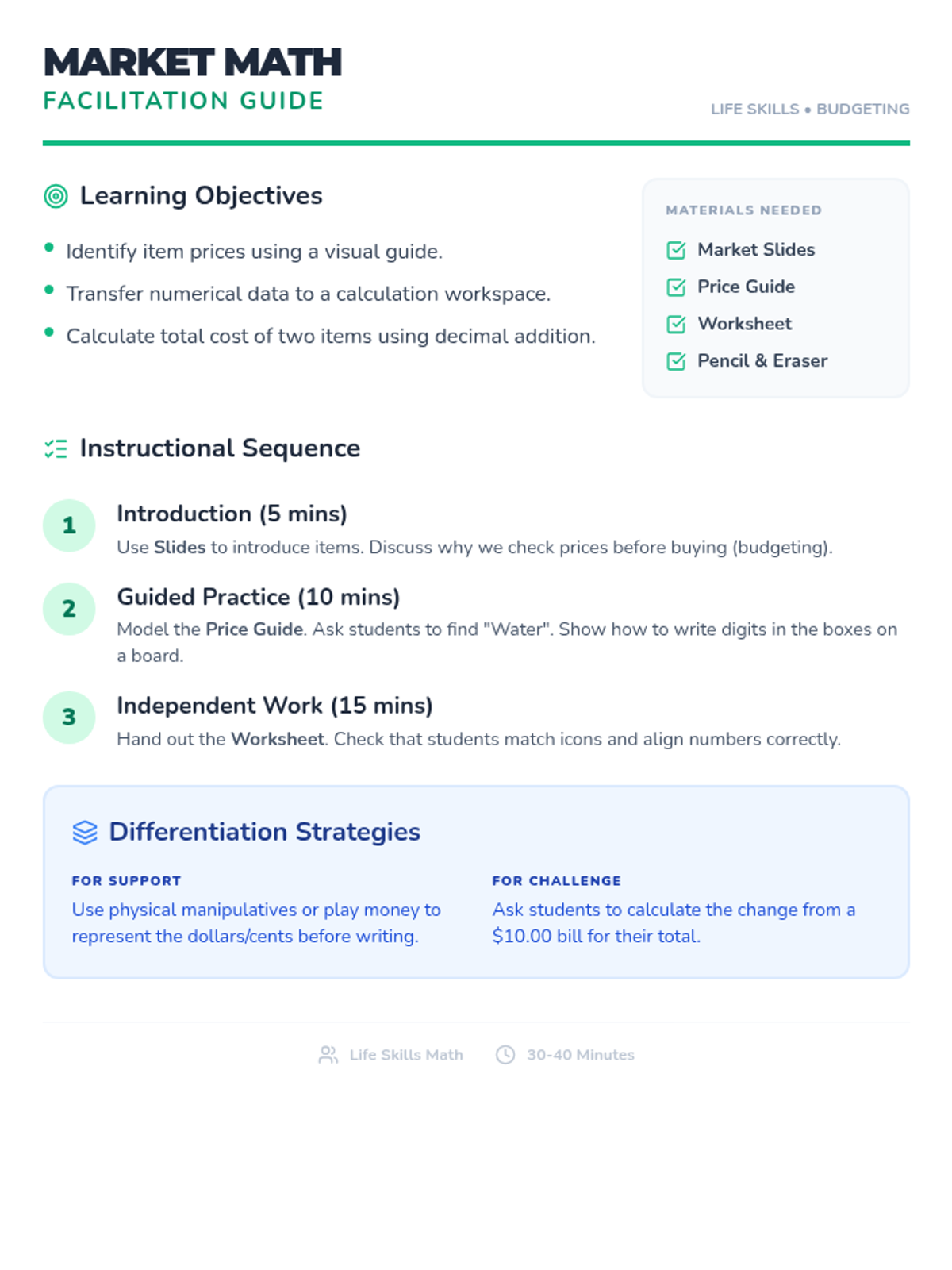
A life skills math lesson focused on identifying prices from a reference guide and calculating the total cost of grocery items using visual supports and color-coded place value columns.
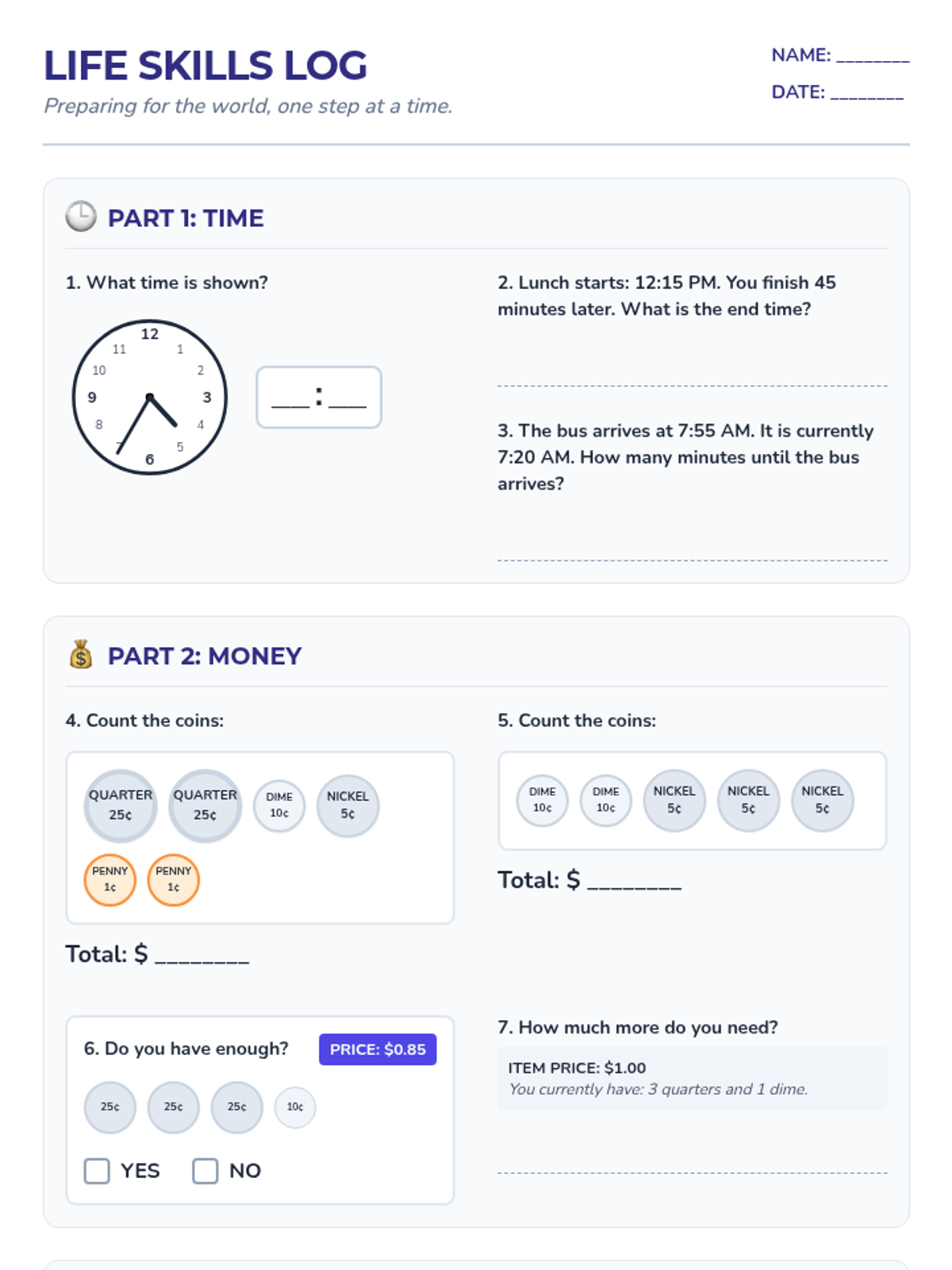
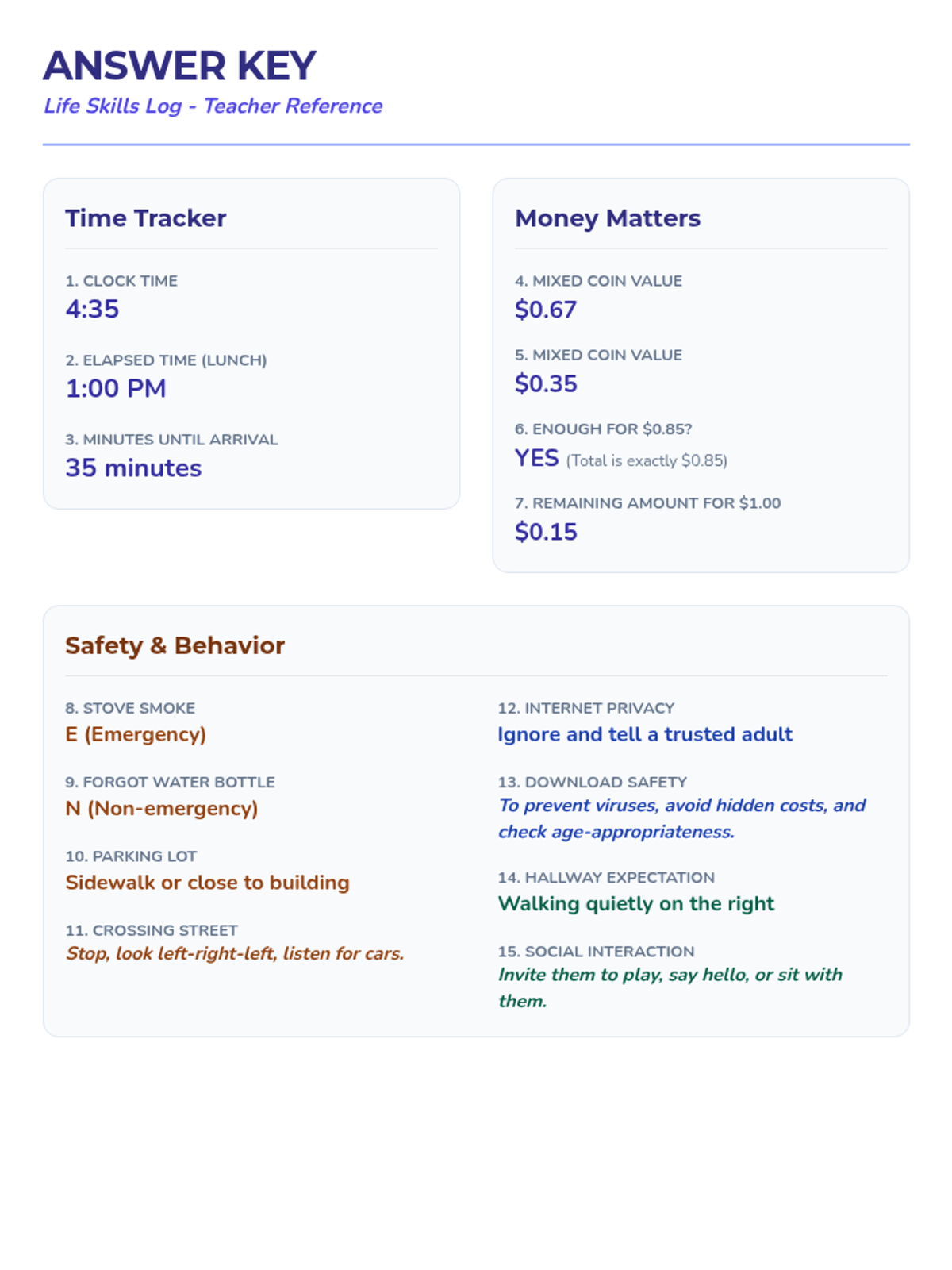
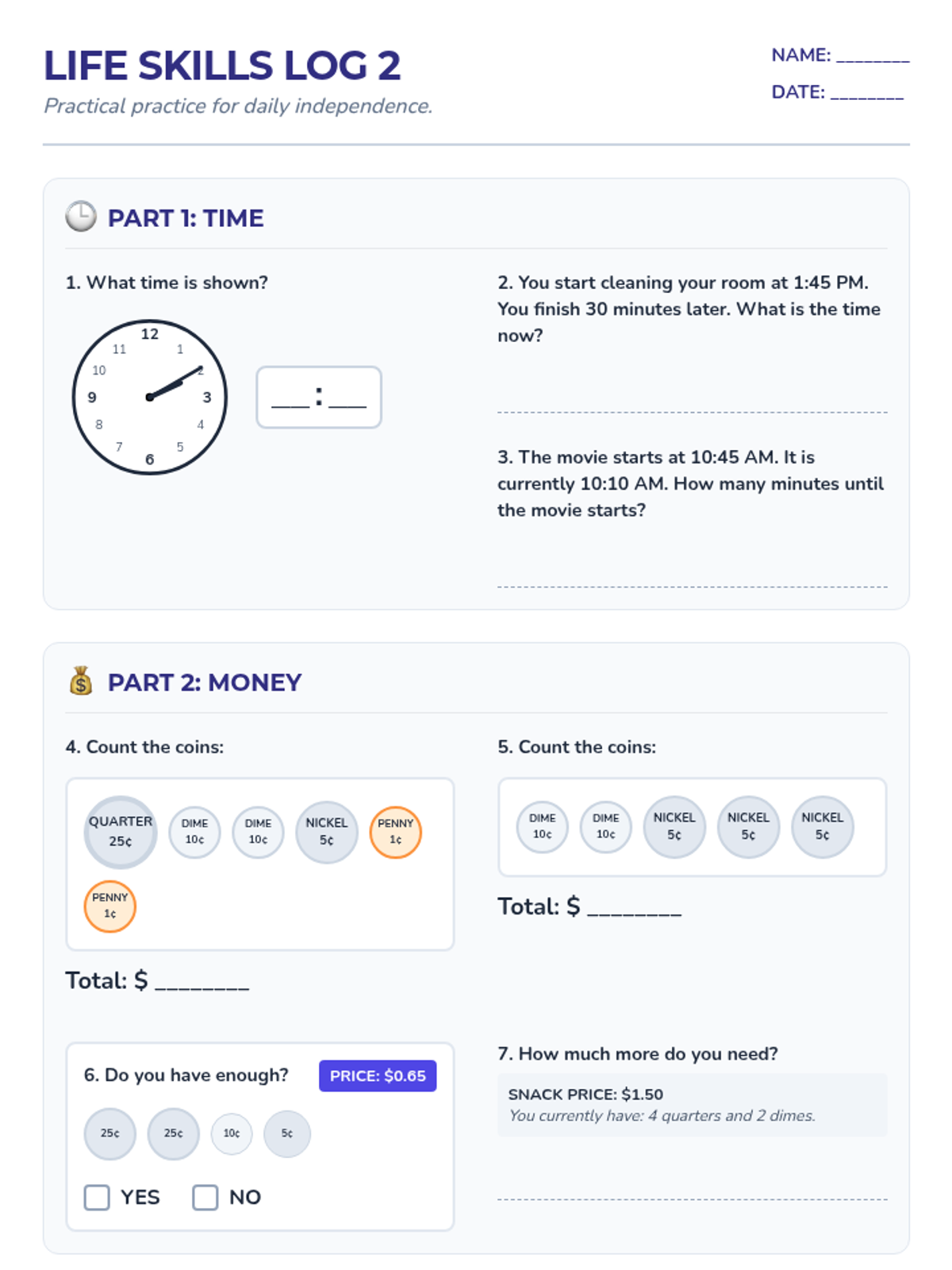
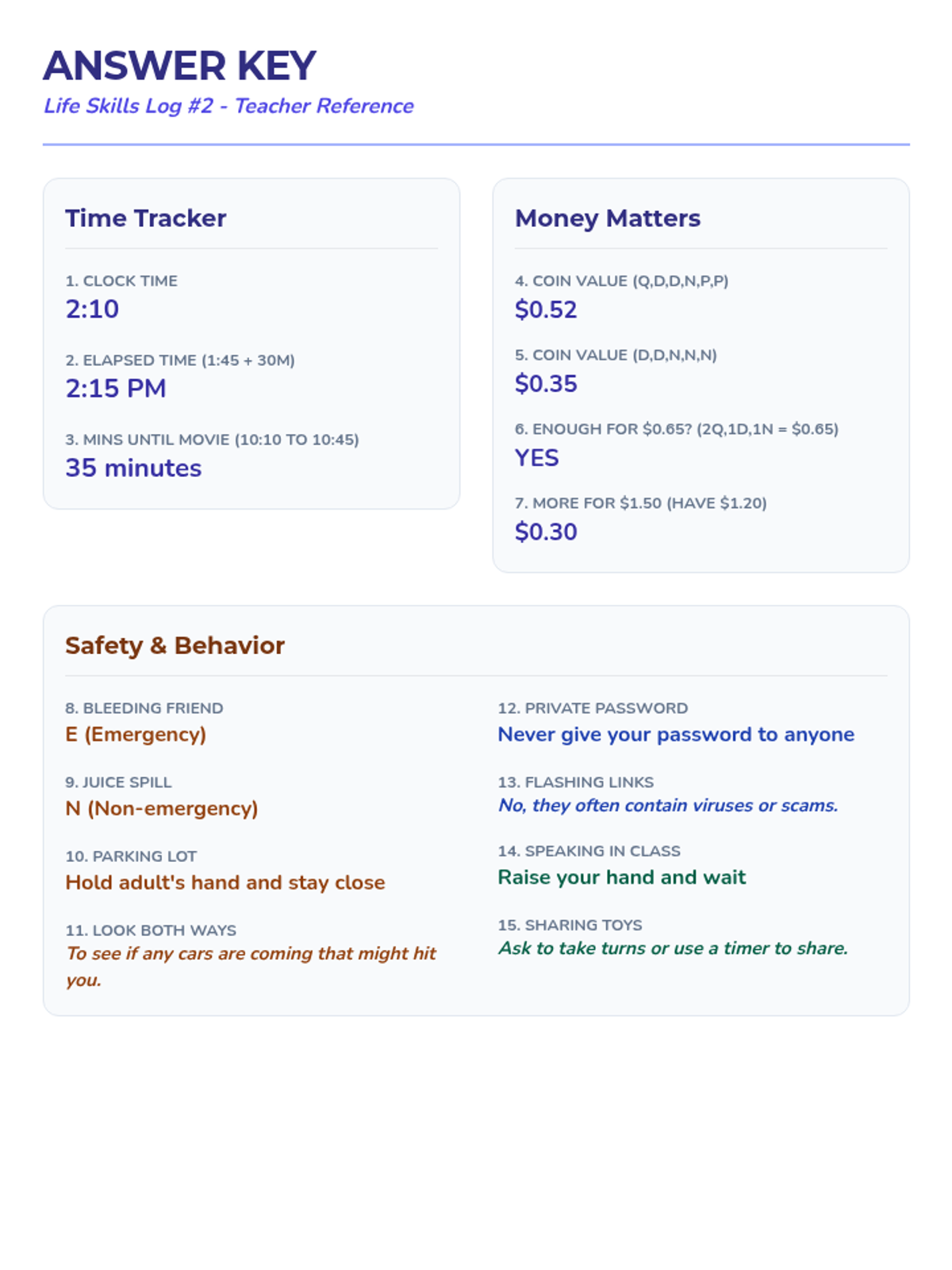
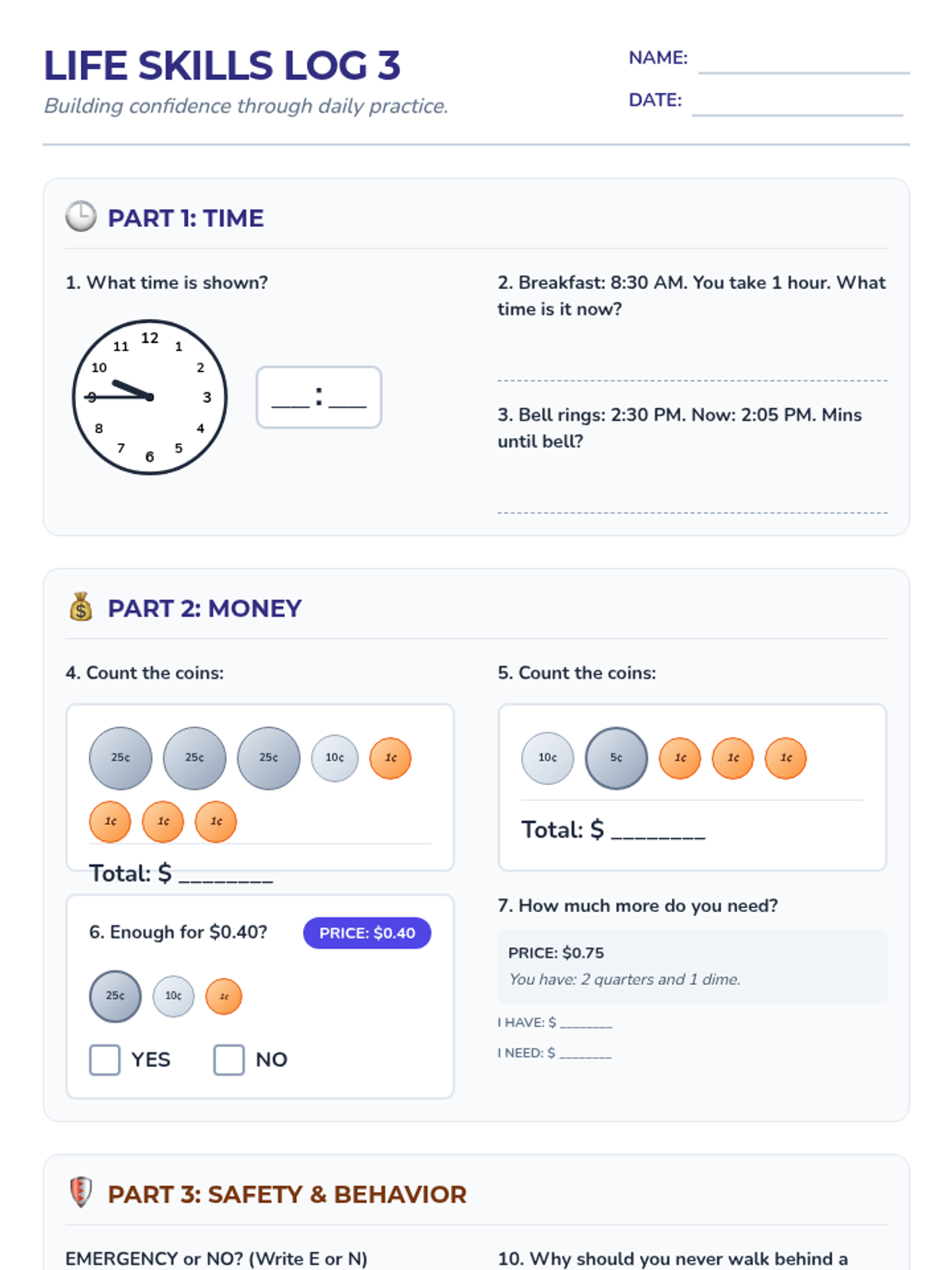
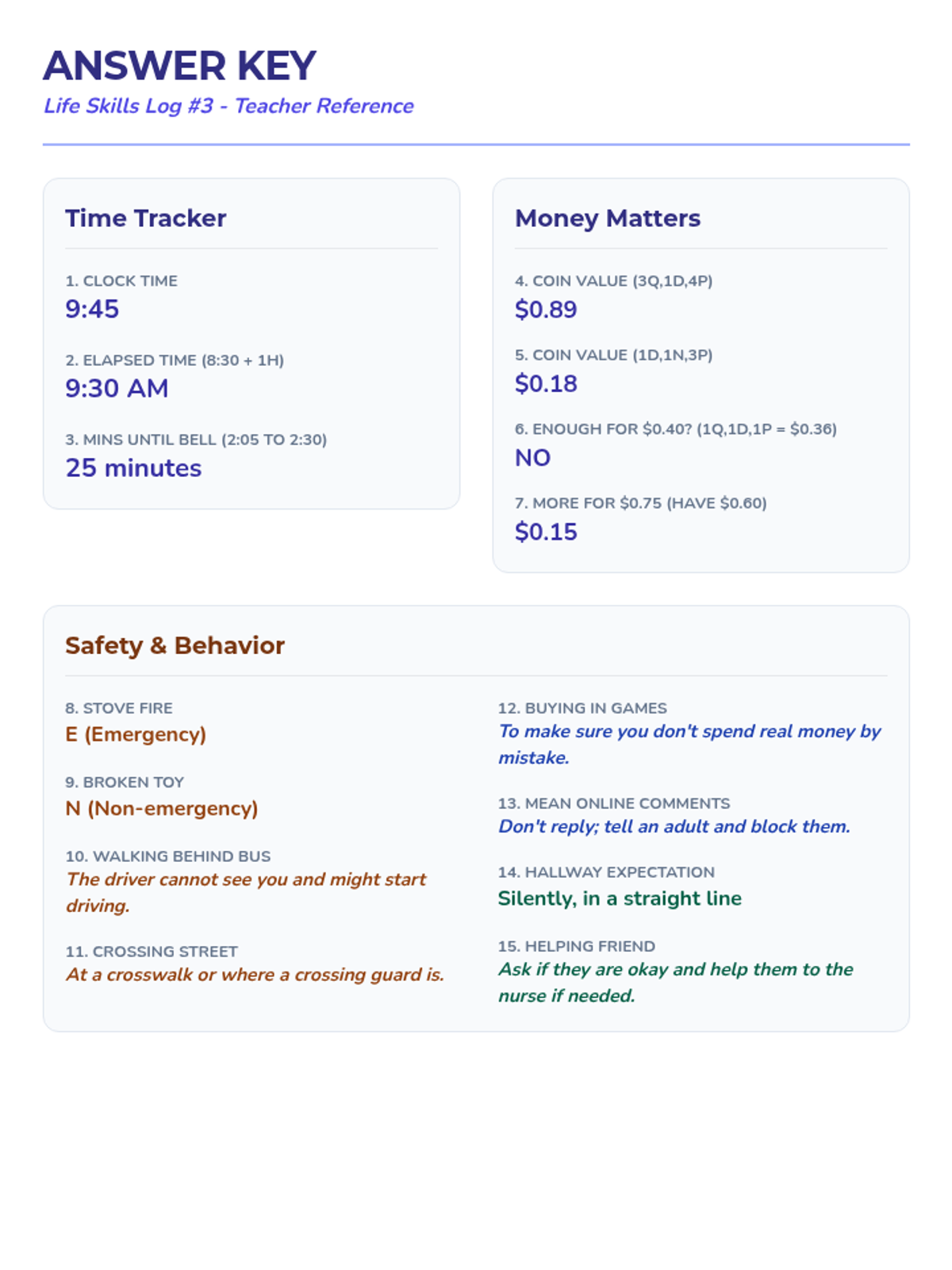
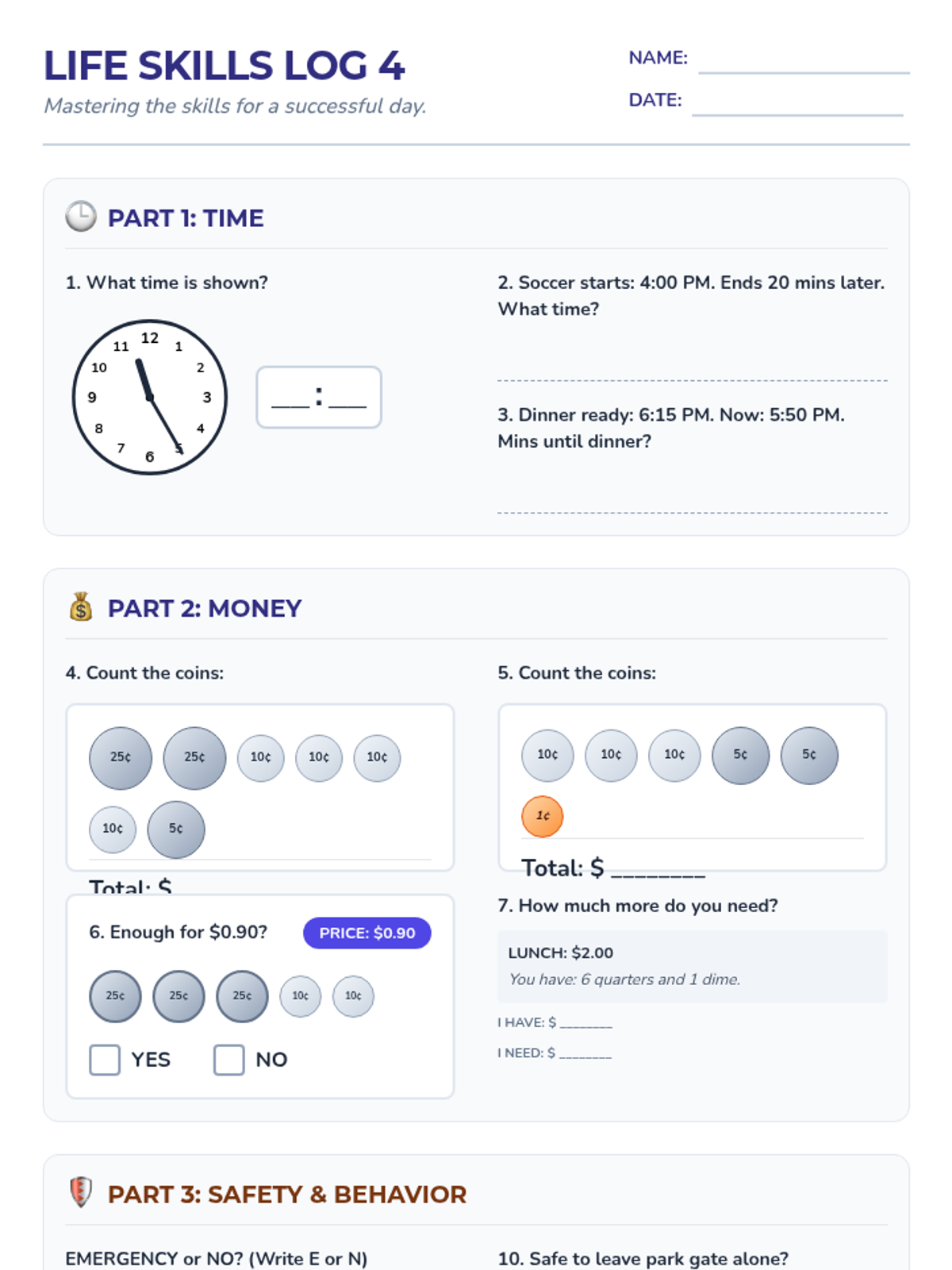
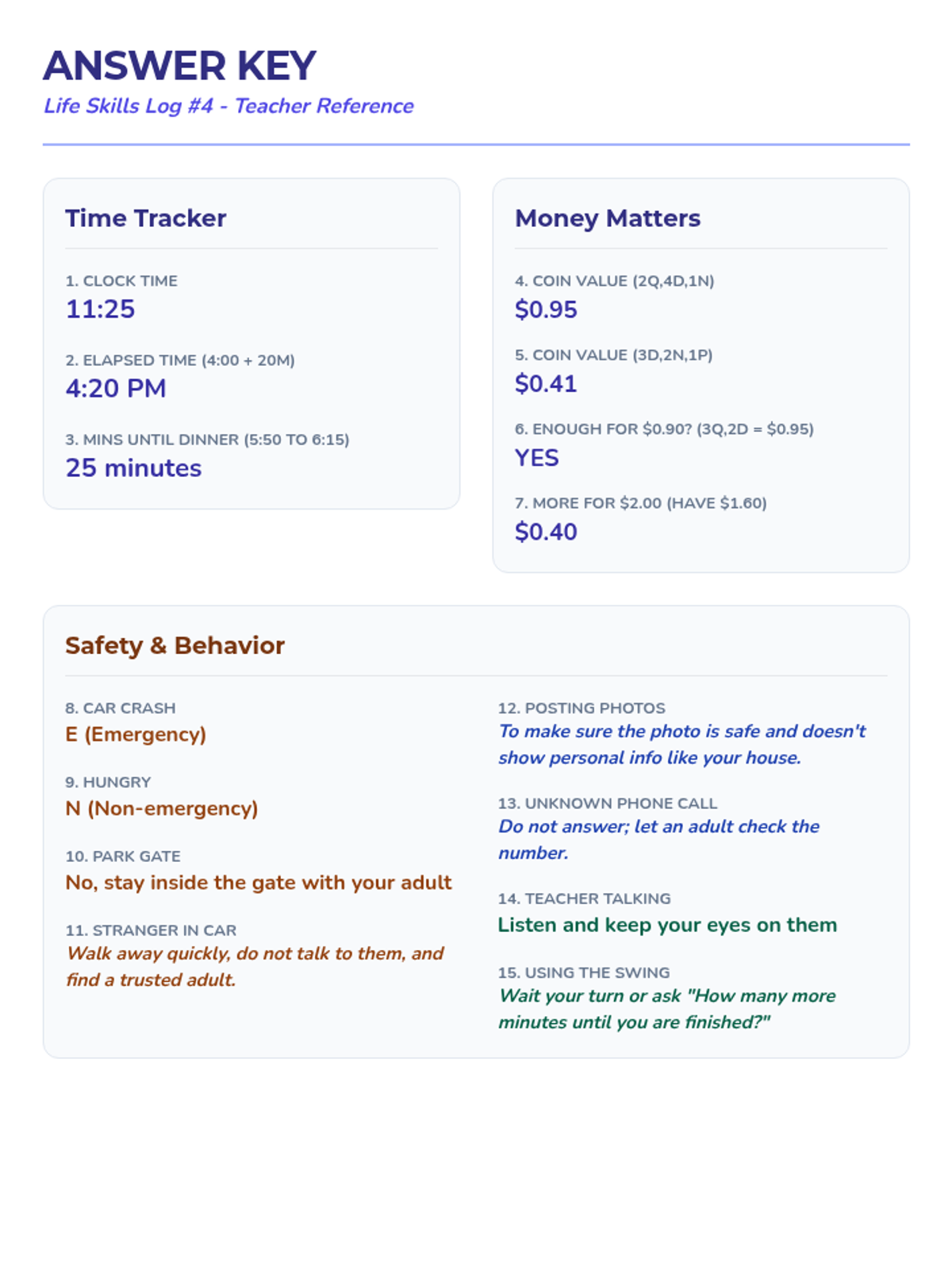
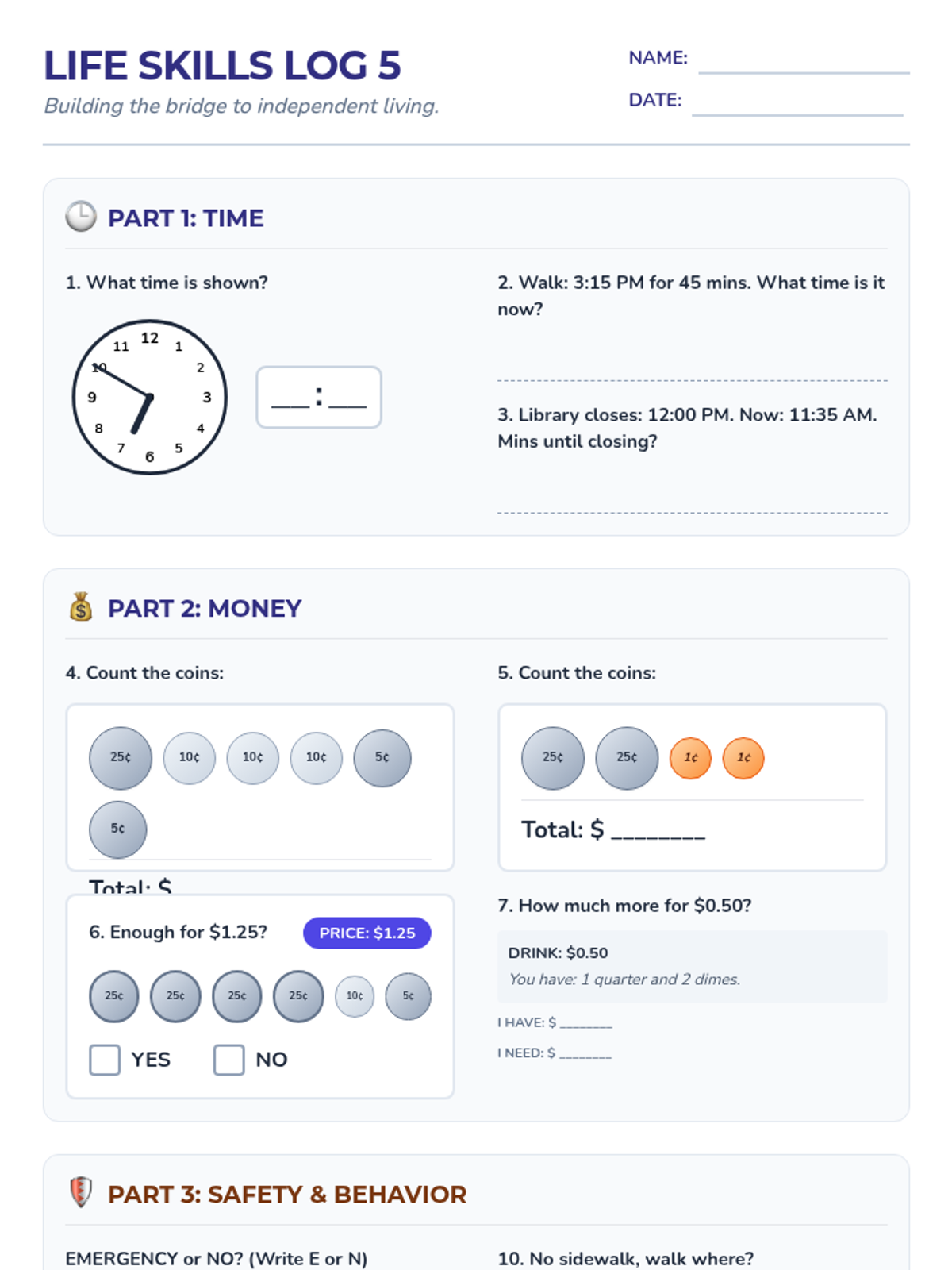
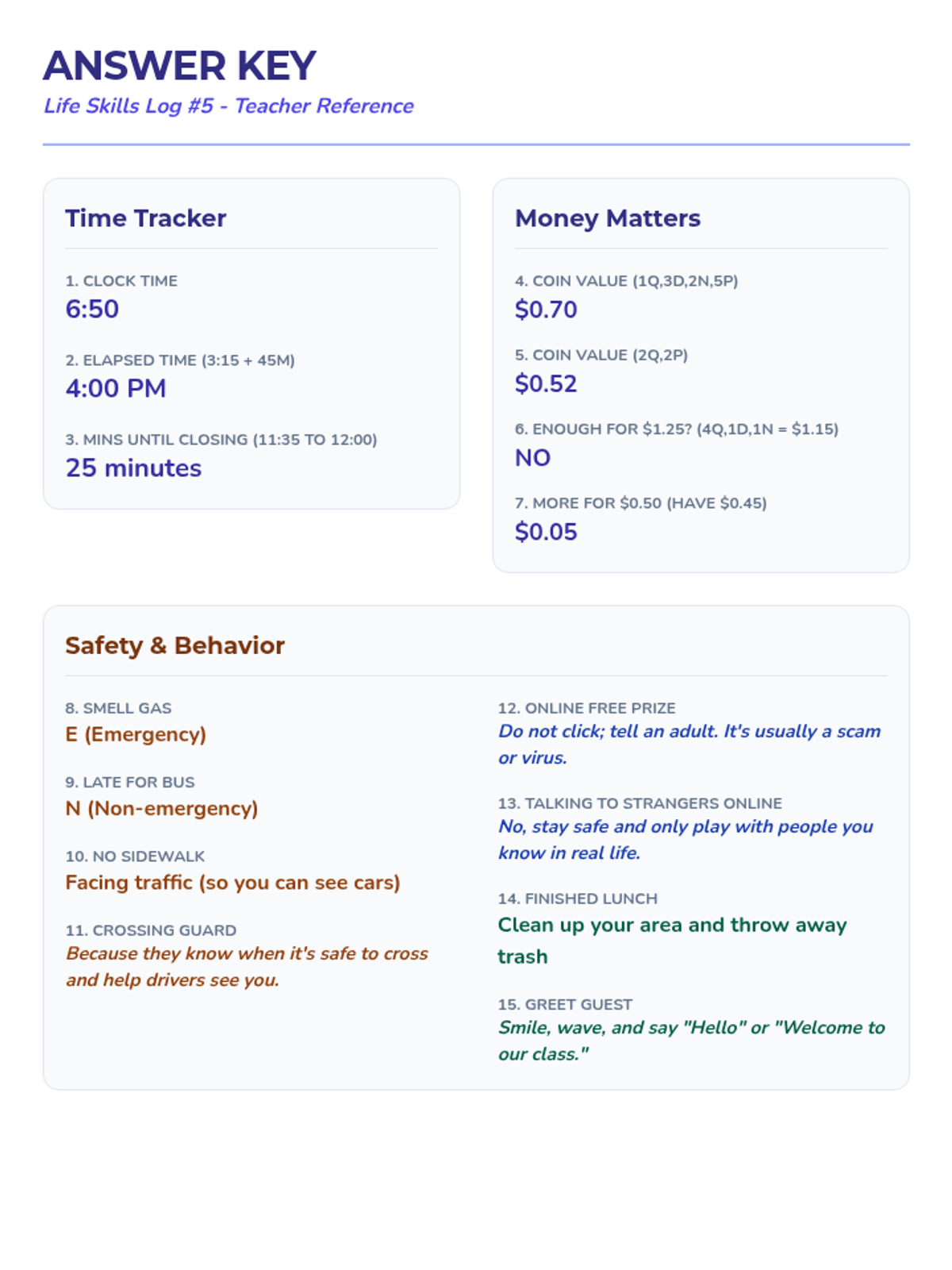
A comprehensive morning work session focusing on essential life skills including financial literacy, time management, personal safety, and digital citizenship. Students practice counting mixed coins, calculating elapsed time, and identifying appropriate behaviors in various social and safety scenarios.
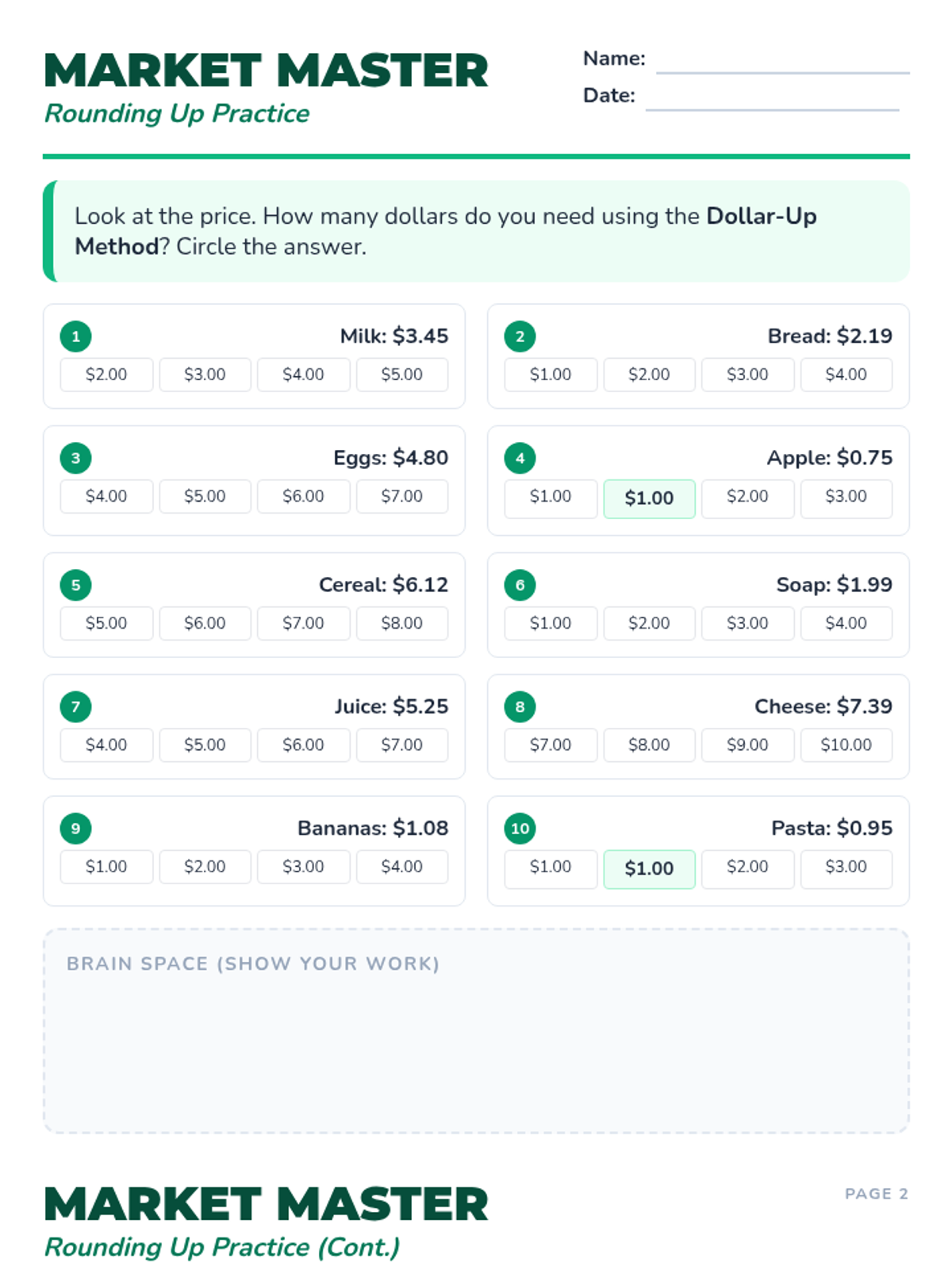
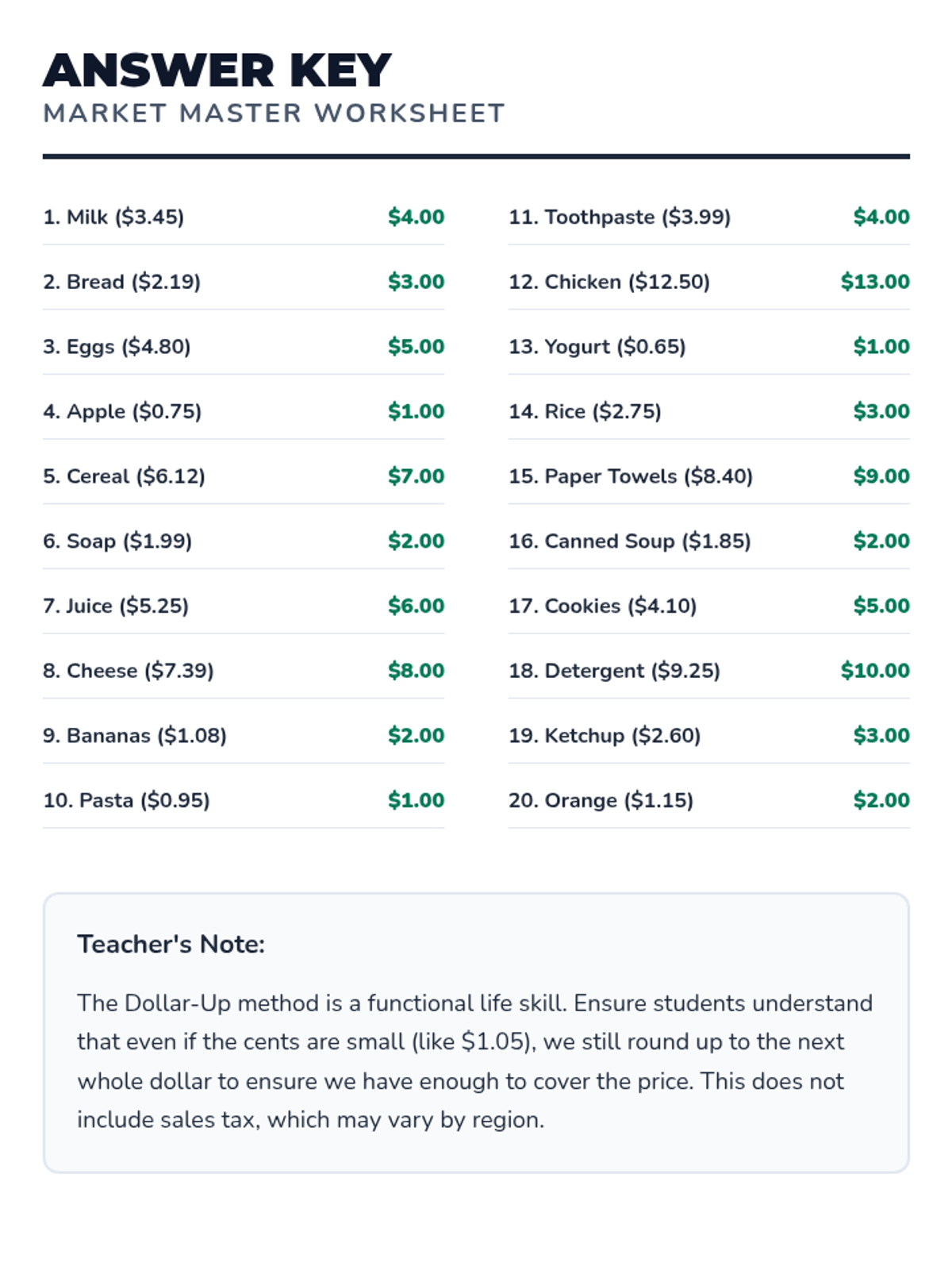
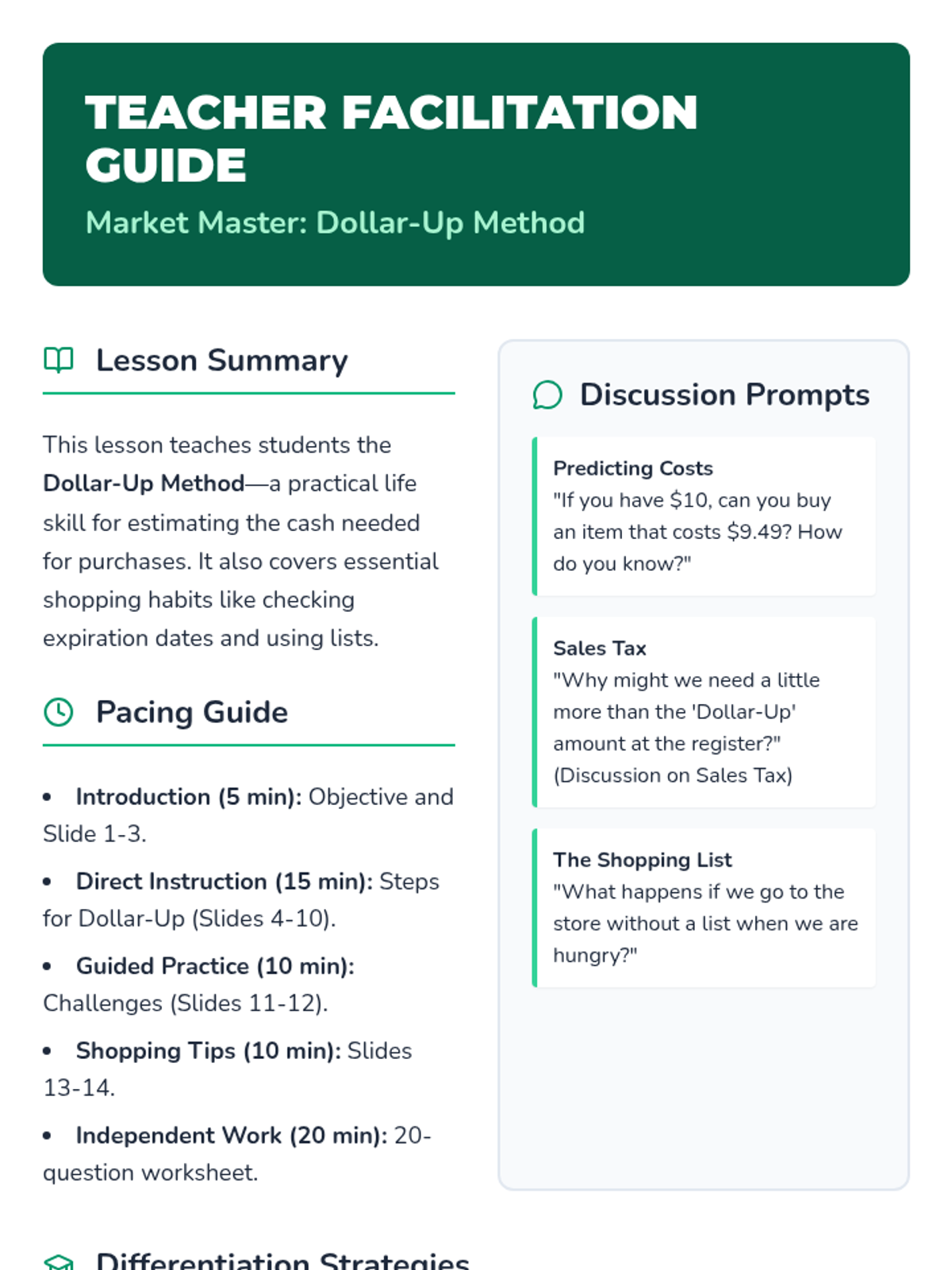
A practical math lesson focused on the 'dollar-up' method for making purchases at a grocery store, including shopping tips and rounding practice.
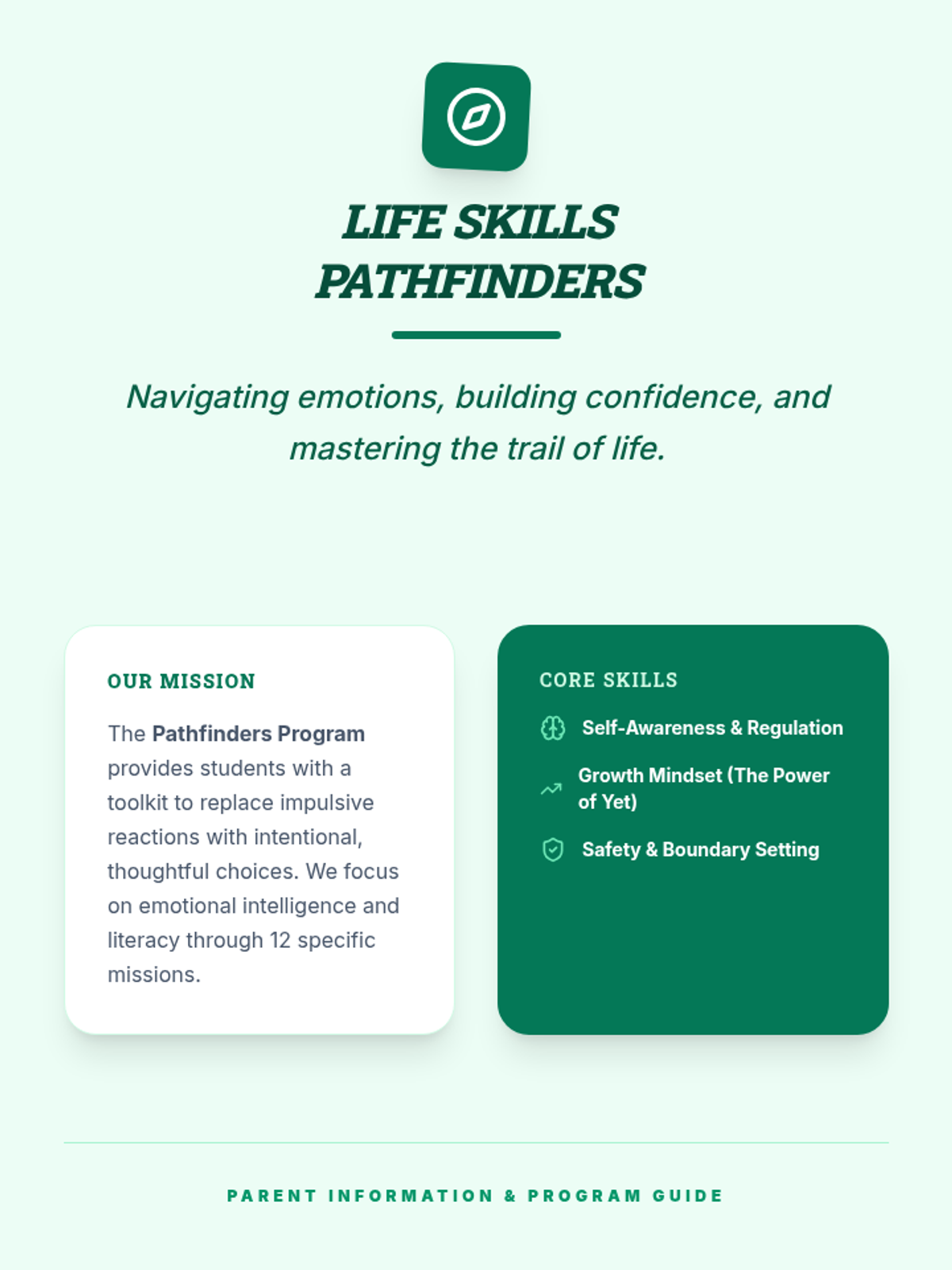
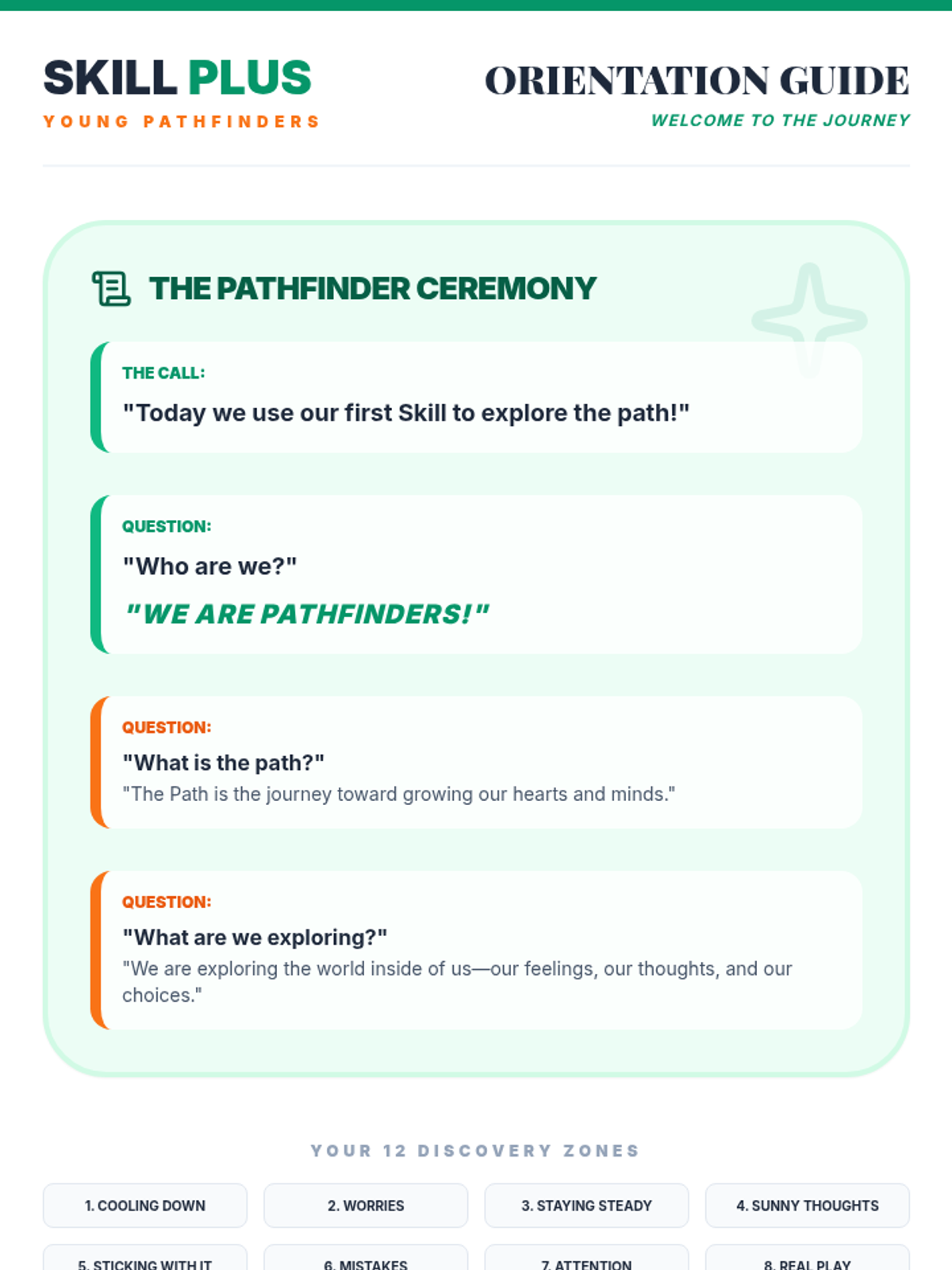
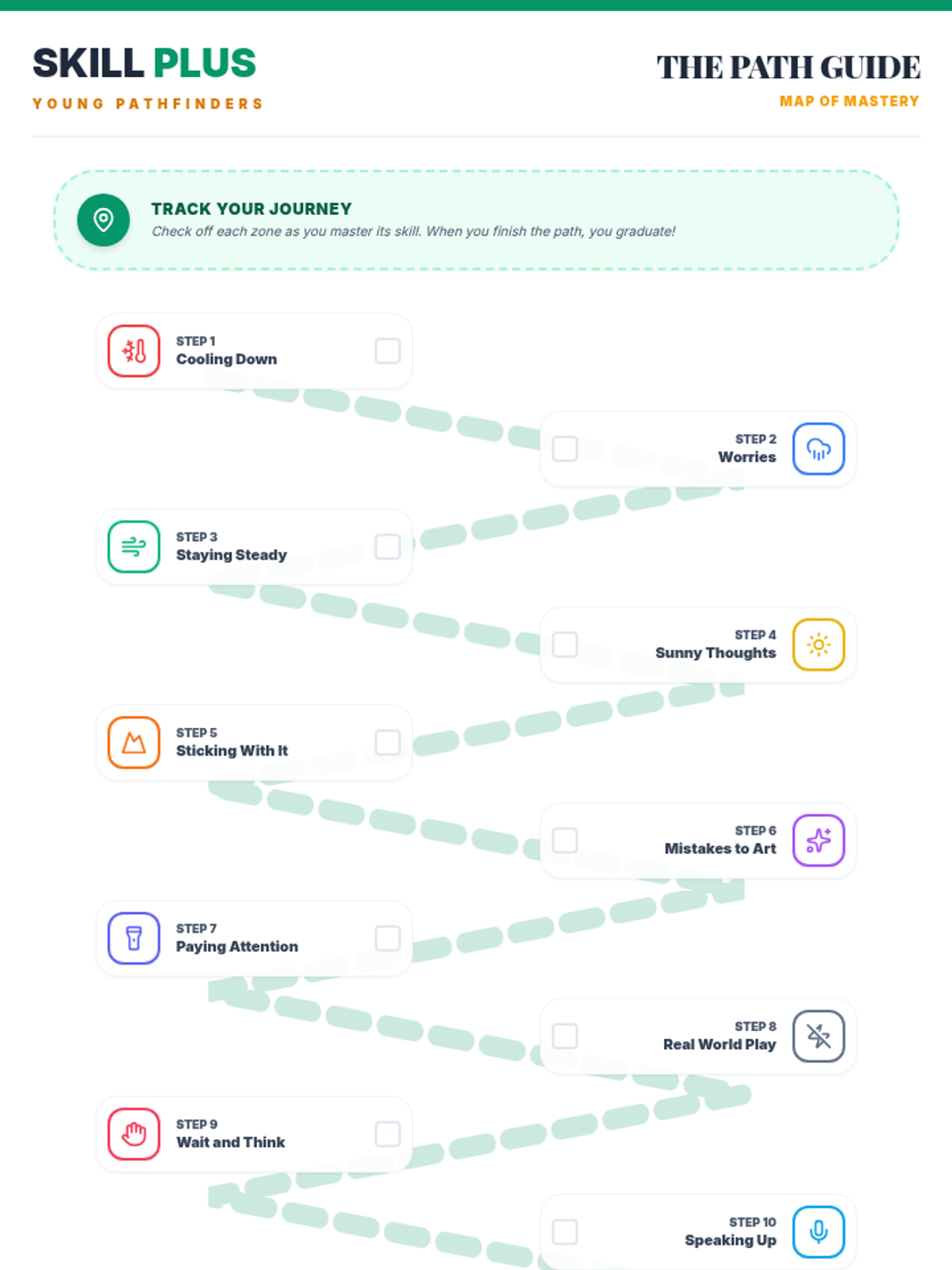
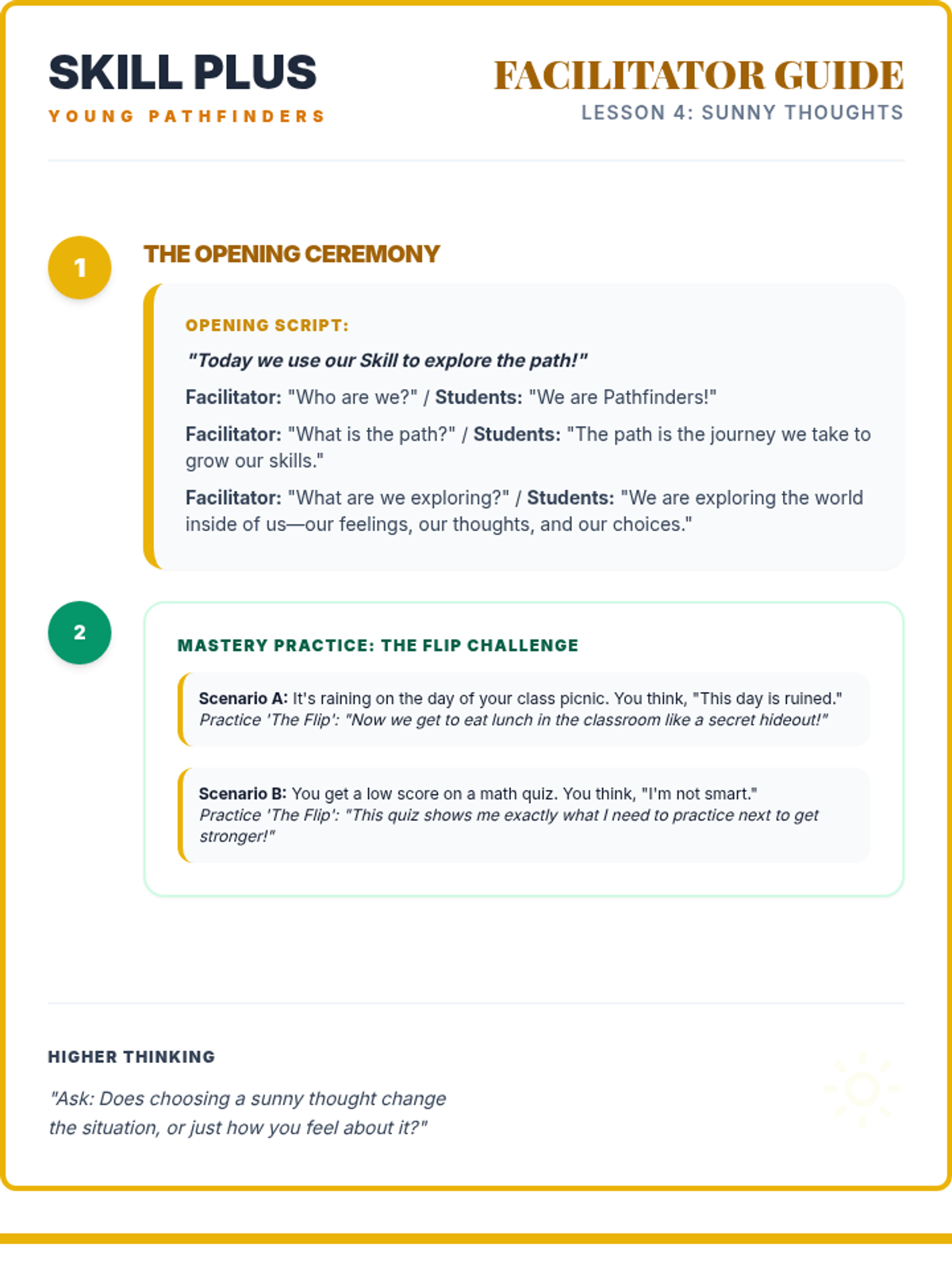
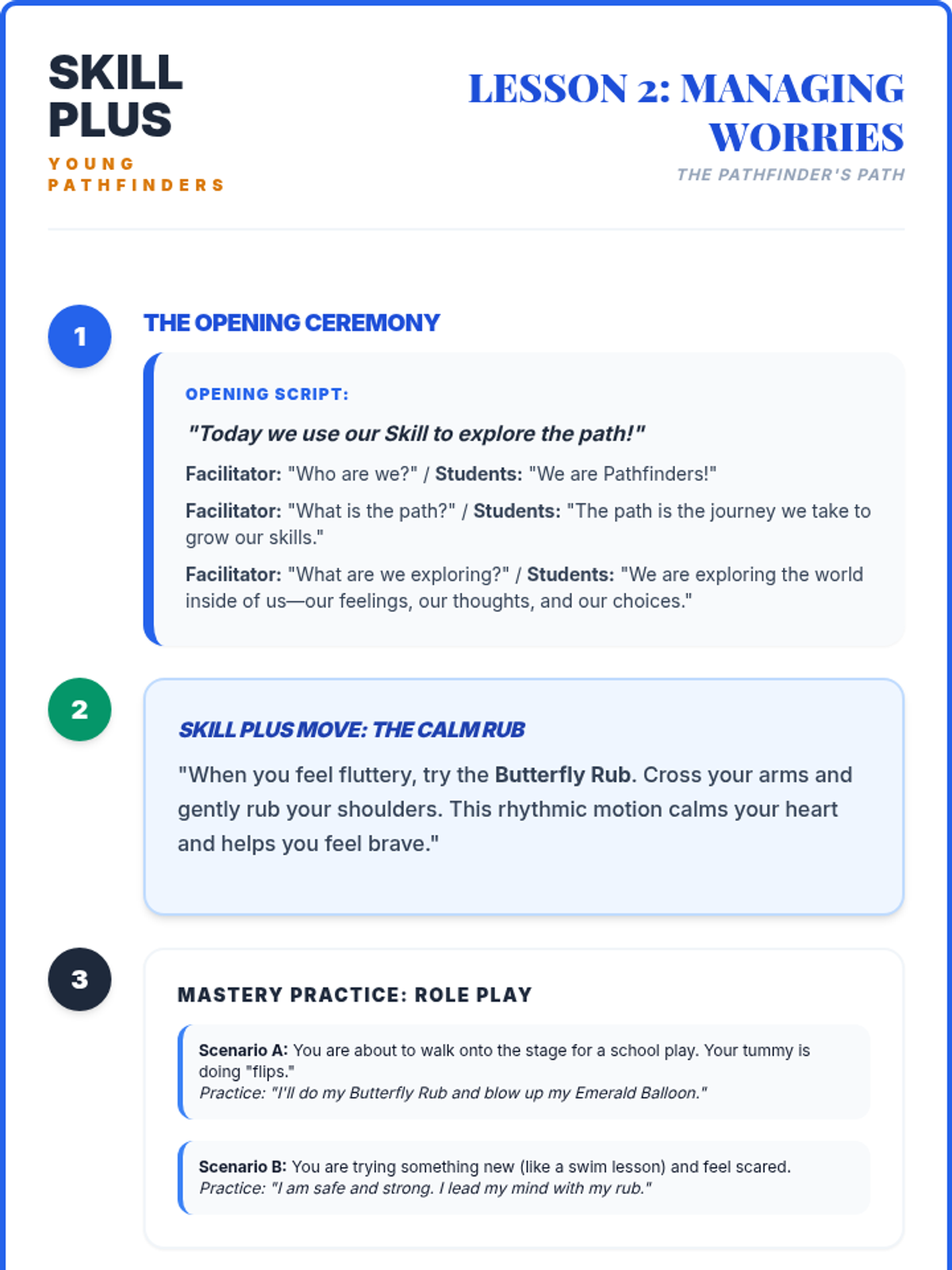
Introduction to the Young Pathfinders program. Students learn the core metaphors of 'The Path' and 'Exploring' their skills, setting goals for their journey.
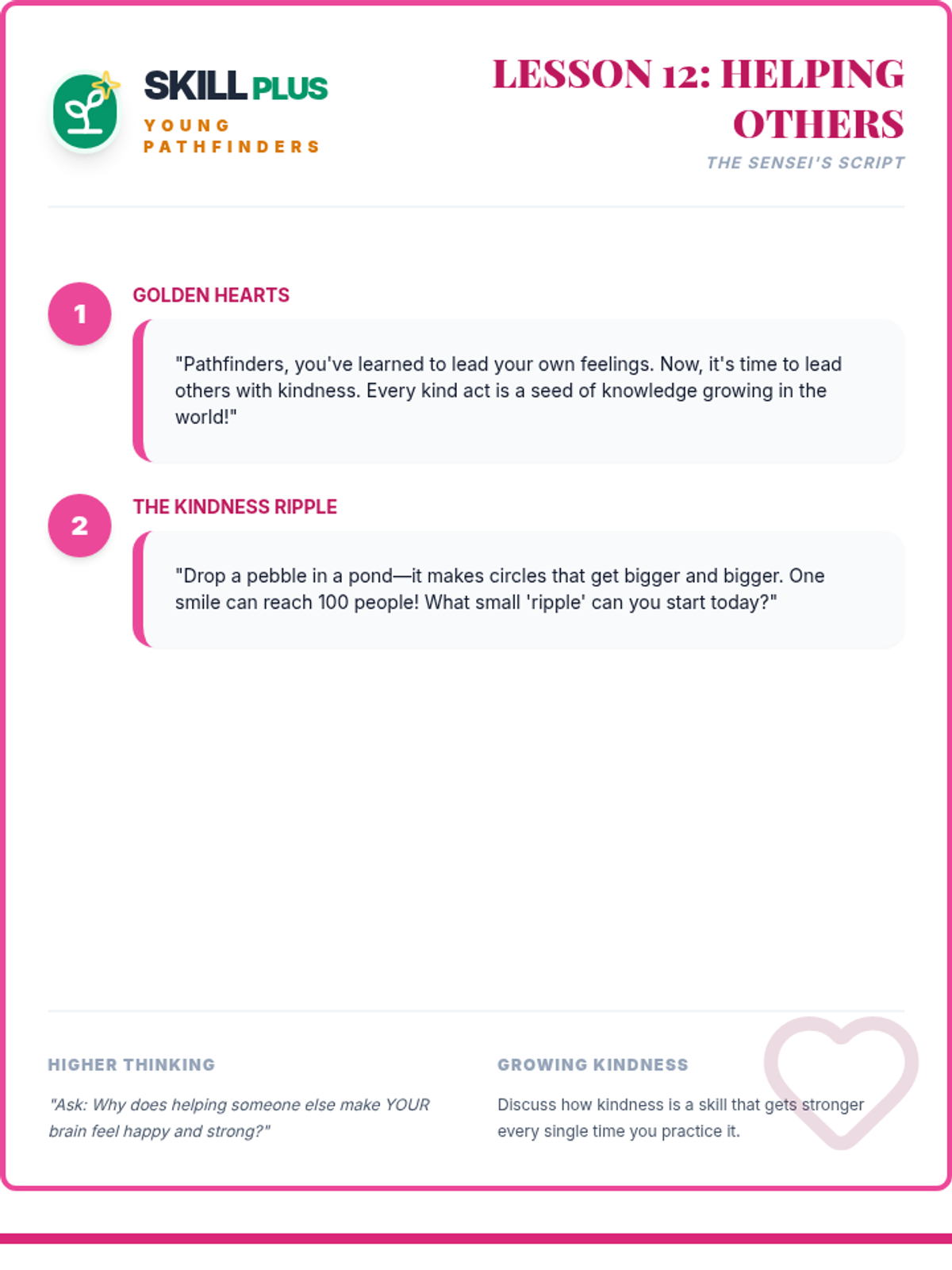
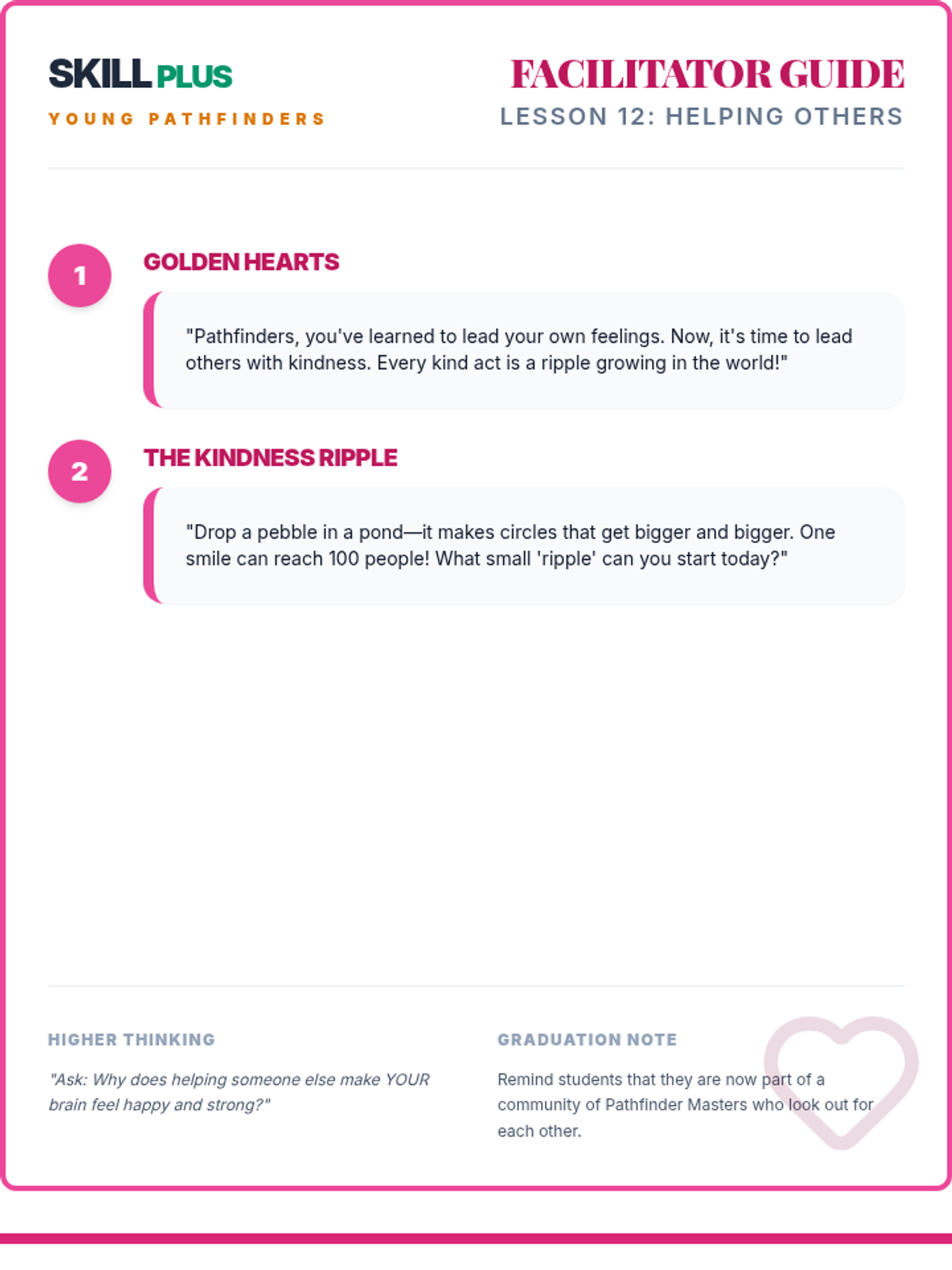
Cultivate a 'Heart of Gold' by practicing empathy, active listening, and inclusion to build strong community bonds.
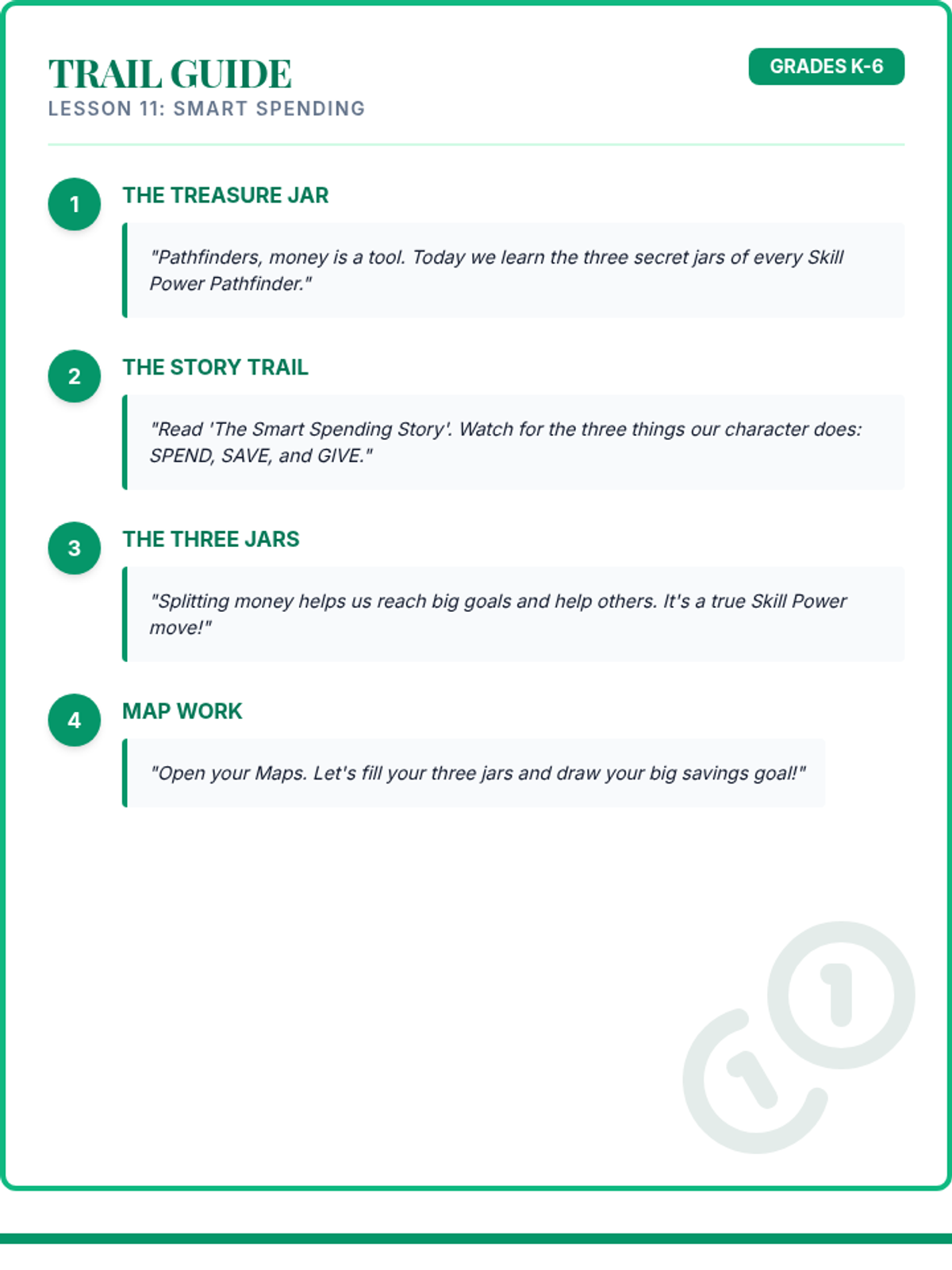
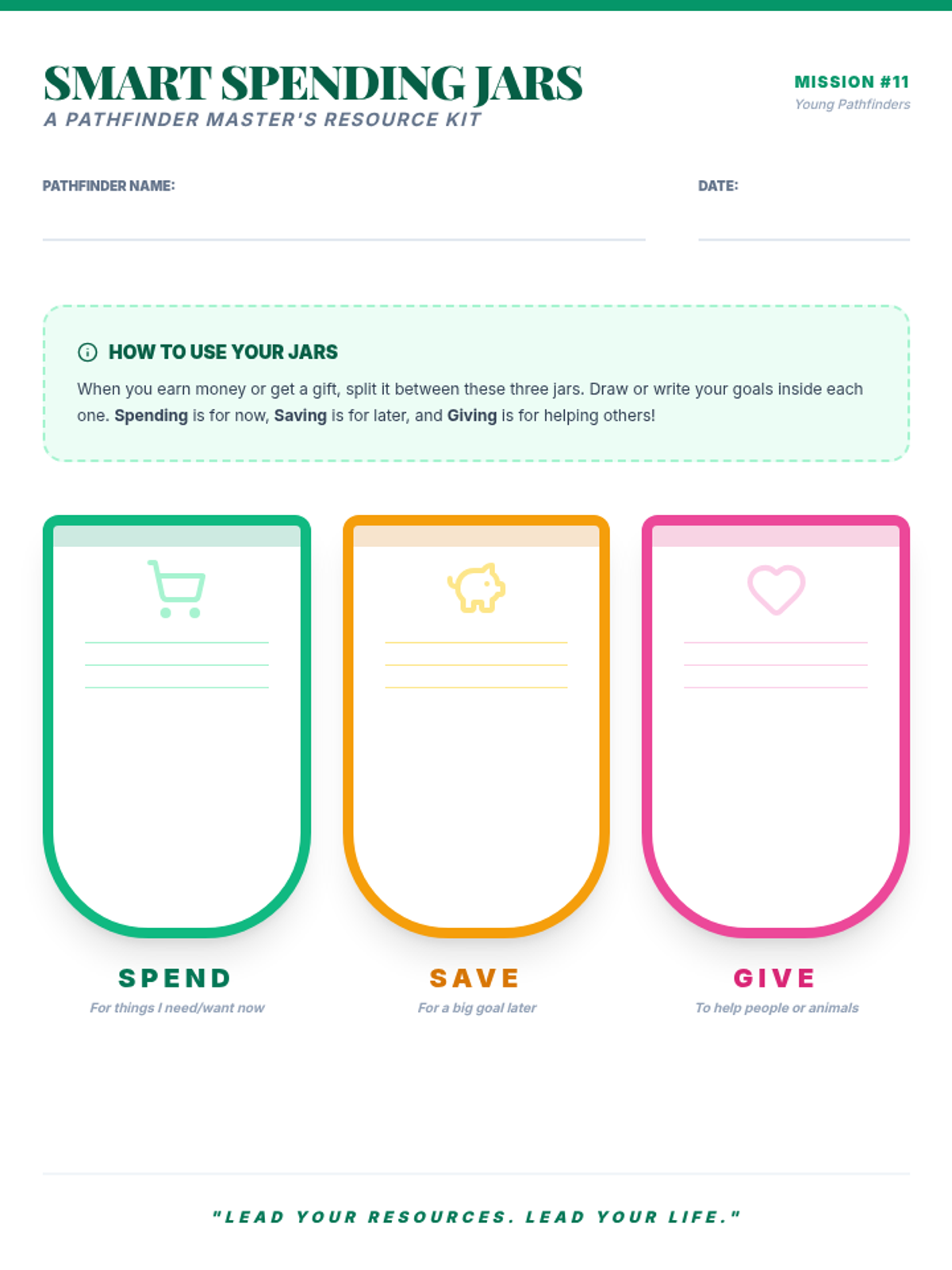
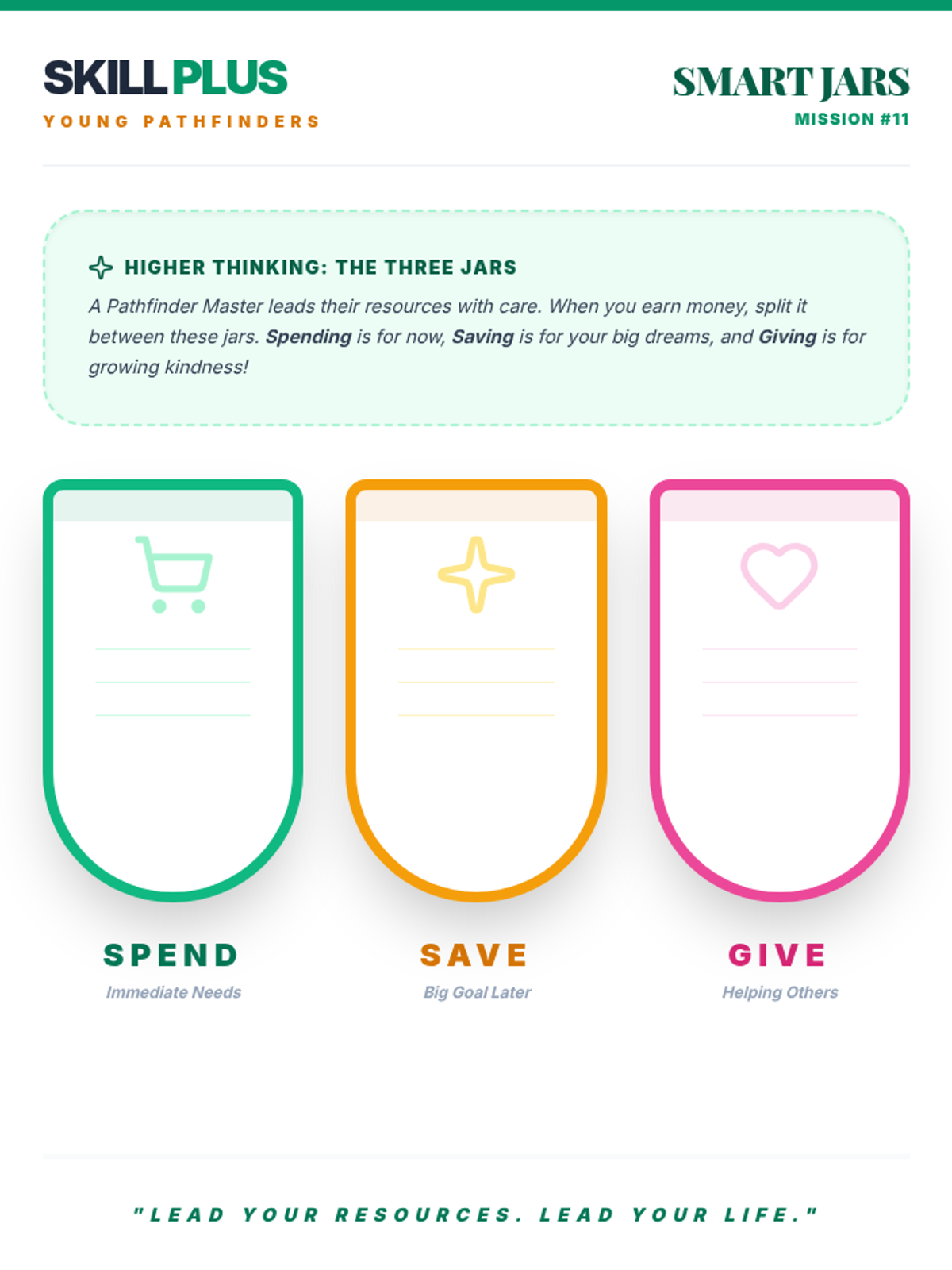
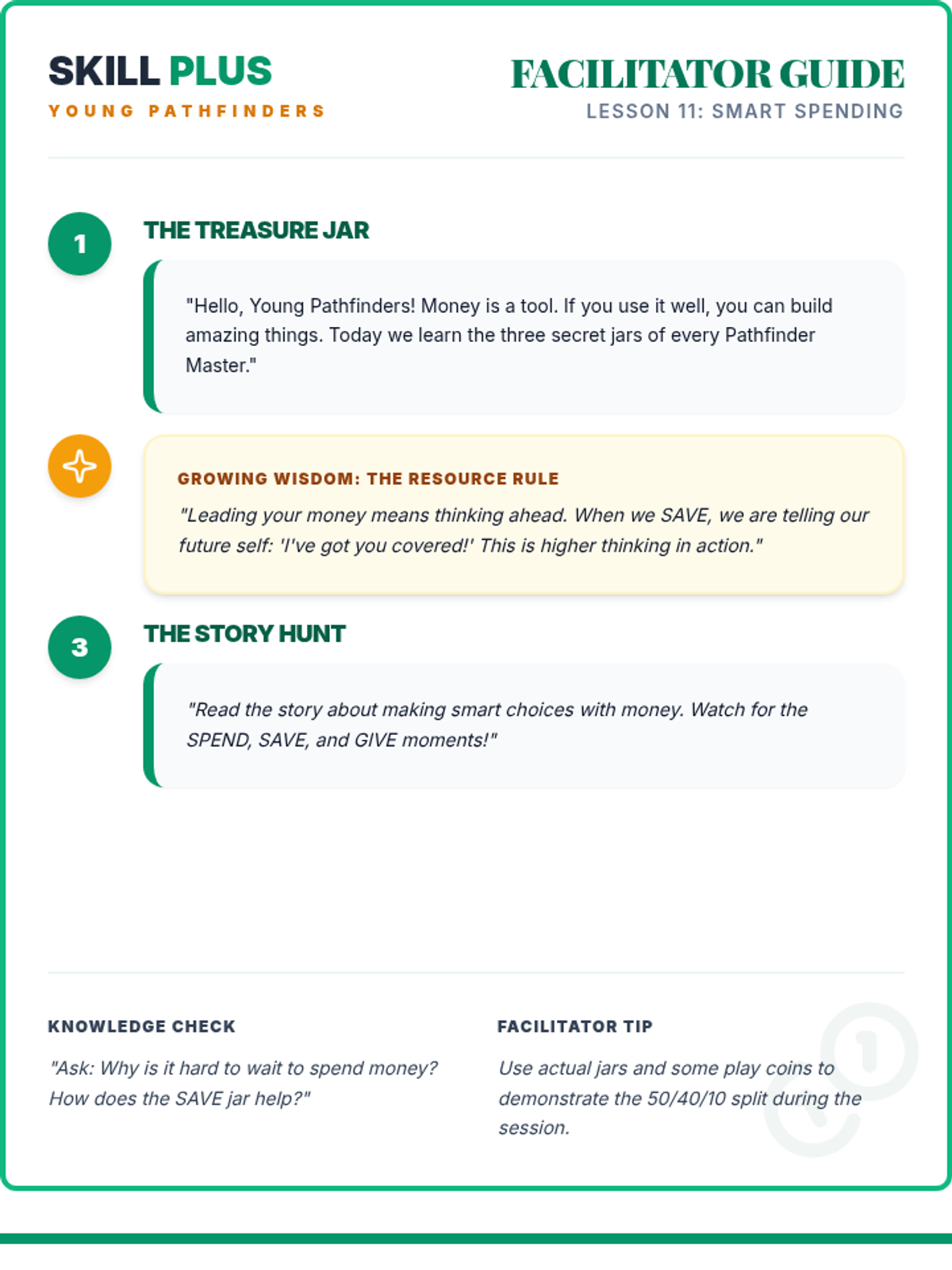
Learn the 'Spend-Save-Give' strategy to understand the value of money and the importance of financial responsibility.
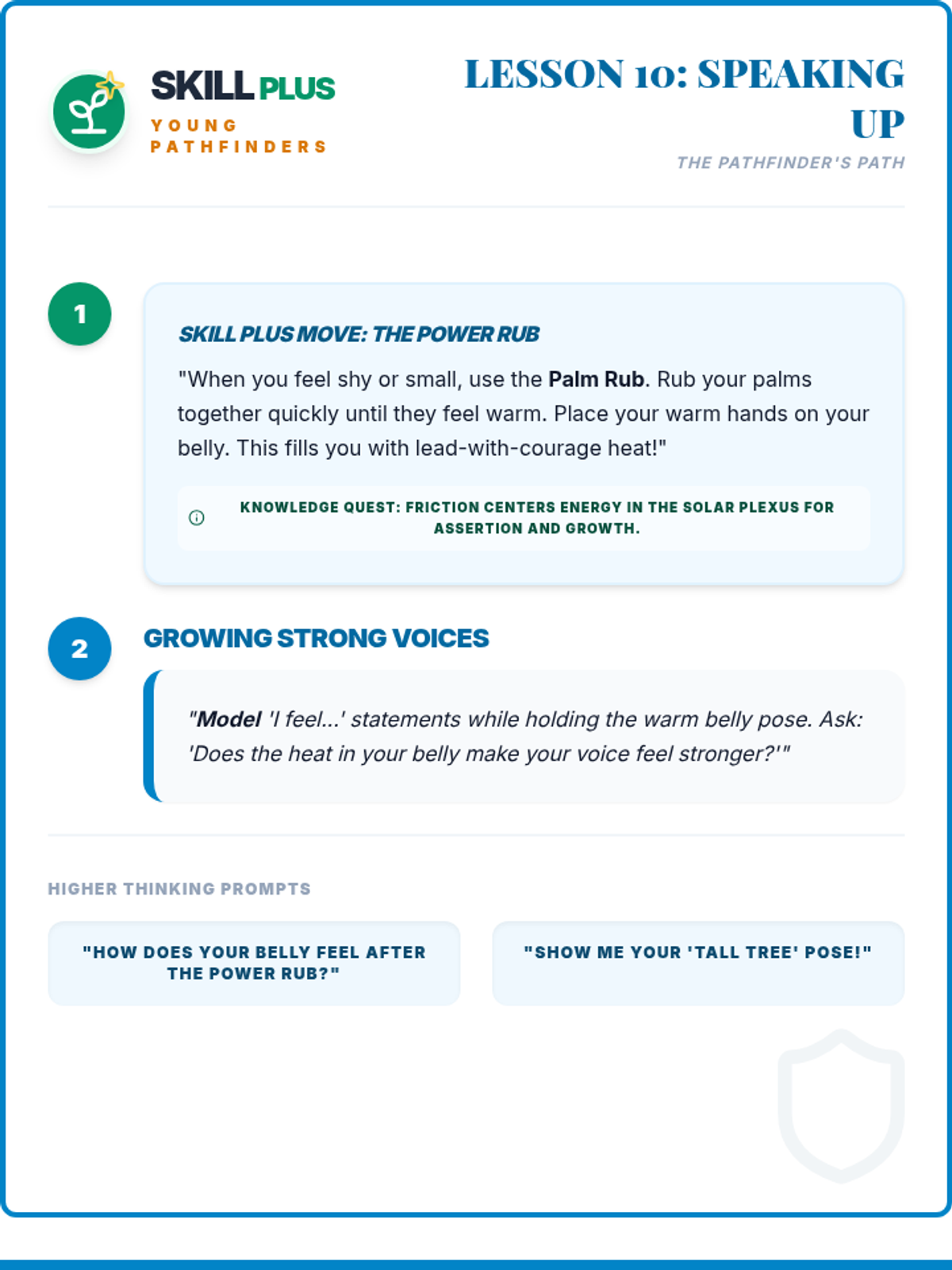
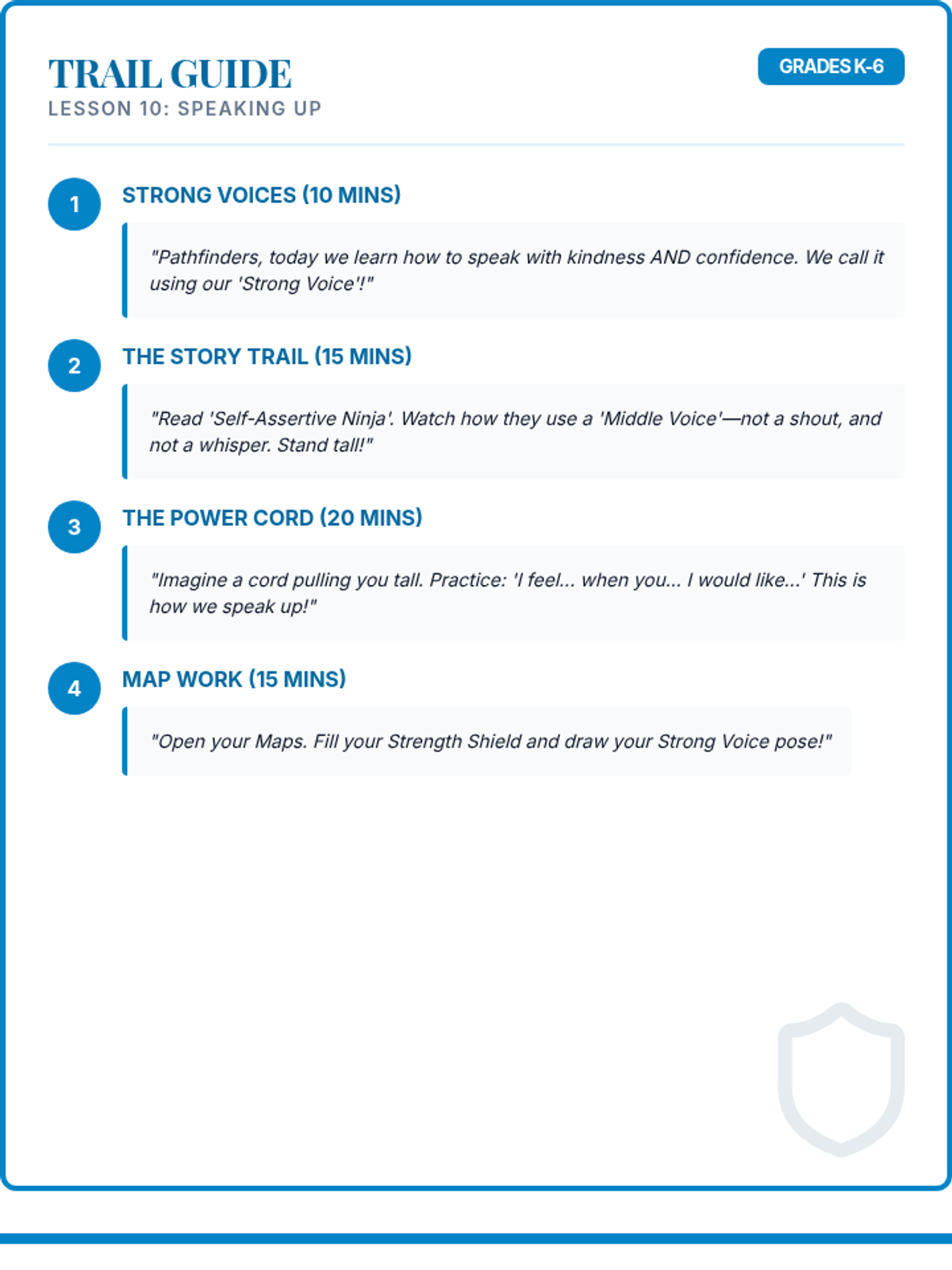
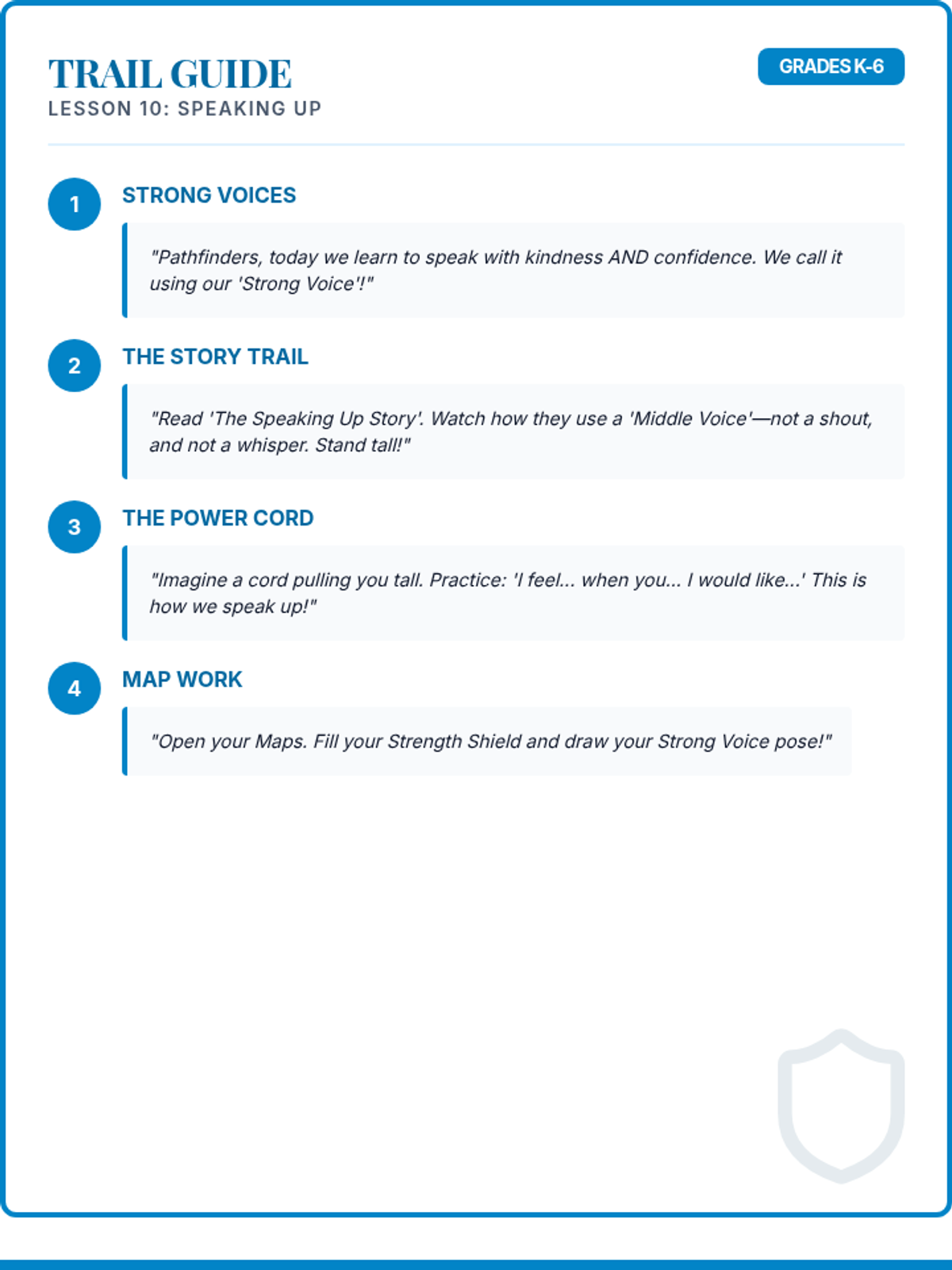
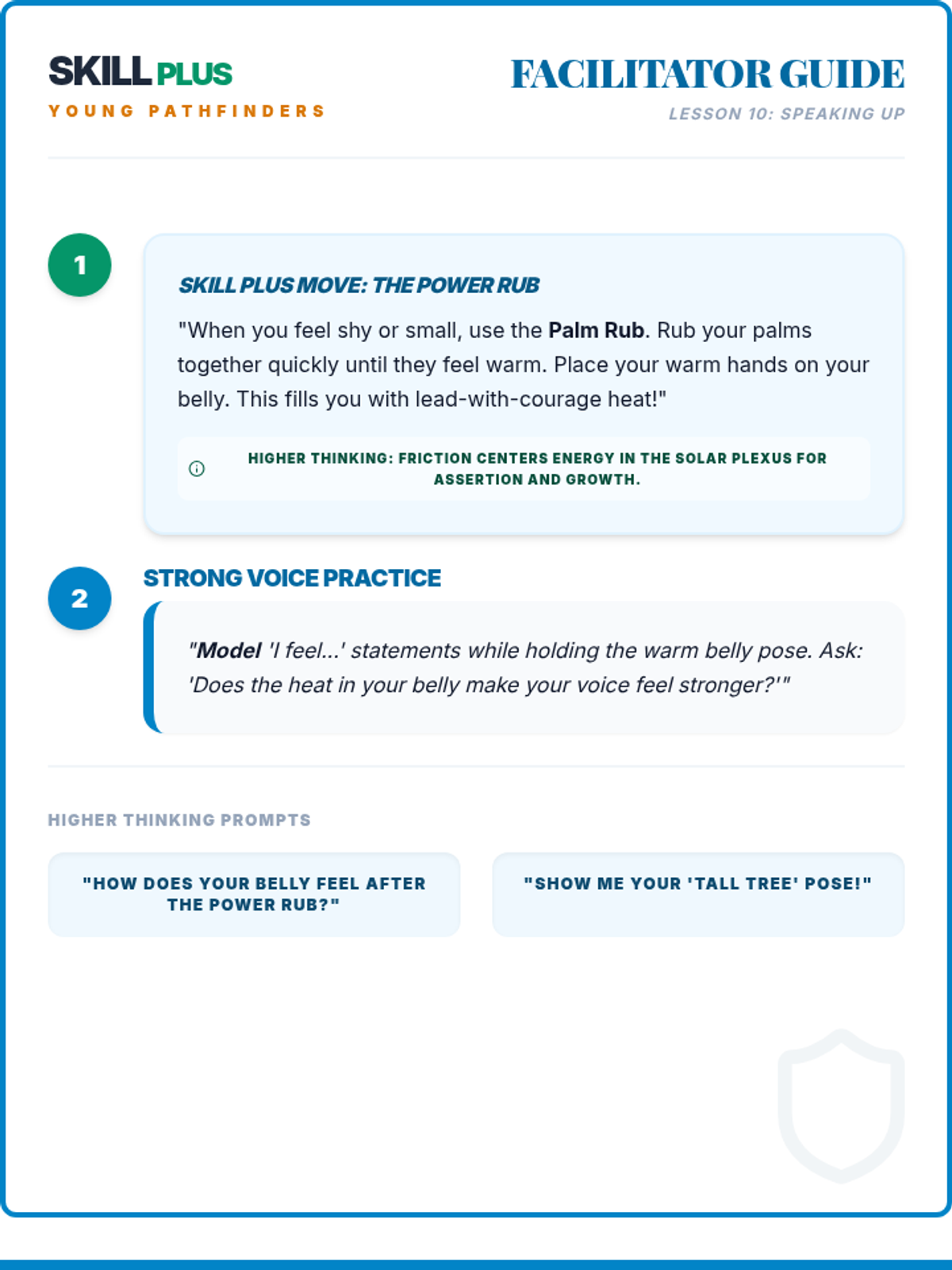
Find your 'Confidence Cord' and practice using a firm, kind voice to express needs and set healthy boundaries.
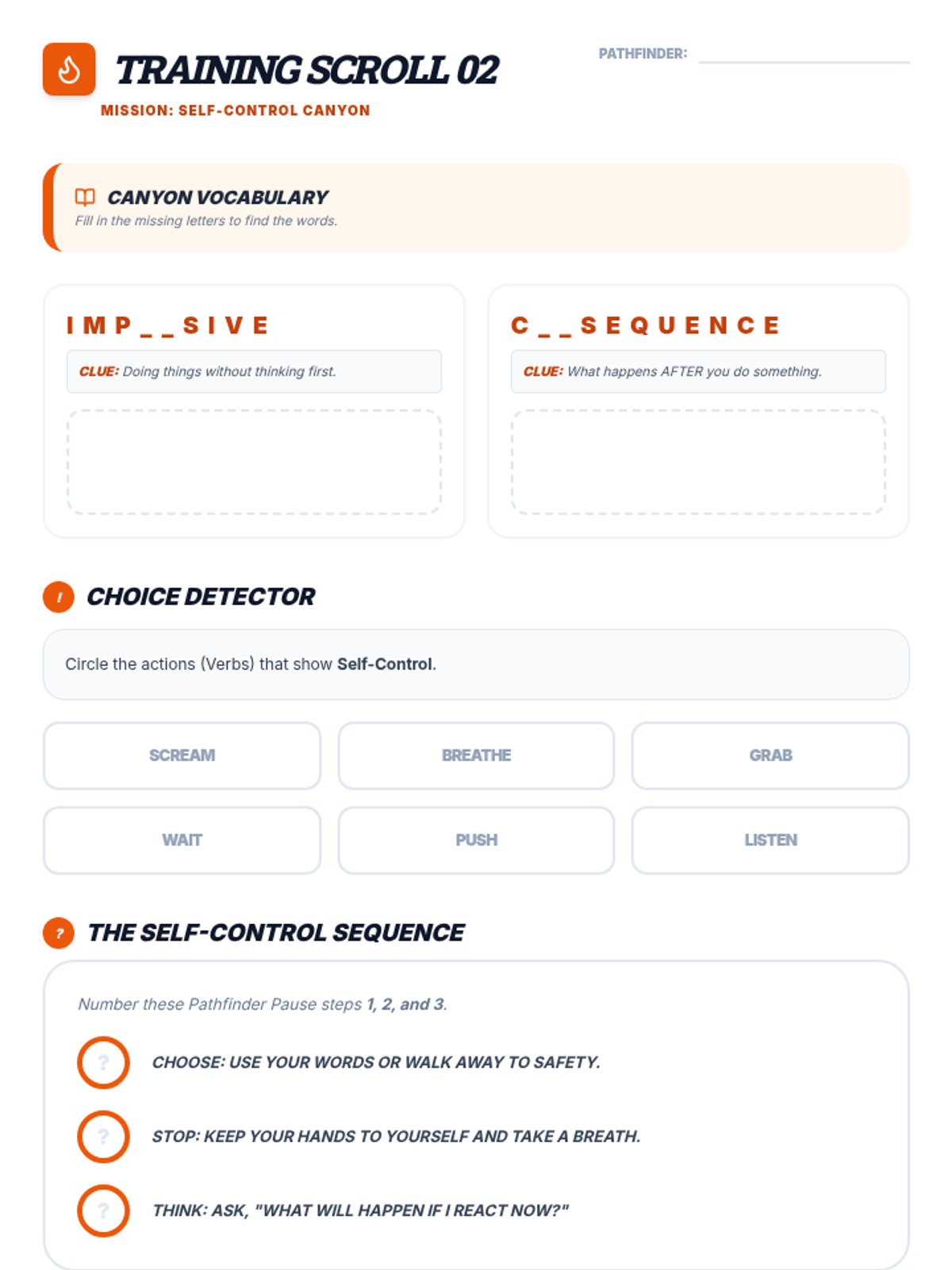
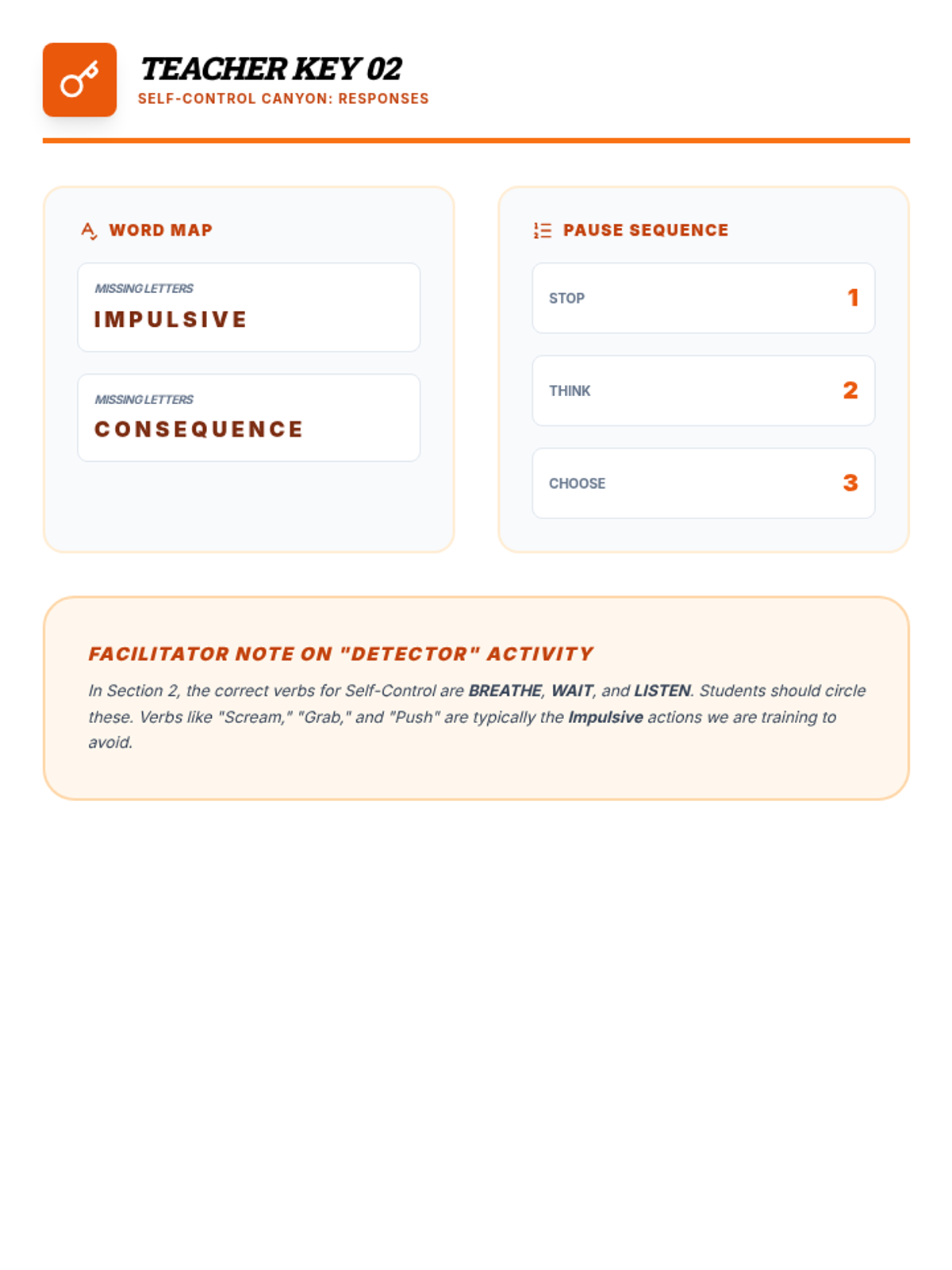
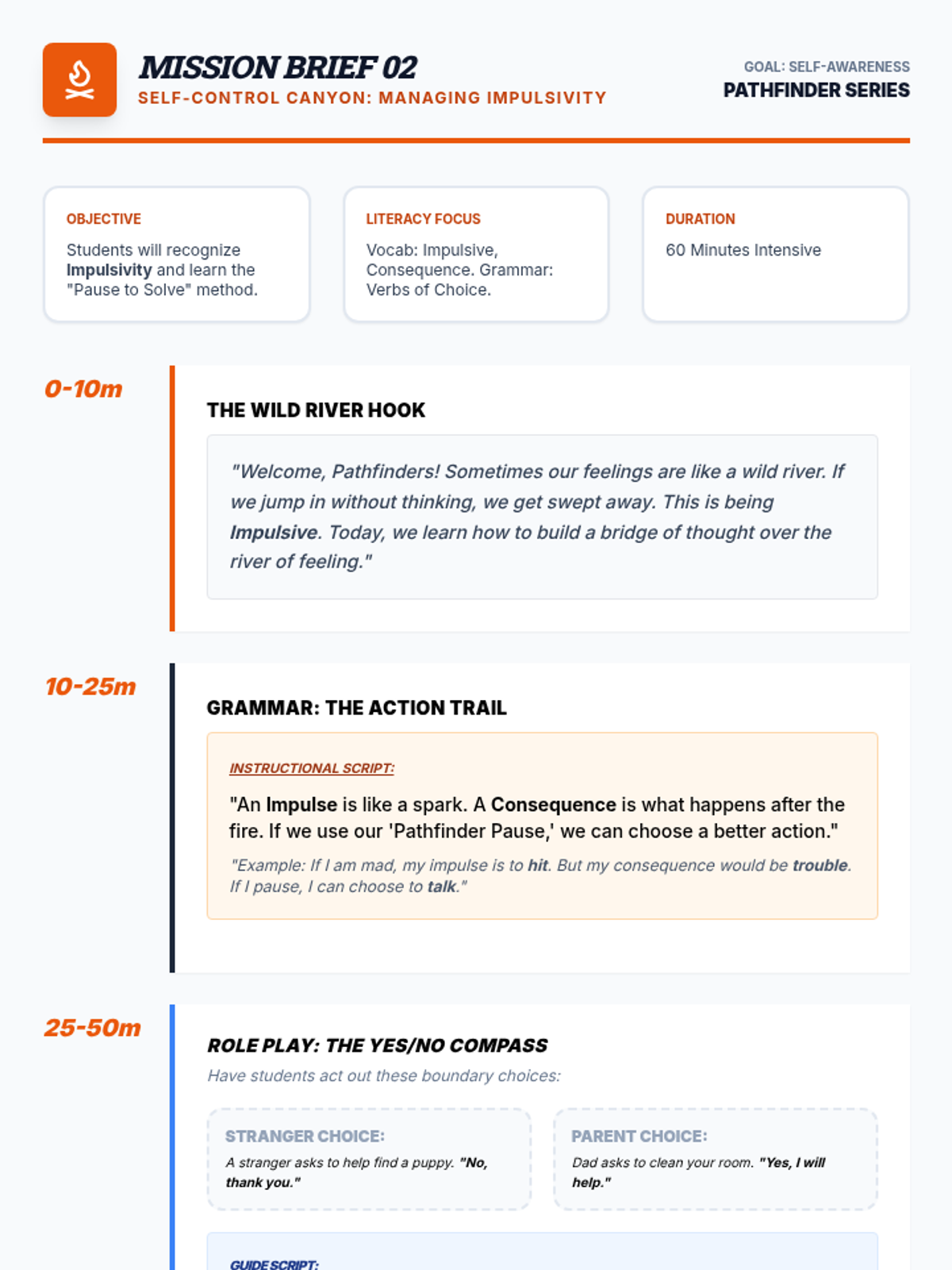
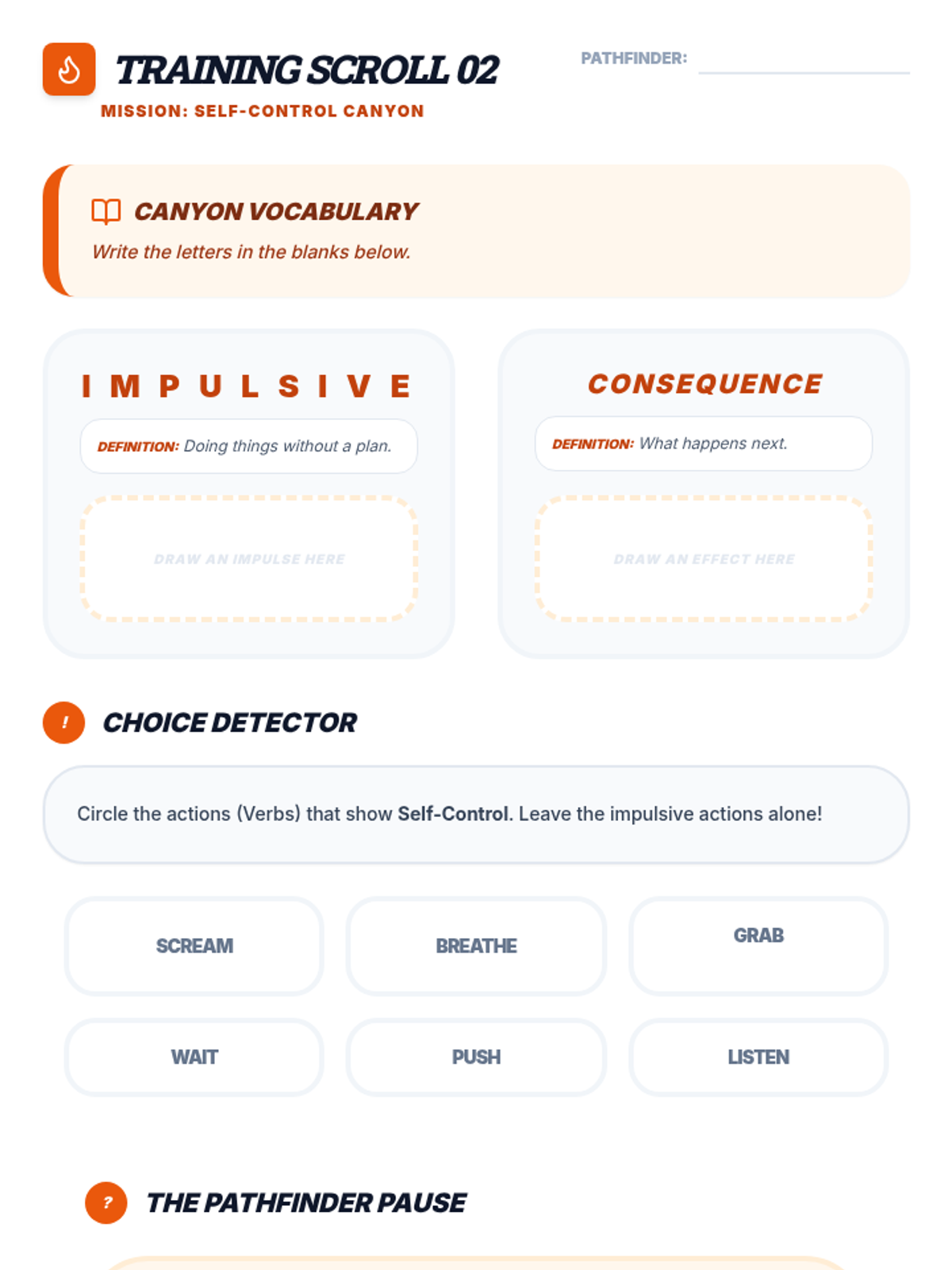
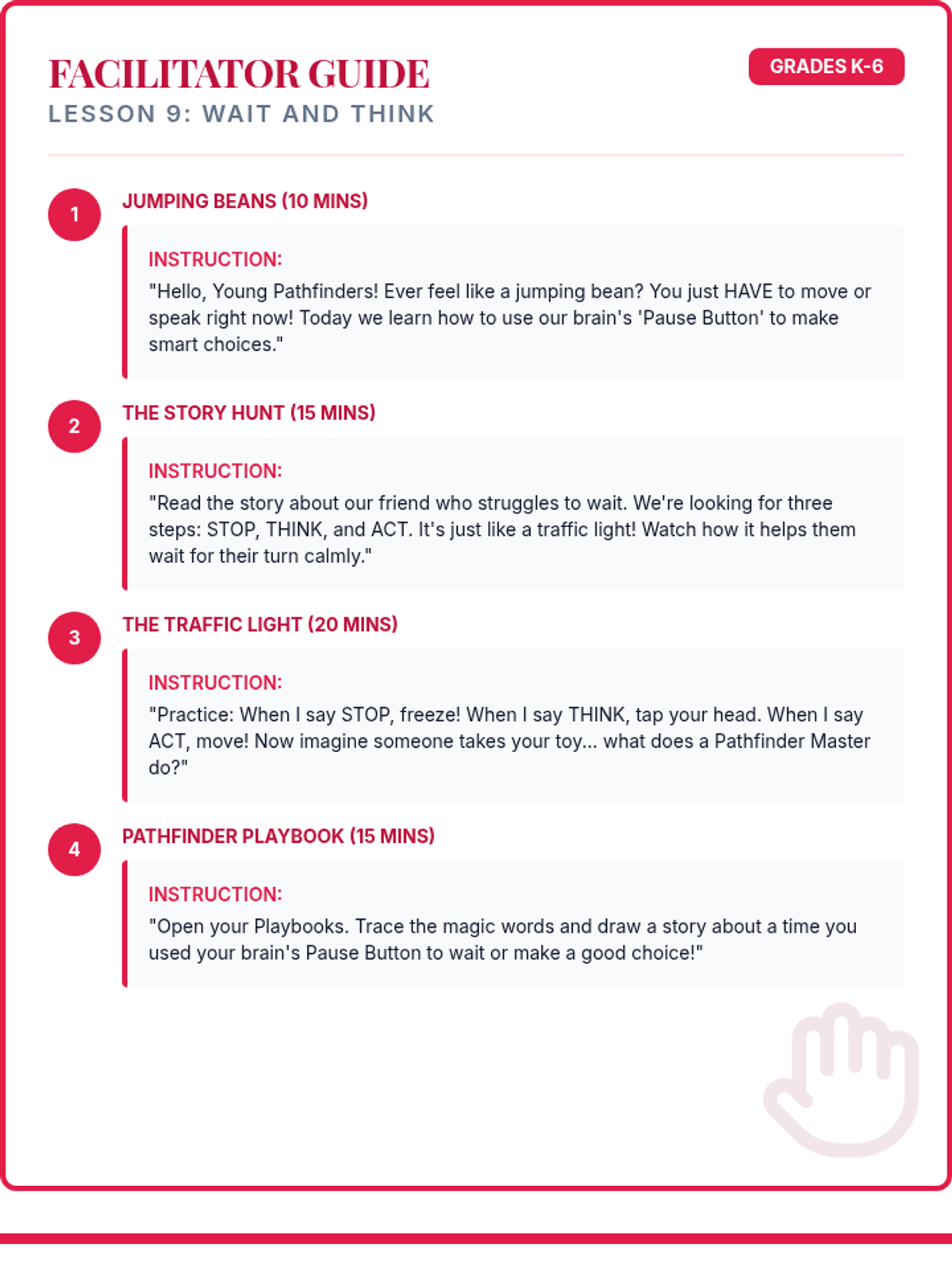
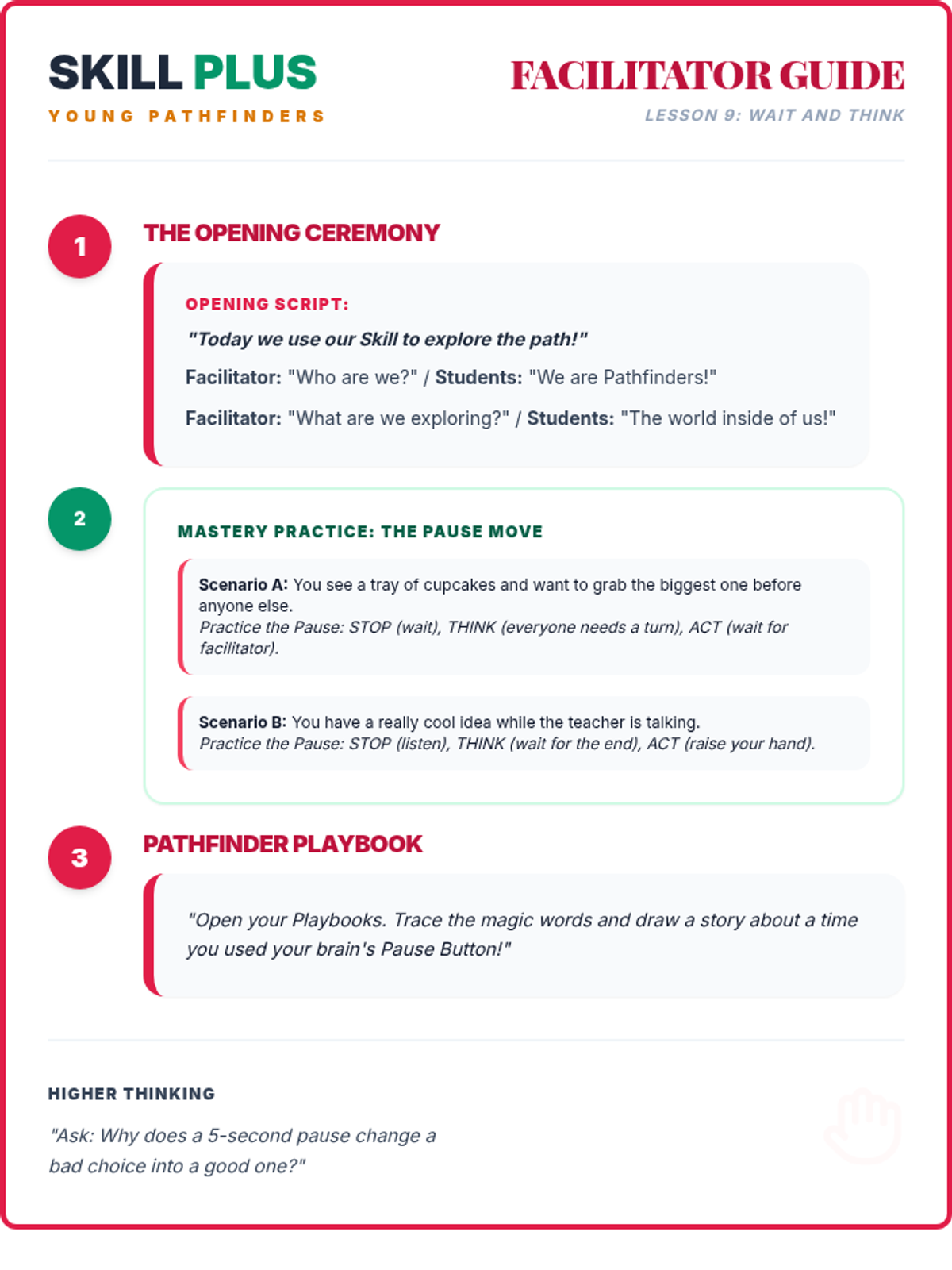
Practice the 'Stop-Think-Act' sequence to manage impulses and make thoughtful choices in the heat of the moment.
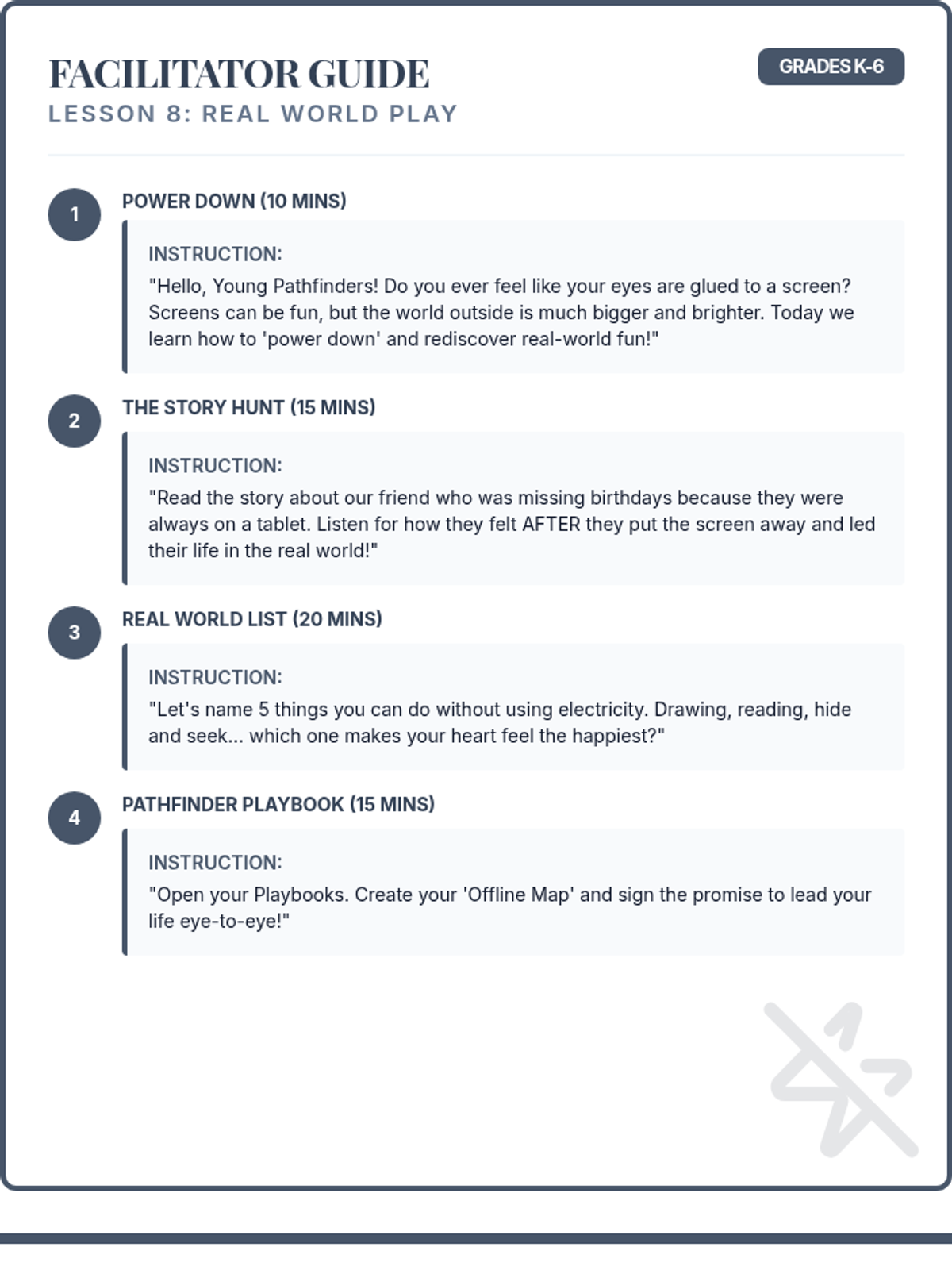
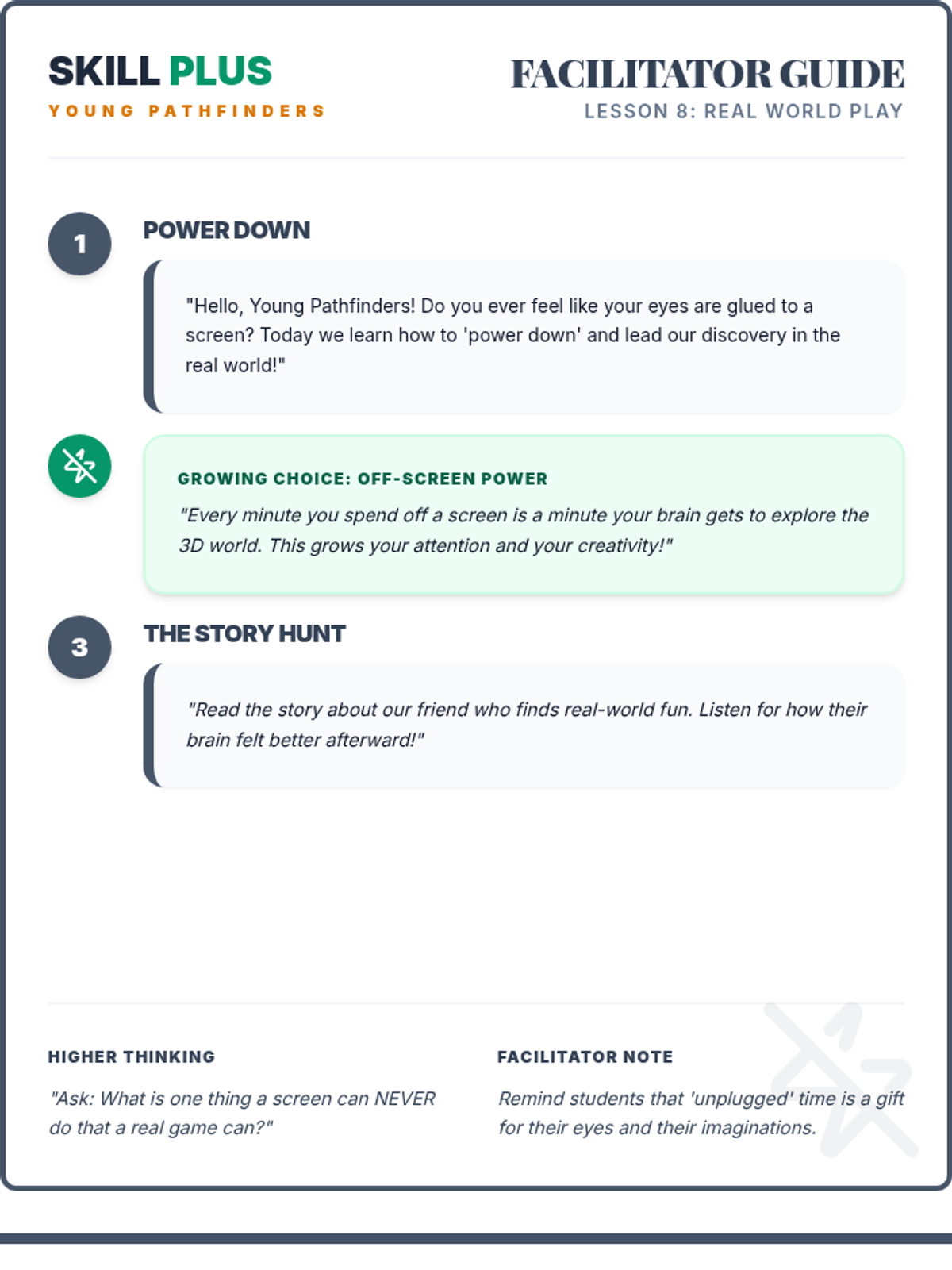
Navigate the digital world by practicing 'Screen-Free Serenity' and rediscovering the joy of offline connection.
Harness the 'Focus Flashlight' to ignore distractions and improve concentration on important tasks.
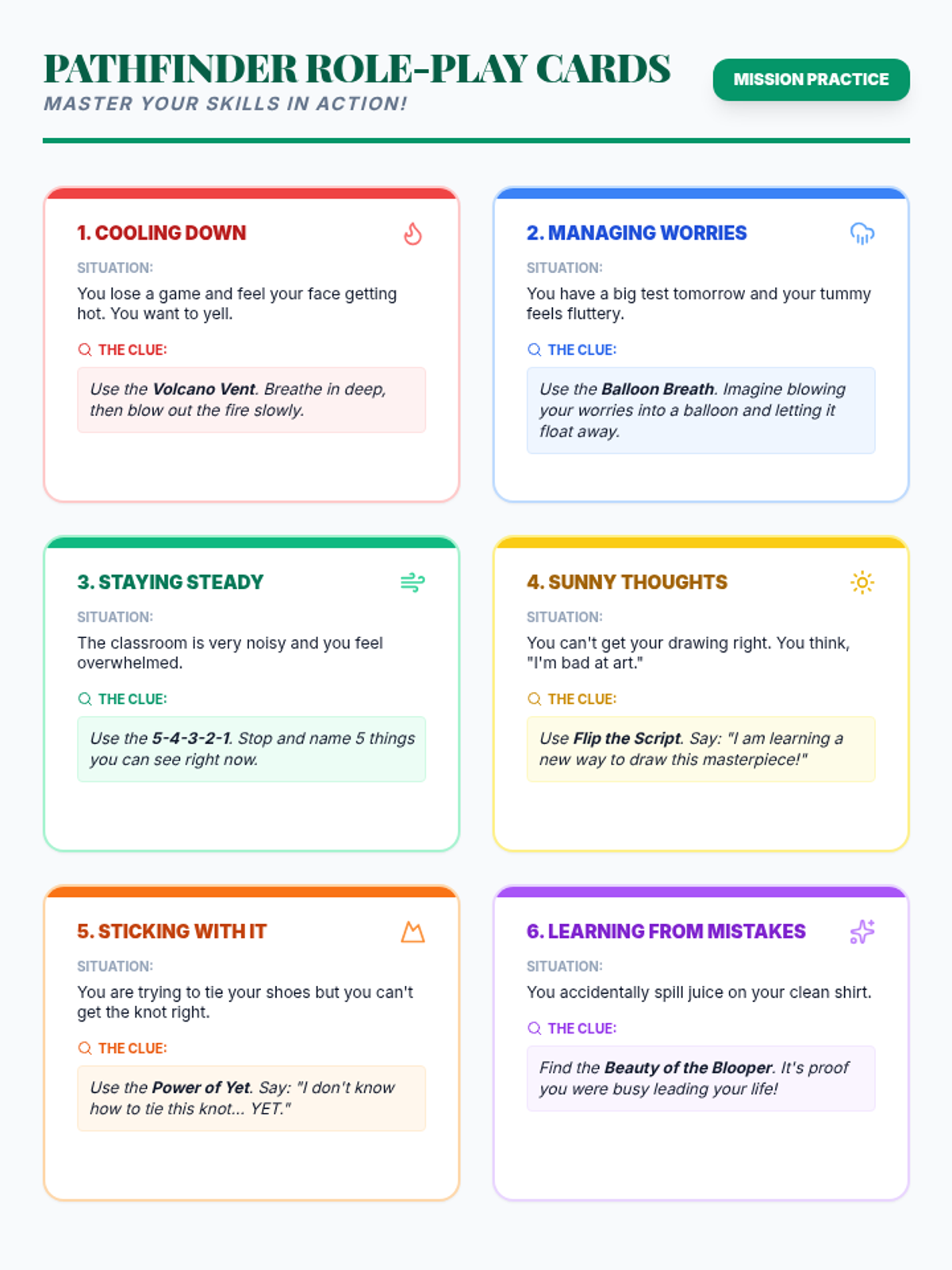
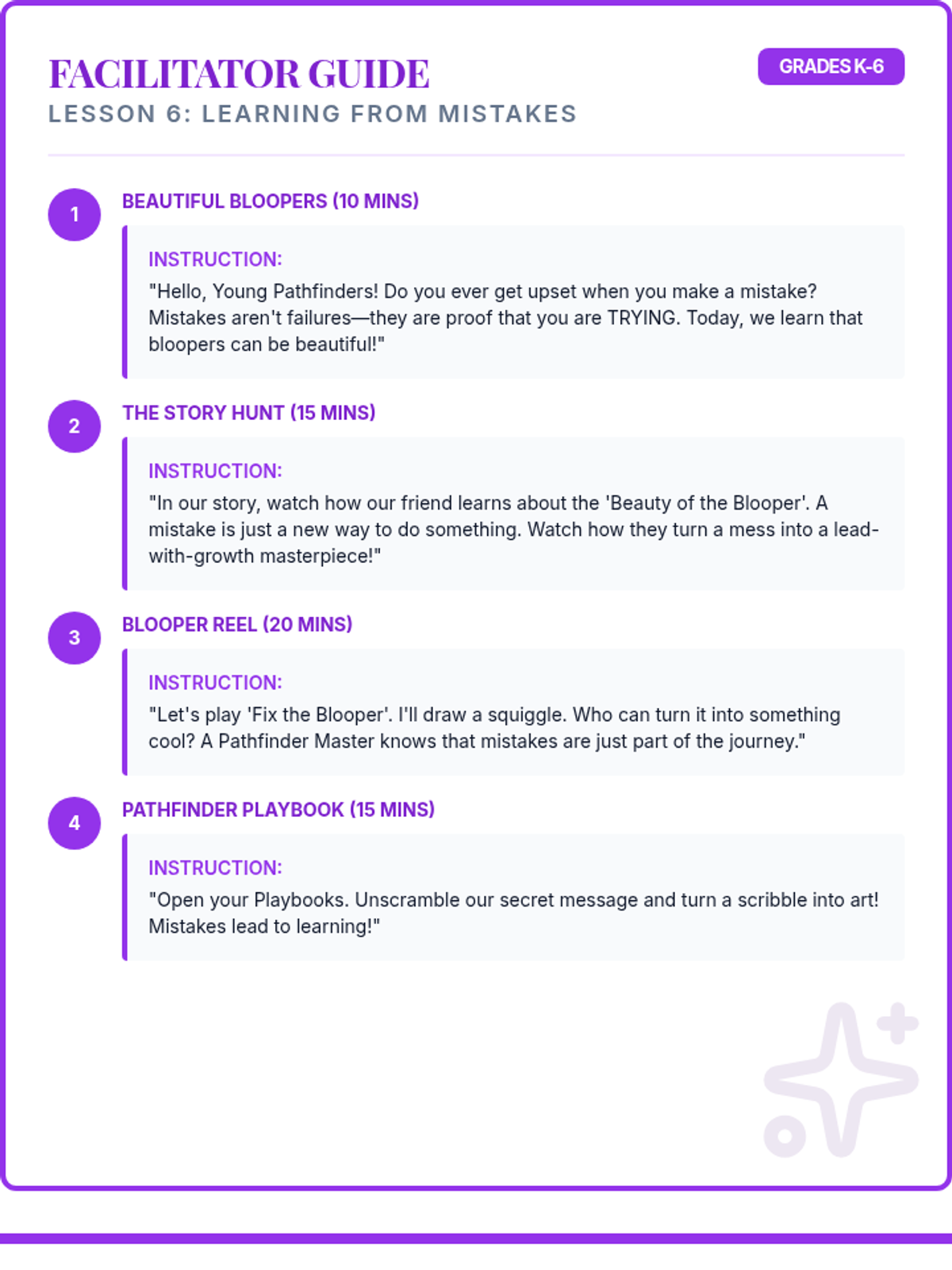
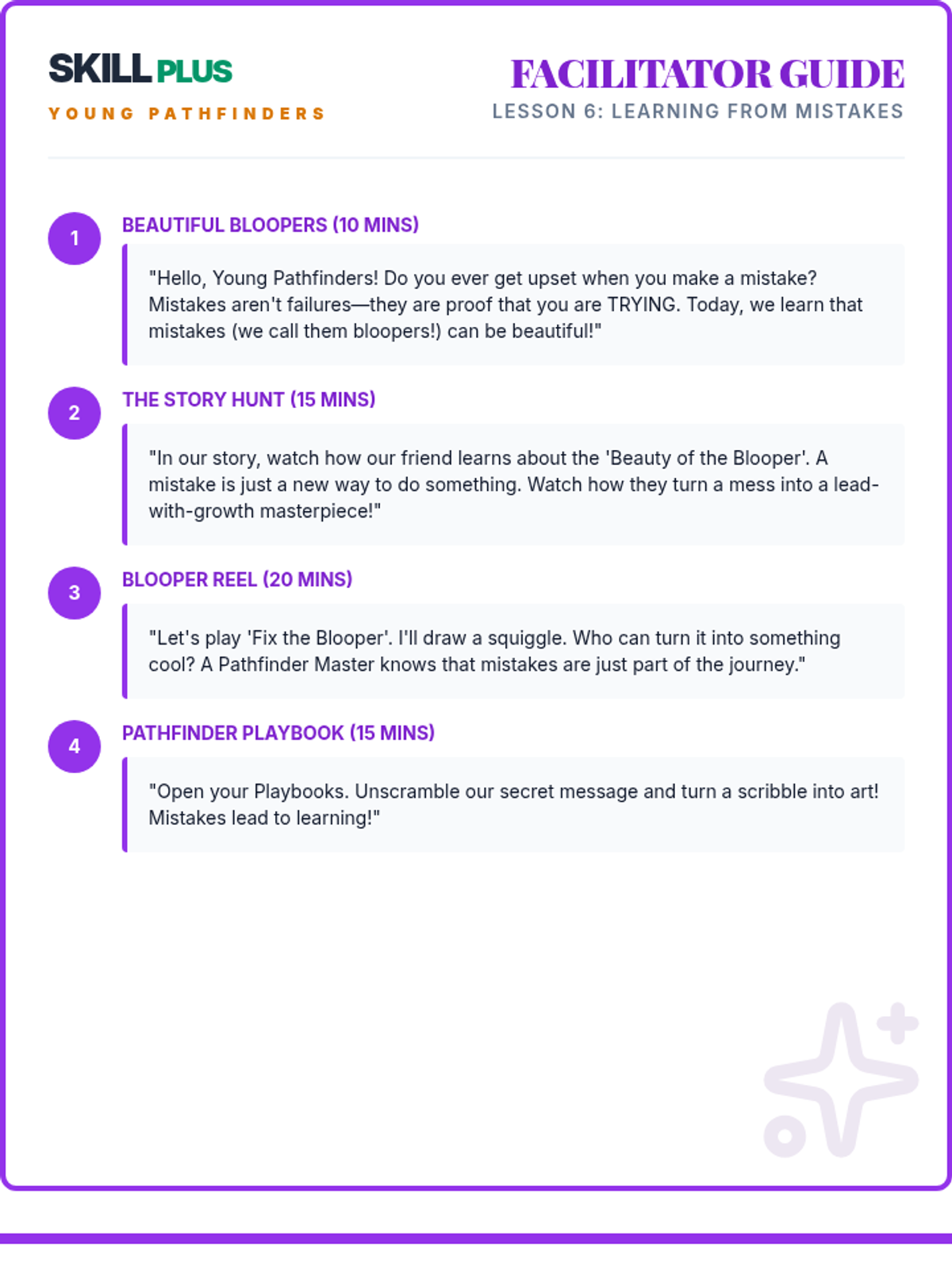
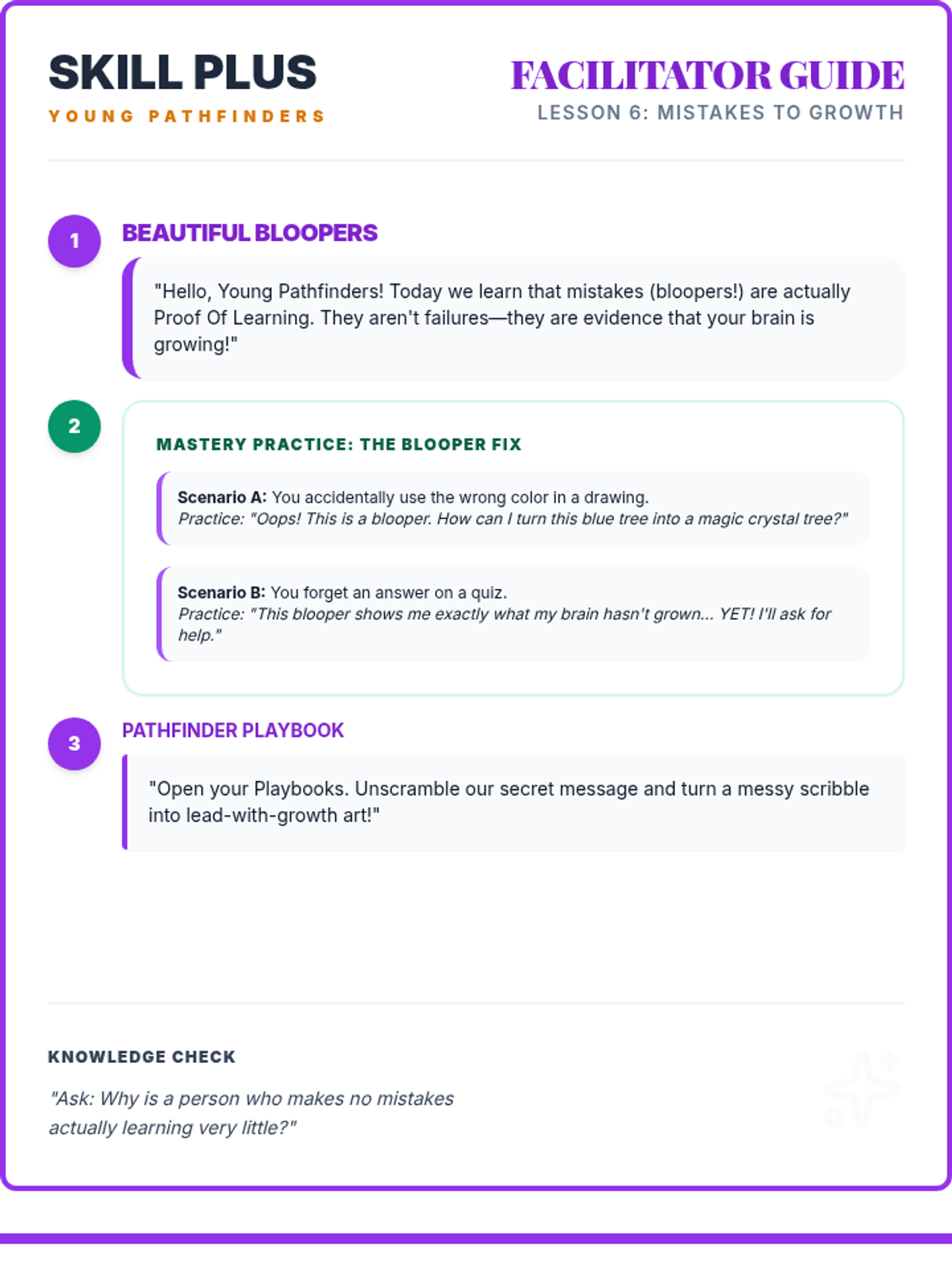
Embrace the 'Beauty of the Blooper' and learn that mistakes are evidence of learning, moving past the pressure of being perfect.
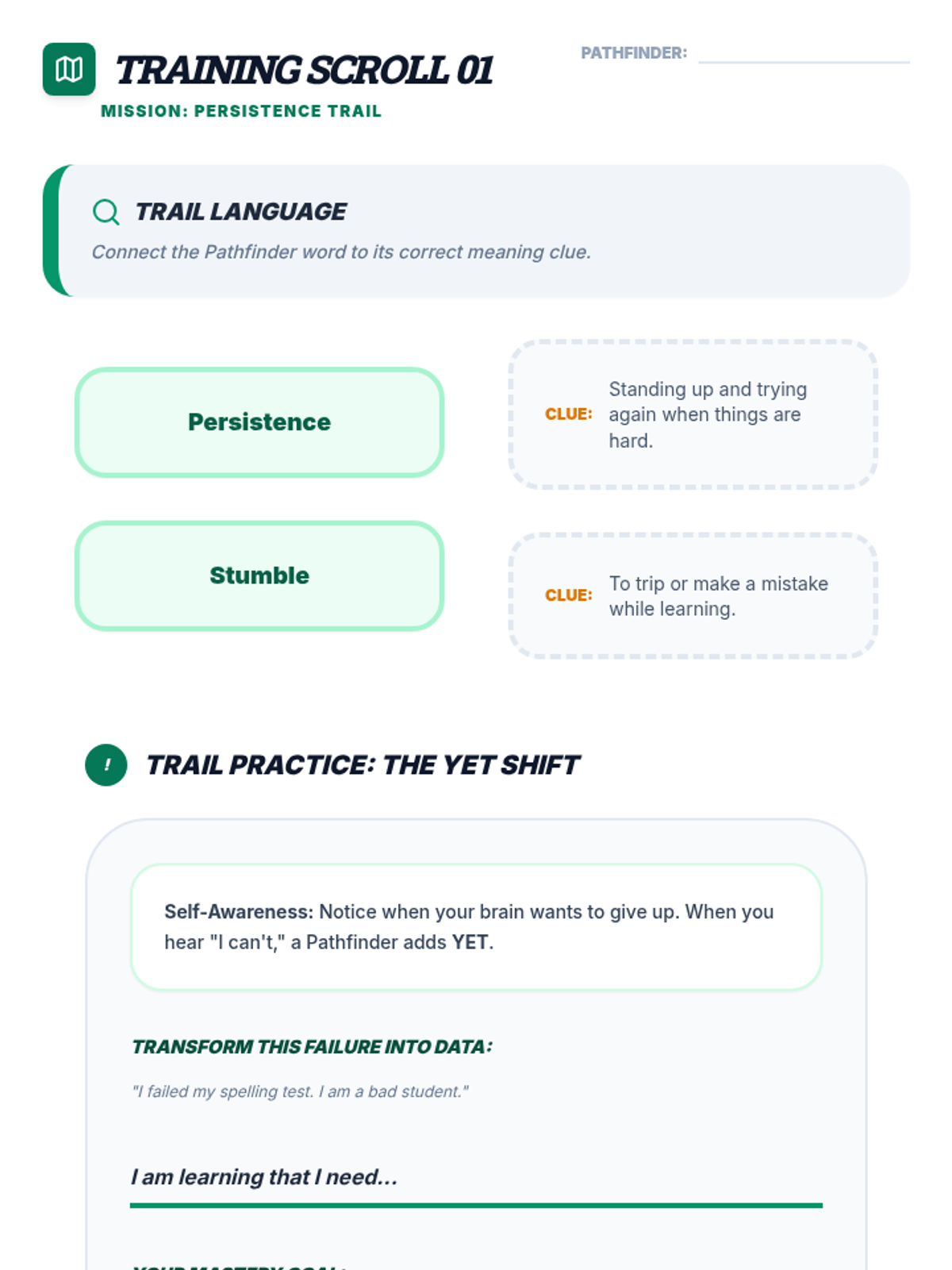
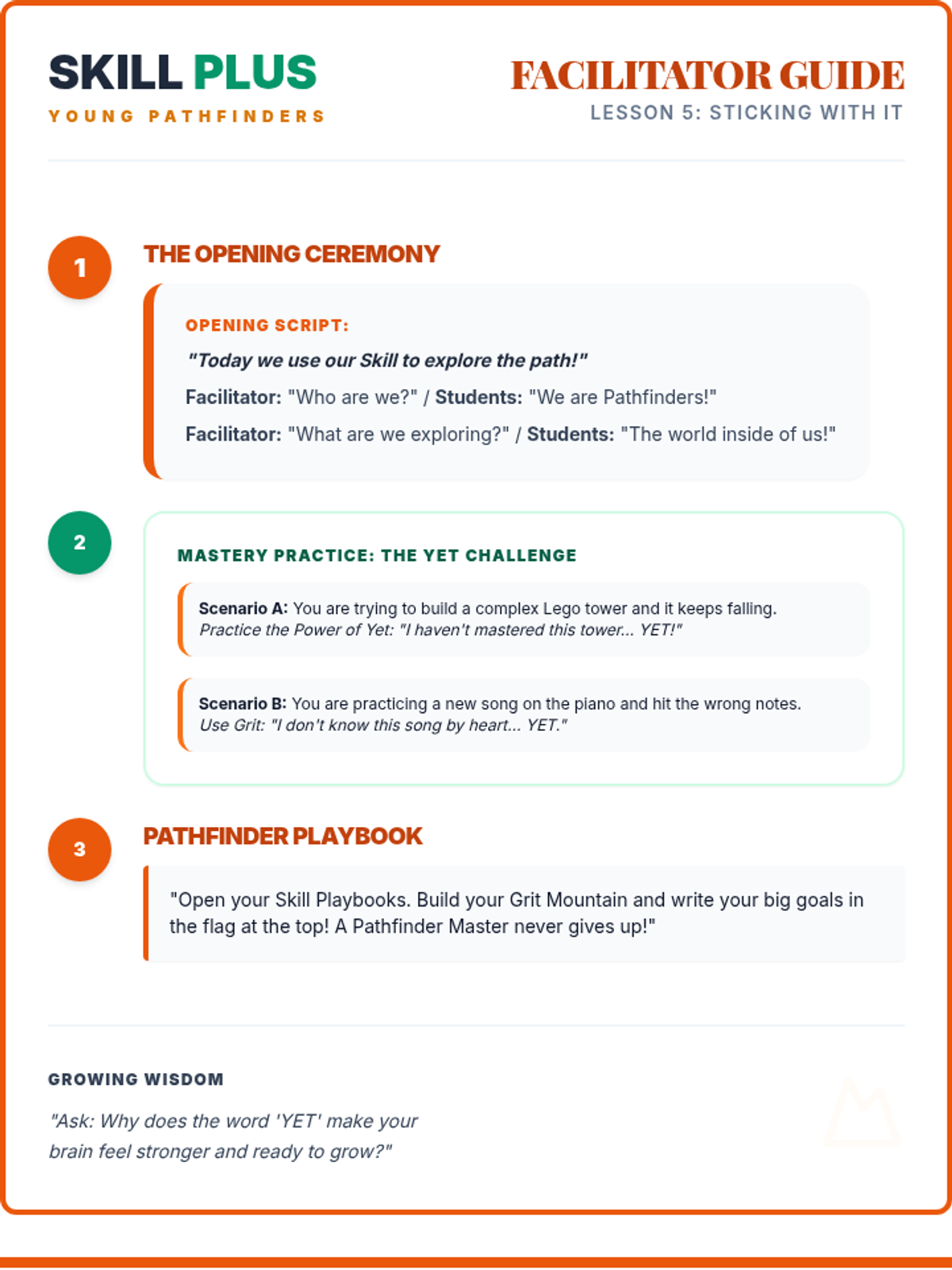
Develop resilience and persistence through the 'Power of Yet' and building 'Stamina Sparks' to overcome challenges.
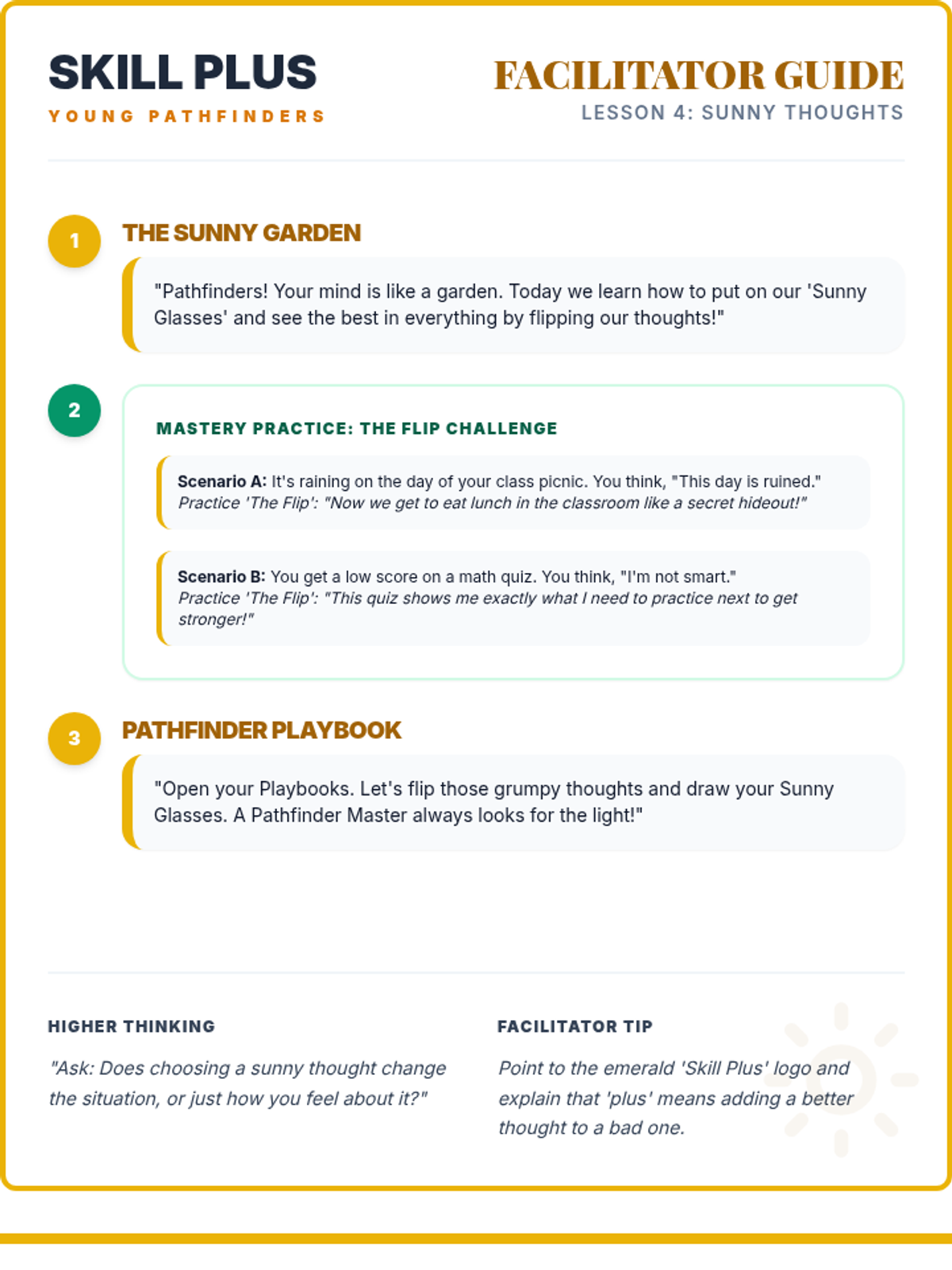
Transform 'Negative Nelly' thoughts into 'Positive Power' using the 'Flip the Script' technique for a brighter outlook.
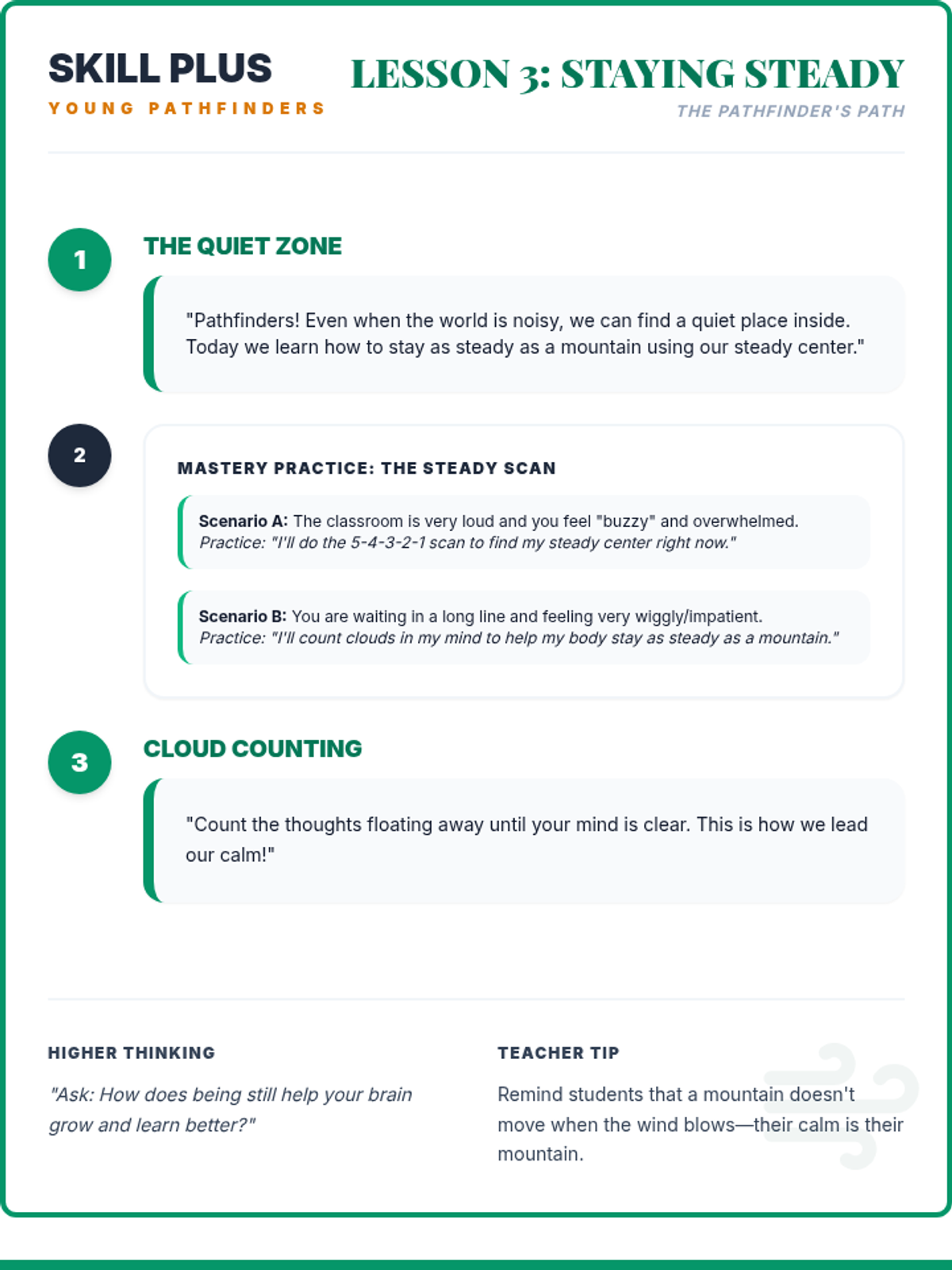
Discover the power of stillness and the 'Counting Clouds' method to maintain emotional balance in stressful moments.
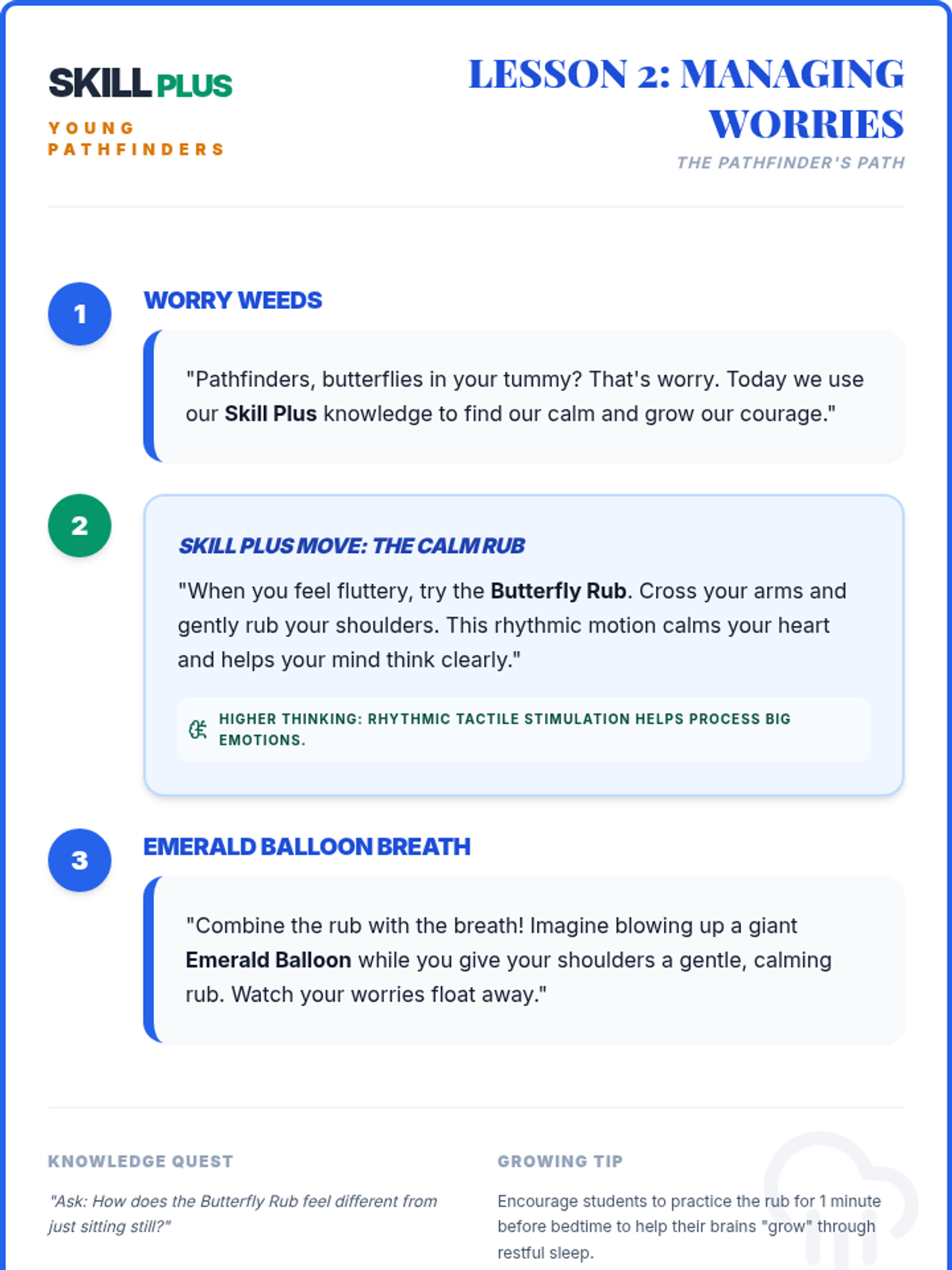
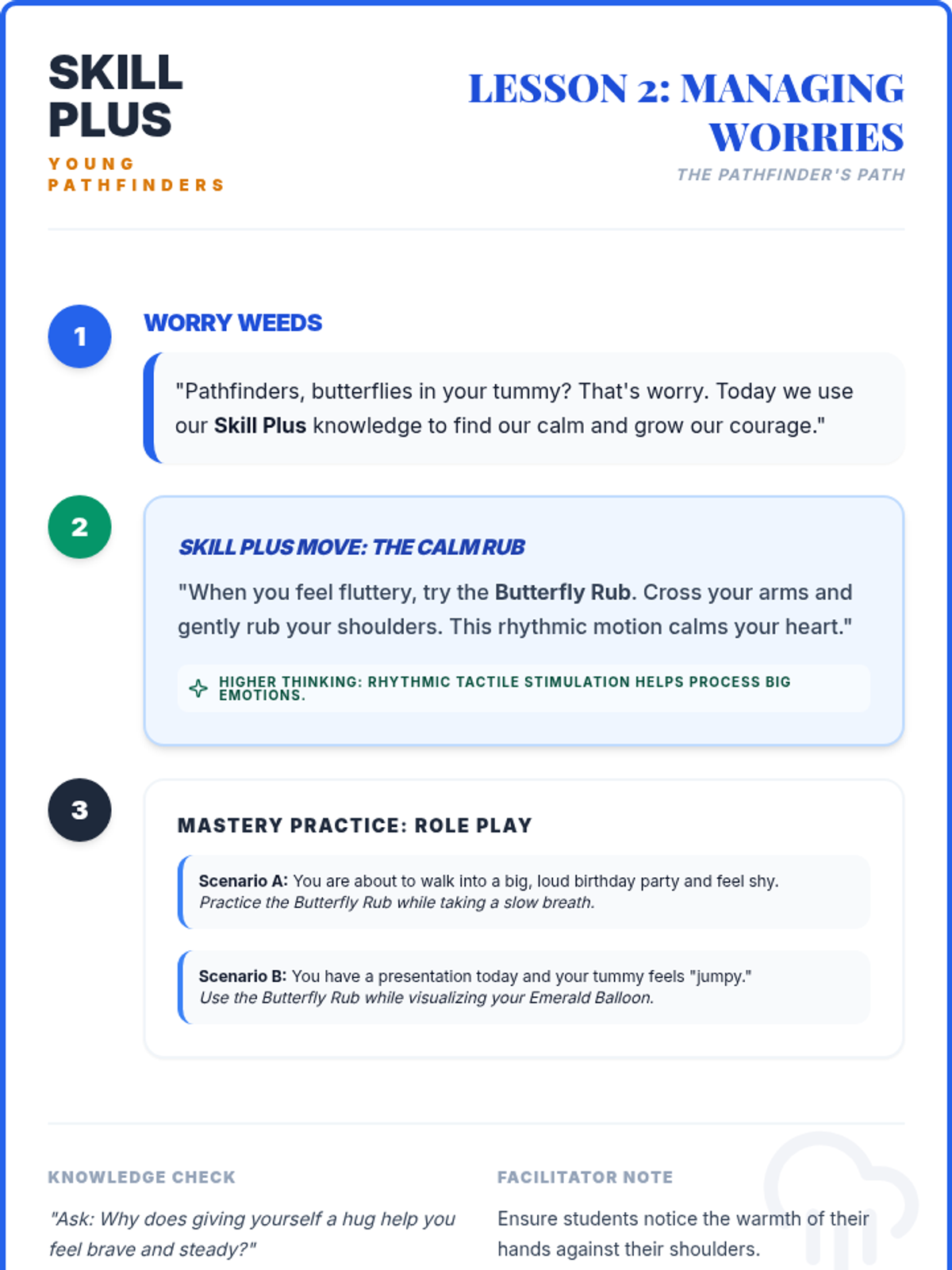
Identify 'worry weeds' and use the 'Balloon Breath' strategy to manage anxiety and find inner peace.
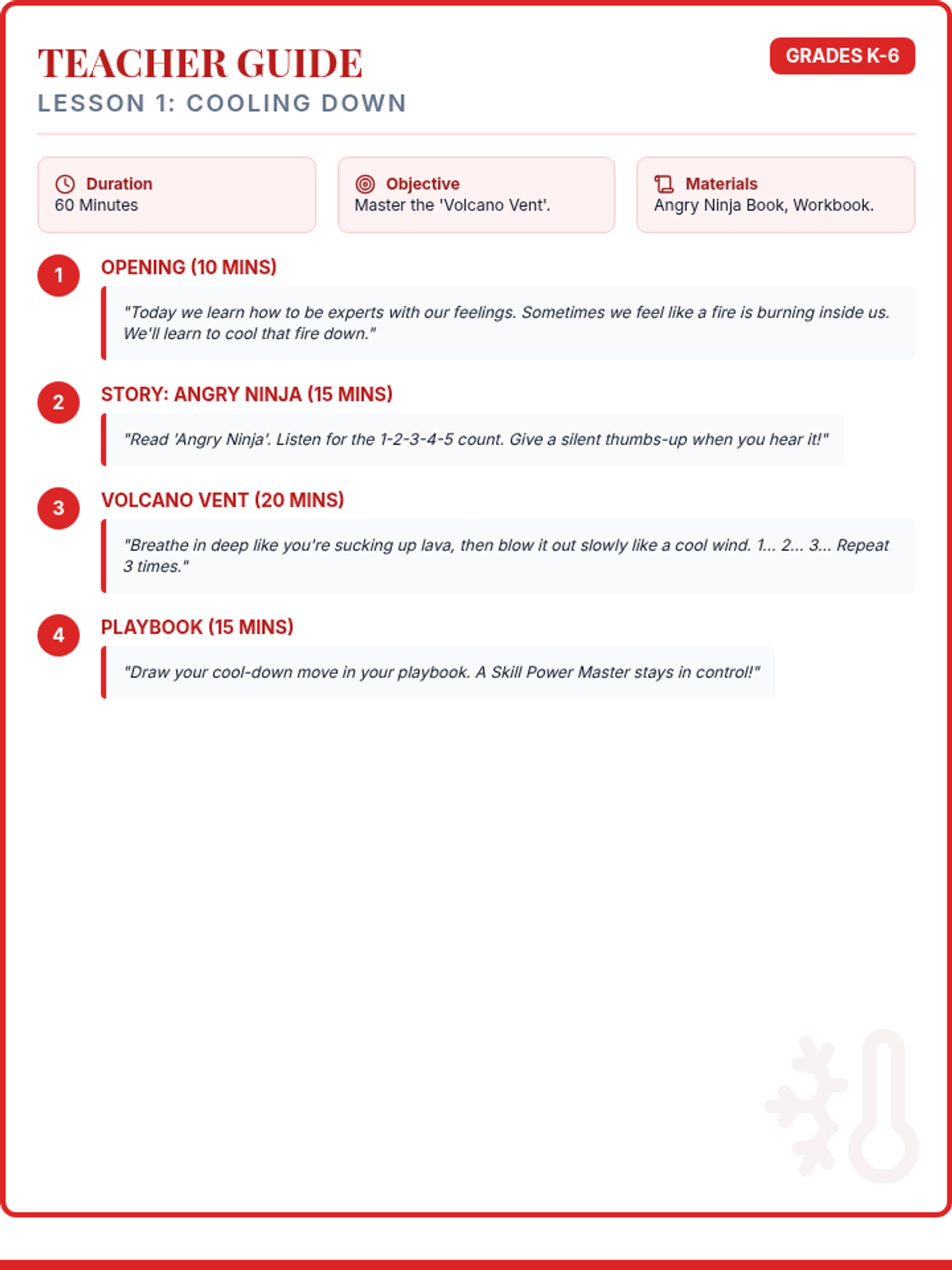
Learn to identify the physical signs of anger and master the 'Volcano Vent' technique to cool down big emotions.
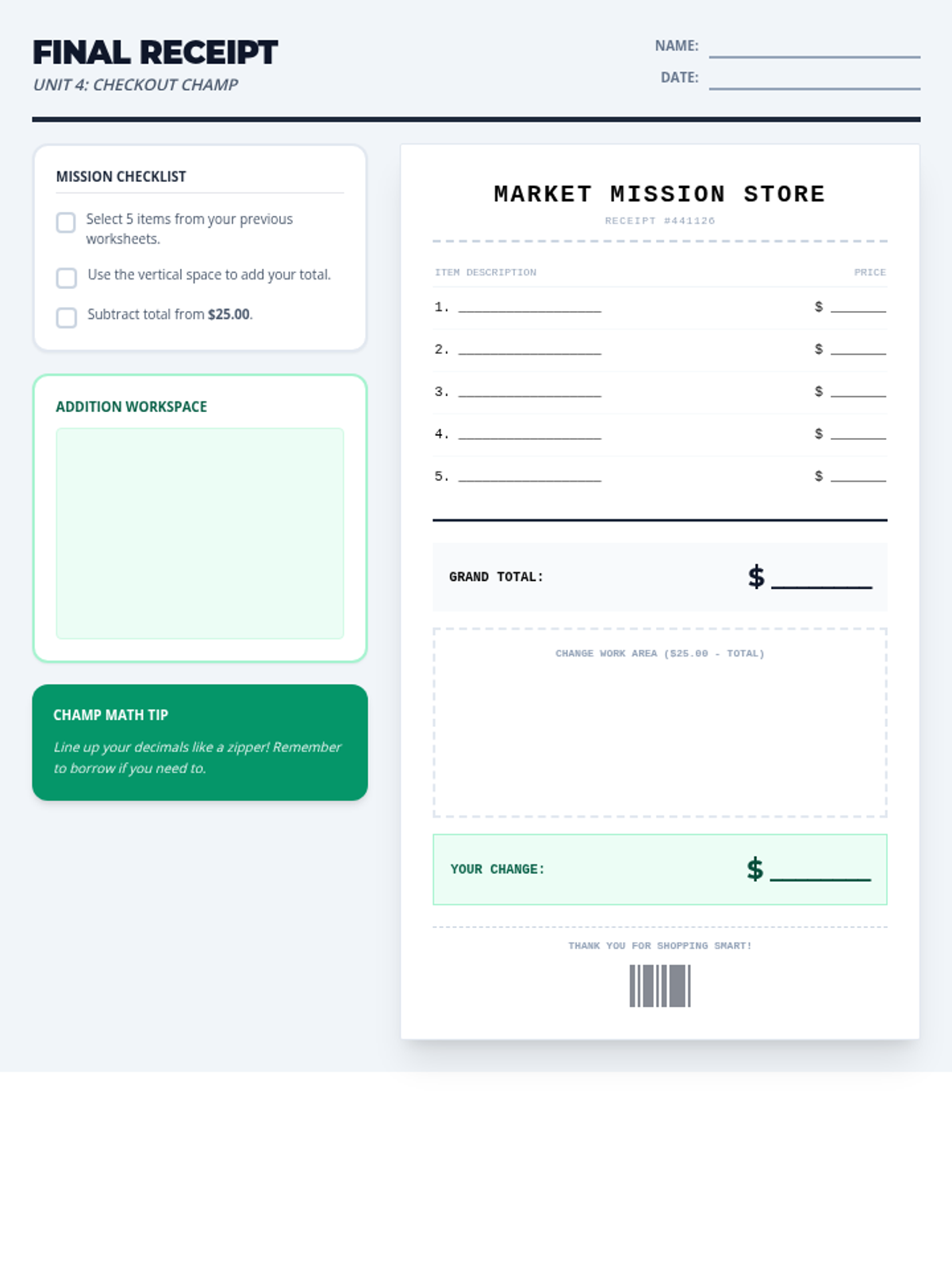
Finalizing a grocery purchase, calculating totals, and determining change while staying under budget.
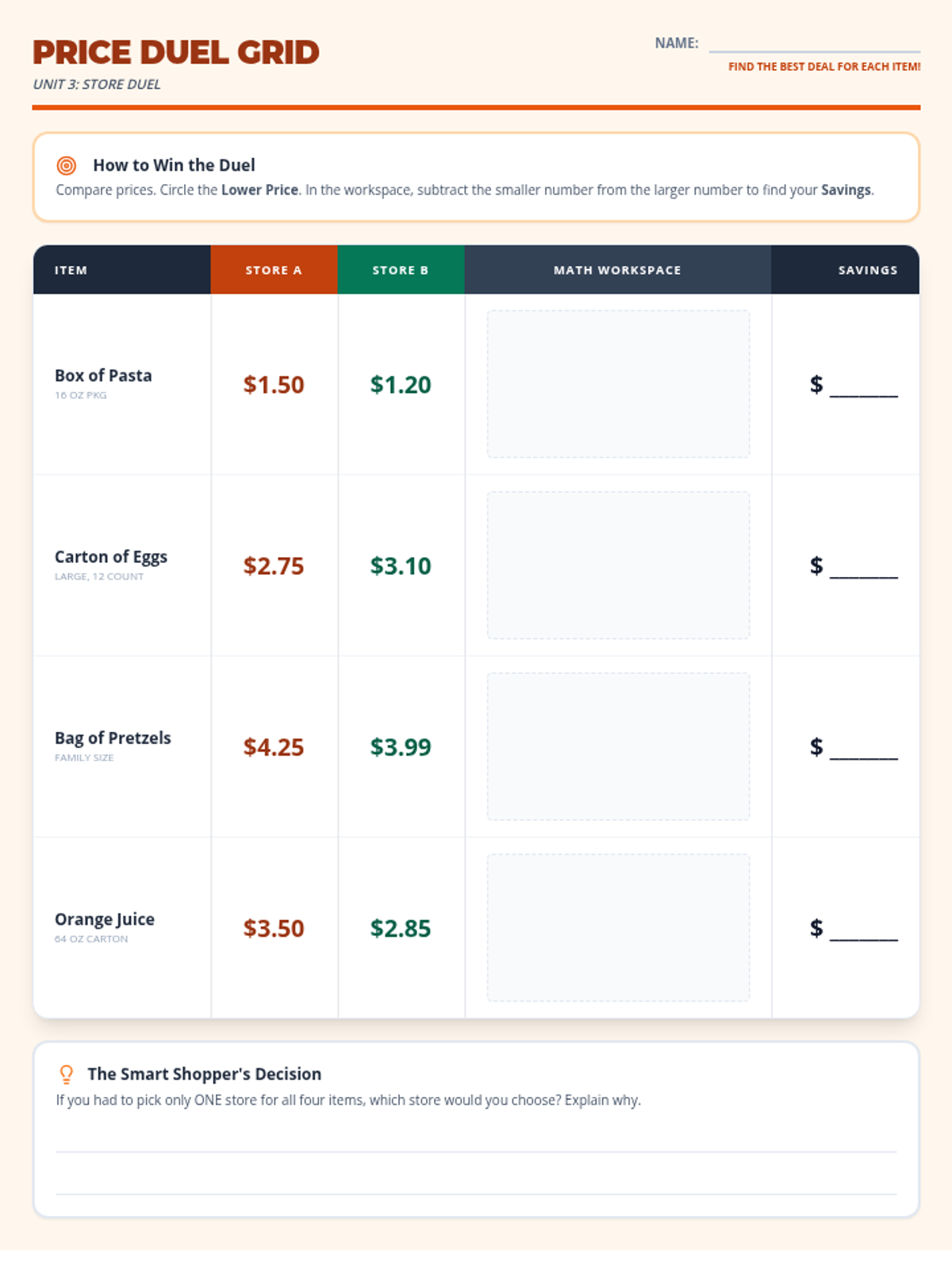
Comparing prices between two different stores to find the best deals on common household items.
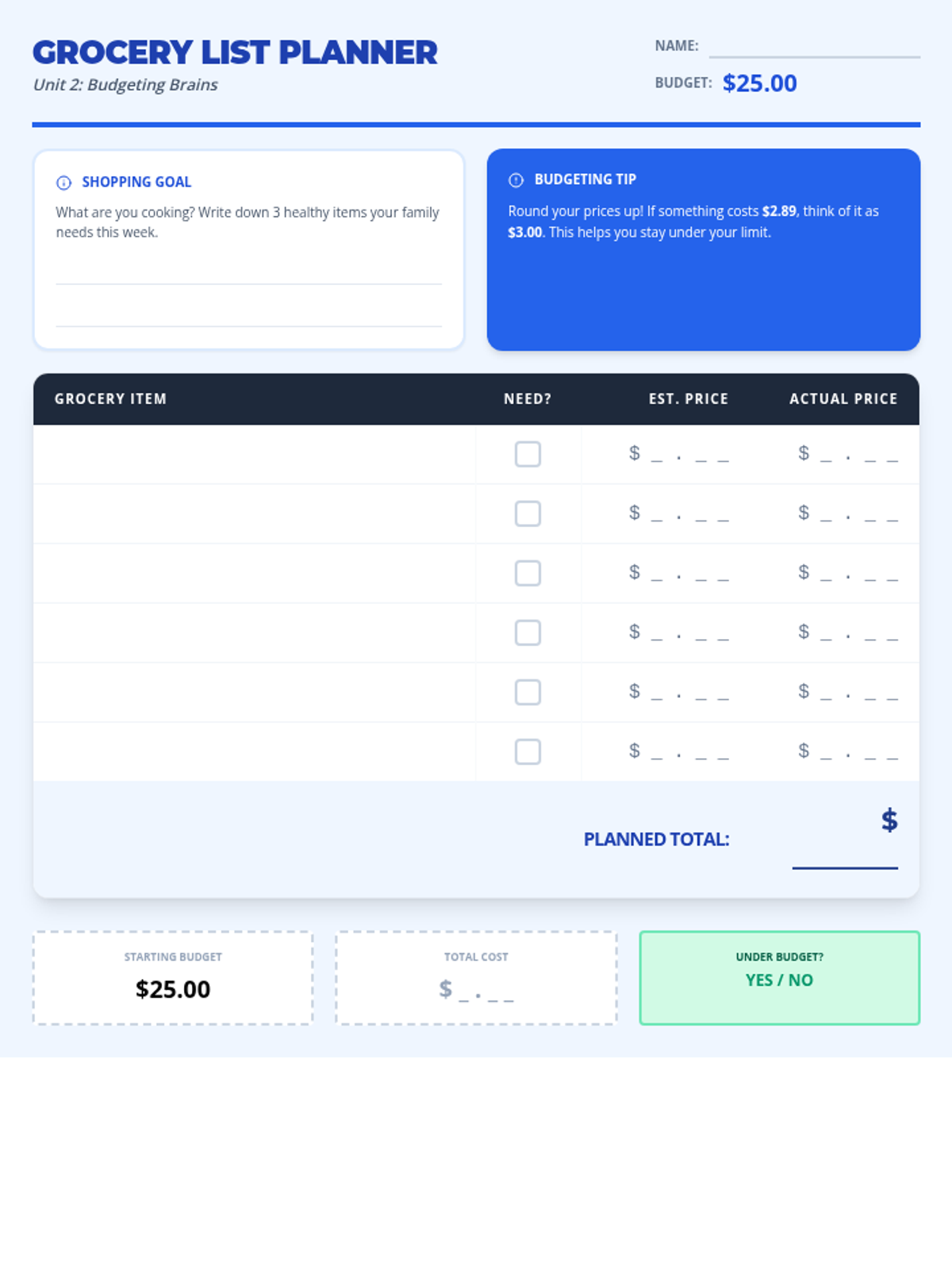
Setting a budget and prioritizing items on a grocery list using estimation and decimal addition.
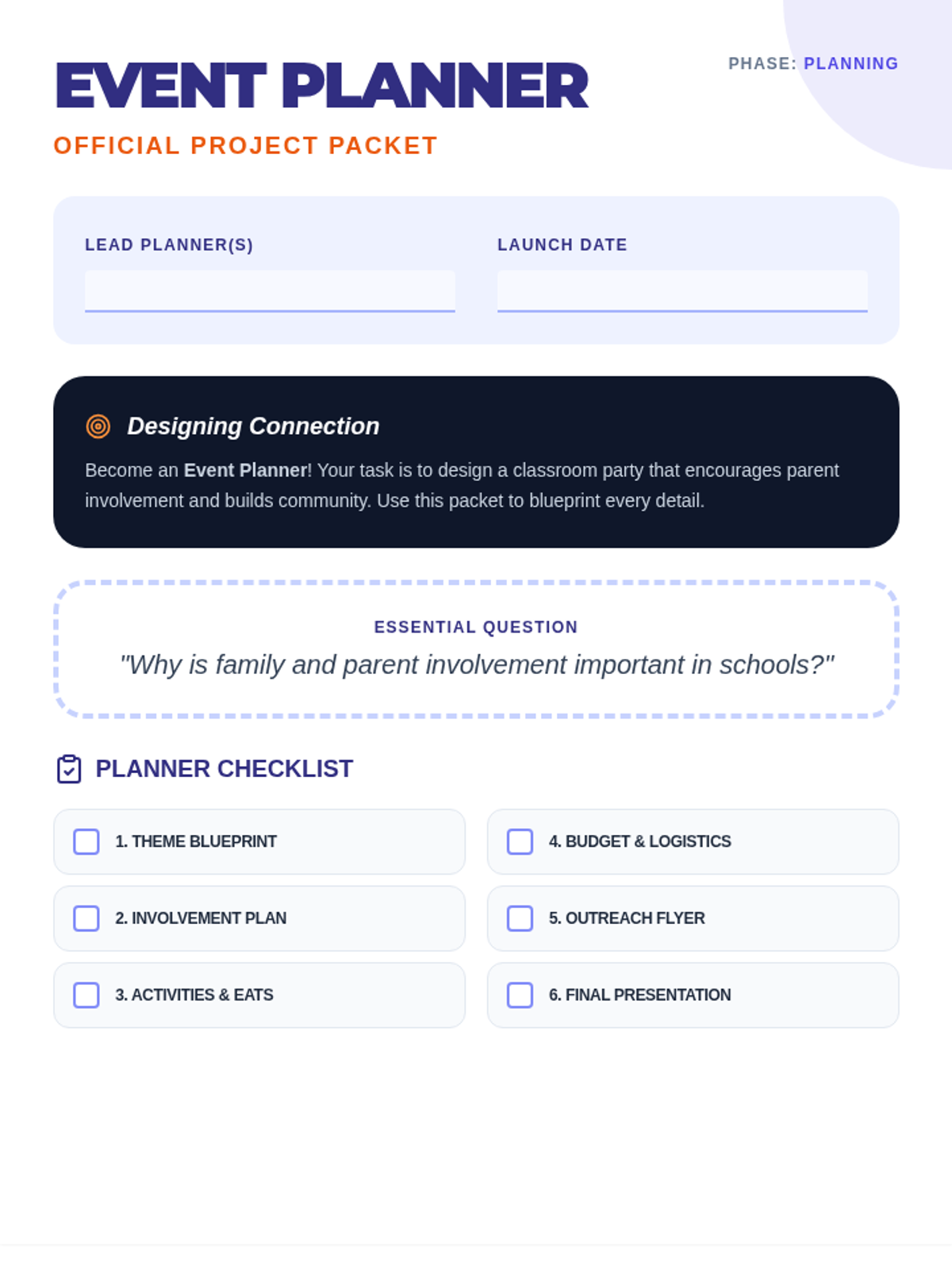
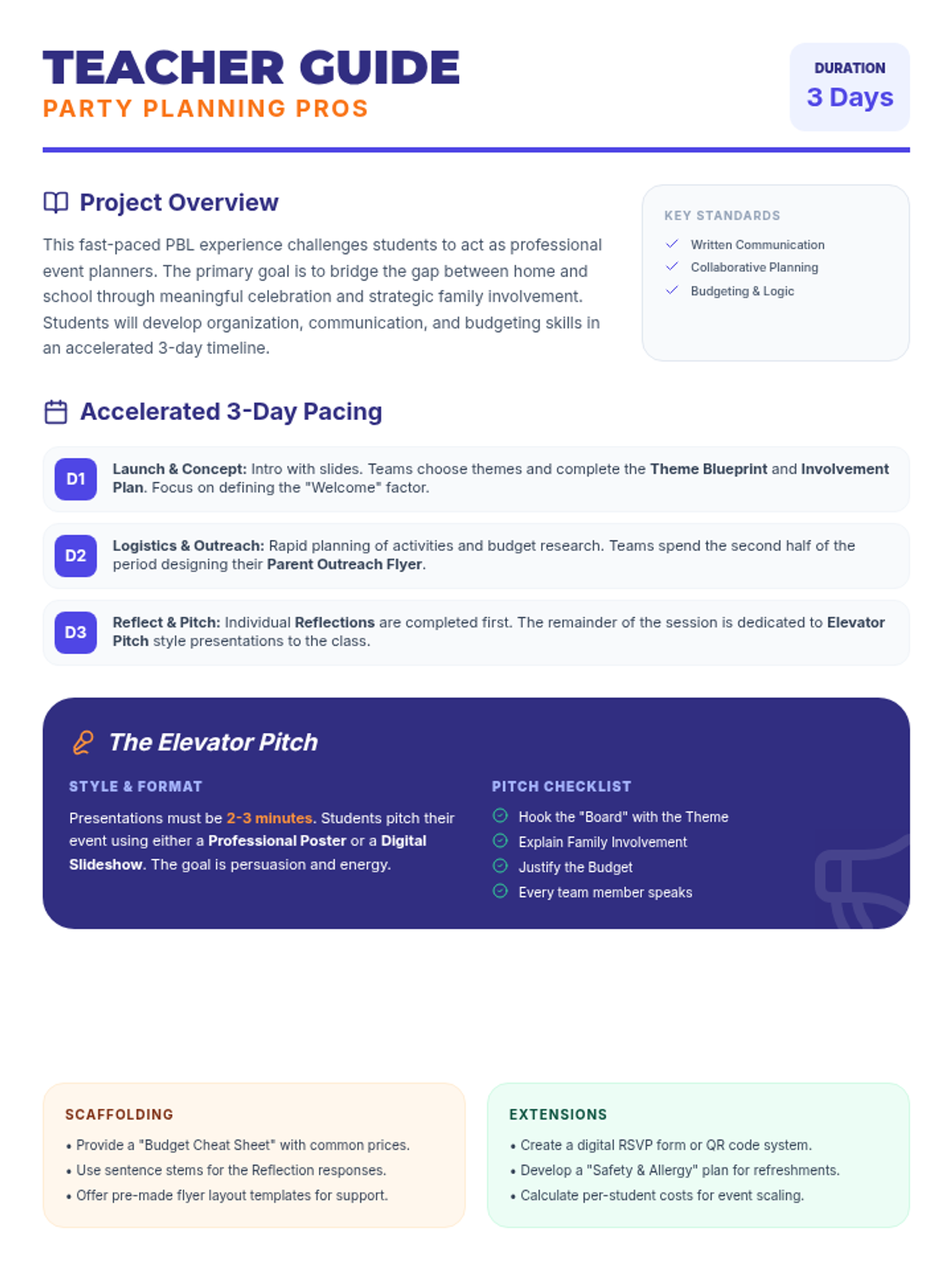
Students step into the role of professional event planners to design a classroom celebration that bridges the gap between home and school. They will create a comprehensive plan including activities, budgets, and volunteer recruitment strategies to maximize family engagement.
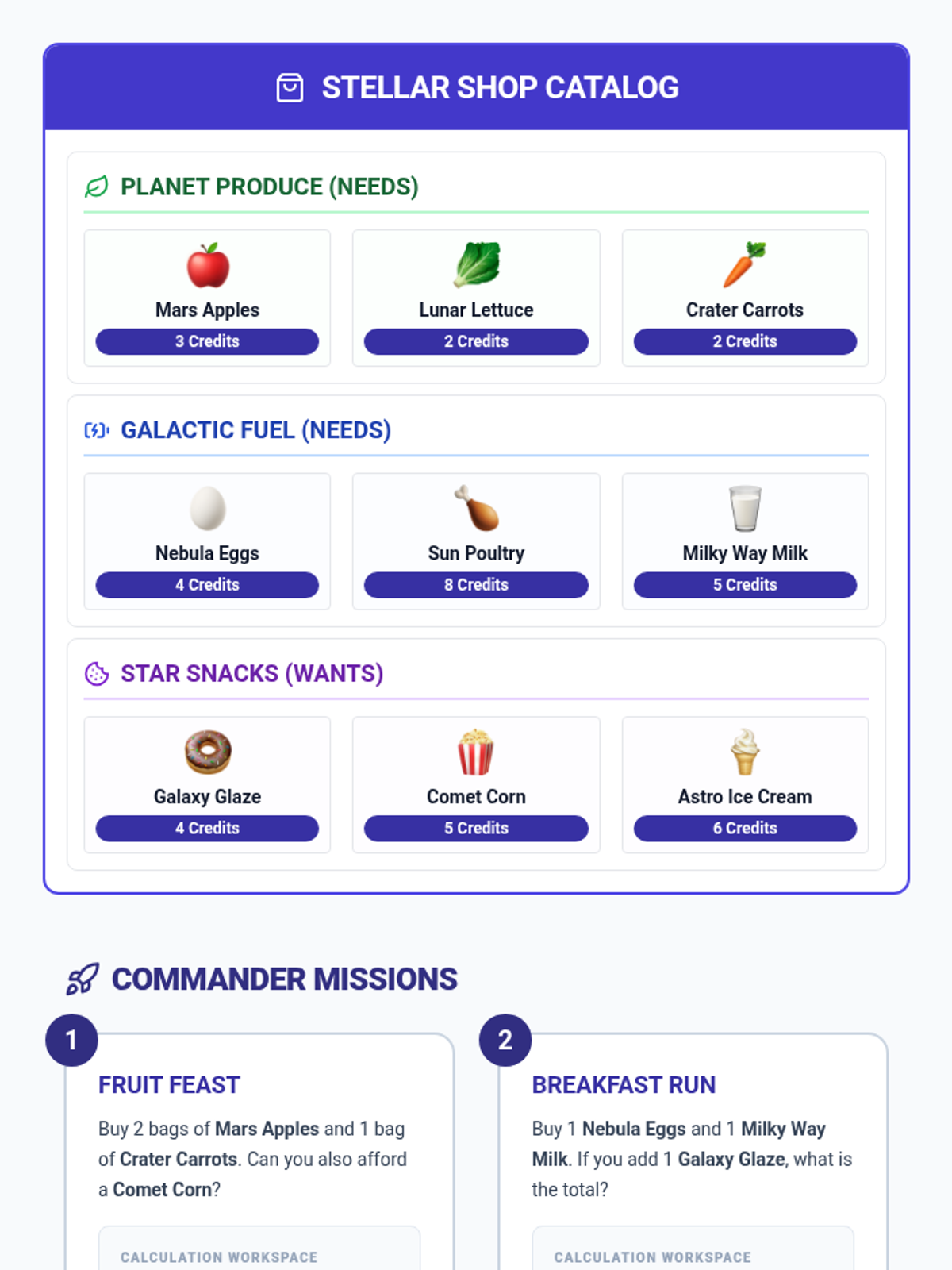
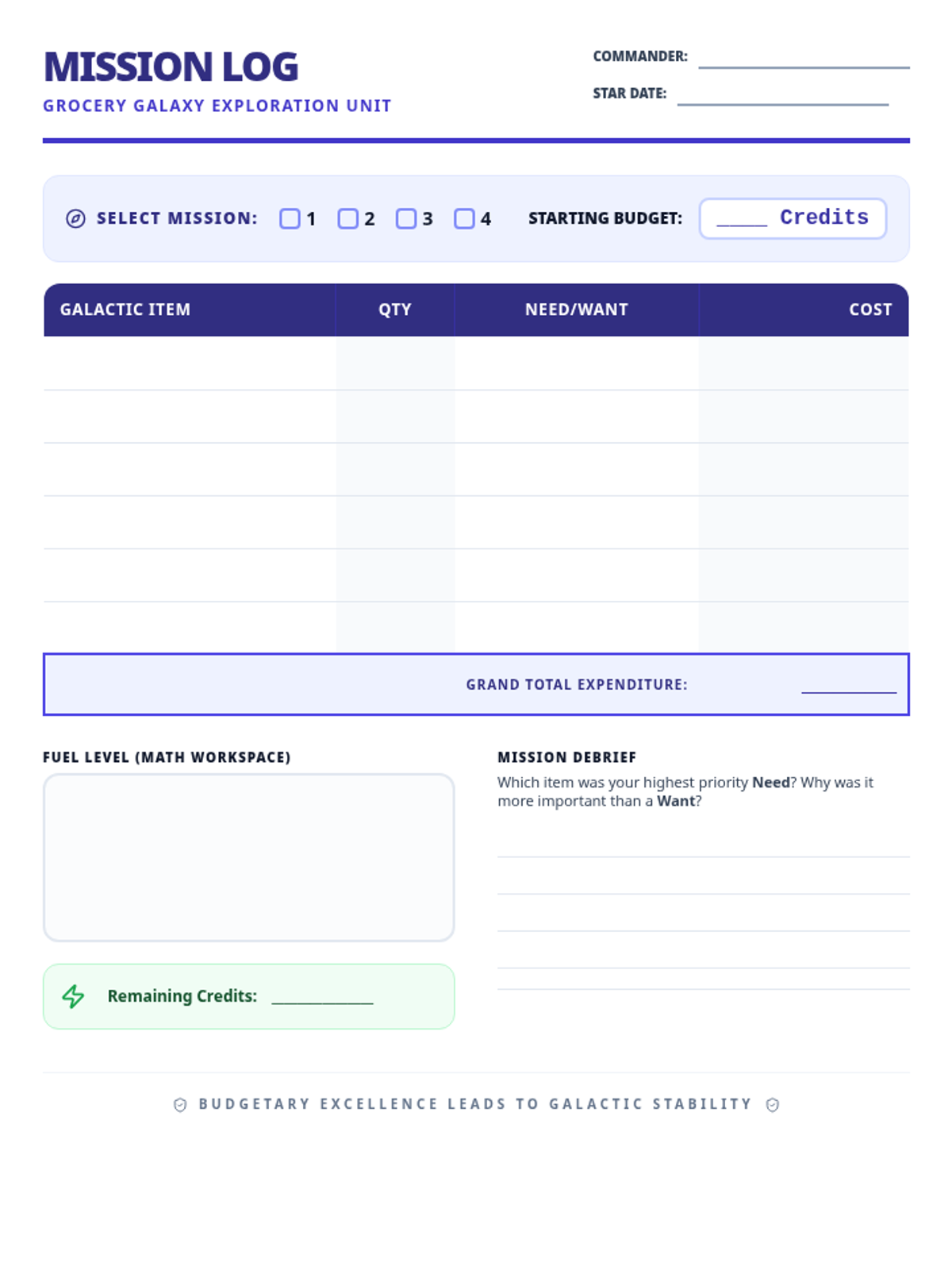
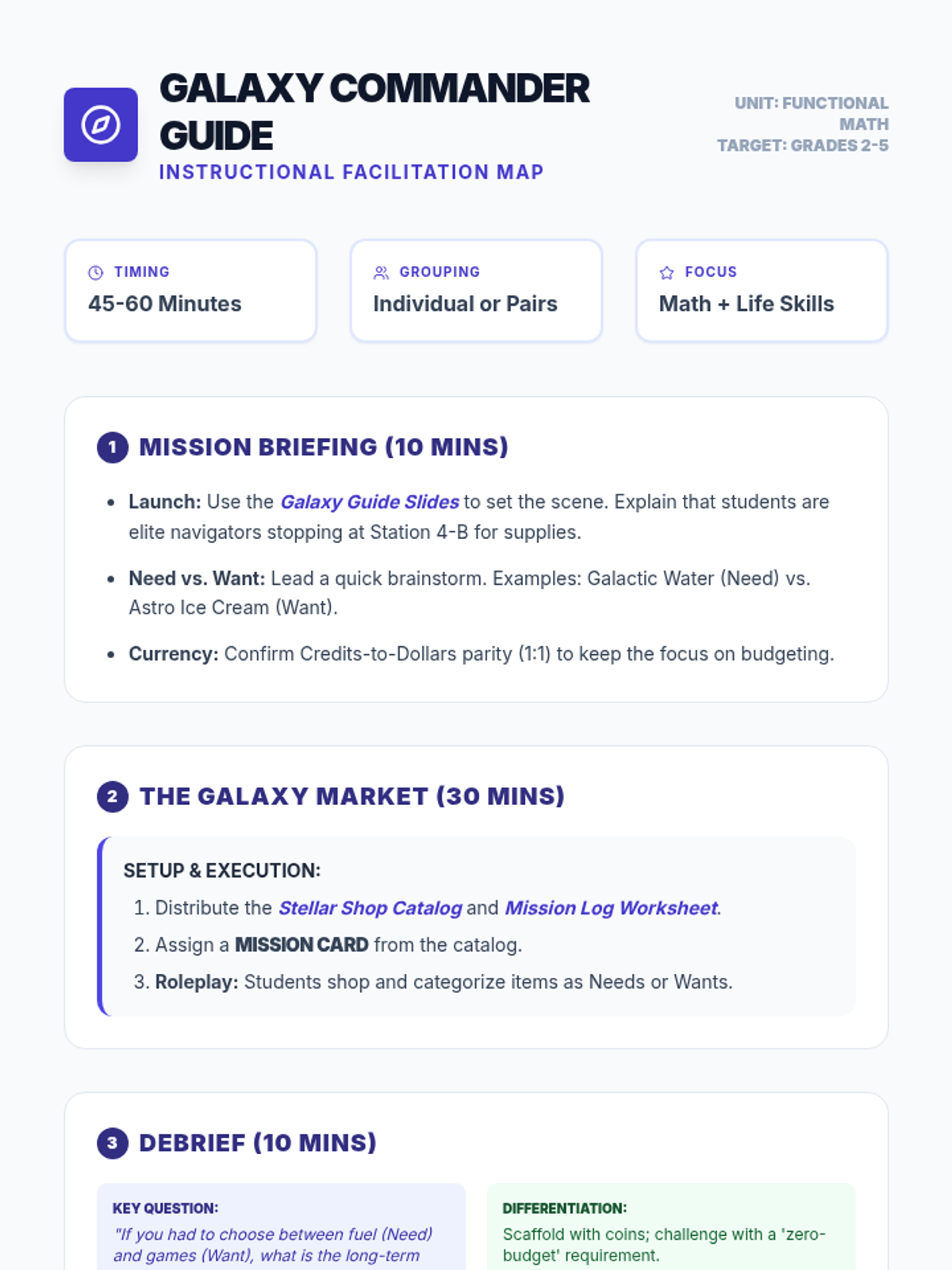
A functional math and life skills simulation where students navigate a space-themed market to practice budgeting, currency management, and categorizing needs versus wants.
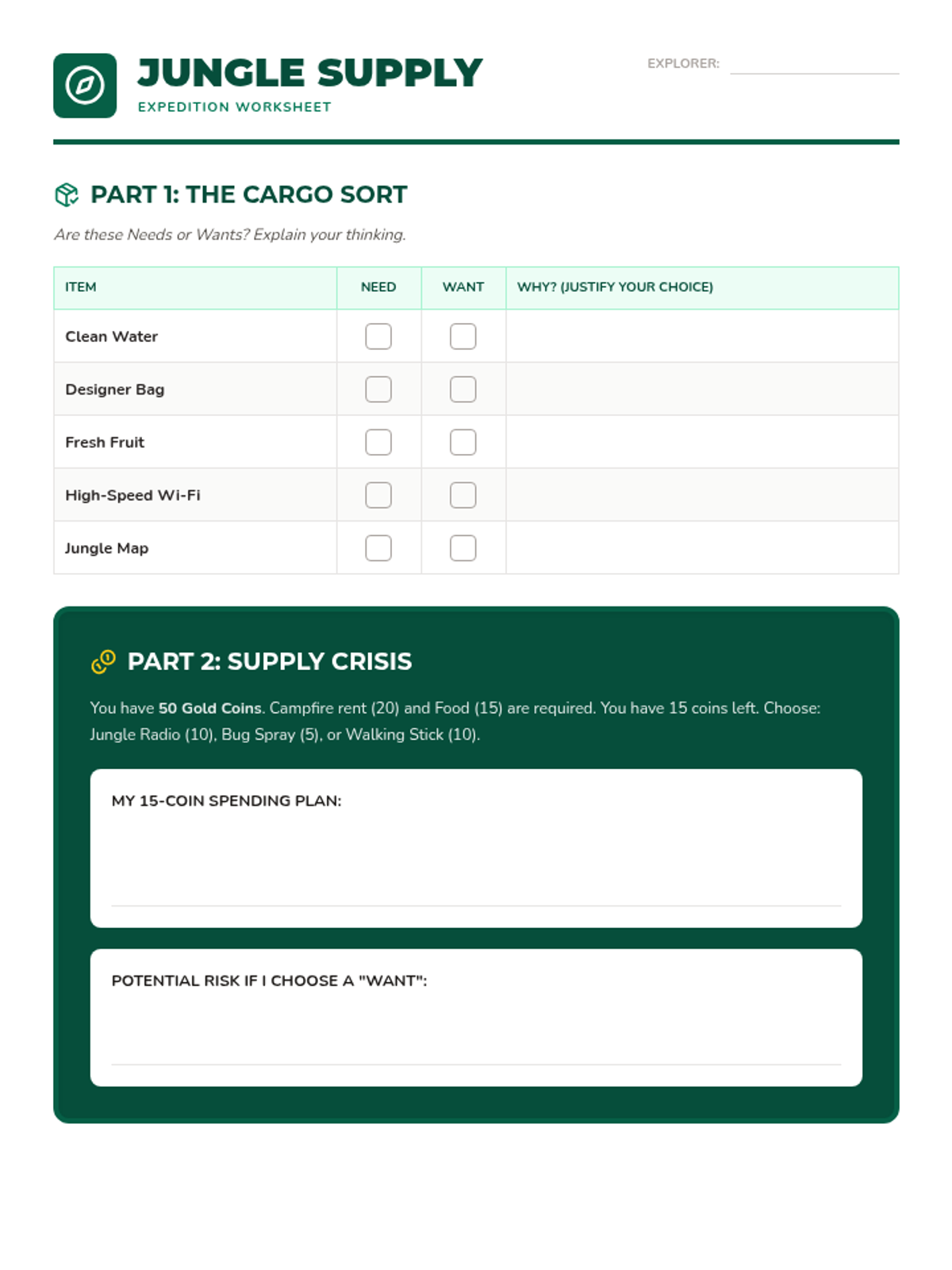
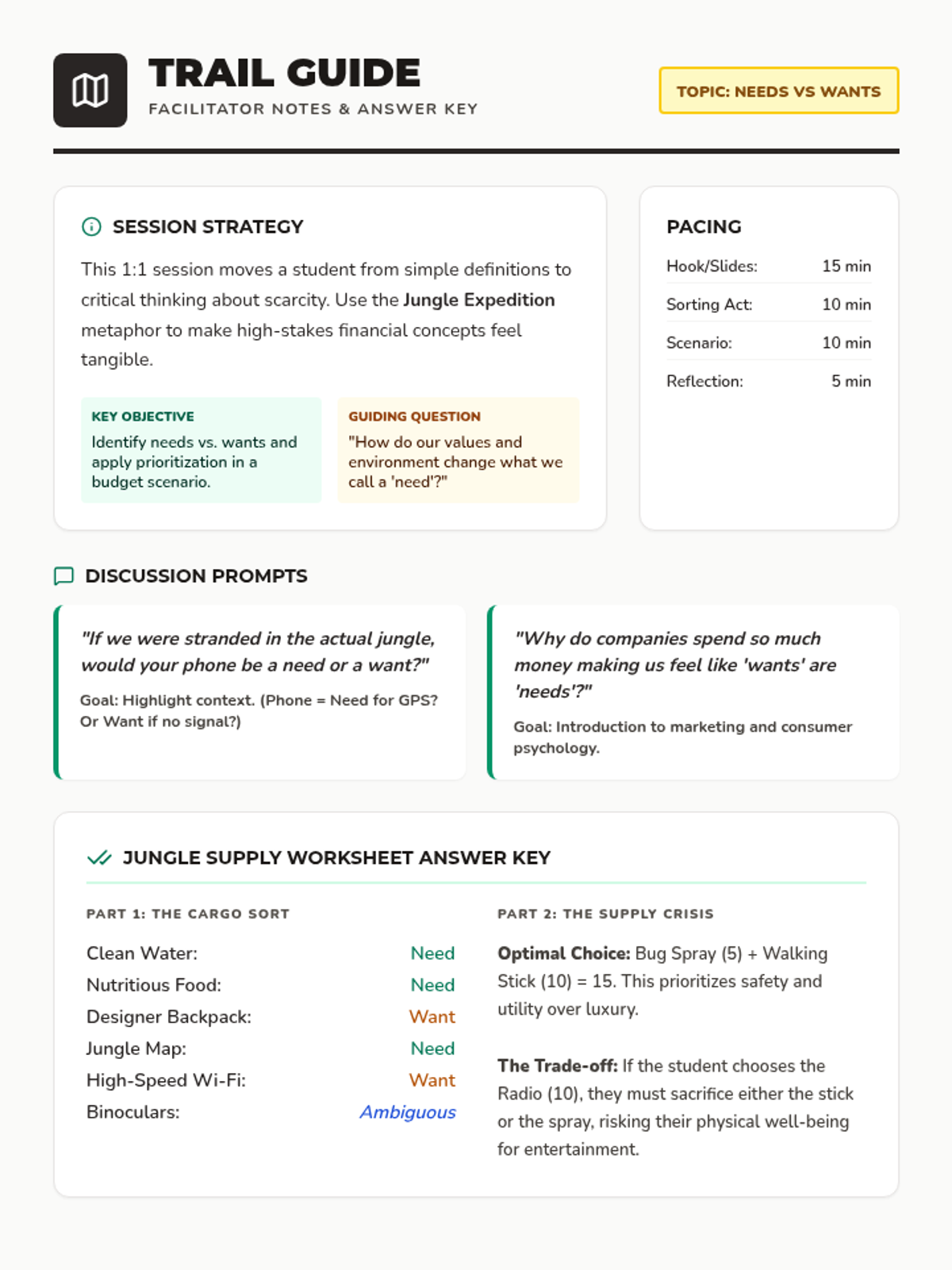
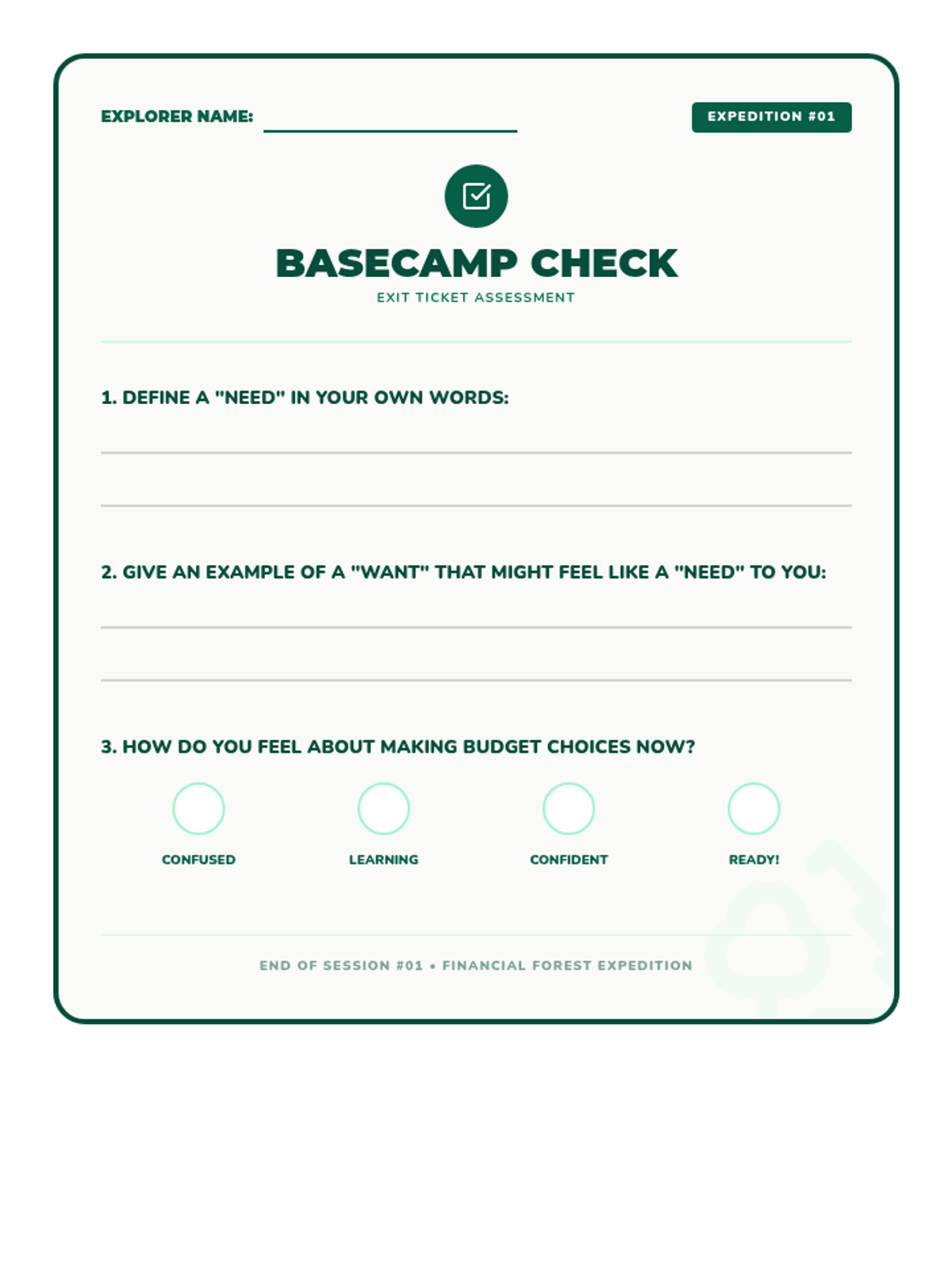
A 1:1 instructional session exploring the fundamental difference between needs and wants, focusing on prioritization and budgeting within a jungle expedition theme.