Functional behavior assessment, data tracking, and de-escalation strategies for managing classroom conduct. Addresses positive reinforcement, token economies, and individualized behavior contracts to support student self-regulation.
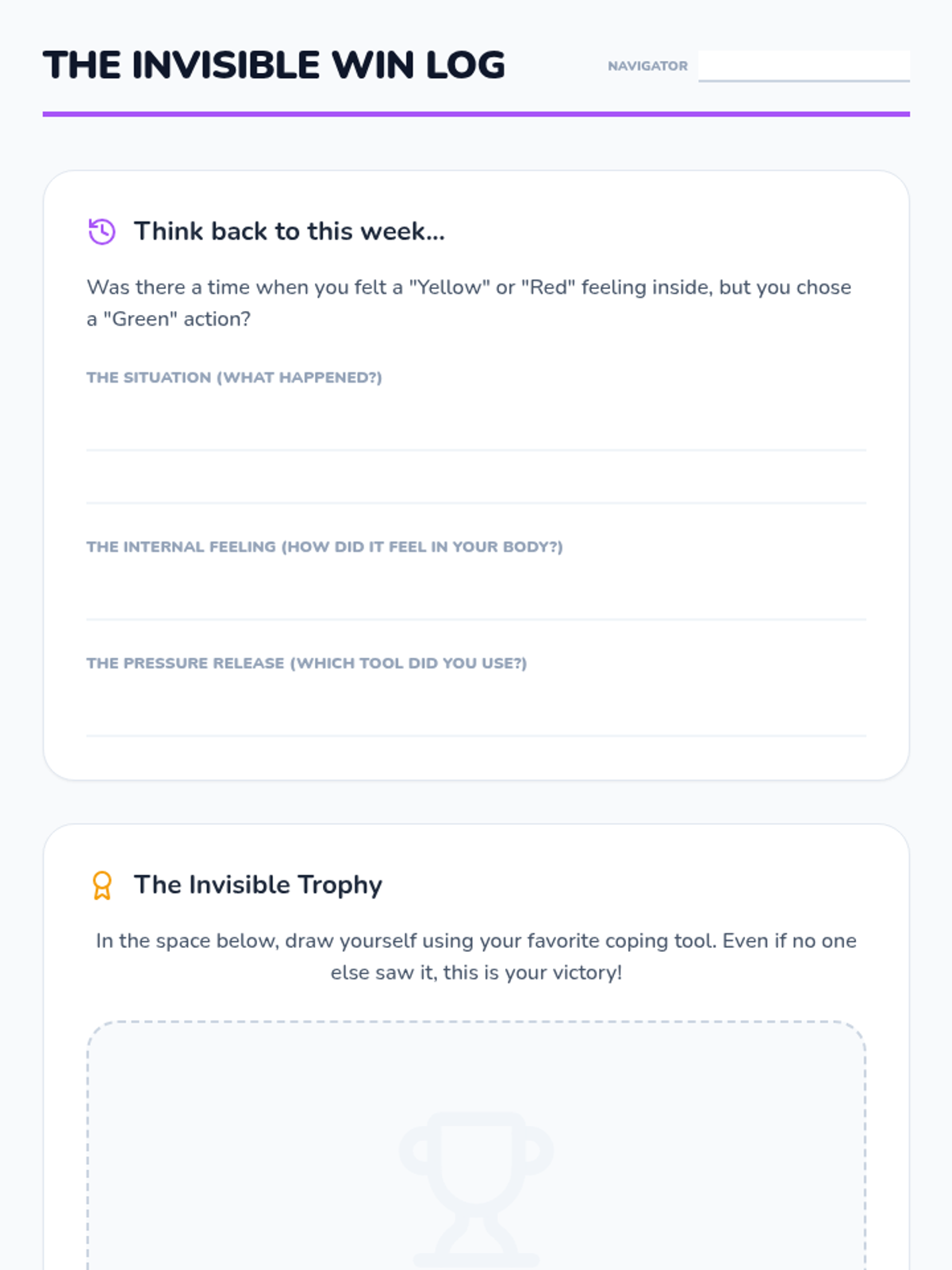
Students practice tracking 'internal wins'—times they felt angry but chose a positive behavior. They learn to value emotional control even if the chart doesn't capture the internal struggle.
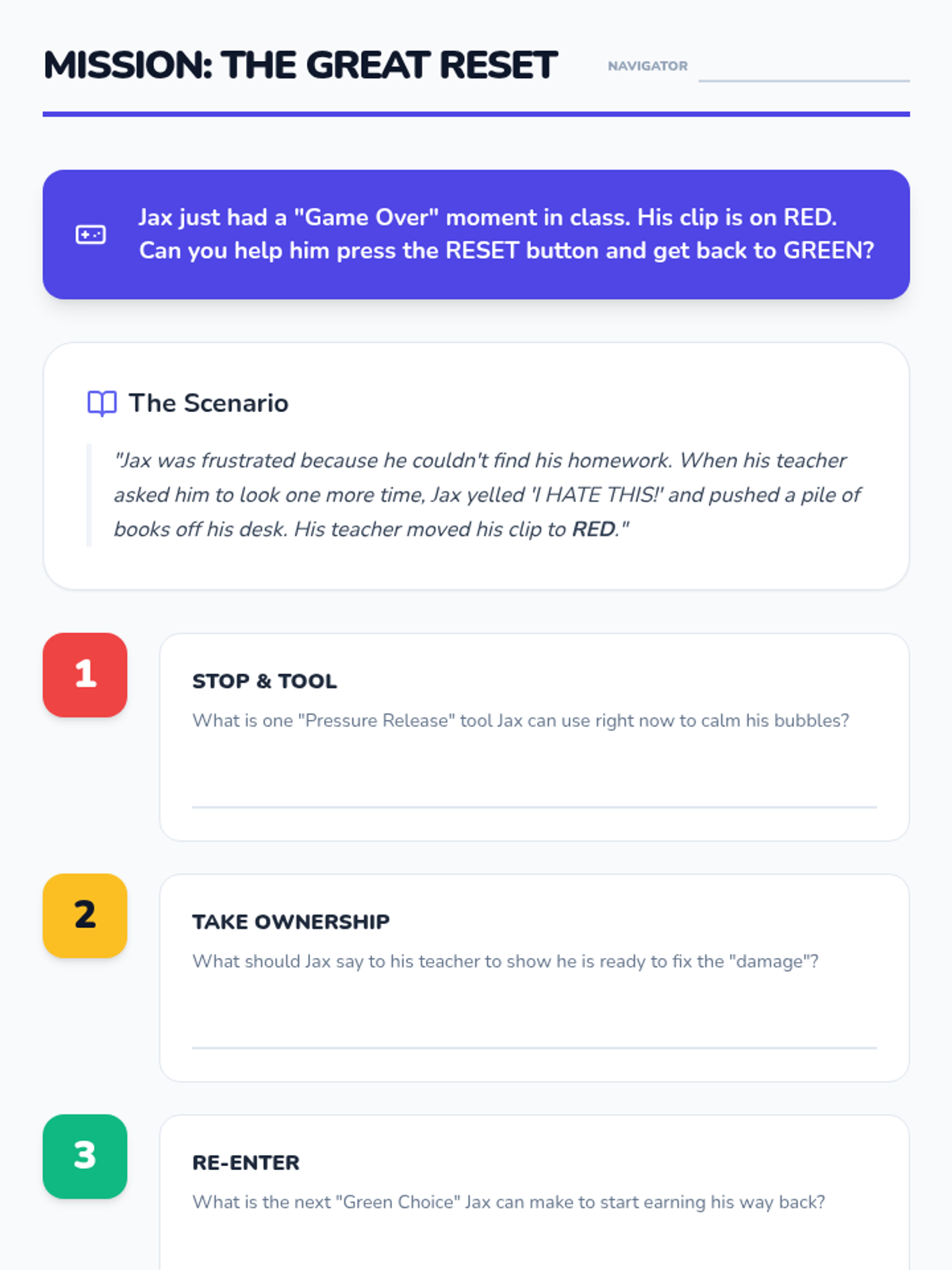
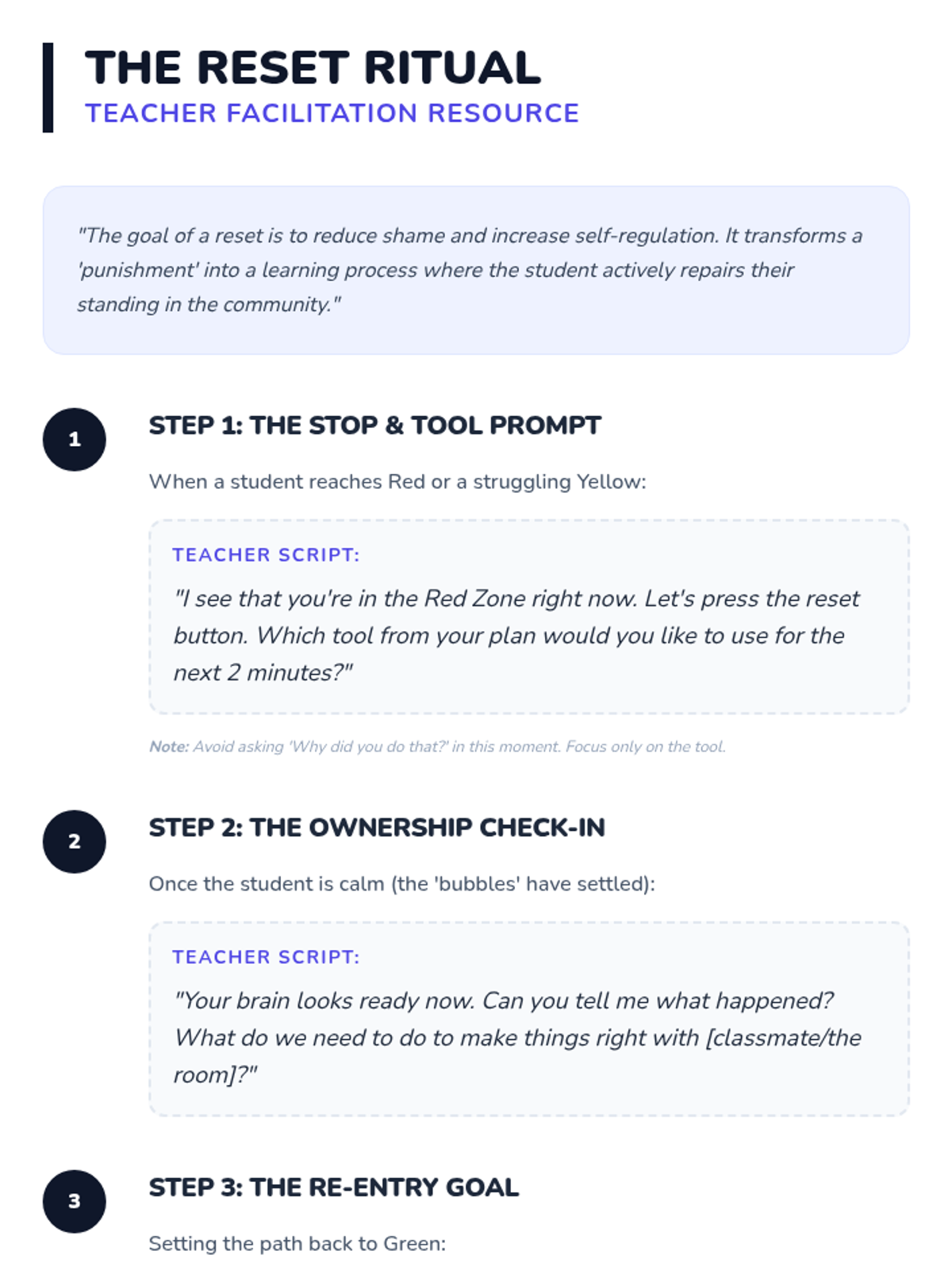
Students learn that a mark on a behavior chart is temporary. The lesson focuses on 'resetting' after a negative behavior and working back toward positive status.
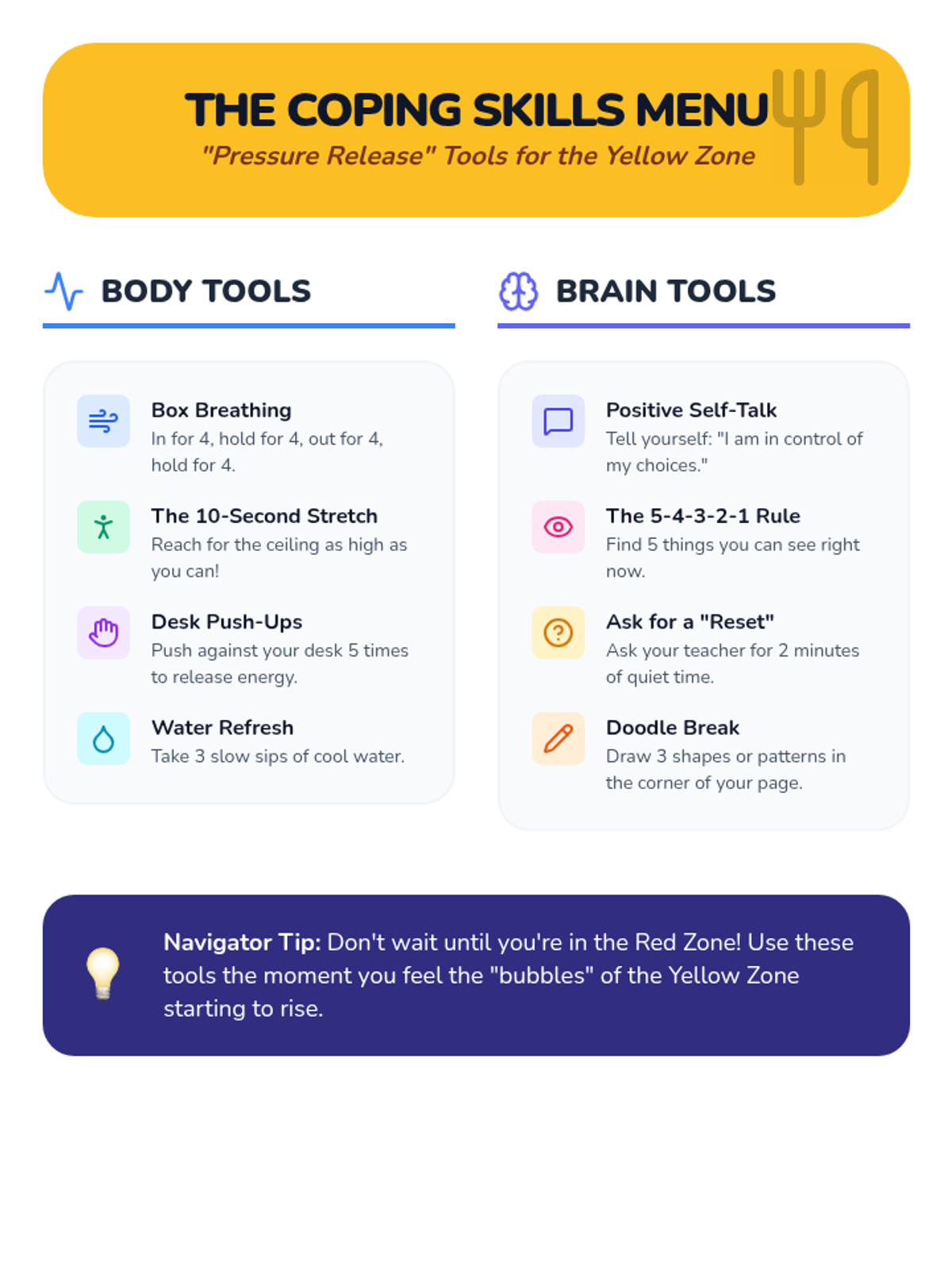
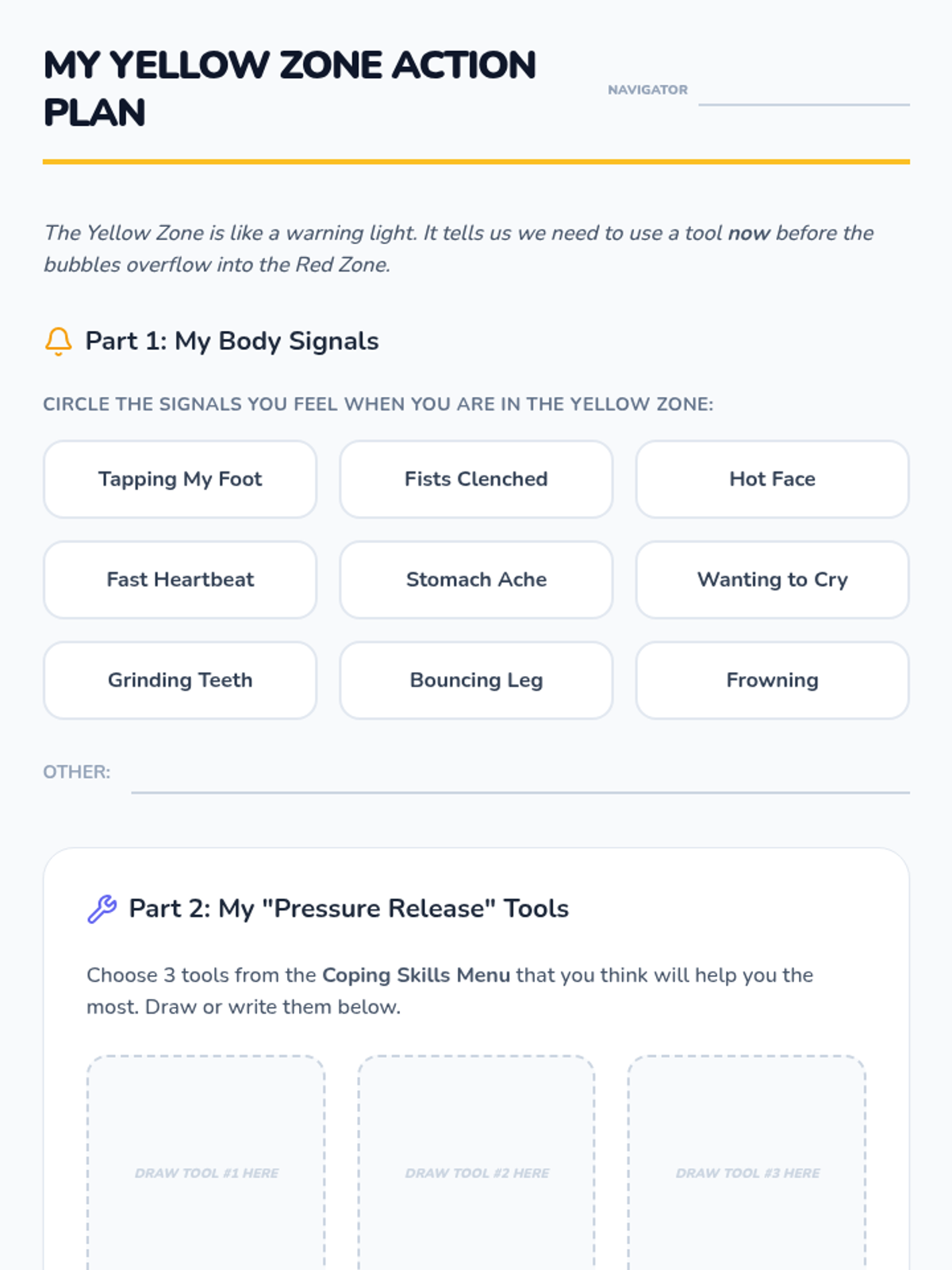
Students focus on the 'warning' or 'struggle' stage of a behavior chart. They learn specific coping skills (breathing, taking a break) to prevent moving to the 'Red Zone.'
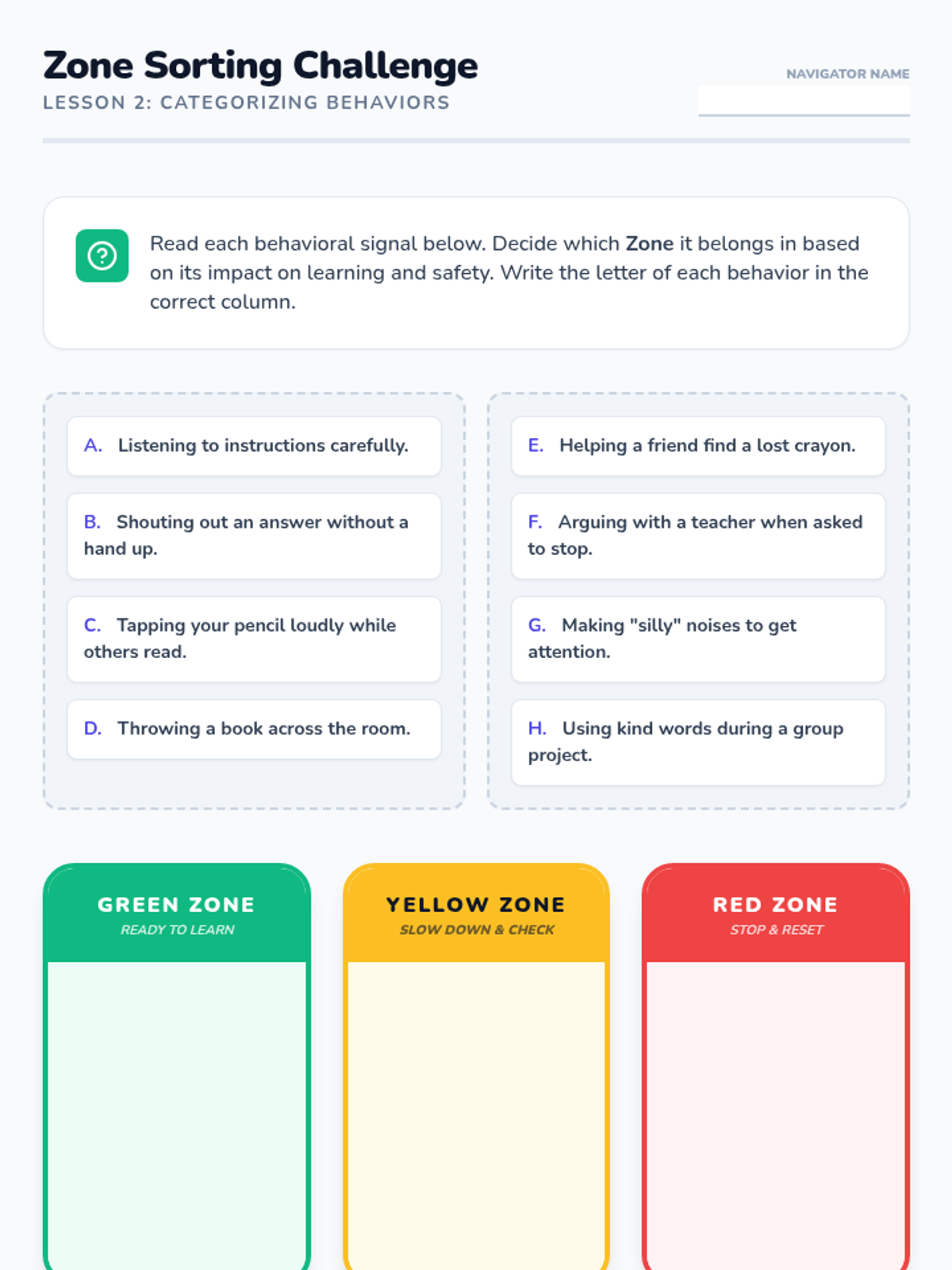
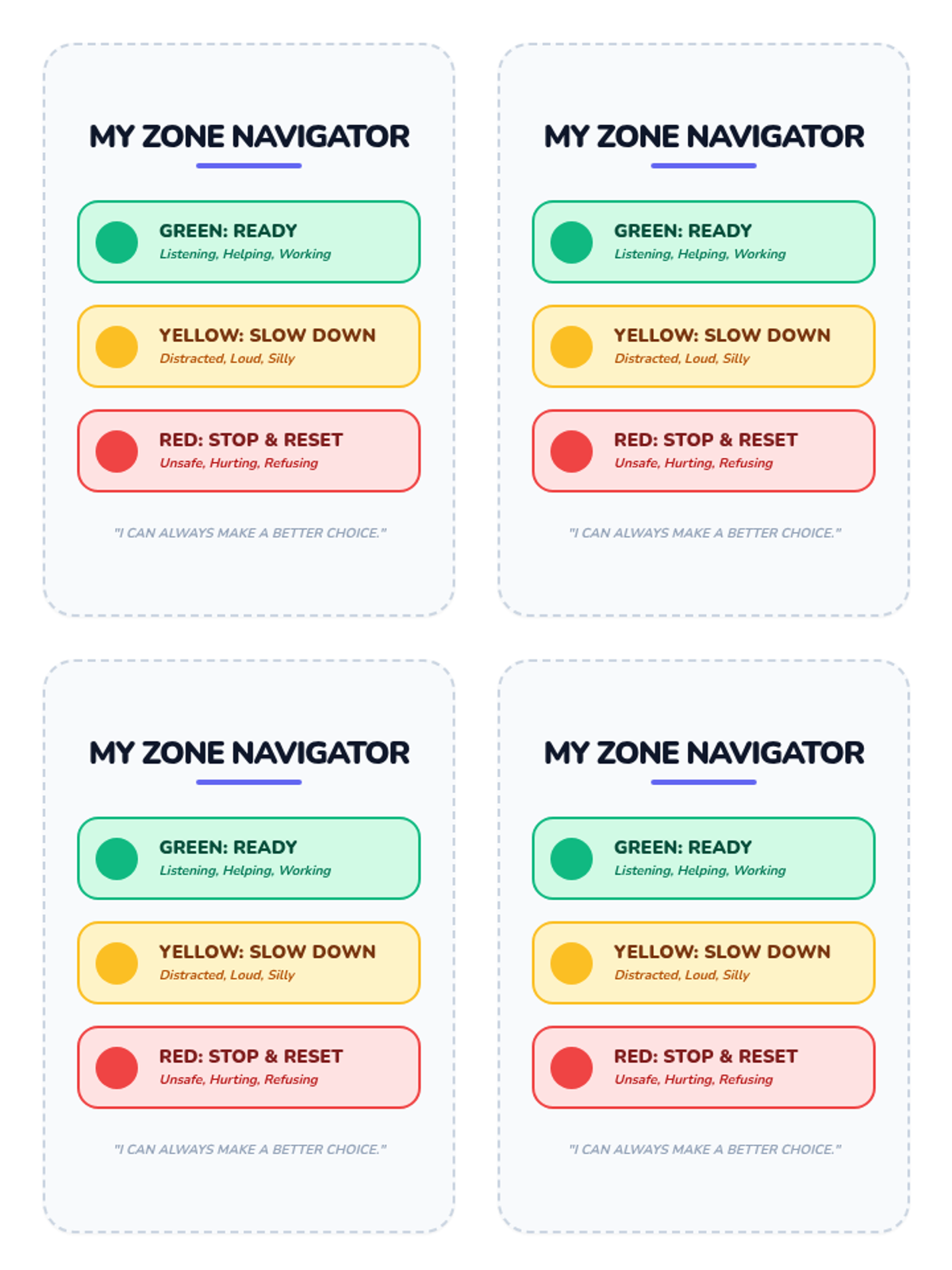
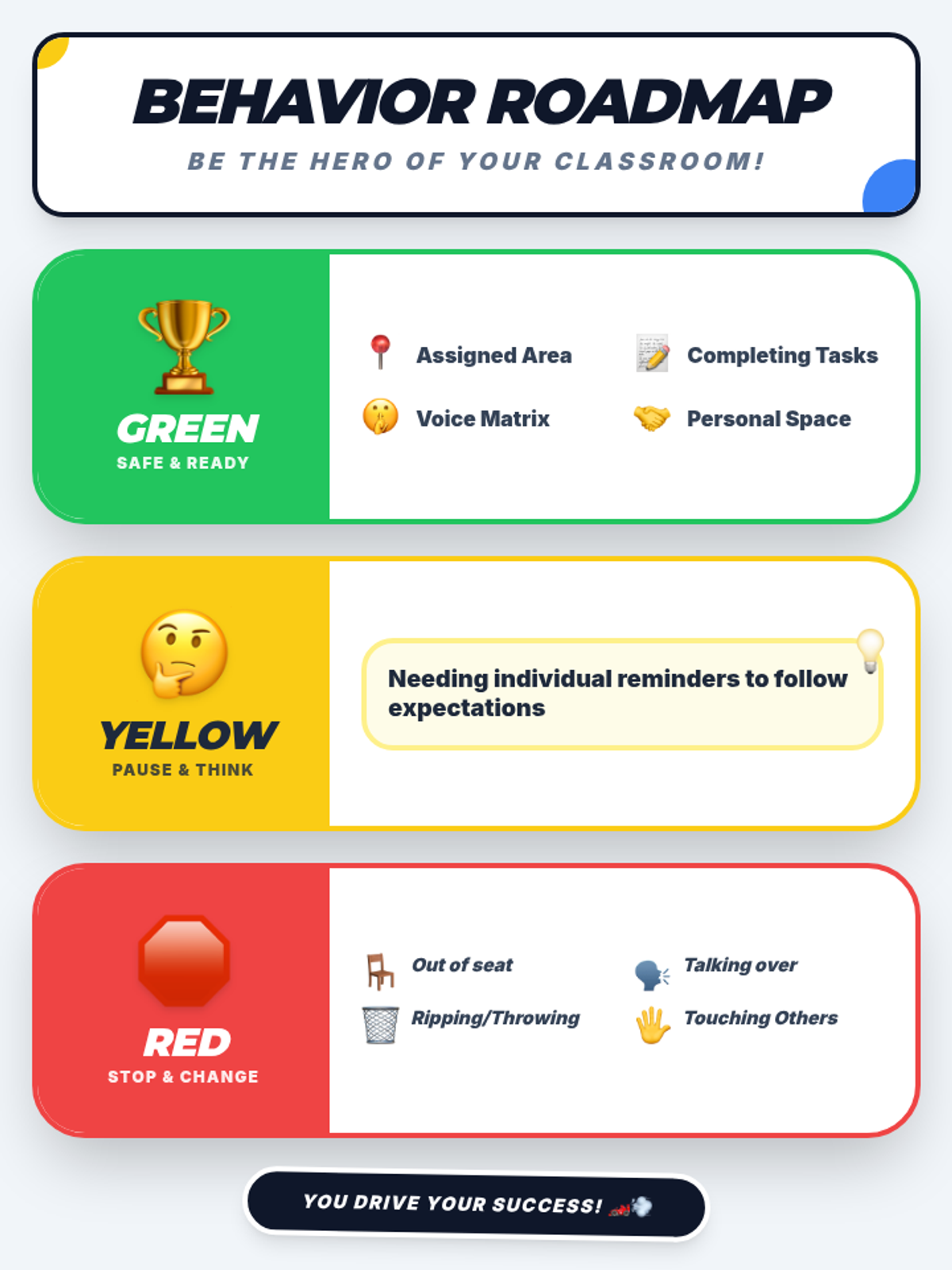
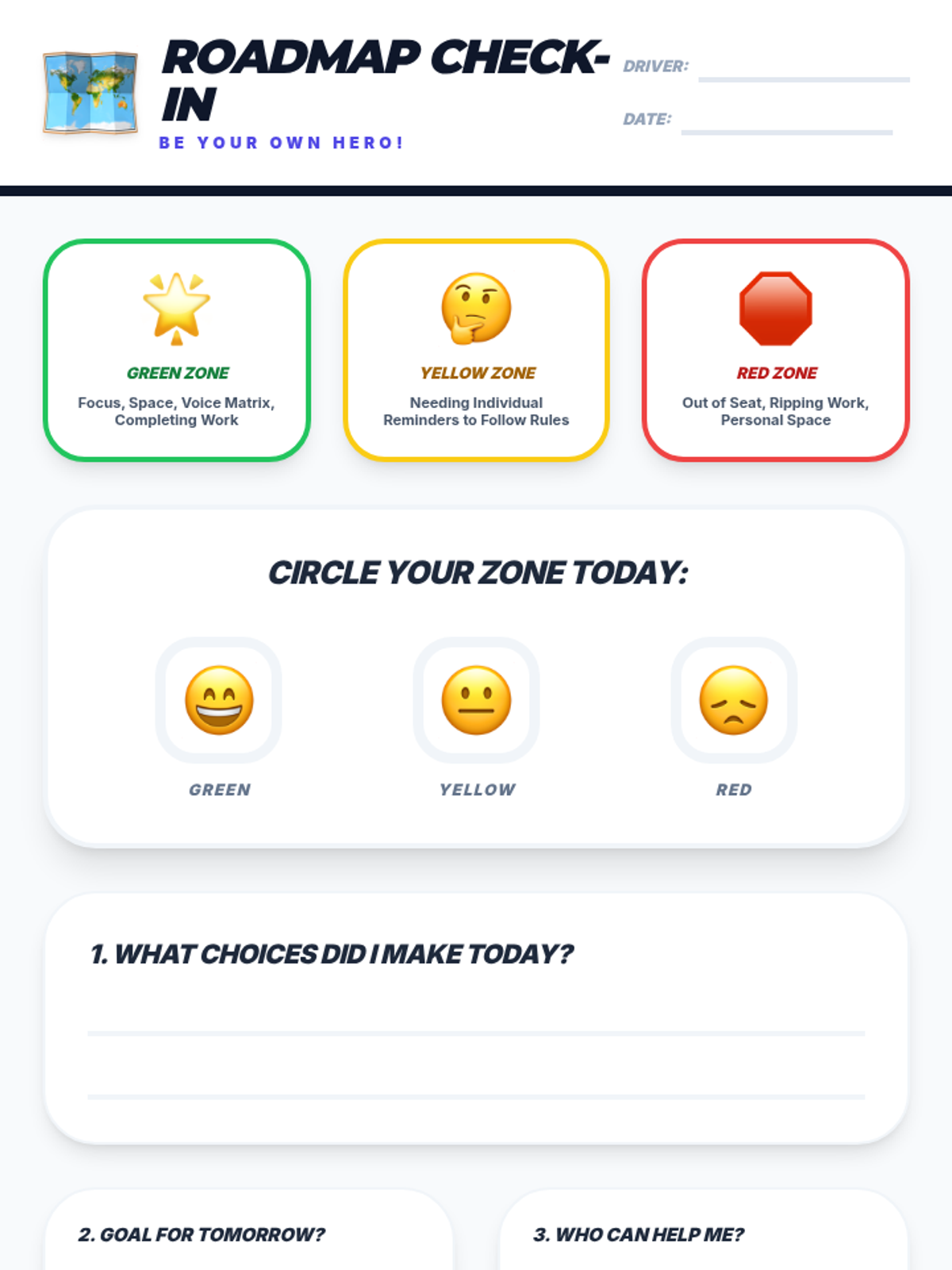
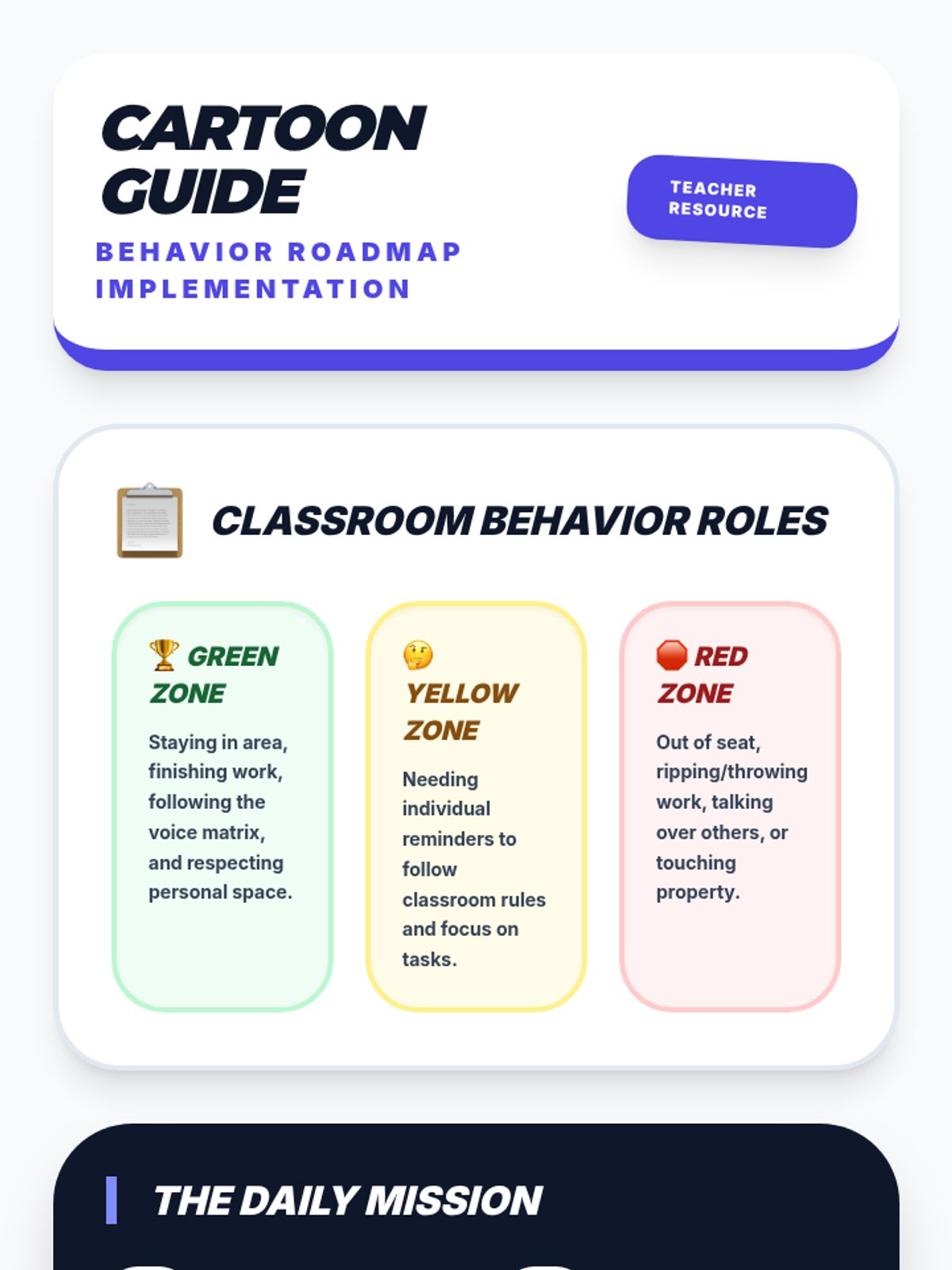
The class introduces a color-coded tracking system (e.g., Green/Yellow/Red zones). Students practice categorizing scenarios into the correct color zones based on intensity and impact.
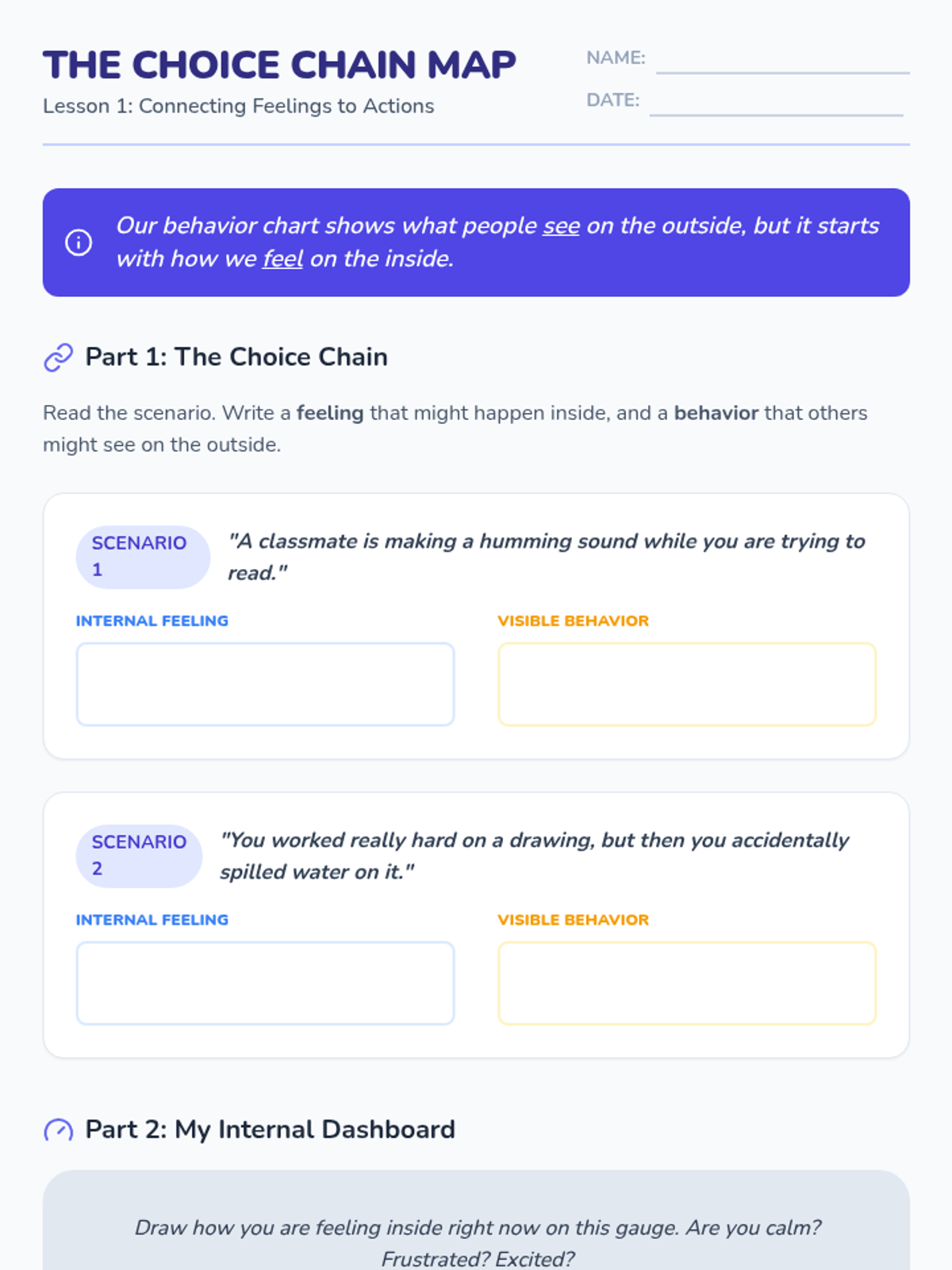
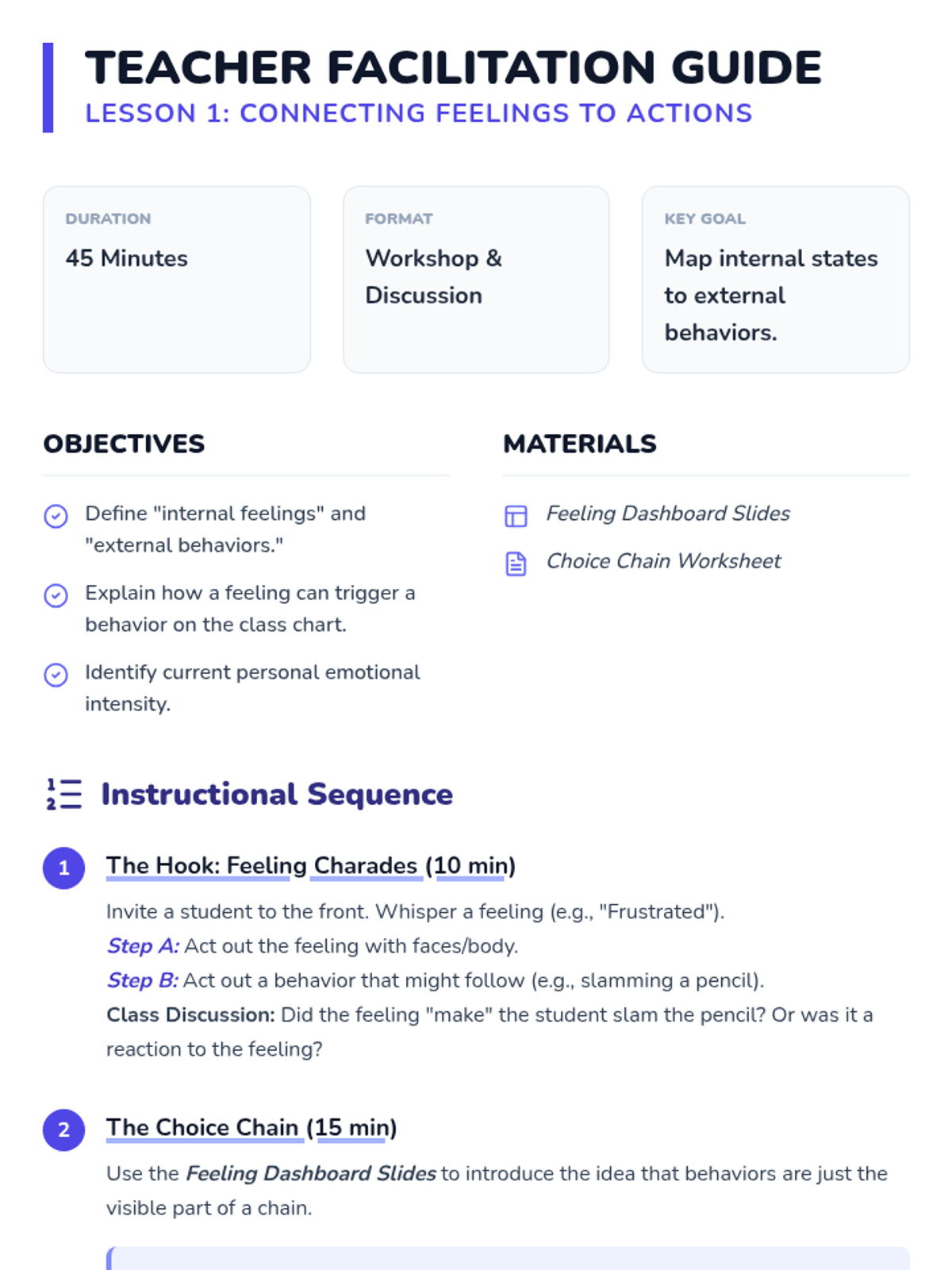
Students map different emotions to specific behaviors that might appear on a chart, discussing how feelings like frustration can lead to behaviors like shouting out.
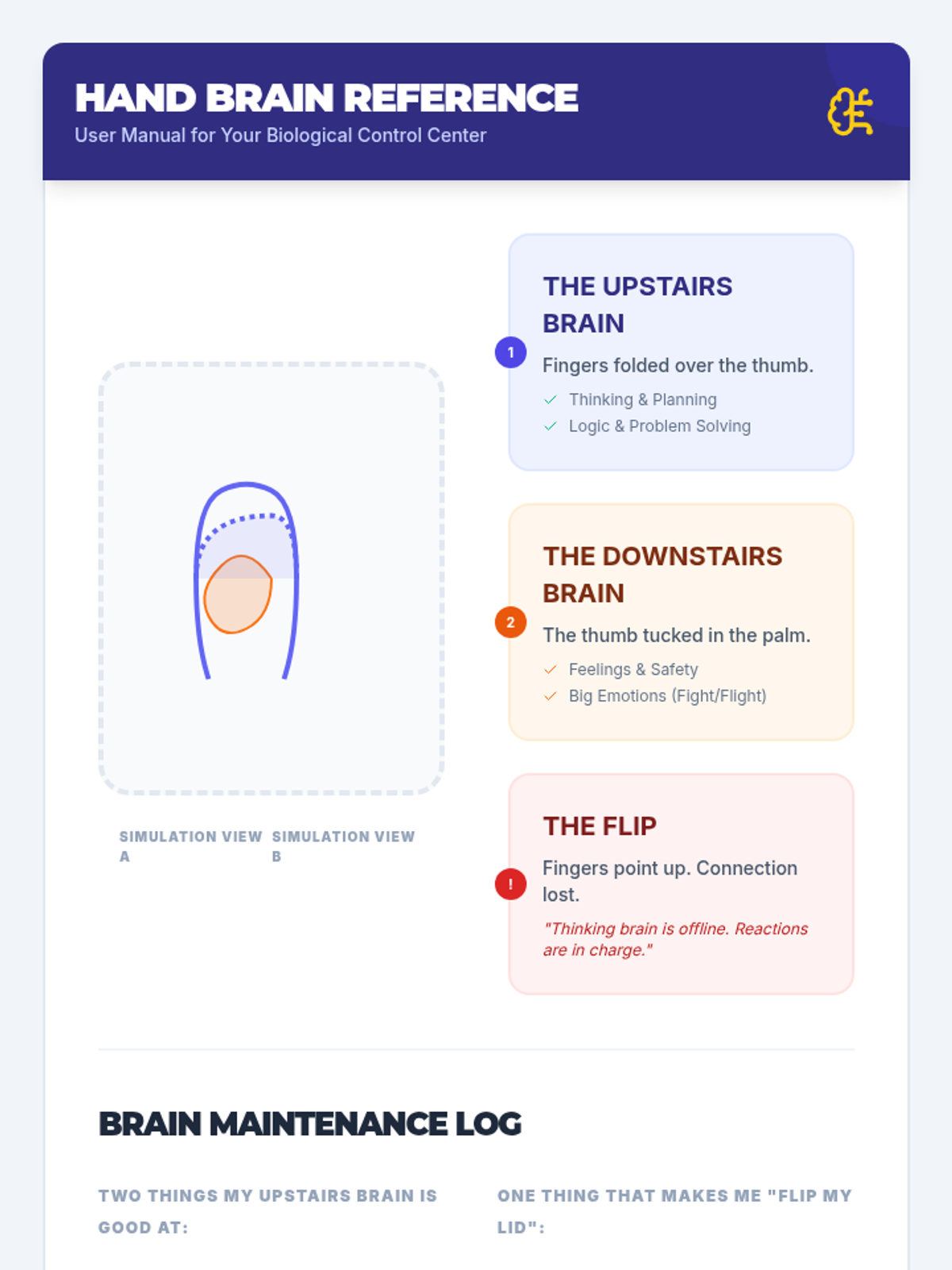
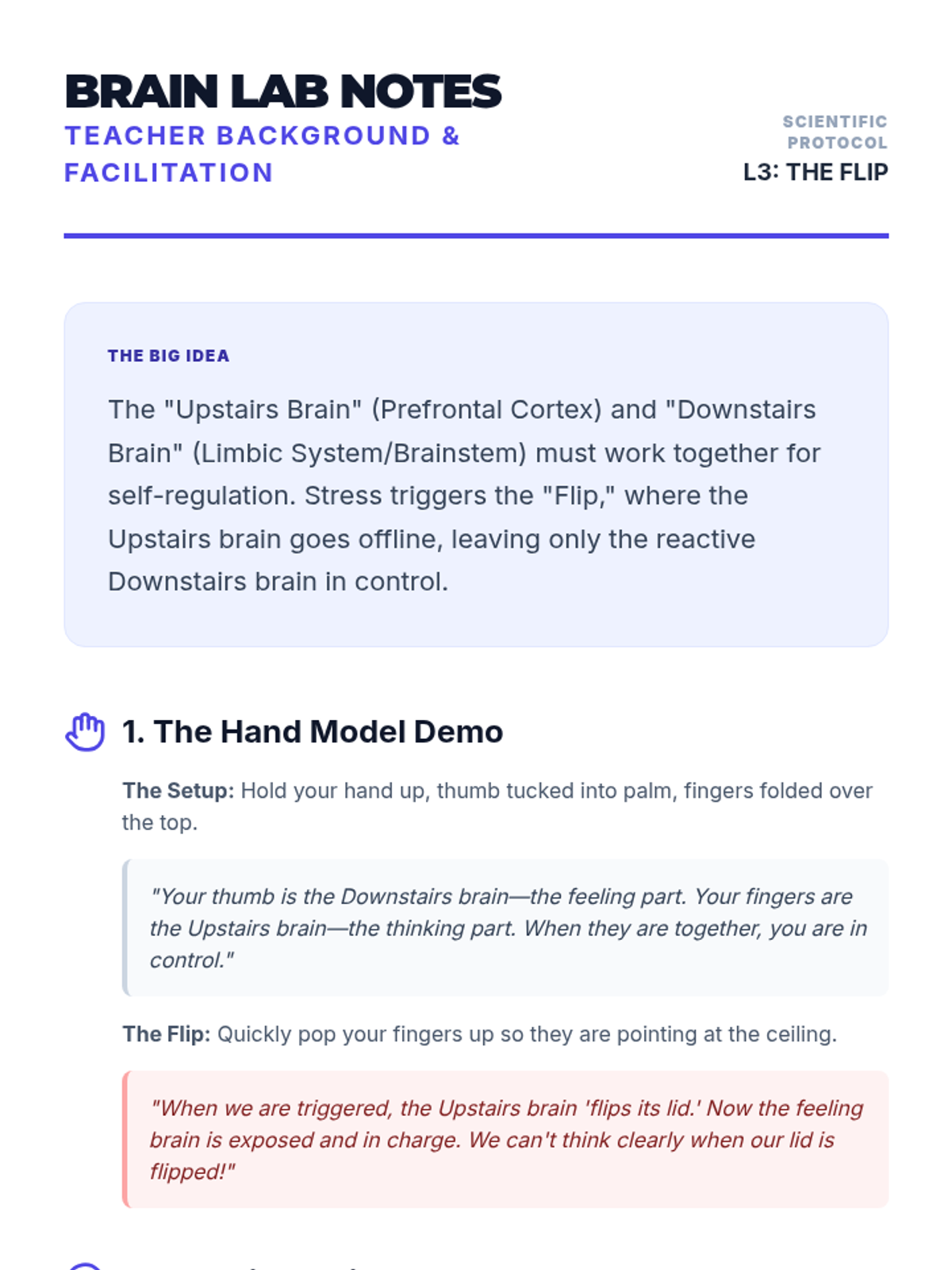
Students learn about the 'upstairs' and 'downstairs' brain to understand the biological basis of emotional dysregulation and the importance of early recognition.
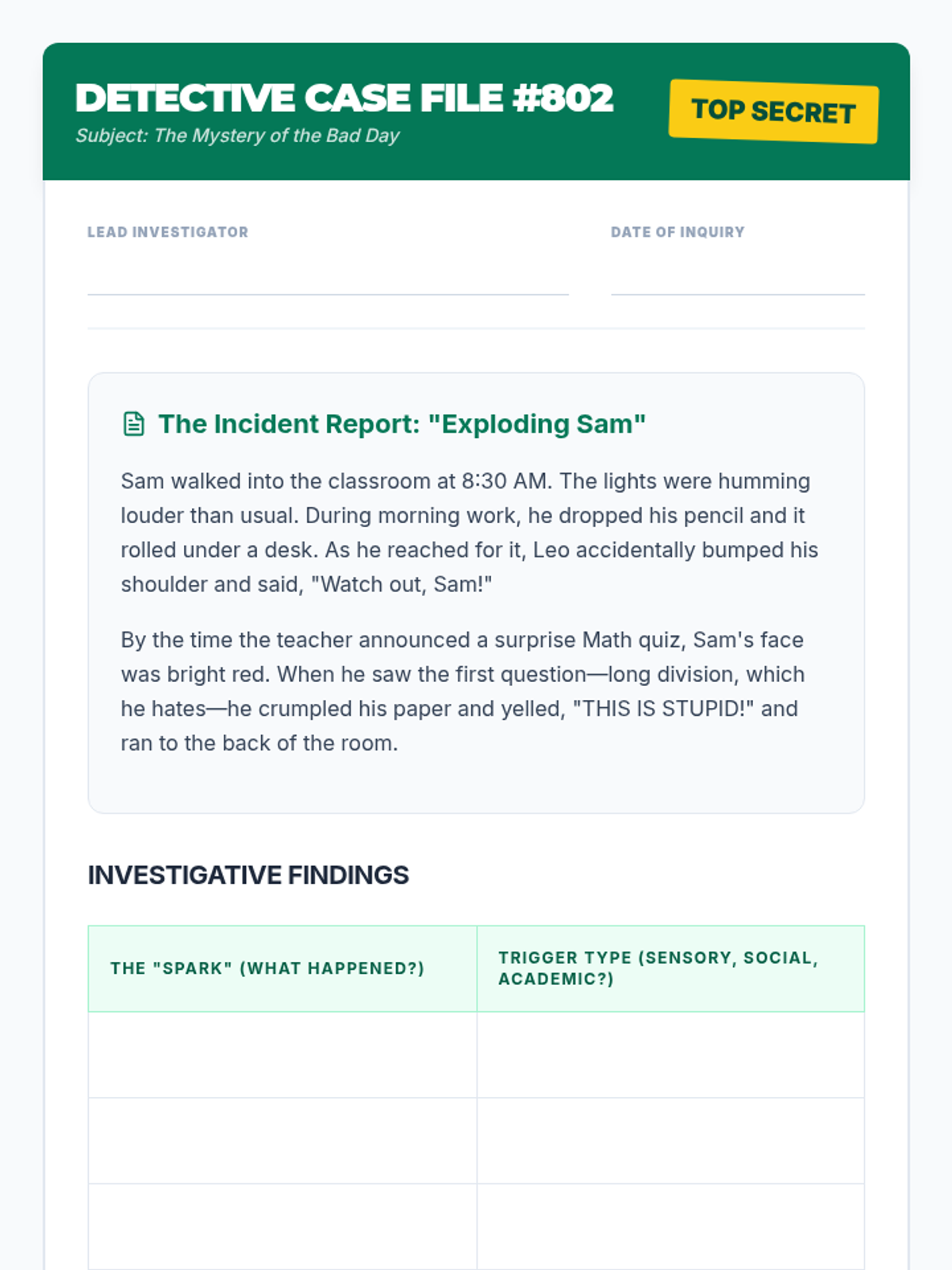
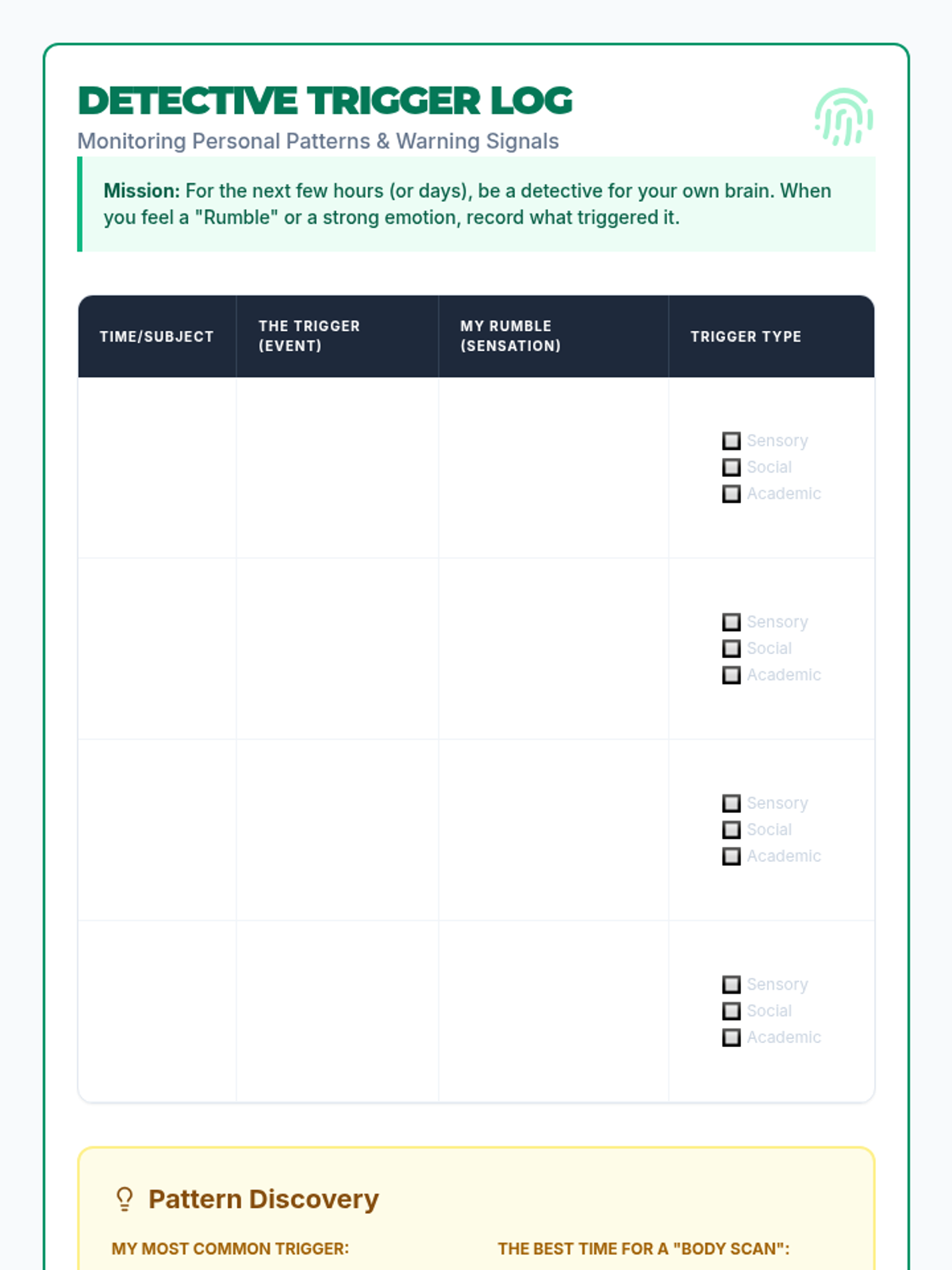
Students investigate external factors that cause stress, categorizing them into sensory, social, or academic triggers while analyzing patterns.
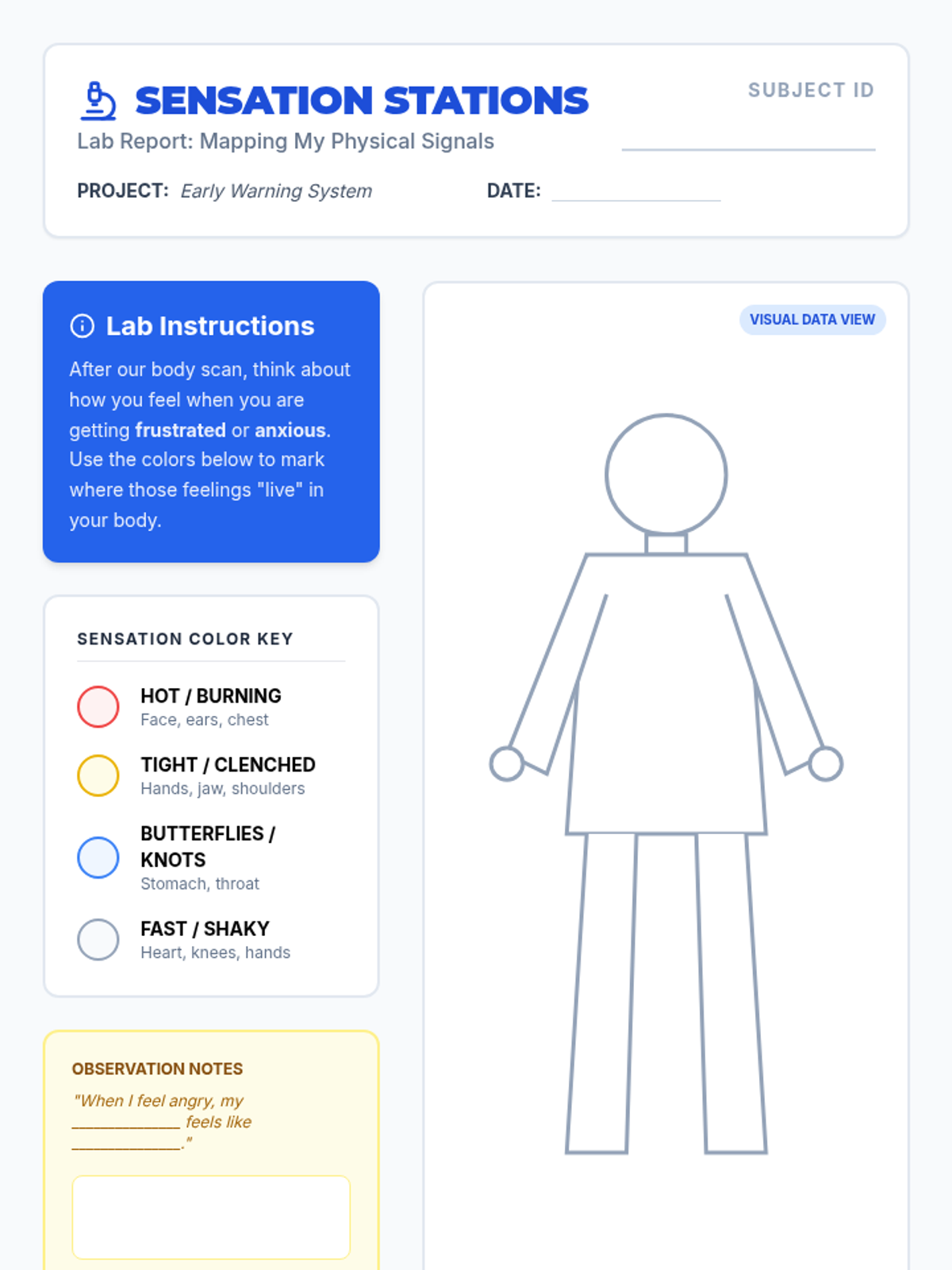
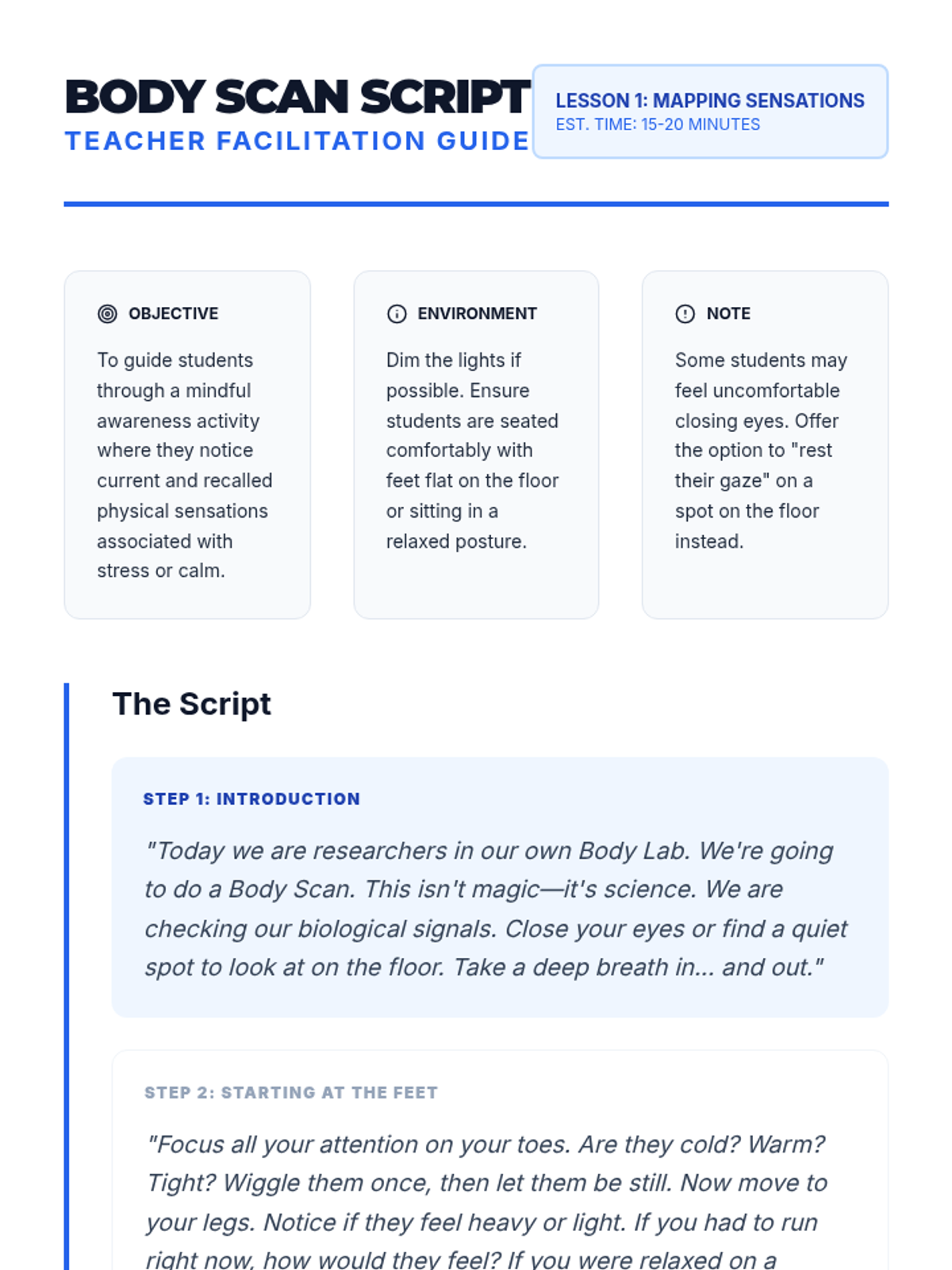
Students participate in a body-scanning activity to identify physical signs of stress and create a visual body map connecting sensations to emotions.
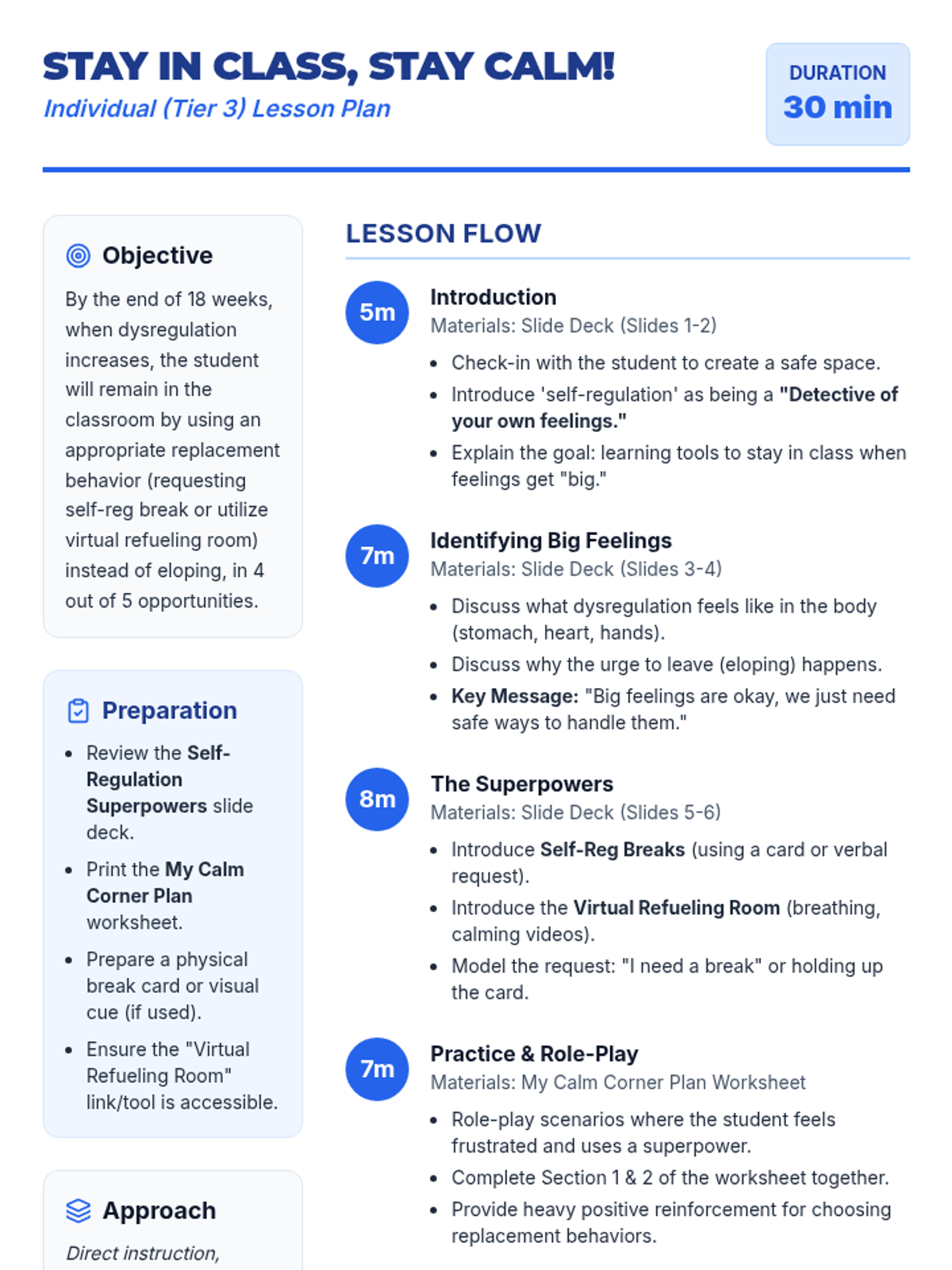
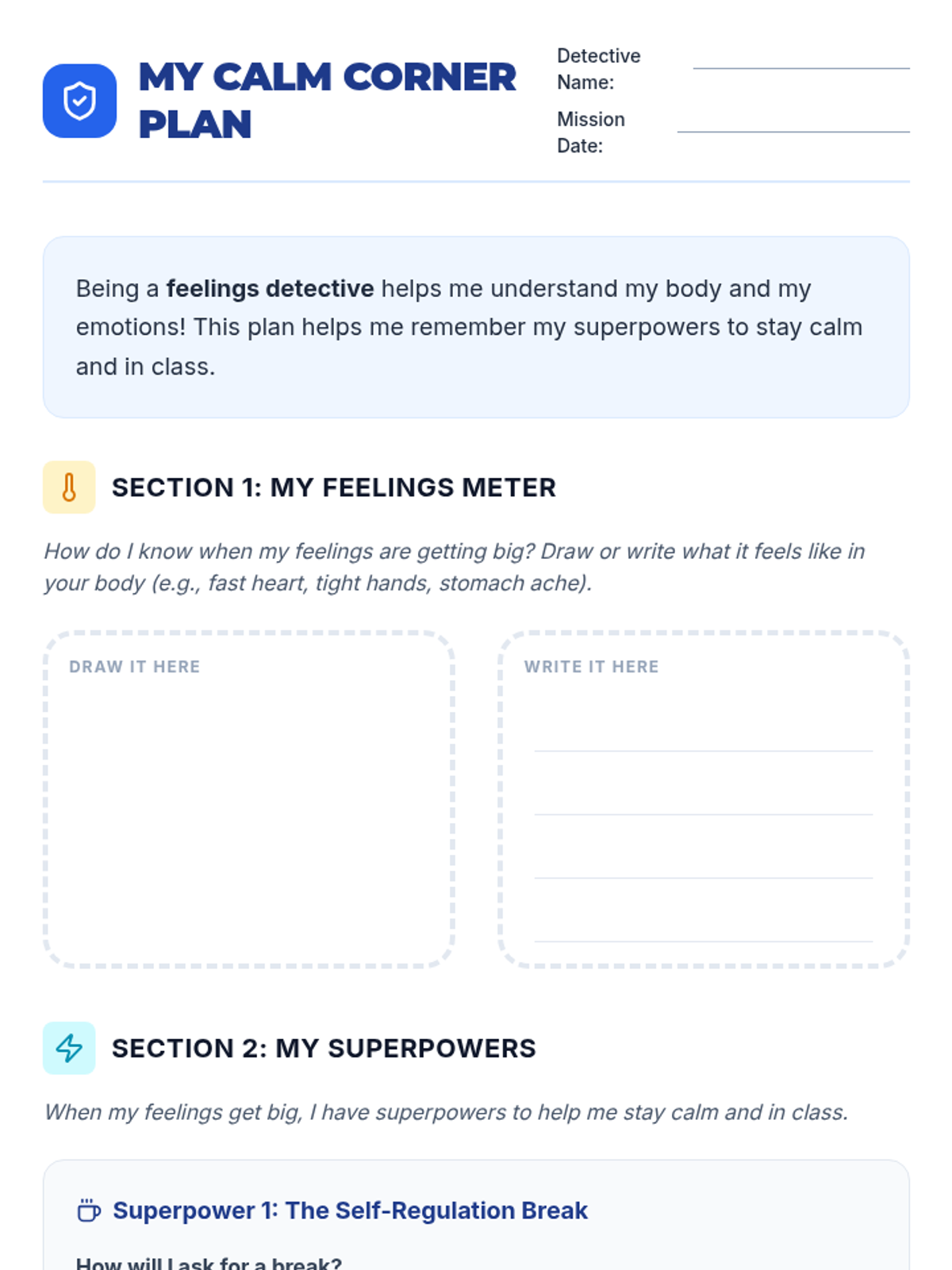
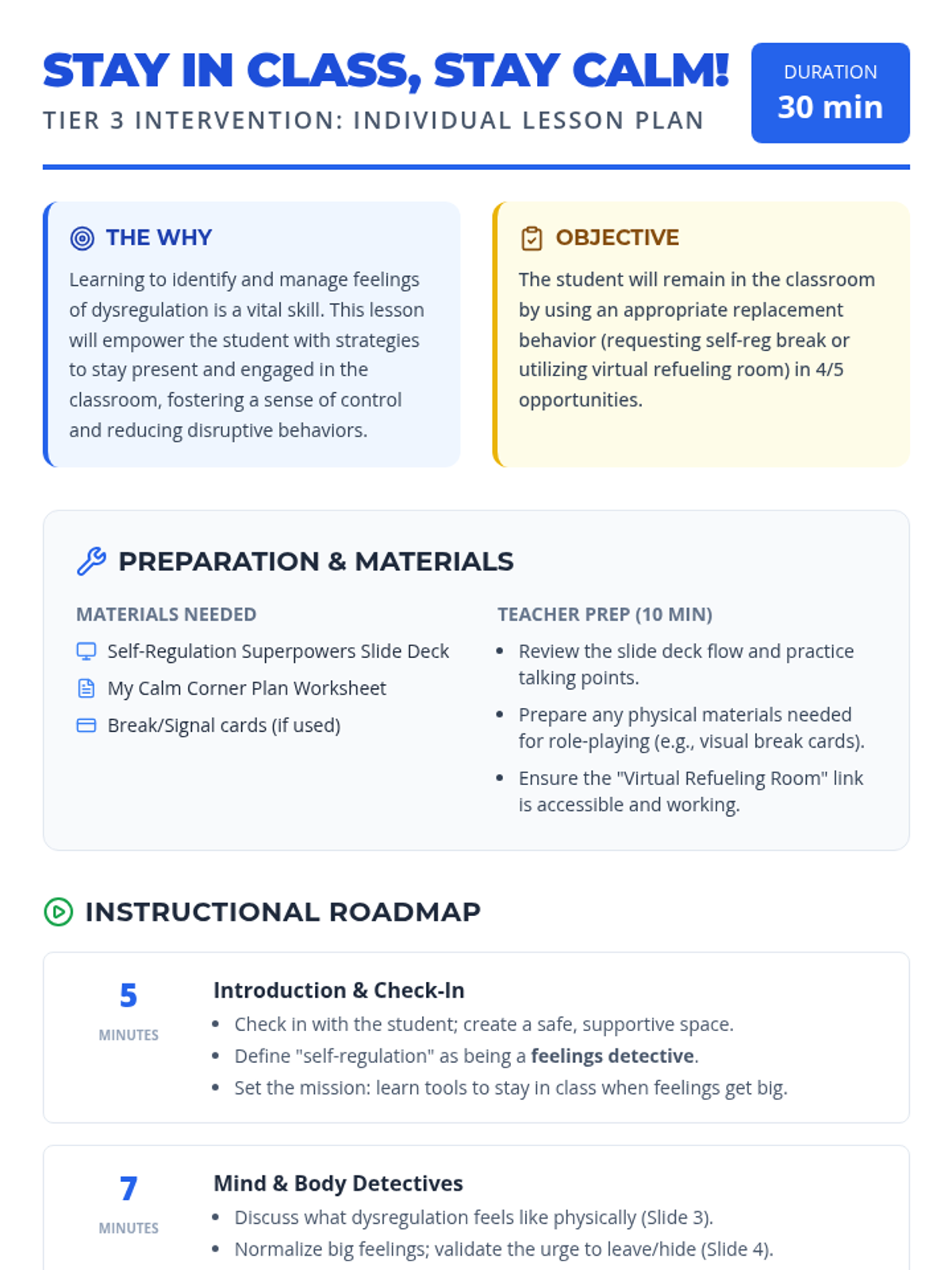
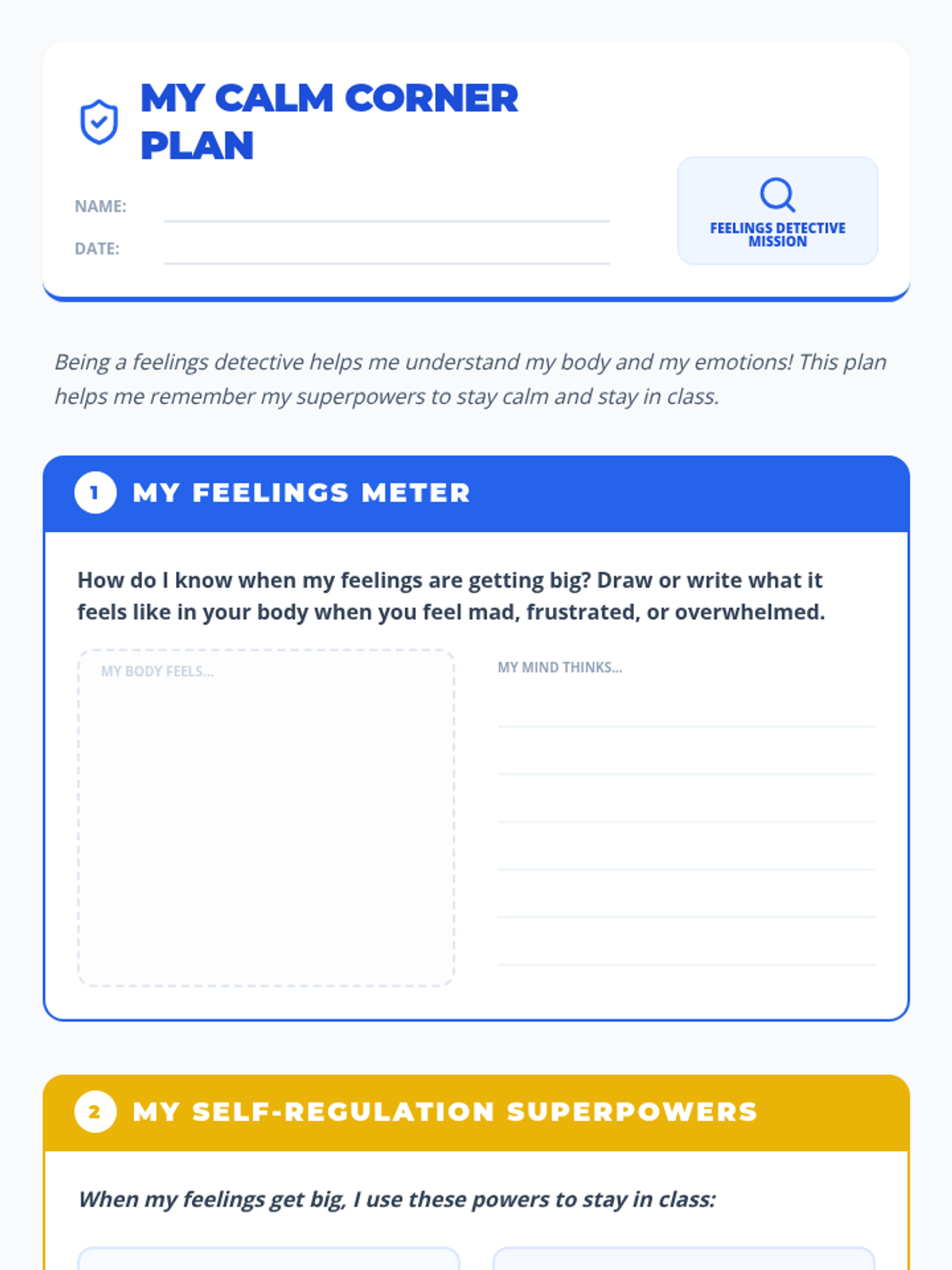
A Tier 3 individual lesson focused on teaching self-regulation strategies (requesting breaks and virtual refueling) to manage dysregulation and reduce elopement. This lesson uses a superhero/detective theme to empower students to stay in the classroom.
This Tier 3 intervention lesson empowers individual students to manage dysregulation and reduce elopement by teaching them to request breaks or use a virtual refueling room as replacement behaviors.
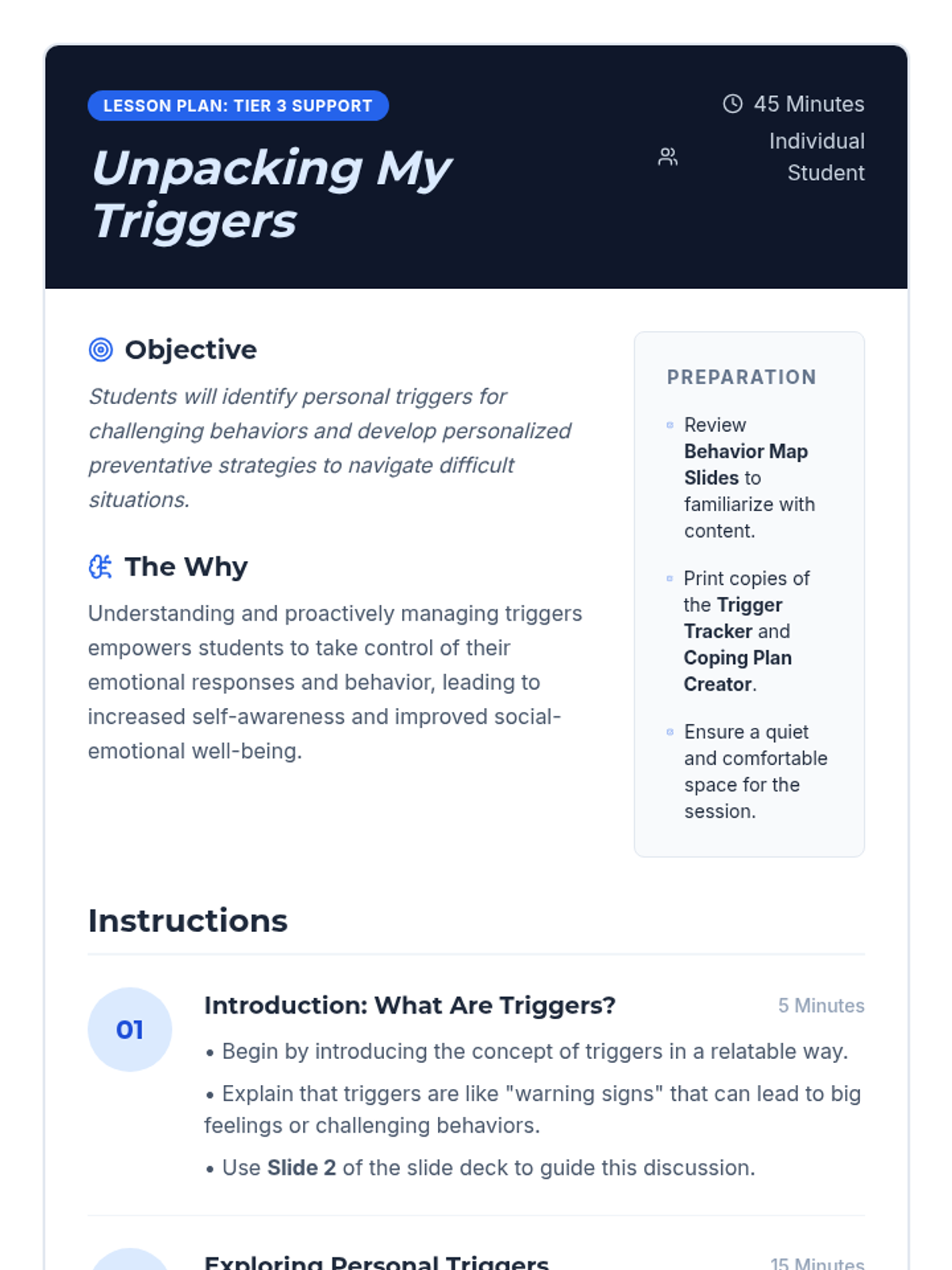
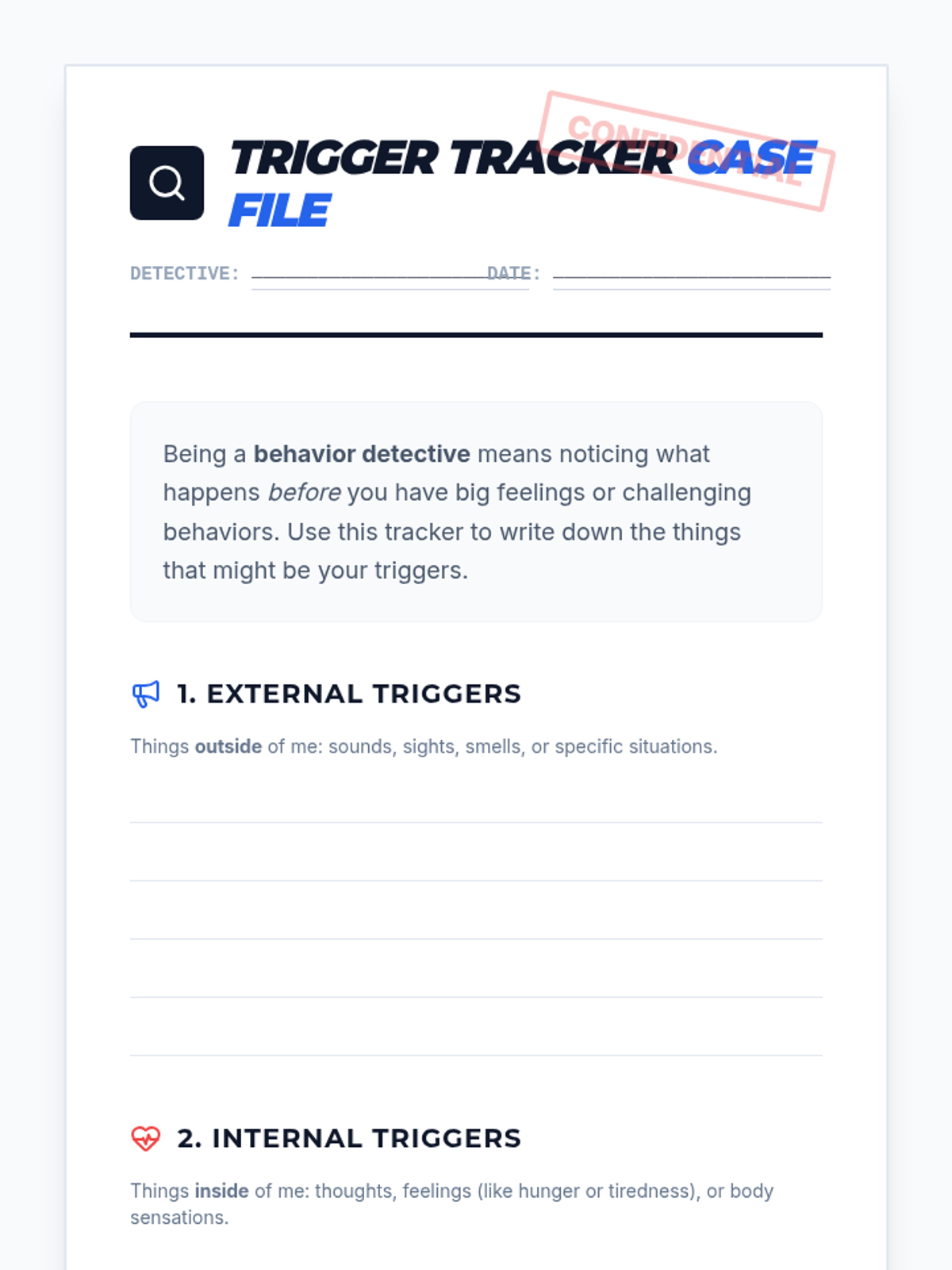
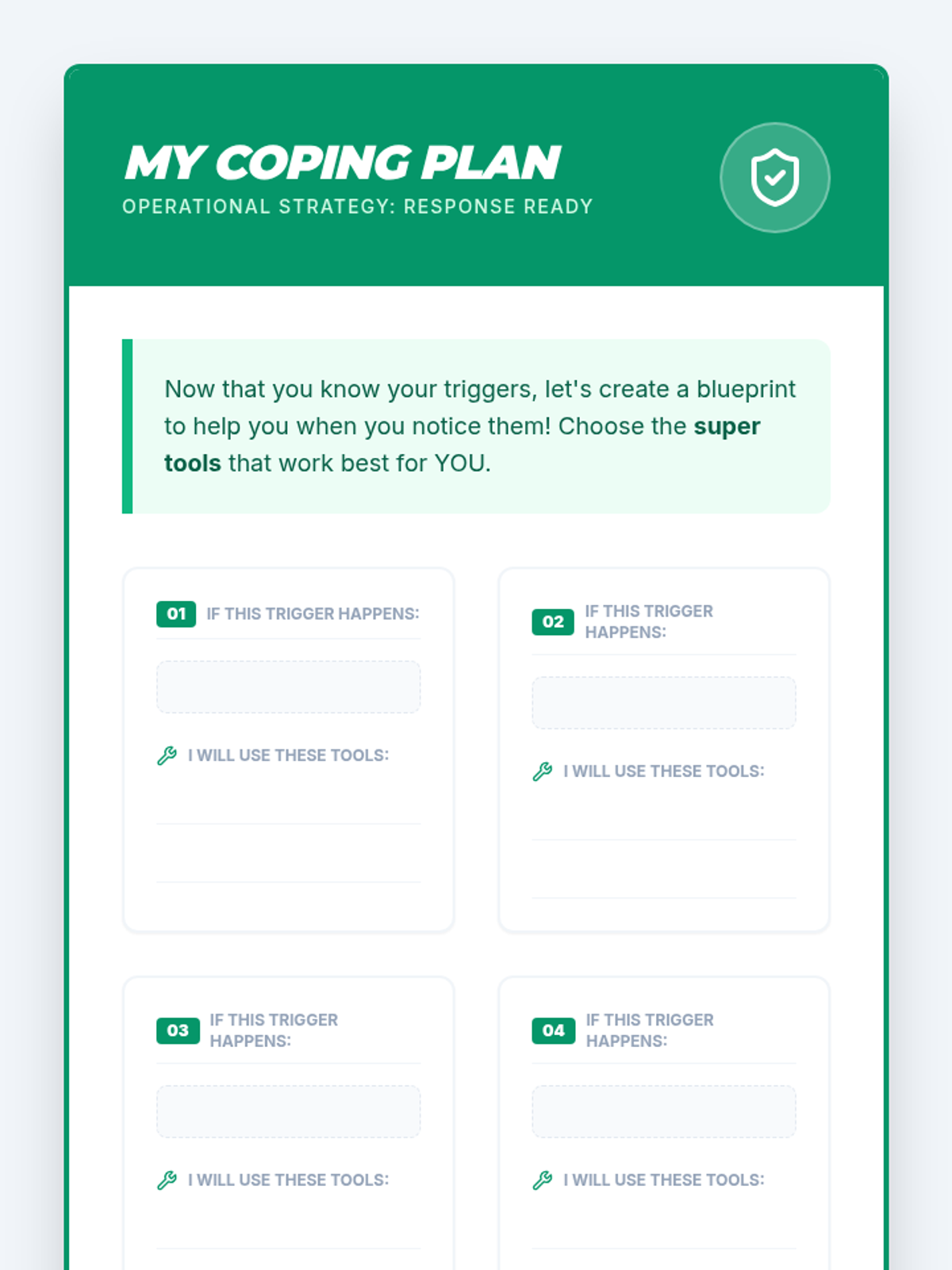
A targeted Tier 3 individual session helping students identify personal behavioral triggers and develop proactive coping strategies through a 'Behavior Detective' framework.
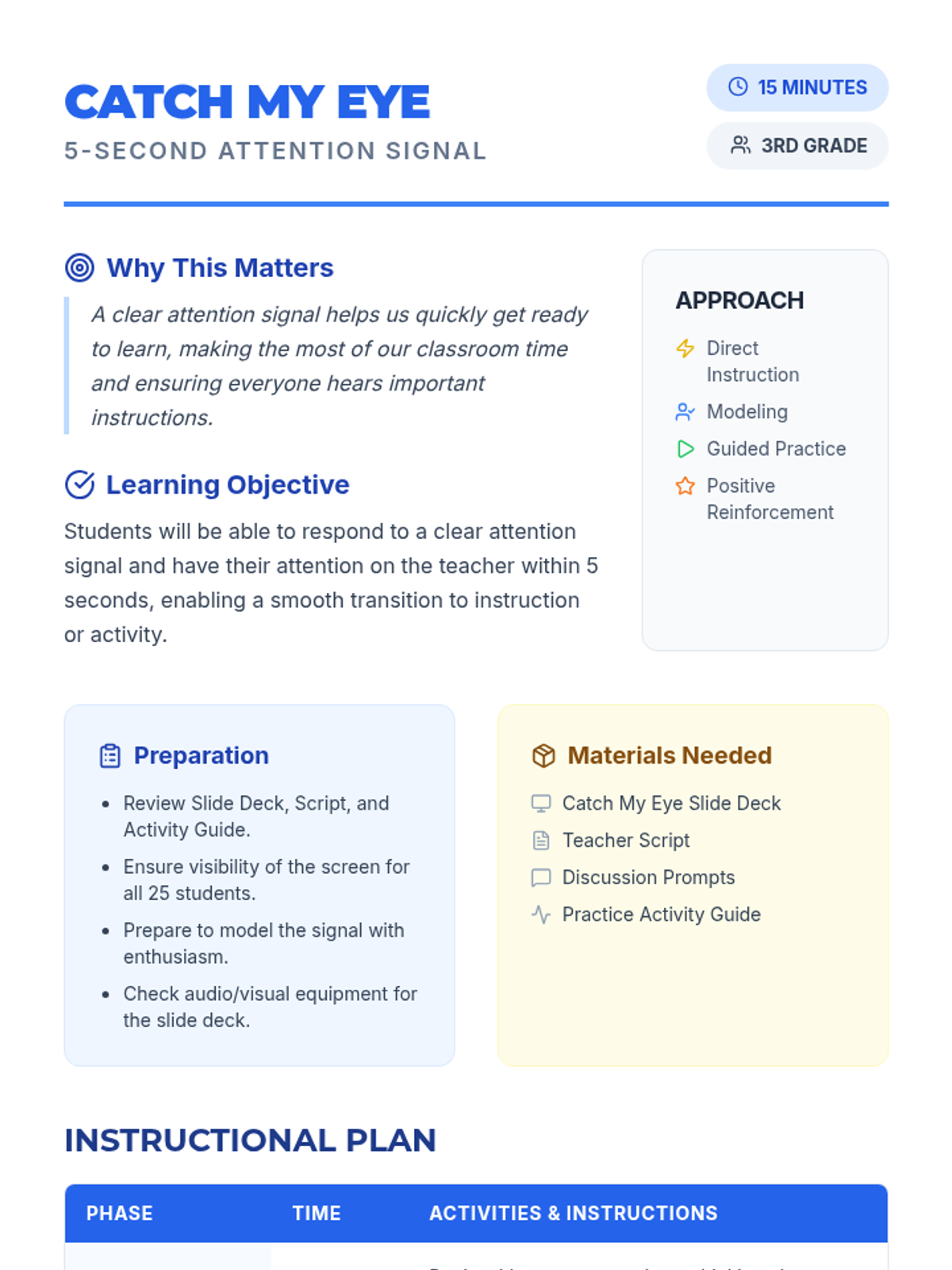
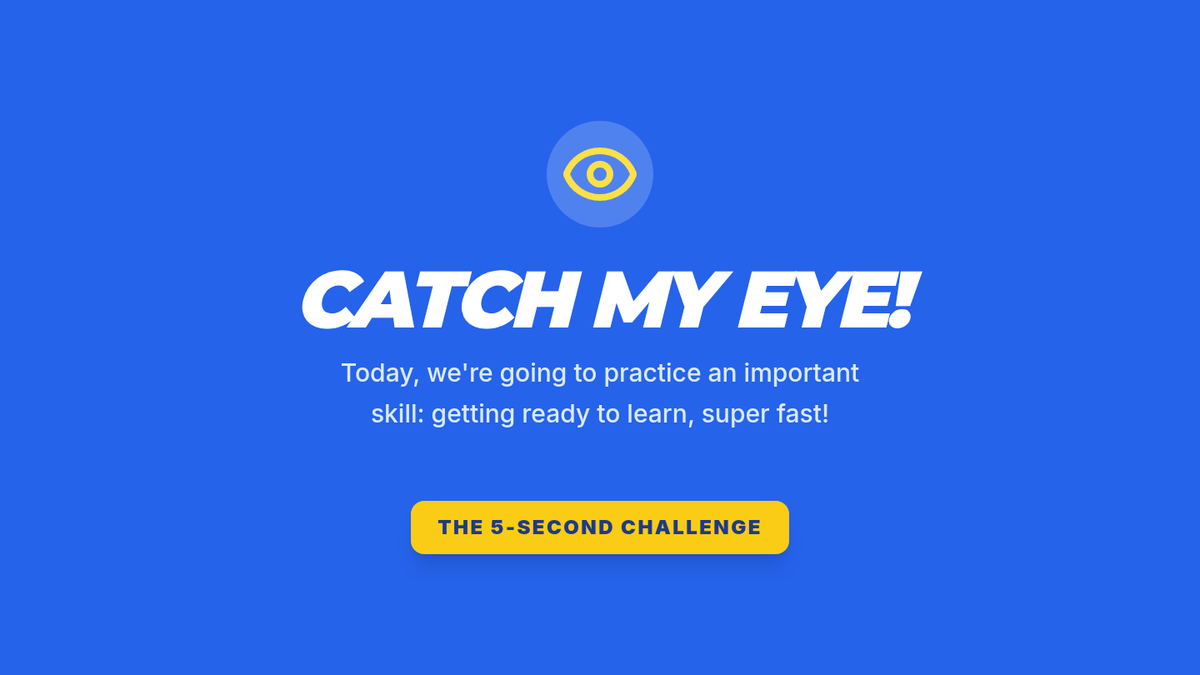
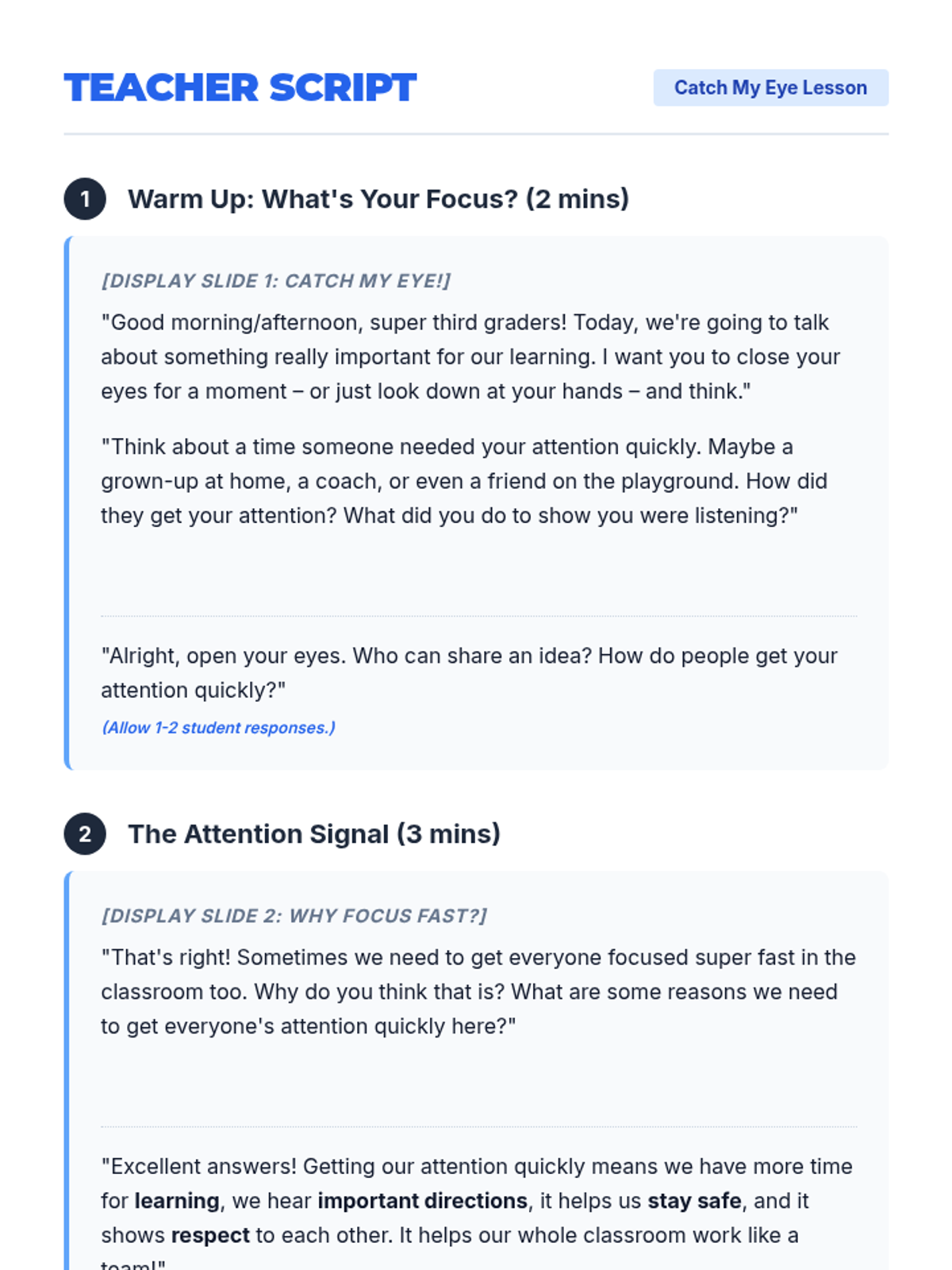
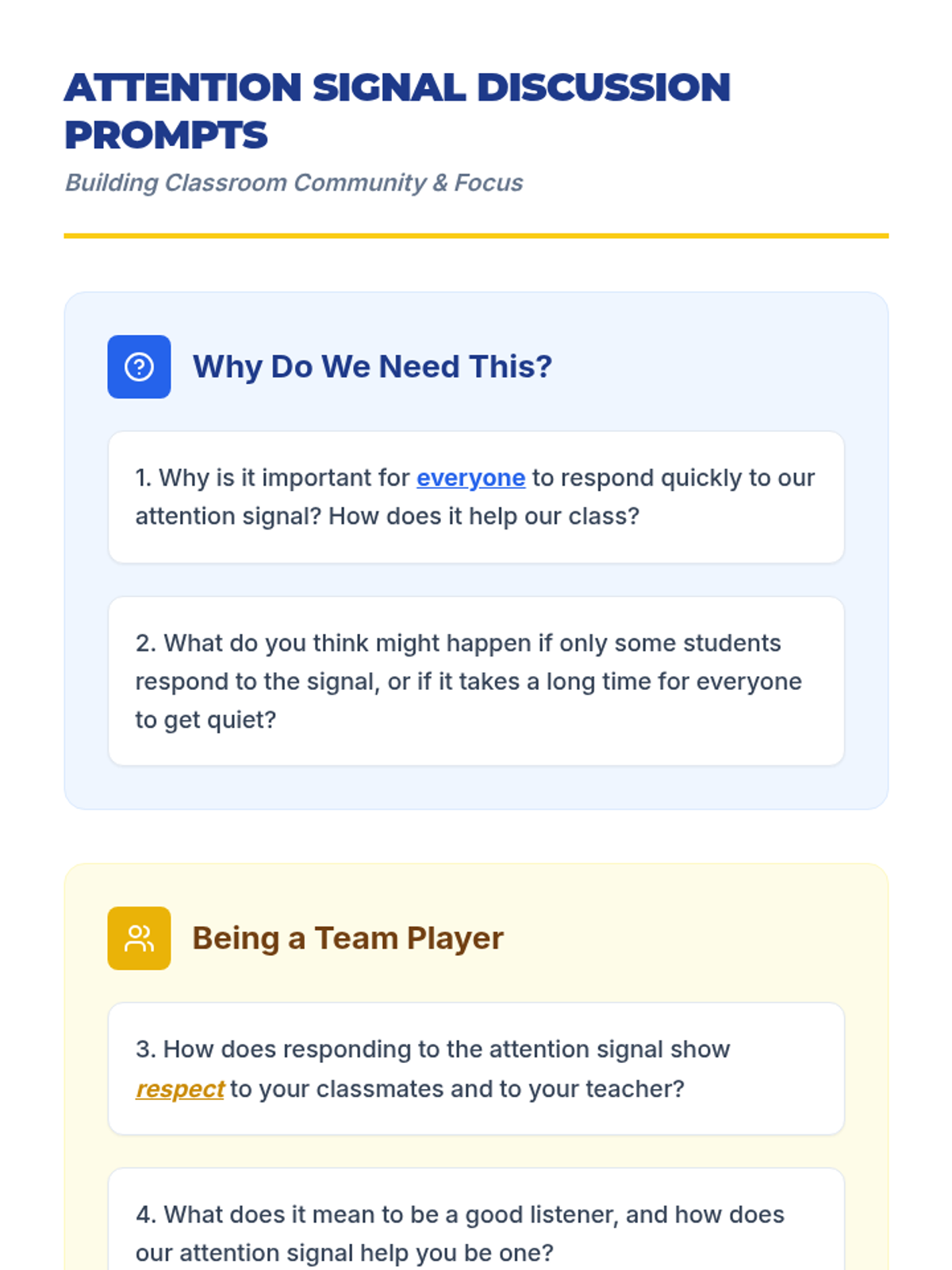
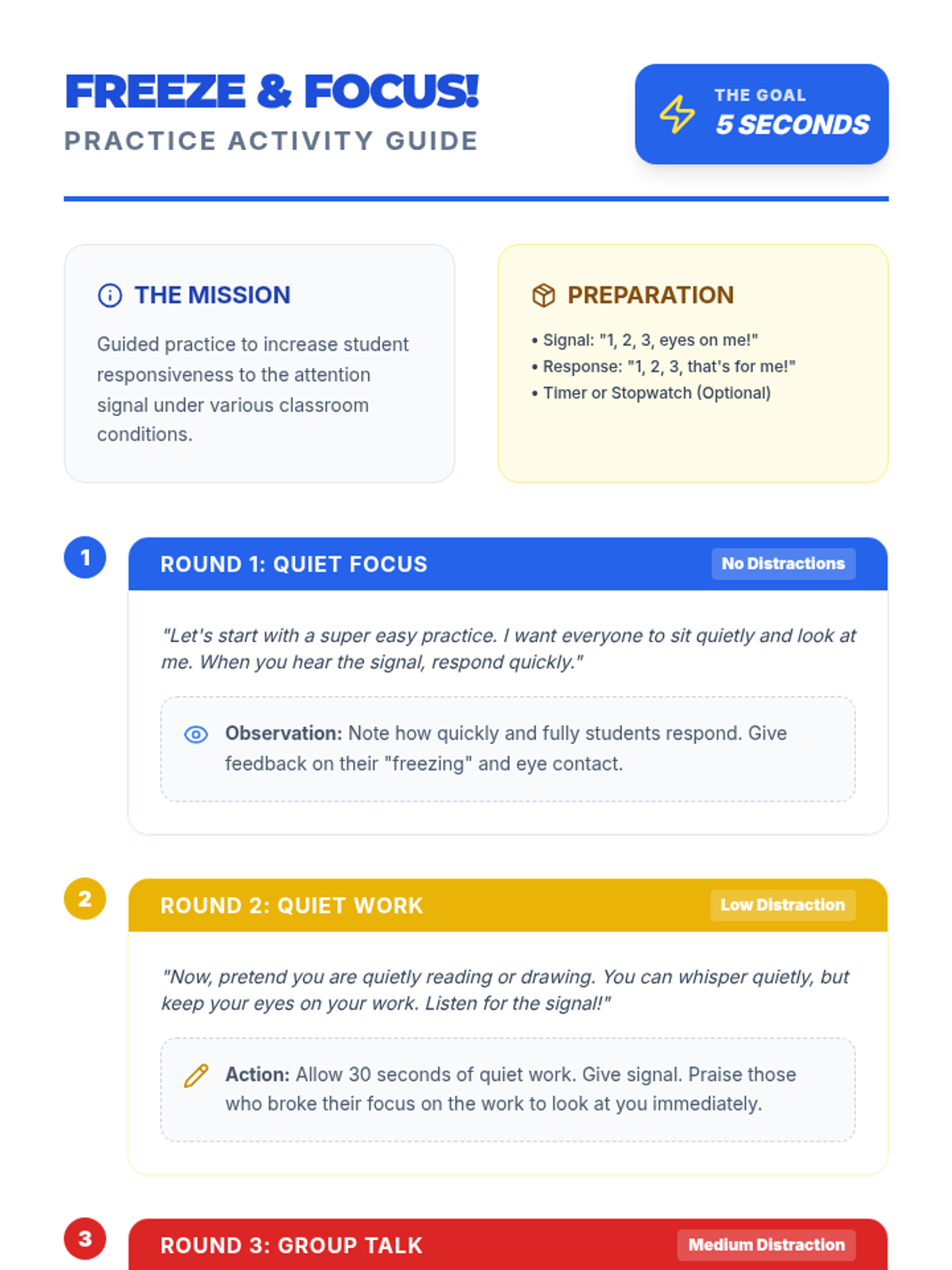
A 15-minute lesson for 3rd graders to master a 5-second attention signal ('1, 2, 3, eyes on me!'), improving classroom efficiency and learning time.
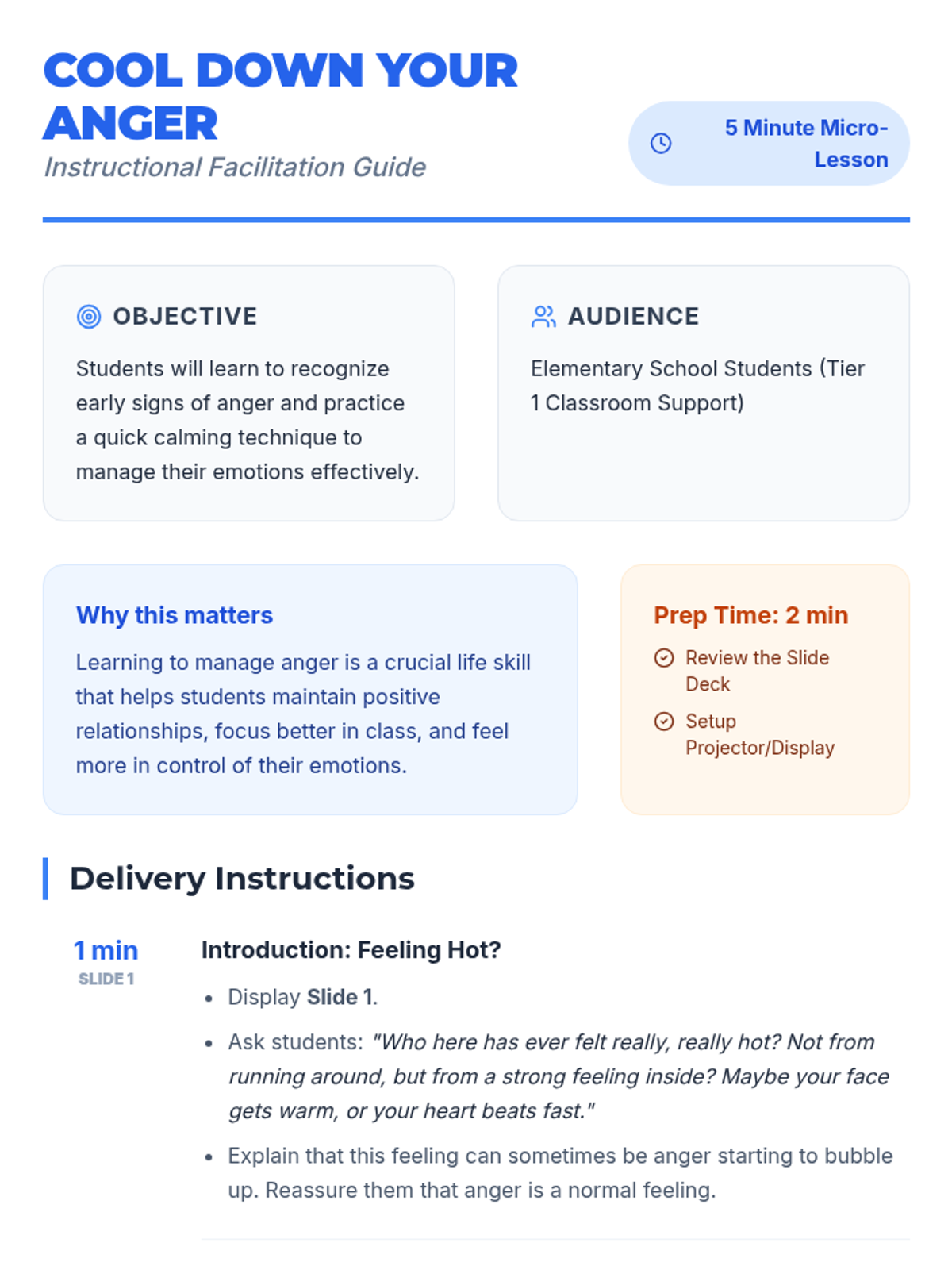
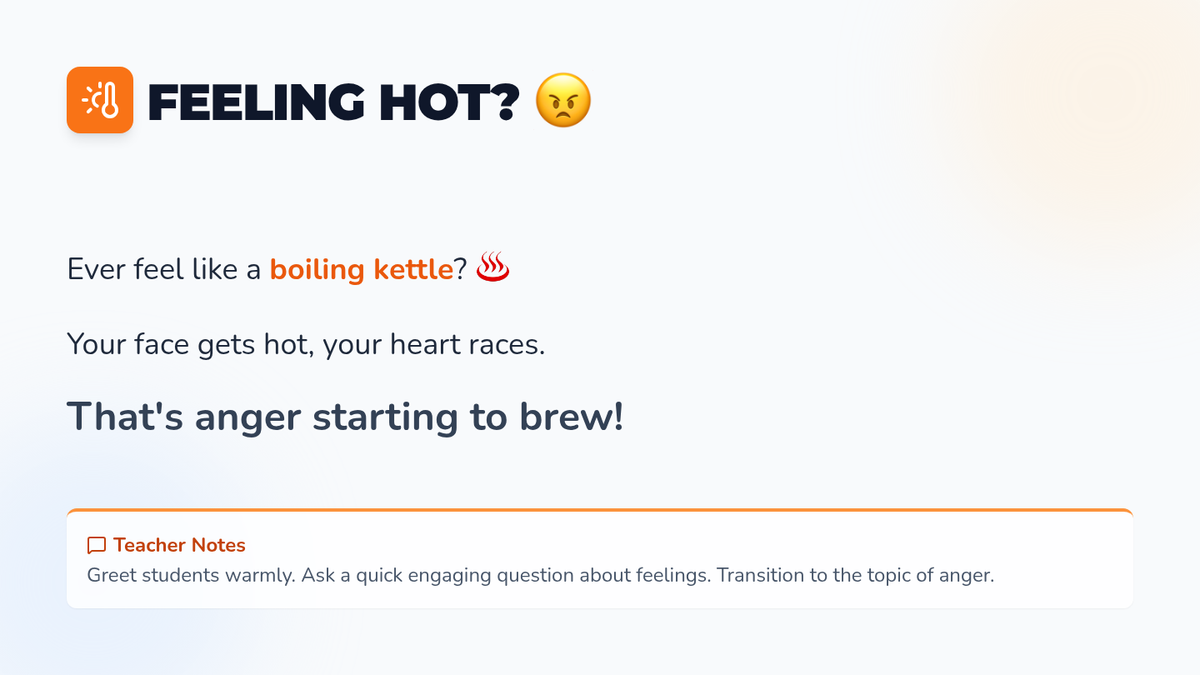
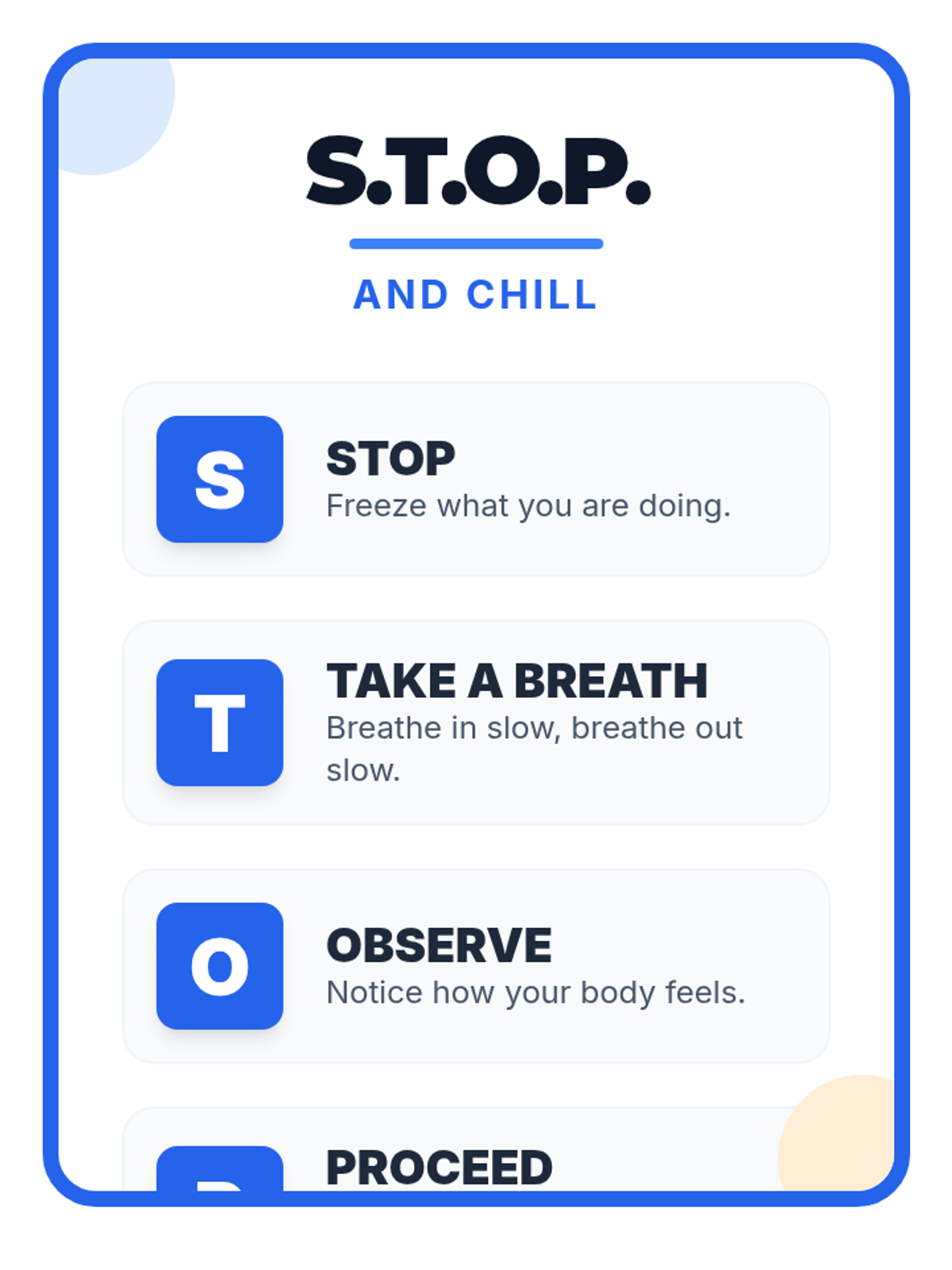
A quick 5-minute lesson to help elementary students identify early signs of anger and learn the S.T.O.P. technique to calm down before anger escalates.
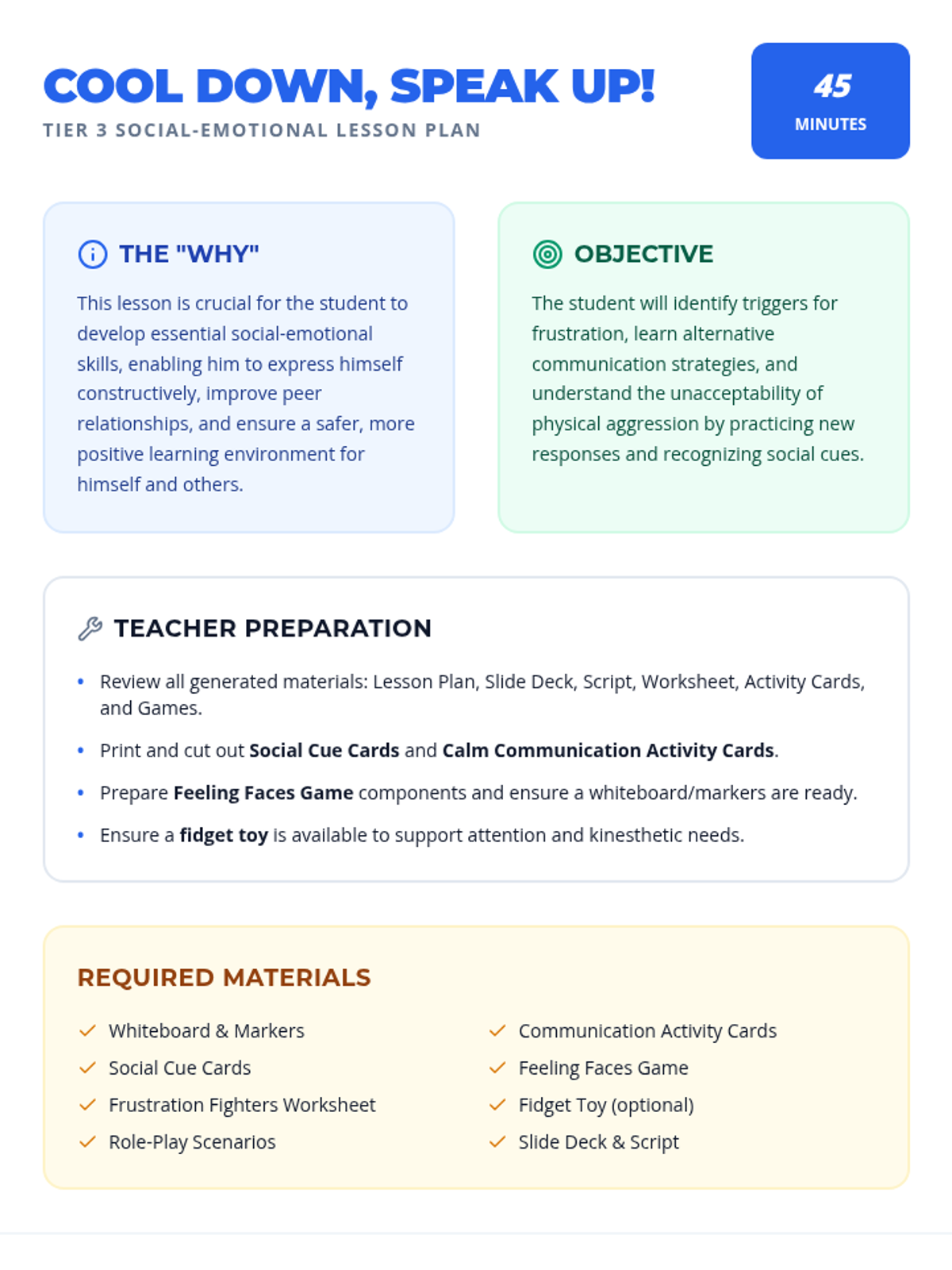
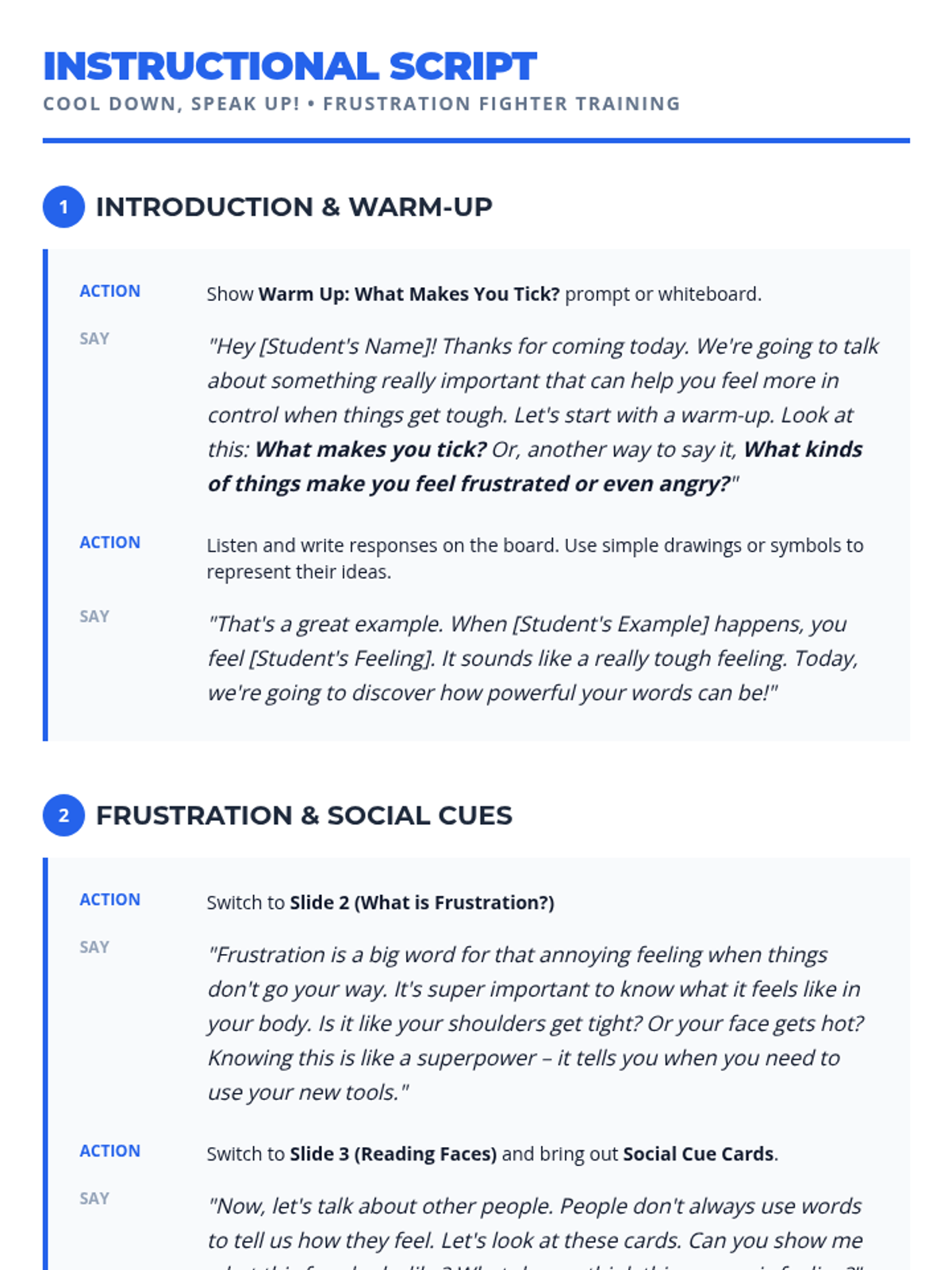
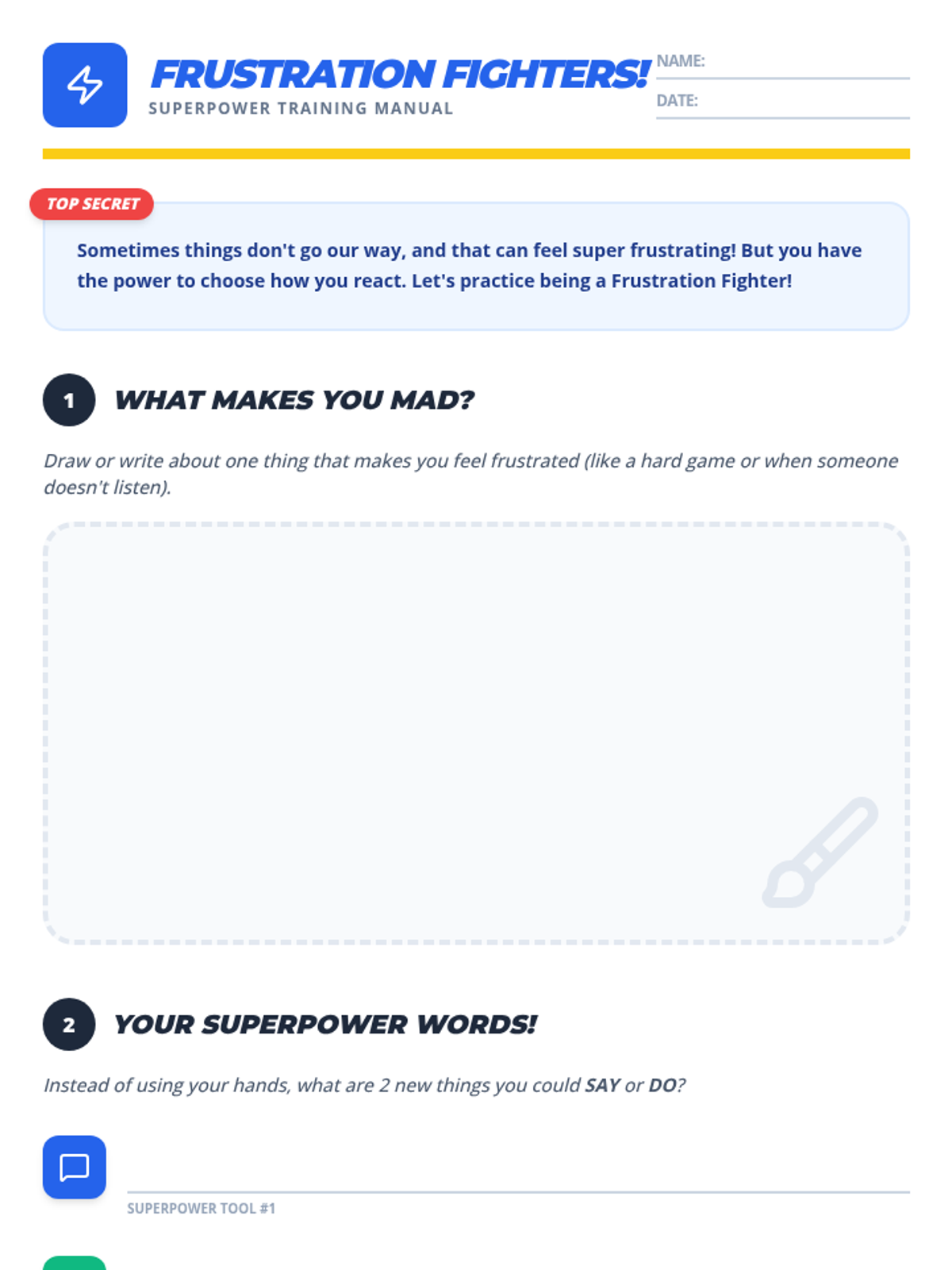
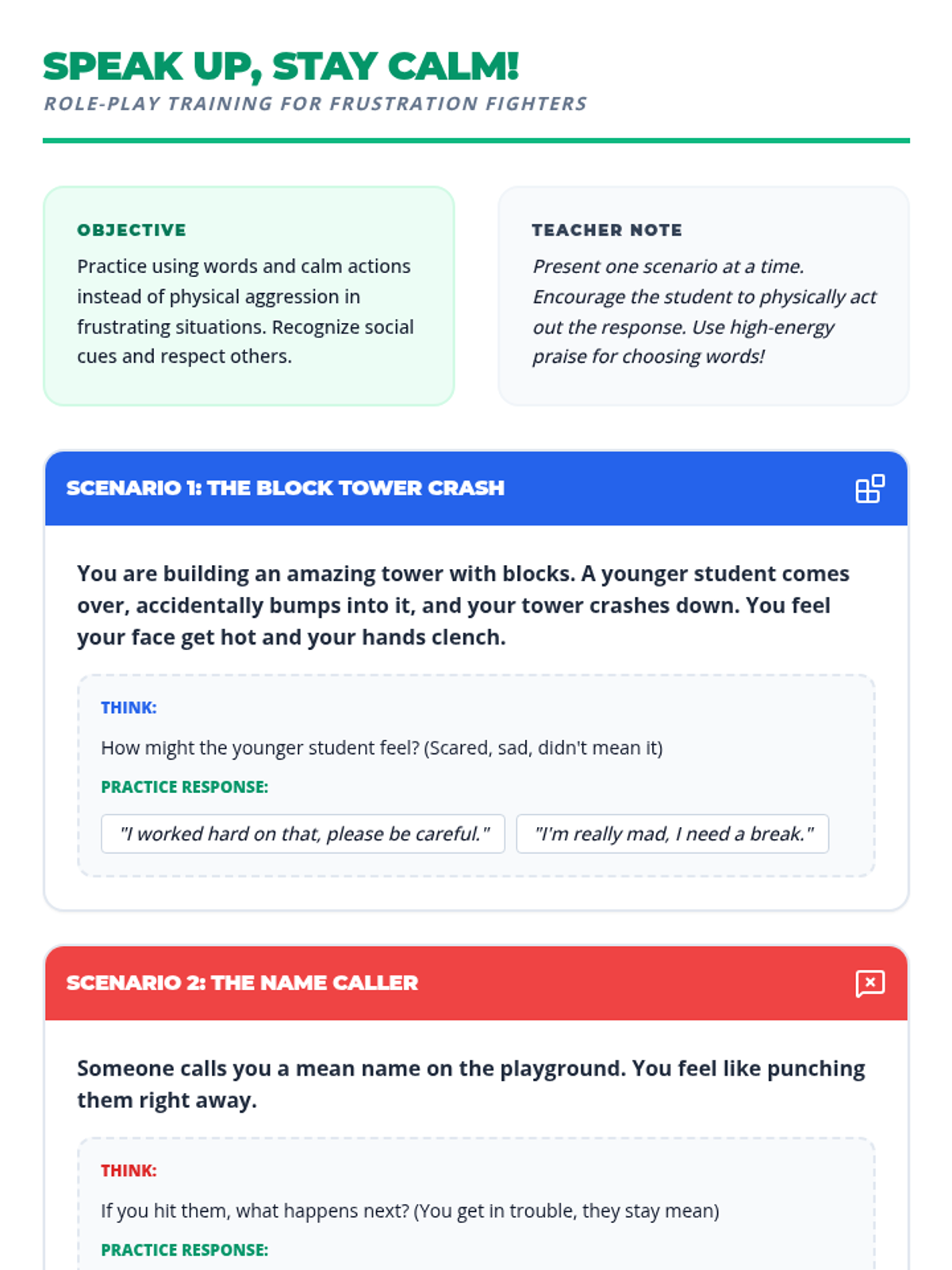
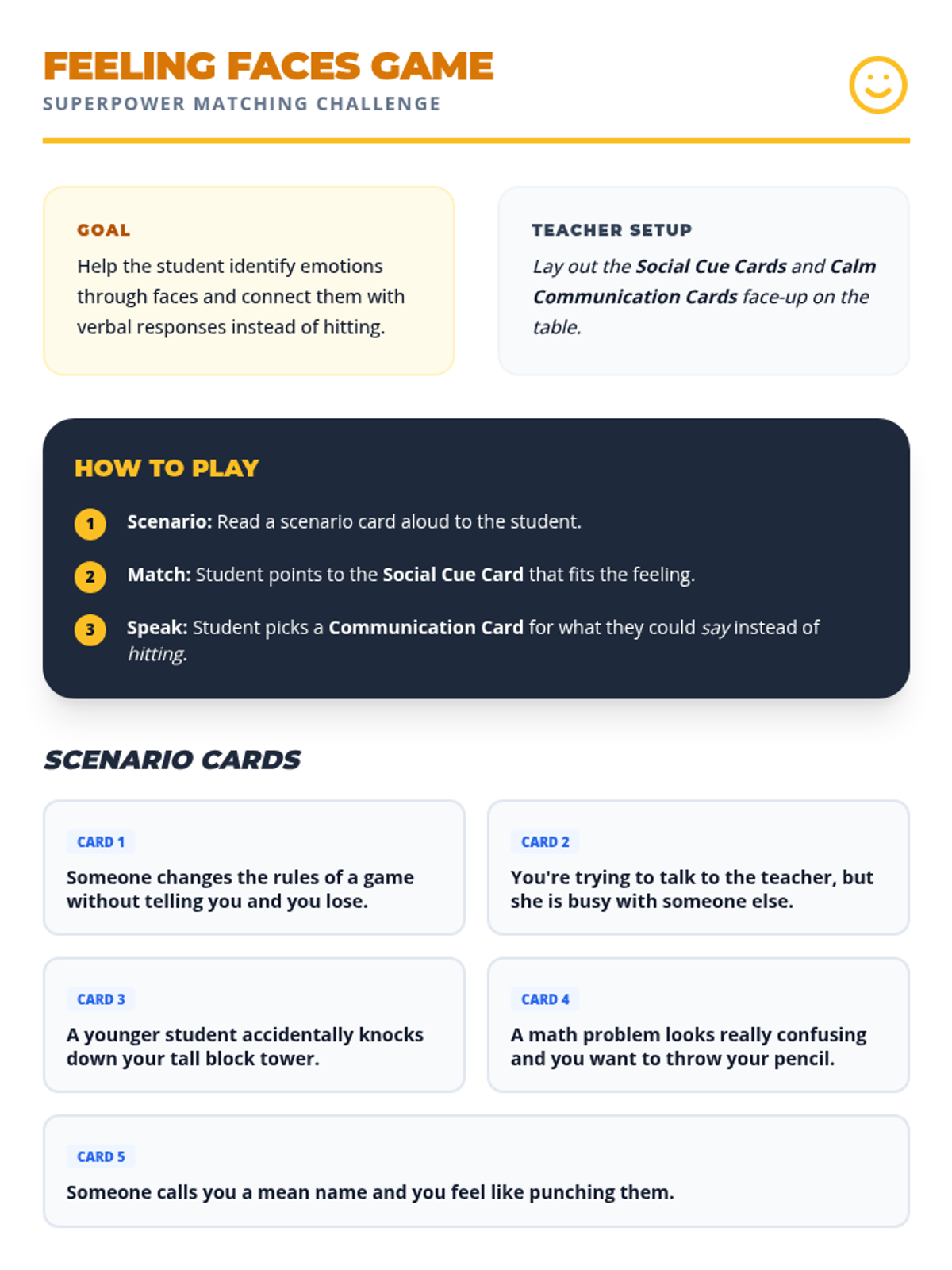
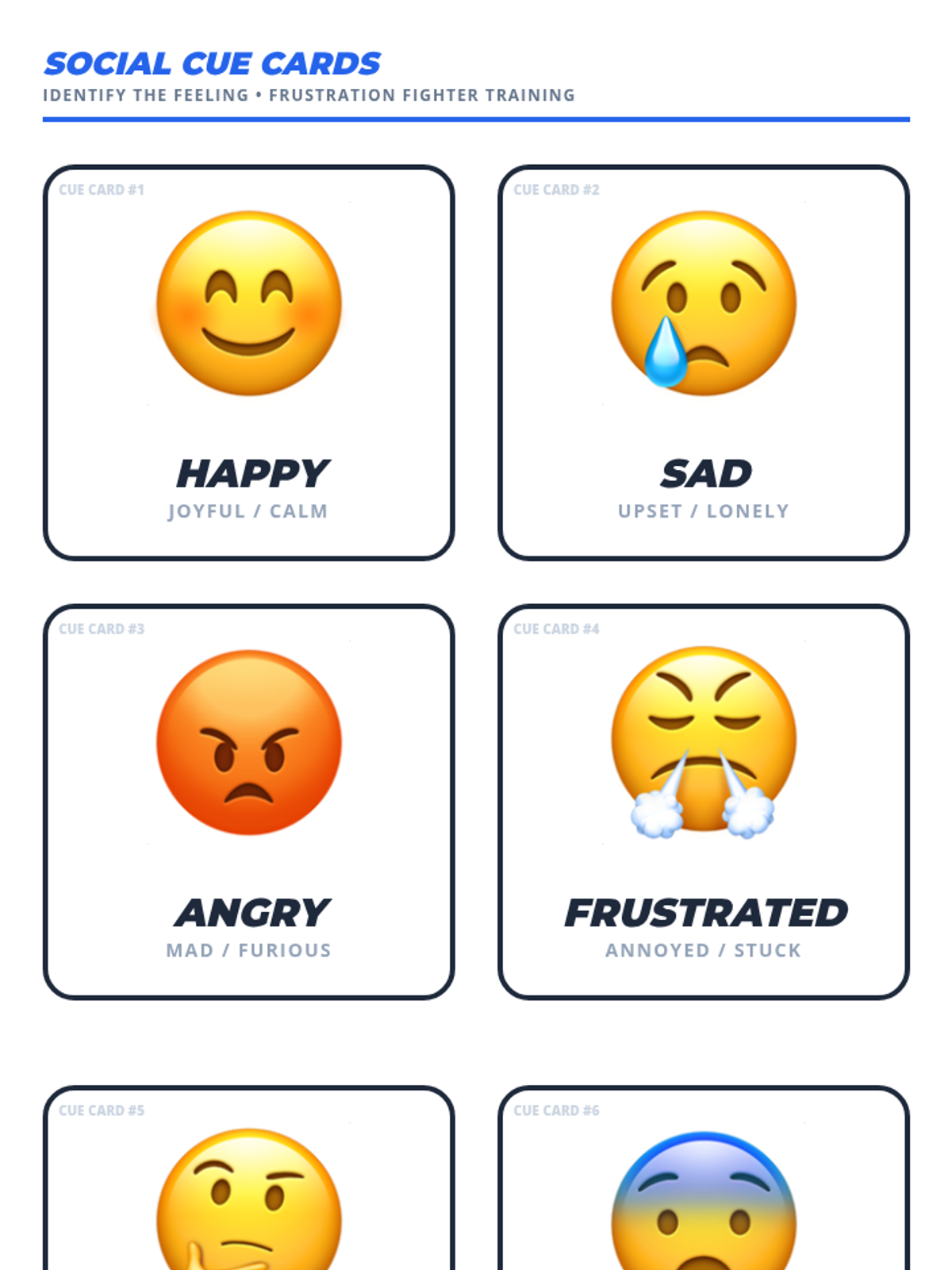
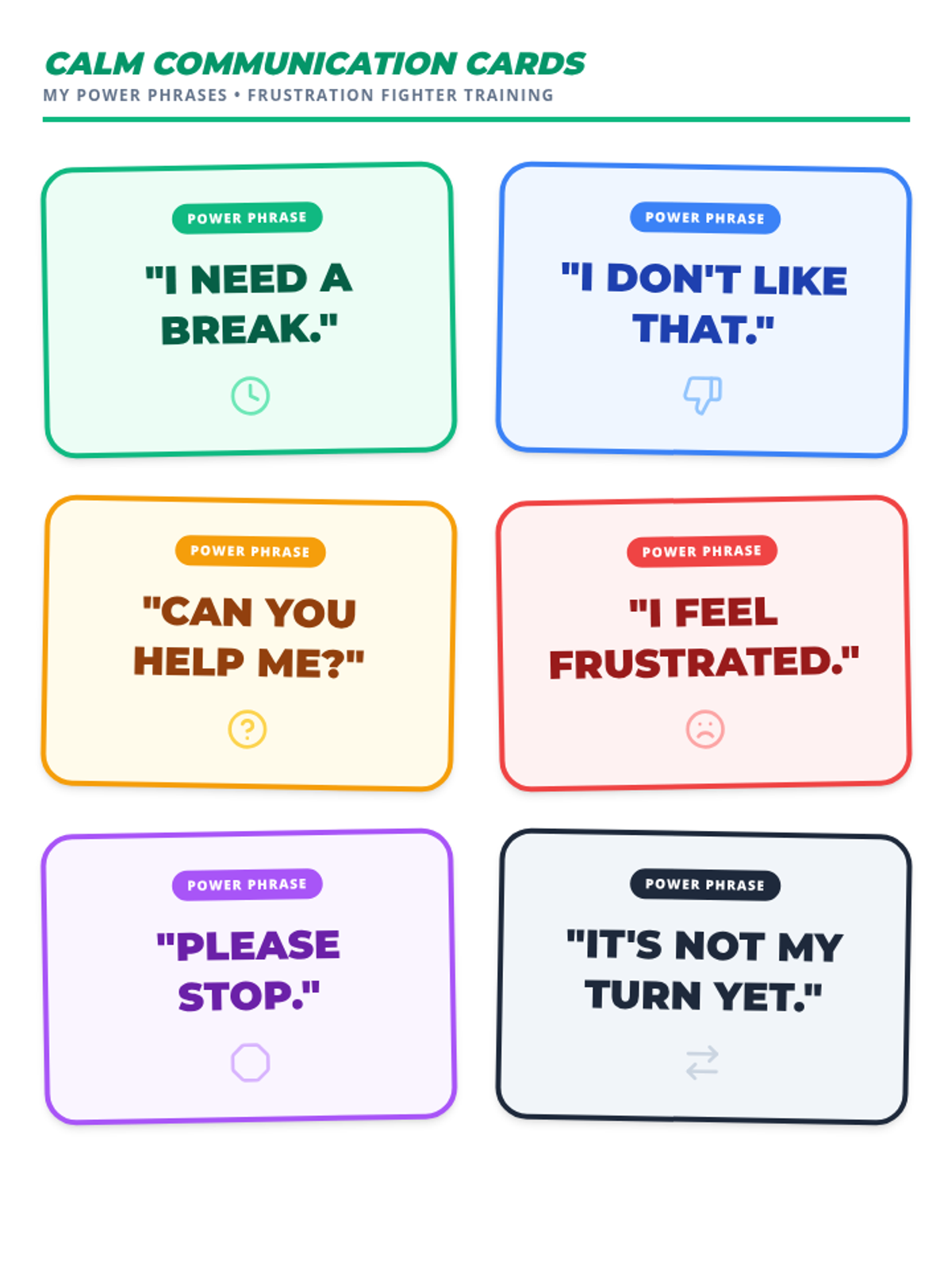
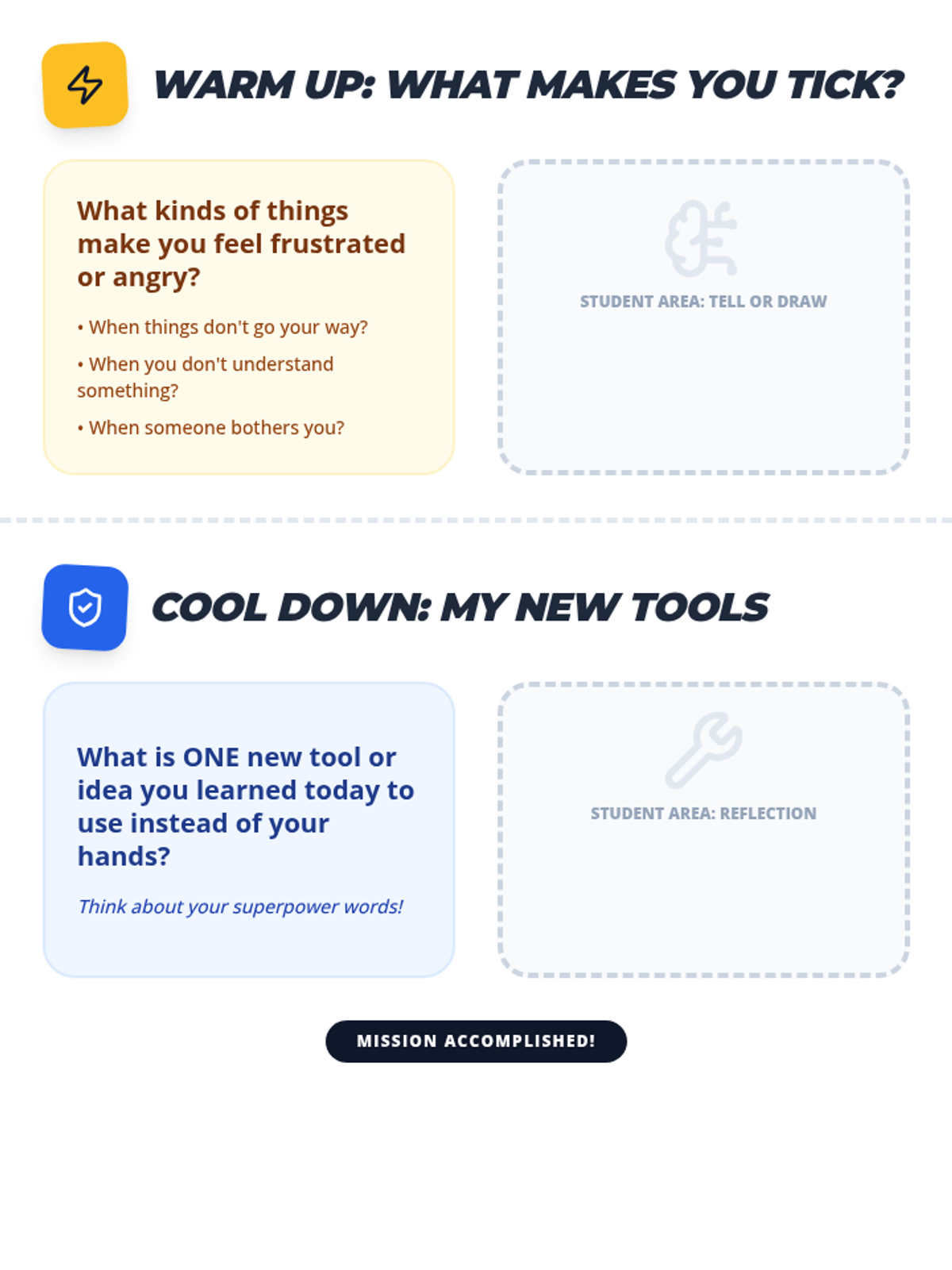
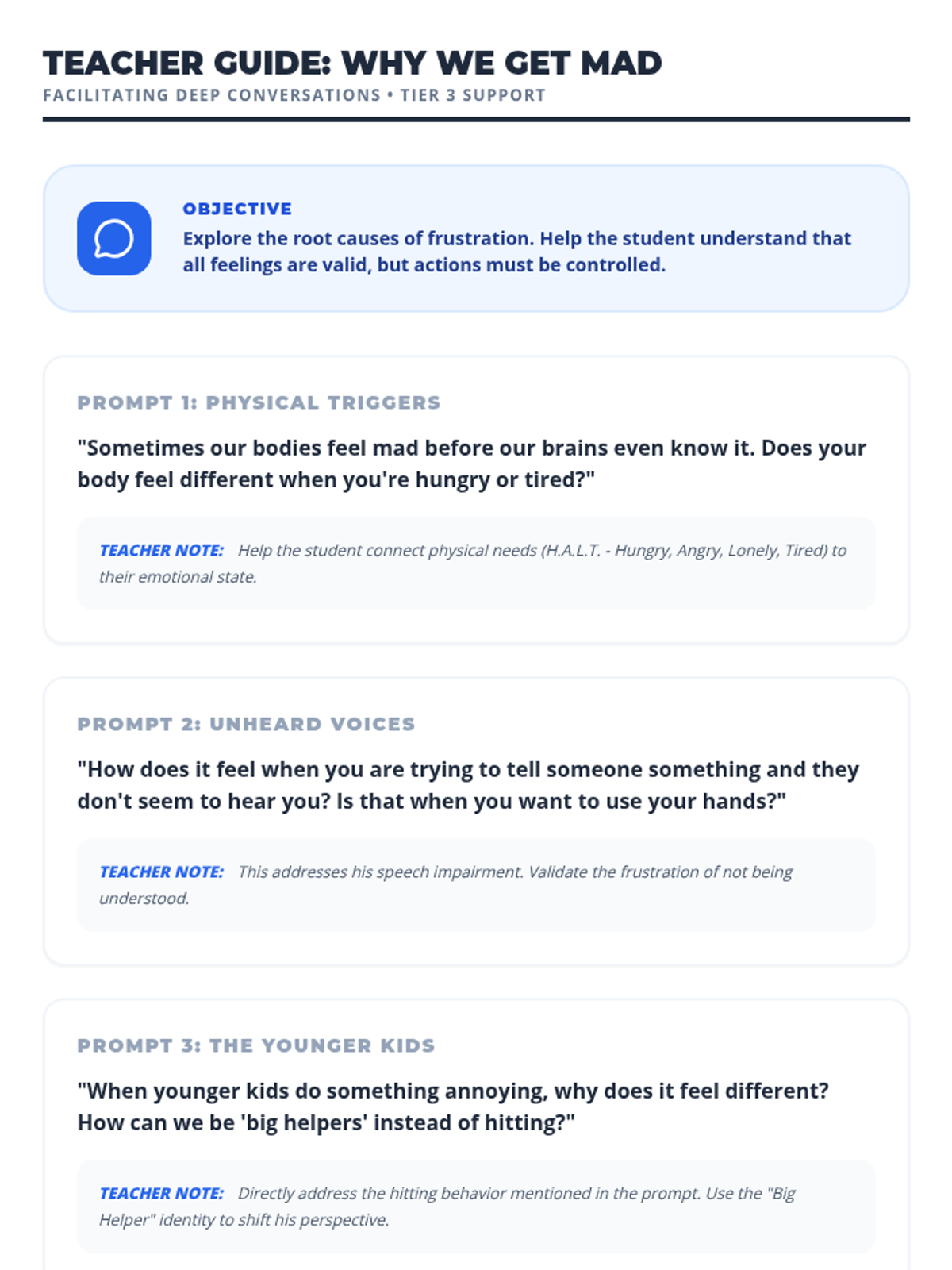
A targeted social-emotional lesson for an 8-year-old student focusing on identifying frustration triggers, reading social cues, and replacing physical aggression with verbal communication through a 'Frustration Fighter' superpower theme.
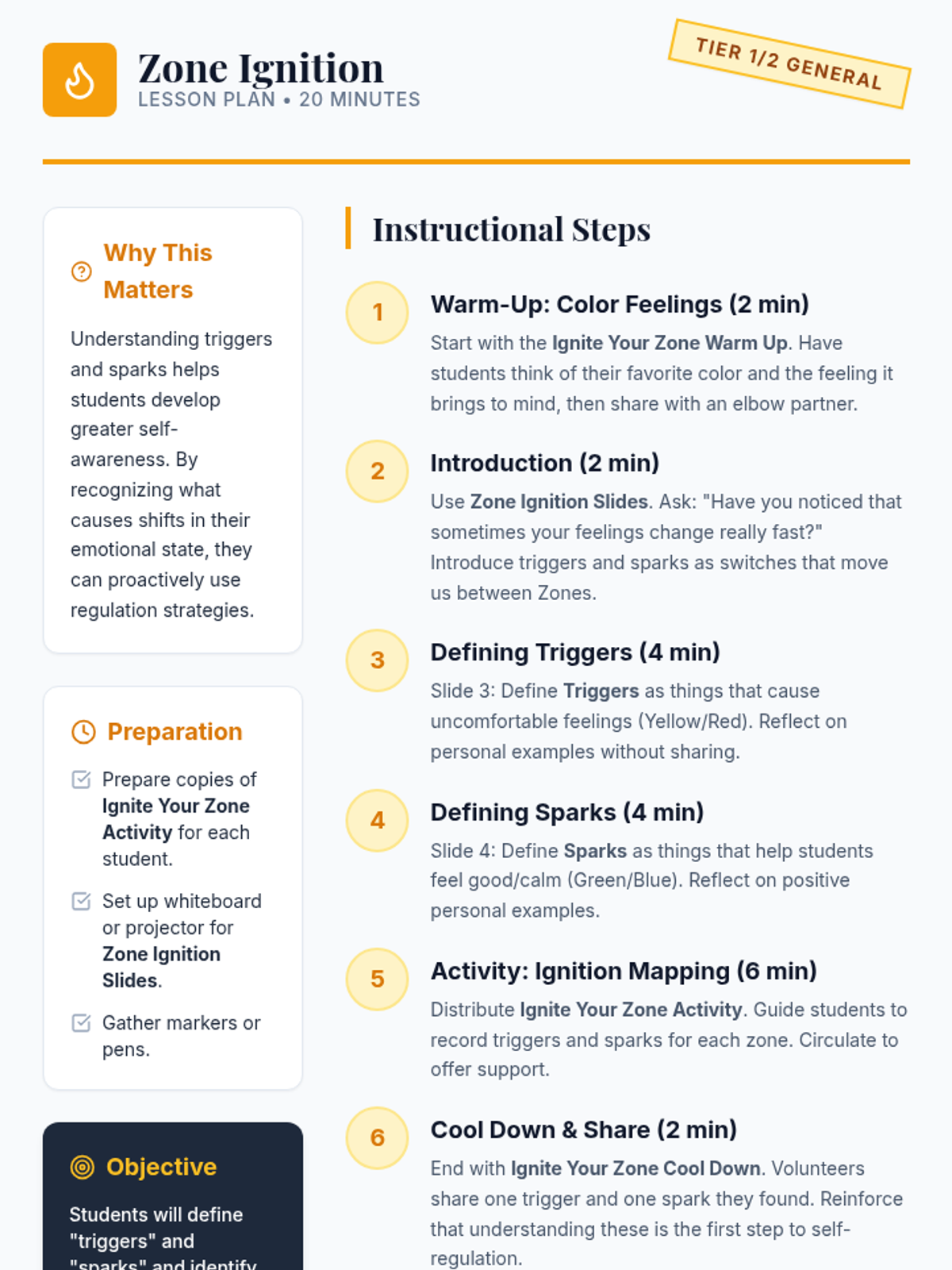
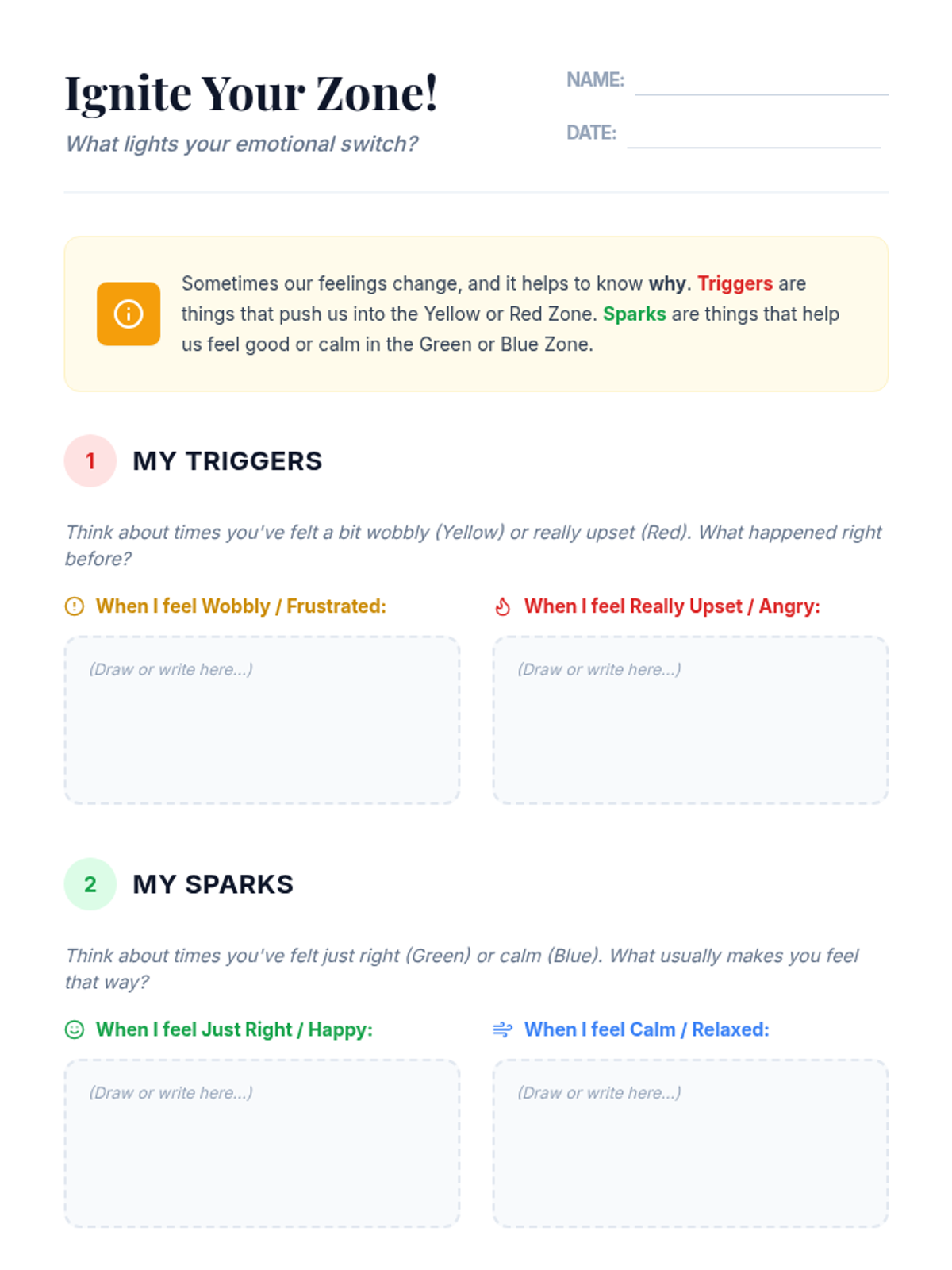
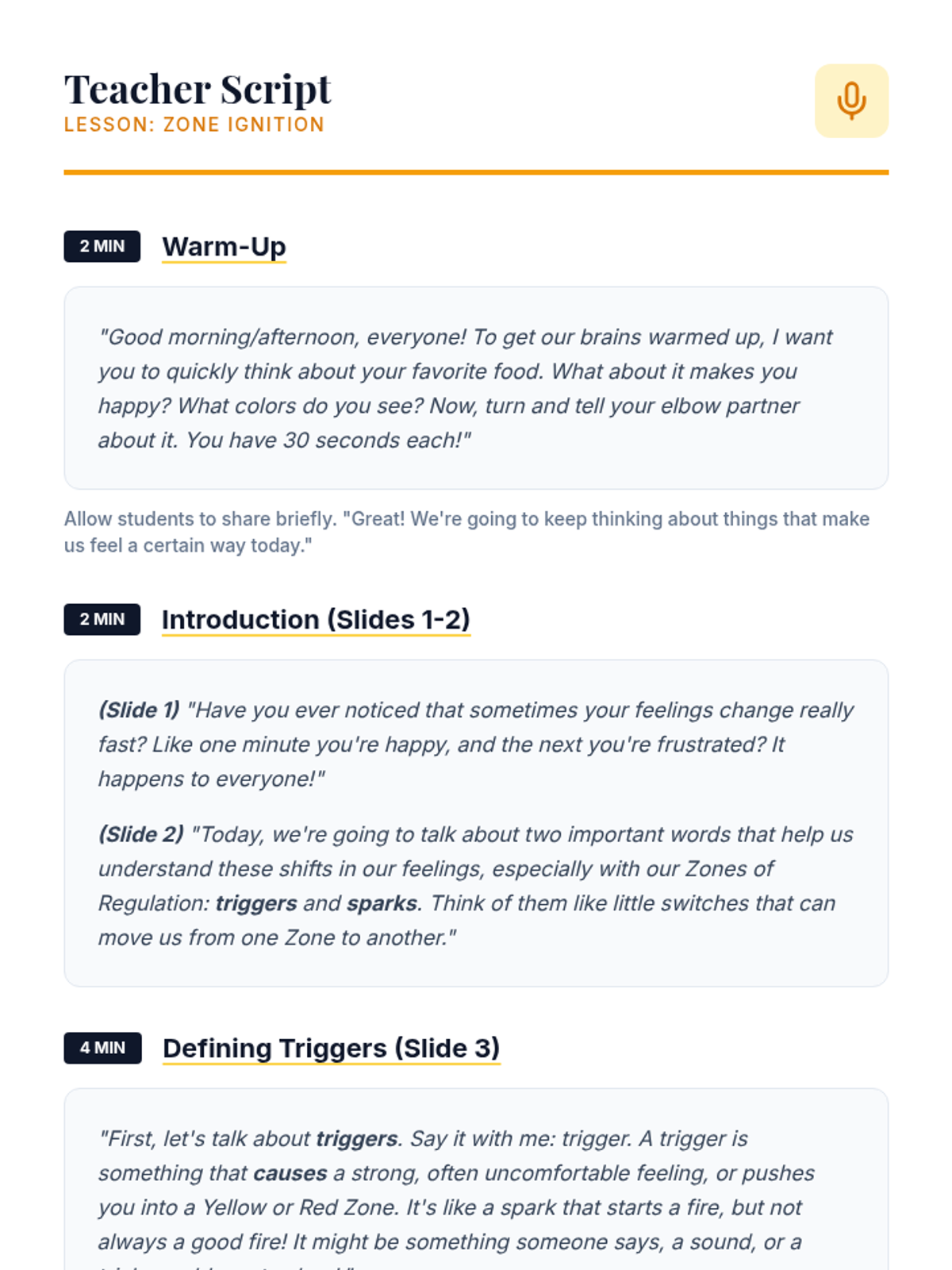
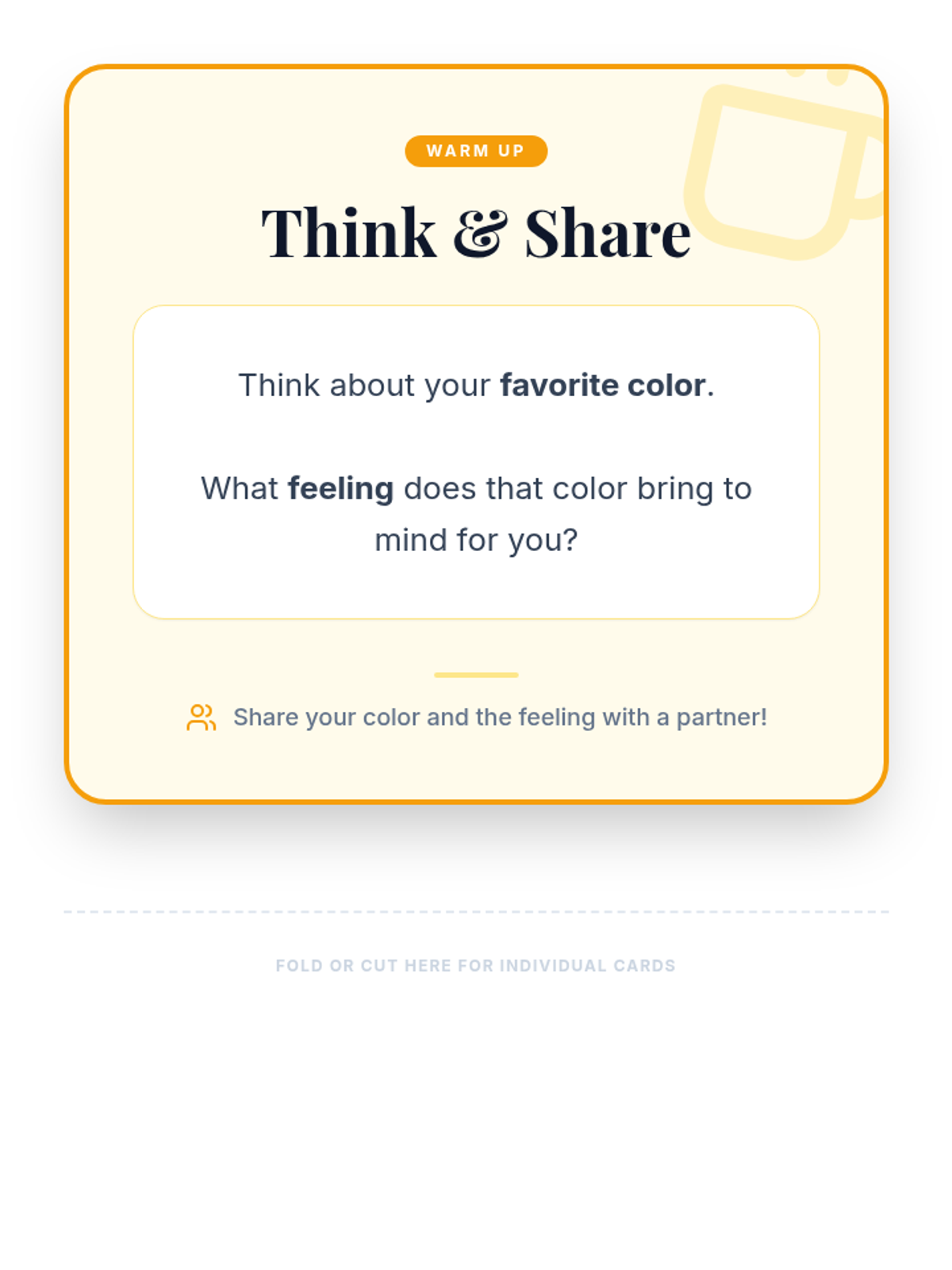
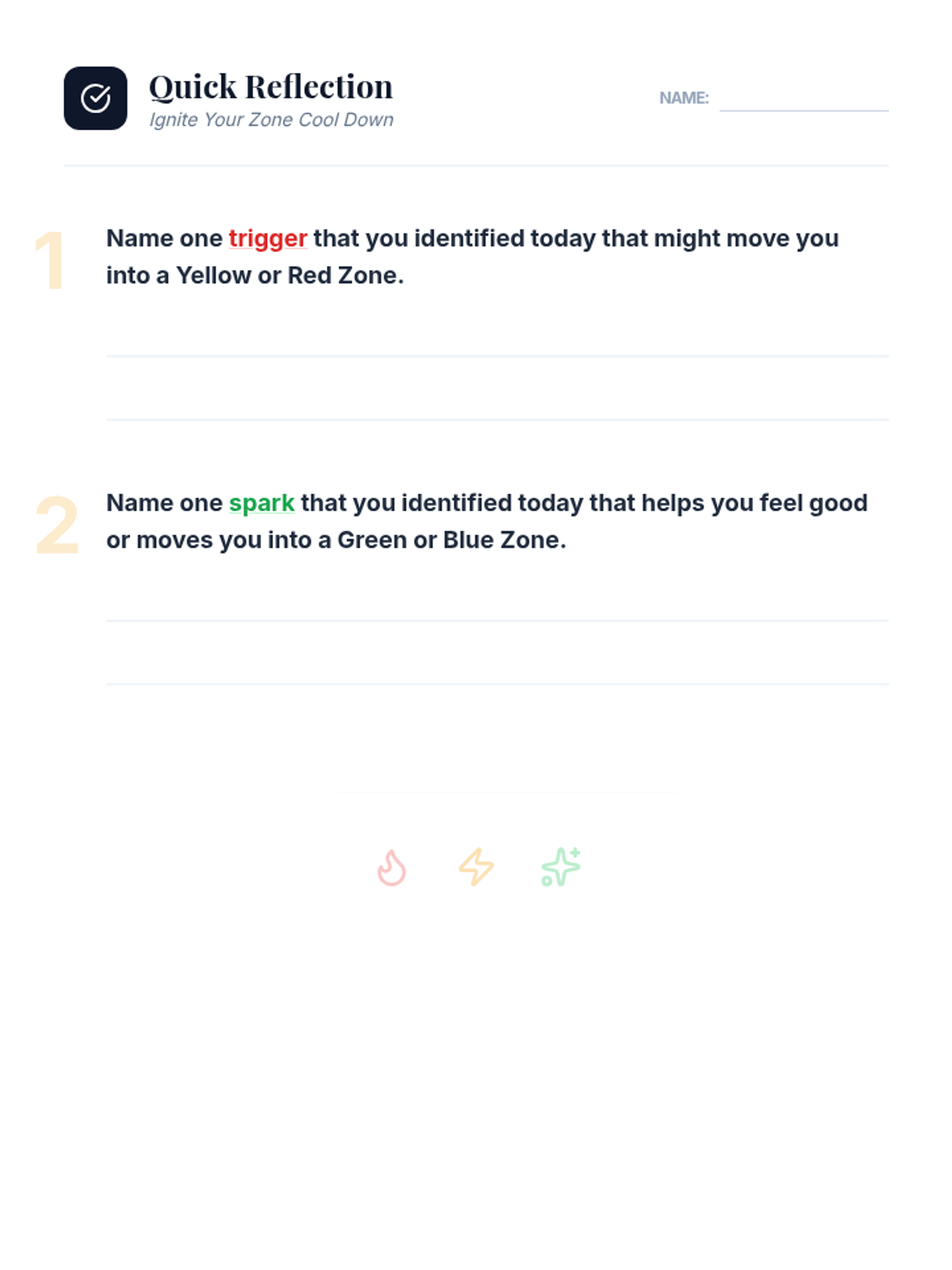
A general introduction to 'triggers' and 'sparks' using a slide deck and creative activity to help students understand what causes their emotional shifts between Zones.
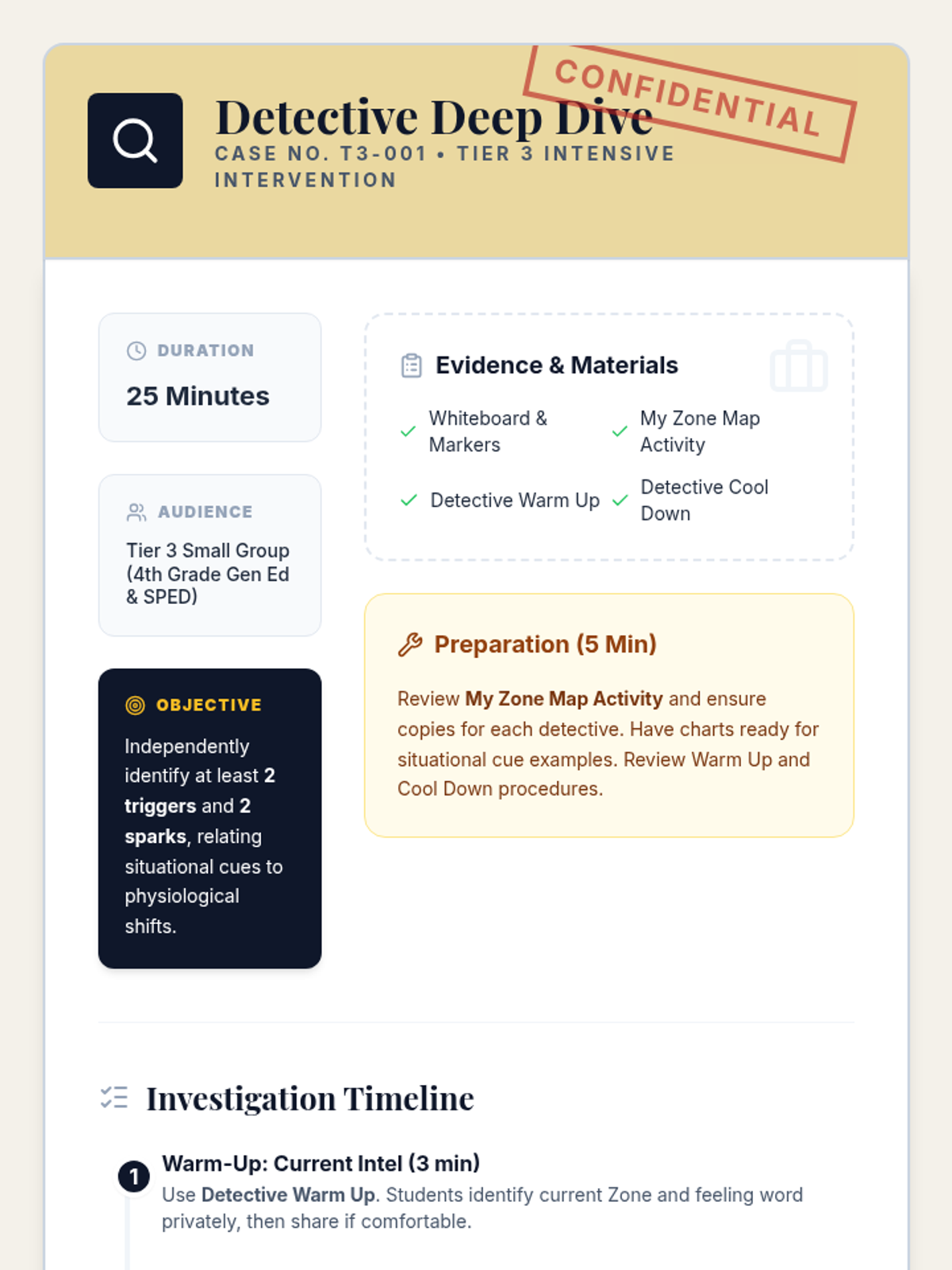
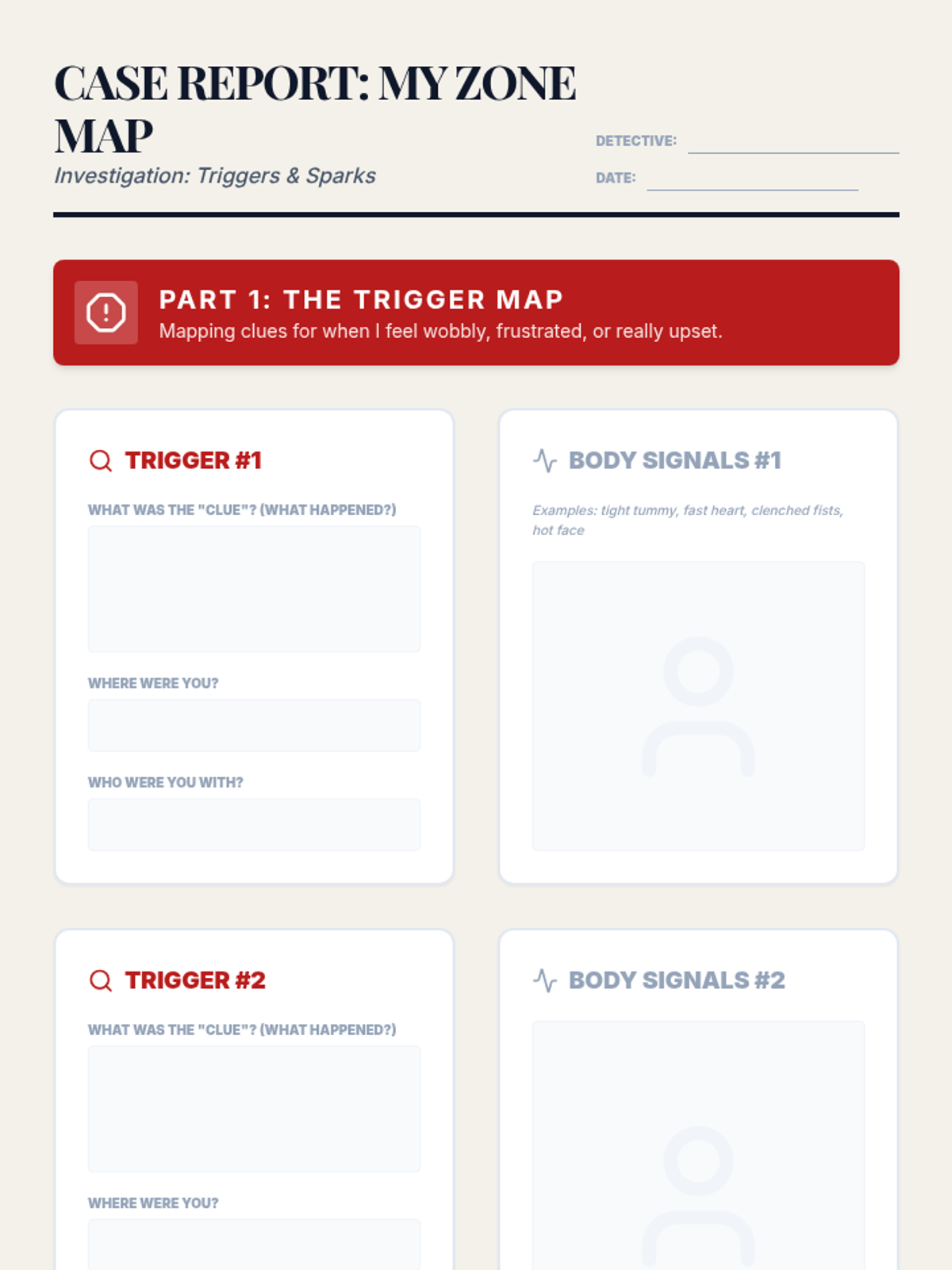
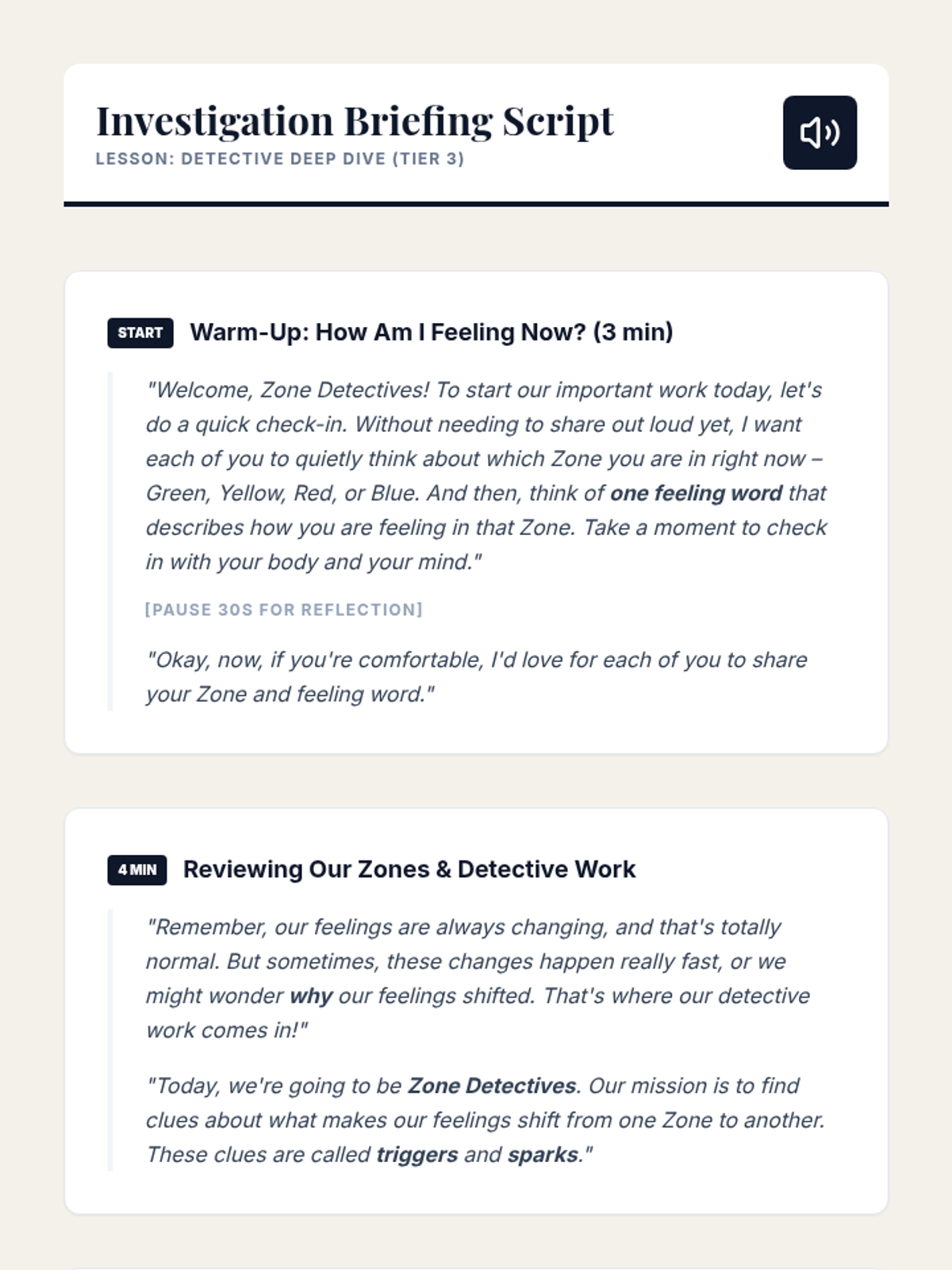
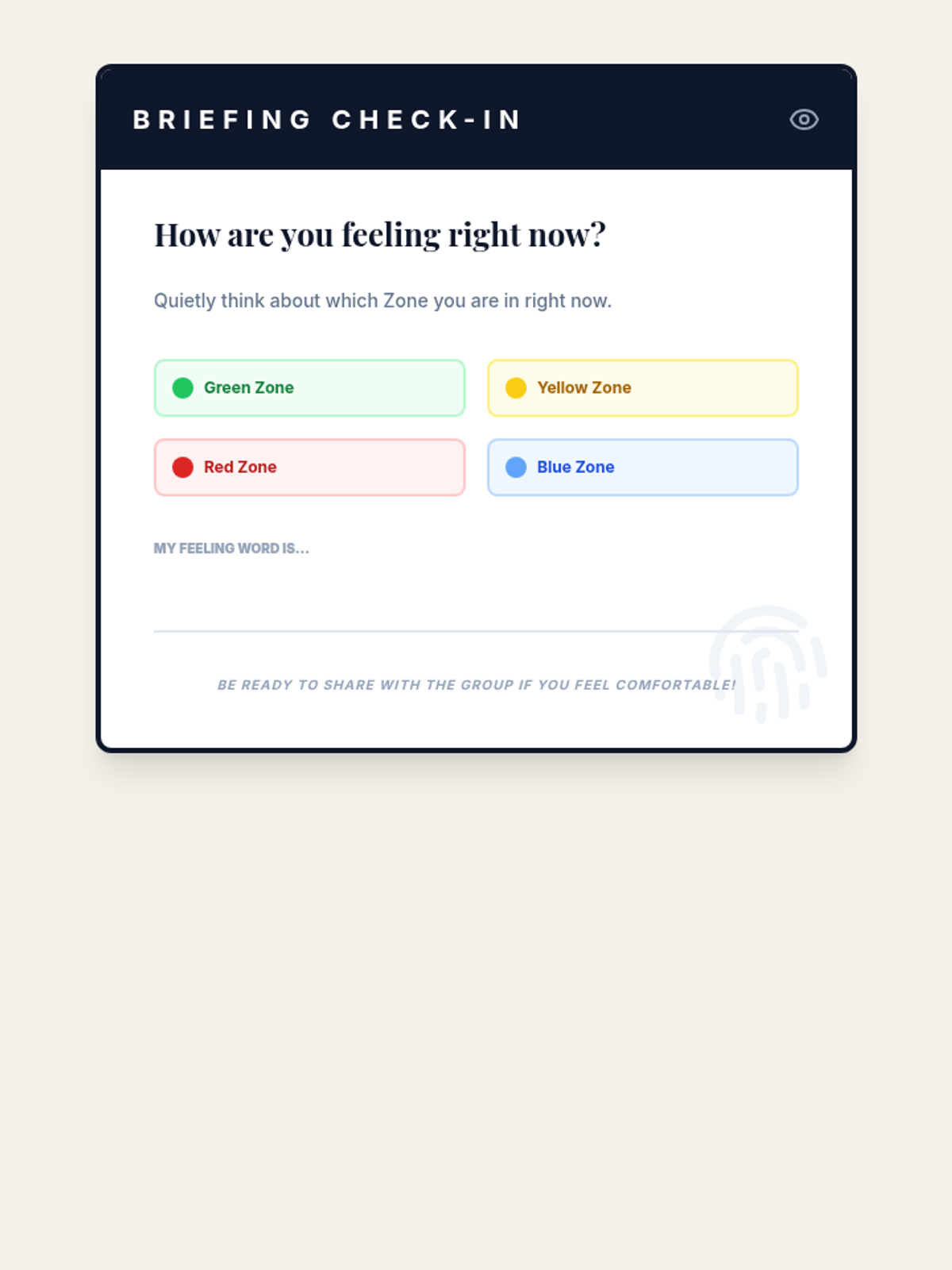
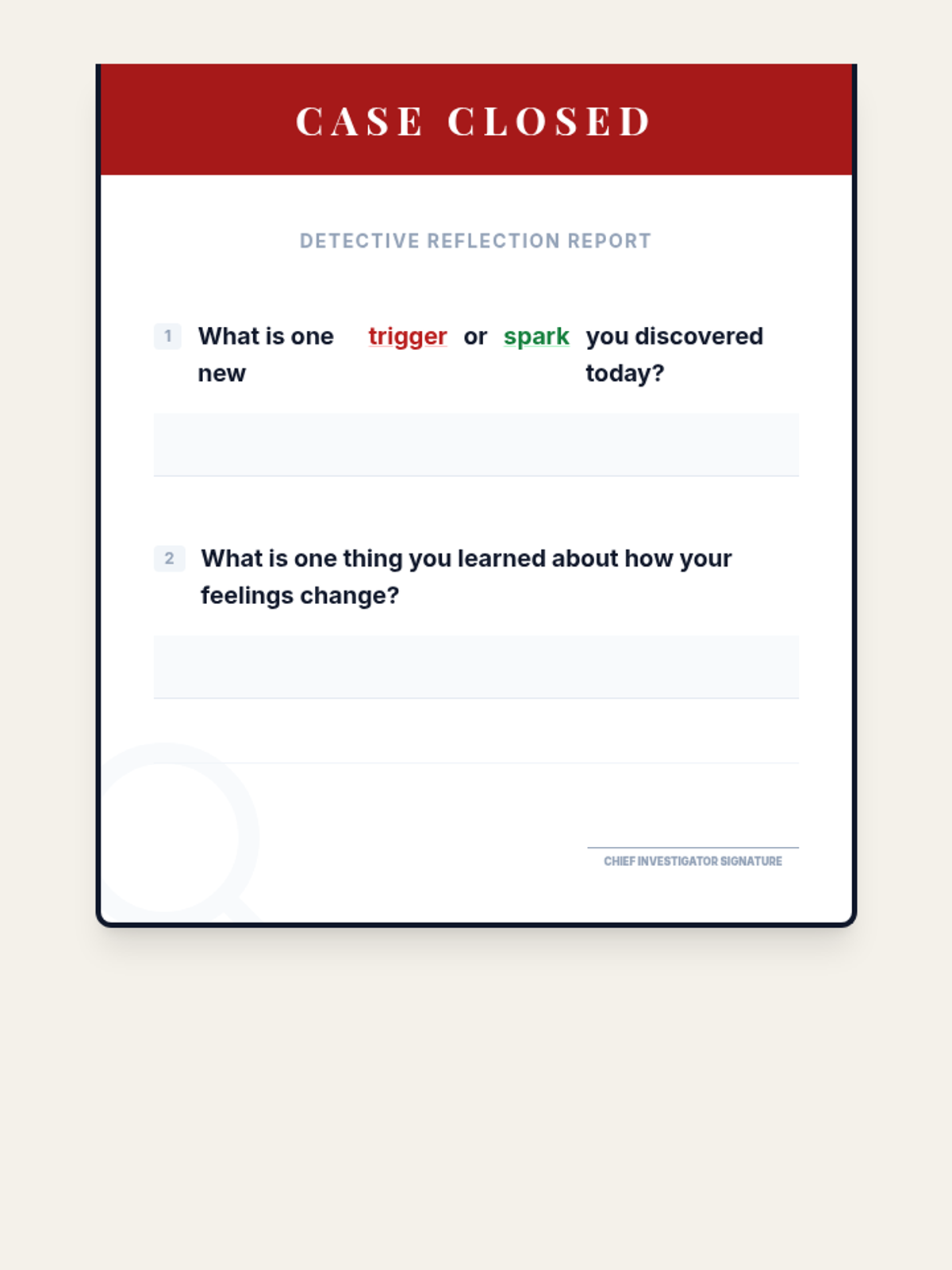
An intensive Tier 3 small-group session where students become 'Zone Detectives' to uncover personal situational cues and physiological responses to their triggers and sparks.
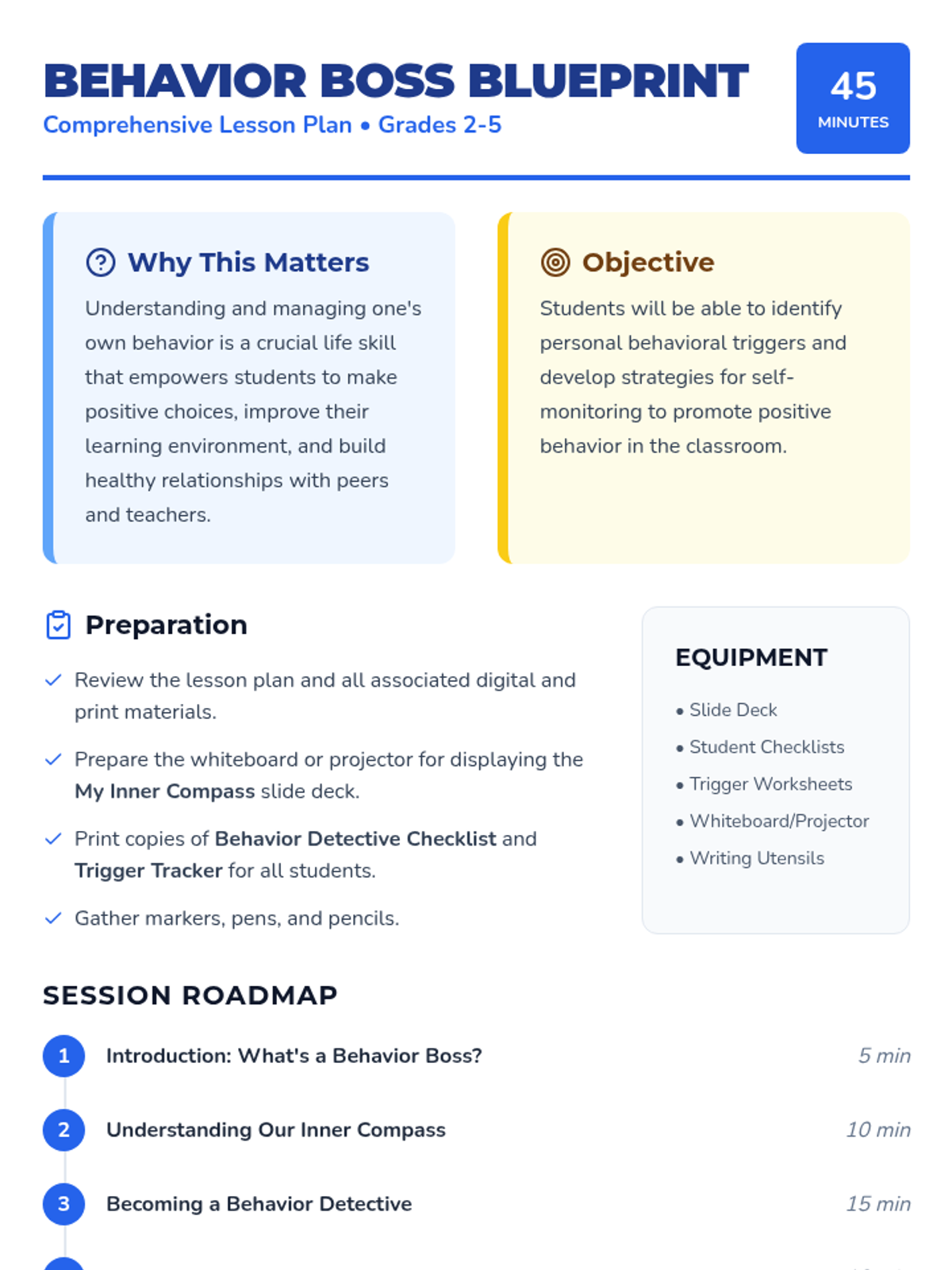
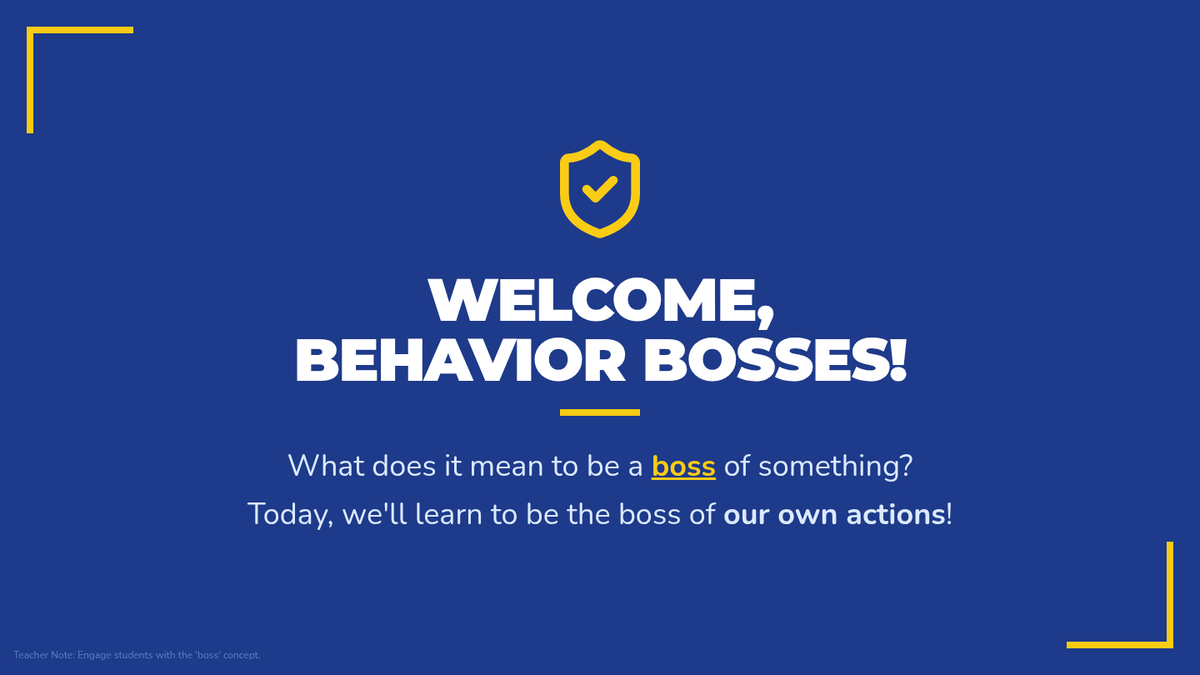
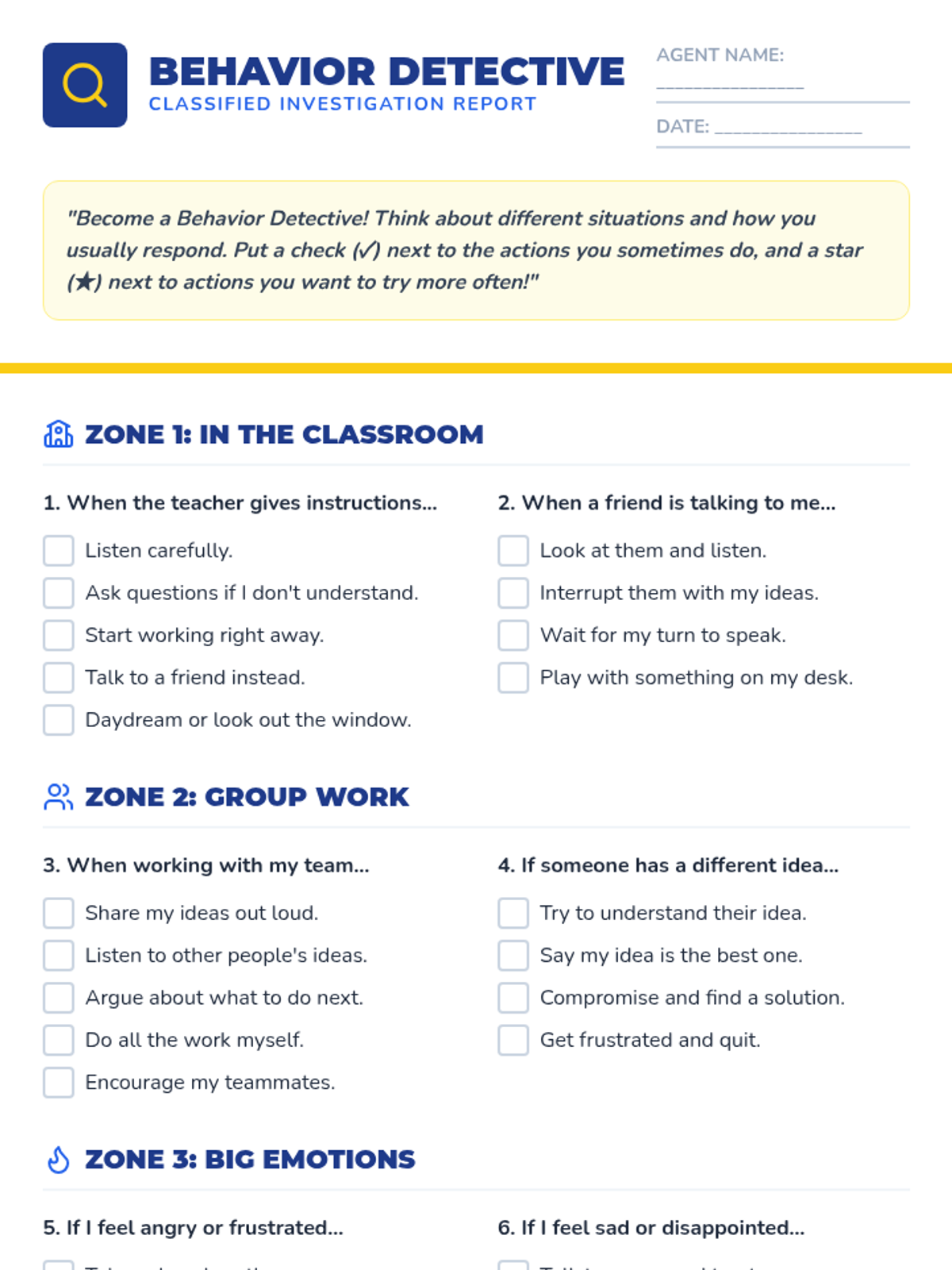
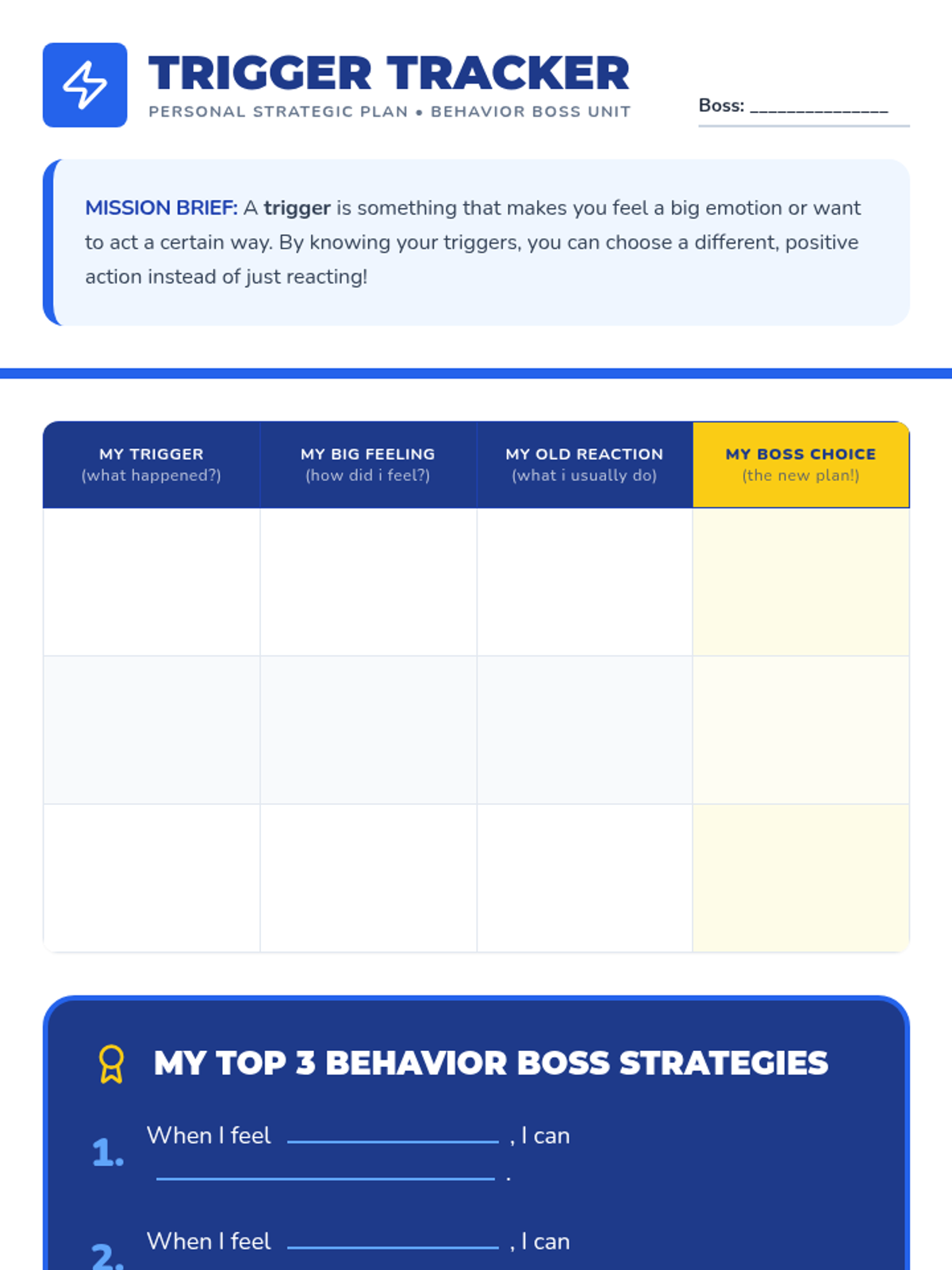
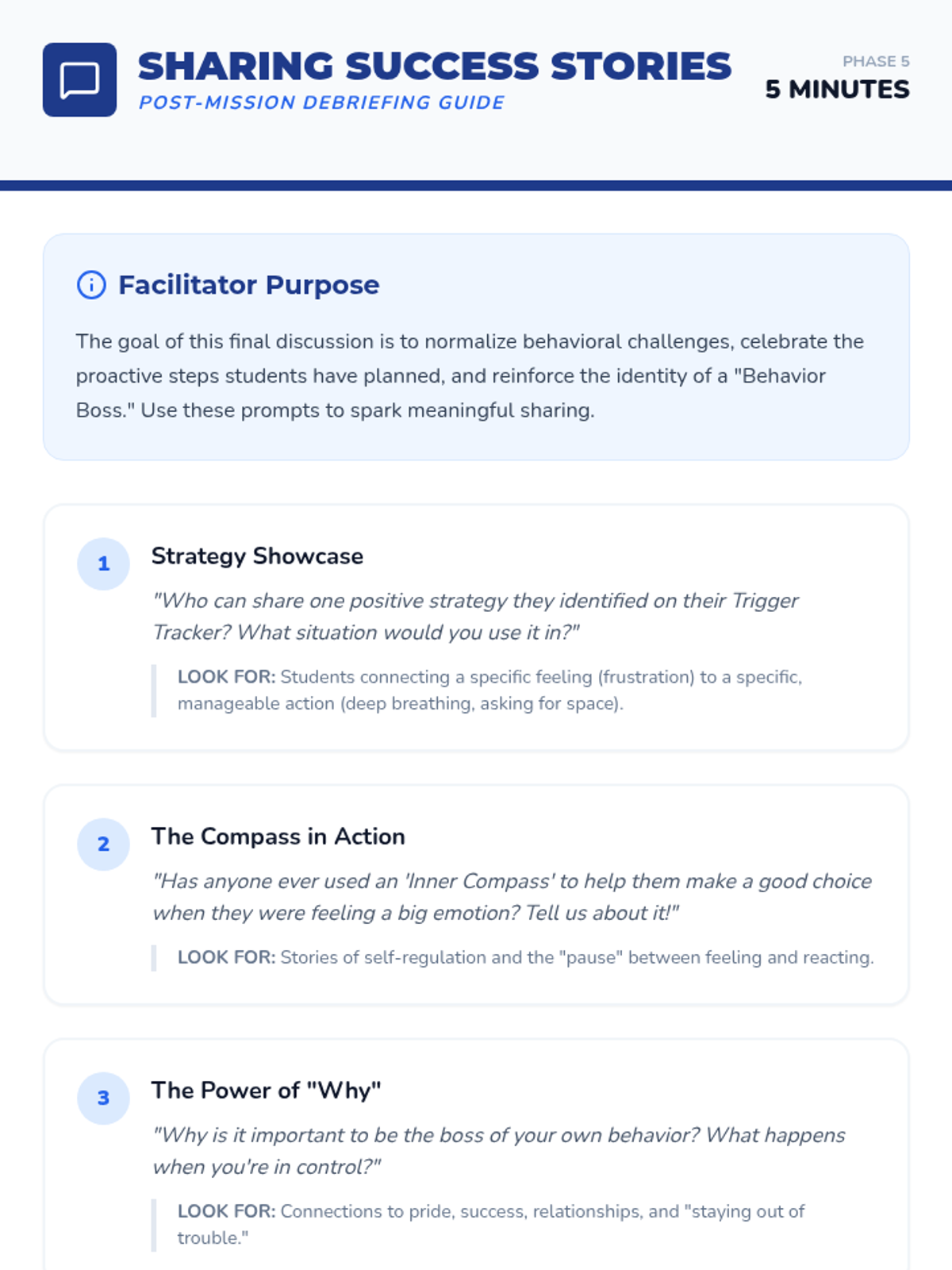
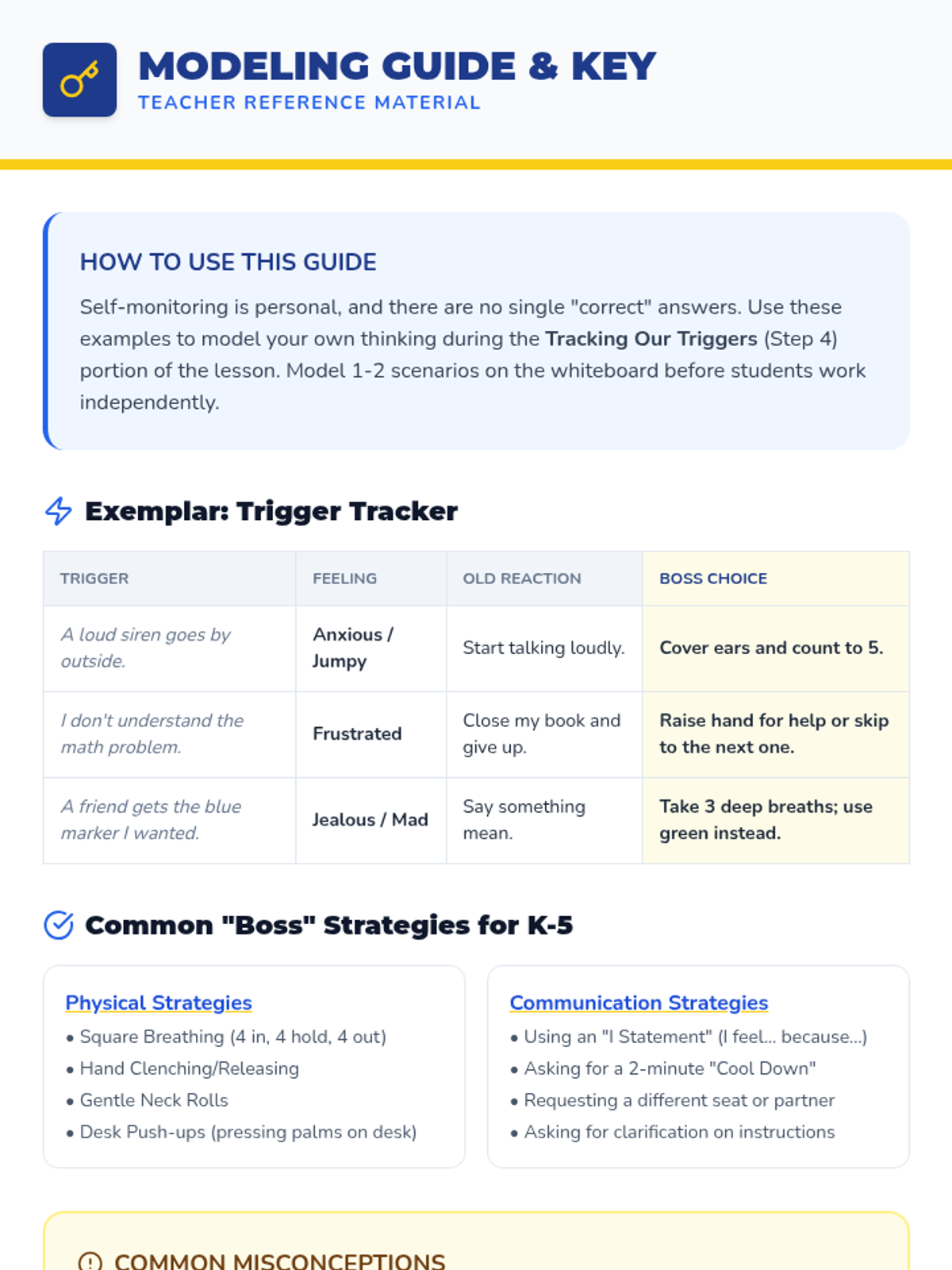
This lesson empowers elementary students to self-monitor their actions by identifying personal triggers and developing positive behavior strategies through a 'Behavior Boss' framework.
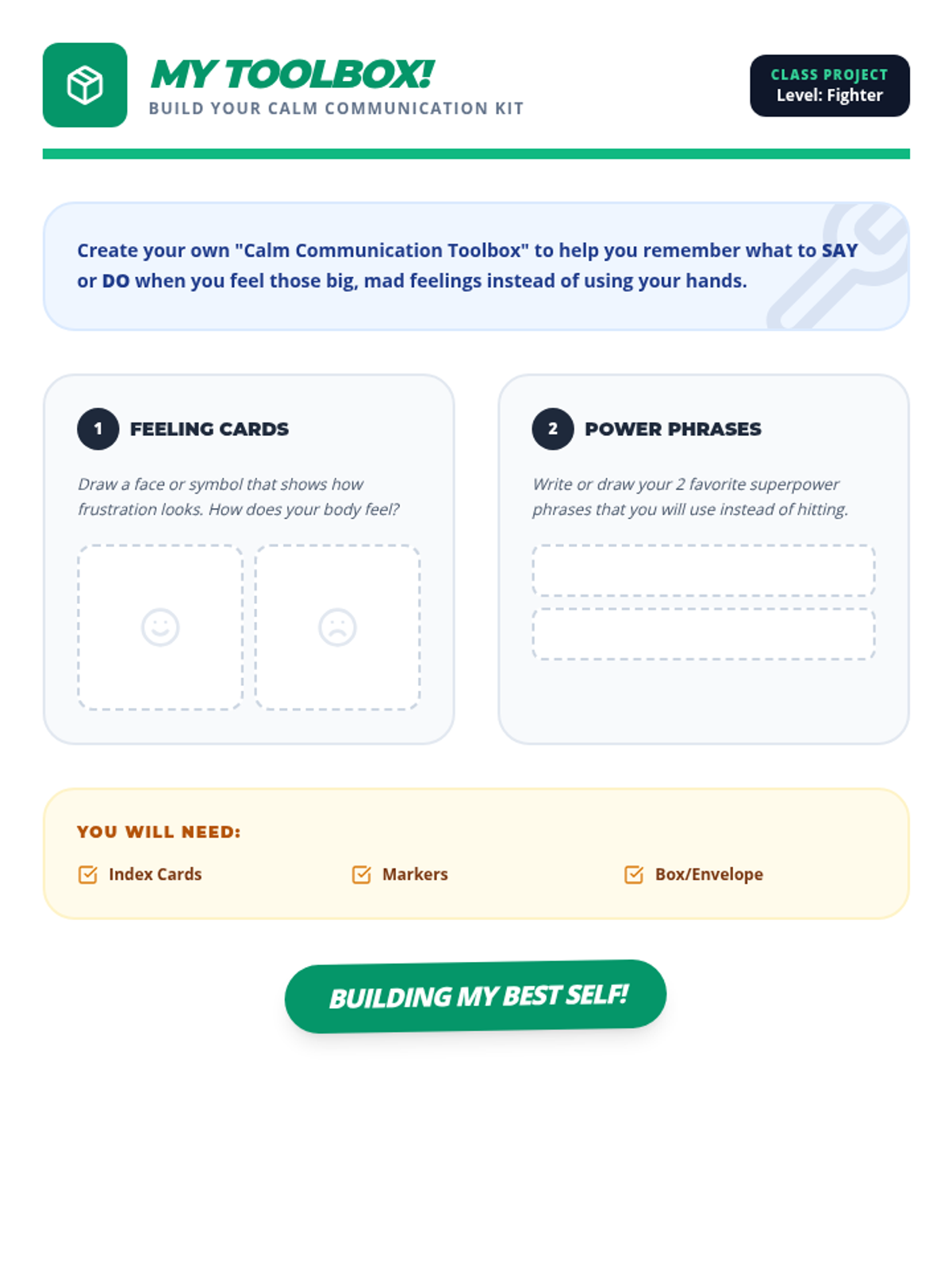
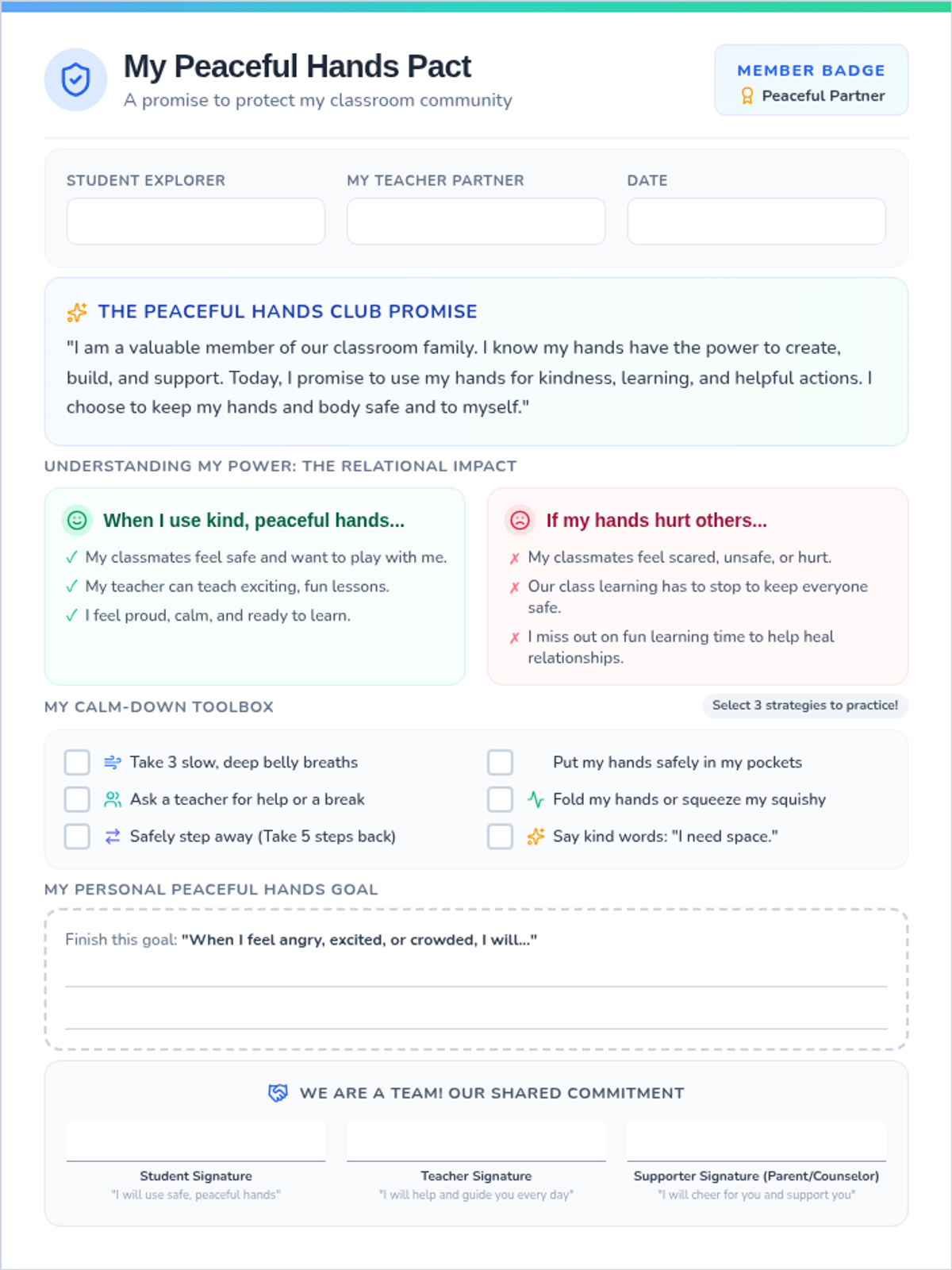
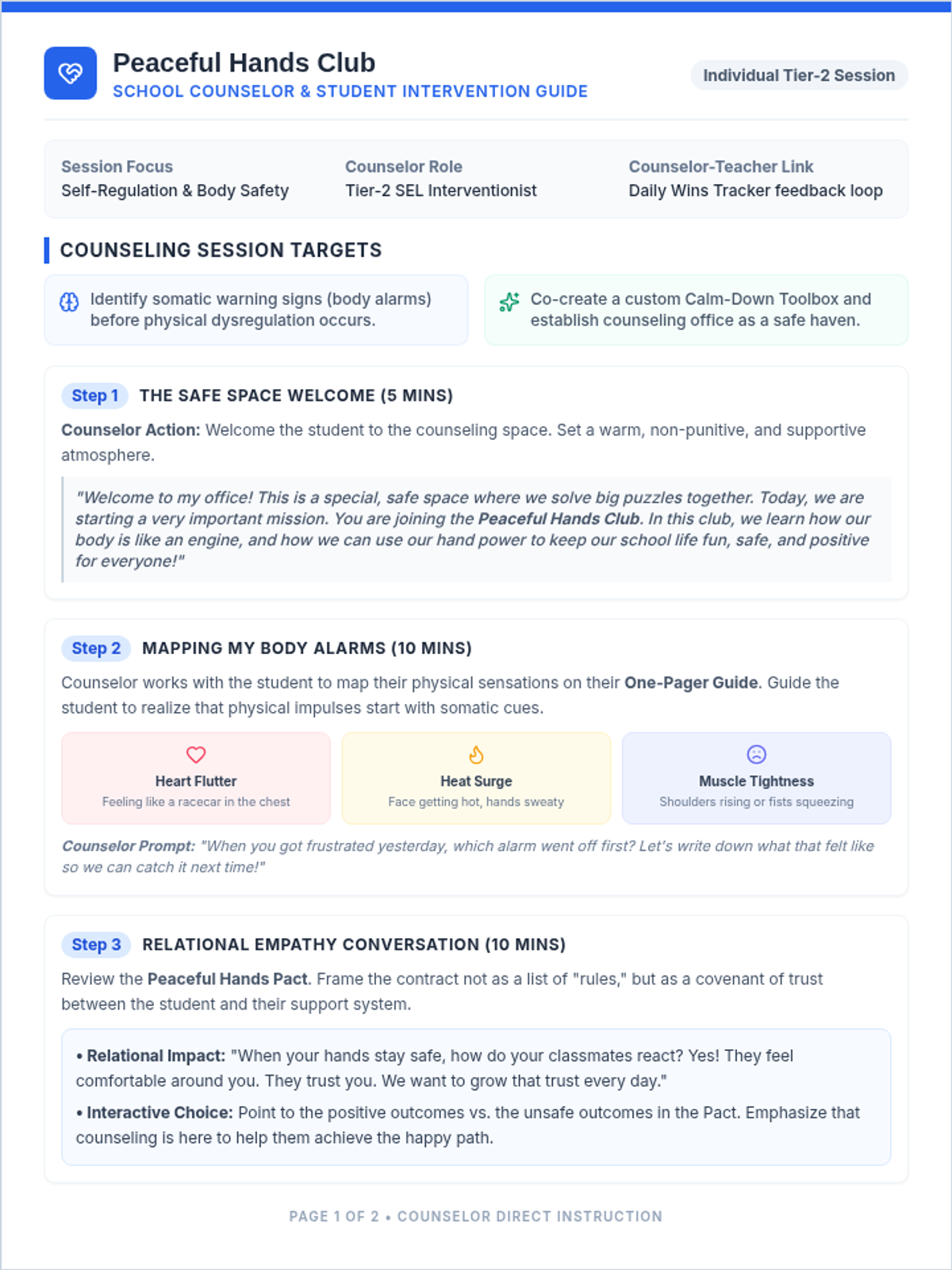
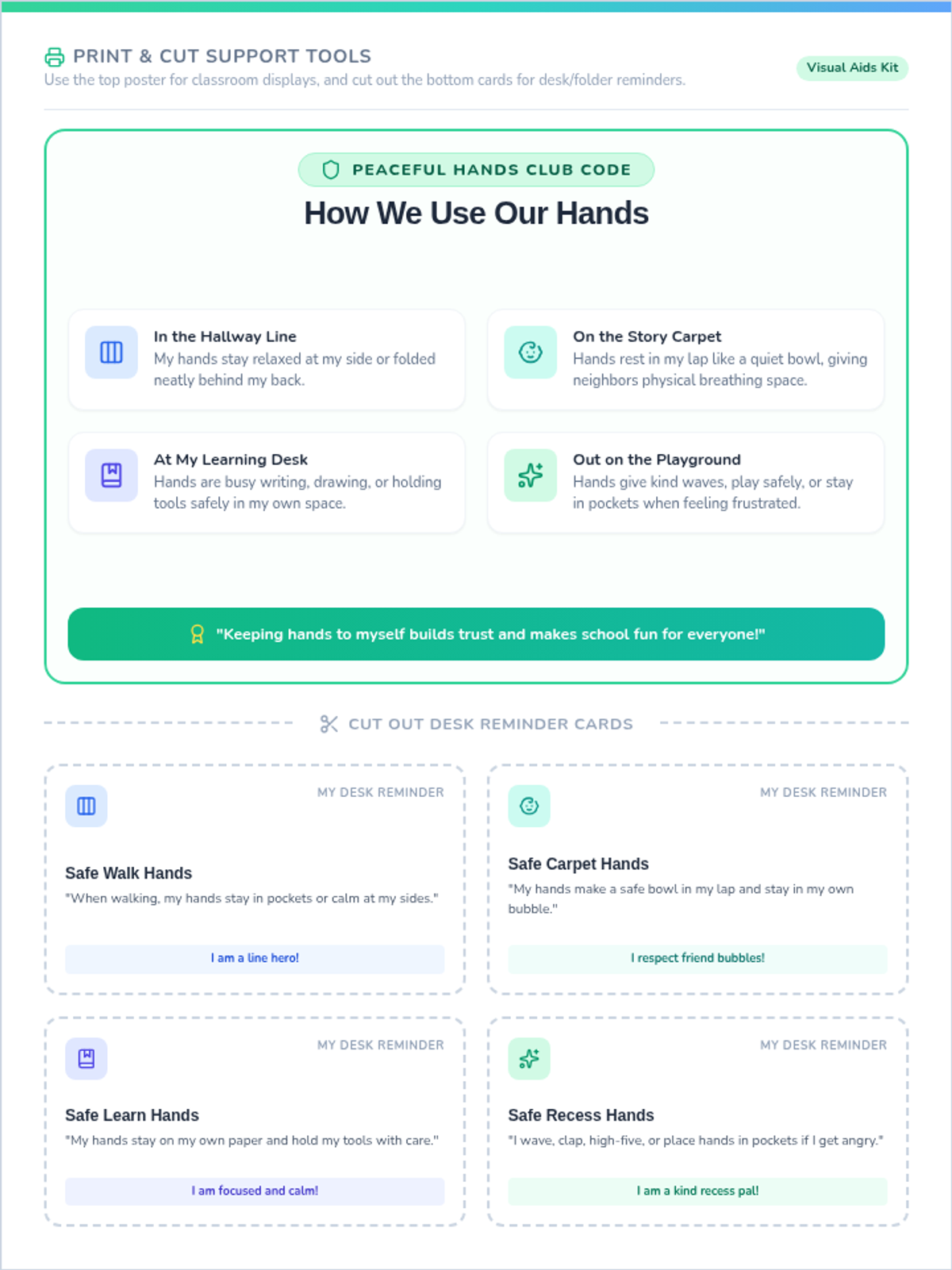
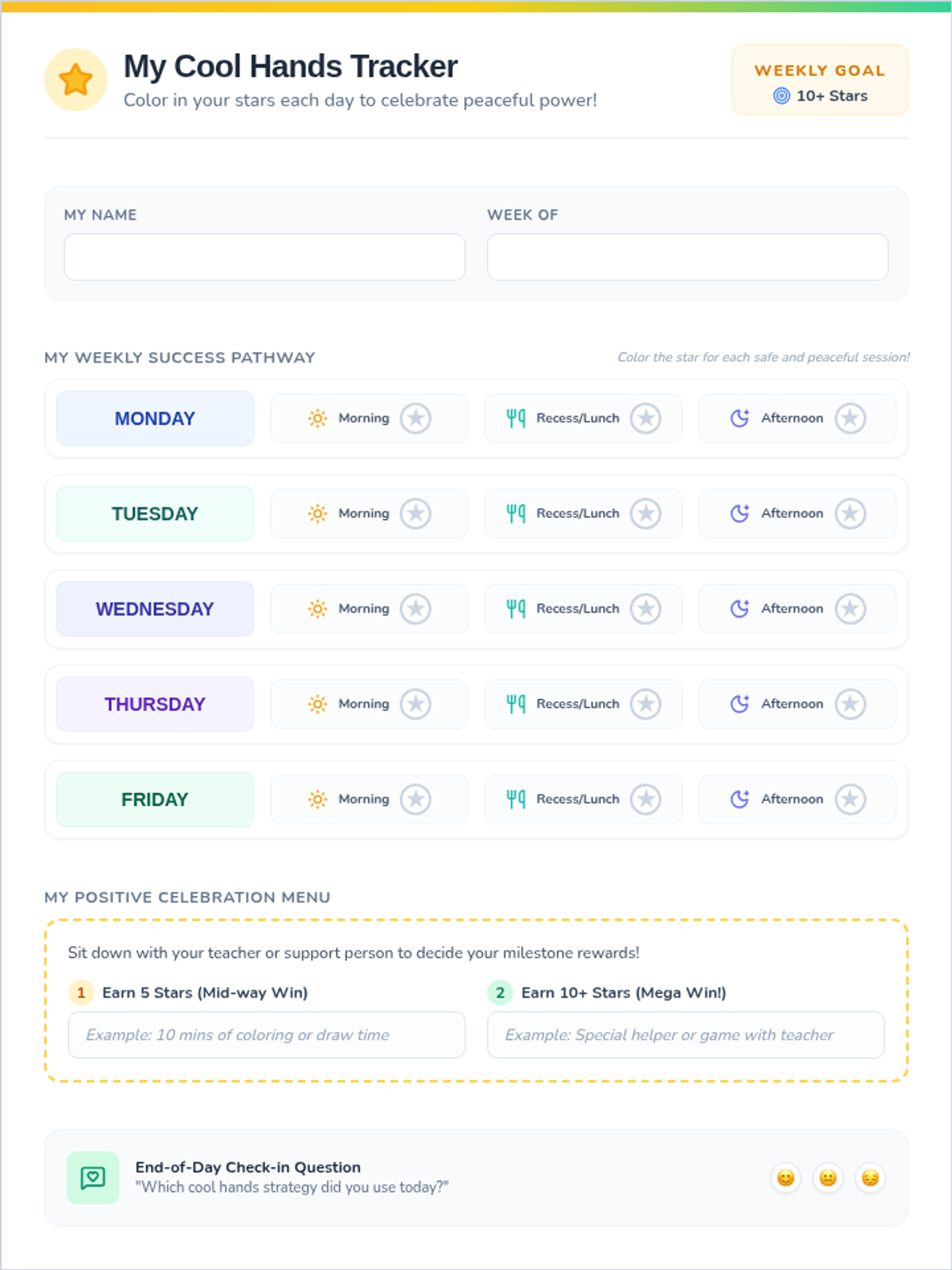
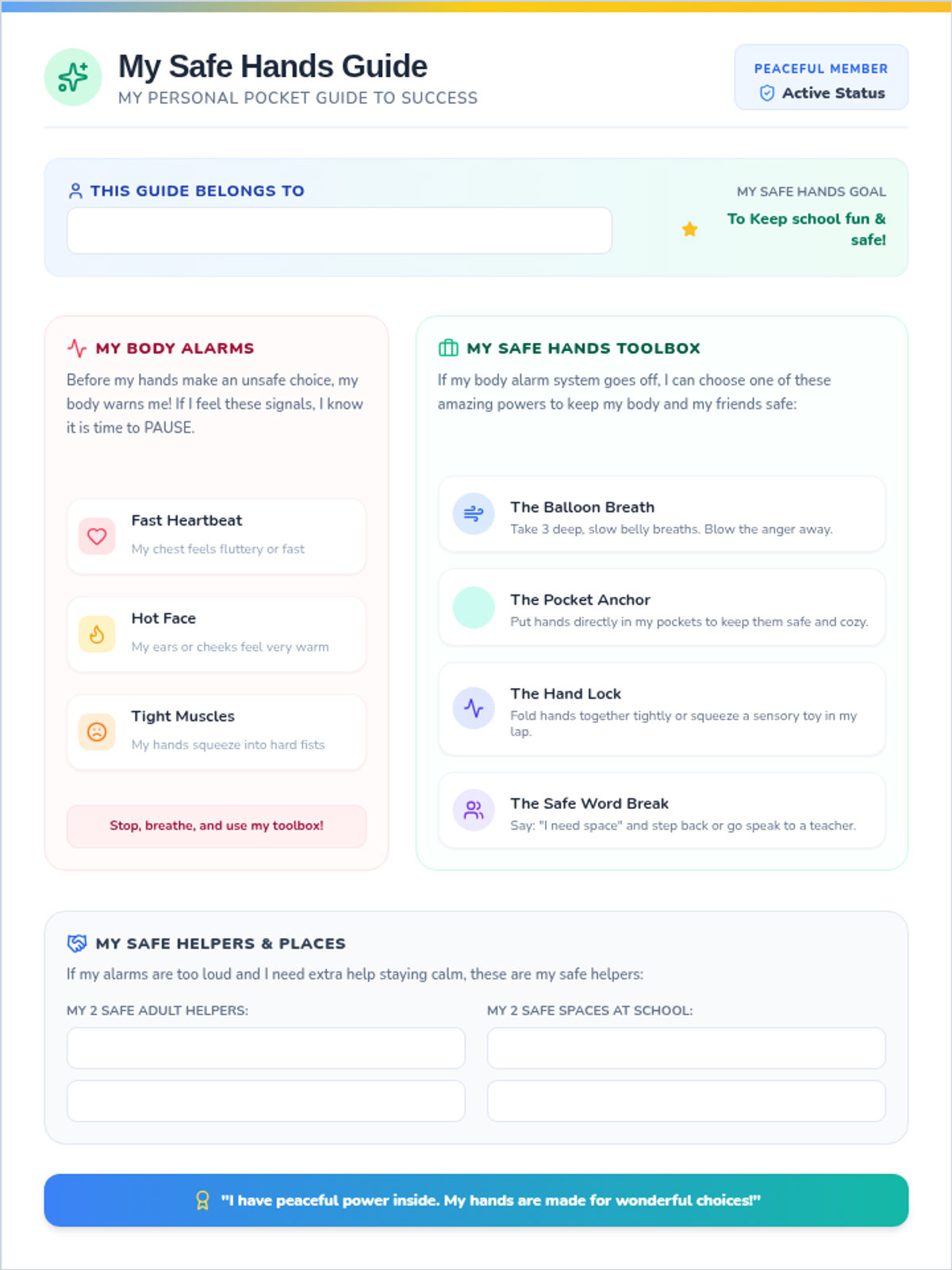
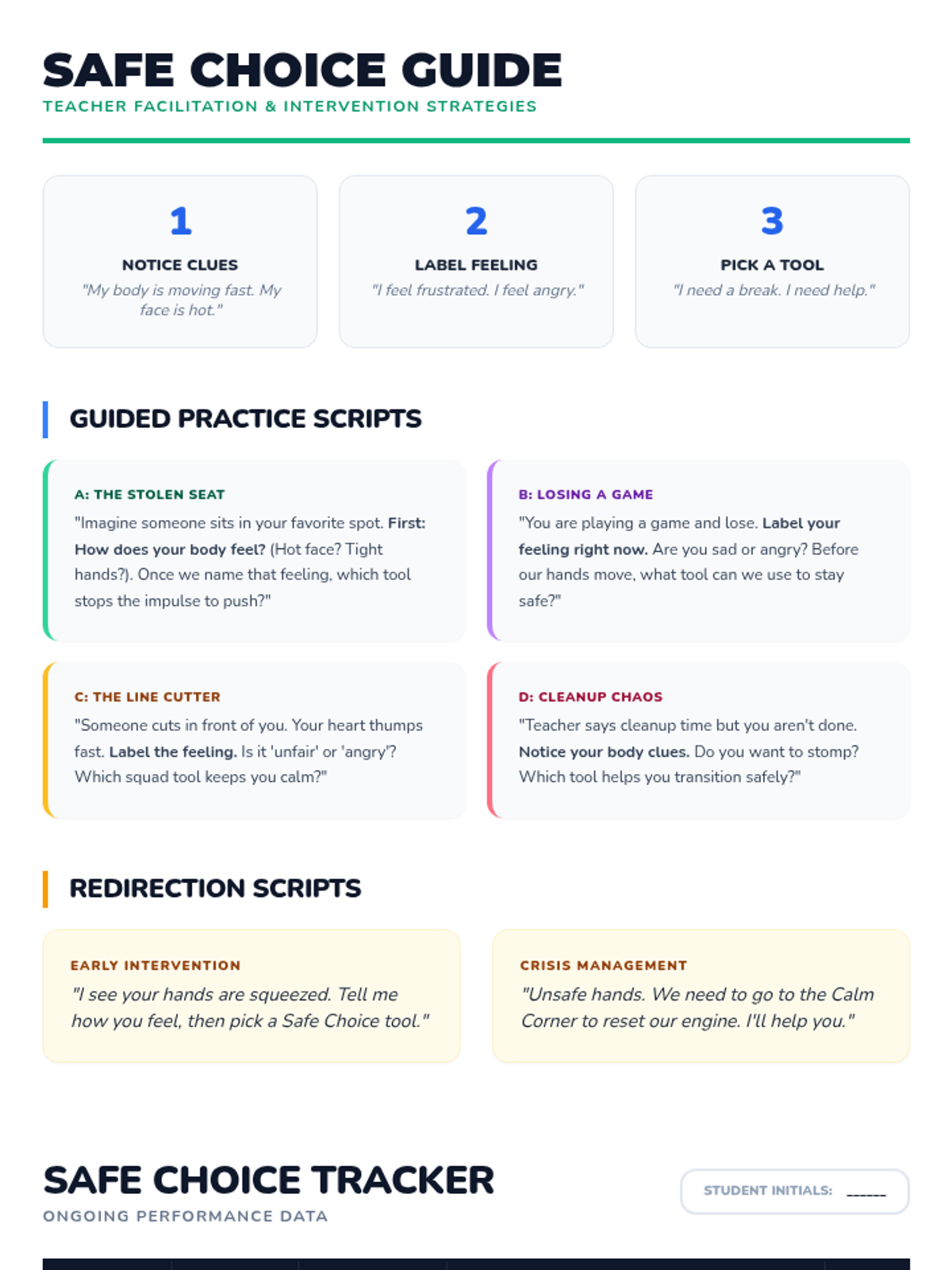
An intensive social-emotional intervention kit designed for lower elementary students to promote self-regulation and keep hands to themselves. This kit includes a relational behavior contract, an interactive lesson plan with role-play scenarios, visual aids, and a daily progress tracker.
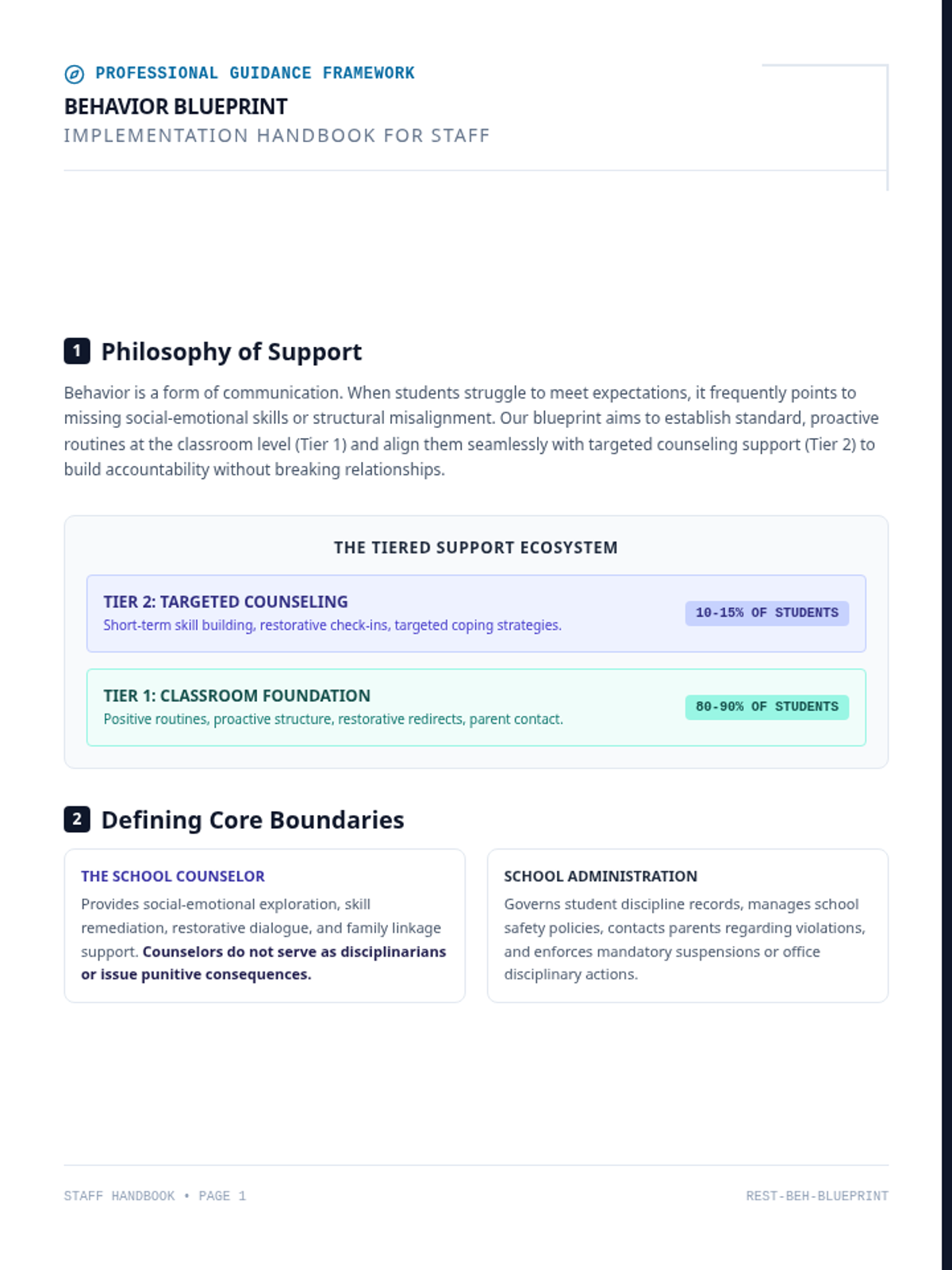
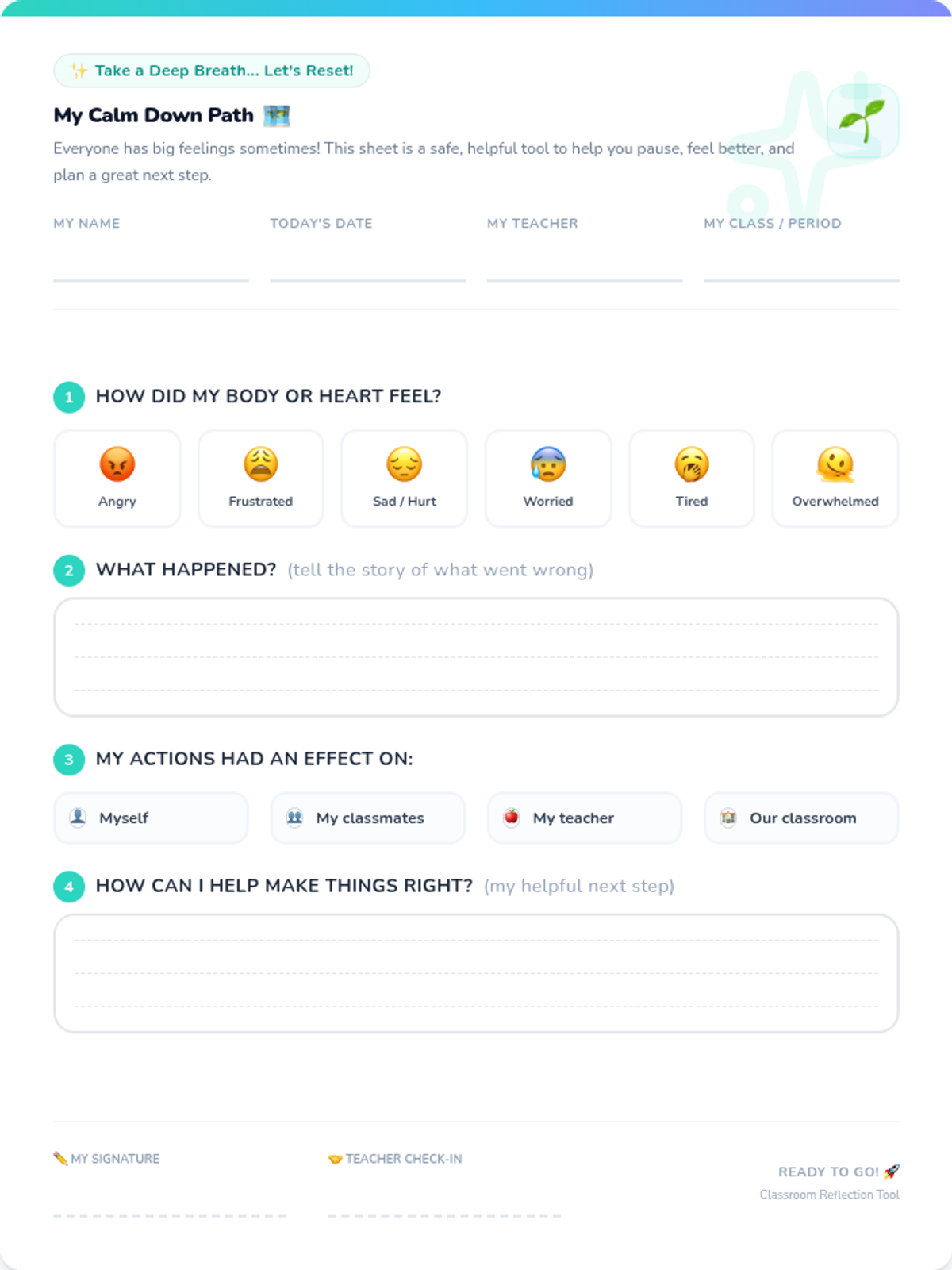
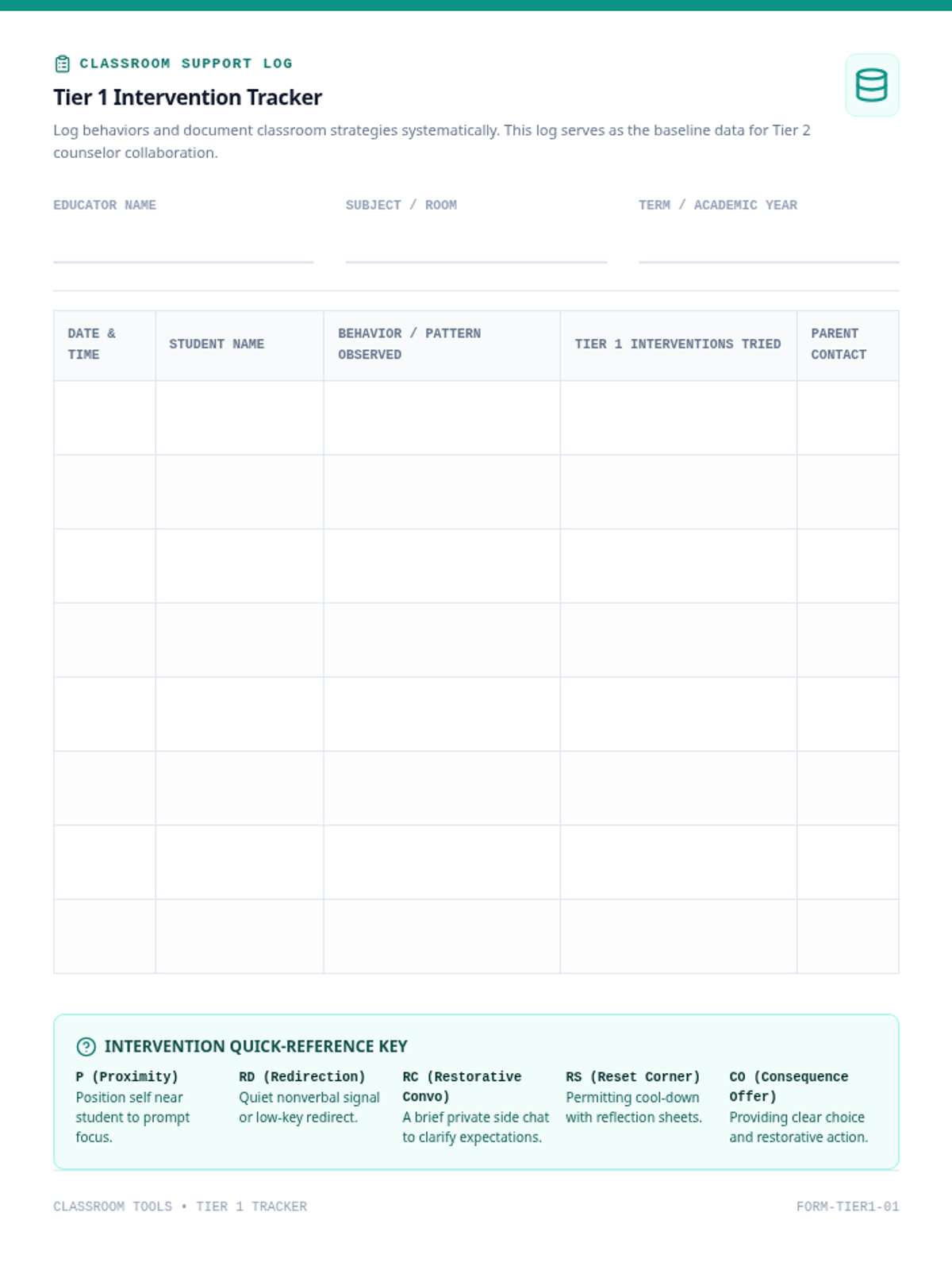
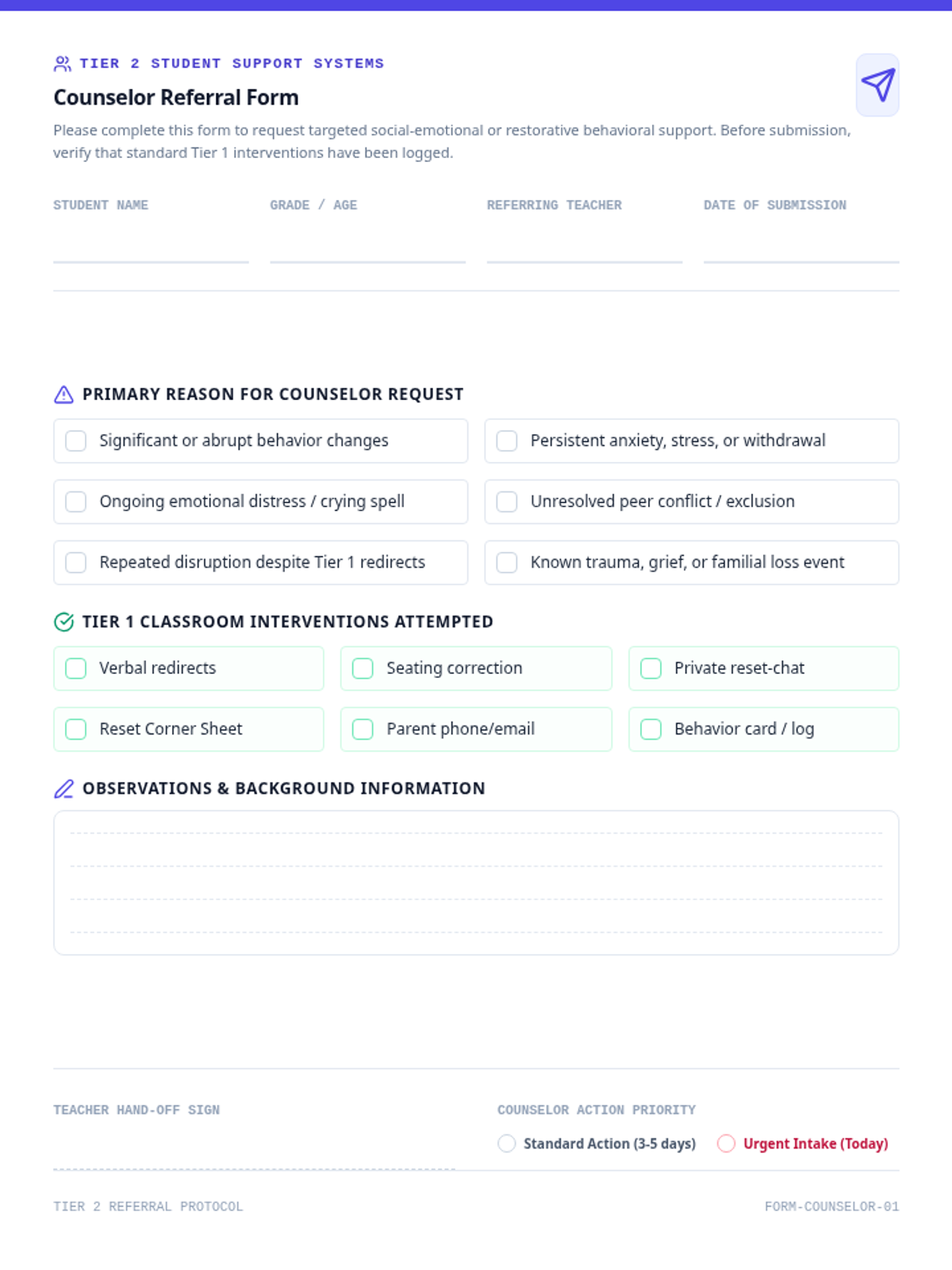
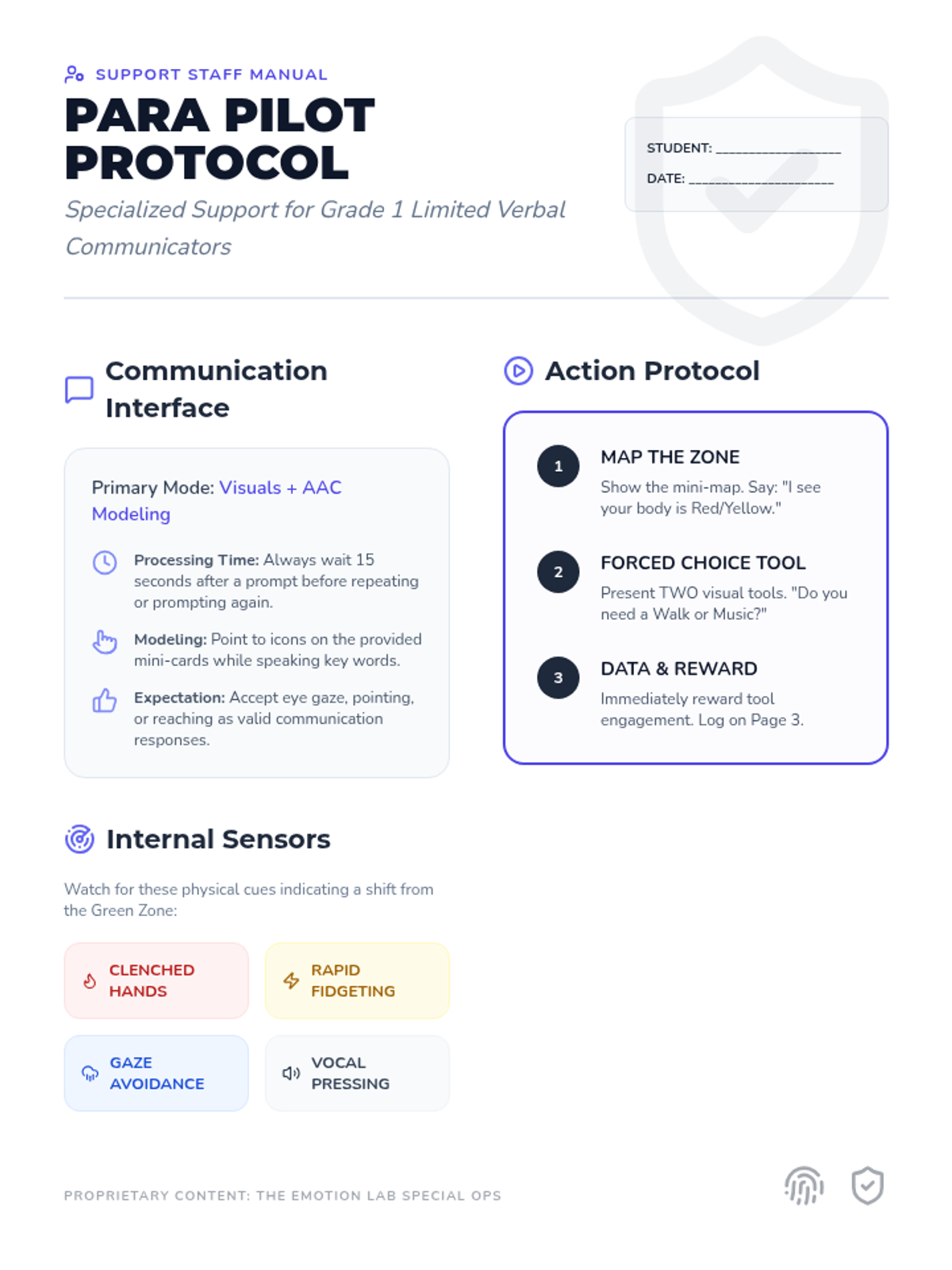
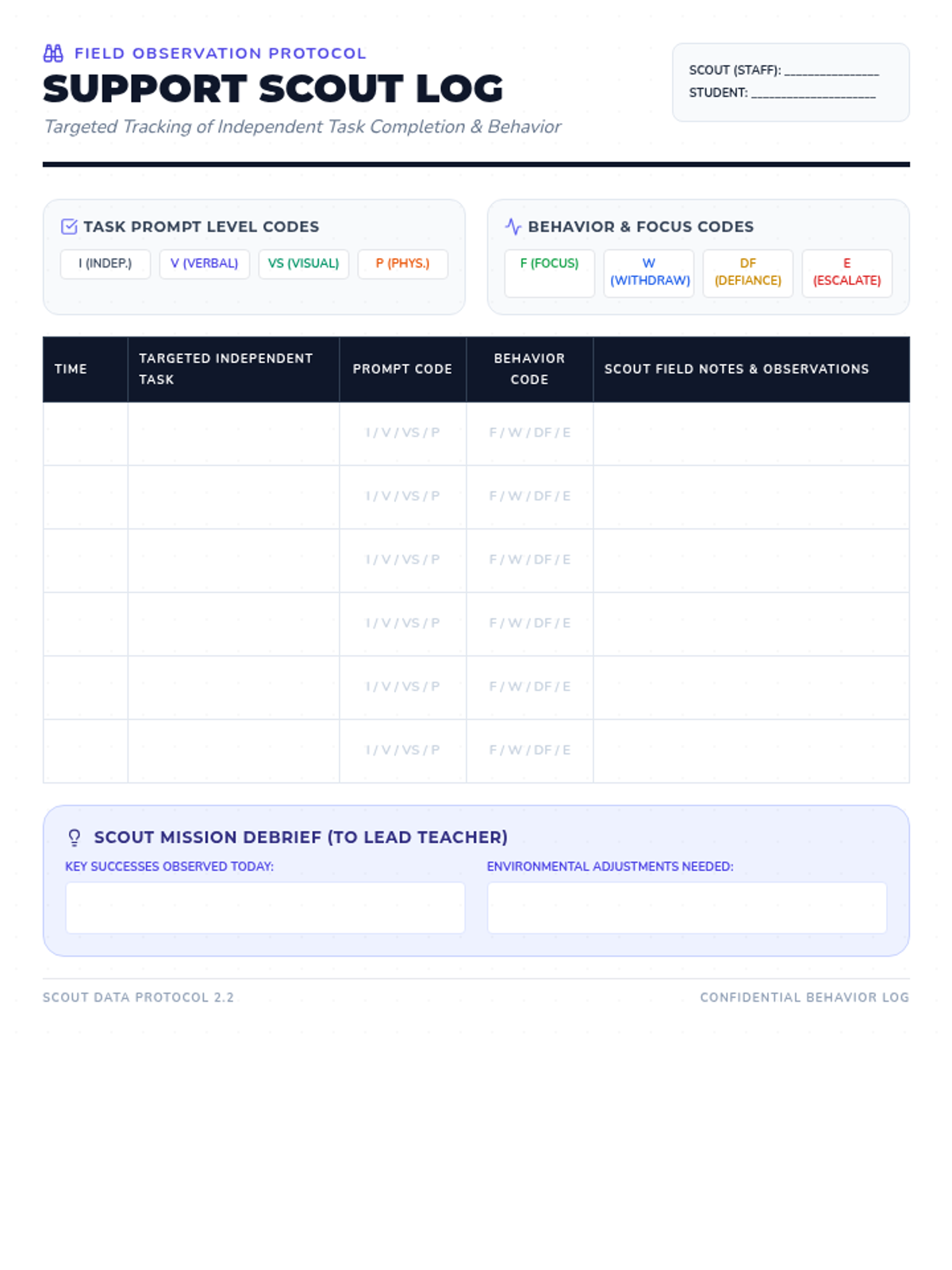
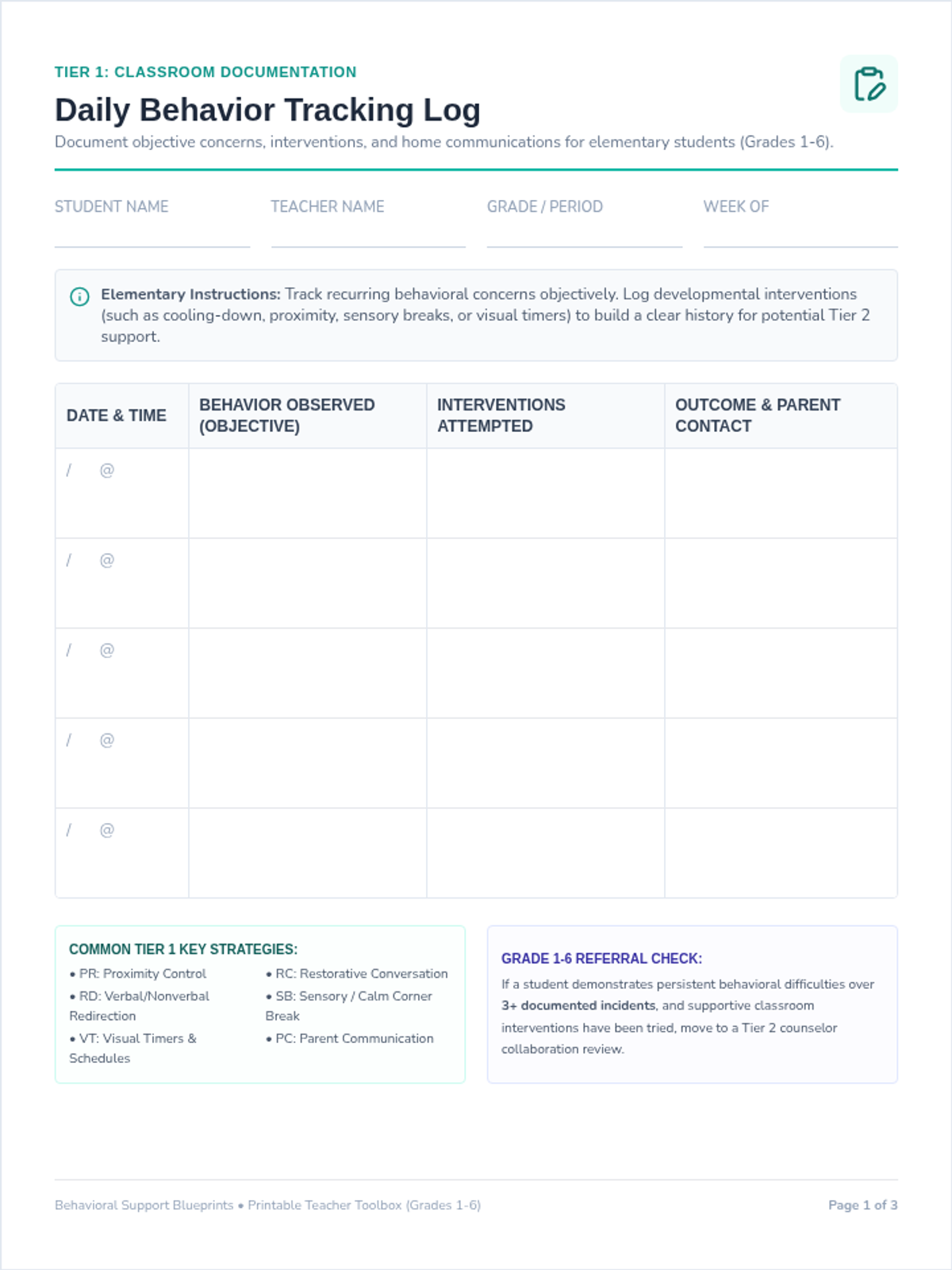
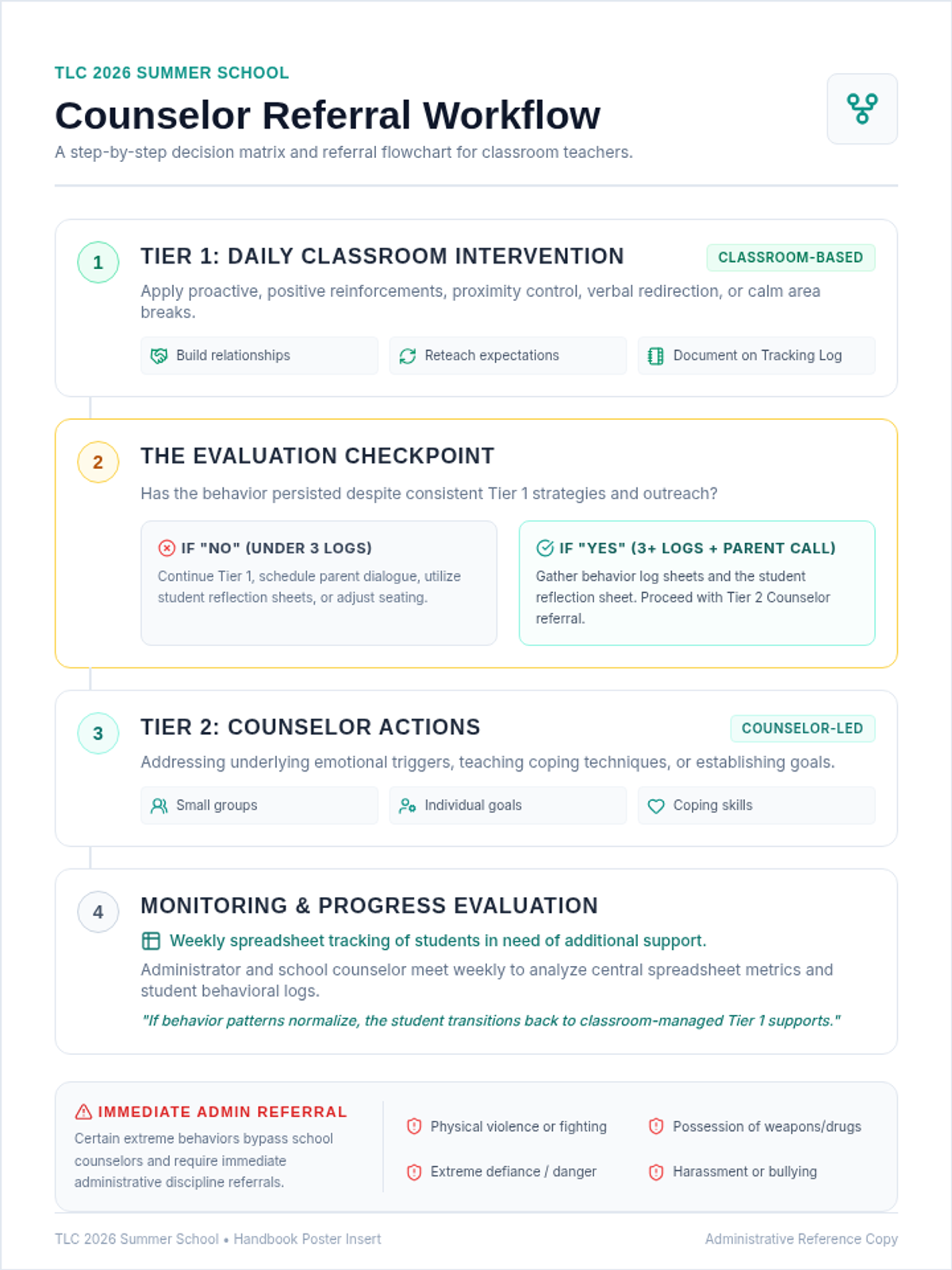
A comprehensive behavioral support and intervention rollout toolkit containing staff training materials, classroom de-escalation tools, student self-regulation resources, teacher tracking logs, and a structured counseling referral workflow.
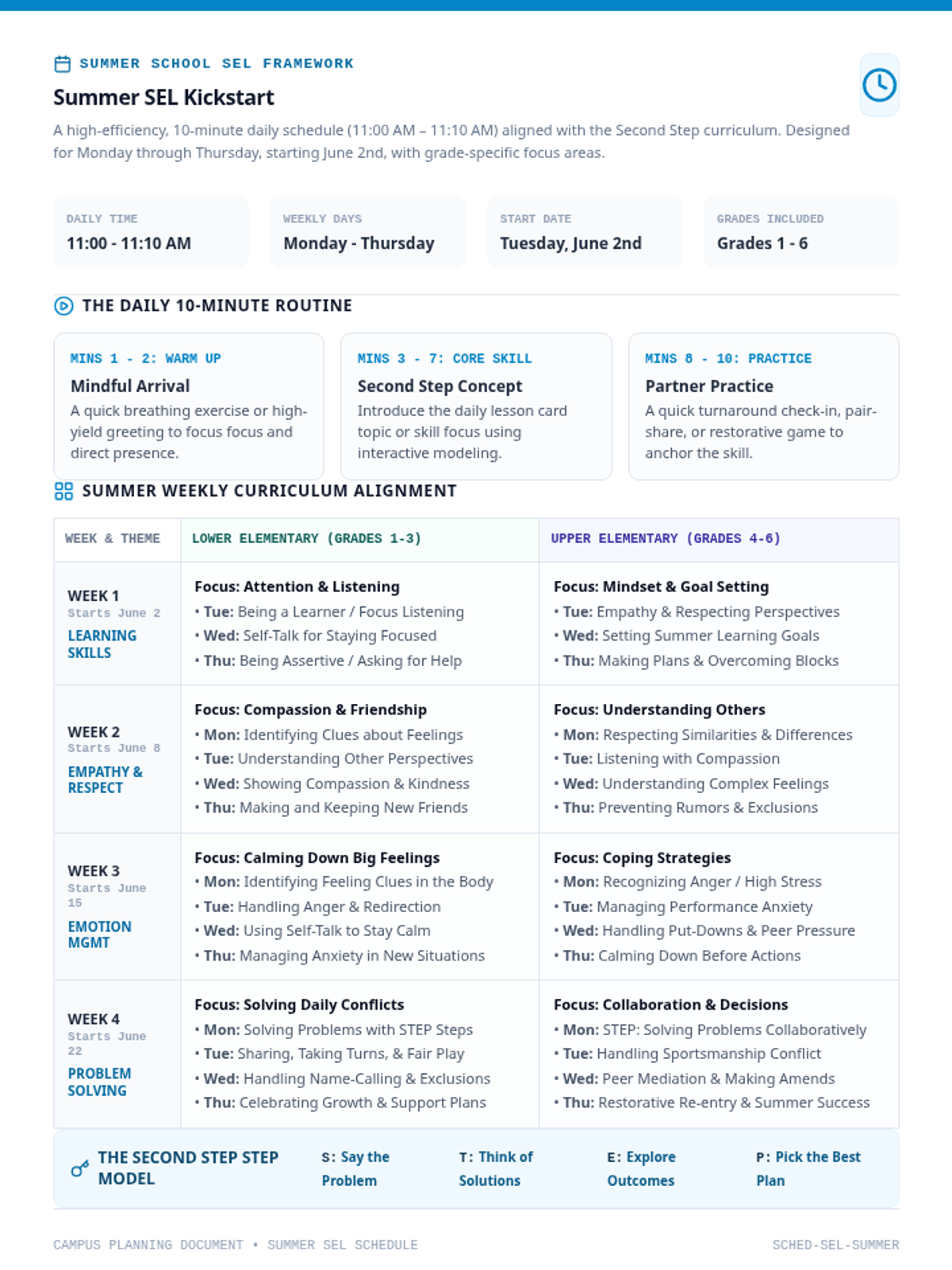
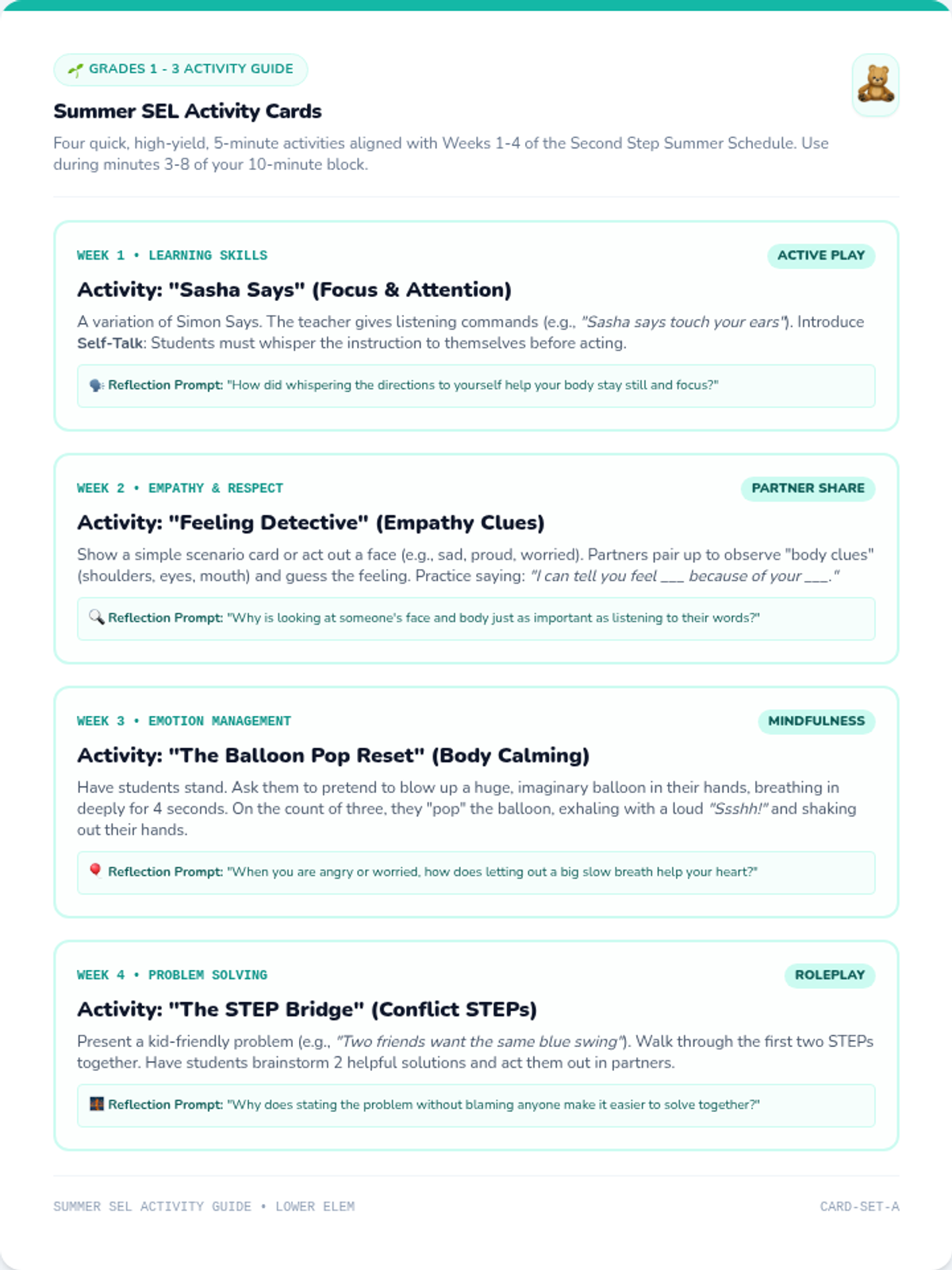
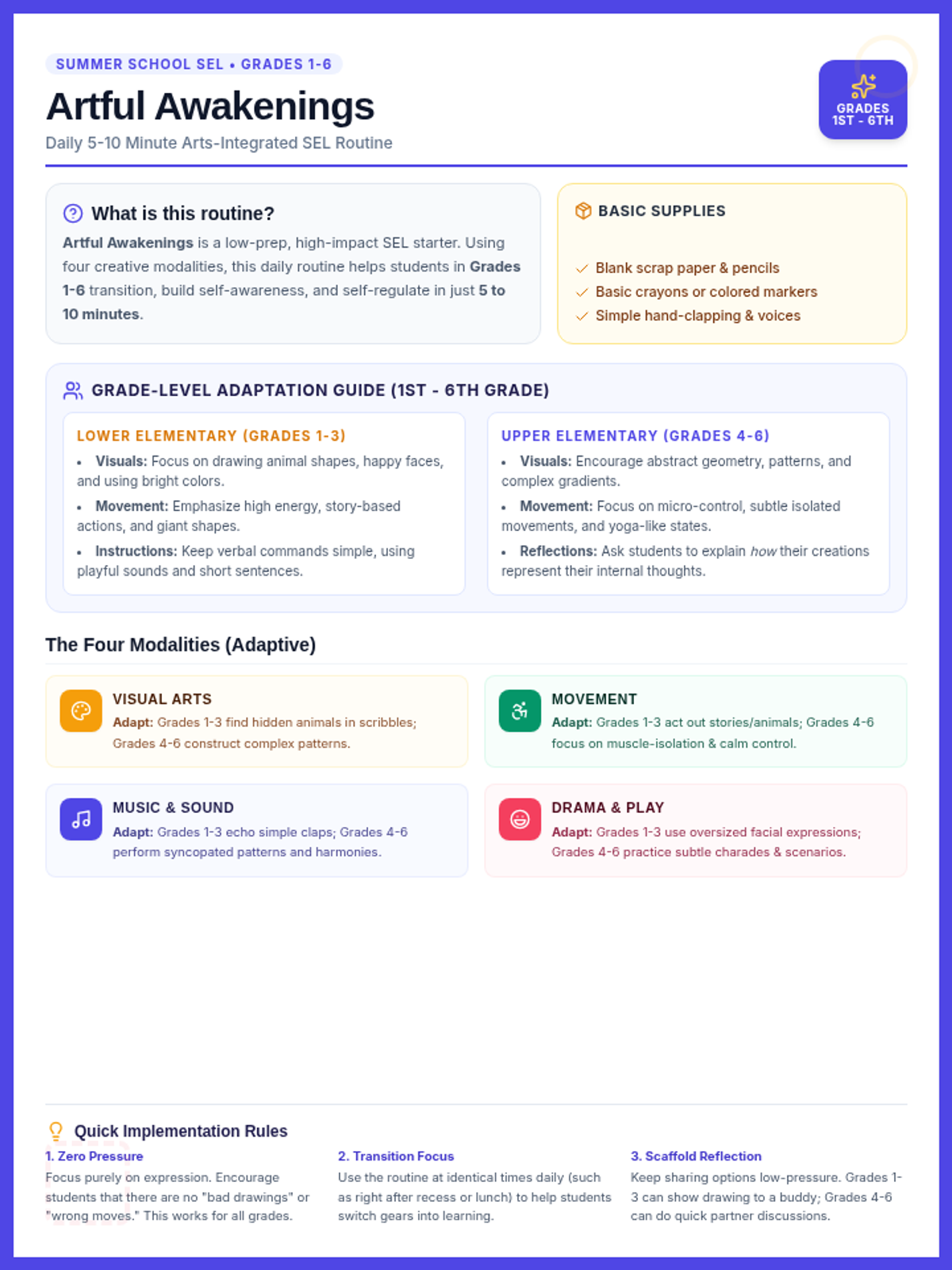
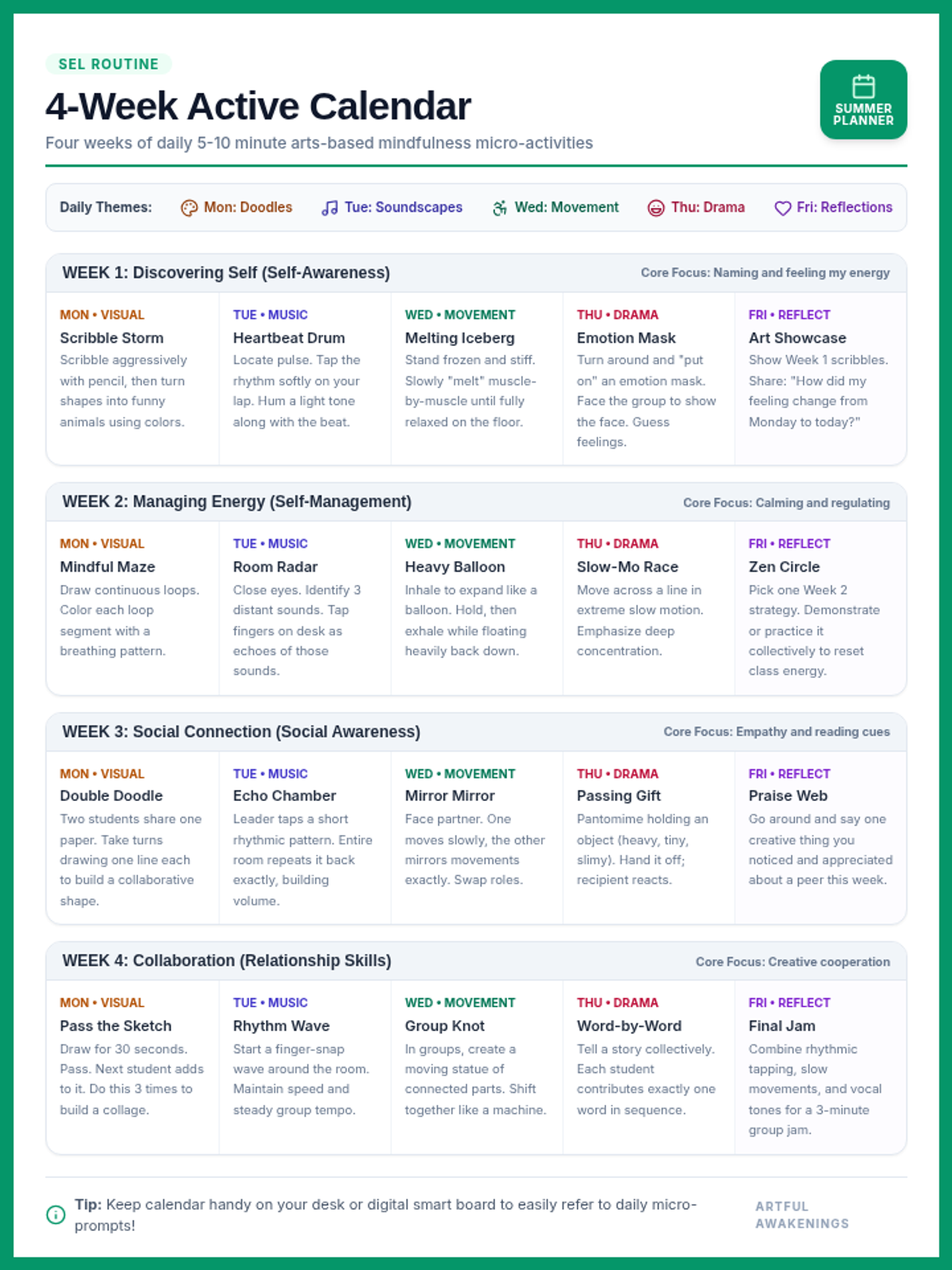
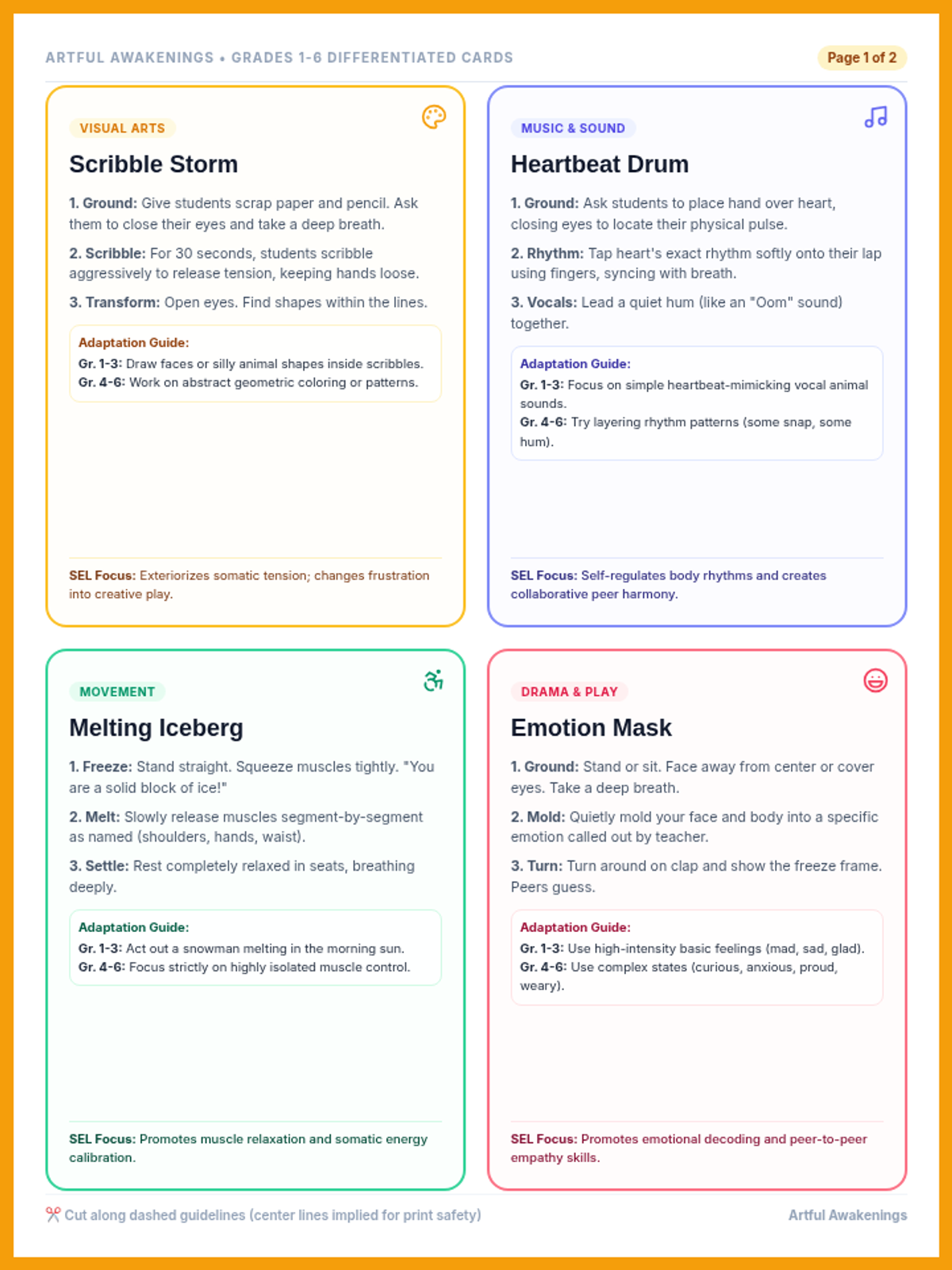
A daily 5-10 minute SEL routine incorporating visual arts, movement, music, and drama to build self-awareness and emotional regulation during summer school.
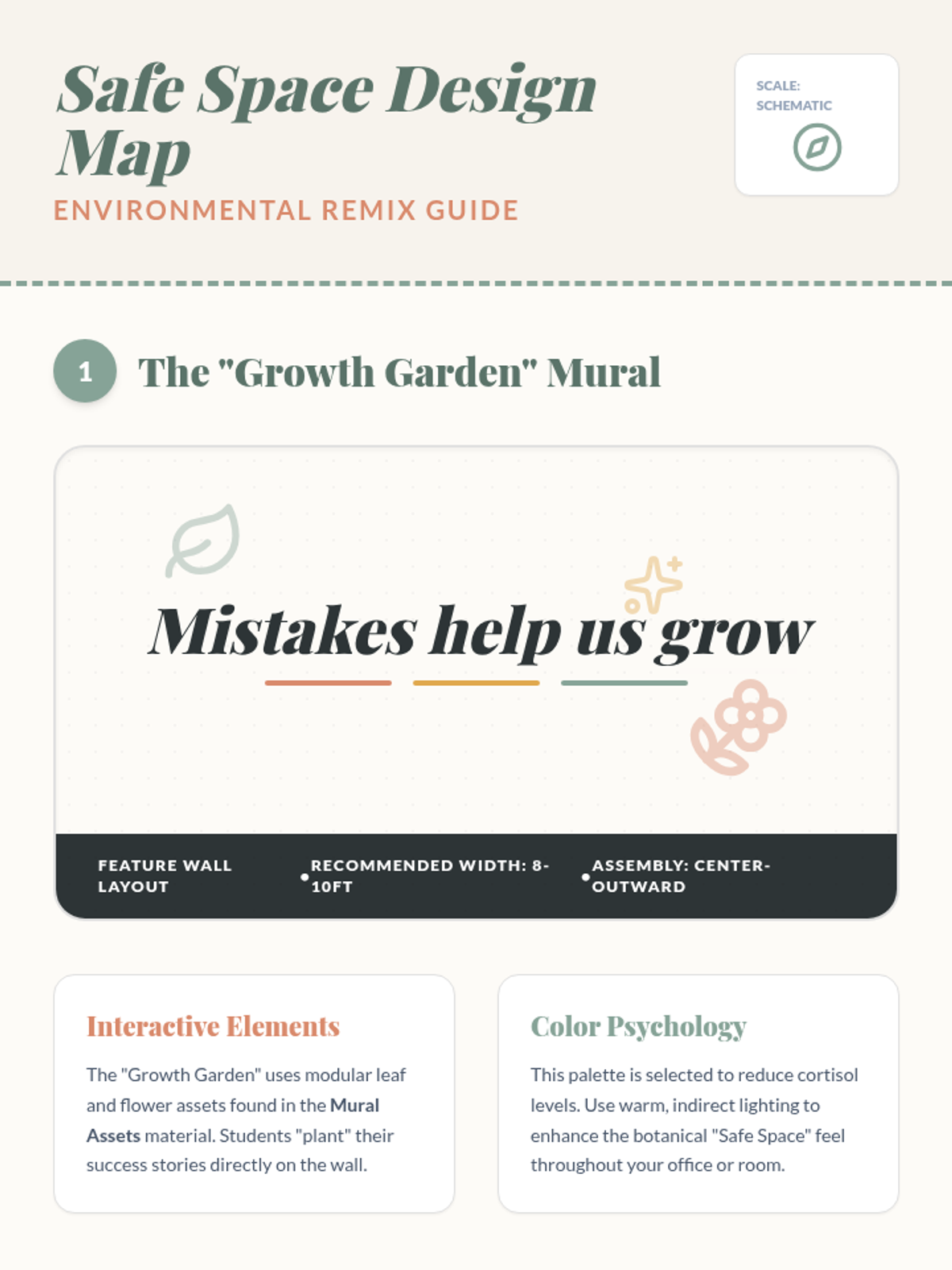
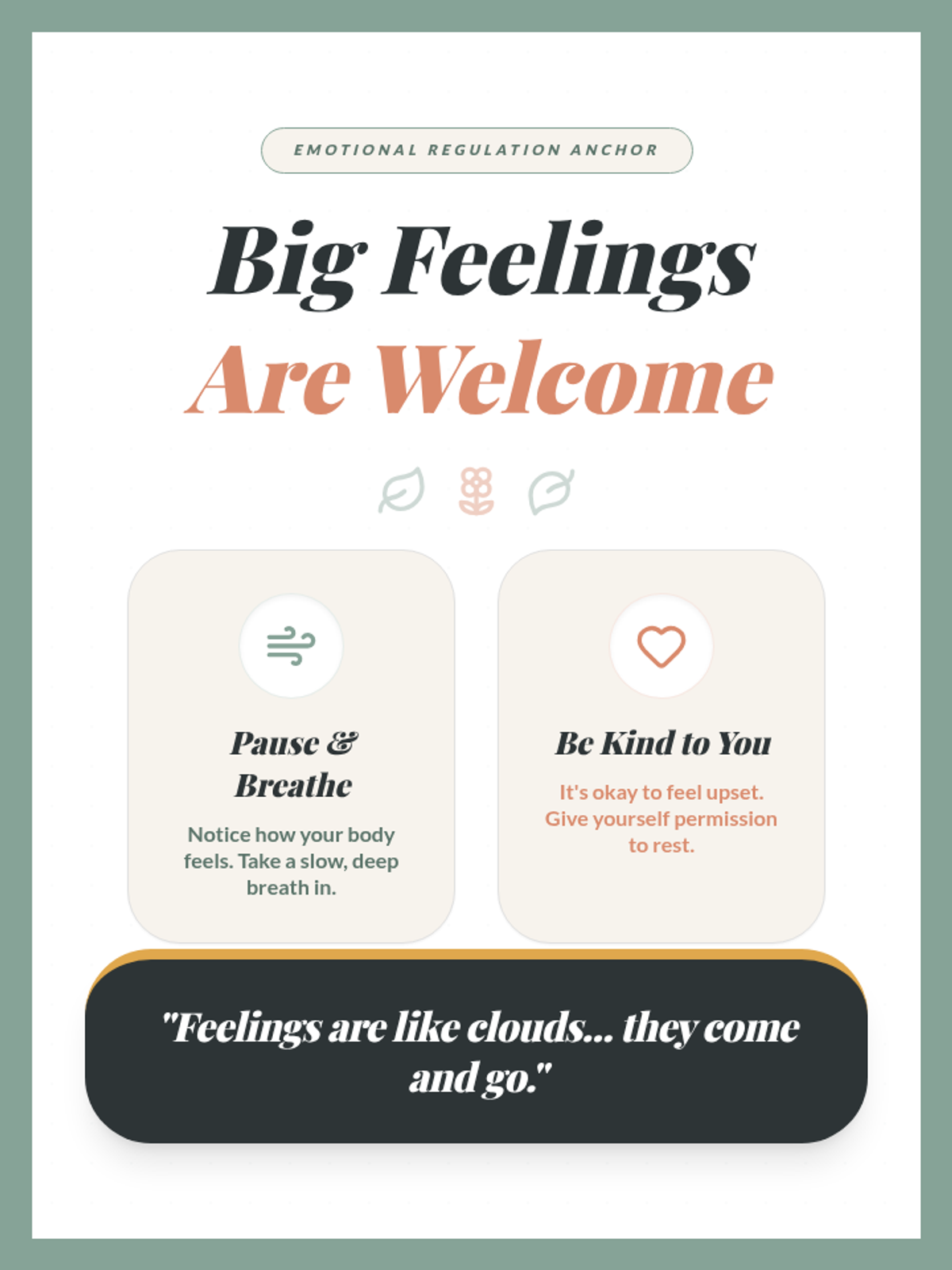
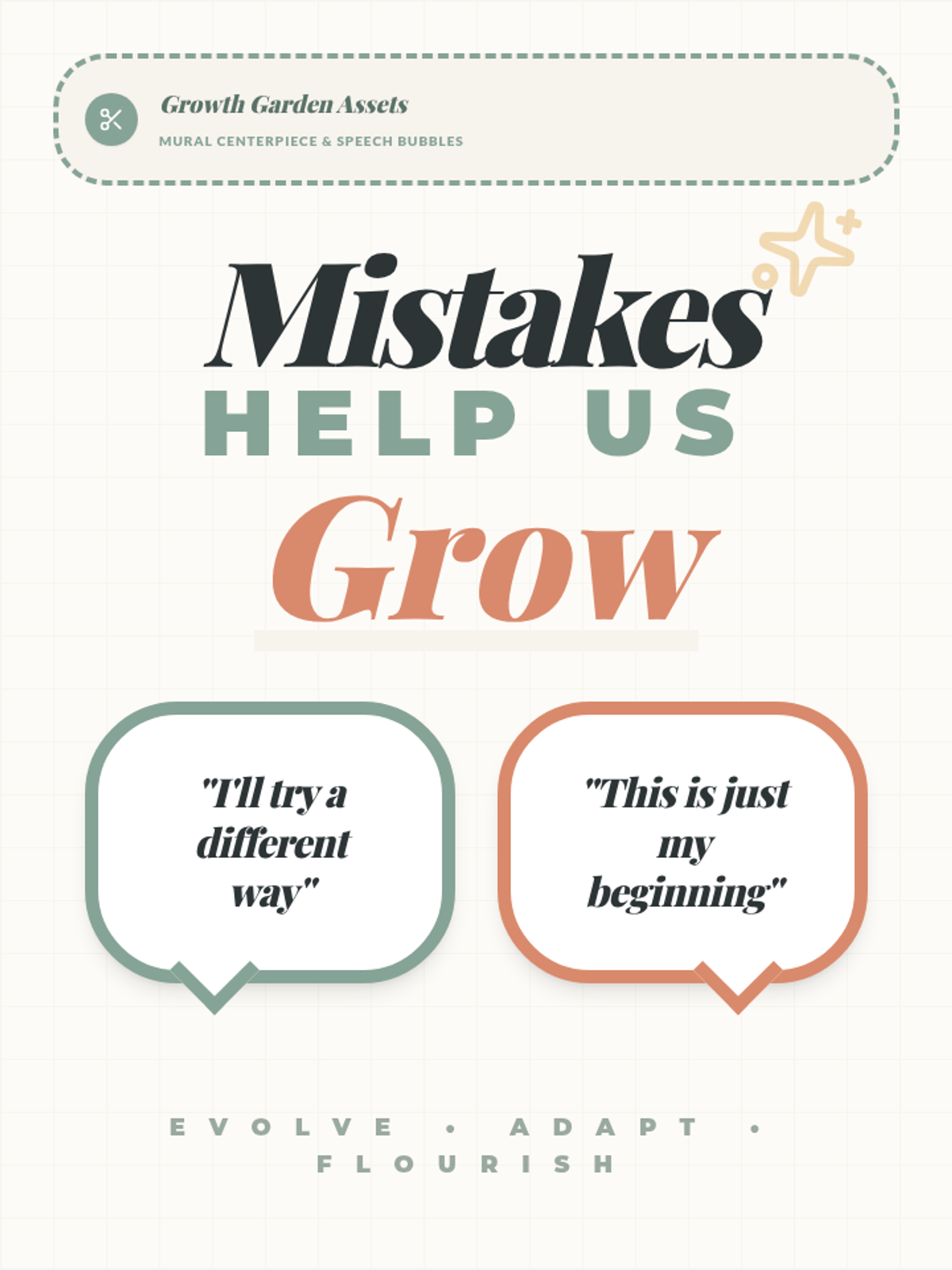
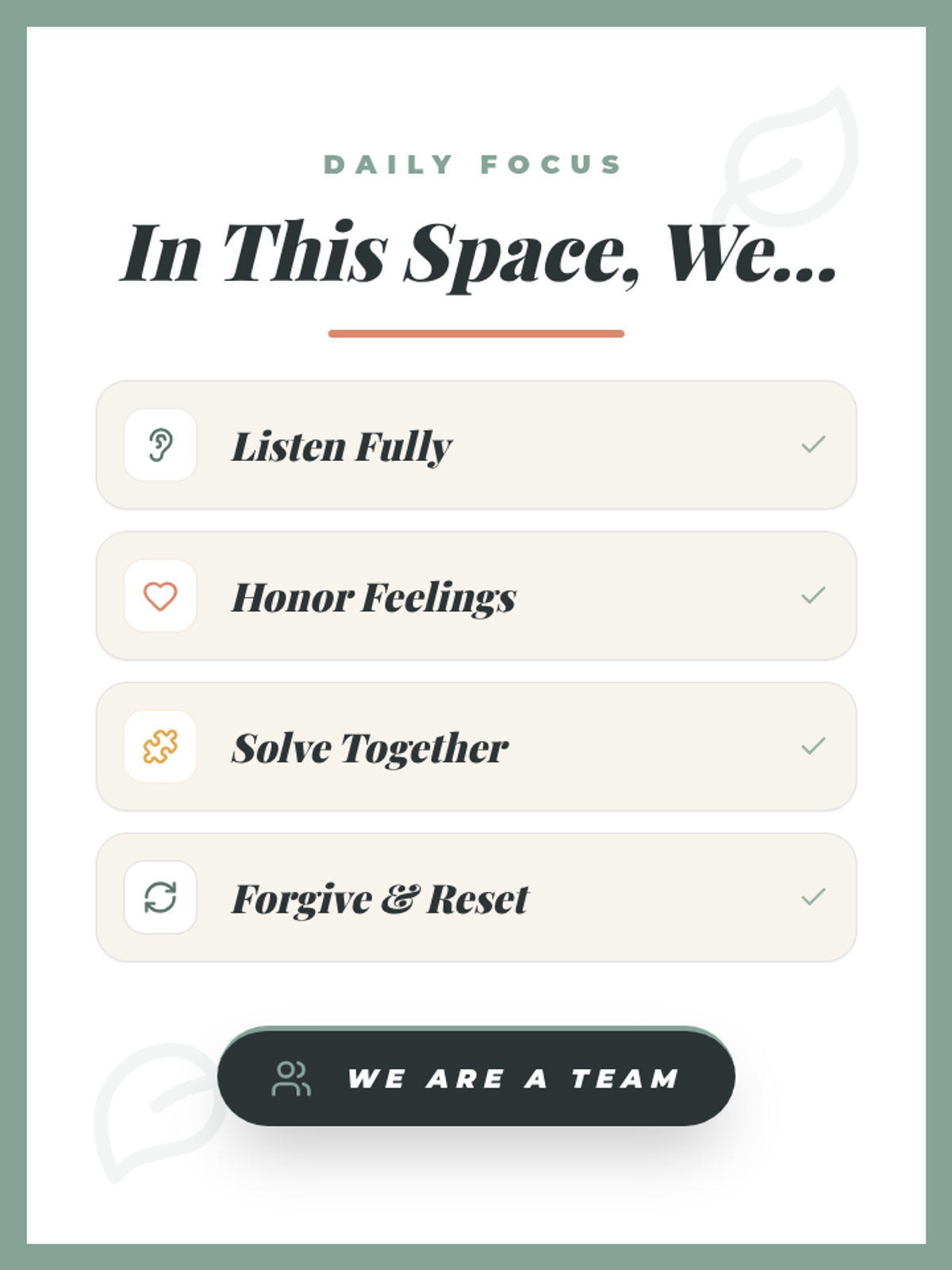
A comprehensive collection of environmental resources for a school office or classroom, featuring a growth-themed mural, a 3x4 bulletin board layout, and sensory corner posters designed with a calming, nature-inspired aesthetic.
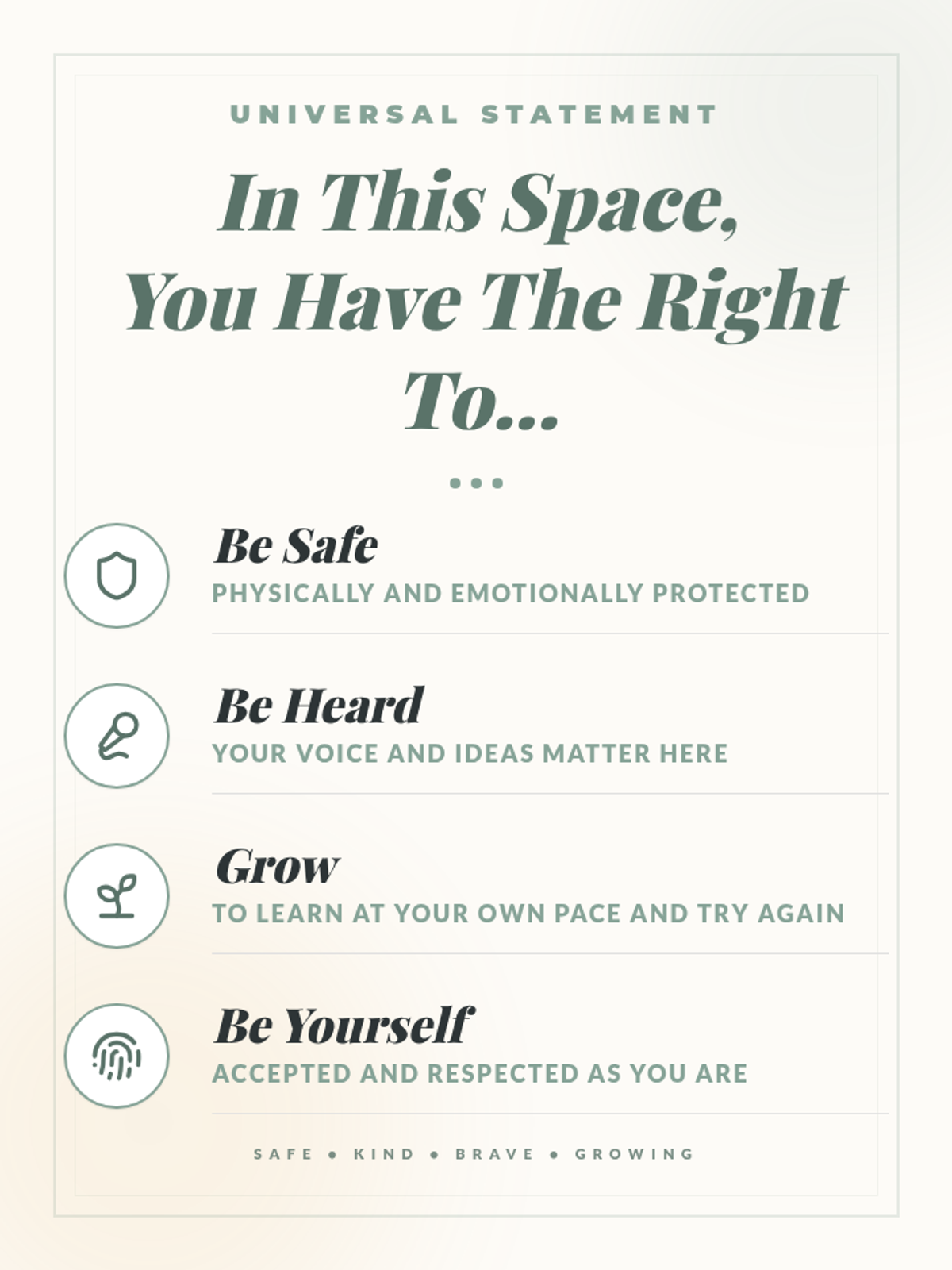
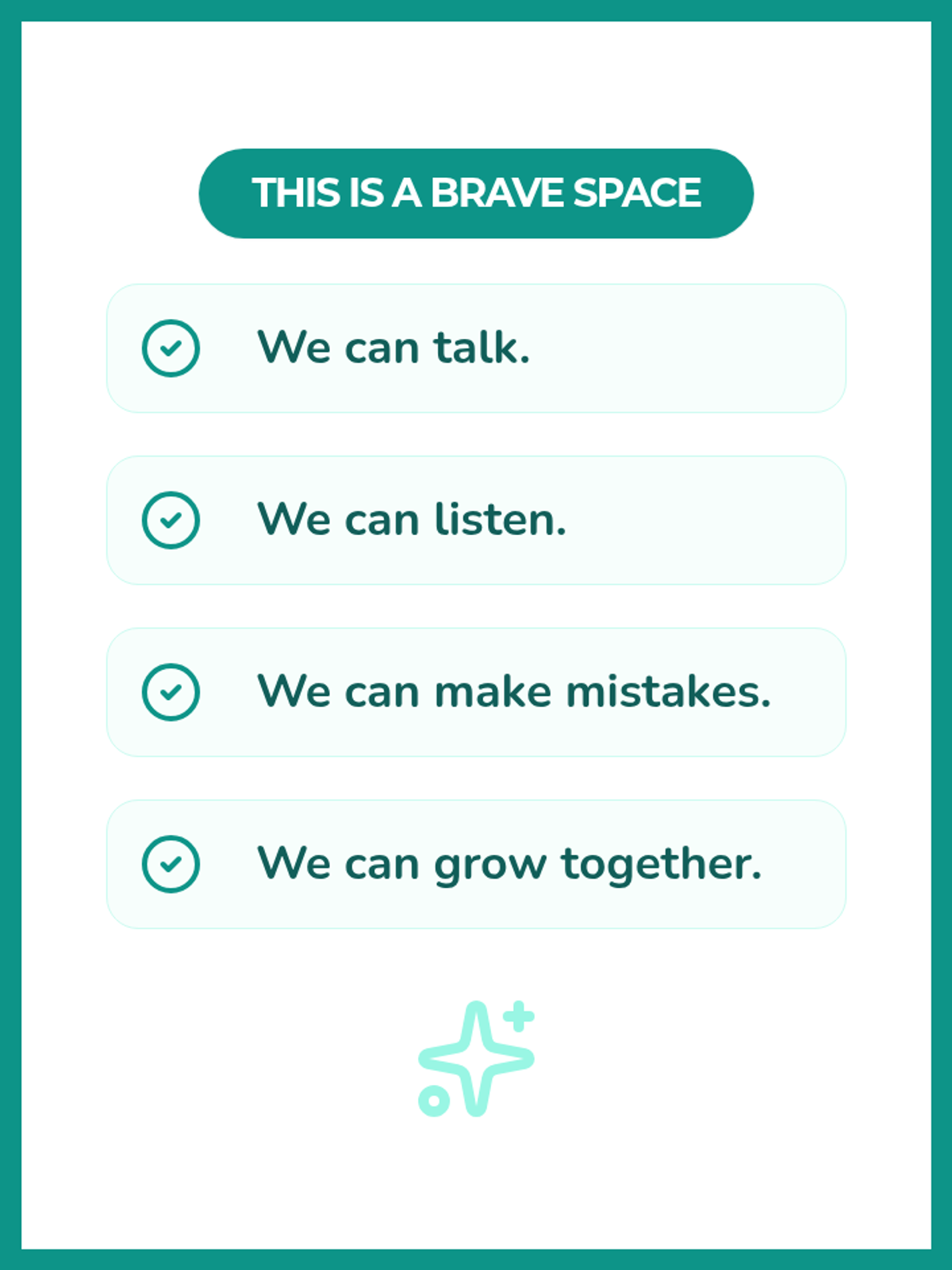
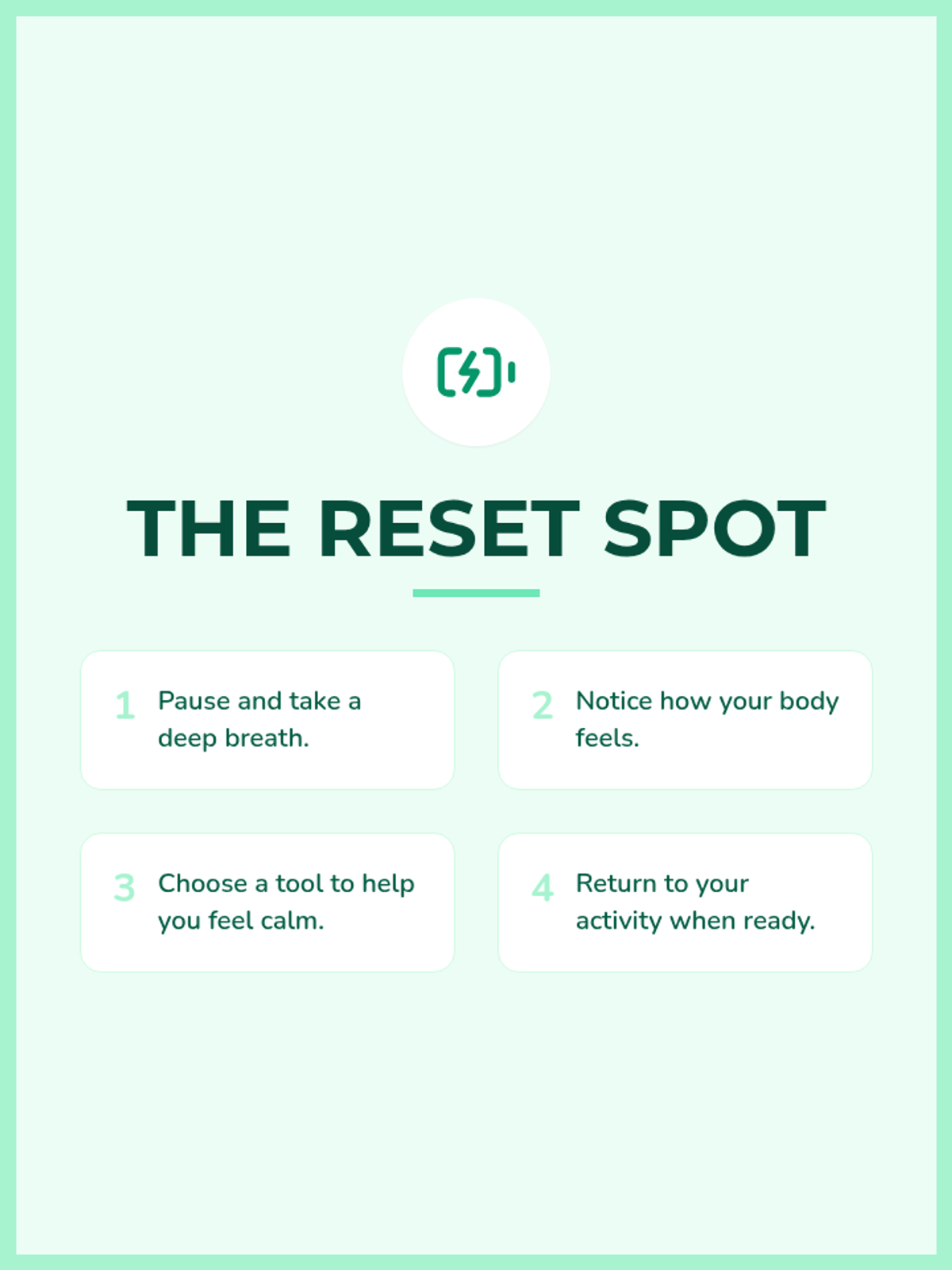
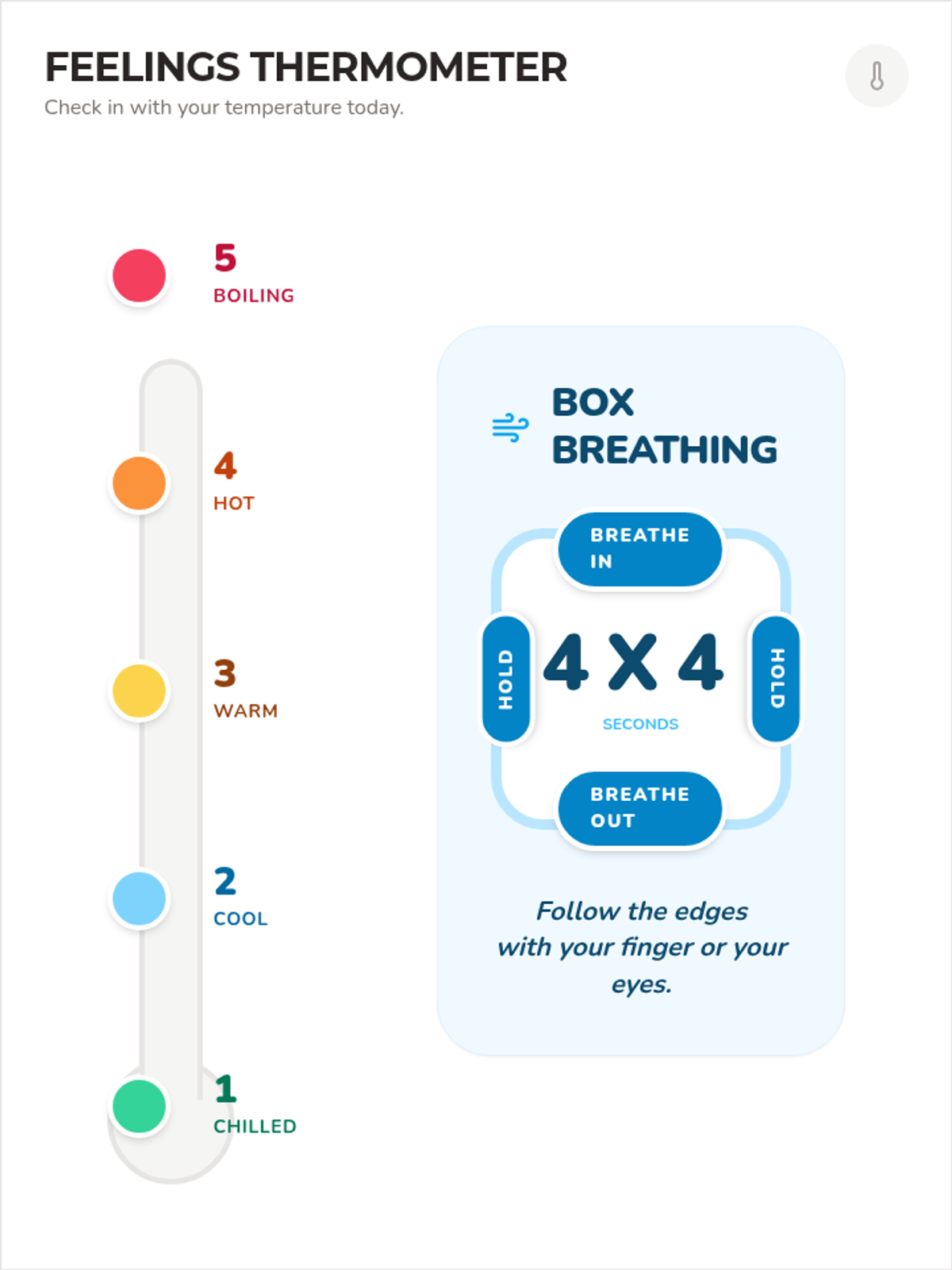
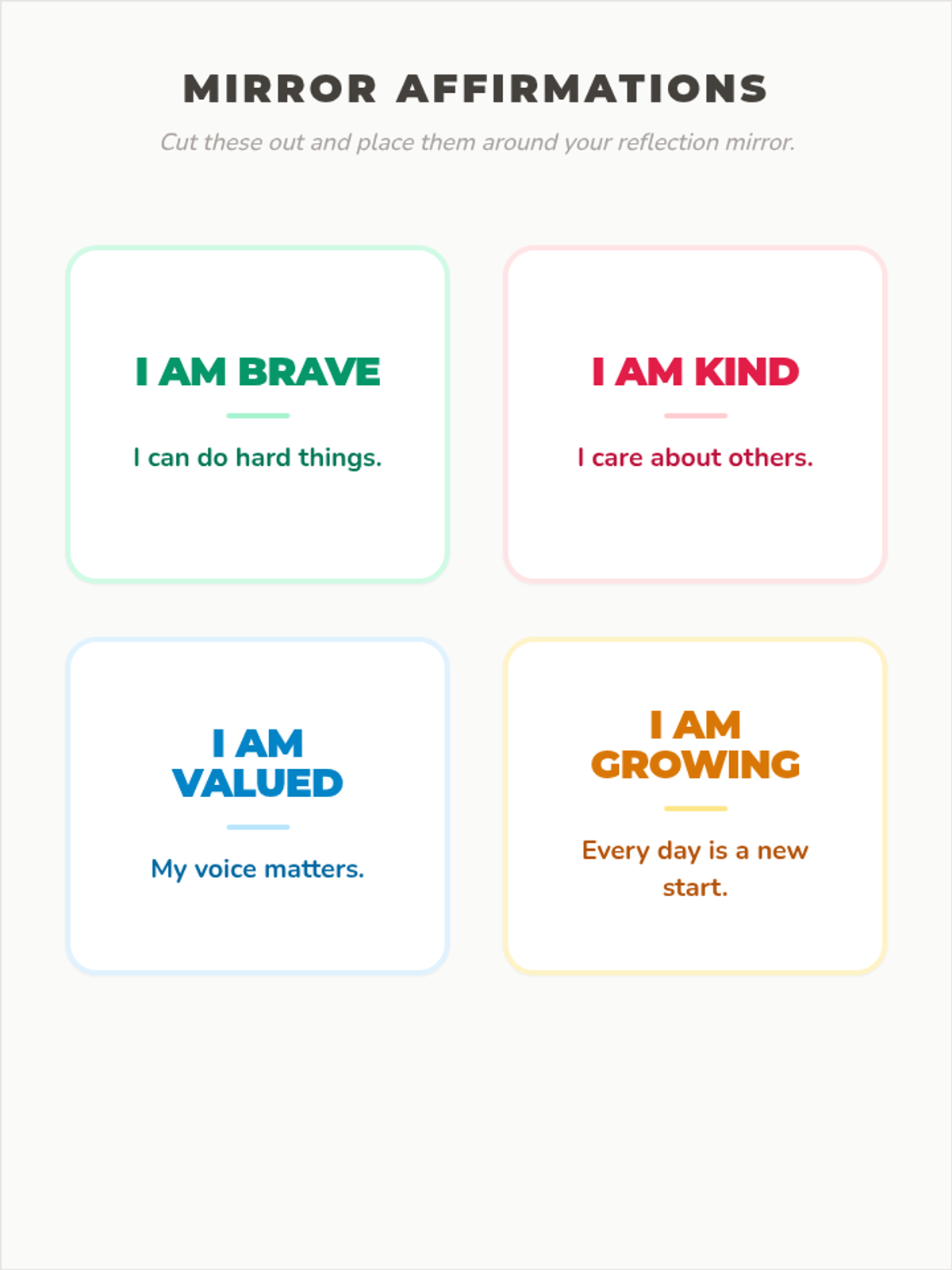
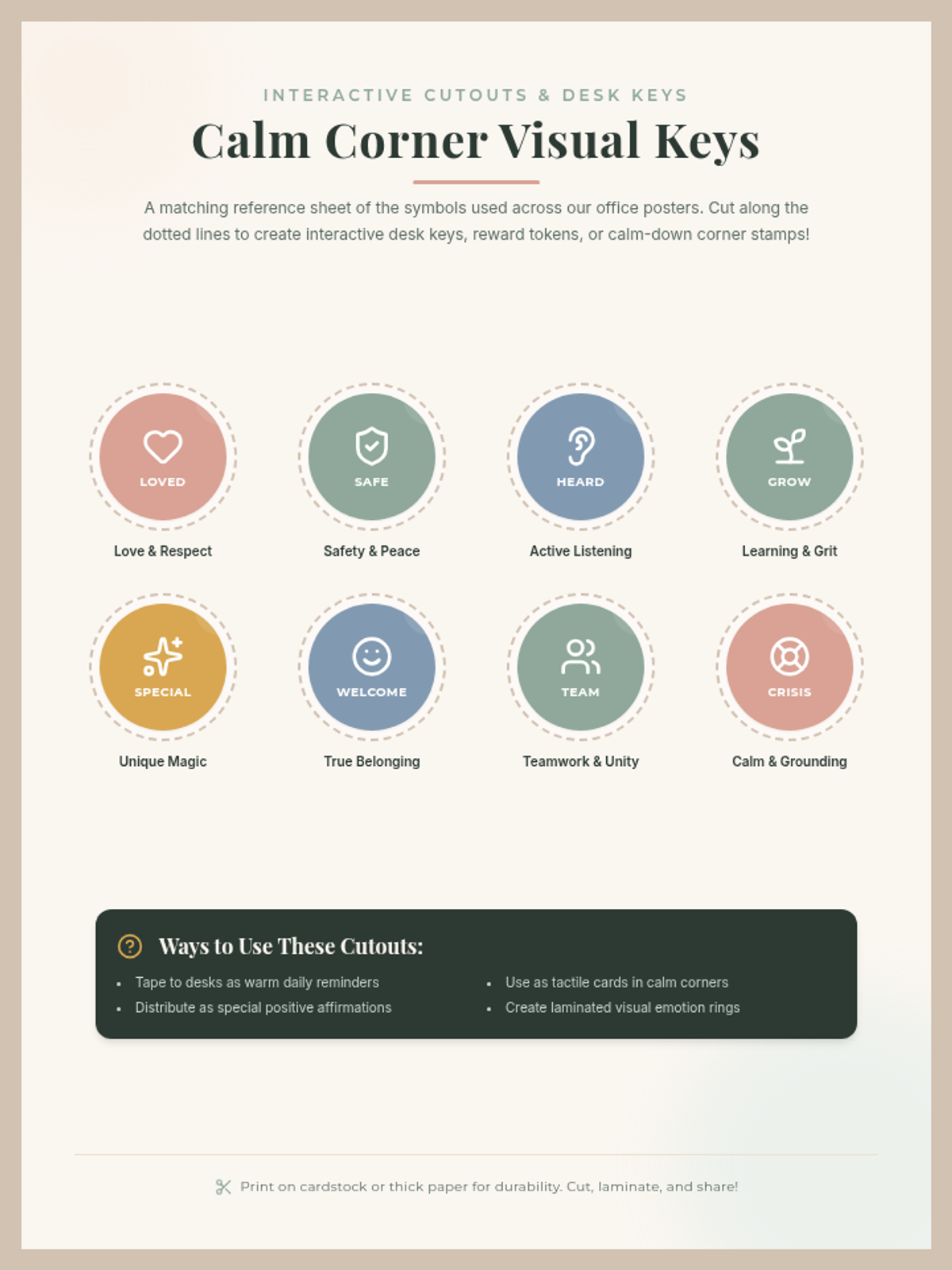
A comprehensive suite of calming, nature-inspired office decor for a school social worker, featuring posters, interactive tools, and affirmation cards.
A comprehensive system for defining and maintaining a positive learning environment through a color-coded behavior framework. This lesson introduces students to green, yellow, and red behaviors with clear expectations and reflection tools.
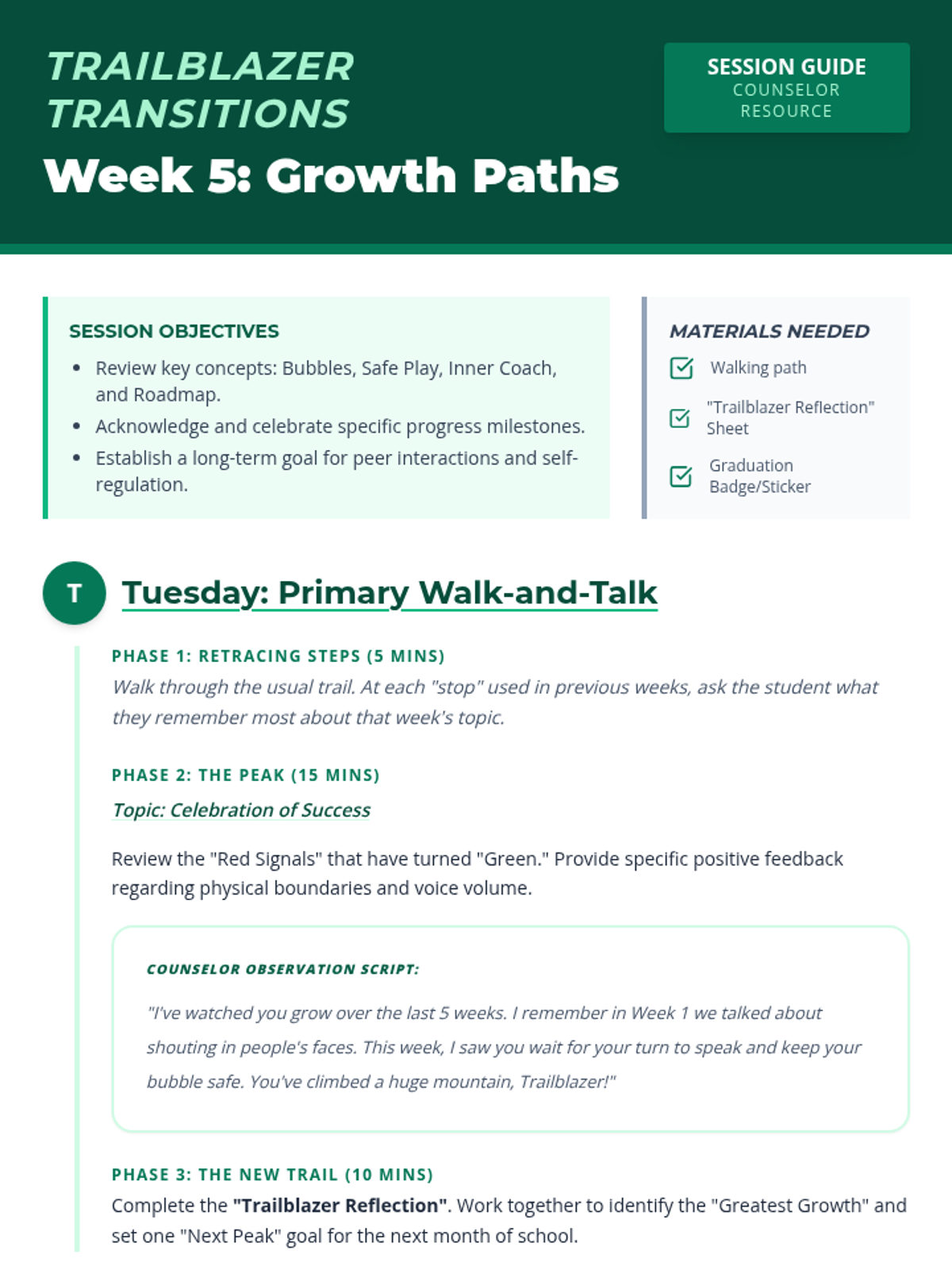
Consolidates learning from the previous weeks and sets goals for continued social-emotional success.
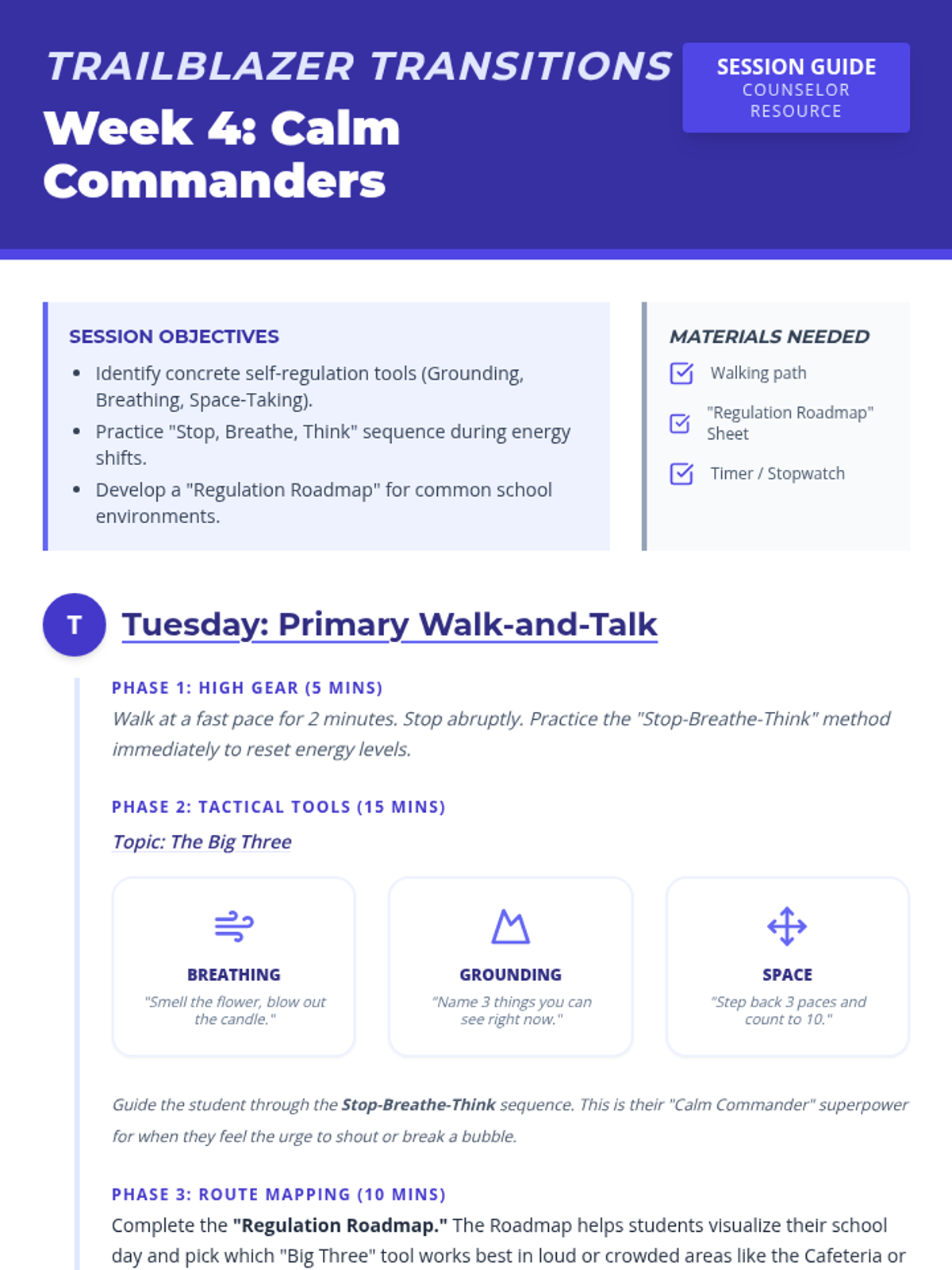
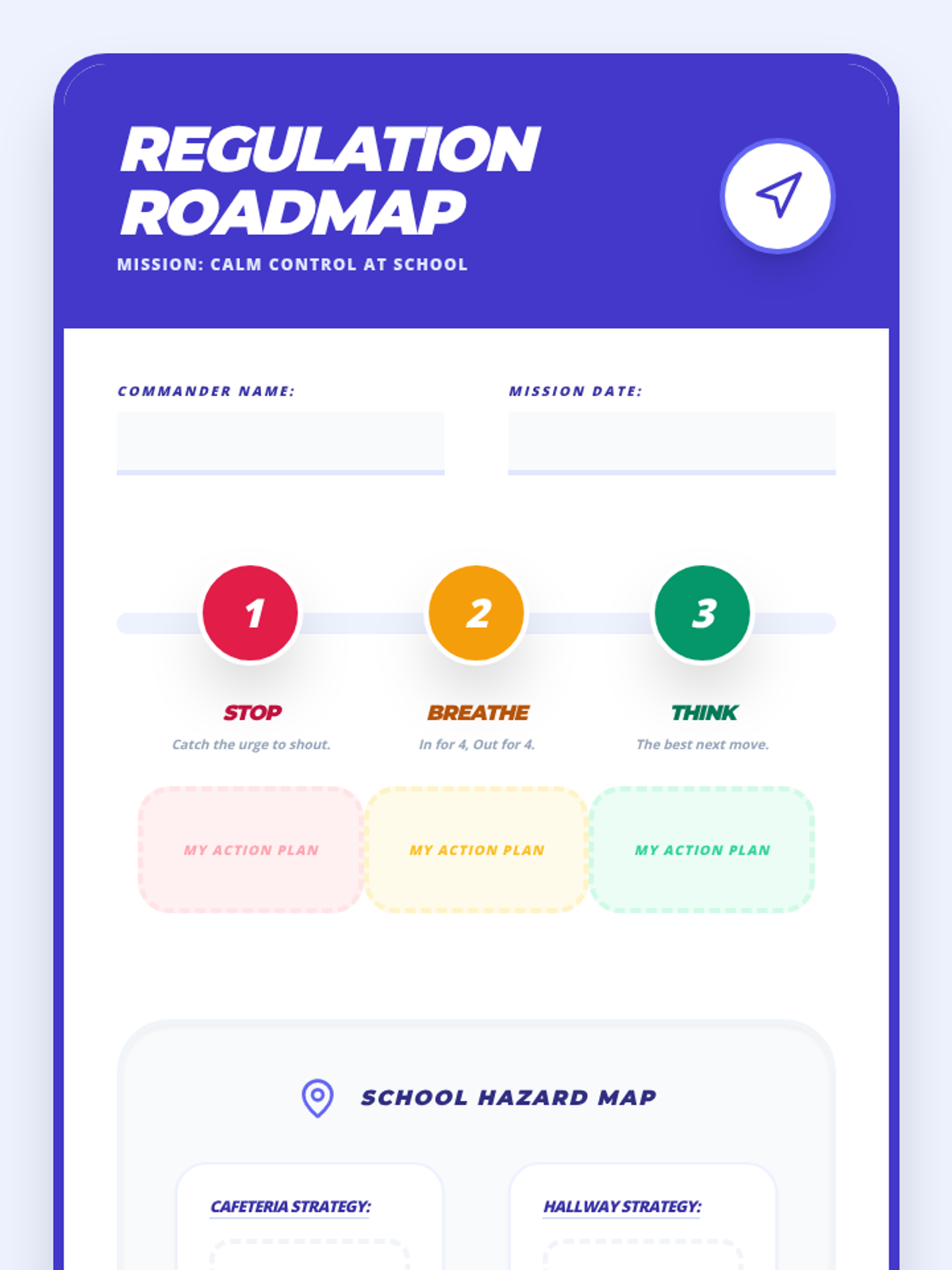
Teaches concrete self-regulation strategies and provides tools for emotional regulation.
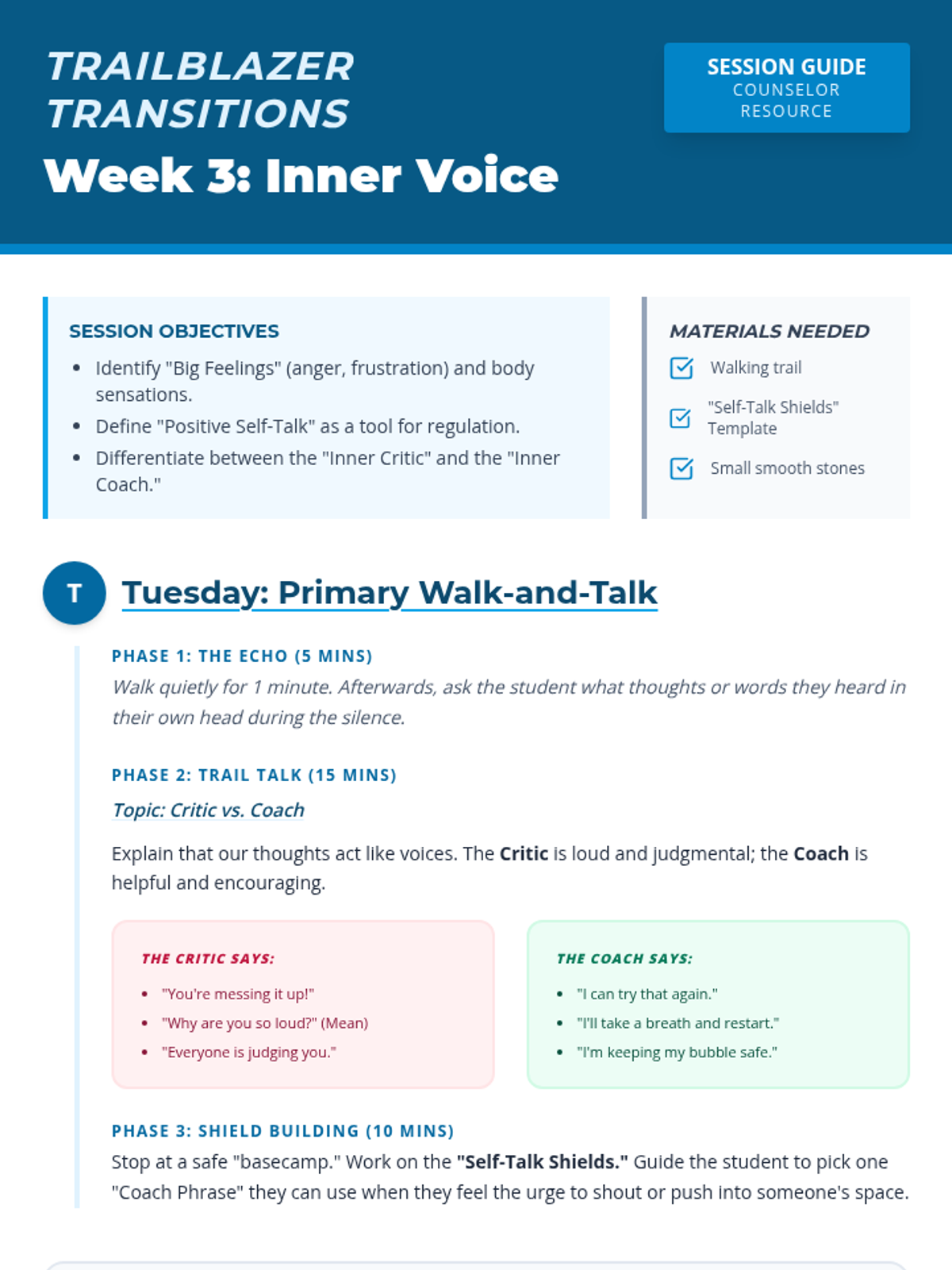
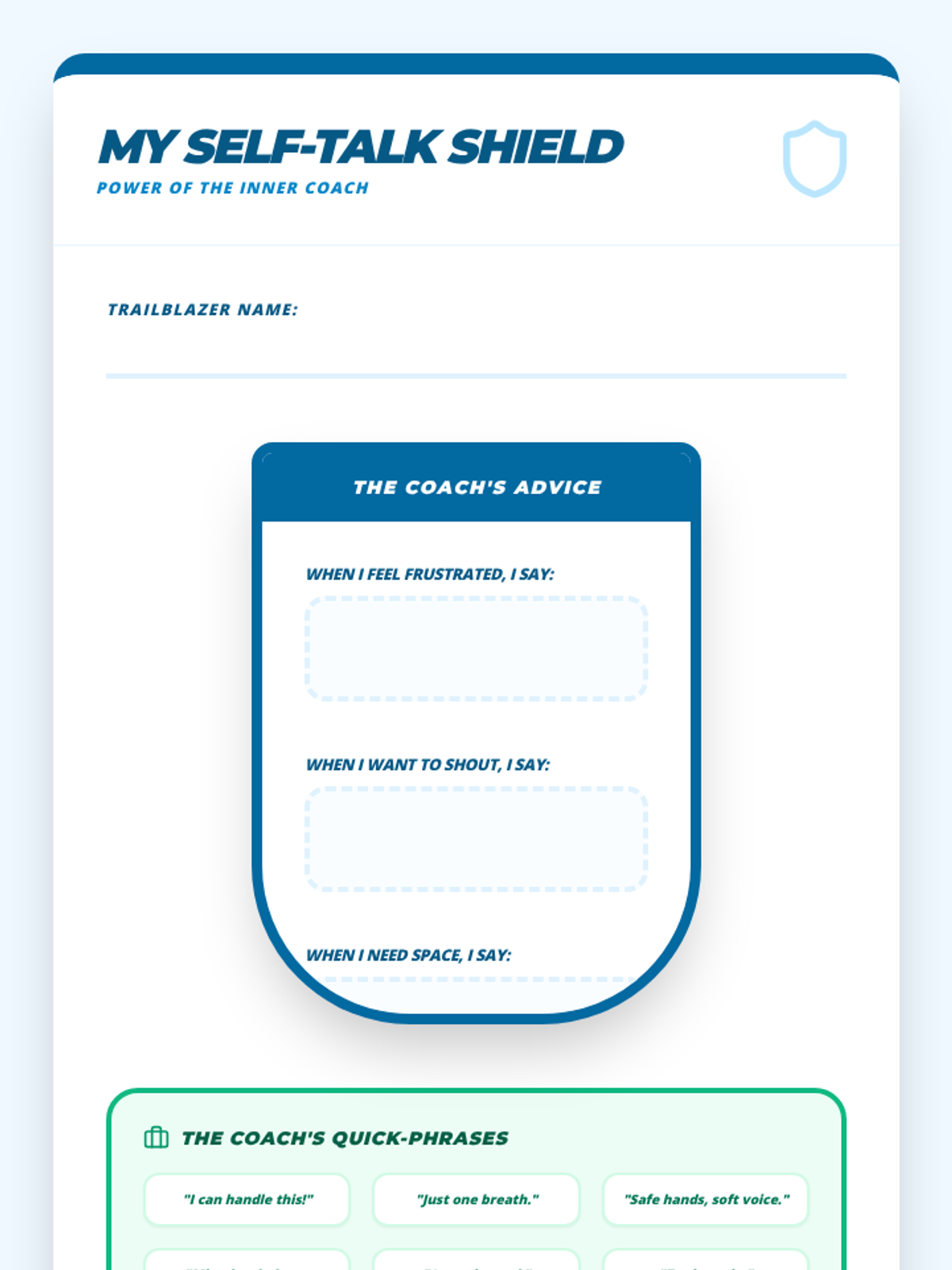
Explores emotional awareness and the power of positive self-talk to manage frustration.
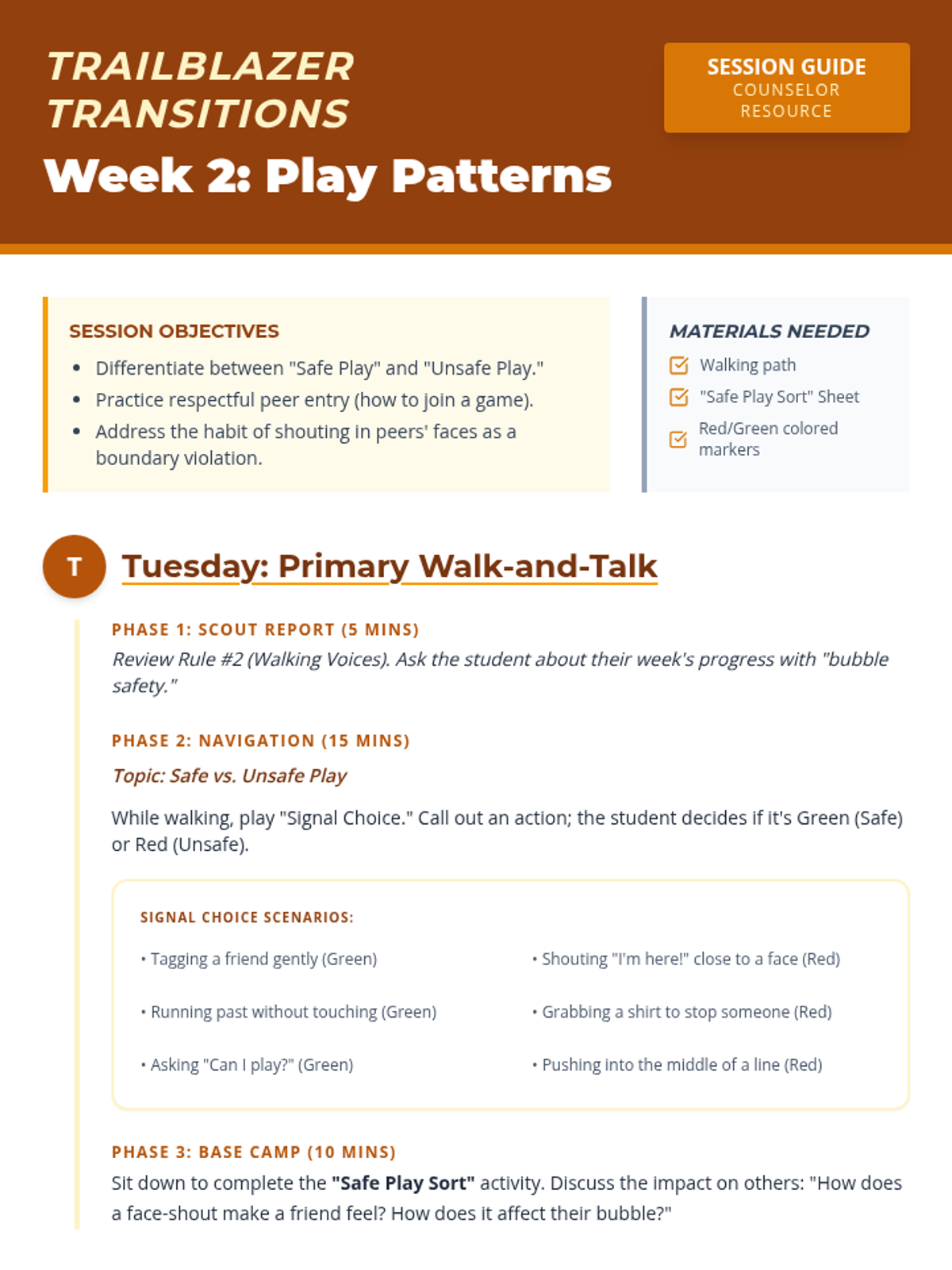
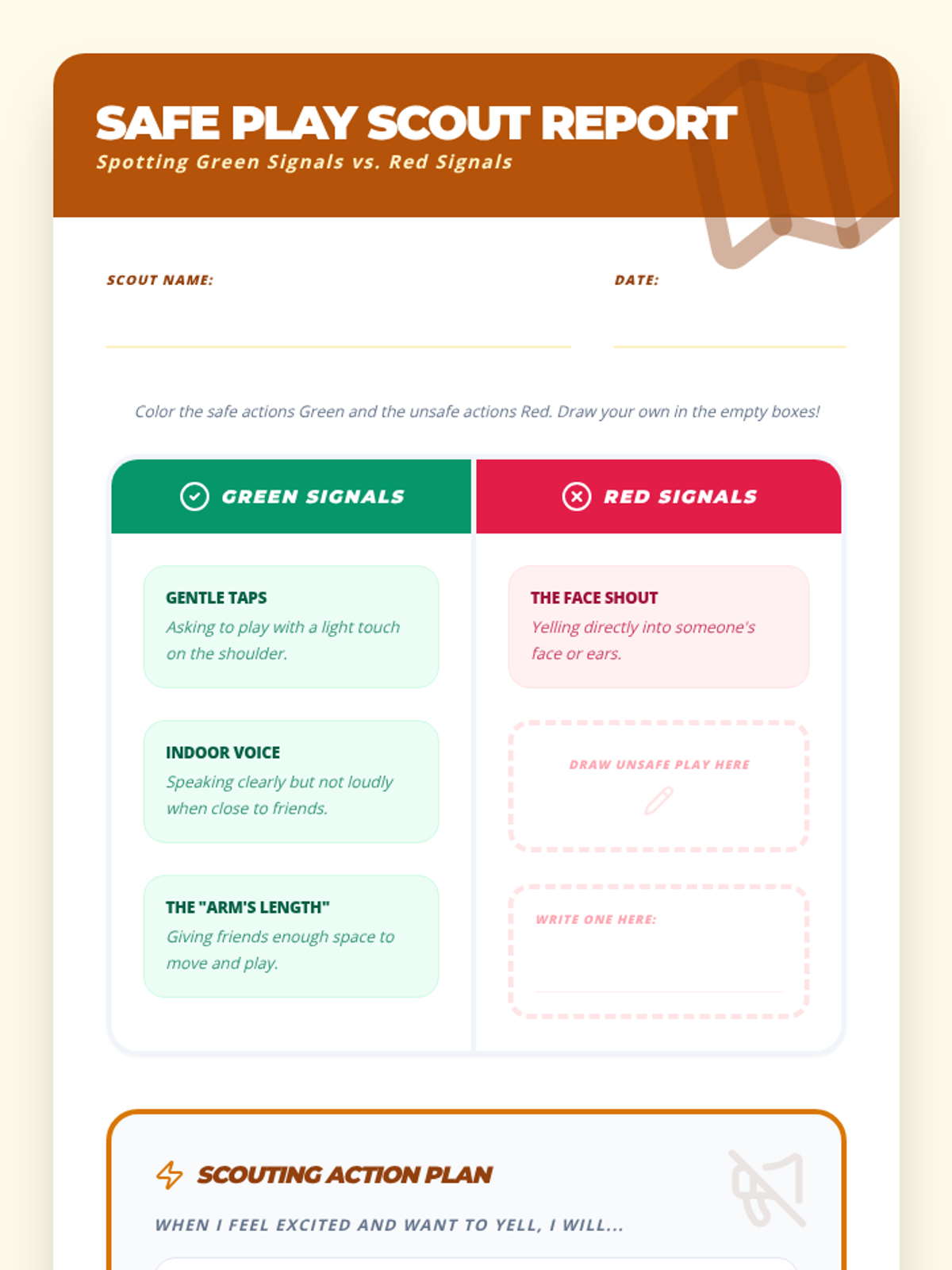
Focuses on distinguishing between safe and unsafe play, specifically addressing peer interactions like shouting and physical contact.
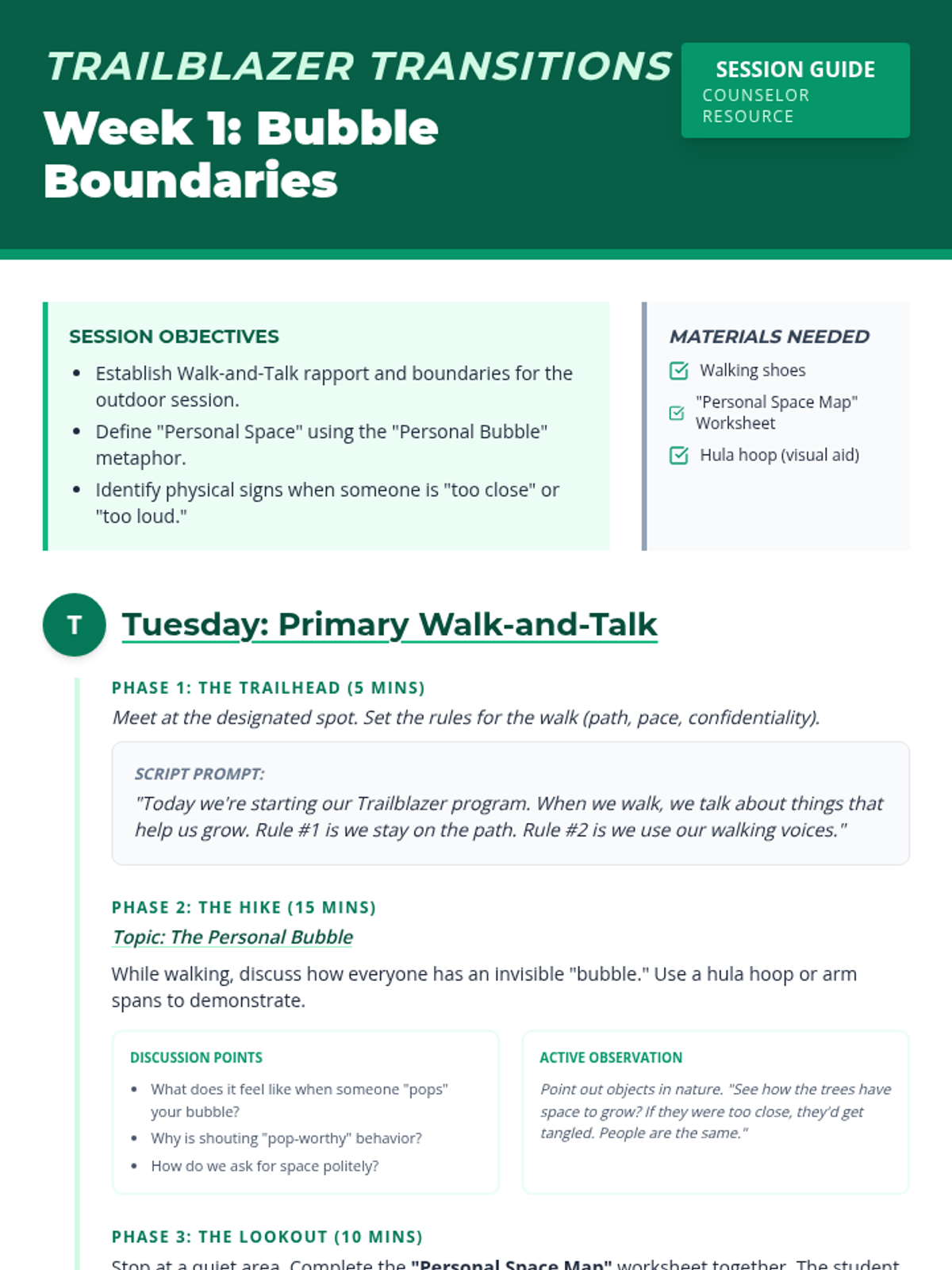
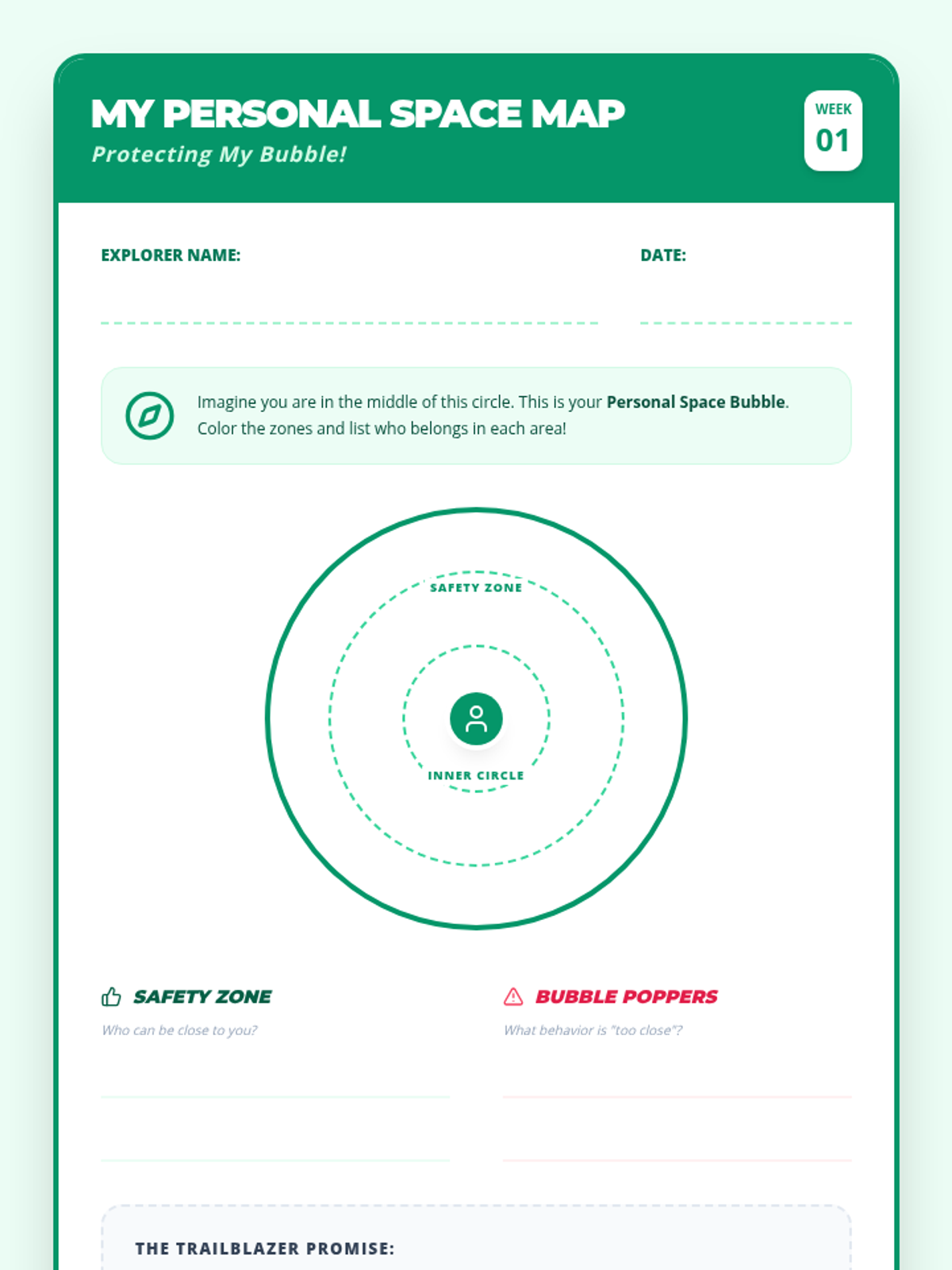
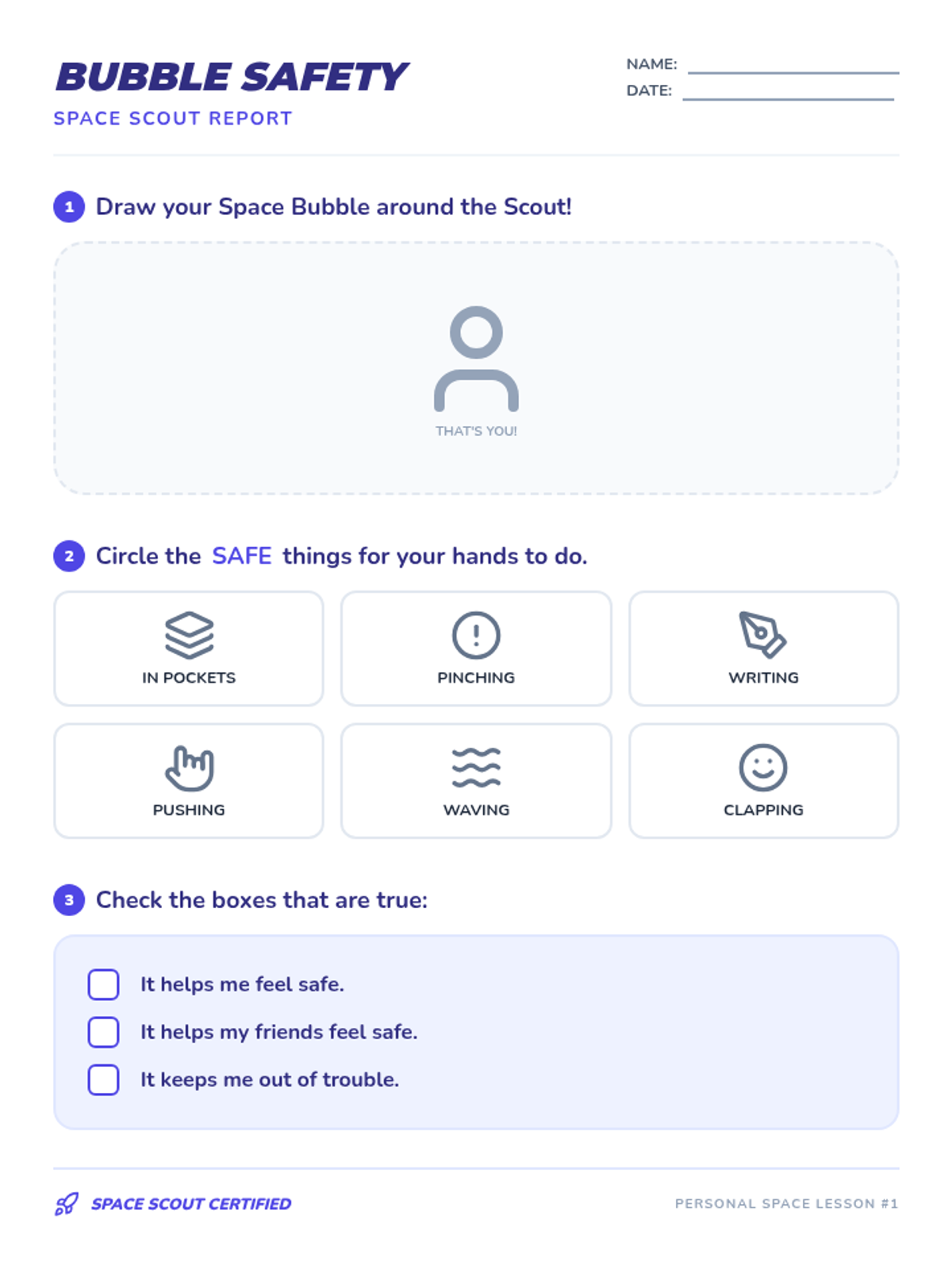
Introduces the concept of personal space and 'bubbles' while establishing the walk-and-talk routine.
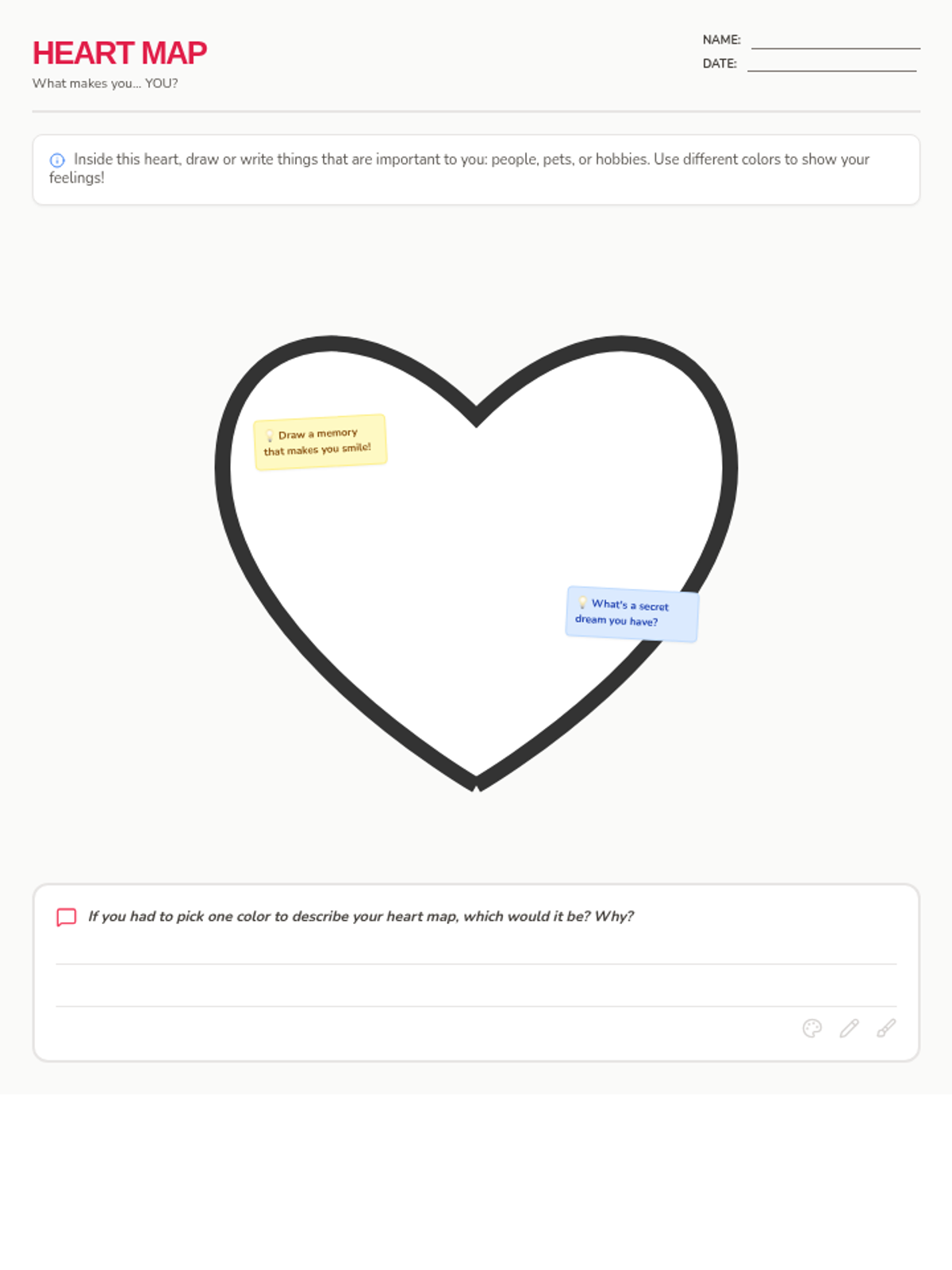
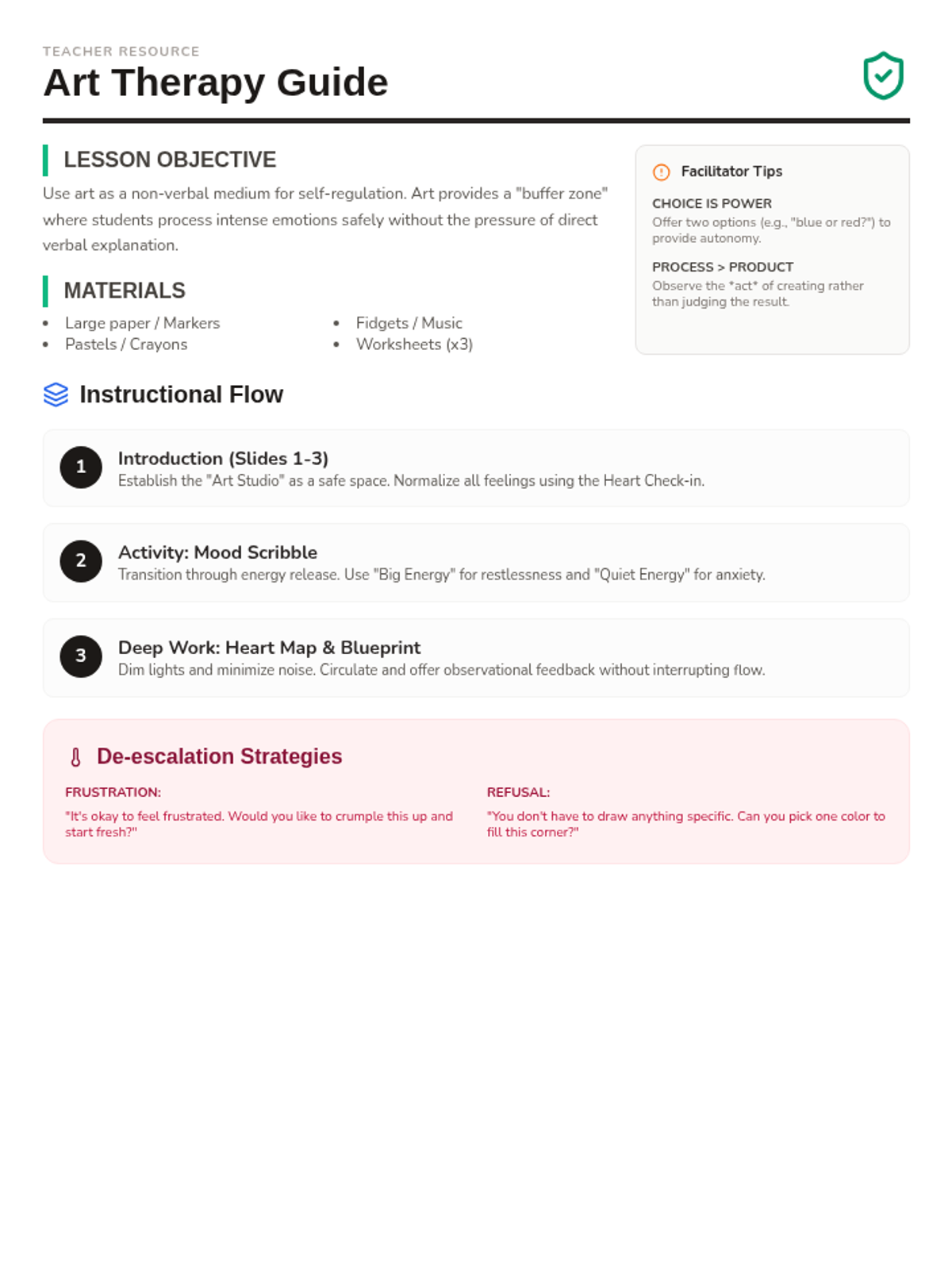
A creative exploration of emotions through art therapy, helping children with behavioral health concerns identify feelings and build self-regulation skills.
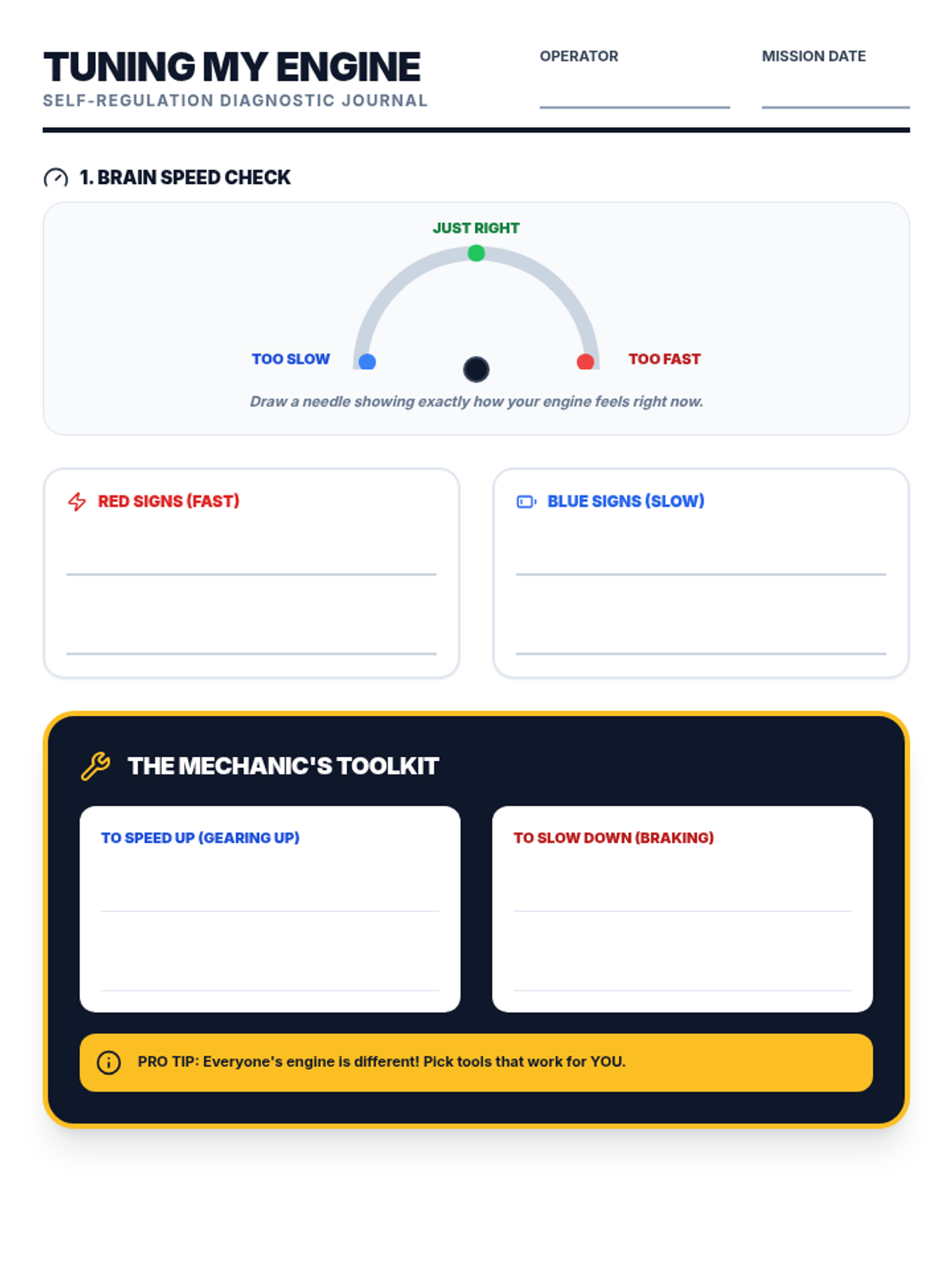
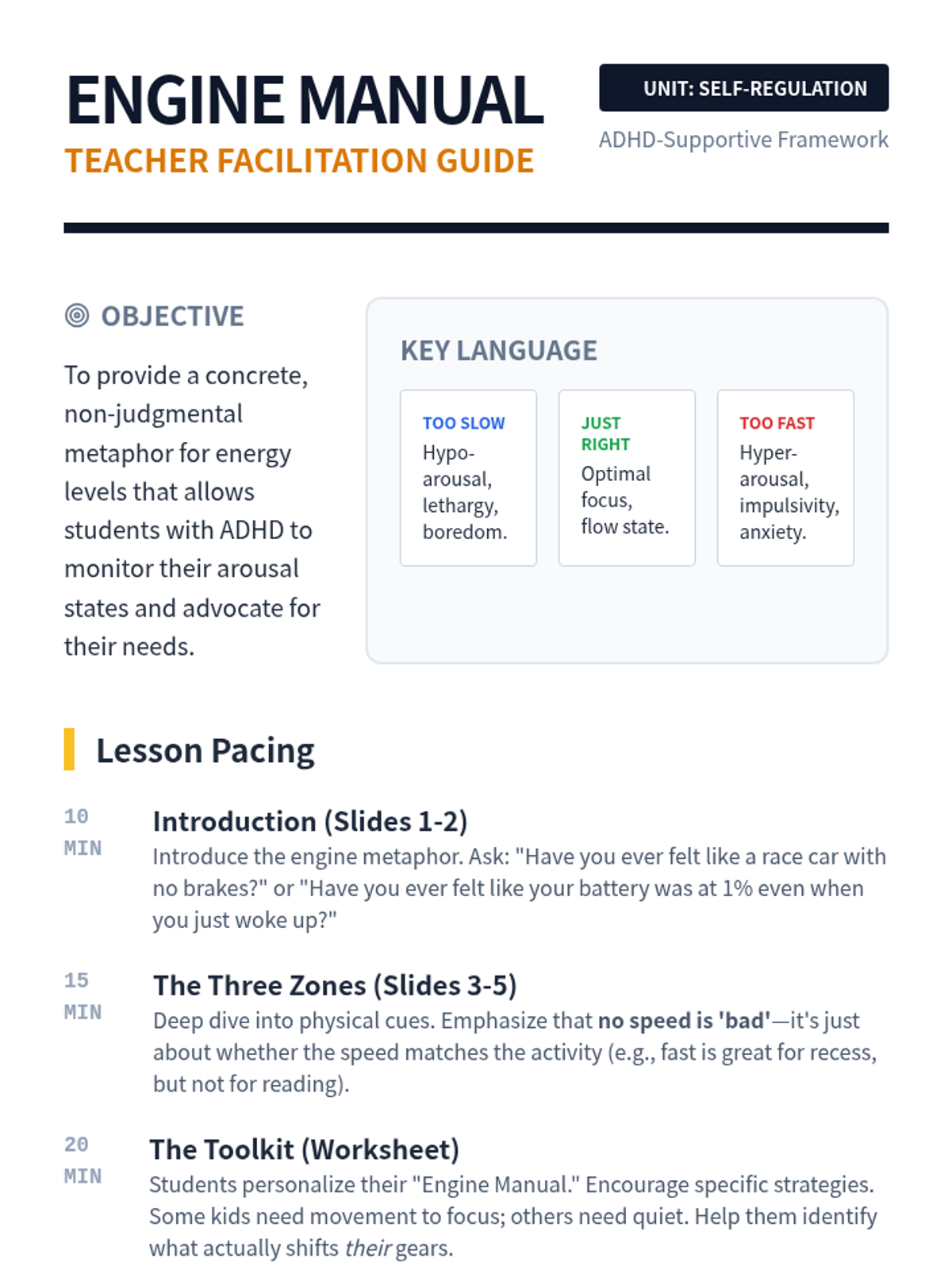
An introduction to self-regulation using the 'Brain Engine' metaphor, helping students with ADHD identify their energy levels and use strategies to get back to 'just right' for learning.
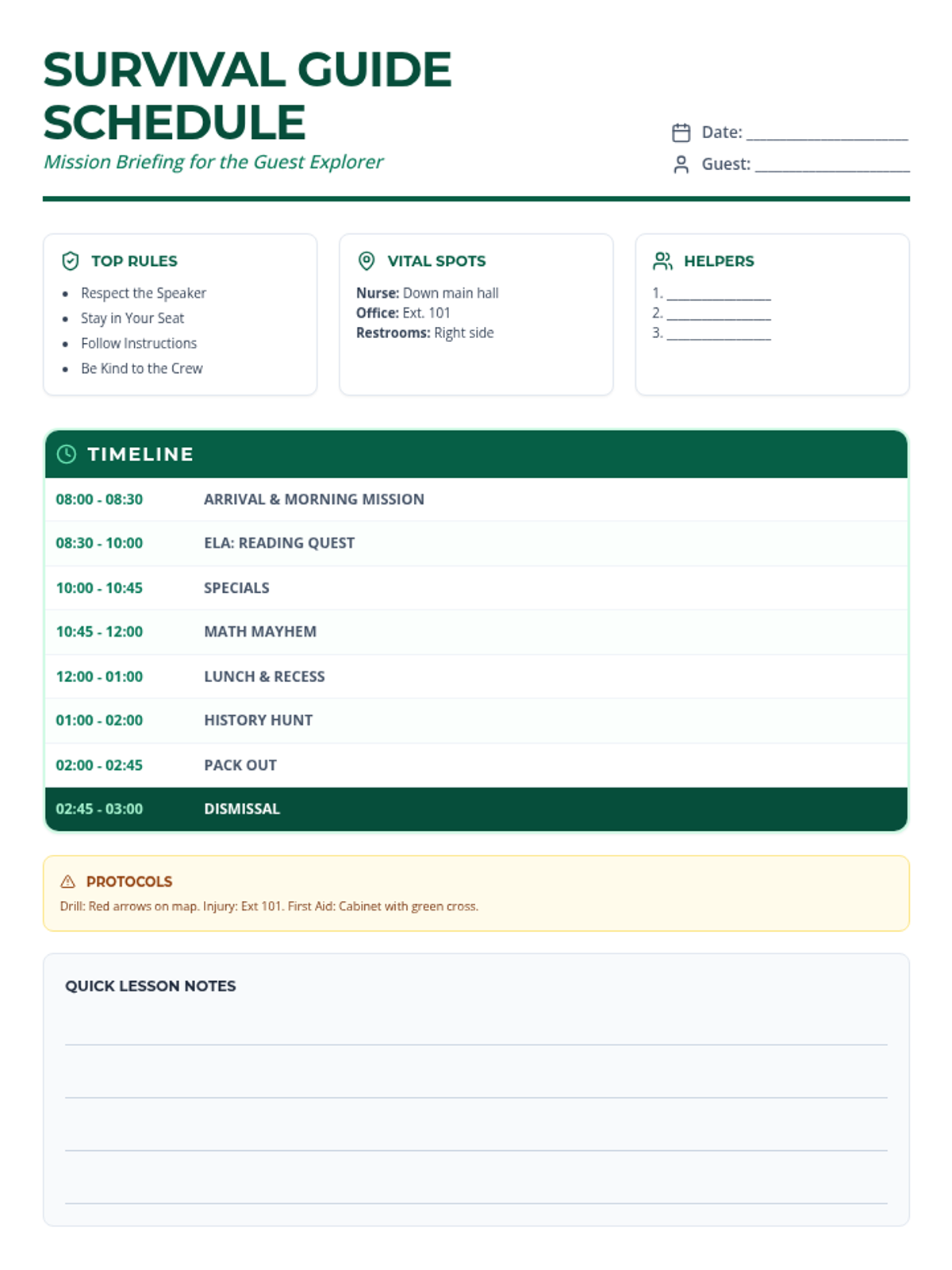
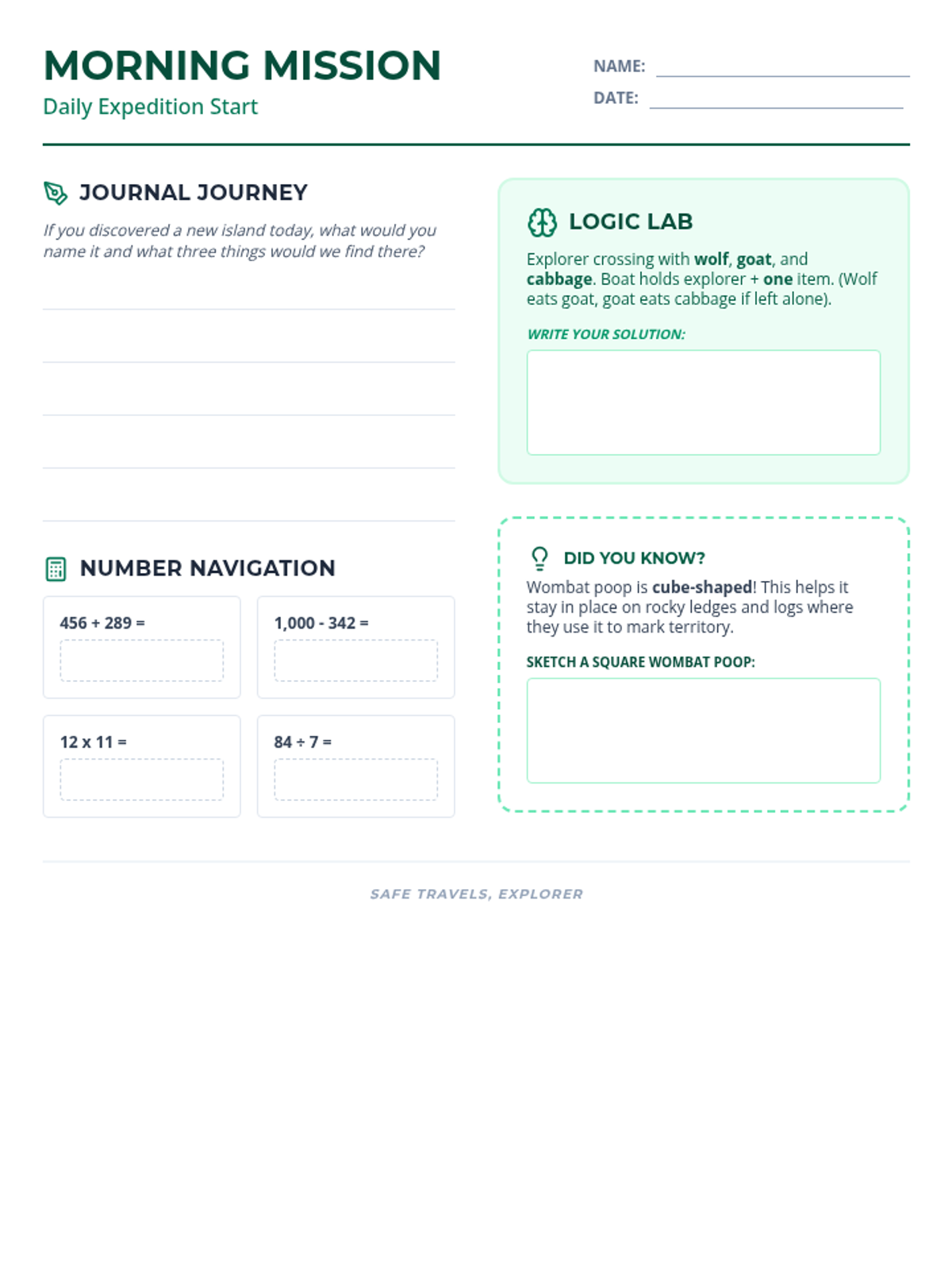
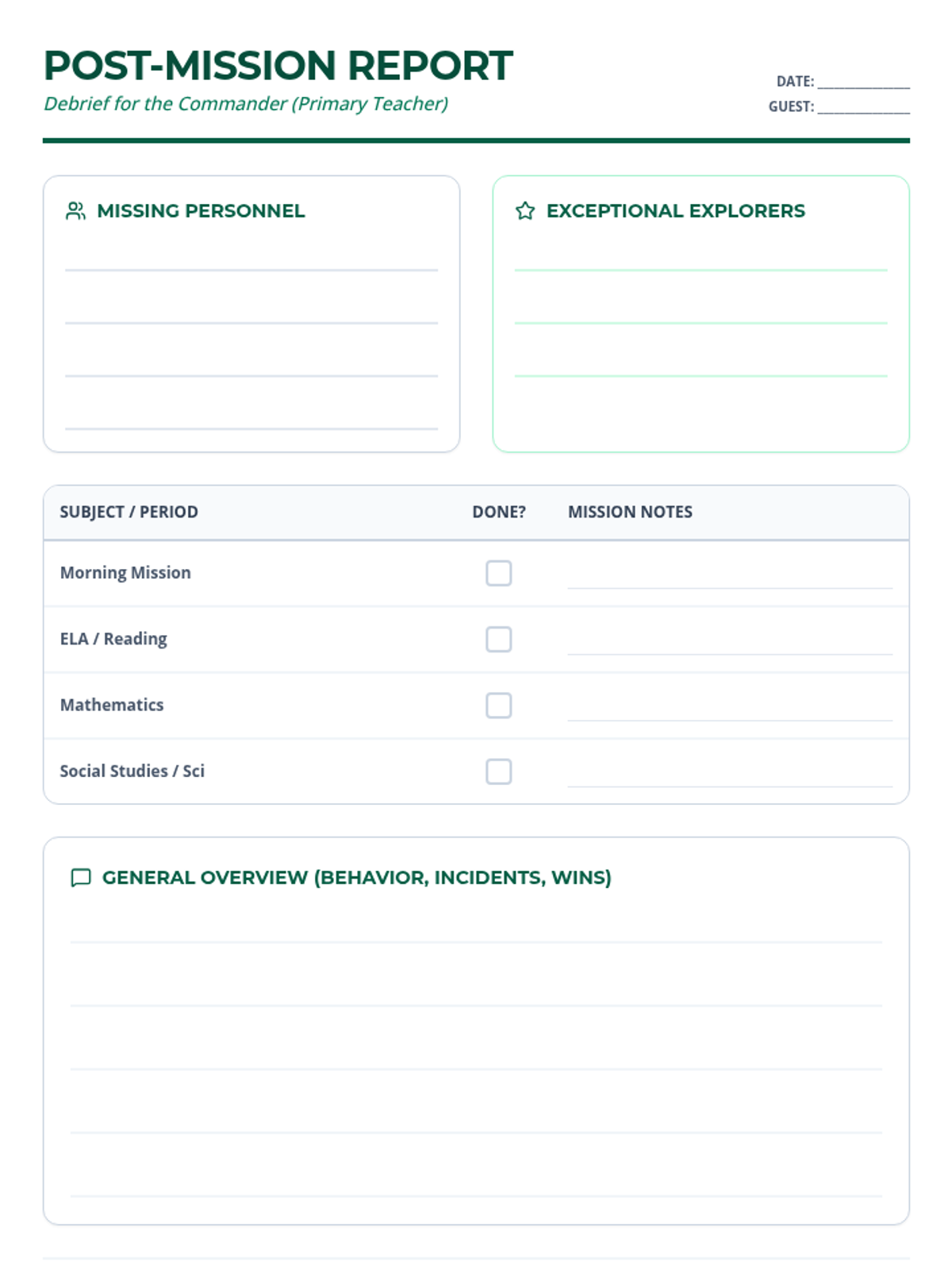
A comprehensive set of materials for a substitute teacher to manage a full school day, including a detailed schedule, morning work, core subject activities, and a reporting system.
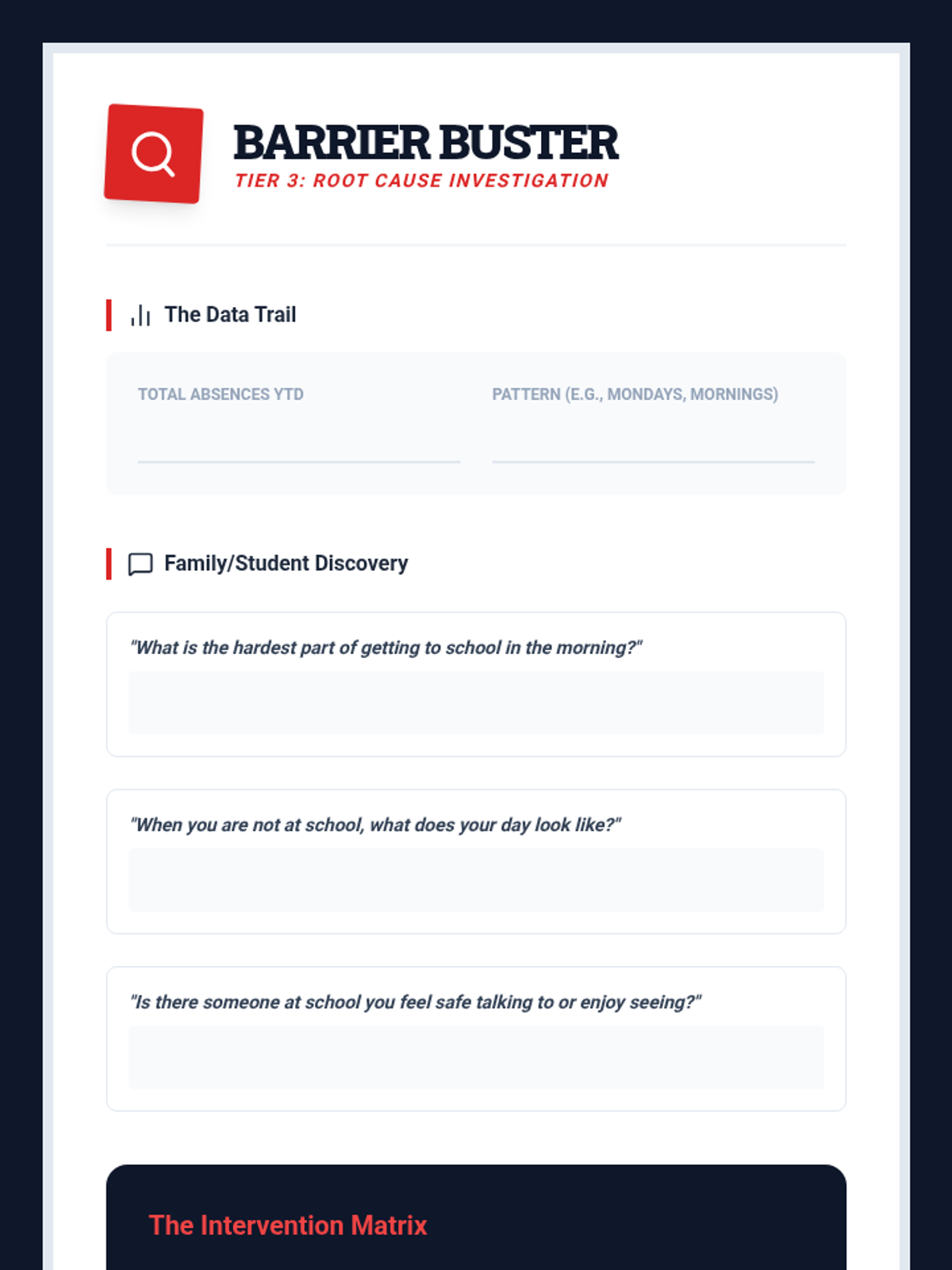
High-intensity support for chronically absent students (missing 10%+). Focuses on root-cause analysis, family casework, and removing systemic barriers through community collaboration.
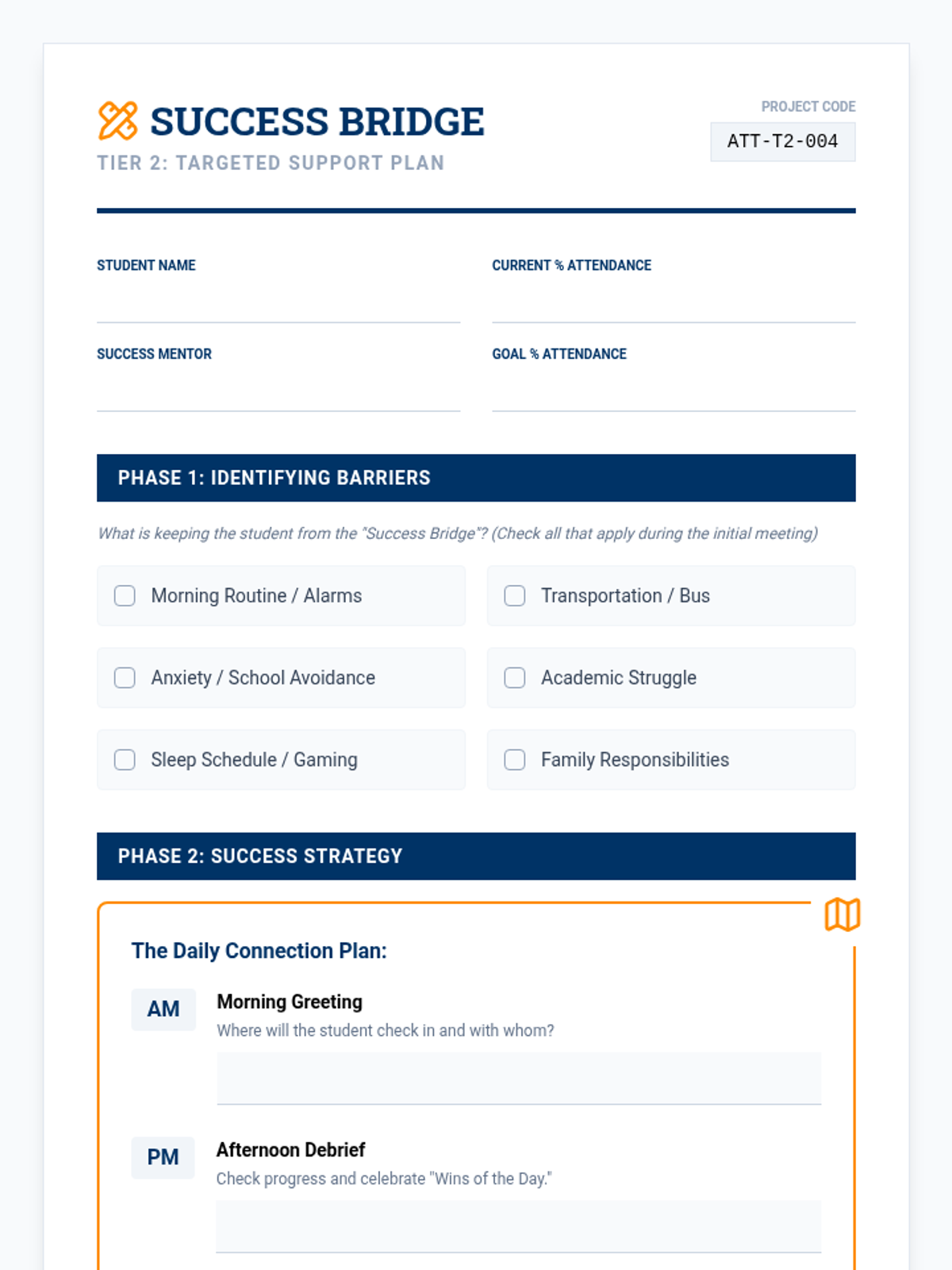
Identifying students at risk (missing 5-9% of school) and implementing early-warning interventions like Check-In/Check-Out and personalized success mapping.
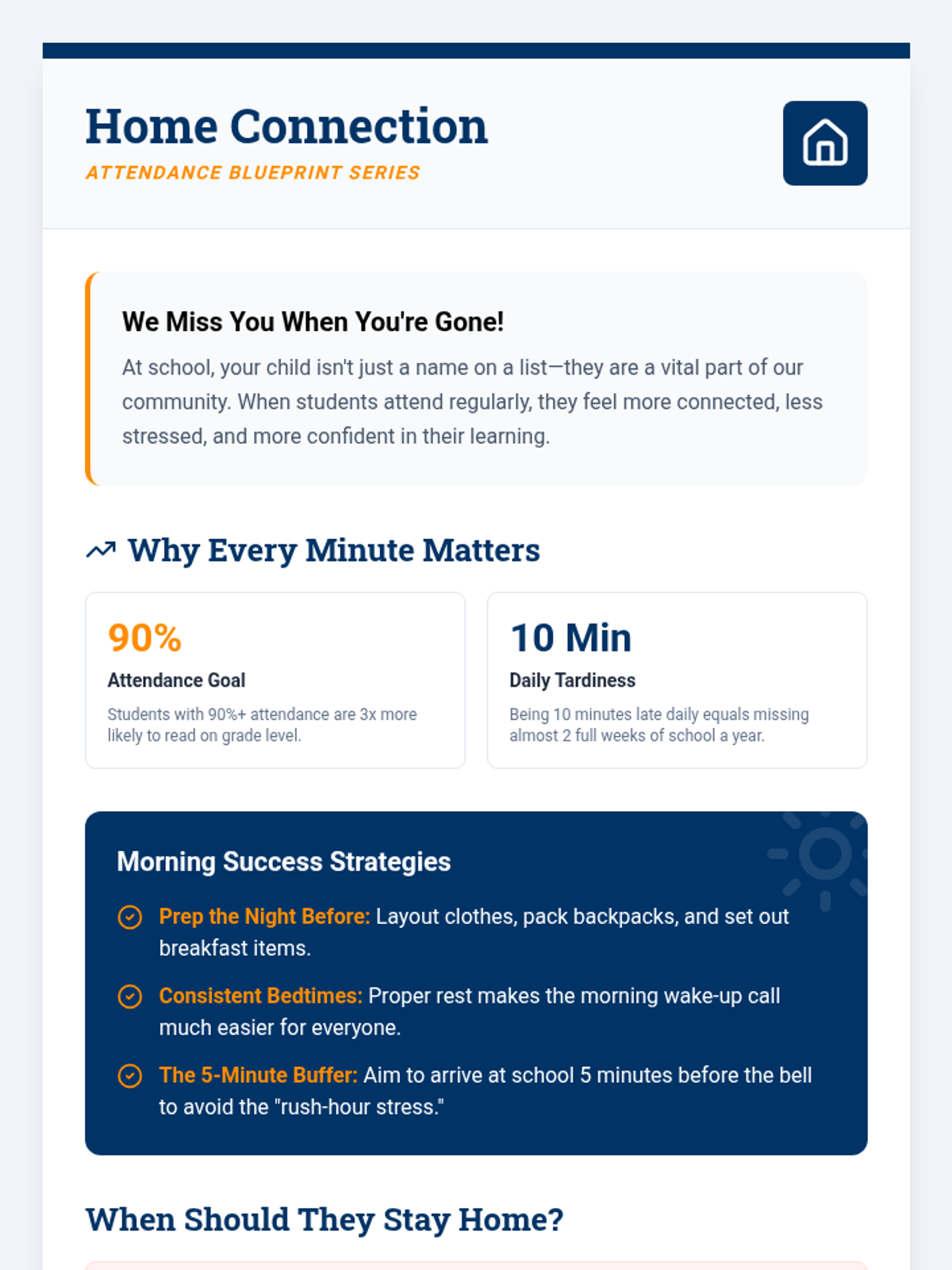
Establishing universal attendance expectations, building a culture of belonging, and communicating the "Every Minute Matters" philosophy to students and families.
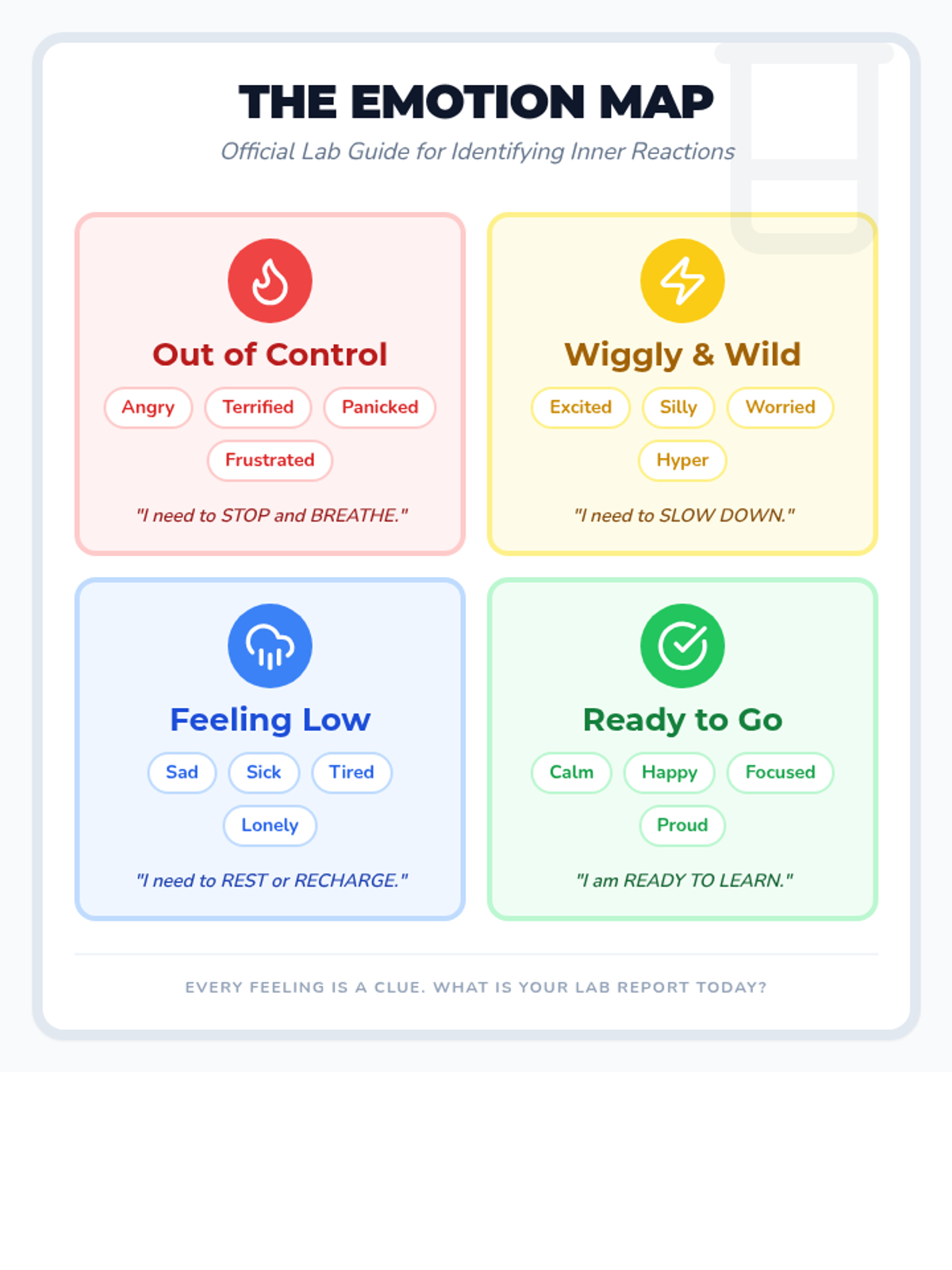
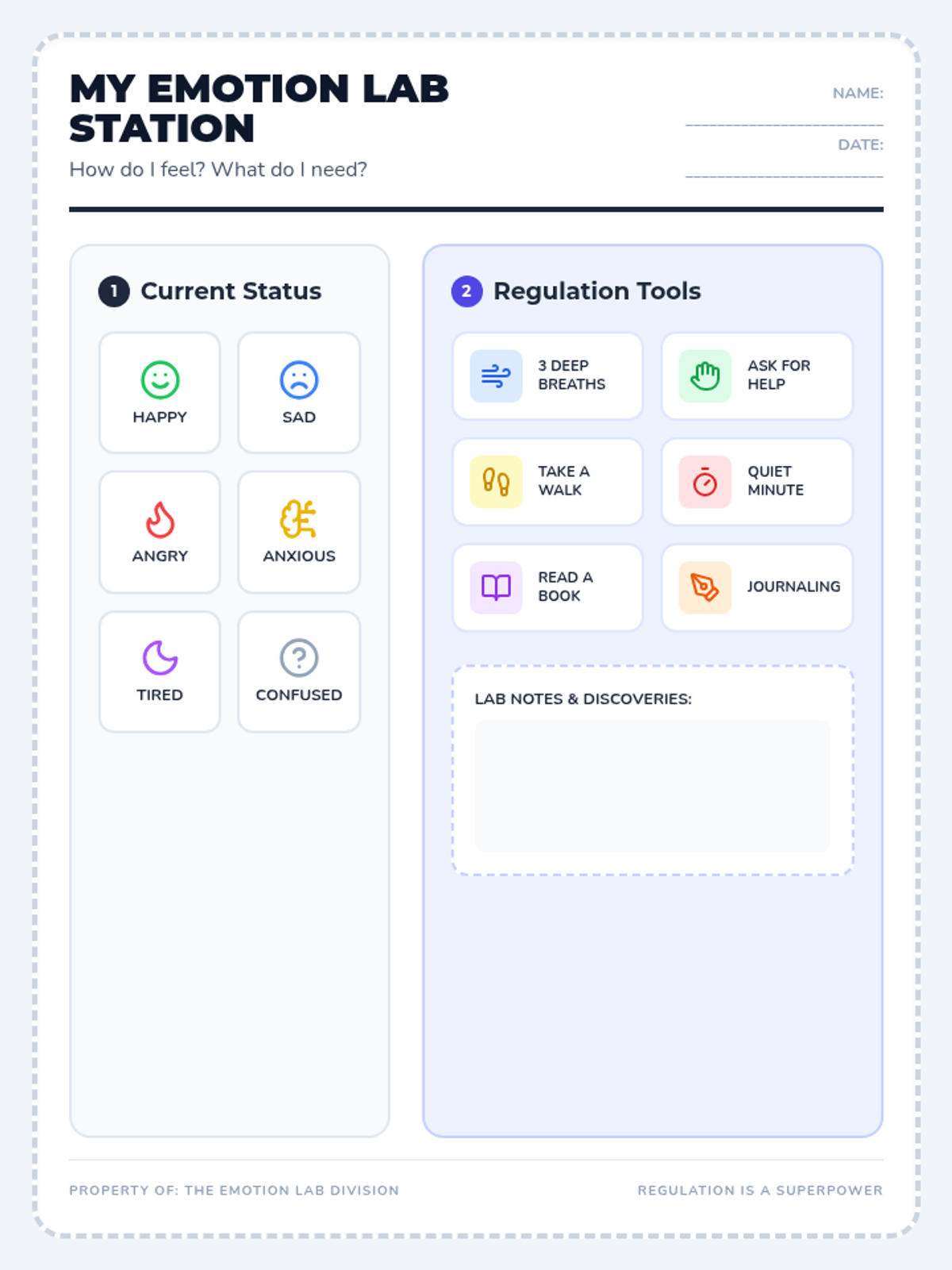
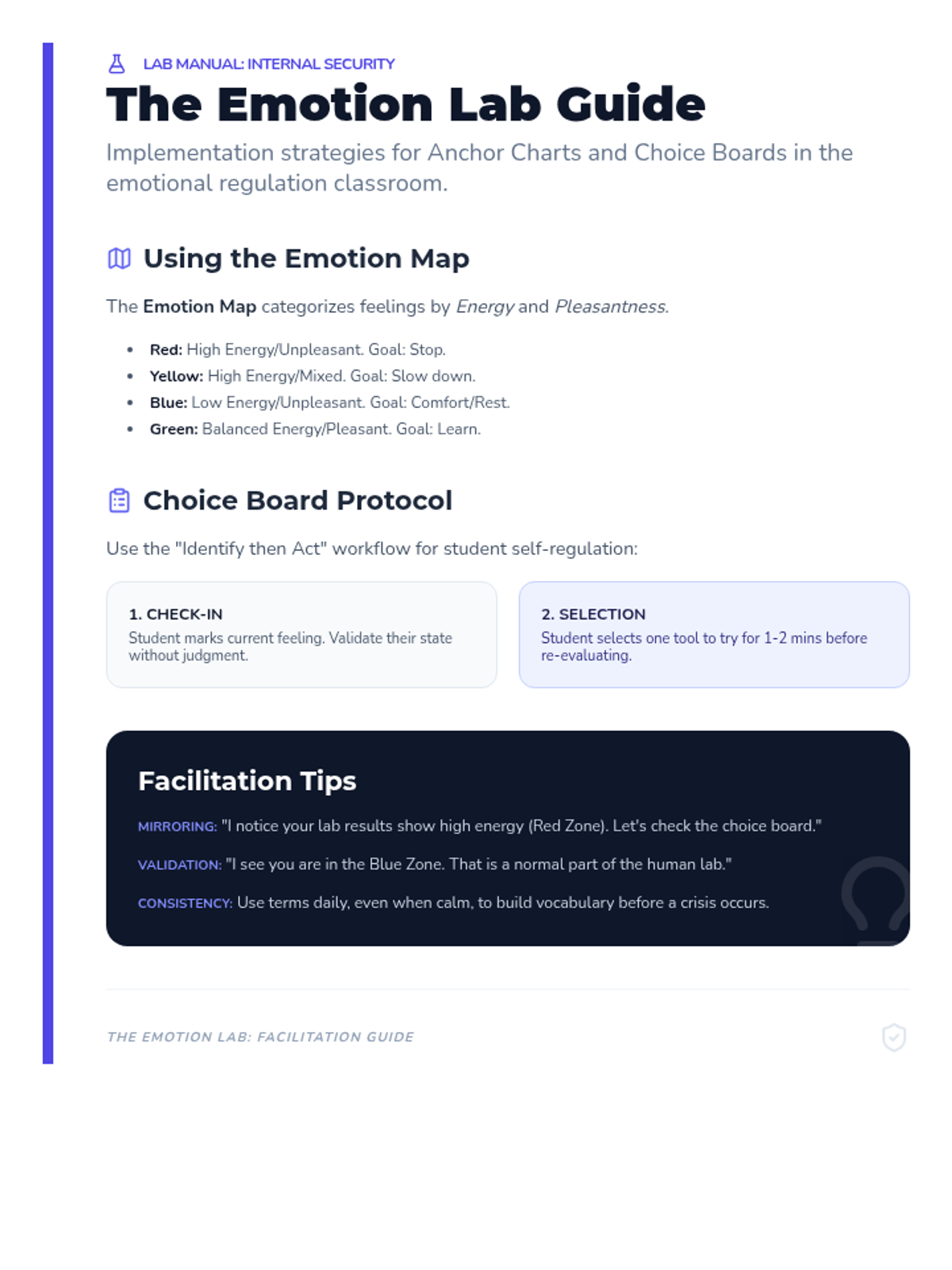
A foundational lesson on identifying and categorizing emotions using visual tools to improve self-awareness and regulation. Students explore 'The Emotion Lab' to decode their inner feelings and select appropriate response strategies.
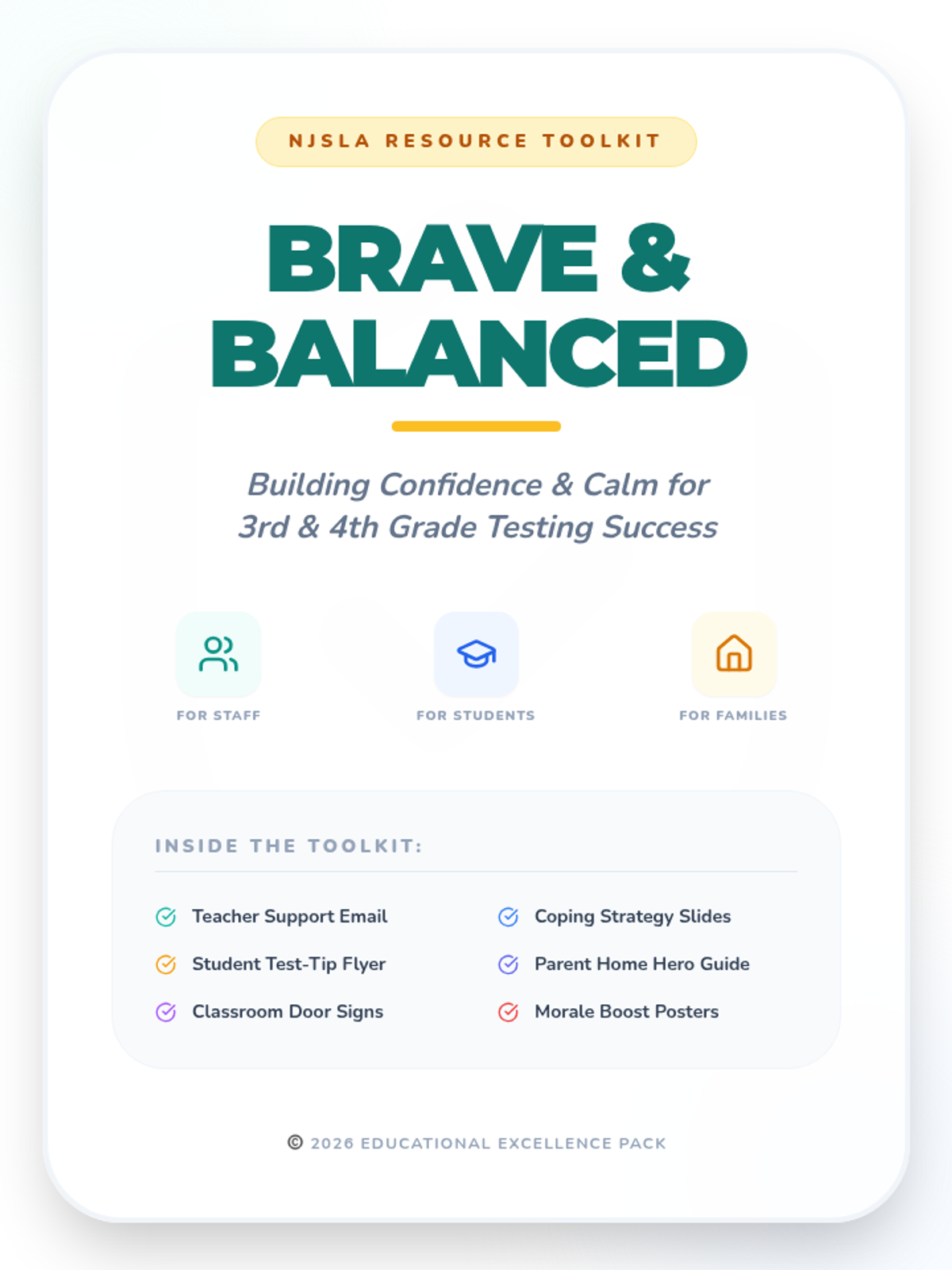
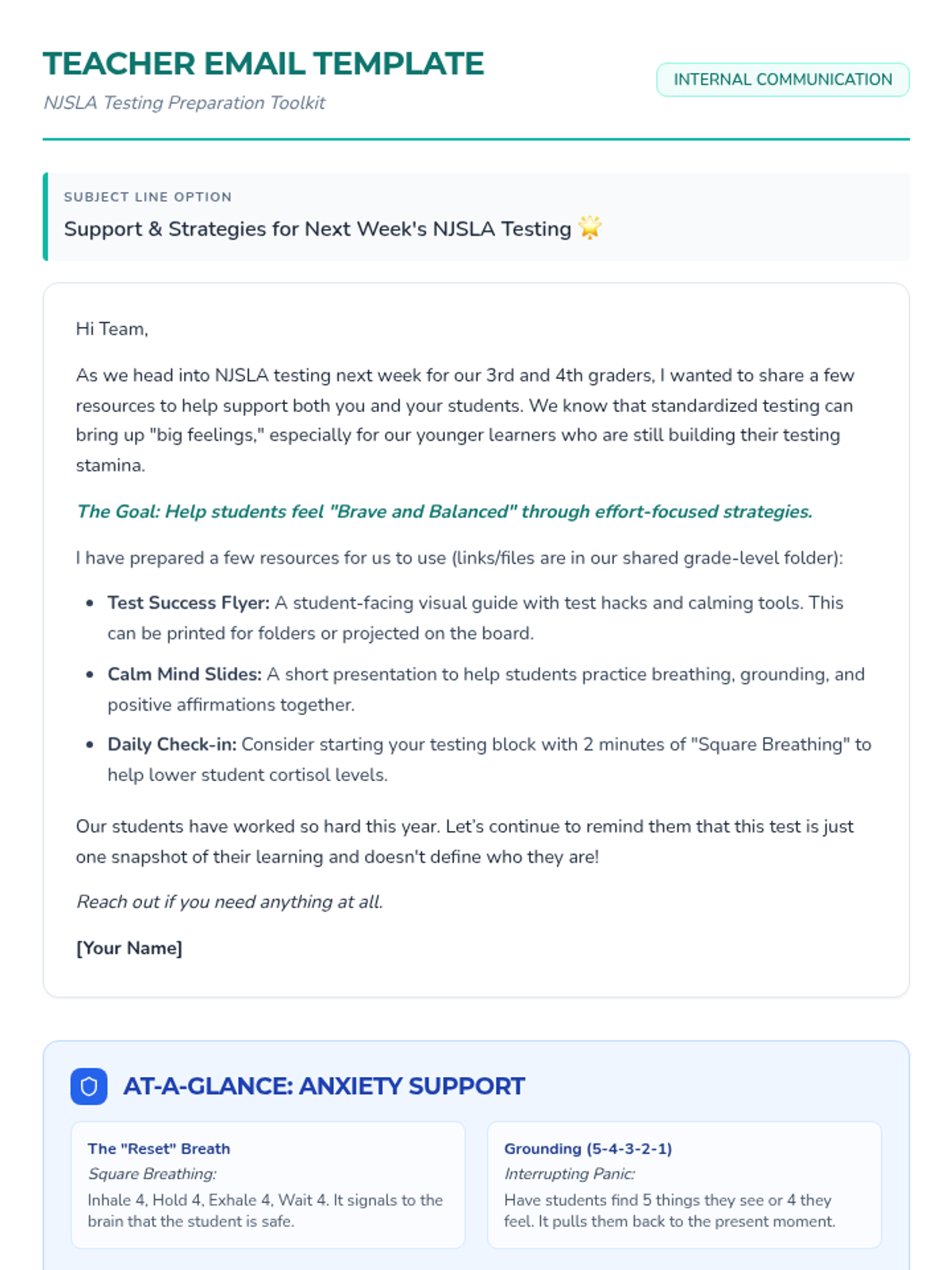
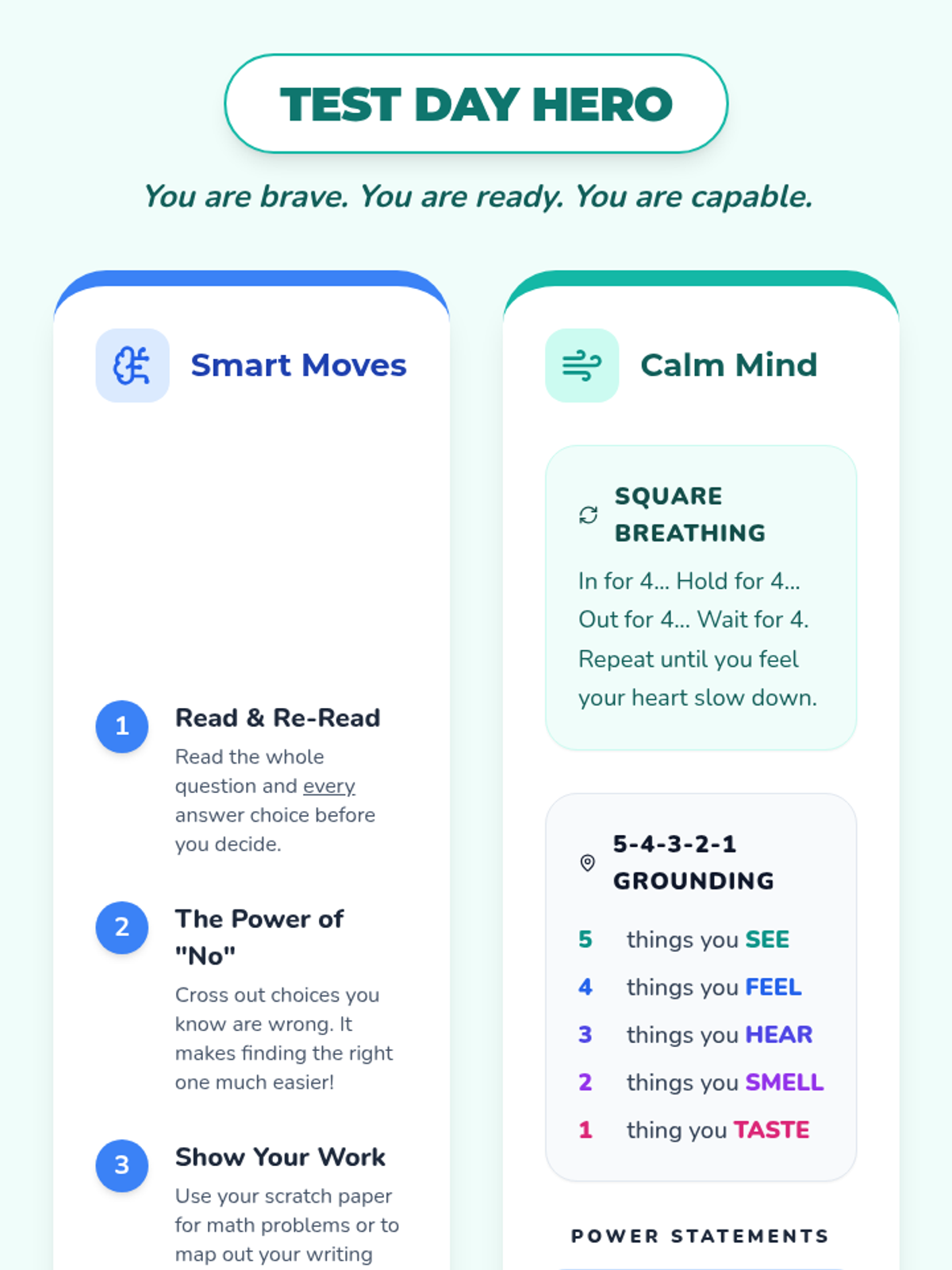
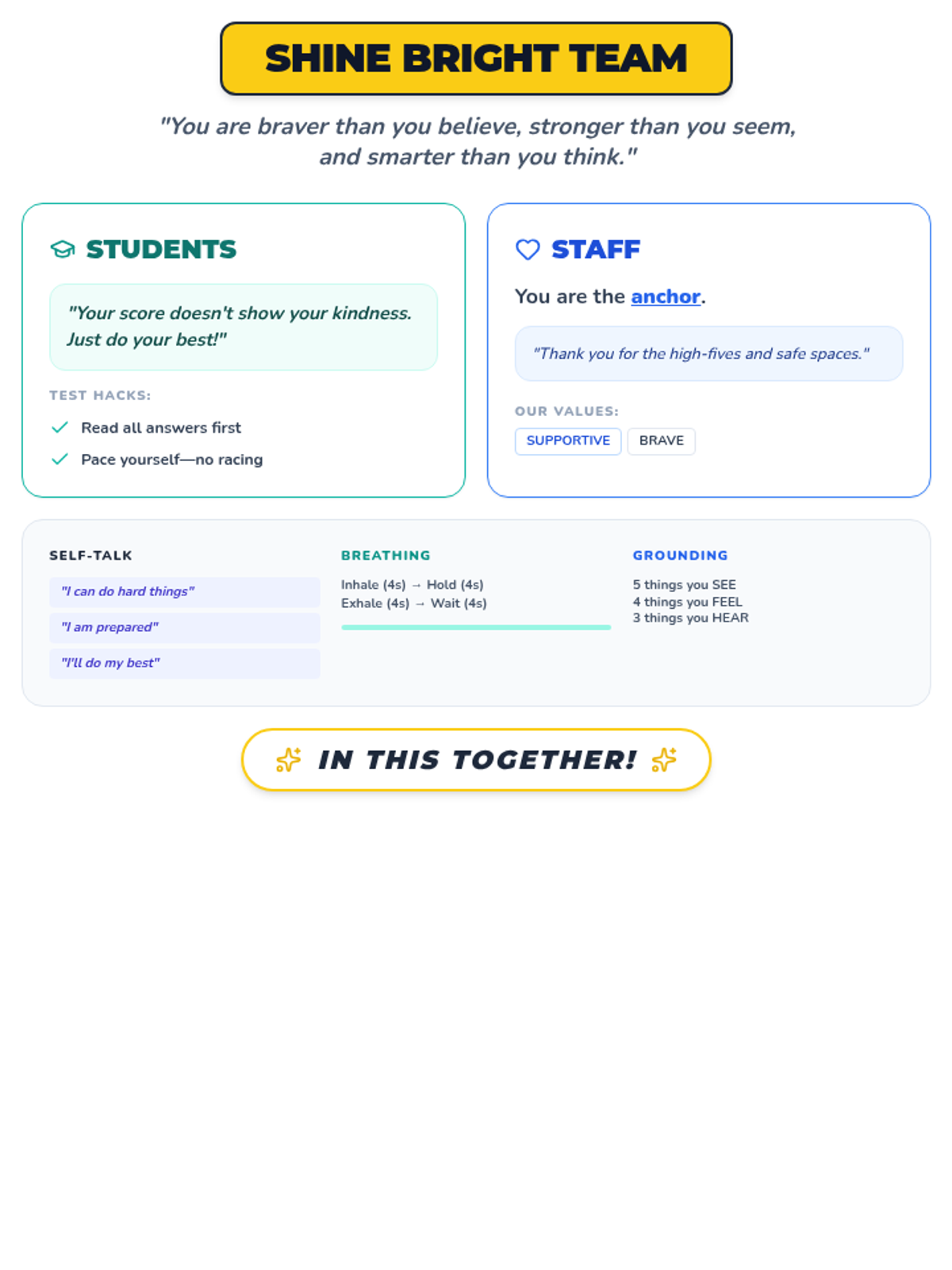
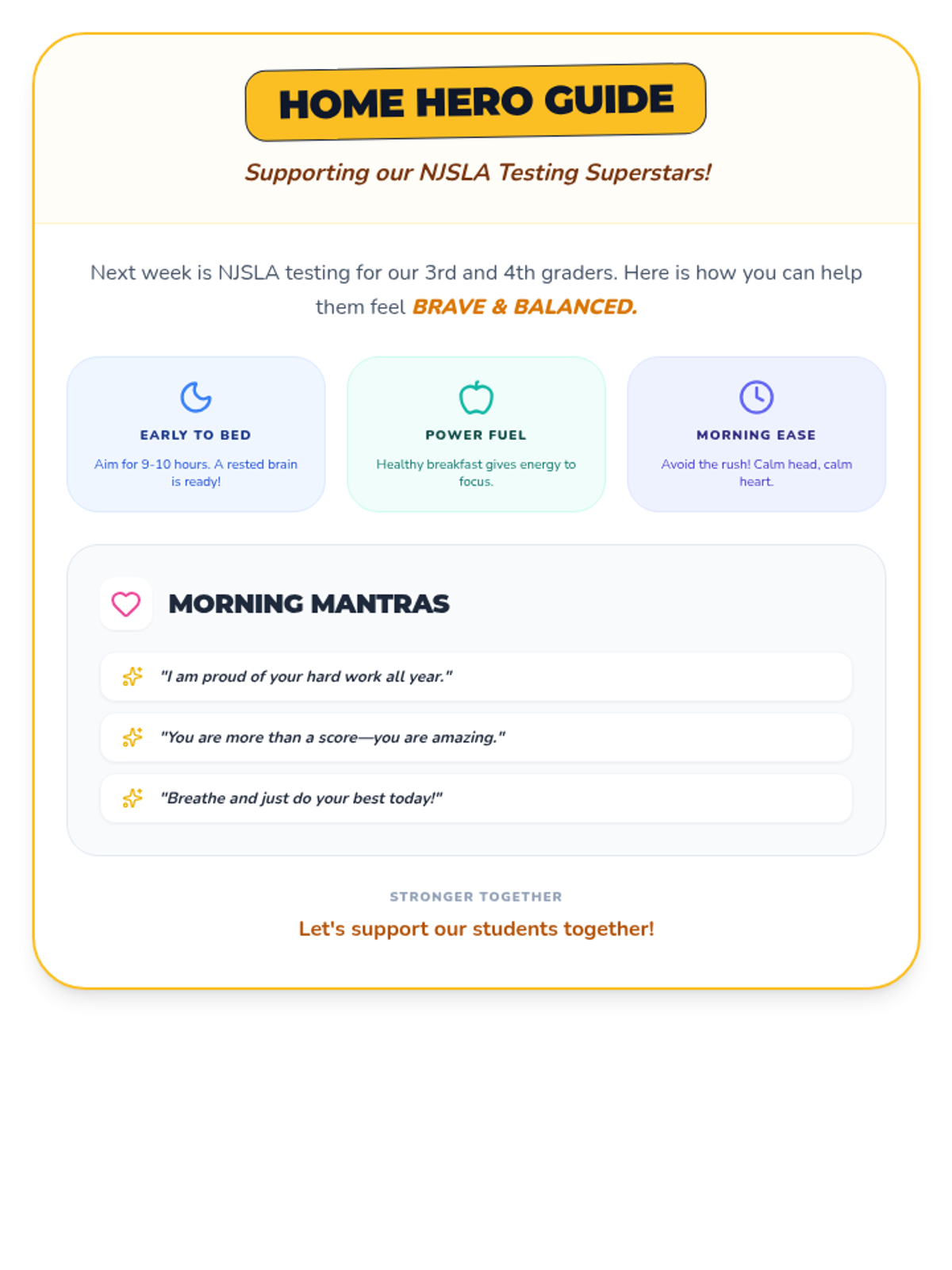
A comprehensive toolkit for 3rd and 4th-grade teachers to help students manage NJSLA testing anxiety through grounding techniques, positive affirmations, and practical testing strategies.
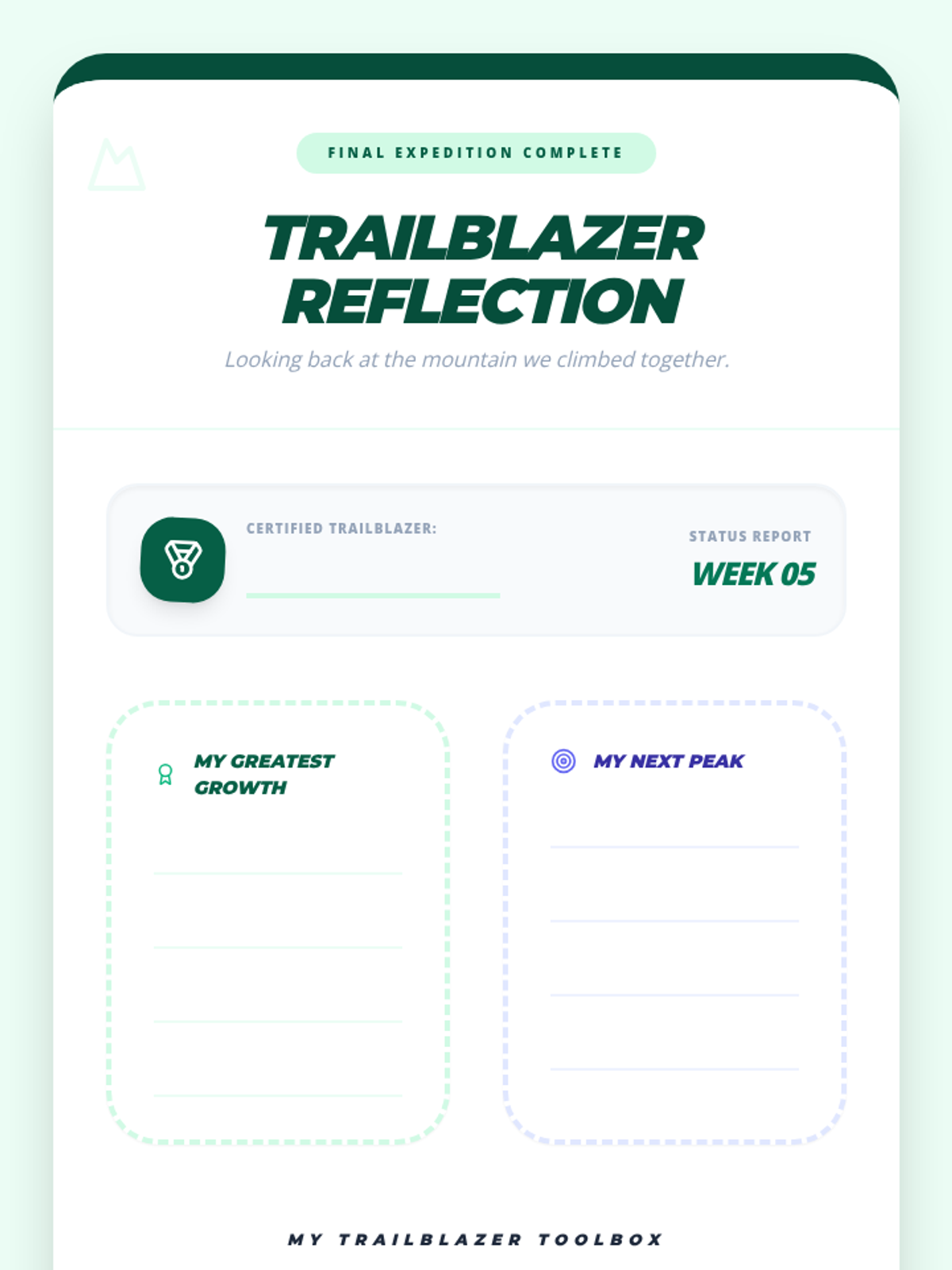
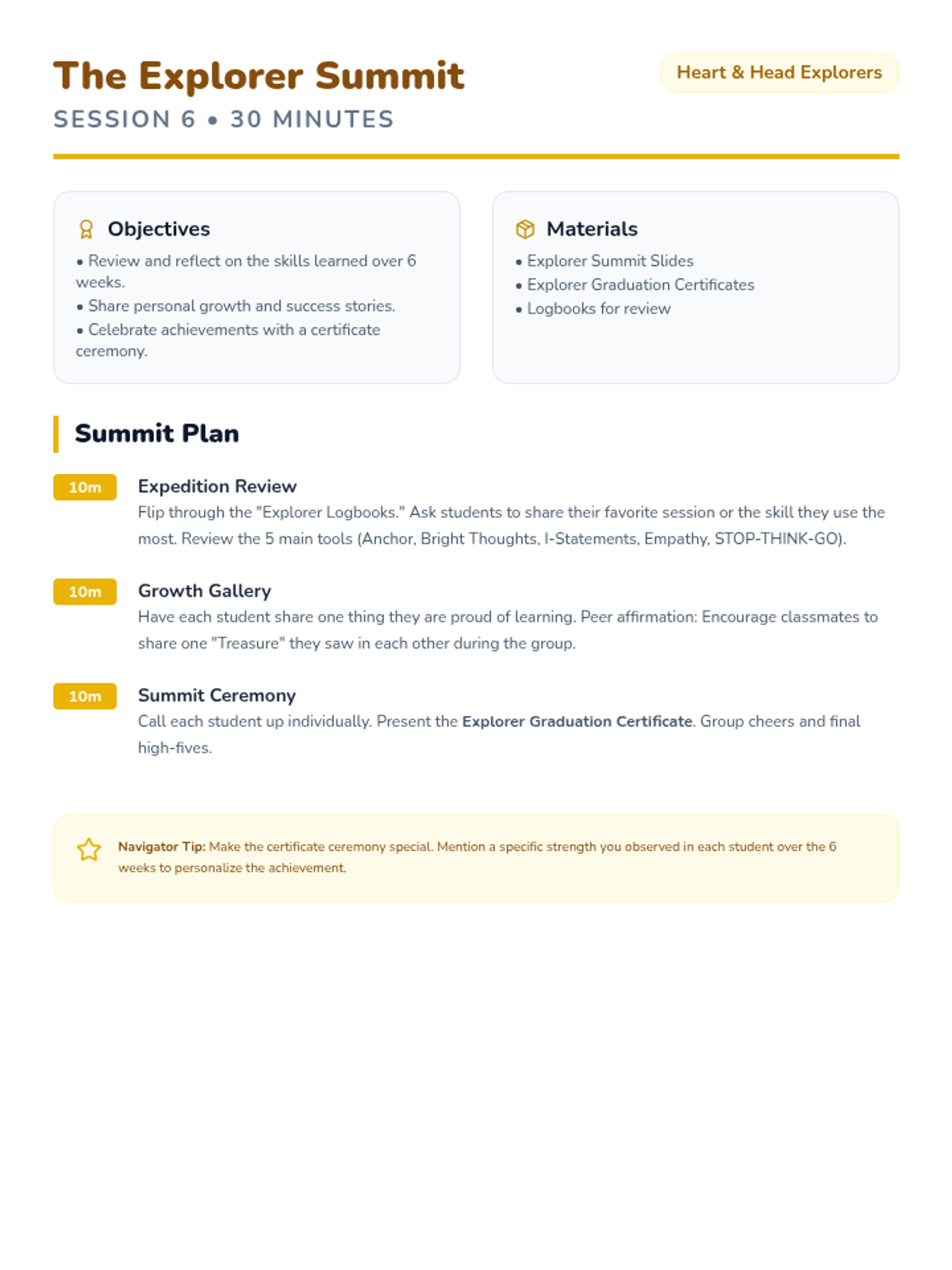
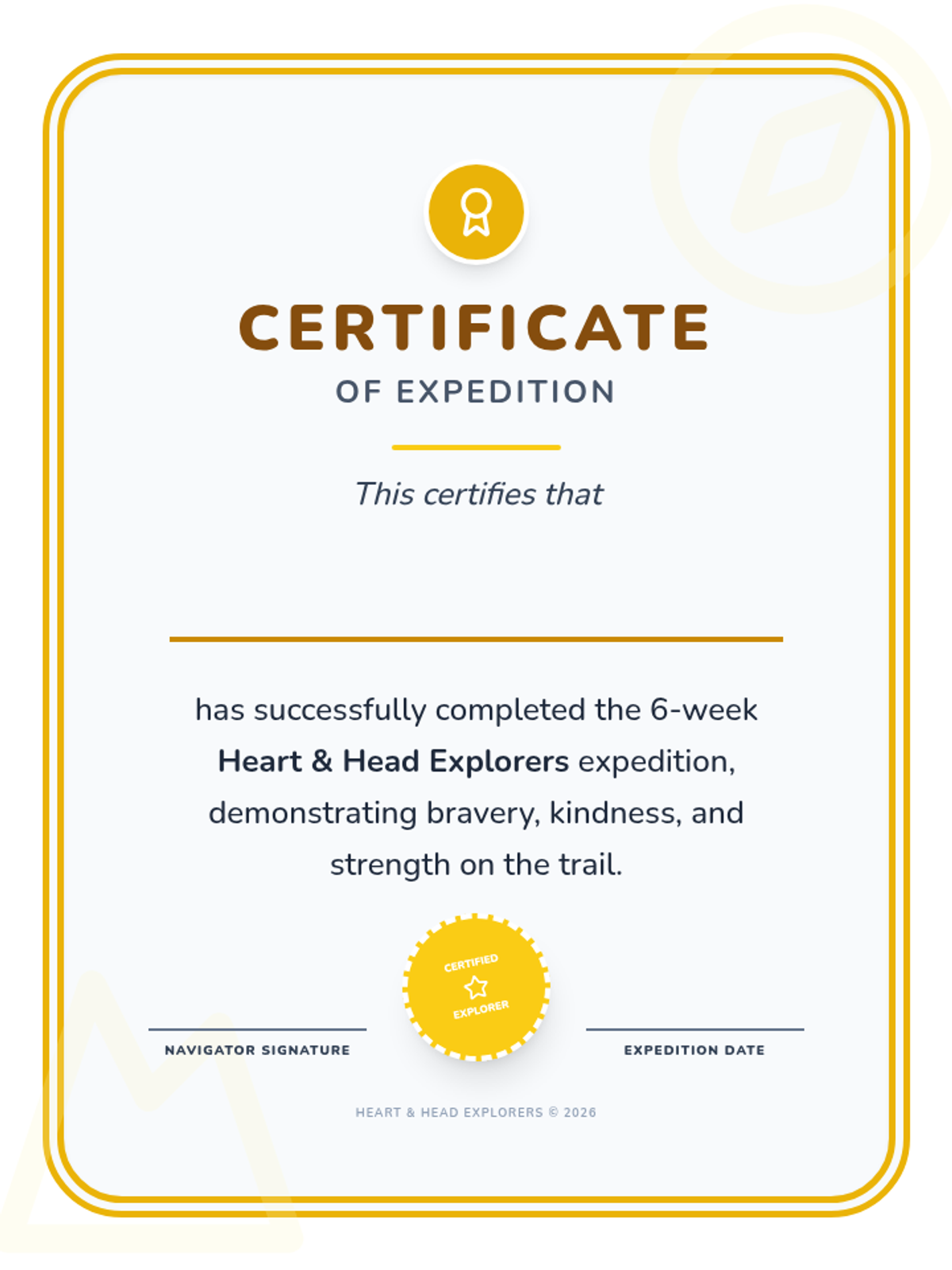
A celebratory final session to review growth, share favorite moments from the expedition, and award certificates.
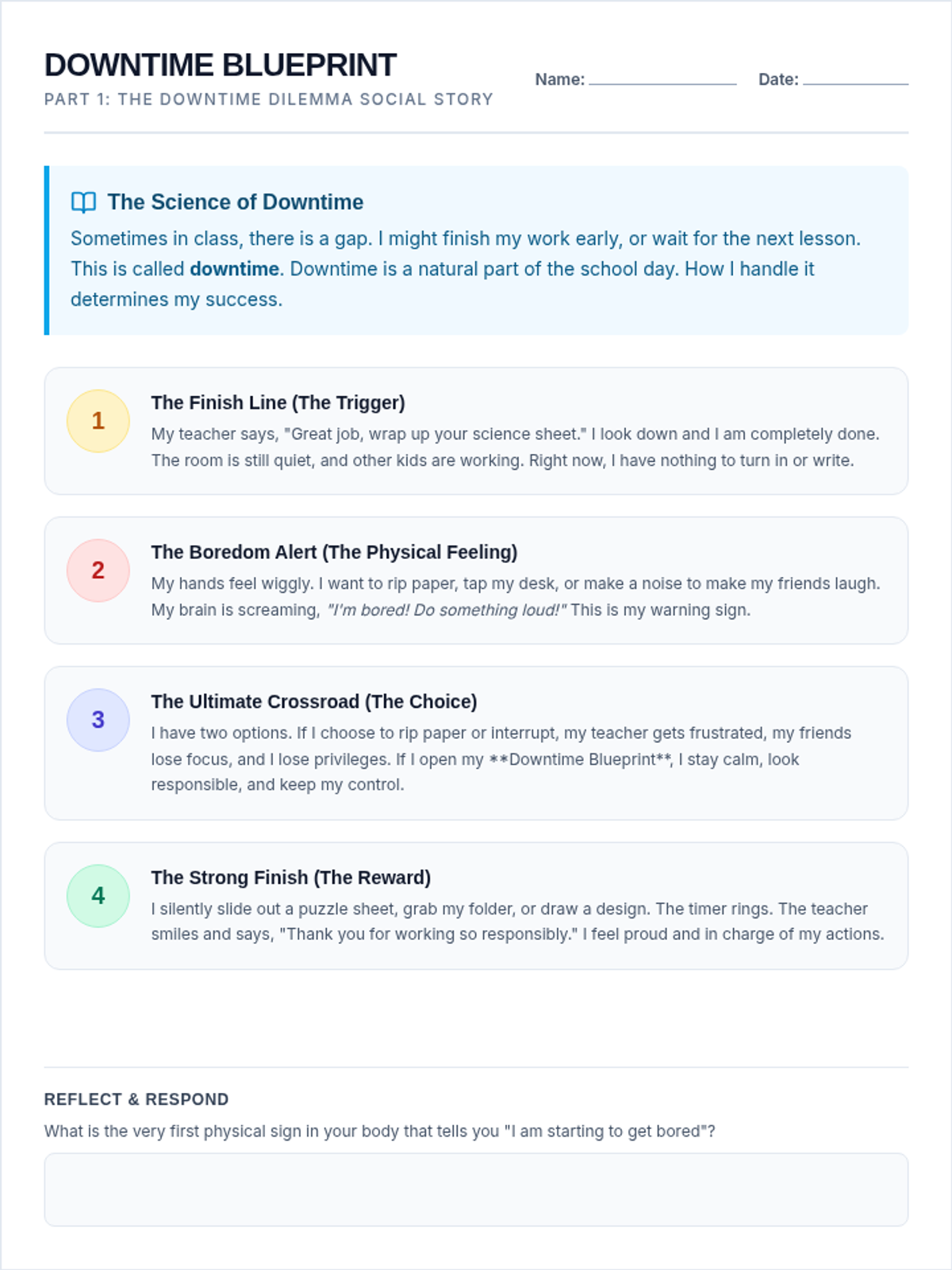
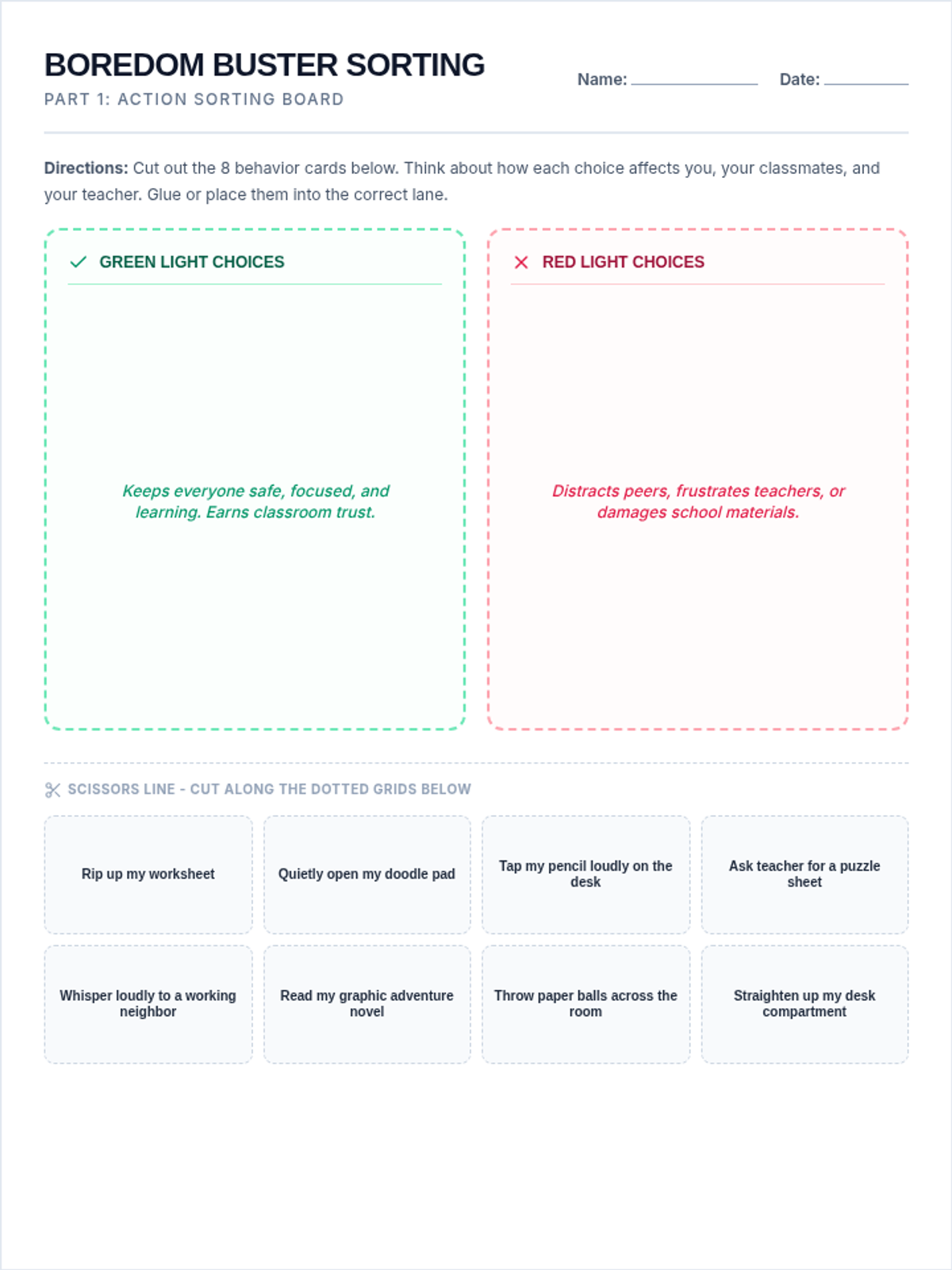
A targeted 30-minute counseling lesson that teaches a student to identify the physical signs of boredom, understand the impact of disruptive behaviors, and construct a highly visual, personalized downtime choice board to use in the classroom.
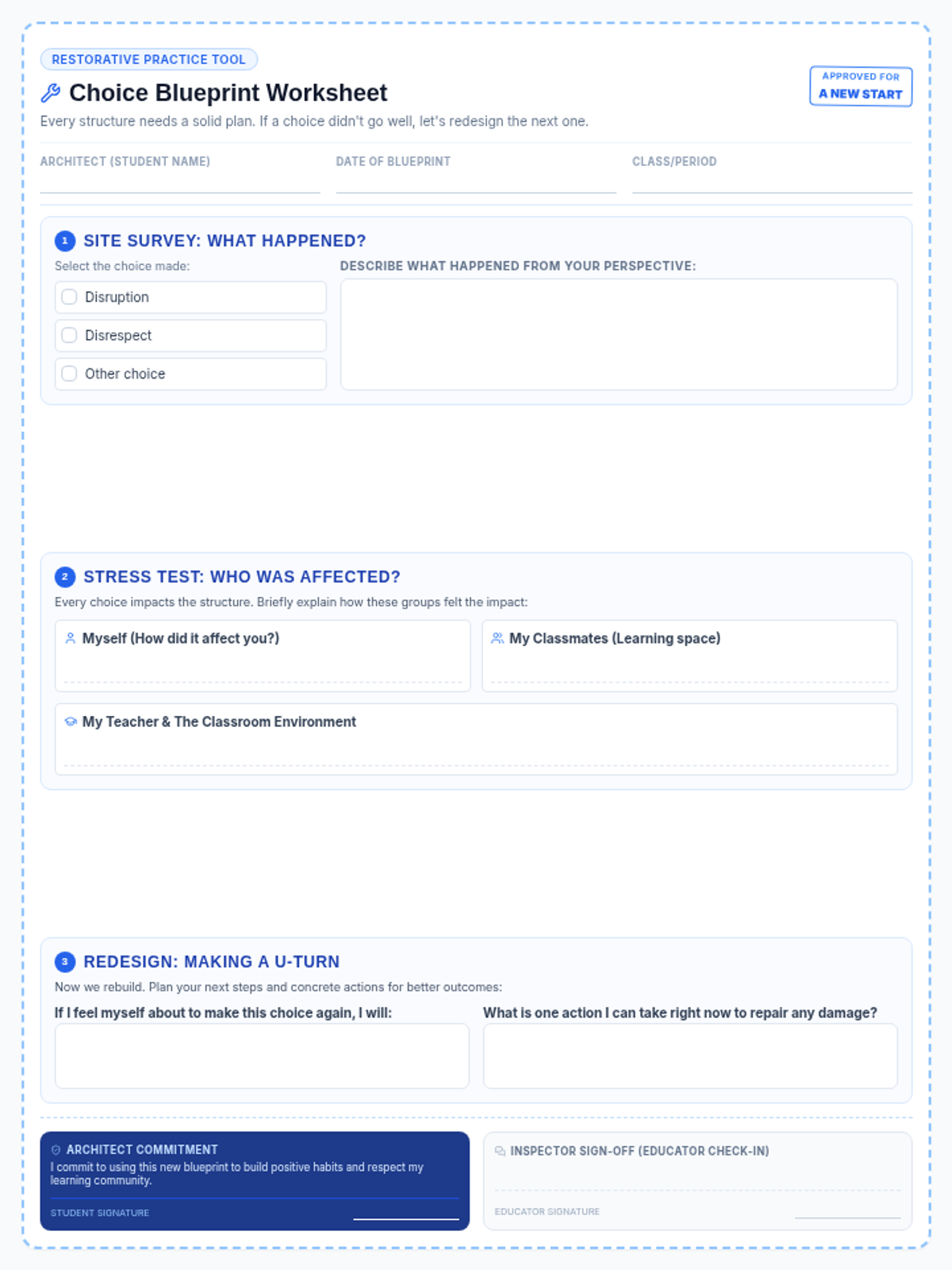
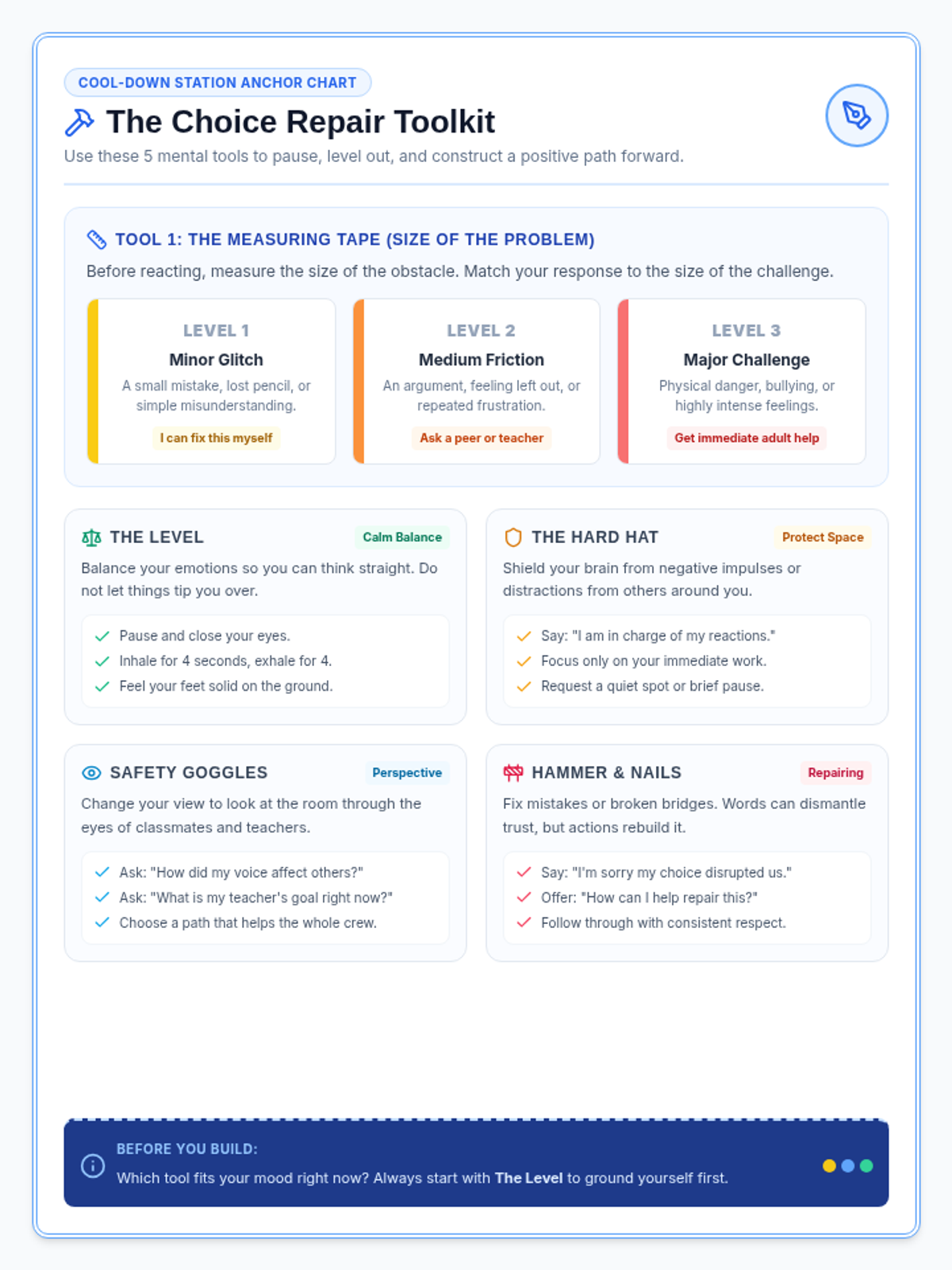
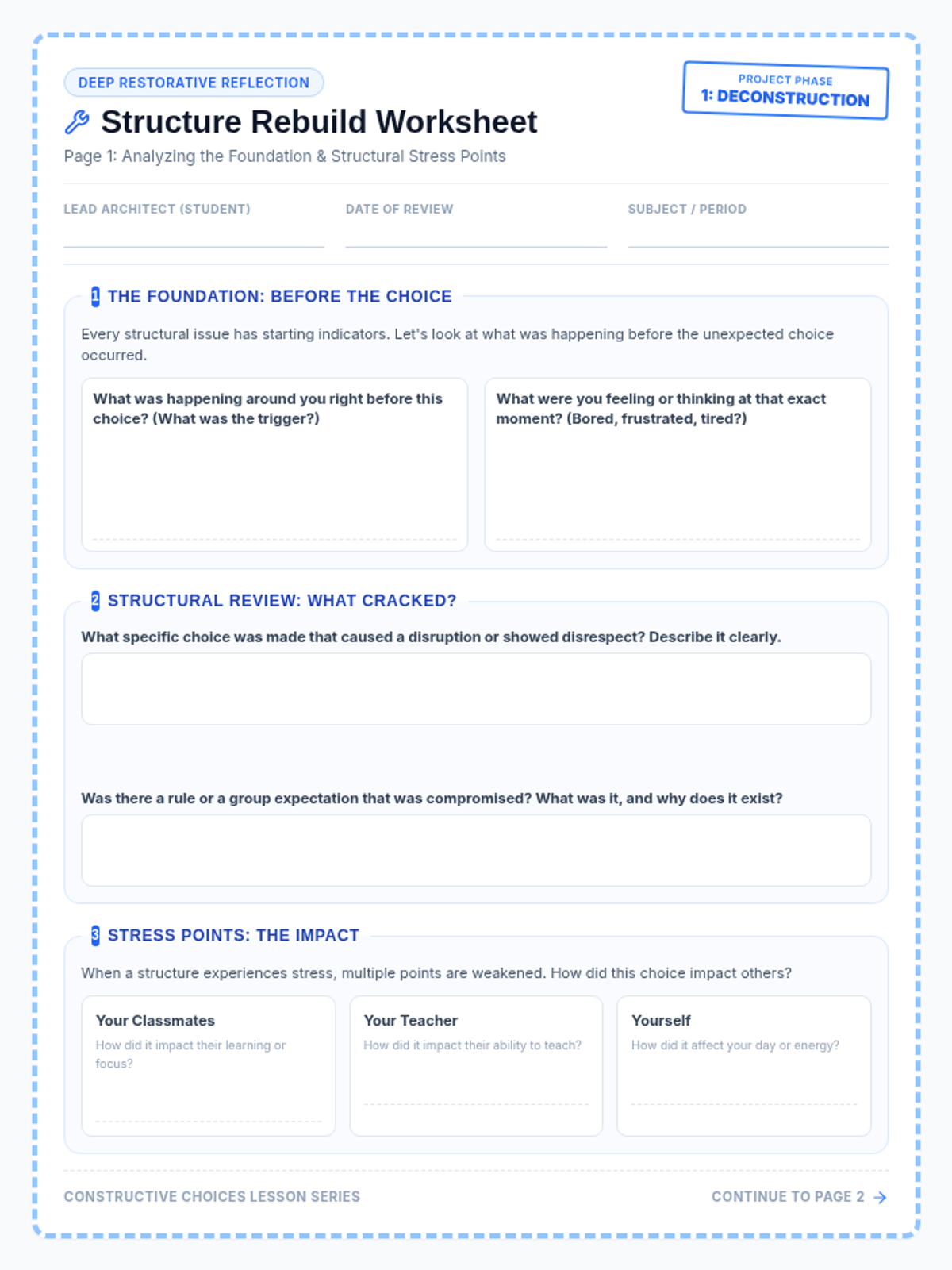
A restorative instruction set focusing on helping students pause, evaluate behavior impacts, and build a positive plan for respectful classroom engagement.
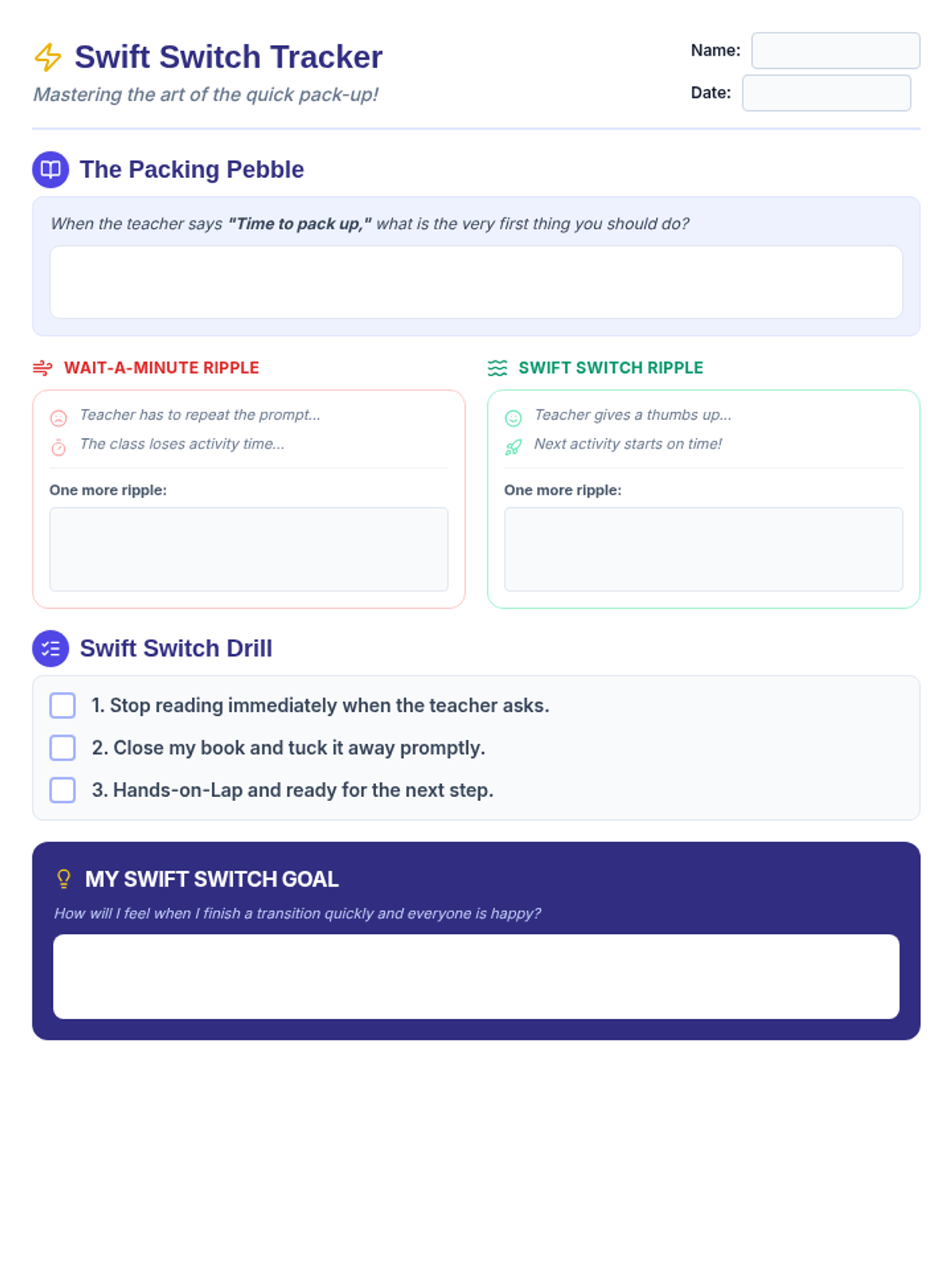
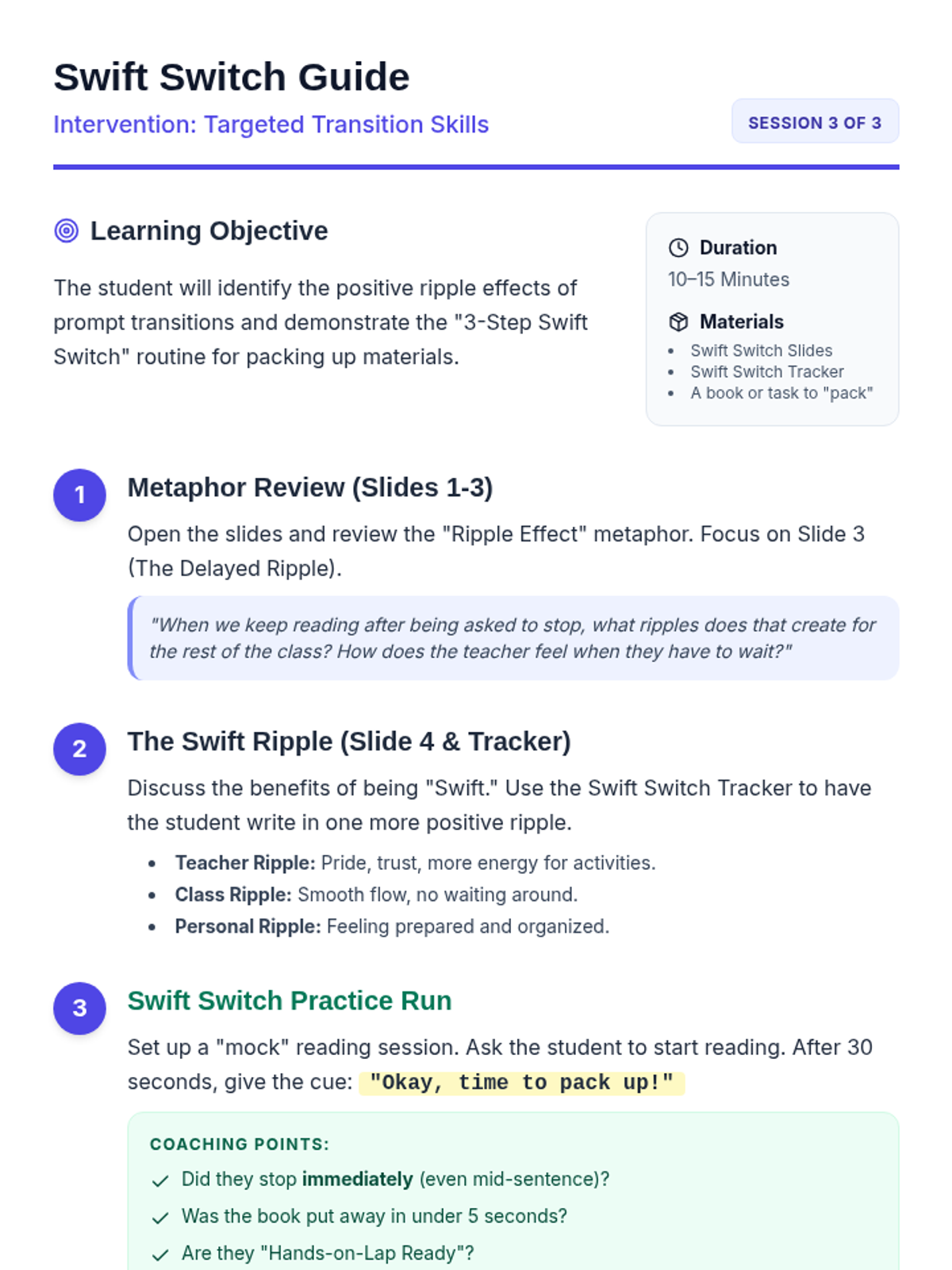
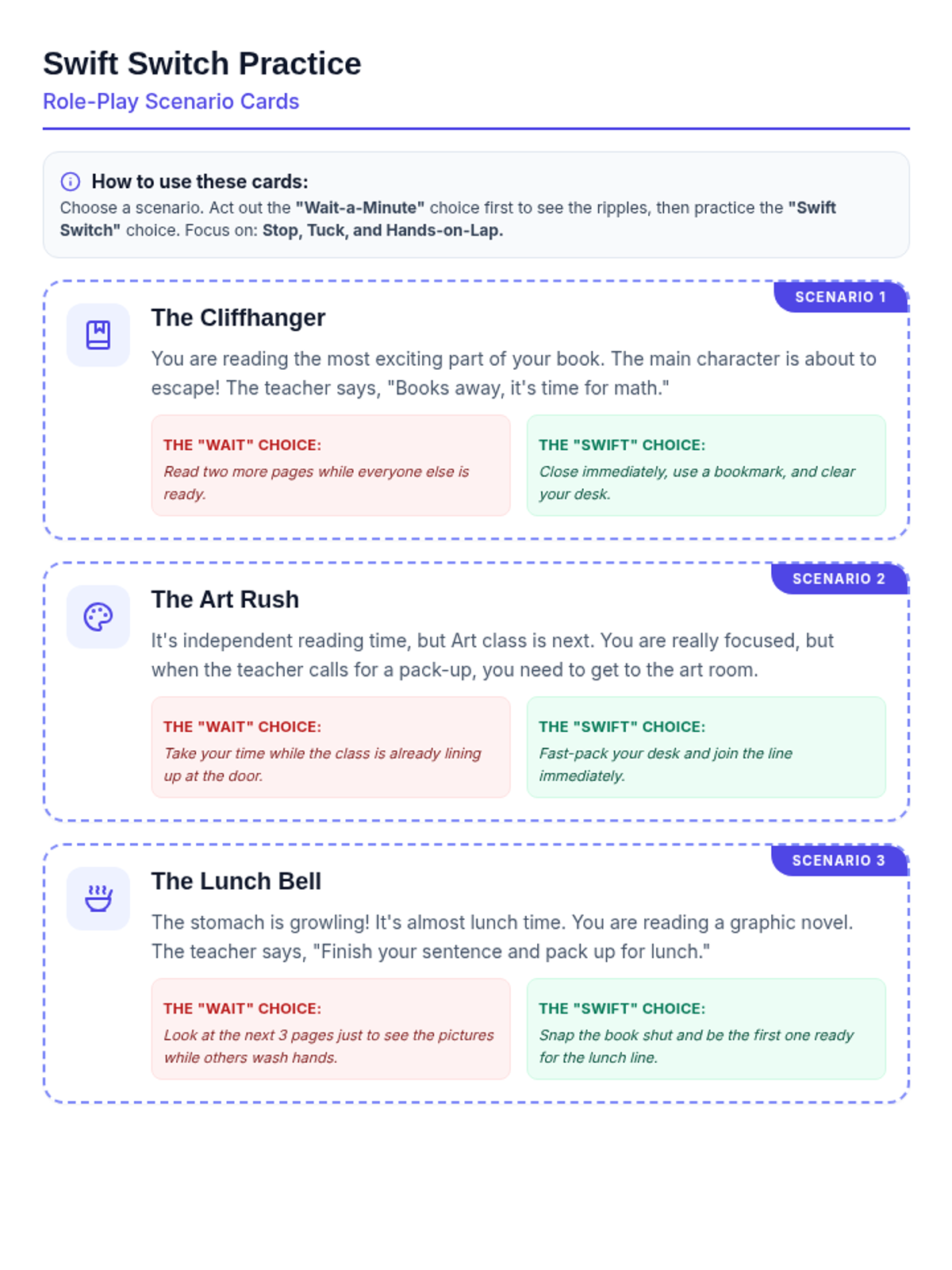
A targeted intervention focused on the transition skill of packing up materials promptly, highlighting the positive ripple effects of being ready for the next part of the day.
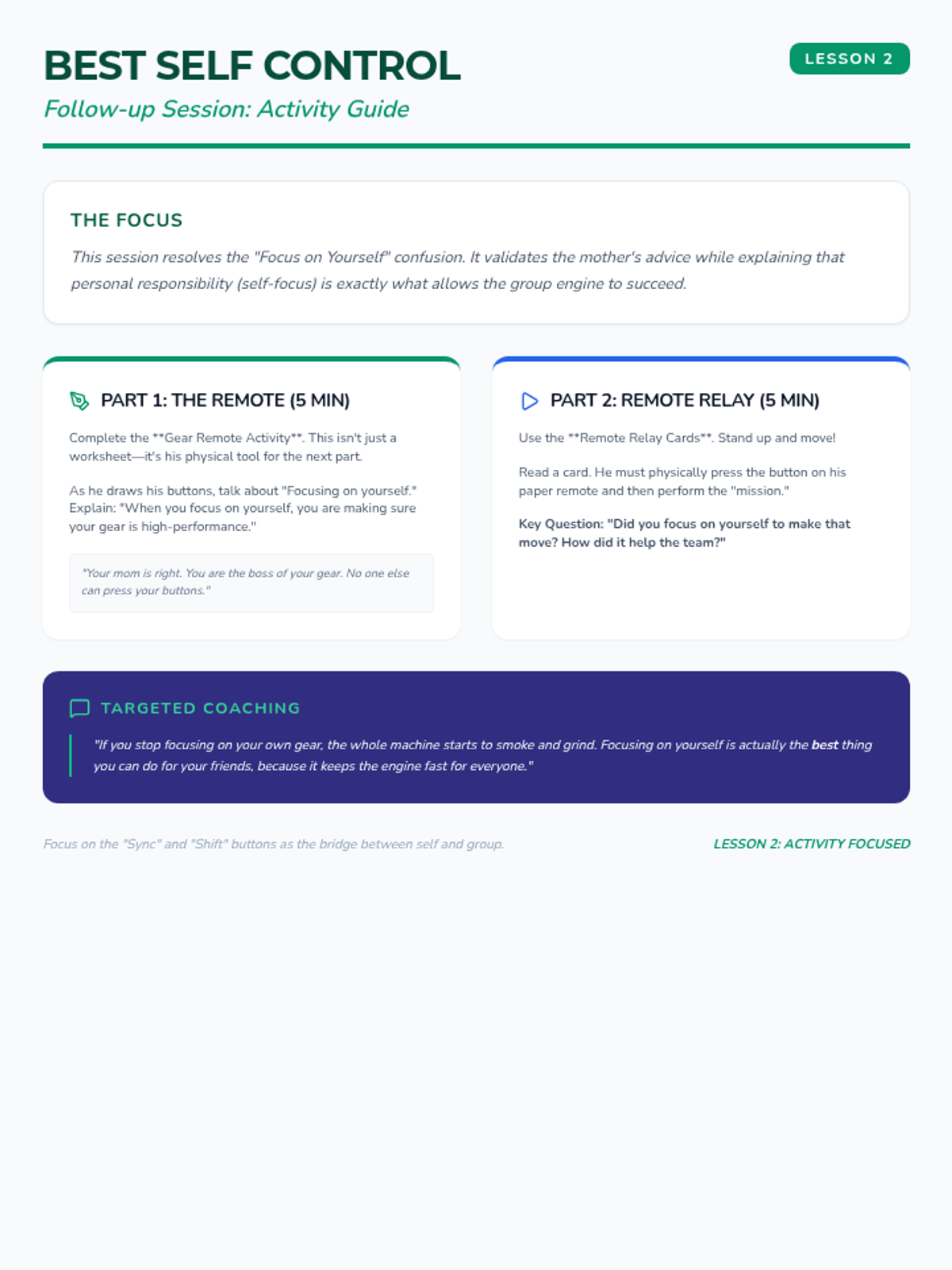
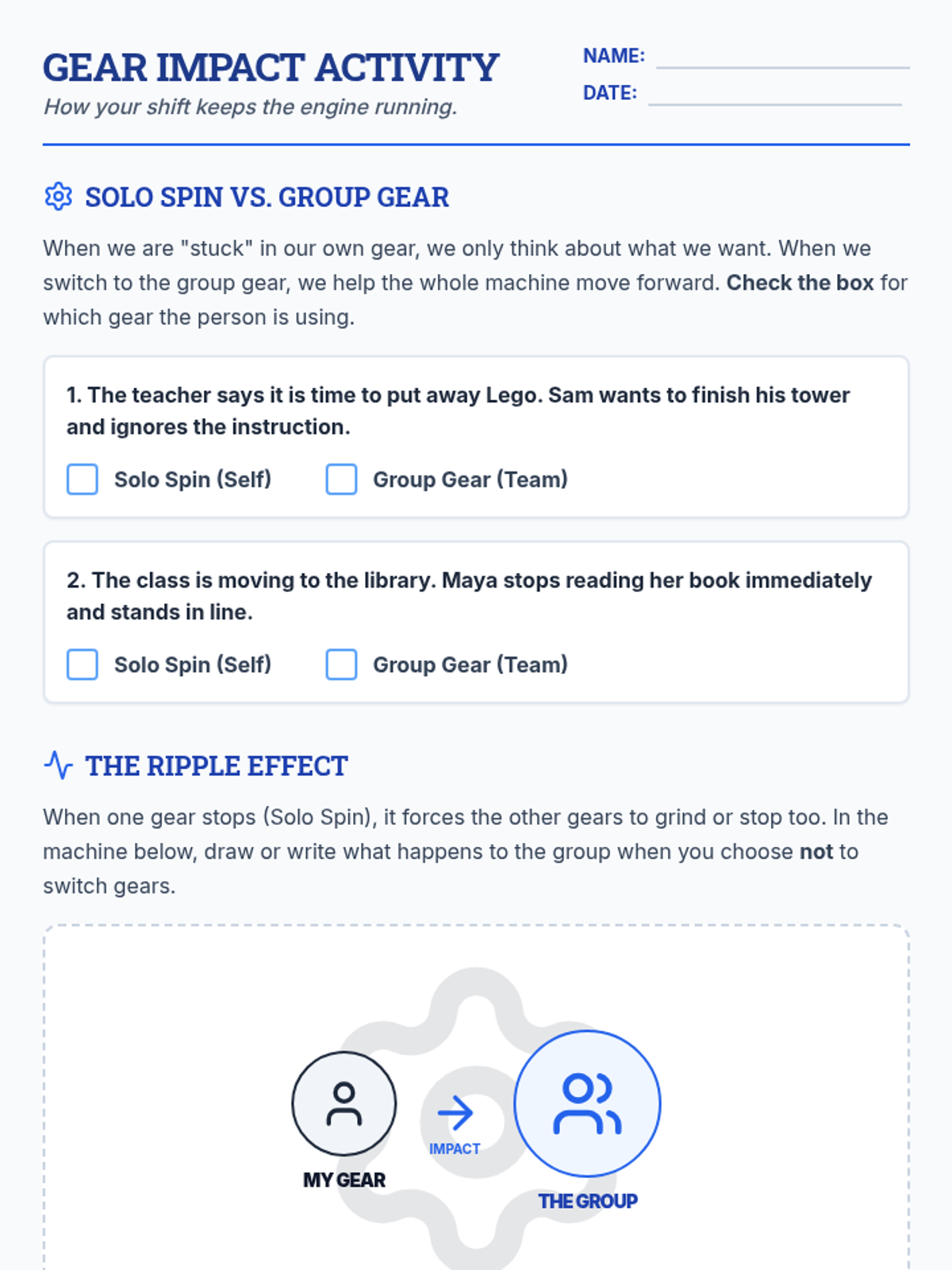
A follow-up session that clarifies the "Focus on Self" advice. It teaches that focusing on yourself means taking 100% responsibility for your own "Remote Control" to ensure your gear turns when the team needs it. Mostly activity-based.
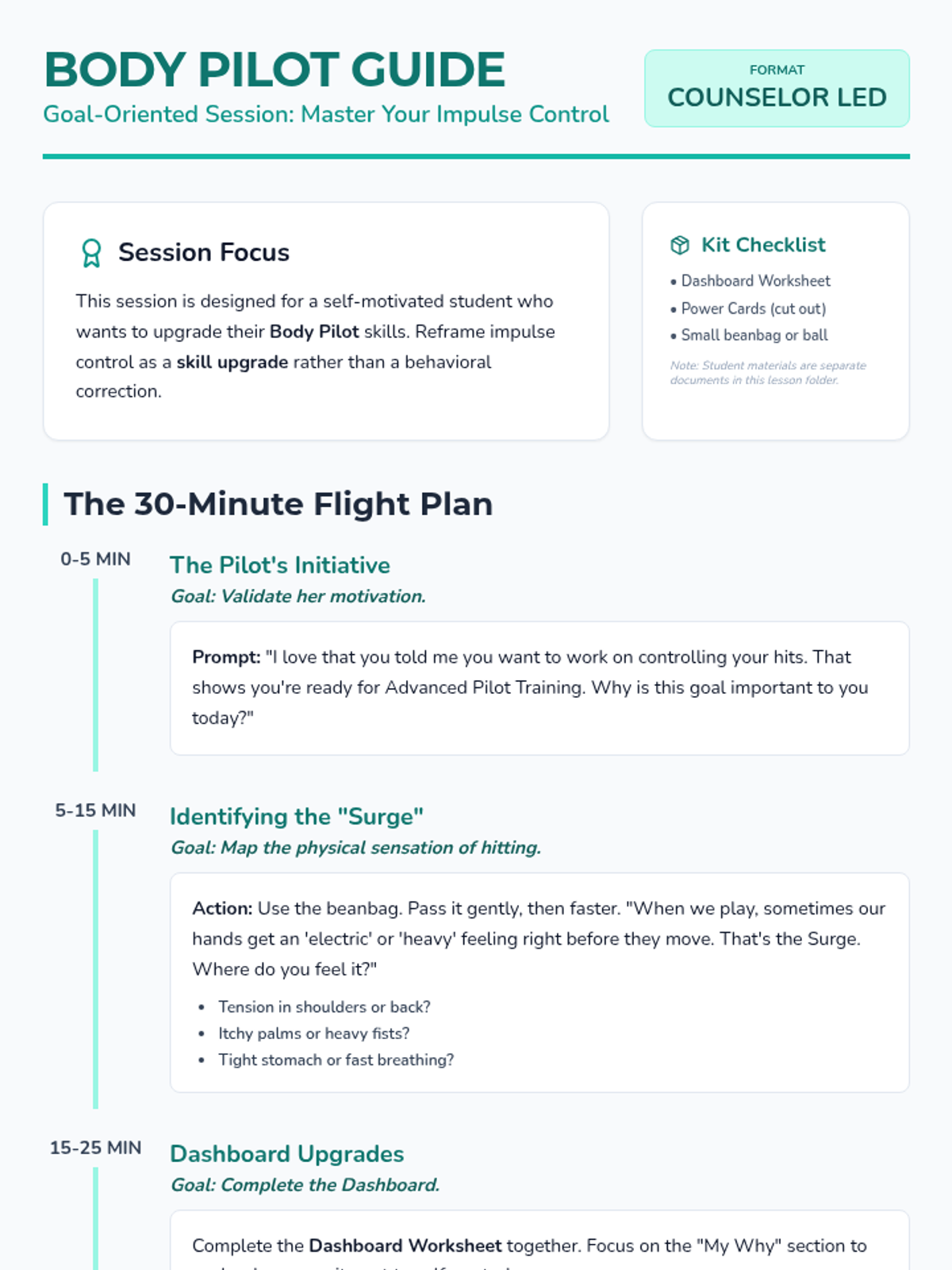
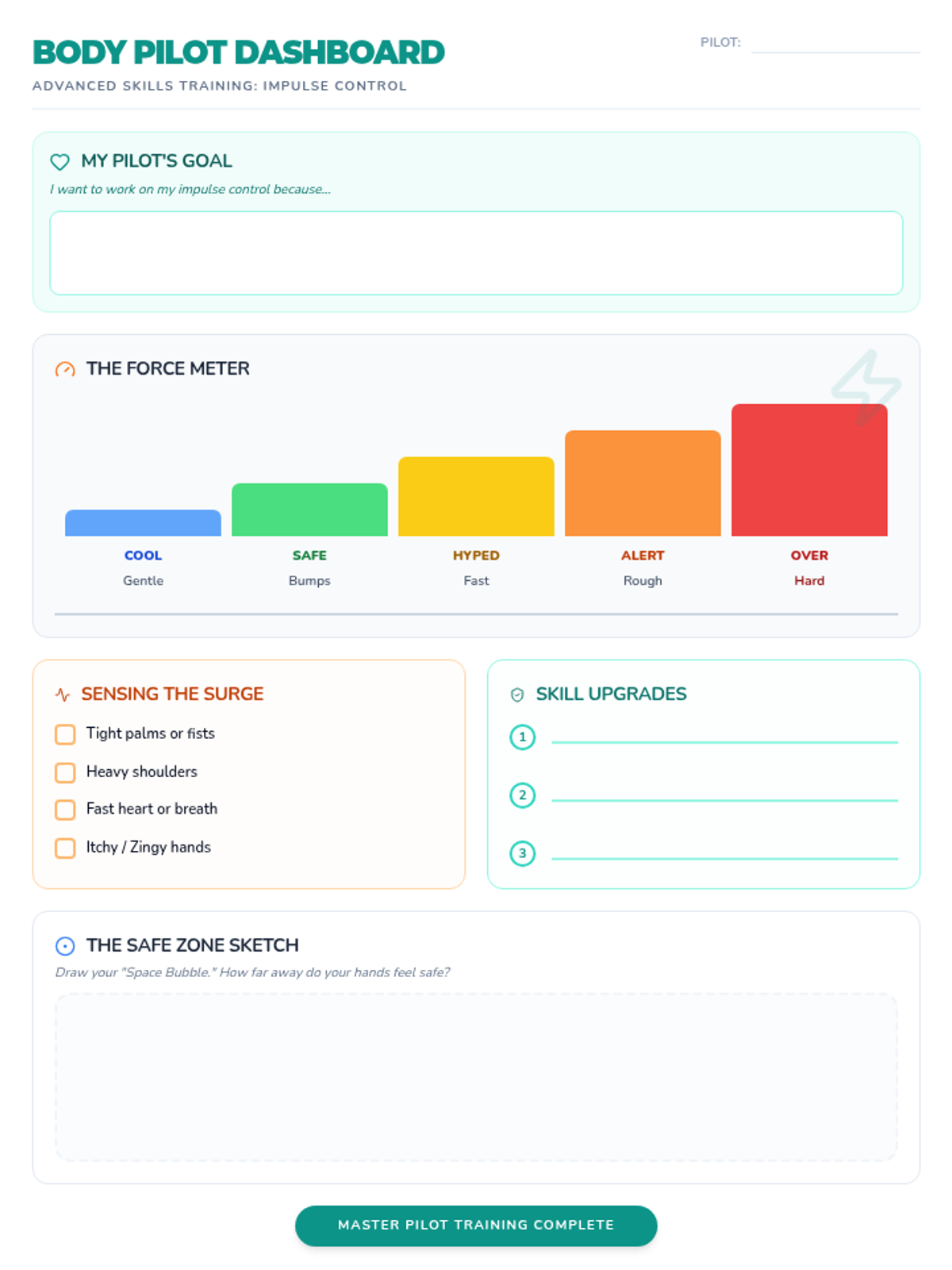
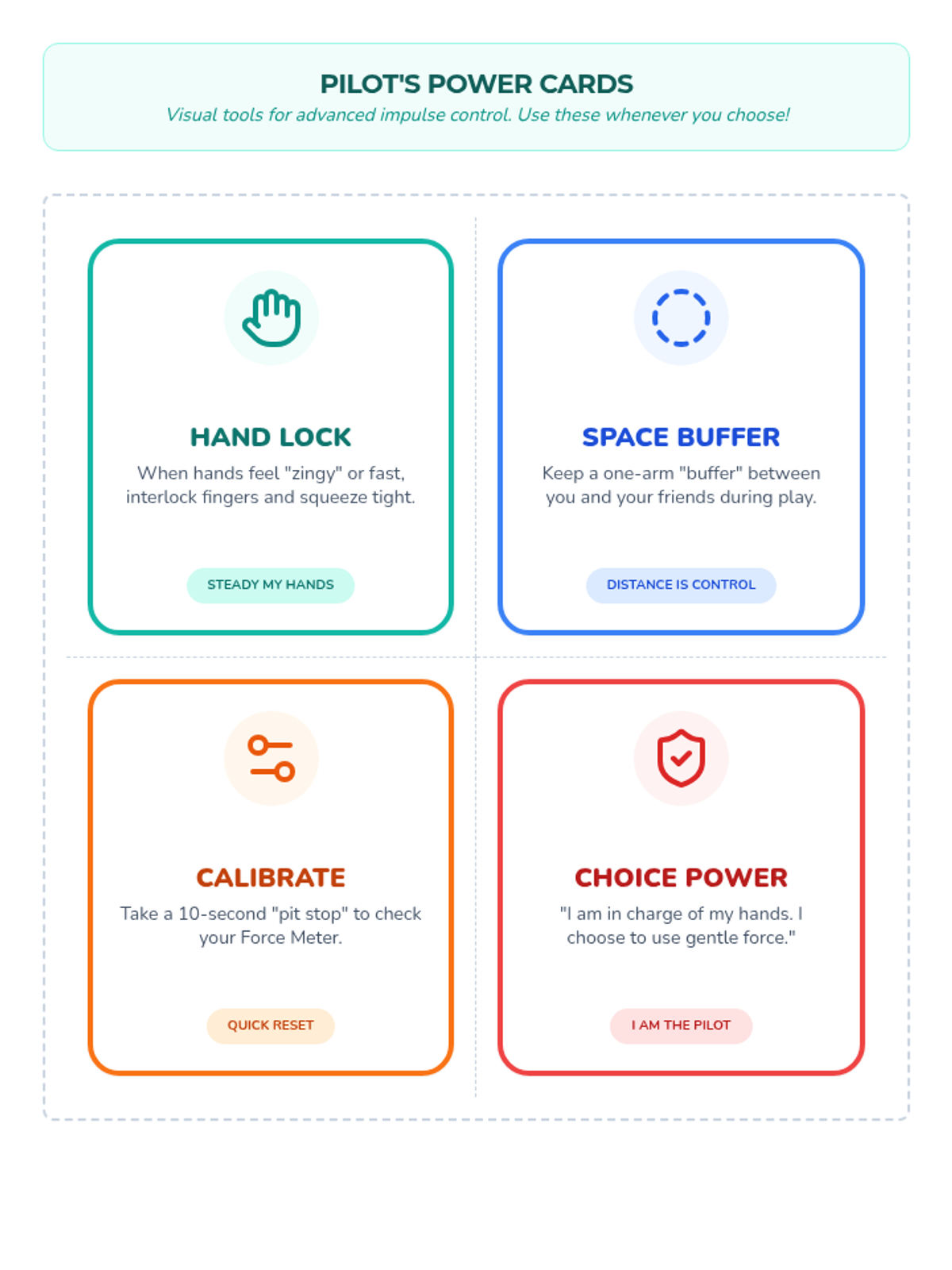
A 30-minute counseling session focused on helping students with autism understand and control physical impulses, specifically addressing 'play fighting' and personal space boundaries using the 'Body Pilot' metaphor.
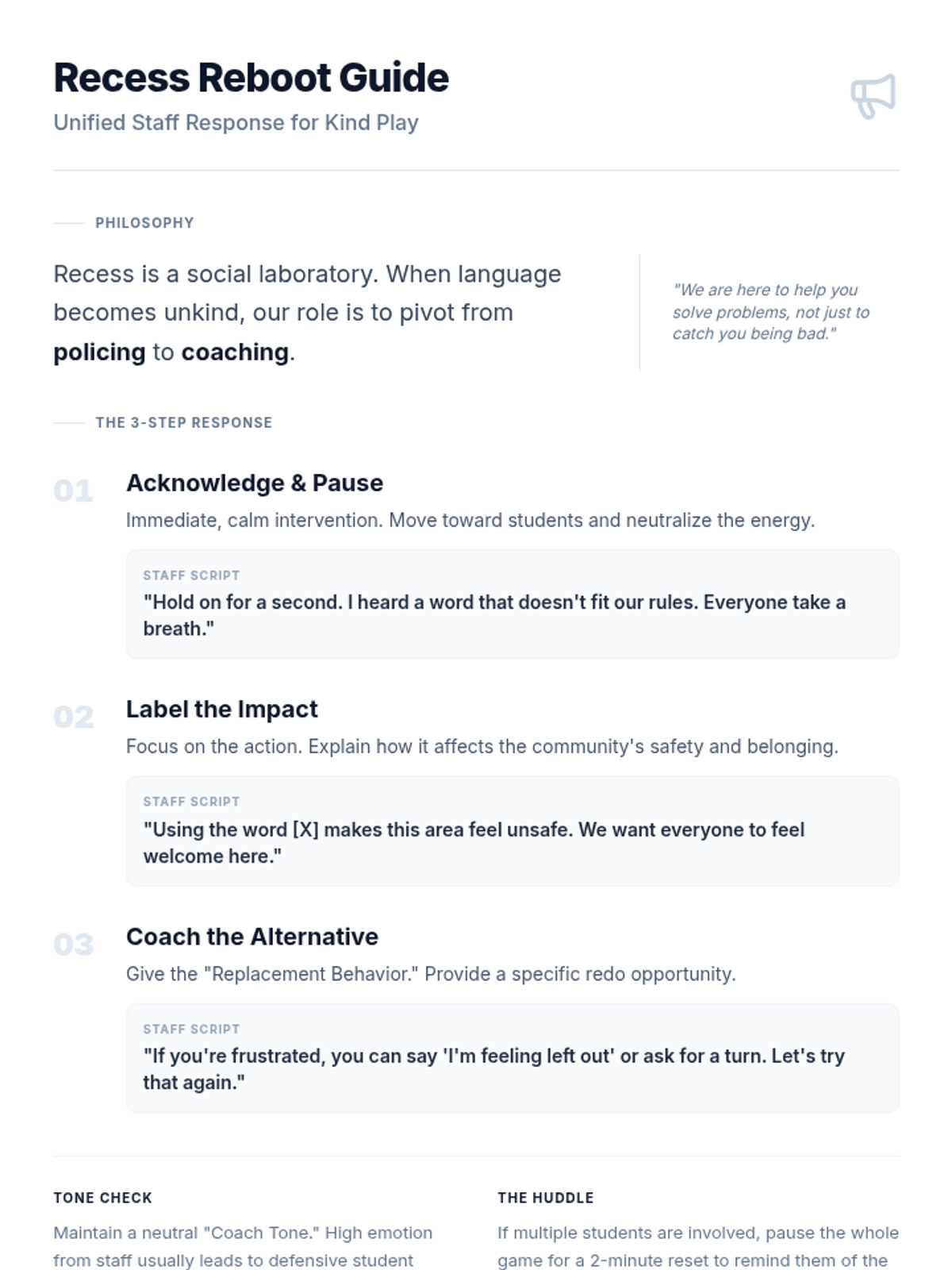
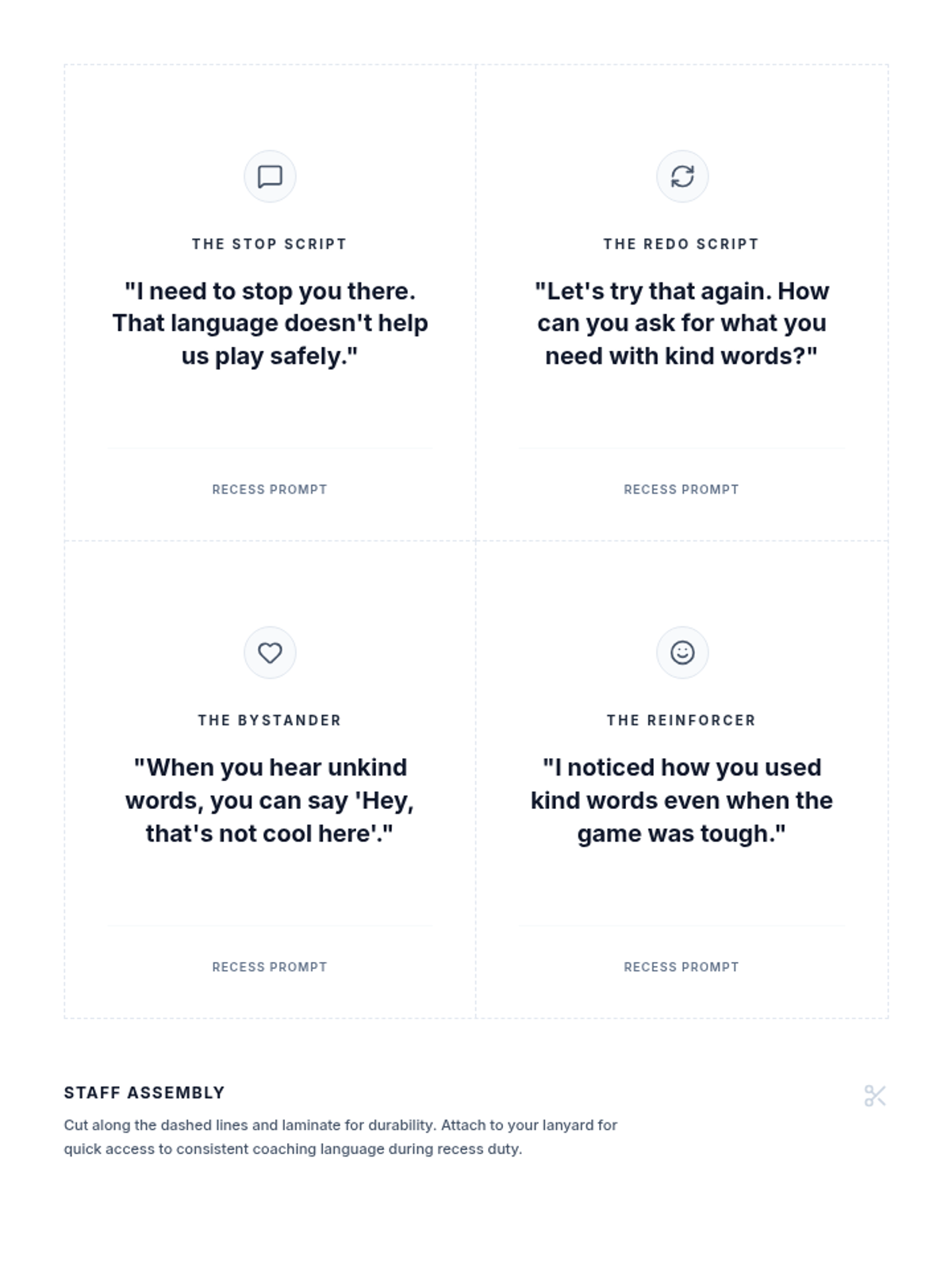
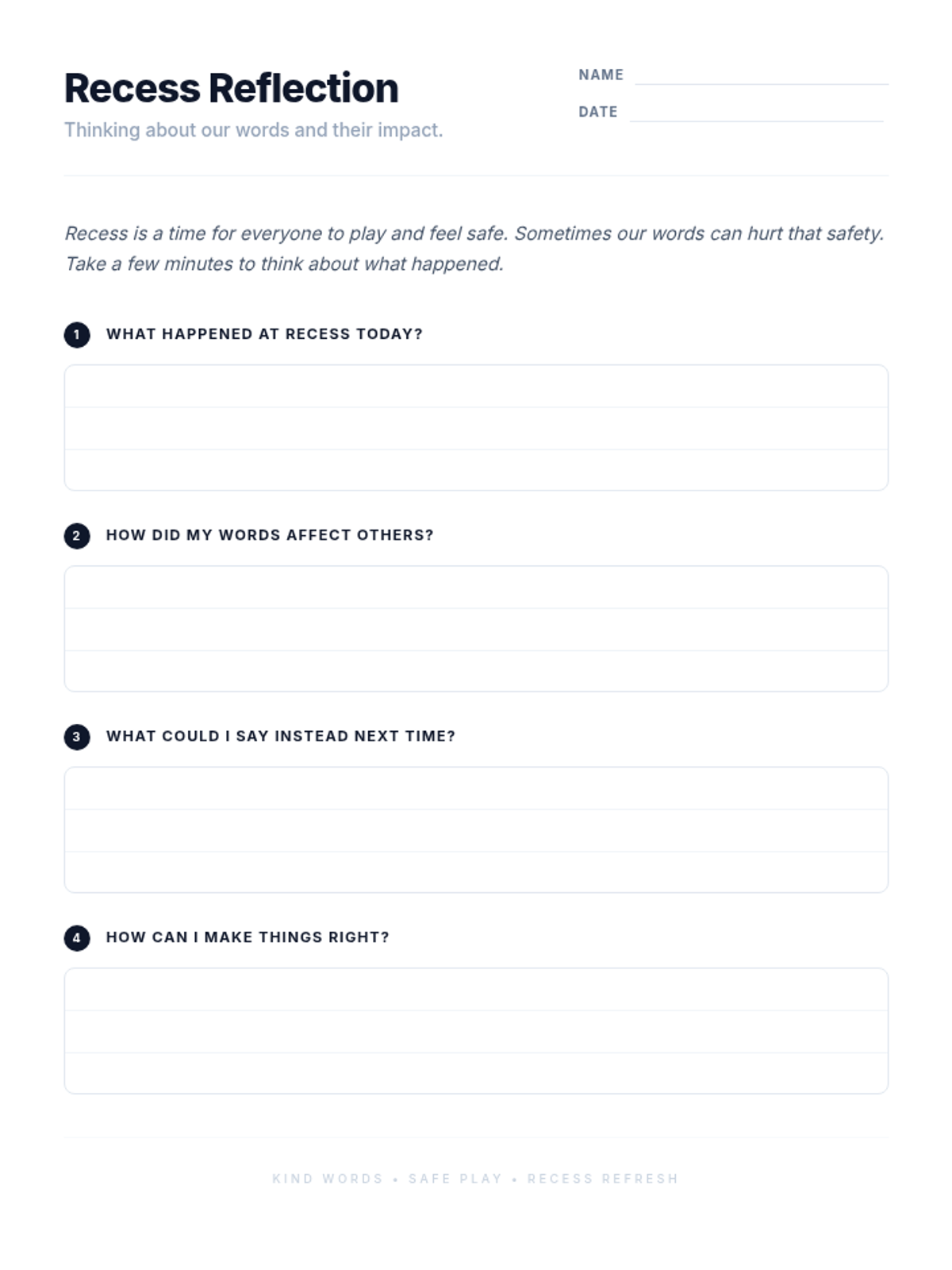
A comprehensive guide and toolkit for staff to address unkind language during recess, providing consistent response strategies and student reflection tools.
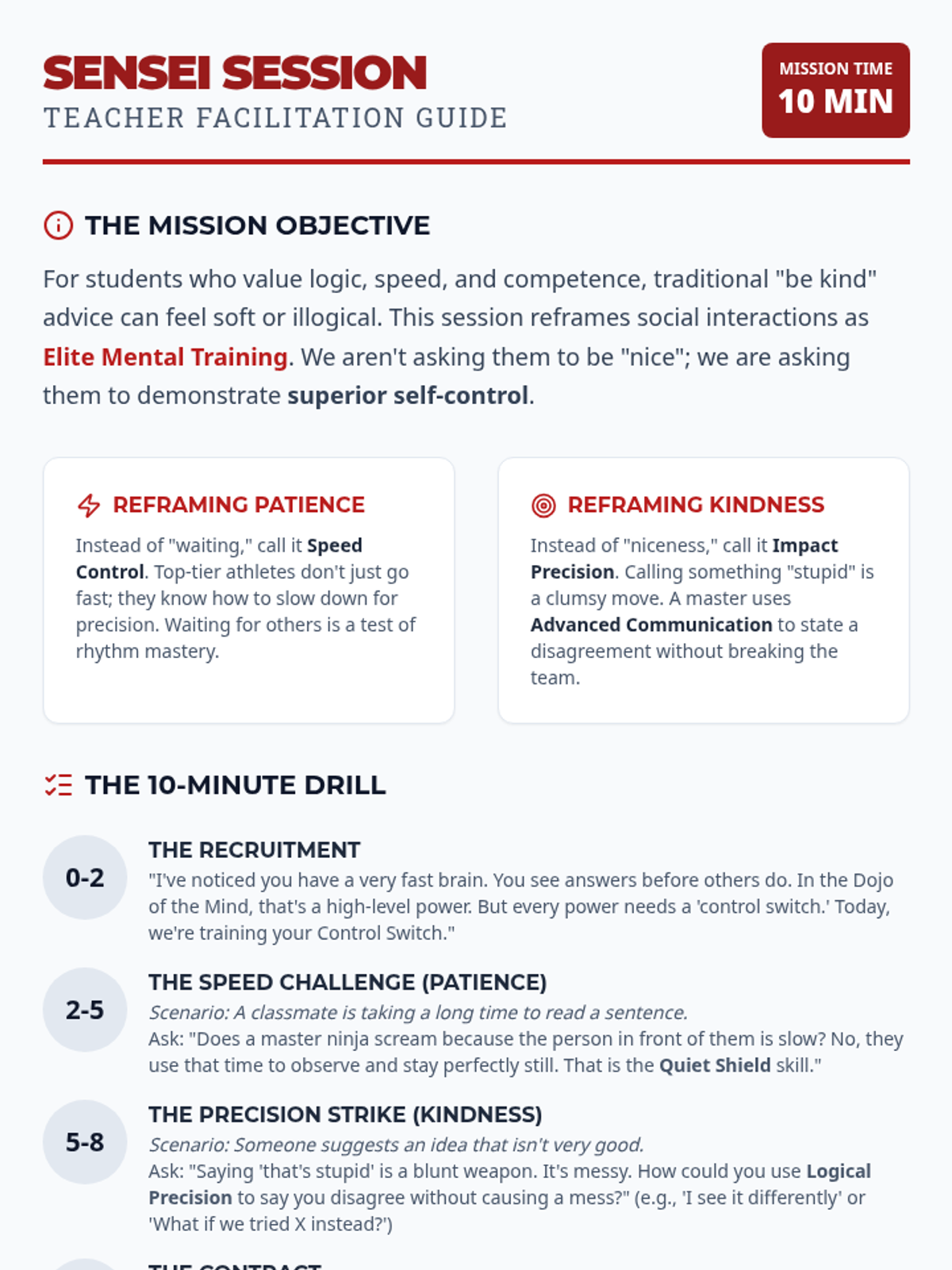
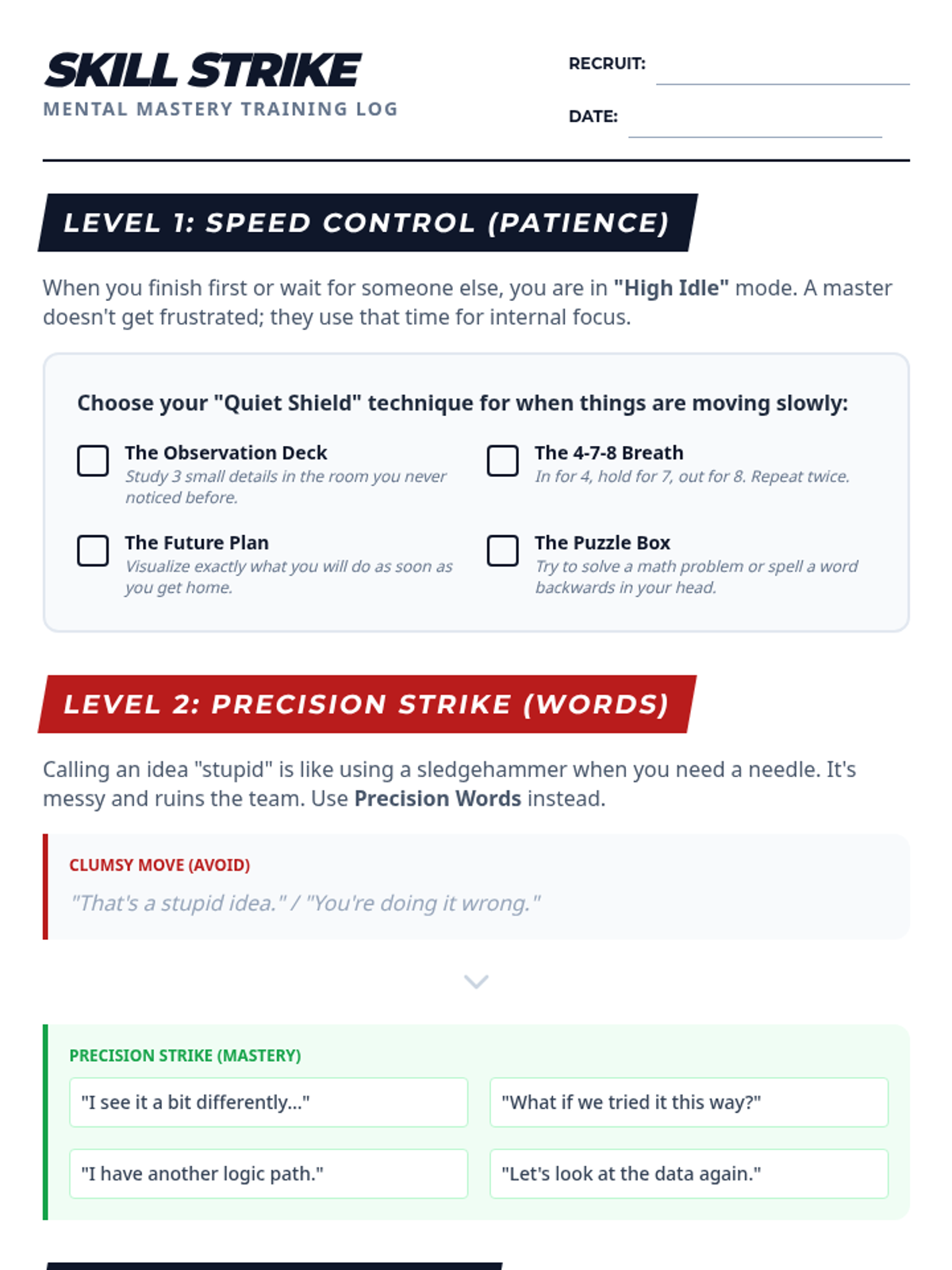
A specialized social-emotional lesson that reframes kindness and patience as elite 'mental skills' for high-achieving students. It uses a martial arts 'Dojo' theme to teach self-control as the ultimate form of mastery.
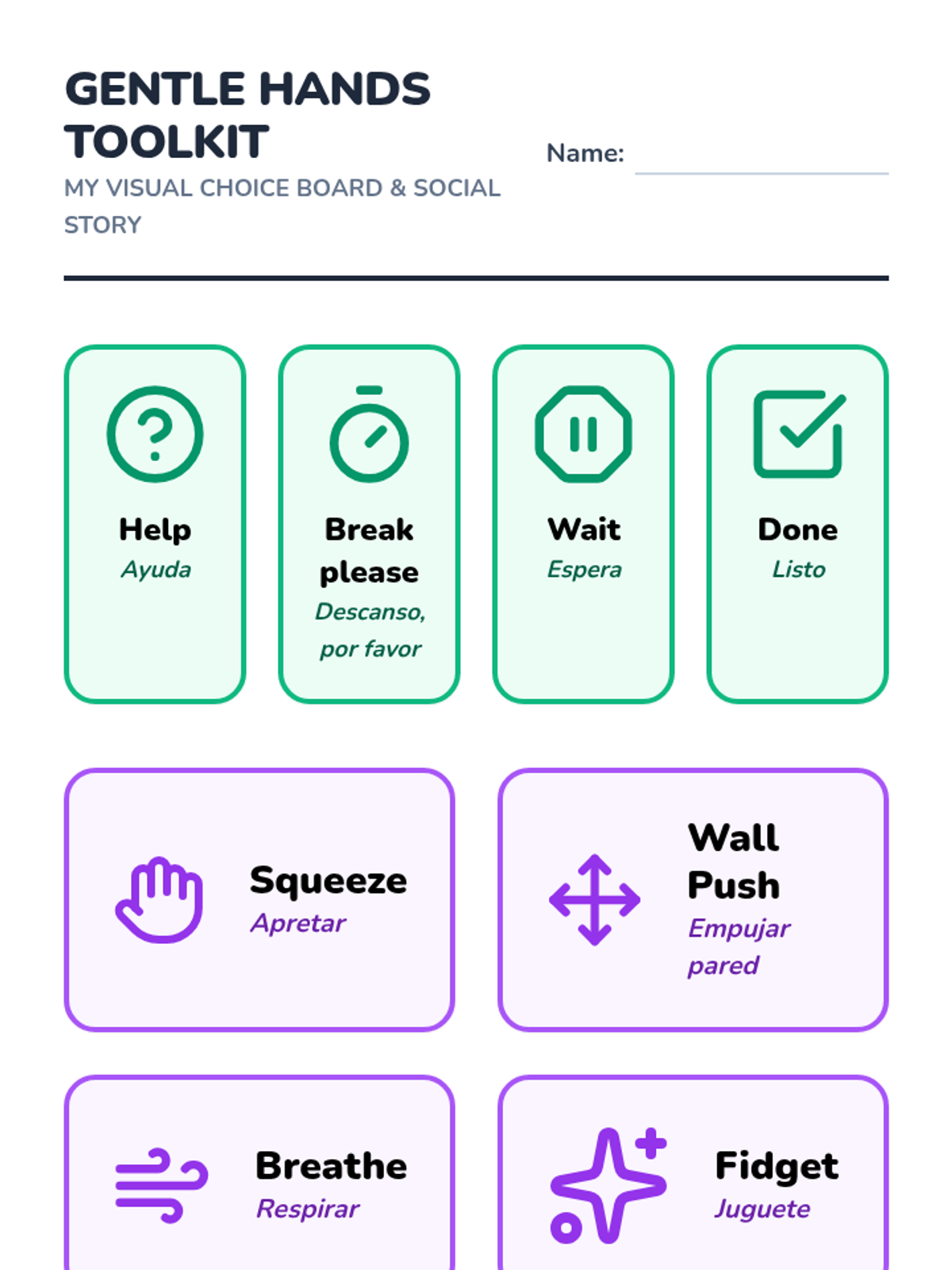
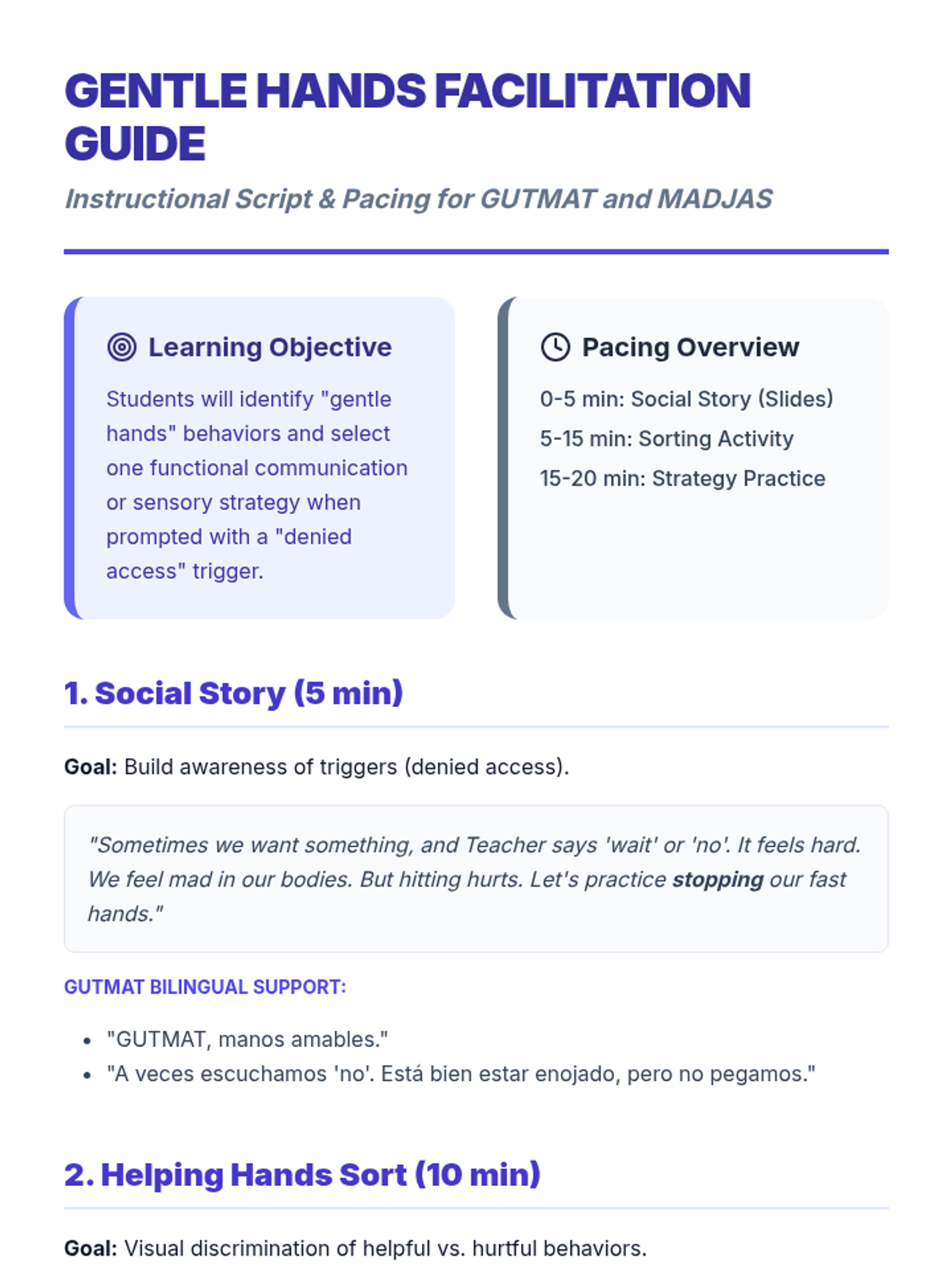
A 20-minute intensive counseling lesson focused on 'Gentle Hands' and 'Hands to Self' techniques. Includes a social story, role-play scenarios, and a visual choice board to replace hitting with functional communication.
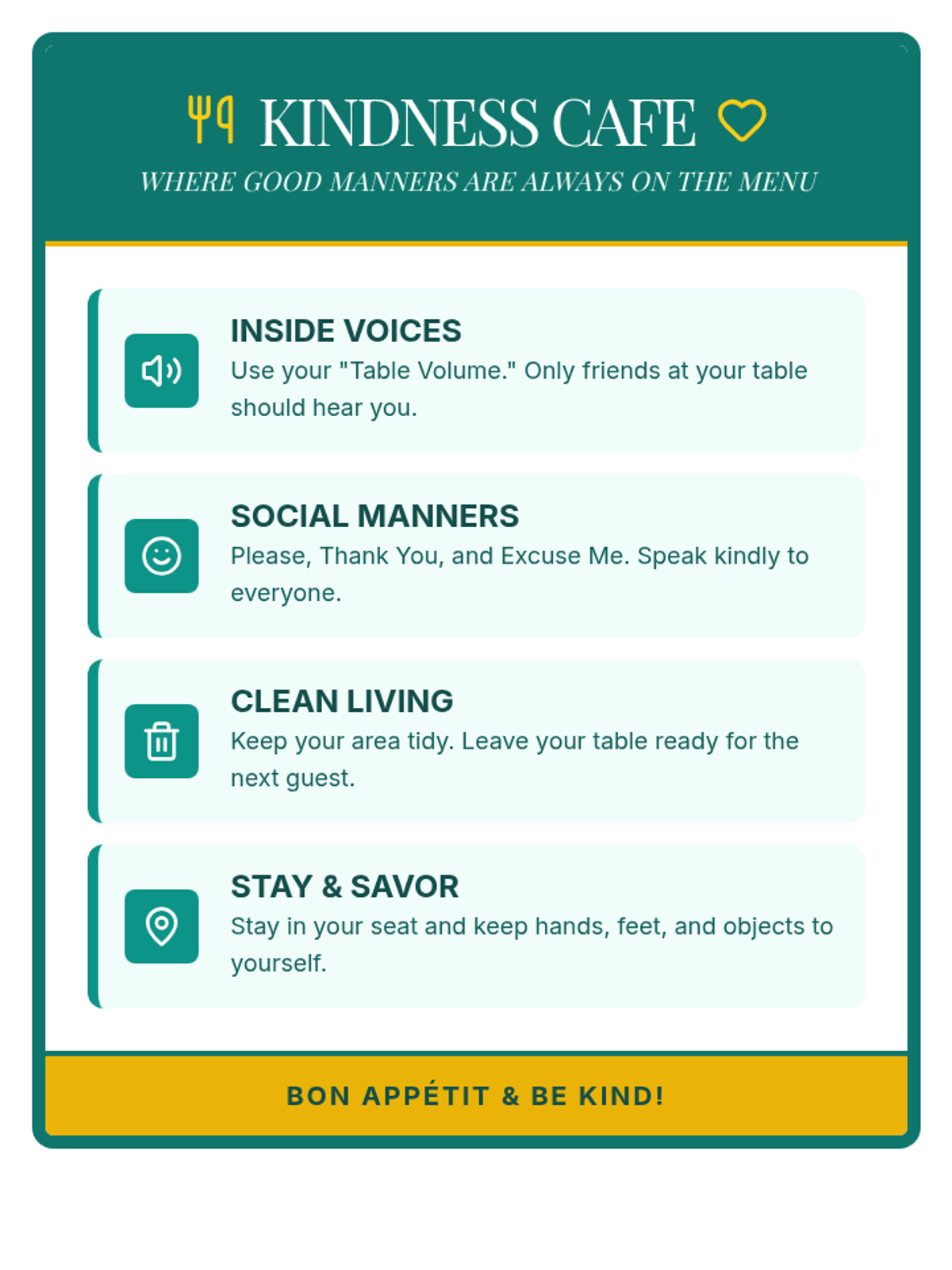
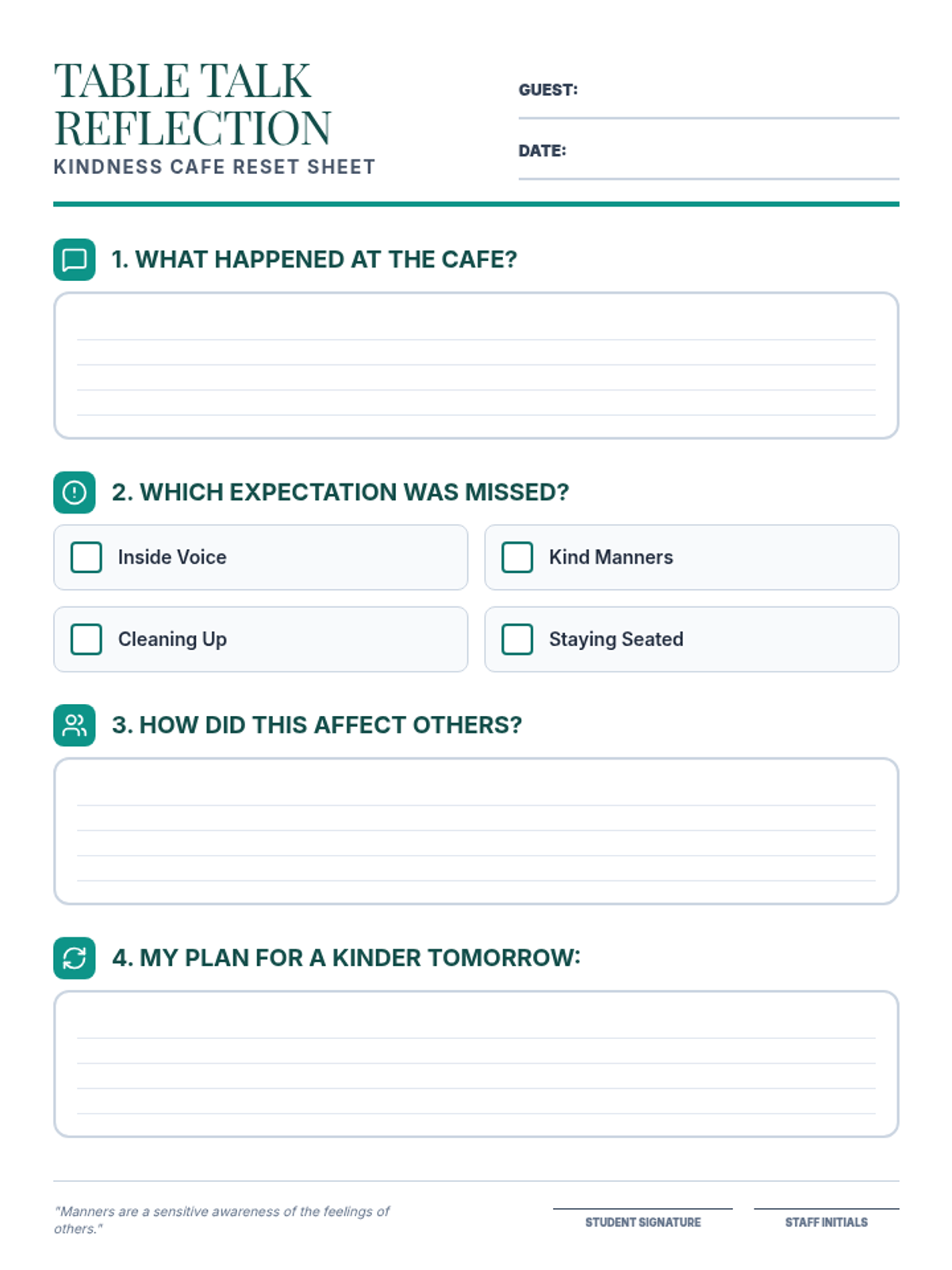
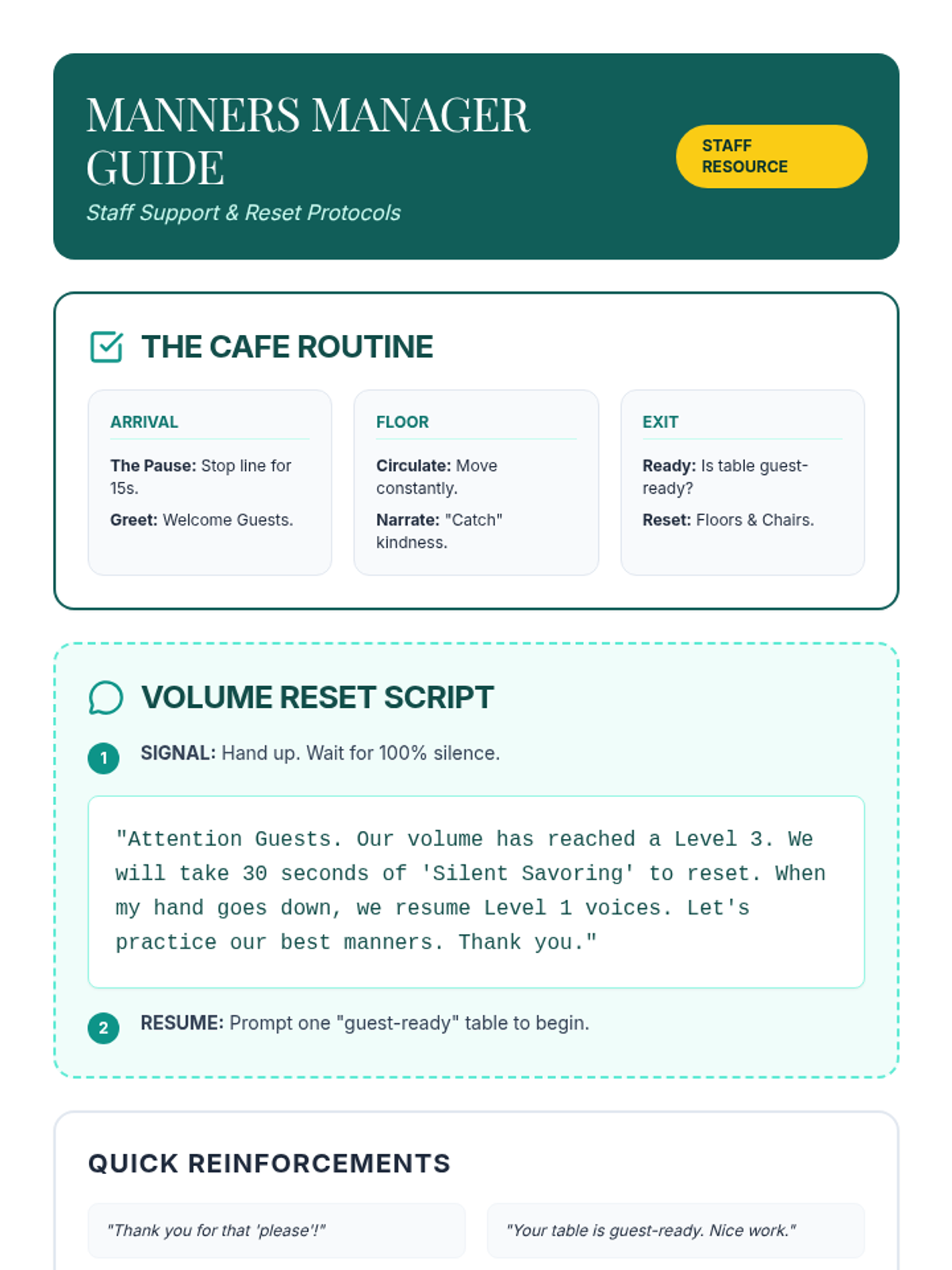
A behavior support package designed to transform the lunchroom into a calm, polite dining environment focused on kindness and social manners.
This lesson provides school social workers with a clinical and practical framework for identifying and supporting students struggling with anxiety, depression, and self-harm. It includes evidence-based interventions and safety planning tools specifically for the school environment.
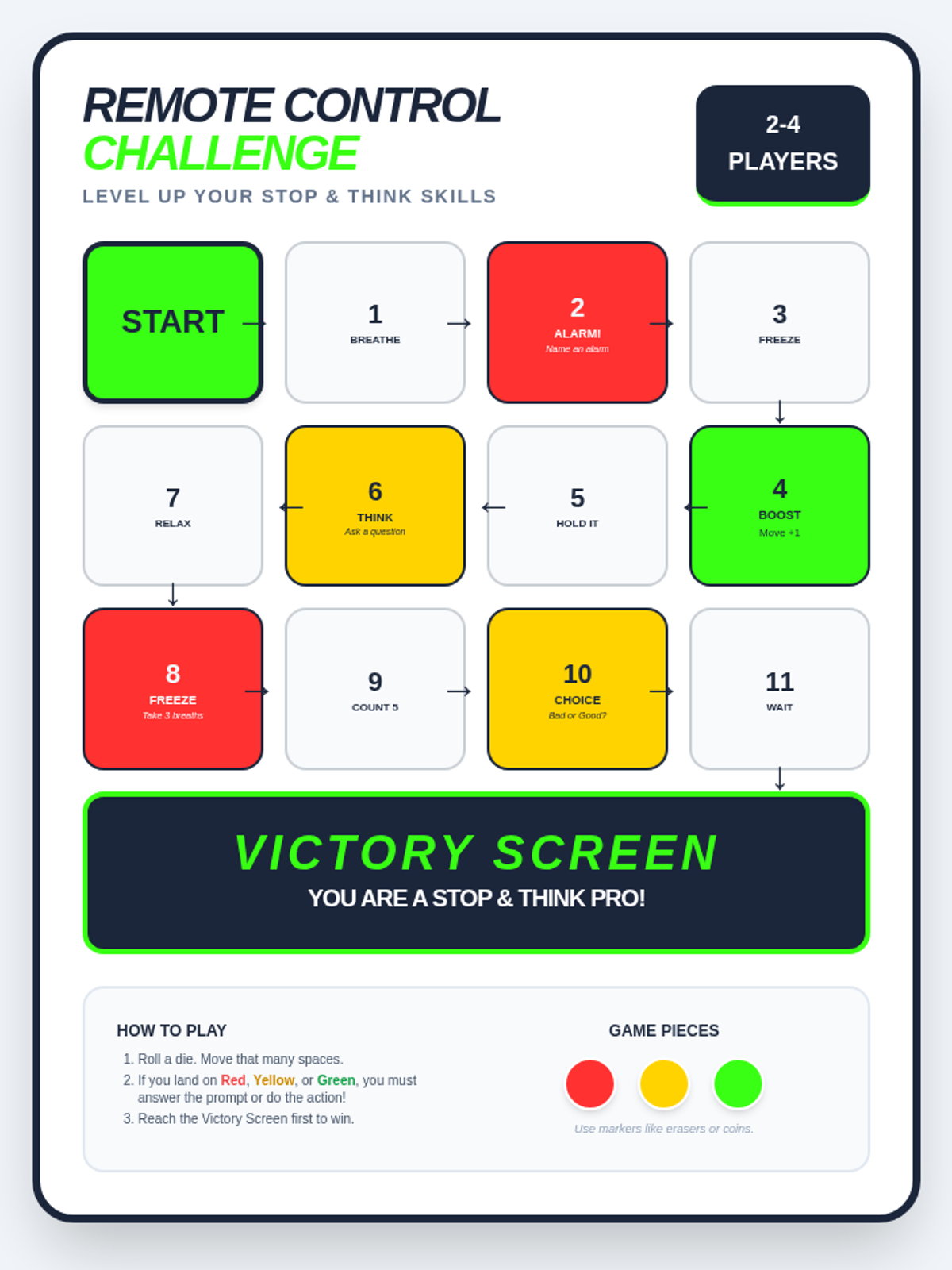
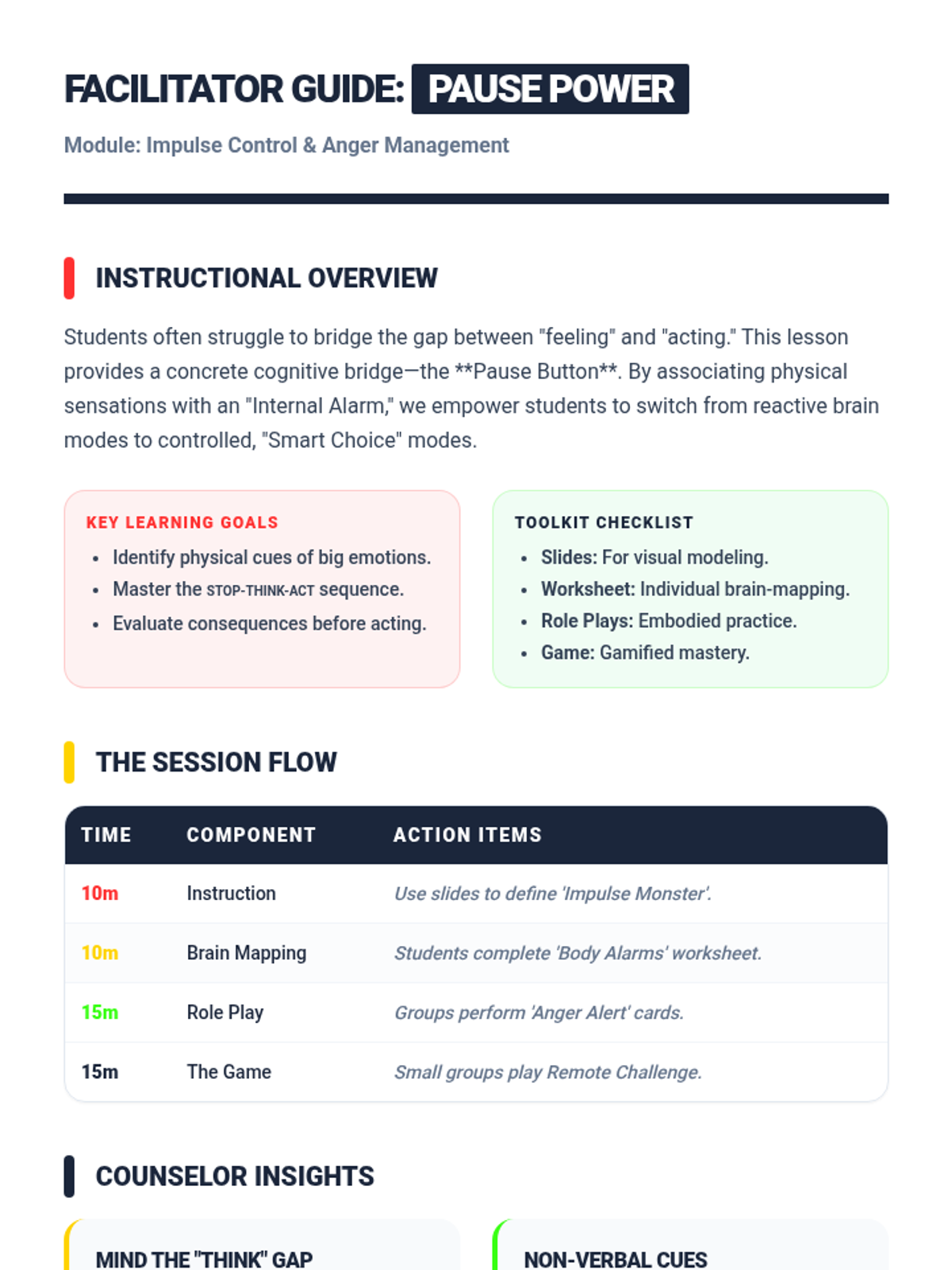
A comprehensive lesson teaching elementary students how to use the 'Stop and Think' strategy to manage anger and impulsive behaviors using a 'Remote Control' theme.
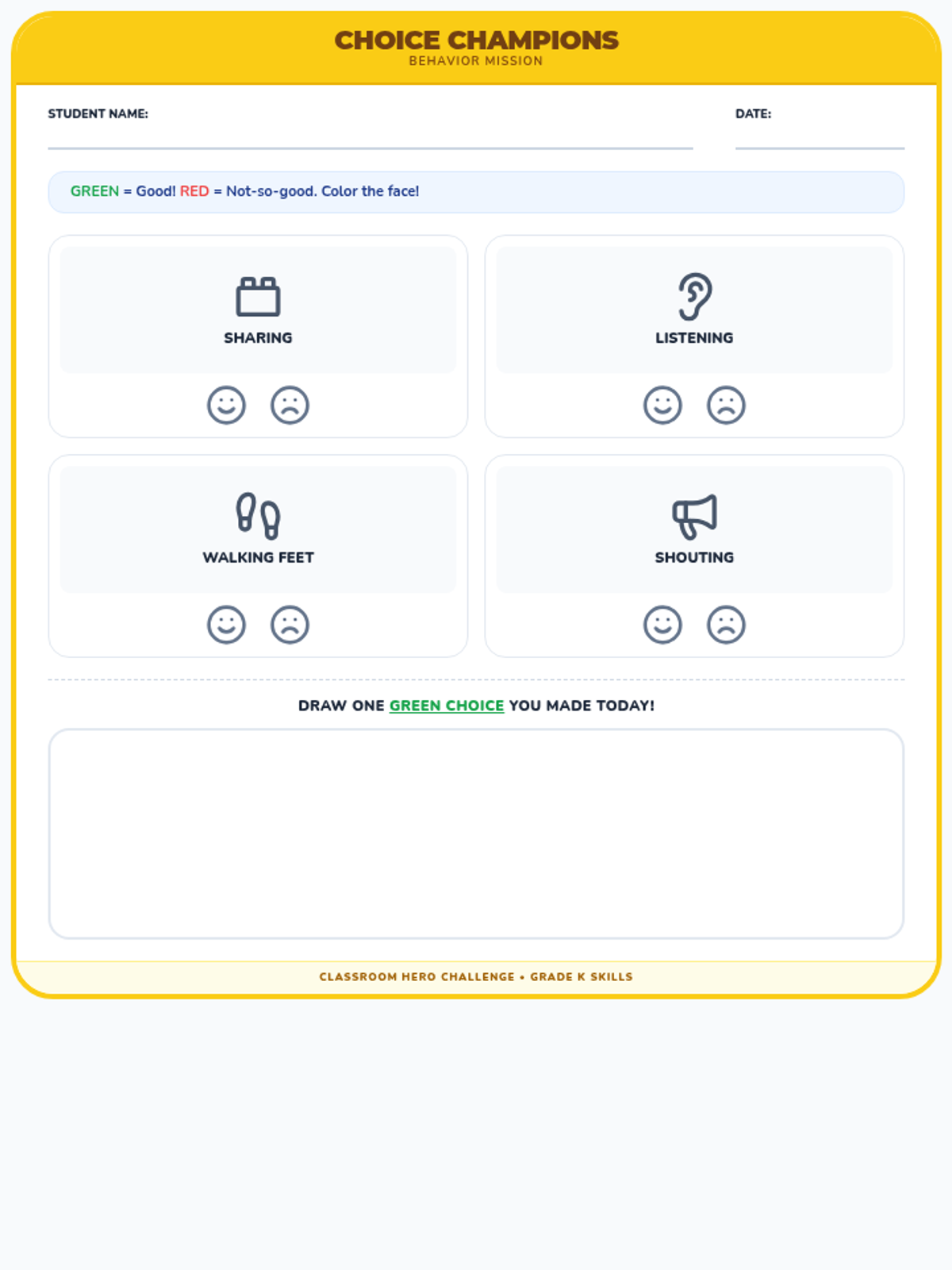
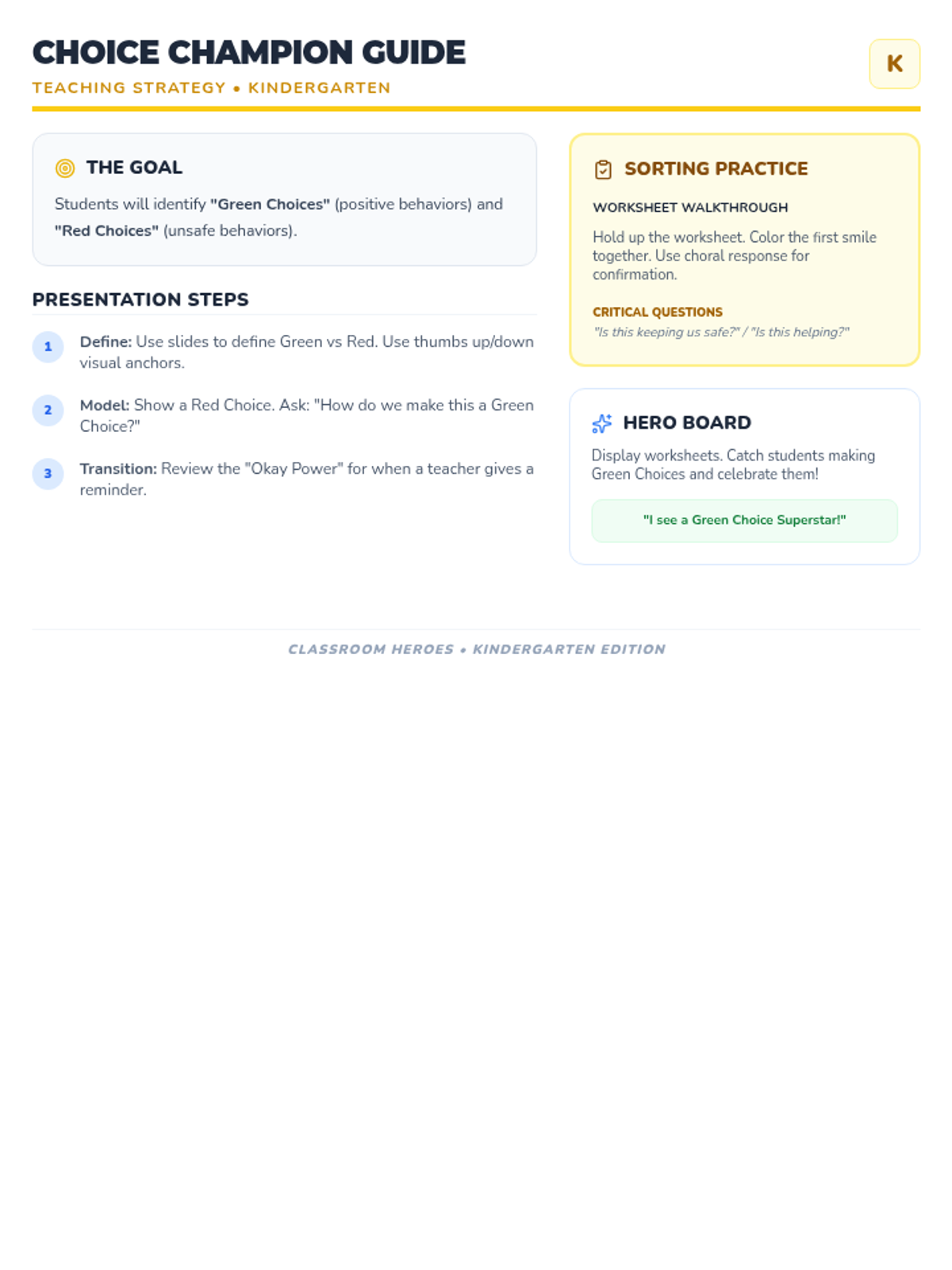
A foundational social-emotional learning lesson for kindergarteners to identify and practice appropriate vs. inappropriate school behaviors through visual sorting and modeling.
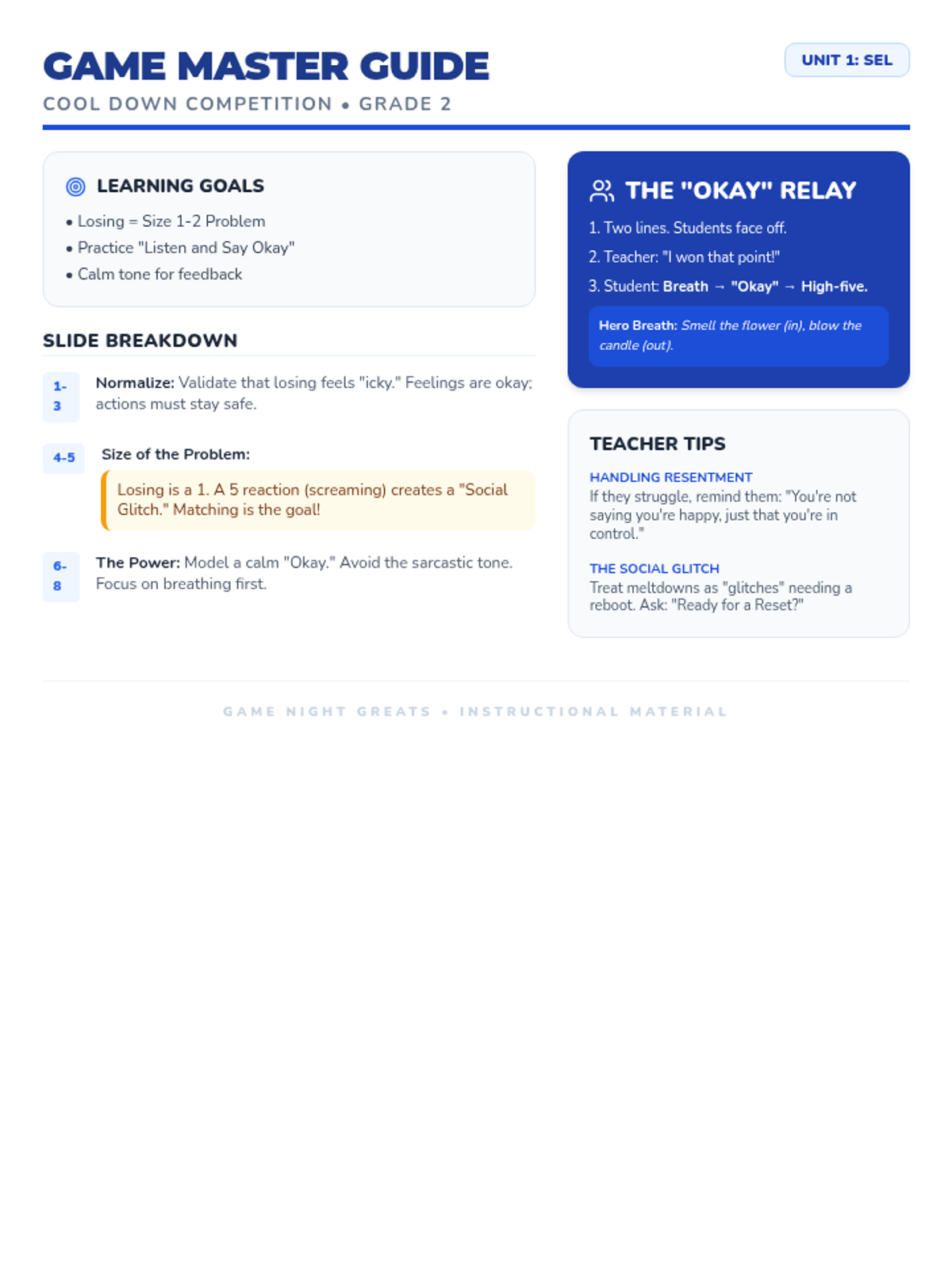
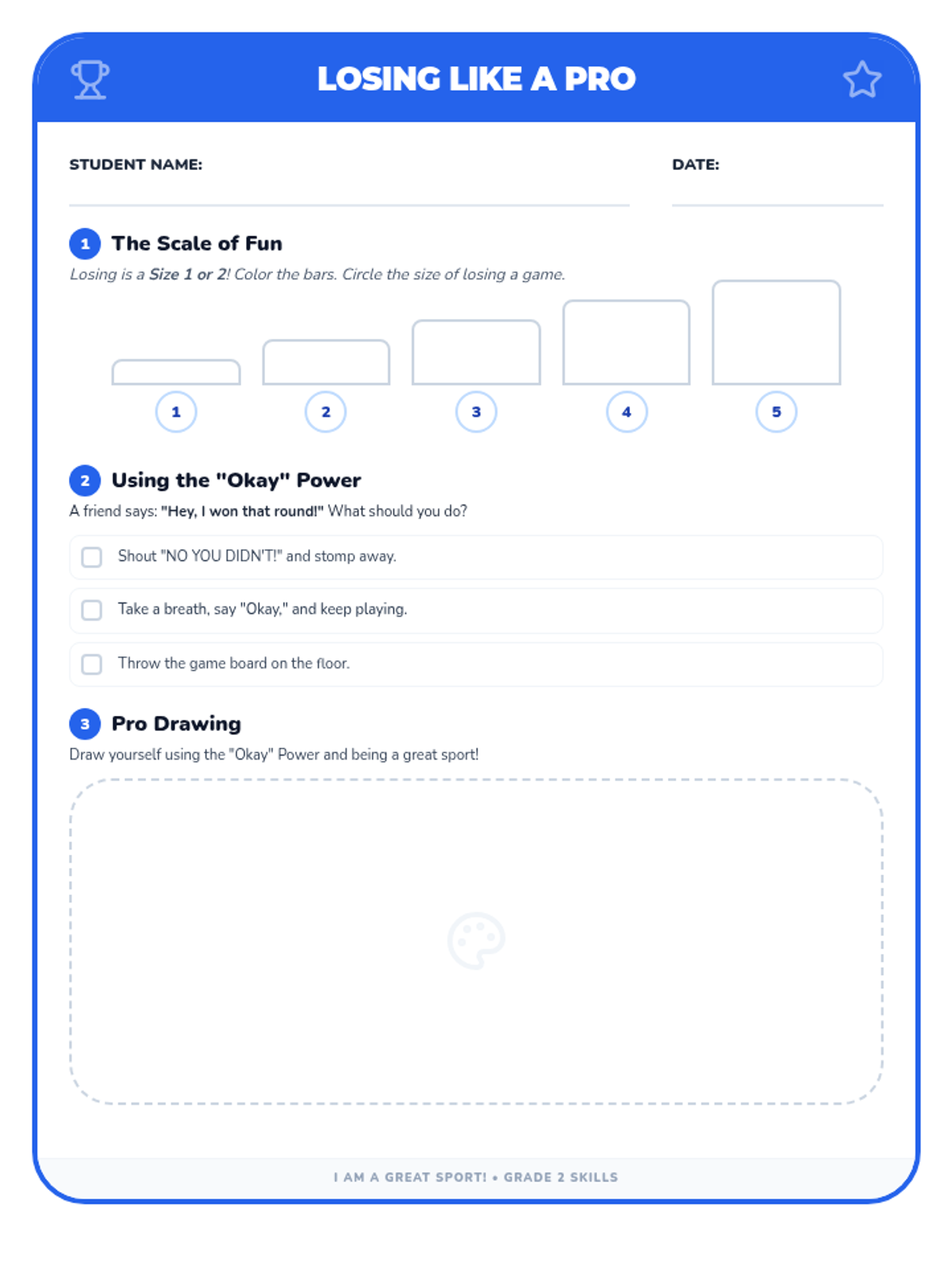
A social-emotional learning lesson for 2nd graders on handling competition, using the Size of the Problem scale to manage reactions to losing and accepting feedback gracefully.
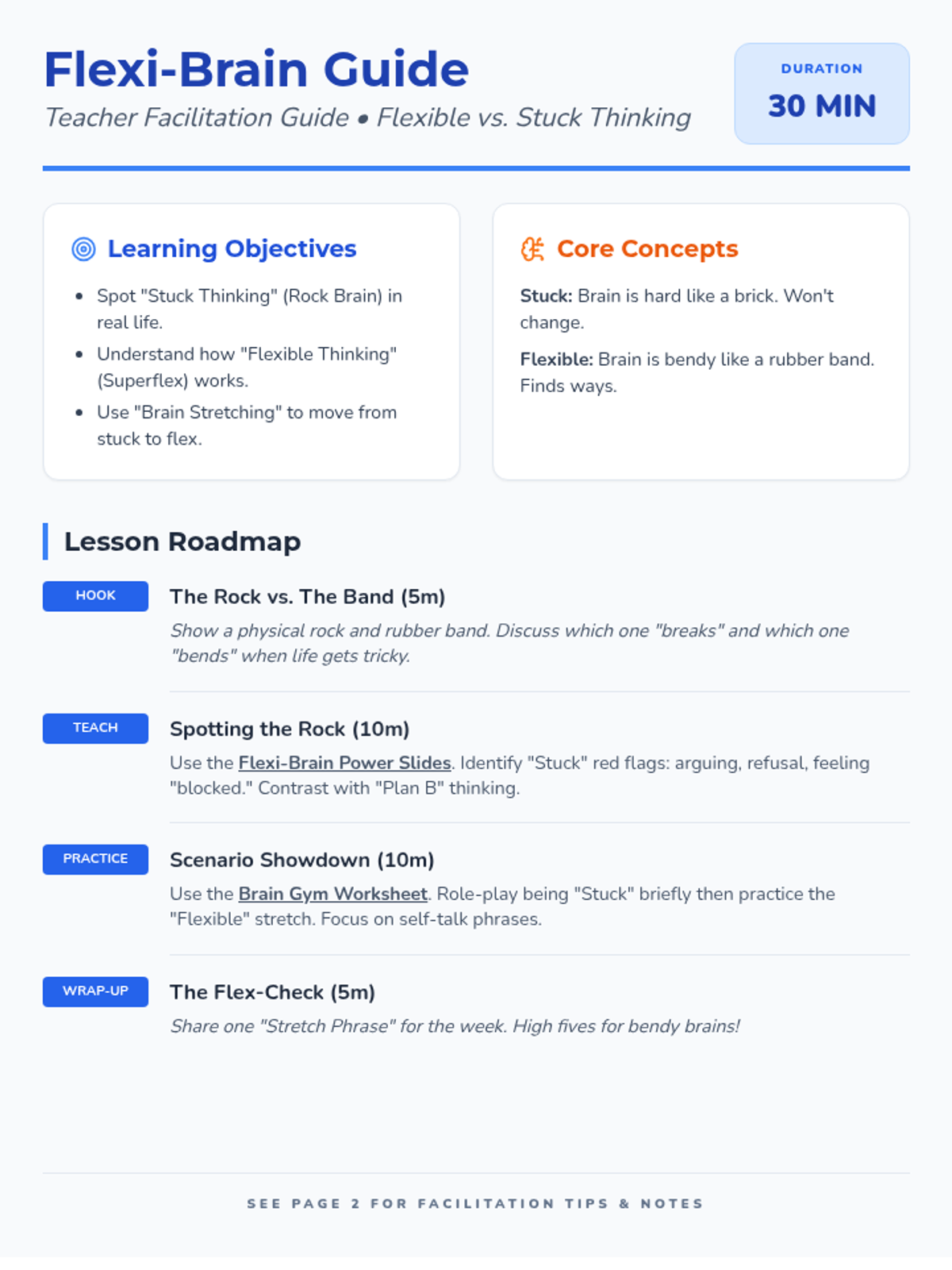
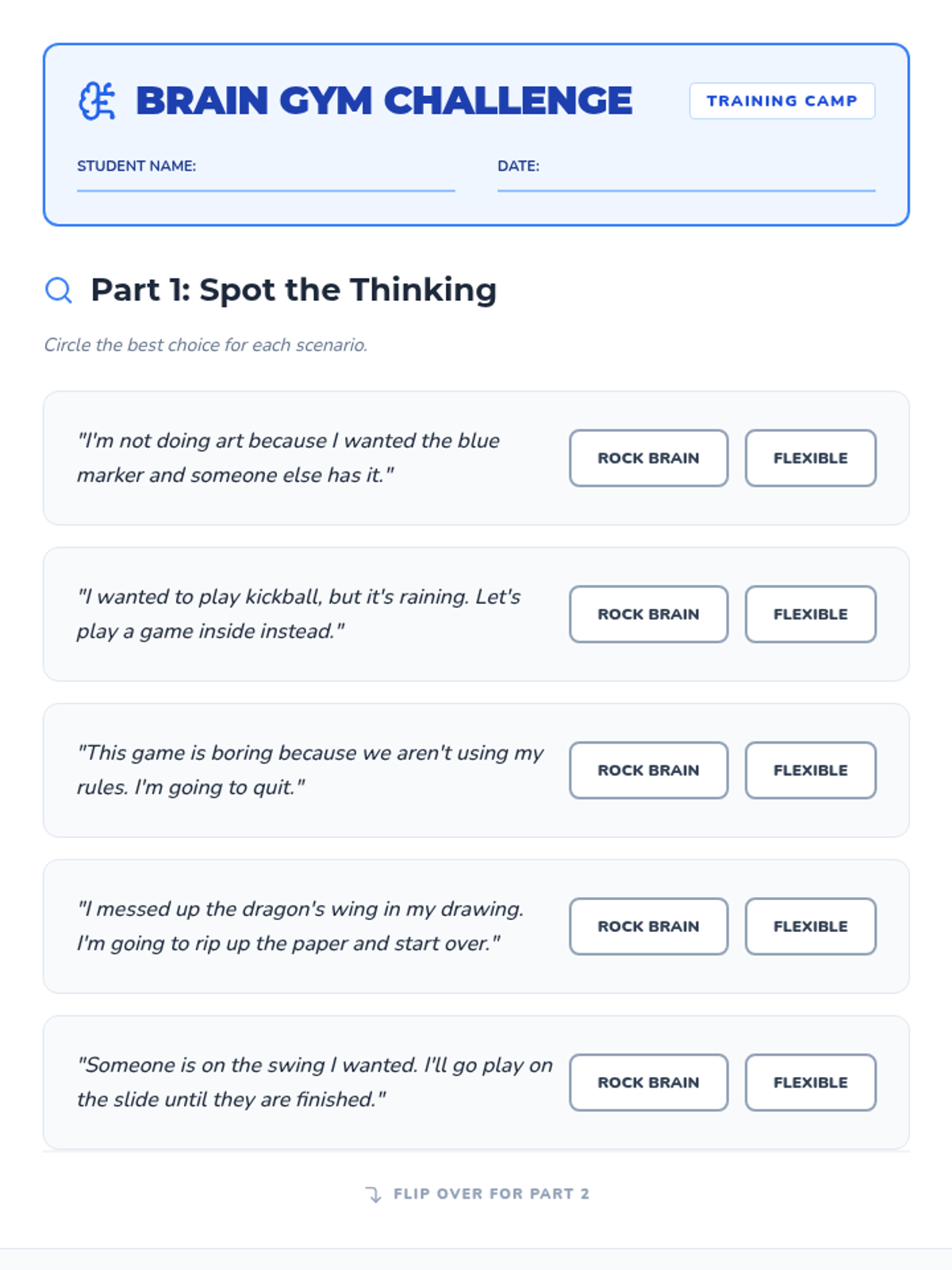
A 30-minute social thinking lesson for 3rd grade students focused on identifying 'Stuck Thinking' and practicing 'Flexible Thinking' strategies in real-world scenarios.
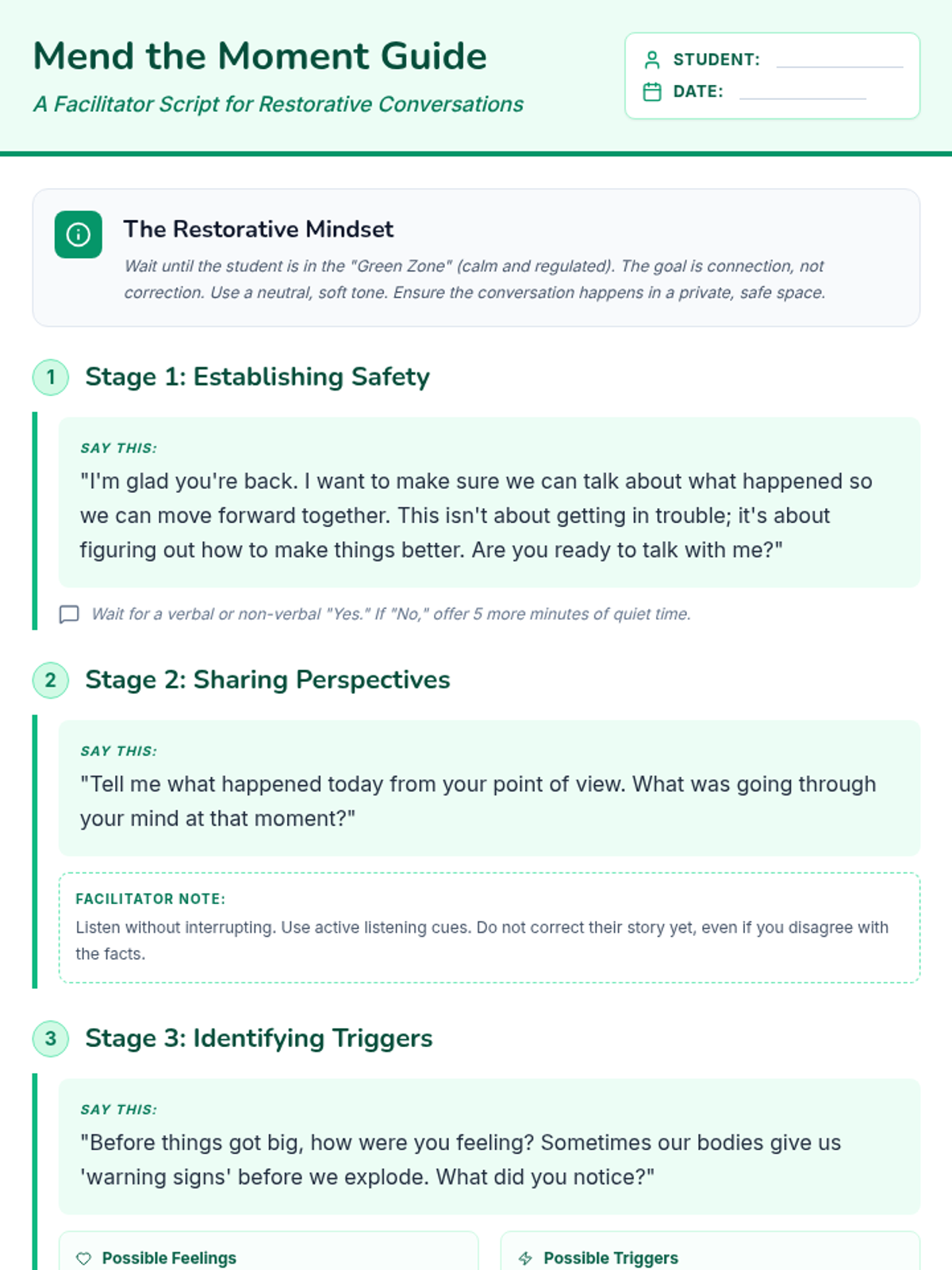
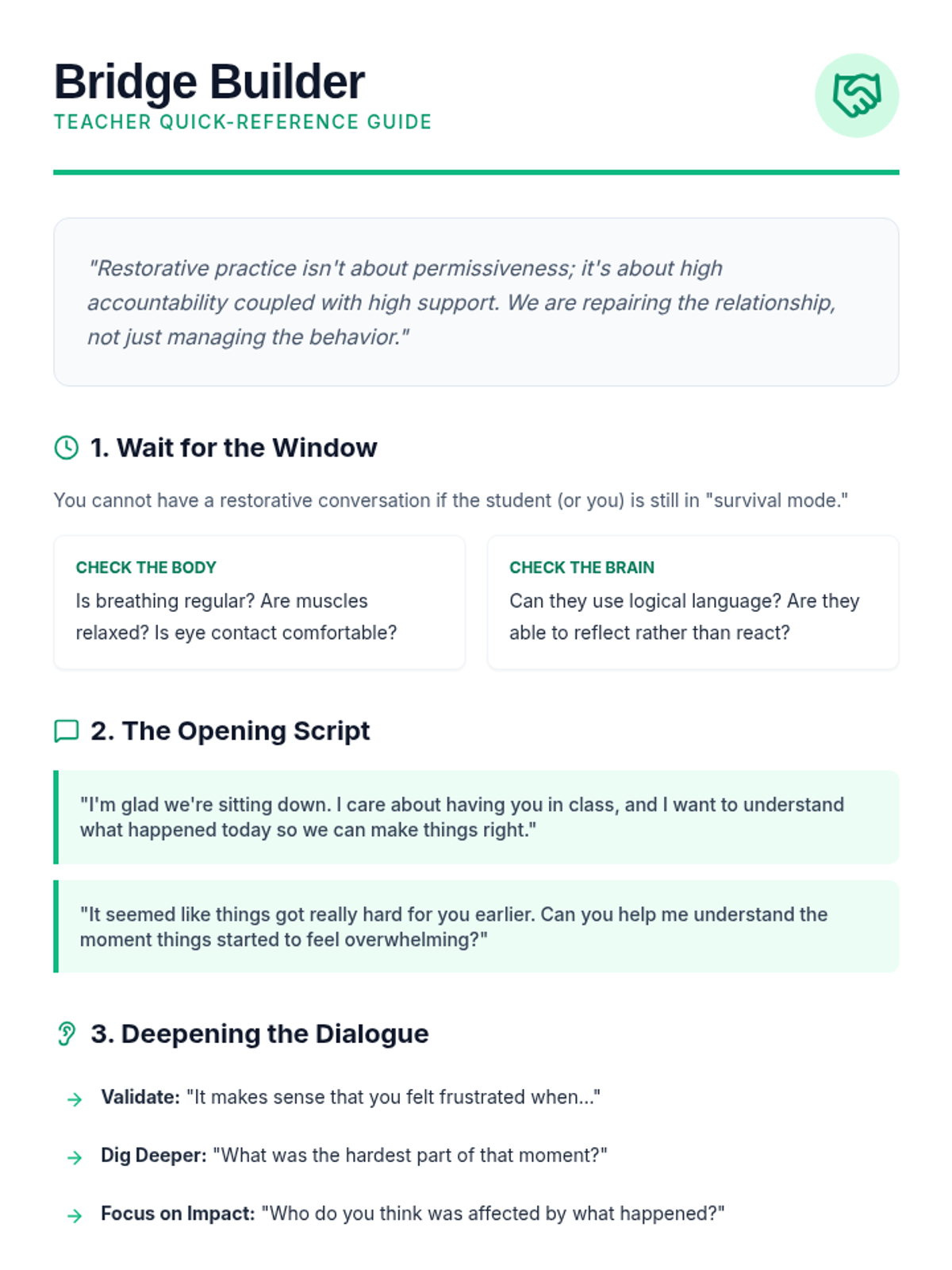
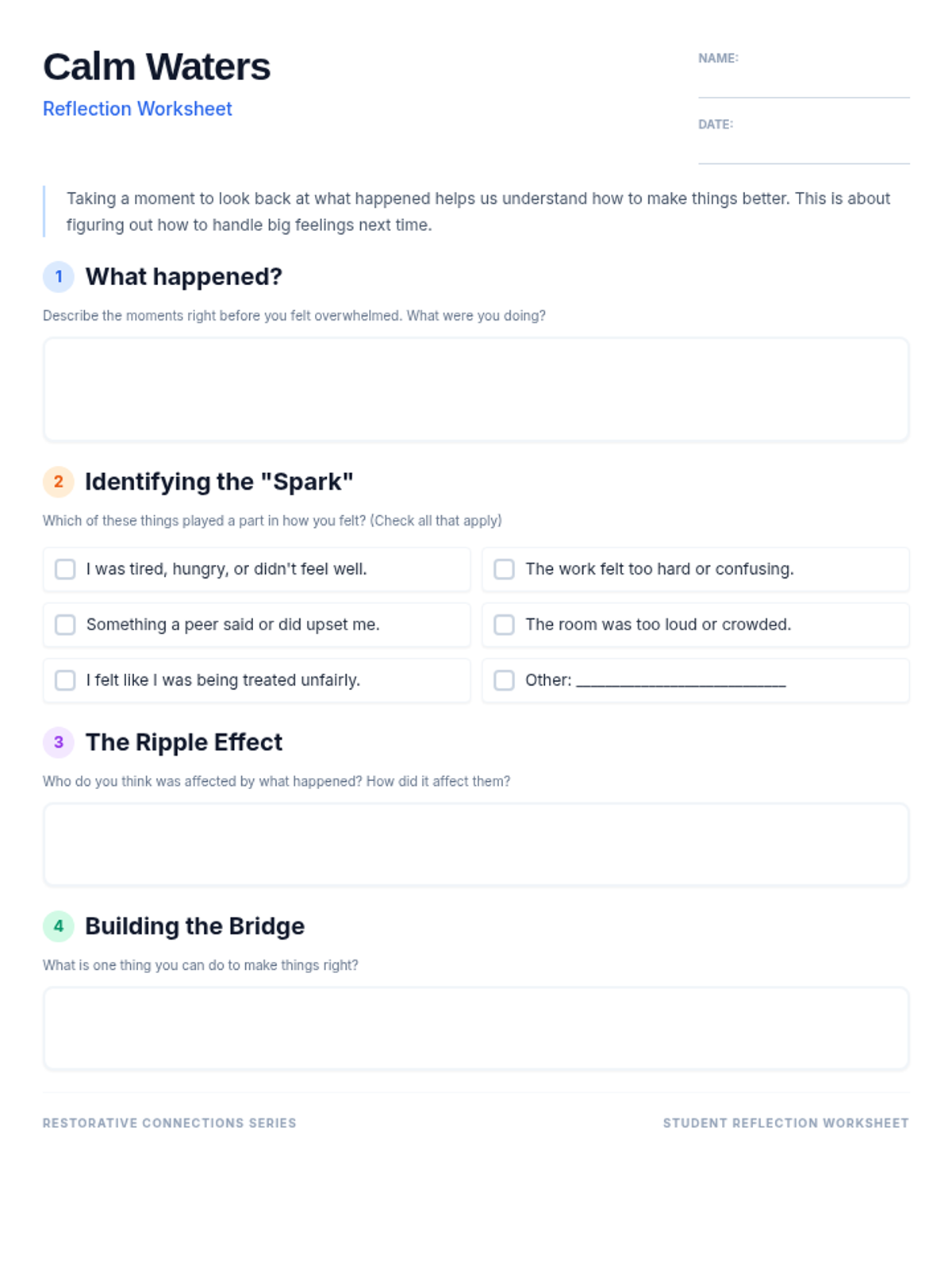
A restorative approach to helping students identify emotional triggers and navigate high-intensity moments through structured conversation and empathy.
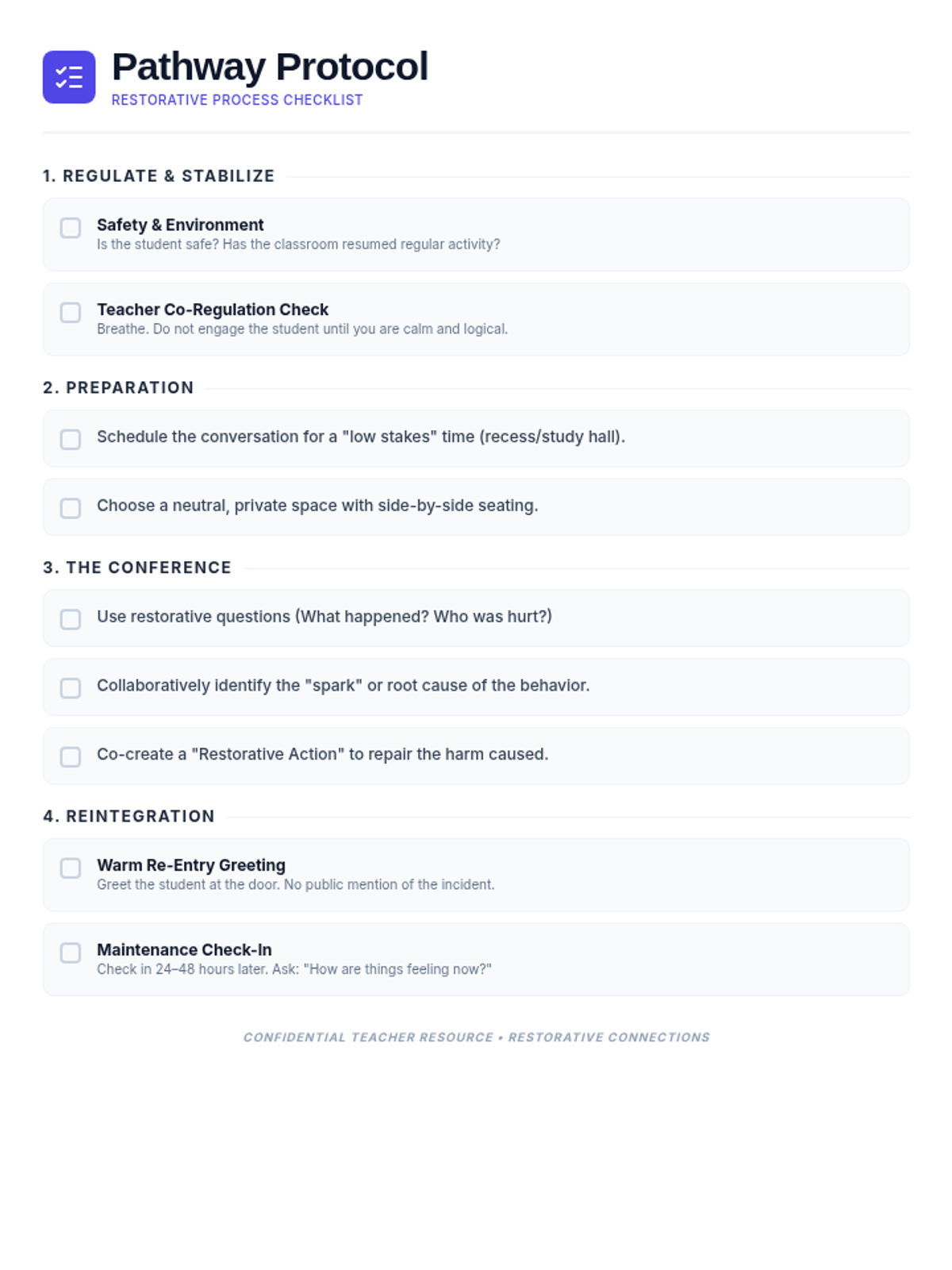
A set of restorative tools designed to help teachers navigate the aftermath of student emotional outbursts, focusing on identifying triggers and rebuilding the student-teacher relationship.
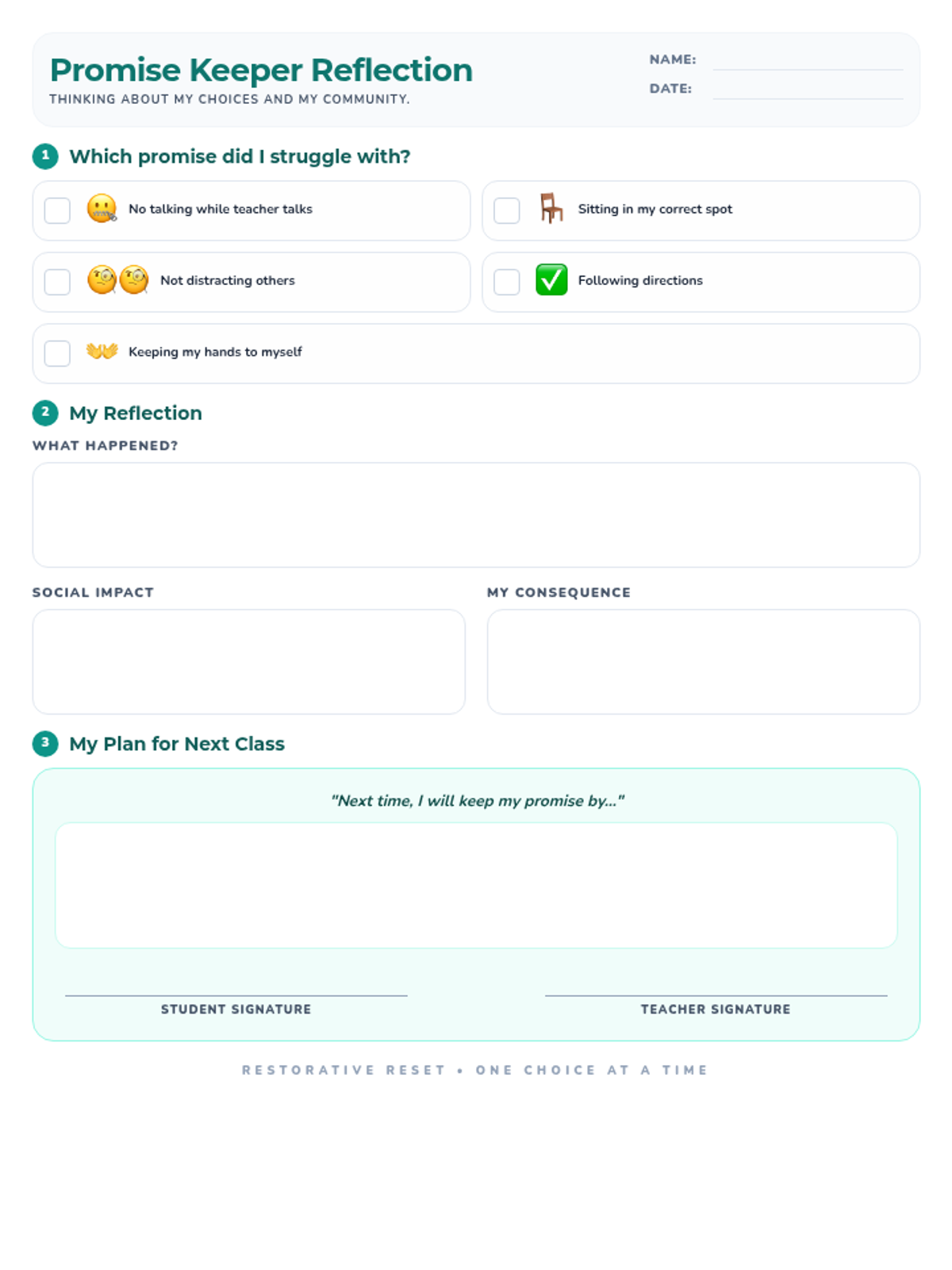
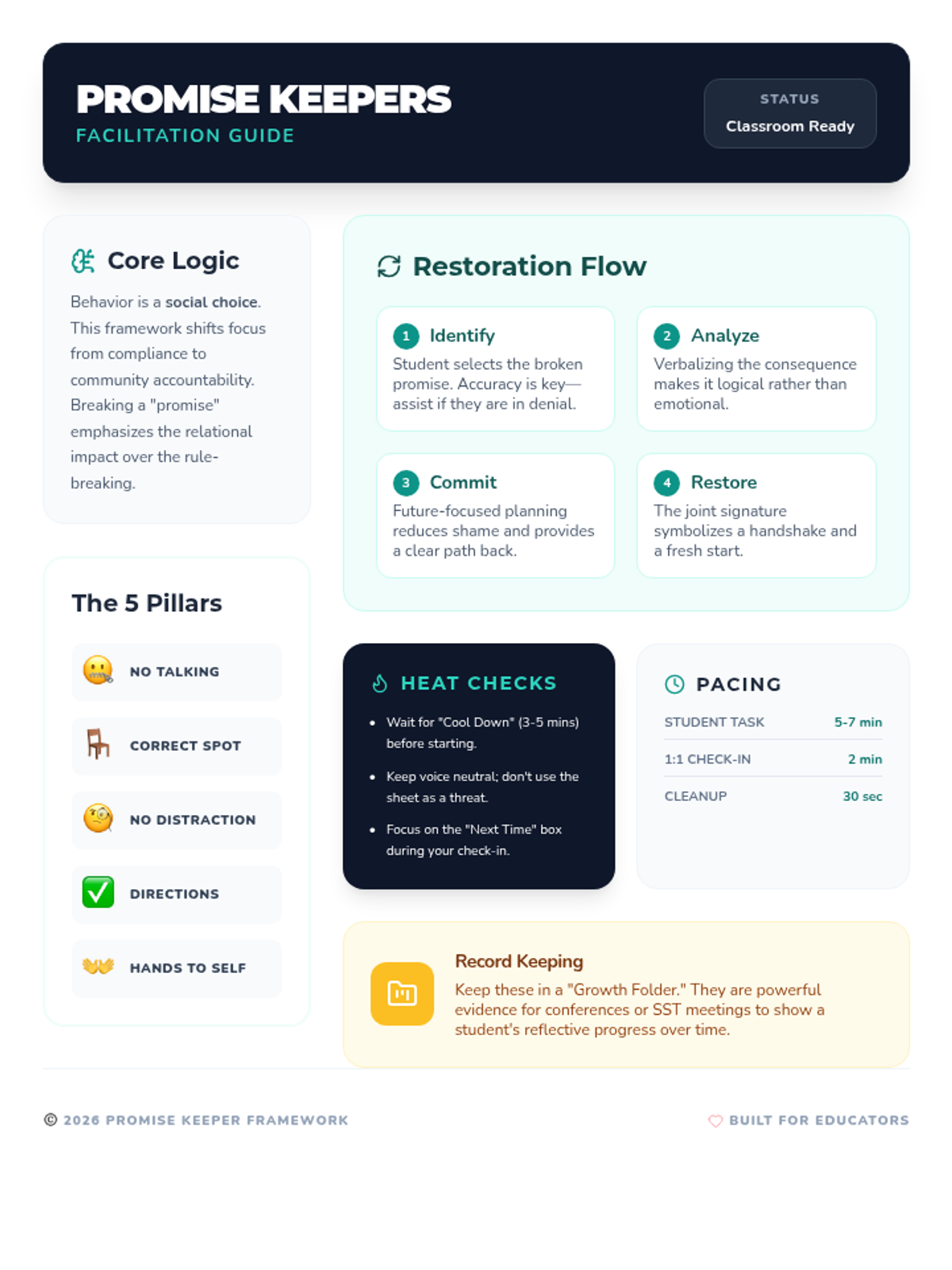
A restorative behavior management system focused on five classroom promises, helping students reflect on their choices and plan for future success.
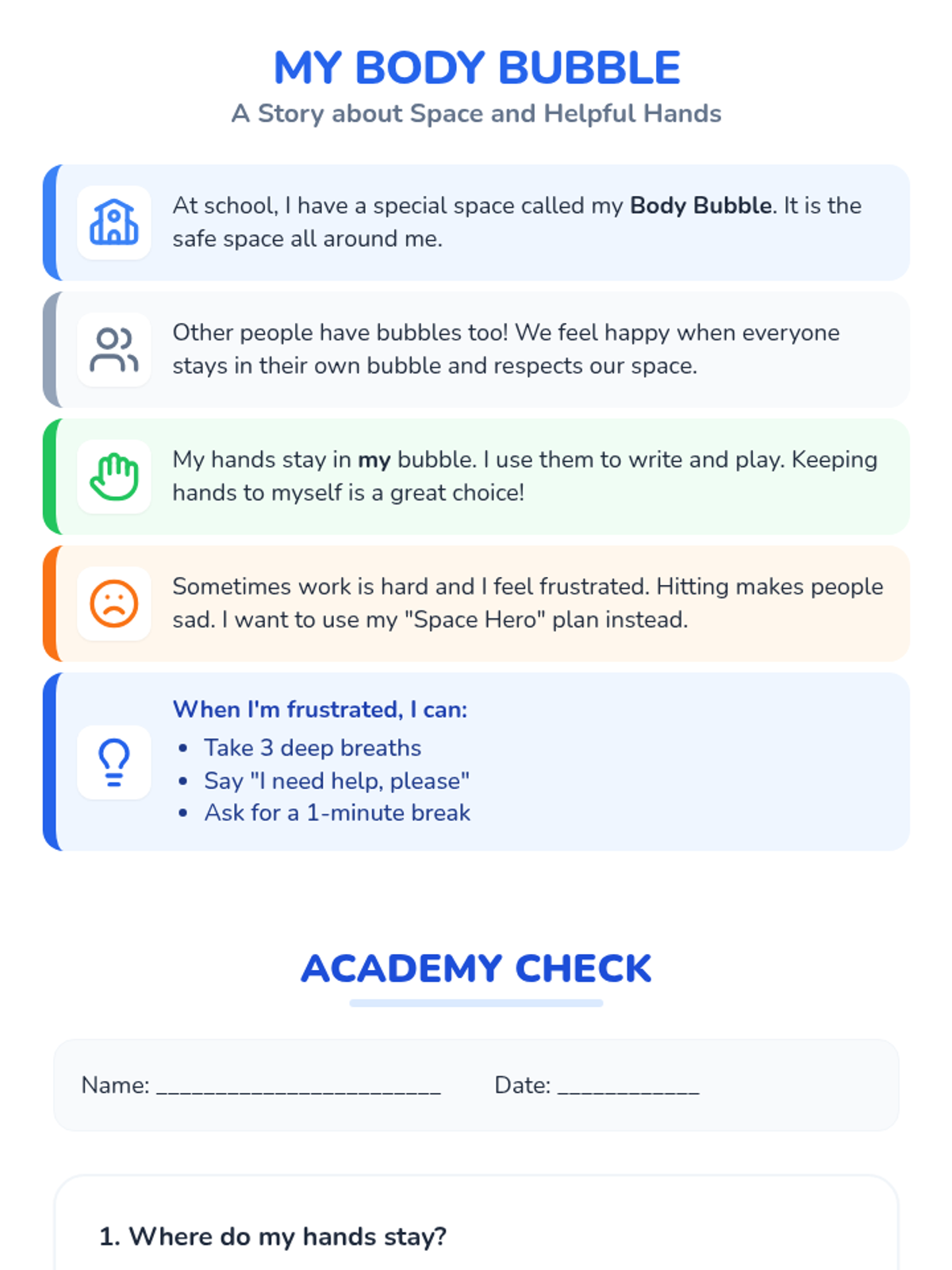
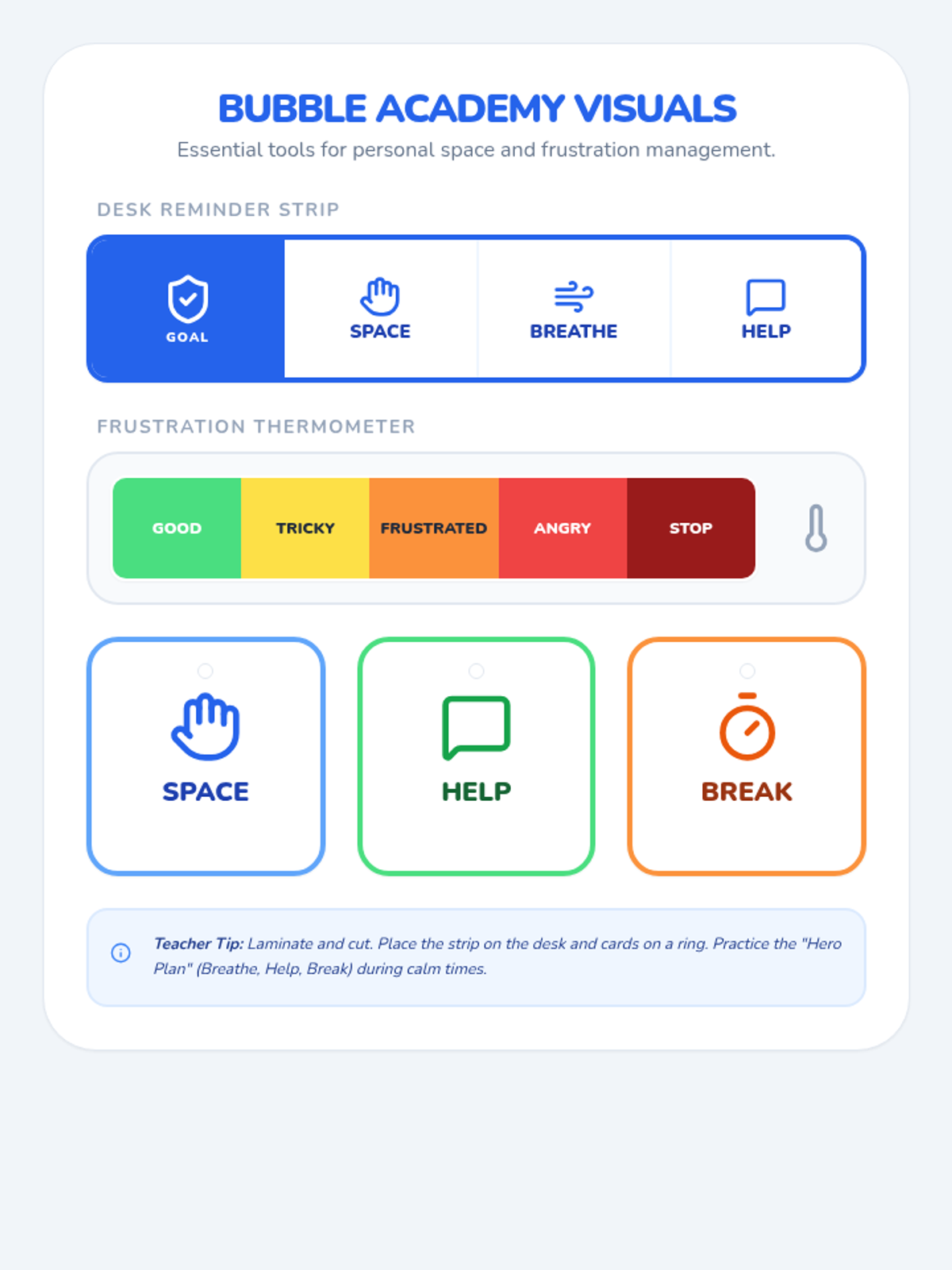
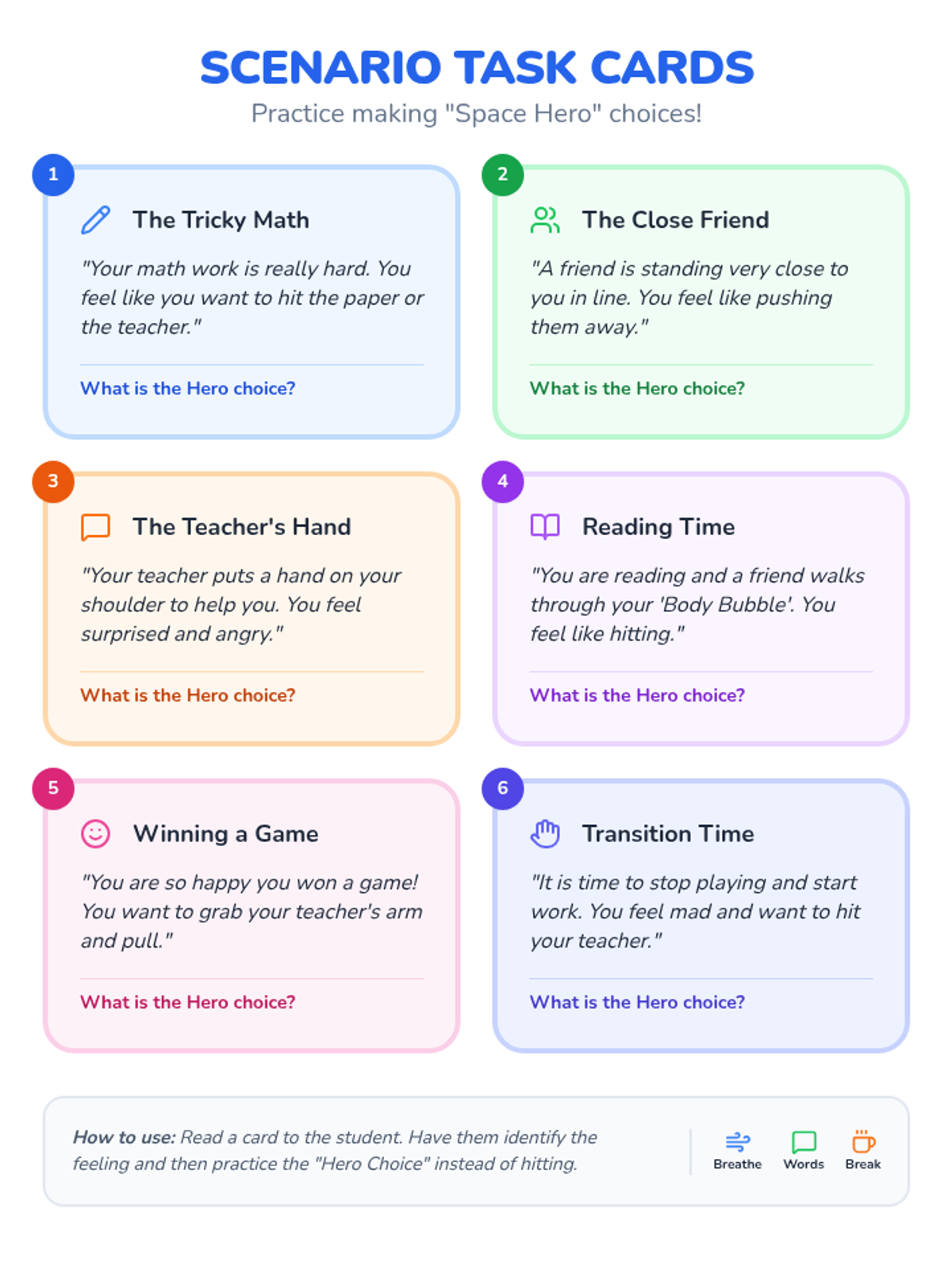
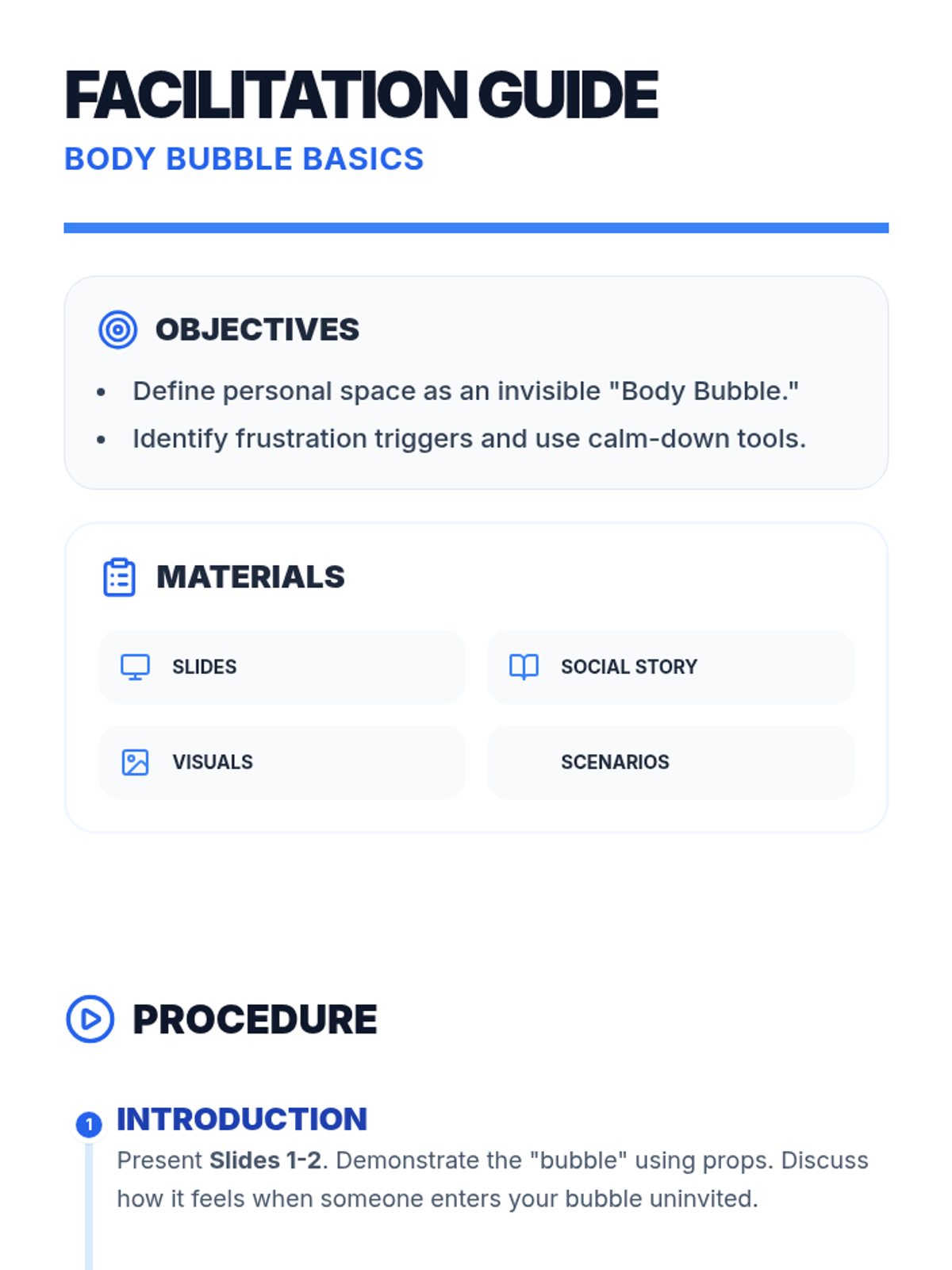
This lesson introduces the concept of a 'Body Bubble' for personal space and provides strategies for managing frustration without physical aggression.
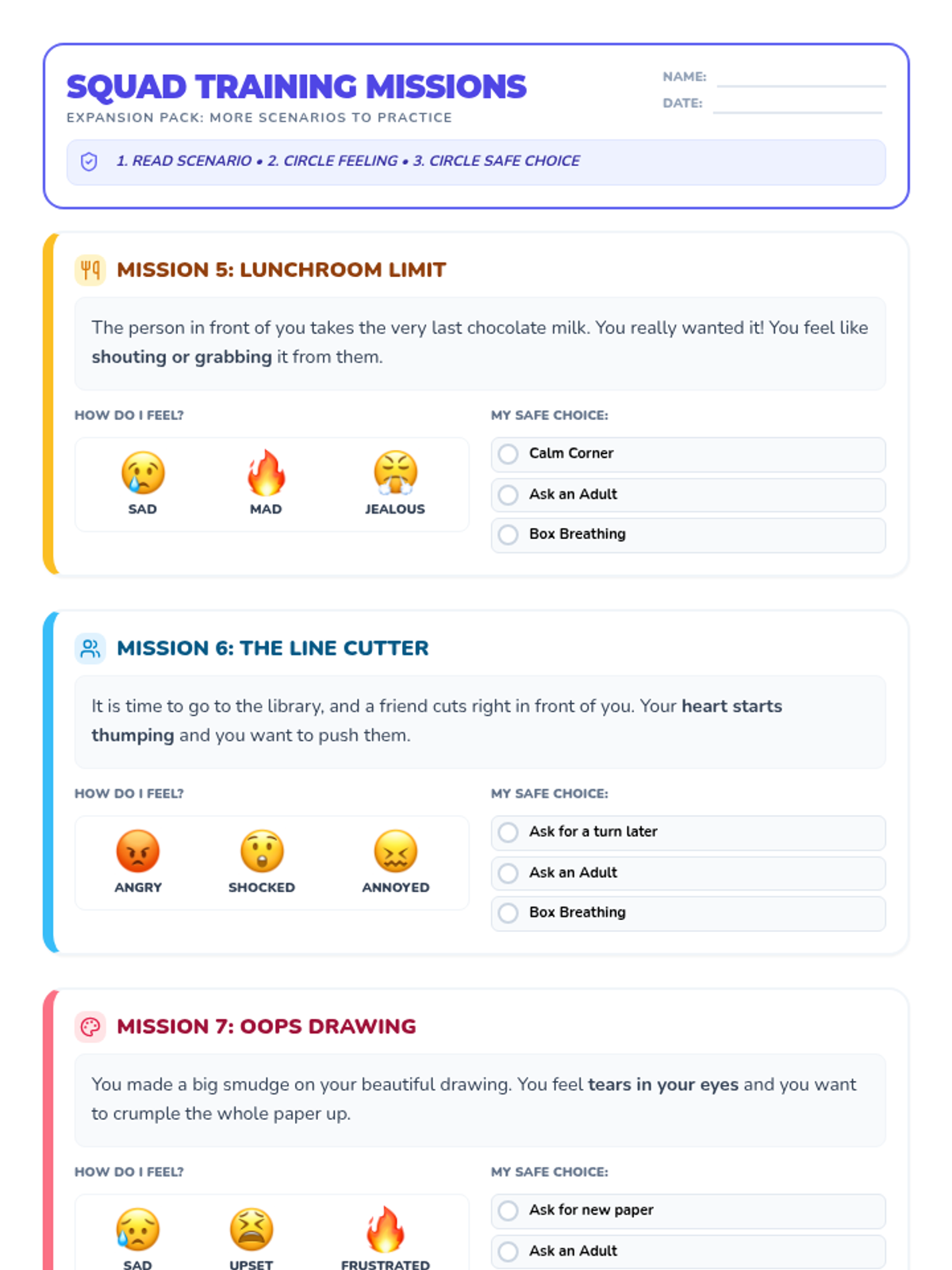
A comprehensive social-emotional learning lesson designed to help 2nd-grade students recognize impulsive urges and practice specific coping strategies in playground and classroom settings.
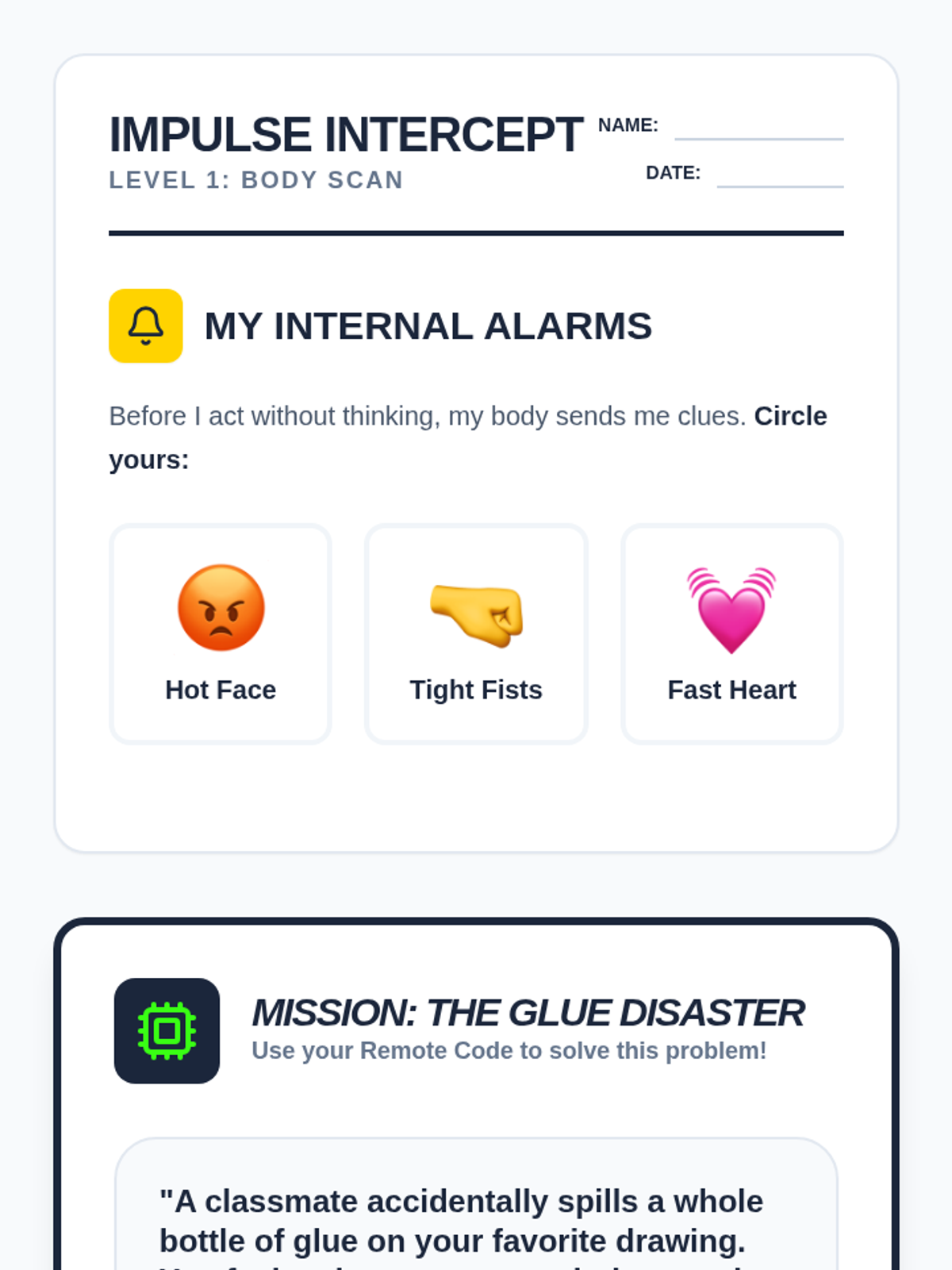
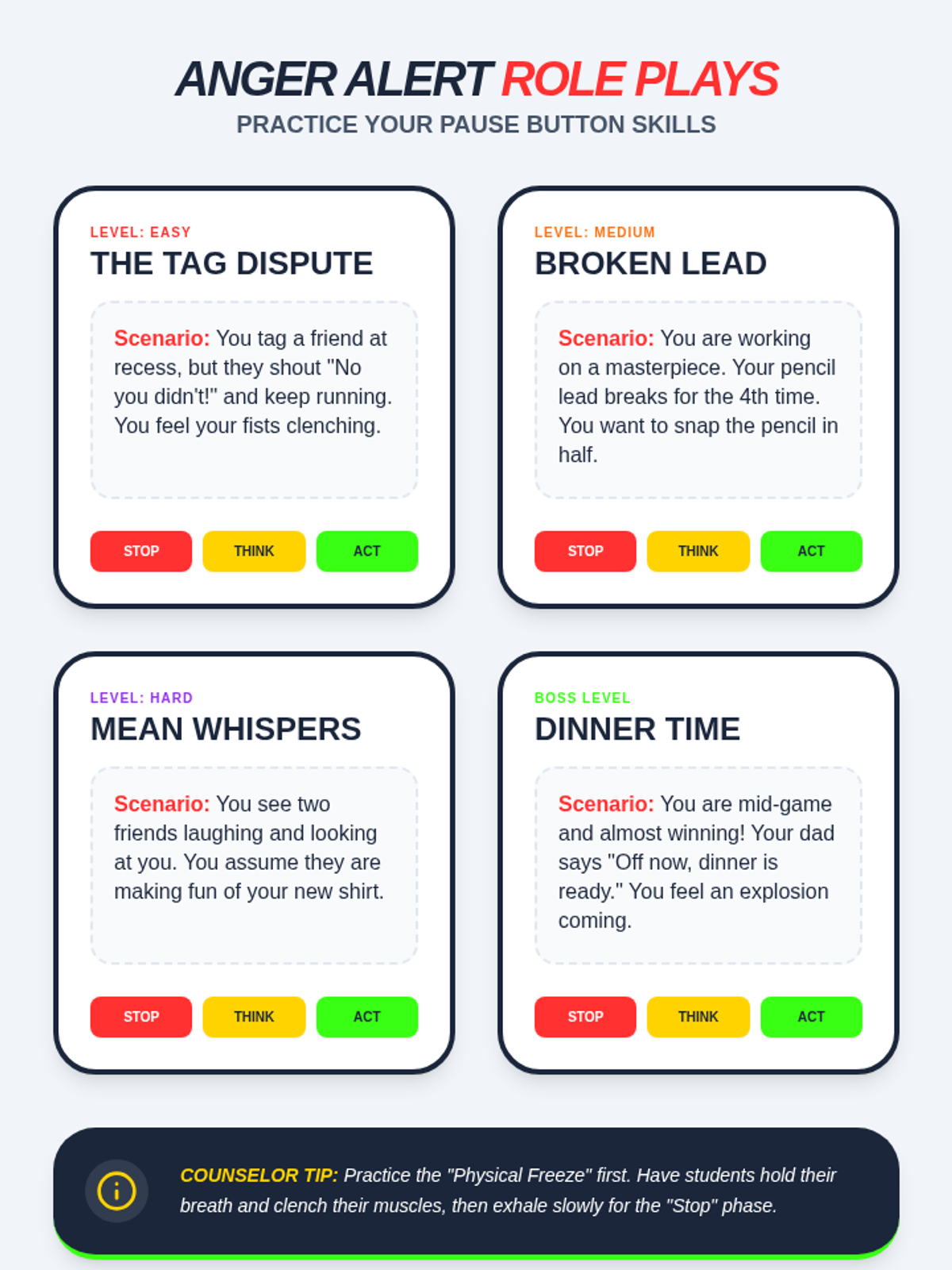
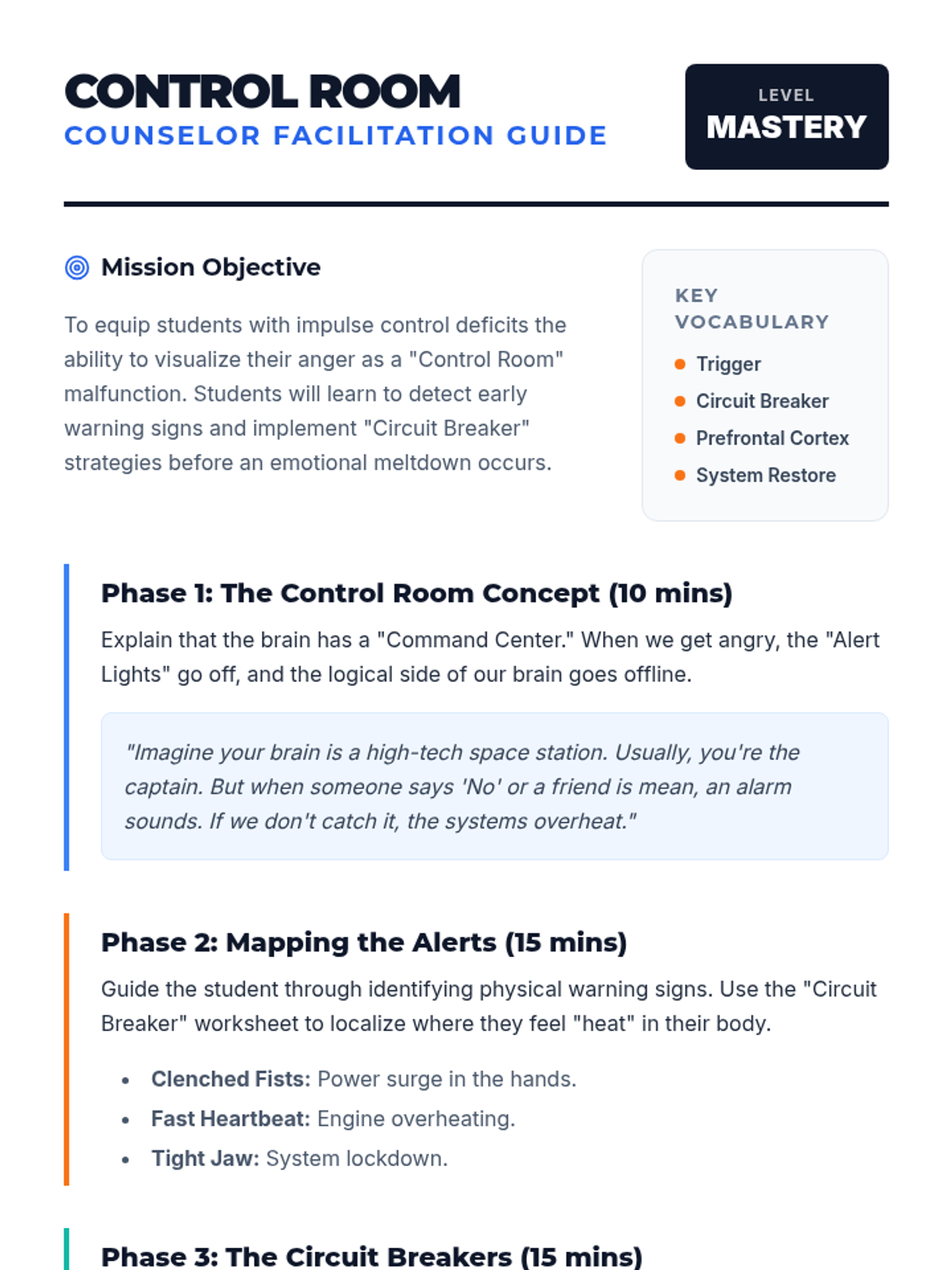
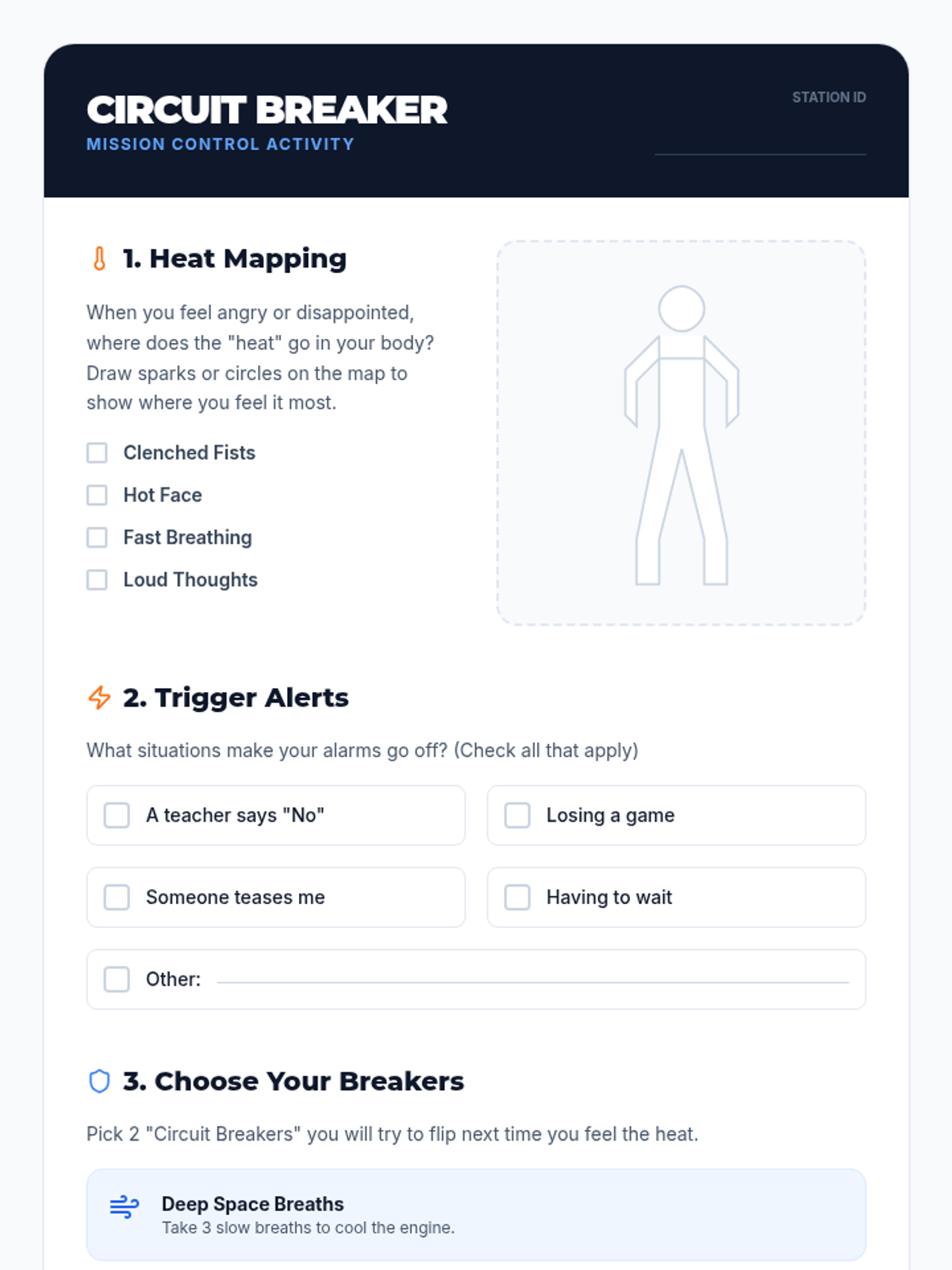
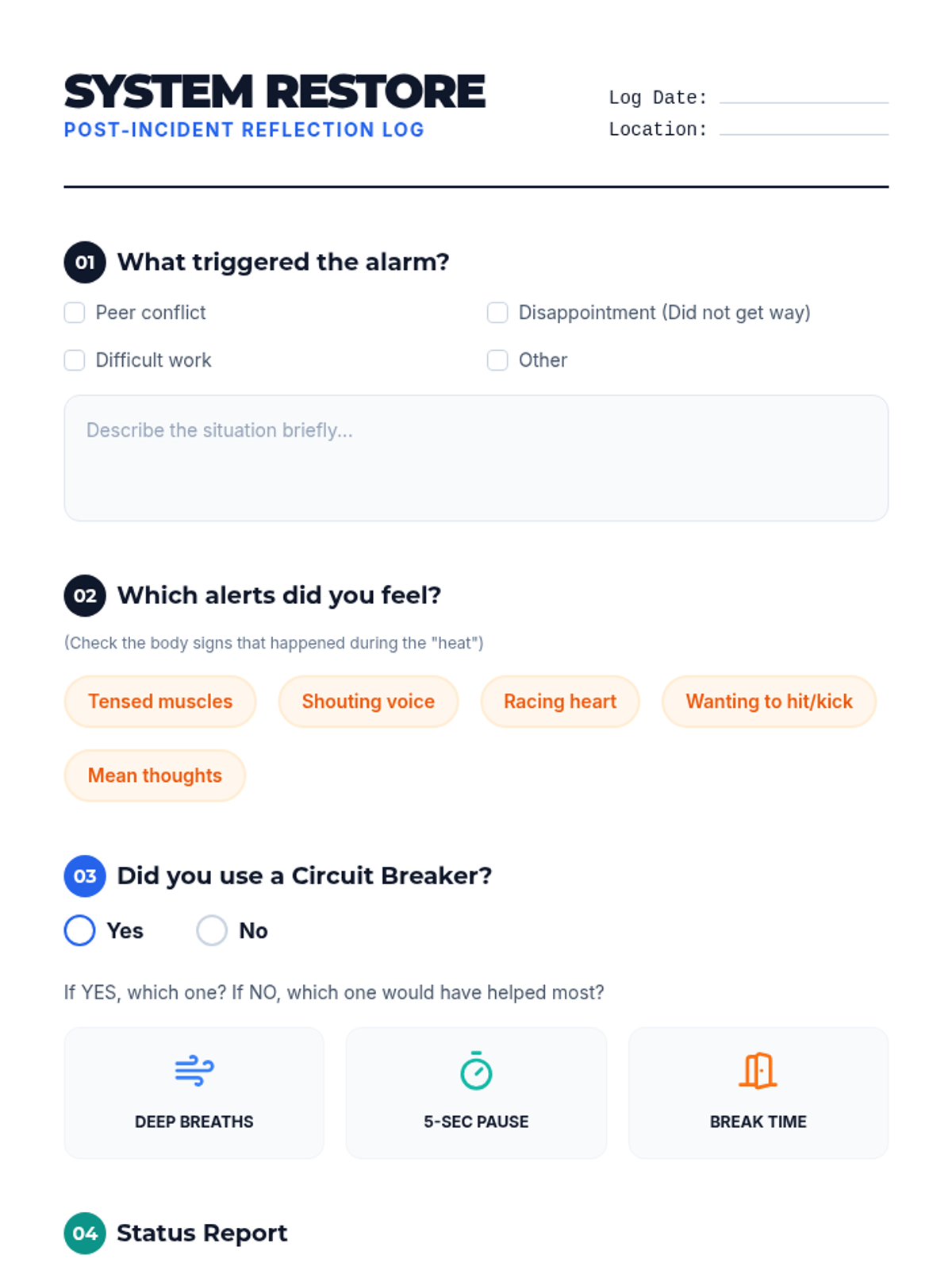
A comprehensive counseling module designed to help students identify anger triggers, recognize physical warning signs, and implement 'pause' strategies during peer conflicts or when faced with disappointment. Students learn to view their emotional responses as a 'Control Room' they can master.
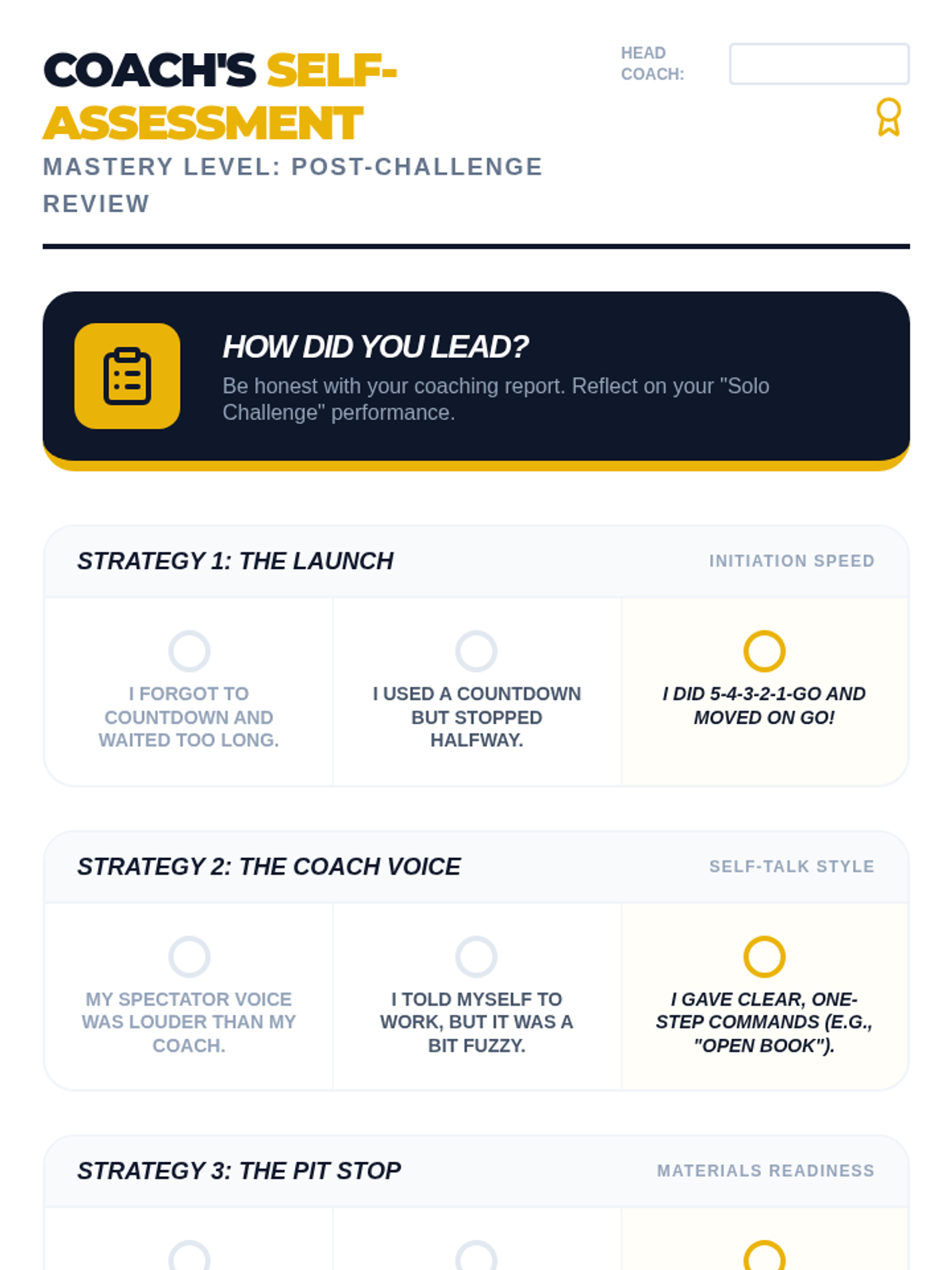
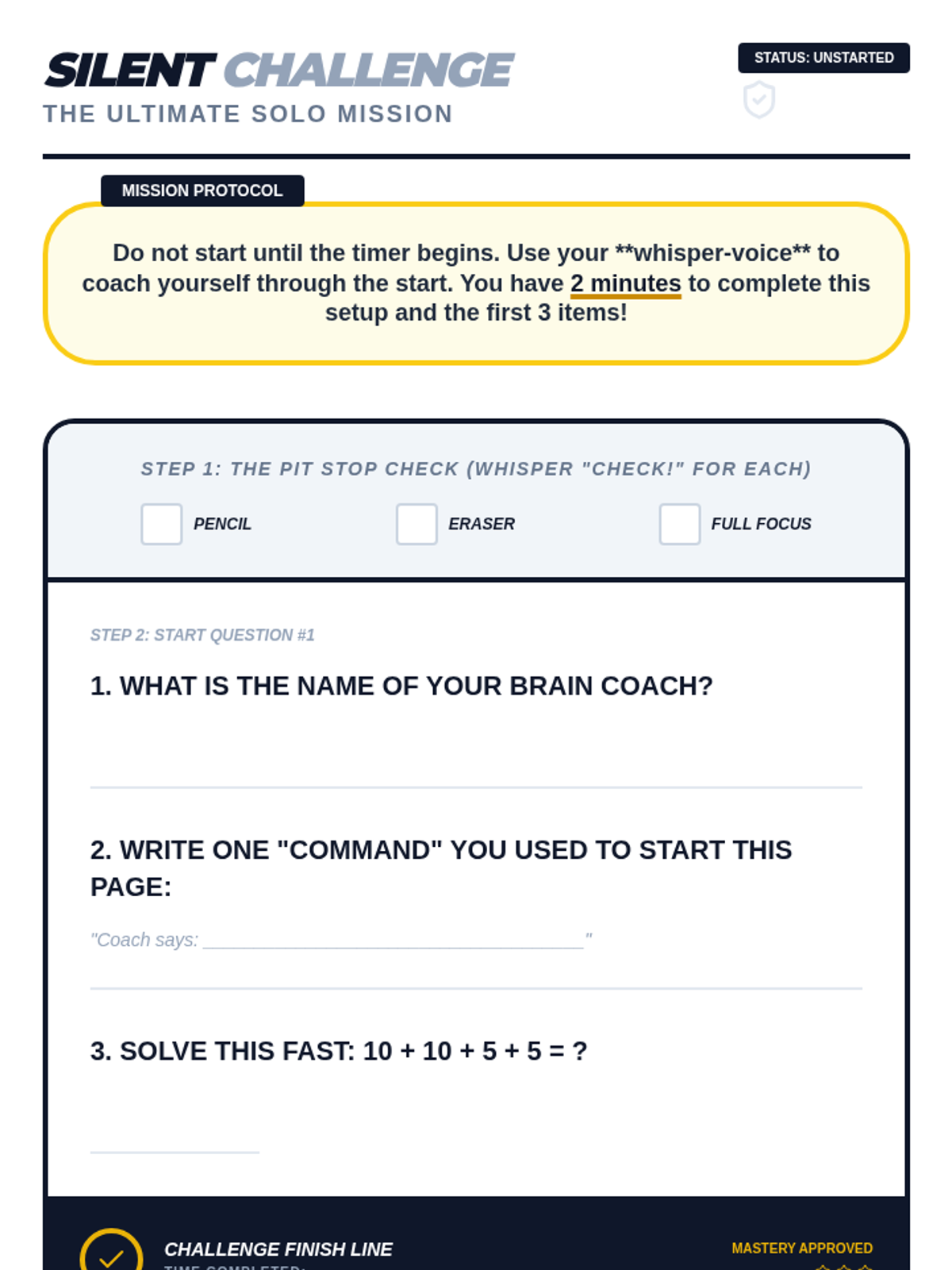
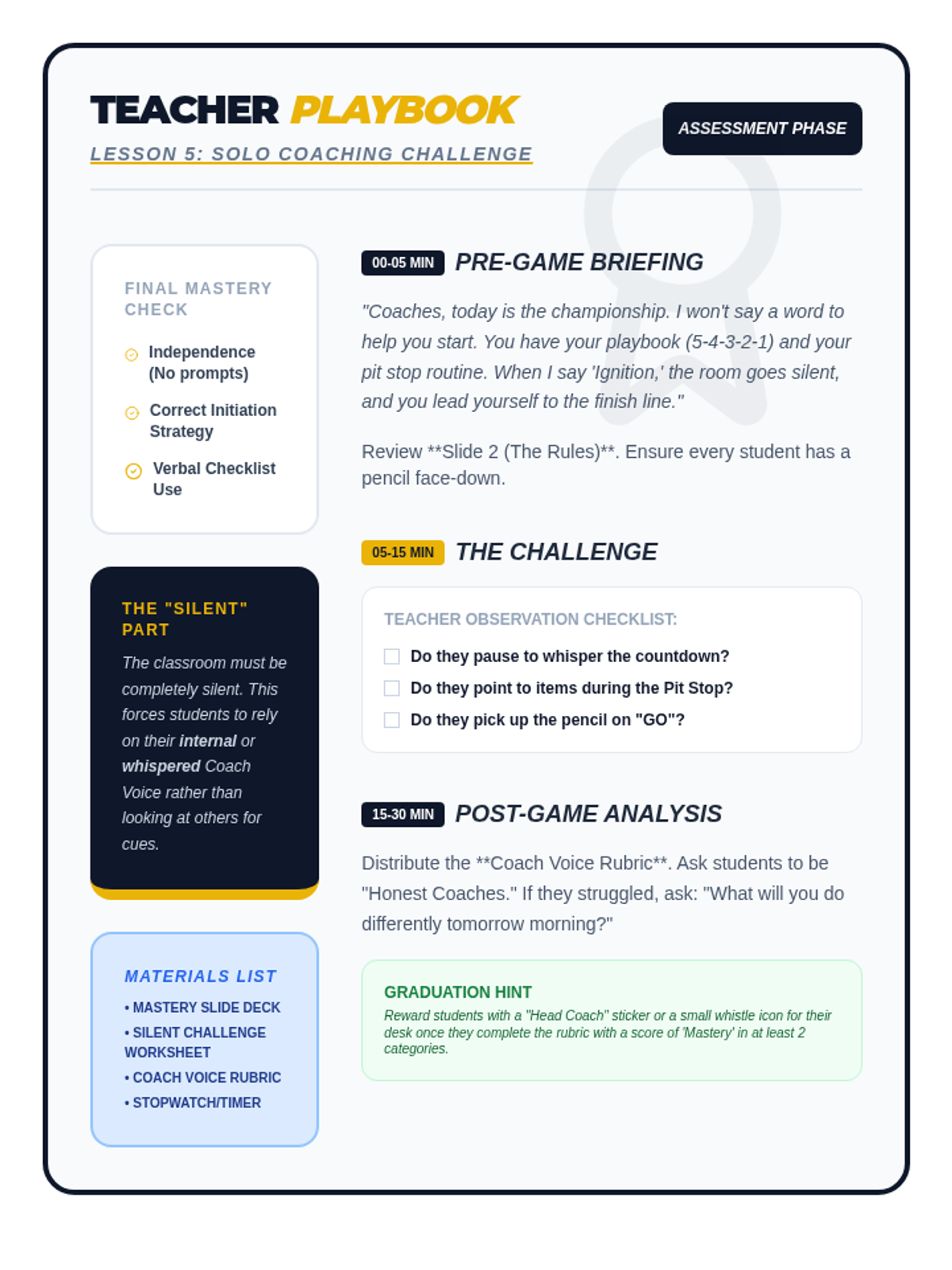
Students apply the coaching techniques to a real, independent task and self-assess their use of 'Coach Voice' using a rubric.
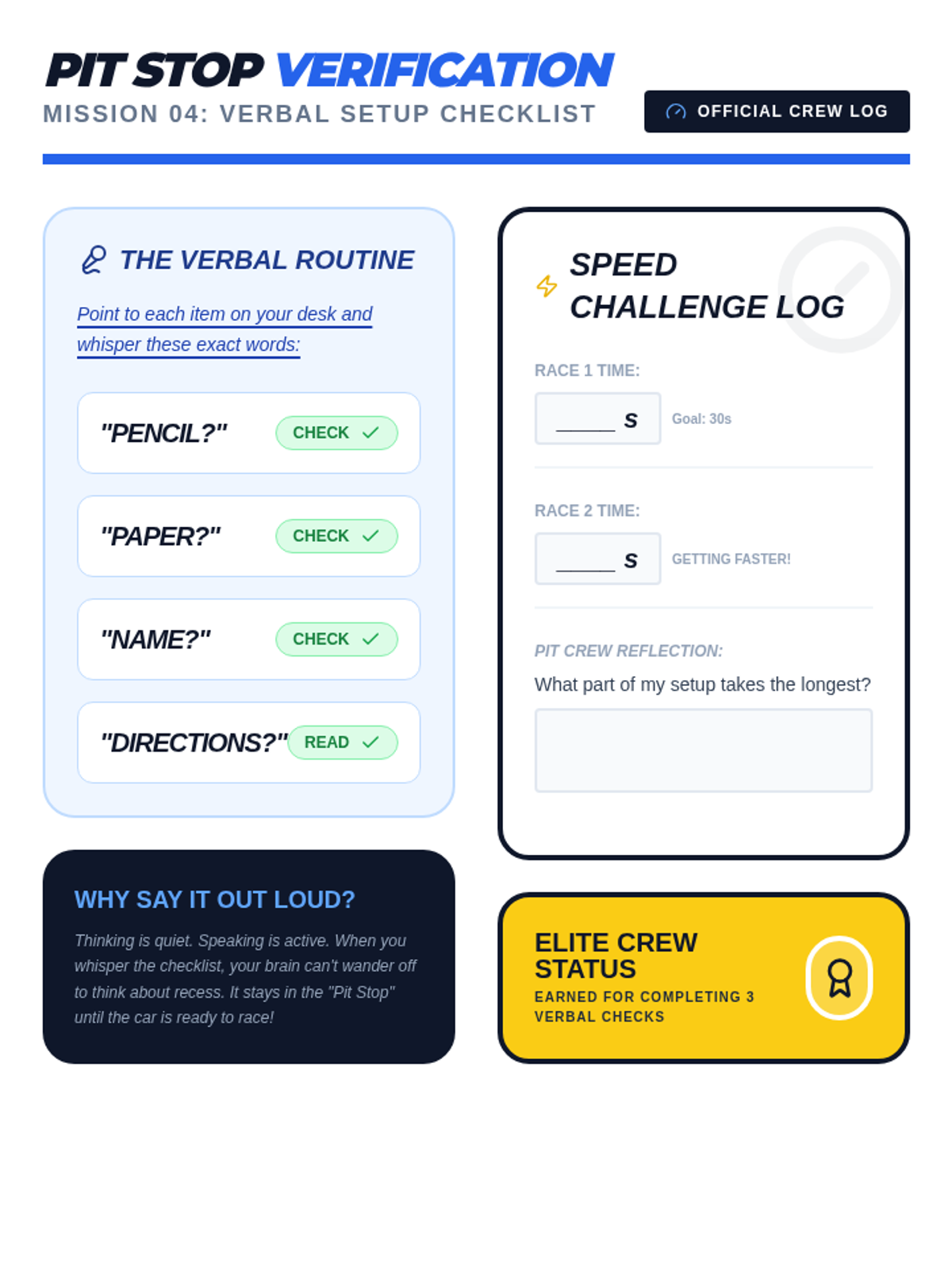
Students practice a verbal checklist routine ('Pencil? Check. Paper? Check. Name? Check.') to turn preparation into an active game rather than a passive wait.
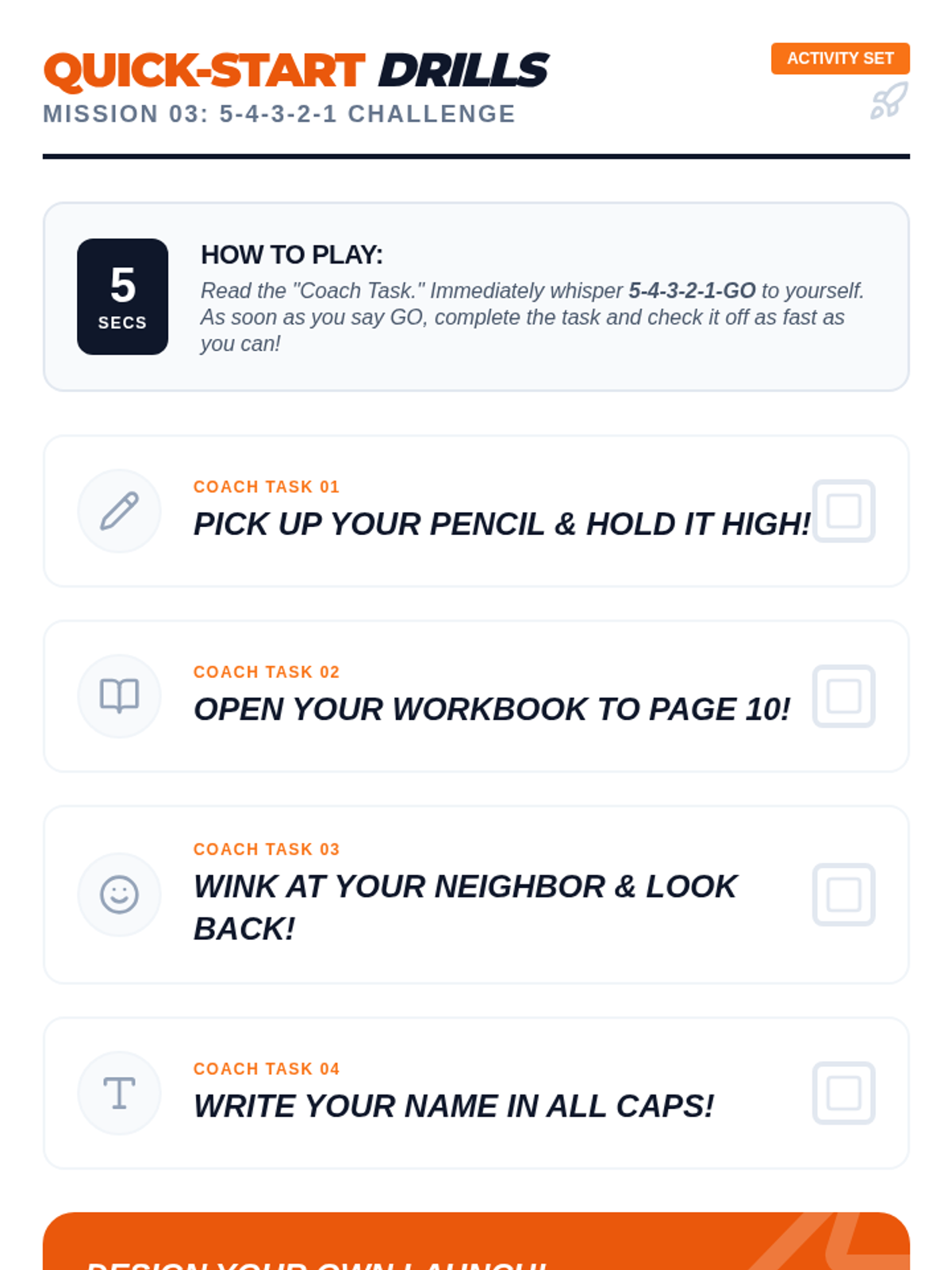
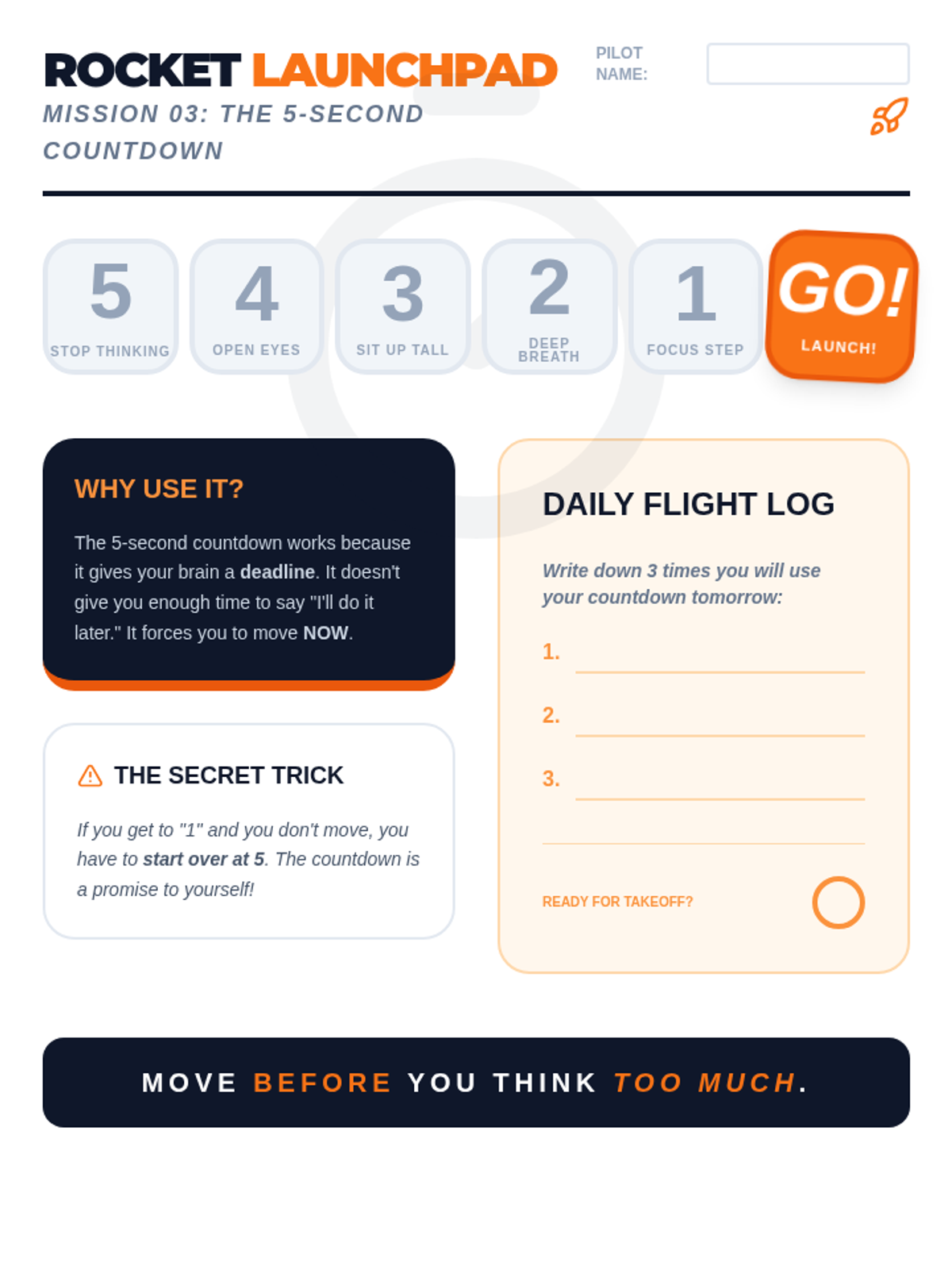
Students learn the 5-4-3-2-1-GO technique to bypass hesitation and build the association between a verbal countdown and physical movement.
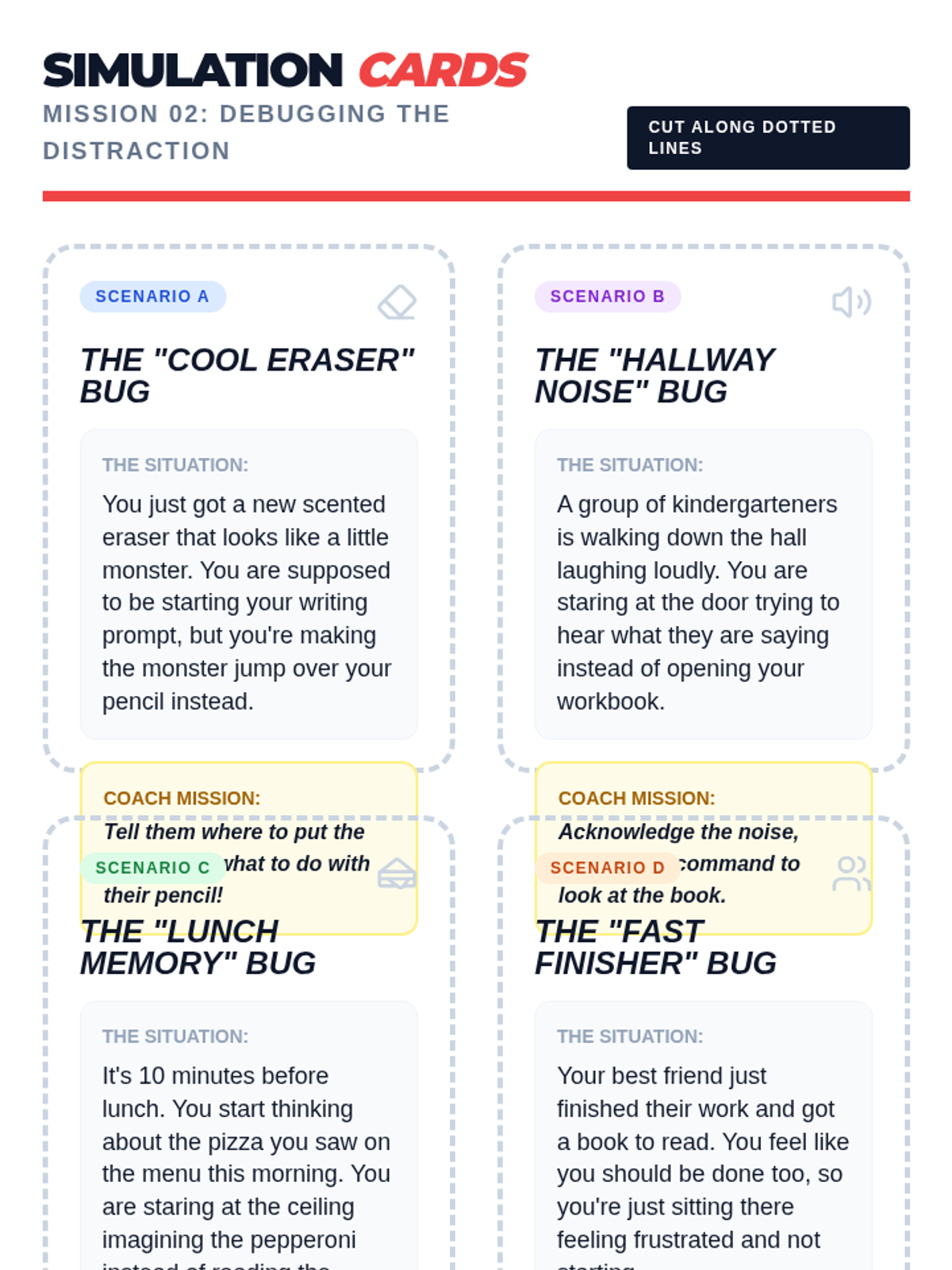
Using character cards with specific distraction problems, students act out solutions where they talk the character through ignoring the distraction and starting the work. They practice firm but kind verbal redirection.
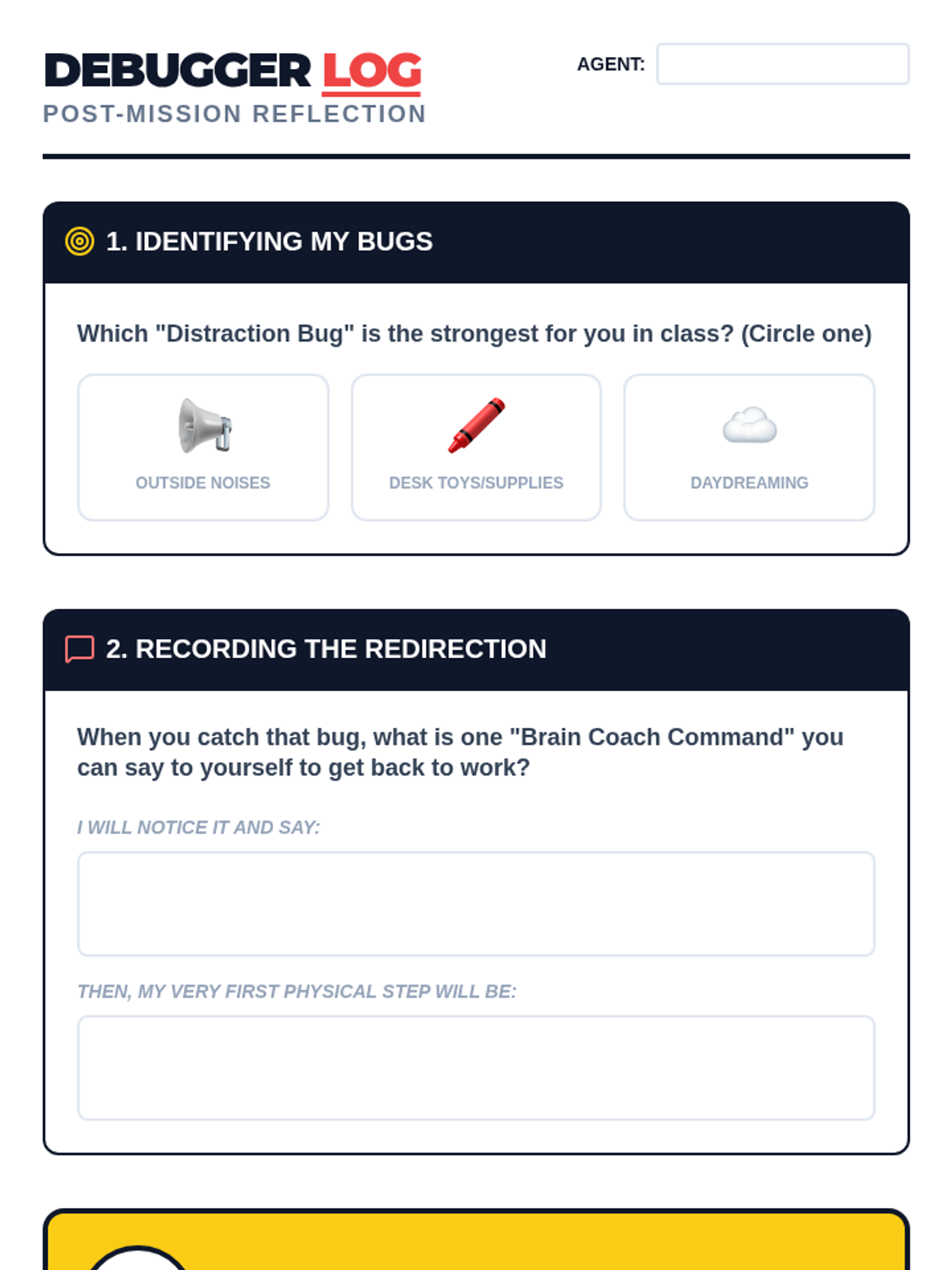
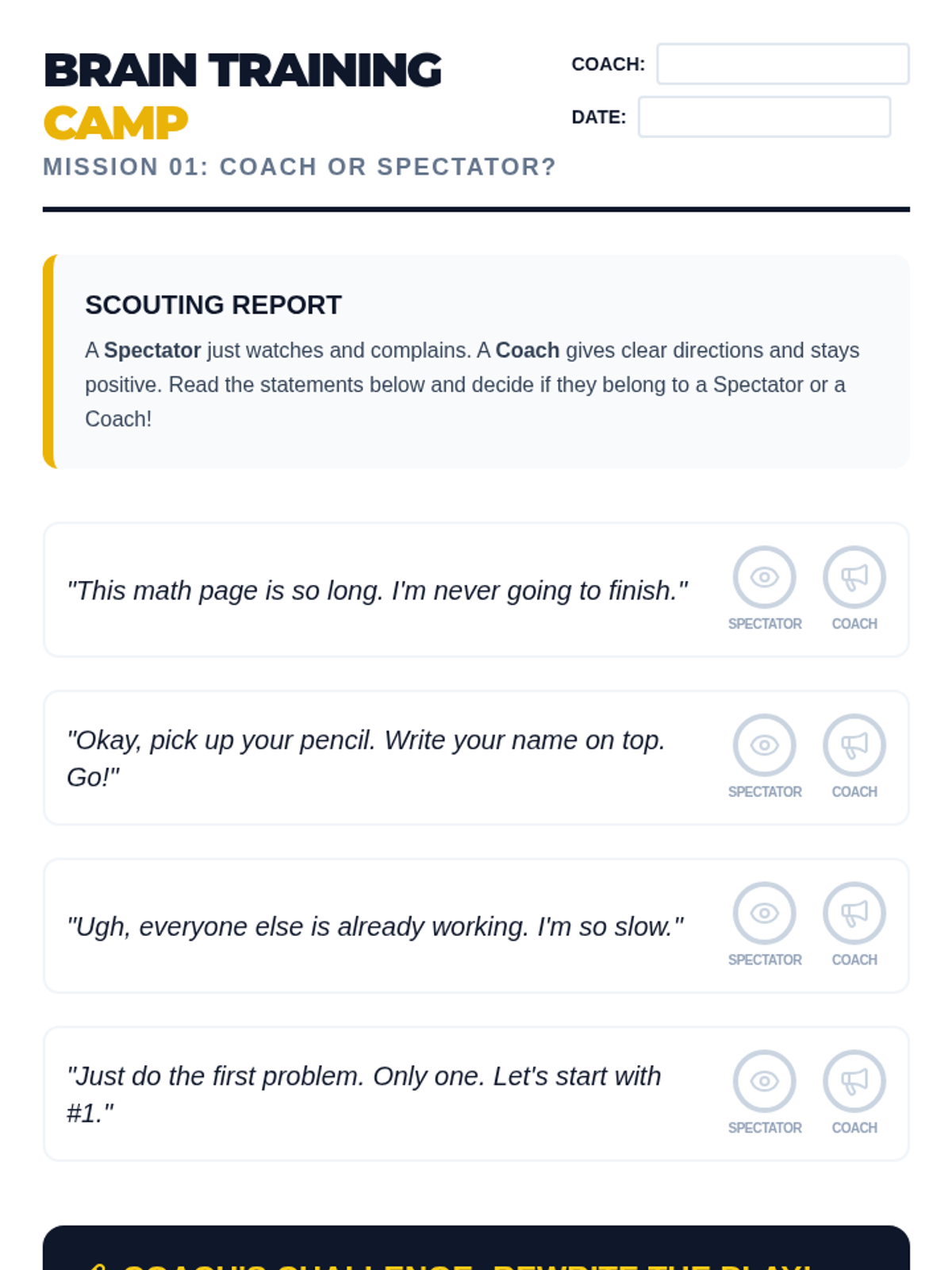
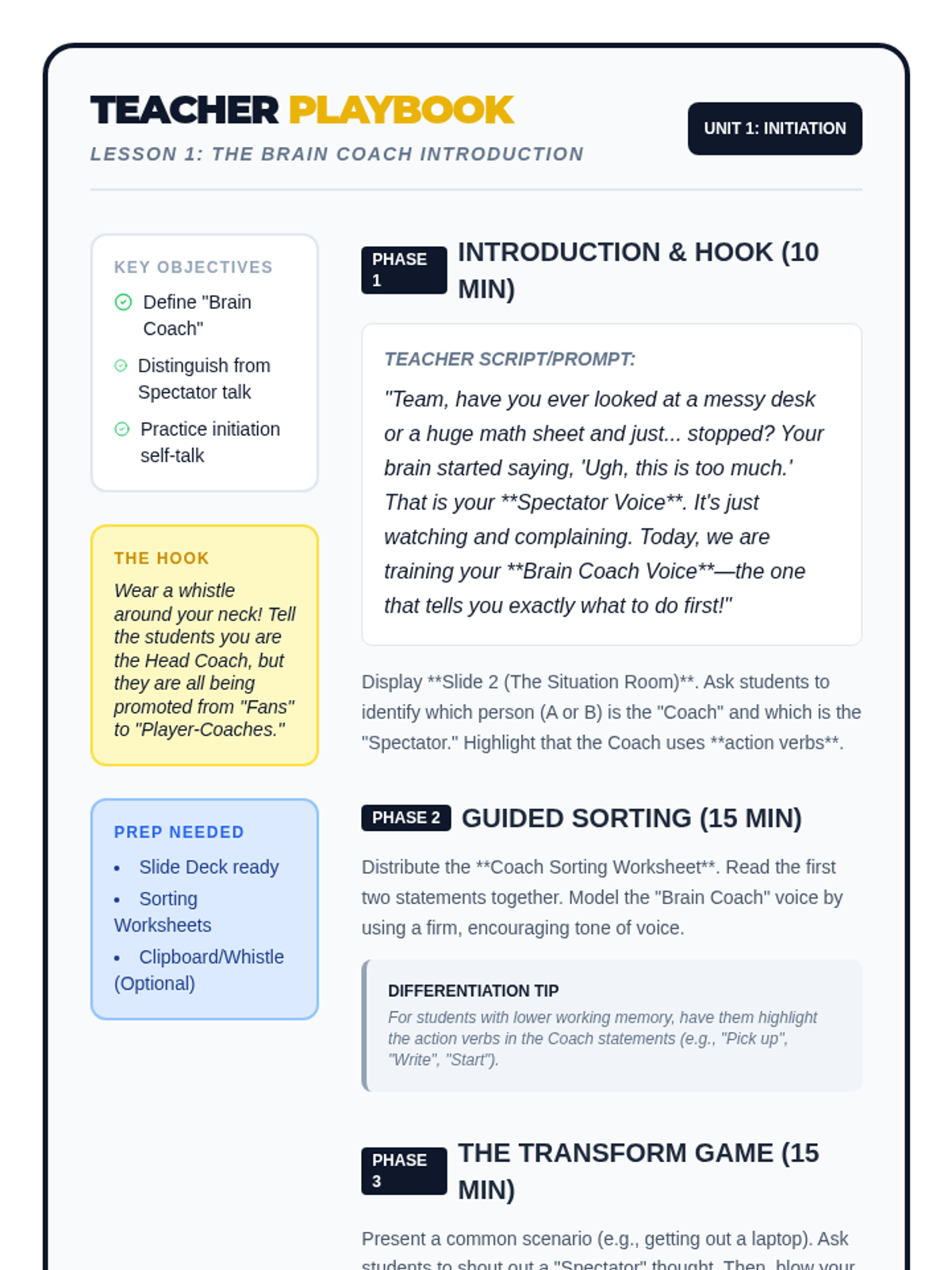
Students are introduced to the concept of the 'Brain Coach'—the part of the mind that directs action. They classify statements as either 'Coach' talk (directive, encouraging) or 'Spectator' talk (passive, observational).
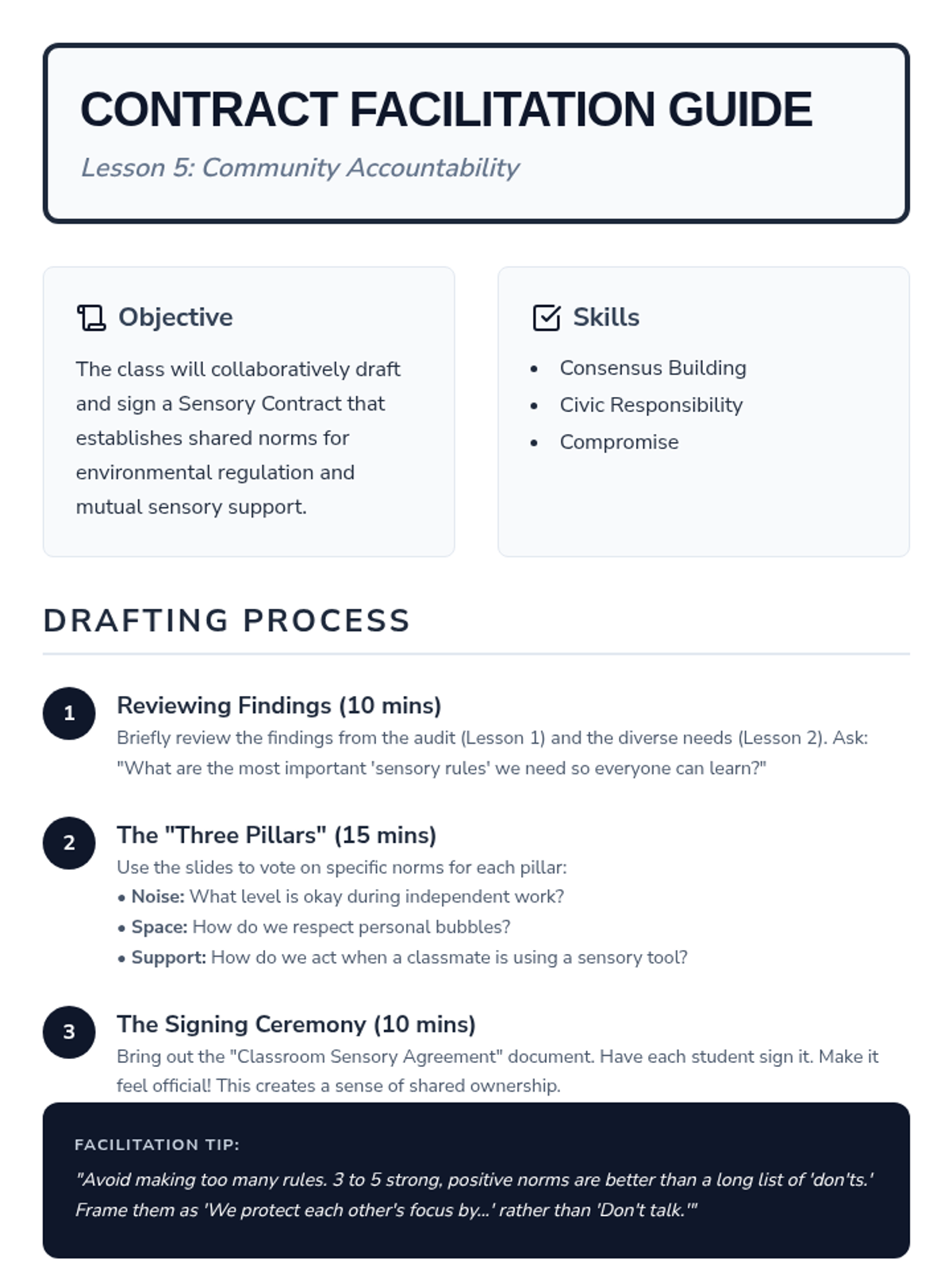
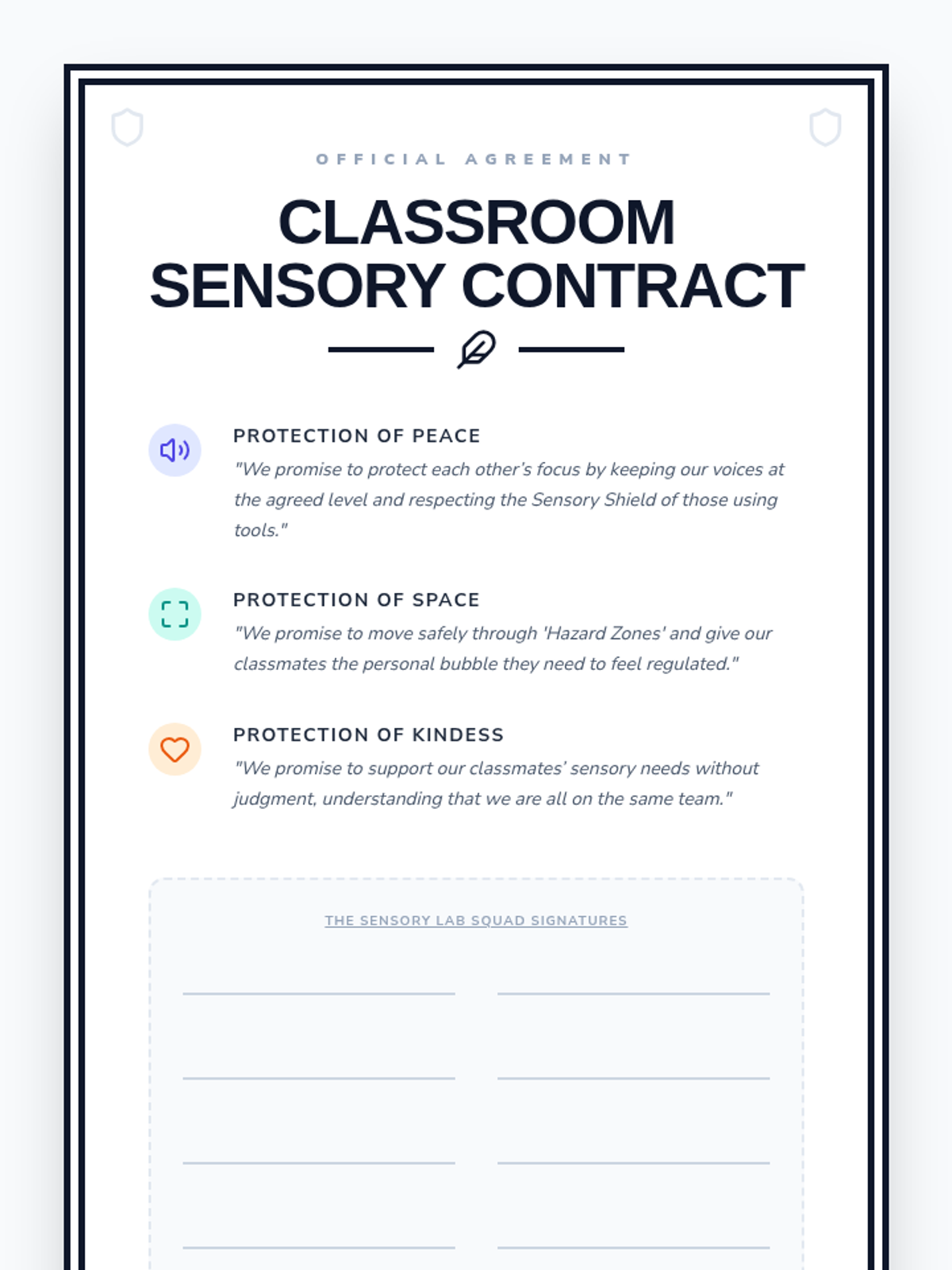
The sequence culminates in the creation of a shared classroom agreement that establishes norms for noise, space, and sensory support.
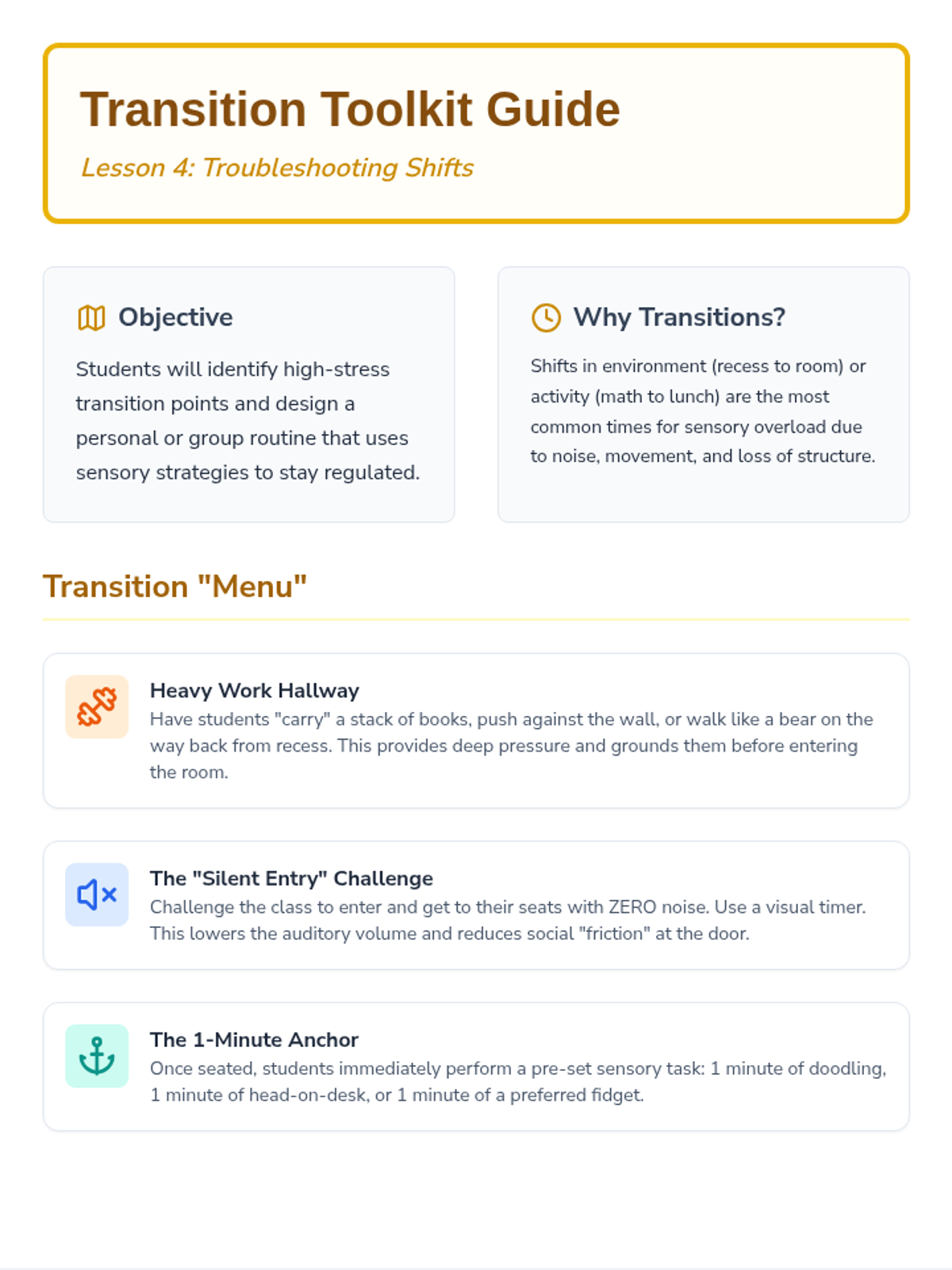
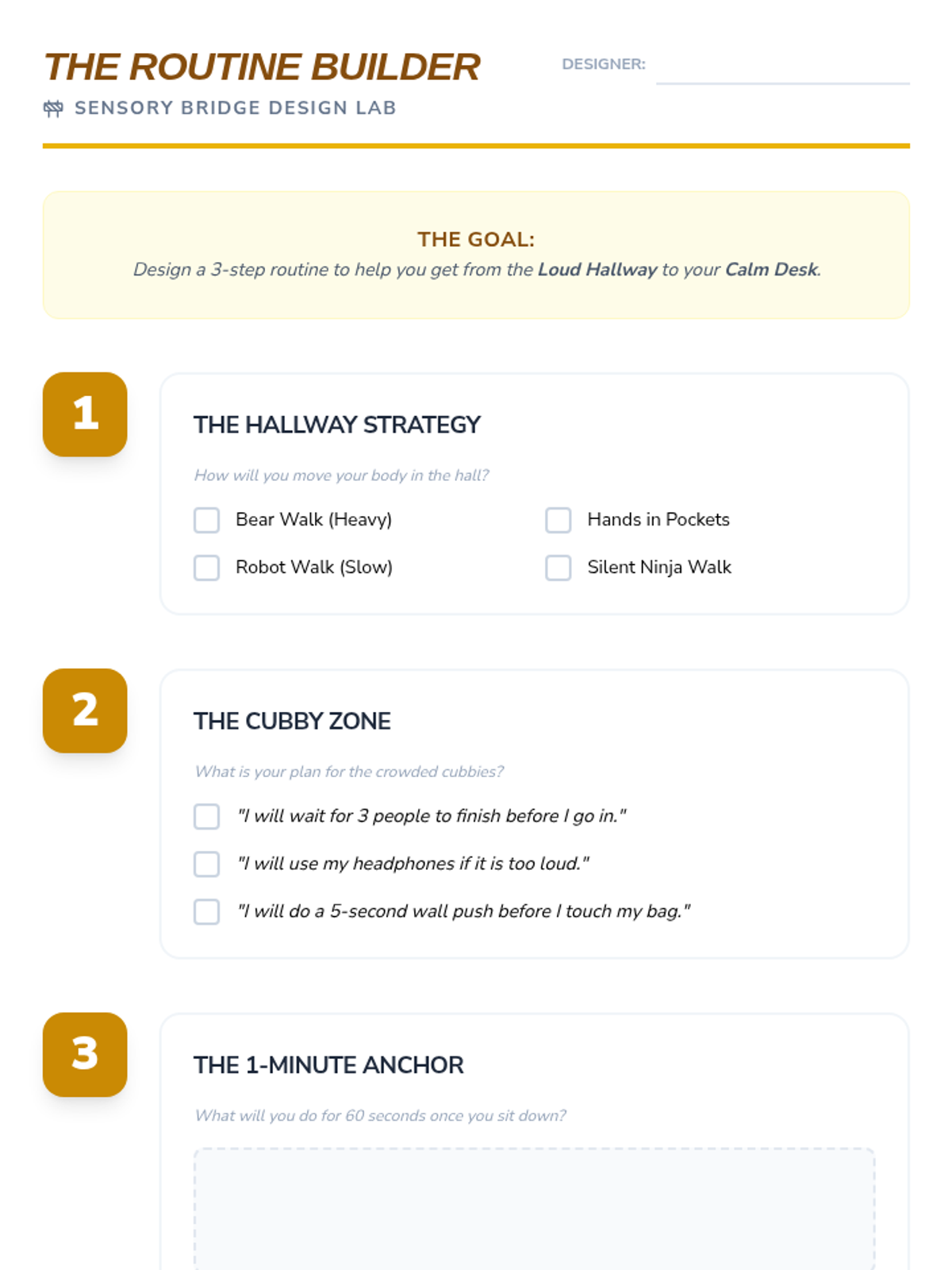
Students identify high-stress transition times and brainstorm proactive routines to maintain sensory regulation when moving between activities.
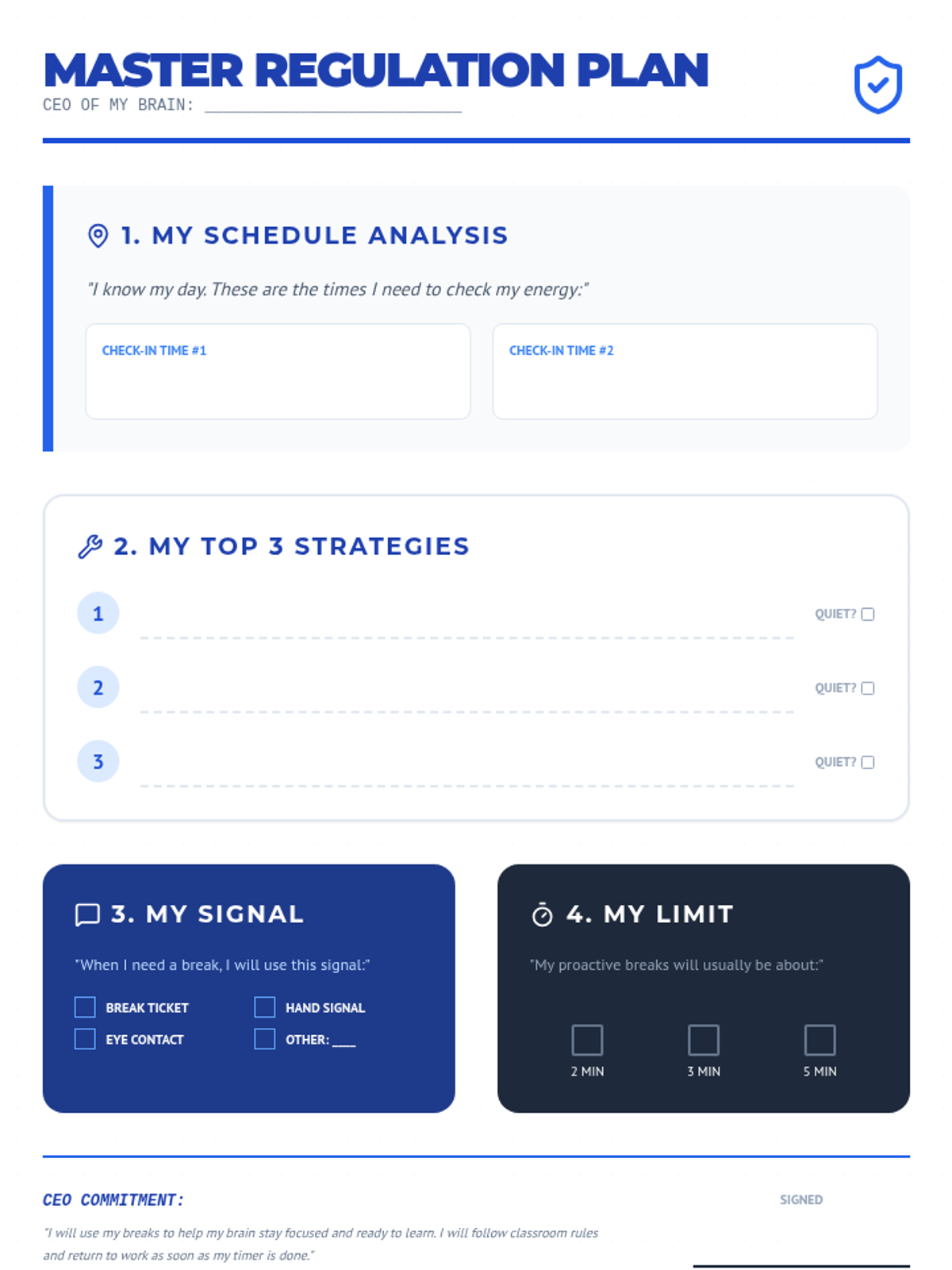
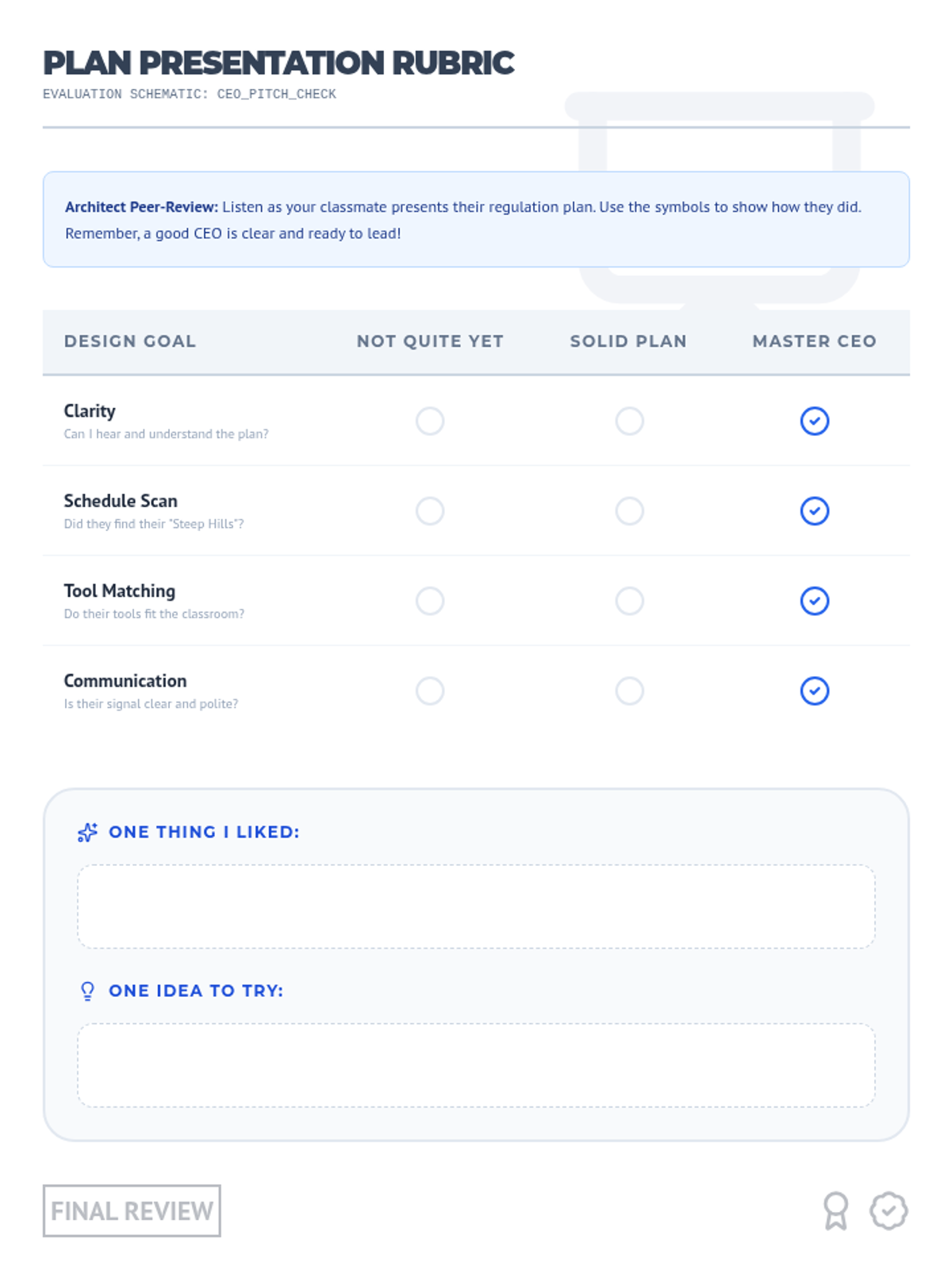
Students finalize and present their personal regulation plans, outlining their preferred signals, strategies, and check-in times.
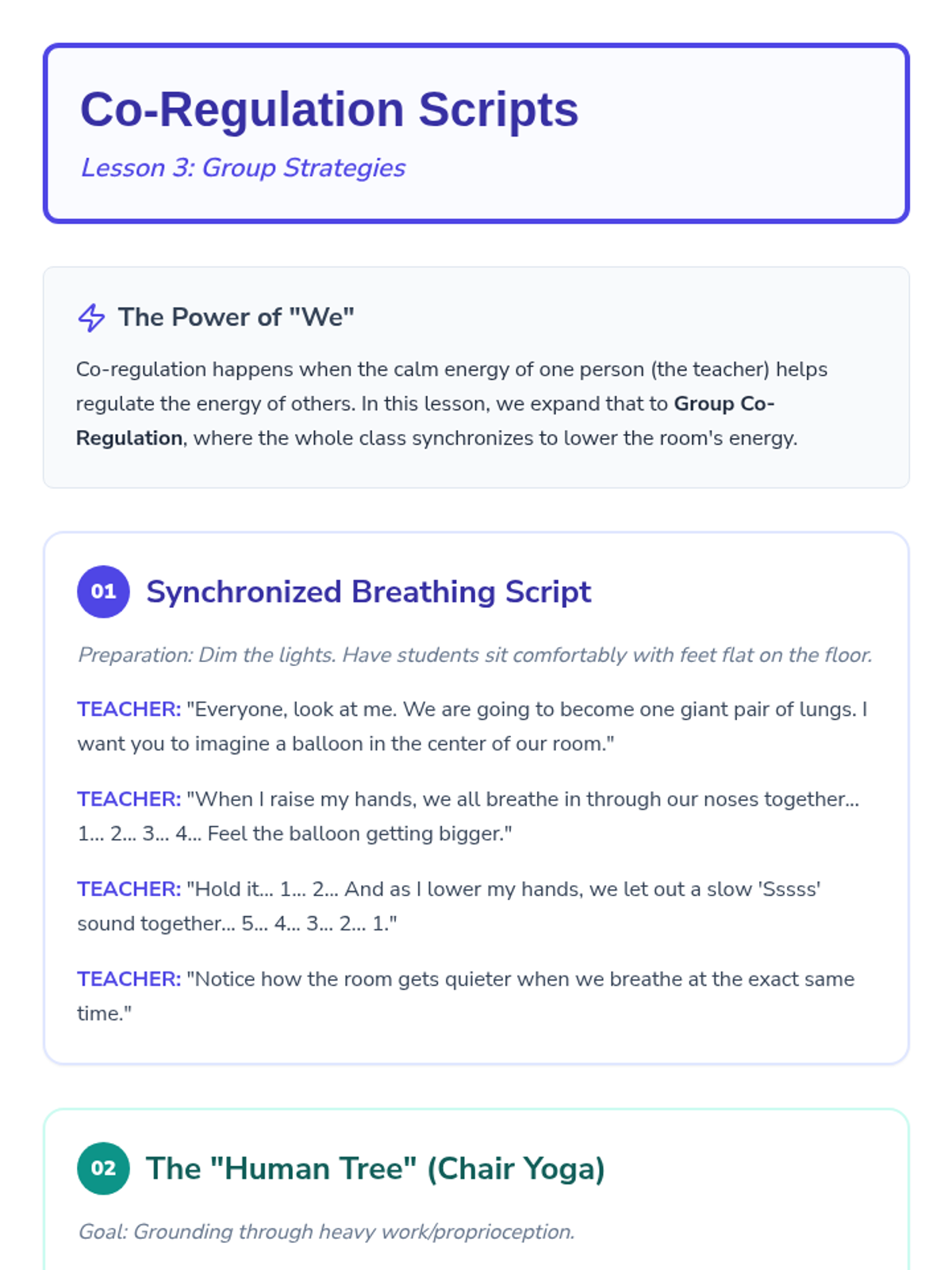
The class practices whole-group regulation techniques like synchronized breathing and chair yoga to understand how collective action affects the energy of the room.
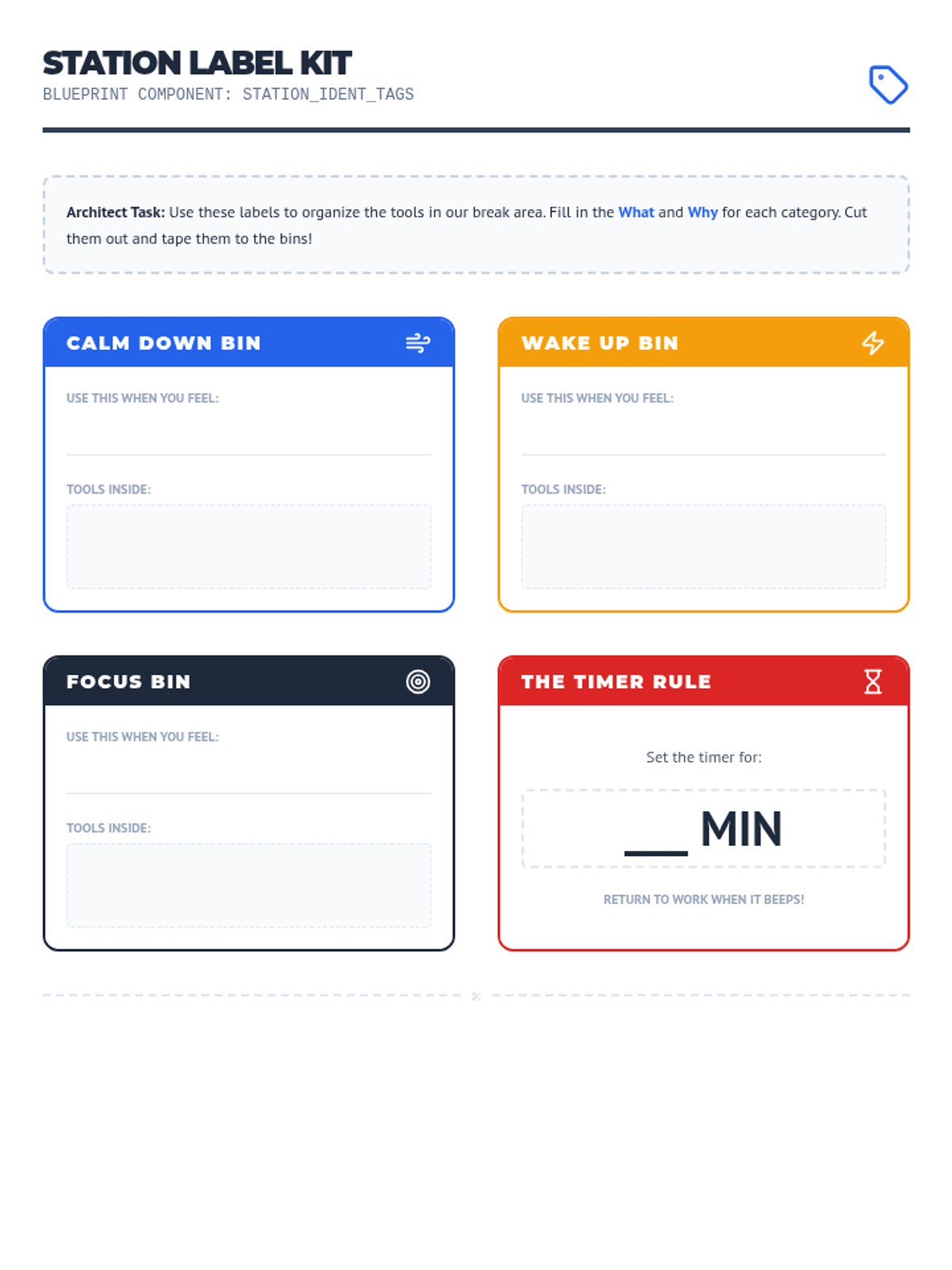
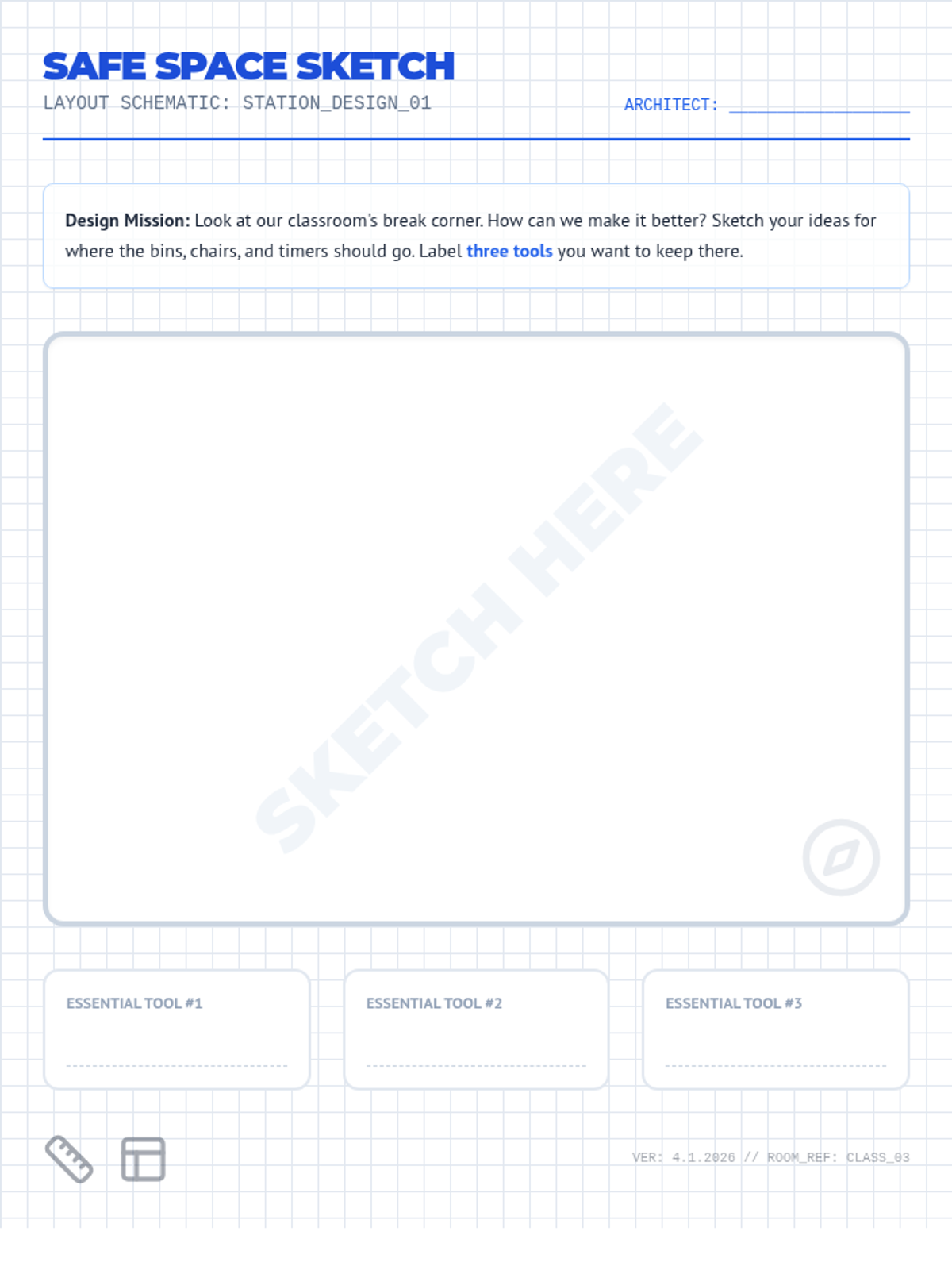
Students collaboratively organize the classroom's break area, creating labels and instructions to ensure the space is used effectively and respectfully.
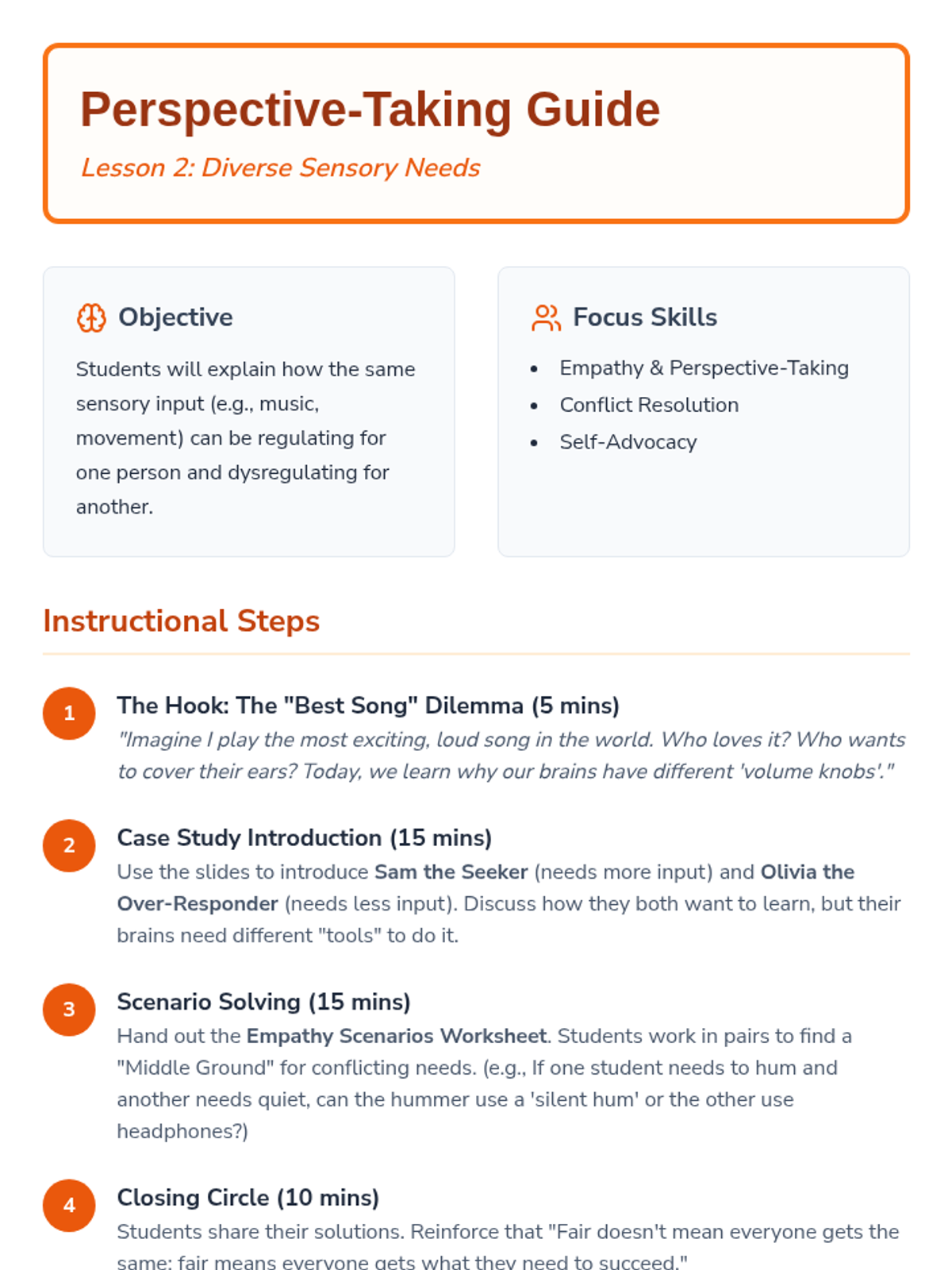
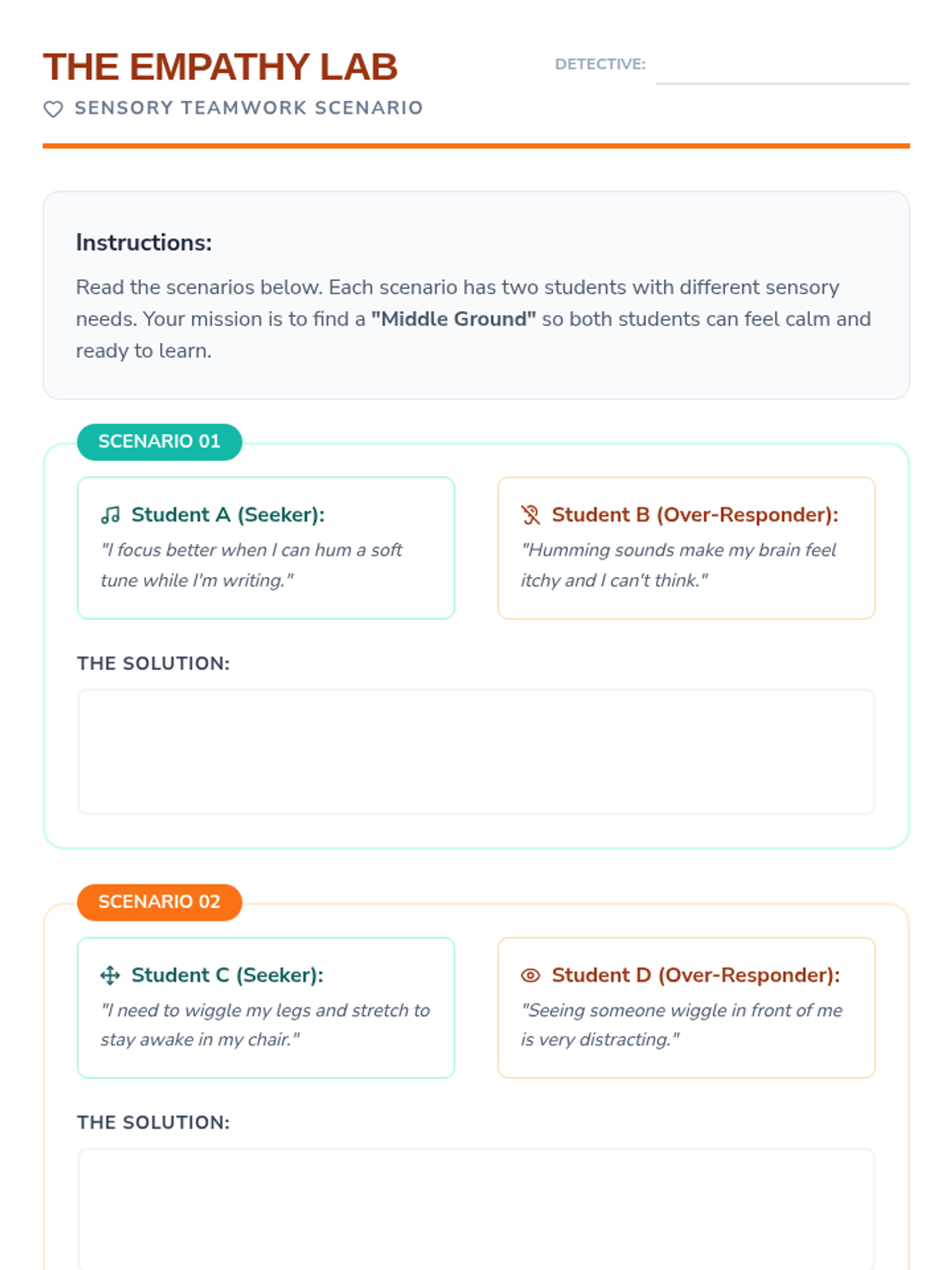
Students explore how sensory preferences vary between individuals and practice perspective-taking to understand and respect classmates' different needs.
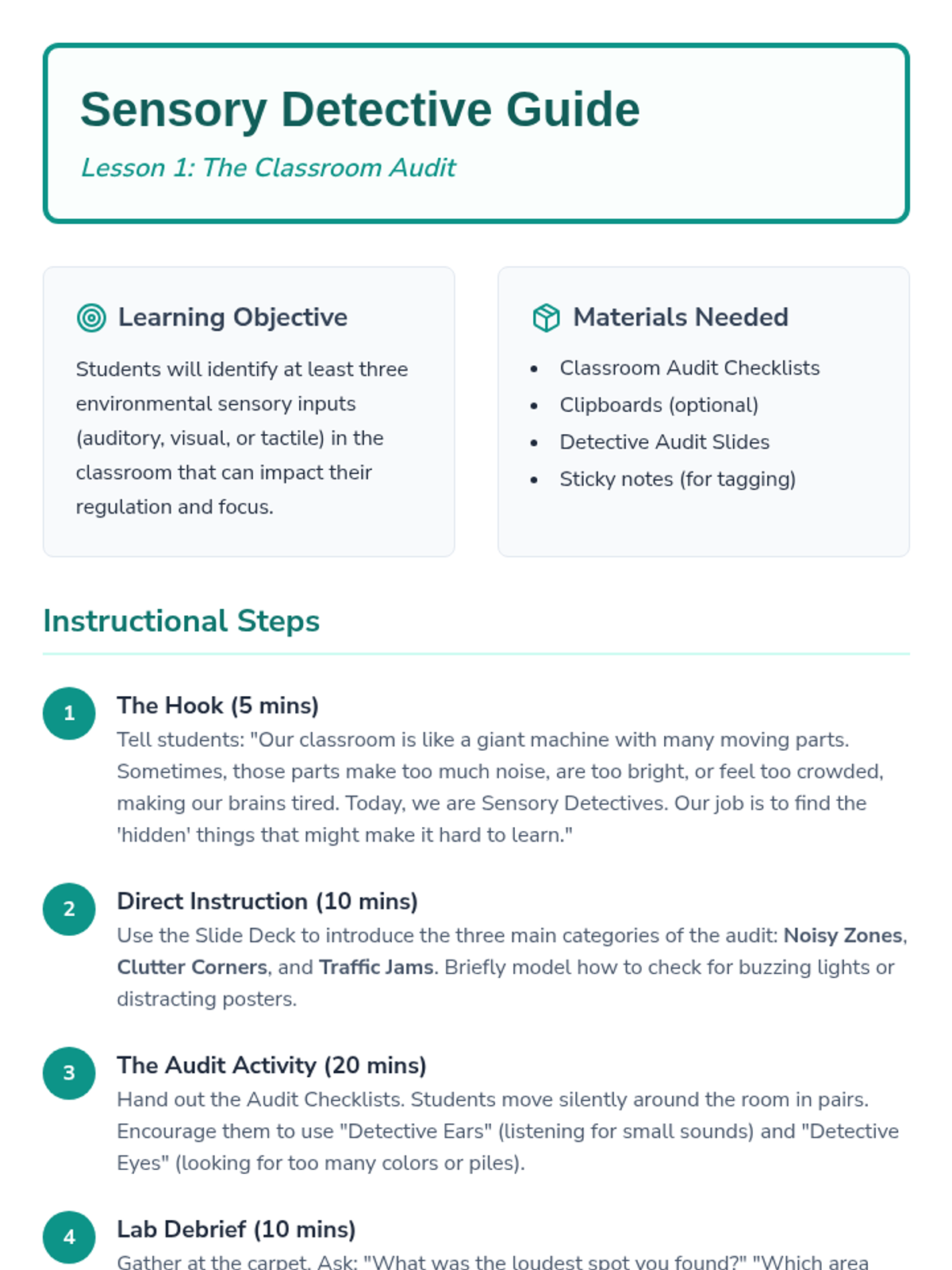
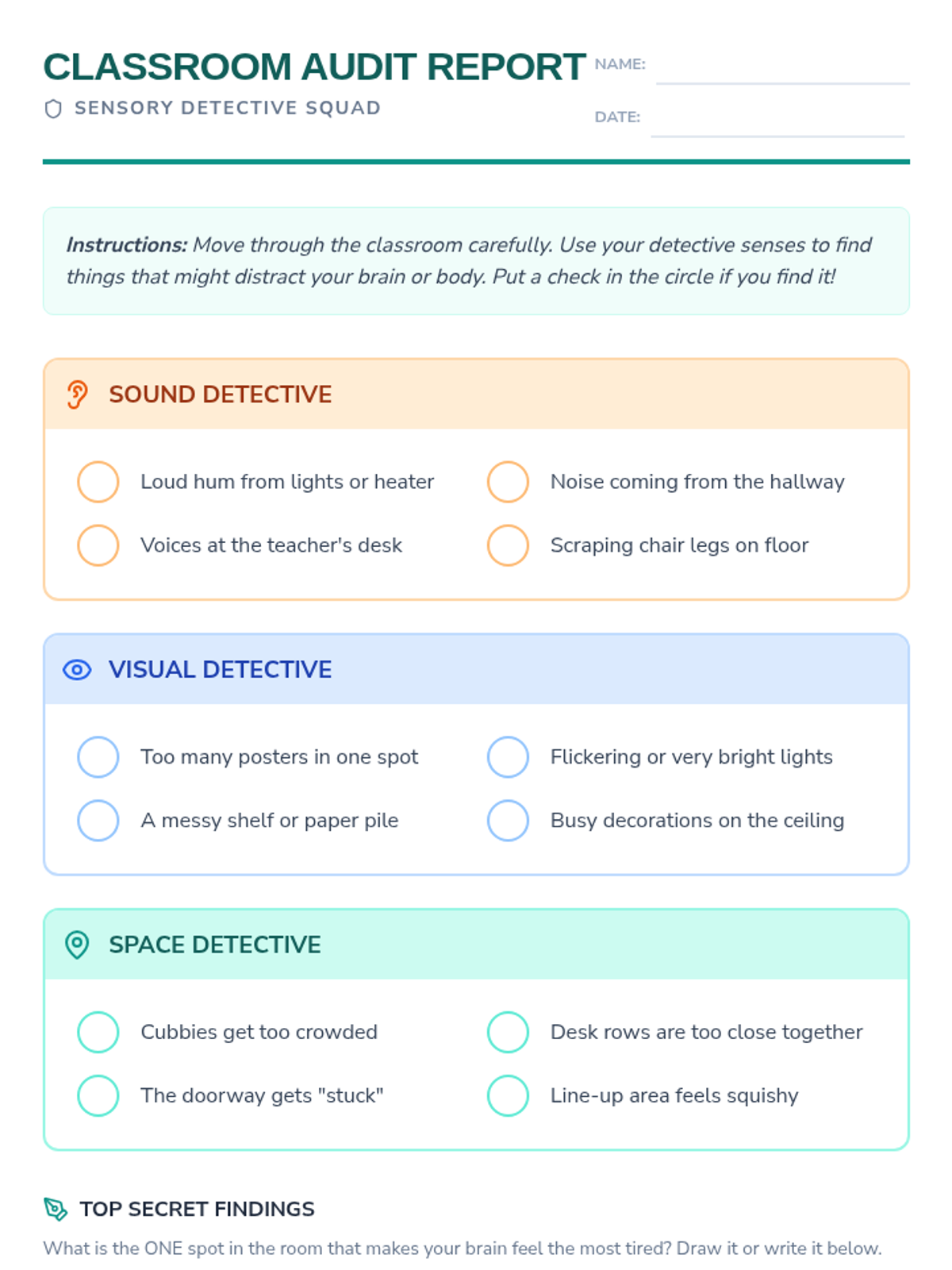
Students conduct a hands-on audit of their classroom to identify environmental sensory triggers and discuss how these factors impact their ability to focus and stay calm.
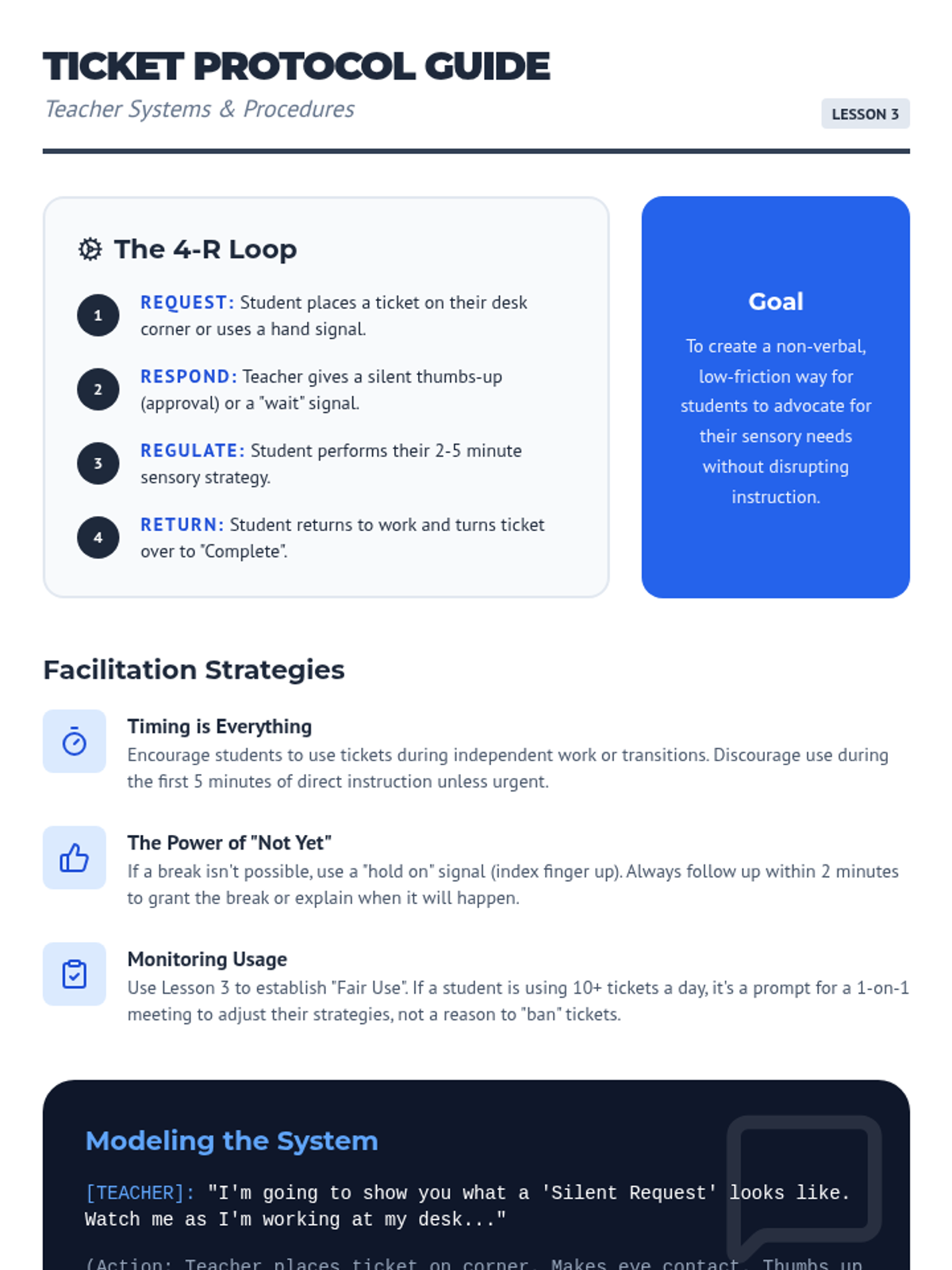
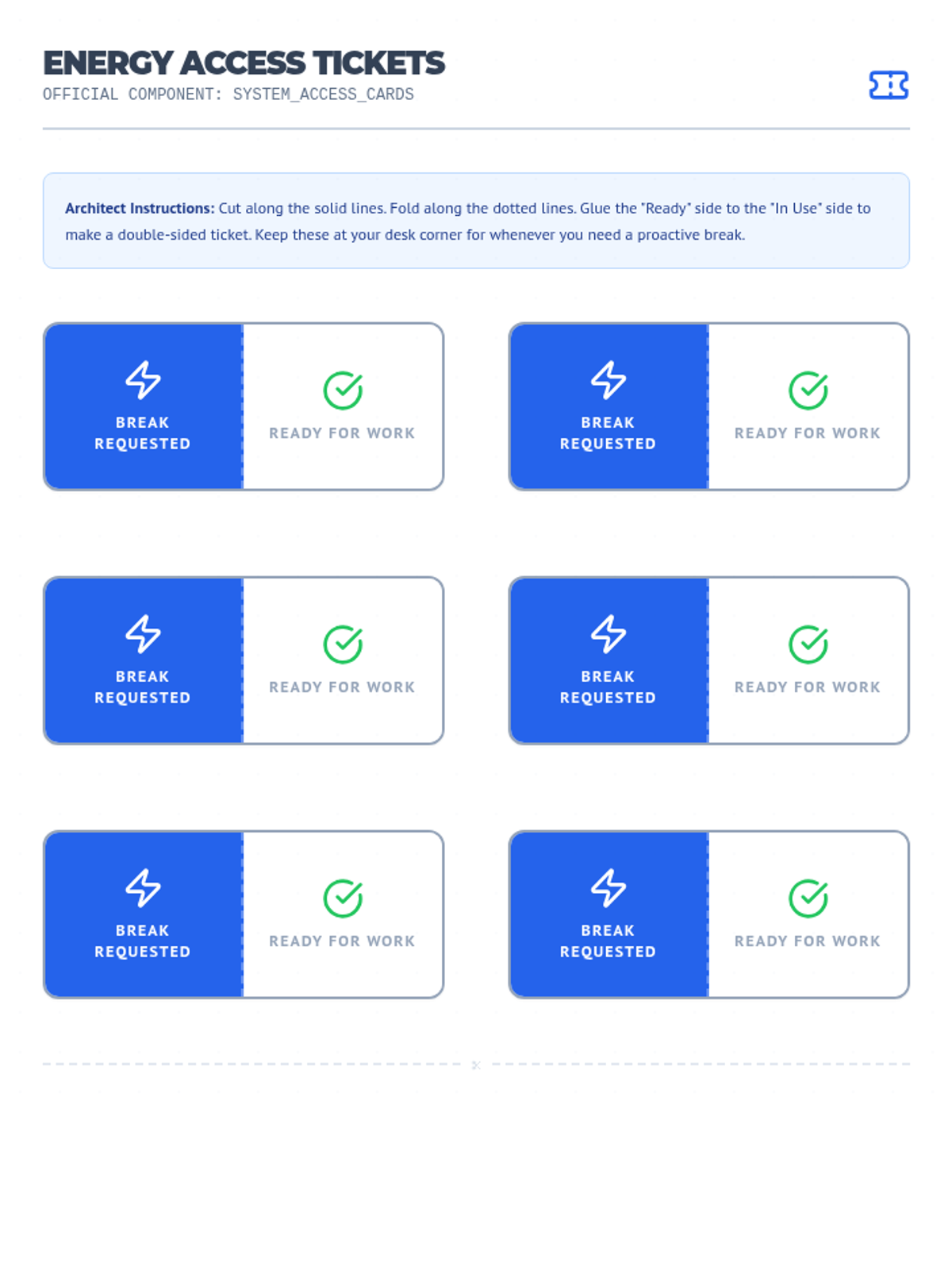
Students practice a structured system for requesting sensory breaks using non-verbal signals and 'break tickets' to foster independence and communication.
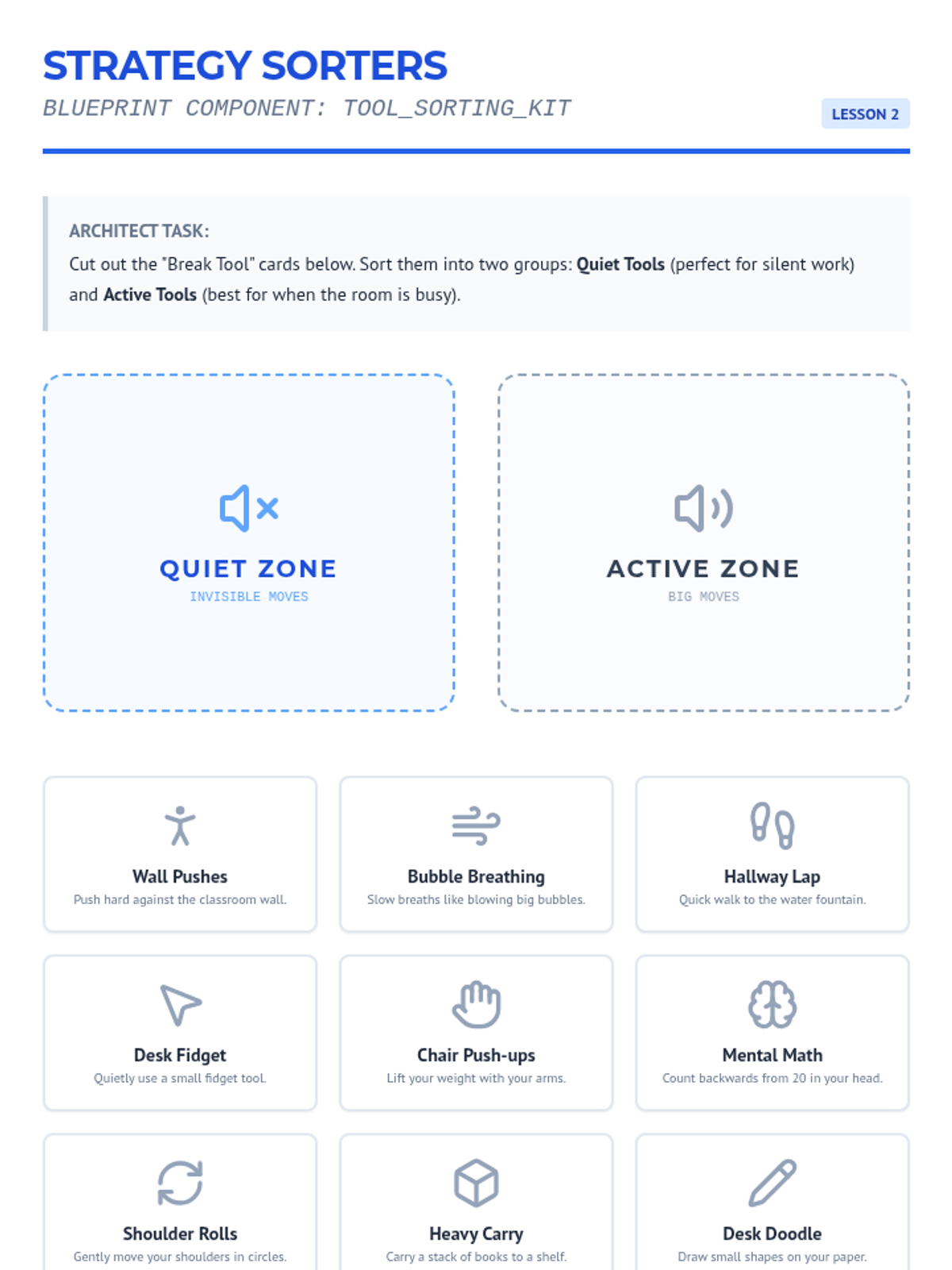
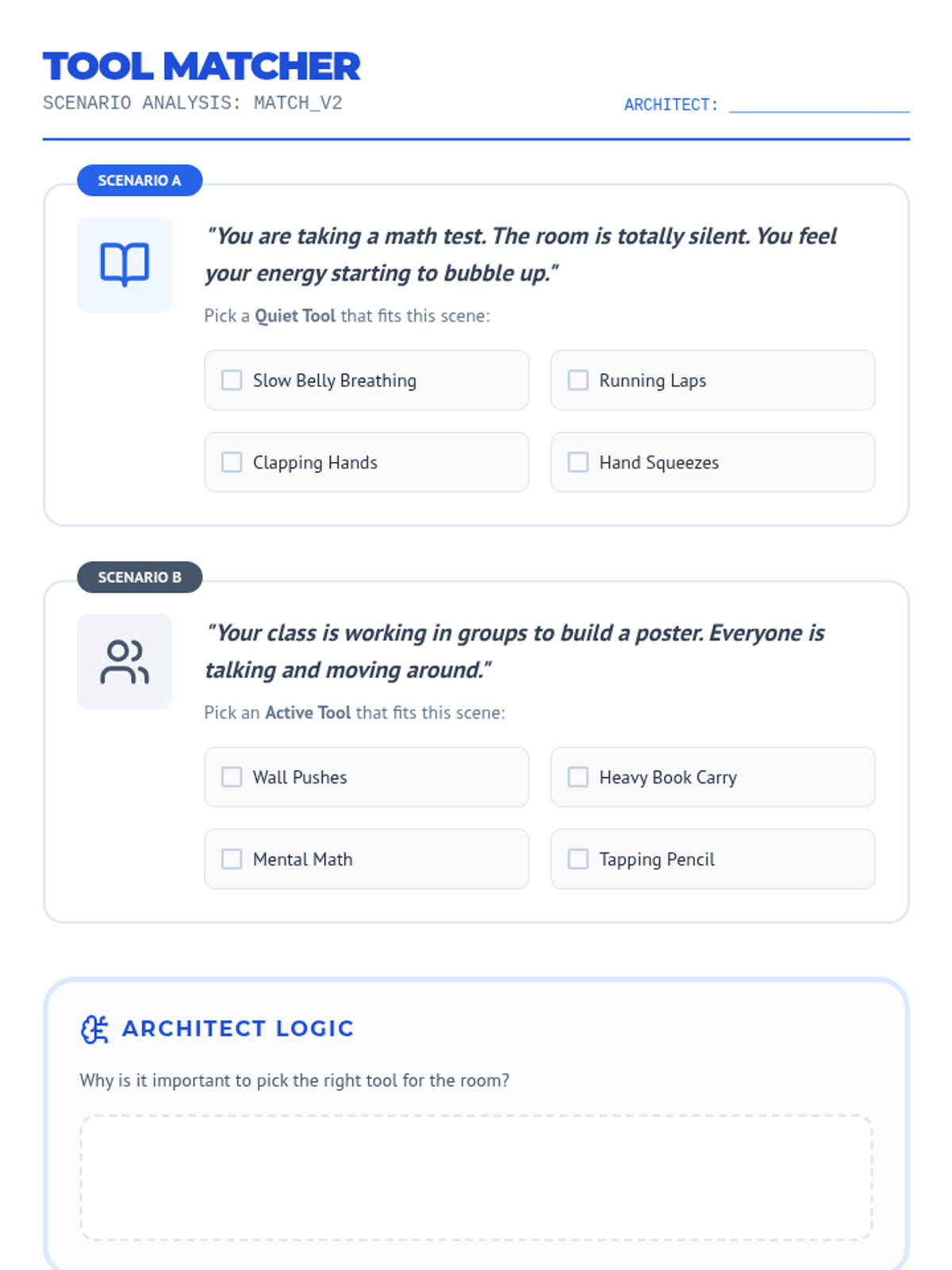
Students learn to match sensory breaks to different classroom contexts, ensuring that their regulation strategies are effective without being disruptive.
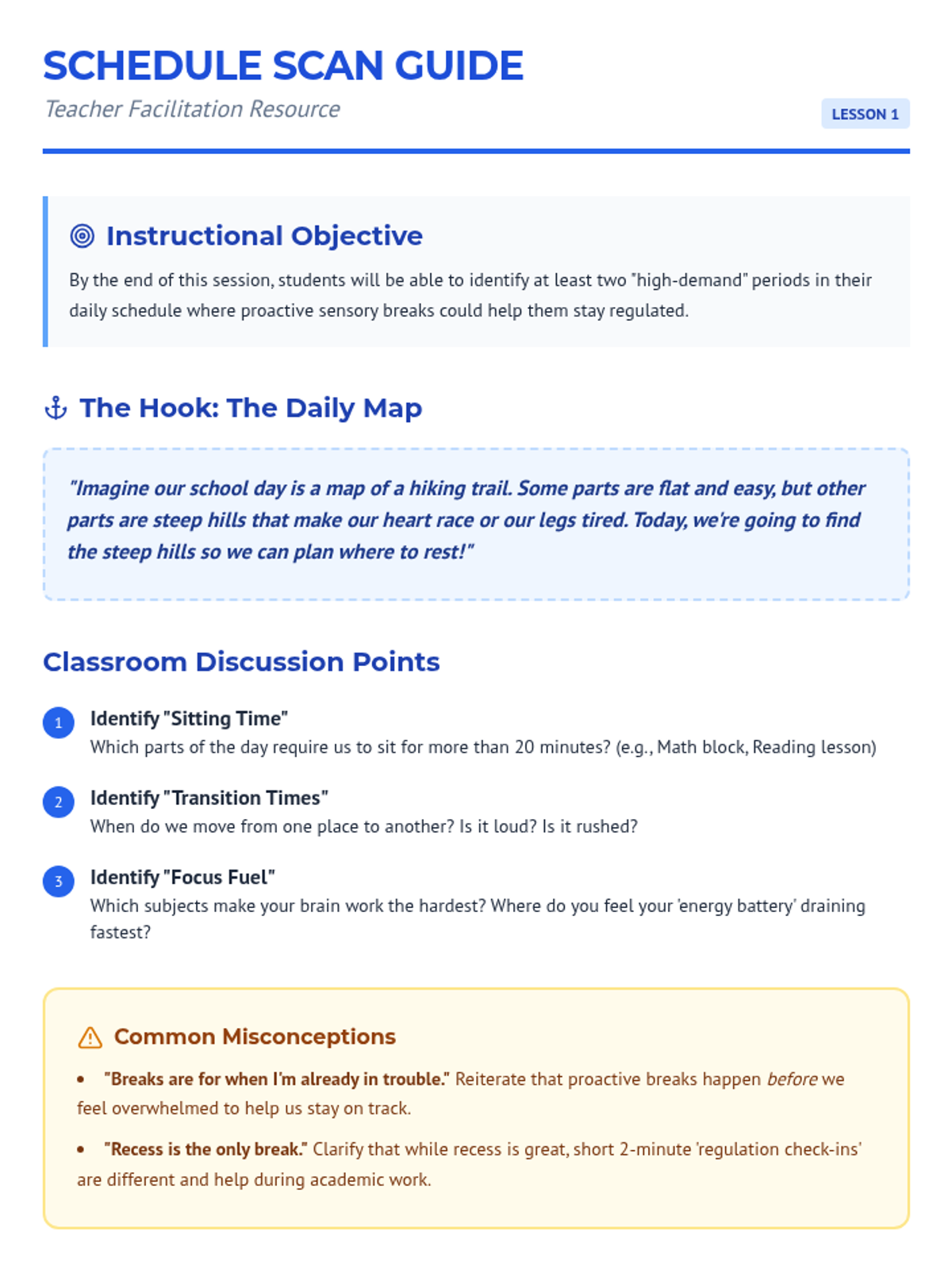
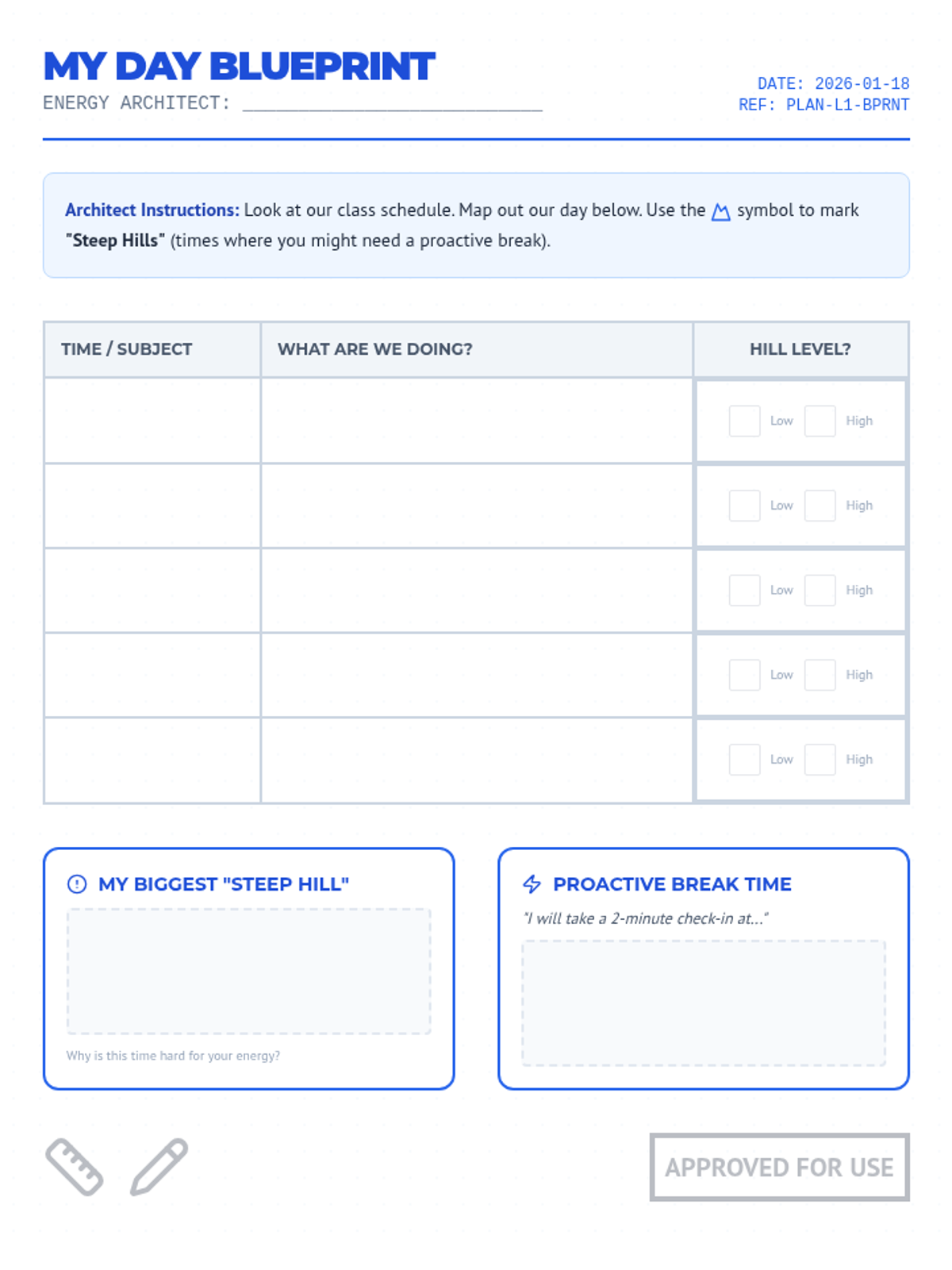
Students review the class schedule to identify transition times, long periods of sitting, and high-focus subjects to predict 'danger zones' where proactive regulation is most needed.
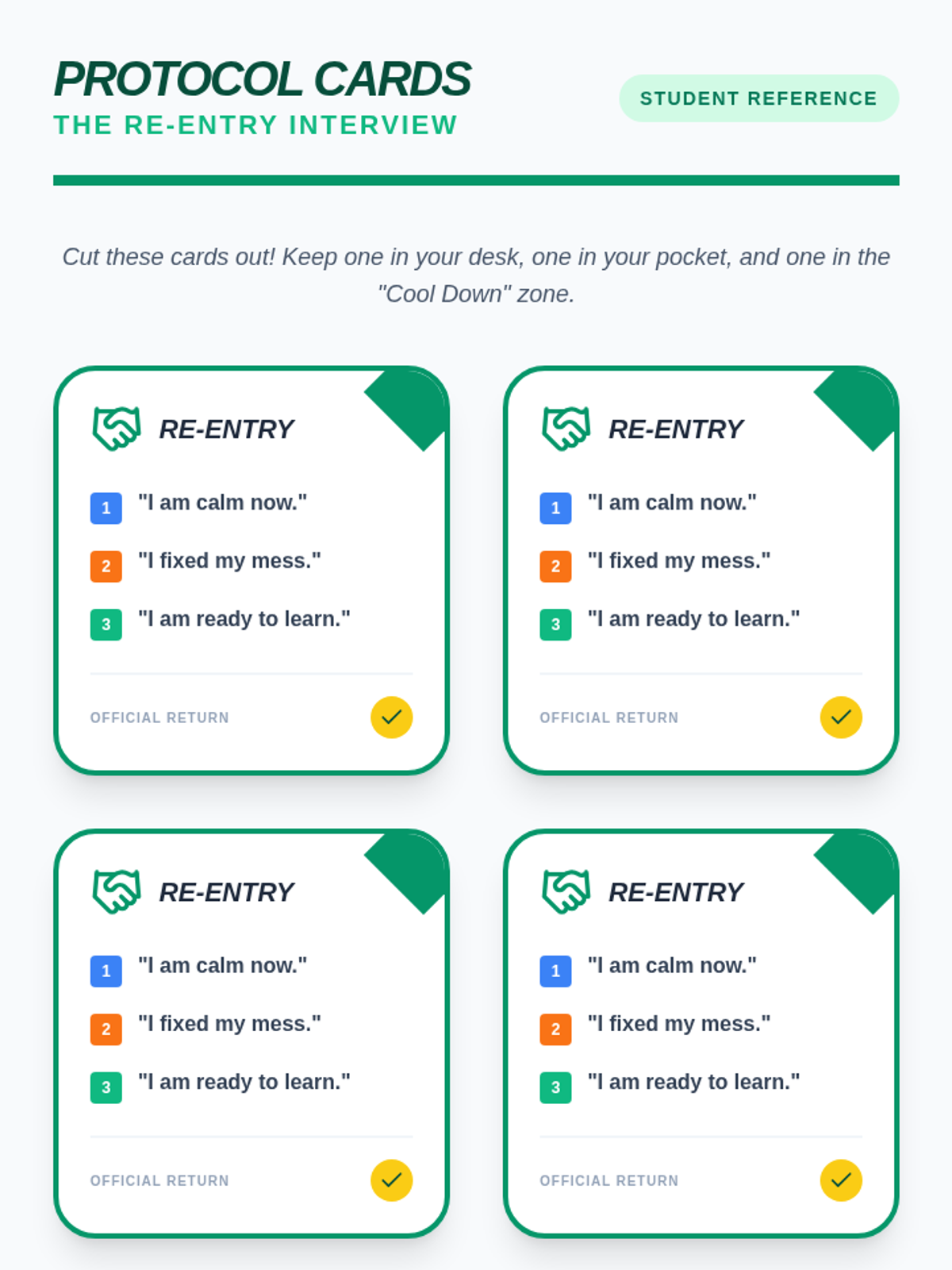
Students master a 2-minute 'Re-entry Interview' protocol to formalize the end of a dysregulation cycle and communicate their readiness to teachers and peers.
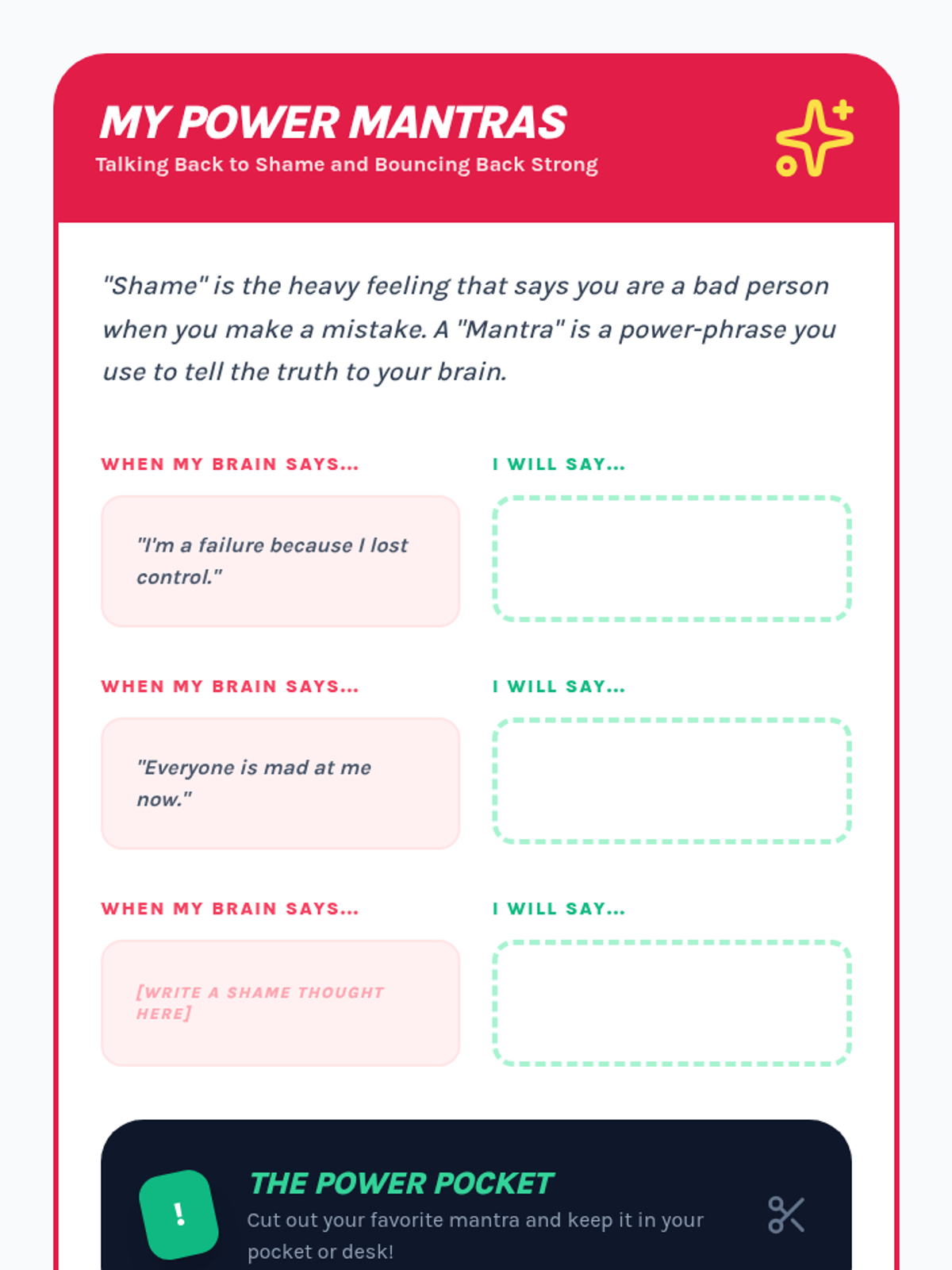
Addresses the 'shame spiral' associated with meltdowns, teaching students to separate their identity from their behavior through positive self-talk and growth mindset stories.
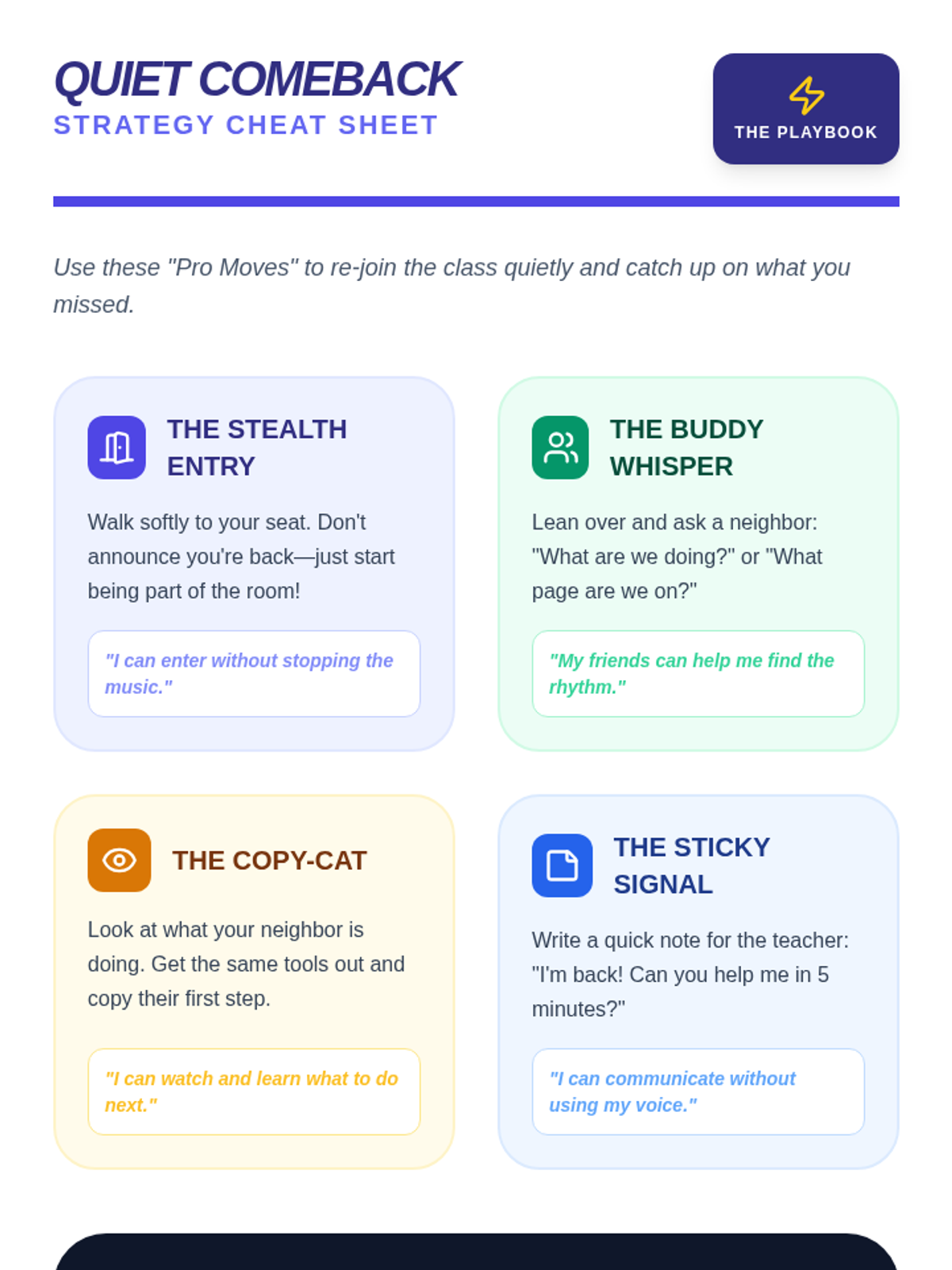
Provides concrete strategies for re-joining academic instruction after a break, including using peer buddies and quiet check-ins to reduce the stress of missed work.
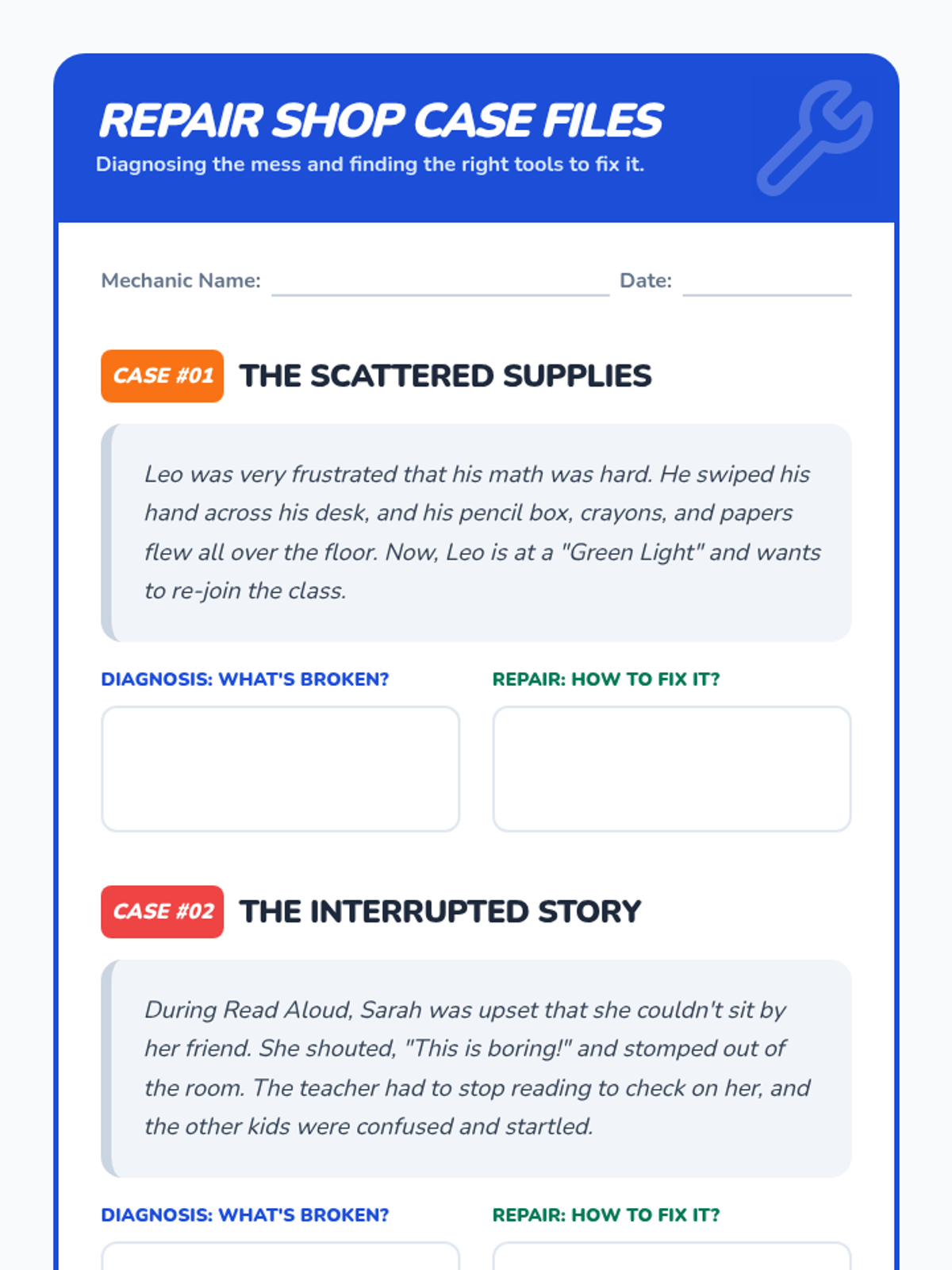
Focuses on restorative practices by distinguishing between a forced apology and a genuine repair, using case studies to brainstorm ways to fix social or physical messes.
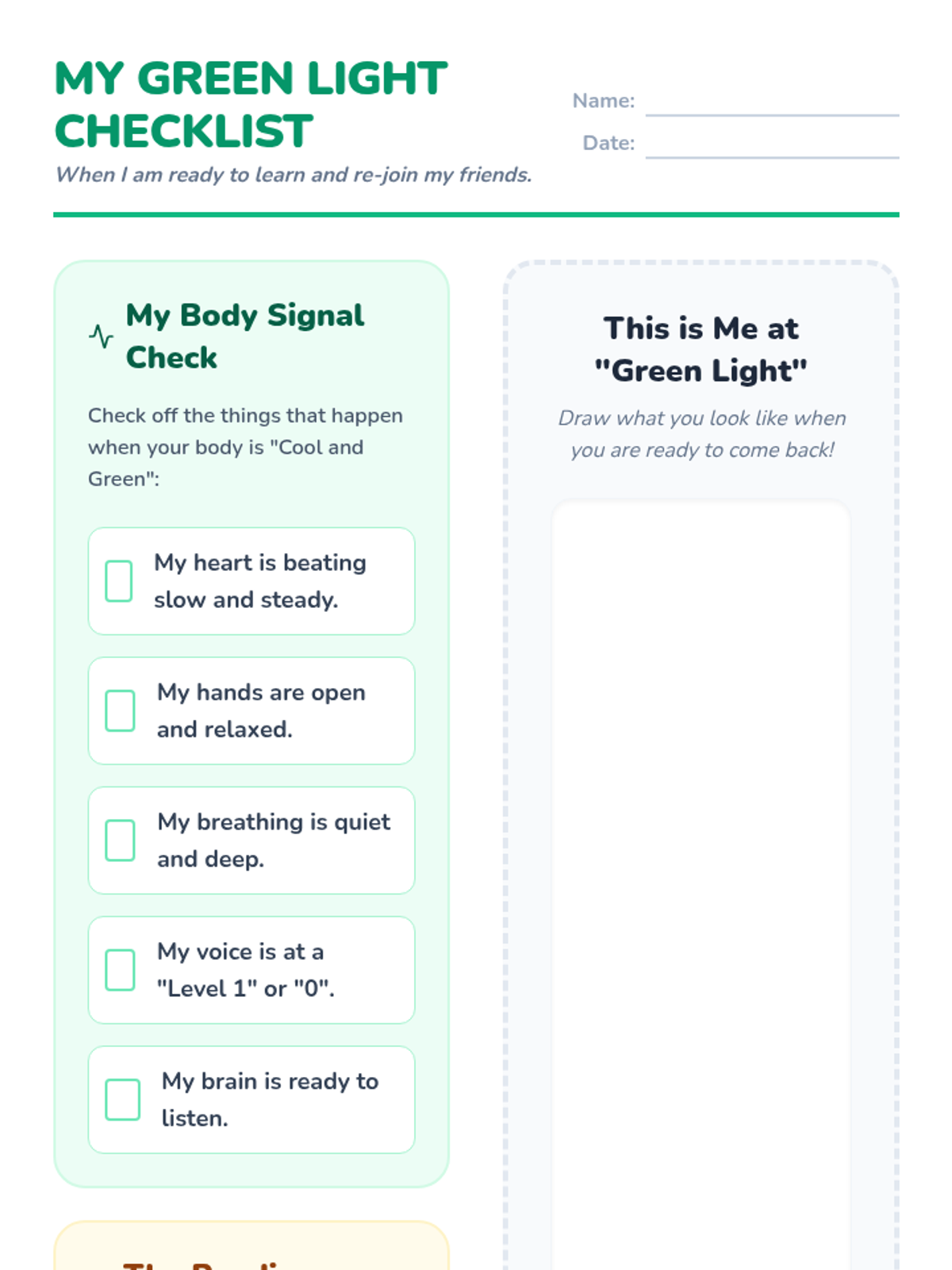
Students identify physical and emotional signs of being 'ready' to rejoin the group using a thermometer analogy and create a personalized 'Green Light' checklist for self-assessment.
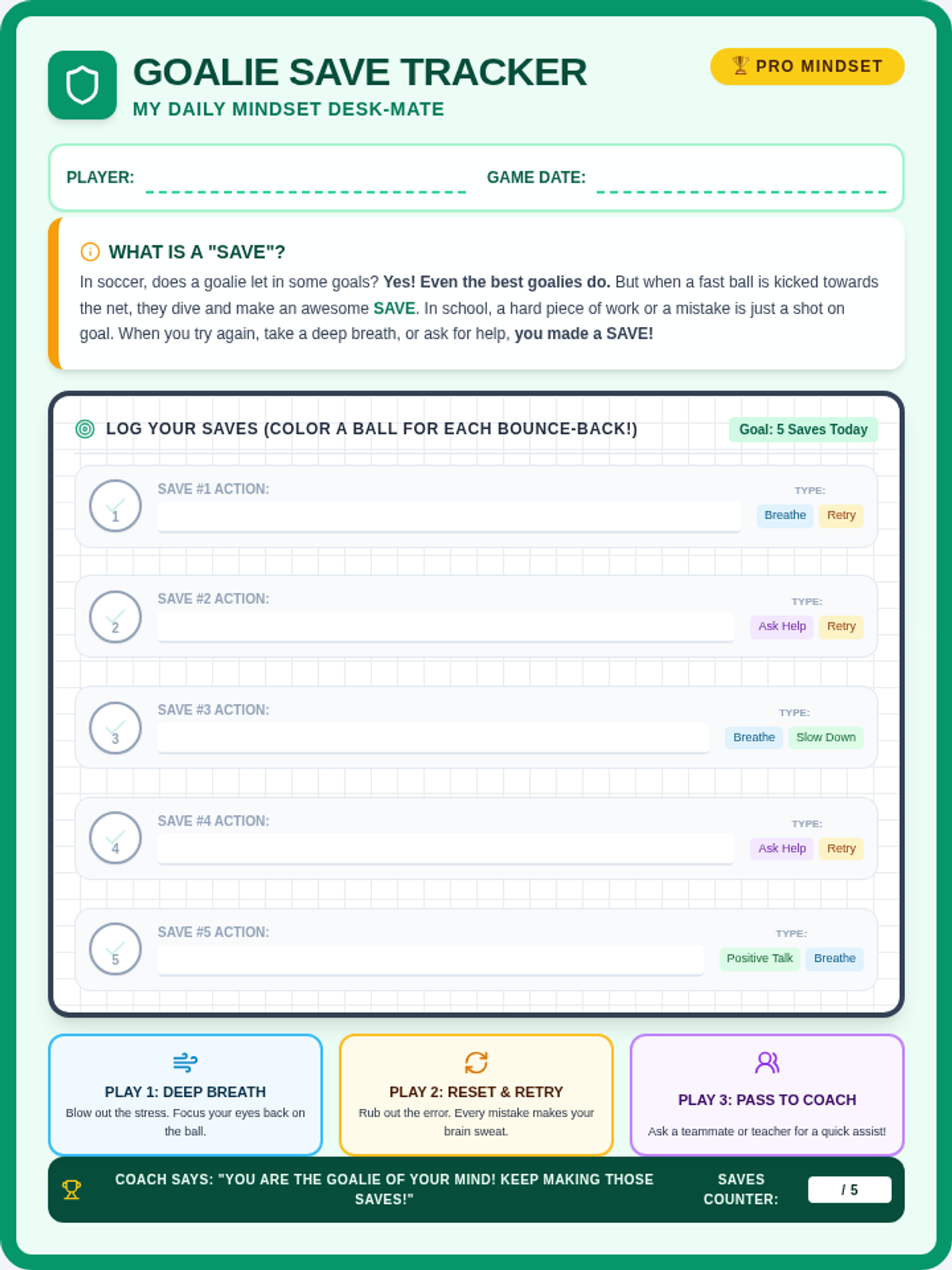
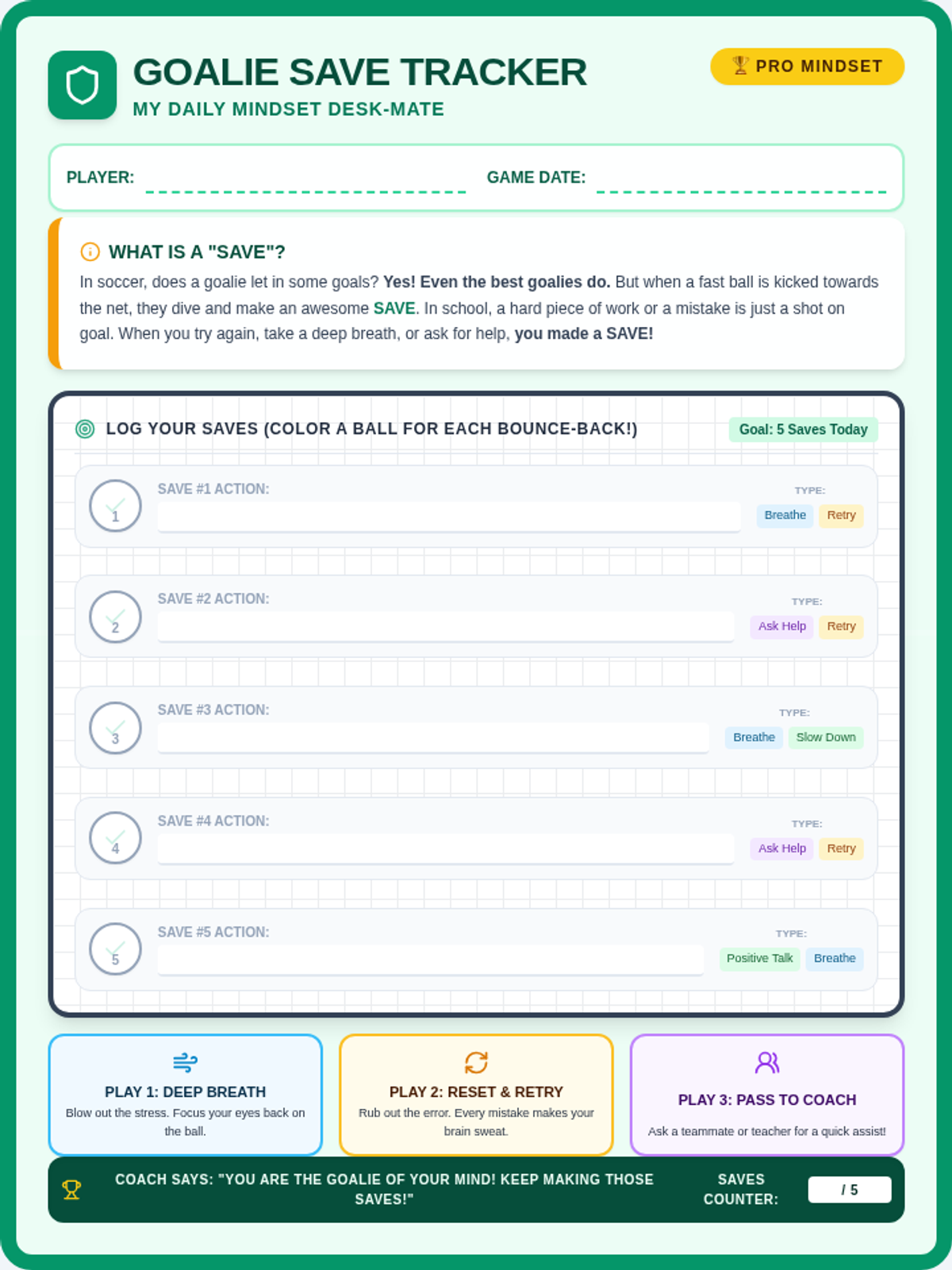
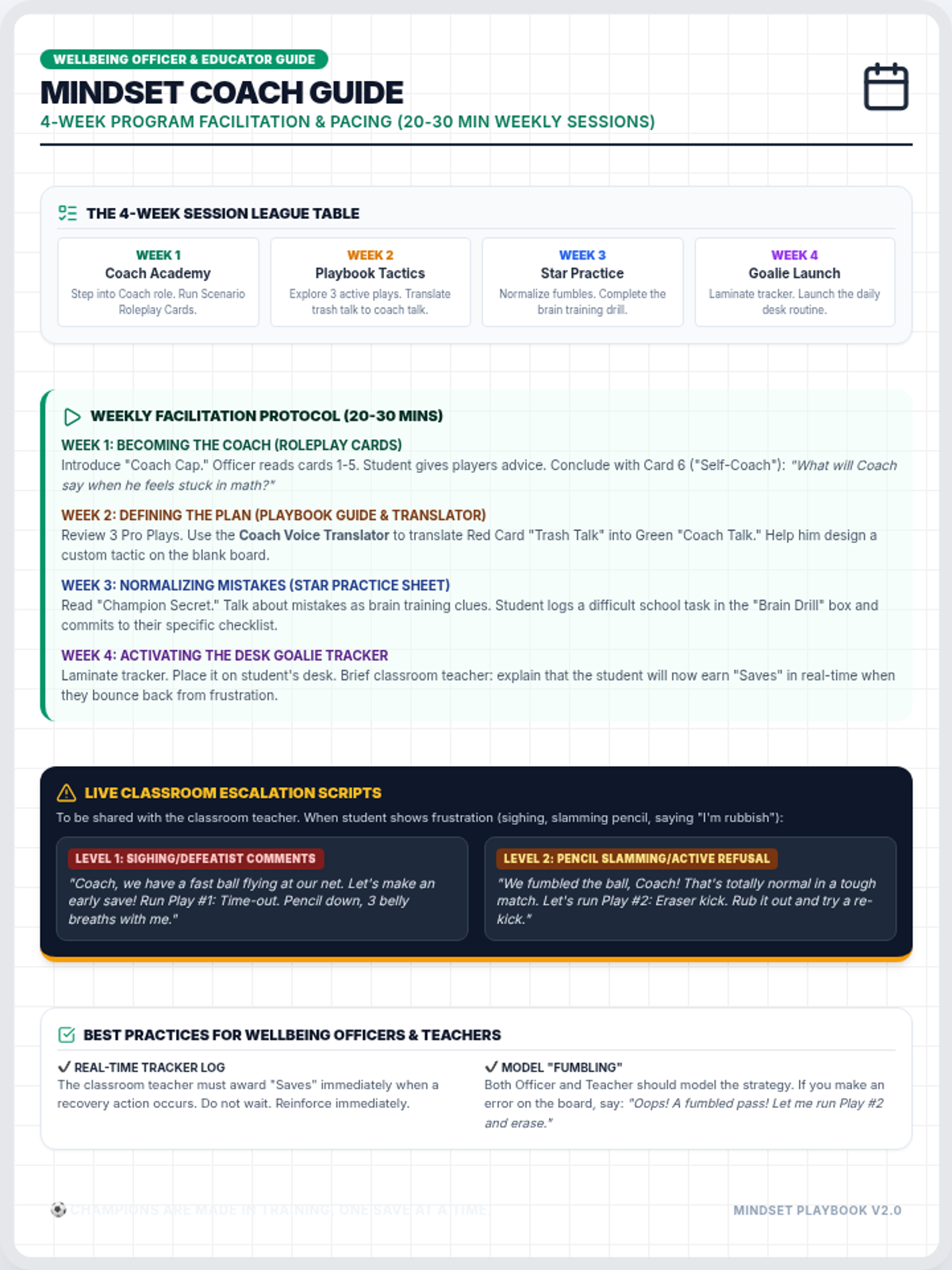
Week 4 of the Wellbeing program. Launches the daily desk-mate tracker routine in the live classroom, establishing goal-setting and long-term reinforcement of coping saves.
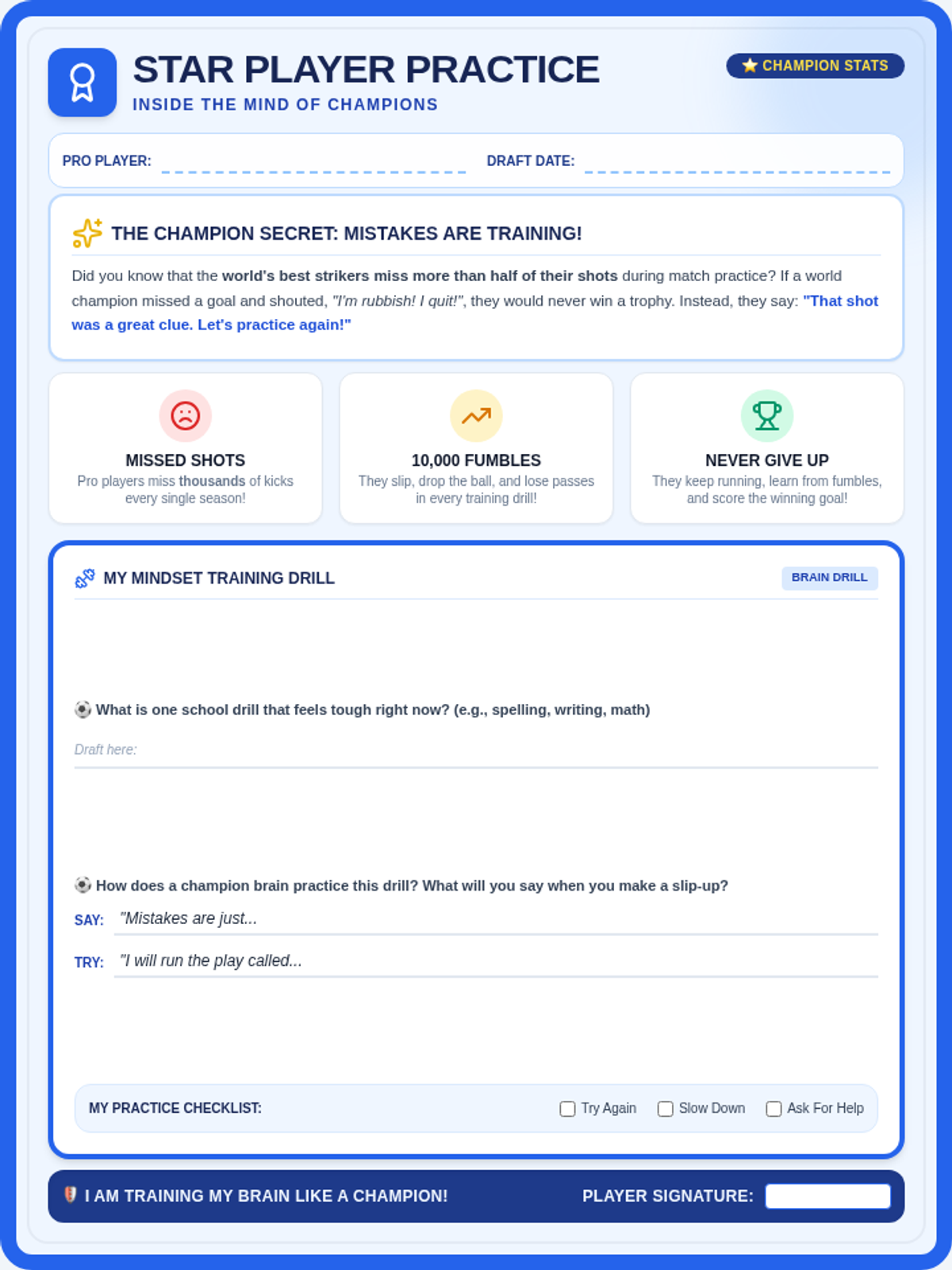
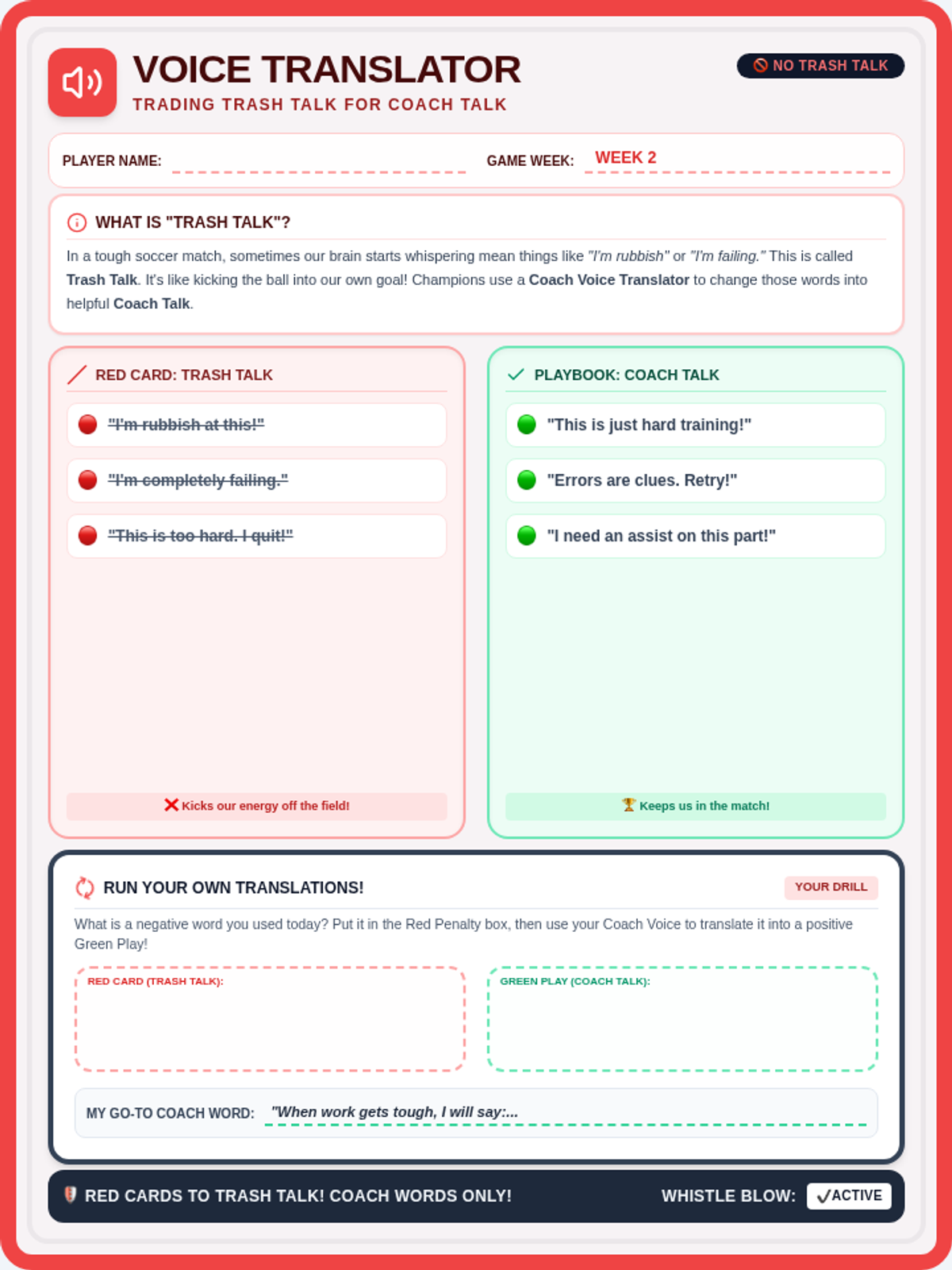
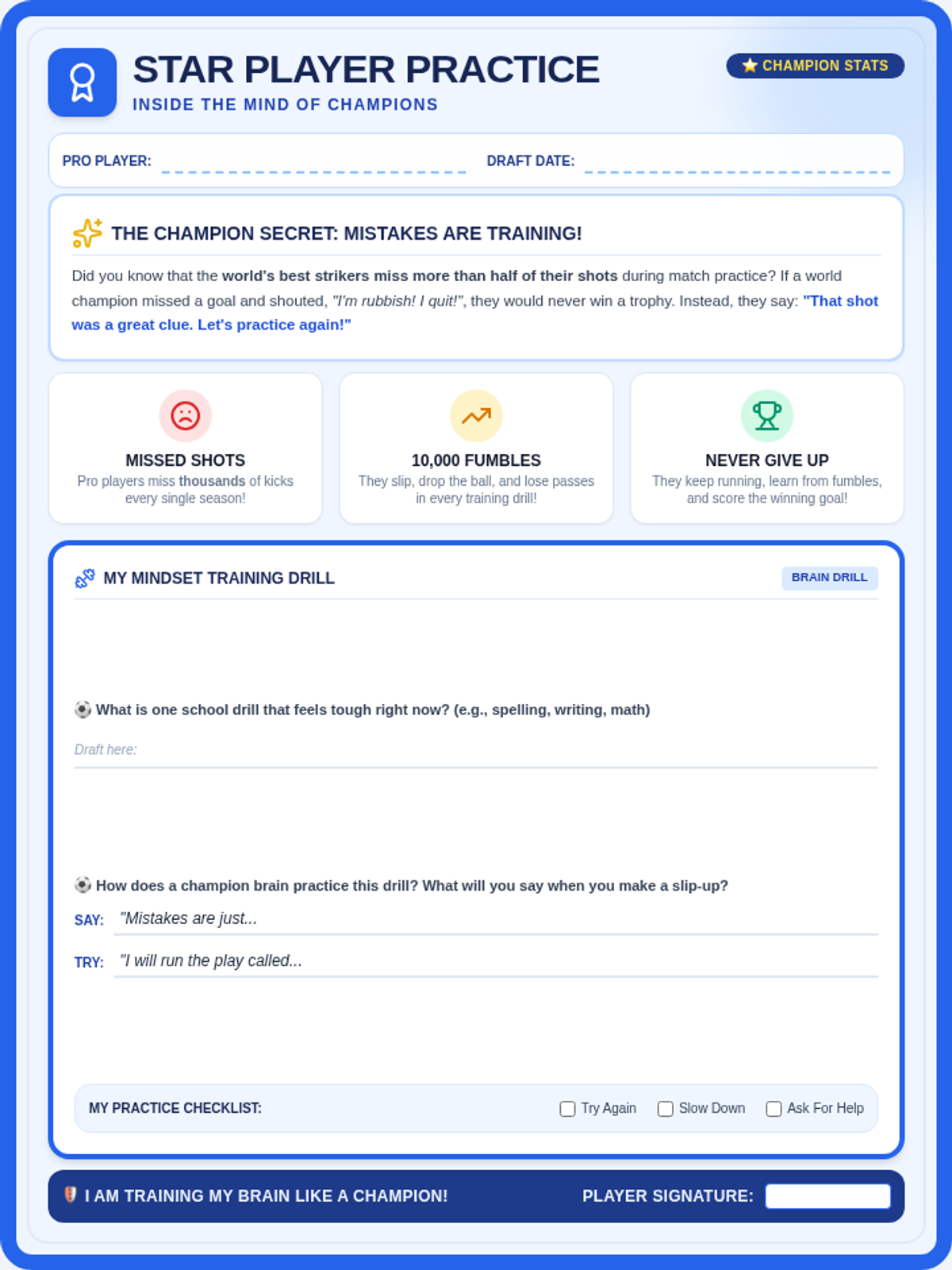
Week 3 of the Wellbeing program. Normalizes error-making by comparing student struggles to professional soccer players fumbling, failing, and practicing daily to train their brains.
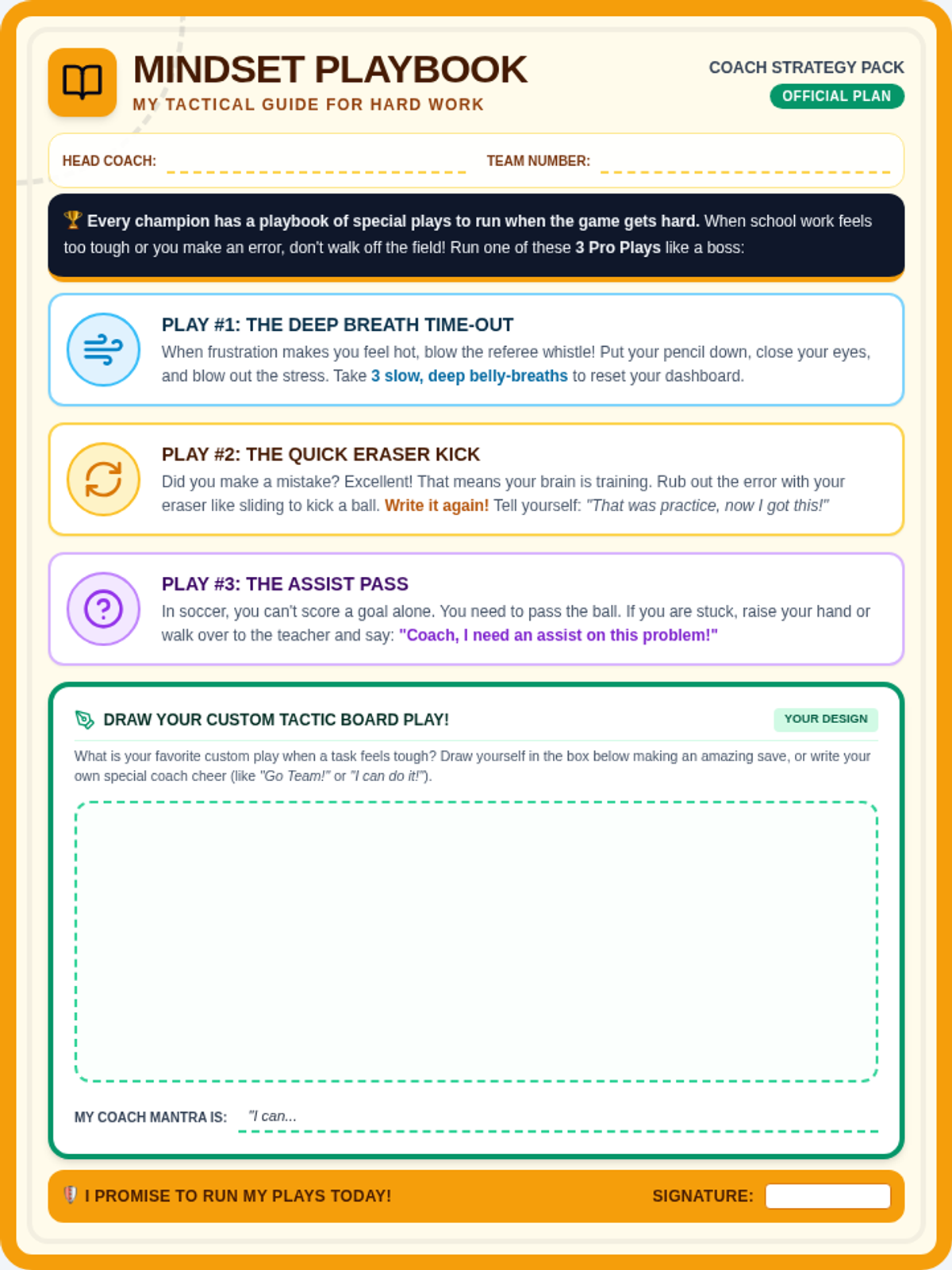
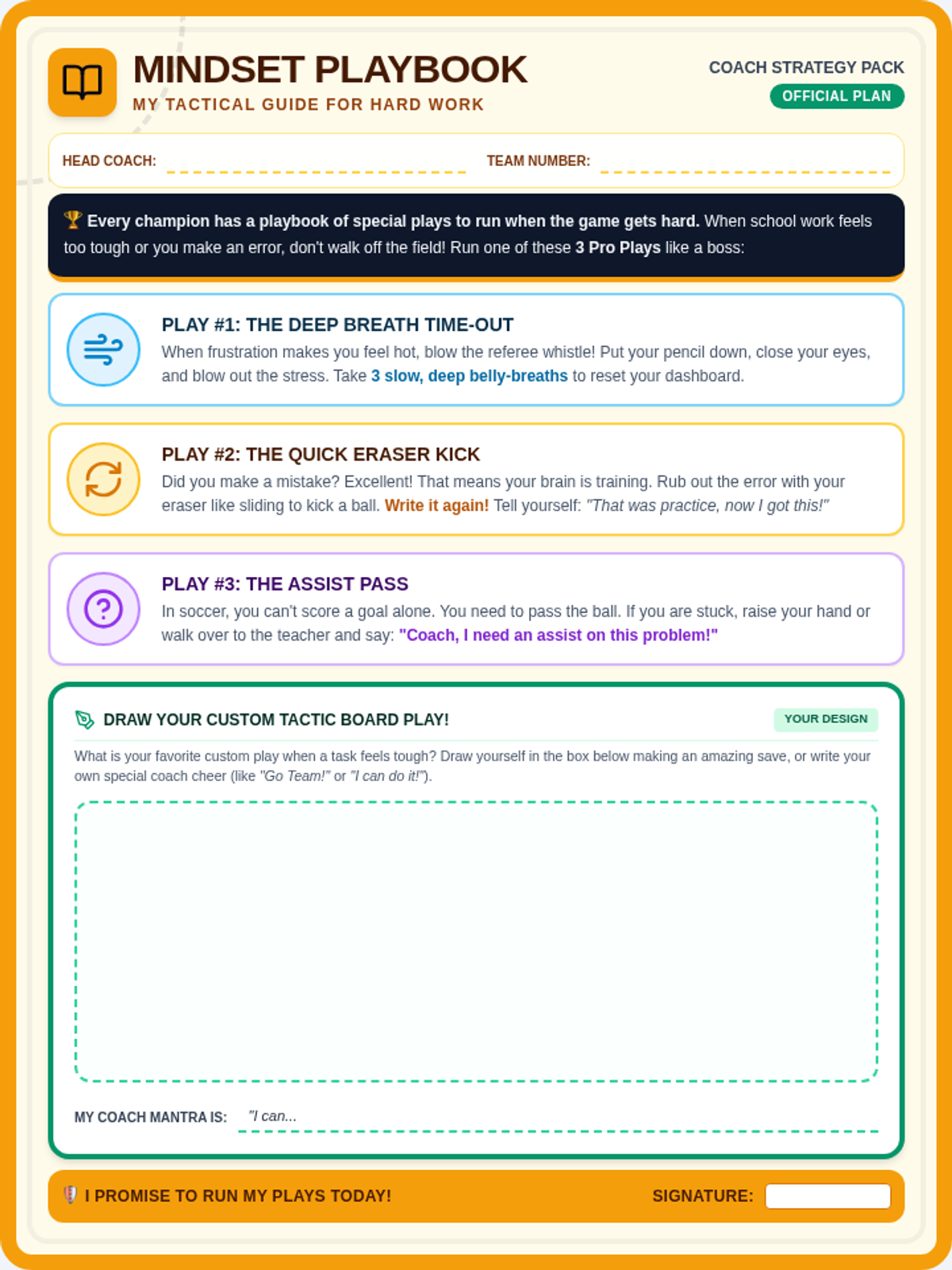
Week 2 of the Wellbeing program. The student learns to formulate a personal action plan by designing specific, physicalized tactical 'plays' to run when academic frustration hits.
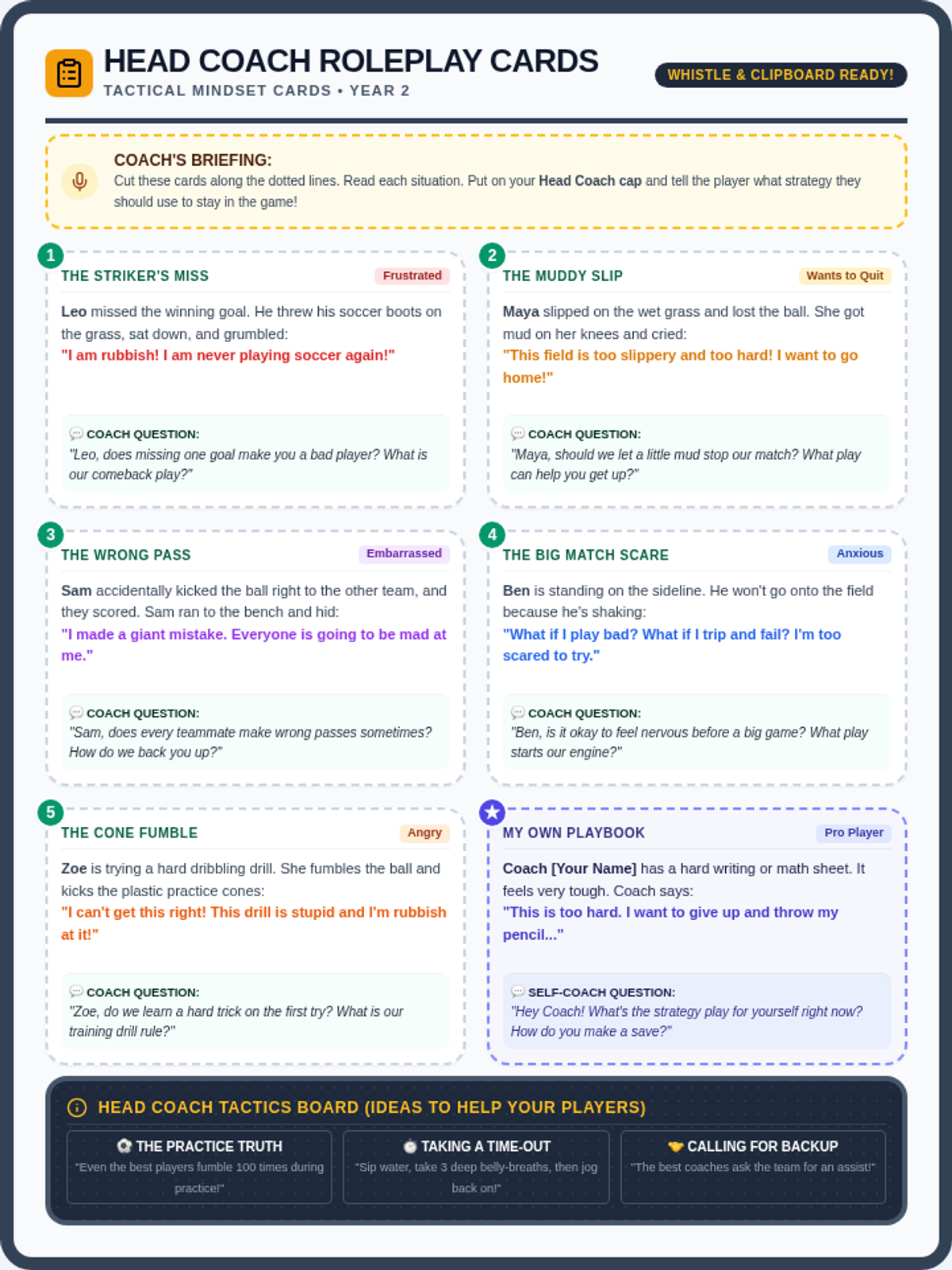
Week 1 of the Wellbeing program. The student takes on the role of the Head Coach to analyze soccer players who want to quit, building externalized positive self-talk and perspective.
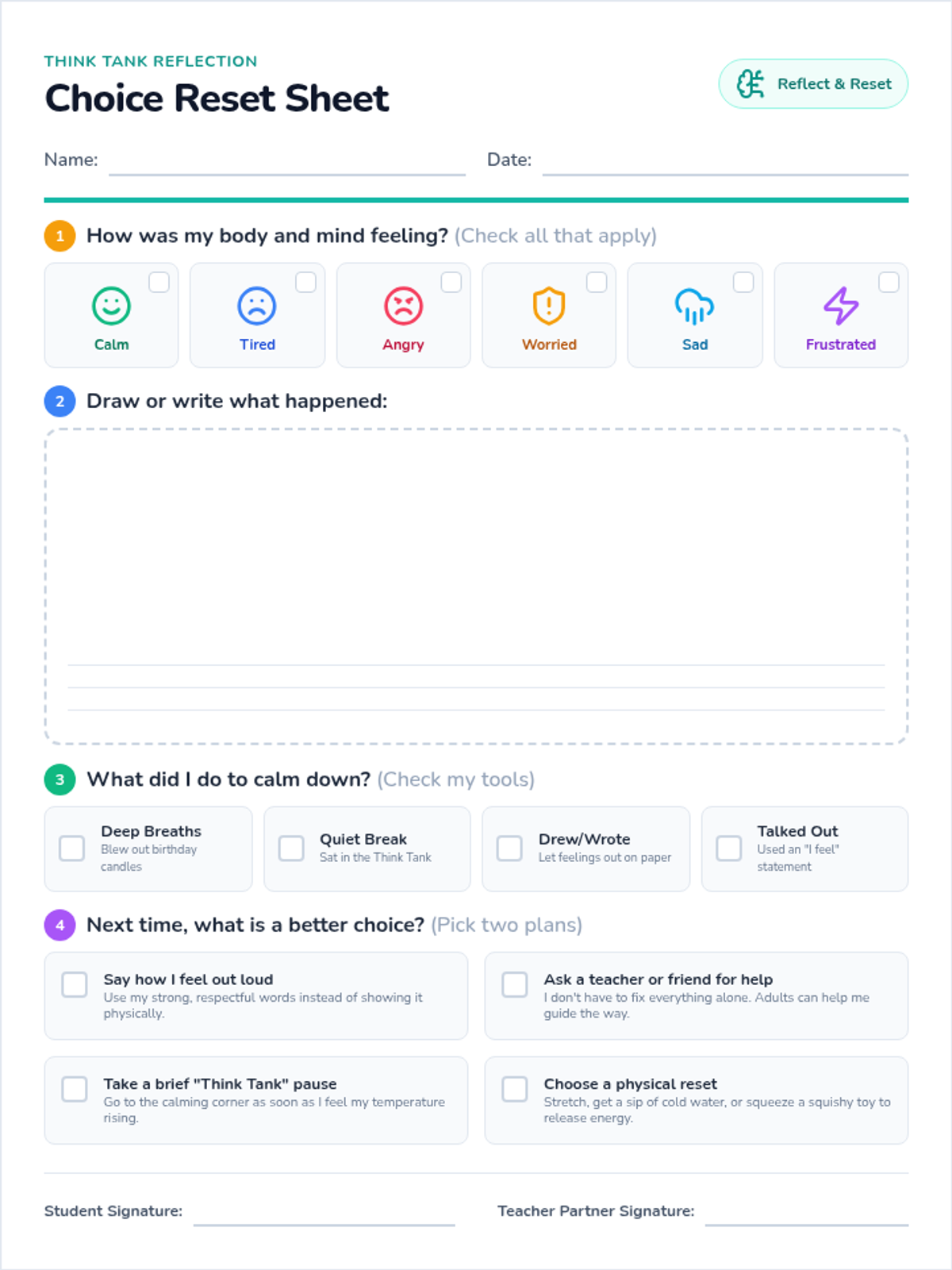
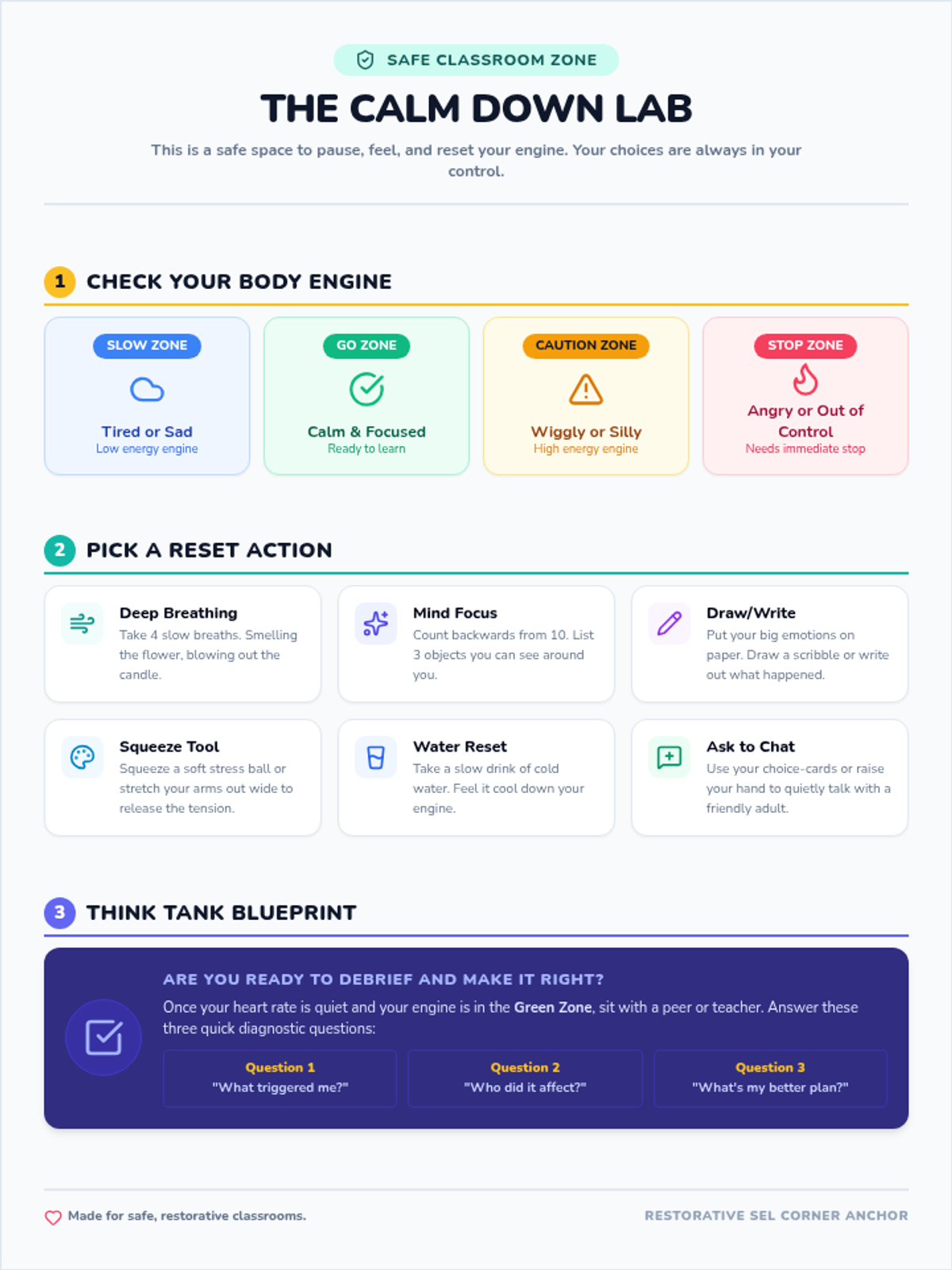
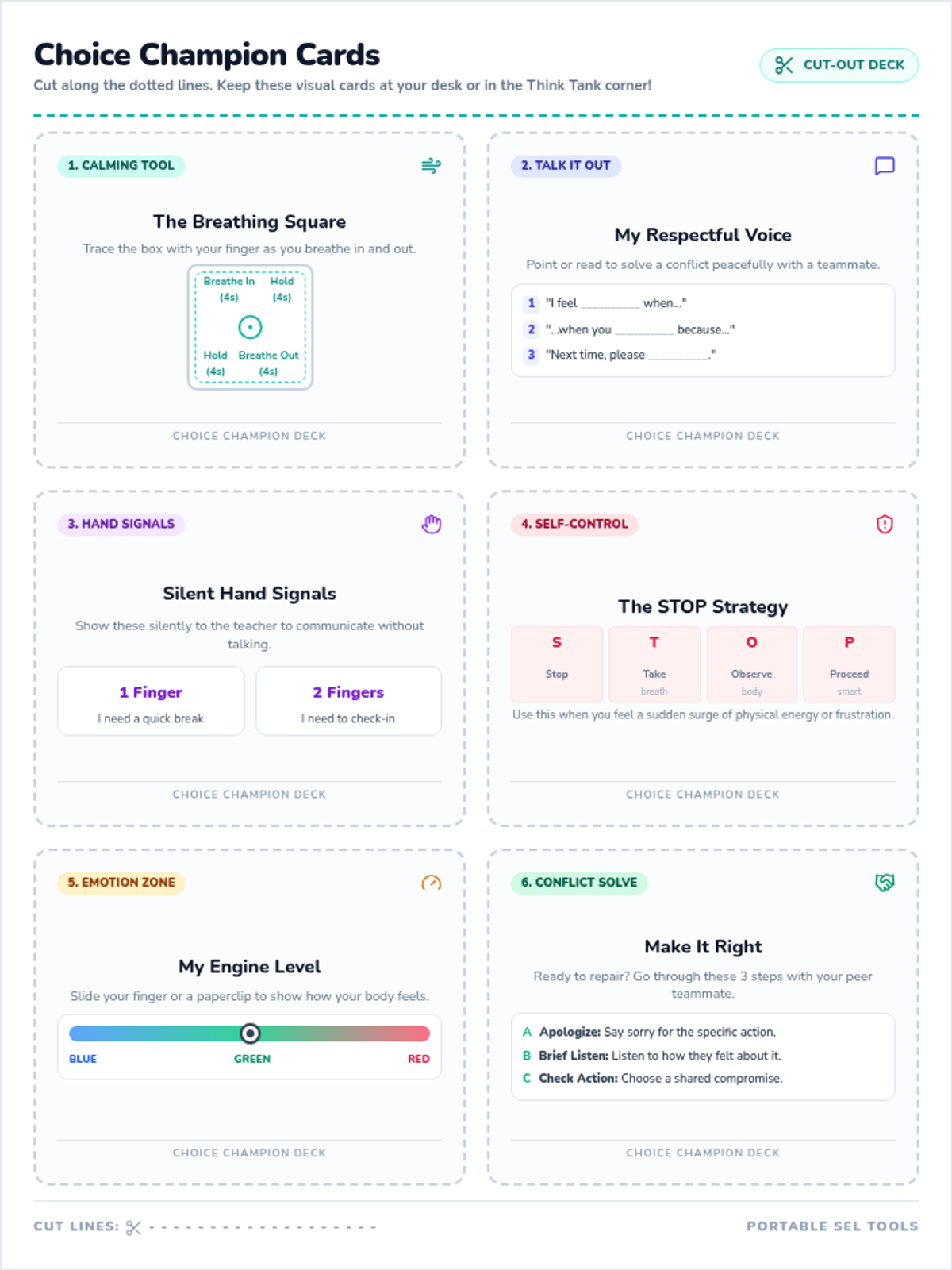
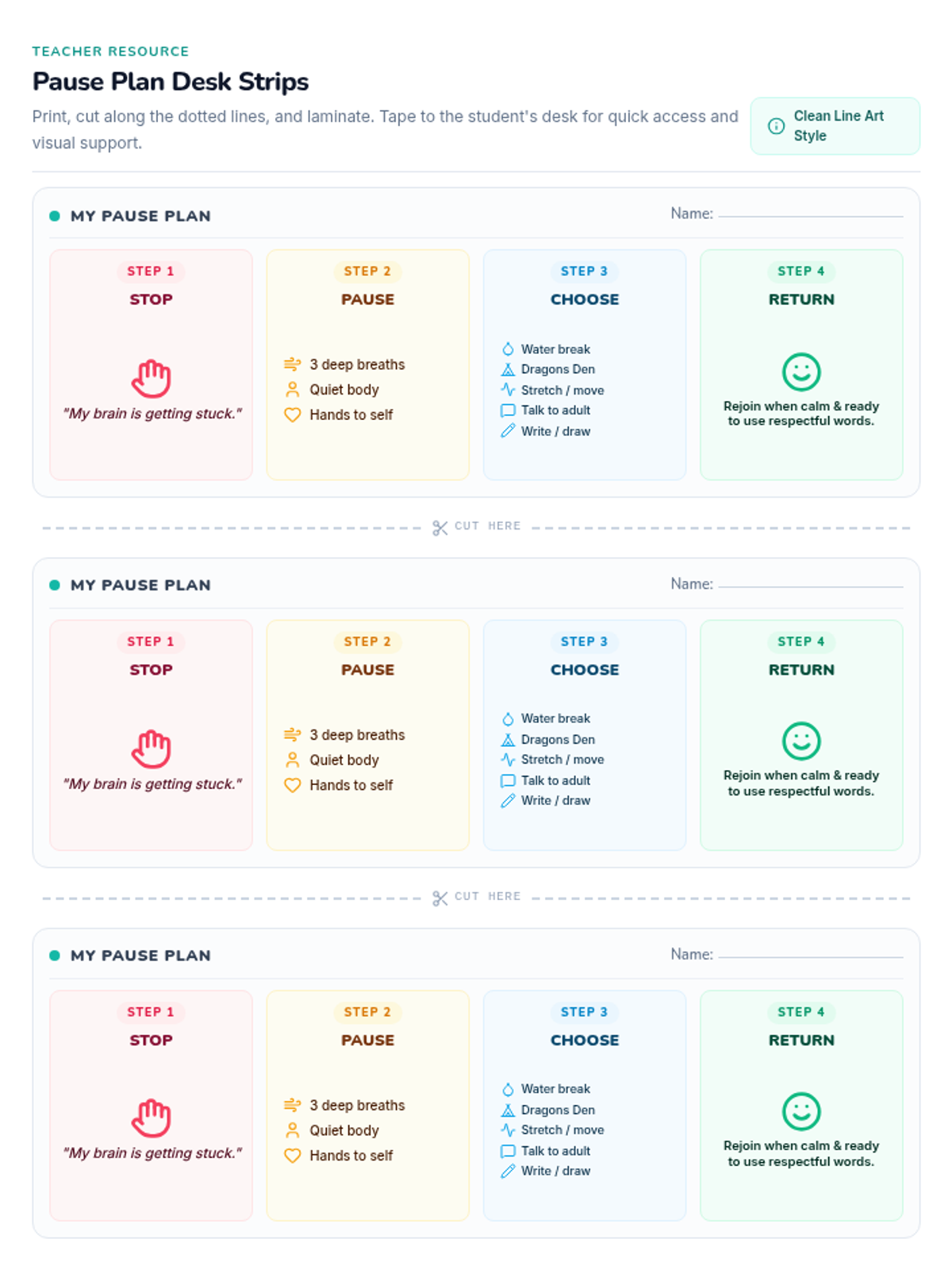
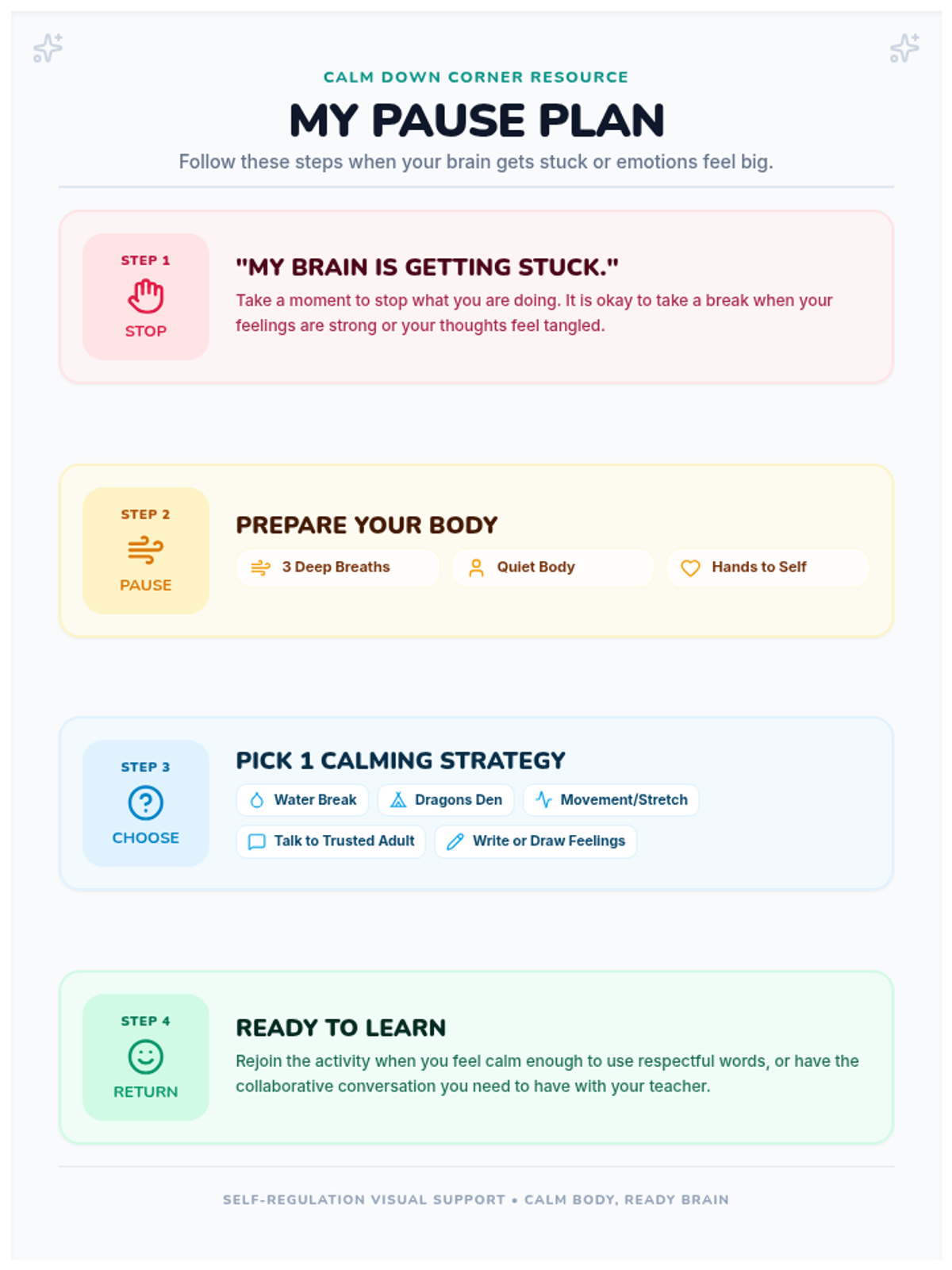
A comprehensive social-emotional toolkit for a classroom 'Think Tank' reflection corner. Includes a visual reflection sheet, a calming strategies poster, and portable visual choice cards to guide students in emotional self-regulation and positive conflict resolution.
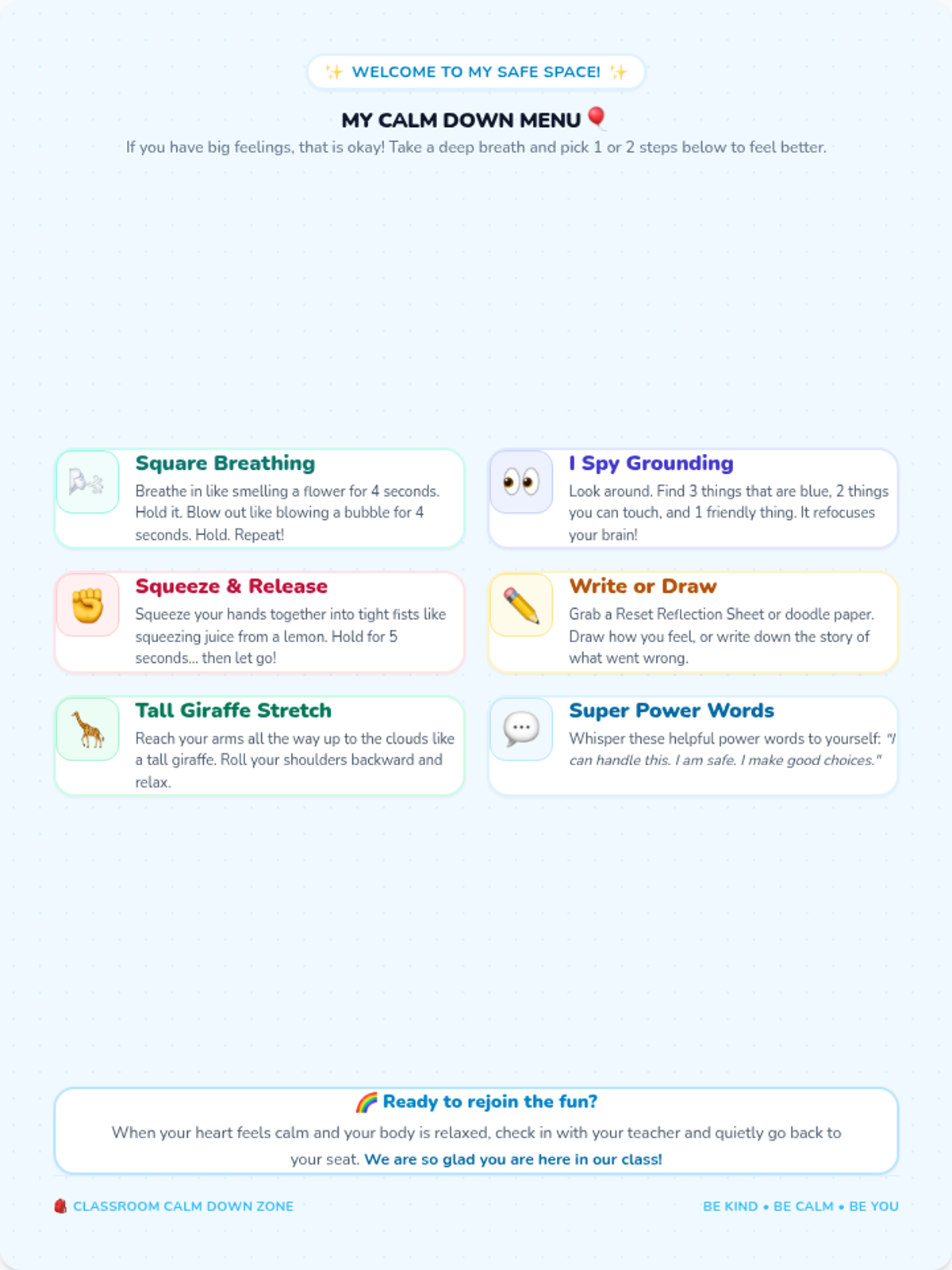
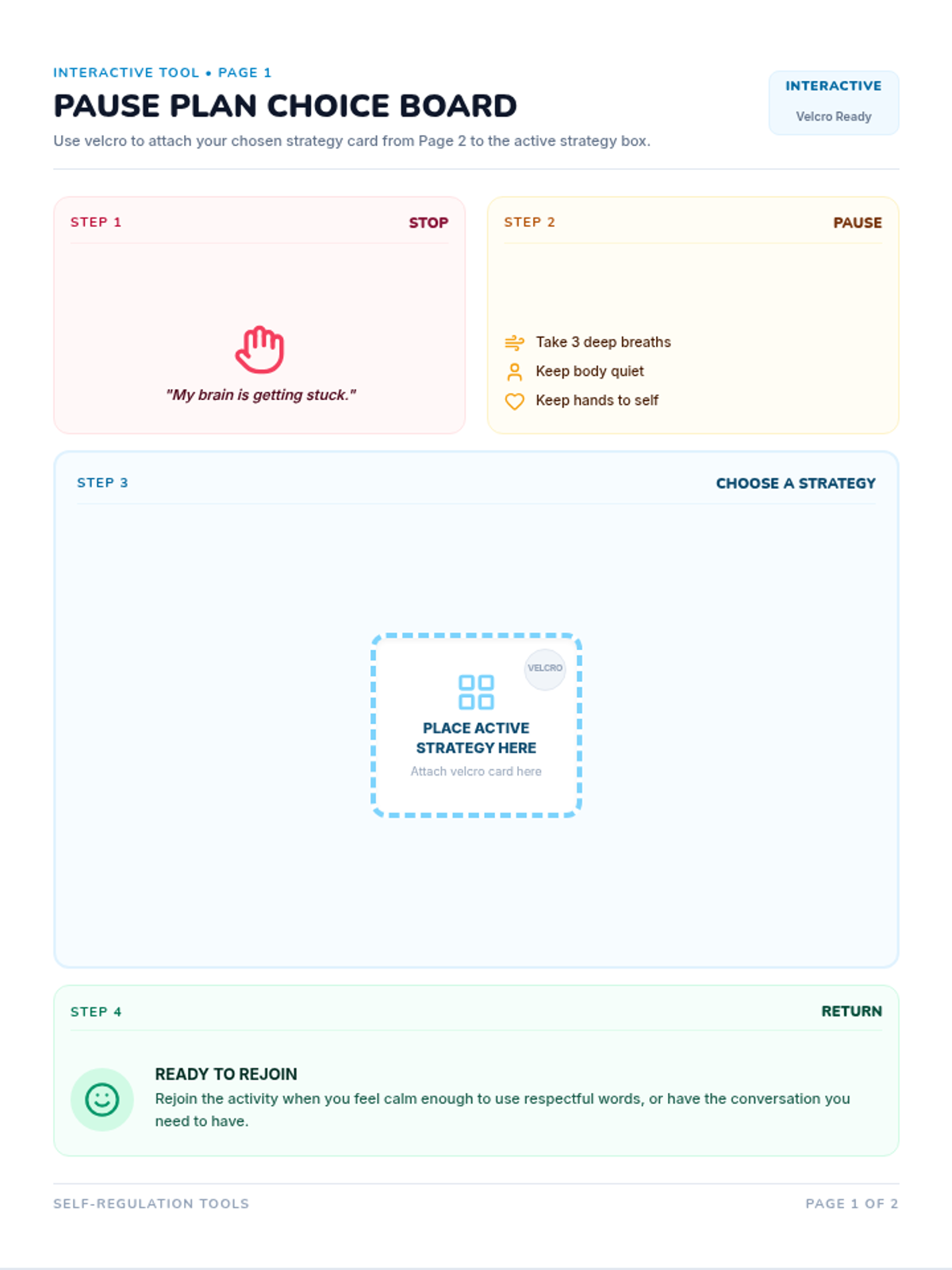
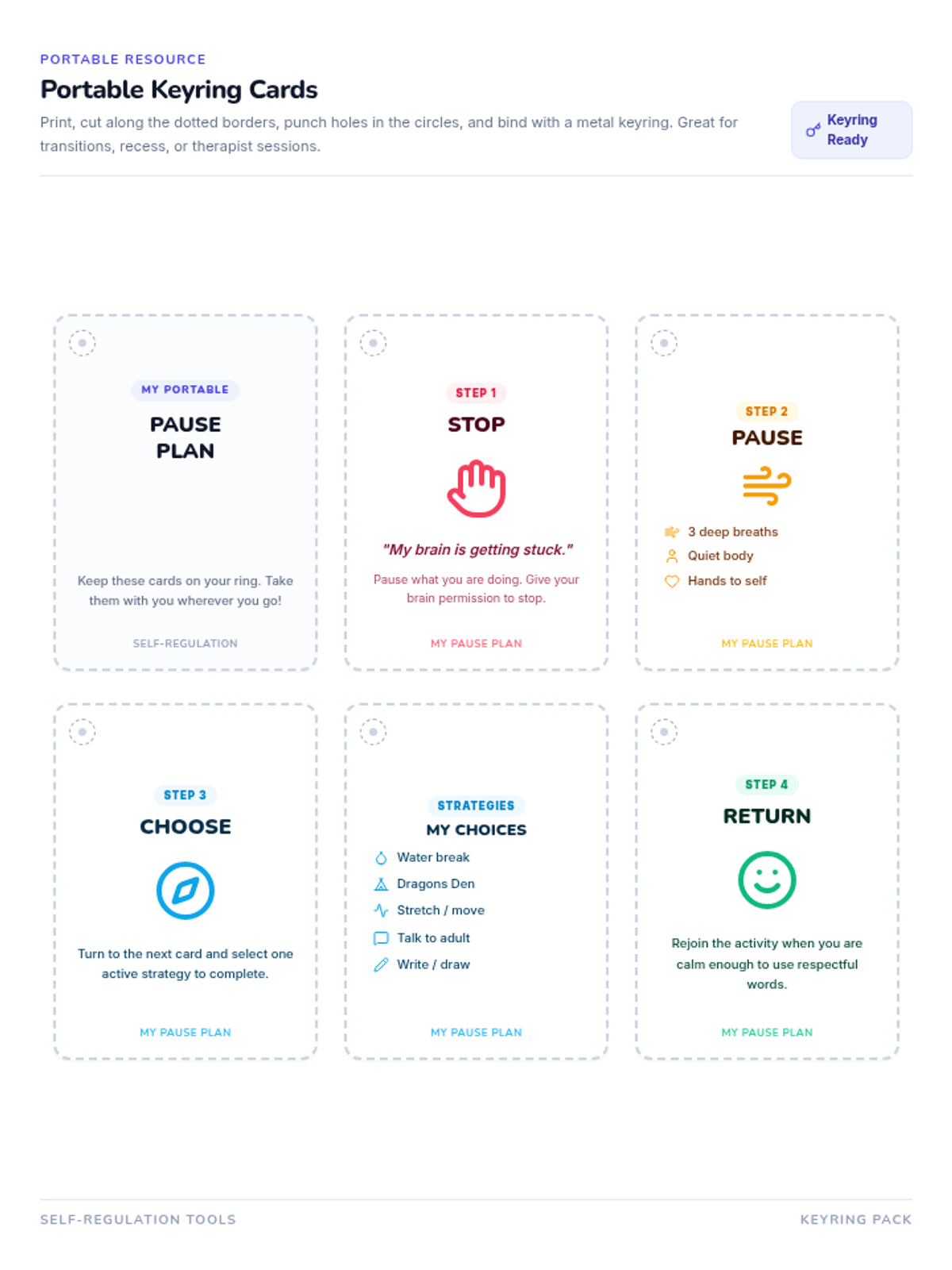
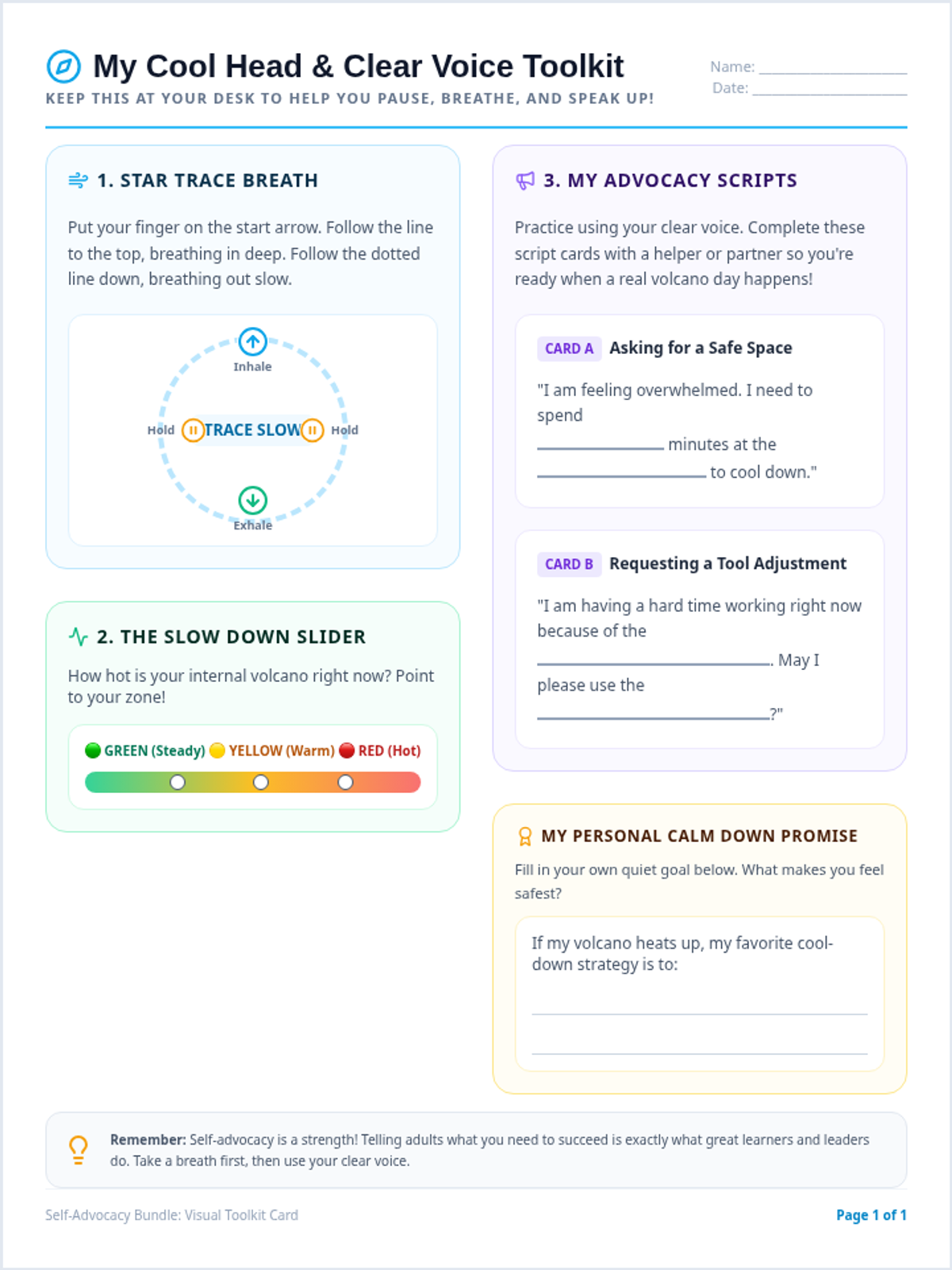
A collection of visual support tools and plans designed to help students self-regulate, manage big emotions, and transition back to learning.
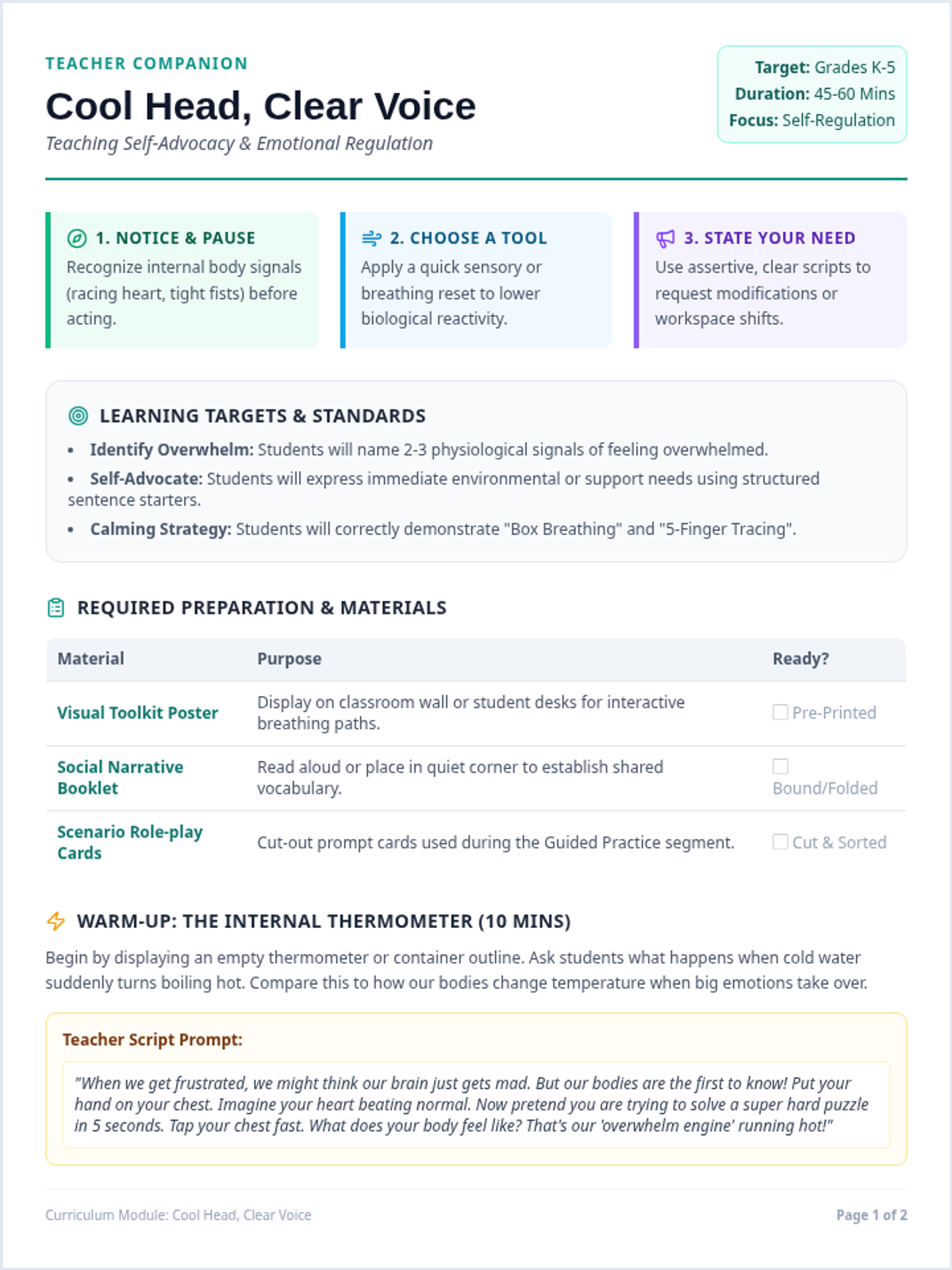
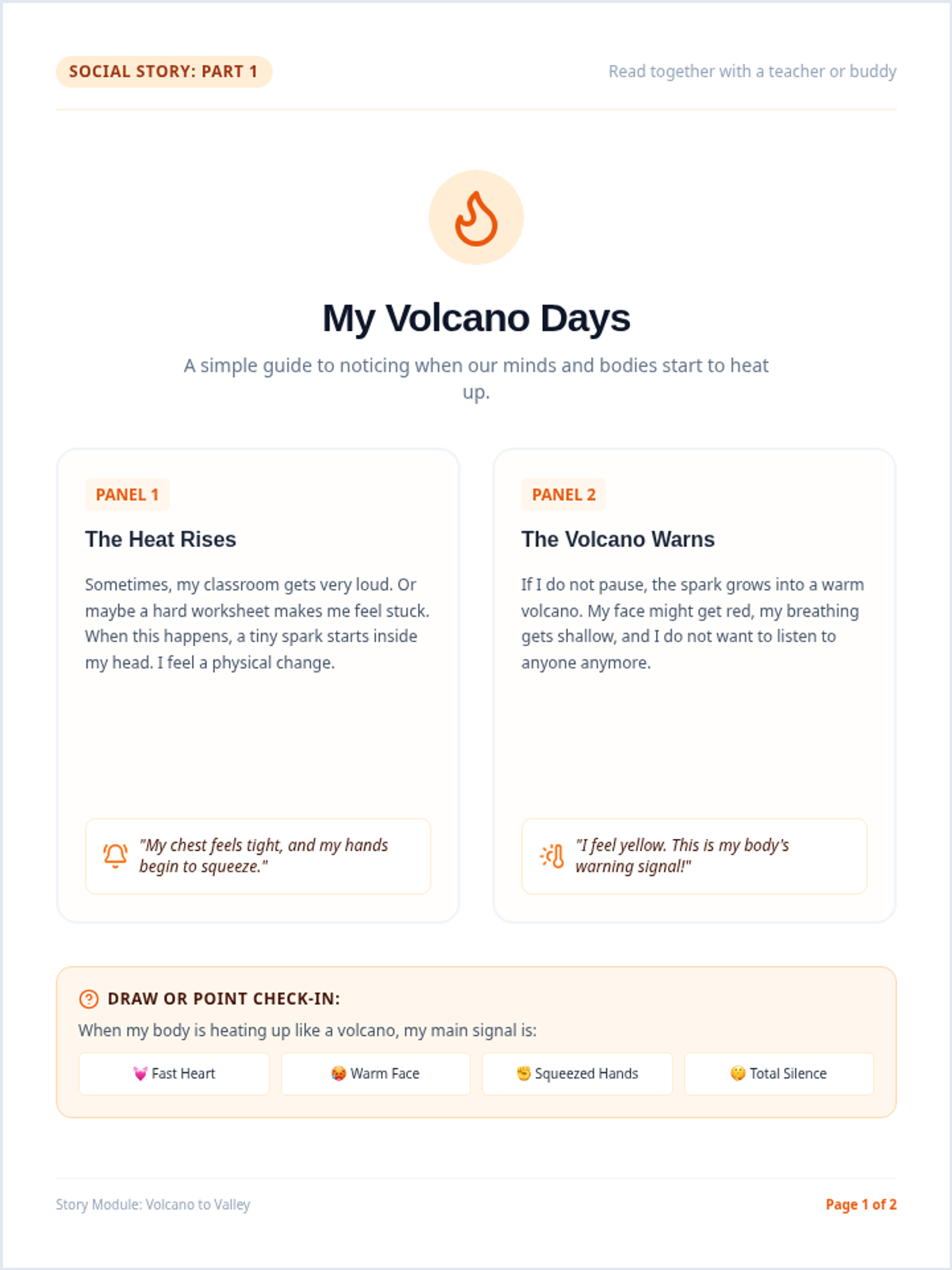
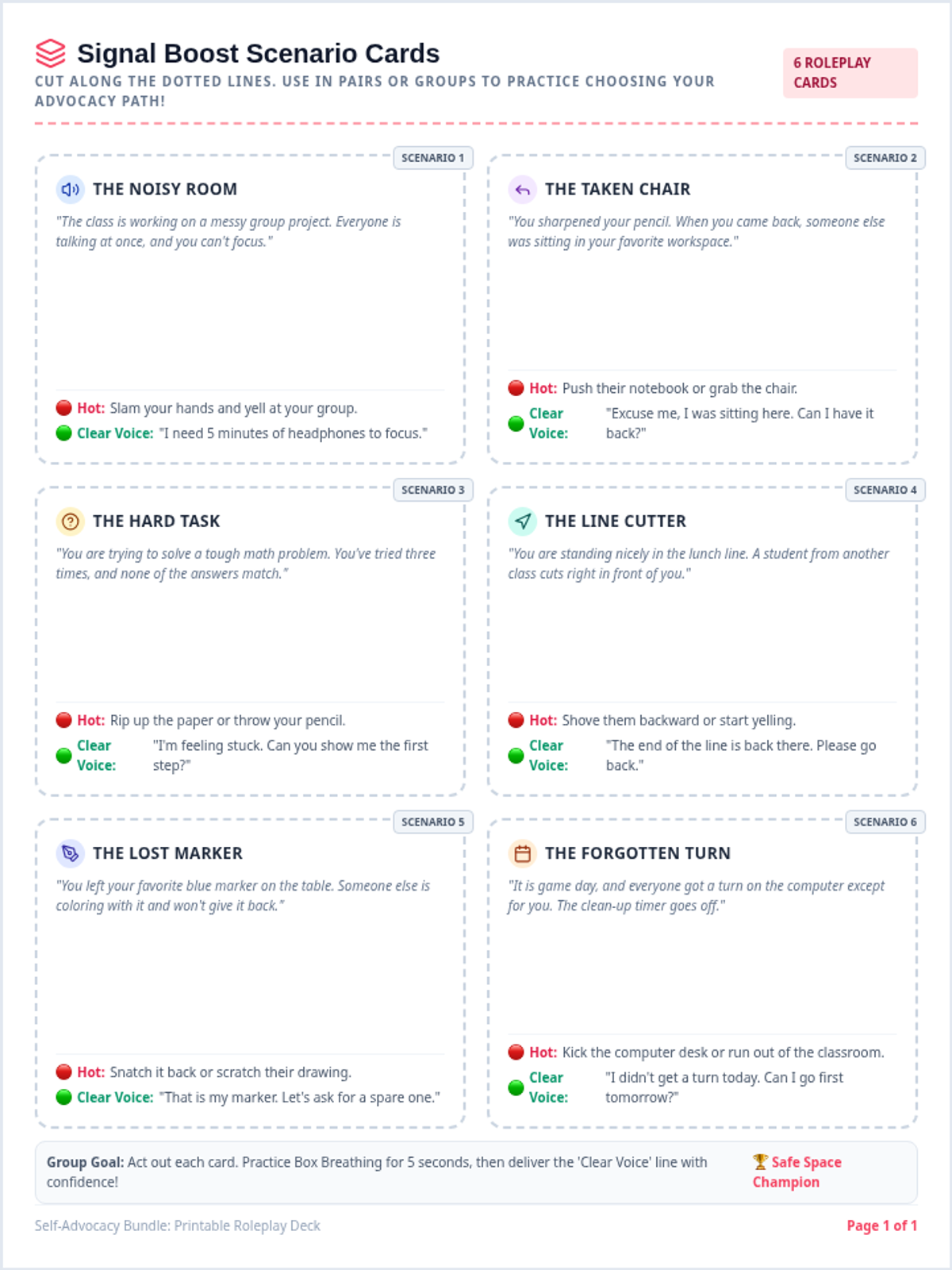
A complete lesson bundle on emotional regulation, self-advocacy, and calming strategies. Includes a comprehensive teacher's guide, a visual toolkit, a social narrative book, and interactive role-playing scenario cards.
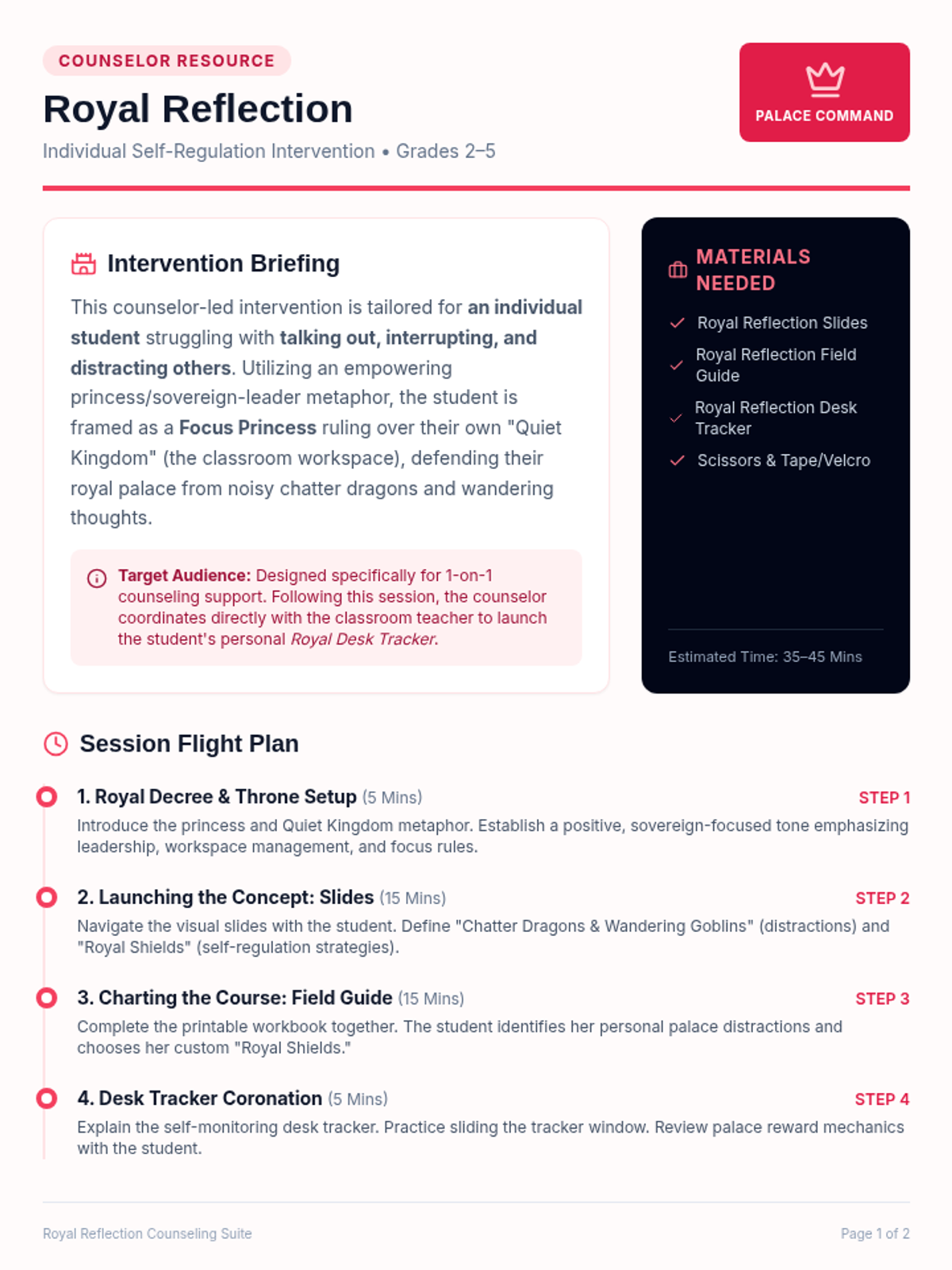
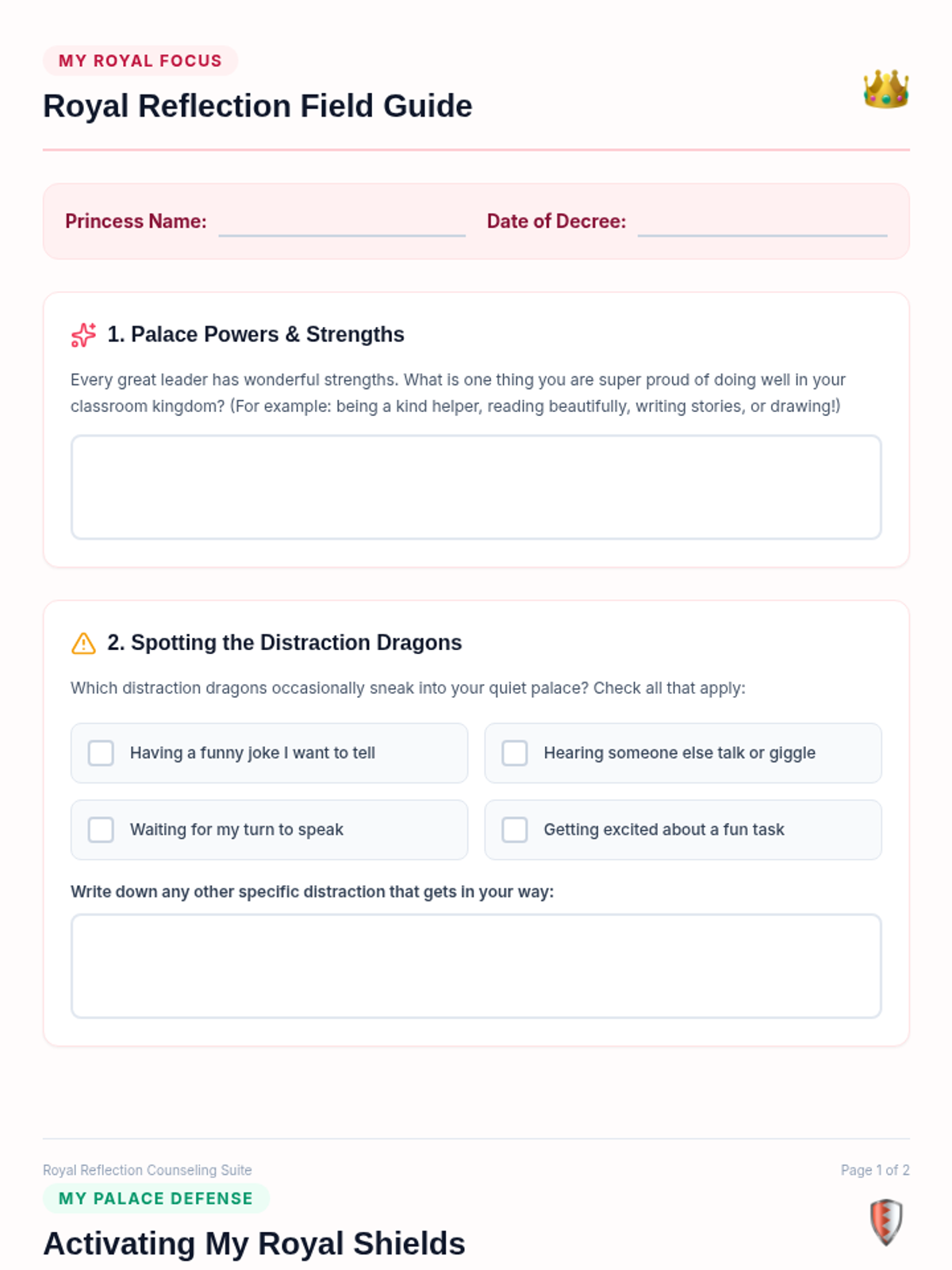
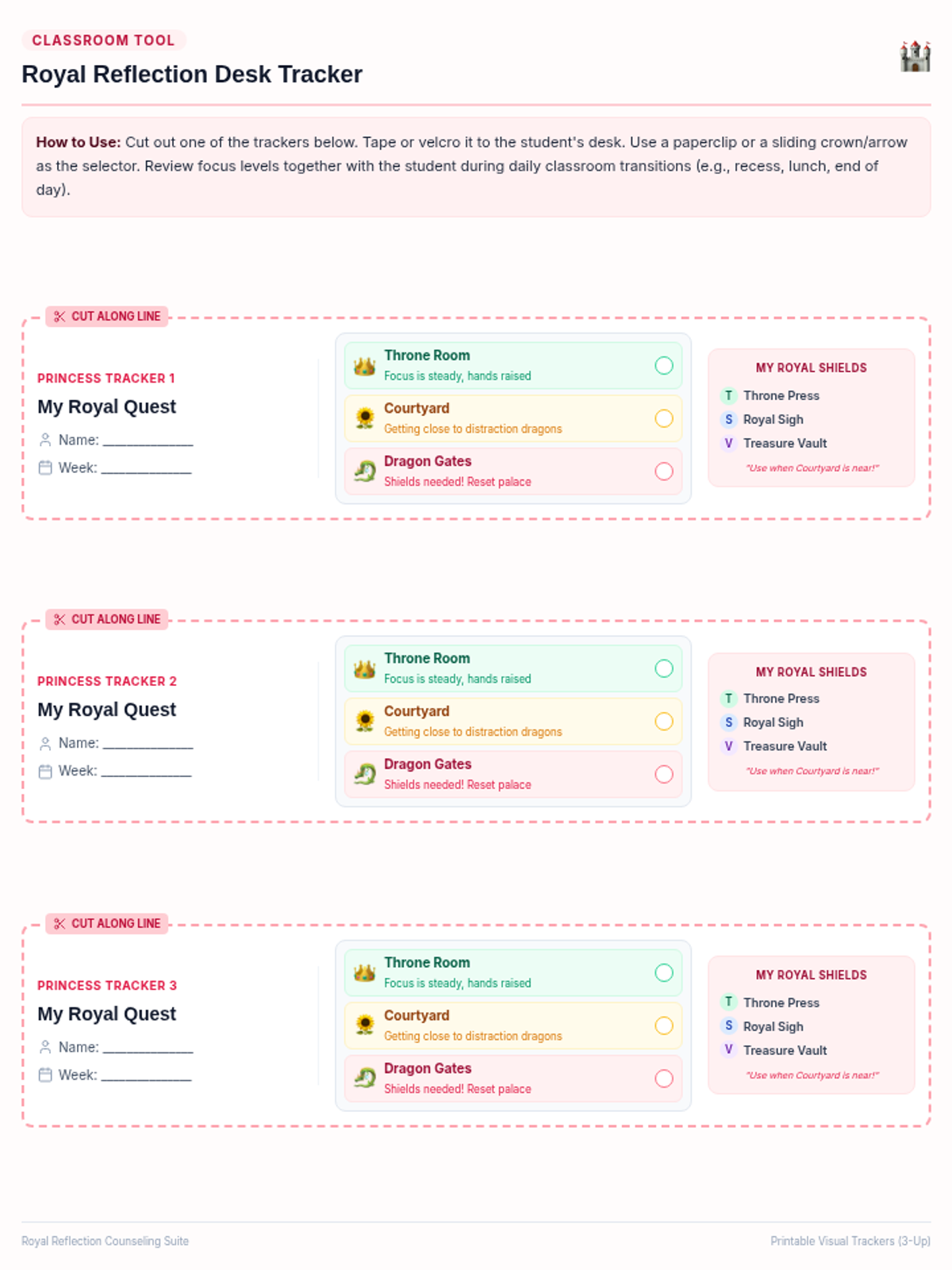
An active individual counseling intervention designed for Grades 2-5 to address talking out and distracting others. Through a princess/quiet-kingdom theme, the student learns to use 'Royal Shields' and track their own classroom focus.
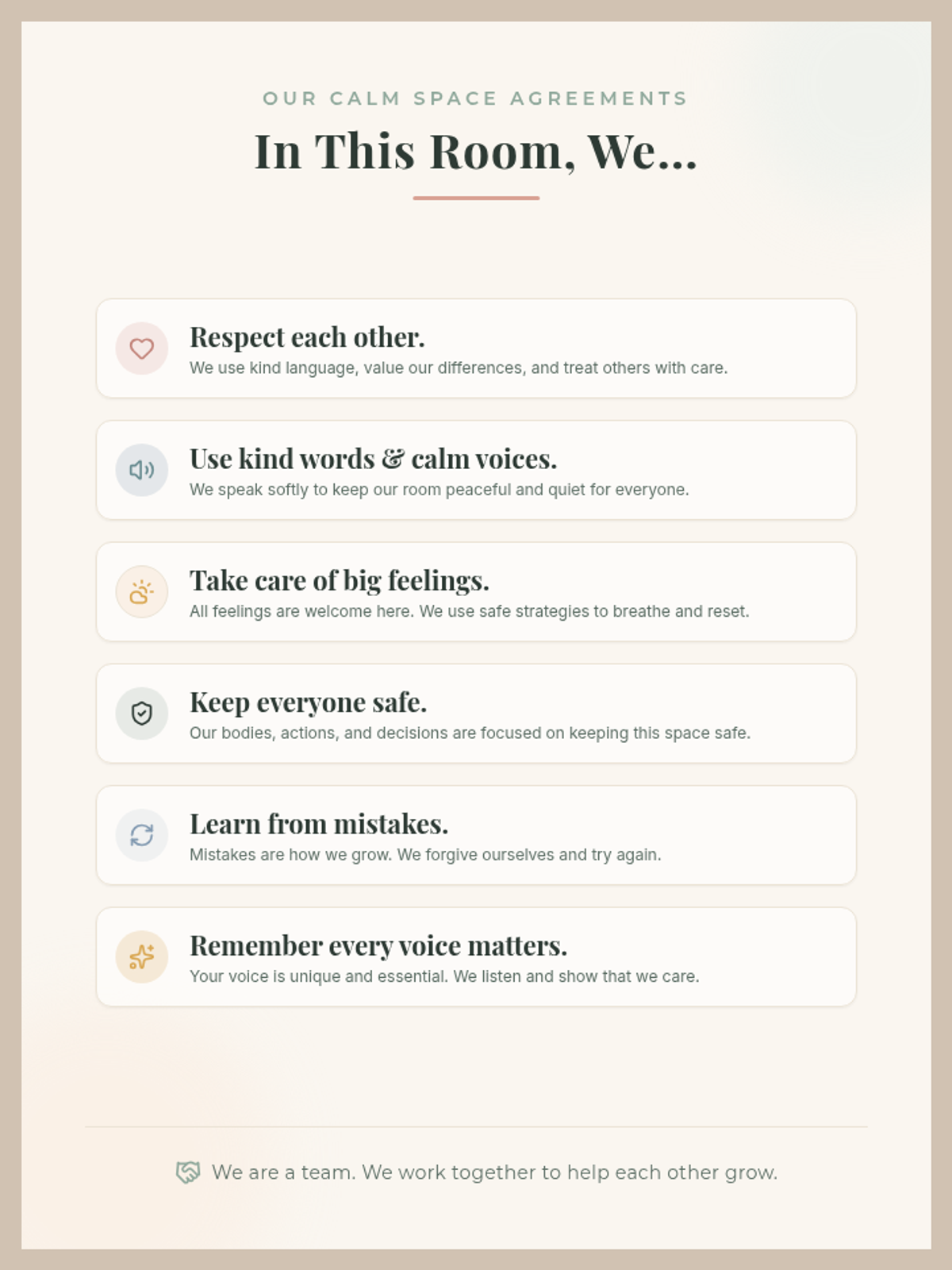
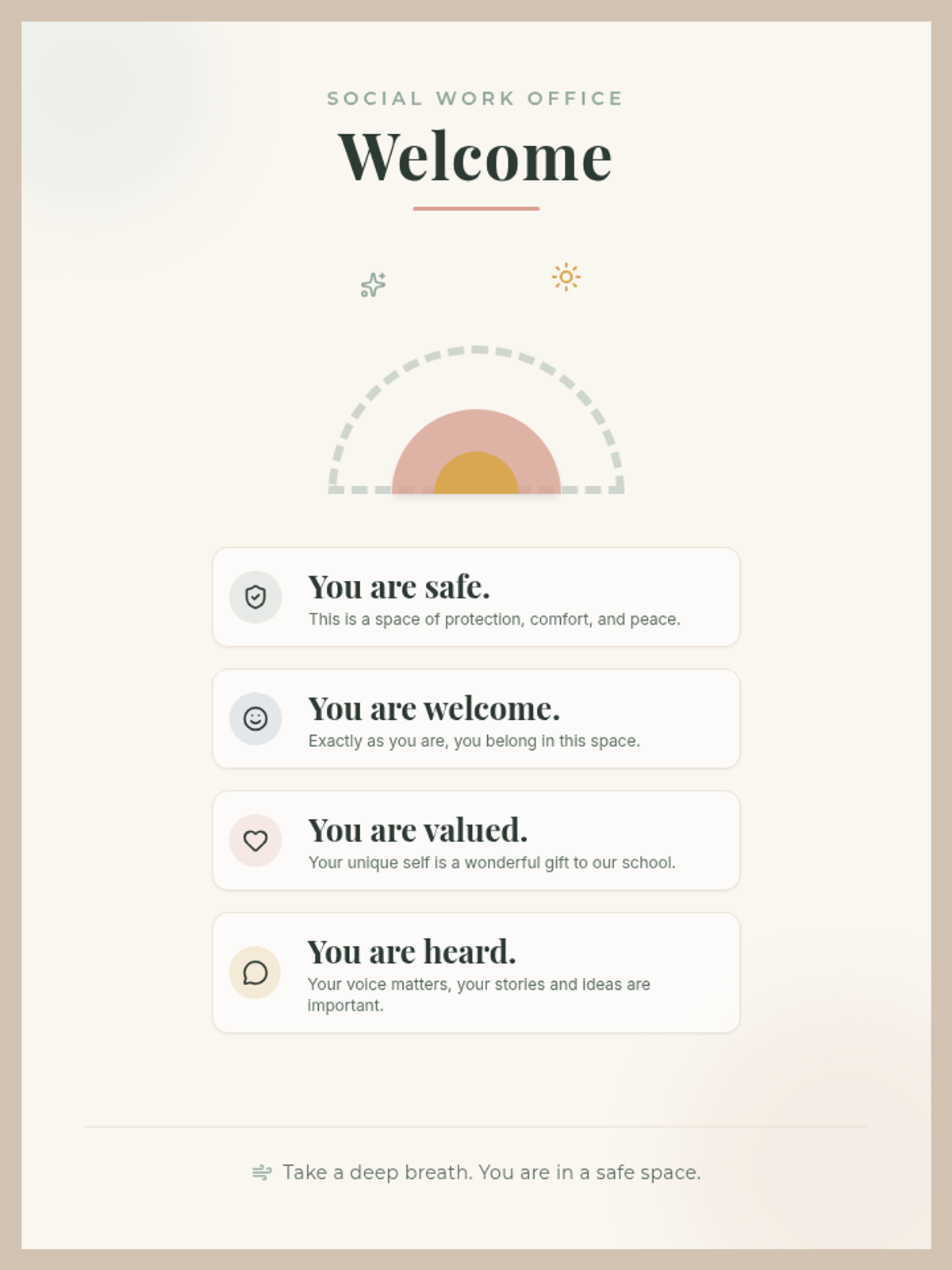
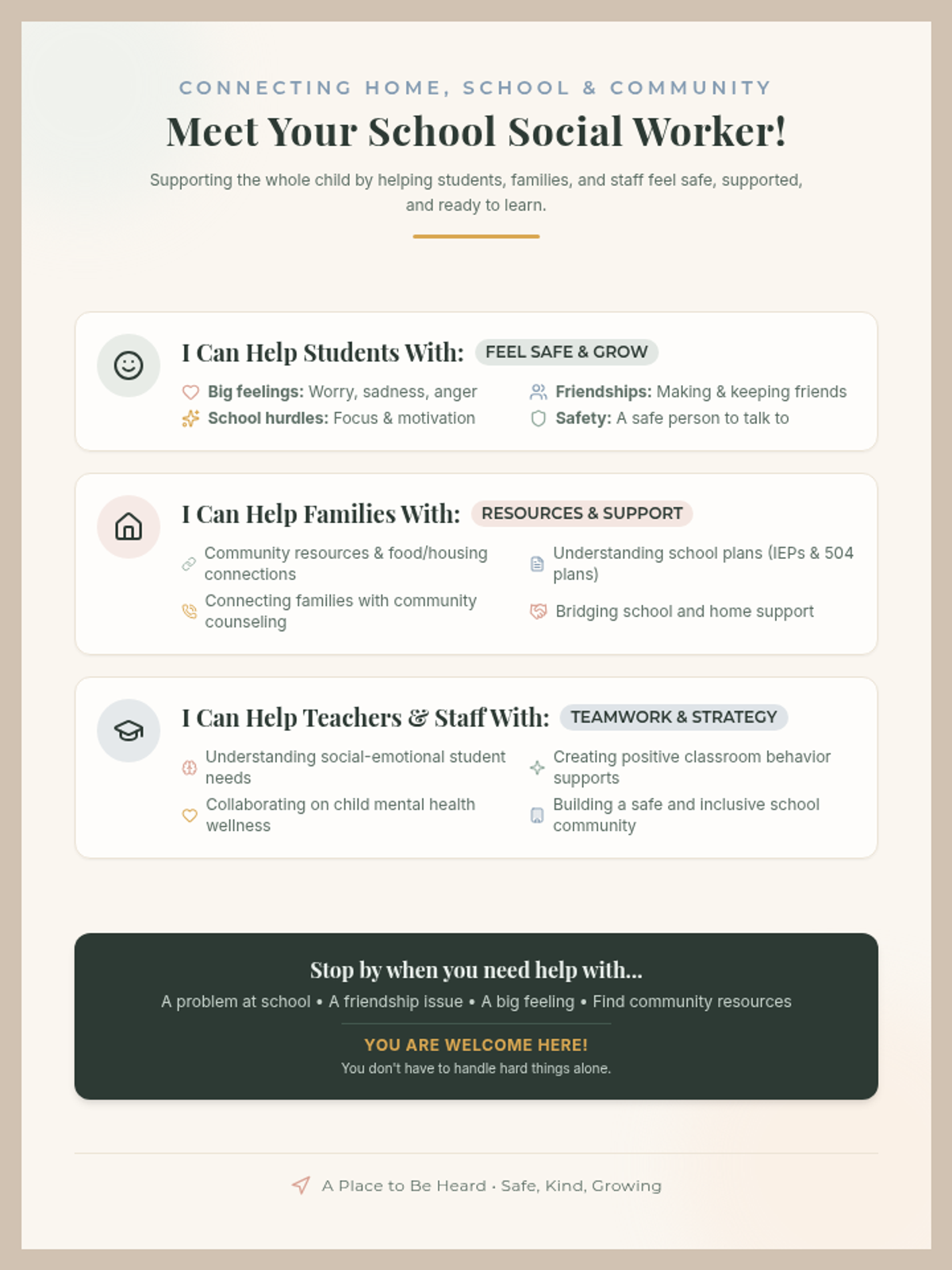
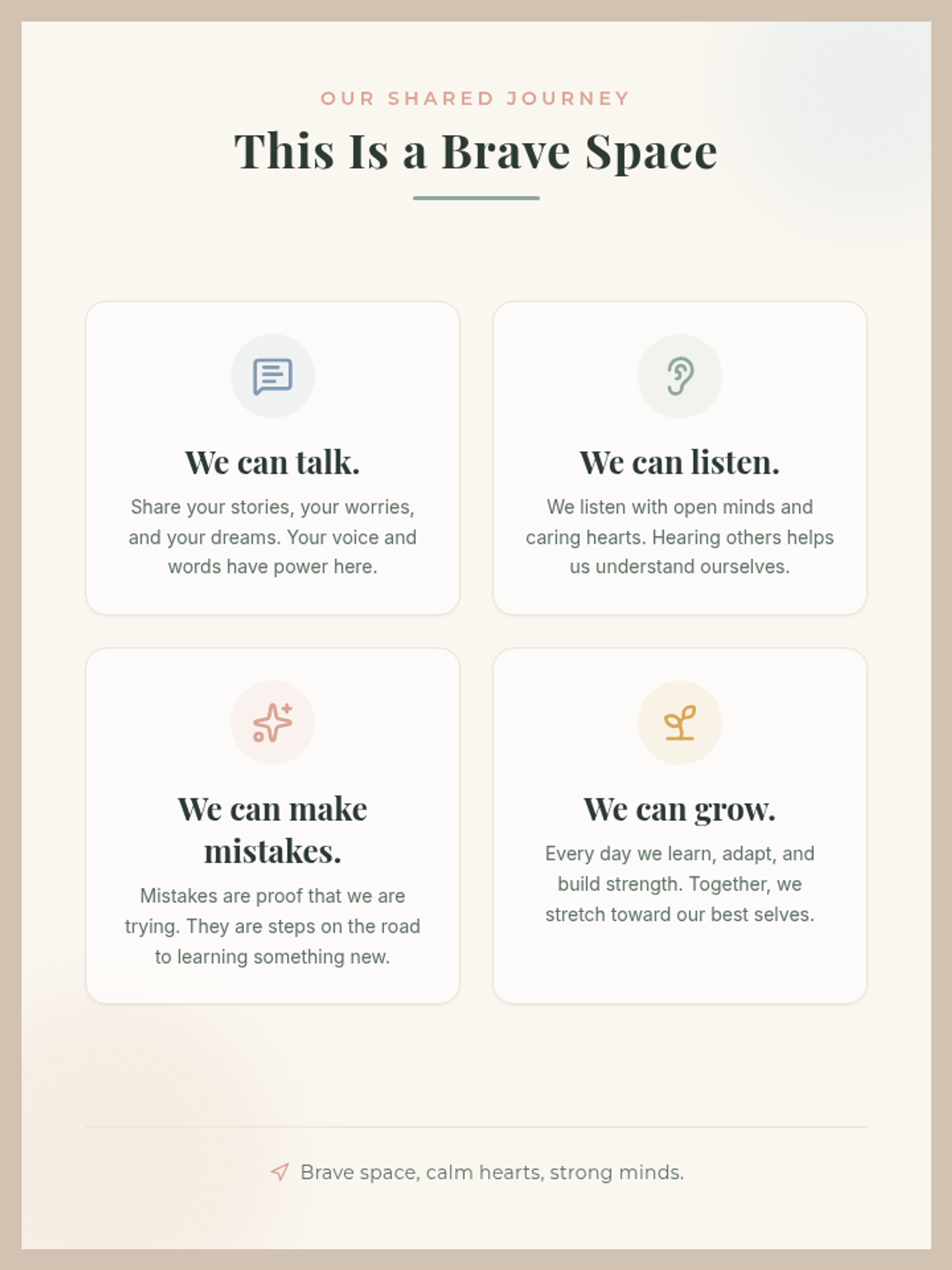
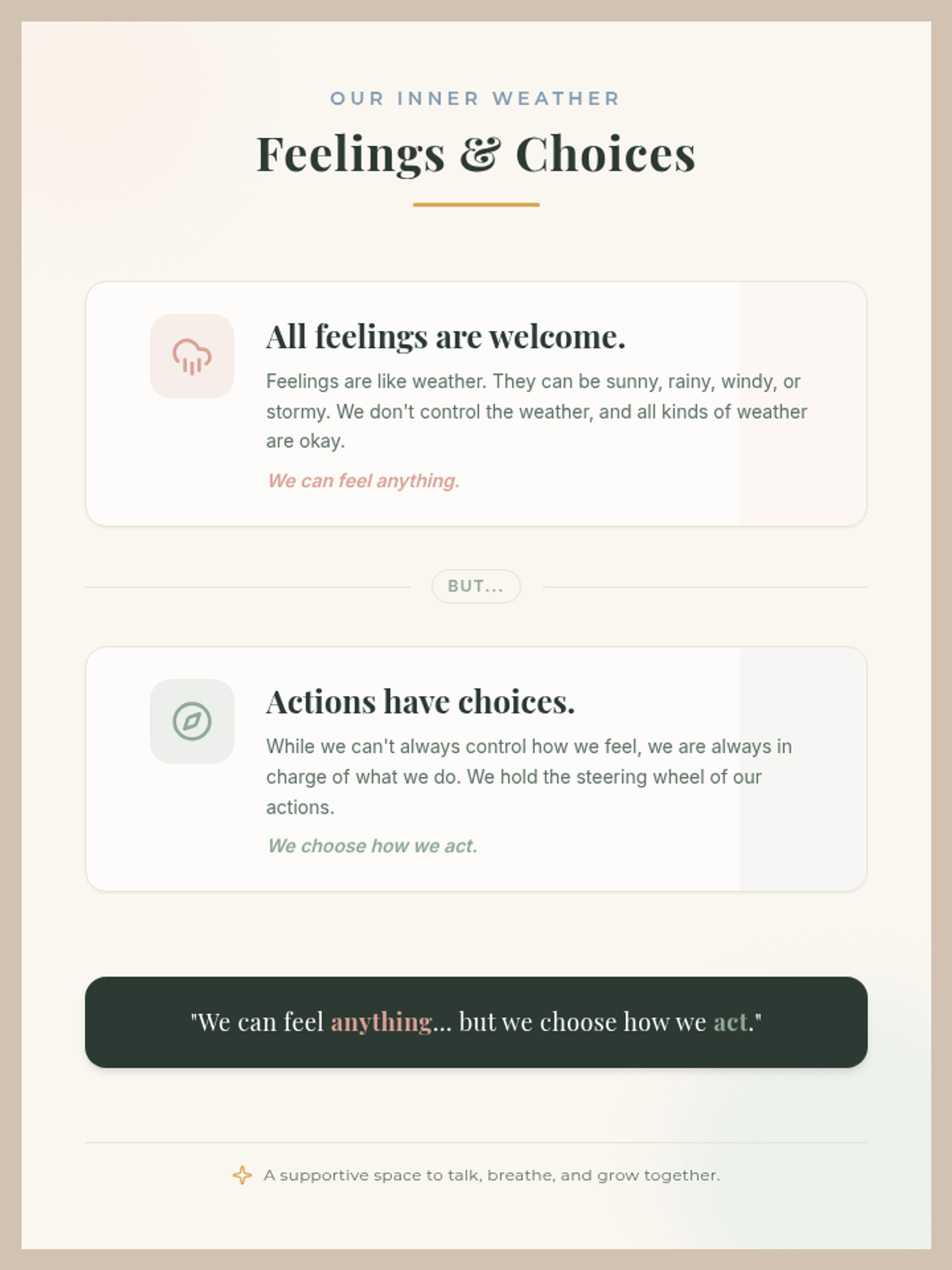
A cohesive suite of beautifully designed printable posters for an elementary school social work office or calm corner, utilizing soft earth tones, gentle affirmations, and clear supportive structures.
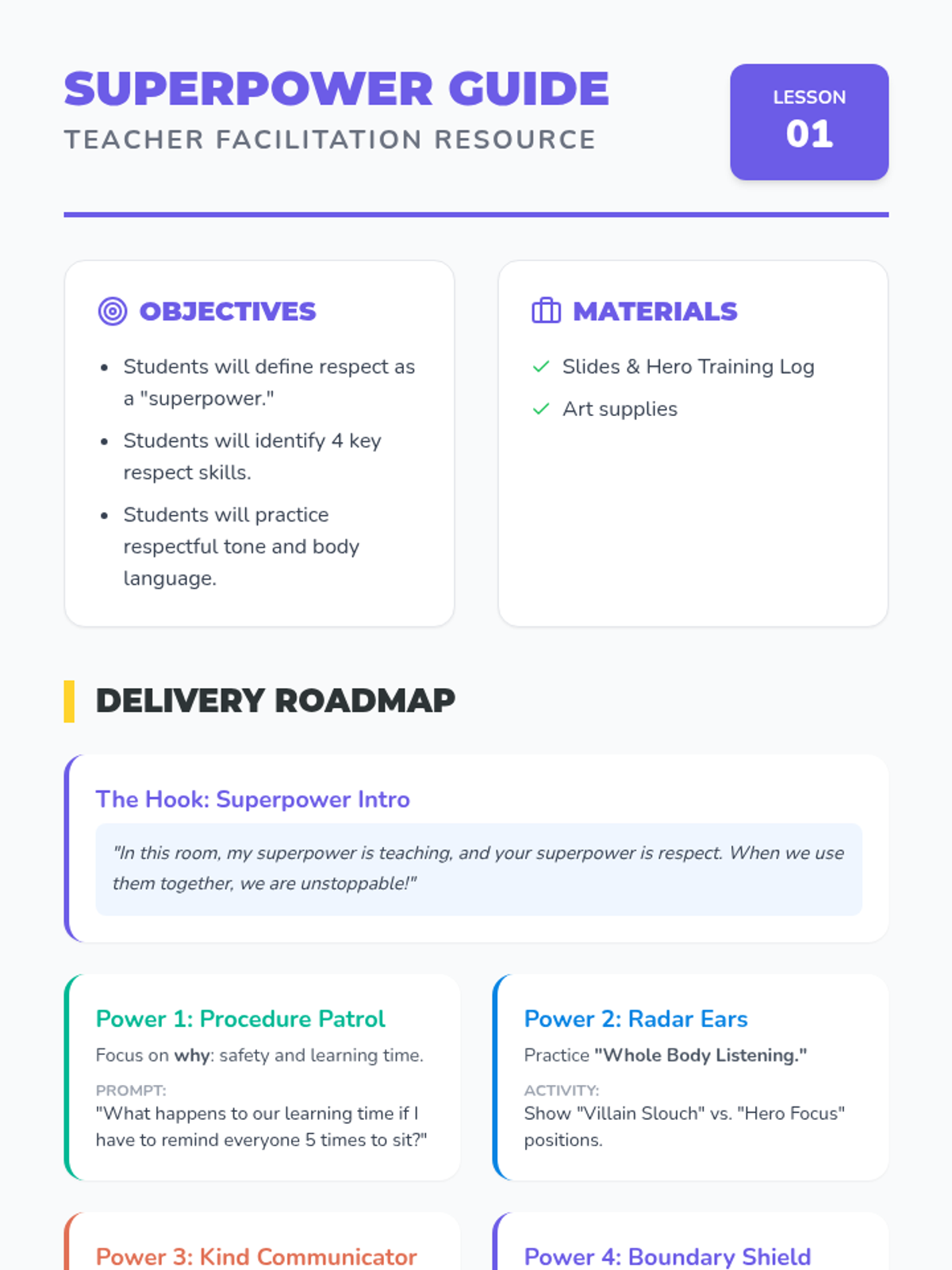
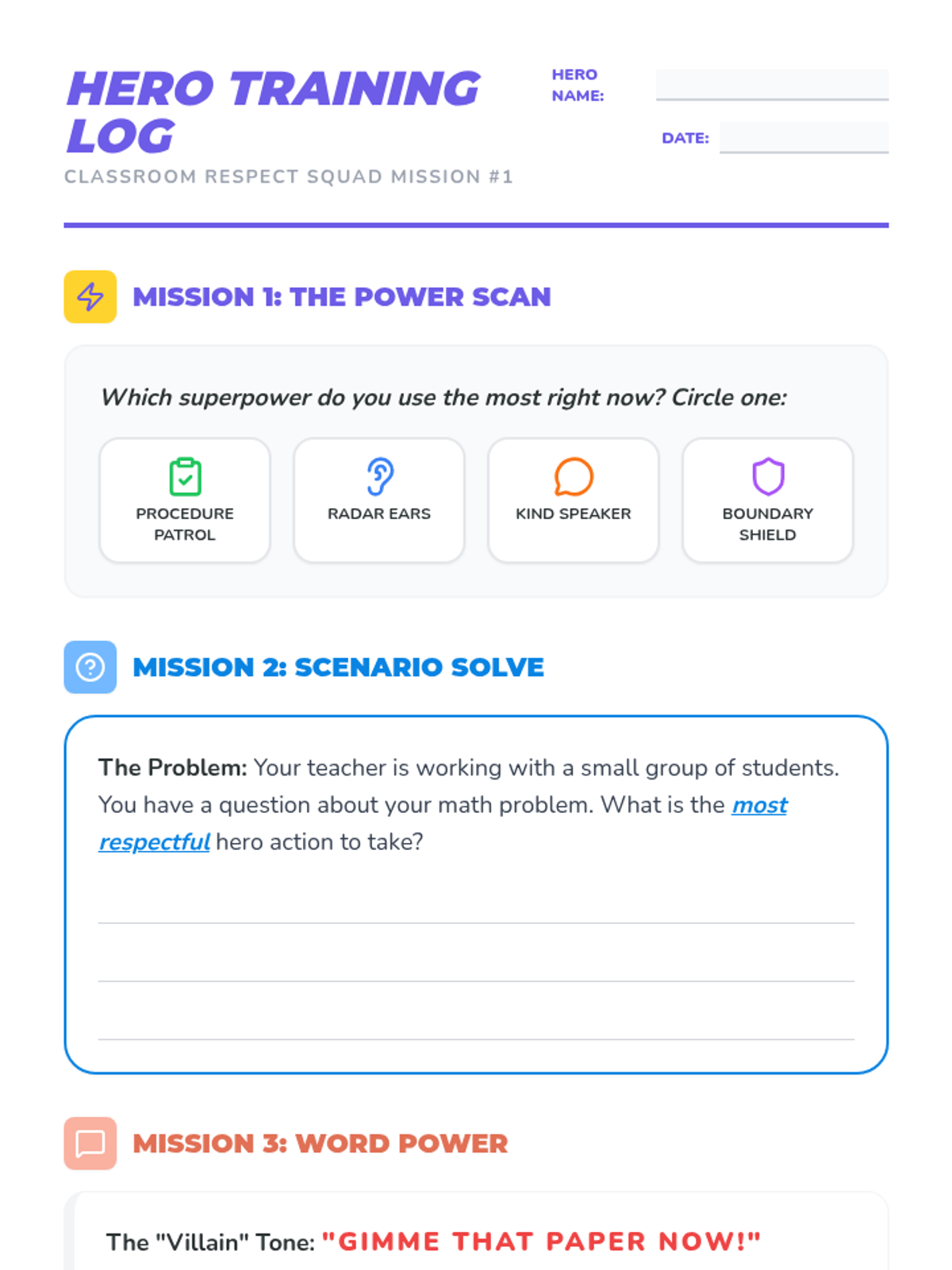
A lesson designed for grade 3 students to explore the concept of respect toward teachers through the lens of 'School Superpowers,' focusing on procedures, active listening, boundaries, and kind communication.
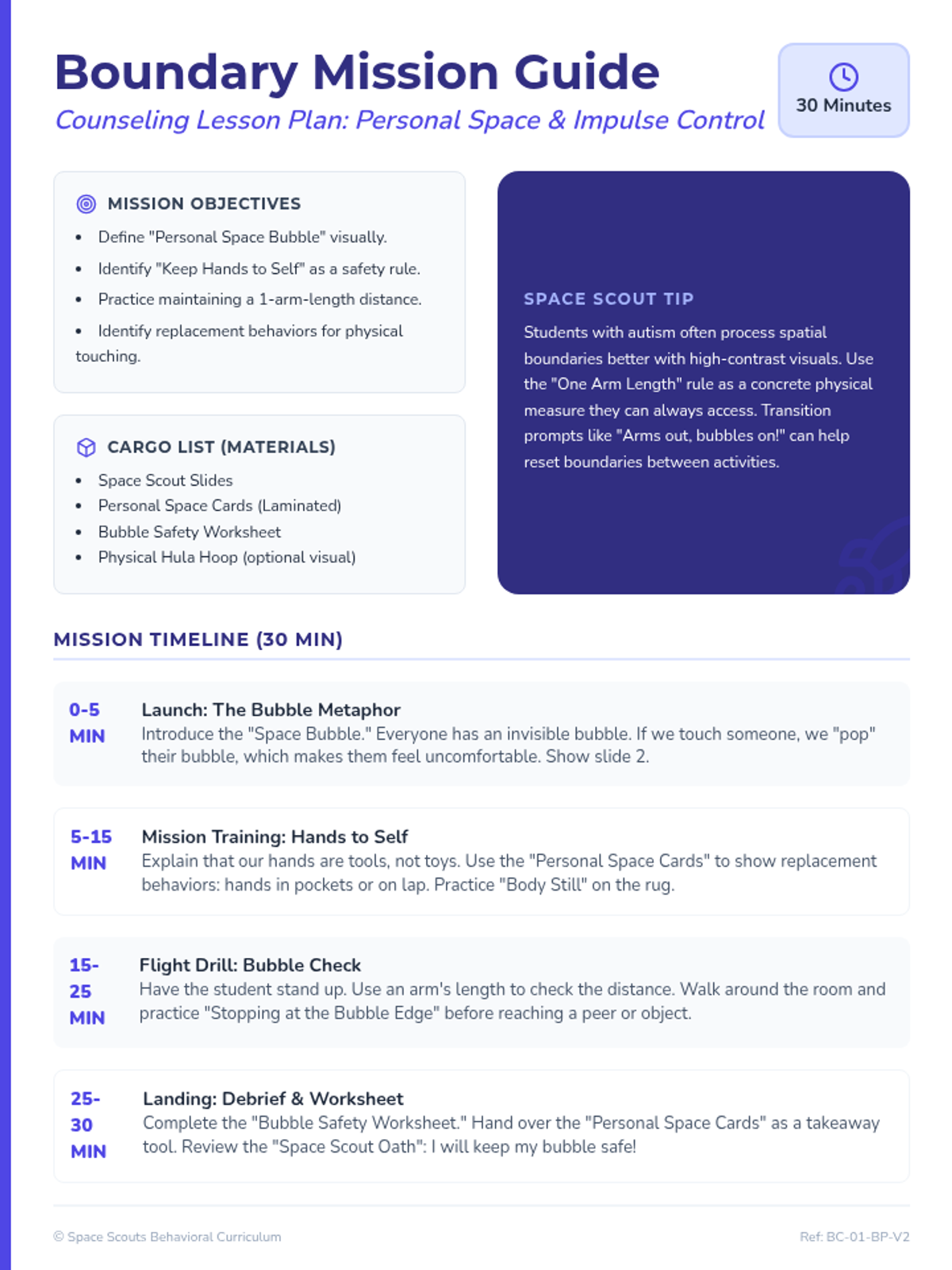
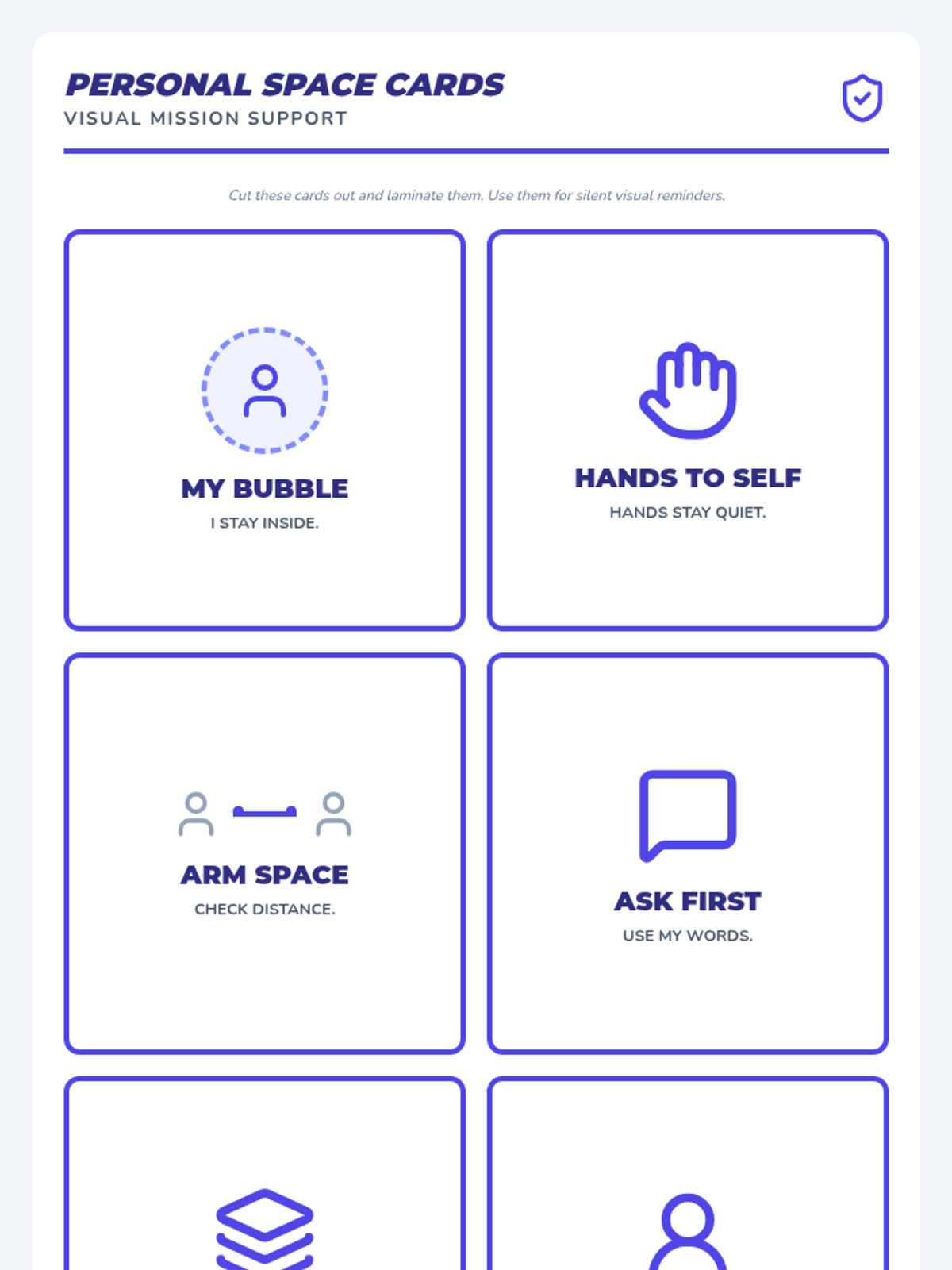
A 30-minute counseling session and supporting materials focused on teaching the 'personal space bubble' and keeping hands to self.
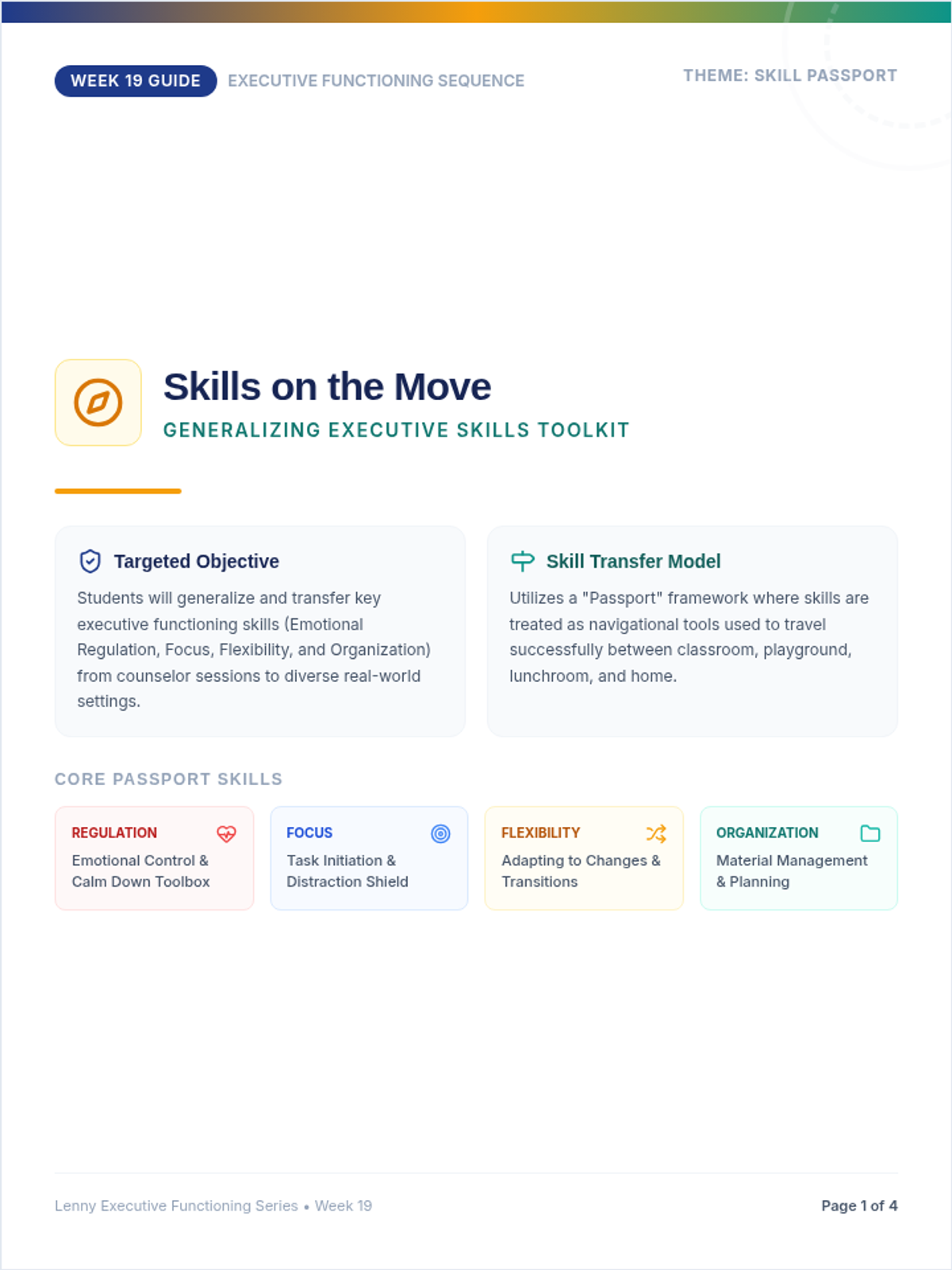
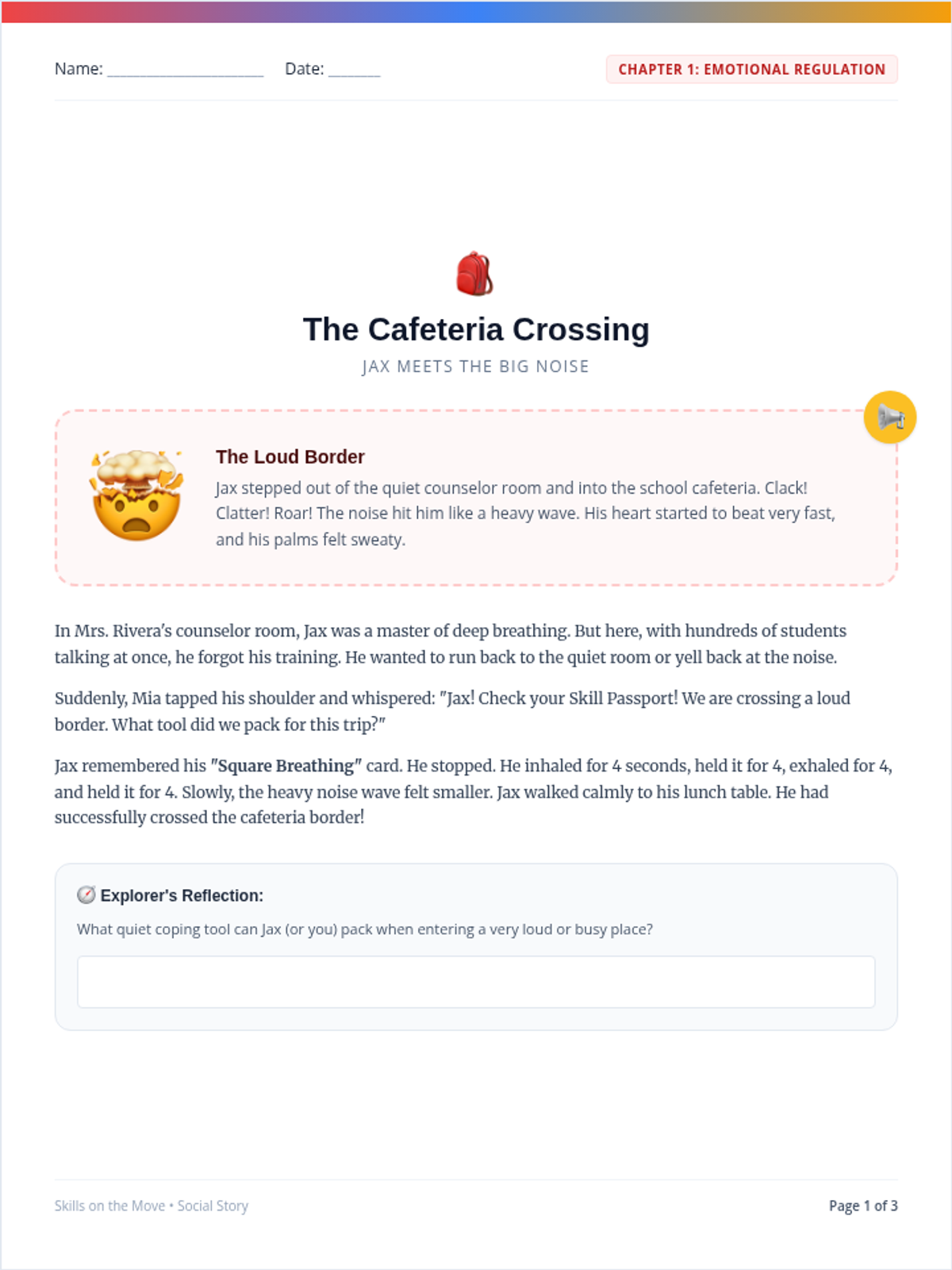
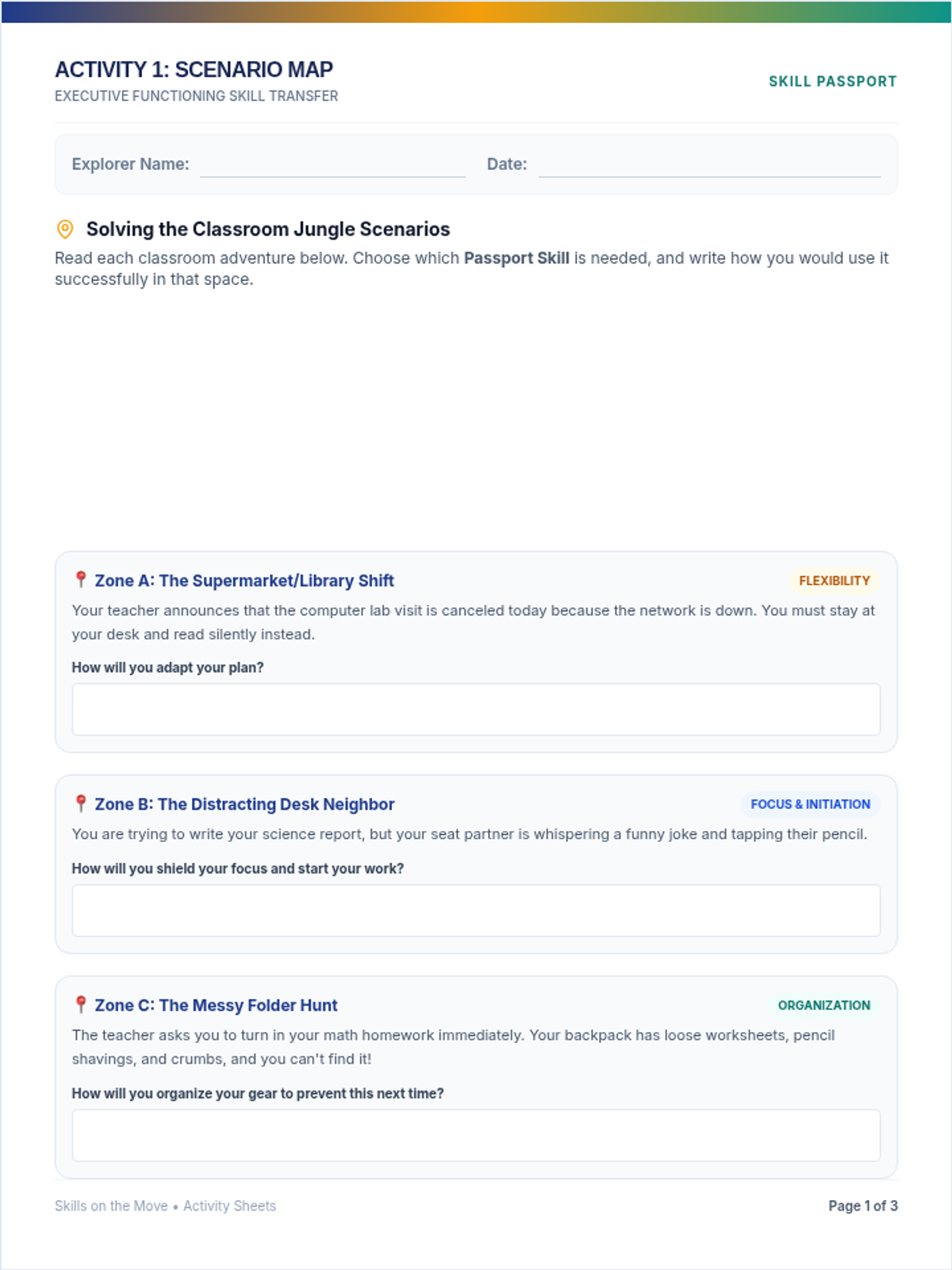
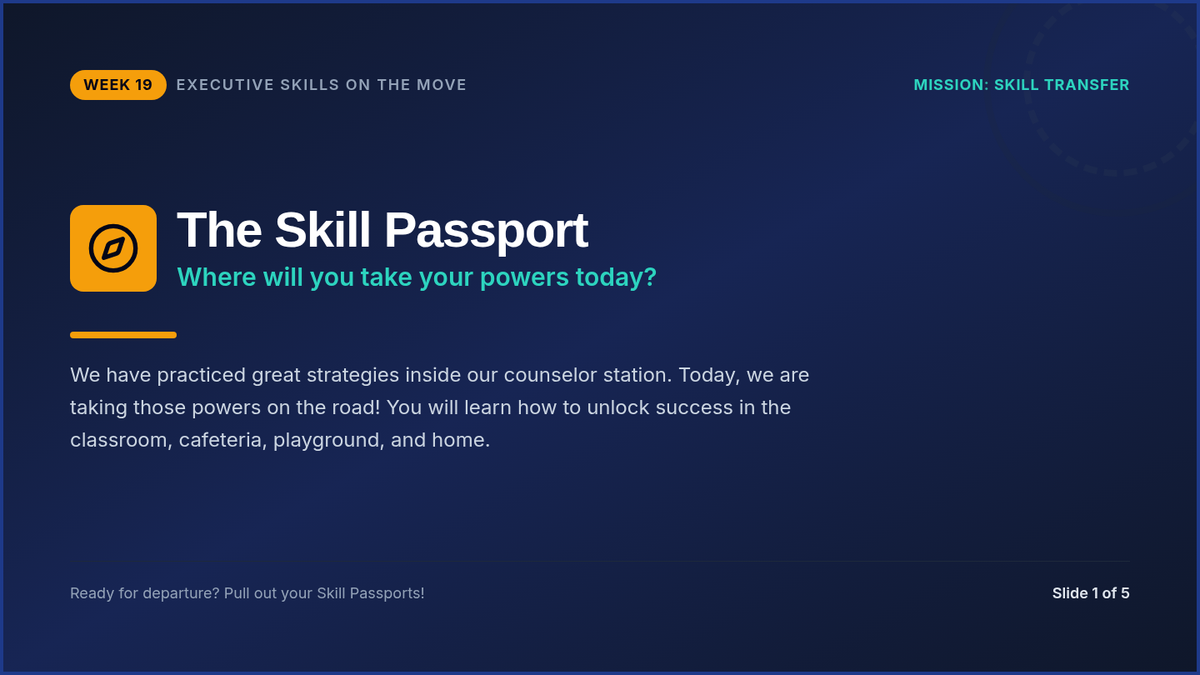
A comprehensive lesson designed to help students generalize and transfer their executive functioning skills—including emotional regulation, focus, flexibility, and organization—across various settings.
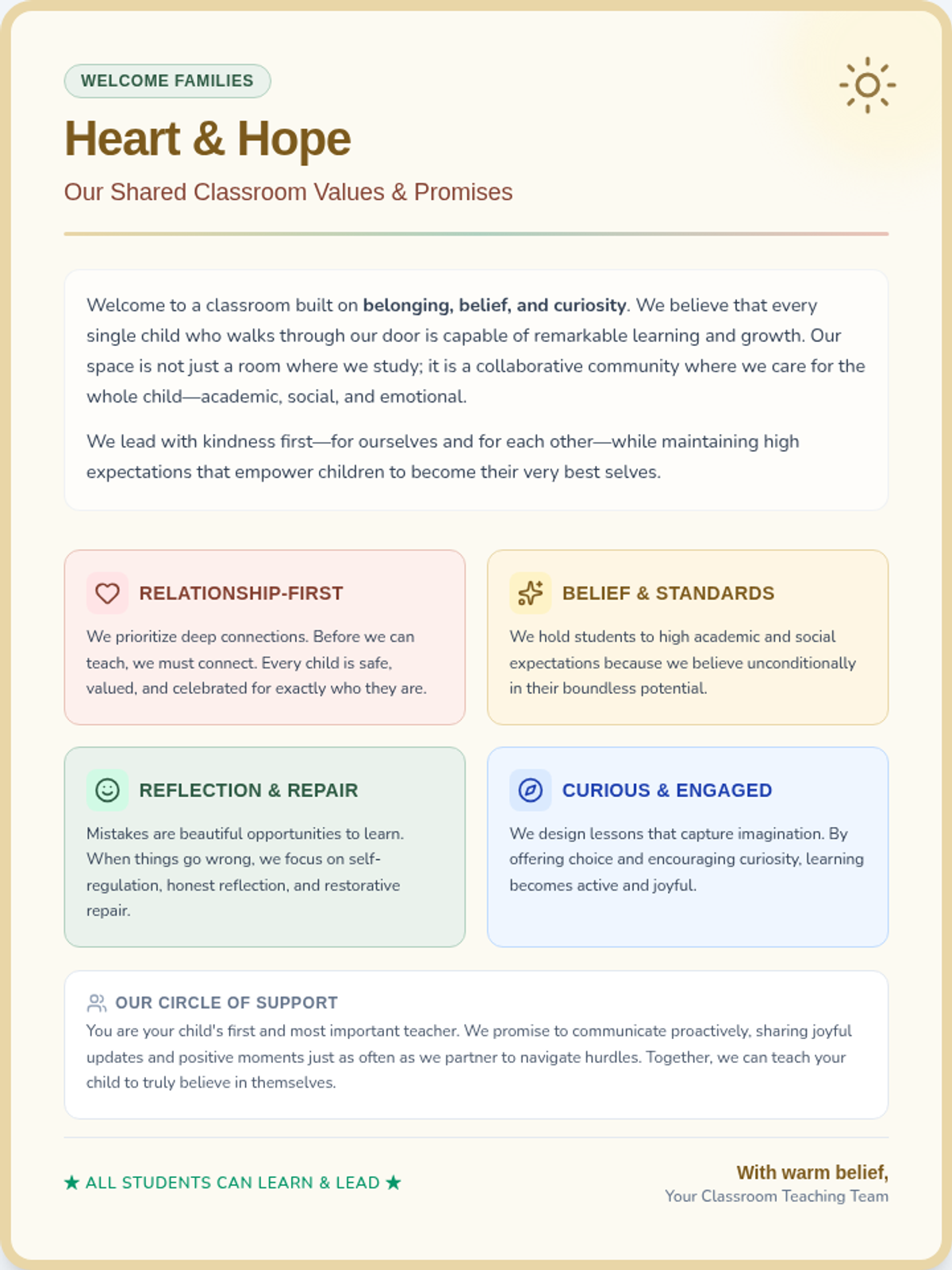
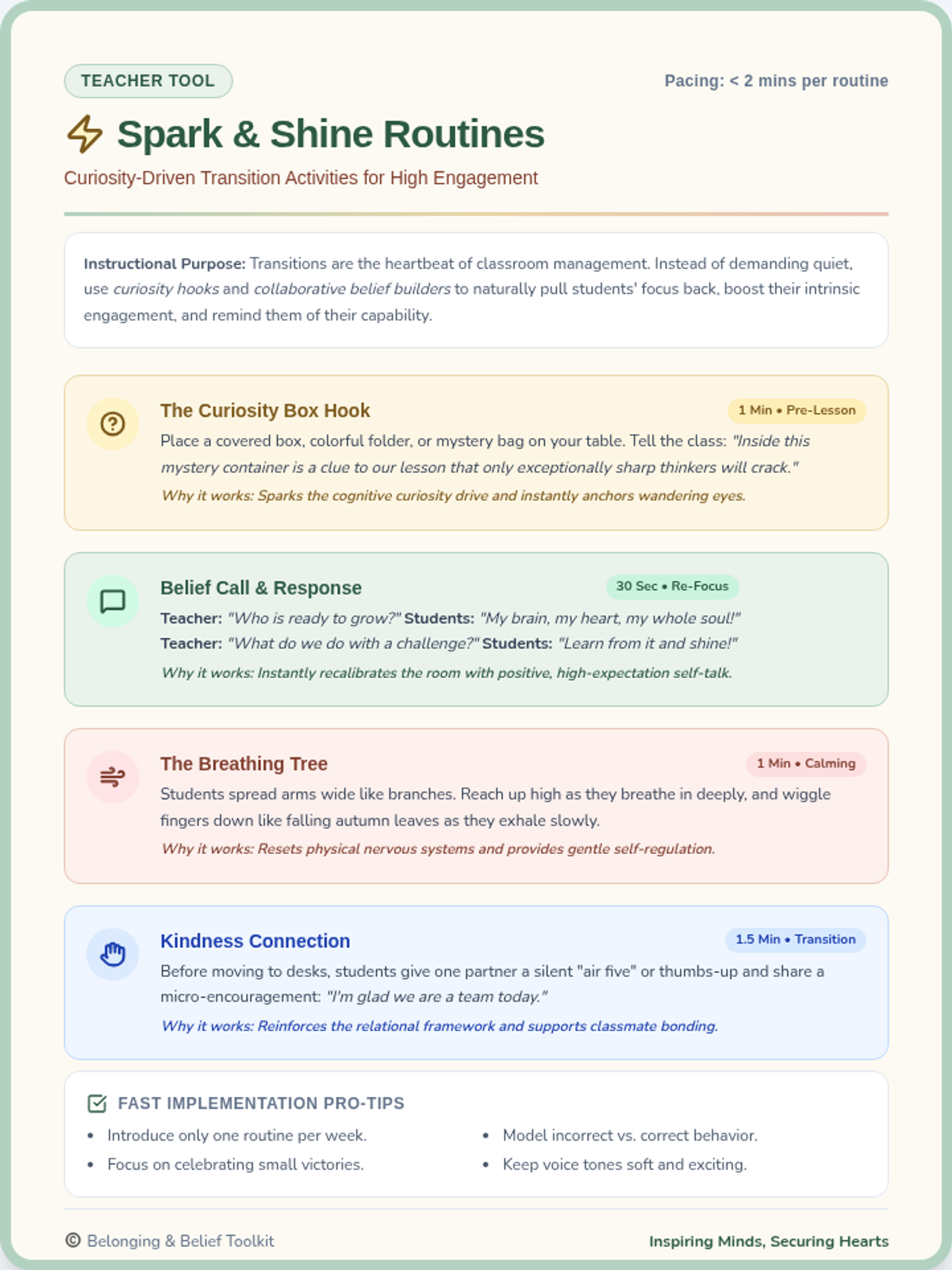
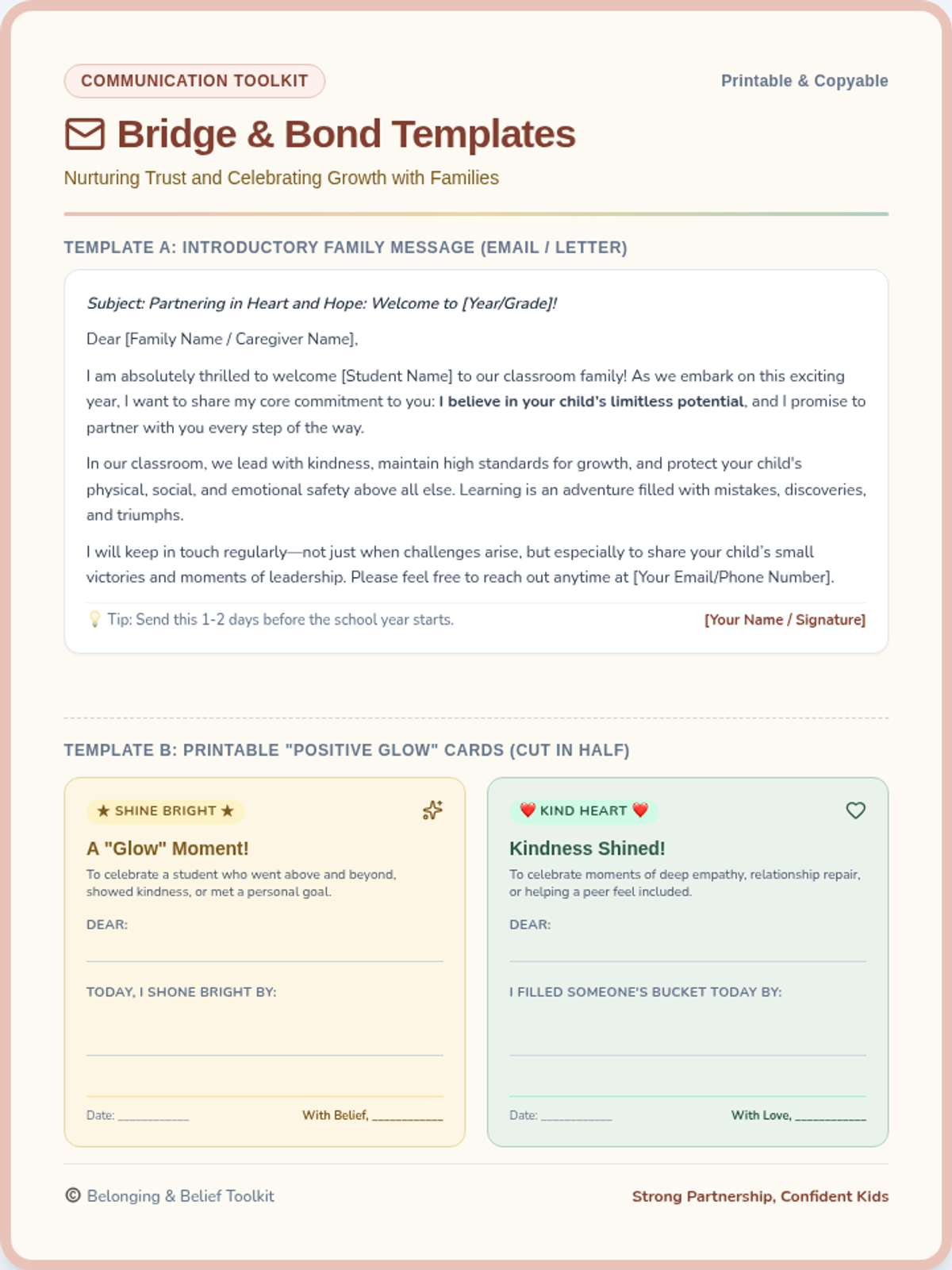
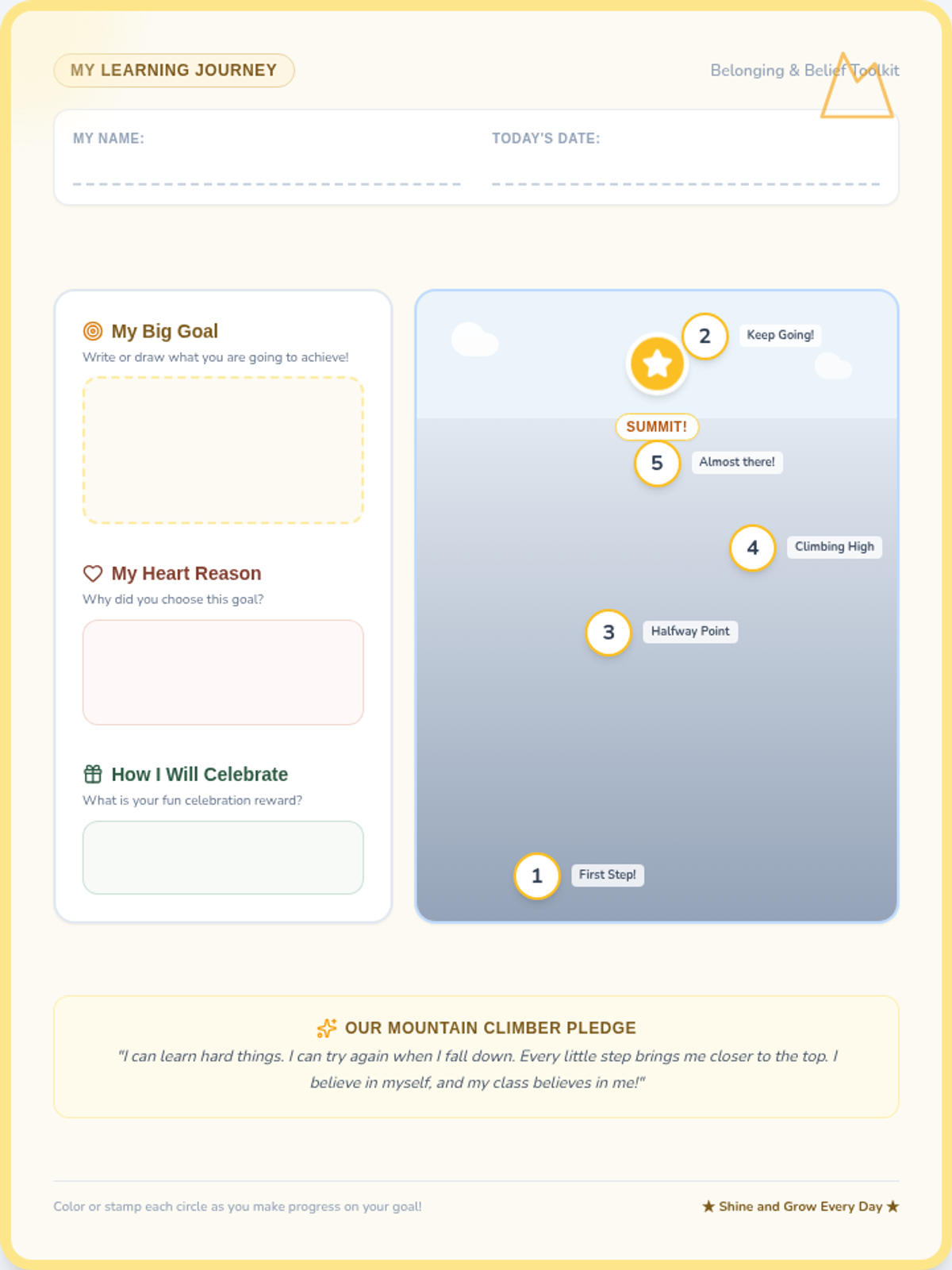
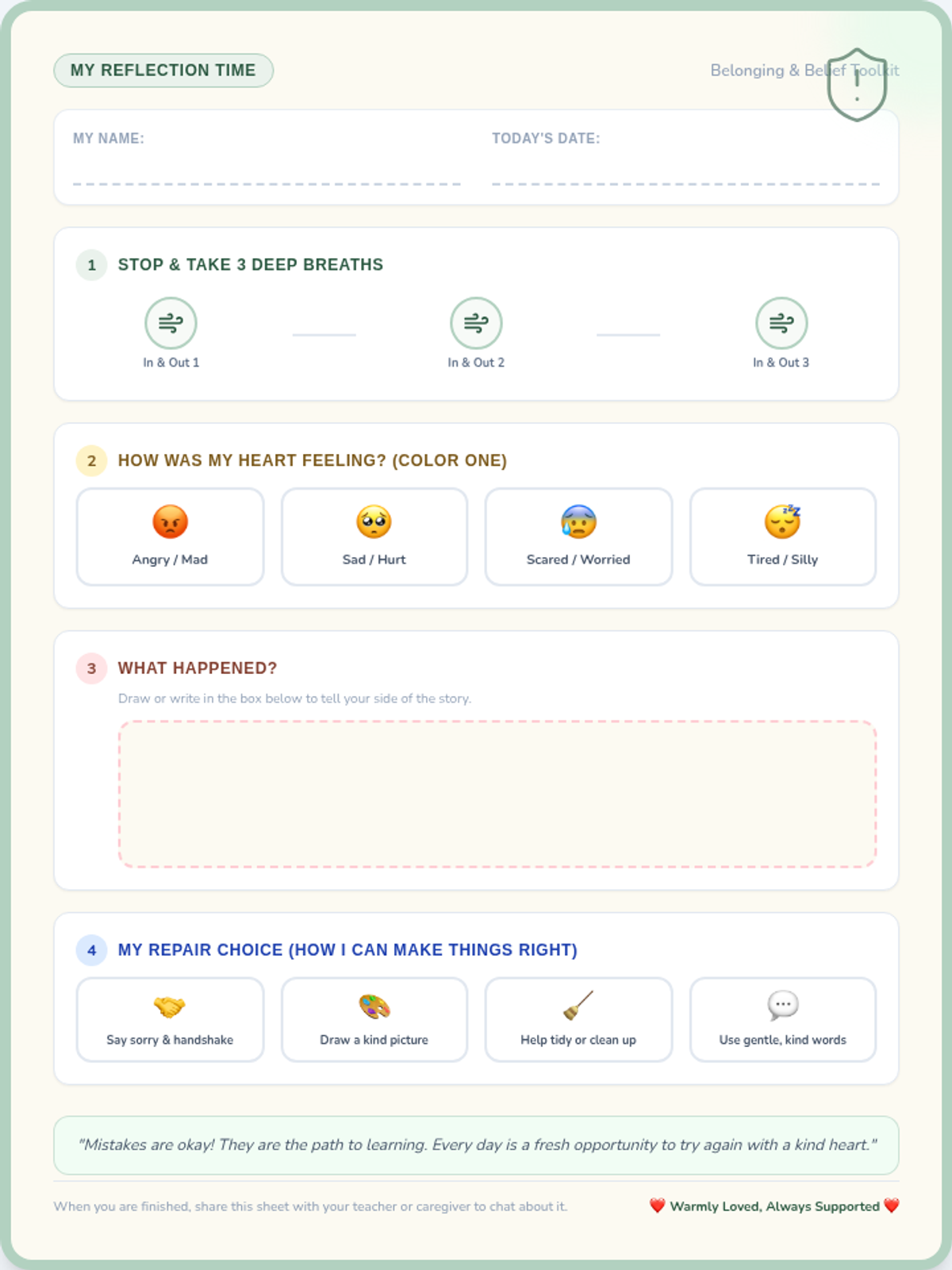
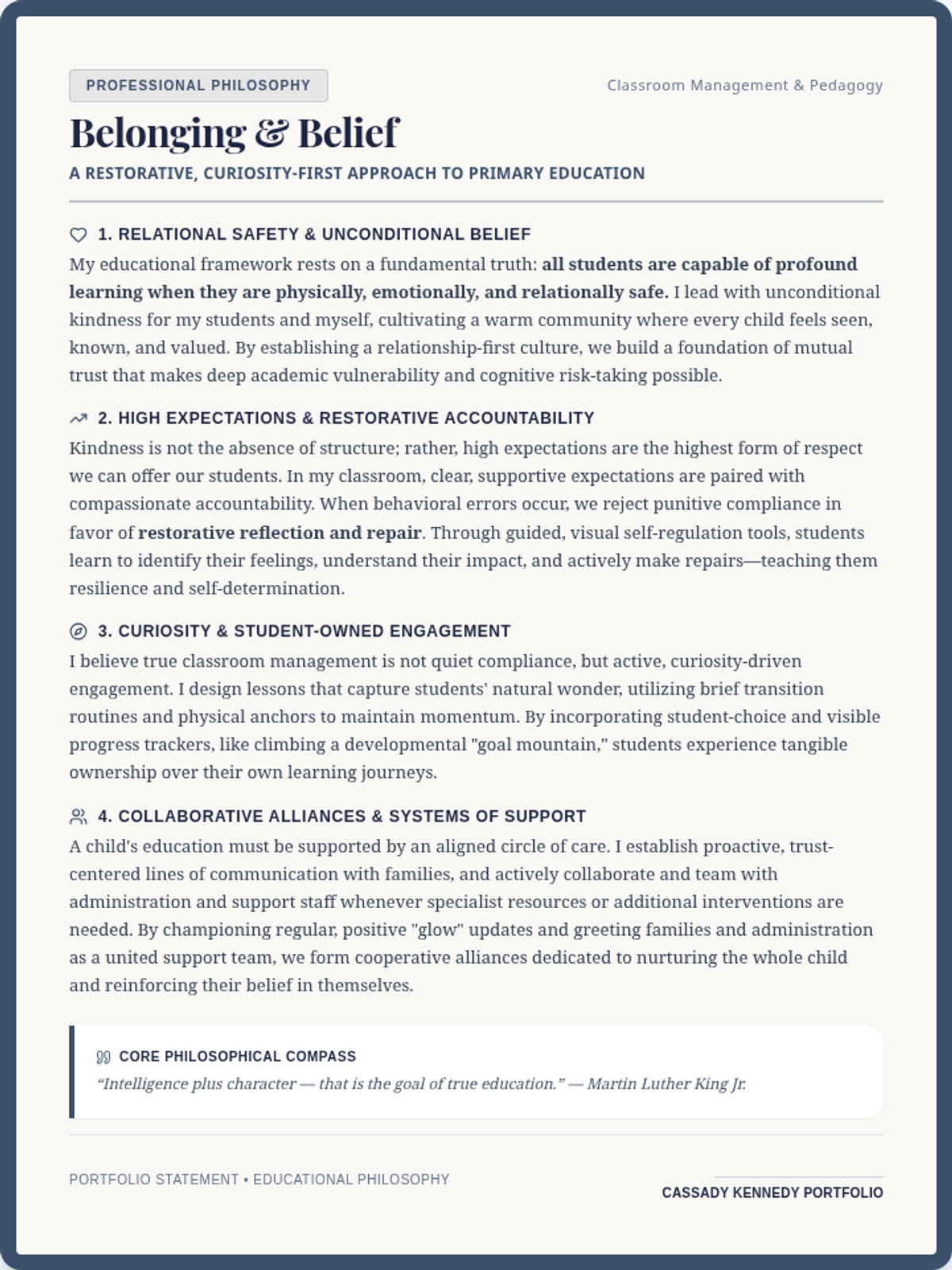
A comprehensive classroom management and family partnership kit designed to cultivate a warm, high-expectation, relationship-first classroom environment. It contains a warm family handbook introduction, positive outreach templates, student goal-tracking charts, curiosity-driven transition routines, and visual reflection/repair sheets for self-regulation.
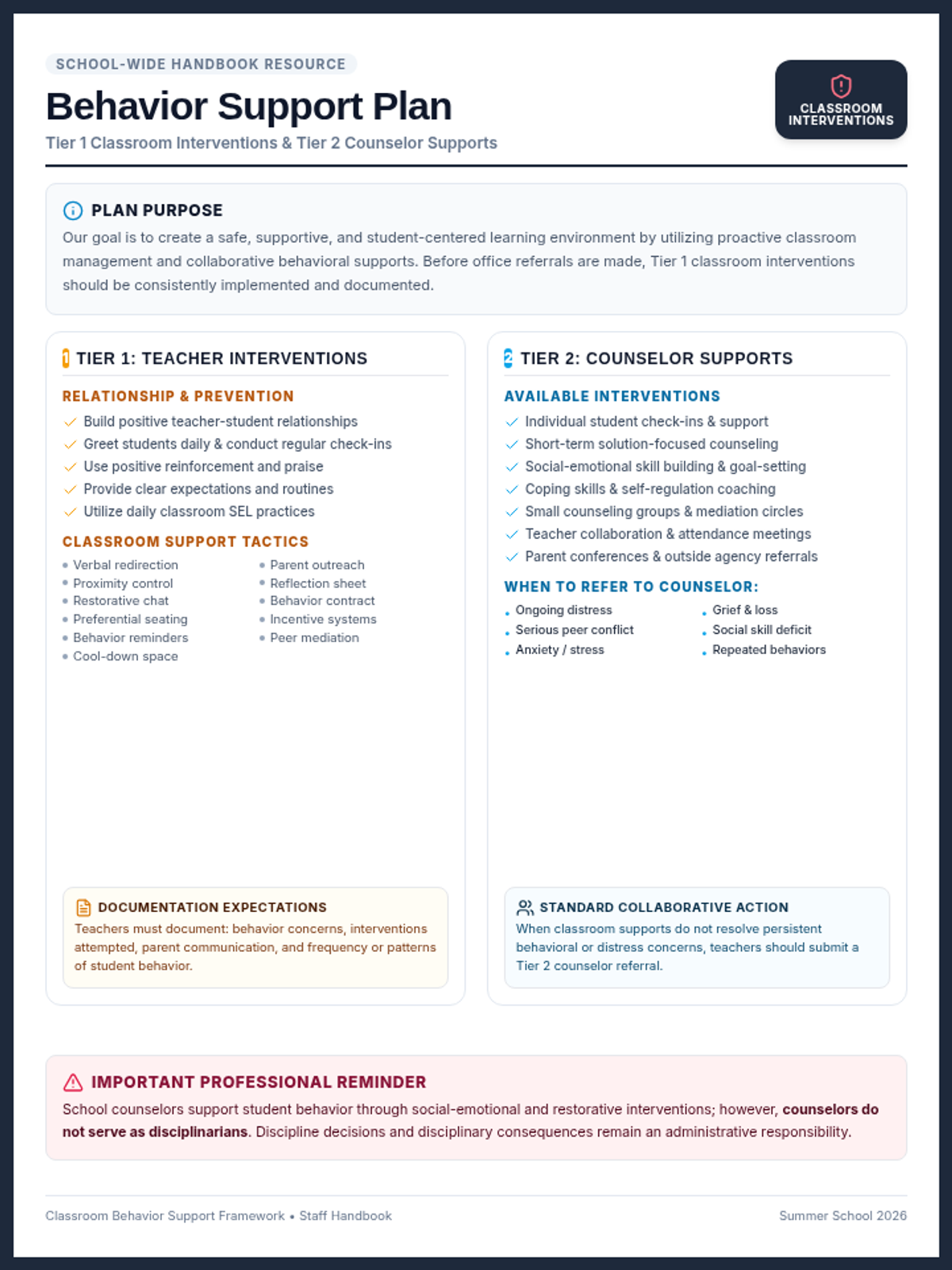
A comprehensive professional development and resource package for educators, mapping out Tier 1 classroom interventions and Tier 2 school counselor supports to build a proactive, collaborative, and restorative student support culture.
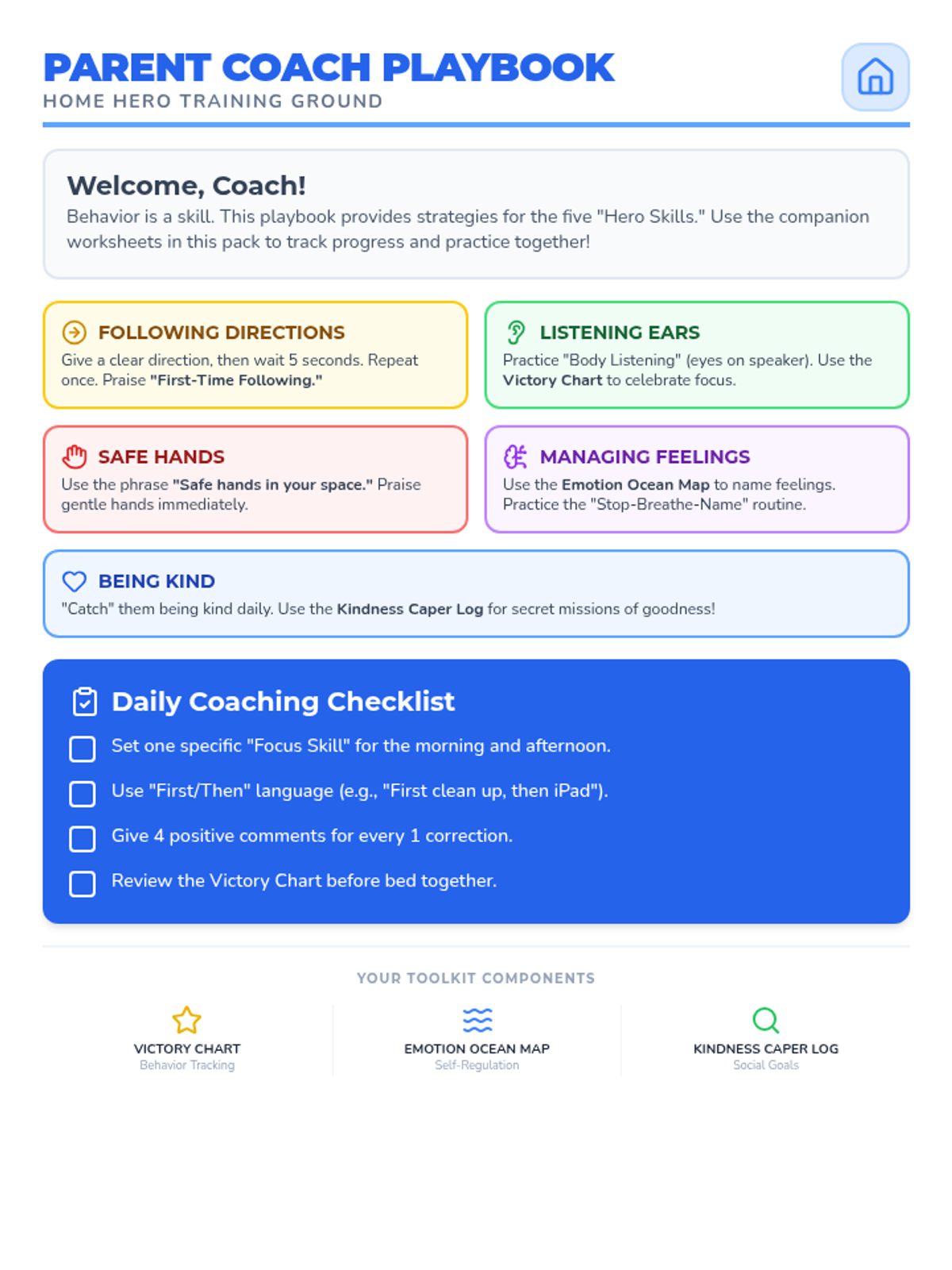
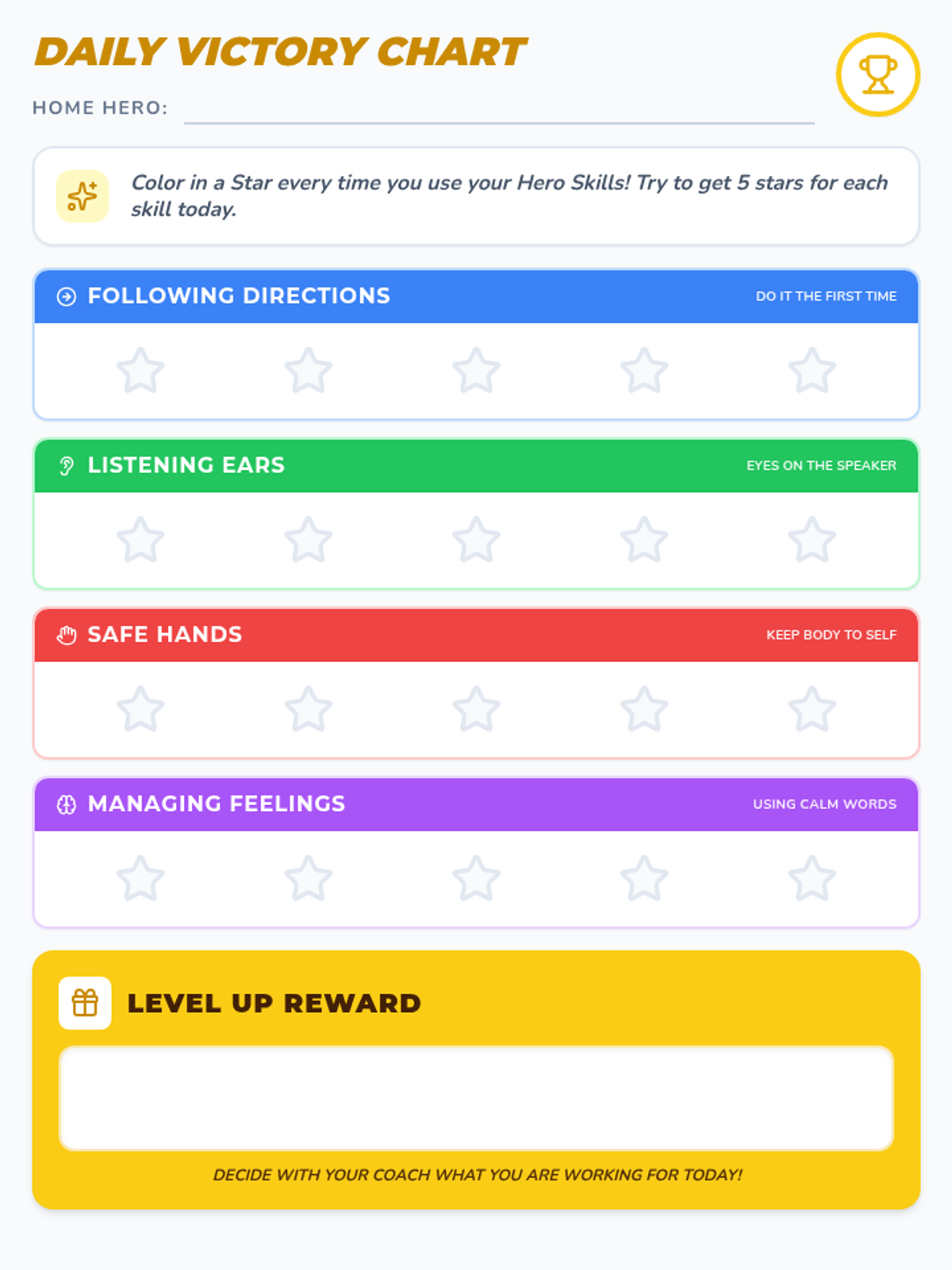
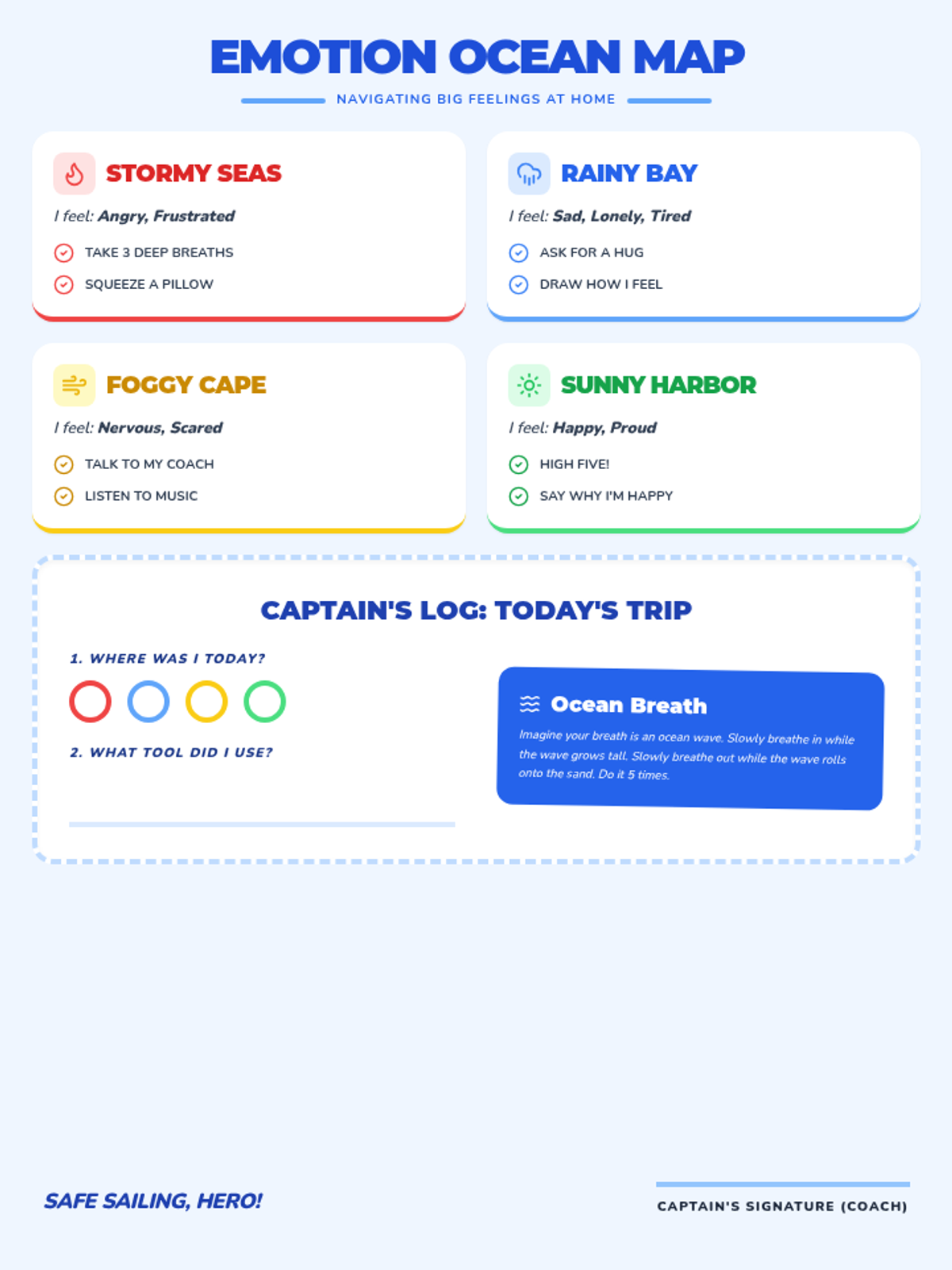
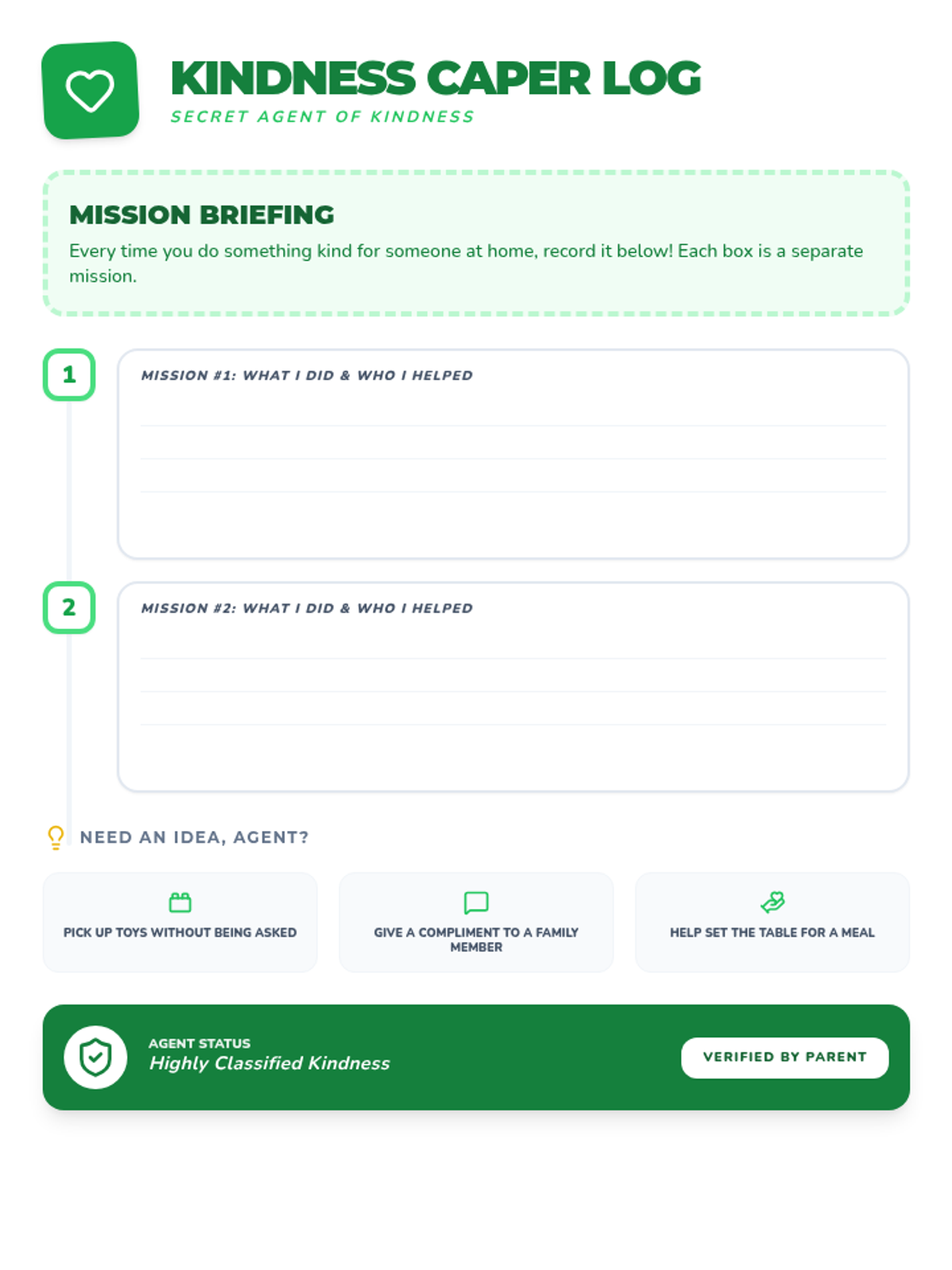
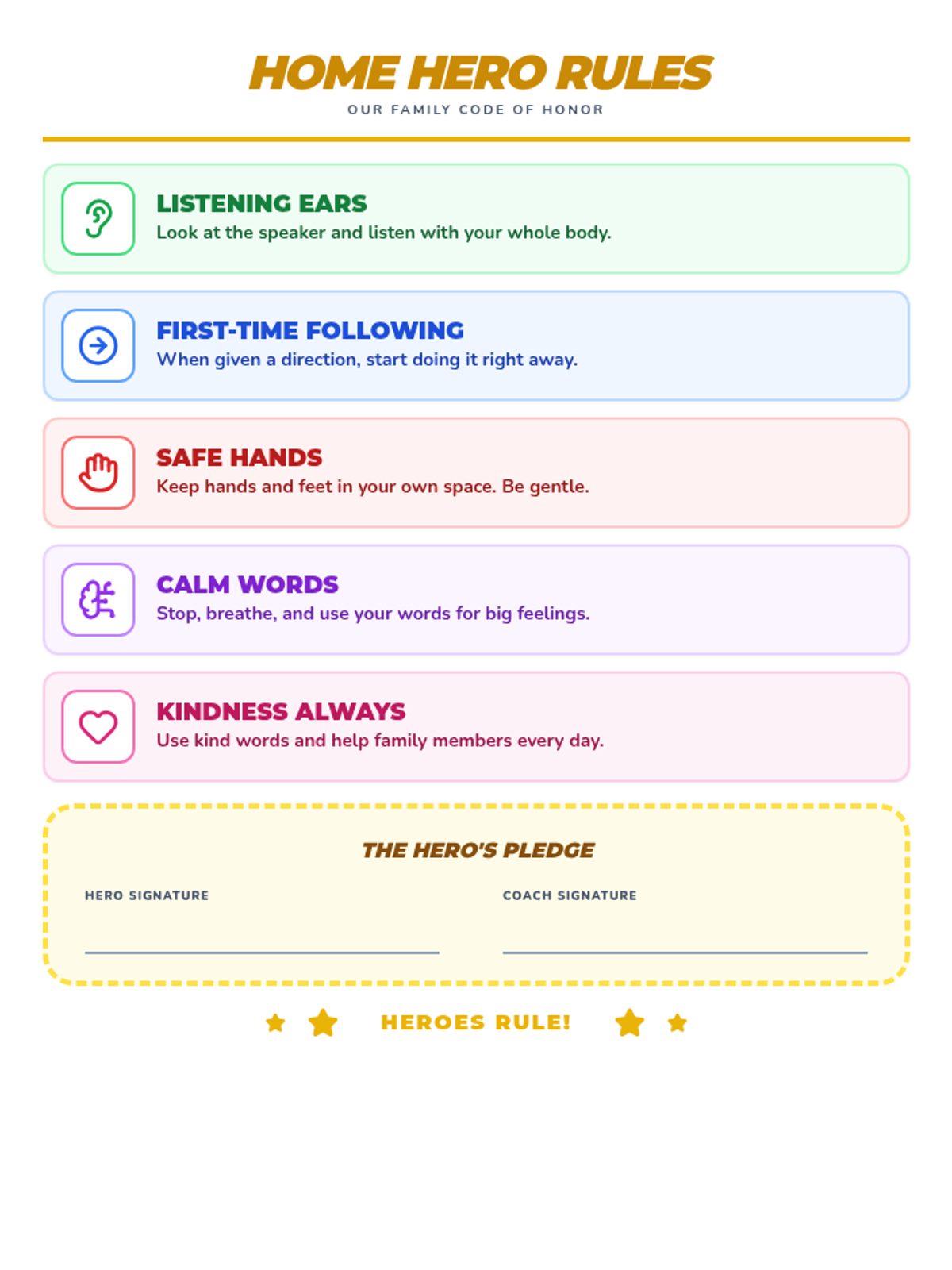
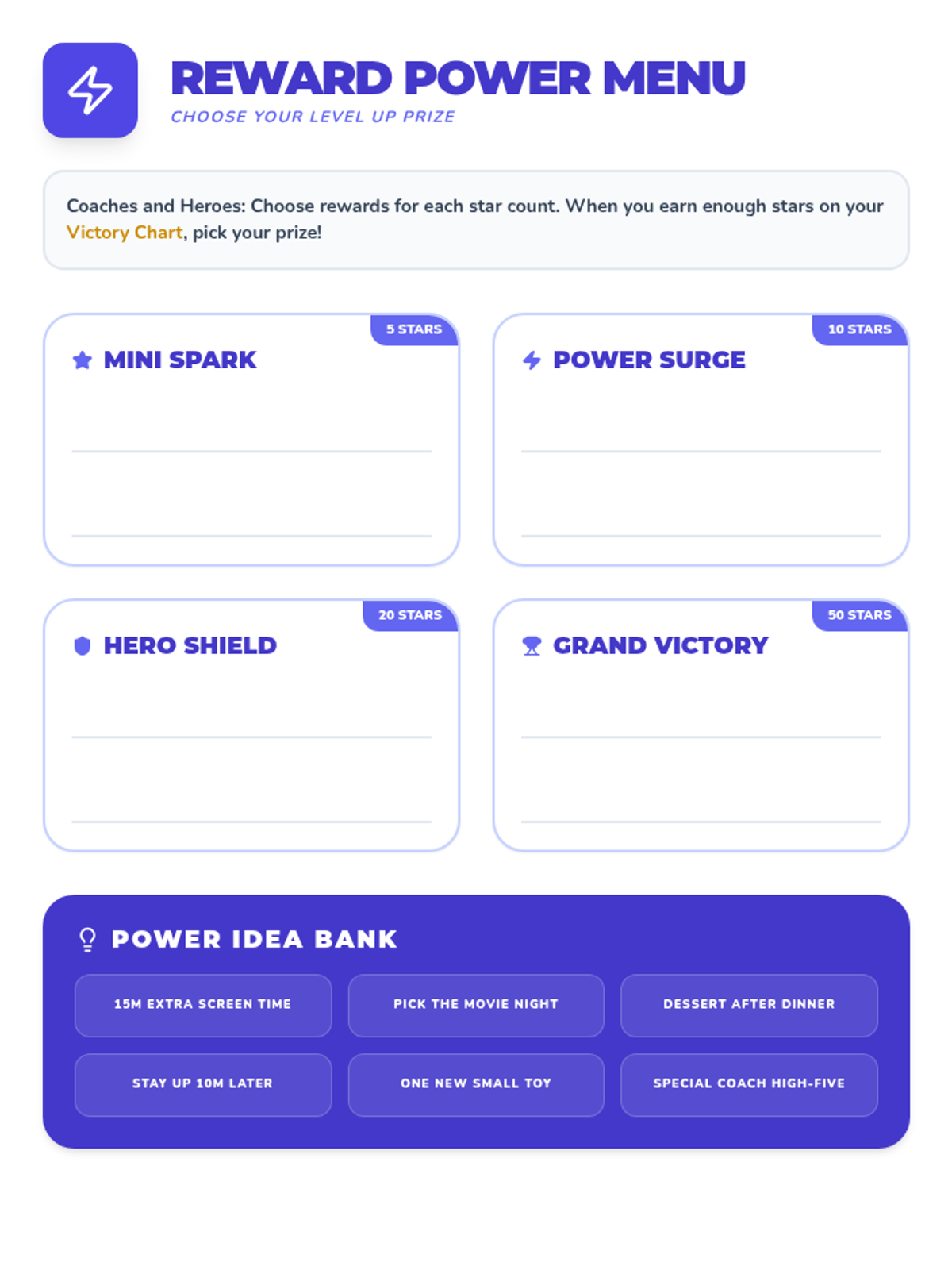
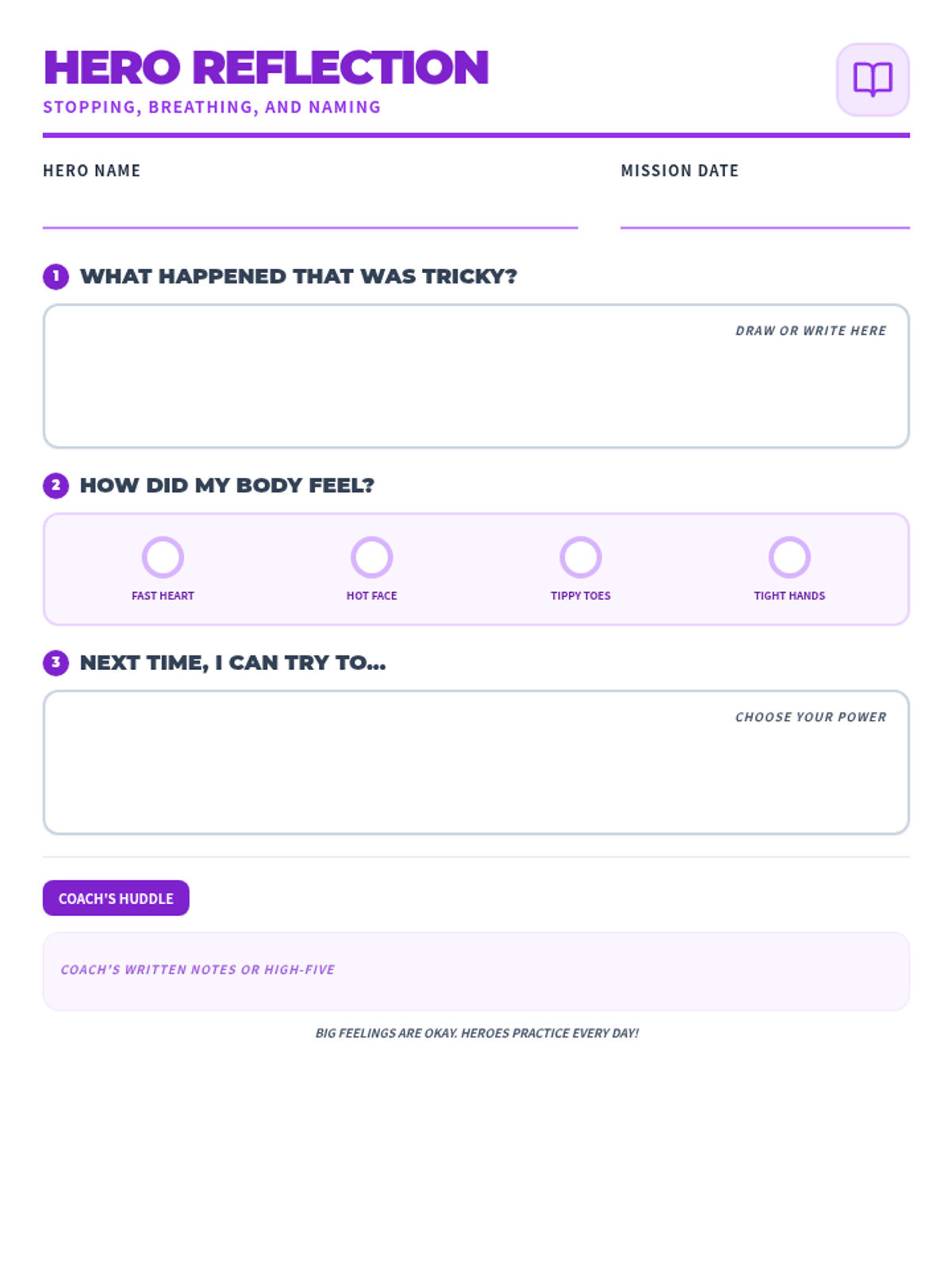
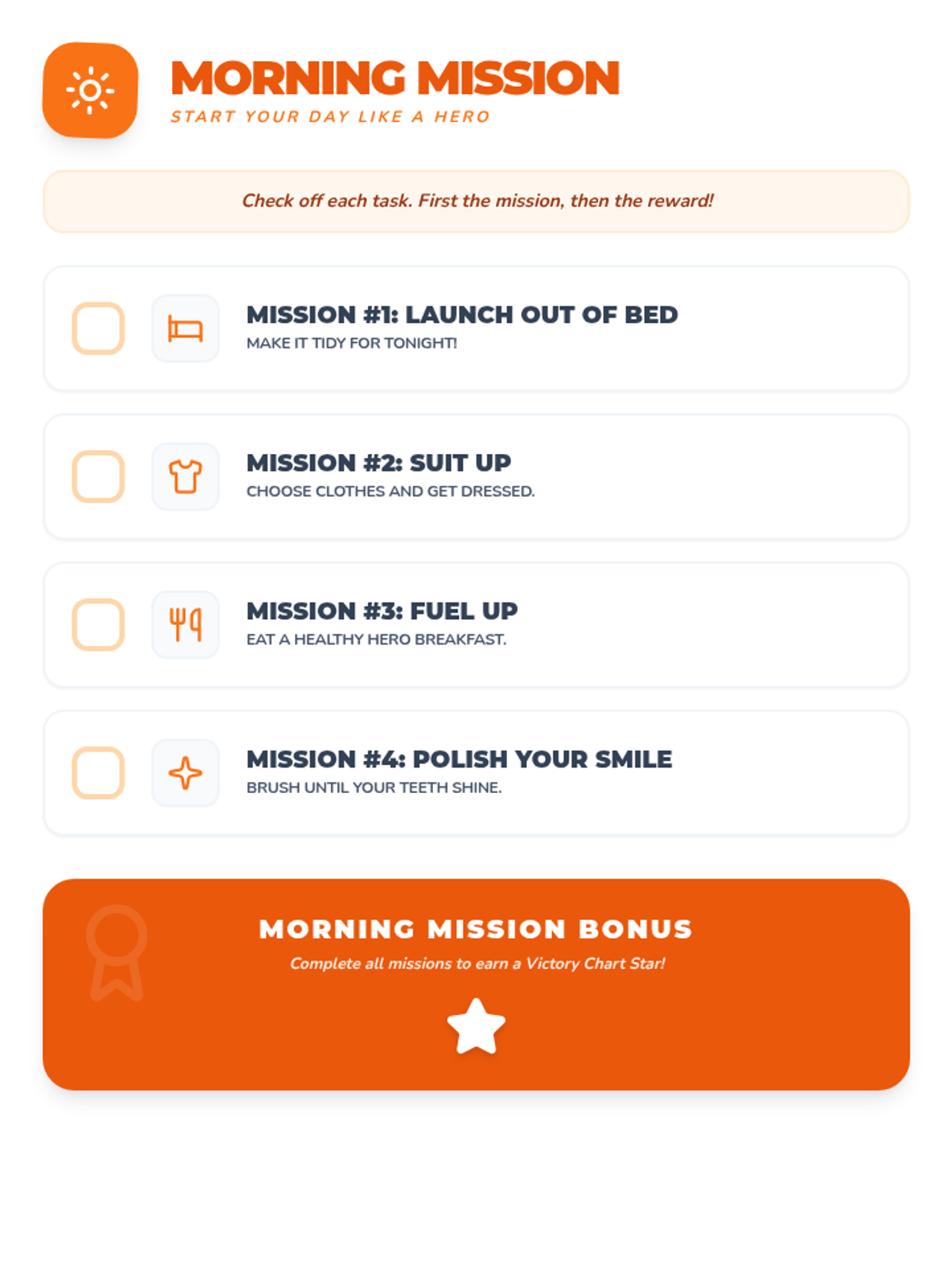
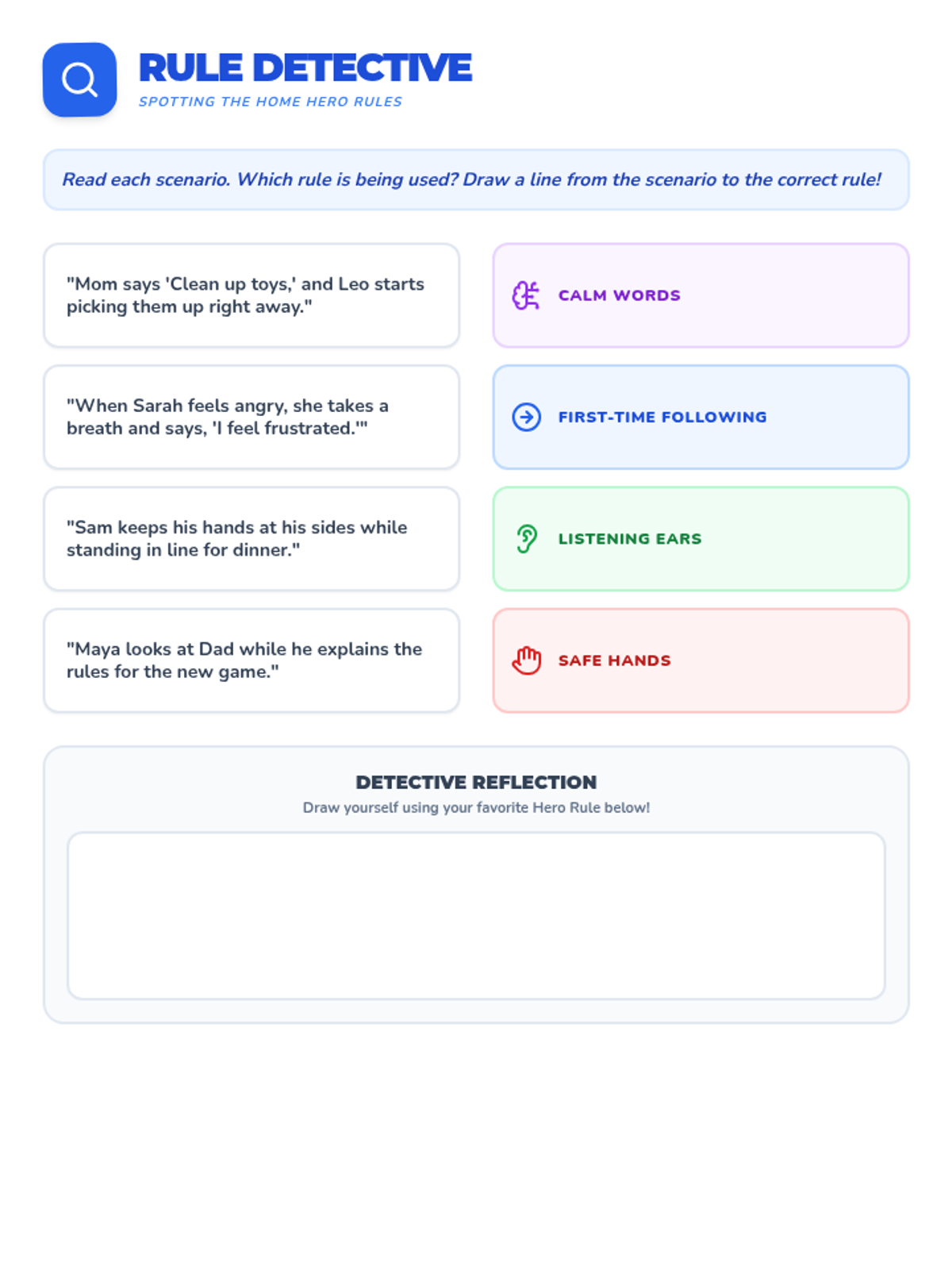
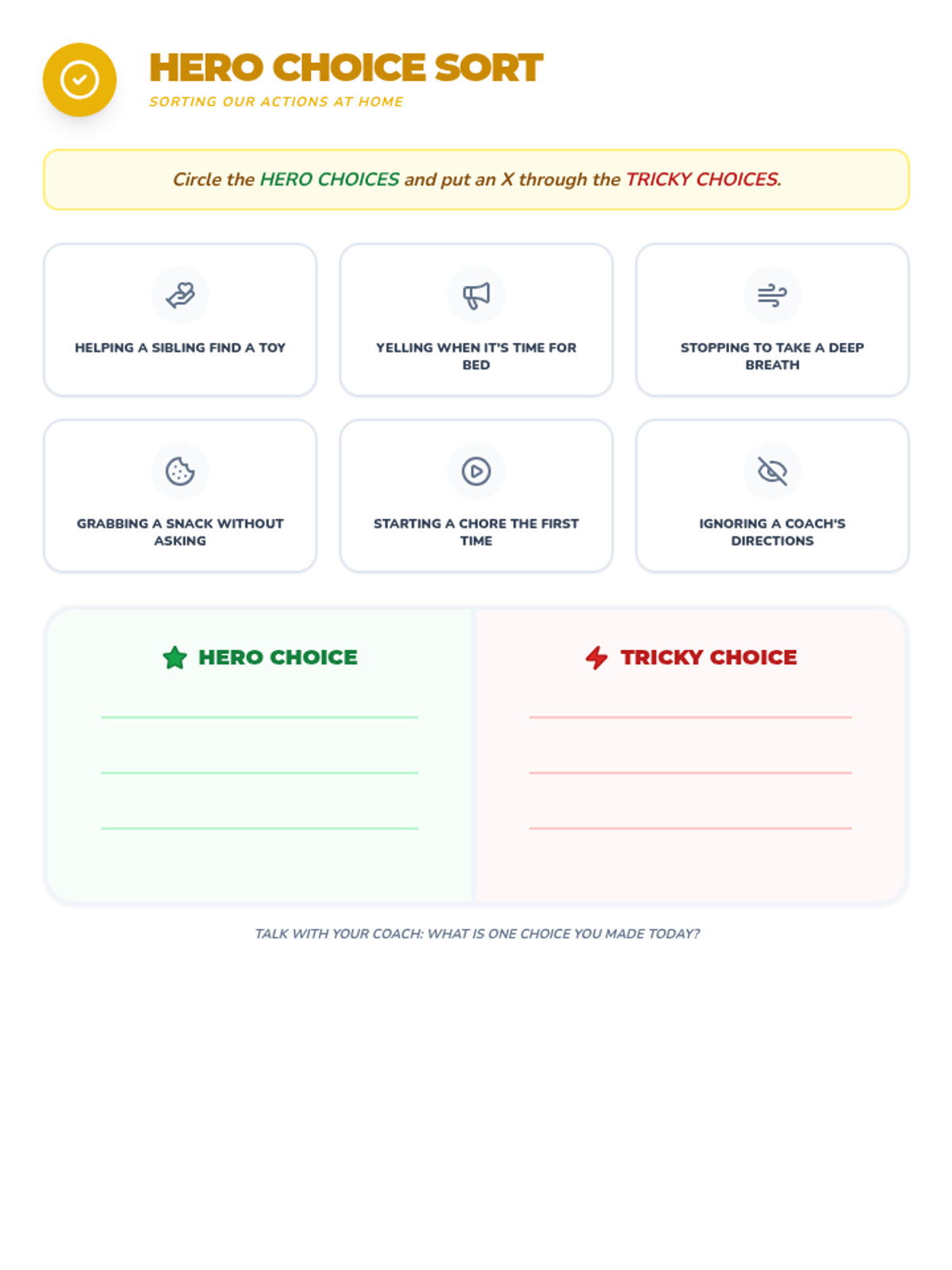
A comprehensive set of home-based tools designed to help parents support their child's behavioral growth in following directions, emotional regulation, and social kindness.
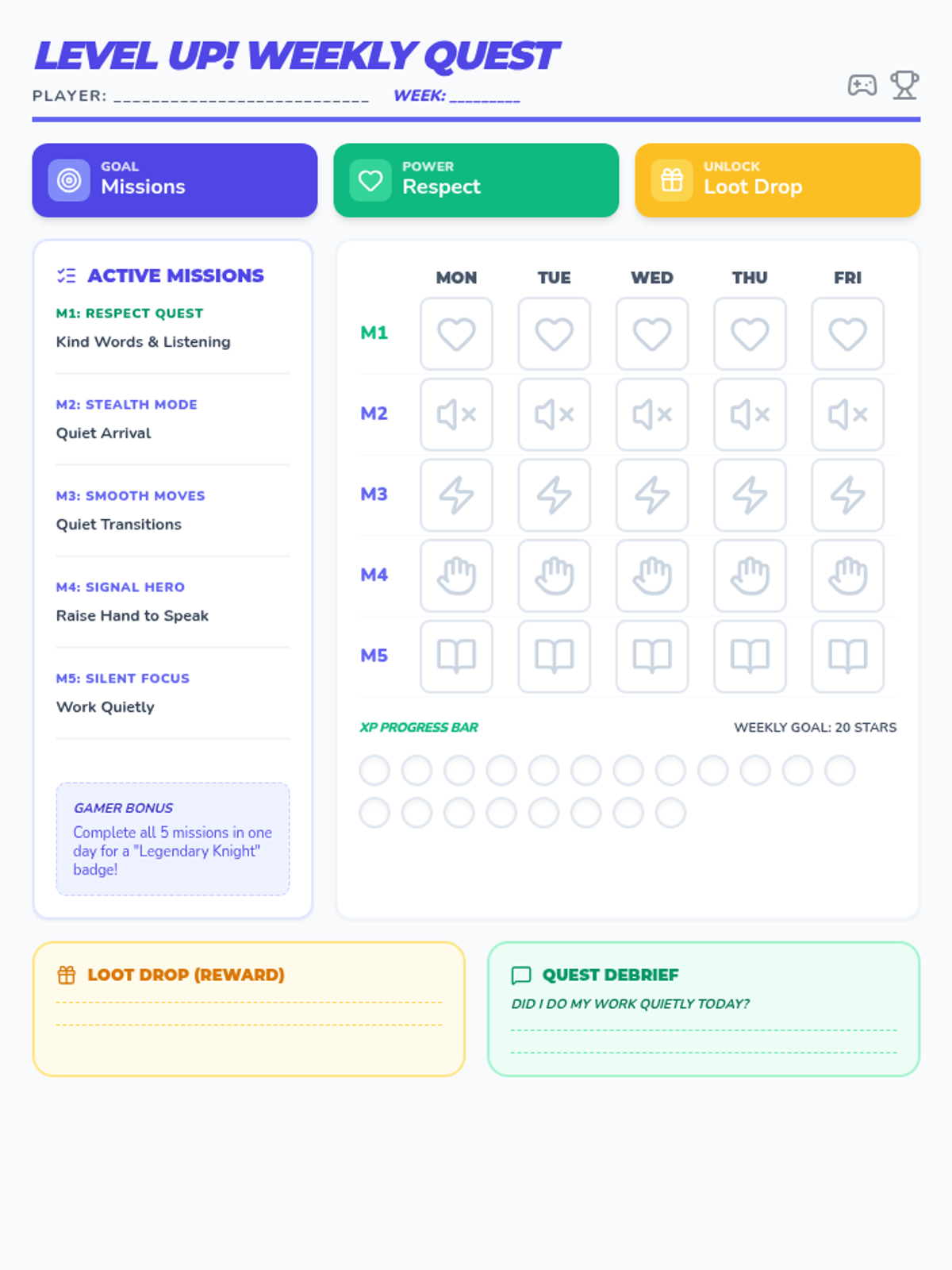
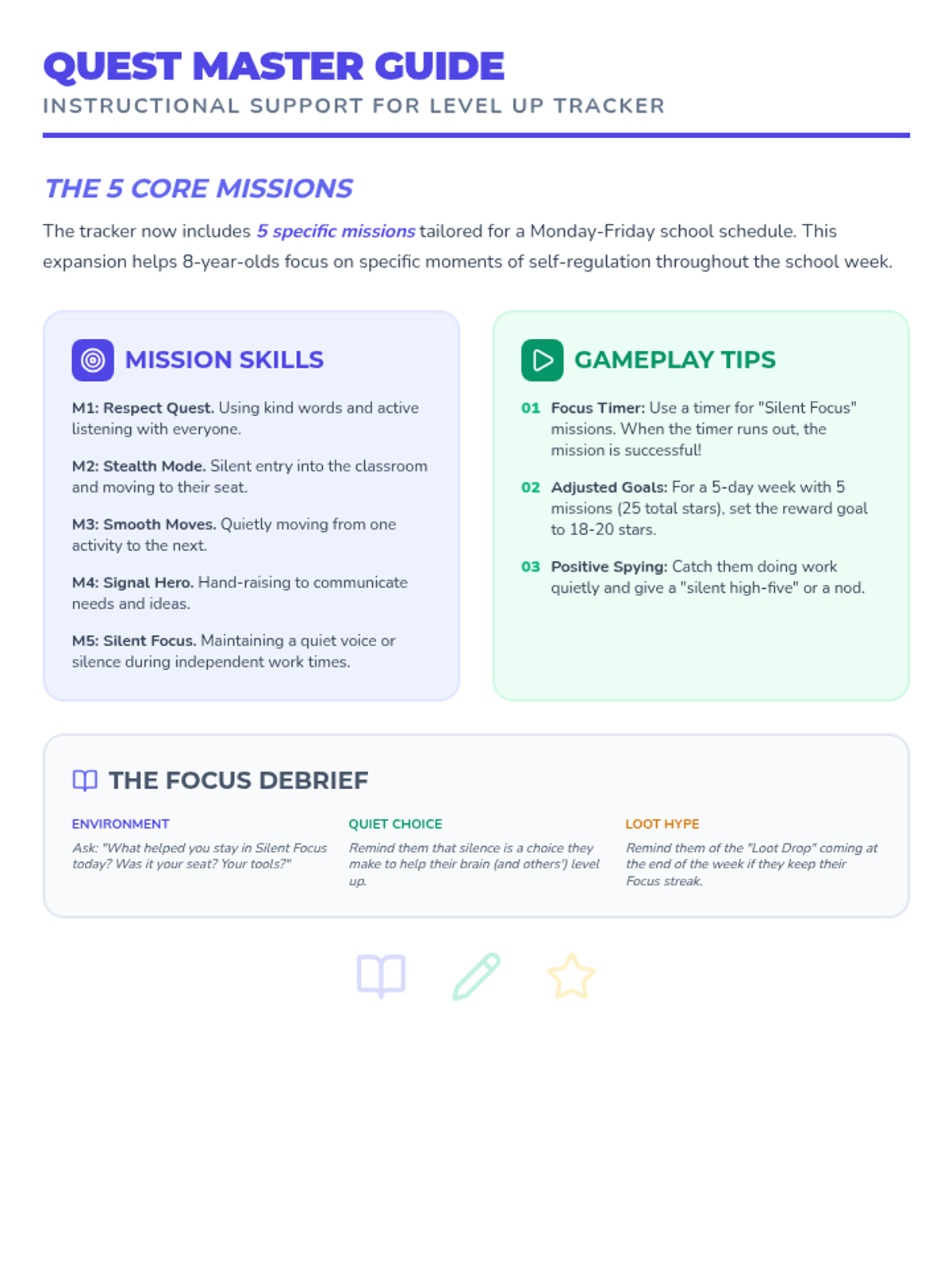
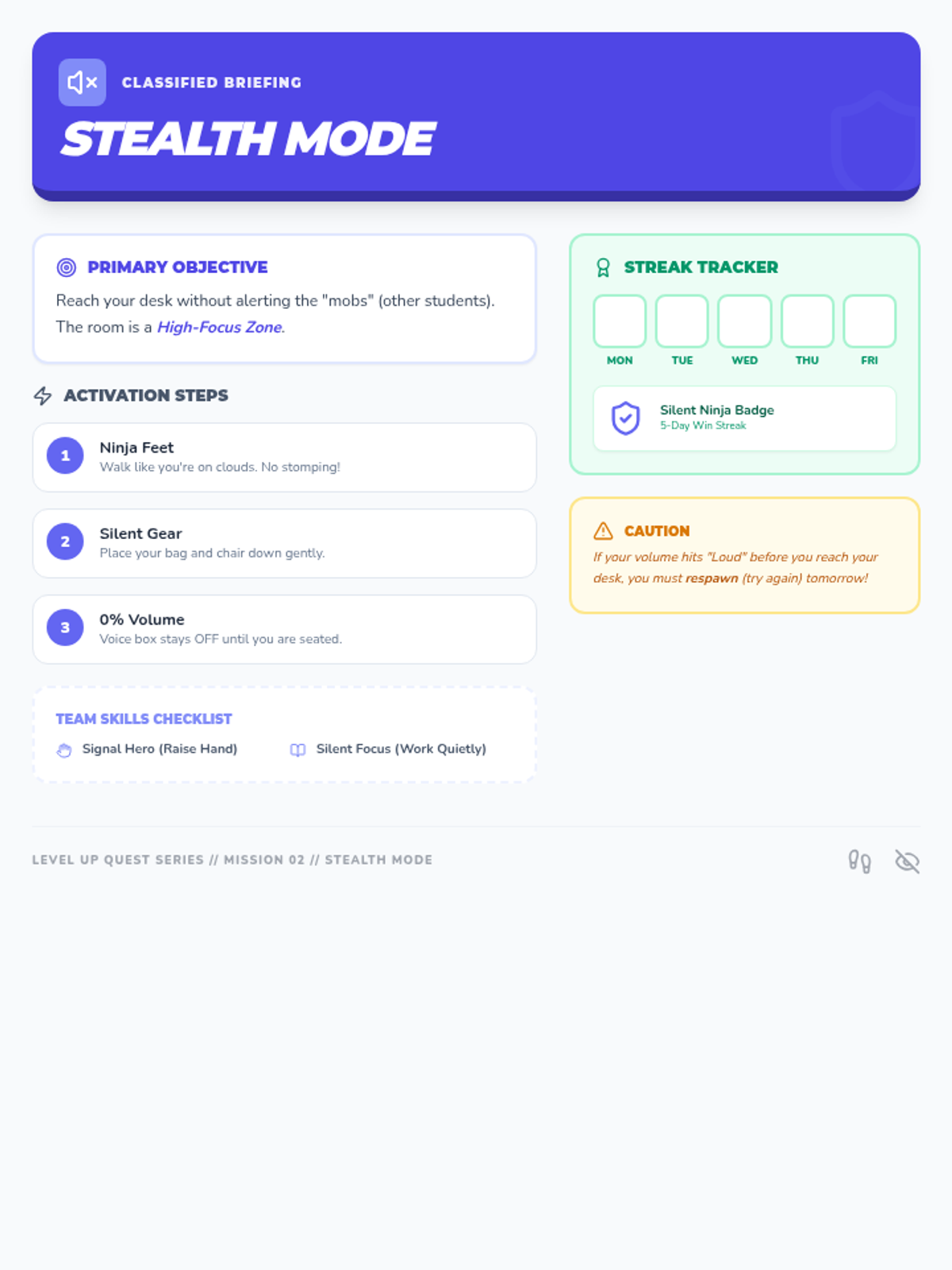
A gaming-inspired behavior management system for 8-year-olds that uses positive reinforcement and visual goal-tracking. It focuses on respect, quiet classroom navigation, and proper communication signals.
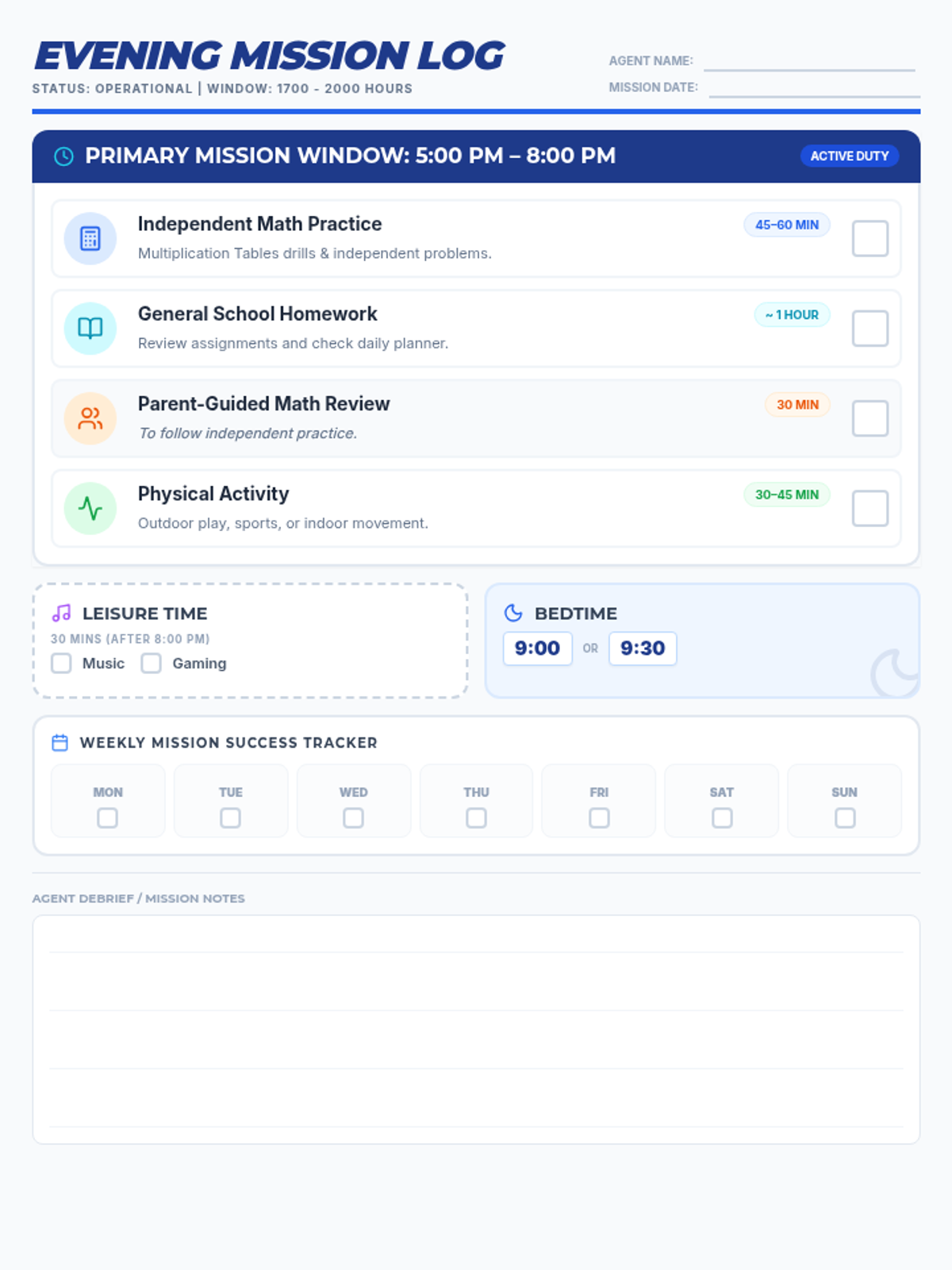
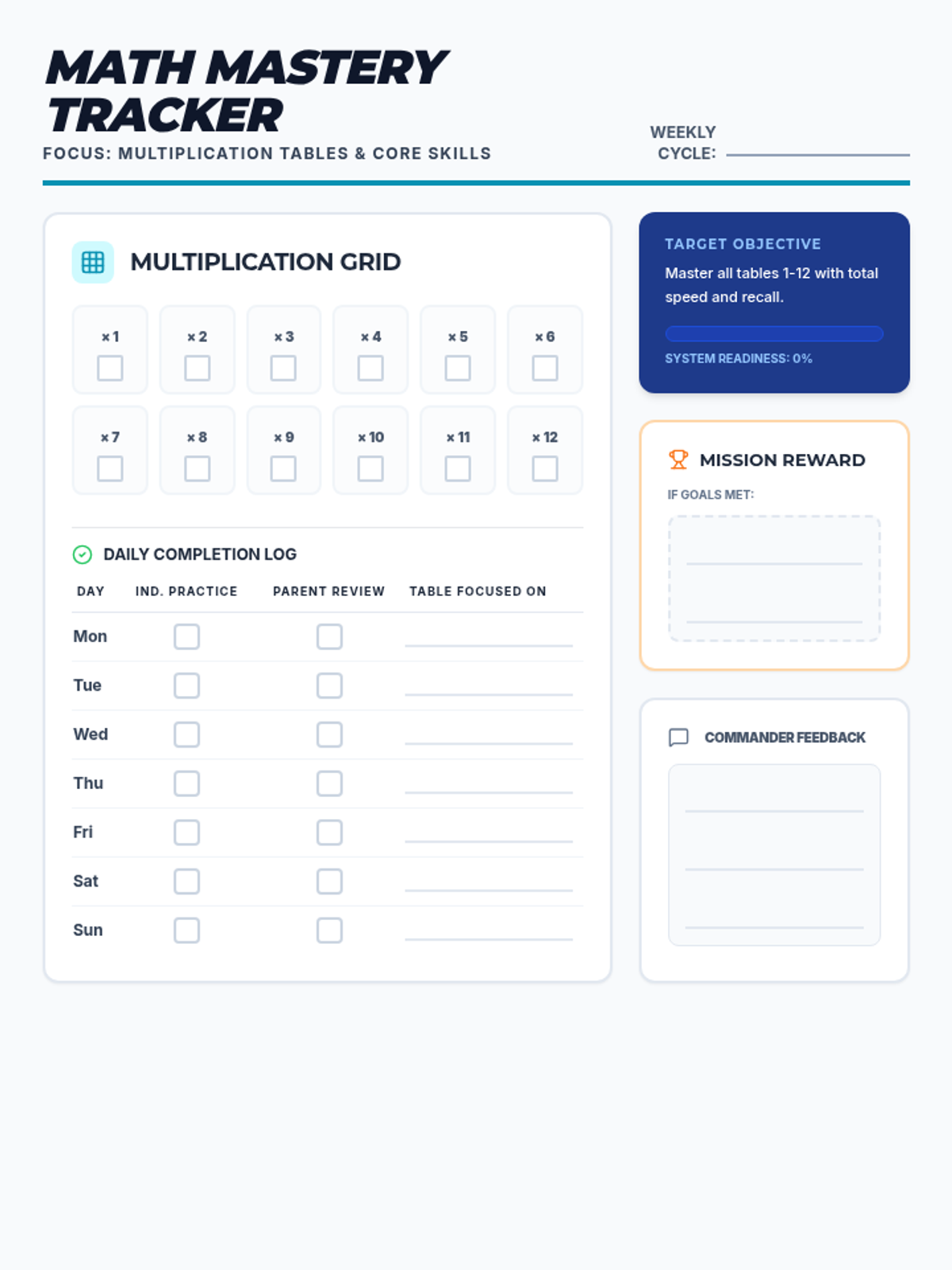
A structured evening planning system designed to help students manage homework, math practice, and physical activity with clear goals and a 'Mission Control' theme.
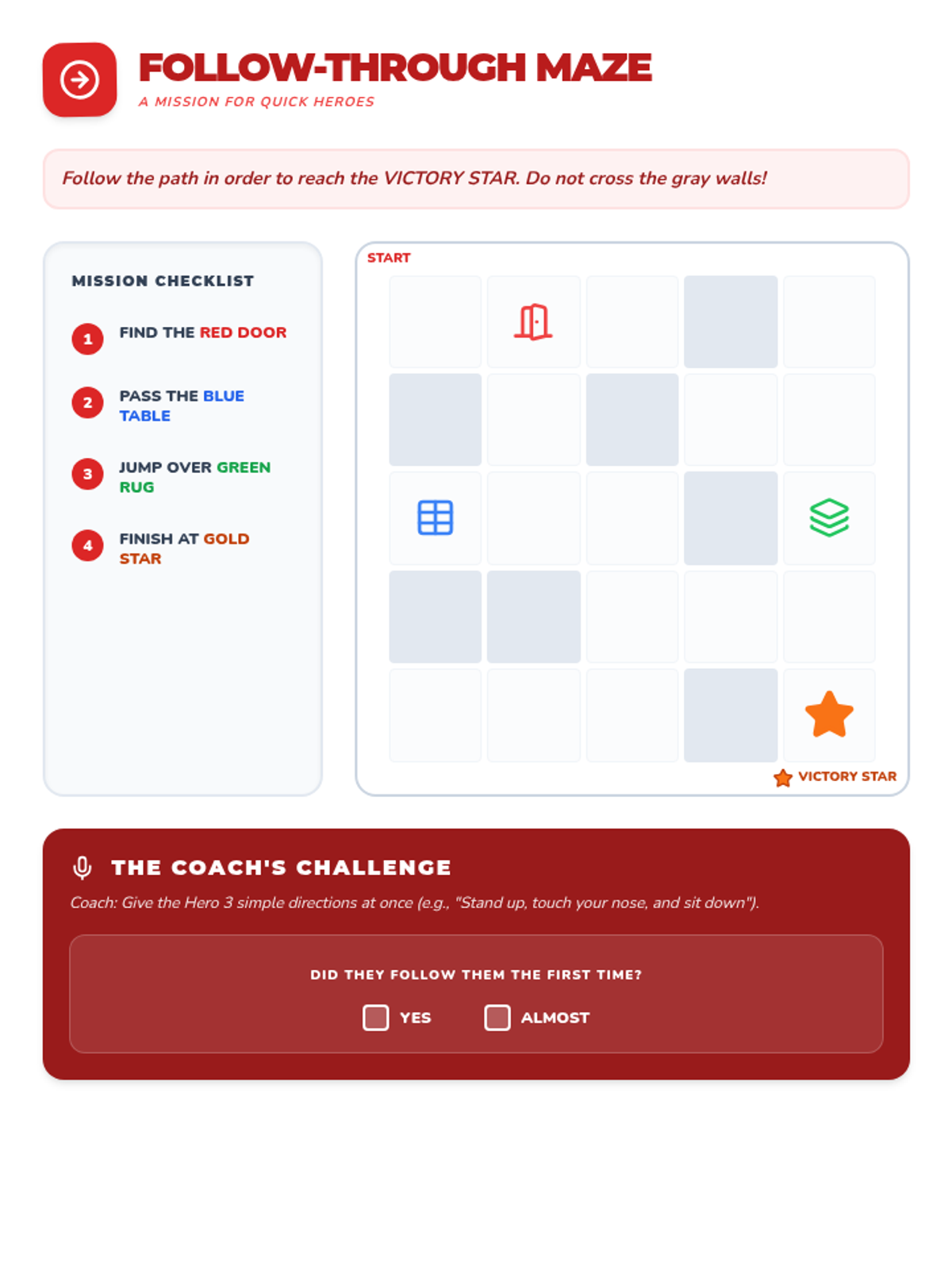
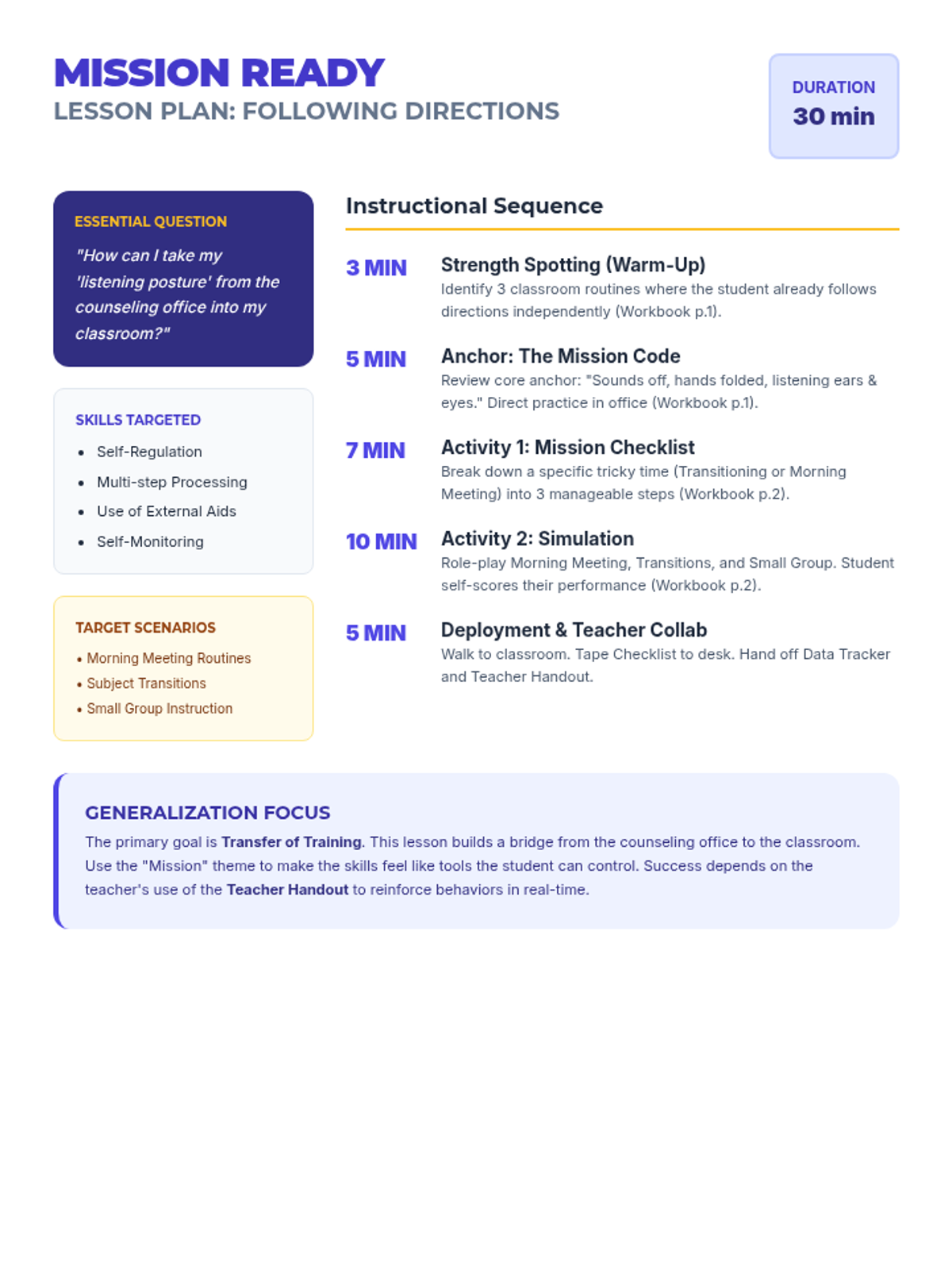
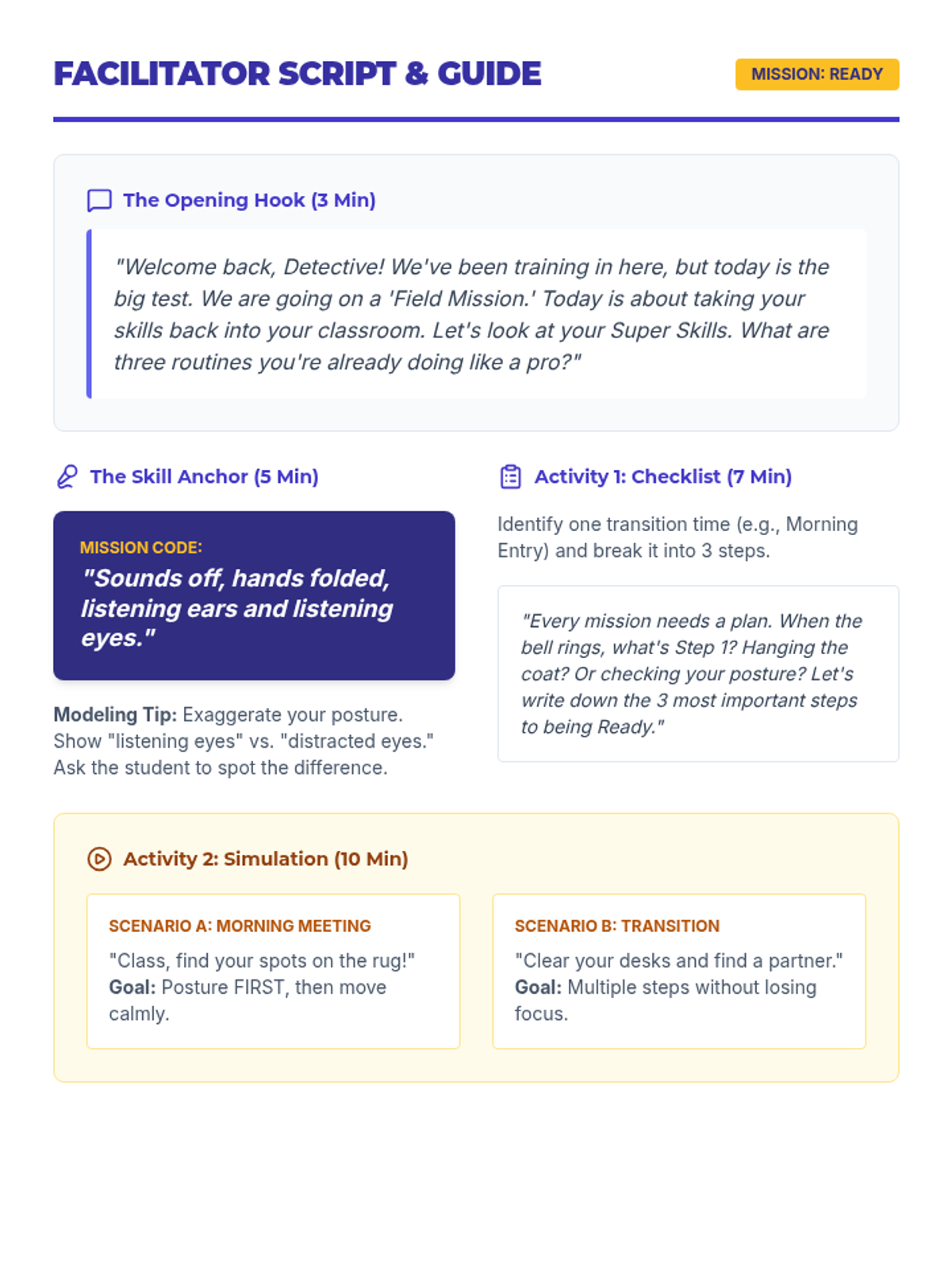
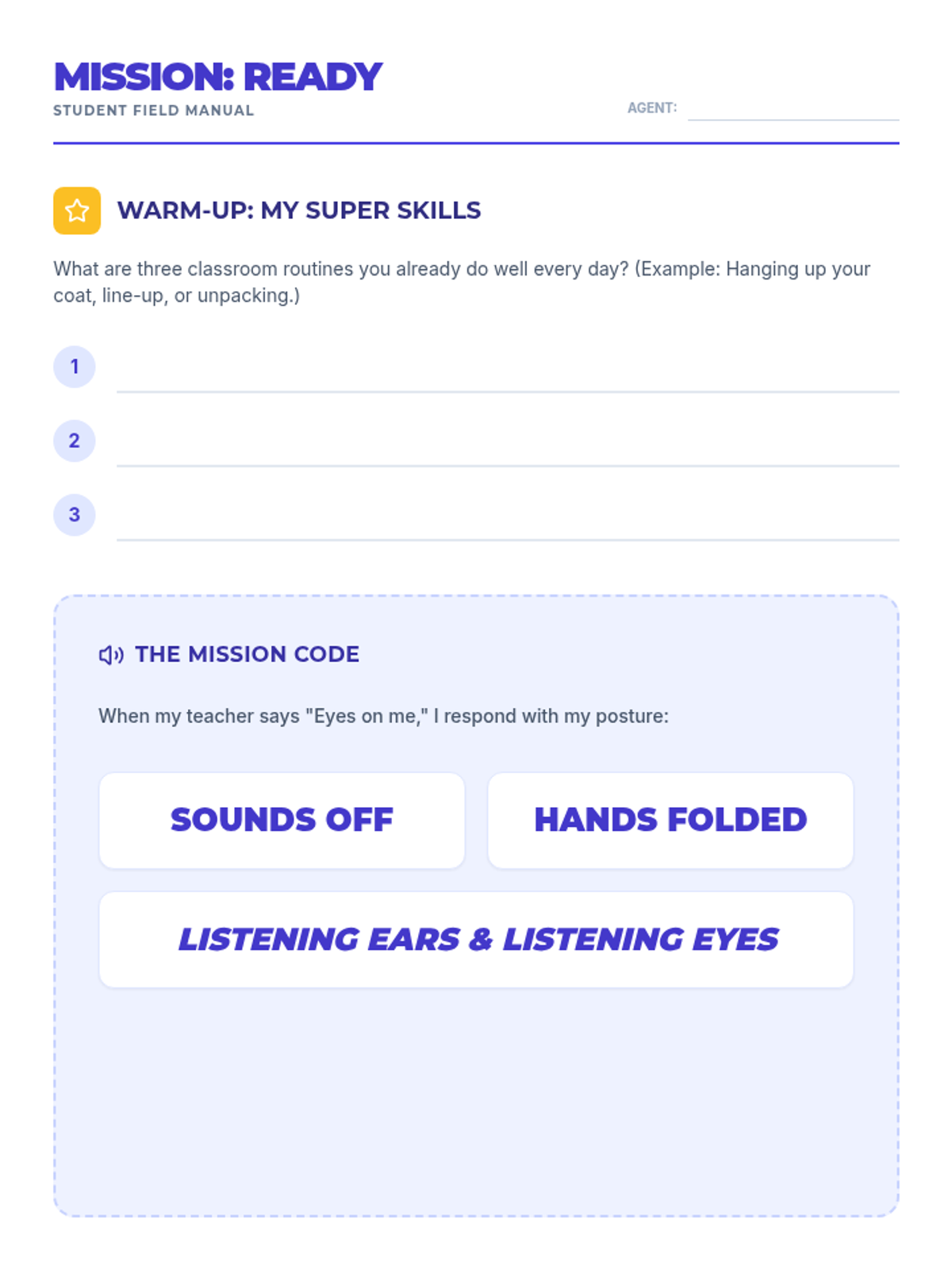
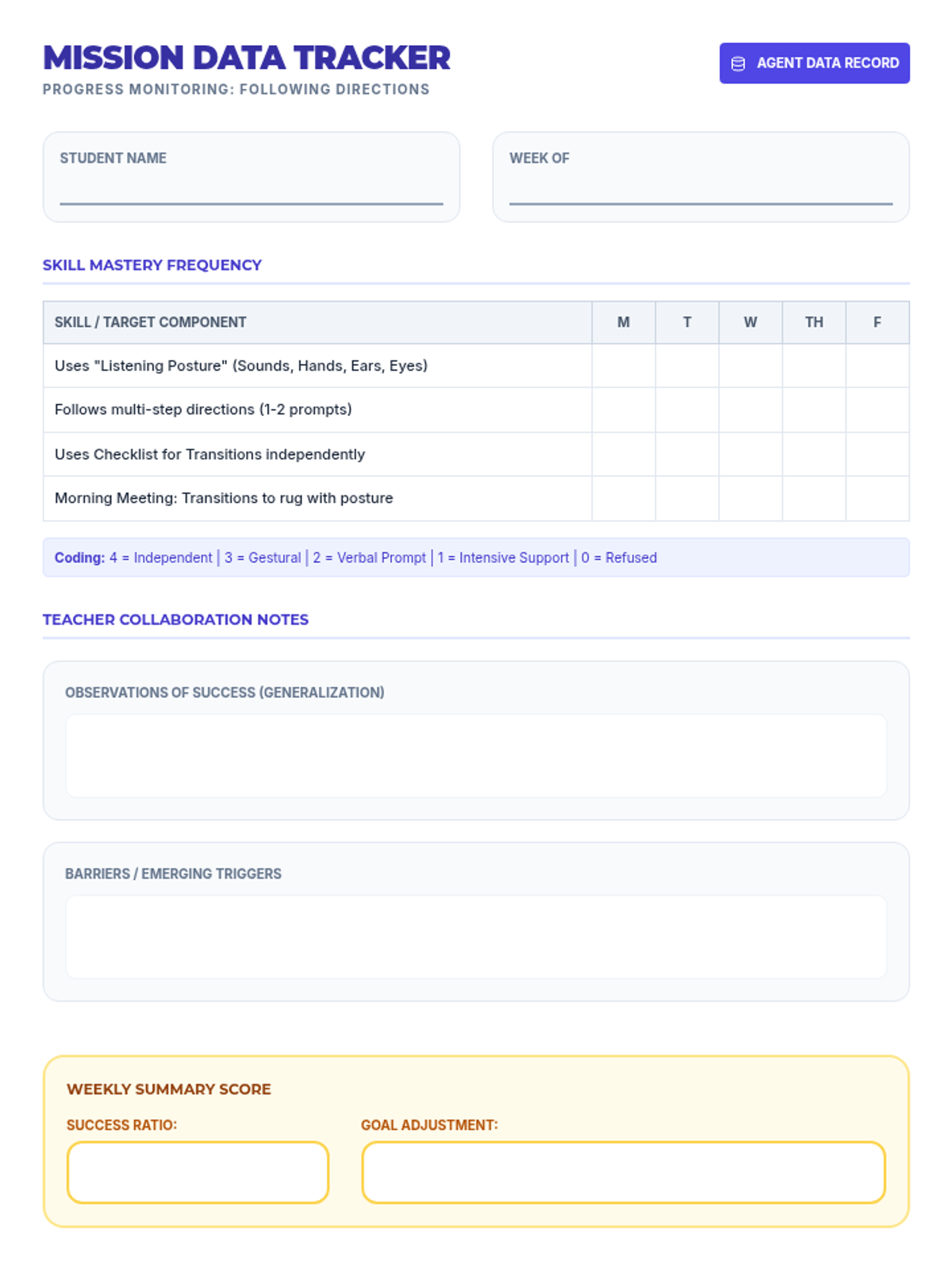
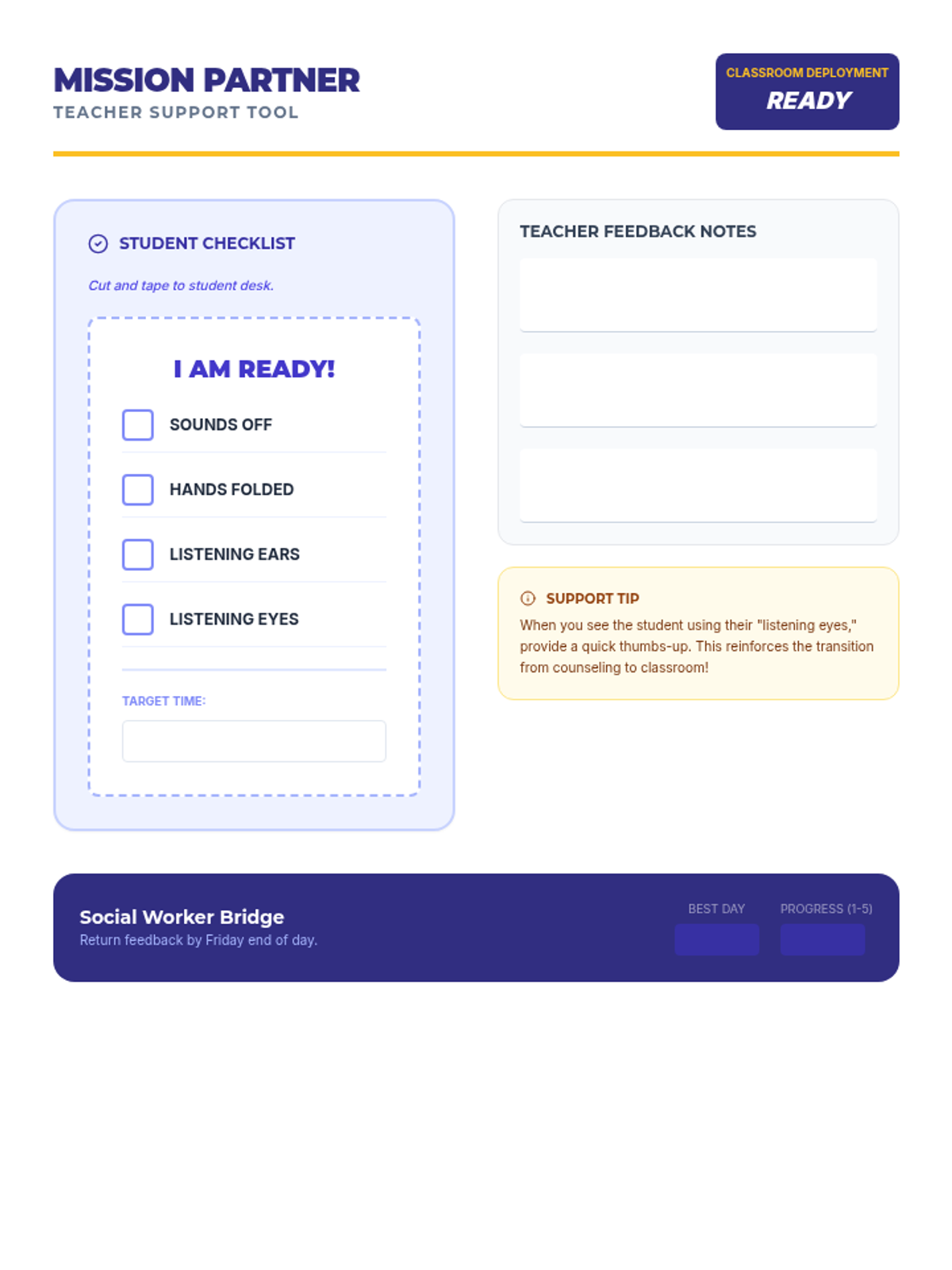
A comprehensive counseling lesson focused on generalizing following-direction skills from the counseling room to the classroom, featuring a 'Mission Ready' theme.
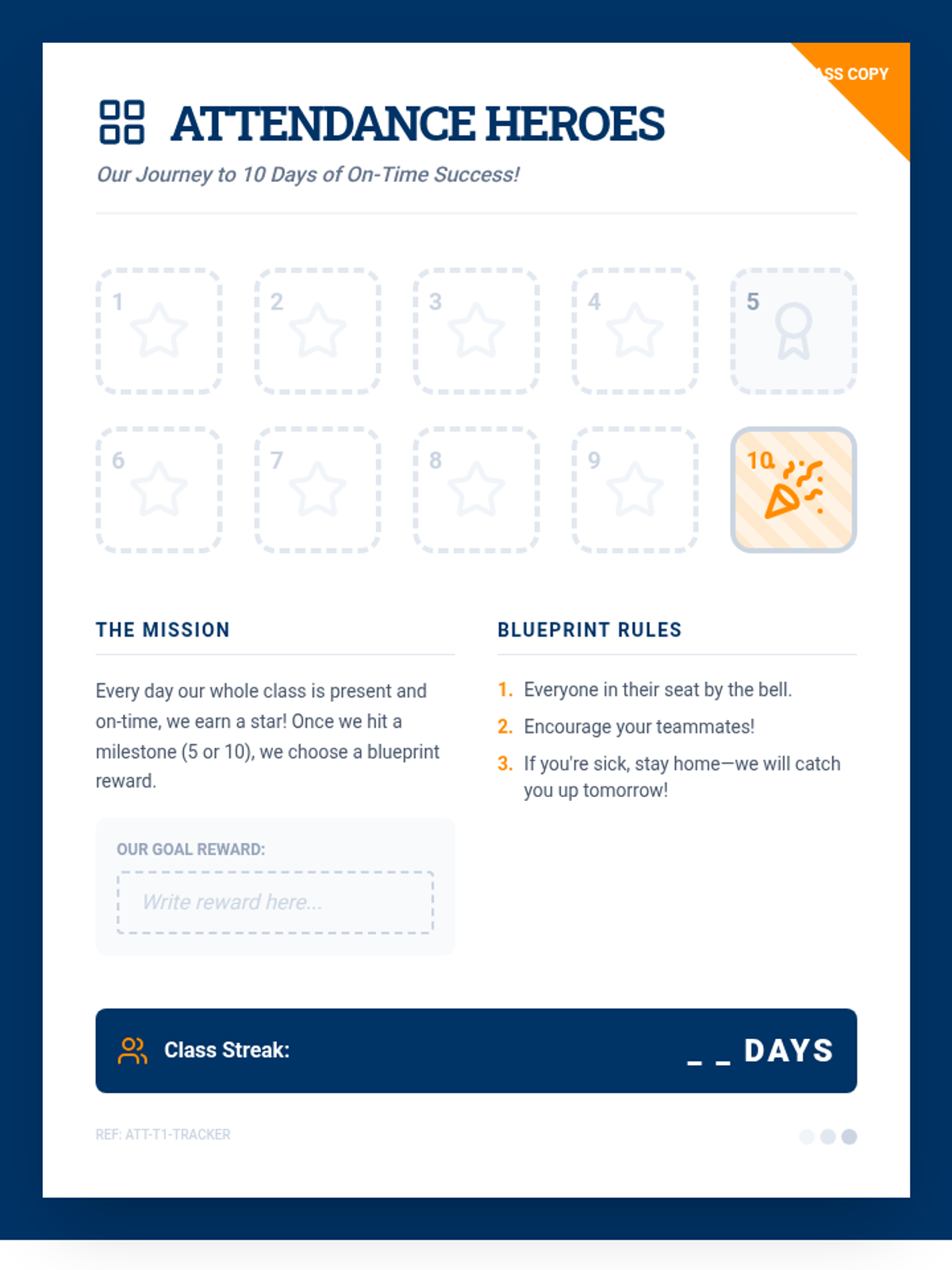
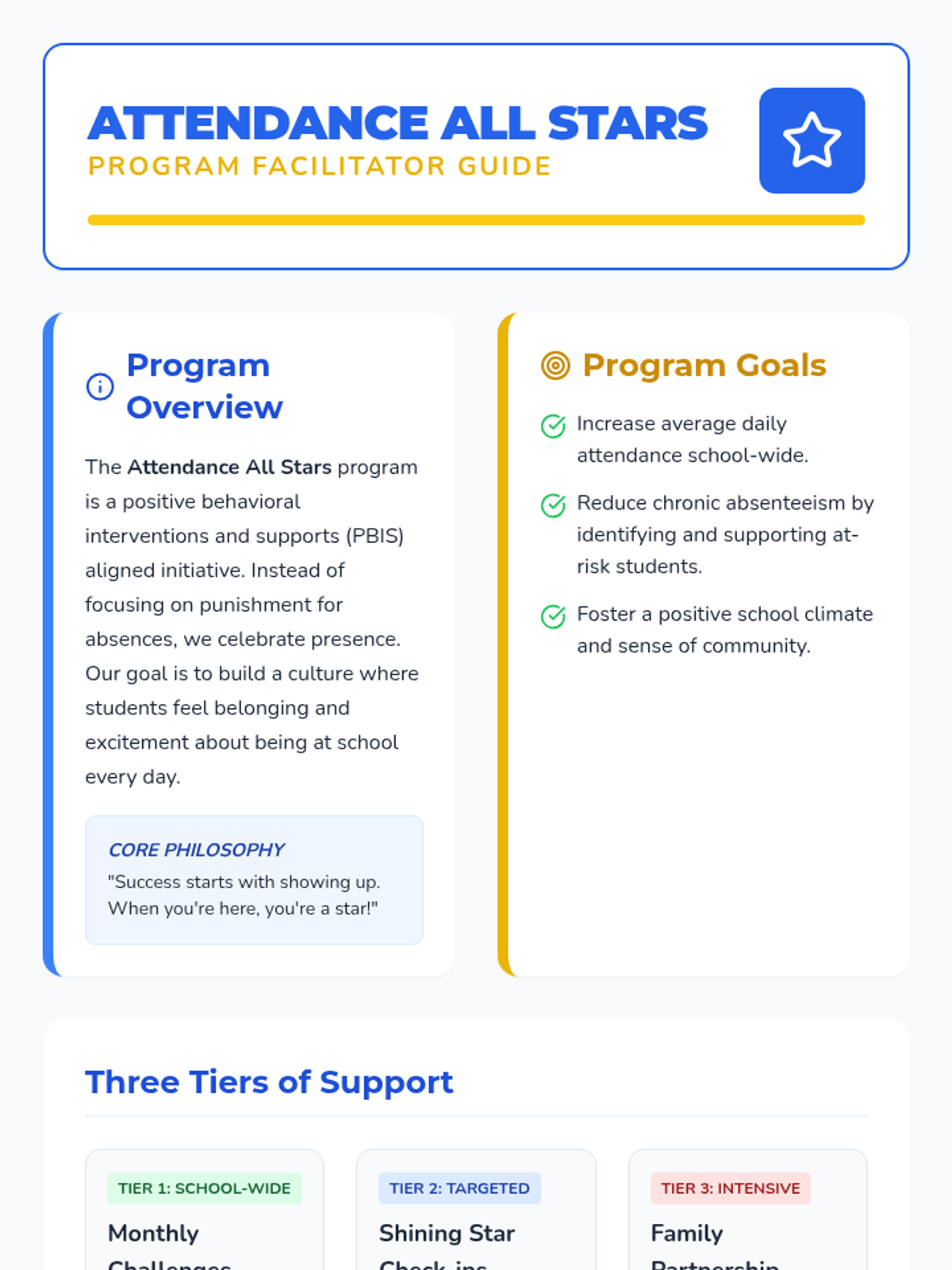
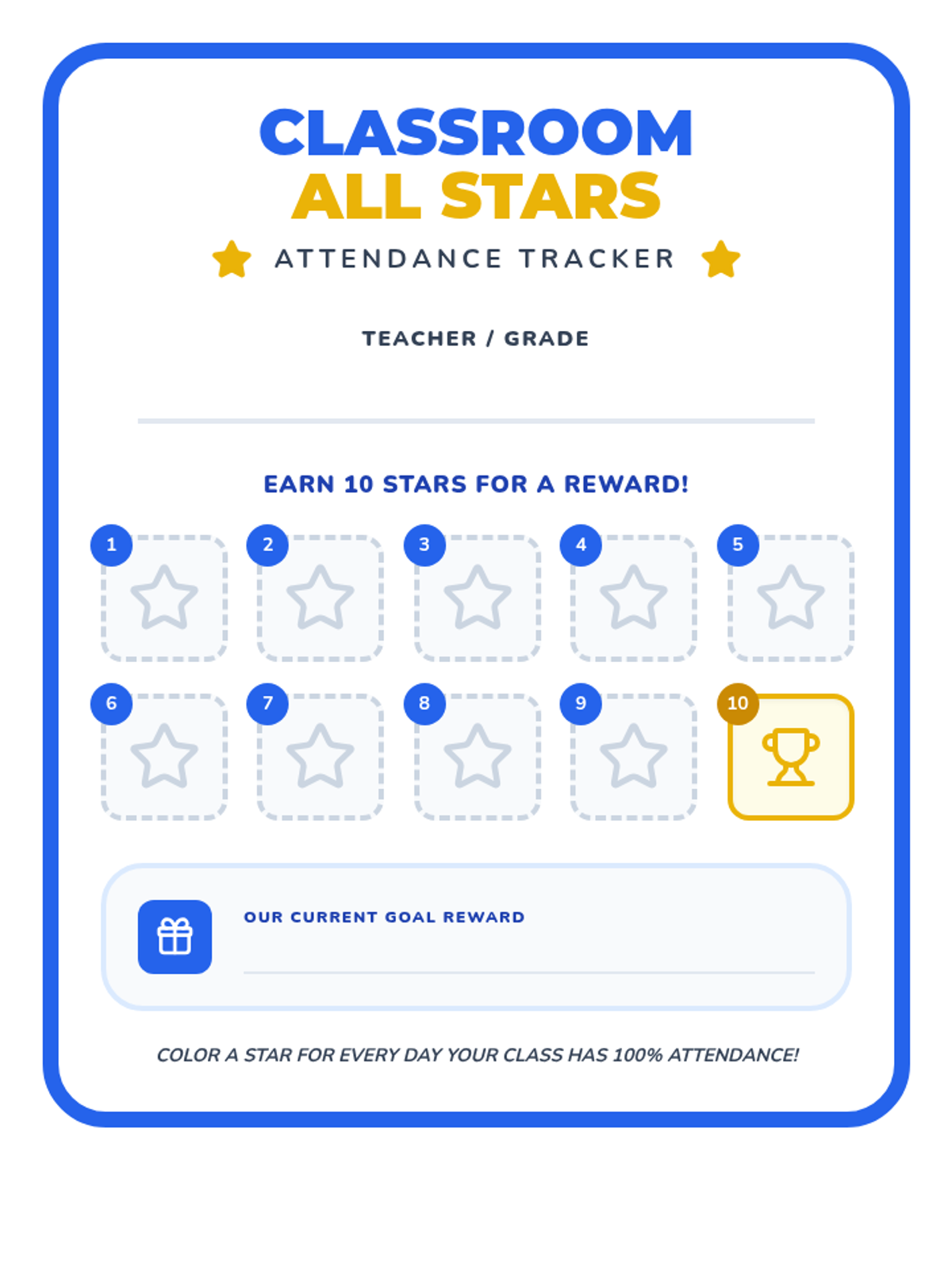
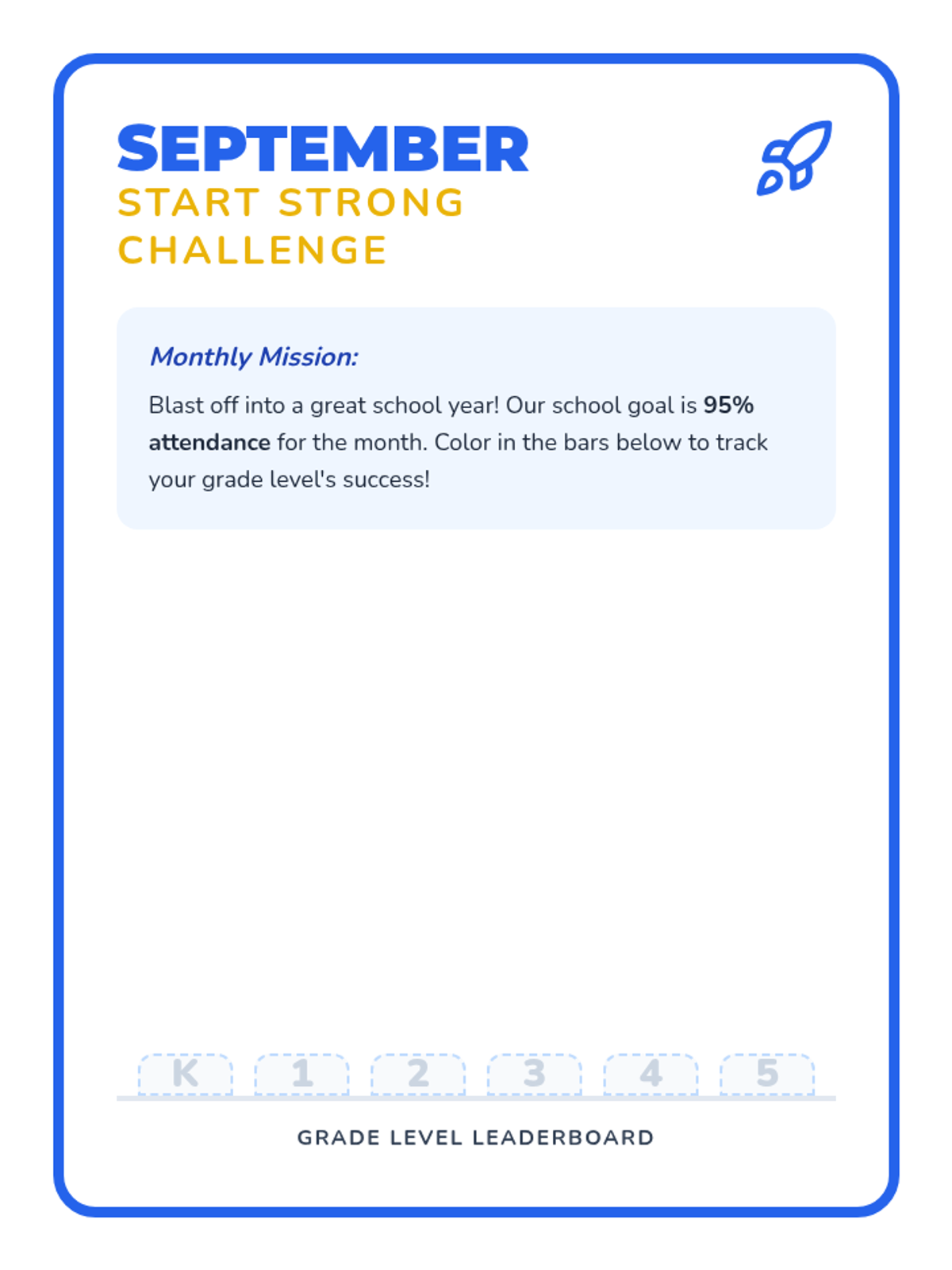
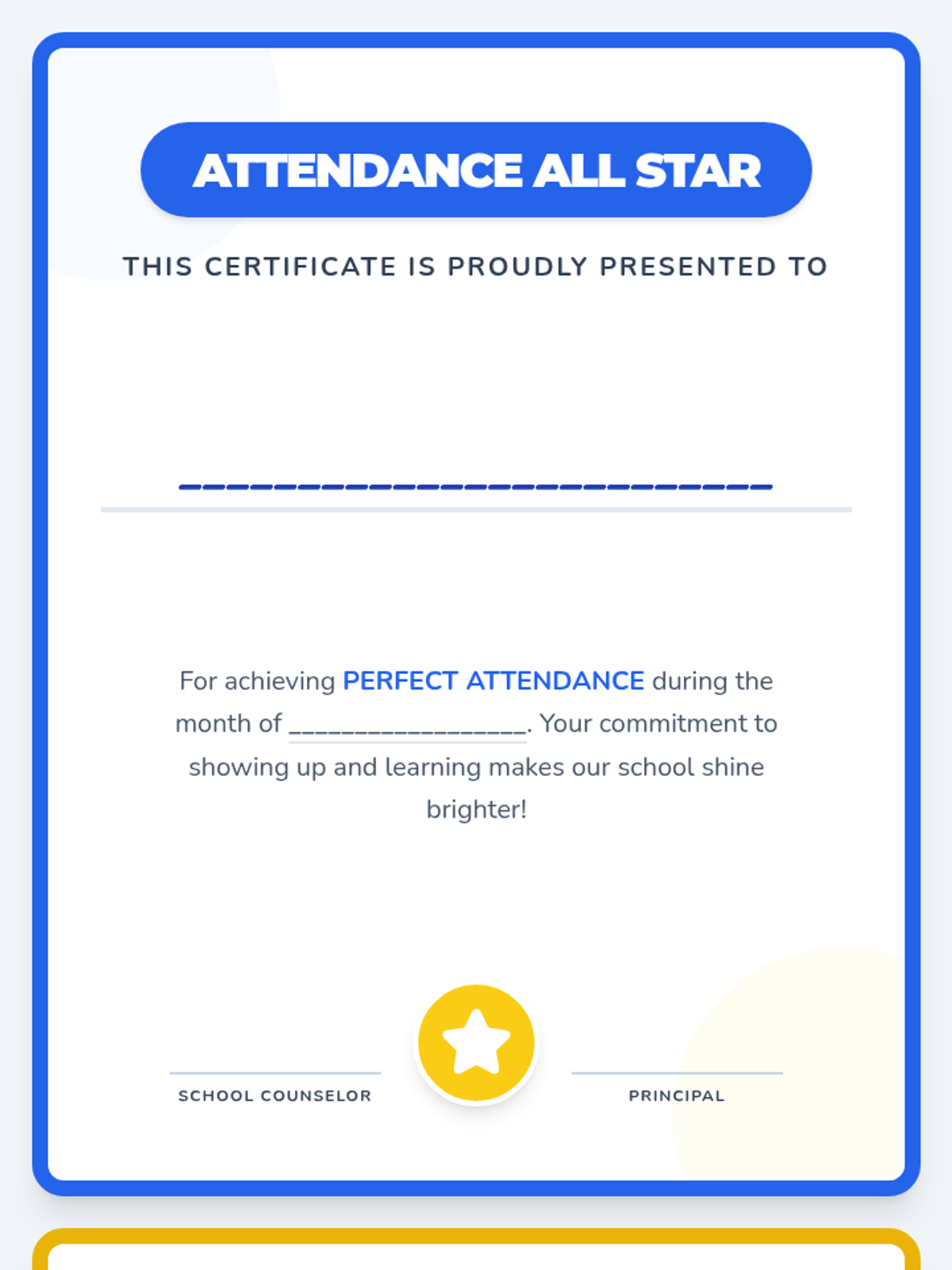
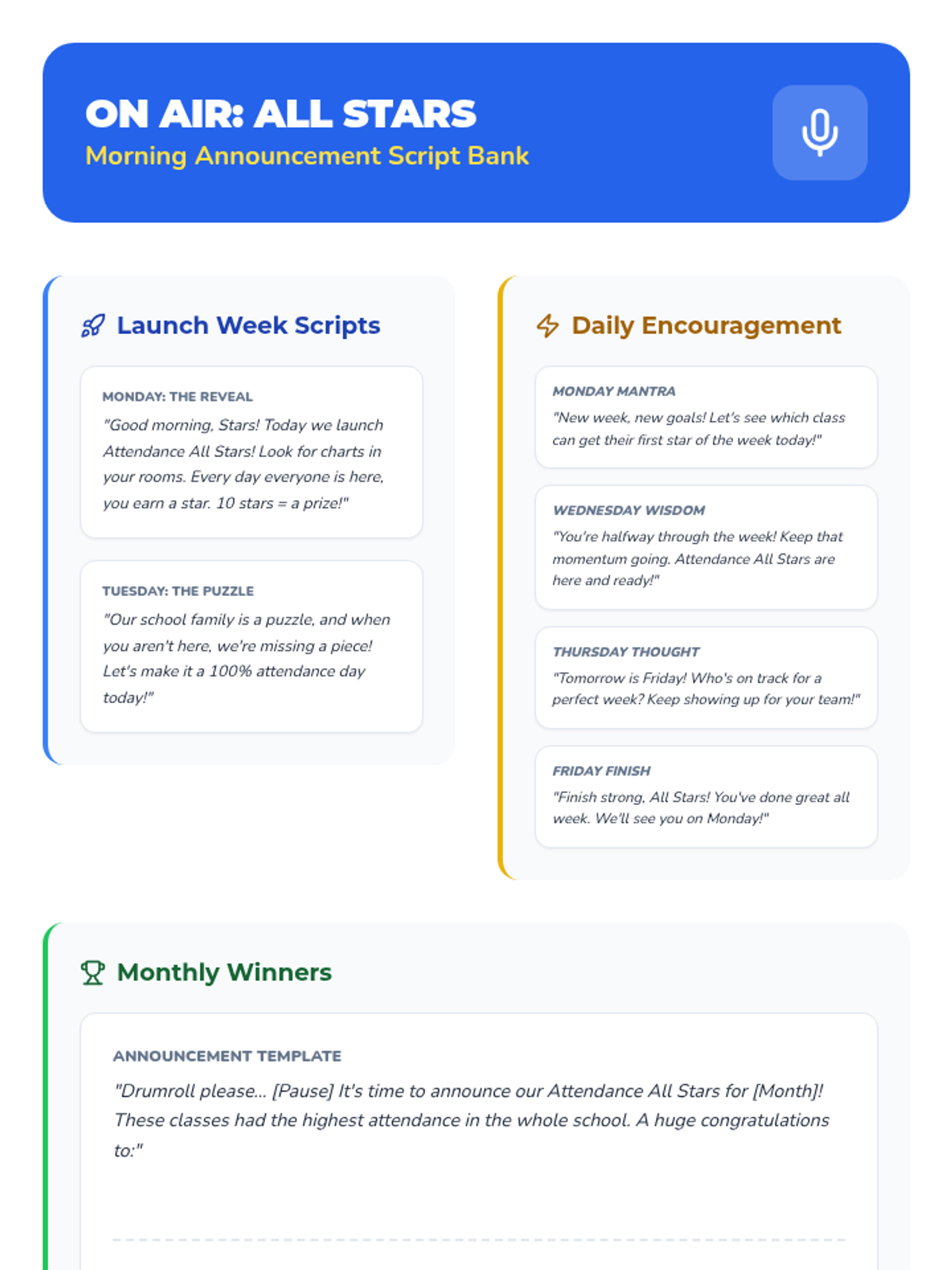
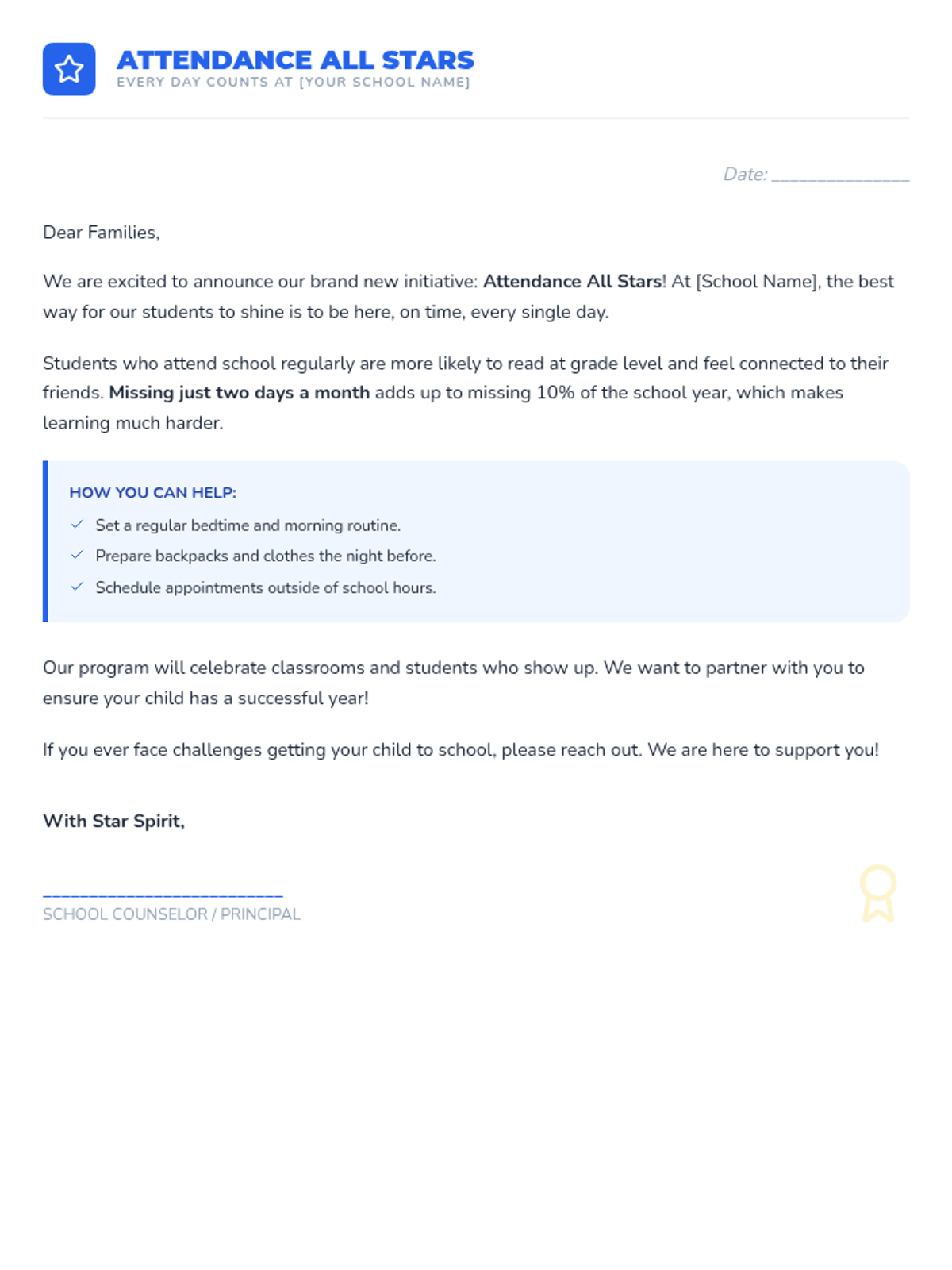
A comprehensive toolkit for elementary school counselors to implement a PBIS-aligned attendance incentive program. Includes everything needed to launch, track, and celebrate consistent school attendance throughout the year.
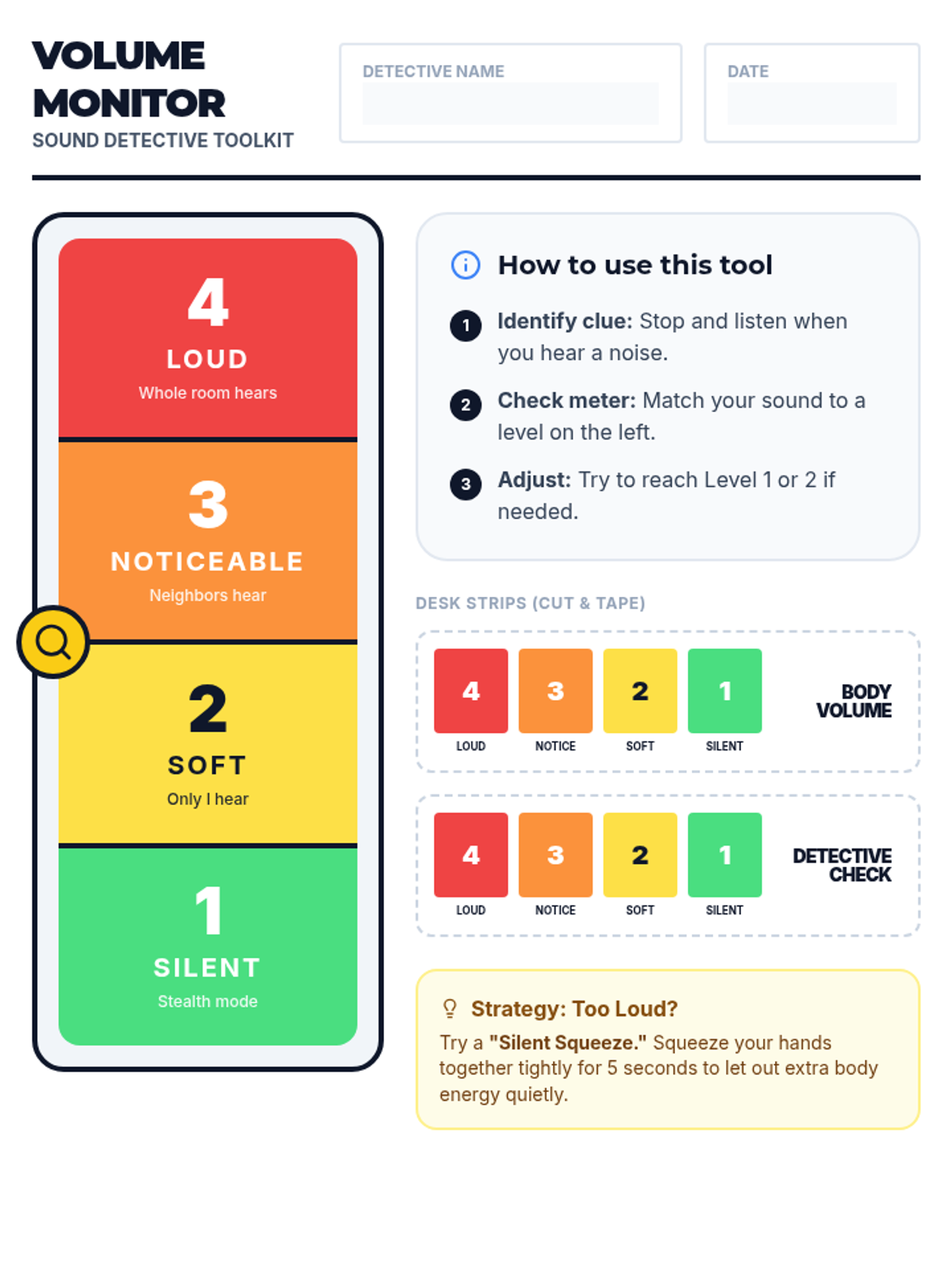
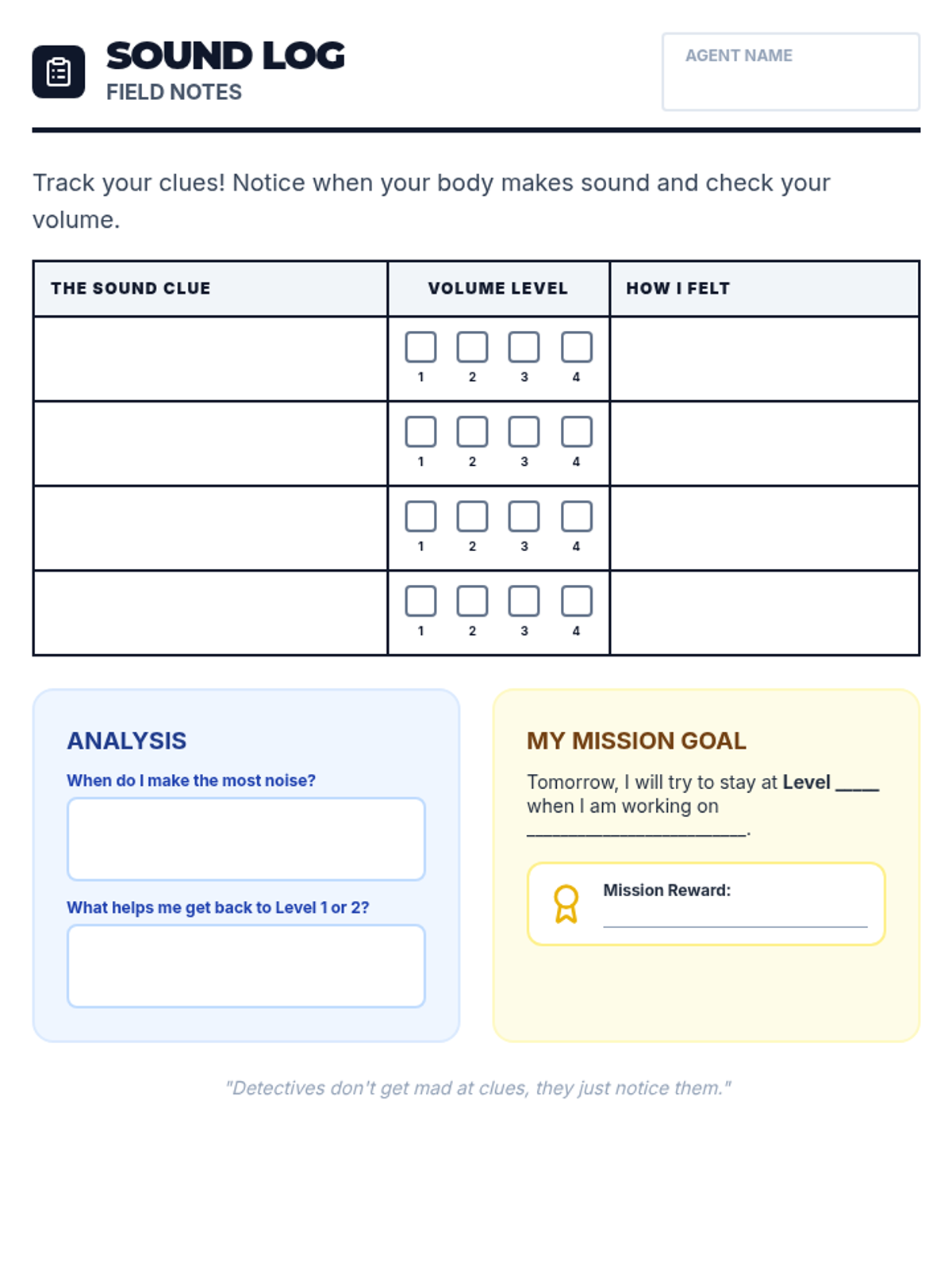
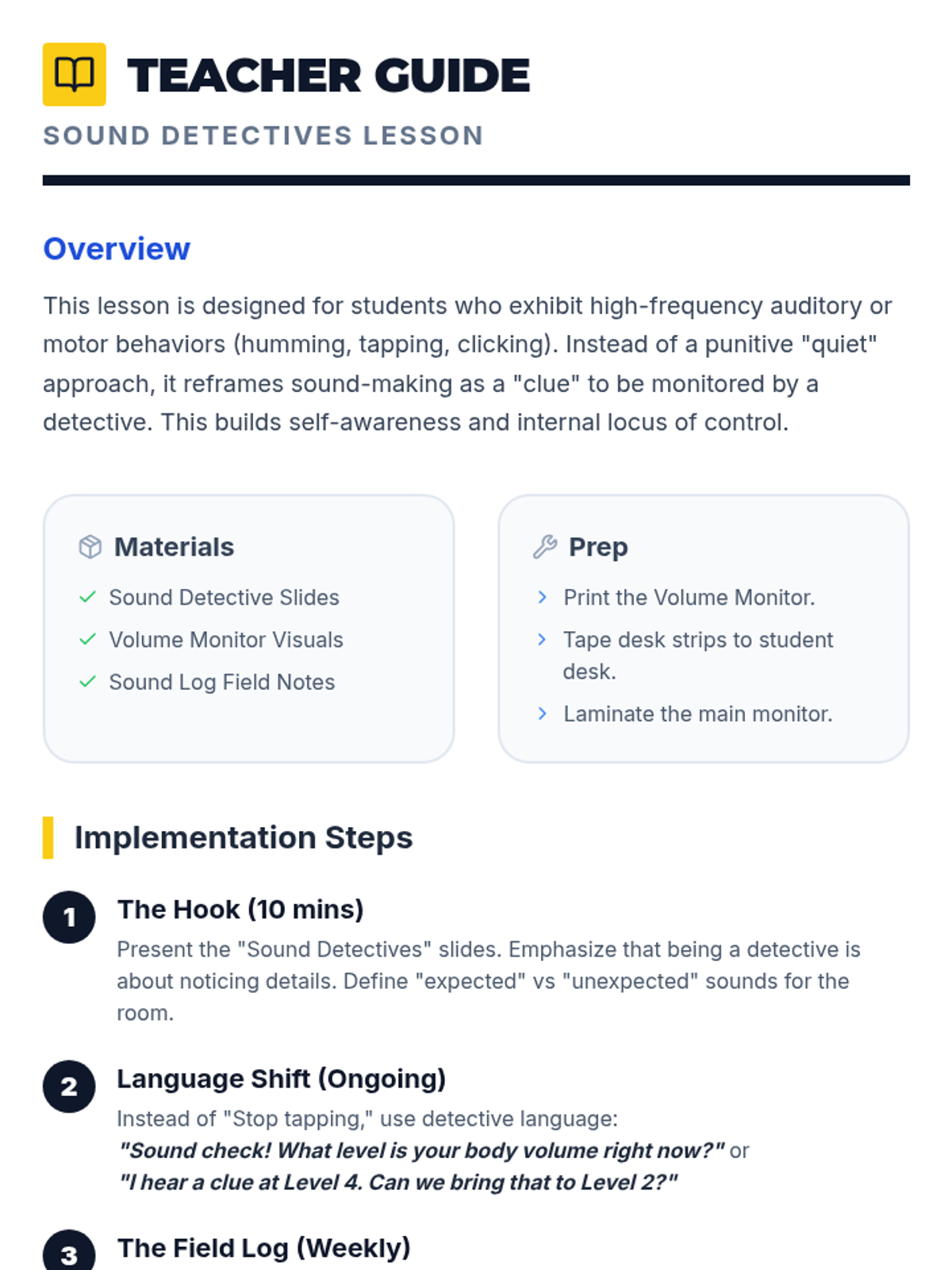
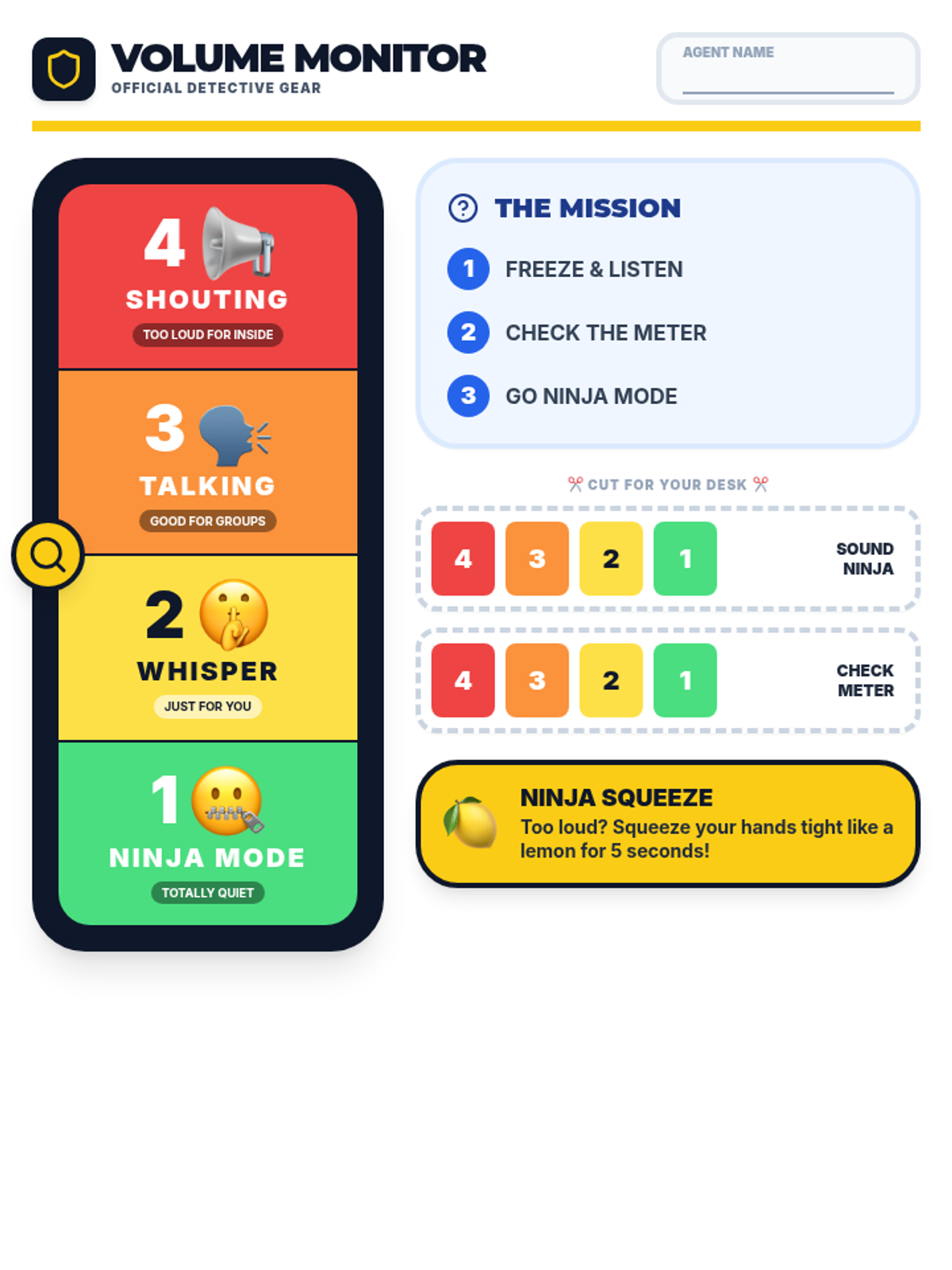
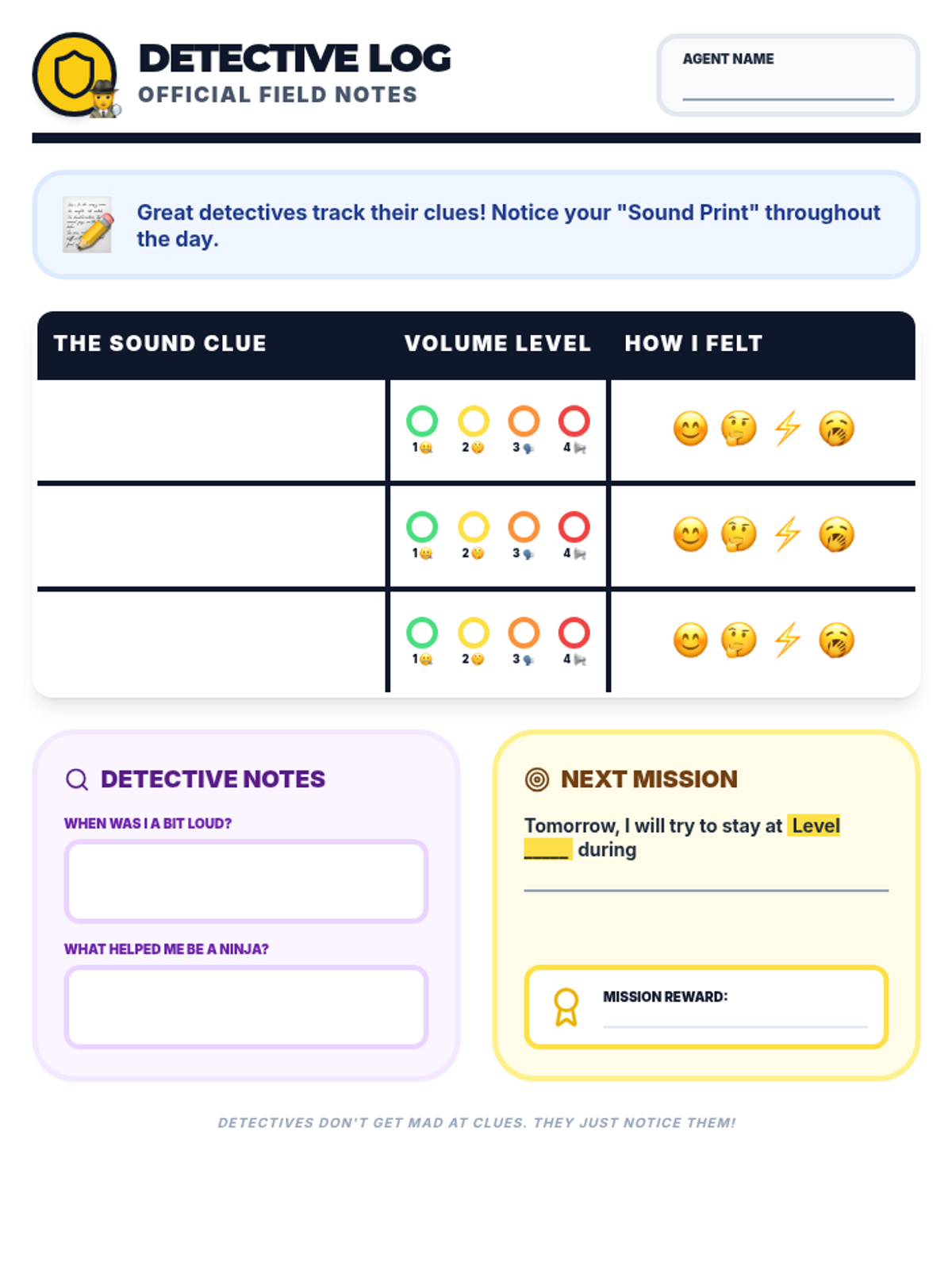
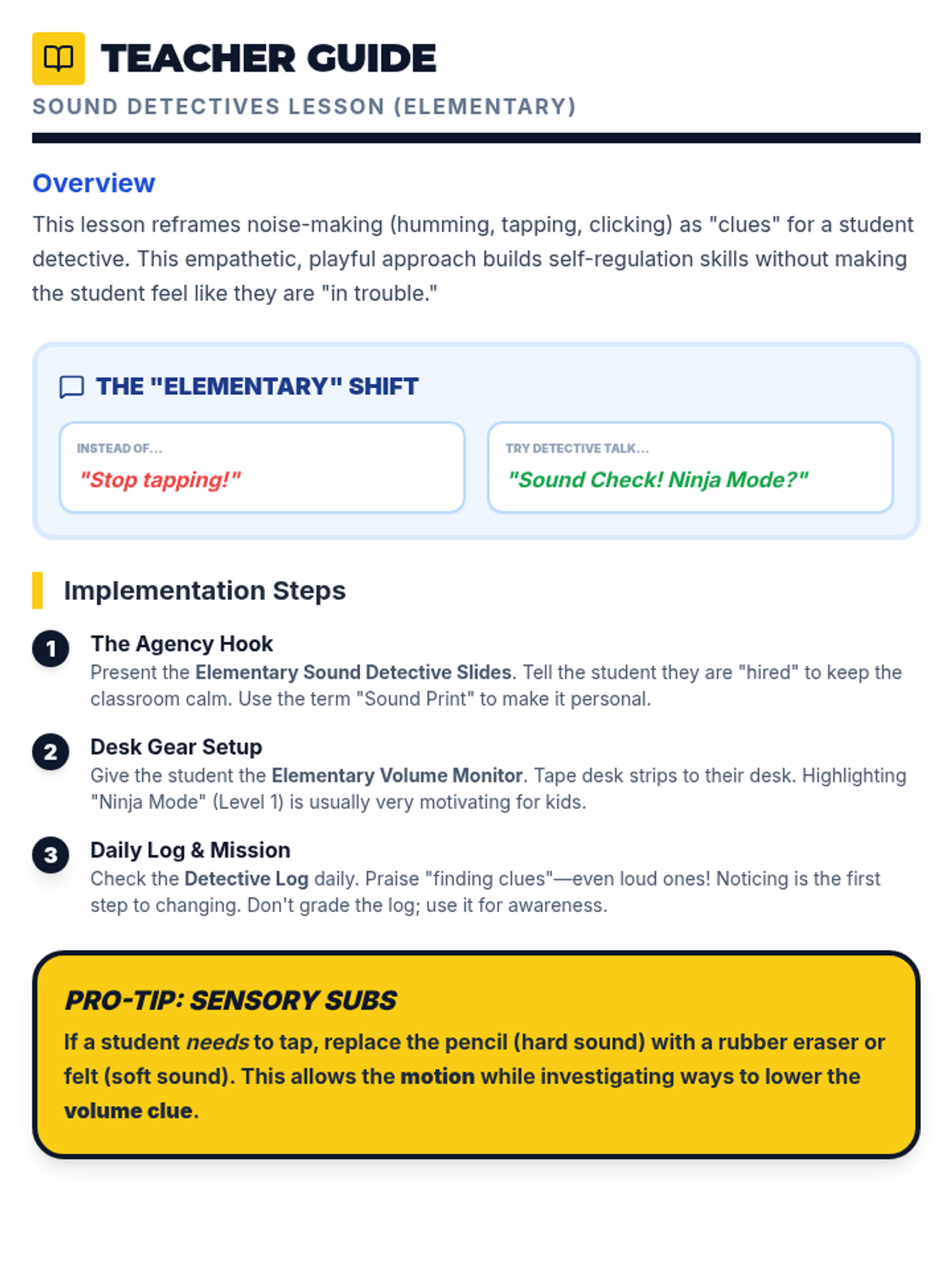
A lesson designed to help students build self-awareness regarding the sounds their bodies and objects make, using a detective-themed approach to monitor and regulate 'body volume'.
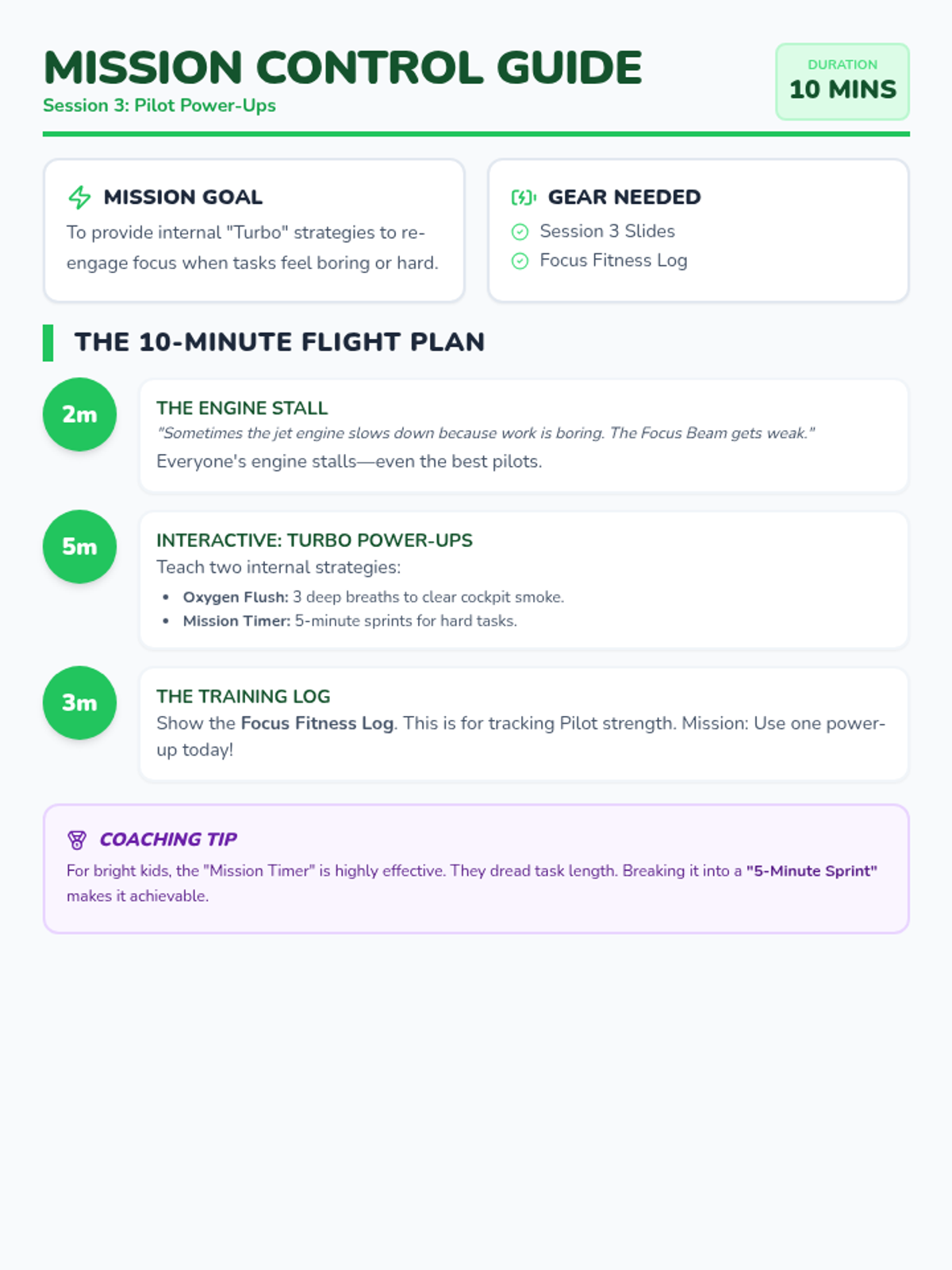
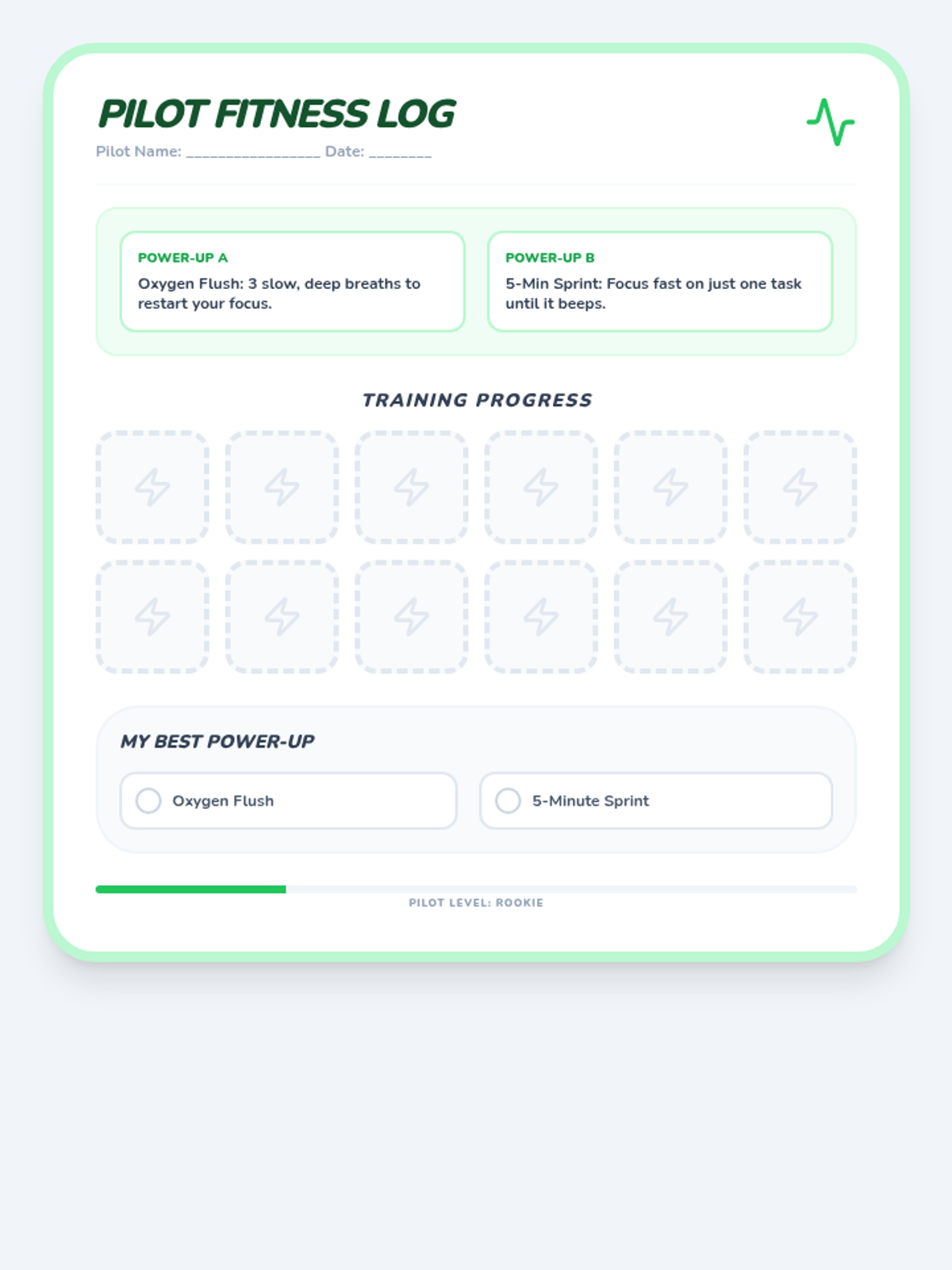
Practical 'Turbo Power-ups' to re-center focus and stay on task when things get tough.
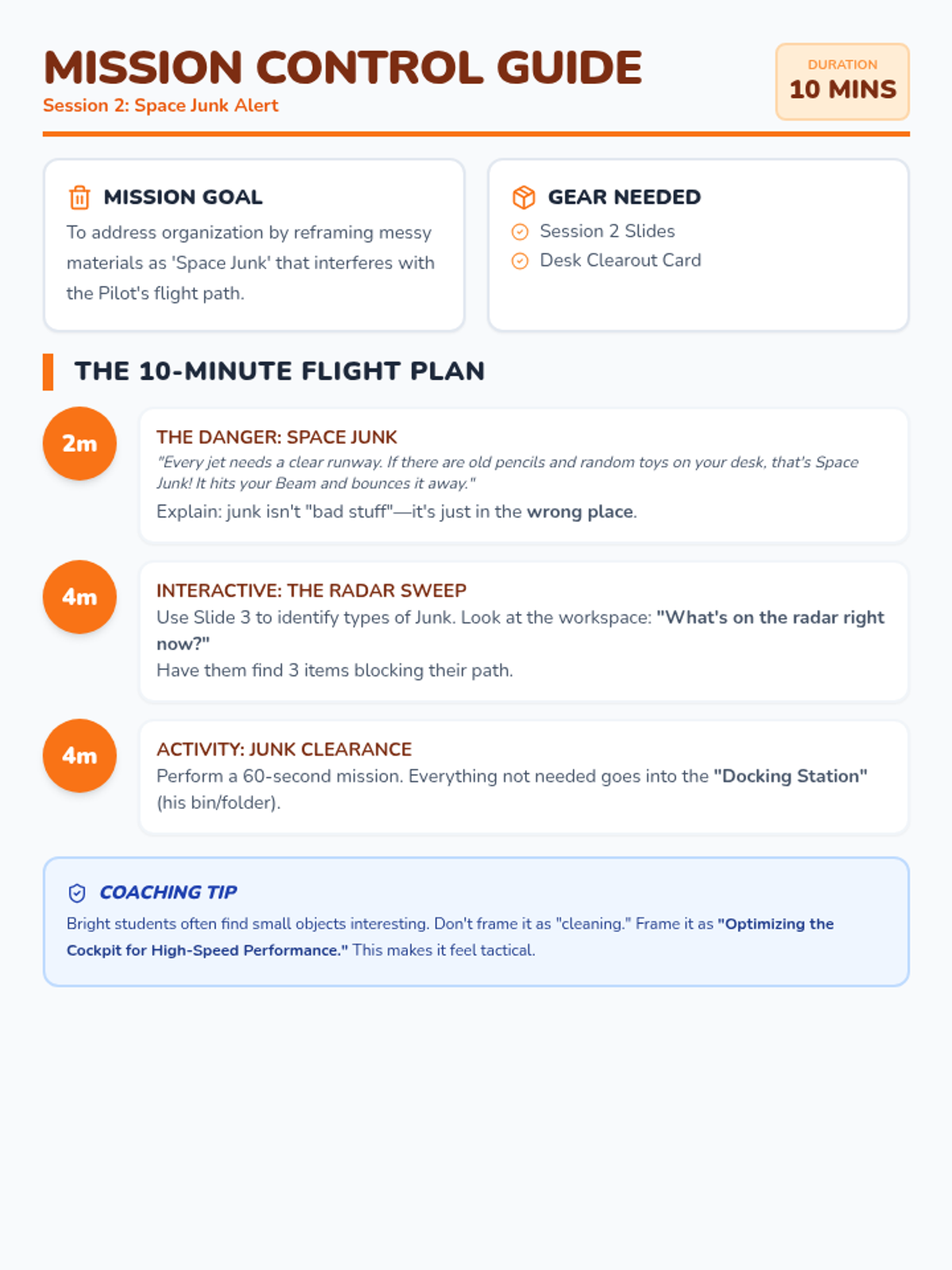
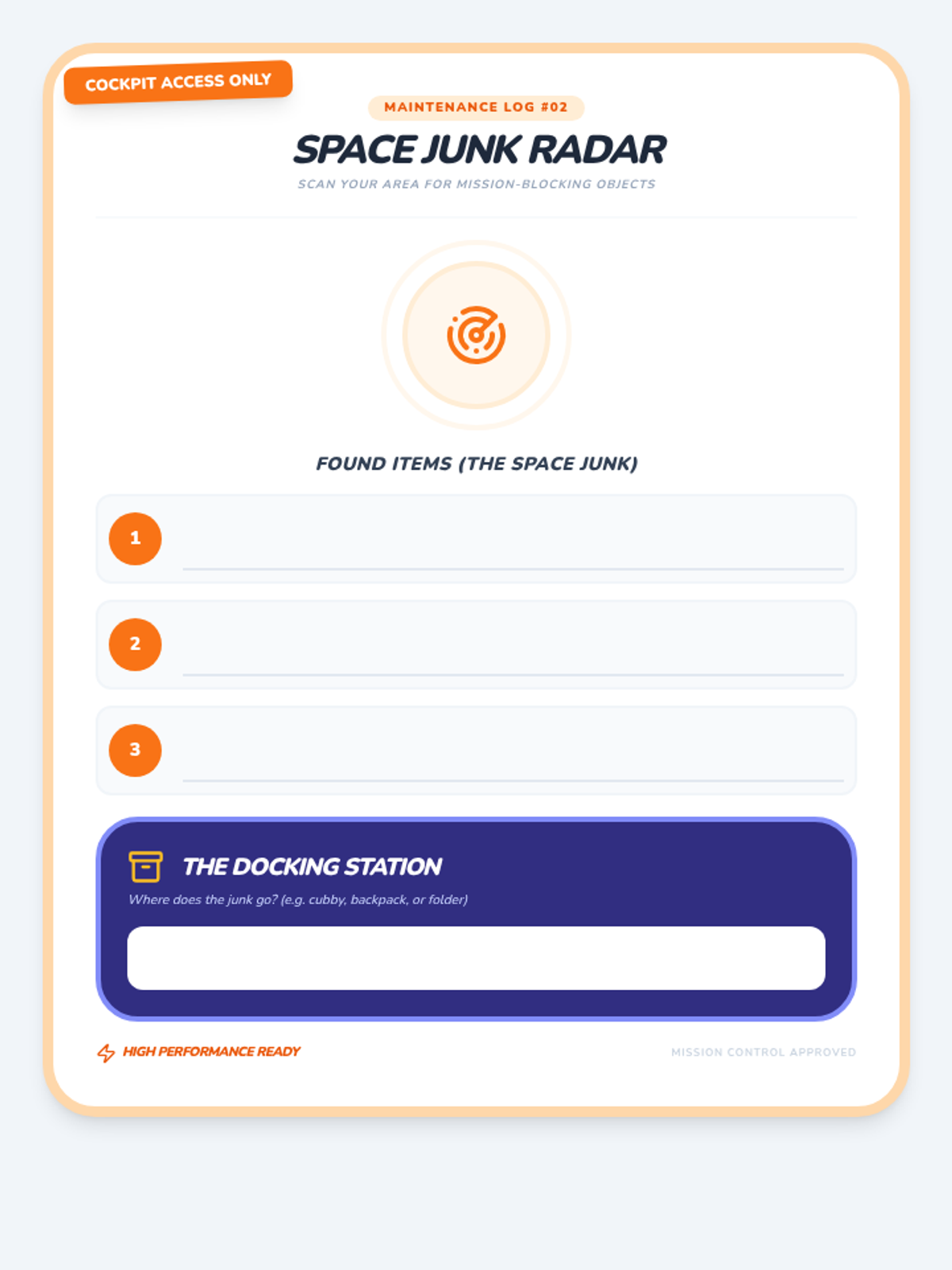
Identifying 'Space Junk' (distractions) and learning how to clear the desk and mind for a smoother flight.
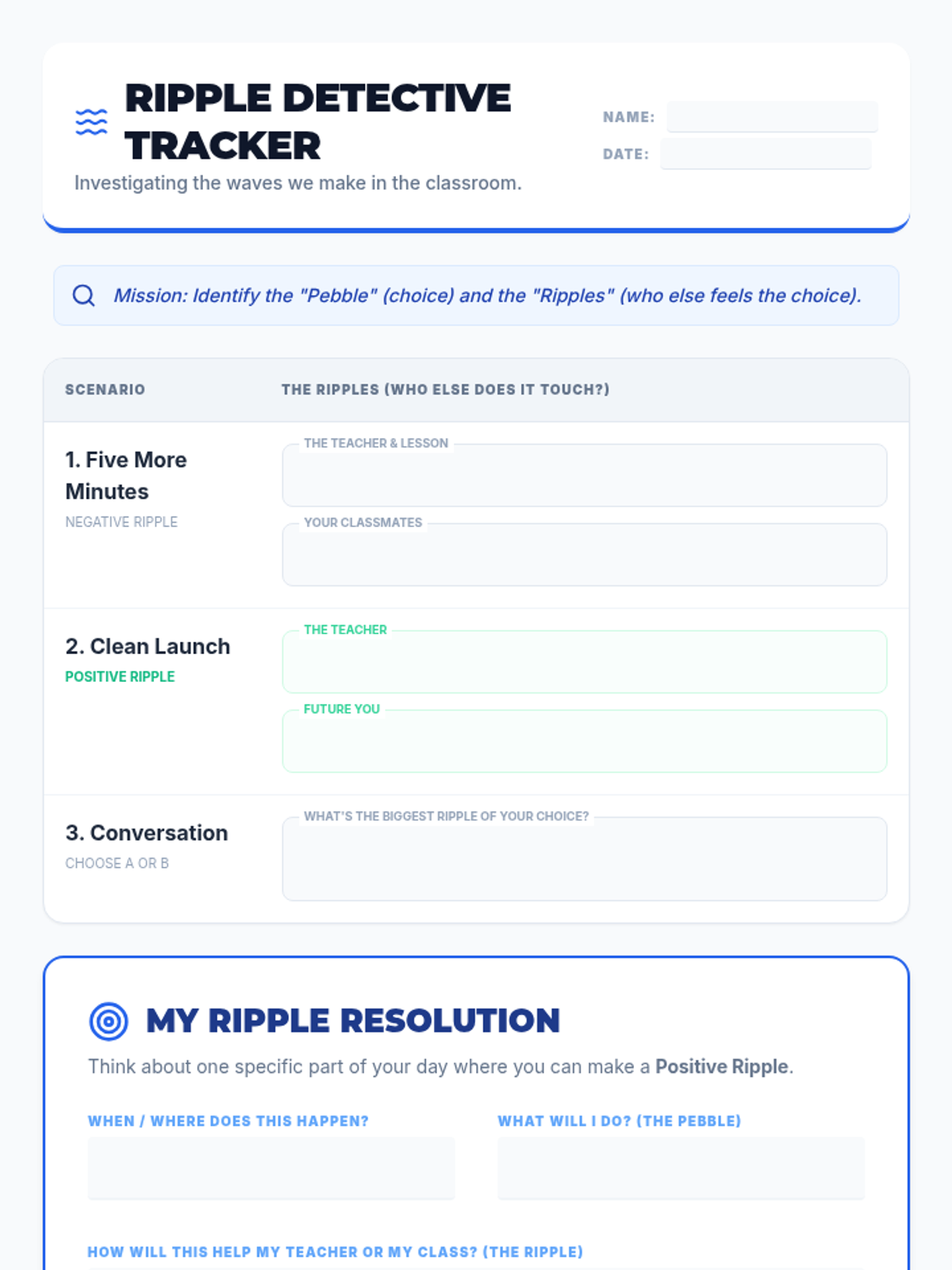
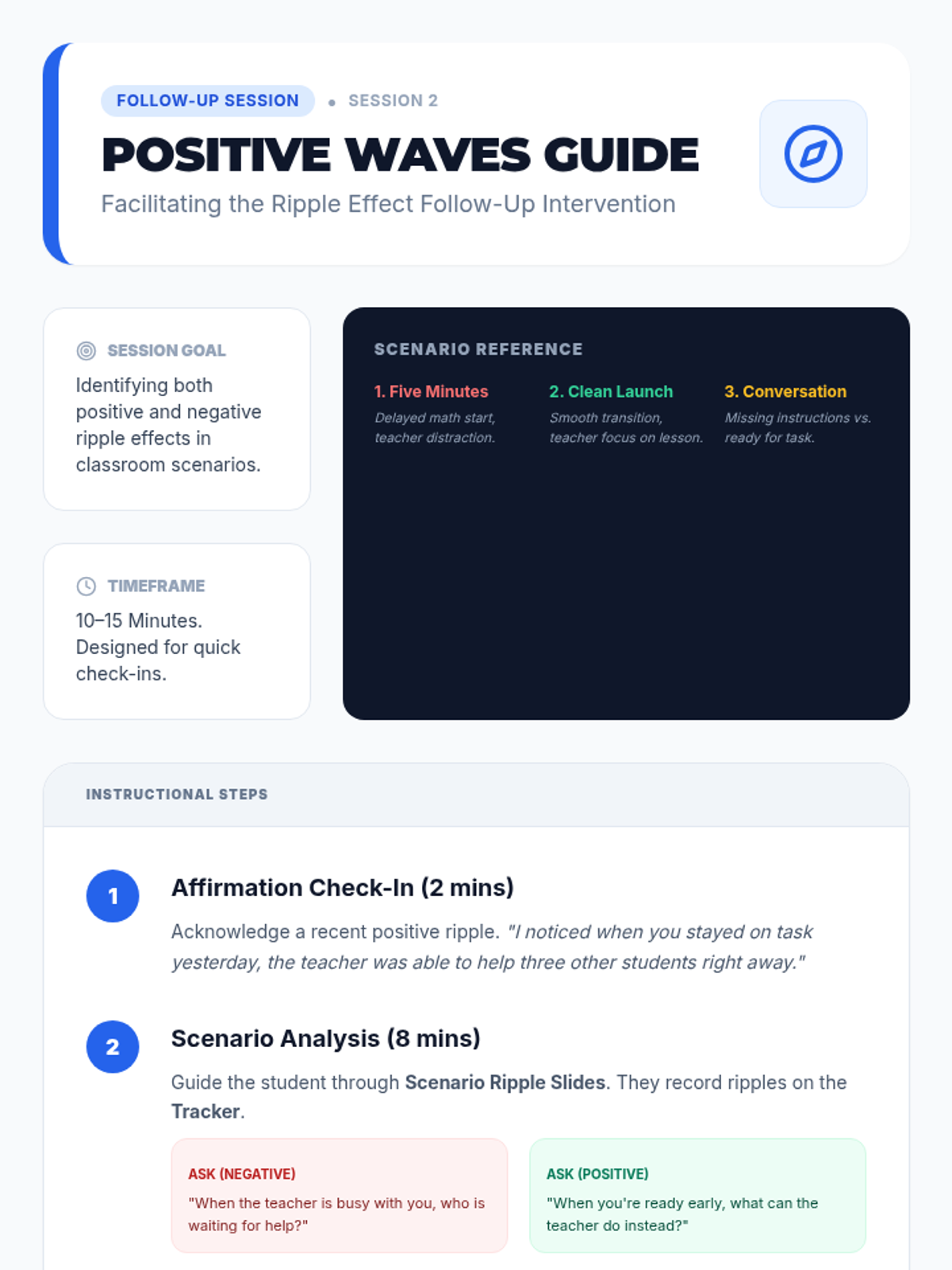
A follow-up session focused on identifying positive and negative ripple effects through scenario analysis, reinforcing the student's progress and identifying future goals.
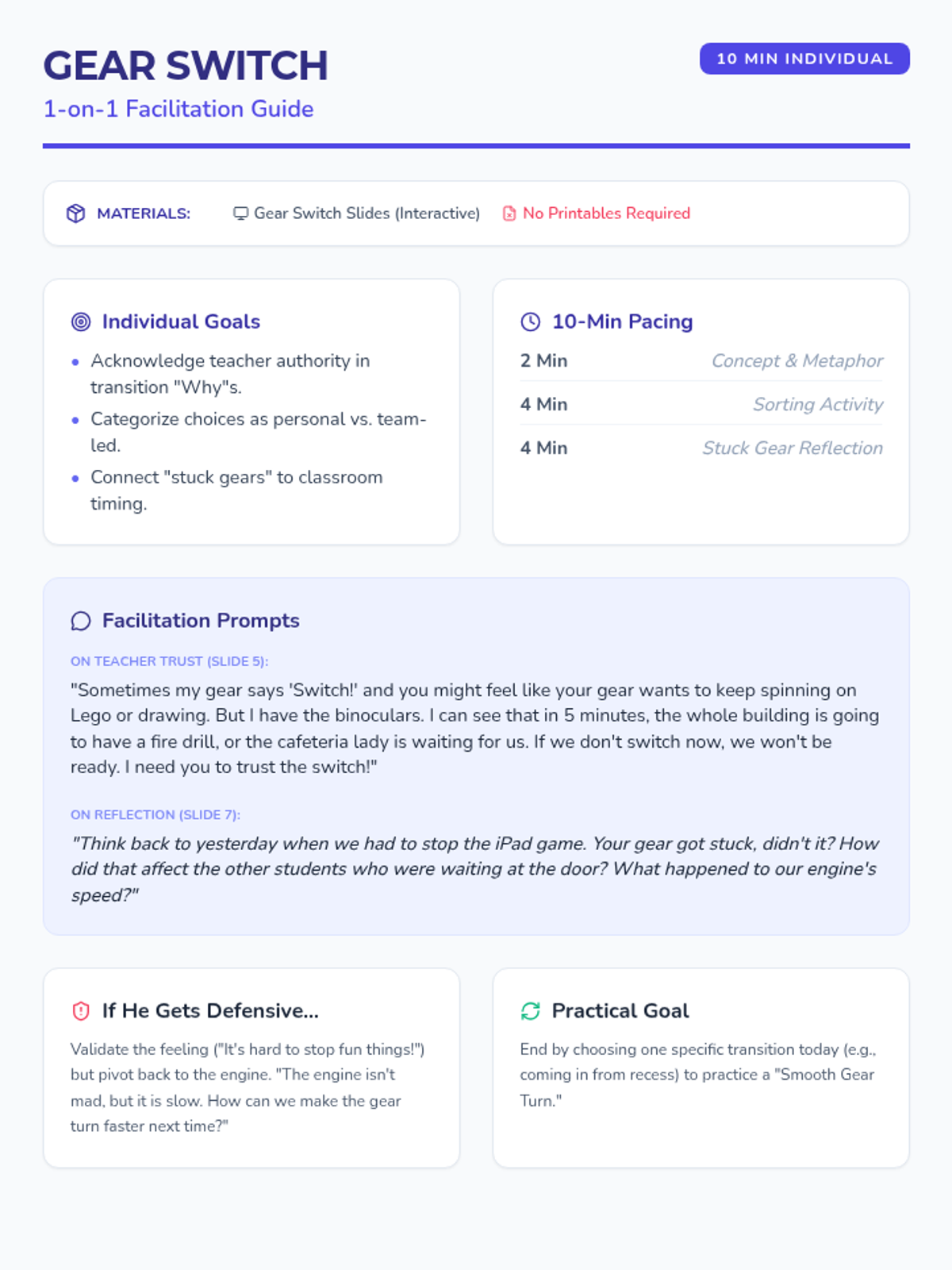
A 10-minute social emotional learning lesson focused on transitions and teacher authority. Specifically designed for a one-on-one session, it uses the "Gear Switch" metaphor to help students understand why turning with the team keeps the engine running smoothly.
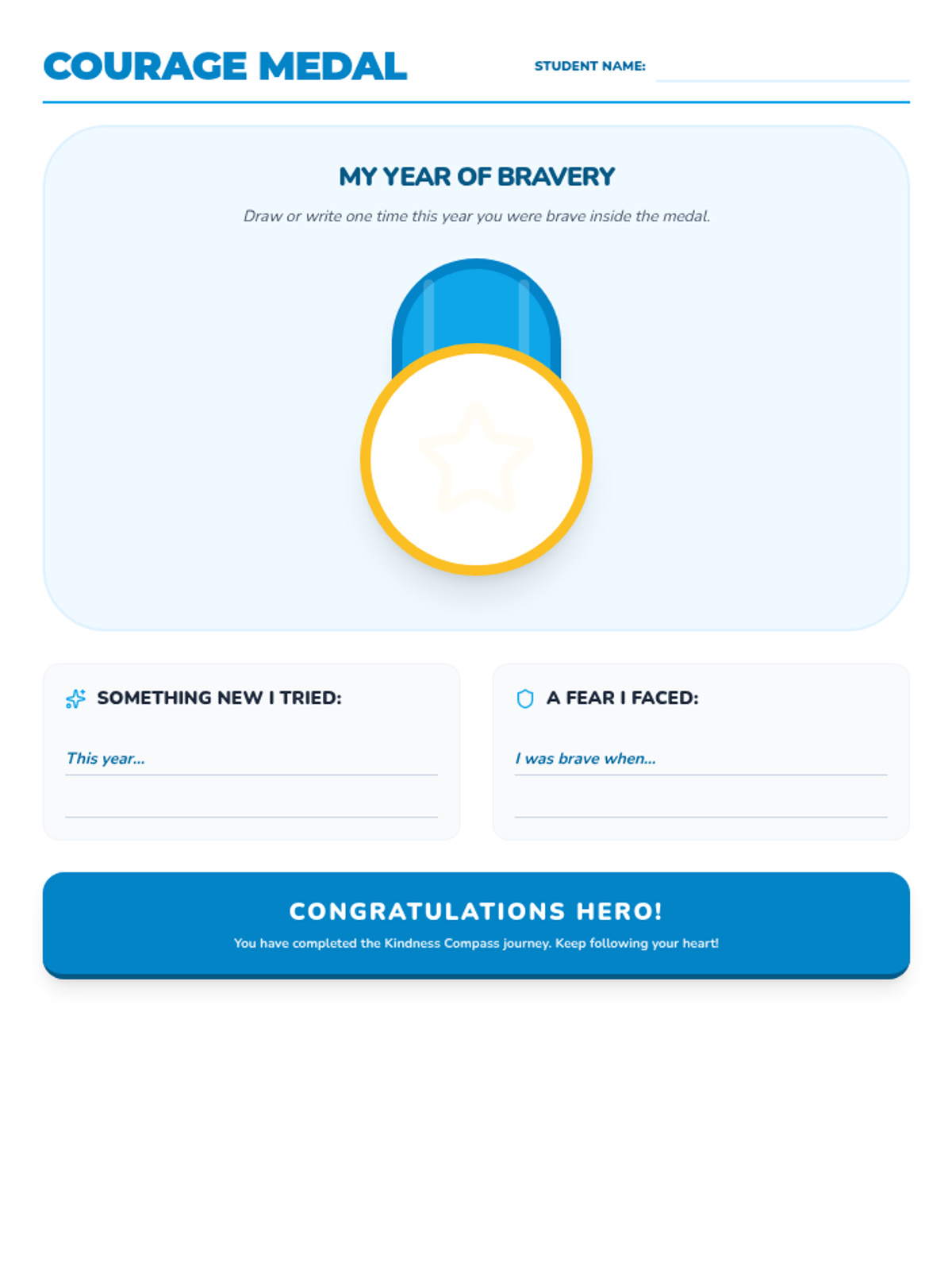
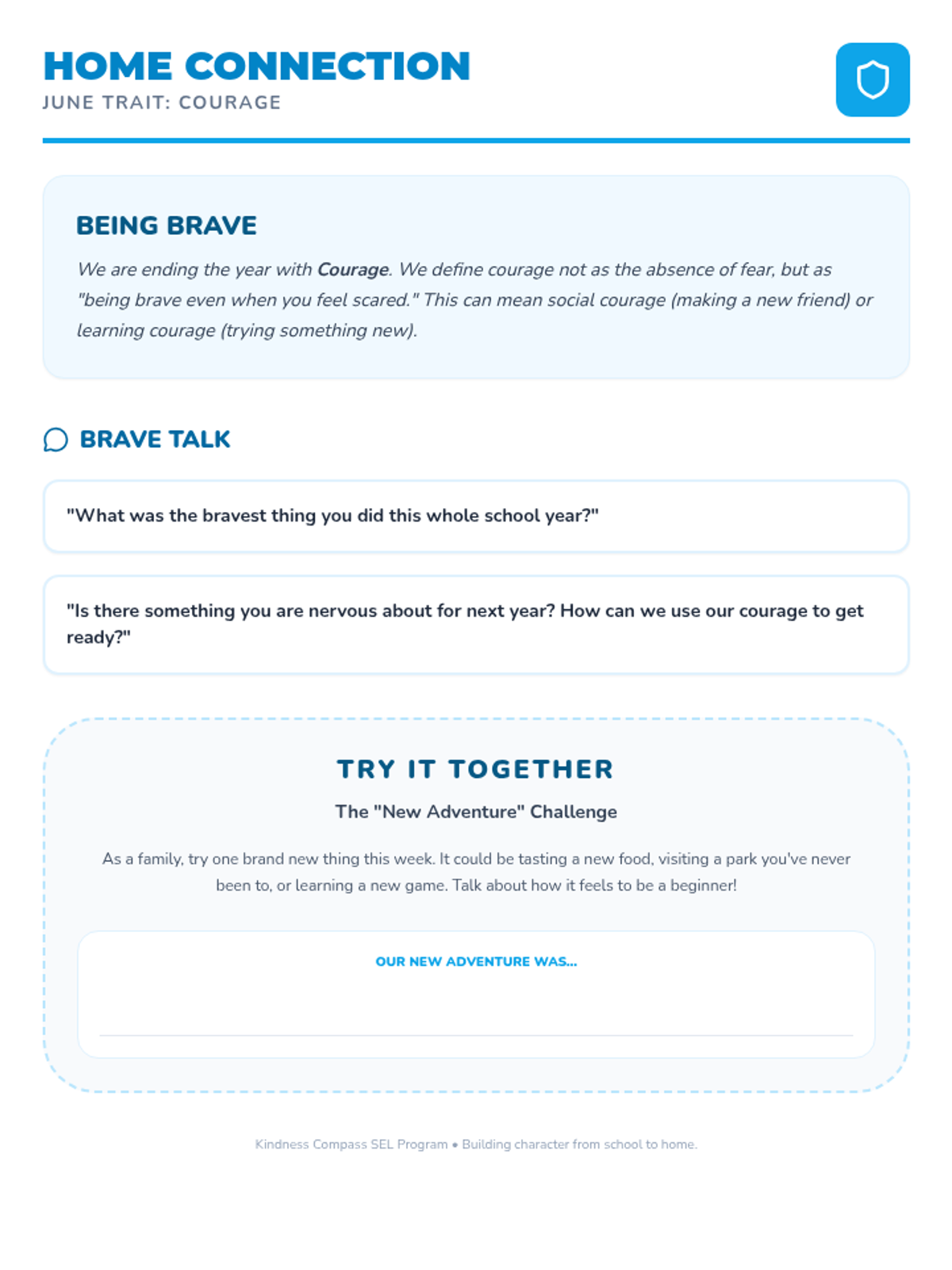
Facing fears and trying new things. A year-end reflection on being brave in both big and small ways.
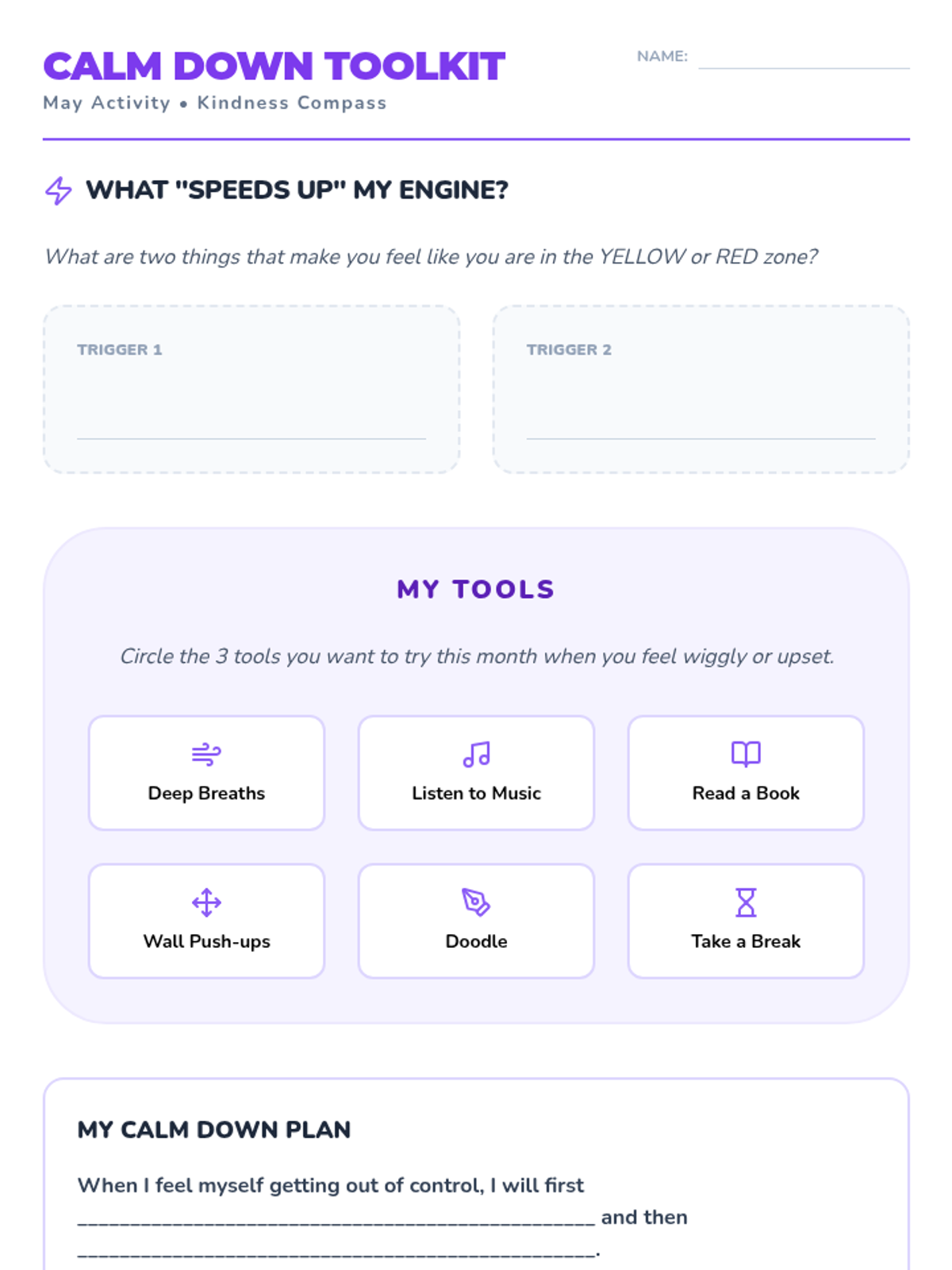
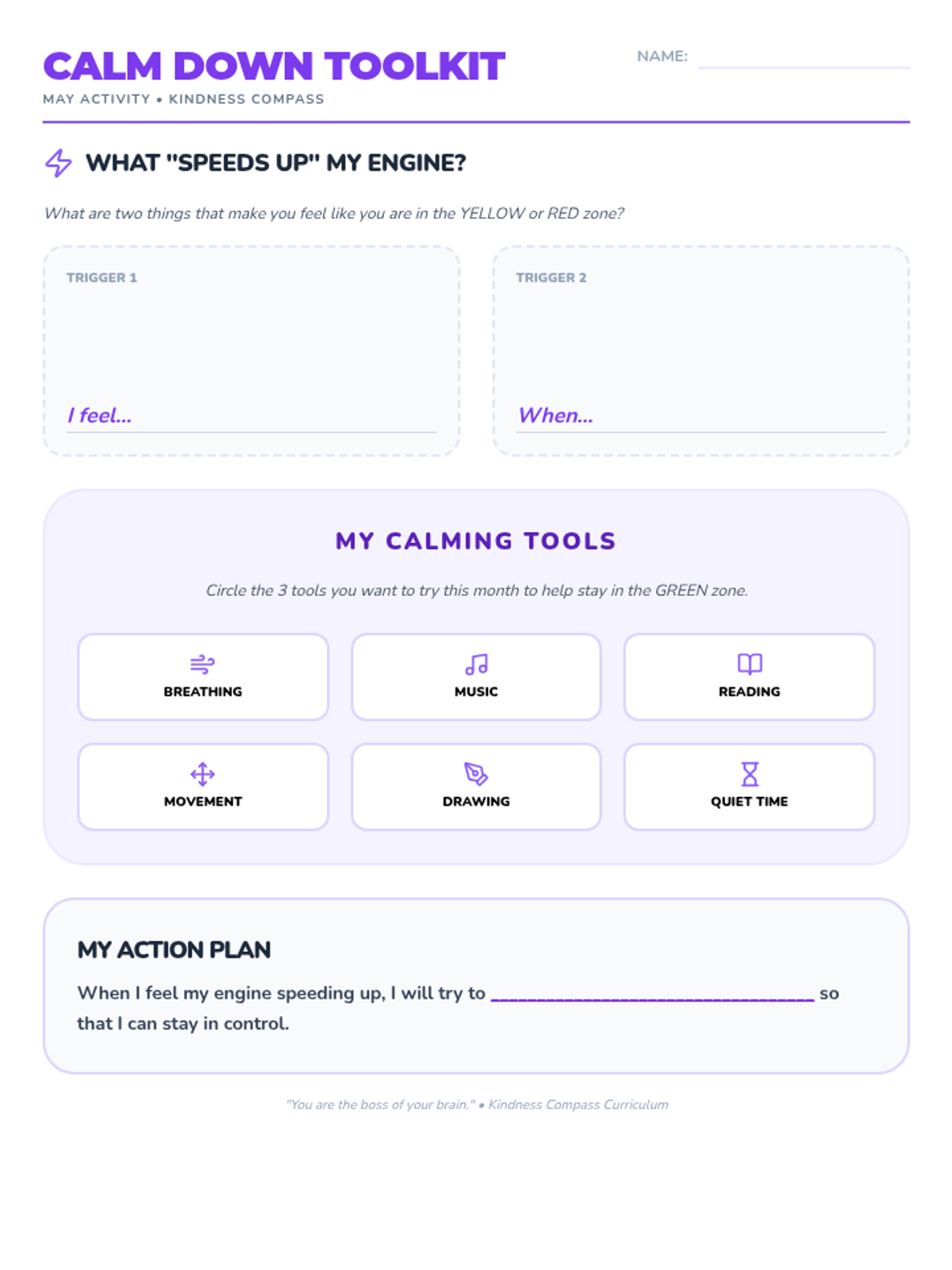
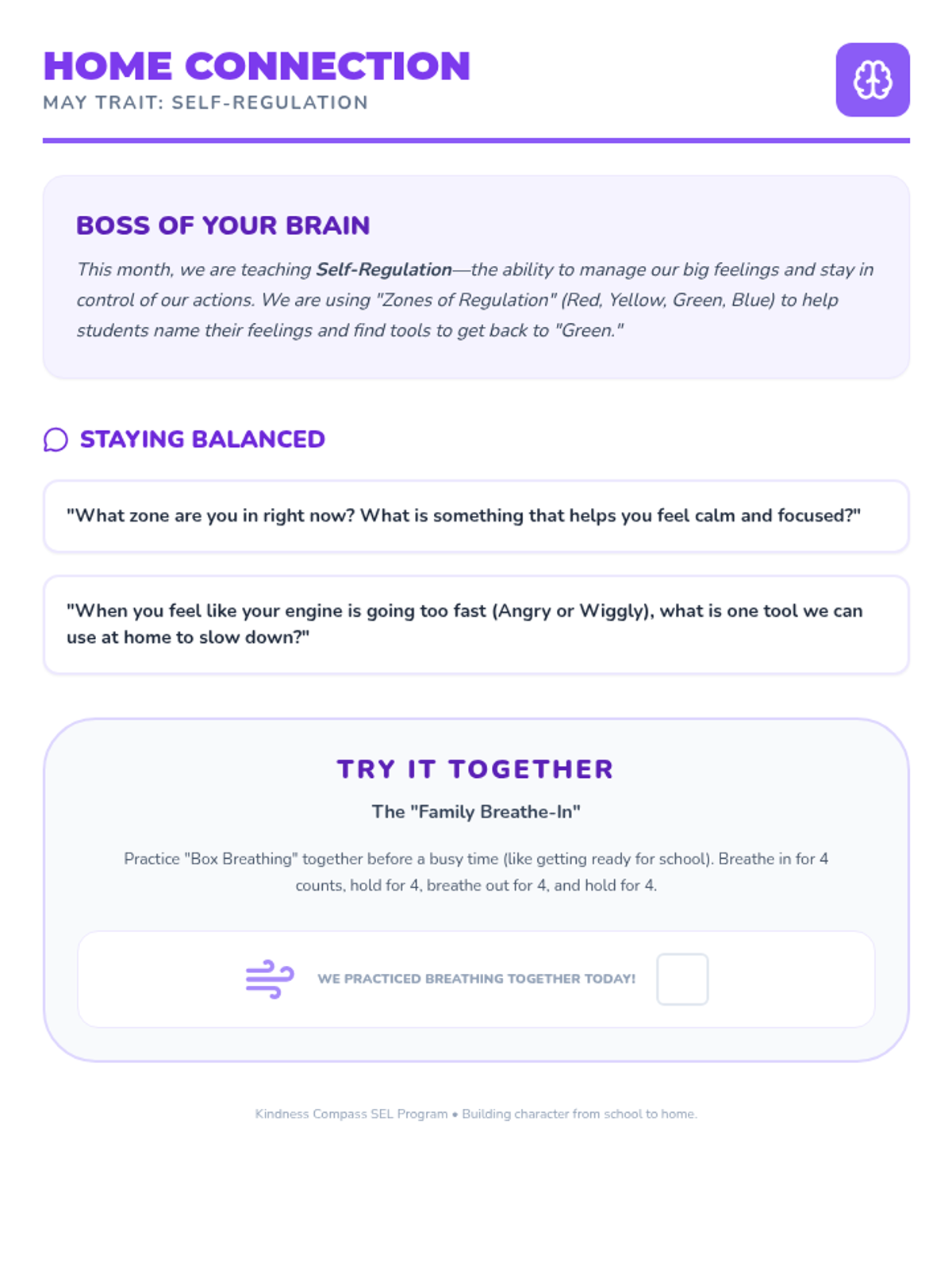
Managing big emotions and staying in control. Students learn strategies for cooling down and focusing.
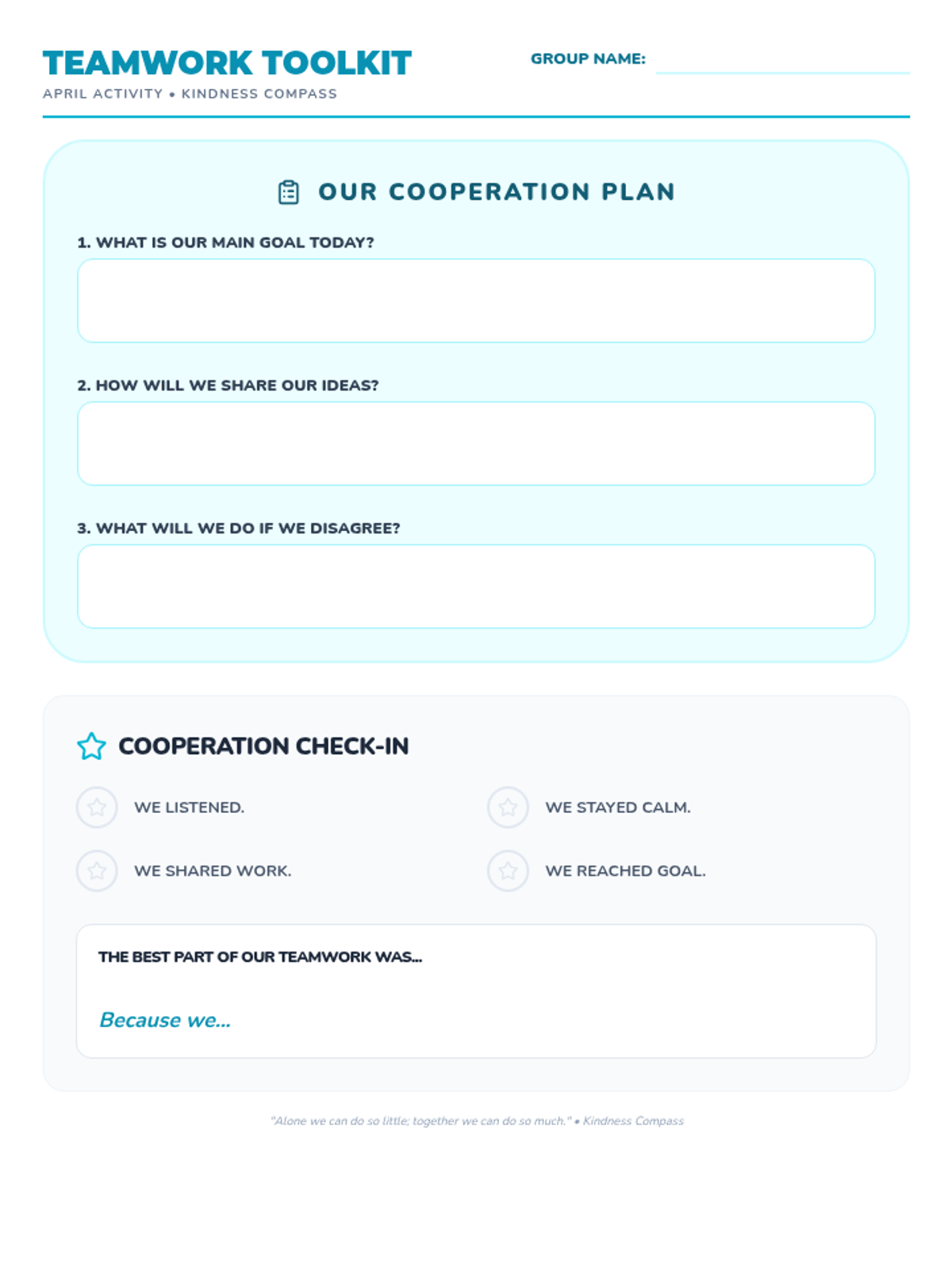
The art of working together. Students practice communication, compromise, and collective problem-solving.
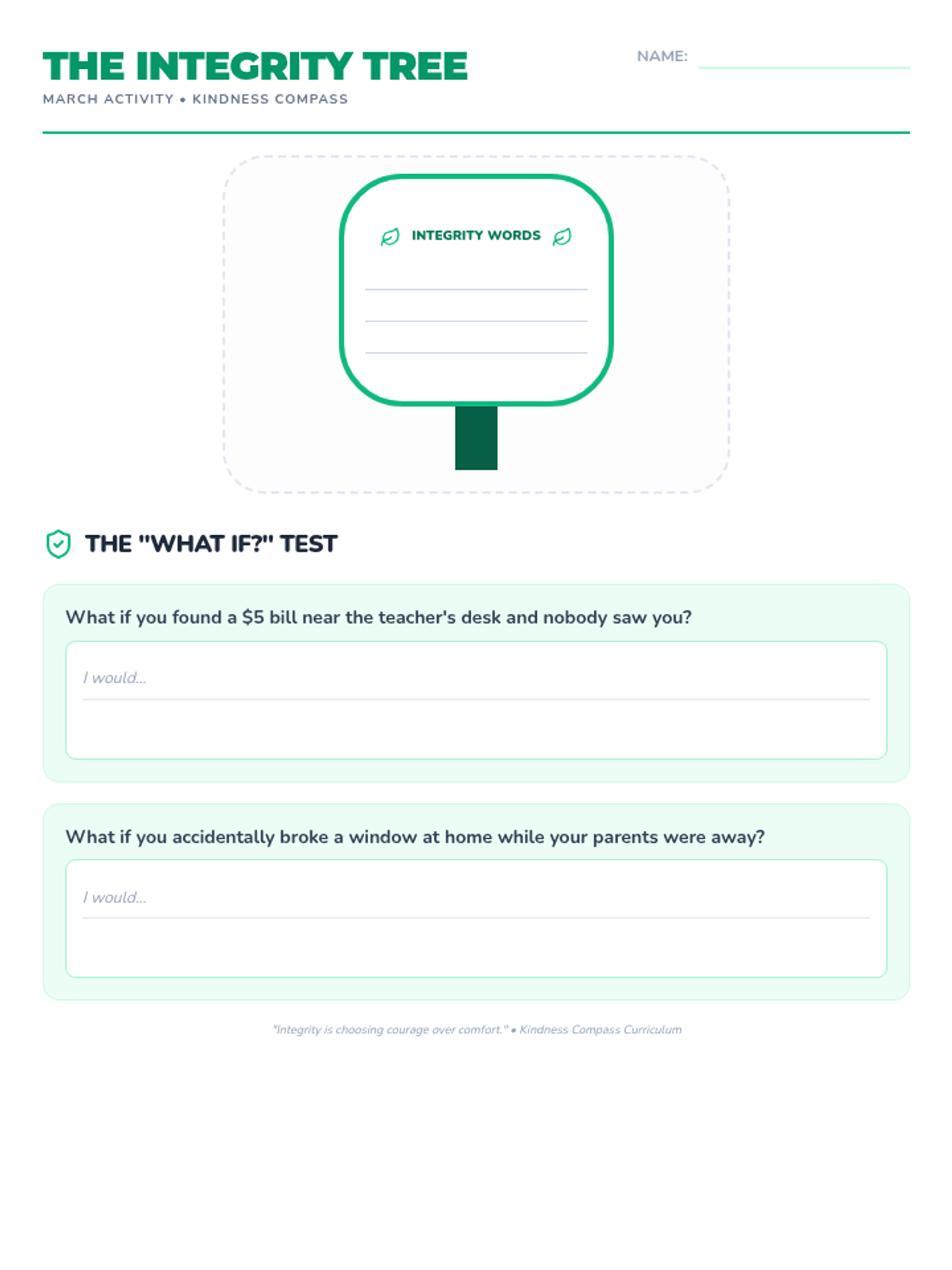
Defining honesty and the importance of doing the right thing even when no one is watching.