Empathetic skill development through emotion recognition, cultural diversity appreciation, and bias confrontation. Targets multi-perspective analysis to support respectful interactions and complex social responses.
The sequence concludes with students presenting their plans and signing a collective class pledge to be responsible digital citizens.
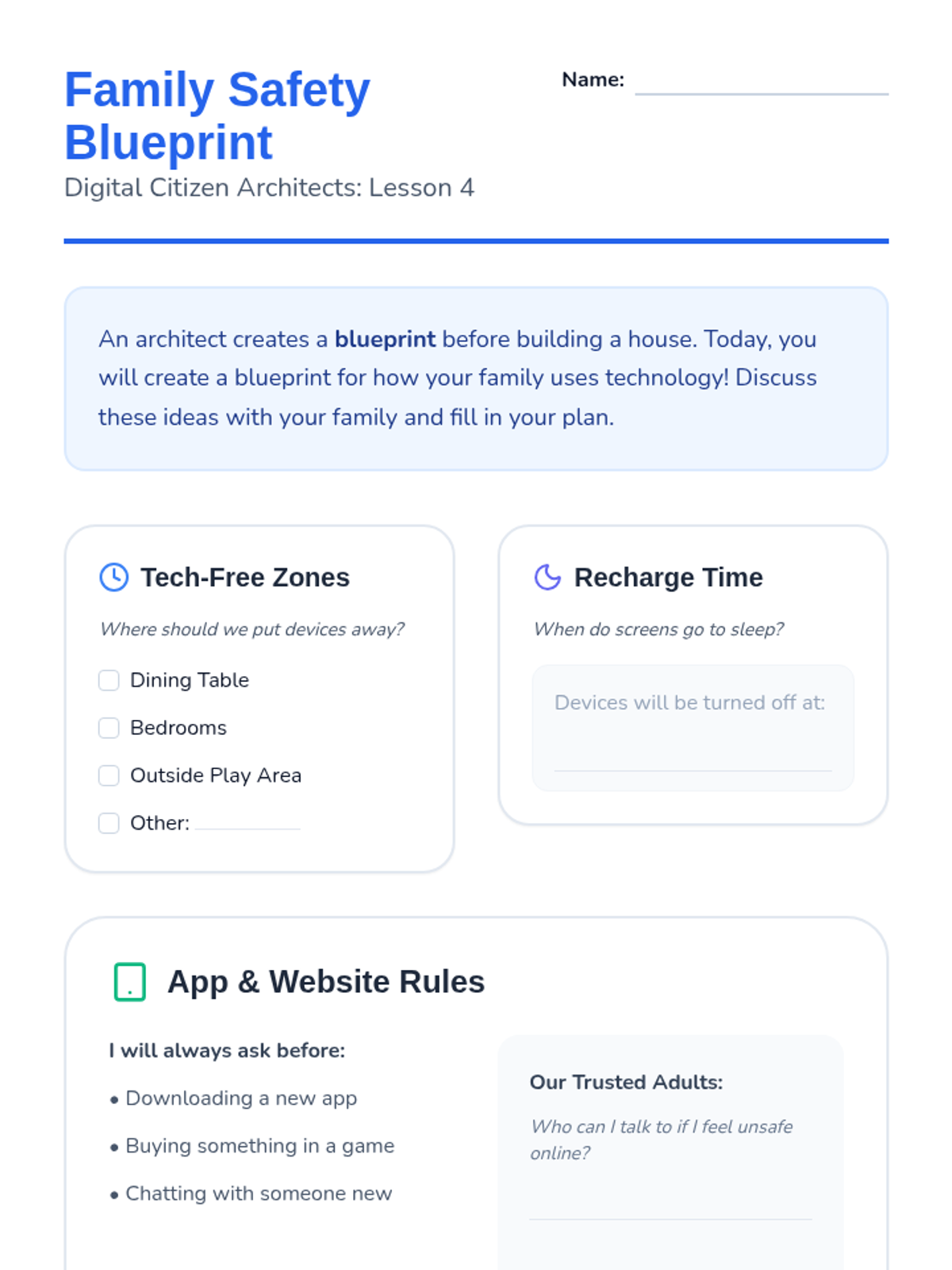
Students draft a family media contract to establish rules and boundaries for device use at home.
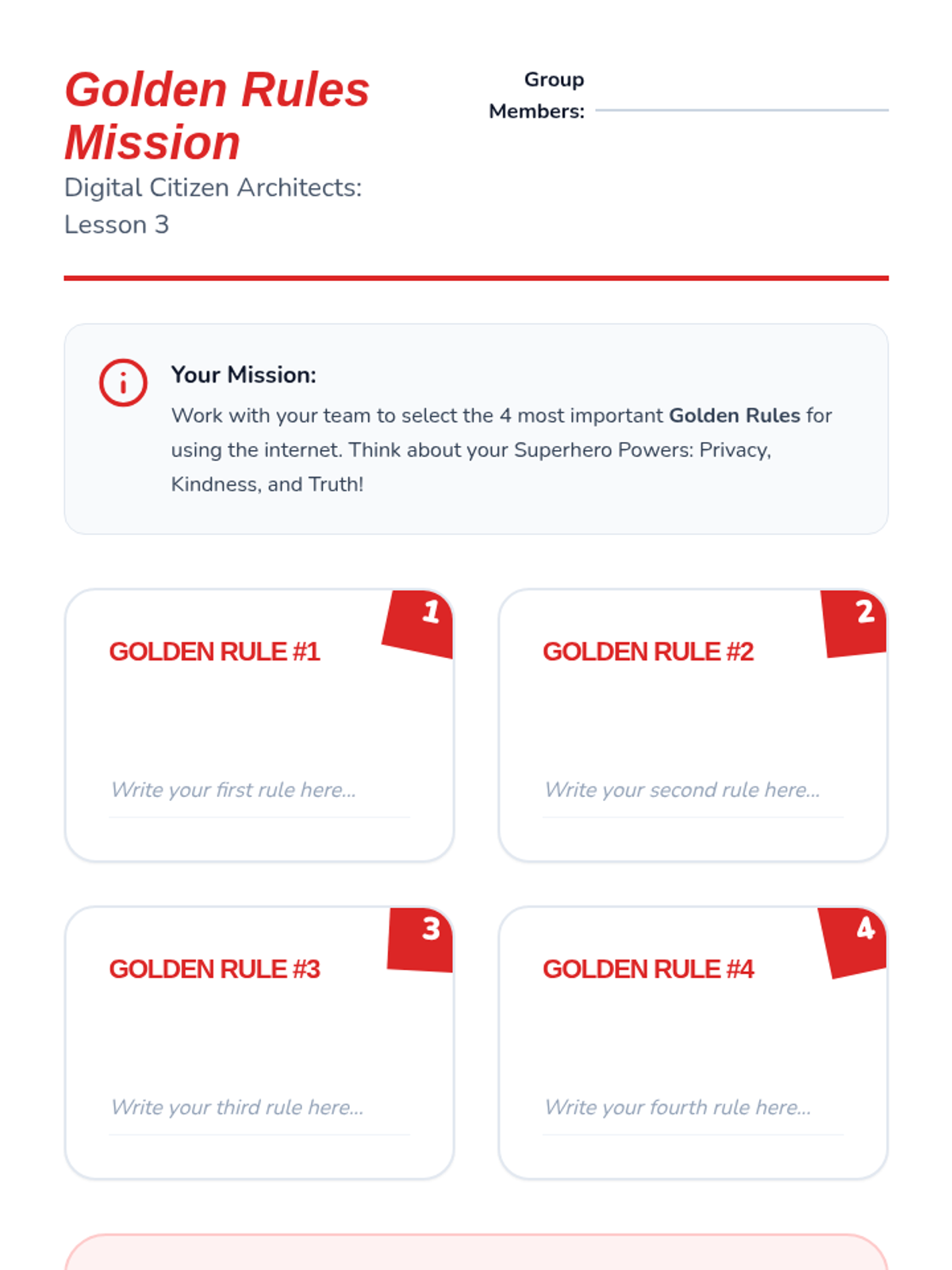
Students synthesize safety concepts like privacy and bullying to create a set of 'Golden Rules' for the internet using a superhero theme.
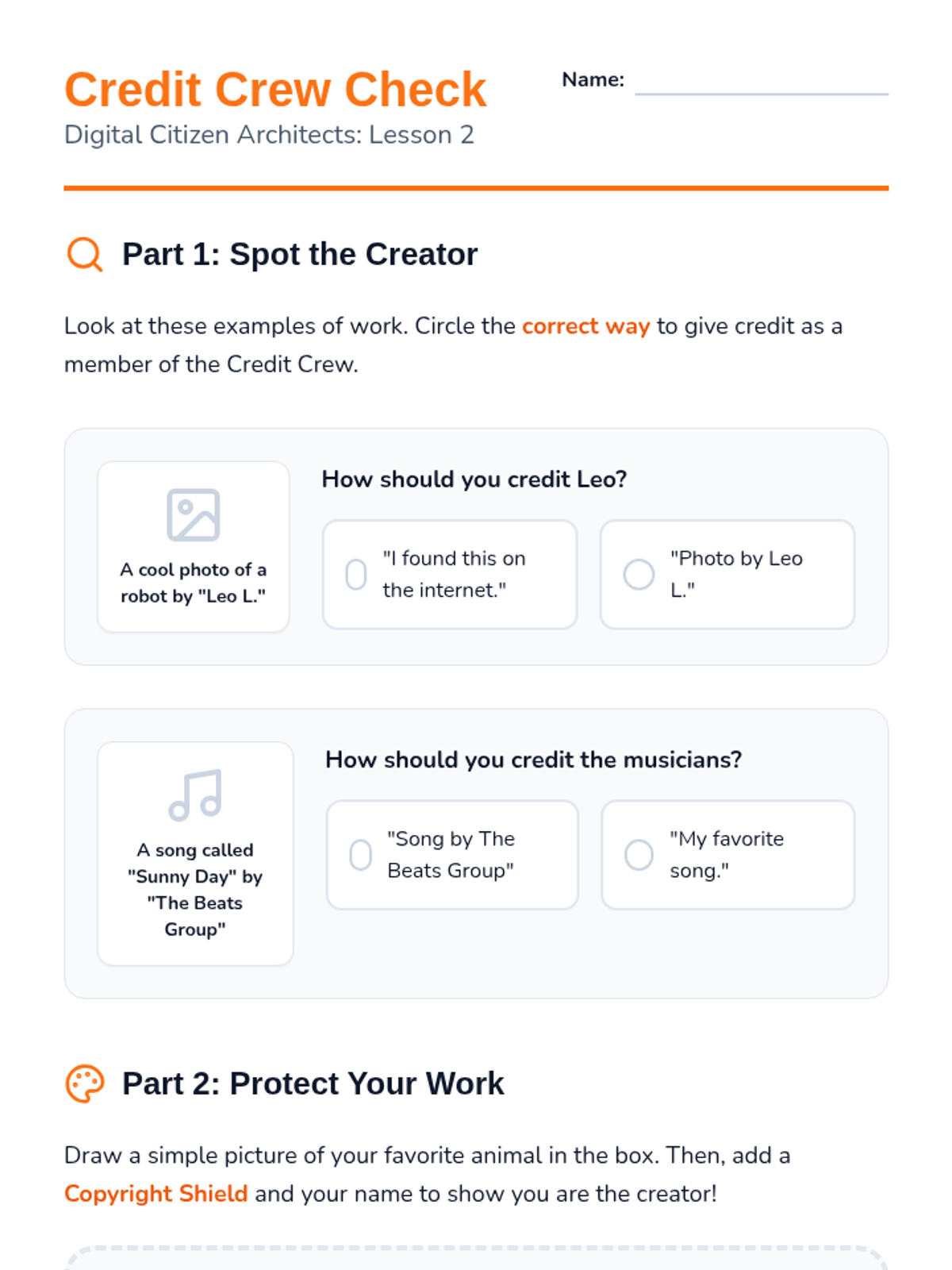
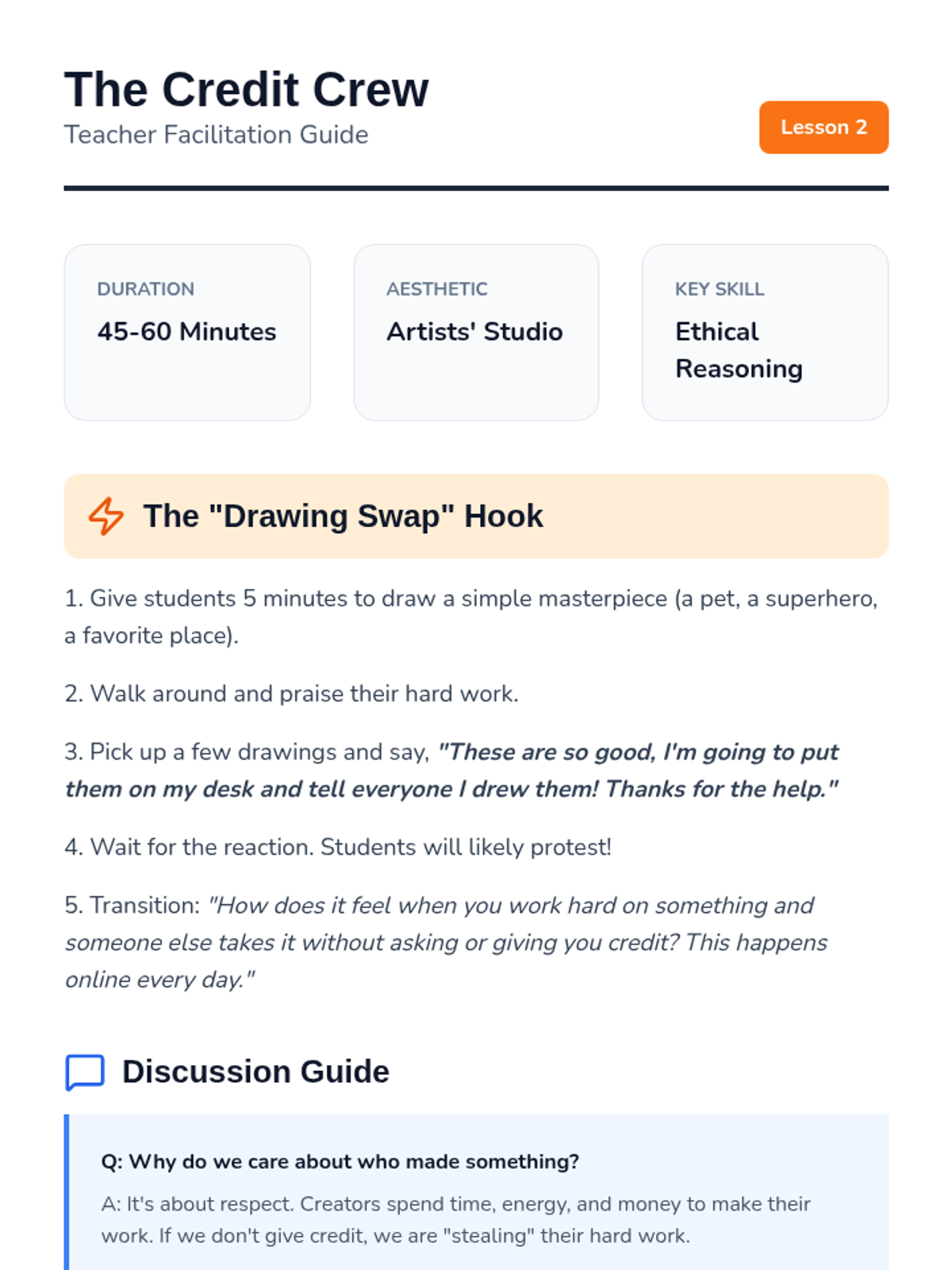
An introduction to digital ethics where students learn that online content has owners and practice giving credit to creators.
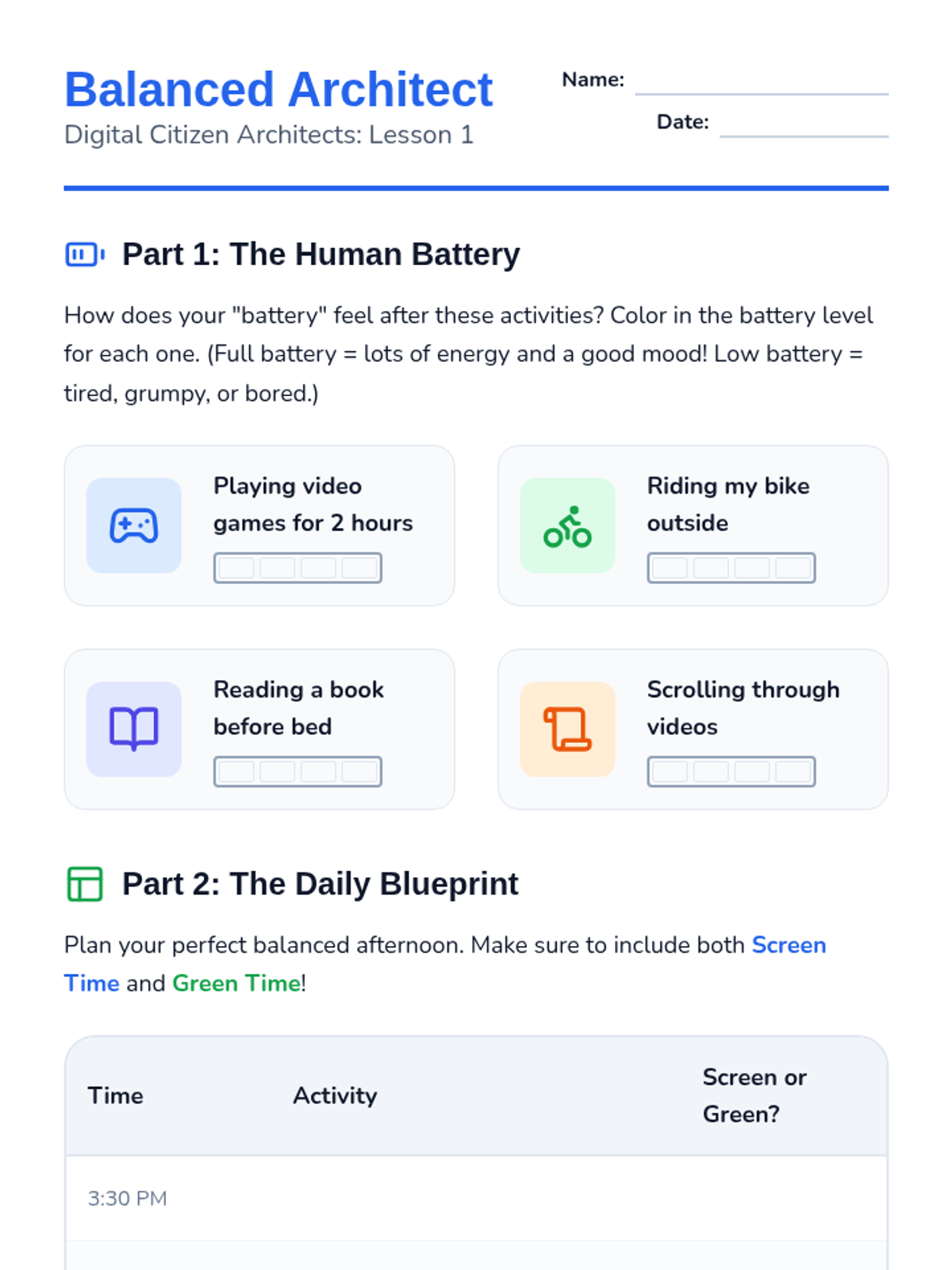
Students explore the physical and mental effects of screen time and create a balanced daily schedule that includes 'green time' (physical play and sleep).
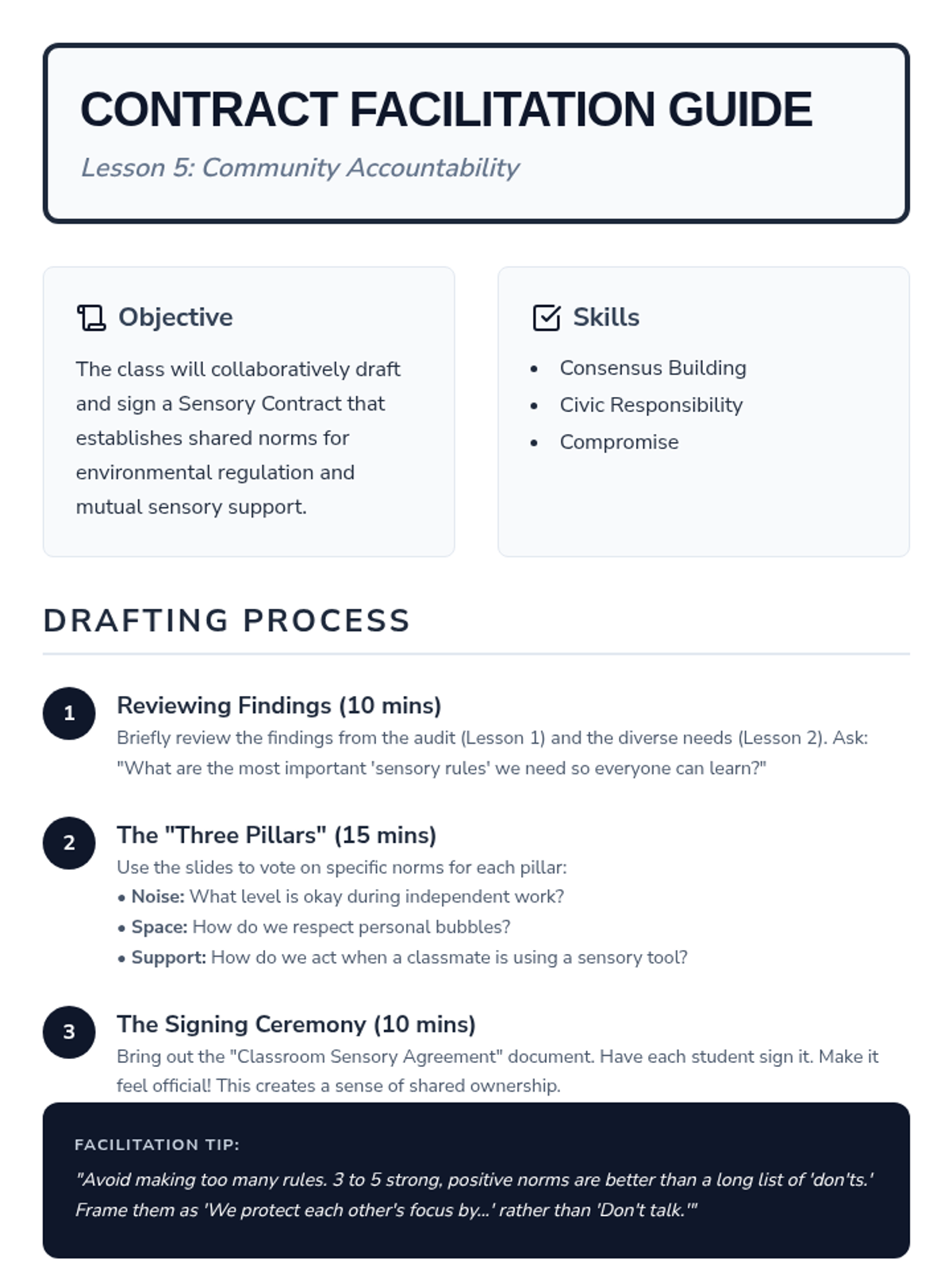
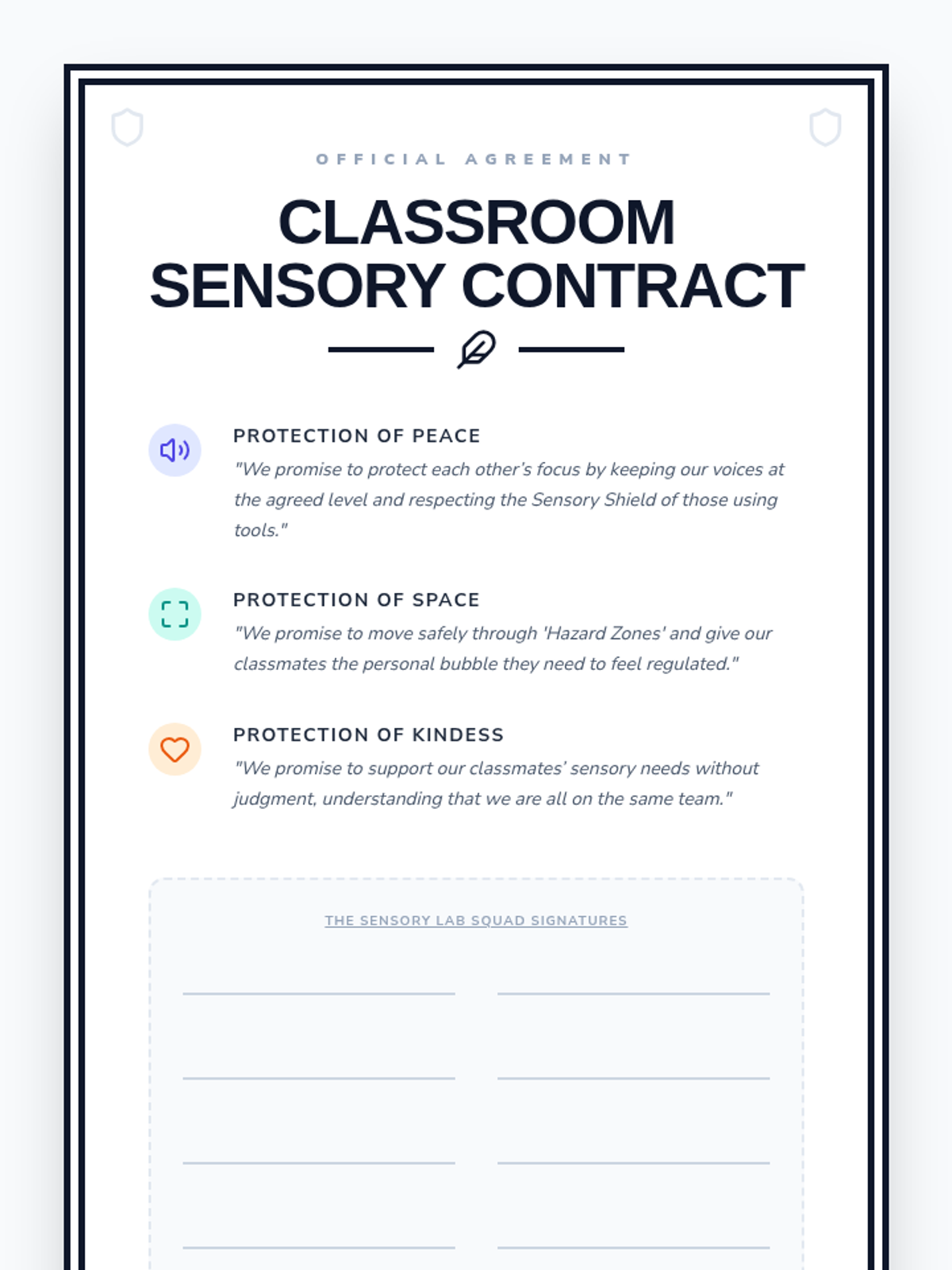
The sequence culminates in the creation of a shared classroom agreement that establishes norms for noise, space, and sensory support.
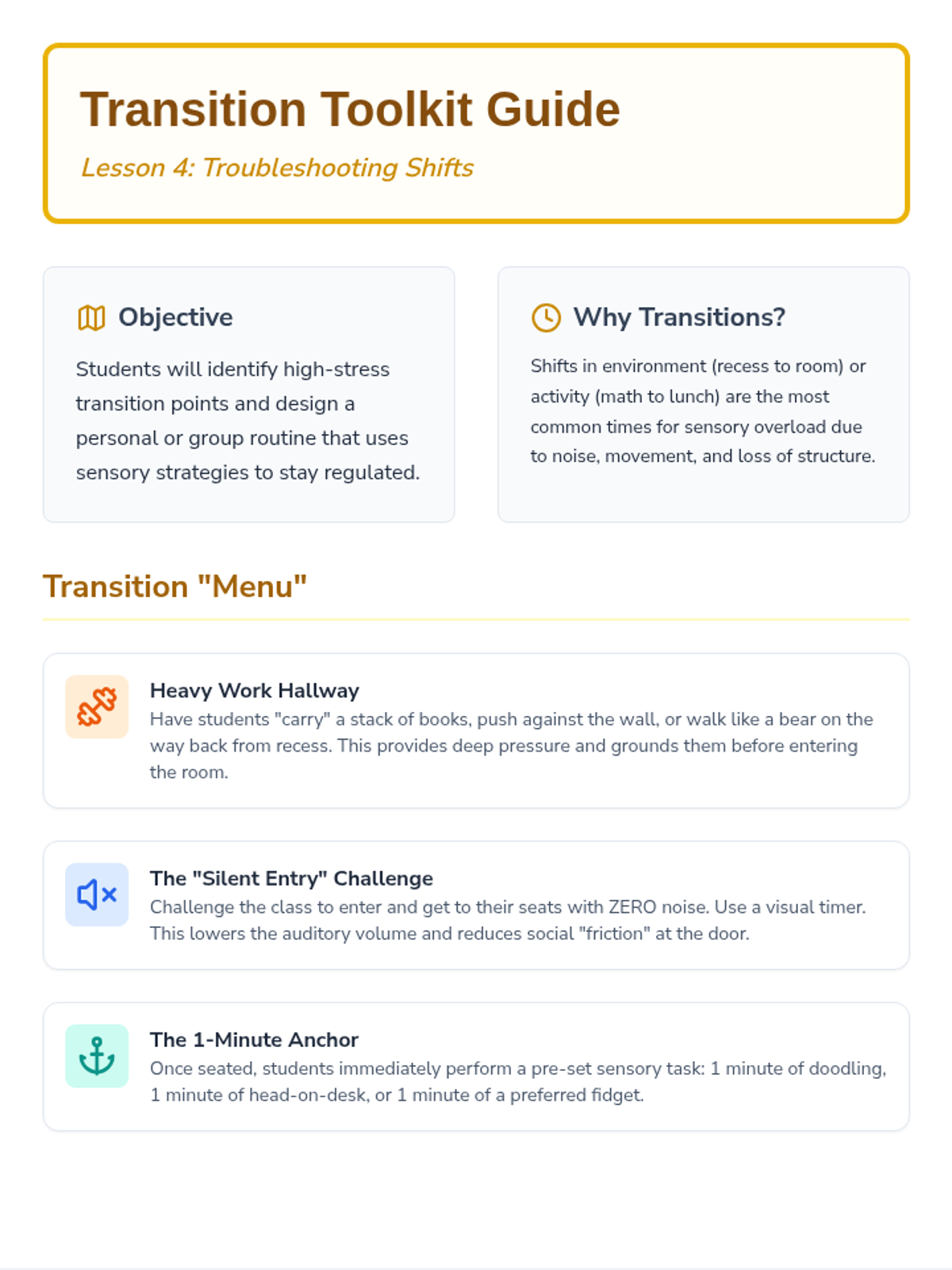
Students identify high-stress transition times and brainstorm proactive routines to maintain sensory regulation when moving between activities.
The class practices whole-group regulation techniques like synchronized breathing and chair yoga to understand how collective action affects the energy of the room.
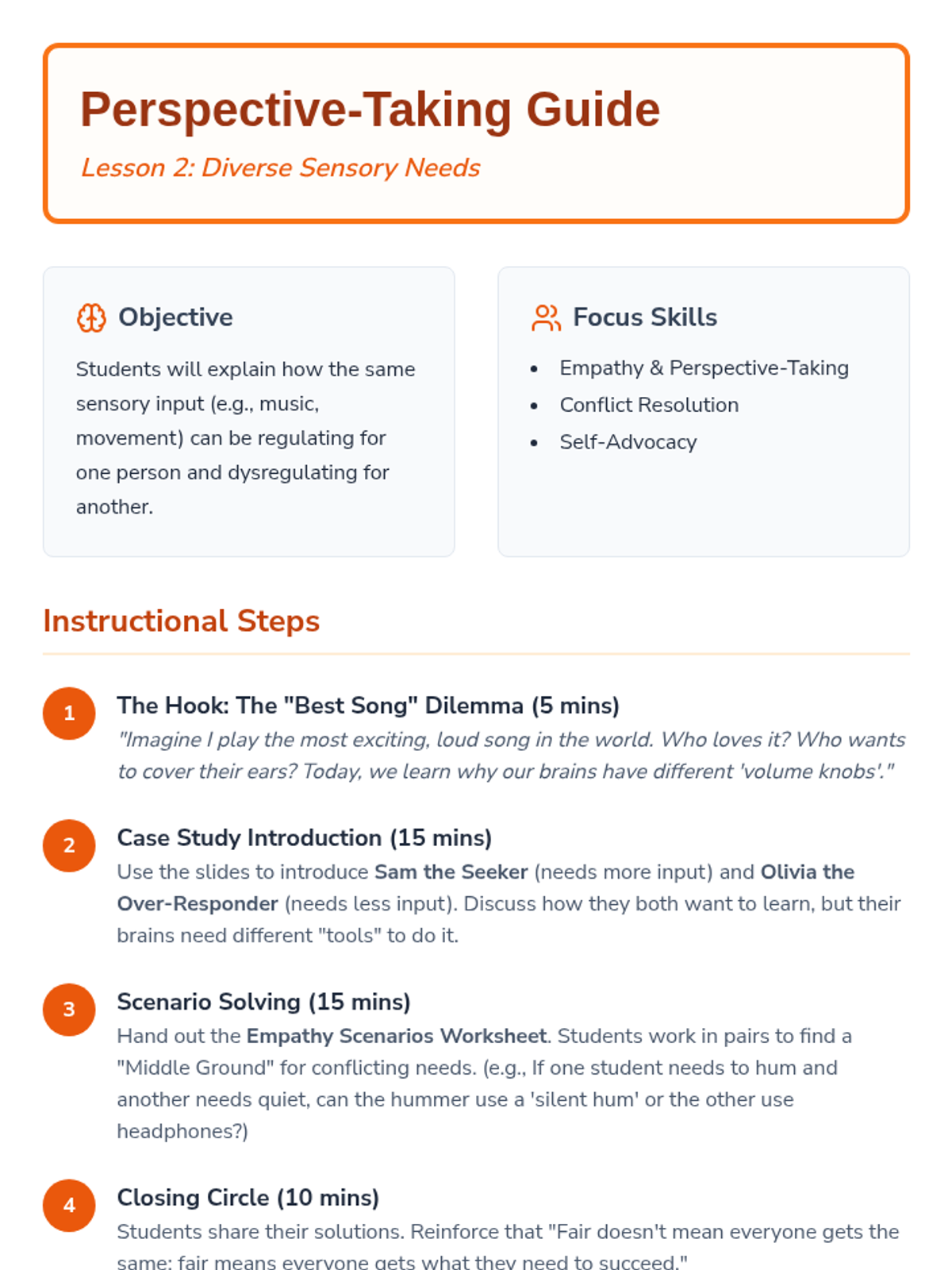
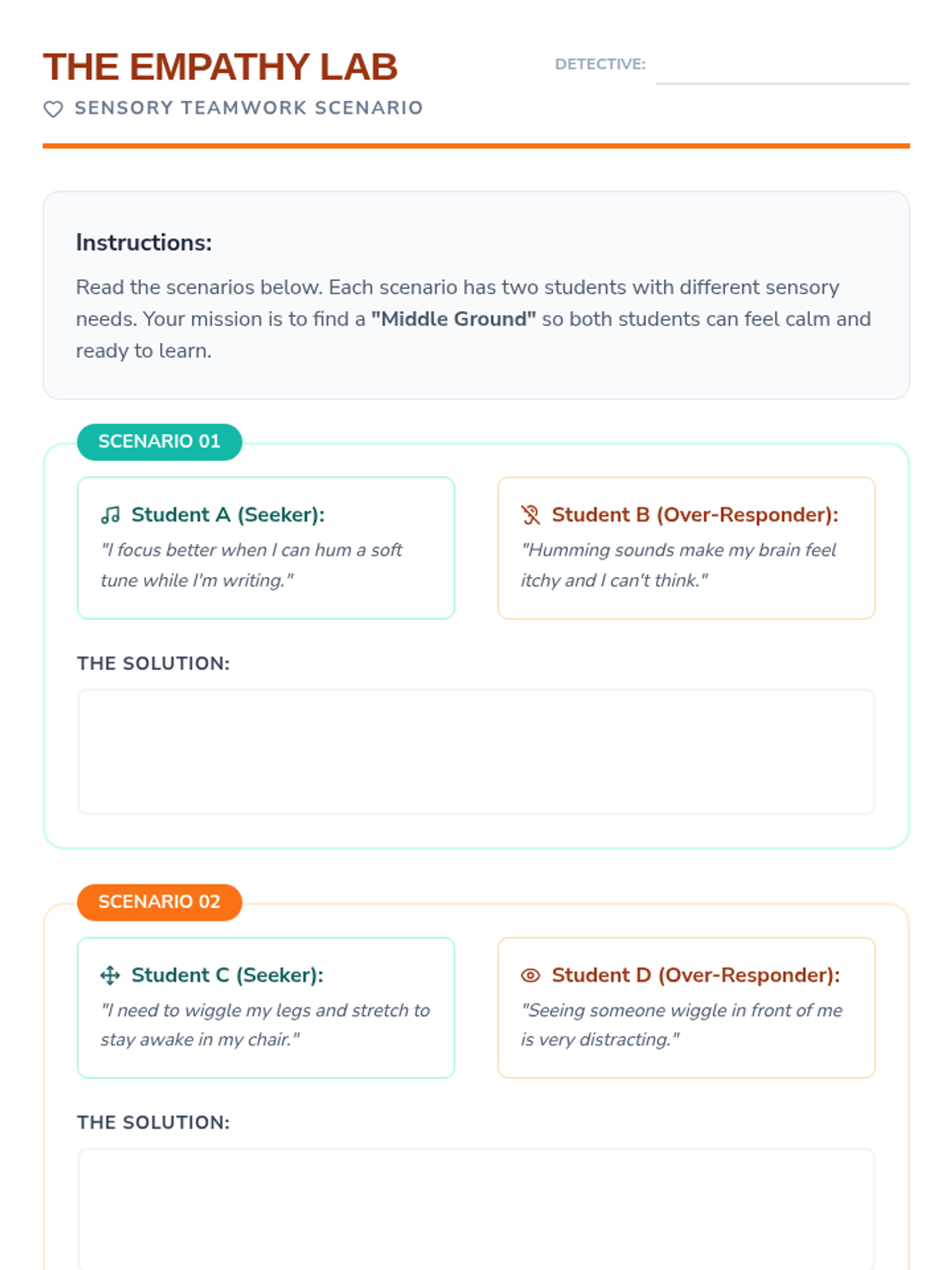
Students explore how sensory preferences vary between individuals and practice perspective-taking to understand and respect classmates' different needs.
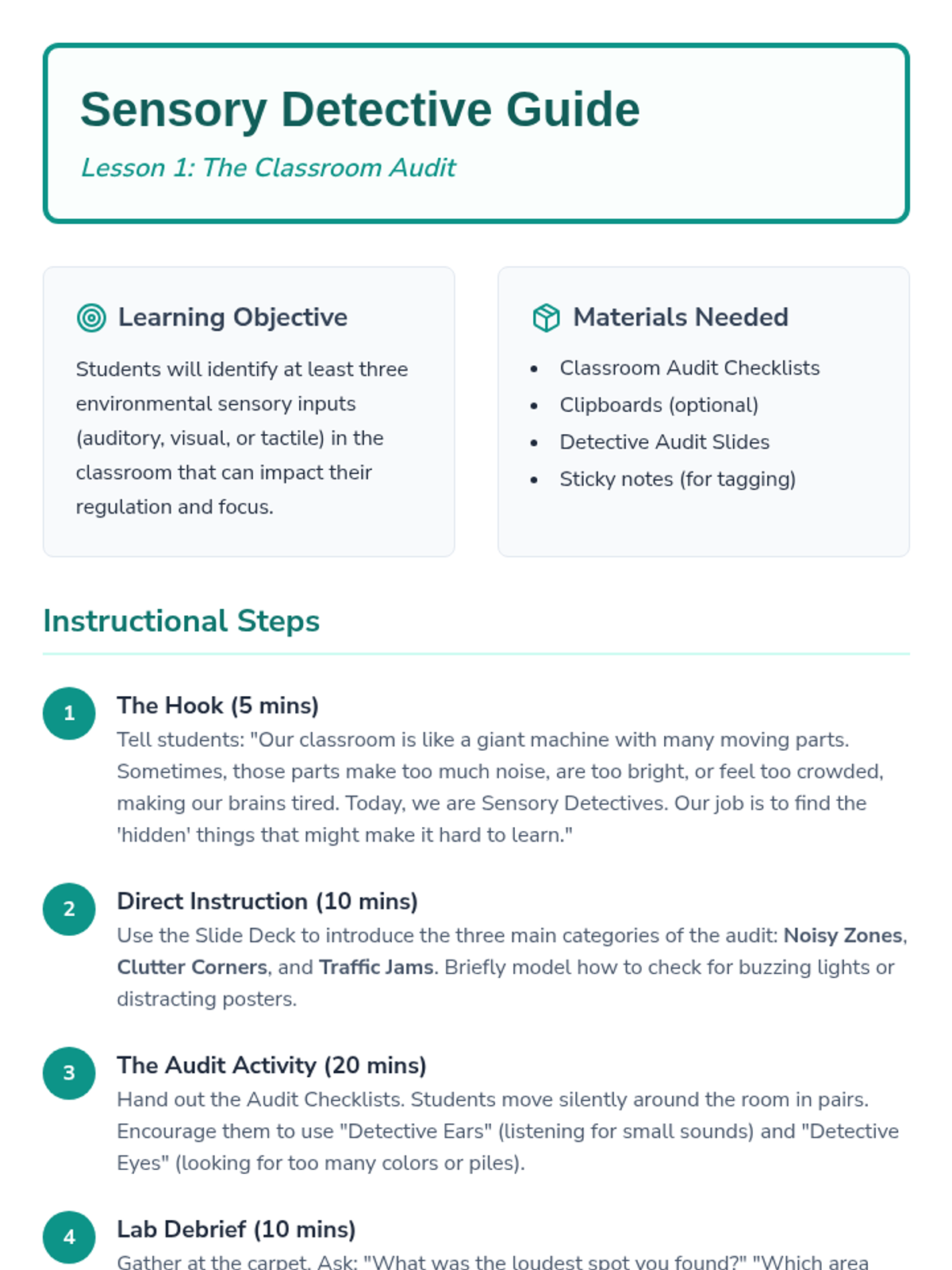
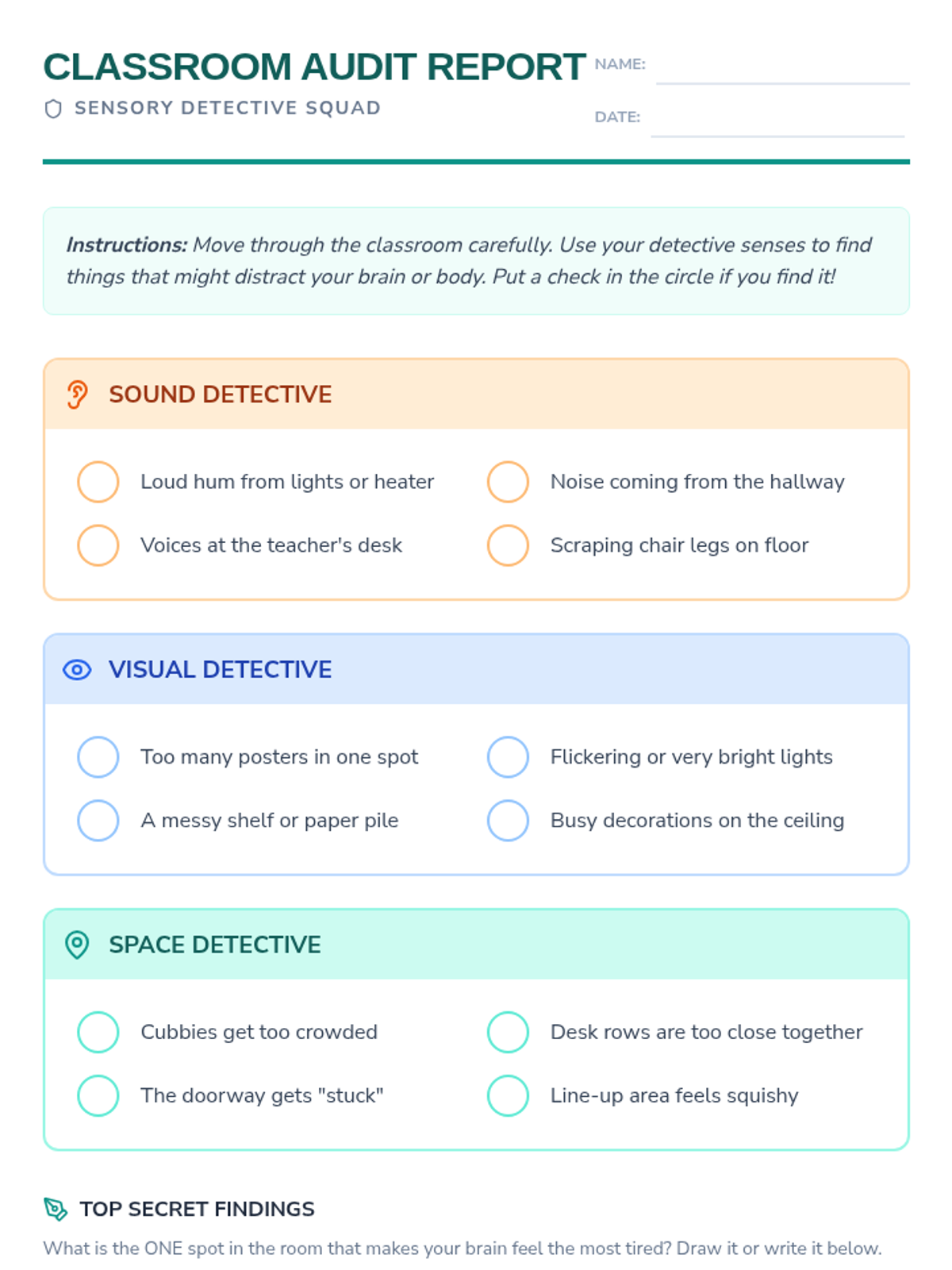
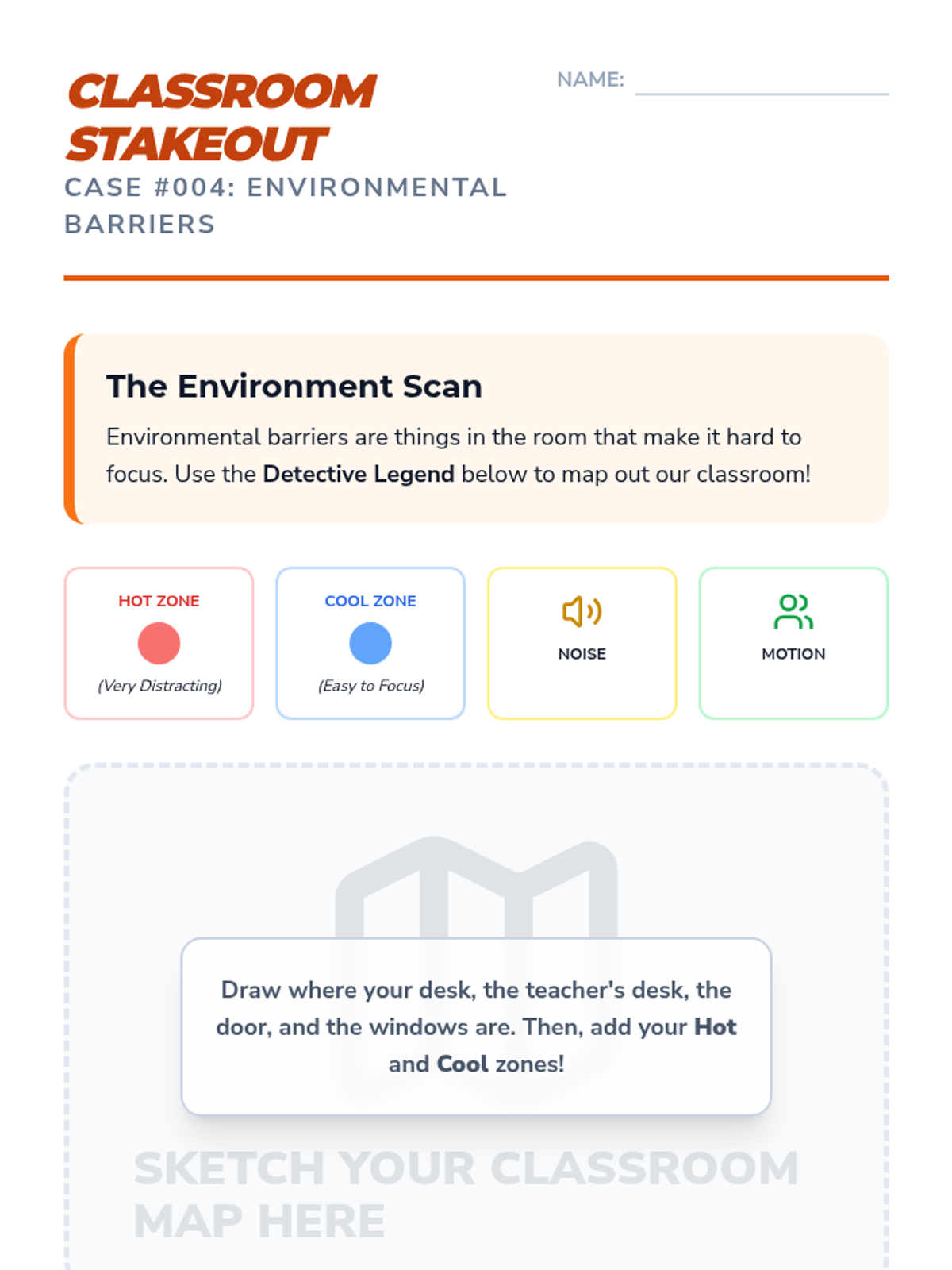
Students conduct a hands-on audit of their classroom to identify environmental sensory triggers and discuss how these factors impact their ability to focus and stay calm.
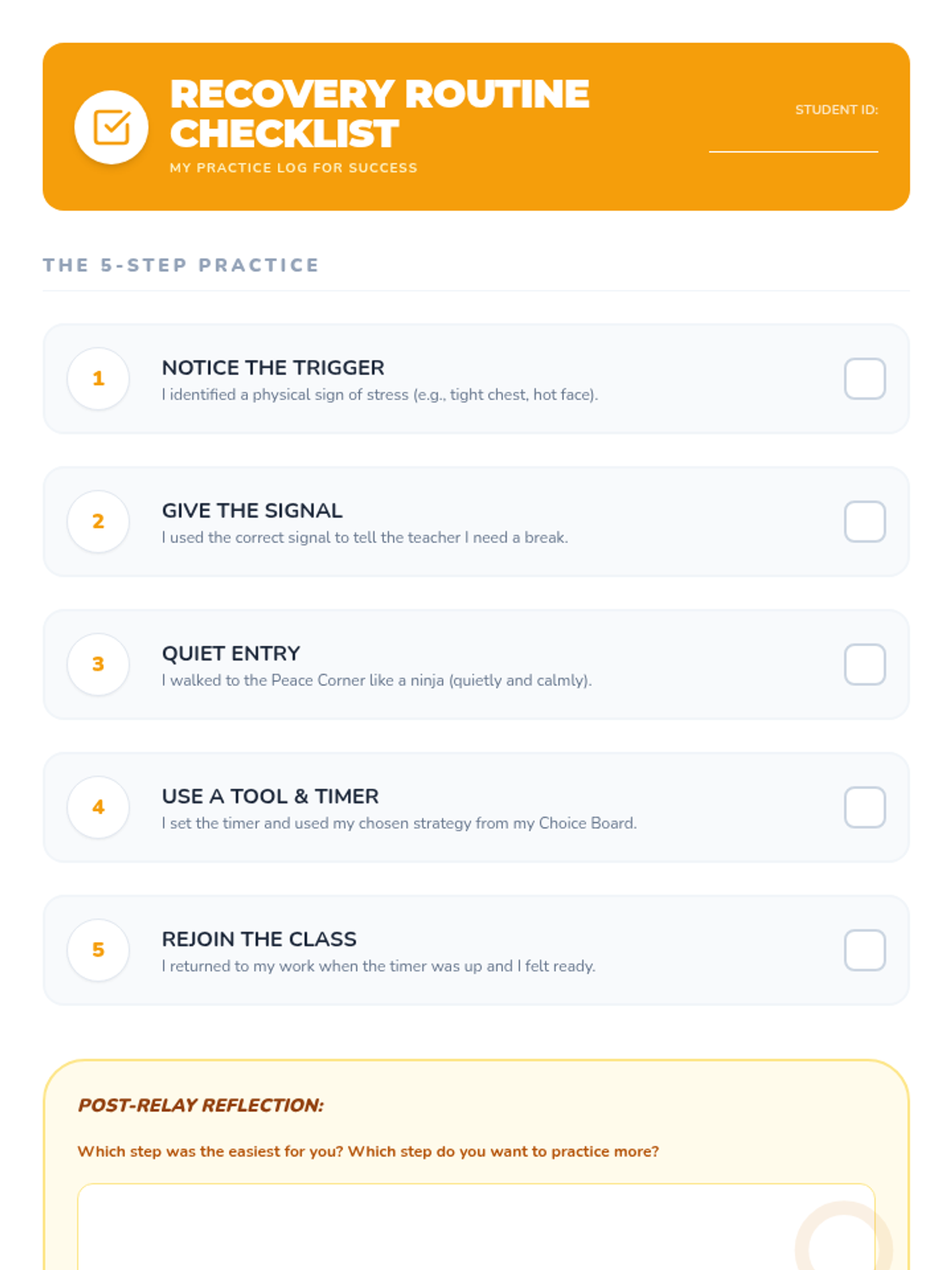
Students practice the full recovery workflow through 'fire drill' style simulations to build automatic habits for self-regulation.
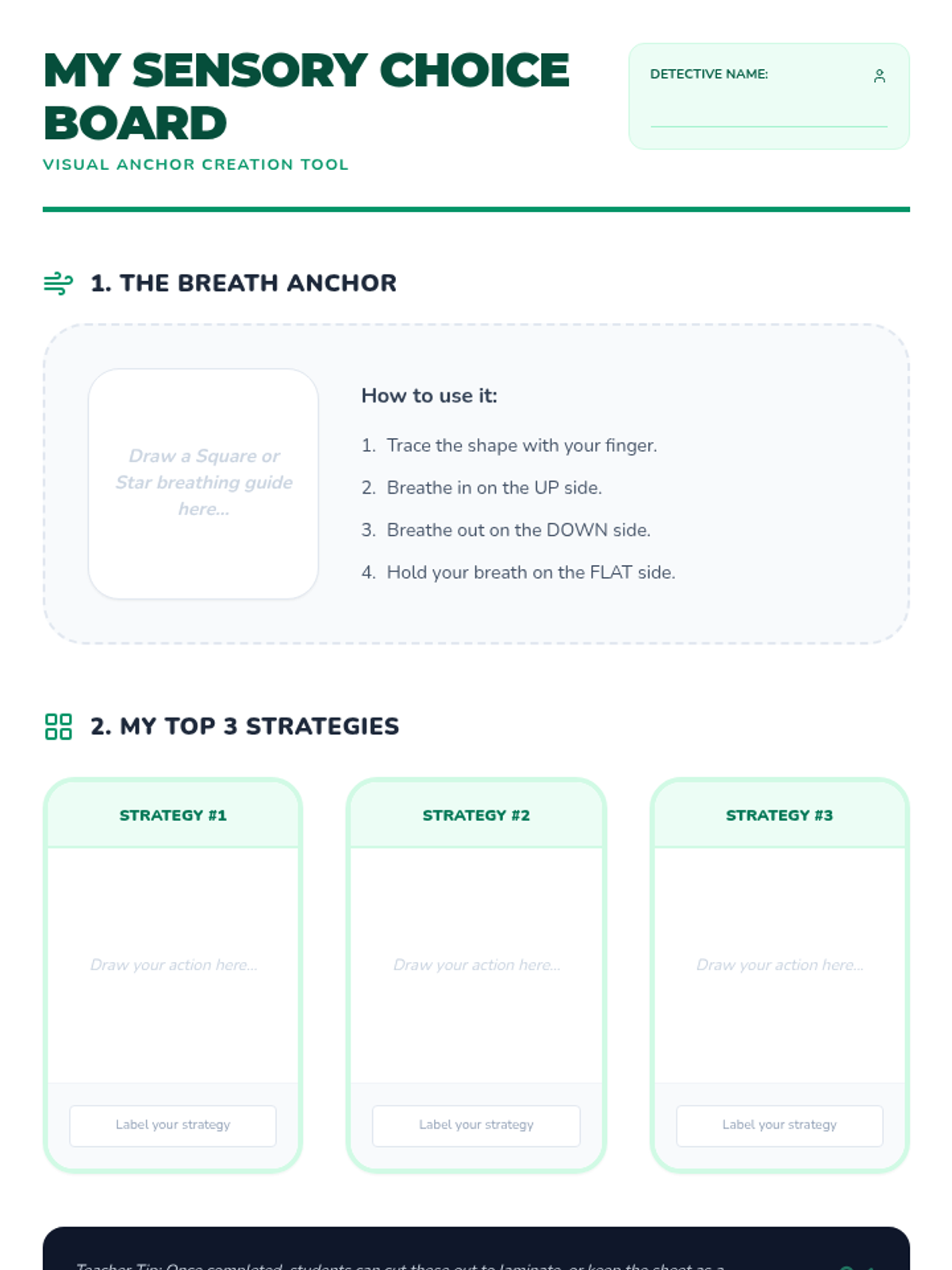
Students create visual anchors like breathing posters and choice boards to serve as independent prompts during times of stress.
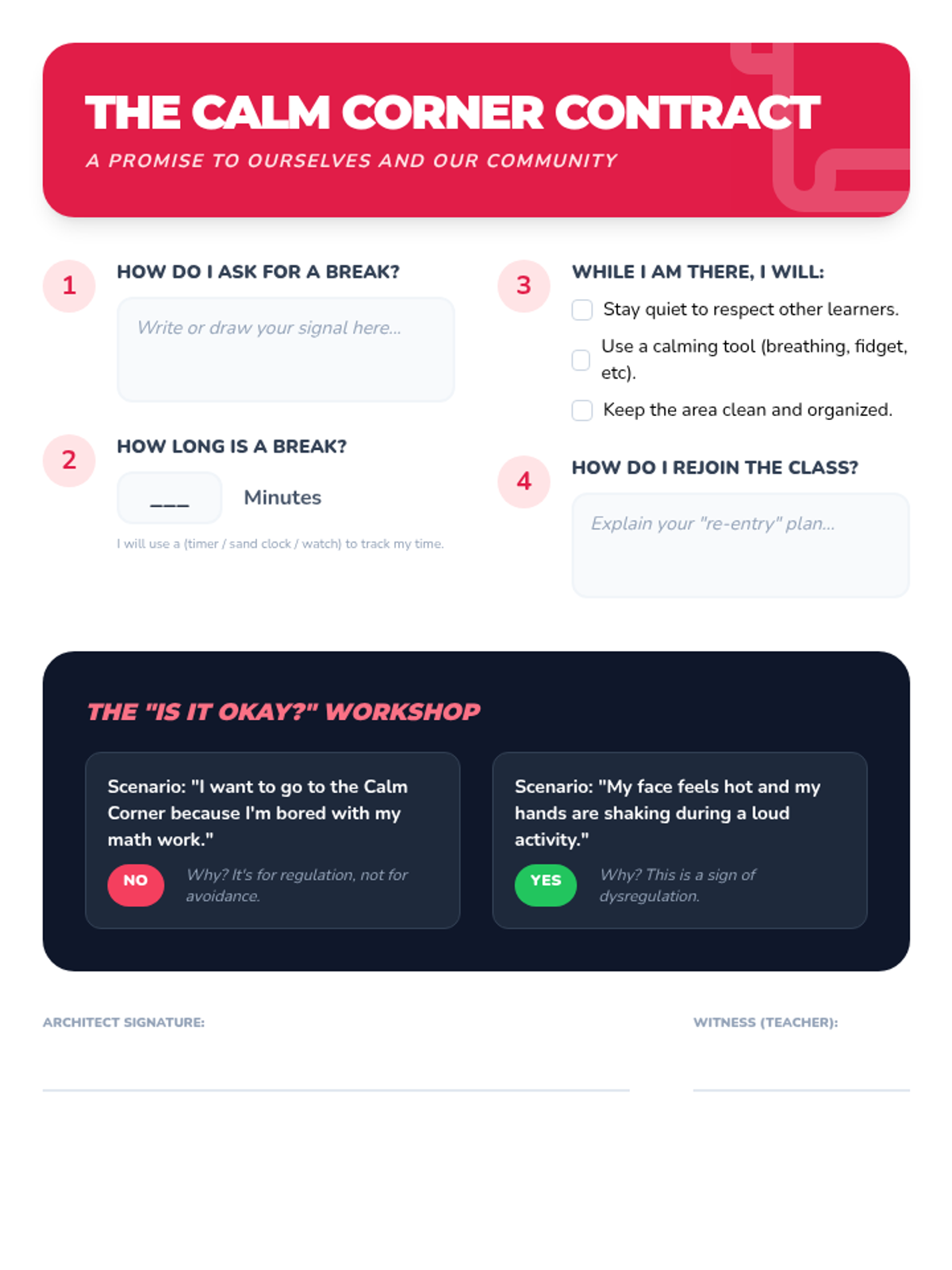
The class brainstorms and votes on rules and boundaries for the recovery space to ensure it remains a functional tool for regulation.
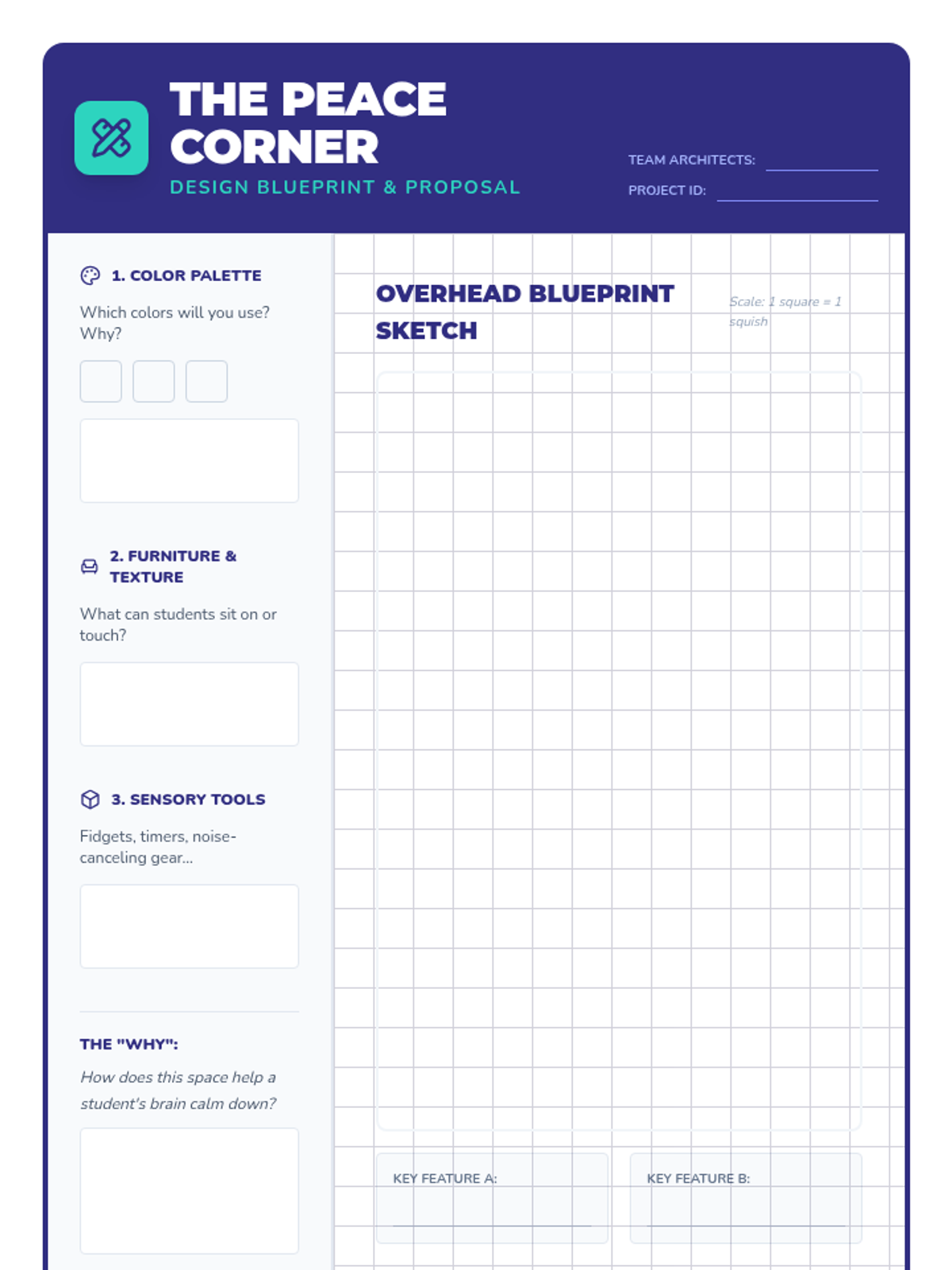
Students work in small groups to design an ideal recovery space, justifying their choices of colors, furniture, and tools.
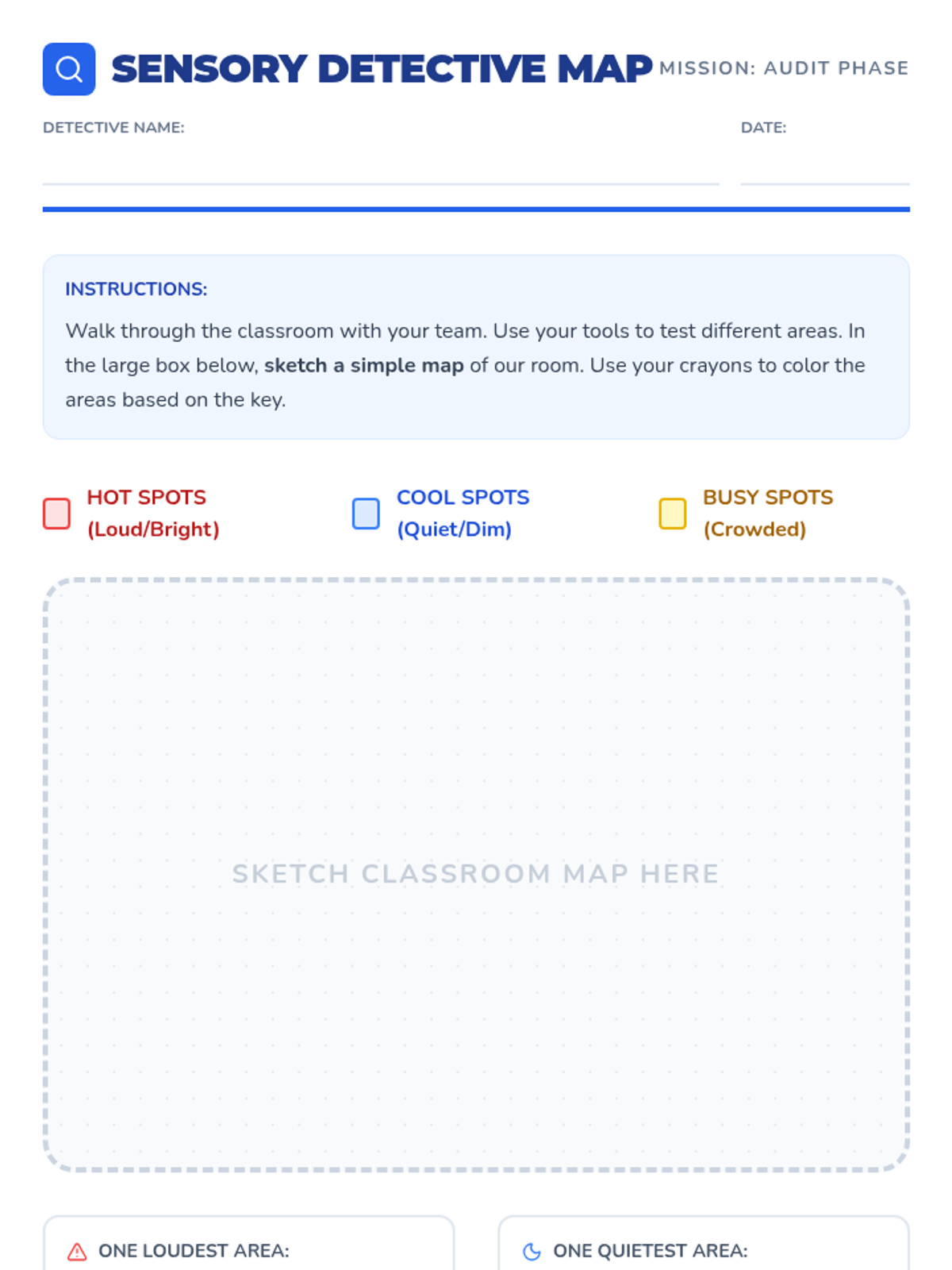
Students become 'Sensory Detectives' to identify high and low stimulation areas in the classroom using tools like decibel meters and light sensors.
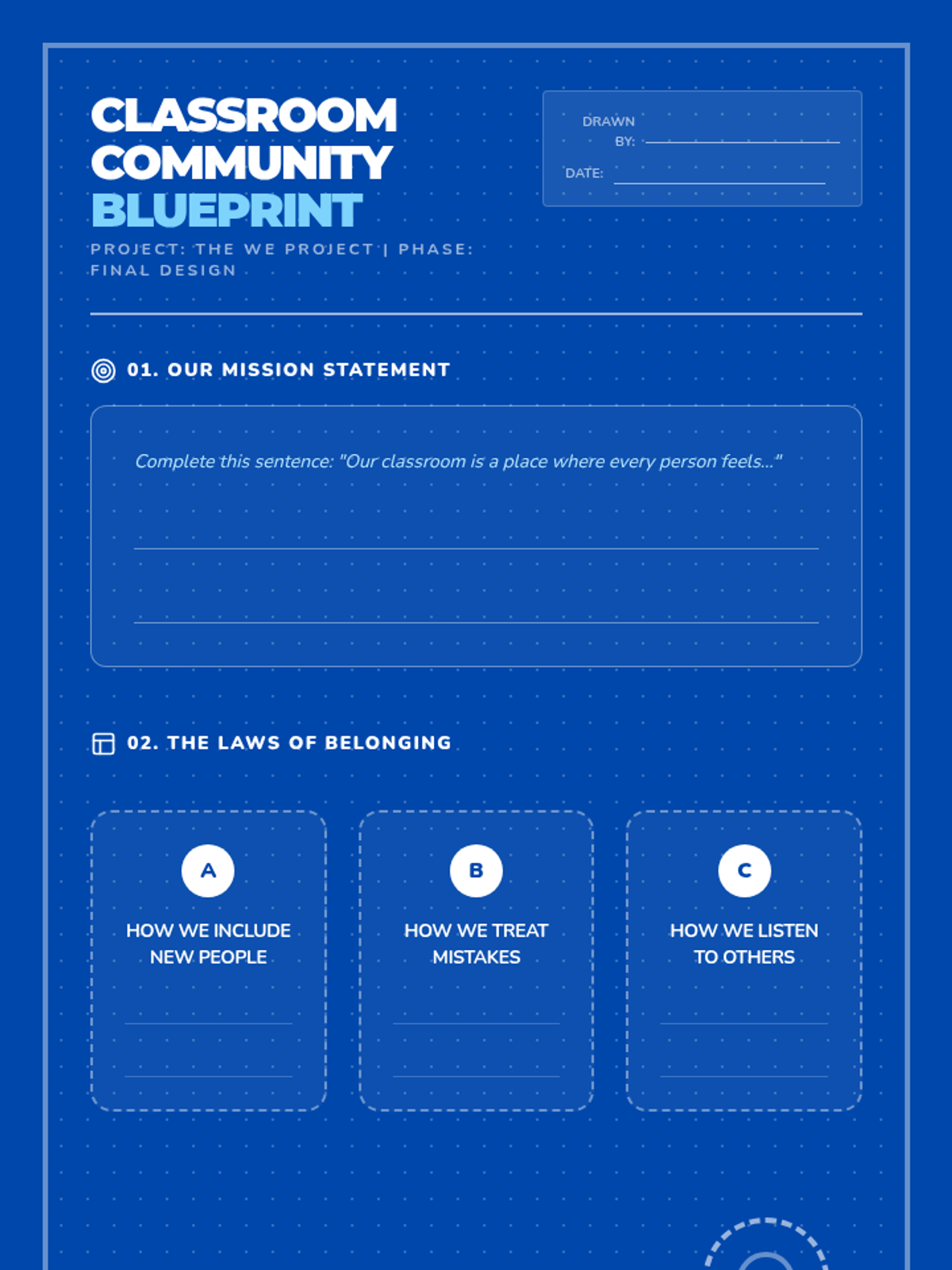
Students synthesize their learning by creating 'Classroom Community Guidelines' that ensure everyone feels a sense of belonging.
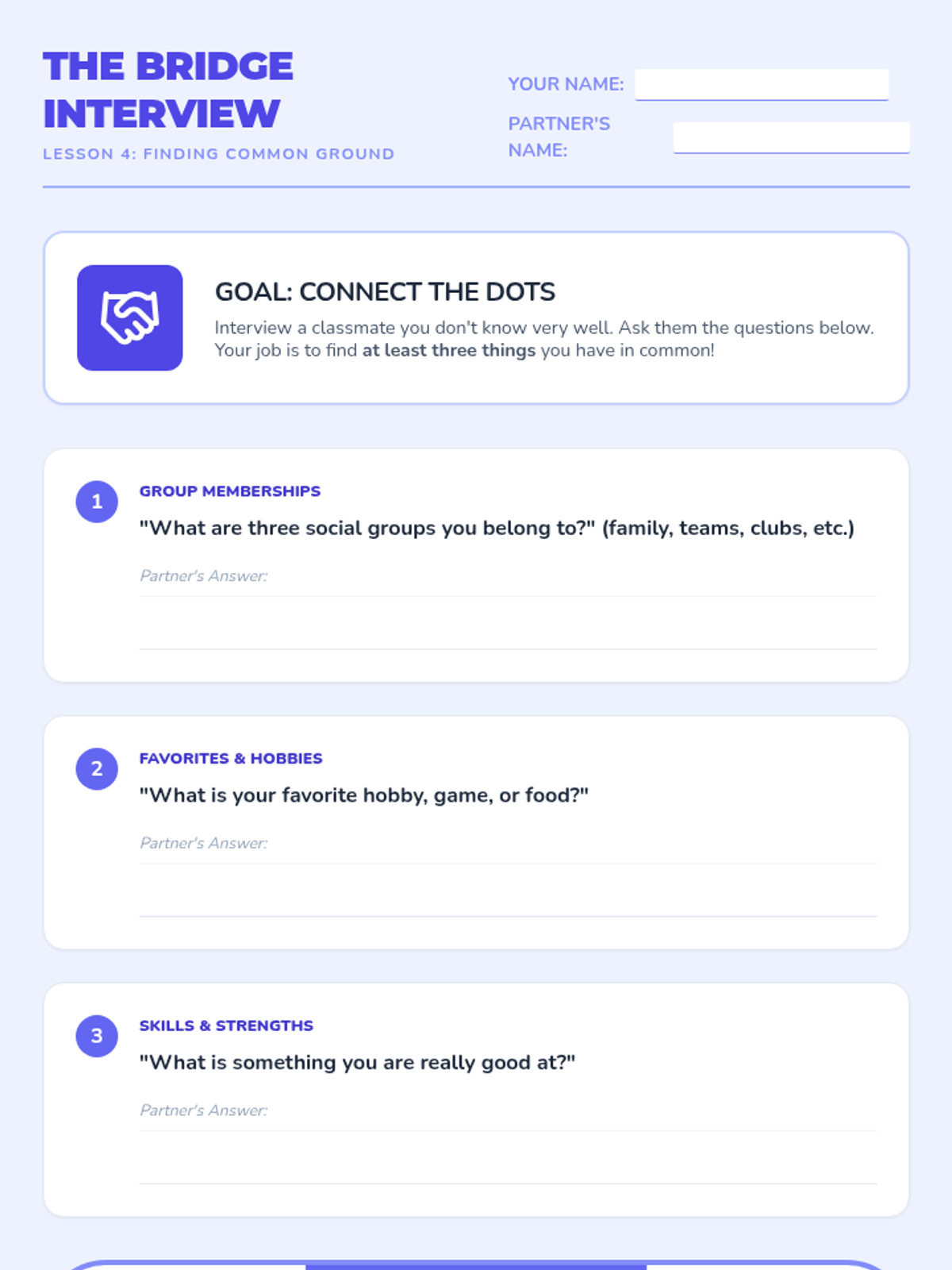
Students find commonalities between seemingly different groups and individuals to combat stereotyping and expand their definition of 'us.'
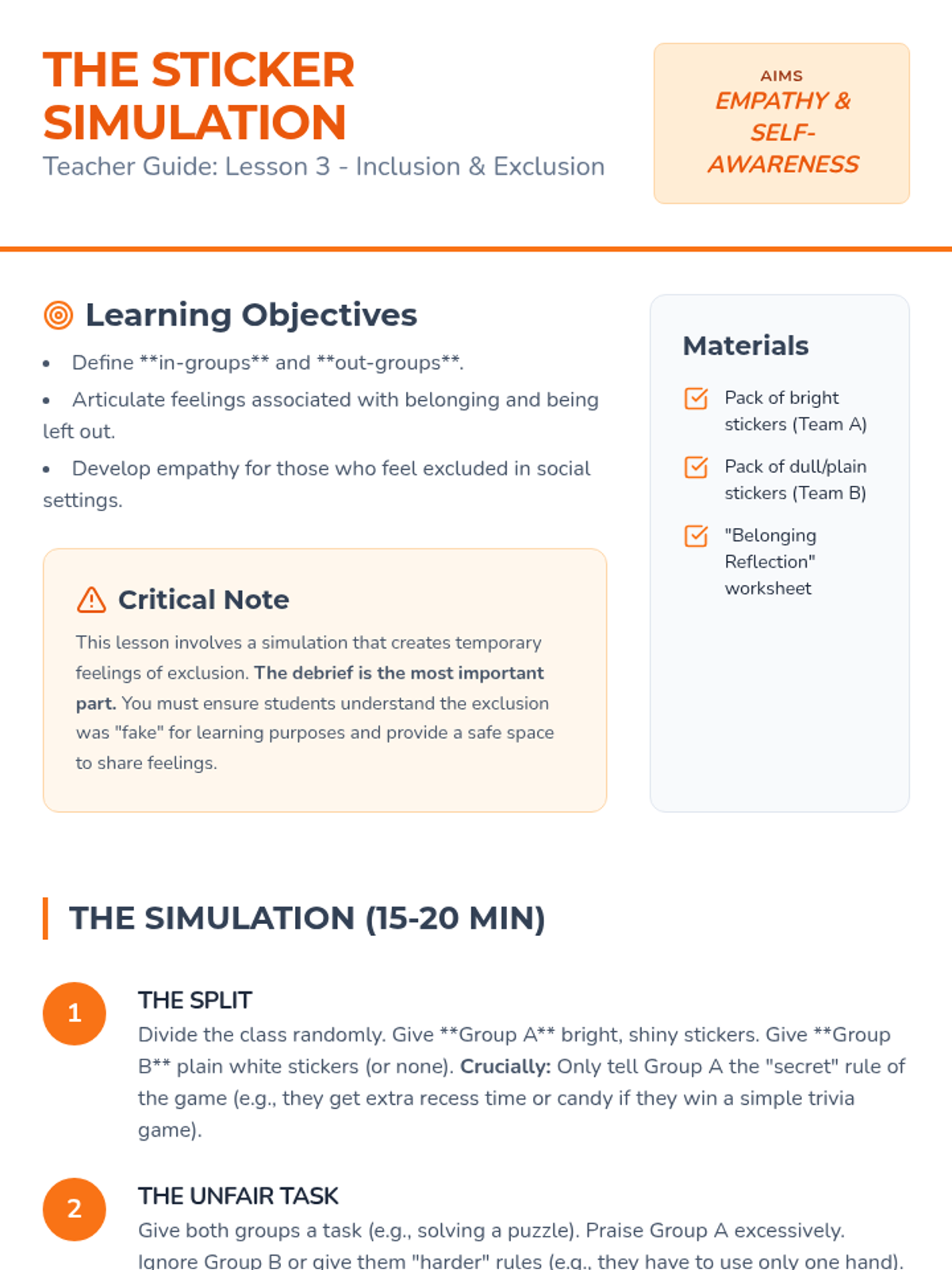
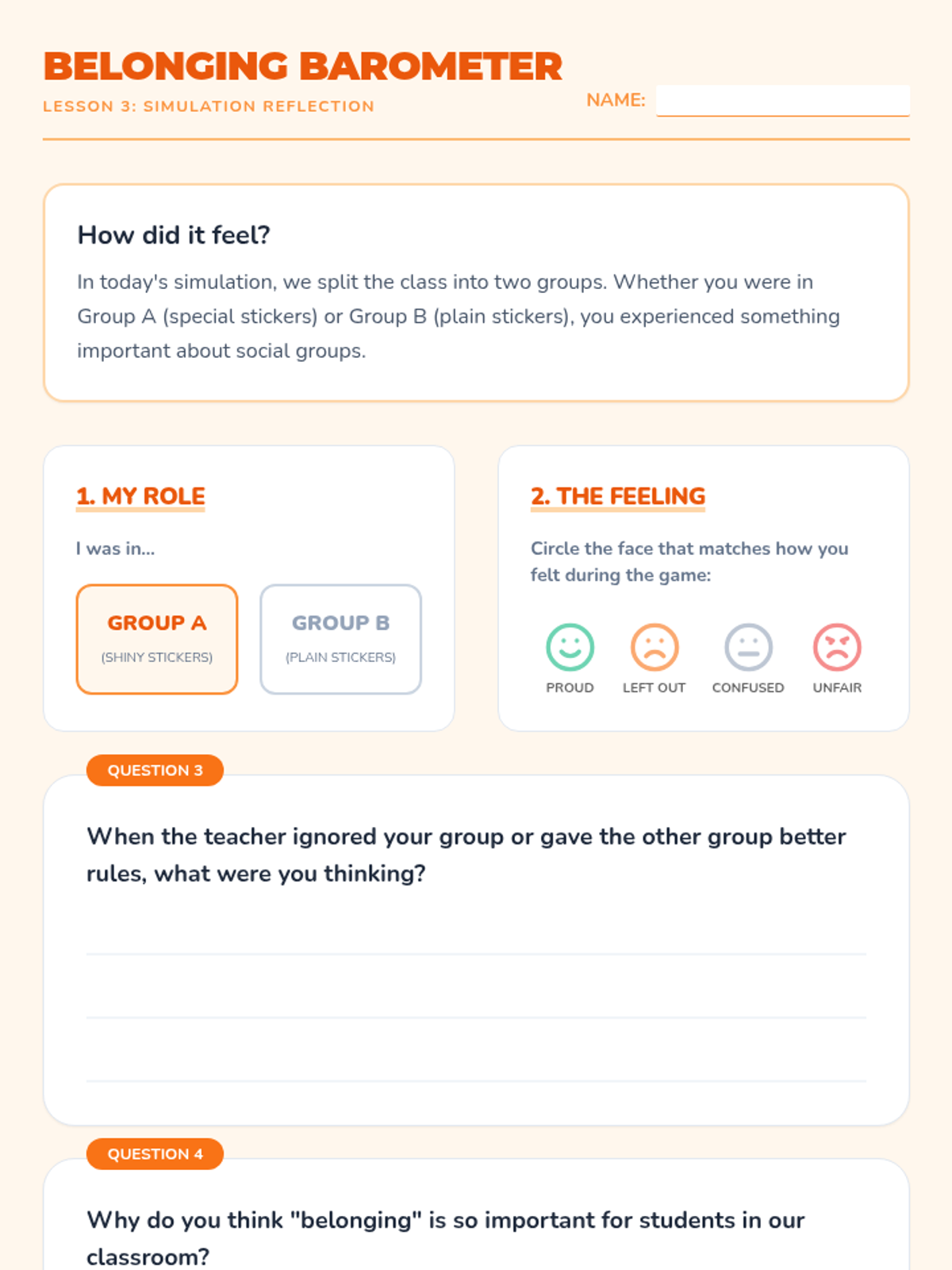
Through a structured simulation, students experience the feelings associated with 'in-groups' and 'out-groups' to build empathy and understand the need for connection.
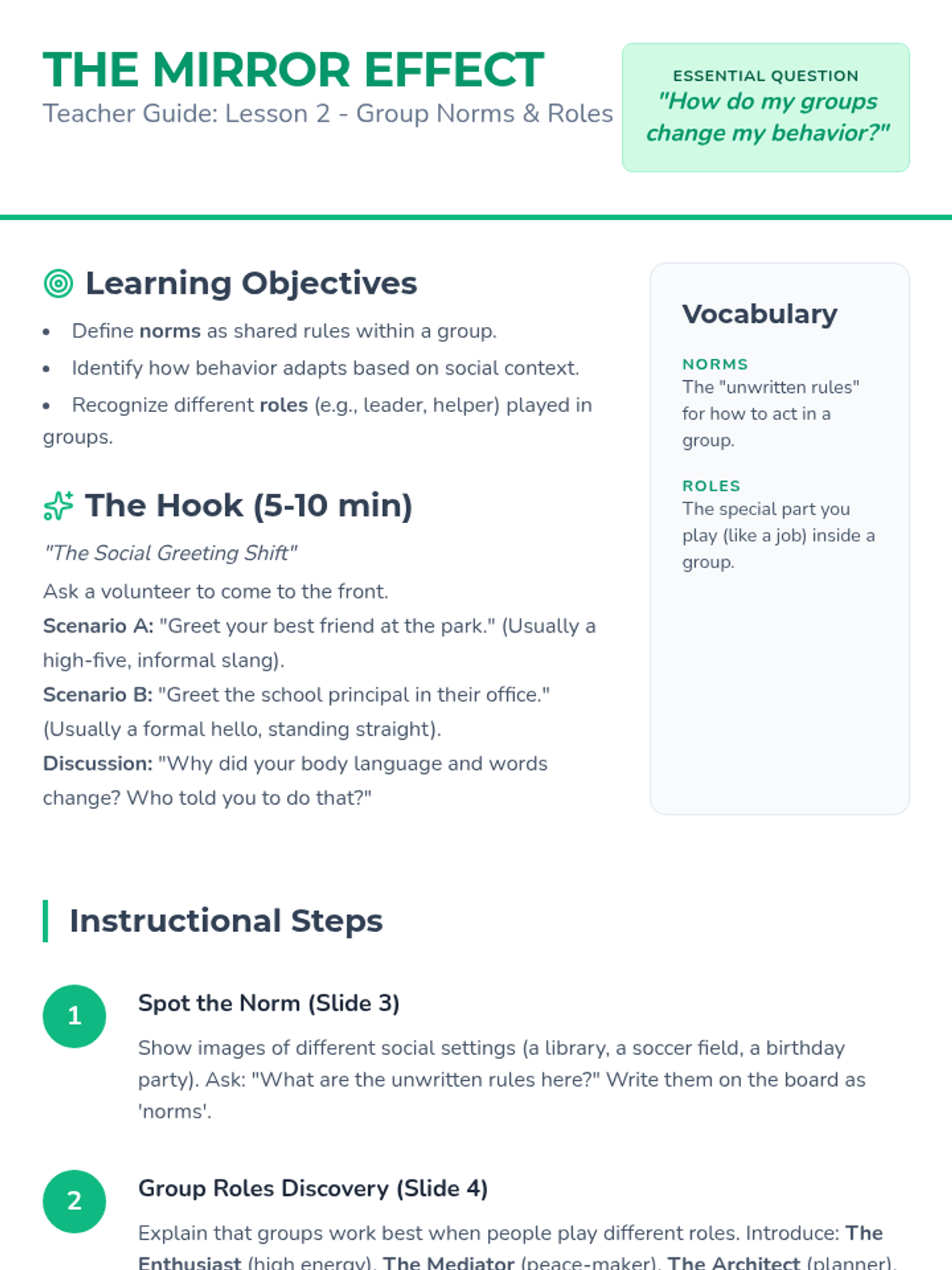
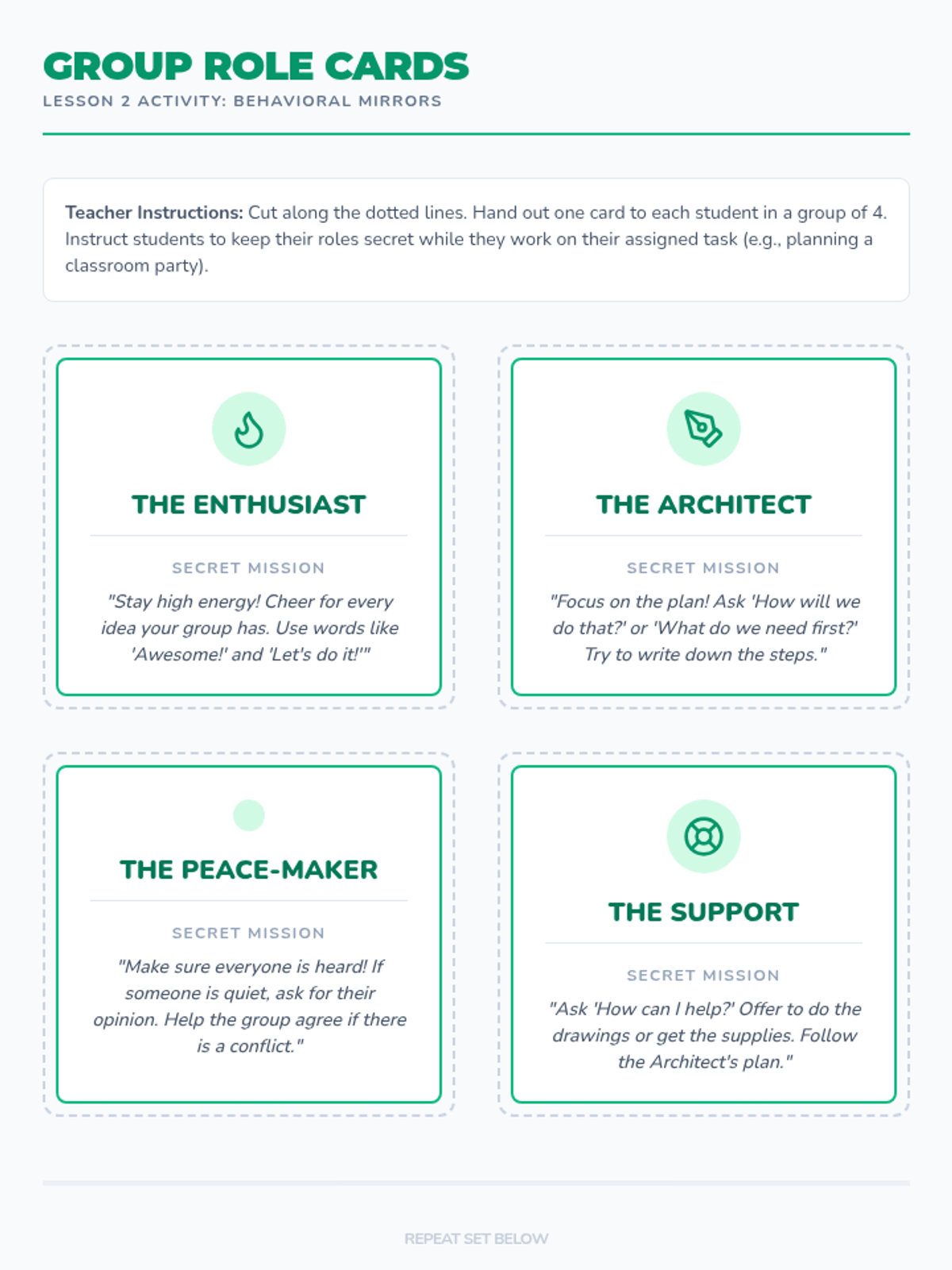
Students analyze how behavior changes across different groups and identify the roles they play, introducing the concept of context-dependent identity.
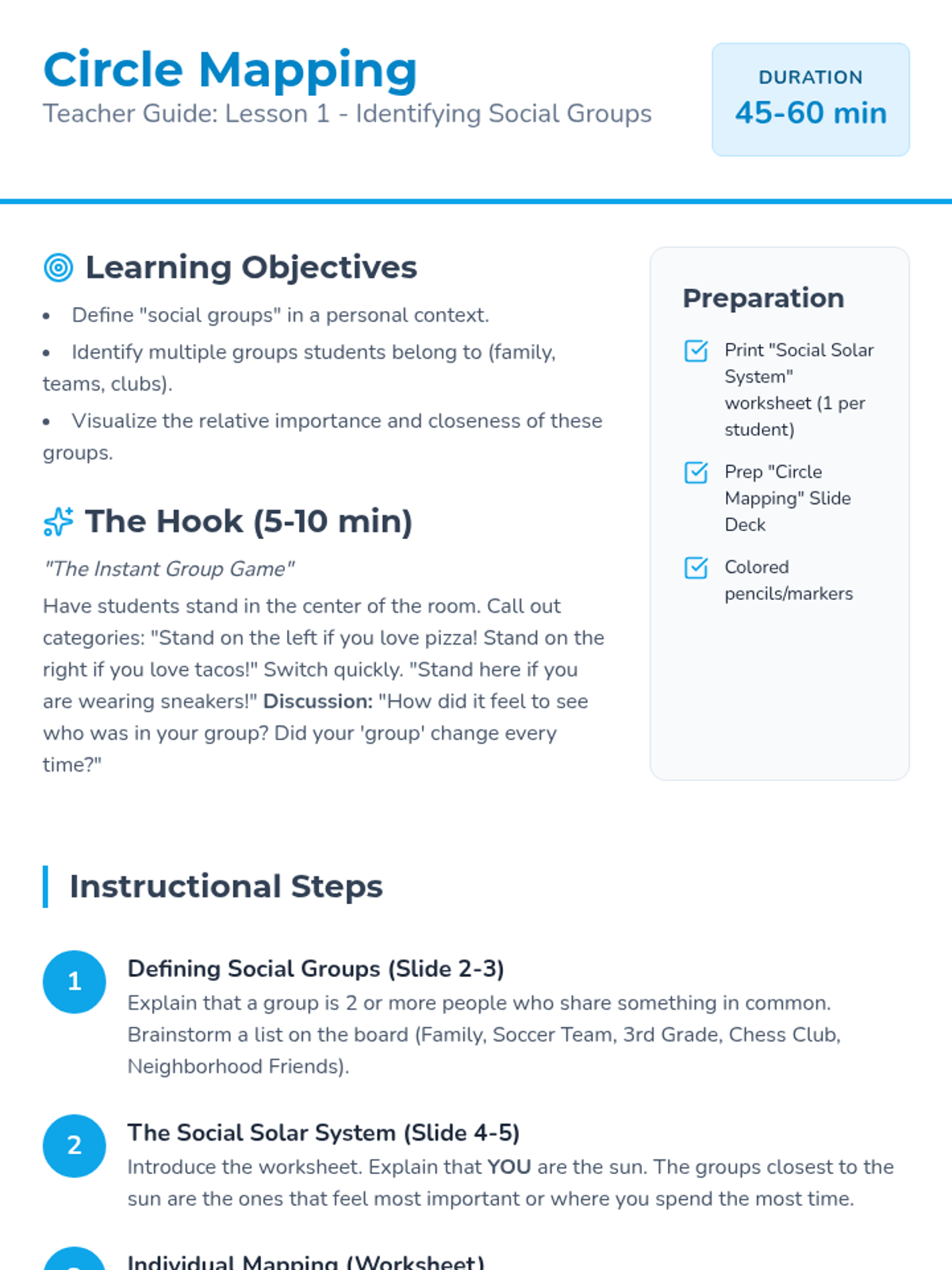
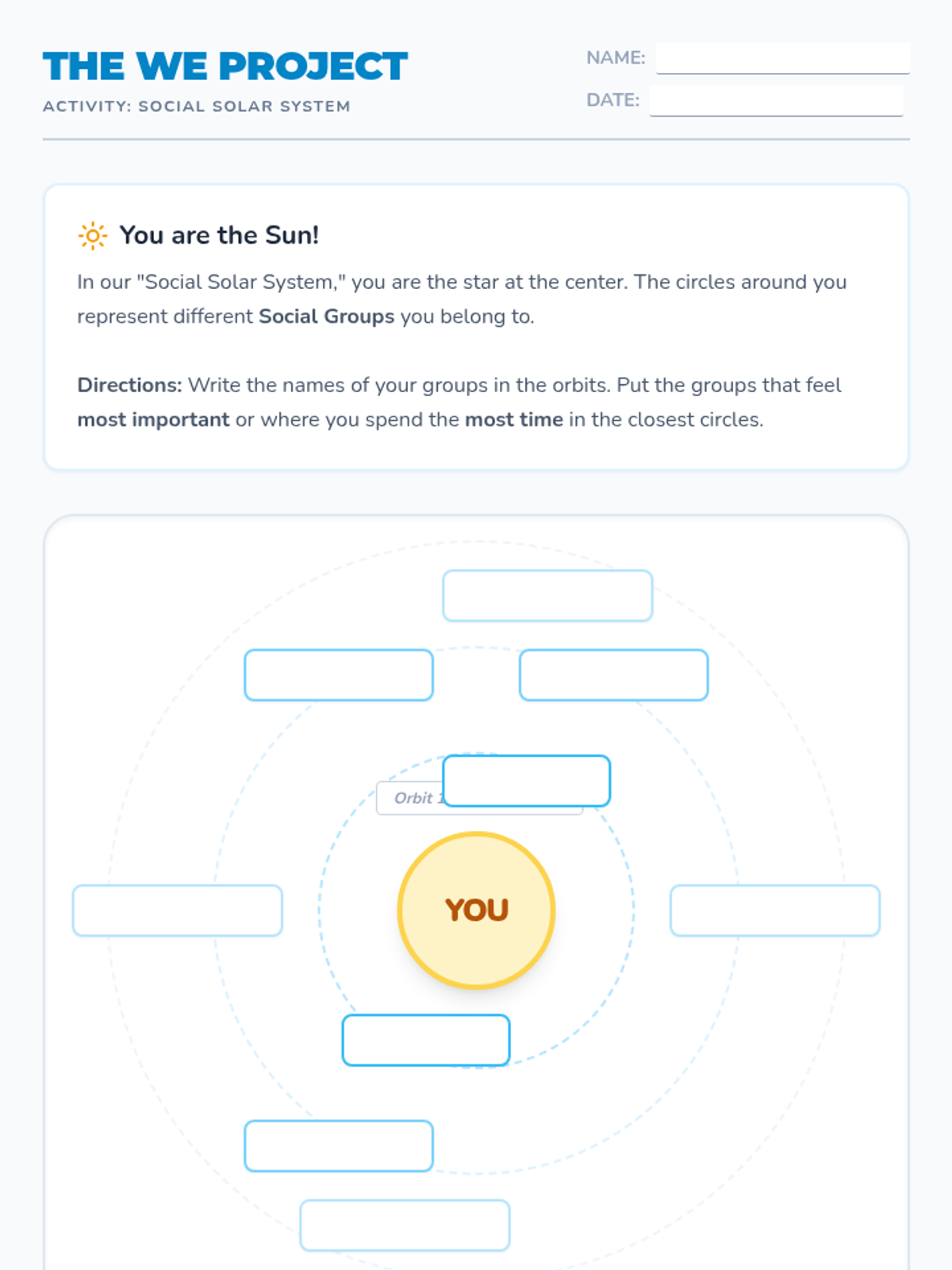
Students map out the various groups they belong to (family, school, sports teams, clubs) using a 'Social Solar System' model to visualize their social identity.
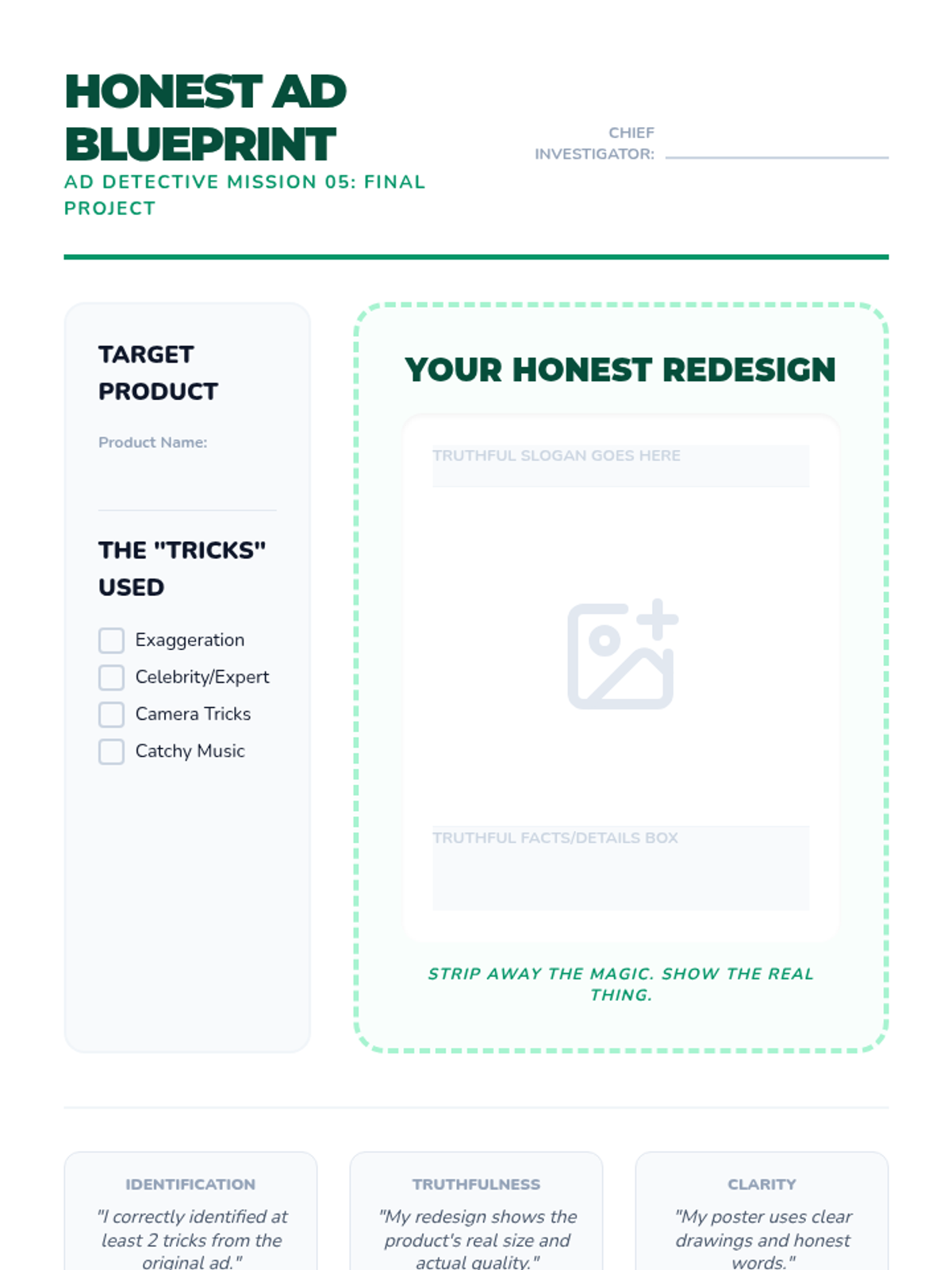
In this culminating project, students redesign misleading advertisements to be truthful, demonstrating their understanding of marketing influence.
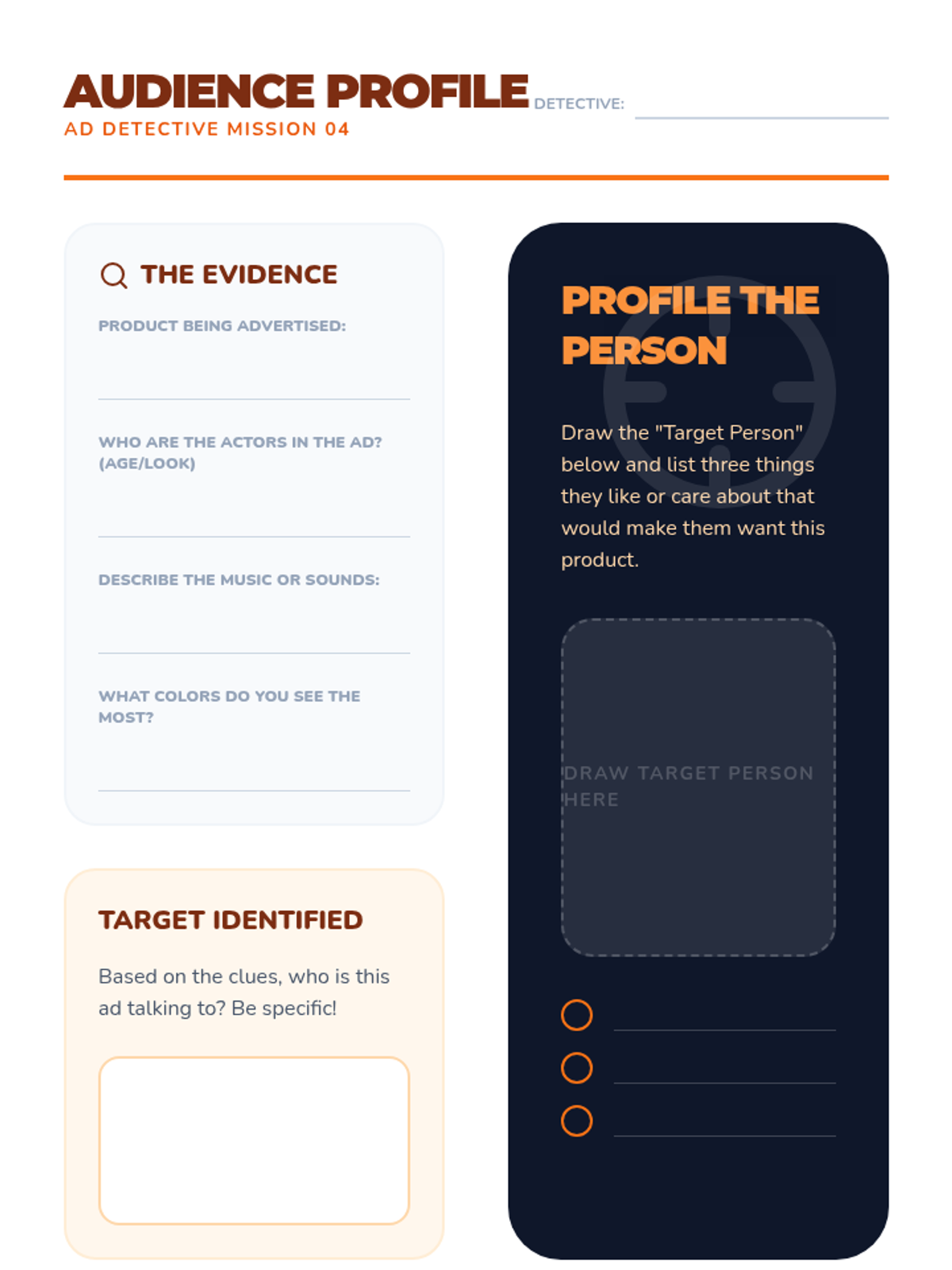
Students identify how advertisements are tailored to specific groups based on age, interests, and needs.
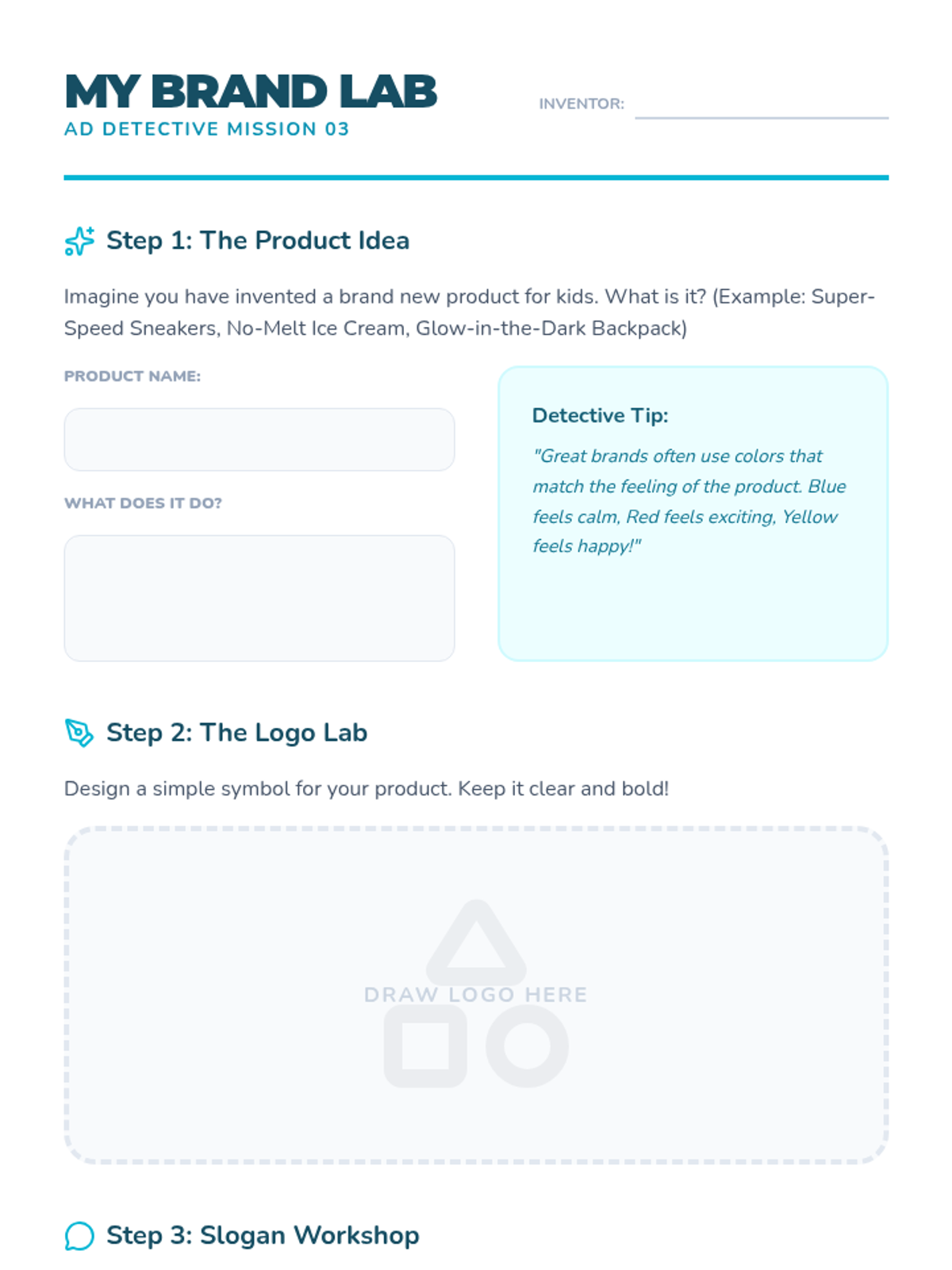
Students explore how brands use catchy slogans and memorable logos to create brand loyalty and recognition.
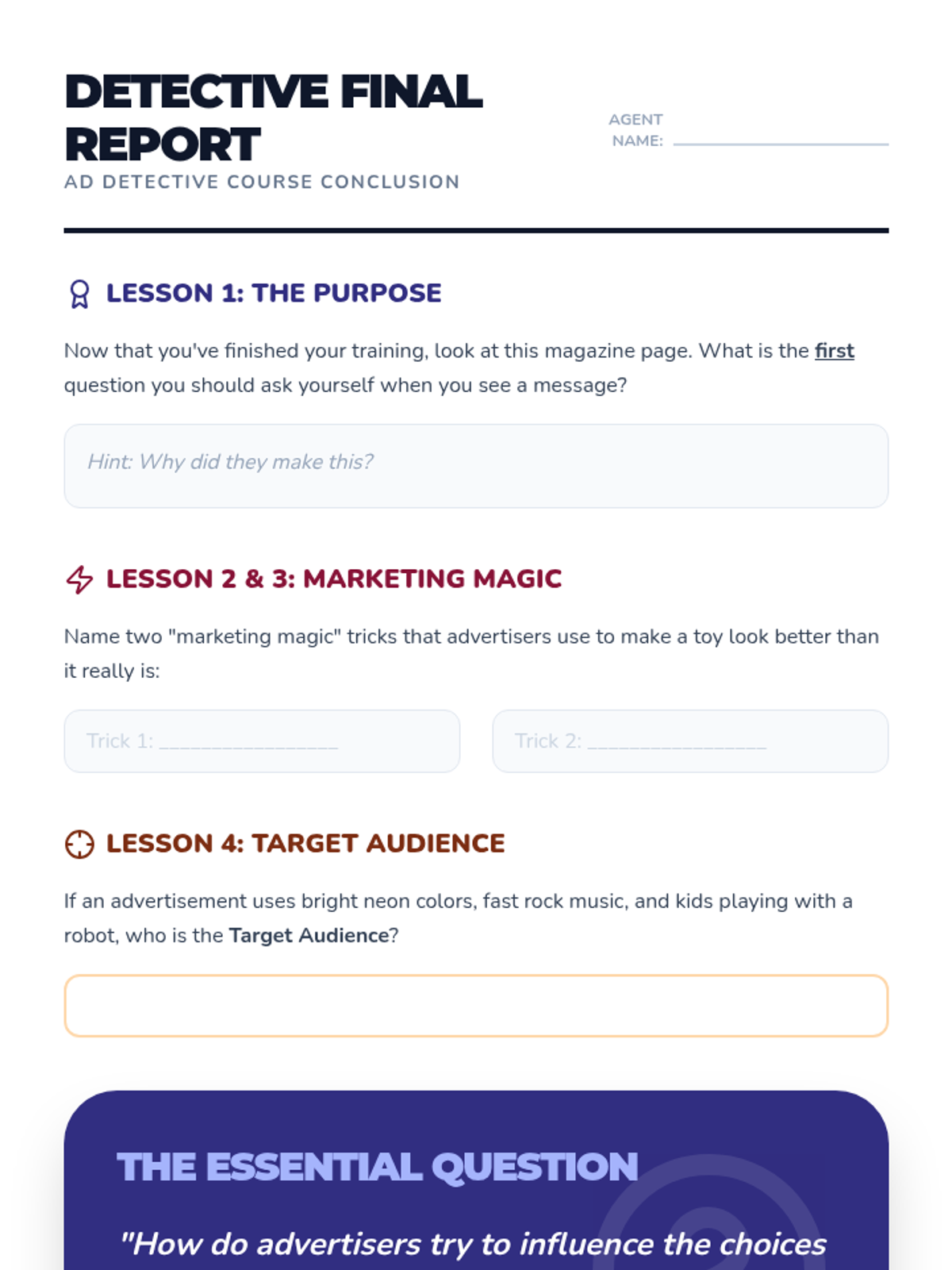
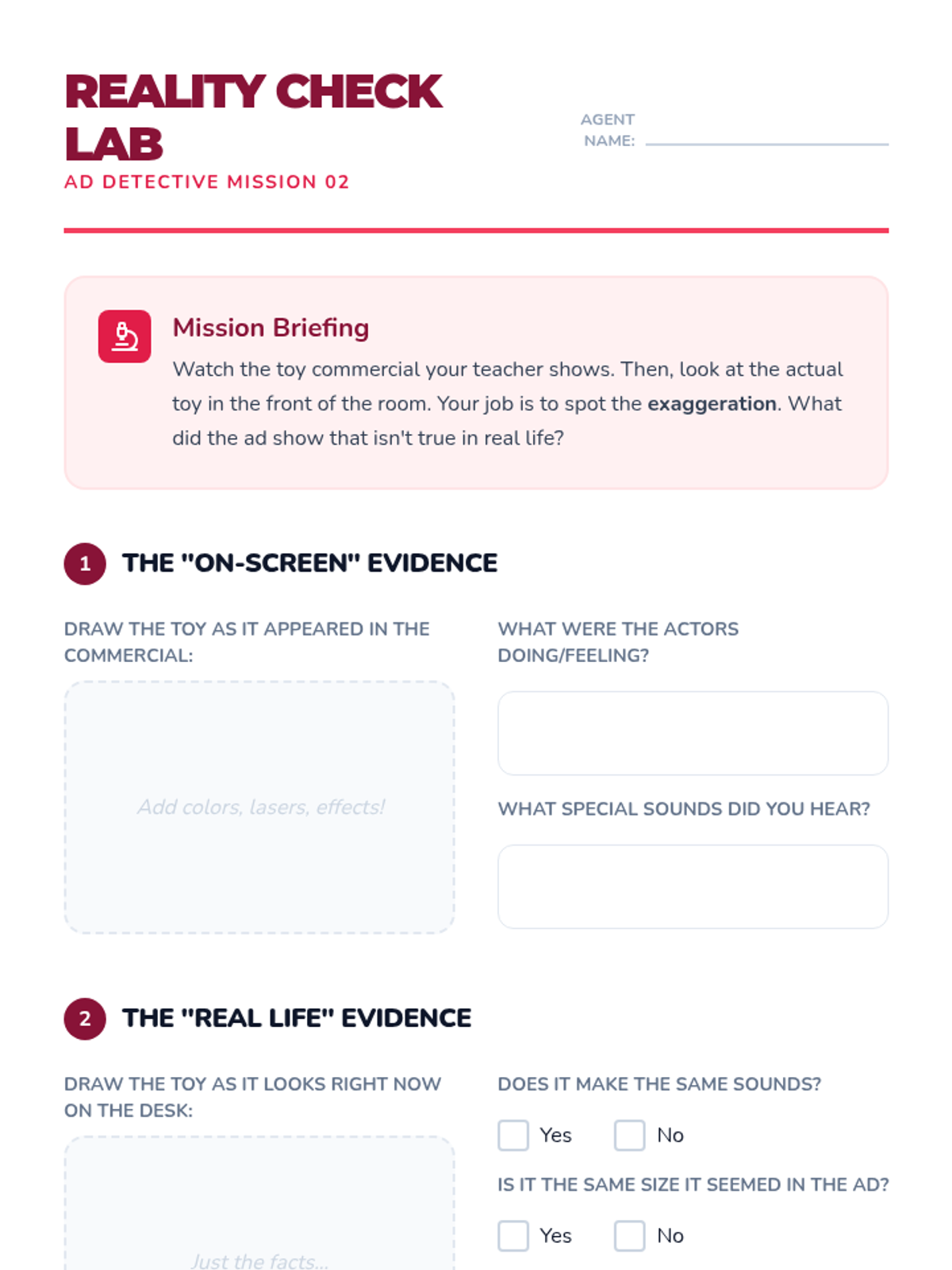
Focusing on exaggeration and production tricks, students analyze how audio and visual elements are used to make products appear more desirable.
Students learn to distinguish between information, entertainment, and selling to identify the core purpose of advertising in various environments.
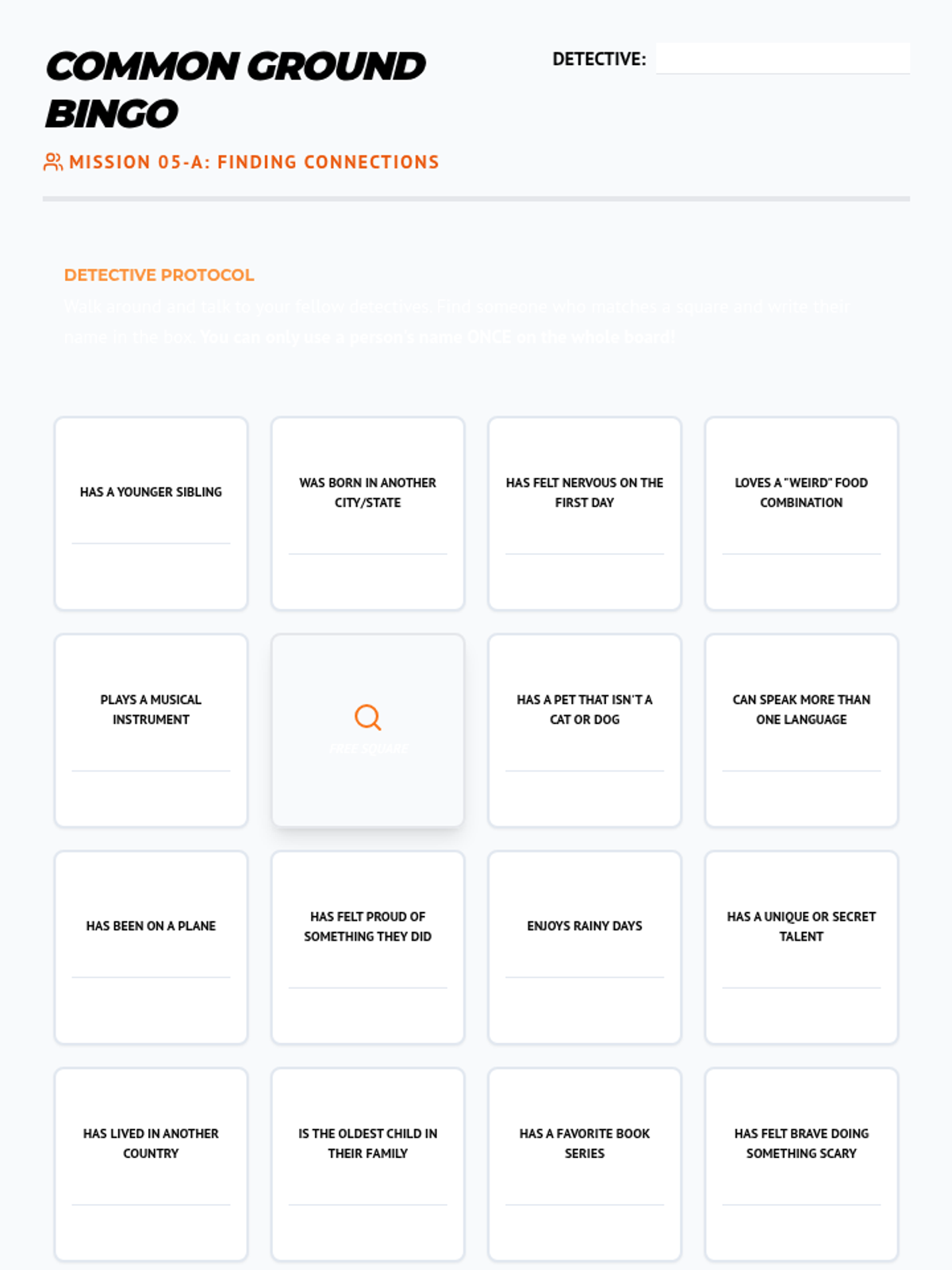
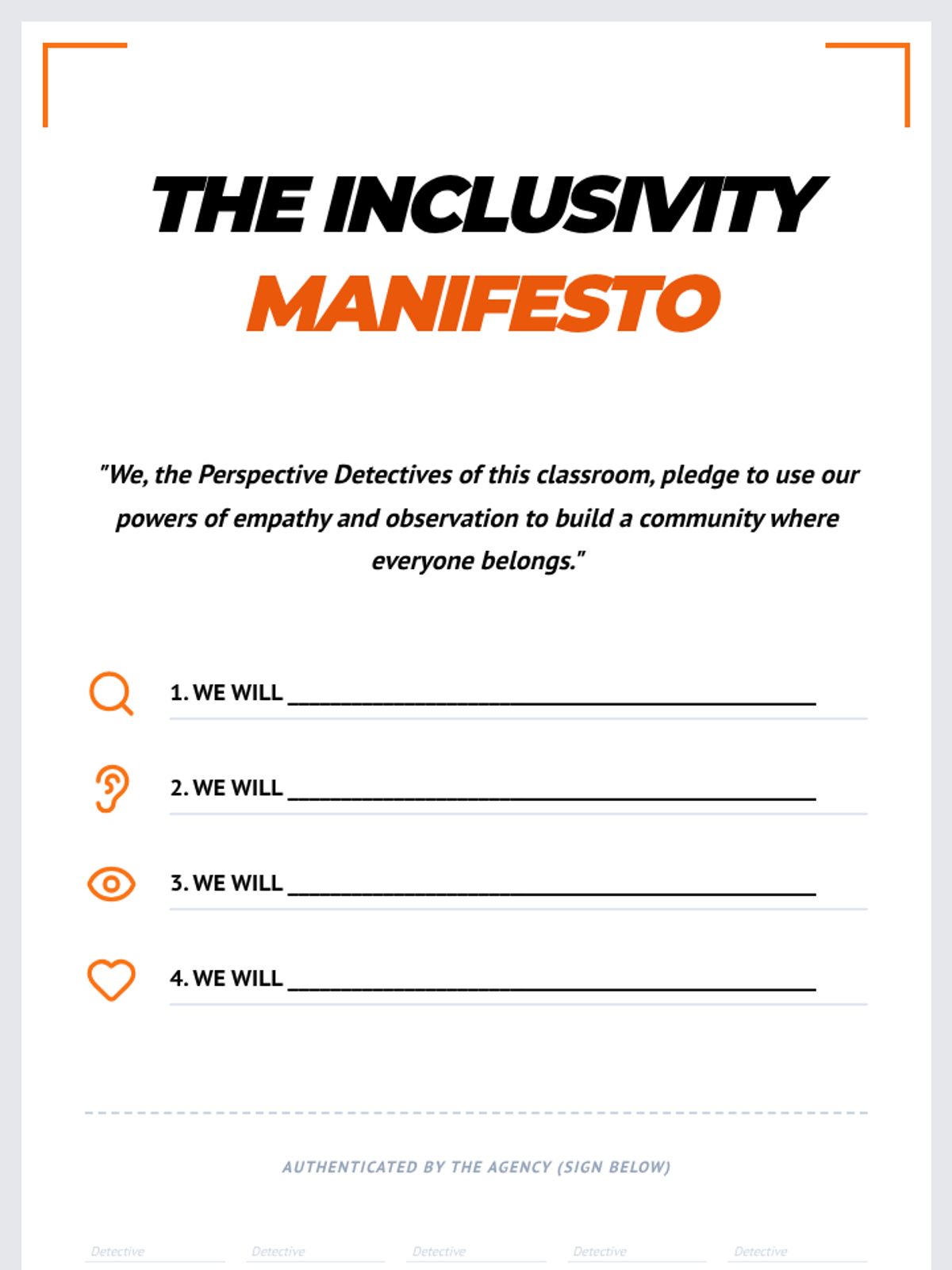
Students discover shared experiences across differences and collaborate to establish inclusive community norms.
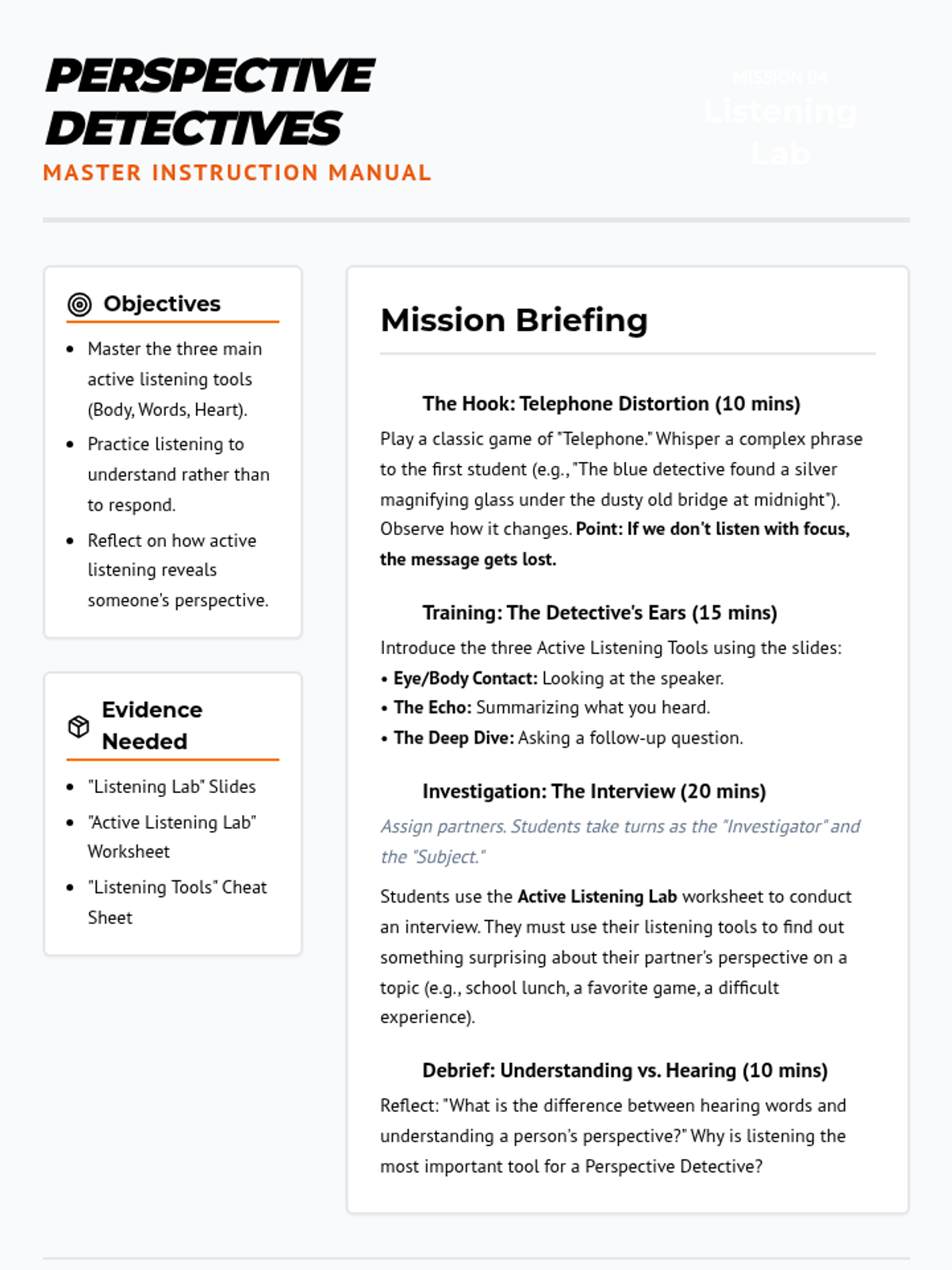
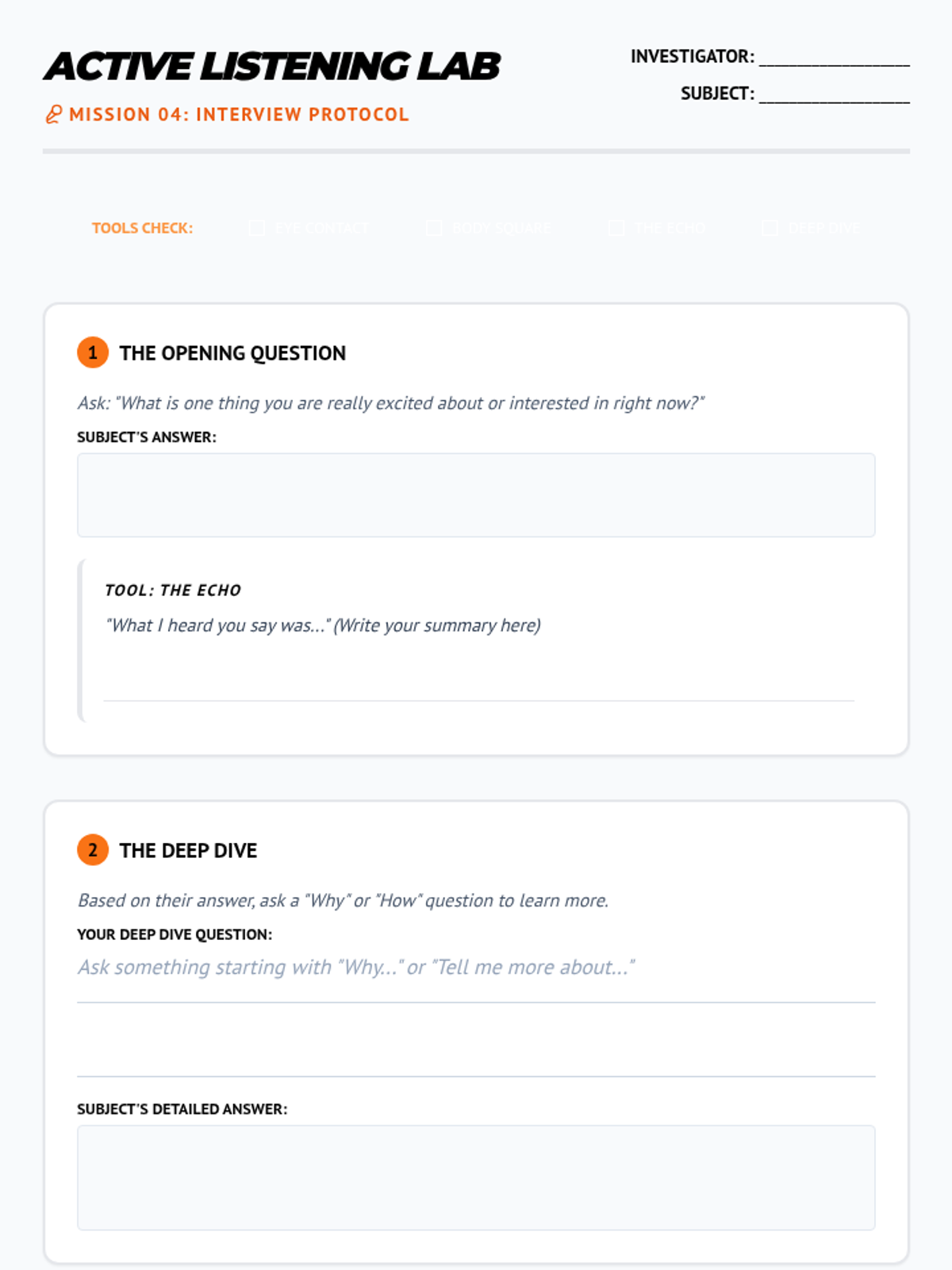
Students master the tools of active listening to truly understand others' viewpoints, practicing through structured interviews.
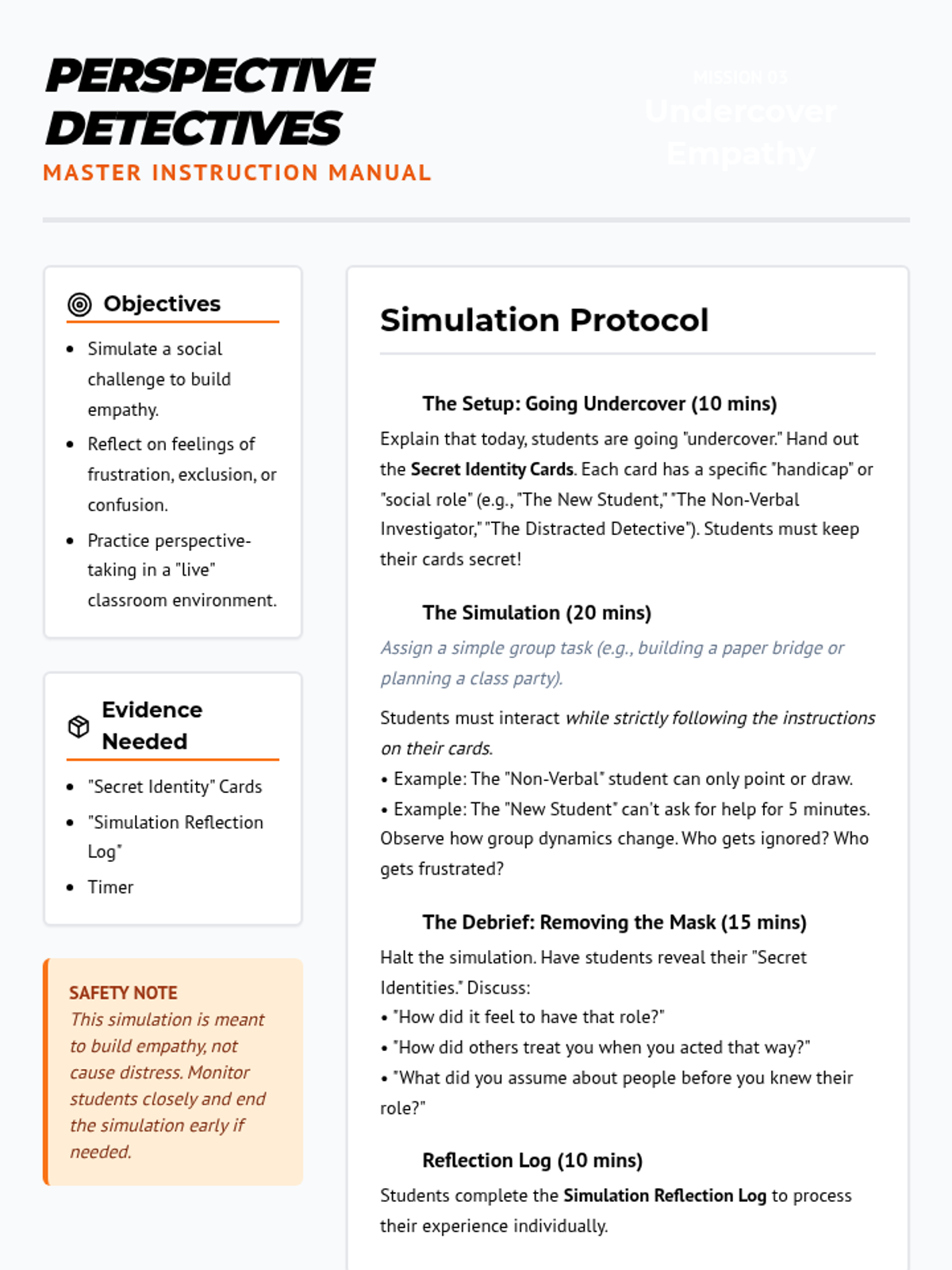
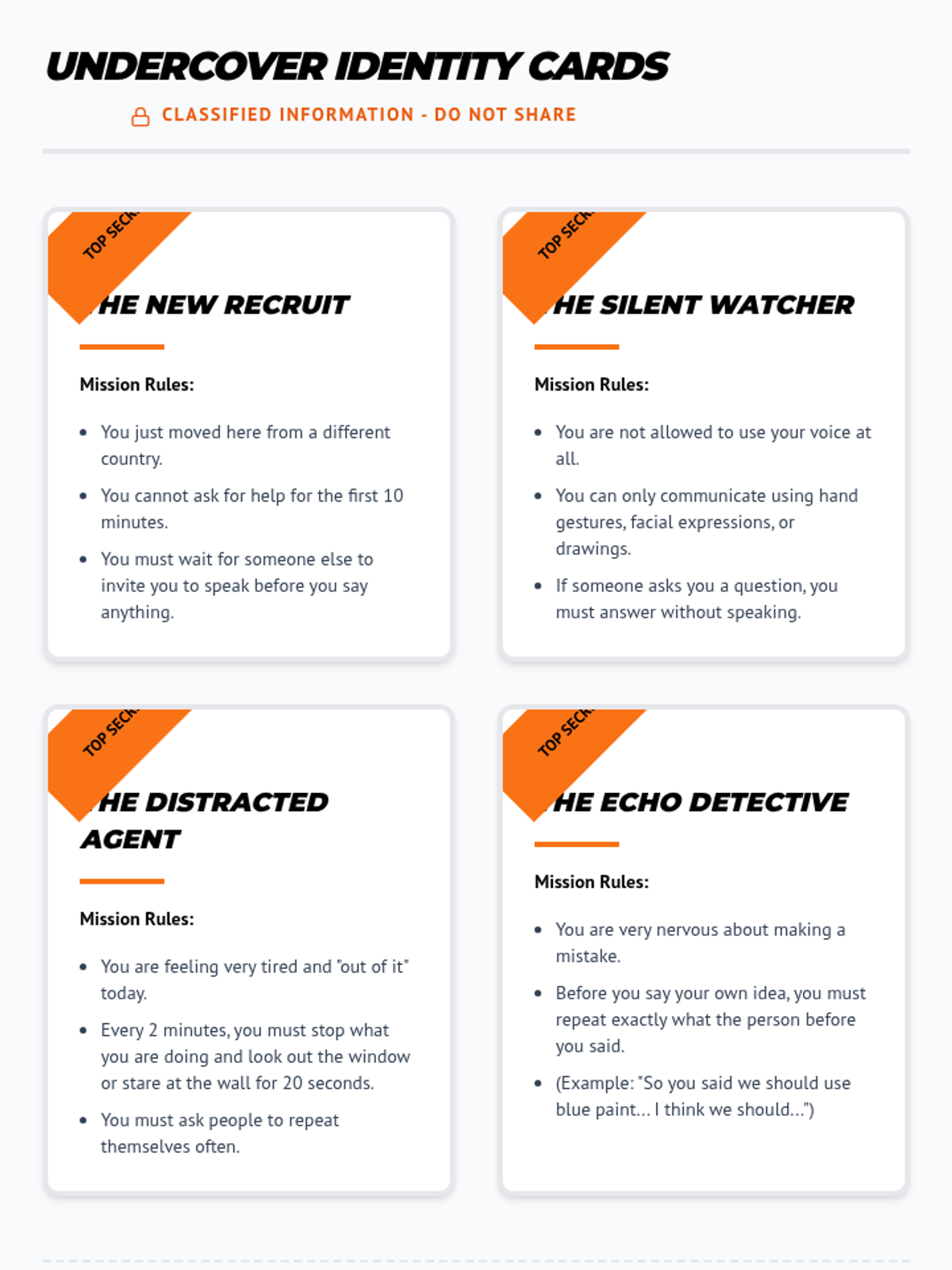
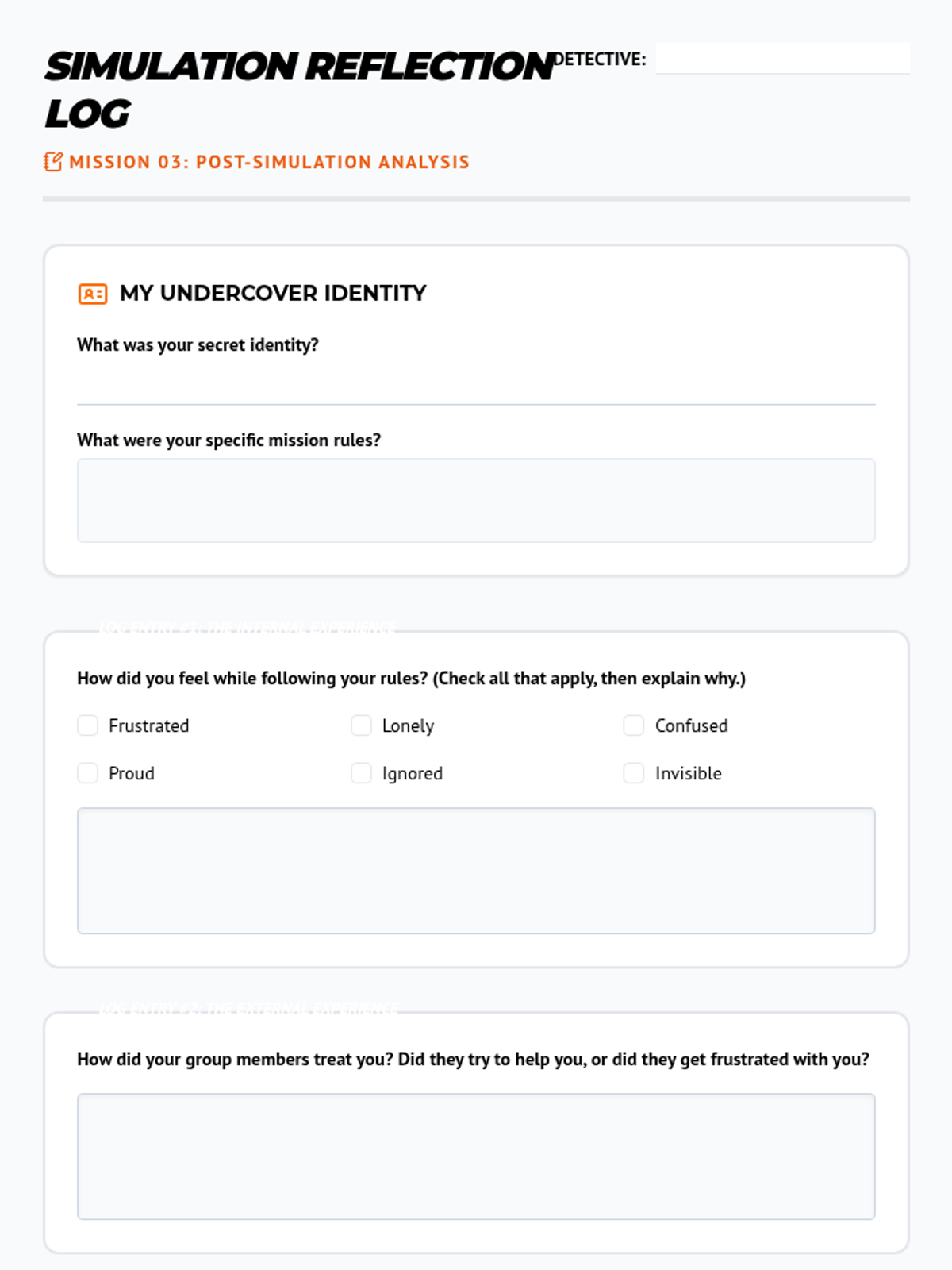
Students navigate a school day with 'secret identities' that present specific challenges, reflecting on the experience to build deep empathy.
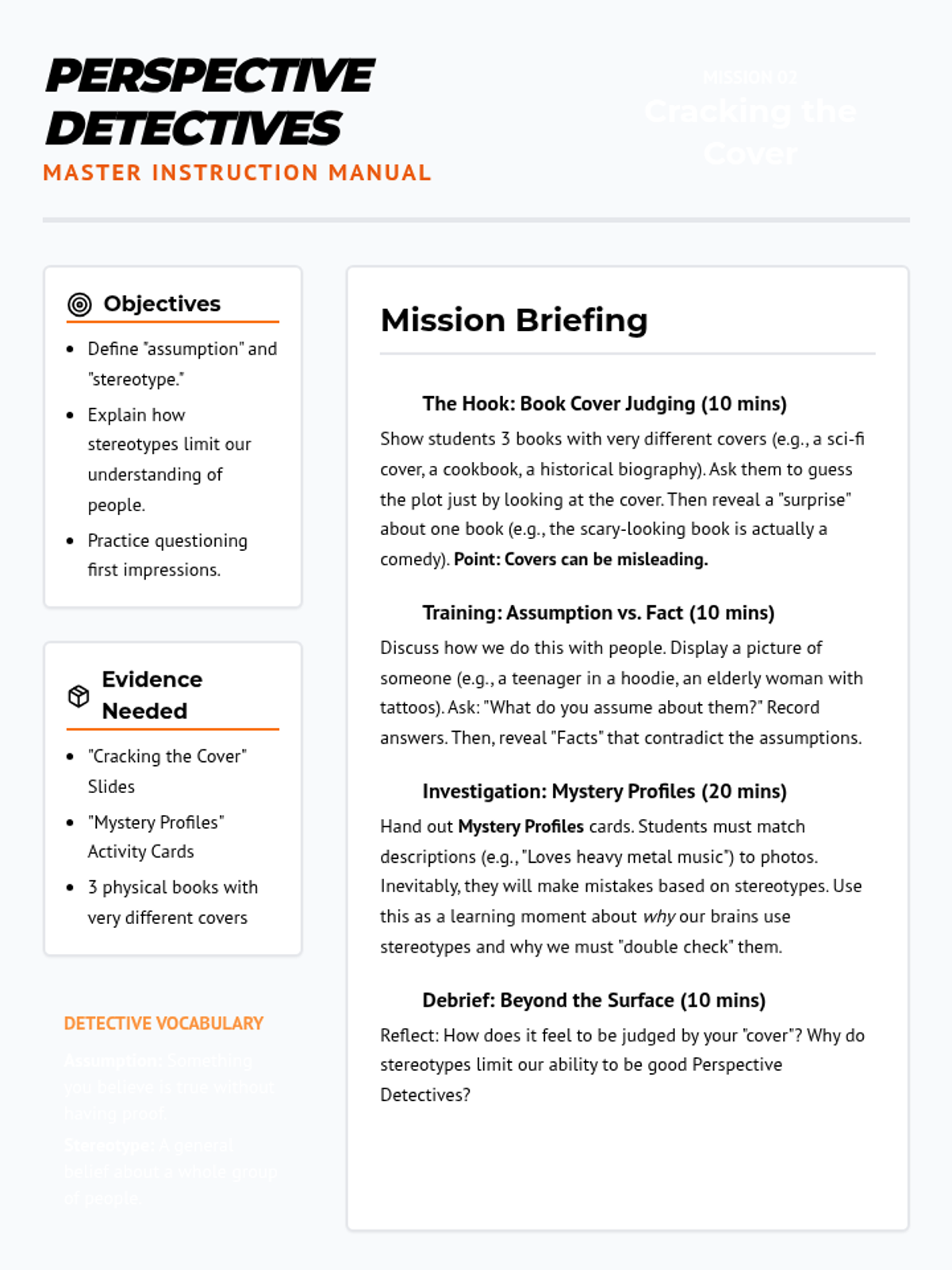
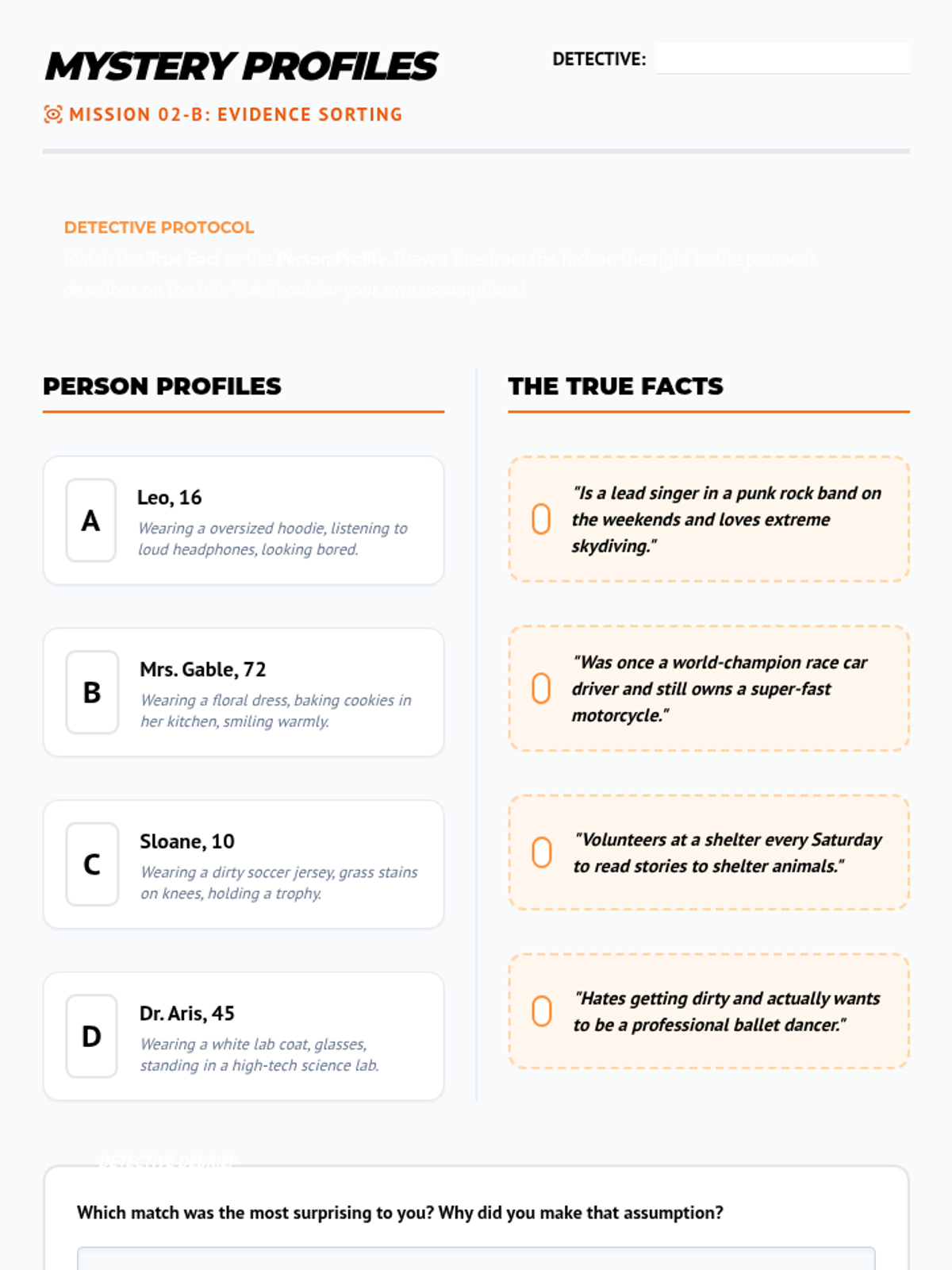
Students investigate how assumptions and stereotypes limit our understanding of others through a sorting game and critical discussion.
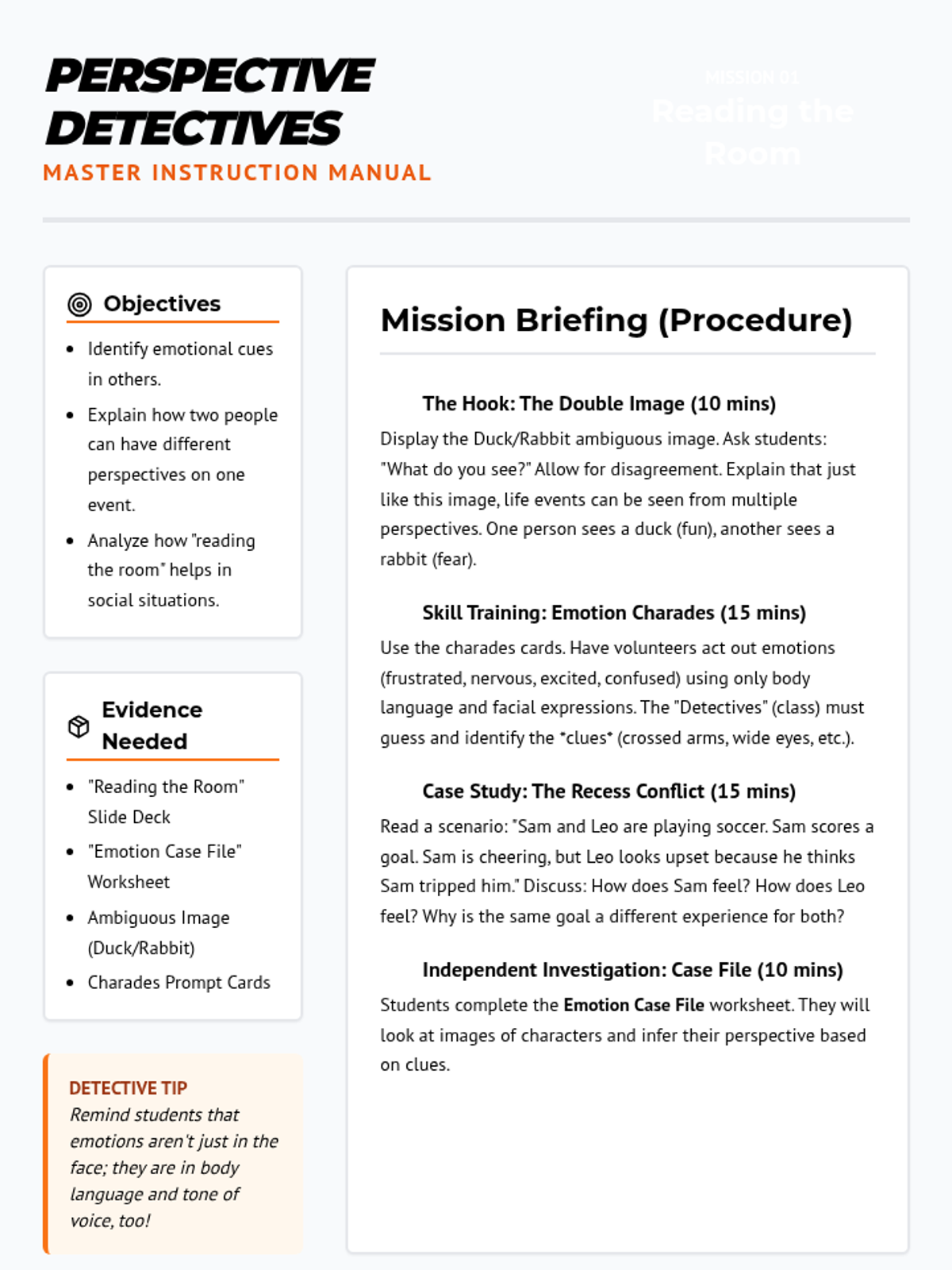
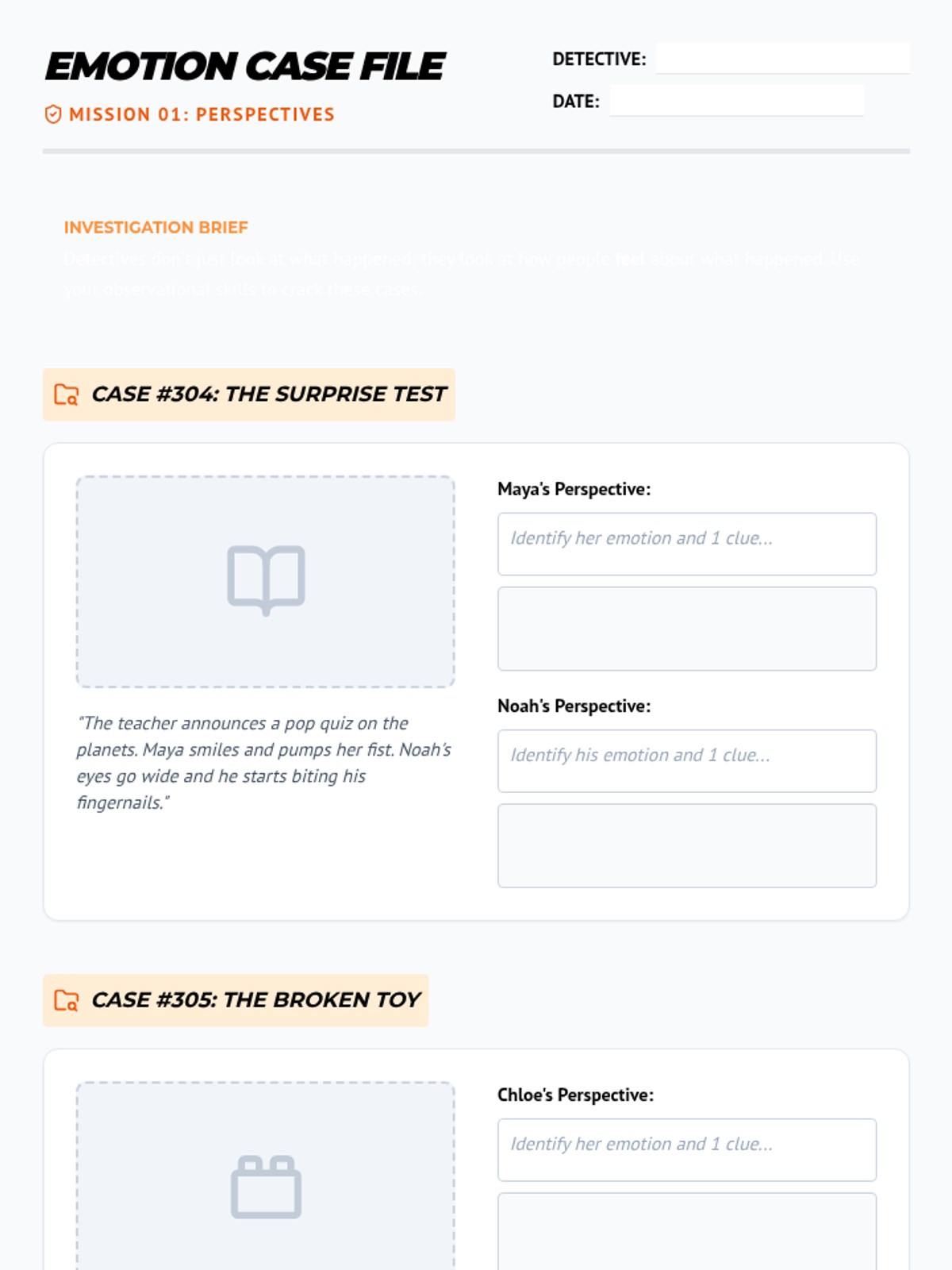
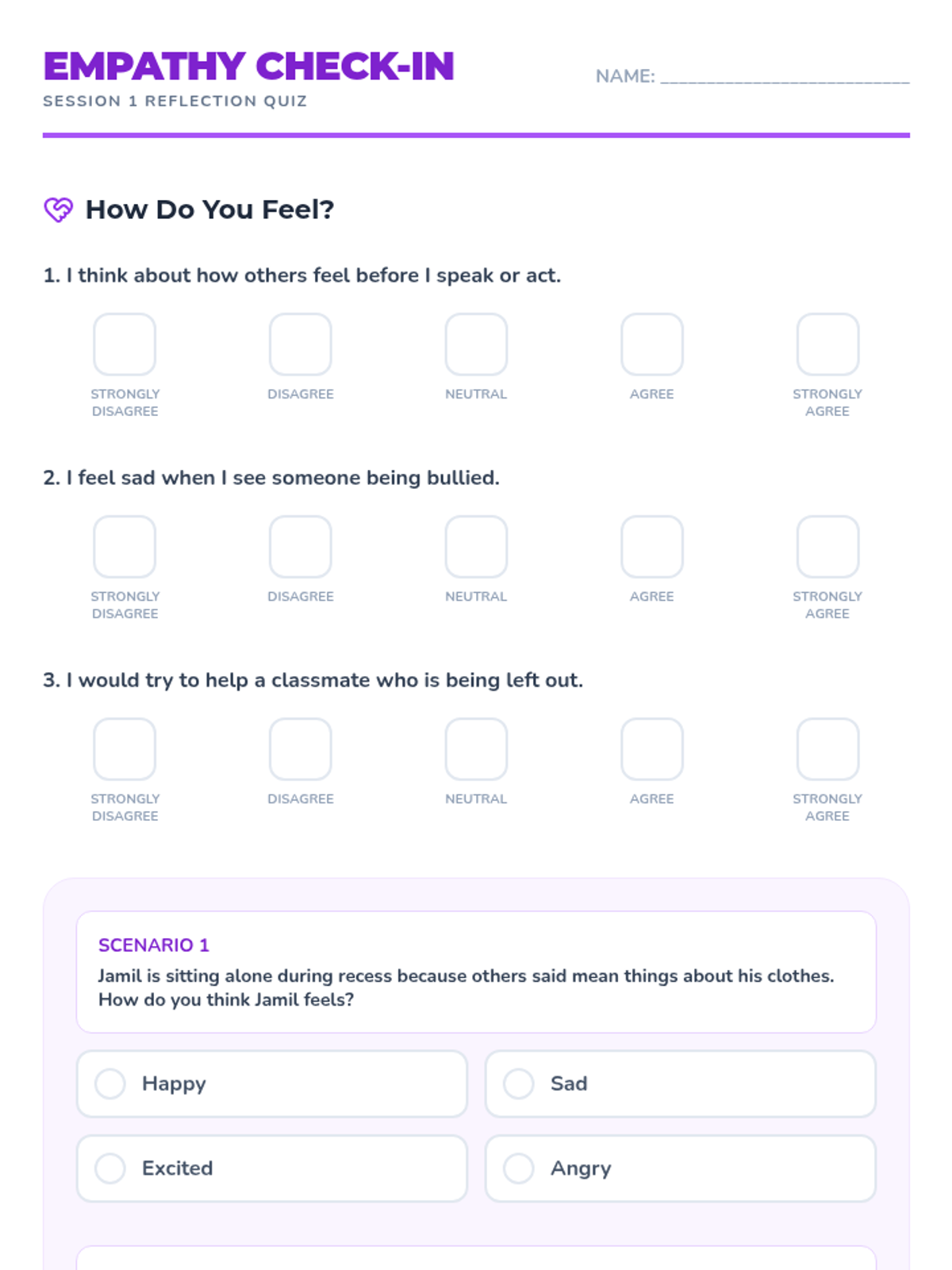
Students practice reading emotional cues and recognize that people can have different perspectives on the same event using ambiguous images and charades.
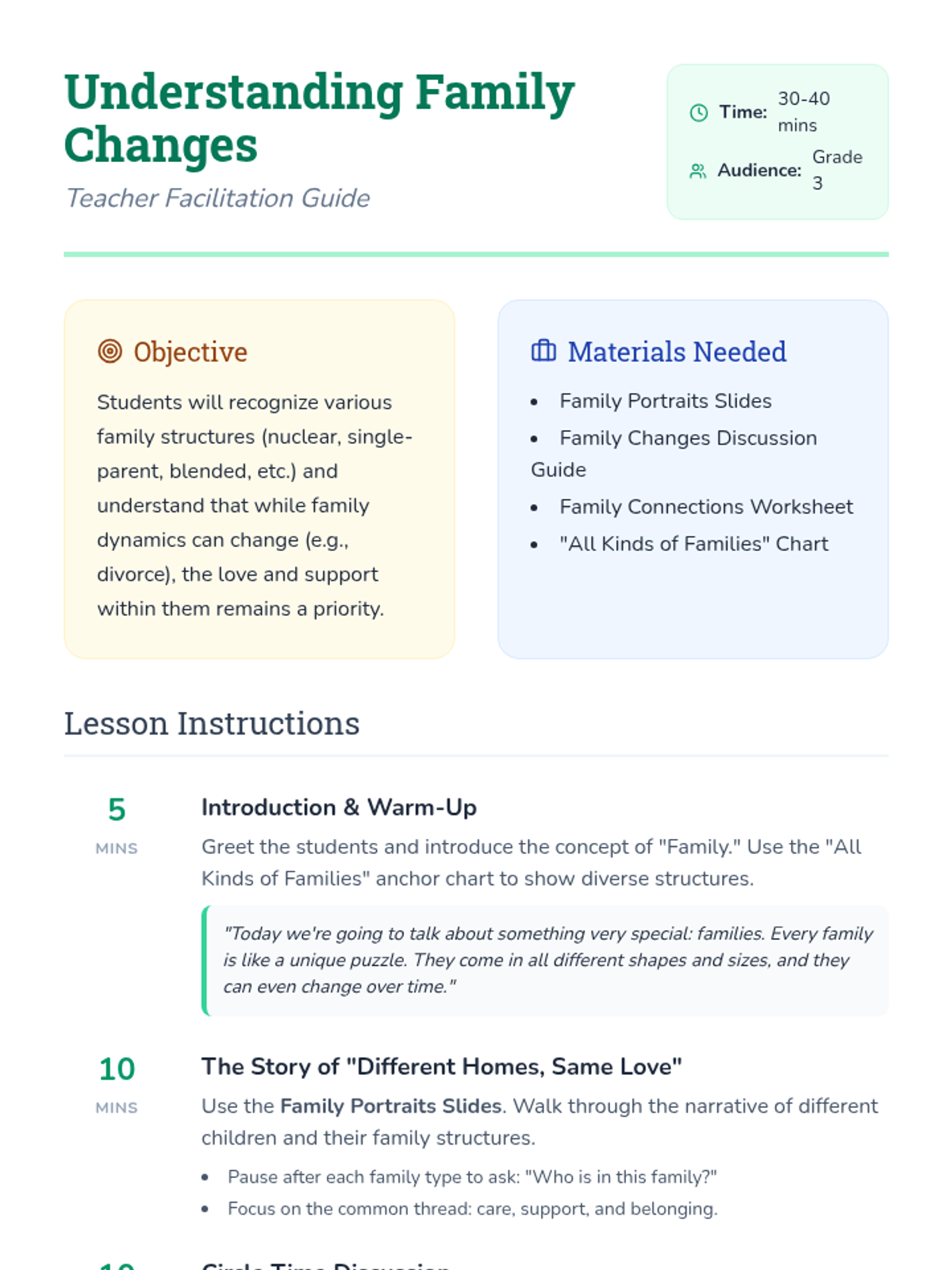
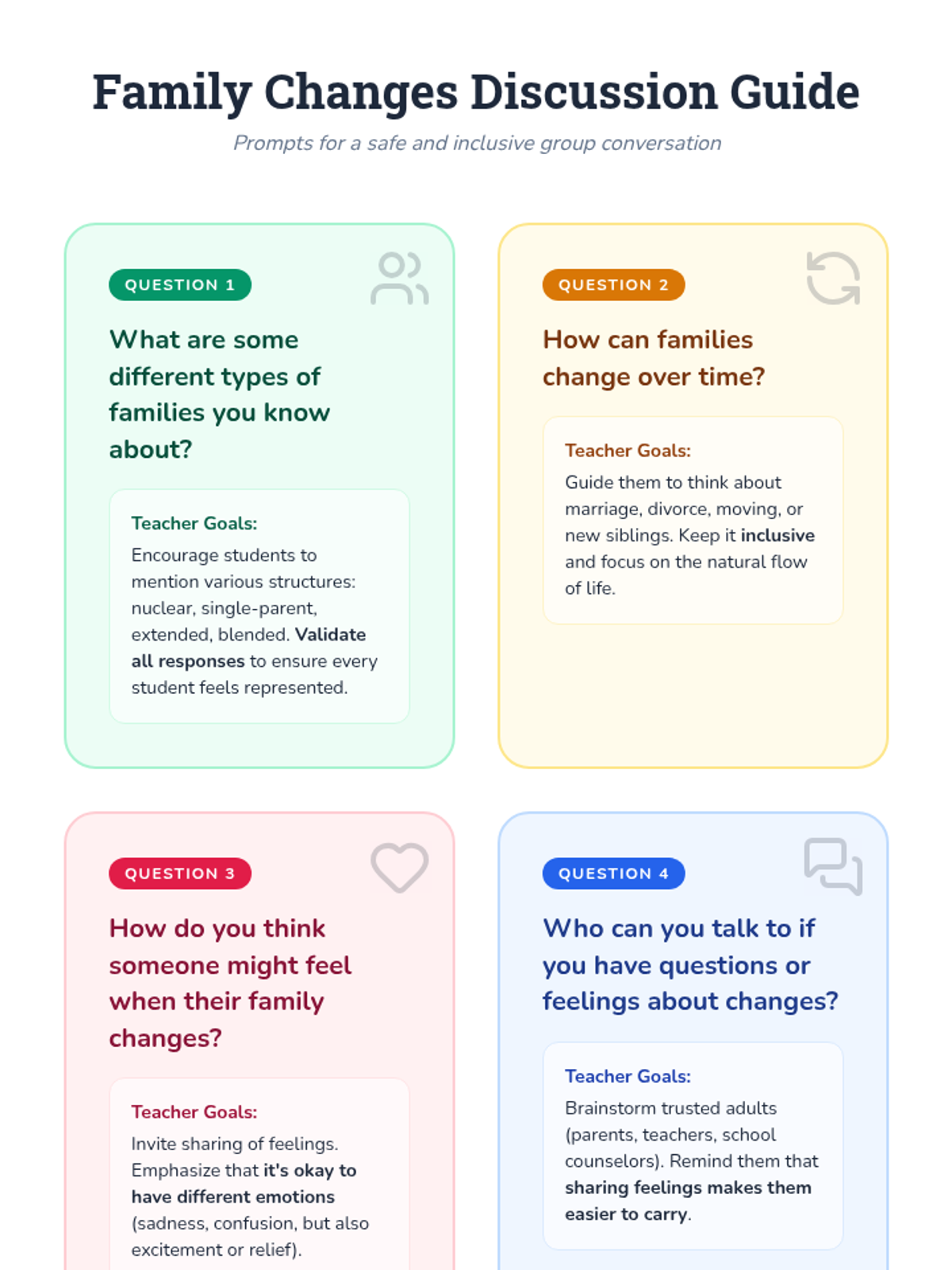
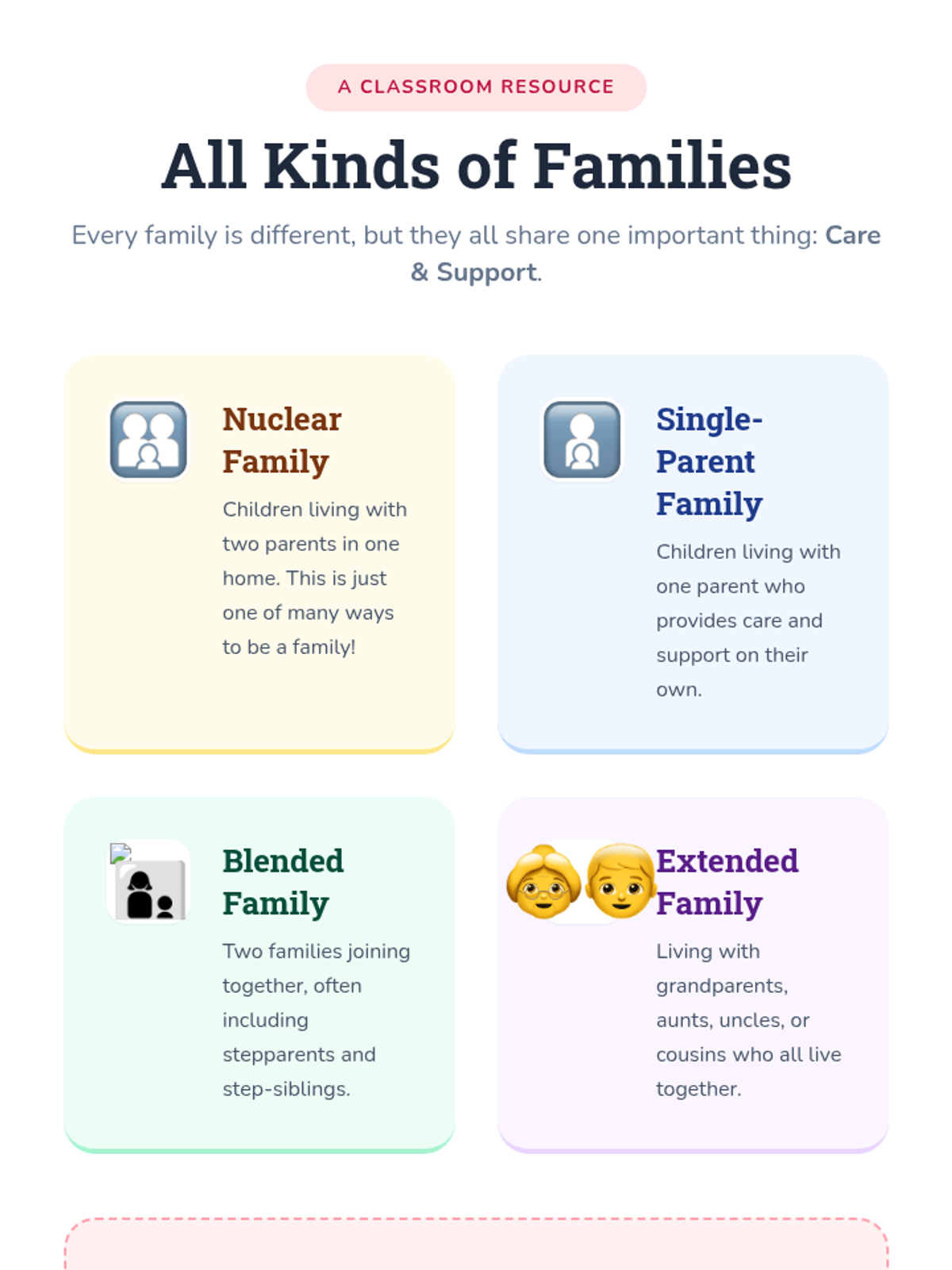
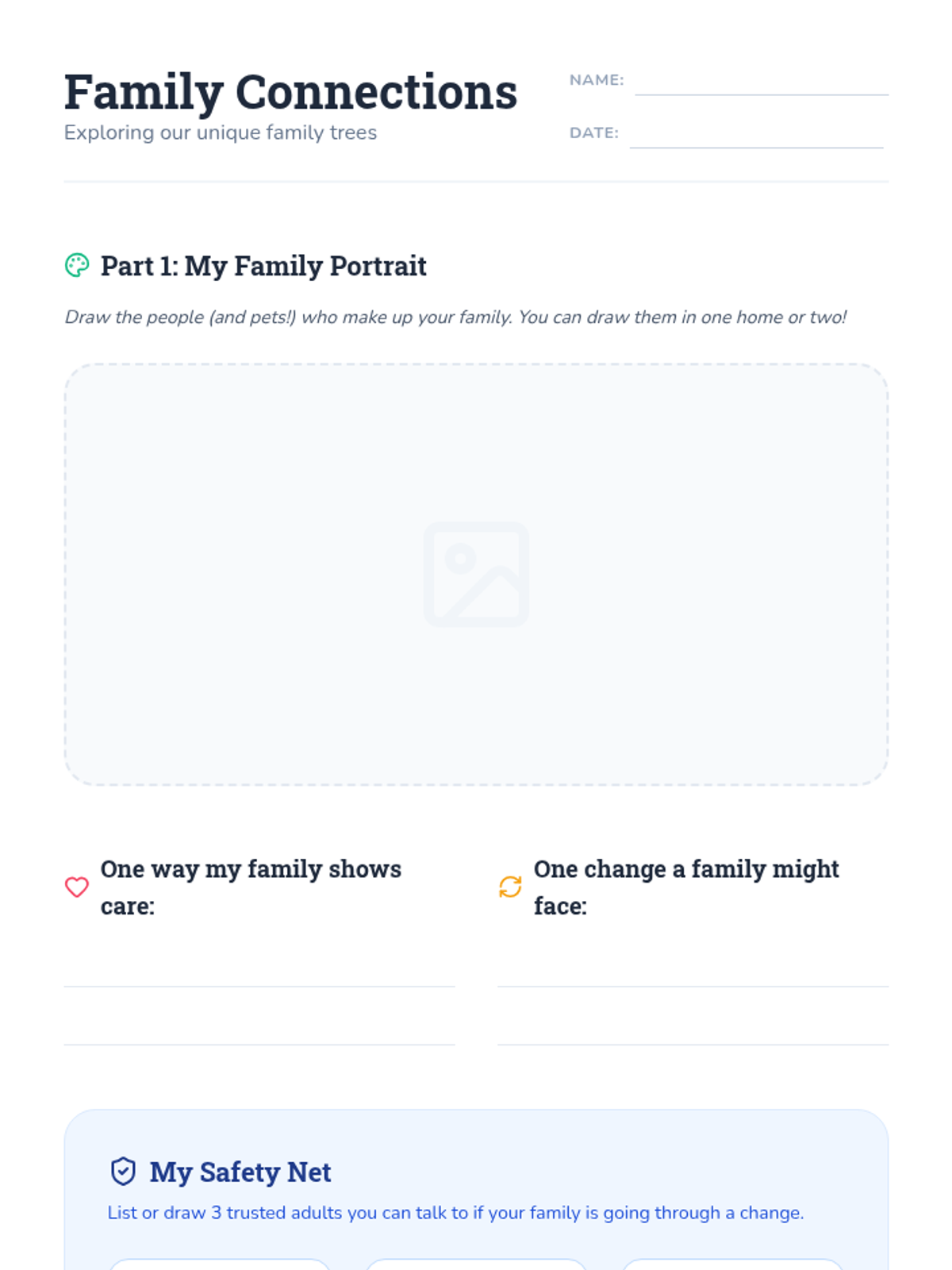
A gentle and inclusive lesson for Grade 3 students to explore diverse family structures and understand how families can change over time, including through divorce. Students will engage with a story and guided discussion to build empathy and resilience.
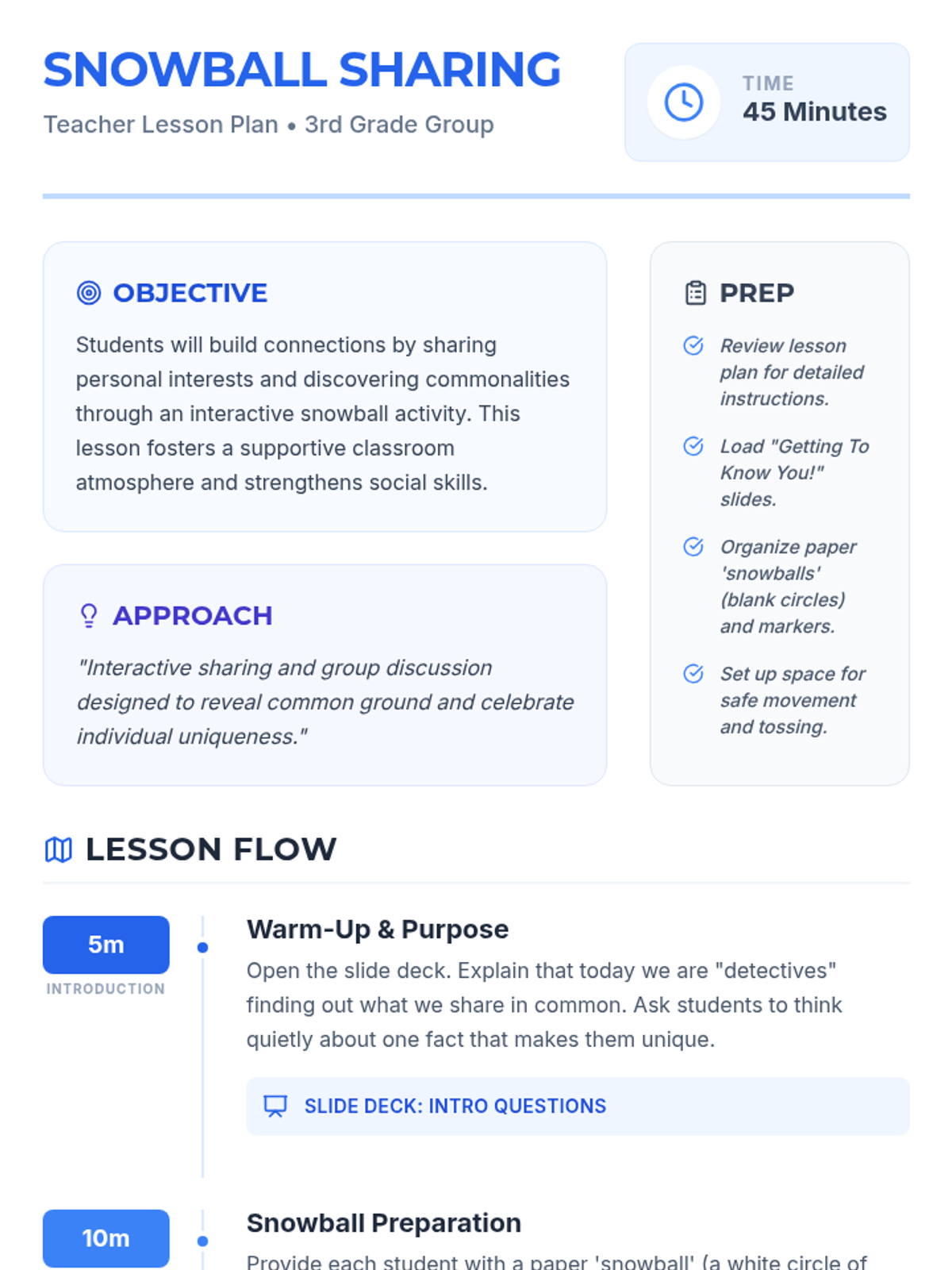
A 3rd-grade Tier 2 small group lesson focused on building social connections through an interactive 'snowball' sharing game. Students write fun facts about themselves and discover common interests with their peers.
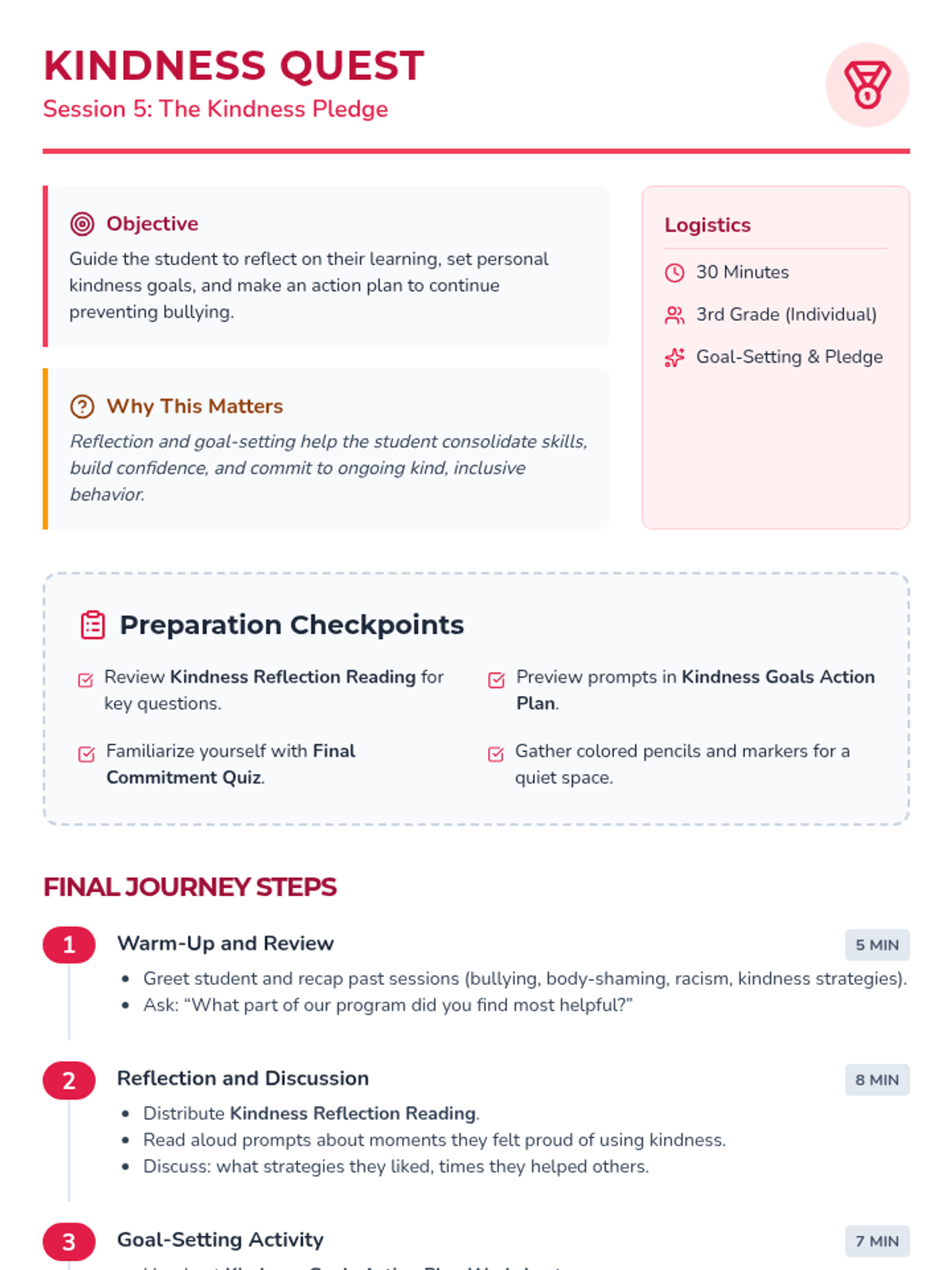
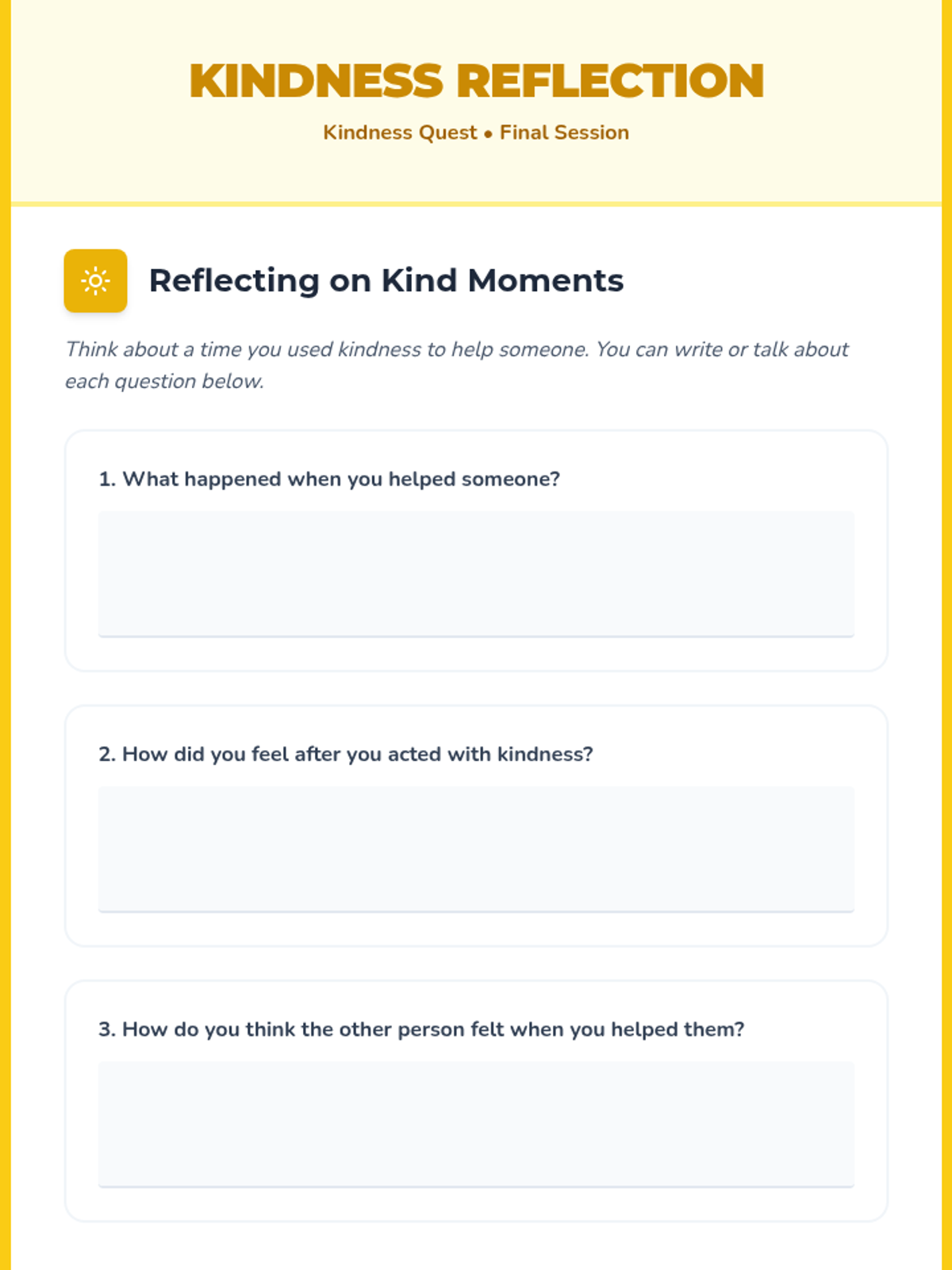
Reflecting on growth and setting personal goals for a lifelong commitment to kindness.
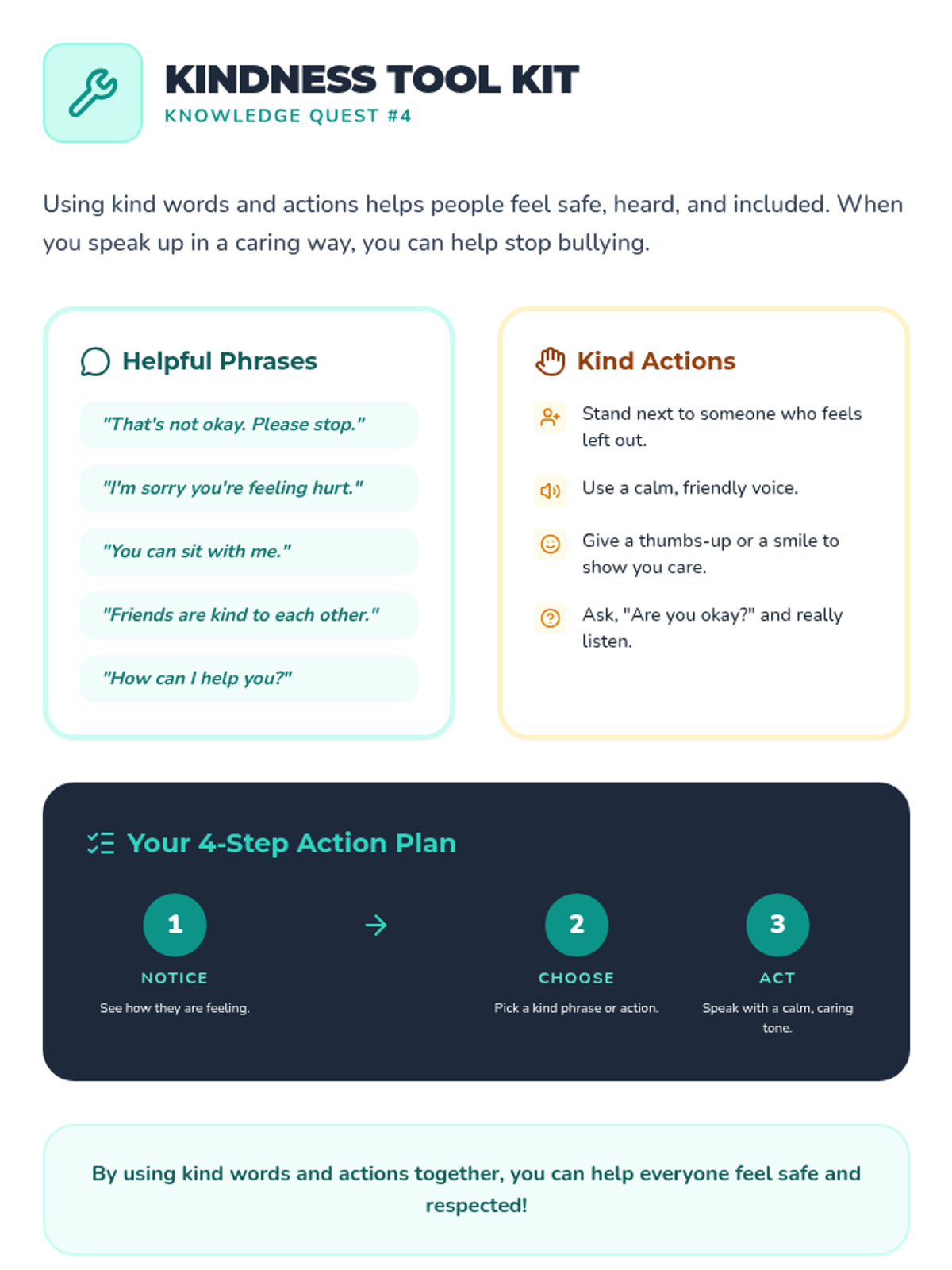
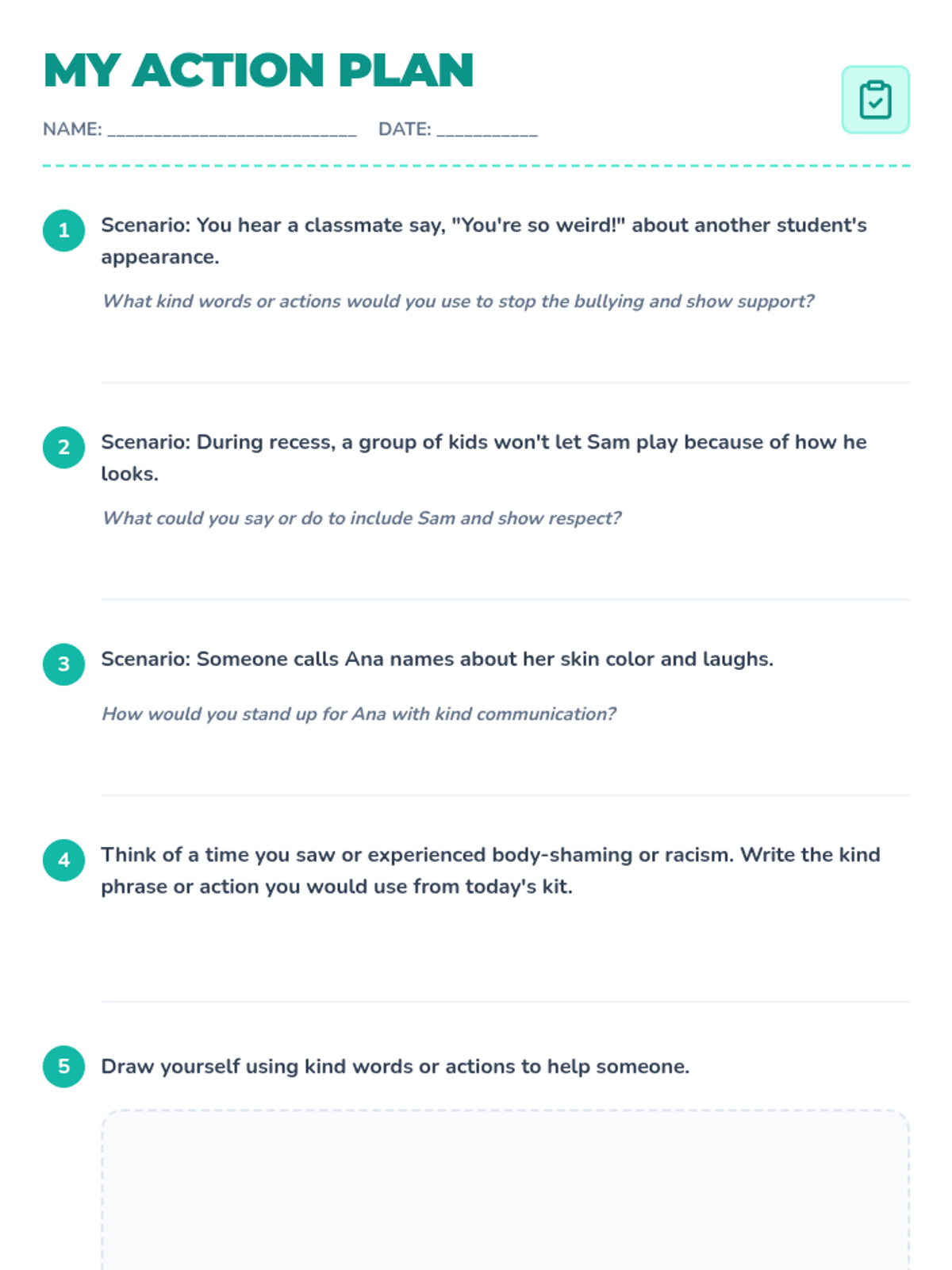
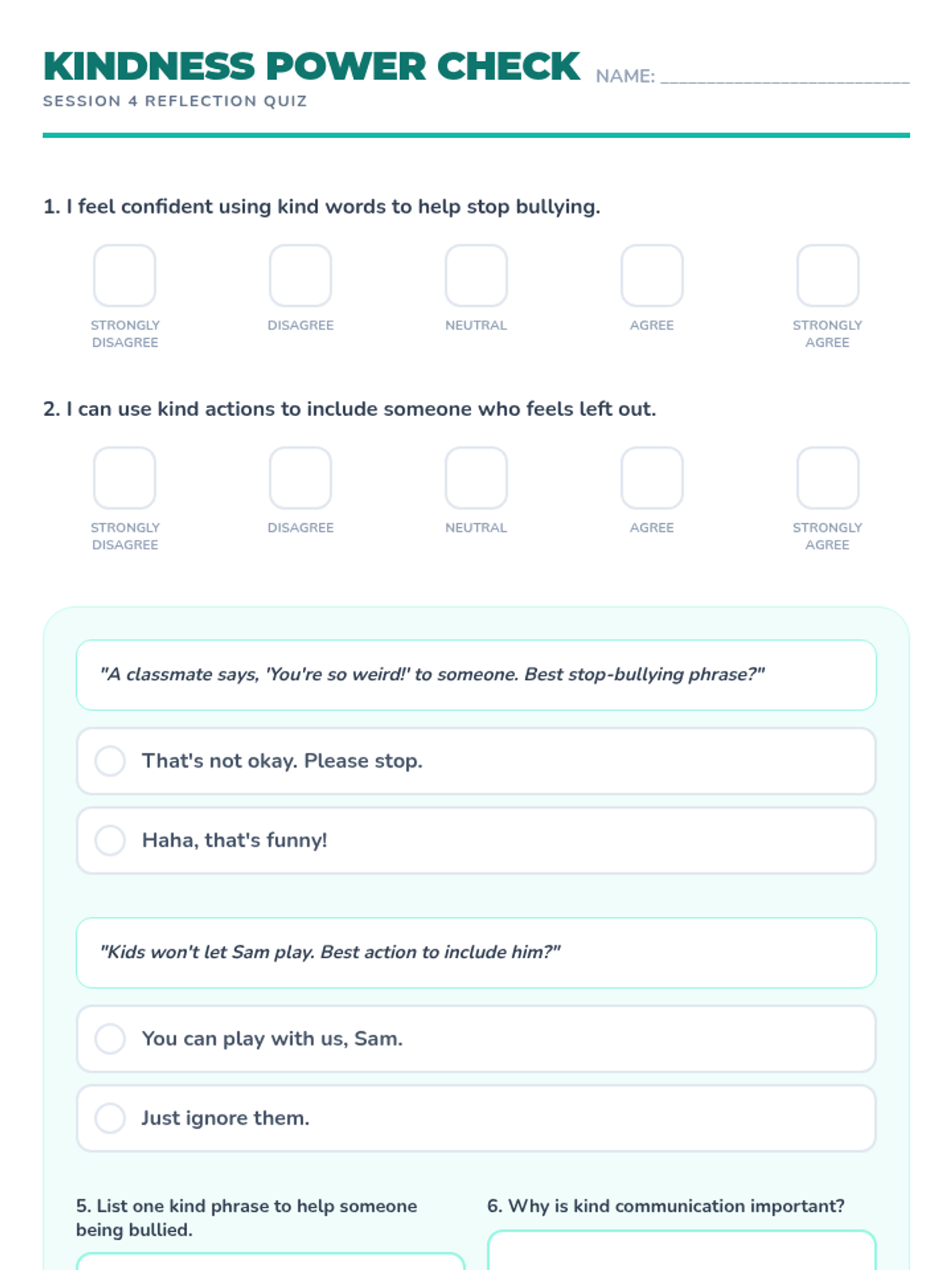
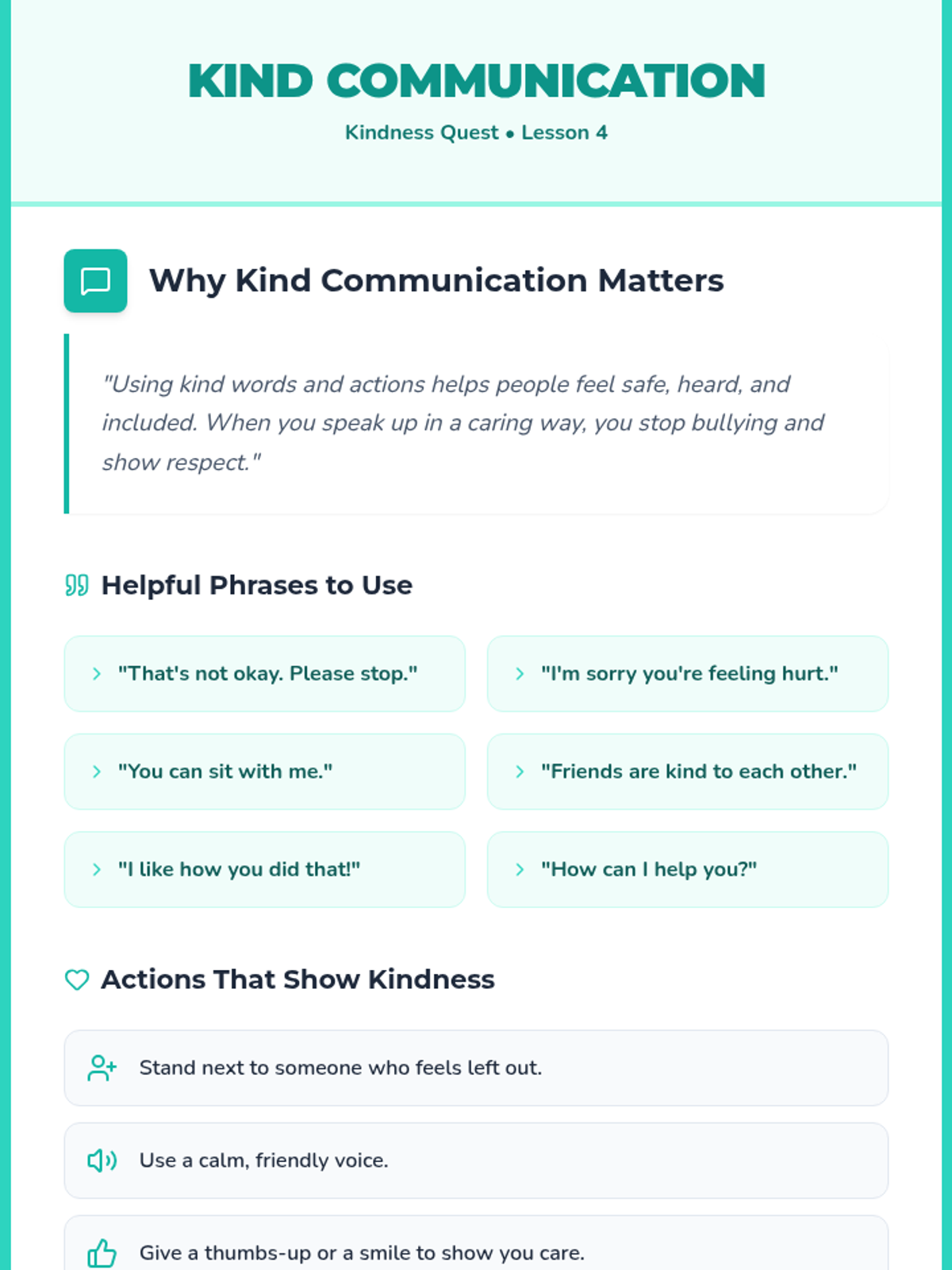
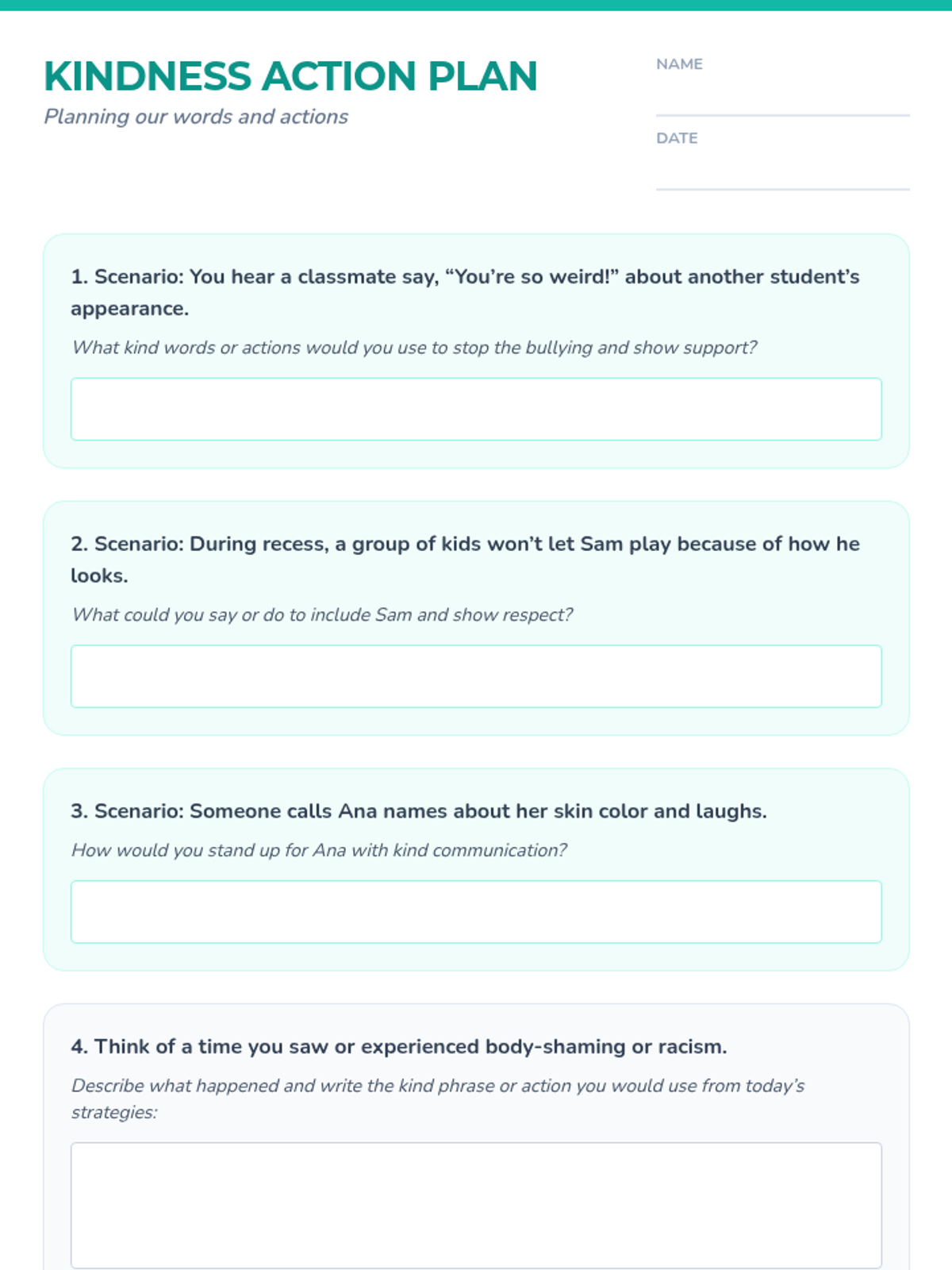
Learning specific phrases and actions to practice kind communication and stop bullying.
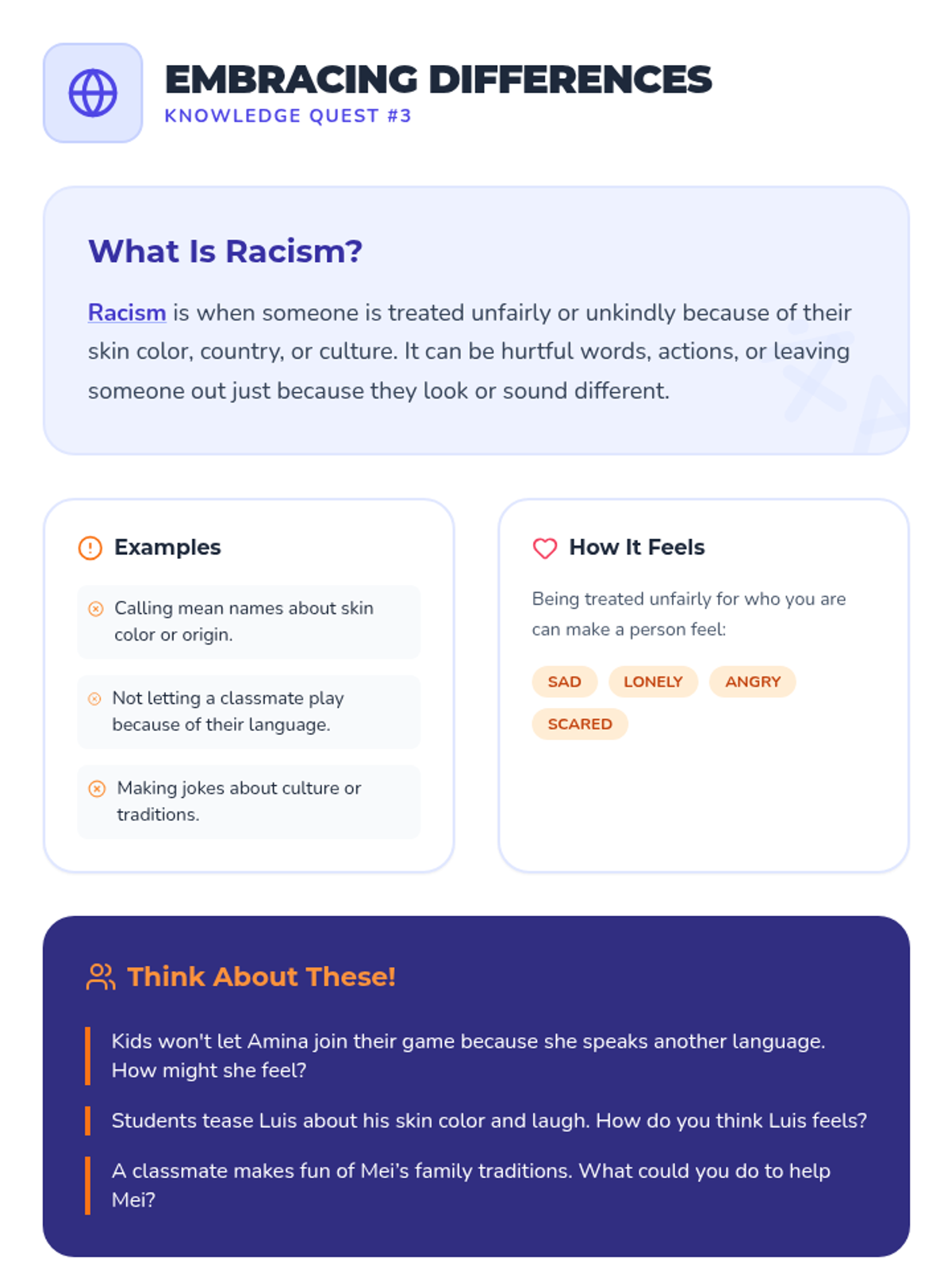
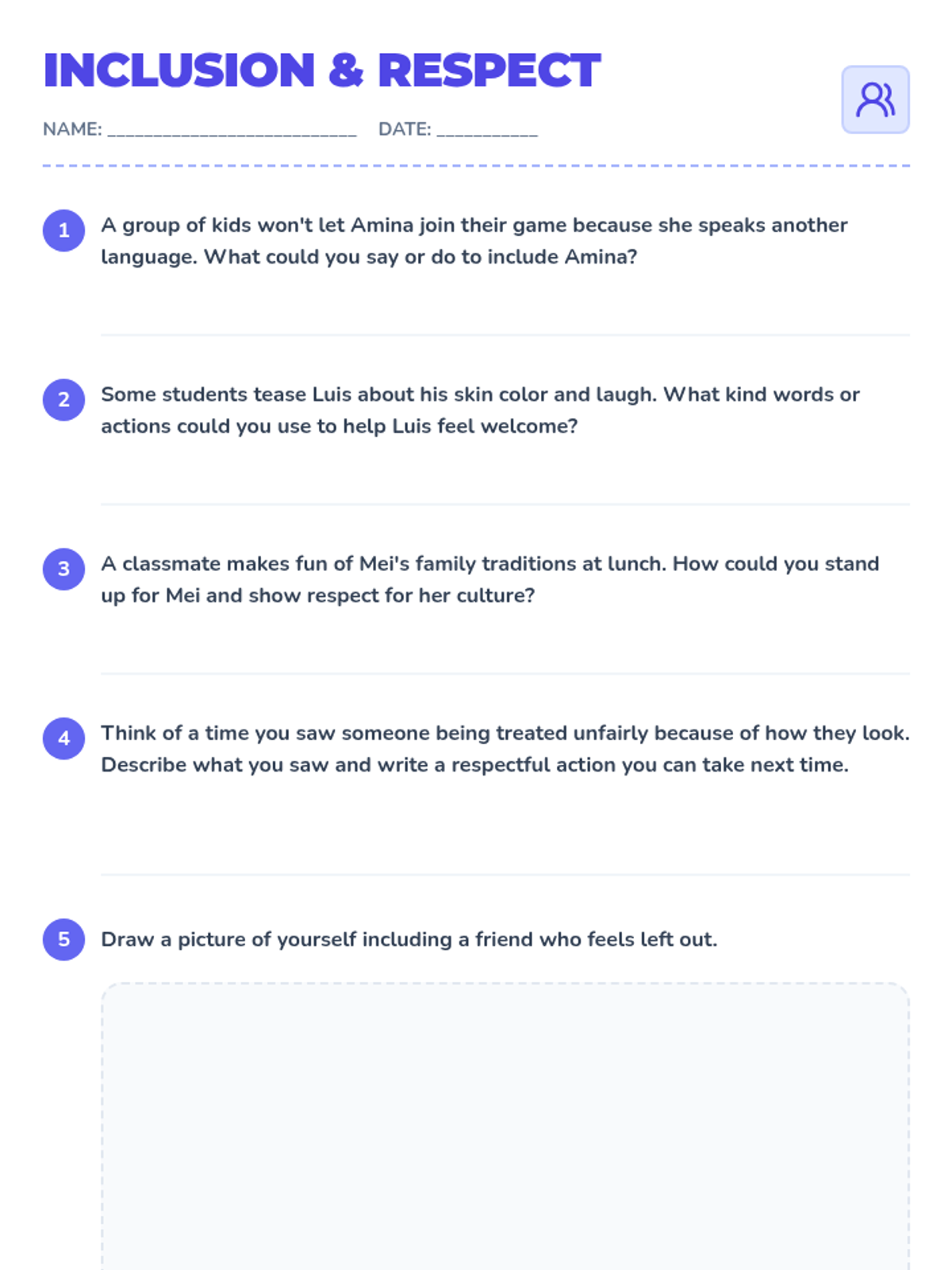
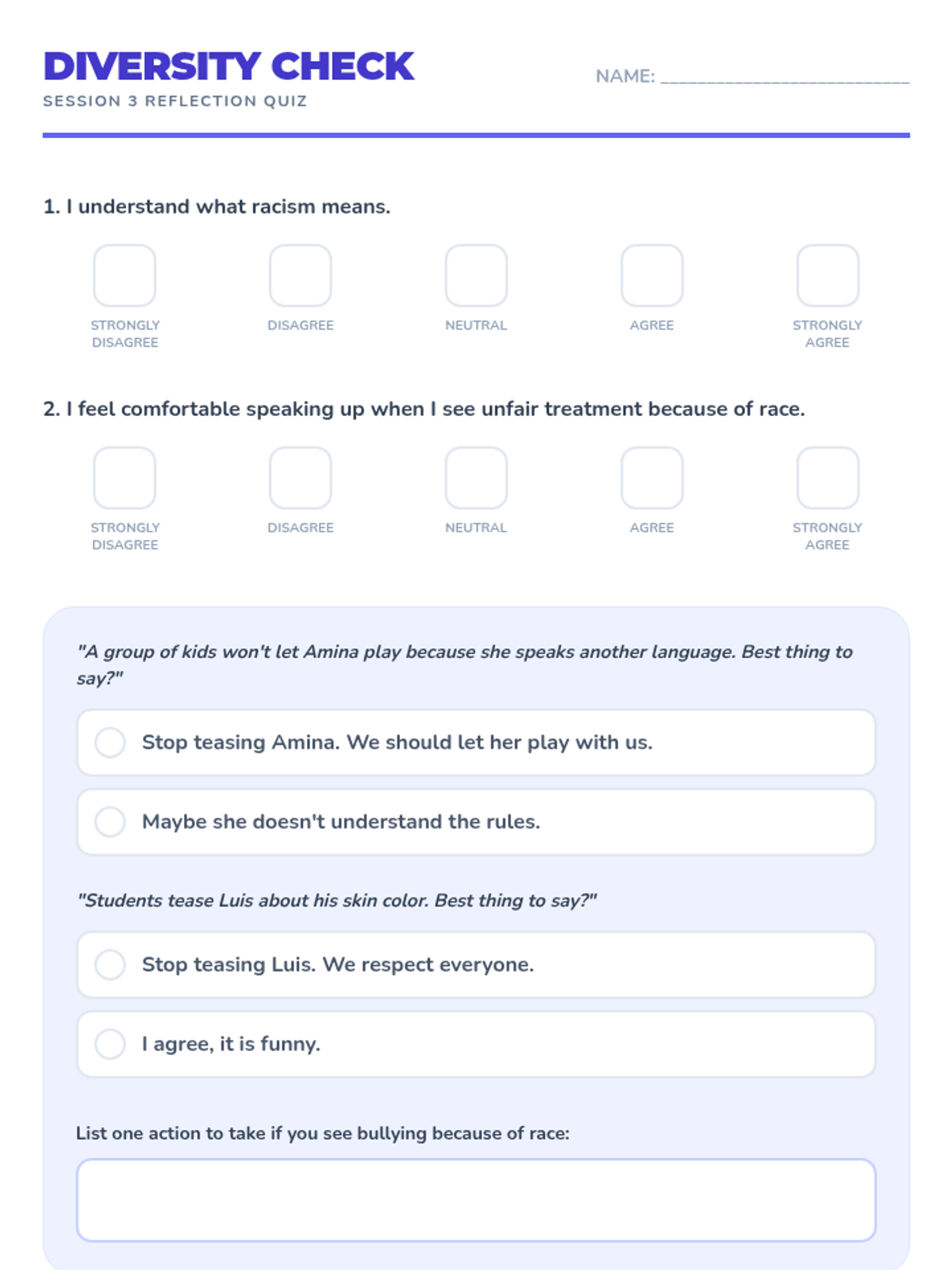
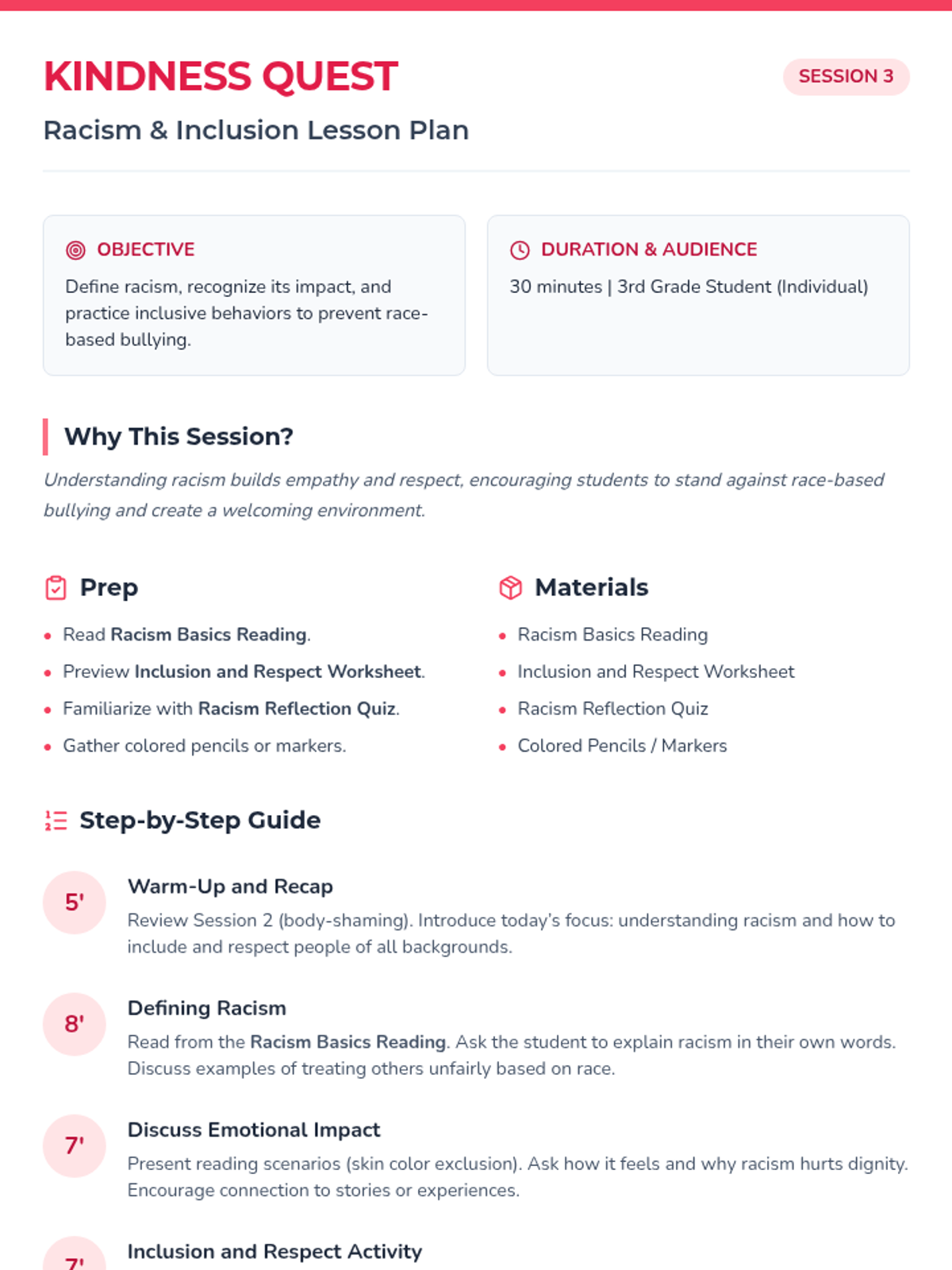
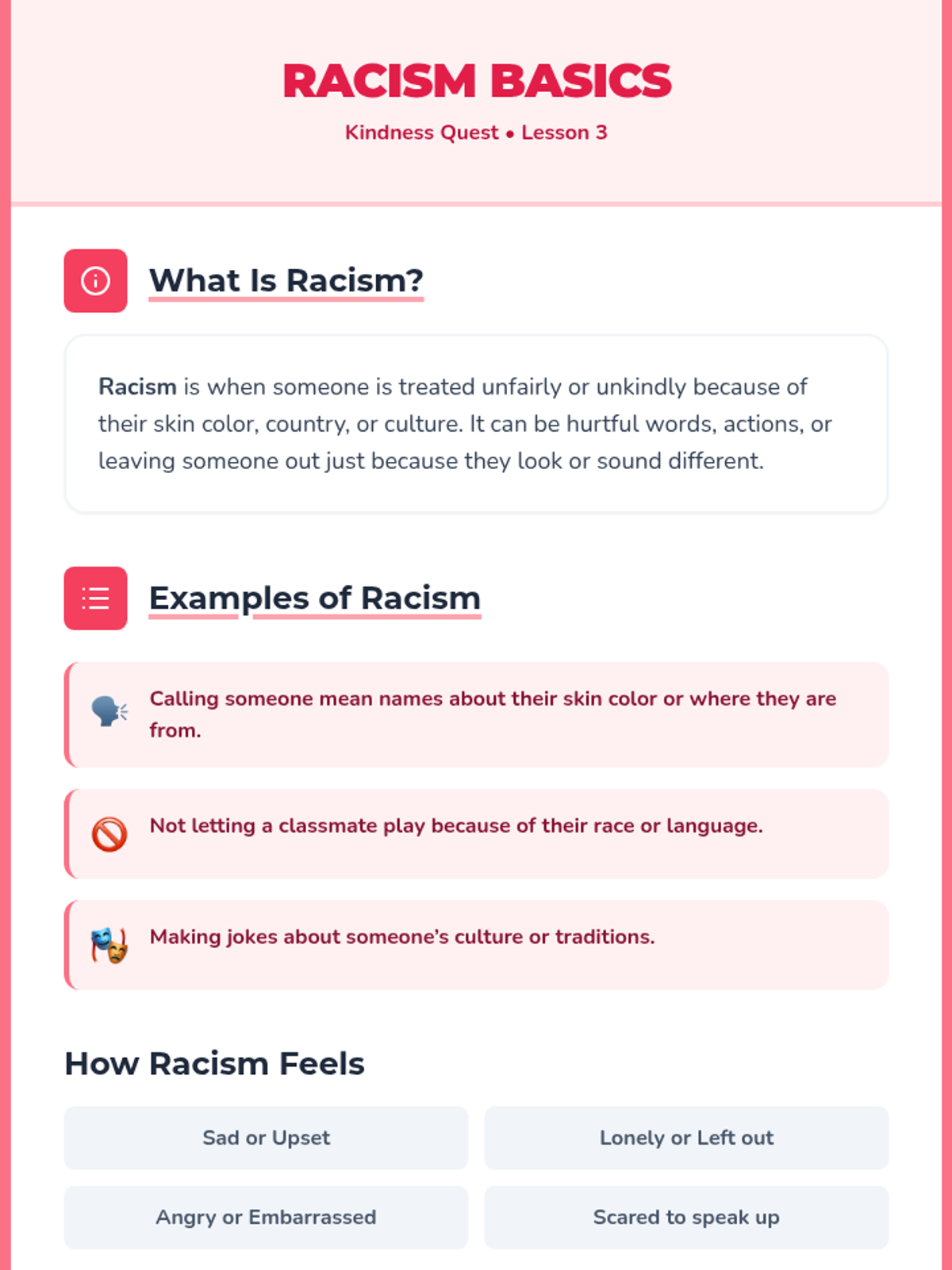
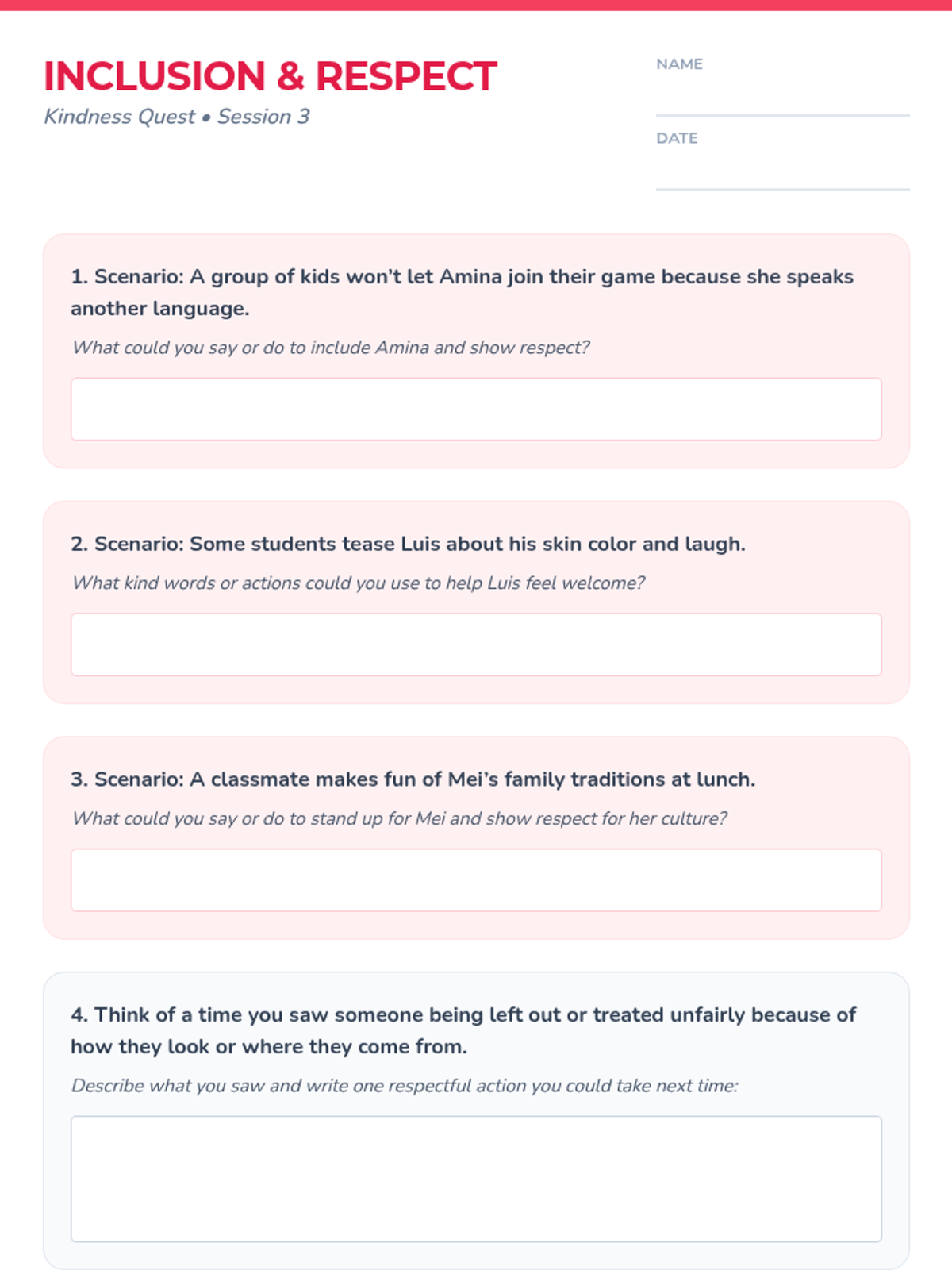
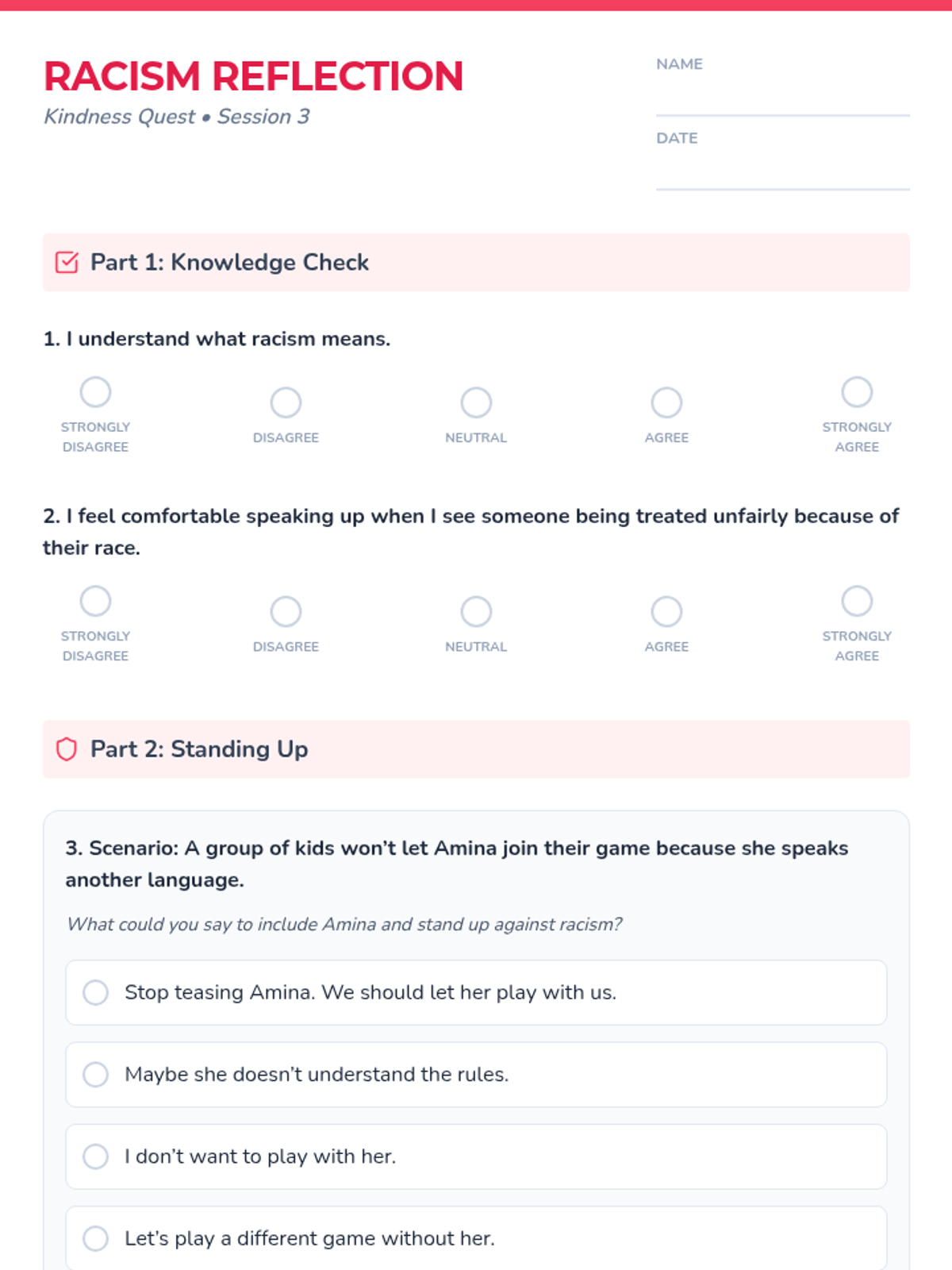
Understanding racism and practicing inclusion to create a welcoming environment for everyone.
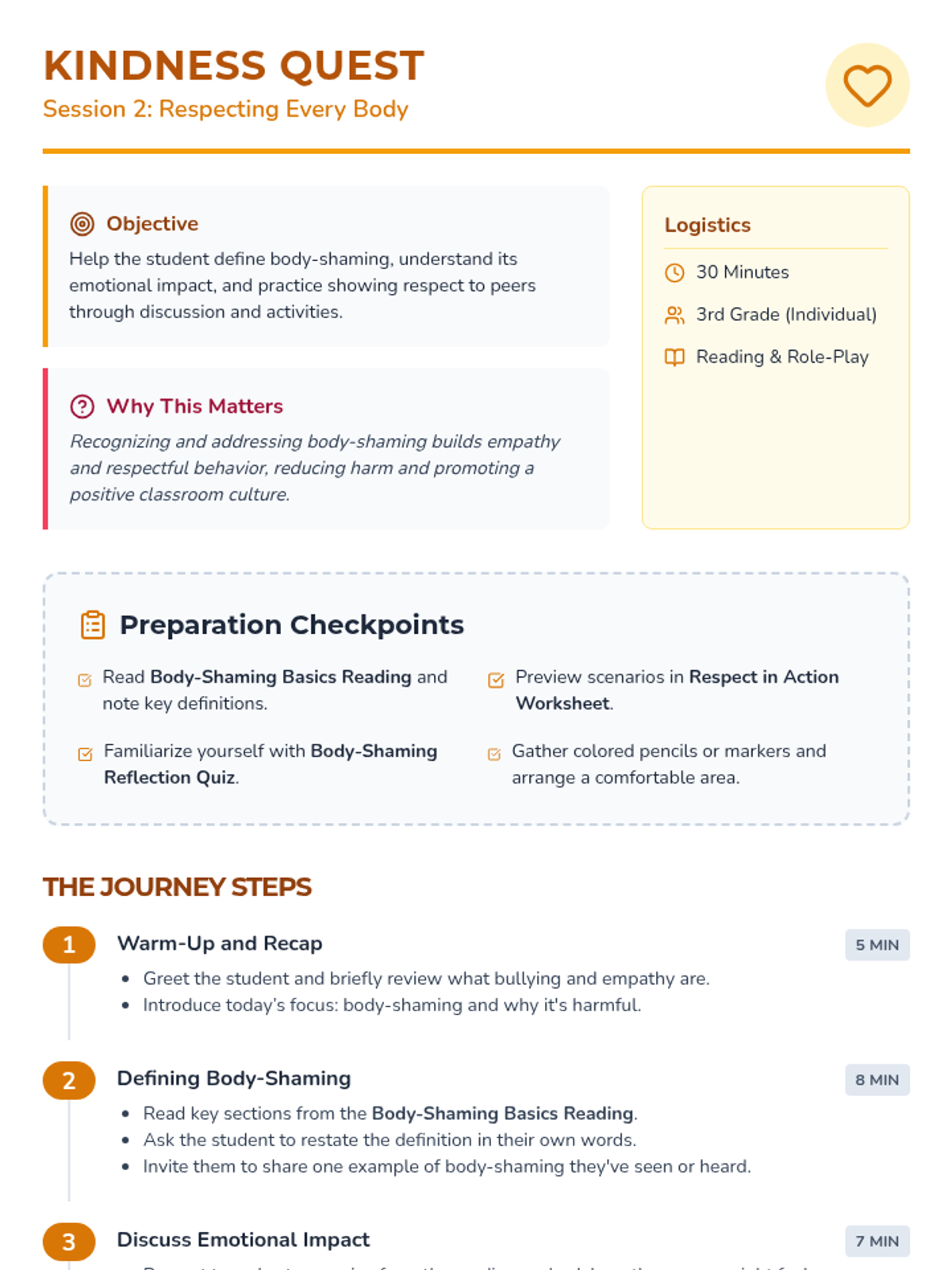
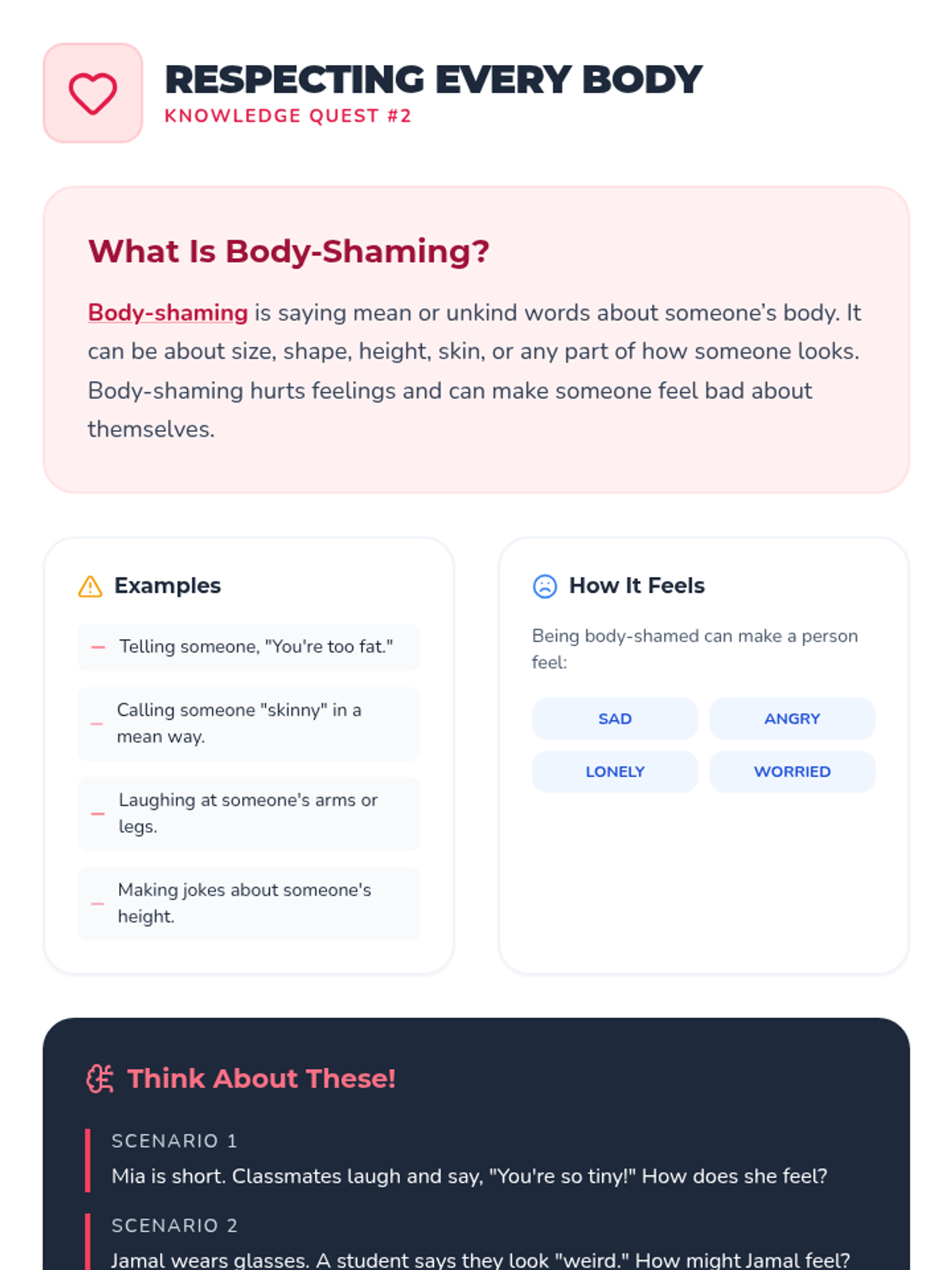
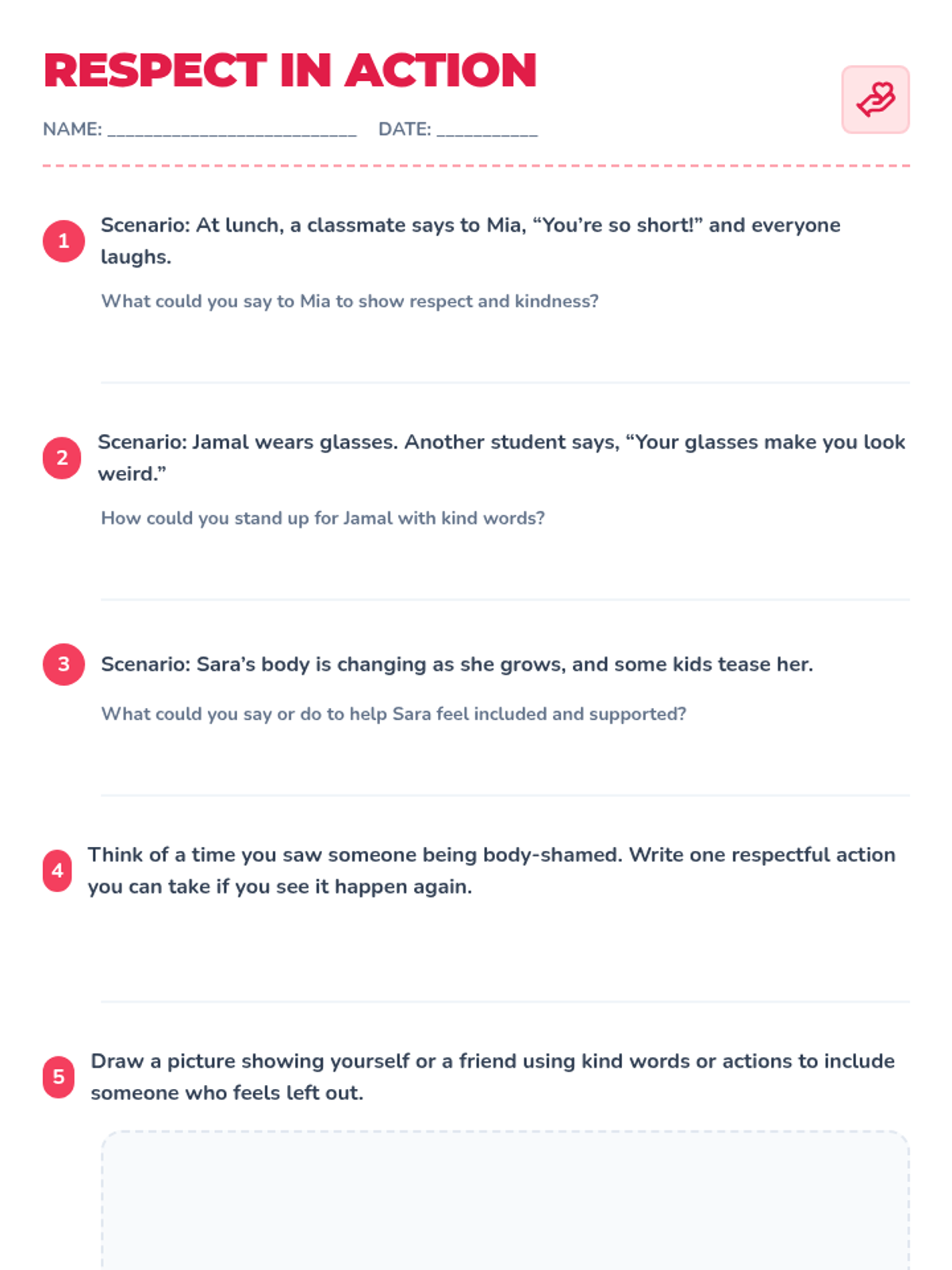
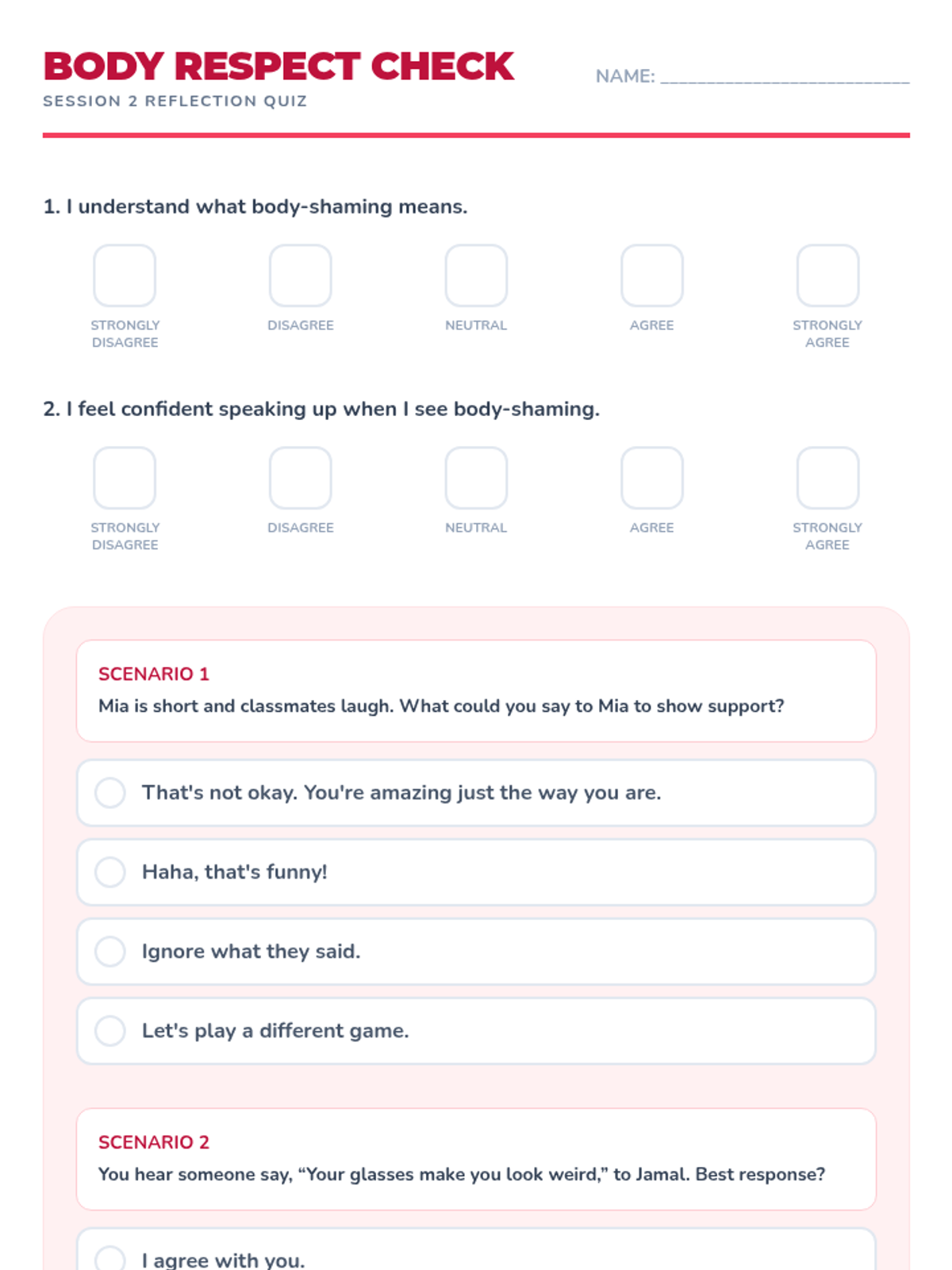
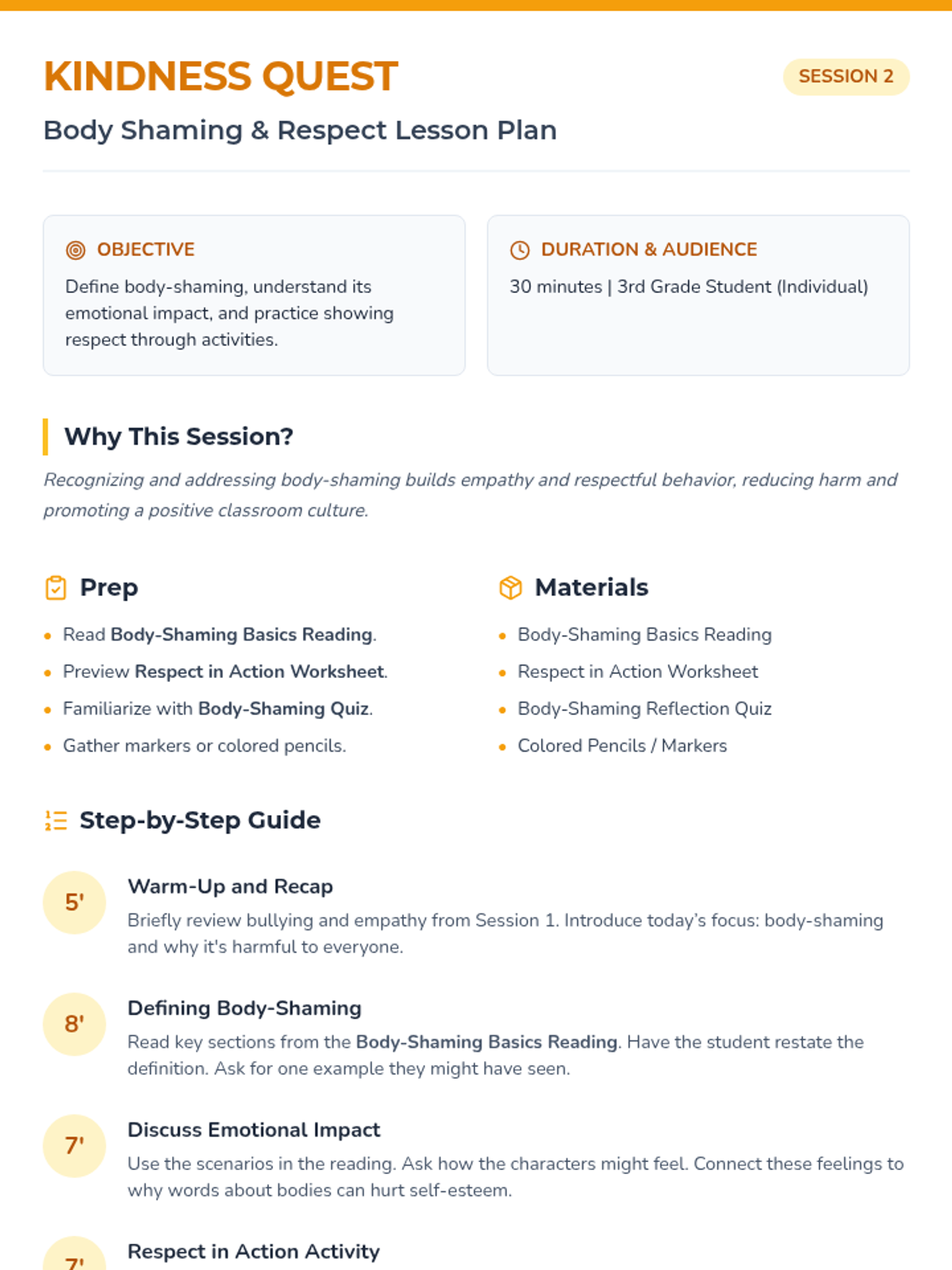
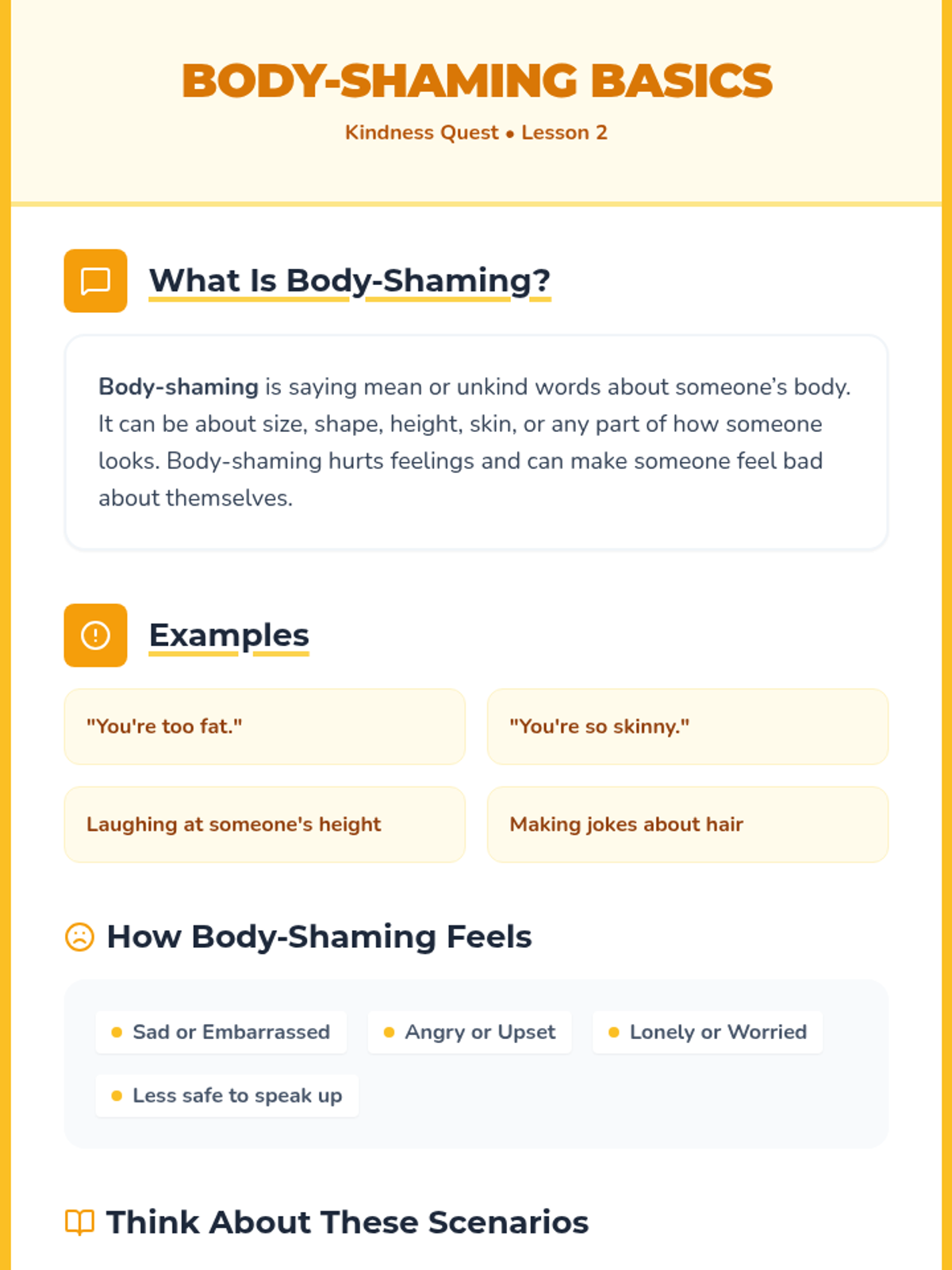
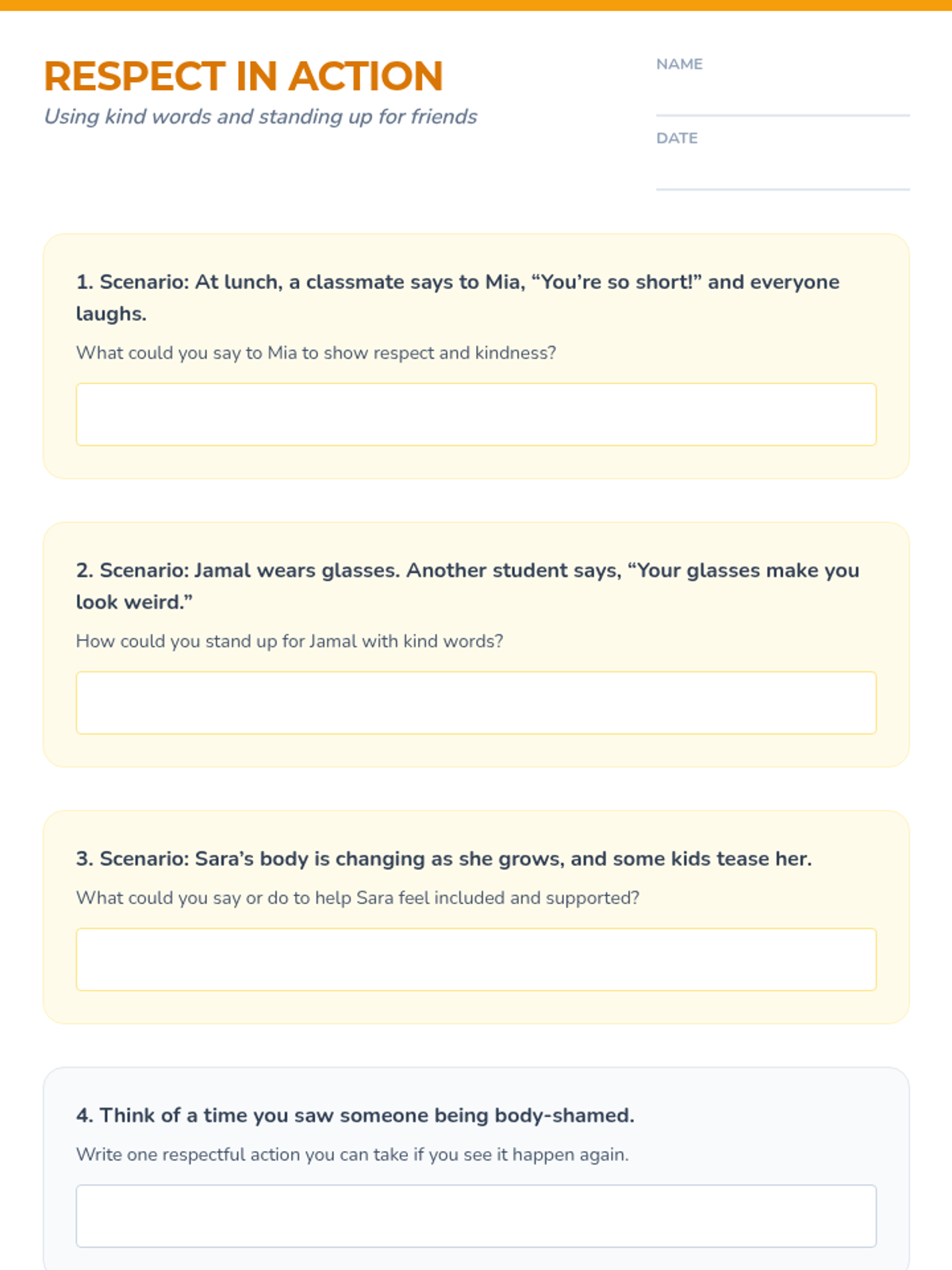
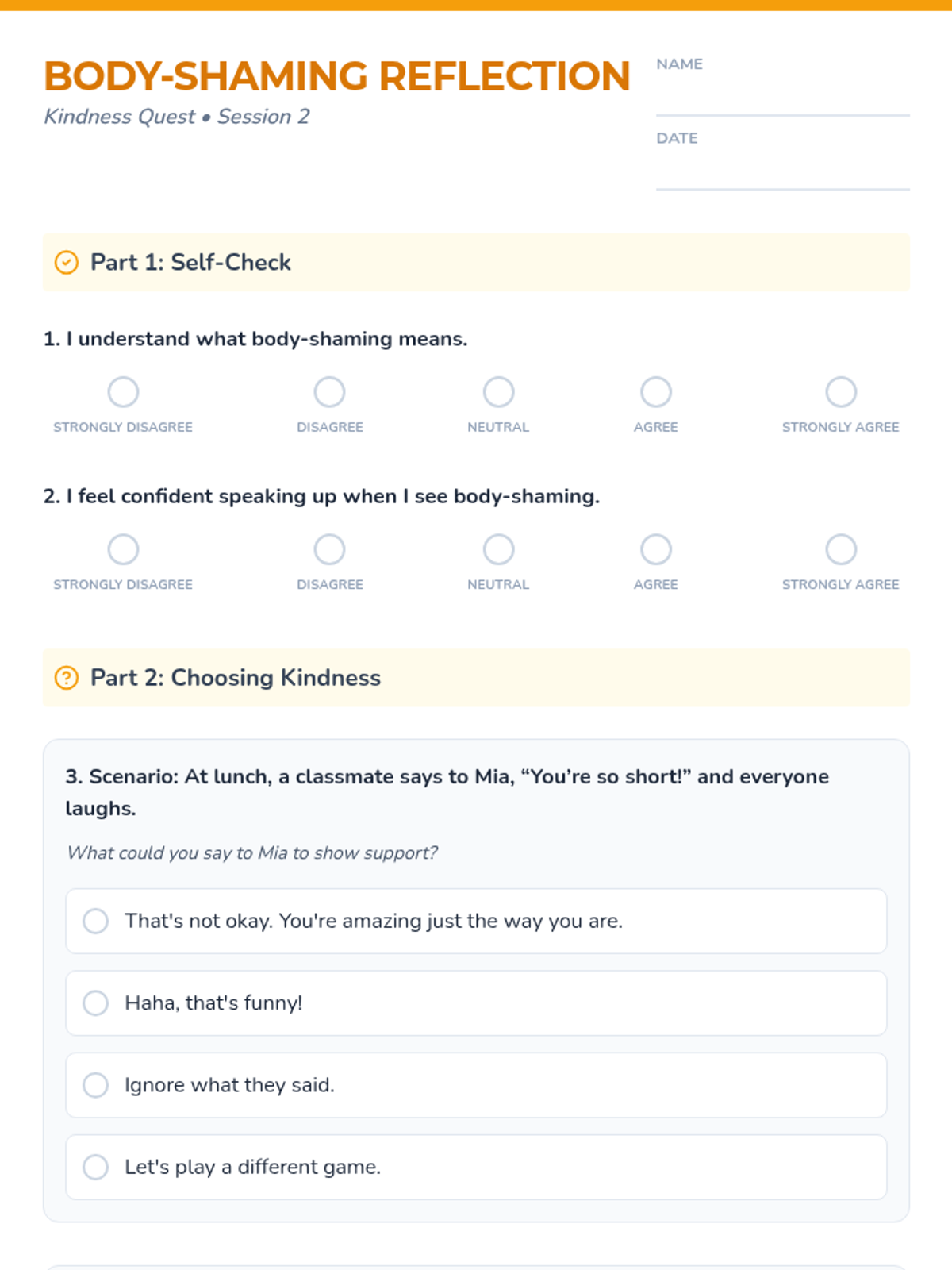
Recognizing and addressing body-shaming to promote a culture of respect for all bodies.
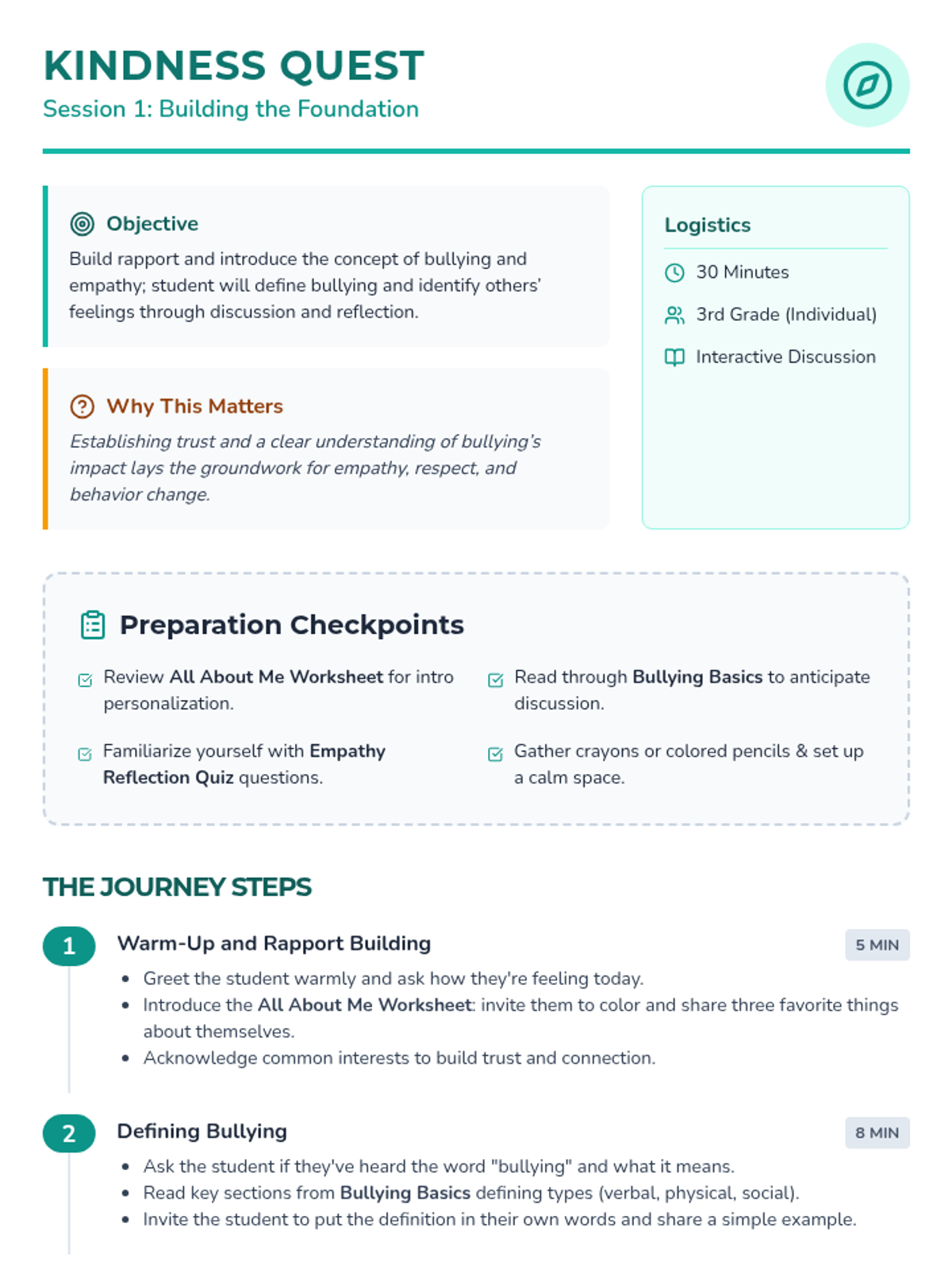
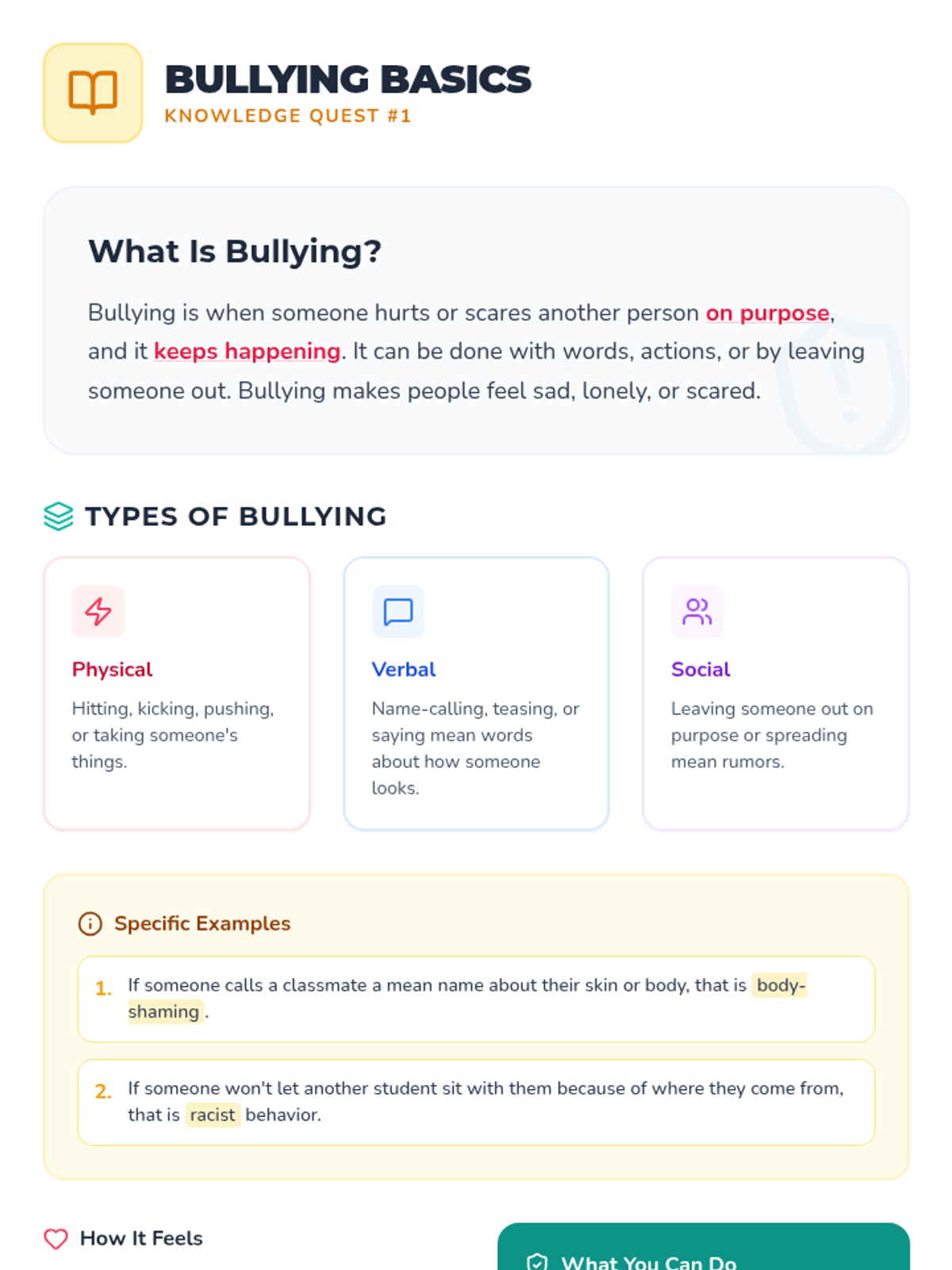
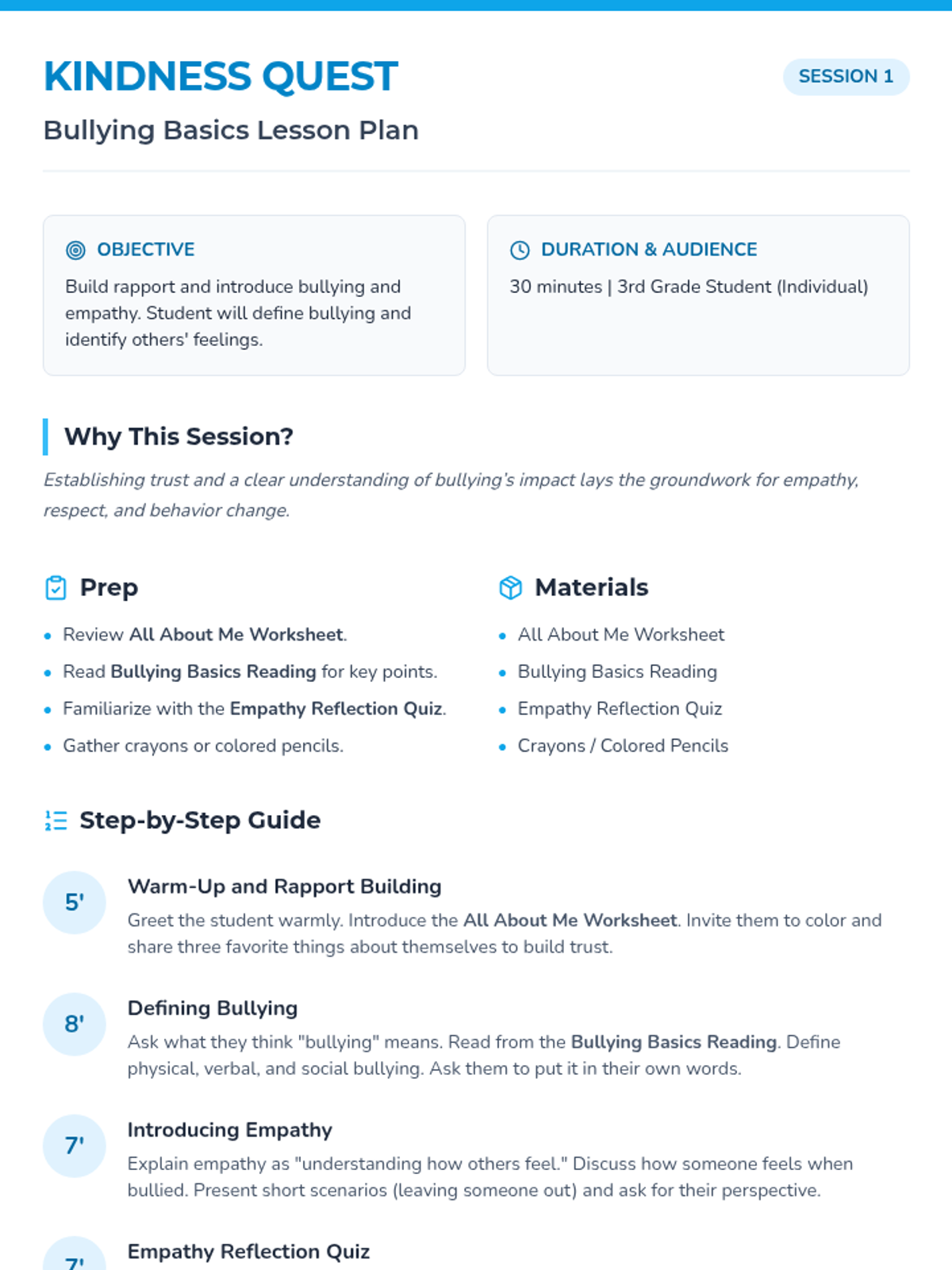
Establishing trust and a clear understanding of bullying’s impact and the power of empathy.
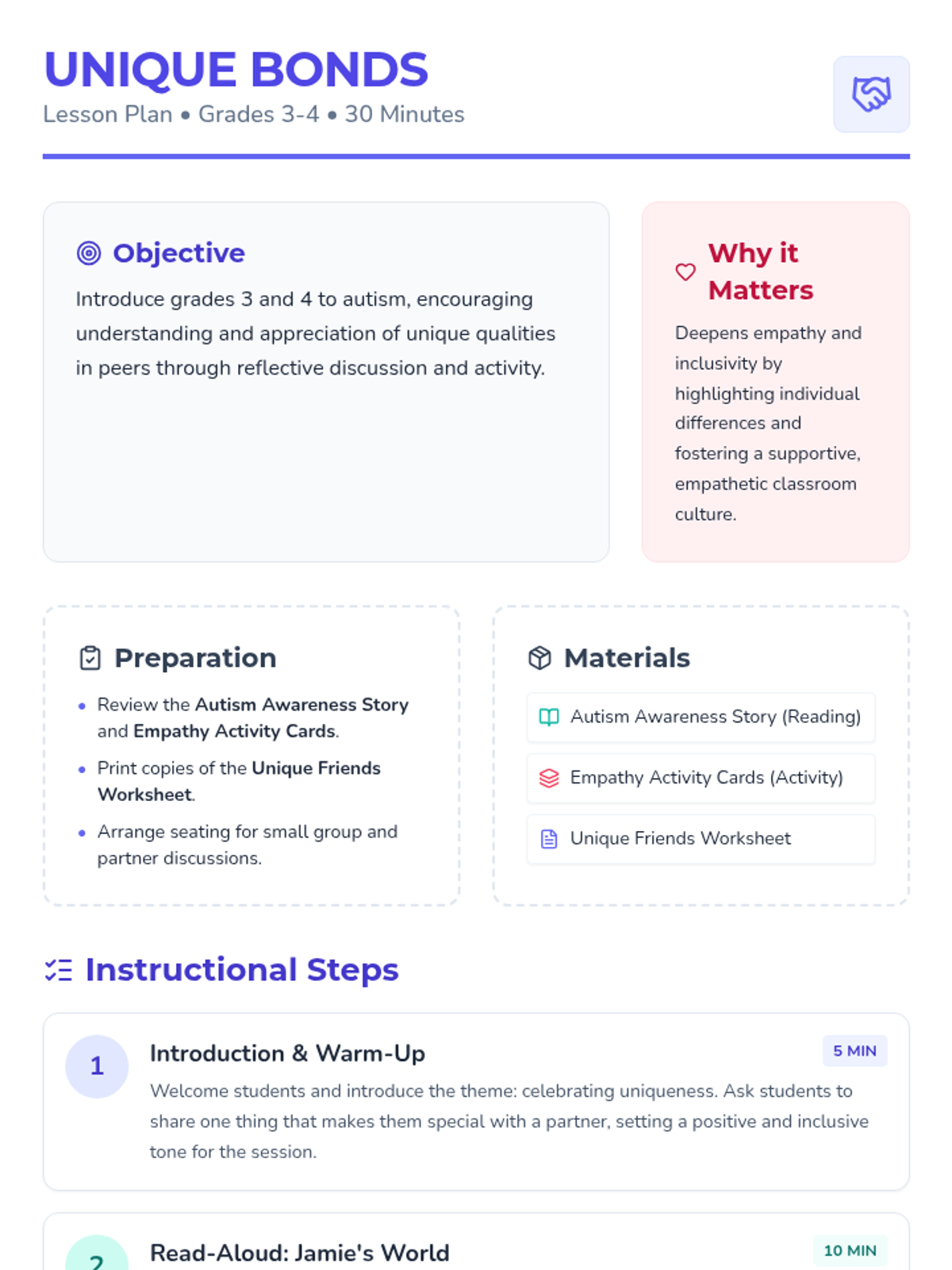
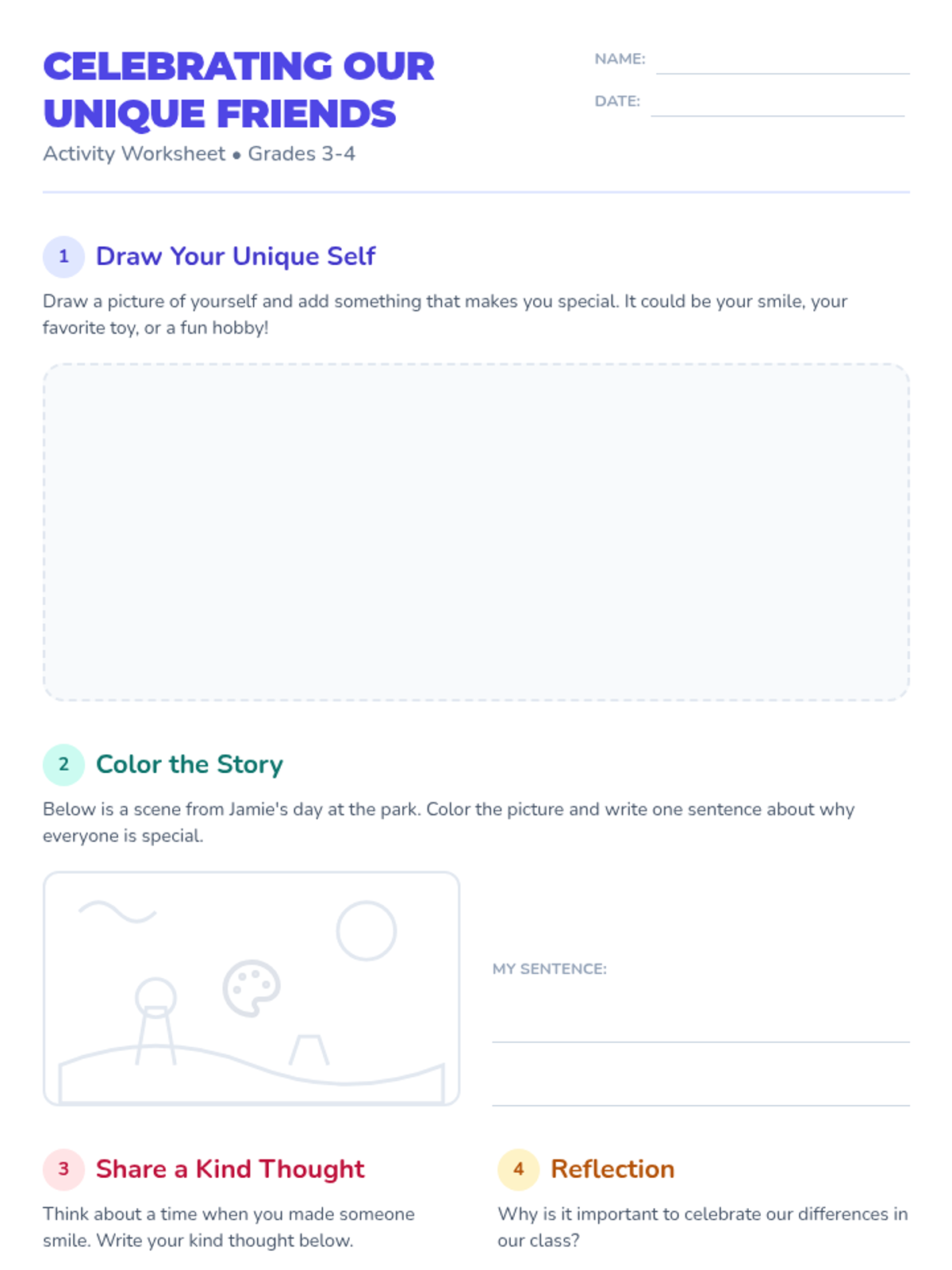
A 30-minute lesson for grades 3 and 4 that deepens understanding of autism through reading, discussion, and reflective activities.
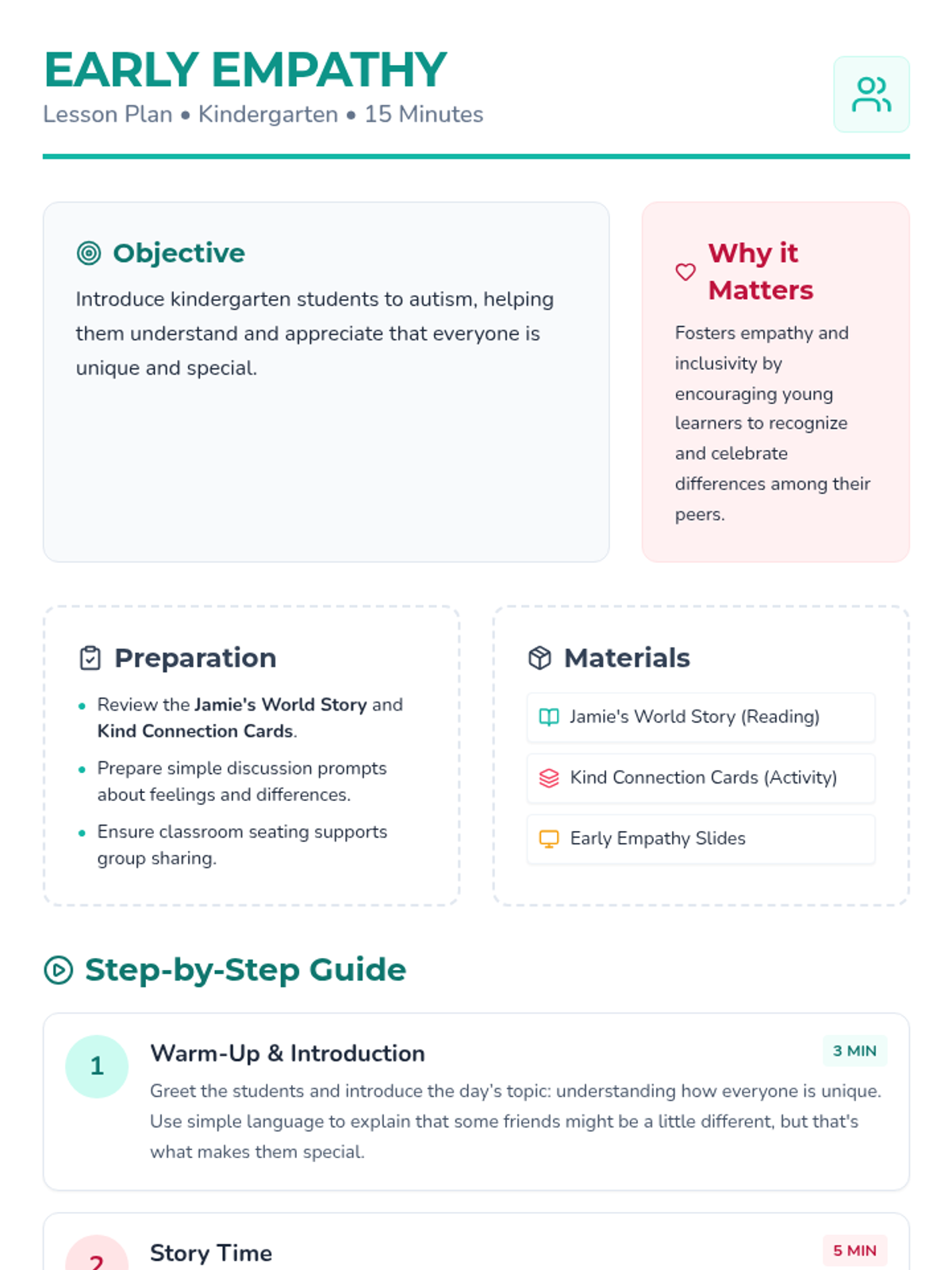
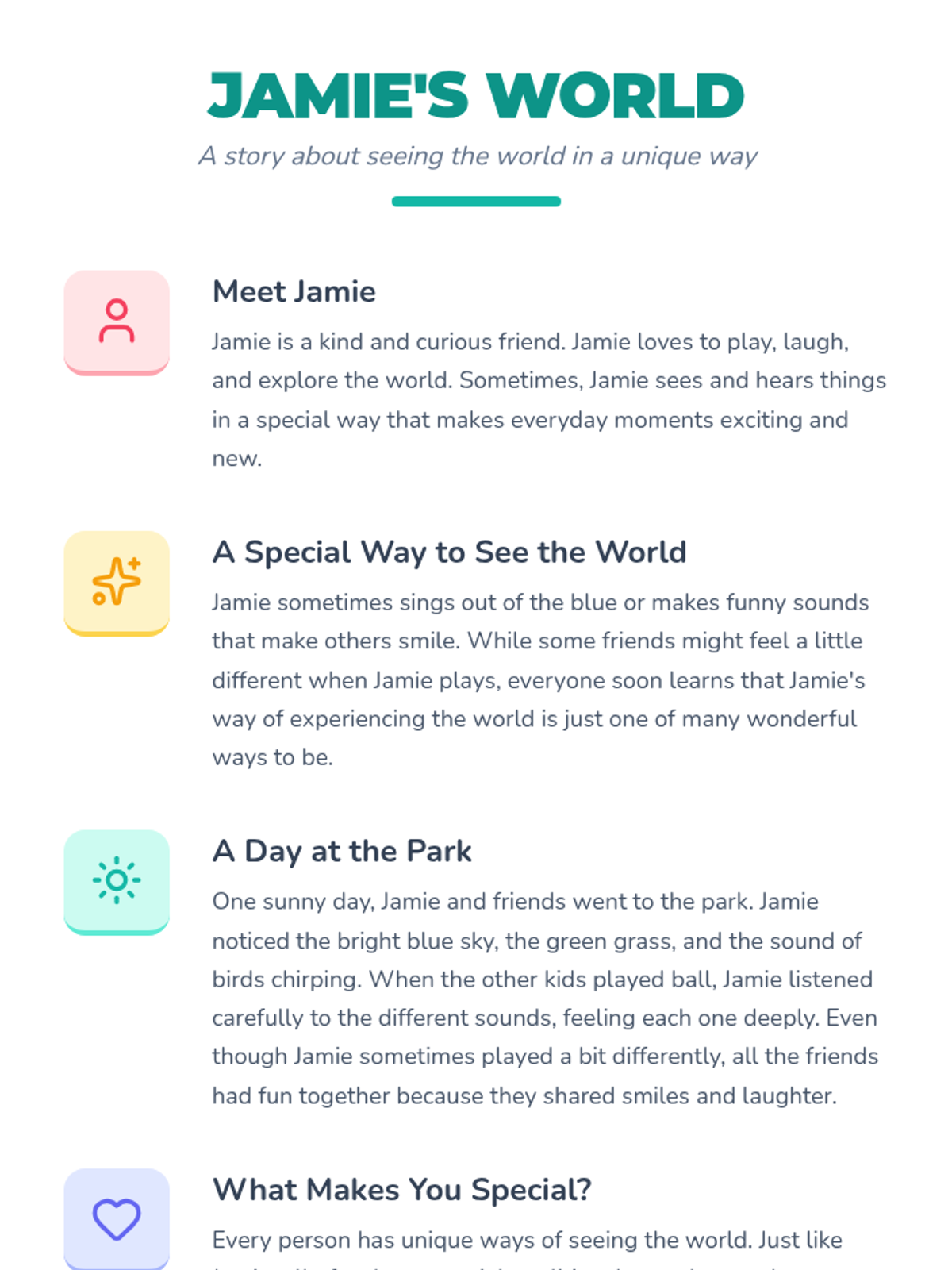
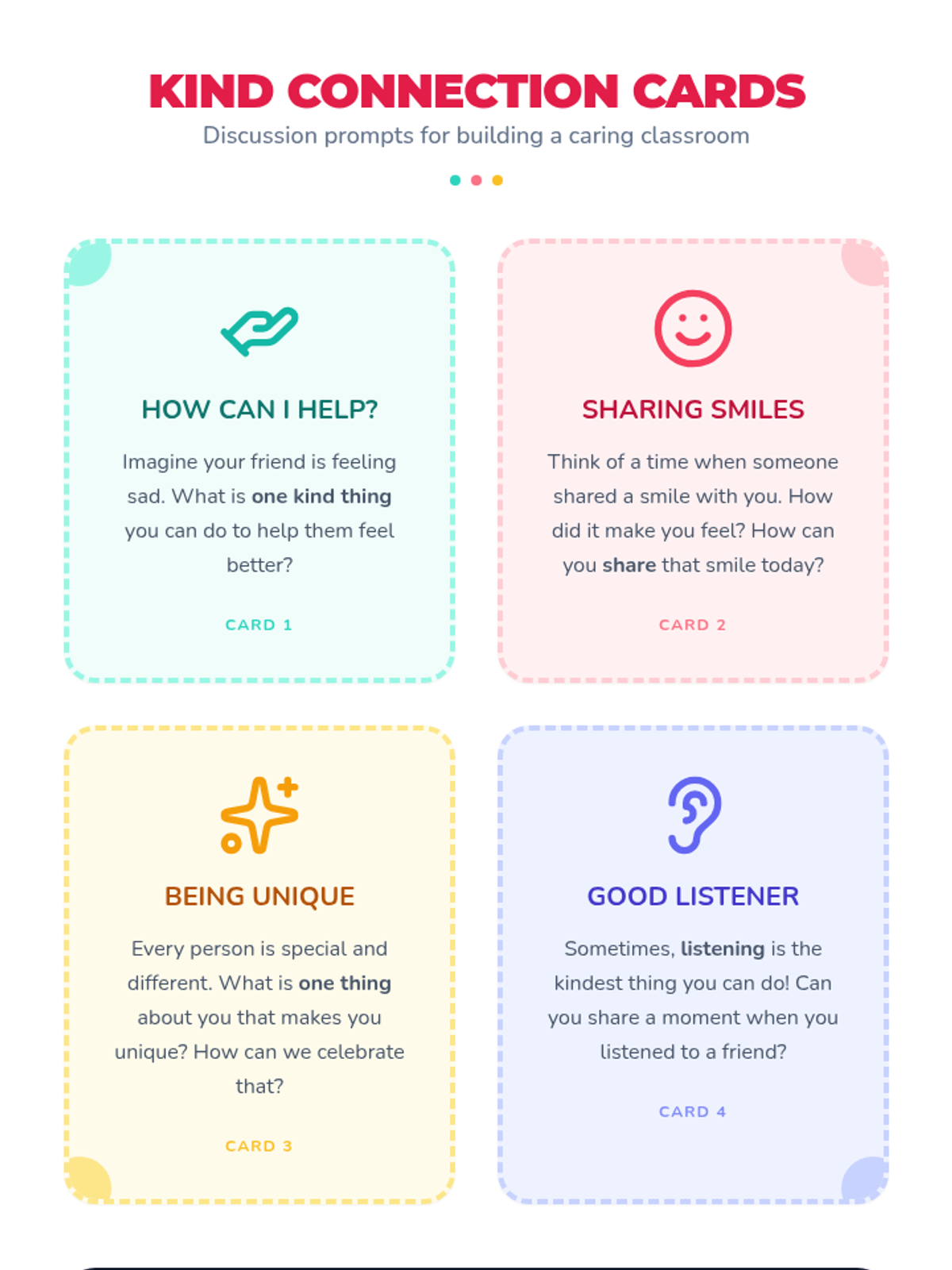
A short, 15-minute introduction to autism awareness for kindergarten students, focusing on the concept that everyone is unique and special.
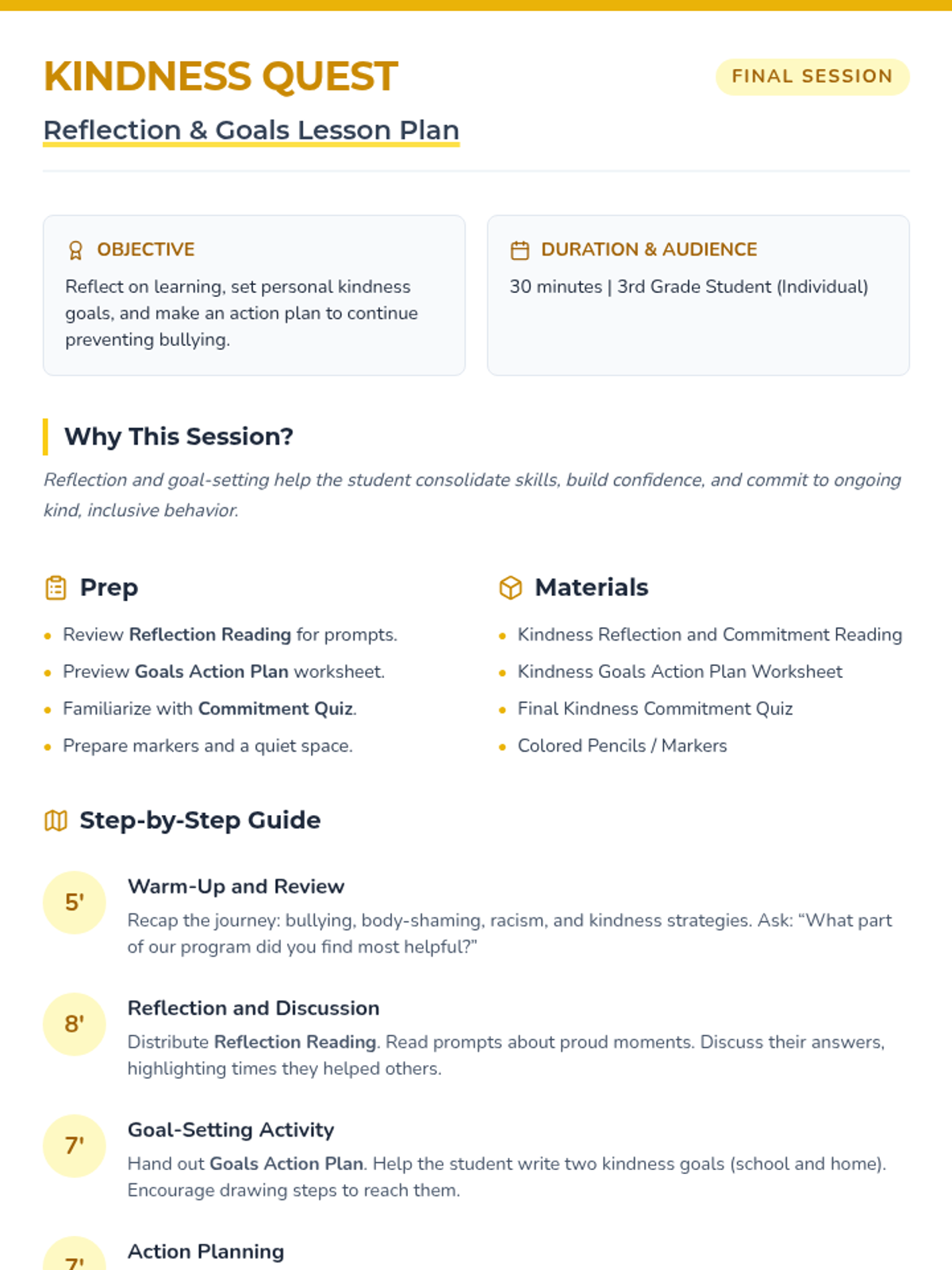
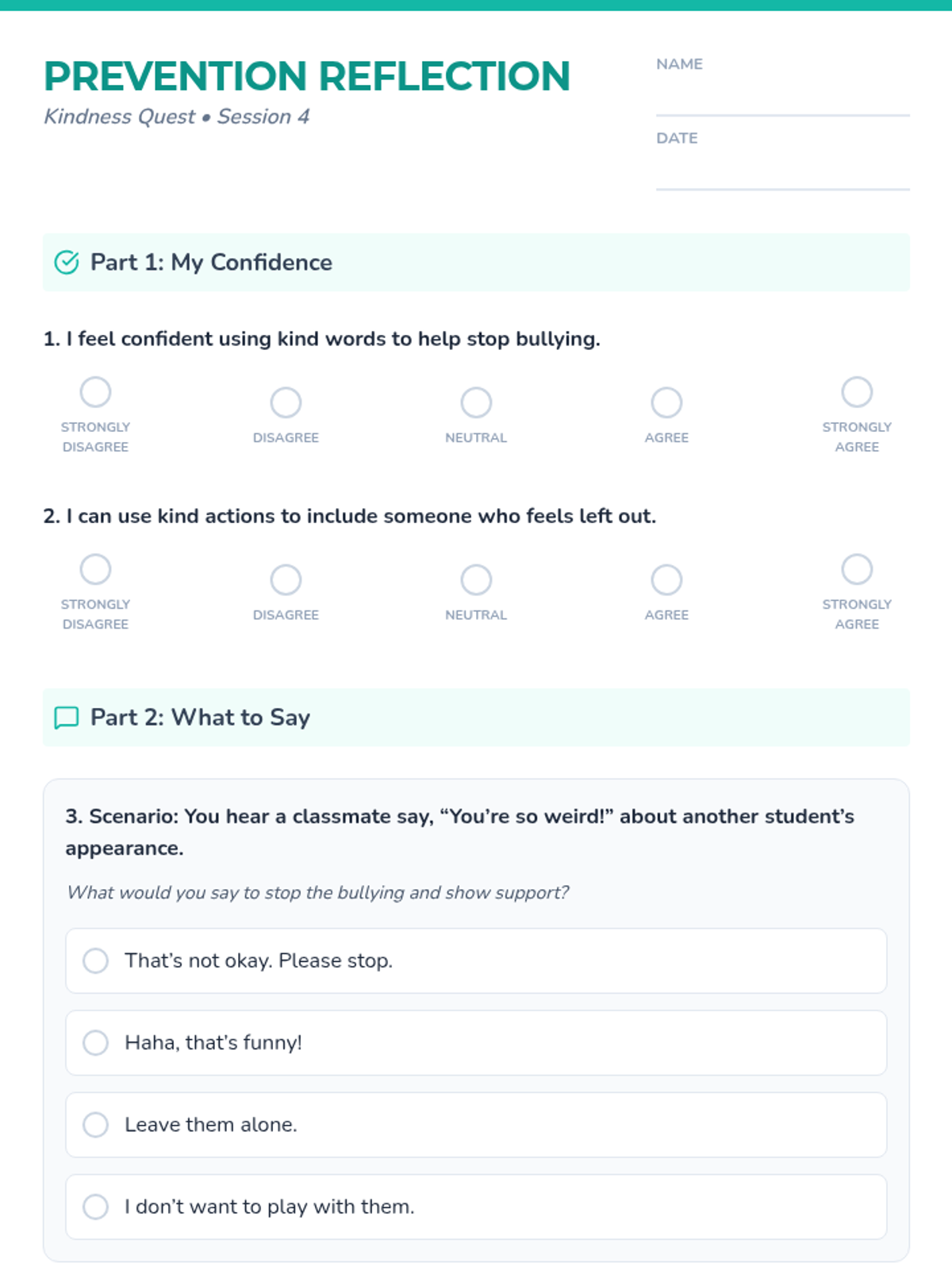
Guide the student to reflect on their learning, set personal kindness goals, and make an action plan to continue preventing bullying.
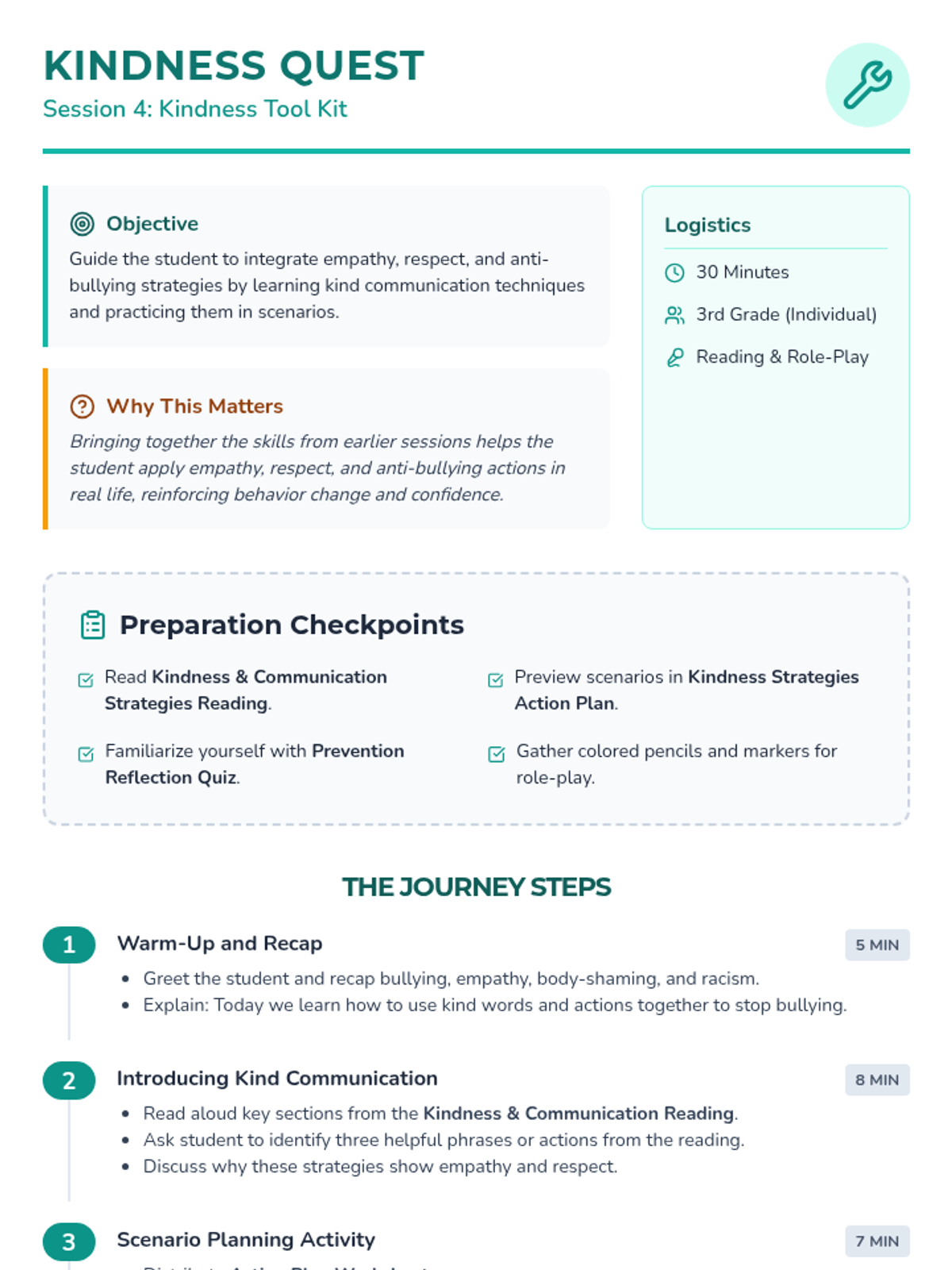
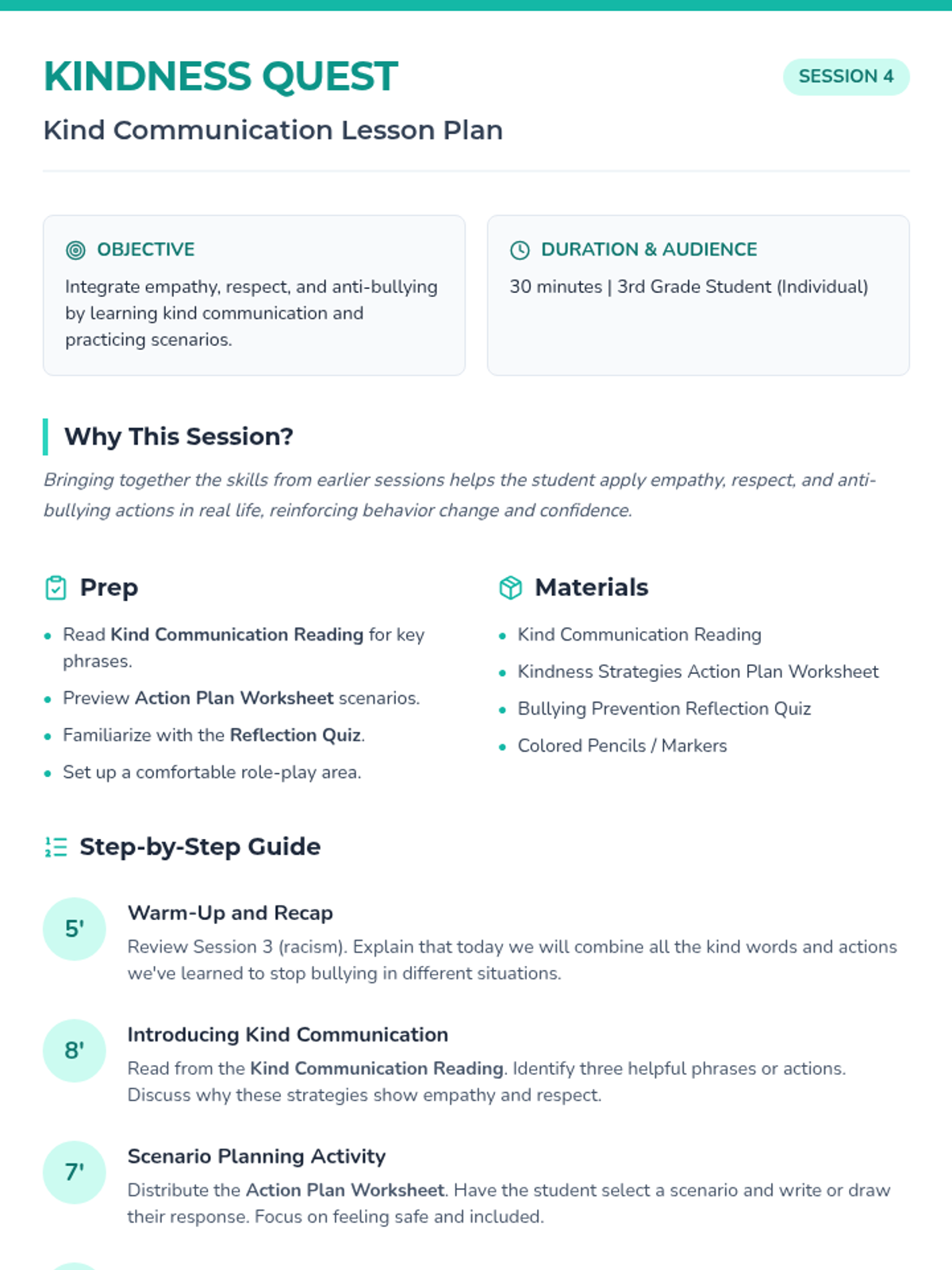
Guide the student to integrate empathy, respect, and anti-bullying strategies by learning kind communication techniques and practicing them in scenarios.
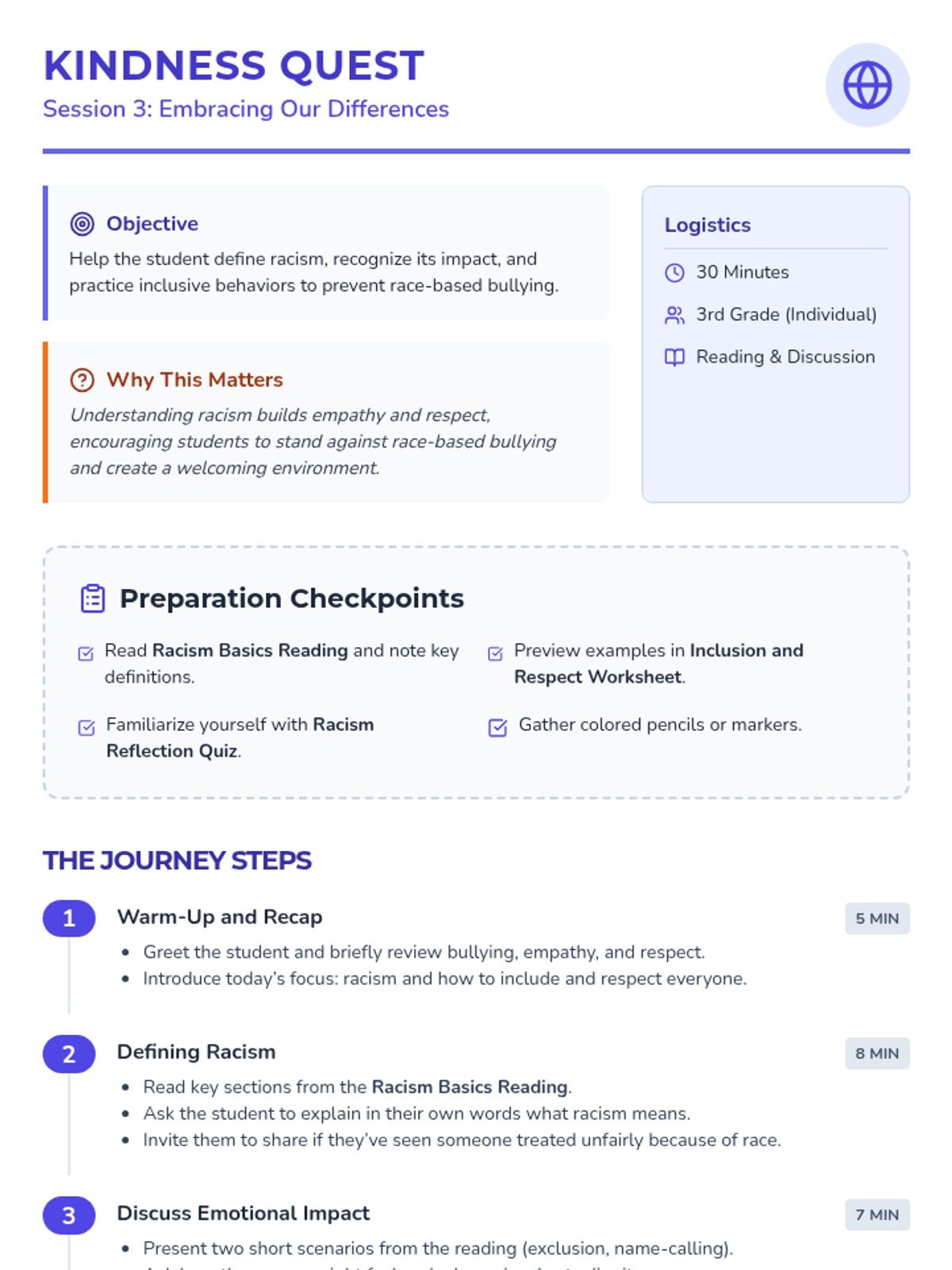
Help the student define racism, recognize its impact, and practice inclusive behaviors to prevent race-based bullying.
Help the student define body-shaming, understand its emotional impact, and practice showing respect to peers through discussion and activities.
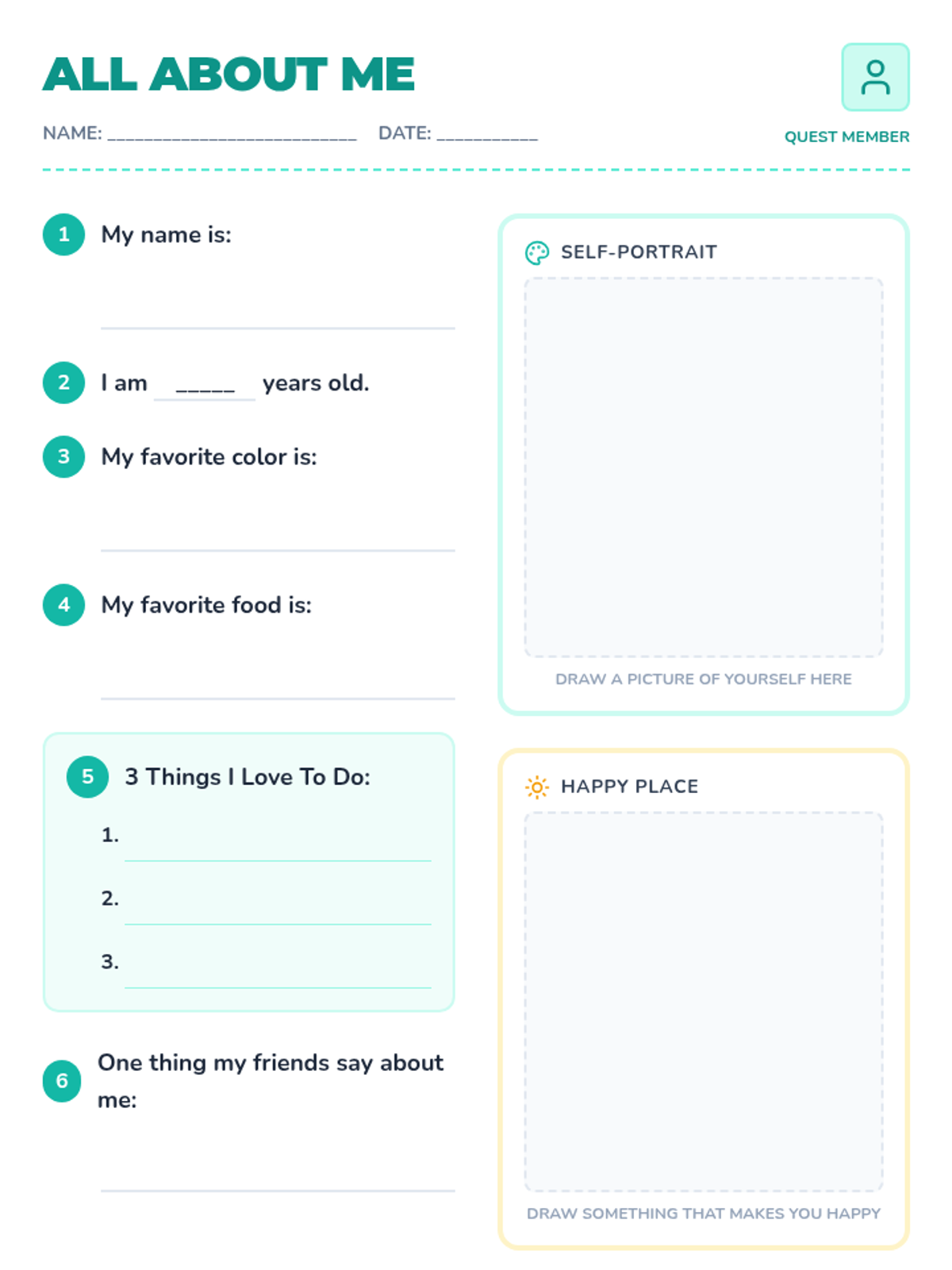
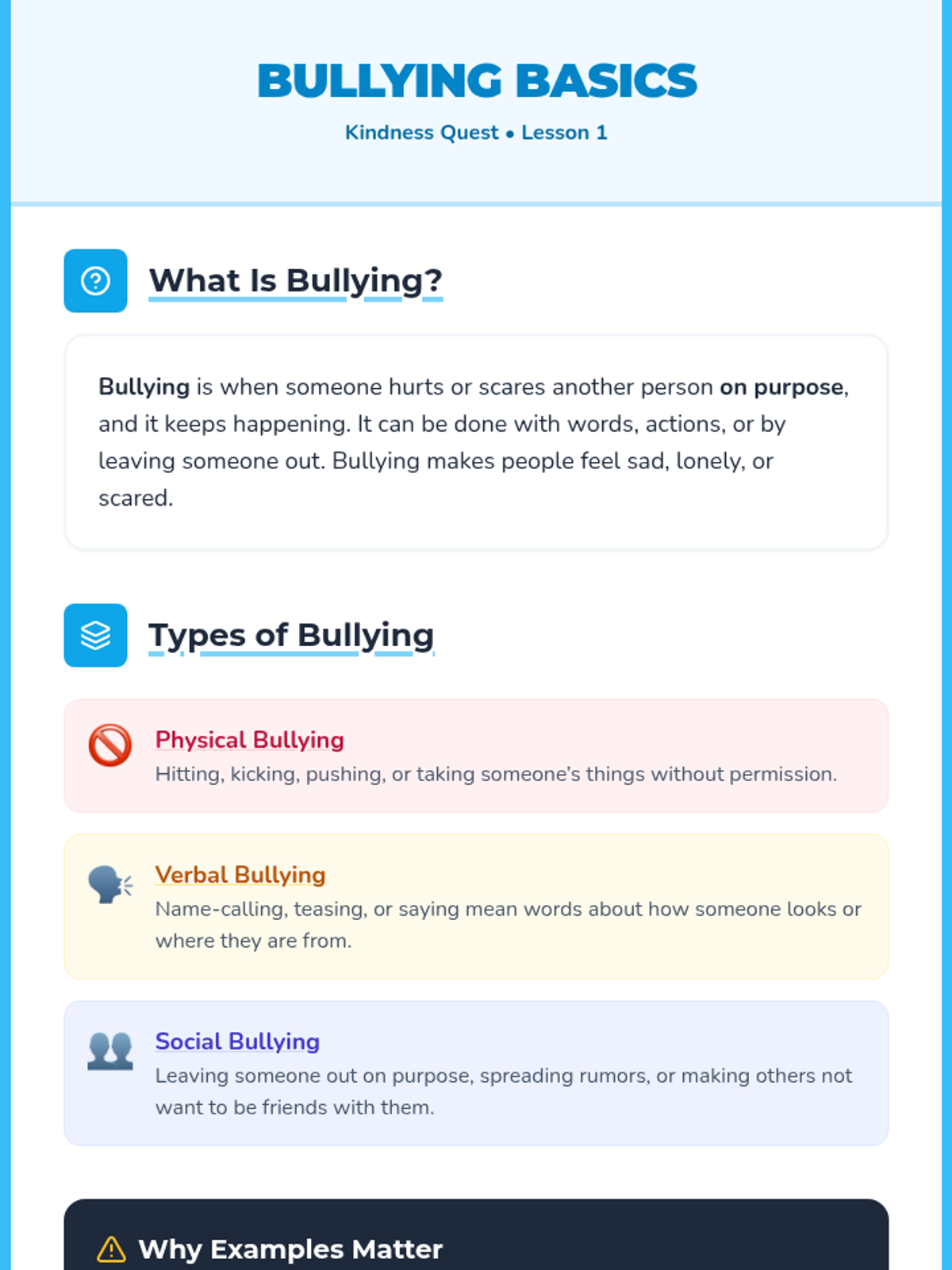
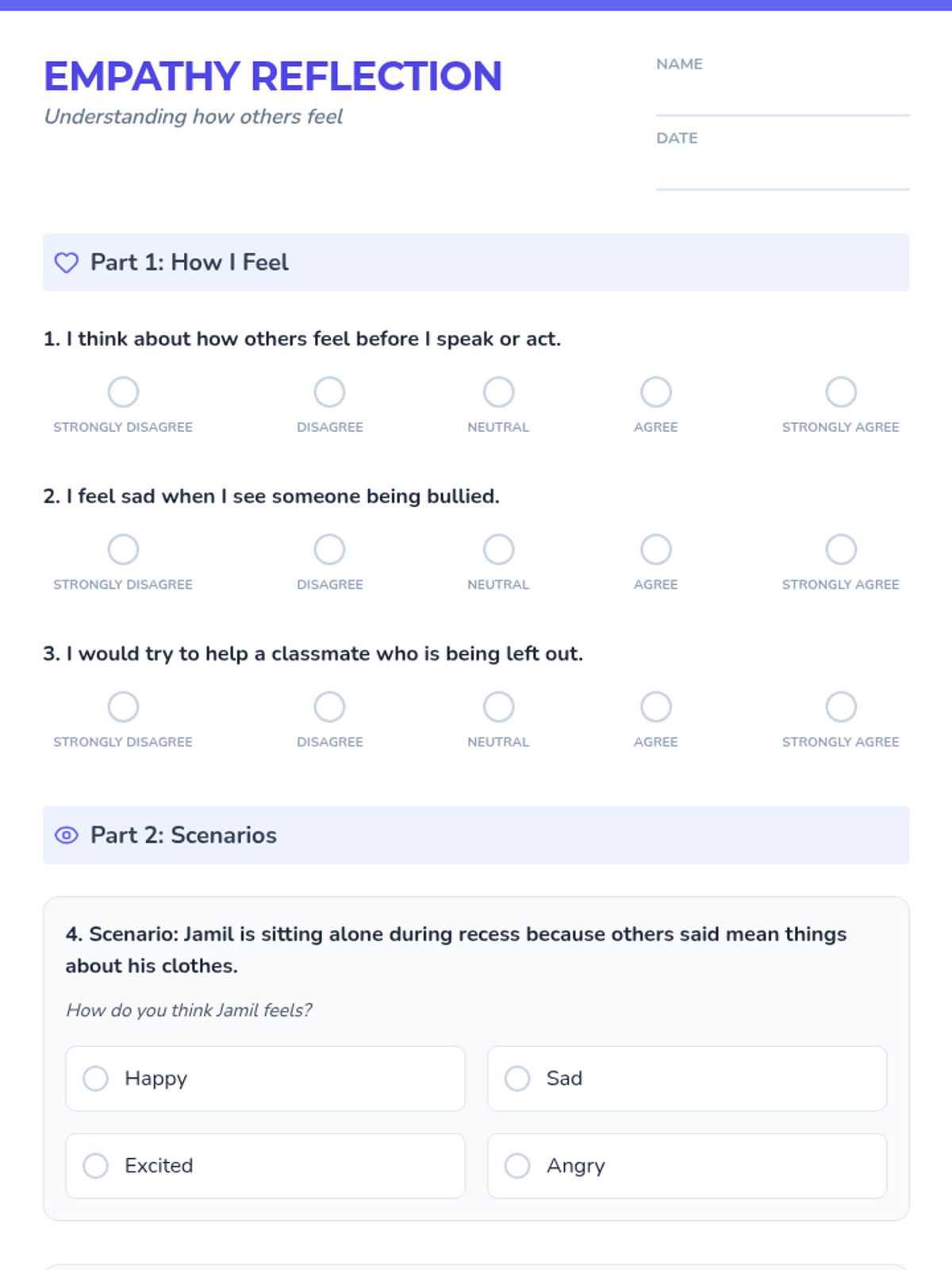
Build rapport and introduce the concept of bullying and empathy; student will define bullying and identify others’ feelings through discussion and reflection.
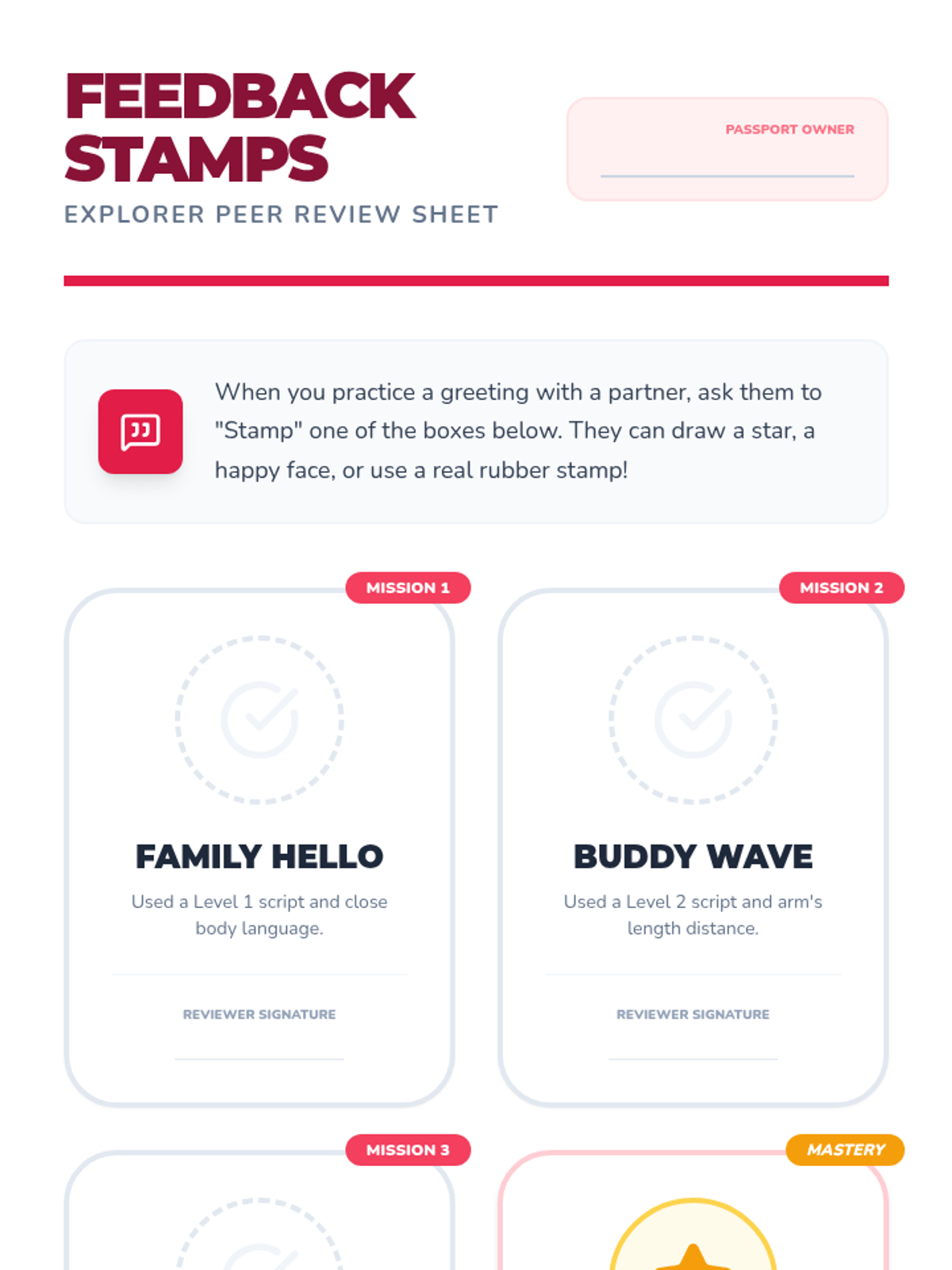
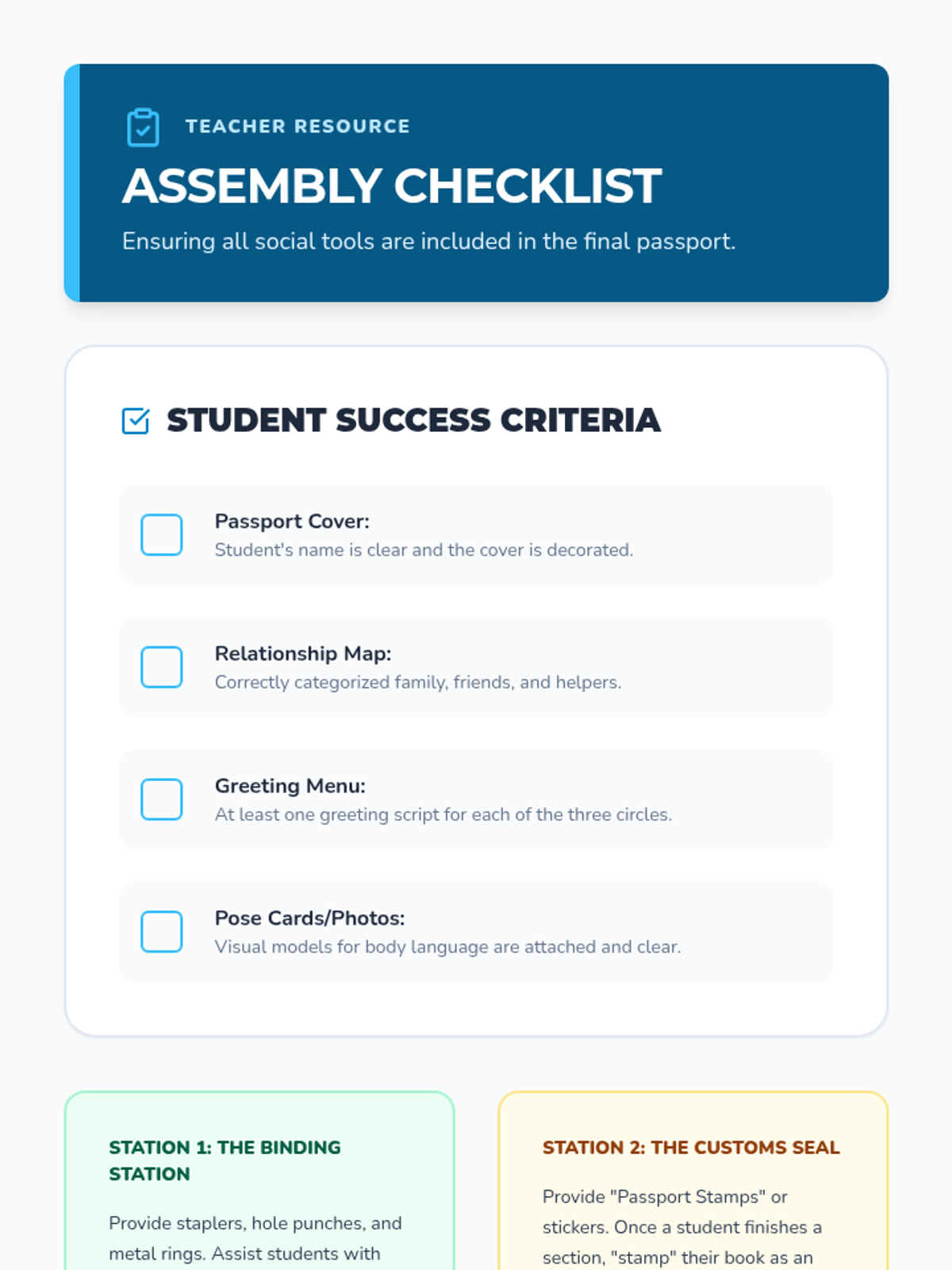
The sequence concludes with students using their completed passports to role-play greetings in a gallery walk format, receiving peer feedback and teacher assessment.
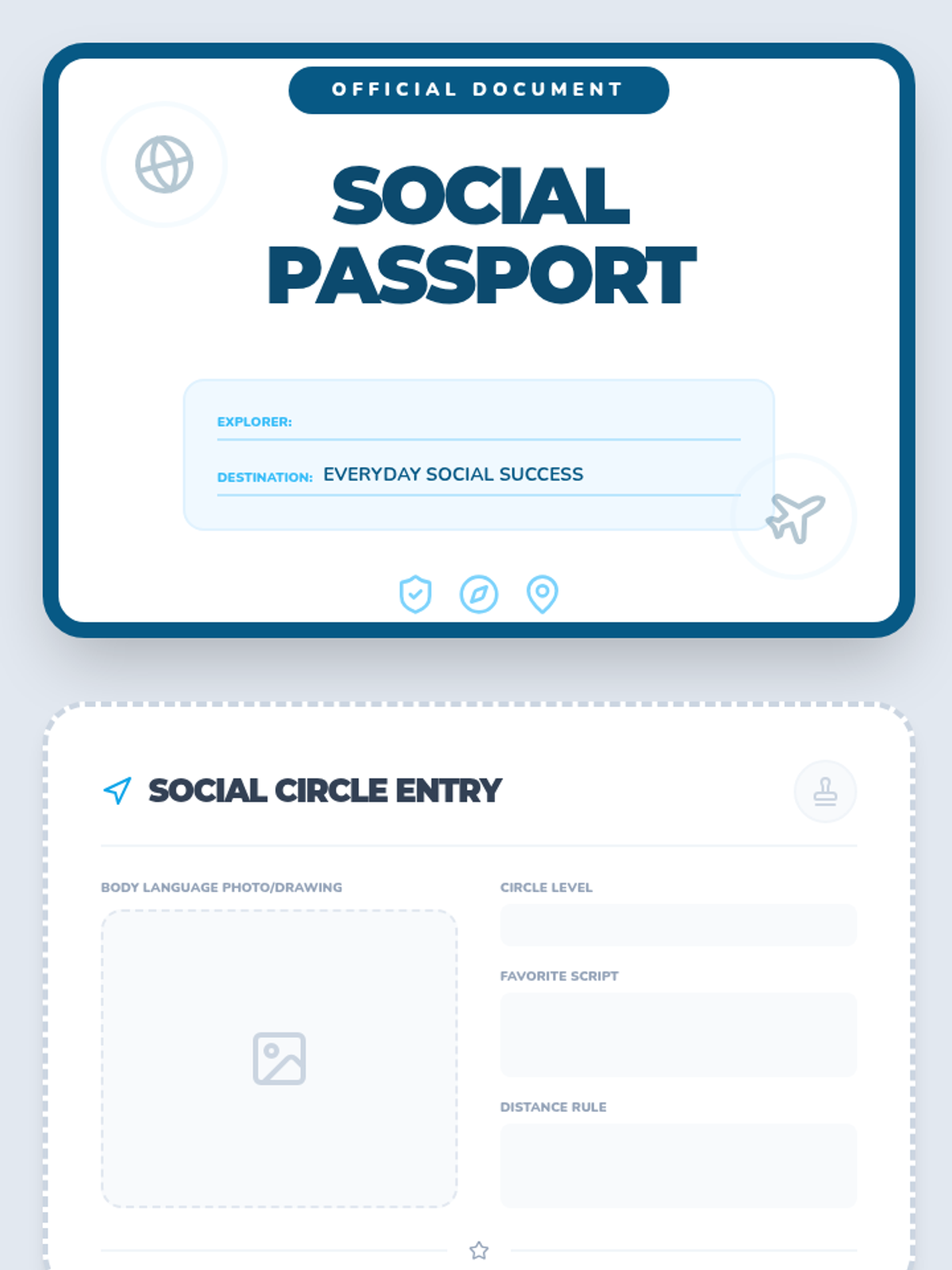
Students assemble their maps, scripts, and visual models into a portable 'Social Passport' booklet for daily reference and social navigation.
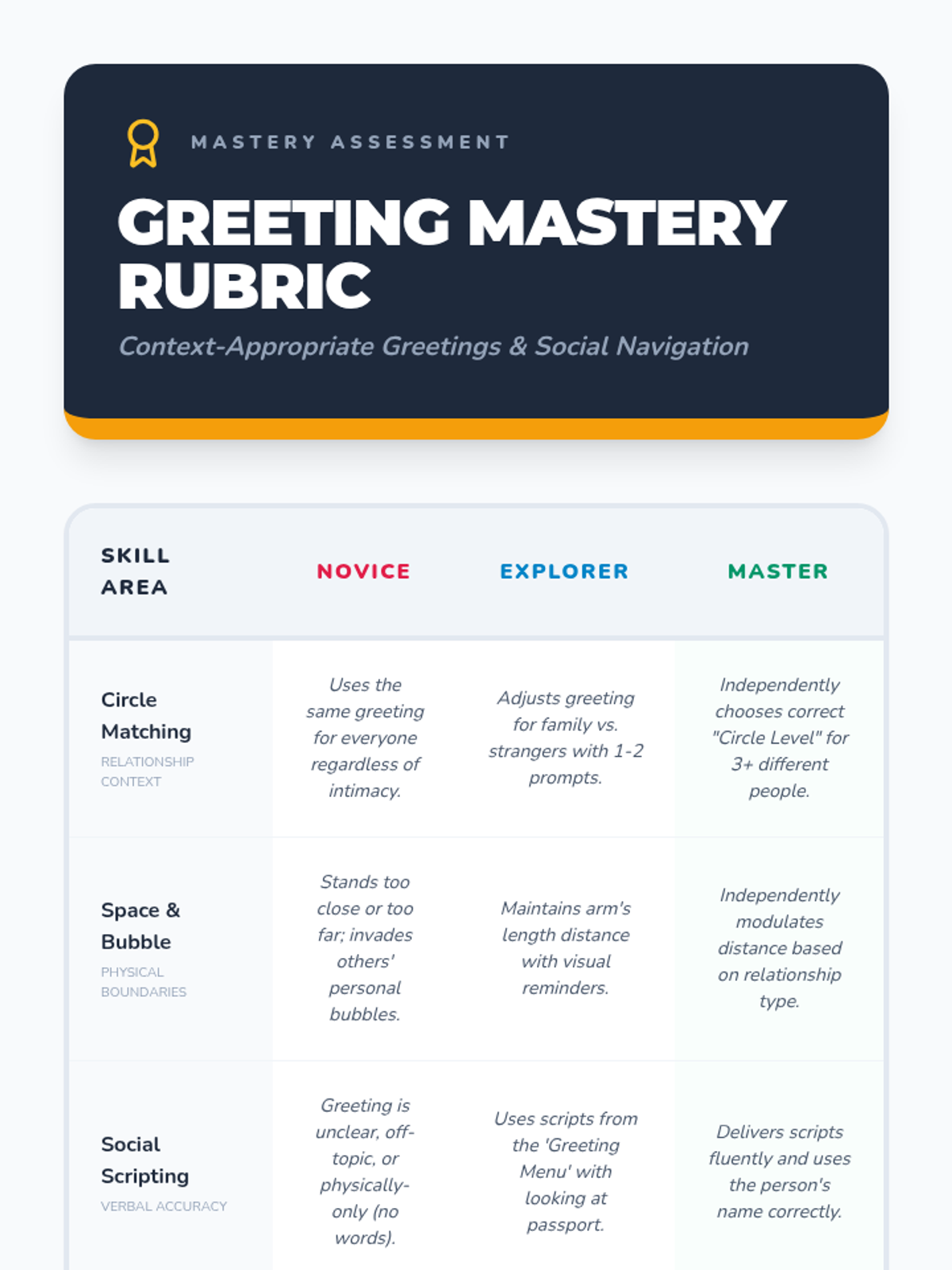
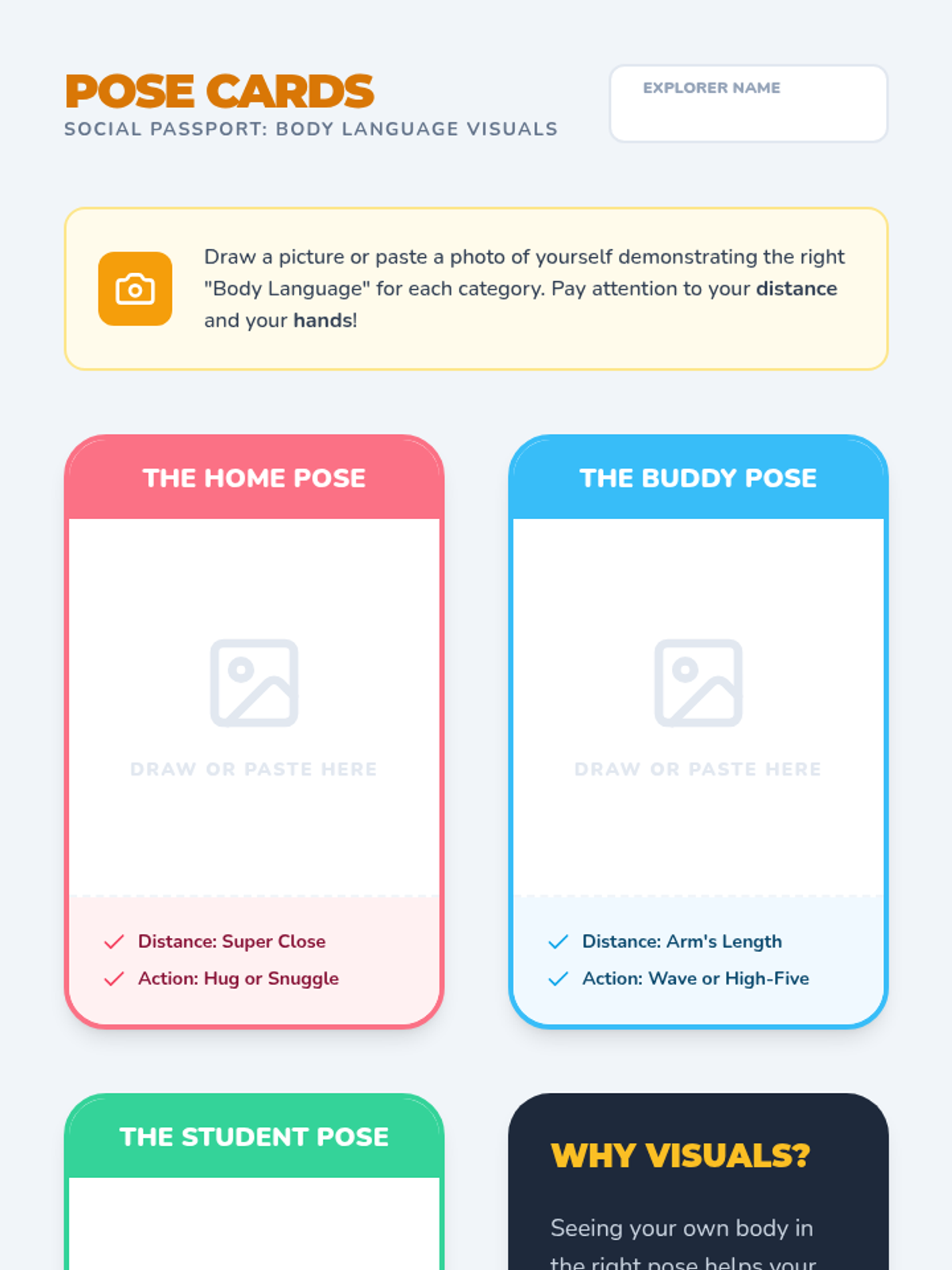
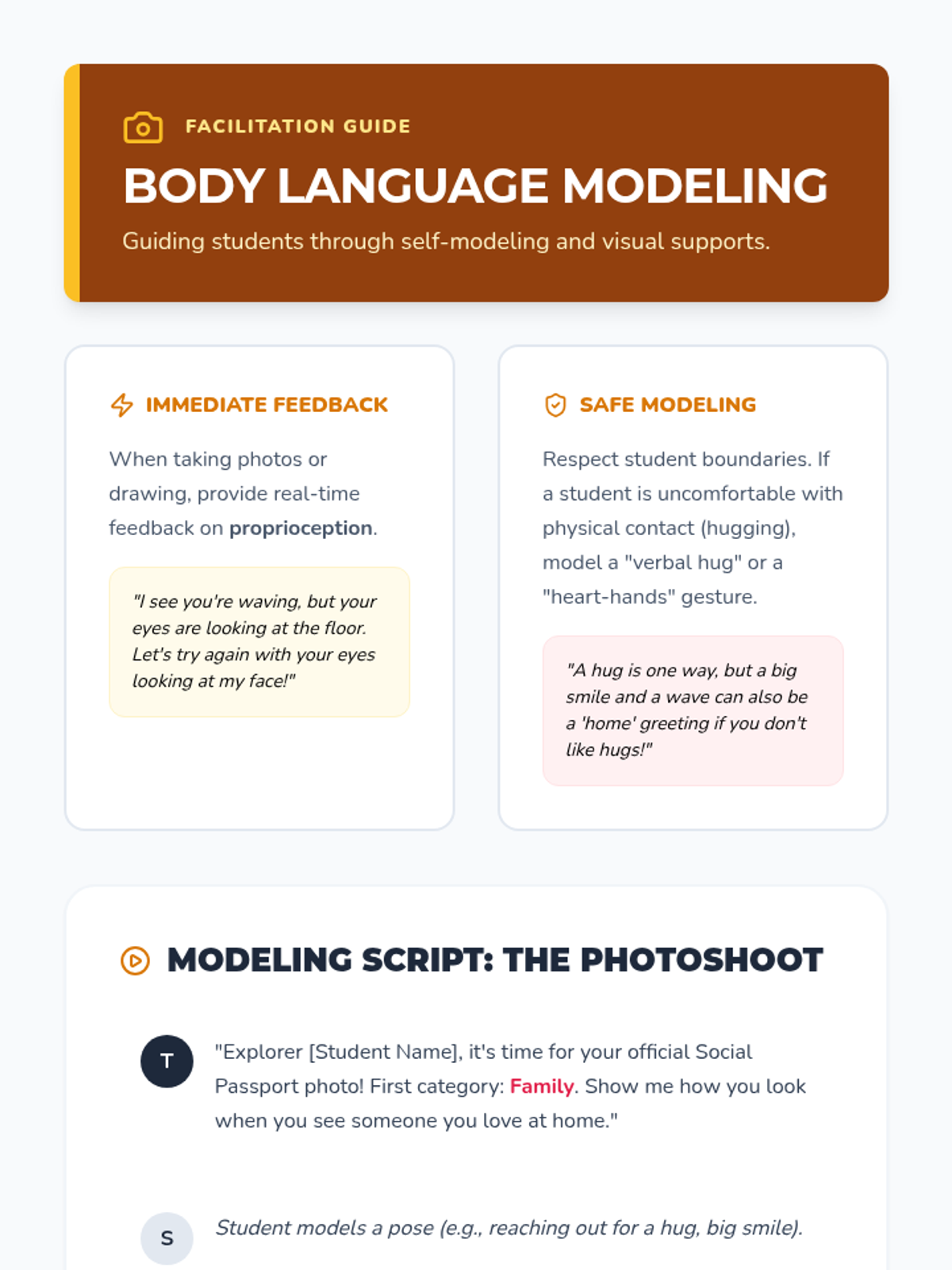
Focusing on non-verbal communication, students identify and model context-appropriate body language, personal space, and gestures for different greeting levels.
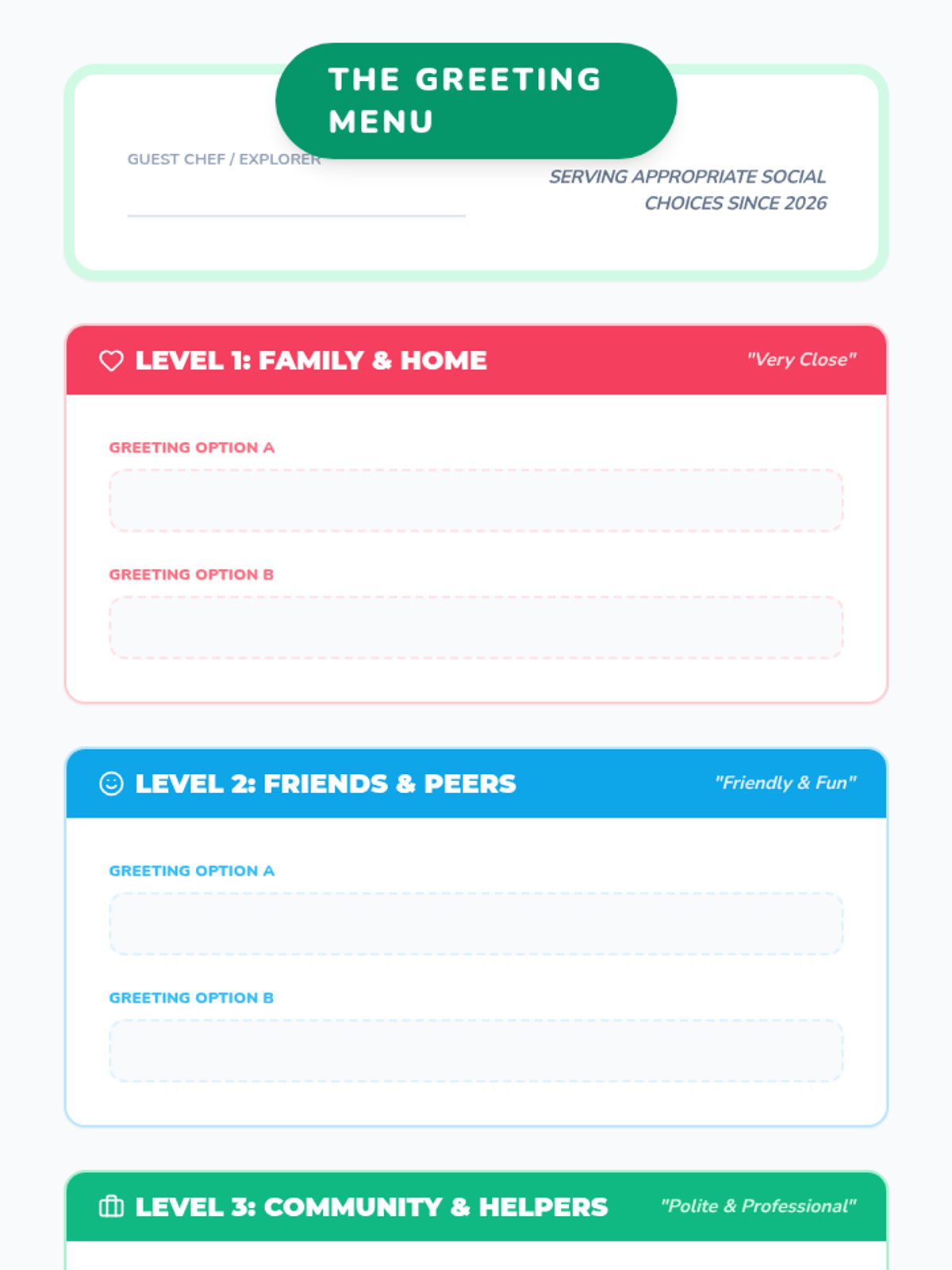
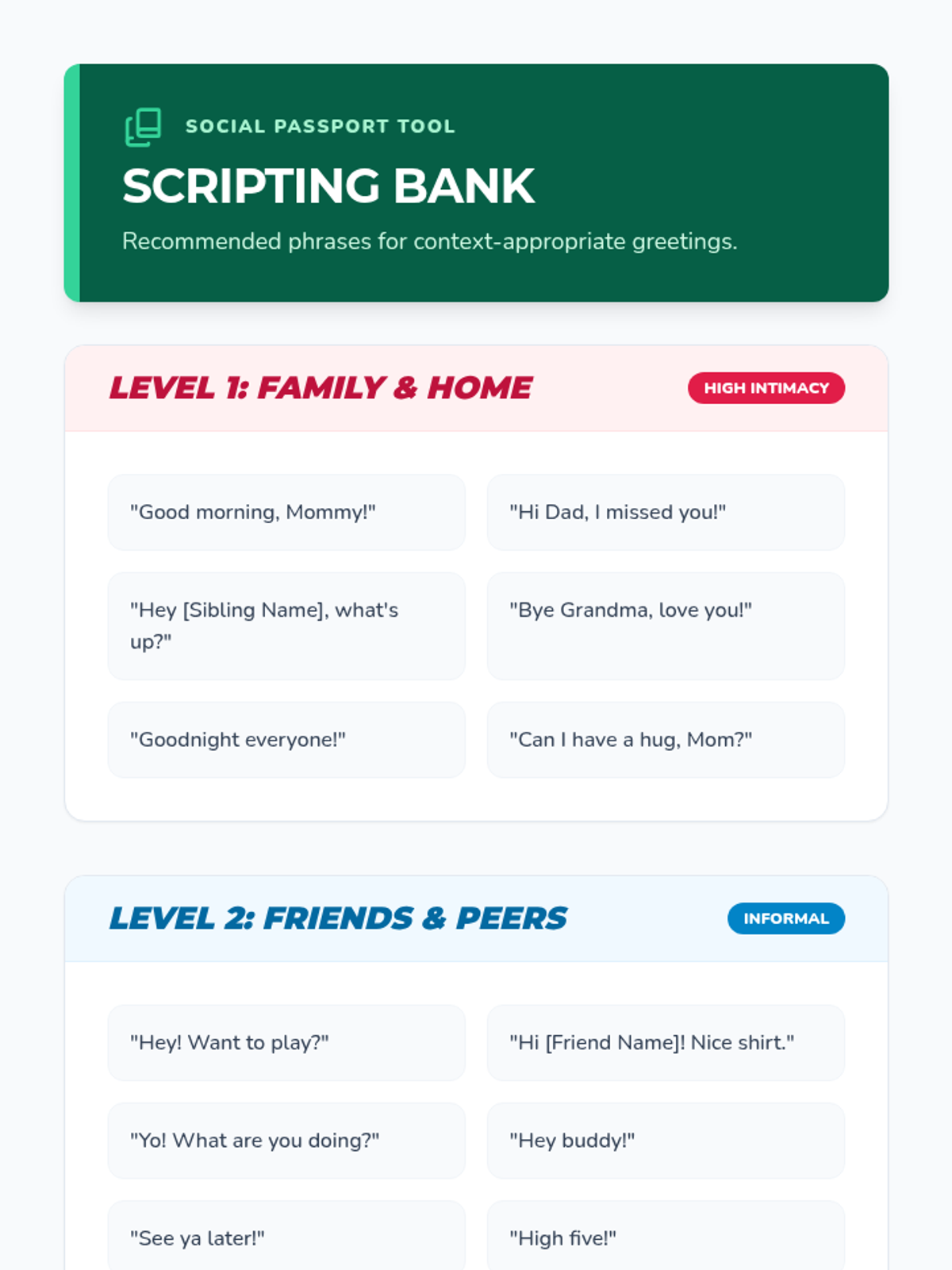
Students develop specific verbal greeting scripts tailored to each social circle, creating a 'menu' of choices for various social interactions.
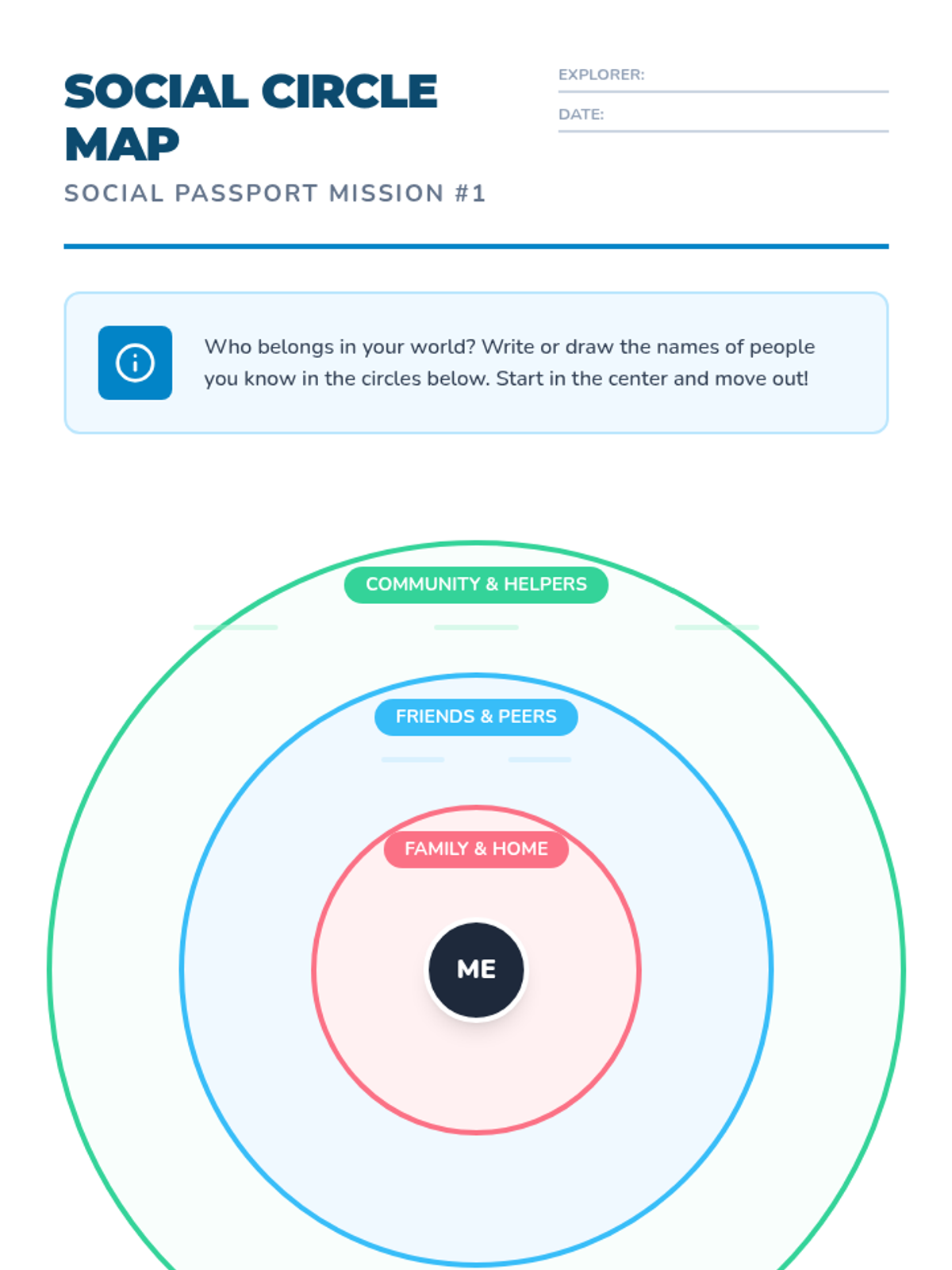
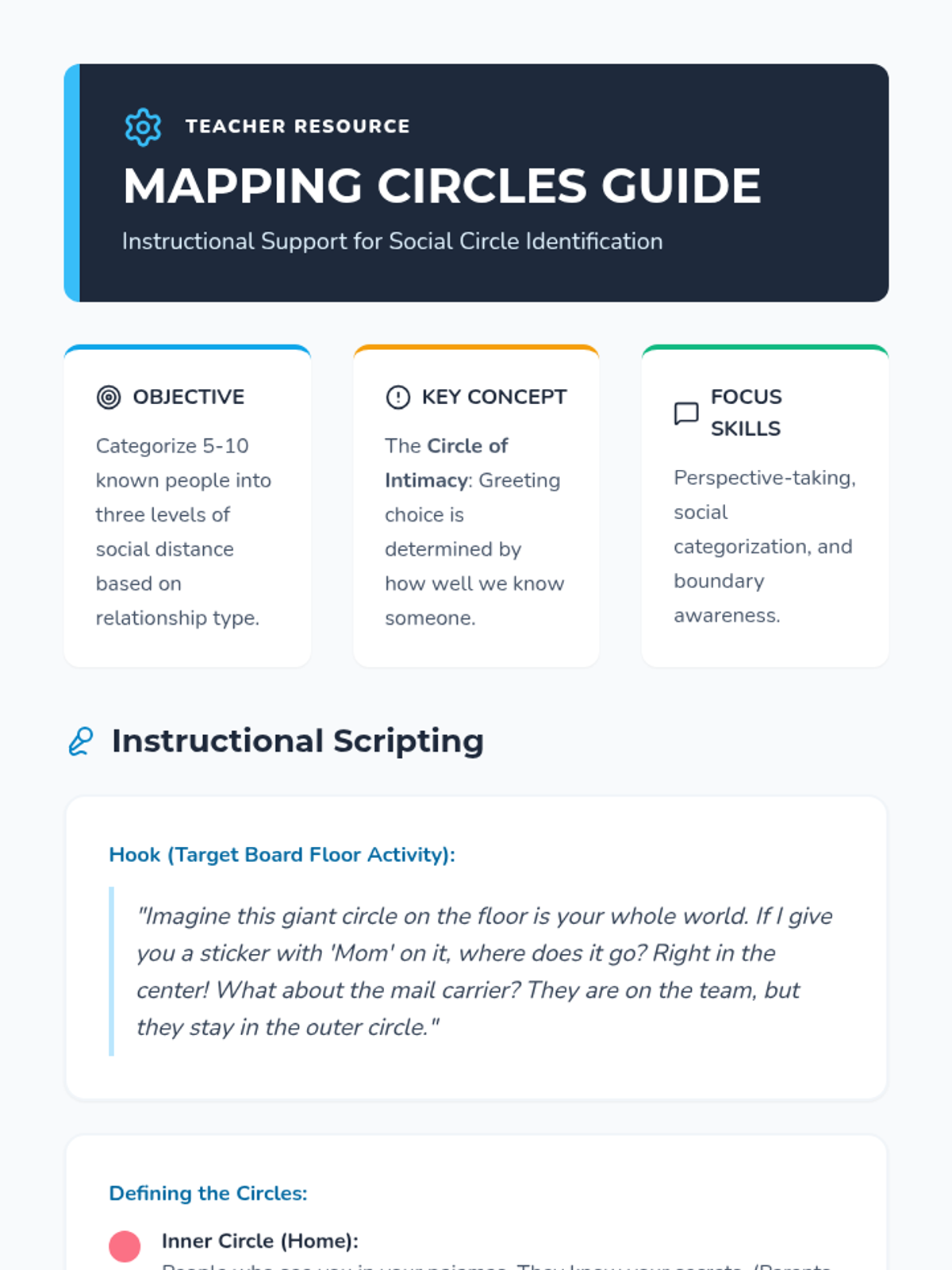
Students visualize their social relationships using concentric circles to categorize family, friends, and community members, setting the stage for differentiated greetings.
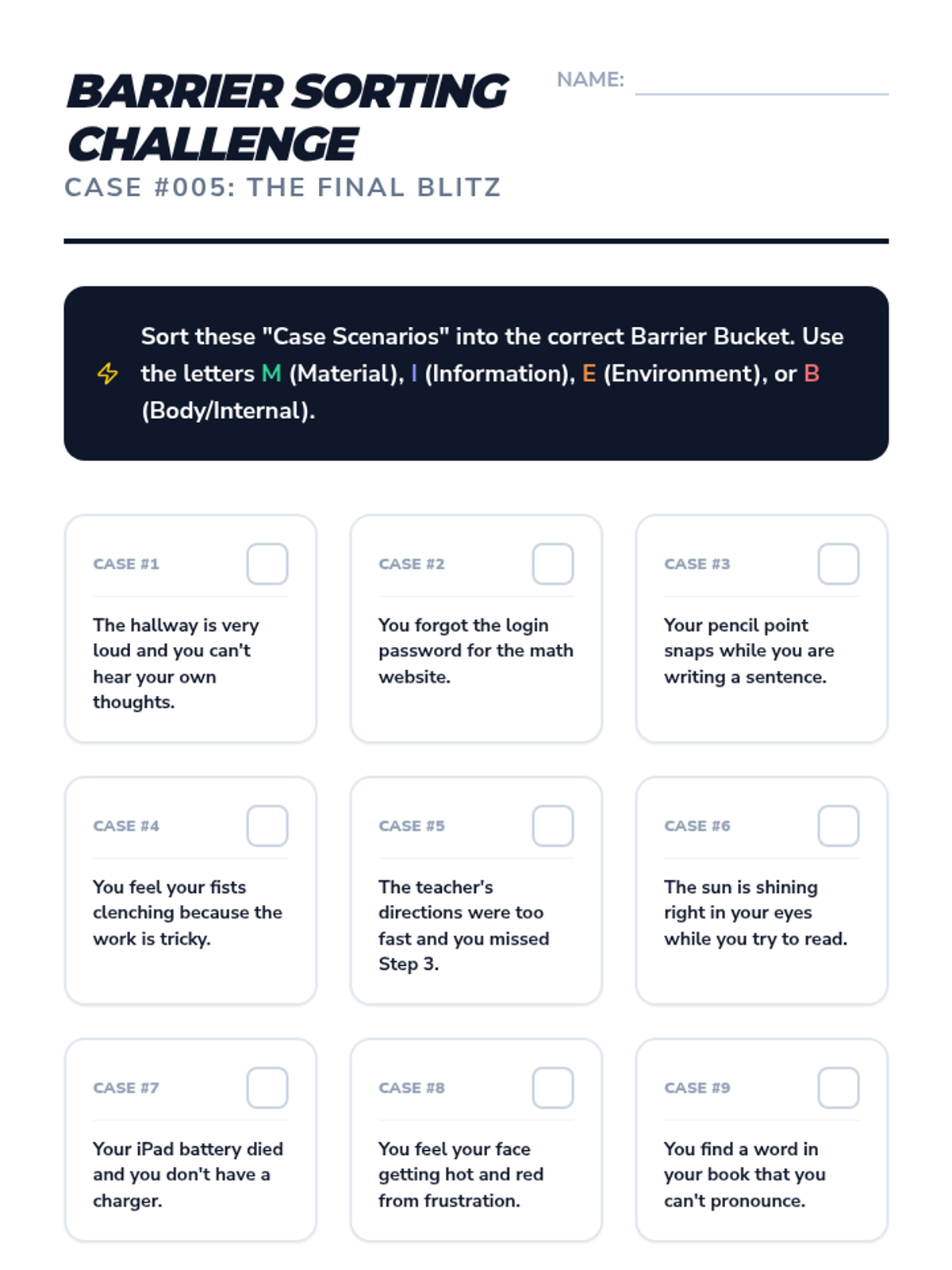
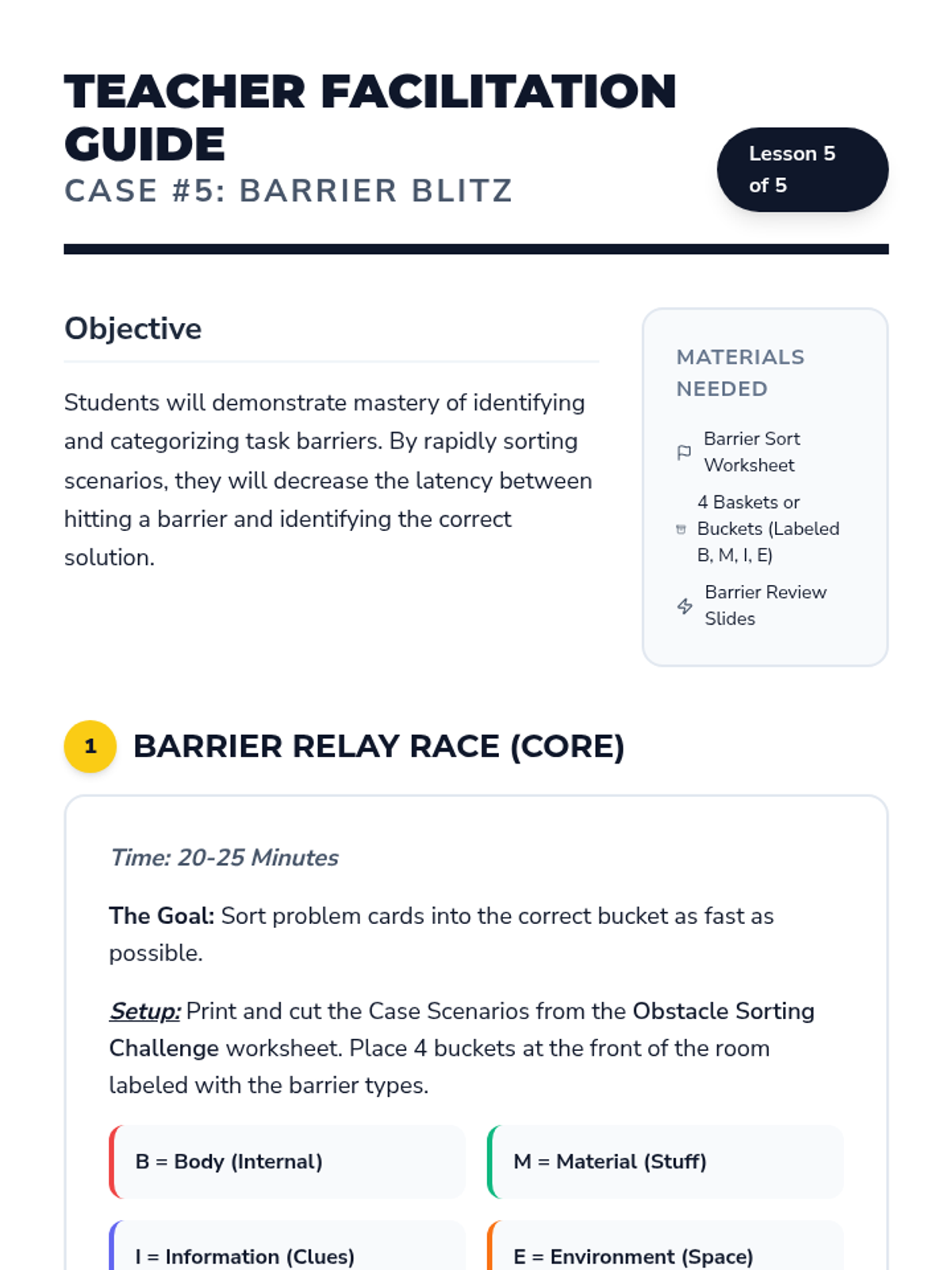
A culminating lesson where students rapidly sort various scenarios into barrier categories to reduce the time between hitting a wall and identifying the solution.
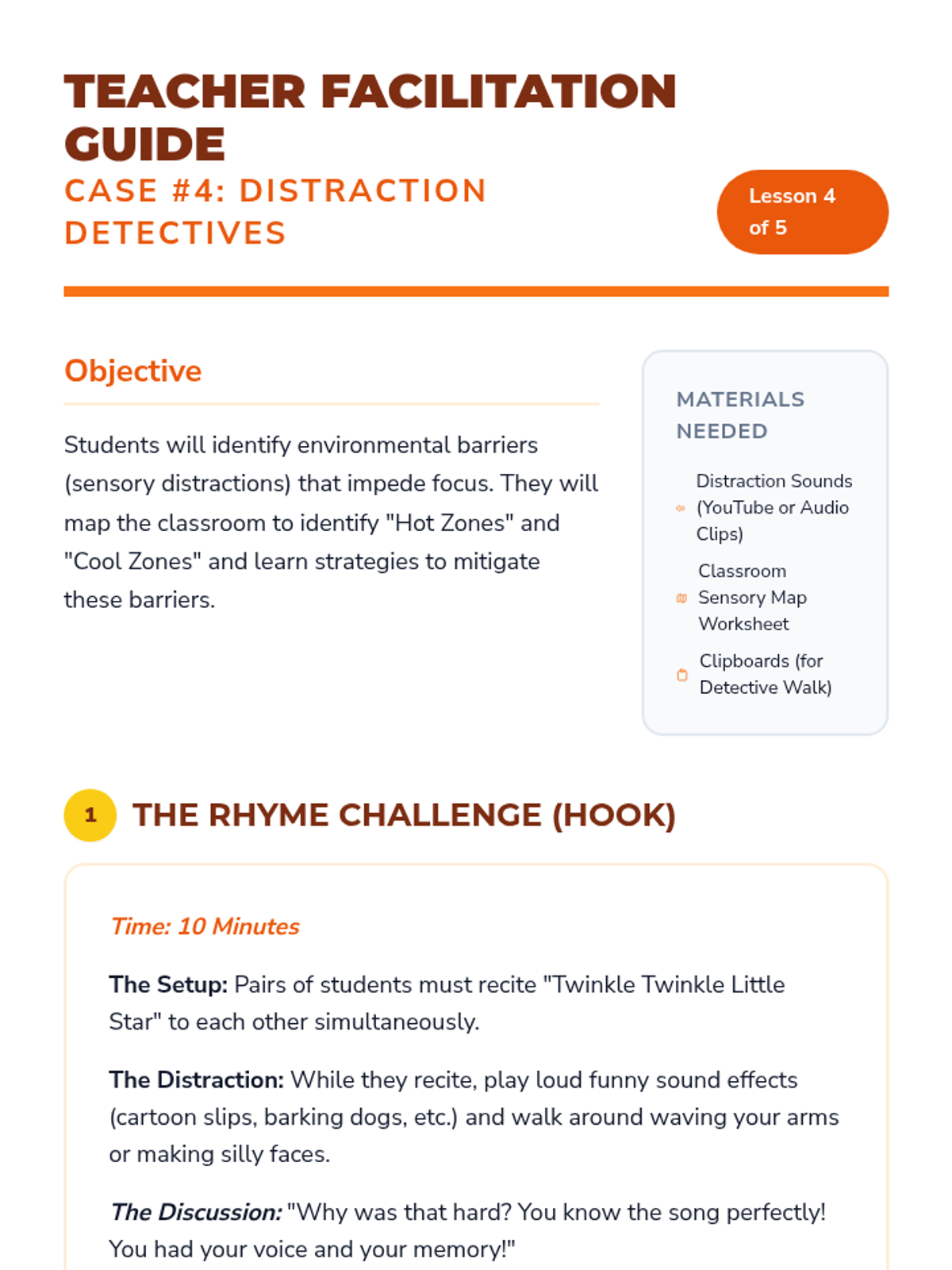
Investigates sensory and environmental barriers like noise or clutter, conducting a 'detective walk' to identify classroom distractions.
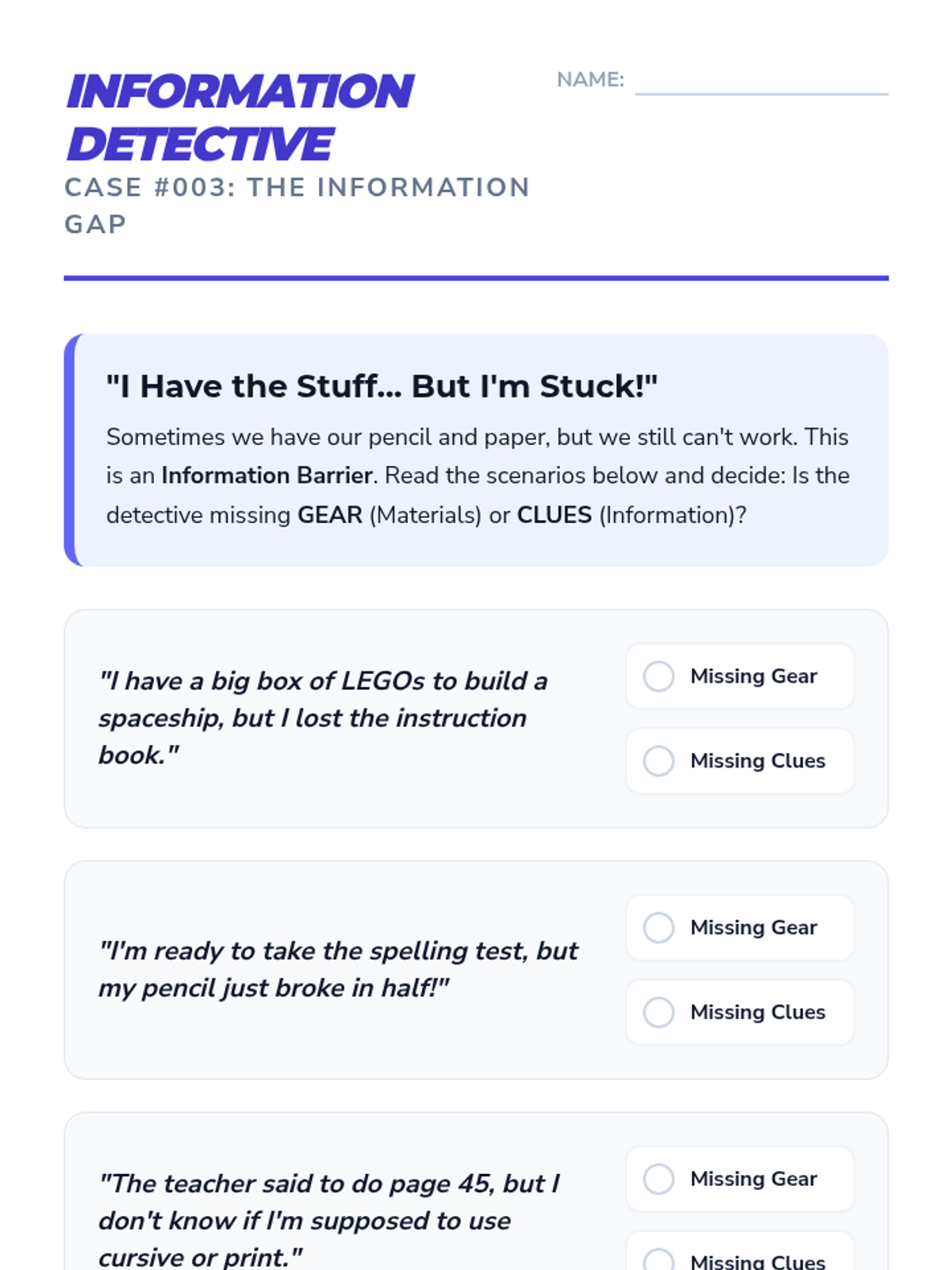
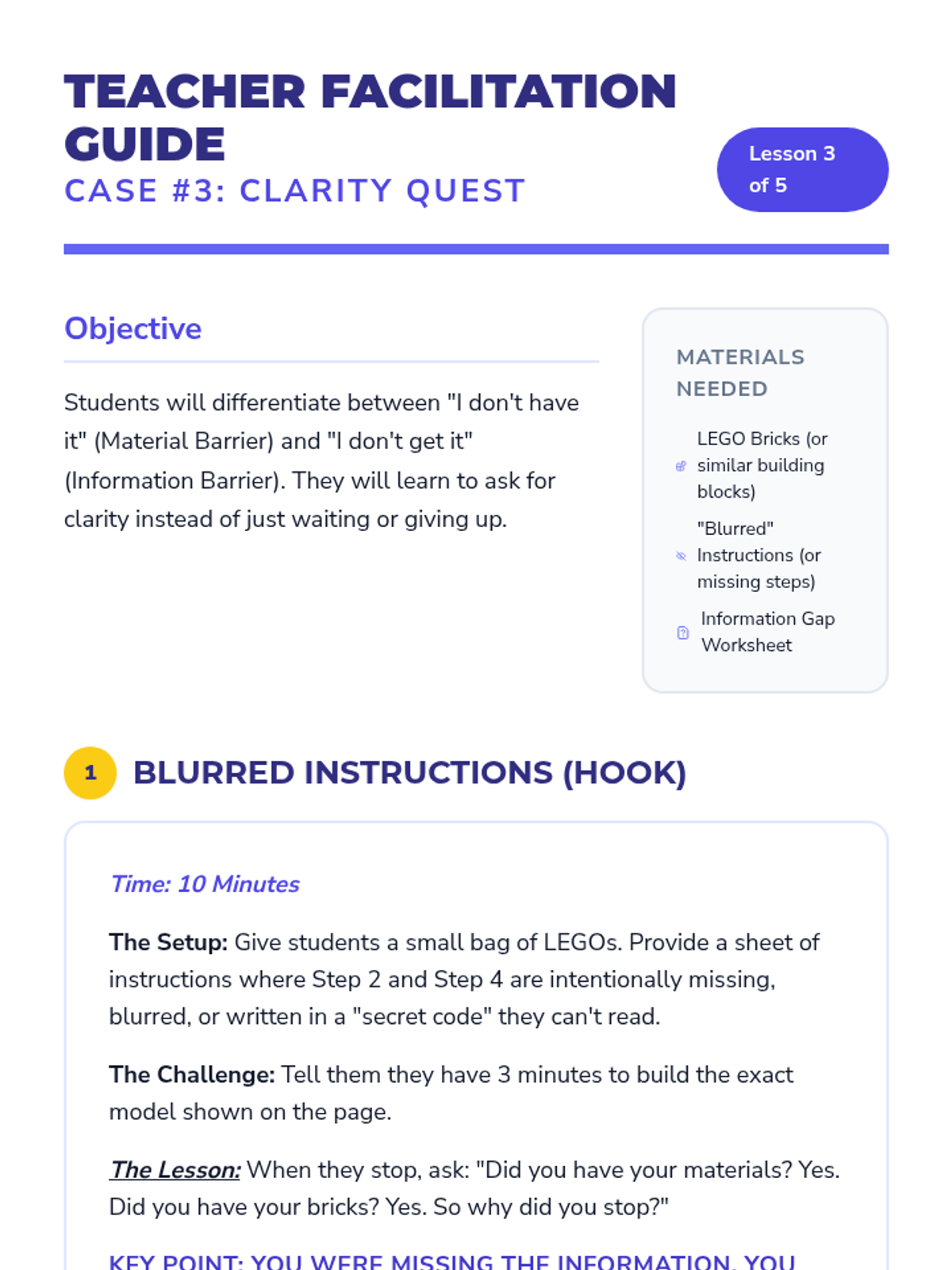
Teaches students to recognize when they are stuck due to a lack of clarity or understanding, differentiating between 'I don't have it' and 'I don't get it.'
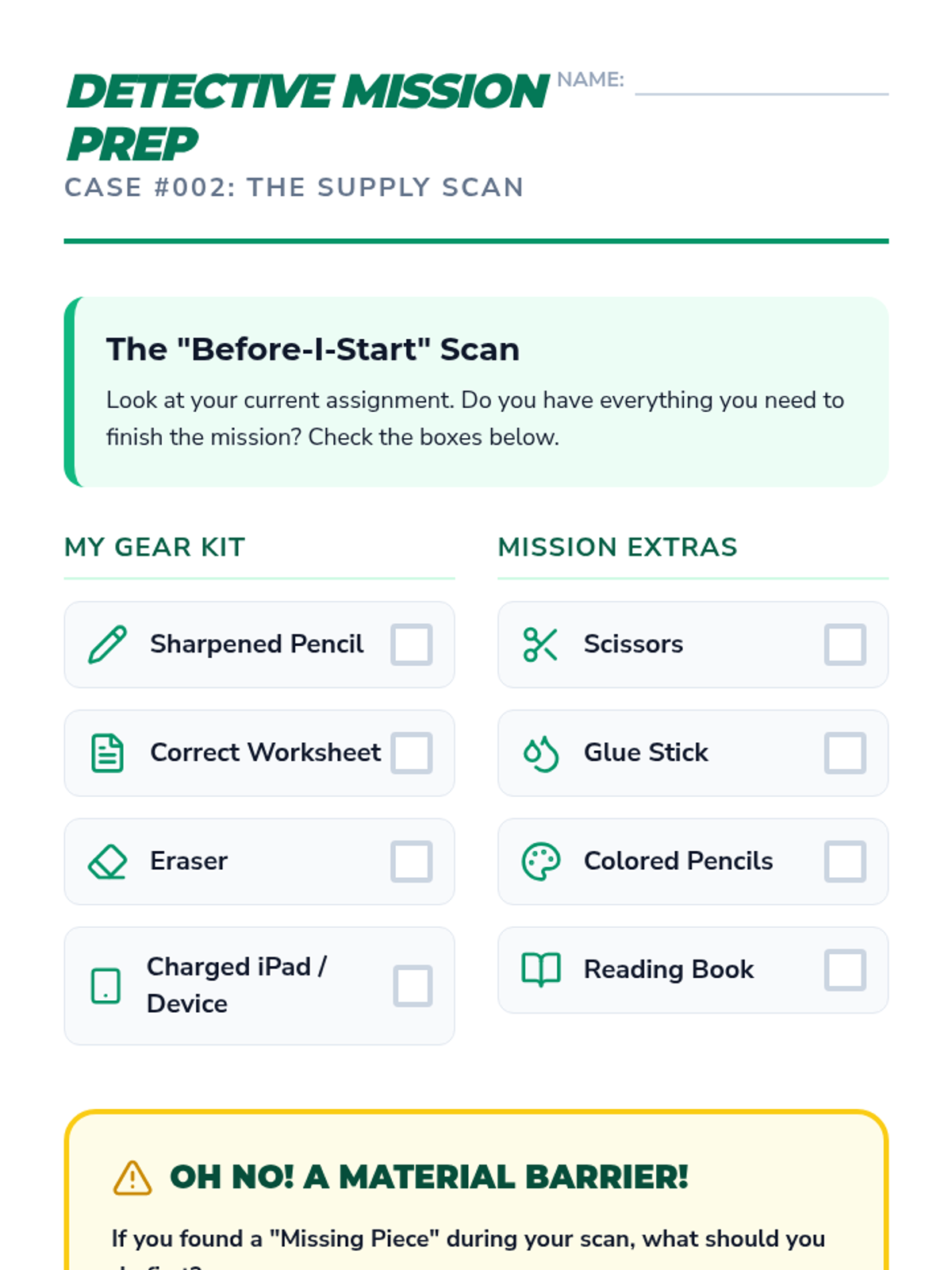
Focuses on tangible obstacles like broken tools or missing materials, teaching students to perform a 'supply scan' to identify what is physically missing.
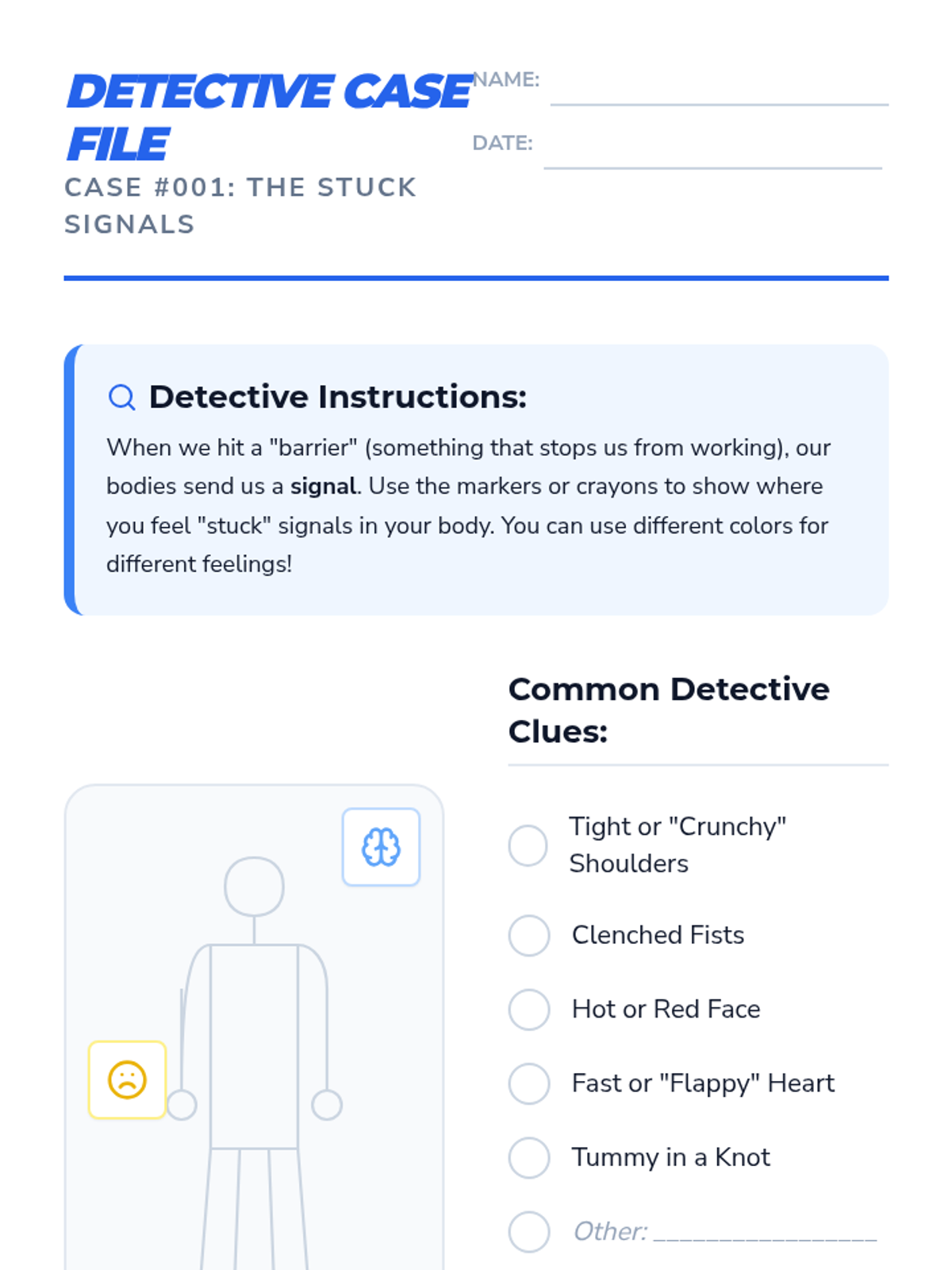
Students explore the physical and emotional sensations associated with hitting a task barrier, identifying what frustration feels like to recognize the moment they need to stop.
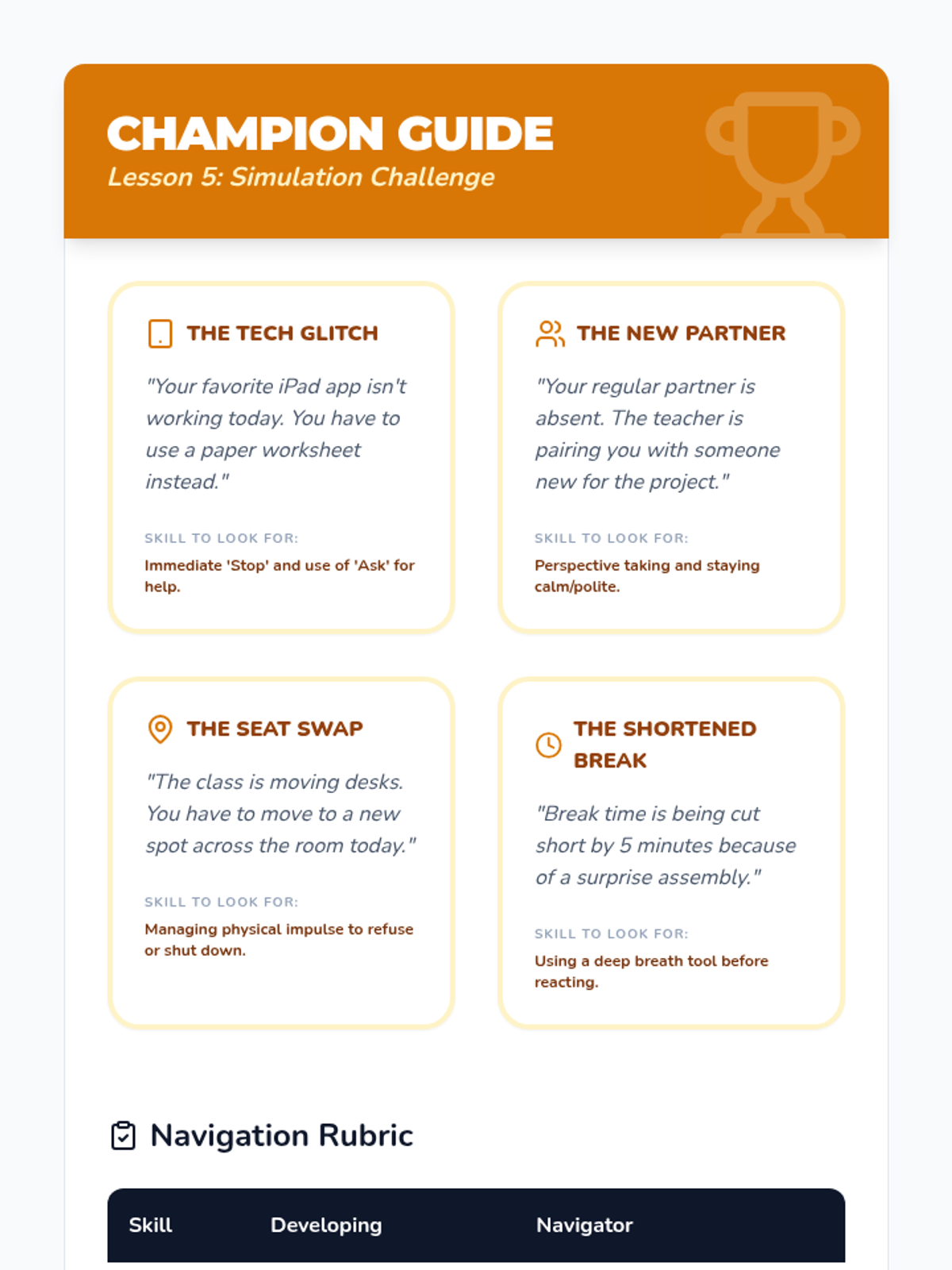
Students participate in simulations using 'Challenge Cards' to apply their coping skills and the 'Stop, Breathe, Ask' routine. Peer feedback reinforces positive adaptation strategies.
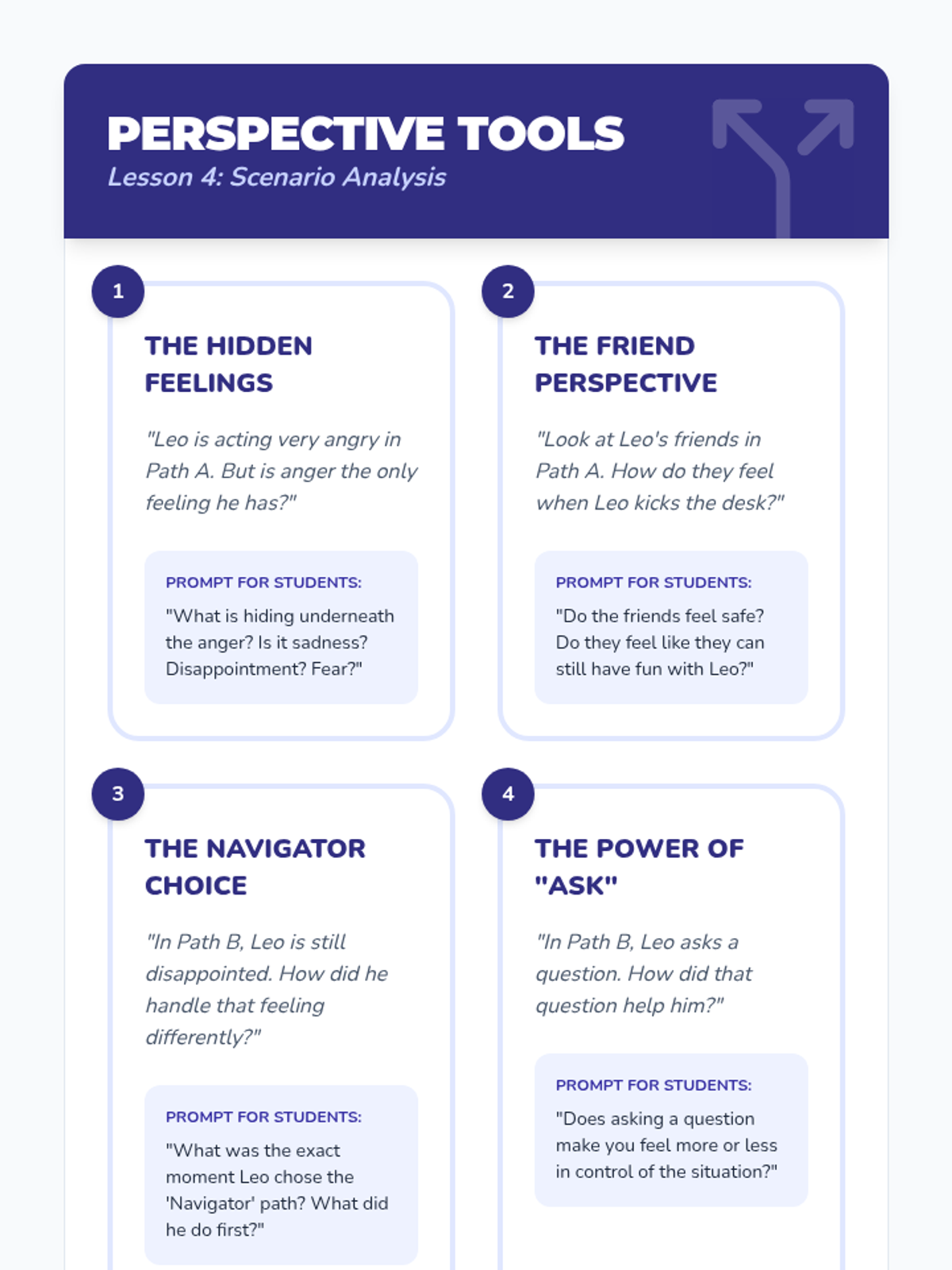
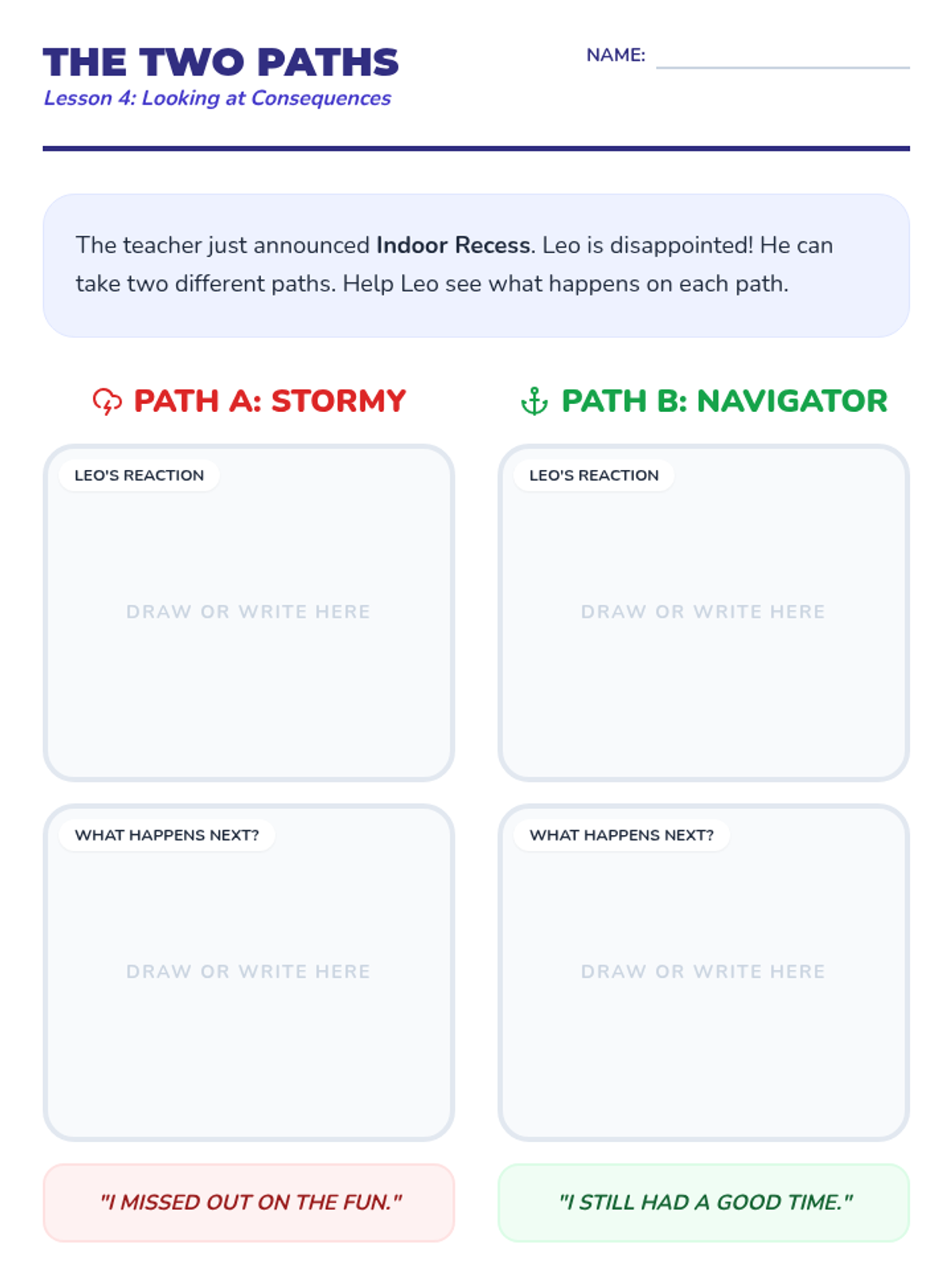
Using the 'Rainy Recess' scenario, students analyze different reactions to plan changes. They map out the consequences of various responses to build perspective-taking skills.
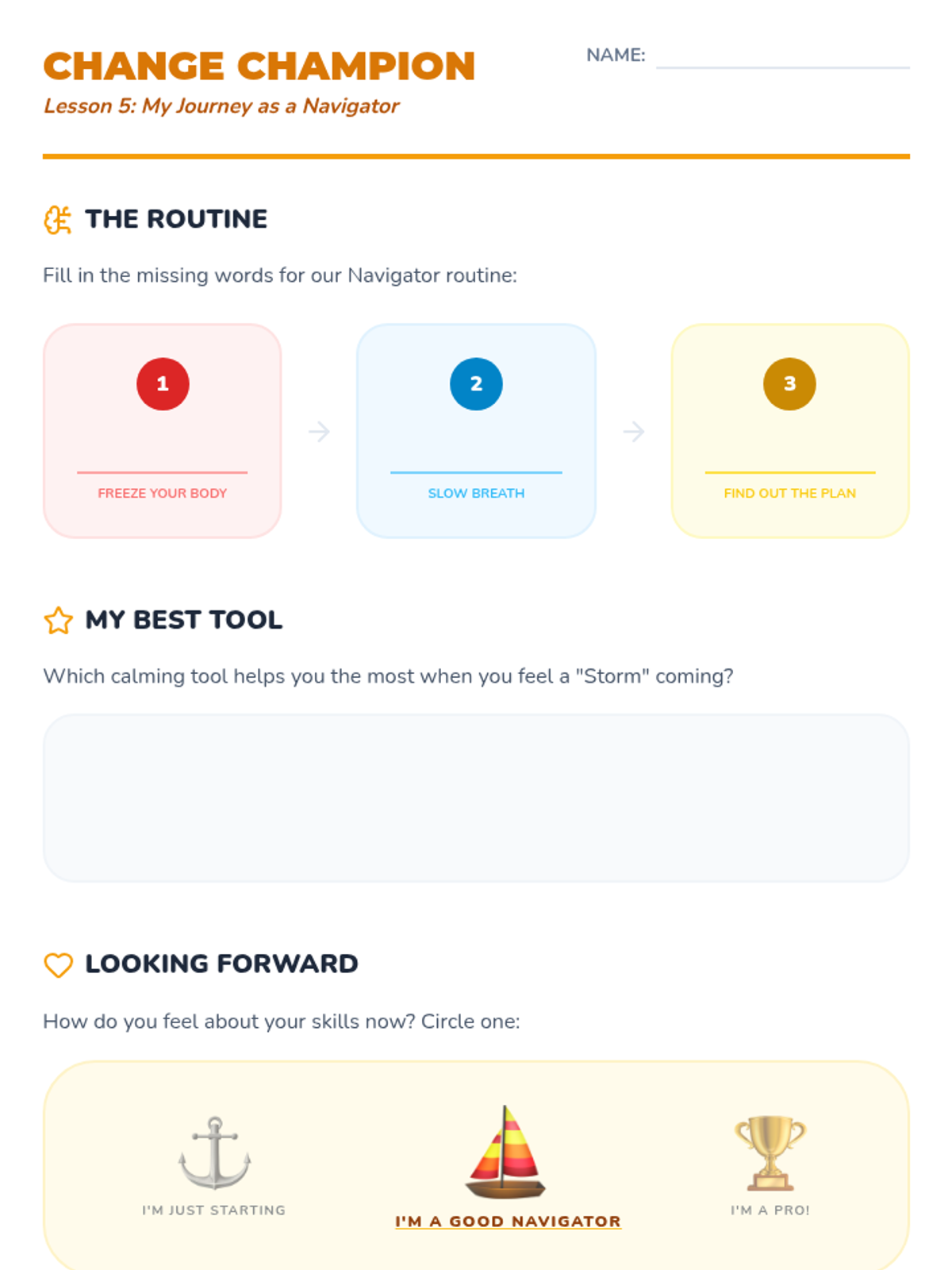
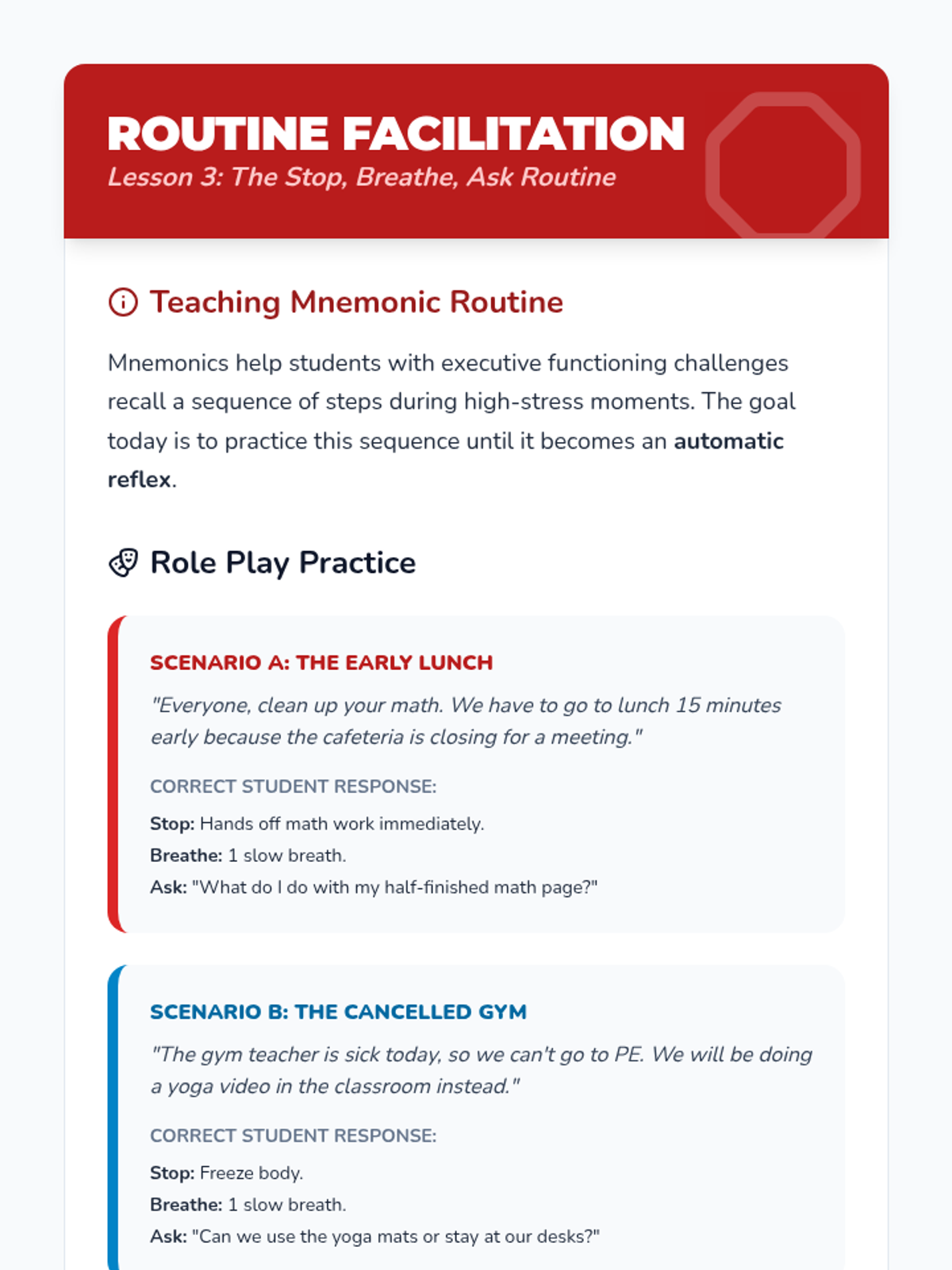
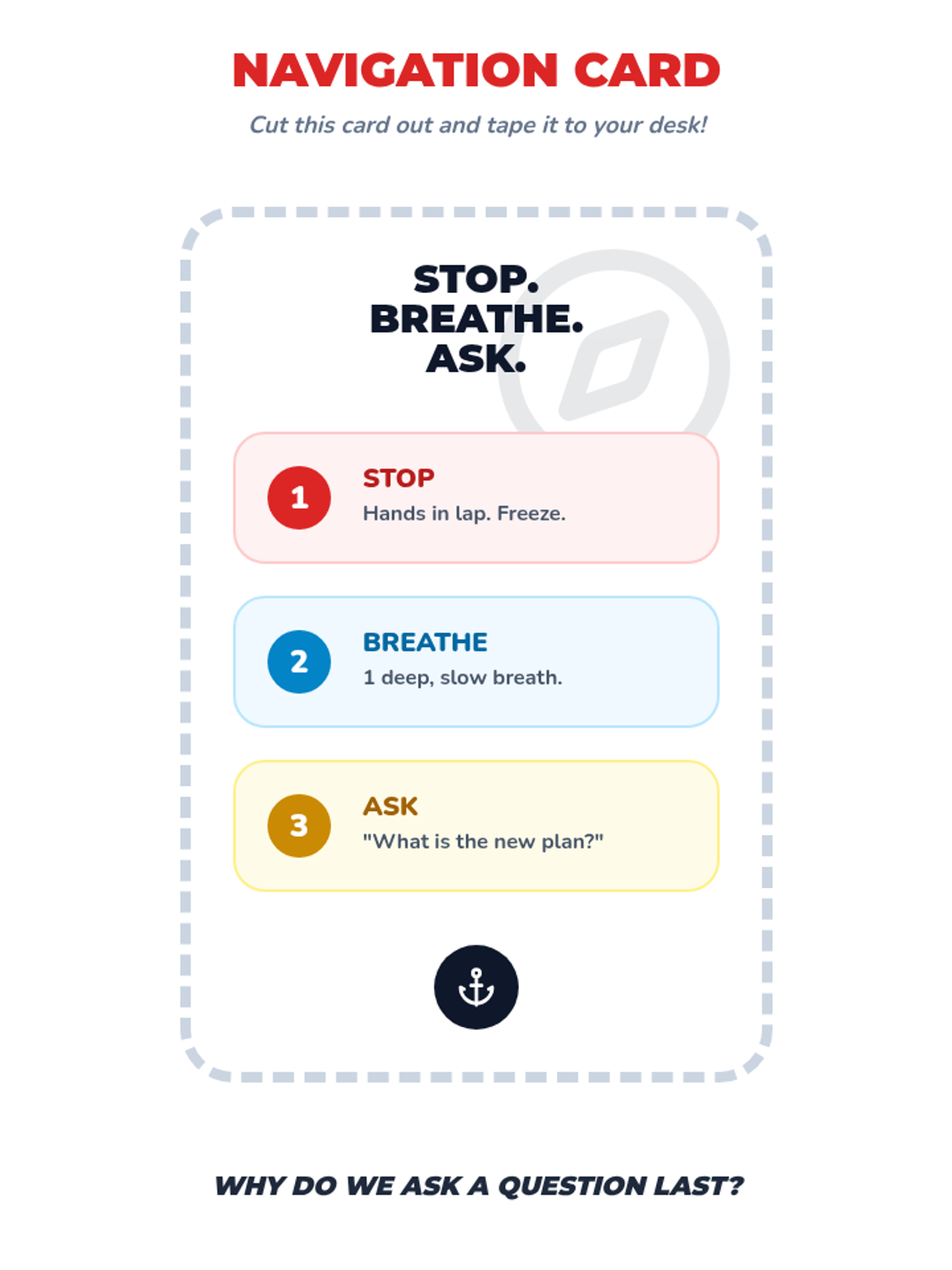
Students learn a three-step mnemonic routine (Stop, Breathe, Ask) to use when changes occur. Role-playing helps internalize the sequence of pausing, breathing, and clarifying the new plan.
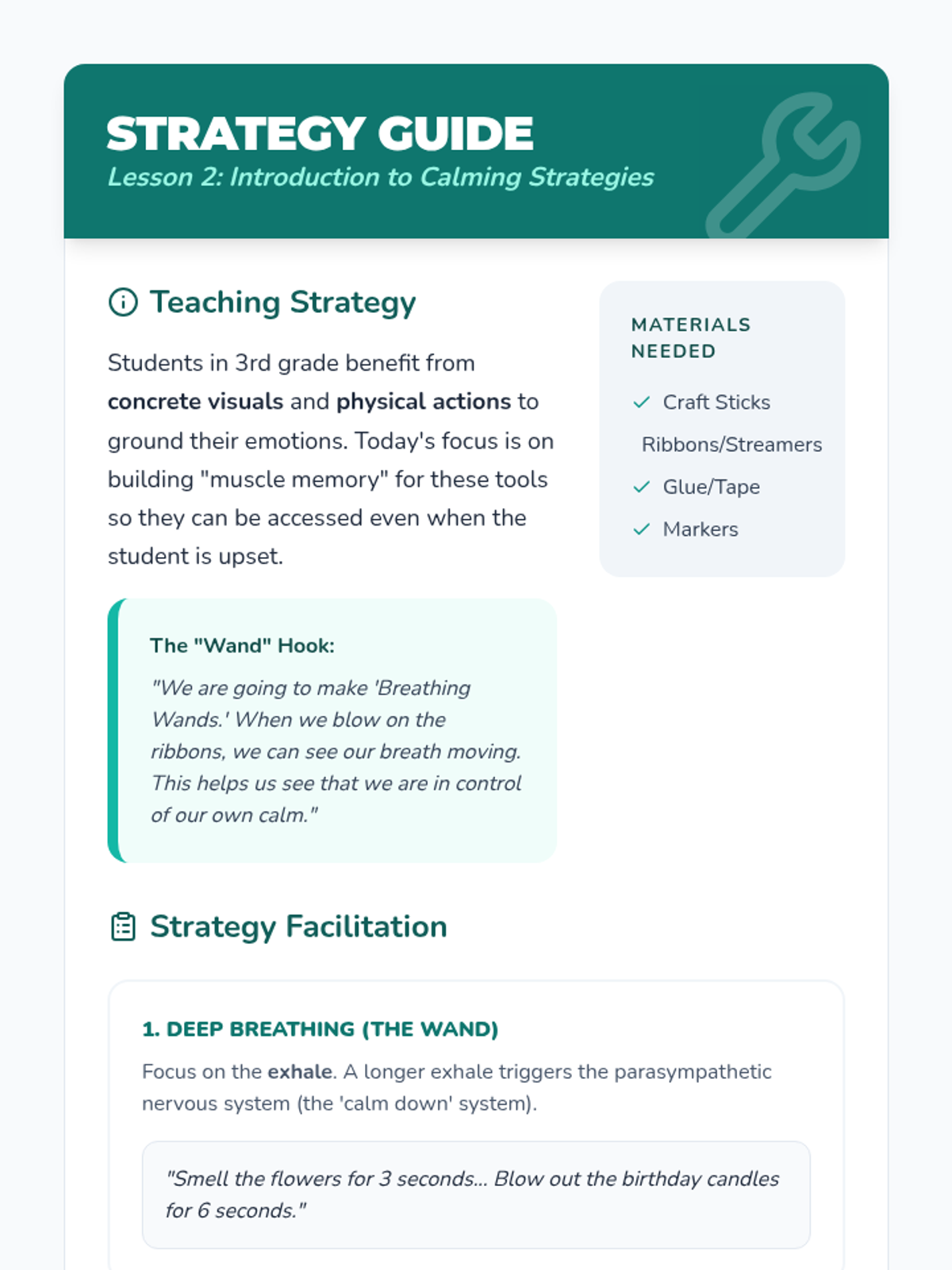
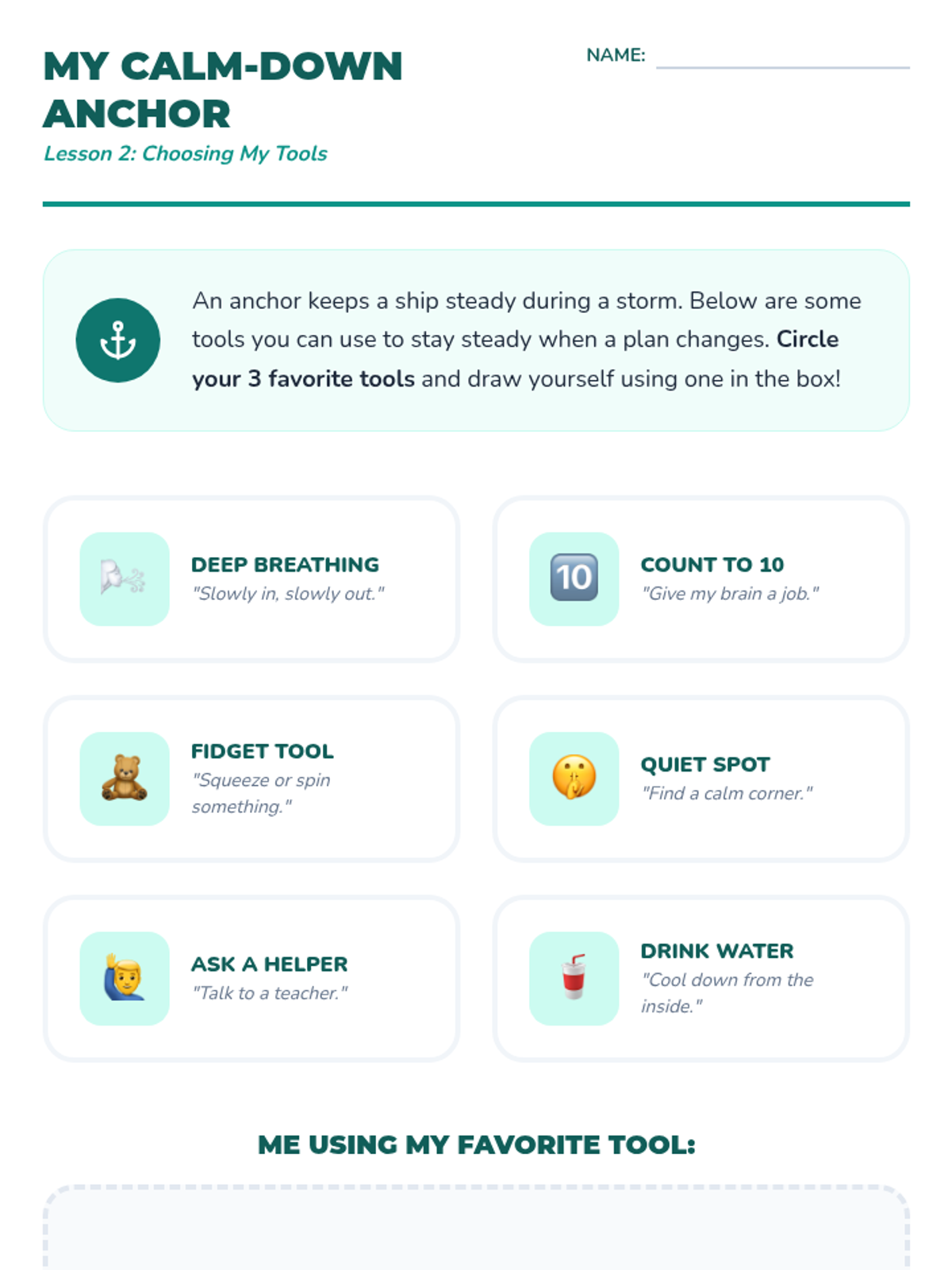
Introduces concrete coping mechanisms like deep breathing and counting to ten. Students build a 'toolbox' of strategies to access when they feel dysregulated.
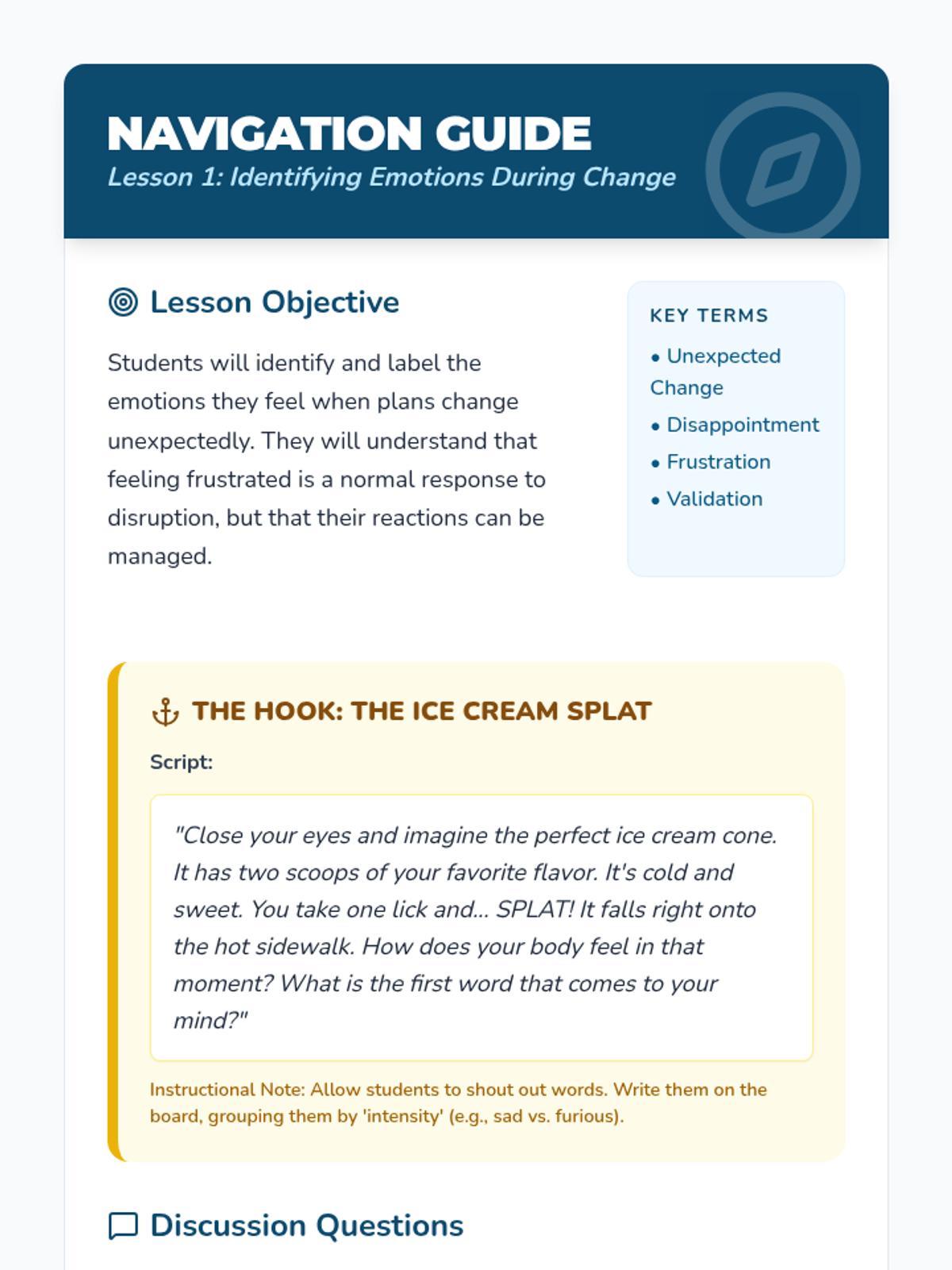
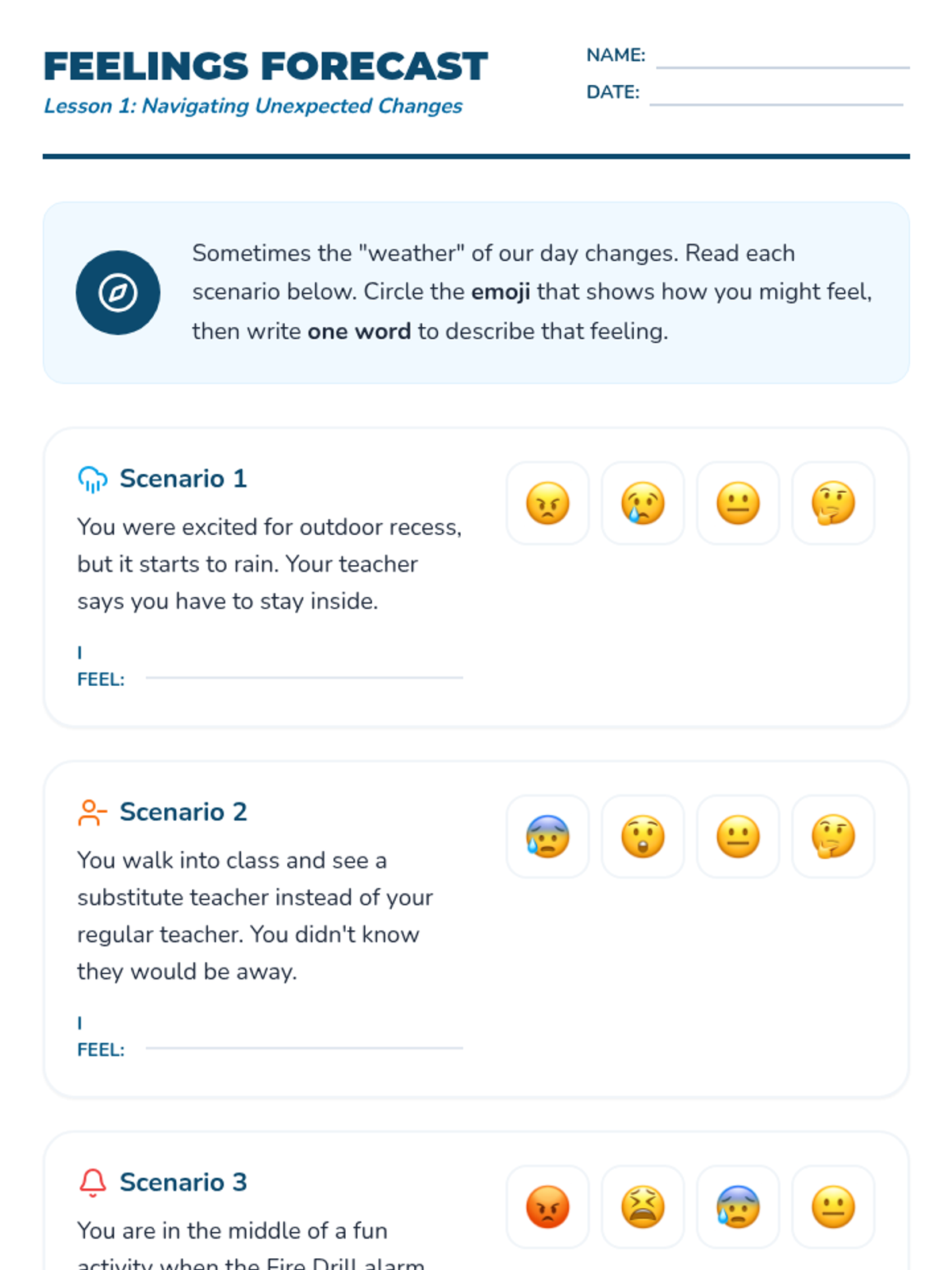
Students explore the range of emotions felt when plans are disrupted and build emotional vocabulary. The lesson validates that feeling frustrated is normal while teaching that reactions can be managed.
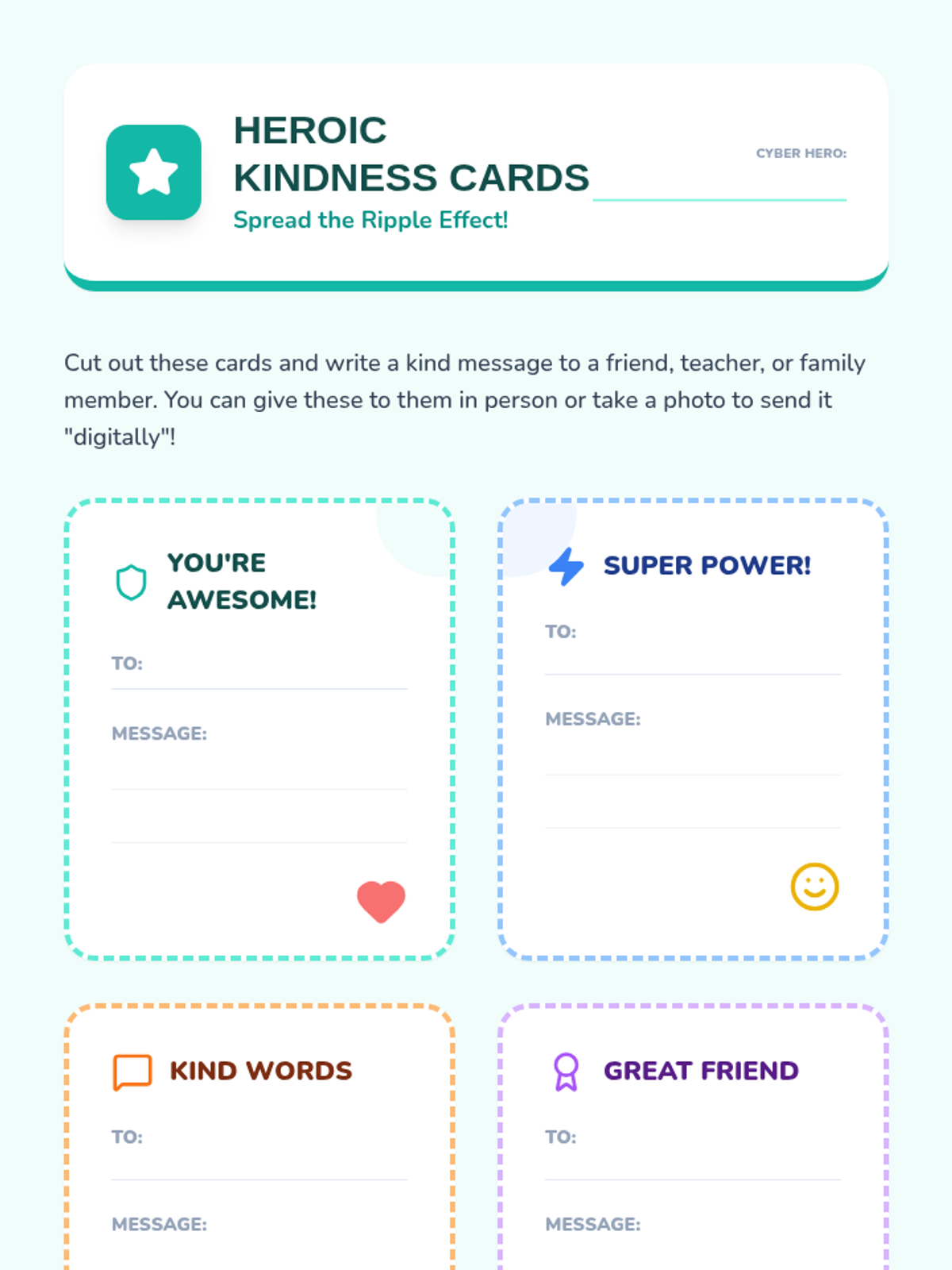
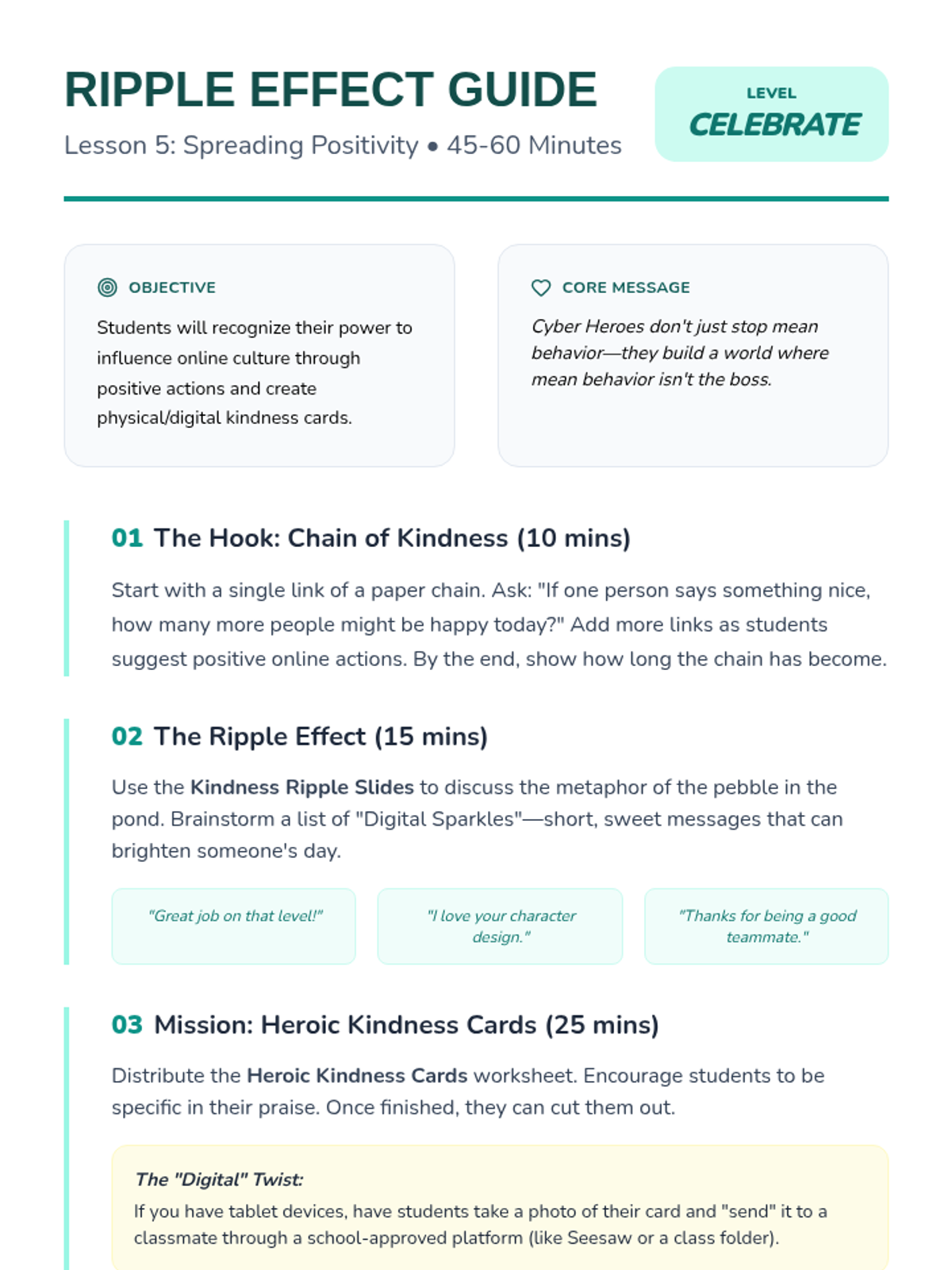
The sequence concludes with a positive project where students create digital kindness cards to promote a culture of positivity and prevent bullying.
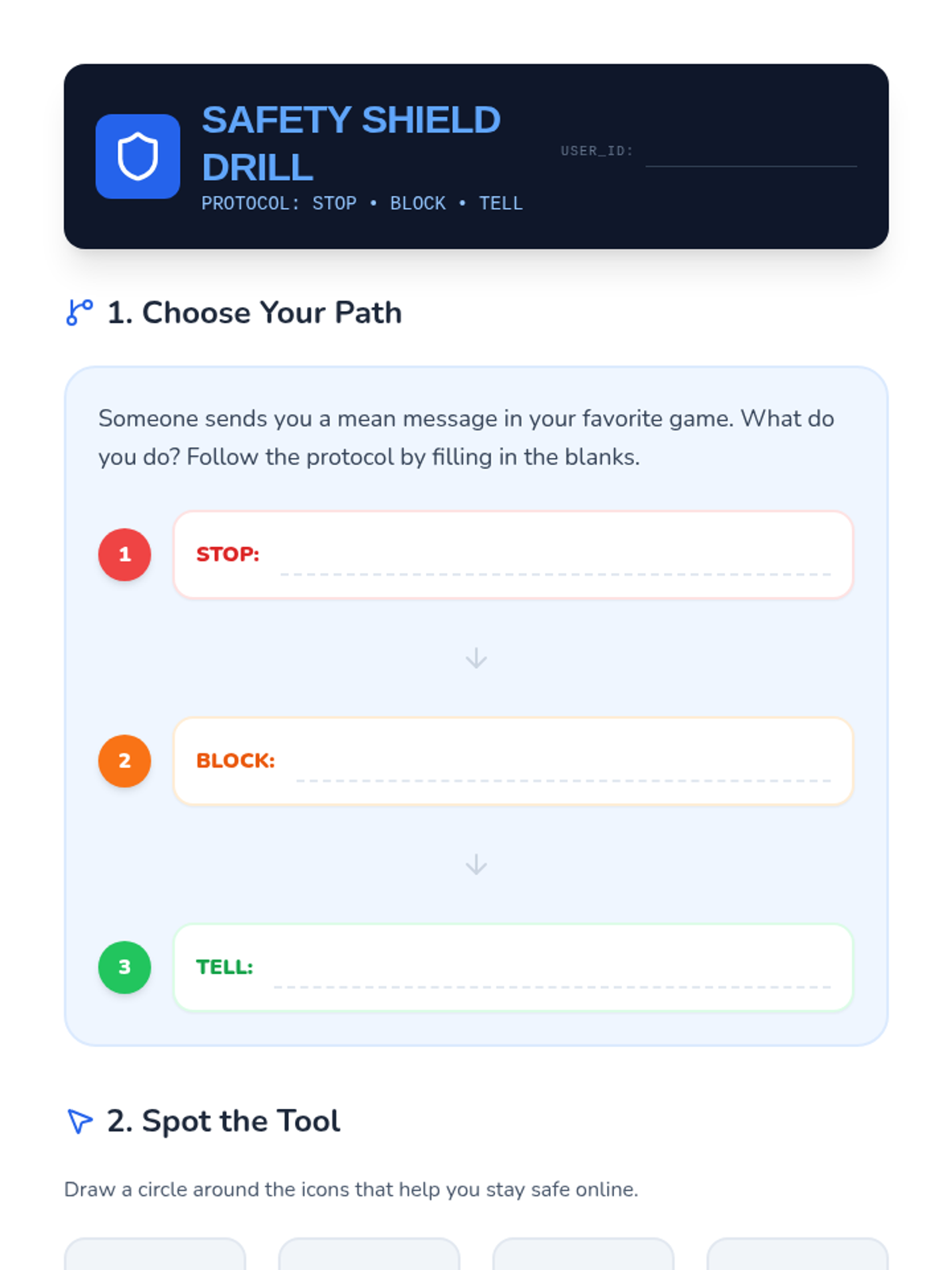
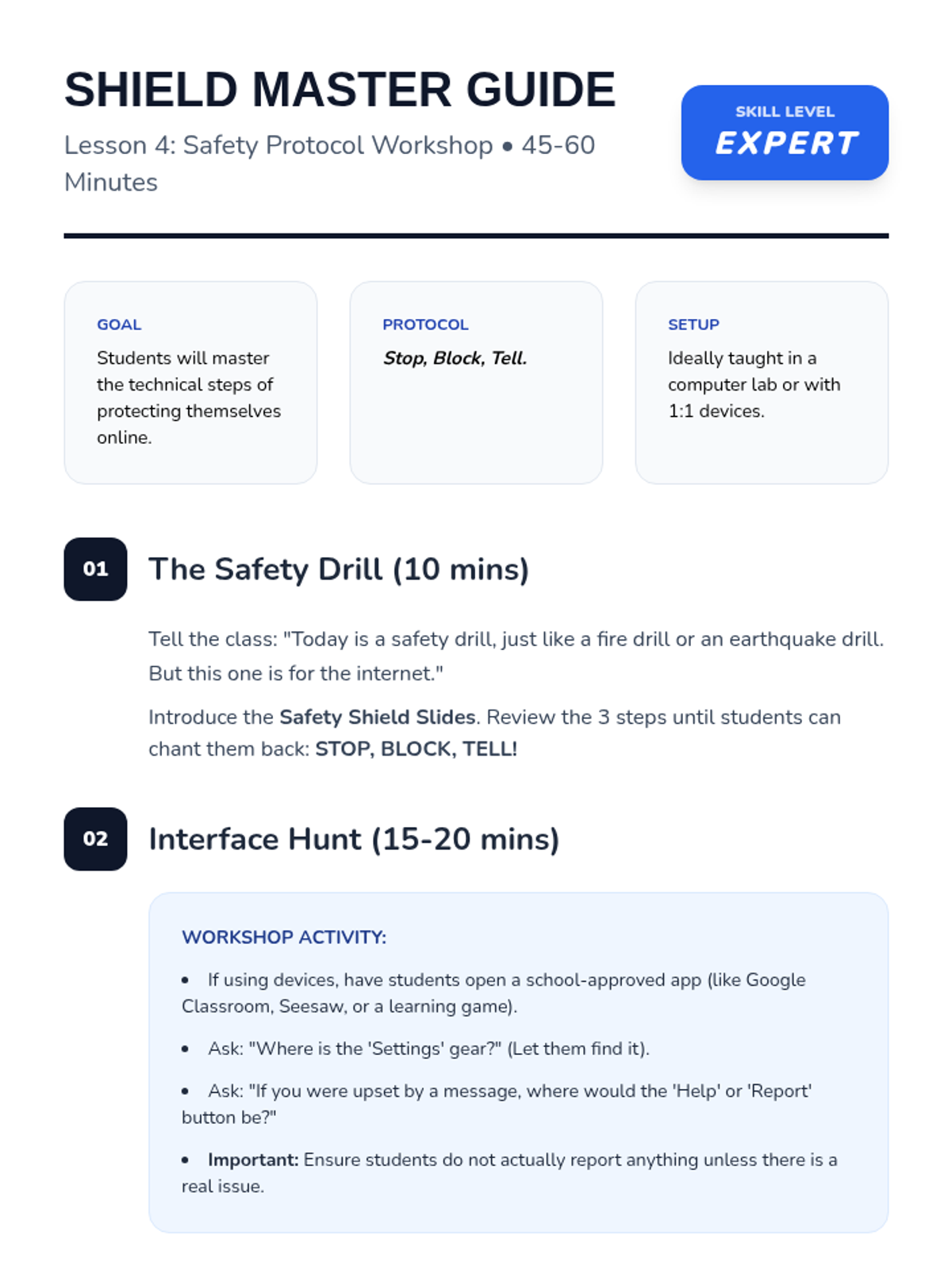
A practical skills workshop where students master the 'Stop, Block, Tell' protocol and practice navigating simulated reporting interfaces.
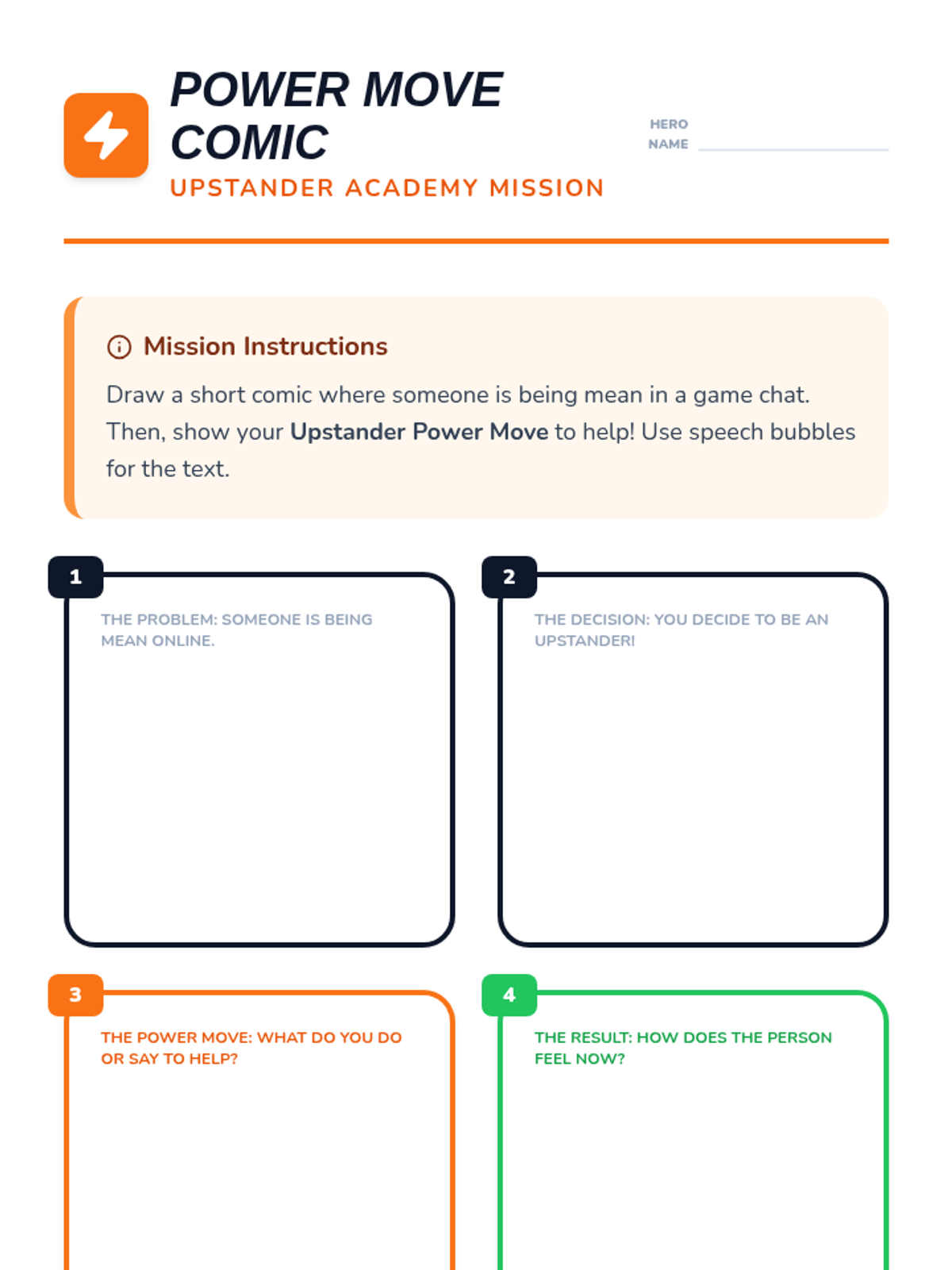
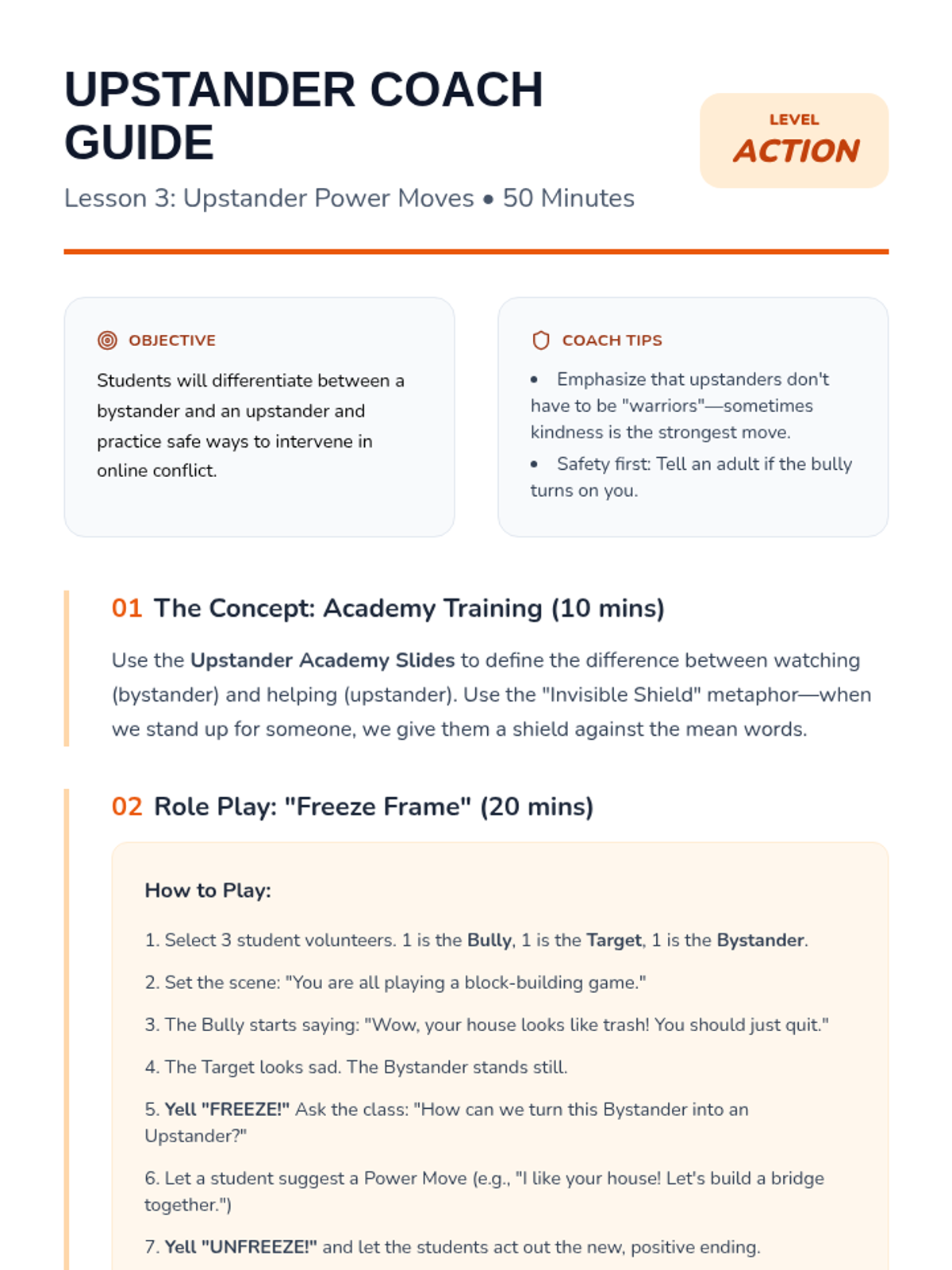
Students learn the crucial difference between a bystander and an upstander, practicing safe ways to support others in gaming chats and social spaces.
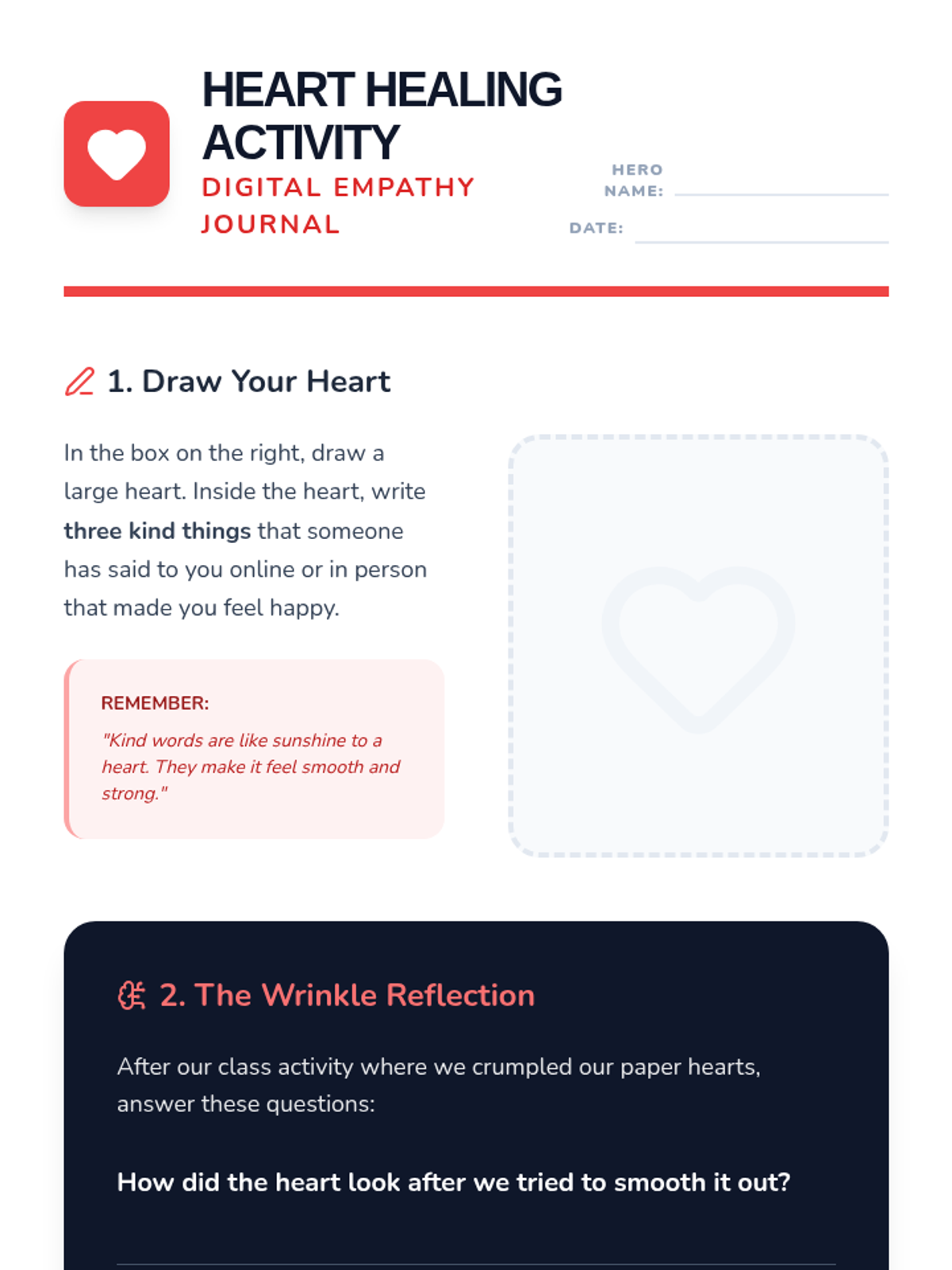
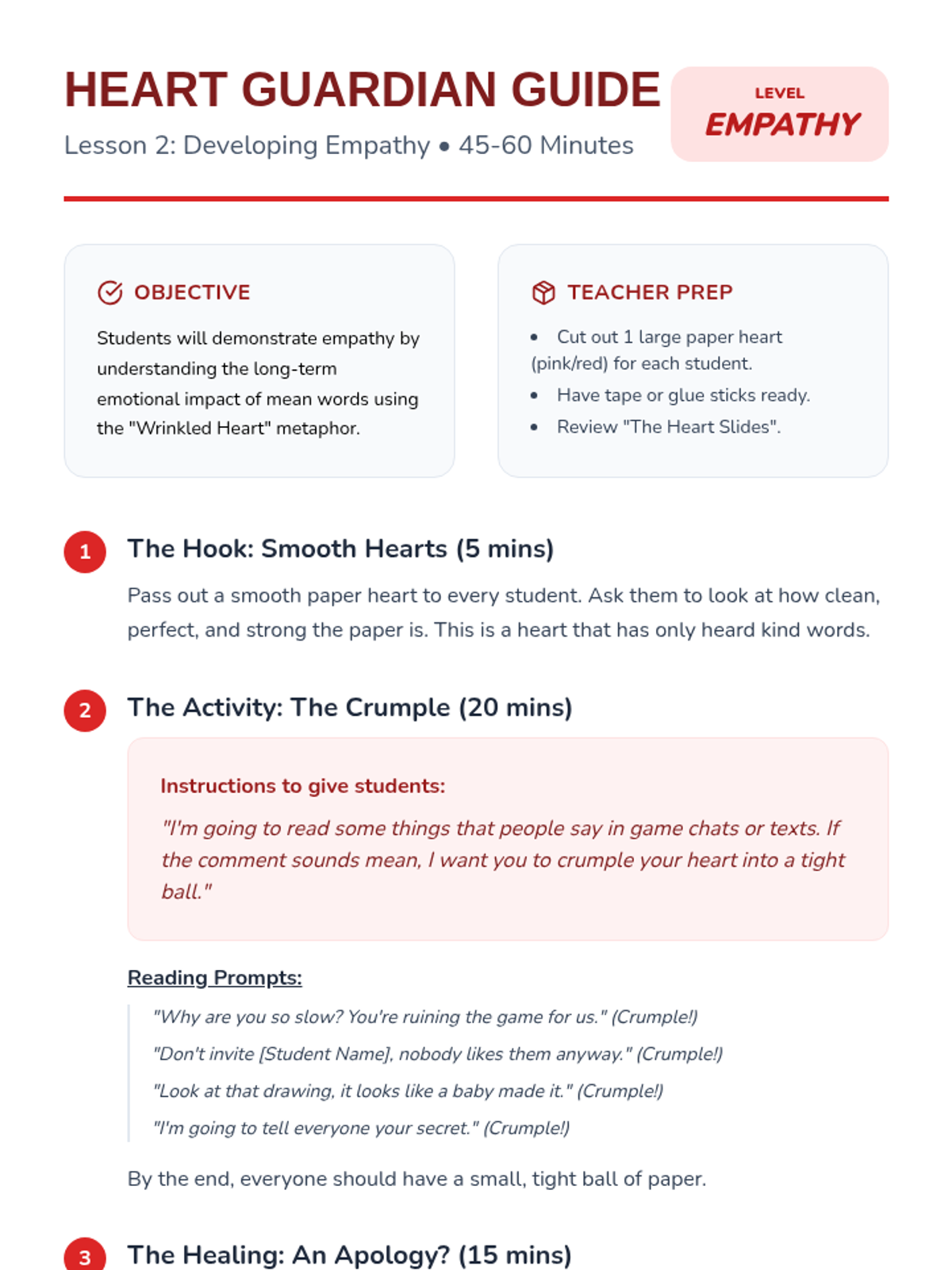
Through the 'Wrinkled Heart' activity and case studies, students explore the emotional impact of unkind online behavior and develop empathy for targets of cyberbullying.
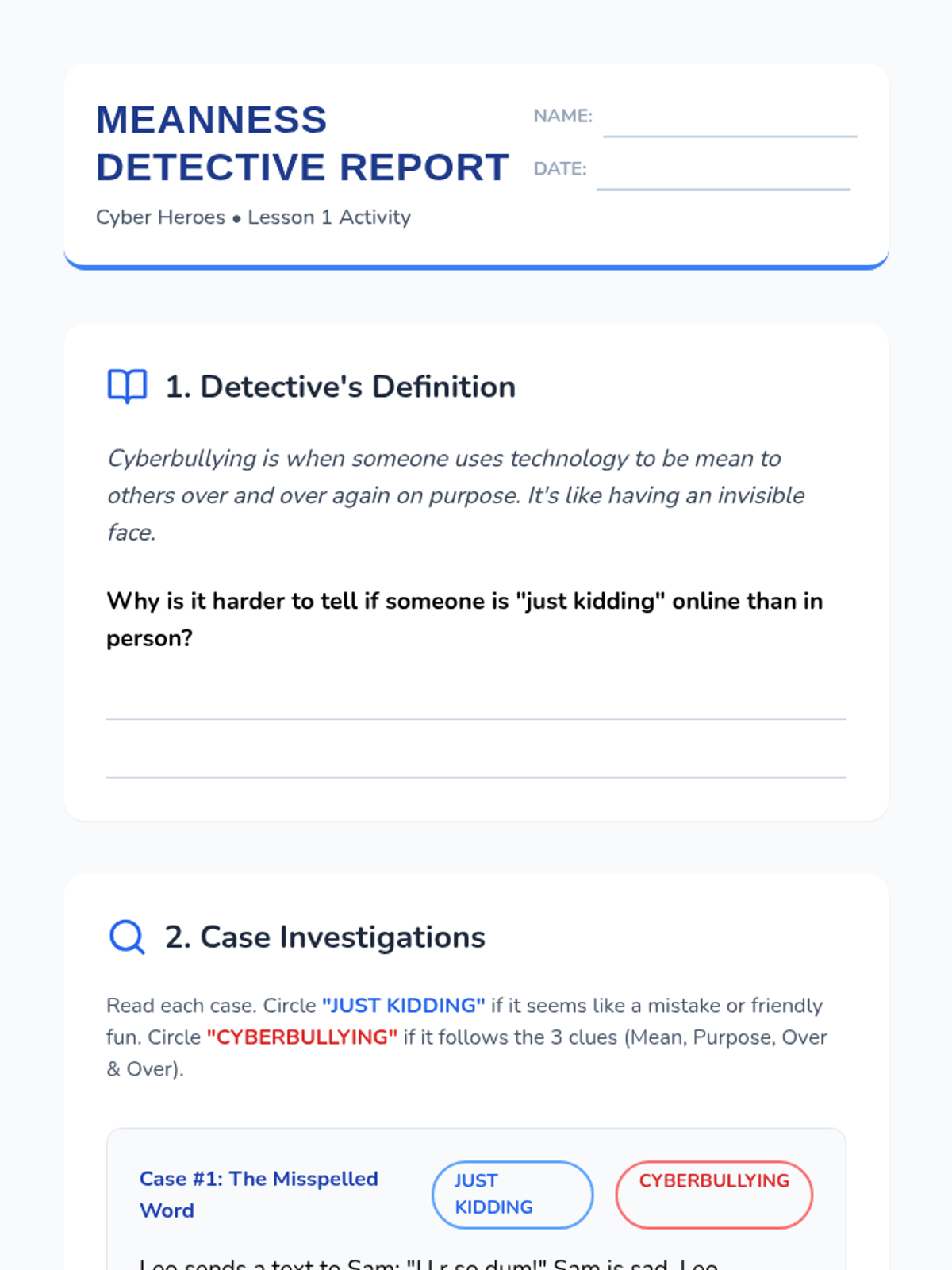
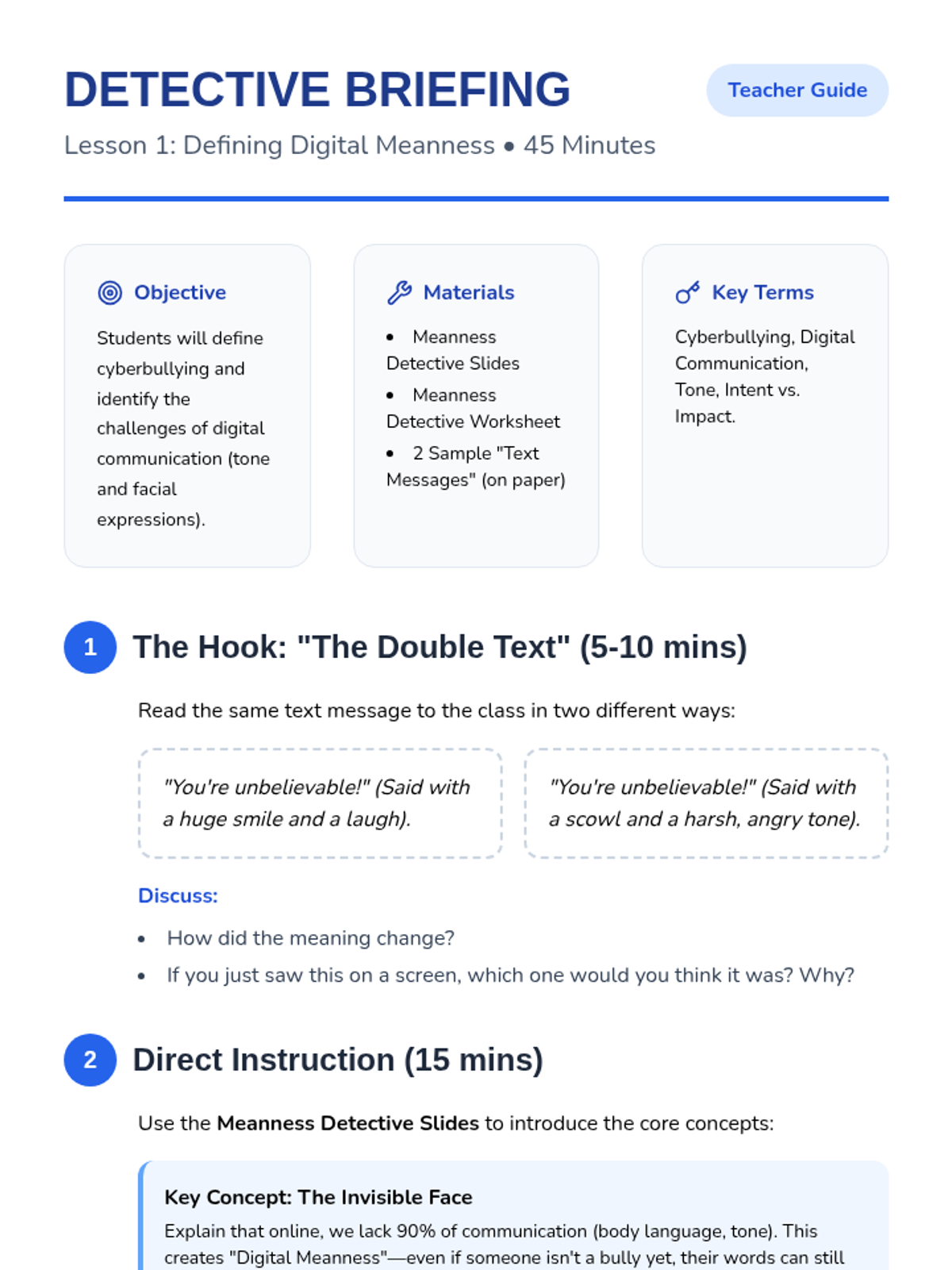
Students define cyberbullying and learn to distinguish it from joking or in-person teasing, focusing on how digital communication lacks facial expressions and tone.
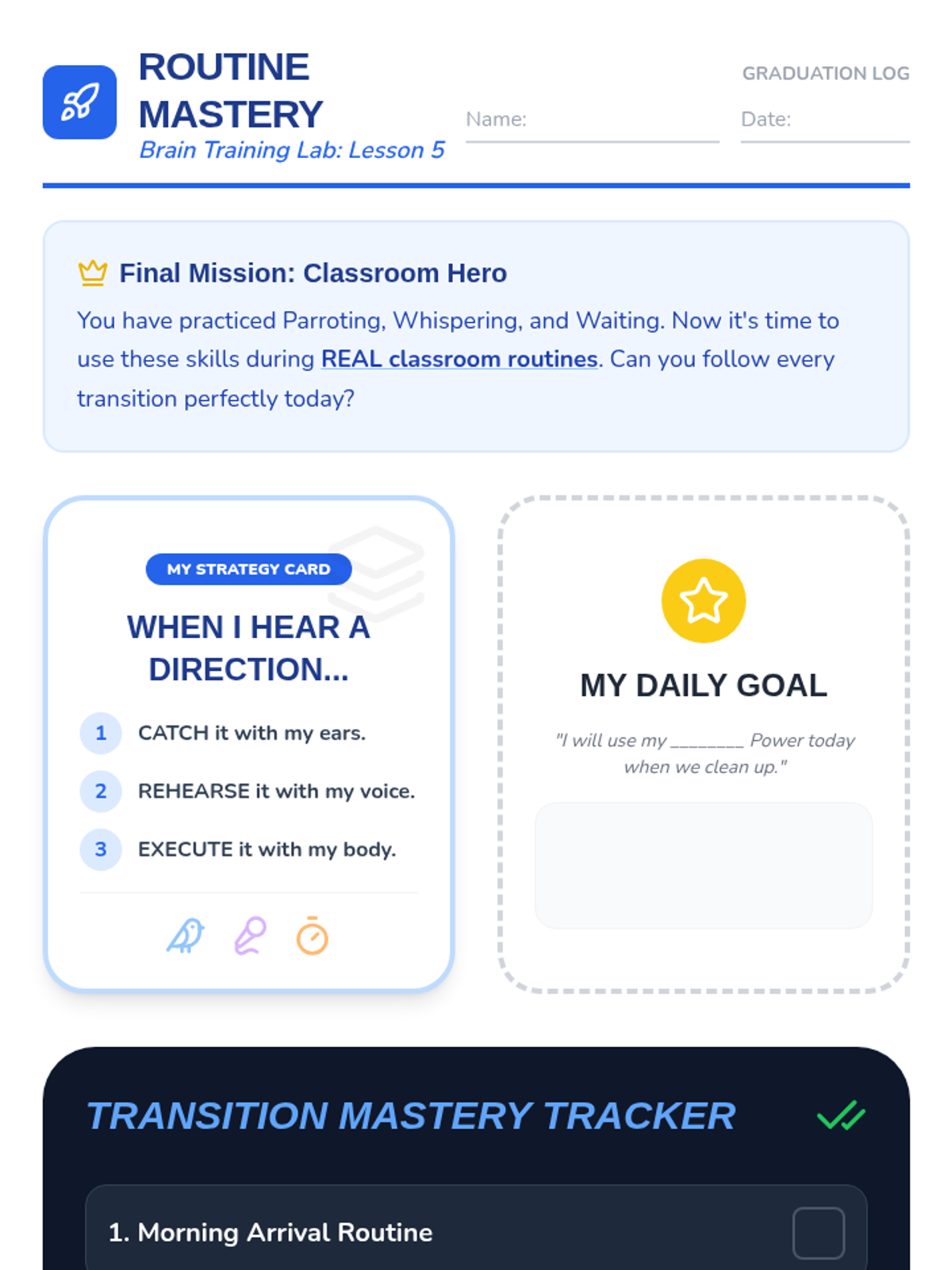
Students apply verbal strategies to actual classroom transition requests using choral responses to confirm steps.
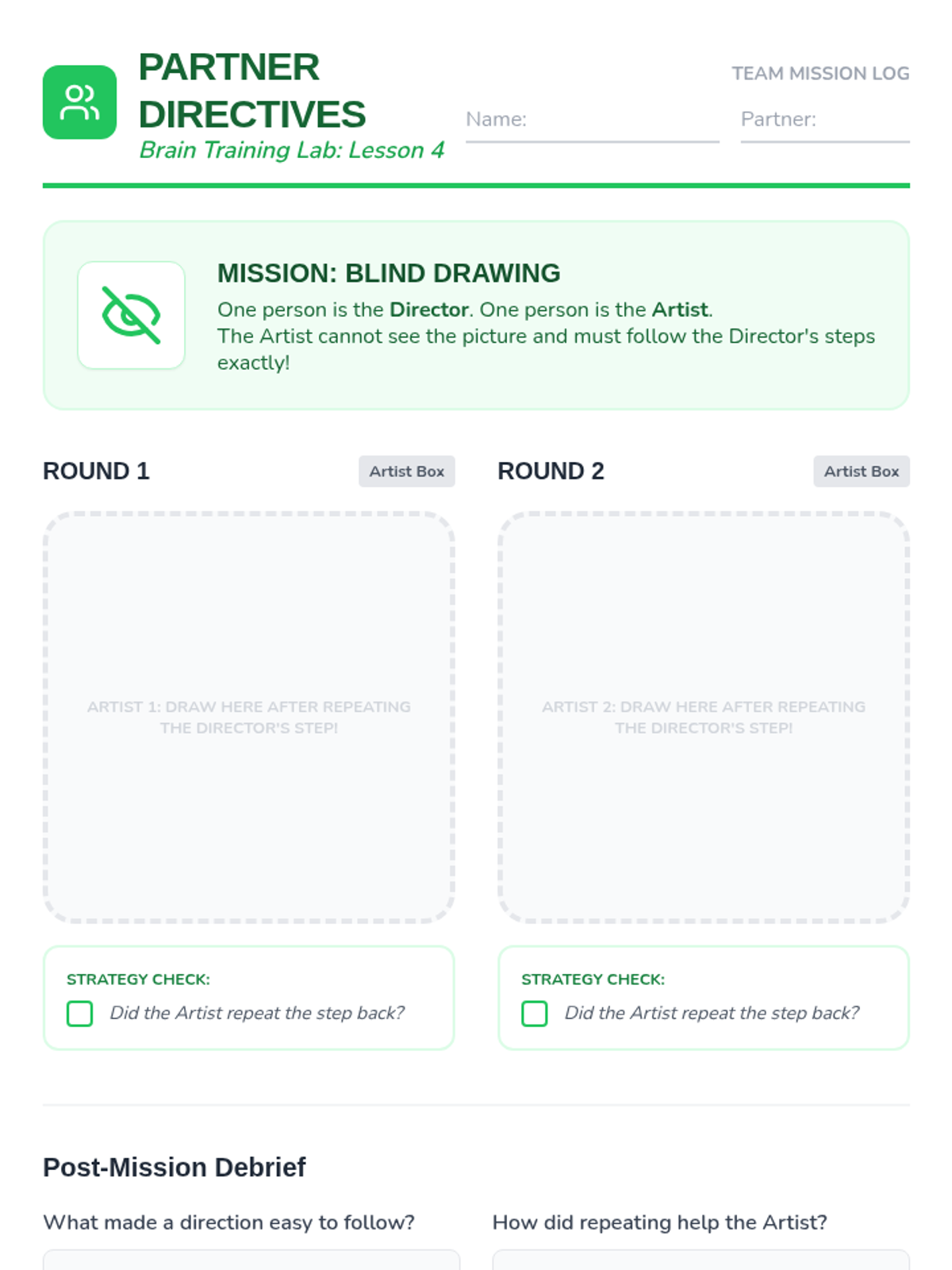
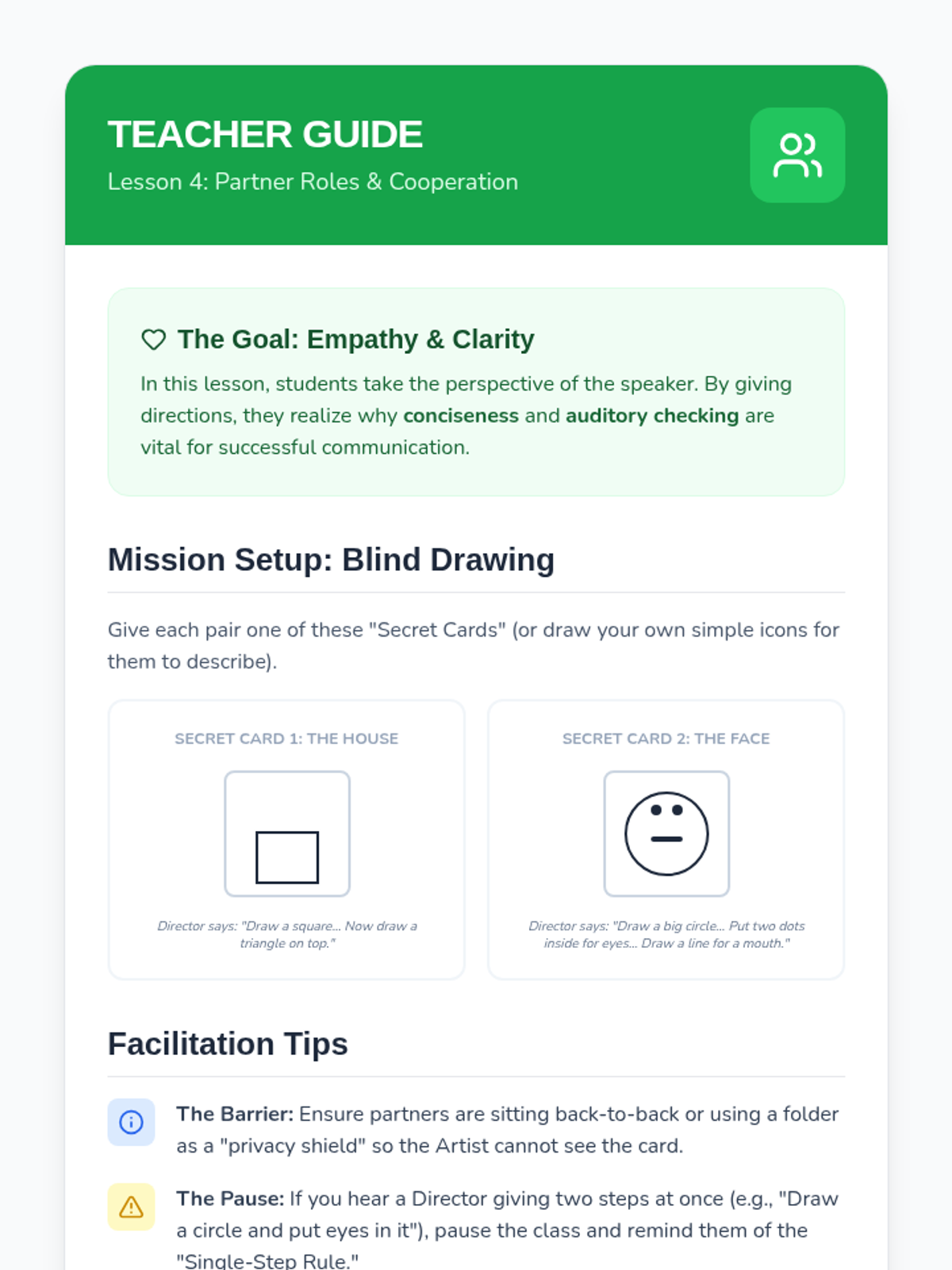
In pairs, students take turns being the 'Teacher' and the 'Student' to practice giving and repeating explicit steps.
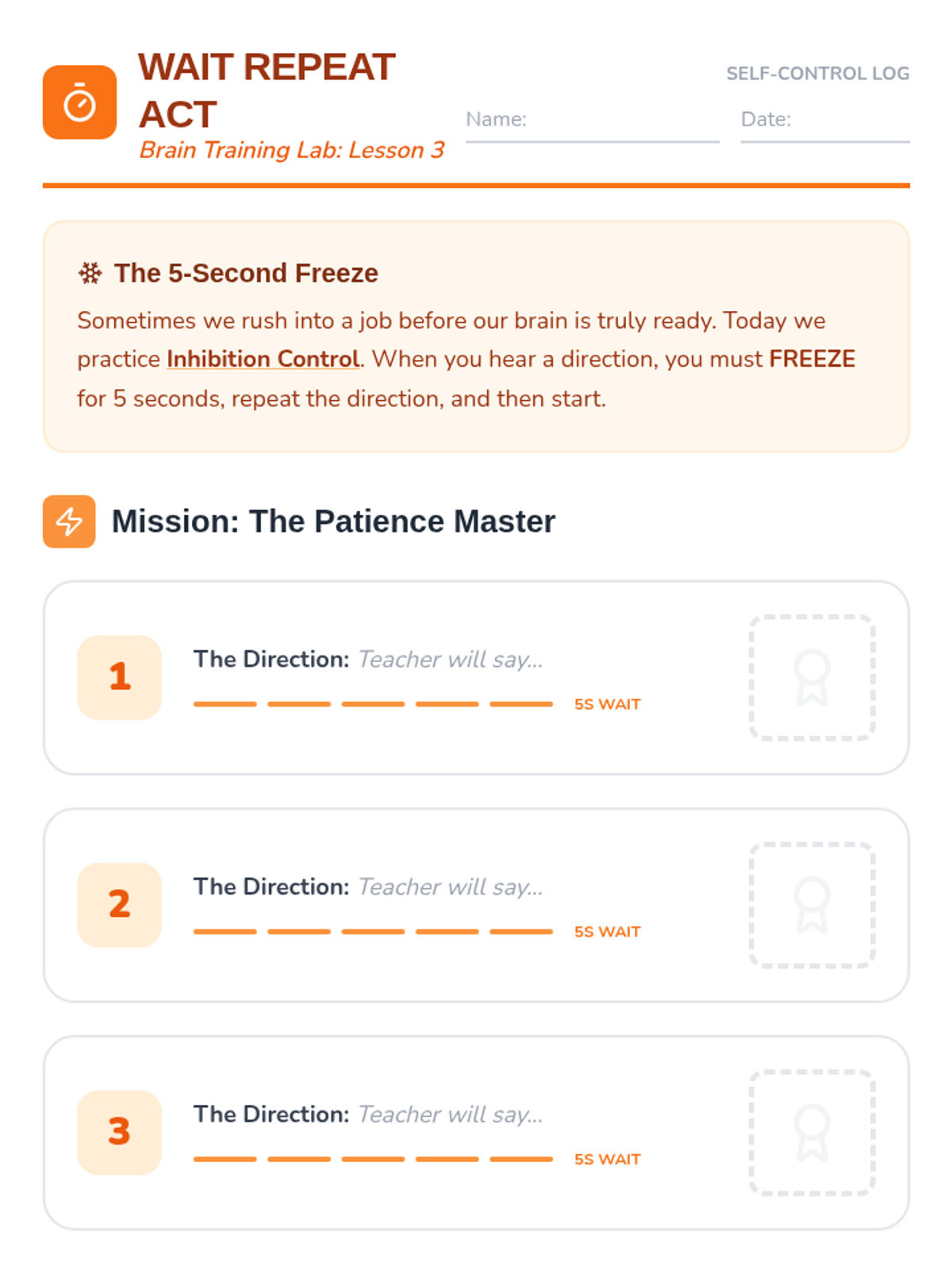
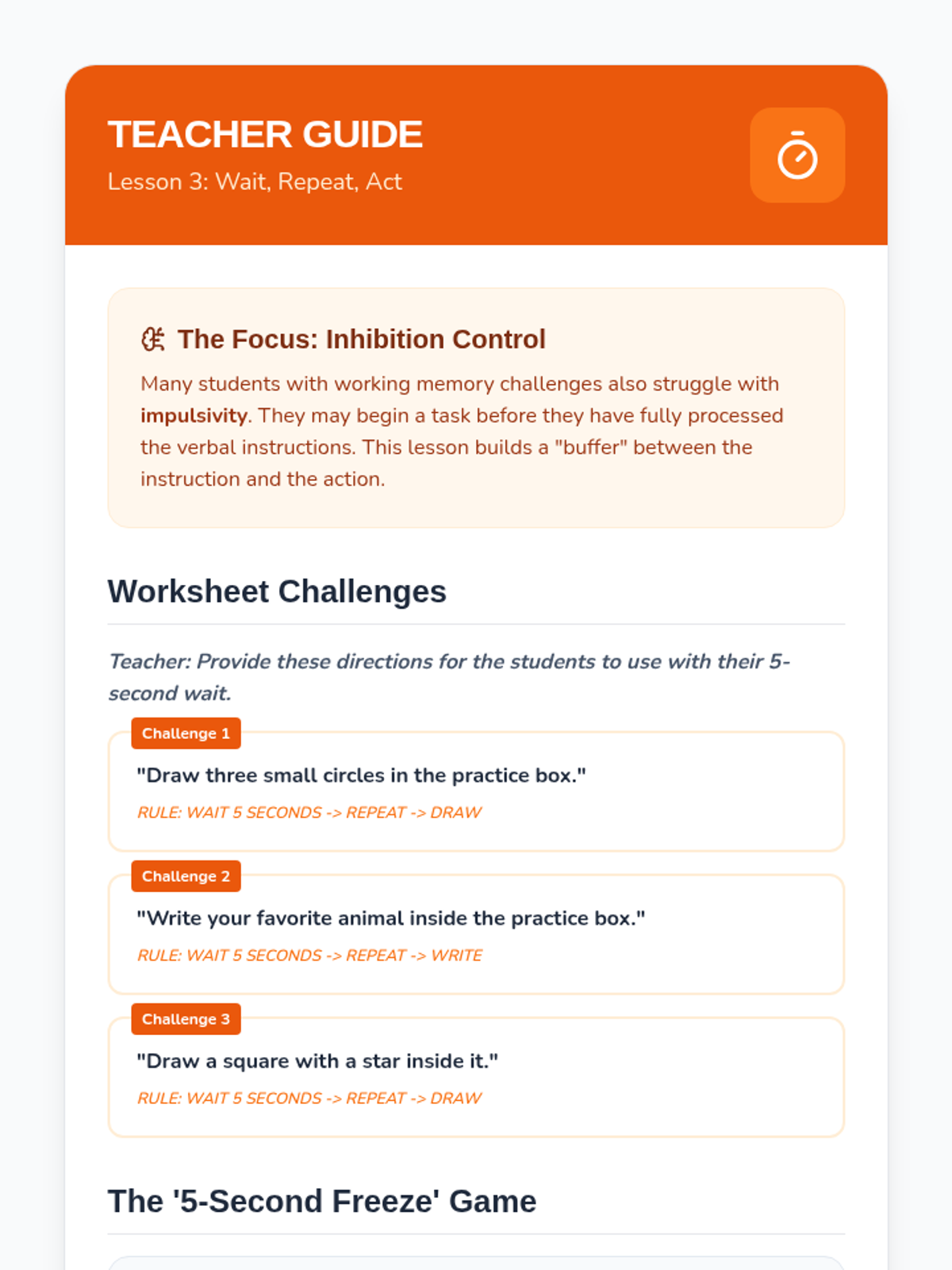
Students engage in inhibition control activities where they must wait 5 seconds after hearing a command, repeat it, and only then act.
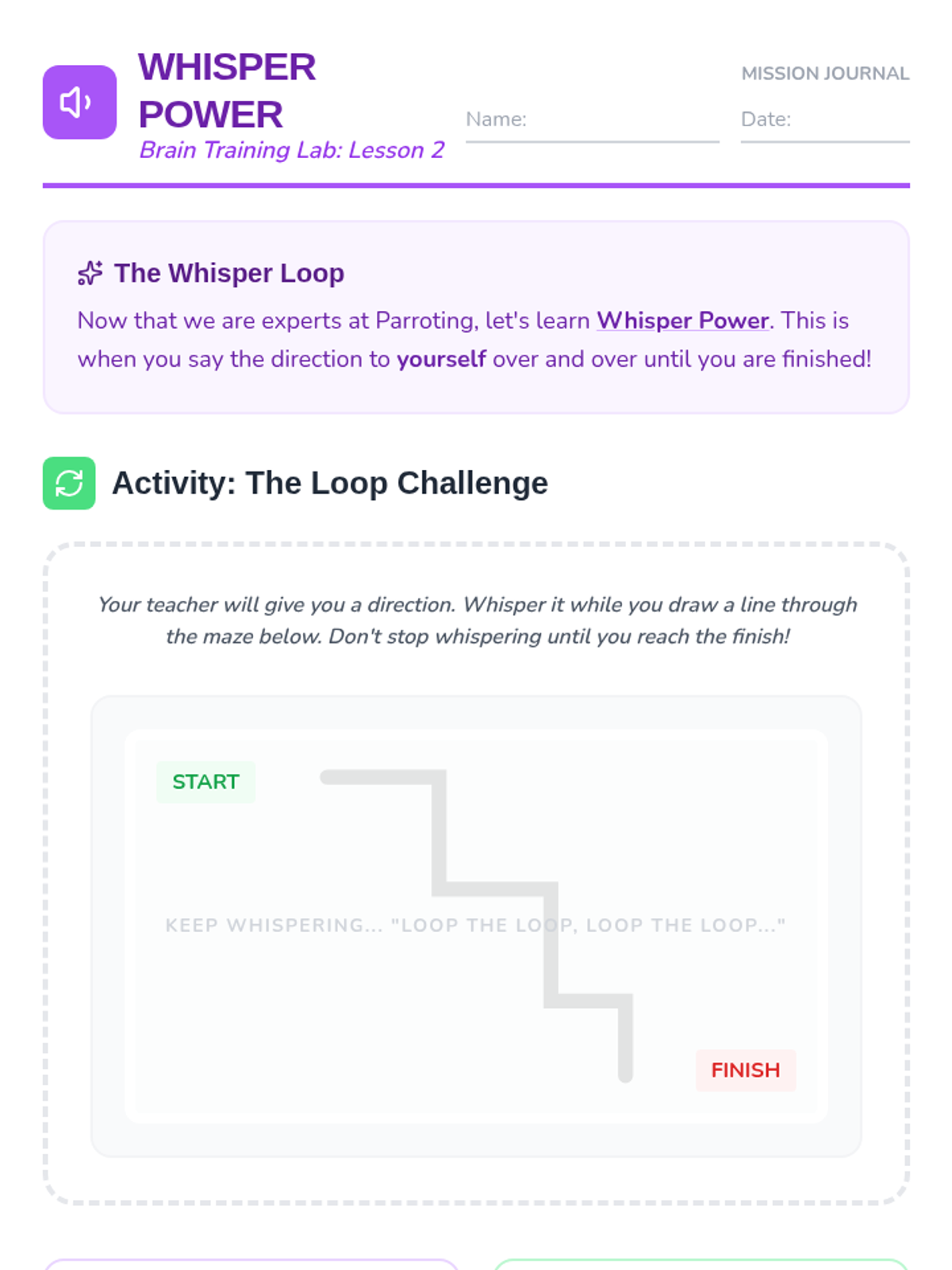
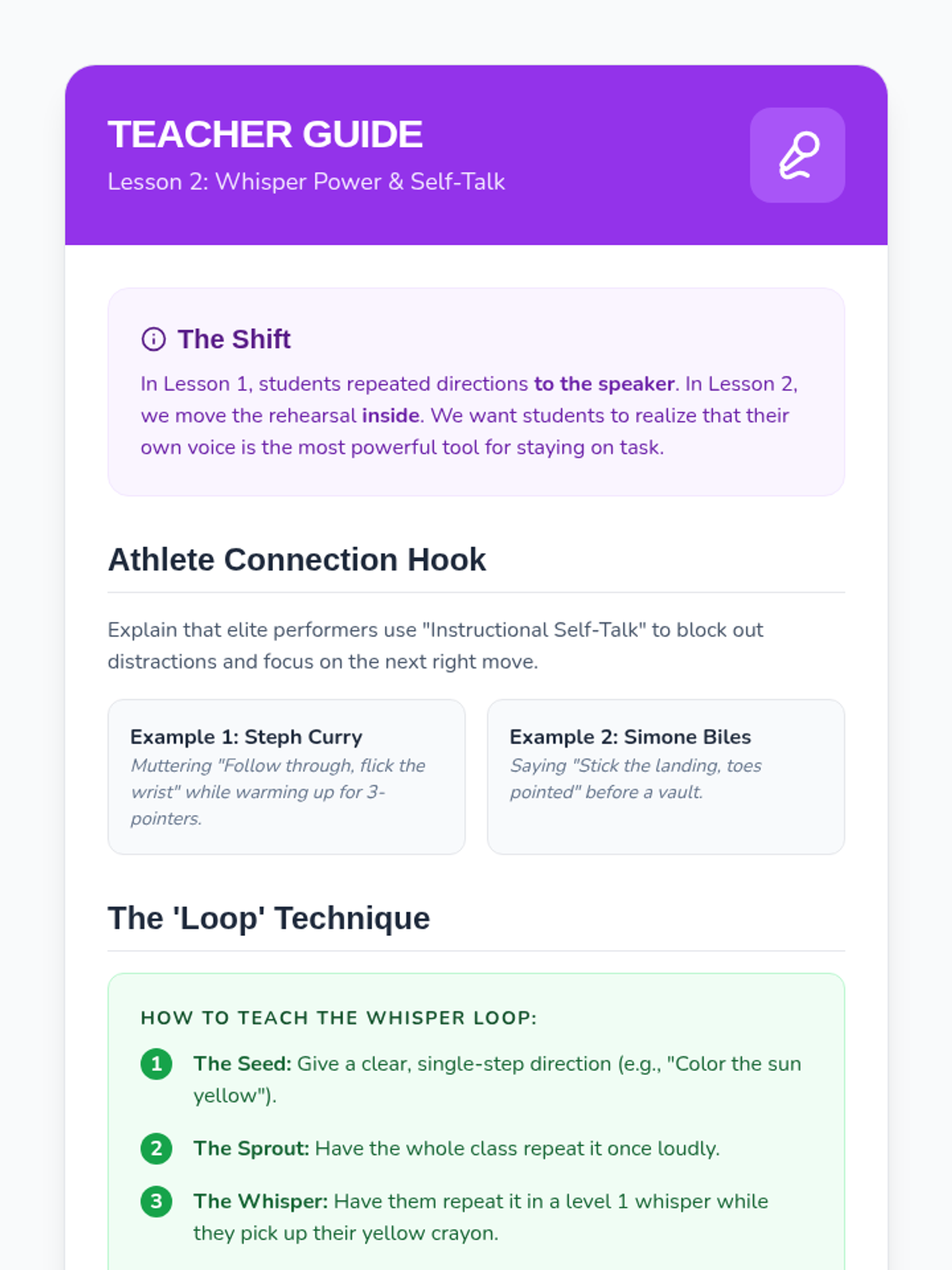
Moving from loud repetition to whispering, students practice 'self-talk.' They are given a single direction and must whisper it on a loop while performing the action.
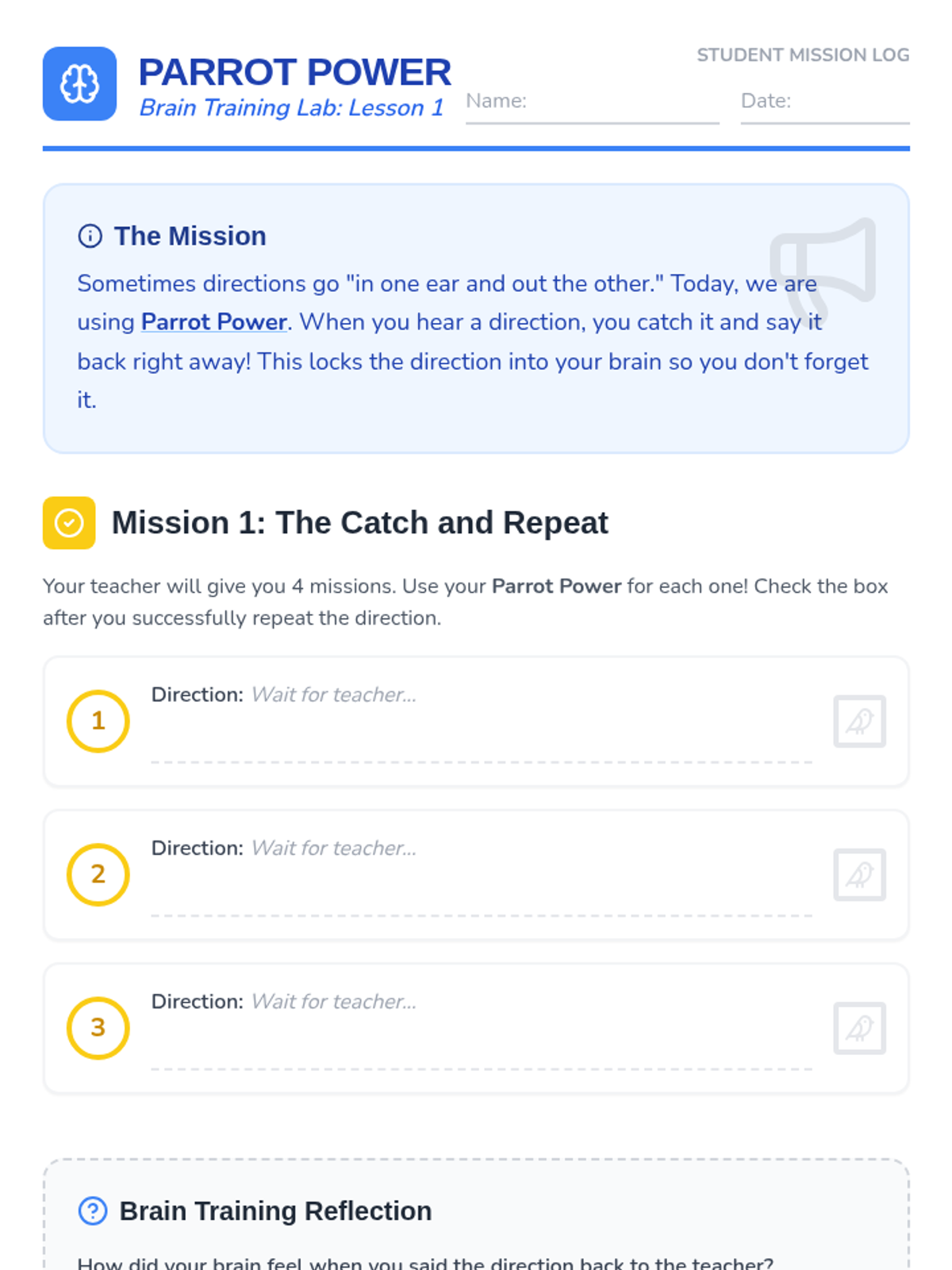
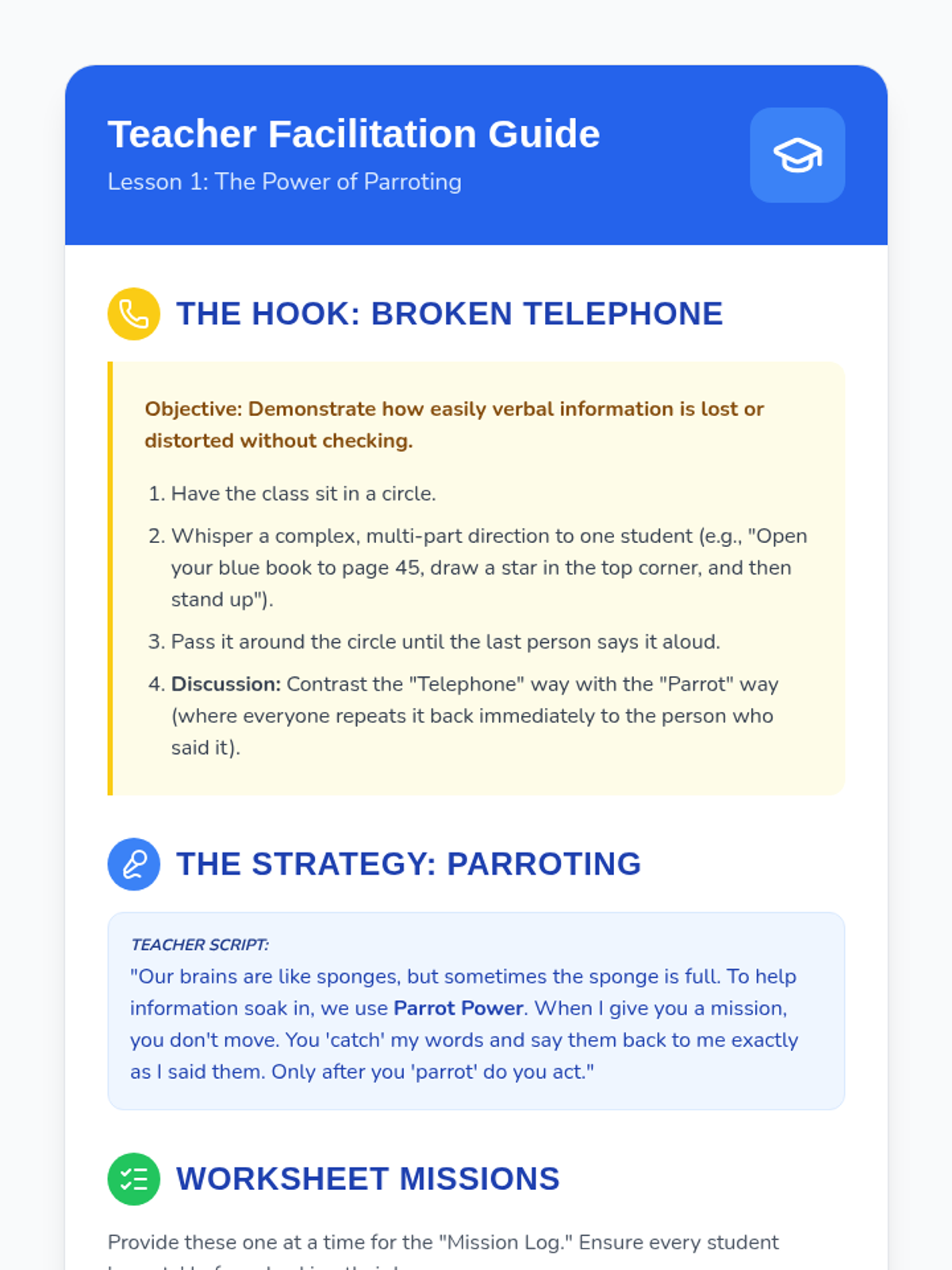
Students practice the 'parrot' technique, where they must immediately repeat a single-step direction back to the speaker before moving. The lesson emphasizes that saying it locks it into the brain.
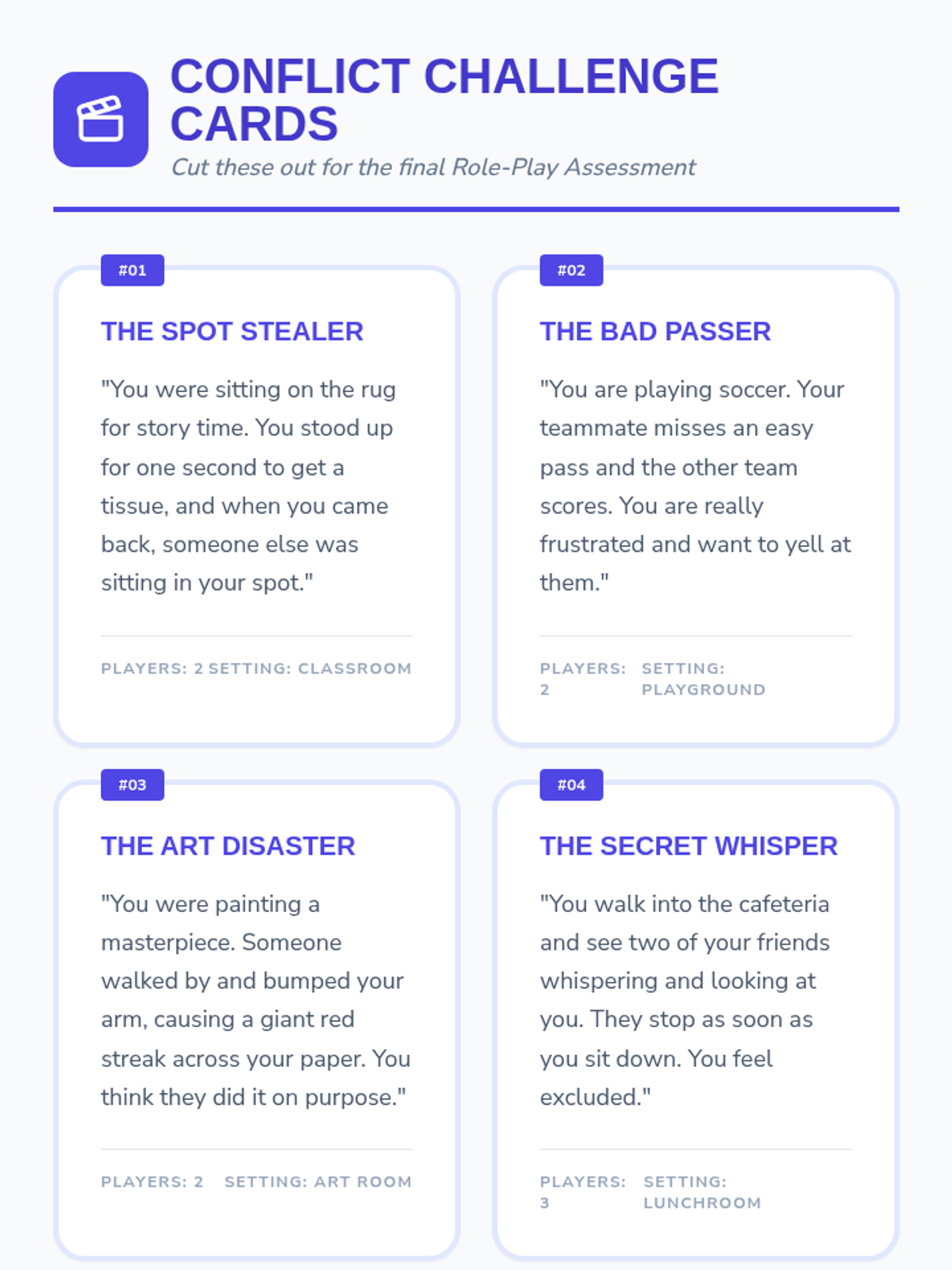
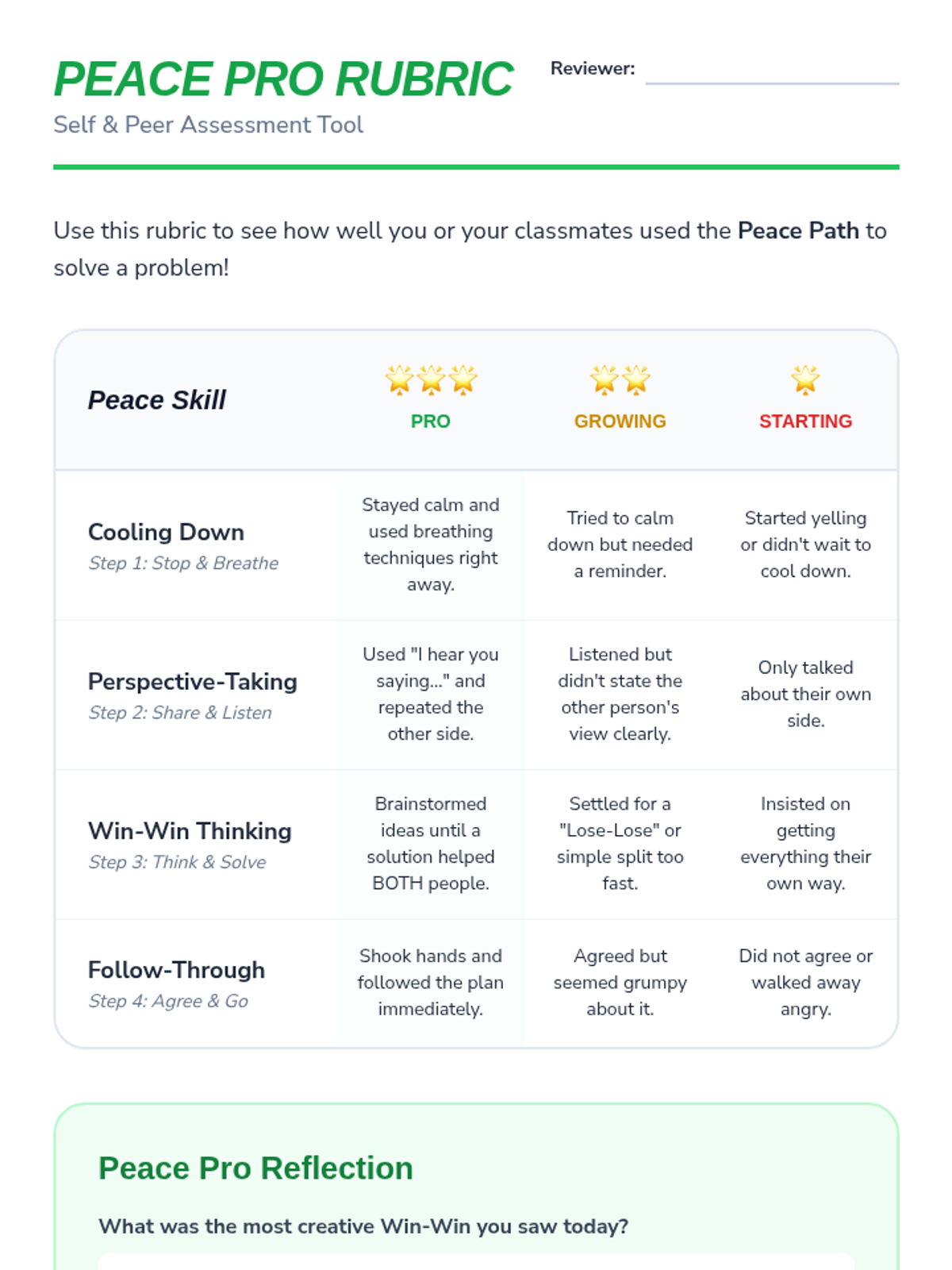
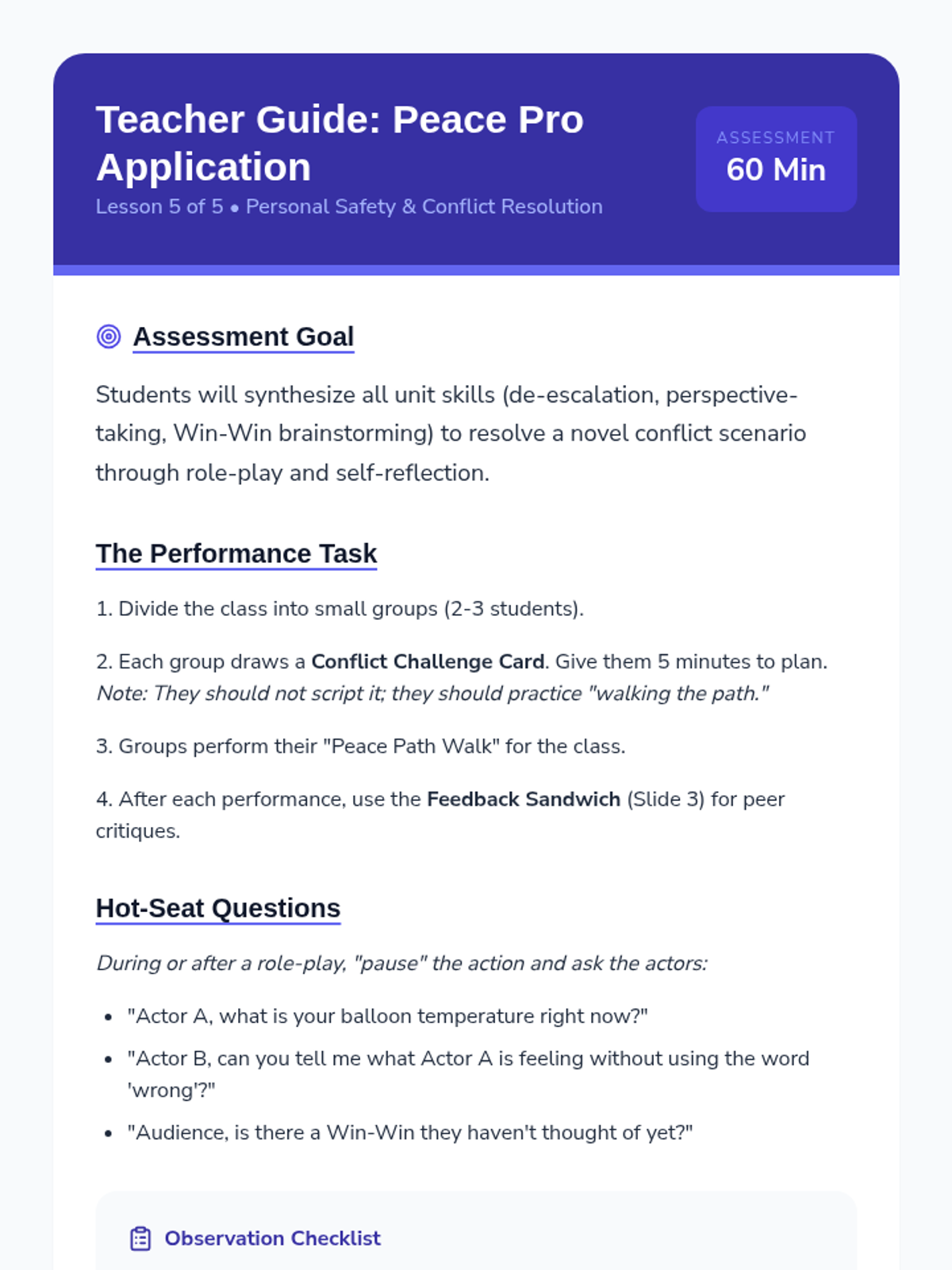
Students apply their skills to real-world scenarios through role-play and receive peer feedback on their resolution strategies.
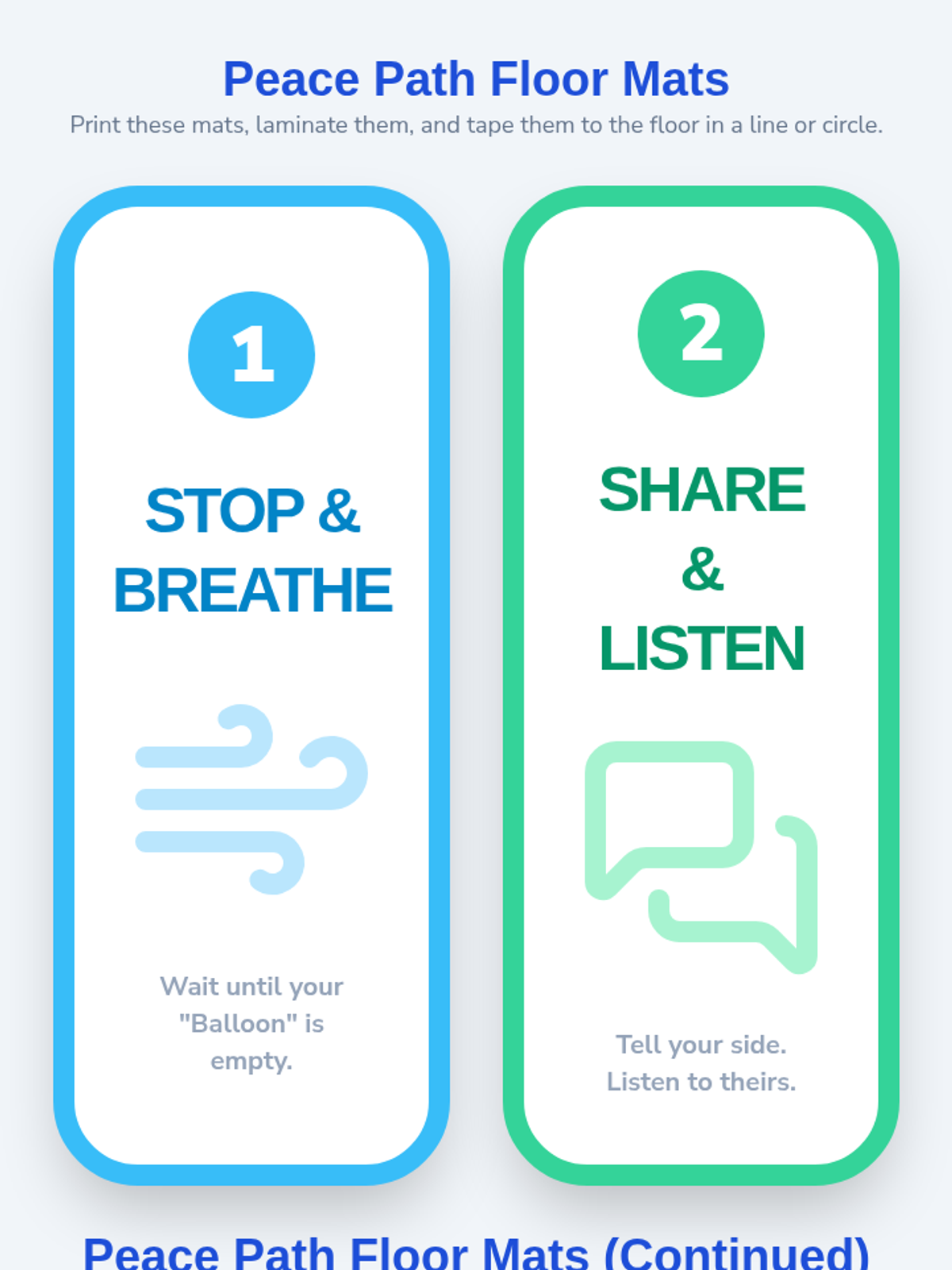
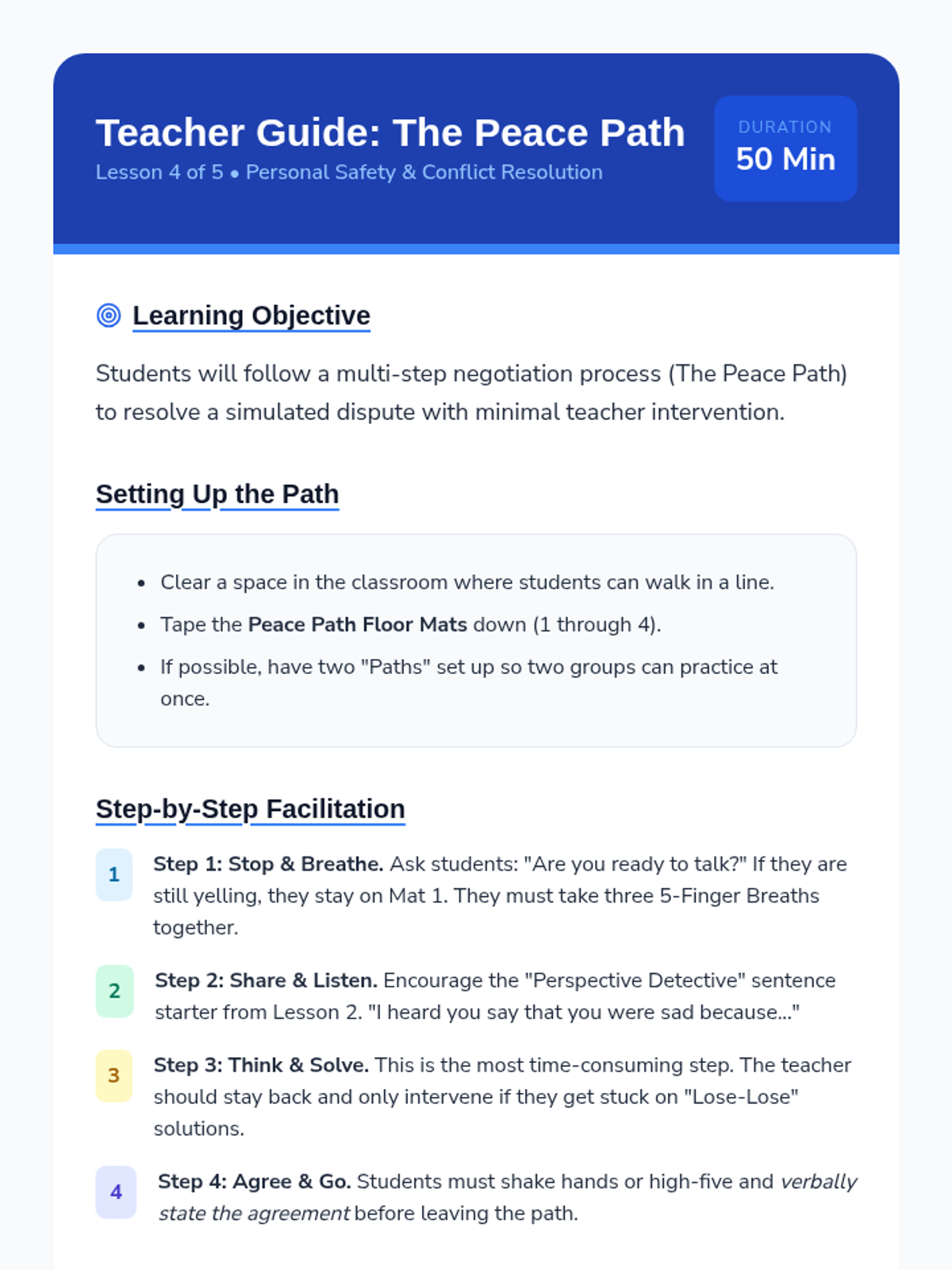
Students are introduced to the 'Peace Path'—a 4-step structured model for conflict resolution—and practice walking through it physically.
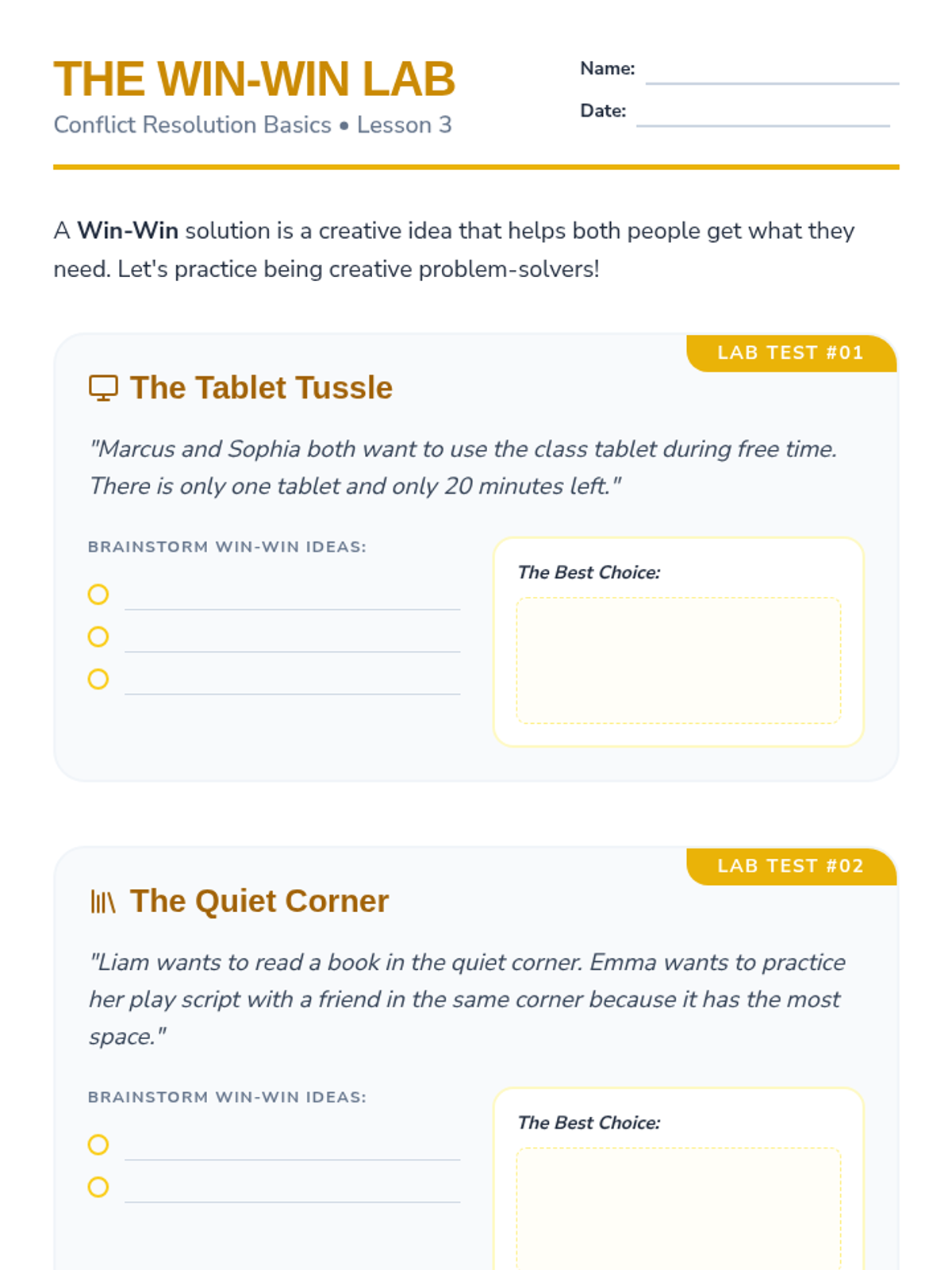
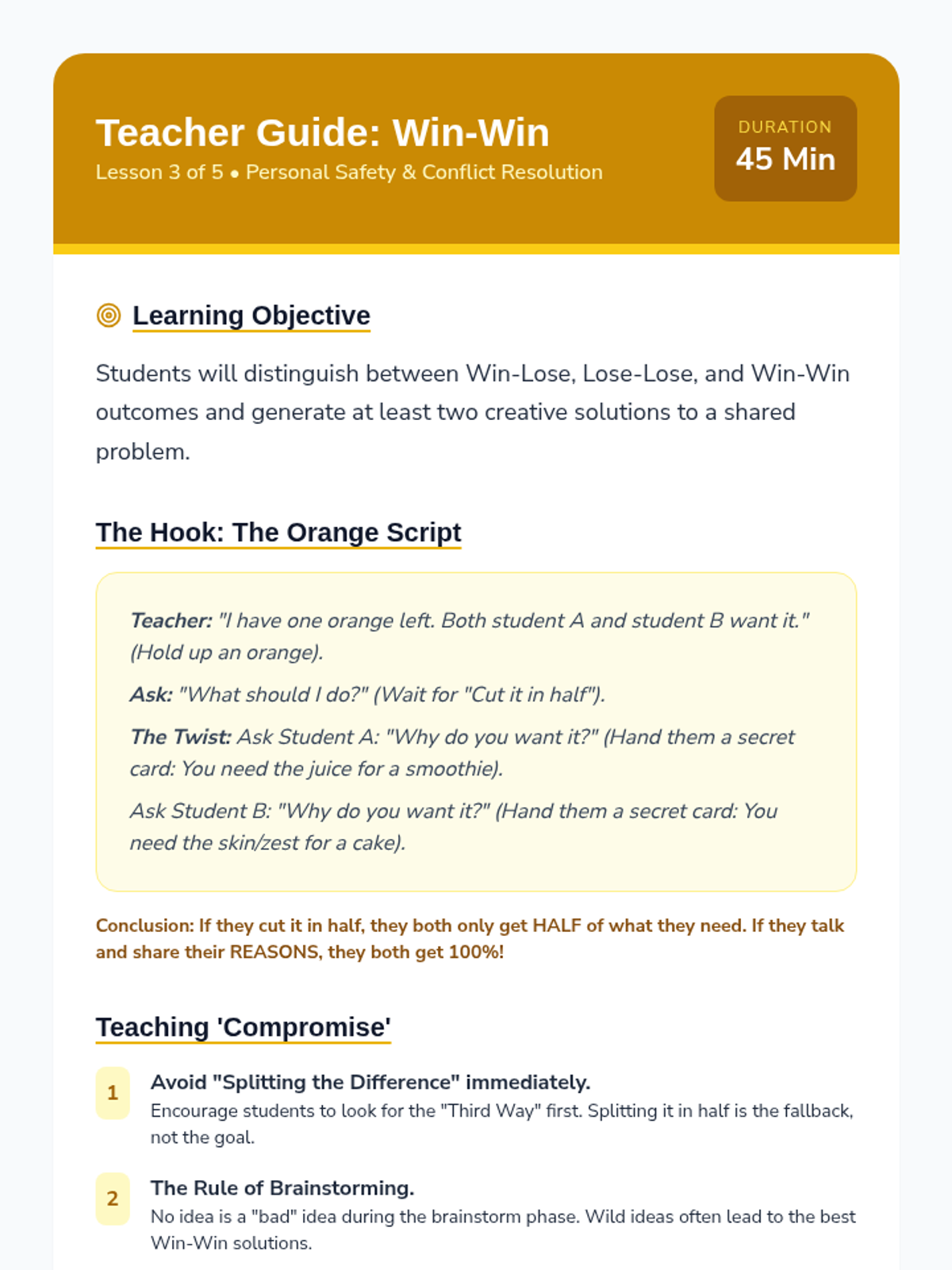
Students learn to brainstorm creative solutions where everyone wins, using the 'Orange Problem' as a case study for compromise.
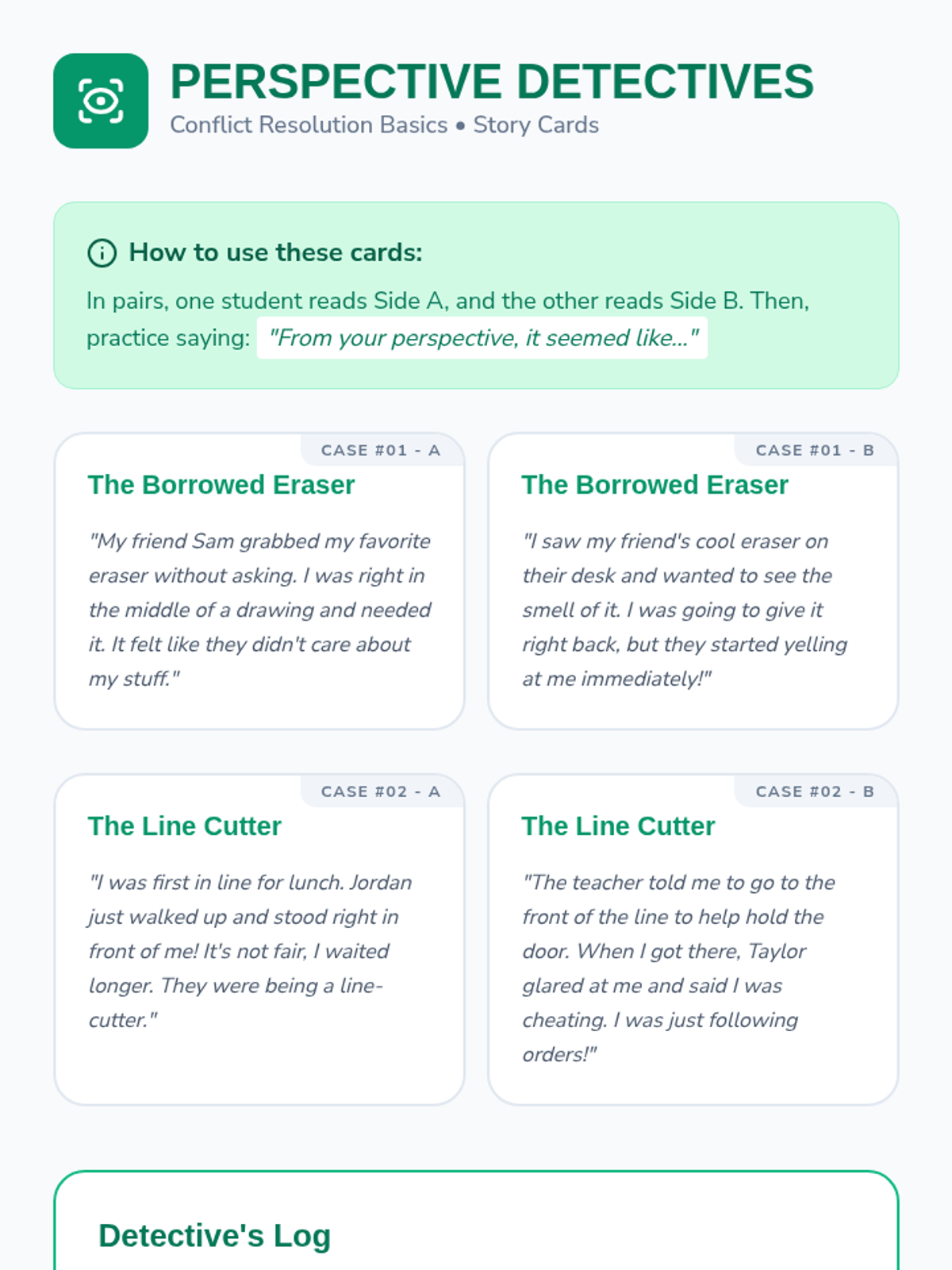
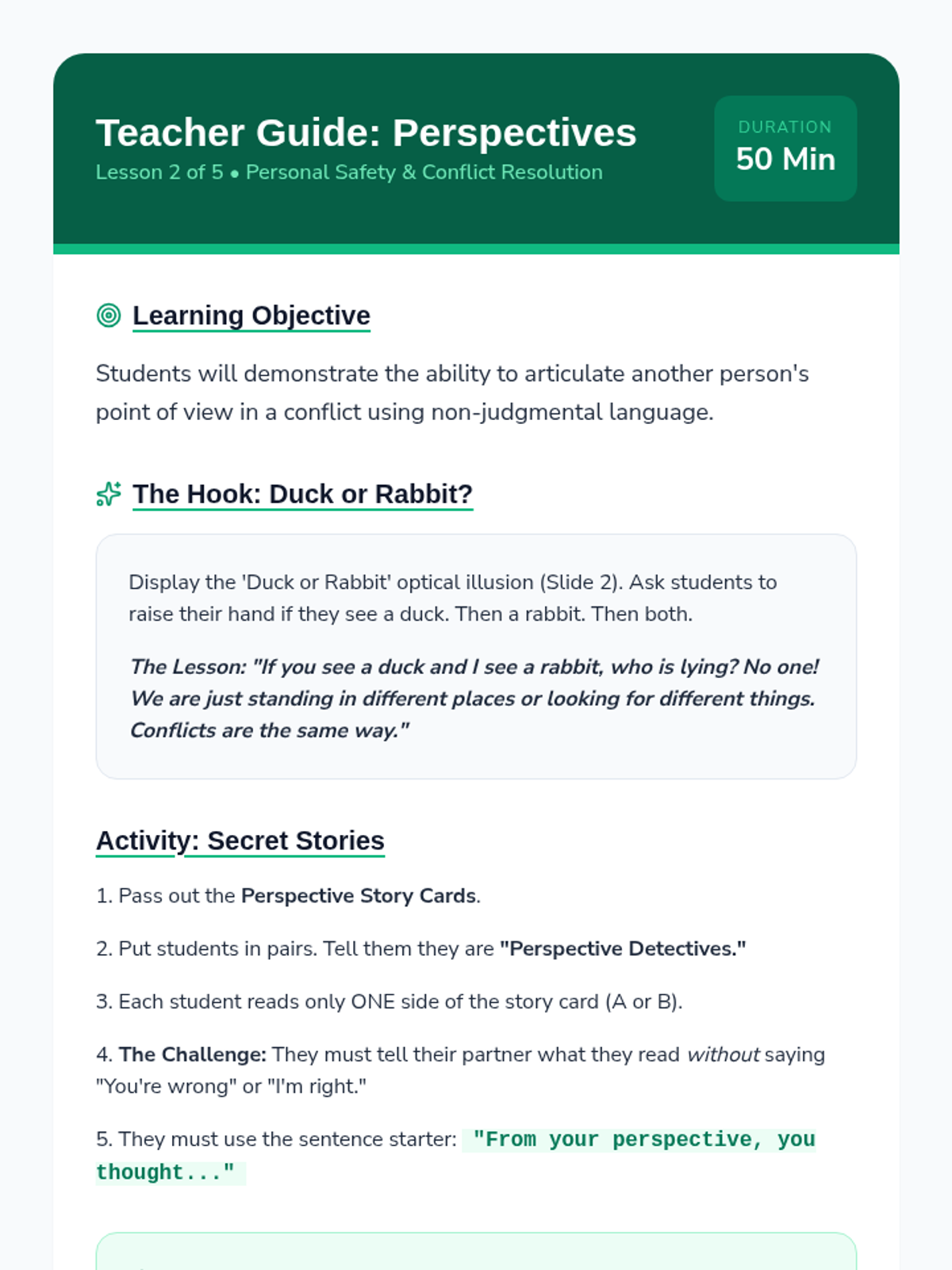
Students explore how two people can see the same event differently using optical illusions and dual-narrative stories.
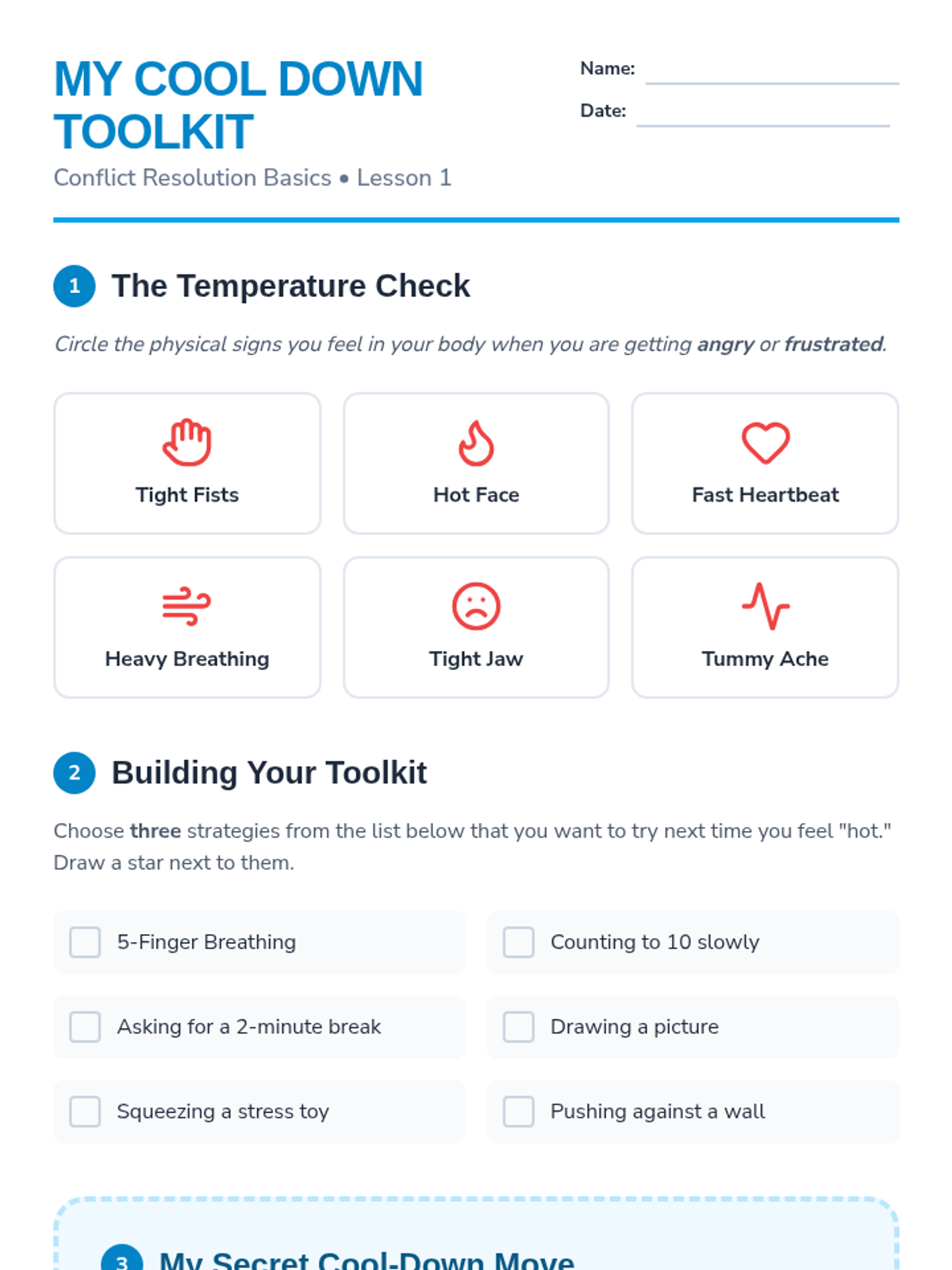
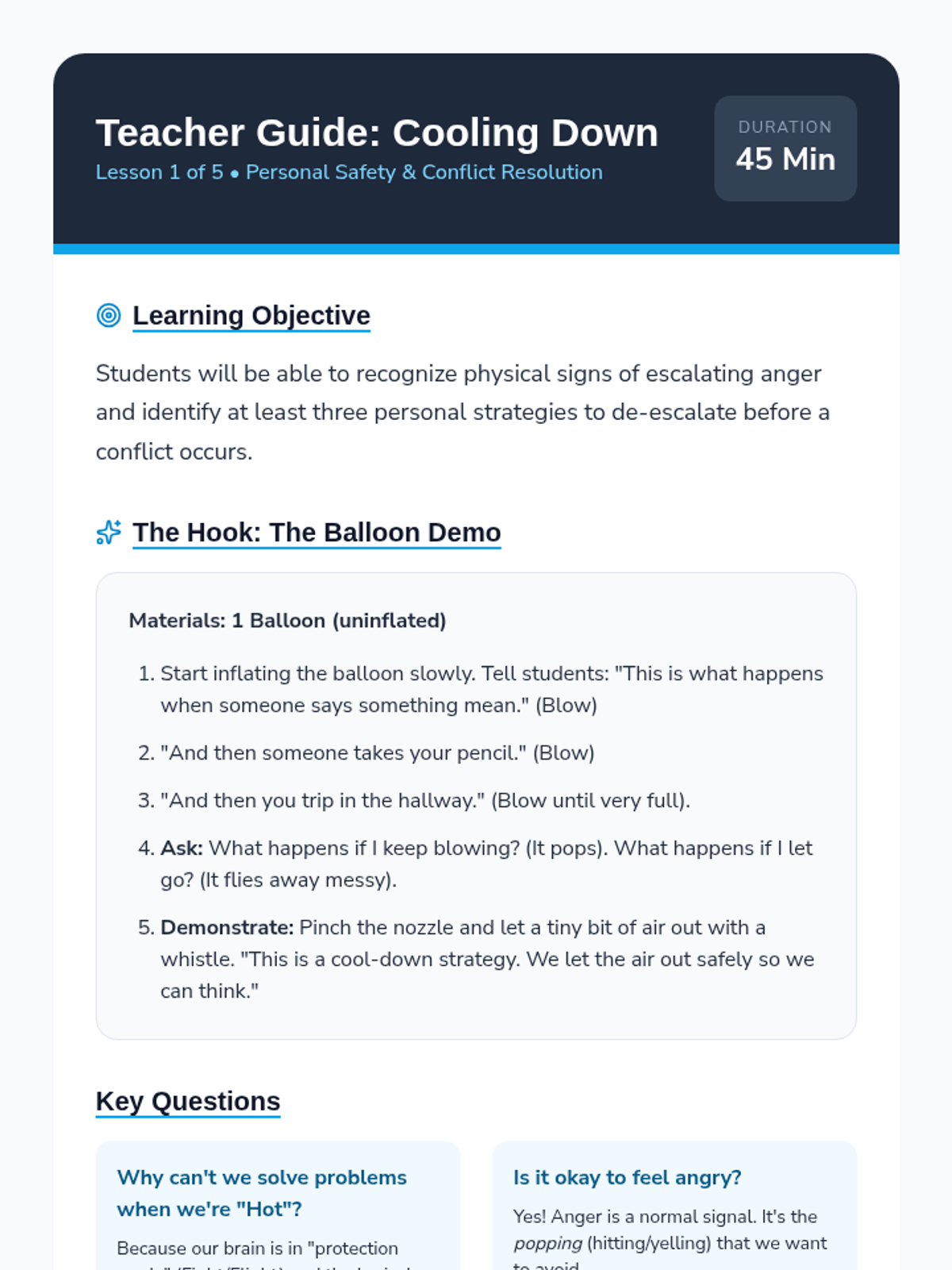
Students identify physical signs of anger and learn personal strategies to lower their emotional 'temperature' before attempting to resolve a conflict.