Root cause analysis and brainstorming techniques for everyday problem-solving. Equips learners with ethical frameworks and risk-benefit evaluation skills to predict consequences and make informed choices.
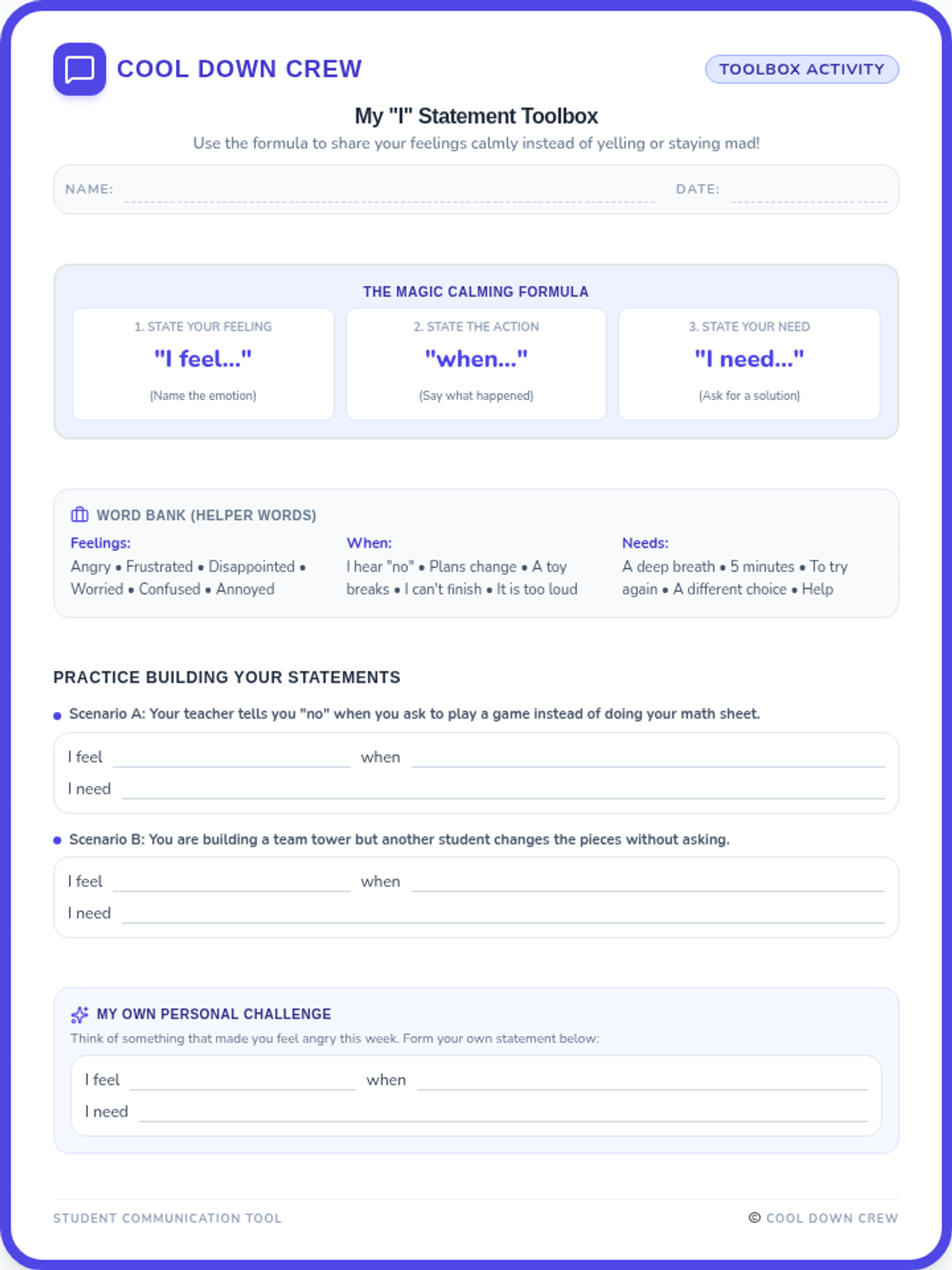
A specialized individual social-emotional learning lesson designed for 1-on-1 telehealth or therapy sessions. Helps individual students recognize the Red Zone, regulate big reactions to "no" using the Size of the Problem scale, practice at-home coping strategies, and use "I" statements constructively over screen-share.
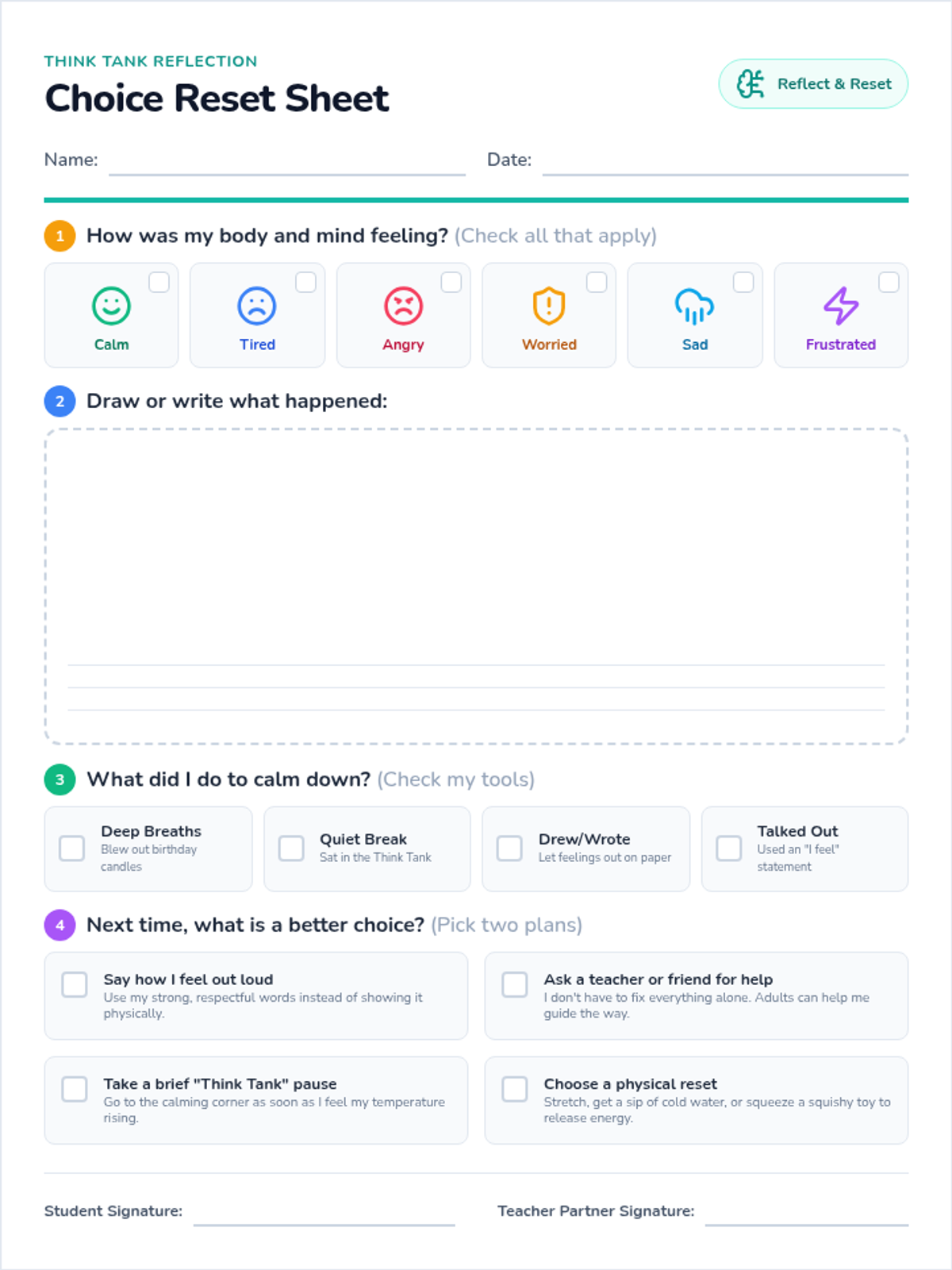
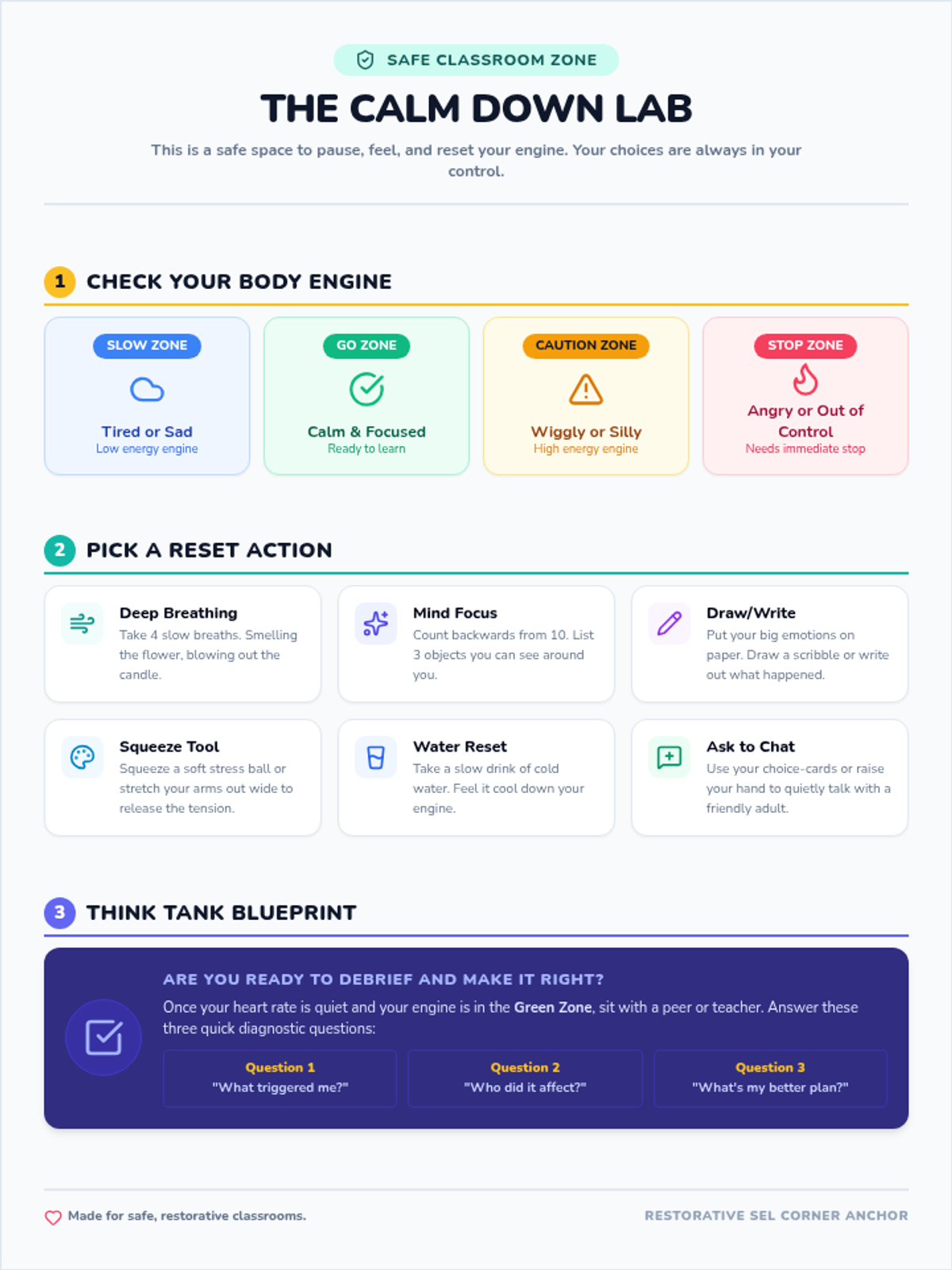
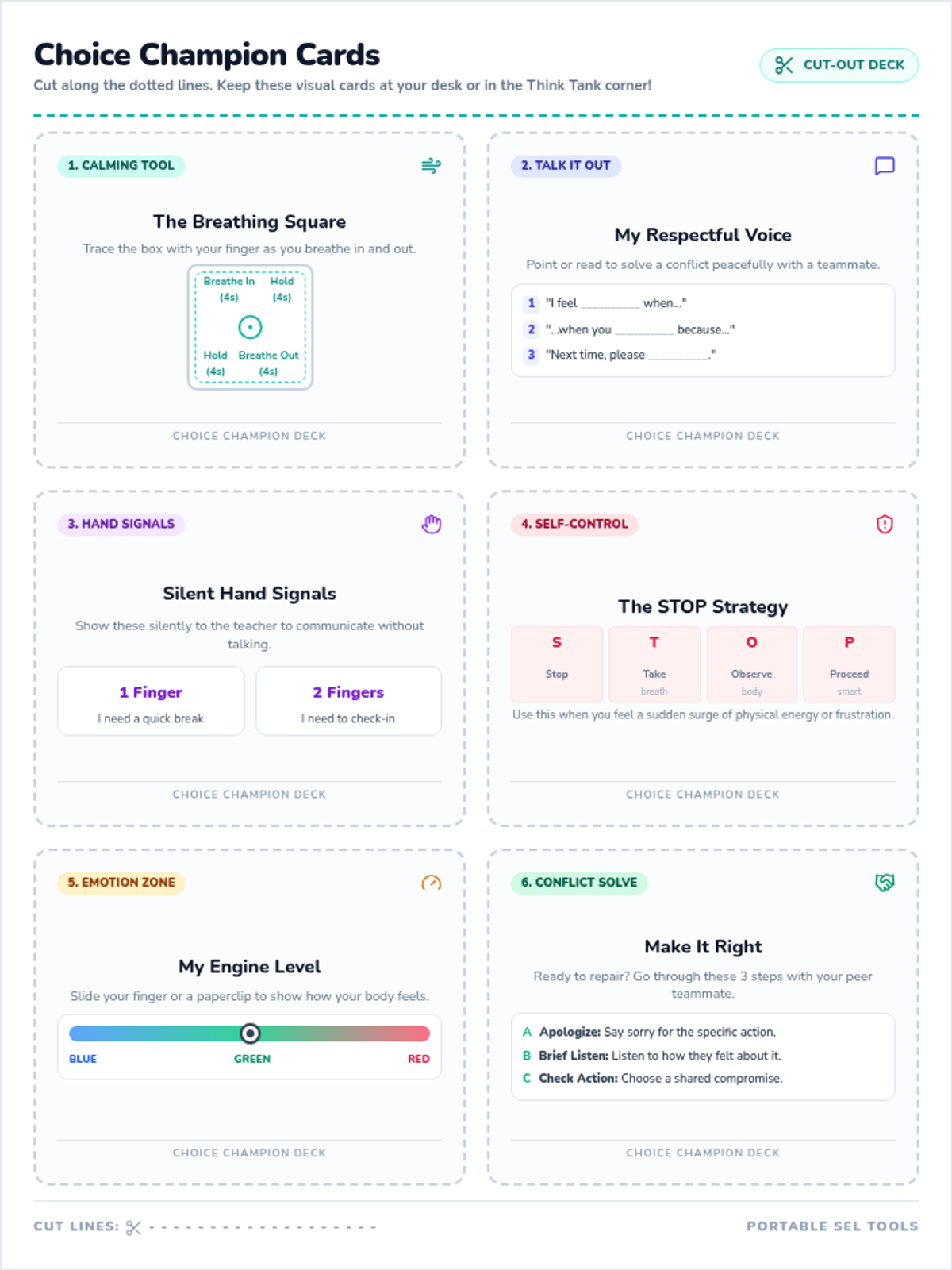
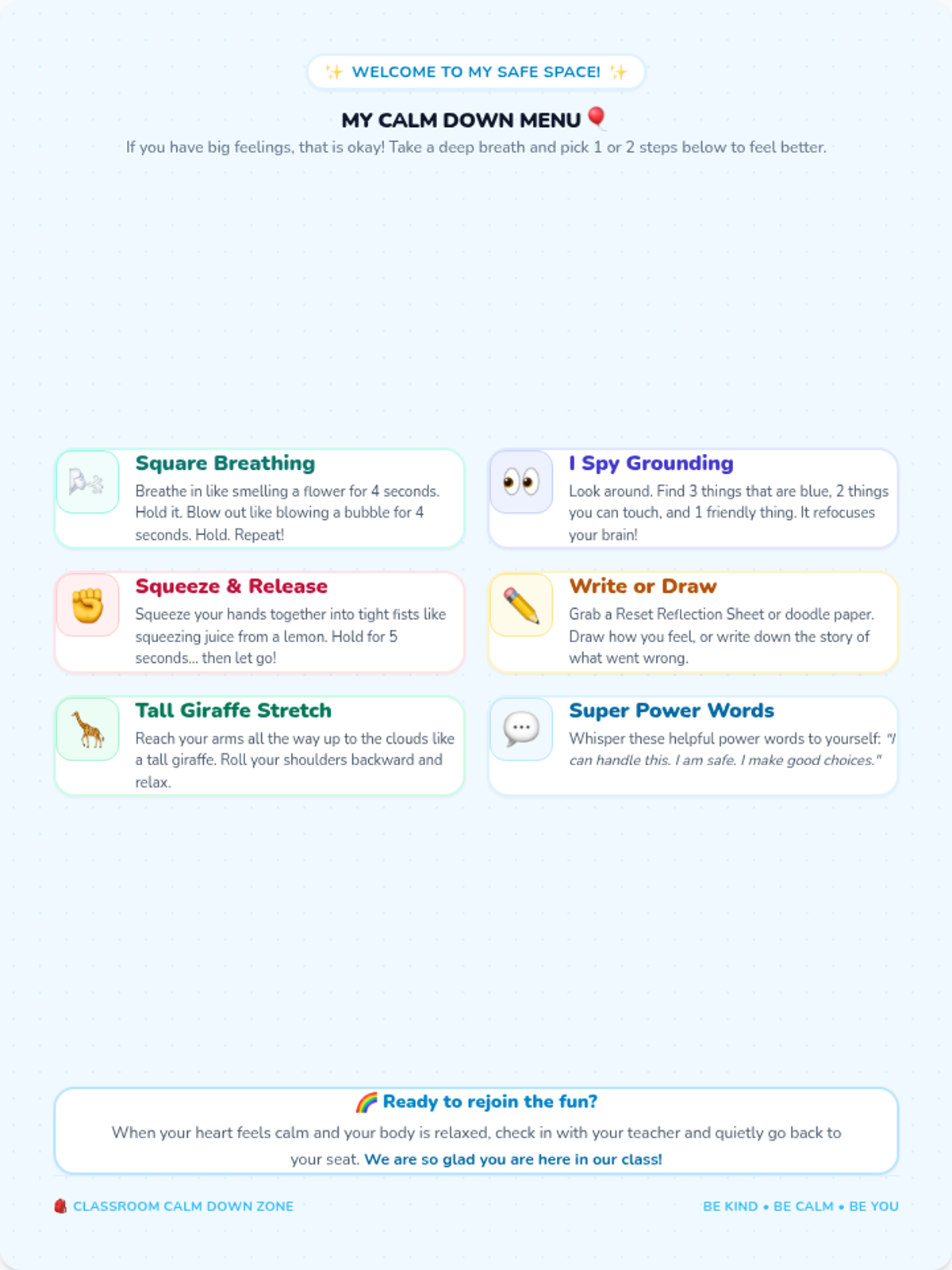
A comprehensive social-emotional toolkit for a classroom 'Think Tank' reflection corner. Includes a visual reflection sheet, a calming strategies poster, and portable visual choice cards to guide students in emotional self-regulation and positive conflict resolution.
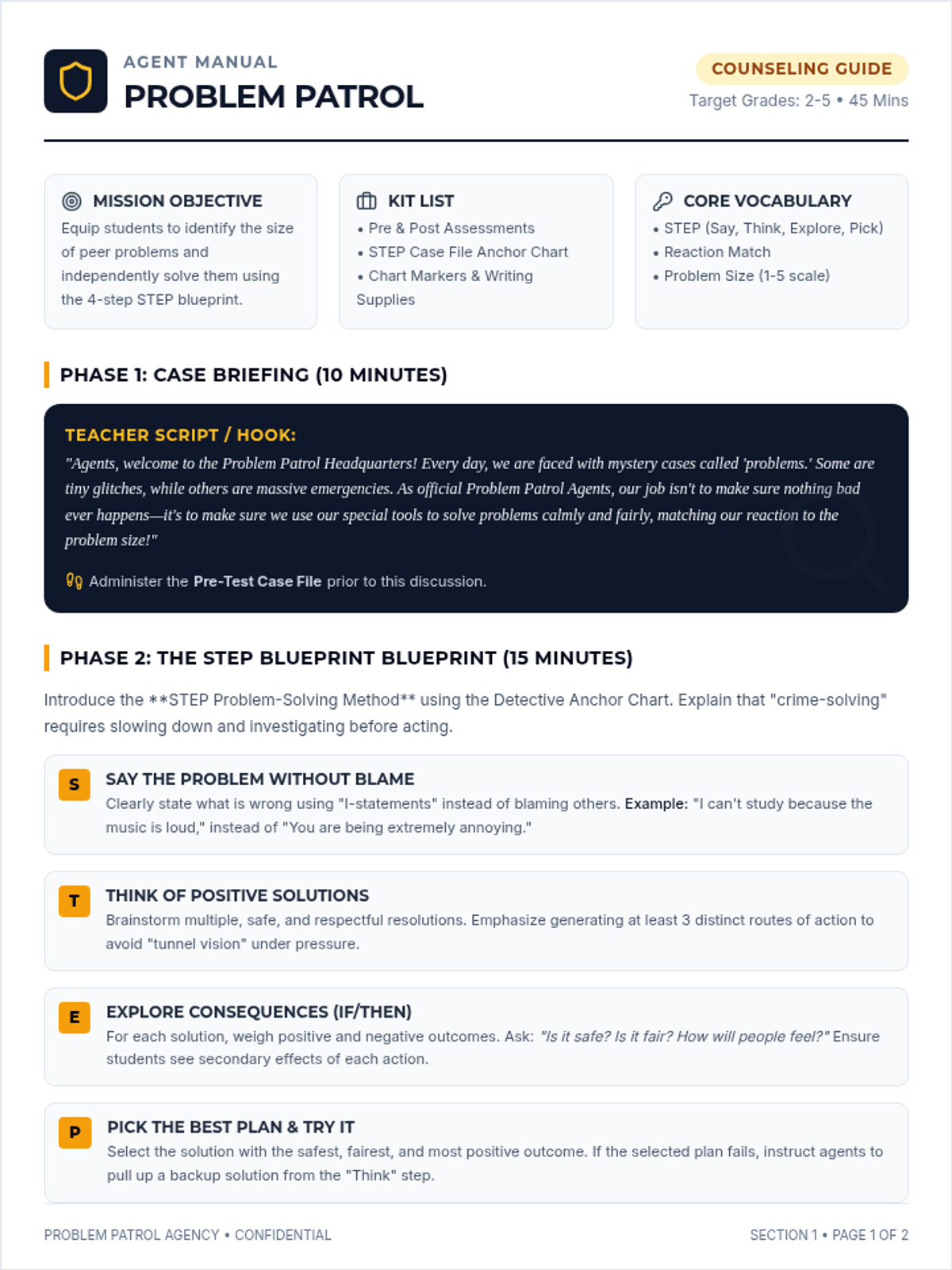
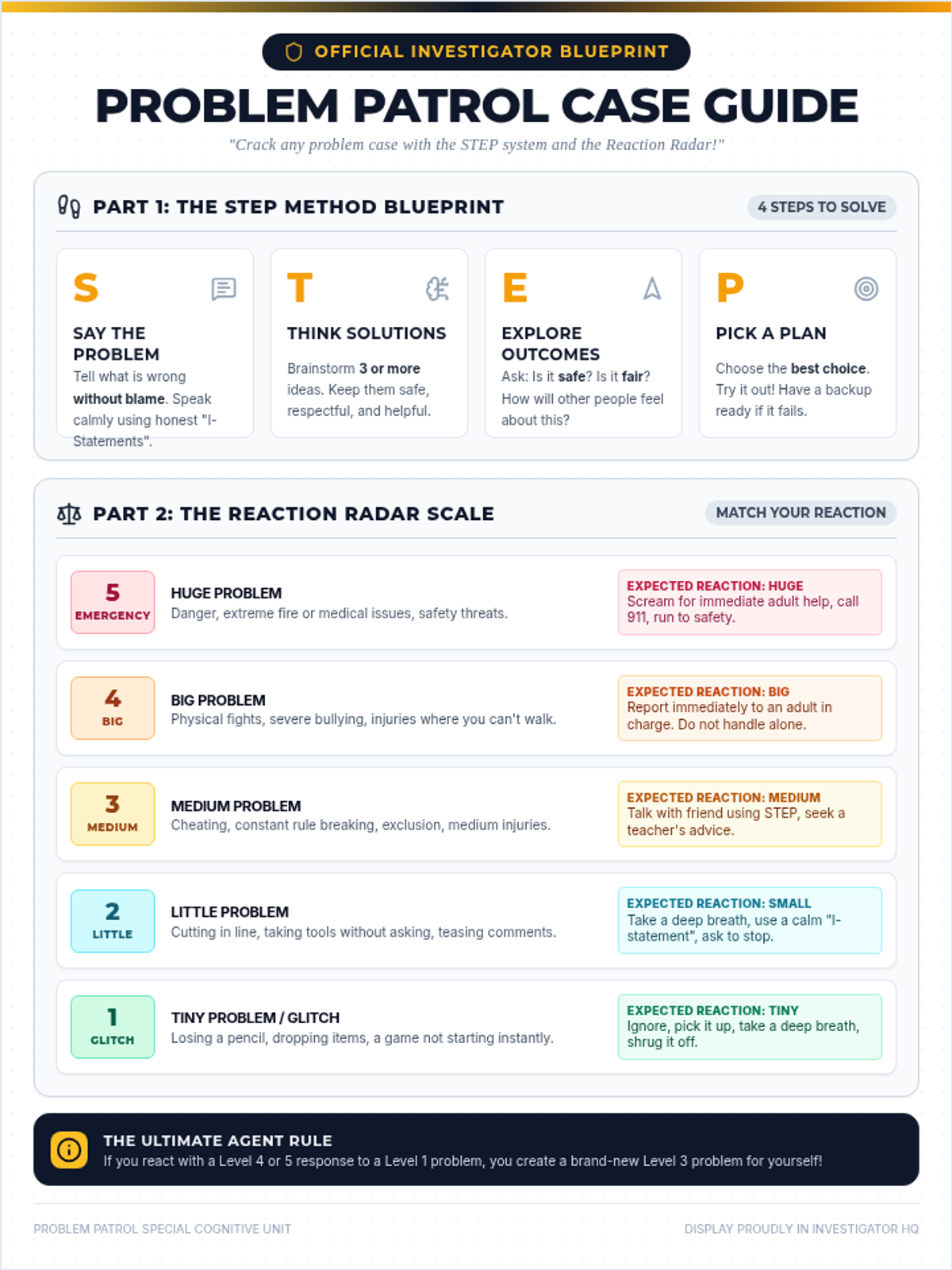
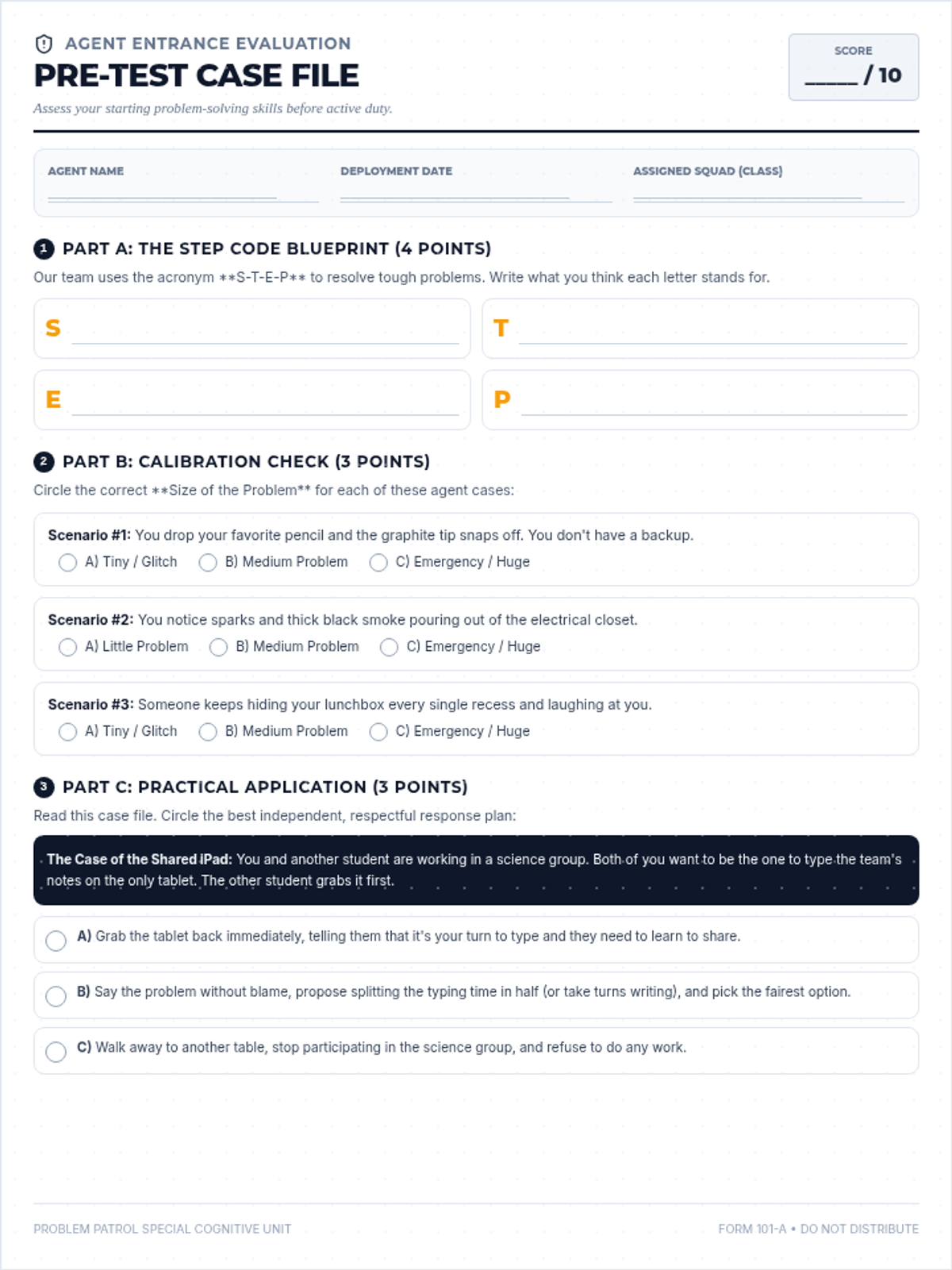
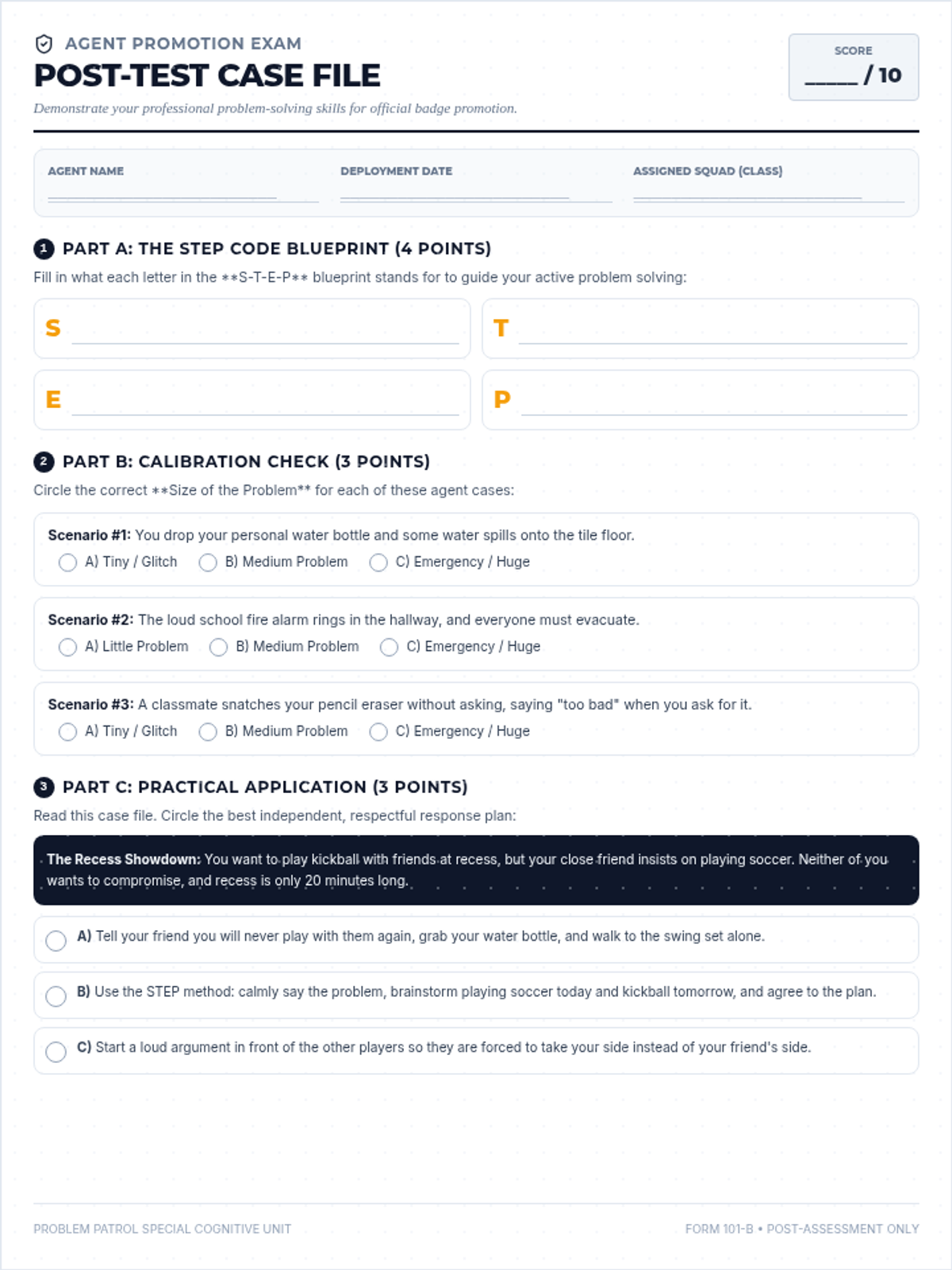
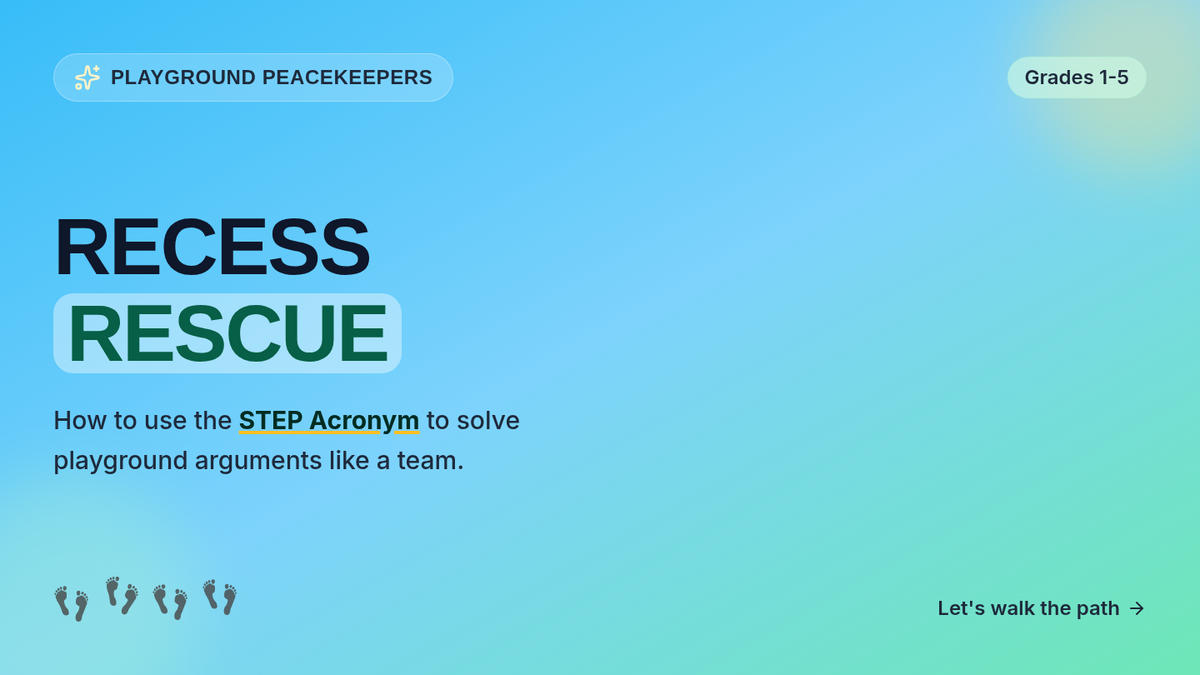
A comprehensive counseling lesson that empowers students to independently resolve conflicts and everyday challenges using the STEP Problem-Solving Method and the Size of the Problem visual scale. Includes assessment tools, an interactive anchor chart, and a step-by-step facilitation guide.
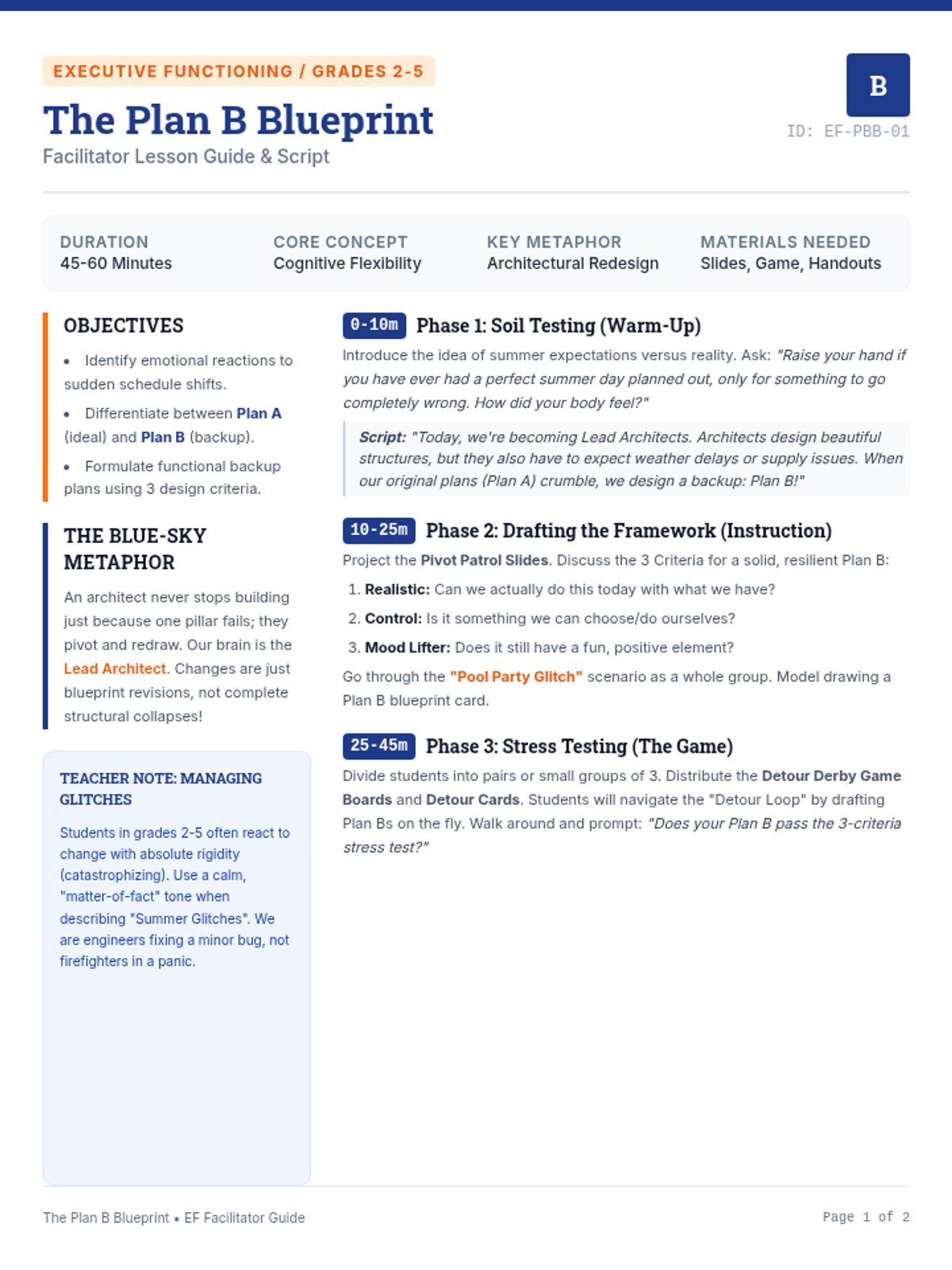
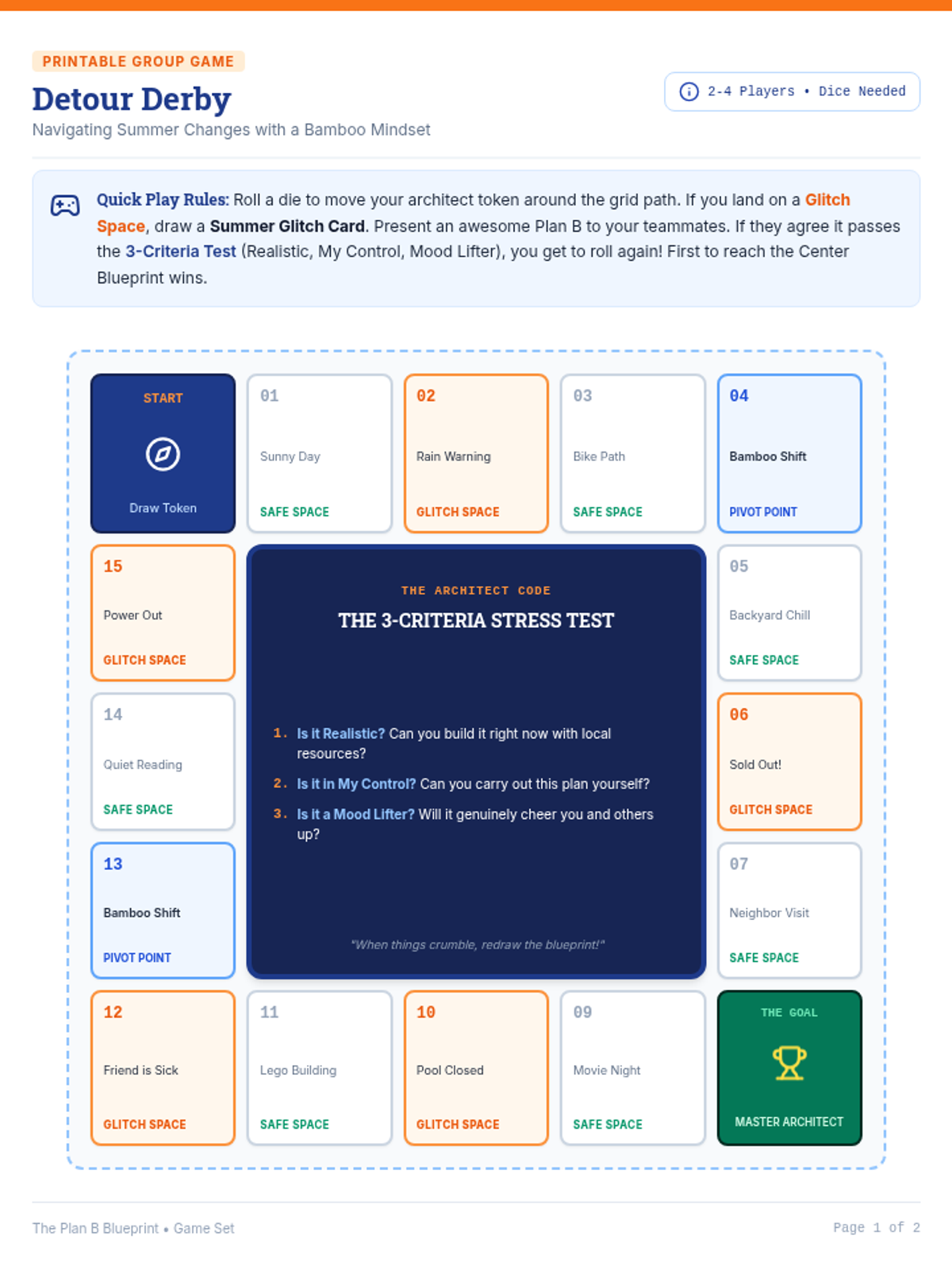
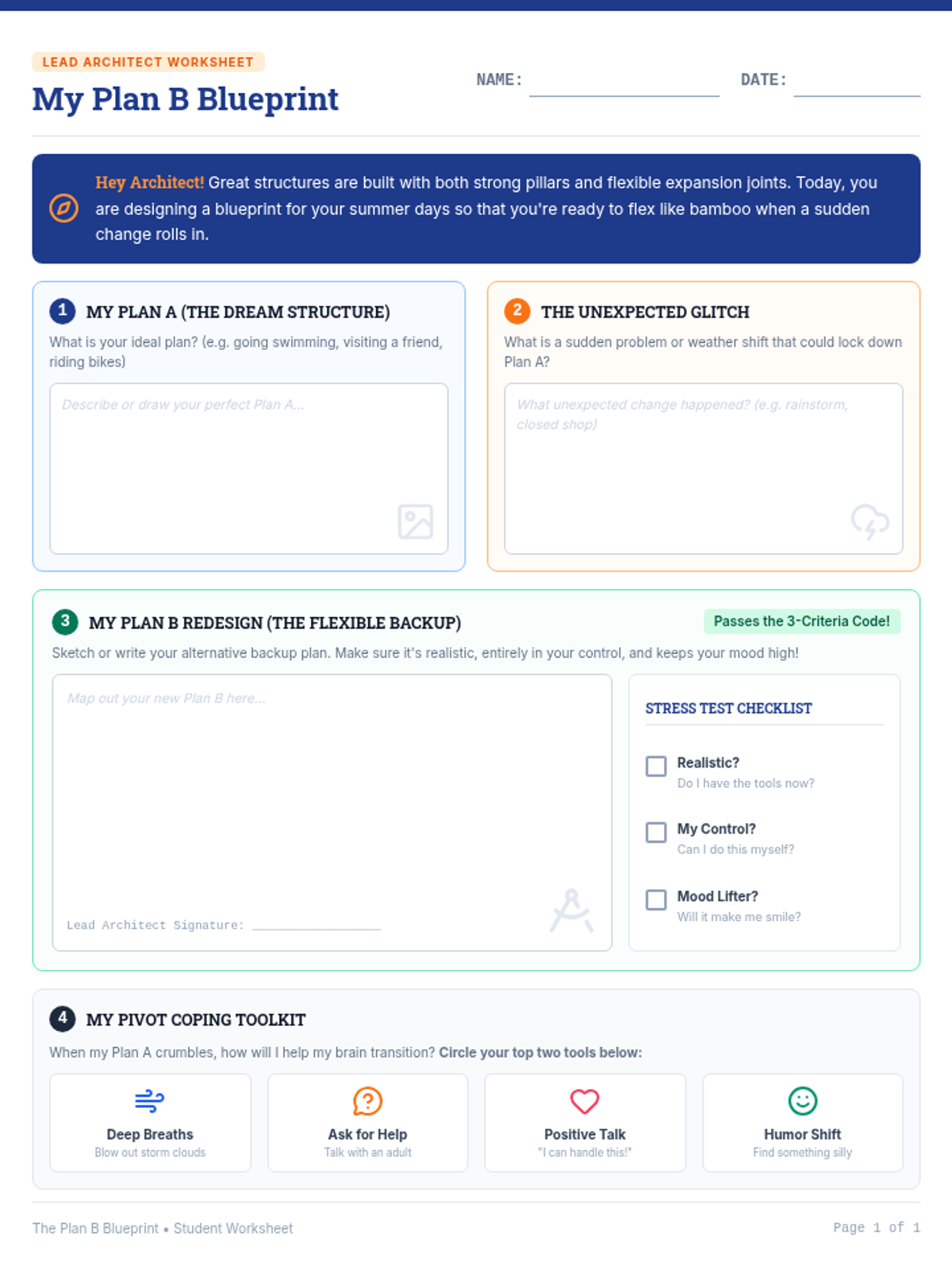
An executive functioning and cognitive flexibility workshop teaching students in grades 2-5 how to design alternative options ('Plan B') when summer plans change unexpectedly. This lesson uses an architectural blueprint metaphor to build resilience and reduce transition anxiety.
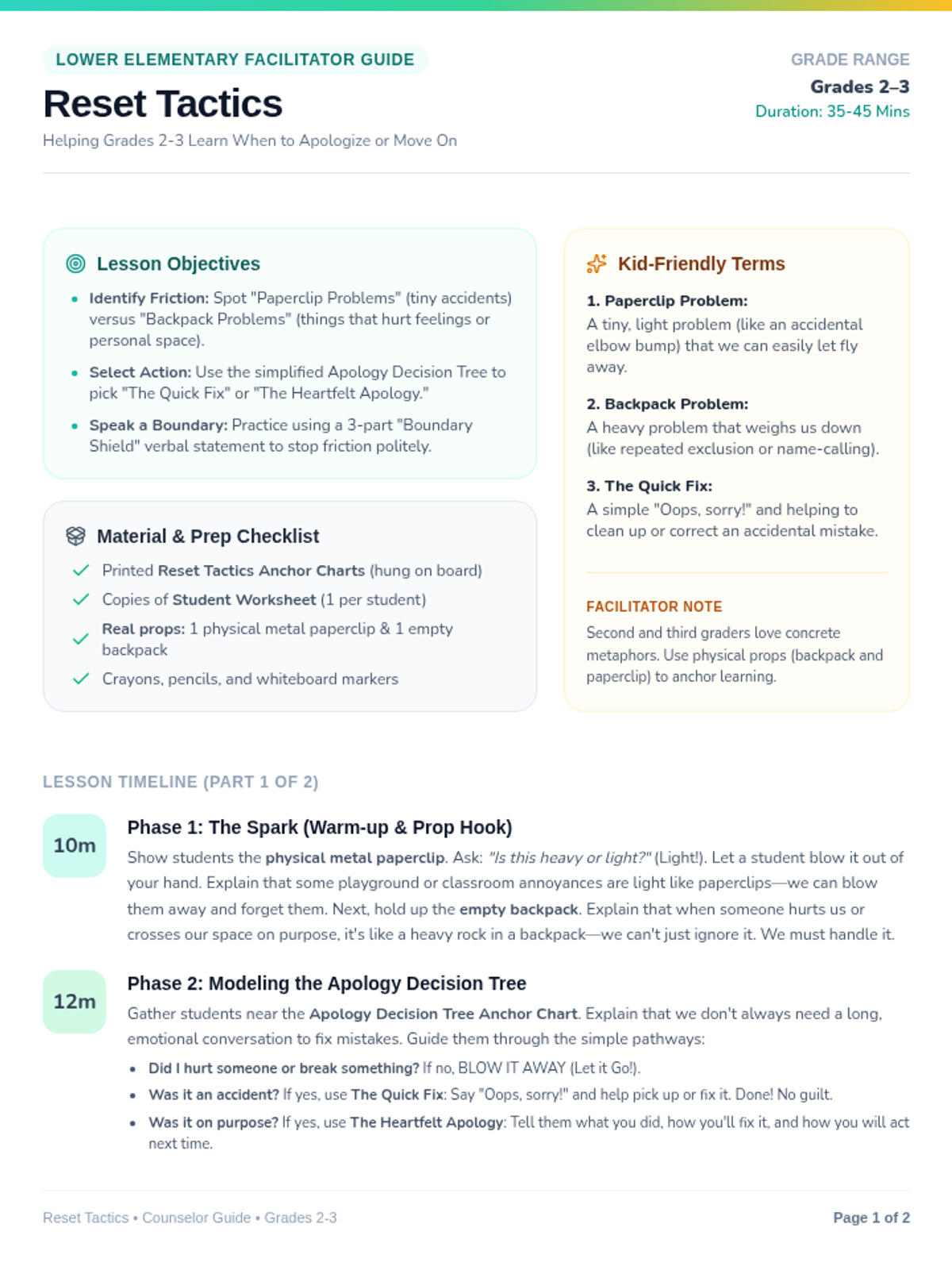
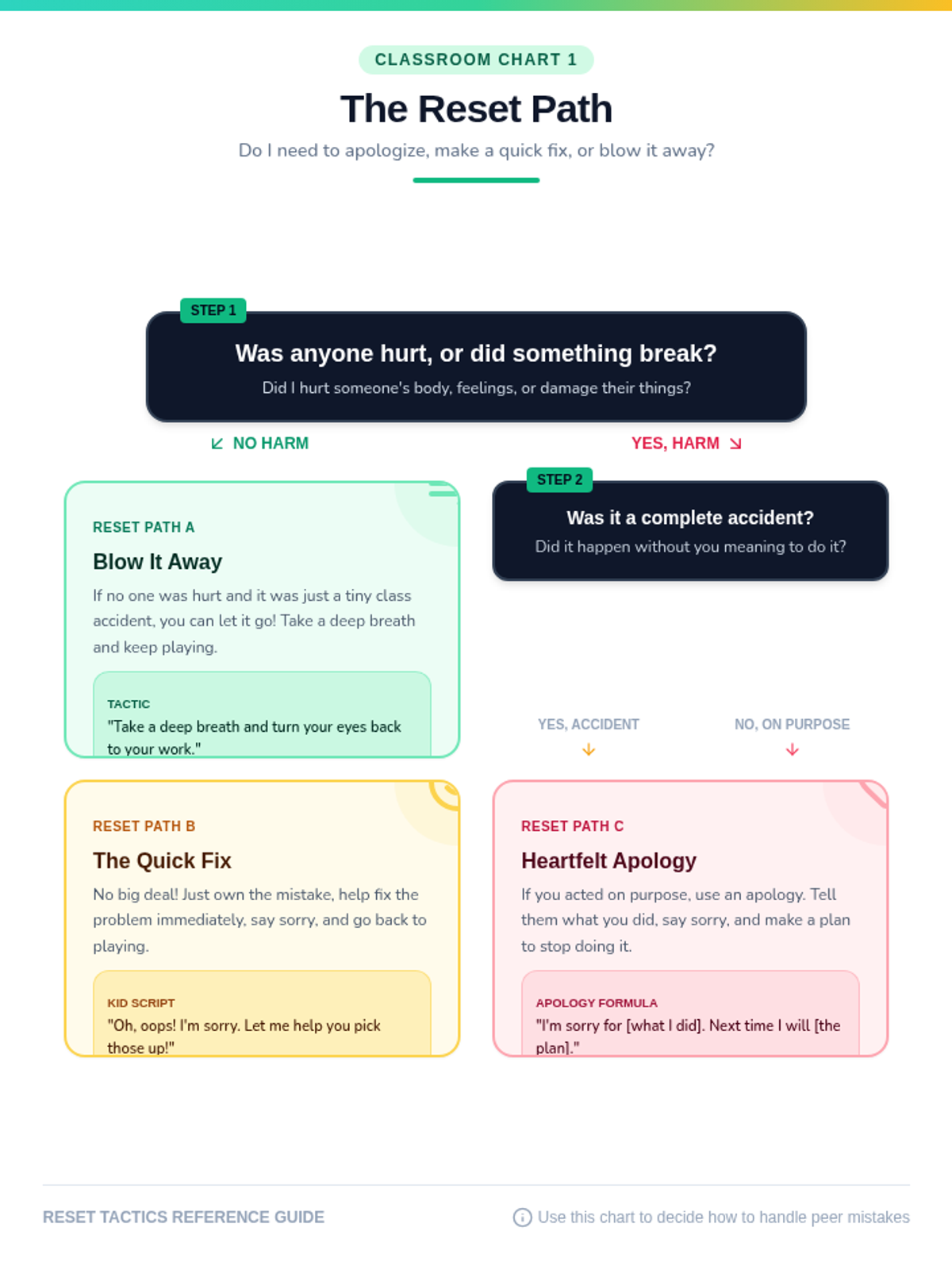
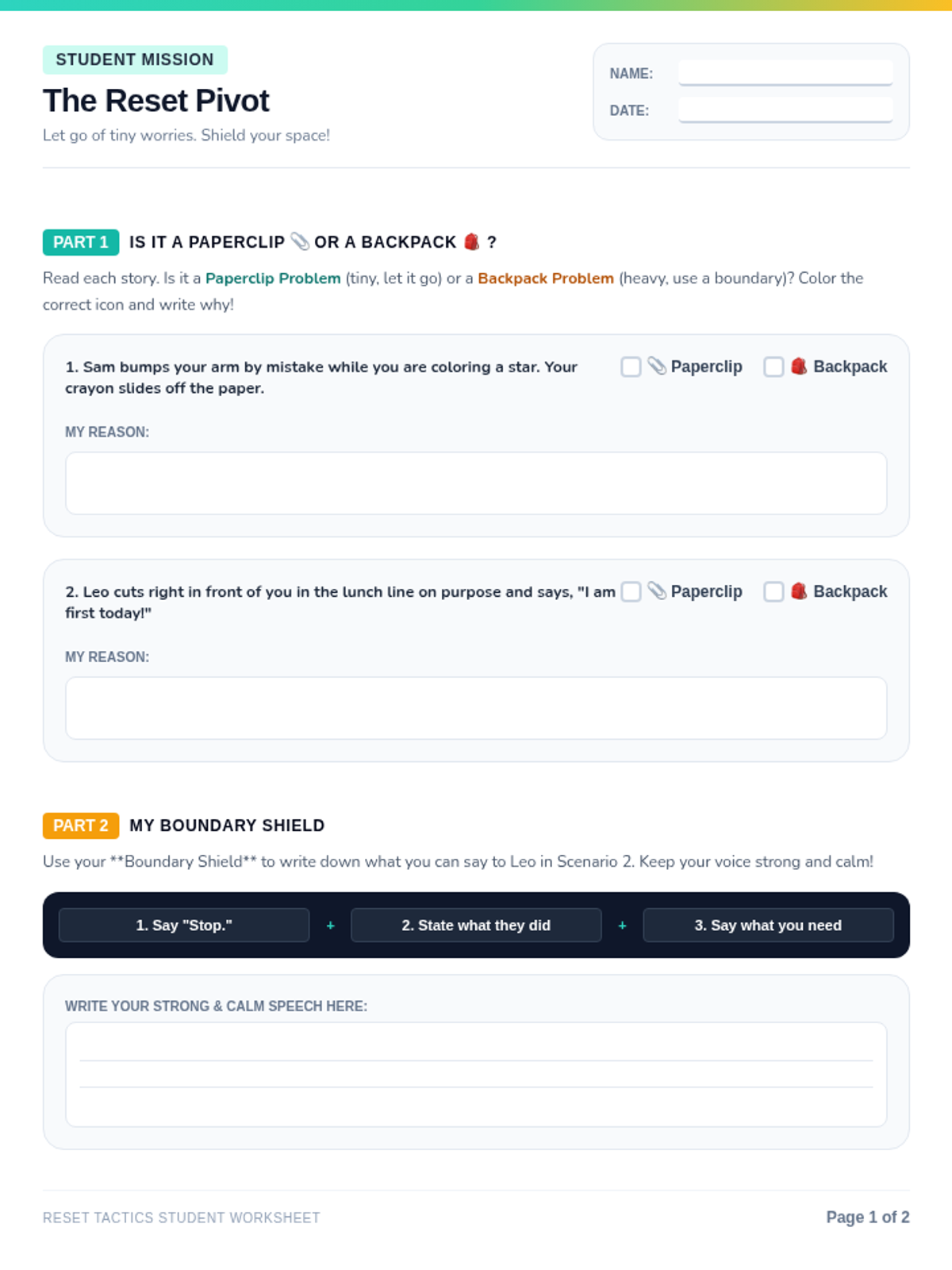
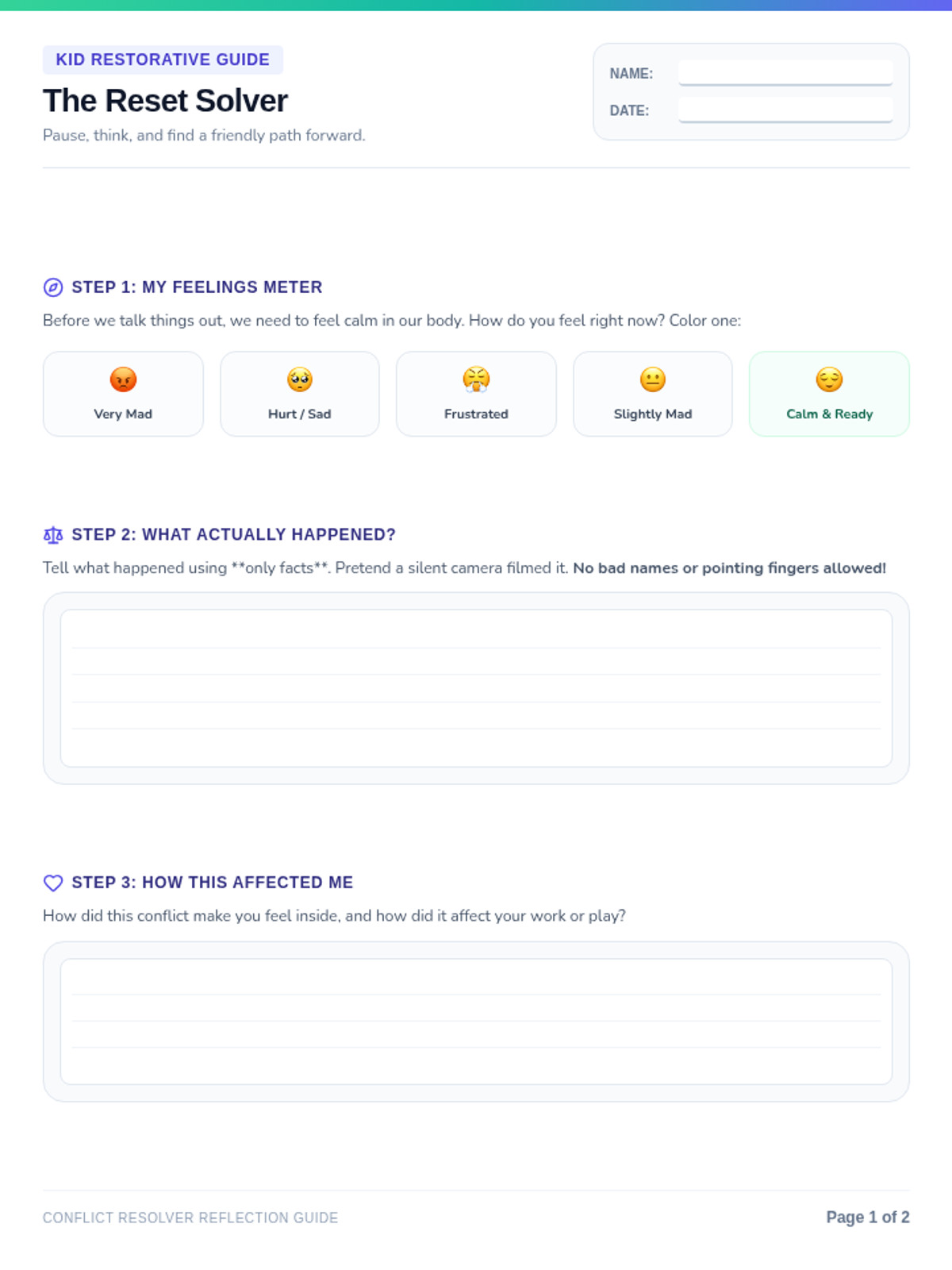
A counseling lesson designed for students in grades 2-3 to help them navigate peer friction, evaluate when to apologize or move on, let go of minor grievances, and set clear social boundaries.
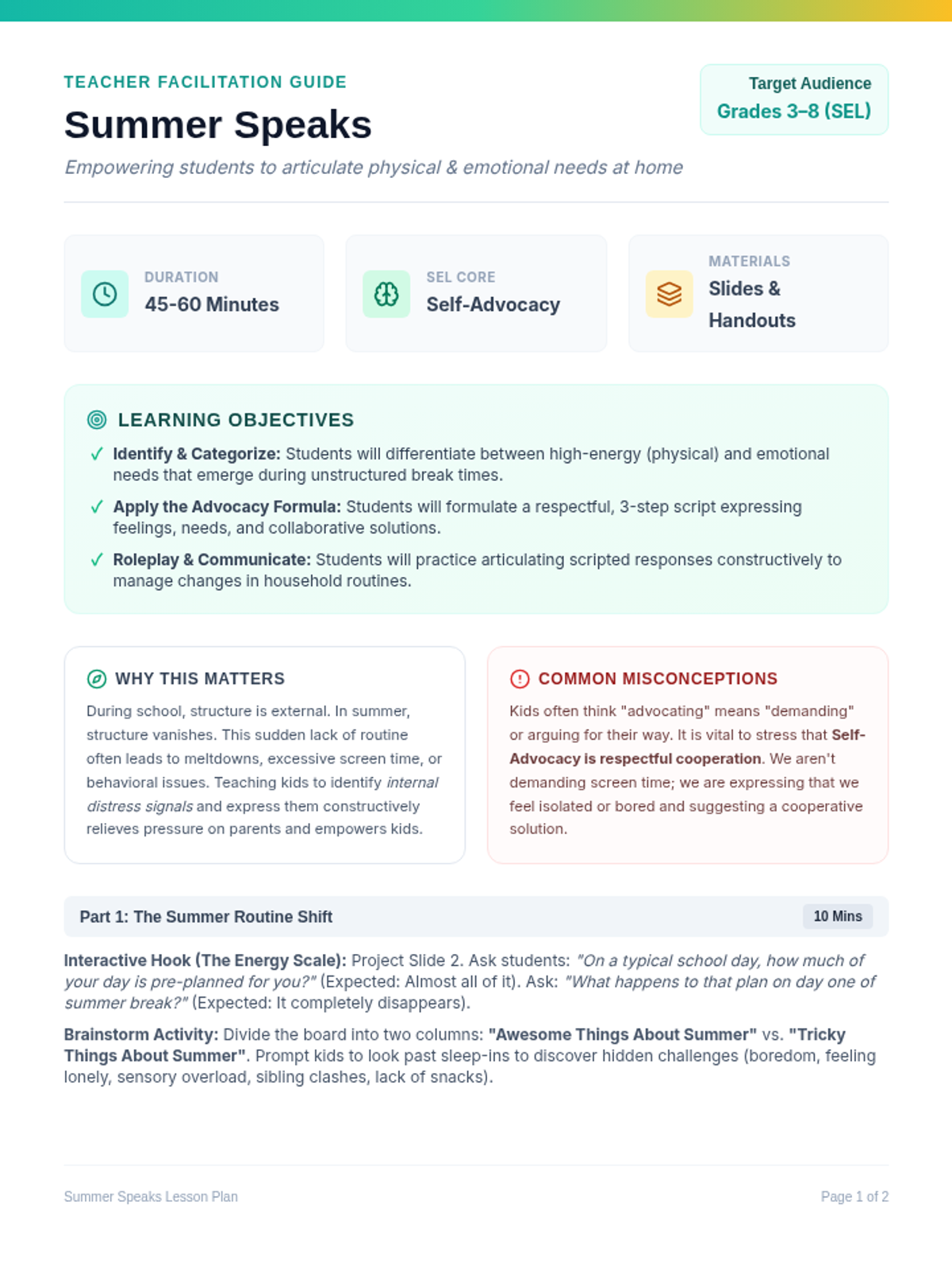
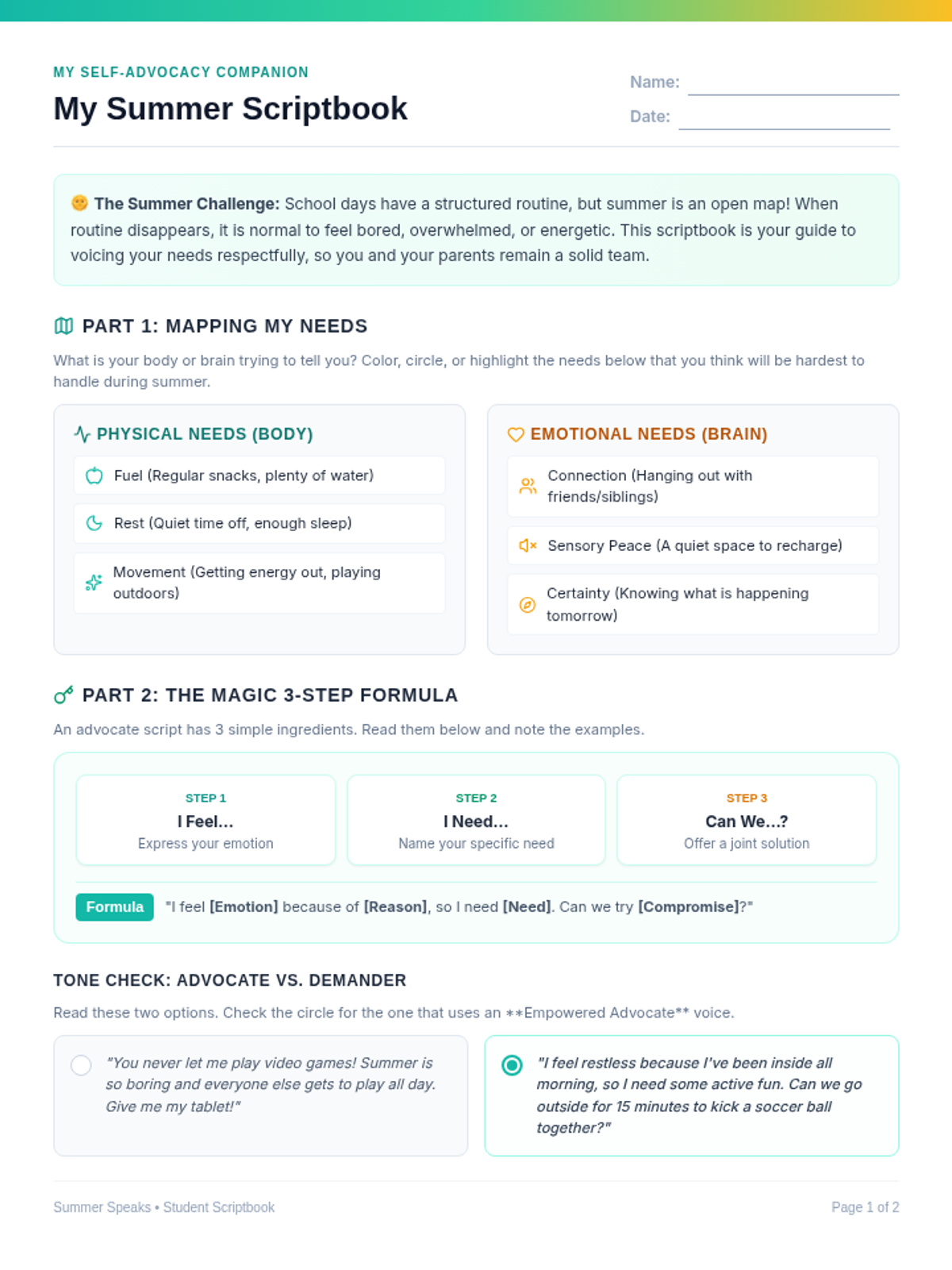
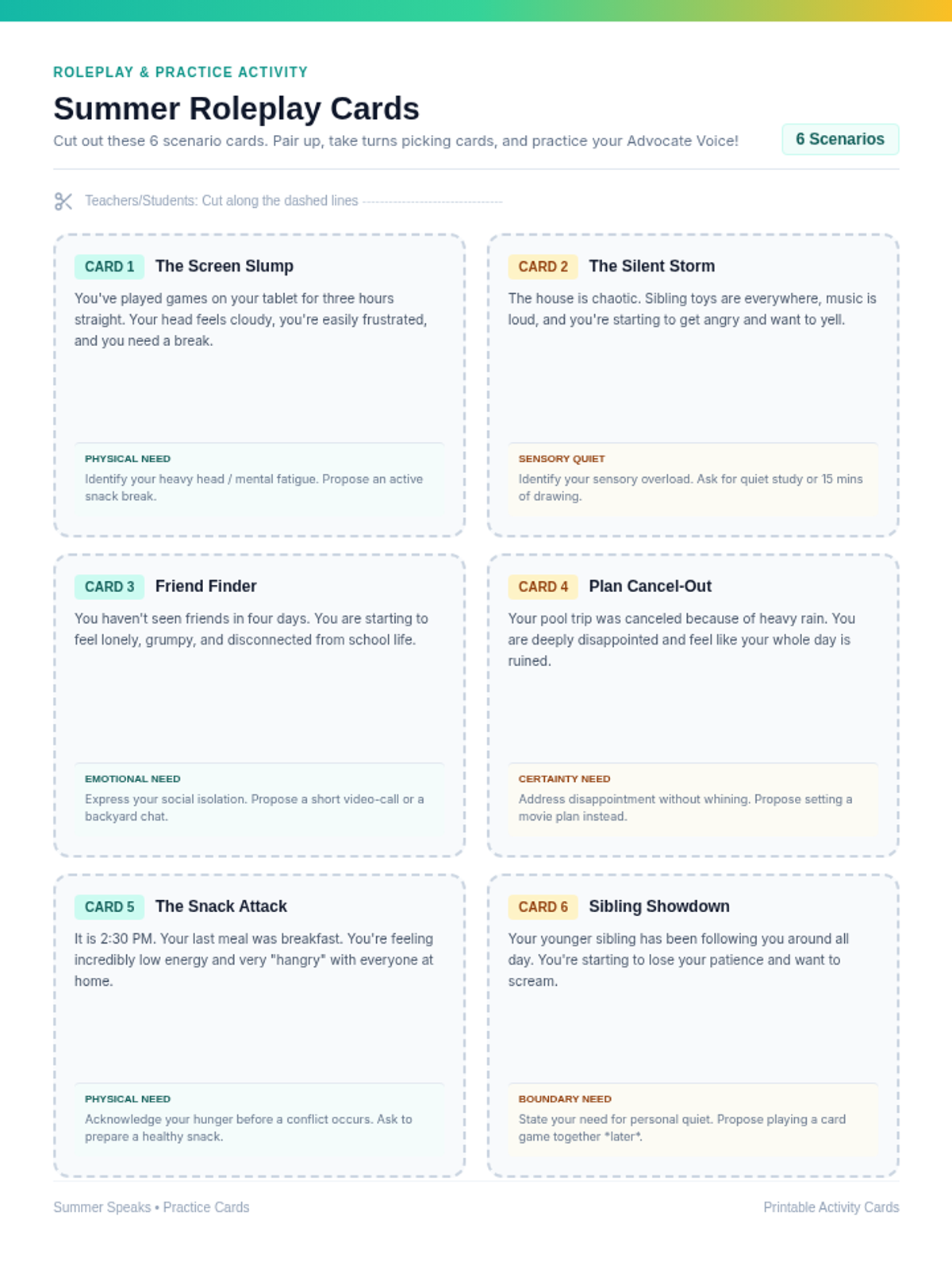
An empowering social-emotional learning lesson that teaches self-advocacy to elementary and middle school students. Students discover how to recognize their physical and emotional needs during unstructured summer breaks and articulate them to parents or guardians using structured, respectful script templates.
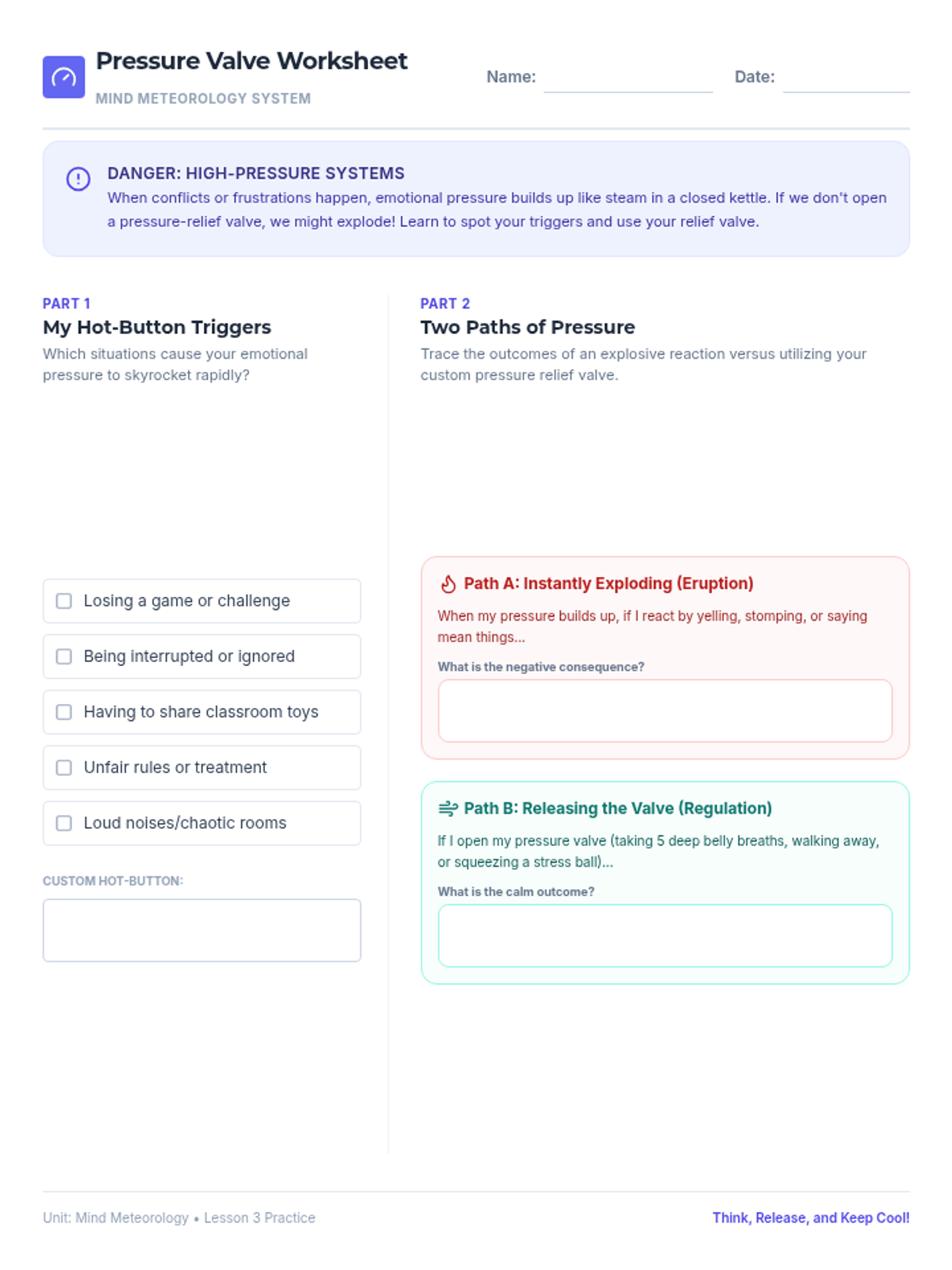
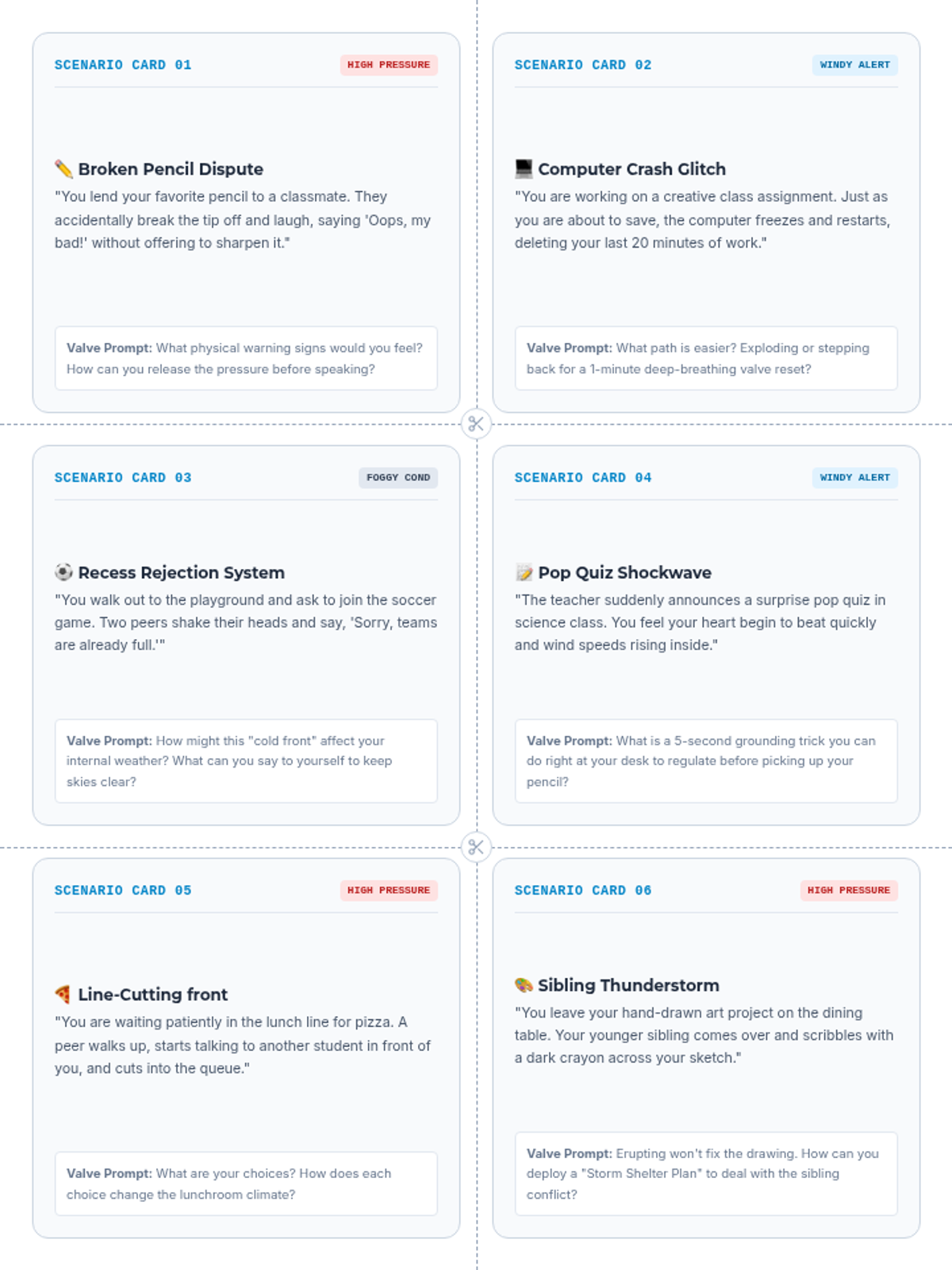
Focuses on responsible decision-making during high-stress conflicts, helping students identify hot-button triggers, evaluate action-consequences, and apply 'pressure relief valve' strategies.
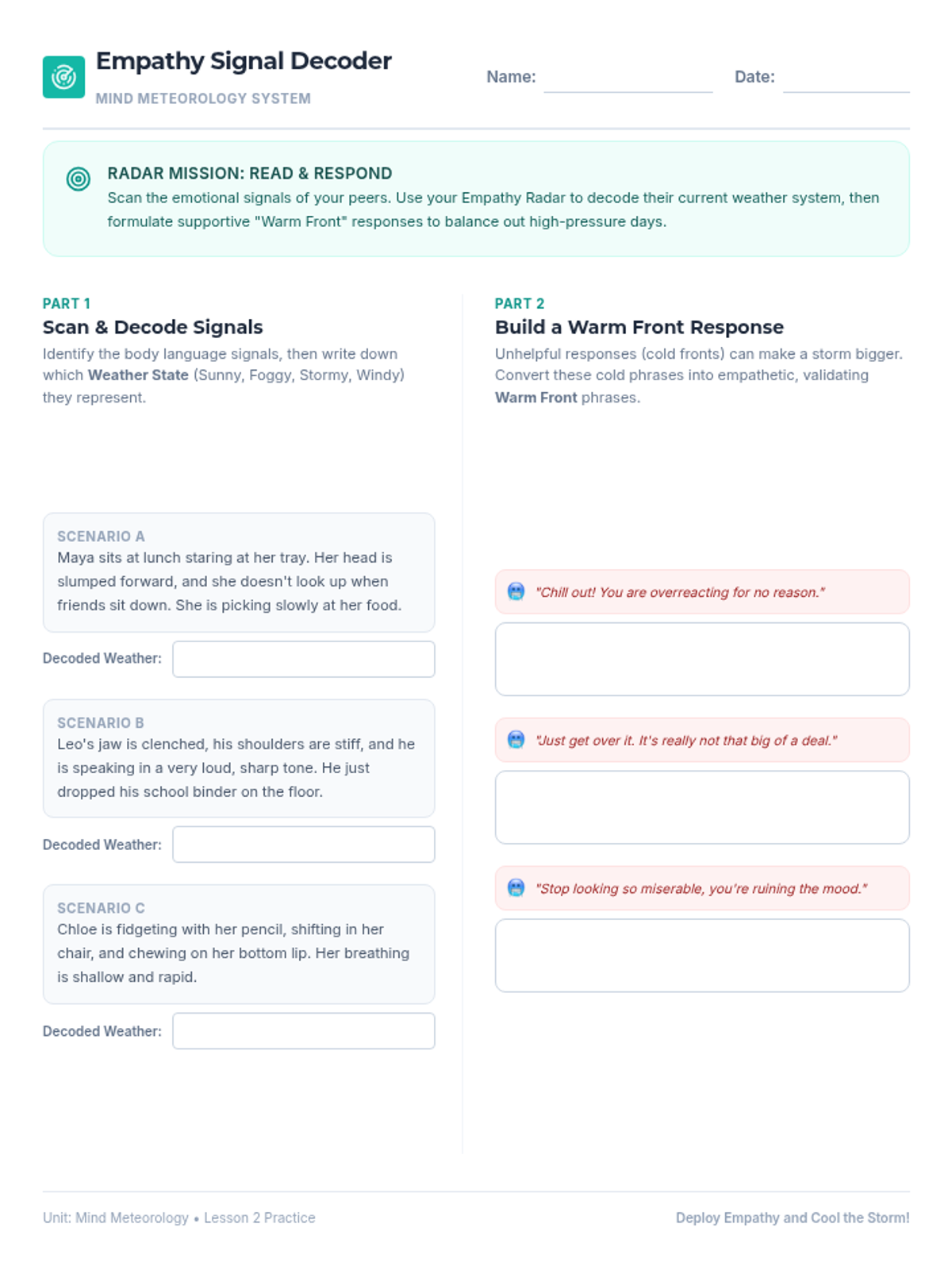
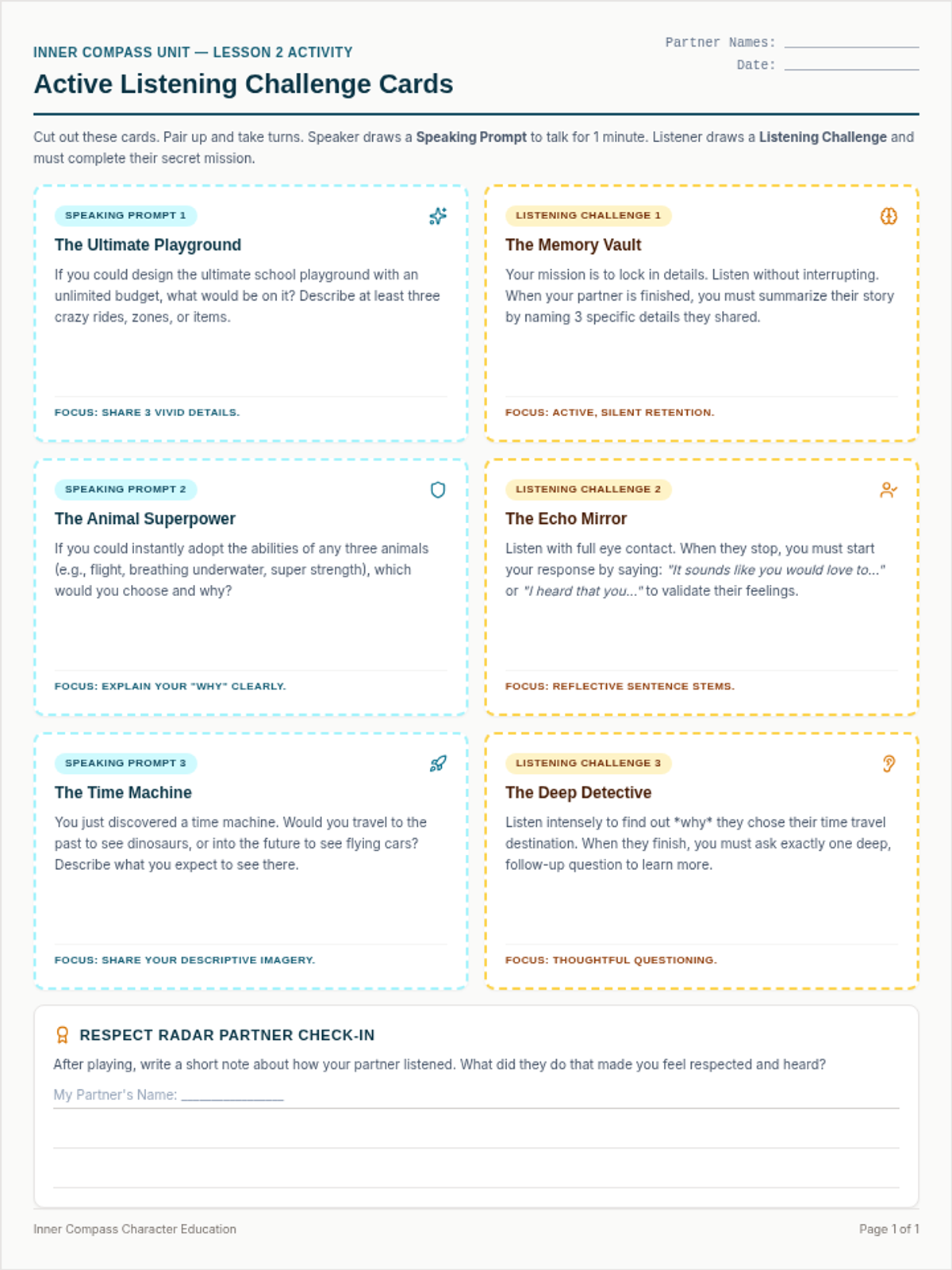
Focuses on active listening, reading other people's emotional signals (body language, tone), and matching our response to their weather state with empathy and validation.
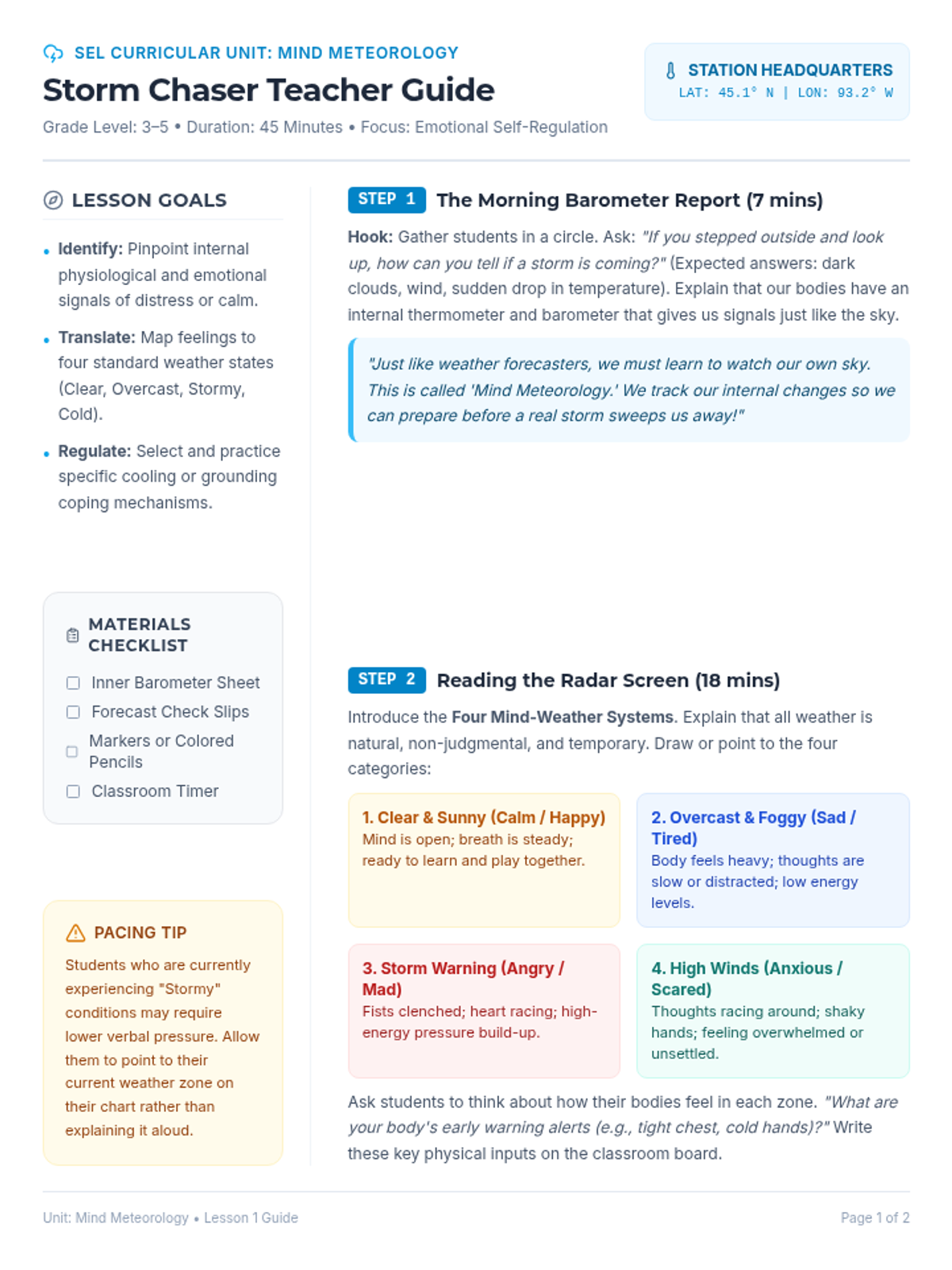
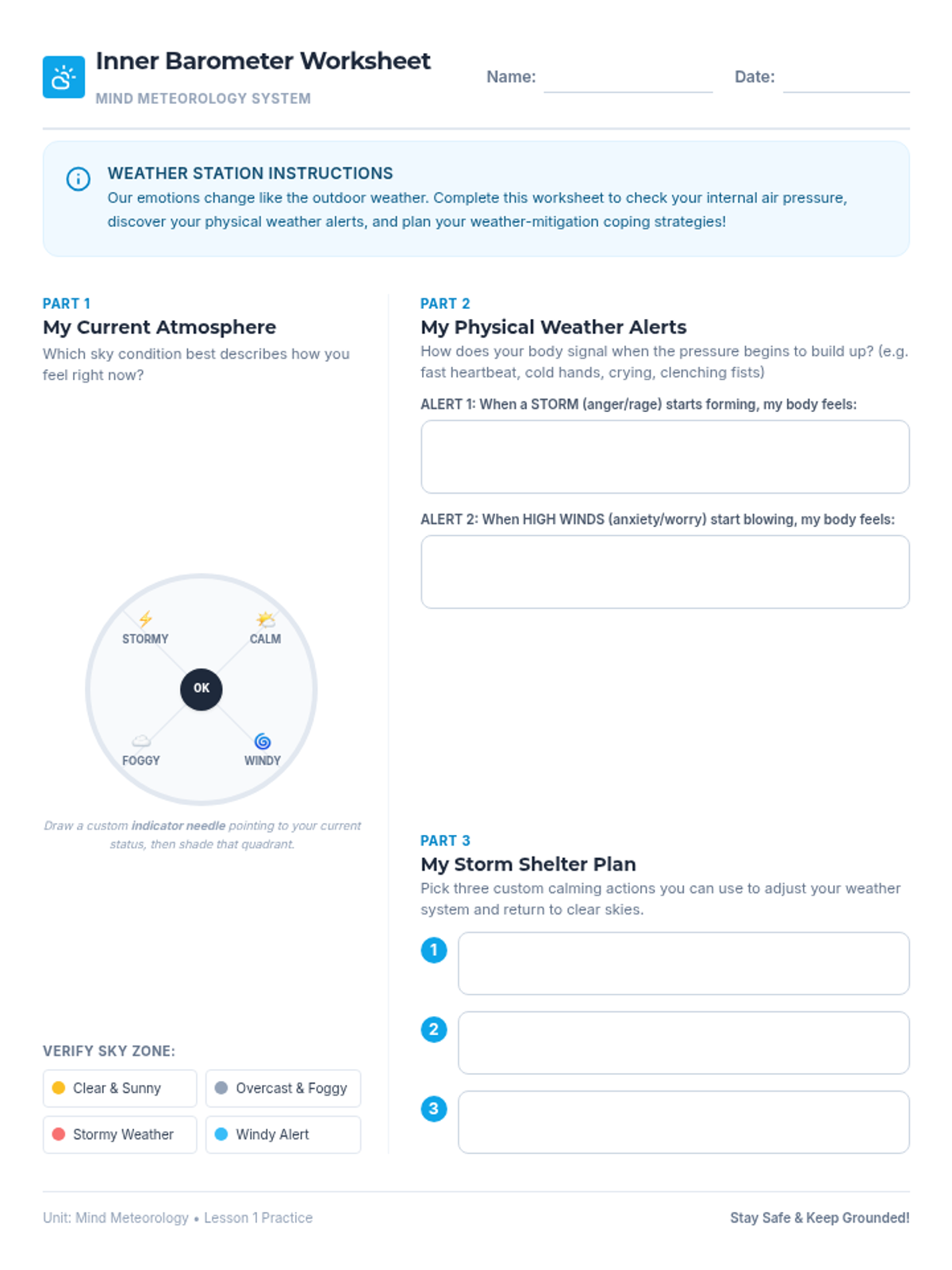
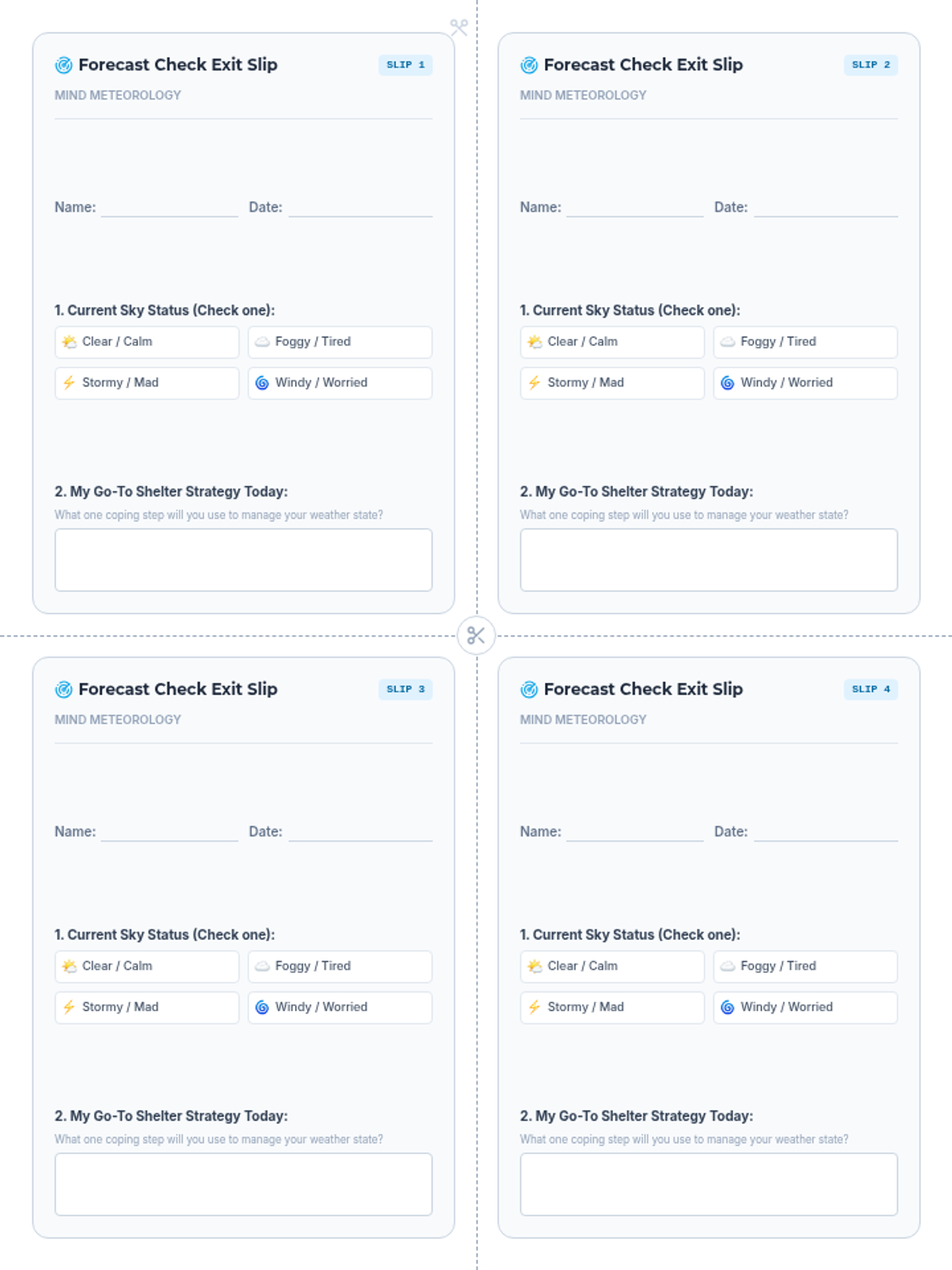
An engaging social-emotional learning lesson that teaches students to identify their emotional states as internal weather patterns and apply self-regulation coping strategies to return to calm, clear skies.
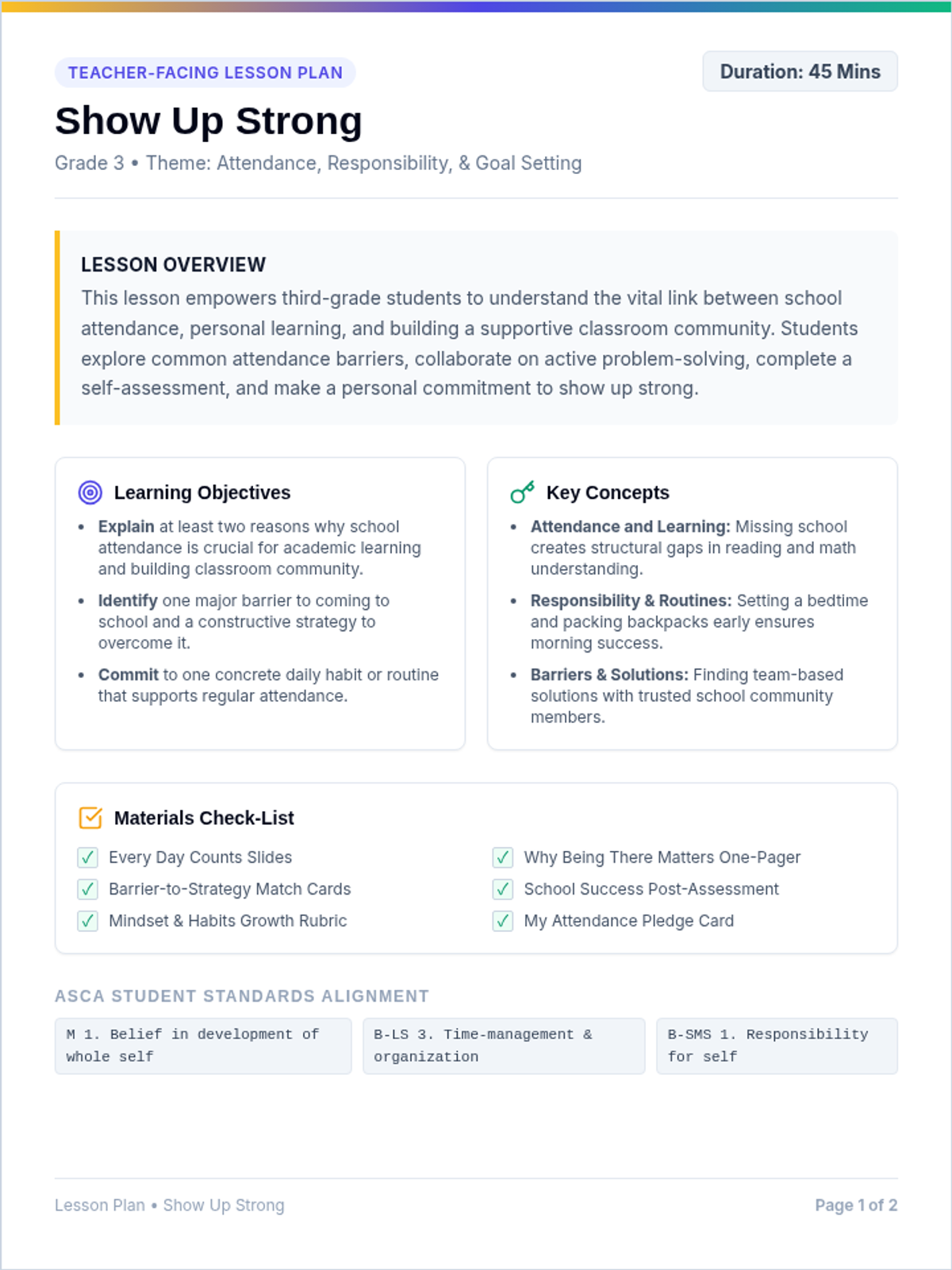
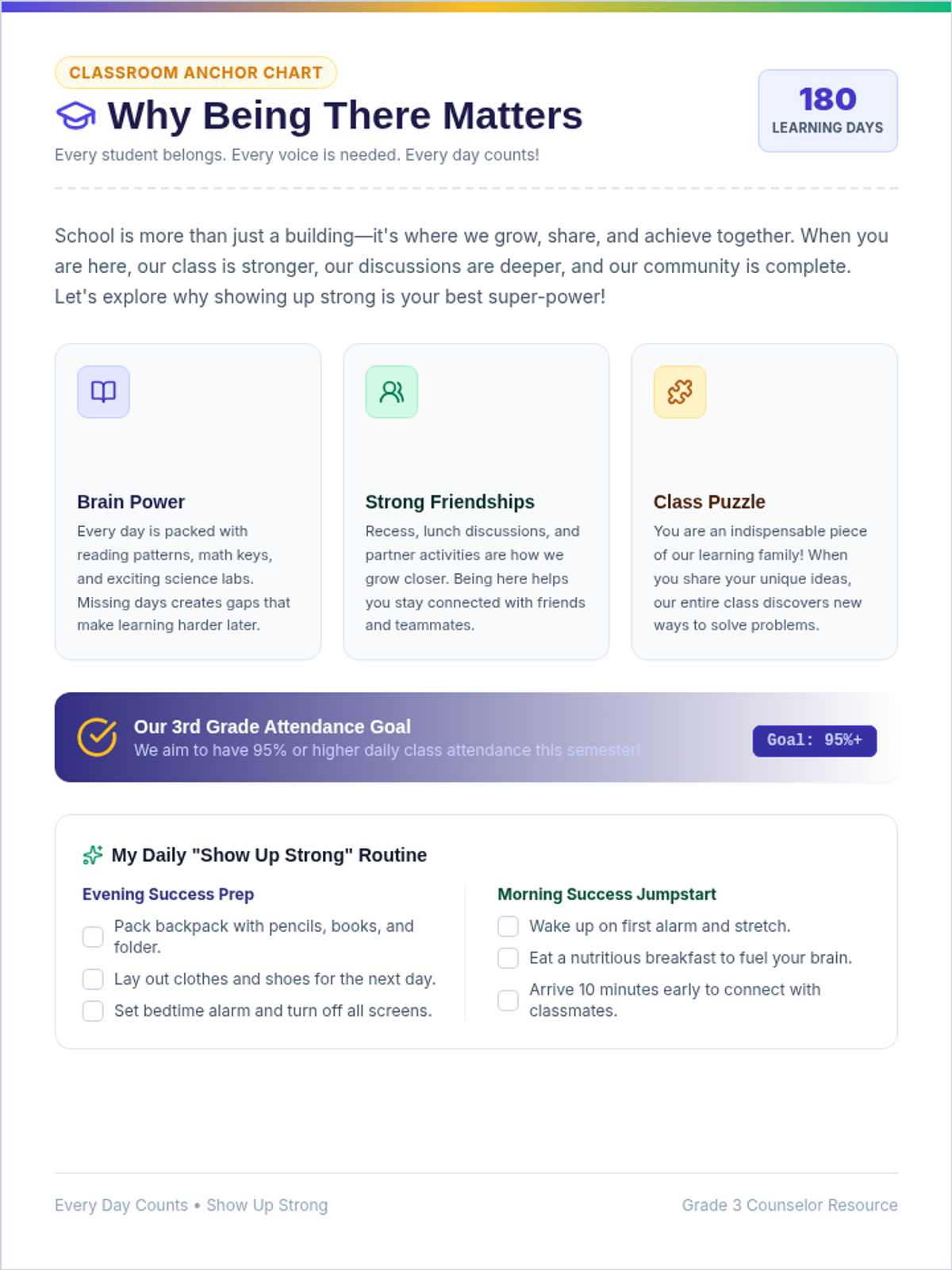
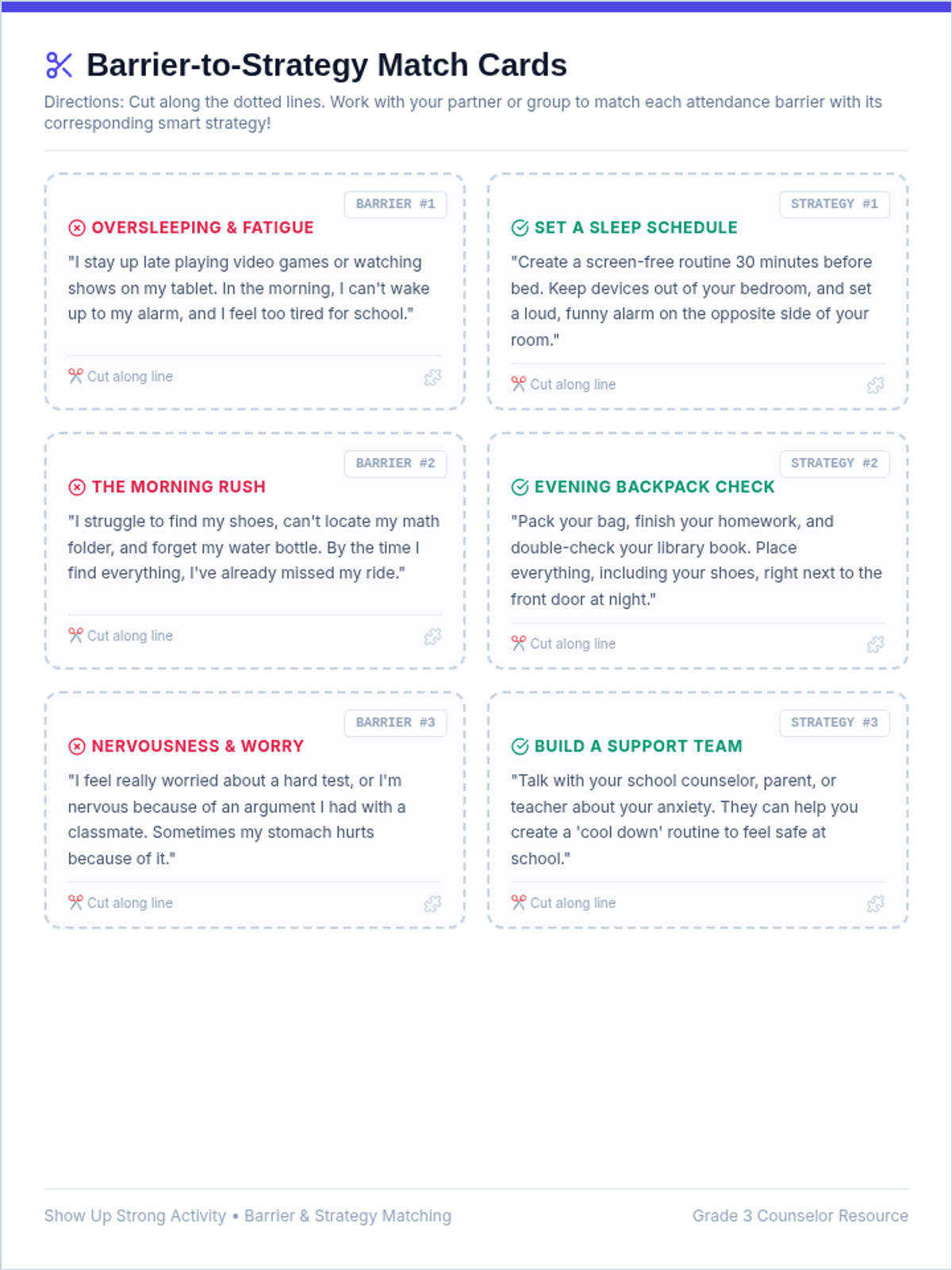
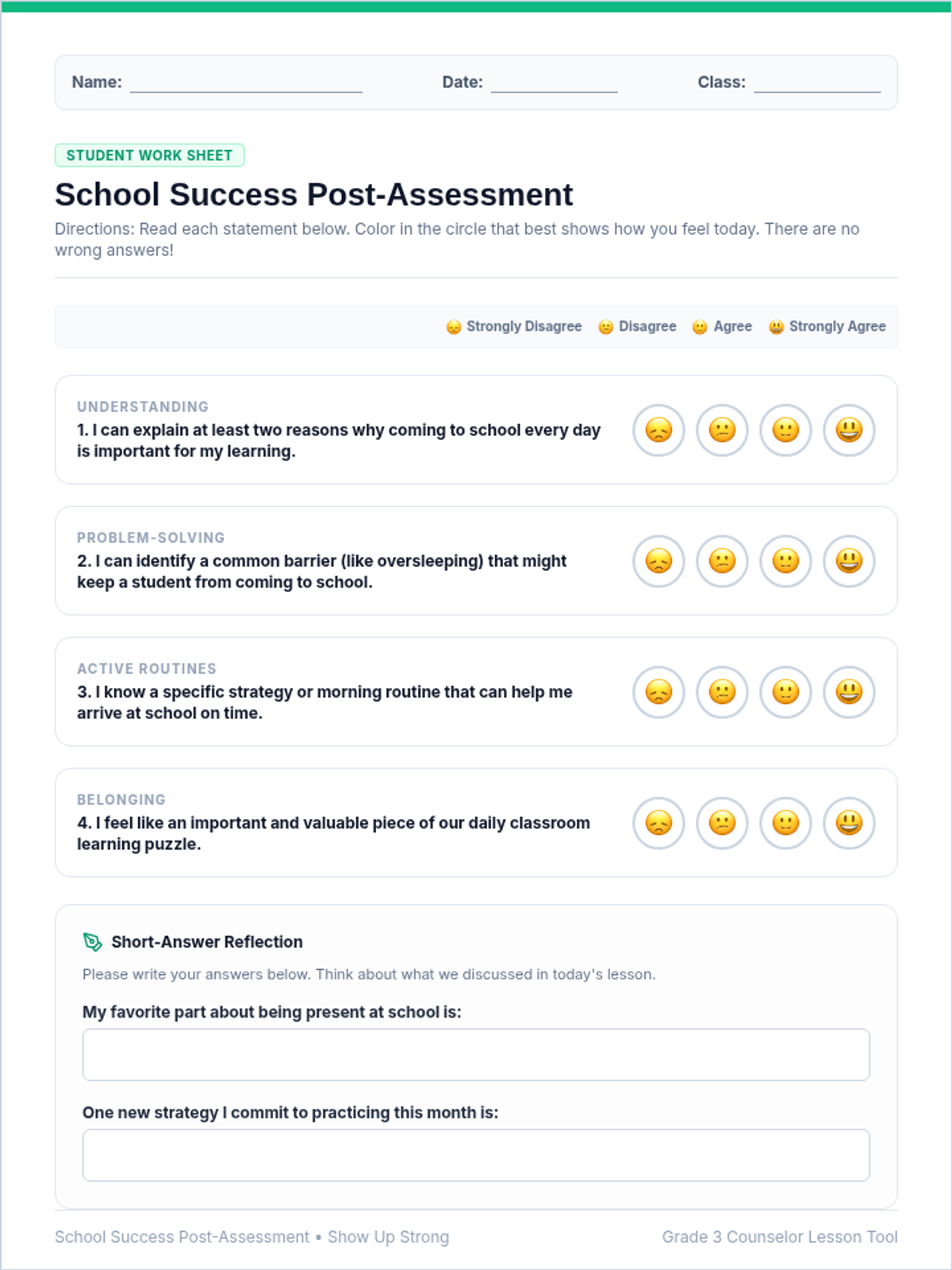
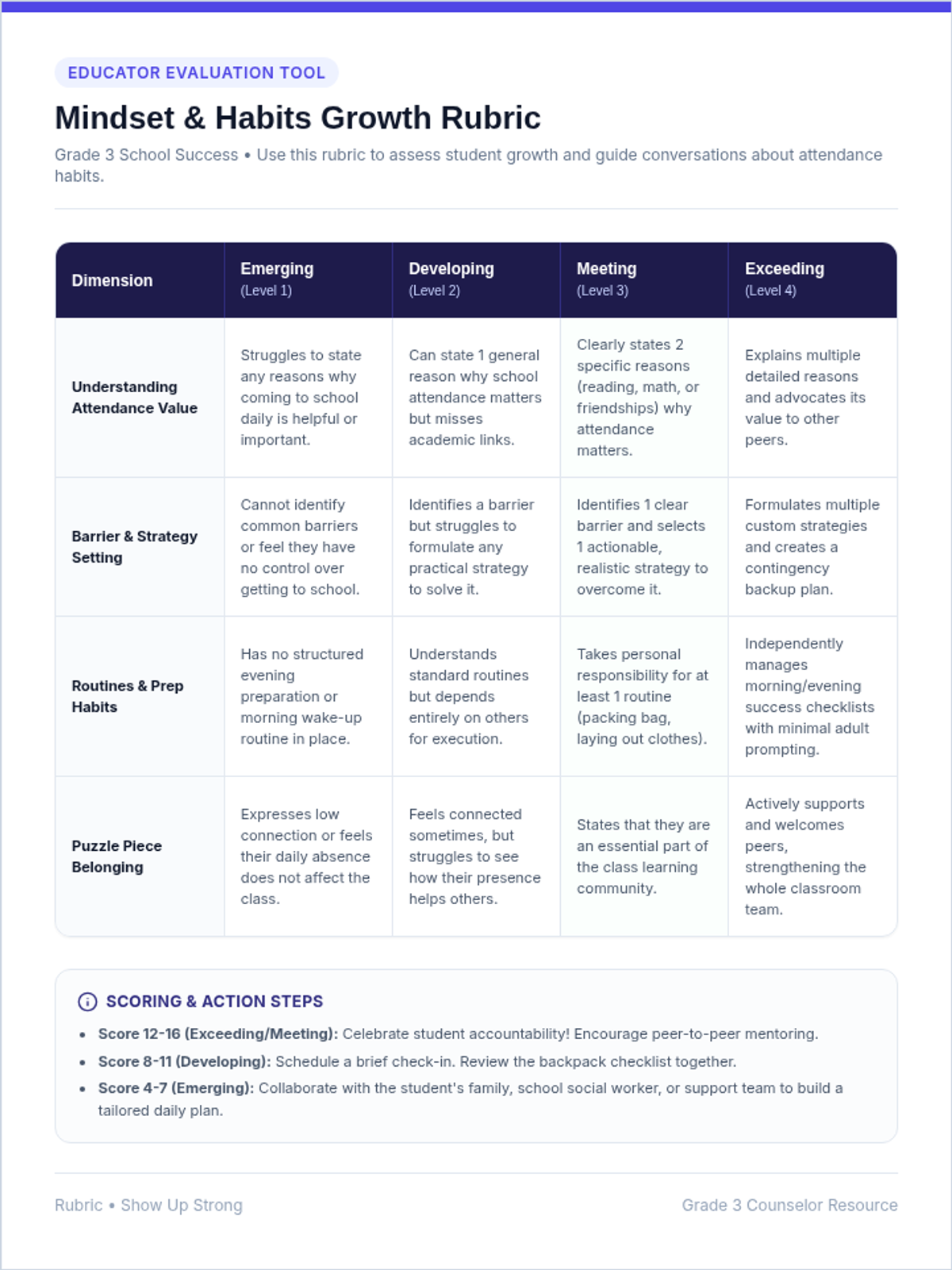
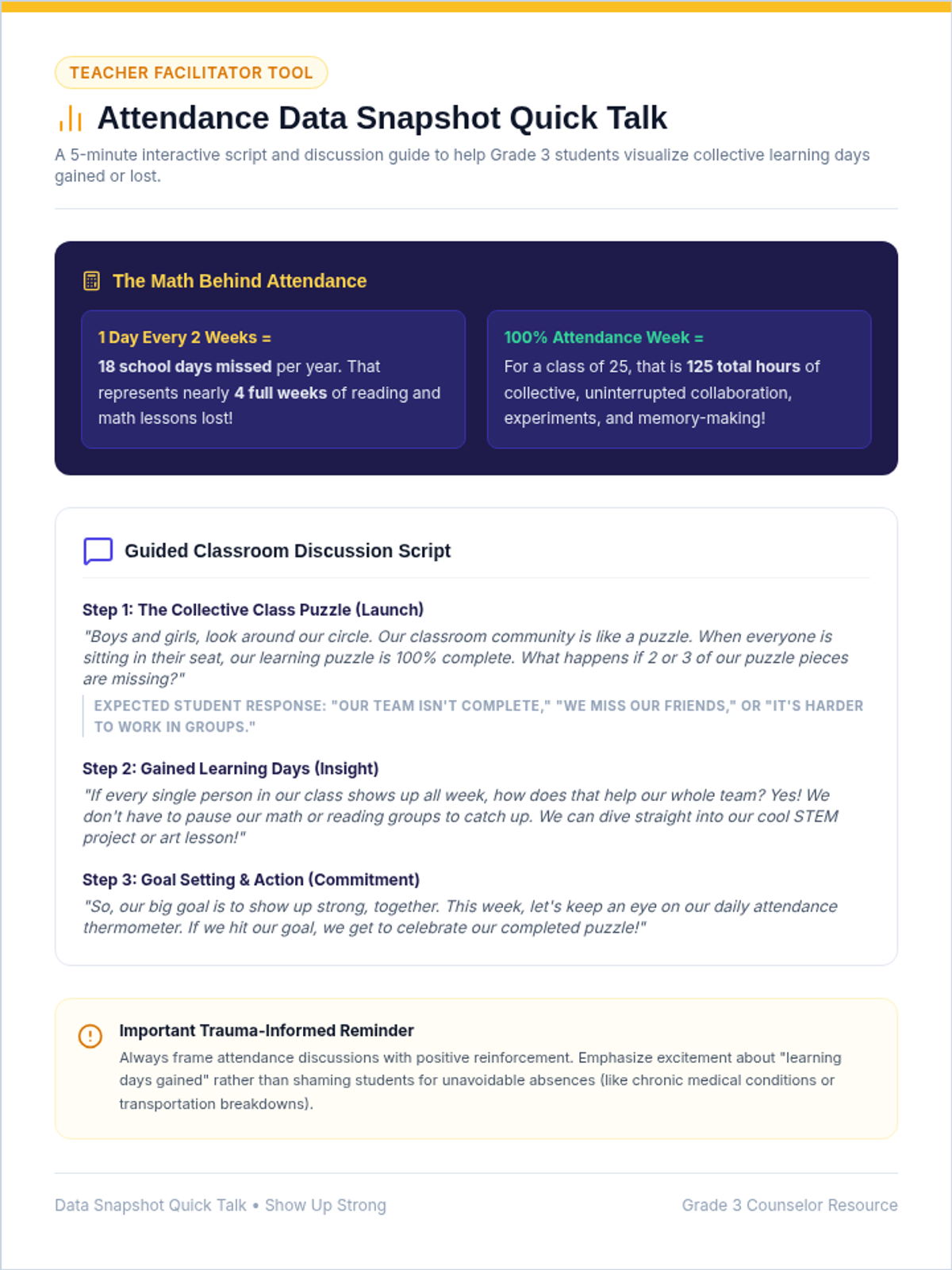
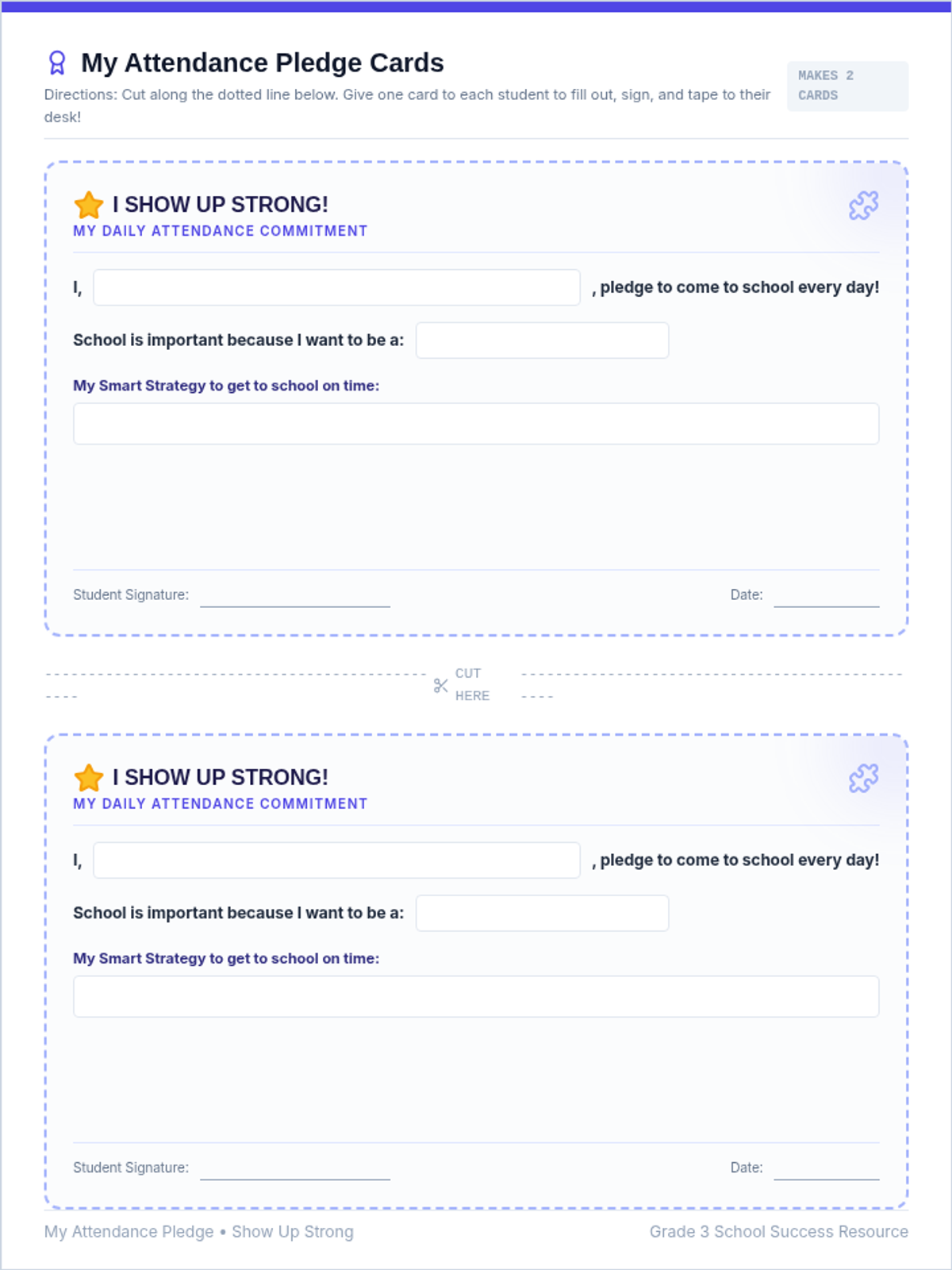
A comprehensive 45-minute lesson for 3rd grade that emphasizes the value of school attendance, helps students identify and overcome attendance barriers, and guides them in making personal attendance pledges.
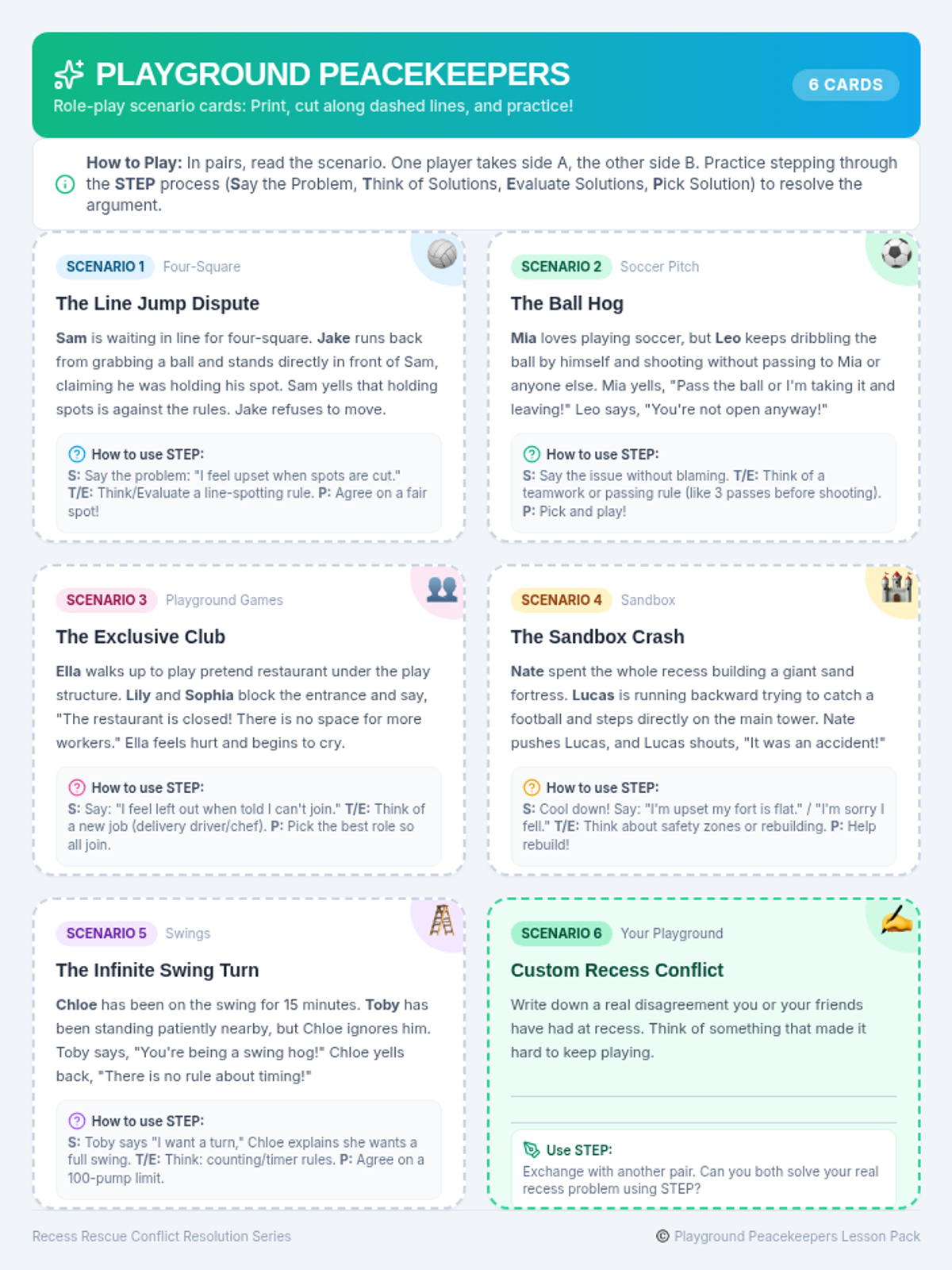
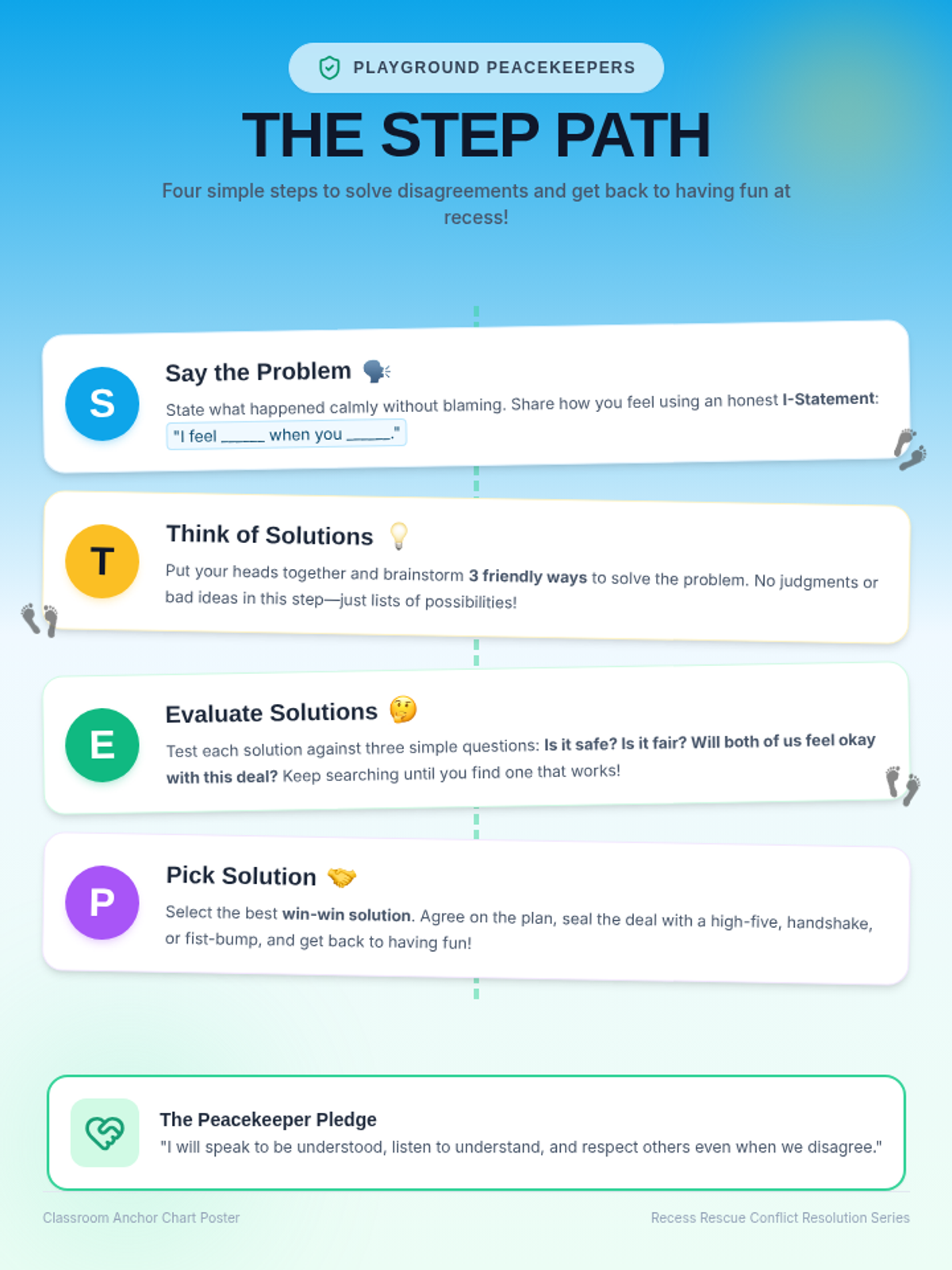
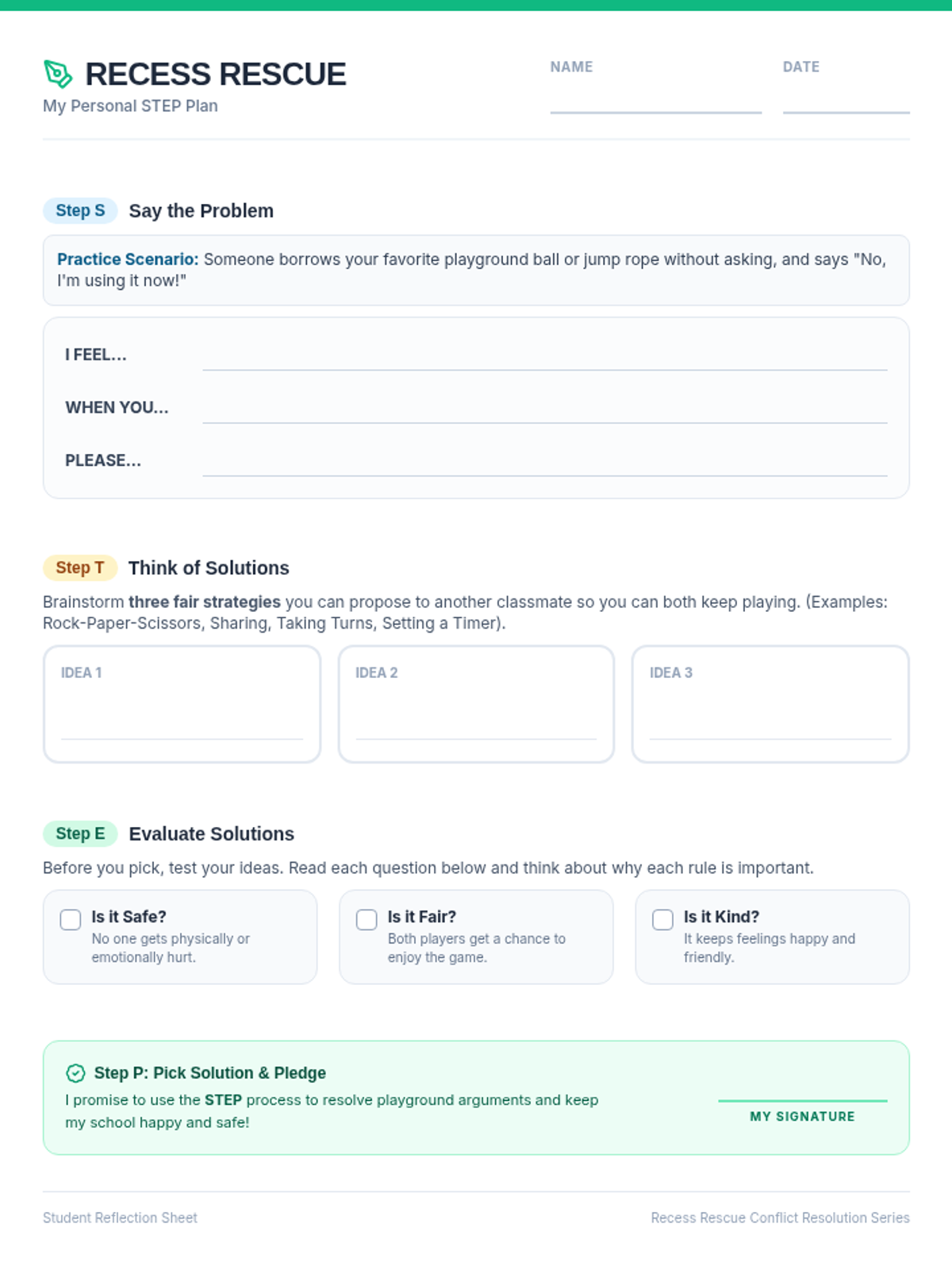
A lesson bundle designed to teach elementary students how to resolve playground conflicts using a structured, peer-to-peer 'Peace Path'. Students will learn self-regulation, active listening, and collaborative problem-solving through interactive slides, role-play scenario cards, a colorful classroom anchor chart, and an individual reflection worksheet.
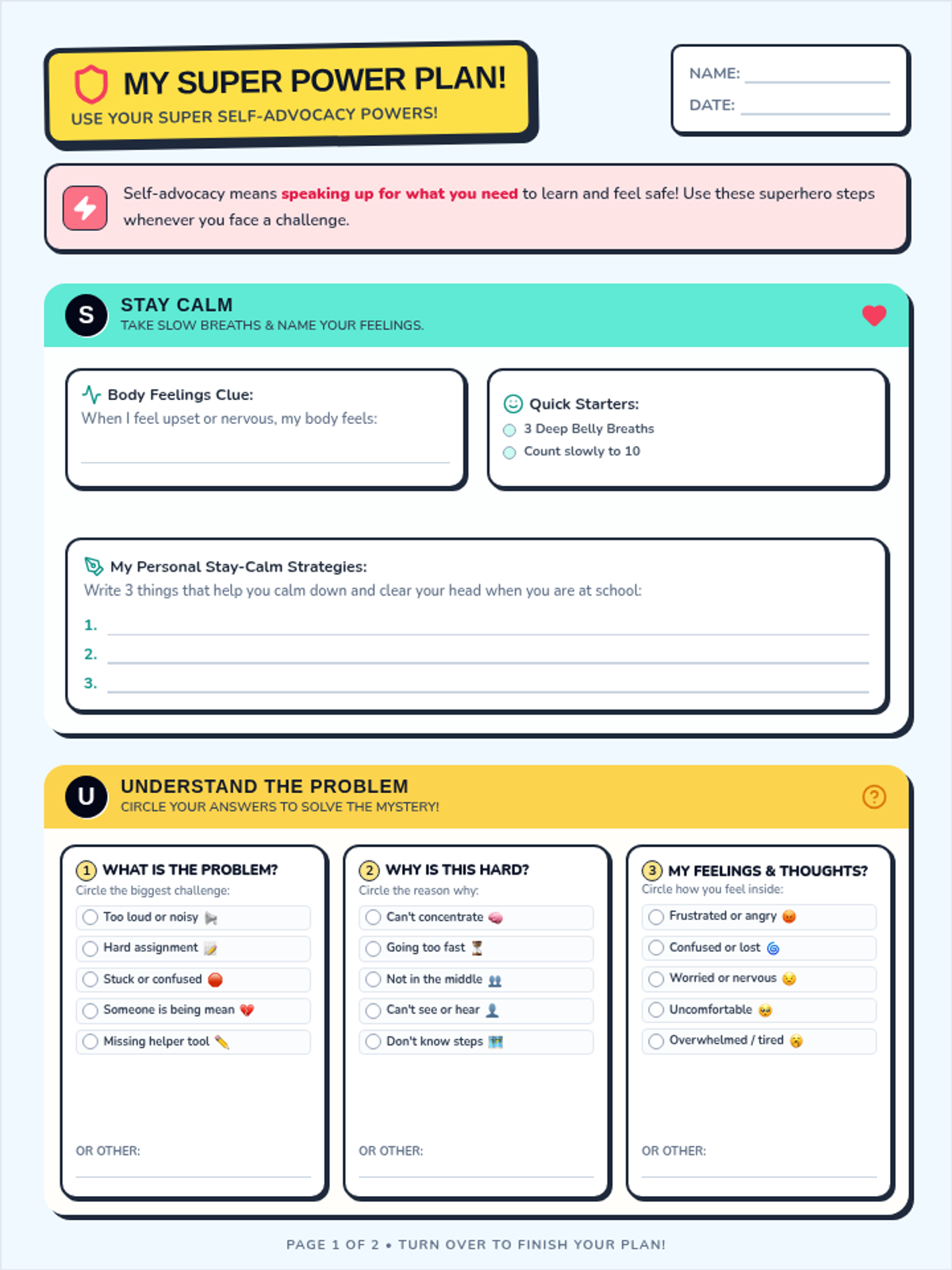
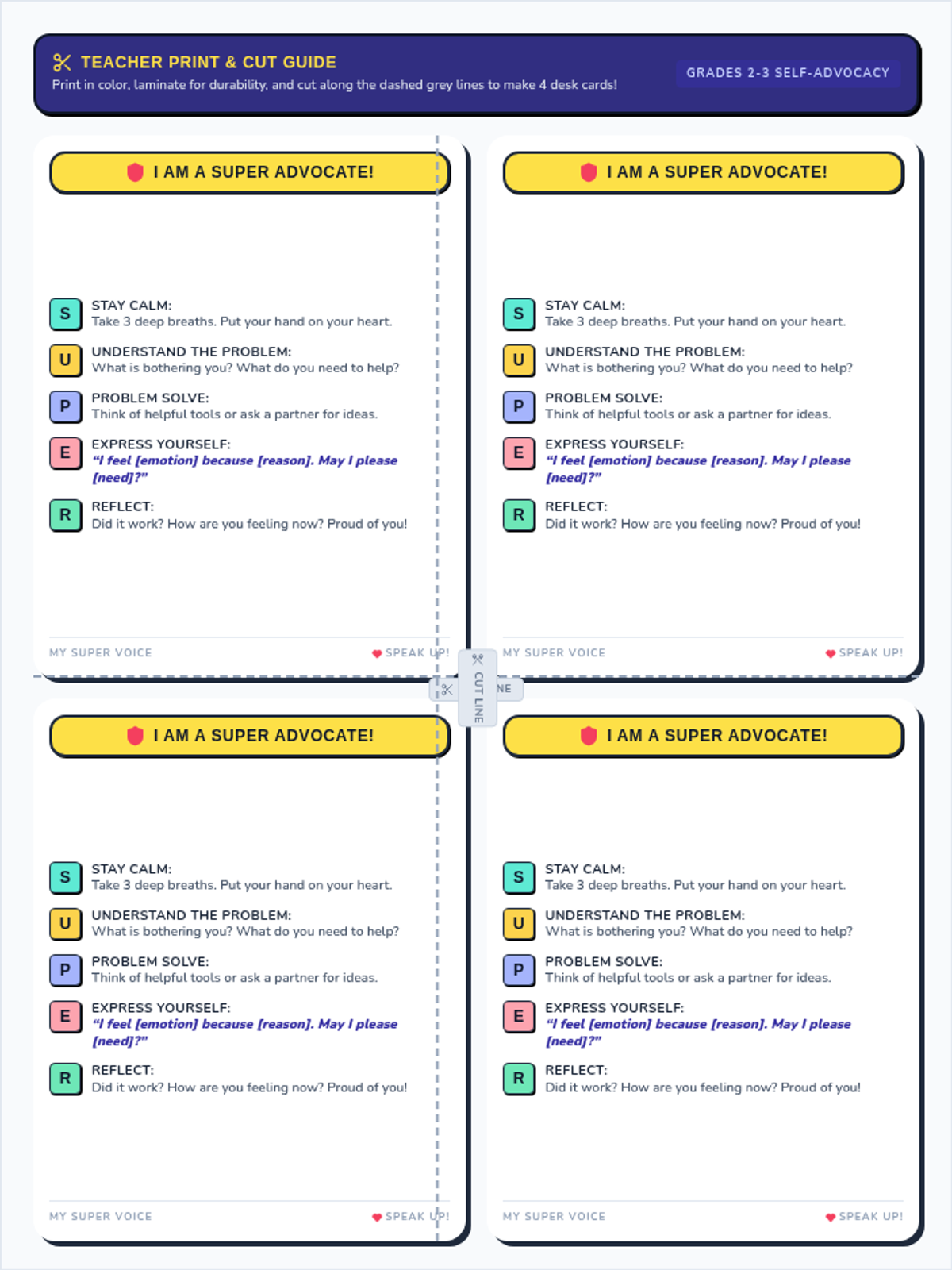
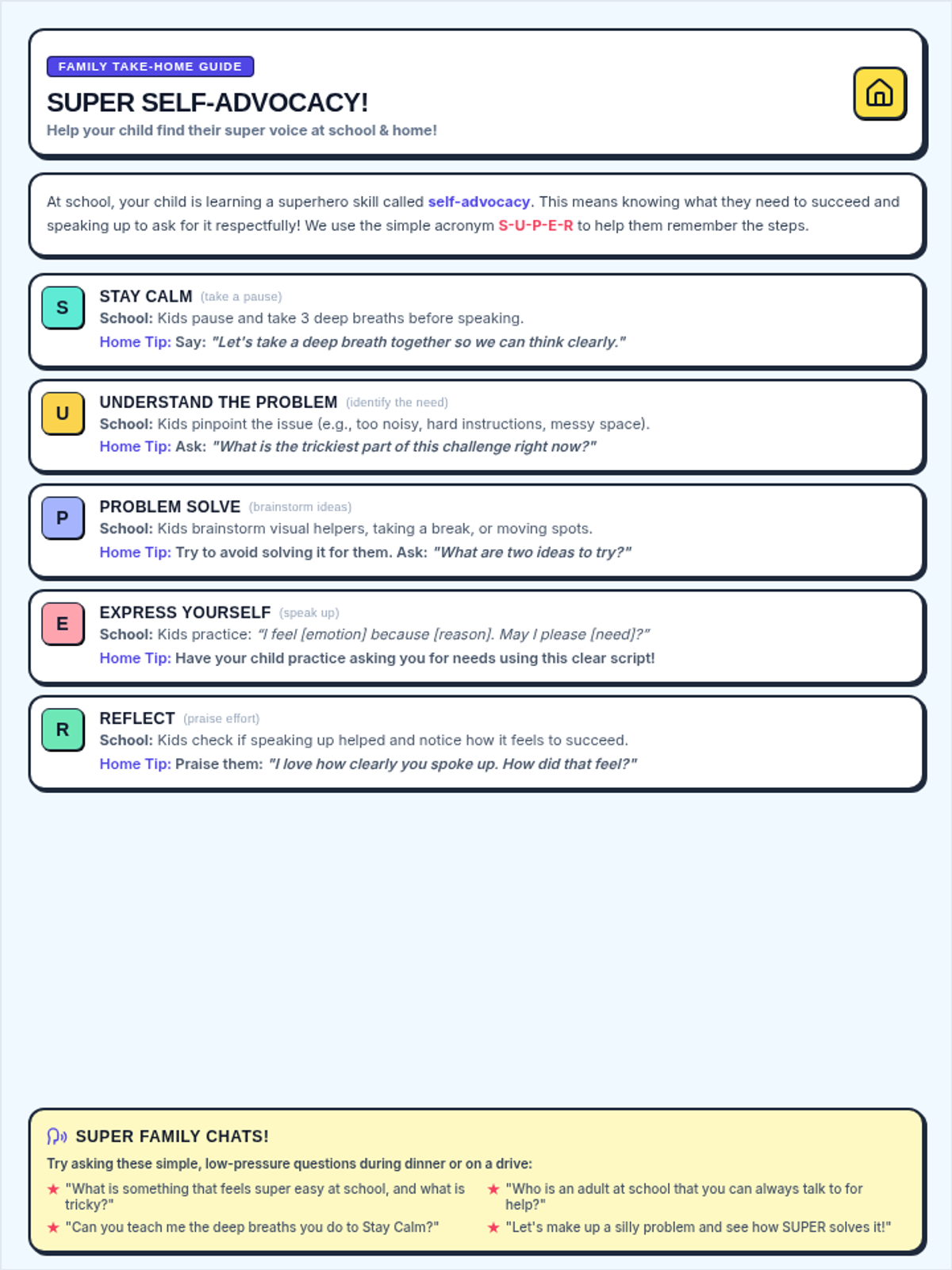
A lesson package focused on teaching middle elementary students (grades 2-3) the SUPER self-advocacy strategy: Stay Calm, Understand, Problem Solve, Express, and Reflect. It includes a student-facing comic-themed graphic organizer, a printable desktop anchor chart, and a take-home parent flyer.
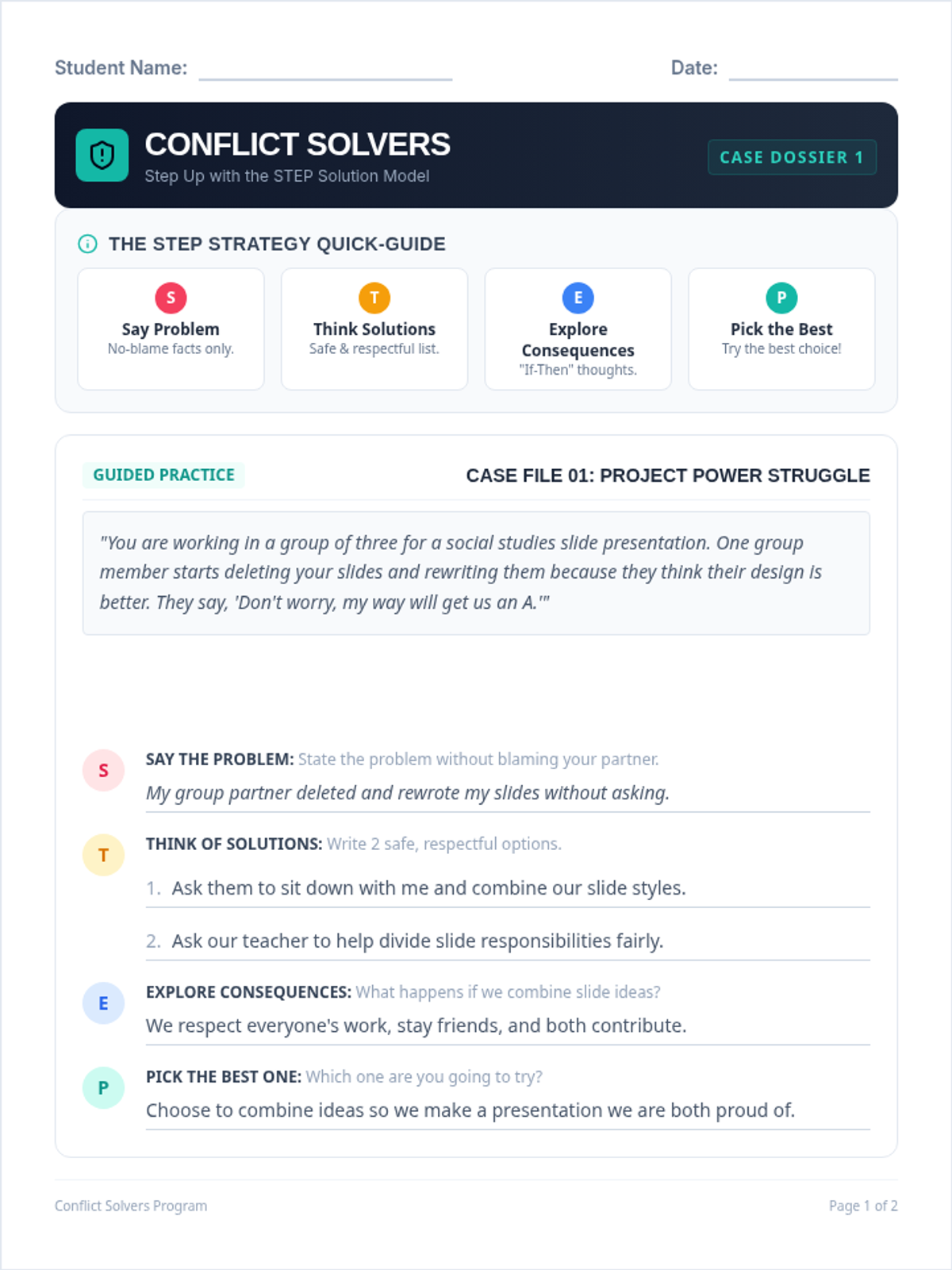
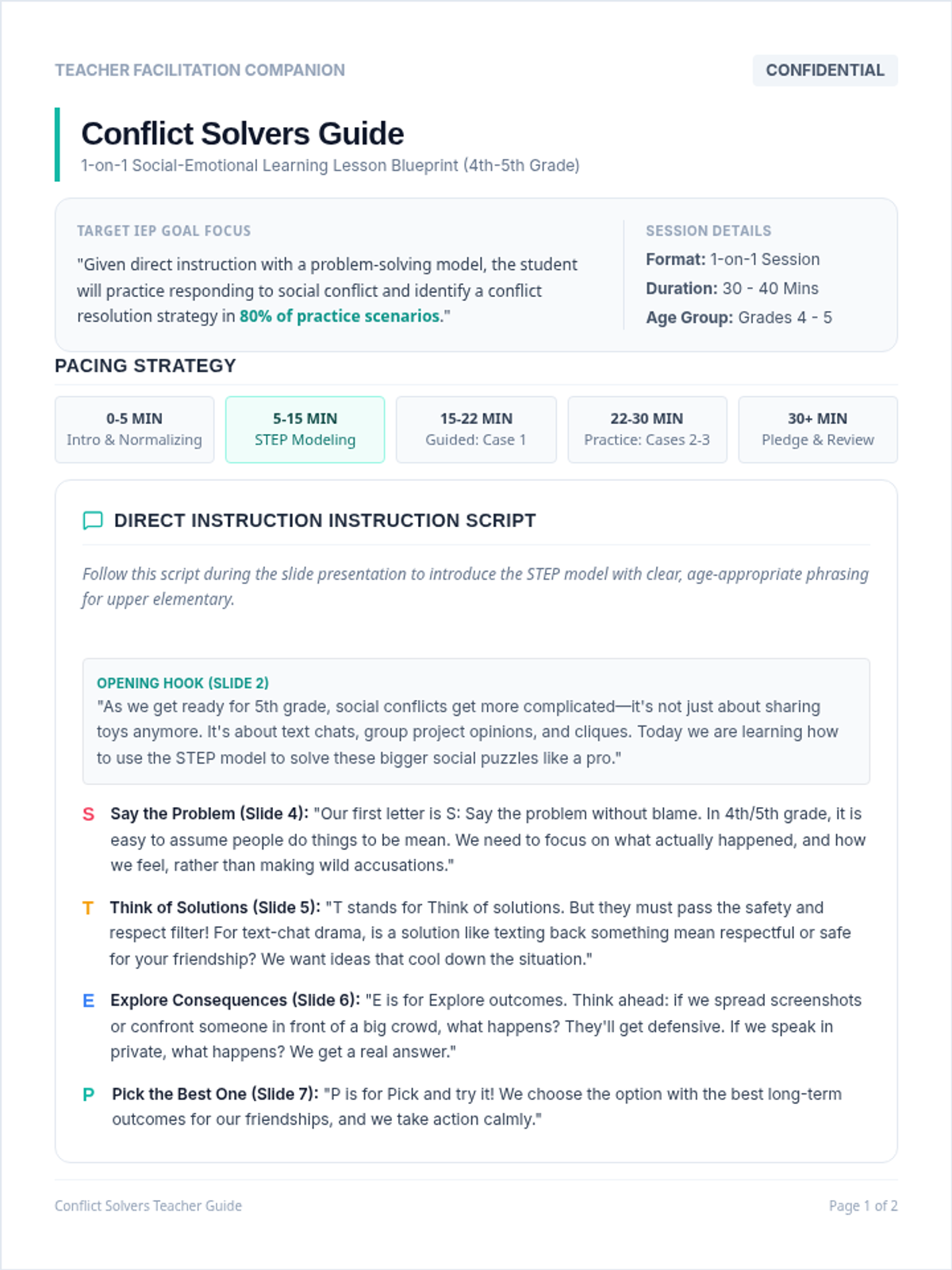
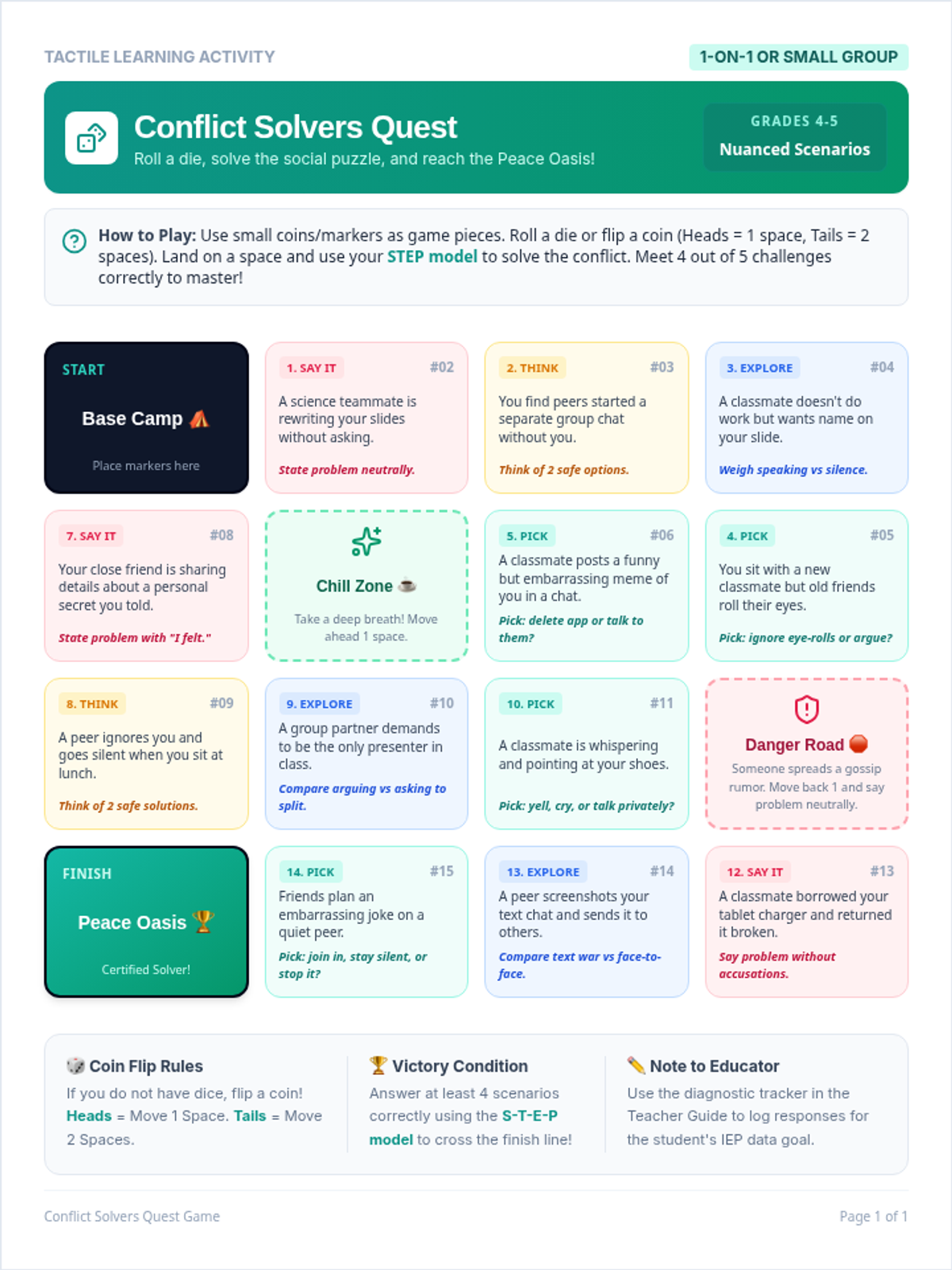
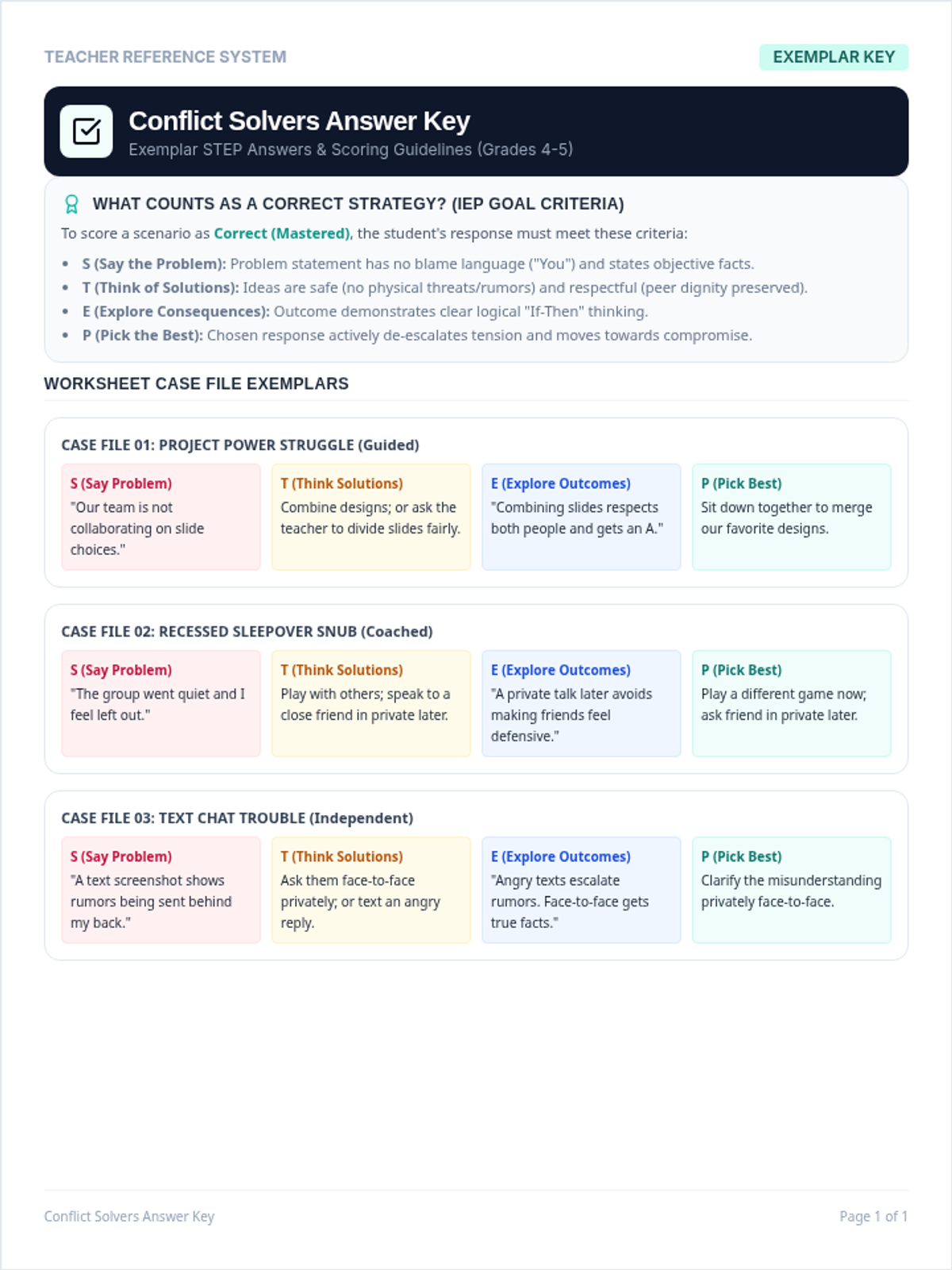
A structured social-emotional learning lesson introducing the STEP model for conflict resolution. Students learn to define problems, brainstorm solutions, weigh consequences, and select positive resolutions through interactive scenarios.
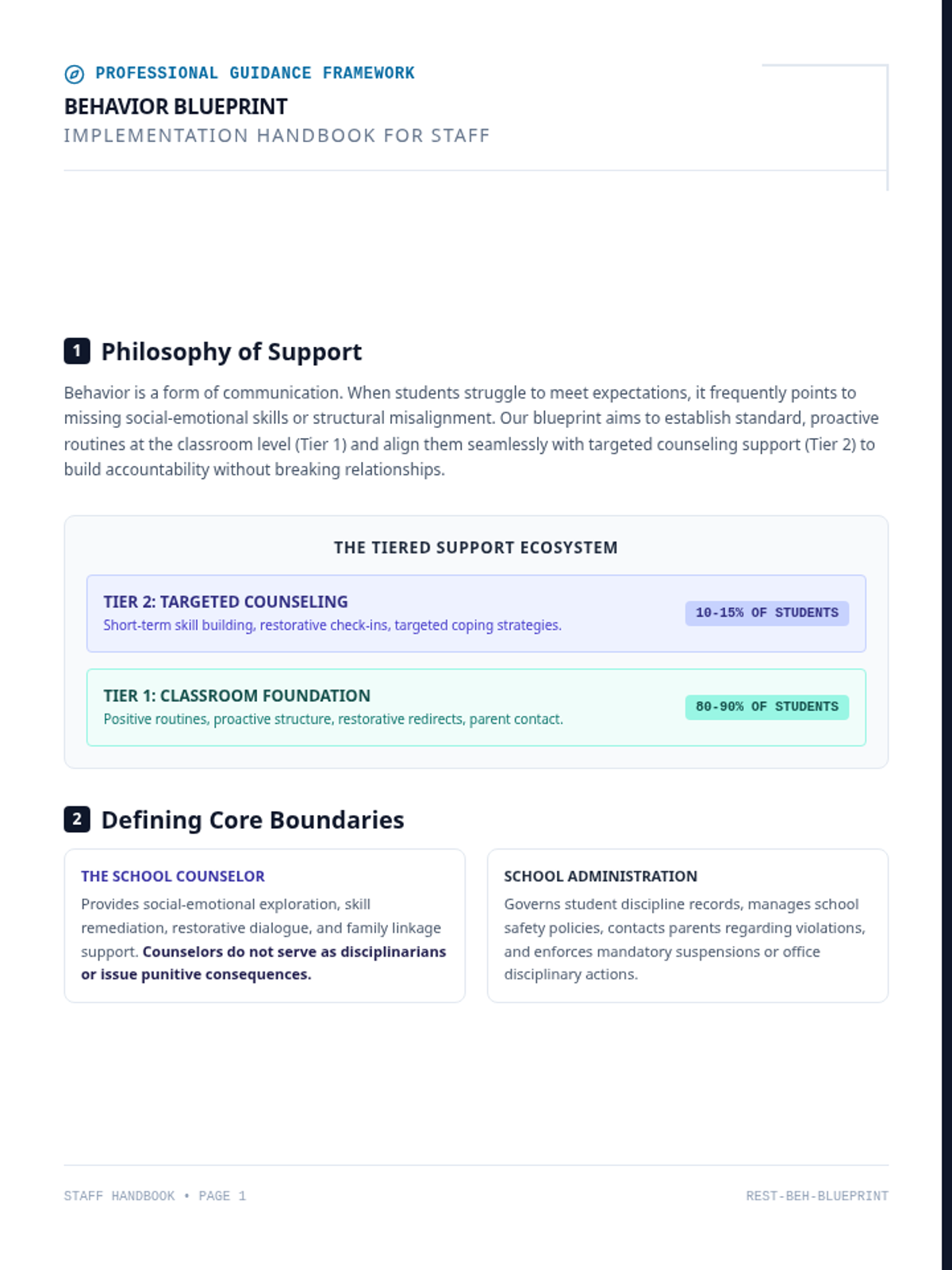
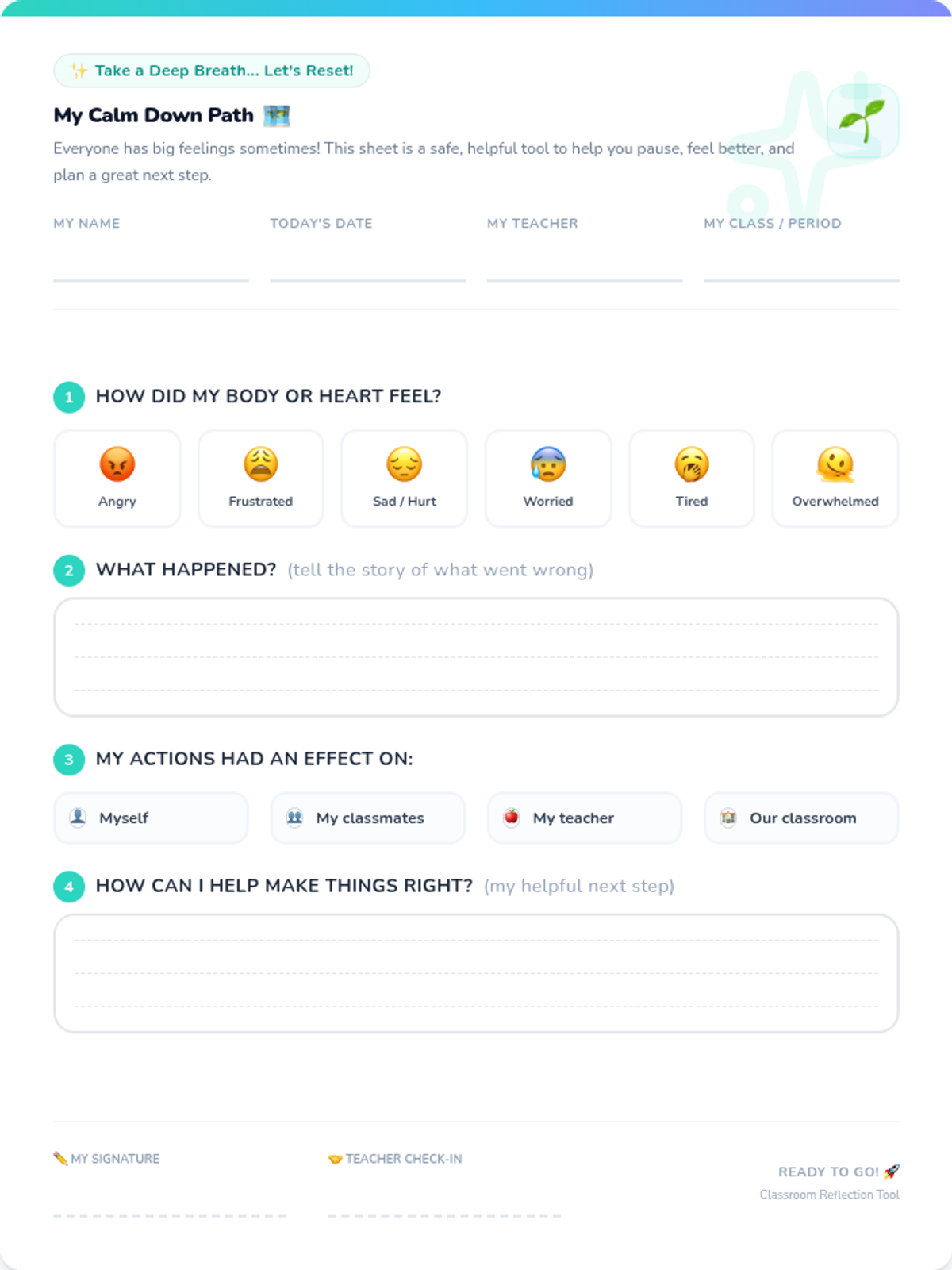
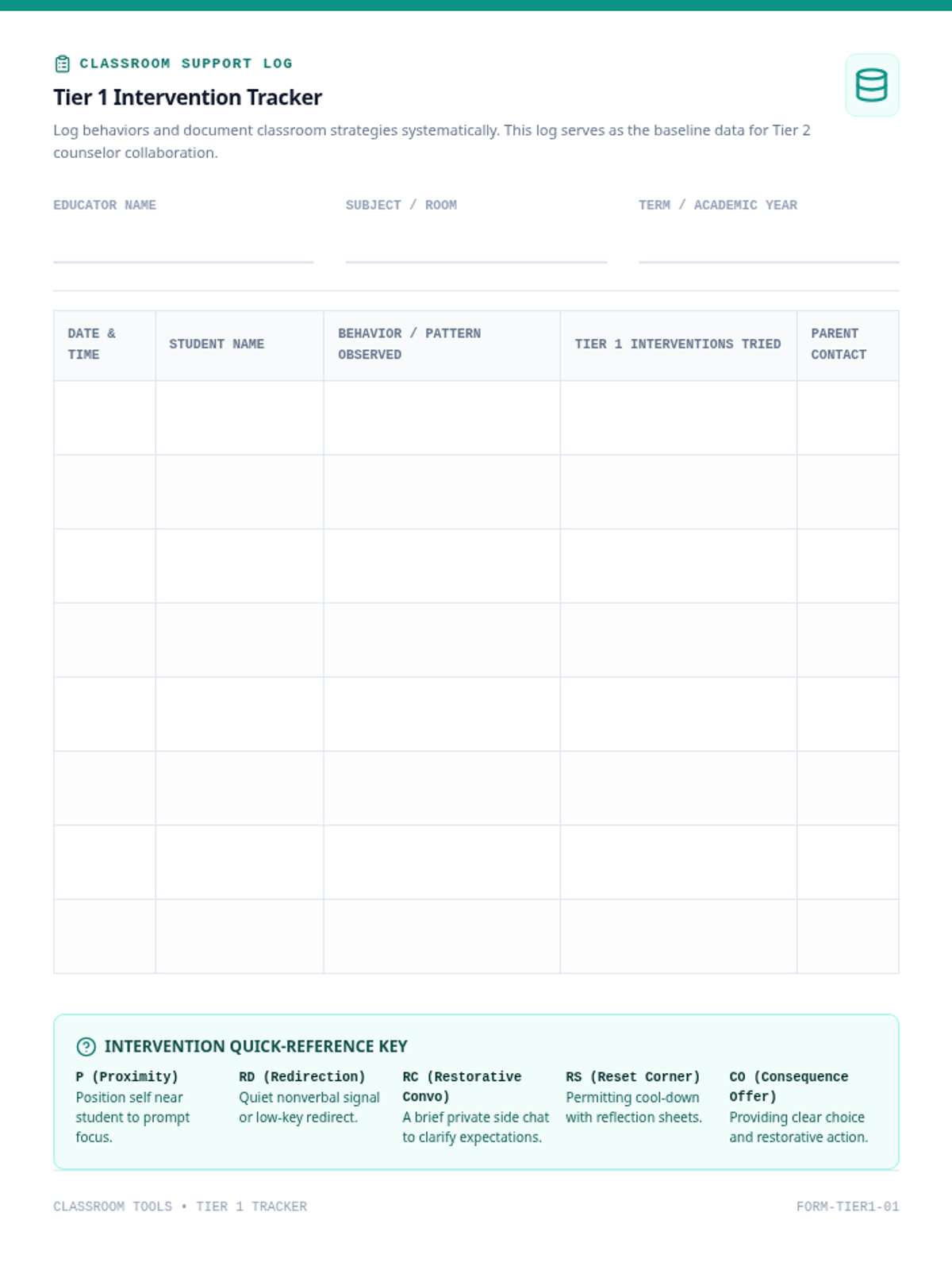
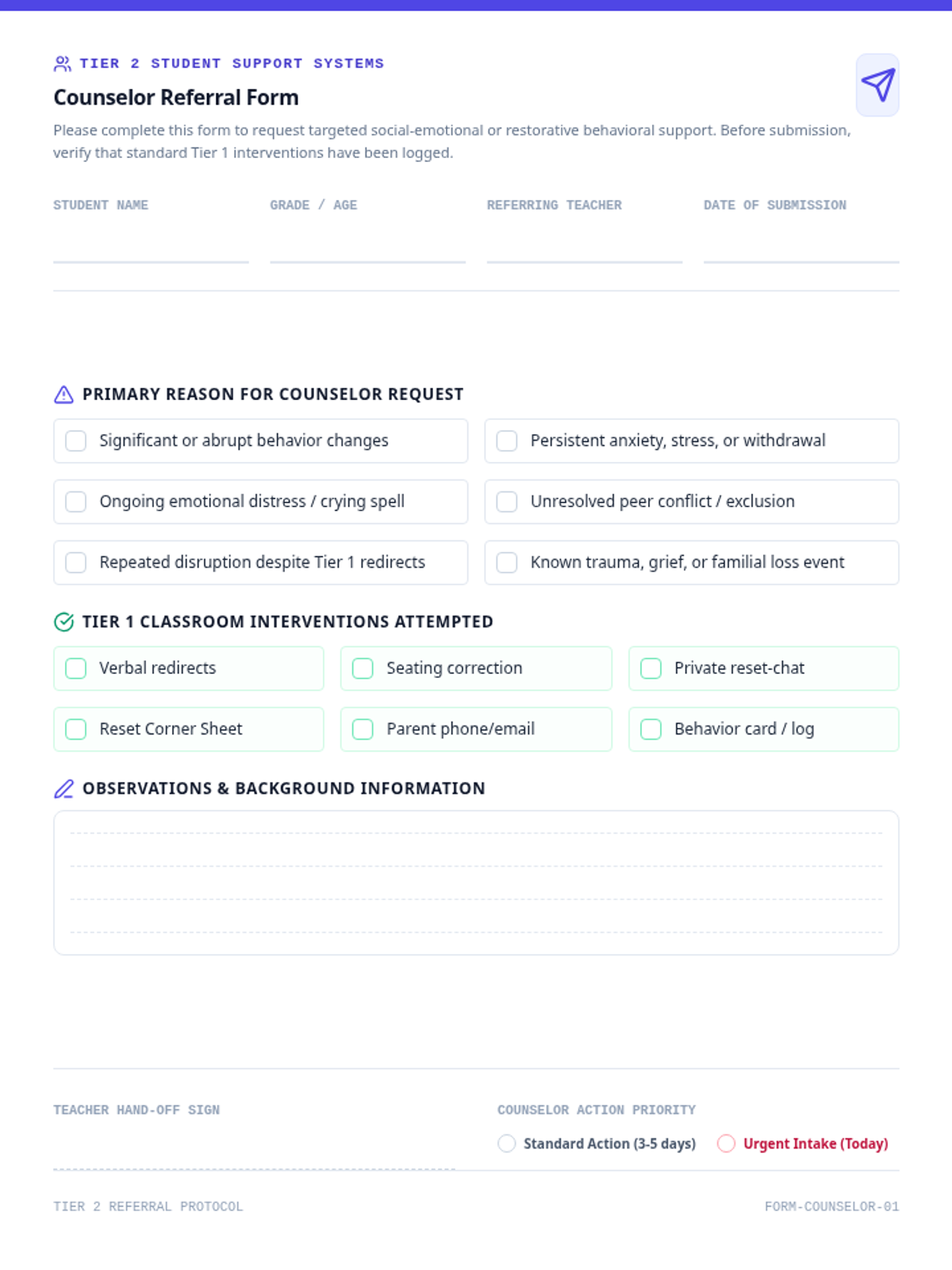
A comprehensive behavioral support and intervention rollout toolkit containing staff training materials, classroom de-escalation tools, student self-regulation resources, teacher tracking logs, and a structured counseling referral workflow.
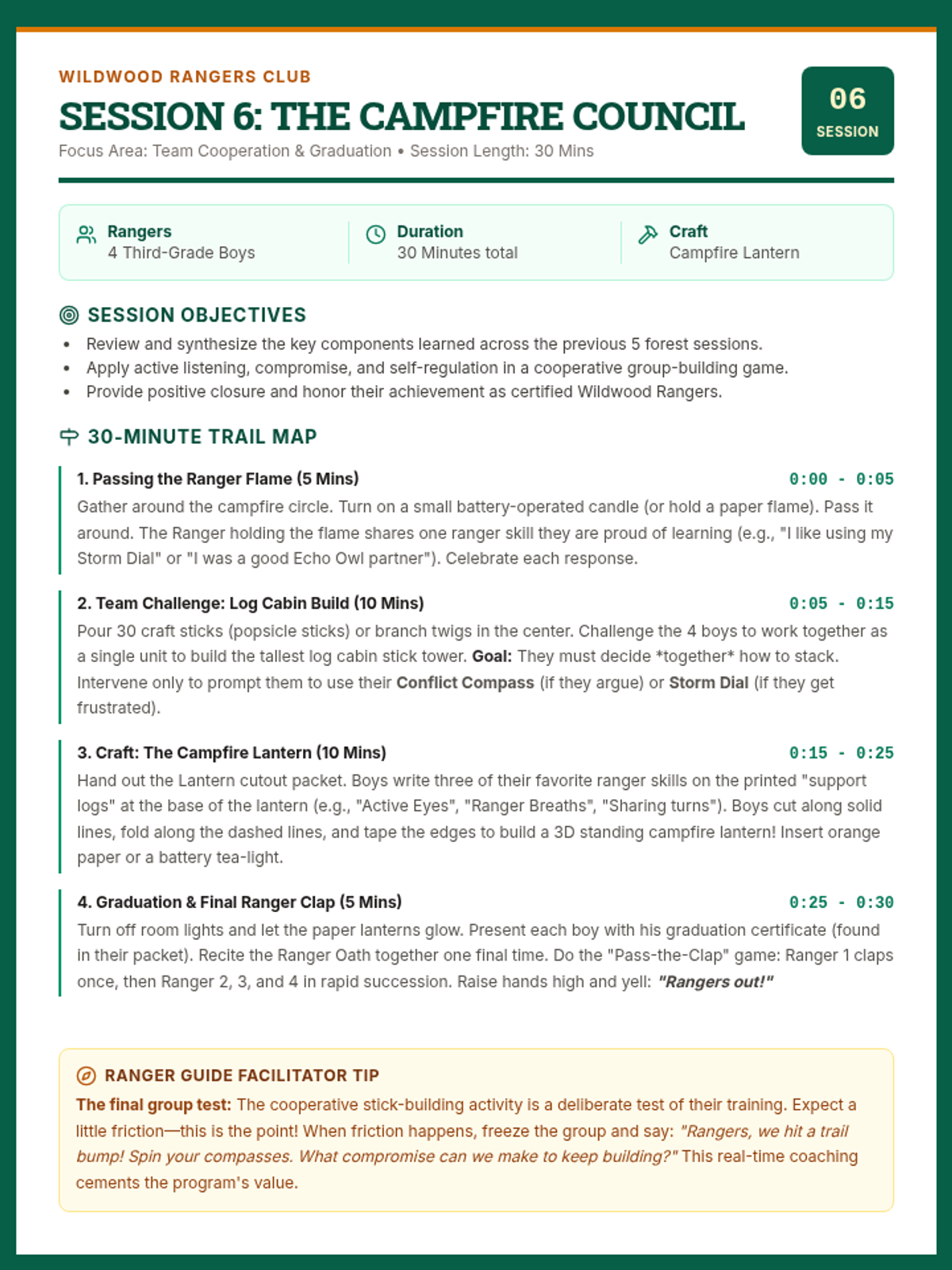
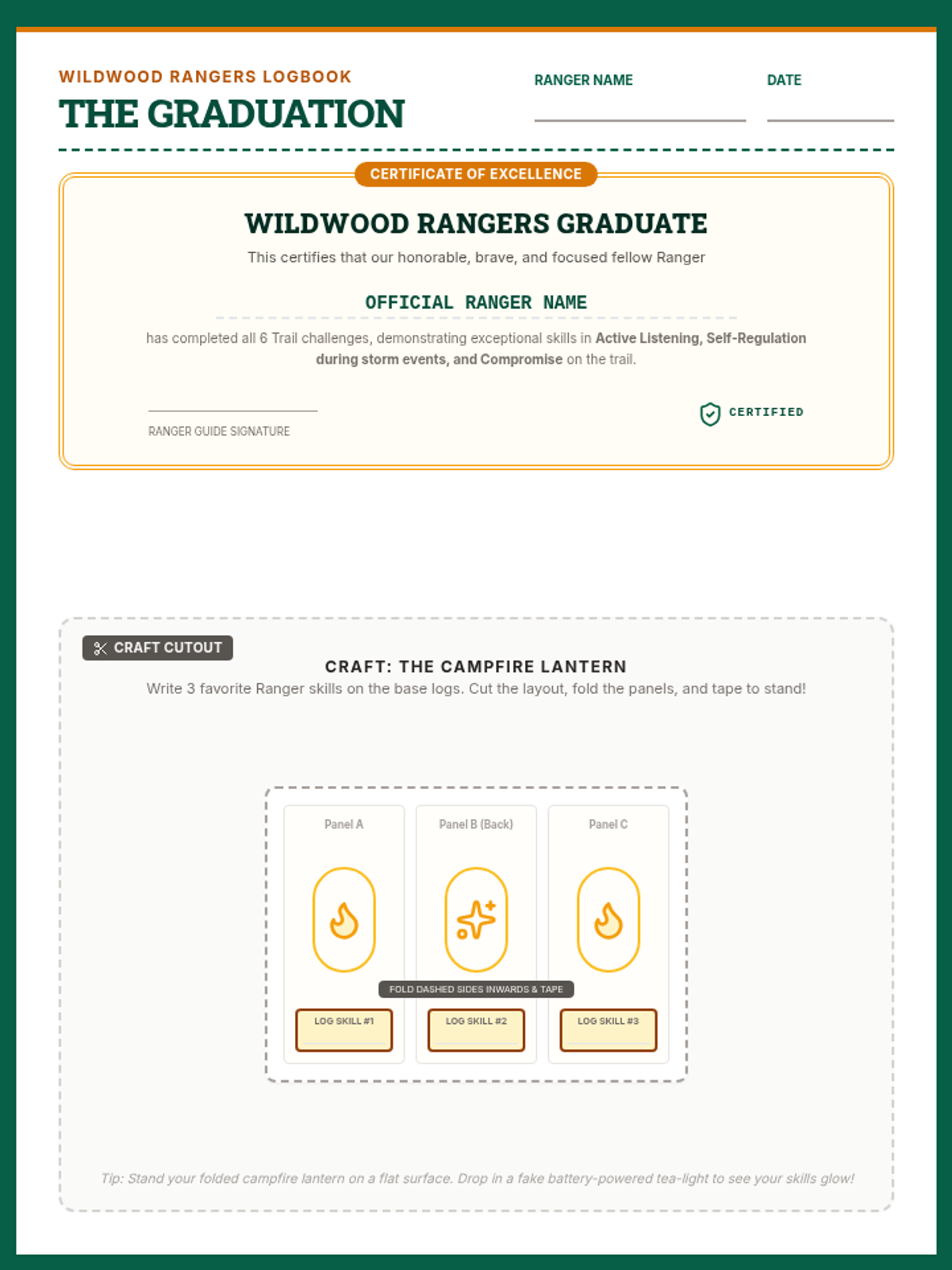
The final session where rangers celebrate their journey, demonstrate conflict resolution and active listening in a cooperative group game, and craft their 'Campfire Lantern' keepsake.
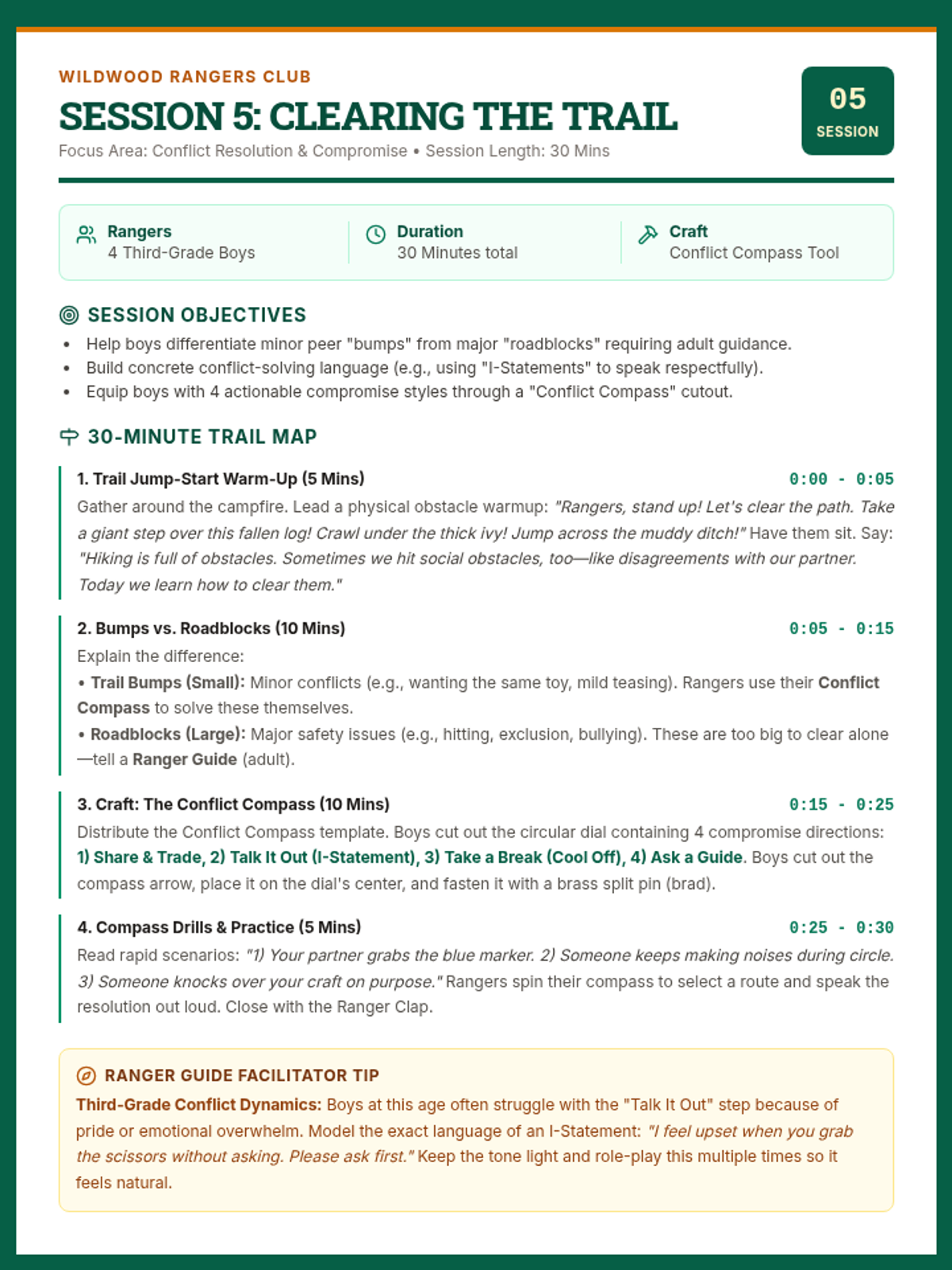
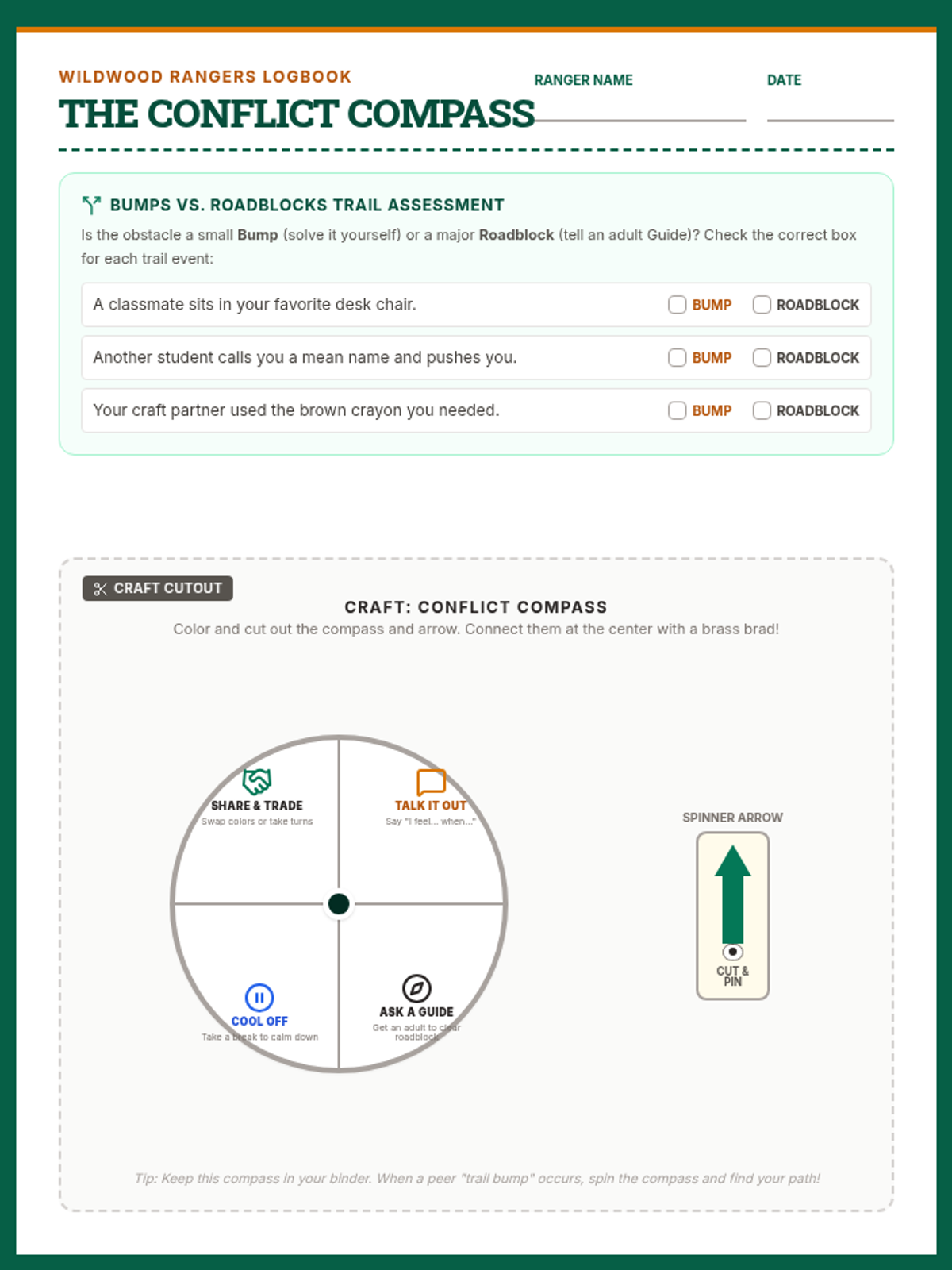
Rangers learn to distinguish between small peer-to-peer 'bumps' and large 'roadblocks', practicing compromises and crafting a custom 'Conflict Compass'.
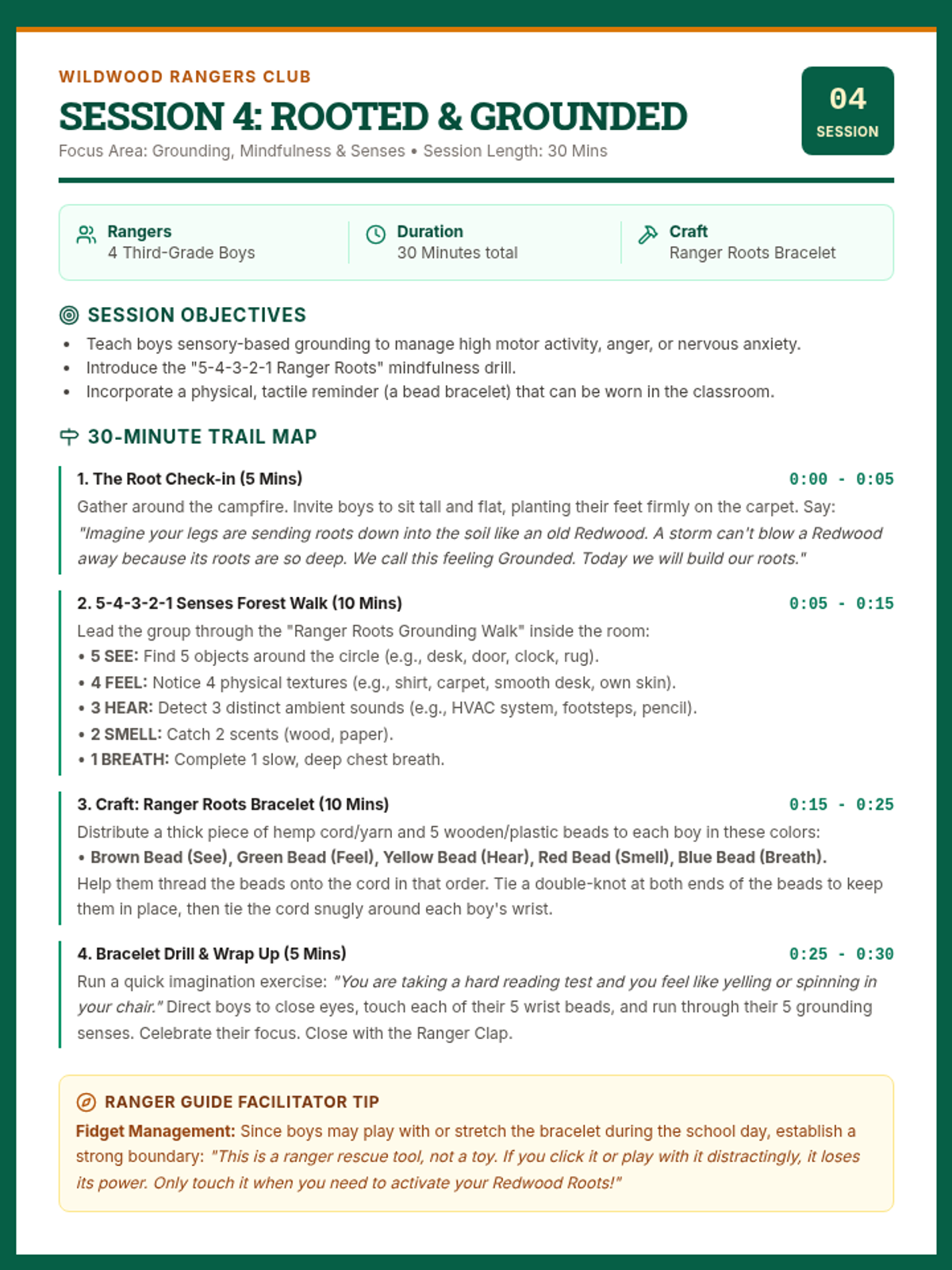
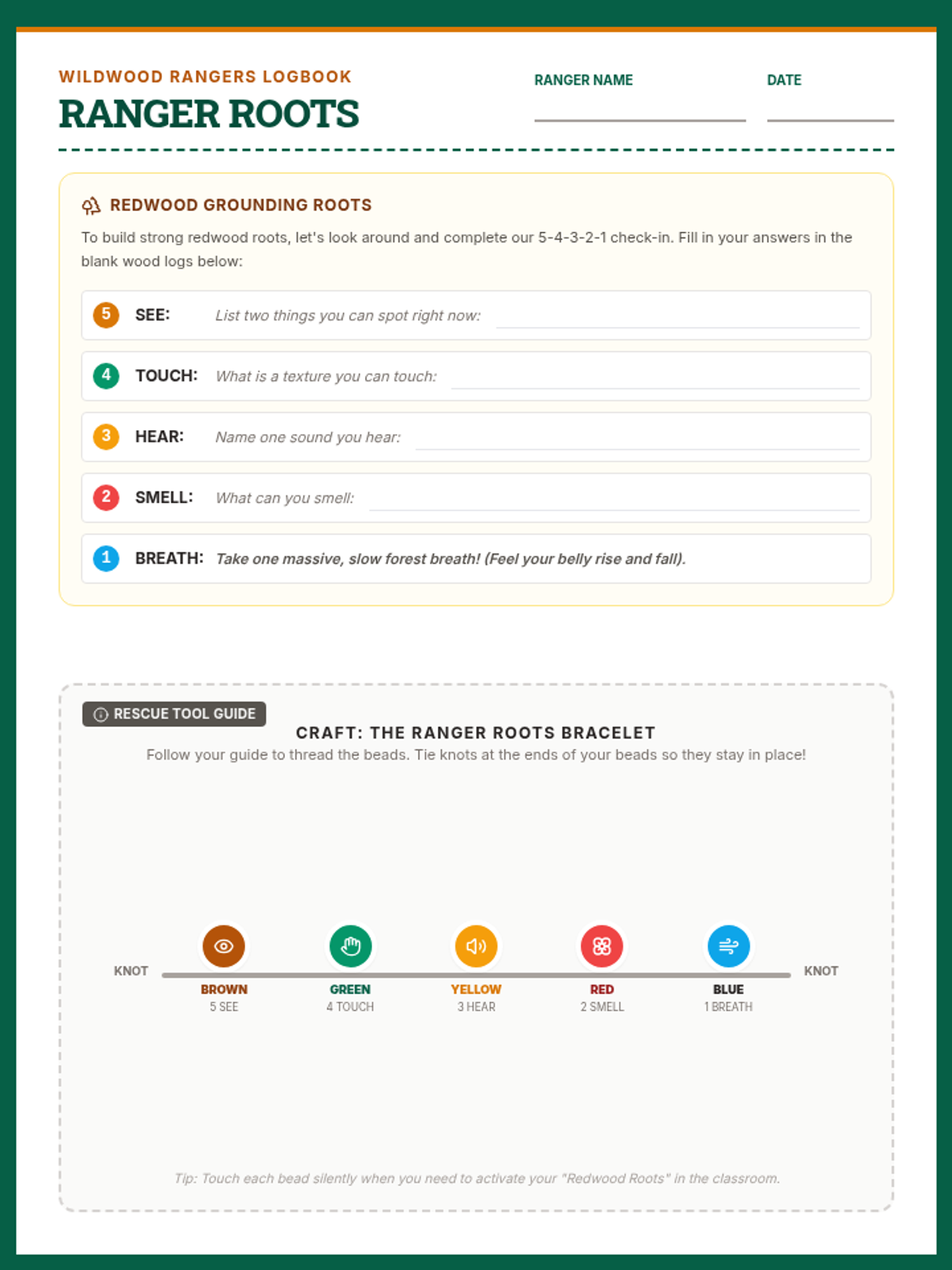
Rangers learn natural grounding and sensory strategies to calm high energy or frustration, crafting a custom 'Ranger Roots' breathing bead bracelet and practicing forest mindfulness.
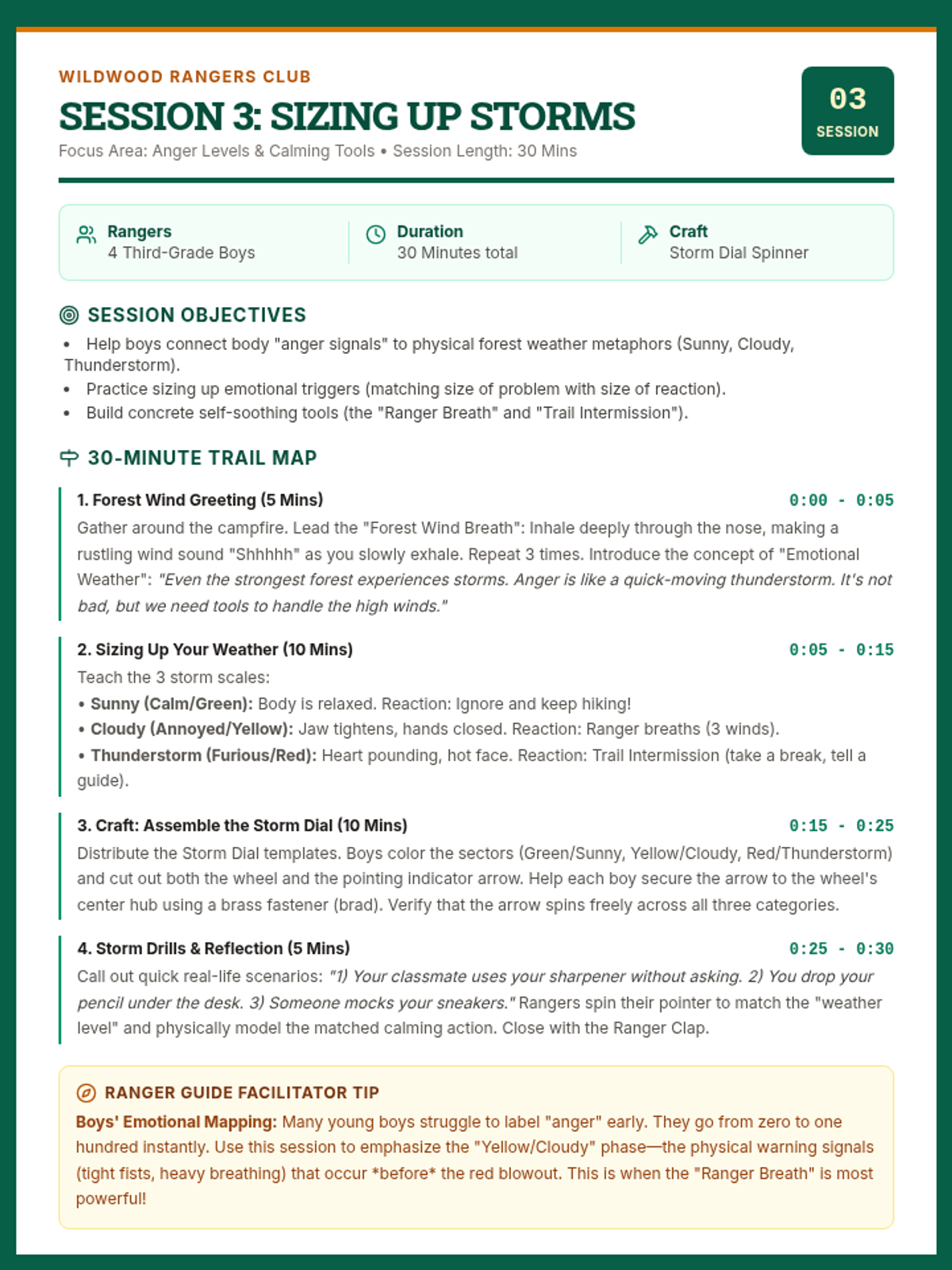
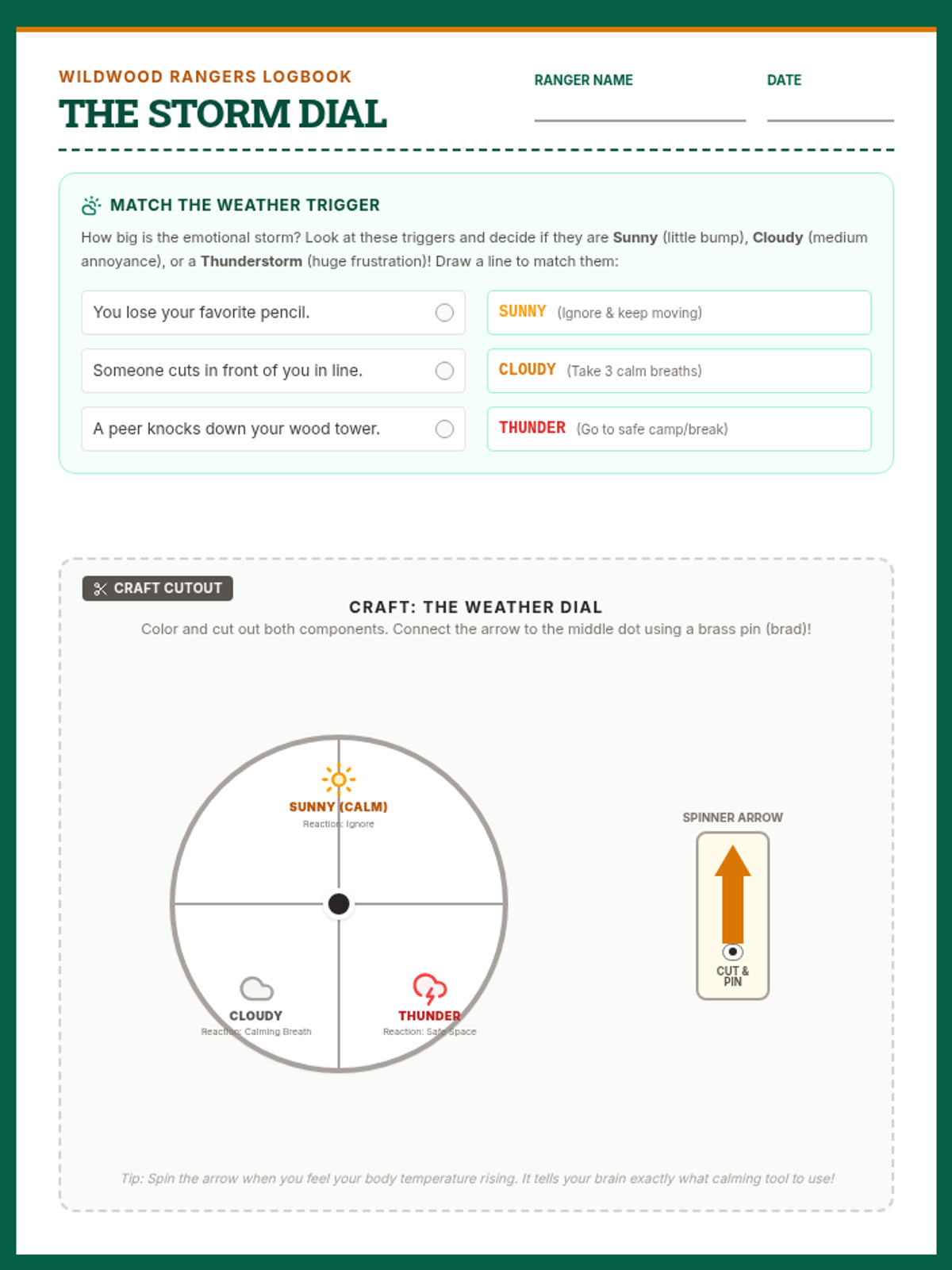
Rangers learn to identify the size of emotional 'storms' (anger triggers) and match them with appropriate calming strategies, crafting a custom Storm Dial craft.
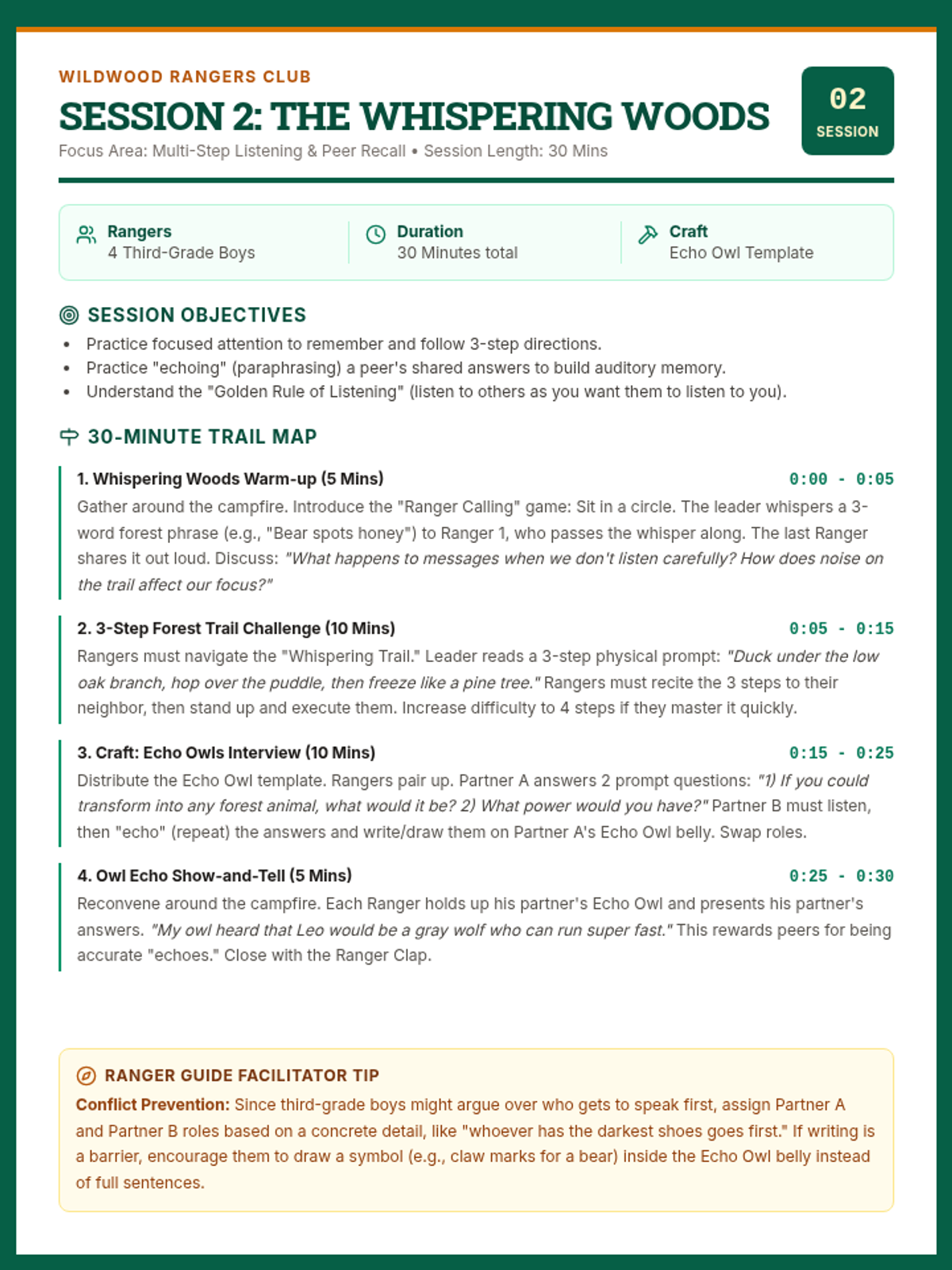
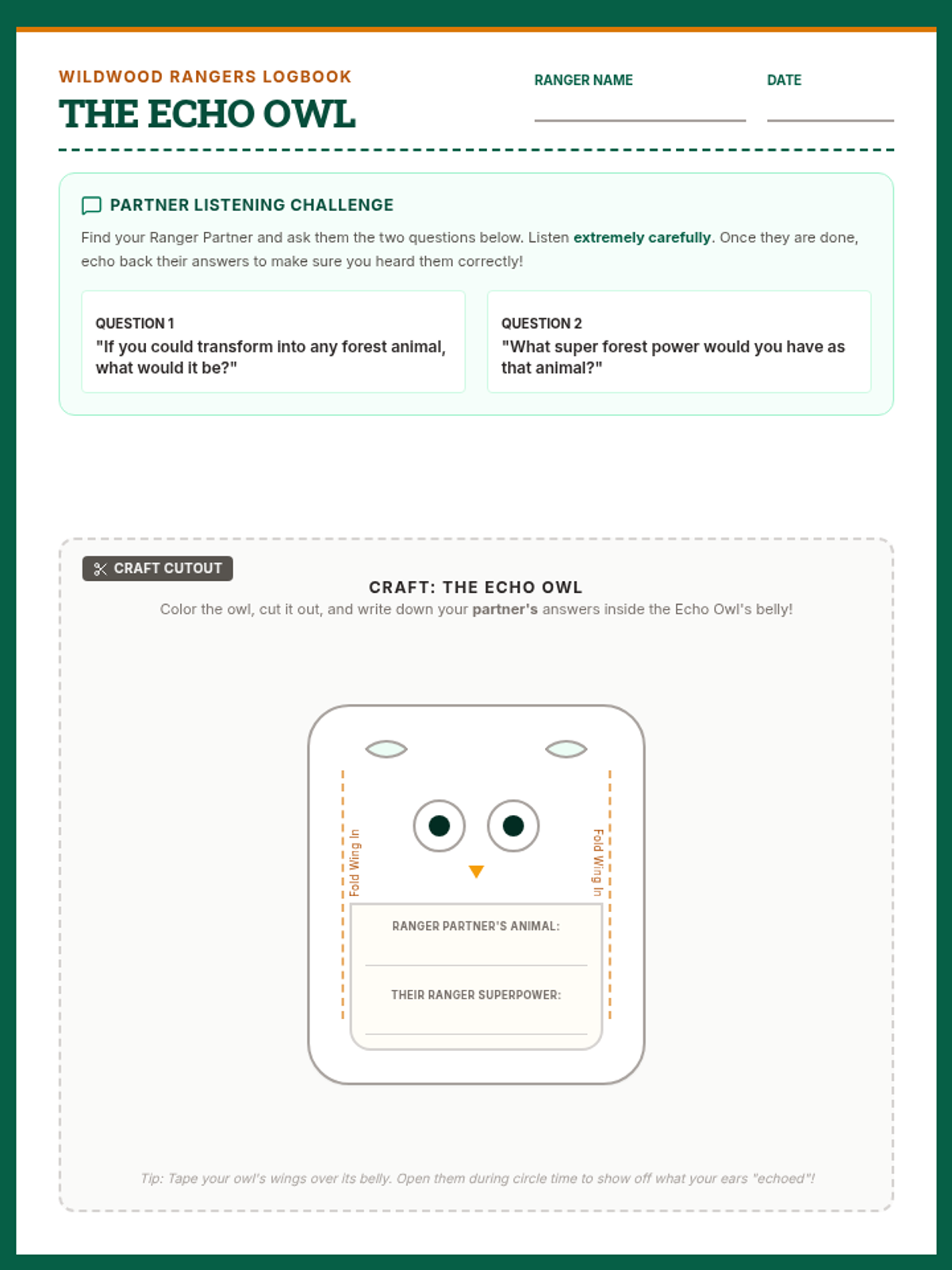
Rangers practice intense focus and multi-step active listening through forest-themed hearing challenges, crafting 'Echo Owls' to capture and repeat peer's ideas.
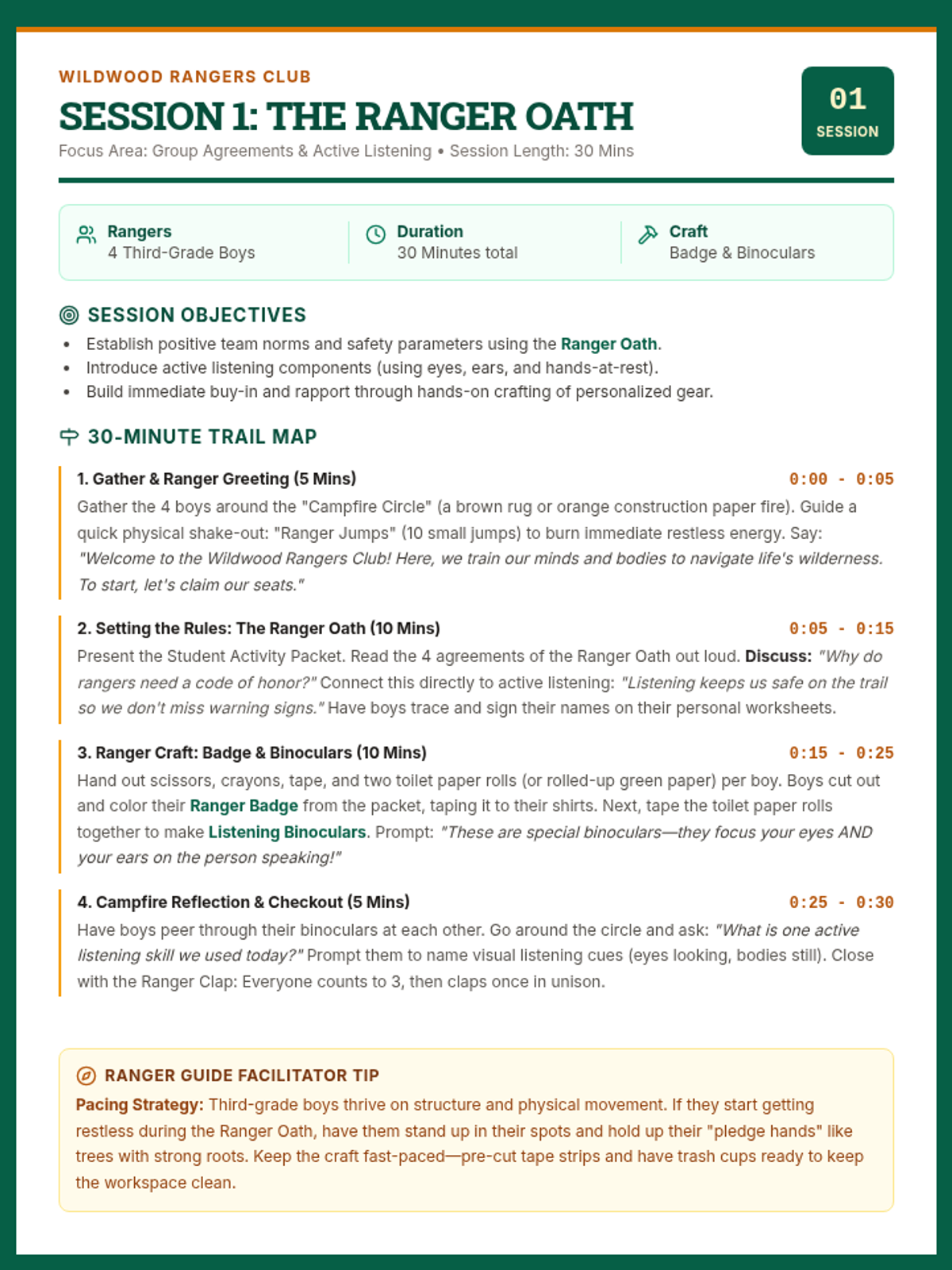
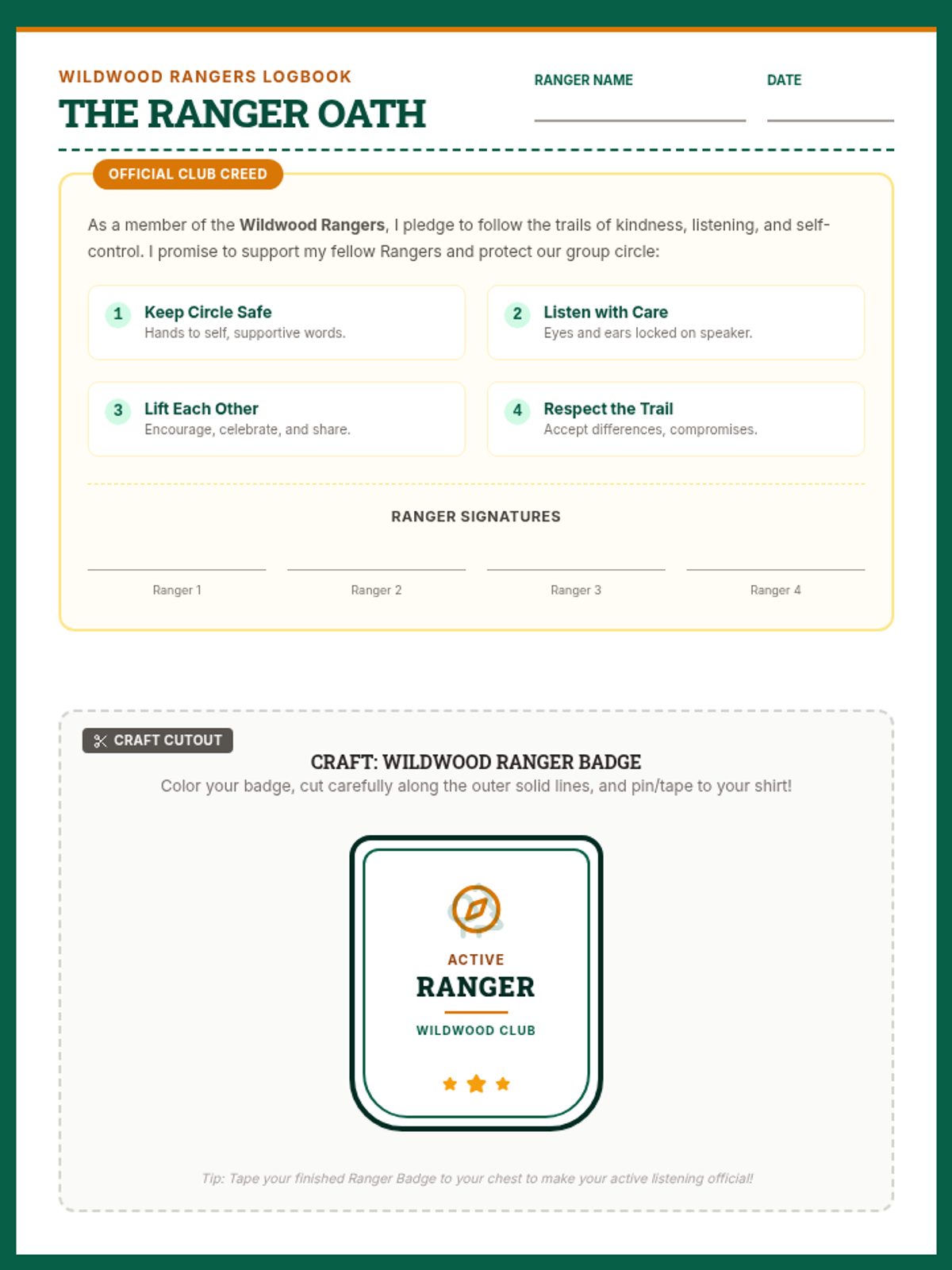
The introductory session where the 4 rangers establish their group contract (the Ranger Oath), learn active listening skills, and craft their official Ranger Badges and Listening Binoculars.
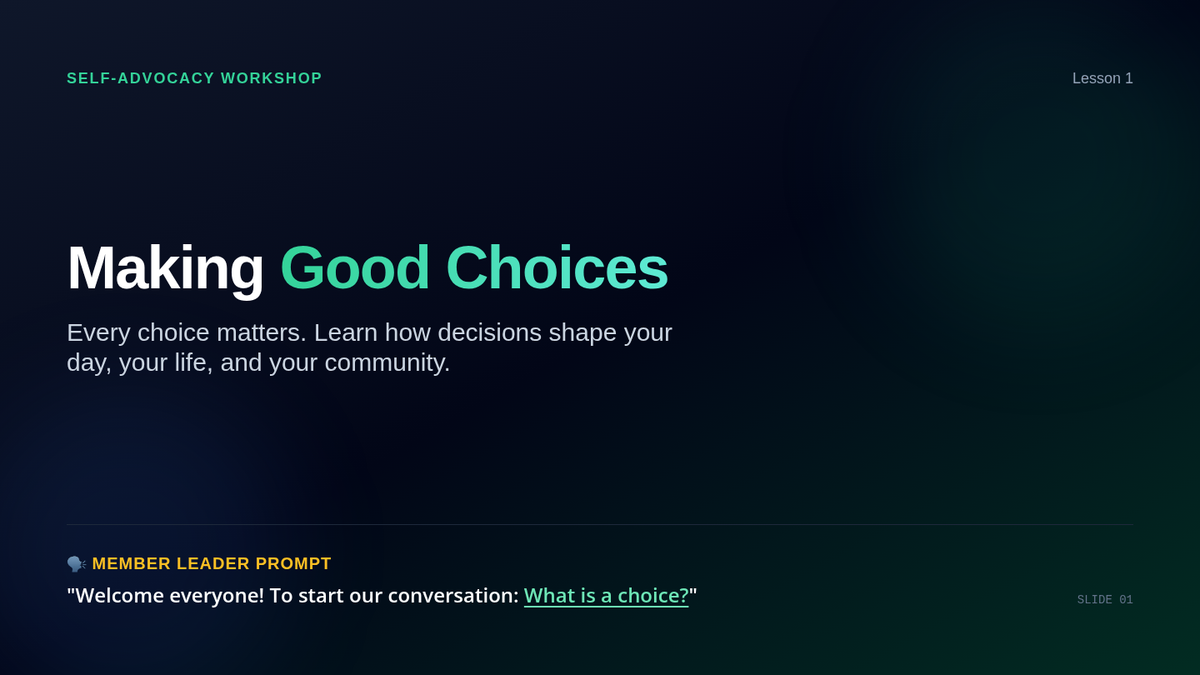
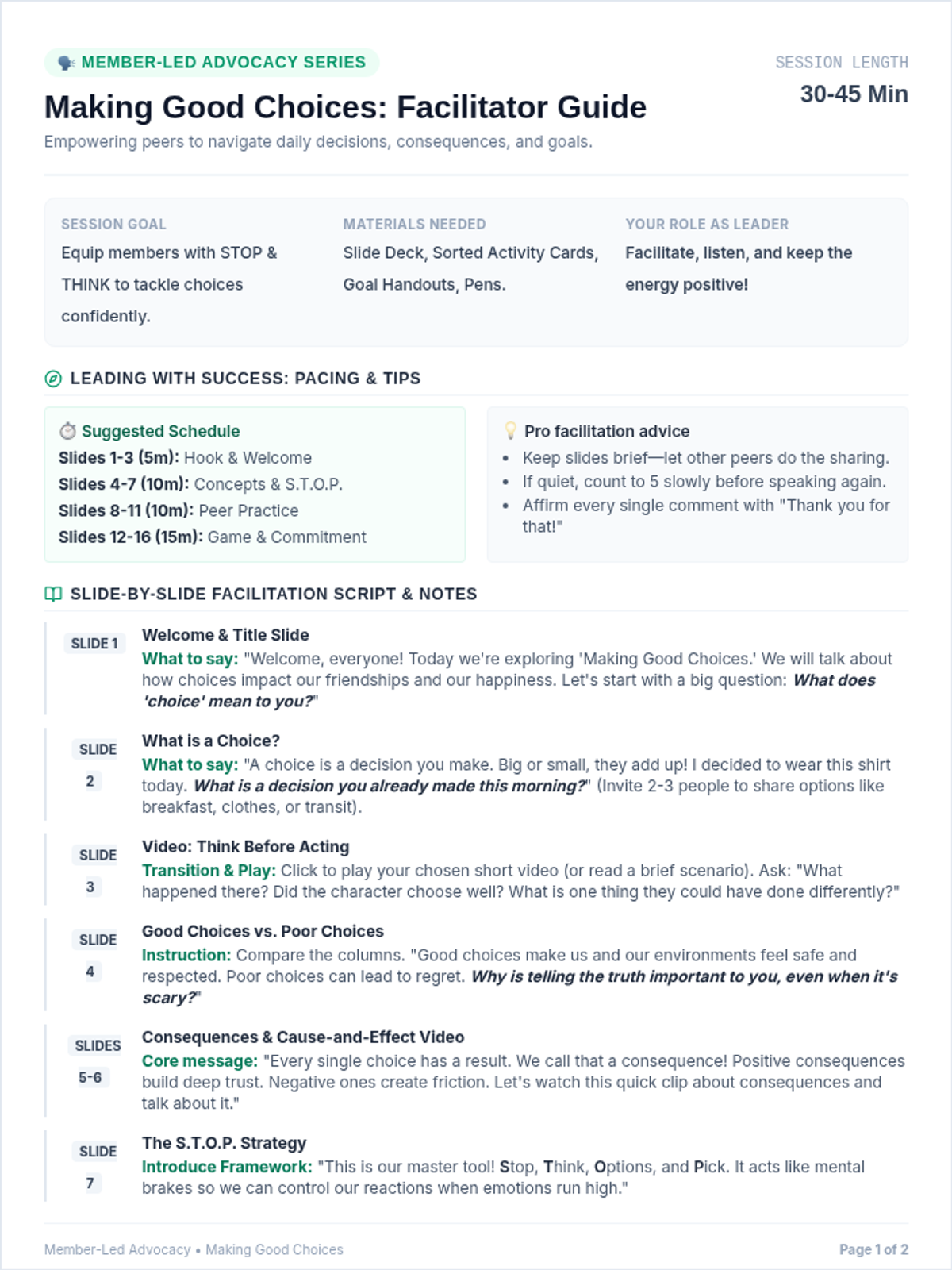
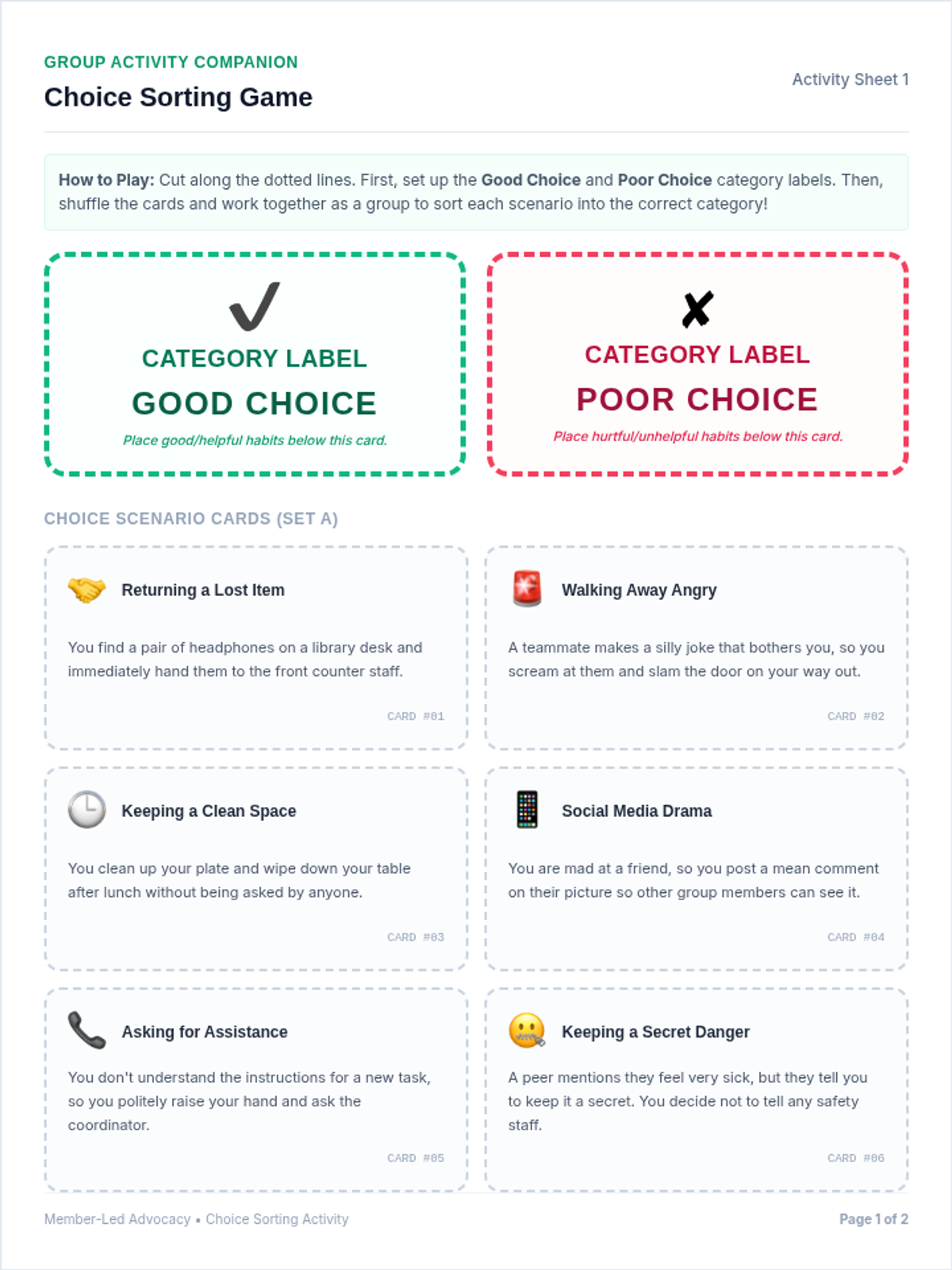
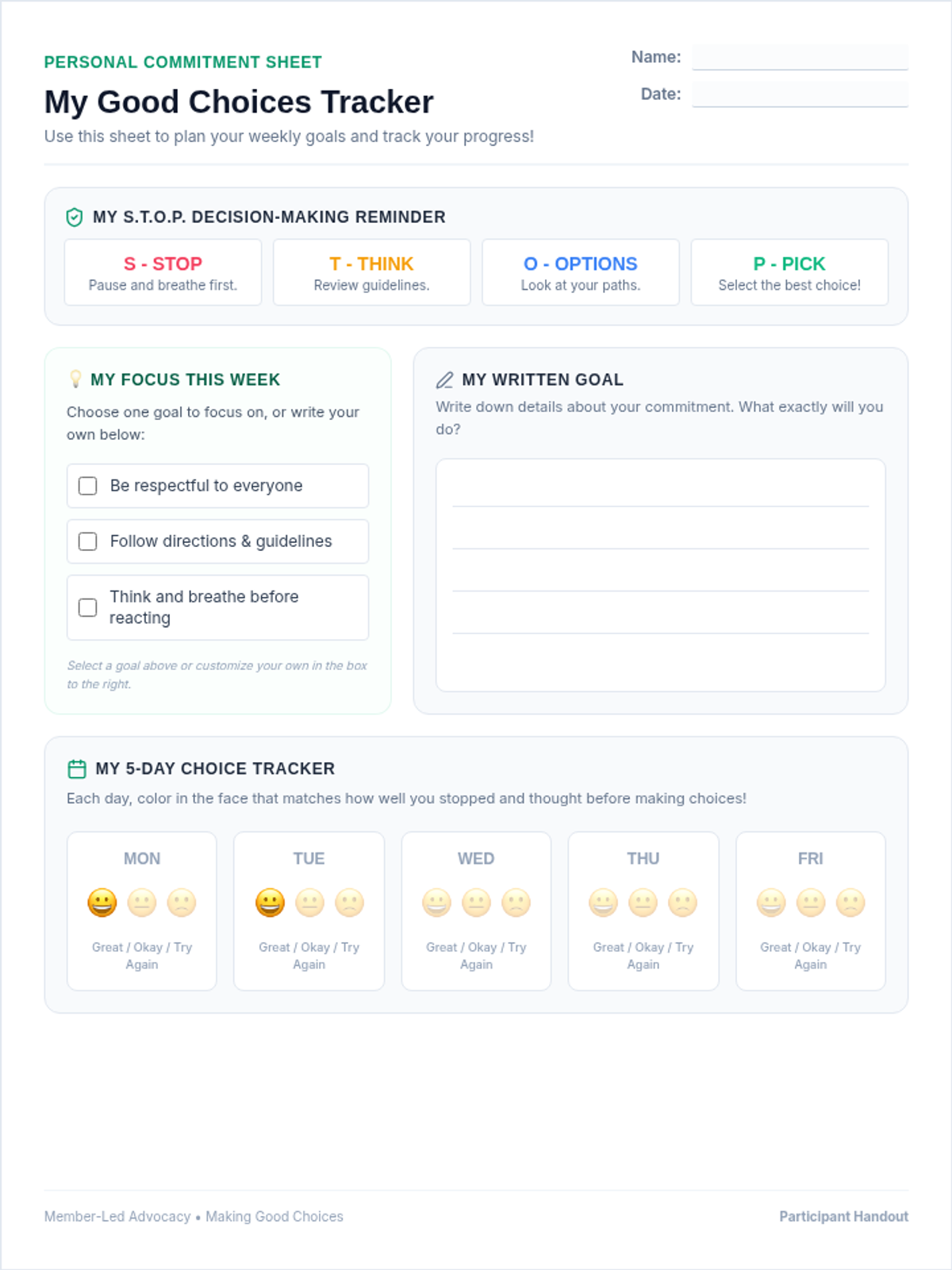
An interactive, peer-led advocacy lesson designed to empower members to lead discussions on personal choices, consequences, decision-making strategies, and peer influence.
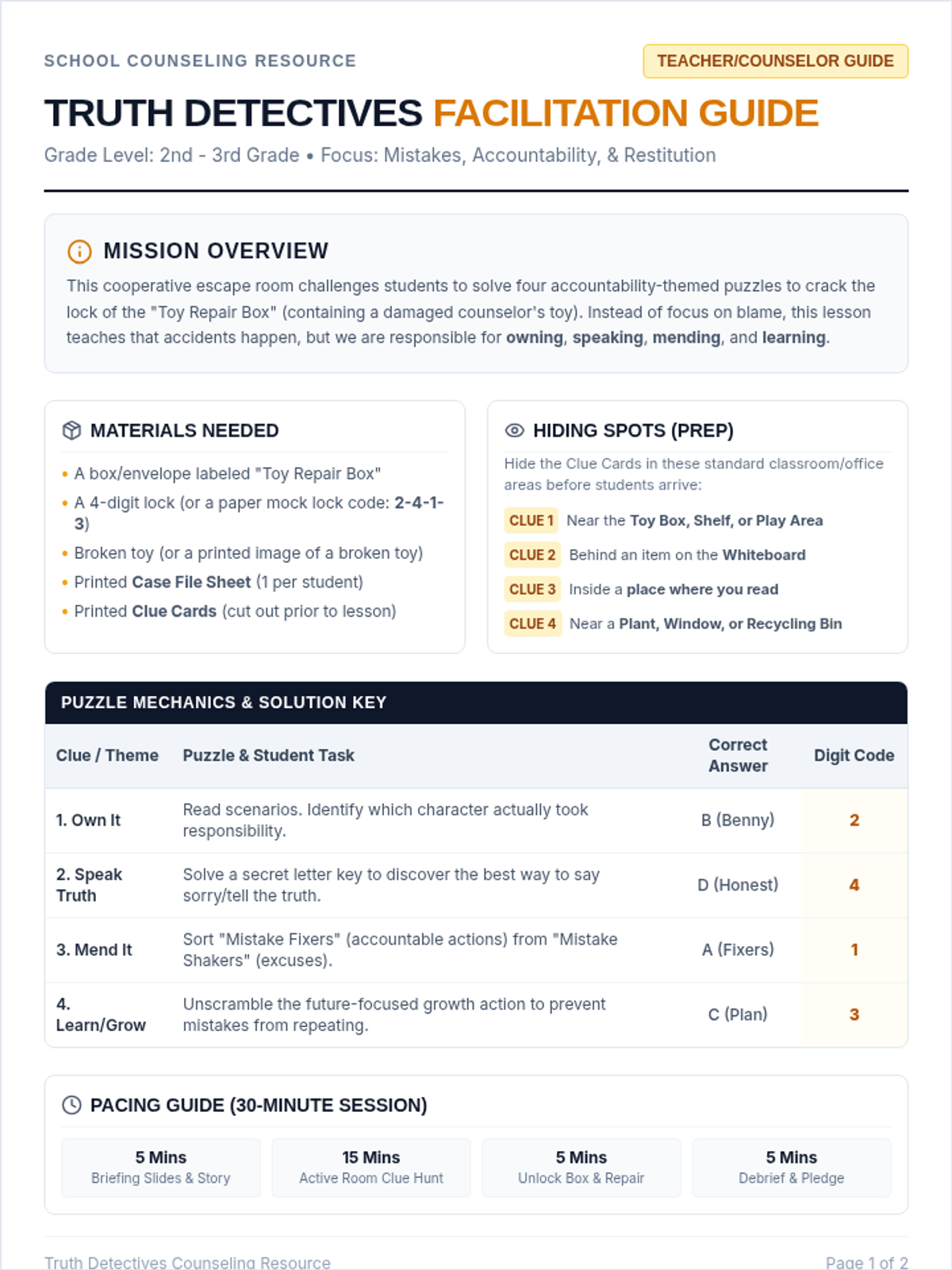
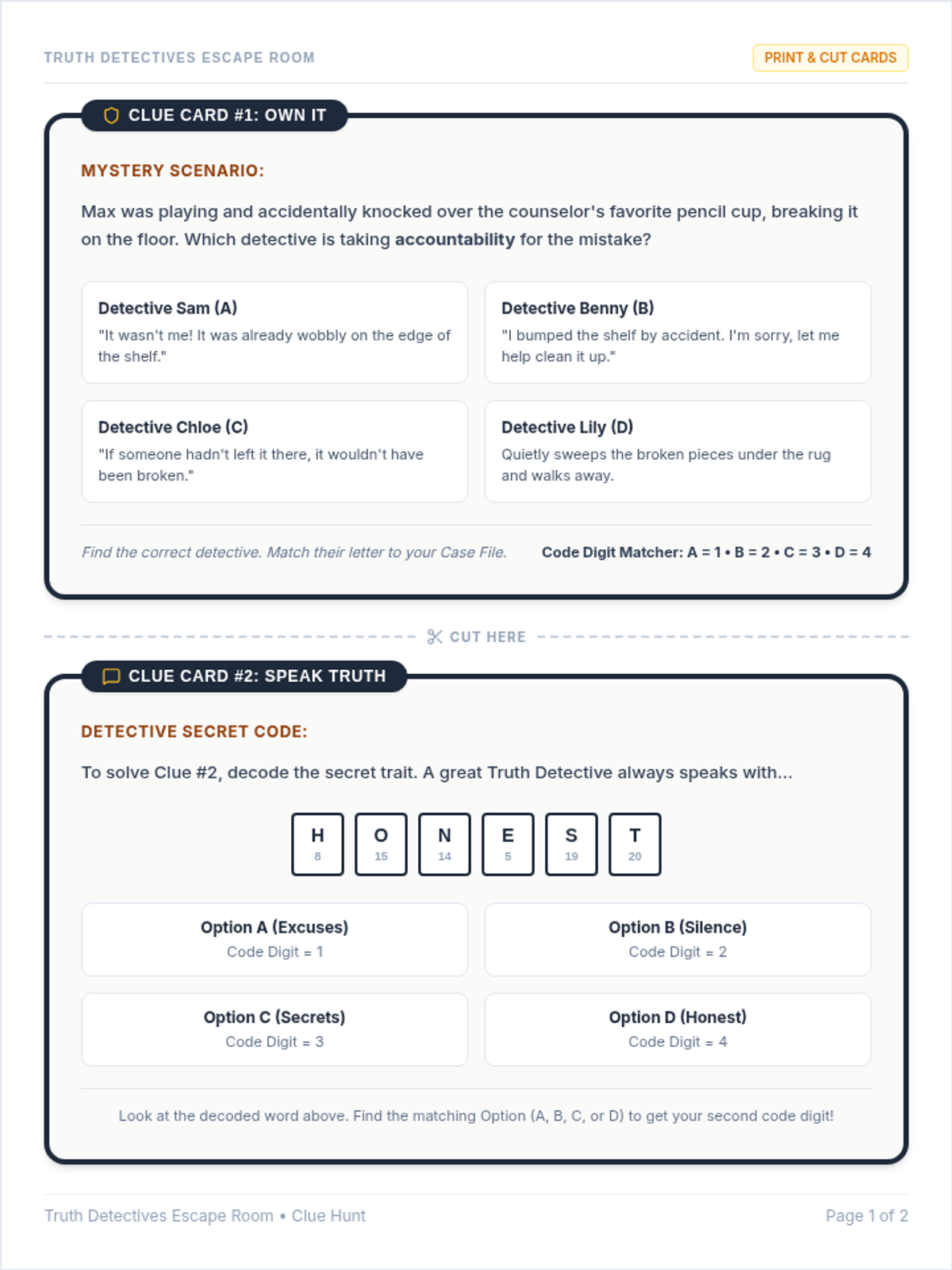
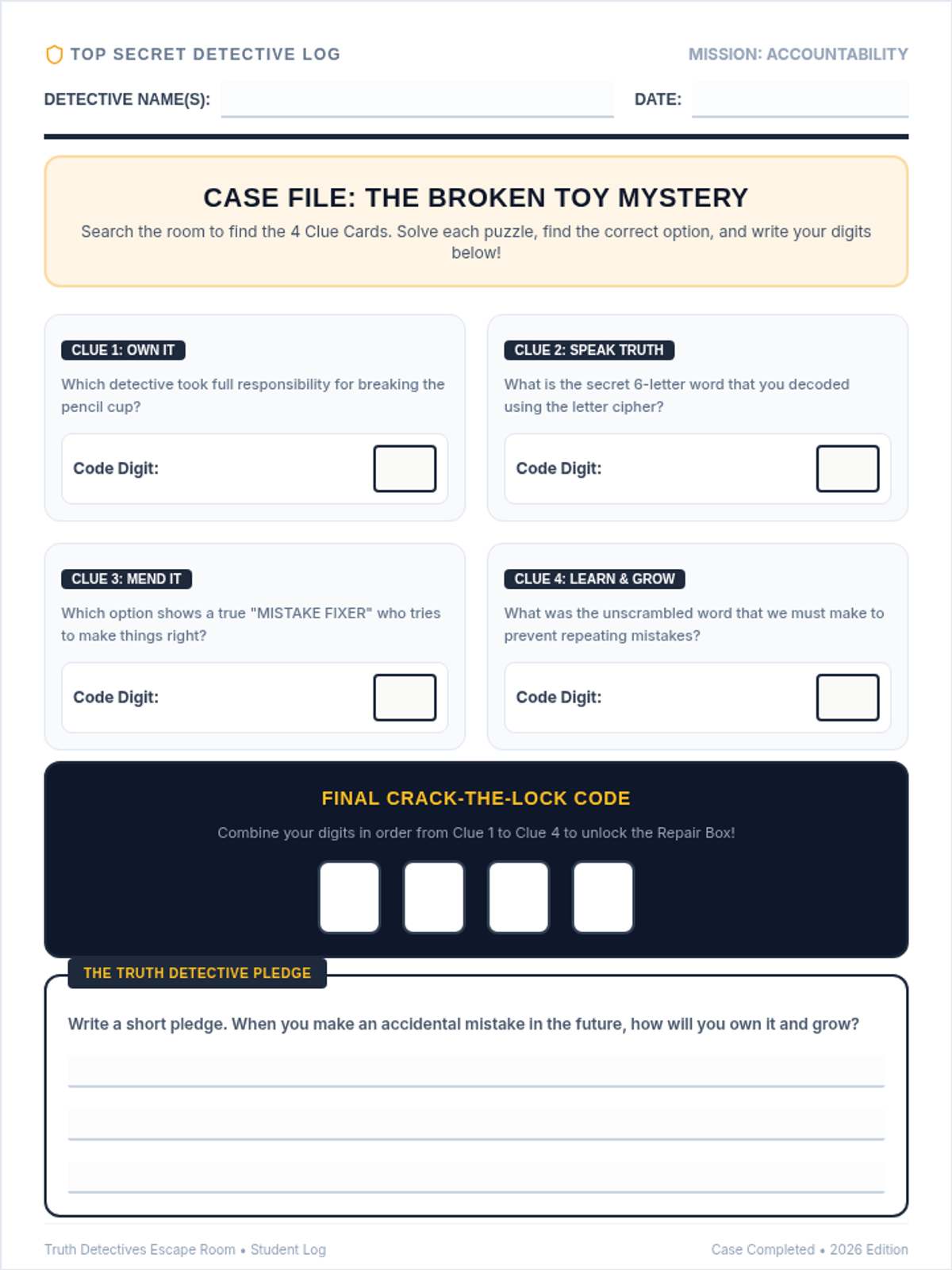
A collaborative counseling escape room for 2nd and 3rd grade students to learn about accountability. Students solve puzzles related to 'The Broken Toy Mystery' to learn how to admit mistakes, tell the truth, and repair damage.
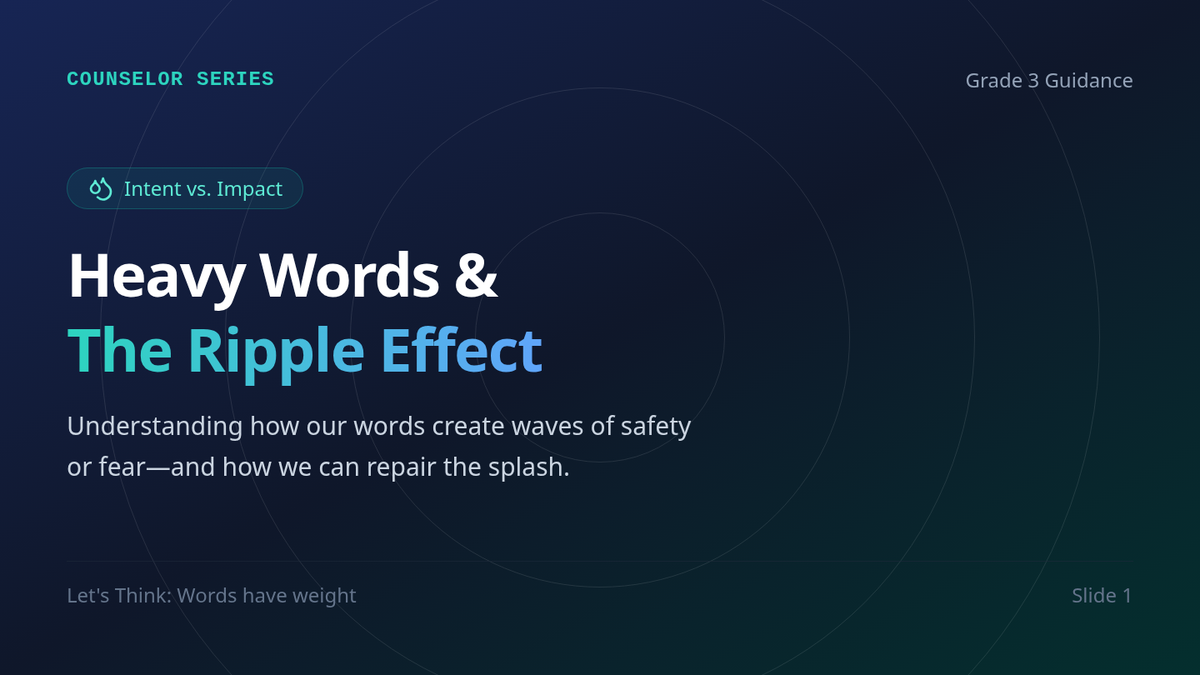
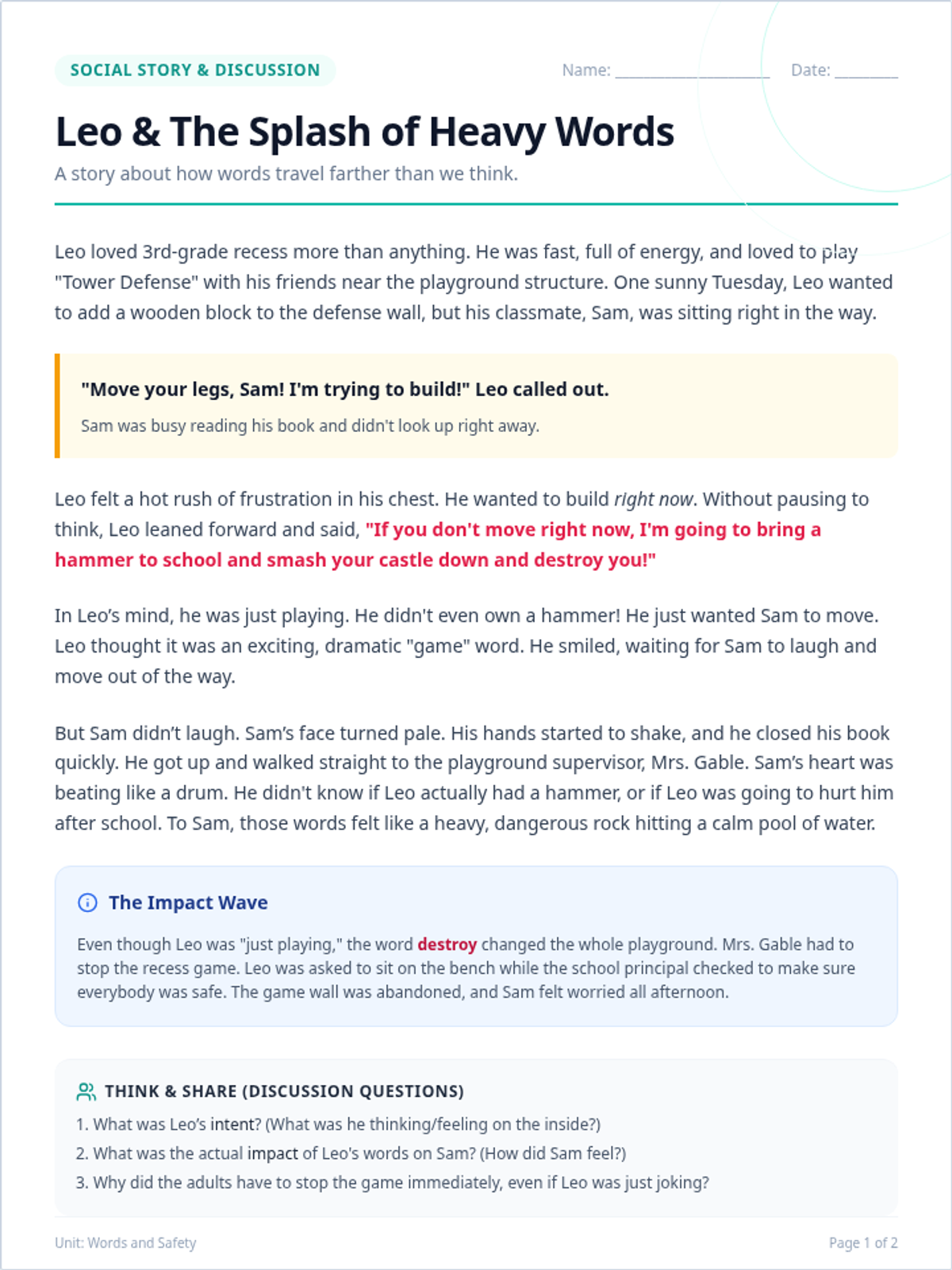
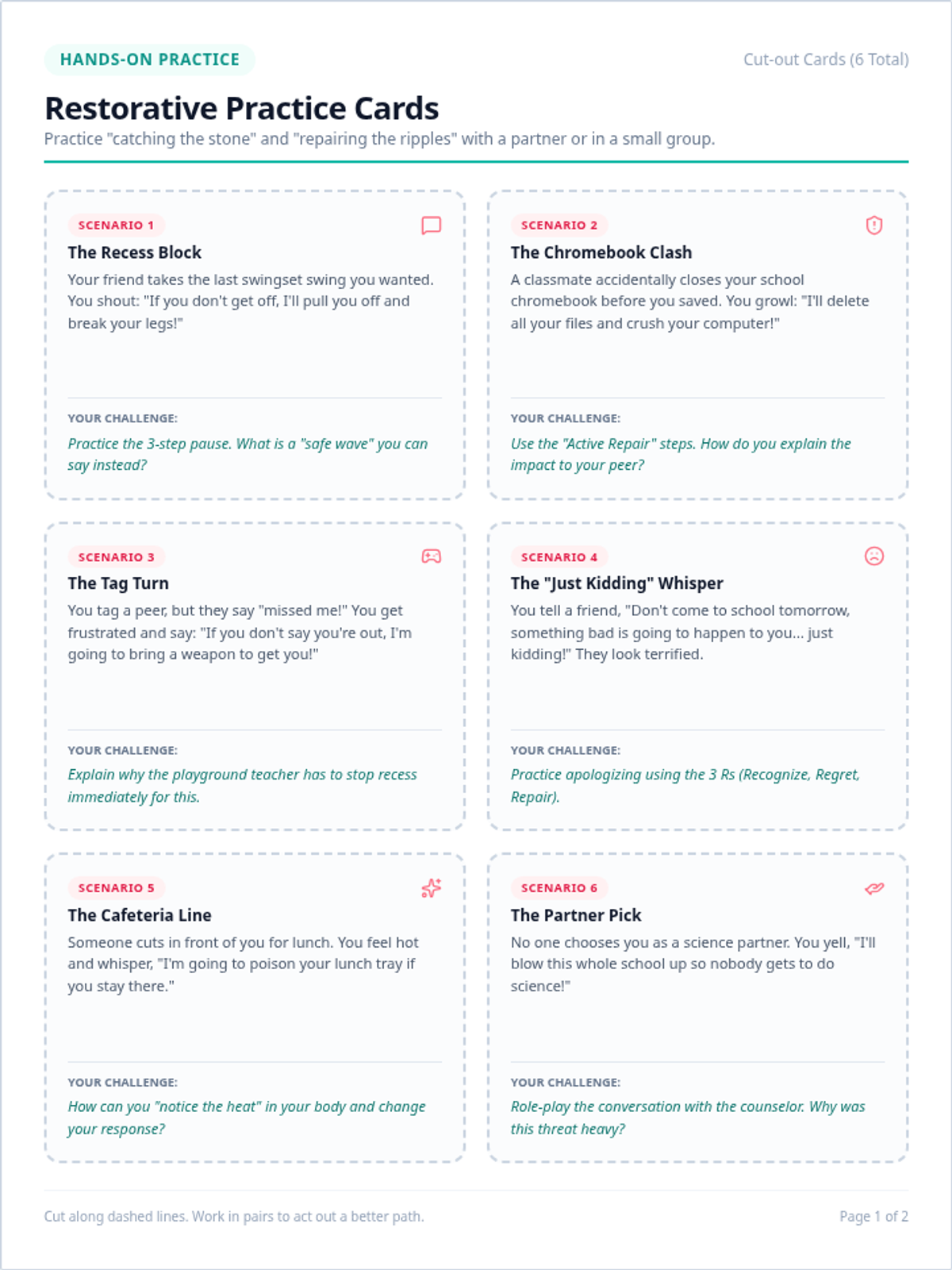
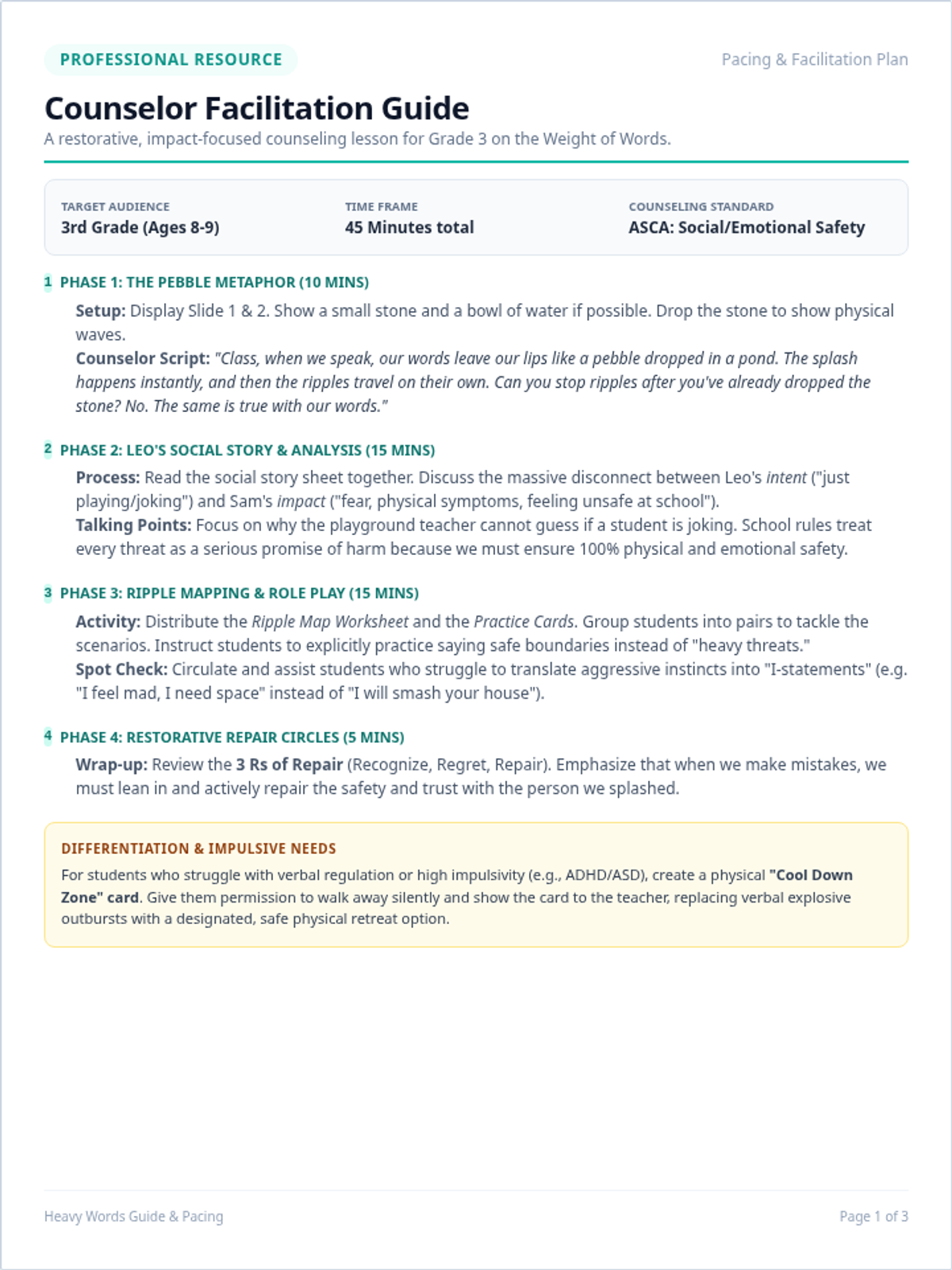
A guidance and counseling lesson designed for 3rd-grade students to understand the difference between intent and impact. Through a water-ripple metaphor, students discover how "just joking" threats create waves of fear and how to repair broken trust.
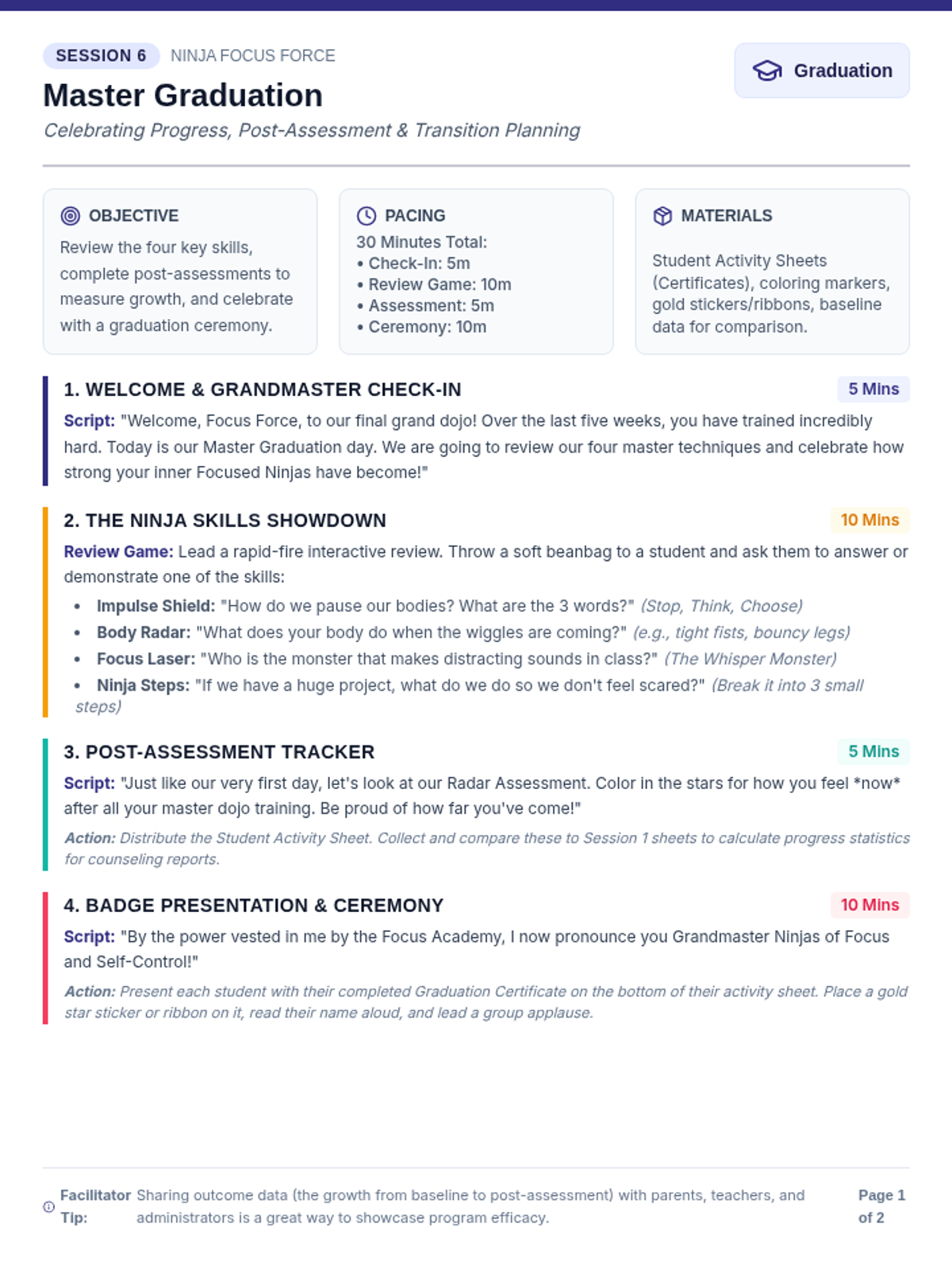
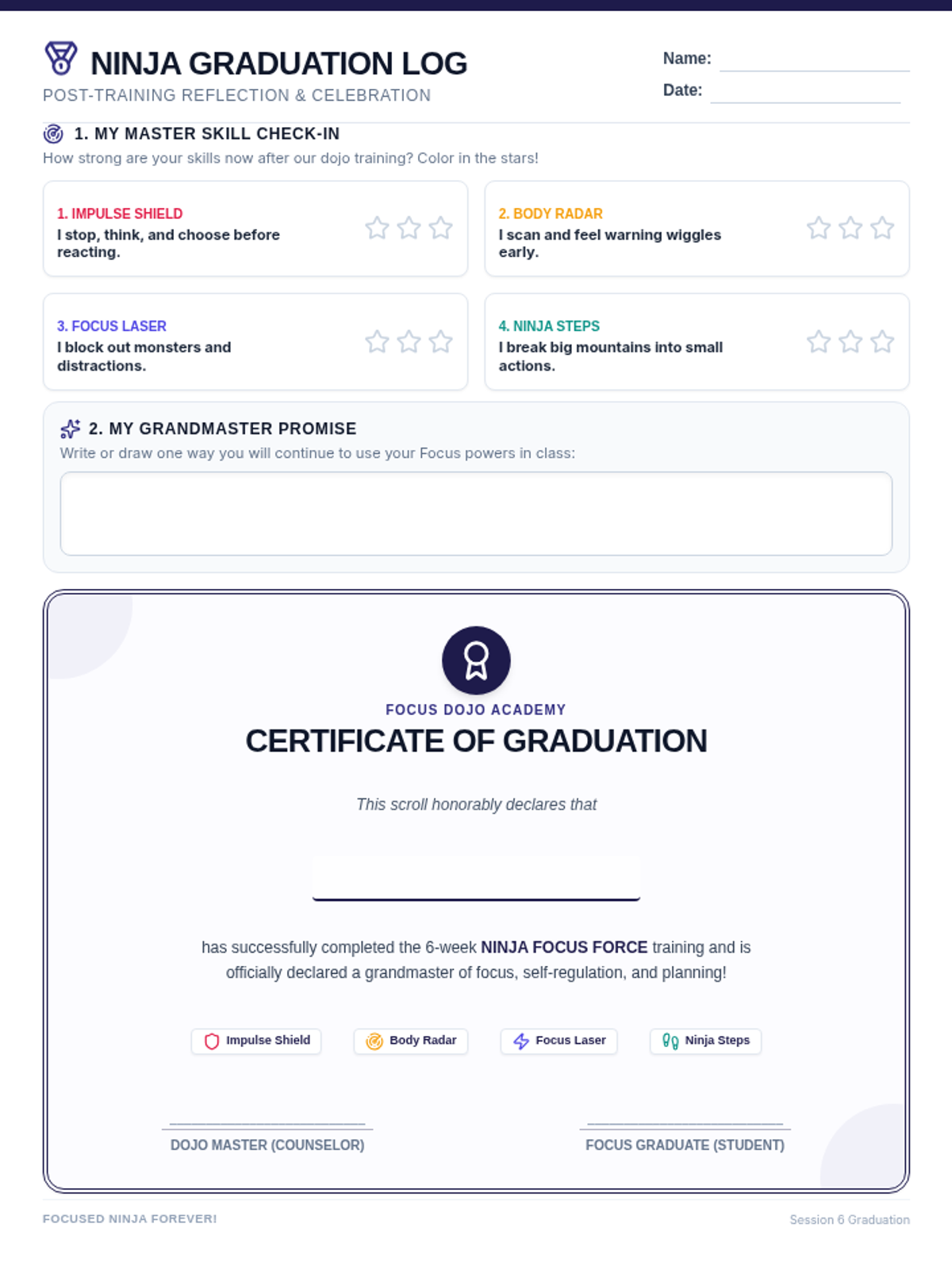
Celebrating the group's progress. Students review their ninja strategies, complete a post-assessment, and receive their graduation badges.
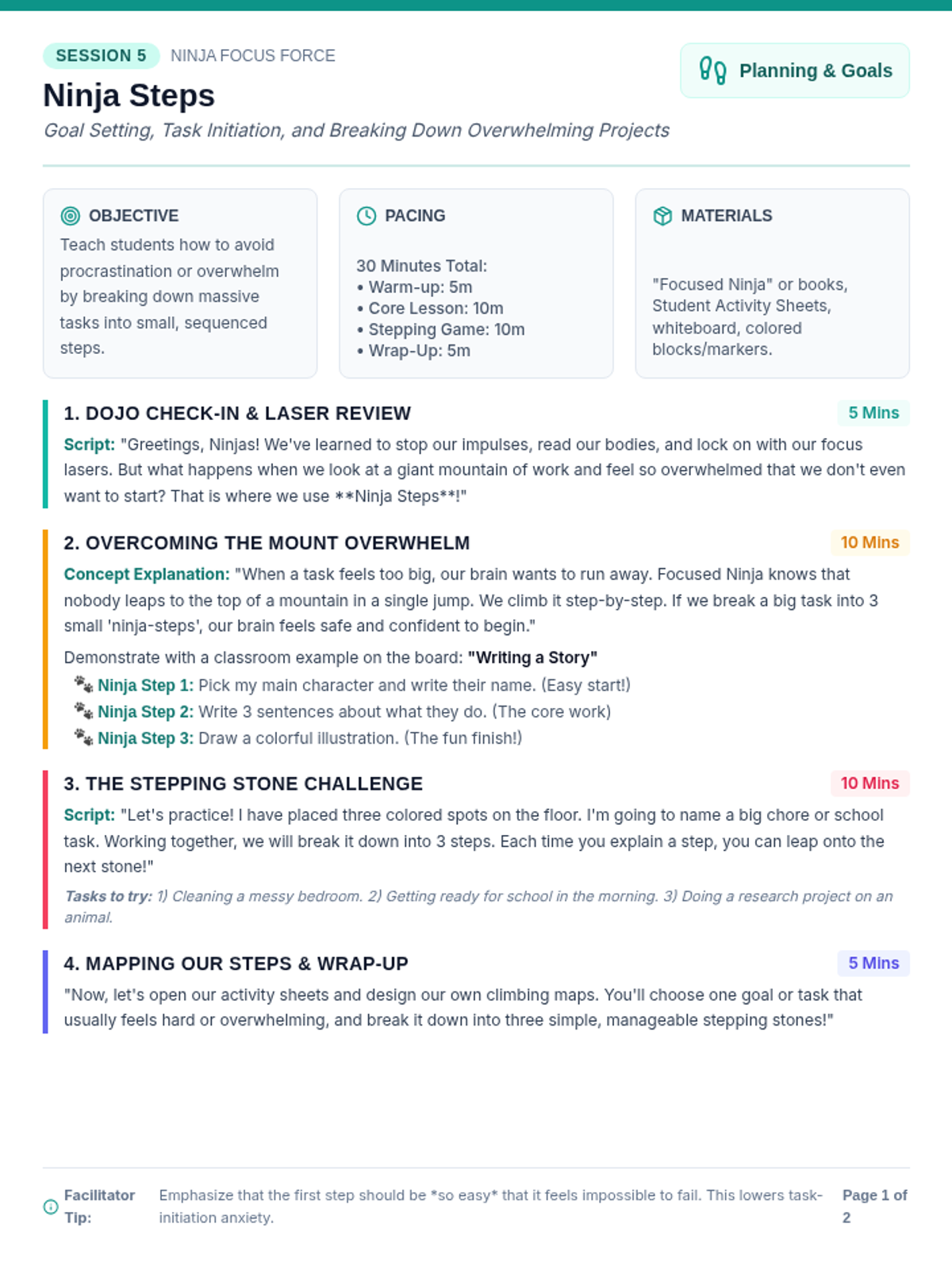
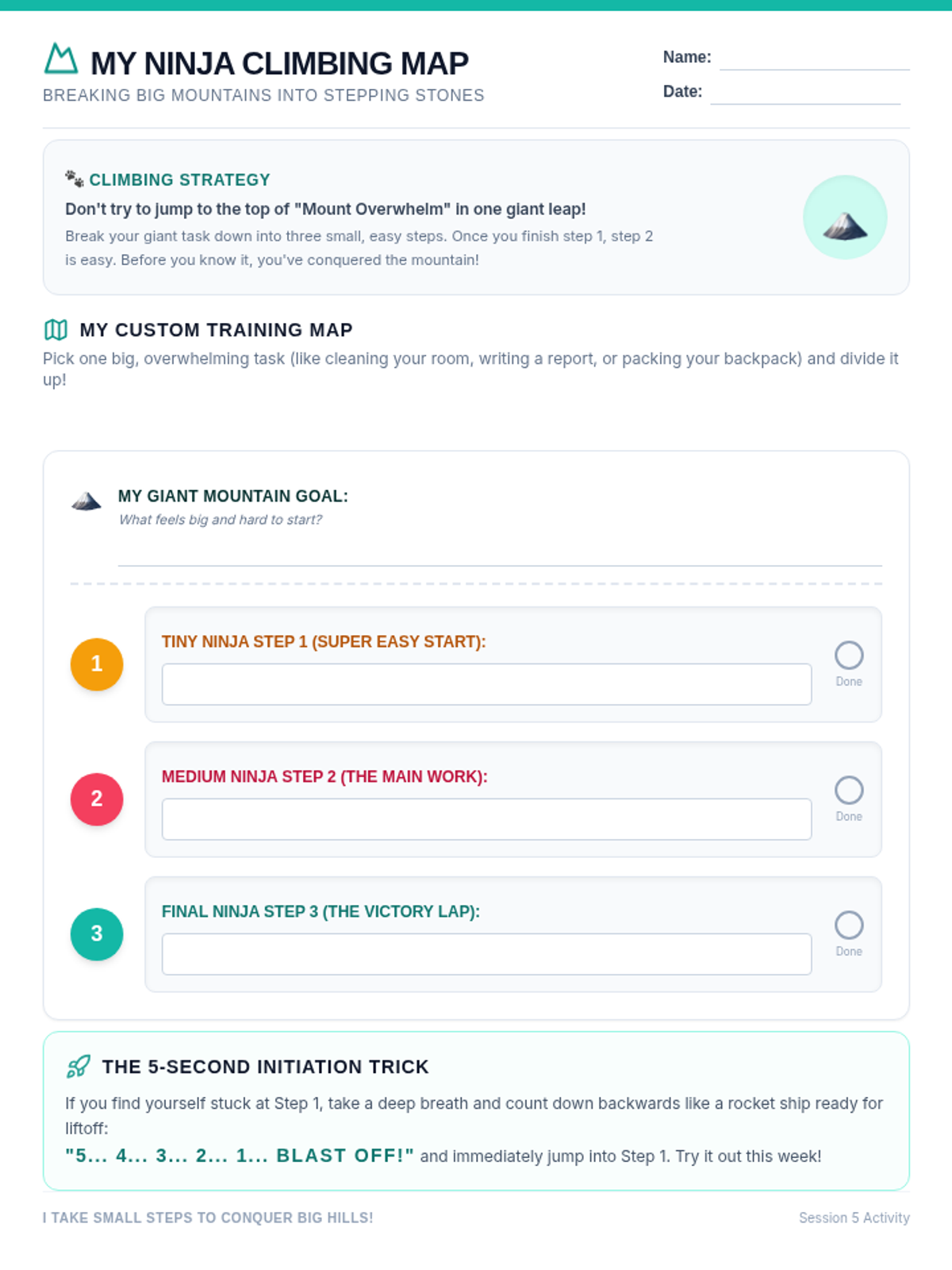
Mastering goal setting and action planning. Students learn to break big, overwhelming tasks into small, manageable 'ninja-steps'.
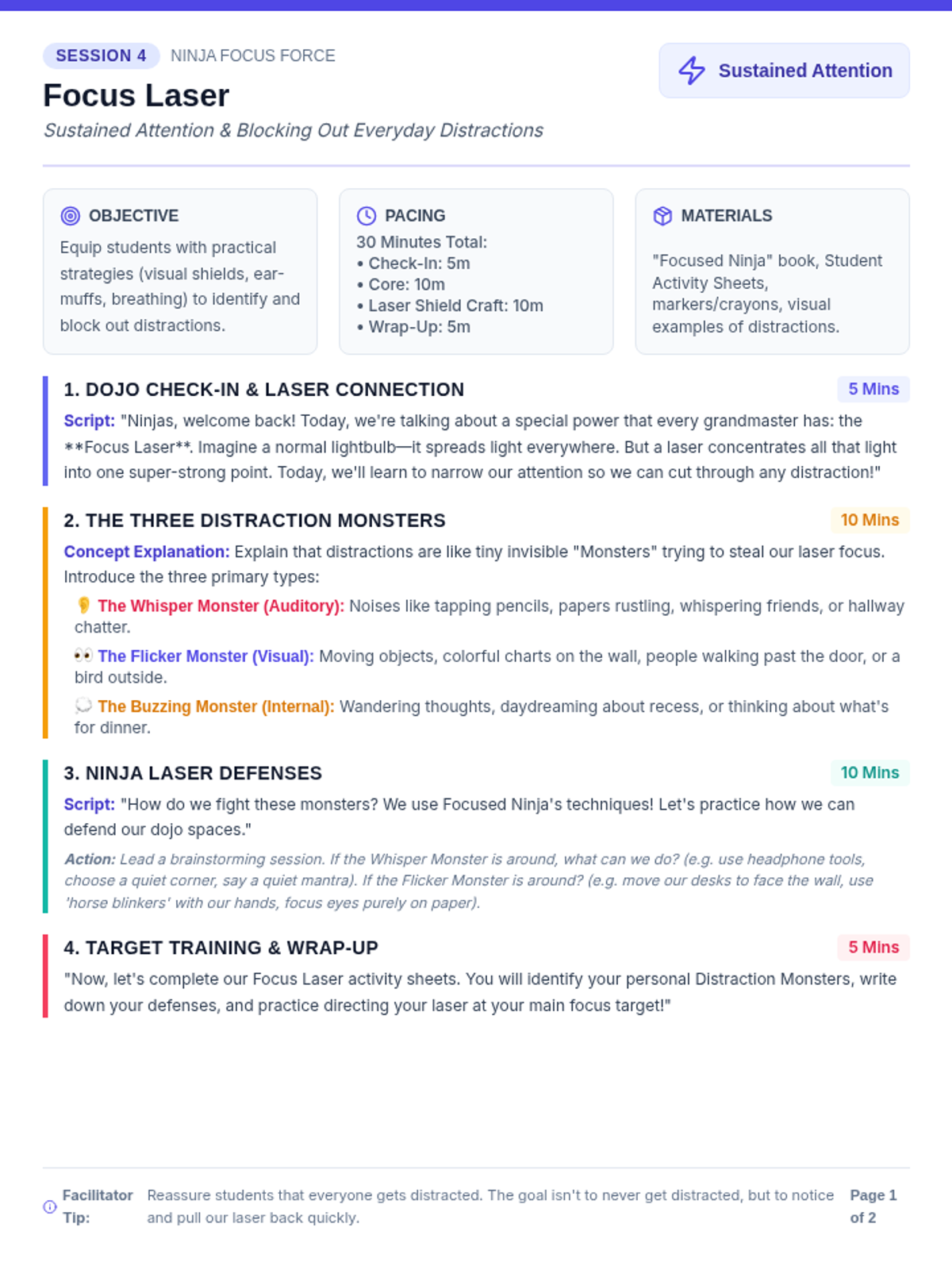
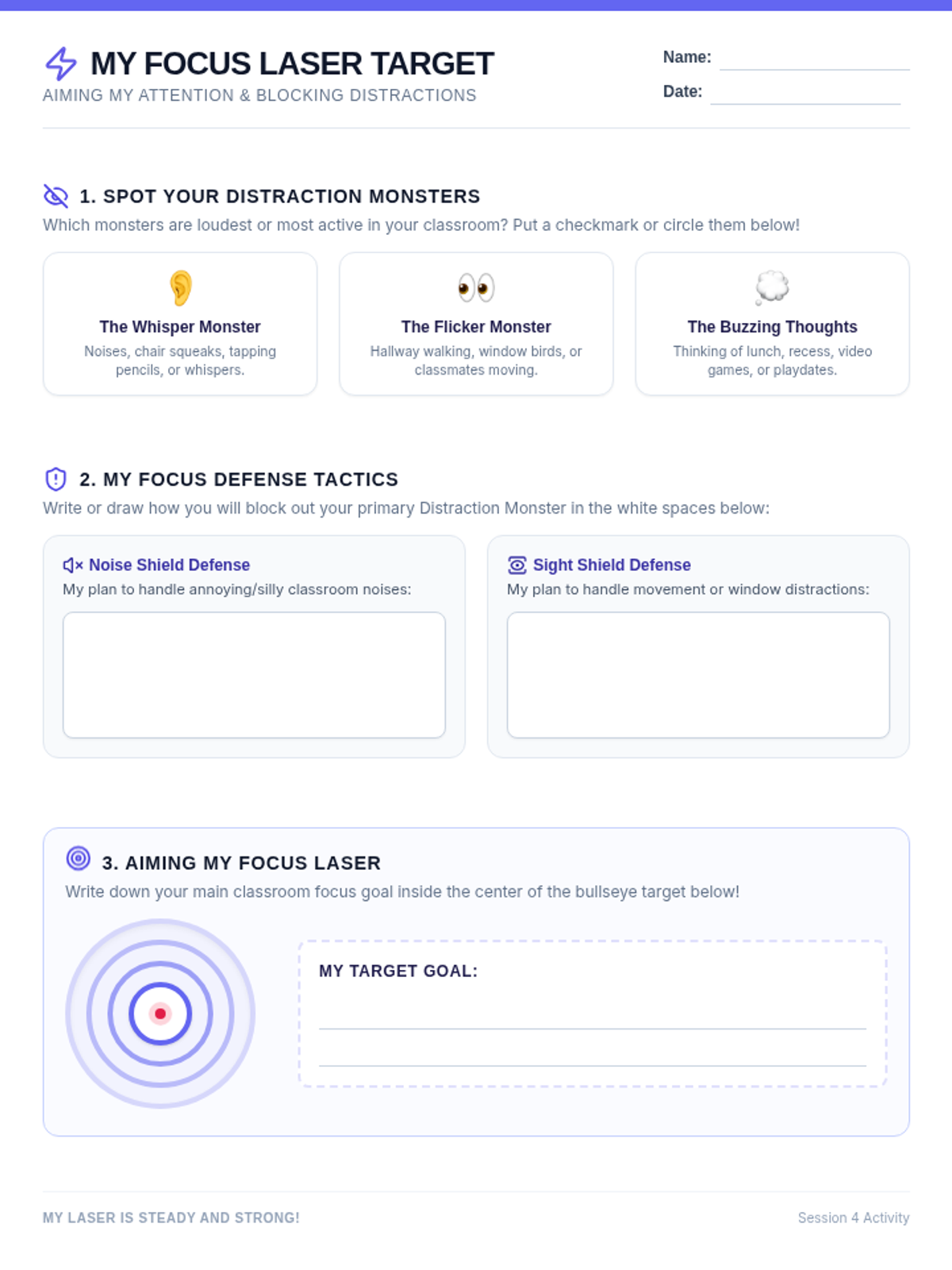
Enhancing sustained attention and concentration. Students practice blocking out distractions using the Focused Ninja's techniques.
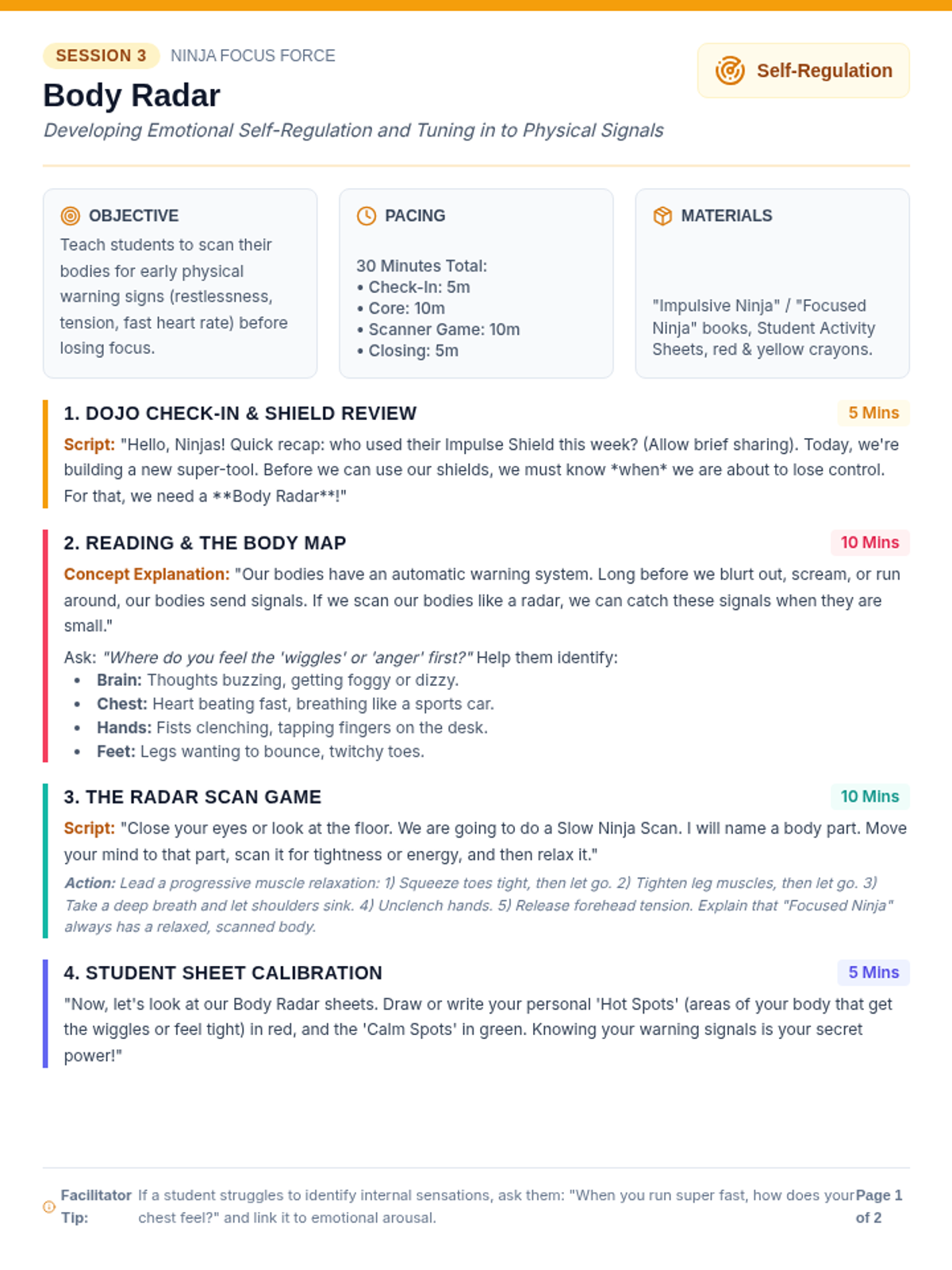
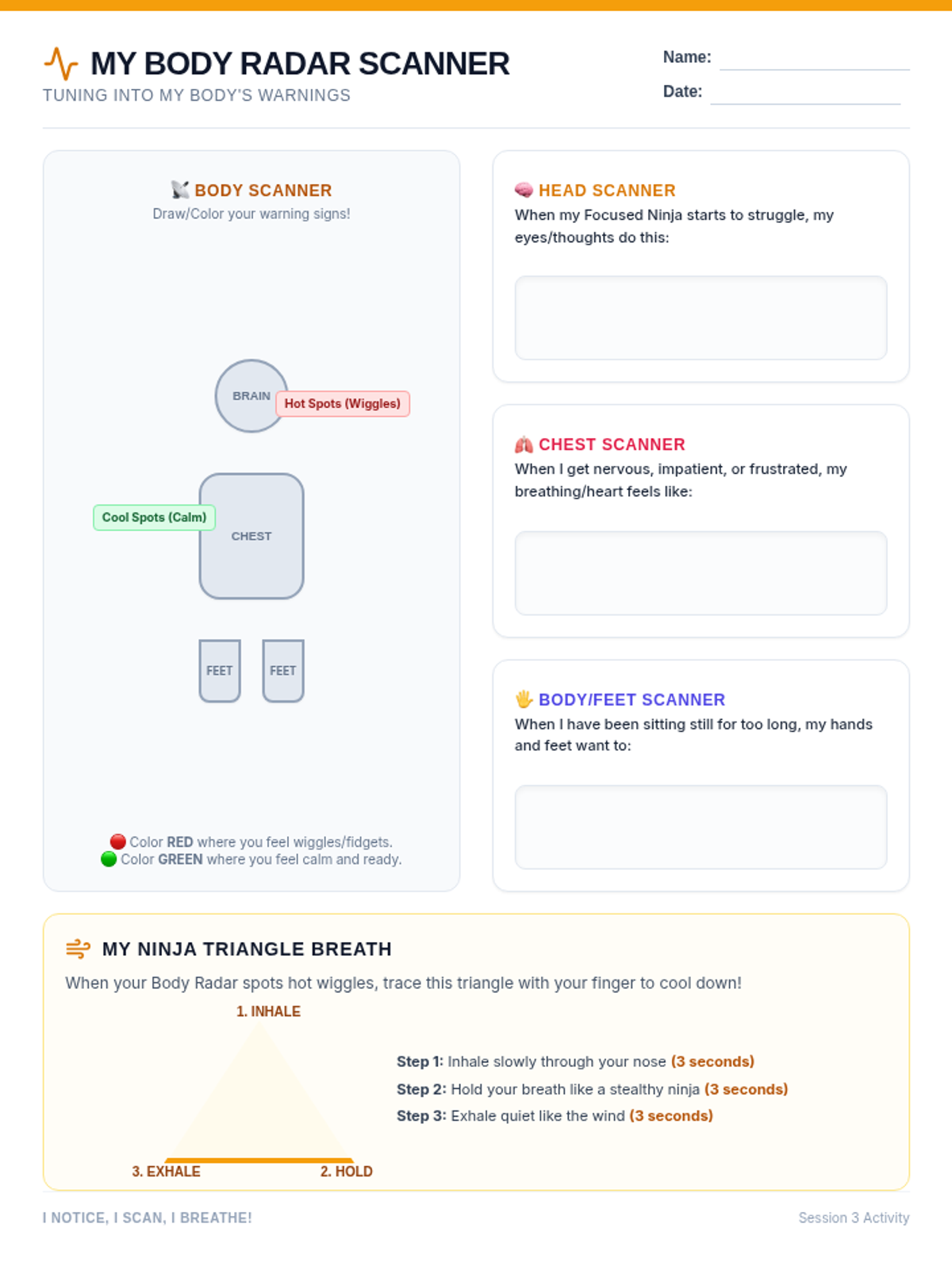
Developing emotional self-regulation. Students learn to scan their bodies for early warning signs of distraction, restlessness, or frustration.
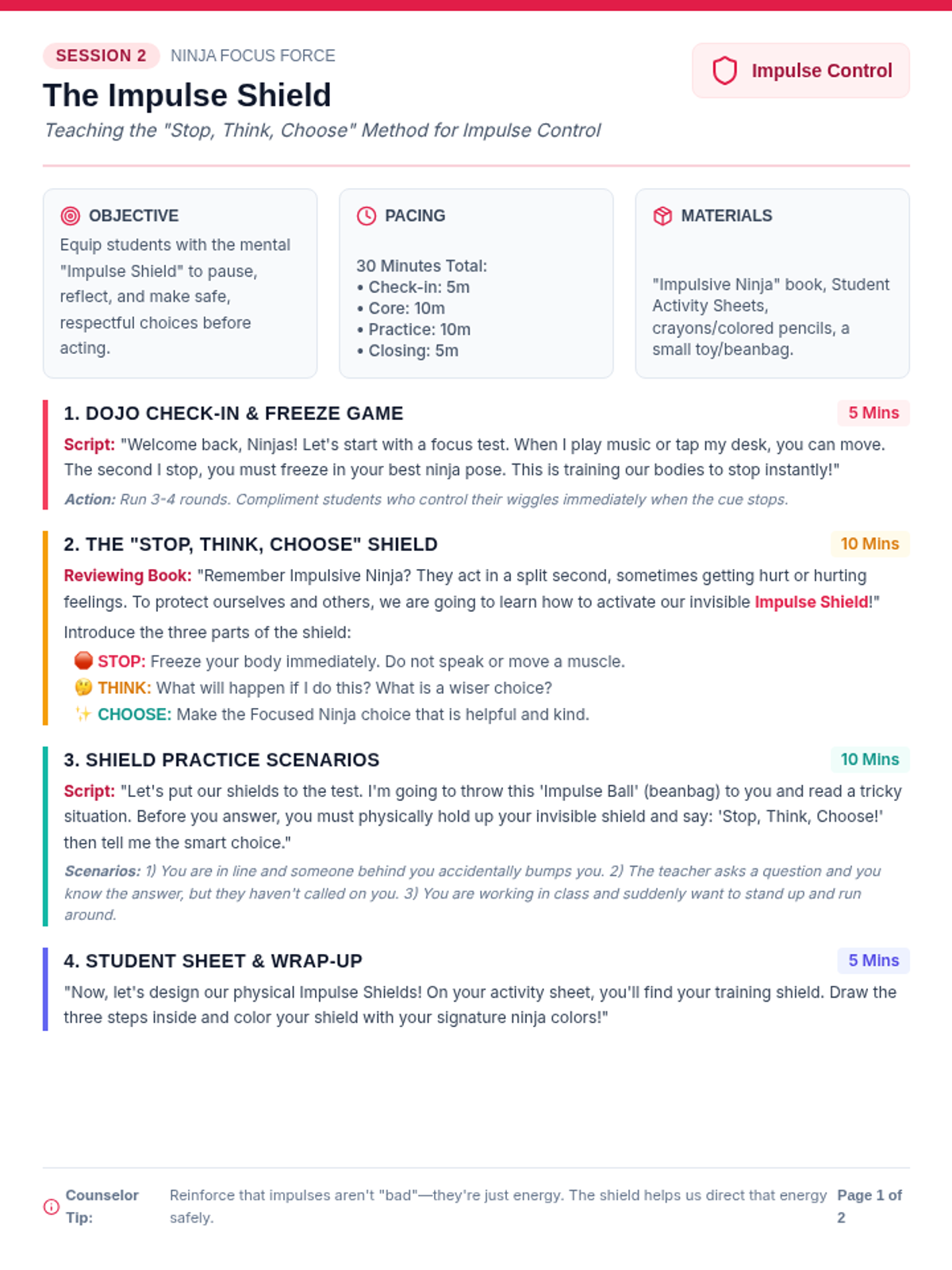
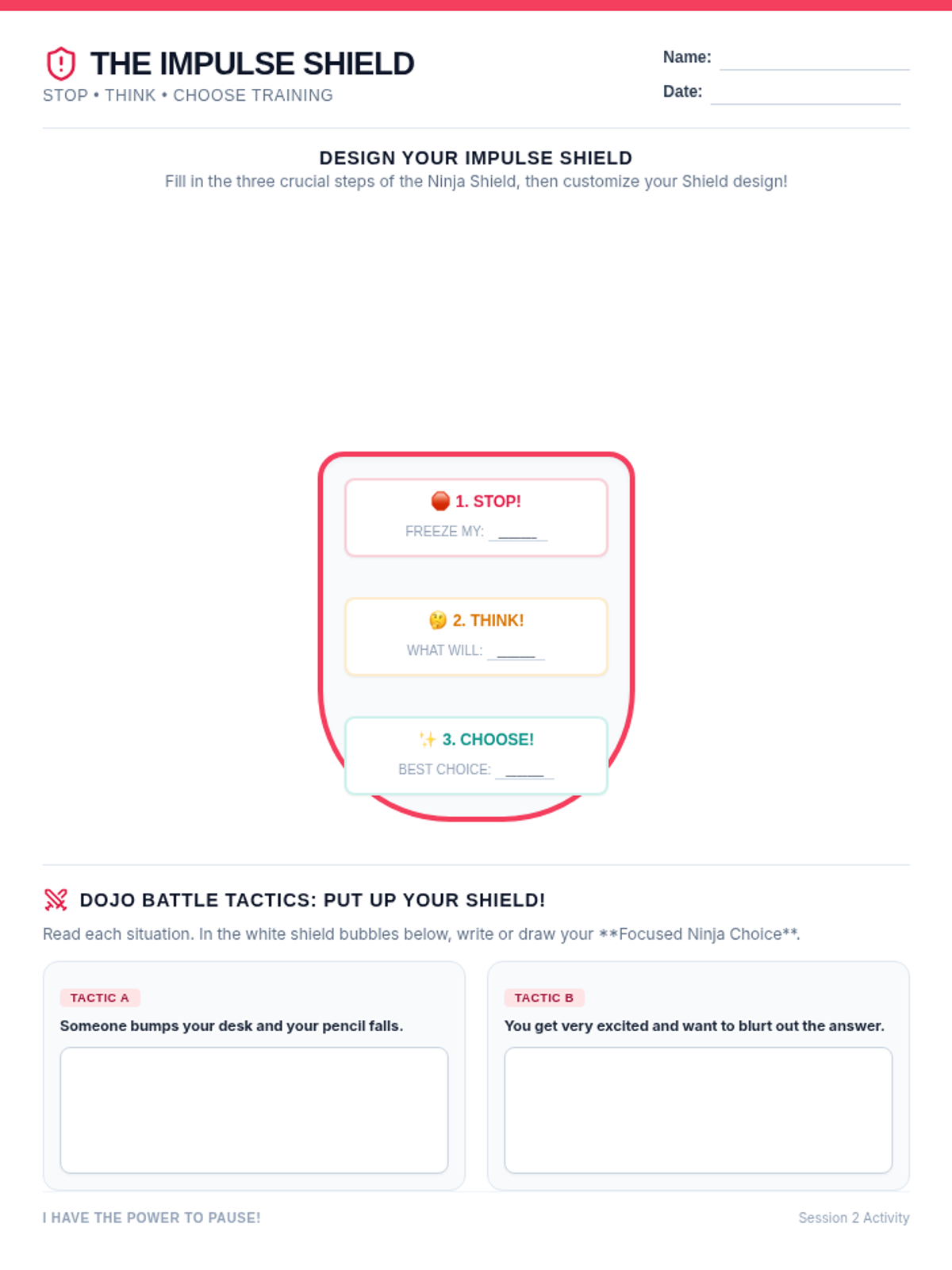
Teaching impulse control through the 'Stop and Think' method. Students learn to pause before reacting, using the concept of an invisible defensive shield.
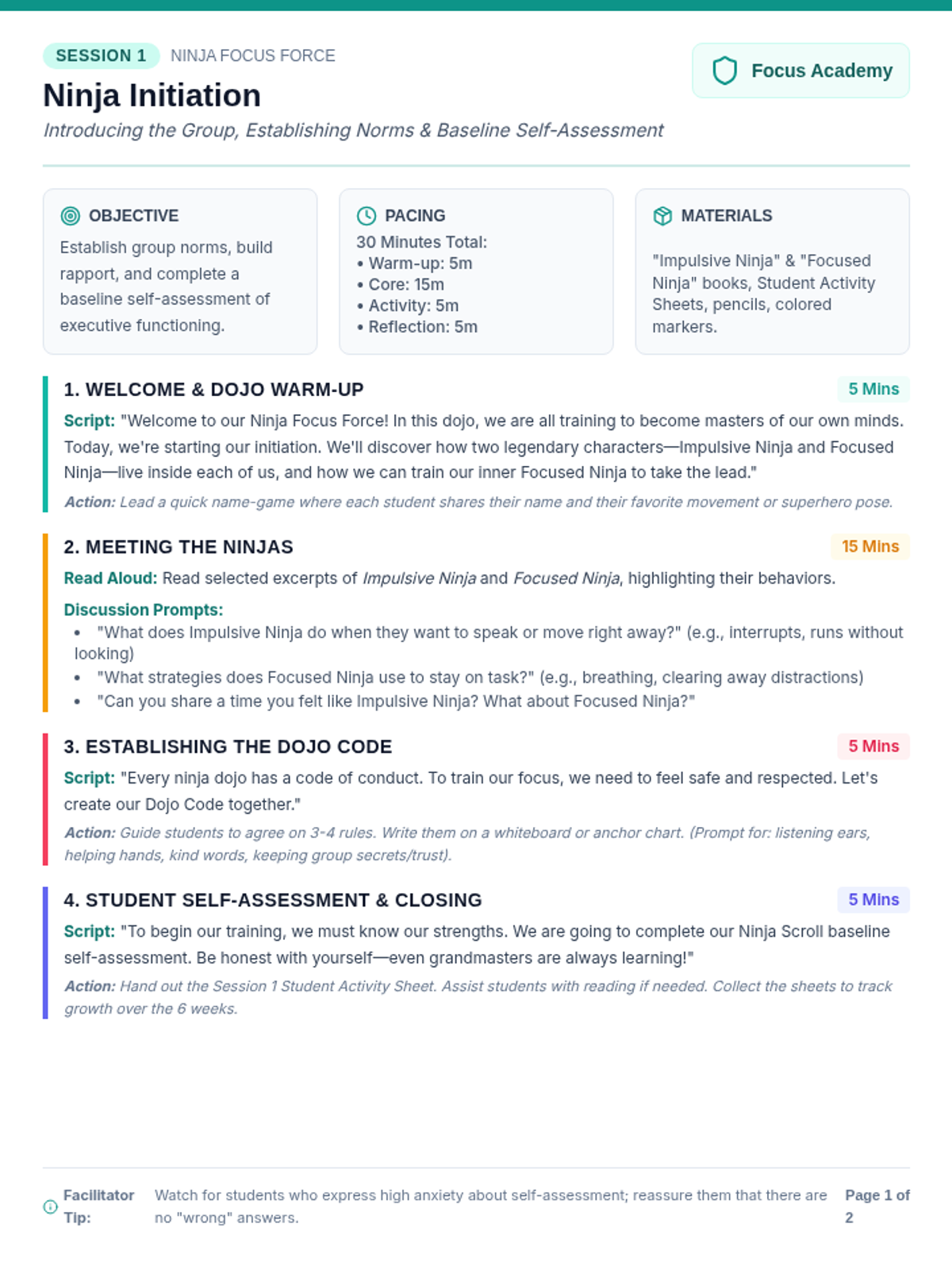
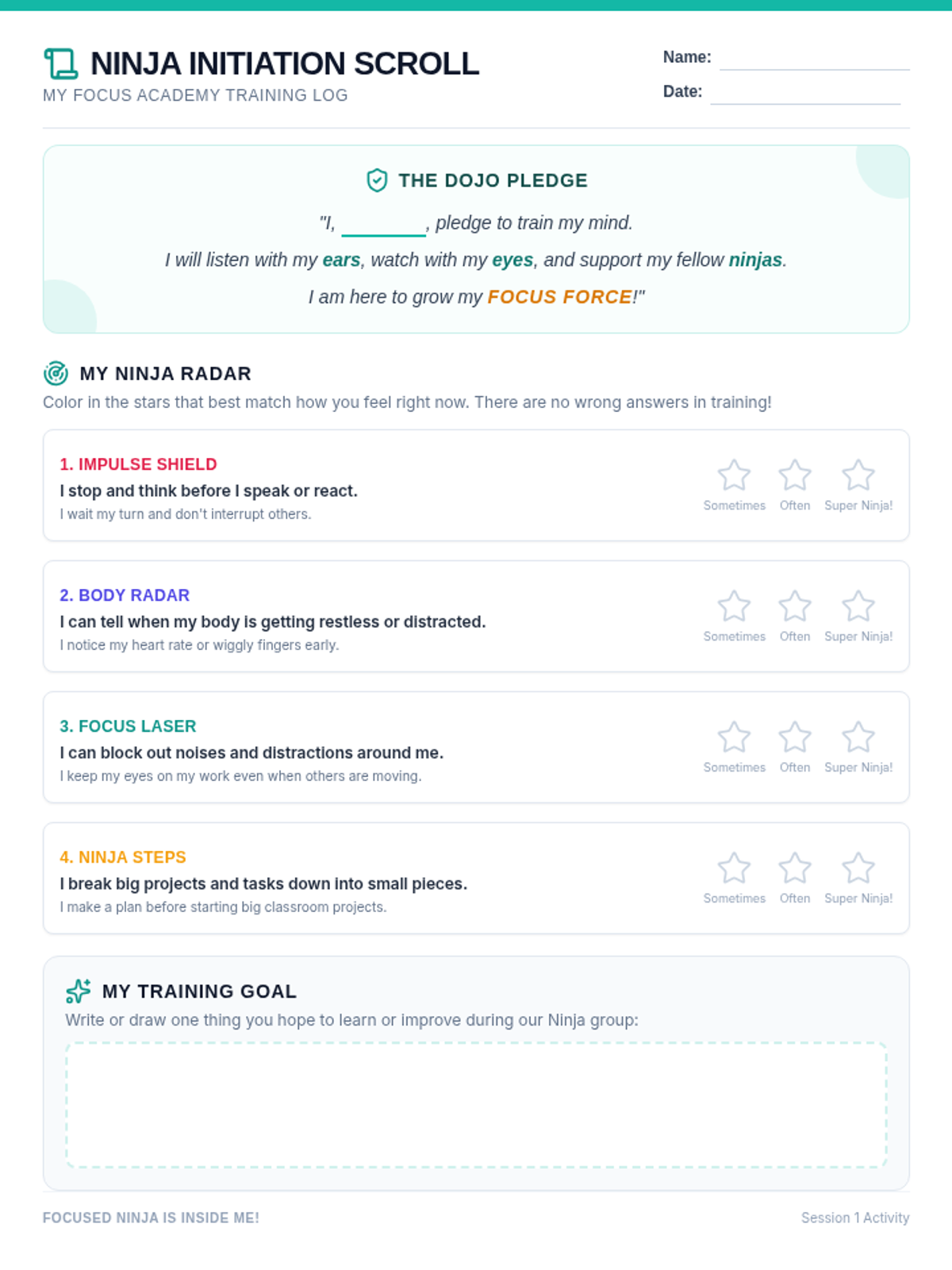
Introducing the group, establishing norms, and meeting Impulsive Ninja and Focused Ninja. Students complete a baseline self-assessment of their focus and impulse control.
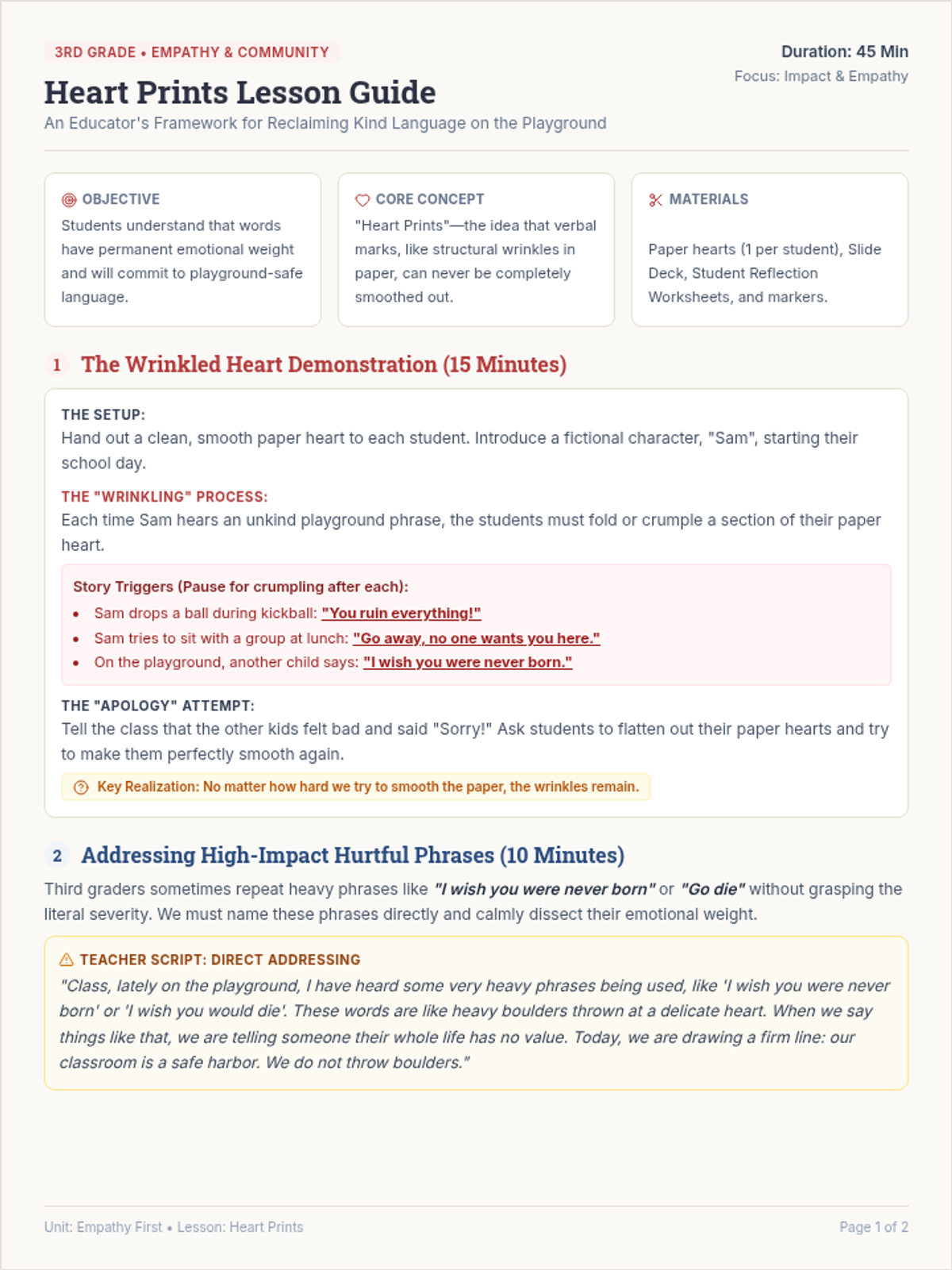
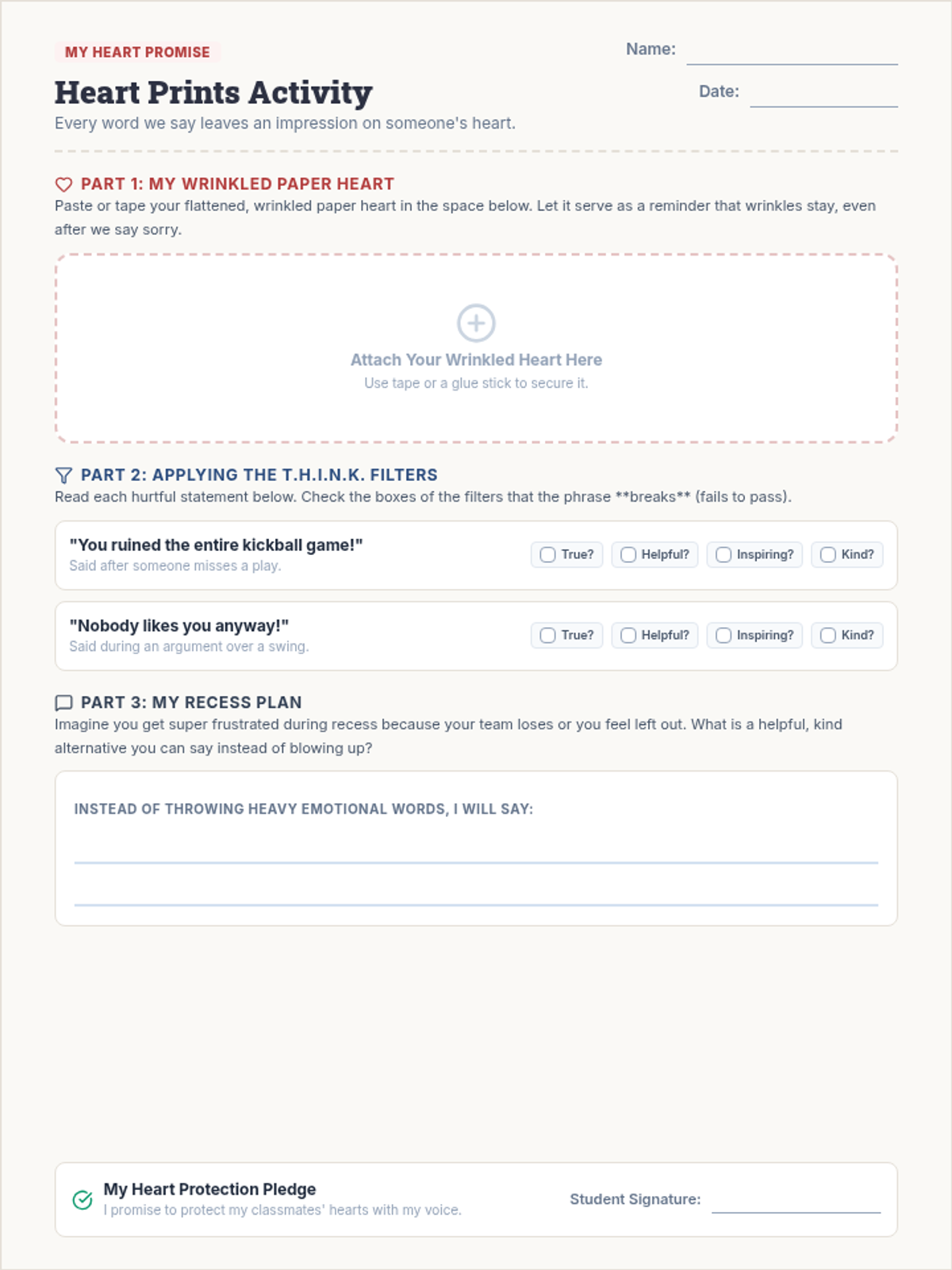
A powerful 3rd-grade lesson designed to help students understand the permanent impact of their words, specifically addressing hurtful playground behavior and fostering empathy through discussion and hands-on reflection.
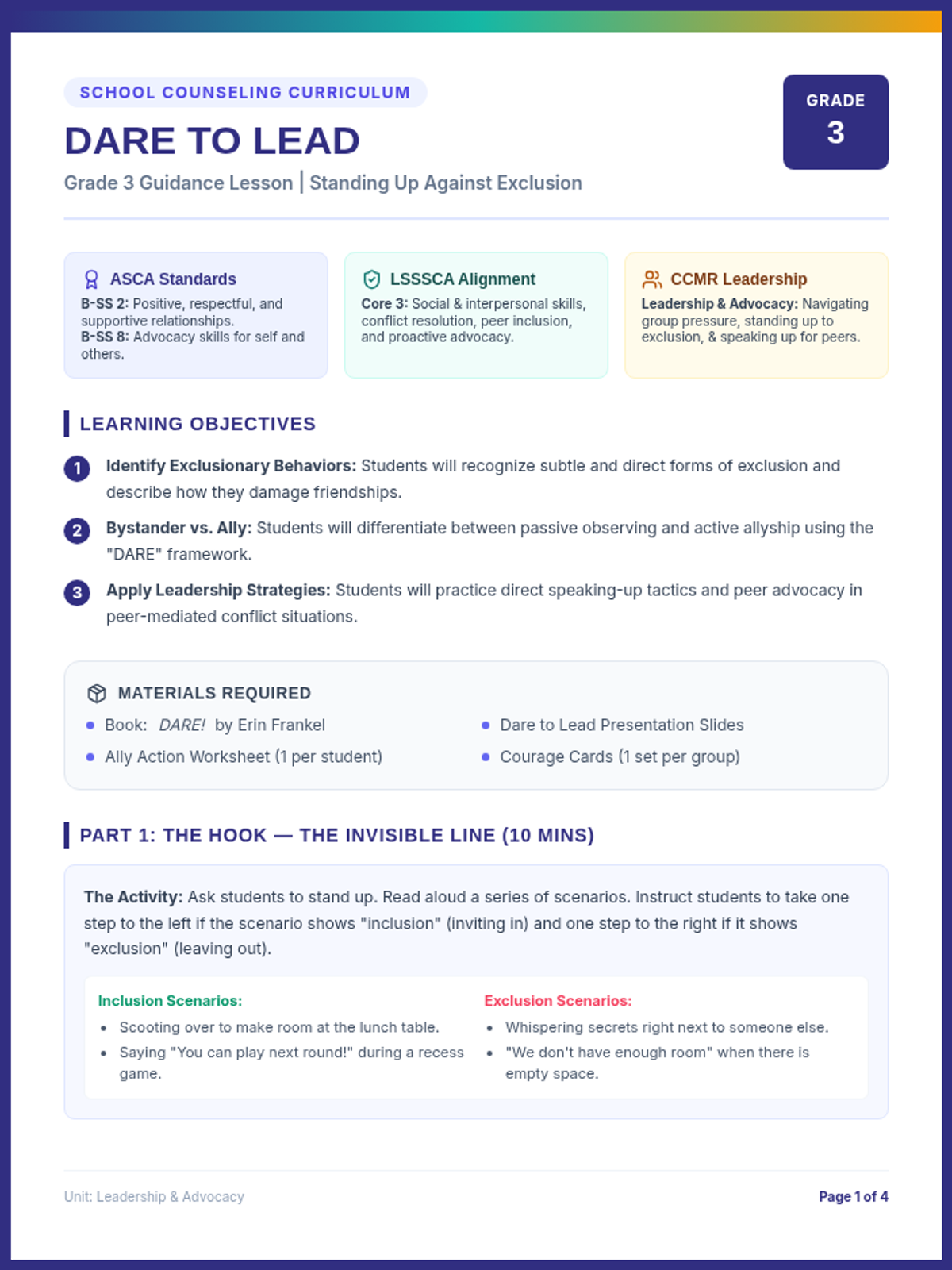
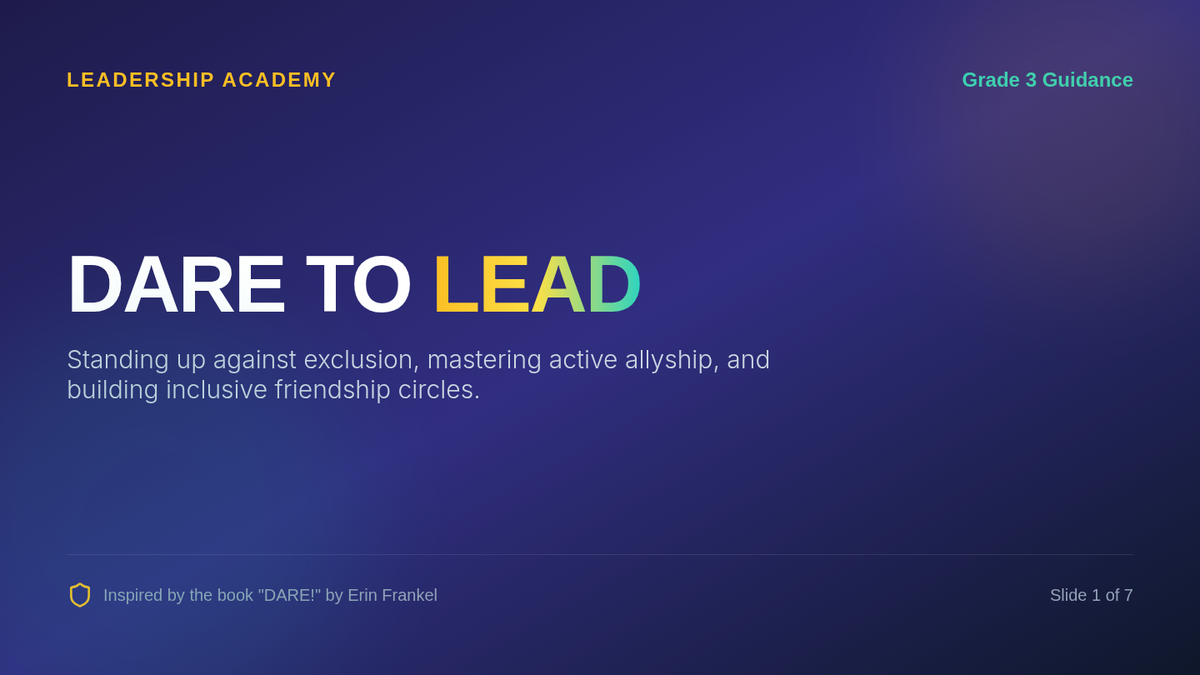
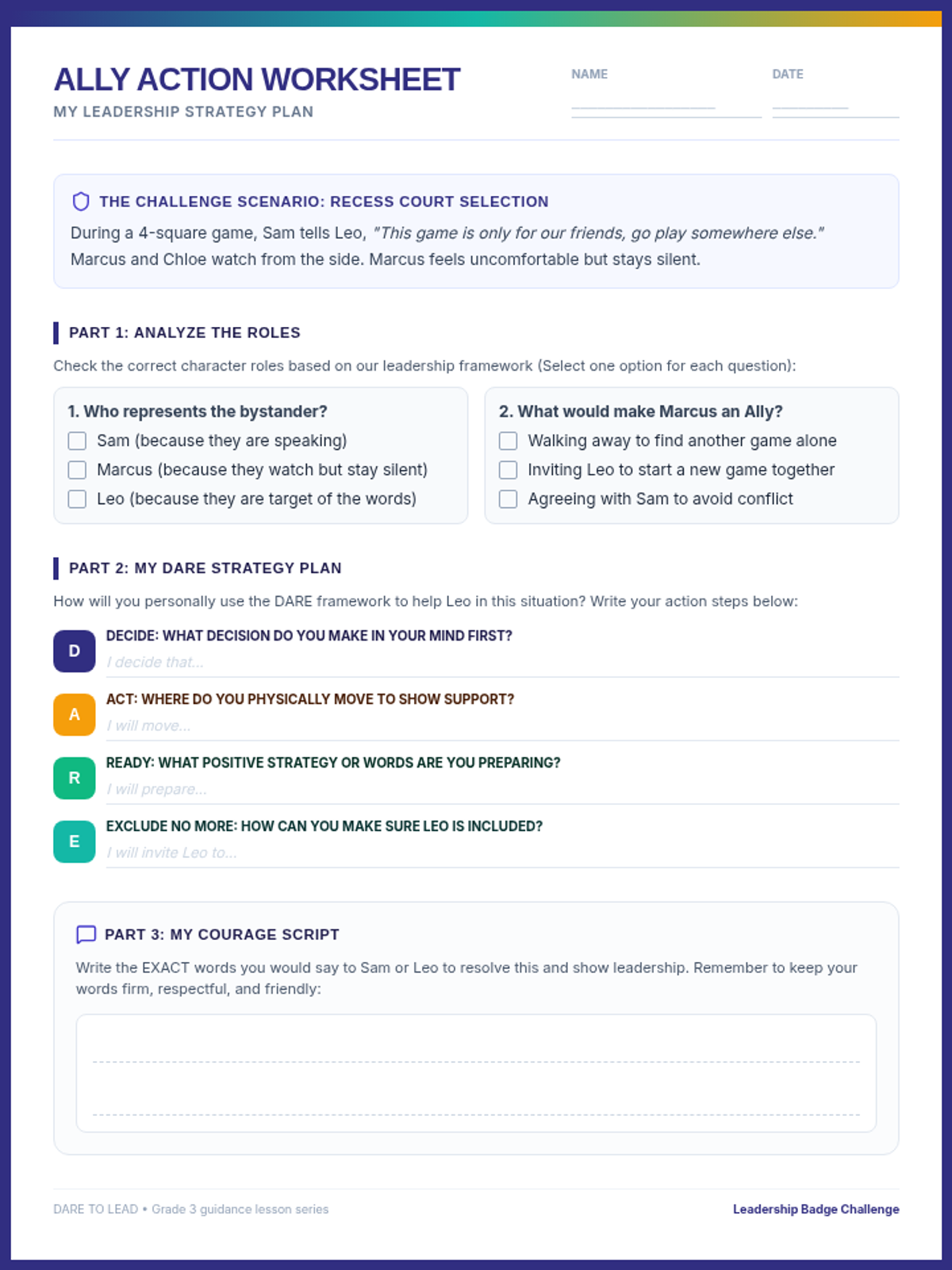
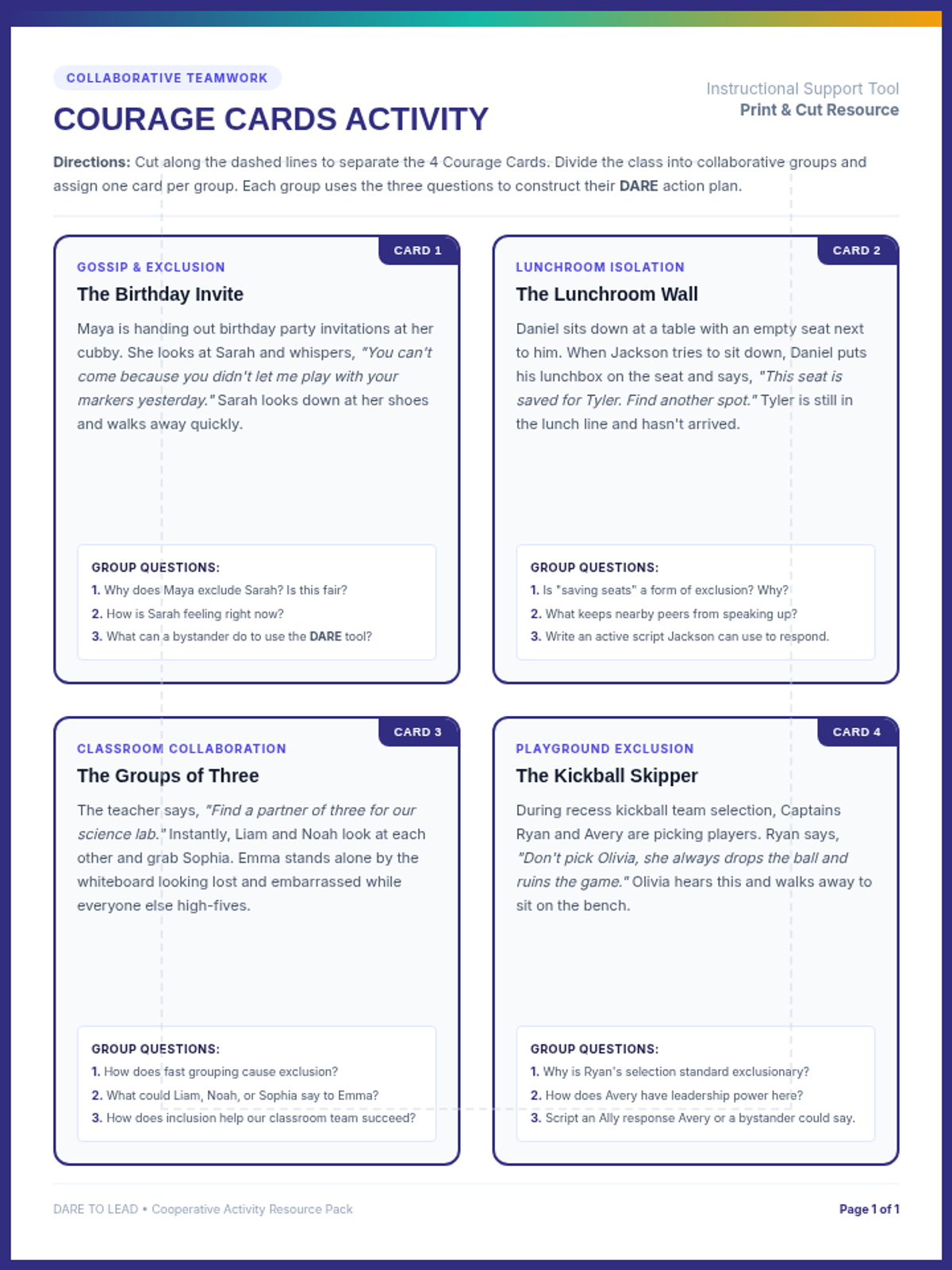
A comprehensive, rigorous 3rd-grade guidance lesson on conflict resolution, friendship, and standing up against exclusion, based on the book 'DARE!' by Erin Frankel. aligned with ASCA, LSSSCA, and CCMR Leadership & Advocacy standards.
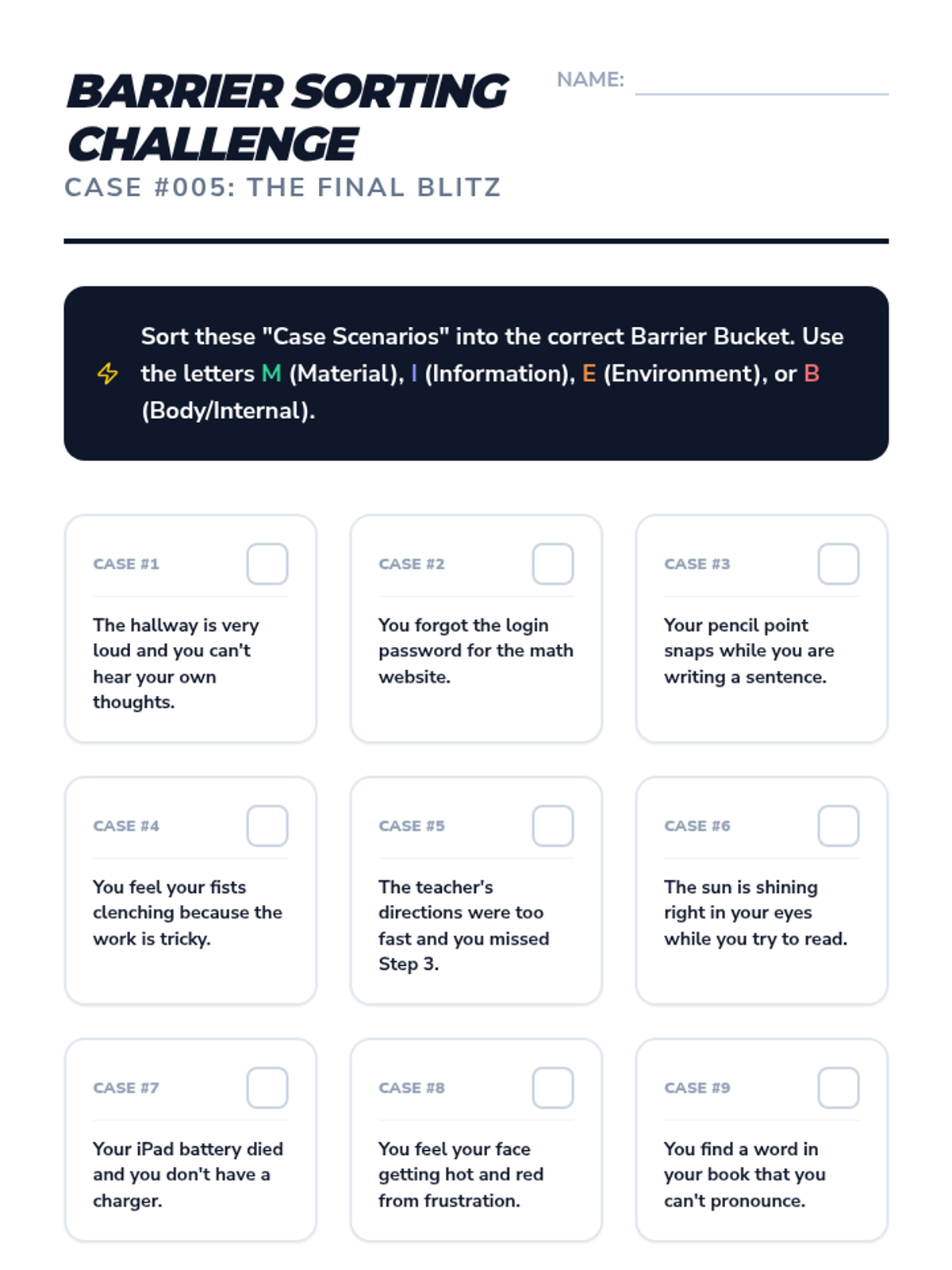
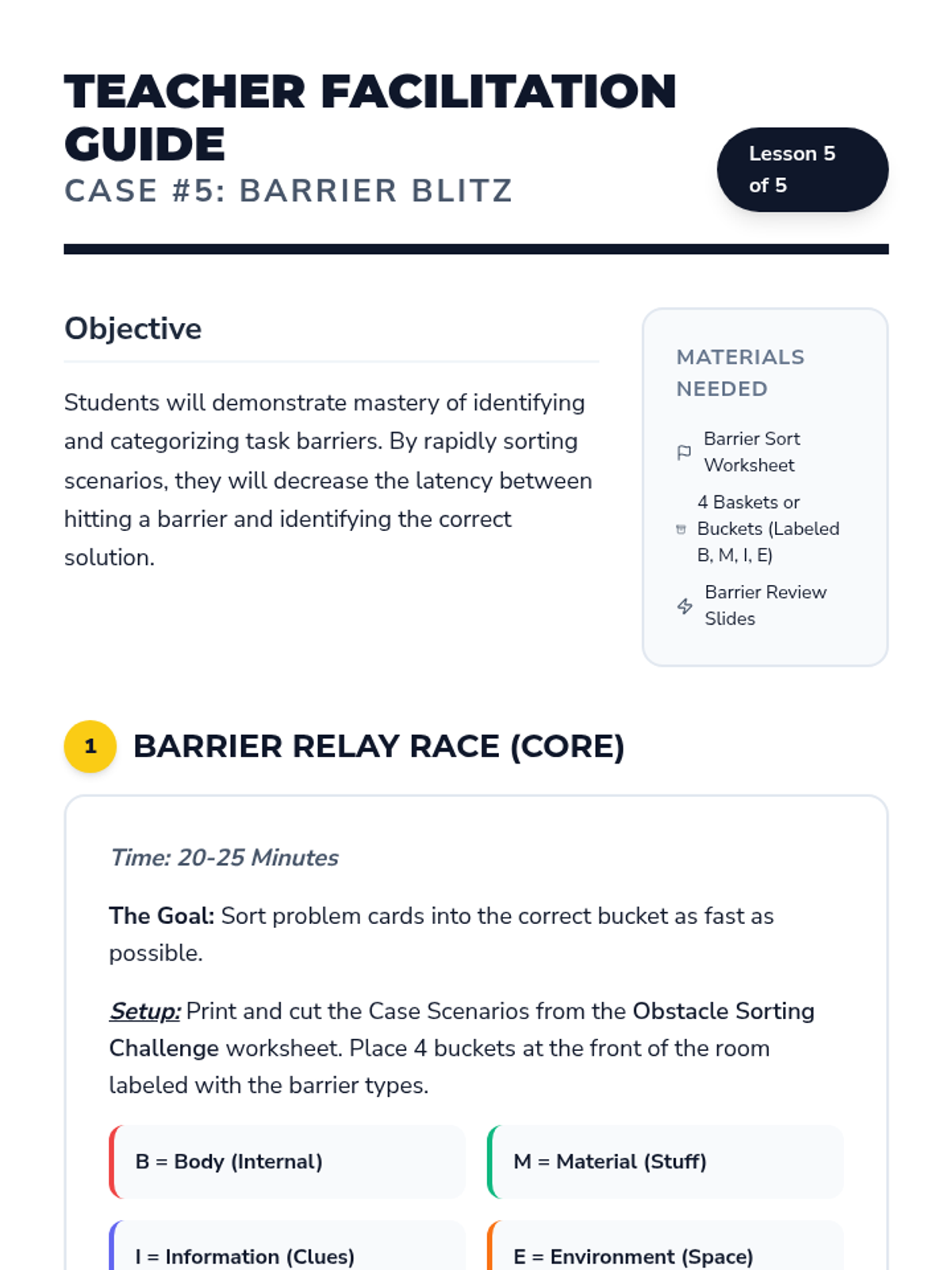
A culminating lesson where students rapidly sort various scenarios into barrier categories to reduce the time between hitting a wall and identifying the solution.
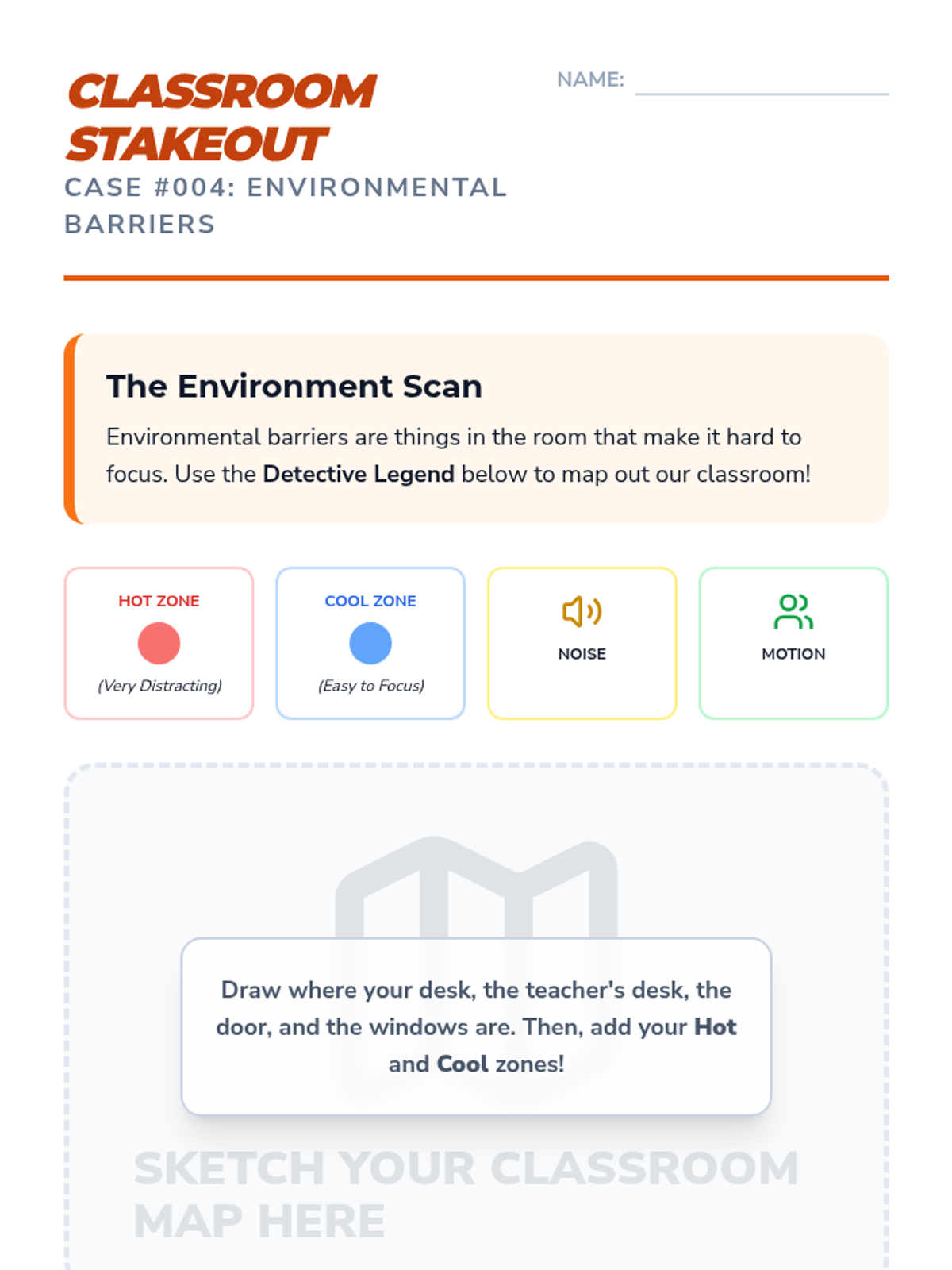
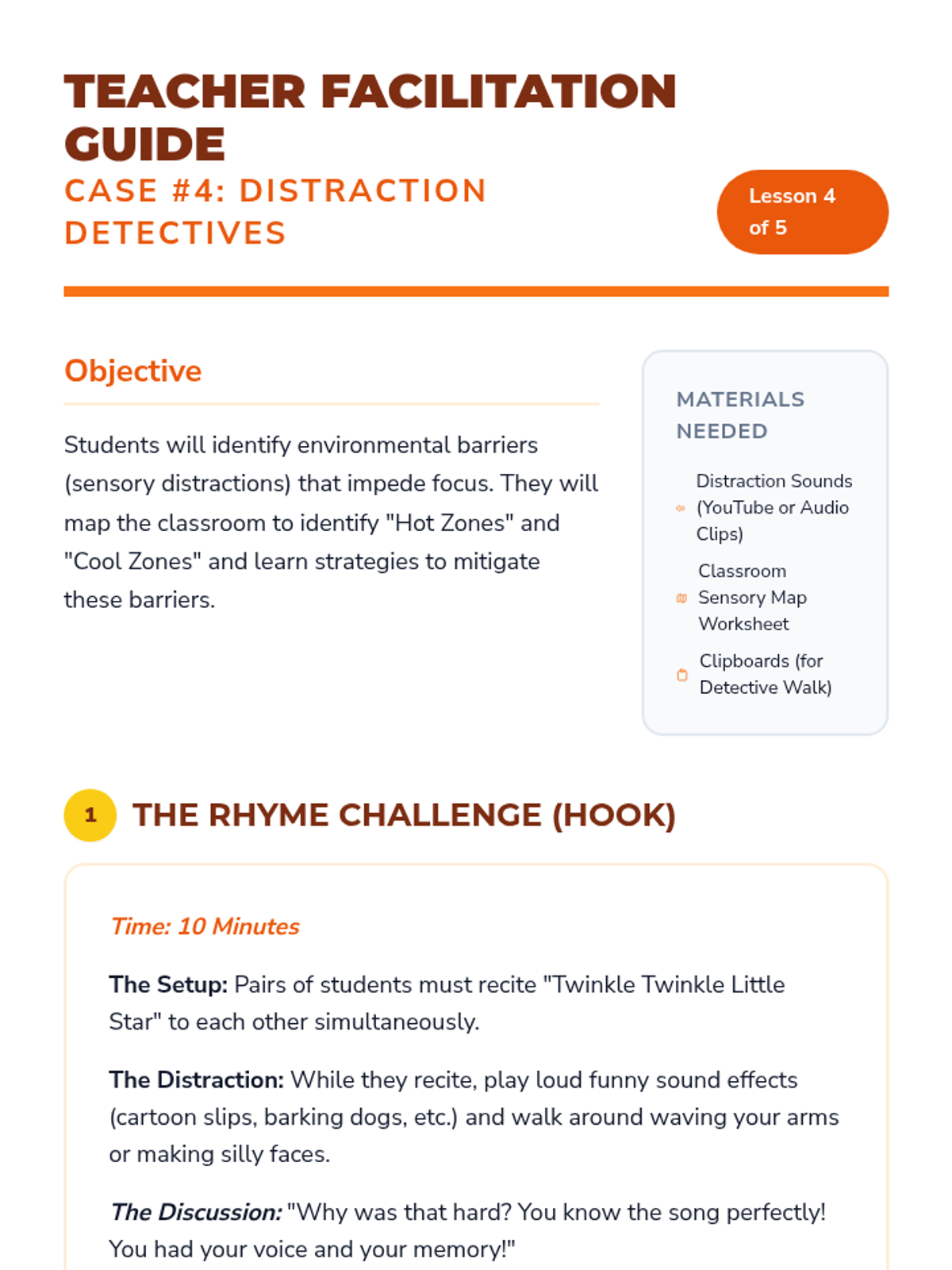
Investigates sensory and environmental barriers like noise or clutter, conducting a 'detective walk' to identify classroom distractions.
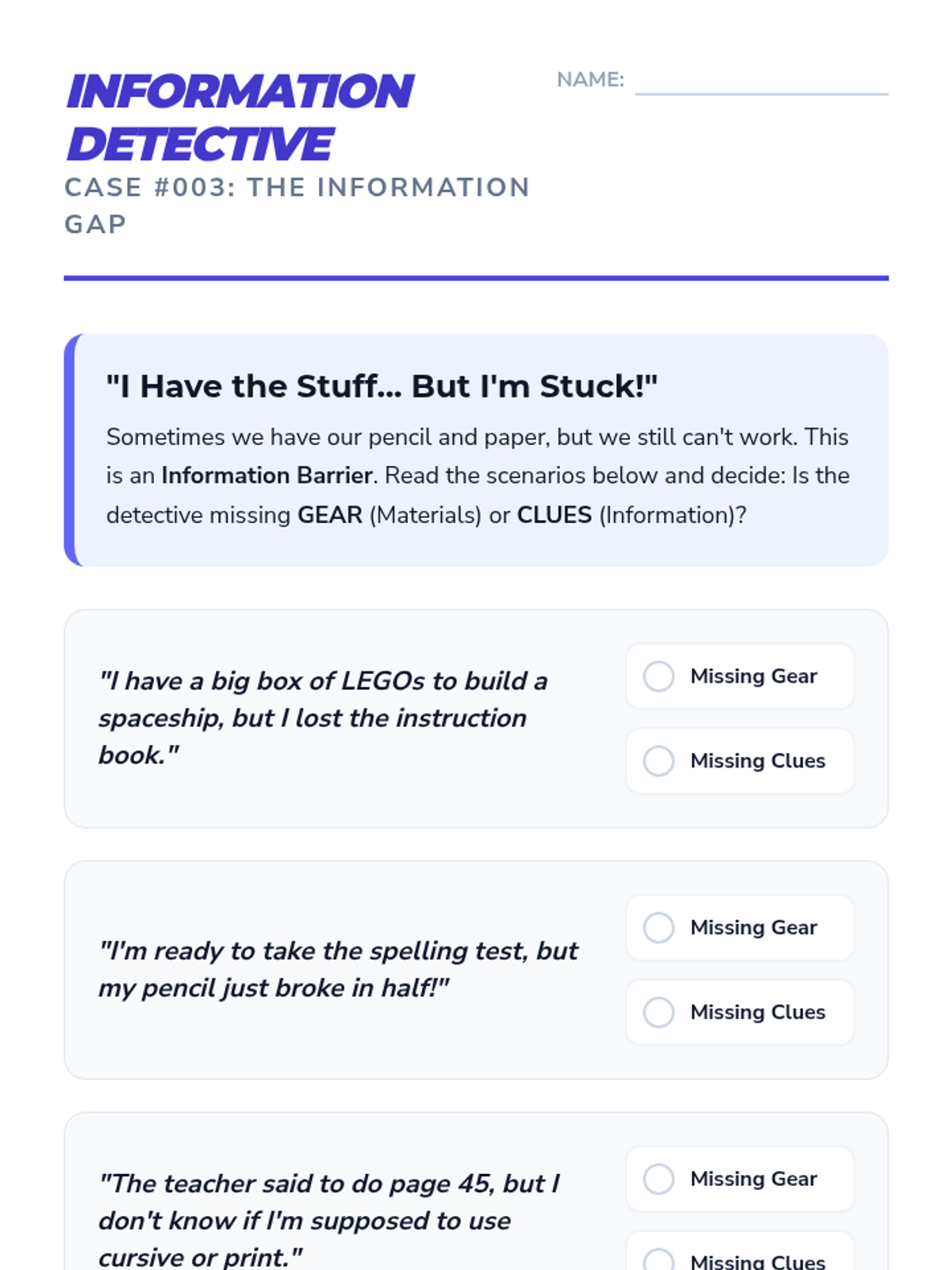
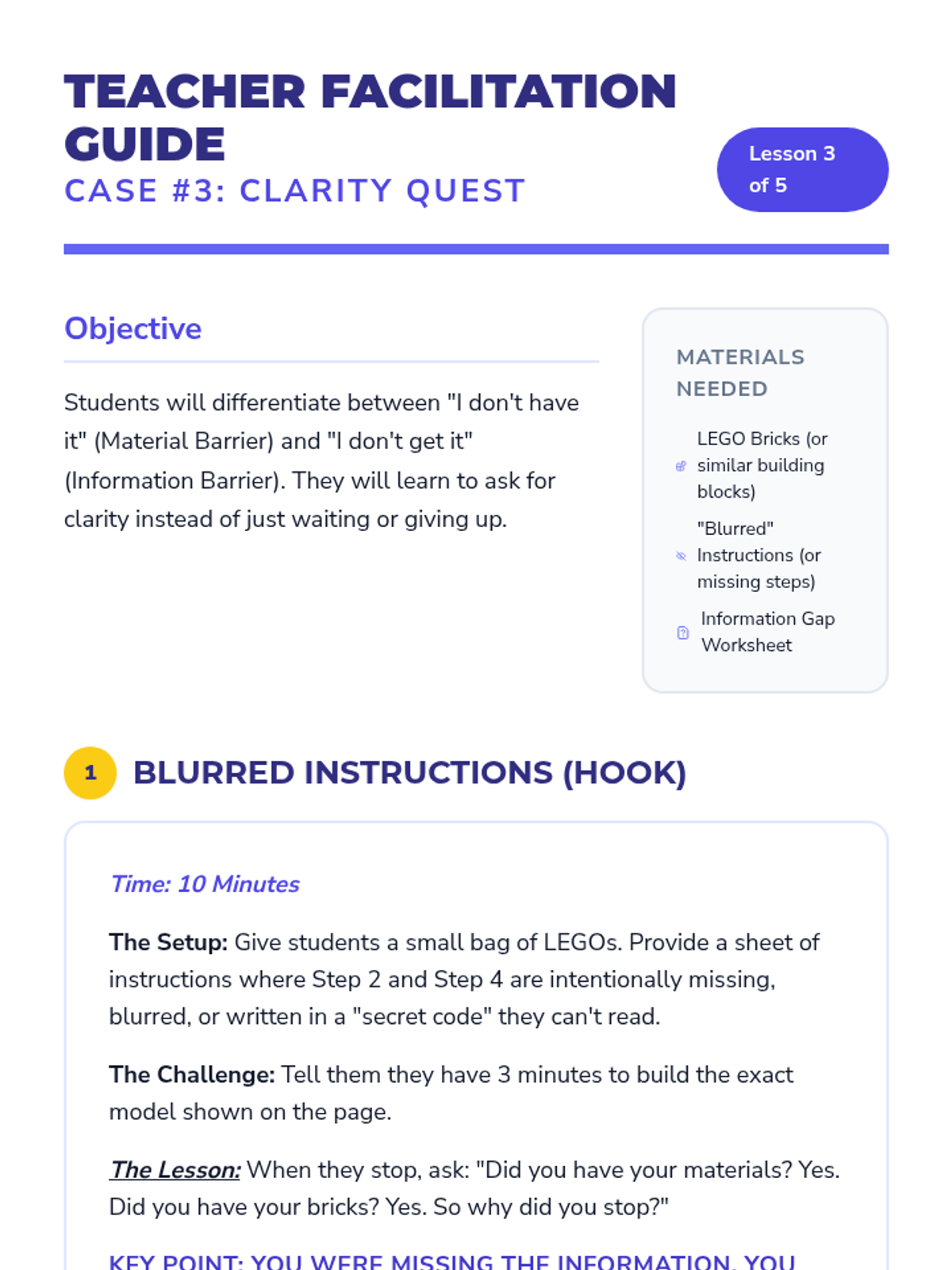
Teaches students to recognize when they are stuck due to a lack of clarity or understanding, differentiating between 'I don't have it' and 'I don't get it.'
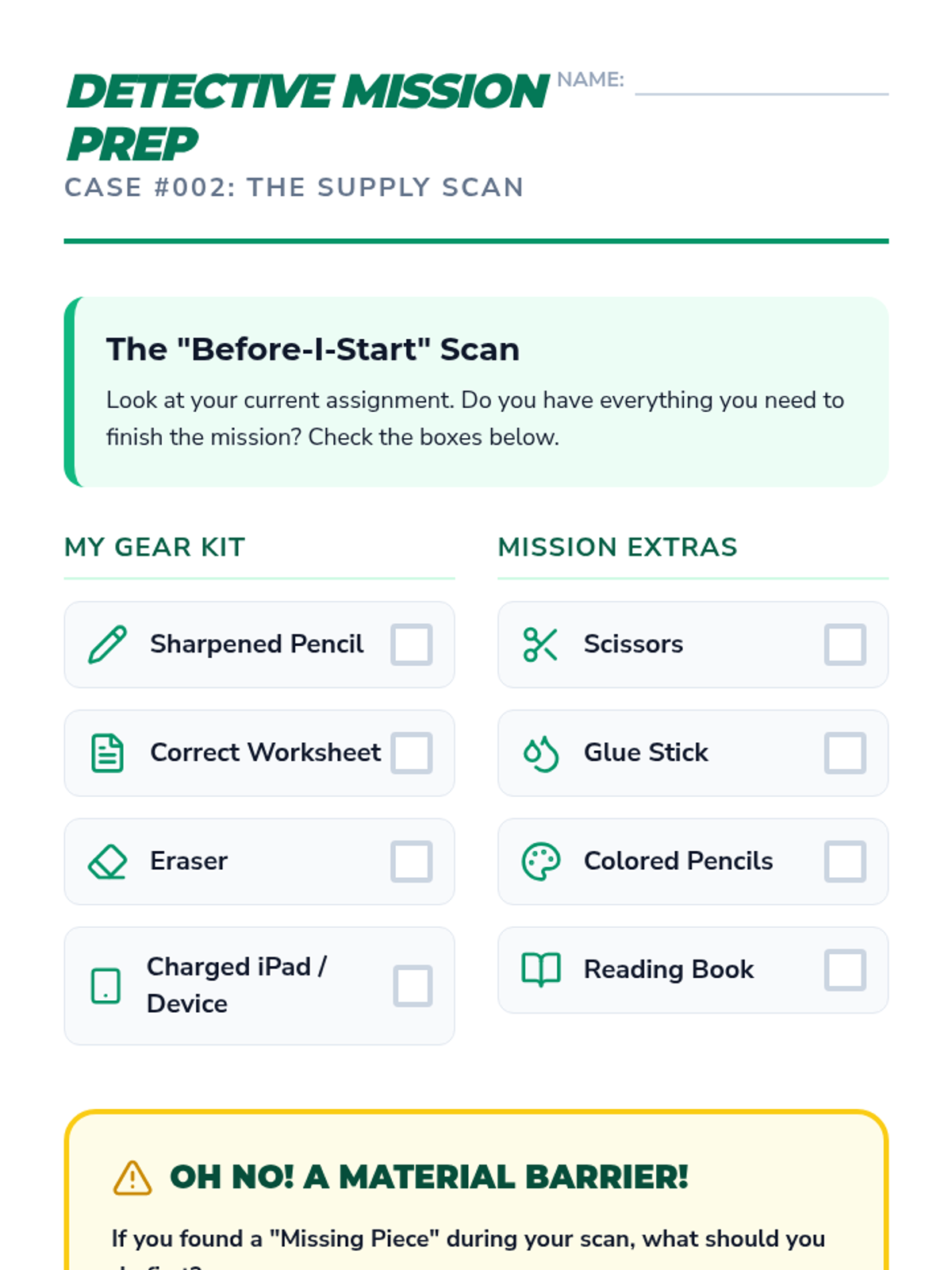
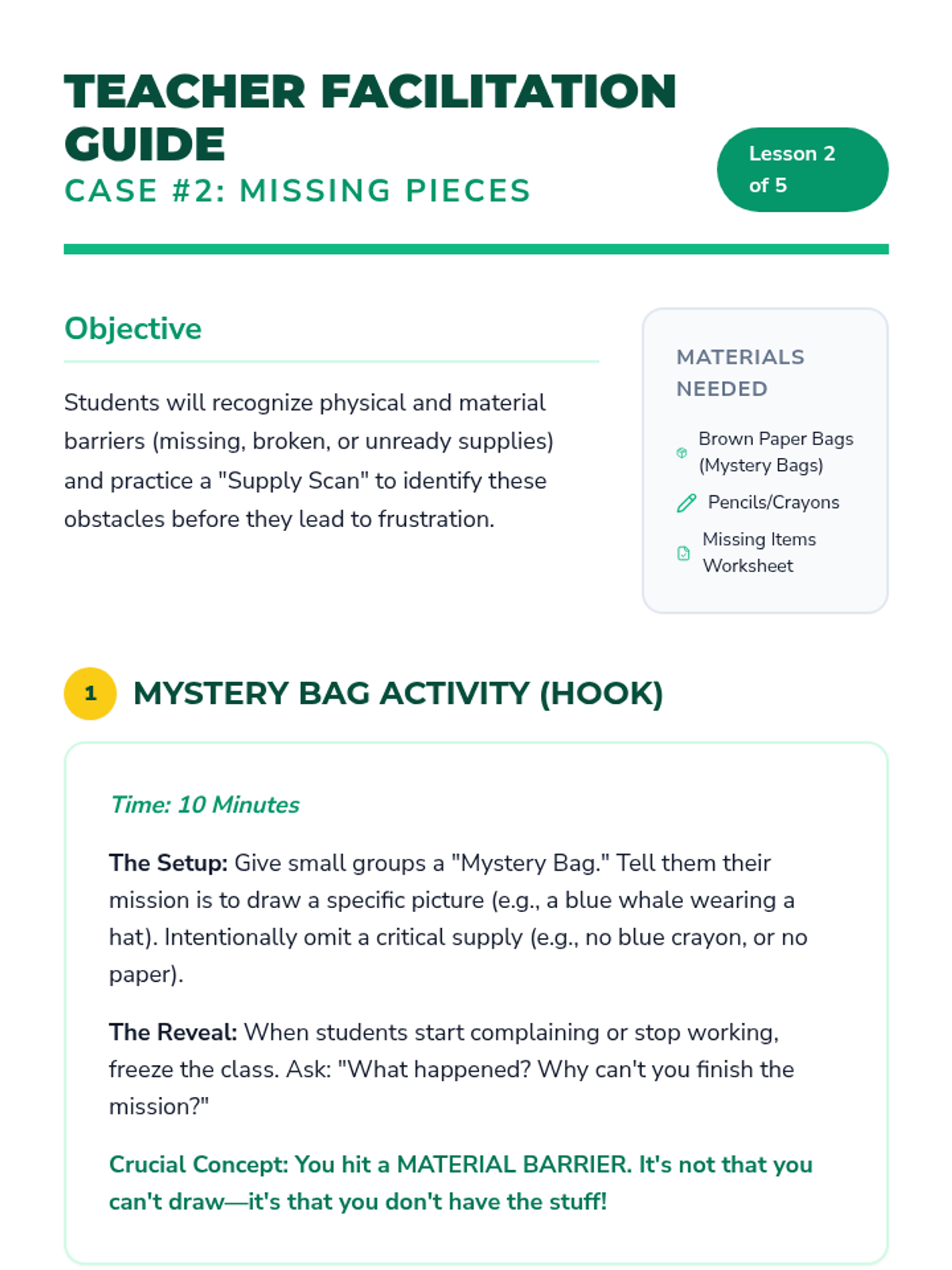
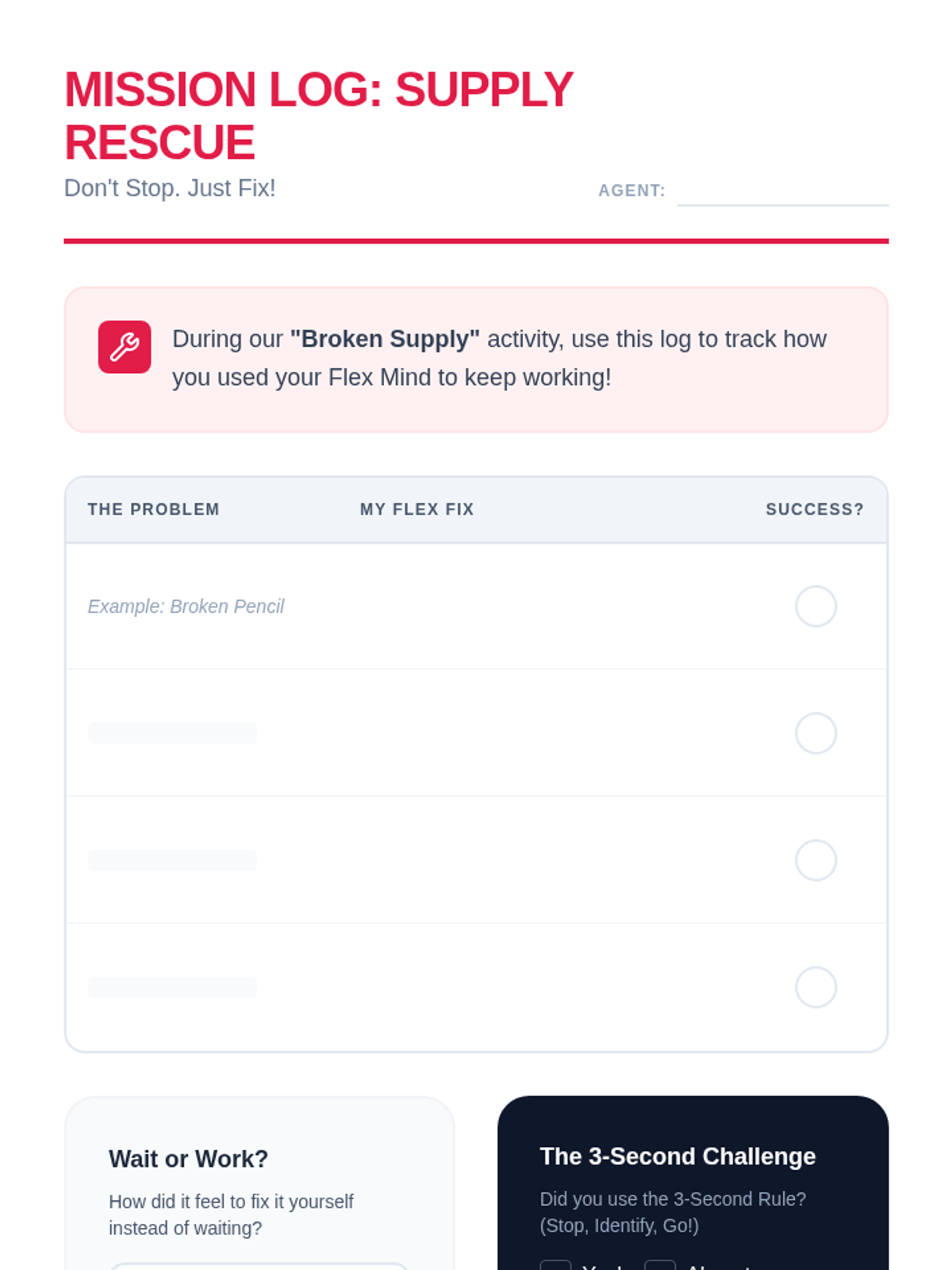
Focuses on tangible obstacles like broken tools or missing materials, teaching students to perform a 'supply scan' to identify what is physically missing.
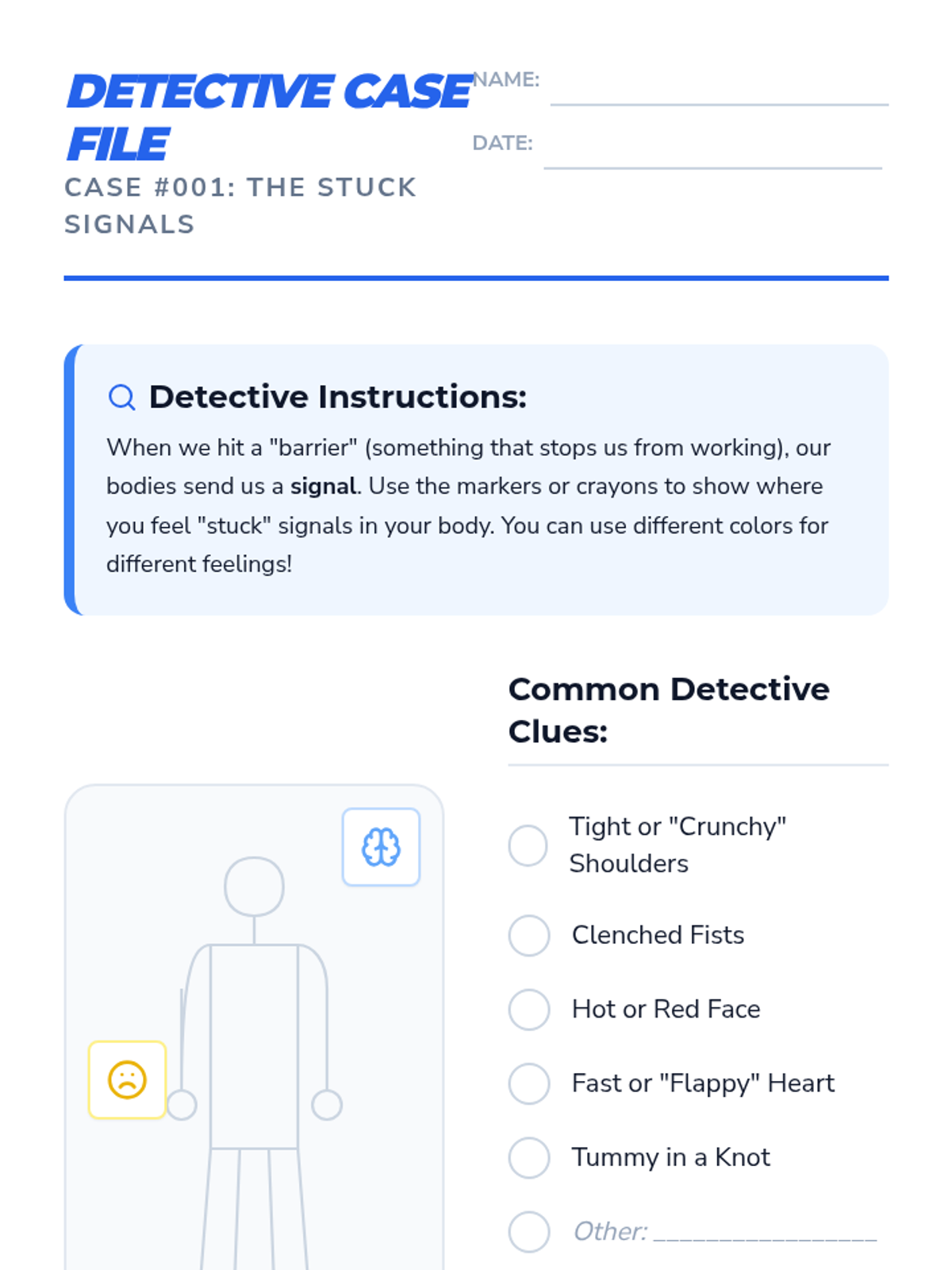
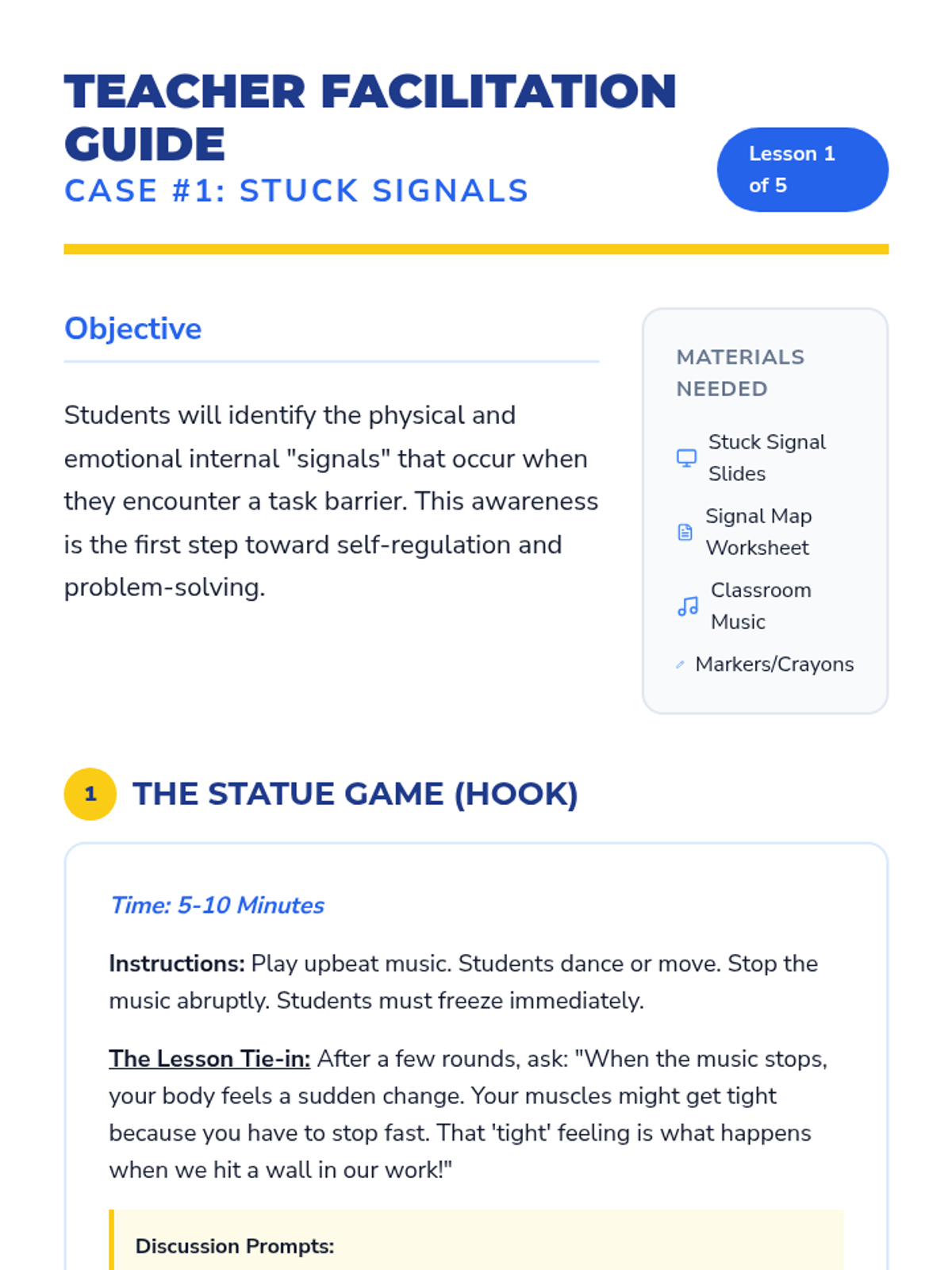
Students explore the physical and emotional sensations associated with hitting a task barrier, identifying what frustration feels like to recognize the moment they need to stop.
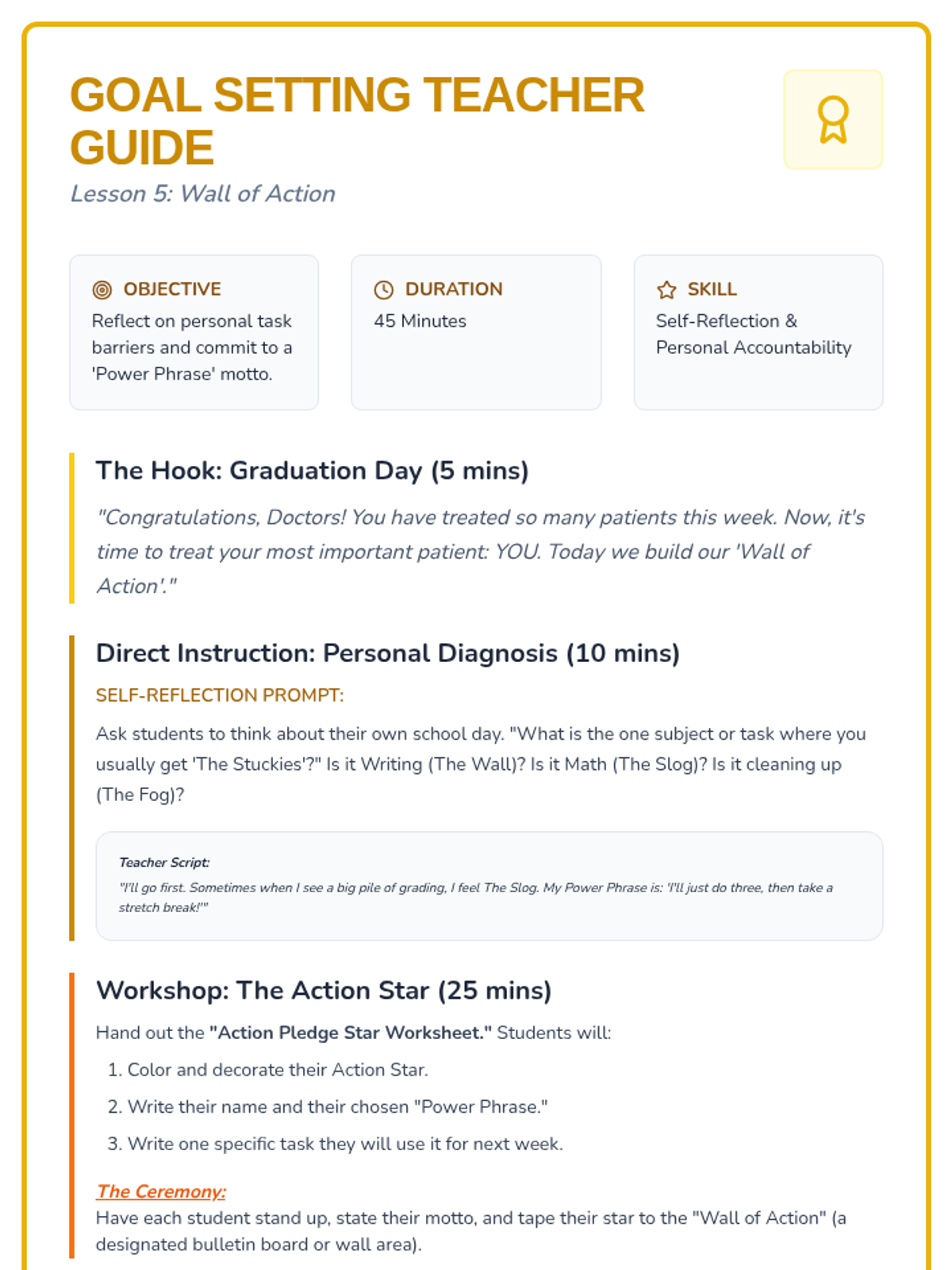
Students identify their own barriers to starting work and select a personal 'Power Phrase' motto for future tasks.
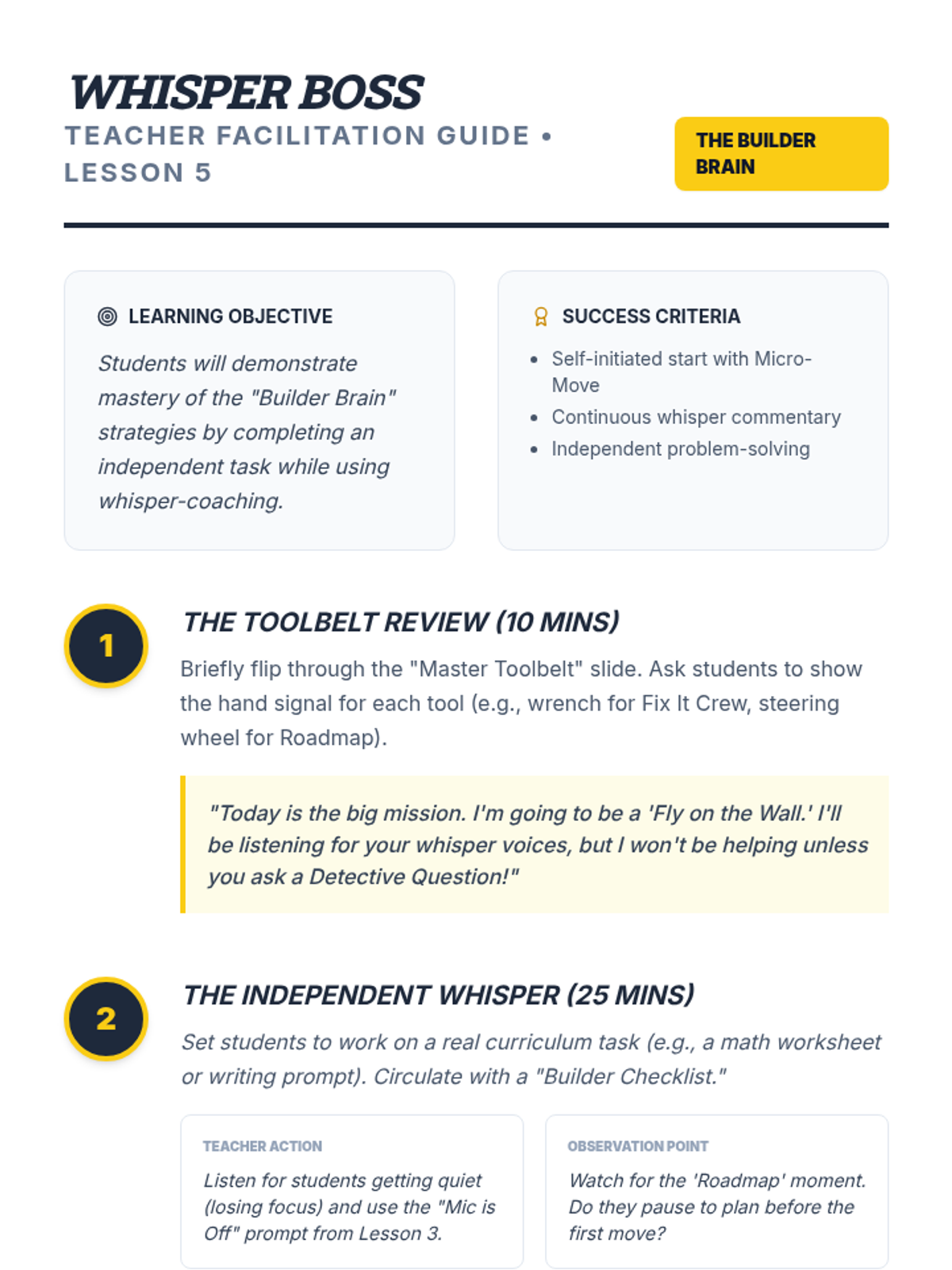
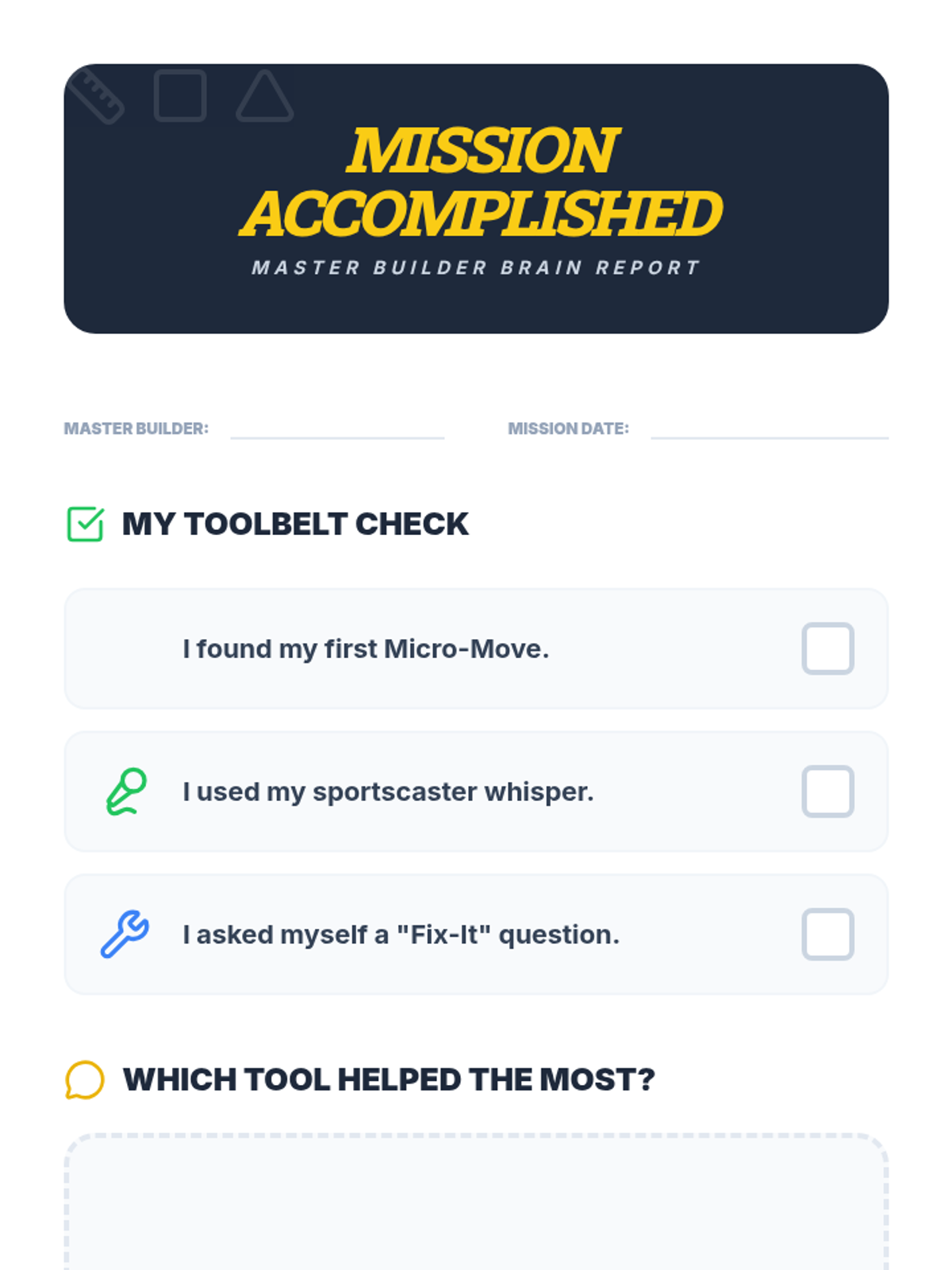
Students apply the breakdown and narration techniques to a real independent work session. The teacher circulates to listen for 'whisper coaching' as students initiate and sustain their work.
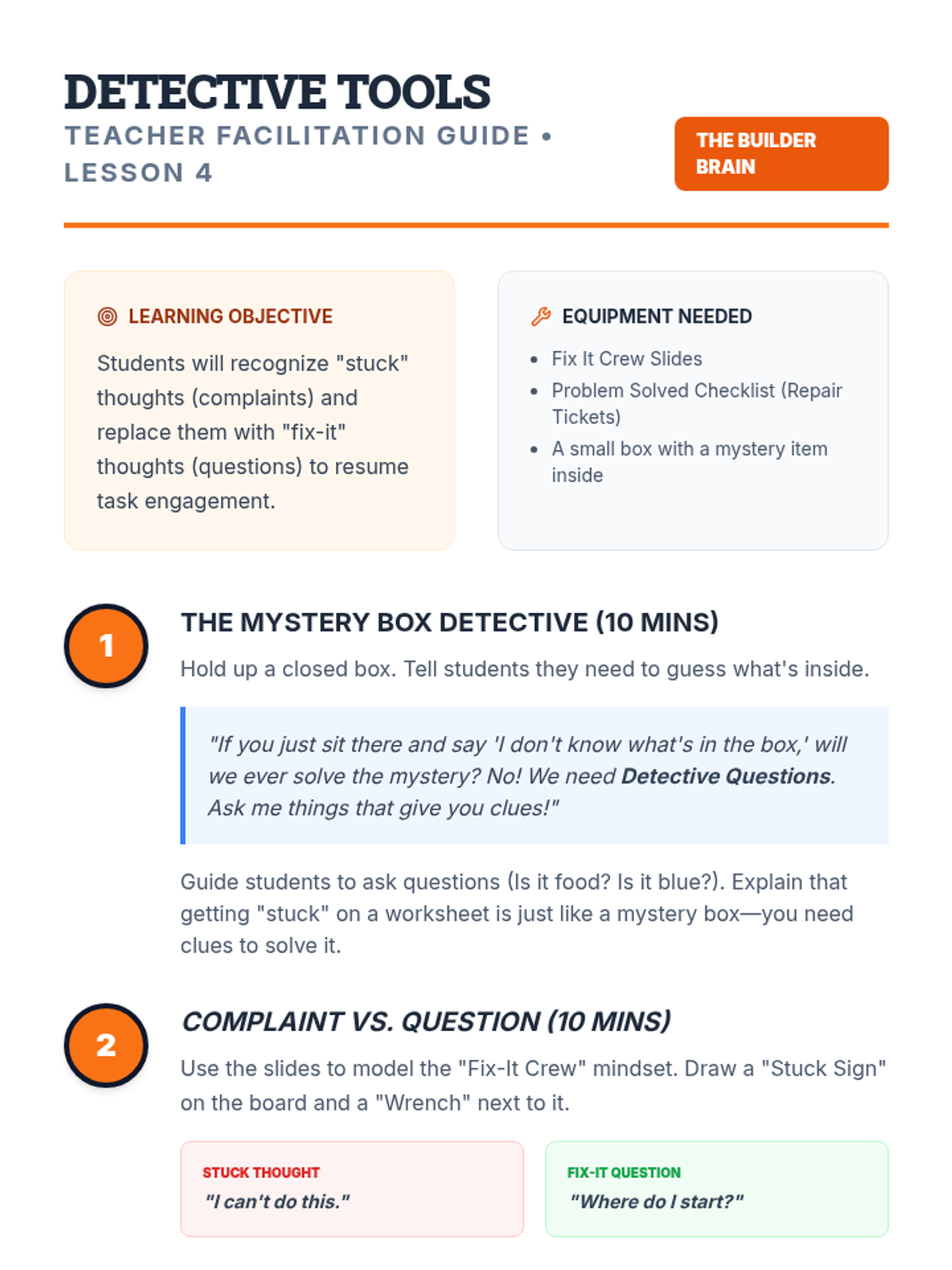
Students learn to ask themselves specific questions when they get stuck. This shifts the internal monologue from complaint to inquiry and problem-solving.
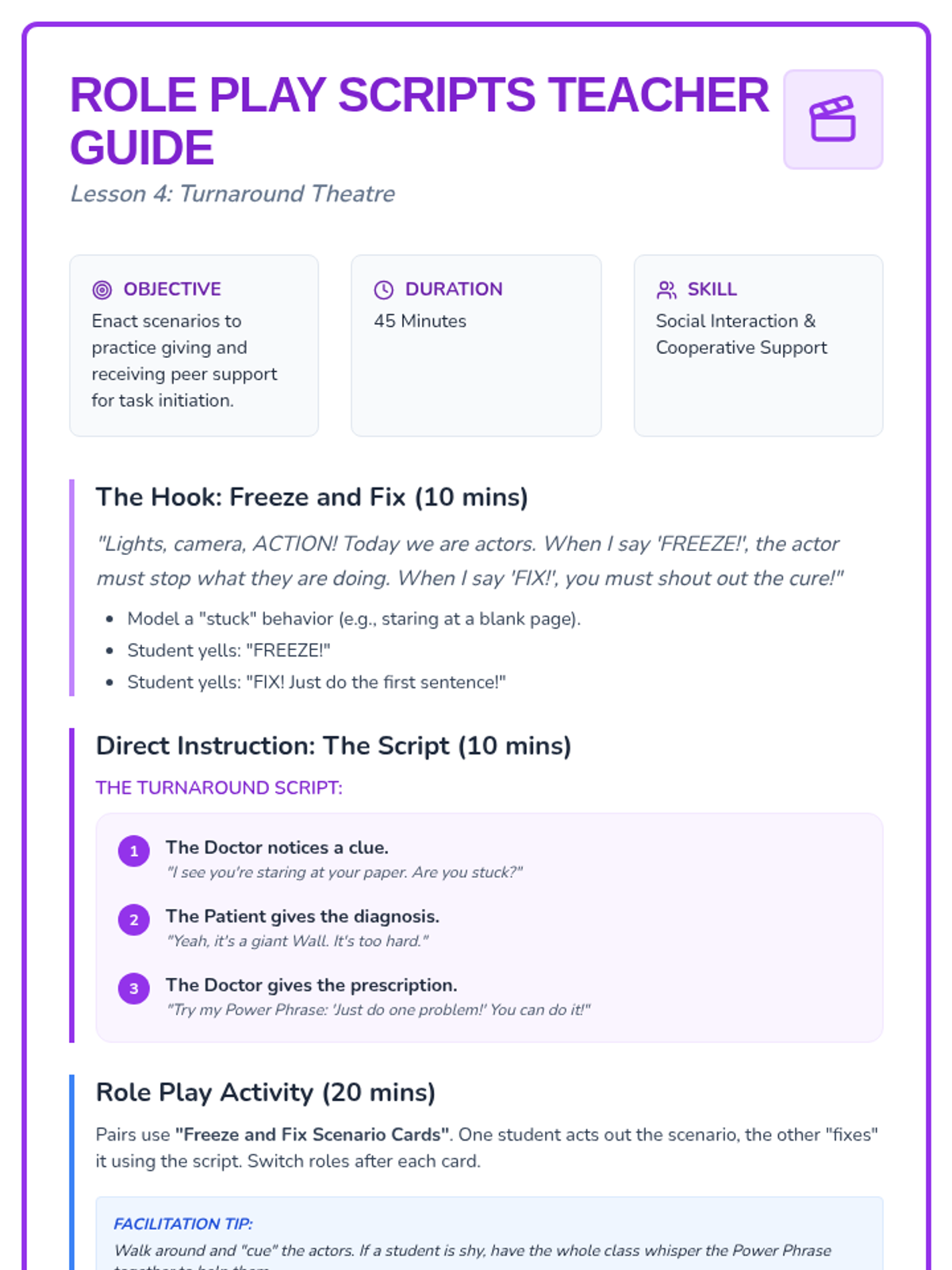
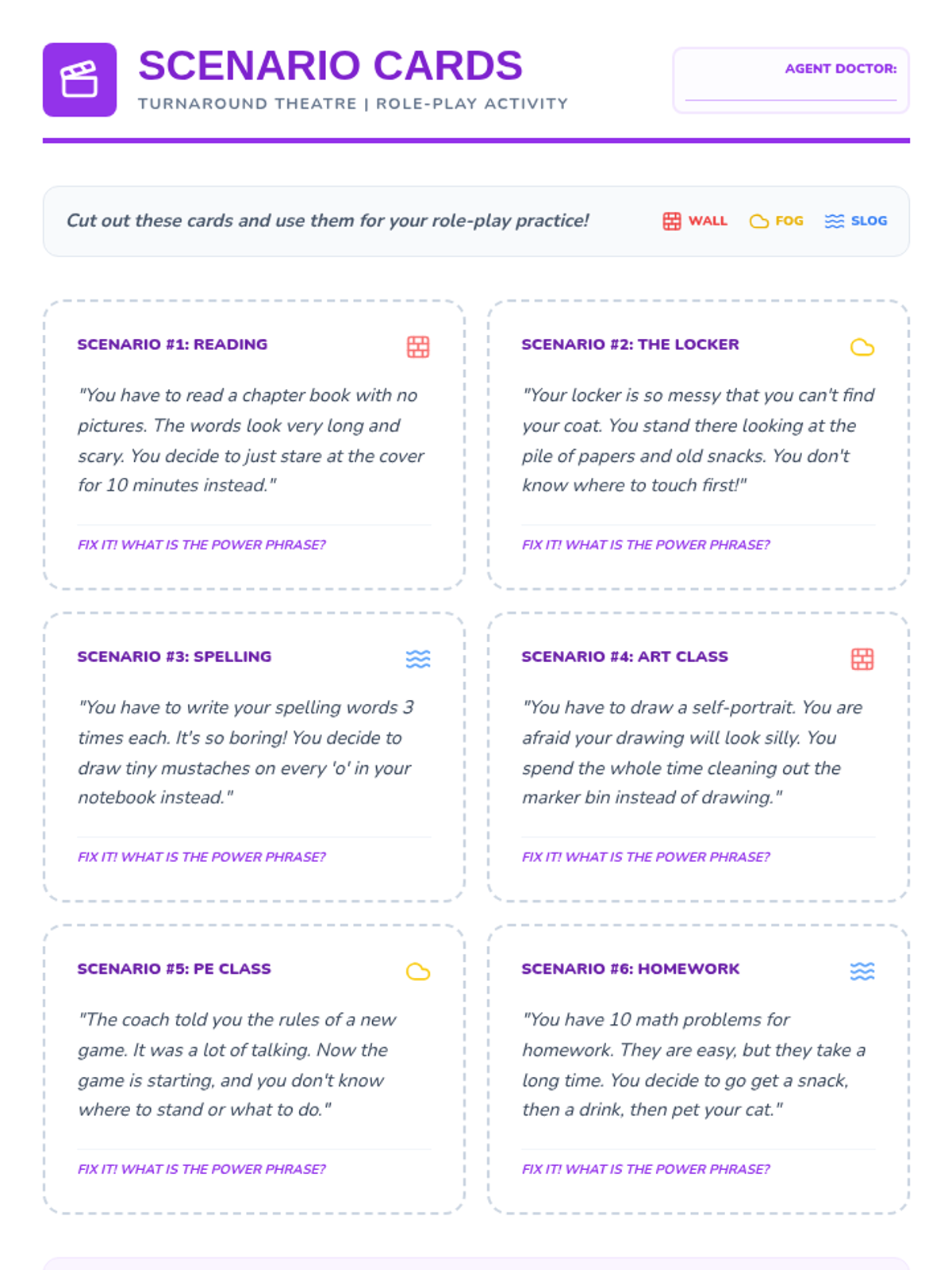
Students role-play scenarios where they help a peer get 'unstuck' using their self-talk prescriptions.
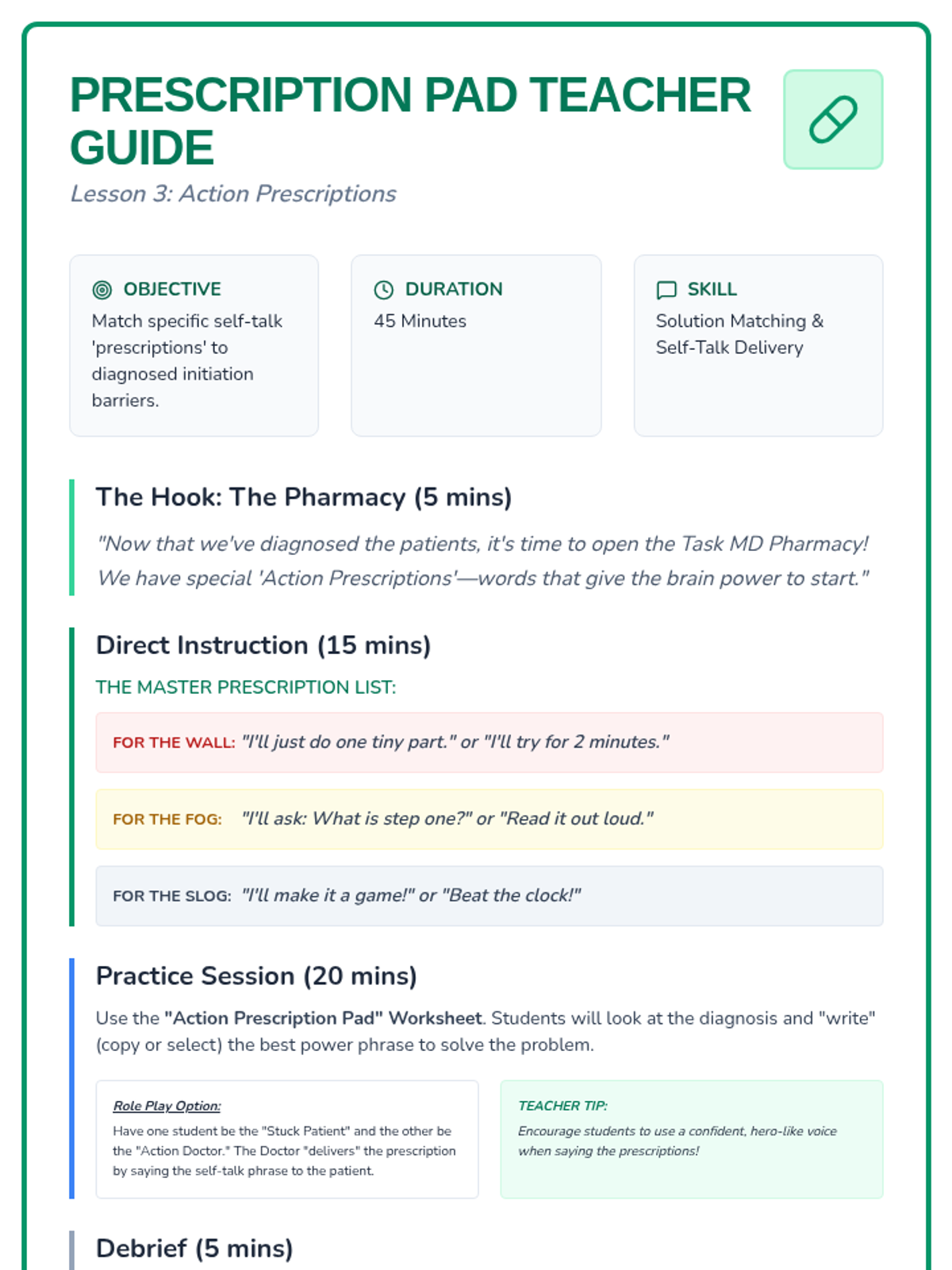
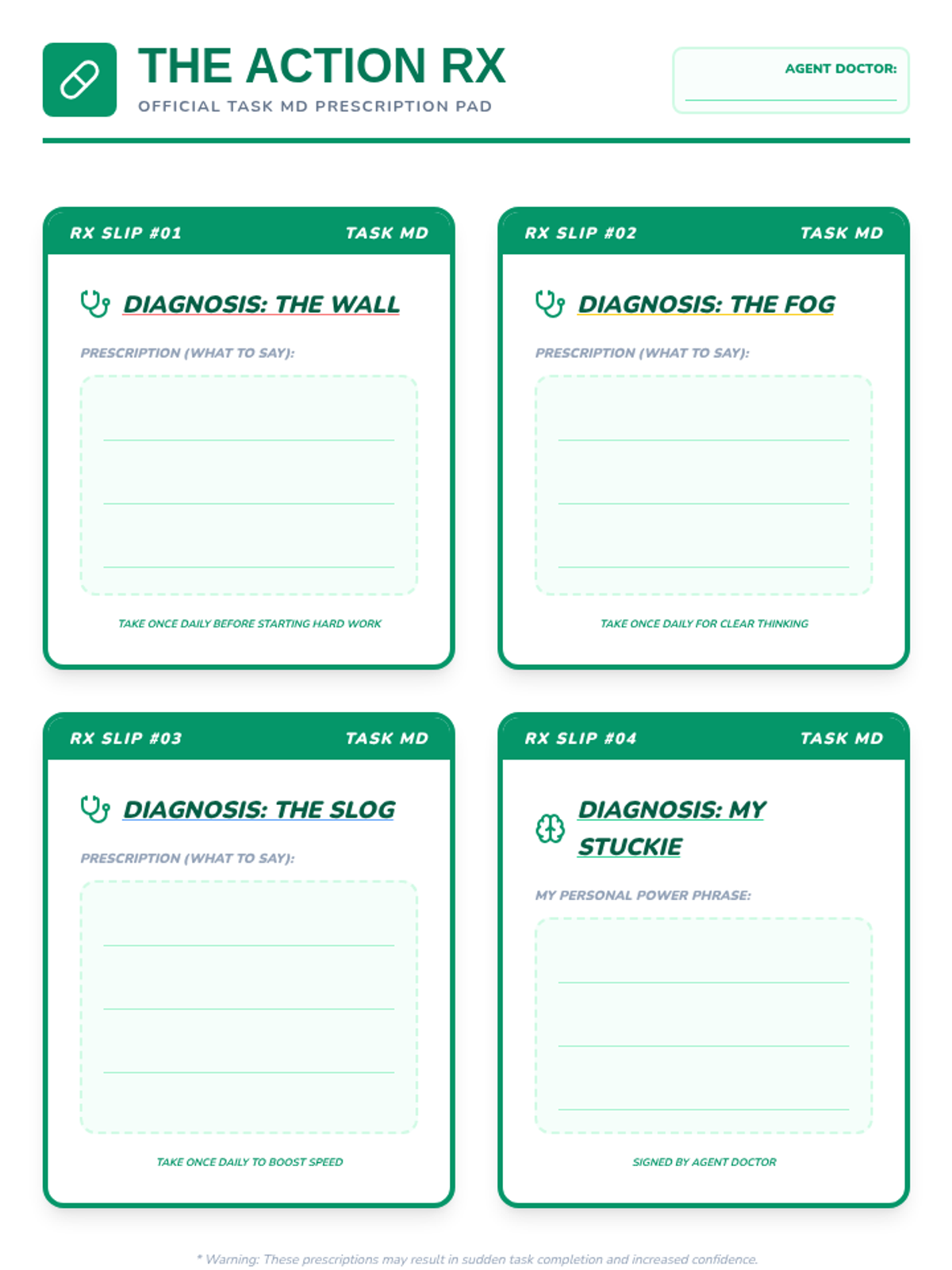
Students match specific self-talk 'prescriptions' to diagnosed problems and practice delivering these lines to characters.
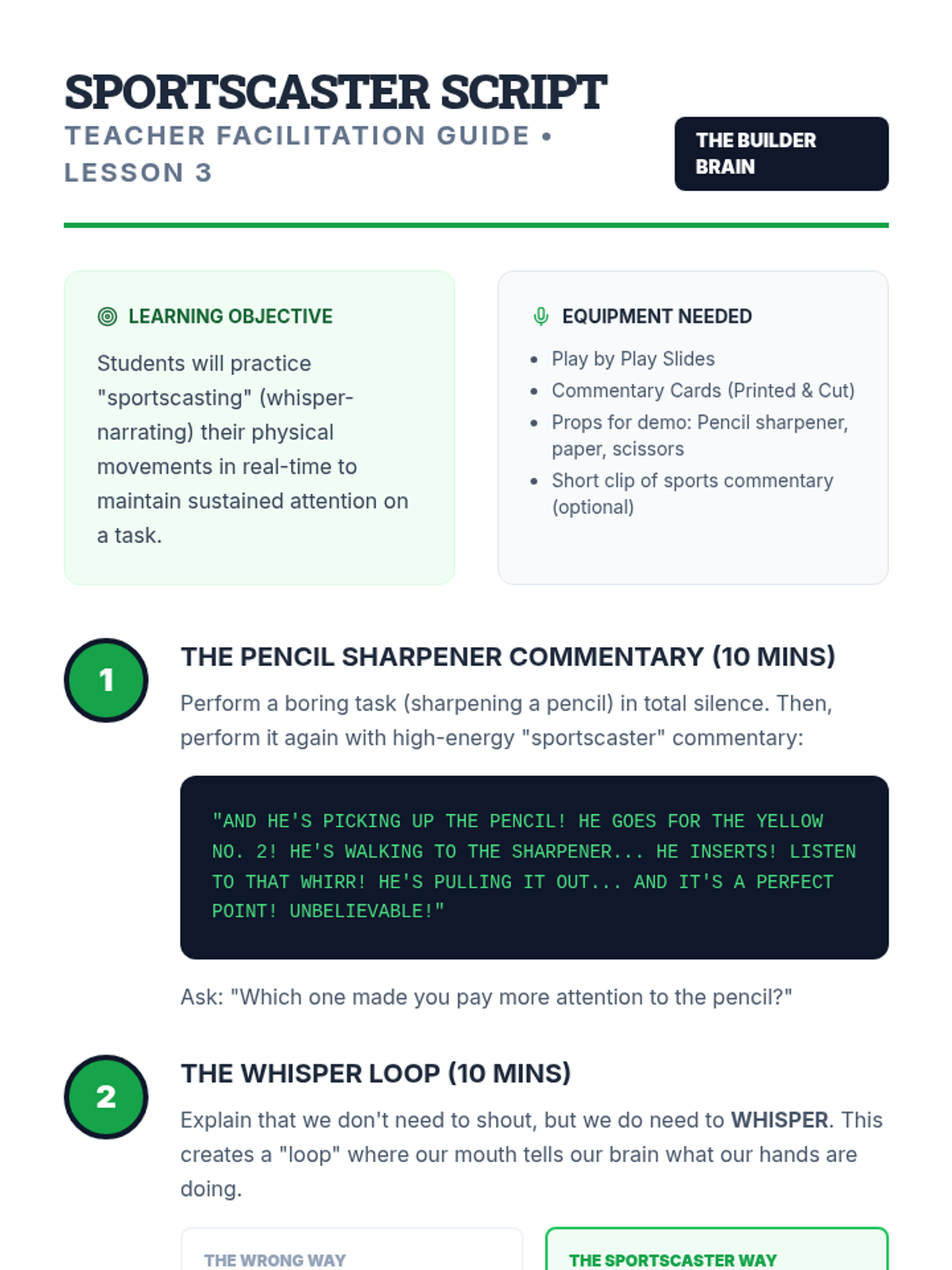
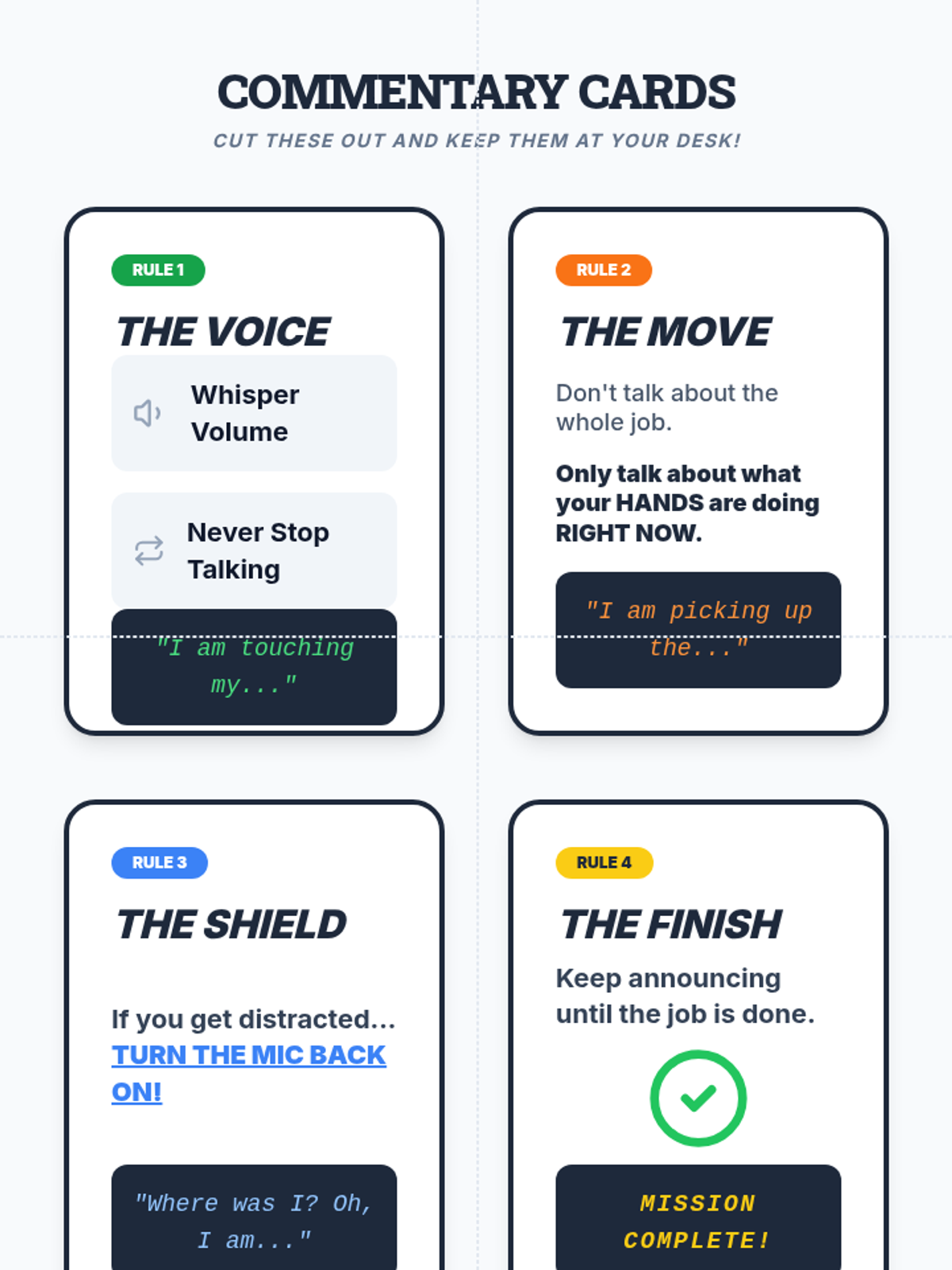
Students practice whispering their actions as they do them, similar to a sportscaster announcing a game. This continuous verbal loop helps prevent distraction and keeps the student engaged.
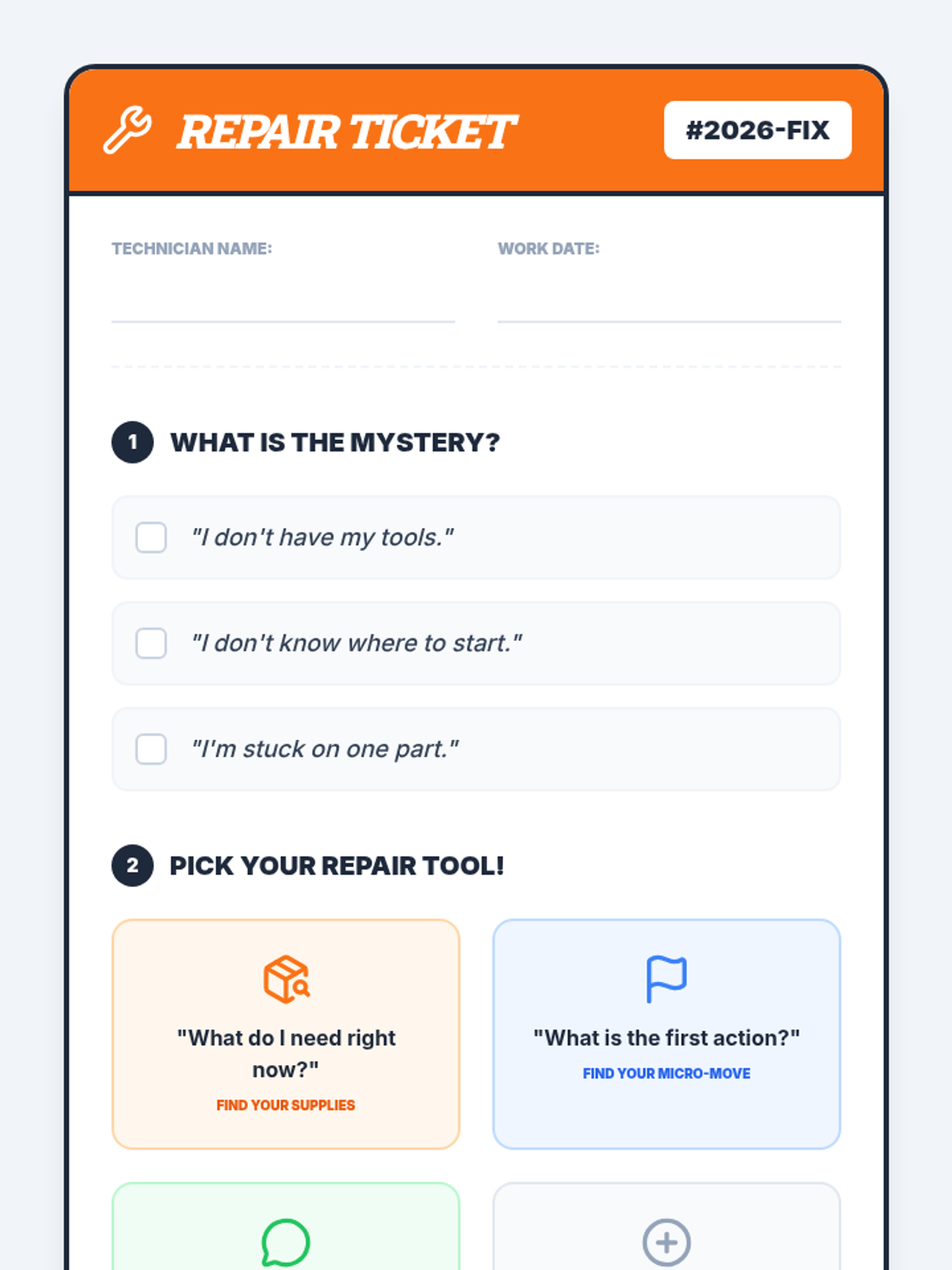
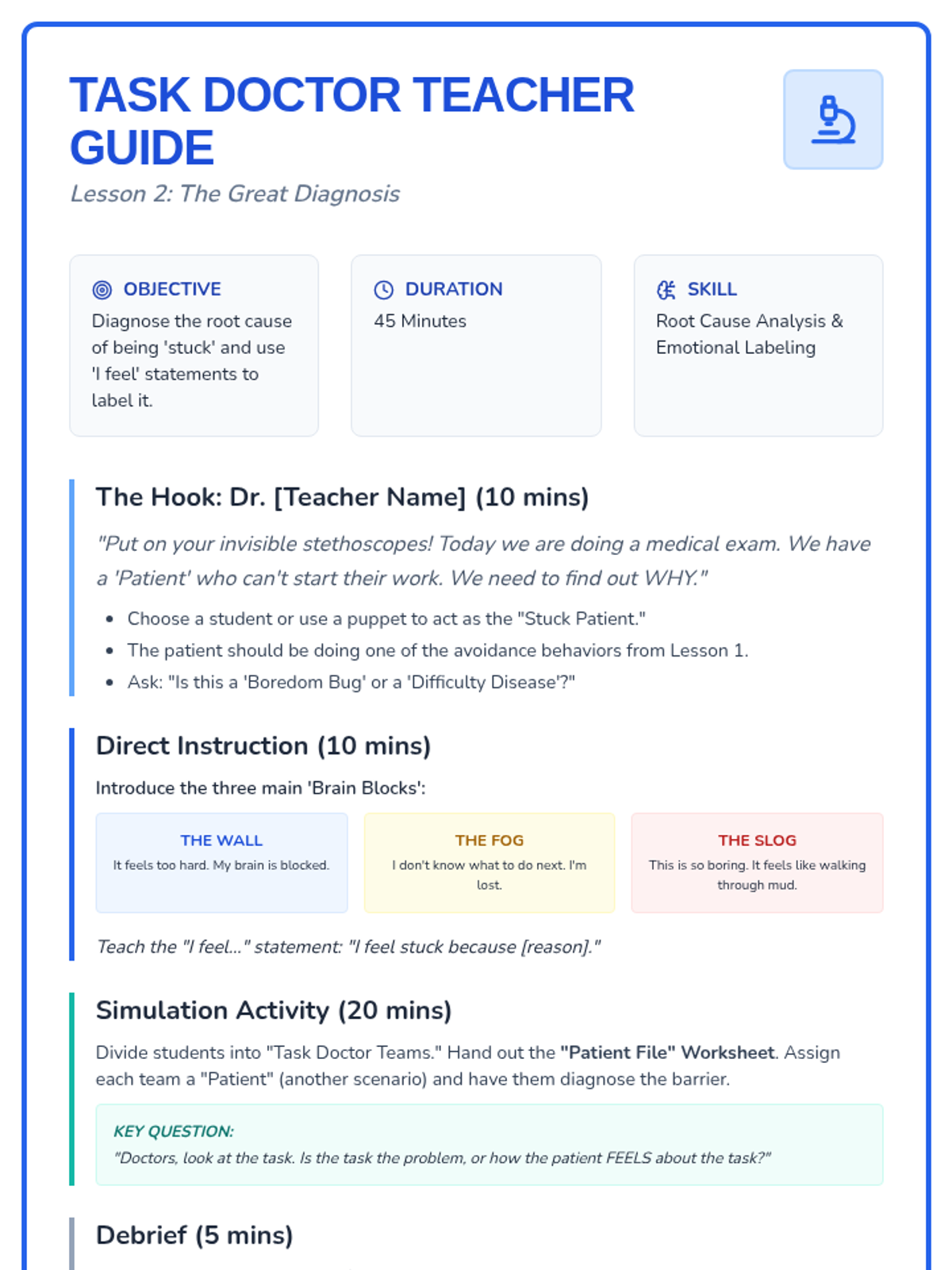
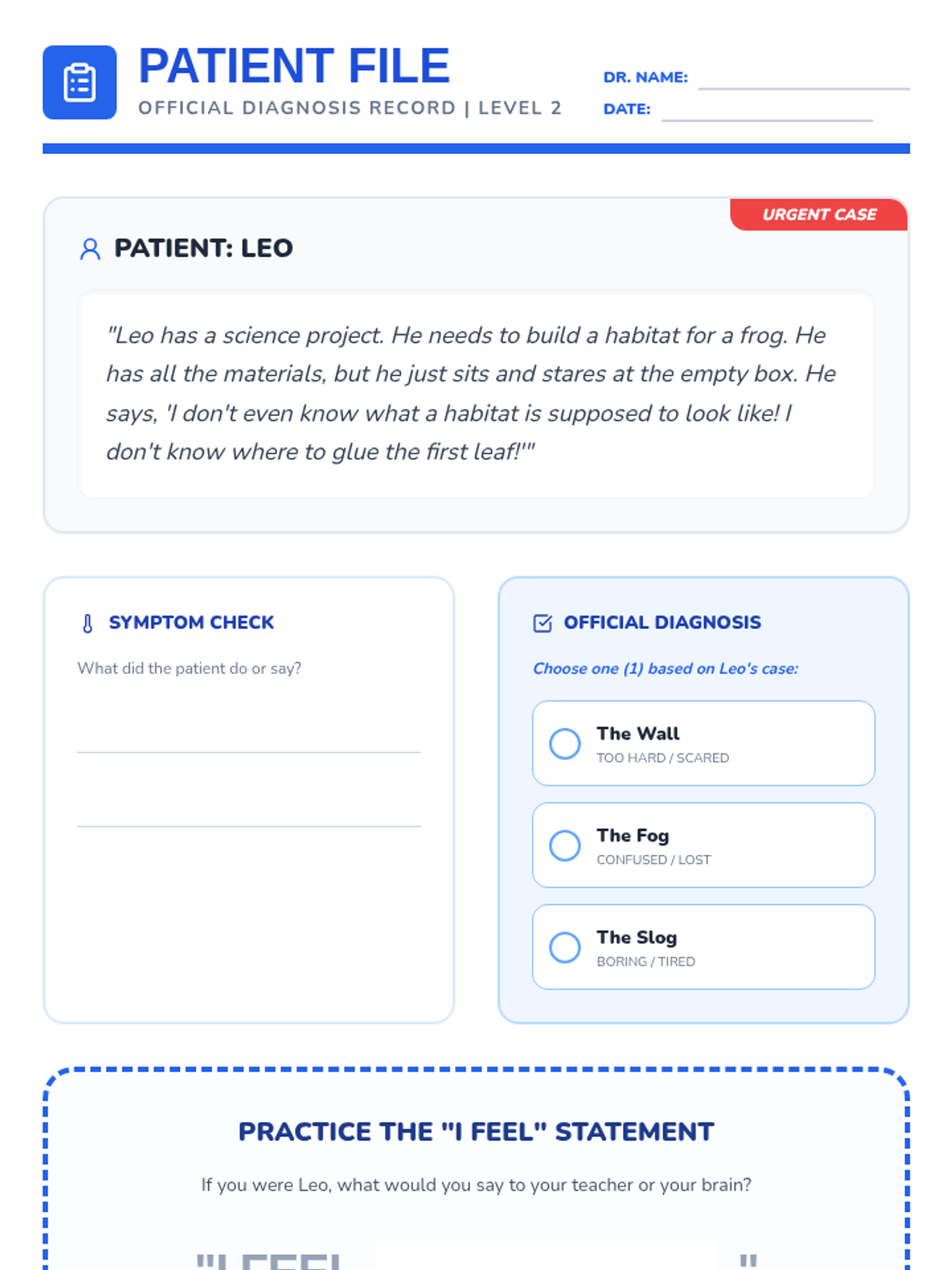
Students act as 'Task Doctors' to determine why a character is stuck (boredom, difficulty, fatigue) and practice labeling these emotions.
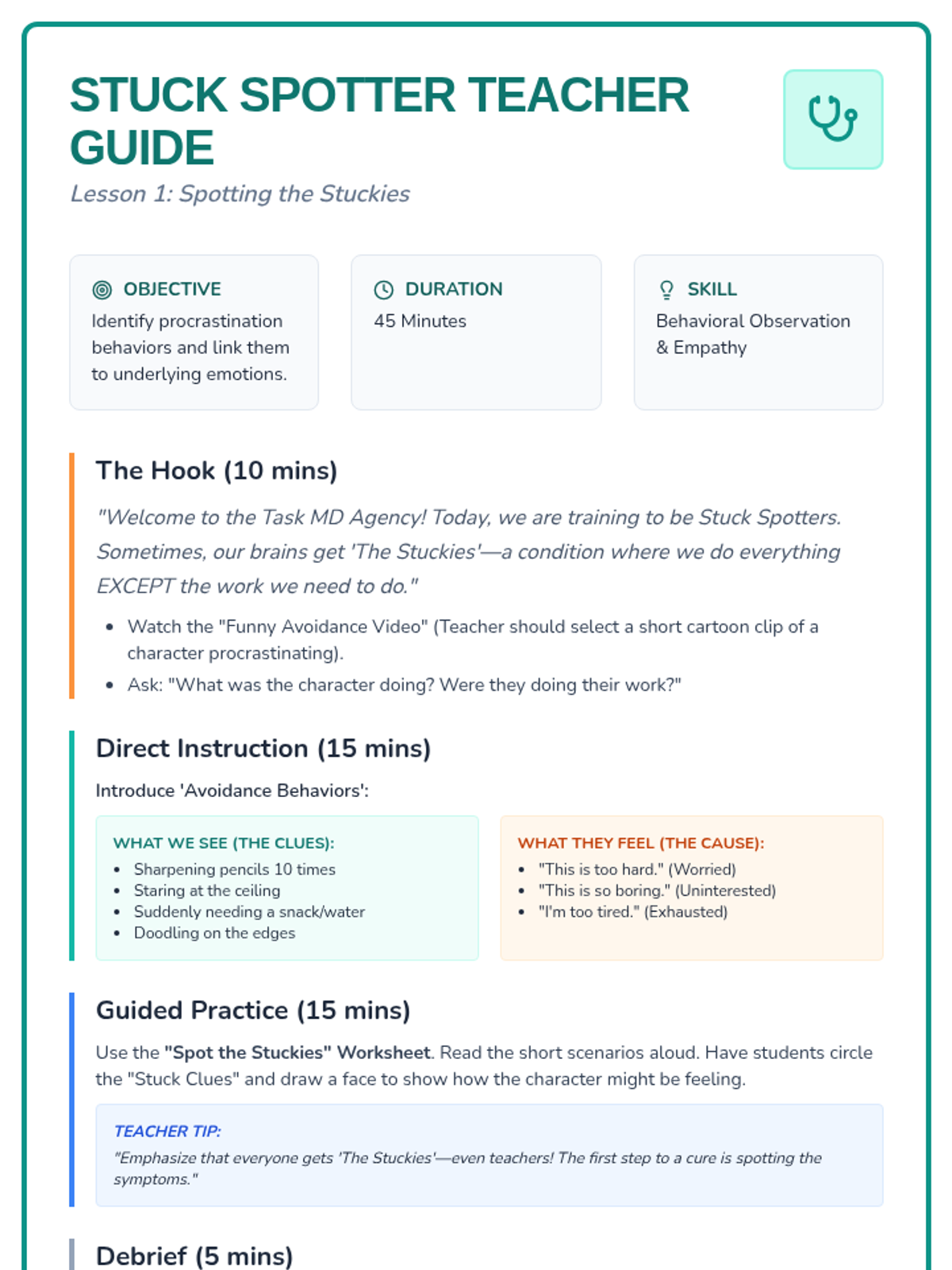
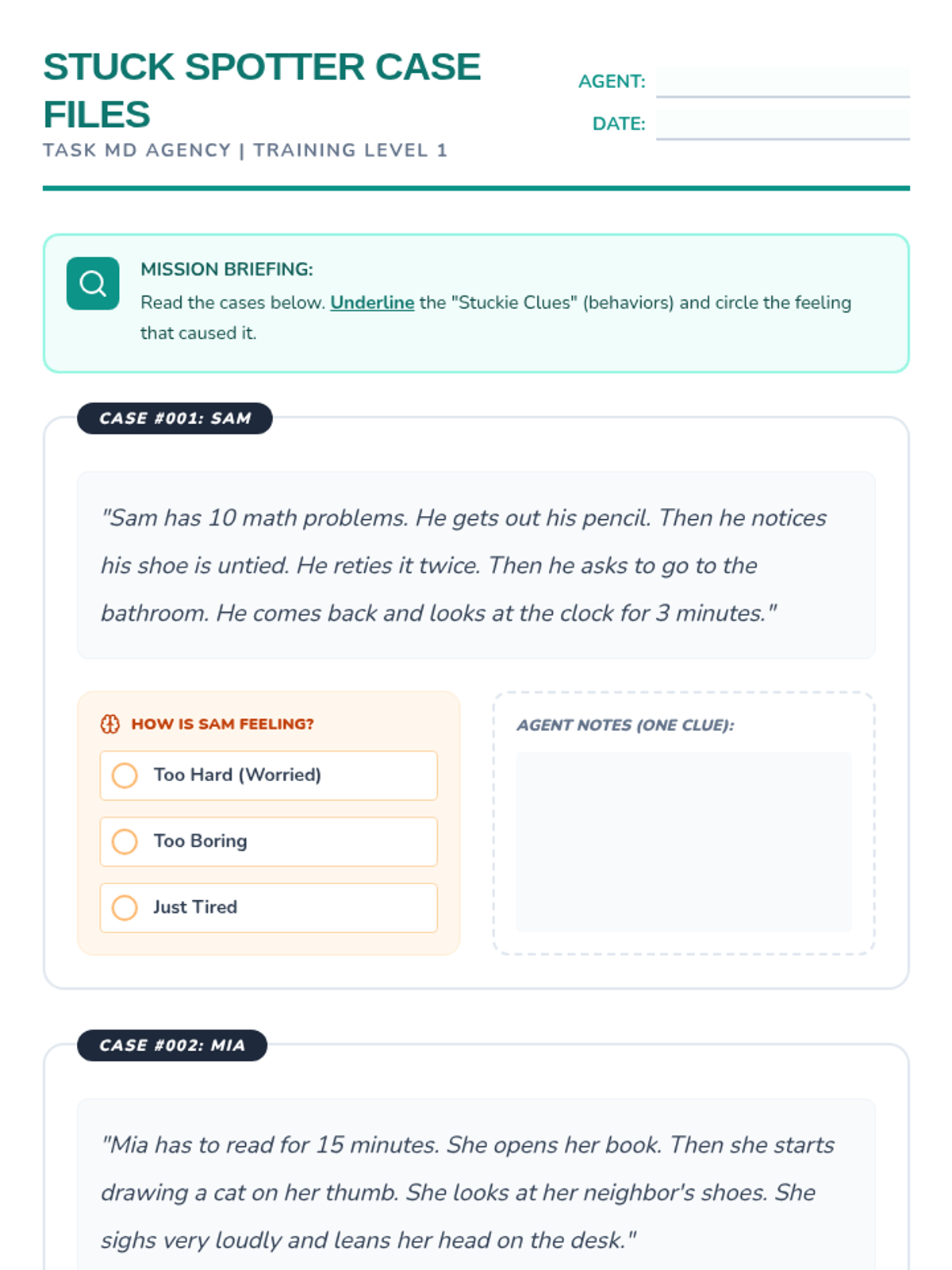
Students identify behaviors that show someone is avoiding work and brainstorm what emotions might be driving those behaviors through case studies.
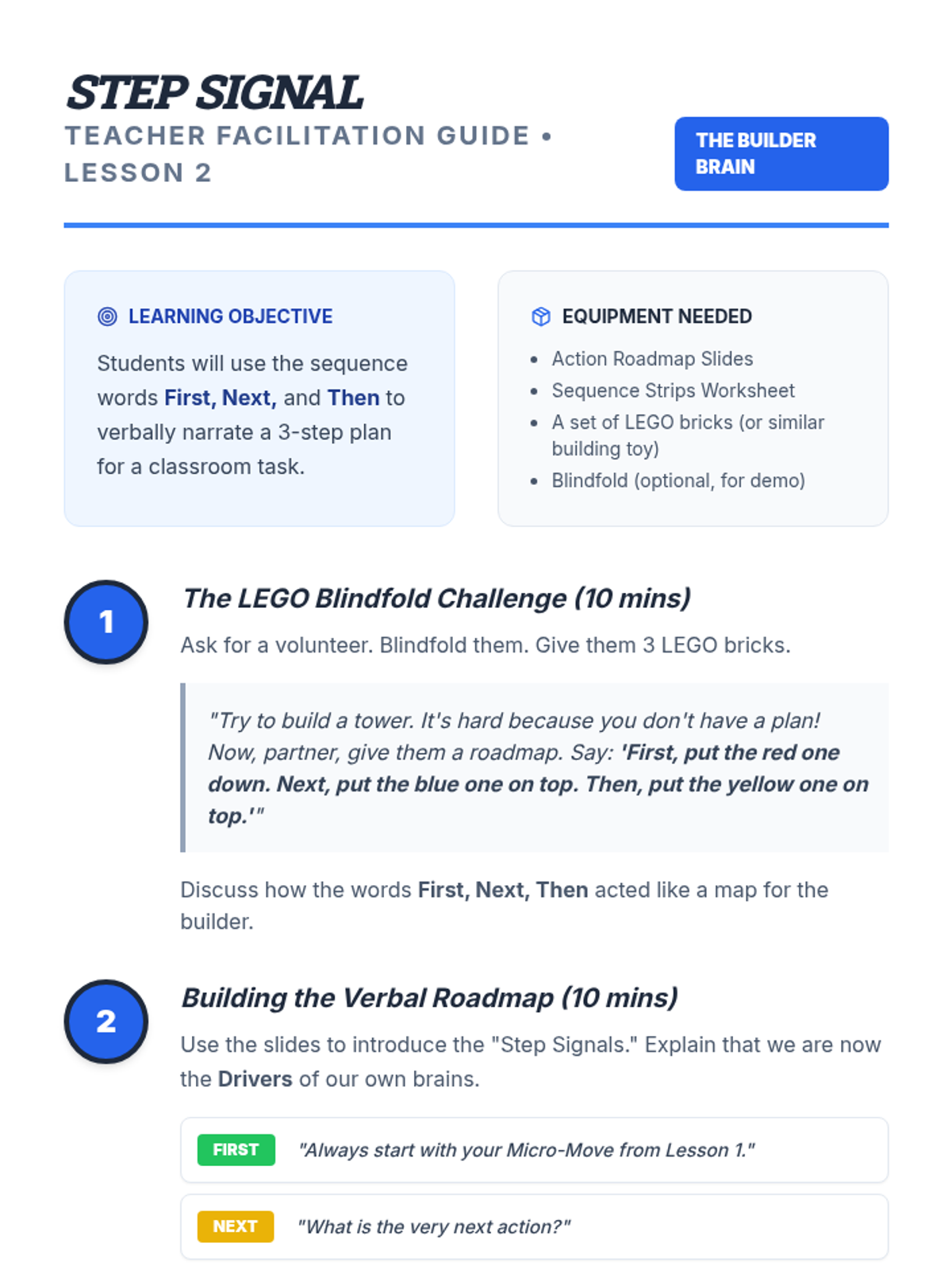
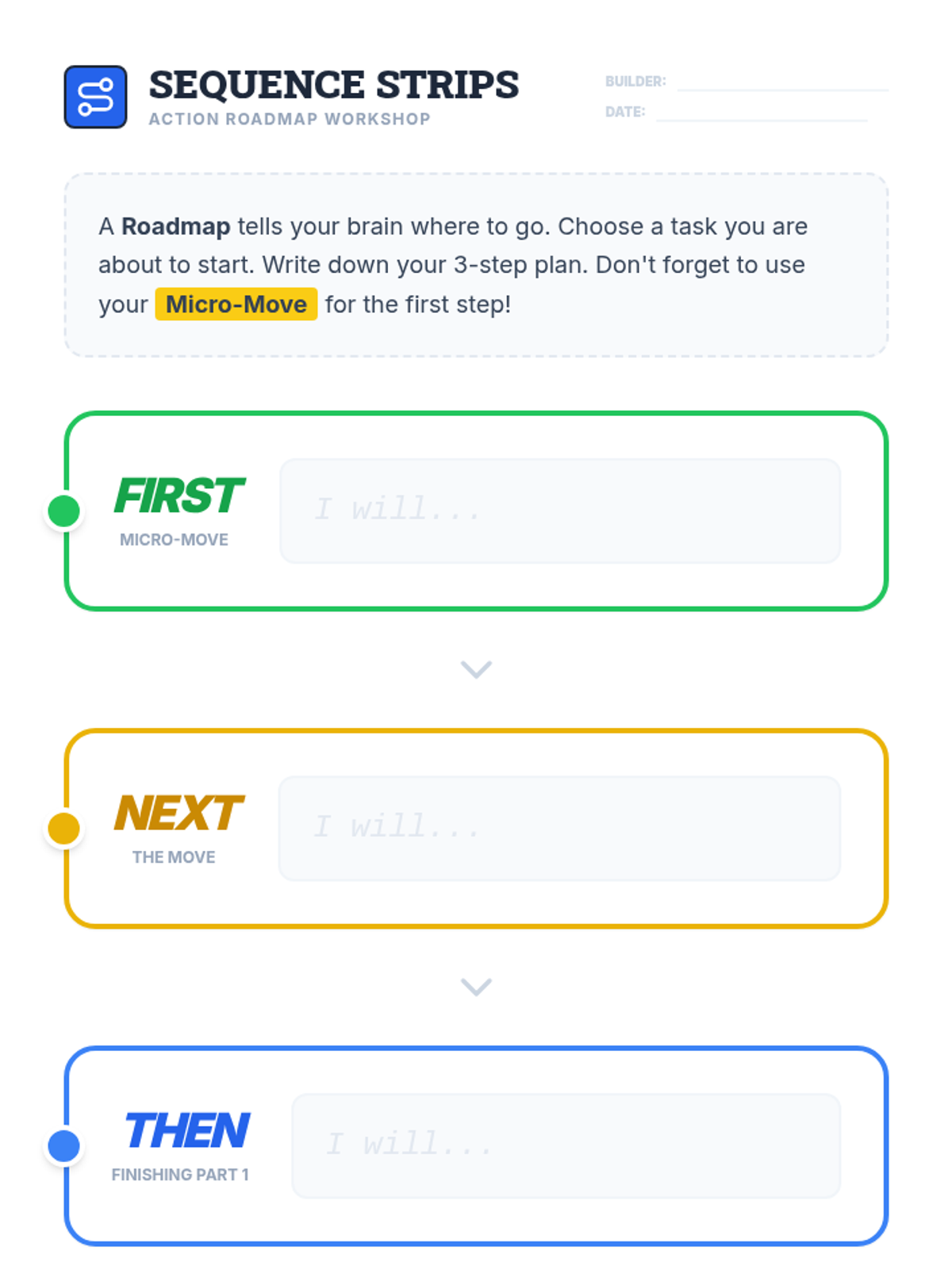
Students practice using the words 'First,' 'Next,' and 'Then' to create a verbal roadmap. They verbally plan a simple classroom routine, ensuring they can narrate the order of operations before beginning.
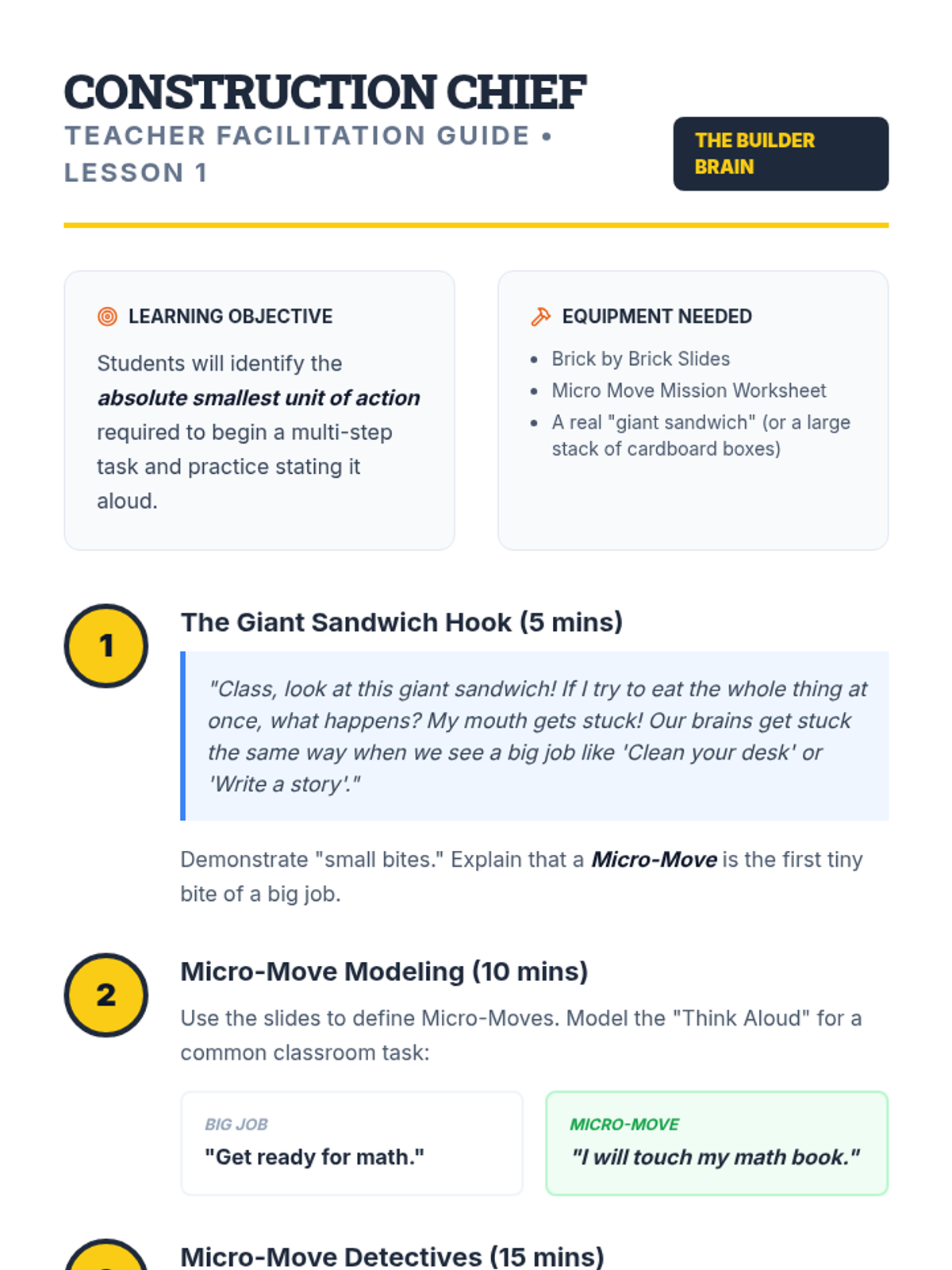
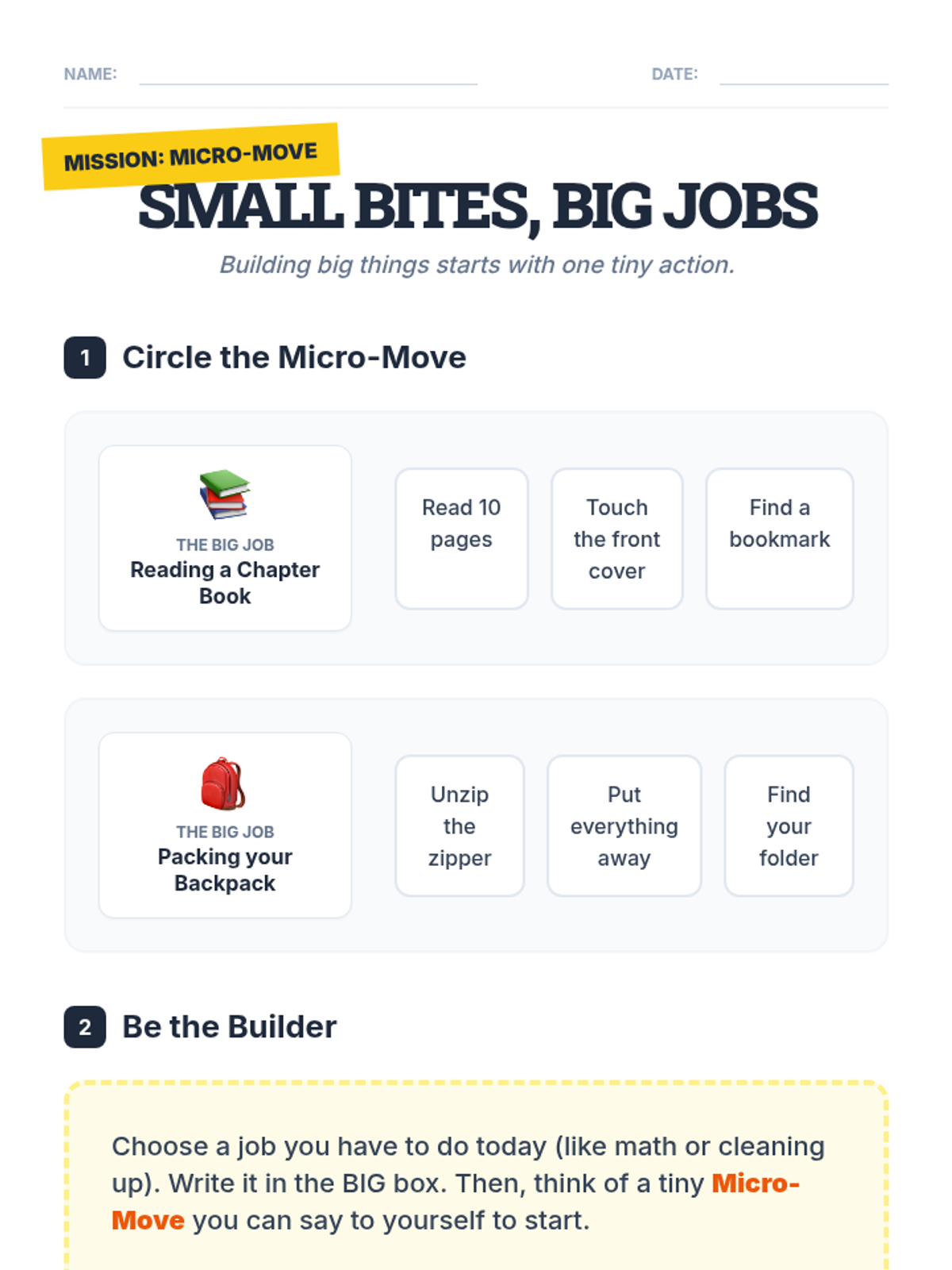
Students learn to identify the absolute smallest unit of action required to begin a task. They practice ignoring the whole assignment to focus solely on the physical action needed to start.
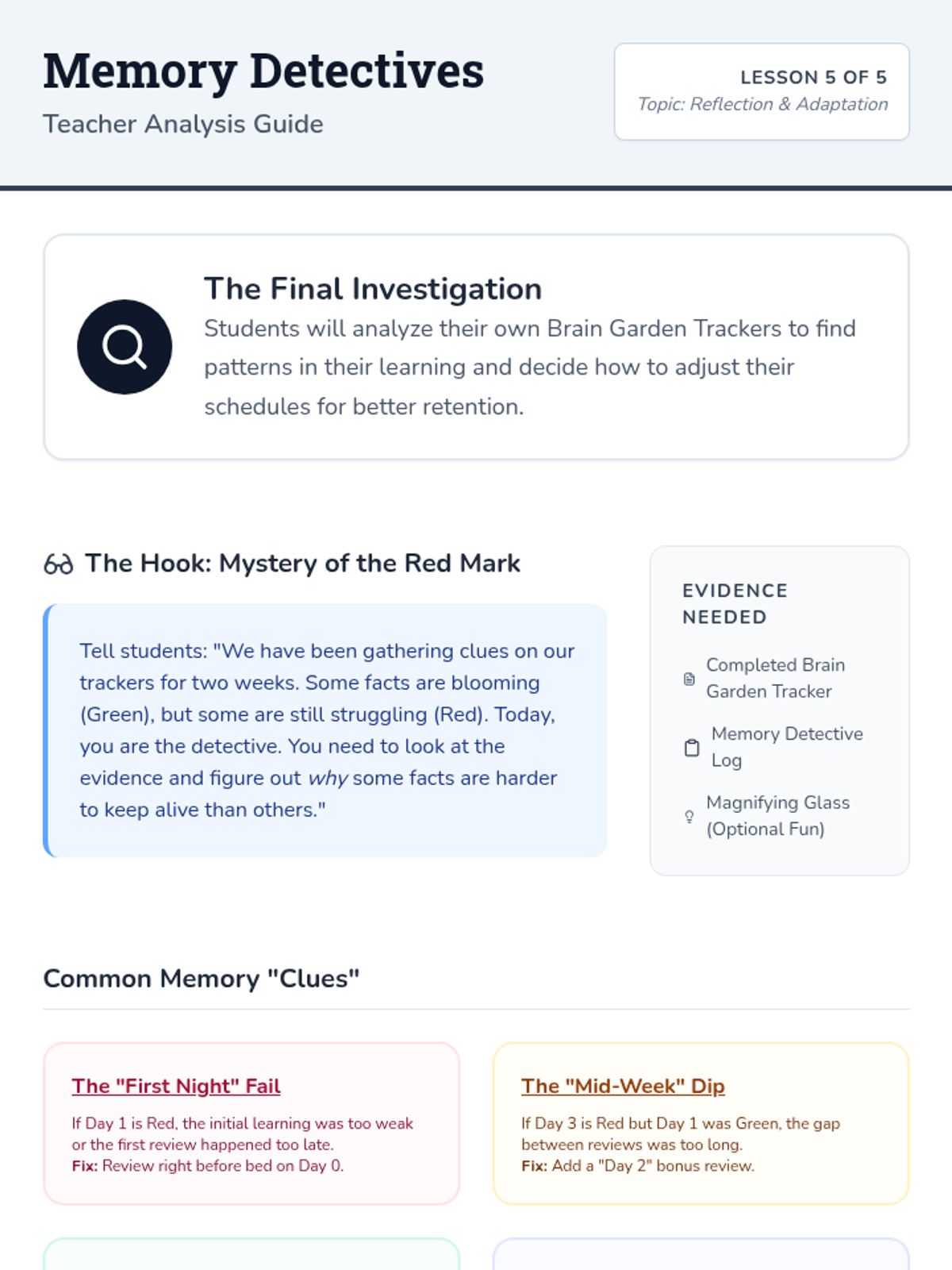
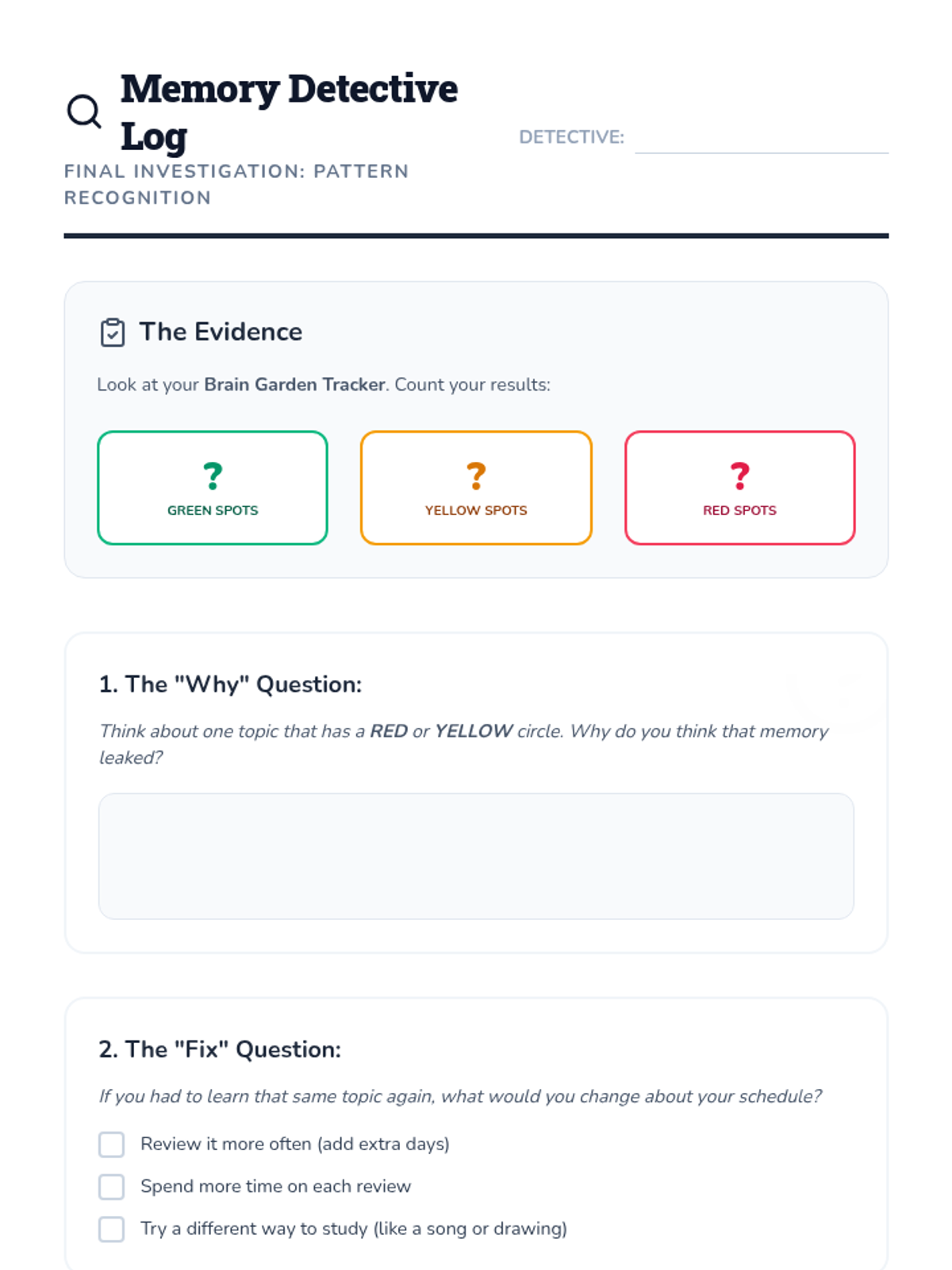
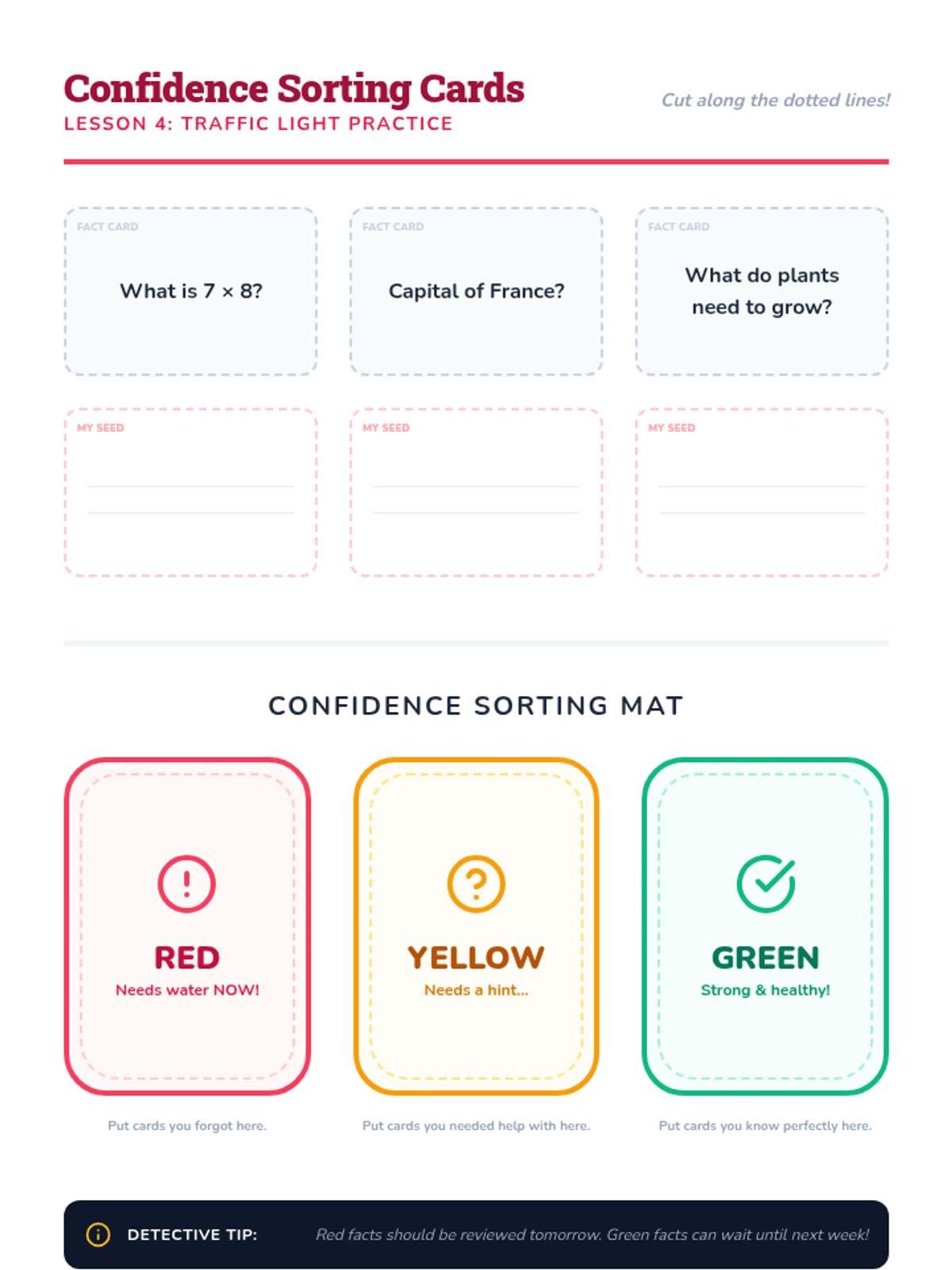
Students analyze their trackers after two weeks. They identify patterns in their memory retention and adjust their future spacing intervals (e.g., needing to review 'Red' items sooner).
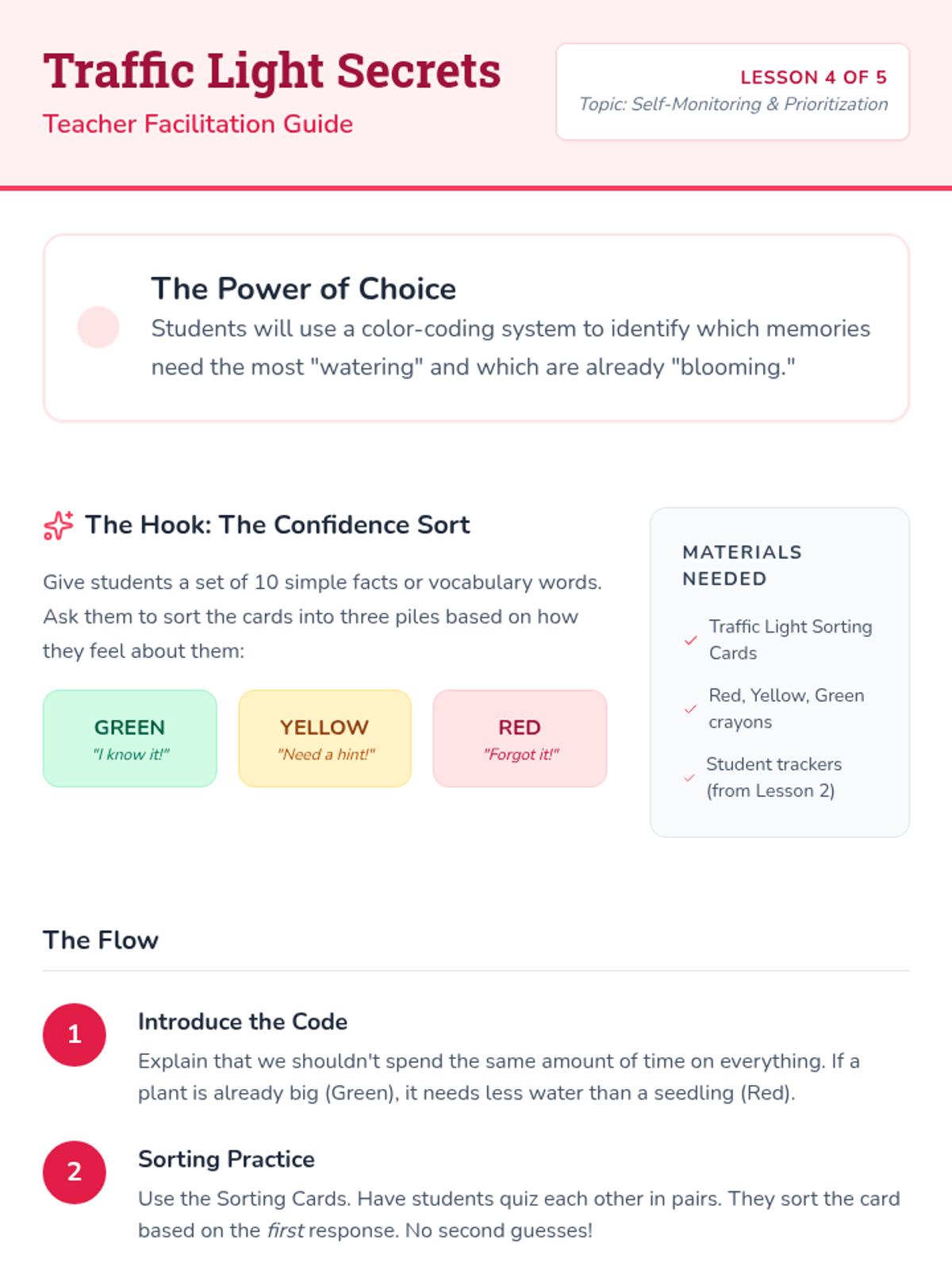
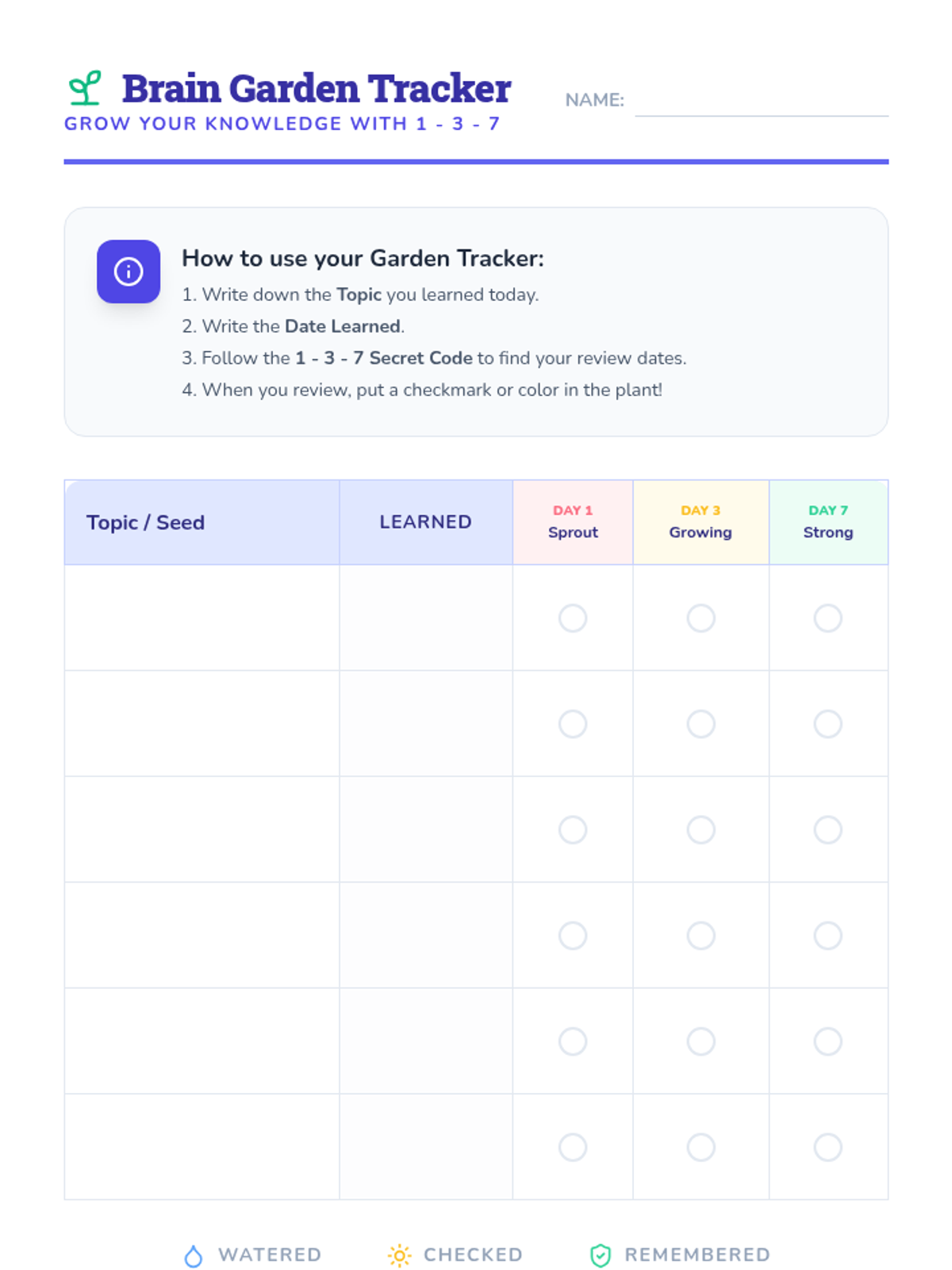
Students learn to color-code their trackers (Green = I know it, Yellow = I need a hint, Red = I forgot). This helps them prioritize which items need immediate spaced repetition and which can wait.
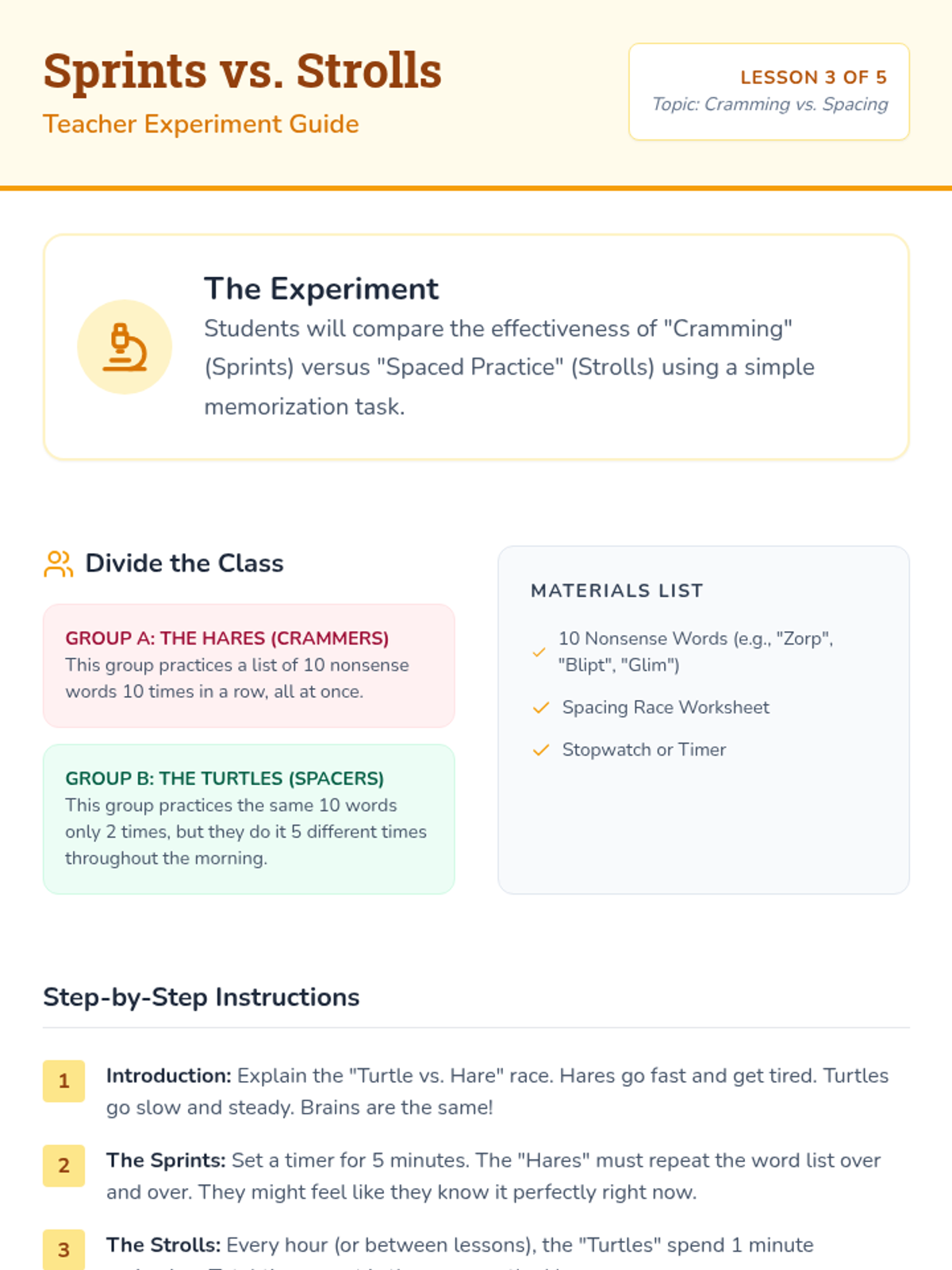
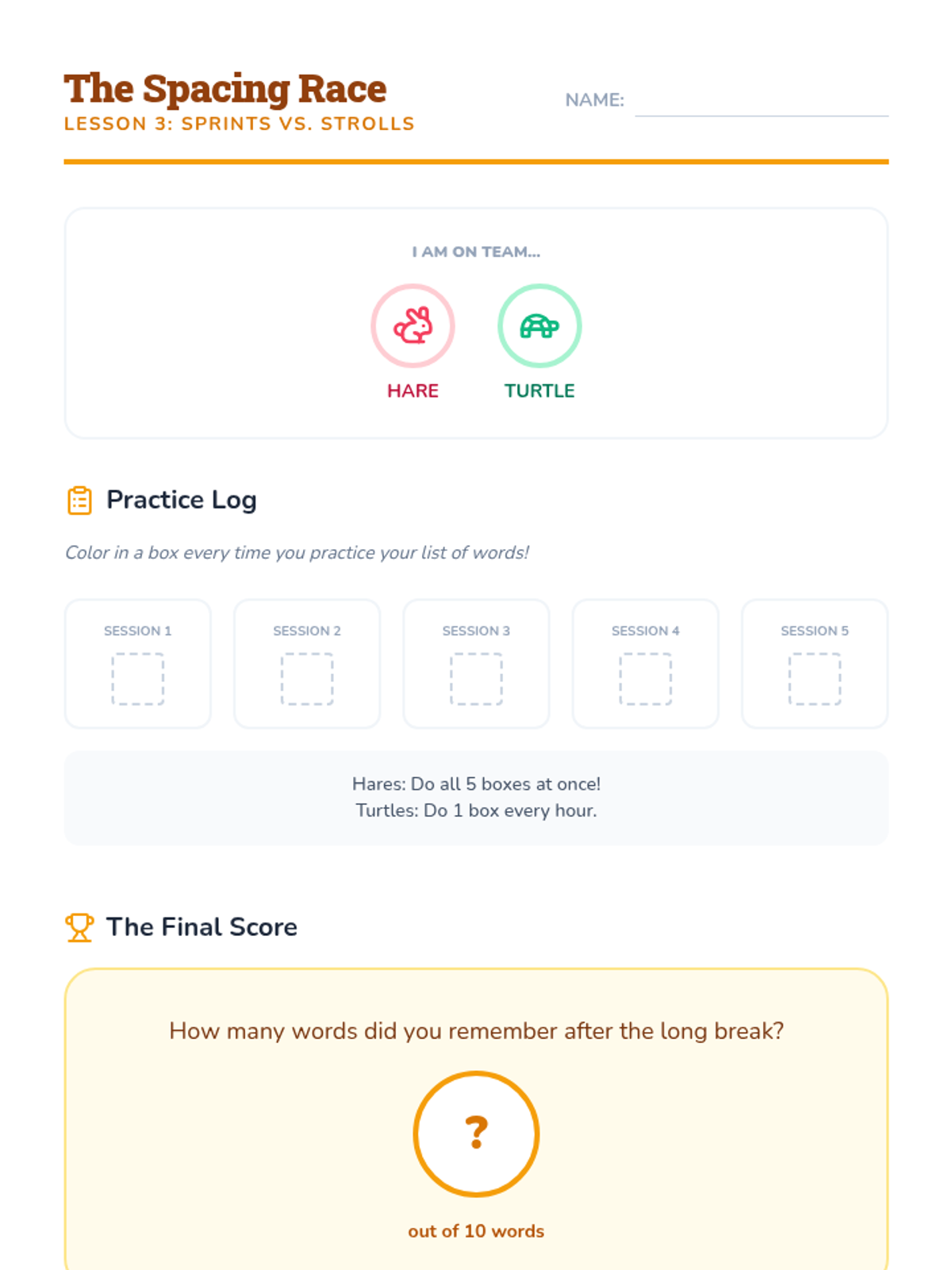
Students engage in an activity that compares 'cramming' (massed practice) vs. spacing. Half the class practices a skill all at once; the other half breaks it up. They compare results to validate their trackers.
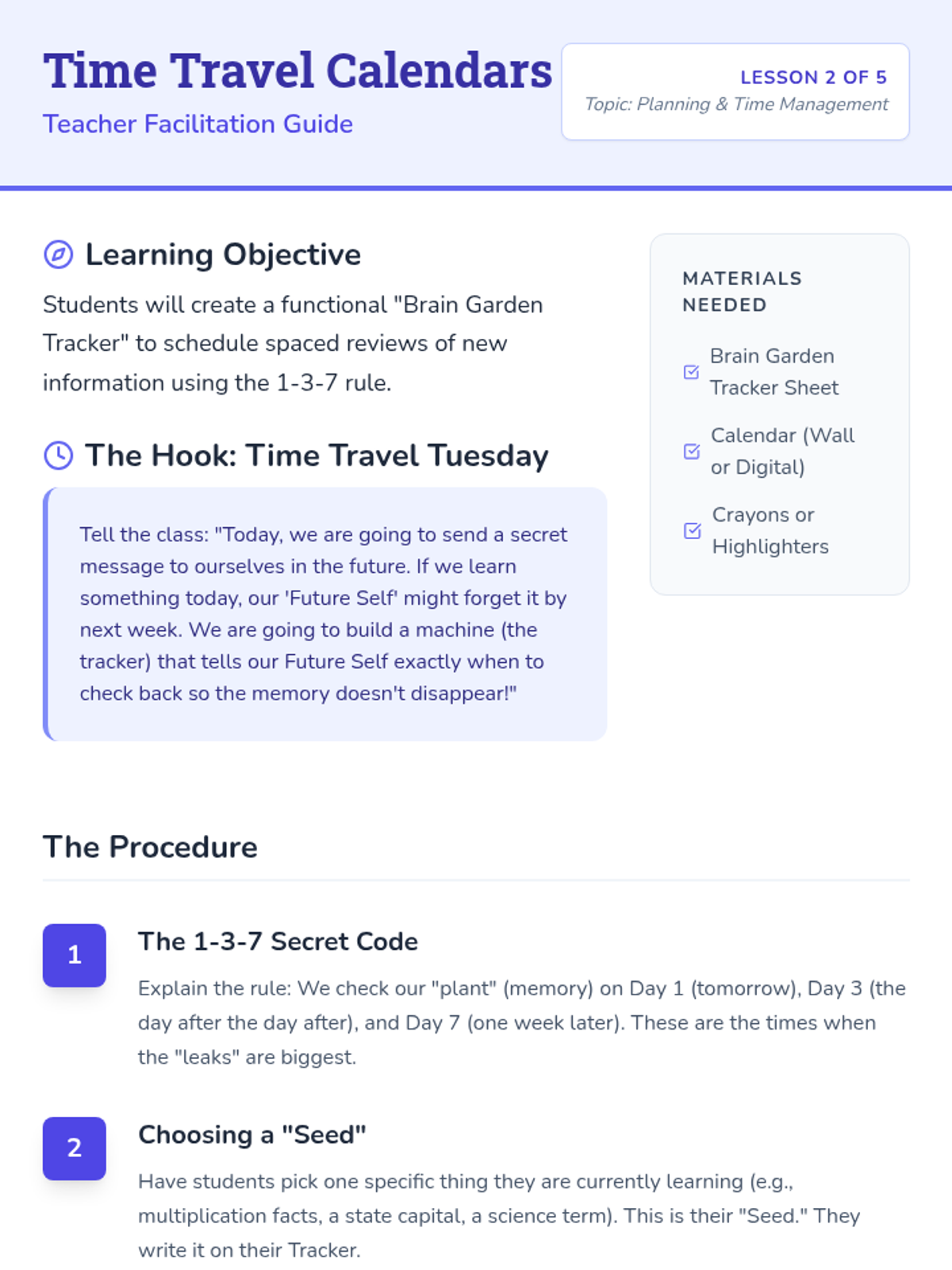
Students create a paper or digital 'Review Tracker' specifically for a content area like Social Studies. They learn to mark dates for the initial learning, 1-day check, 3-day check, and 1-week check.
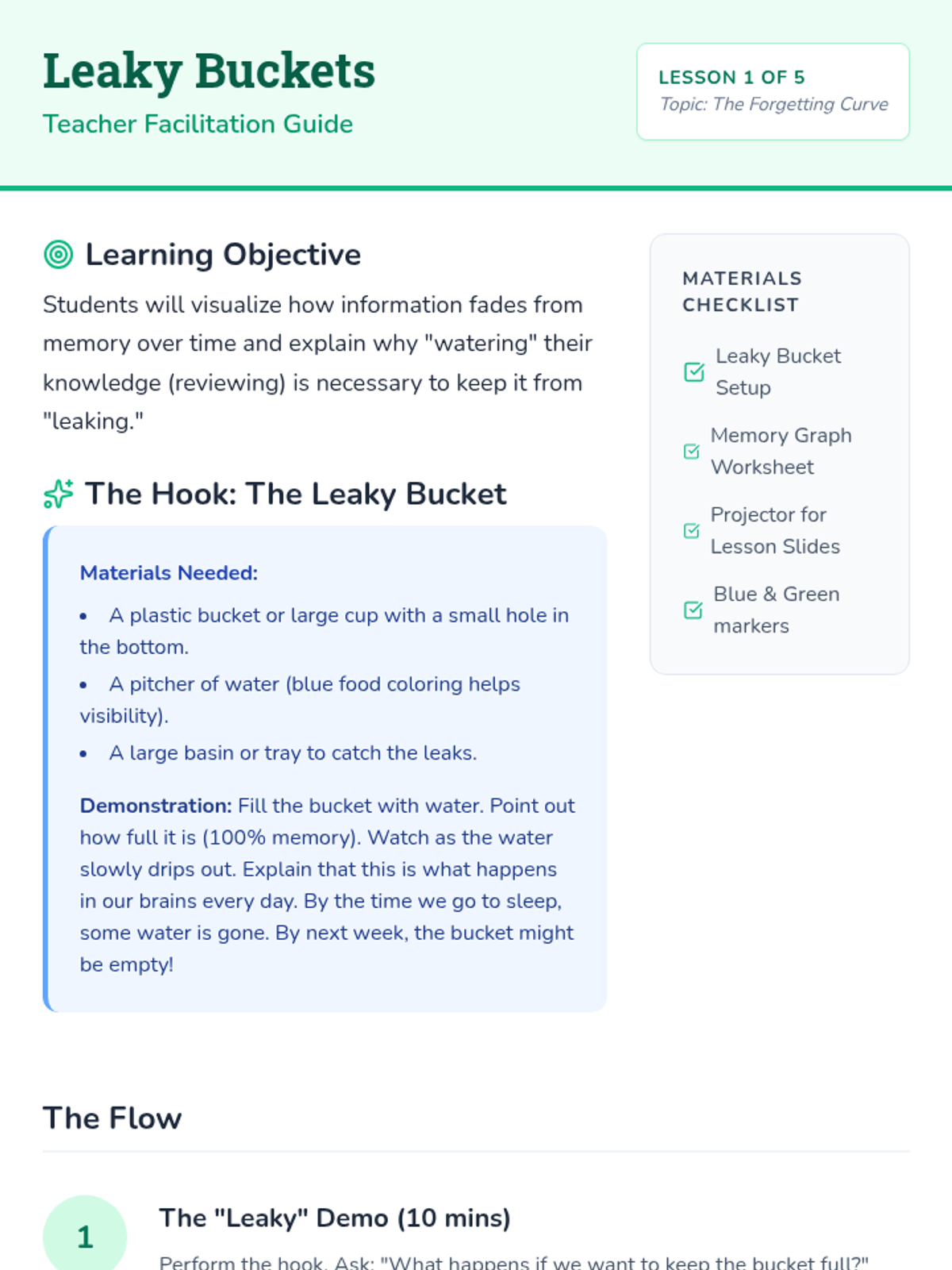
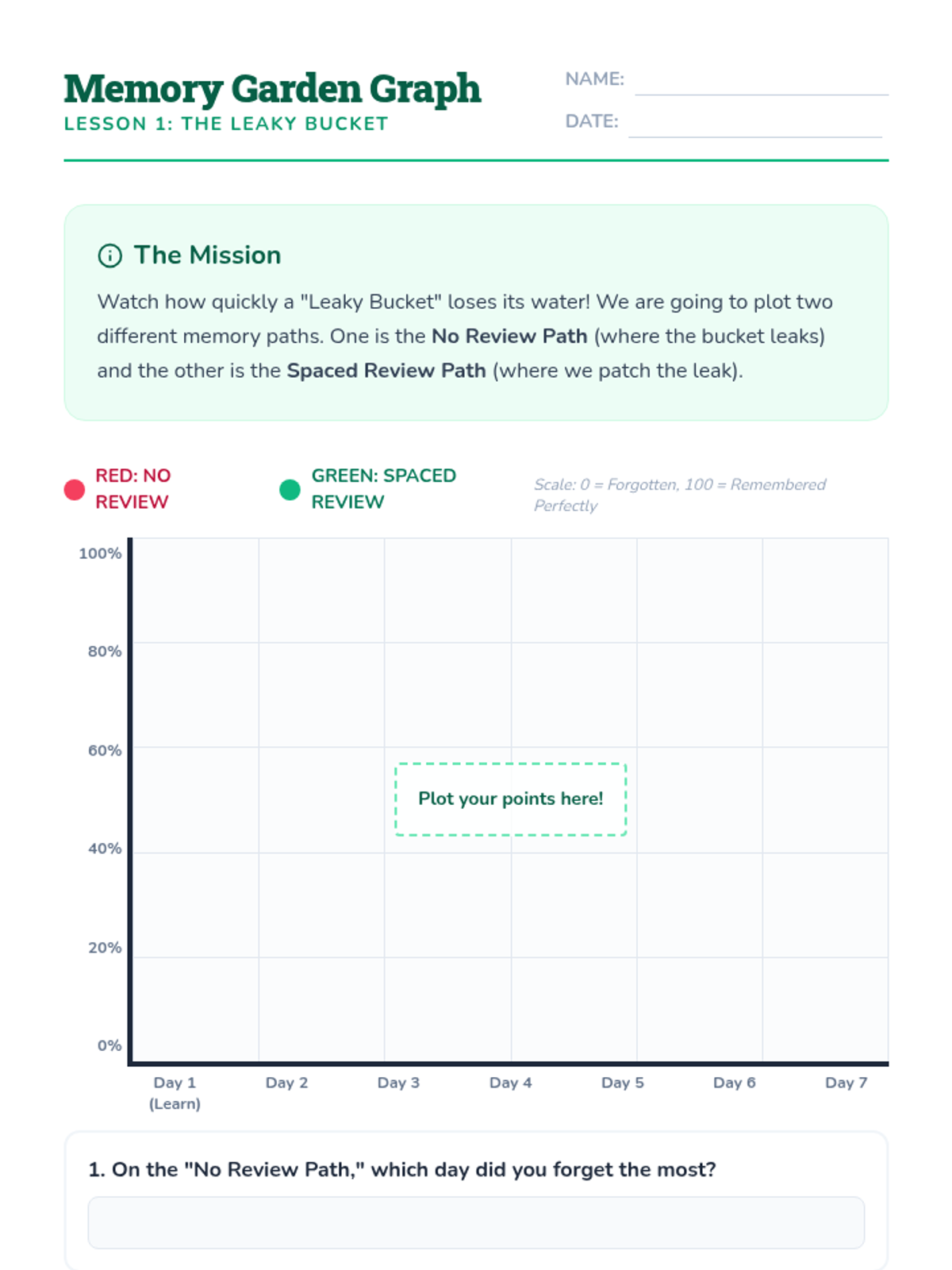
Students explore the concept of the 'Forgetting Curve' through a physical demonstration and graphing activity, understanding that memory fades without active review.
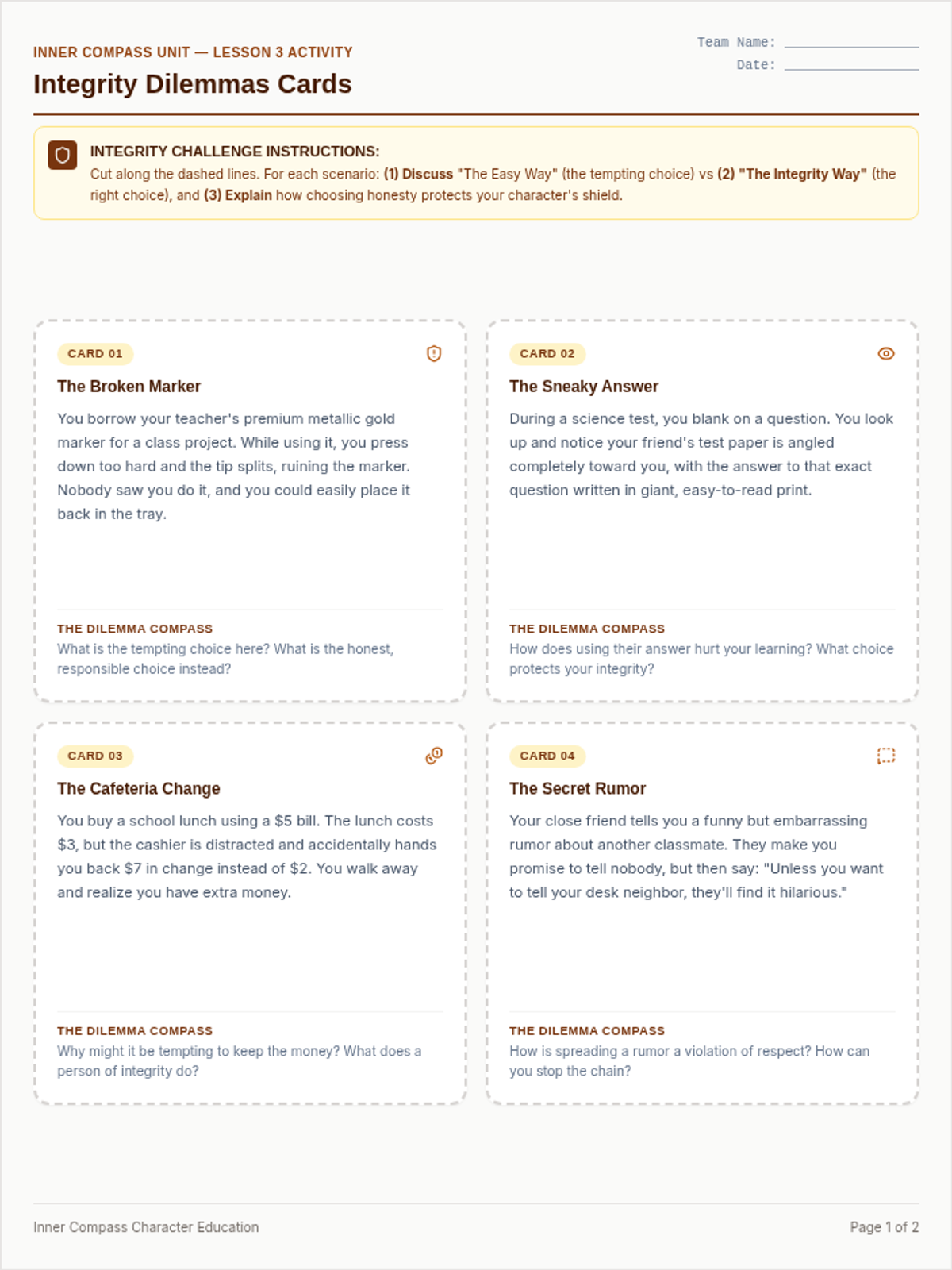
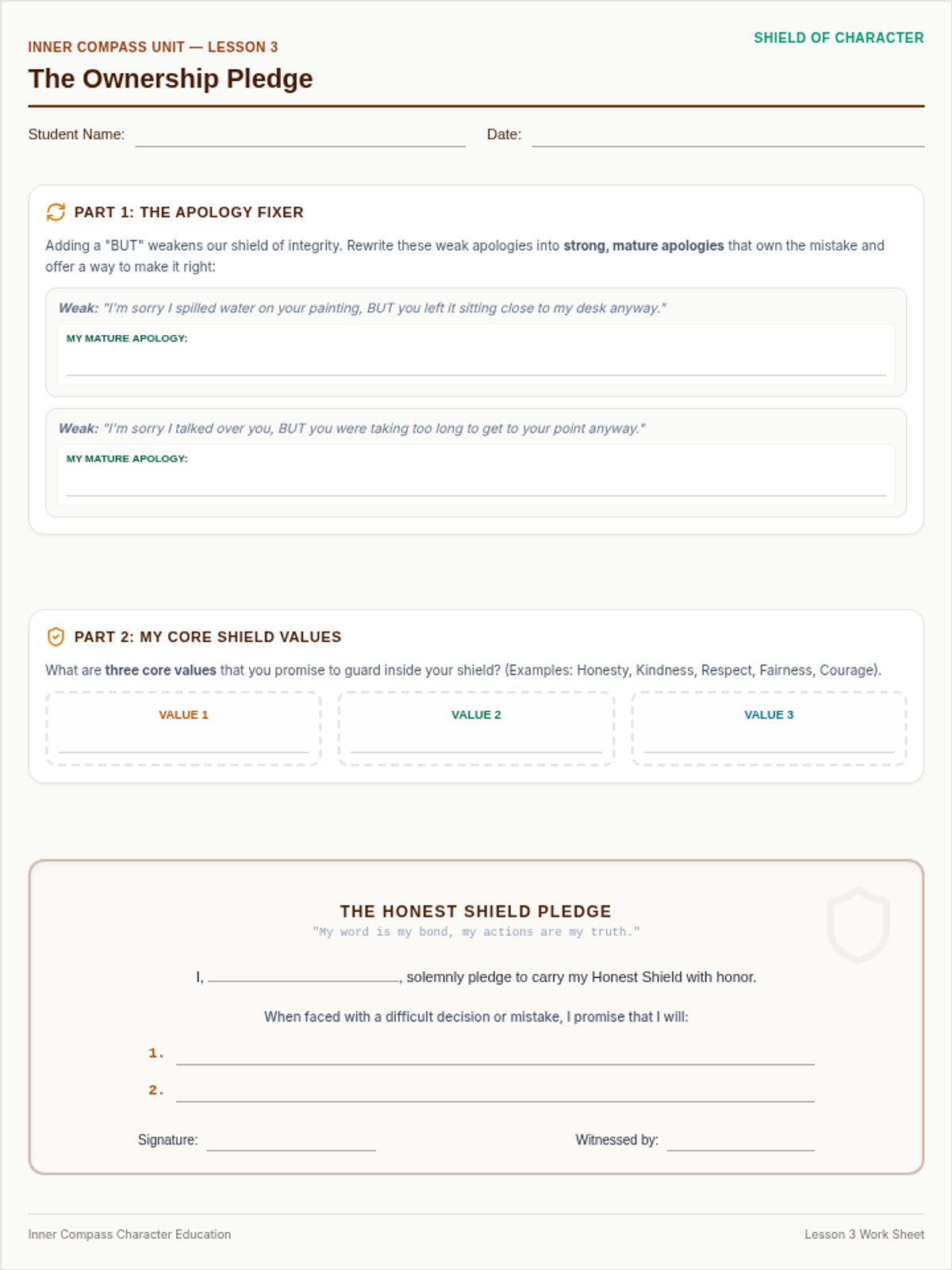
Students investigate responsibility, honesty, and integrity. They learn to make difficult choices, take ownership of mistakes, and construct a personal pledge for moral character.
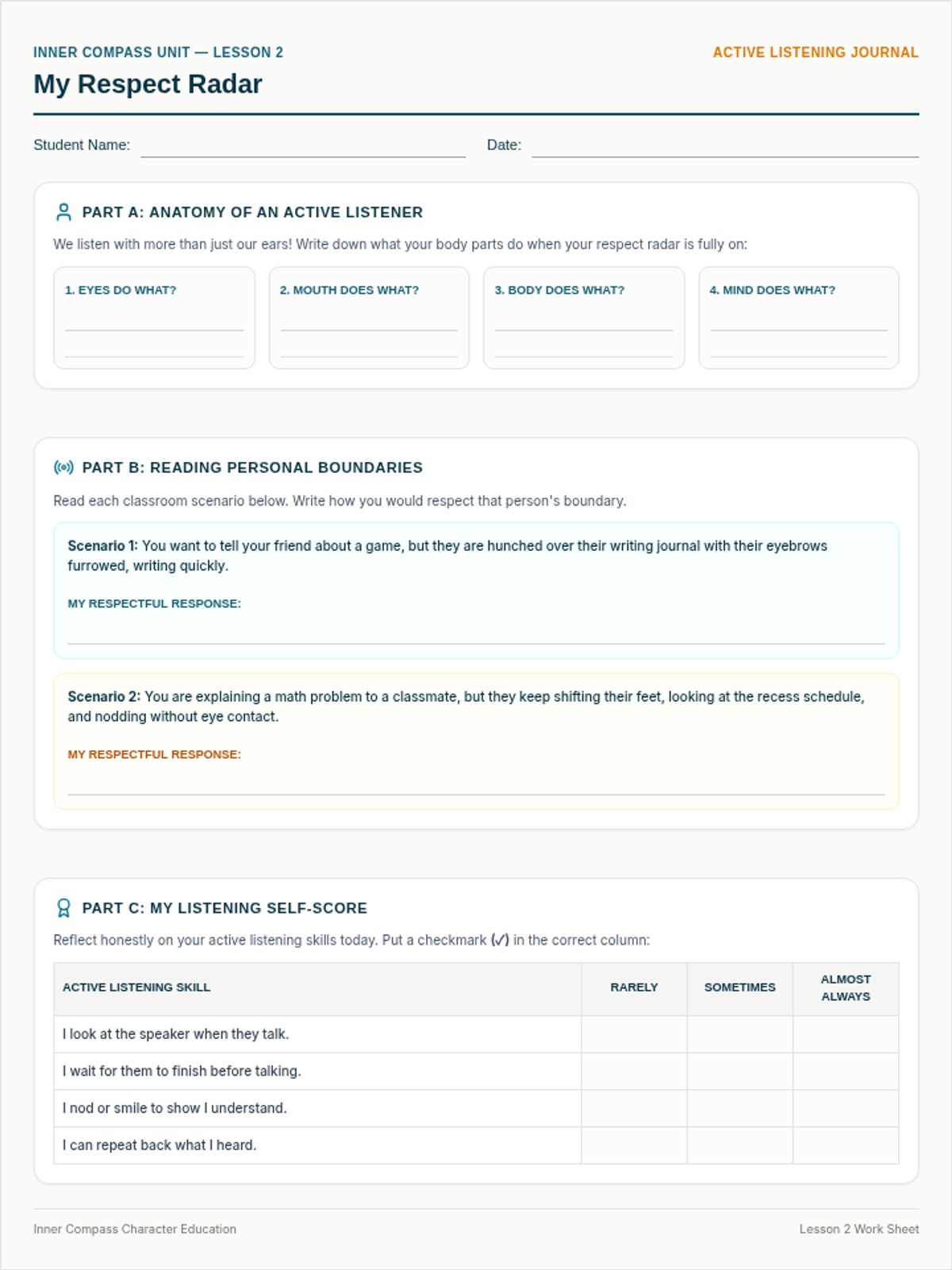
Students learn respect and active listening techniques. They engage in verbal exercises and boundary-setting activities to build effective communication and mutual respect.
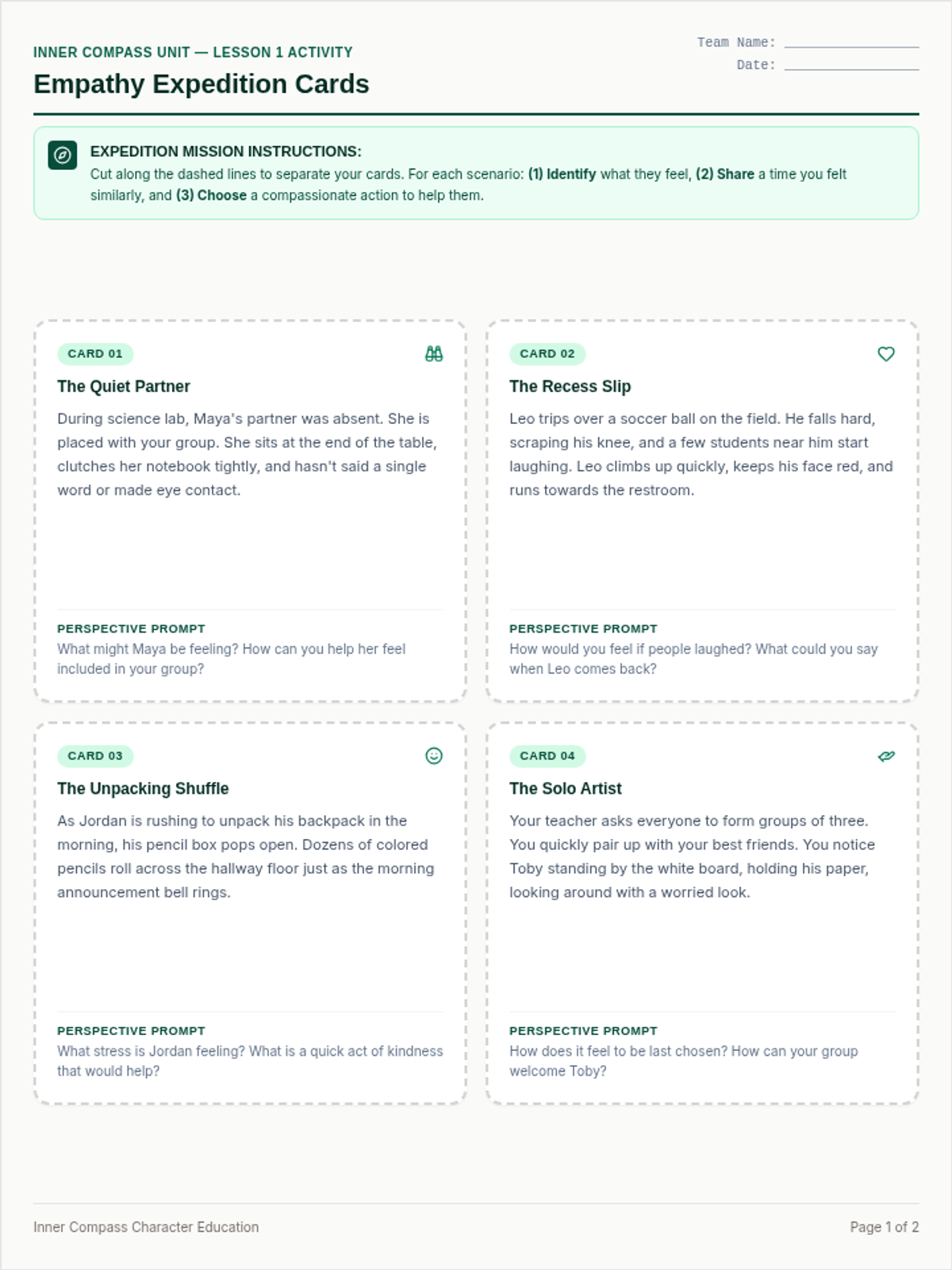
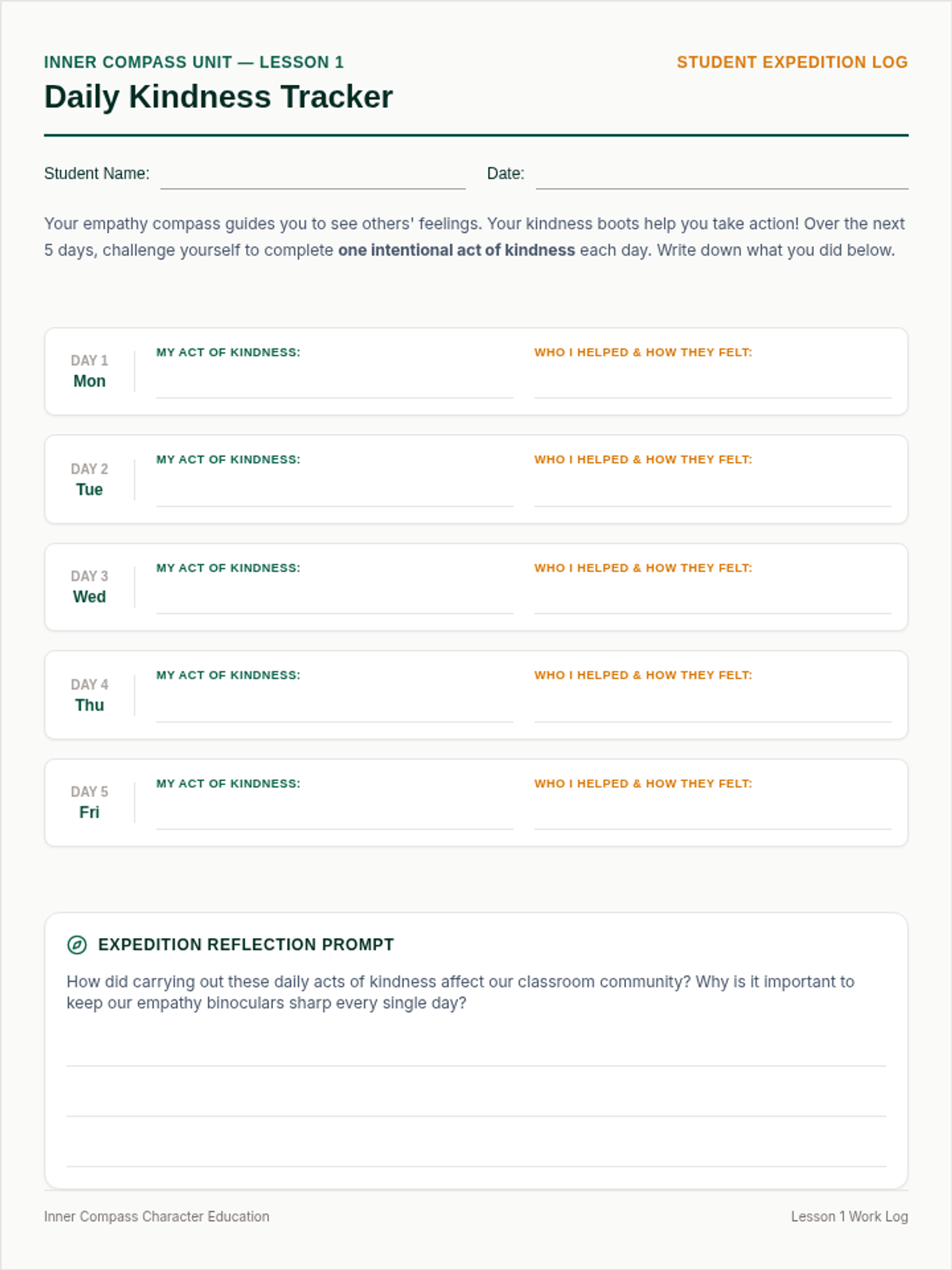
Students explore the power of empathy and kindness. Through looking at perspectives and performing small acts of helpfulness, students build connection and support in the classroom.
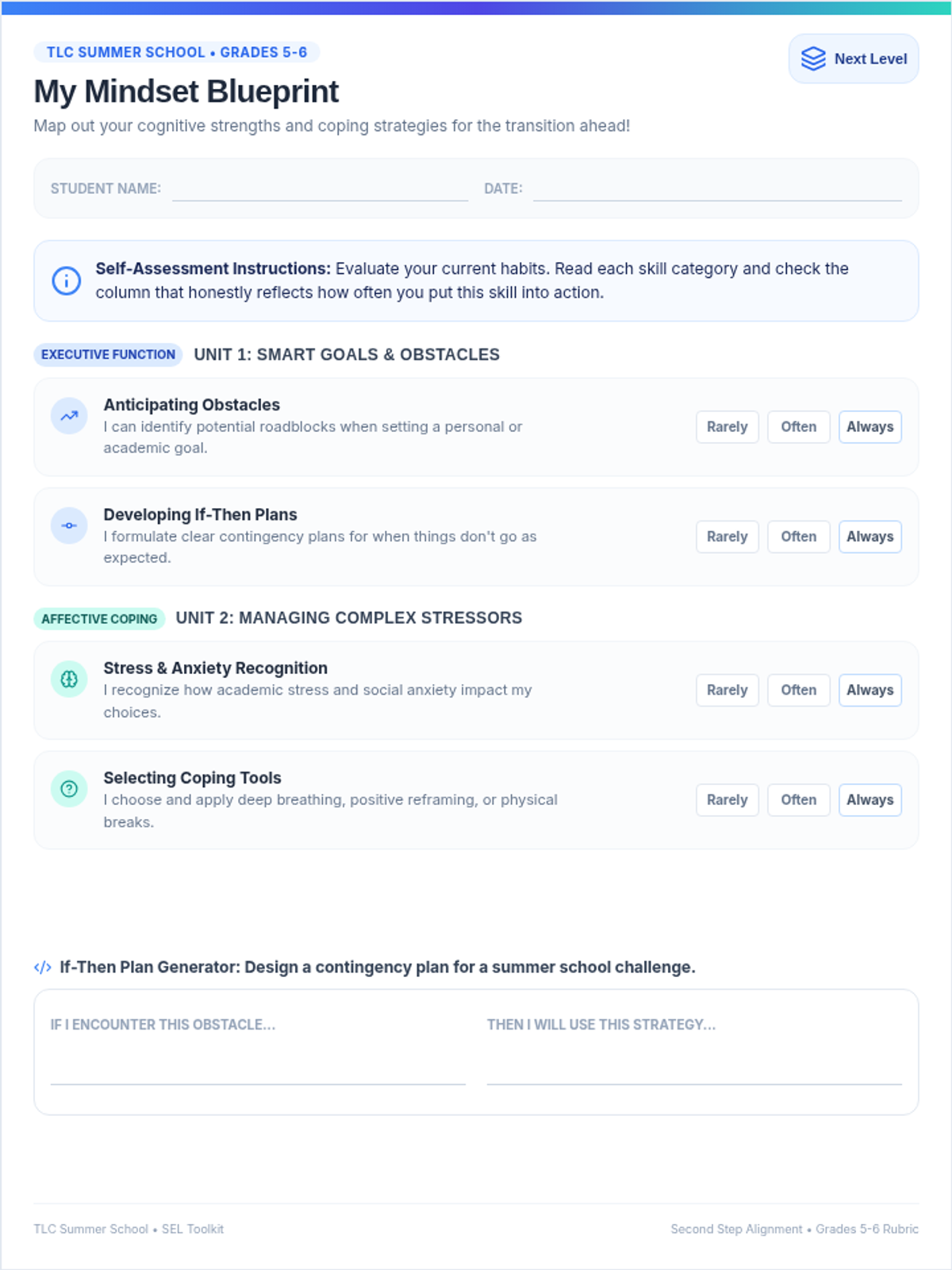
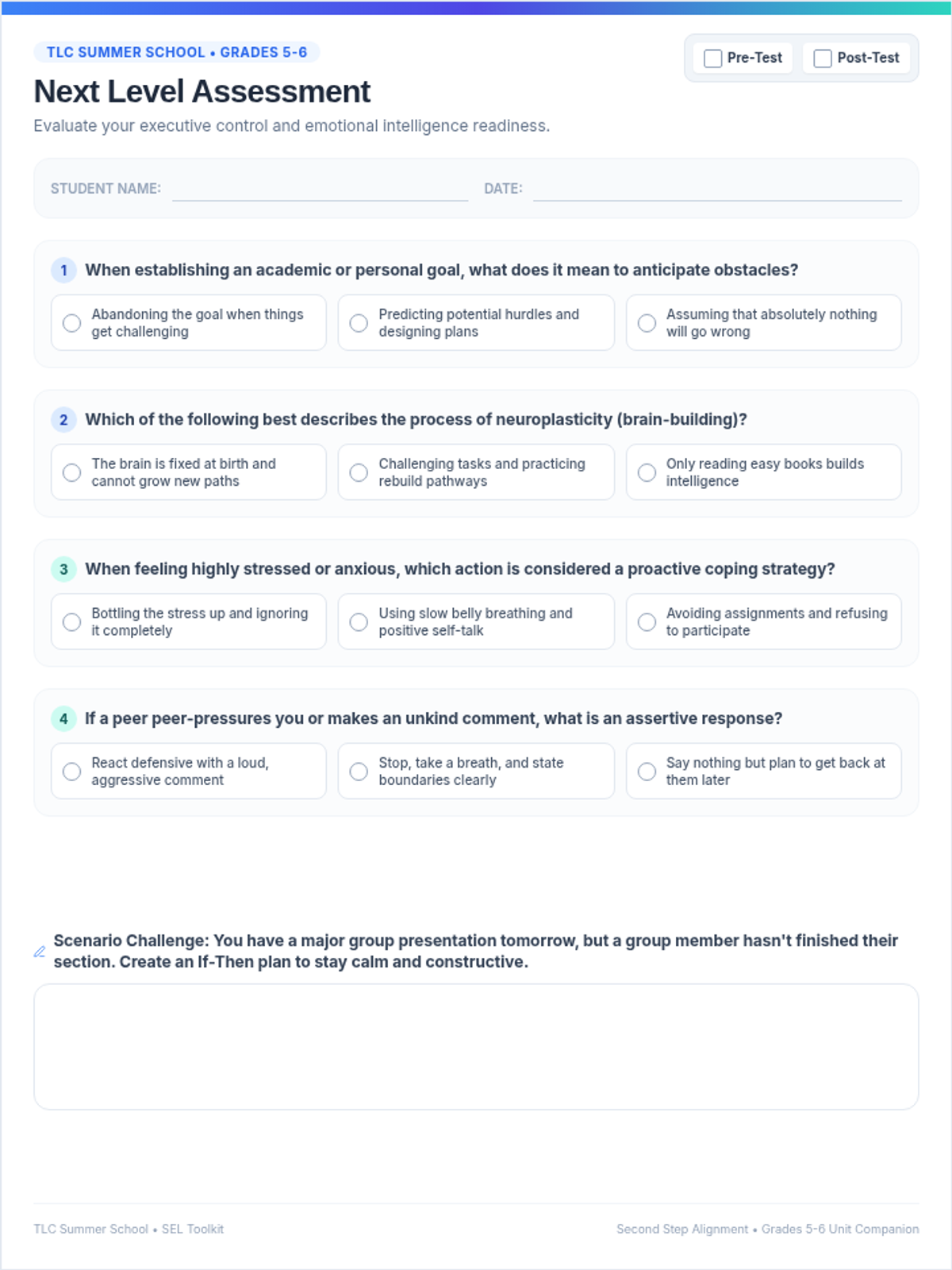
SEL assessments and tools tailored for middle school prep students (Grades 5-6). Focuses on executive function, goal setting, emotion management under stress, and preparing for middle school dynamics.
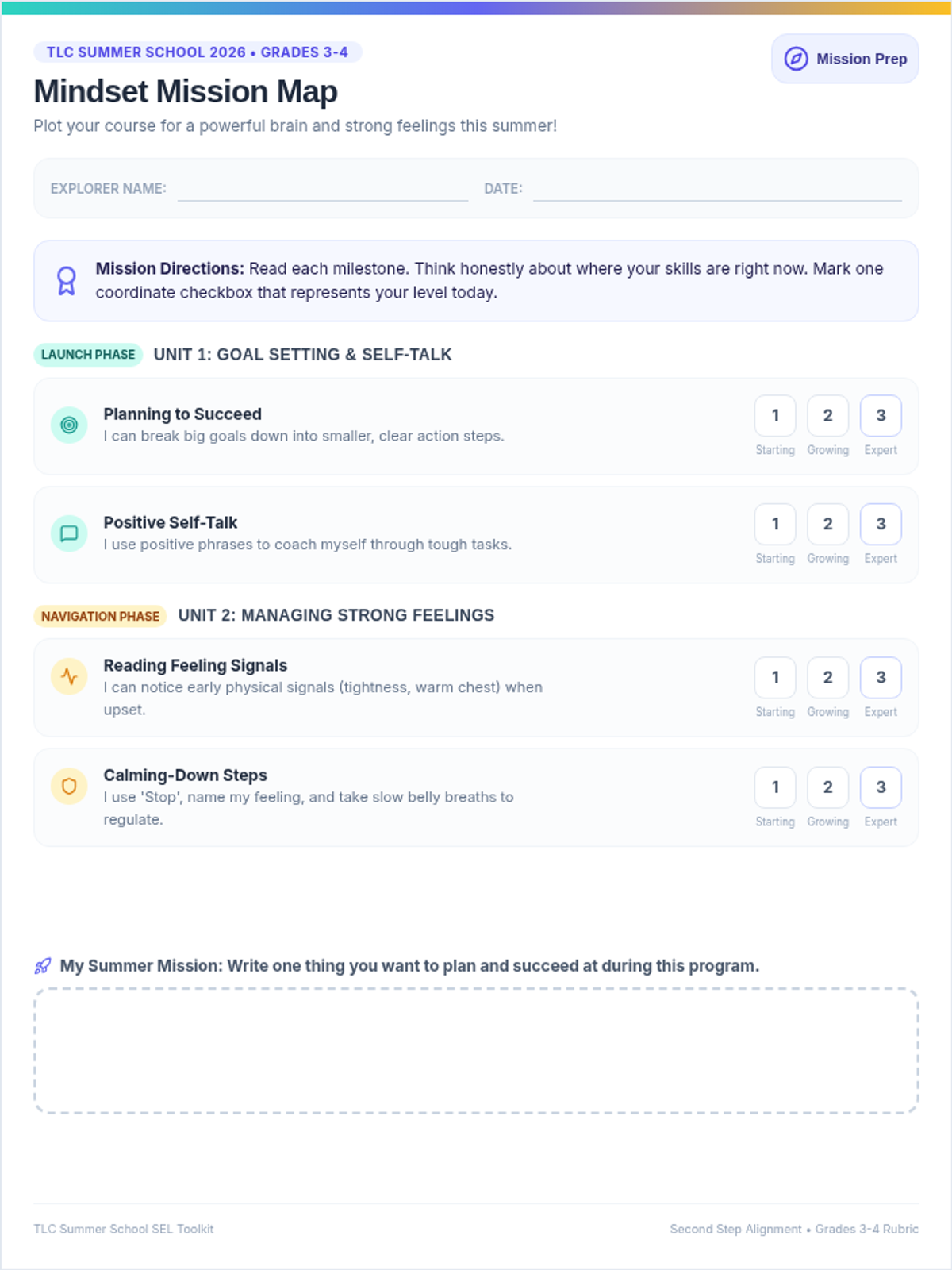
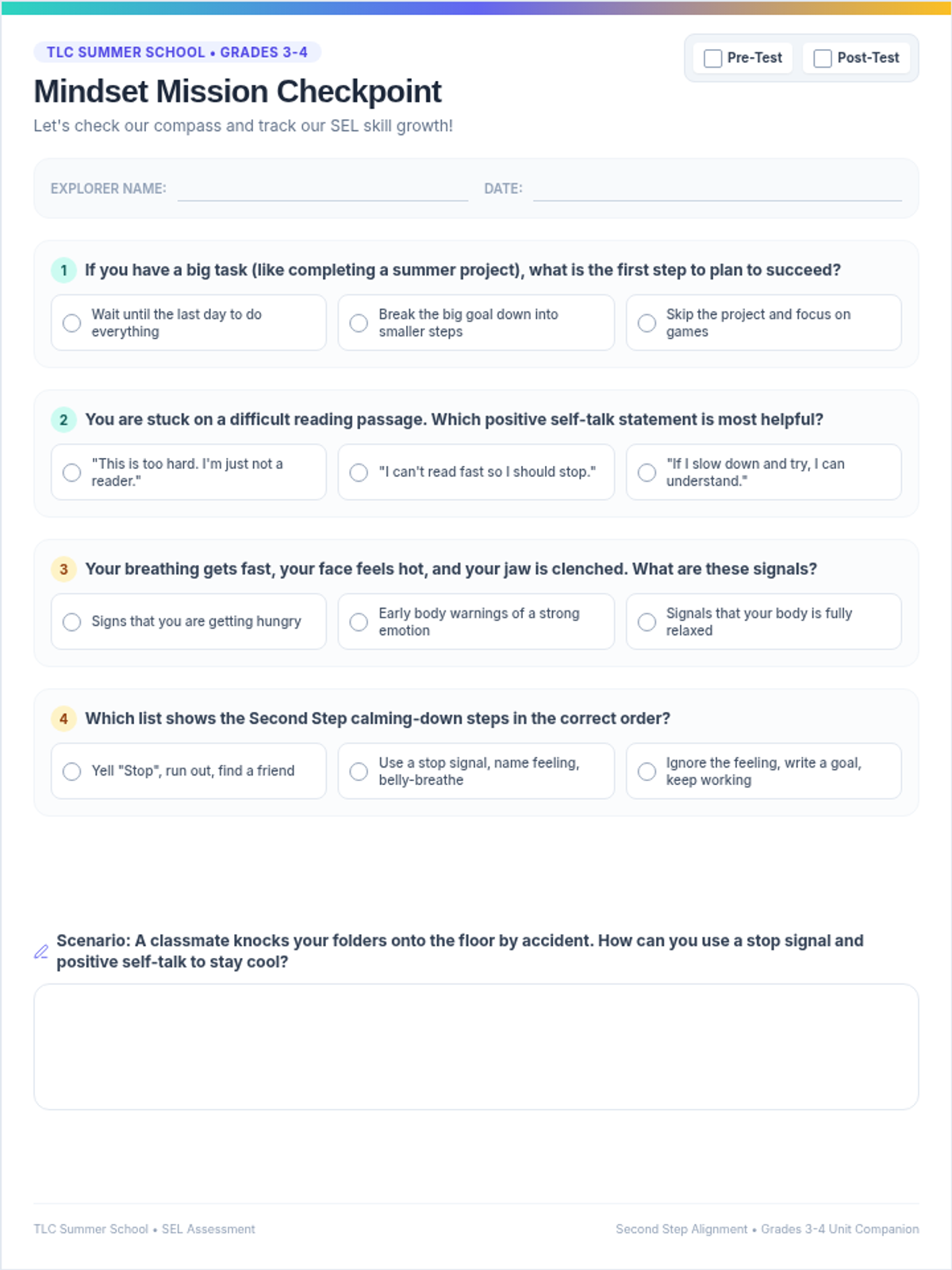
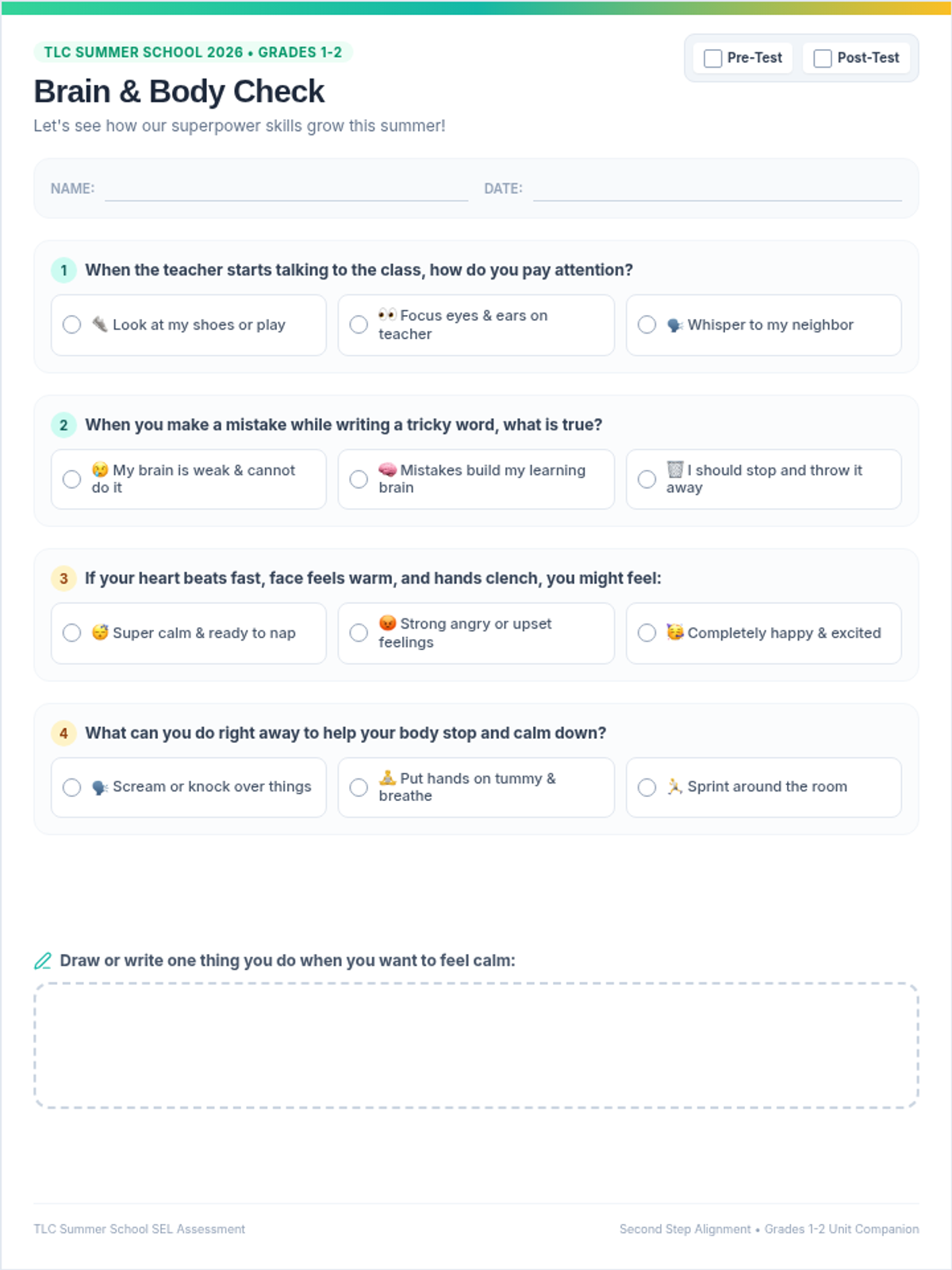
SEL assessments and tools tailored for upper primary students (Grades 3-4). Features reflective self-assessments and scenario-based tests focusing on planning to succeed, managing strong emotions, and using calming-down steps.
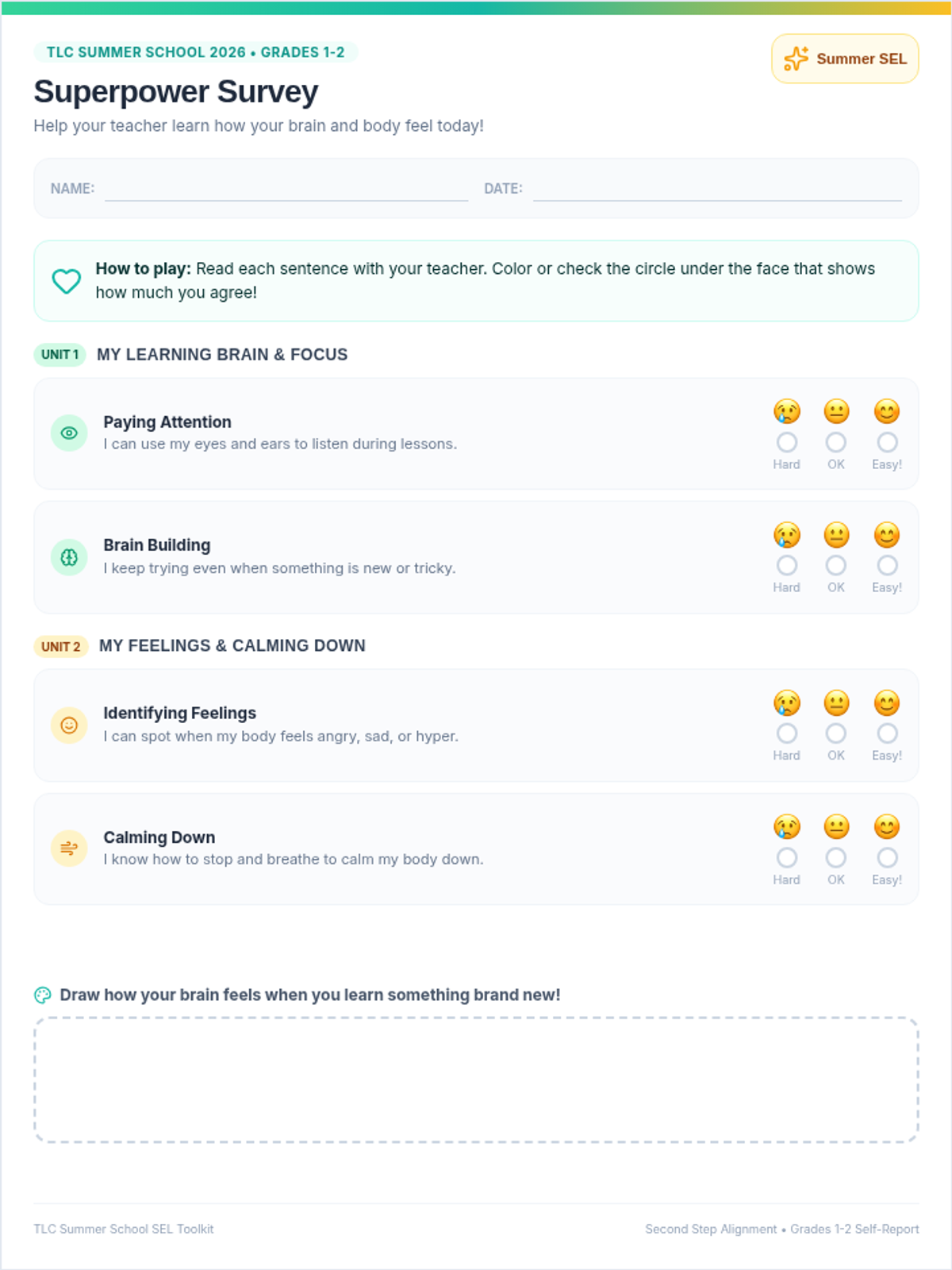
SEL assessments and tools tailored for early primary students (Grades 1-2). Uses highly visual emoji-based scales and simplified scenarios focusing on paying attention, brain building, and calming down.
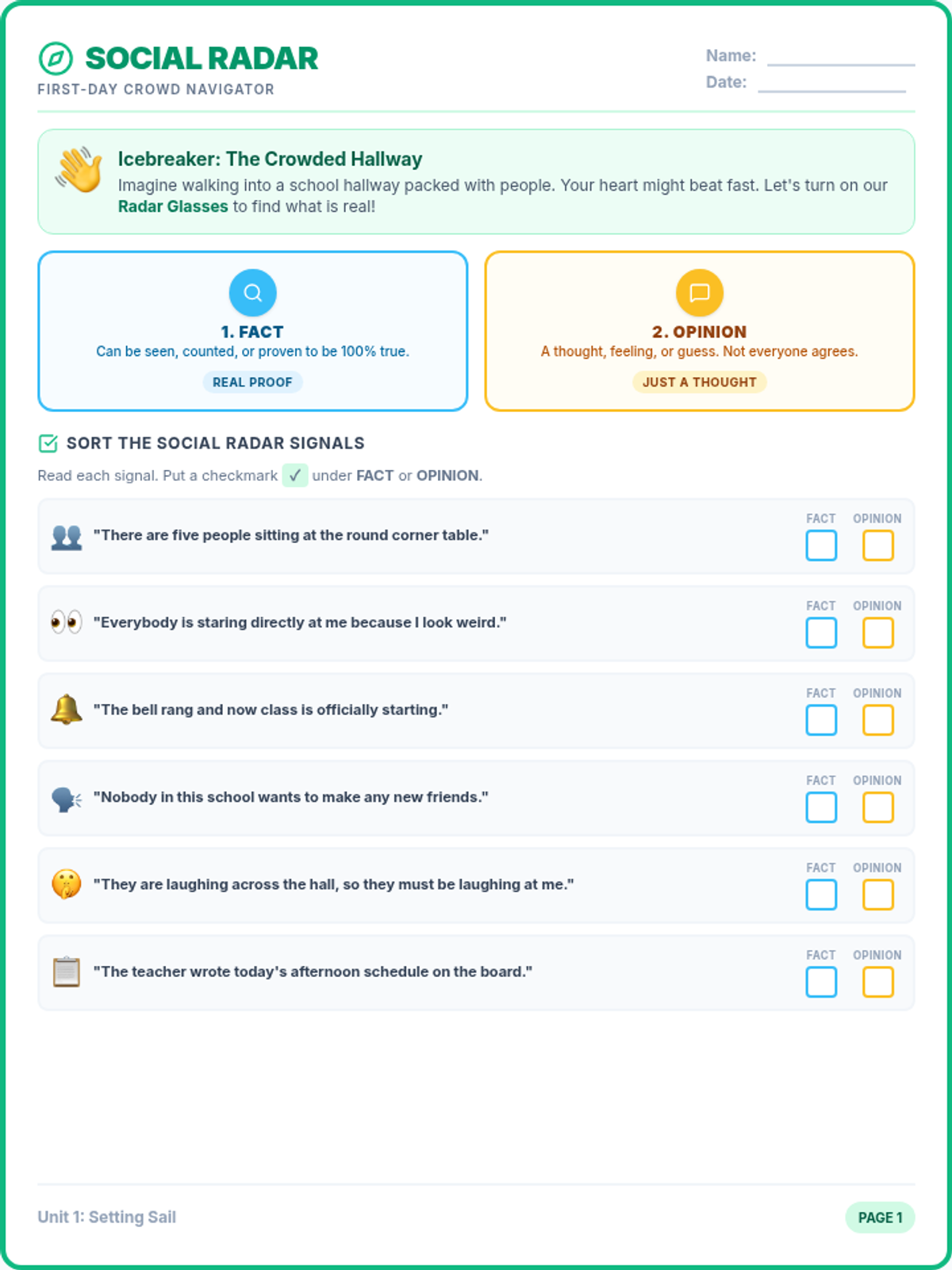
A highly visual lesson helping students navigate social anxiety in new environments by distinguishing facts from opinions to make empathetic, responsible choices.
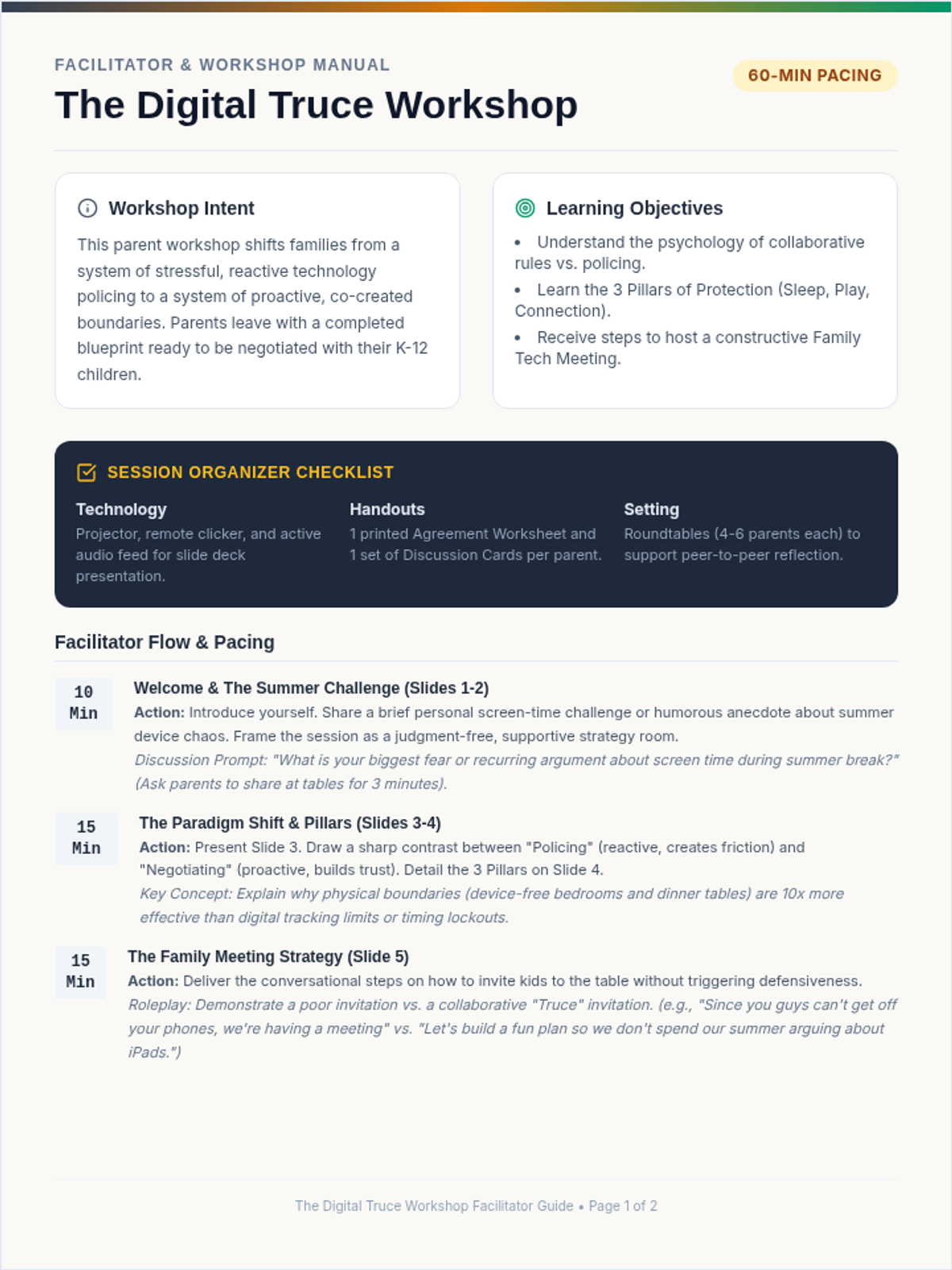
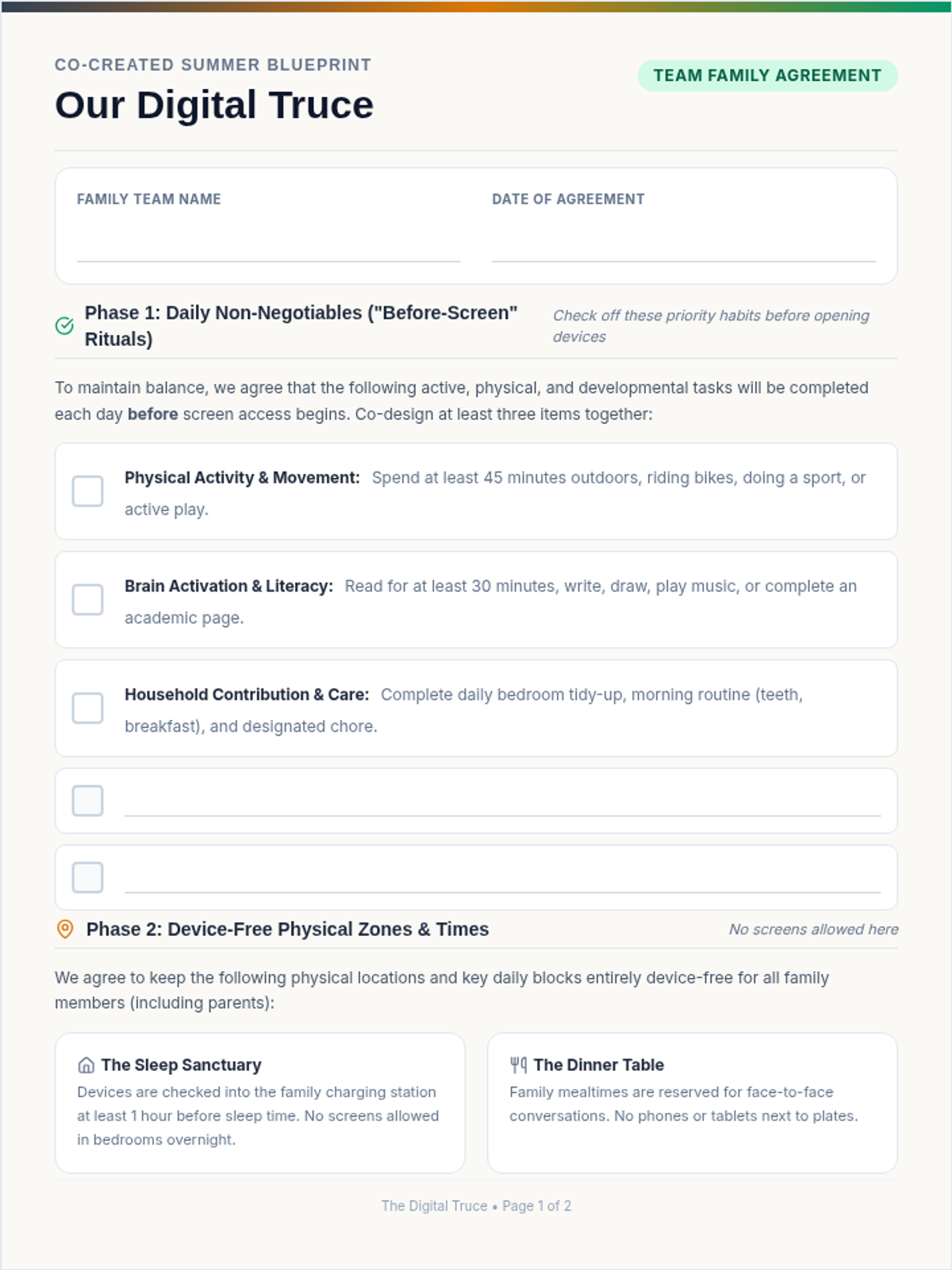
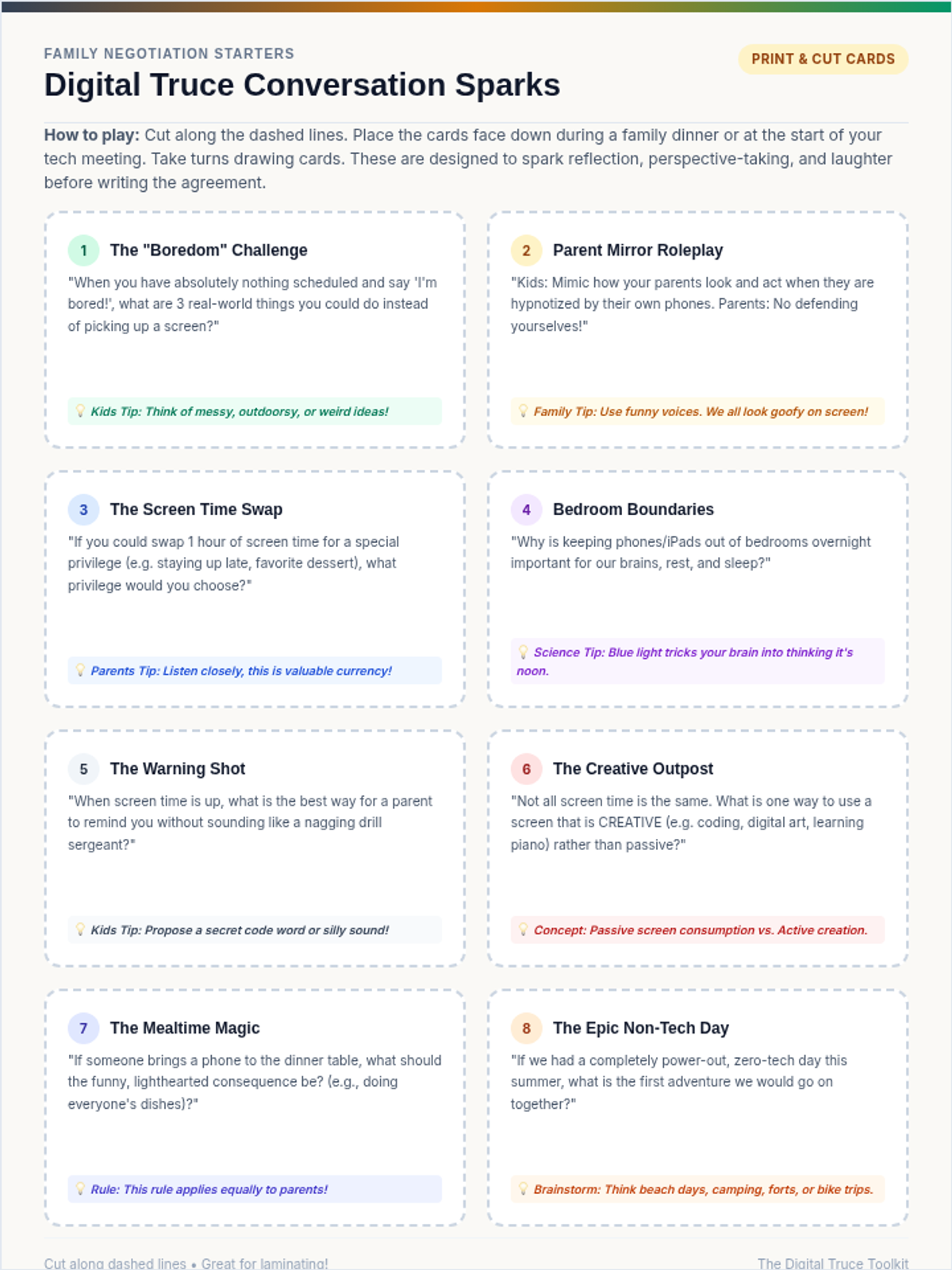
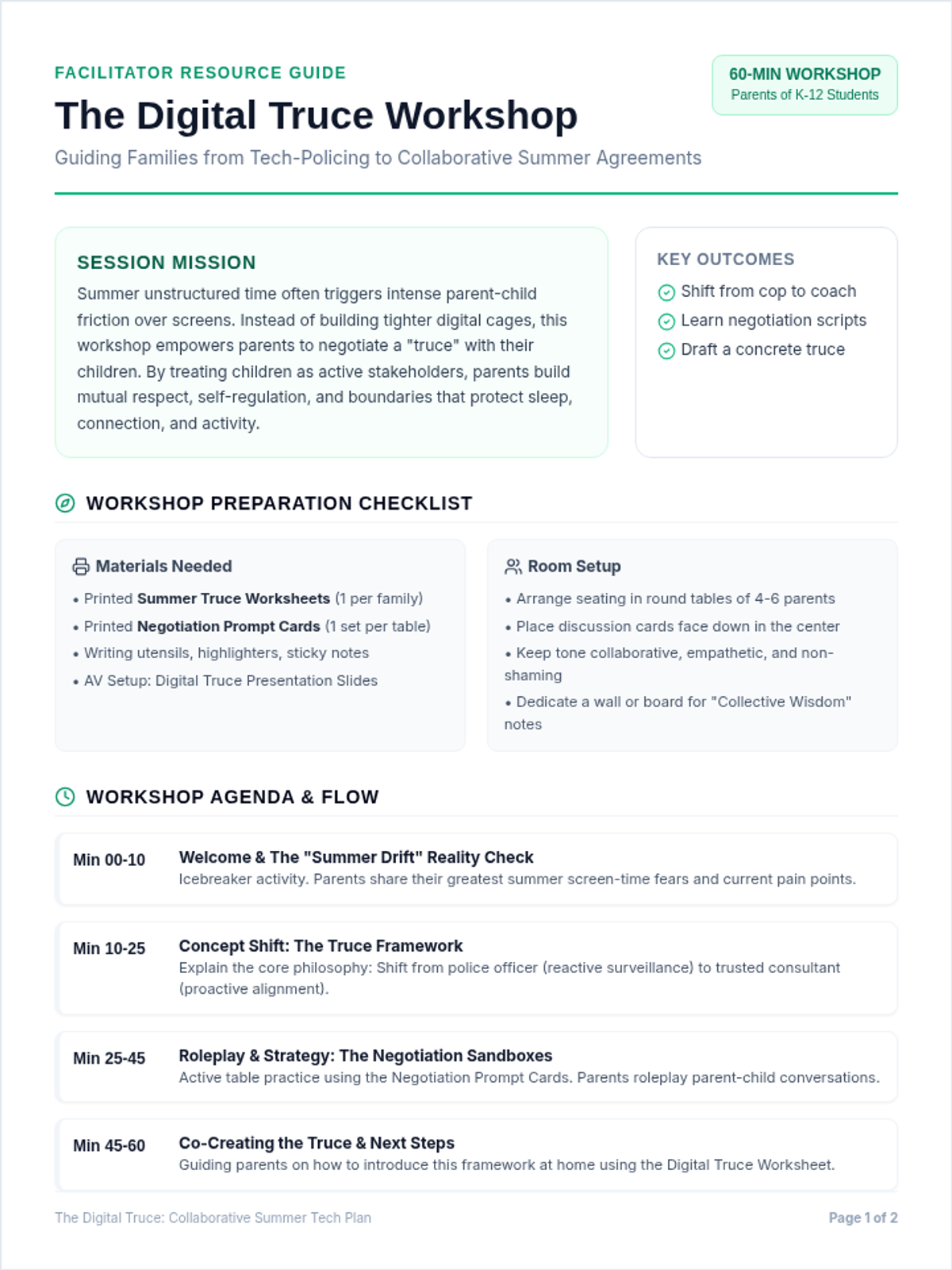
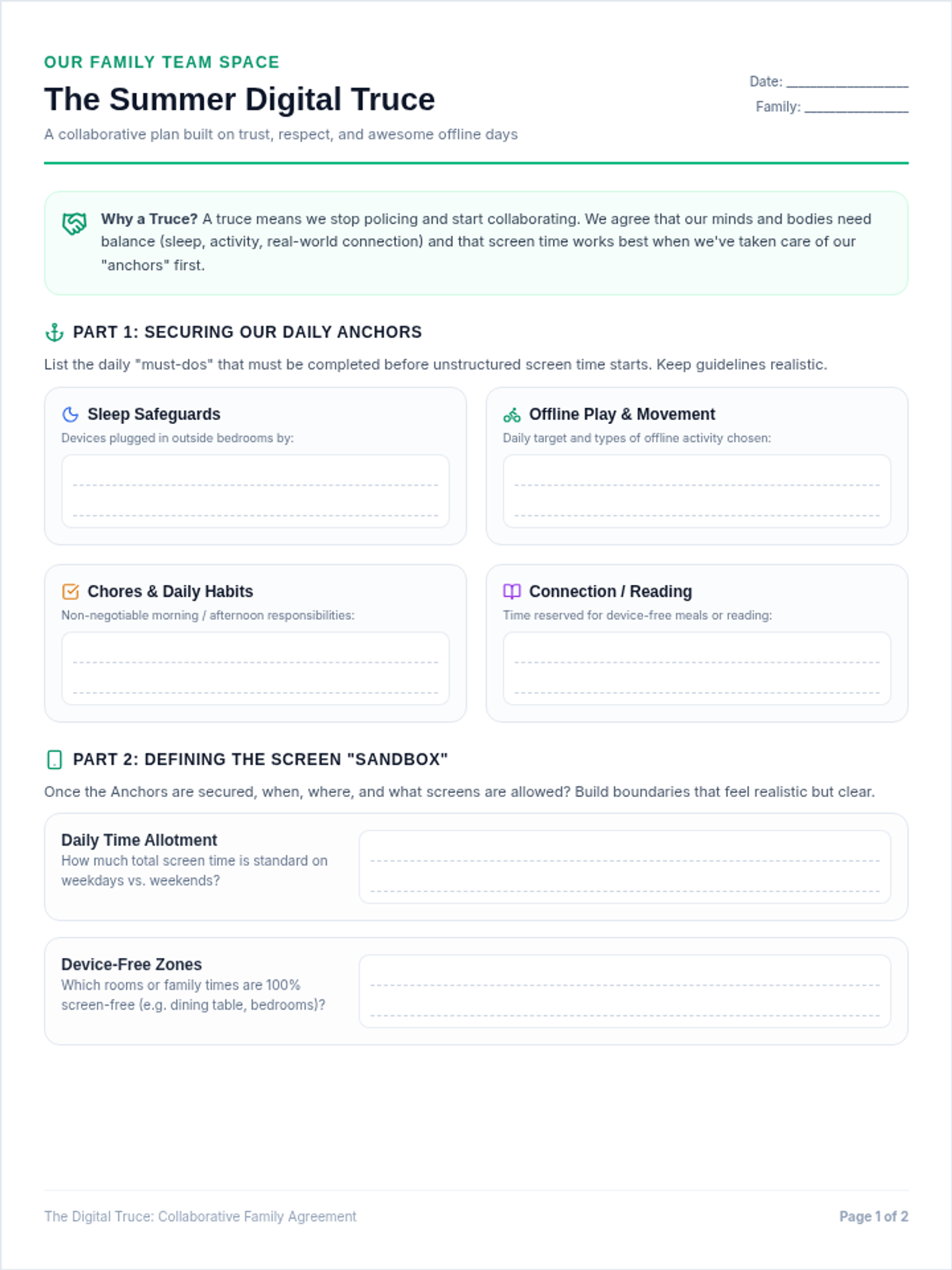
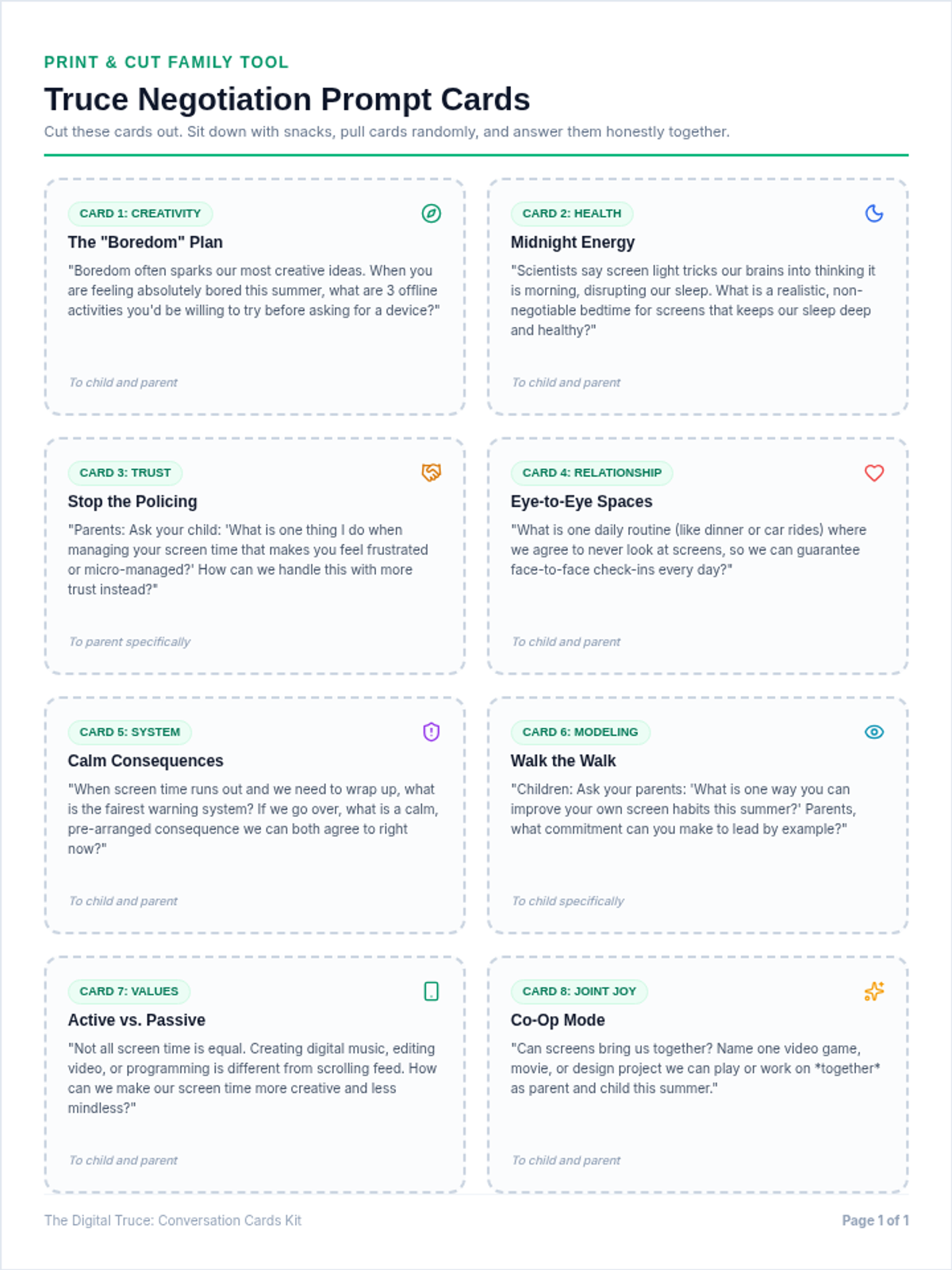
A collaborative workshop and toolkit designed to help parents of K-12 students establish healthy, co-created summer screen-time boundaries with their children through negotiation and mutual trust.
A collaborative parent workshop and family kit designed to help K-12 parents negotiate healthy, realistic summer screen-time agreements with their children, focusing on trust over policing.
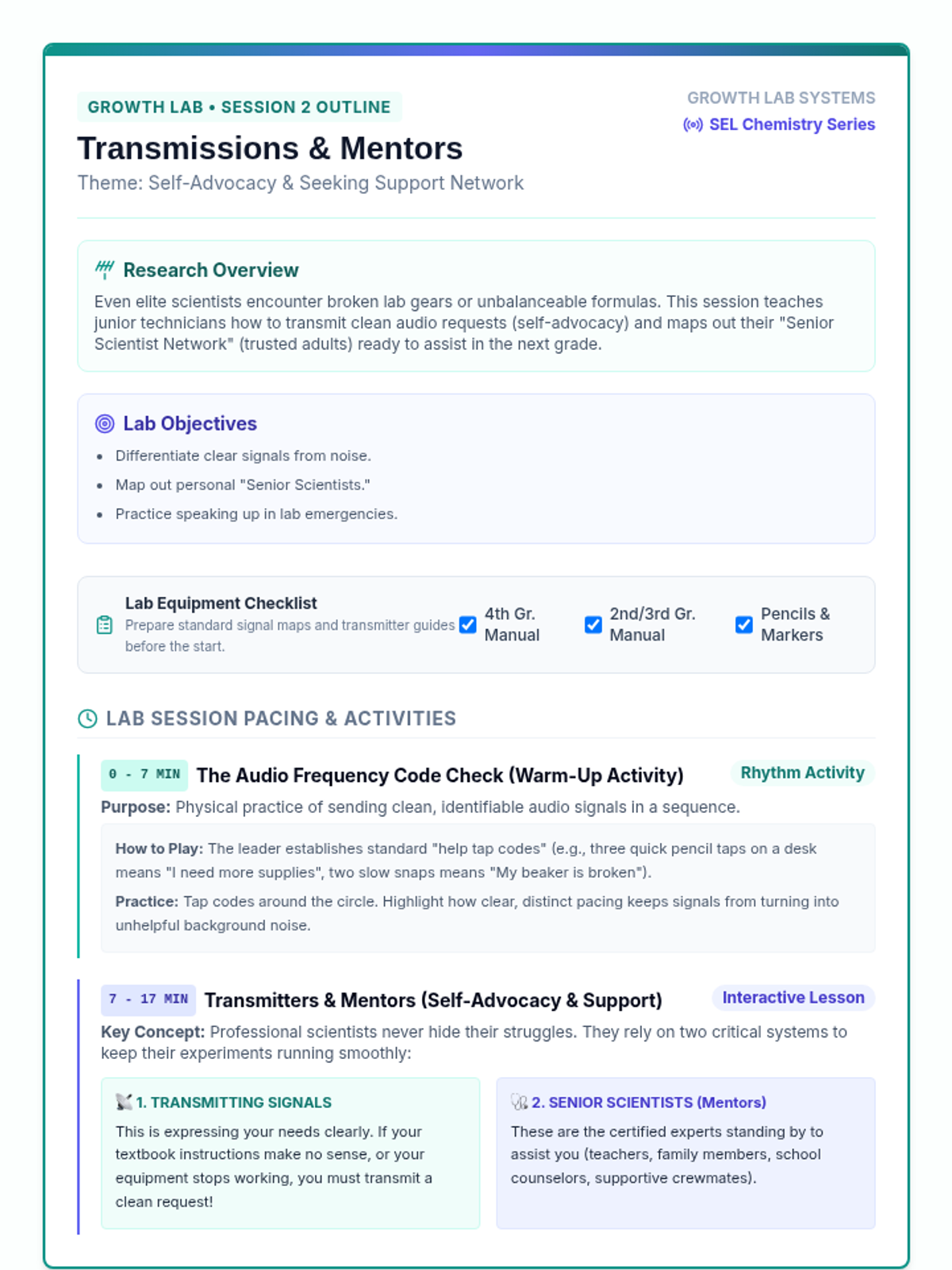
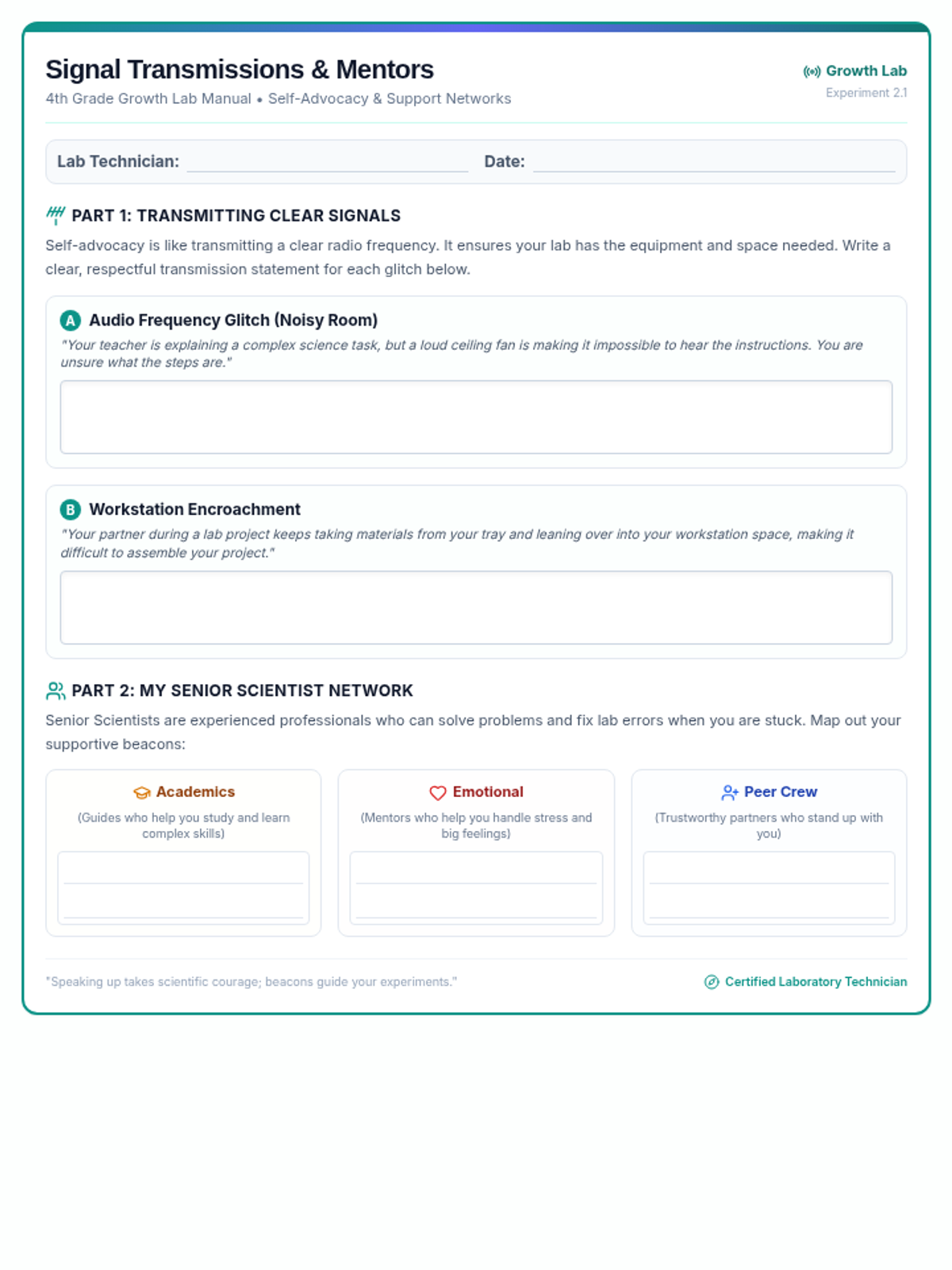
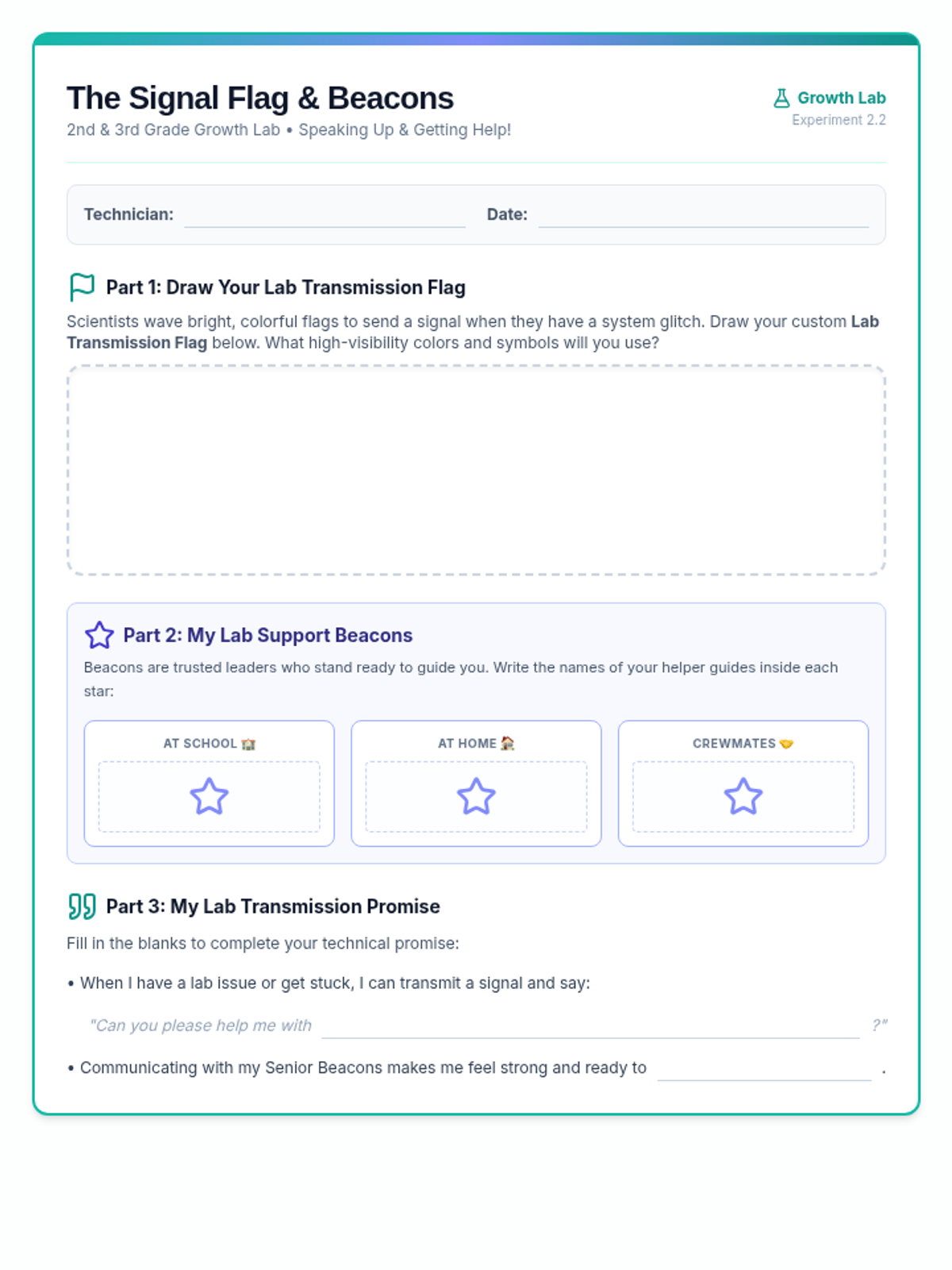
This session focuses on self-advocacy and seeking support. Students learn to recognize when to speak up for their physical and learning needs (trail signals) and identify trusted individuals who can help them navigate challenges (trail guides).
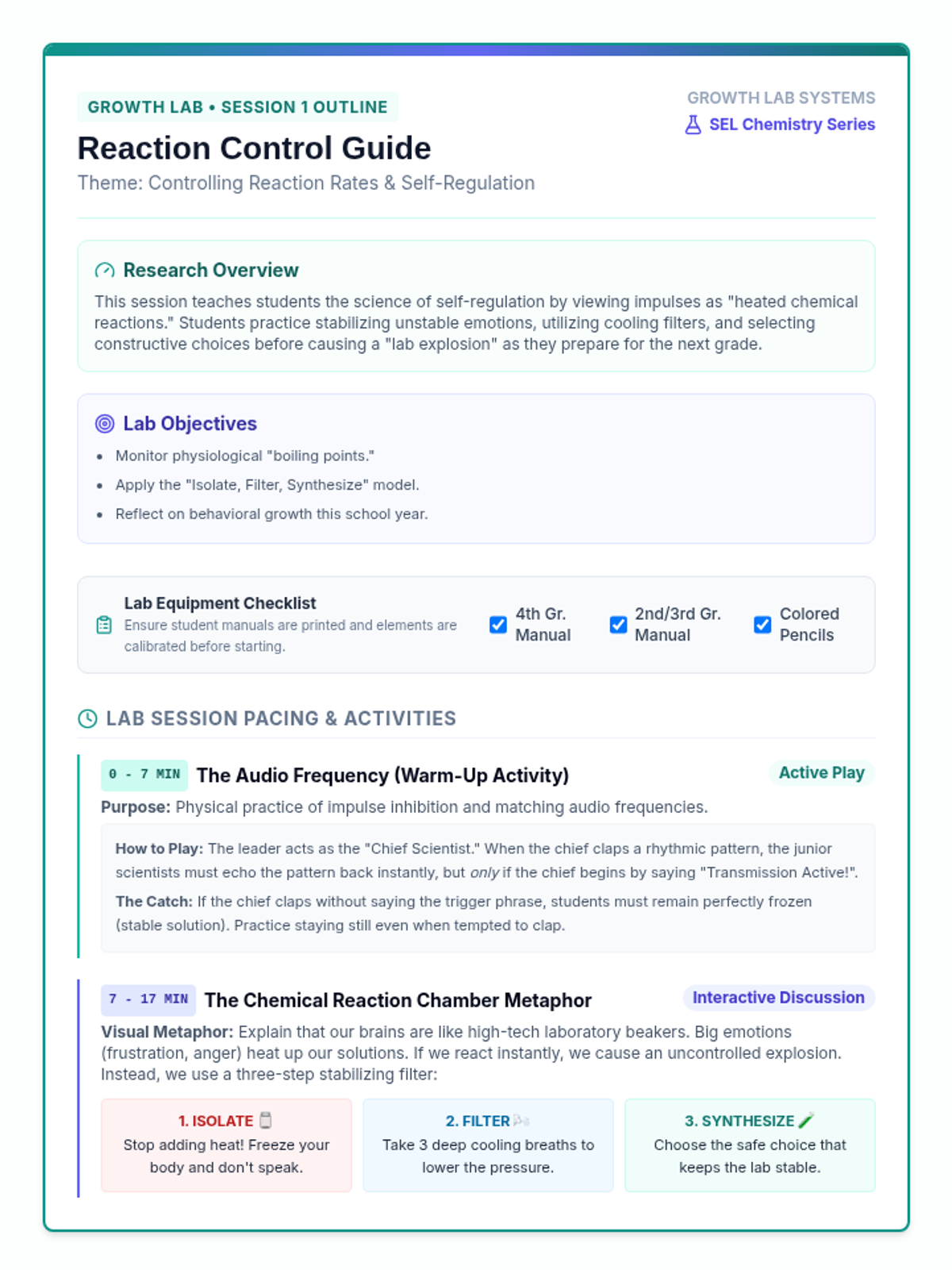
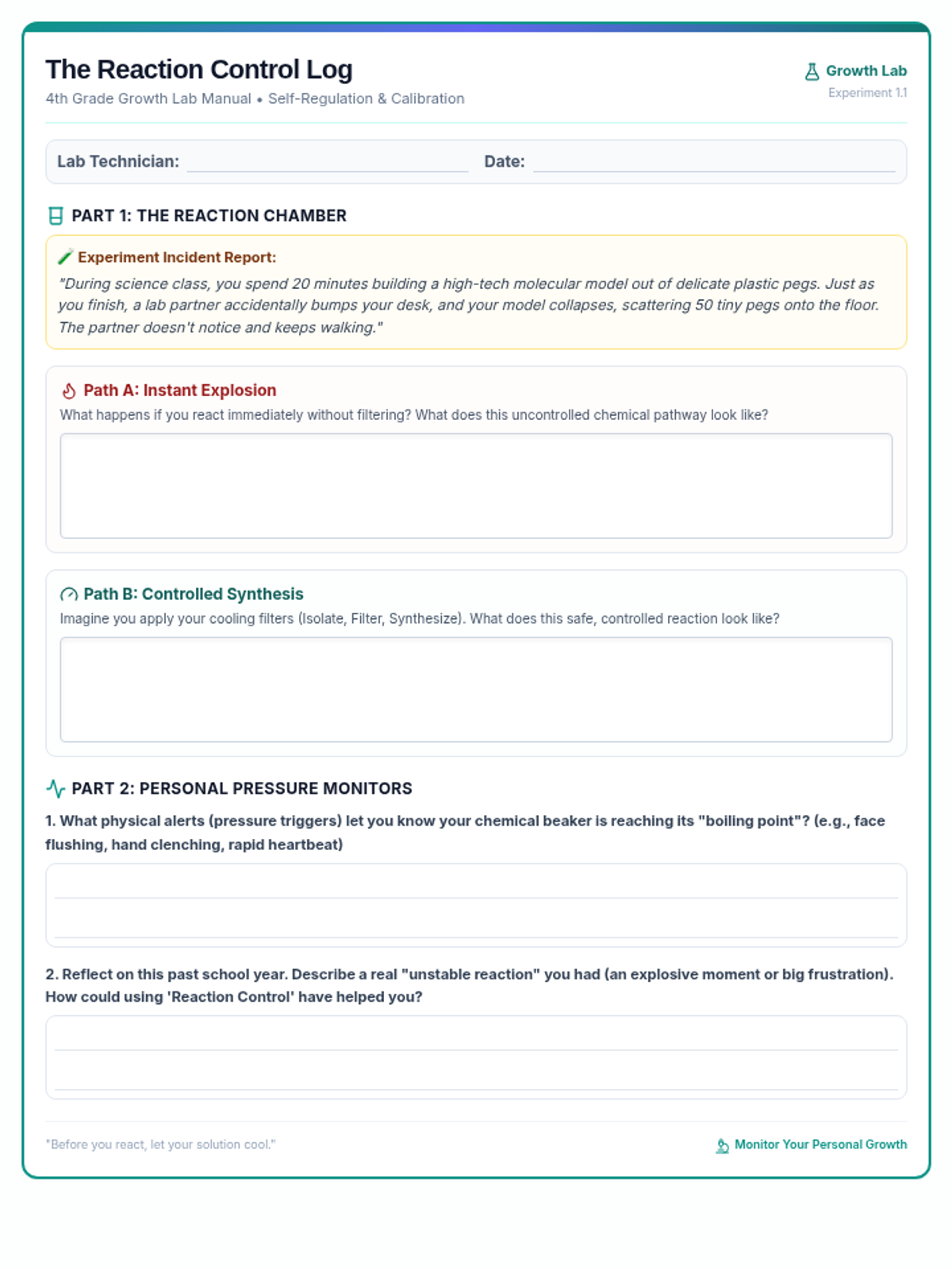
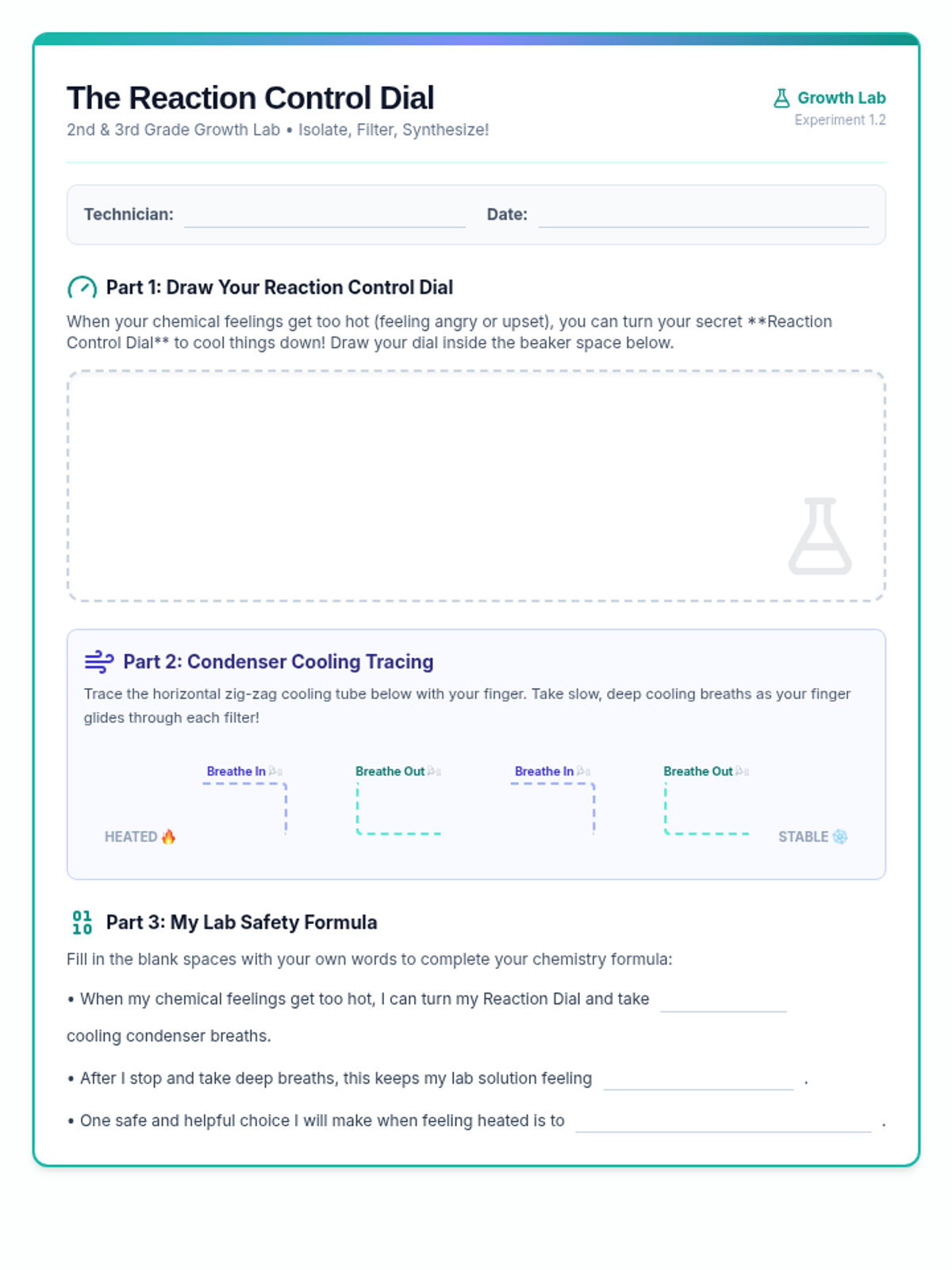
This session teaches students the science of self-regulation and reflection by studying 'reaction control' (thinking before acting). Students explore chemical-themed cooling strategies and reflect on their personal progress over the past school year.
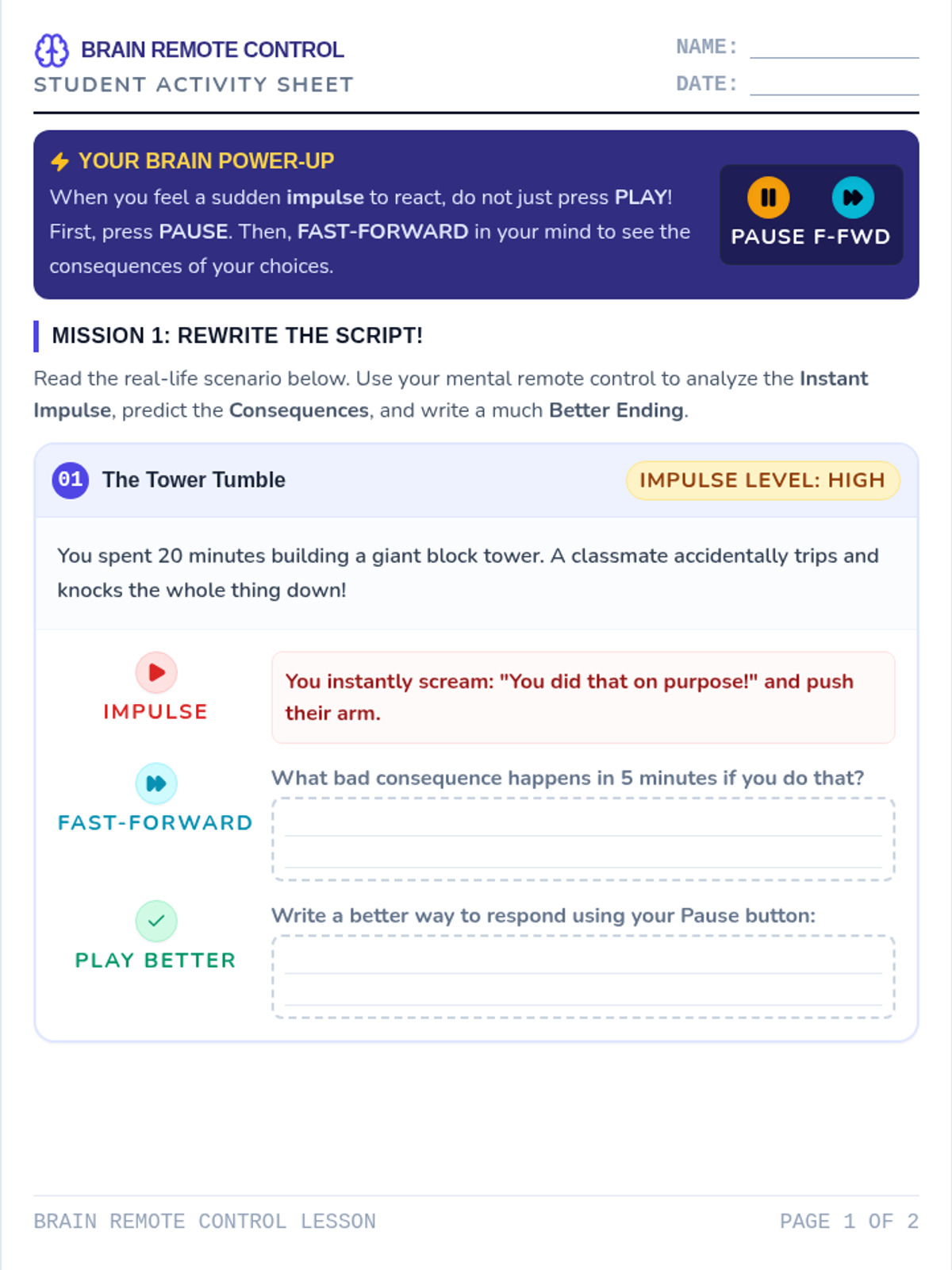
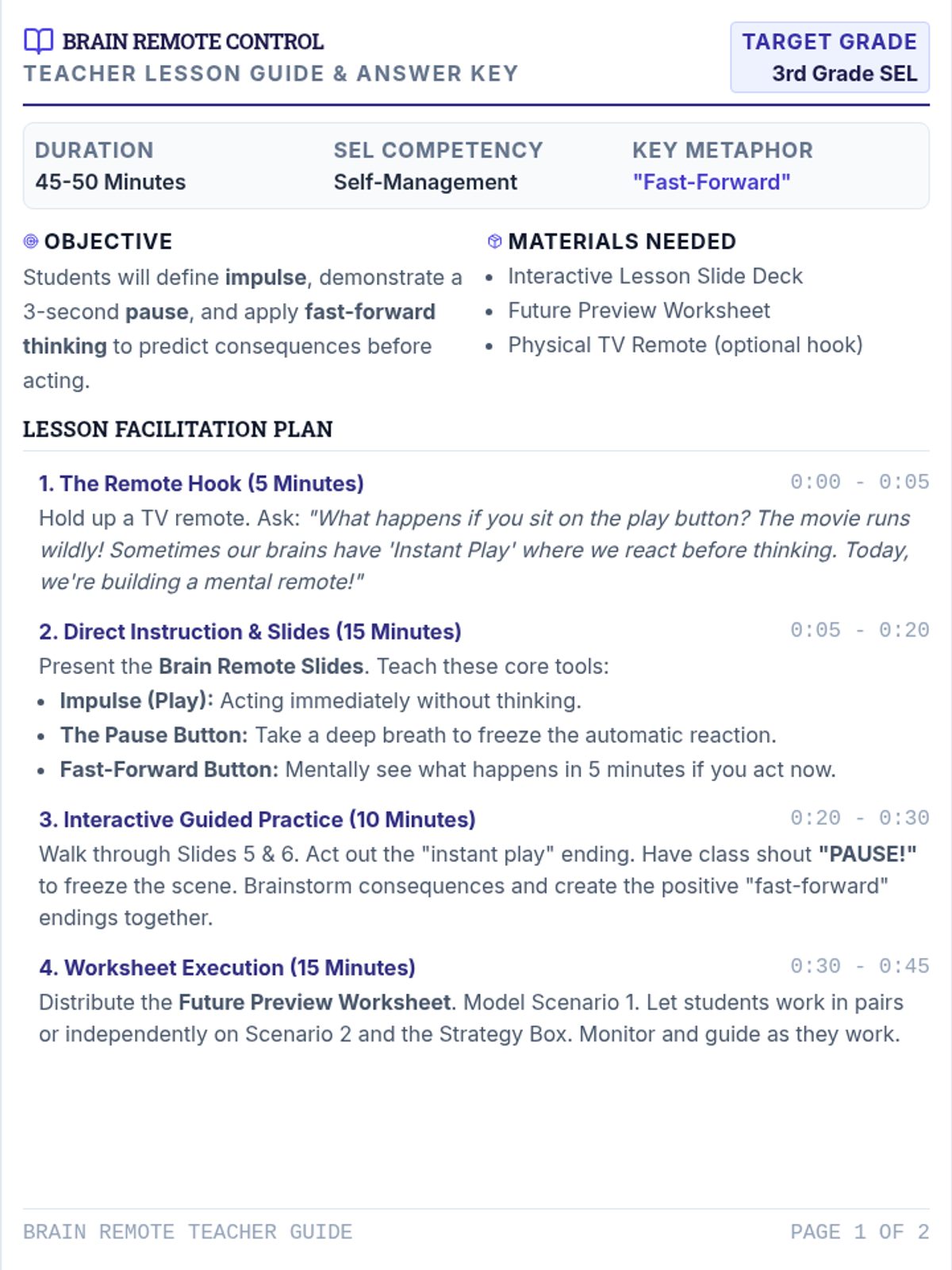
A self-control lesson for 3rd graders that introduces 'Fast Forward' as a mental remote control button. Students learn to pause, mentally fast-forward to visualize the consequences of their impulses, and choose better paths before acting.
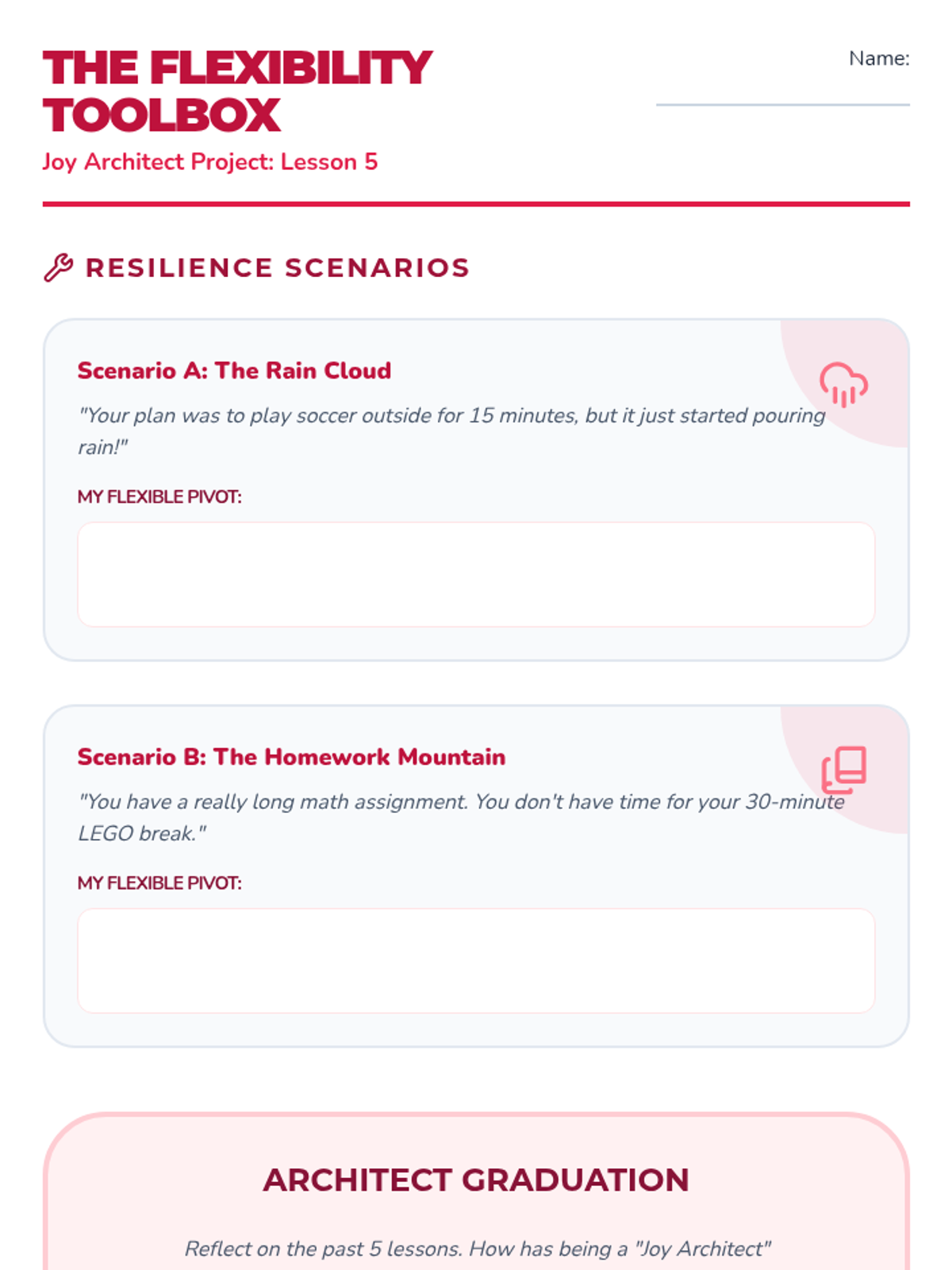
Students reflect on their routine changes and practice 'flexible thinking' for when plans go awry, building resilience and adaptability.
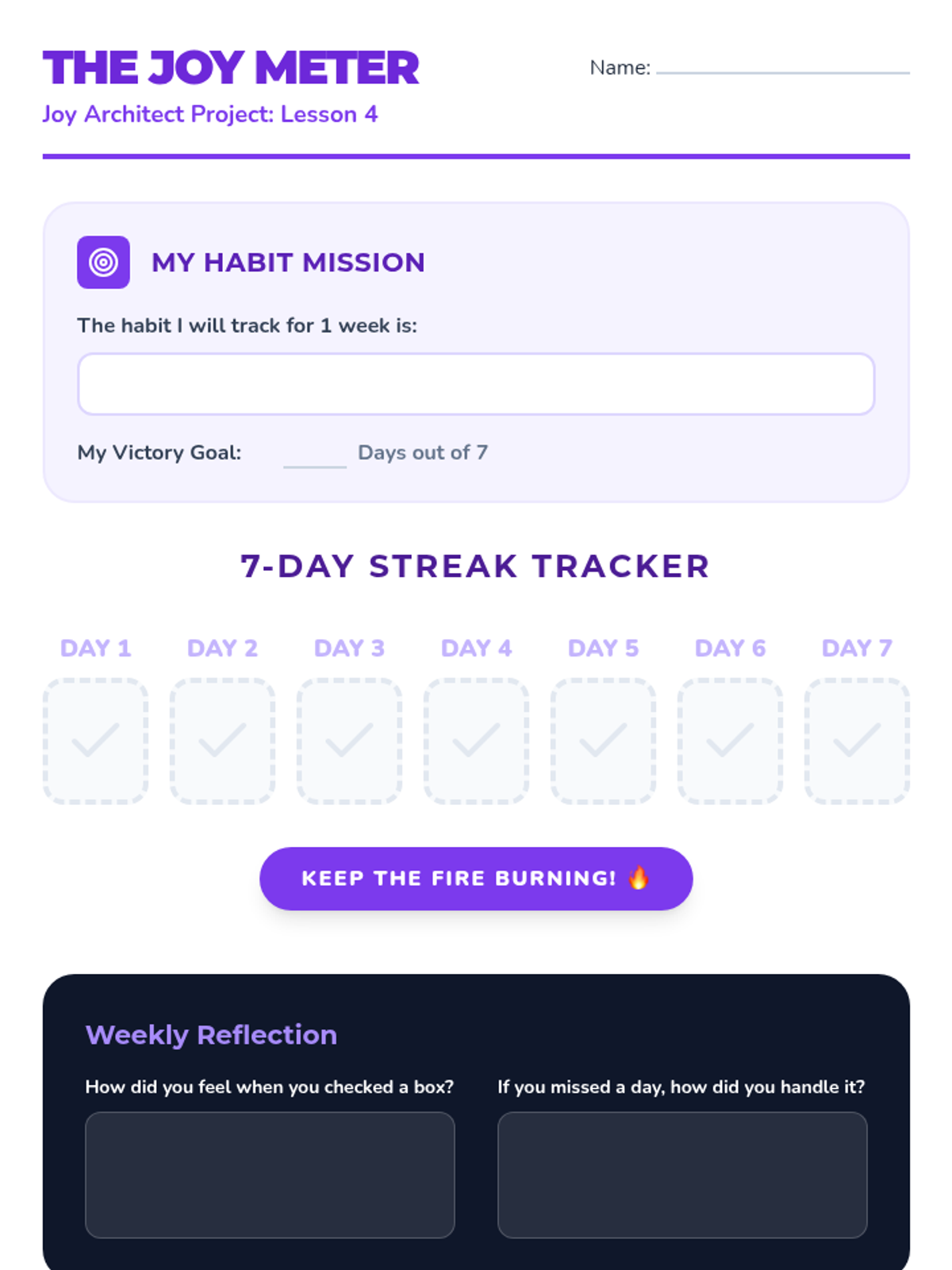
Students create personal trackers to monitor their consistency in engaging with positive habits, learning the power of 'streaks' and self-monitoring.
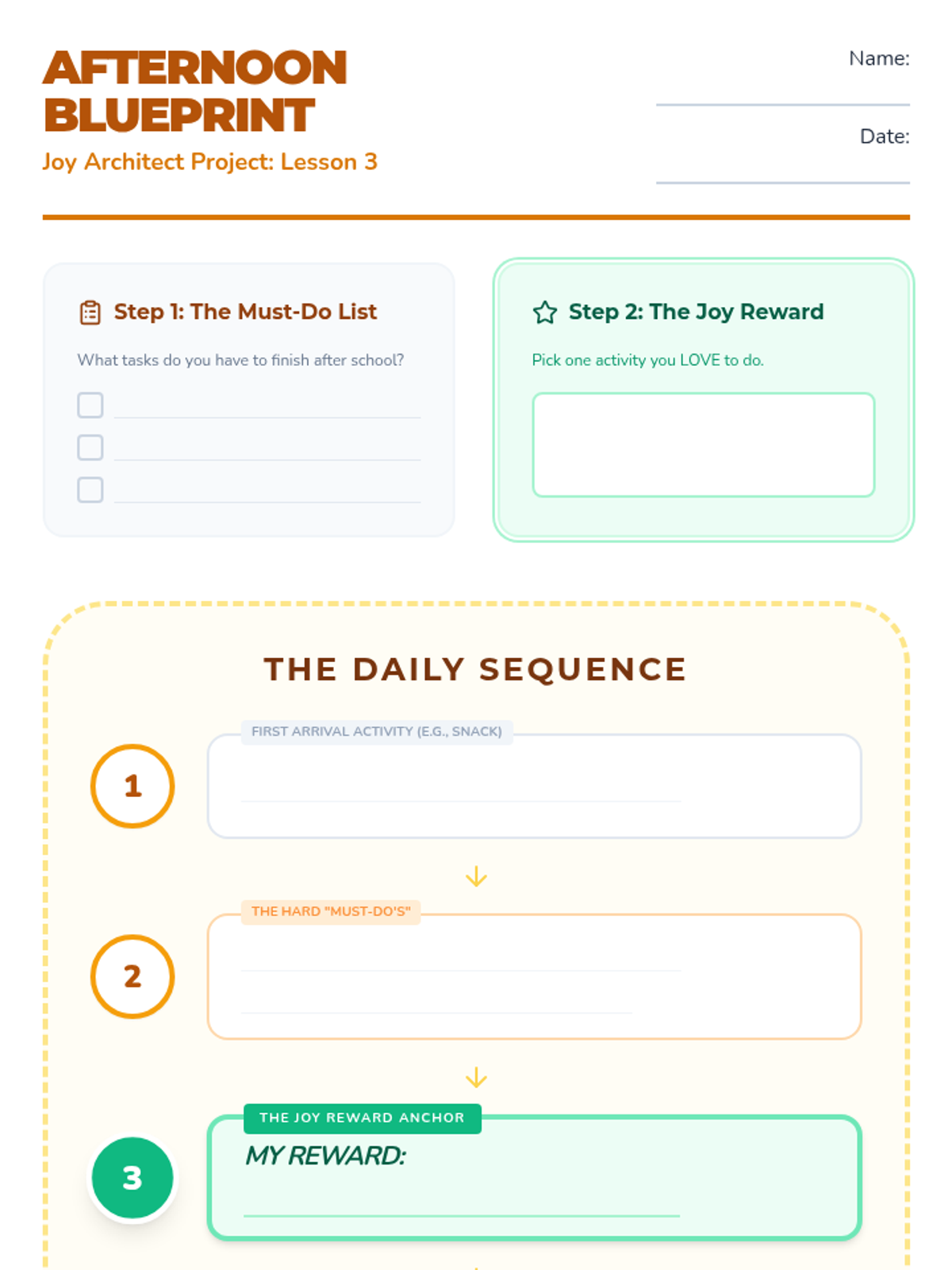
Students design a balanced afternoon routine using 'Grandma's Rule' to sequence chores and rewards, creating a sustainable and motivating schedule.
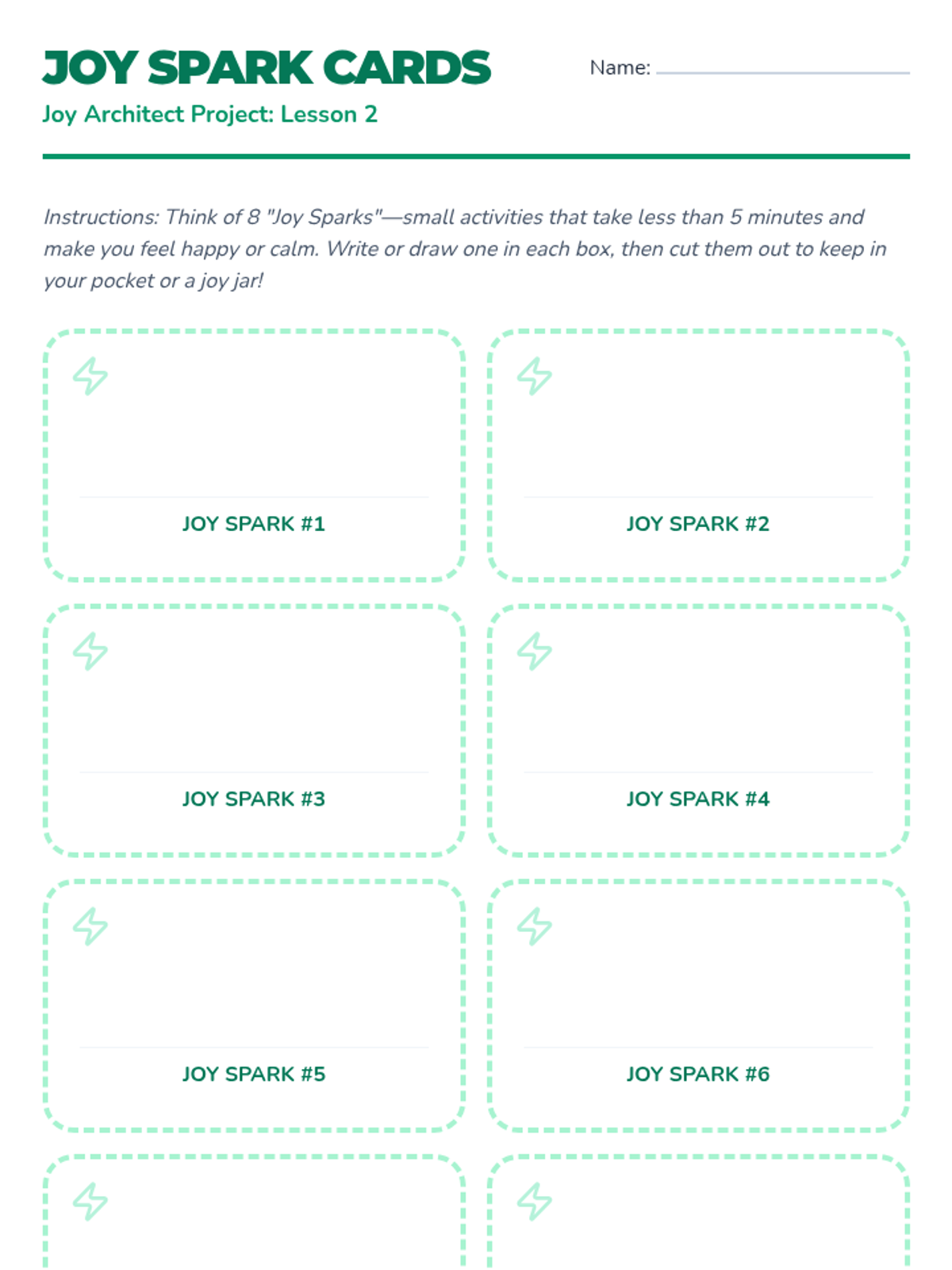
Students explore the concept of 'micro-moments' of joy and learn that frequency of positive experiences is more important than intensity for building long-term happiness.
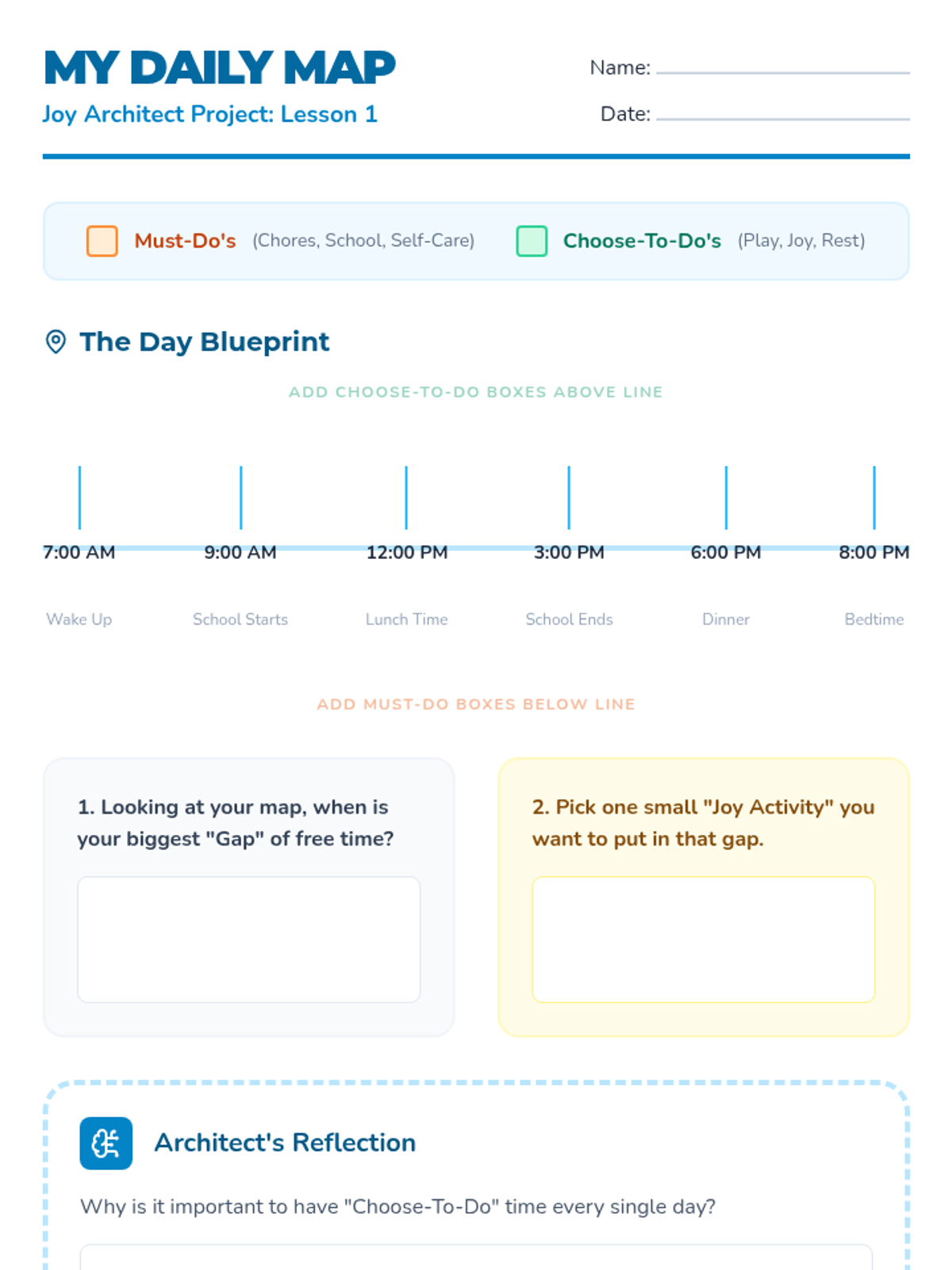
Students audit their current daily schedules to distinguish between 'must-do' tasks and 'choose-to-do' activities, identifying gaps where positive experiences can be added.
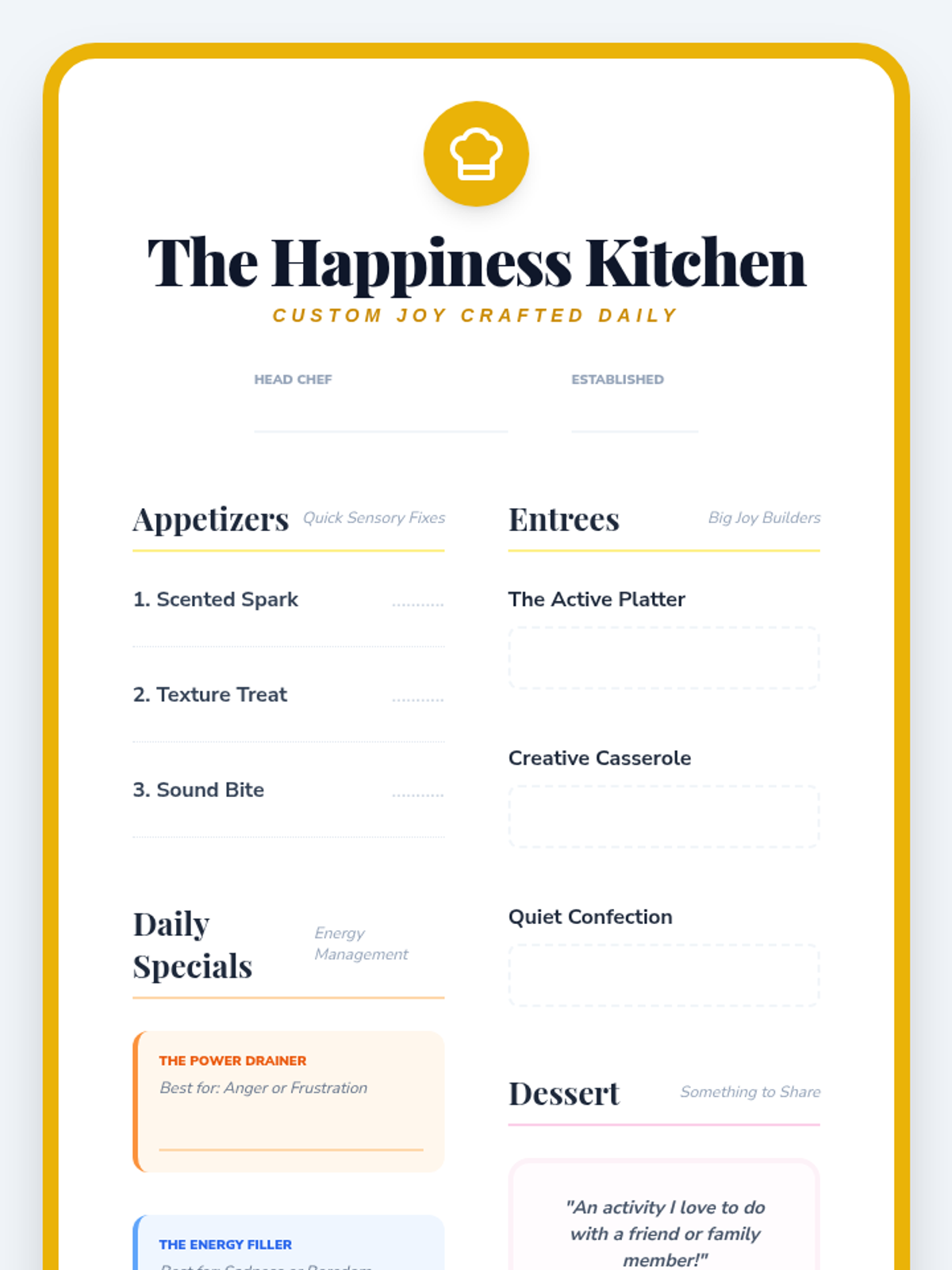
Students synthesize their findings to create a personalized, illustrated menu of 'Go-To' activities and role-play scenarios where they might order from their menu.
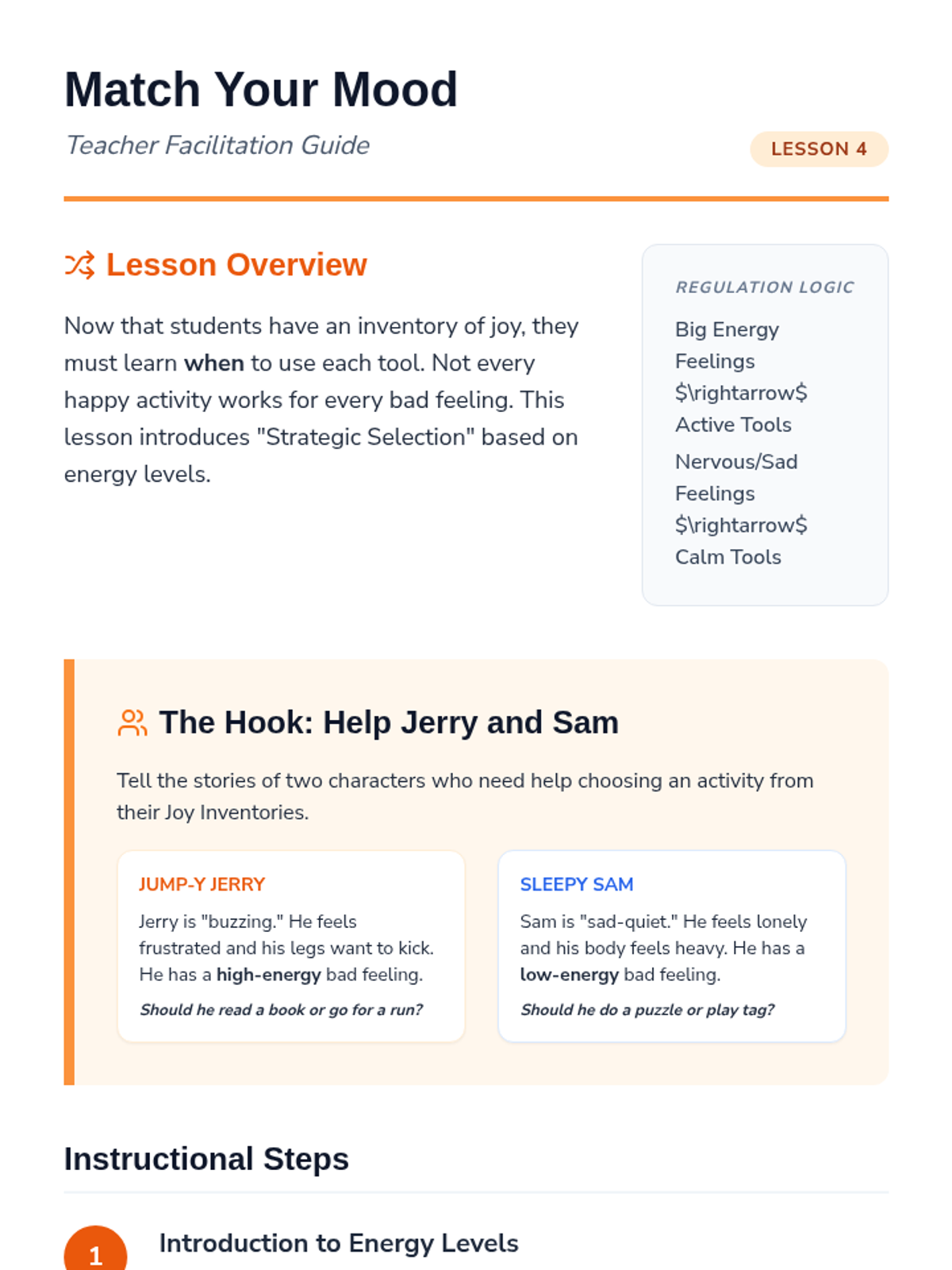
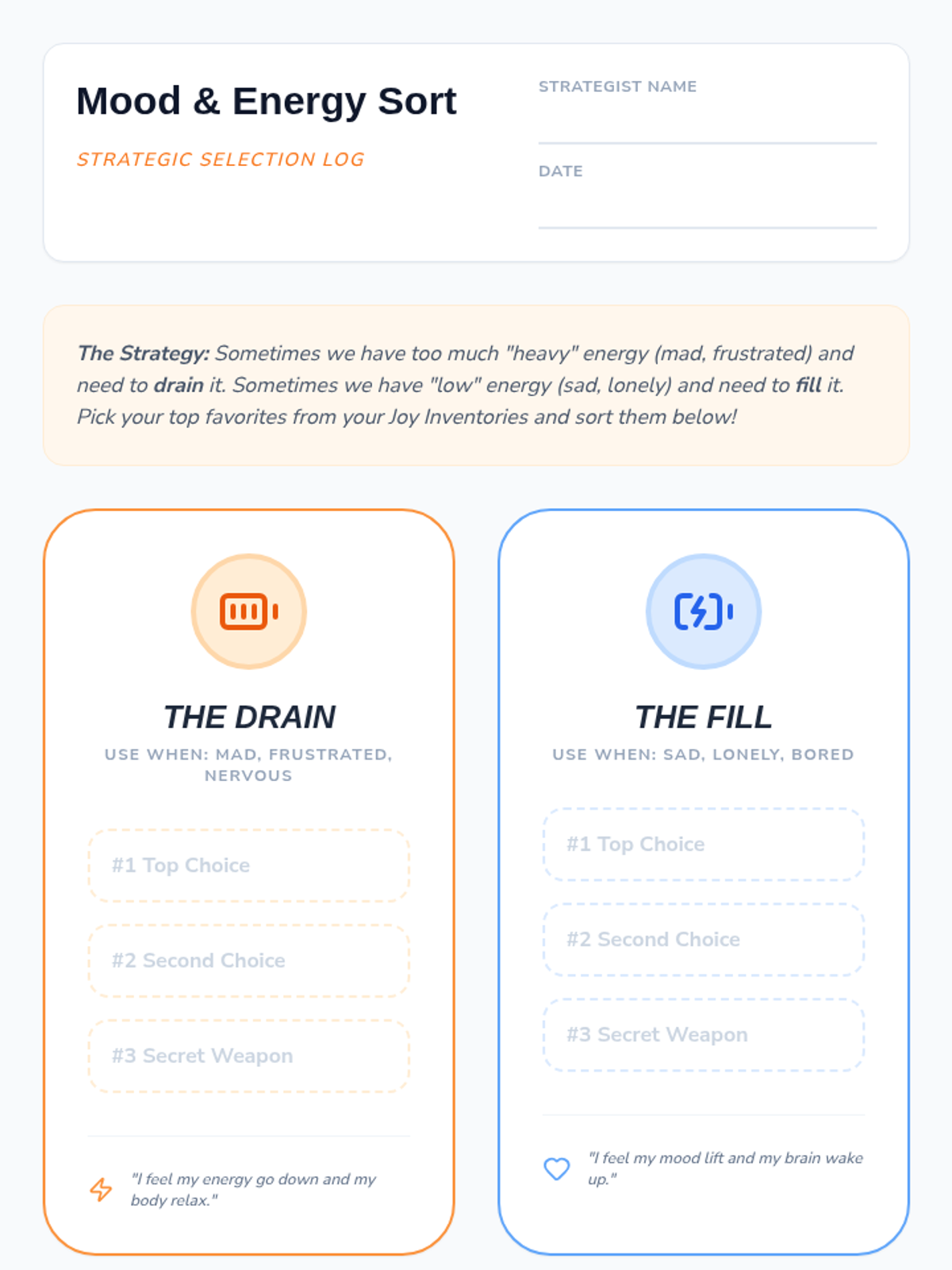
Students organize activities into categories based on energy levels: 'High Energy' for releasing frustration and 'Low Energy' for calming anxiety. They learn to strategically select activities based on current emotional needs.
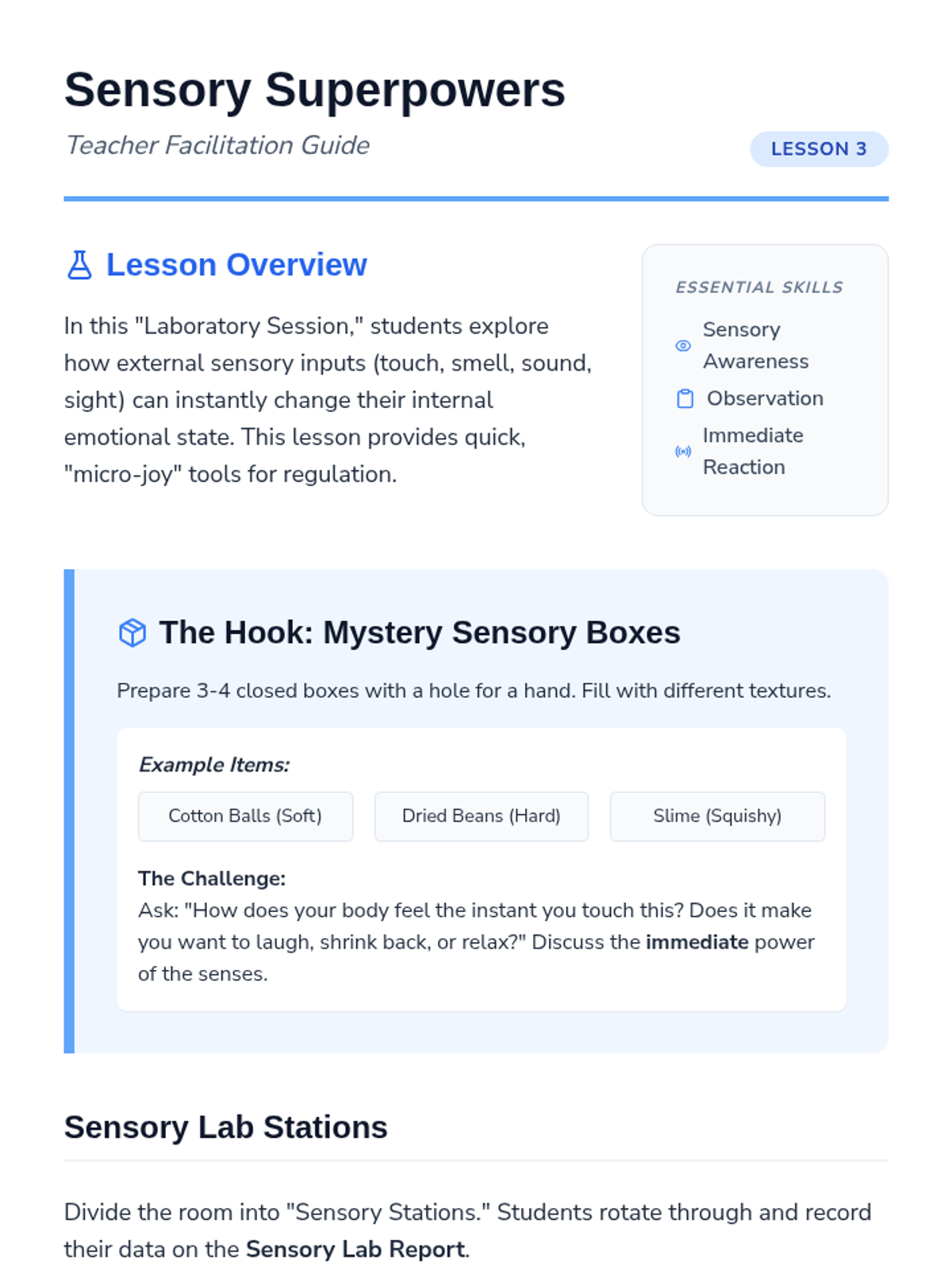
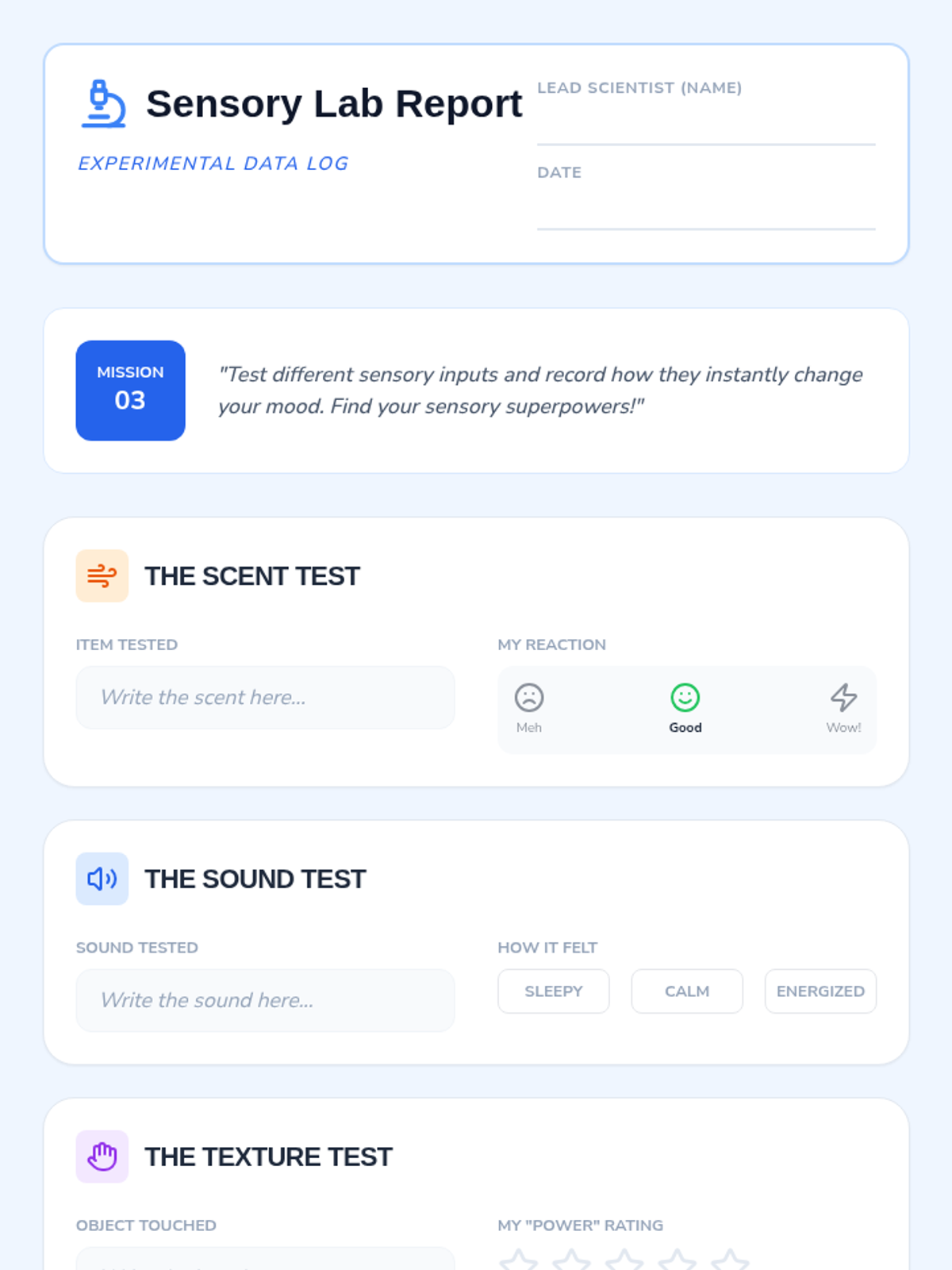
This lesson focuses on simple, sensory-based experiences that can boost mood quickly. Students test different sensory inputs and record their immediate reactions to connect external stimuli to internal emotional states.
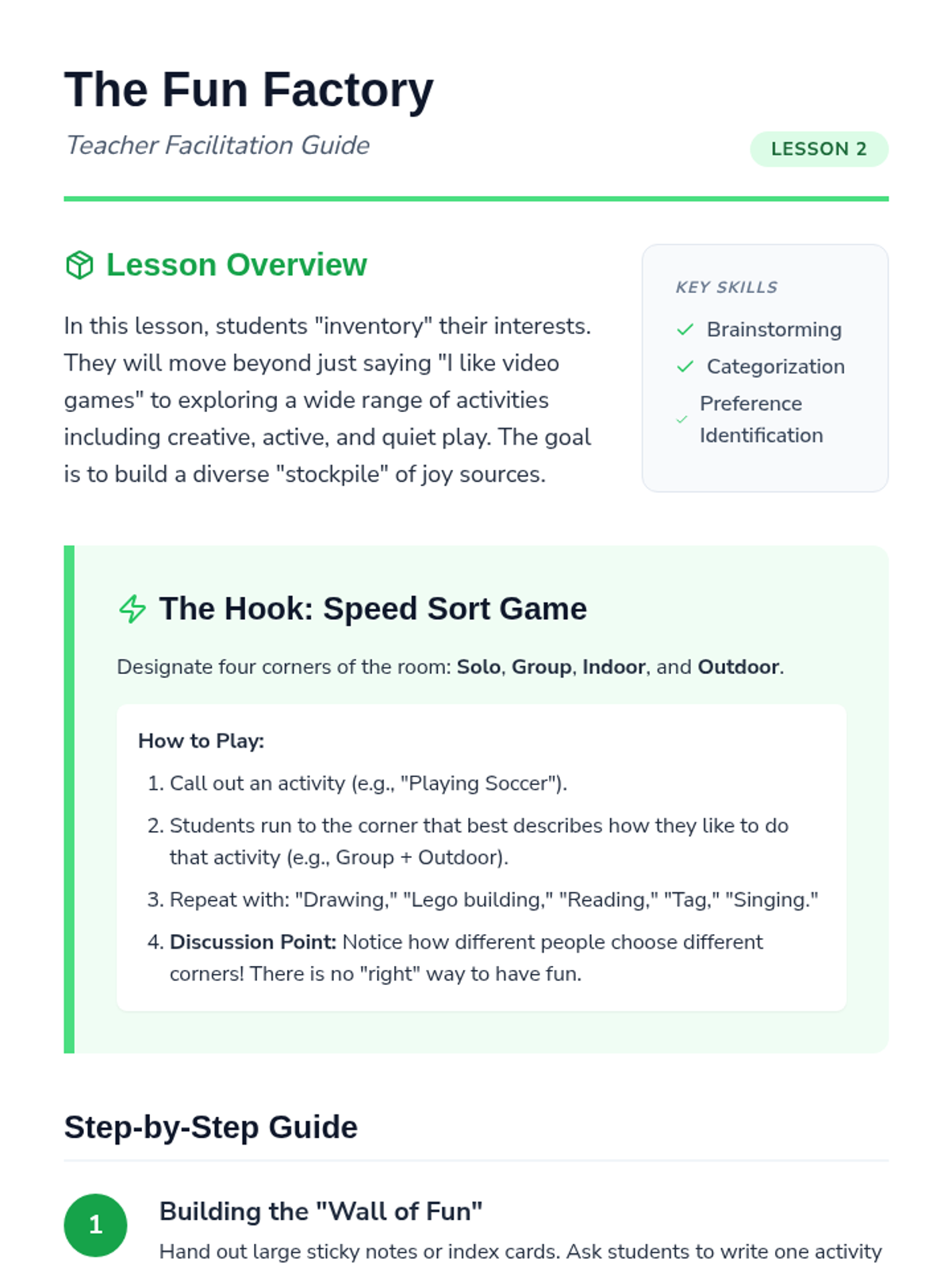
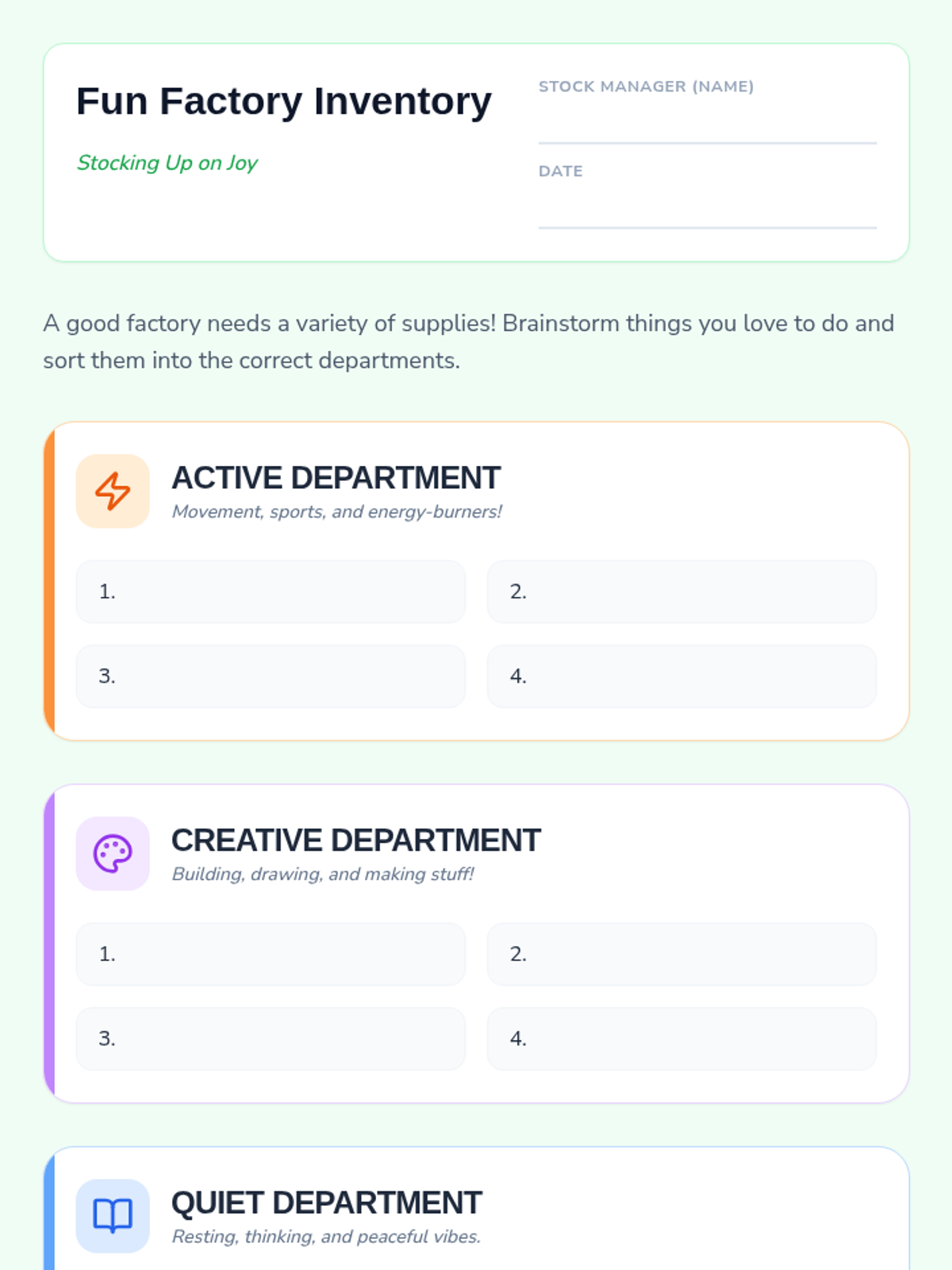
Students brainstorm a wide variety of activities they enjoy, distinguishing between active play, creative expression, and quiet relaxation. They learn that different types of fun serve different emotional needs.
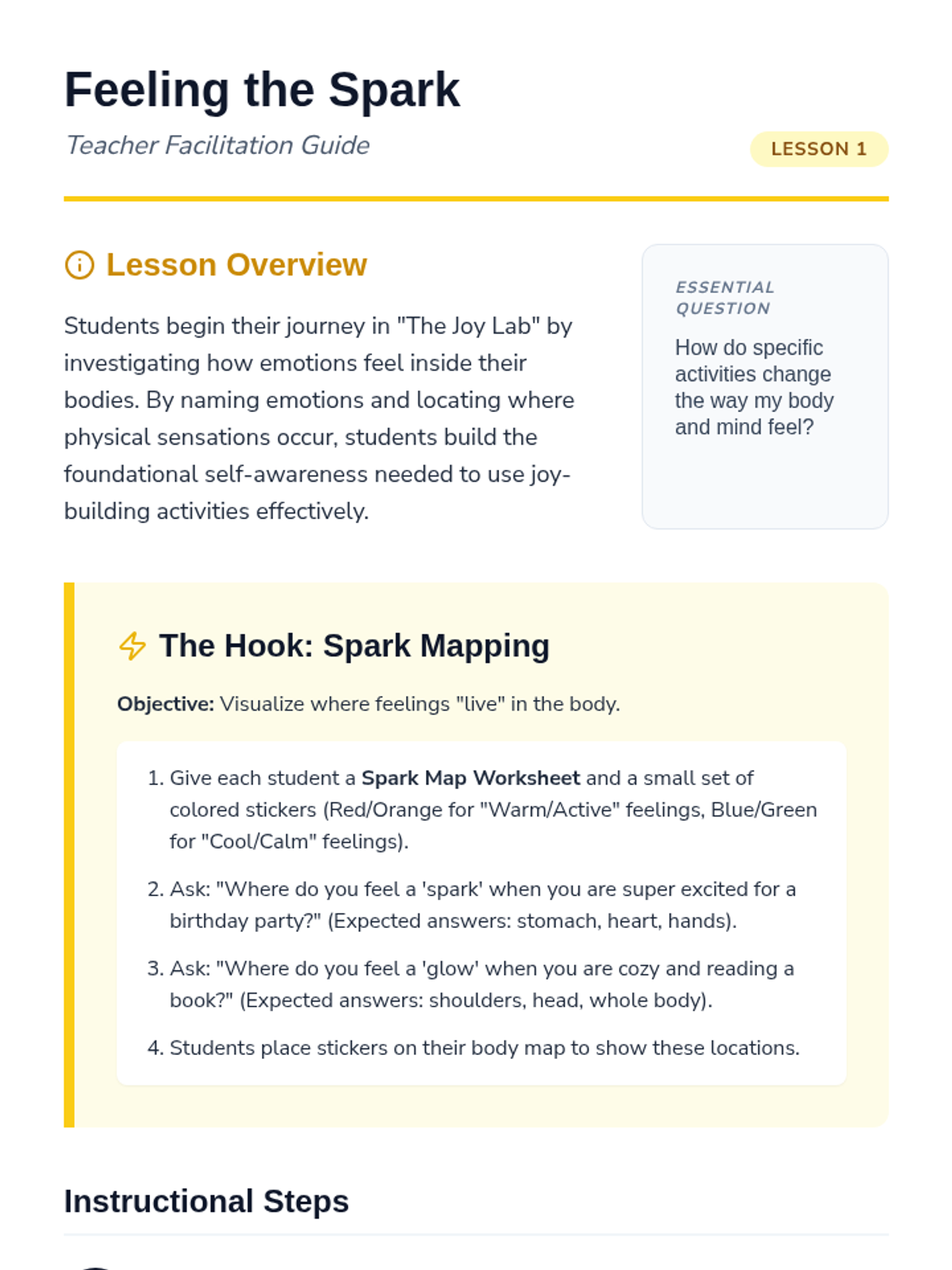
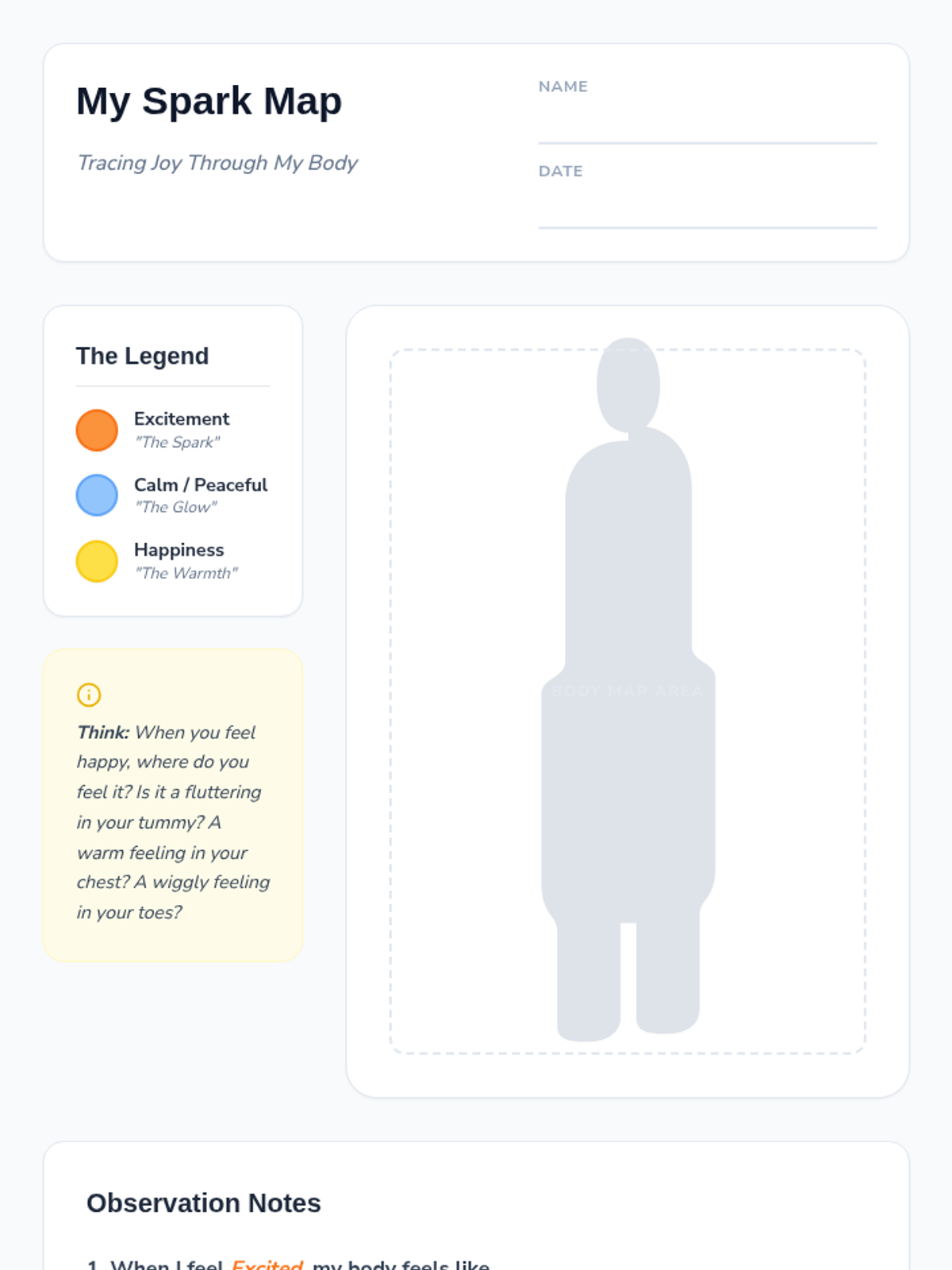
Students explore the vocabulary of emotions and identify physical sensations associated with happiness, calm, and excitement. They create a body map to visualize where they feel positive emotions.
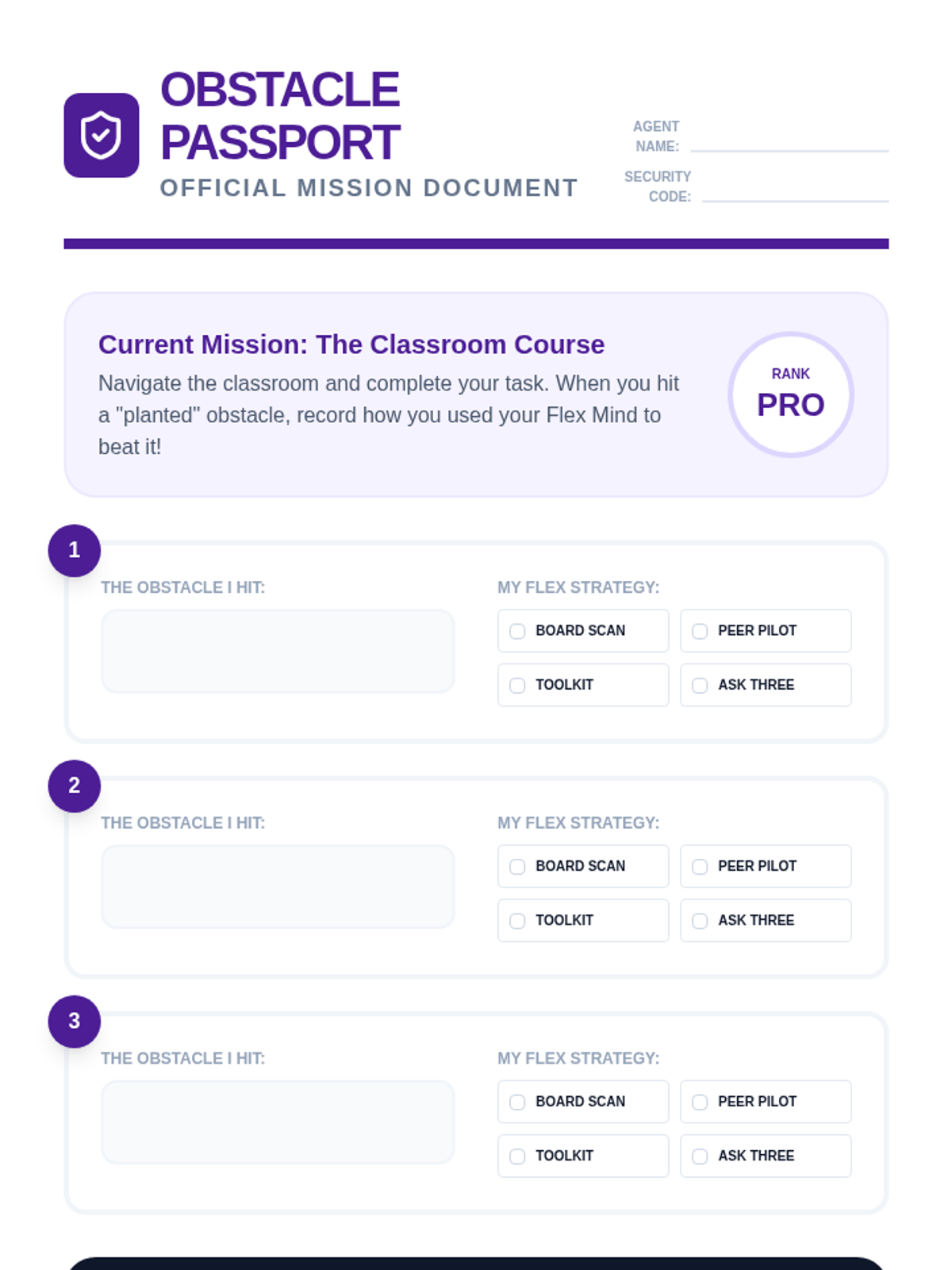
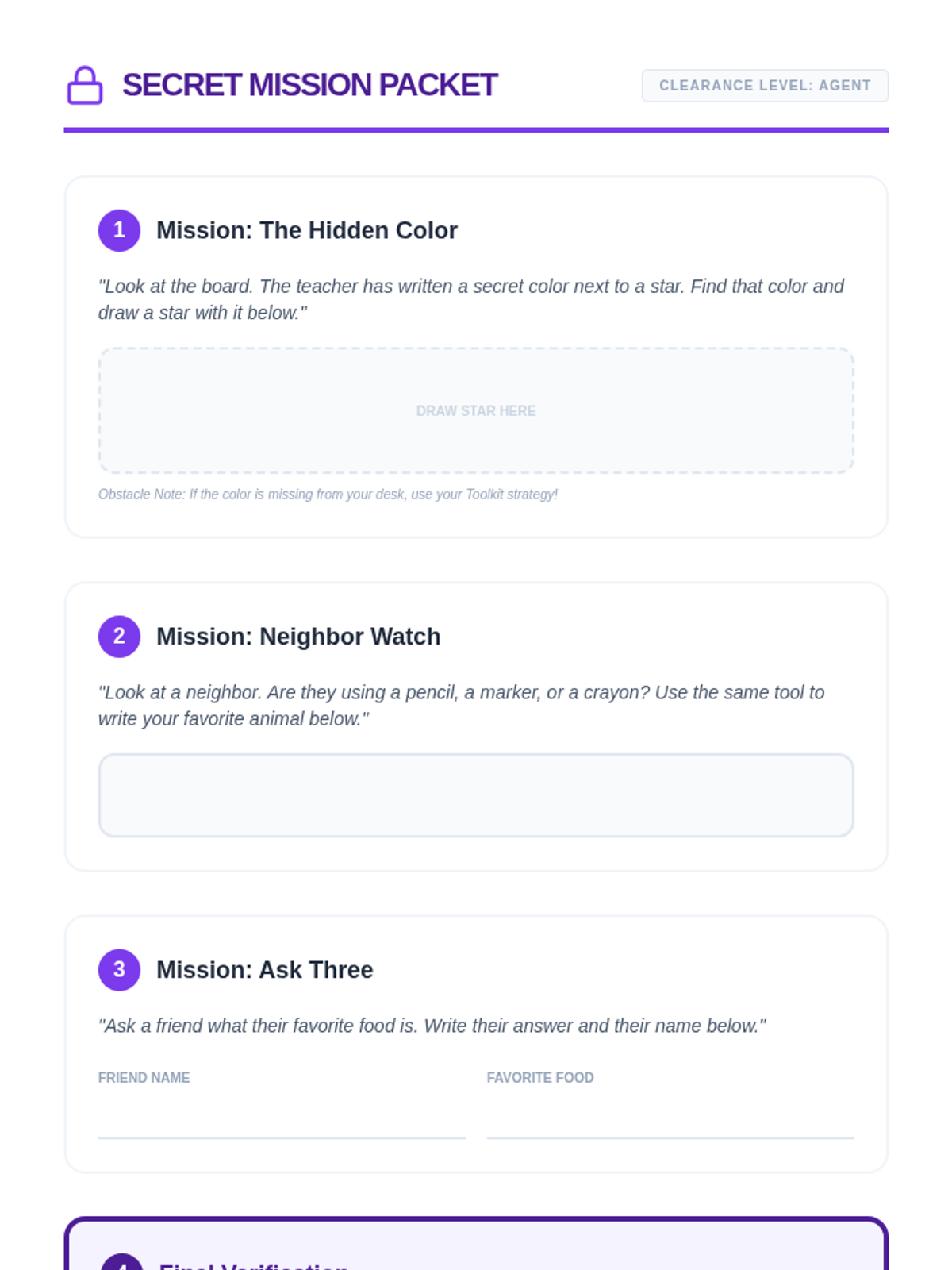
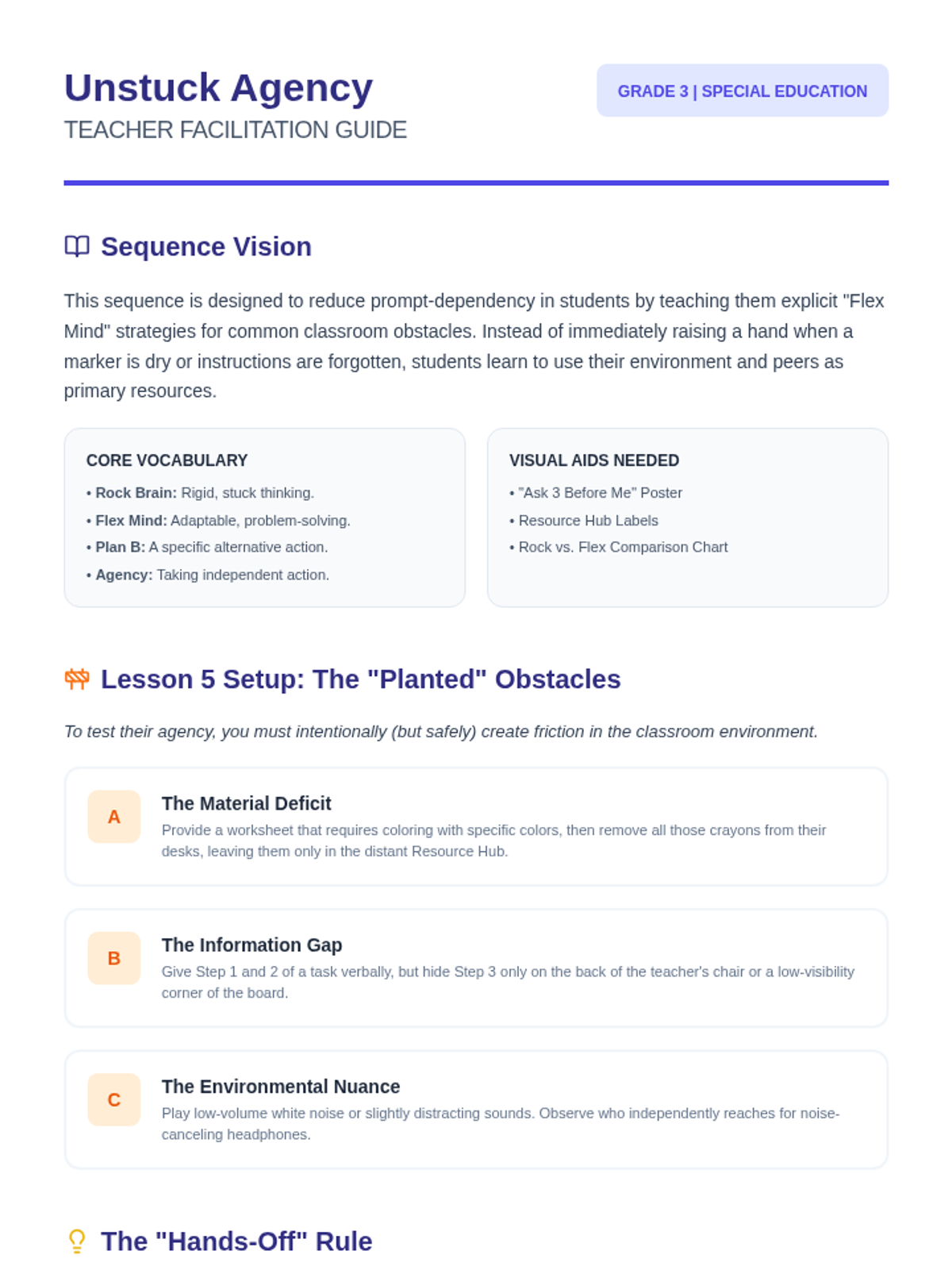
Students navigate a multi-step academic task where obstacles are intentionally planted. They must apply the strategies learned throughout the sequence to complete the task.
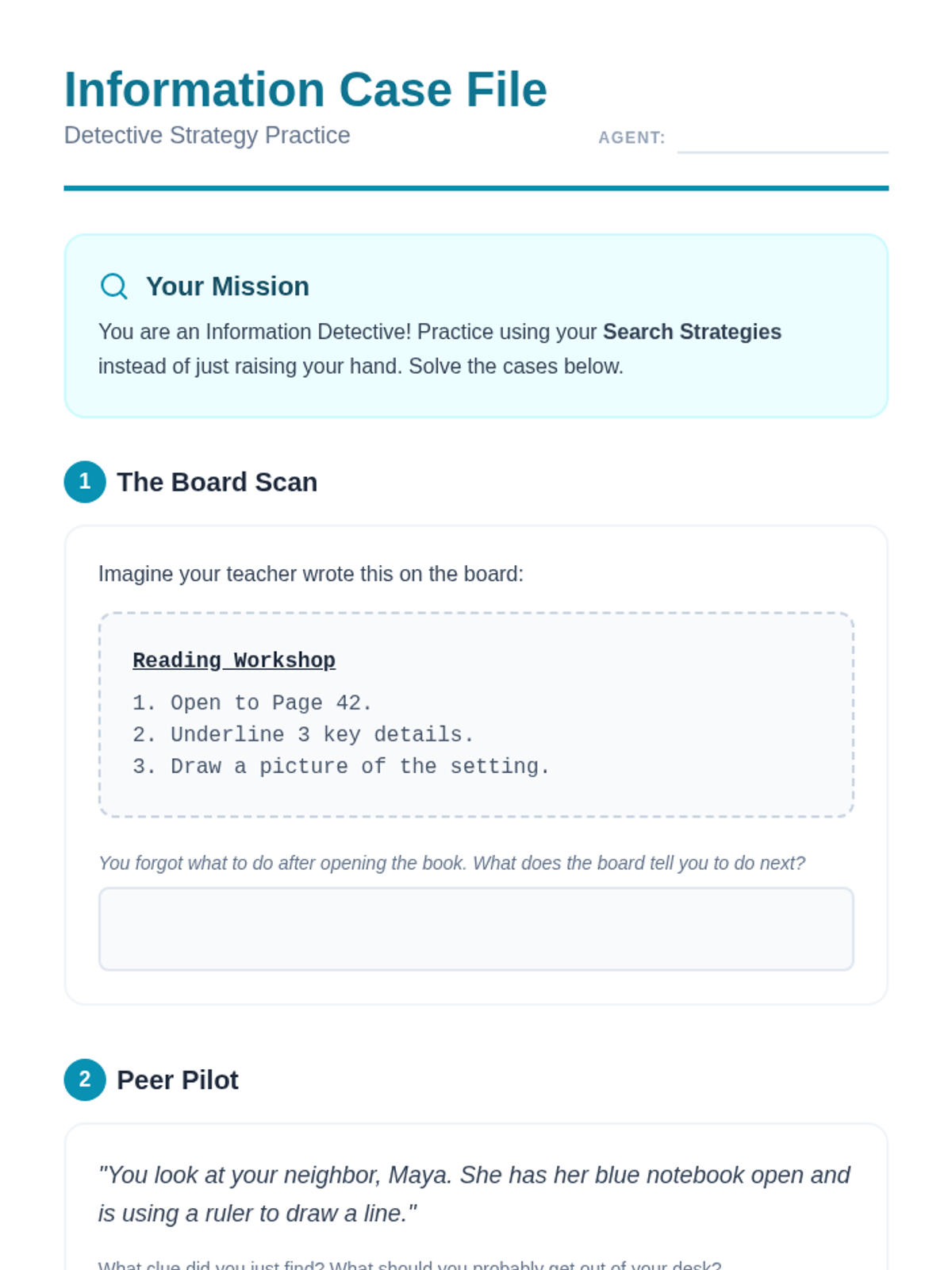
Students practice strategies for when they forget what to do, such as 'ask three before me,' checking the board, or looking at a peer's work. The focus is on finding information independently.
This lesson uses role-play to practice solving material deficits. Students act out scenarios like a dry marker or a broken pencil and practice the specific fix rather than stopping work.
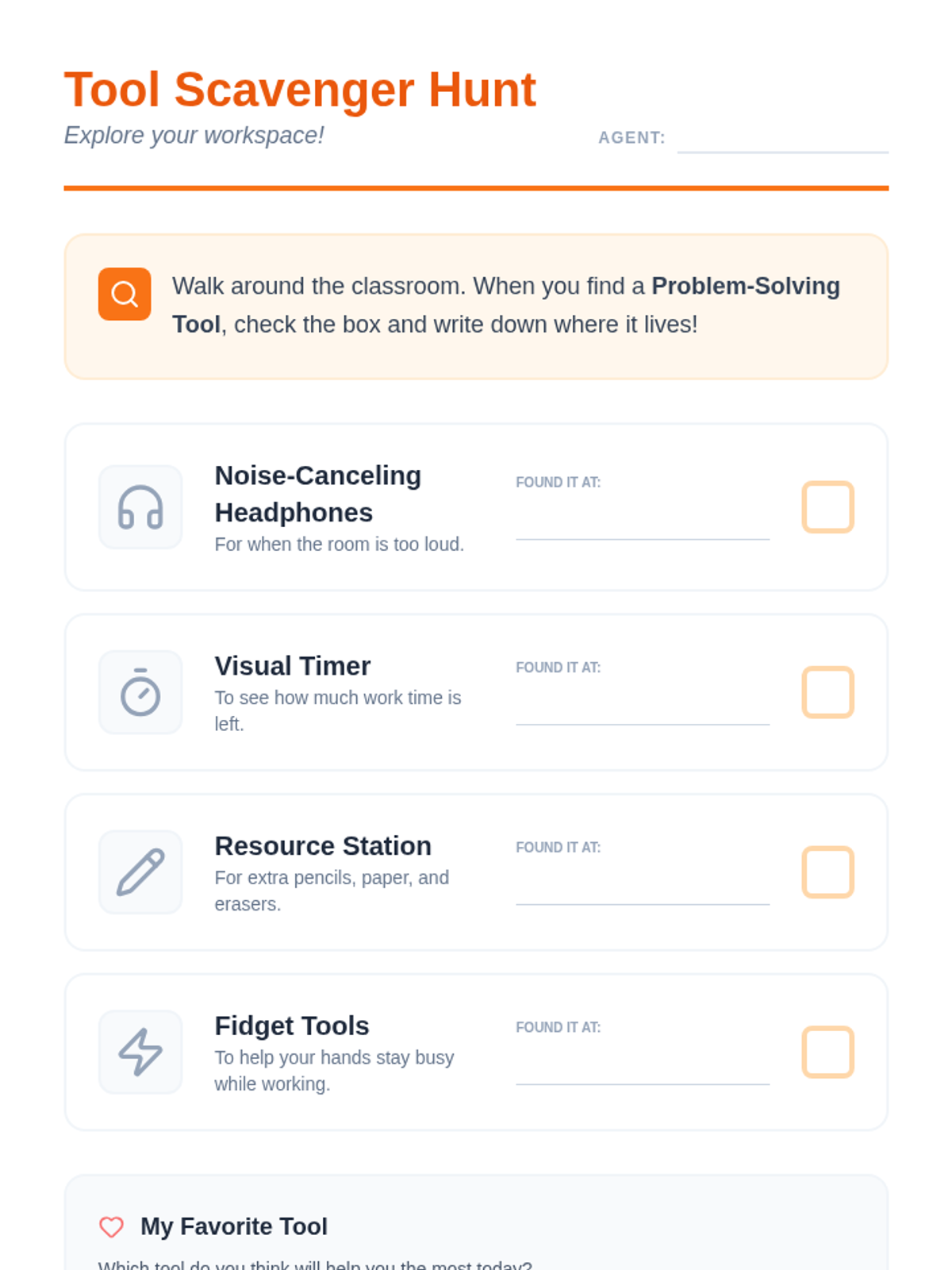
Students review common classroom resources available for problem-solving, such as noise-canceling headphones, visual timers, and resource centers. They engage in a scavenger hunt to locate these tools physically in the classroom.
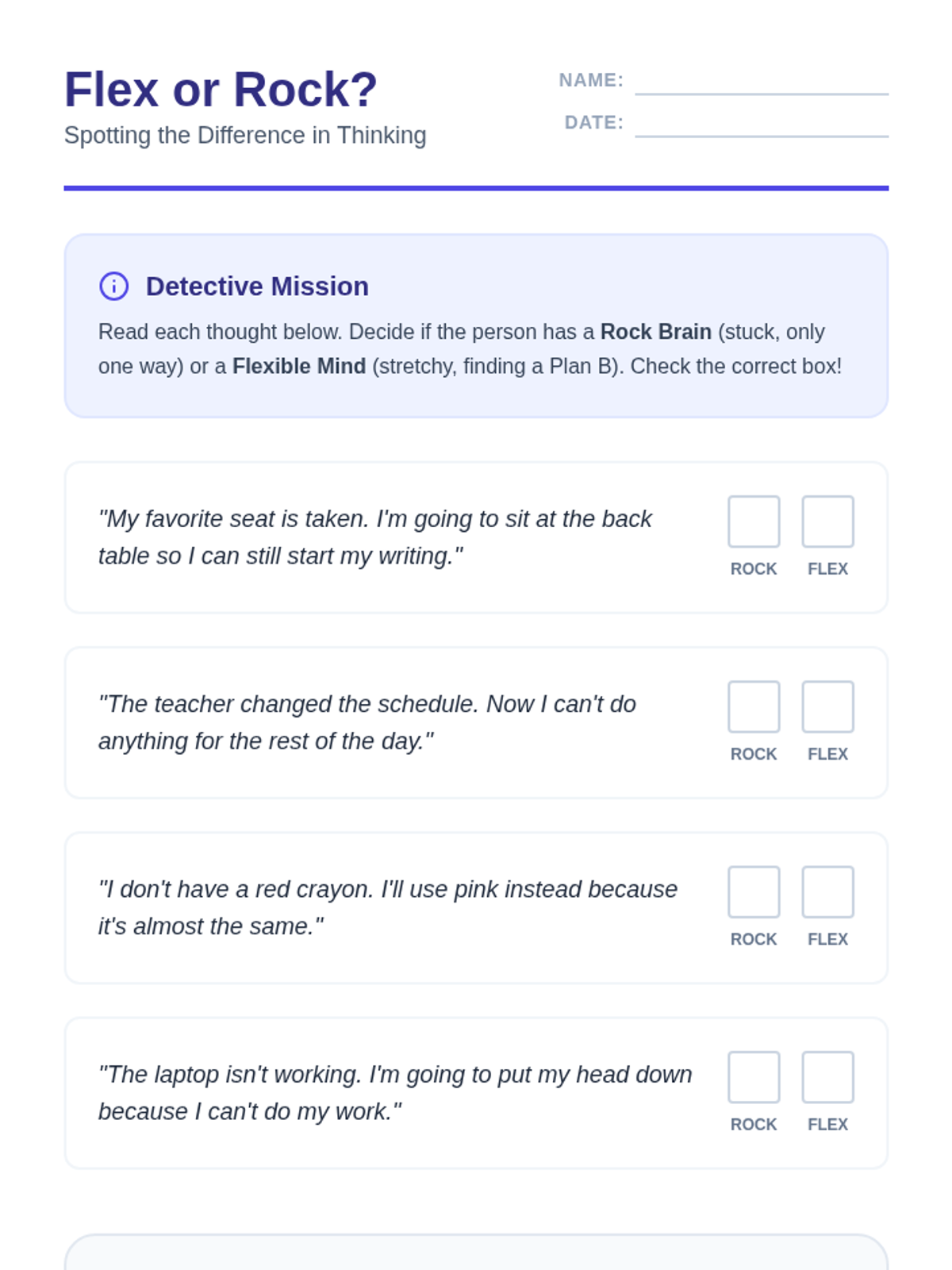
Students are introduced to the concept of 'flexible thinking' versus 'rock brain' thinking. They practice accepting changes to simple routines to understand that there is more than one way to reach a goal.
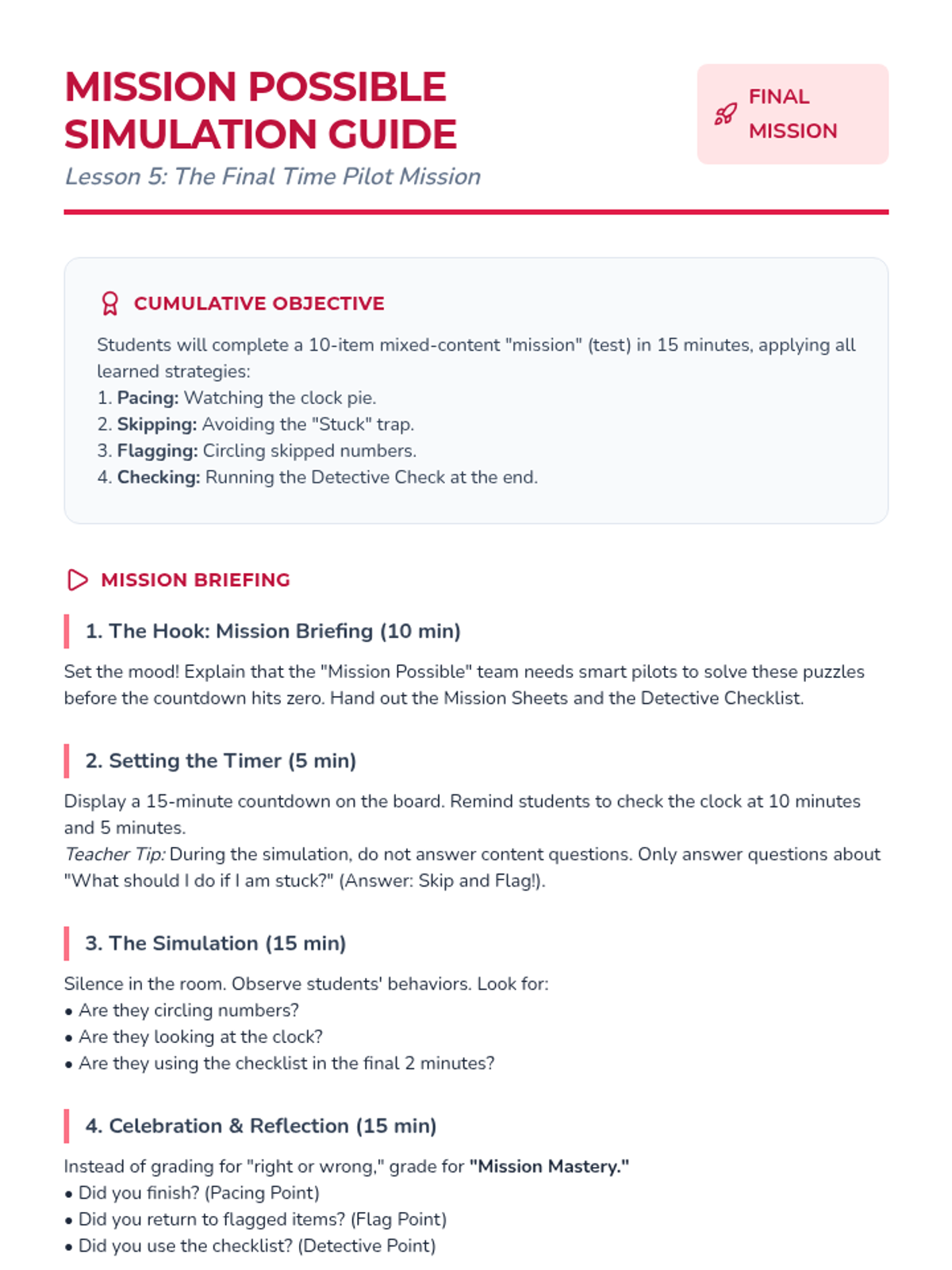
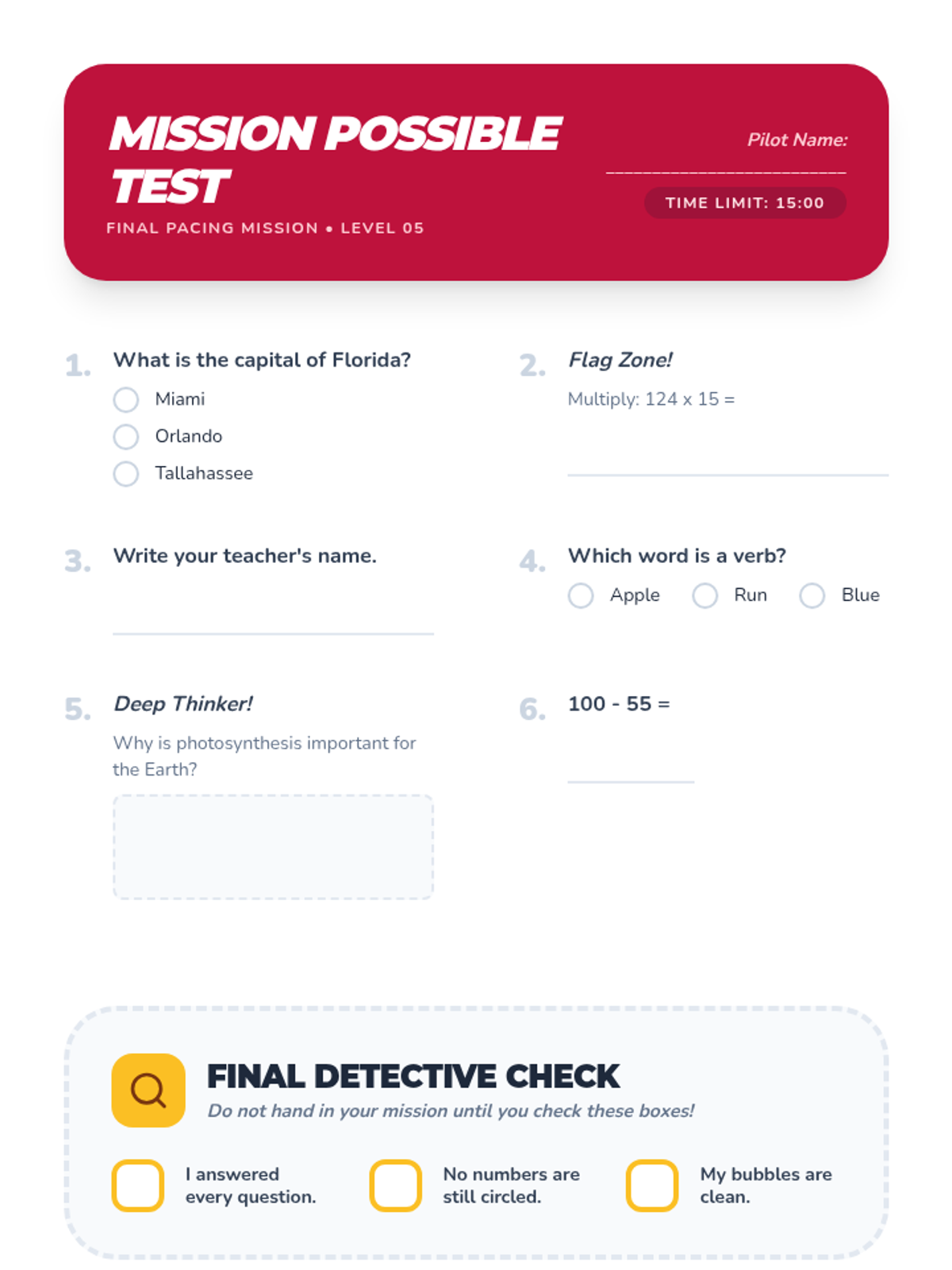
A cumulative simulation where students apply all learned pacing strategies in a low-stakes environment.
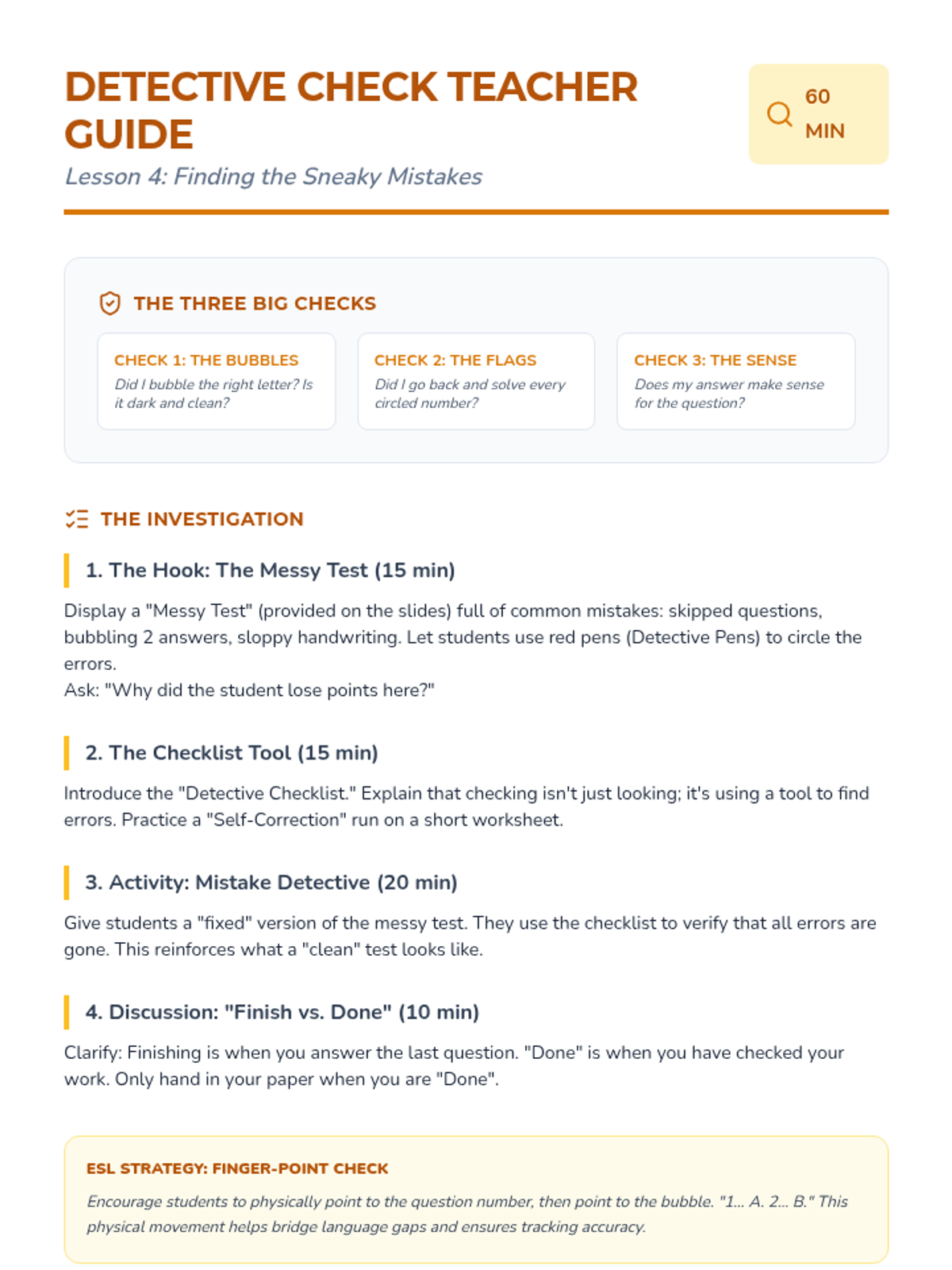
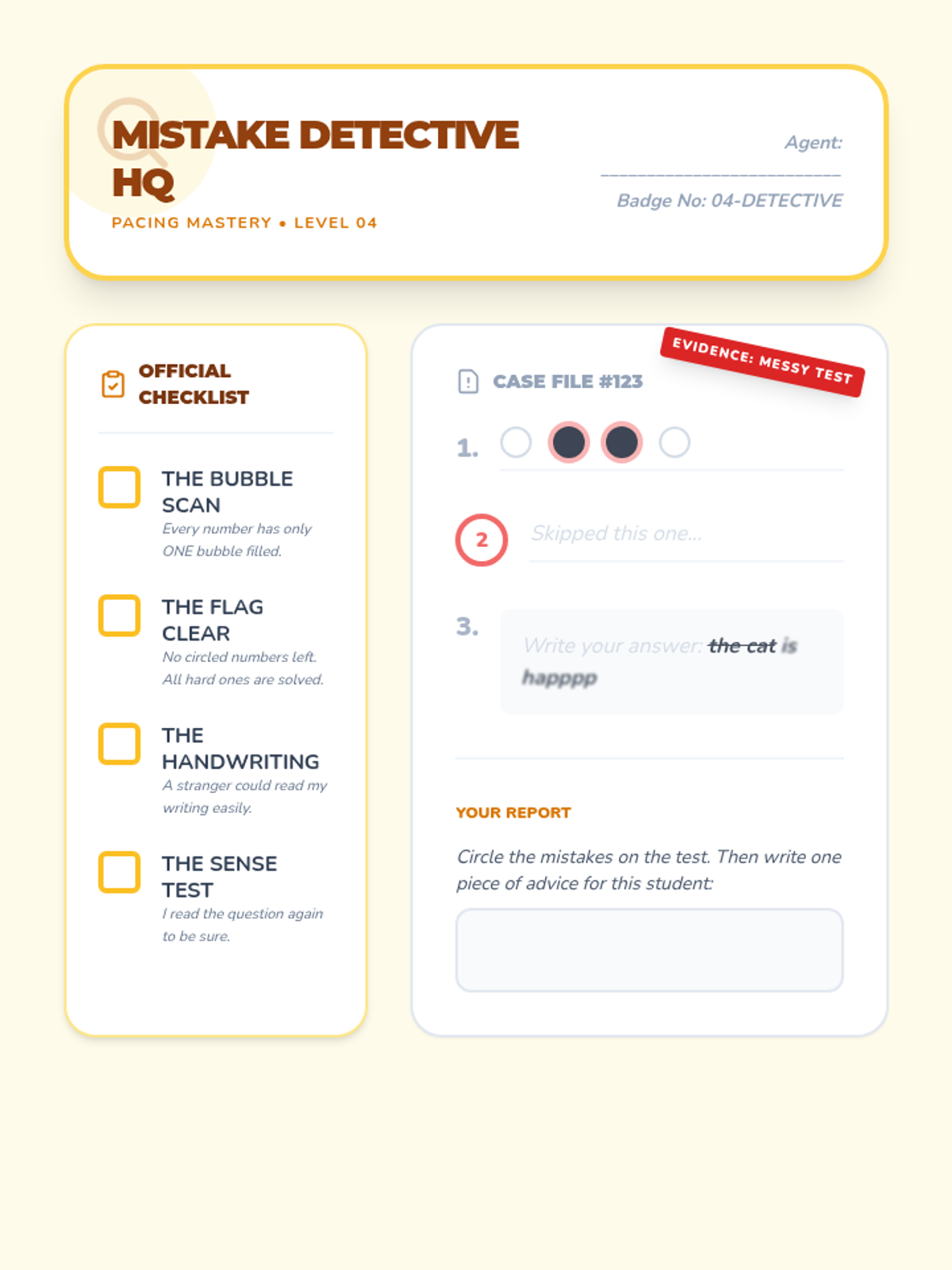
Students learn and practice specific checking strategies using a checklist to catch common errors.
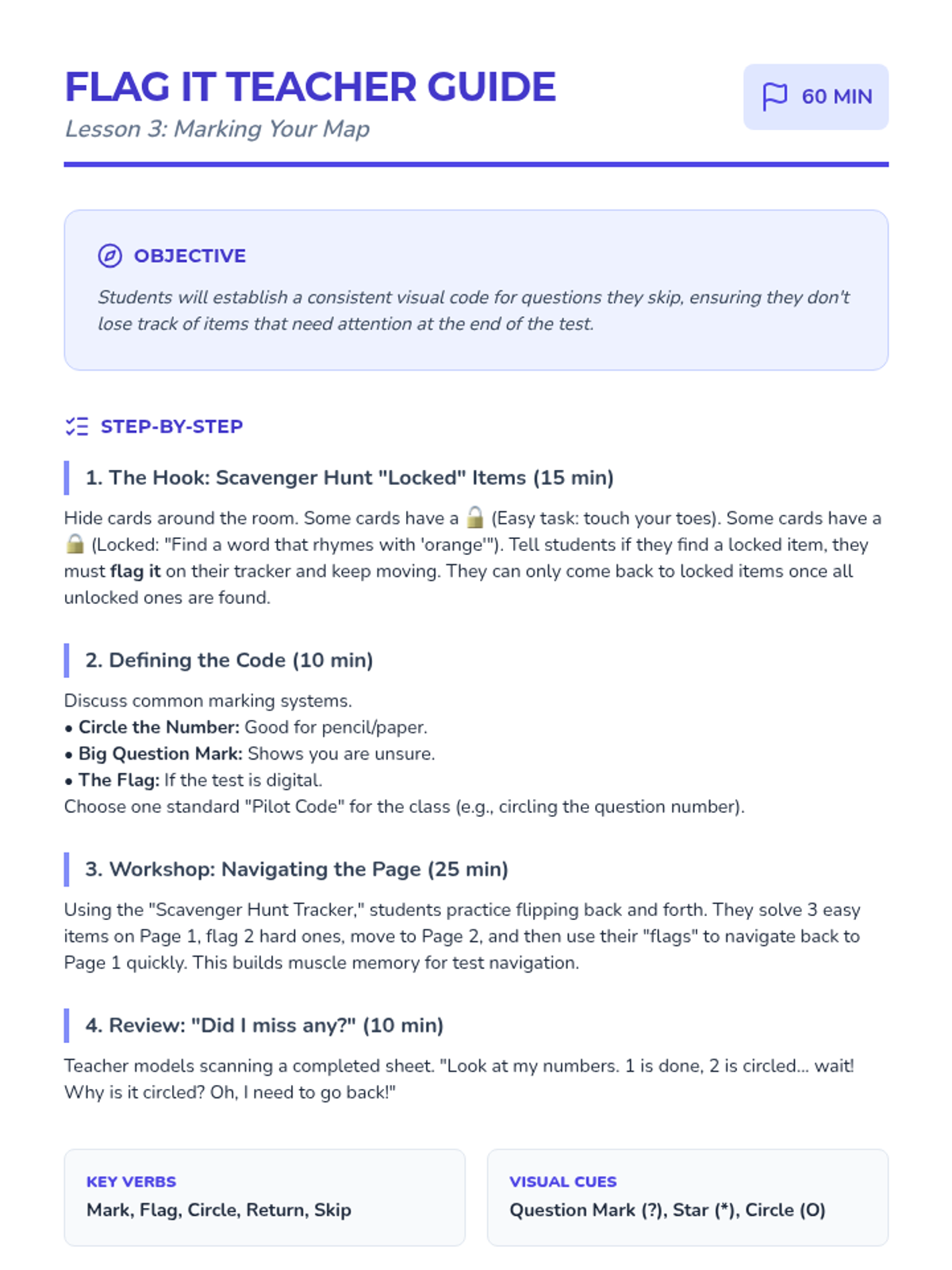
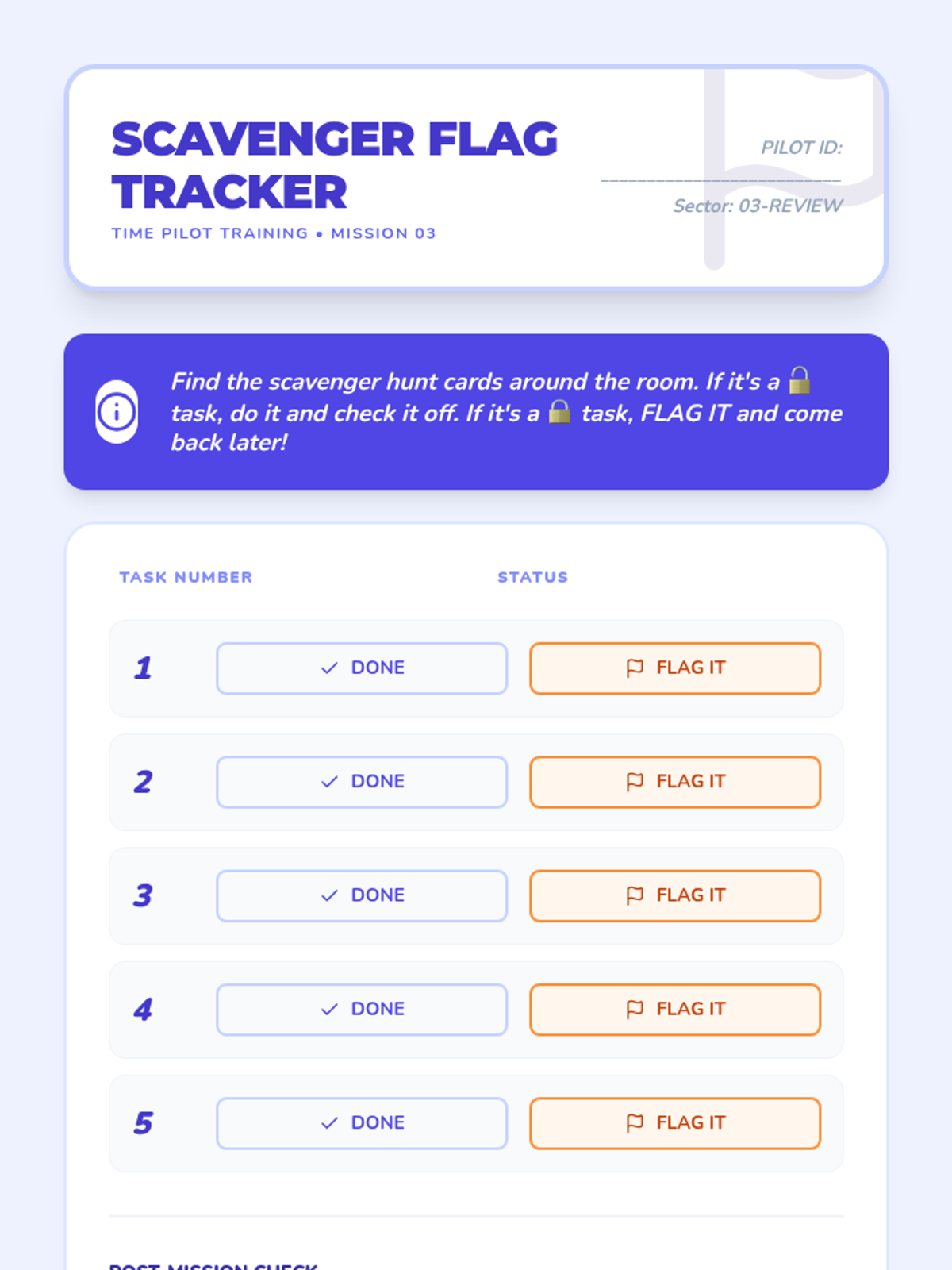
Students practice a system for marking questions for review to navigate tests efficiently.
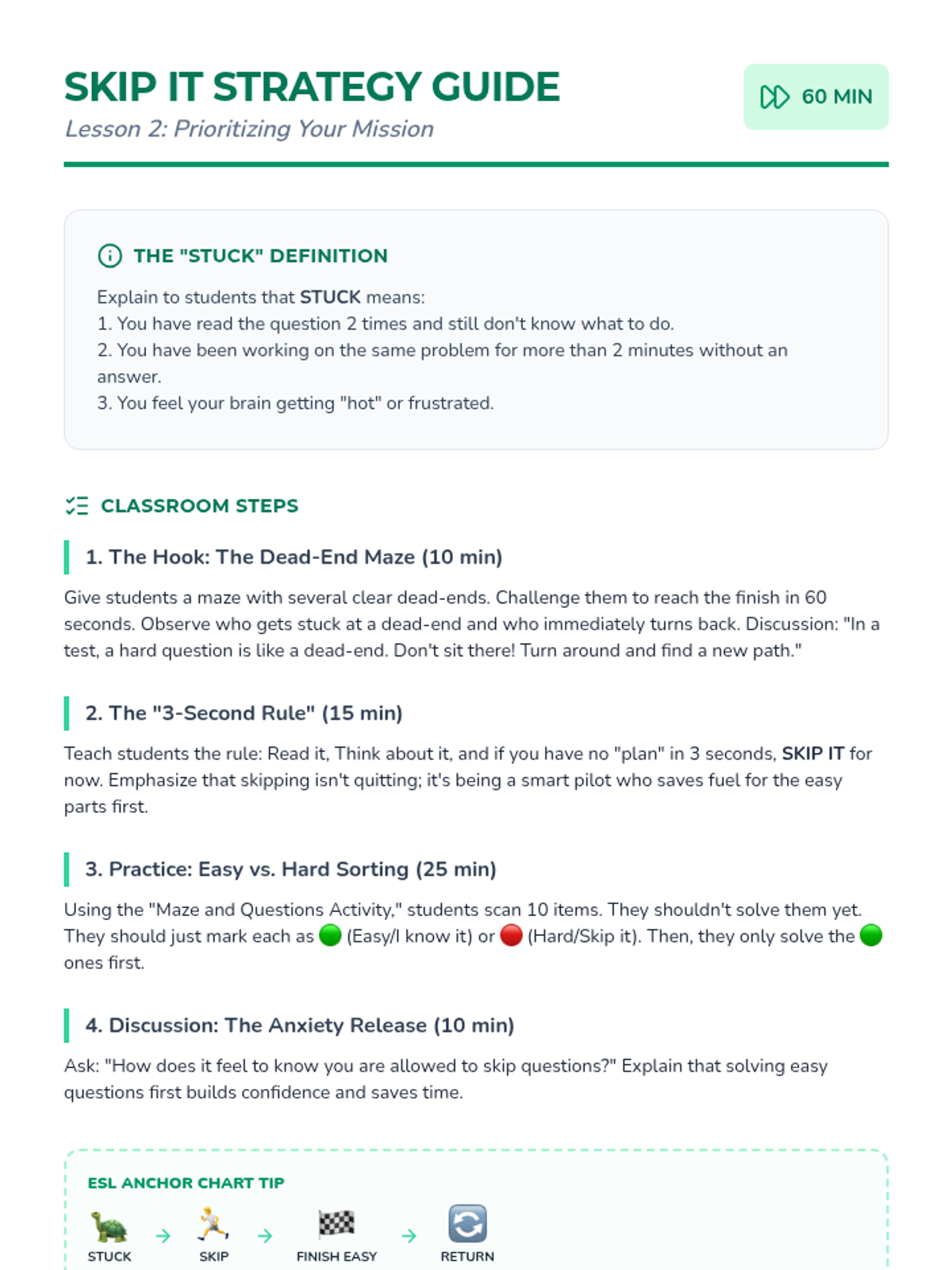
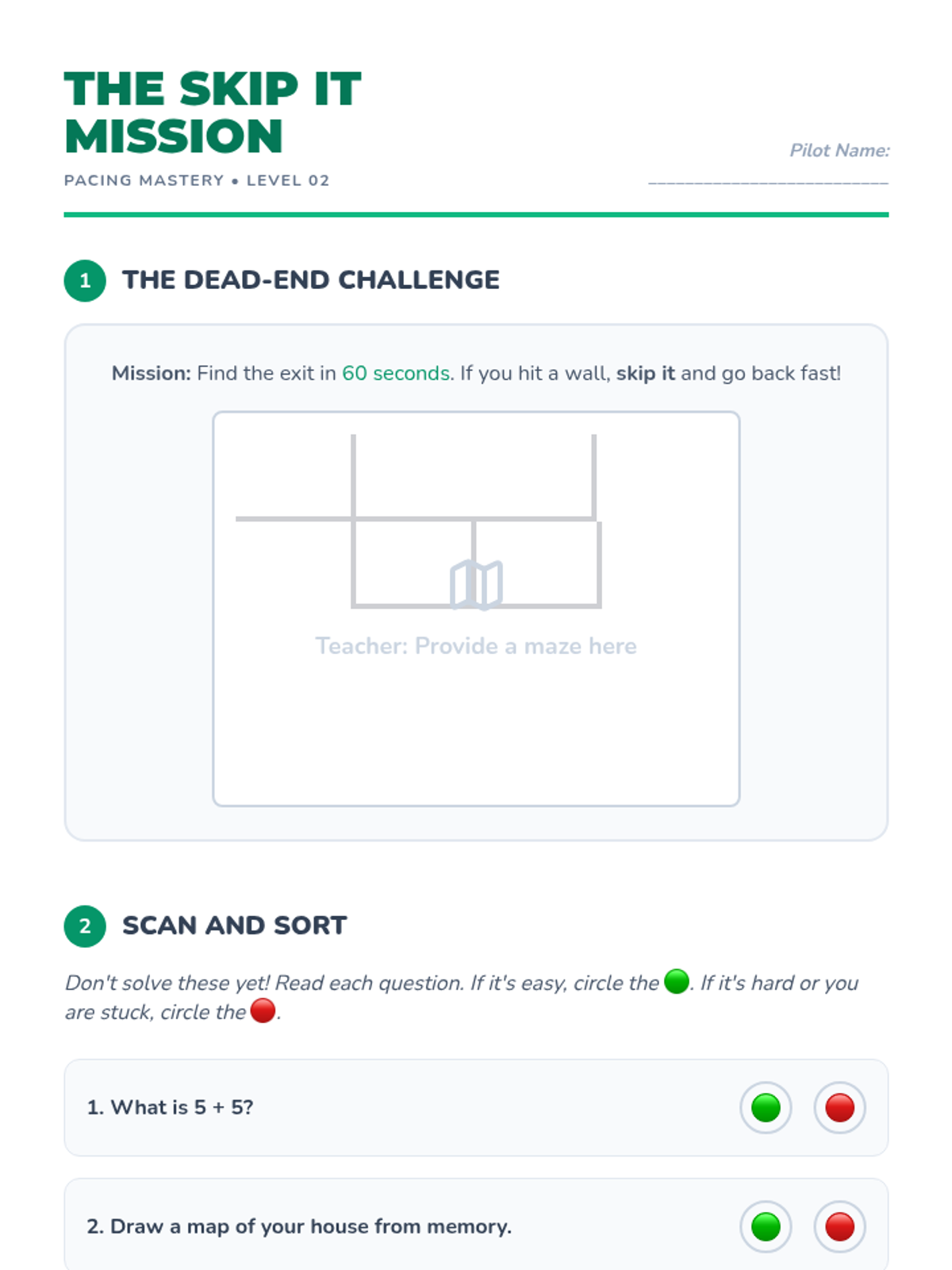
Students learn to recognize when they are stuck and practice skipping difficult items to return to them later.
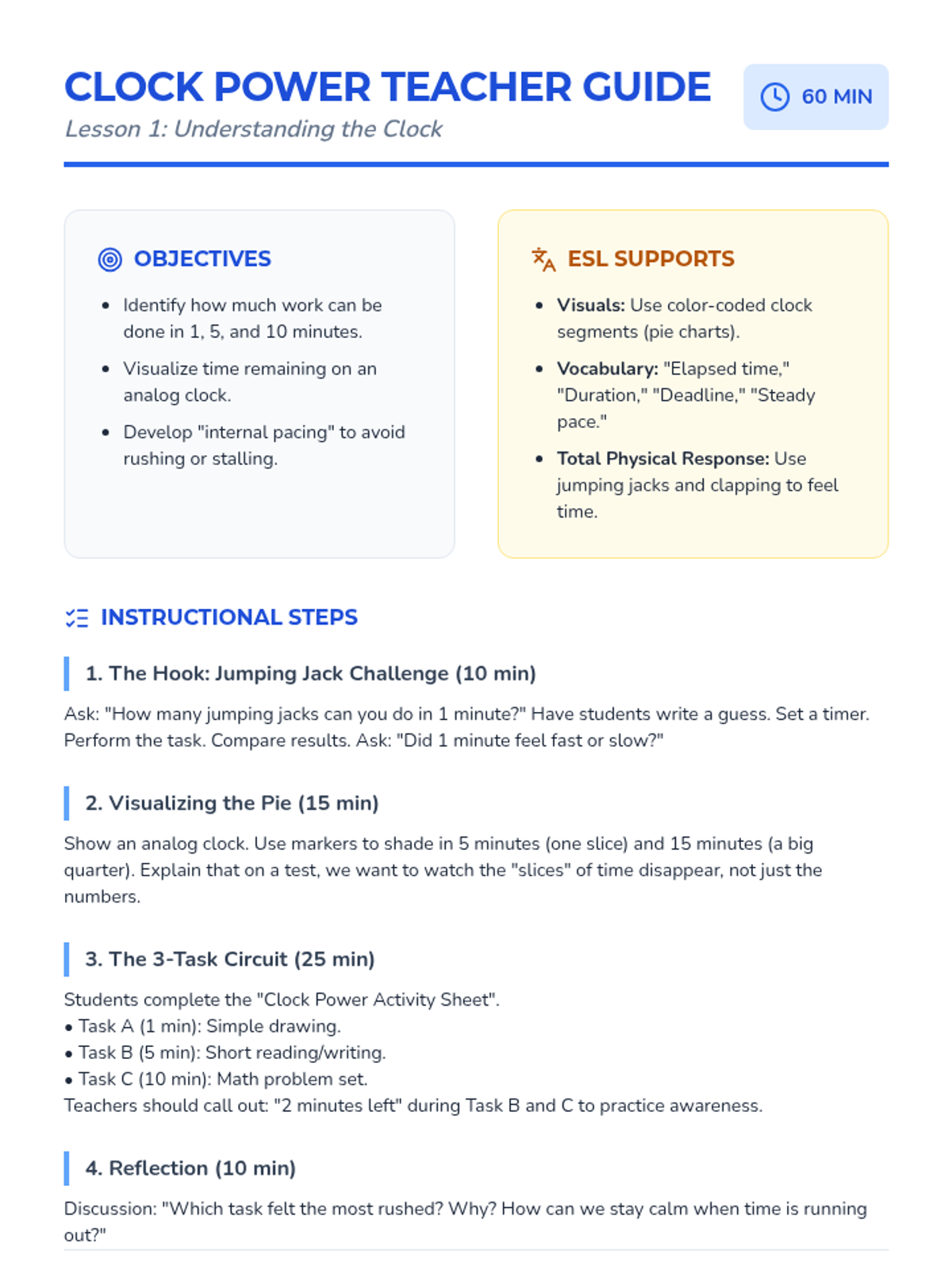
Students visualize time limits and perform tasks to understand the feeling of 1, 5, and 10 minutes.