Root cause analysis and brainstorming techniques for everyday problem-solving. Equips learners with ethical frameworks and risk-benefit evaluation skills to predict consequences and make informed choices.
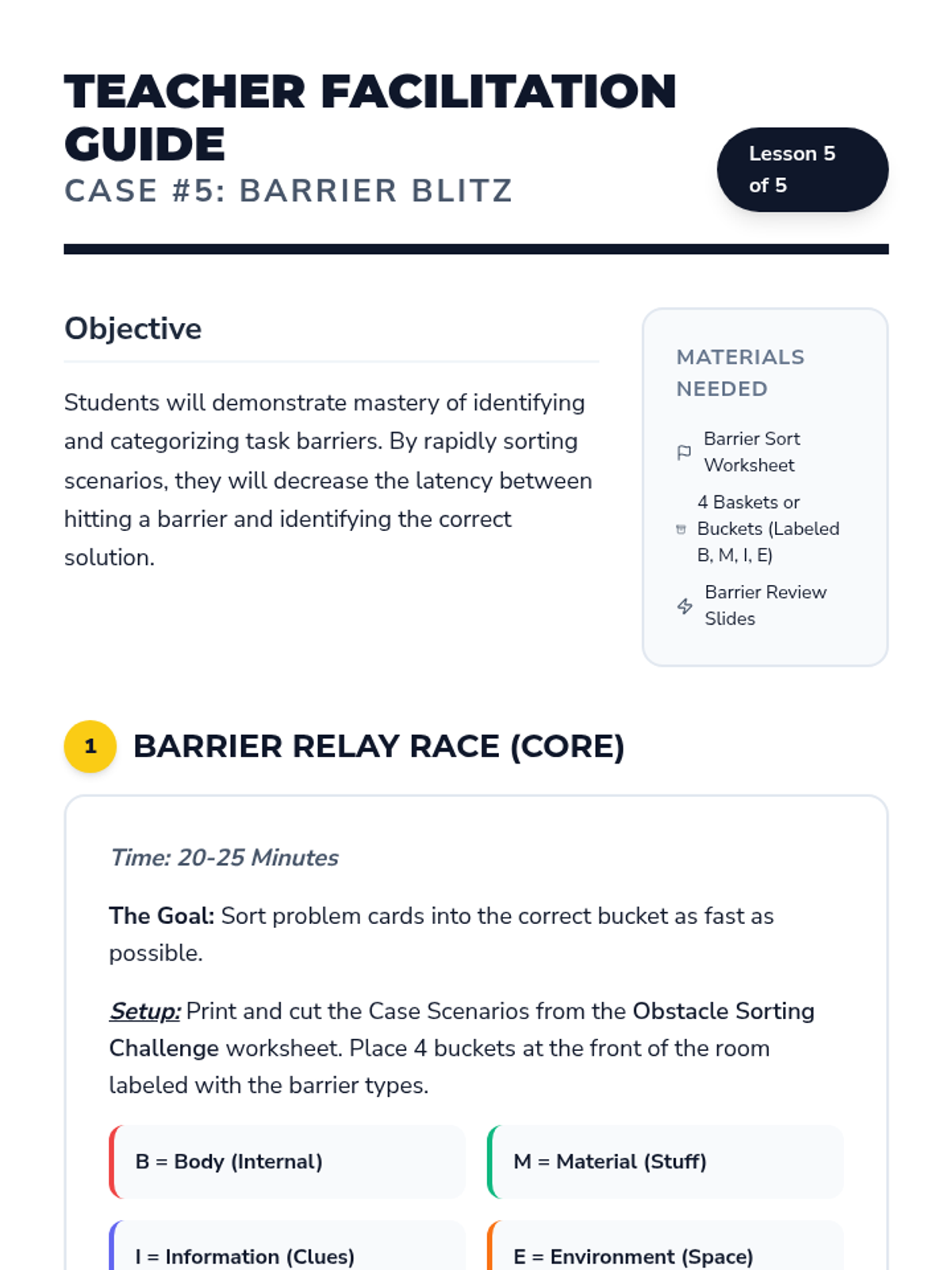
A teacher facilitation guide for Lesson 5, including instructions for the 'Barrier Relay Race' and a unit conclusion.
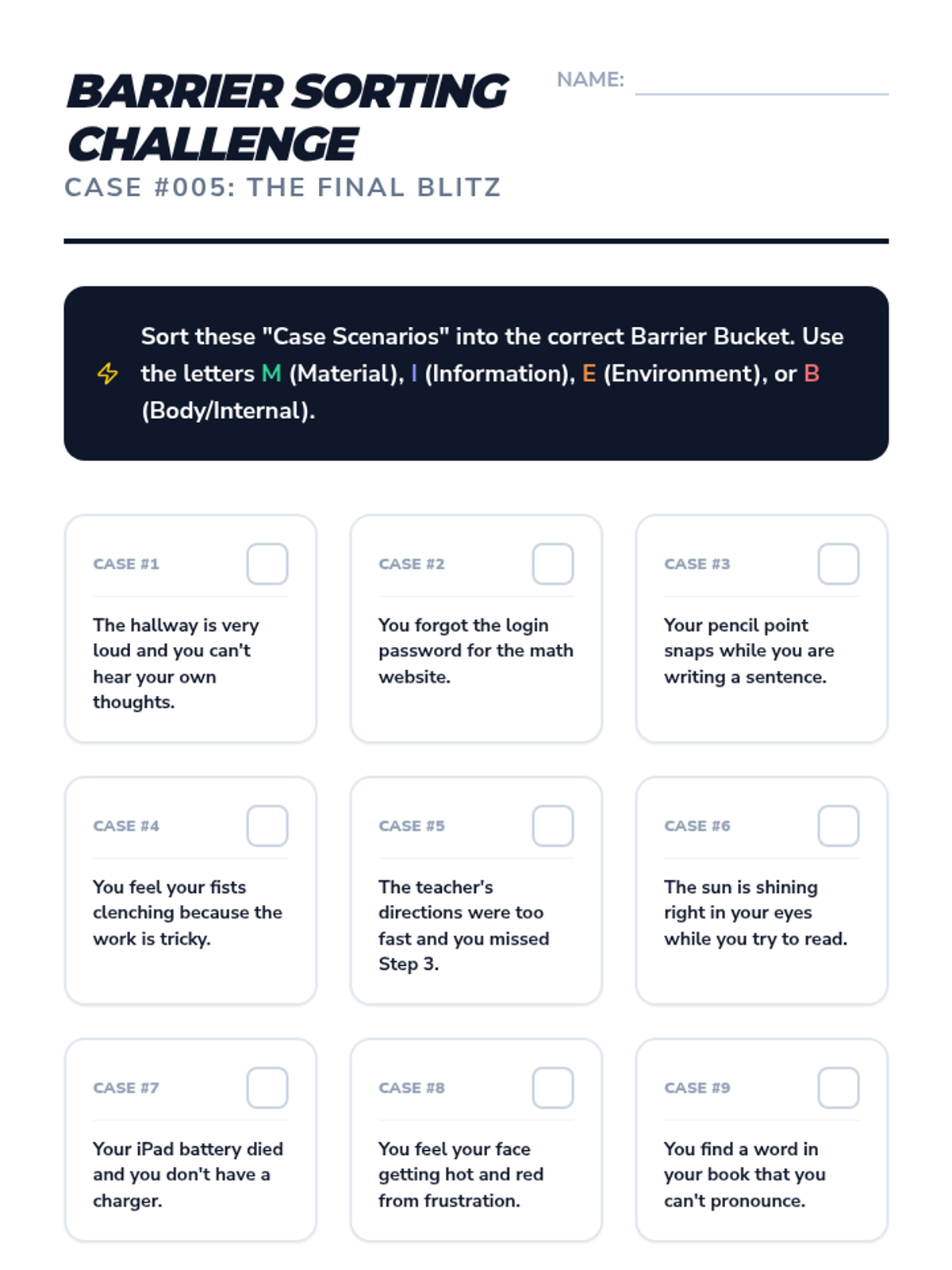
A culminating sorting activity where students categorize various problem scenarios into the four task barrier types.
A culminating slide deck for the 'Barrier Blitz' lesson, reviewing all 4 types of task barriers and preparing students for the final sorting activity.
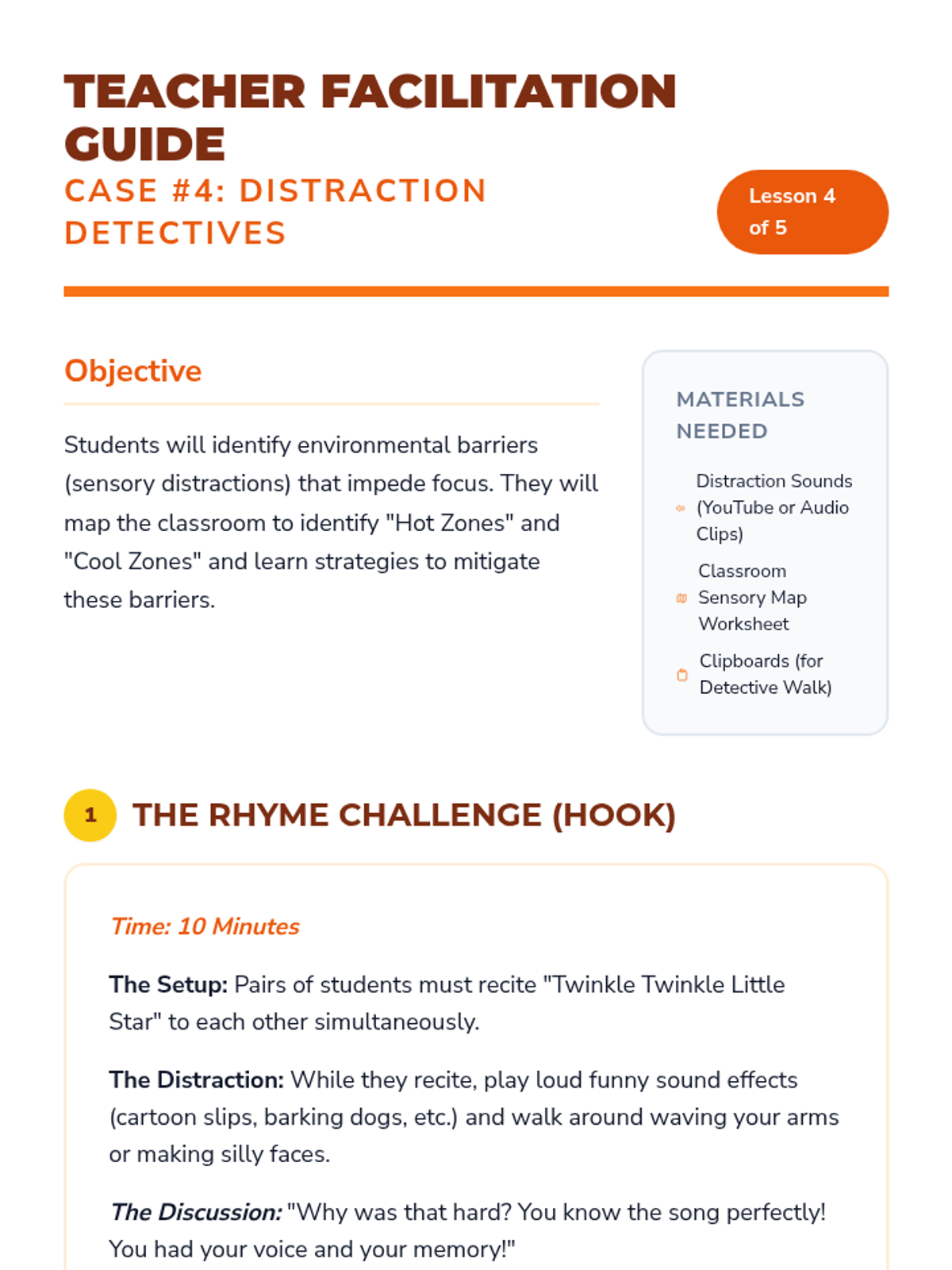
A teacher facilitation guide for Lesson 4, including instructions for the 'Stakeout Walk' and sensory mapping activity.
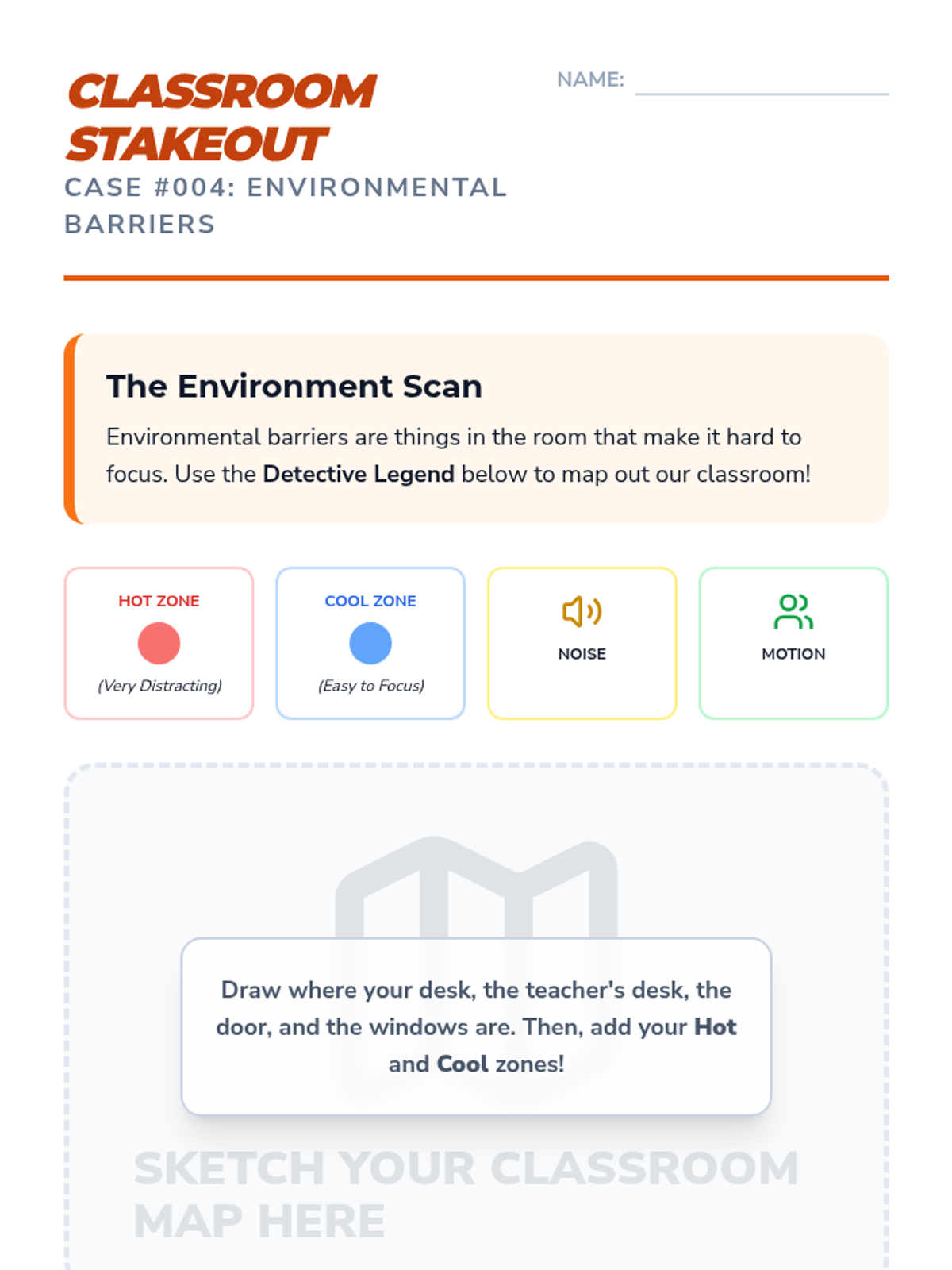
A mapping activity for students to identify 'Hot' and 'Cool' sensory zones in their classroom to manage environmental distractions.
A slide deck for Lesson 4 teaching students about sensory and environmental barriers to focus.
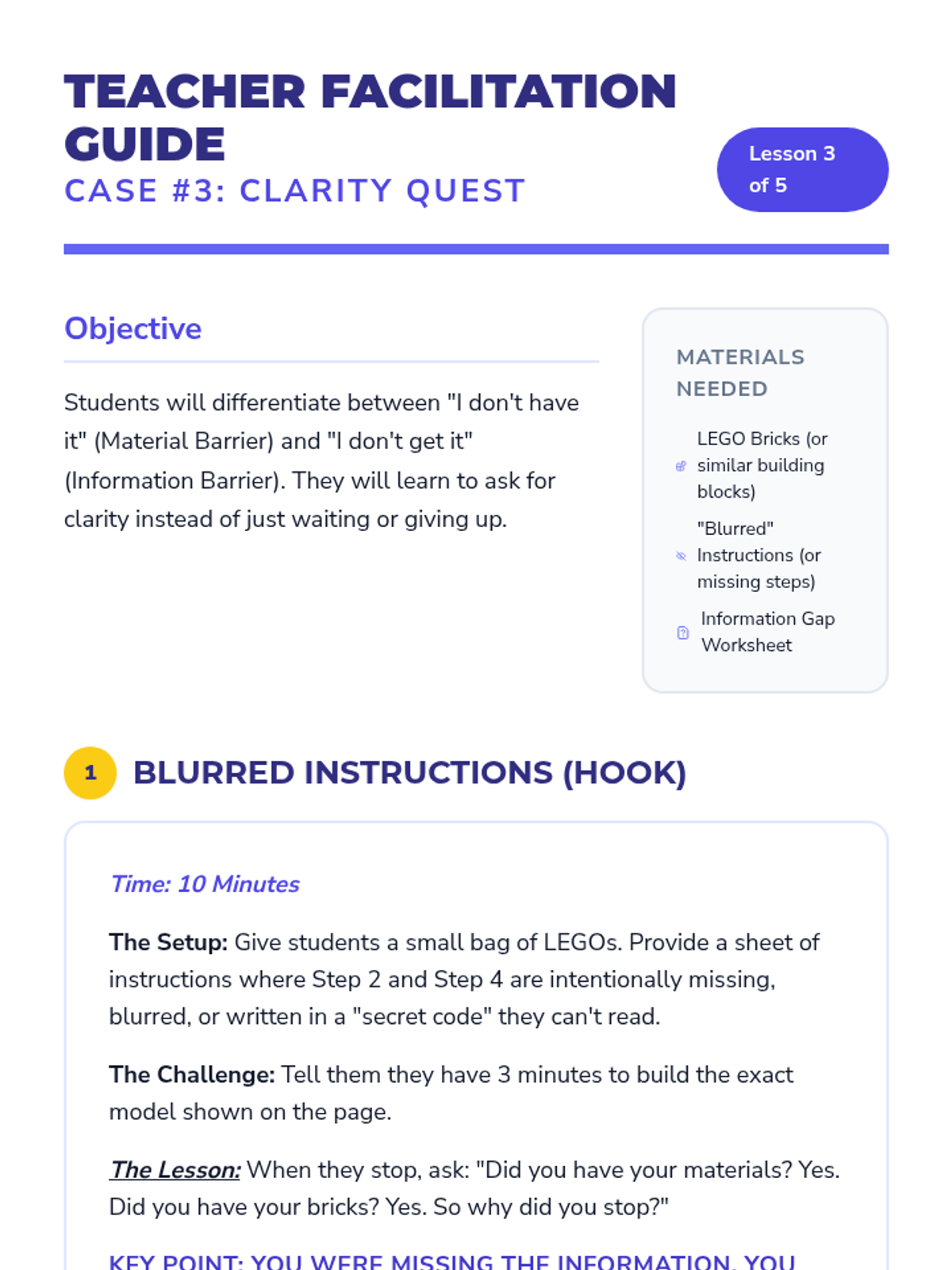
A teacher guide for Lesson 3, including instructions for the LEGO hook and advocacy scripting for students.
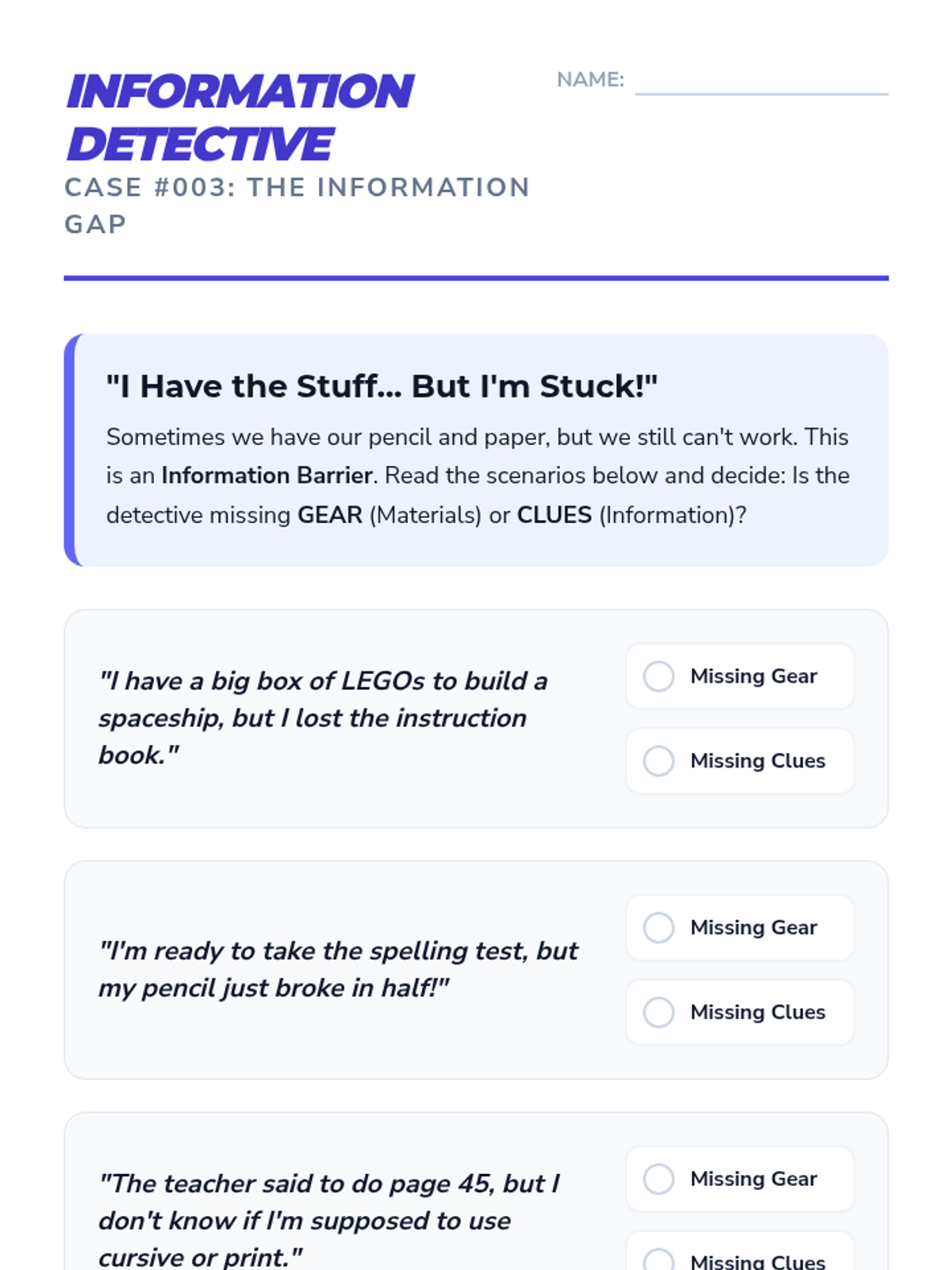
A worksheet for students to identify and differentiate between material barriers and information barriers in various classroom scenarios.
A slide deck teaching students how to identify information and clarity barriers, differentiating between 'I don't have it' and 'I don't get it.'
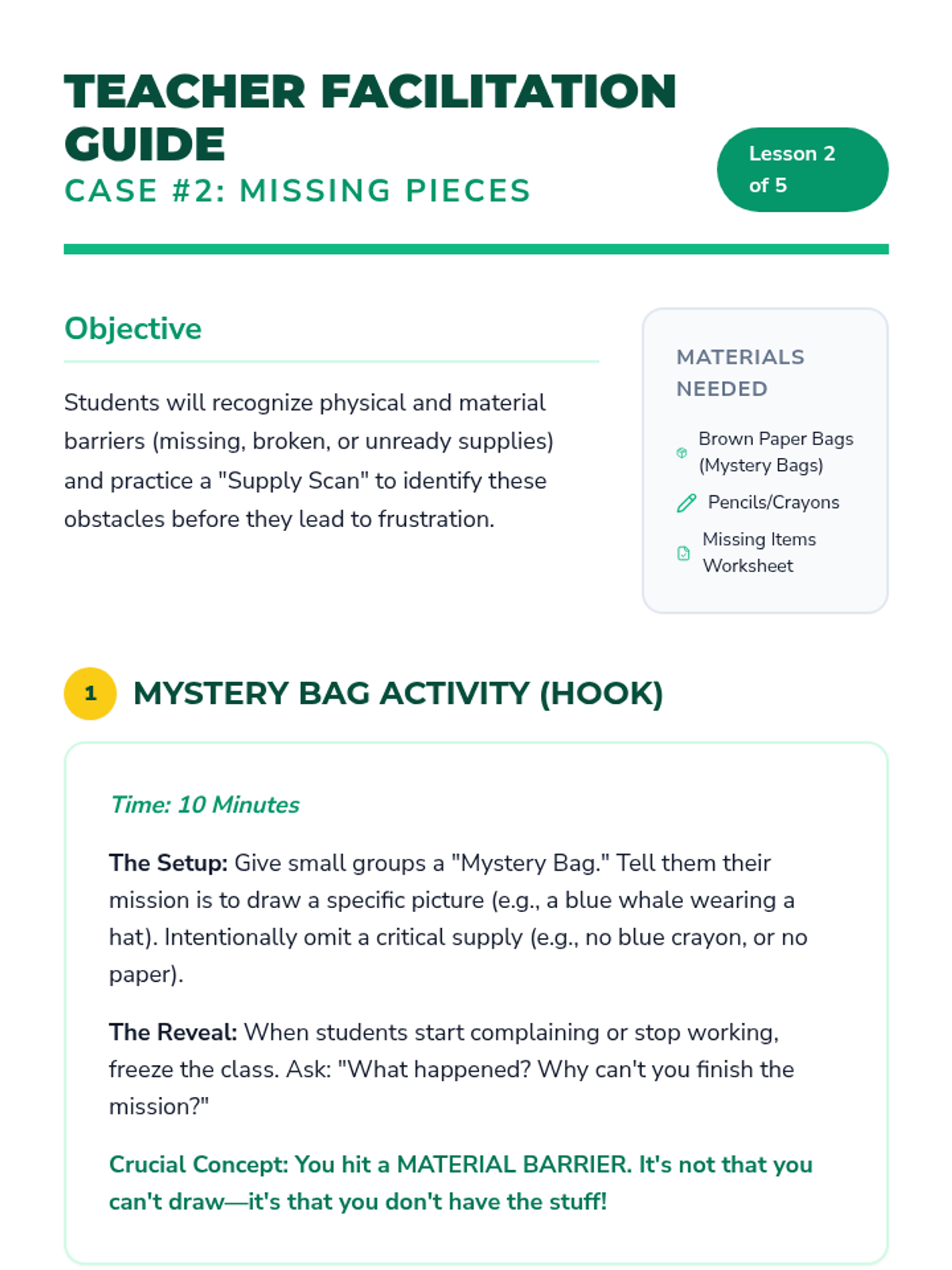
A teacher guide for Lesson 2, including instructions for the 'Mystery Bag' hook and how to facilitate a 'Supply Scan' in the classroom.
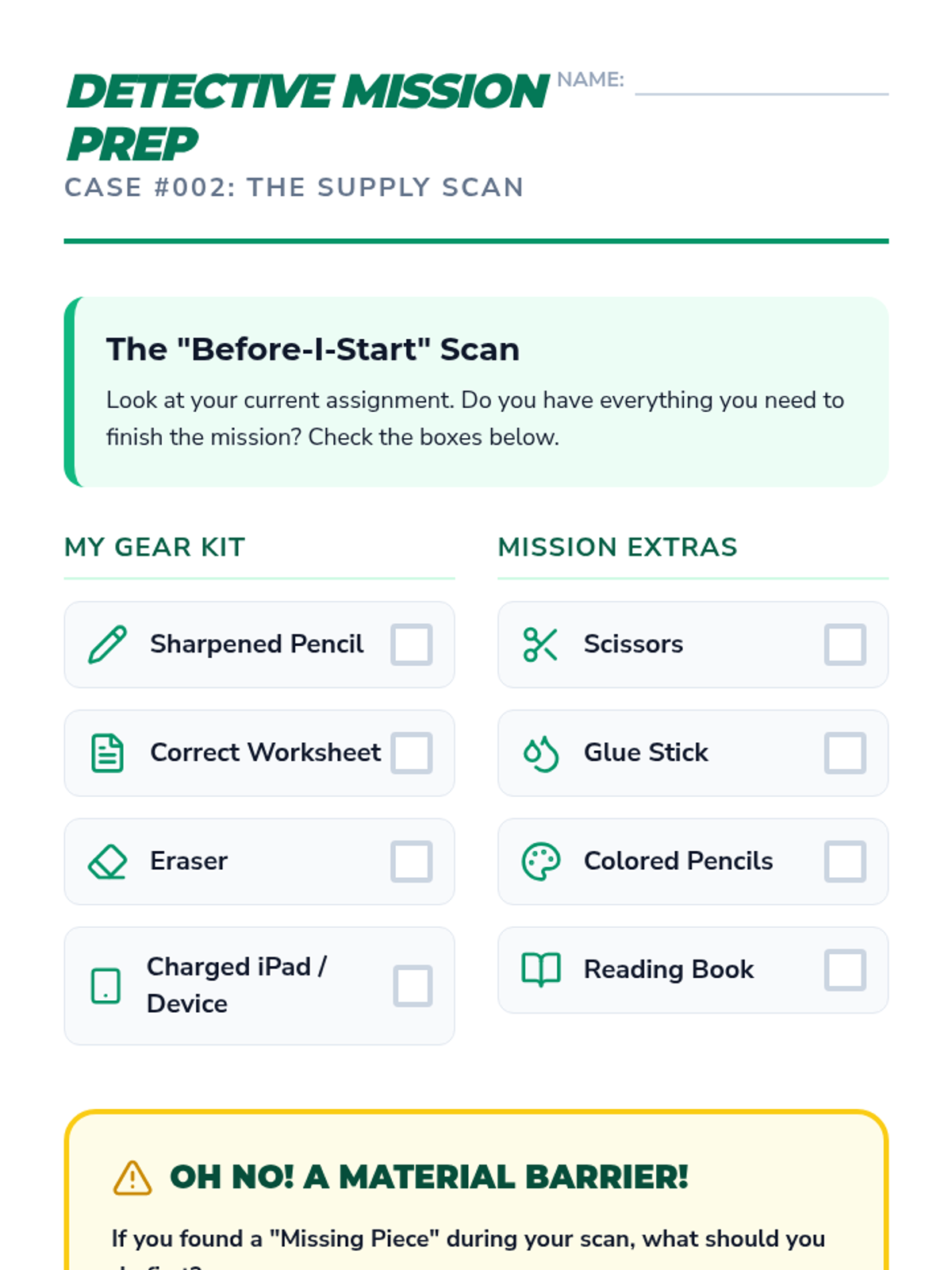
A worksheet for students to perform a 'Supply Scan' and identify physical materials needed for their tasks.
A slide deck teaching students about physical and material barriers, introducing the 'Supply Scan' technique.
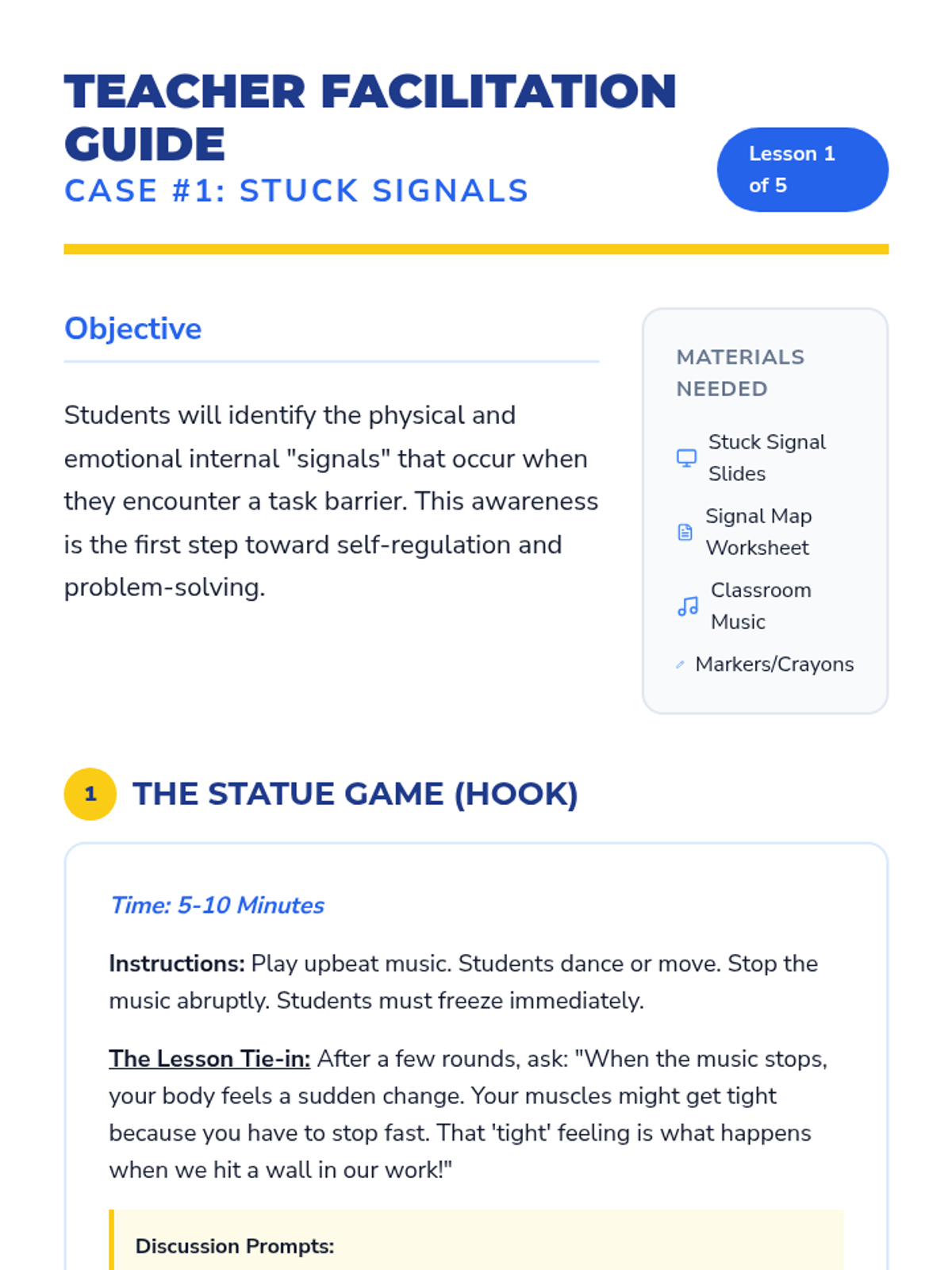
A teacher facilitation guide for Lesson 1, including instructions for the Statue Game hook and the Body Mapping core activity.
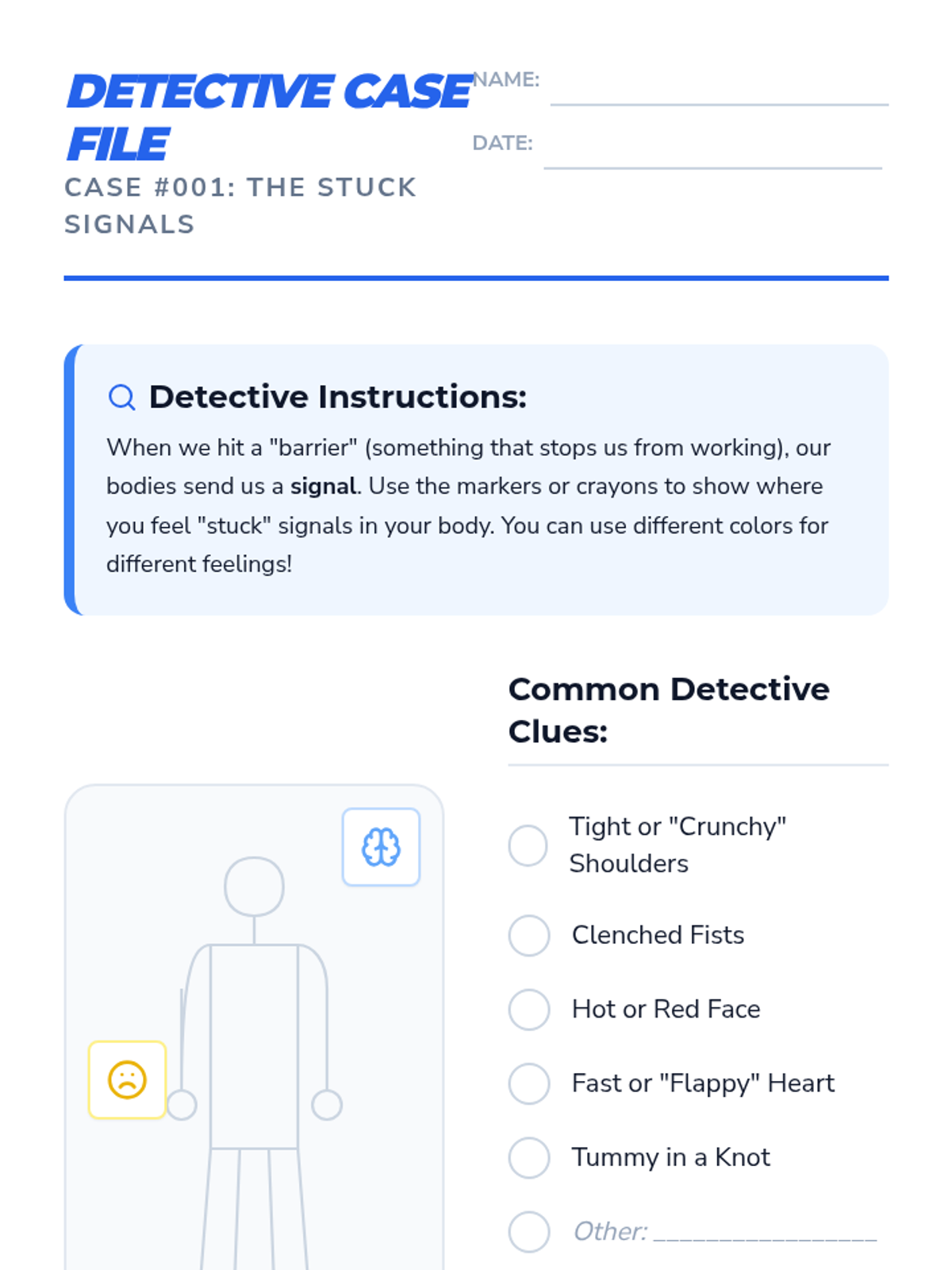
A worksheet for students to identify and map the physical signals of frustration and being 'stuck' in their own bodies.
An introductory slide deck for the 'Stuck Signals' lesson, using a Task Detective theme to help students recognize the physical and emotional sensations of being stuck.
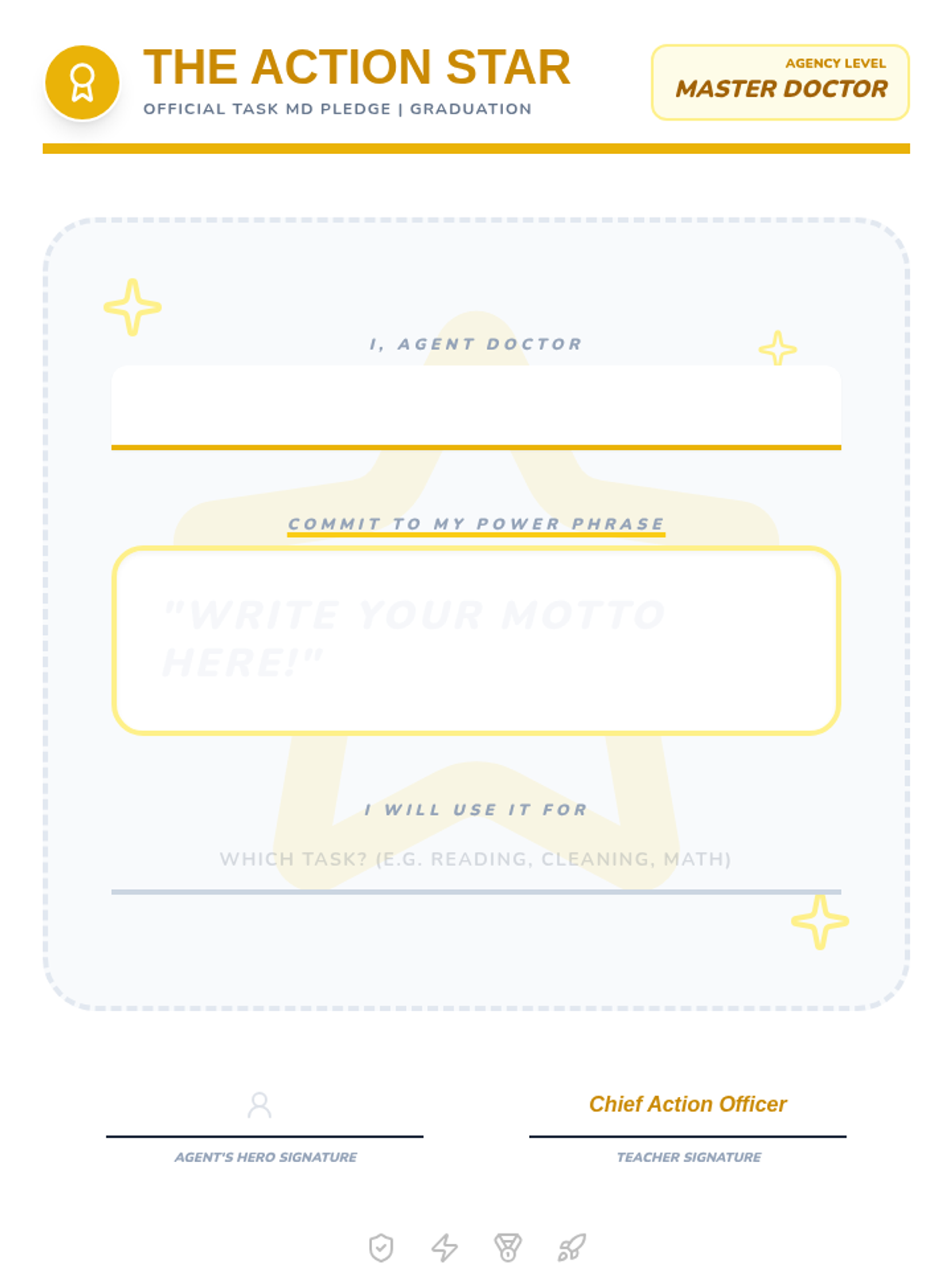
A student worksheet for the final lesson, where students write their personal 'Power Phrase' motto on a star-themed pledge sheet to be displayed on the 'Wall of Action'.
Engaging slides for Lesson 5 that guide the student self-reflection process and introduce the 'Wall of Action' graduation ceremony.
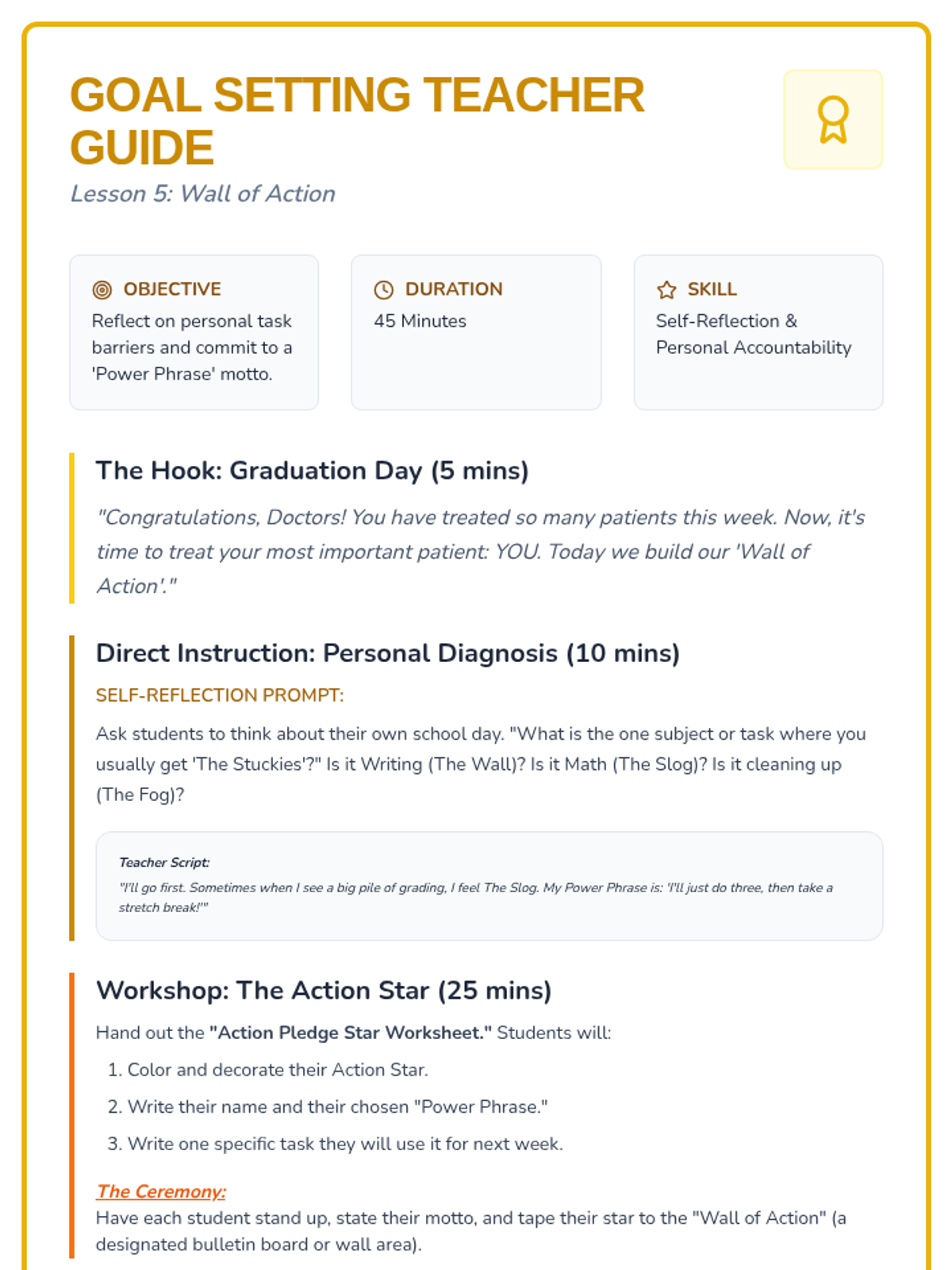
A comprehensive teacher's guide for the fifth lesson, focused on student self-reflection and creating a 'Wall of Action' with personal self-talk mottos.
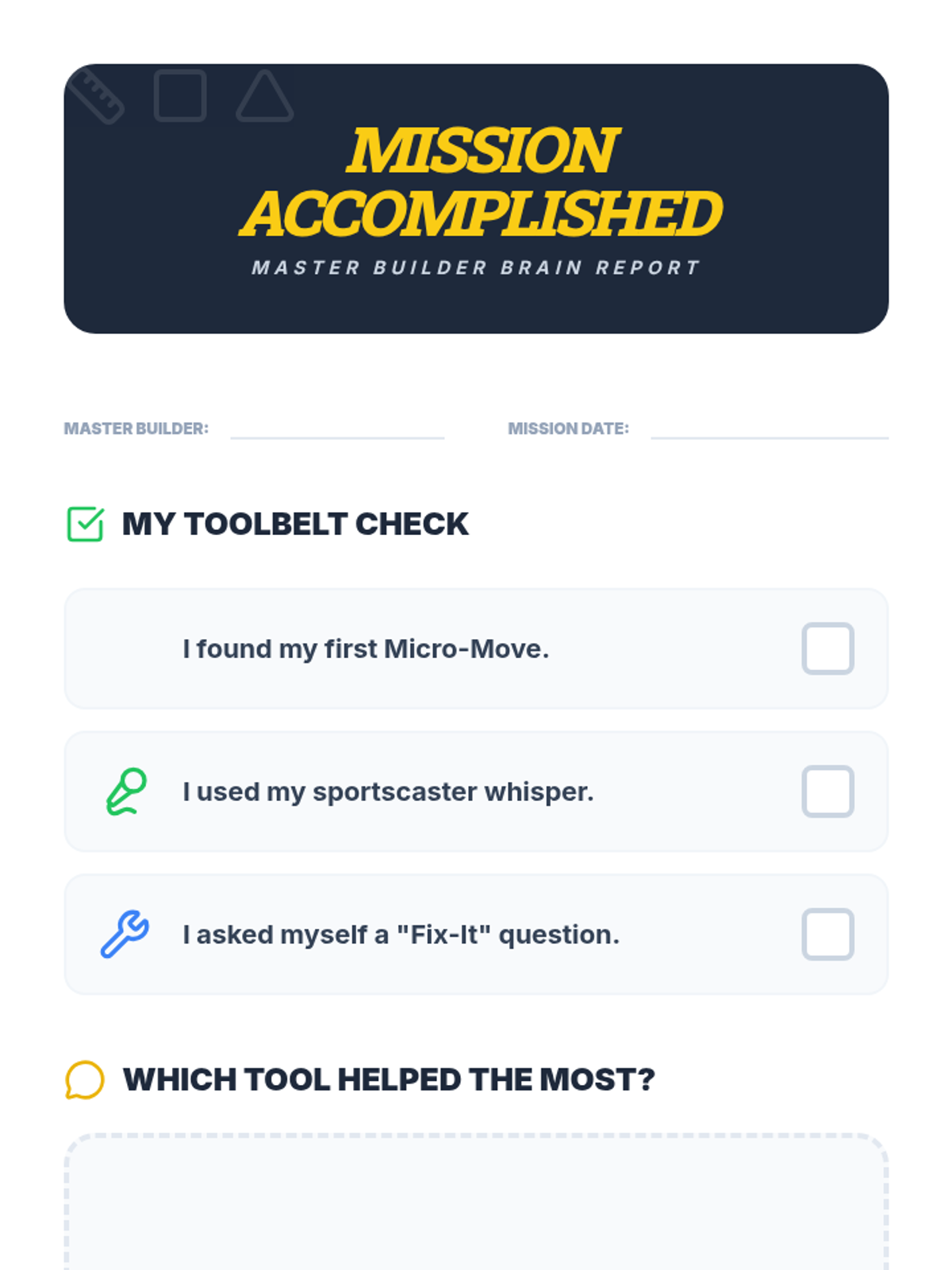
Student self-assessment and reflection worksheet for the final mission of the Builder Brain sequence.
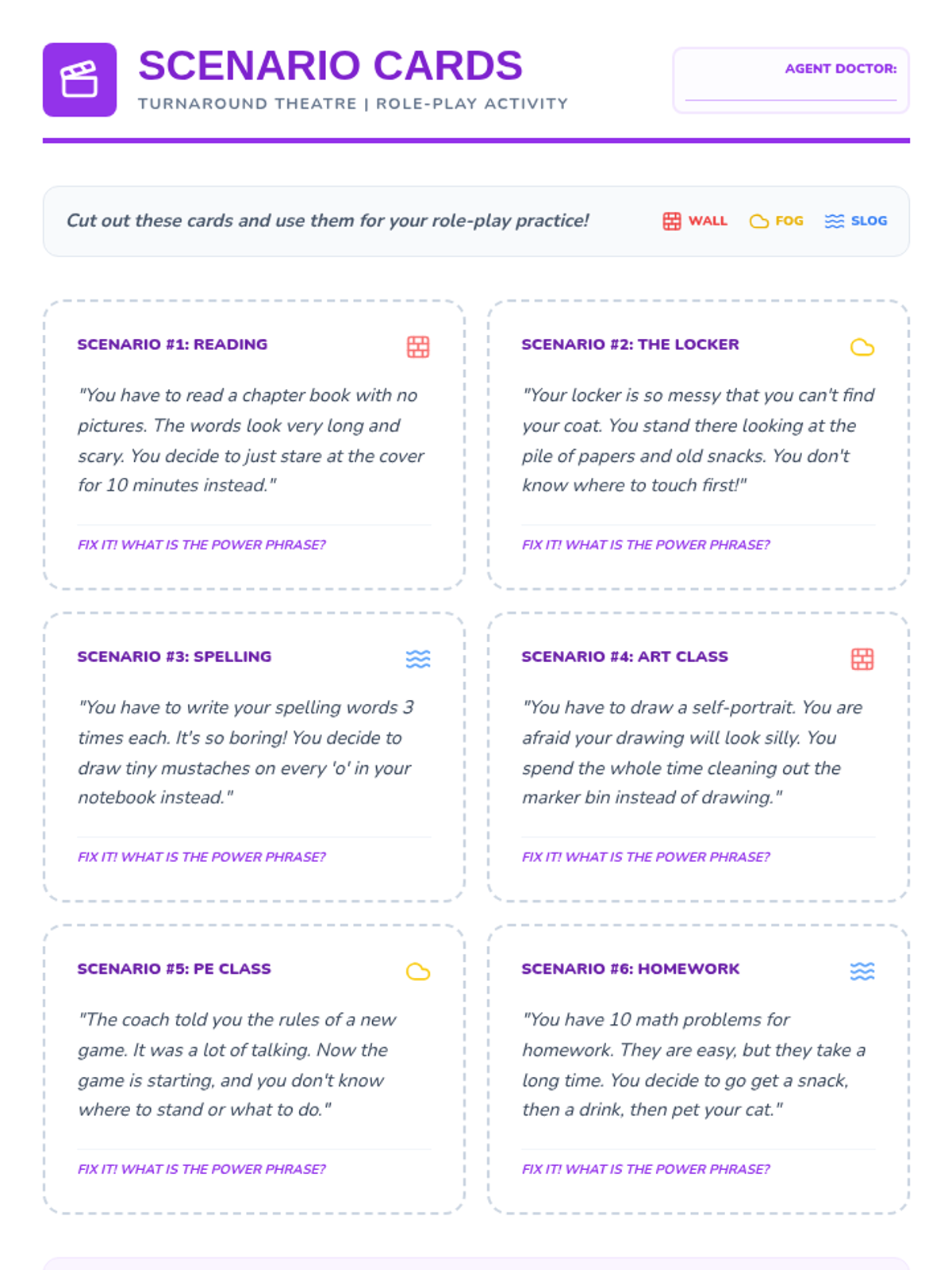
A set of role-play scenario cards for Lesson 4, allowing students to practice diagnosing barriers (Wall, Fog, Slog) and delivering self-talk prescriptions.
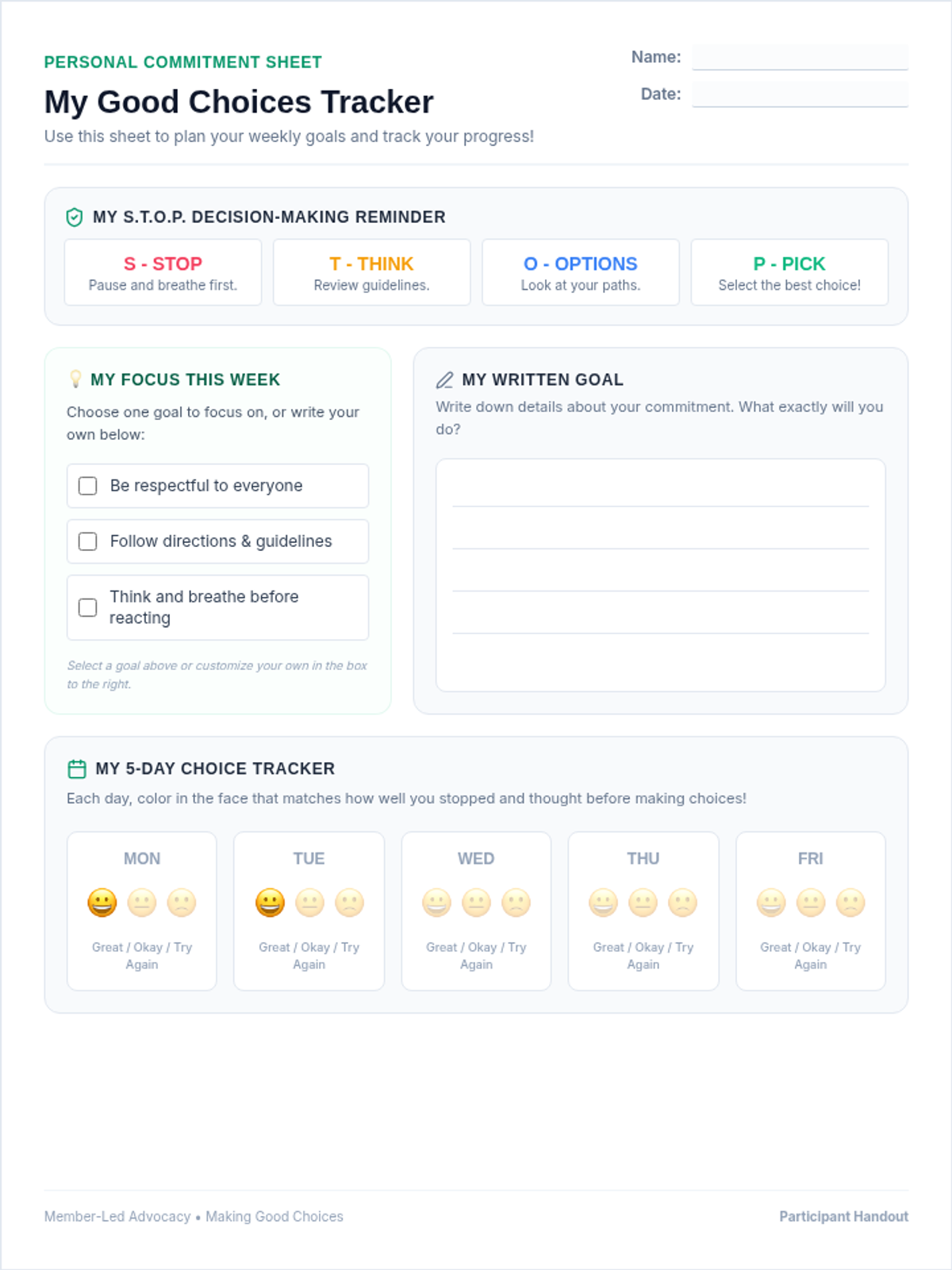
A printable participant reflection sheet featuring a S.T.O.P. framework cheat sheet, a Goal-setting area with generous writing lines, and a 5-day daily choice tracker with icons for tactile weekly tracking.
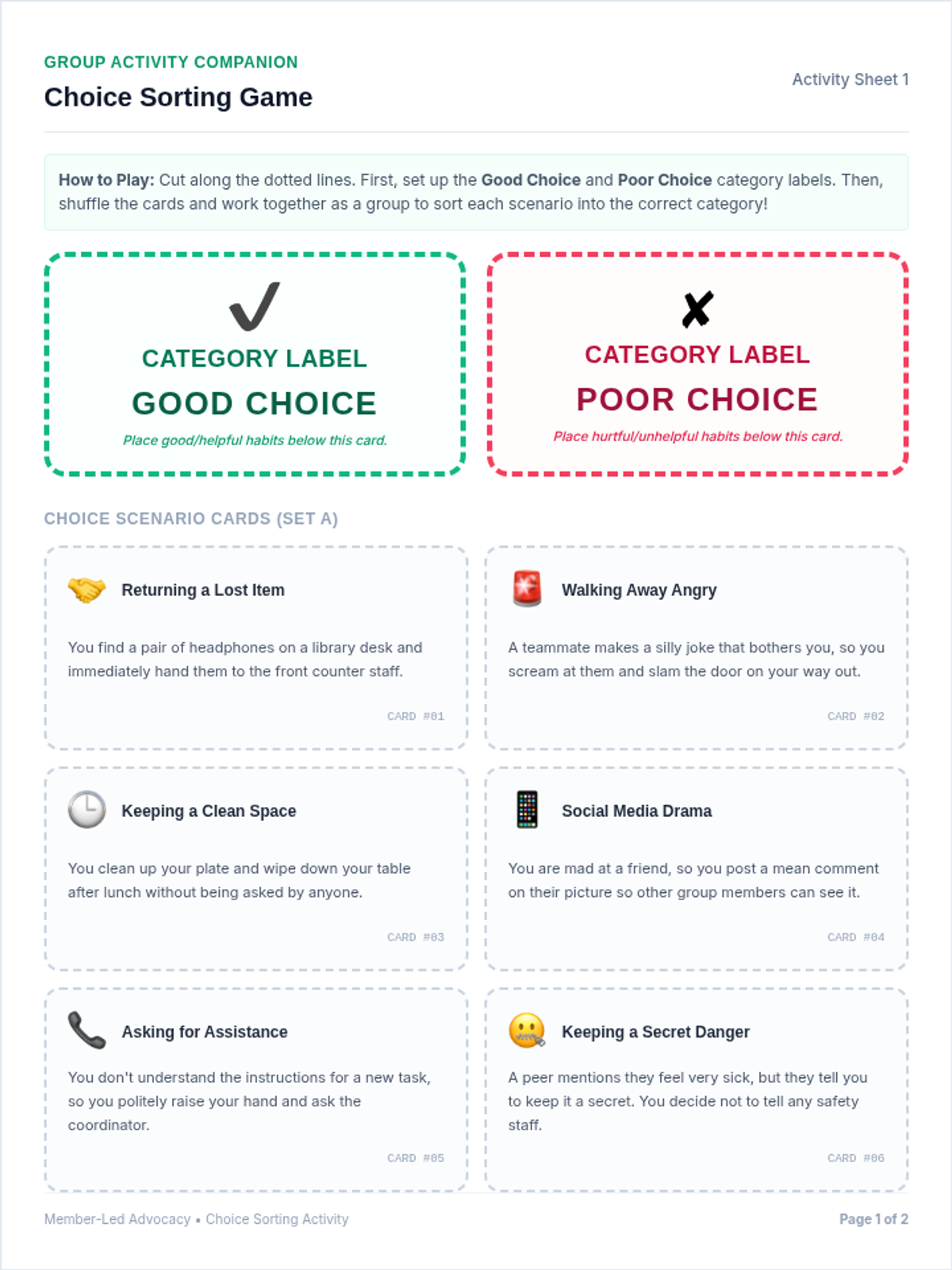
Printable choice-sorting cards designed for tactile learning. Features clear categories, realistic scenario cards covering social, independent living, and workplace settings, and dotted lines for easy cutting.
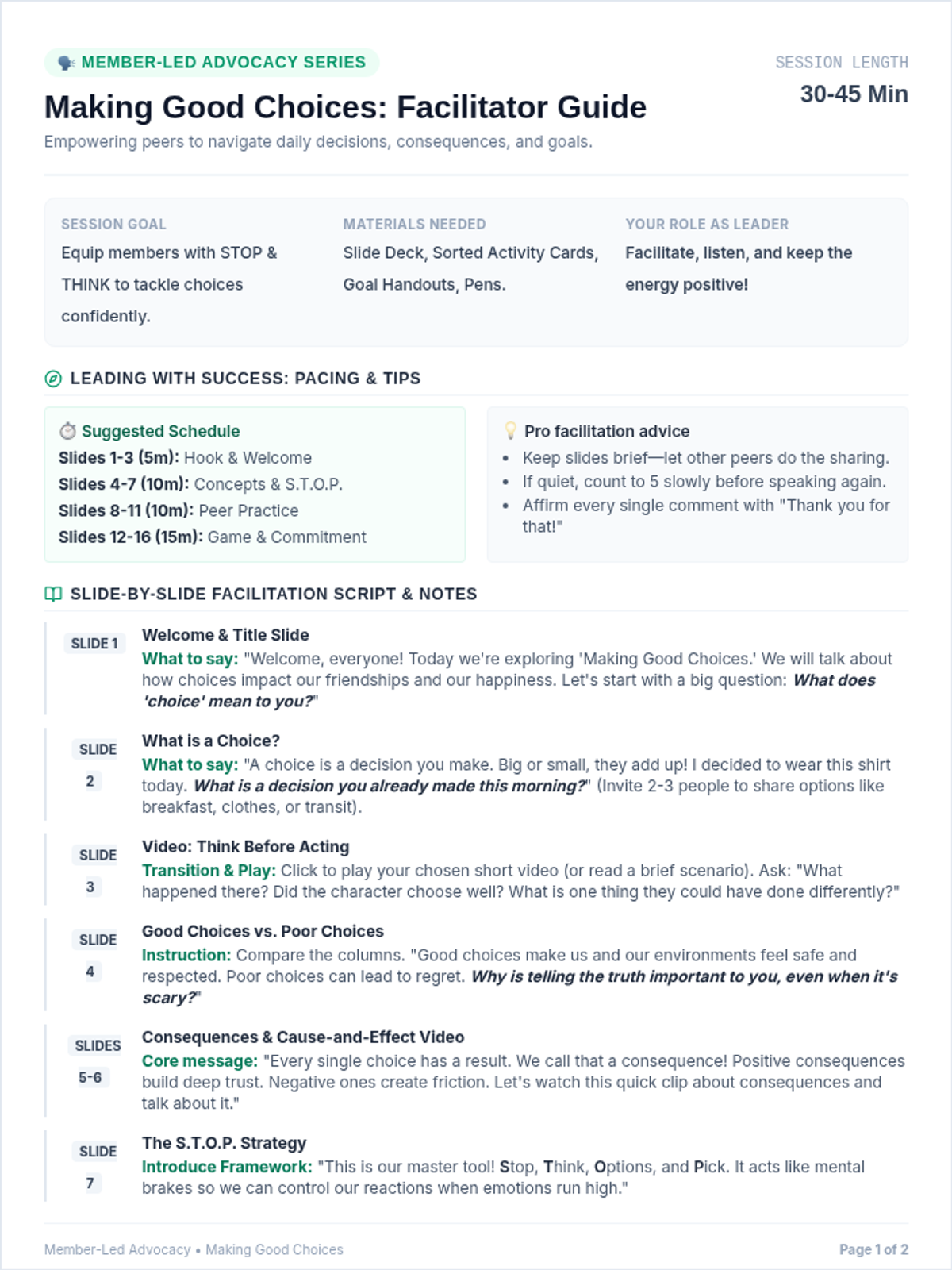
A comprehensive, 2-page print-ready facilitator guide designed specifically for member leaders. Features pacing guidelines, active listening scripts, transition cues, and strategies to ensure active participation from all members.
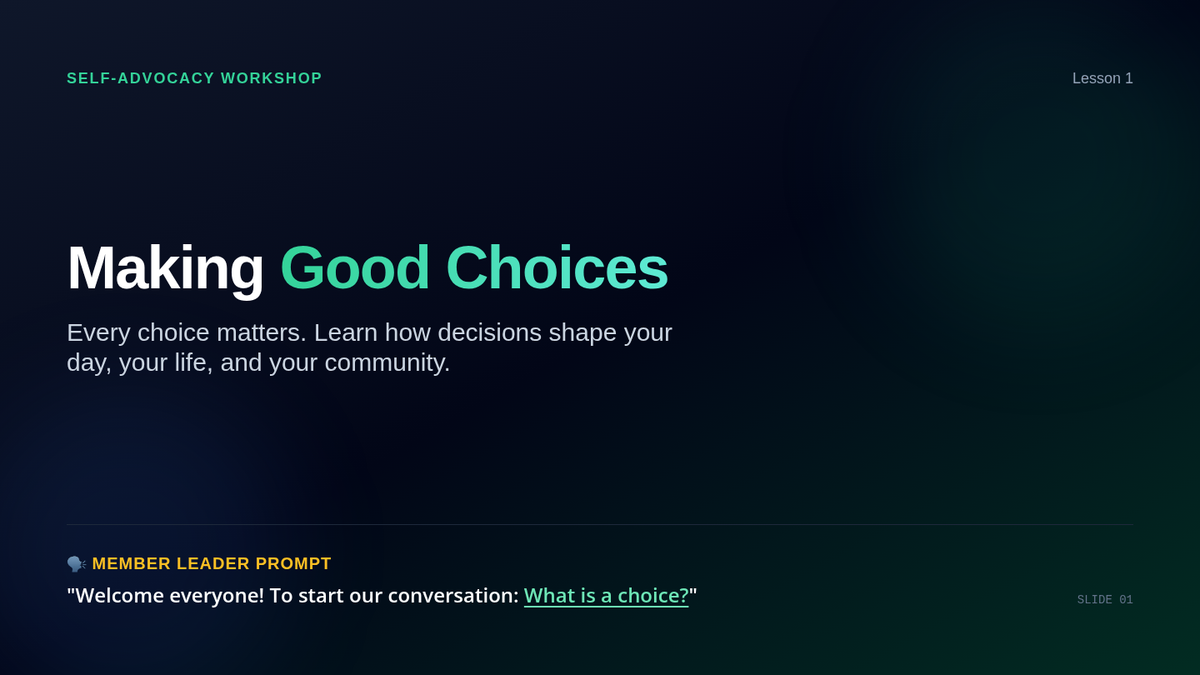
A modern, highly visual 16-slide presentation designed specifically for peer-led advocacy. Features large typography, interactive scenario-based discussion questions, and an empowering 'STOP and THINK' framework to guide discussions. Now contains embedded YouTube clips for interactive review.
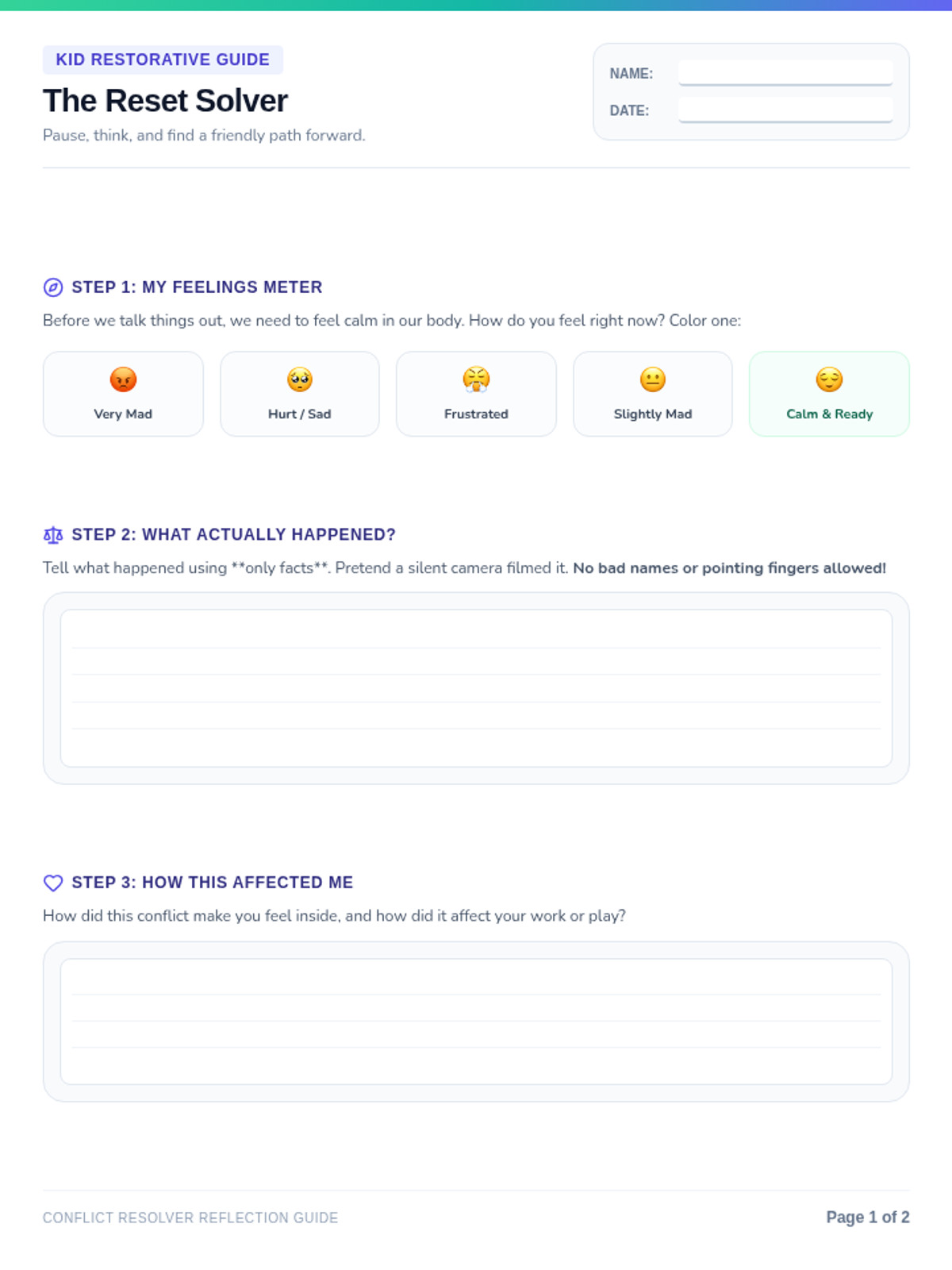
A 2-page student self-reflection guide designed for resolving active conflicts, helping students calm down, evaluate facts, map perspectives, and draft restorative action steps.
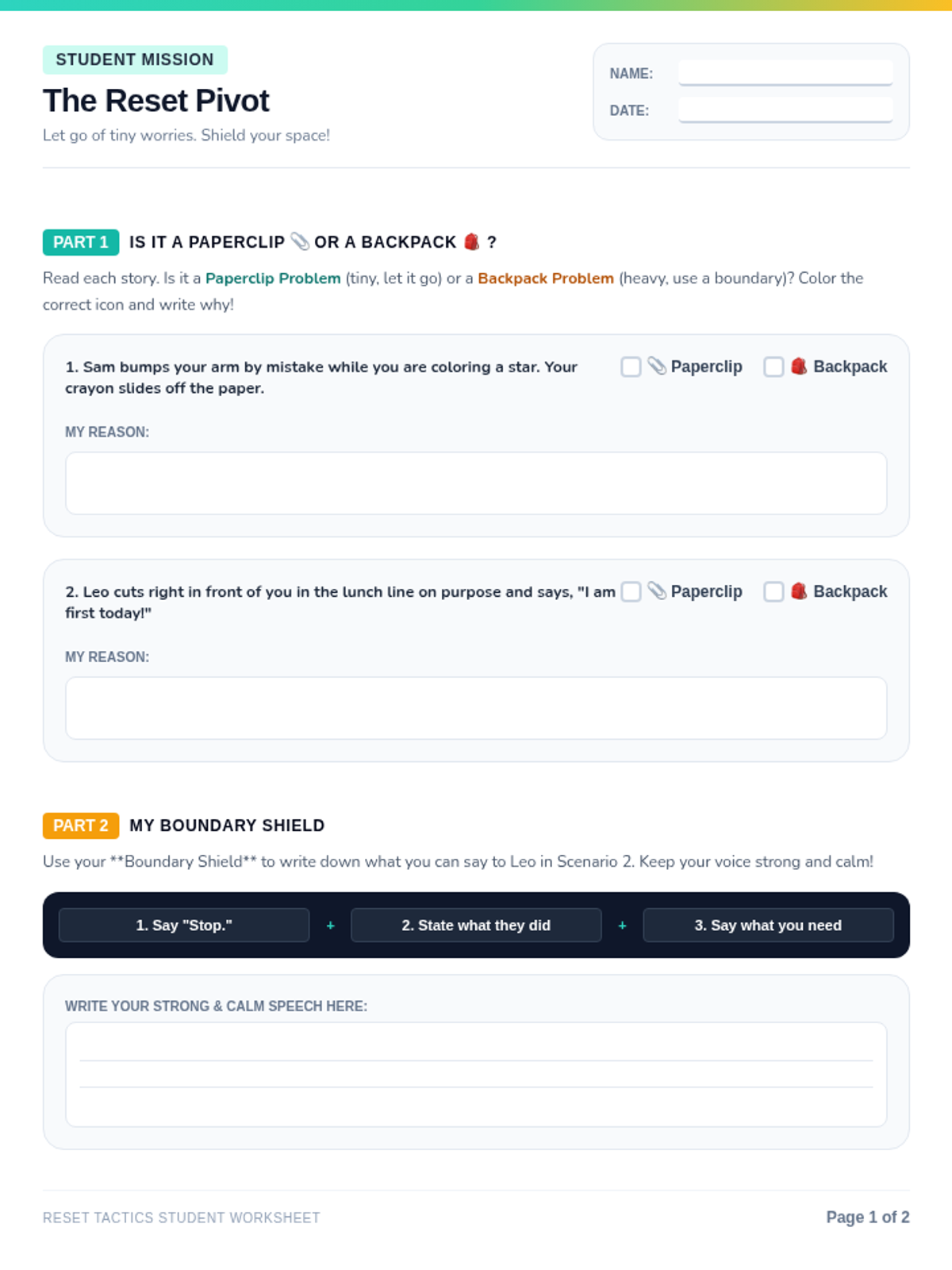
A 2-page student worksheet. Page 1 guides students to analyze peer friction as 'Paperclip vs. Backpack' and write assertive boundary scripts. Page 2 applies the Apology Decision Tree to realistic scenarios, prompting students to draft repairs and apologies.
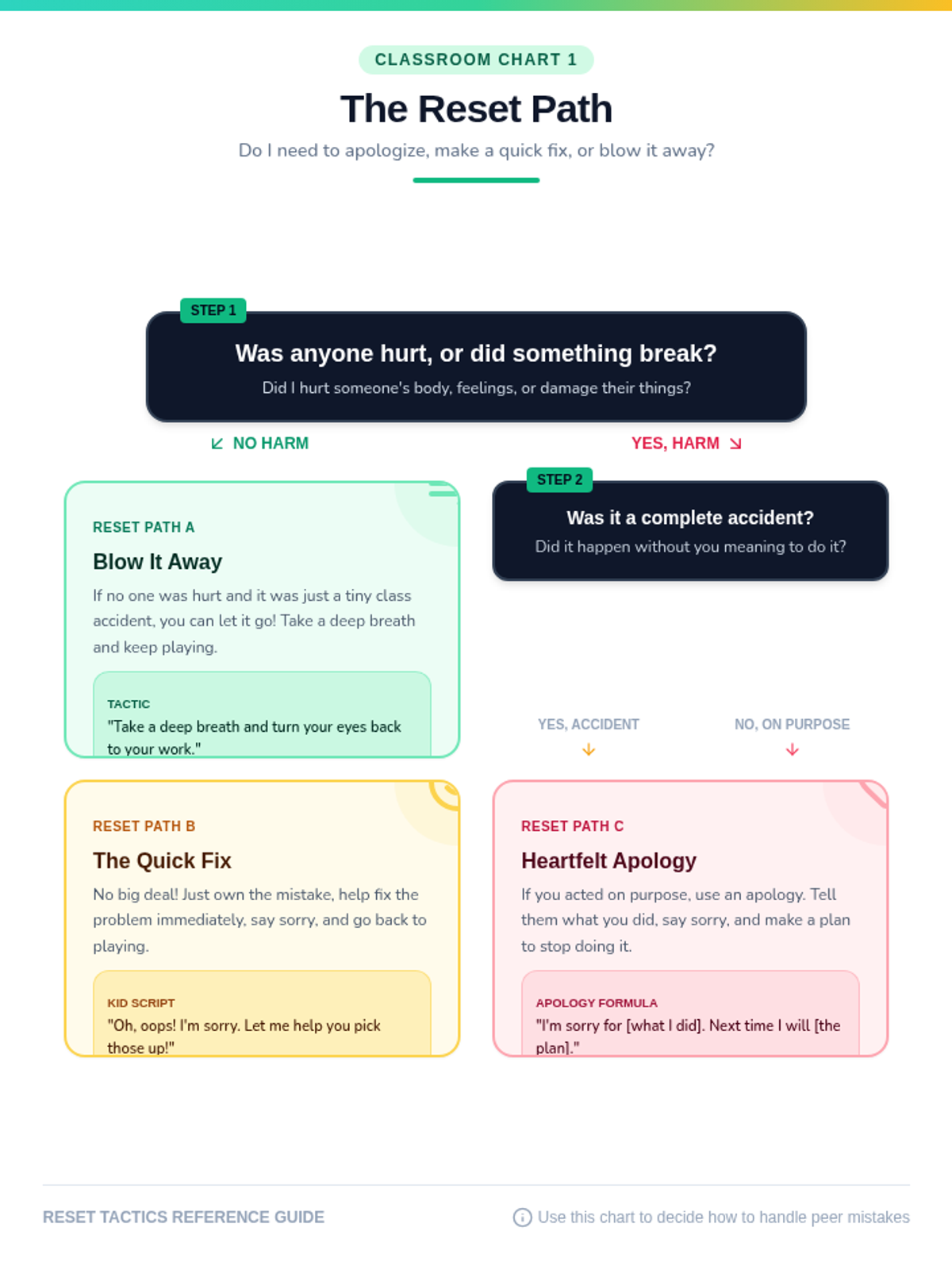
Printable anchor charts for classroom display. Page 1 presents the visual Apology Decision Tree. Page 2 outlines 'Paperclip vs. Backpack' friction levels and the Boundary Shield formula.
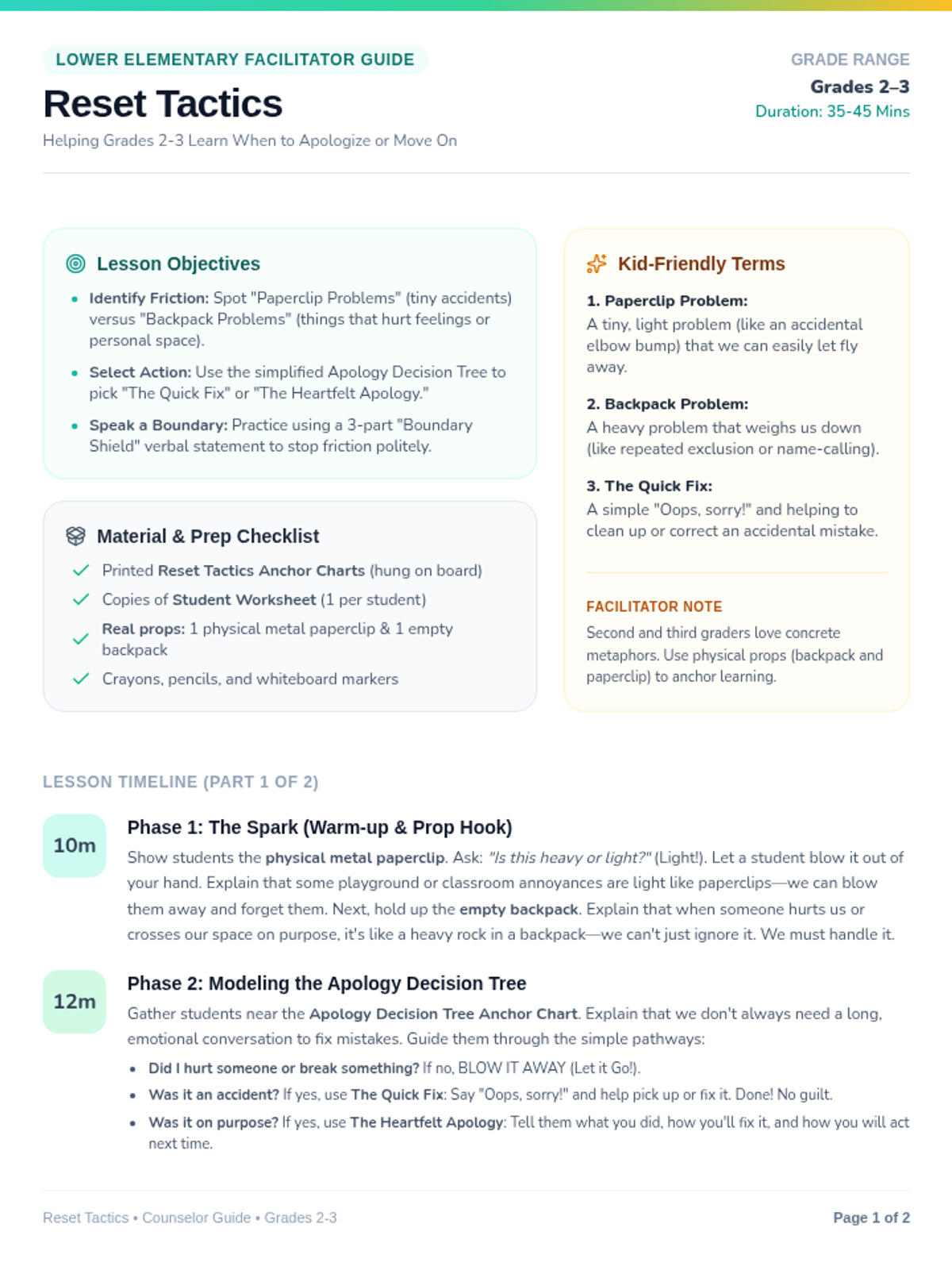
A complete 2-page counseling lesson plan for teachers, outlining objectives, warm-ups, direct instruction for the Apology Decision Tree, group activities for letting go of minor friction, and classroom facilitation notes.
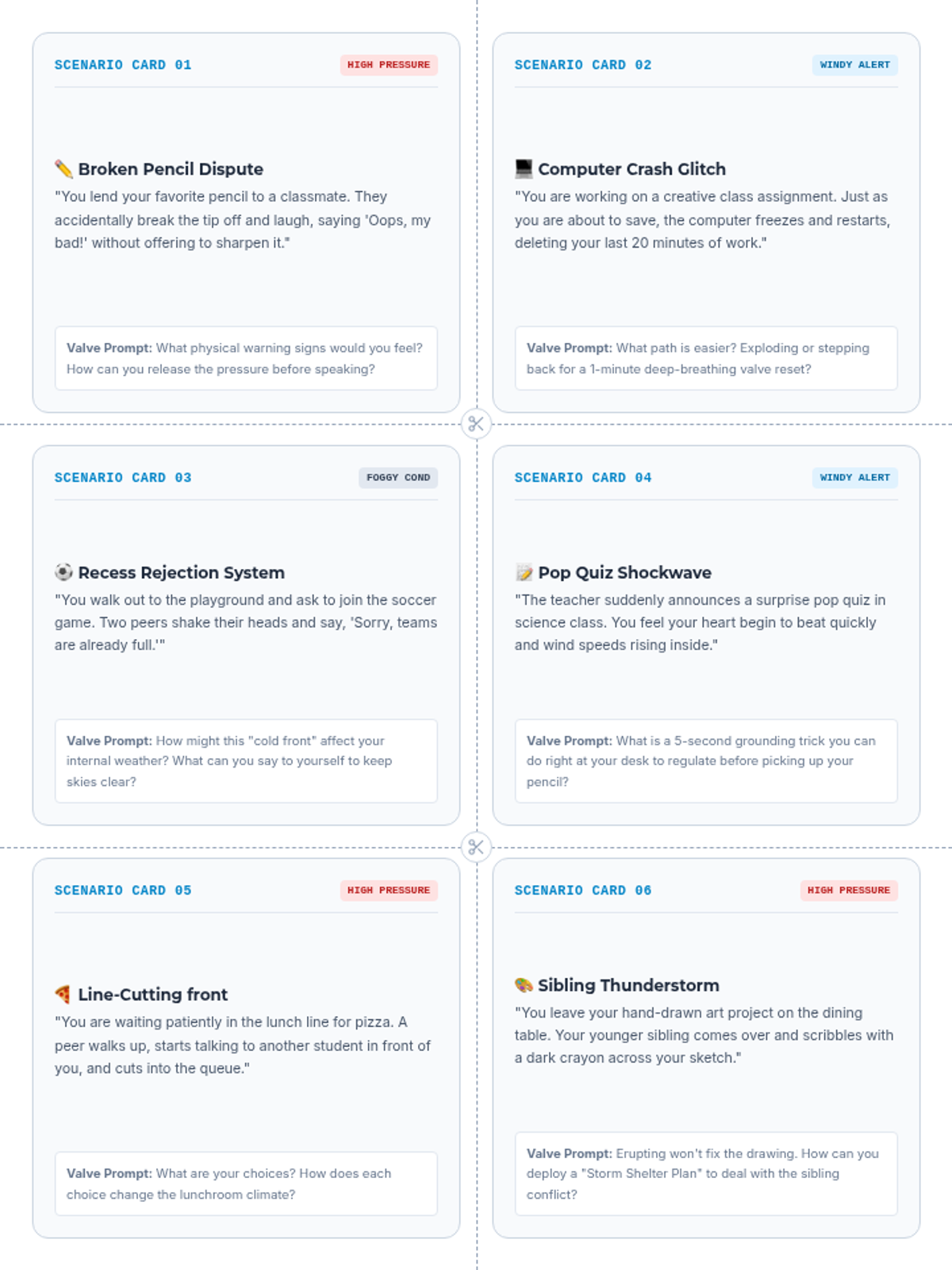
A printable classroom activity sheet featuring 6 cut-out scenario cards. Each card presents a high-pressure student conflict or anxiety trigger and includes guided prompts for classroom discussion or roleplay exercises.
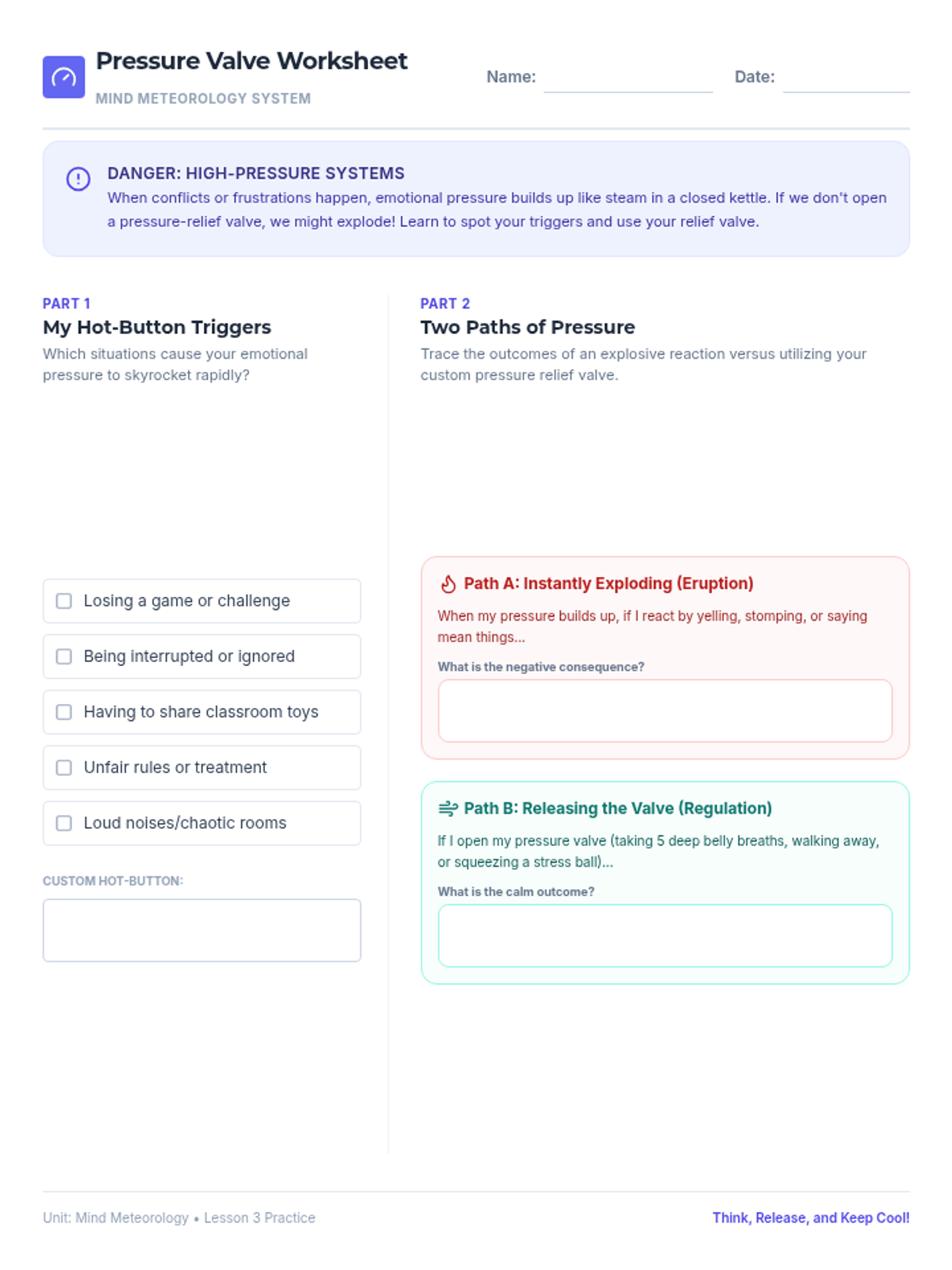
A printable, 1-page student worksheet that helps students map out emotional triggers, analyze high-pressure impulses, and select 'pressure relief valve' coping strategies to make responsible decisions.
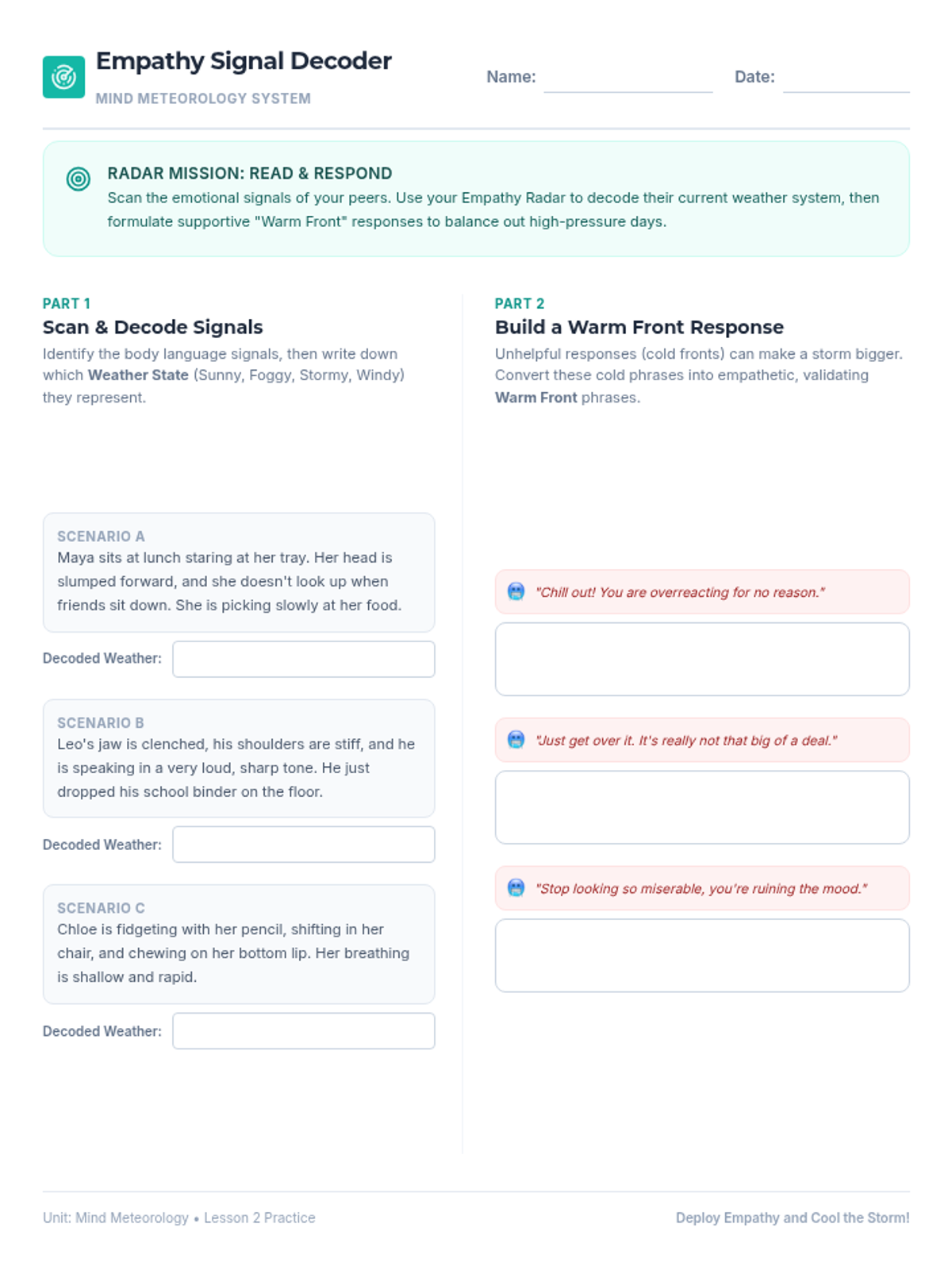
A printable, 1-page student worksheet that helps students decode peer social cues and practice converting invalidating statements into supportive, validating 'Warm Front' statements.
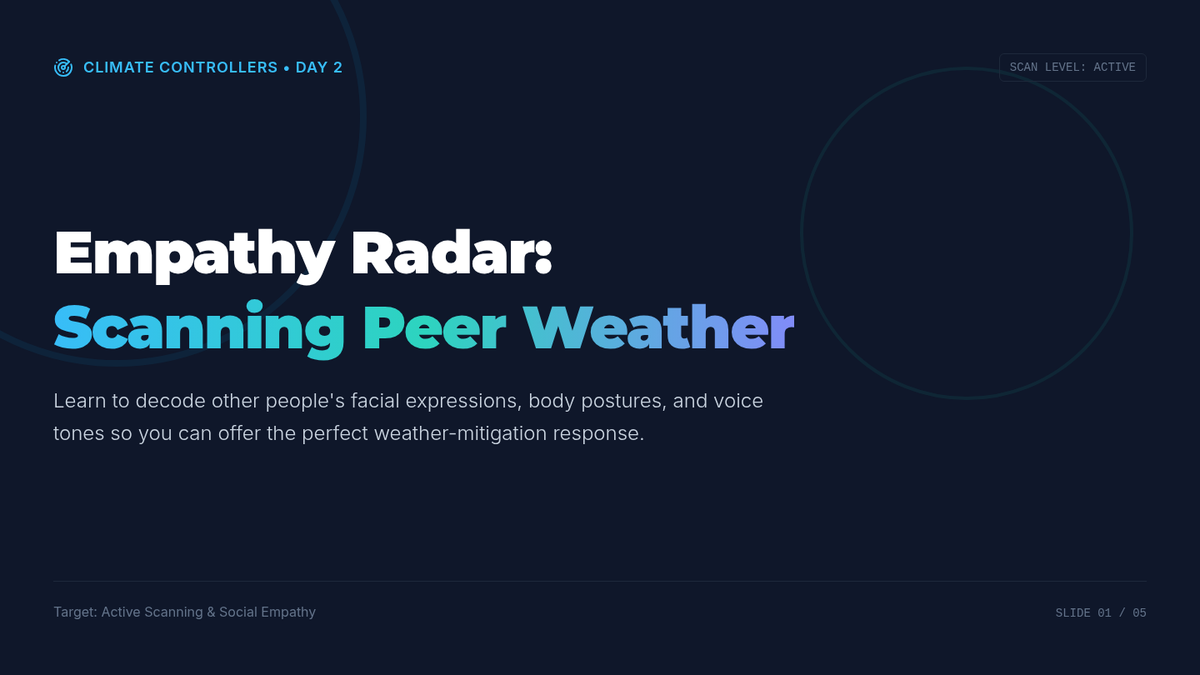
A high-impact, 5-slide interactive presentation designed for 16:9 widescreen layout. This slide deck introduces students to 'Empathy Radar,' teaching them how to read and decode peers' emotional weather signals through visual cues and tone of voice.
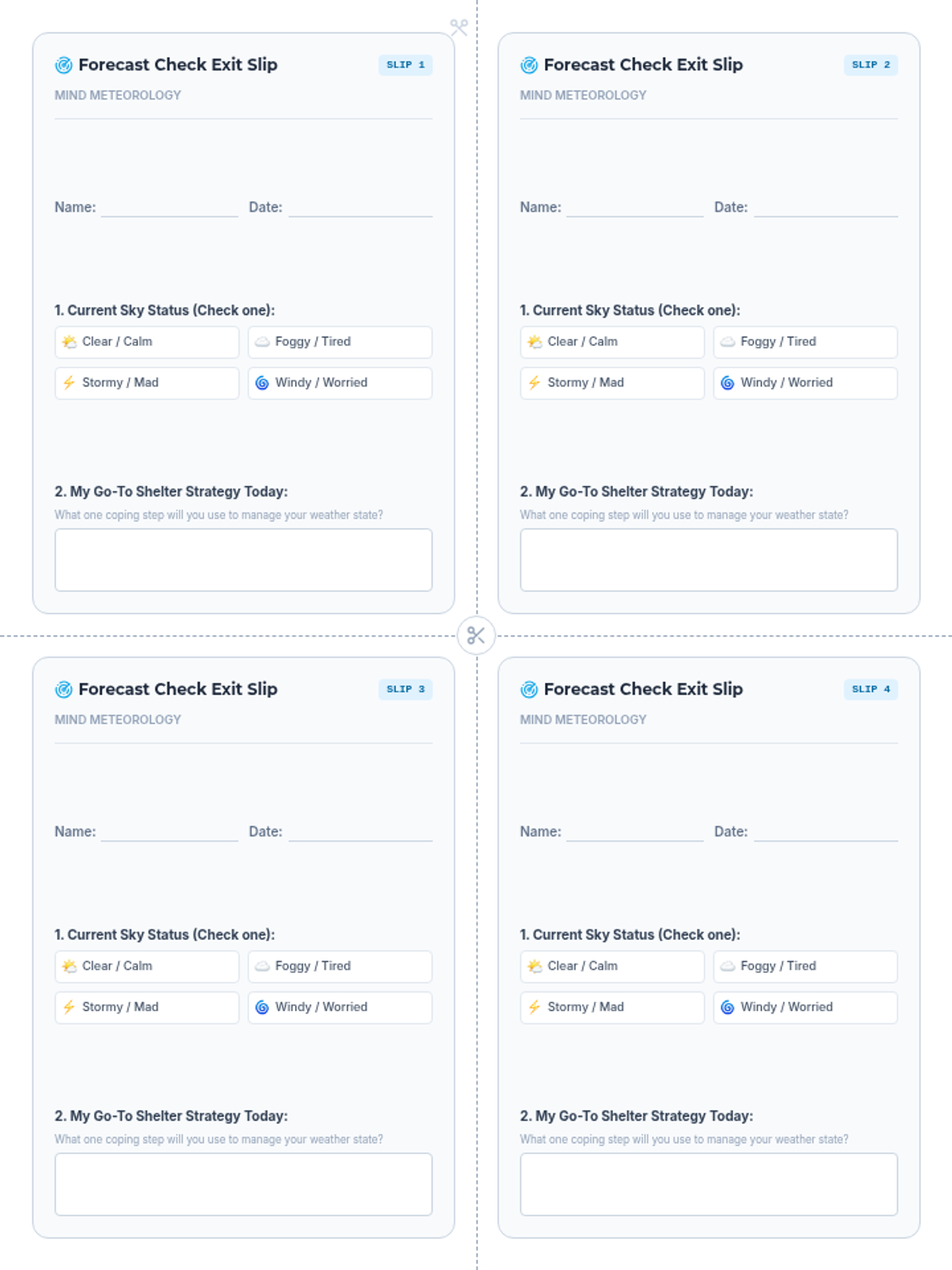
A printable exit ticket page containing 4 identical cut-apart slips for students to complete a quick self-assessment and coping strategy commitment. Features a 2x2 layout with dashed cut-lines for efficient printing and classroom distribution.
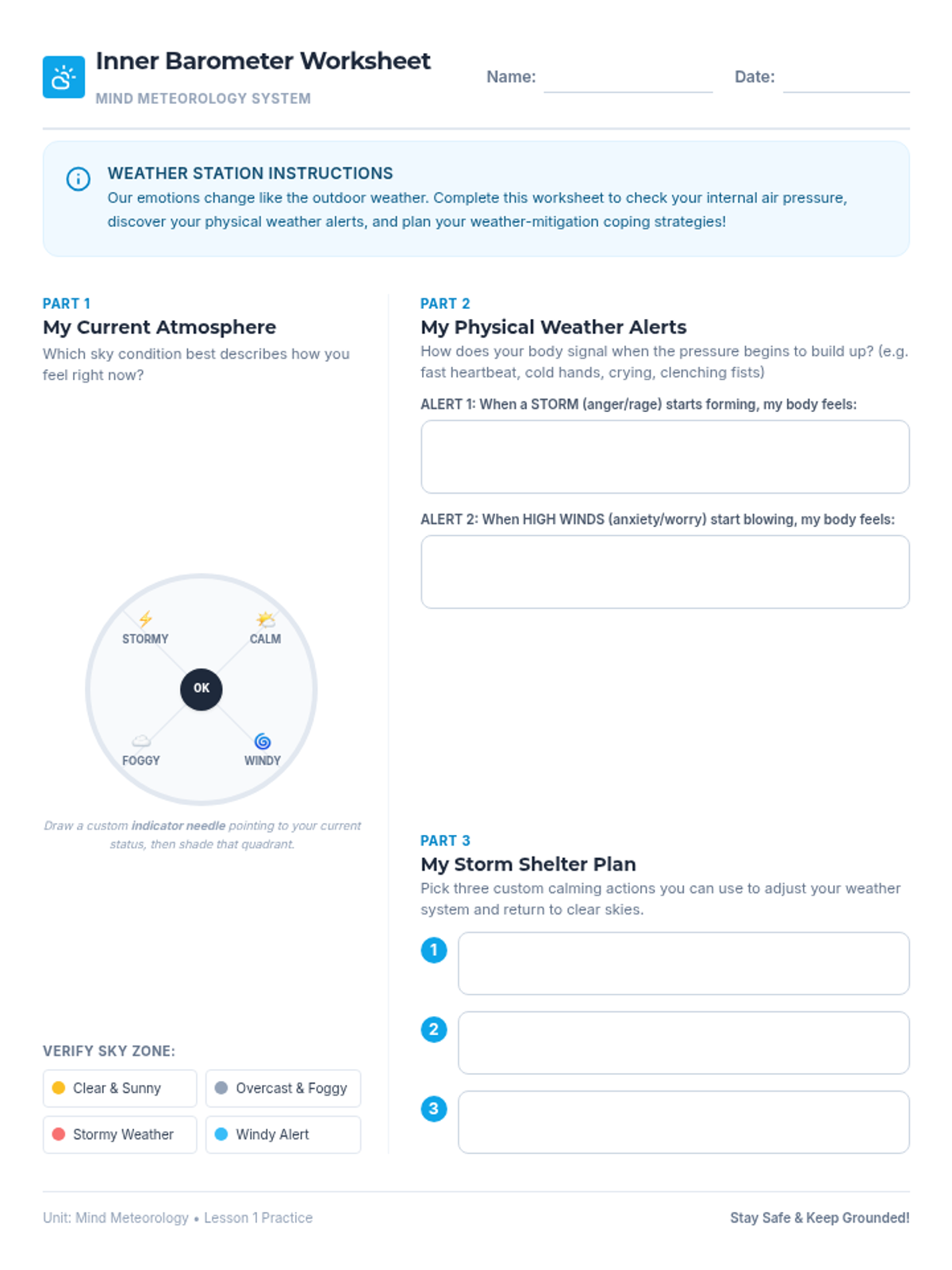
A printable, 1-page student worksheet that guides students in identifying their physiological stress indicators as weather alerts and mapping out a personalized "Storm Shelter Plan" of self-regulation coping strategies.
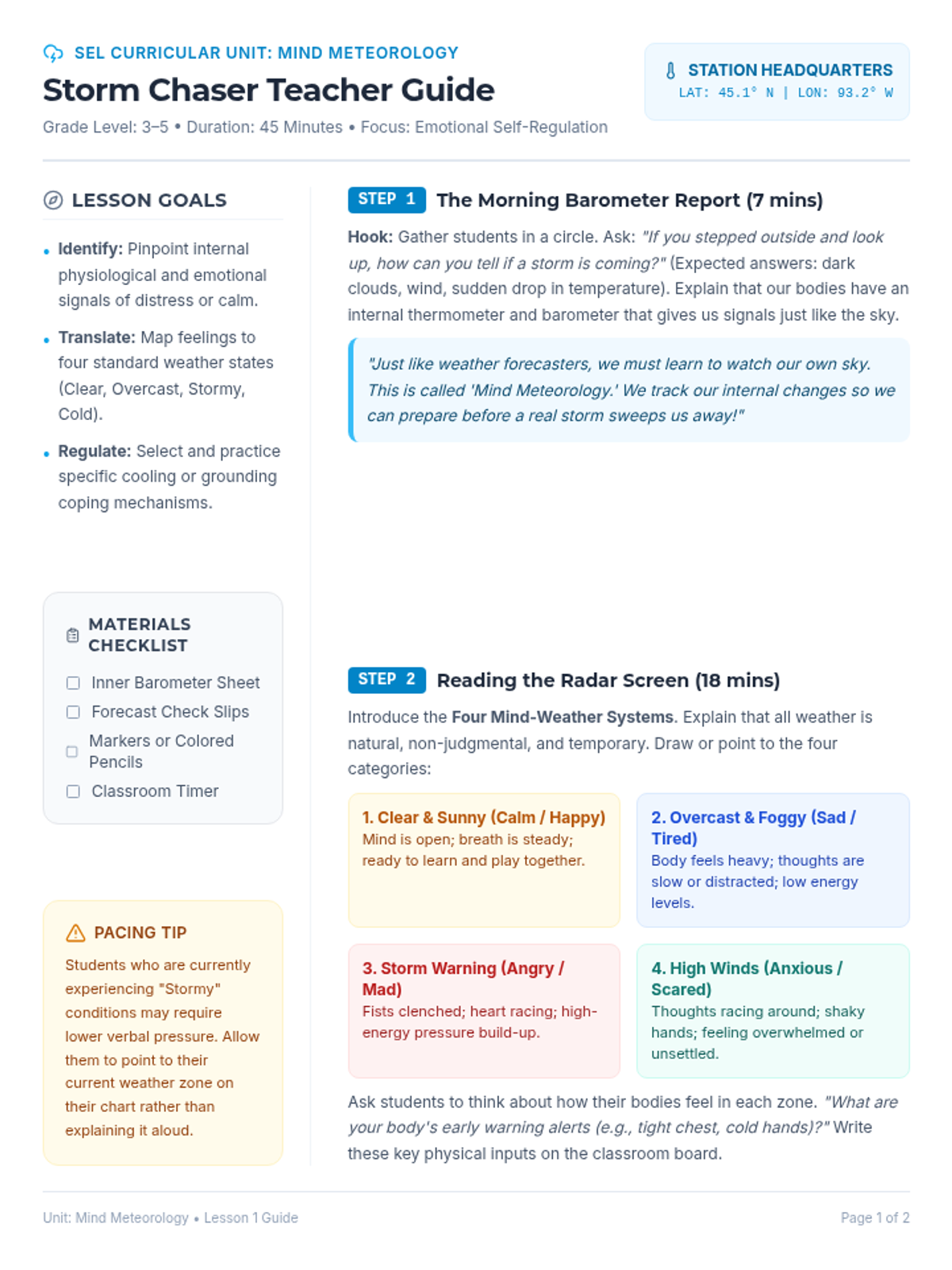
A highly structured, 2-page print-ready lesson plan and facilitation guide for teachers. It outlines the 'Mind Meteorology' curriculum, including step-by-step instructions, discussion prompts, weather-themed emotional states mapping, and teacher tips.
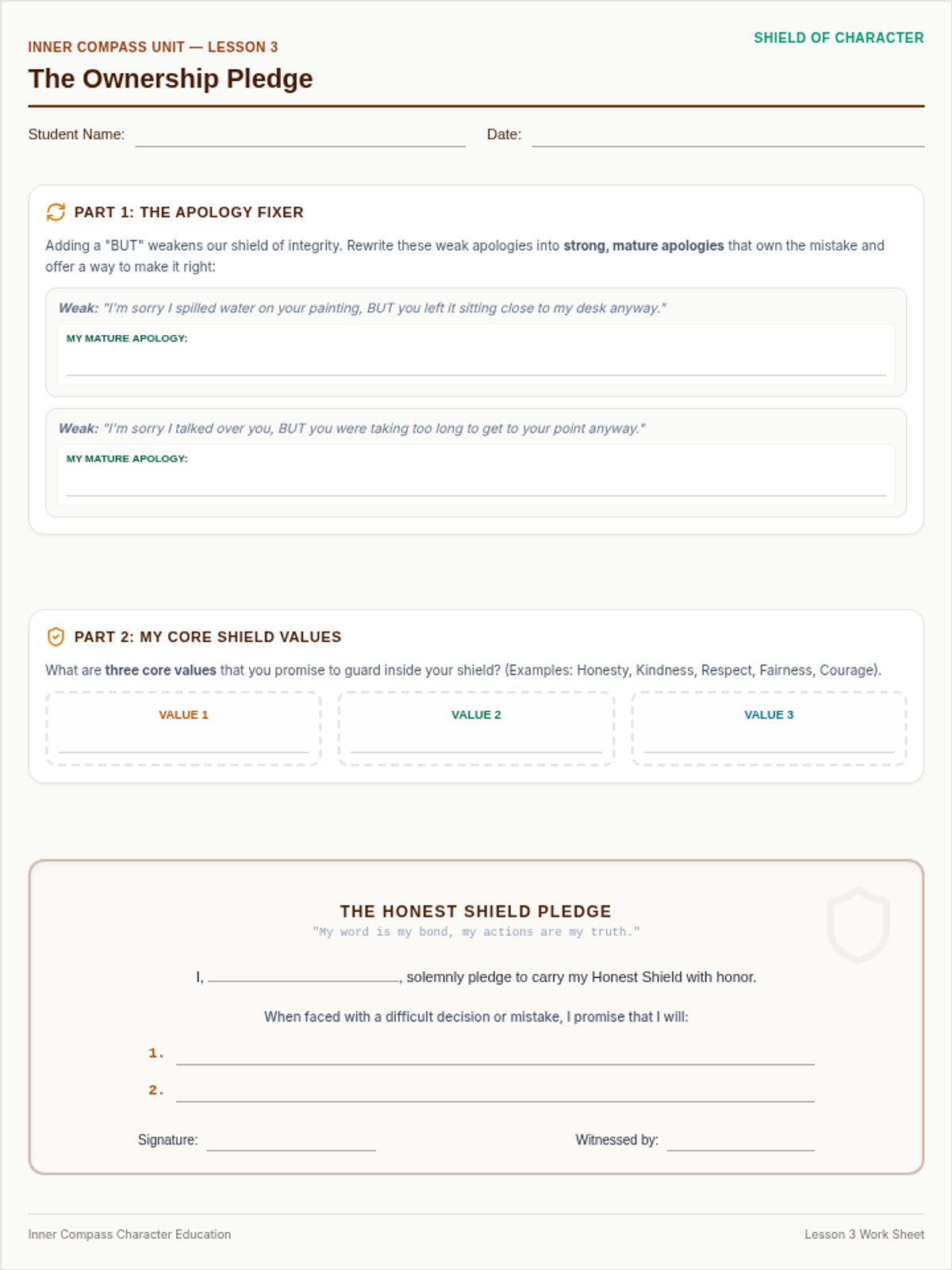
A reflection and goal-setting worksheet where students practice constructing mature apologies without excuses and design their own personal Integrity Pledge.
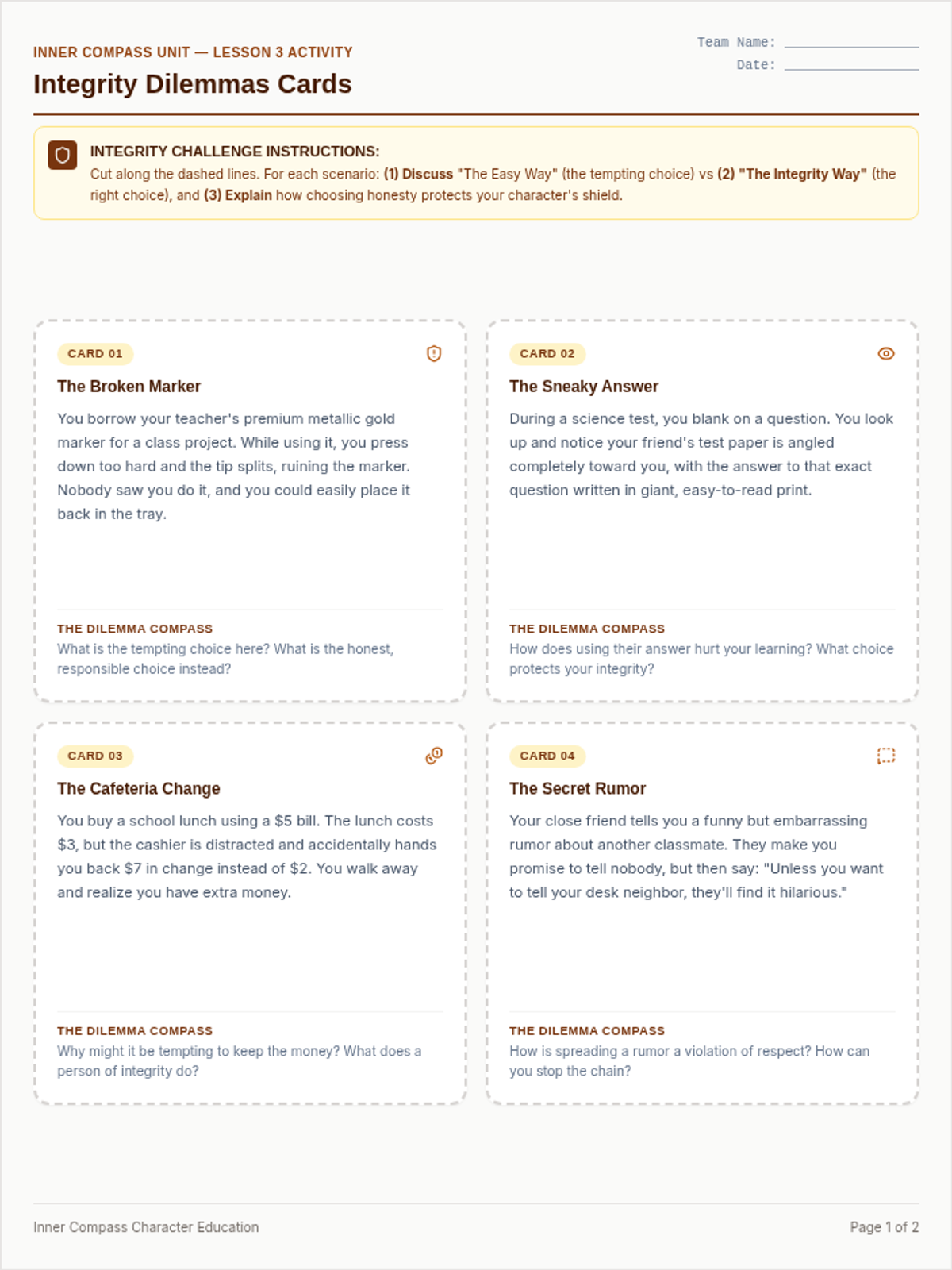
A collection of printable scenario cards for an integrity-focused decision-making activity. Students analyze challenging situations and discuss the difference between 'The Easy Way' and 'The Integrity Way'.
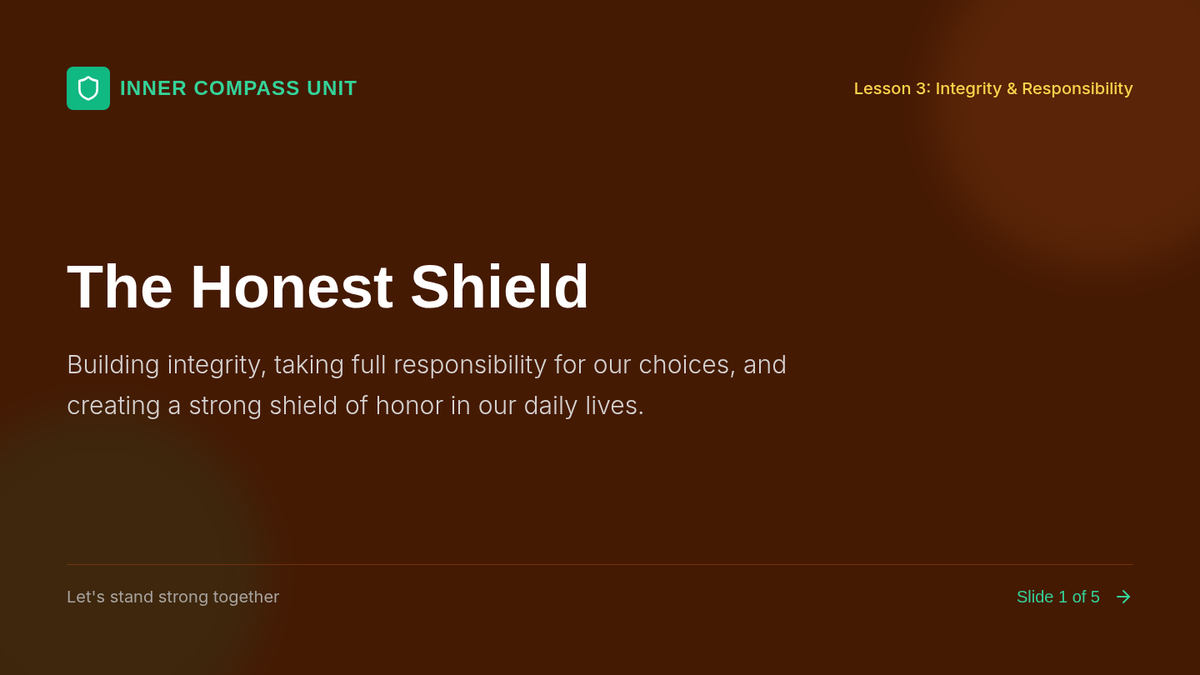
An interactive slide presentation to guide classroom discussions on responsibility, honesty, and integrity. Designed for the 'The Honest Shield' lesson with a scout/shield theme.
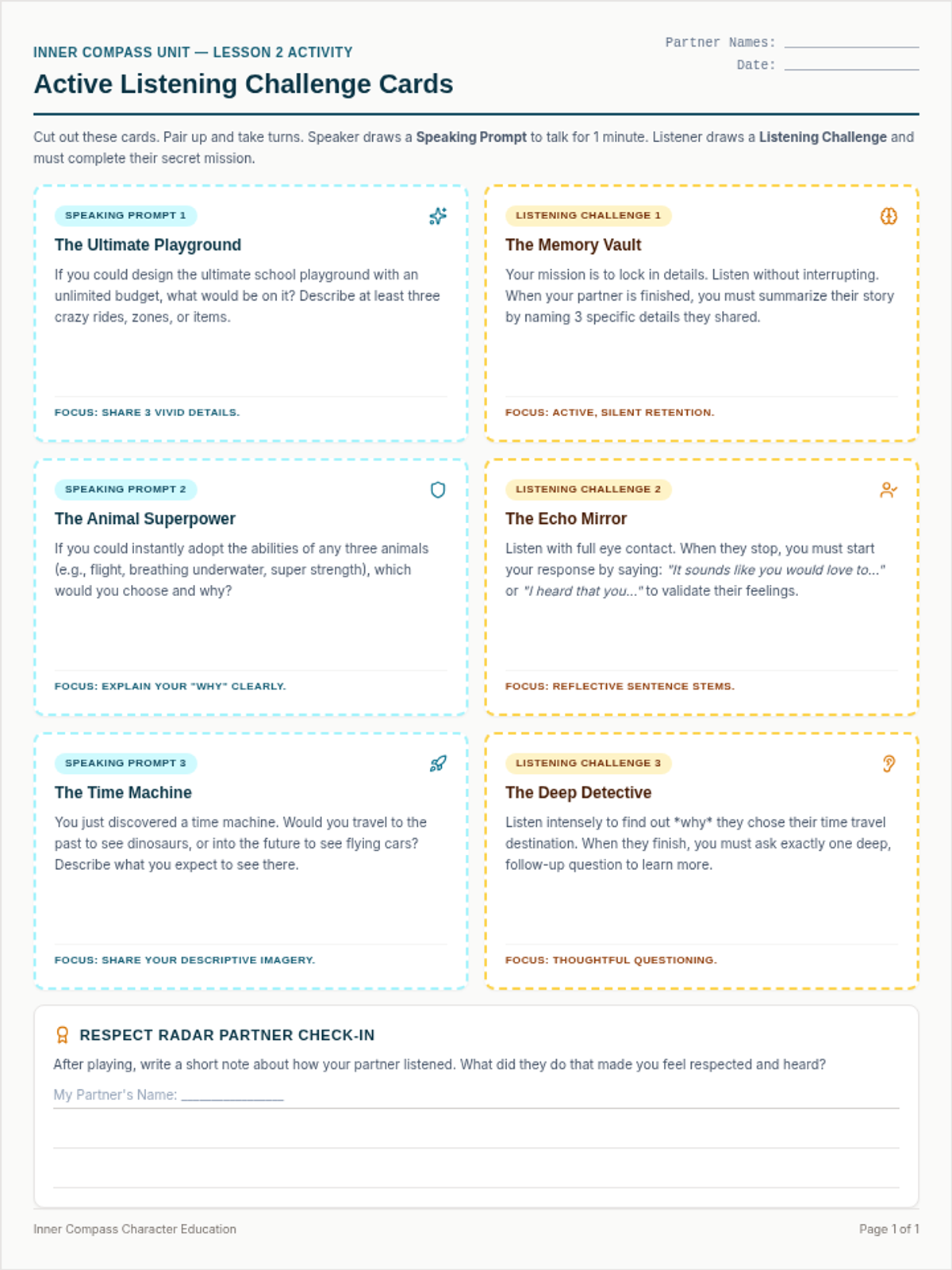
A collection of printable challenge cards for a peer active-listening activity. Partners trade off speaking and listening roles to practice specific respect habits.
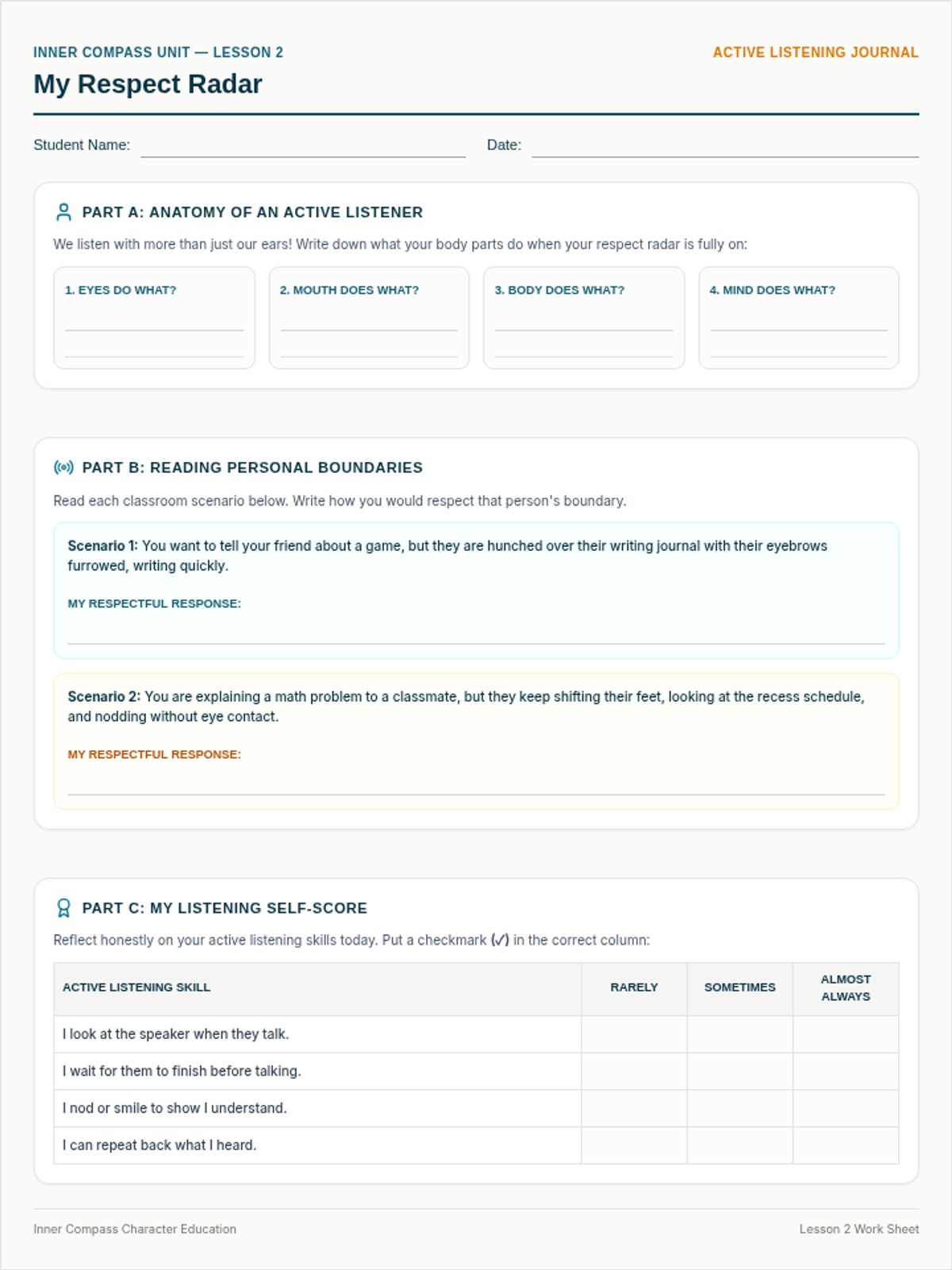
An active listening activity sheet and reflection workspace where students self-assess their communication habits and practice reading classroom boundaries.
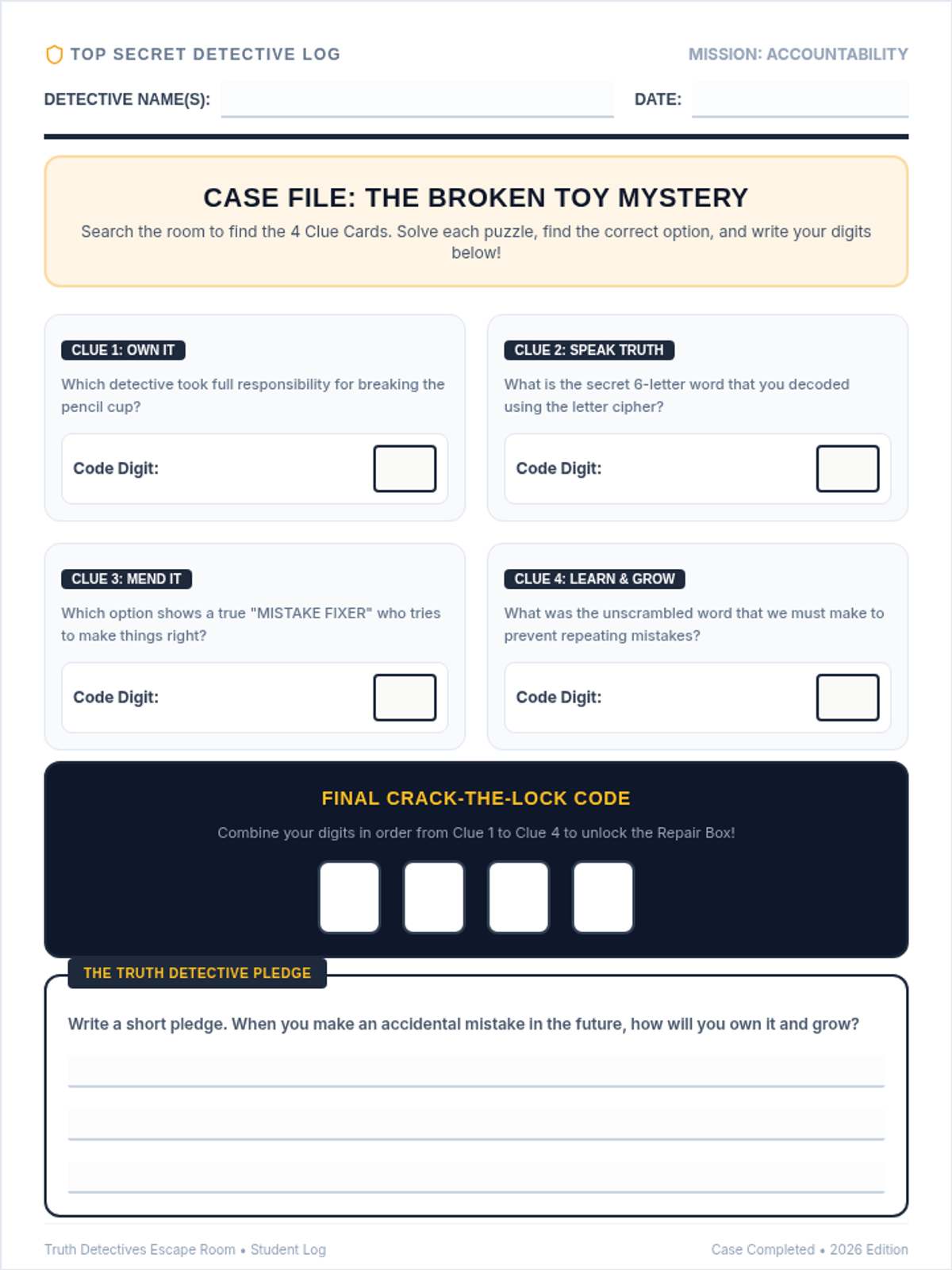
An interactive student recording sheet styled as a top-secret investigator's file. Students fill out their team names, log their clues, solve the 4-digit code to open the repair box, and write their personal accountability pledge.
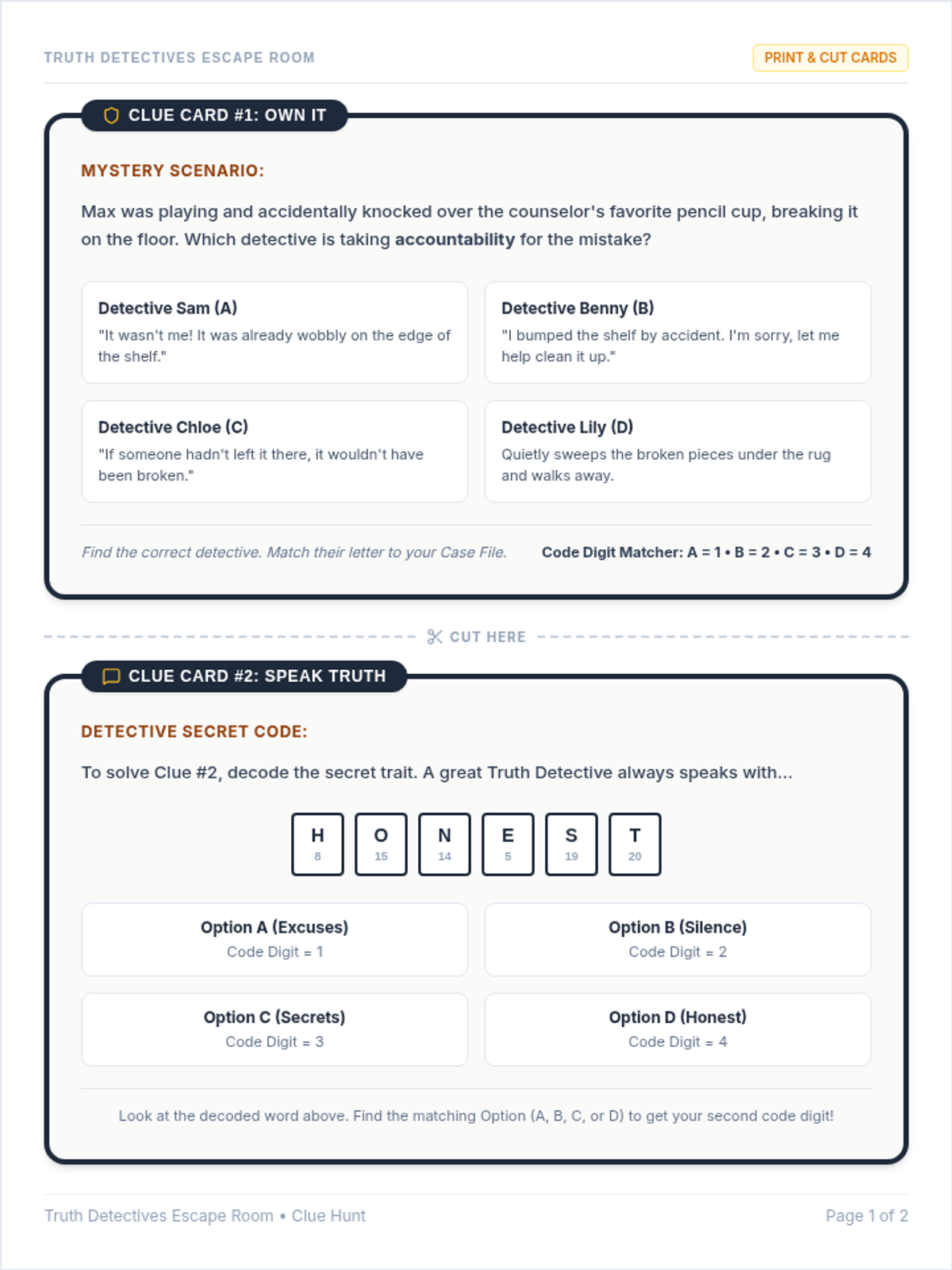
Printable clue cards for the counseling room search. Each card presents a realistic accountability dilemma or puzzle (Own It, Speak Truth, Mend It, Learn & Grow) designed for 2nd and 3rd graders. Students solve the puzzle to reveal a code digit.
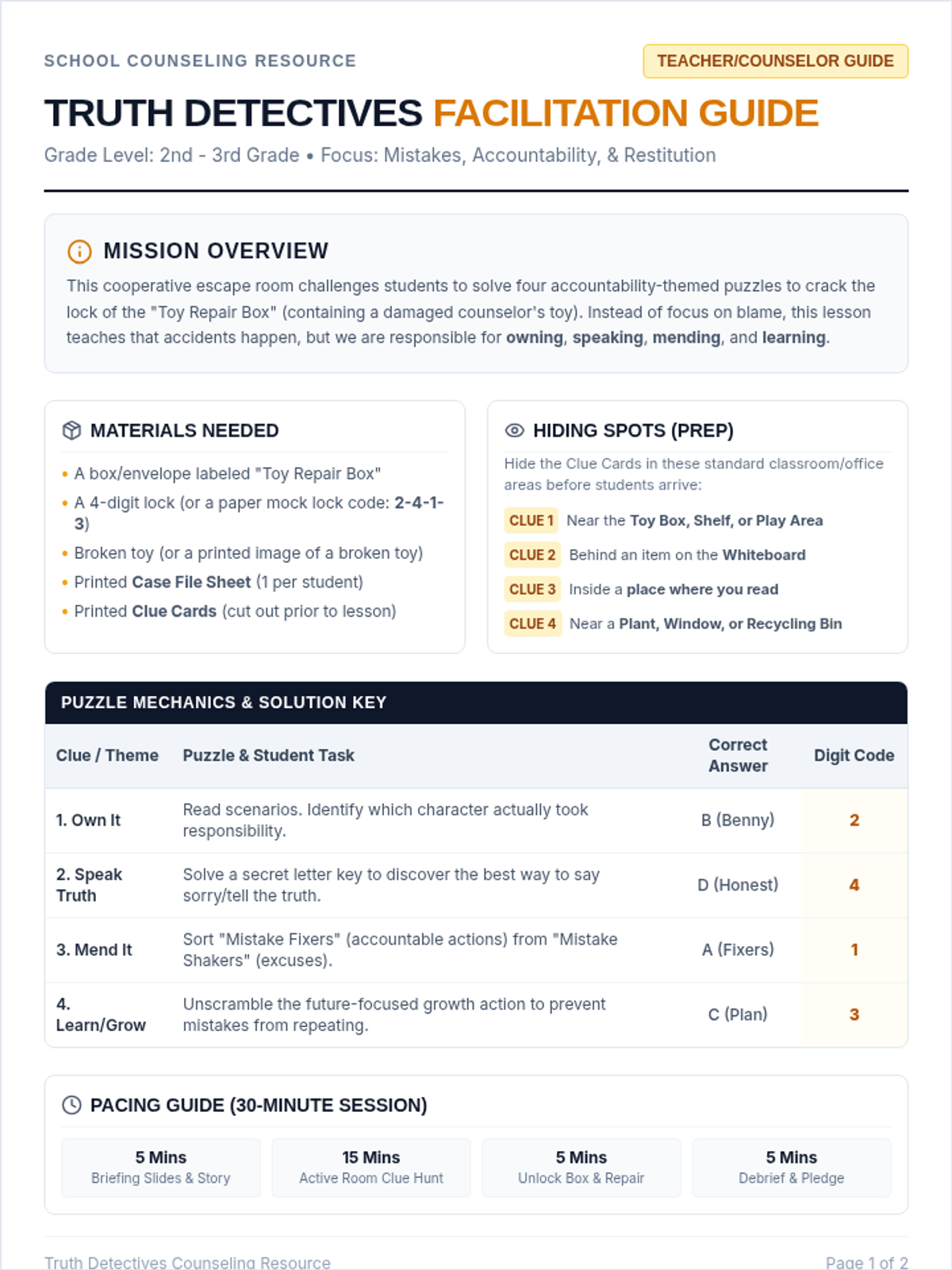
A step-by-step facilitator guide for counselors to successfully set up, run, and debrief the escape room. It includes preparation checklists, clue hiding suggestions, an interactive script, and deep debriefing questions focusing on accountability.
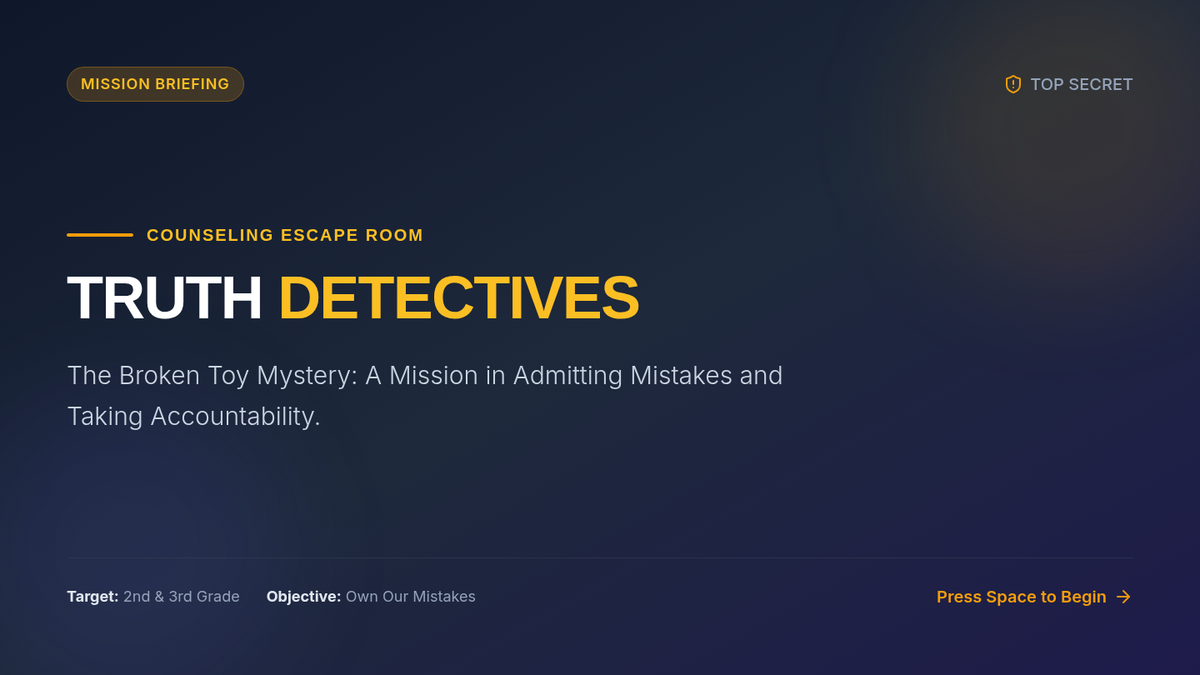
A highly visual slide presentation to kick off the Truth Detectives escape room. It introduces the scenario of 'The Broken Toy Mystery', sets up the rules of the physical room hunt, and defines key accountability concepts in a child-friendly way.
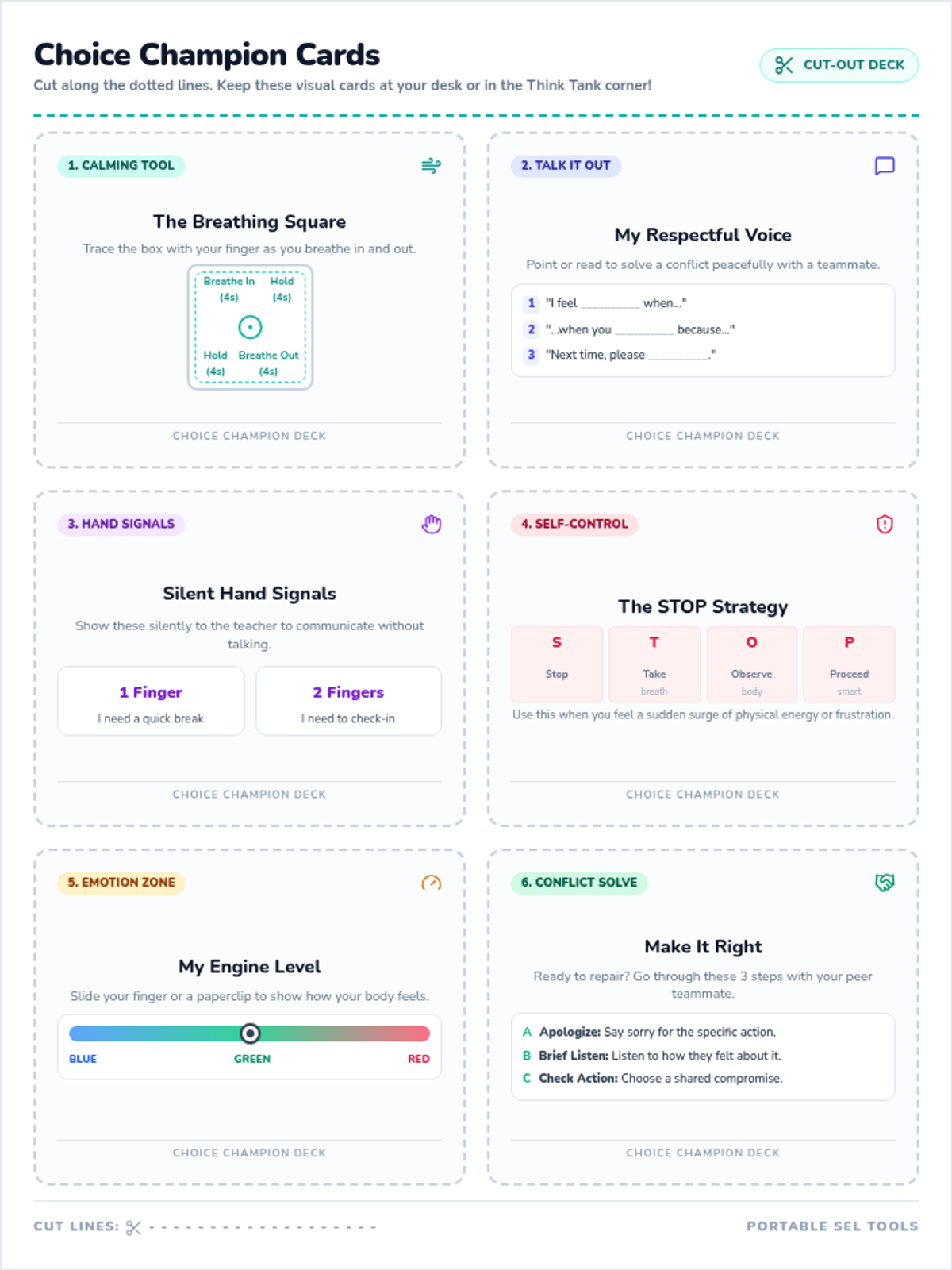
A printable set of 6 pocket-sized visual choice cards. Features guided breathing, I-statement scaffolding, hand-signals, the STOP strategy, and zone checkers to give students concrete, portable self-regulation support.
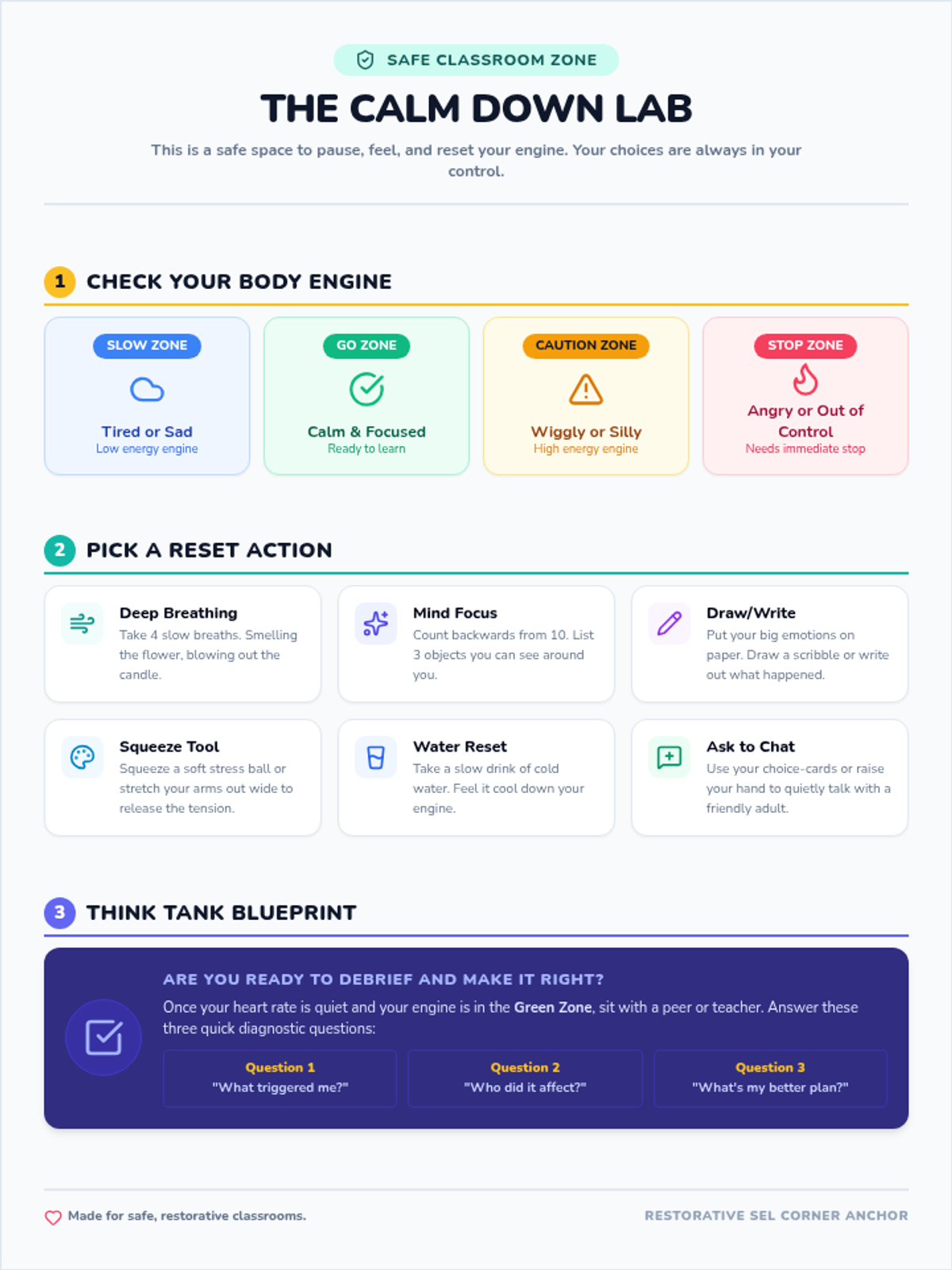
A high-visibility classroom anchor chart for the Think Tank reflection corner. Outlines a simple three-step calming protocol, visual emotional energy zones, and concrete self-regulation strategies to support independent conflict resolution.
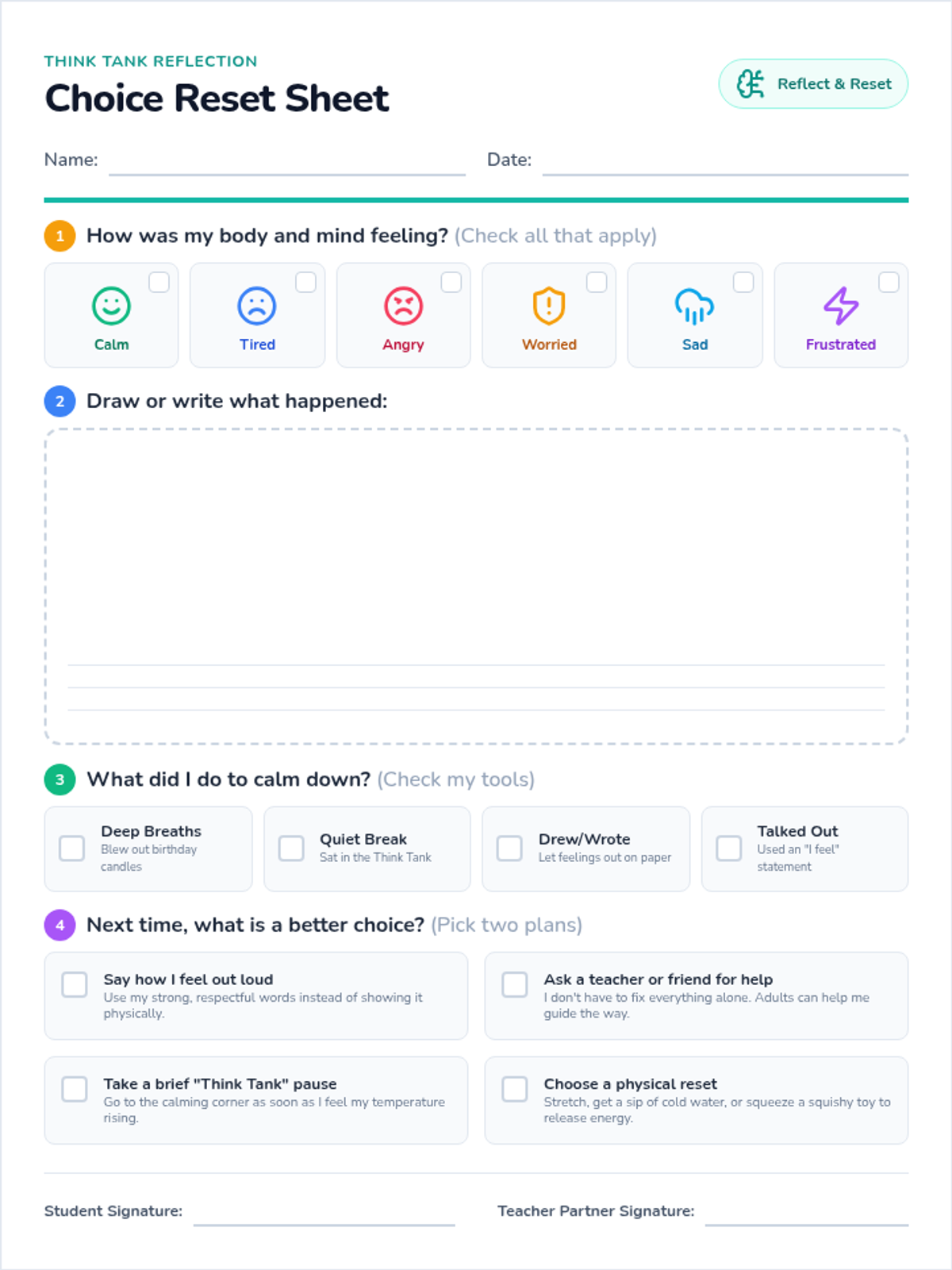
A visual, student-facing behavior reflection sheet designed for elementary and struggling writers. Features emoji feelings charts, a dedicated white canvas area for drawing or writing, and simple visual check-boxes for tracking calming strategies and future positive choices.
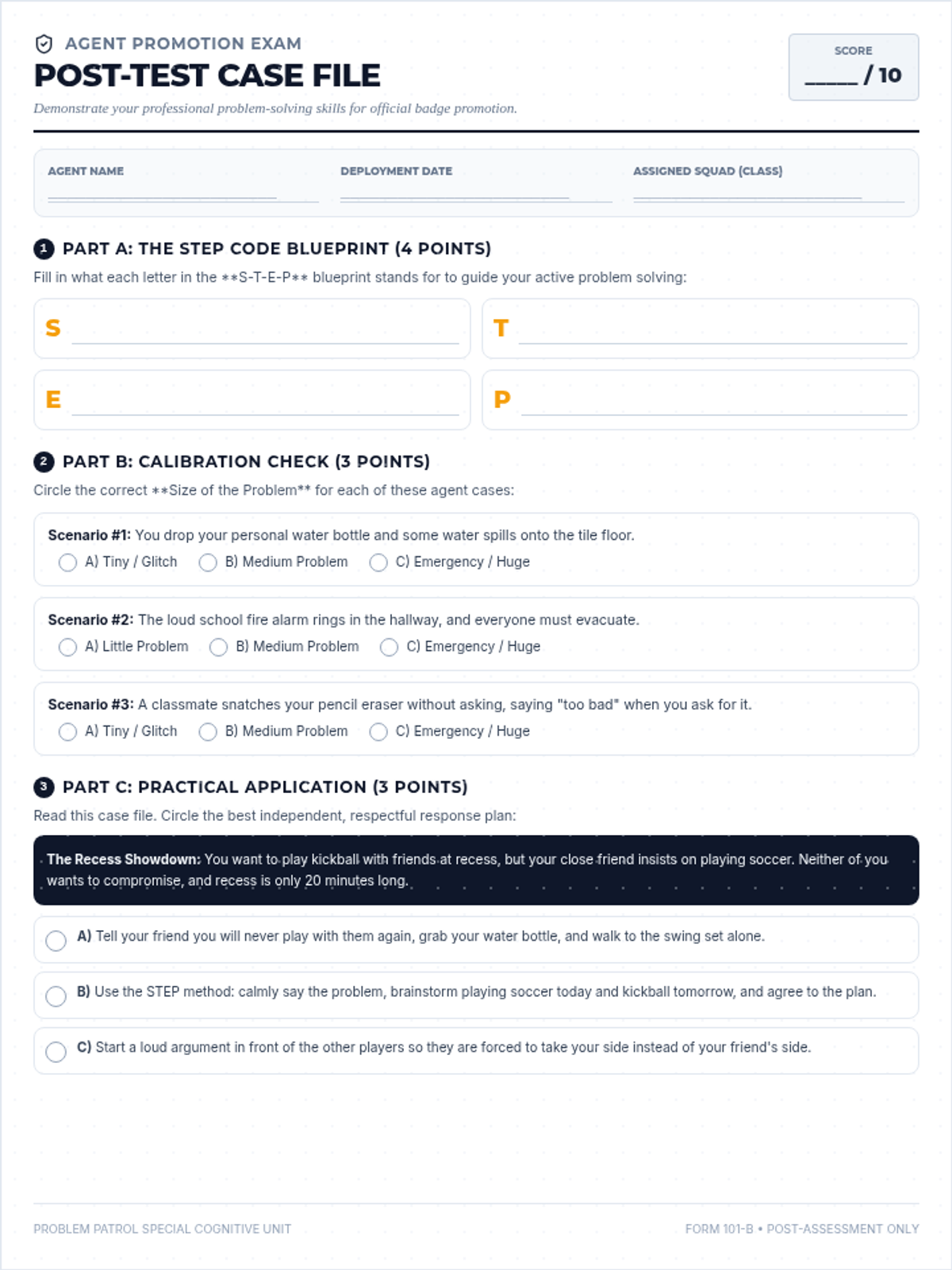
A single-page printable student post-assessment sheet to evaluate learning gains, comprehension of the STEP method, and problem sizing skills, using a matching detective theme.
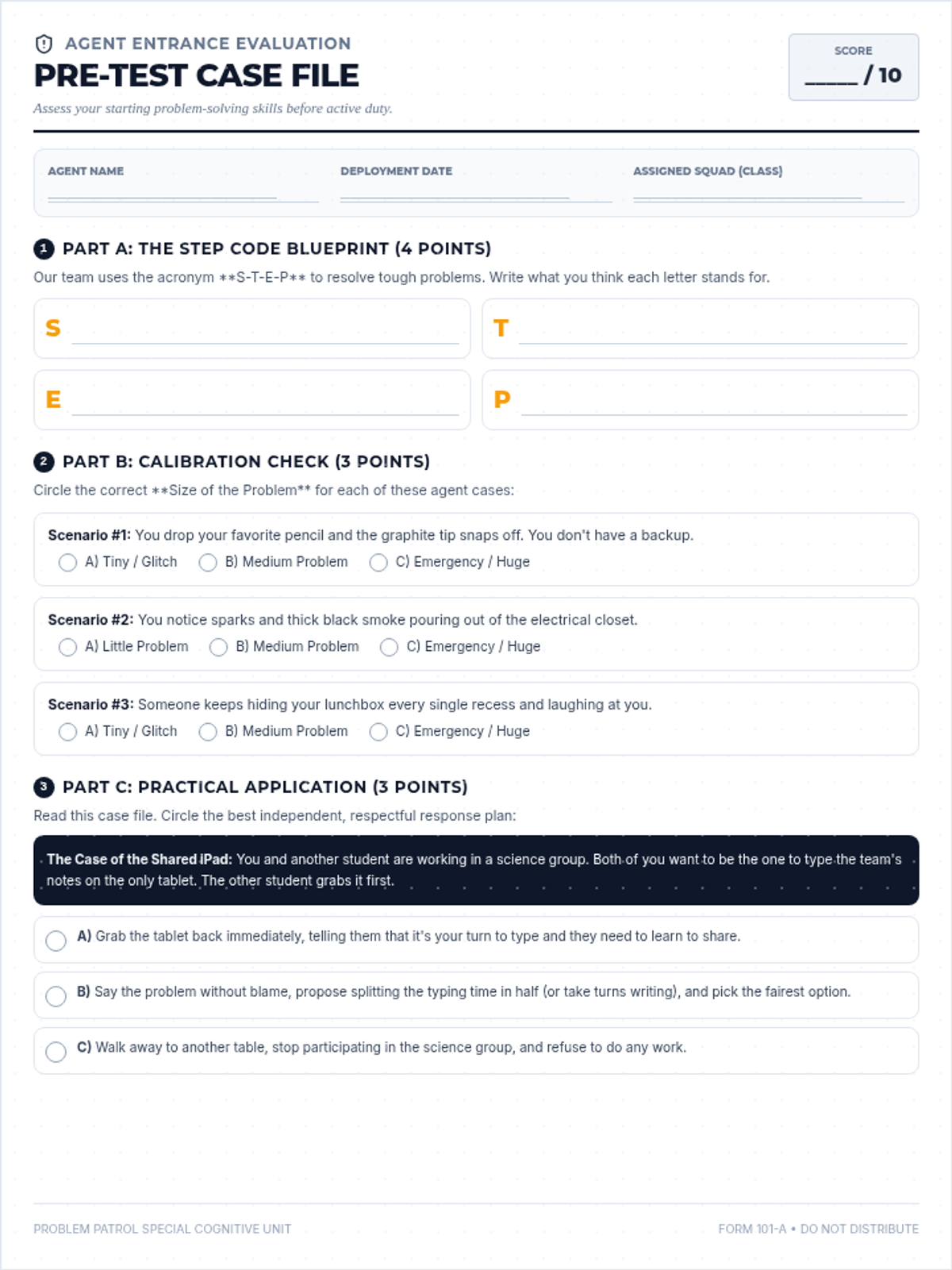
A single-page printable student pre-assessment sheet to establish a baseline of their problem-solving and emotional regulation knowledge, using a detective case file theme, now with multiple-choice questions.
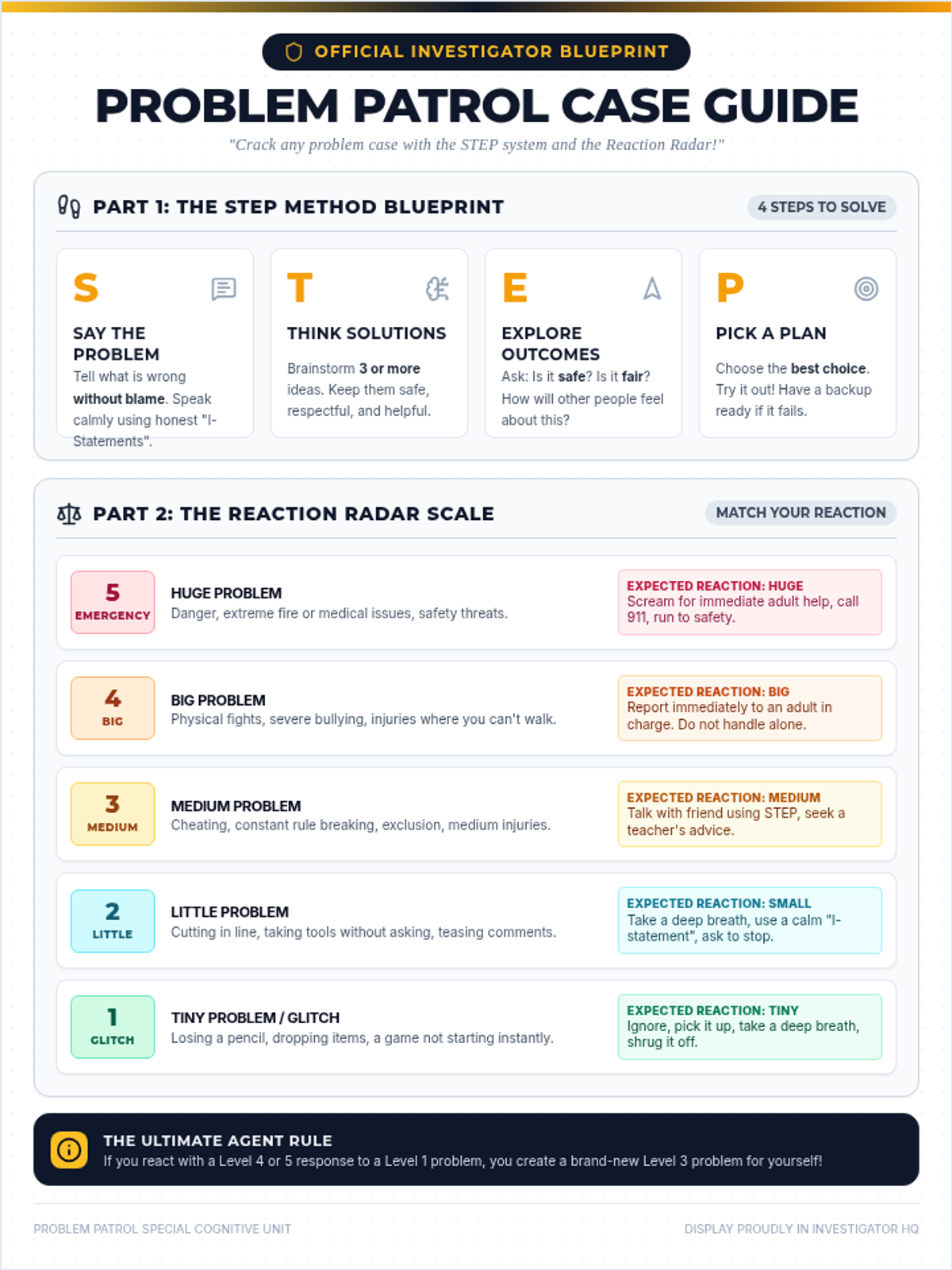
A single-page, highly visual classroom anchor chart poster detailing the STEP problem-solving method and the 1-5 Size of the Problem Reaction Scale with a detective theme.
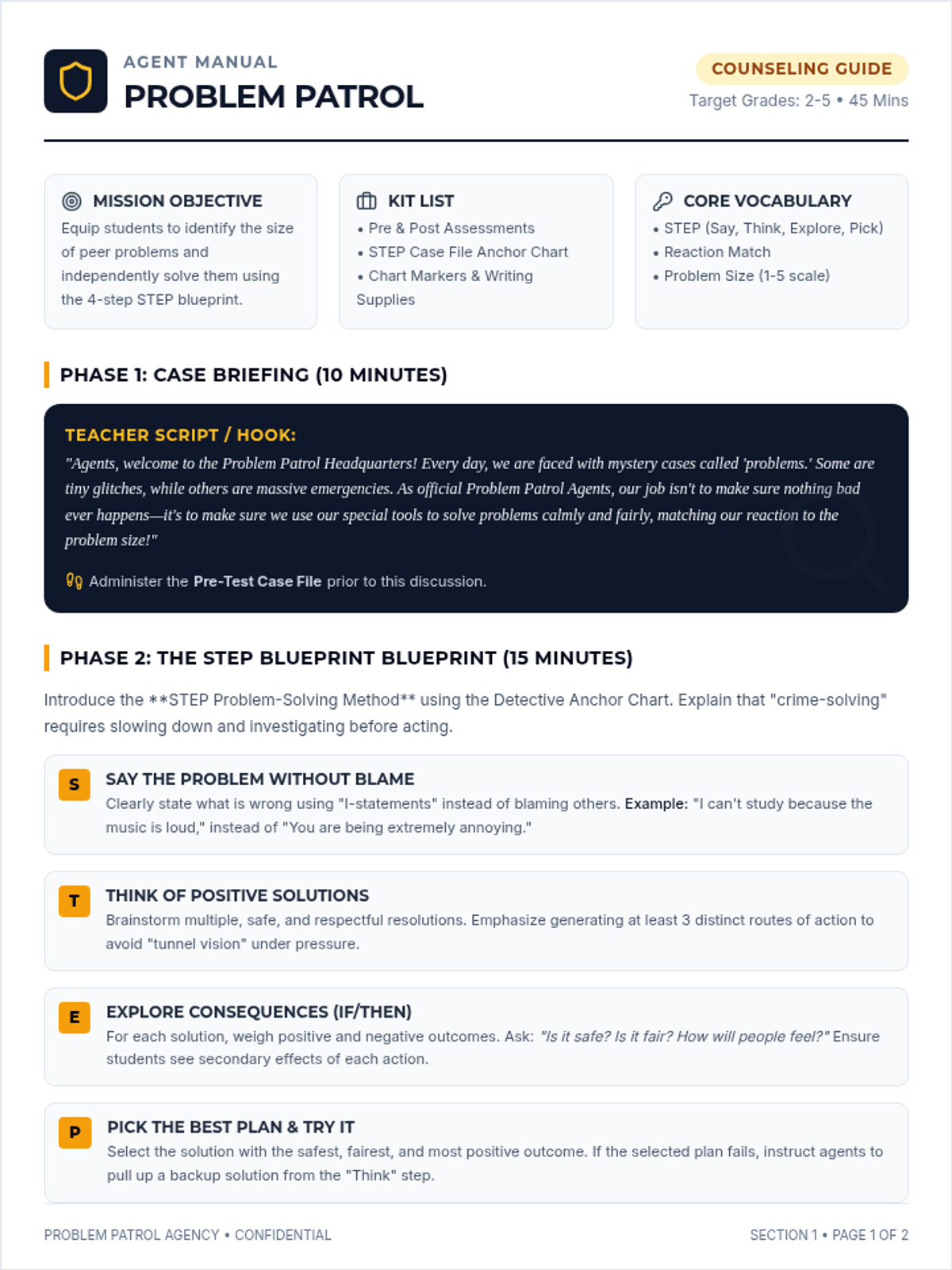
A 2-page instructional facilitation guide for counselors and teachers detailing how to introduce the STEP problem-solving method and Size of the Problem scale using a cohesive detective theme.
The final instructional slide deck for Lesson 5, guiding students through synthesizing their research into a "Joy Menu" and practicing their new skills through role-play.
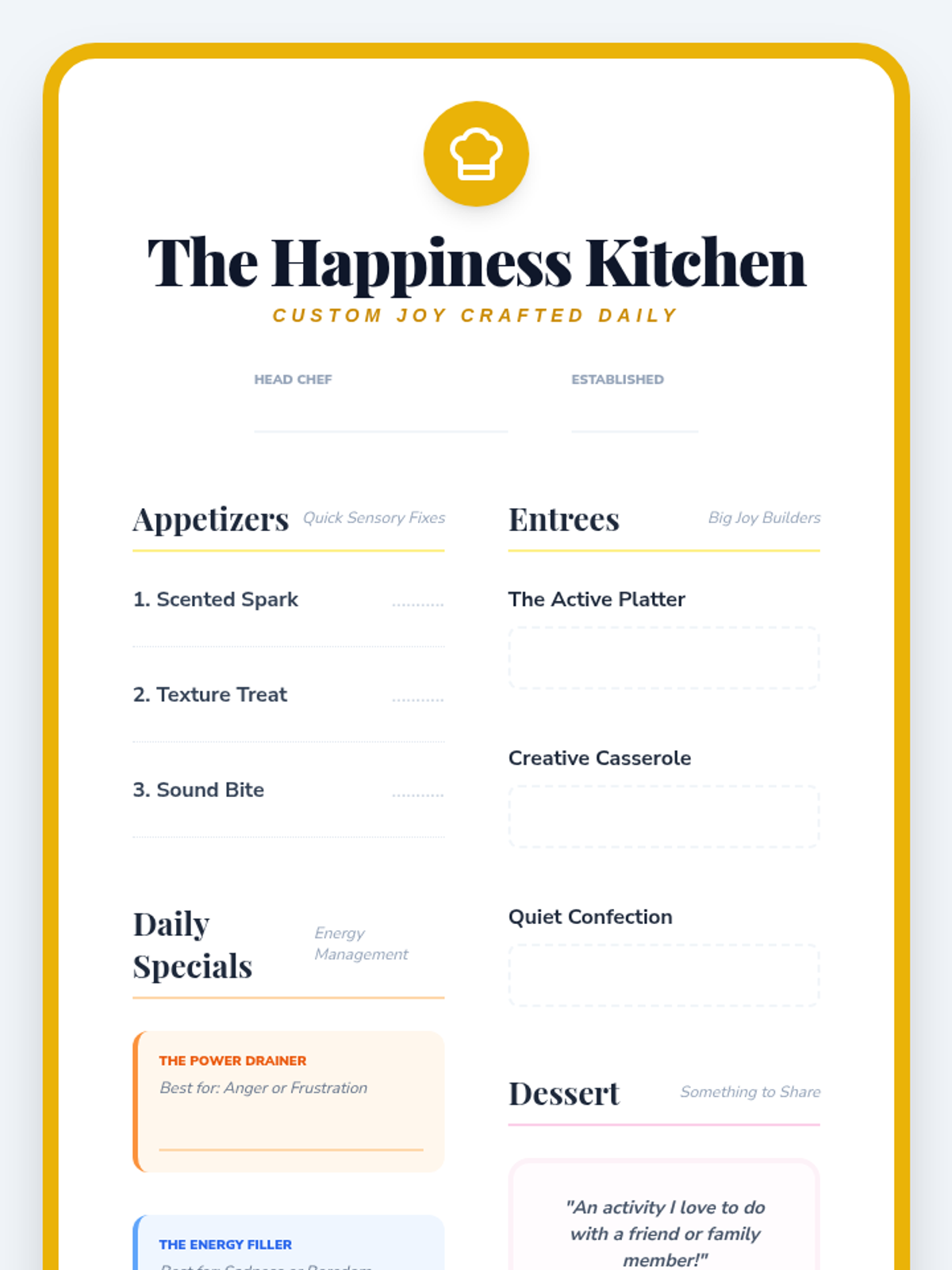
A student-facing restaurant-style menu template for synthesizing and illustrating personal mood-lifting activities and coping strategies.
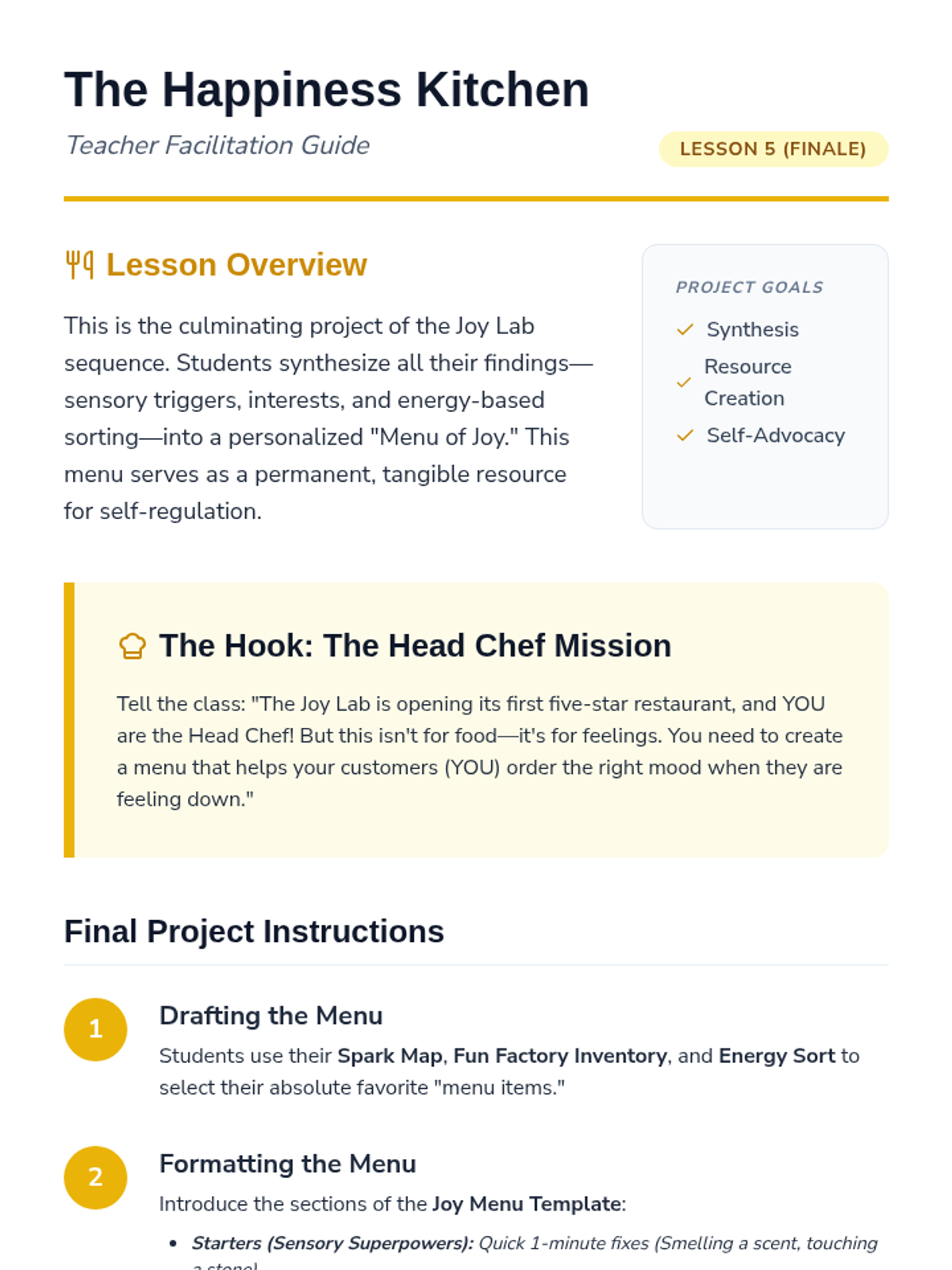
A teacher guide for Lesson 5, focusing on synthesis of learned coping strategies into a personalized "Joy Menu" and providing instructions for role-play scenarios.
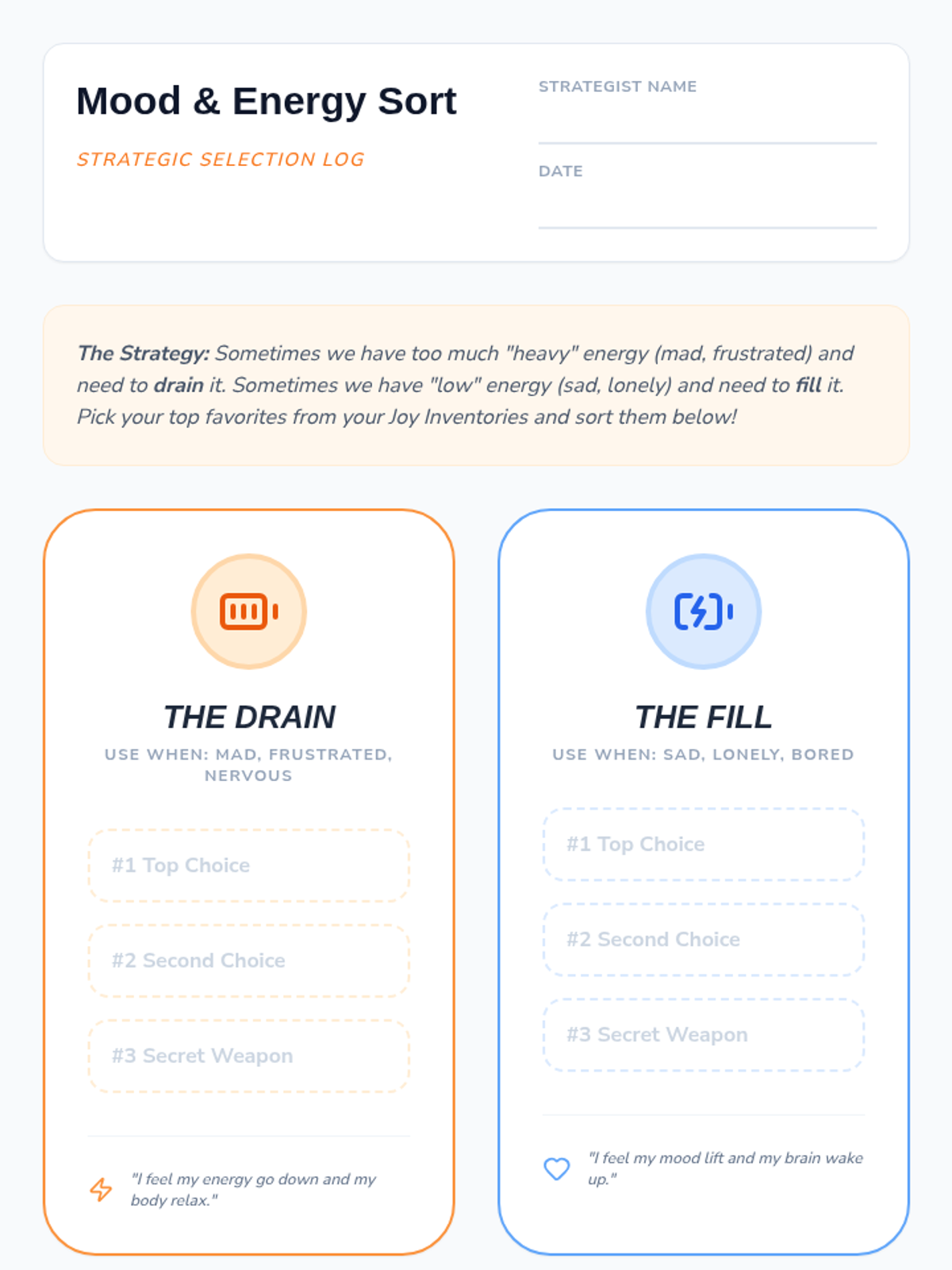
A student worksheet for sorting personal joy activities into High Energy (Drain) and Low Energy (Fill) categories for strategic emotional regulation.
An instructional slide deck for Lesson 4 that teaches students how to strategically match activities to their current emotional energy levels.
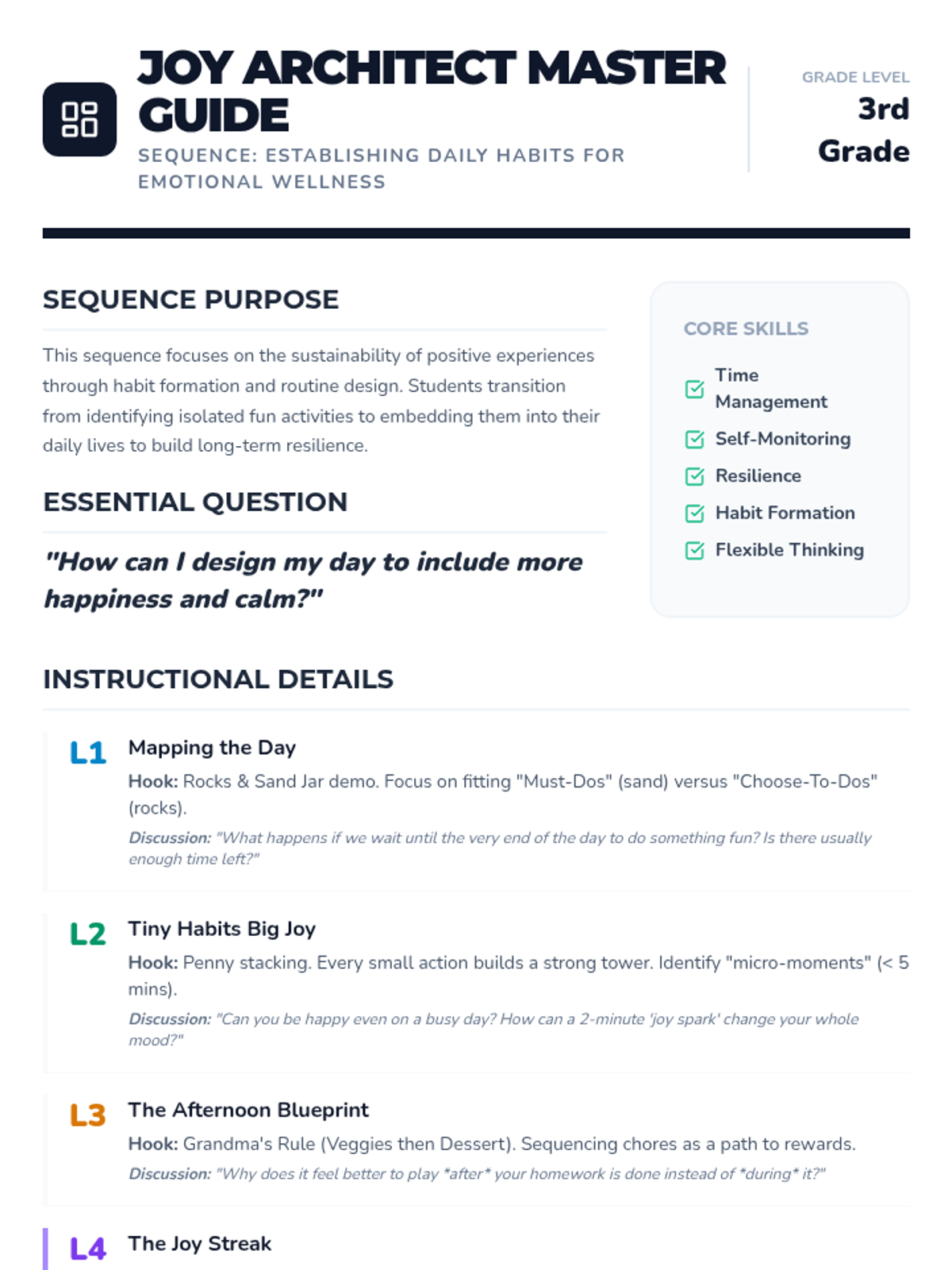
A comprehensive teacher guide for the Joy Architect sequence, outlining the instructional arc, key concepts for each lesson, and the core skills developed.
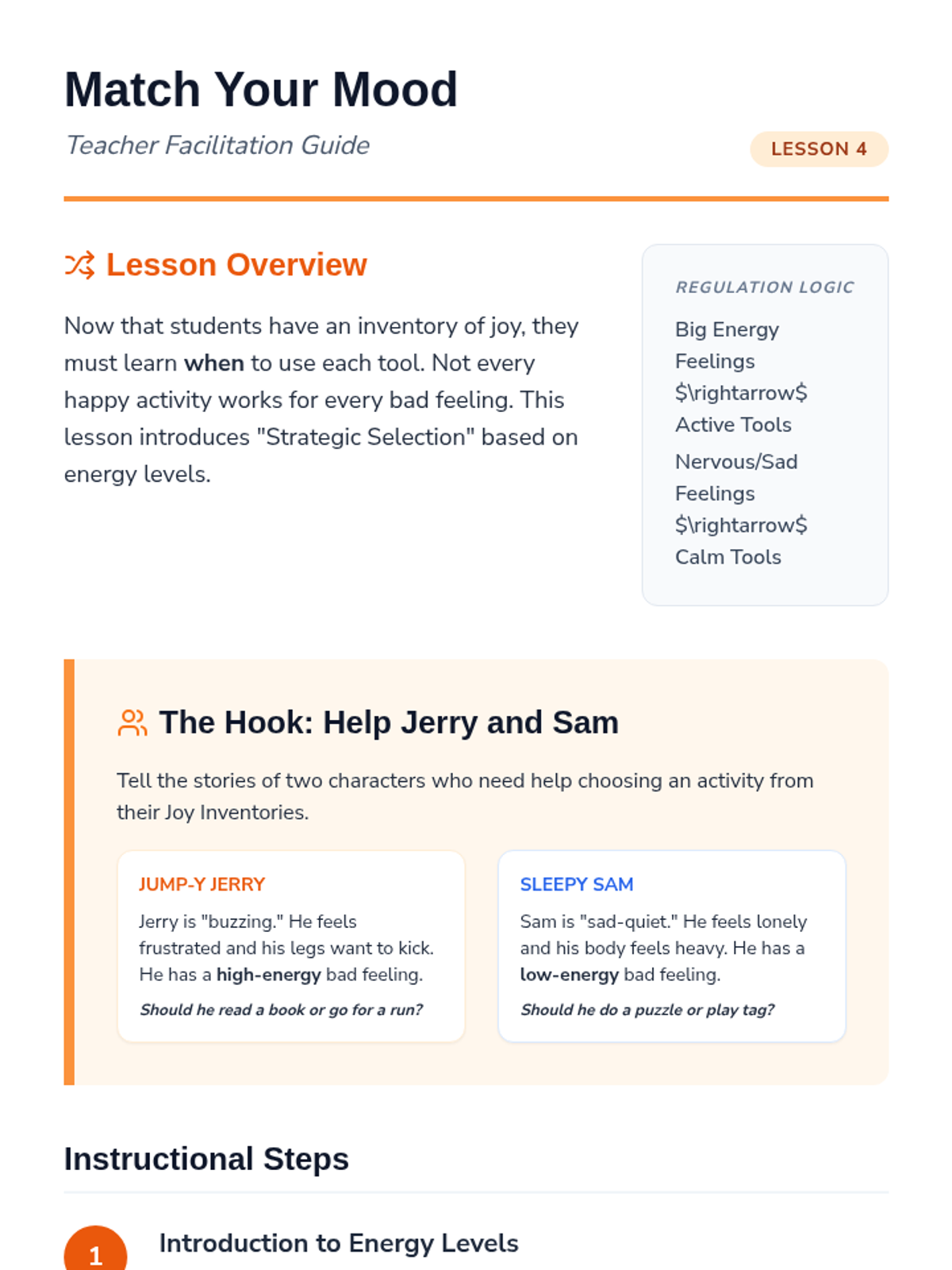
A teacher guide for Lesson 4, focusing on strategic selection of activities based on emotional energy levels (High Energy vs. Low Energy).
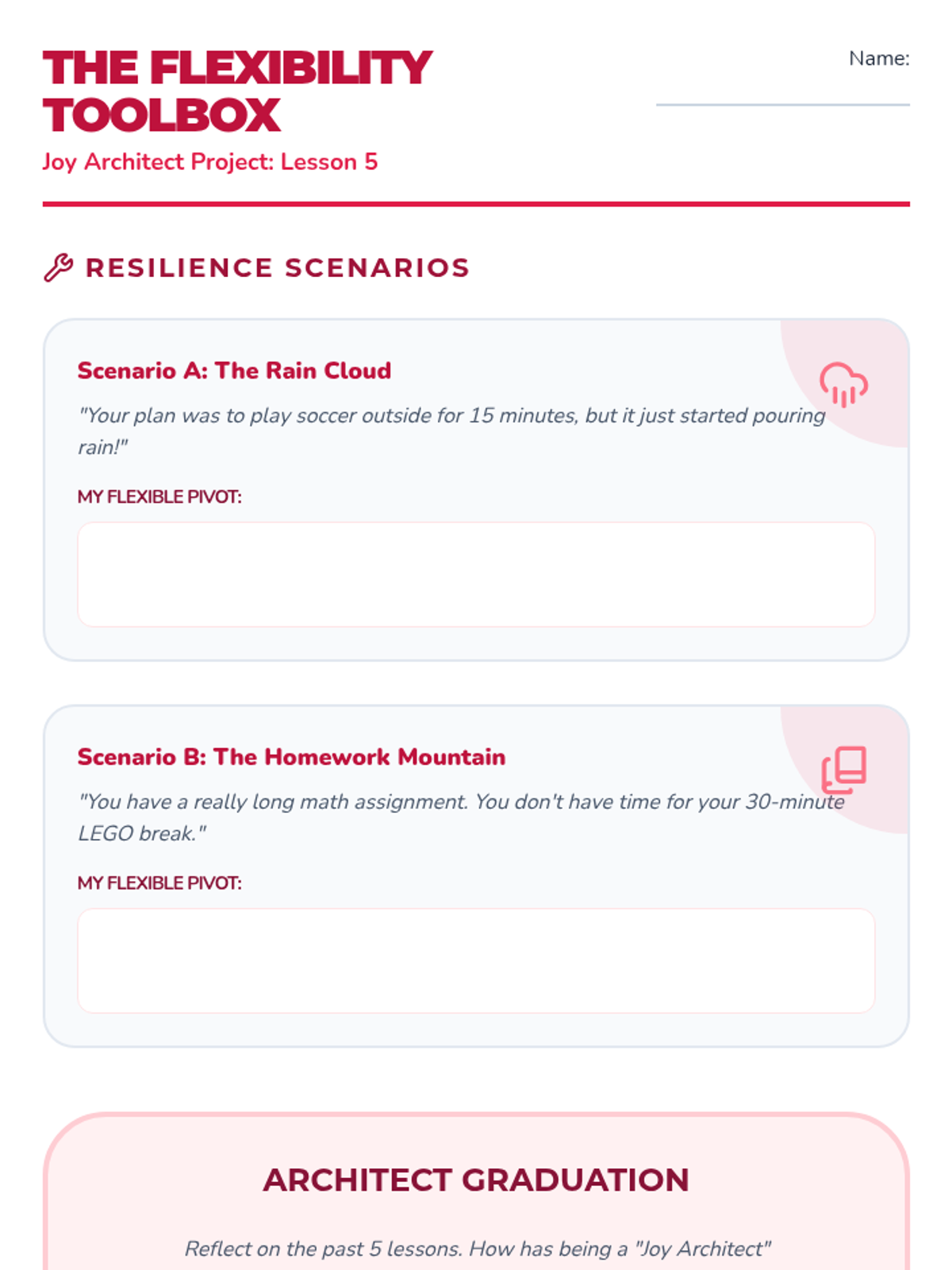
Student reflection sheet for the final lesson. Features 'resilience scenarios' for practicing flexible thinking and a final reflection on the unit's key takeaways.
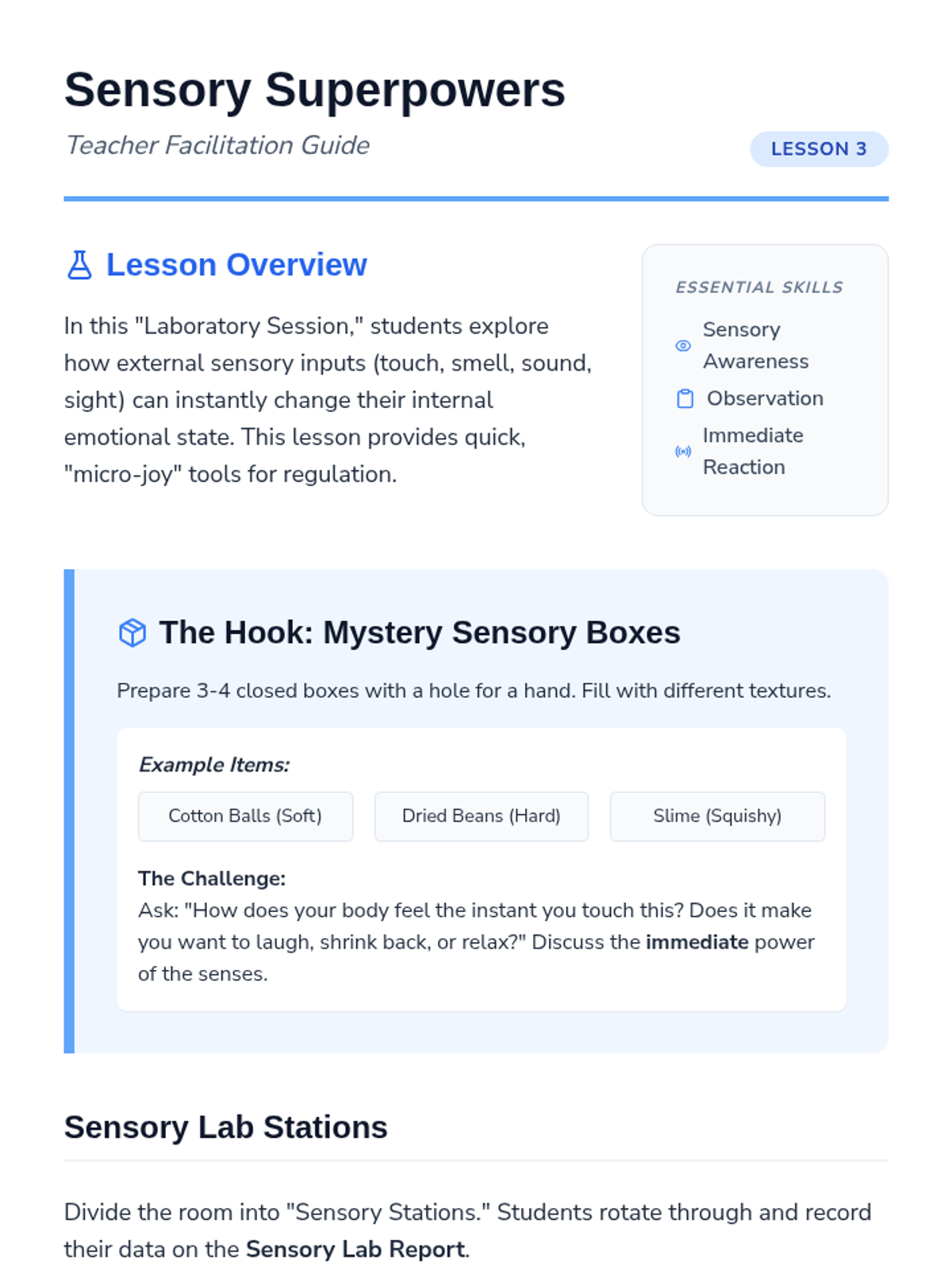
An instructional slide deck for Lesson 3 that introduces sensory mood boosters and guides students through a series of "laboratory" experiments with smell, sound, and touch.
Final slide deck for Lesson 5. Focuses on resilience, 'flexible thinking' when routines are disrupted, and celebrates students' progress as 'Joy Architects'.
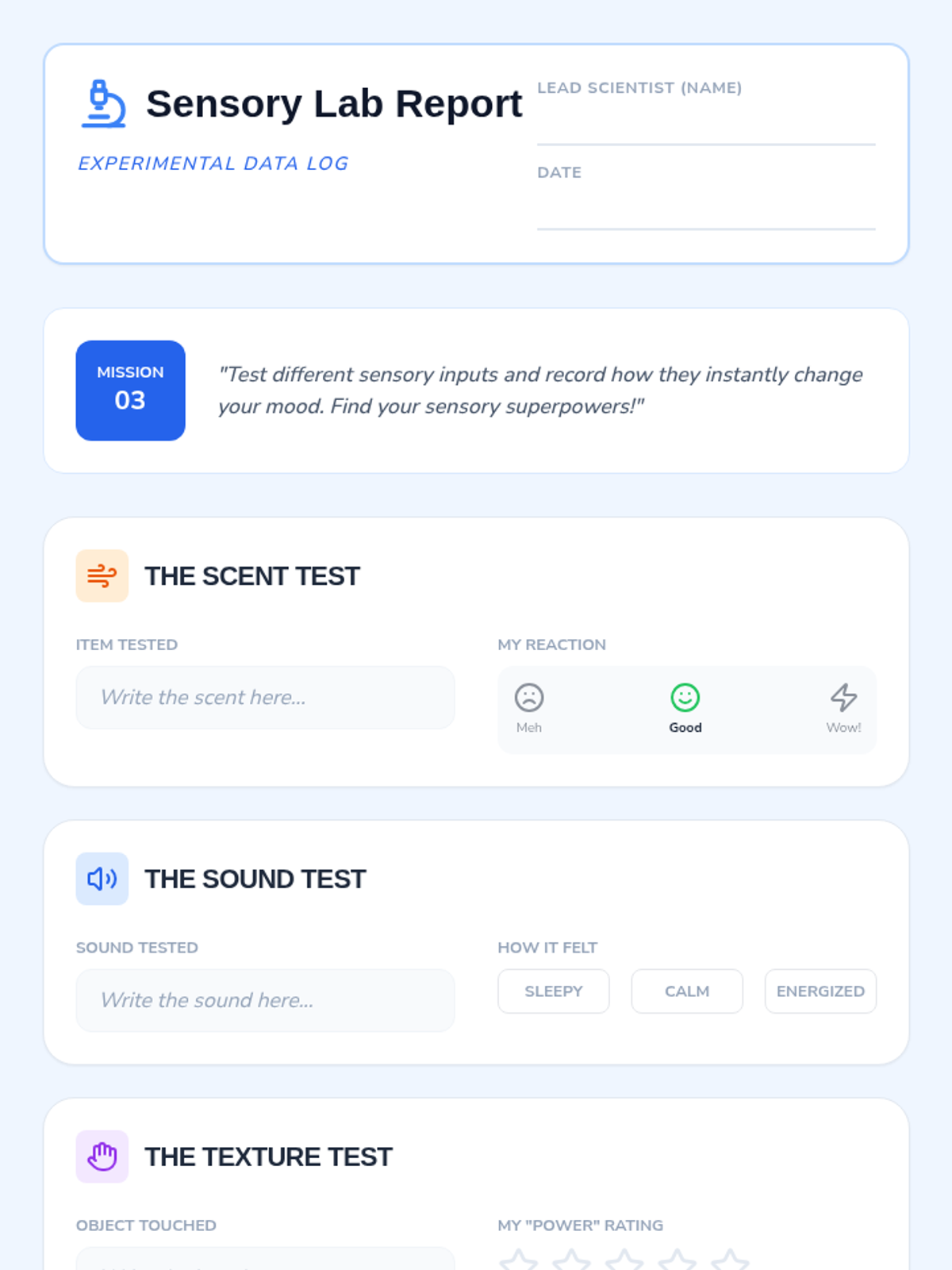
A student lab report worksheet for recording observations and emotional reactions during the "Sensory Superpowers" lab station activity.
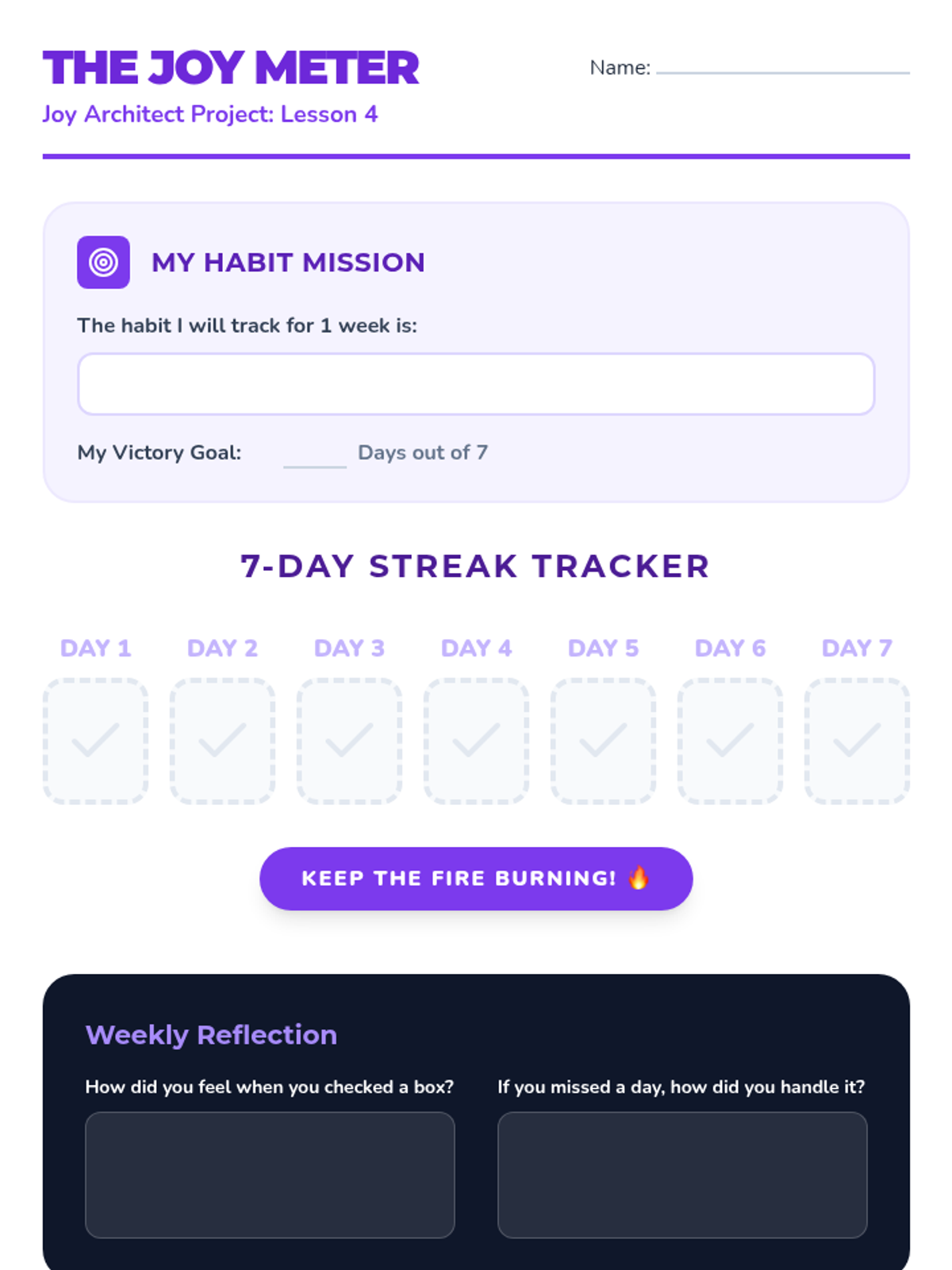
A 7-day progress tracker for students to monitor their consistency with a chosen joy habit. Includes goal setting and reflection sections.
Slide deck for Lesson 4 on creating a progress tracker. Explains the concept of 'streaks' and the importance of self-monitoring and honesty in habit formation.
A teacher guide for Lesson 3, focusing on sensory-based mood boosters (smell, touch, sound, sight) through a "Sensory Lab" station rotation.
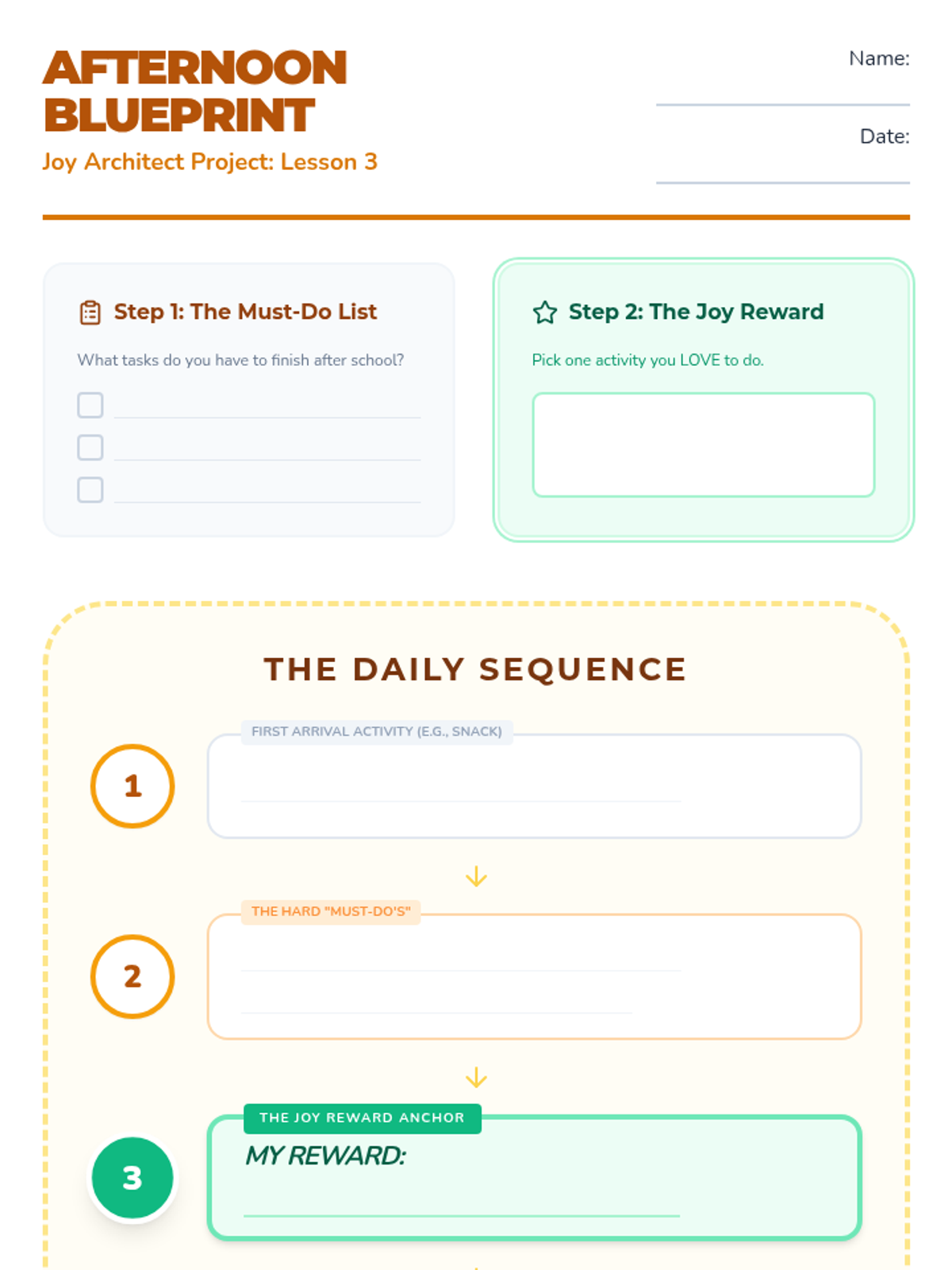
Student worksheet for designing an afternoon schedule. Uses the 'Grandma's Rule' concept to sequence chores before rewarding joy activities.
An instructional slide deck for Lesson 2 that introduces the three departments of fun: active, creative, and quiet, and guides students through building a personal joy stockpile.
Slide deck for Lesson 3 on designing a balanced schedule. Introduces 'Grandma's Rule' (sequencing chores before rewards) and using joy as a motivation anchor.
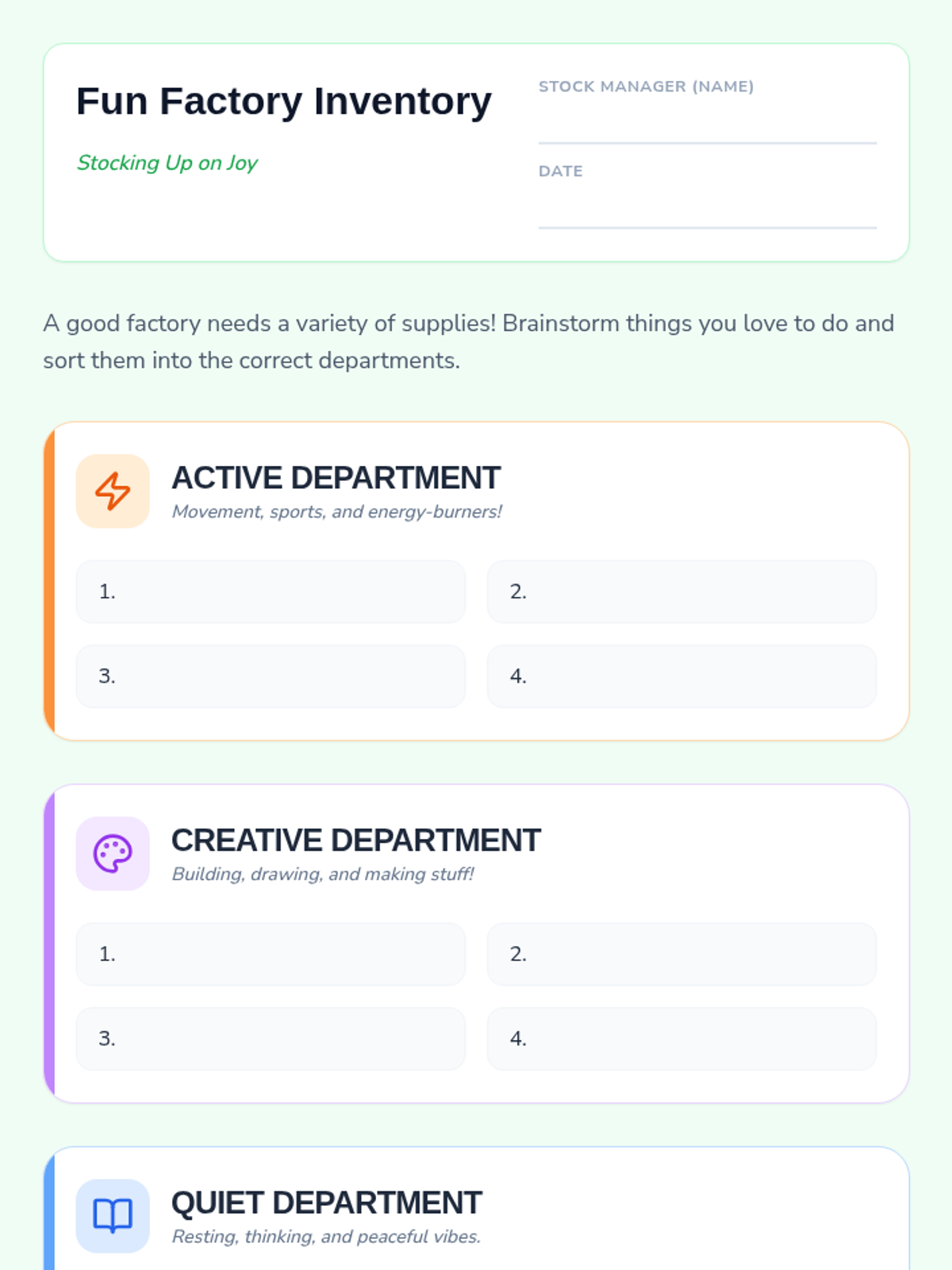
A student worksheet for identifying and categorizing favorite activities into active, creative, and quiet categories to build a diverse joy inventory.
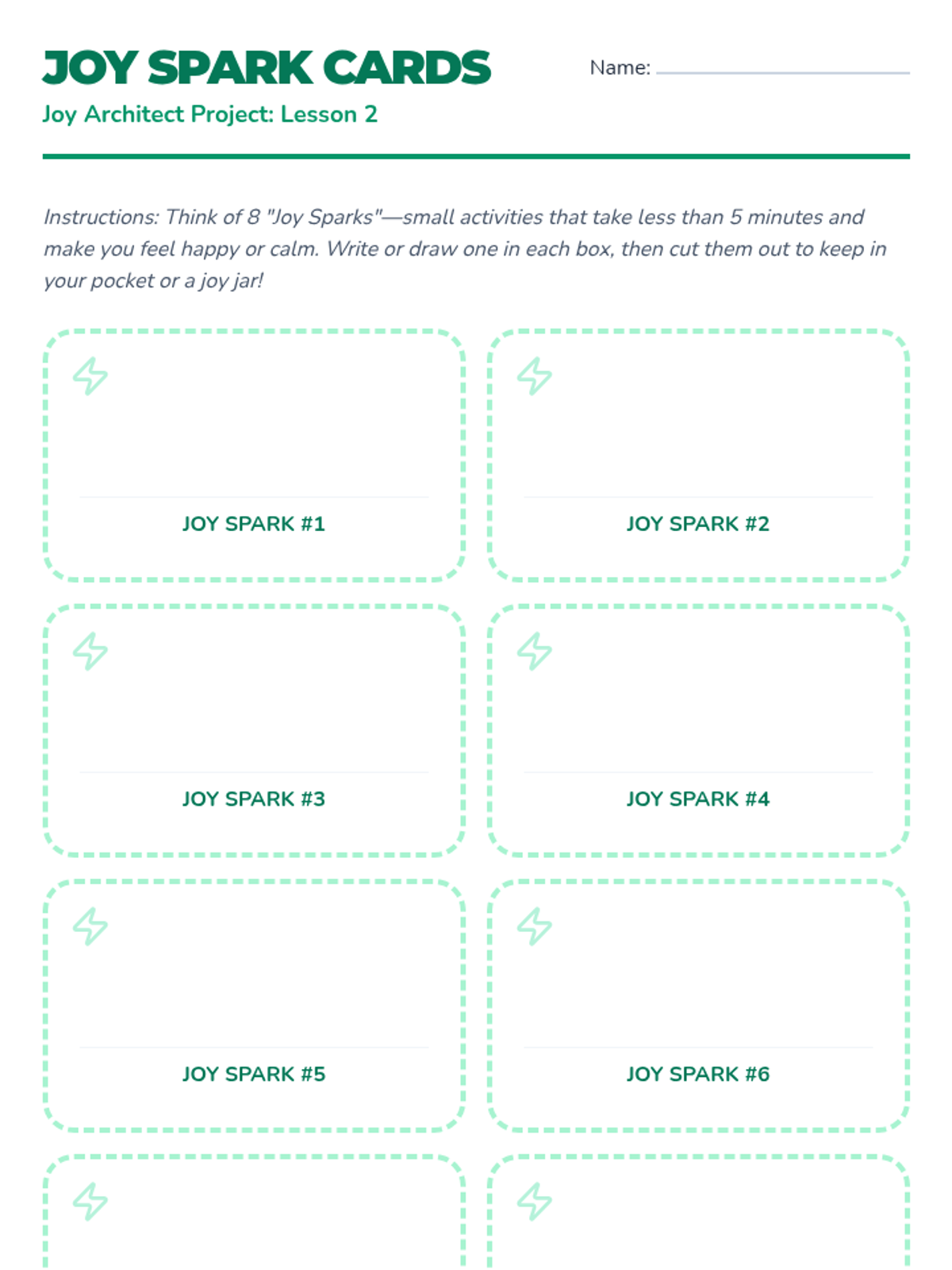
A set of cut-out cards for students to brainstorm and record 'micro-moments' of joy they can easily integrate into their day.
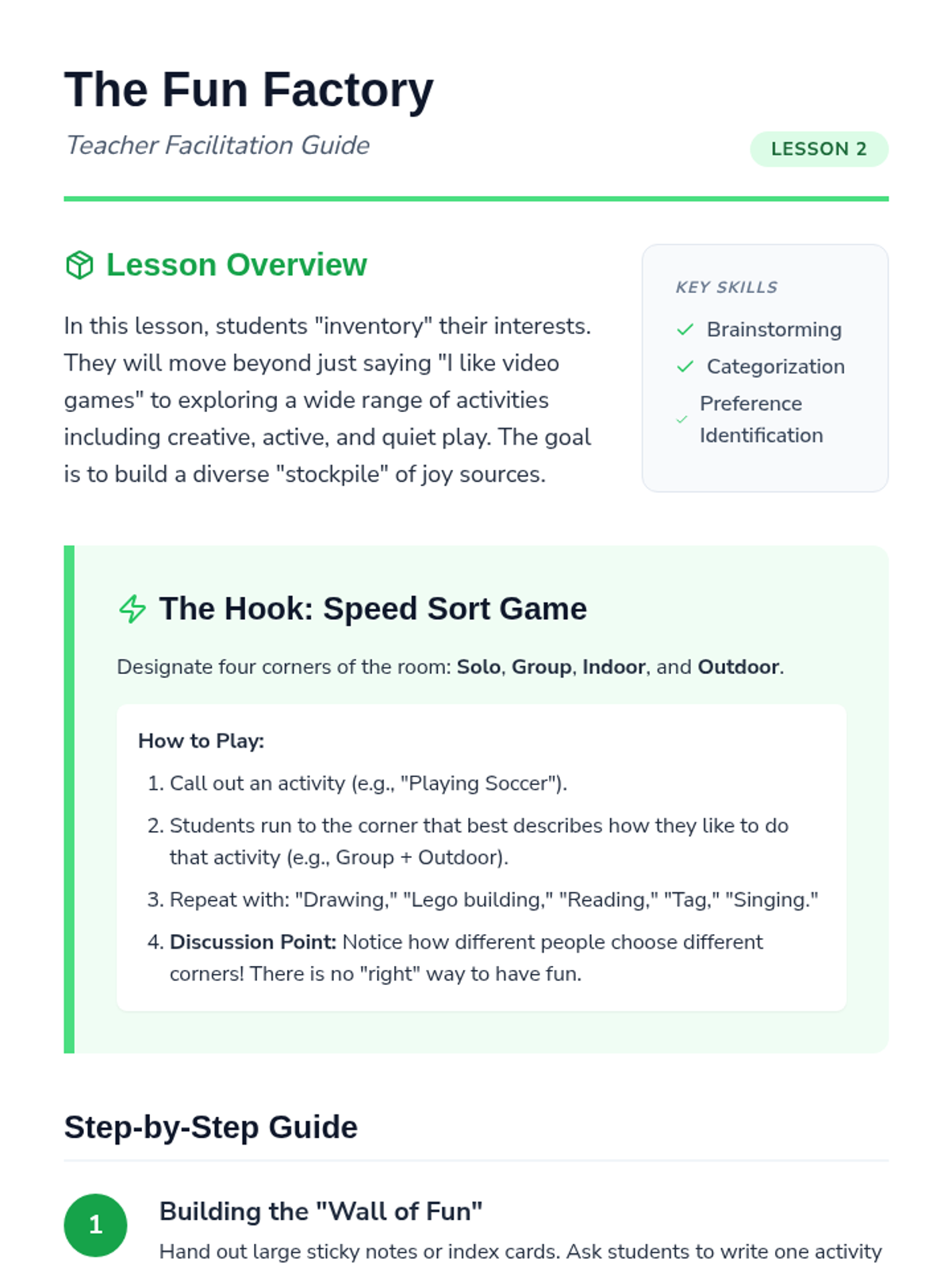
A teacher guide for Lesson 2, focusing on brainstorming activities and categorizing them into active, creative, and quiet "departments" to build a diverse emotional toolkit.
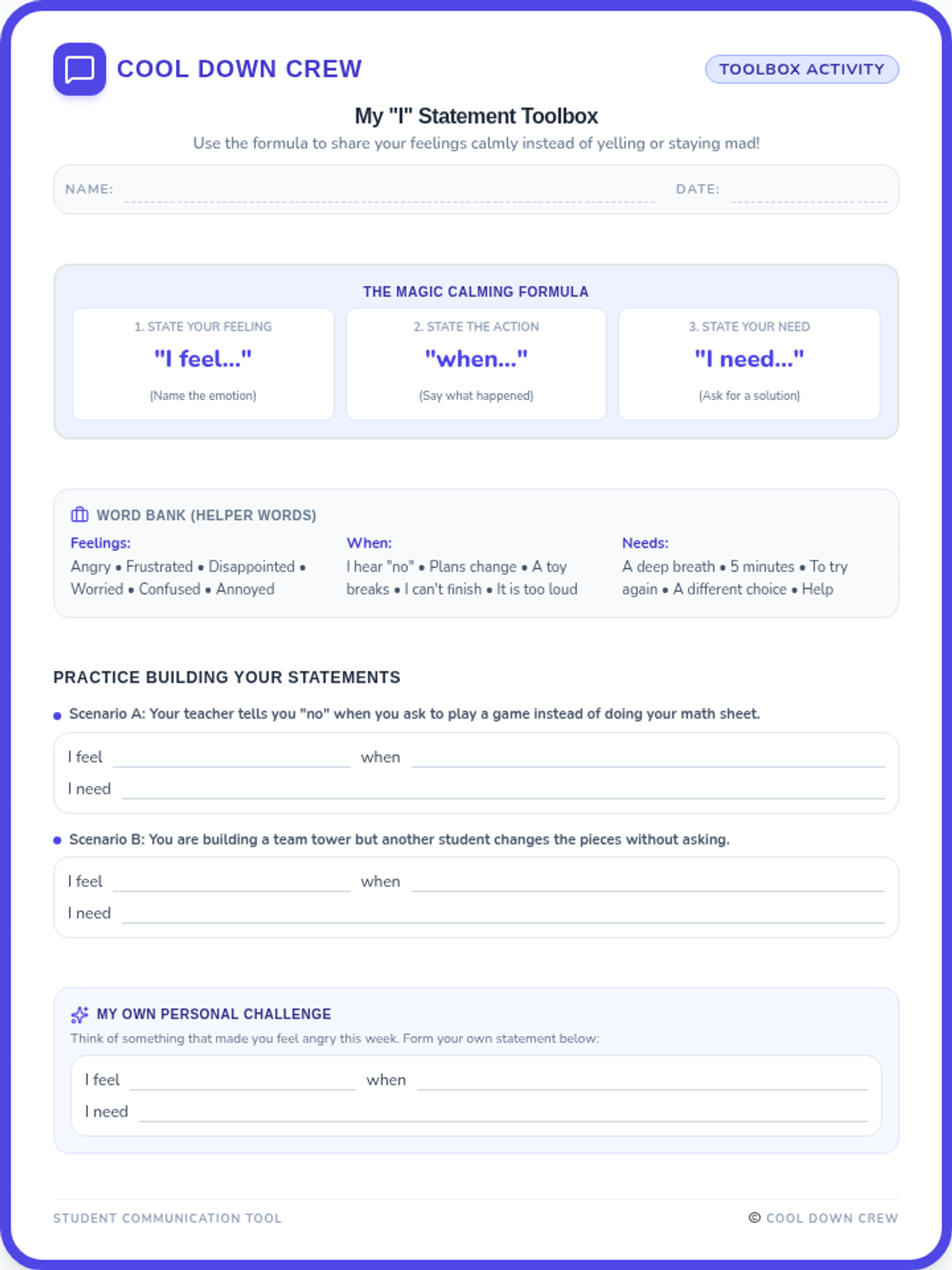
A structured practice worksheet for students to learn and construct effective 'I feel... when... I need...' statements for expressing anger constructively.
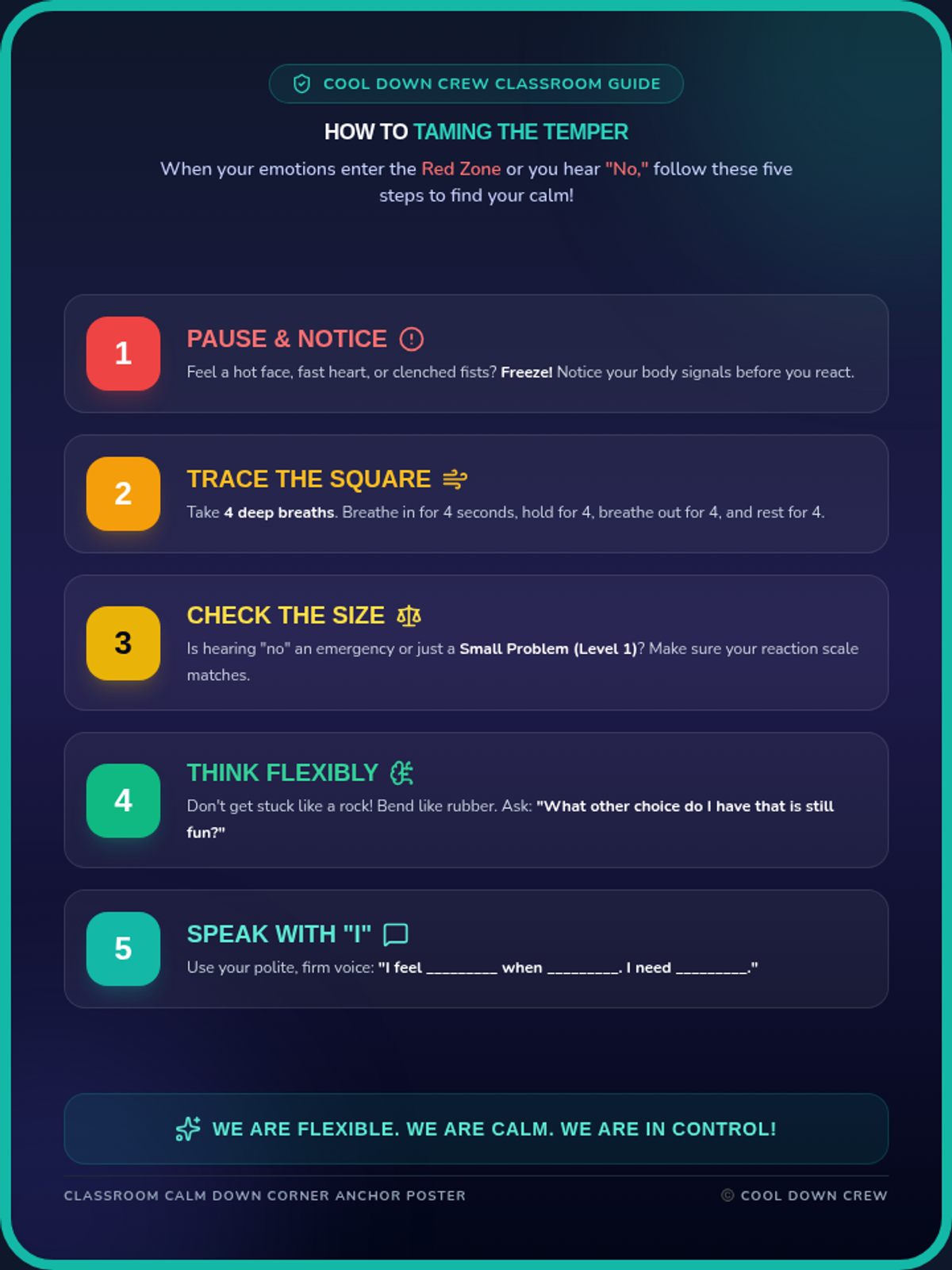
A printable classroom poster summarizing key steps to handle anger and hearing 'no'. Designed for laminating and hanging in the classroom calming corner.
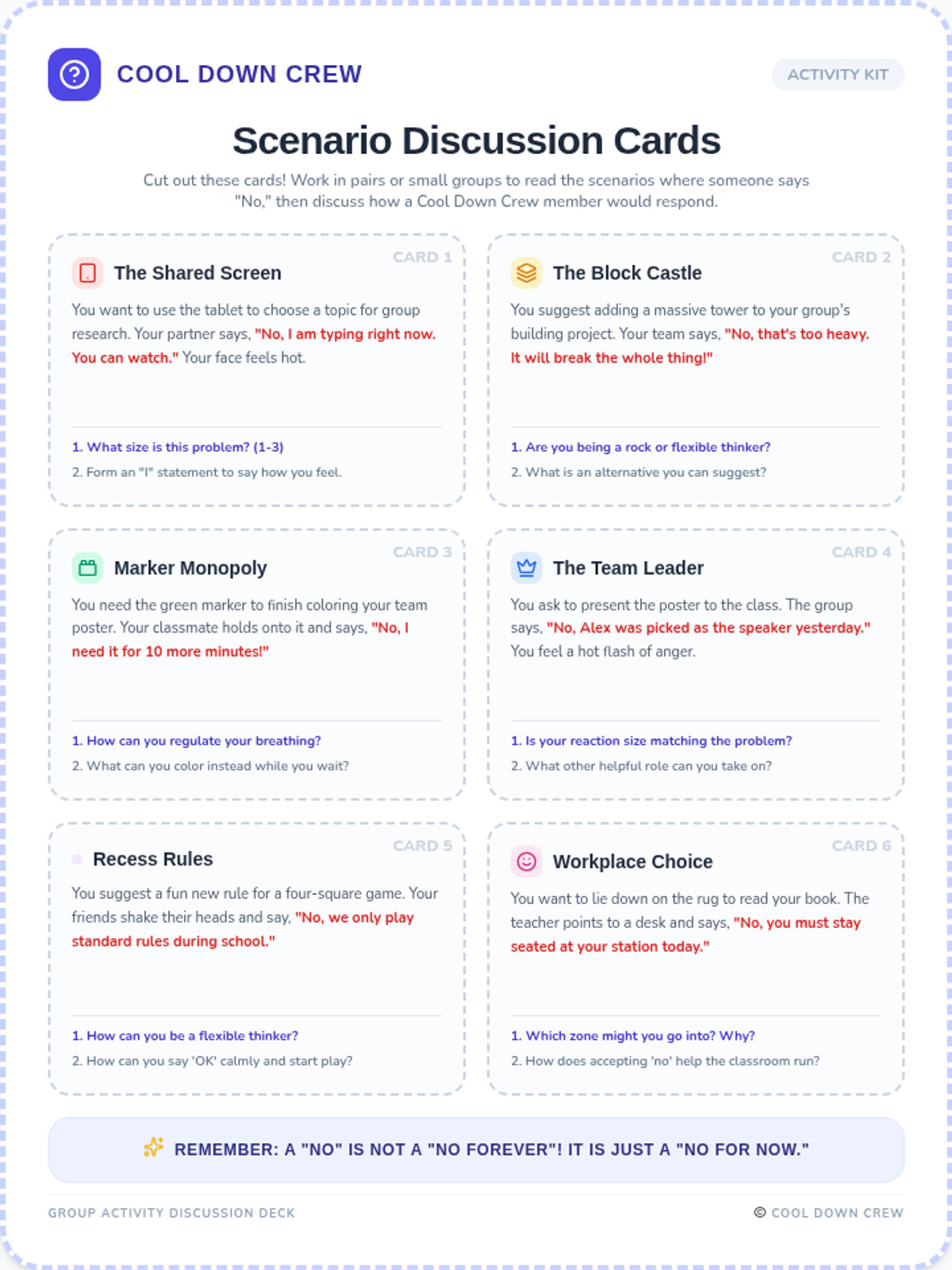
Real-life situations to practice accepting 'no' during group work. Includes discussion prompts on the size of the problem and emotional regulation.
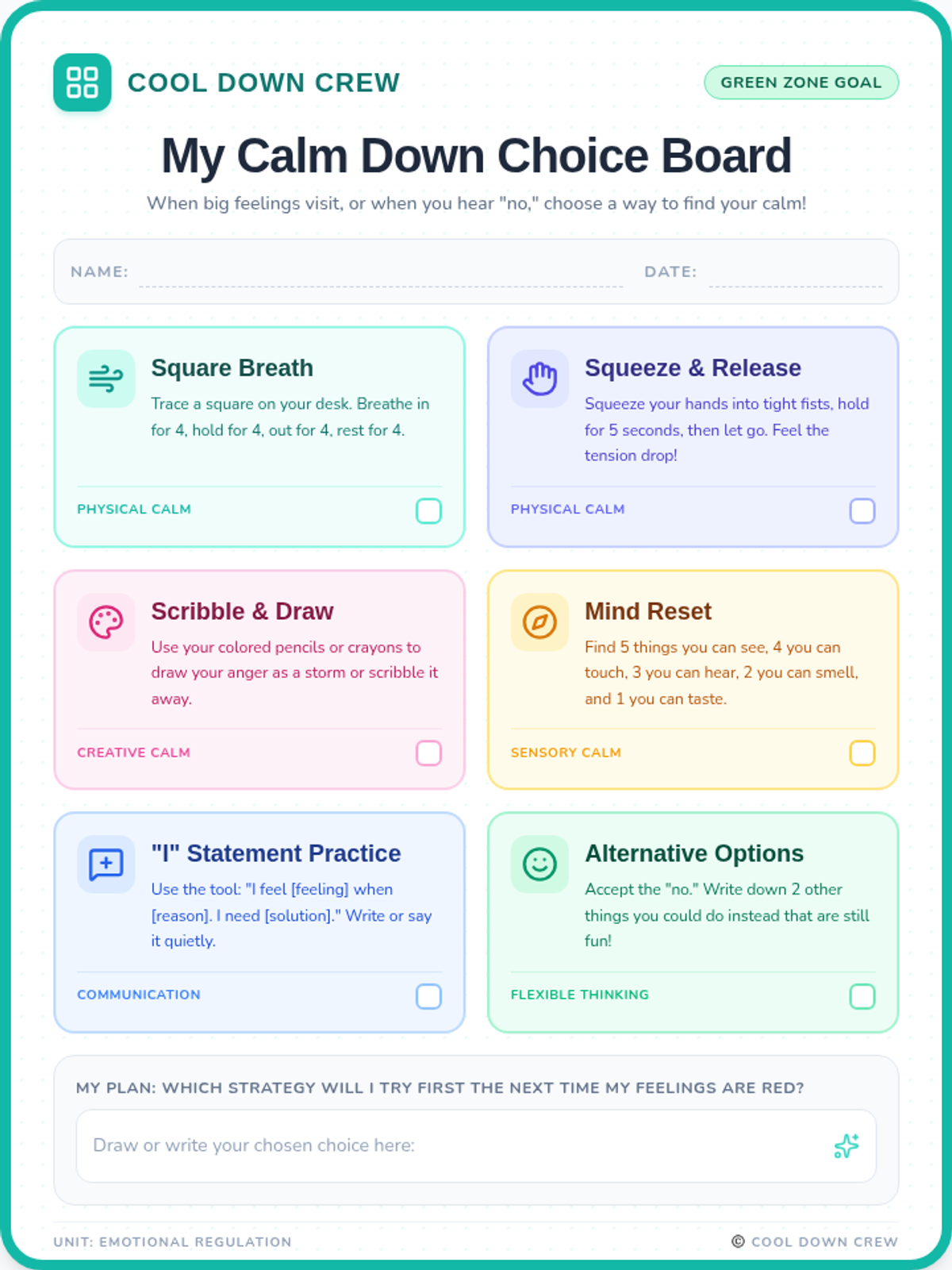
A visual menu of strategies 10-year-olds can choose from when angry. Features a grid of physical, sensory, and cognitive calming techniques.
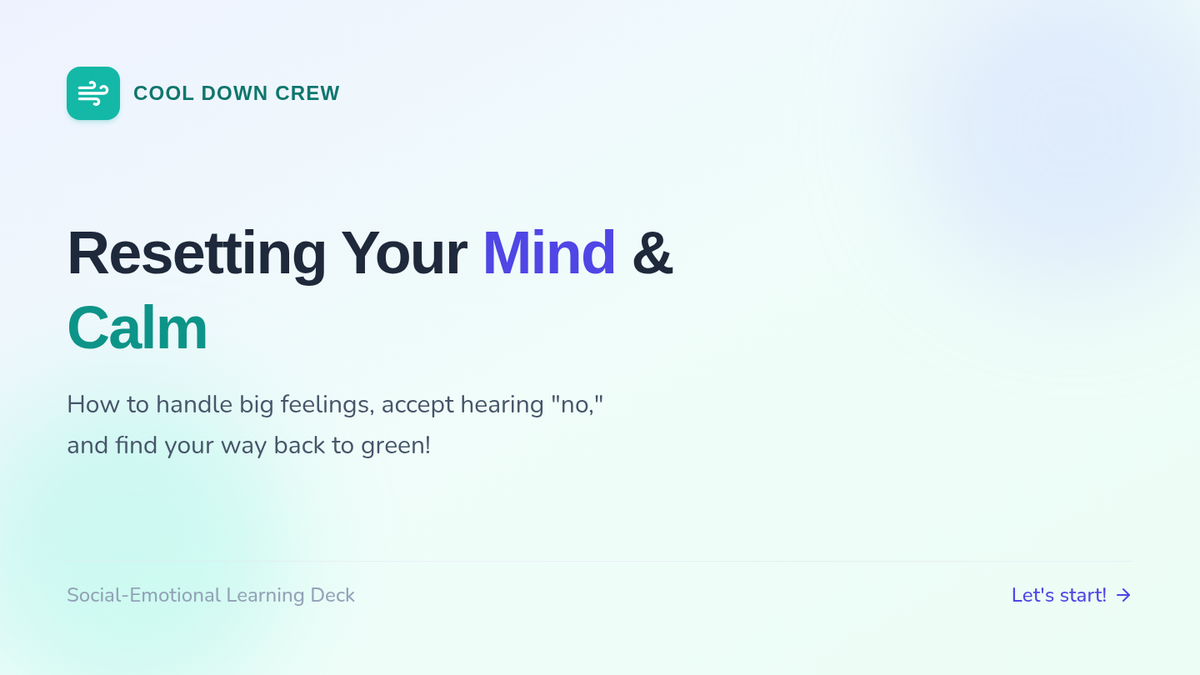
A presentation for 10-year-olds teaching them how to recognize emotional stress states, apply physiological grounding, match reaction size to problem scale, and communicate assertively.
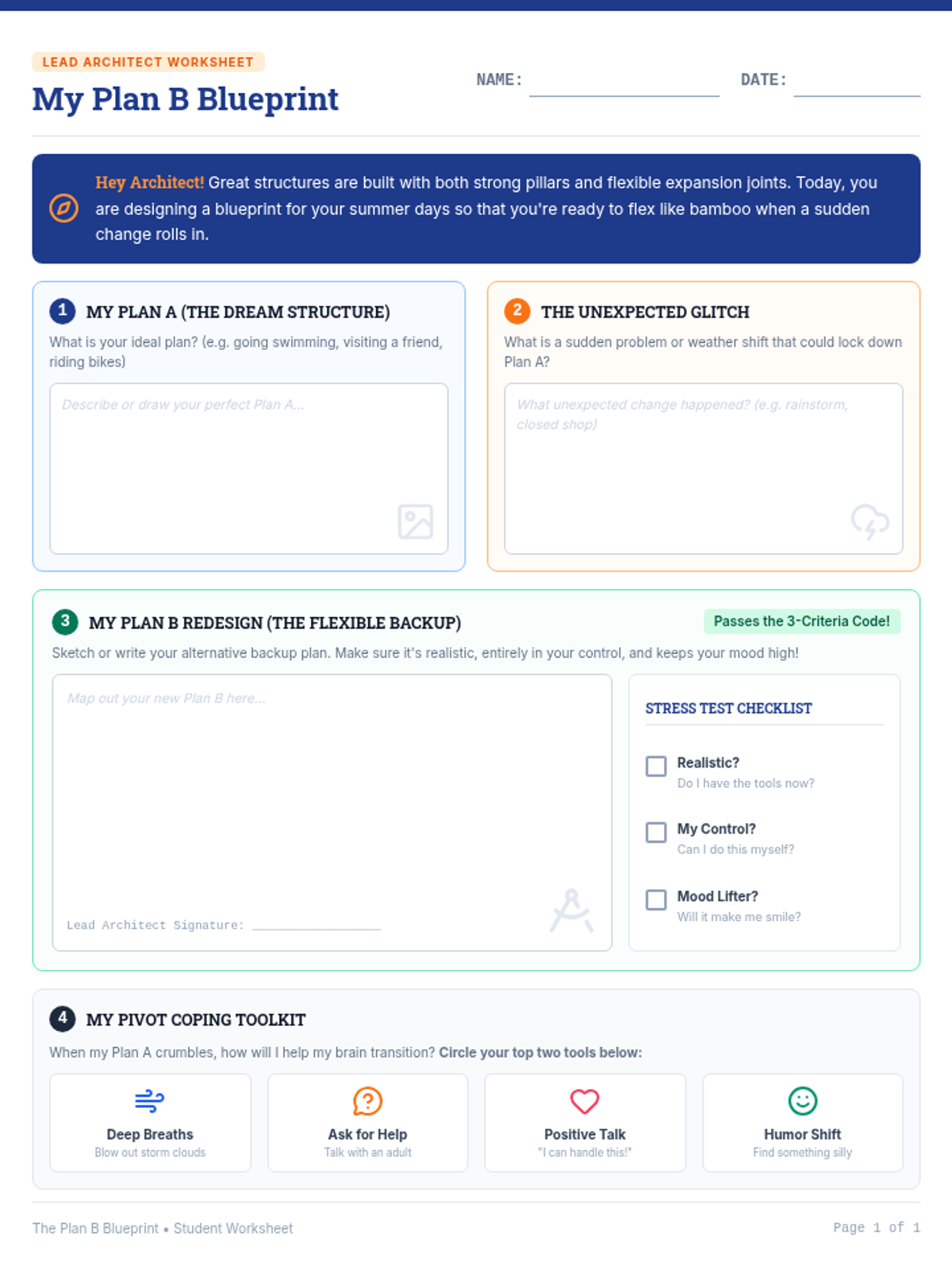
A student-facing drafting worksheet where students map out their ideal Plan A summer day, anticipate potential glitches, design a functional Plan B, and select their personal coping tools.
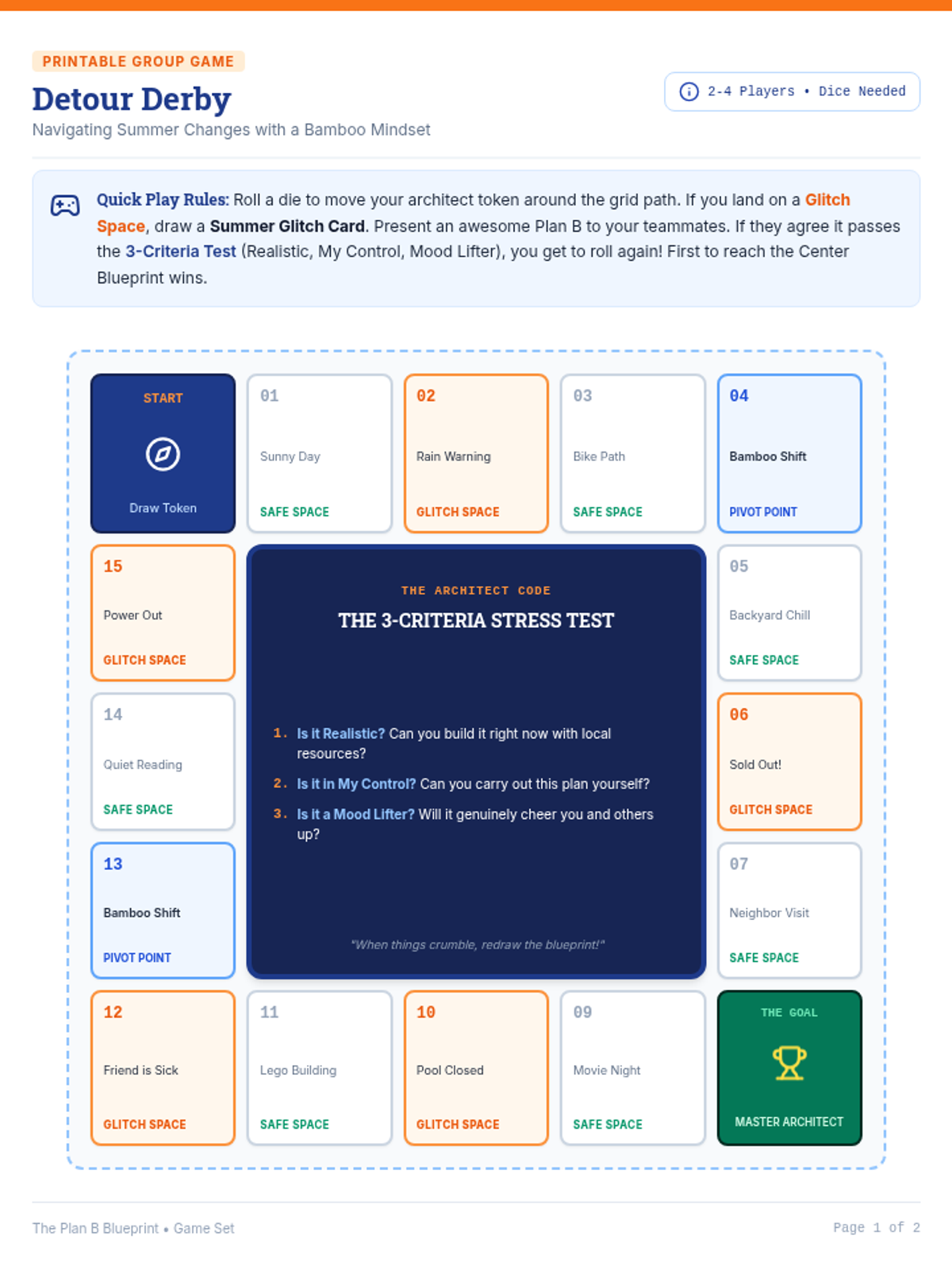
A printable blueprint-themed board game featuring 'The Detour Loop' board and cut-out 'Summer Glitch' cards to practice creating Plan Bs under pressure.
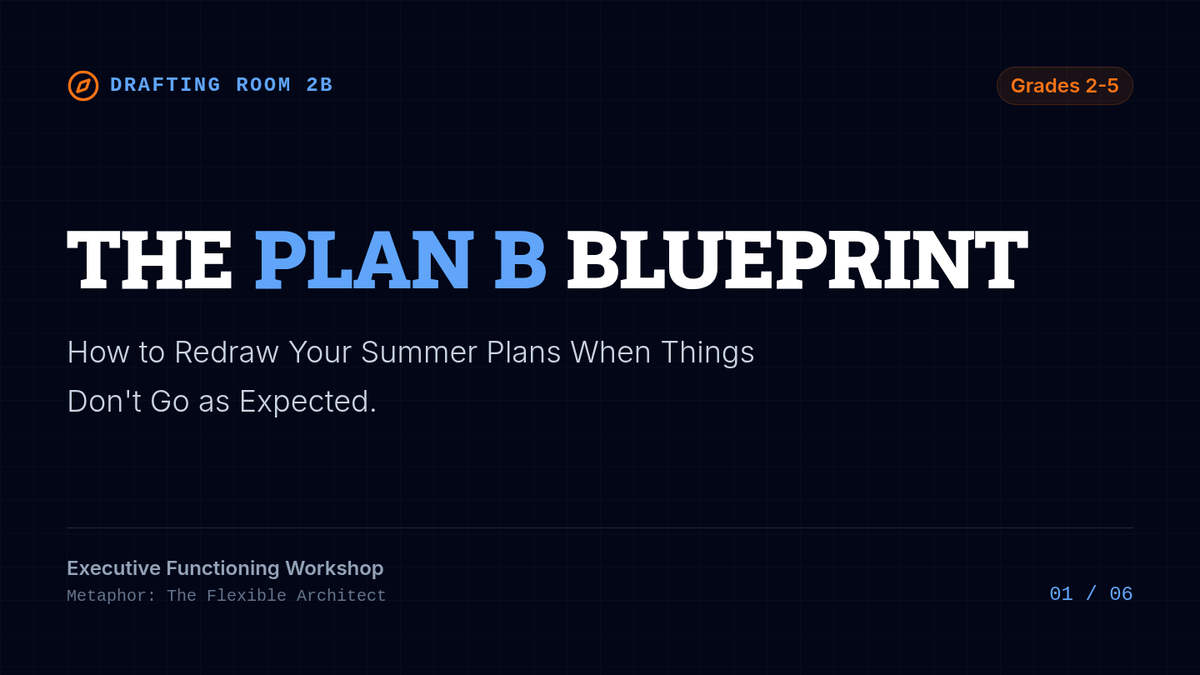
A high-impact, visual presentation to guide students through the concrete-versus-bamboo mindset shift, teach the three criteria of a great Plan B, and introduce the Detour Derby game.
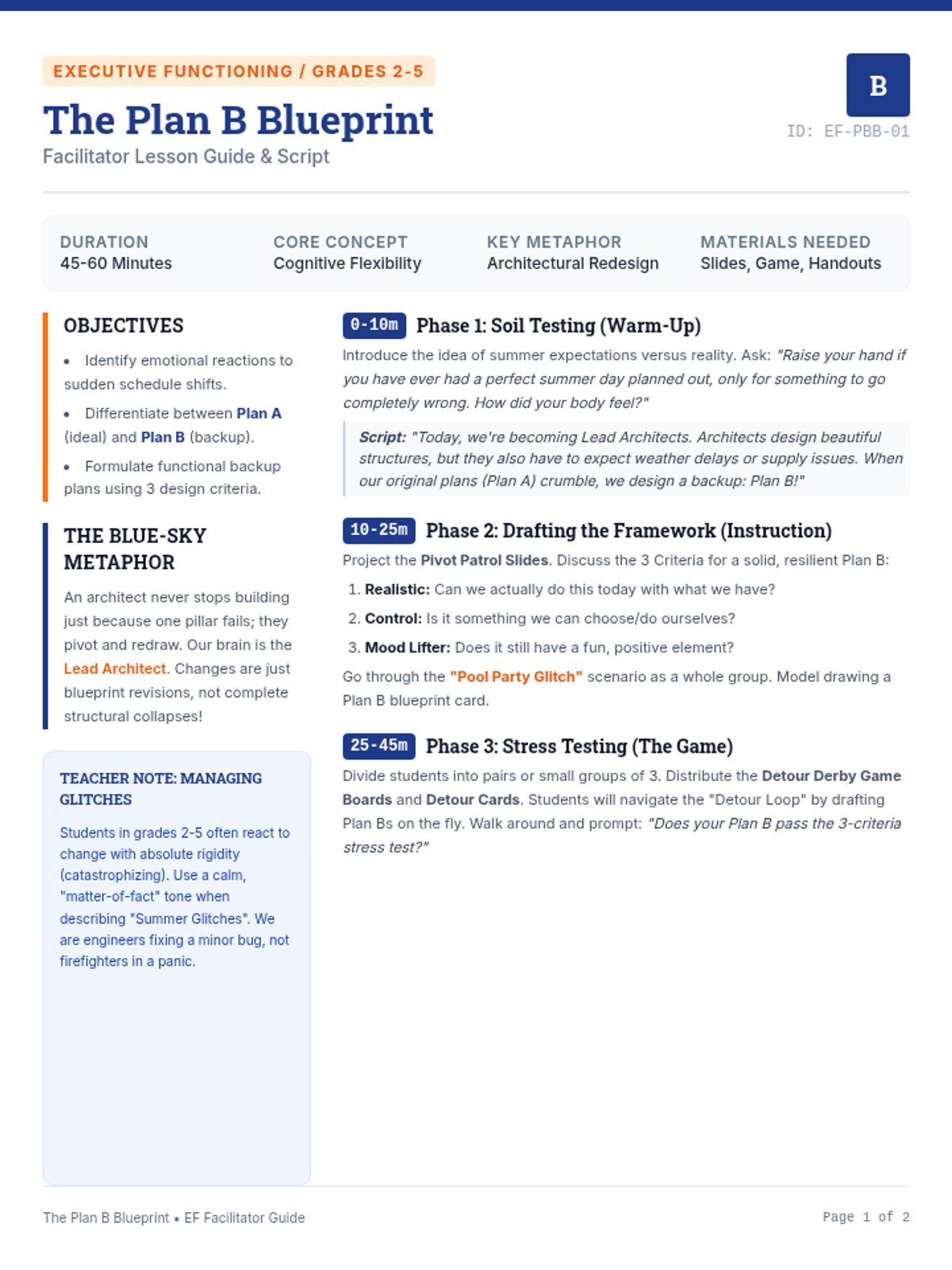
A comprehensive teacher-facing lesson plan outlining the blueprint metaphor for cognitive flexibility, step-by-step facilitation instructions, gameplay directions, and debriefing questions.