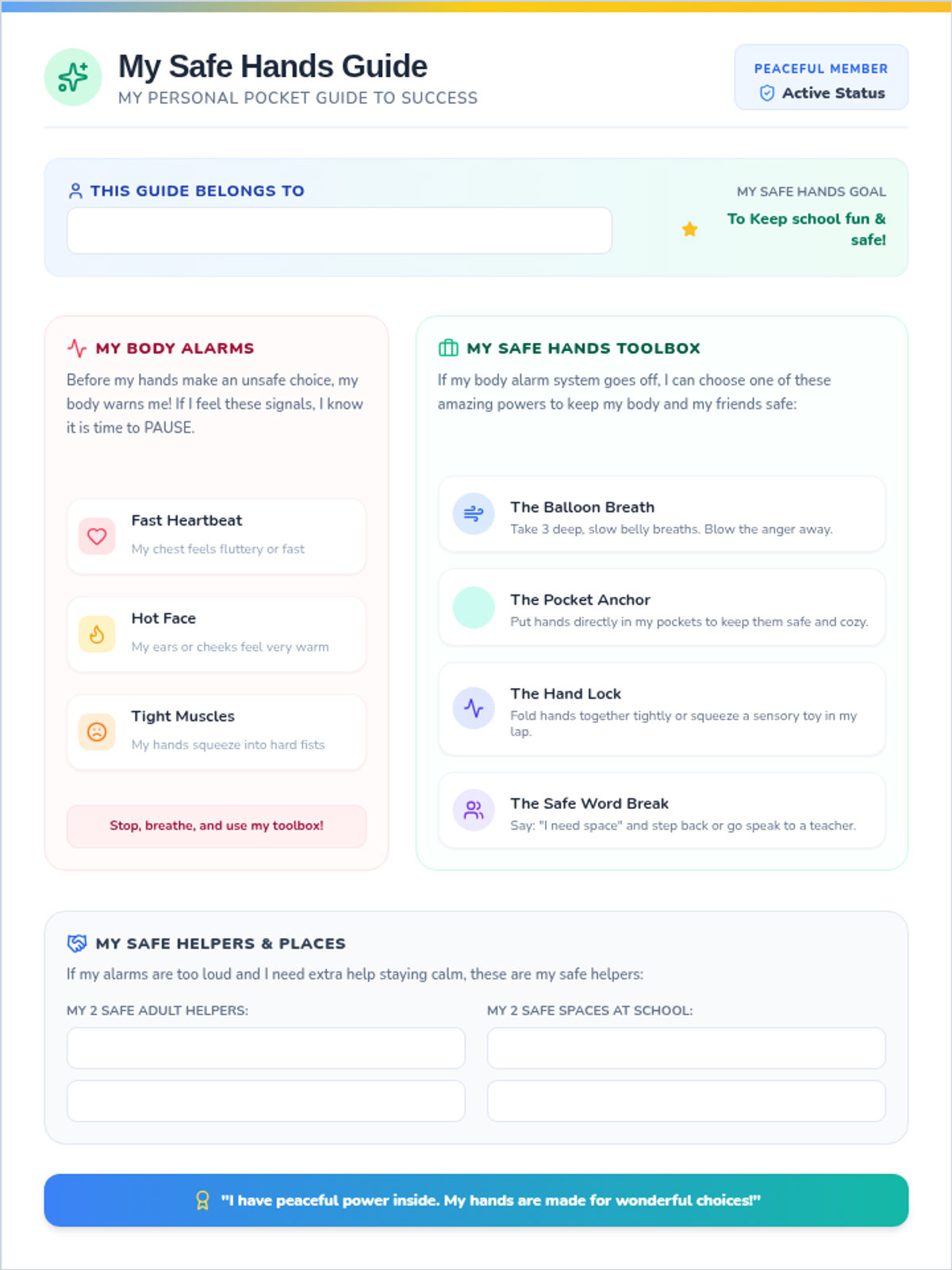
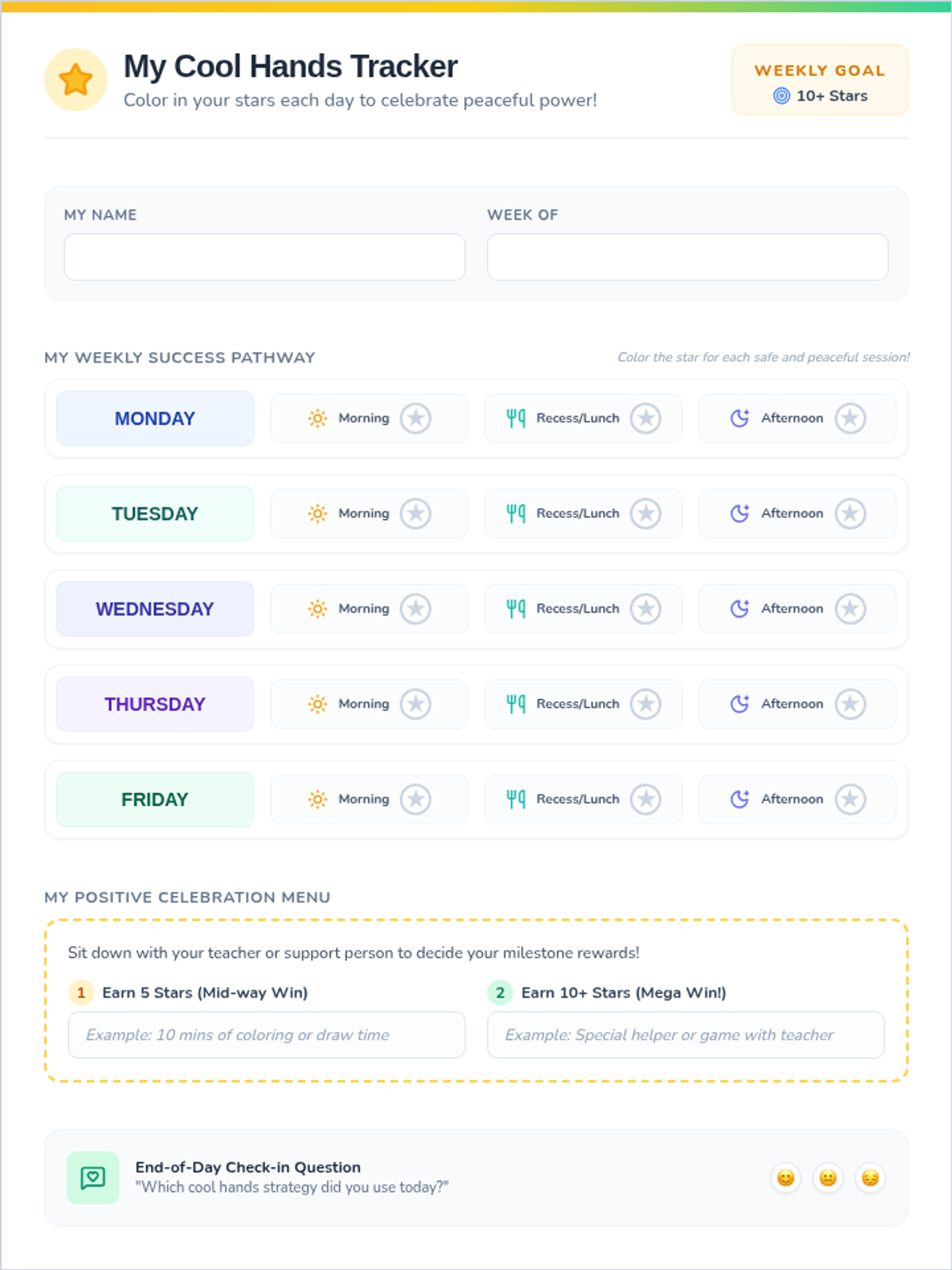
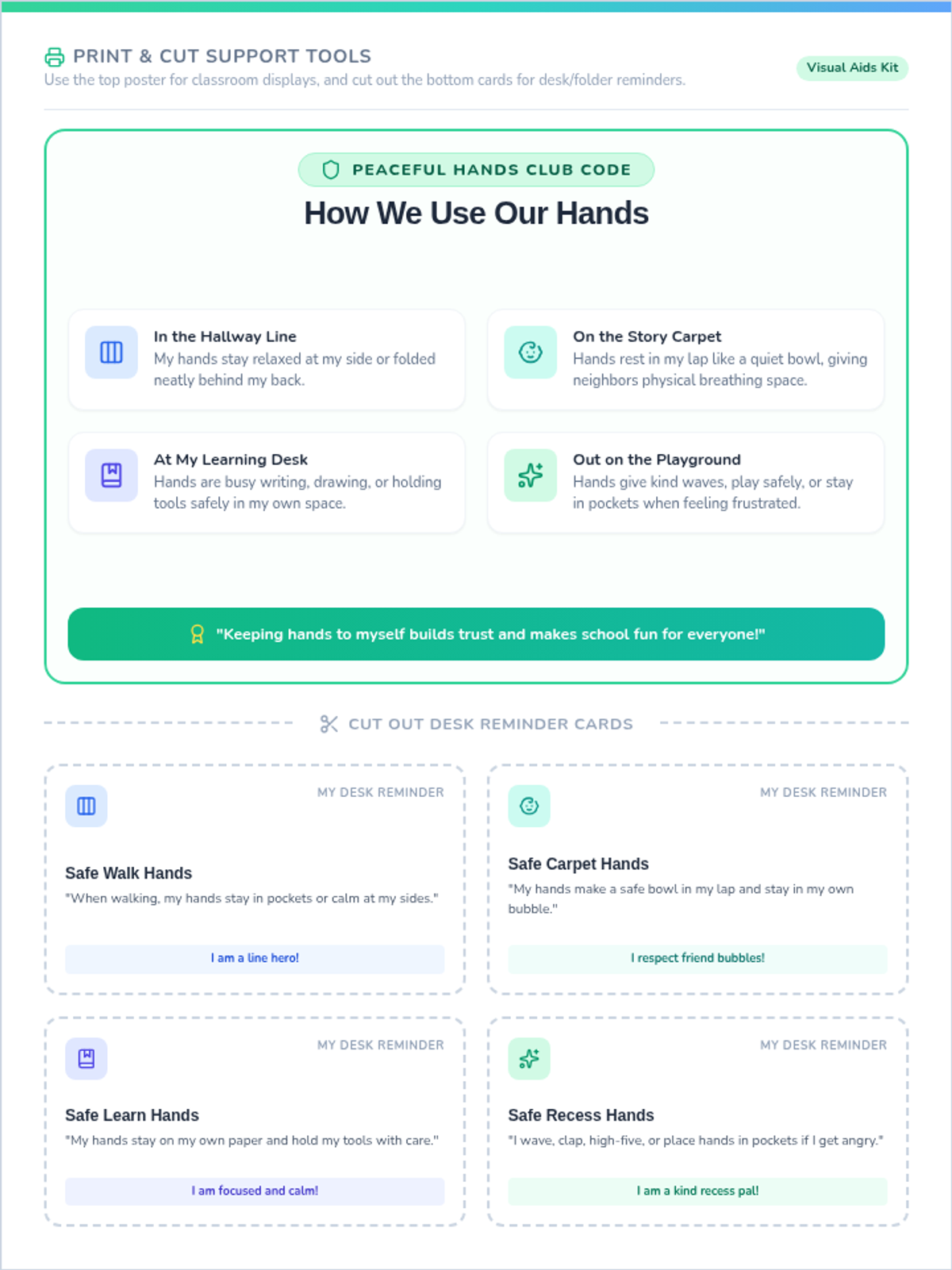
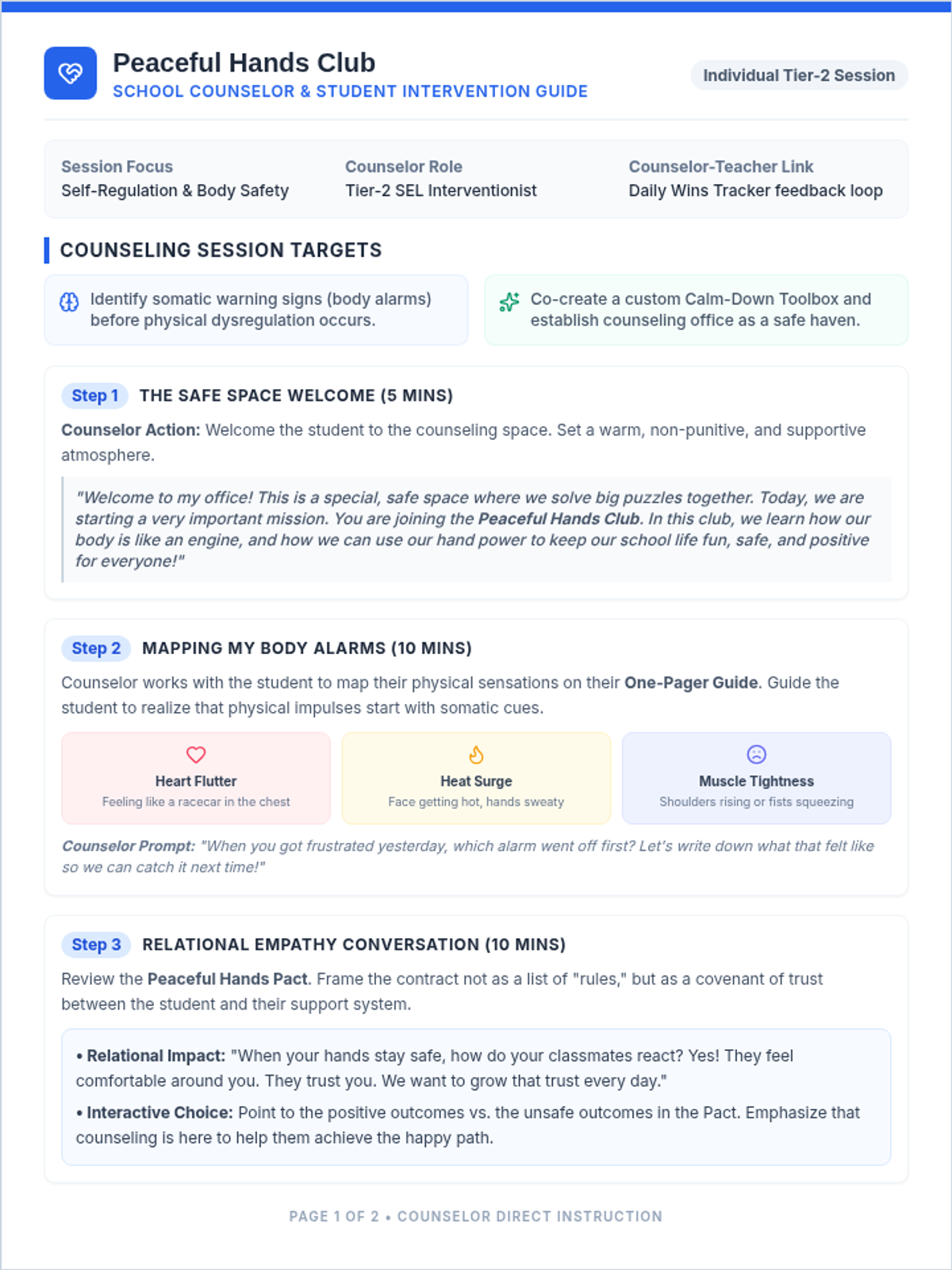
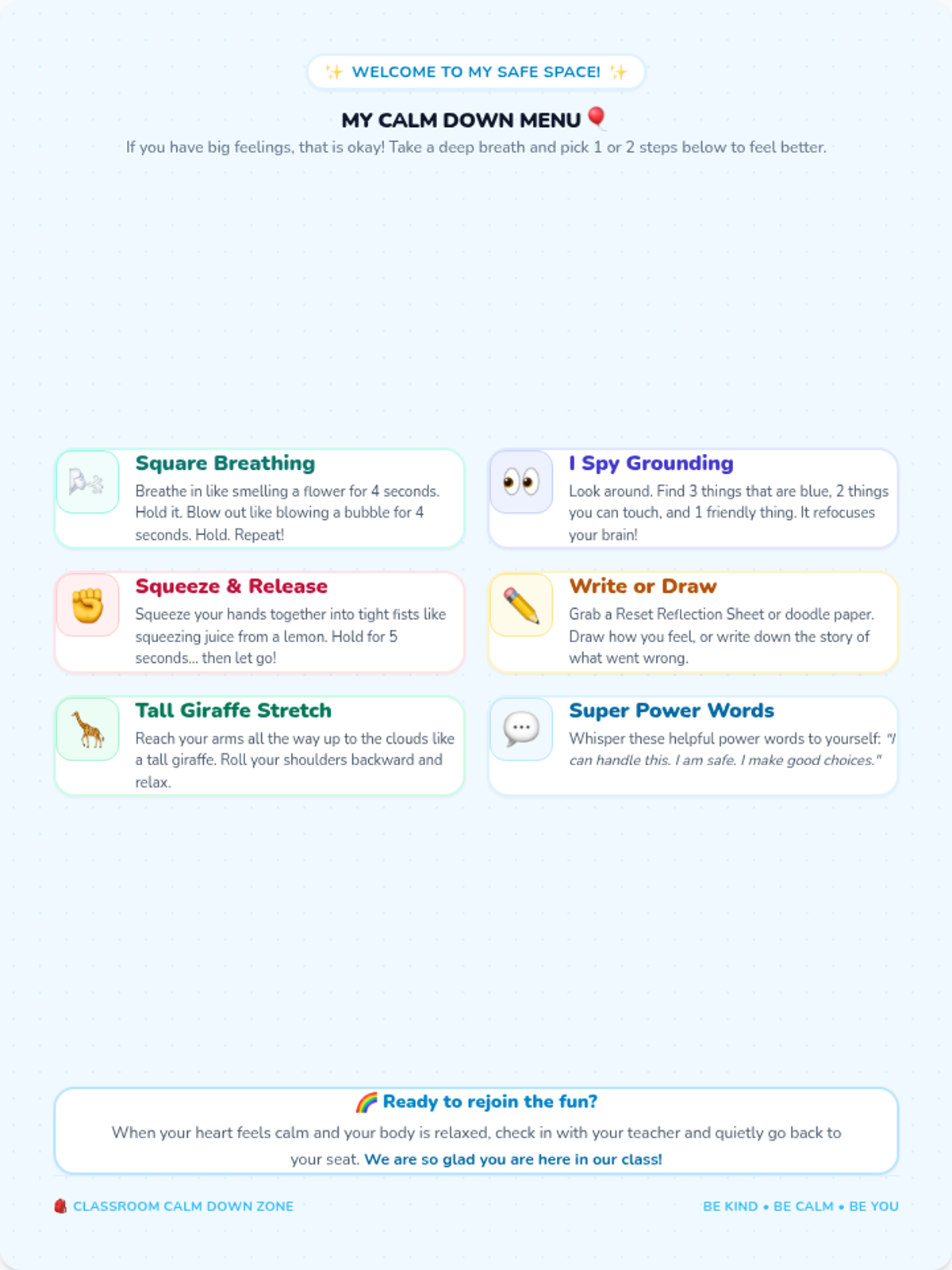
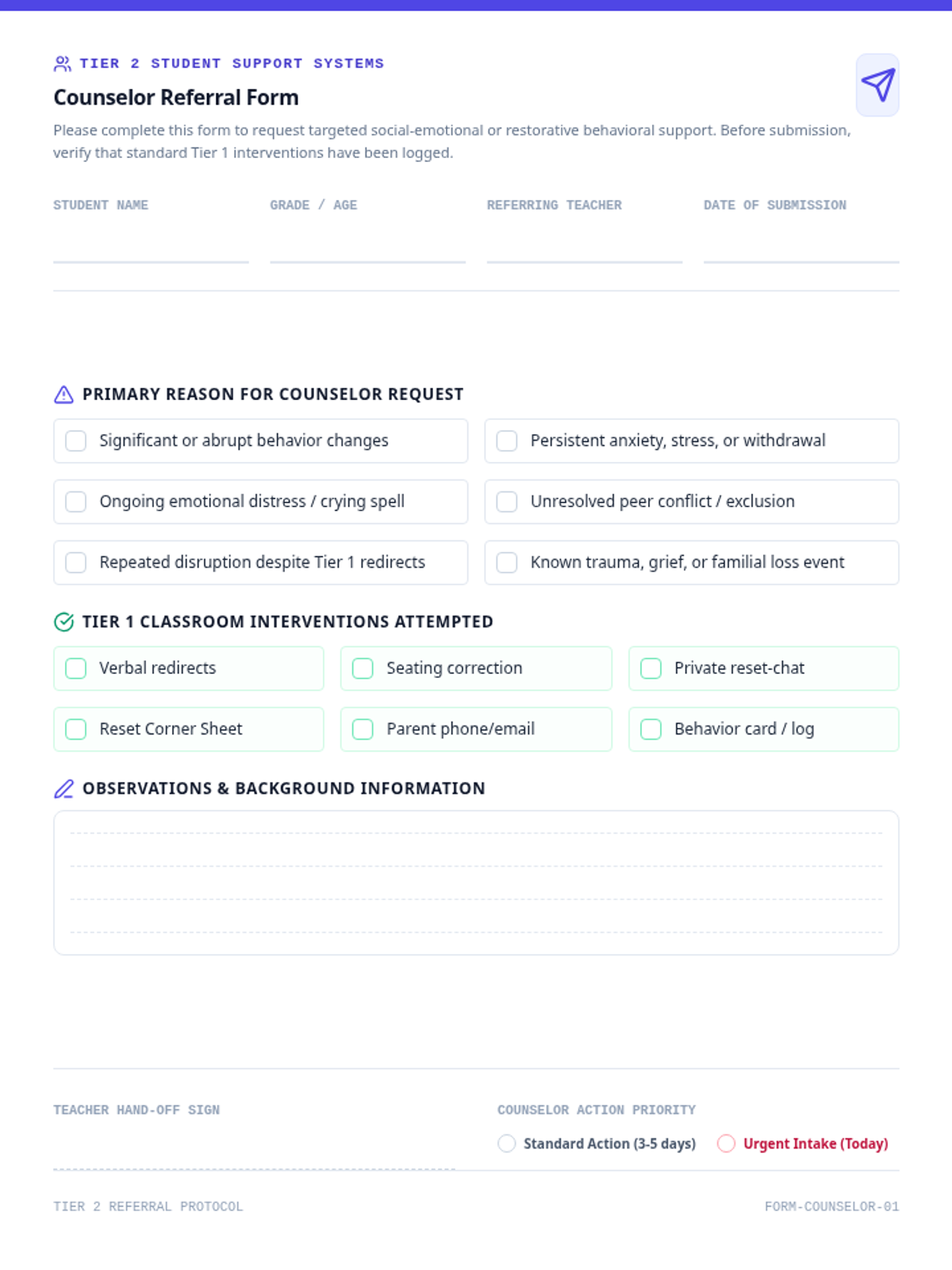
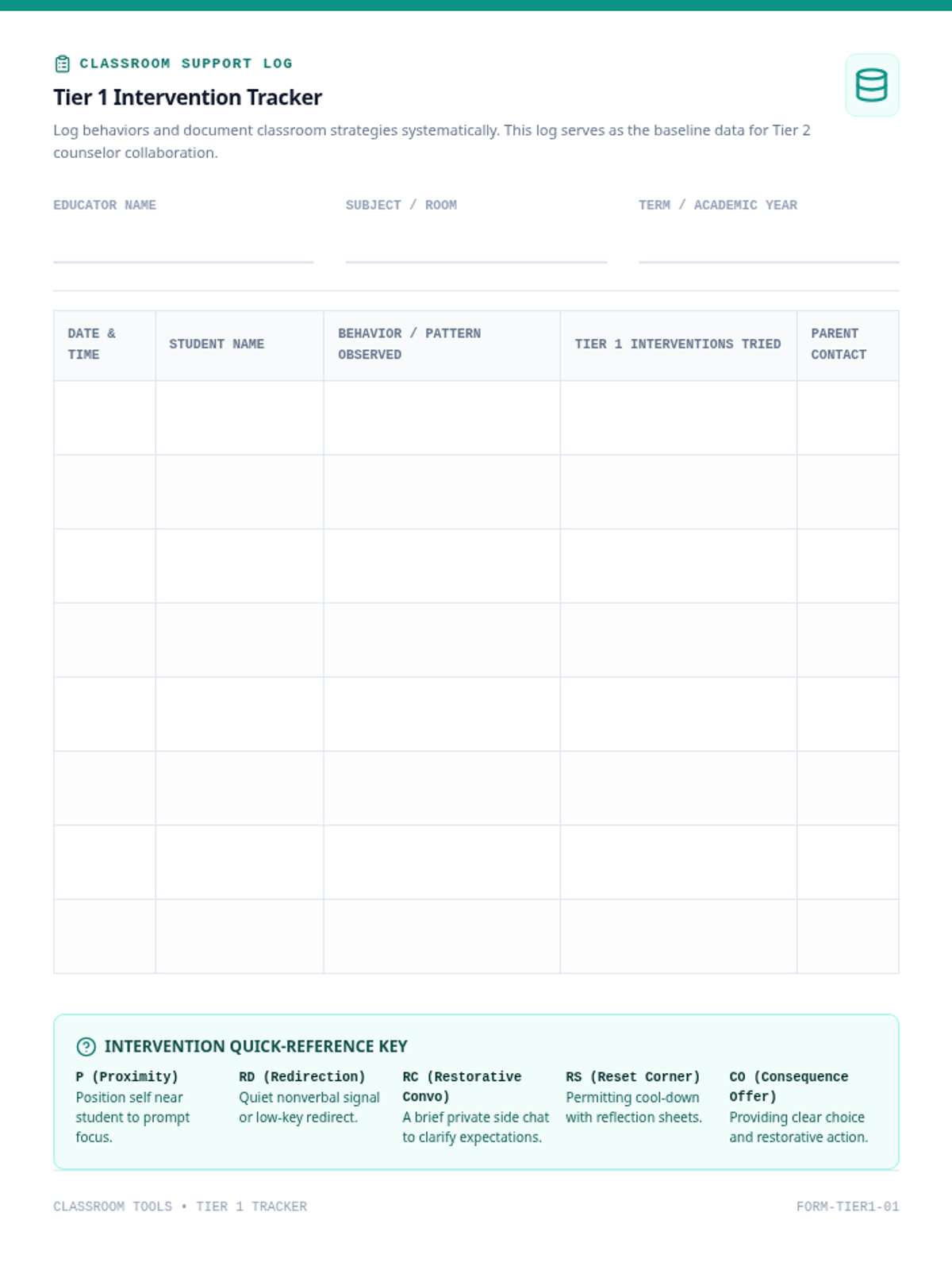
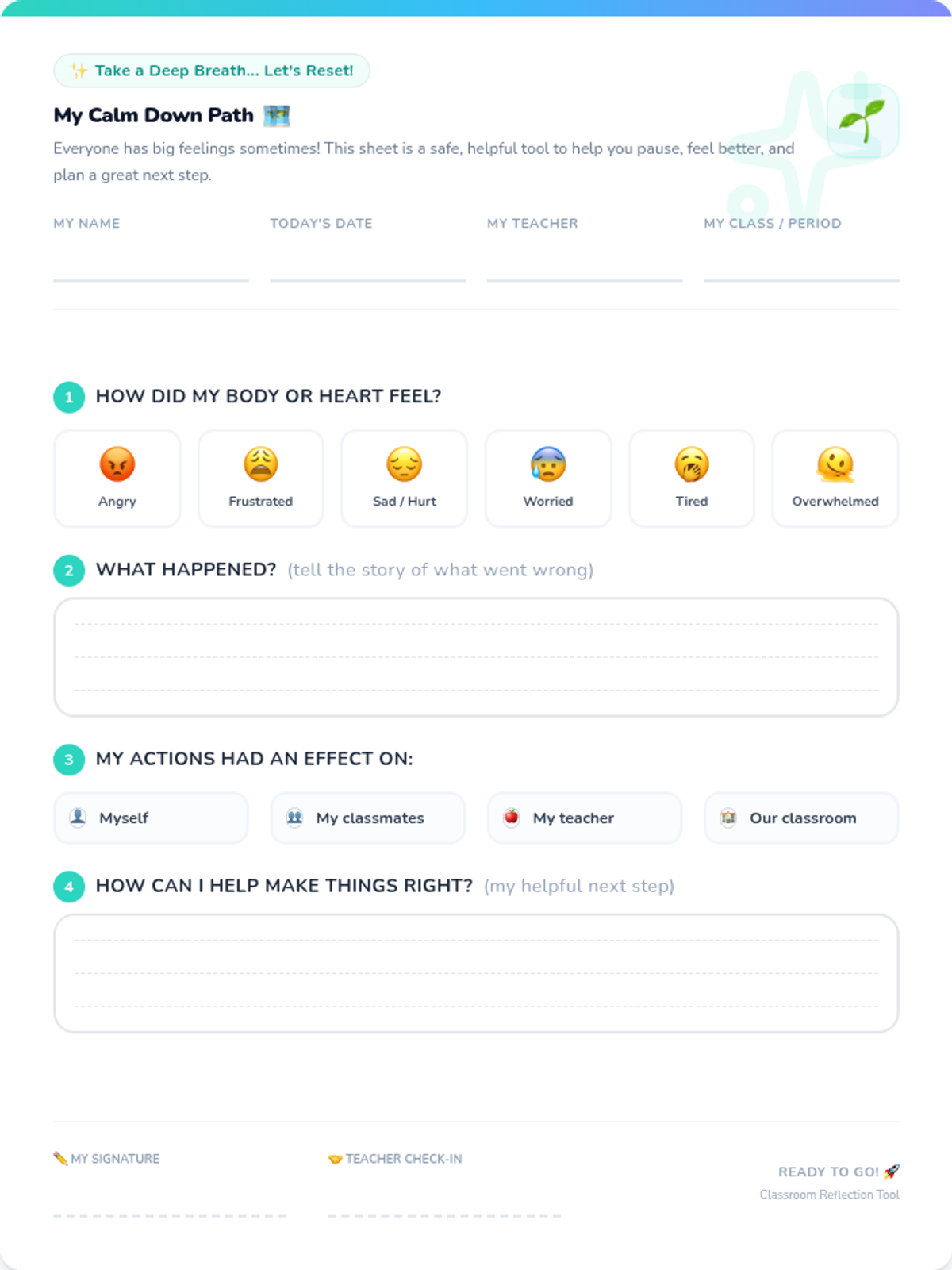
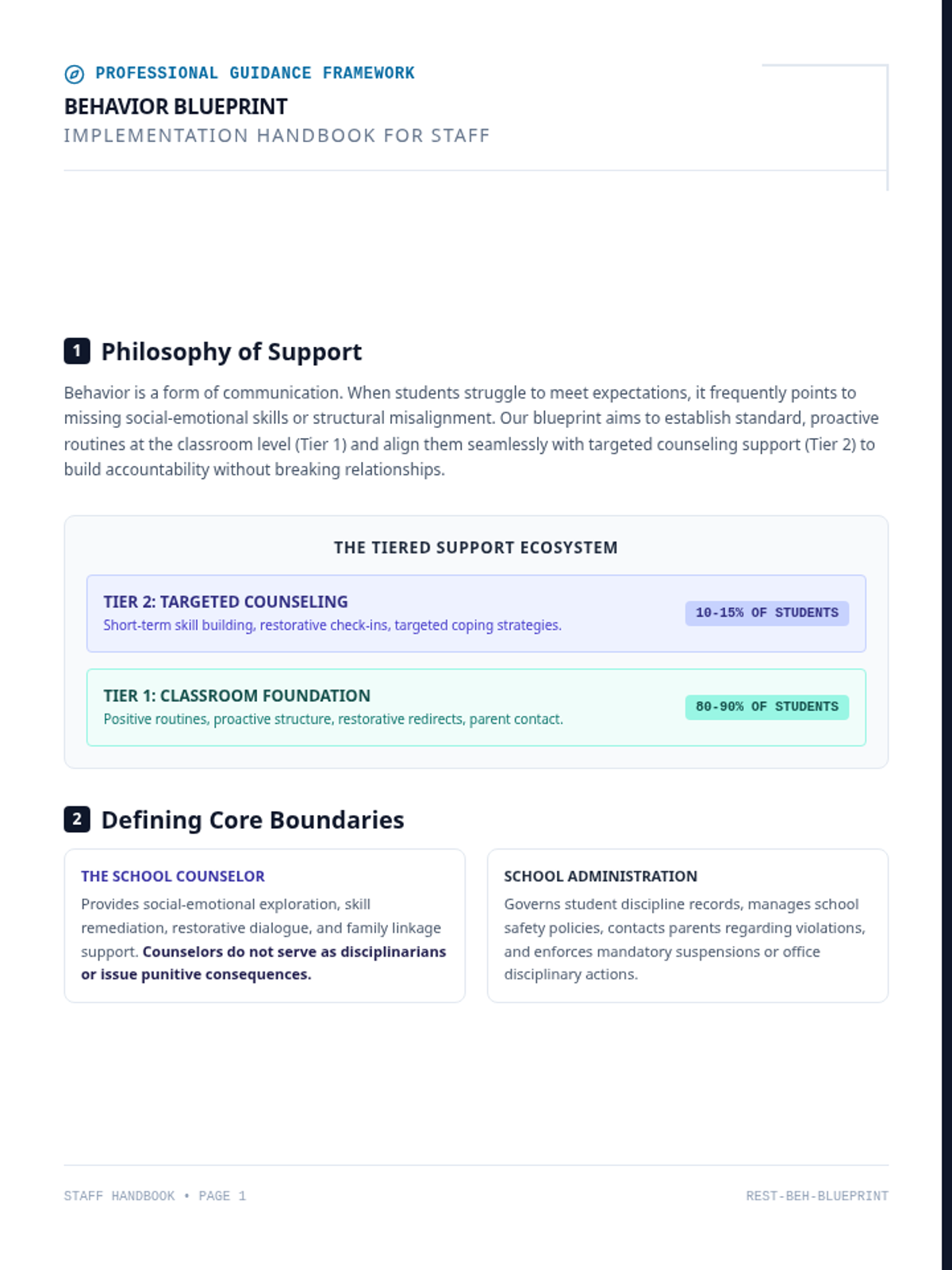
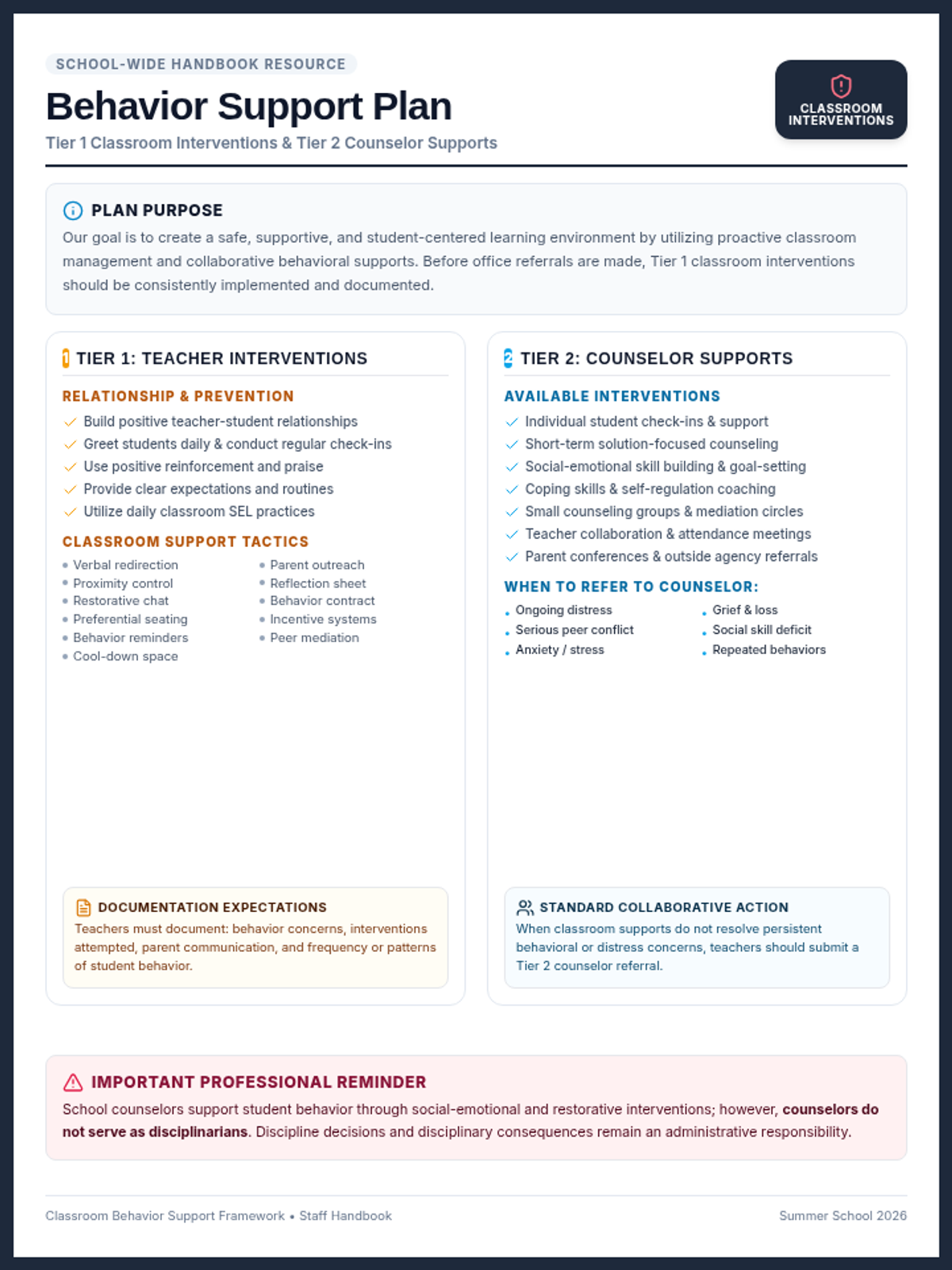
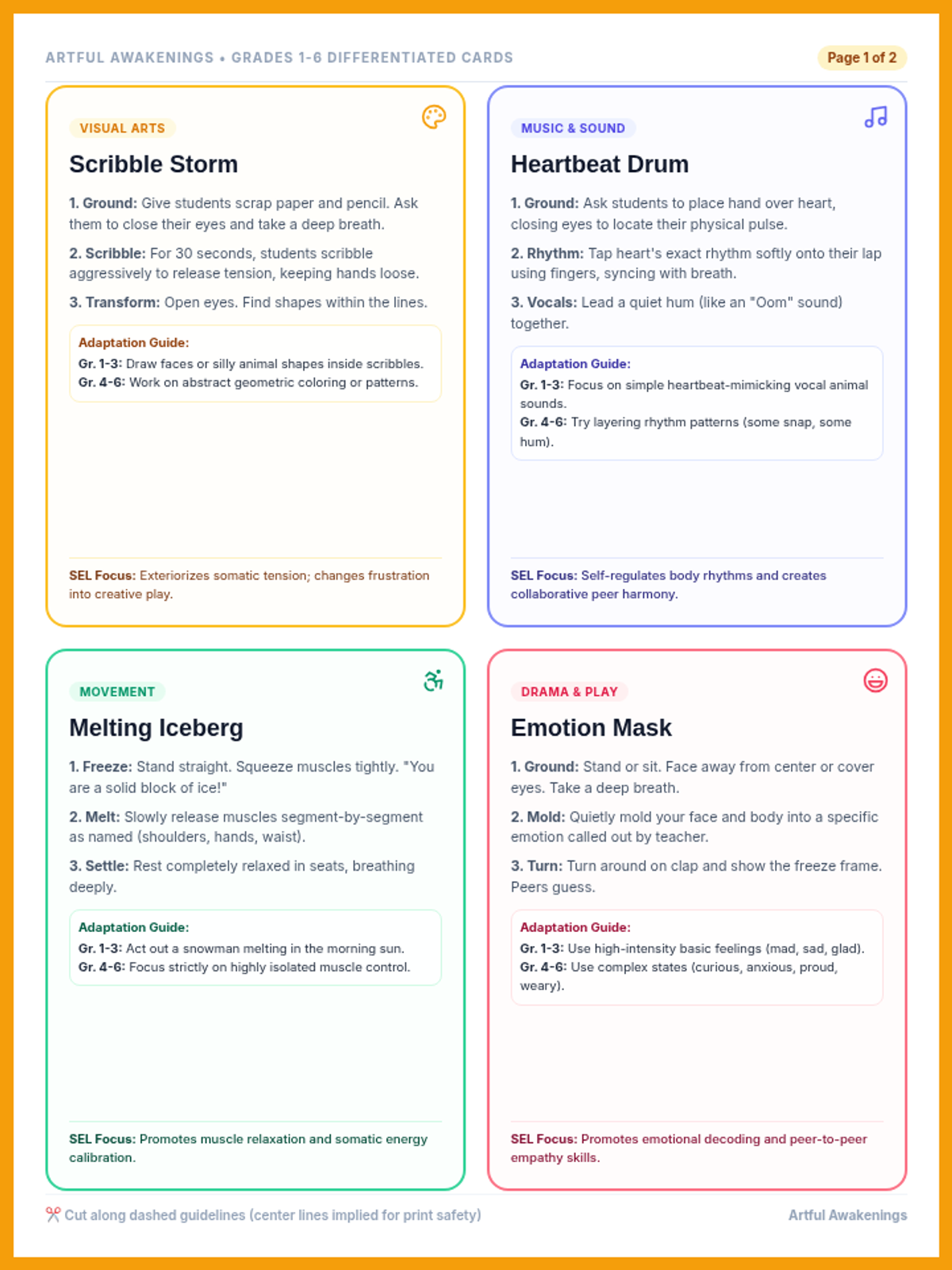
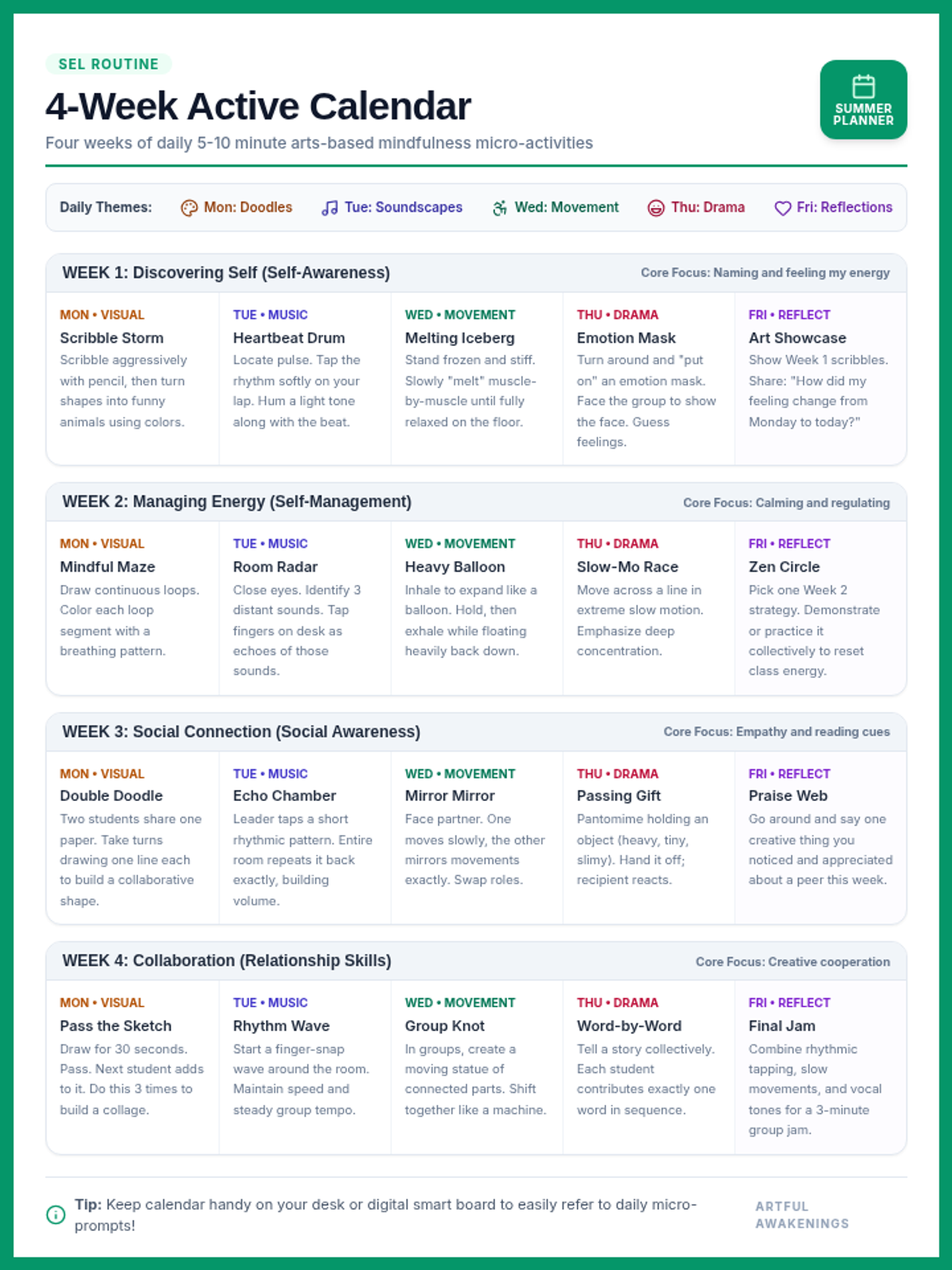
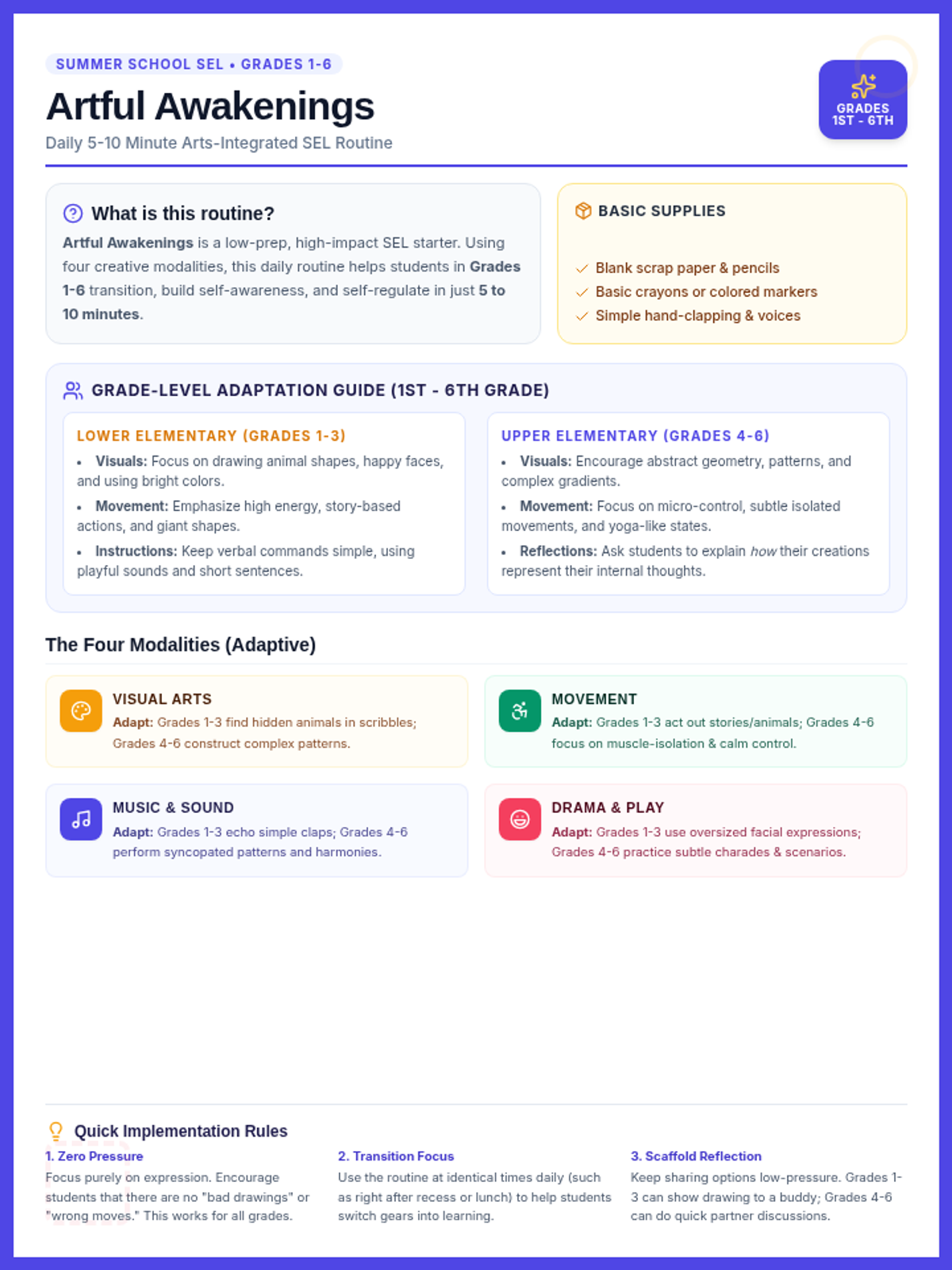
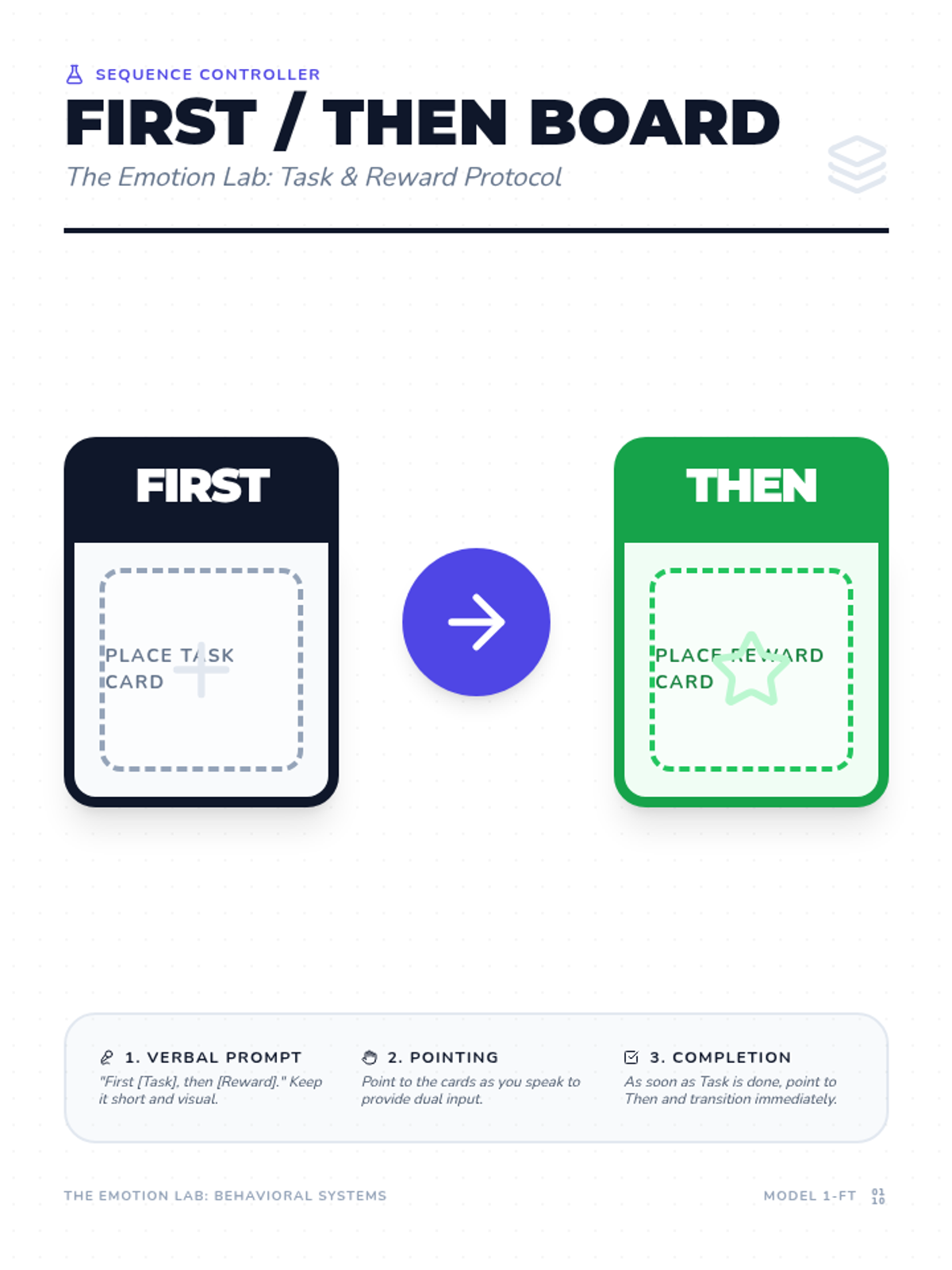
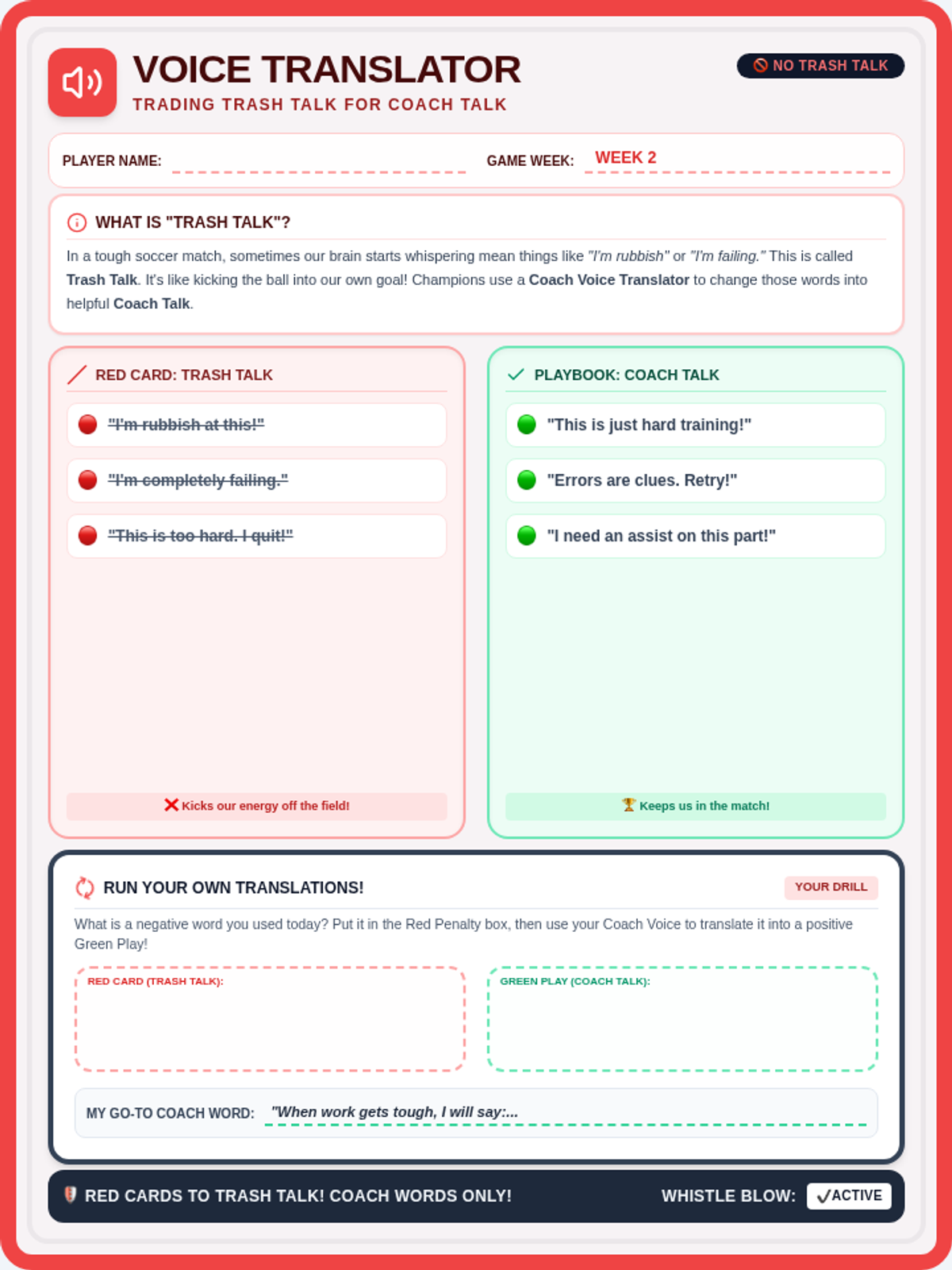
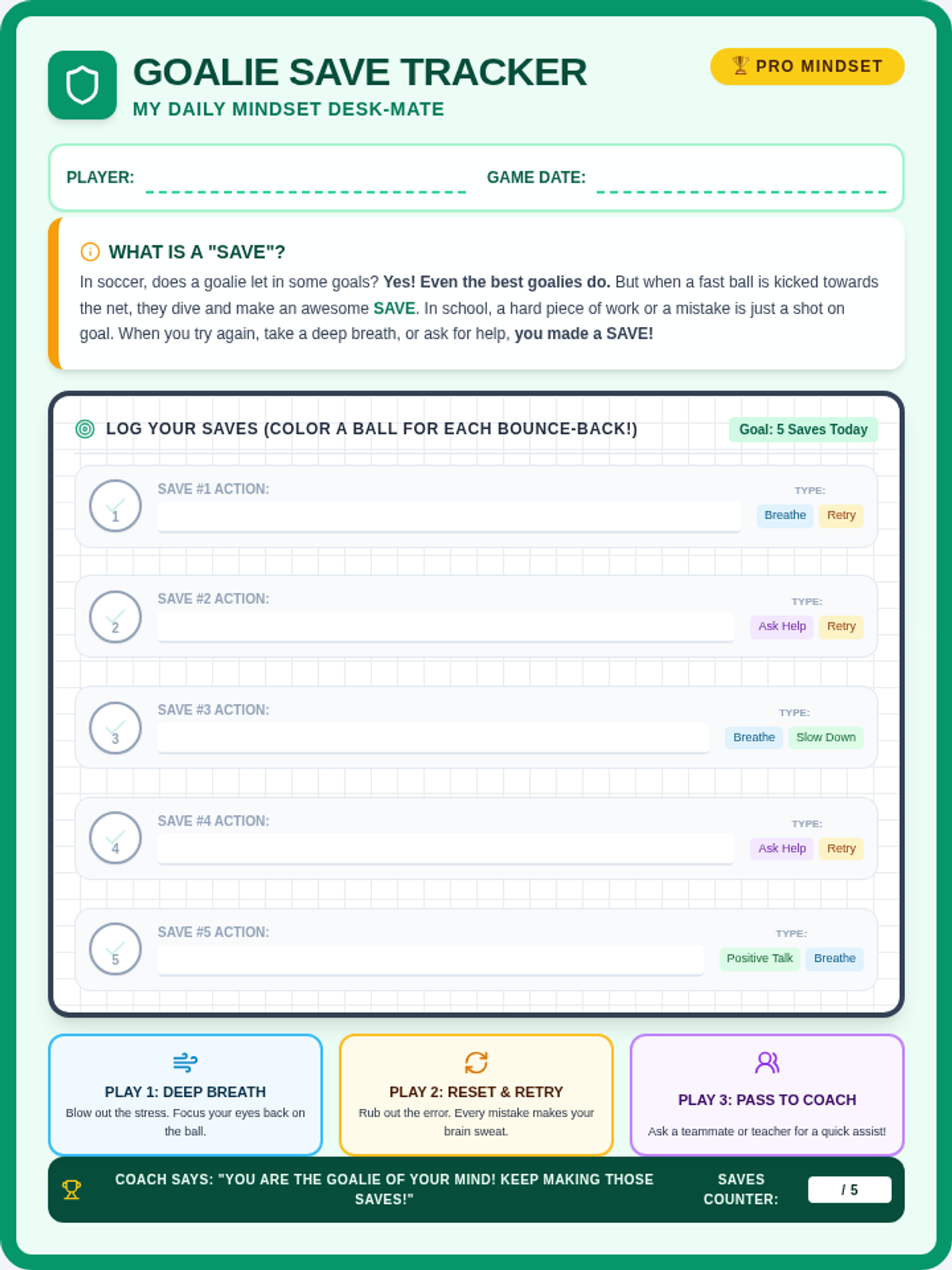
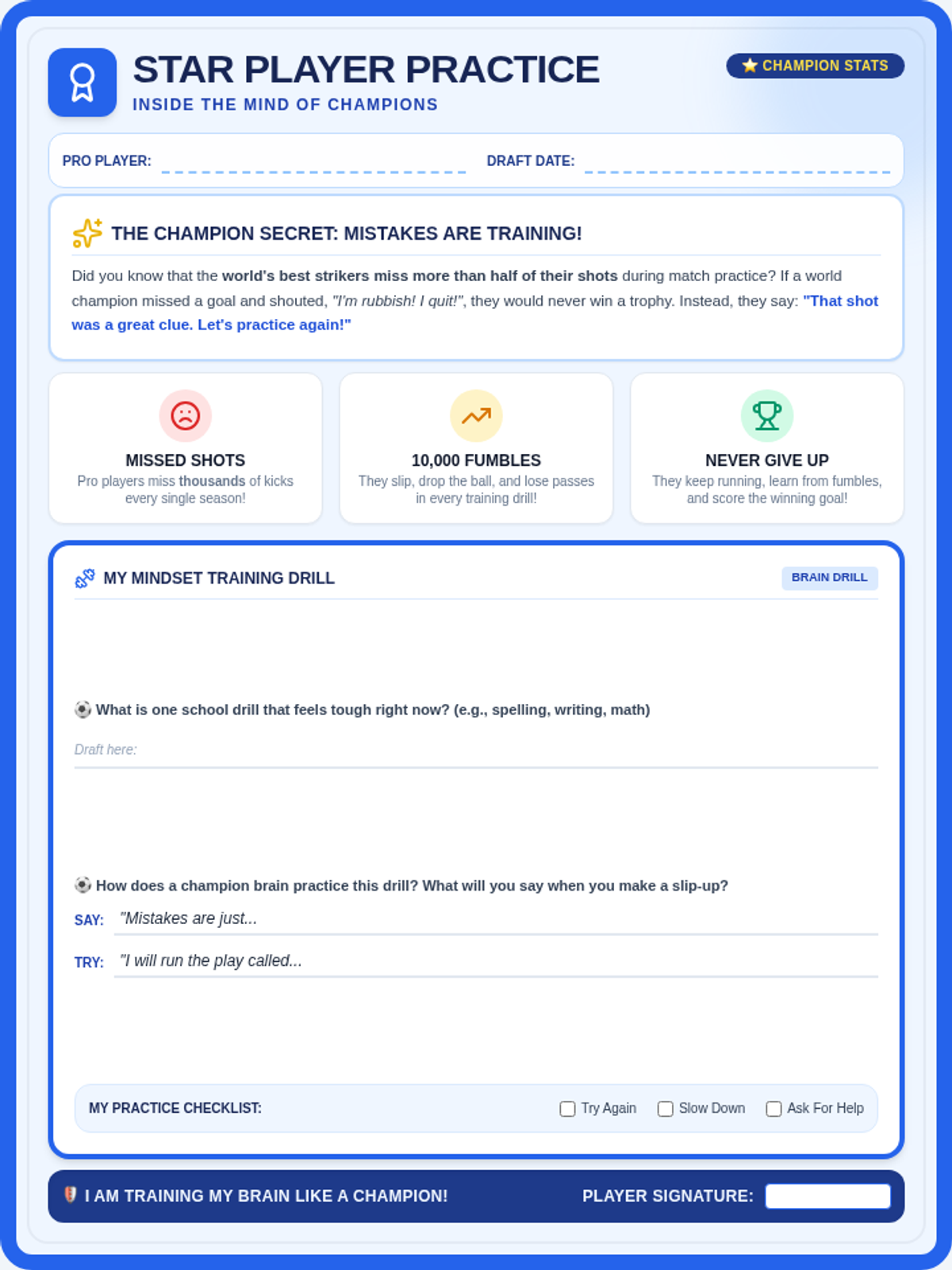
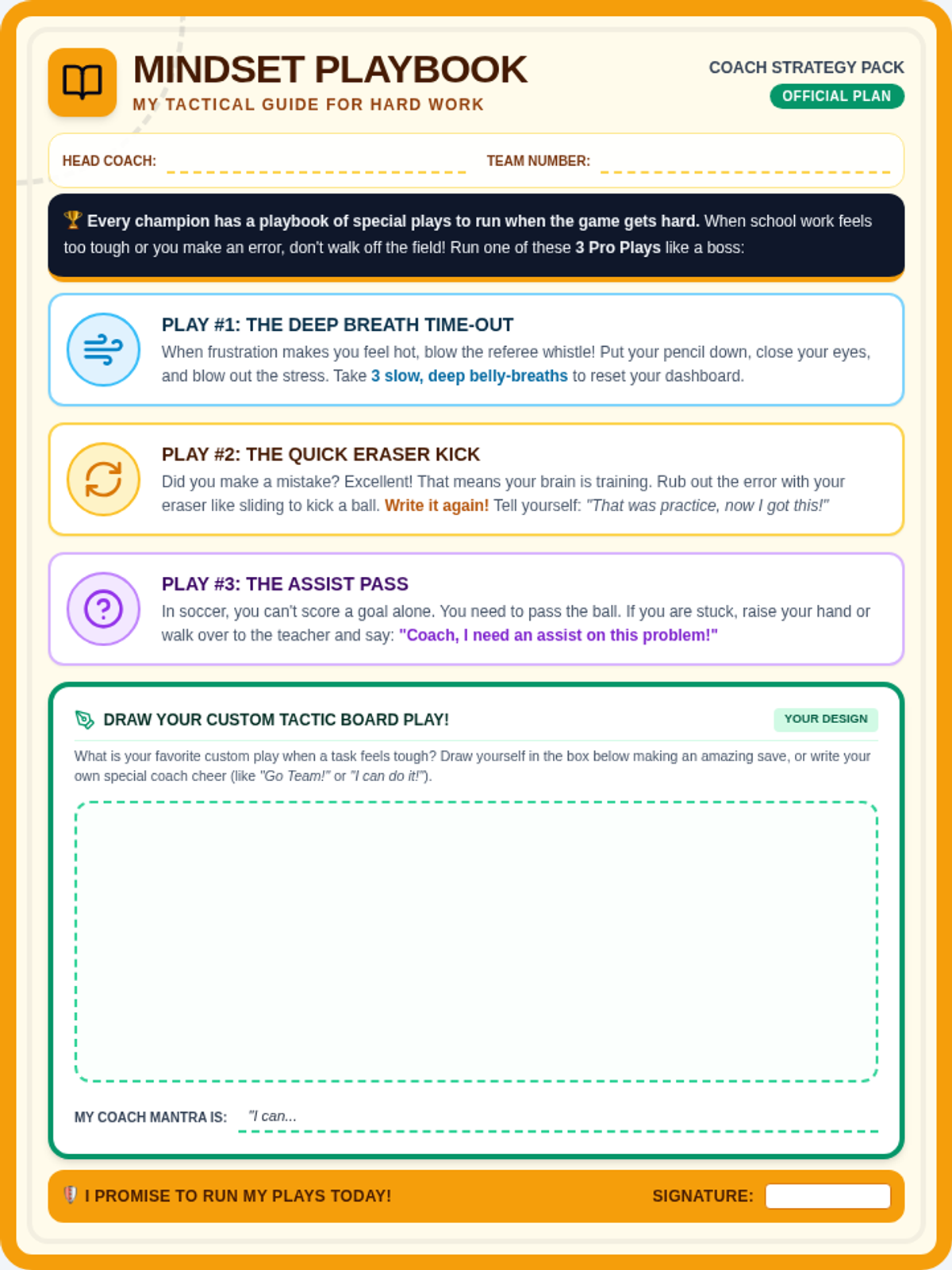
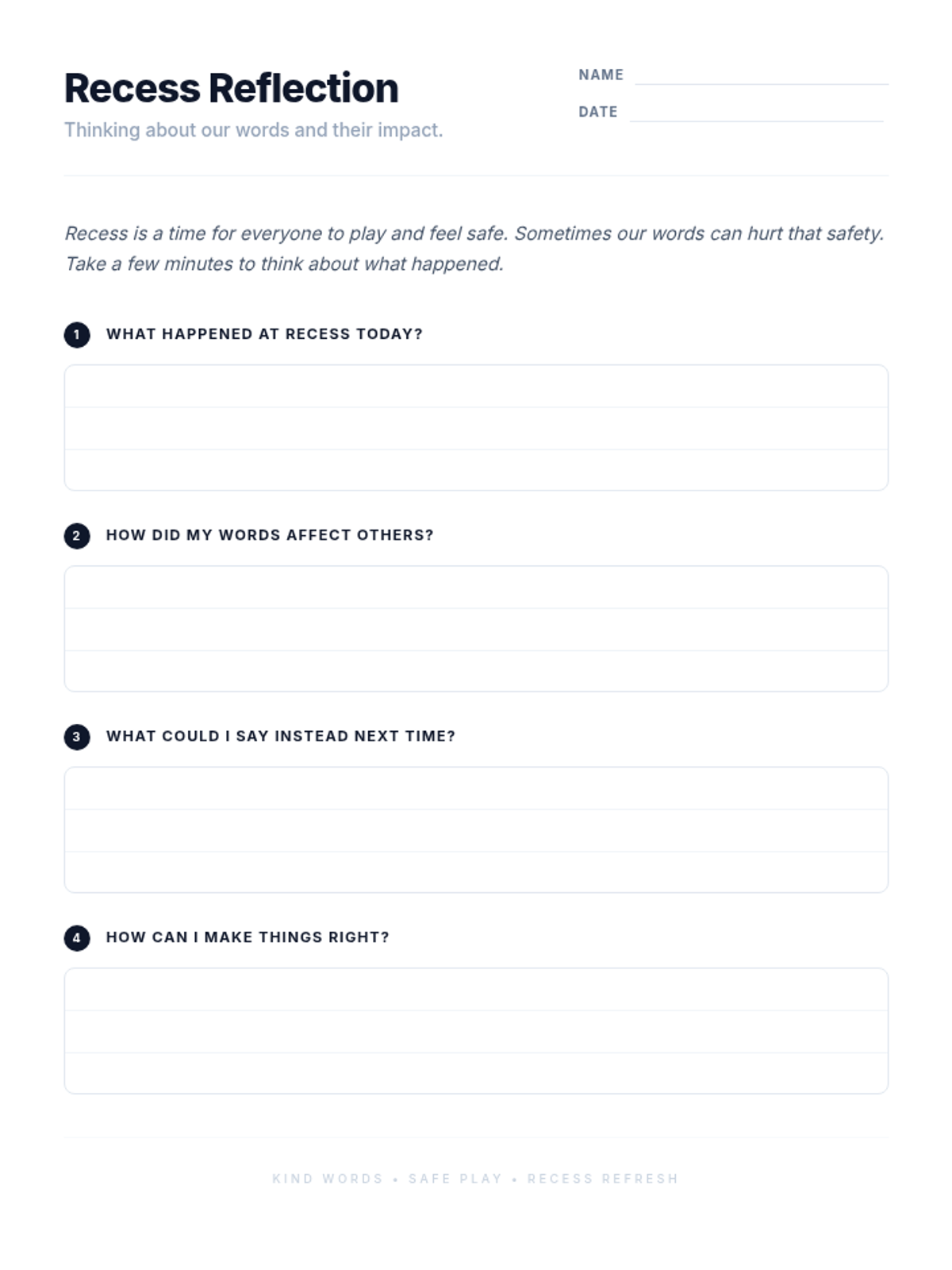
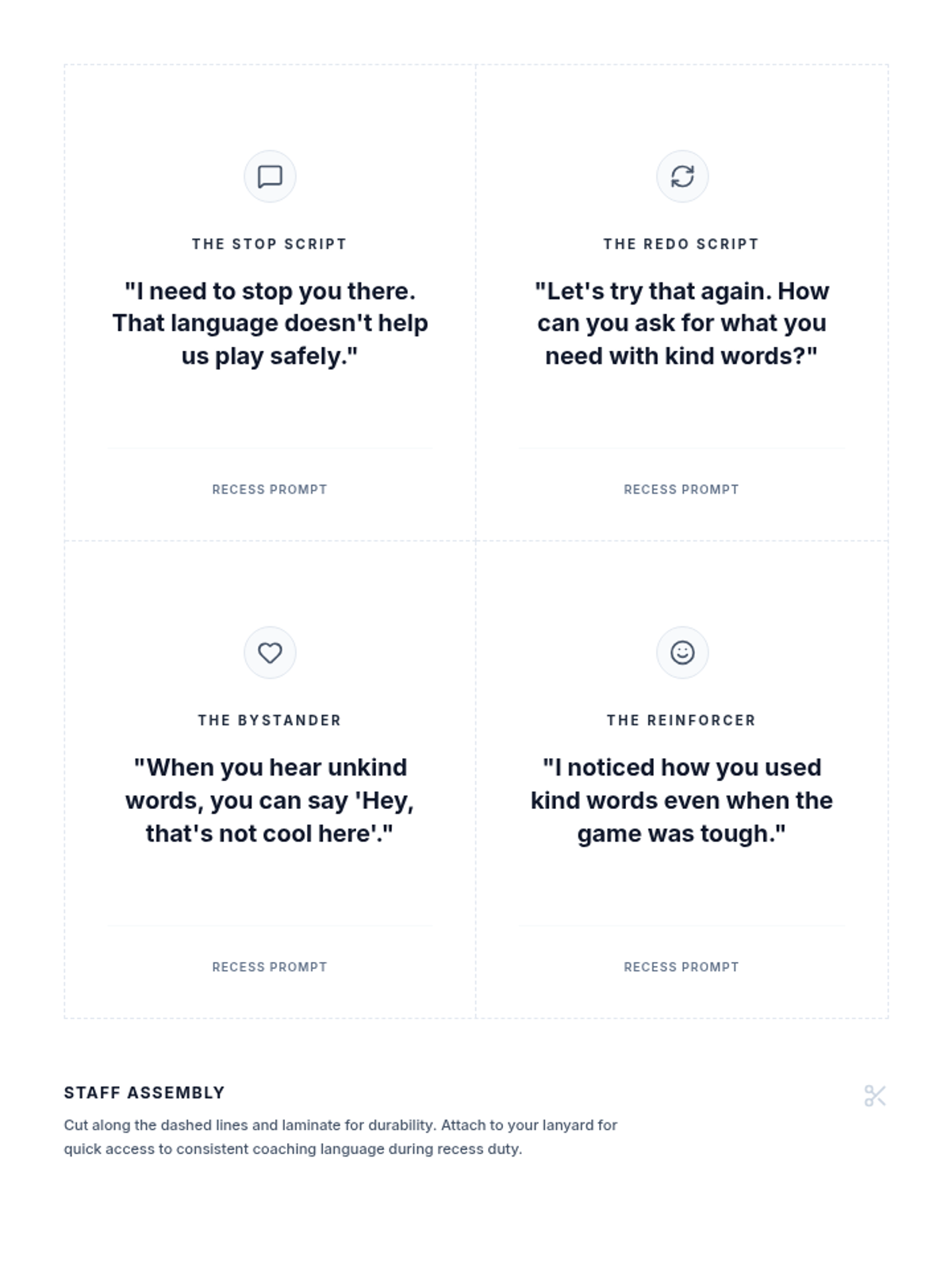
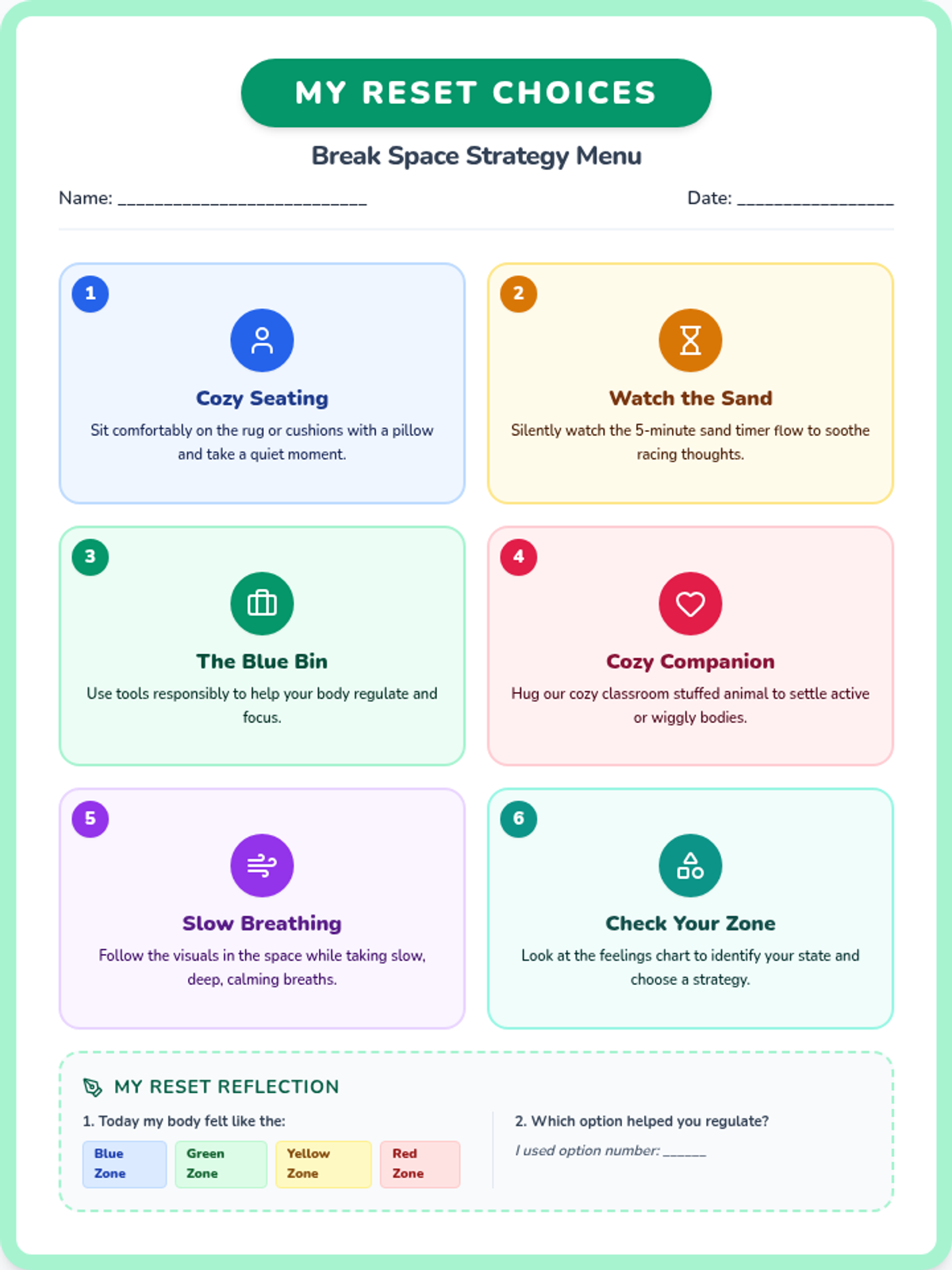
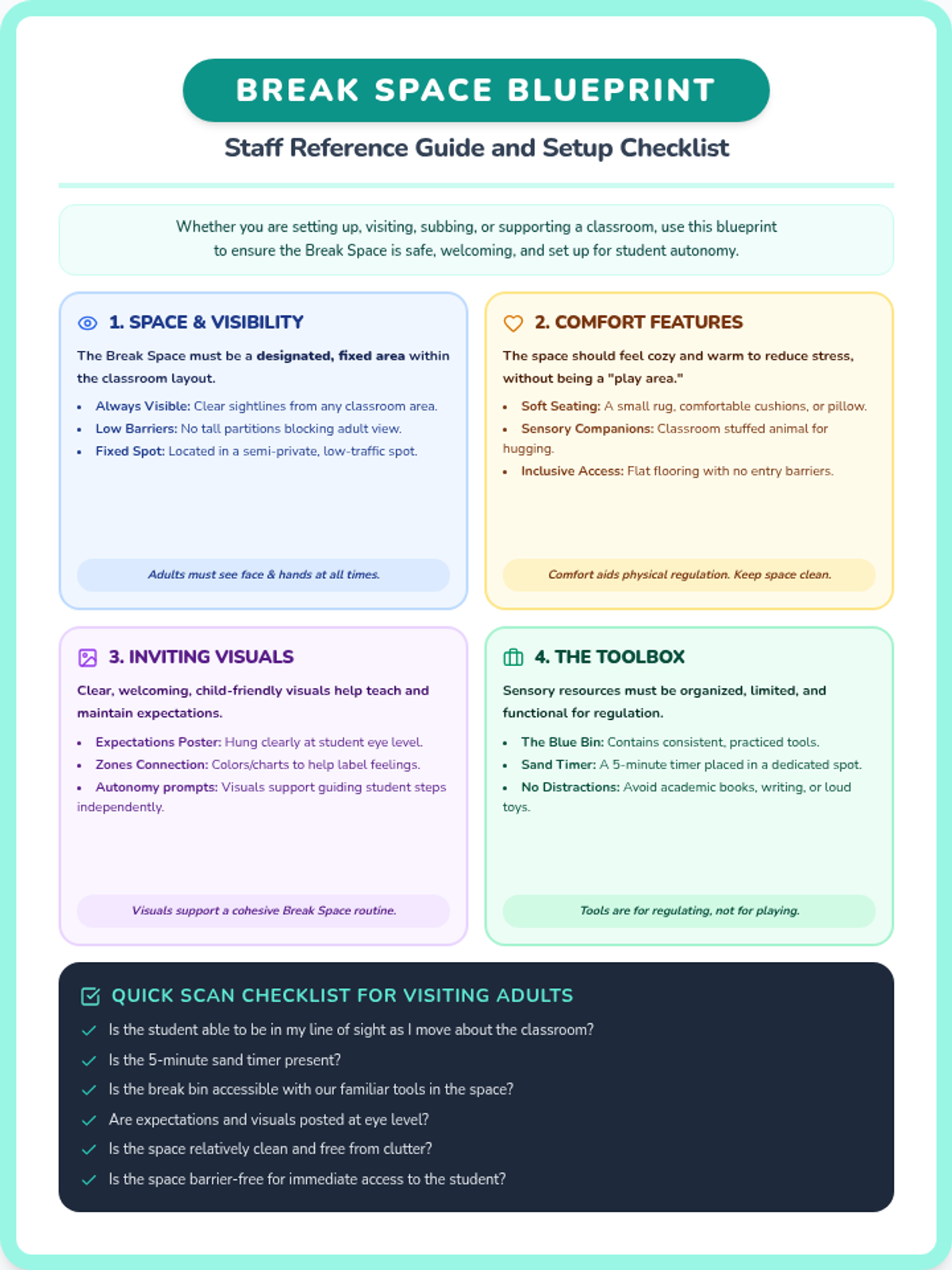
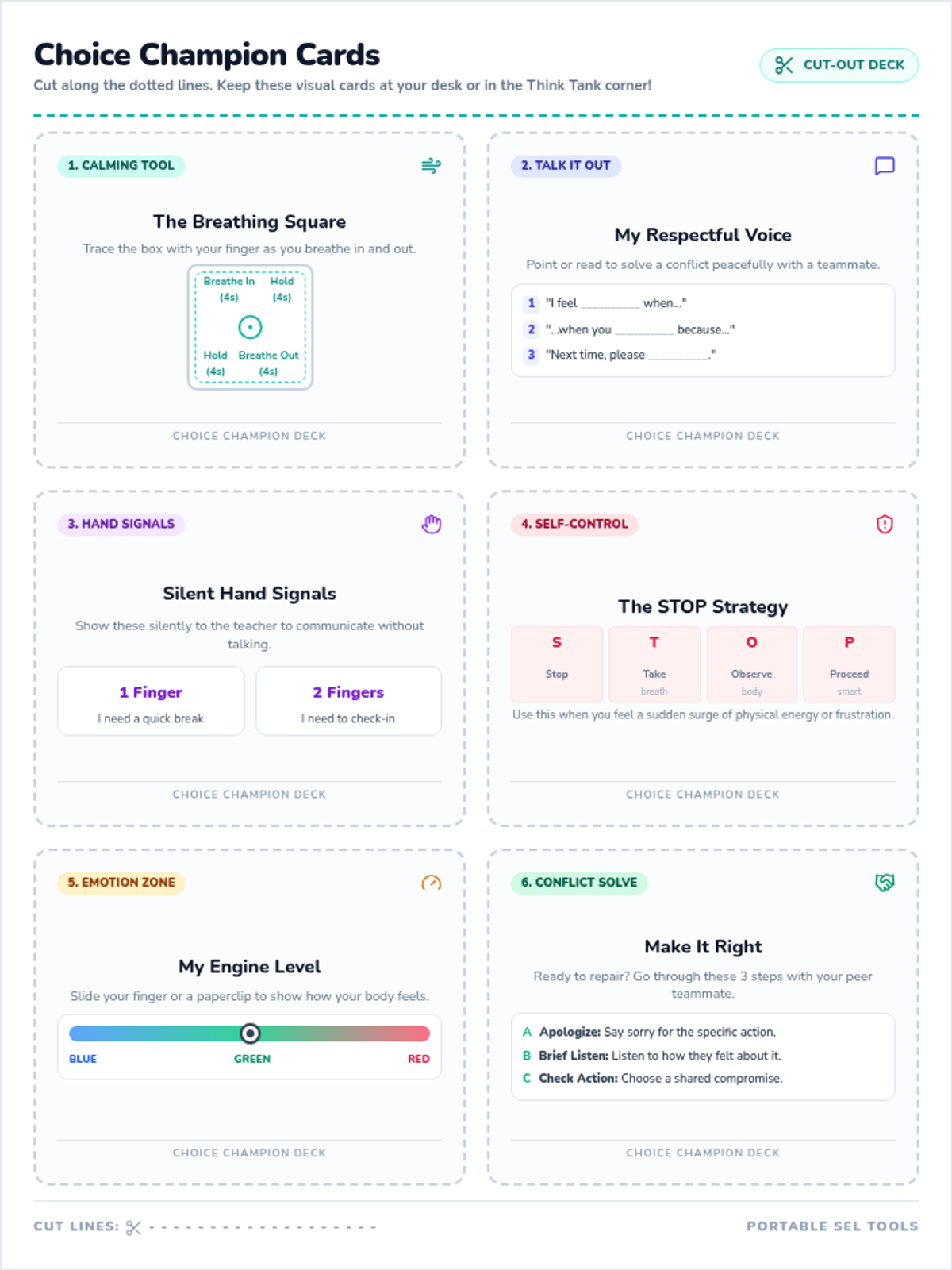
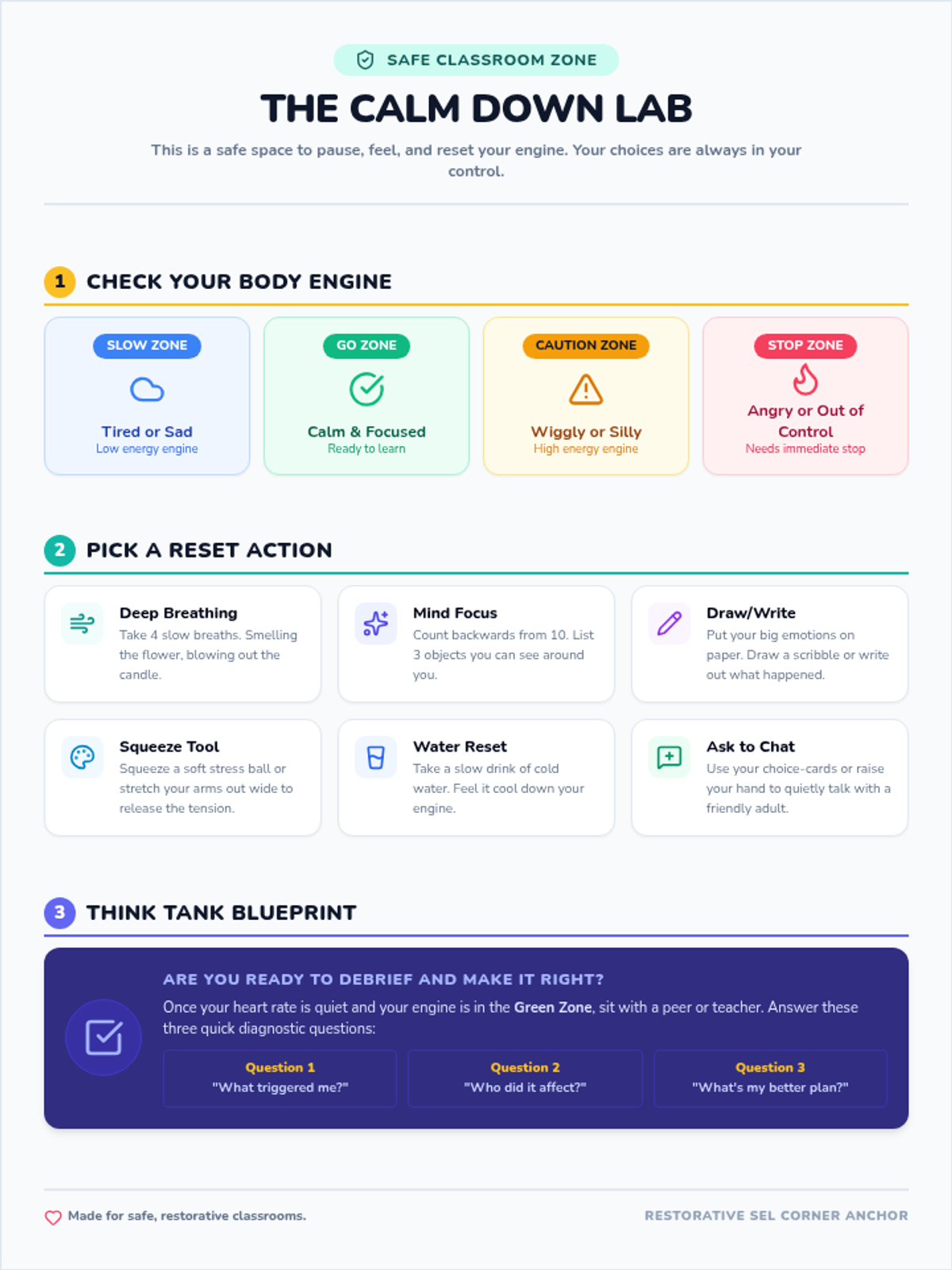
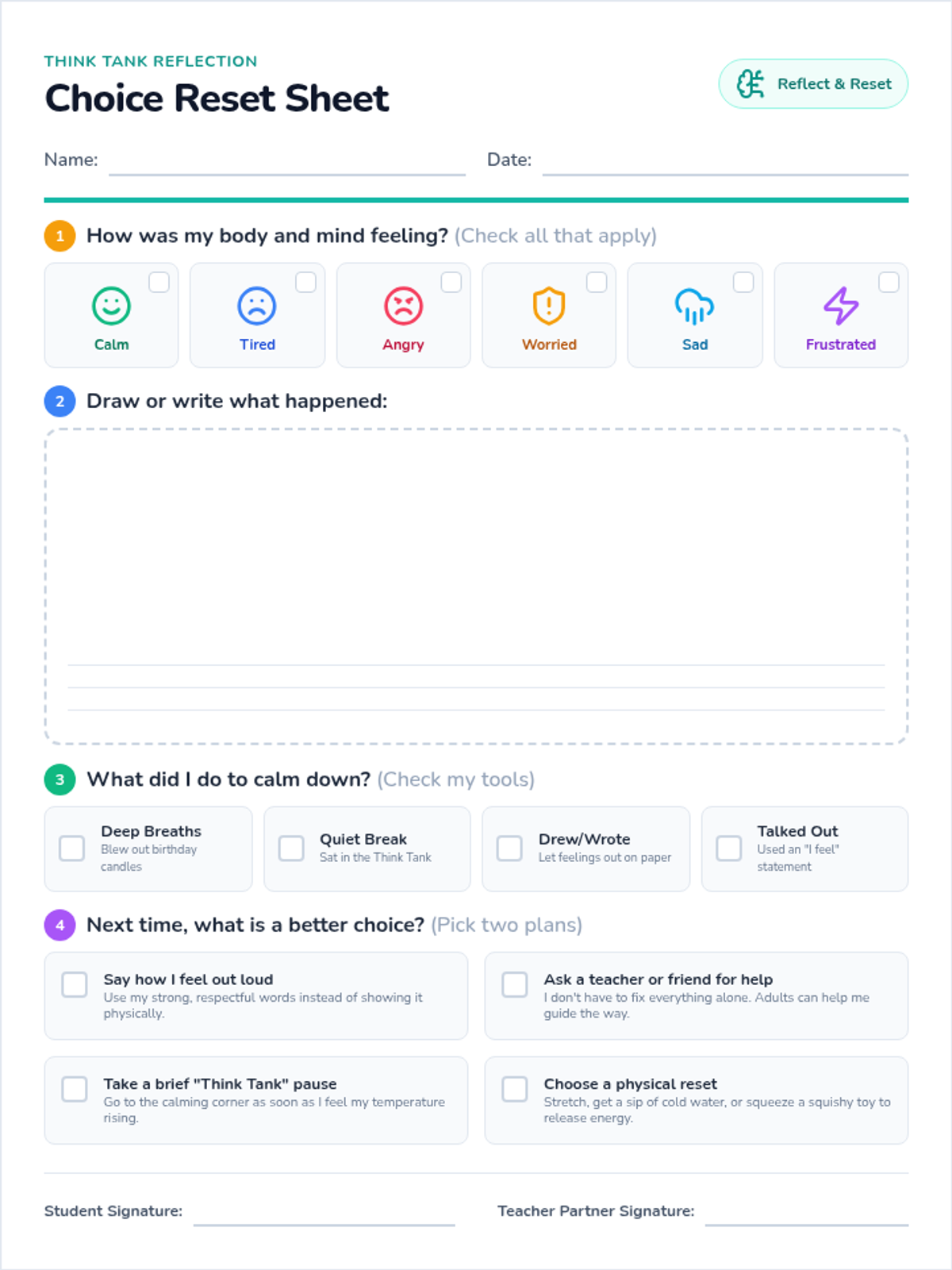
Functional behavior assessment, data tracking, and de-escalation strategies for managing classroom conduct. Addresses positive reinforcement, token economies, and individualized behavior contracts to support student self-regulation.
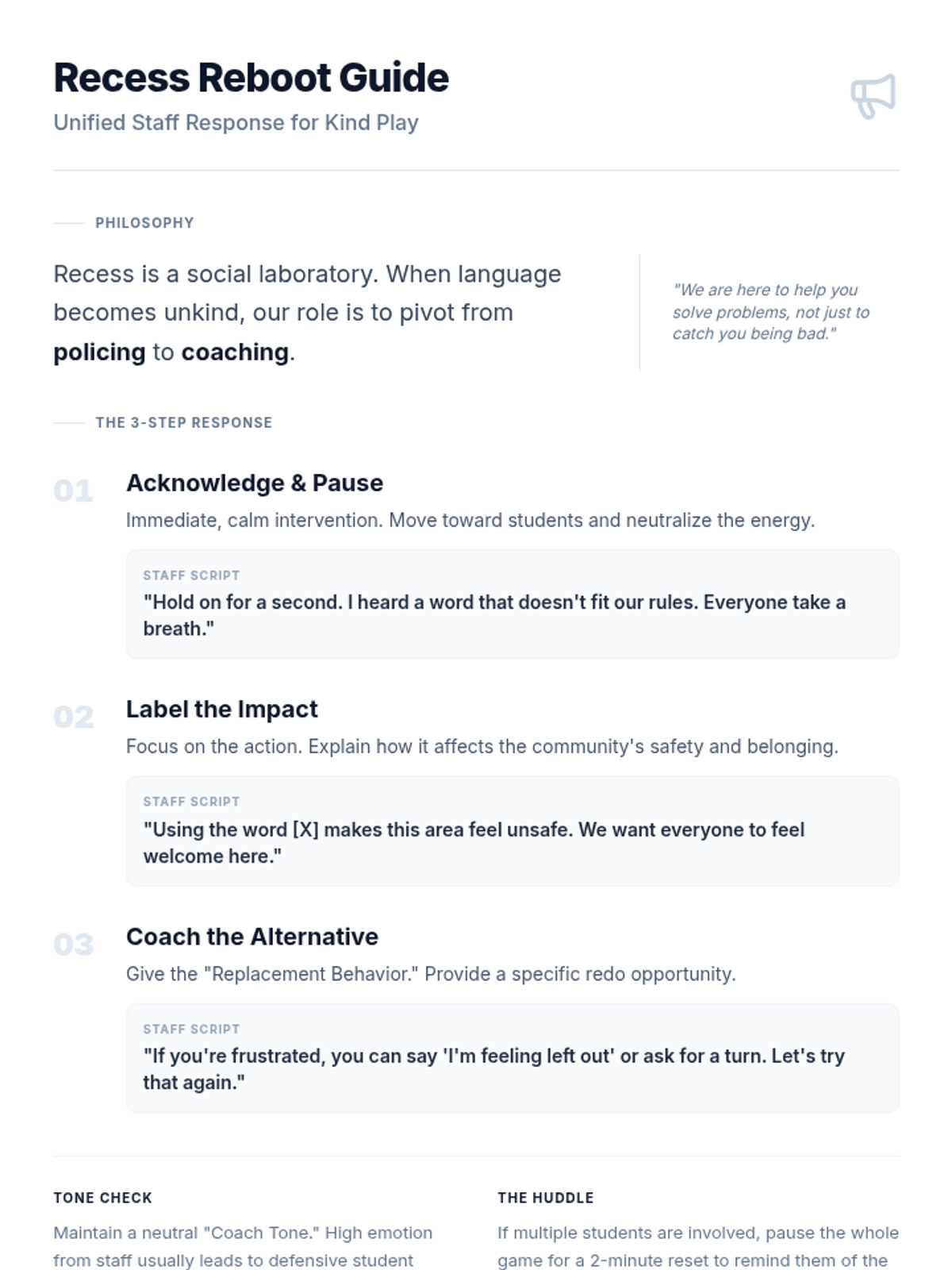
A printable sheet featuring six high-value "Transition Boost" tickets worth five points each, intended for whole-class recognition of extraordinary behavior during recess transitions (quiet, safe, and direct).
A behavior tracking log for teachers and staff to record incidents of social conflict, measuring the student's ability to identify problem size and choose safe regulation strategies.
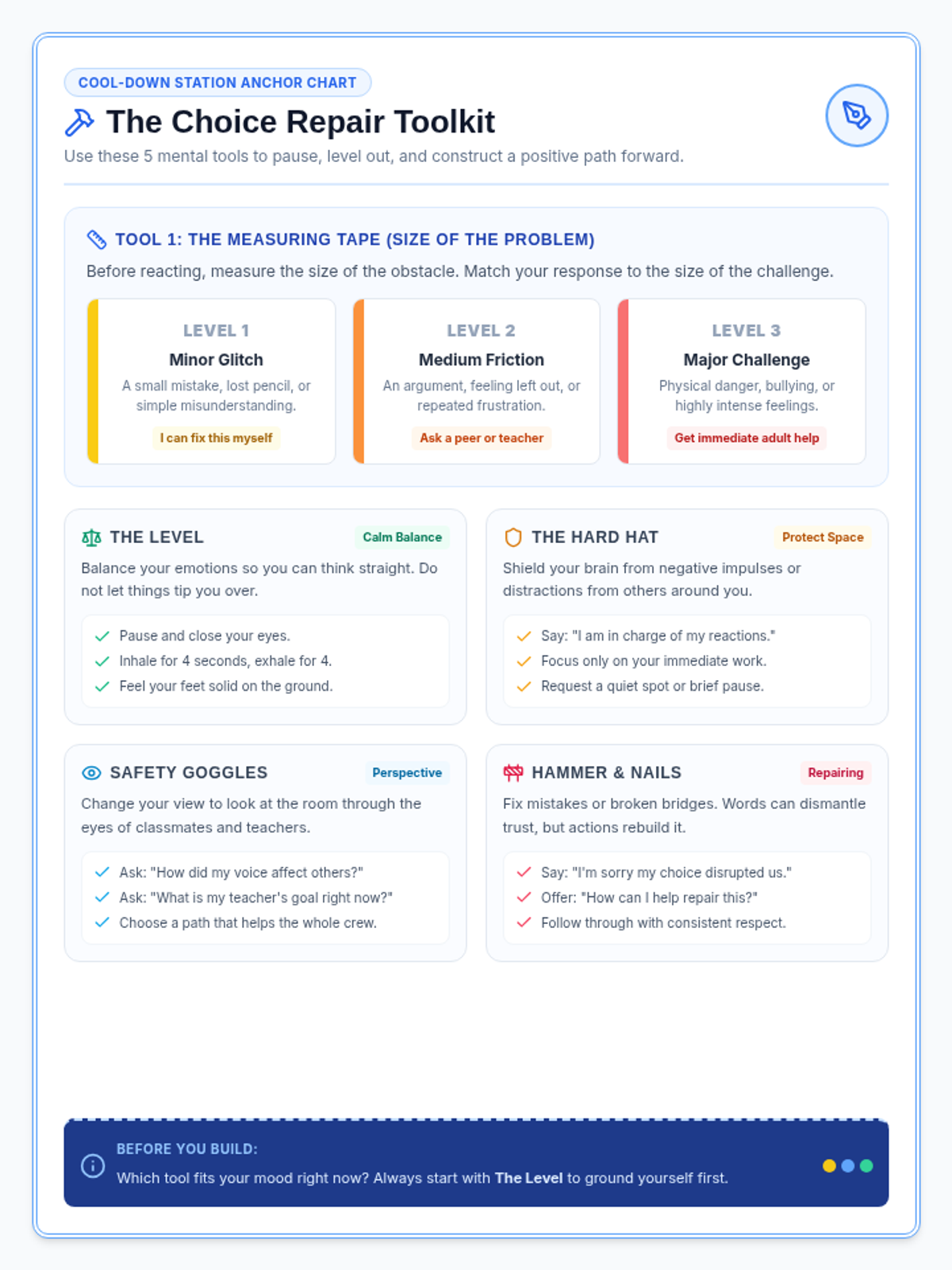
A visual reference guide for students illustrating seven regulation strategies to use during social conflicts, using the 'Problem Pilot' theme.
A worksheet for identifying Small vs. Big Problems and selecting appropriate regulation strategies. Includes multiple choice and fill-in-the-blank questions designed for 4th-grade comprehension.
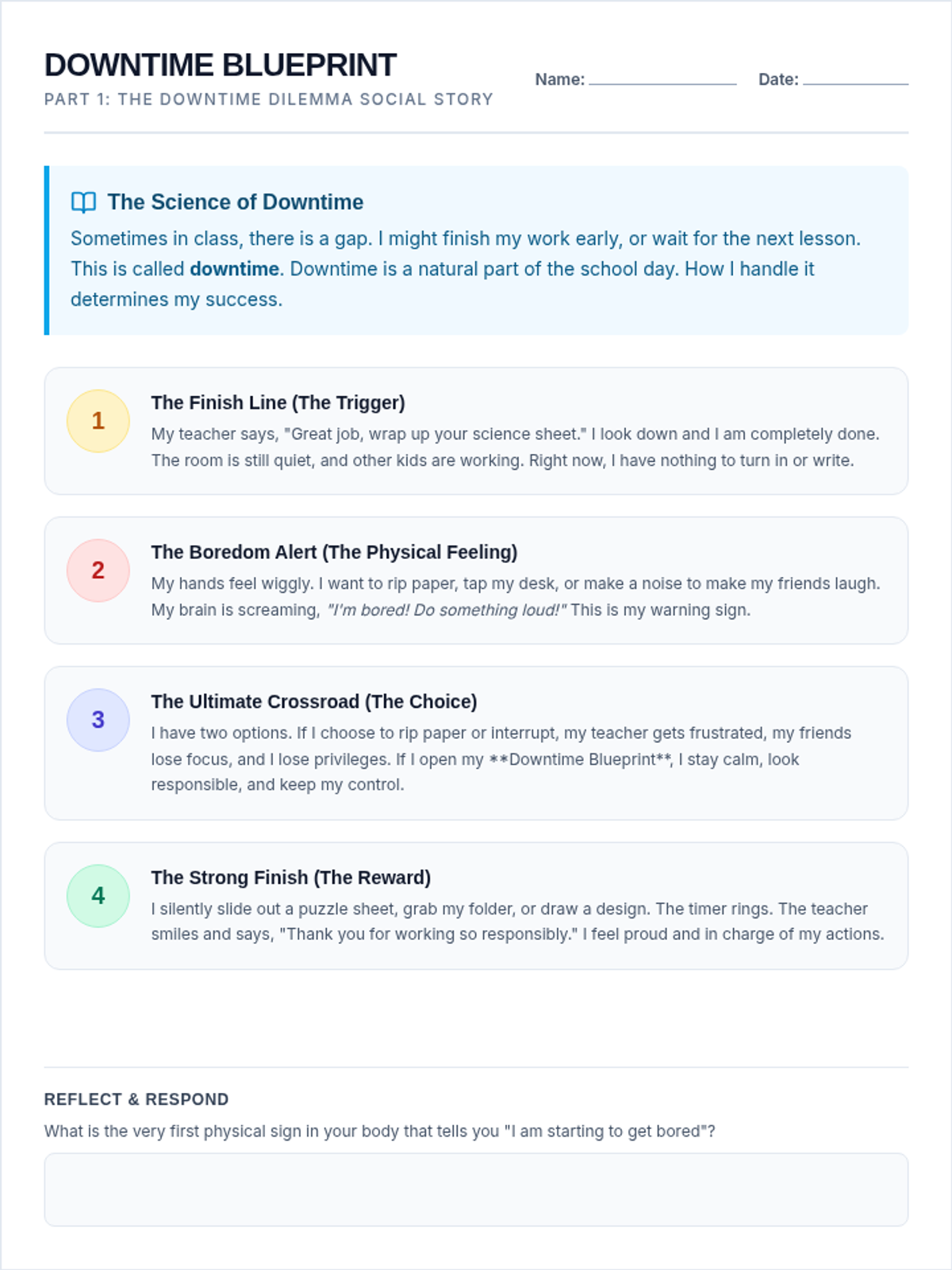
A social story titled 'The Problem Pilot' that uses an aviation metaphor to help a 4th-grade student understand the difference between Small and Big Problems and the importance of using safe regulation strategies.
A teacher resource for tracking progress toward an IEP goal focused on anxiety identification and self-regulation tool selection.
A visual desktop reference for students to identify their current level of anxiety and select a pre-identified regulation tool.
A student worksheet for identifying personal physical signals of anxiety and selecting specific regulation "countermeasures" as part of a Mission Control theme.
An instructional slide deck using a "Mission Control" theme to teach students how to identify body signals of anxiety and select appropriate self-regulation tools.
A math-specific self-monitoring chart for tracking asking for help, accepting help, and effort during a single math block, with check-ins for the start, middle, and end of the lesson.
A revised version of the Focus Finder Anchor Chart specifically for 2nd-grade students, featuring the Zen Panda mascot and simplified language for managing spelling anxiety and staying focused. Optimized for 8.5x11 printing.
A collection of printable desk strips and visual cue cards for 2nd-grade students. These use minimal text and high-contrast visuals (emojis and icons) to provide immediate self-regulation reminders during spelling and assessments, featuring the Zen Panda mascot.
A set of six printable, visual-heavy focus badges for 2nd-grade students to reward specific self-regulation and grounding behaviors during assessments. Now featuring a Zen Panda mascot! Optimized for 8.5x11 printing.
A highly visual version of the Focus Finder Anchor Chart for 2nd-grade students, featuring the Zen Panda mascot and minimal text to guide self-regulation and grounding during assessments. Optimized for 8.5x11 printing.
A set of six printable, visual-heavy focus badges for 2nd-grade students to reward specific self-regulation and grounding behaviors during assessments. Now featuring a Zen Frog mascot!
A collection of printable desk strips and visual cue cards for 2nd-grade students. These use minimal text and high-contrast visuals (emojis and icons) to provide immediate self-regulation reminders during spelling and assessments.
A highly visual version of the Focus Finder Anchor Chart for 2nd-grade students, featuring the Zen Frog mascot and minimal text to guide self-regulation and grounding during assessments.
A simple, engaging tracker for 2nd-grade students to color in a star each day they use one of their self-regulation tools, helping to build consistent habits and provide positive reinforcement. Optimized for 8.5x11 printing.
A teacher resource providing specific pacing, scripting, and intervention strategies for supporting anxious 2nd-grade students during spelling assessments, including how to use the Focus Finder Anchor Chart effectively. Optimized for 8.5x11 printing.
A revised version of the Focus Finder Anchor Chart specifically for 2nd-grade students, featuring simplified language, larger fonts, and friendly icons for managing spelling anxiety and staying focused.
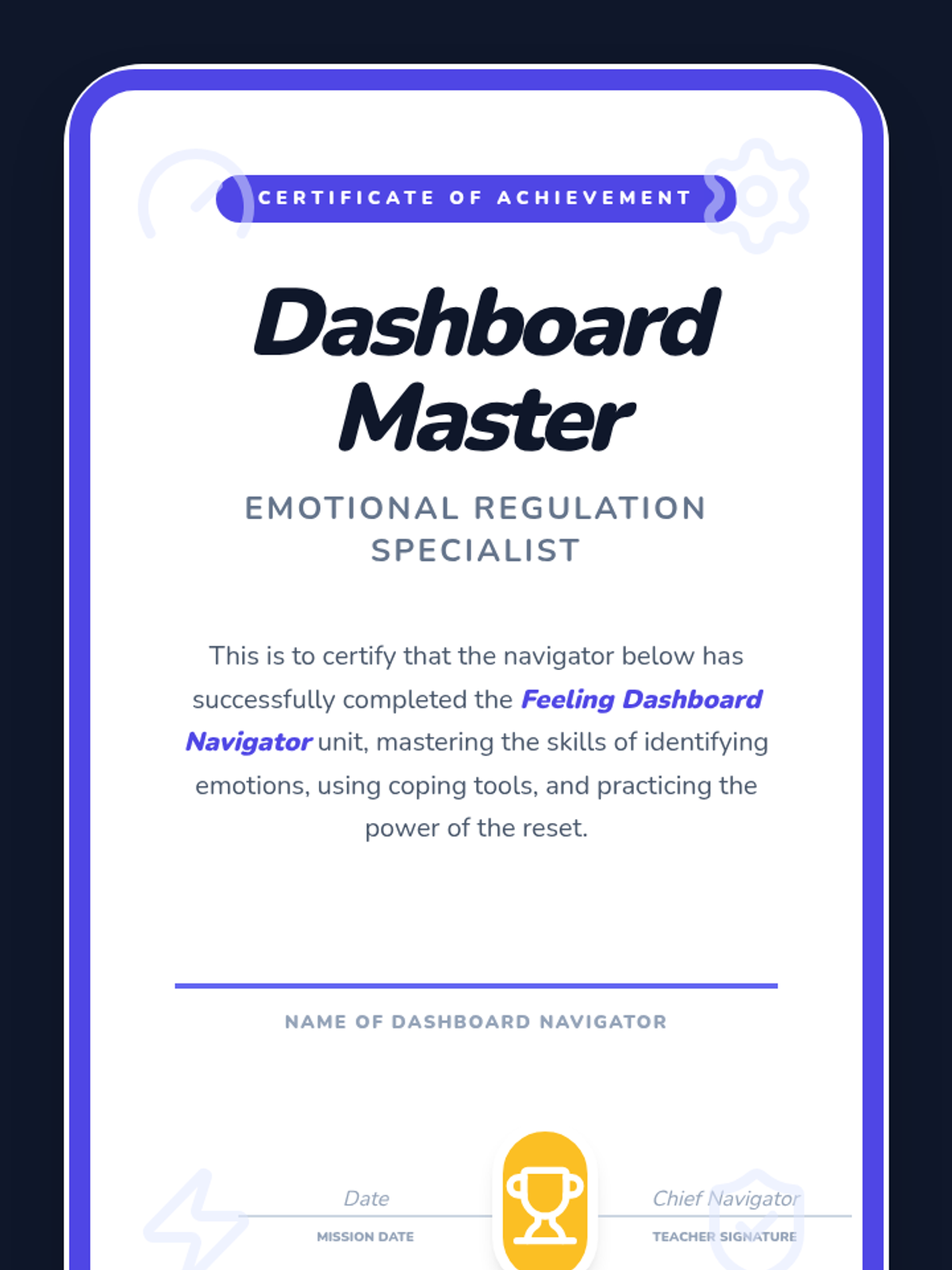
A formal completion certificate for students who have finished the 'Feeling Dashboard Navigator' unit, recognizing their skills in emotional self-regulation.
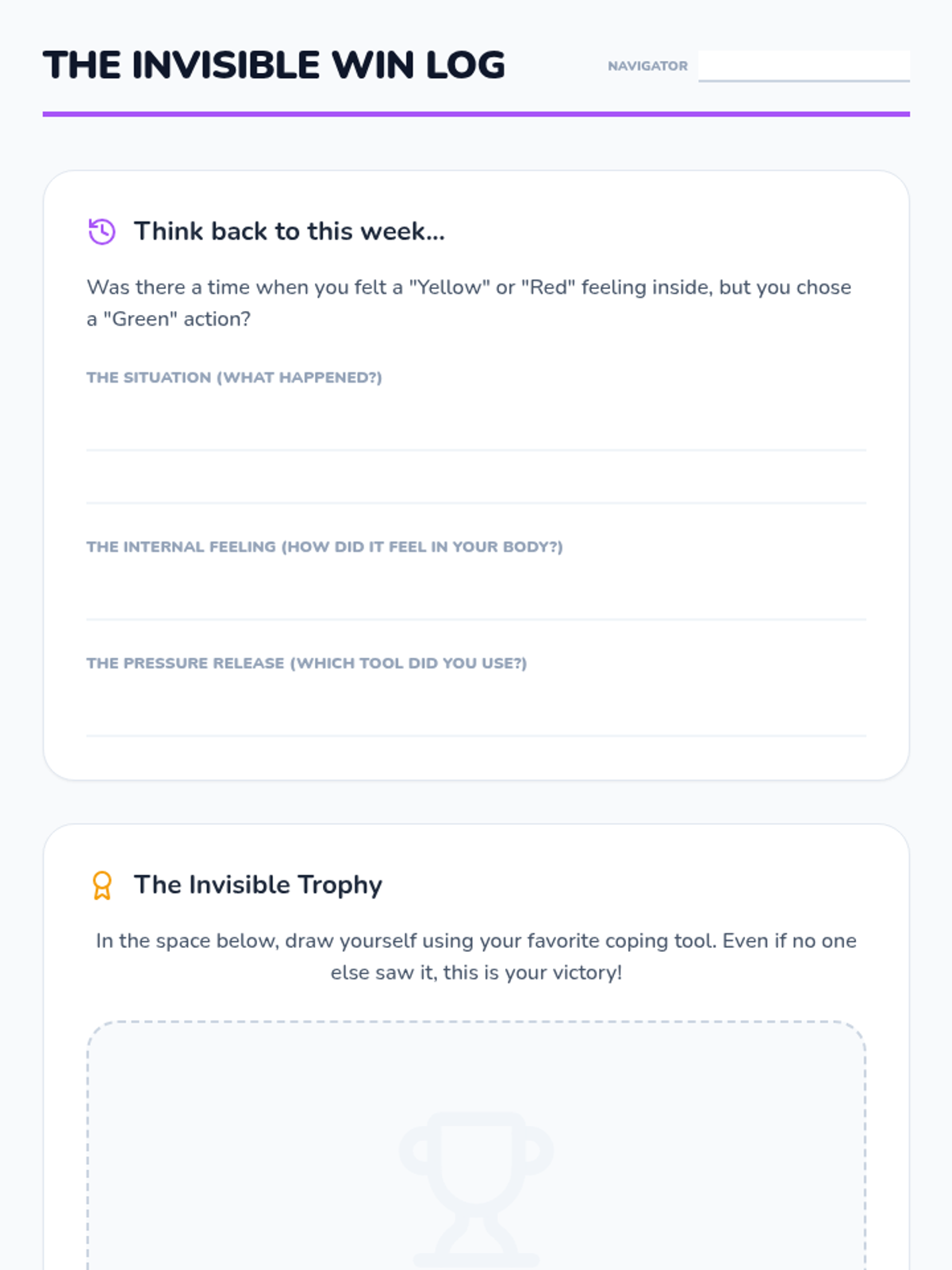
A reflection worksheet for Lesson 5 where students identify and document an 'invisible win'—a time they successfully used self-regulation to manage a difficult emotion.
Slide presentation for Lesson 5 that introduces the concept of 'invisible wins' and encourages students to value their internal self-regulation efforts, regardless of external tracking.
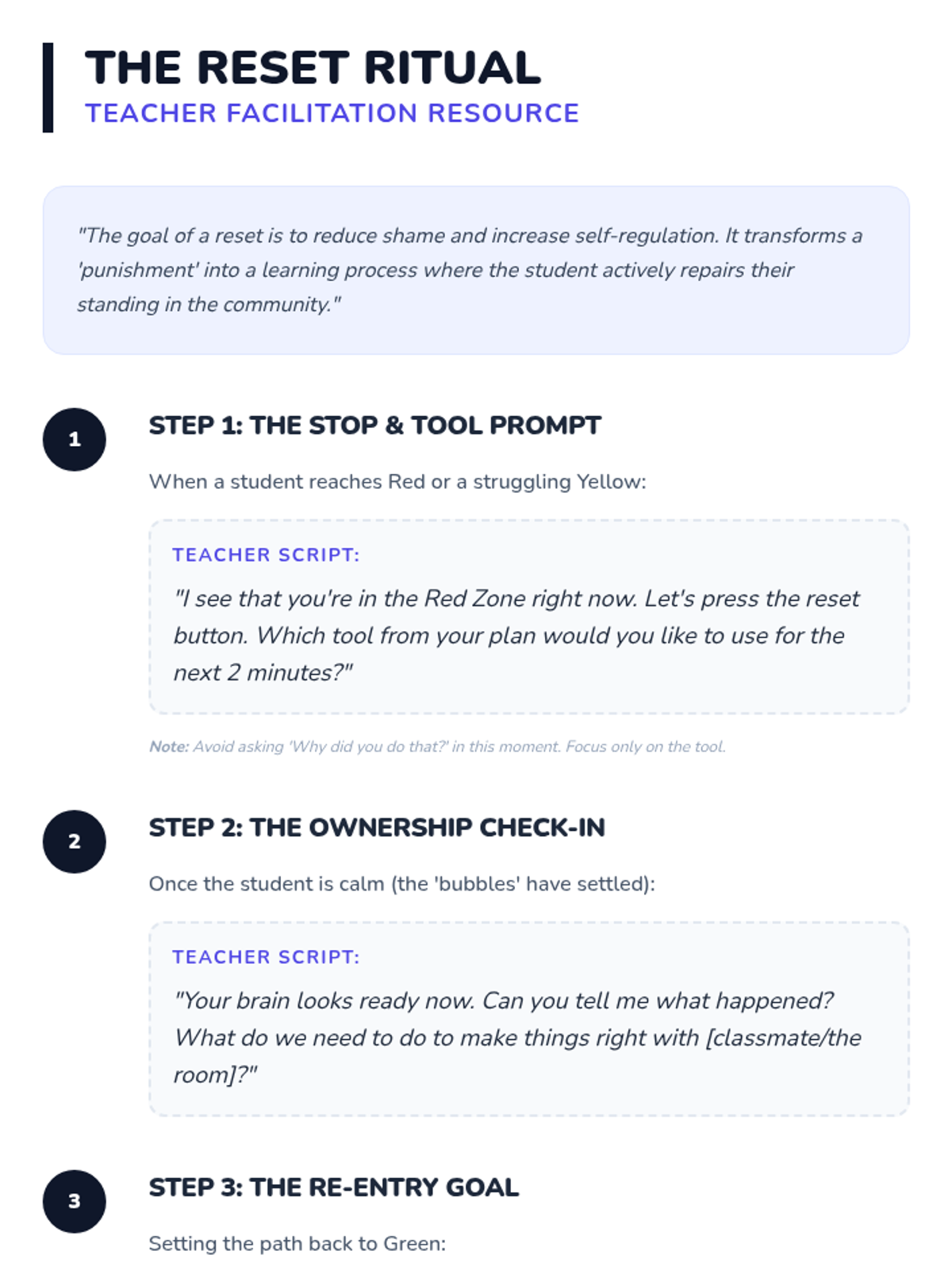
A facilitation guide for teachers in Lesson 4 providing scripts and best practices for guiding students through the 3-step reset process in the classroom.
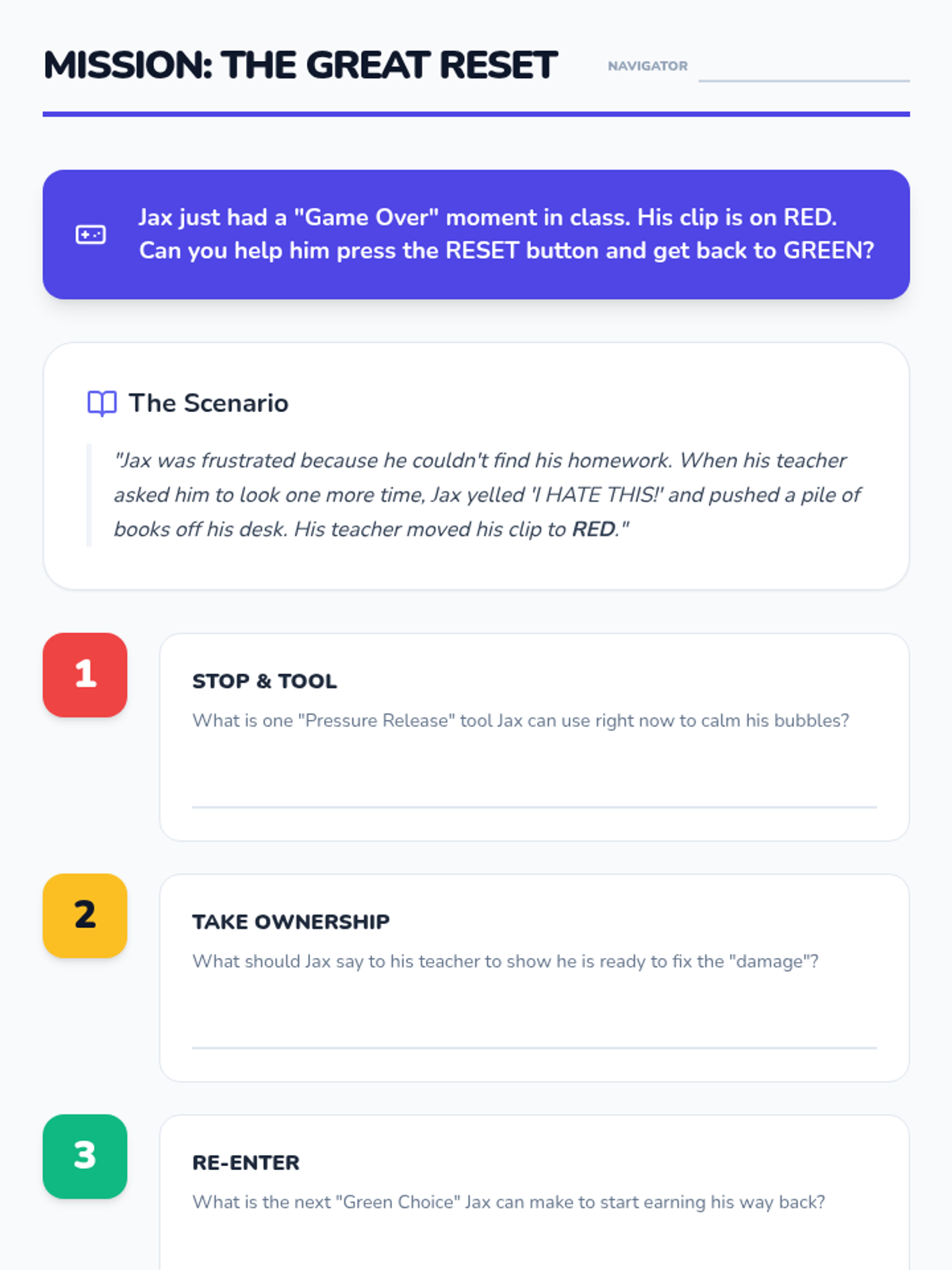
A case study worksheet for Lesson 4 where students guide a character named Jax through the 3-step reset process (Stop & Tool, Ownership, Re-enter) to move from Red back toward Green.
Slide presentation for Lesson 4 that uses a video game metaphor to explain that behavior charts are dynamic and that students have the power to 'reset' their status through self-regulation and positive choices.
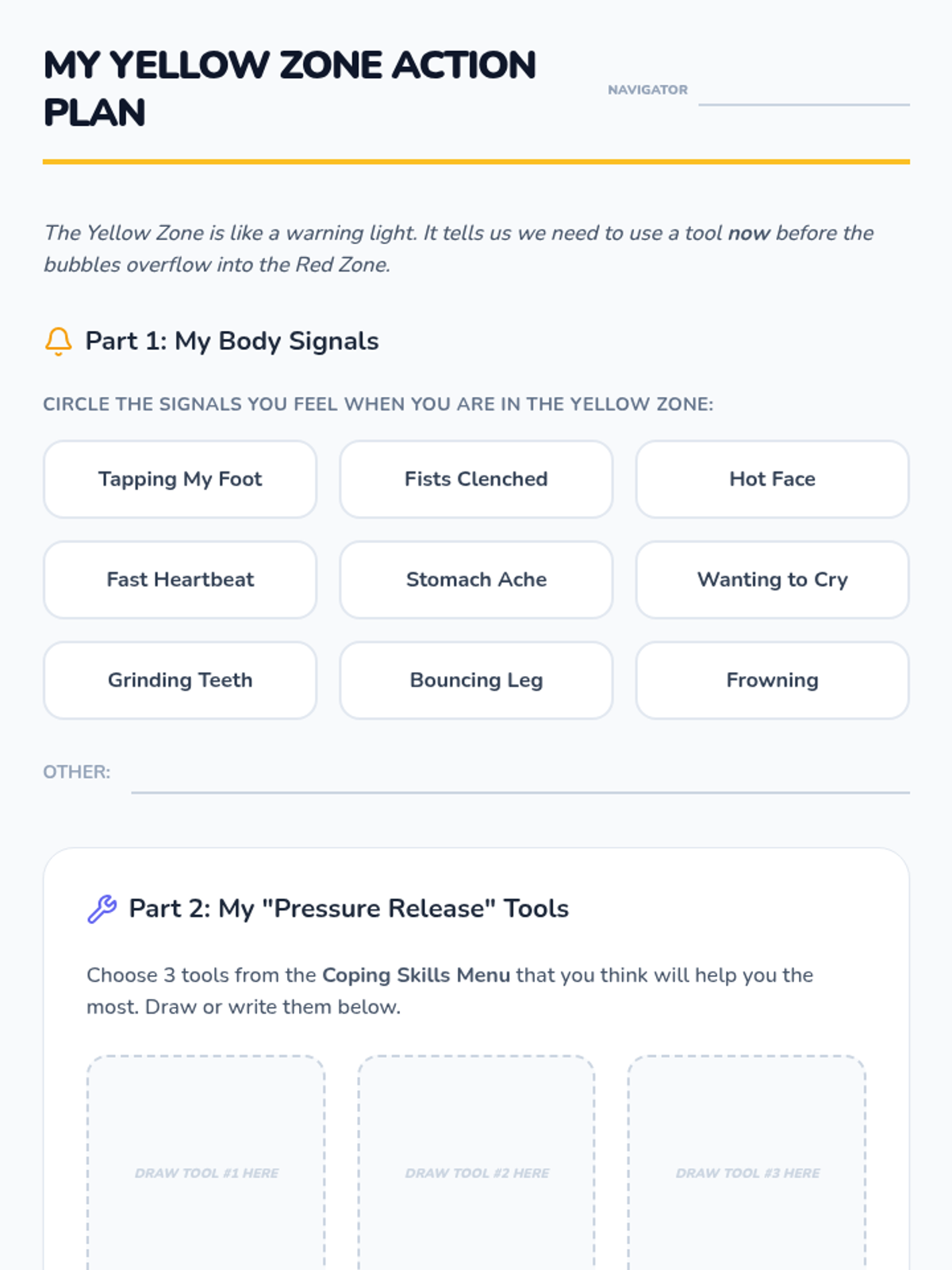
A worksheet for students in Lesson 3 to identify their physical signals of emotional distress and select three preferred coping strategies from the skills menu.
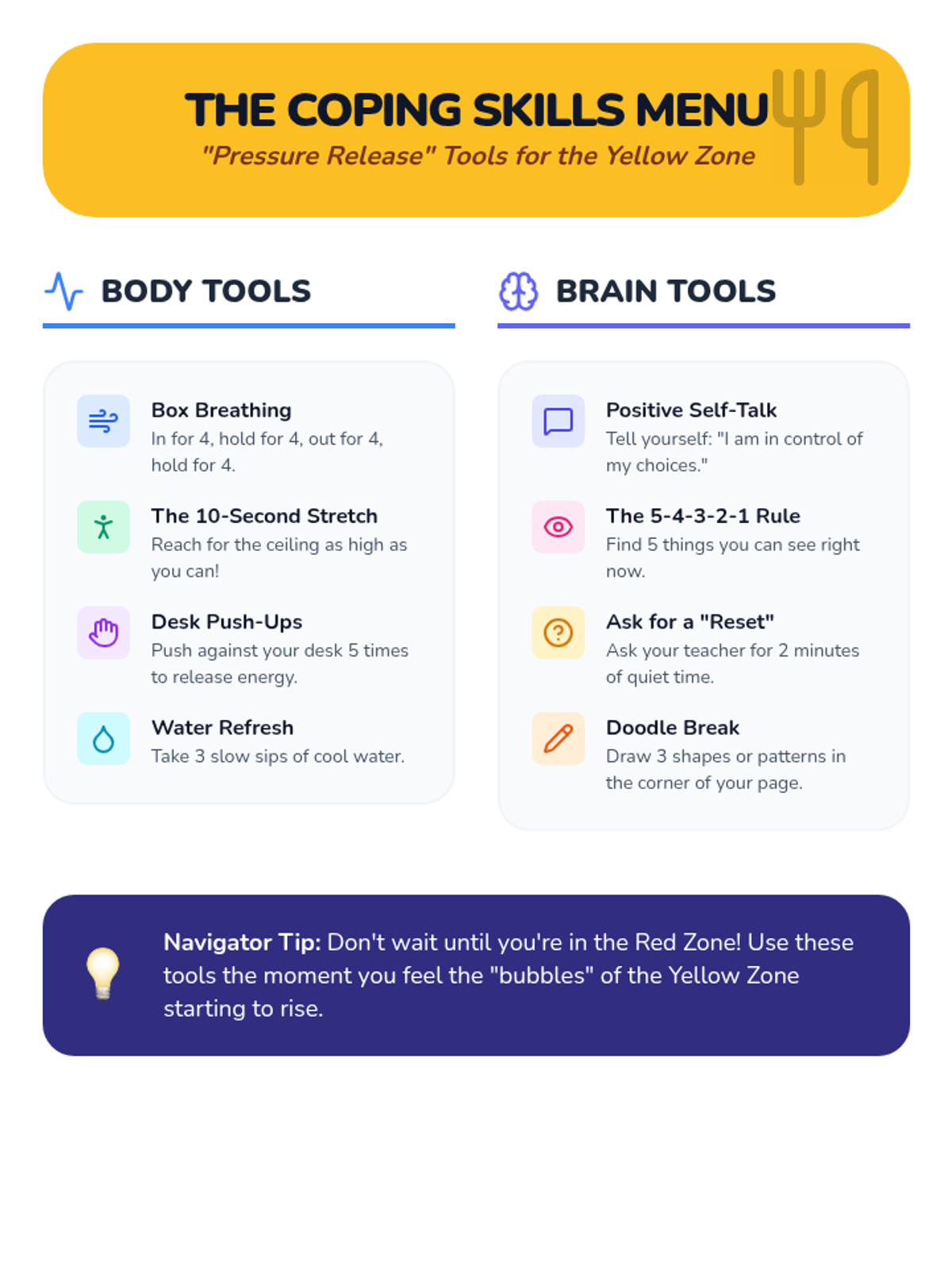
A visual reference sheet (menu) for students in Lesson 3 that lists various physical and mental self-regulation strategies to use when they are in the 'Yellow Zone'.
Slide presentation for Lesson 3 focusing on Yellow Zone coping strategies, using the soda bottle metaphor and introducing various physical and mental self-regulation tools.
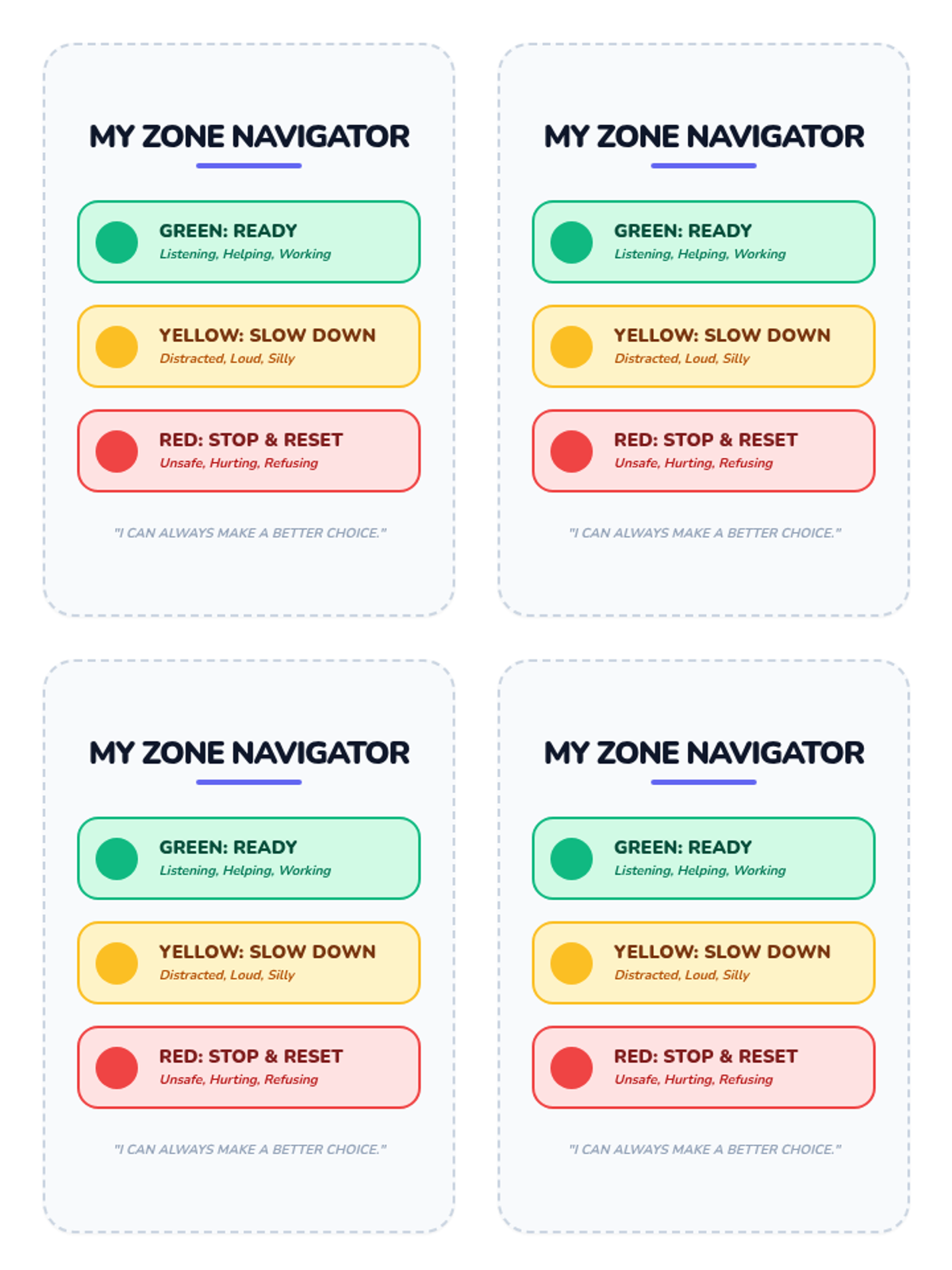
A desk-sized reference card for students in Lesson 2 that defines the Green, Yellow, and Red zones and provides examples of behaviors for each.
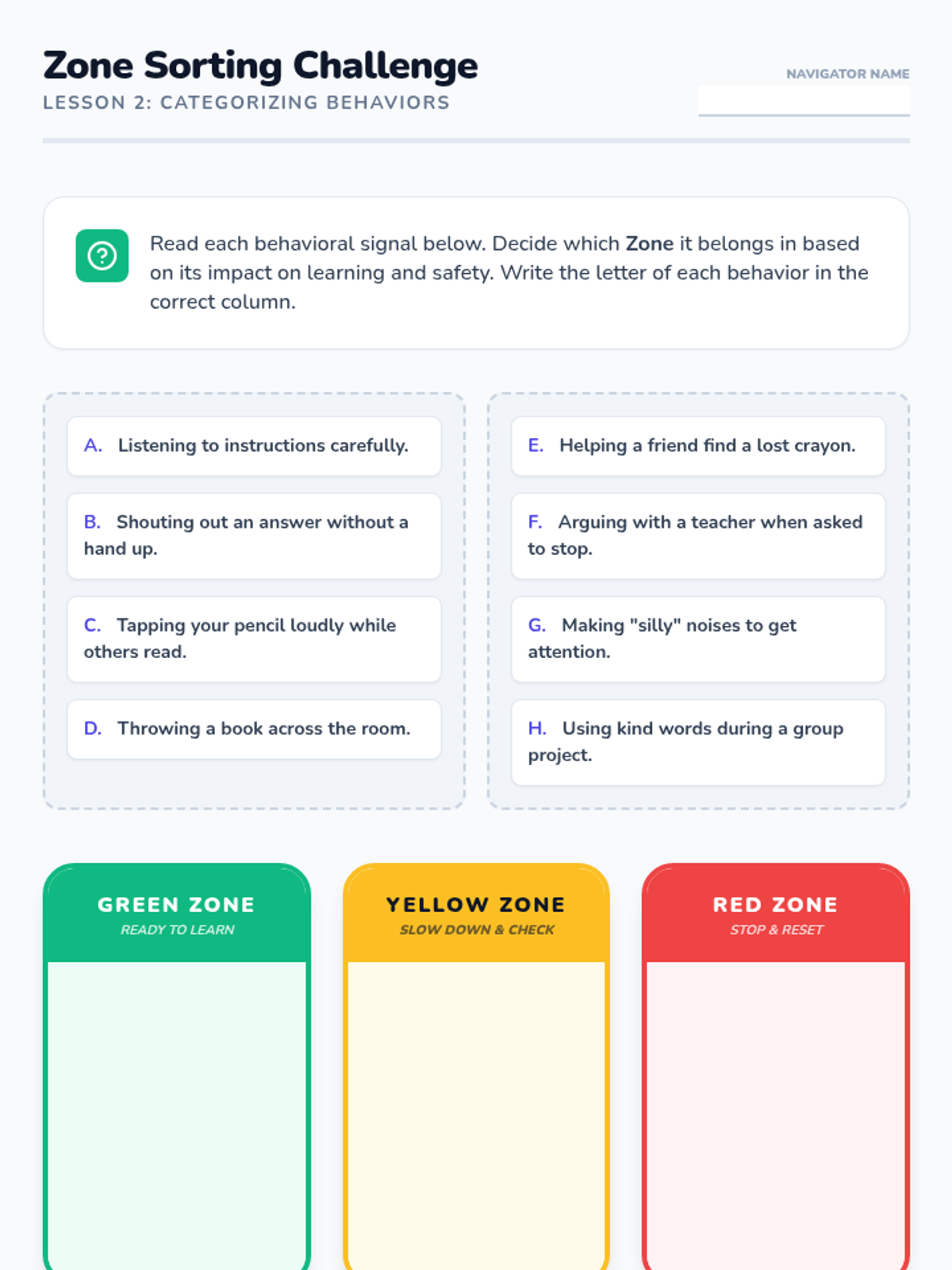
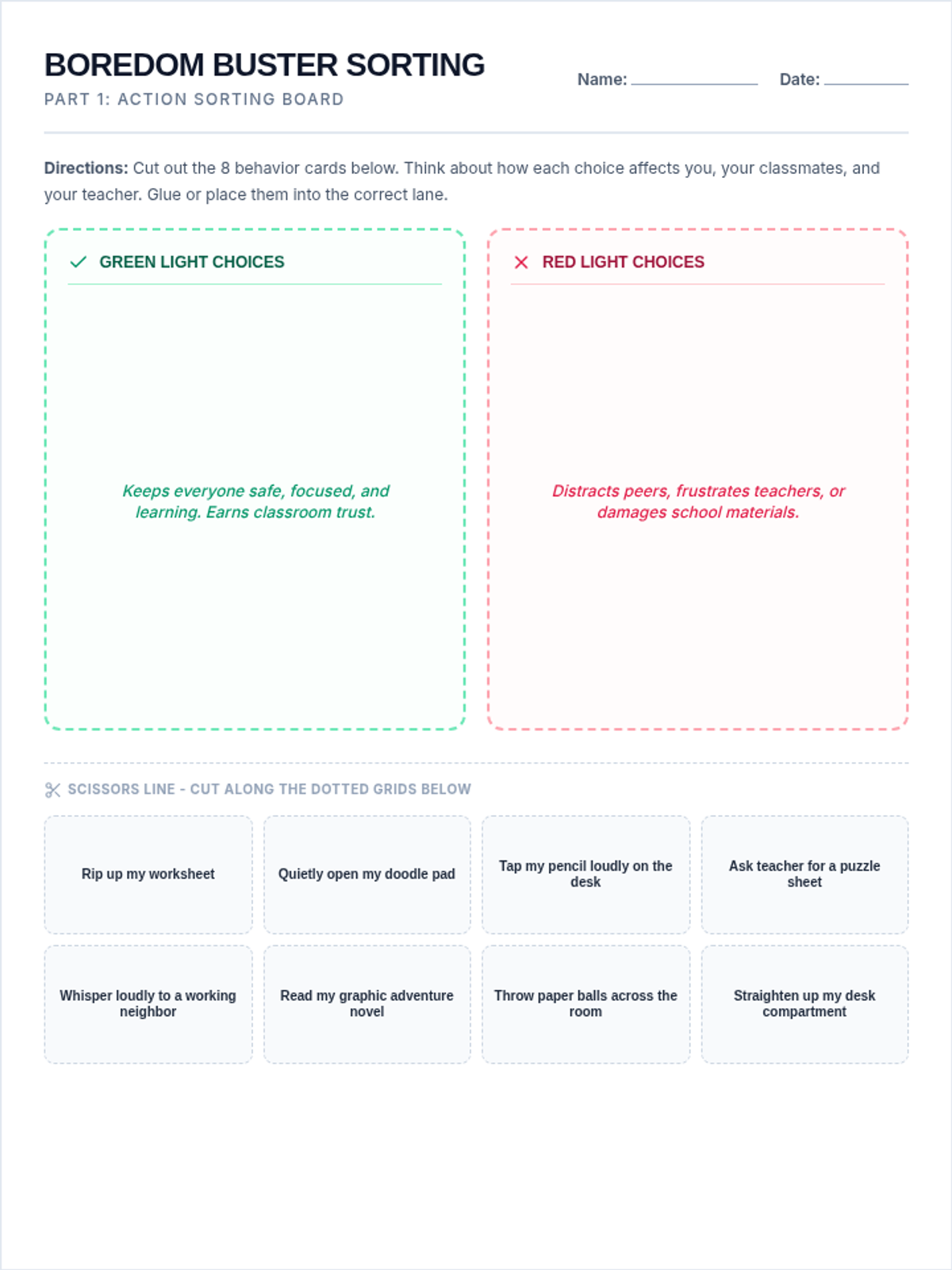
A sorting activity for Lesson 2 where students categorize specific behaviors into Green, Yellow, and Red zones based on their classroom impact.
Slide presentation for Lesson 2 that introduces the color-coded zone system (Green, Yellow, Red) and explains the meaning of each zone using a traffic light metaphor.
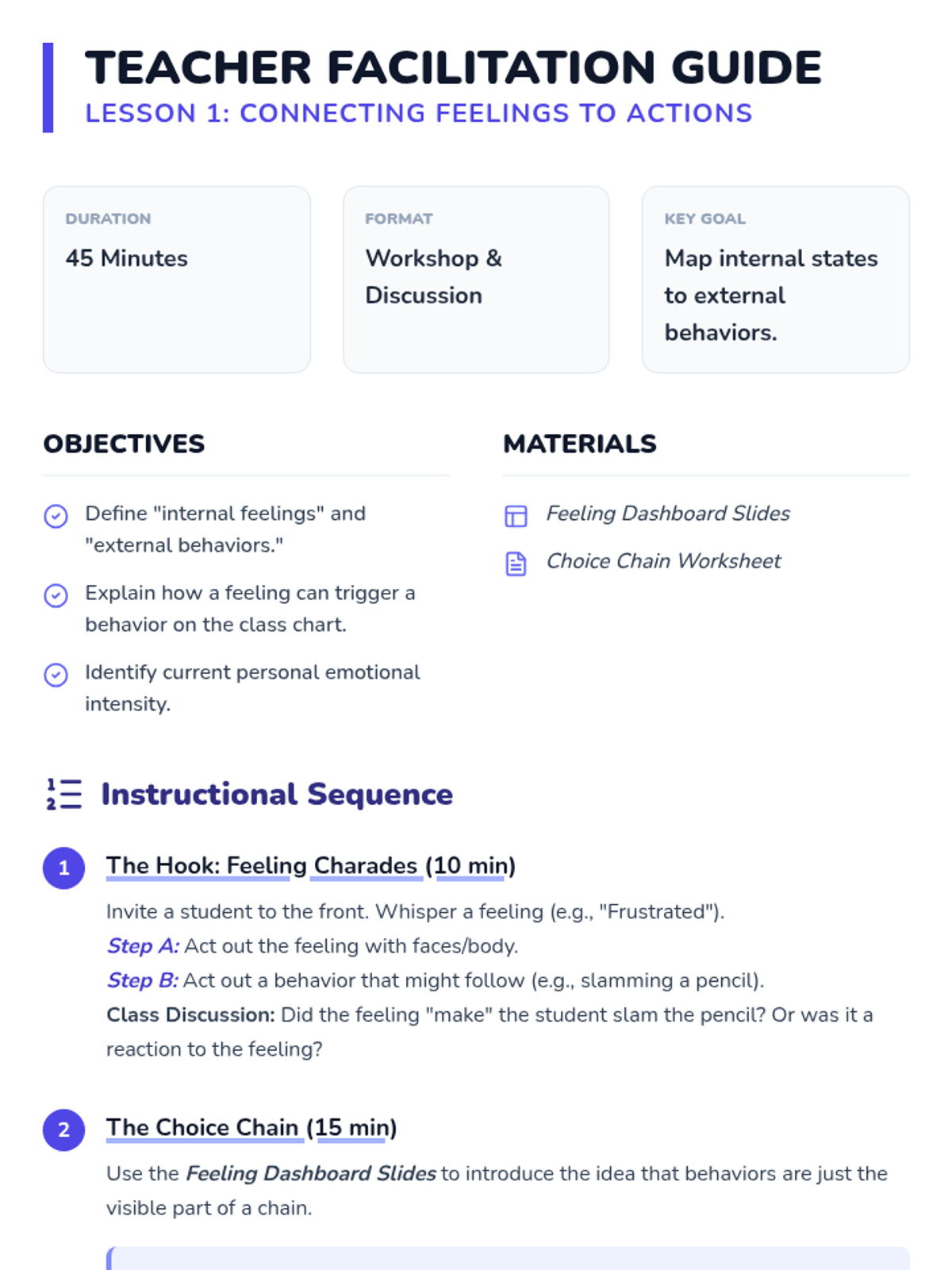
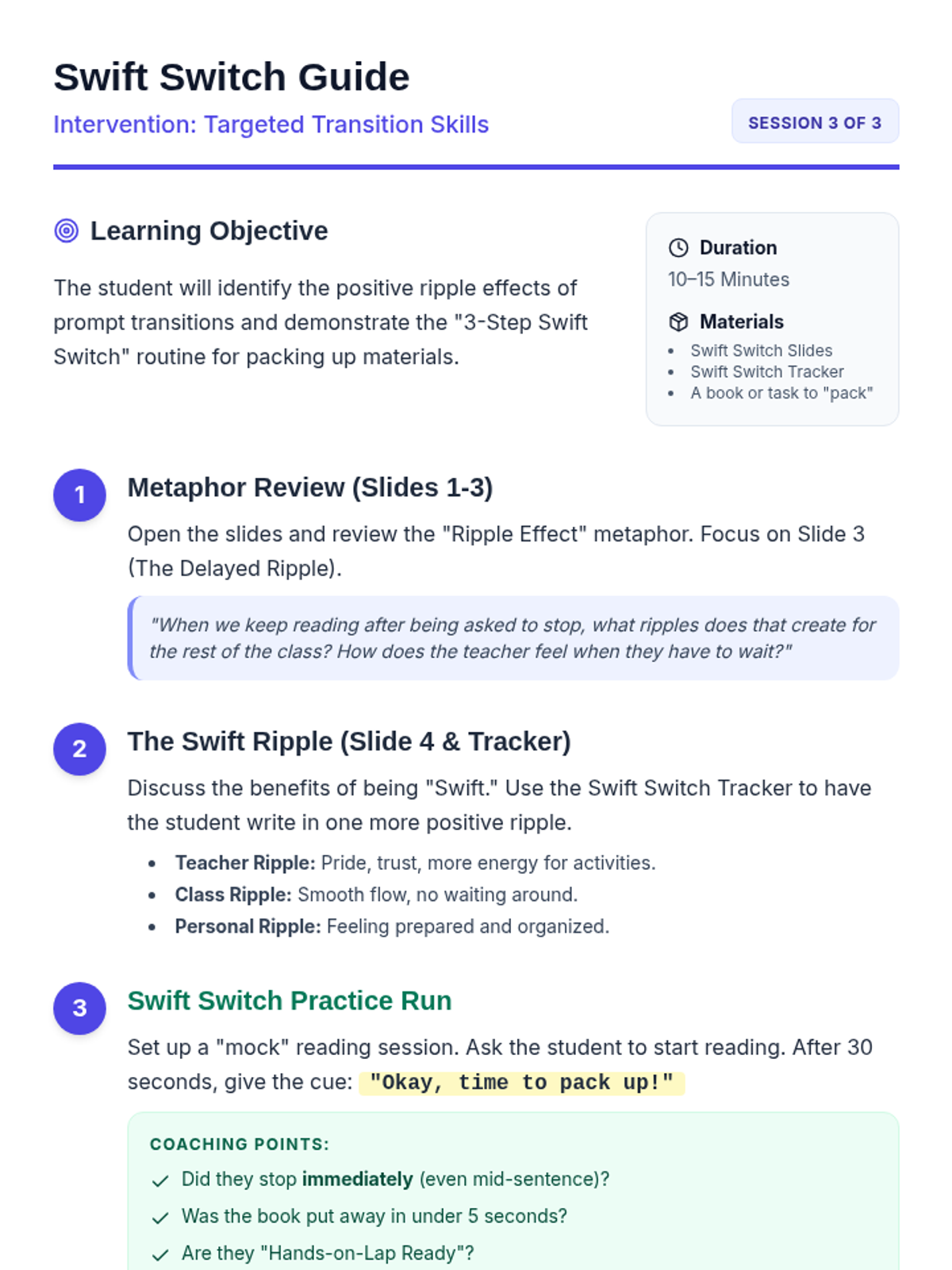
Facilitation guide for Lesson 1, detailing the charades hook, the Choice Chain concept delivery, and workshop instructions.
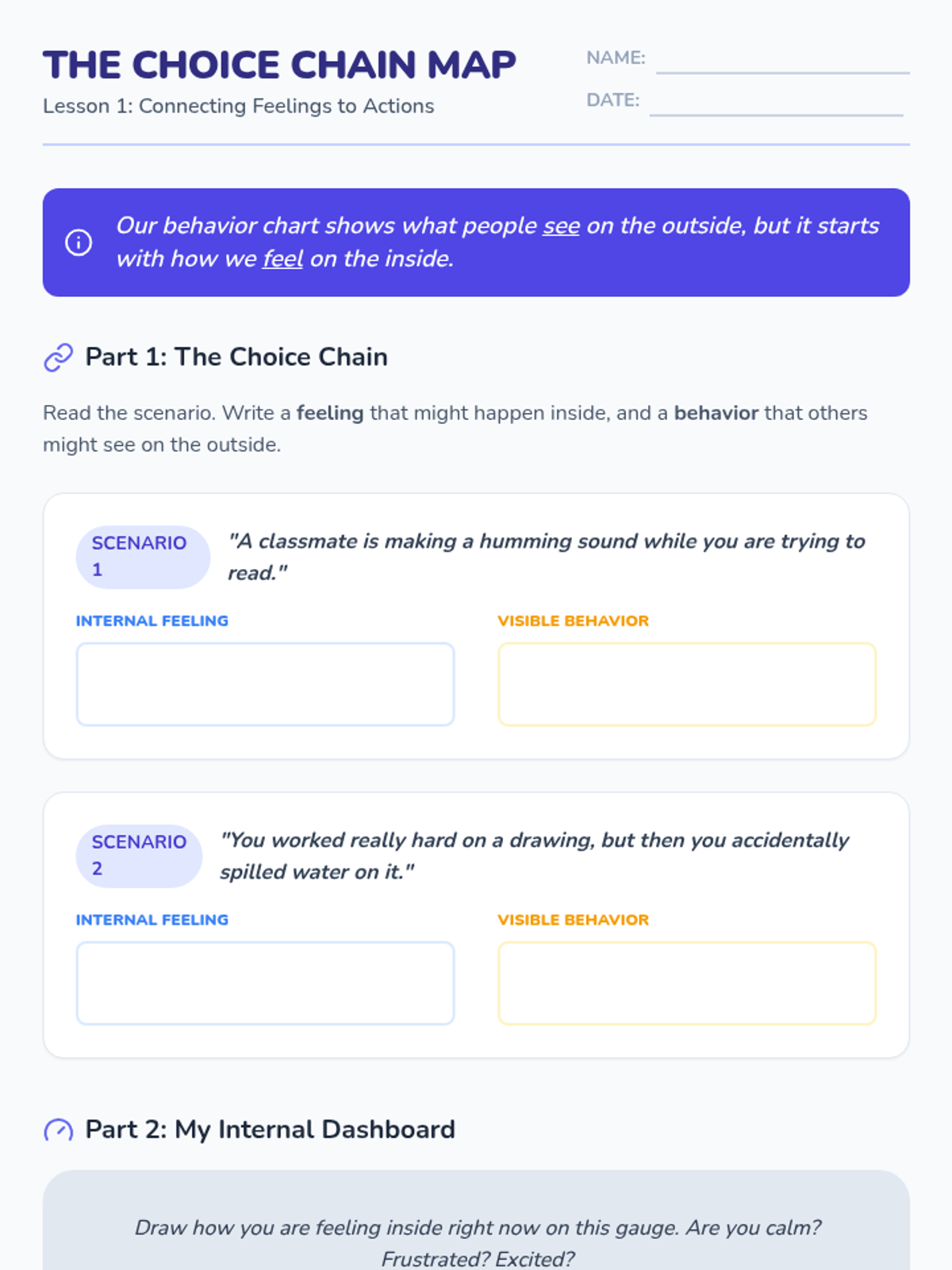
A student worksheet for Lesson 1 where they map internal feelings to external behaviors across different scenarios and reflect on their own current emotional state.
Introductory slides for Lesson 1, introducing the concept of behavior as a result of internal feelings using a dashboard metaphor and a choice chain visualization.
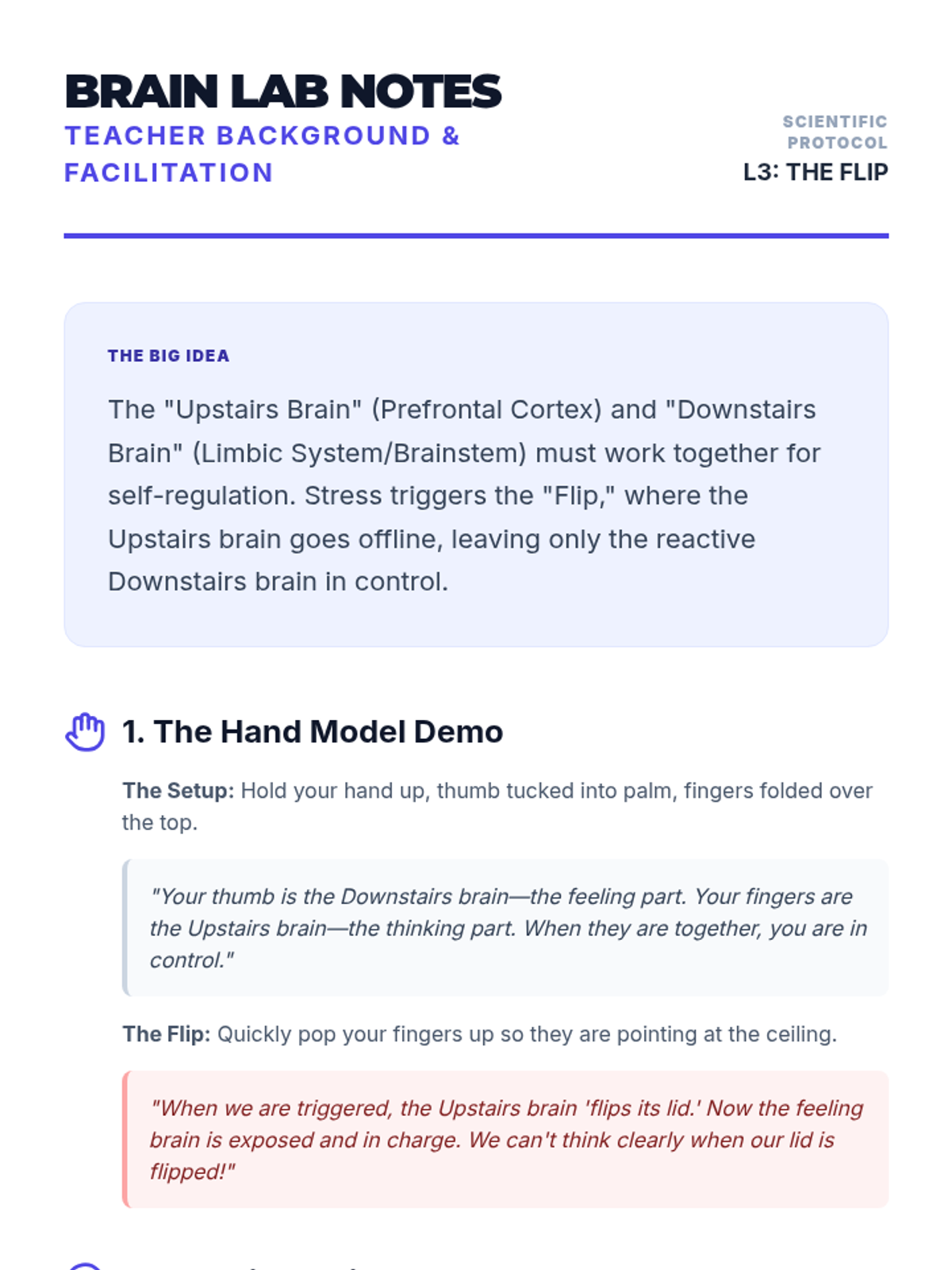
Teacher reference guide for Lesson 3. Explains the biological basis of the Hand Model of the Brain and provides discussion prompts to deepen student understanding.
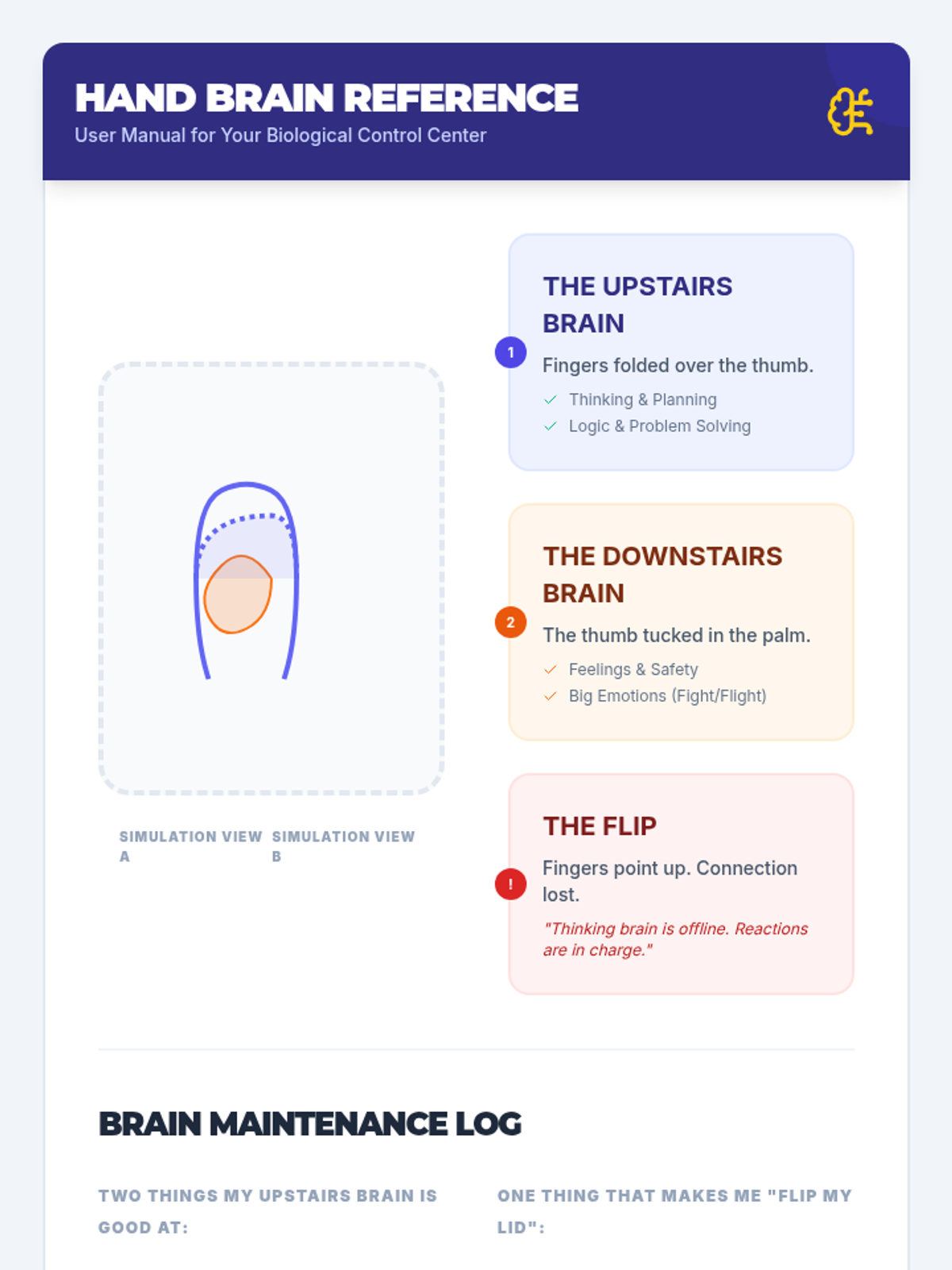
Visual reference sheet and worksheet for the 'Hand Model of the Brain.' Explains the Upstairs and Downstairs brain roles and provides space for students to identify personal lid-flipping triggers.
Slide deck for Lesson 3: The Science of the Flip. Explains the 'Upstairs' and 'Downstairs' brain model and the biological process of 'flipping your lid' during stress.
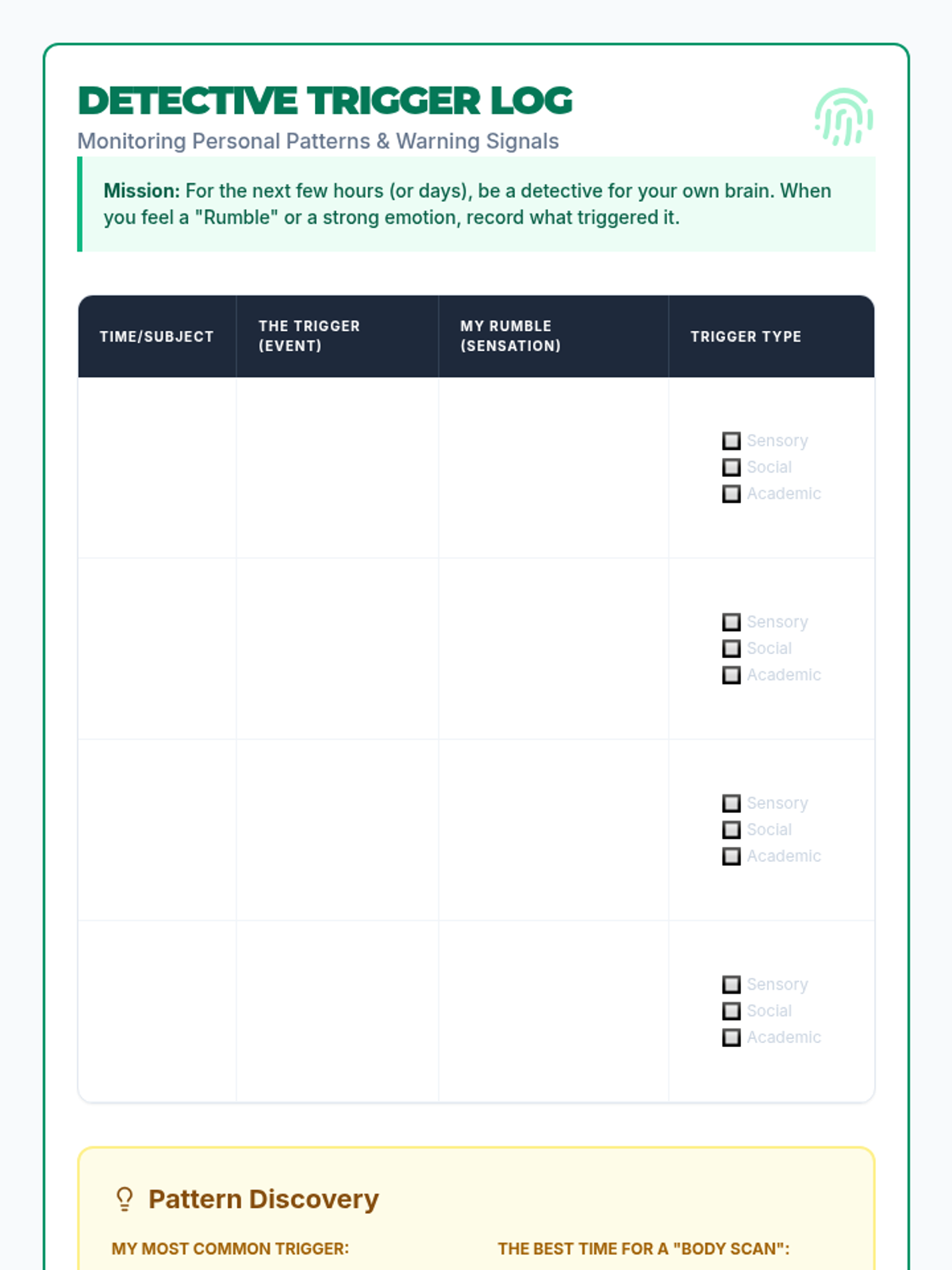
A blank self-monitoring log for students to track their triggers, sensations, and categorizations over a period of time to identify personal patterns.
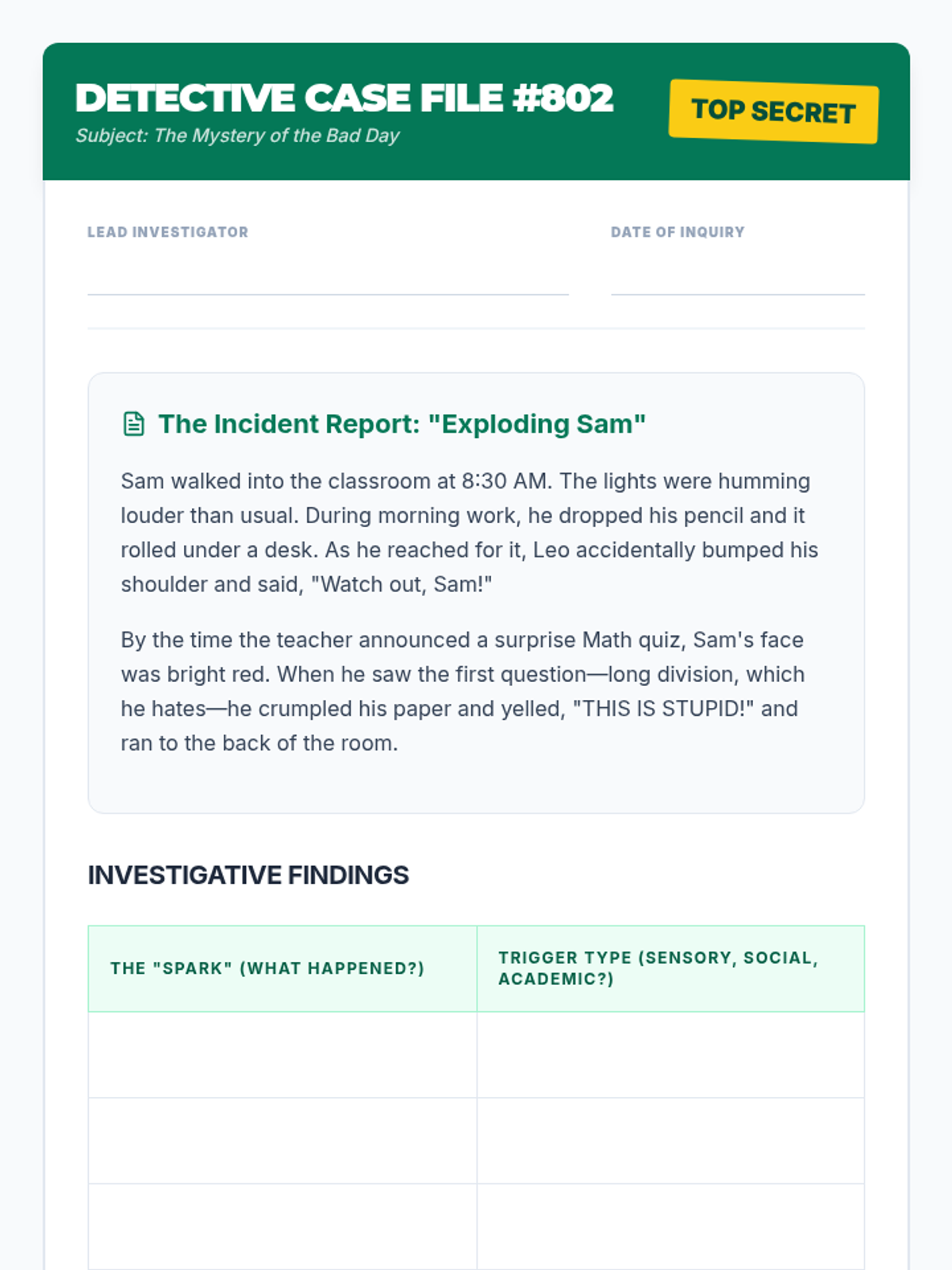
Detective-themed case study worksheet where students analyze 'Exploding Sam's' day to pinpoint environmental triggers and categorize them.
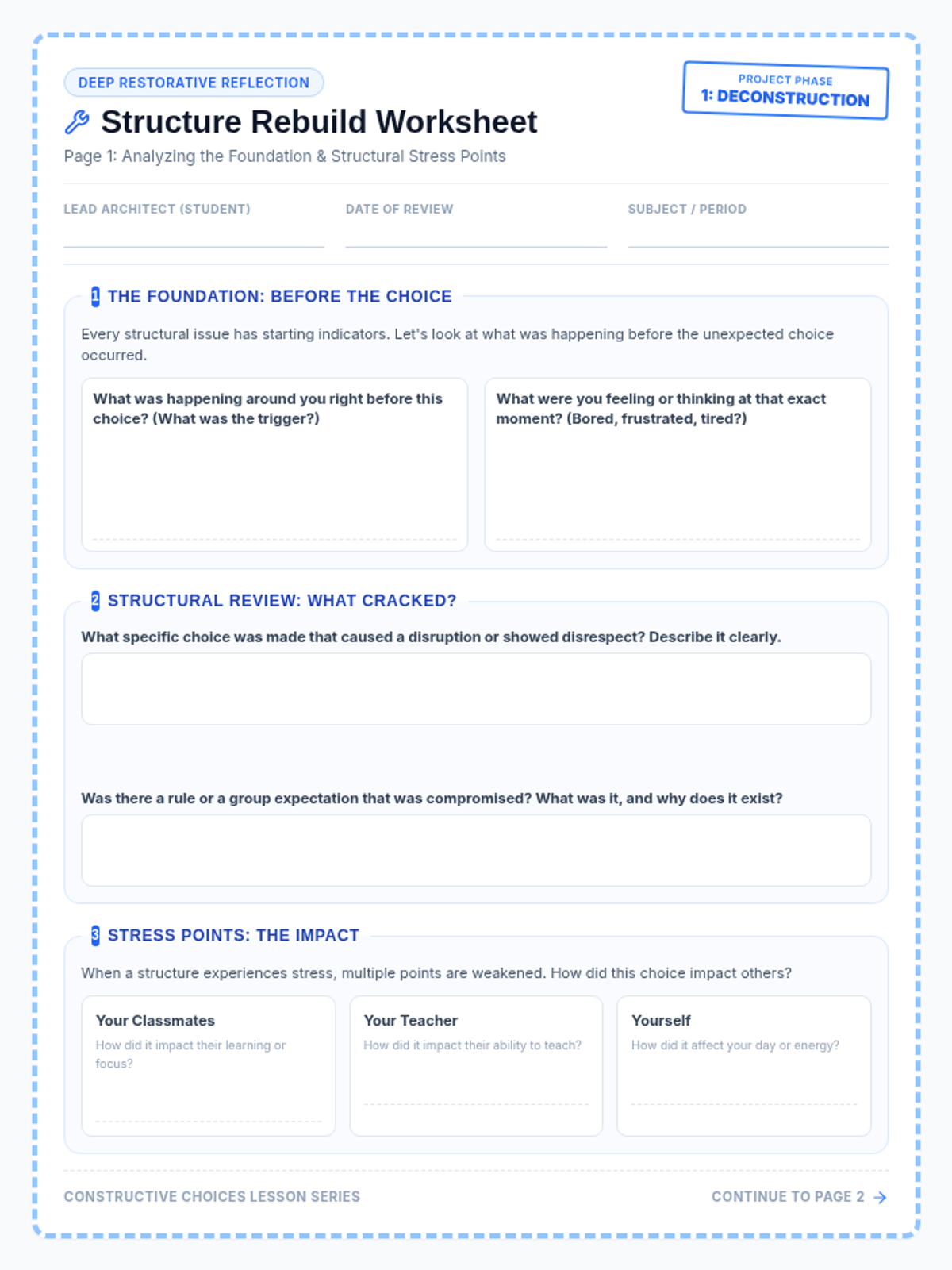
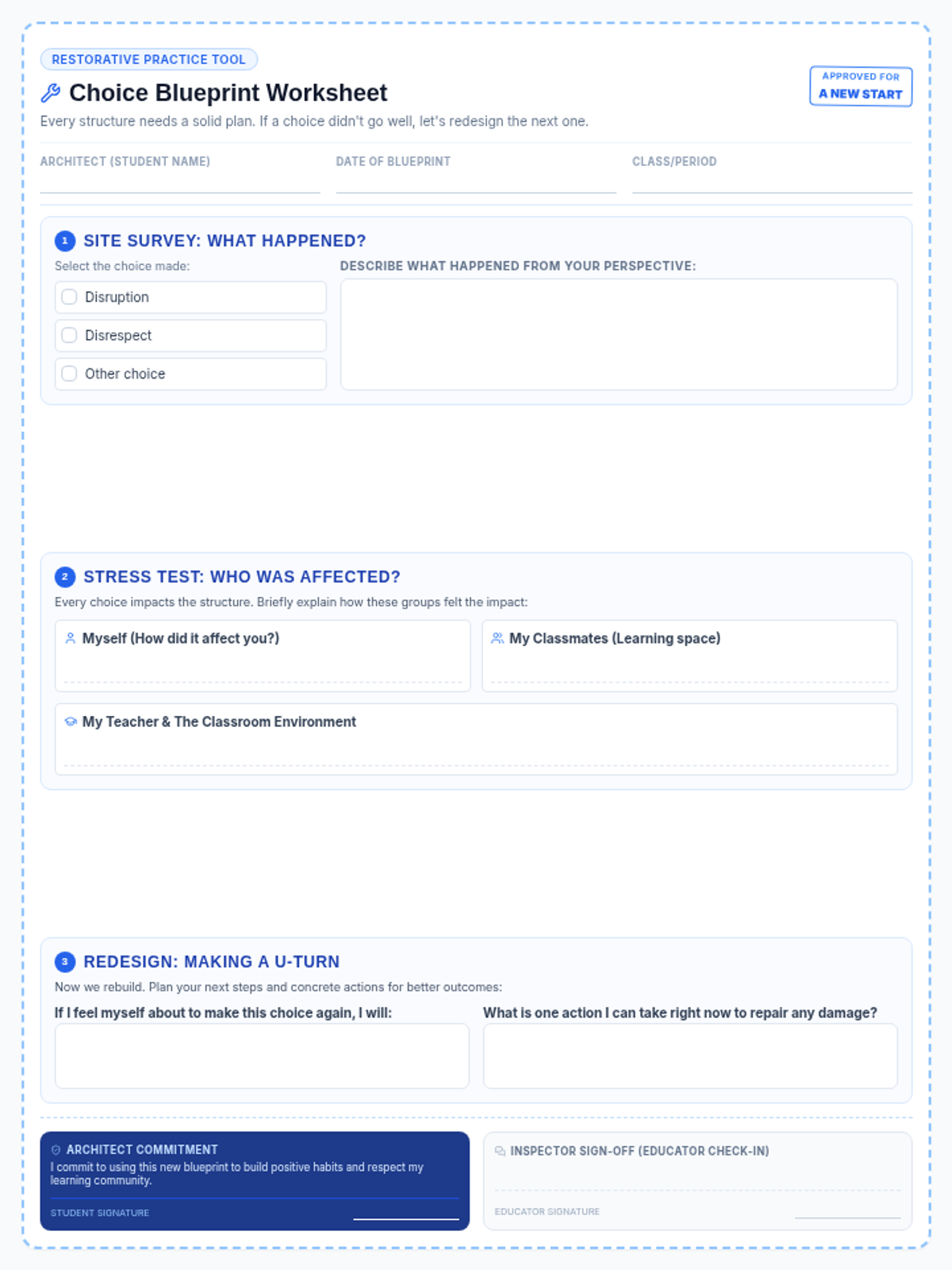
A more detailed behavior reflection tool for students in grades 3-5. It focuses on the specific definitions of Respect, Responsibility, and Regard for Others, helping students analyze the impact of their actions and create a restorative plan.
A visually-oriented behavior reflection sheet for students in grades K-2. It uses simple language, icons, and drawing spaces to help students reflect on their feelings and identify which core value (Respect, Responsibility, or Regard for Others) they can focus on next time.
A student reflection worksheet for the marshmallow self-control activity, allowing K-4 students to draw and write about their experience with delayed gratification.
An updated high-energy slide deck for teaching responsibility to K-4 students, now featuring the "Marshmallow Challenge" for practicing self-control. All text meets visibility standards.
An updated teacher facilitation guide for a 30-minute responsibility lesson, now including the famous marshmallow self-control activity and adjusted pacing for K-4.
An answer key and facilitation guide for the Duty Detective sorting activity, providing explanations for each scenario card.
A set of sorting mats and 12 scenario cards for students to identify responsible and irresponsible choices in school and at home.
A high-energy visual slide deck for teaching responsibility to K-4 students, featuring the "Messy Marvin" hook, clear definitions, and a "Rockstar vs. Rookie" sorting activity. All text is compliant with minimum visibility standards.
A comprehensive teacher facilitation guide for a 30-minute lesson on responsibility, featuring pacing, discussion prompts, and activity instructions for K-4 students.
A parent guide for Weeks 10-12 of the Social Detective intervention, focusing on restorative justice, future planning, and celebrating behavioral growth.
A parent guide for Weeks 7-9 of the Social Detective intervention, focusing on personal boundaries, cause-and-effect reasoning, and decoding non-verbal social clues.
A parent guide for Weeks 4-6 of the Social Detective intervention, focusing on the Pause Button, encouraging honesty, and respecting property boundaries.
A parent guide for Weeks 1-3 of the Social Detective intervention, providing tips on identifying strengths, teaching perspective-taking, and modeling body awareness.
A Week 12 facilitator guide for the graduation ceremony, focusing on celebration, final review, and long-term commitment to behavioral goals.
A Week 11 facilitator guide focusing on goal maintenance and identifying a support network for continued behavioral success.
A Week 10 facilitator guide focused on the mechanics of restorative justice and repairing interpersonal trust after behavioral incidents.
A Week 9 facilitator guide focused on decoding non-verbal social clues and responding with empathy and appropriate social actions.
A Week 8 facilitator guide focusing on cause-and-effect reasoning, using the domino metaphor to help students predict behavioral outcomes.
A Week 7 facilitator guide focused on reducing physical aggression through the concept of personal bubbles and verbal conflict resolution tools.
A Week 6 facilitator guide focusing on property boundaries, ownership concepts, and the 'ASK' strategy to prevent impulsive taking of items.
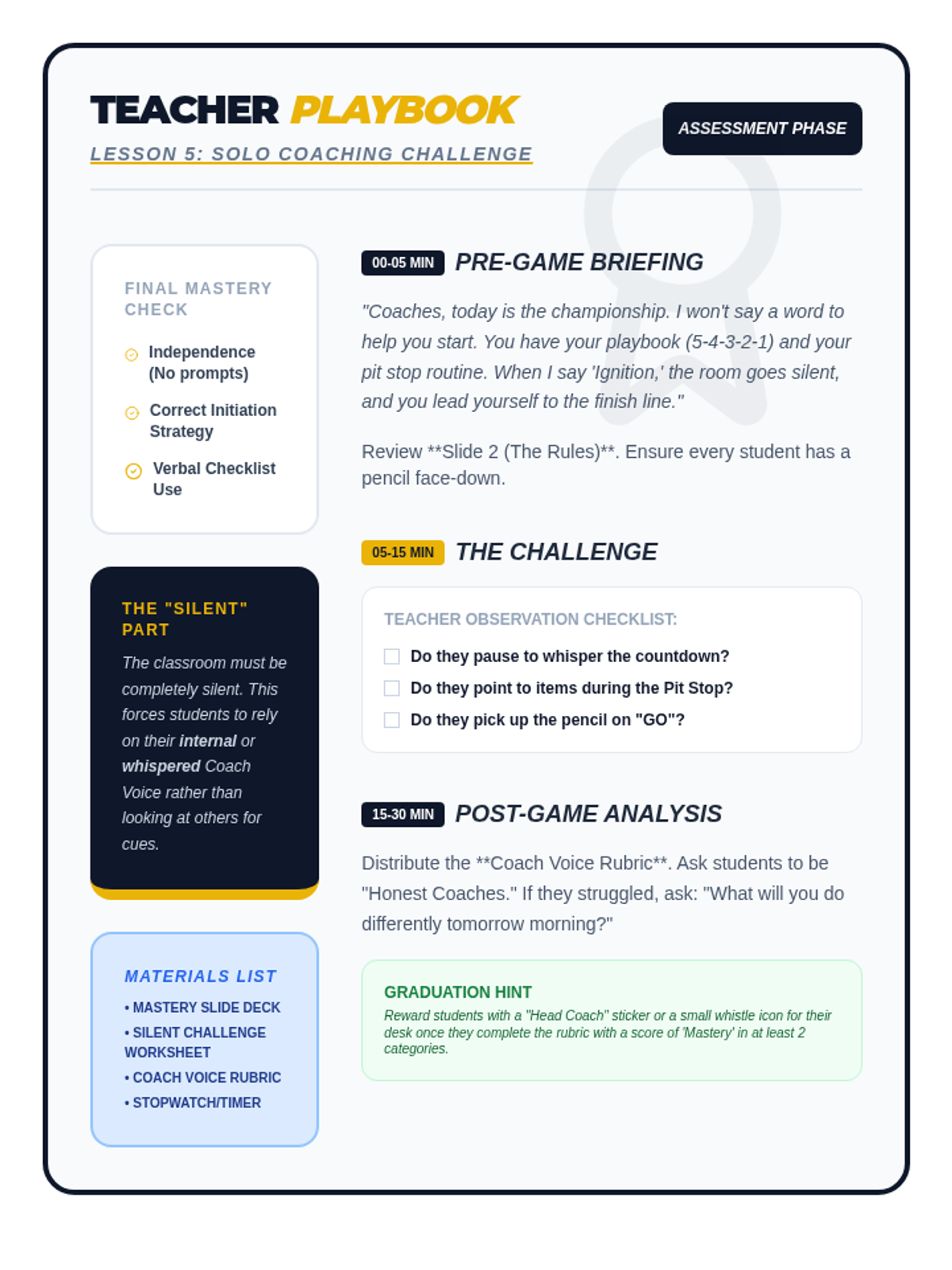
Final Teacher Playbook for Lesson 5, outlining the facilitation of the 'Silent Challenge' and the self-assessment mastery process.
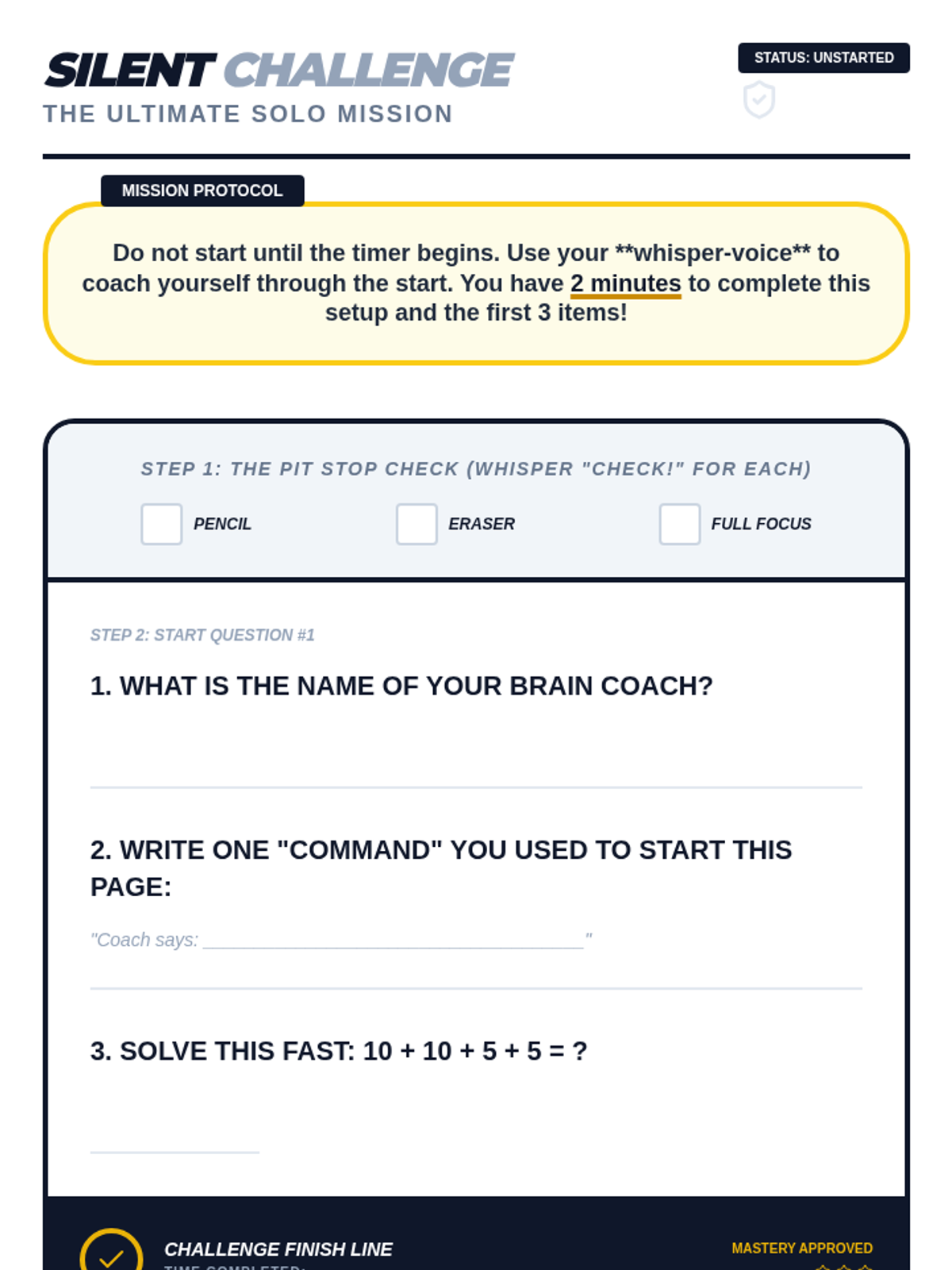
The actual worksheet for the 'Silent Challenge' in Lesson 5, where students apply the 5-4-3-2-1-GO strategy and verbal check routine to a timed task.
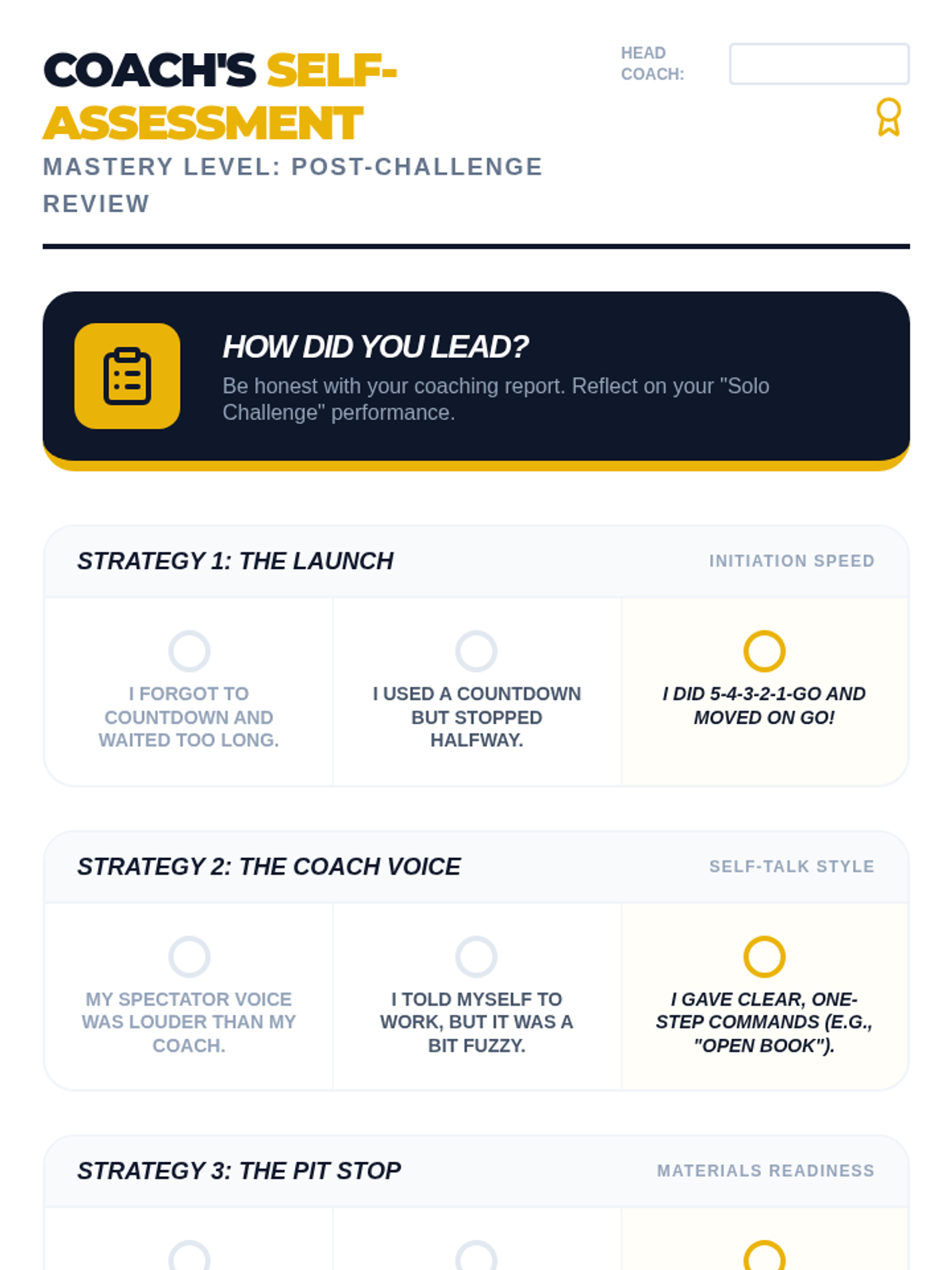
A self-assessment rubric for Lesson 5 where students evaluate their use of the three core initiation strategies (Countdown, Voice, Setup) during the solo challenge.
Final slide deck for Lesson 5, guiding students through a 'Silent Challenge' to apply all learned self-talk strategies independently.
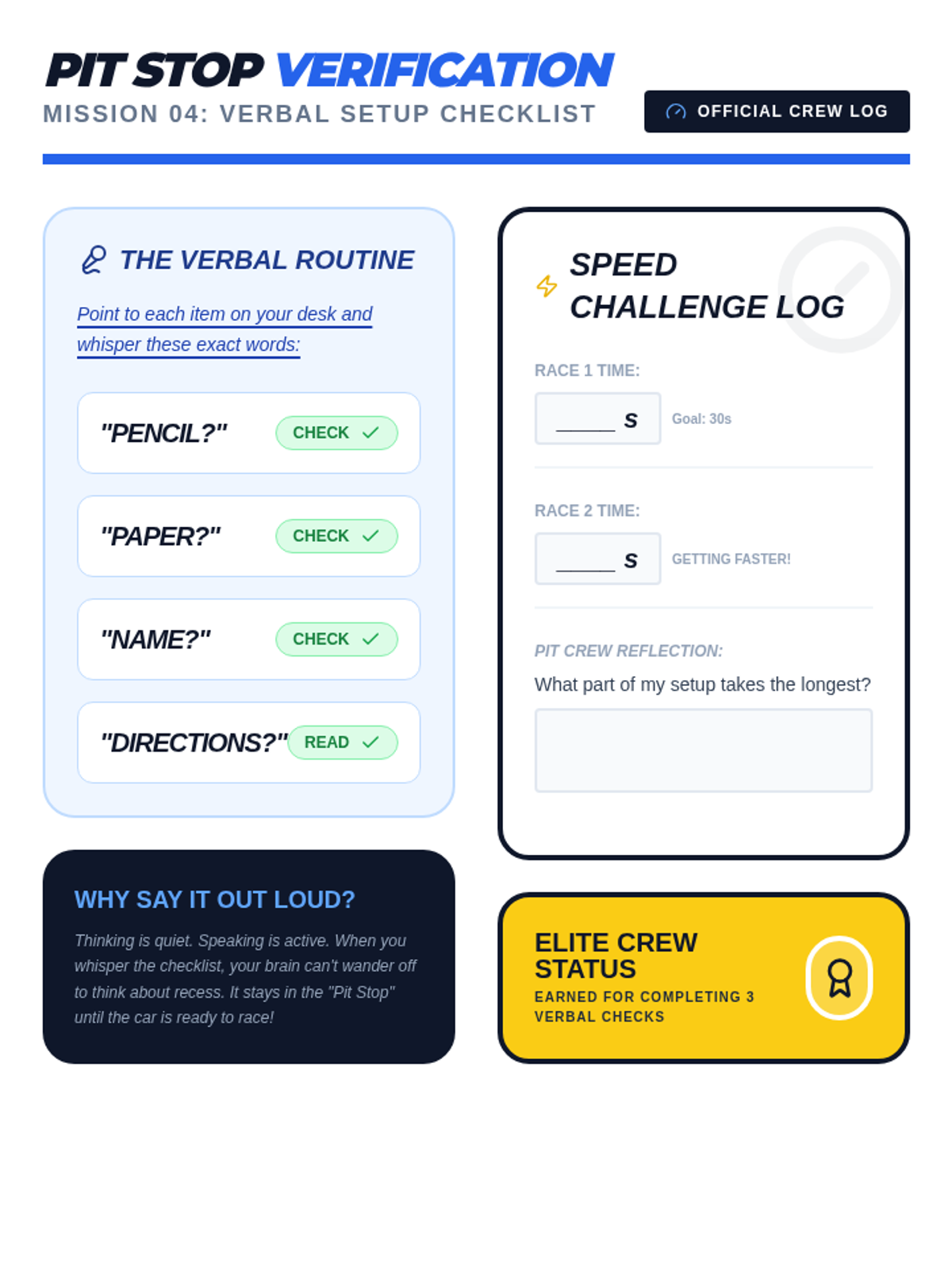
A student verification log for Lesson 4 where they practice the verbal checklist routine and log their setup speeds.
Slides for Lesson 4 using a 'Pit Crew' analogy to teach students a verbal checklist routine for workspace preparation.
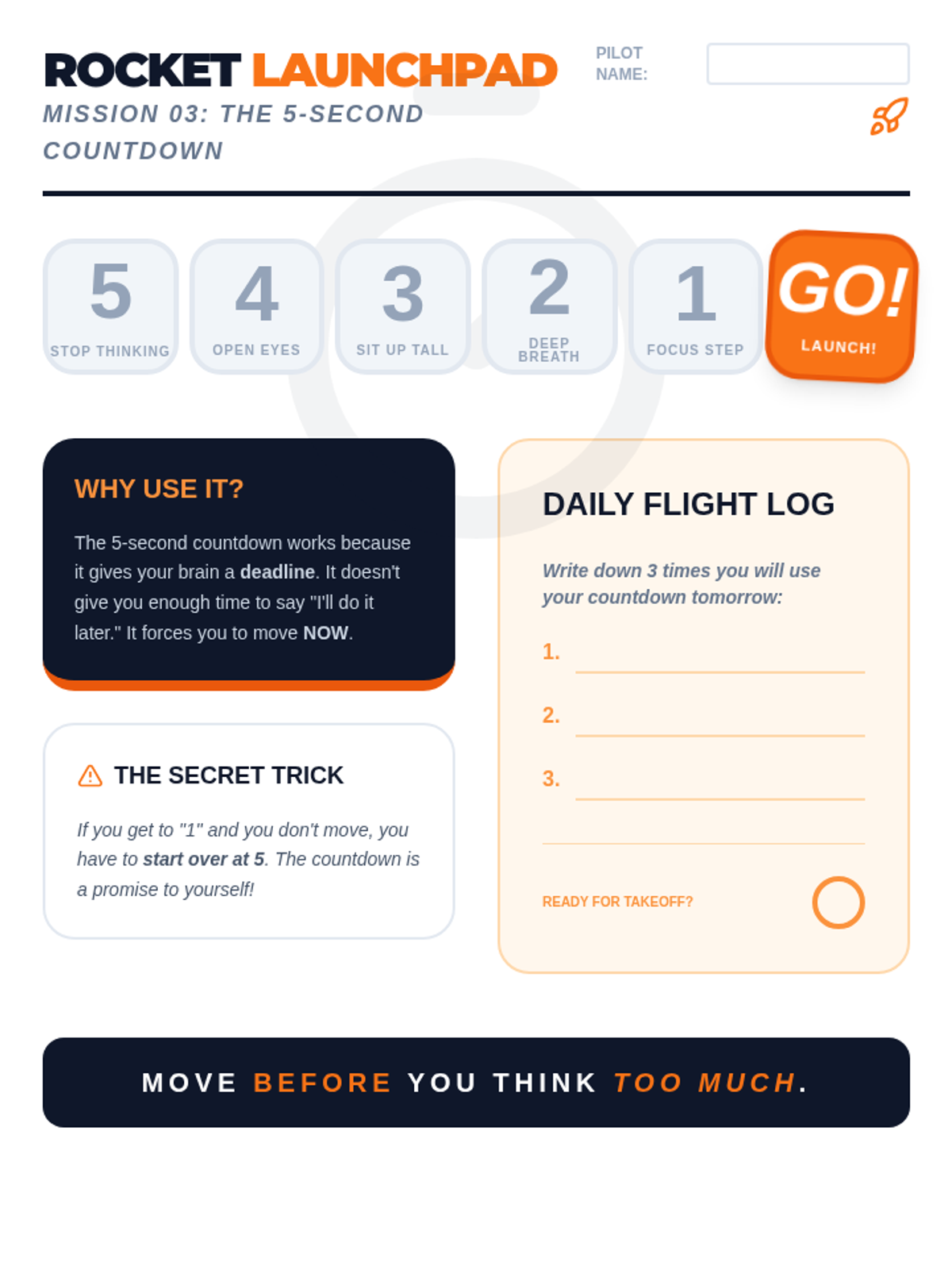
A visual reference and reflection sheet for the 5-4-3-2-1-GO strategy, designed to look like a rocket launch control board.
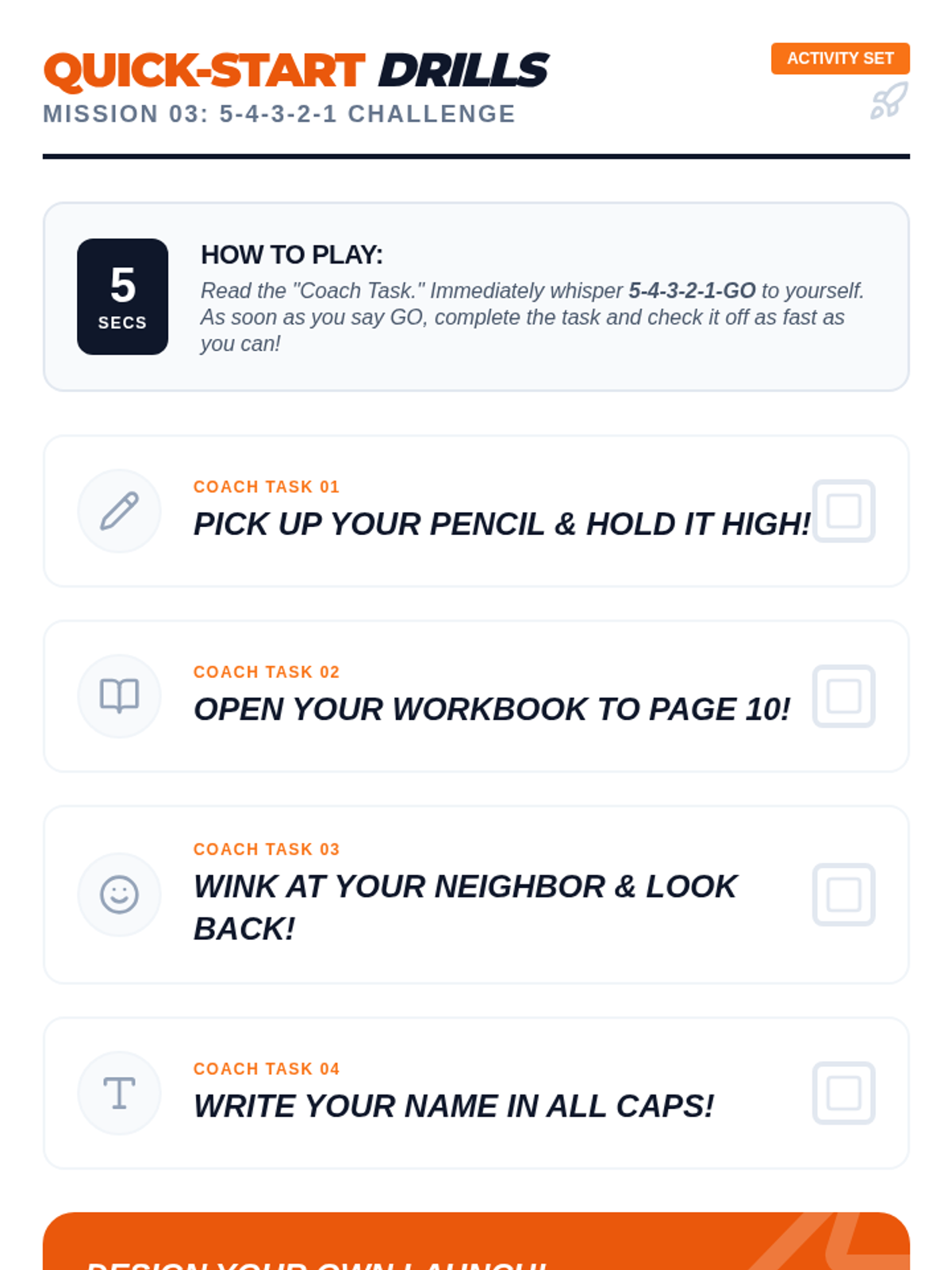
A practice worksheet for Lesson 3 featuring 'Quick-Start Drills' to build the automaticity of the 5-4-3-2-1-GO initiation strategy.
Slides for Lesson 3 introducing the '5-Second Countdown Strategy' with visual steps and a rocket launch theme.
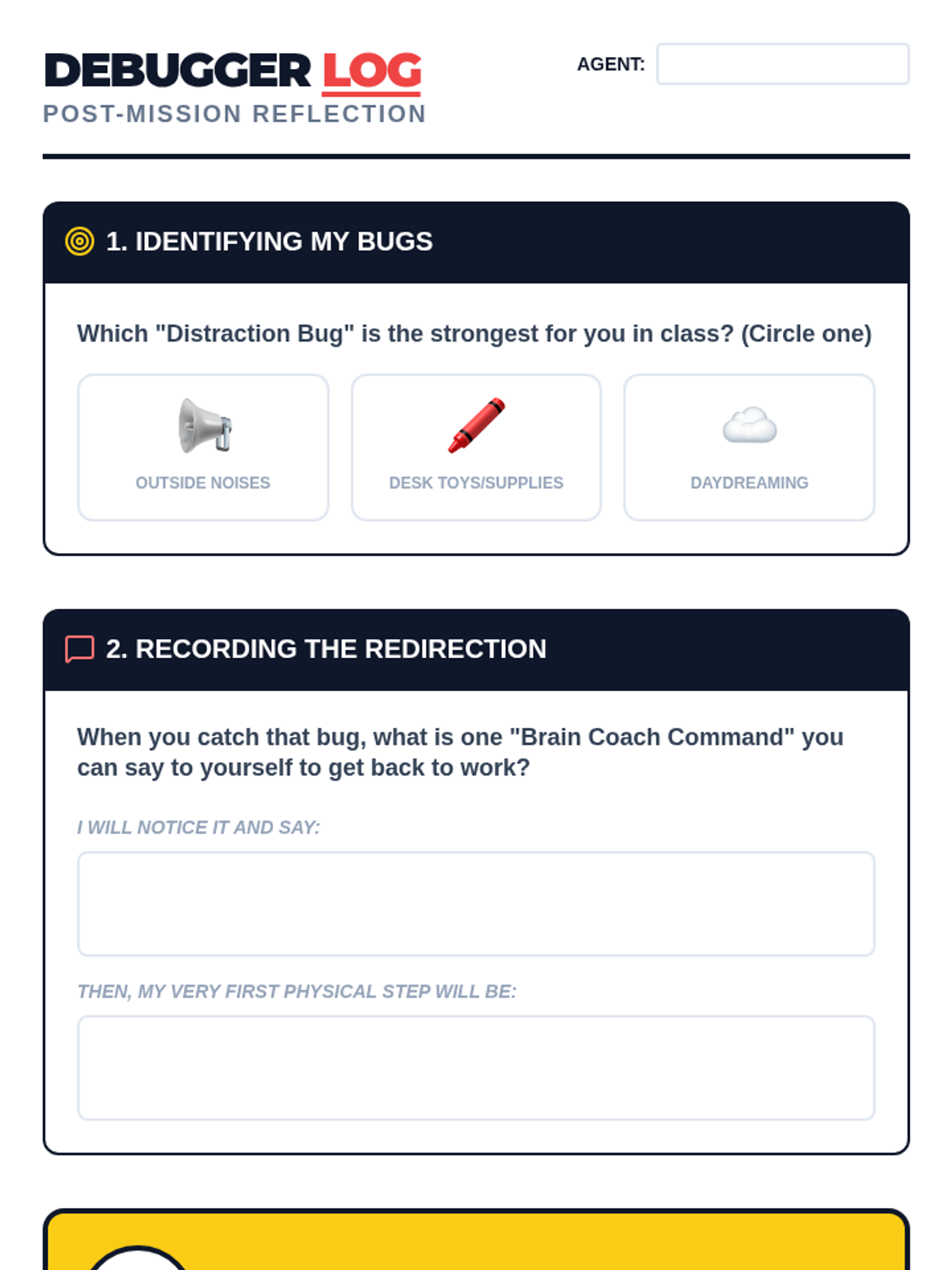
A reflection worksheet for Lesson 2 where students identify their personal distractions and plan specific Brain Coach commands to use.
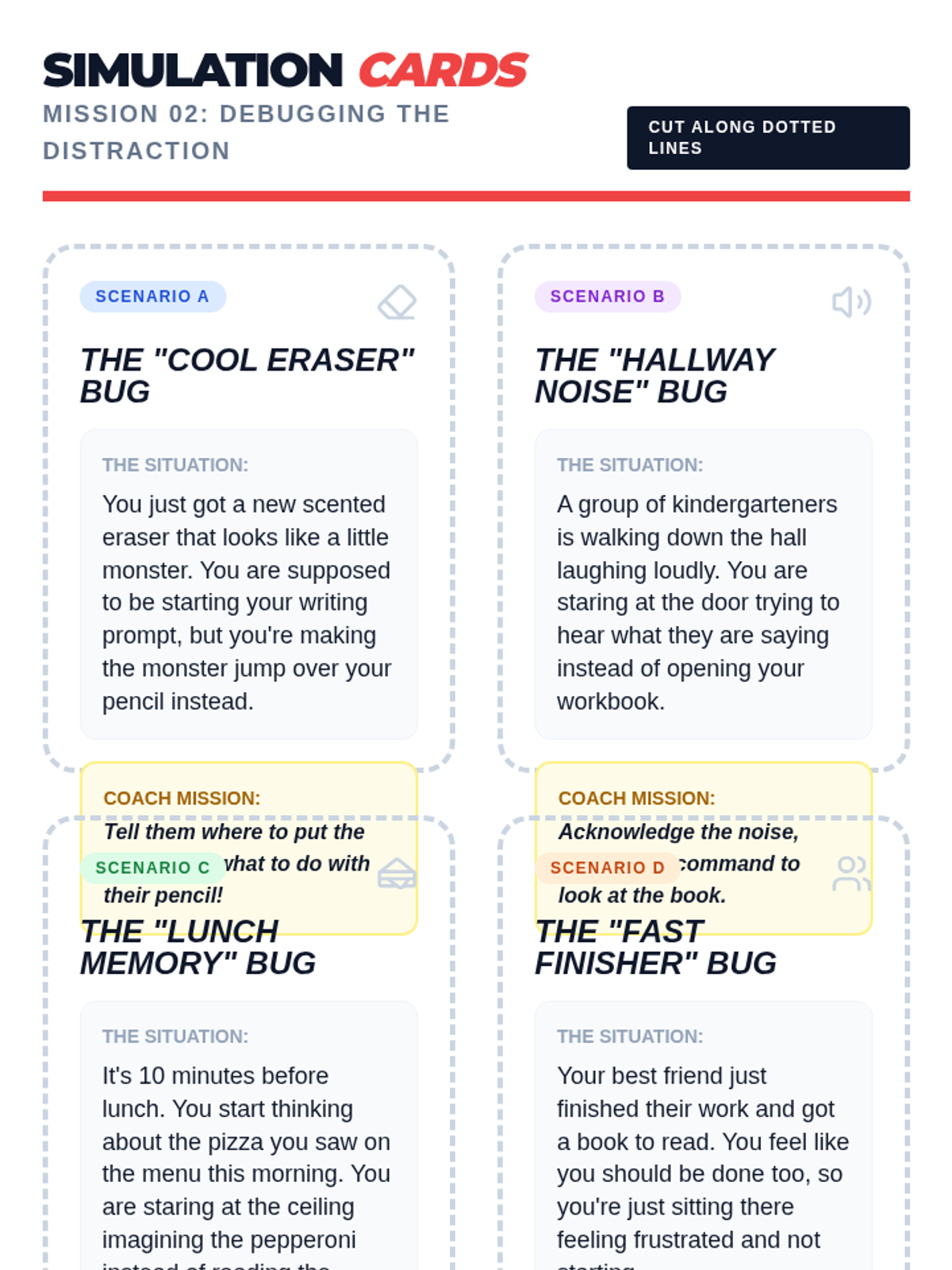
Simulation cards for role-playing scenarios where students practice 'debugging' distractions using their Brain Coach voice.
Slides for Lesson 2 focusing on identifying "distraction bugs" and practicing verbal redirection strategies in role-play scenarios.
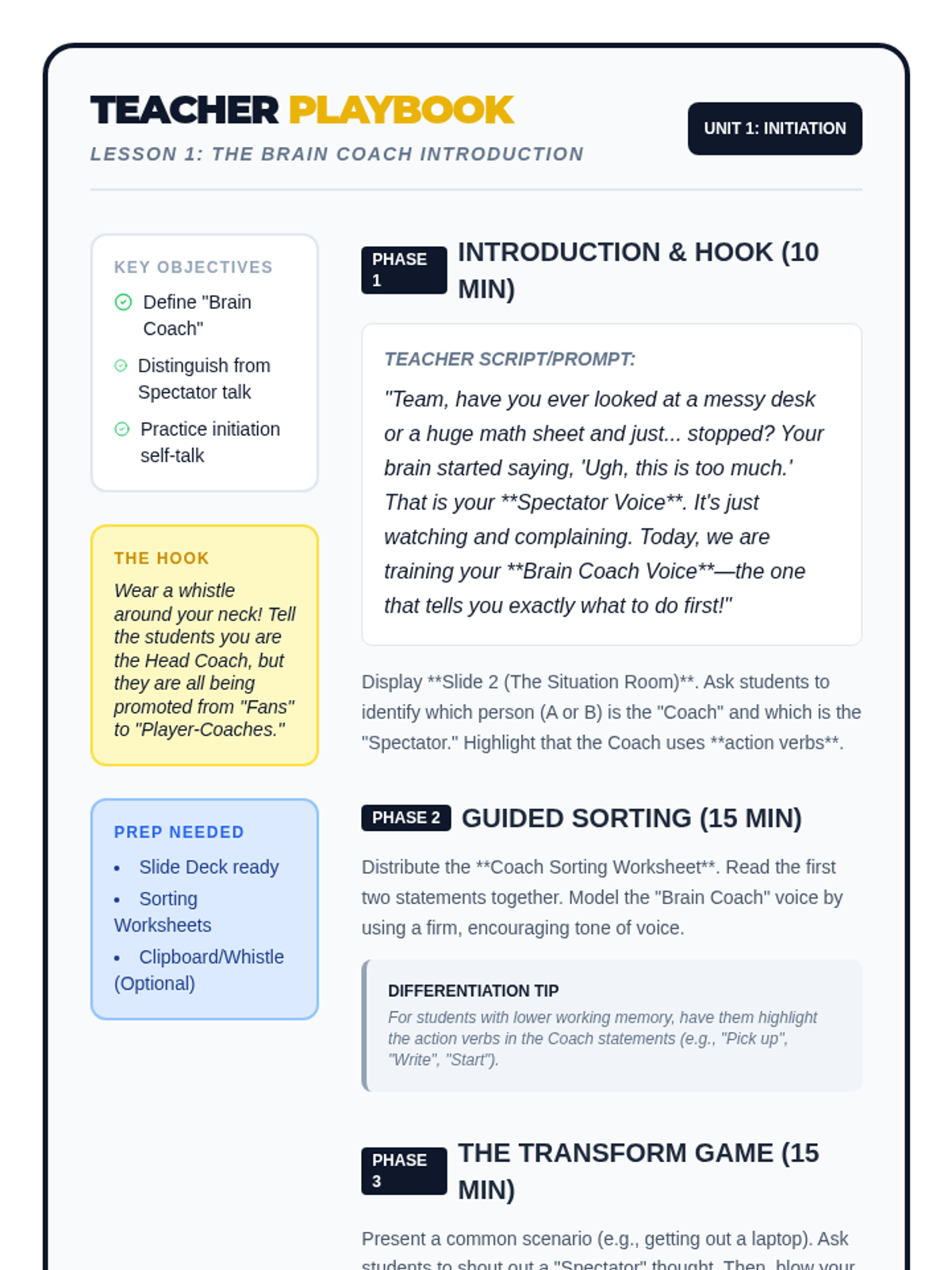
Teacher Guide for Lesson 1, including scripts, differentiation tips, and a step-by-step lesson flow for introducing the Brain Coach concept.
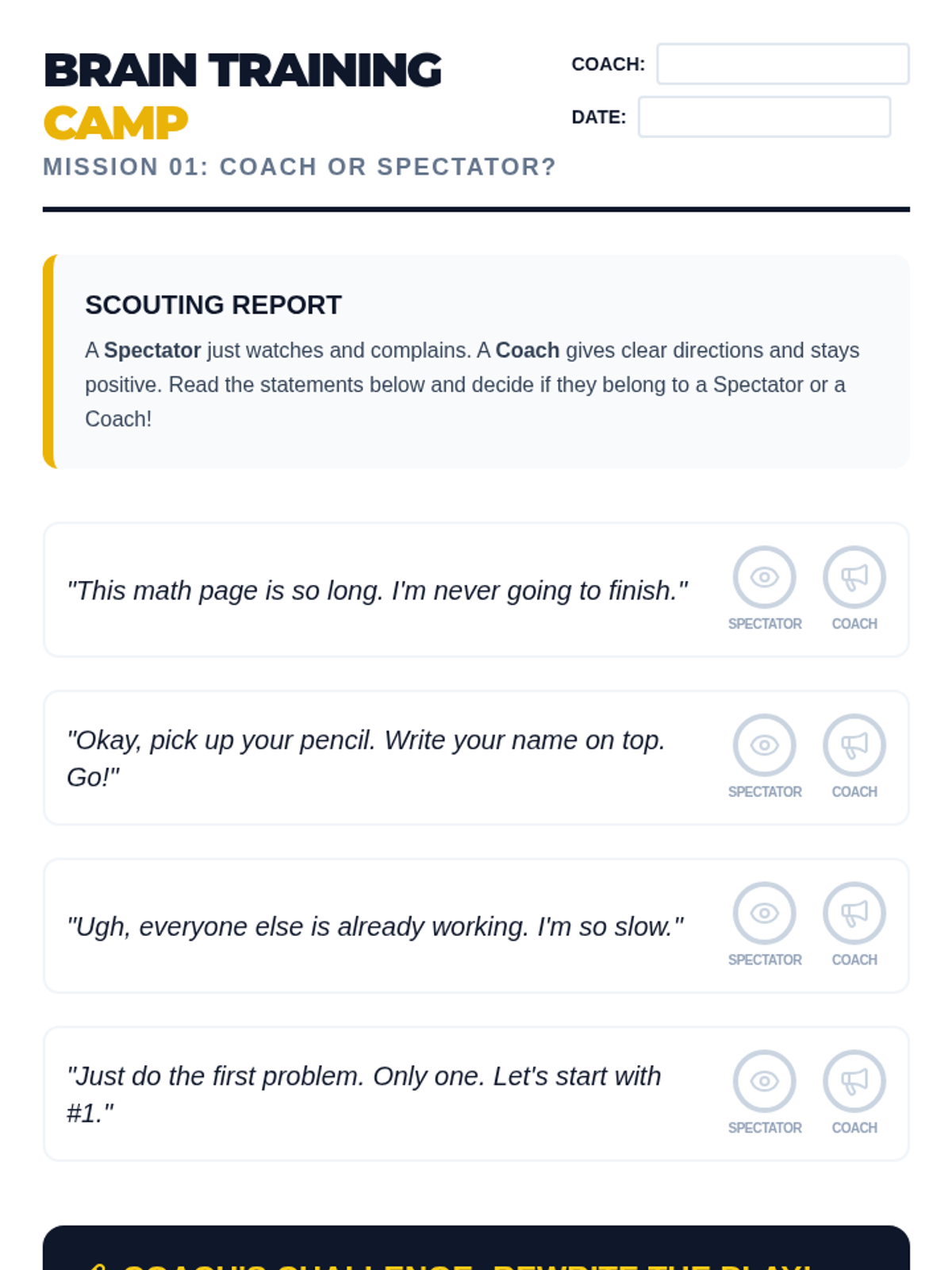
A worksheet where students classify thoughts as 'Spectator' or 'Coach' and practice rewriting passive thoughts into active commands.
Introductory slide deck for Lesson 1, introducing the 'Brain Coach' vs. 'Spectator' concept with athletic-themed visuals.
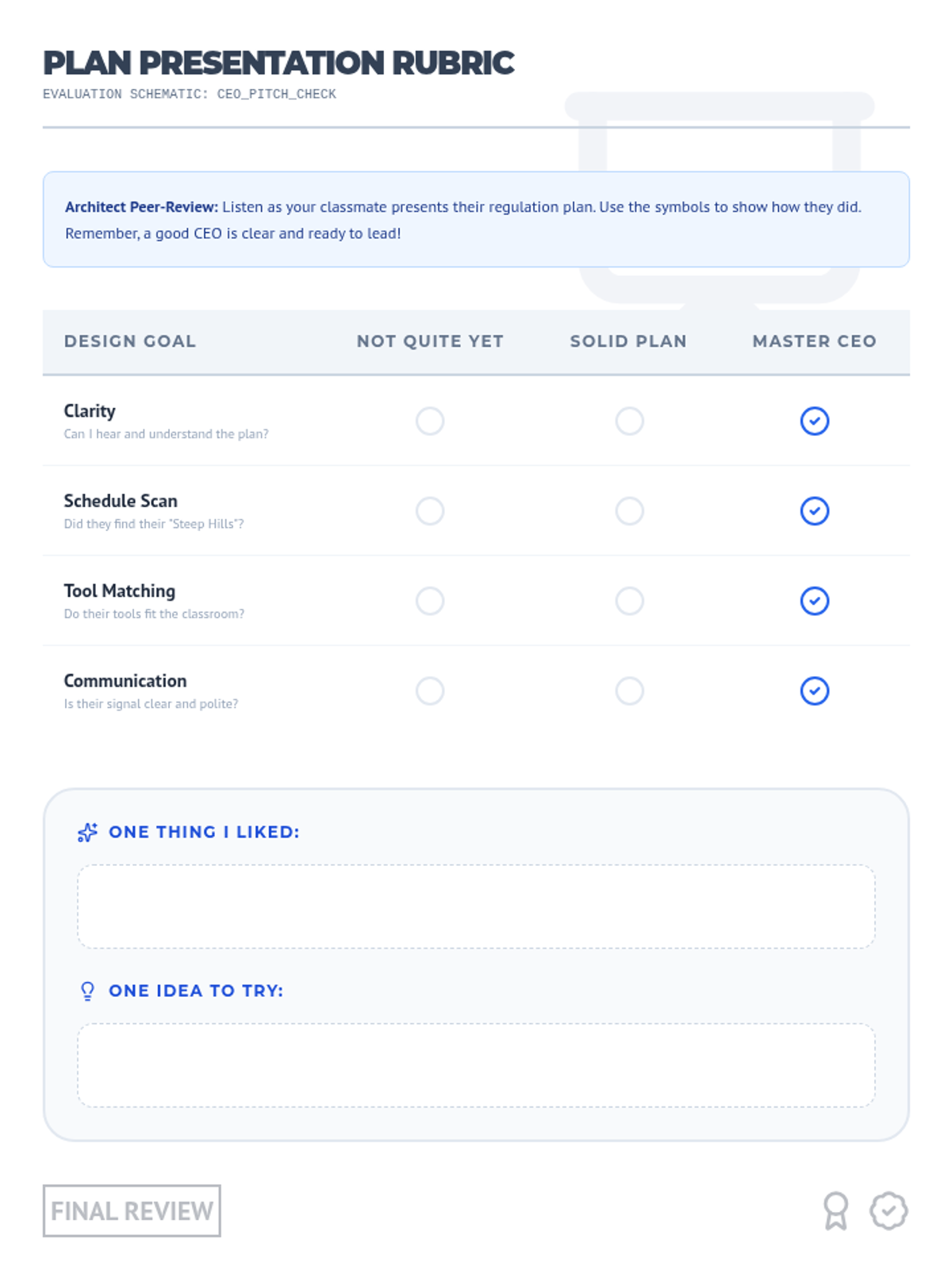
A student-facing rubric for Lesson 5, allowing peers or teachers to evaluate the clarity and completeness of a student's personal regulation plan presentation.
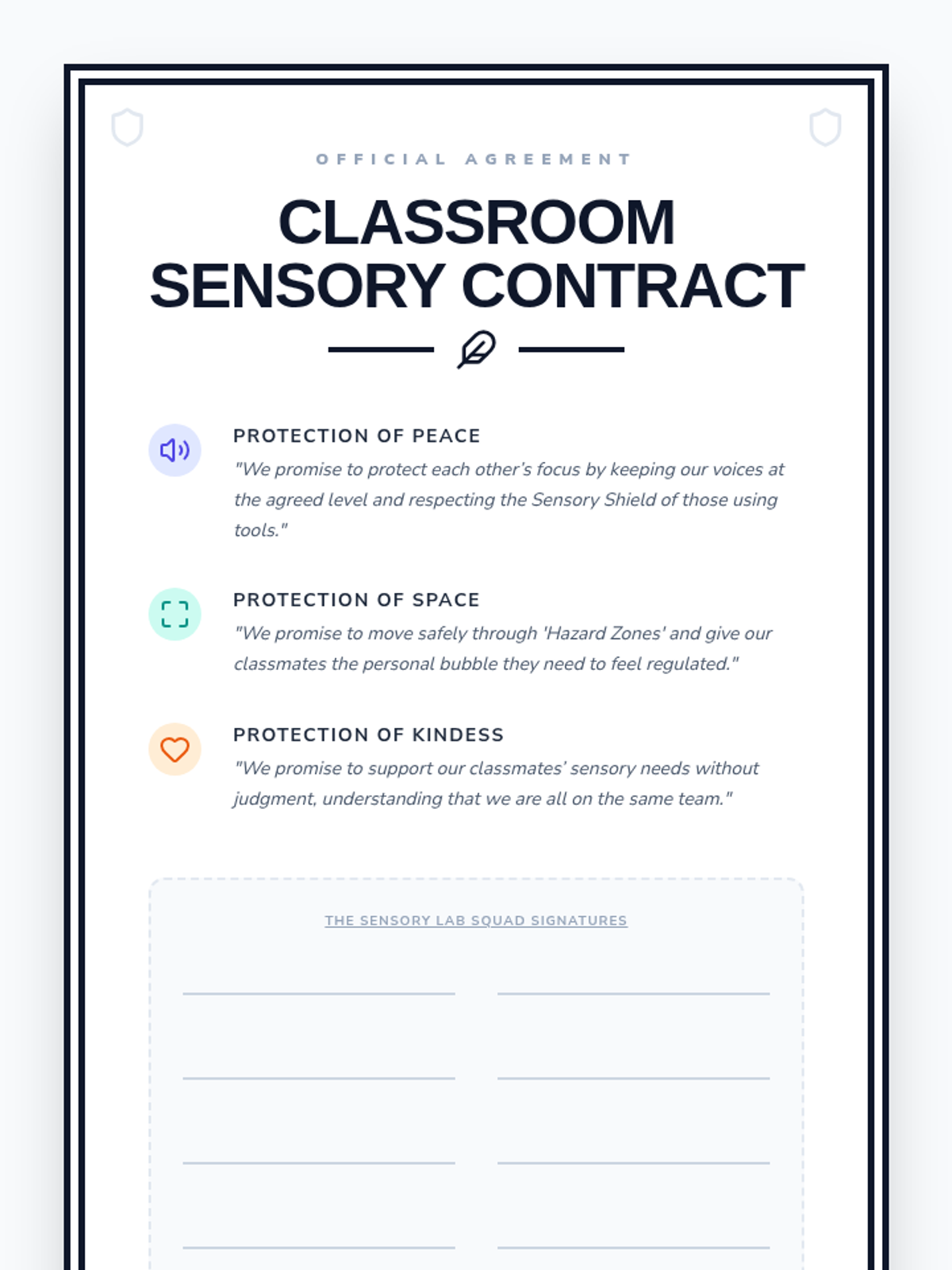
A formal classroom agreement document that establishes shared norms for noise, space, and sensory support, intended for all students to sign.
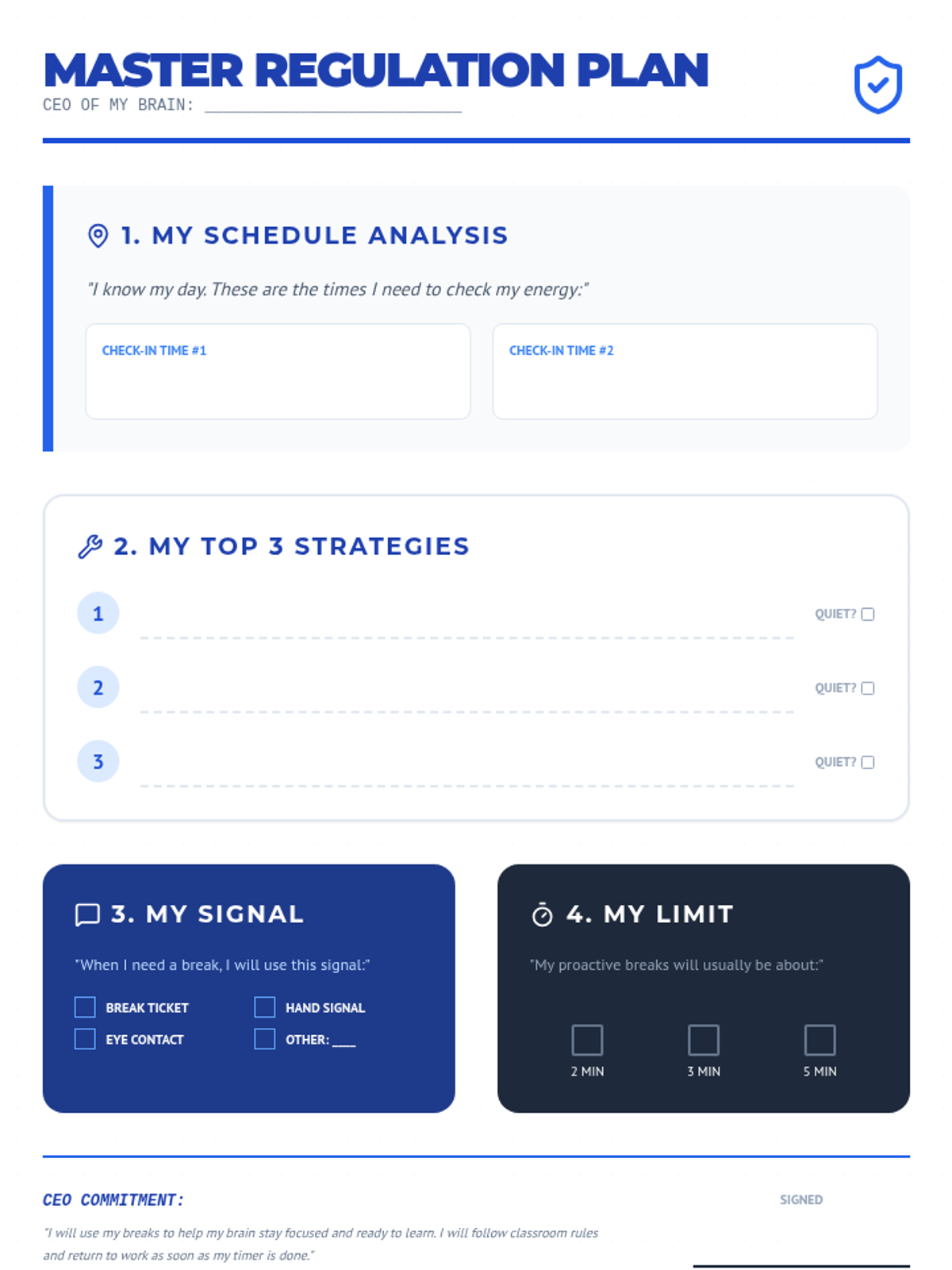
The final comprehensive worksheet for the student's personal regulation plan, including schedule analysis, strategy selection, and communication protocols.
Slides for Lesson 5 consolidating learning into a classroom agreement on noise, space, and sensory support.
Introductory slides for the final lesson, using the "Brain CEO" metaphor to motivate students as they finalize their personal regulation plans.
A finalized IEP Roadmap with generalized skill-building language for perspective-taking, self-regulation, and objective self-reflection, designed to support students with social perception challenges.
A multi-page set of 'Social Mystery Case Files' with four distinct practice scenarios. Each case includes a 'The Scene' description, an 'Evidence Tag' with extra clues, and space for students to brainstorm three 'Plot Twists' (positive intent explanations) and analyze the situation from an objective 'Camera View'.
A facilitation guide for counselors to assist students in social interaction 'dissection'. It includes trauma-informed context, specific coaching scripts for each step of the 'Scene Scanners' process, and a metaphorical physical activity for addressing grudge-holding.
A student worksheet designed as an 'Investigator Log' to help students dissect social interactions. It prompts them to identify the event, their reaction, brainstorm positive intent, reflect on their own behavior, and consciously decide to let go of grudges.
A visual slide deck teaching the 'Scene Scanners' methodology for social interaction analysis. It focuses on assuming positive intent, using a '3-second brake' for impulse control, and understanding the personal weight of holding grudges.
A student activity sheet where they "design" their own toolbox by selecting and drawing tools from the four categories (Sensory, Body, Calm, Brain) that work best for them.
A comprehensive teacher facilitation guide for the Regulation Toolbox lesson, featuring pacing advice, slide-by-slide talking points, activity instructions, and troubleshooting tips.
A visually engaging slide deck introducing students to the concept of regulation tools. It covers sensory, physical, breathing, and cognitive strategies to help students stay in or return to the Green Zone.
A printable set of nine emotion strategy cards featuring breathing, movement, sensory, and thinking tools for student self-regulation.
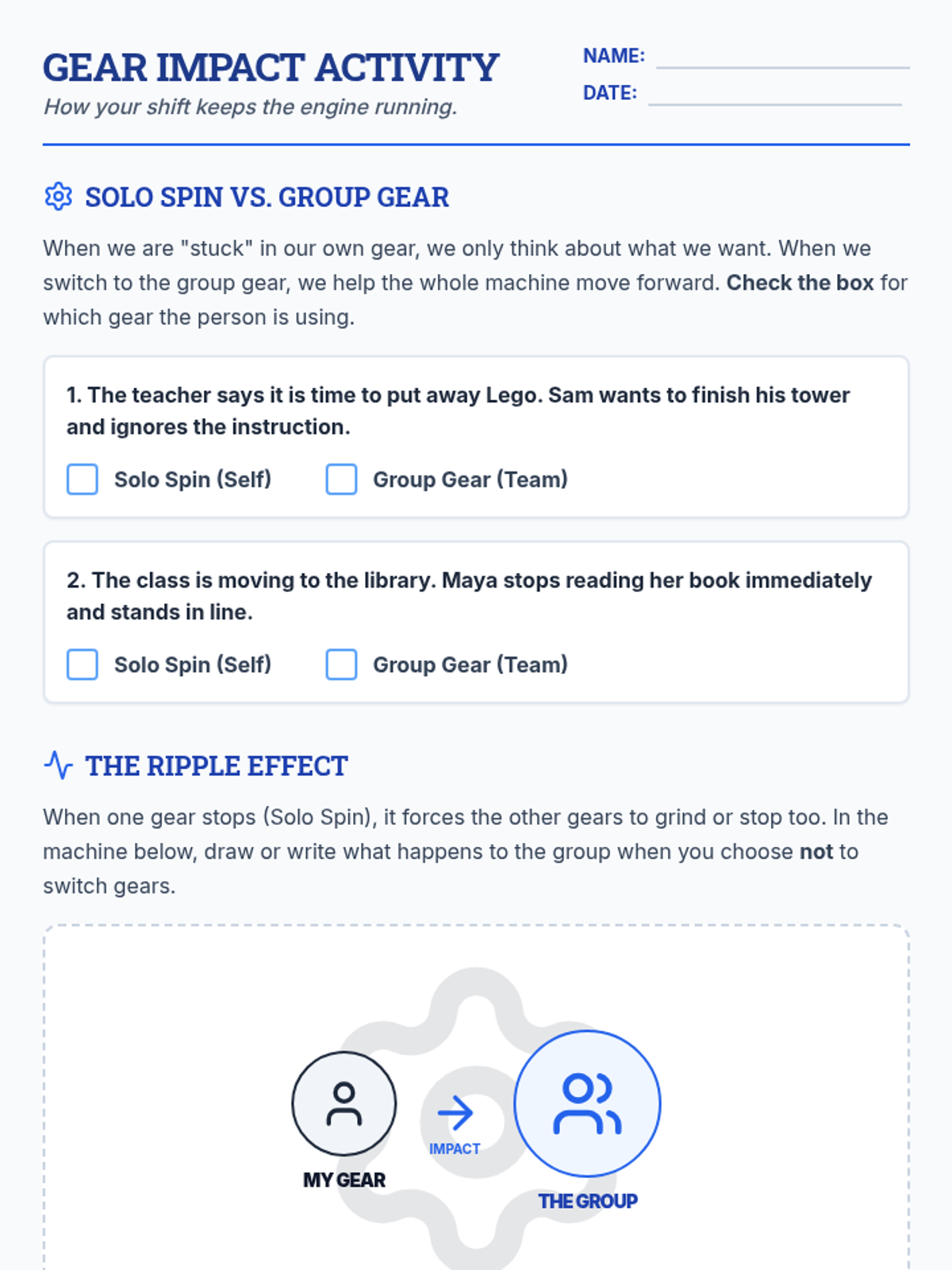
A student worksheet for evaluating the size of different problems and planning appropriate reactions using the Scale of Peaks framework.
A slide deck for Lesson 4 teaching students to evaluate the size of a problem and match their emotional reaction appropriately using the Scale of Peaks.
A student-facing worksheet for brainstorming and selecting personal coping strategies ('tools') to manage emotional zones.
A slide deck introducing various regulation tools (breathing, movement, sensory, and thinking) to help students manage their emotional zones.
A student body map worksheet for identifying and marking physical sensations (body signals) associated with different emotional zones.
A presentation slide deck for Lesson 2 that teaches students how to recognize 'Body Signals'—physical sensations like heart rate and muscle tension—that indicate a shift in their emotional zone.
A comprehensive weekly teacher guide outlining the four-week 'Emotion Explorer' unit, including lesson objectives and focus areas for identification, body awareness, coping tools, and problem-solving.
A set of two visual anchor charts: one mapping emotions to the Four Lands (Zones) and another scaling problems from 'Tiny Glitch' to 'Emergency Peak'.
A student worksheet for identifying emotions and categorizing them into the four zones of regulation using the 'Explorer' land theme.
A slide deck introducing students to the four zones of regulation through an 'Explorer' theme, using metaphorical lands to represent different emotional states.
A two-page double-sided Minecraft-themed worksheet for Lesson 3, featuring enlarged graphics and spacious areas for student work, optimized with a white background for ink-saving and standard 8.5x11 printing.
A student practice sheet for the Voice Vibes lesson where they color volume levels and plan a "cool" response to a teacher's 'no'.
A teacher facilitation guide for the Voice Vibes counseling session, including discussion prompts, role-play steps, and IEP goal alignment.
A printable set of 4 pocket-sized reference cards for students to keep as a reminder of their volume levels and tone types.
A slide deck for 3rd graders on voice volume and tone management using a sound board visual metaphor.
A fill-in-the-blank reflection worksheet that allows students to personalize their own 'Calm Plan' by identifying feelings and choosing appropriate replacement behaviors from a provided word bank.
A multiple choice worksheet where students choose the appropriate replacement behavior (e.g., asking for help, walking away) for various social scenarios involving frustration or anger.
A narrative social story titled 'The Great Grumble' about a student named Leo who learns to manage feelings of frustration and anger by using replacement behaviors instead of physical aggression.
Instructional slides for the final lesson, teaching the student how to combine feelings, reasons, and requests into a single conflict resolution script.
A teacher guide and student worksheet for Lesson 4, teaching the "Peace Pro" script which adds a specific request to an I-statement for conflict resolution.
Instructional slides for Lesson 3 on requesting a break, emphasizing the Level 4 trigger and the specific verbal protocol to use with Mrs. Lee.
A teacher facilitation guide and student break protocol contract for Lesson 3, teaching the student how to appropriately request a "Pause Button" break.