Identifies mental health crises and suicide warning signs while developing personal safety plans and grounding techniques. Equips users with peer gatekeeper skills and direct pathways to professional crisis resources and hotlines.
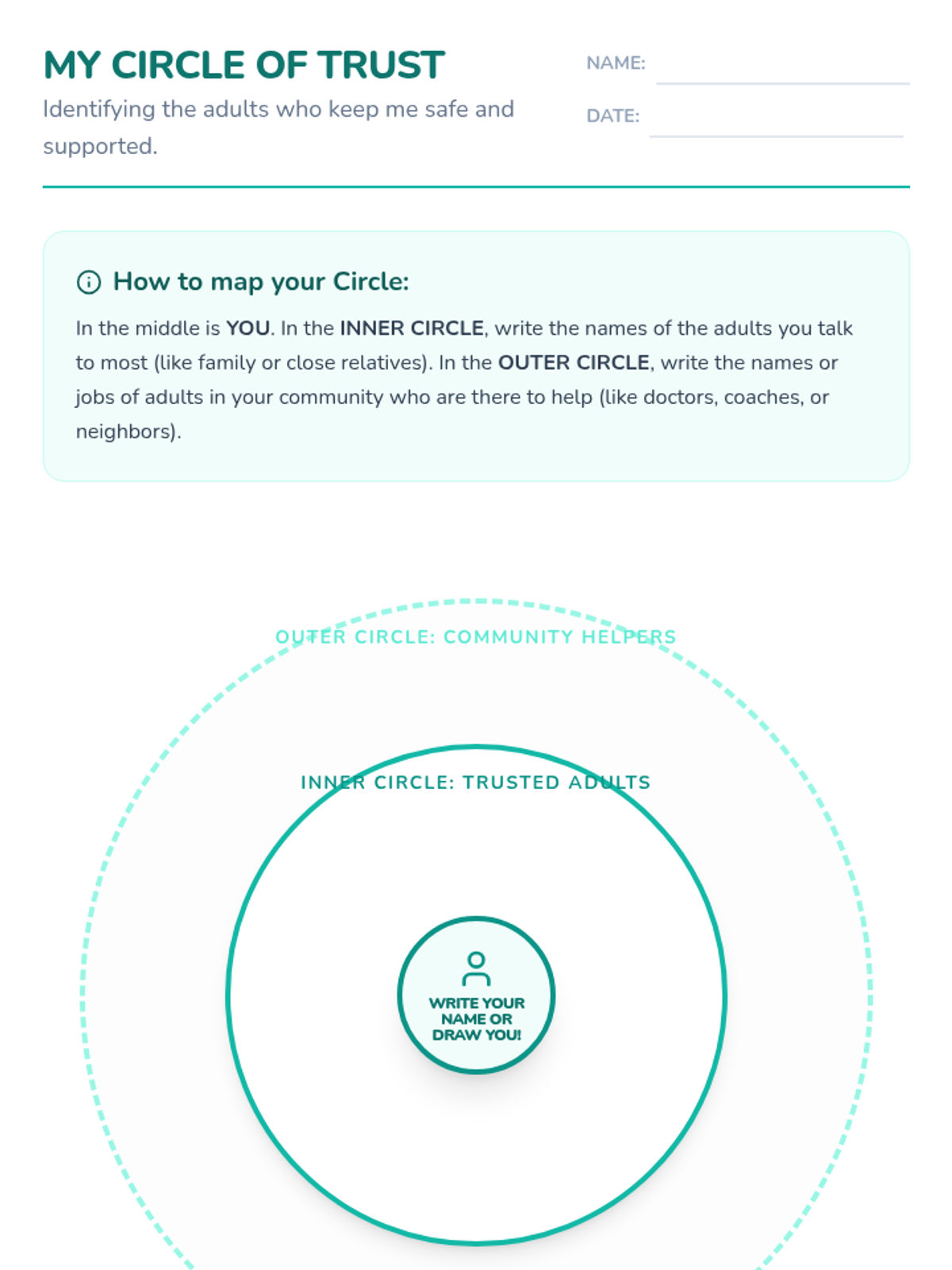
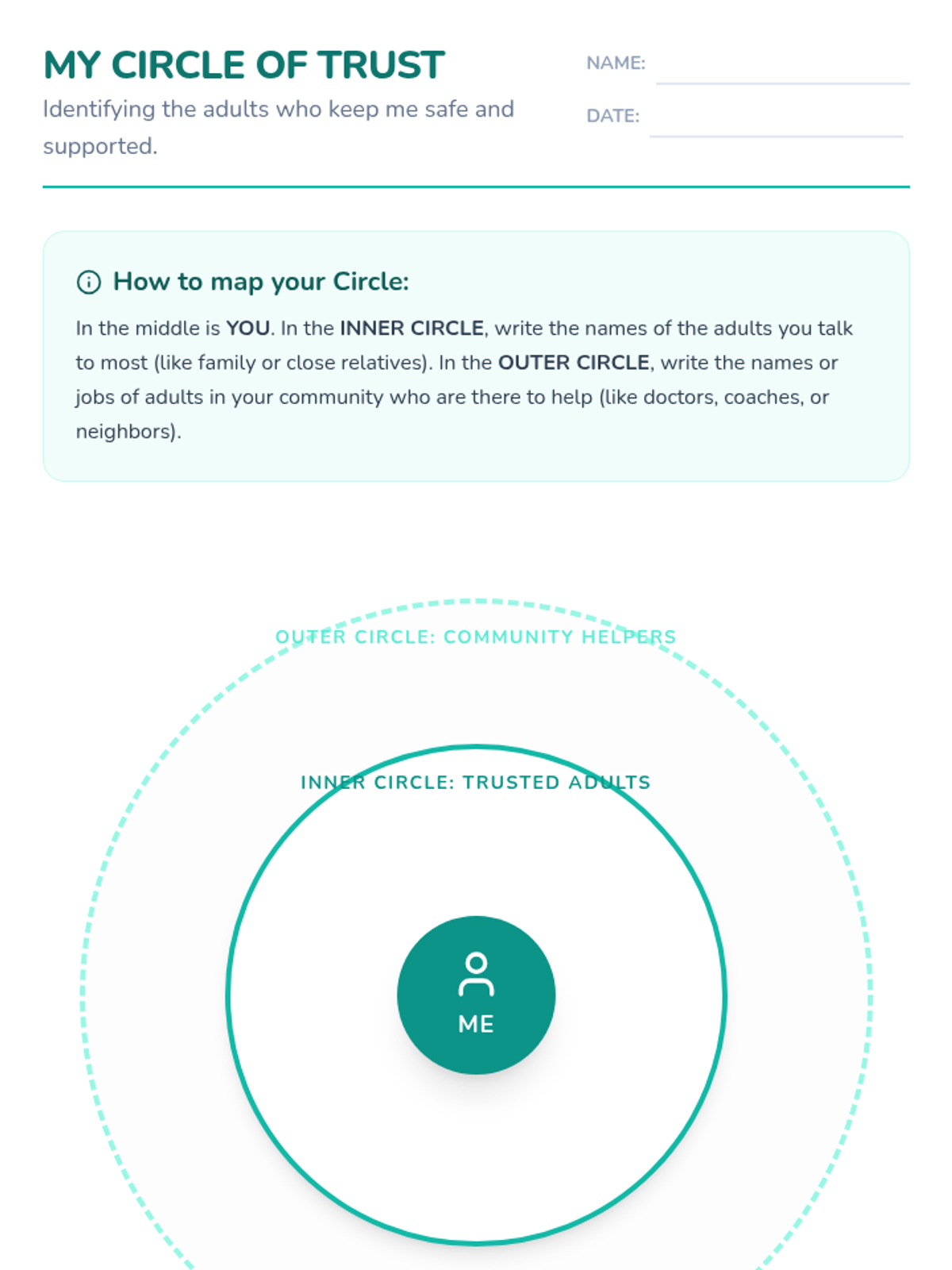
A worksheet for students to map out their trusted adults and community helpers in a 'Circle of Trust' diagram with a dedicated space for their own name/drawing.
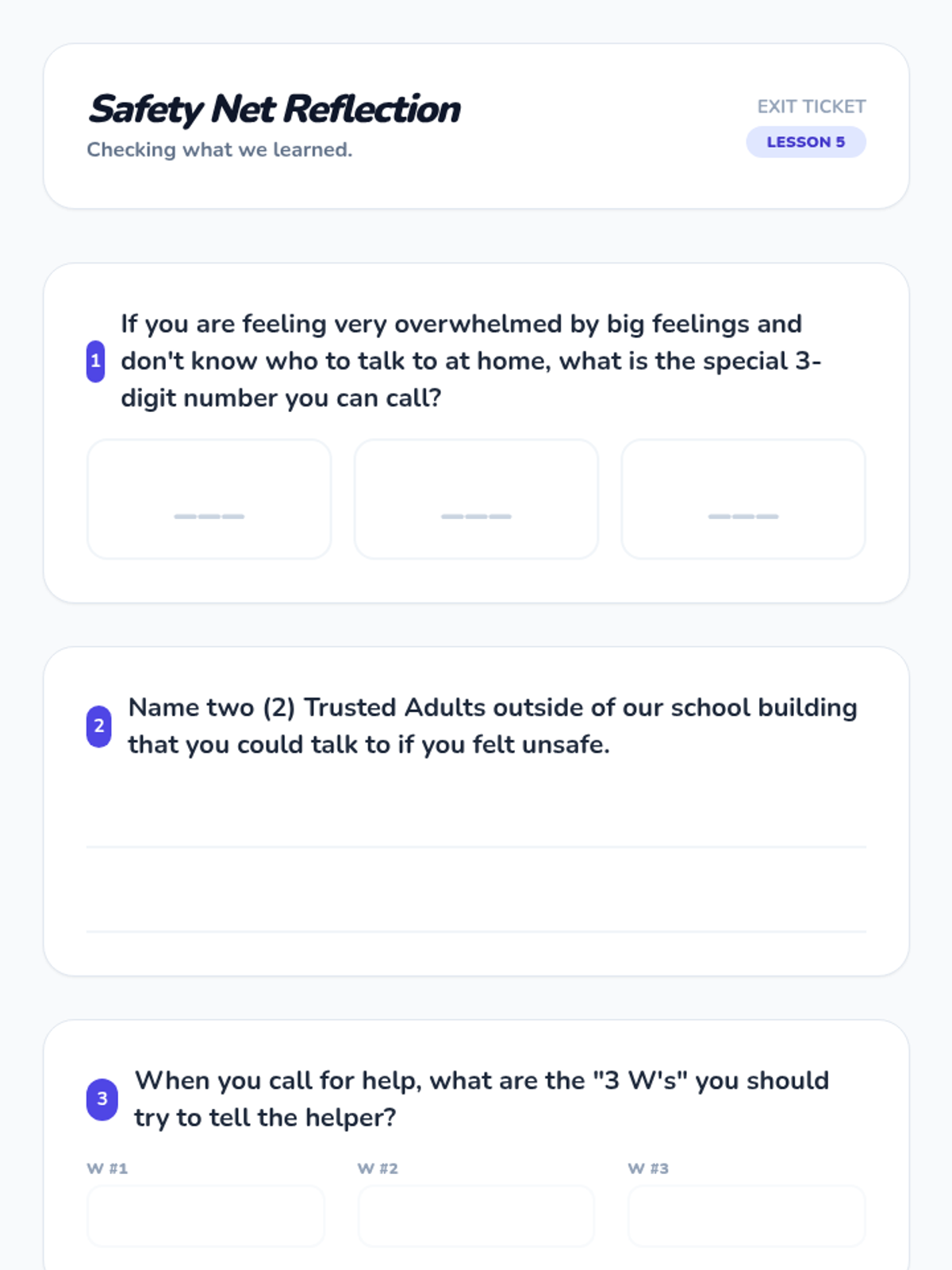
A final assessment and exit ticket for the sequence, checking students' knowledge of the 988 number, trusted adults, and communication protocols.
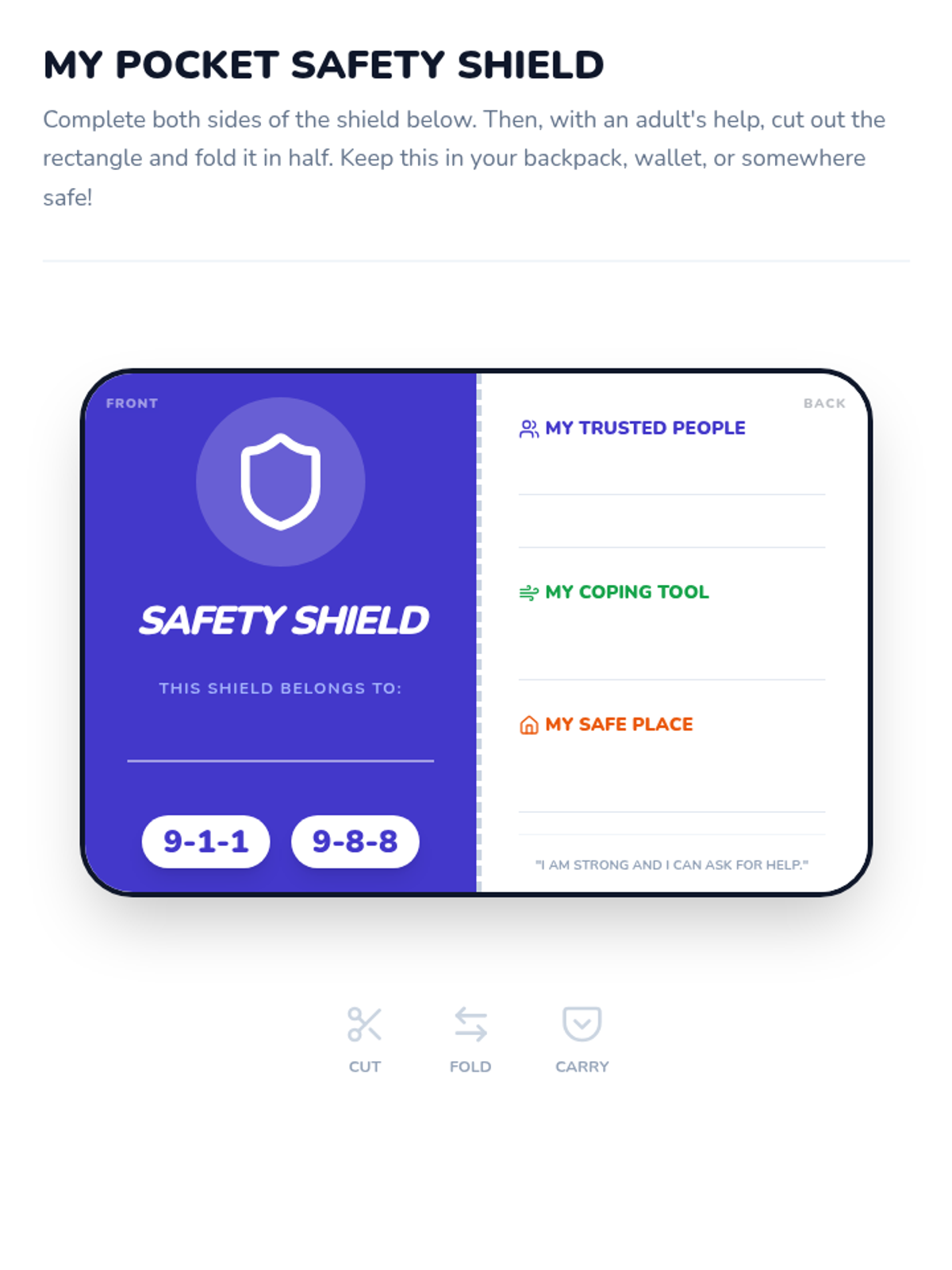
A foldable pocket-sized card for students to record their trusted adults, coping strategies, and emergency numbers.
Final slide presentation for Lesson 5, guiding students through the creation of their Personal Safety Shield card.
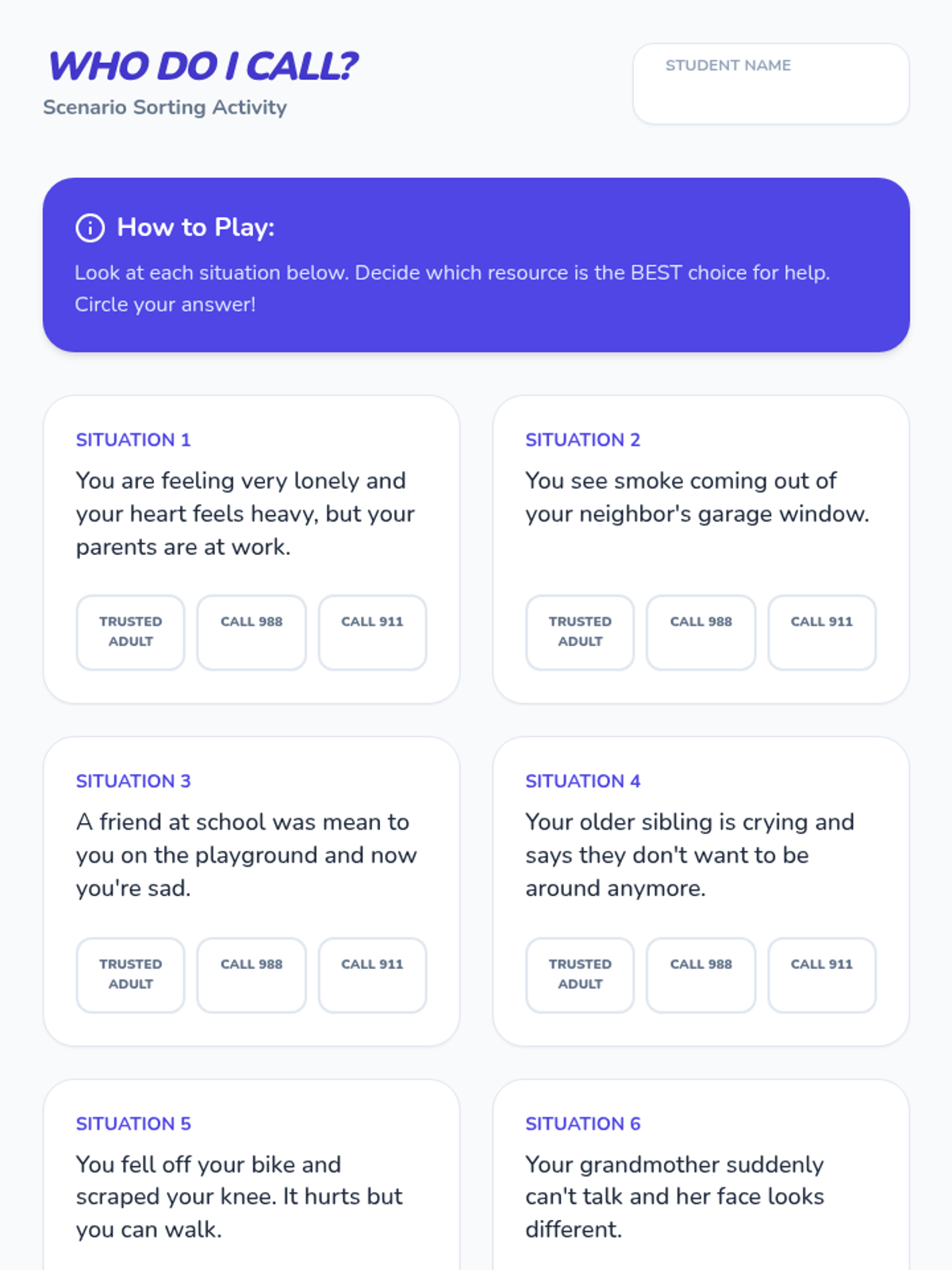
A sorting activity for students to identify which emergency resource (Trusted Adult, 988, or 911) is appropriate for different scenarios. All options share identical styling.
Slide presentation for Lesson 4, helping students distinguish between problems and emergencies and choose the correct resource (Trusted Adult, 988, or 911).
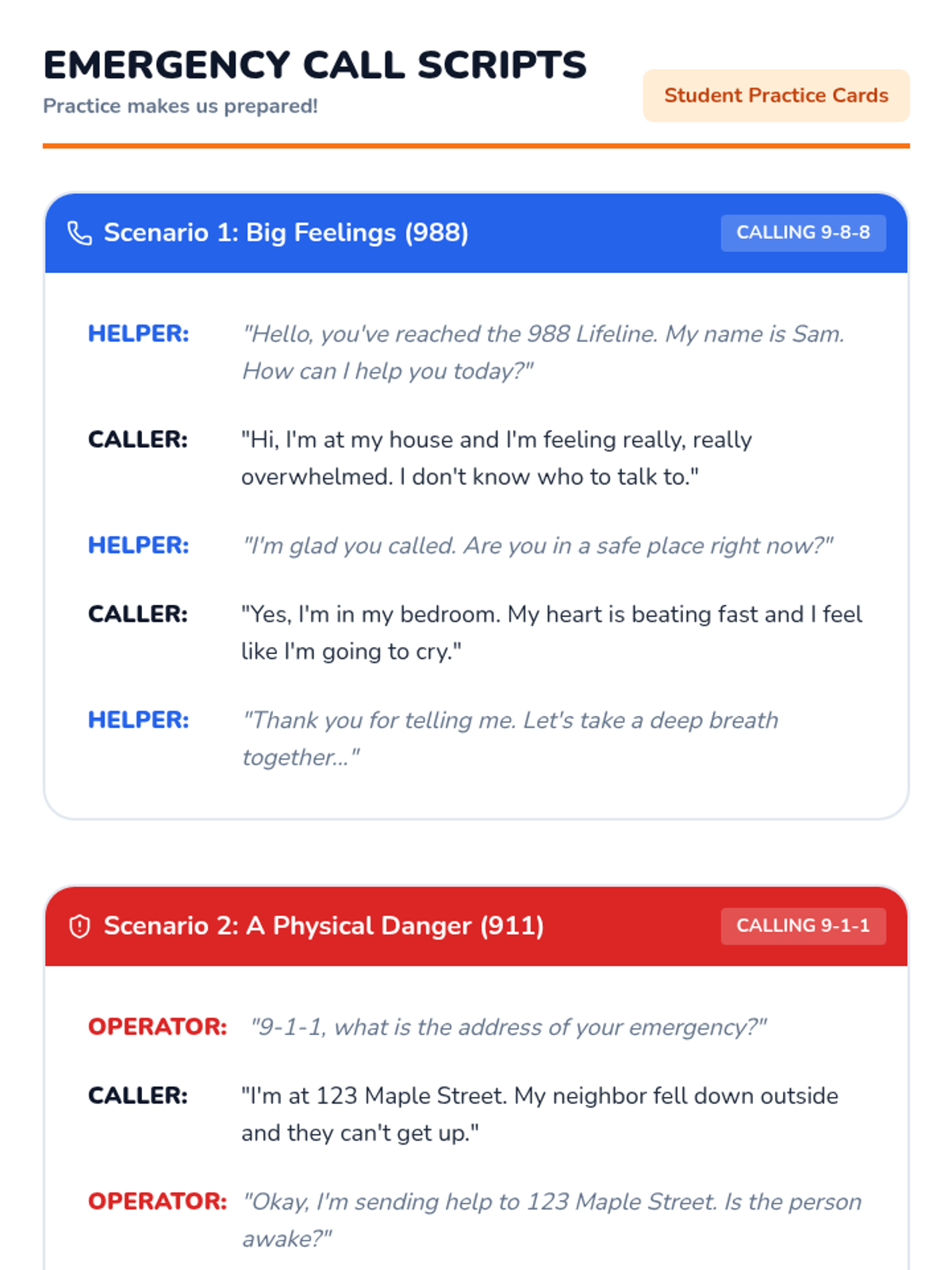
Practice scripts for students to role-play calling 988 for mental health support and 911 for physical emergencies.
Slide presentation for Lesson 3, teaching students how to communicate effectively during an emergency call using the 3 W's (Where, Who, What).
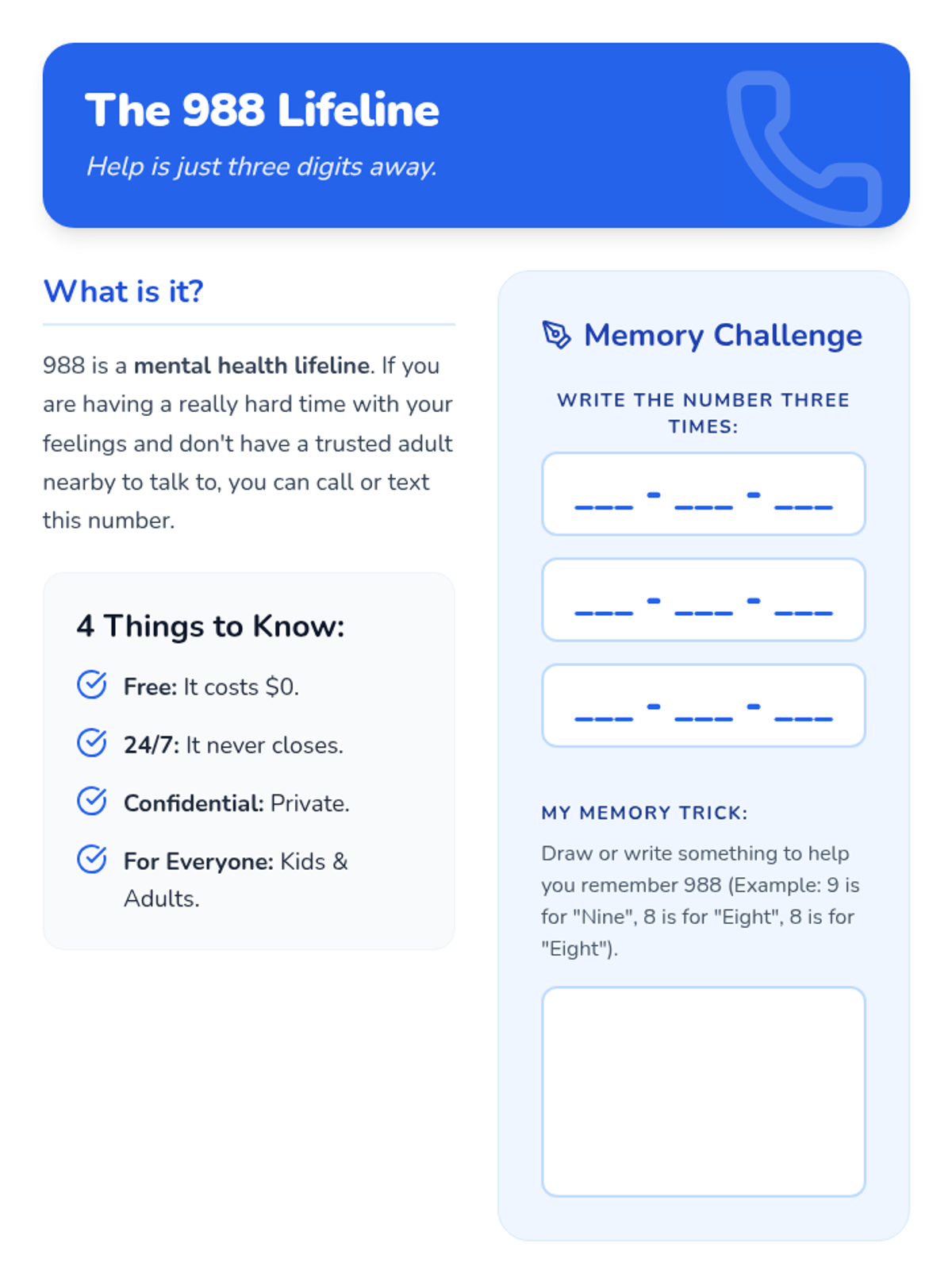
A student reference sheet and memorization worksheet for the 988 Suicide & Crisis Lifeline.
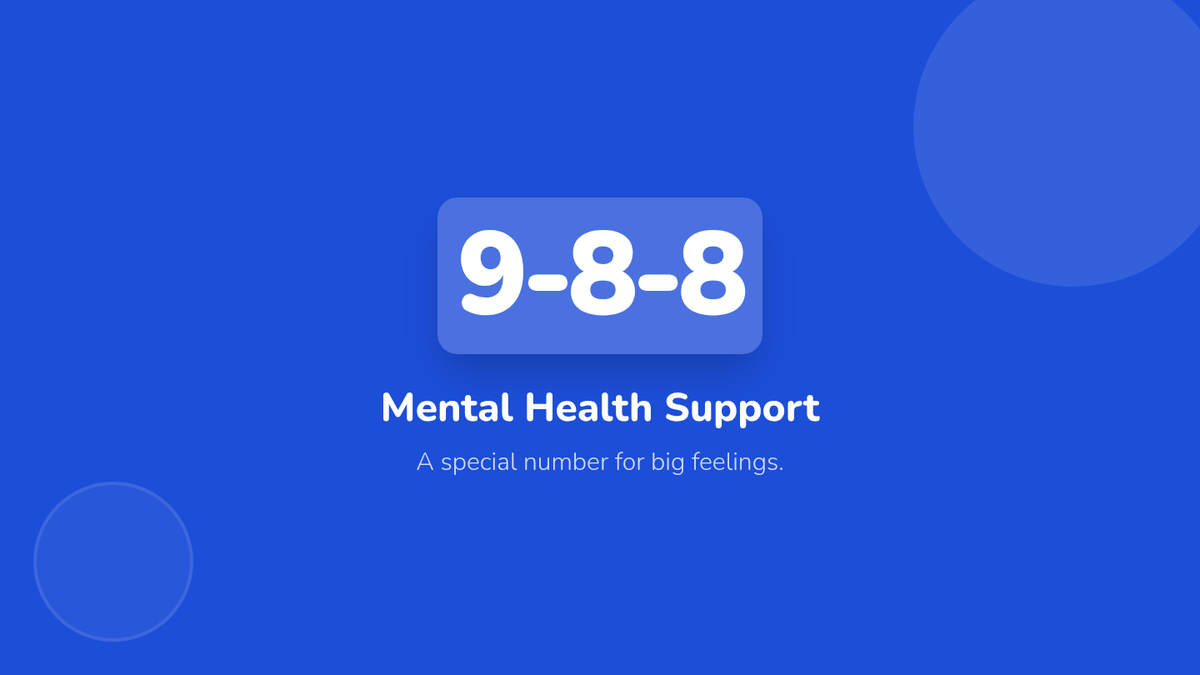
Slide presentation for Lesson 2, introducing students to the 988 Suicide & Crisis Lifeline as a resource for mental health support.
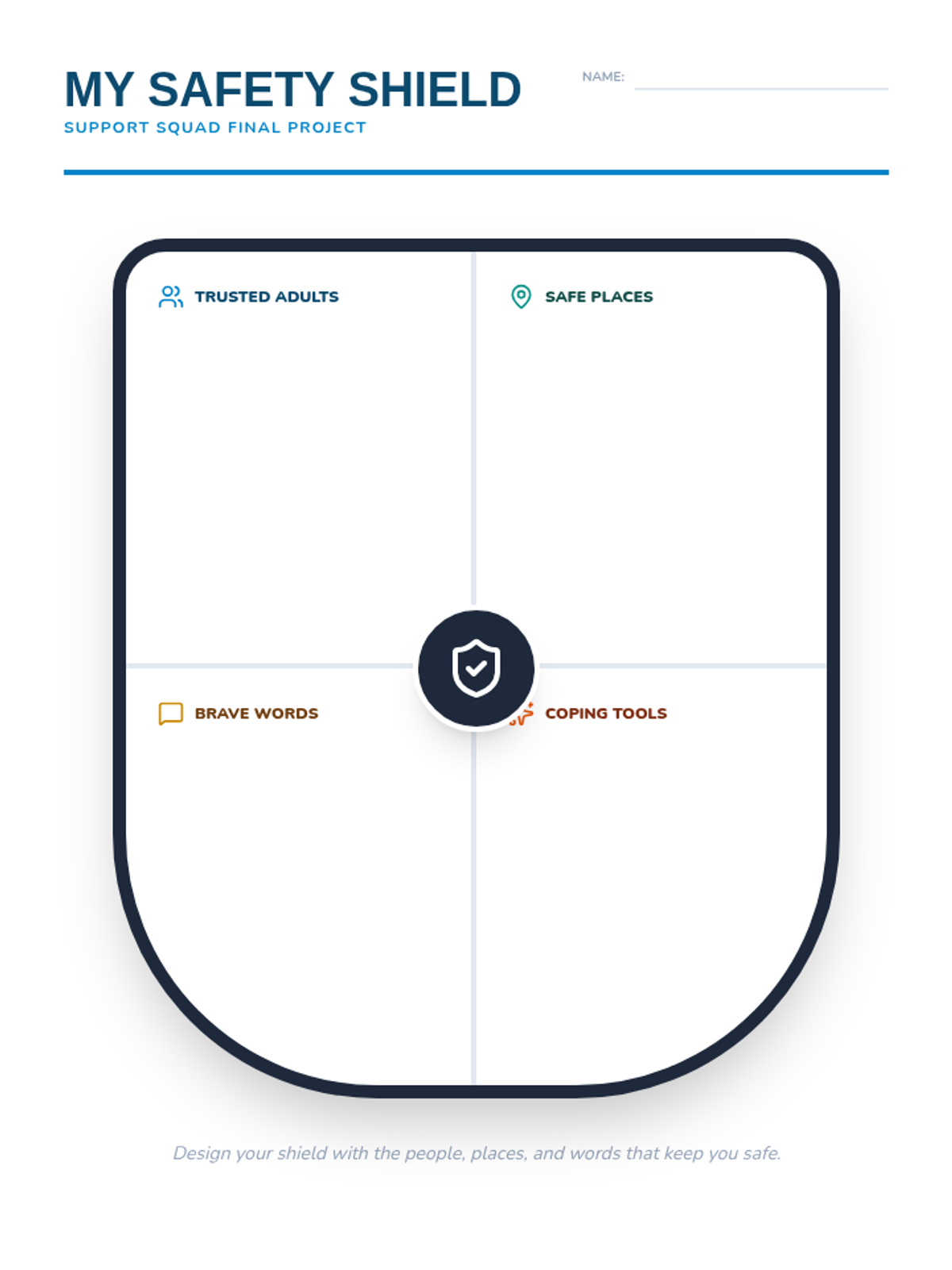
A set of printable resources for the final lesson, including a 'Safety Shield' workspace for student drawing and pocket-sized safety cards for students to keep.
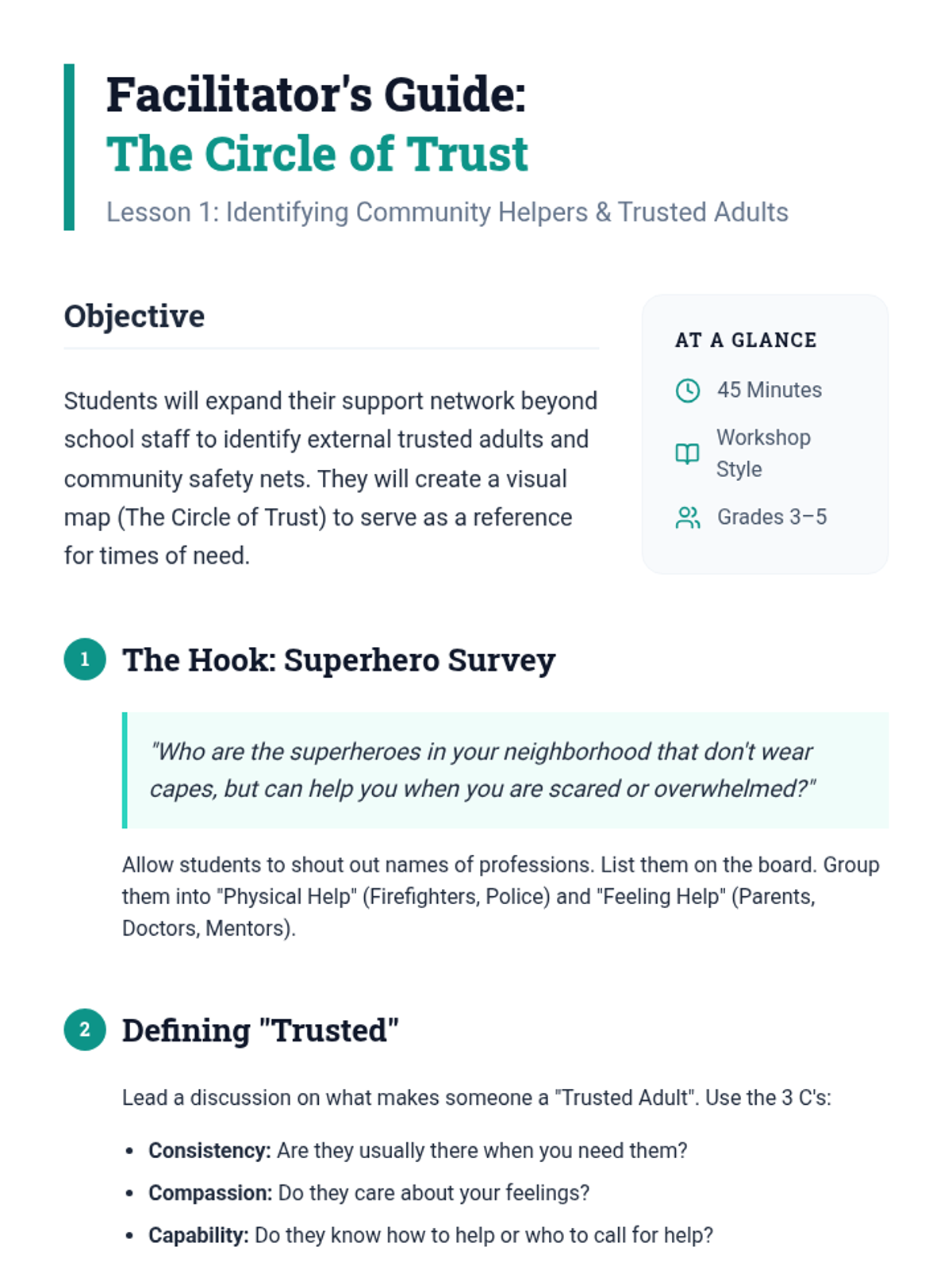
Teacher guide for Lesson 1, providing instructional strategies and discussion prompts for teaching about trusted adults and community helpers.
A presentation for Lesson 5 that reviews the key concepts of the Support Squad sequence and introduces the final project: creating a personal safety shield and pocket-sized safety card.
A worksheet for students to map out their trusted adults and community helpers in a 'Circle of Trust' diagram.
Introductory slides for Lesson 1, focusing on identifying trusted adults and community helpers to build a 'Circle of Trust'.
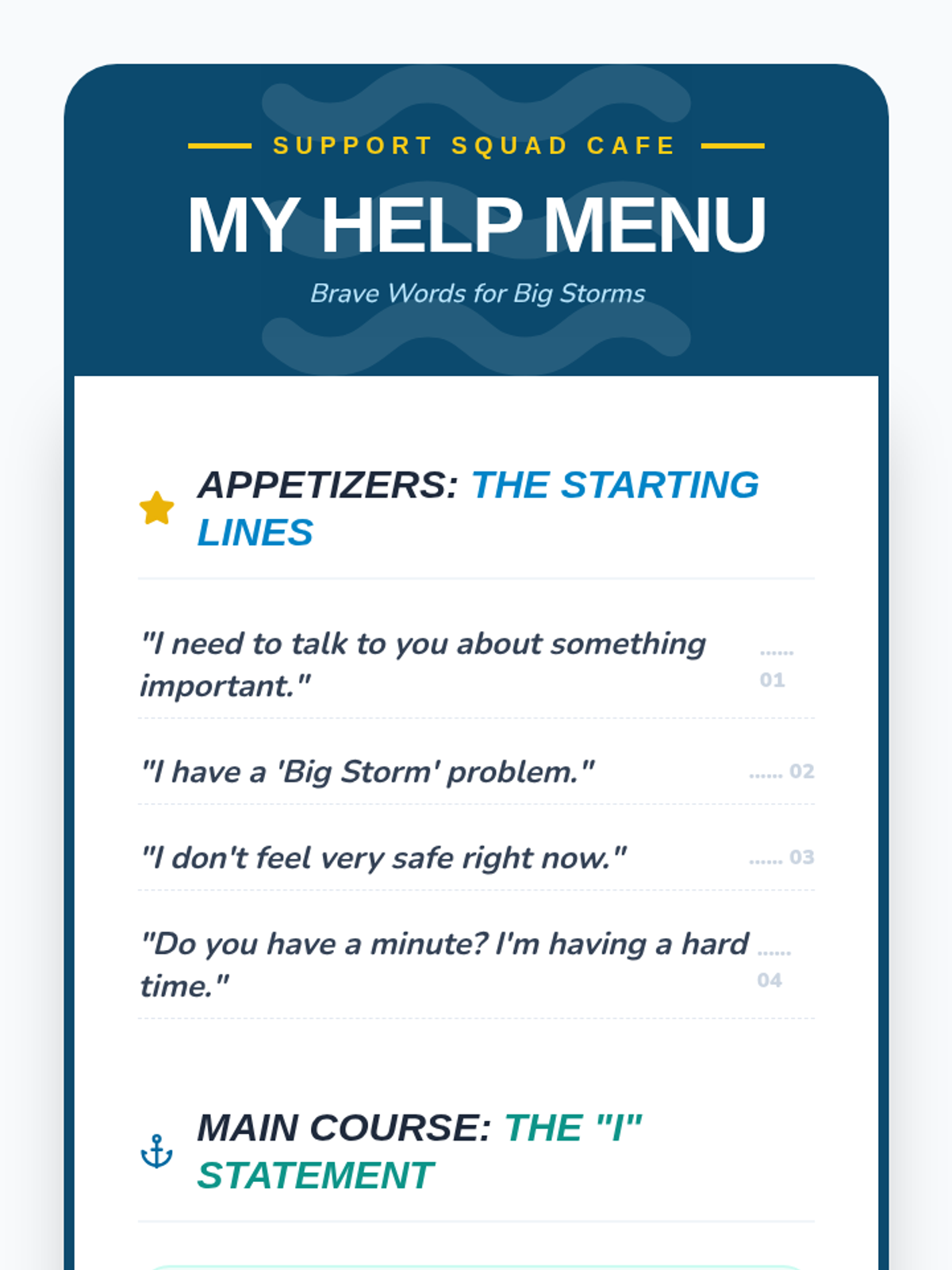
A creative reference sheet styled like a restaurant menu that provides students with specific sentence starters and 'I statement' templates for asking for help.
A presentation for Lesson 4 that teaches students how to use 'I statements' and specific sentence starters to ask for help from trusted adults.
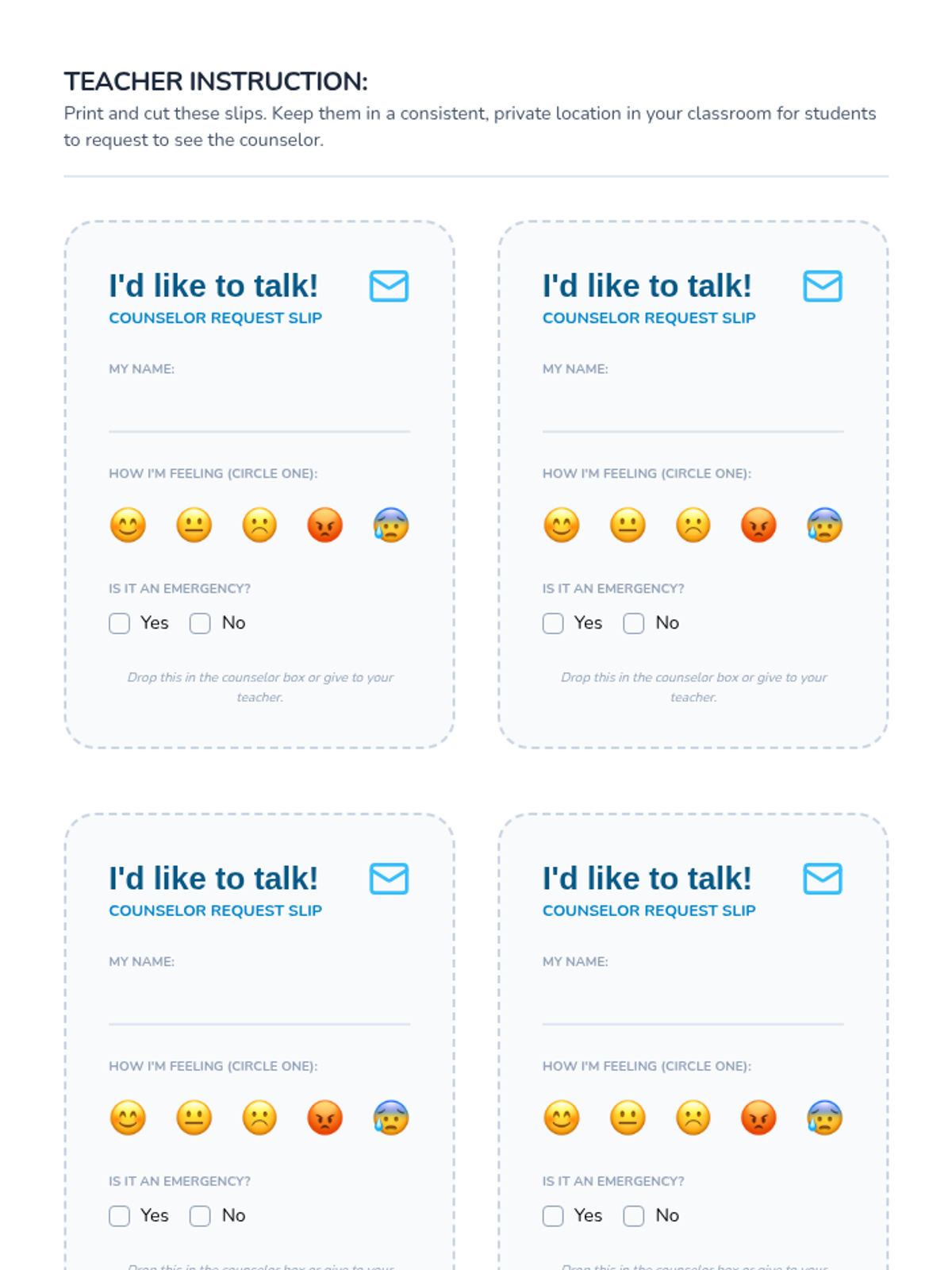
Printable request slips for students to use when they want to request a meeting with the school counselor. Includes space for name, mood, and emergency status.
A presentation for Lesson 3 that explains the school counselor's role, the rules of confidentiality, and the different ways a student can request to see them.
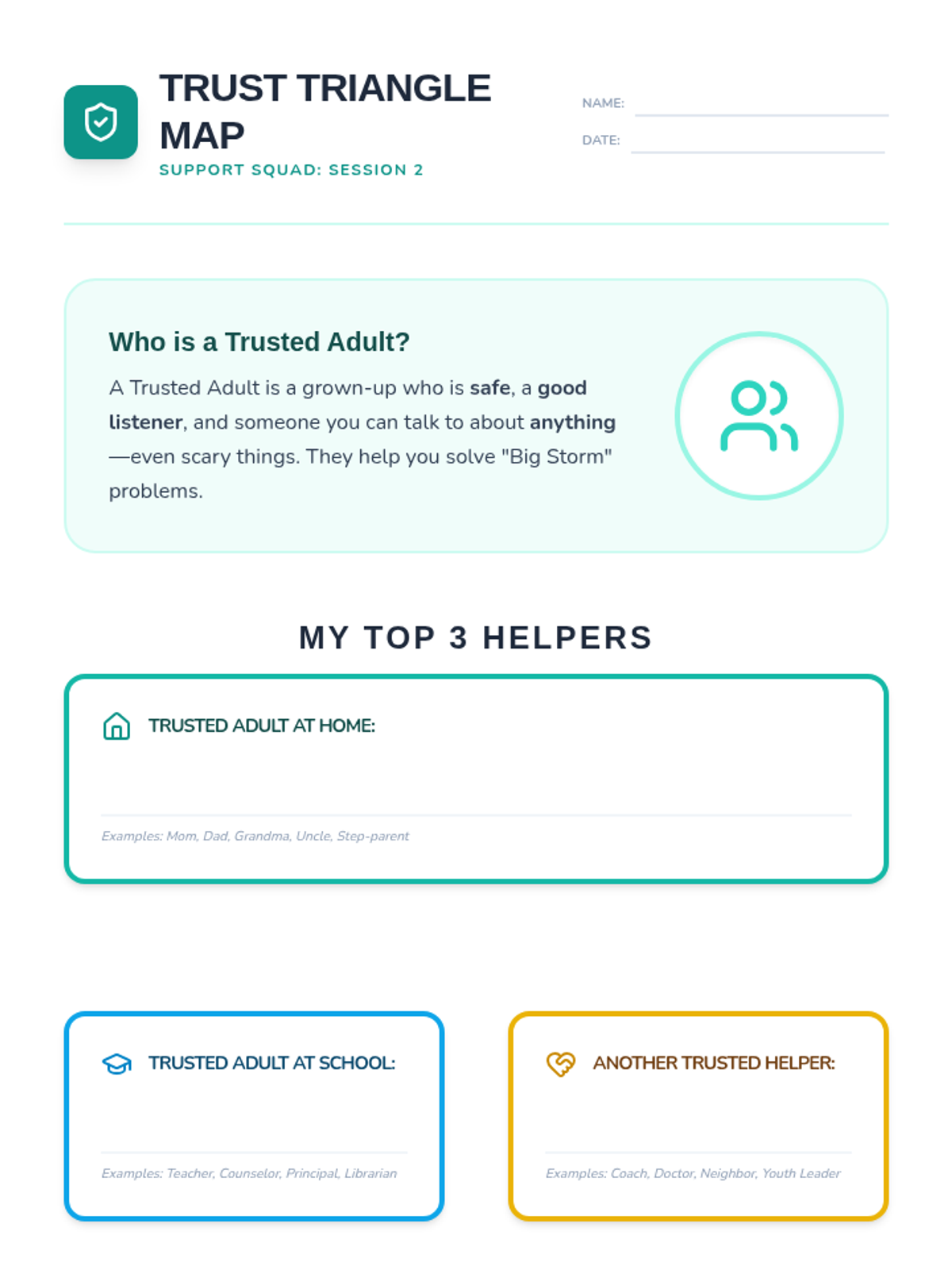
A graphic organizer for students to identify three trusted adults in different areas of their life (home, school, community) to form their personal 'Trust Triangle'.
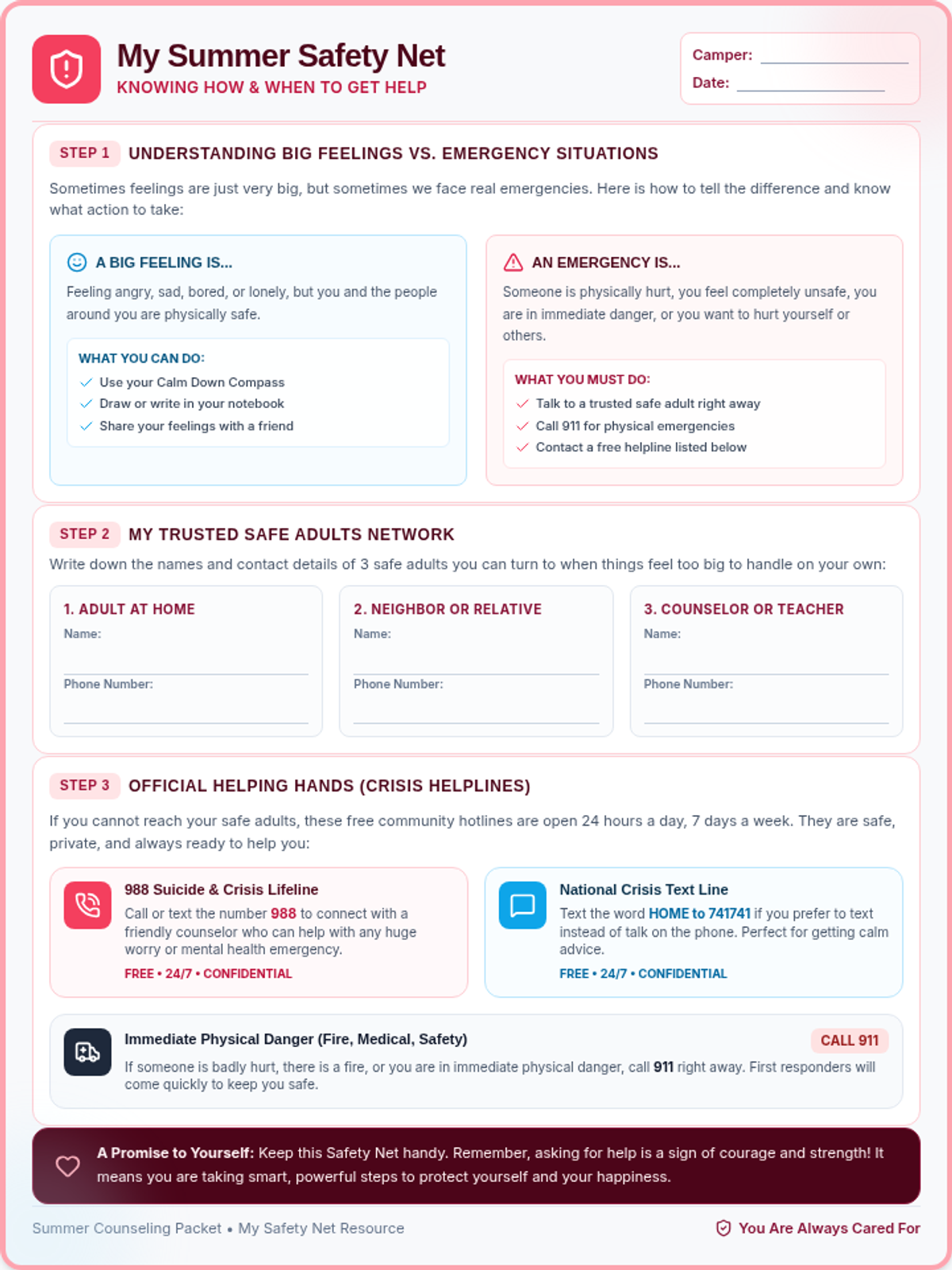
A 1-page kid-friendly safety resource and emergency contact guide helping students distinguish between big feelings and physical/emotional emergencies, map out safe adults, and access free crisis helplines.
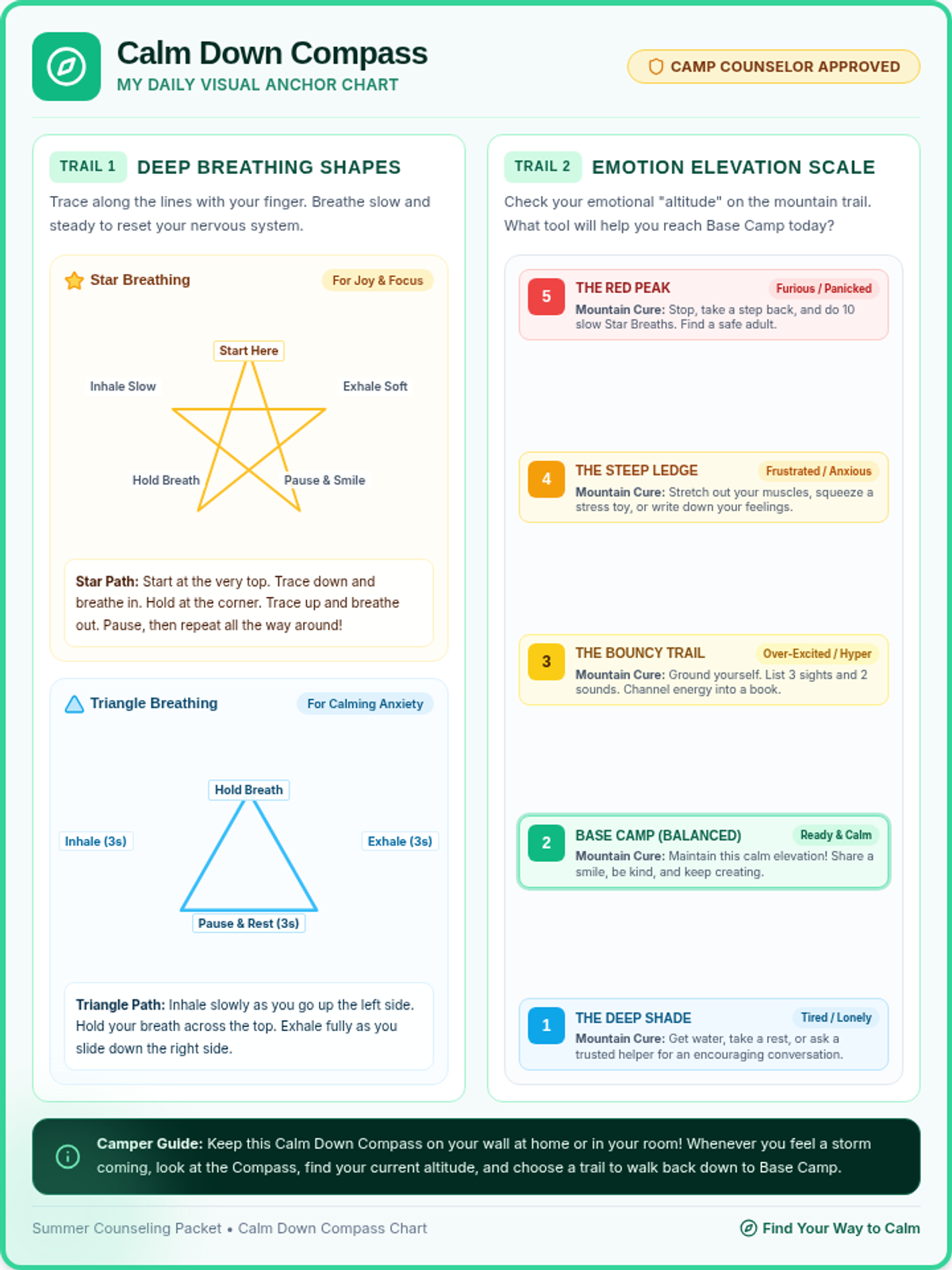
A 1-page visual anchor chart poster split into two columns: one side showing Star and Triangle deep breathing shapes, and the other side showing an mountain-themed emotional regulation scale.
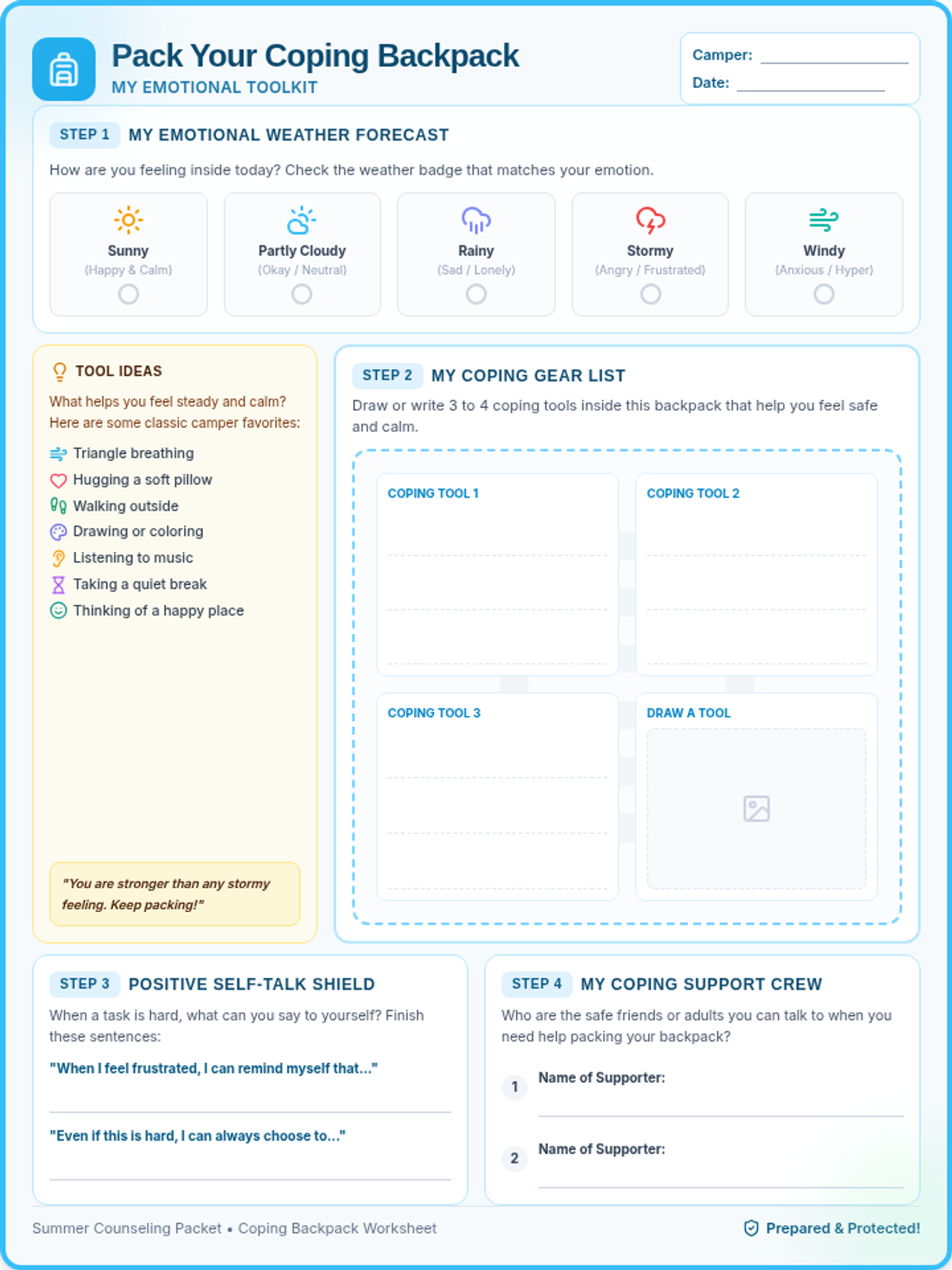
A 1-page interactive student worksheet styled as a camping backpack for students to draw, list, and organize their personal emotional coping strategies and positive self-talk statements.
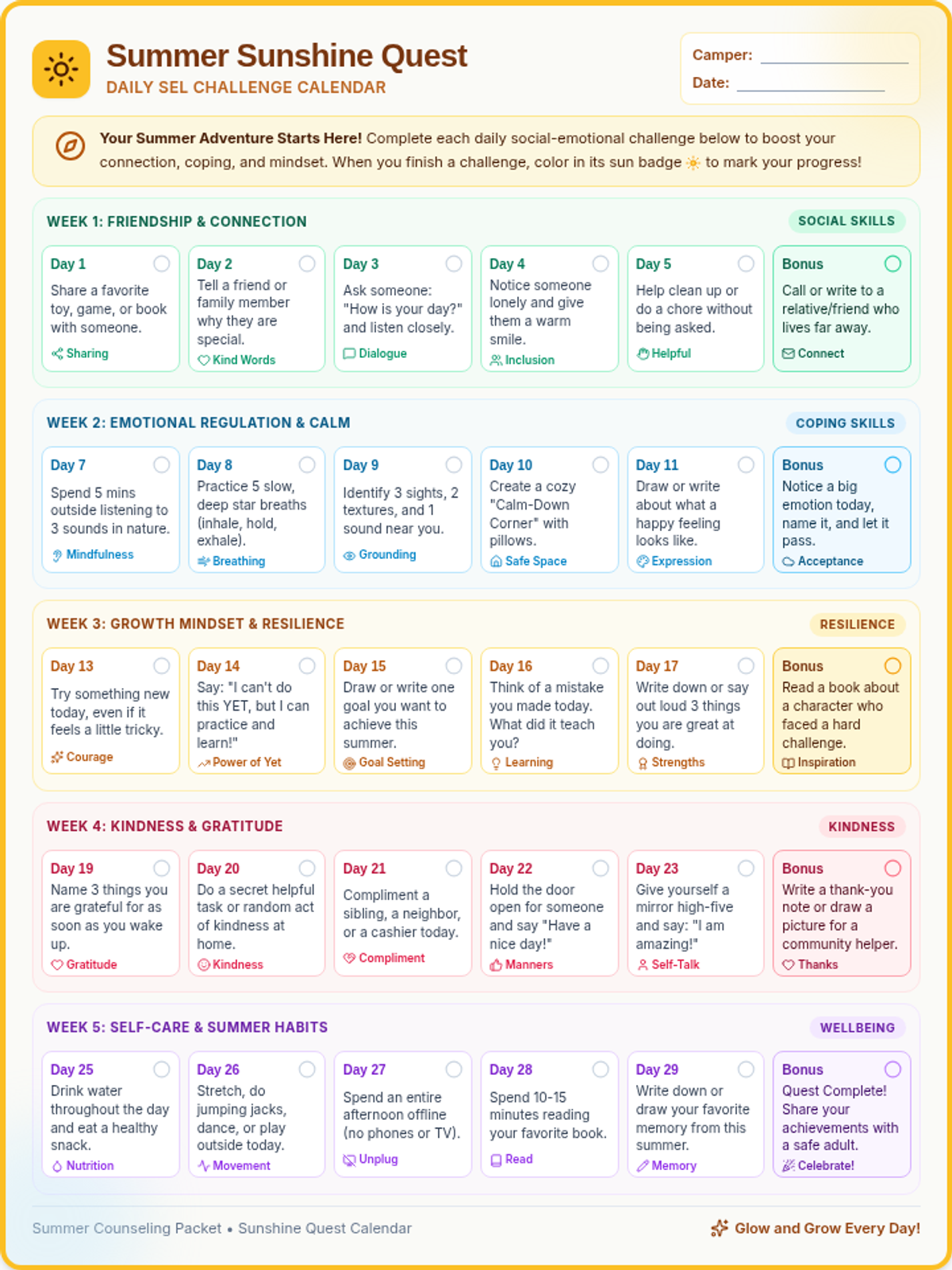
A 1-page summer SEL challenge calendar formatted as a 5-week tracking grid with 30 quick, actionable social-emotional, mindfulness, friendship, and growth-mindset daily challenges.
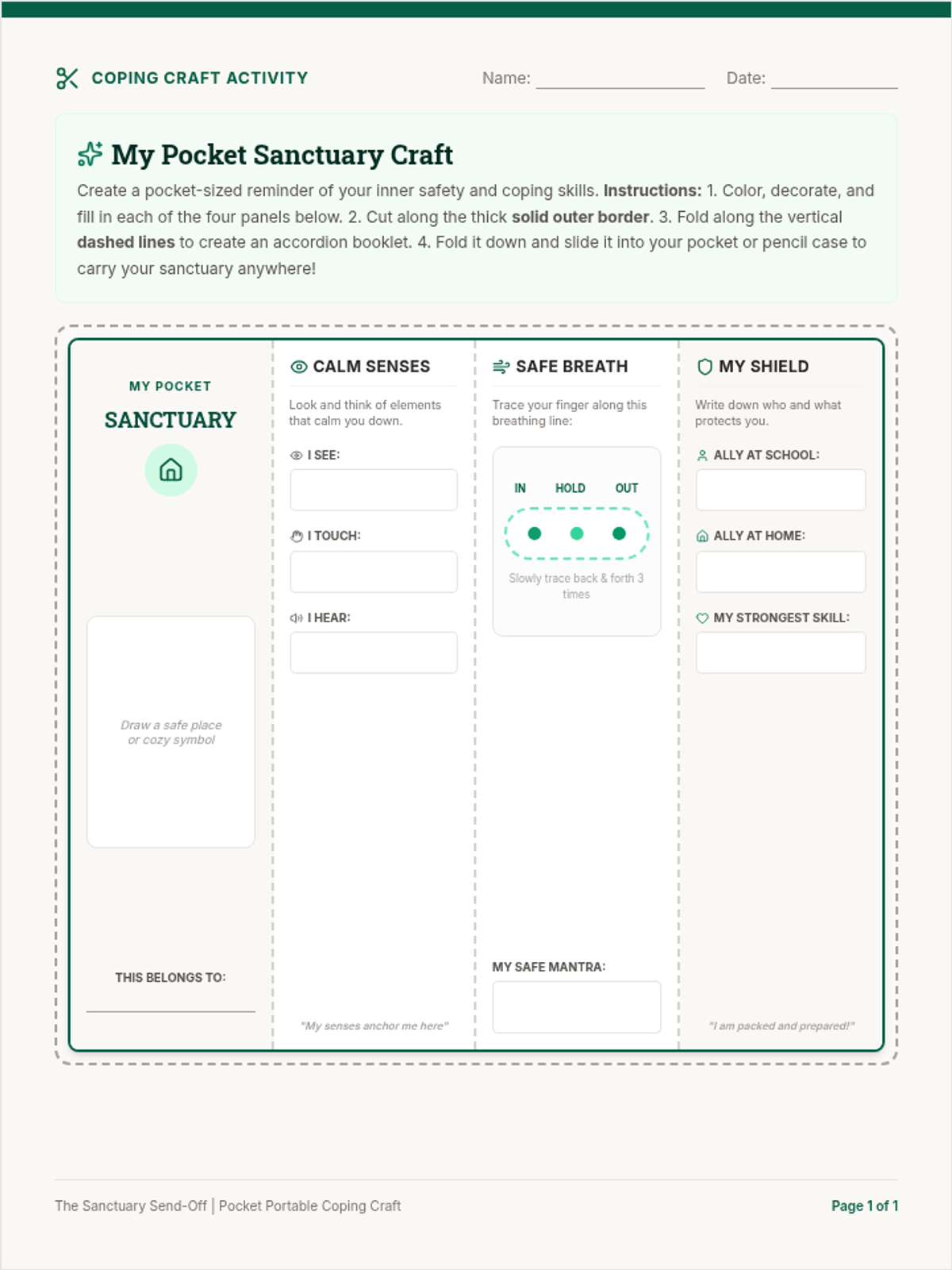
A 1-page student-facing tactile craft activity. Students cut, fold, and color a 4-panel pocket-sized accordion card that acts as a sensory coping tool and reminder of their personal safety resources.
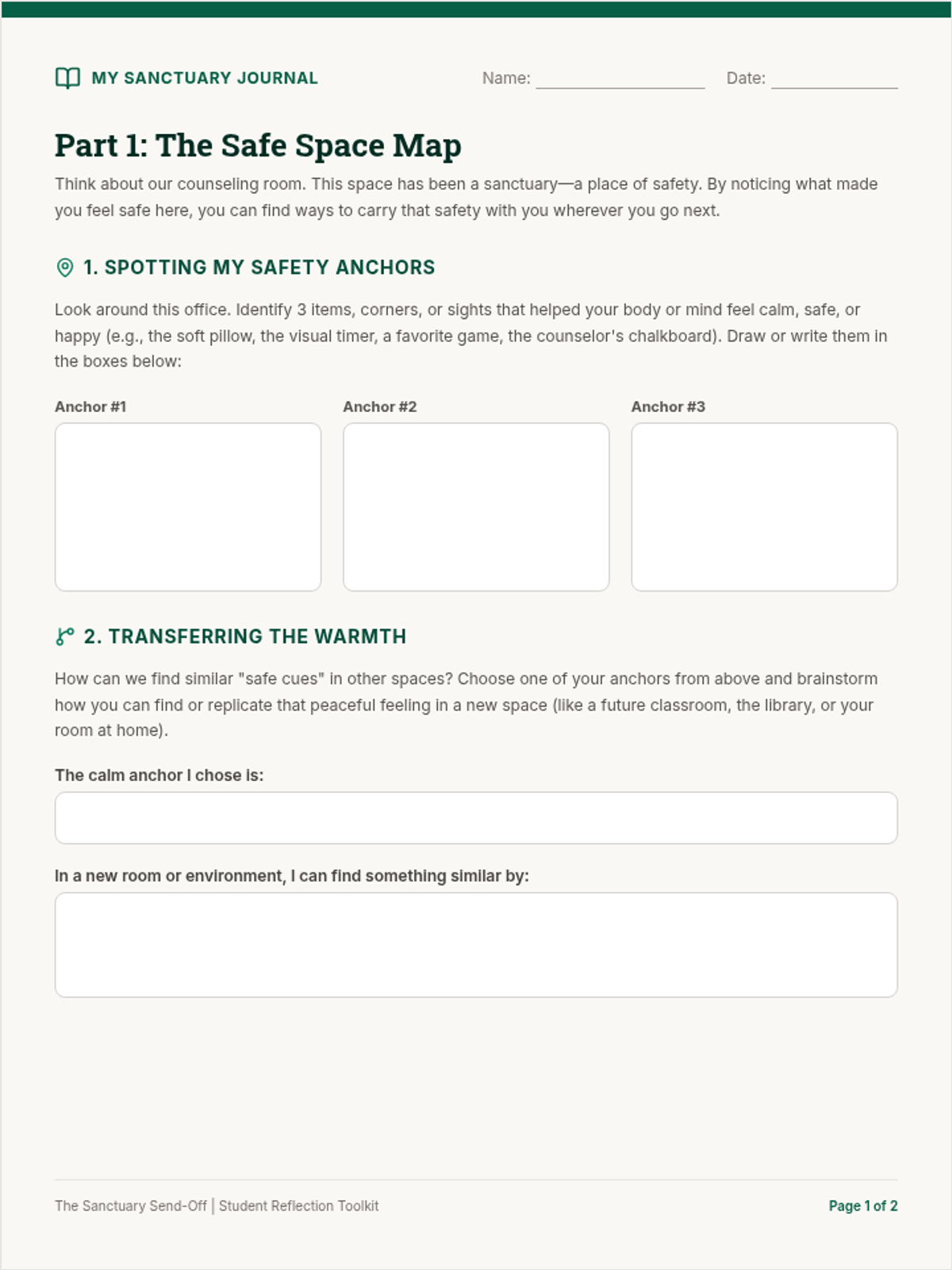
A 2-page student-facing reflection journal. Features Name and Date fields, sensory mapping of the therapeutic space, and a structured coping compass for identifying future safe zones, deep breathing tools, and support people.
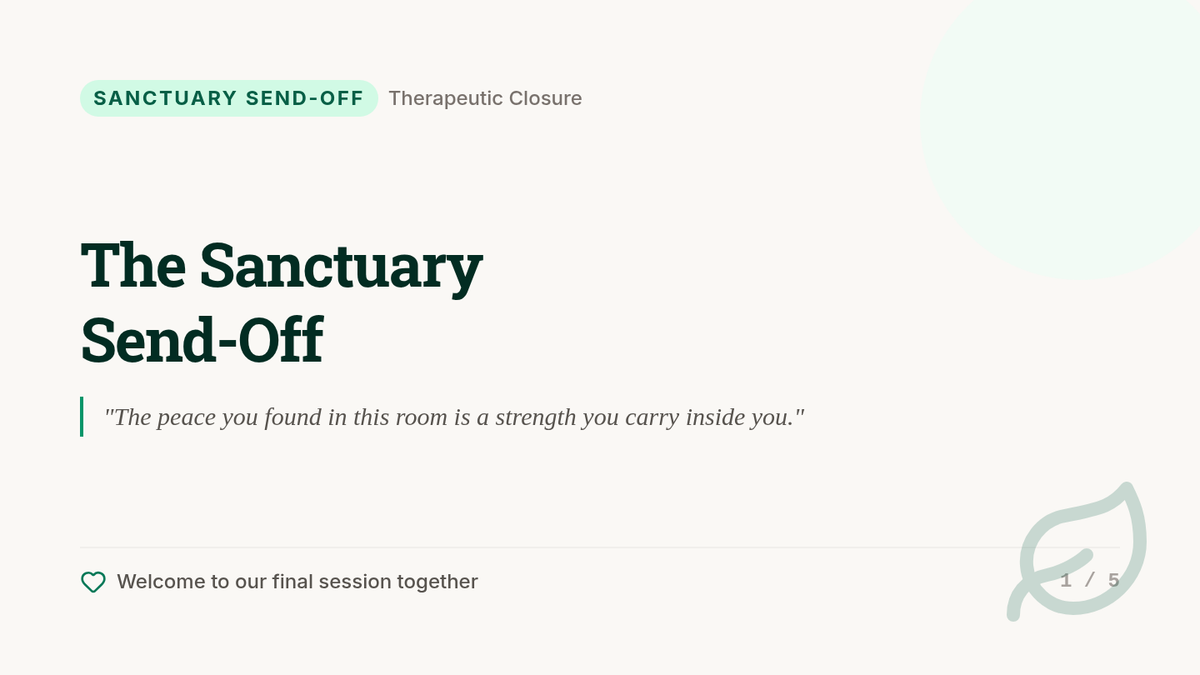
A 5-slide presentation to guide the therapeutic session. Features large readable text (minimum 24px), beautiful botanical grounding graphics, and clean step-by-step instructions for the coping activities.
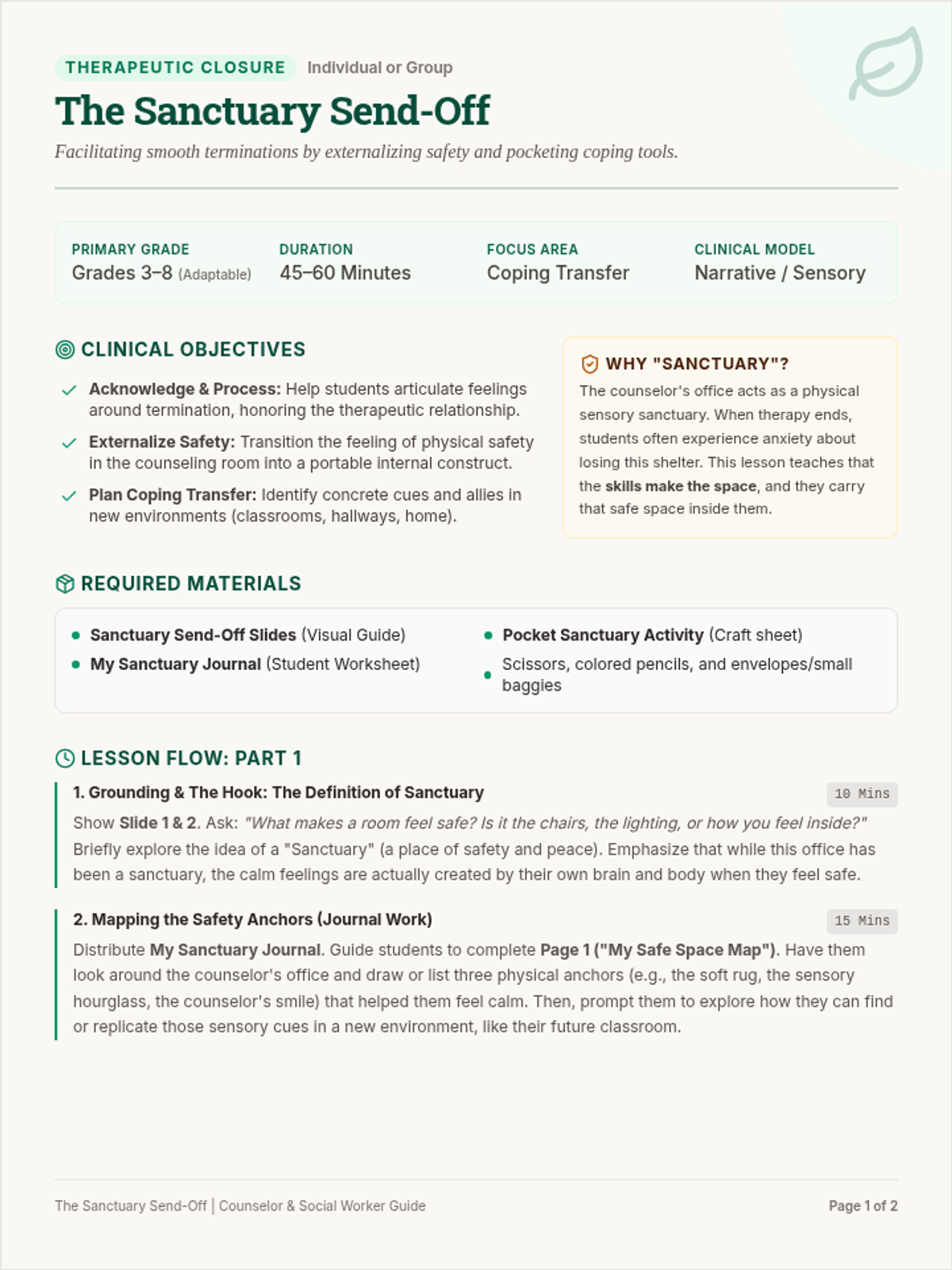
A 2-page therapeutic lesson plan for counselors/social workers. It details the clinical grounding, materials, step-by-step facilitation guide, and therapeutic scripts for supporting students through the transition out of counseling.
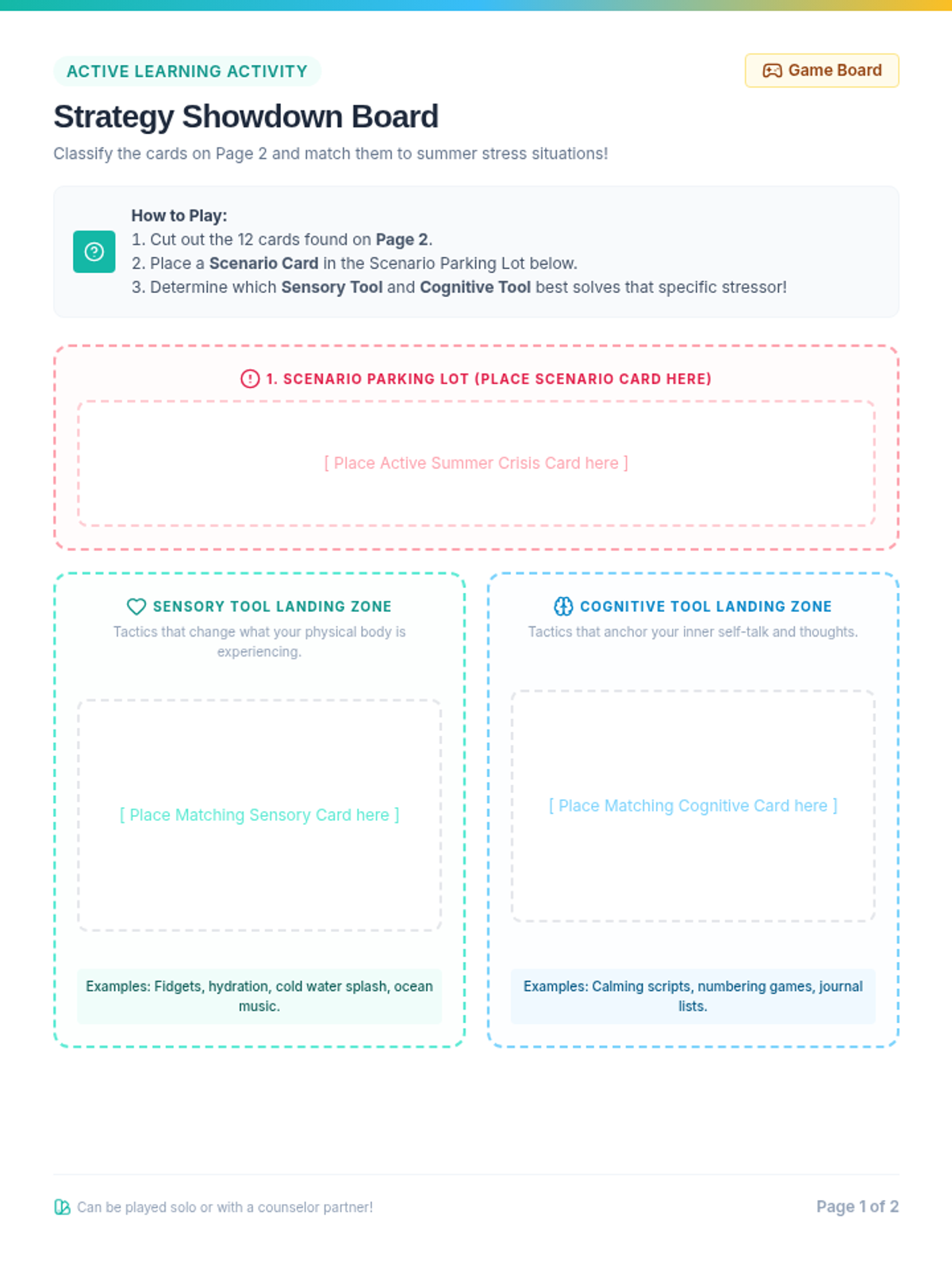
A printable sorting and matching game with a landing board and 12 cut-out cards that teaches students to classify sensory versus cognitive strategies during summer stress scenarios.
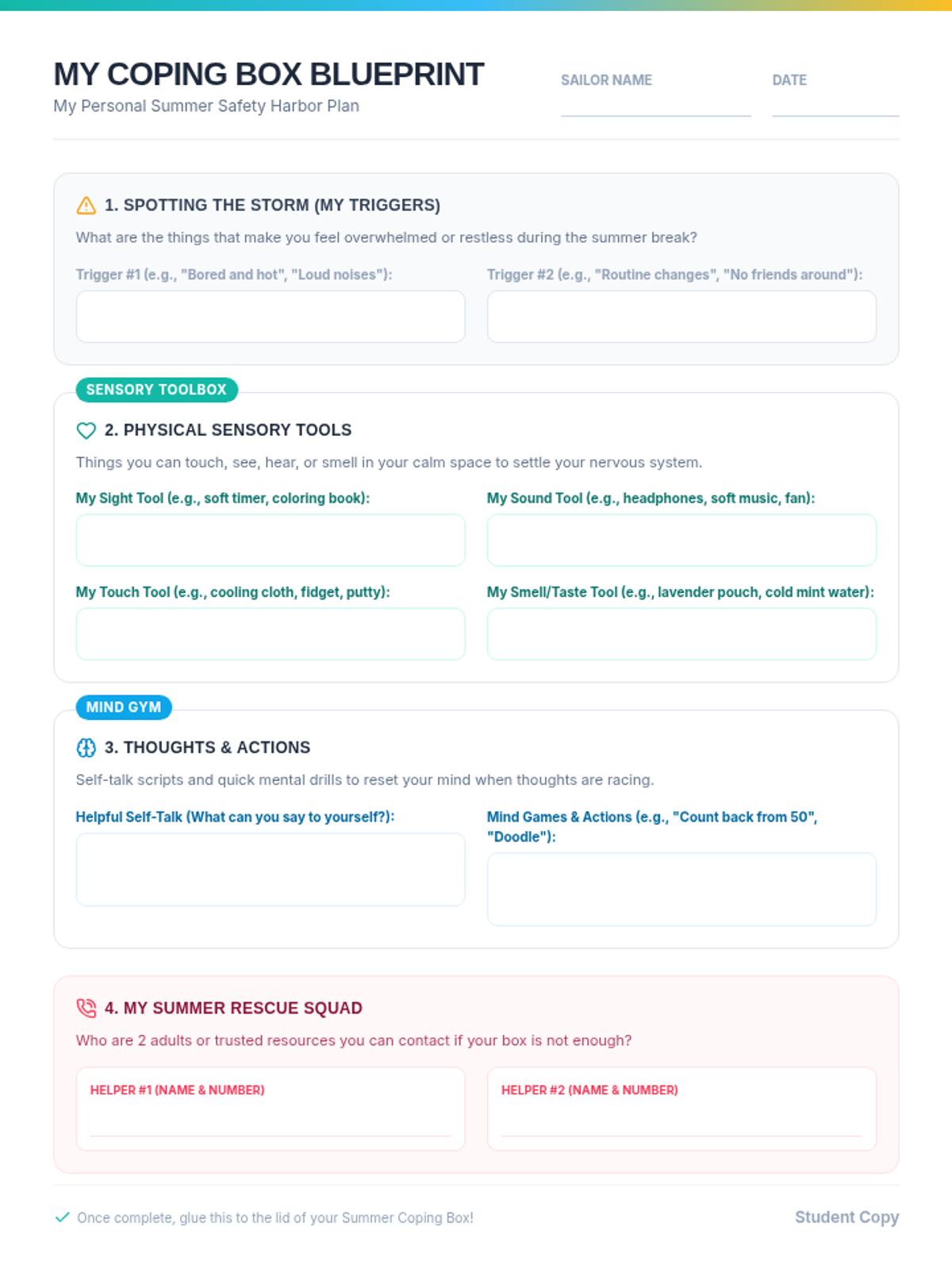
A printable student blueprint worksheet for mapping out personalized summer triggers, sensory coping skills, cognitive self-talk, and key home support contacts.
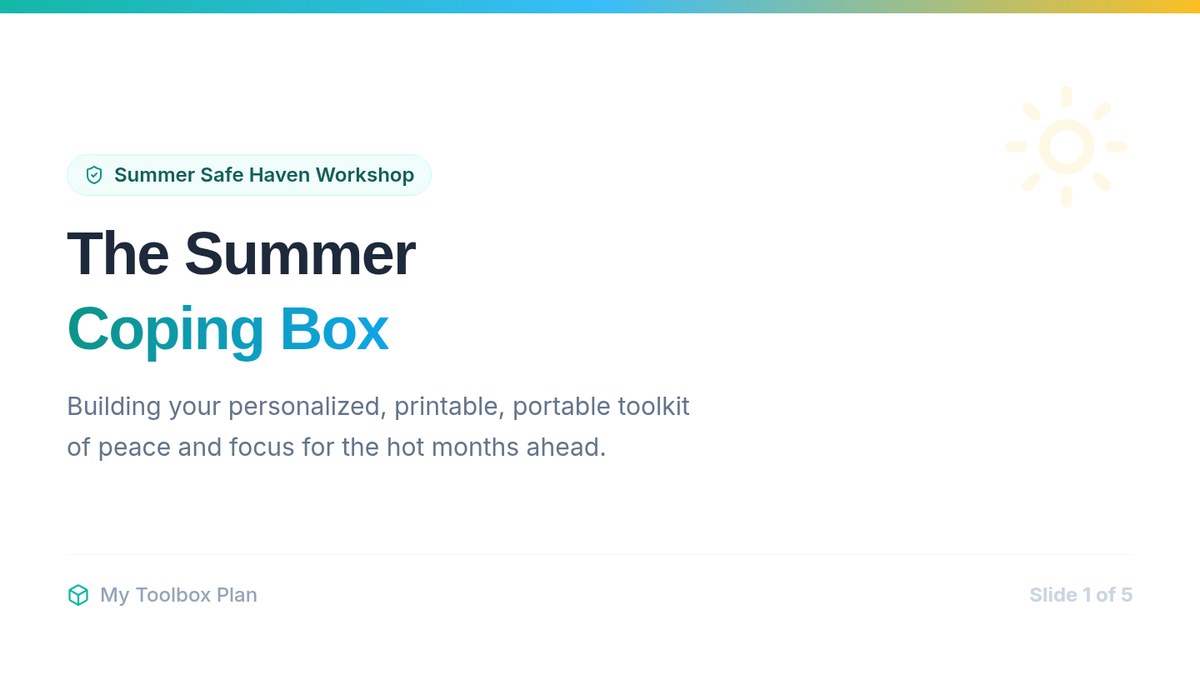
A 5-slide educational presentation that visually guides students through identifying sensory and cognitive triggers, distinguishing coping strategies, and preparing their Summer Coping Box.
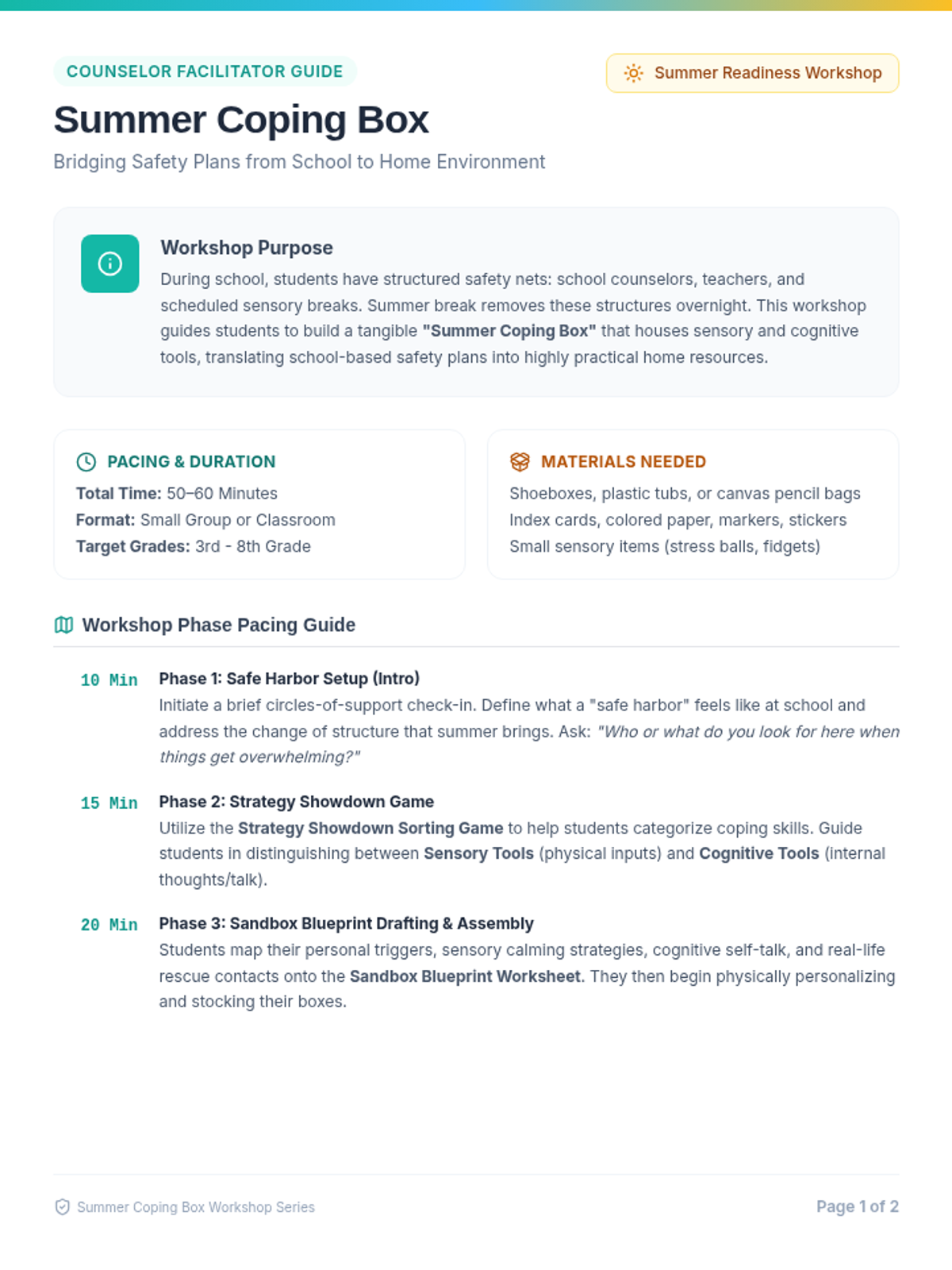
A comprehensive, teacher-facing facilitator guide outlining the workshop structure, pacing, discussion prompts, and home integration tips for building a Summer Coping Box.
Leveled-up summer coping skills packet designed for students in grades 6-12. Features clinical concepts like TIPP skills, cognitive reframing, somatic mapping, and sleep hygiene audit, in a modern journal-style layout with elegant typography and clean visuals.
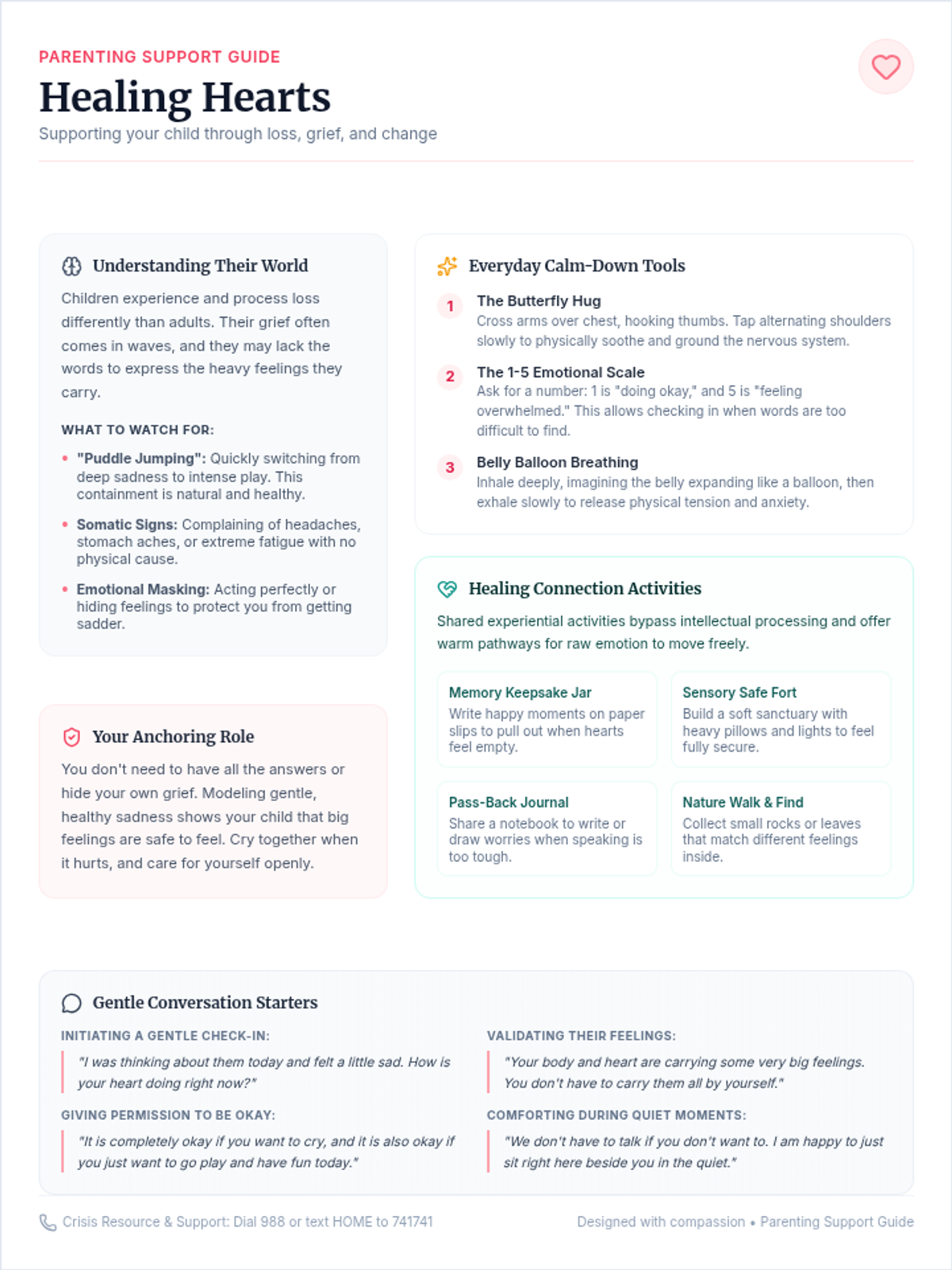
A gentle, professional, and practical one-page support guide for a mother helping her child navigate grief, updated to remove specific age/gender demographic details and expanded to include additional sentence starters and shared activities.
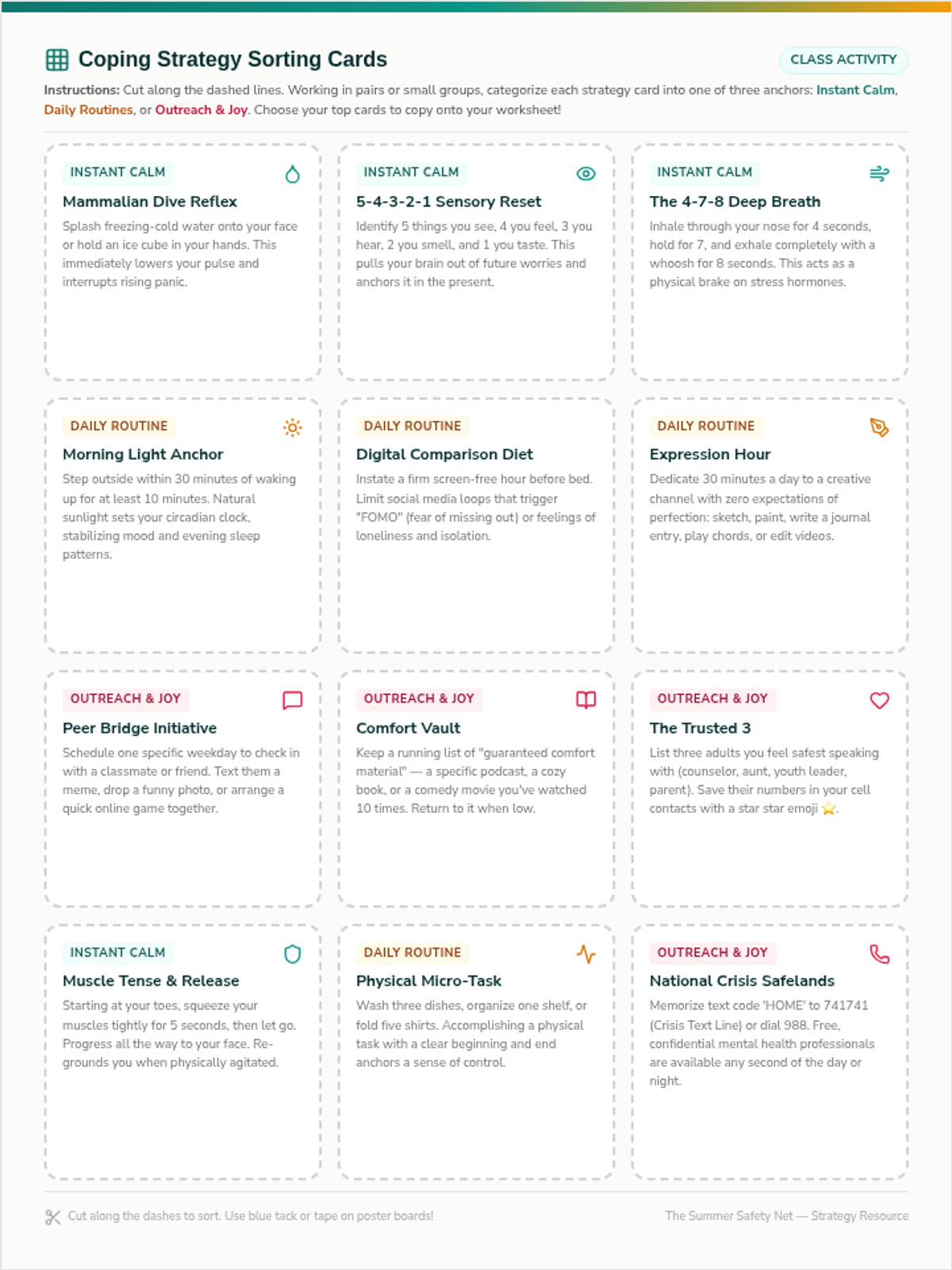
A printable 1-page sorting activity sheet containing 12 distinct, high-impact coping strategy cards for collaborative discussion and personalized selection.
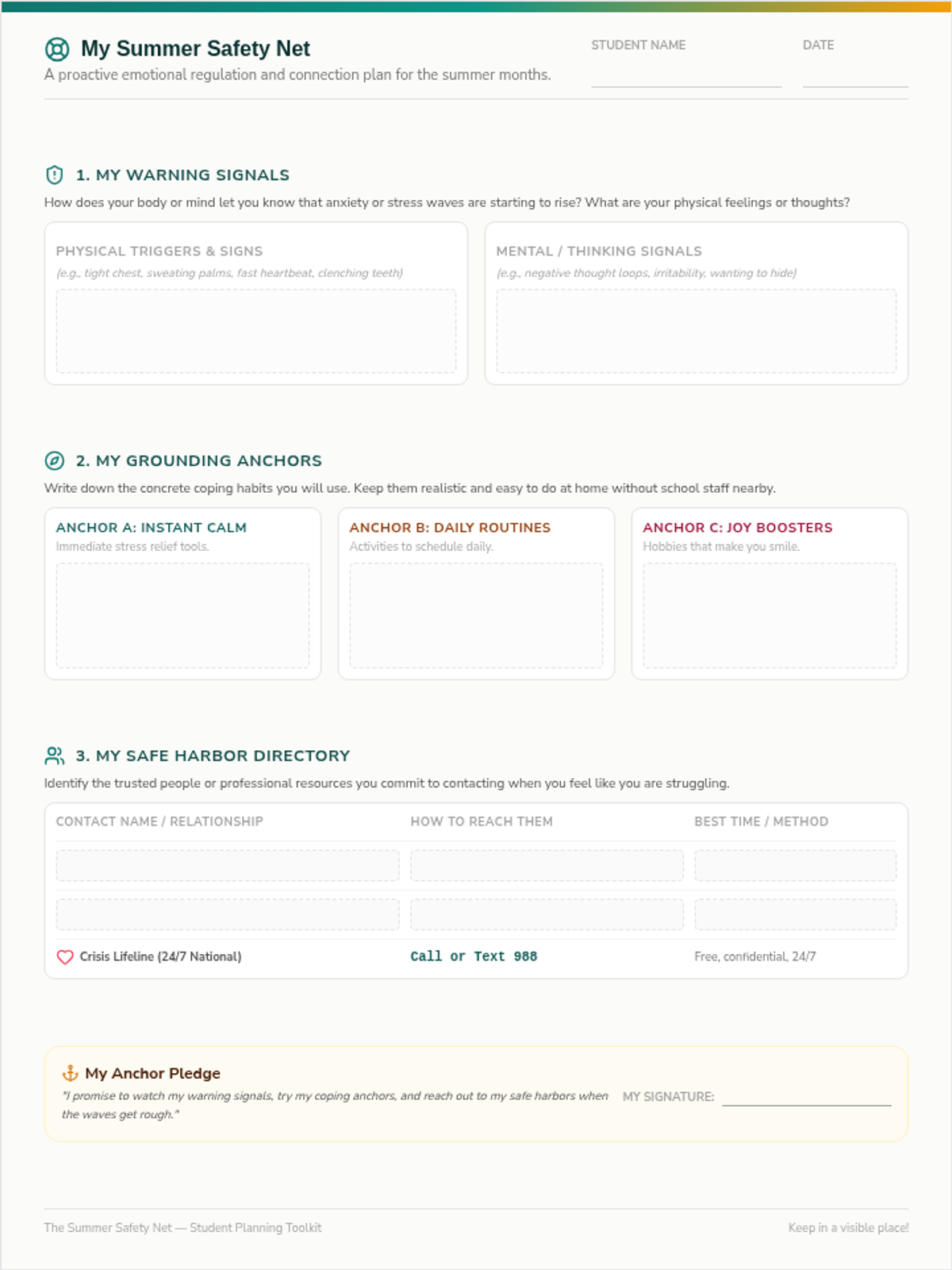
A comforting and highly functional 1-page student worksheet designed for individual safety net planning, warning signs tracking, and coping strategies compilation.
A highly polished 5-slide instructional presentation for 'The Summer Safety Net' workshop, containing warm-ups, stressor identification, coping strategies, and worksheet instructions.
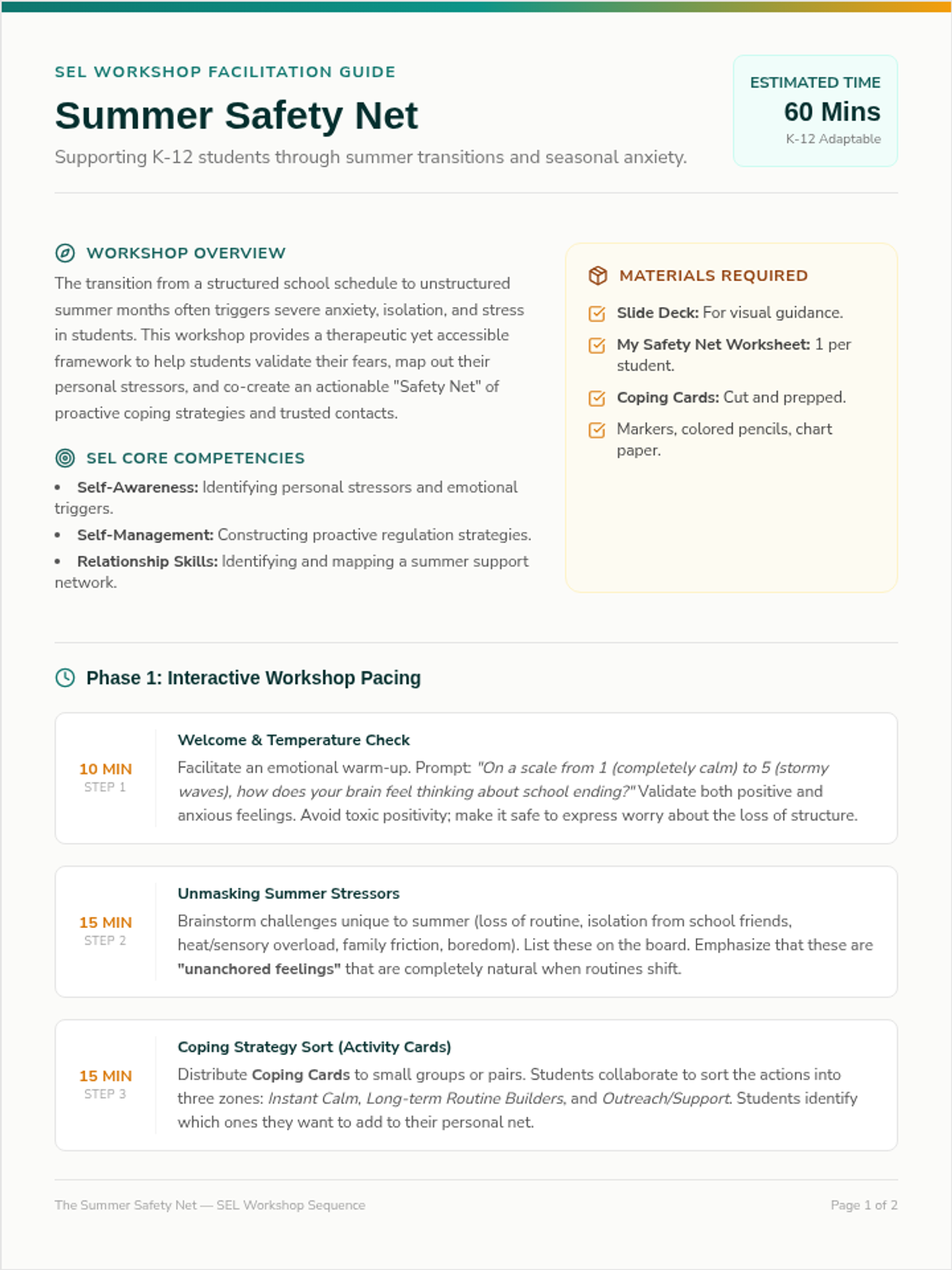
A comprehensive, professional 2-page teacher facilitation guide for 'The Summer Safety Net' workshop, containing pacing, SEL objectives, scripts, and differentiation tips.
Spanish translation of the Autism and Visual Coping Packet, providing 8 highly-structured visual communication and self-regulation pages.
Spanish translation of the Kindergarten Summer Chill Skills Packet, offering 11 beautifully illustrated pages tailored for young learners, complete with active QR codes.
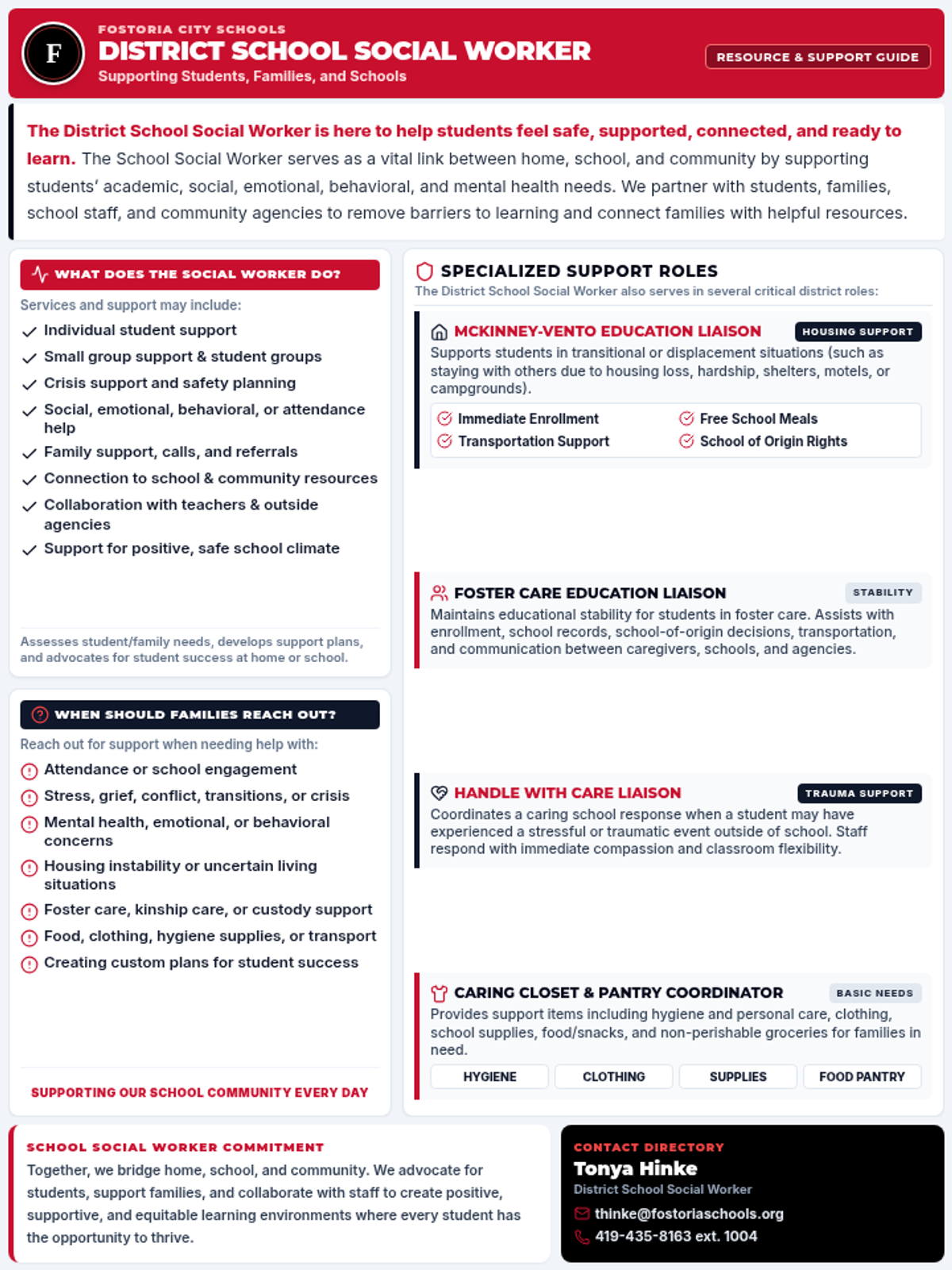
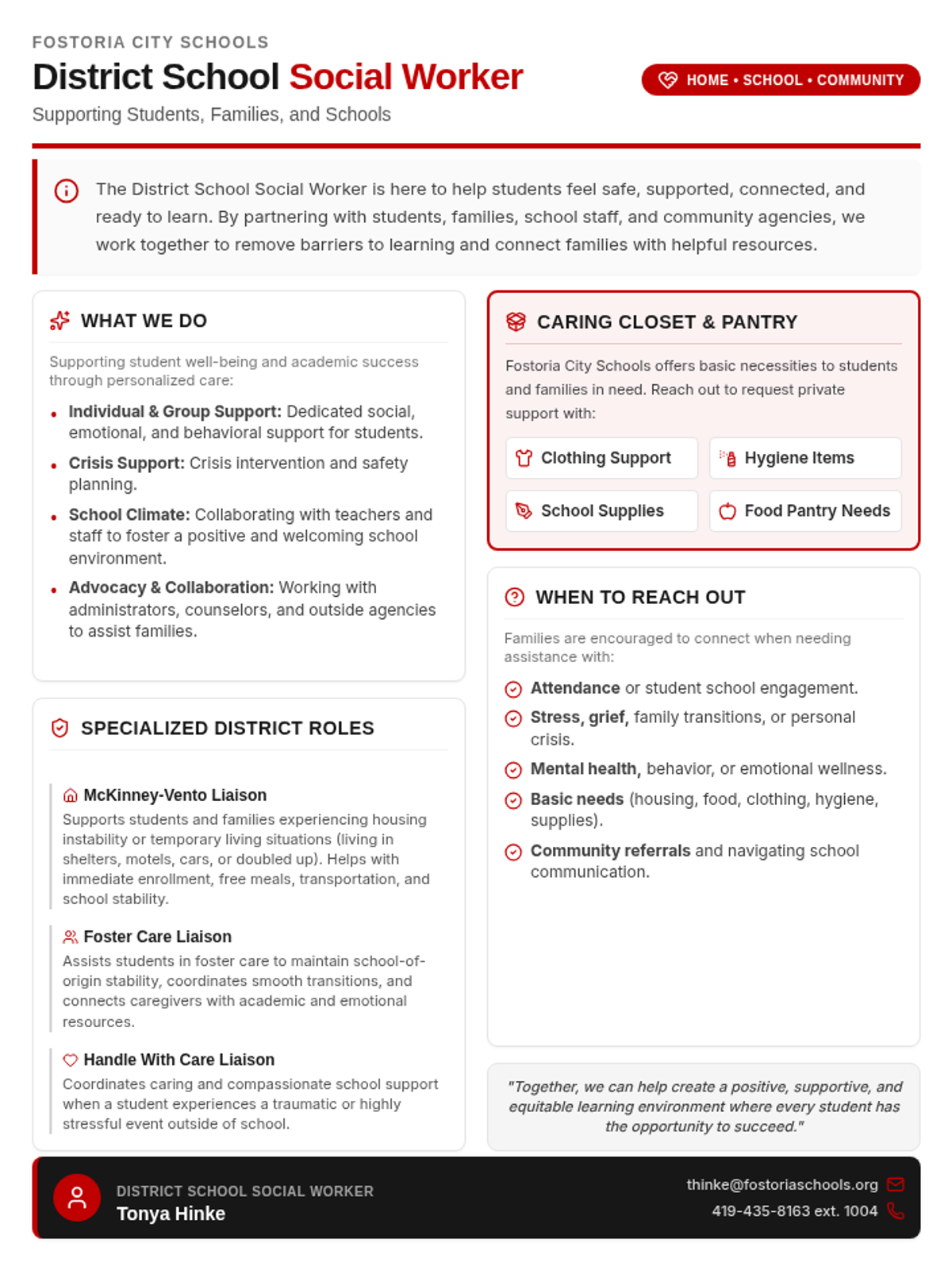
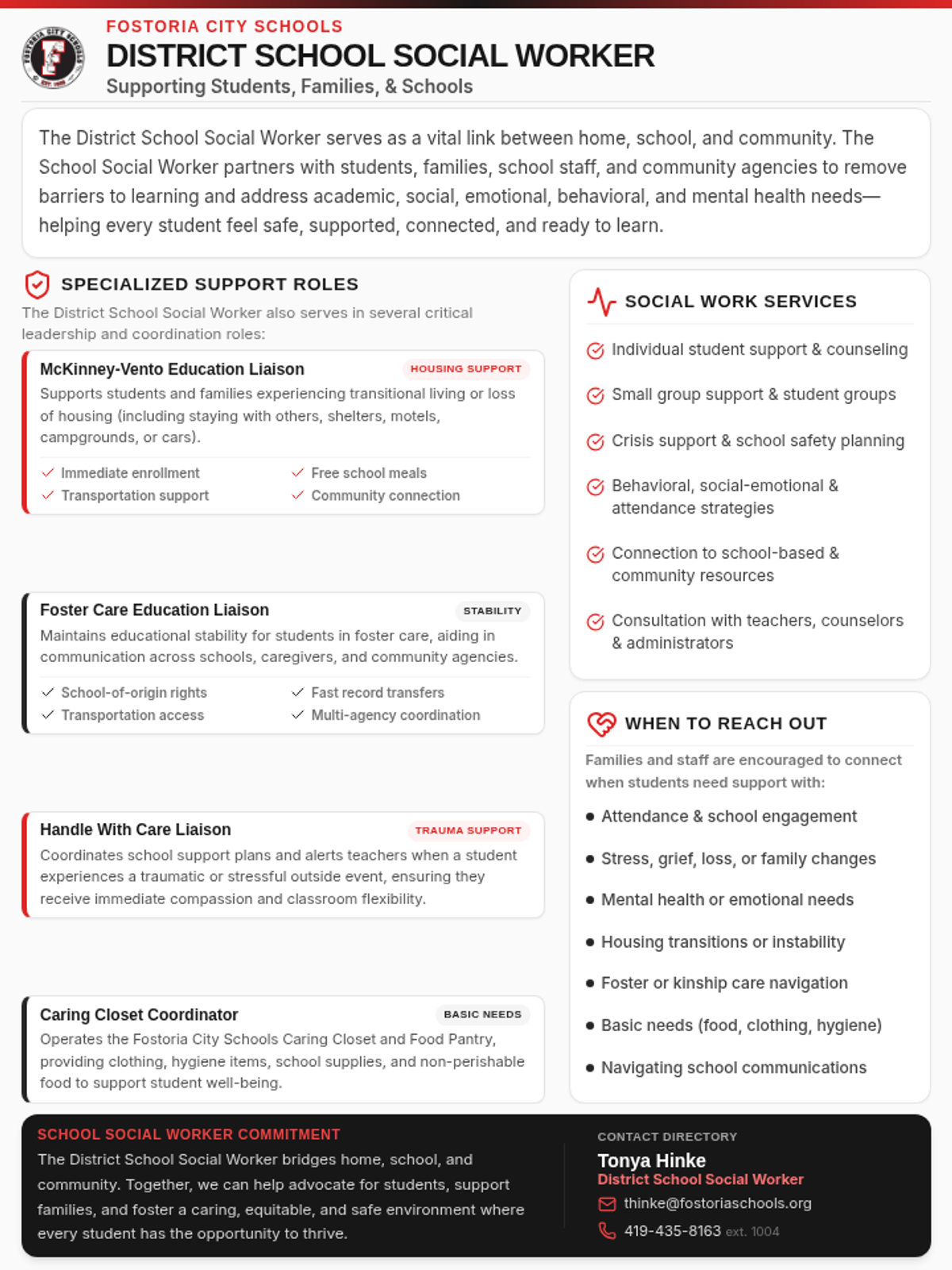
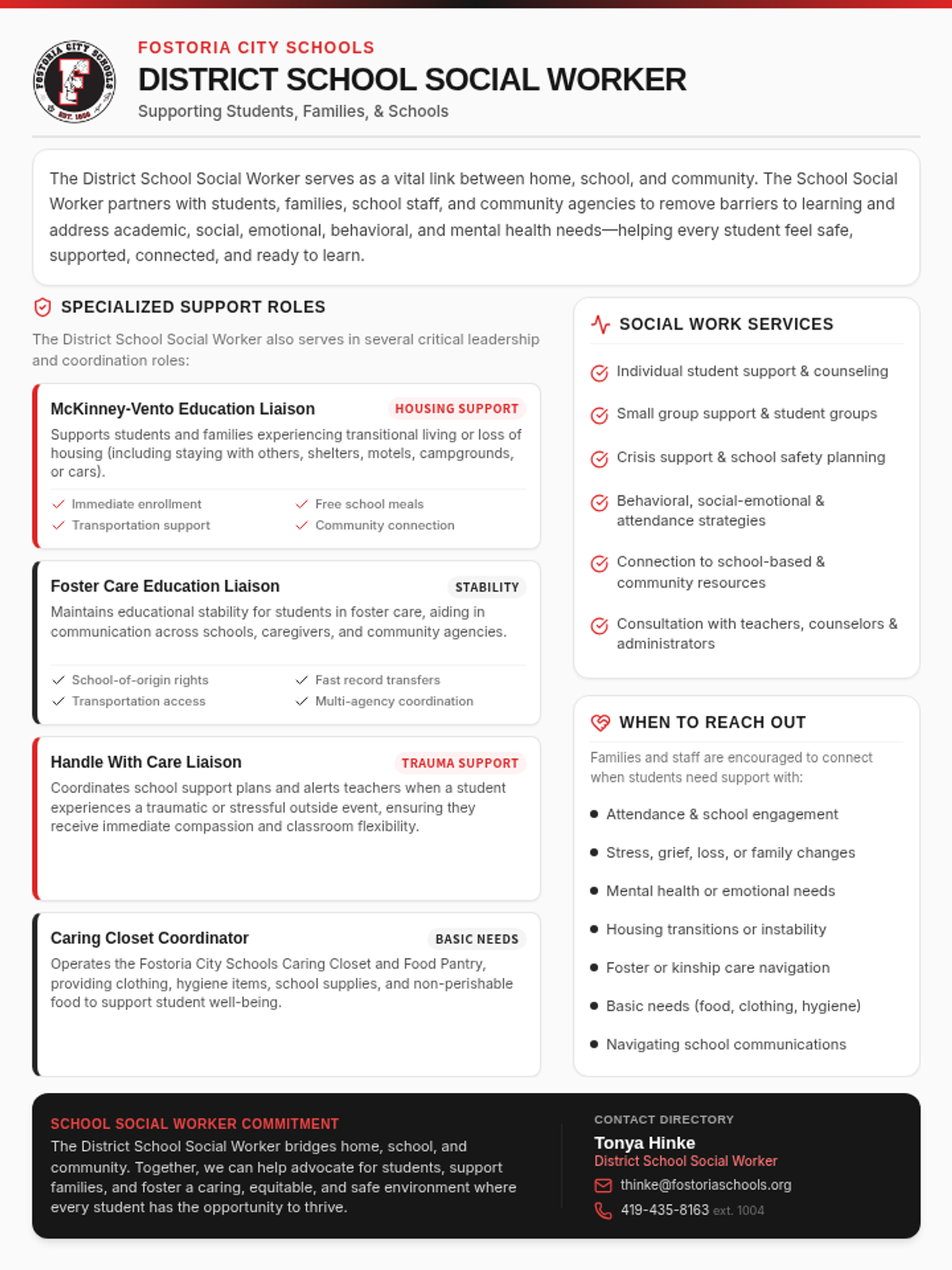
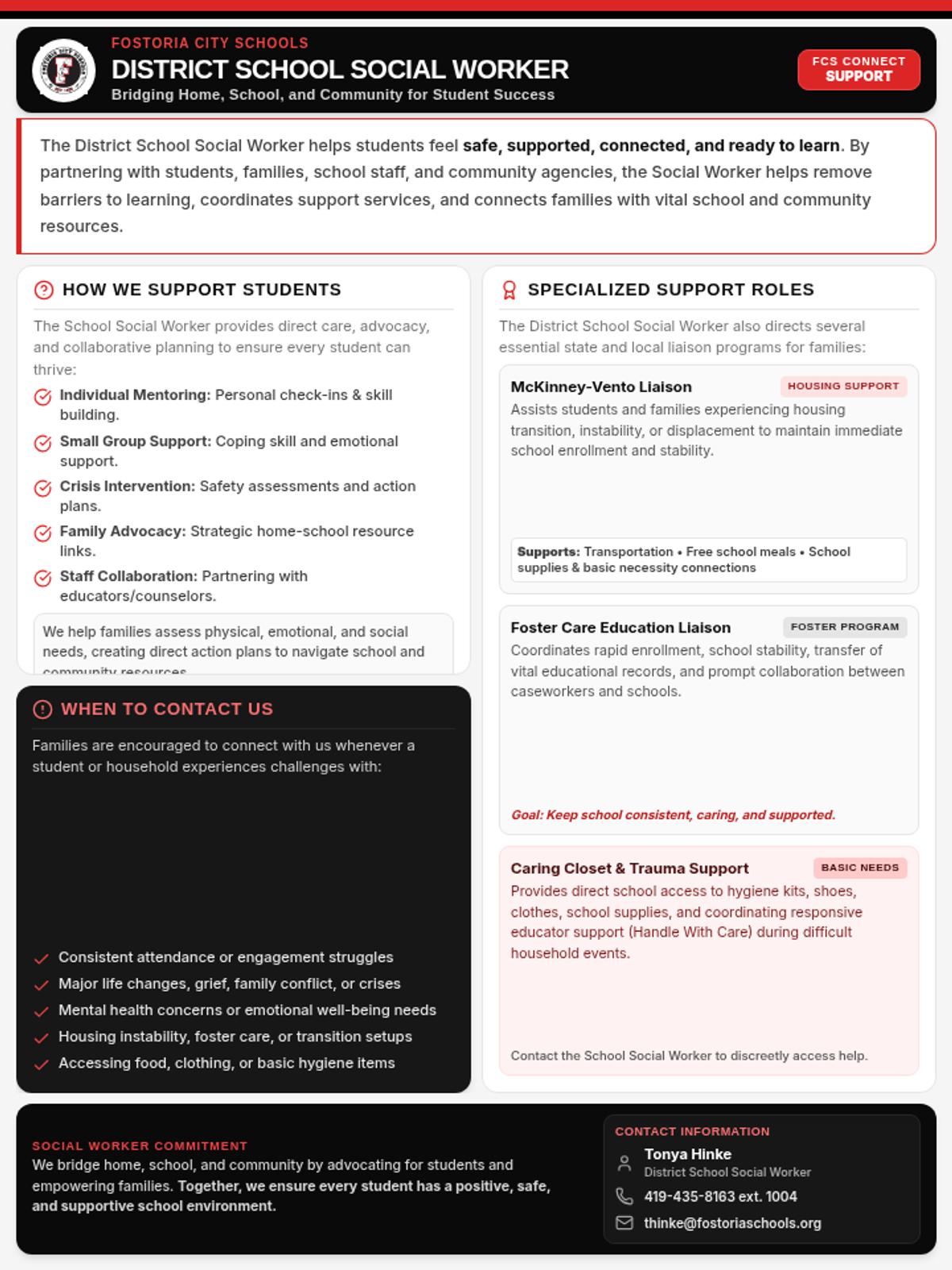
An elegant, highly professional single-page outreach and resources flyer for the District School Social Worker of Fostoria City Schools. It utilizes clean grids, custom program cards, clear visual cues, and a modern color scheme to ensure absolute legibility and optimal use of space.
An updated visually striking school district informational flyer for Fostoria City Schools. It removes any 'we' pronouns, features the custom FCS logo, explicitly details the Social Worker's role as the Caring Closet Coordinator, uses decreased margins to fill the 8.5x11 page size, and expands the original text details while retaining large, accessible text.
A professional and beautifully structured district school social worker outreach flyer for Fostoria City Schools. It contains high-contrast sections covering specialized roles (McKinney-Vento, Foster Care, Handle With Care, and Caring Closet), core social work services, and when to reach out, complete with professional contact details for Tonya Hinke.
A professional and modern one-page promotional flyer for Fostoria City Schools' District School Social Worker. Designed using a polished red, black, white, and gray theme matching the district logo, it clearly outlines services, specialized liaison roles (McKinney-Vento, Foster Care, Handle With Care, and Caring Closet), scenarios for reaching out, commitment statement, and direct contact details for Tonya Hinke.
An updated single-page school social worker flyer with substantially increased font sizes to maximize readability and clarity for Fostoria City Schools families. Incorporates a bold, cohesive black, red, and white design matching official district colors, with clear sections on services, support indicators, specialized liaisons, and direct contact details.
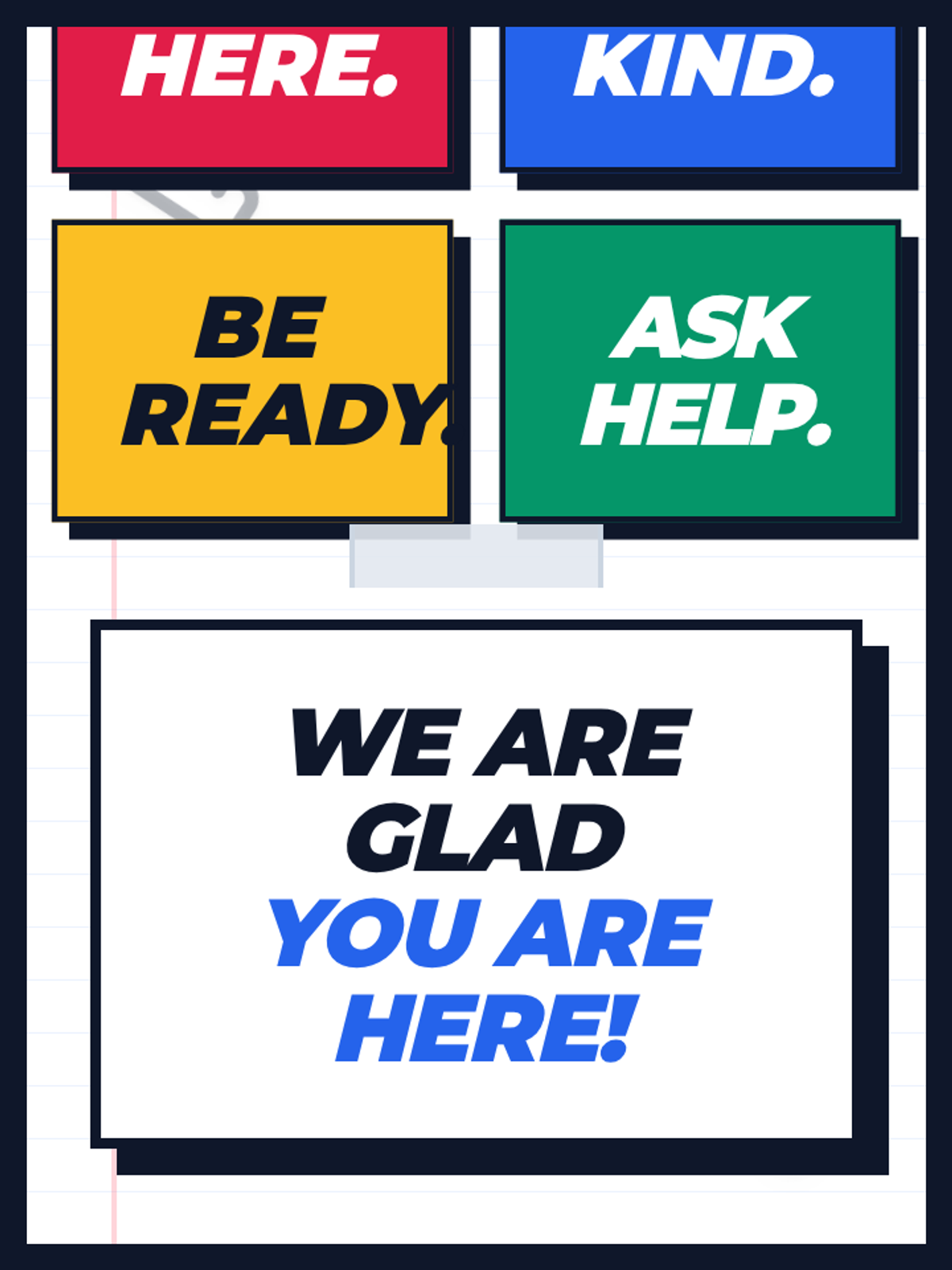
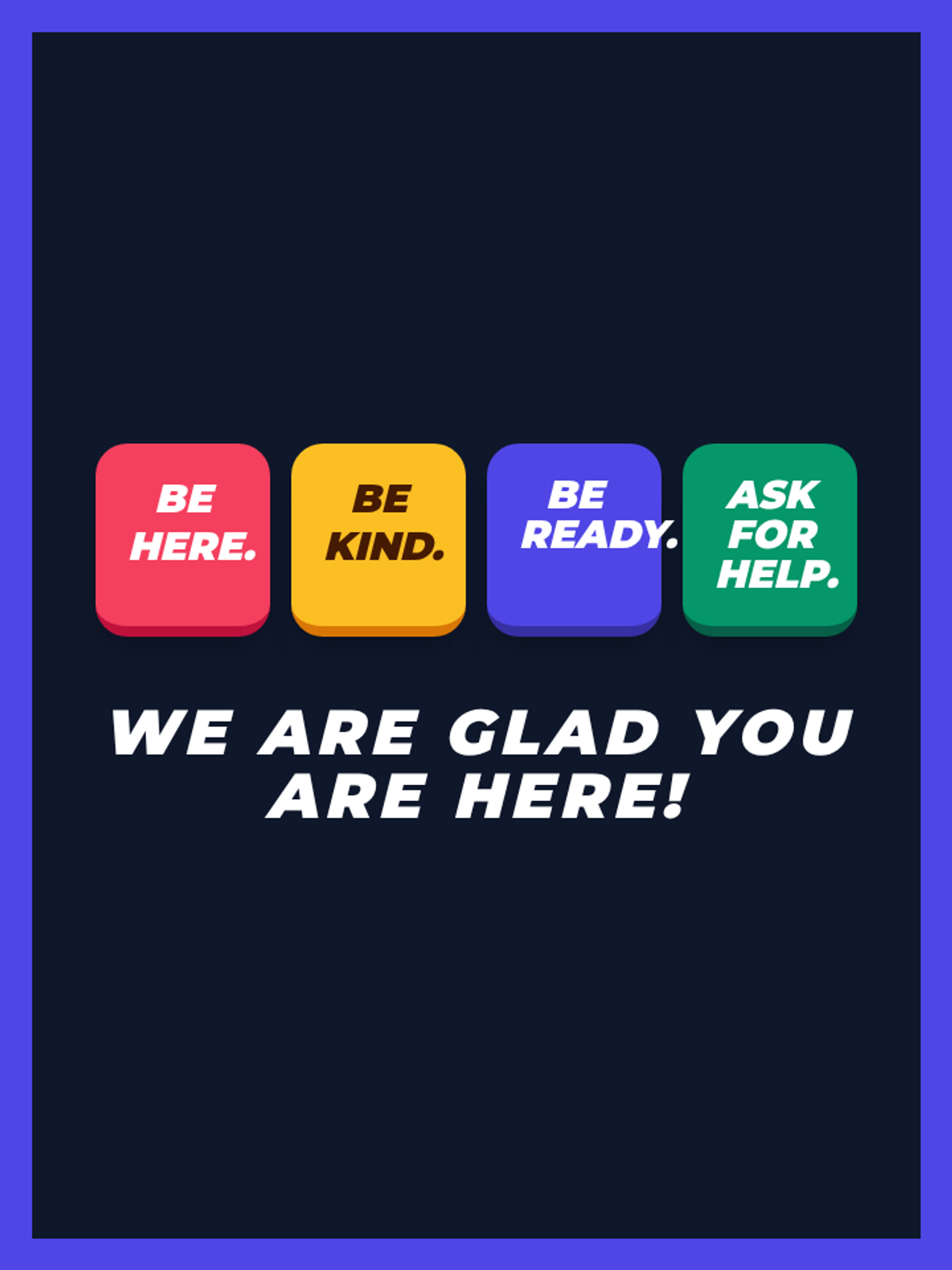
A landscape footer banner for the bulletin board with the school's core mottos and a welcoming final message for families.
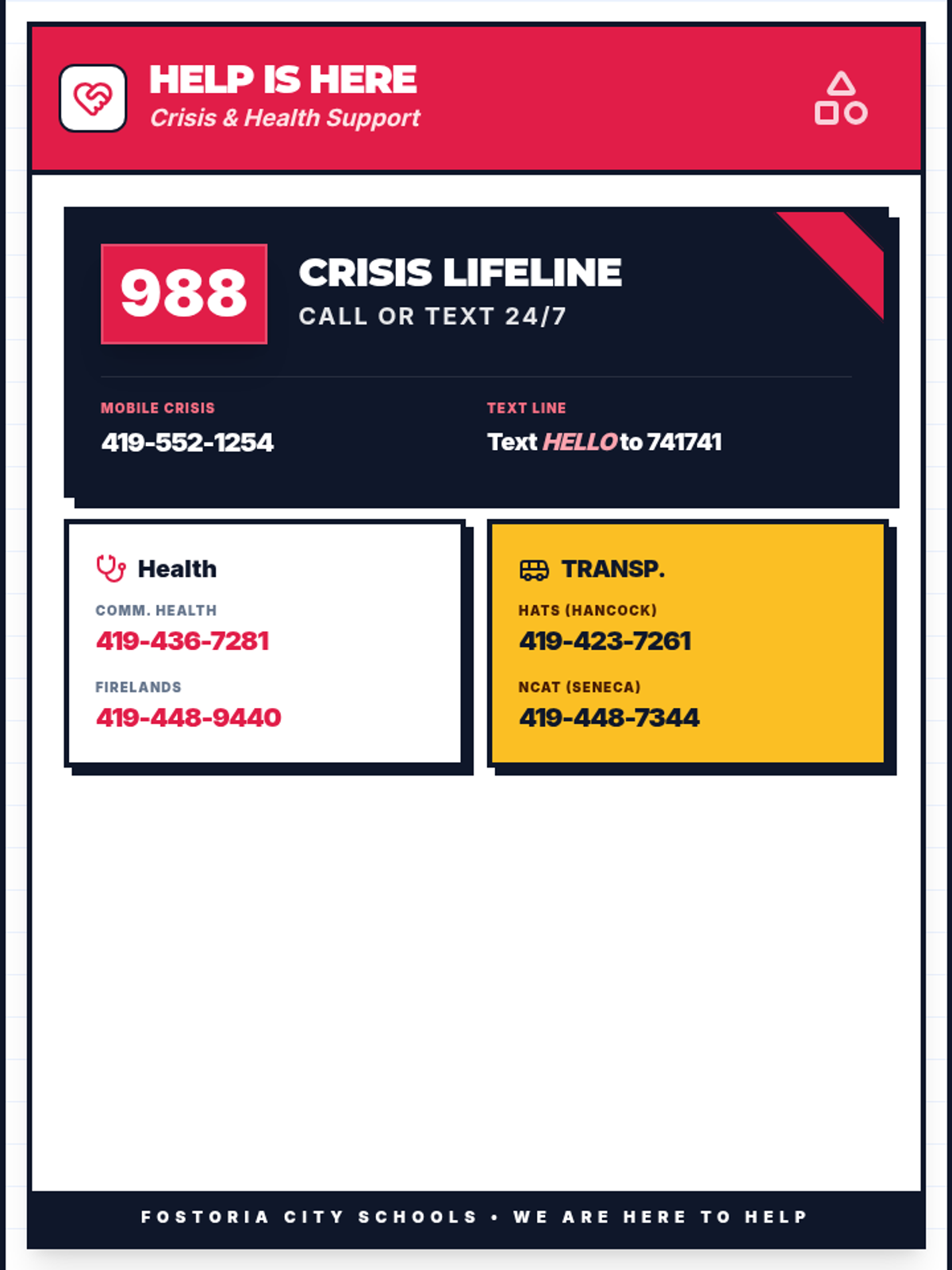
A portrait poster summarizing essential health and crisis support resources, including the 988 Suicide & Crisis Lifeline and local transportation options.
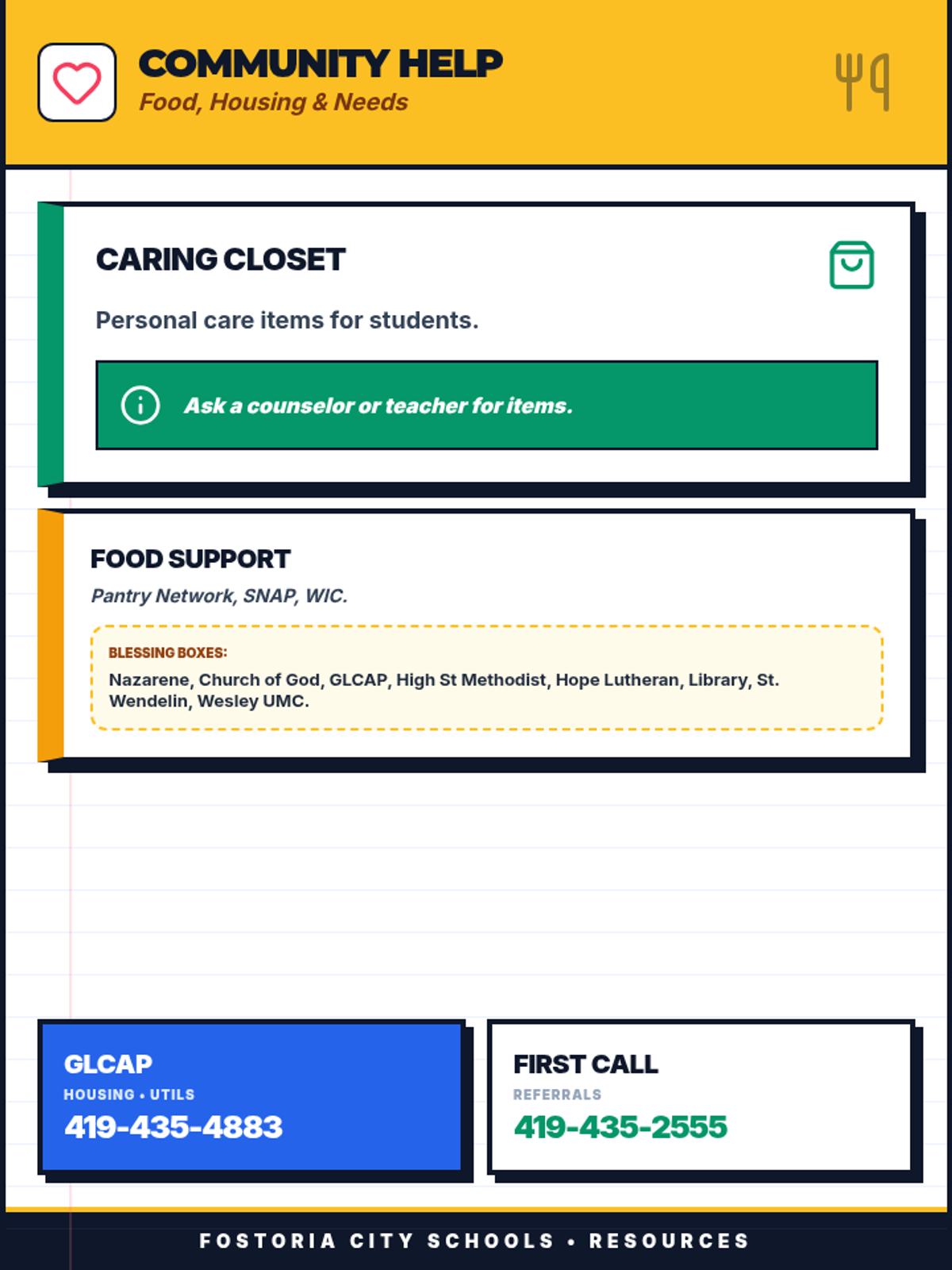
A portrait poster highlighting community resources for food, housing, and basic needs, including information about the school's Caring Closet.
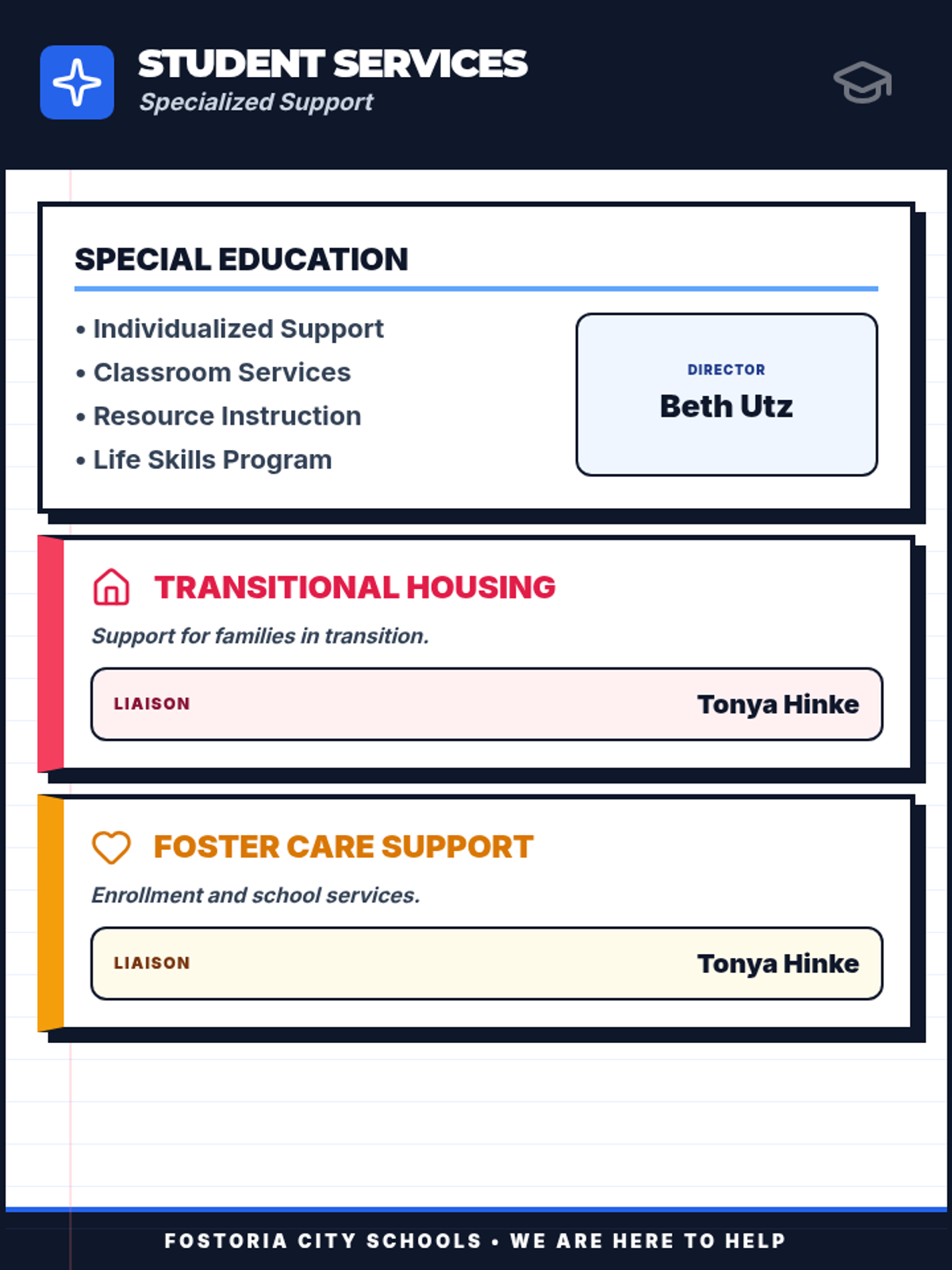
A portrait poster detailing student services, special education support, and liaison information for families in transition or foster care.
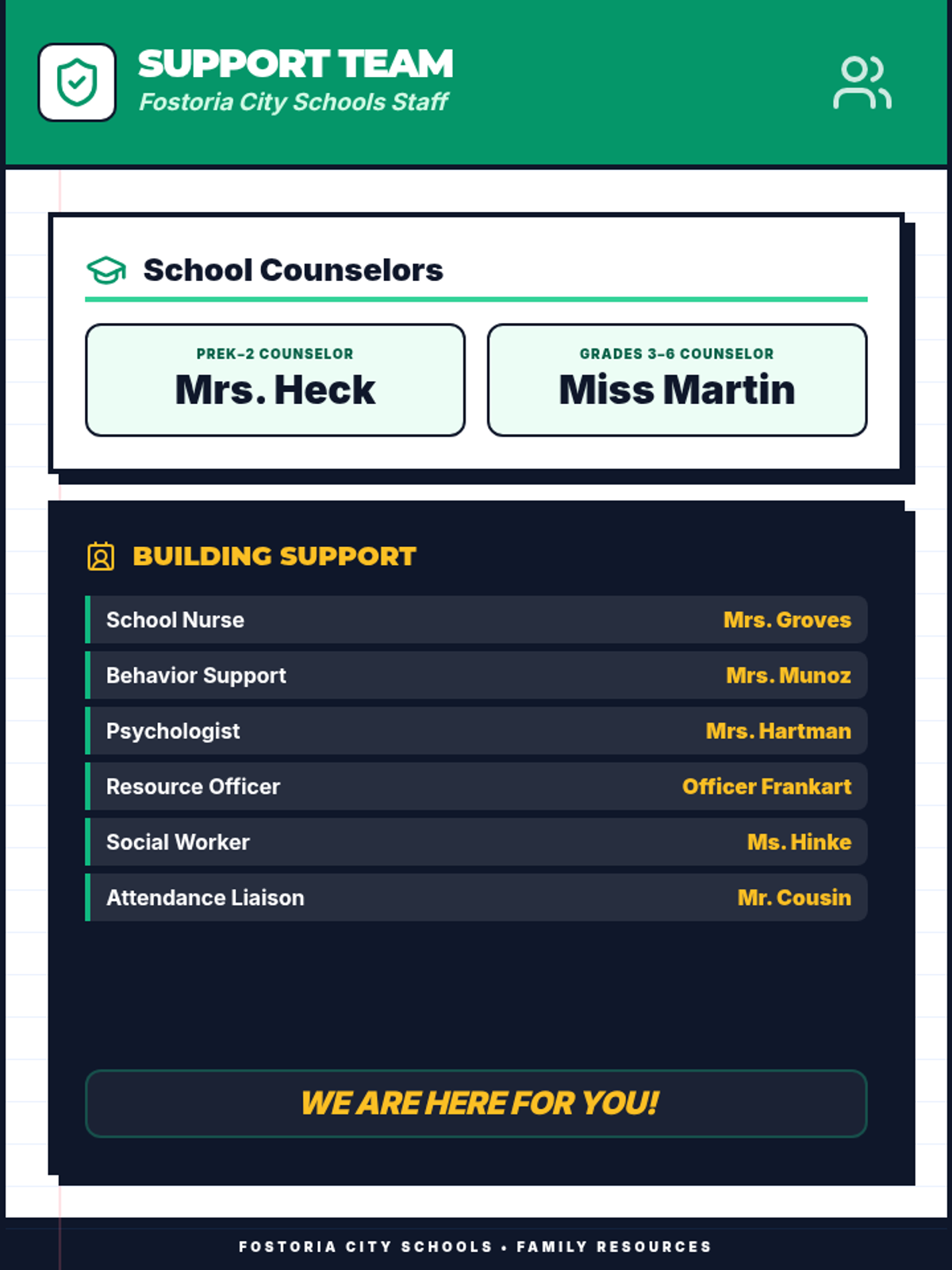
A portrait poster identifying the Fostoria City Schools support staff and counseling team available to help students and families.
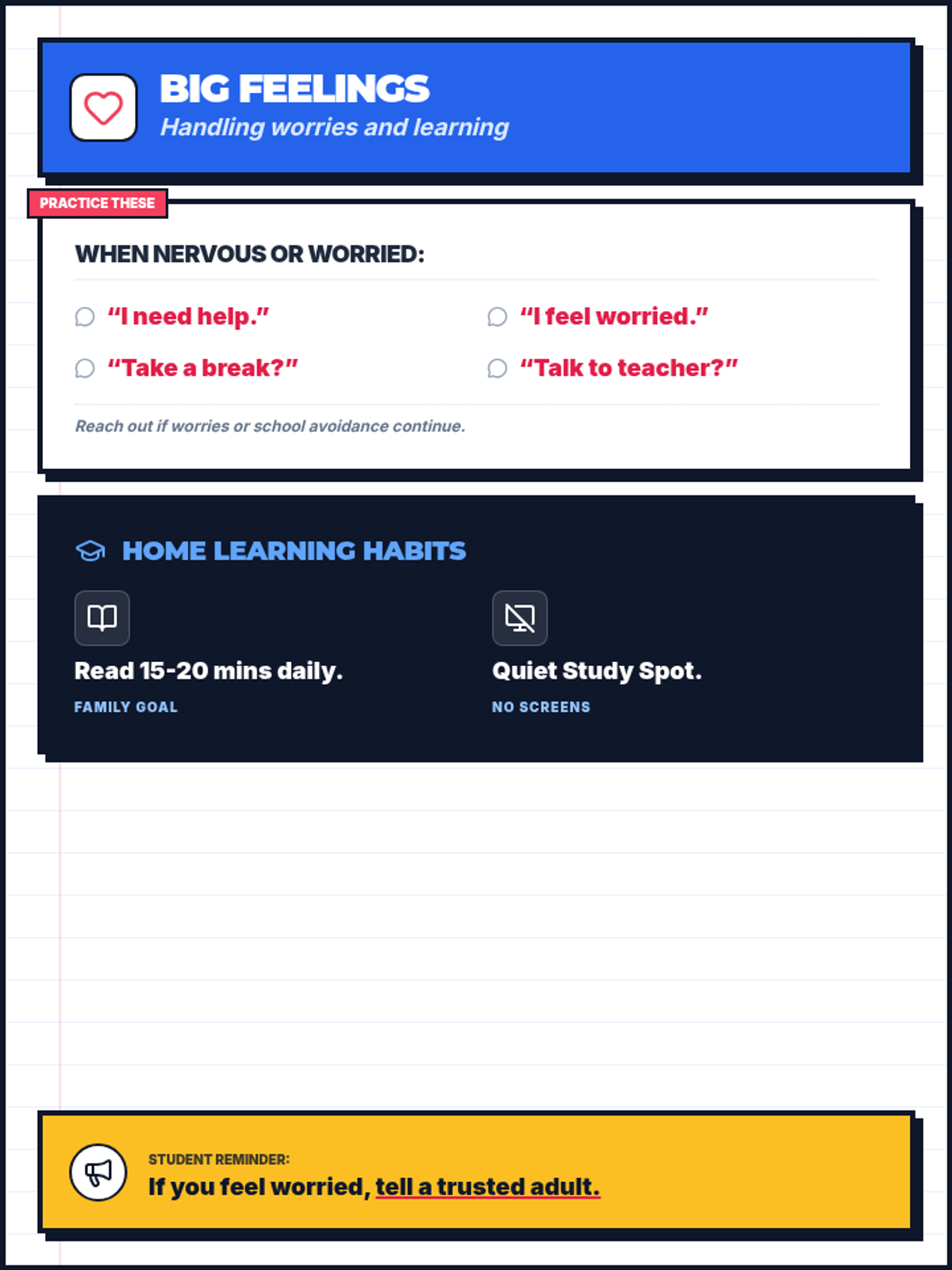
A portrait poster providing coping strategies for students' big feelings and tips for establishing effective home learning habits.
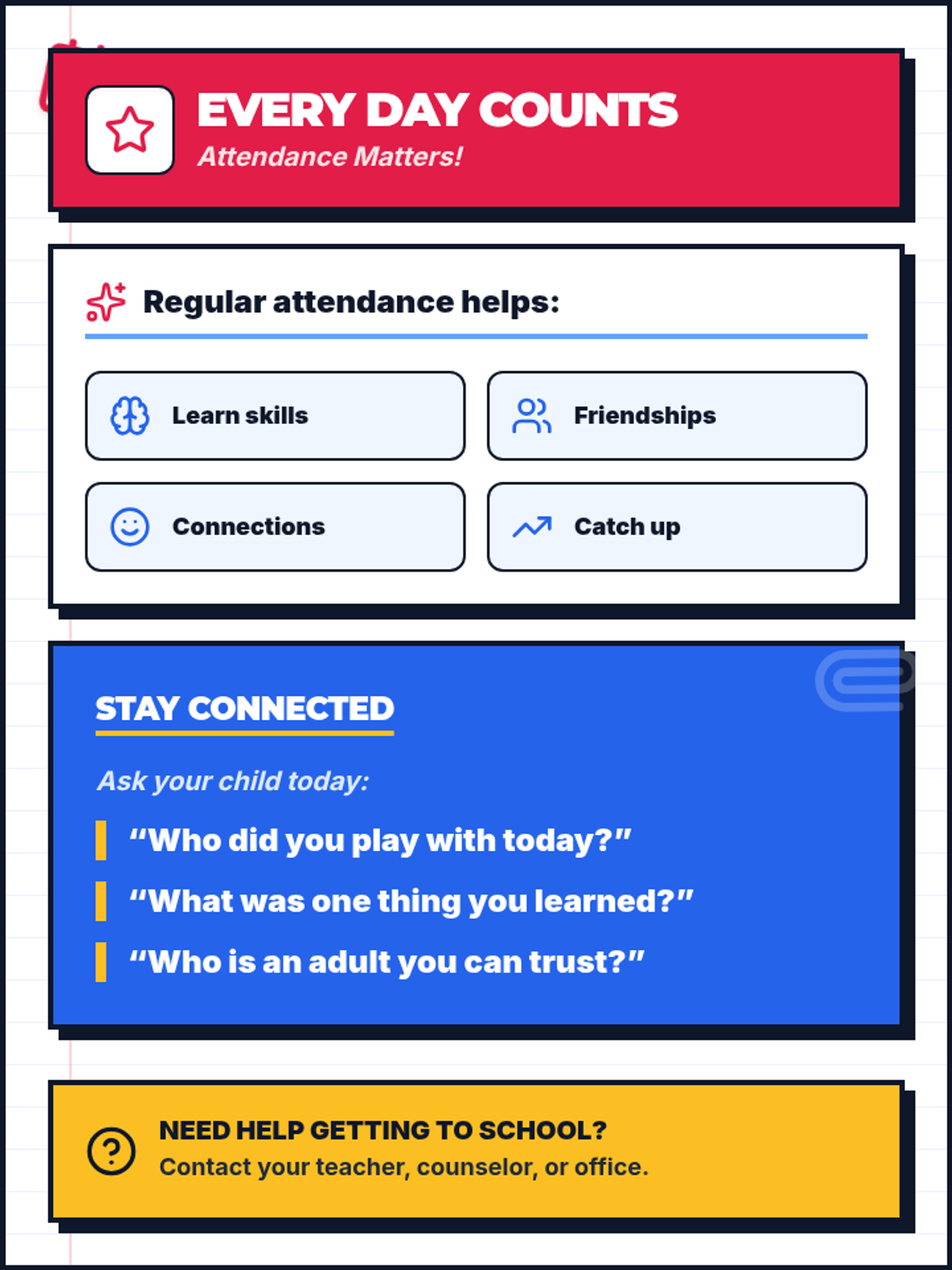
A portrait poster emphasizing the importance of school attendance and providing conversation starters for families to help children feel connected.
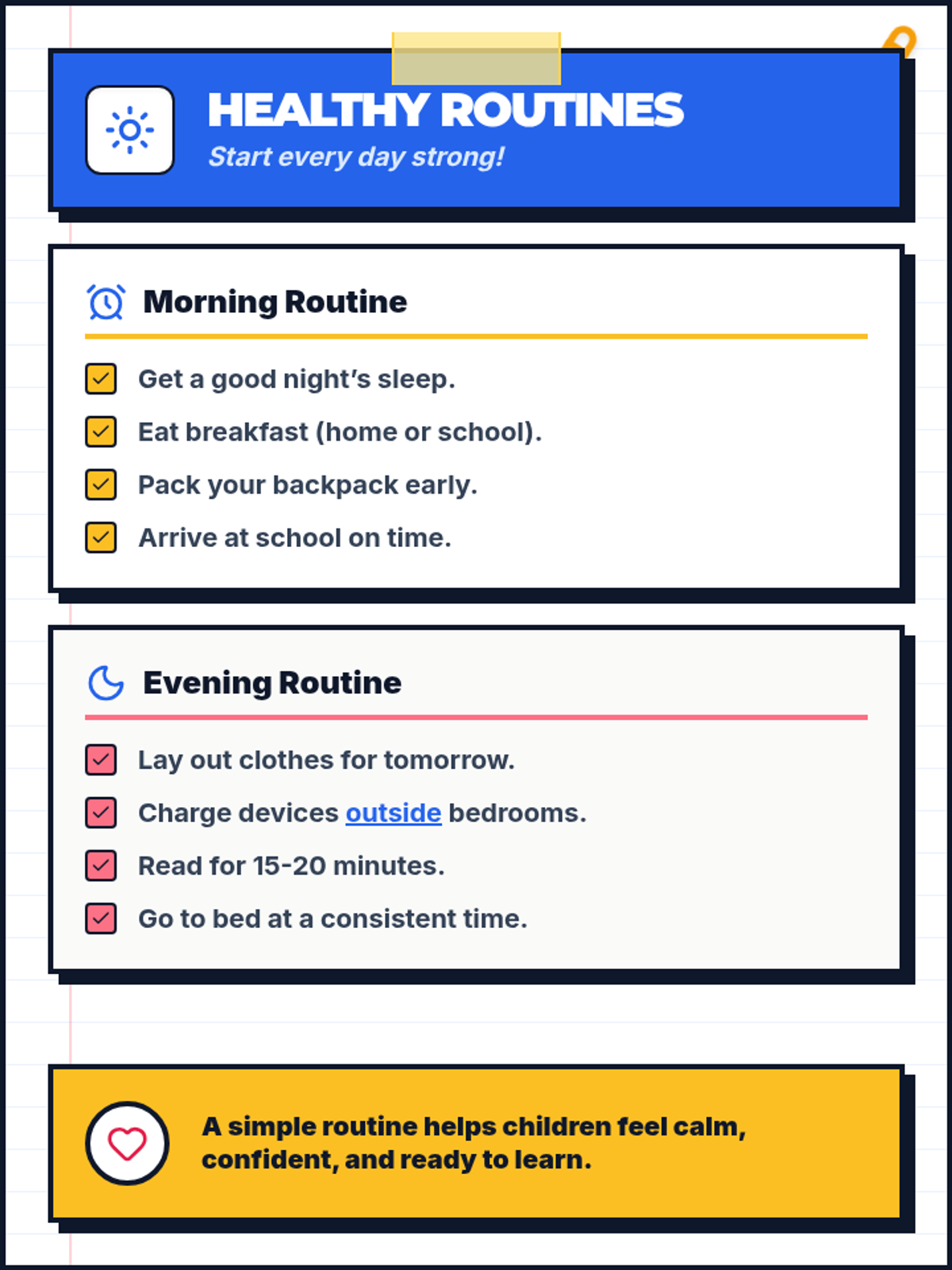
A portrait-style poster outlining morning and bedtime routines for student success, featuring a clean back-to-school theme with checklist icons.
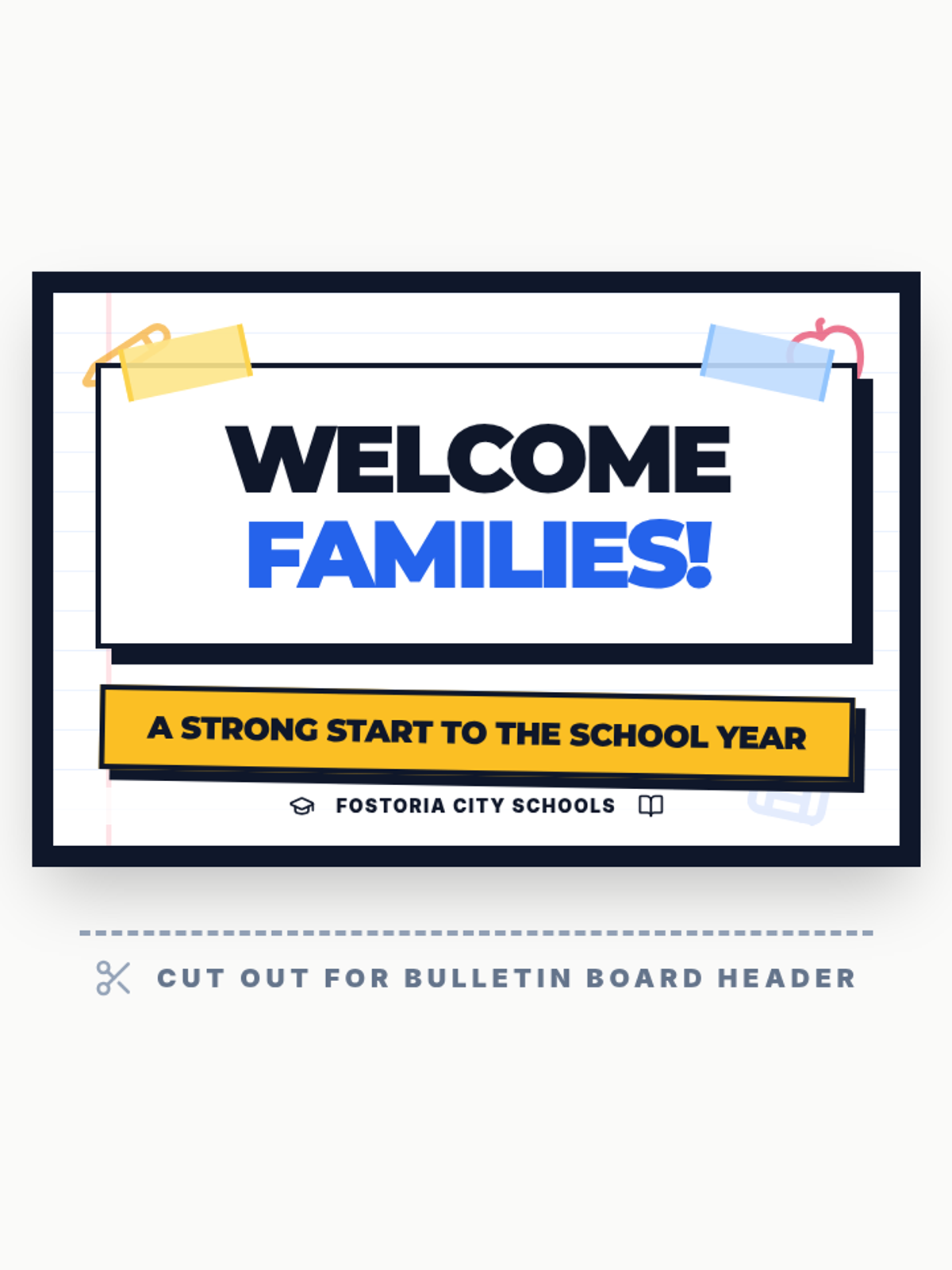
A landscape welcome banner for the bulletin board featuring a clean "back to school" aesthetic with school supply motifs and bold typography.
A landscape-style footer banner for the welcome bulletin board. Designed to be printed in landscape mode.