Mindful breathing and body scan meditation techniques integrated with daily self-care routines. Develops strategies for balancing life demands and advocating for personal wellness needs.
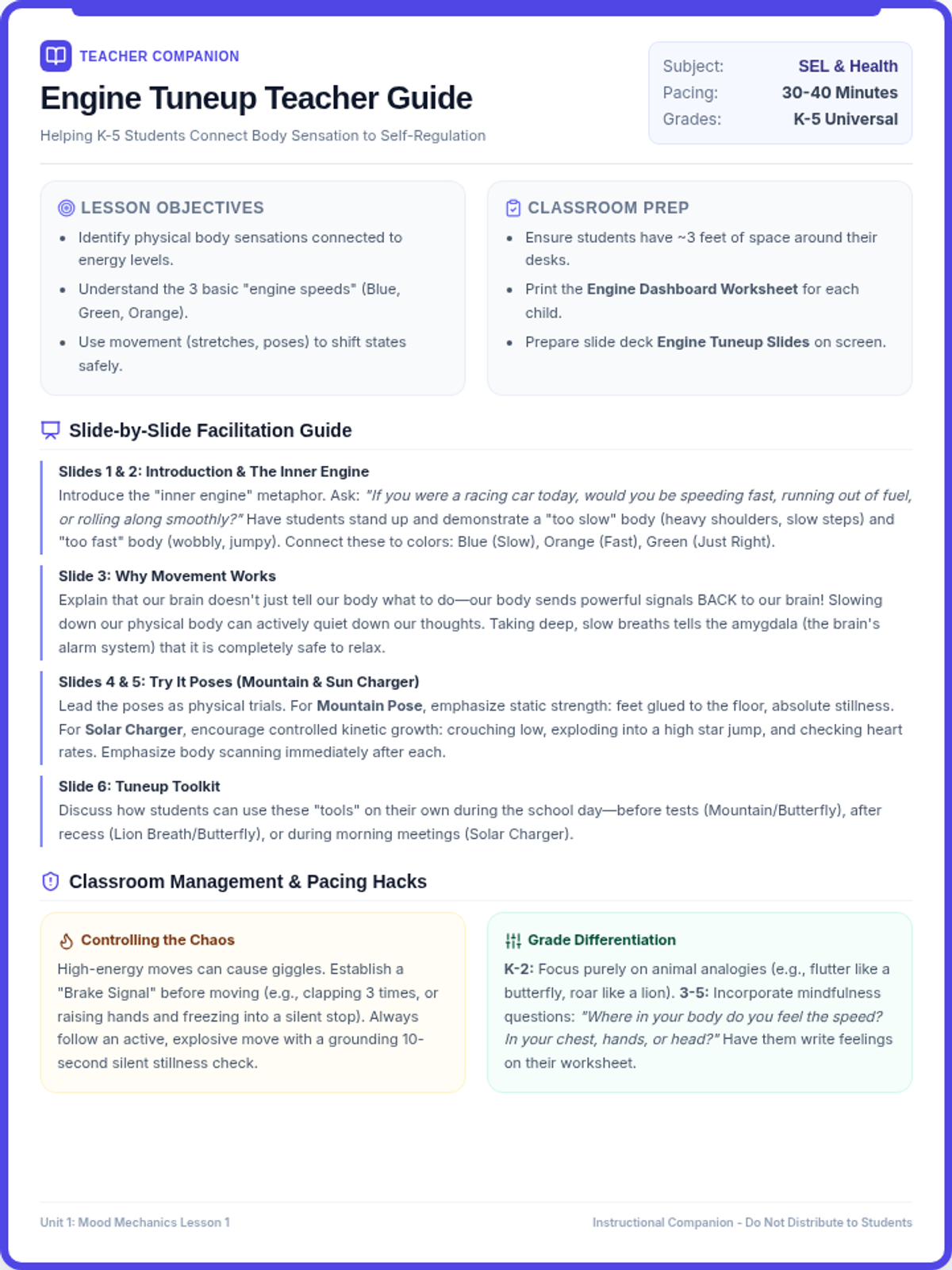
A facilitation guide for educators outlining lesson objectives, step-by-step slide cues, classroom management tips, and differentiation strategies for teaching emotional regulation.
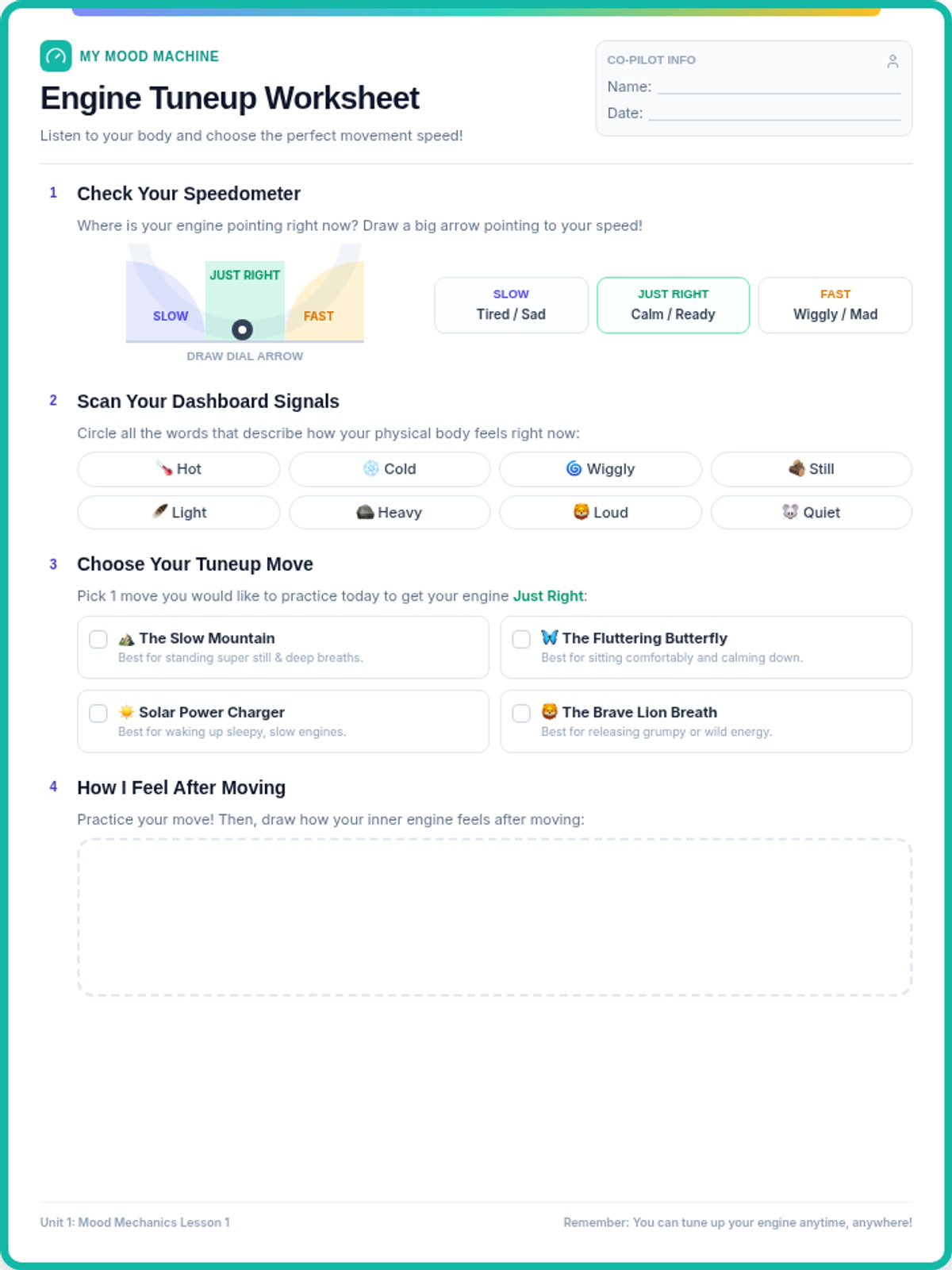
A classroom worksheet for K-5 students to self-assess their 'engine speed', circle bodily sensations, and select their personal 'tuneup moves' for emotional regulation.
Engaging 16:9 interactive presentation slides for K-5 students explaining the 'inner engine' analogy and how specific slow stretches, yoga poses, and active movements help regulate emotions.
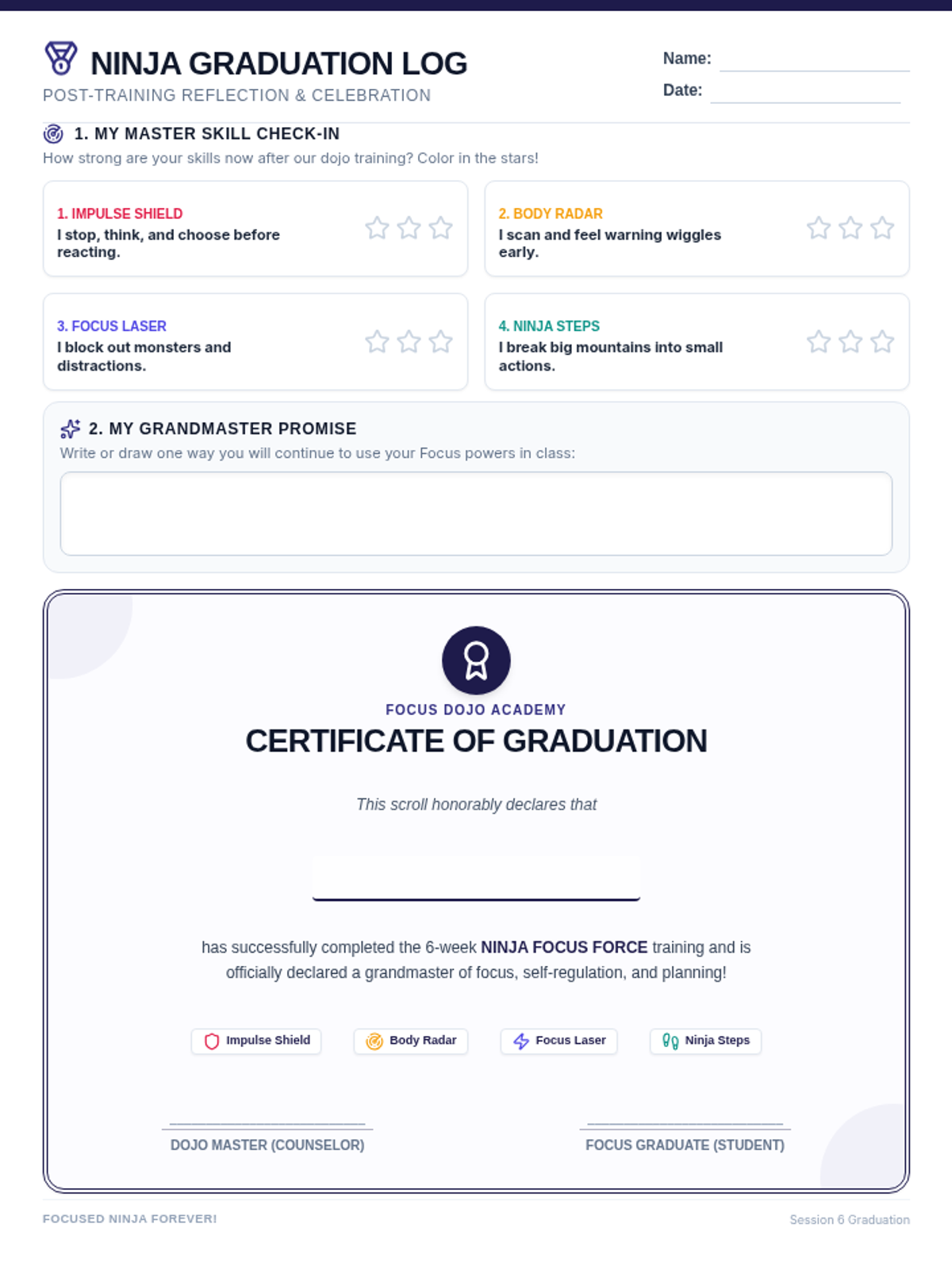
Student-facing certificate and self-assessment sheet for Session 6, incorporating the executive functioning post-assessment growth map and a printable graduation certificate.
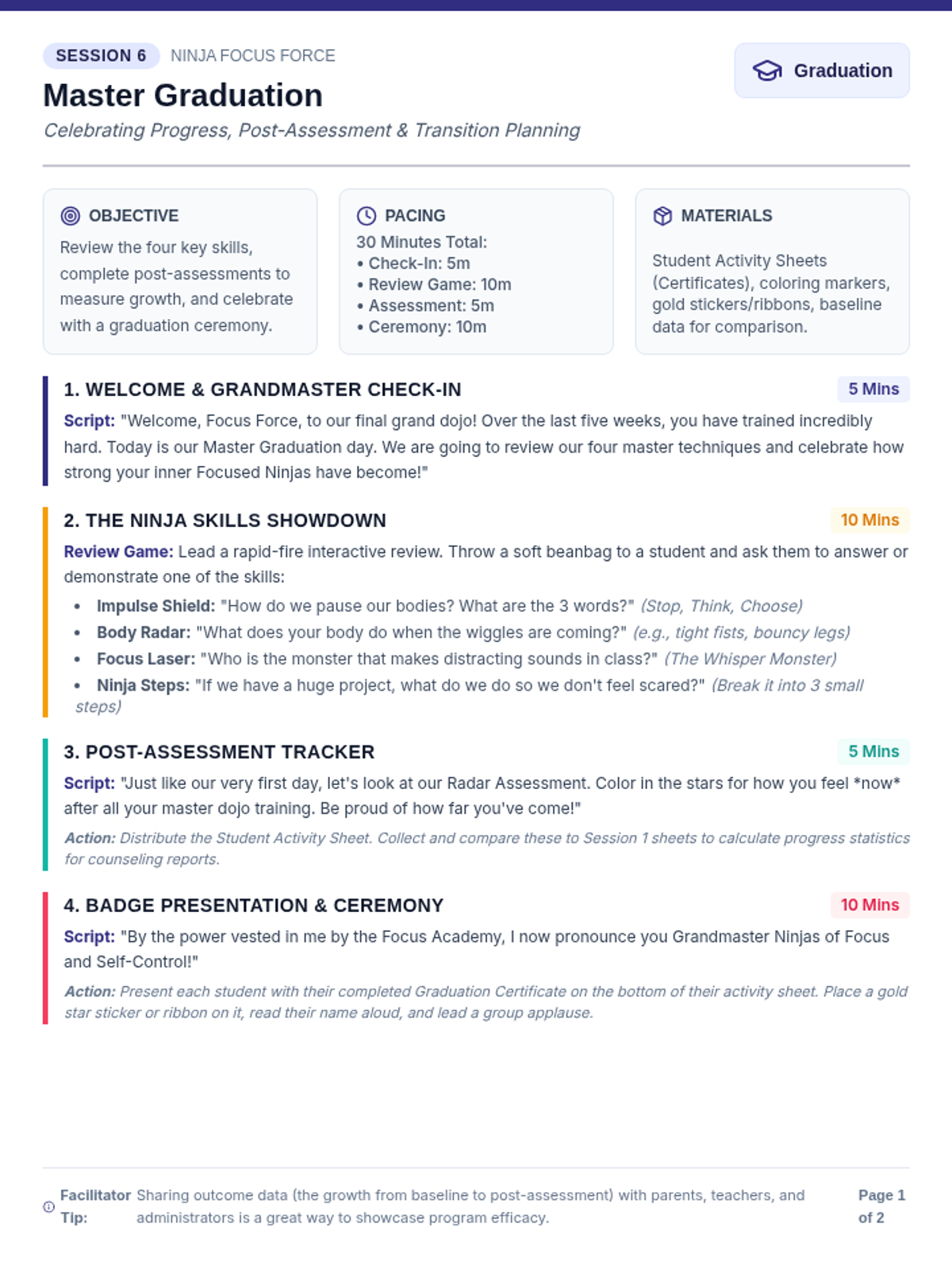
Facilitator guide for Session 6, featuring counselor scripts for reviewing the curriculum, administering the post-assessment, and presenting graduation badges, along with teacher/parent transition tools.
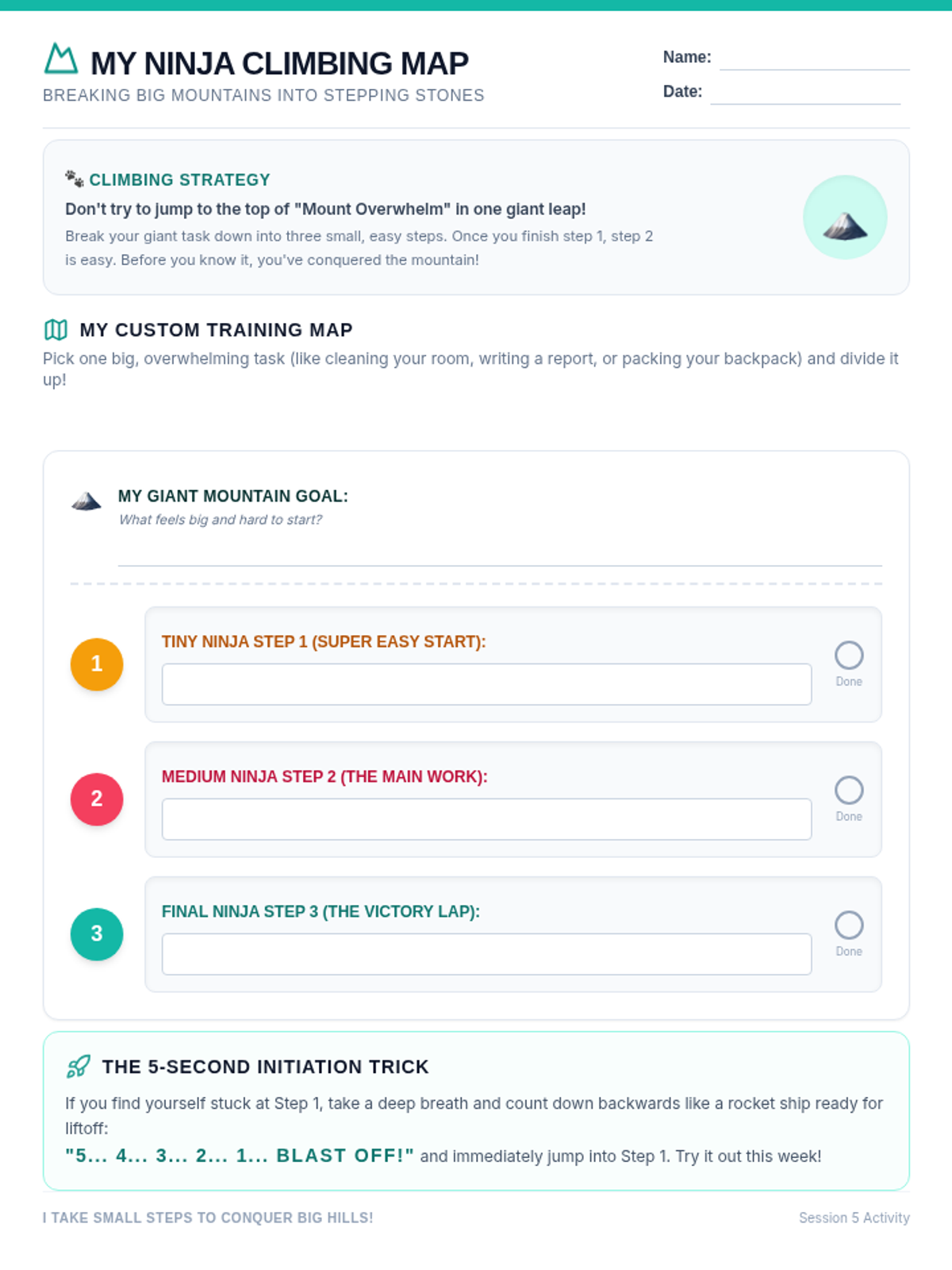
Student activity sheet for Session 5, featuring a task breakdown mountain graphic organizer and an action planning stepping-stone visual template.
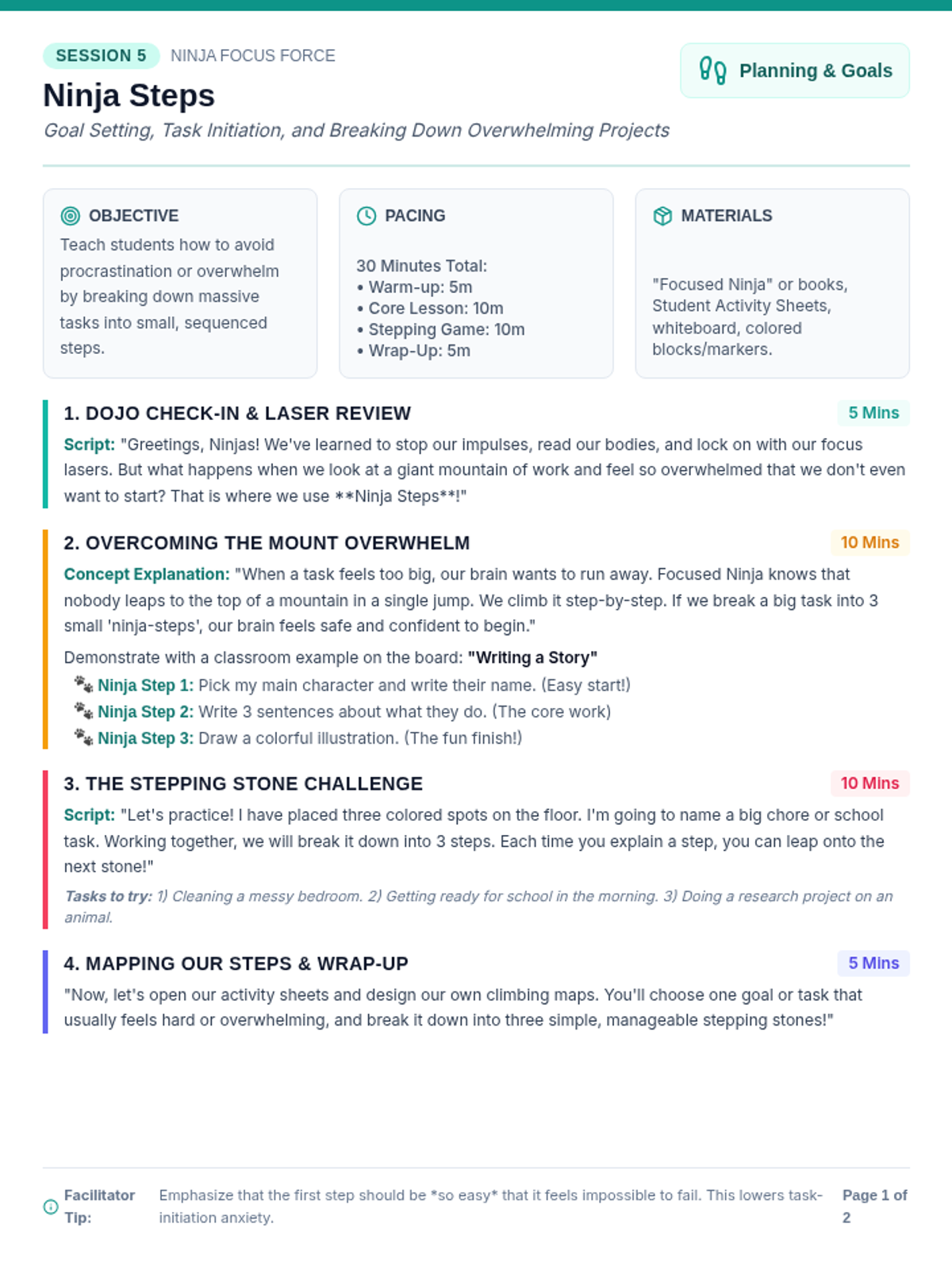
Facilitator guide for Session 5, featuring counselor scripts for teaching goal setting and action planning by breaking down large tasks into visual checklists.
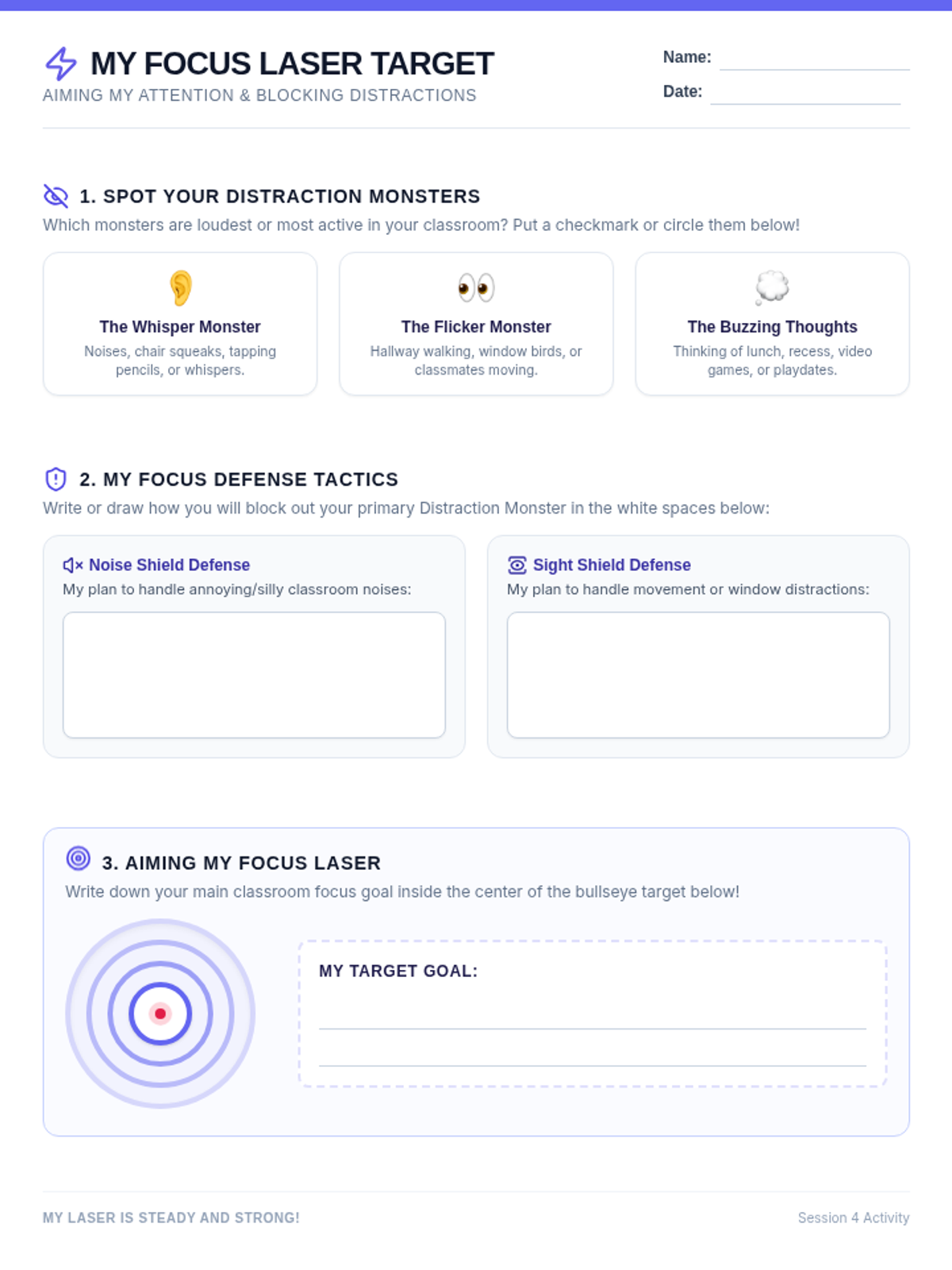
Student activity sheet for Session 4, featuring a distraction monster identification grid and a focus laser target-setting tool.
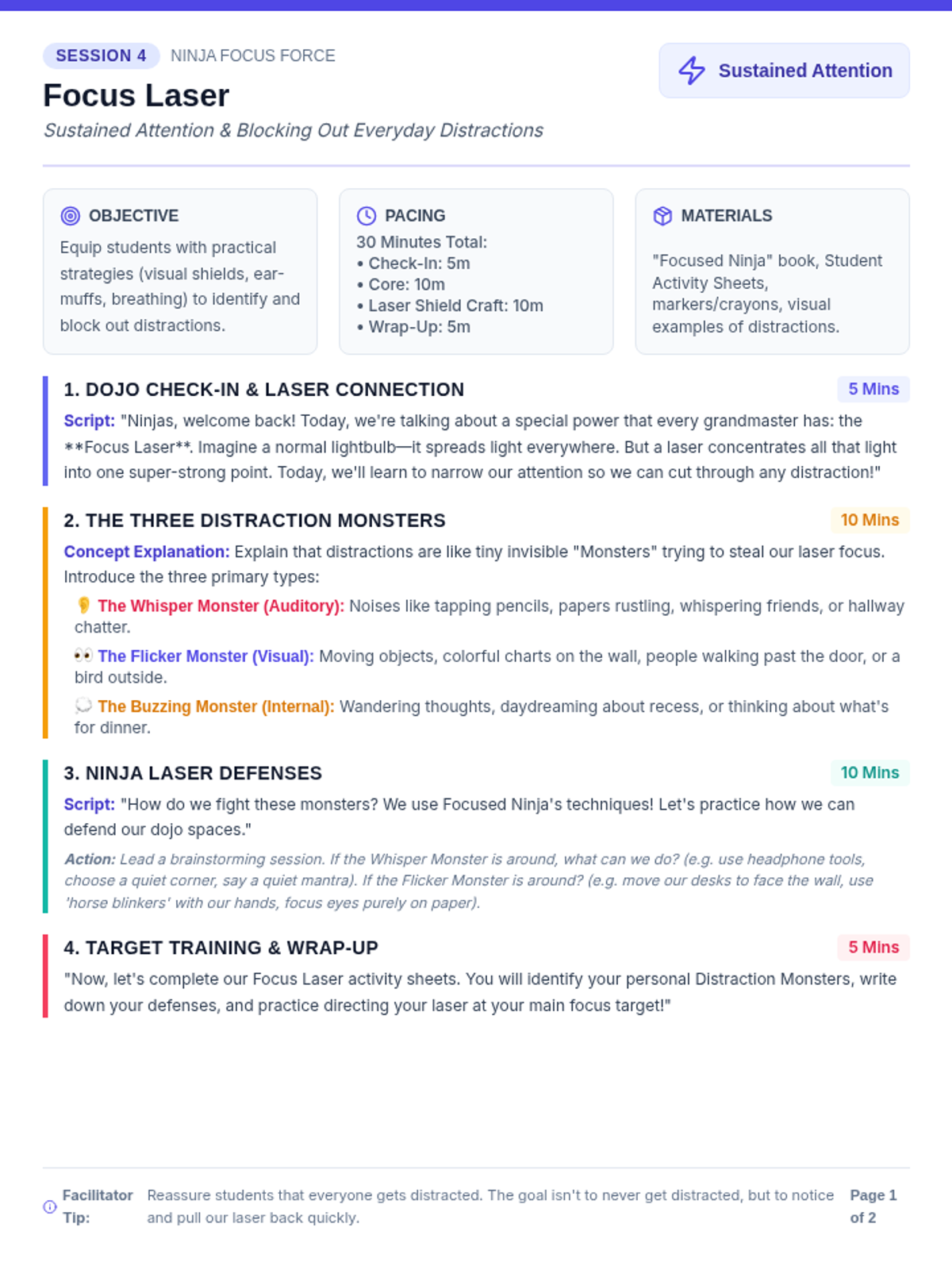
Facilitator guide for Session 4, featuring counselor scripts for teaching distraction-blocking techniques, classroom environment modifications, and a take-home parent coupon.
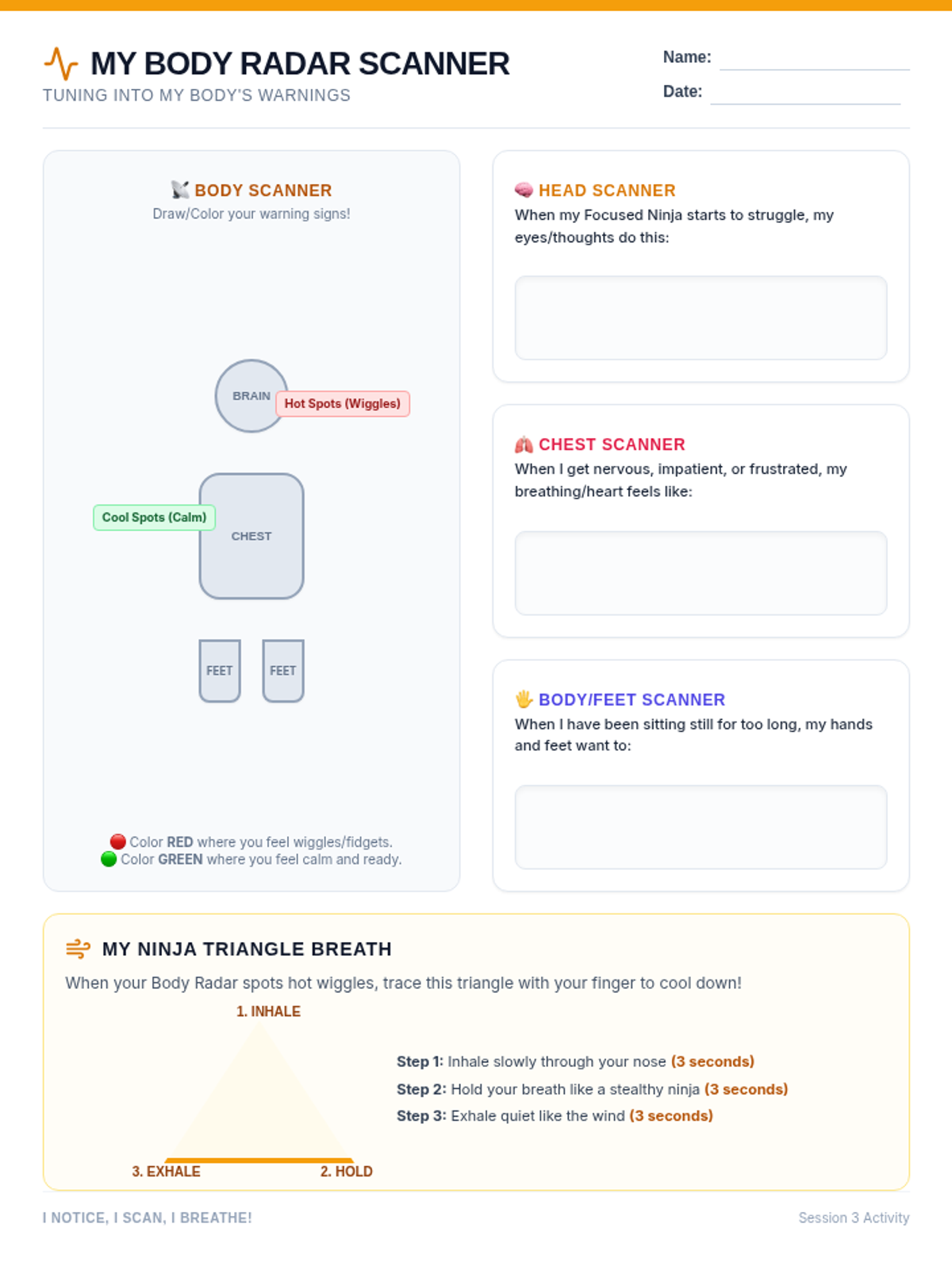
Student activity sheet for Session 3, featuring a body radar map to color-code physical focus signals and a guided 'Ninja Triangle' breathing exercise layout.
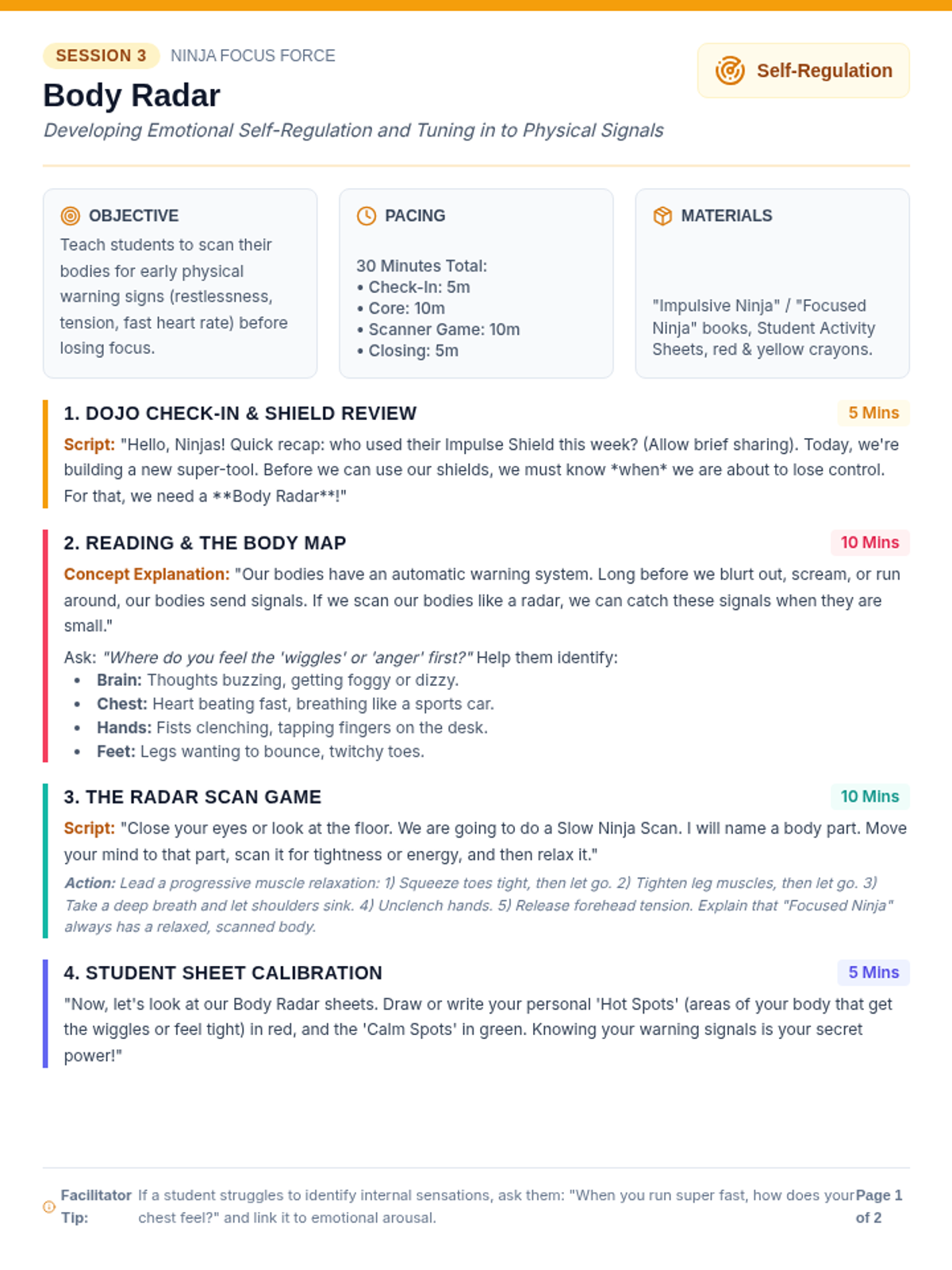
Facilitator guide for Session 3, featuring counselor scripts for teaching how to scan the body for focus warning signs, classroom emotional-check-in strategies, and a parent communication slip.
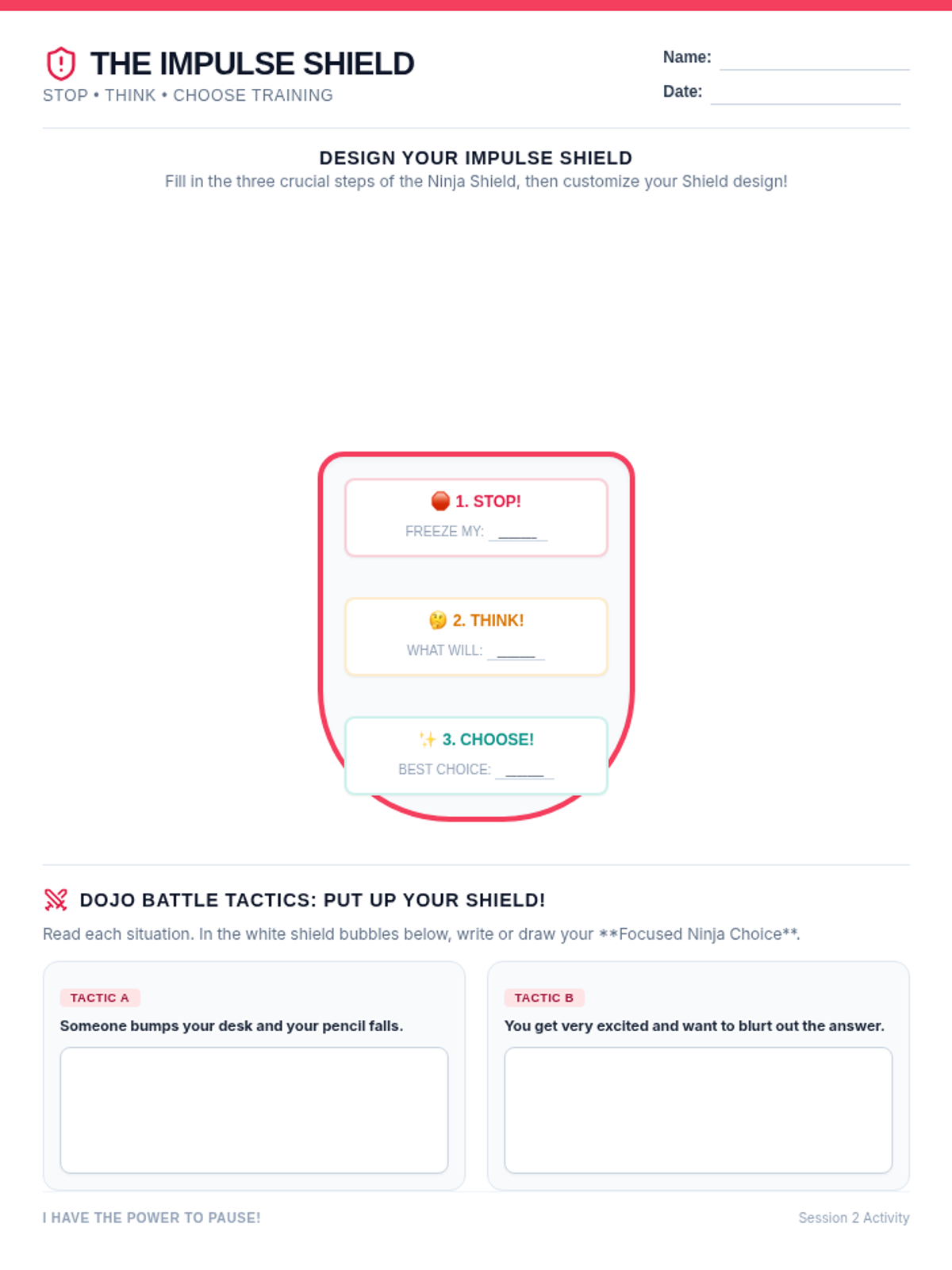
Student activity sheet for Session 2 focused on creating an 'Impulse Shield' and applying the 'Stop, Think, Choose' process to realistic classroom scenarios.
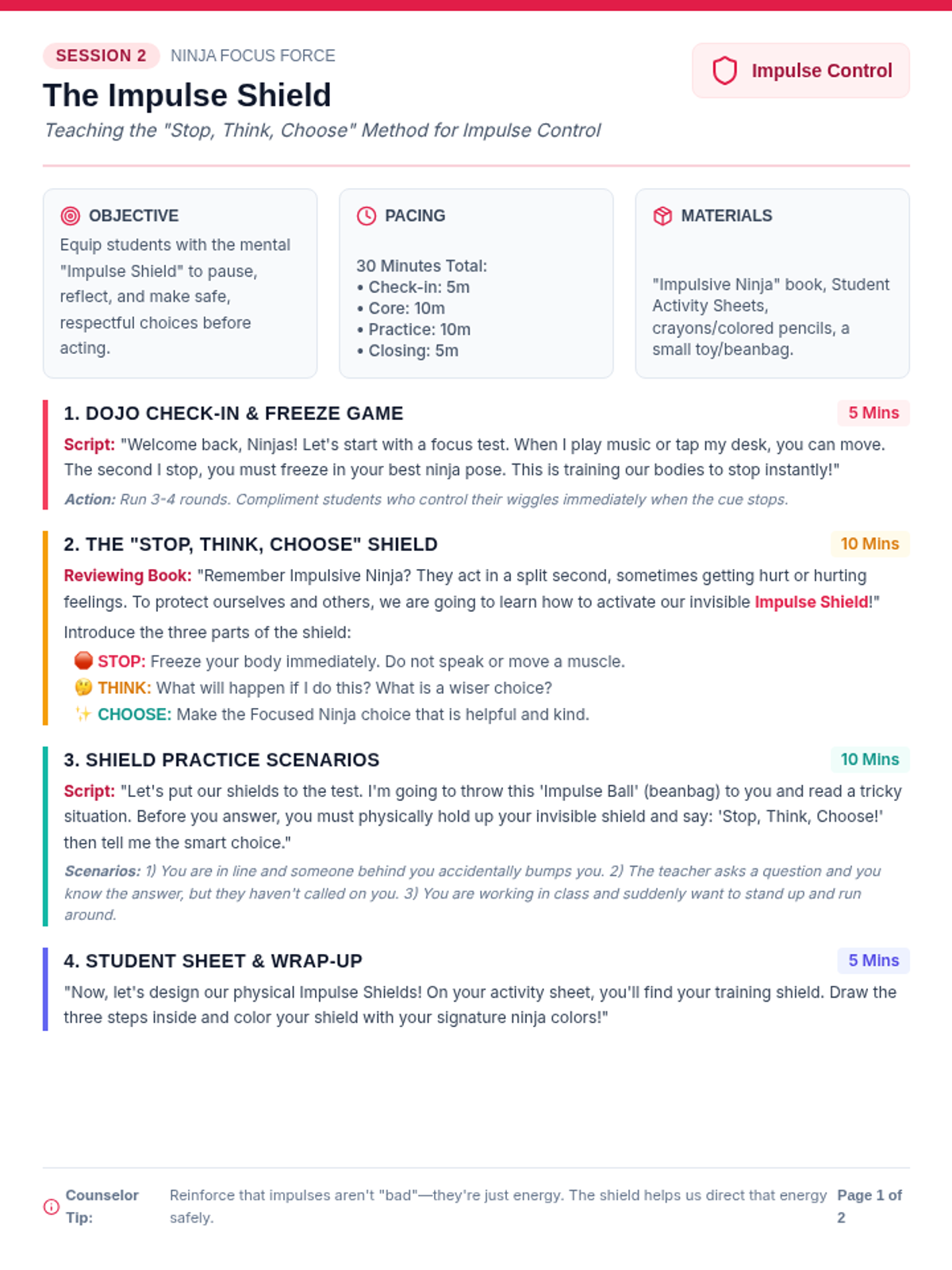
Facilitator guide for Session 2, featuring counselor scripts for teaching the 'Stop and Think' method, a classroom visual cue strategy, and a take-home parent coupon.
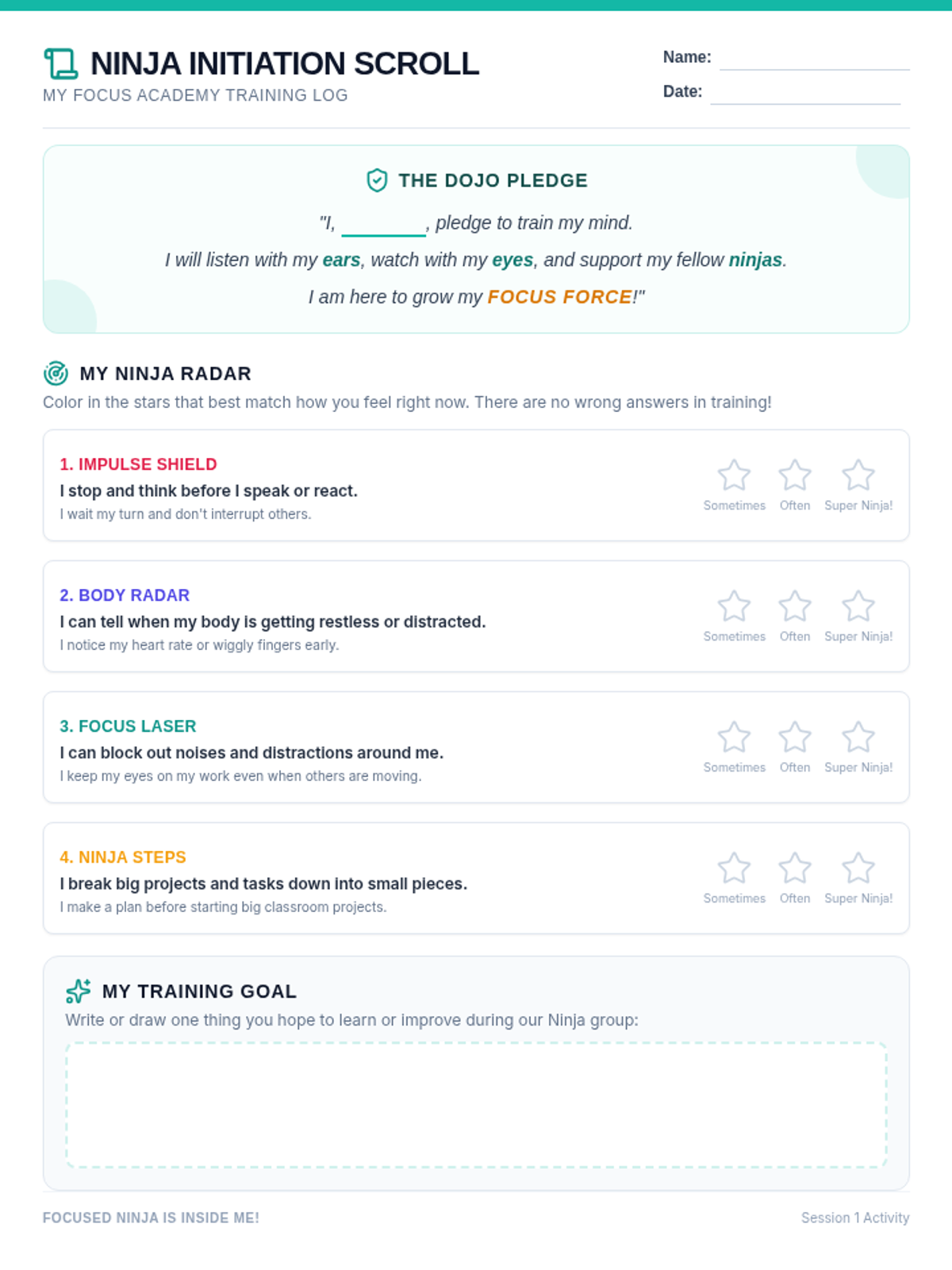
Student-facing worksheet for Session 1 including a group goal declaration and an executive functioning self-reflection baseline map.
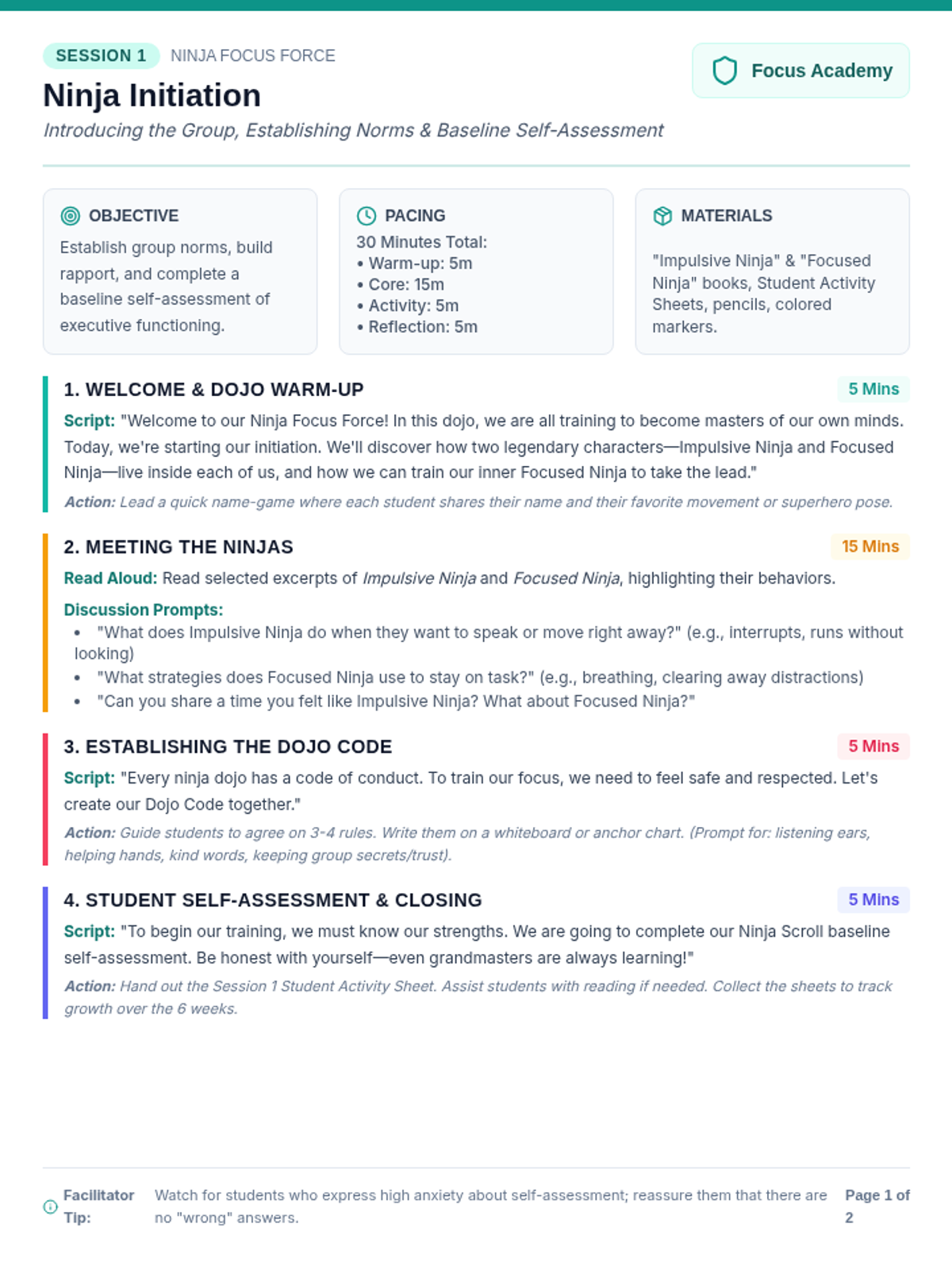
Facilitator guide for Session 1, featuring step-by-step counselor scripts, student group norms, and a parent-teacher communication card with classroom strategies.
Spanish translation of the Grade 6-12 Summer Chill Skills Packet, offering 17 beautifully translated, print-ready pages with coping tools, clinical grounding exercises, somatic mapping, and active QR codes.
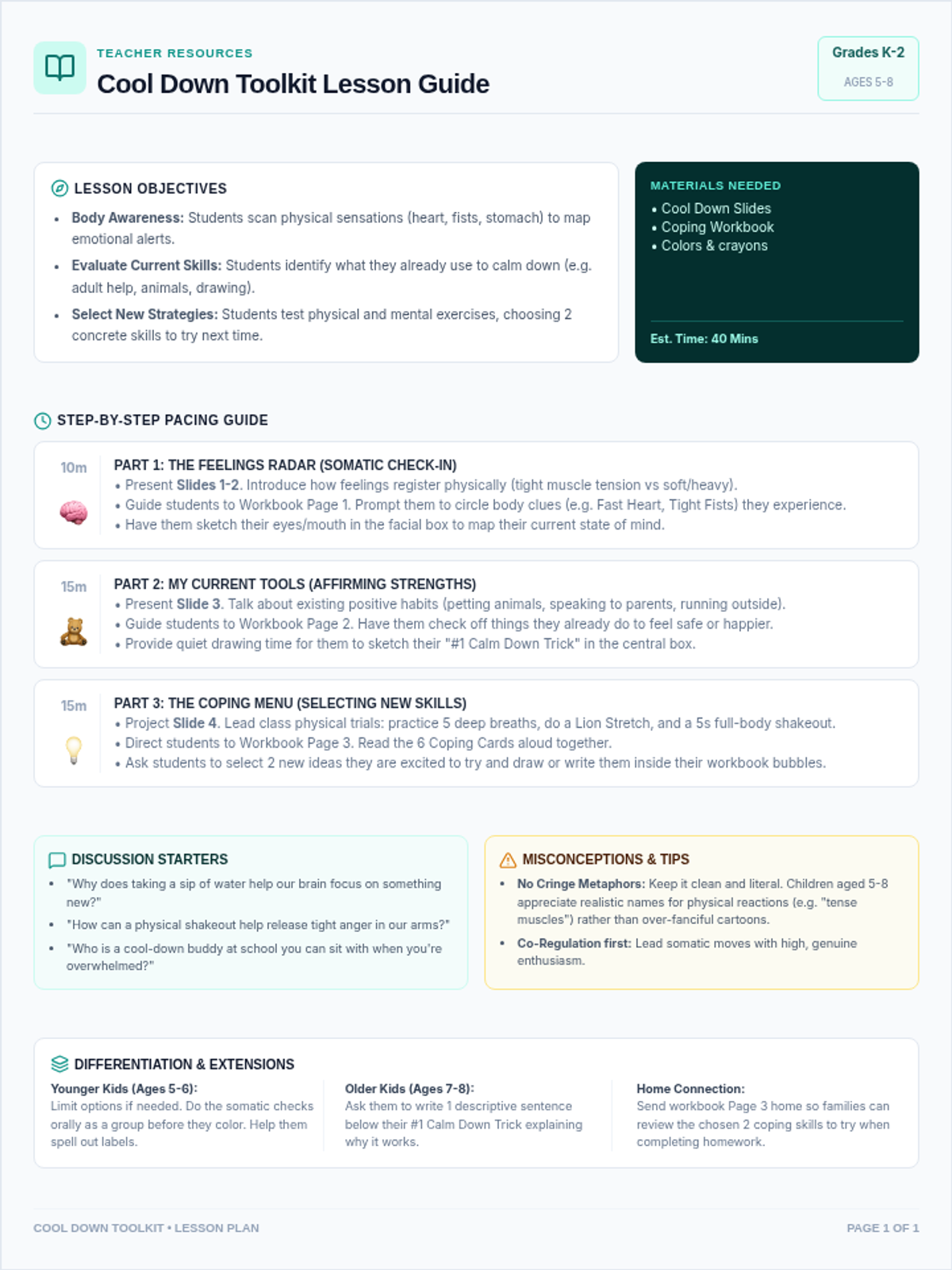
A comprehensive 1-page teacher facilitation guide for the Cool Down Toolkit lesson. Outlines lesson objectives, step-by-step pacing (Feelings Radar, Current Tools, and Coping Menu), child-friendly questioning scripts, classroom management tips, and easy differentiation strategies for ages 5-8.
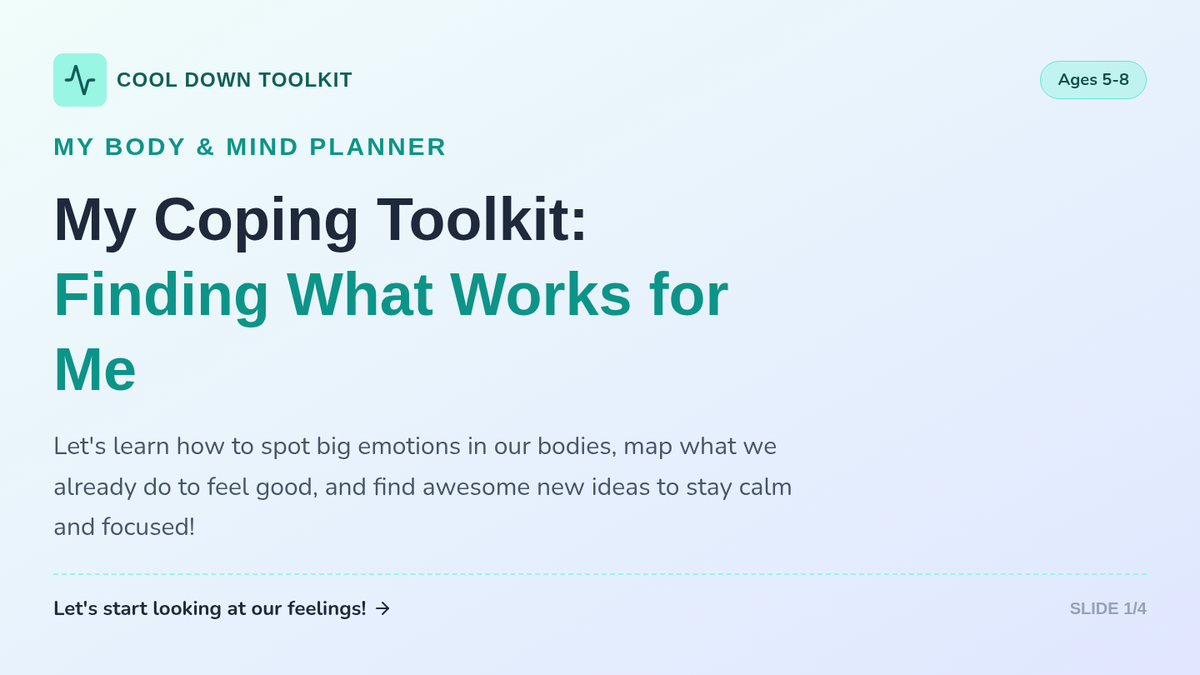
An engaging 4-slide presentation for teachers to guide students through the Cool Down Toolkit. Includes interactive discussion prompts, physical symptom checks, somatic exercise challenges, and a coping menu selection game.
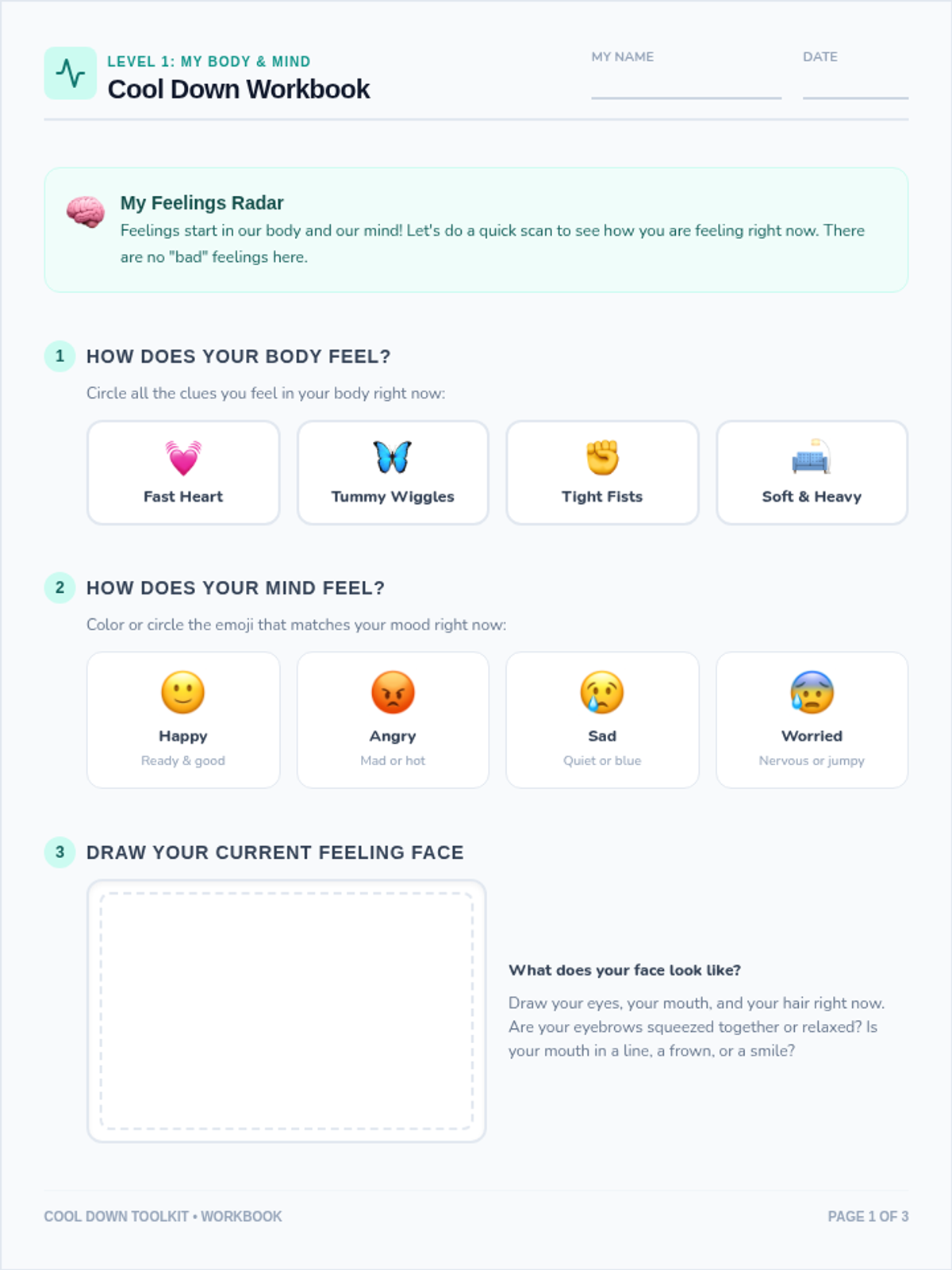
A clean, modern 3-page student workbook focused on somatic feeling scans, current coping strategies mapping, and a coping menu selection layout.
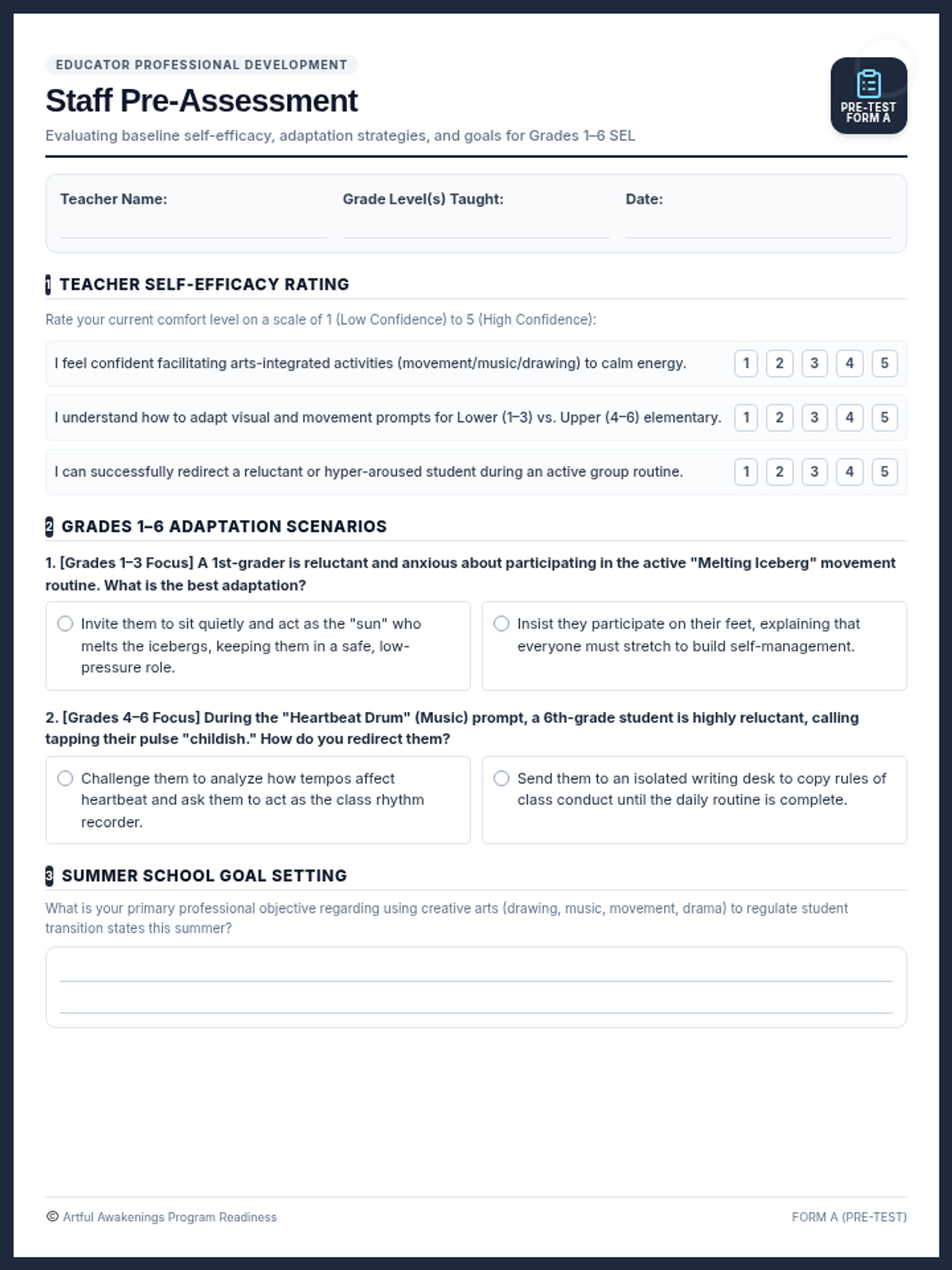
A 2-page assessment resource for school staff consisting of a Pre-Test to gauge baseline SEL self-efficacy and concepts, and a matching Post-Test to measure direct growth and program feedback, tailored specifically for teachers of grades 1-6.
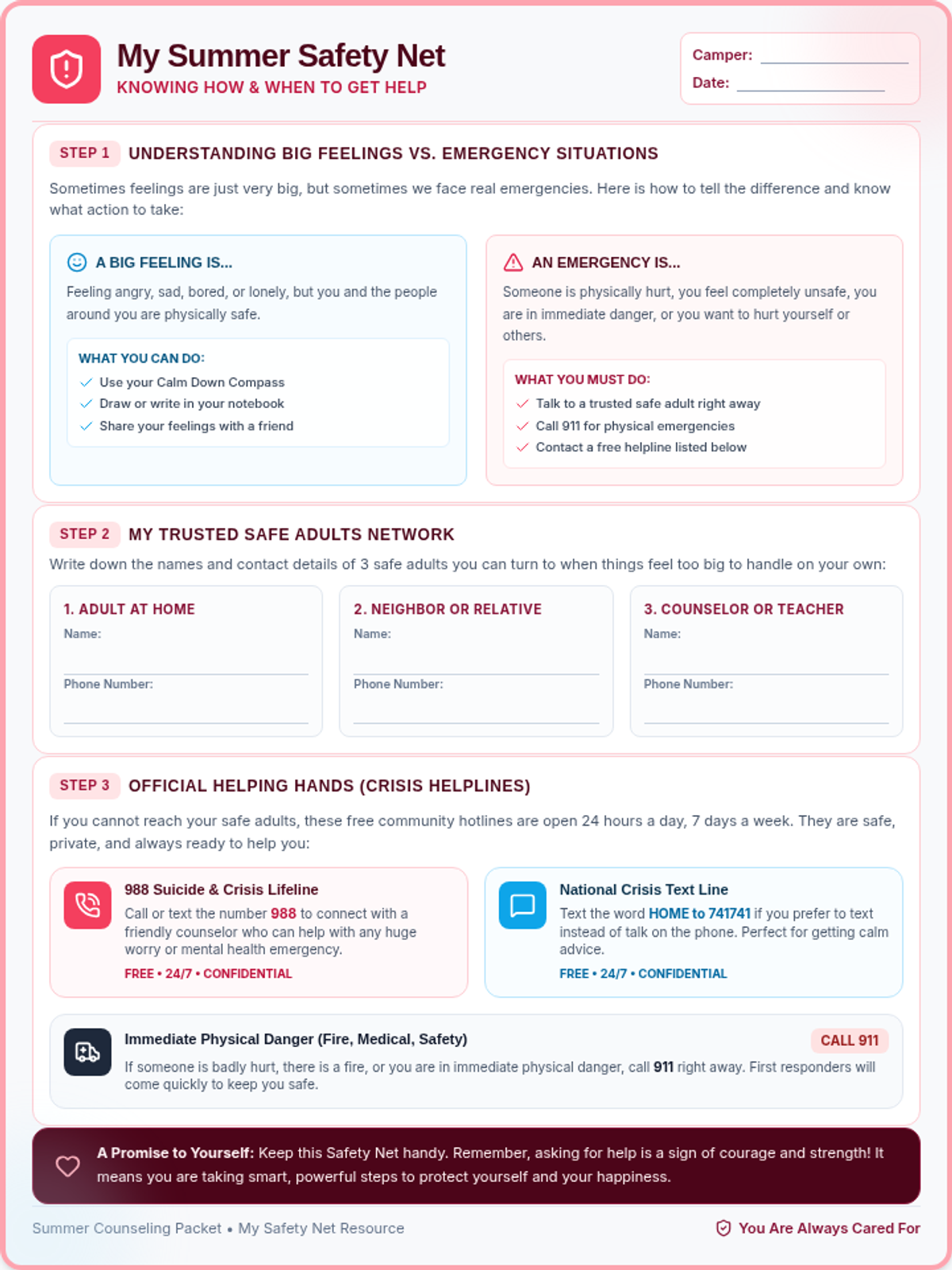
A 1-page kid-friendly safety resource and emergency contact guide helping students distinguish between big feelings and physical/emotional emergencies, map out safe adults, and access free crisis helplines.
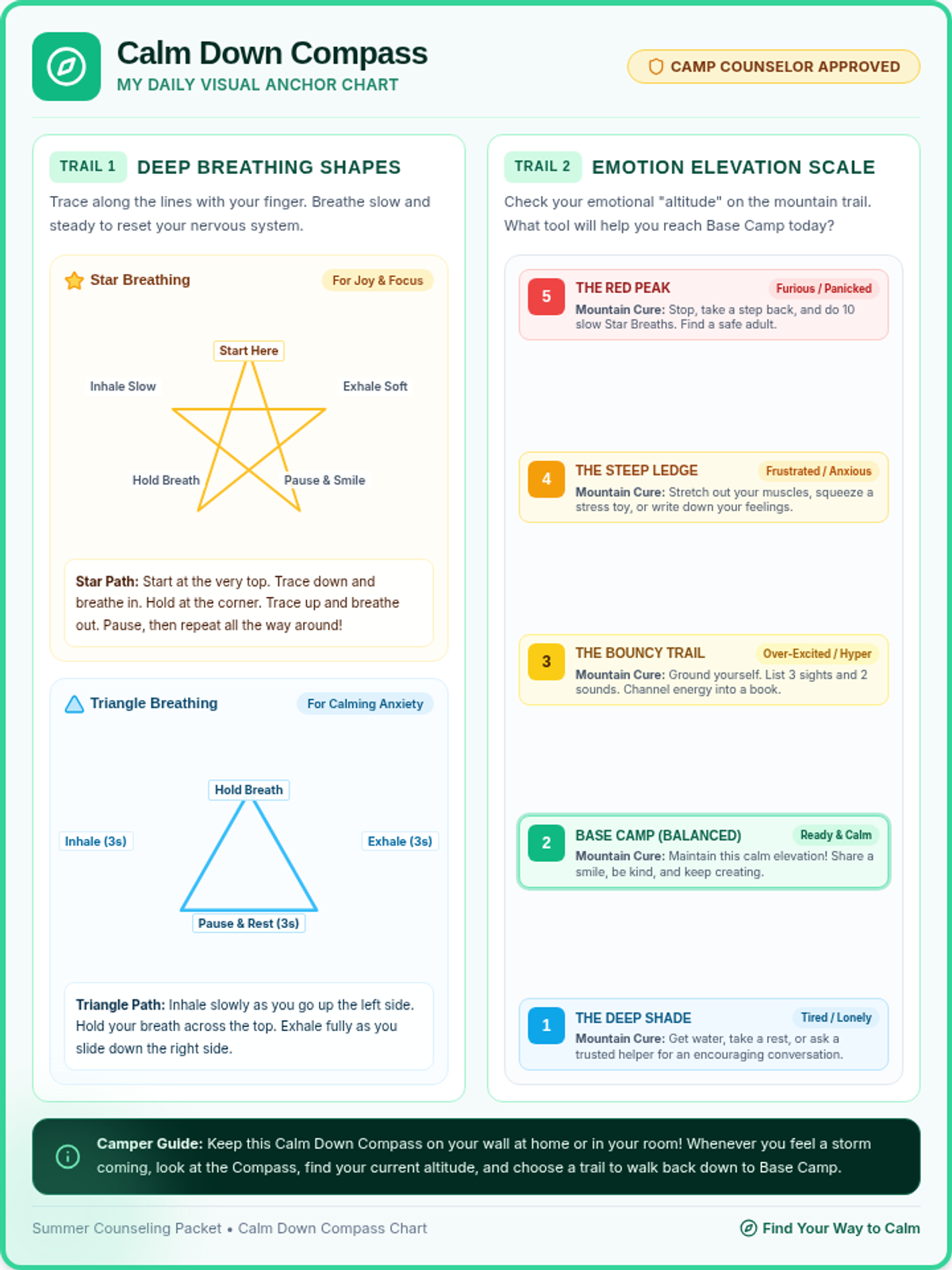
A 1-page visual anchor chart poster split into two columns: one side showing Star and Triangle deep breathing shapes, and the other side showing an mountain-themed emotional regulation scale.
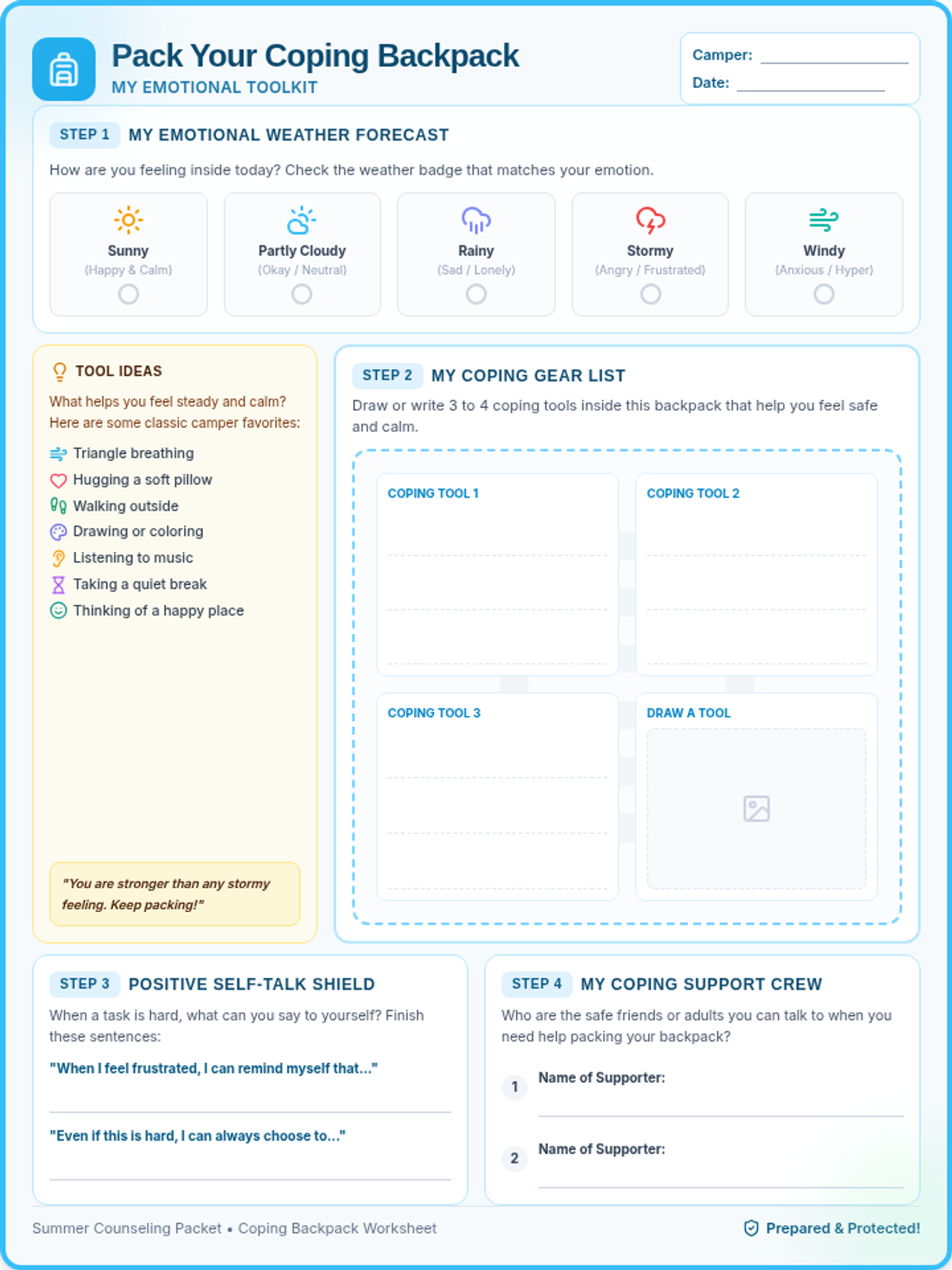
A 1-page interactive student worksheet styled as a camping backpack for students to draw, list, and organize their personal emotional coping strategies and positive self-talk statements.
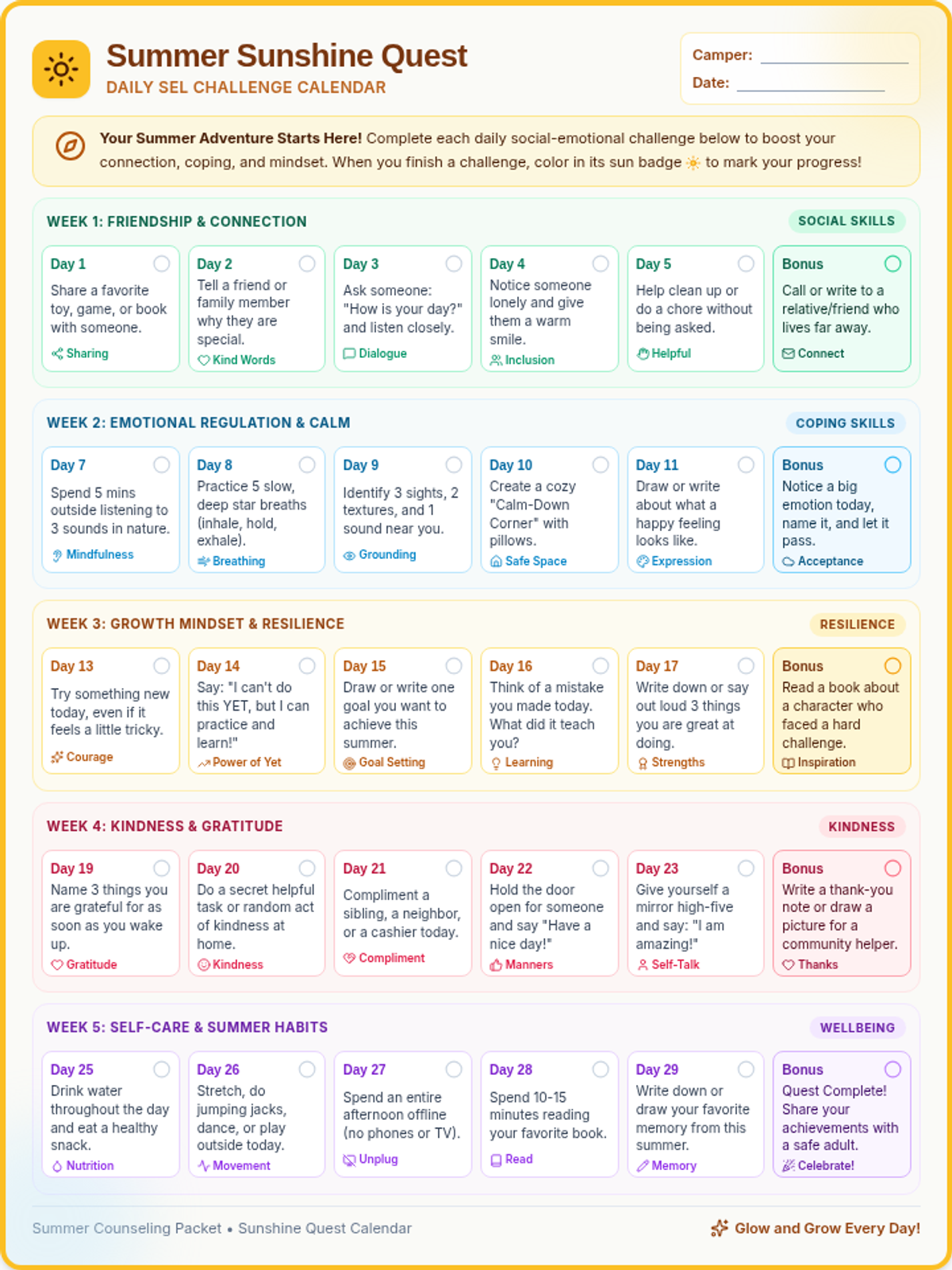
A 1-page summer SEL challenge calendar formatted as a 5-week tracking grid with 30 quick, actionable social-emotional, mindfulness, friendship, and growth-mindset daily challenges.
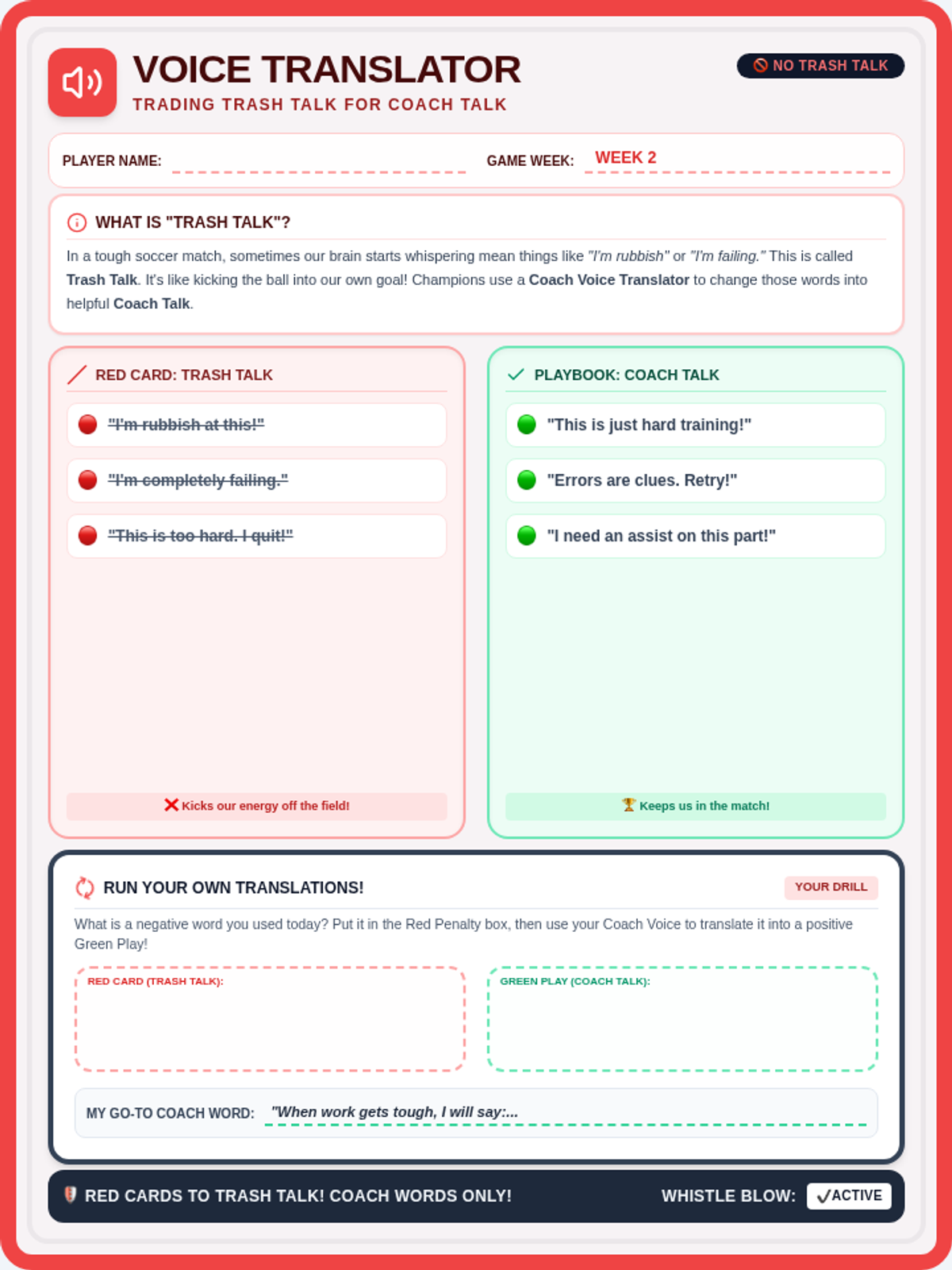
A highly visual, soccer-themed translation worksheet that helps the student change 'trash talk' (negative self-talk like 'I'm rubbish') into 'coach talk' (productive strategies like 'I need an assist' or 'let's run a replay').
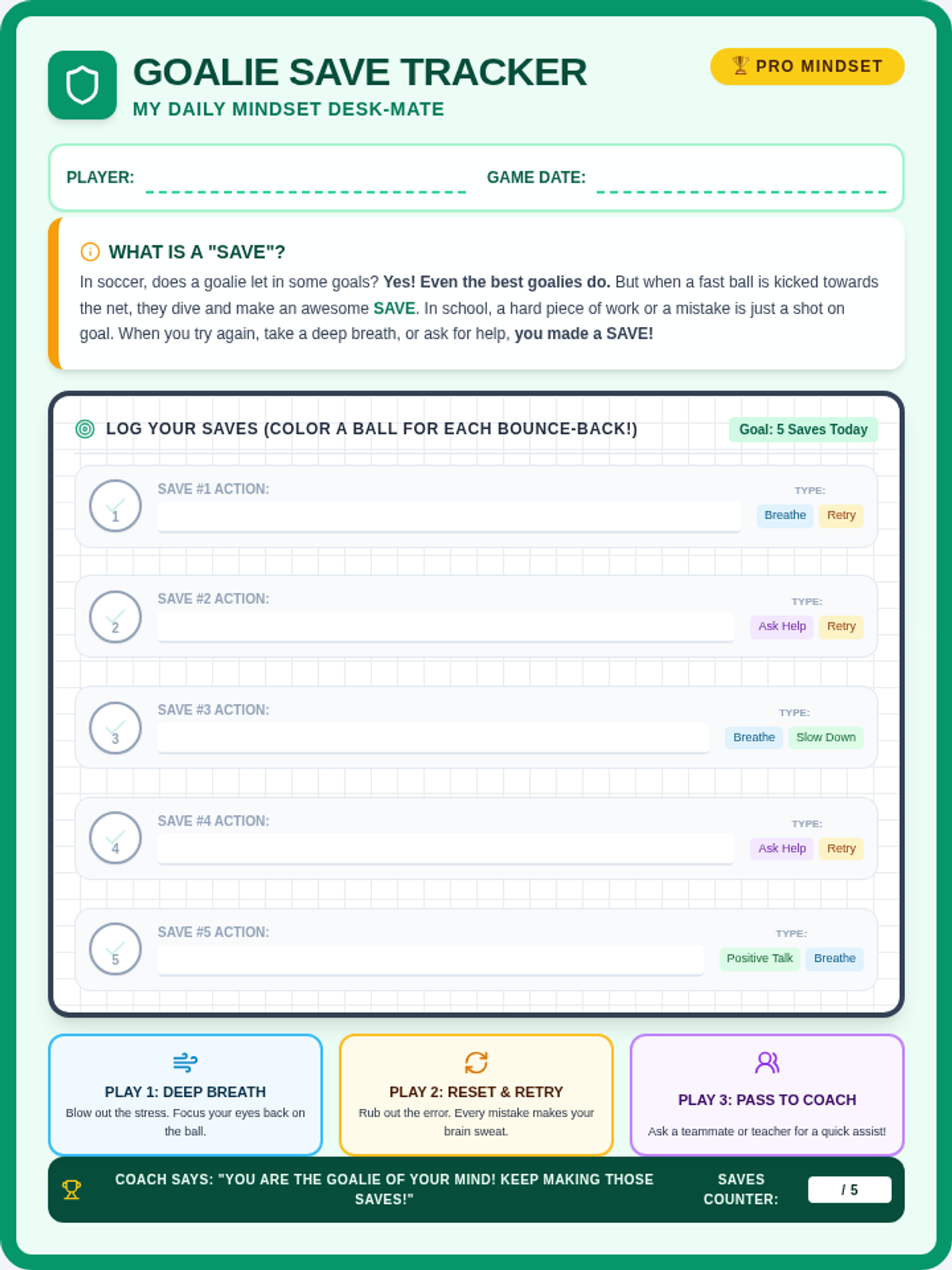
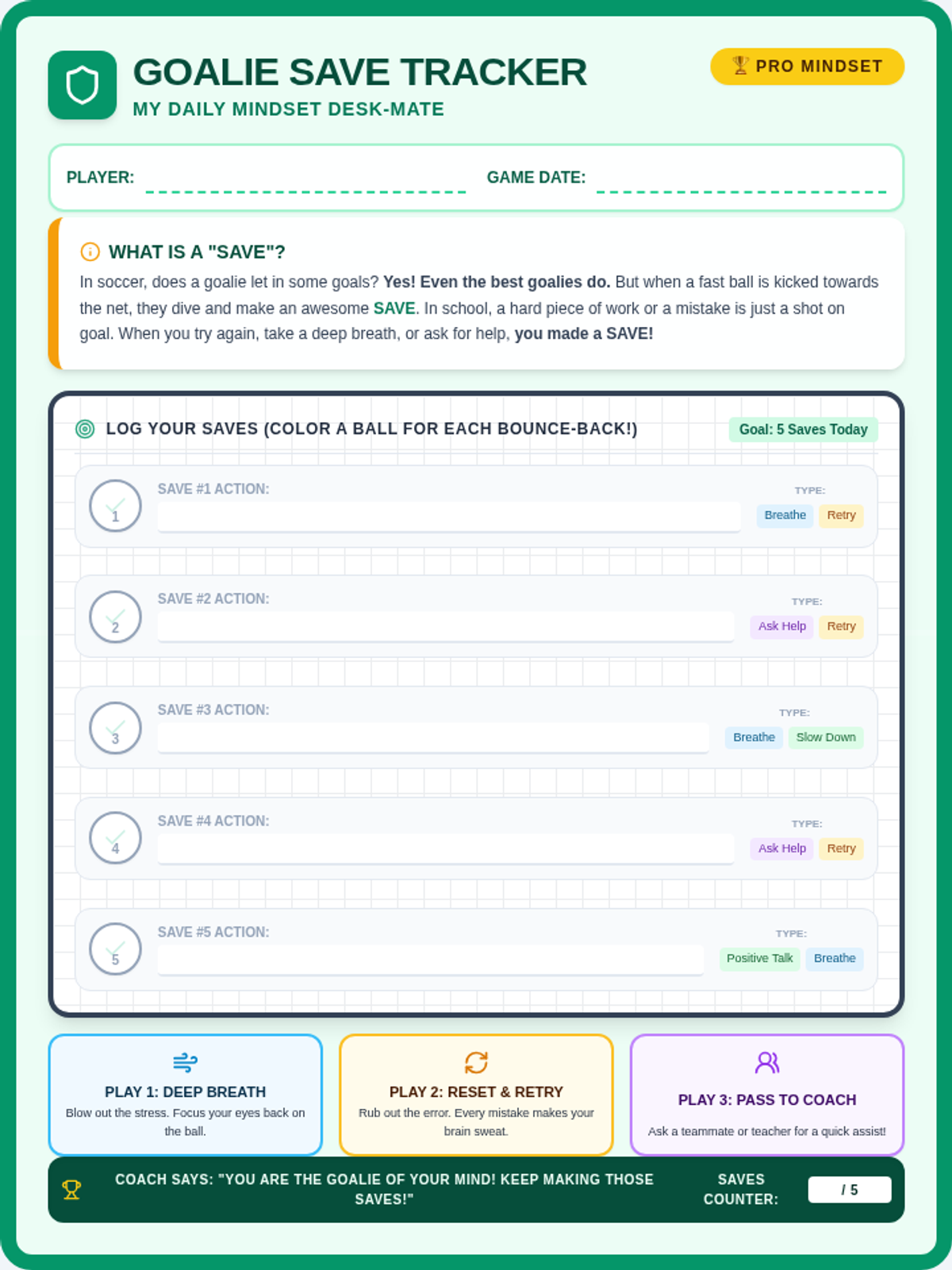
A printable soccer-themed desk tracker for Year 2 students to log 'saves'—instances where they bounced back from a mistake or coped with difficult work, framing mistakes as shots on goal that can be actively blocked and saved.
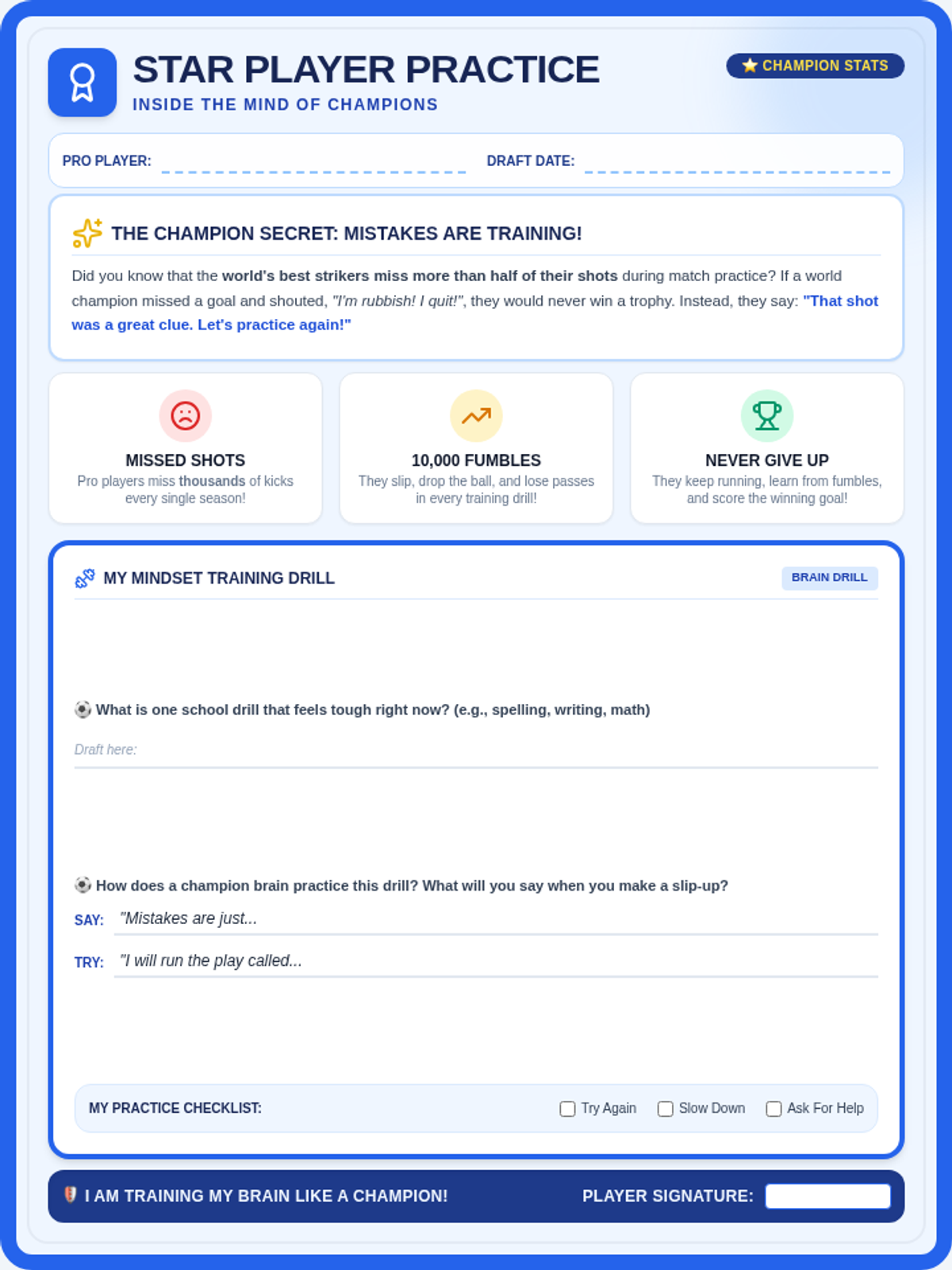
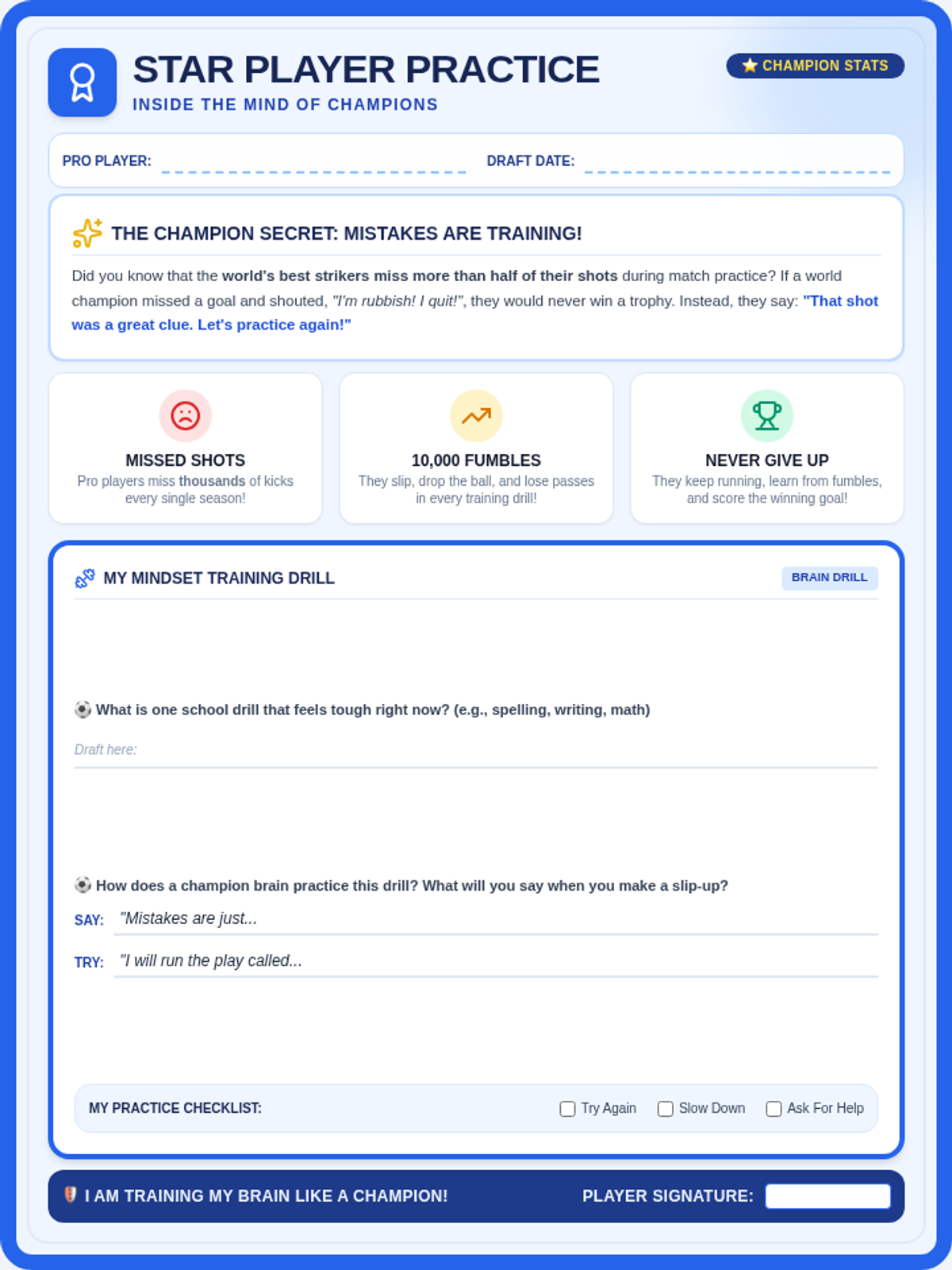
An engaging student activity sheet normalizing mistakes by showing how professional soccer champions fumbles, fail, and practice daily. Helps the student reframe errors as training exercises rather than failures.
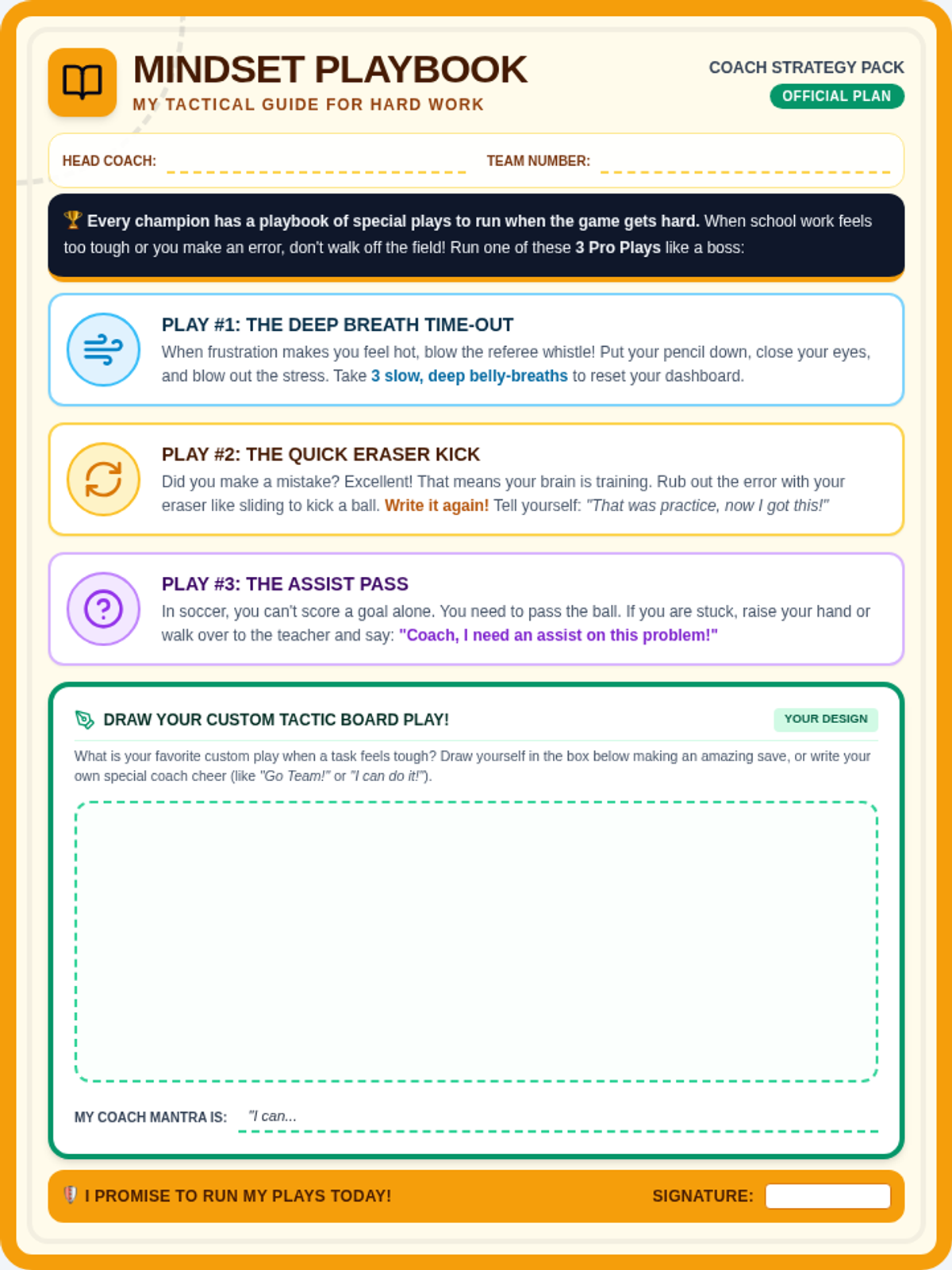
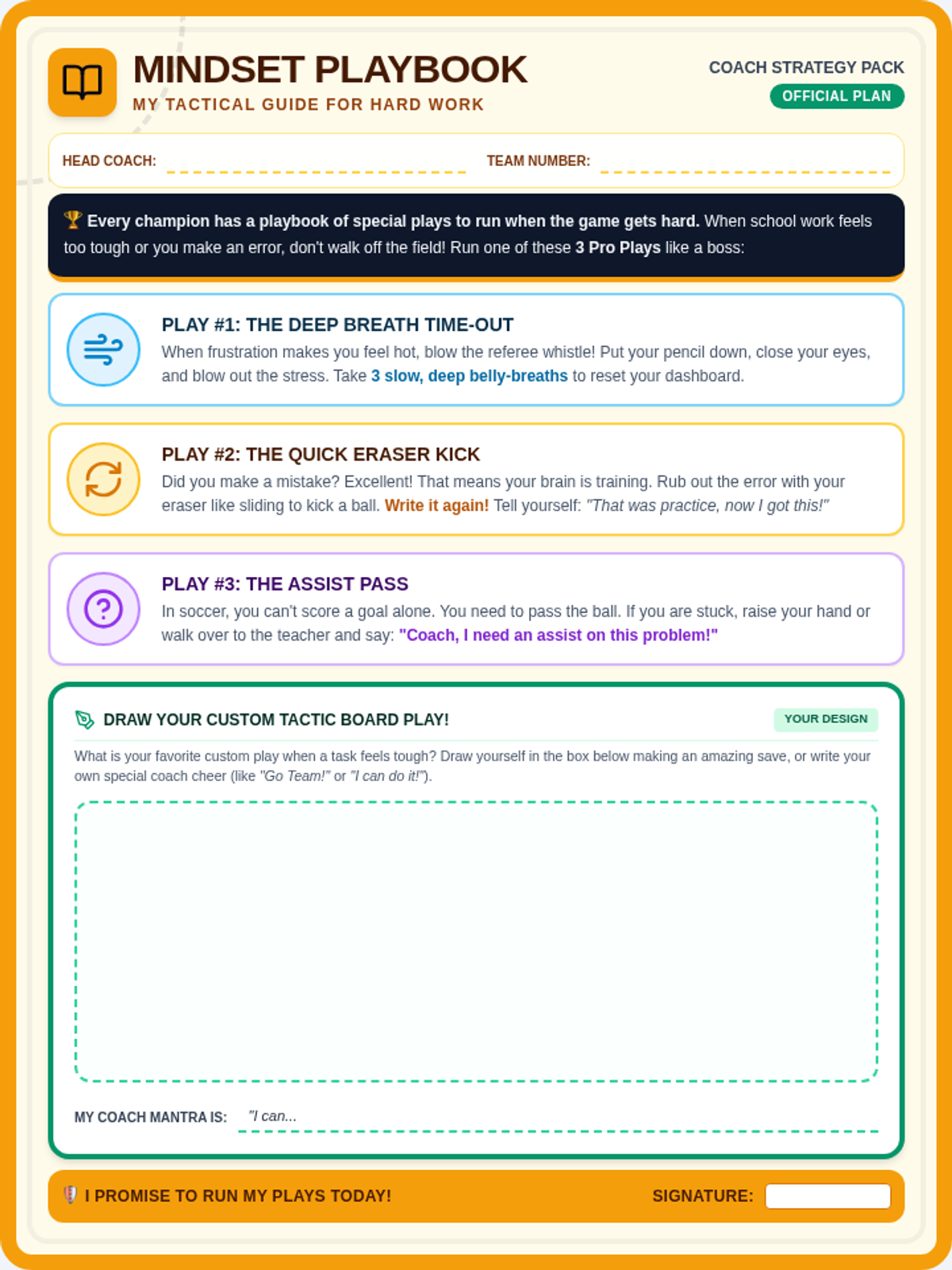
A step-by-step printable visual 'playbook' showing the exact positive actions ('plays') the student can run when a worksheet gets too difficult or frustration starts to rise. Includes a custom play design section.
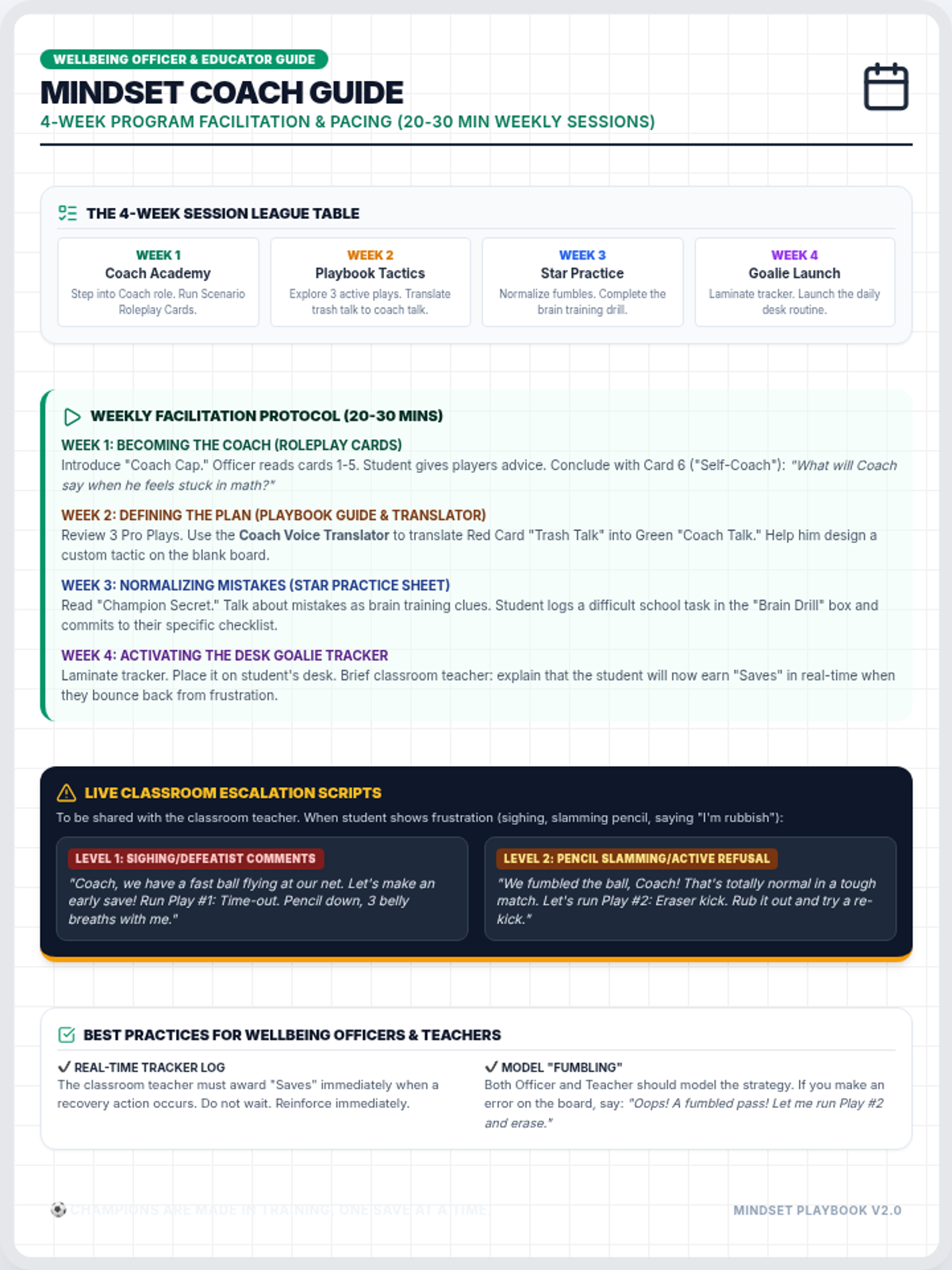
A professional facilitator guide for teachers and learning support assistants detailing how to introduce the soccer-themed package, run the roleplay cards, set up the desk-tracker routine, and manage live classroom escalation using 'coaching play' scripts.
An engaging student activity sheet normalizing mistakes by showing how professional soccer champions fumble, fail, and practice daily. Helps the student reframe errors as training exercises rather than failures.
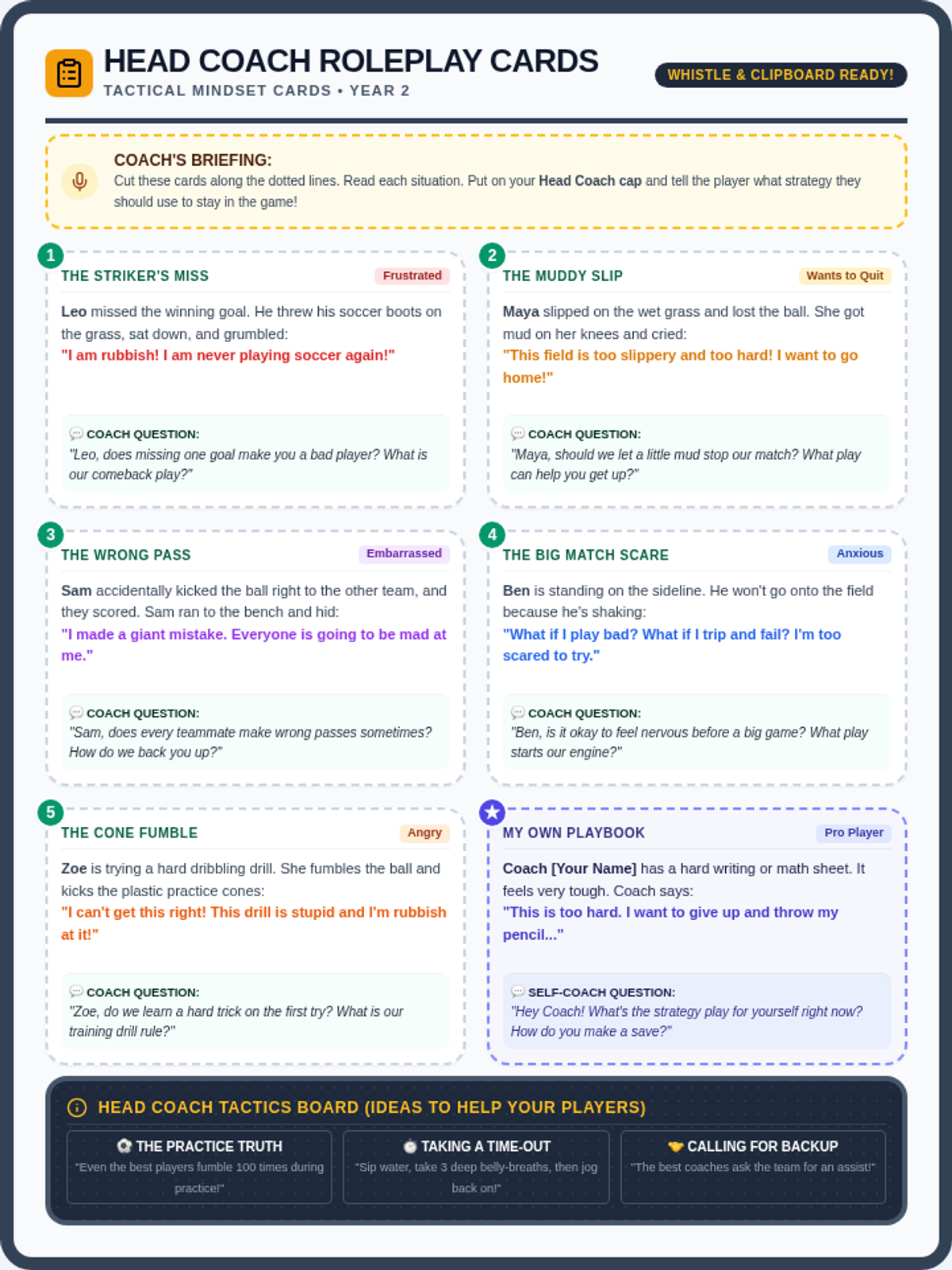
Roleplay scenario cards where the student plays the role of the 'Head Coach' giving expert strategic advice to soccer players who are frustrated or ready to quit due to making mistakes. Helps build projection and positive self-talk.
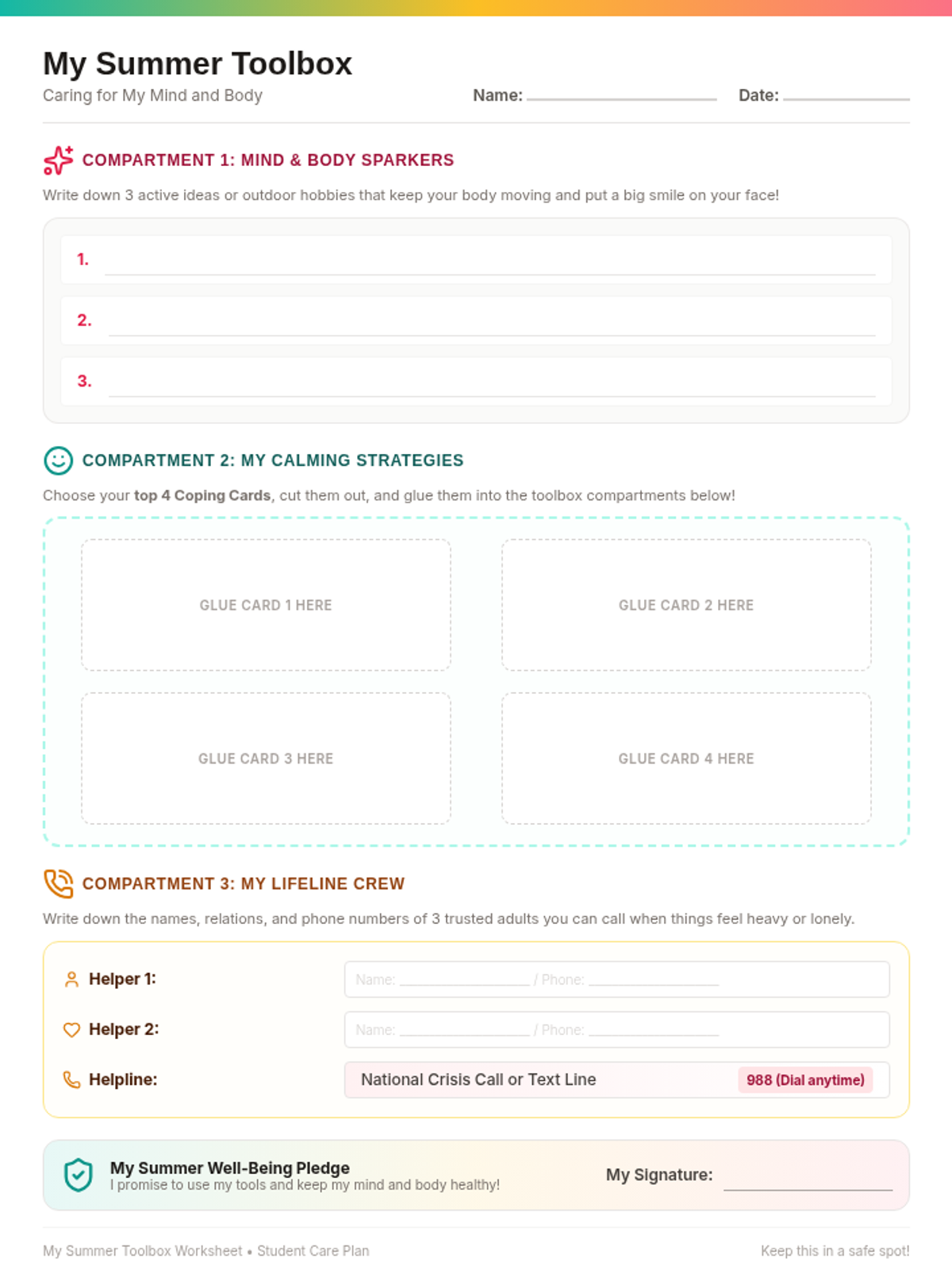
A student-facing worksheet designed to help 3rd-4th graders build their customized summer self-care toolbox by writing down active hobbies, pasting coping cards, and listing trusted contact names.
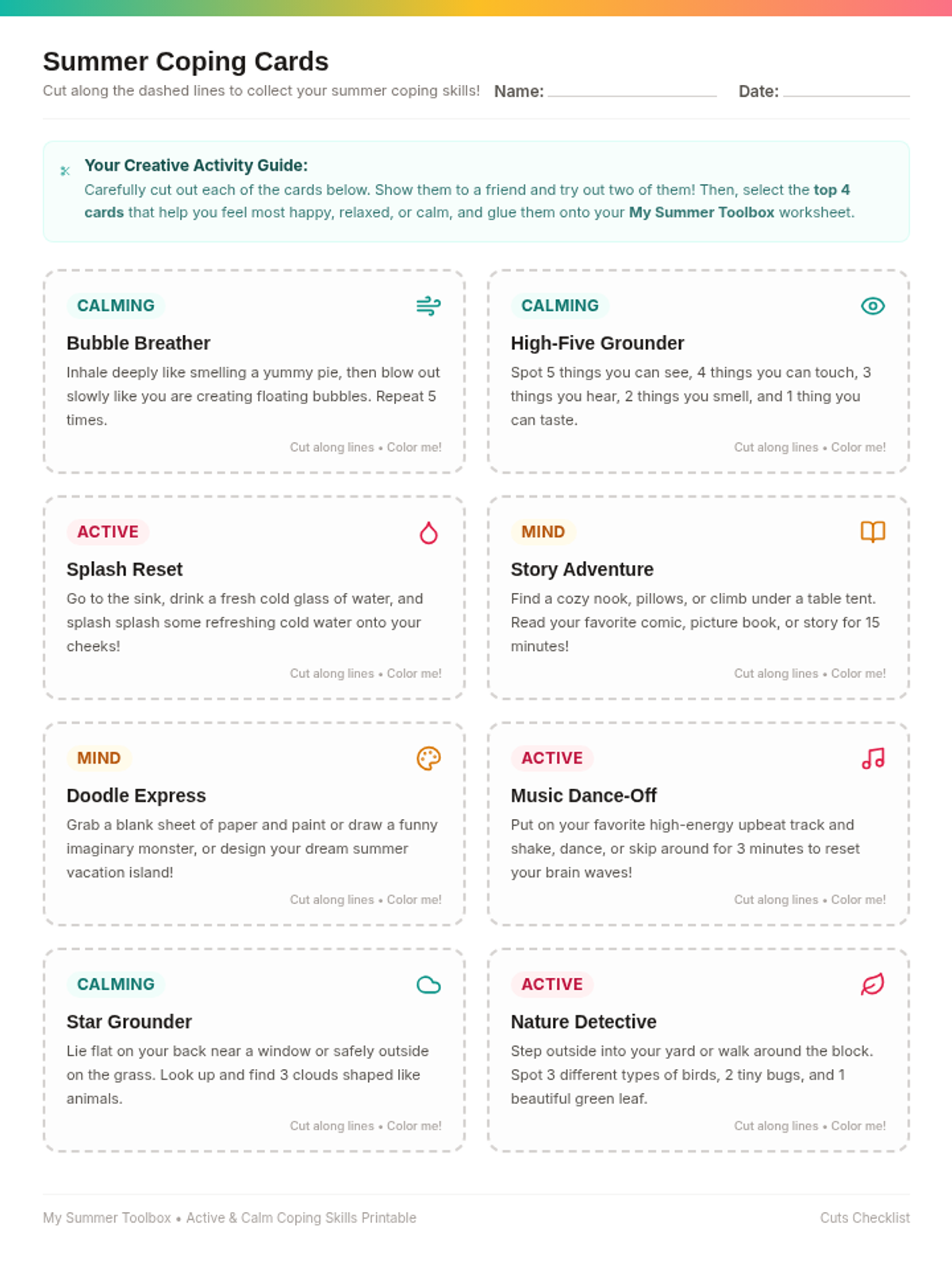
A creative, hands-on document containing 8 printable 'Summer Coping Cards' for students to cut out, discuss, and paste into their personal Summer Toolbox worksheet.
An interactive visual presentation guiding students through the concept of self-care, identifying the three toolbox compartments (Active Recreation, Calming Strategies, and Lifeline Crew), and introducing the activity.
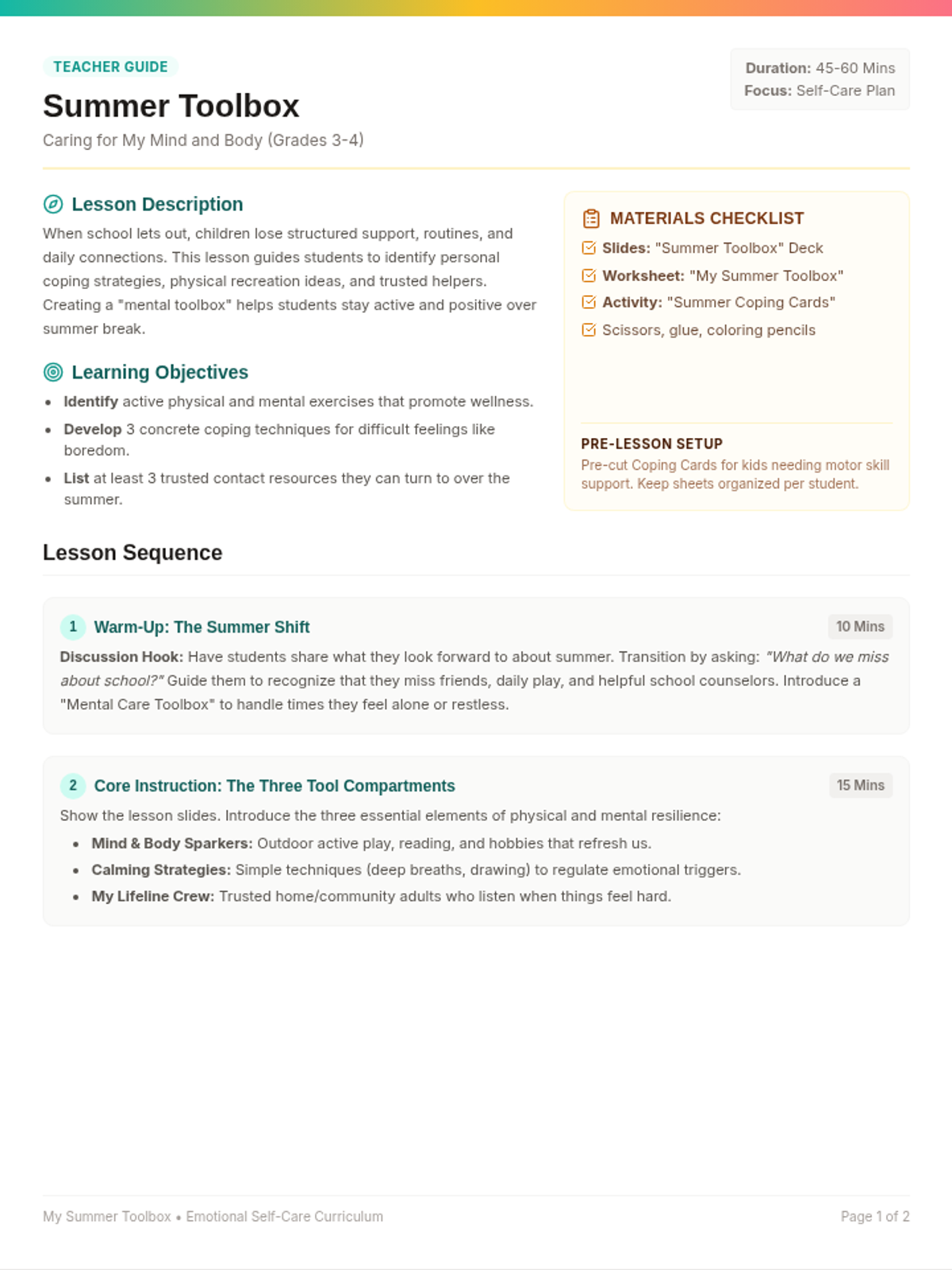
A comprehensive, step-by-step teacher lesson plan detailing objectives, materials, timing, core instruction, and extension ideas for the Summer Toolbox lesson.
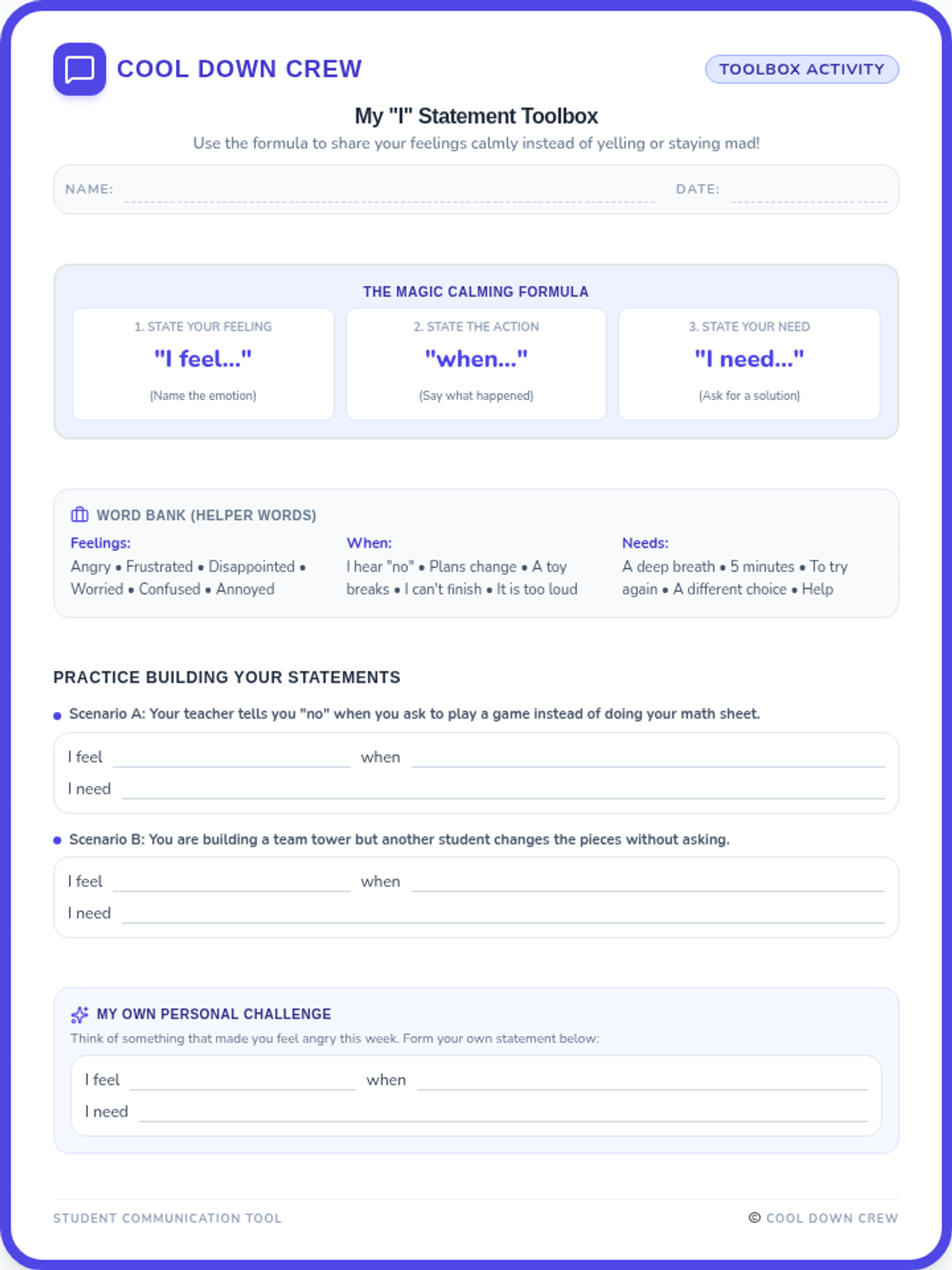
A structured practice worksheet for students to learn and construct effective 'I feel... when... I need...' statements for expressing anger constructively.
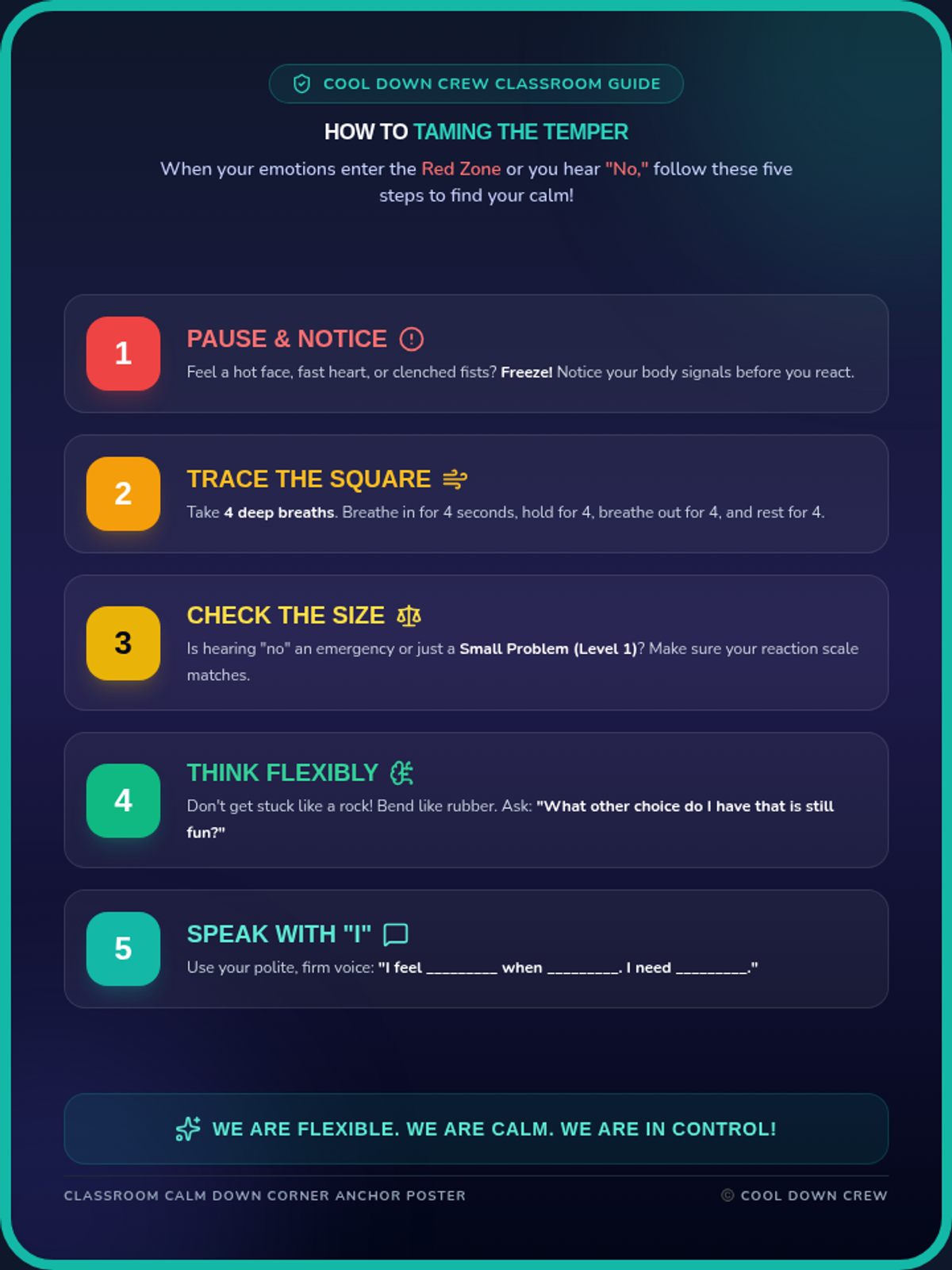
A printable classroom poster summarizing key steps to handle anger and hearing 'no'. Designed for laminating and hanging in the classroom calming corner.
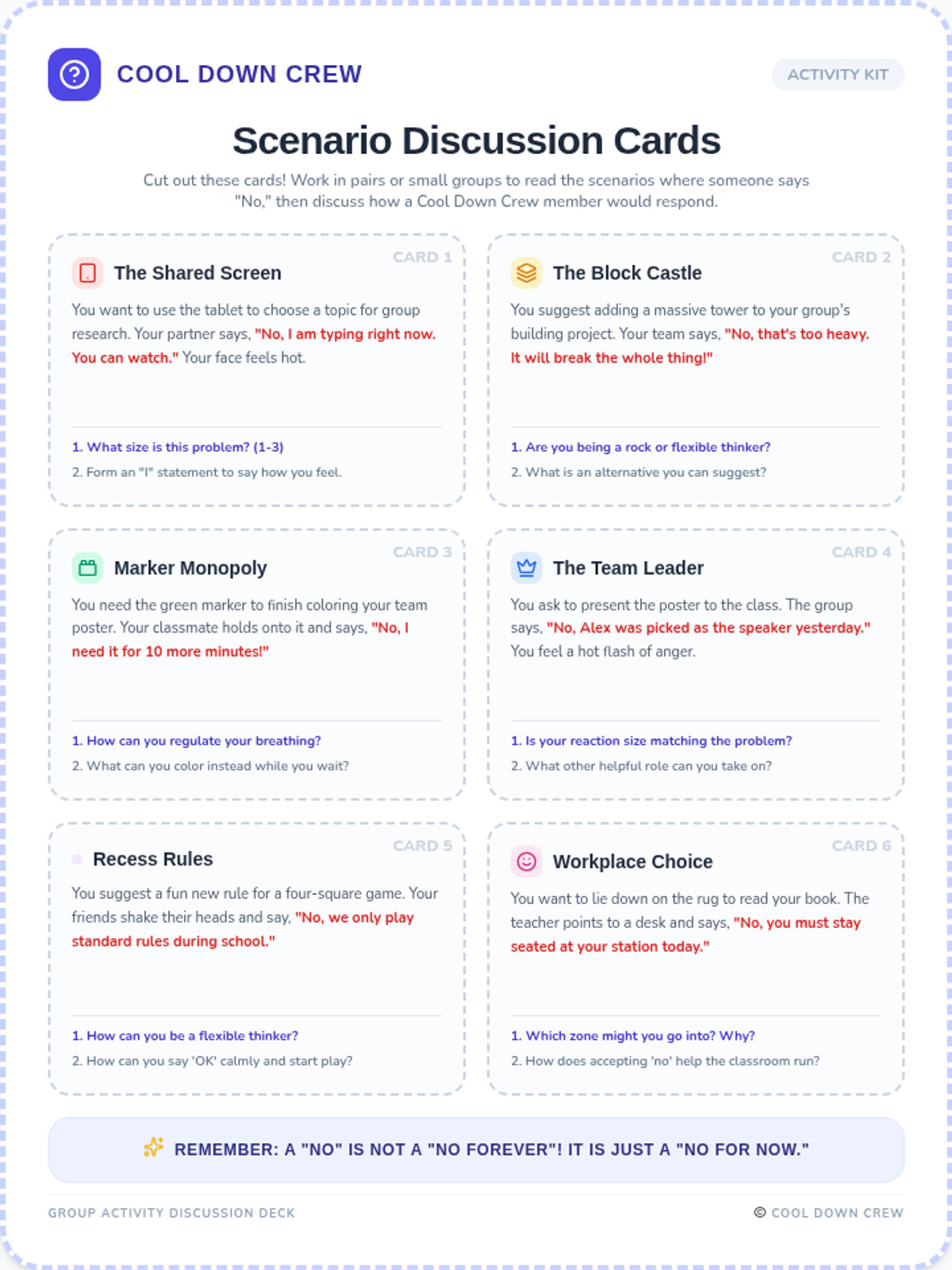
Real-life situations to practice accepting 'no' during group work. Includes discussion prompts on the size of the problem and emotional regulation.
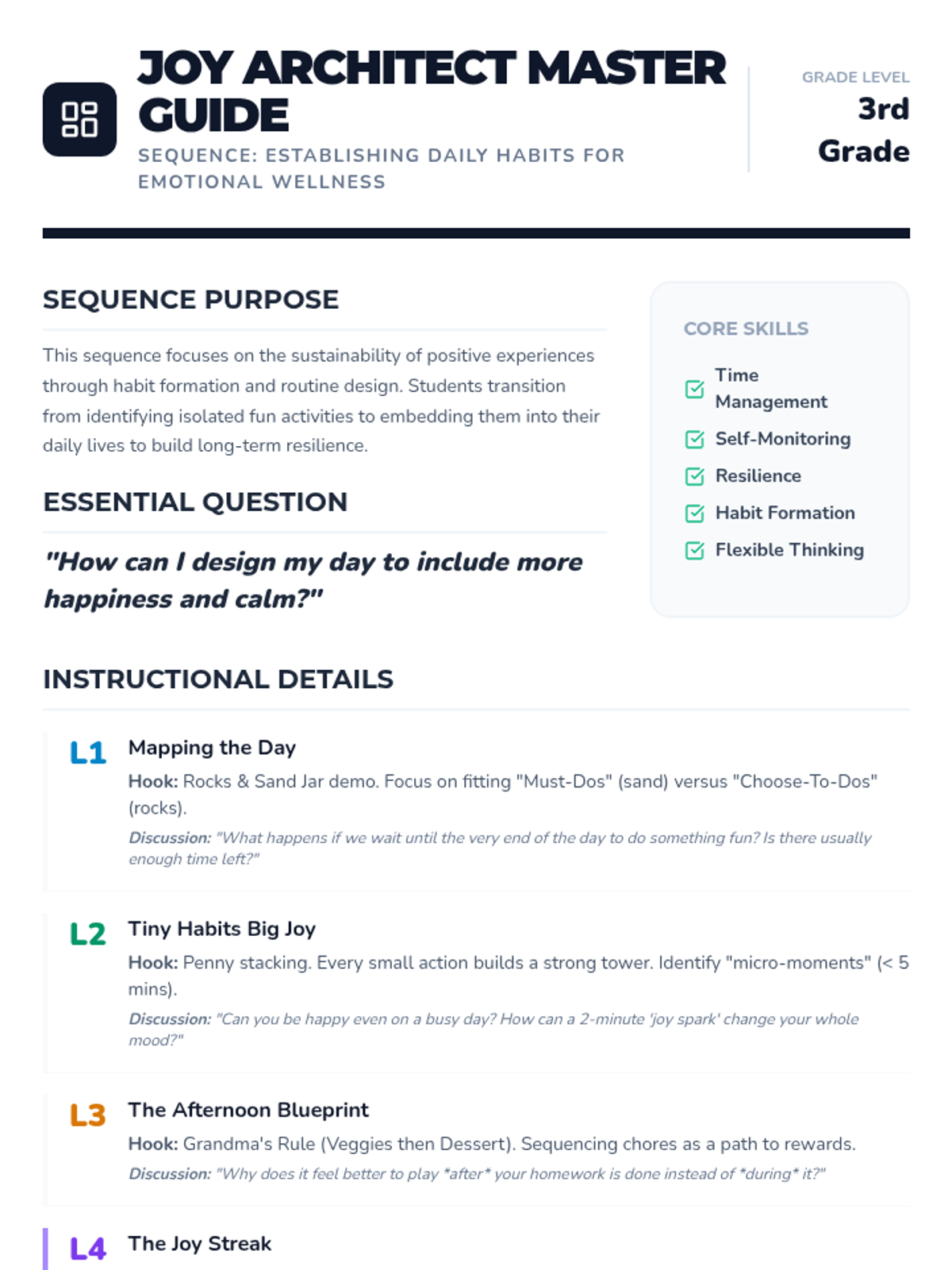
A comprehensive teacher guide for the Joy Architect sequence, outlining the instructional arc, key concepts for each lesson, and the core skills developed.
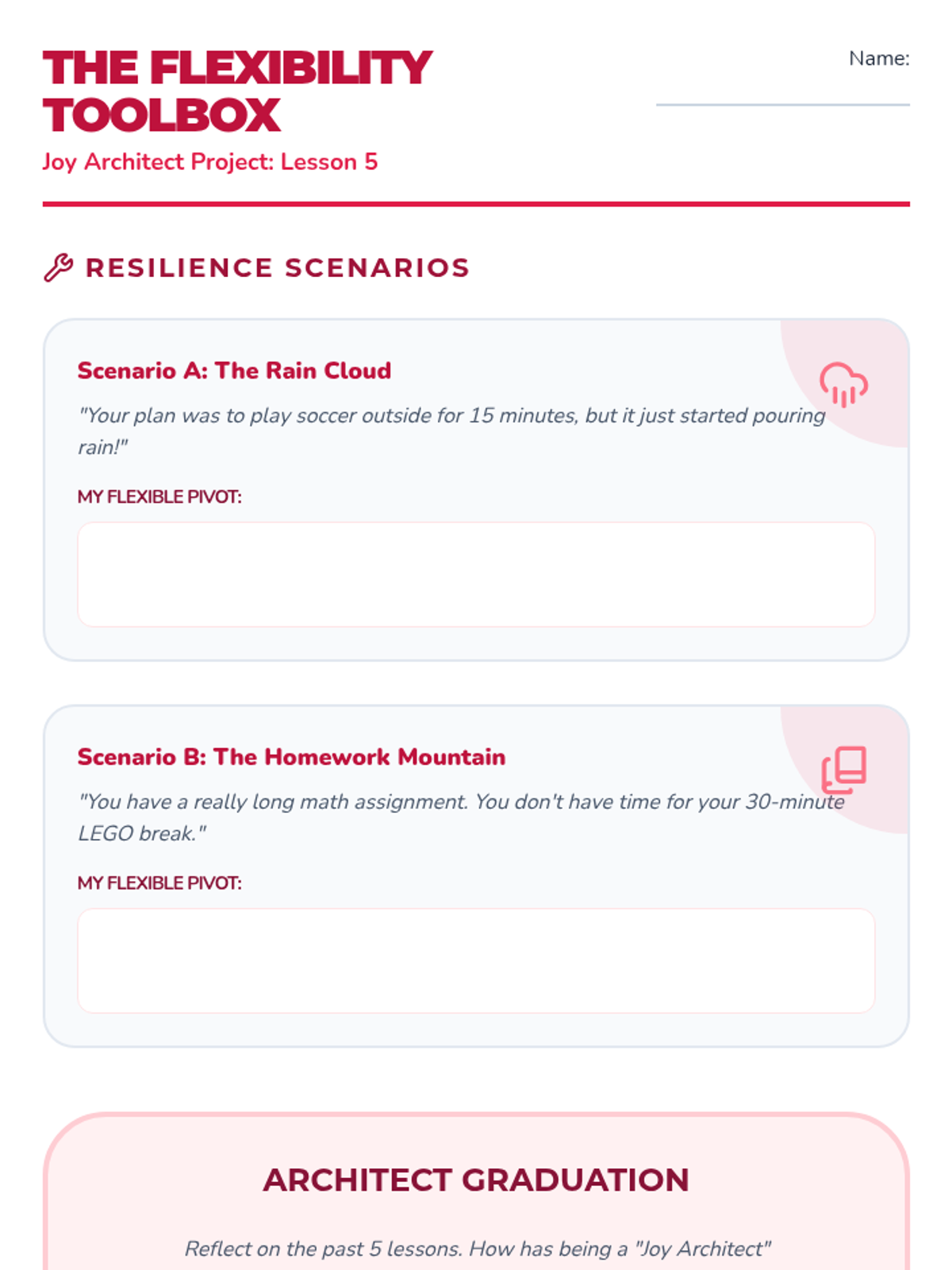
Student reflection sheet for the final lesson. Features 'resilience scenarios' for practicing flexible thinking and a final reflection on the unit's key takeaways.
Final slide deck for Lesson 5. Focuses on resilience, 'flexible thinking' when routines are disrupted, and celebrates students' progress as 'Joy Architects'.
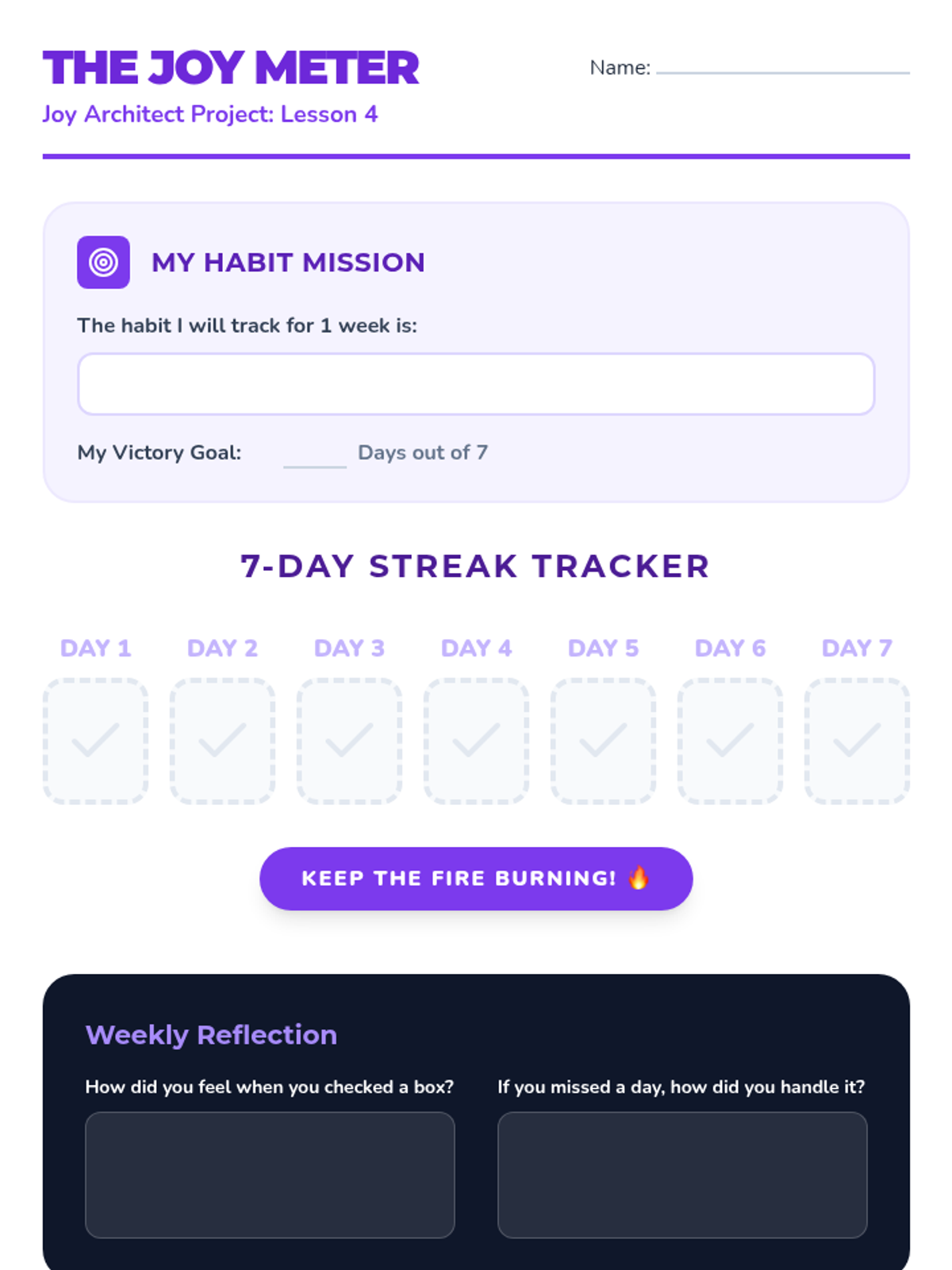
A 7-day progress tracker for students to monitor their consistency with a chosen joy habit. Includes goal setting and reflection sections.
Slide deck for Lesson 4 on creating a progress tracker. Explains the concept of 'streaks' and the importance of self-monitoring and honesty in habit formation.
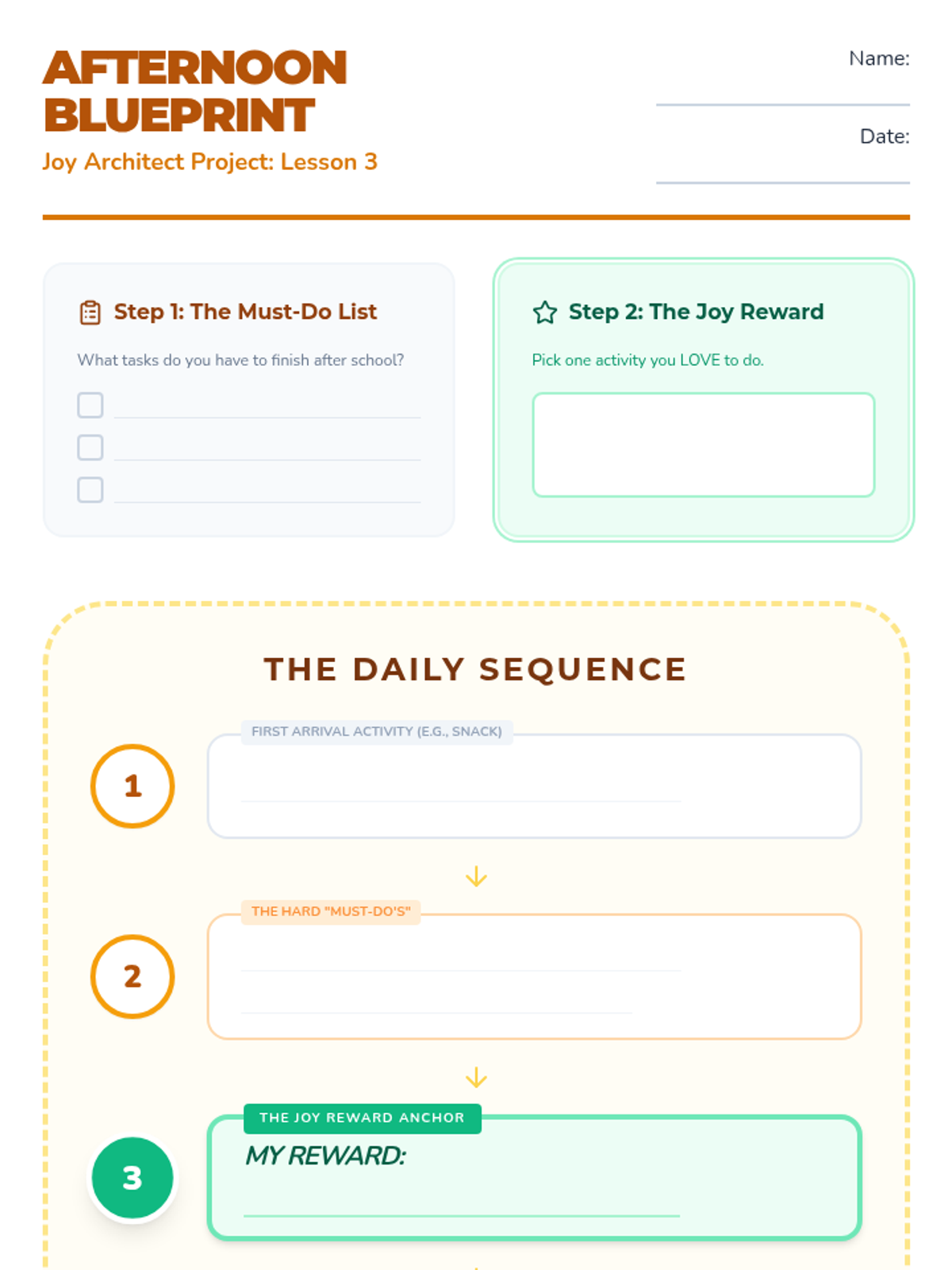
Student worksheet for designing an afternoon schedule. Uses the 'Grandma's Rule' concept to sequence chores before rewarding joy activities.
Slide deck for Lesson 3 on designing a balanced schedule. Introduces 'Grandma's Rule' (sequencing chores before rewards) and using joy as a motivation anchor.
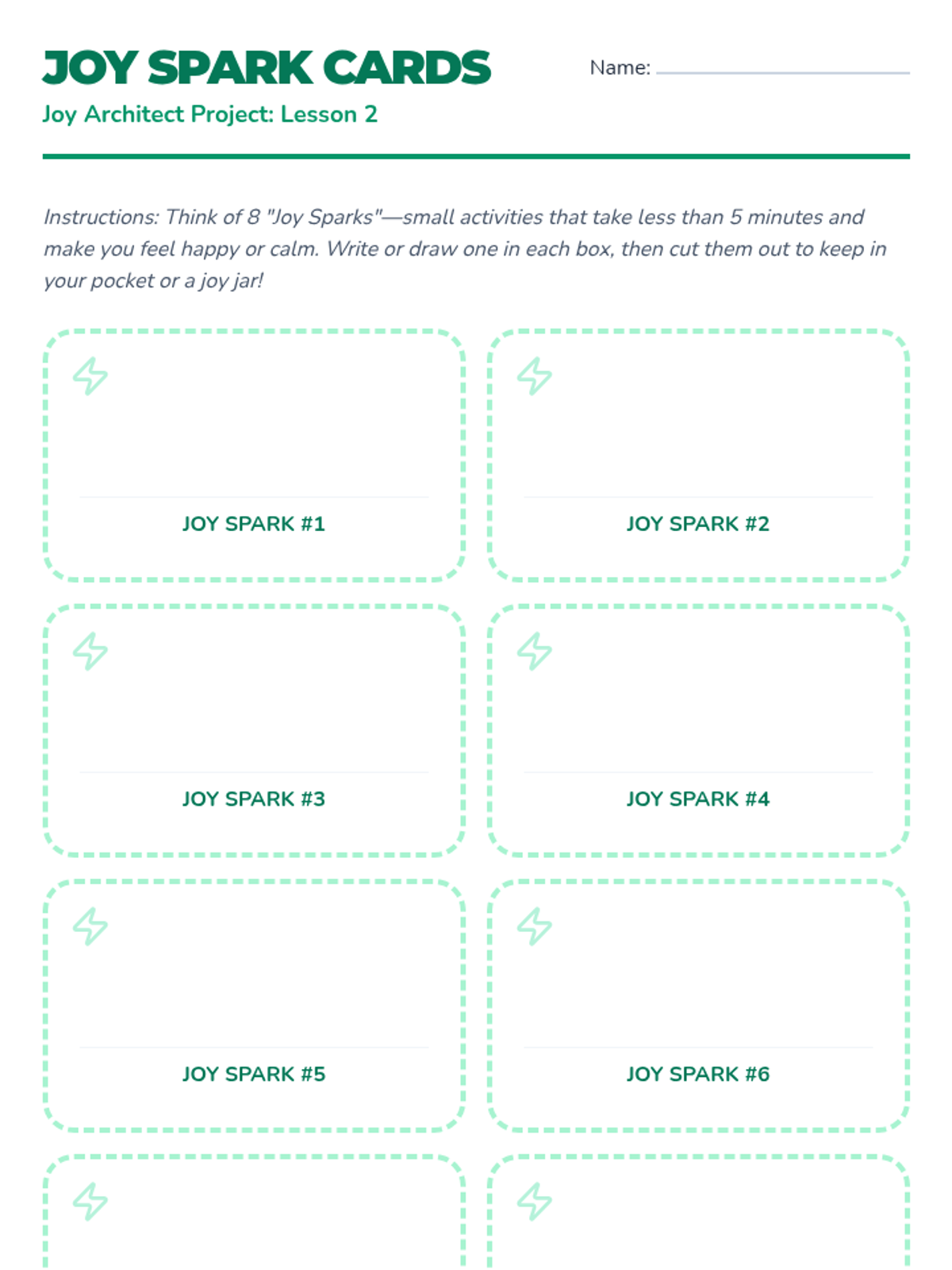
A set of cut-out cards for students to brainstorm and record 'micro-moments' of joy they can easily integrate into their day.
Slide deck for Lesson 2 focusing on micro-moments of joy. Introduces the concept that frequency of positive experiences is key to resilience.
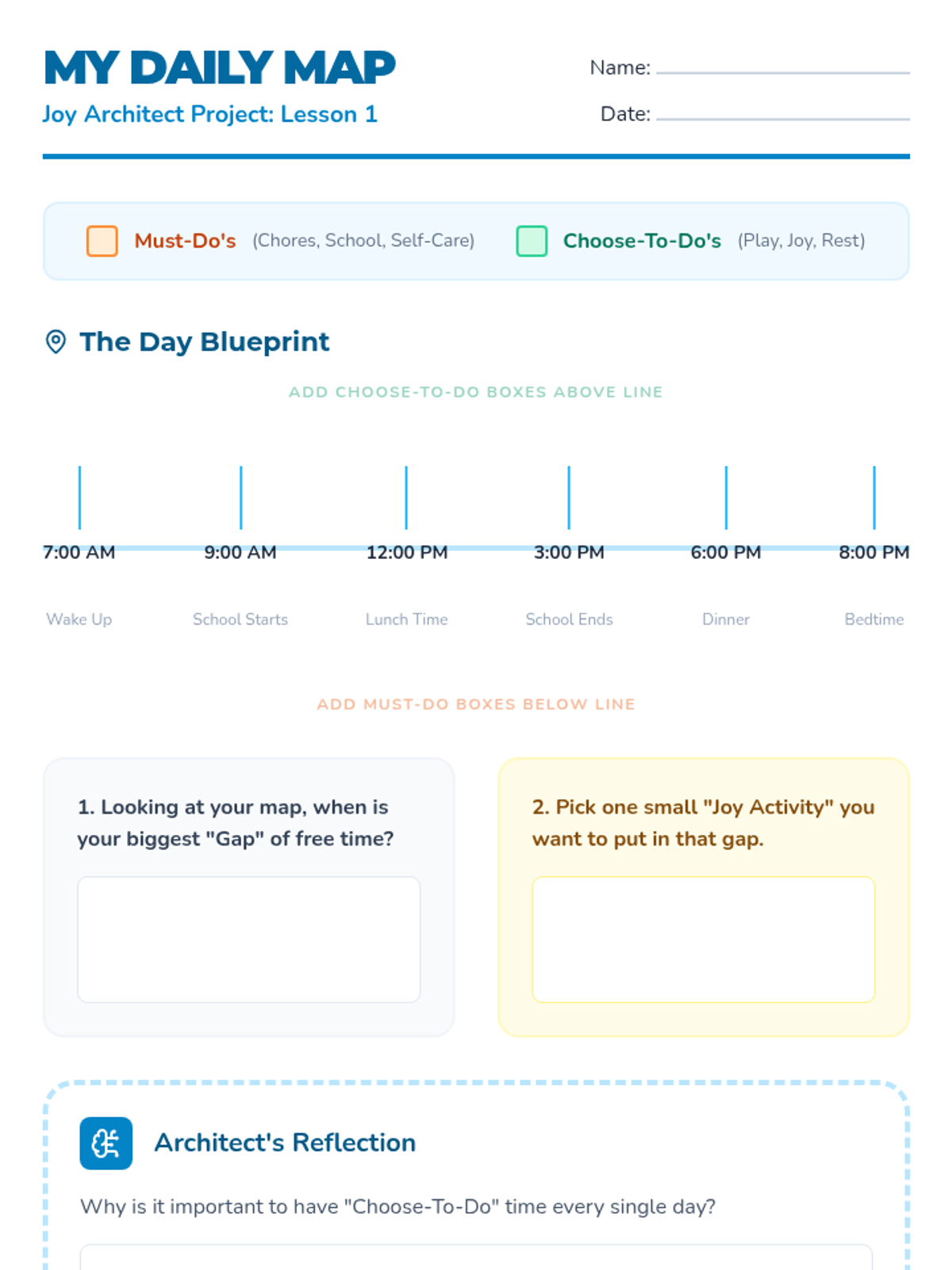
Student worksheet for auditing their daily routine. Includes a timeline for mapping tasks and reflection questions to identify 'joy gaps'.
Introductory slide deck for the 'Mapping the Day' lesson. Introduces the concept of 'Must-Do' vs 'Choose-To-Do' activities using a construction/architect theme.
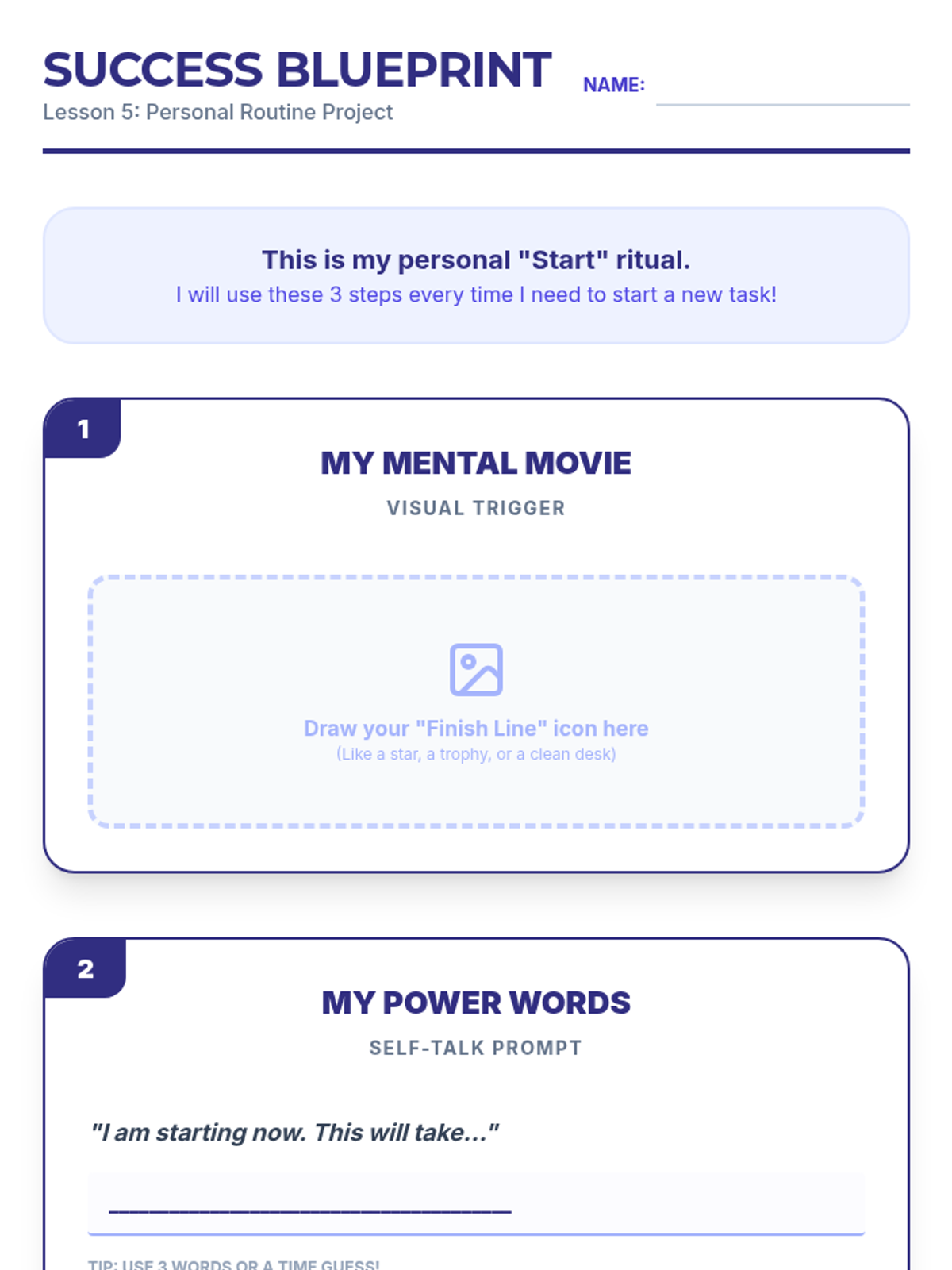
Final project worksheet for Lesson 5, where students synthesize everything they have learned to create a personal three-step 'Success Blueprint' for starting tasks.
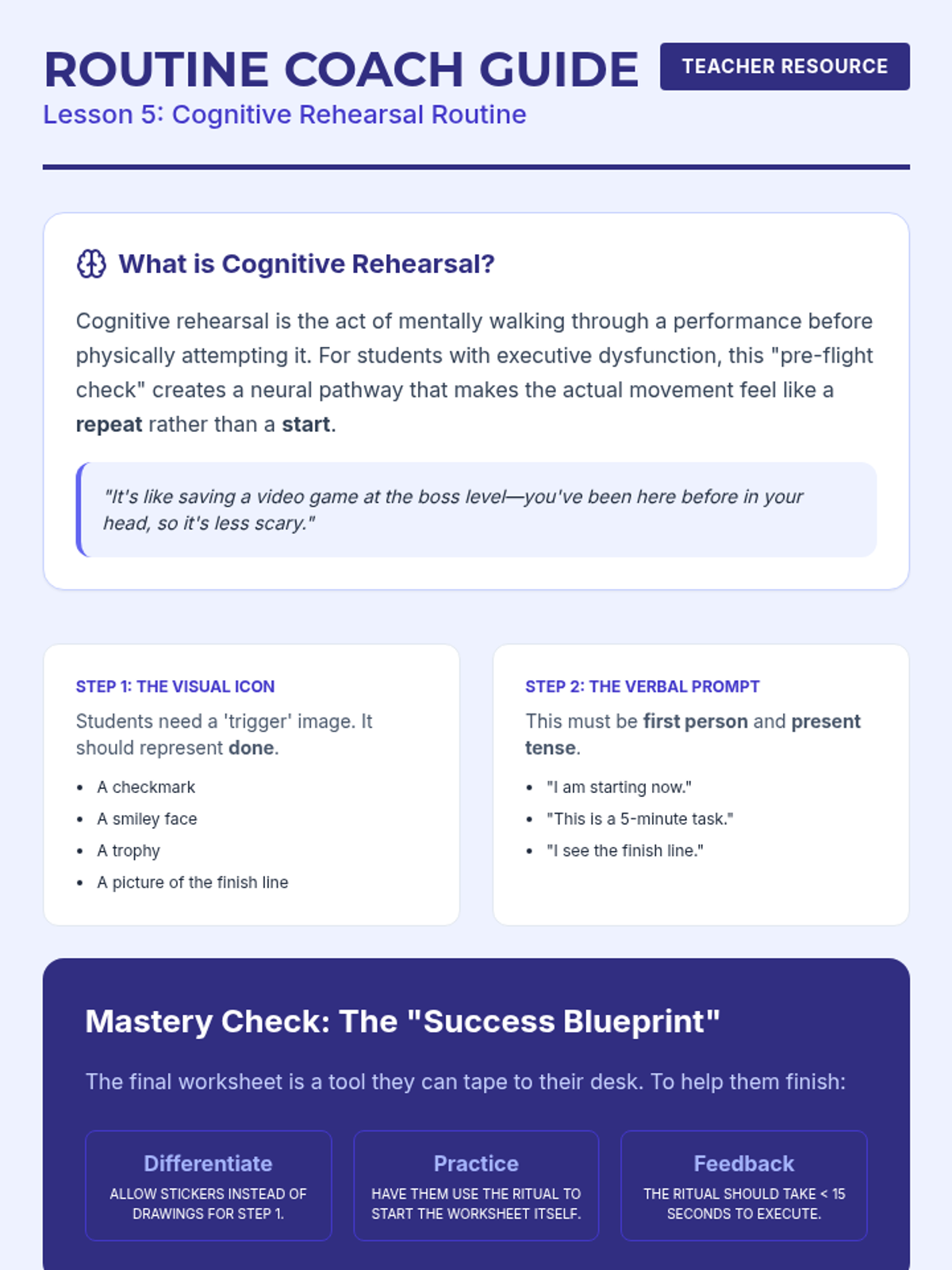
Teacher guide for Lesson 5, focusing on cognitive rehearsal and providing instructions for supporting students as they design their own success rituals.
Slides for Lesson 5, guiding students through the final project of creating their own personal 'Success Ritual' for task initiation.
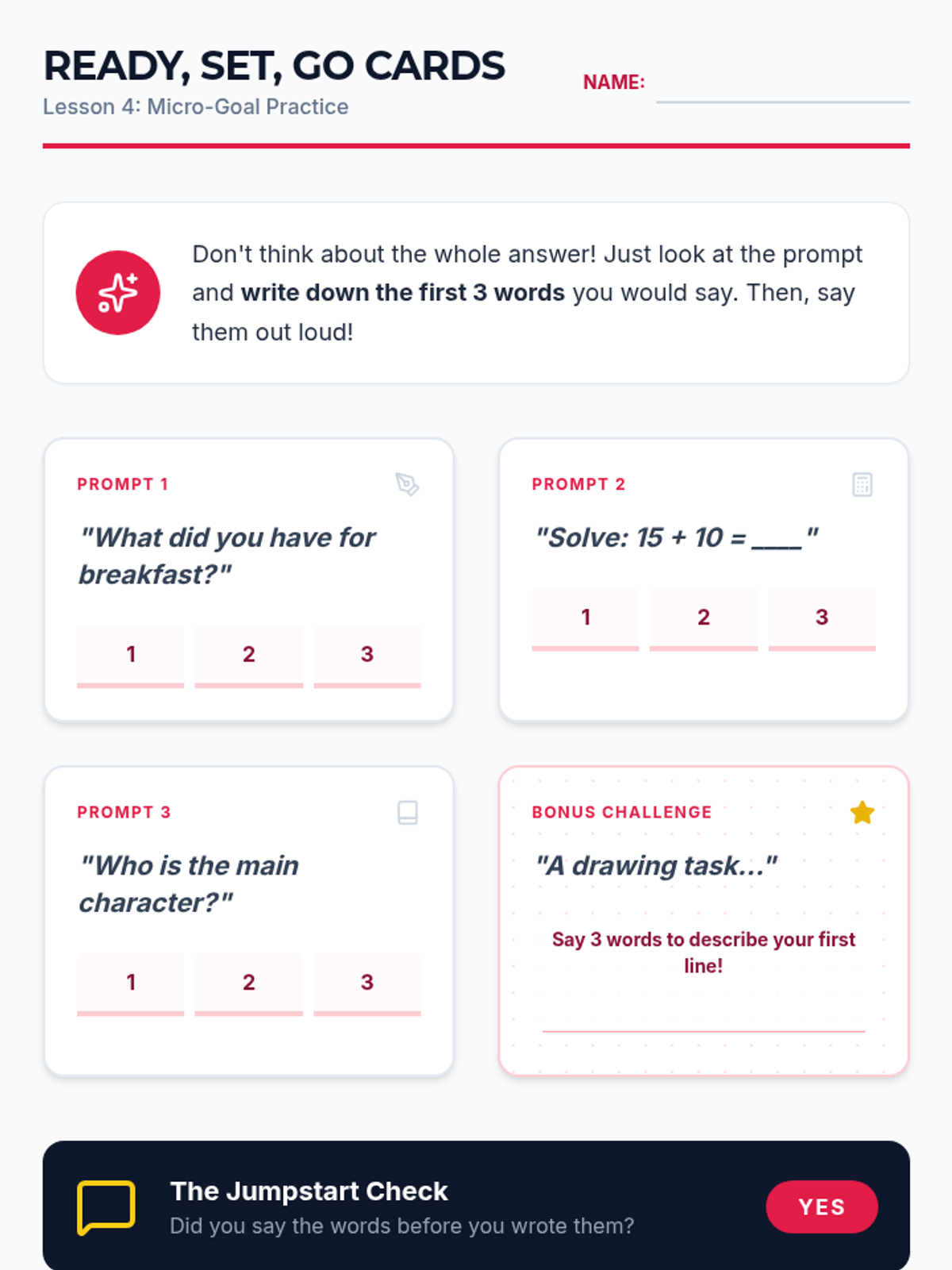
Student practice worksheet for Lesson 4, featuring prompt cards where students practice identifying and writing the first three words of a response.
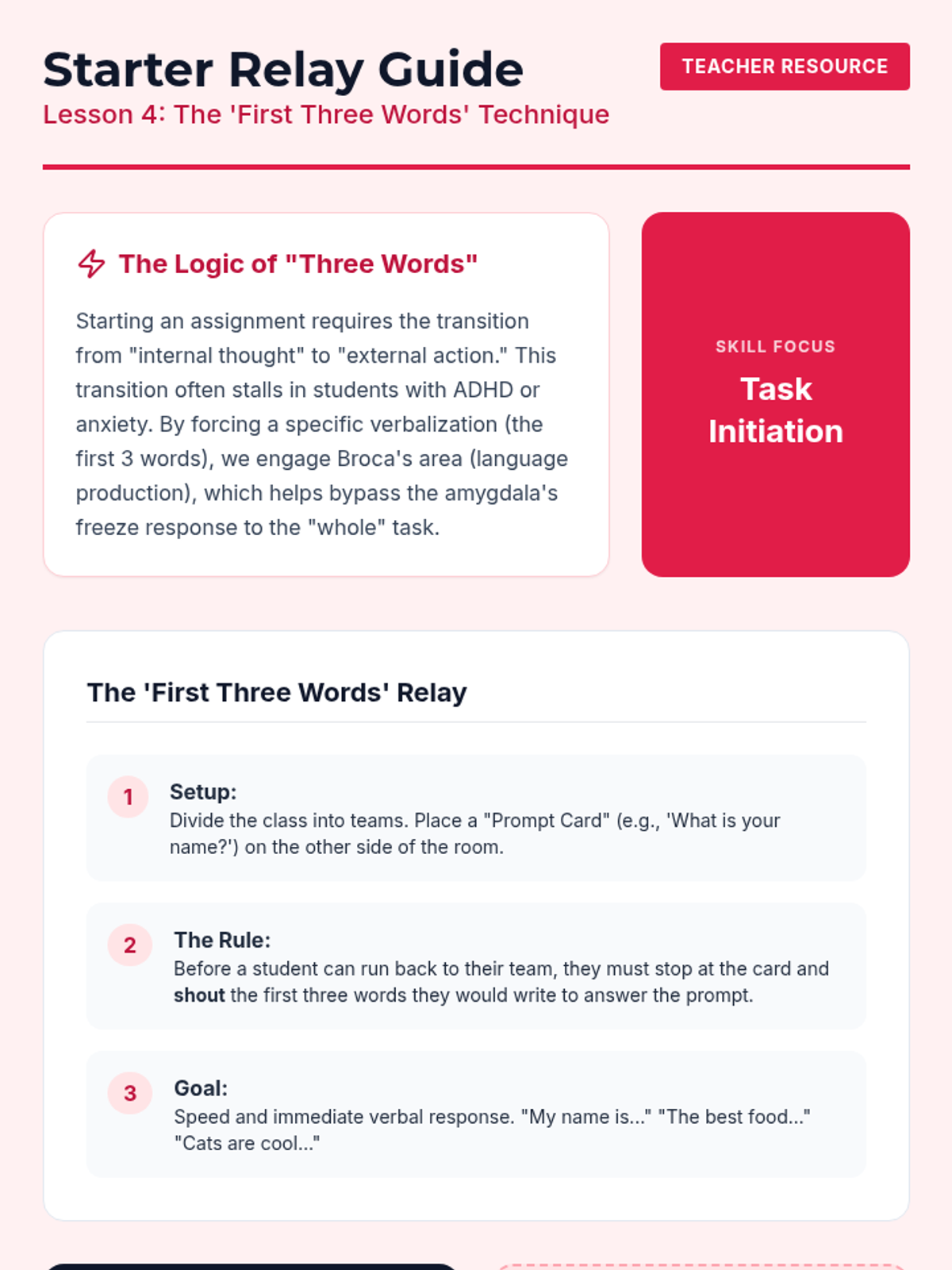
Teacher guide for Lesson 4, explaining the neurological basis for the 'First Three Words' technique and providing instructions for the relay race activity.
Slides for Lesson 4 introducing the 'First Three Words' technique—a micro-goal strategy to break the paralysis of starting a new task.
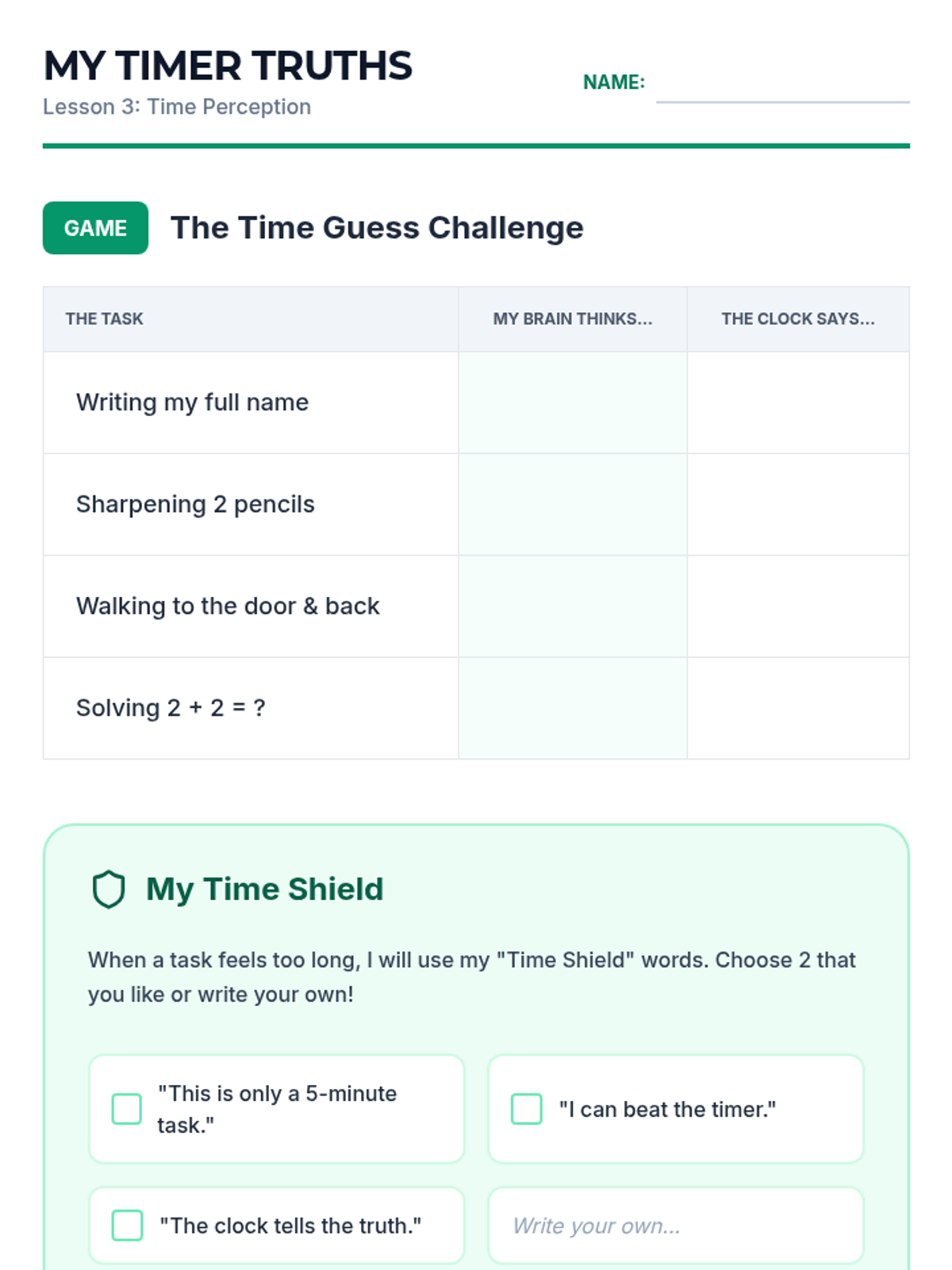
Student worksheet for Lesson 3, where students compare their time predictions with actual results and select self-talk phrases to manage overwhelm.
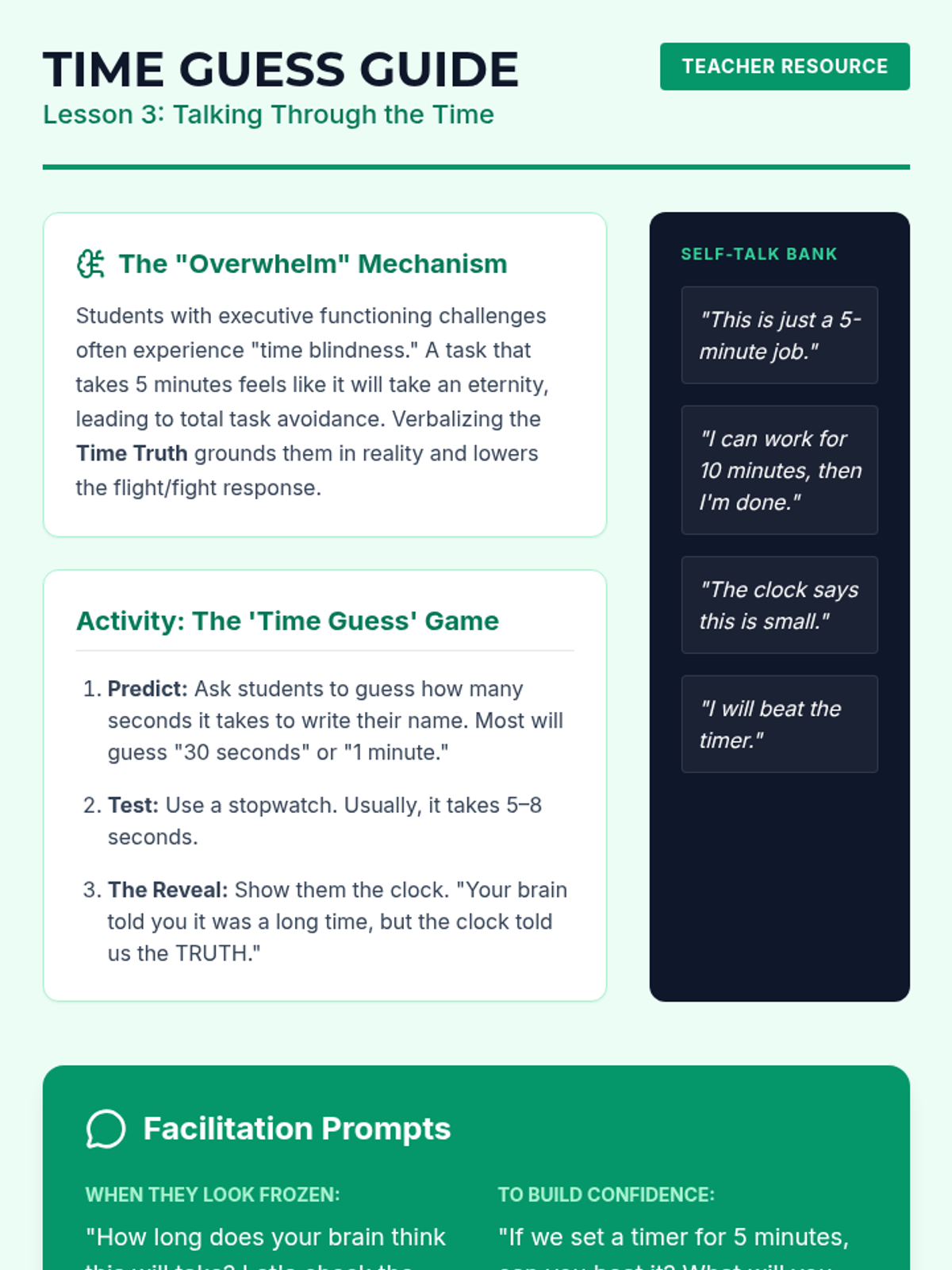
Teacher guide for Lesson 3, focusing on time blindness and providing strategies for using time estimation and self-talk to reduce student anxiety.
Slides for Lesson 3 on time estimation and using calming self-talk to reduce the anxiety of starting long or complex tasks.
Interactive assembly slides for Counselor's Week 4 session on Celebration, Reflection, and administering the school-wide student post-assessment.
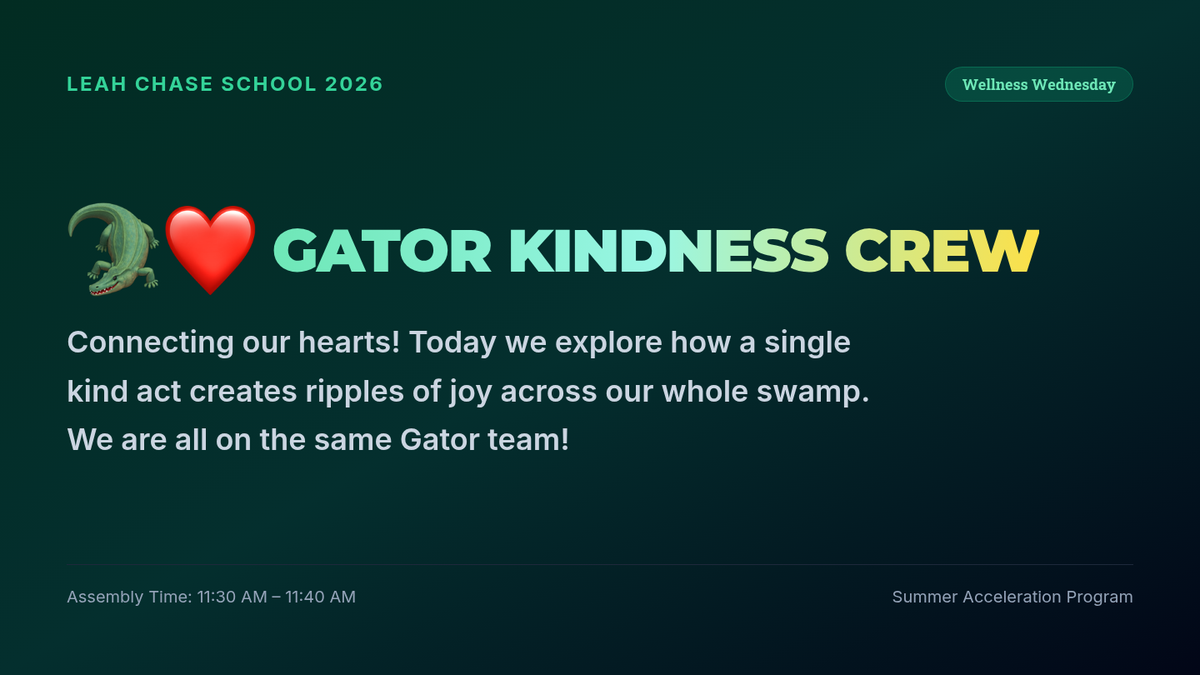
Interactive assembly slides for Counselor's Week 3 session on Kindness and Community, teaching students about bucket filling and empathy.
Interactive assembly slides for Counselor's Week 1 session on Growth Mindset, featuring the power of 'Yet' and pre-assessment instructions.