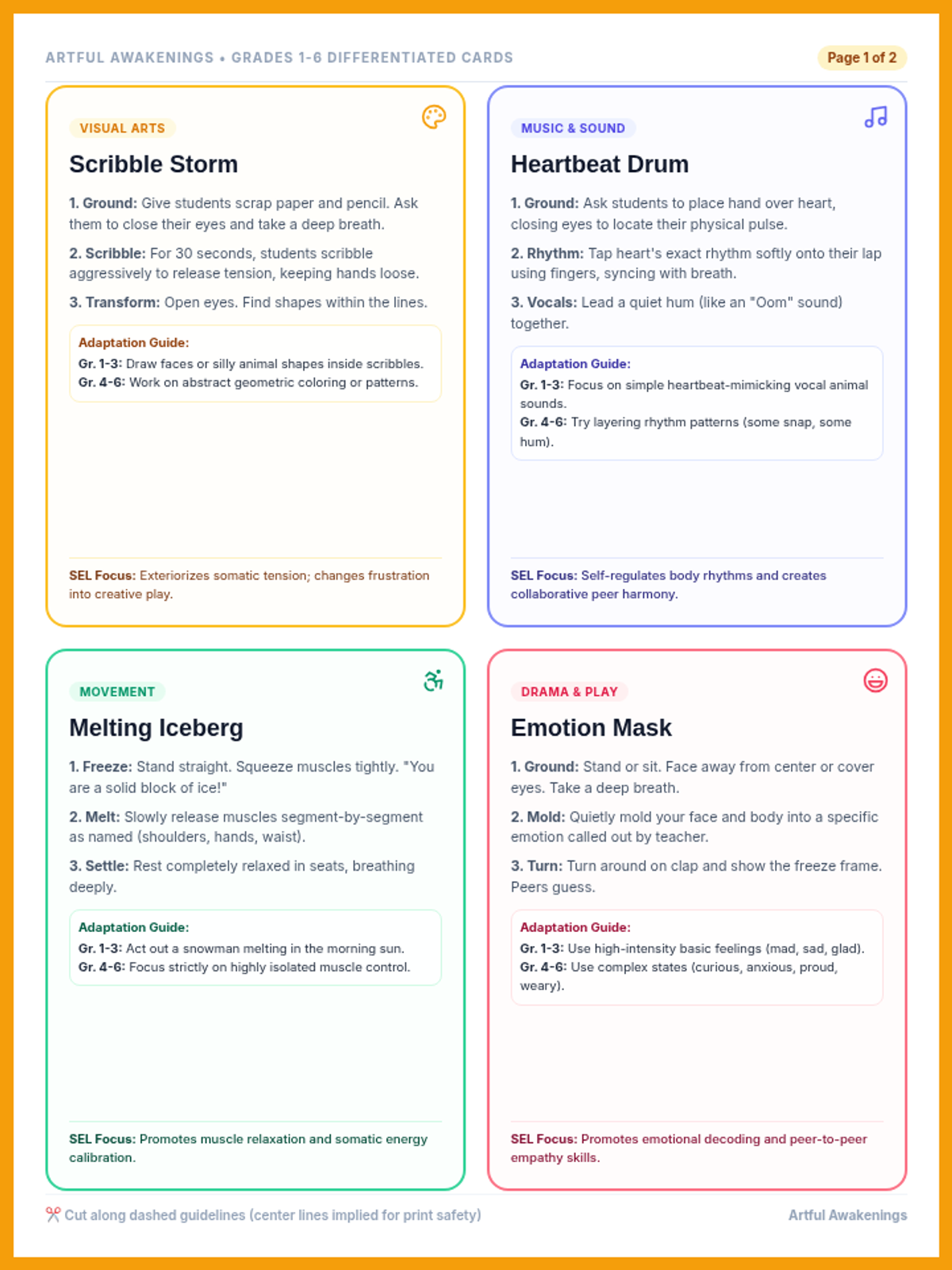
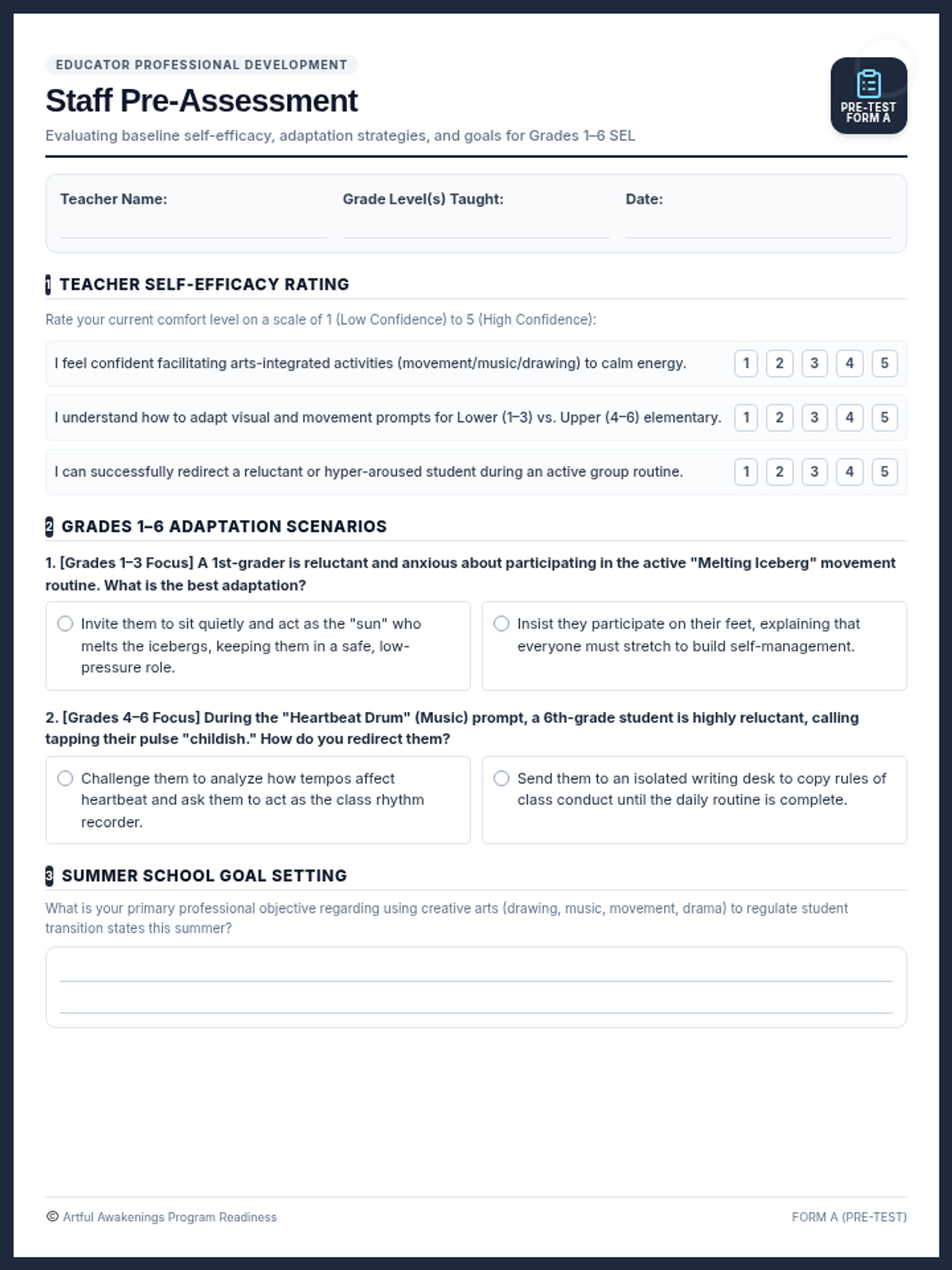
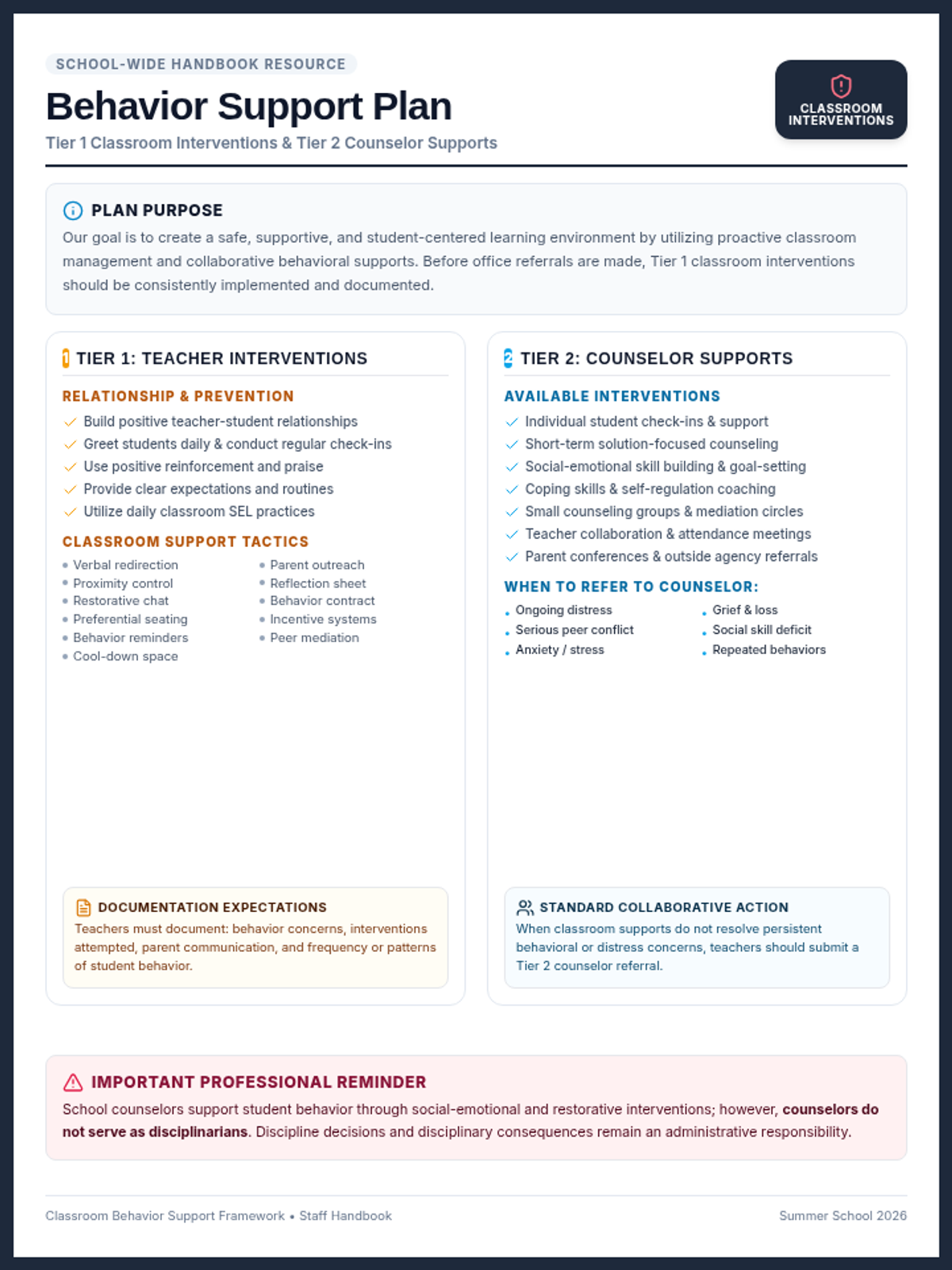
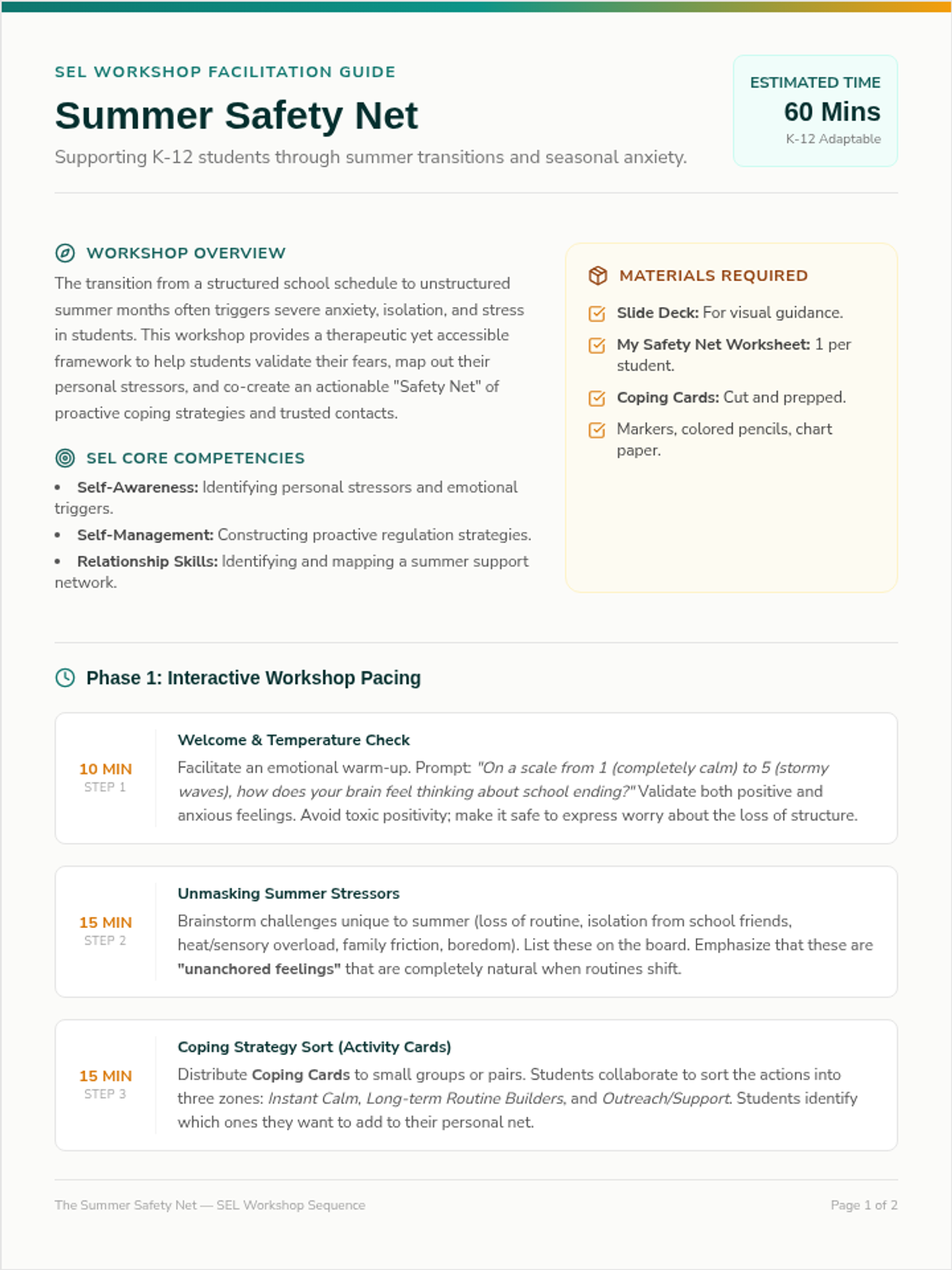
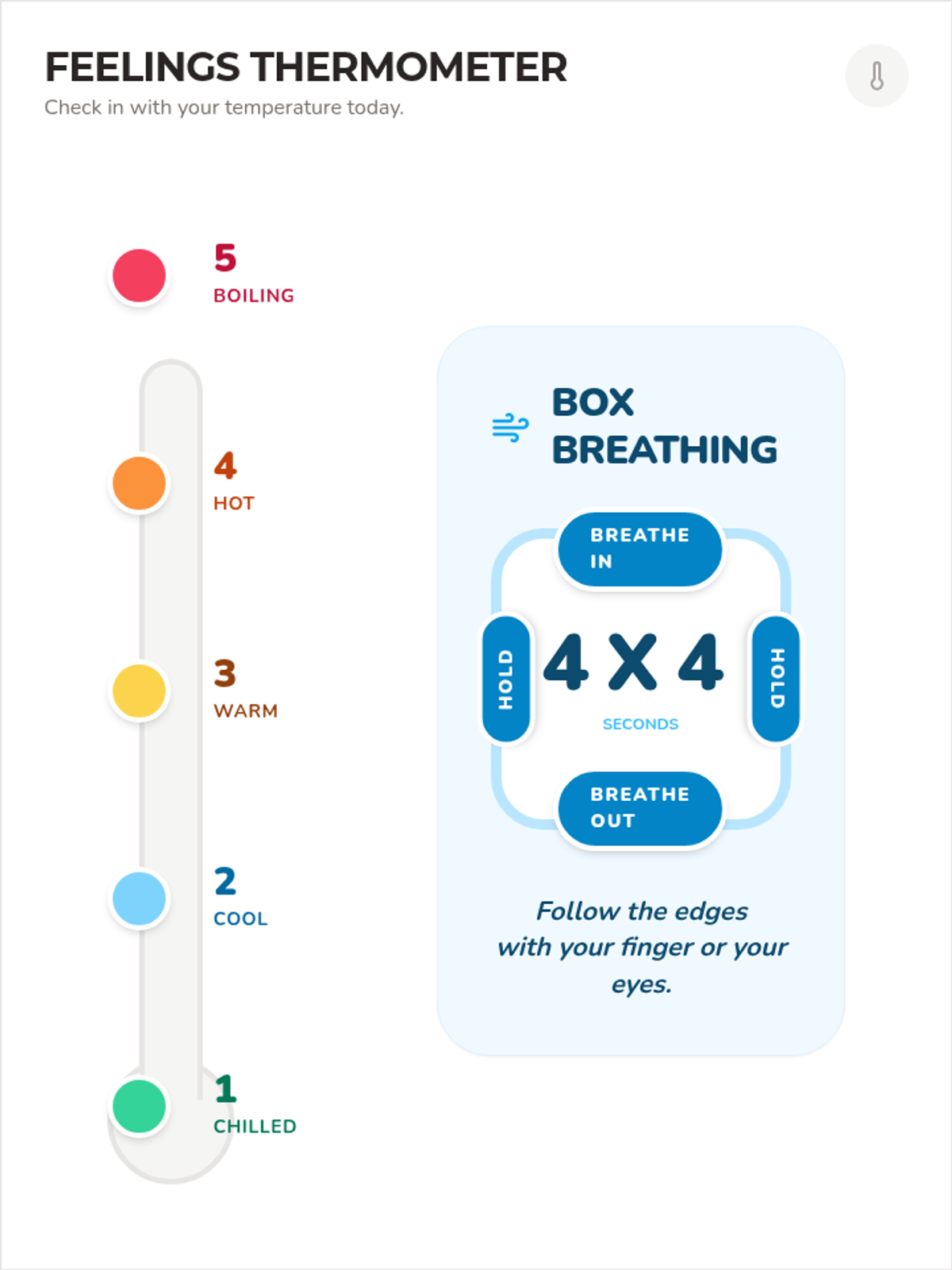
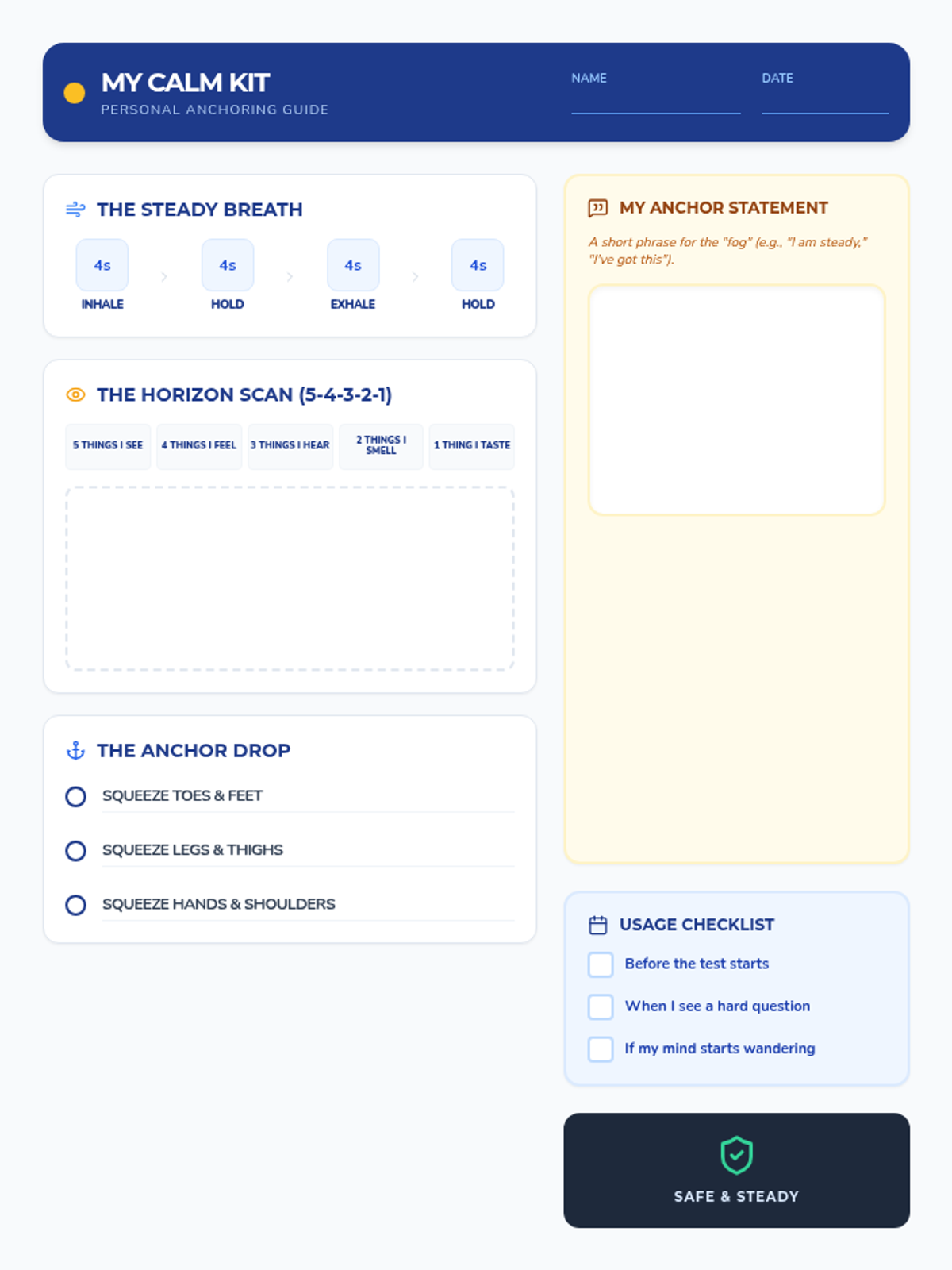
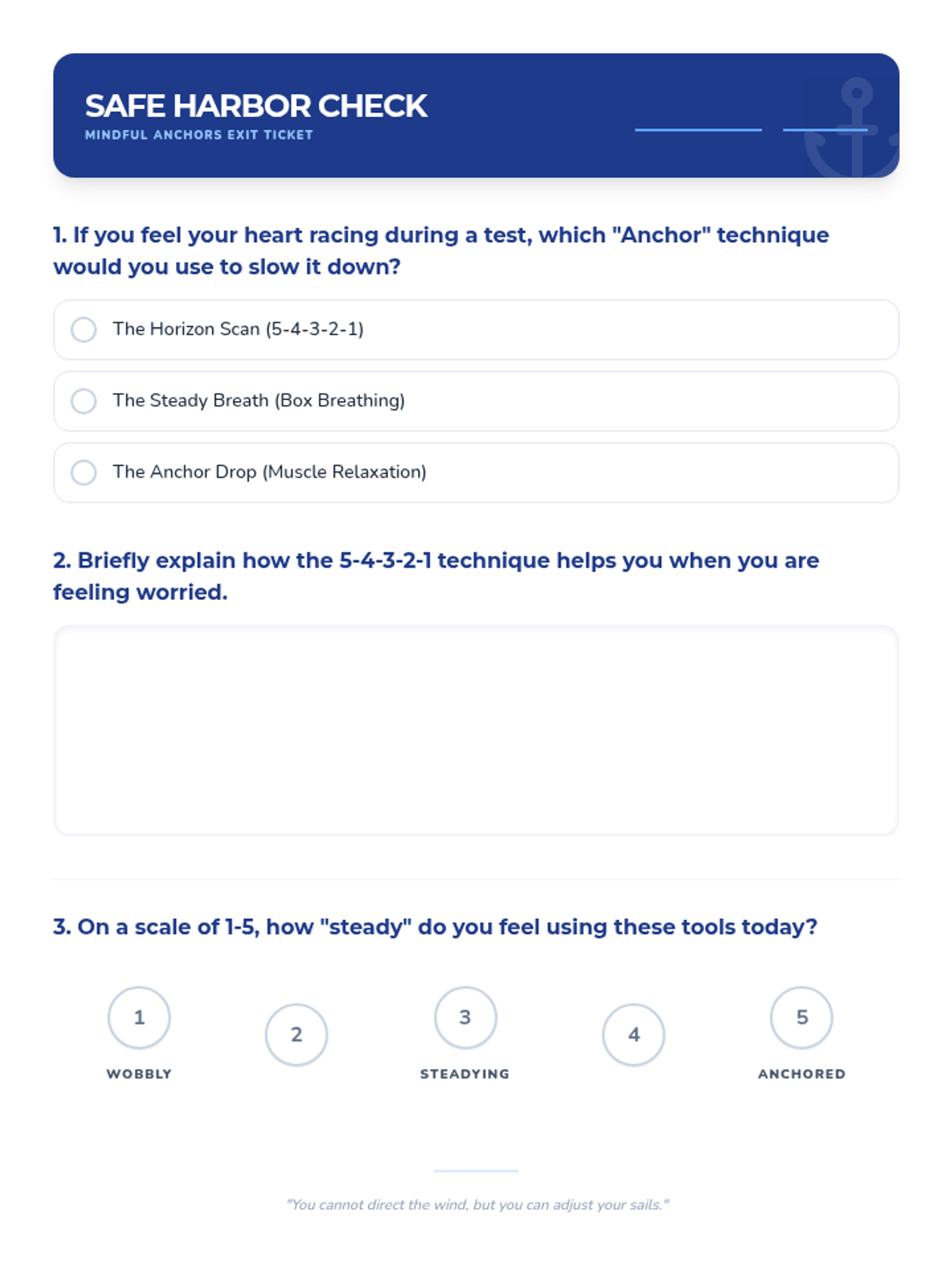
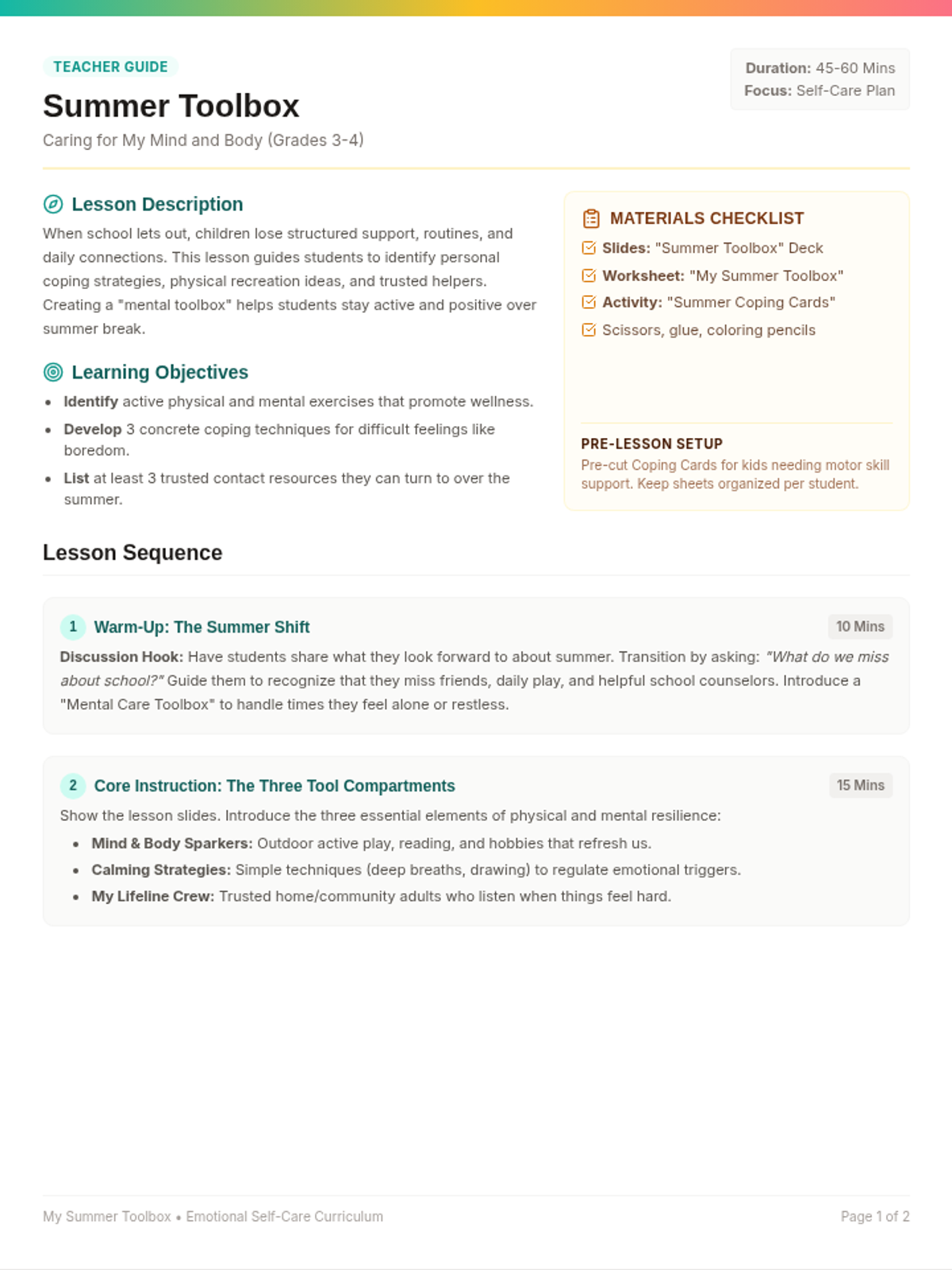
Mindful breathing and body scan meditation techniques integrated with daily self-care routines. Develops strategies for balancing life demands and advocating for personal wellness needs.
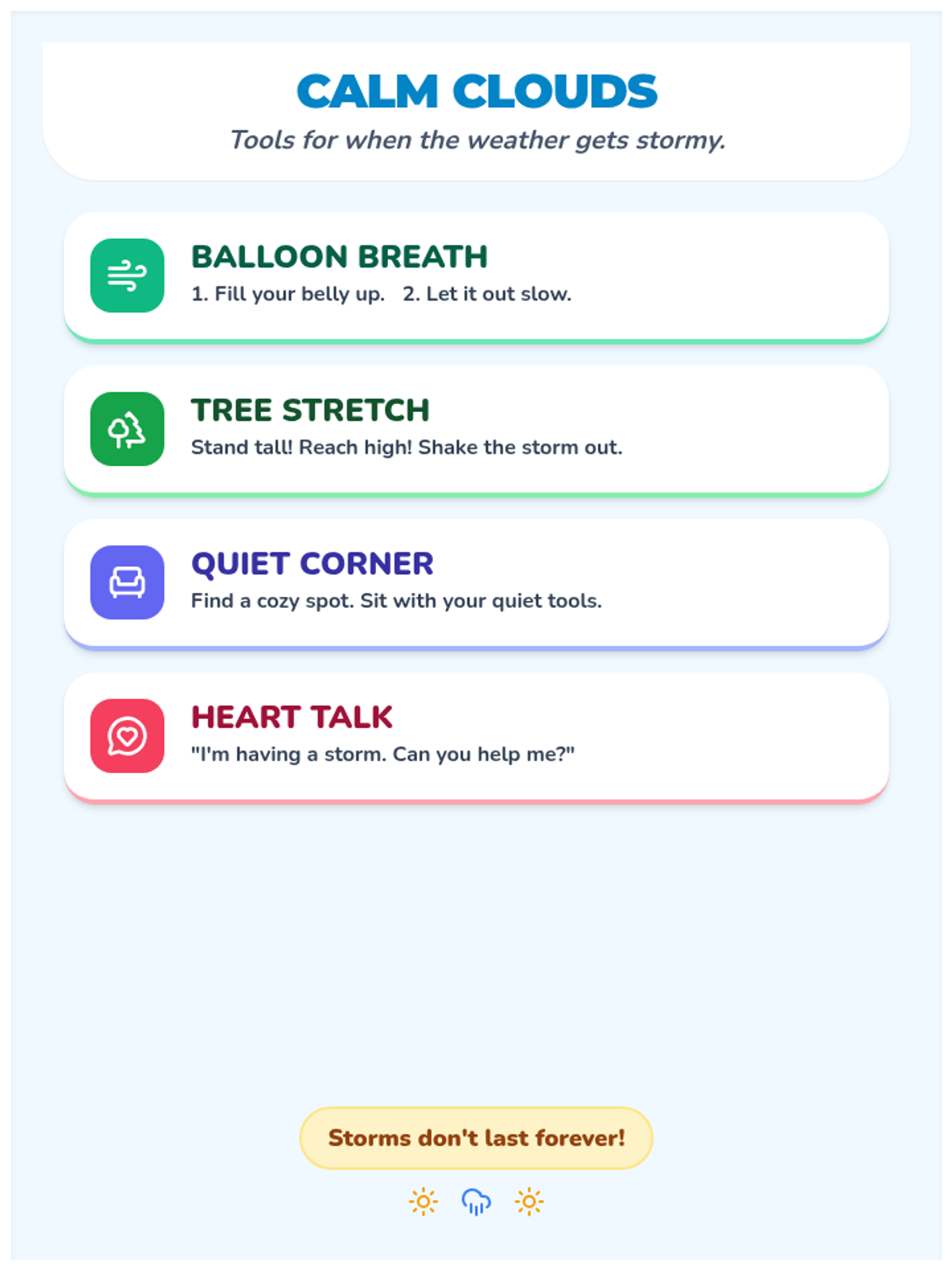
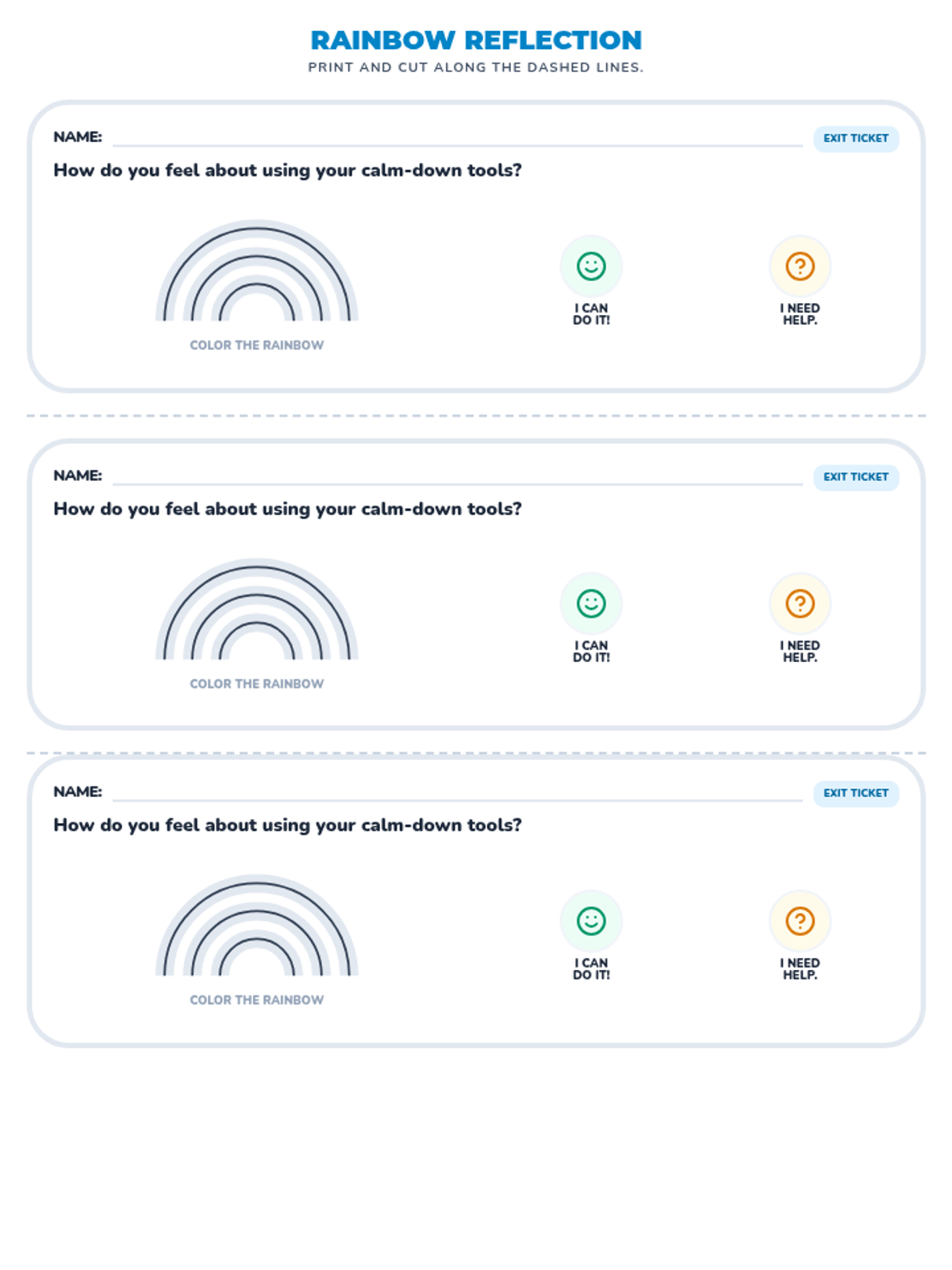
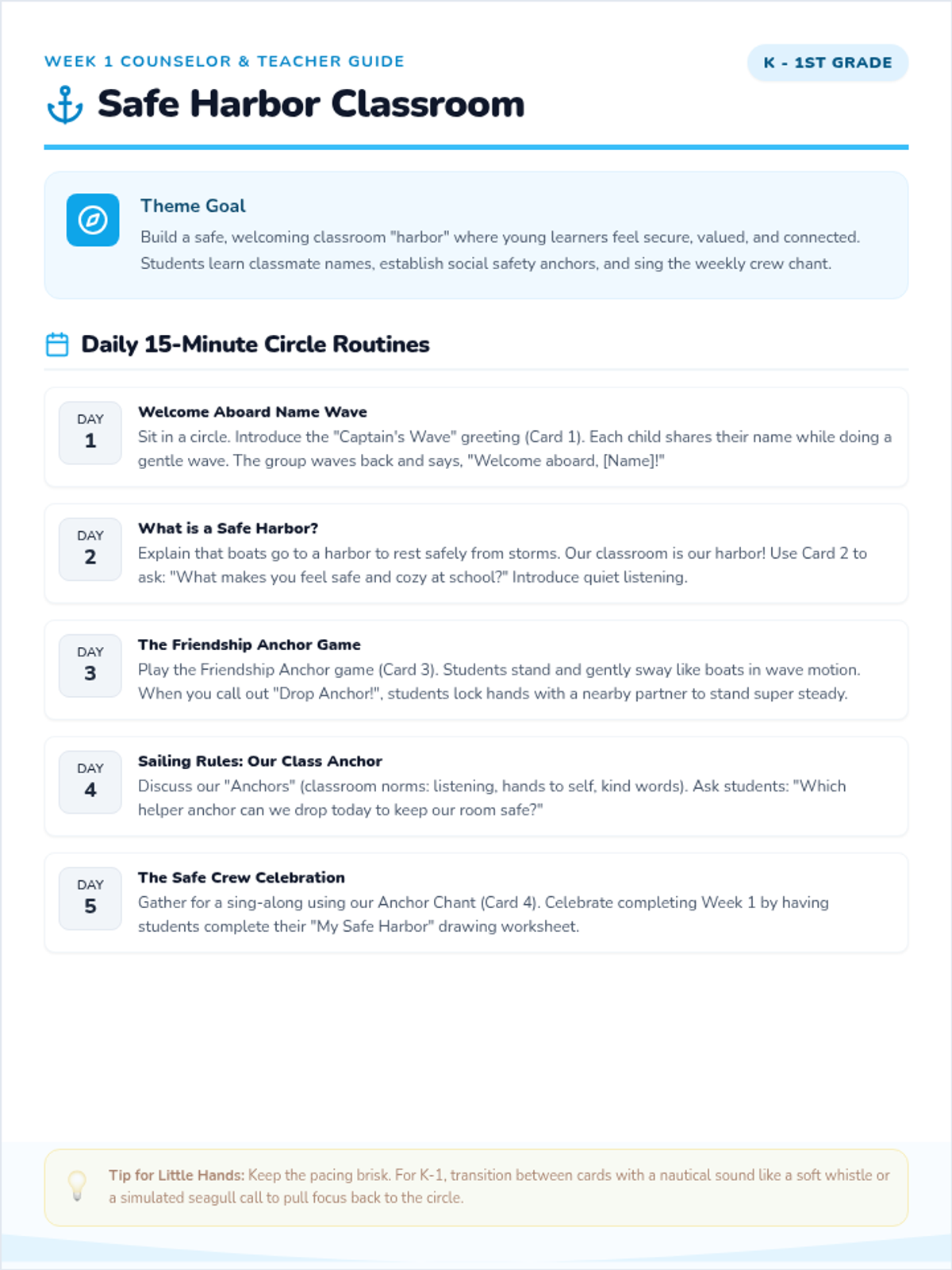
A foundational lesson for Transitional Kindergarten students focused on identifying basic emotions and the physical sensation of being 'wiggly' (stressed) vs. 'still' (calm). Introduces 'Turtle Breathing' as a primary regulation tool.
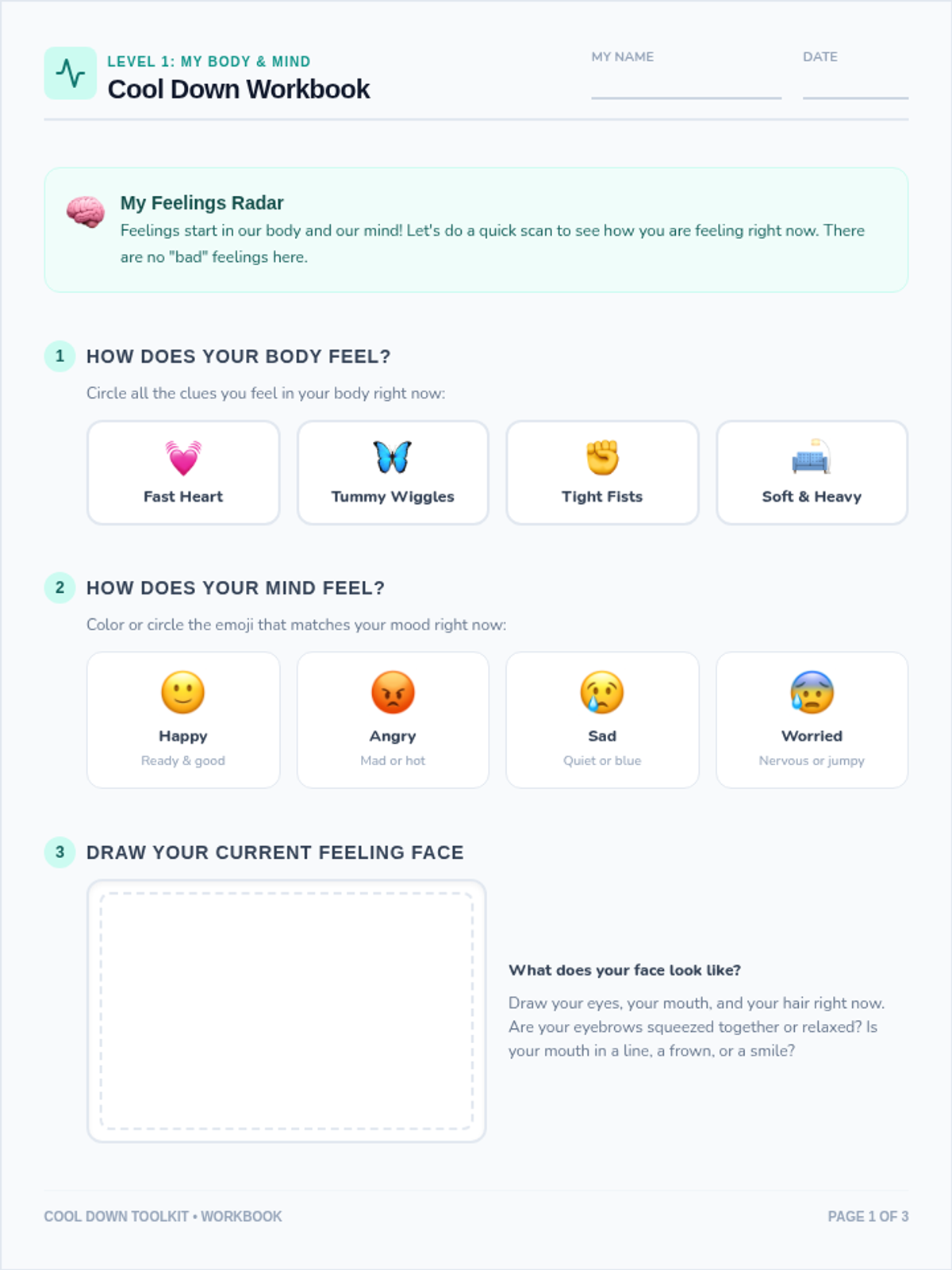
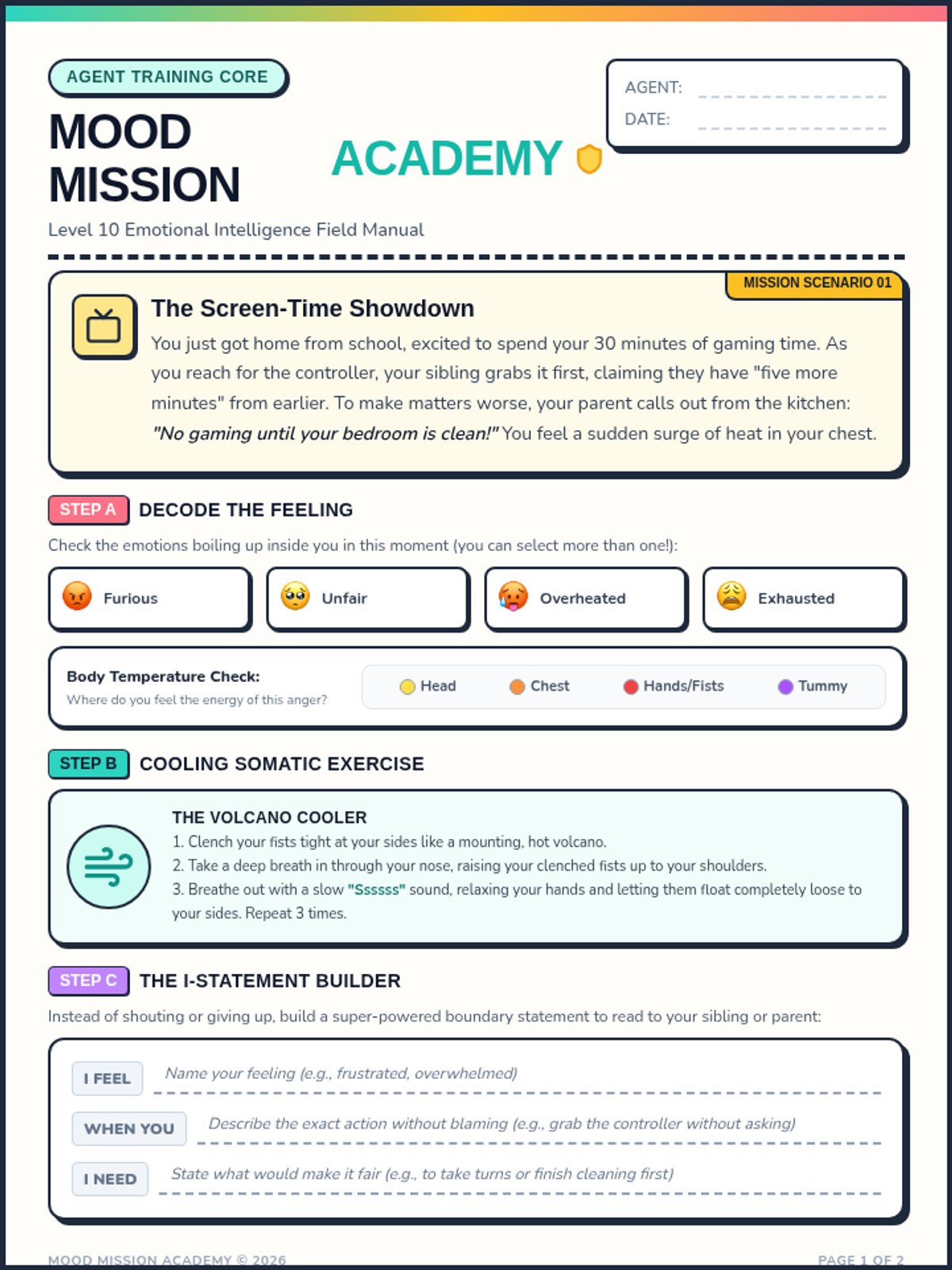
Agents learn to identify 'reactor heat' (stress) and use cooling valves to maintain operational status.
Agents master the logistics of their daily operations through effective planning and organization.
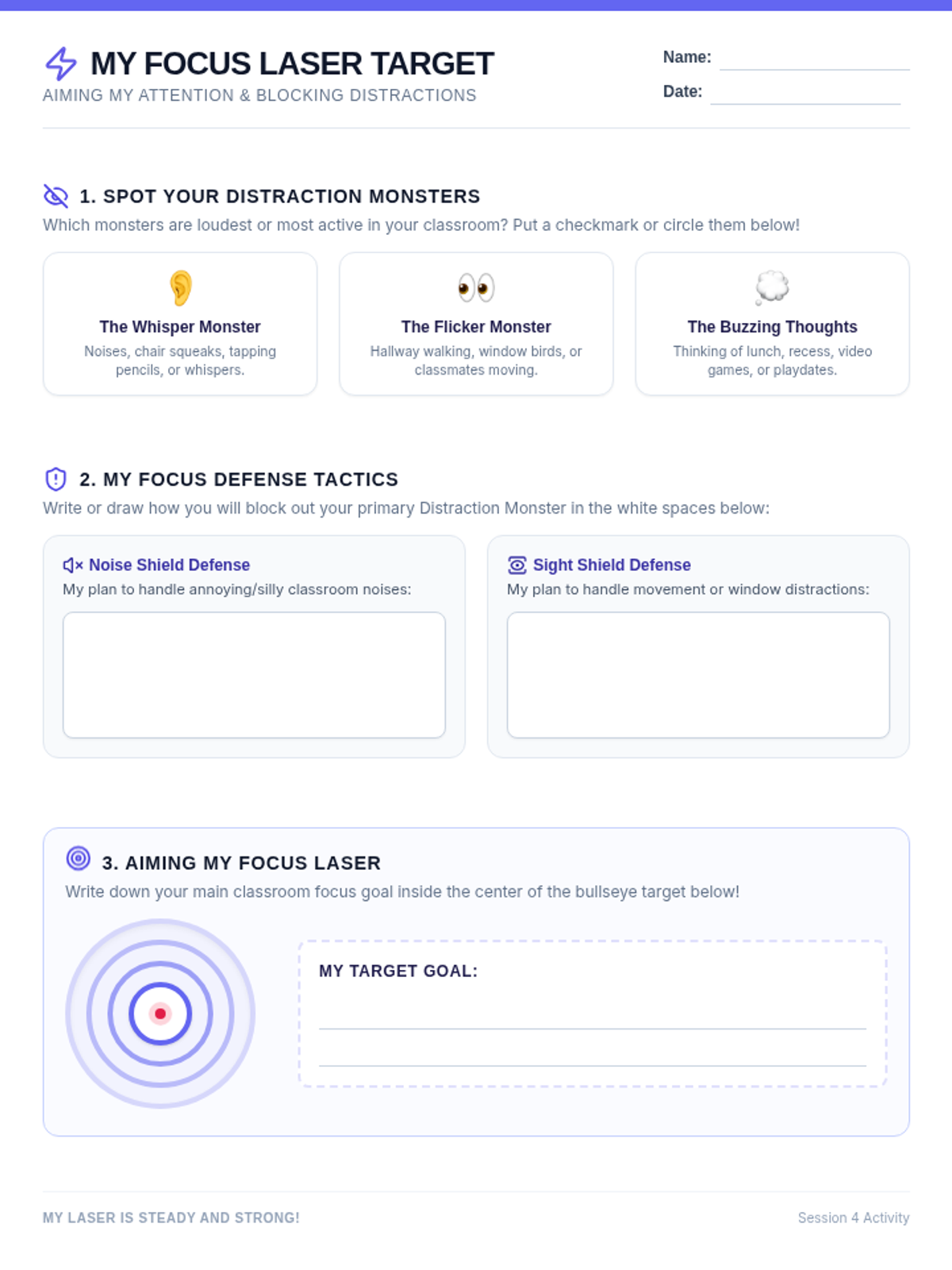
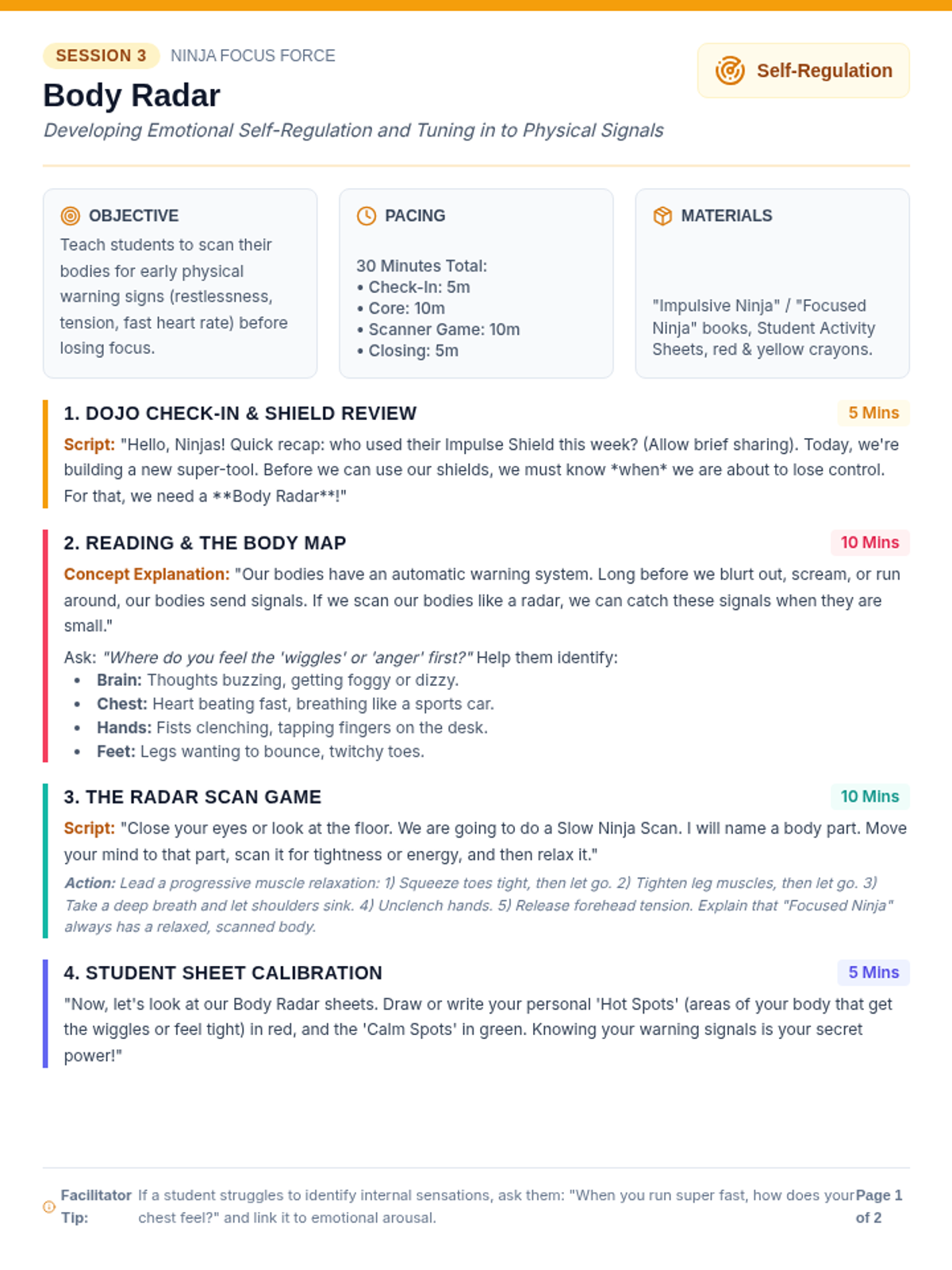
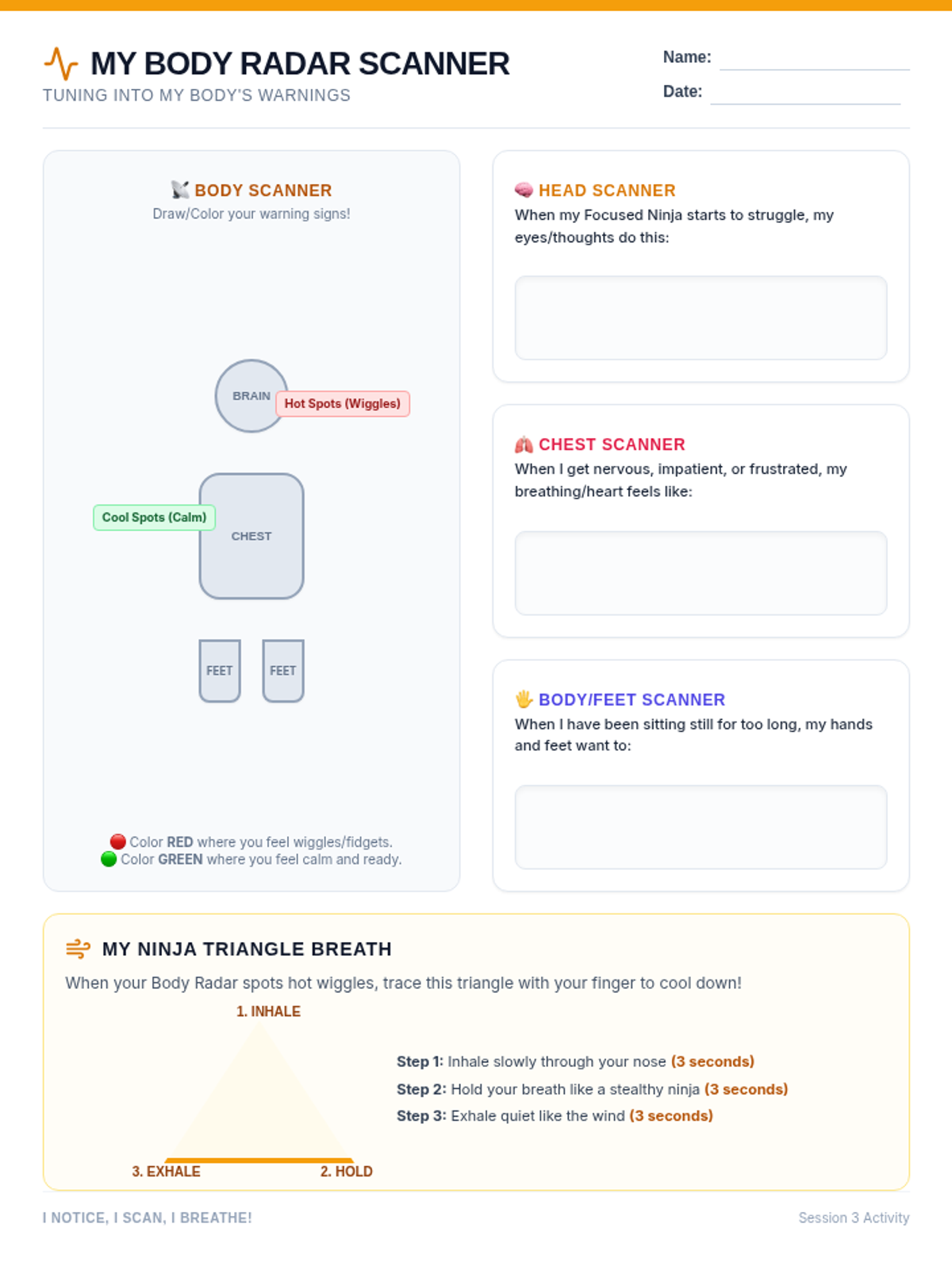
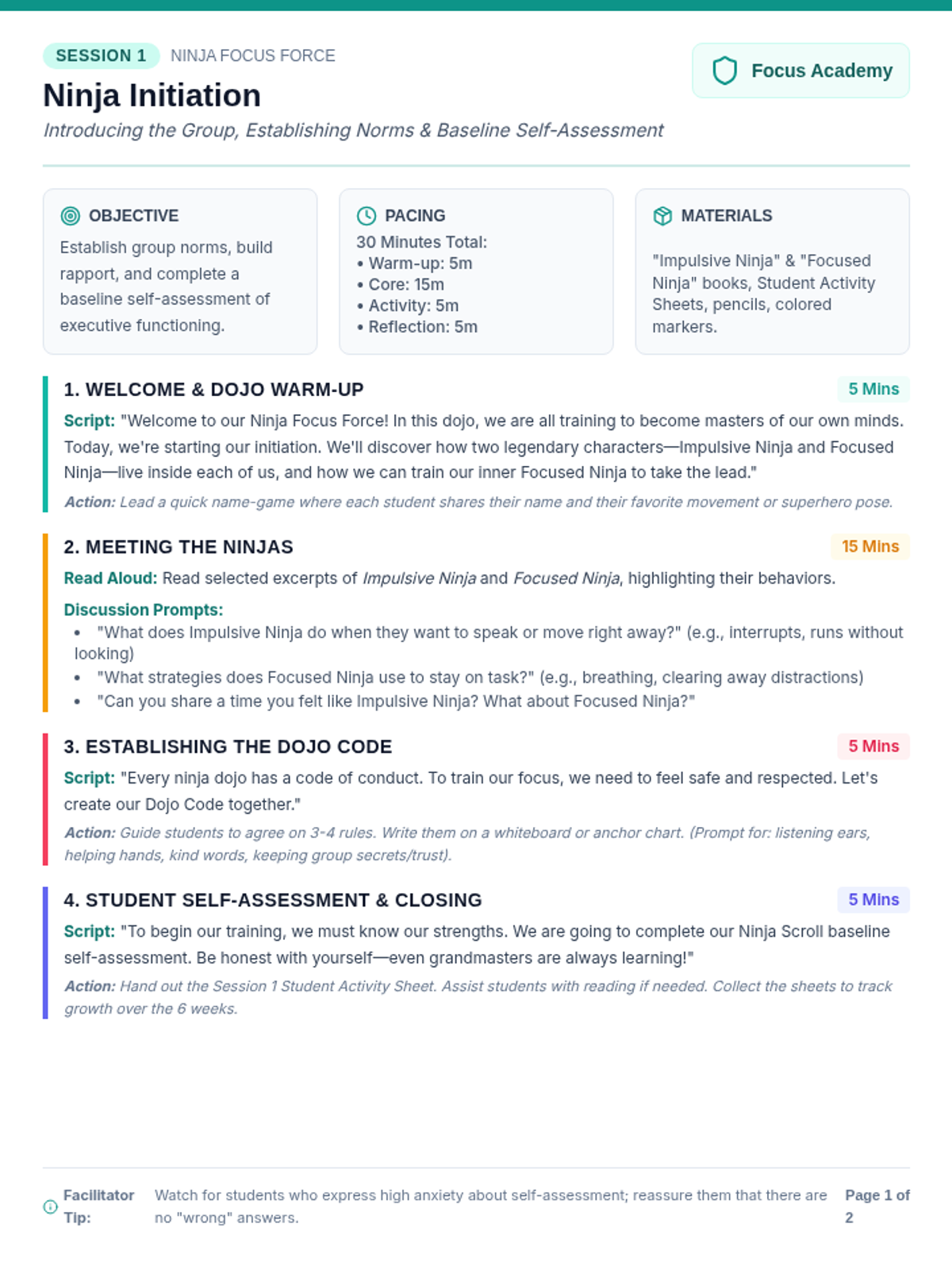
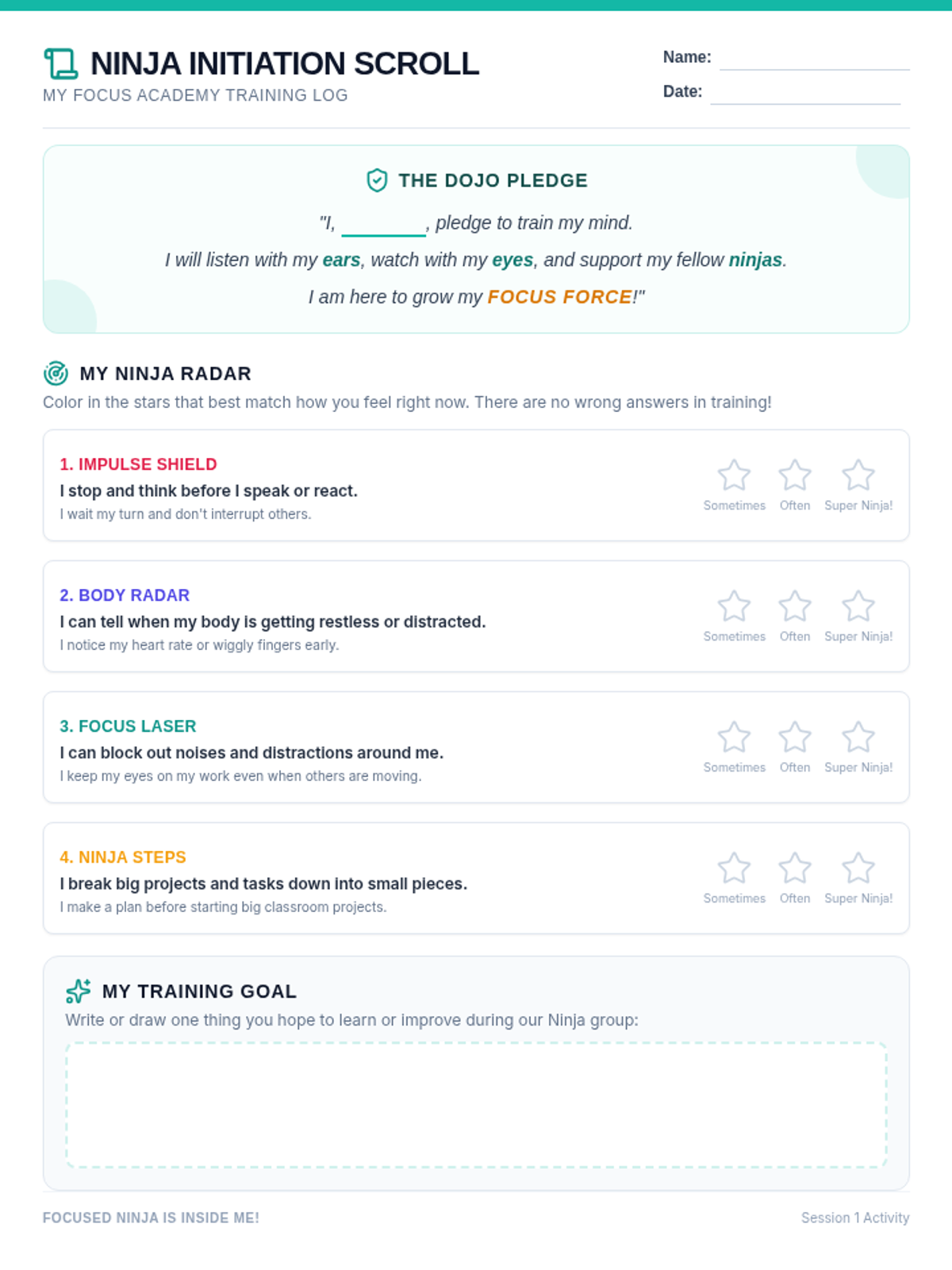
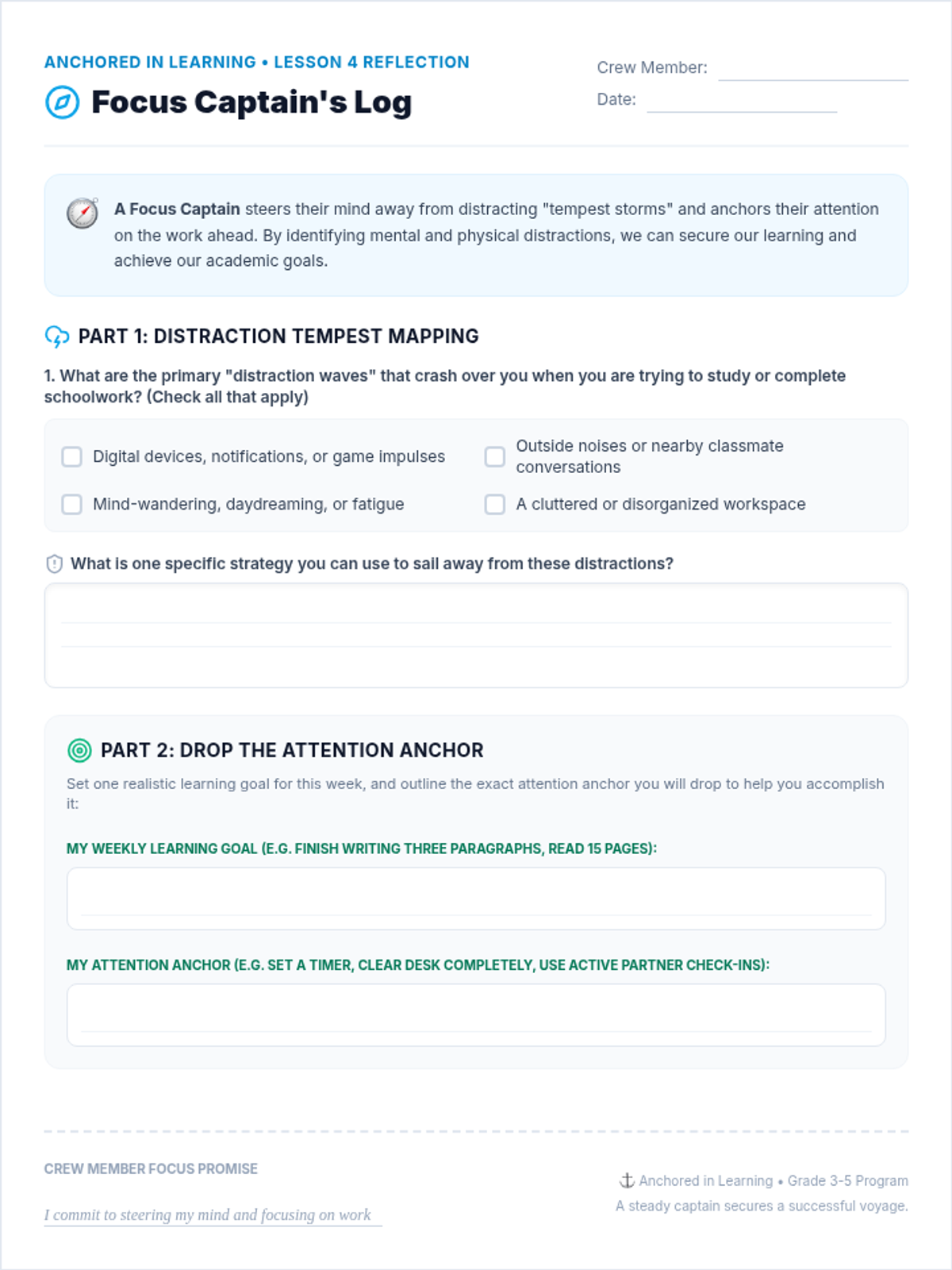
Agents calibrate their internal radar using sensory grounding techniques to stay focused.
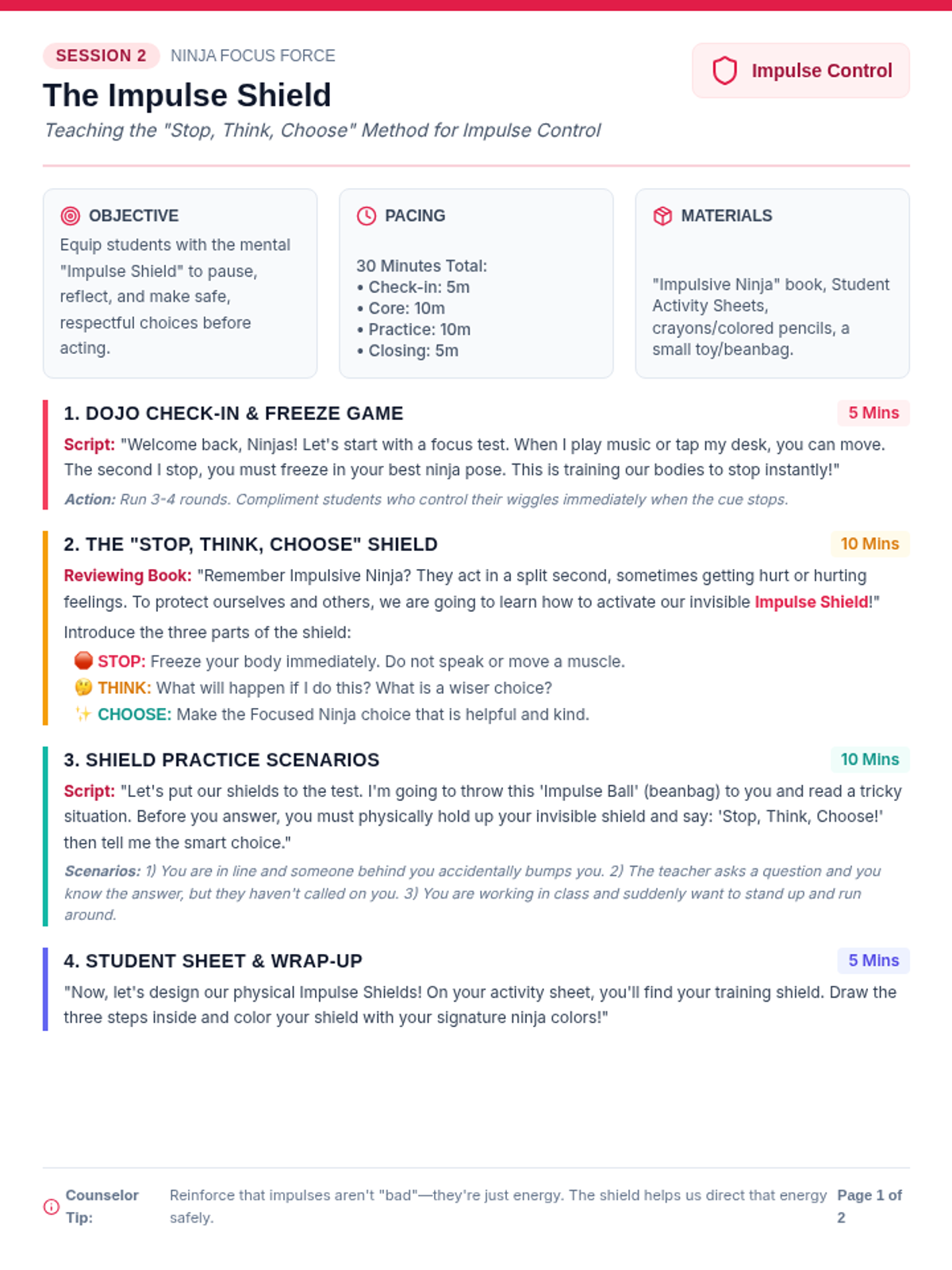
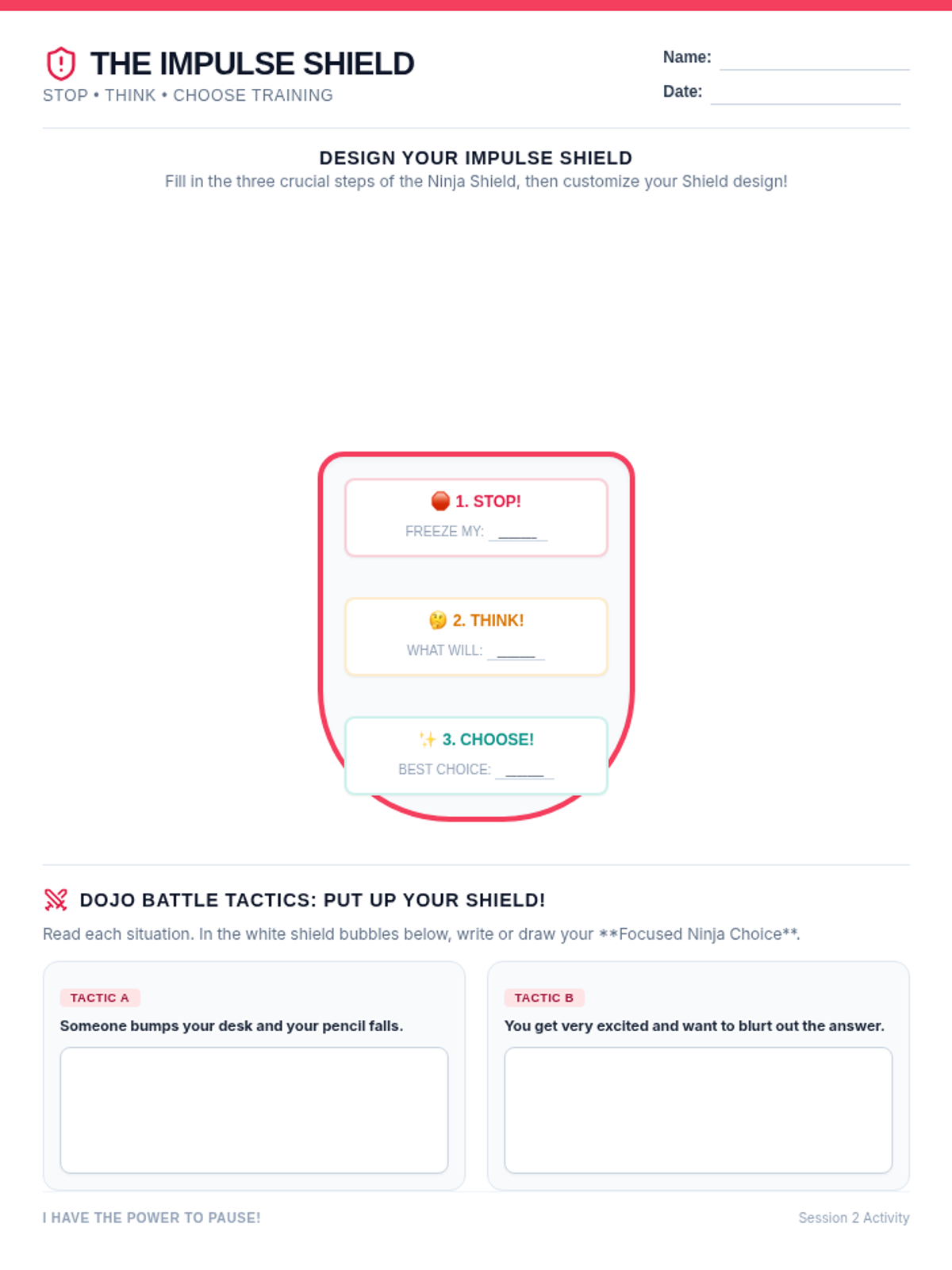
Agents practice navigating the 'Laser Grid' of impulses by using their internal pause button.
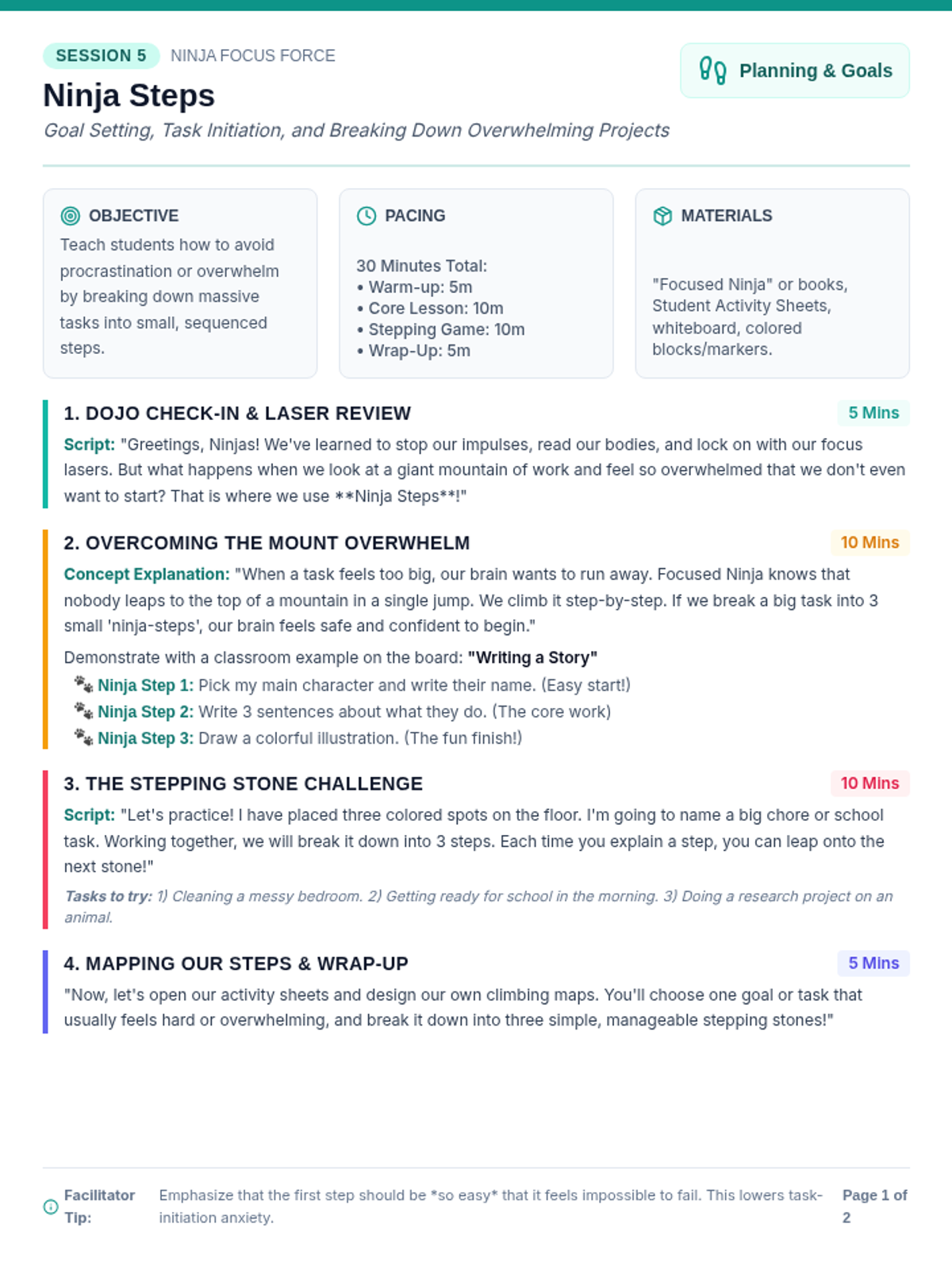
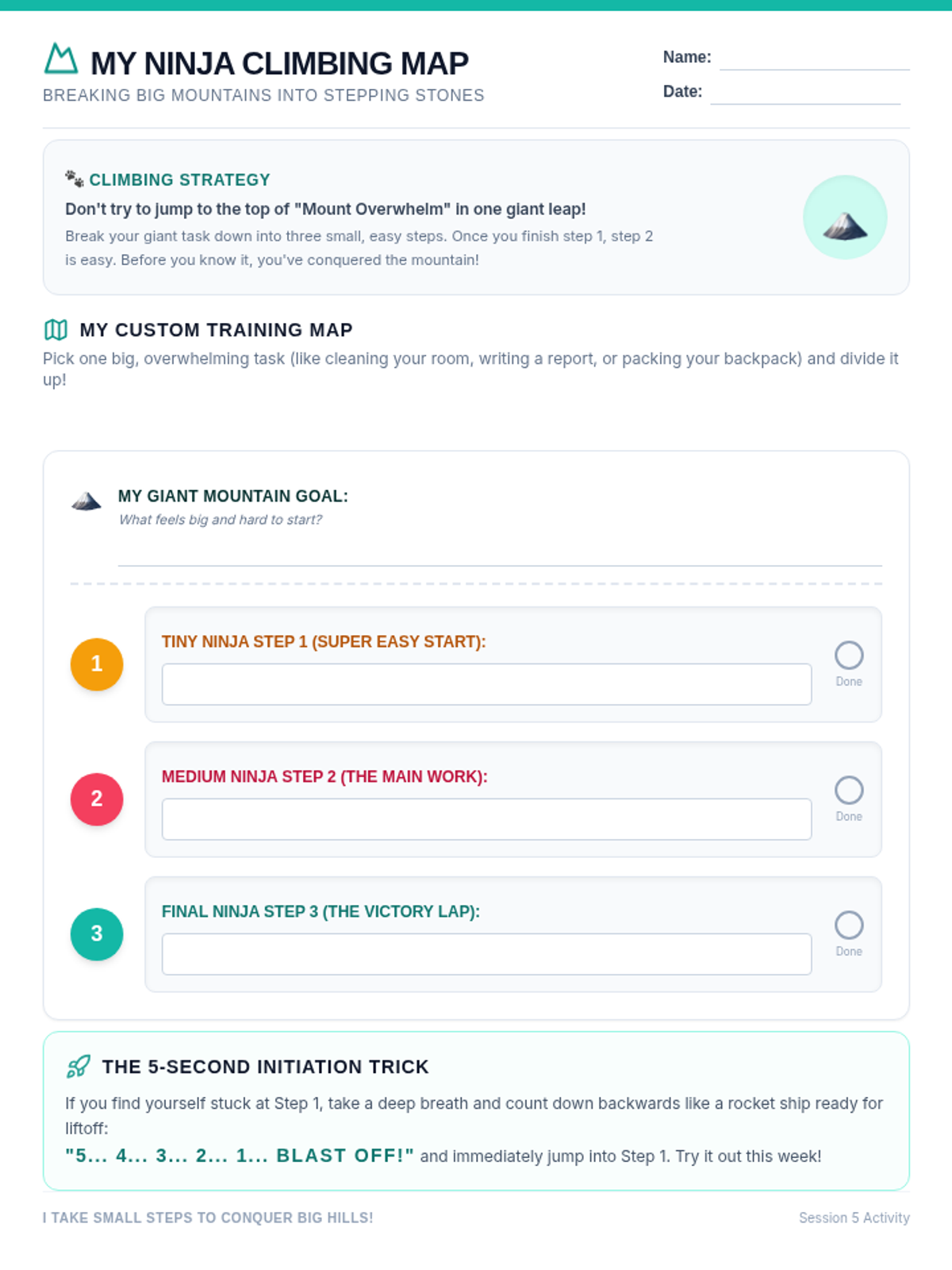
Agents learn to define their mission and break down big objectives into manageable checkpoints.
The final three weeks focus on making amends, setting future goals, and celebrating the progress made throughout the Social Detective program.
Weeks 7-9 address physical aggression, understanding consequences, and deep-diving into reading social clues to build empathy.
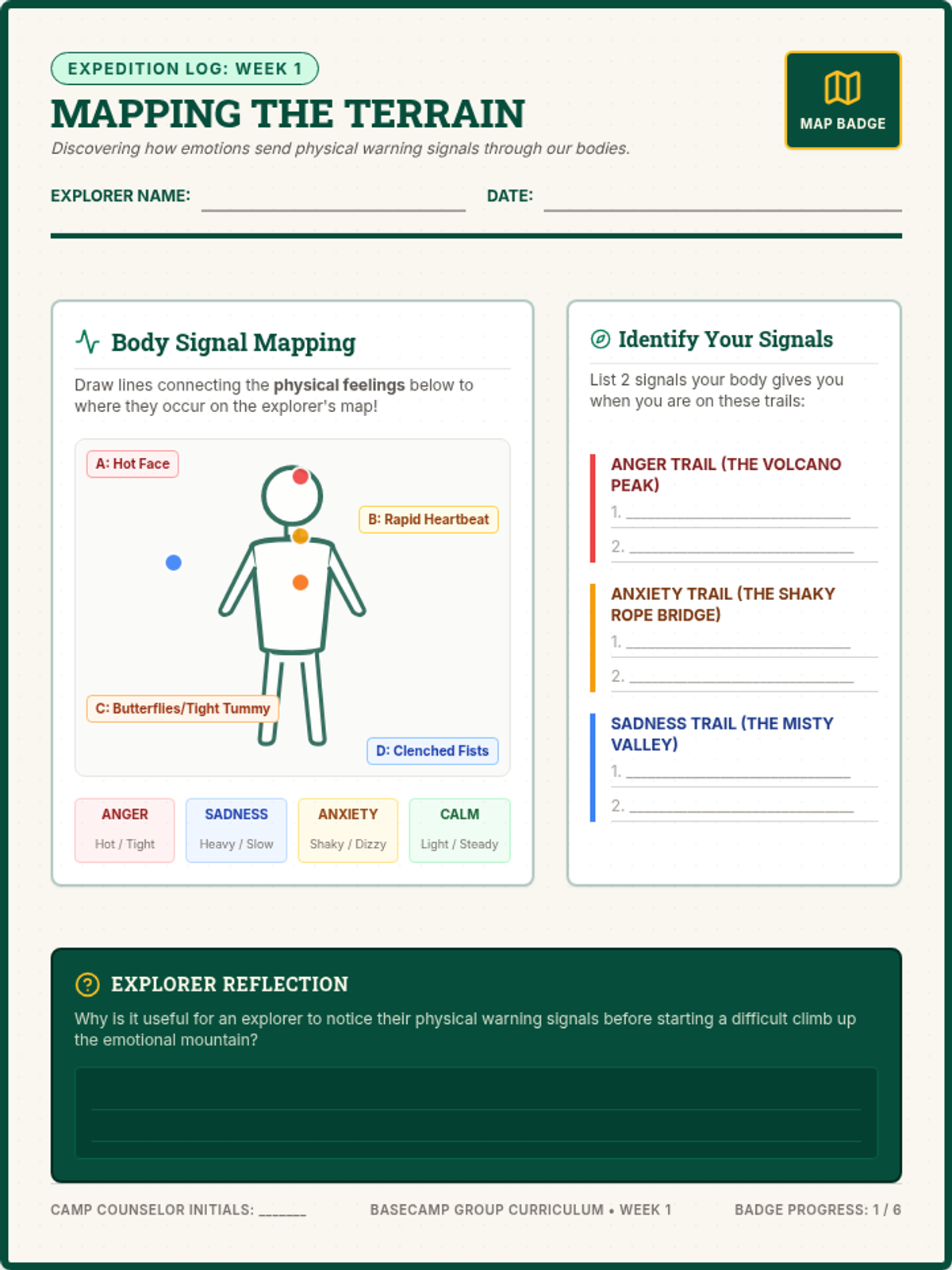
The first three weeks of the Social Detective intervention, focusing on building self-awareness and understanding the core concepts of empathy and physical body cues.
Weeks 4-6 of the intervention, focusing on practical impulse control strategies like the 'Pause Button' and addressing specific behaviors like lying and respecting property.
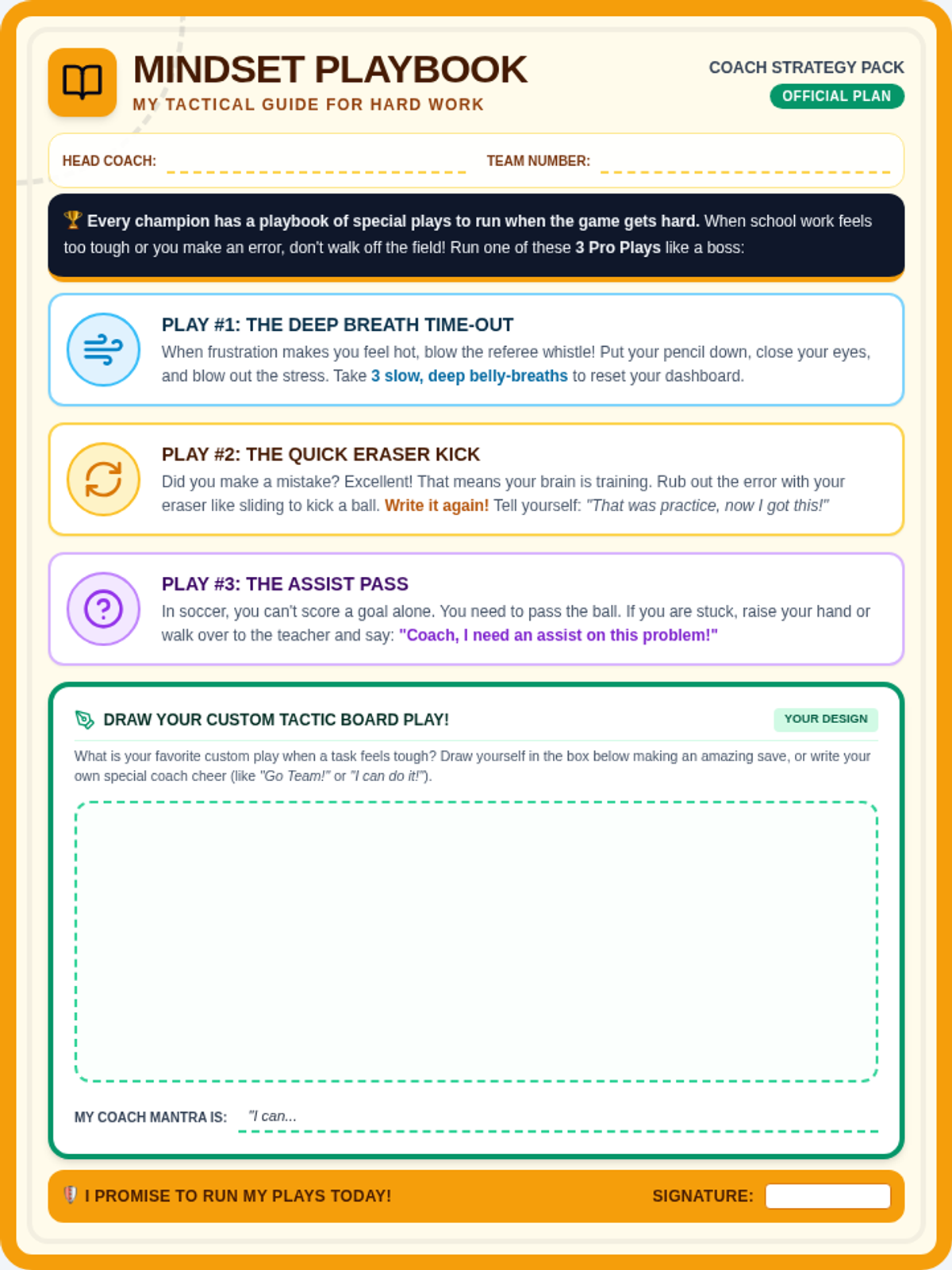
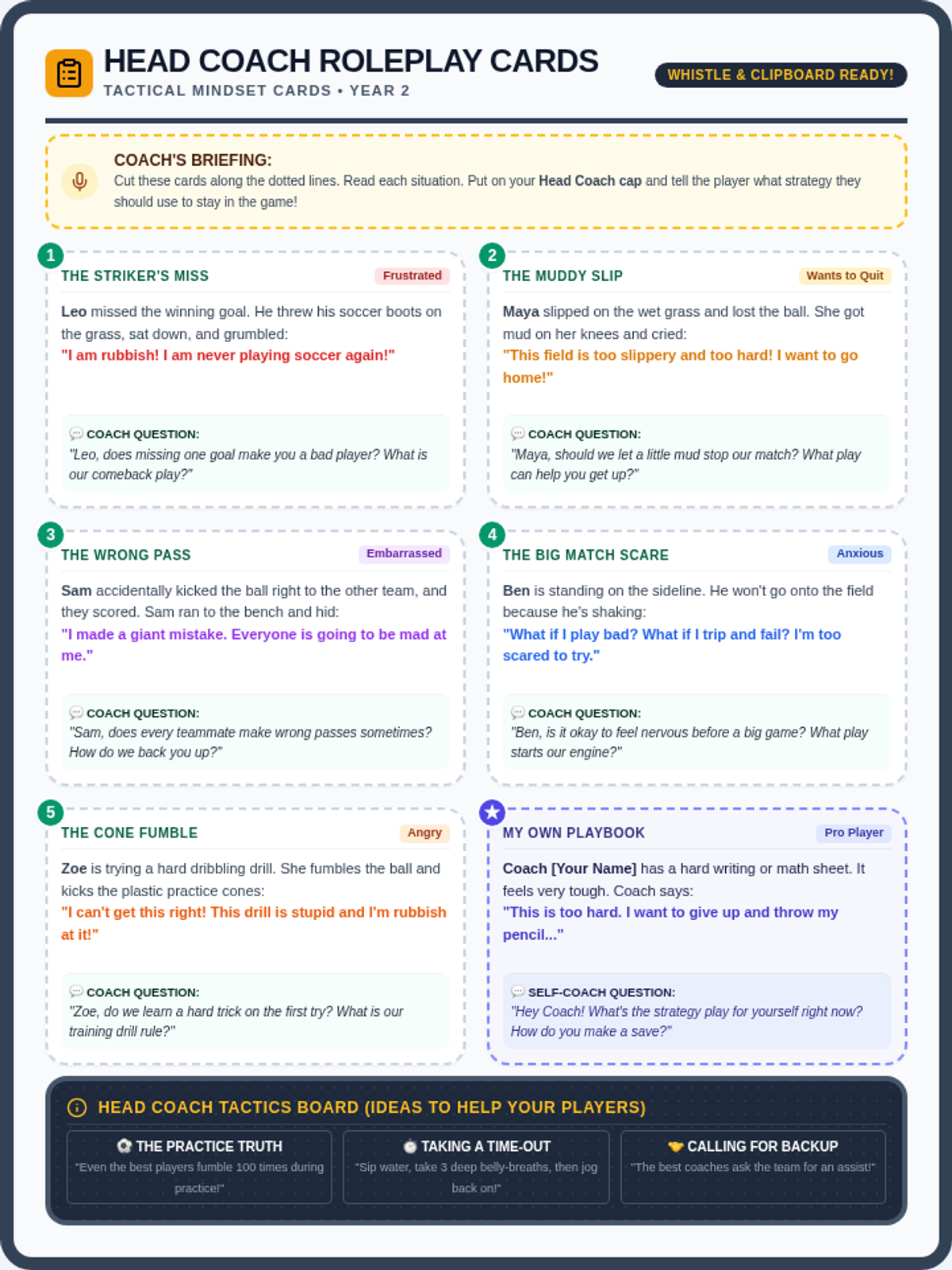
A comprehensive lesson for 3rd graders on emotional regulation, safety boundaries, and conflict resolution. Students learn to distinguish between 'Big Feelings' and 'Harmful Actions' while building a 'Success Strategy' toolkit.
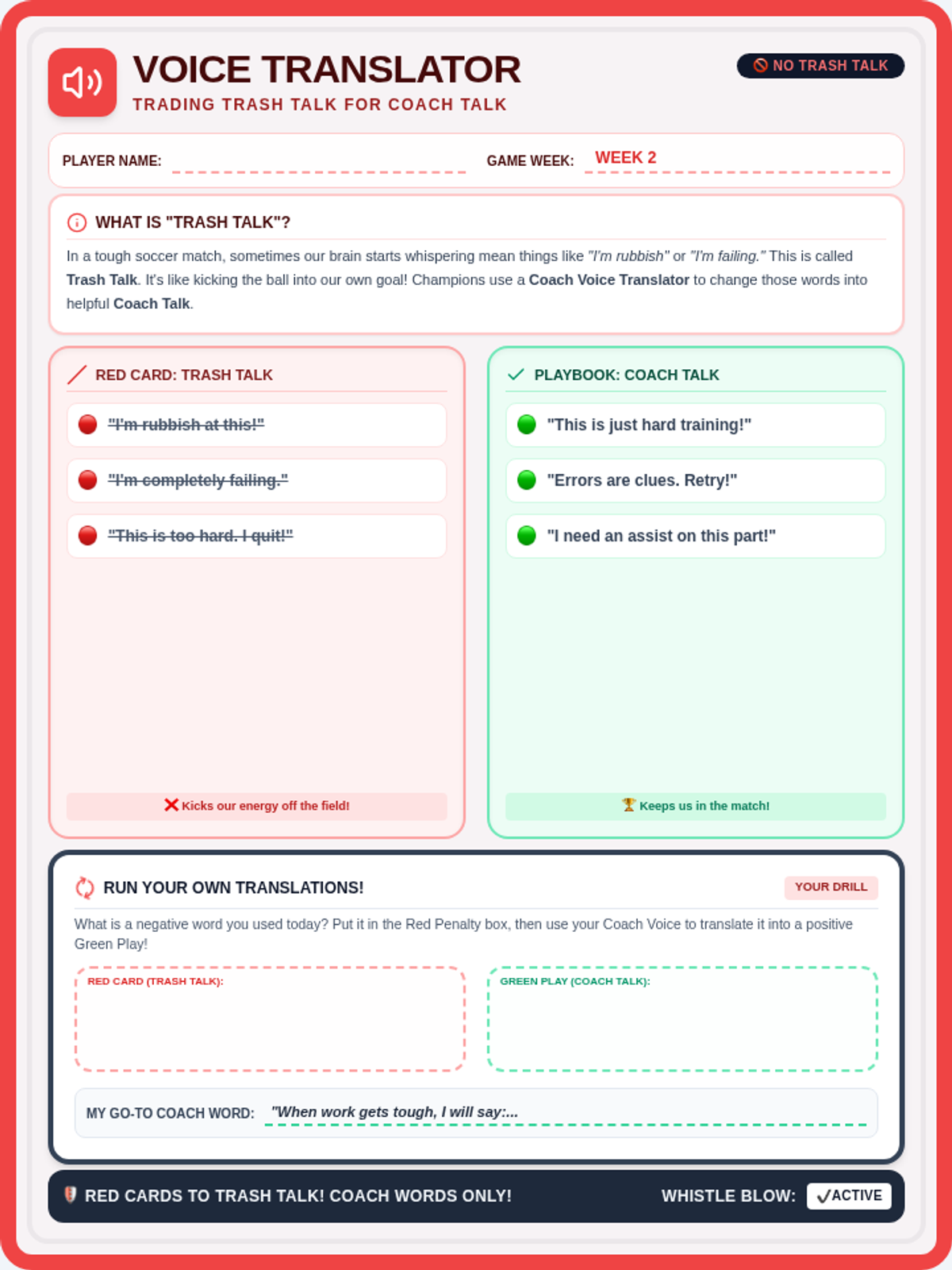
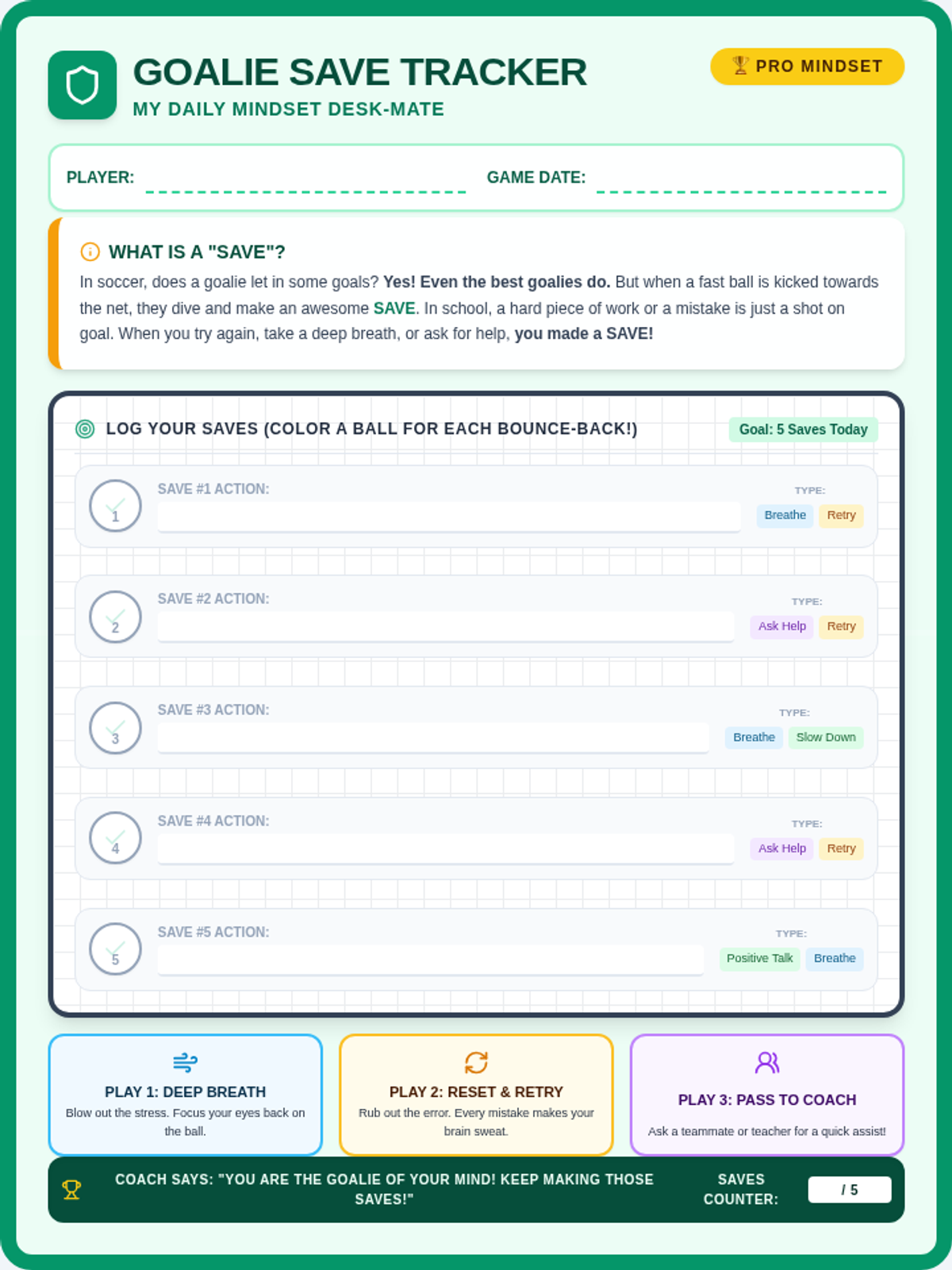
A lesson focused on building distress tolerance and emotional regulation skills through four key coping strategies: positive self-talk, problem sizing, breathing, and grounding.
Sixth grade students prepare for the transition to middle school by developing high-level resilience habits and long-term stress management plans.
Fifth graders explore academic and social pressure, focusing on the power of positive self-talk and perspective-shifting.
Fourth grade students investigate the science of the 'fight, flight, or freeze' response and develop logic-based strategies to respond.
Third graders learn to map out their day to identify 'stress spots' and practice proactive planning to minimize overwhelm.
A specialized lesson for mixed-grade classrooms focusing on identifying shared stressors (schoolwork, friendship) and practicing group regulation.
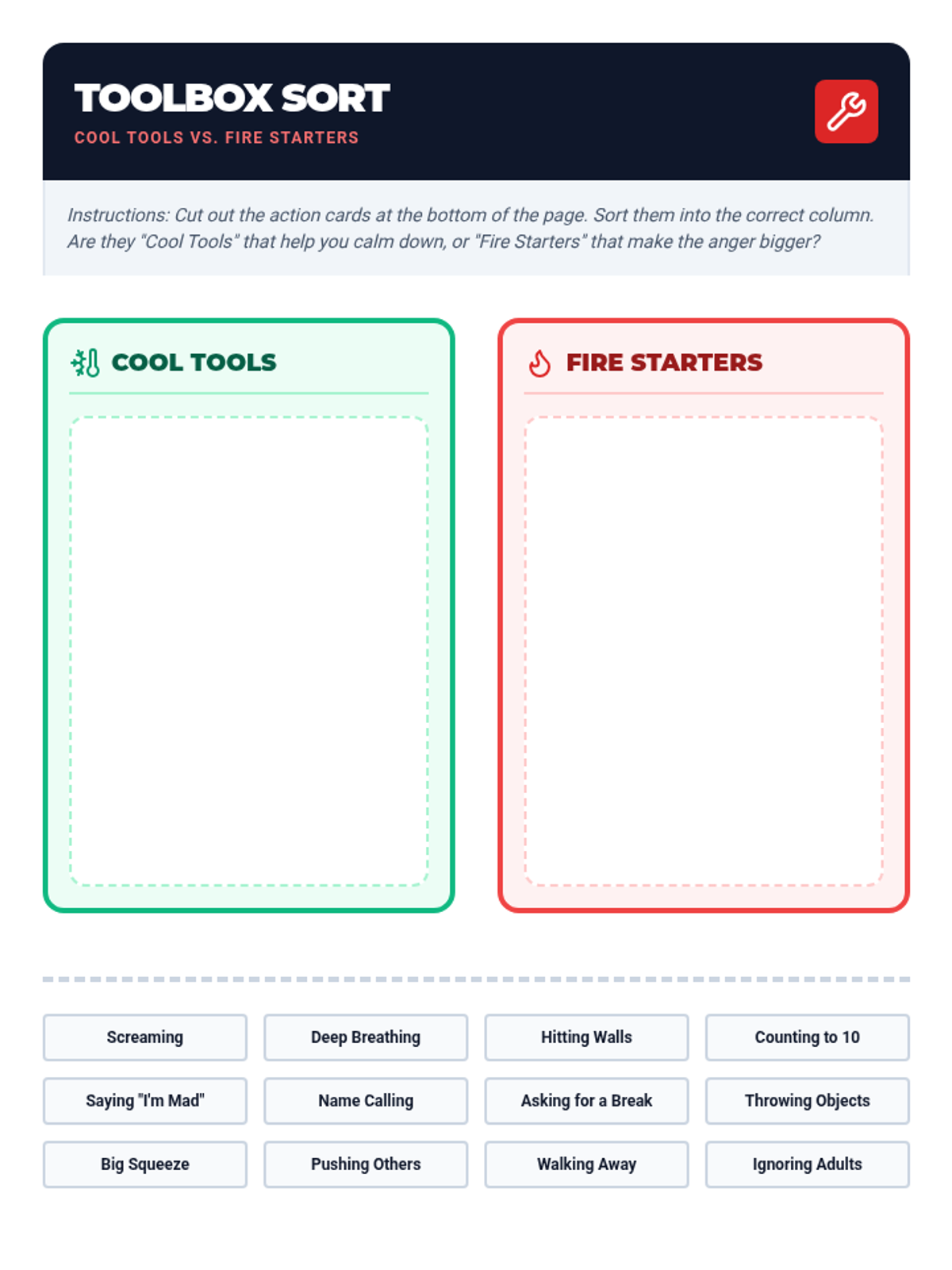
Second grade students explore how to build a personalized 'toolbox' of calm-down strategies to use when they feel overwhelmed.
A focused lesson for 1st graders on identifying where stress lives in the body and learning the difference between 'helpful' and 'unhelpful' ways to react.
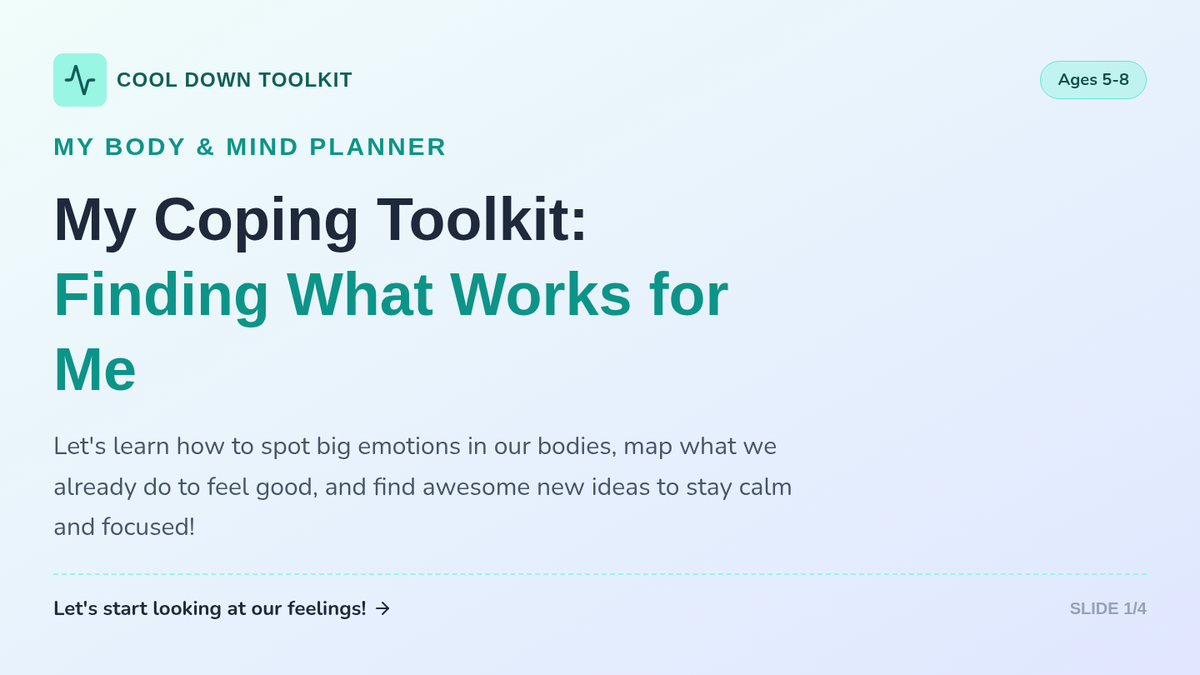
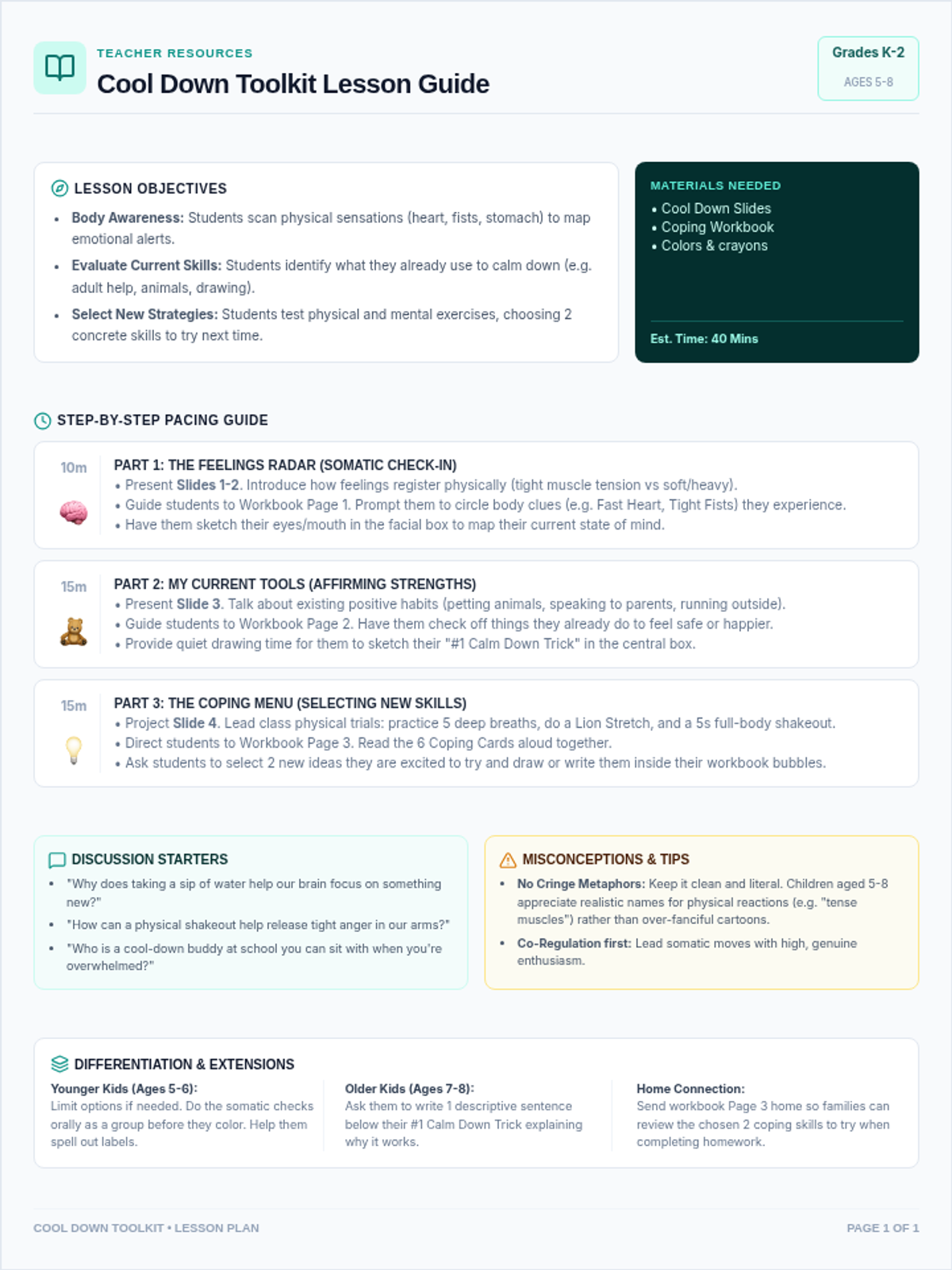
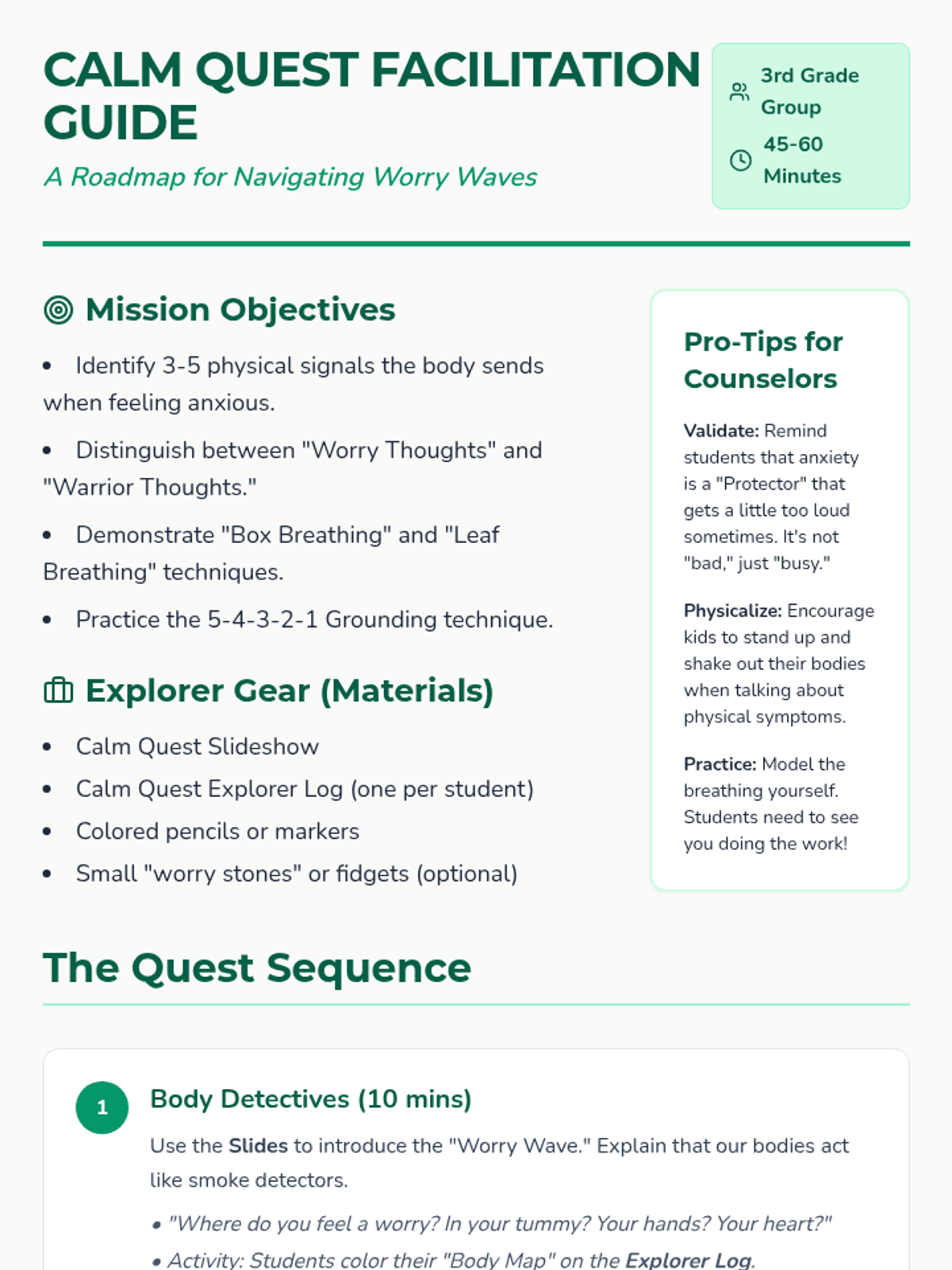
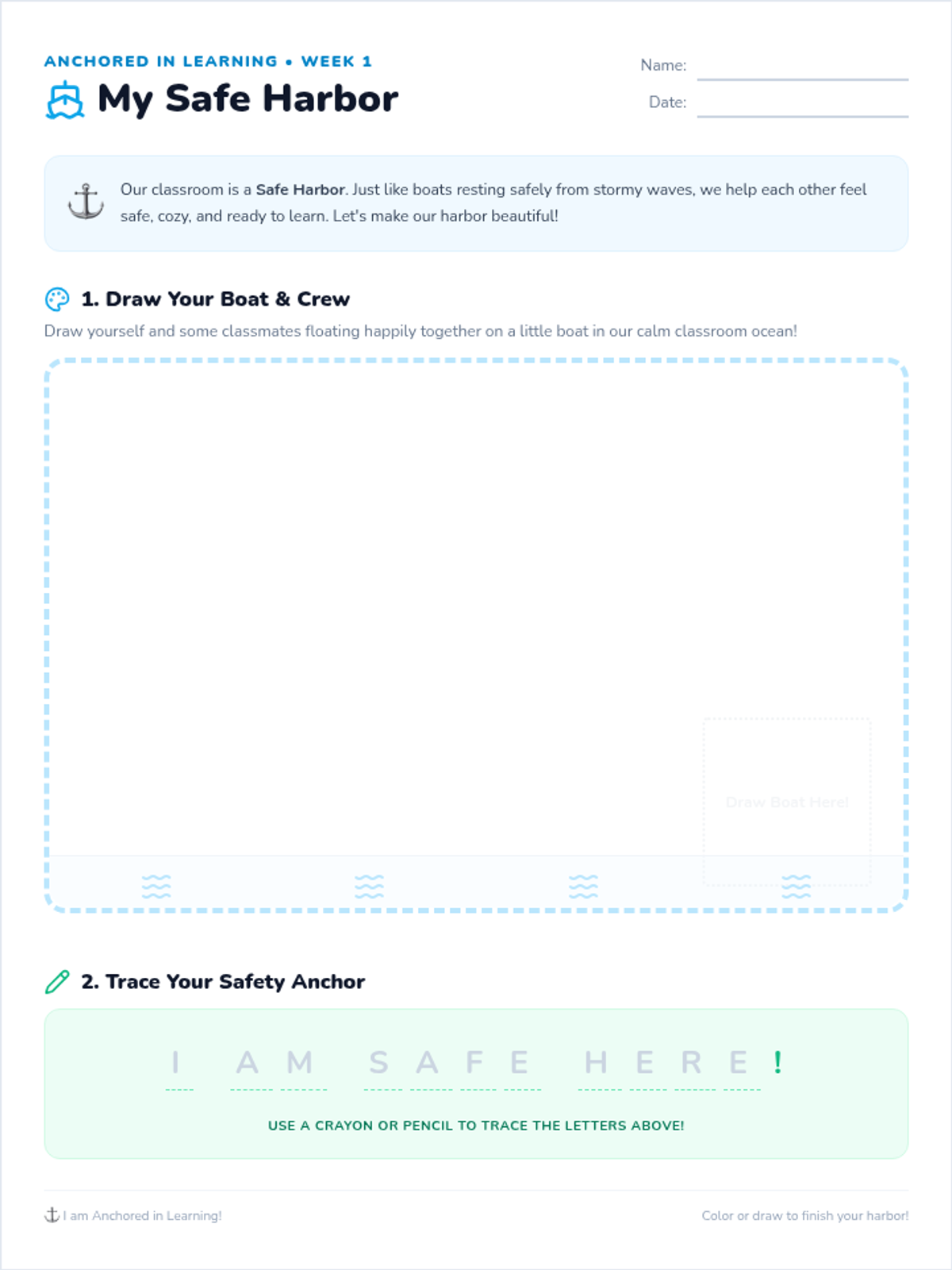
A gentle introduction for TK and Kindergarten students to understand feelings of 'tightness' or 'worry' (stress) and simple breathing techniques to feel calm.
This lesson introduces self-management through an aviation metaphor, teaching students to identify emotional 'turbulence' and use specific 'cockpit controls' to stay on course. Students will learn strategies for impulse control and emotional regulation.
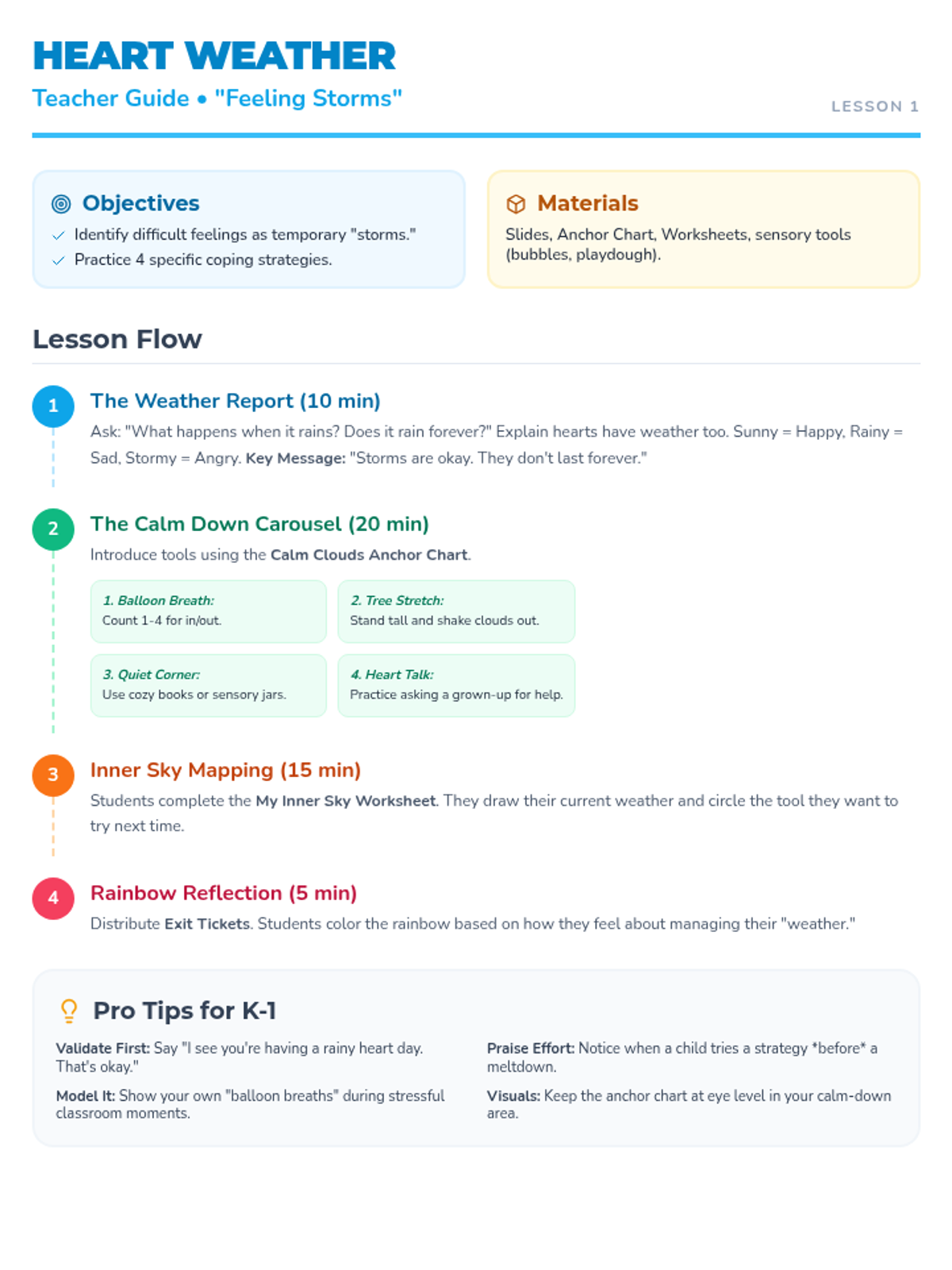
A fun, interactive lesson where 3rd graders practice identifying and applying self-regulation strategies through a board game and BINGO. Students will learn to recognize emotional triggers and choose appropriate 'calm-down' tools.
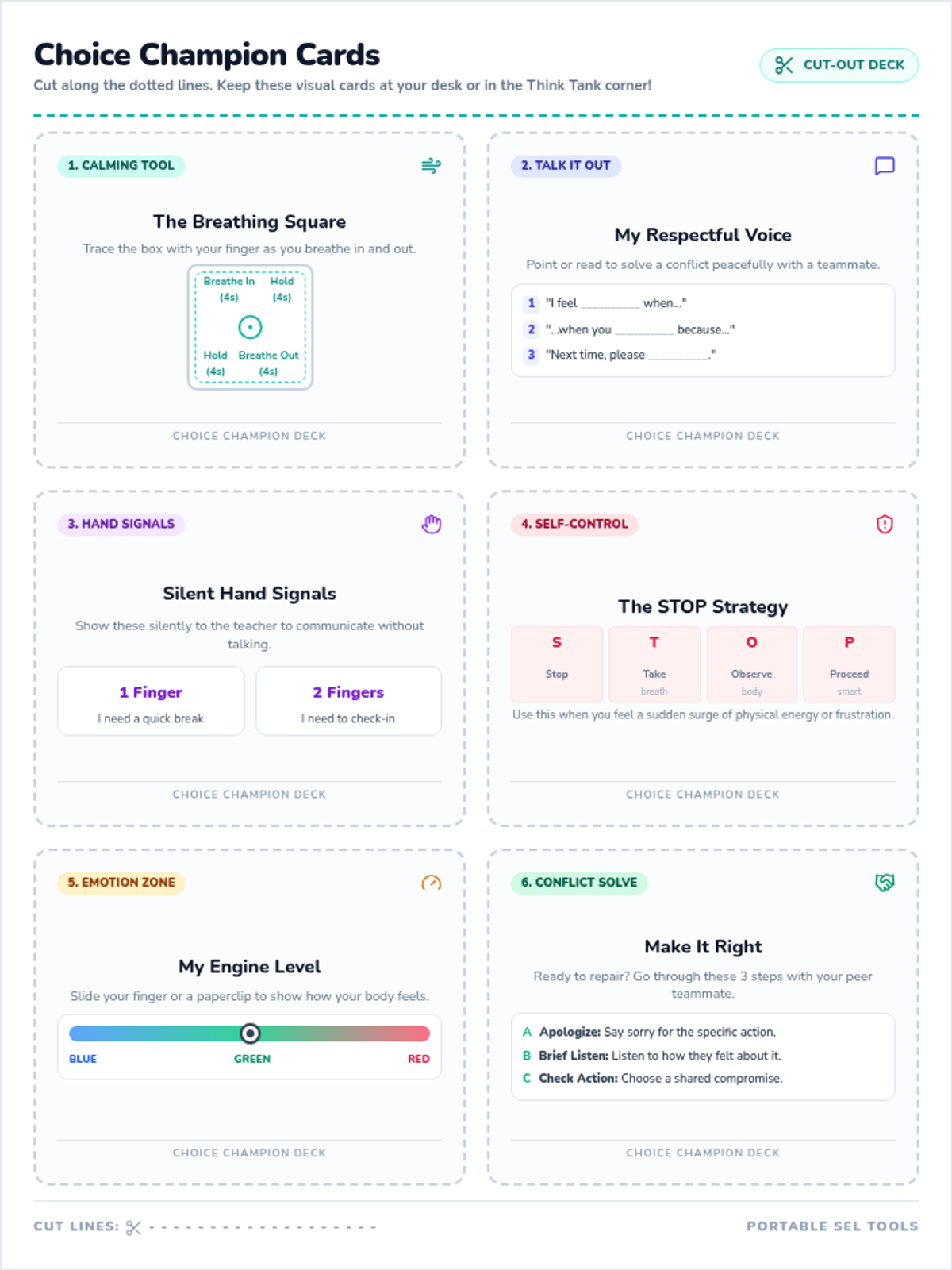
A lesson designed to help students distinguish between Small and Big Problems and choose safe regulation strategies instead of physical reactions. It includes a social story, practice worksheet, and strategy reference guide.
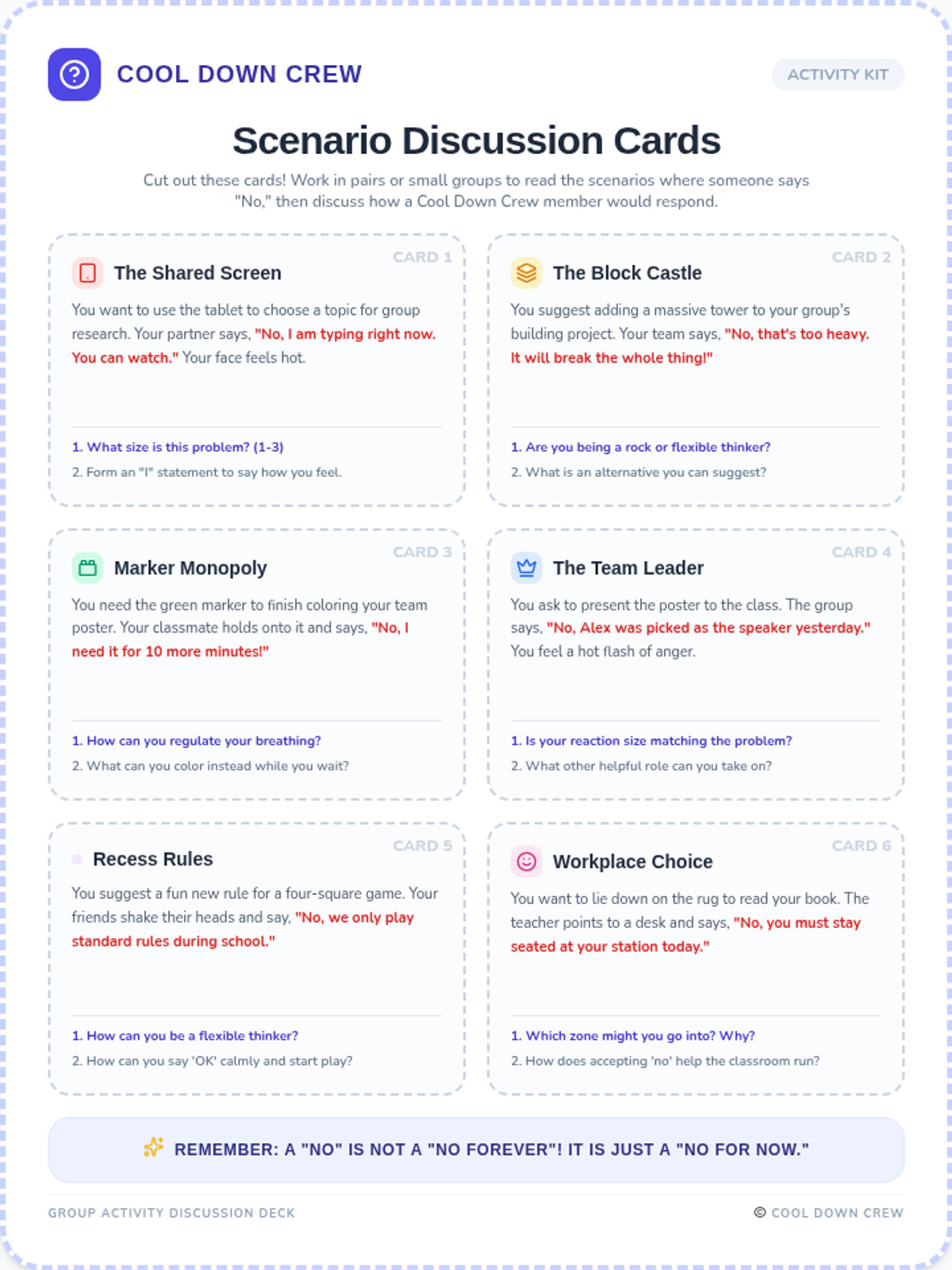
A quick counseling lesson for 3rd-grade students to manage tone and volume of voice when receiving 'no' as an answer. It uses visual metaphors of a sound board and voice meter to build self-awareness and emotional regulation.
Final reflection, celebration of growth, and planning for the journey ahead.
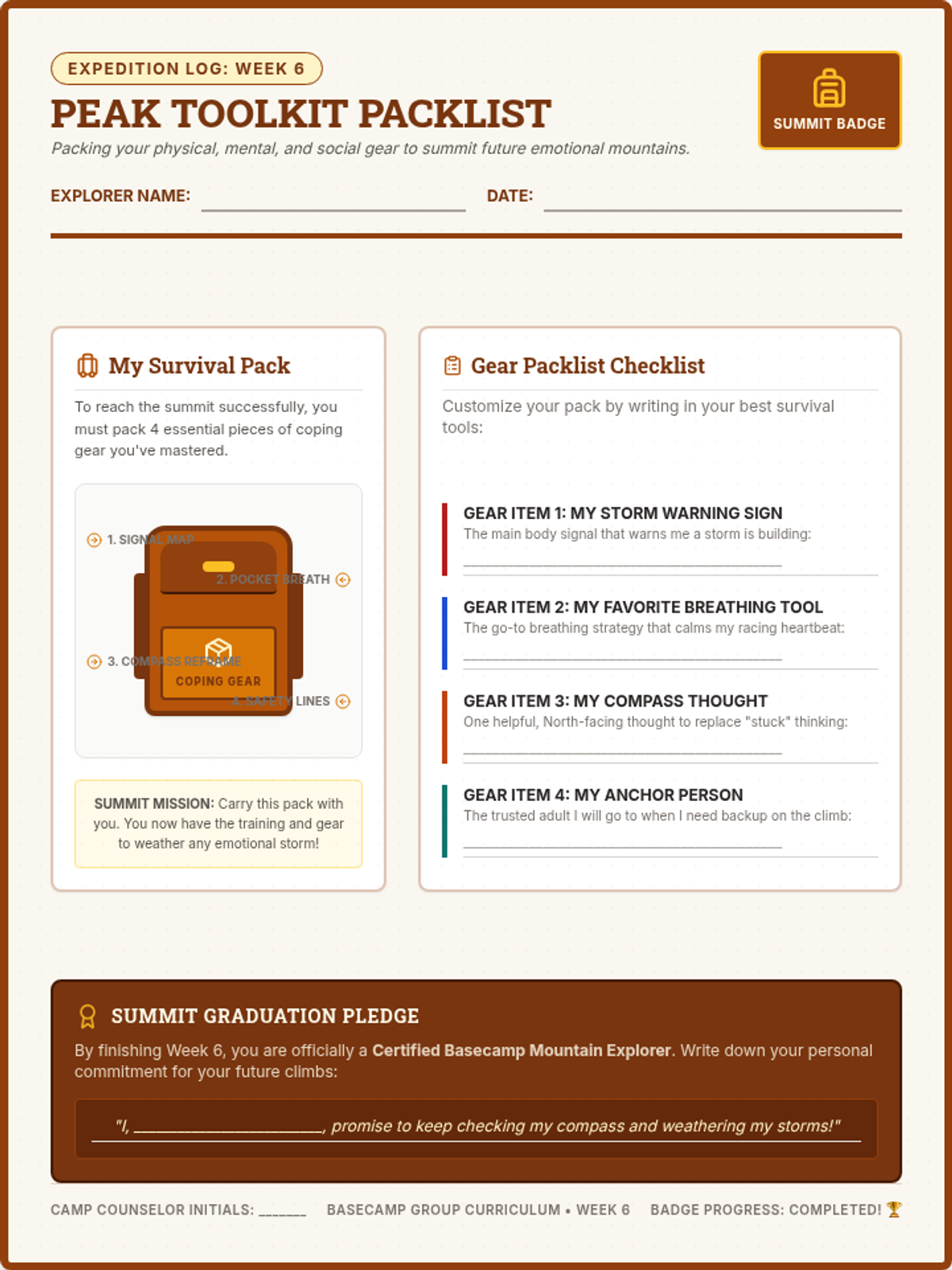
Reviewing various coping skills and creating a personalized 'Survival Kit' for future use.
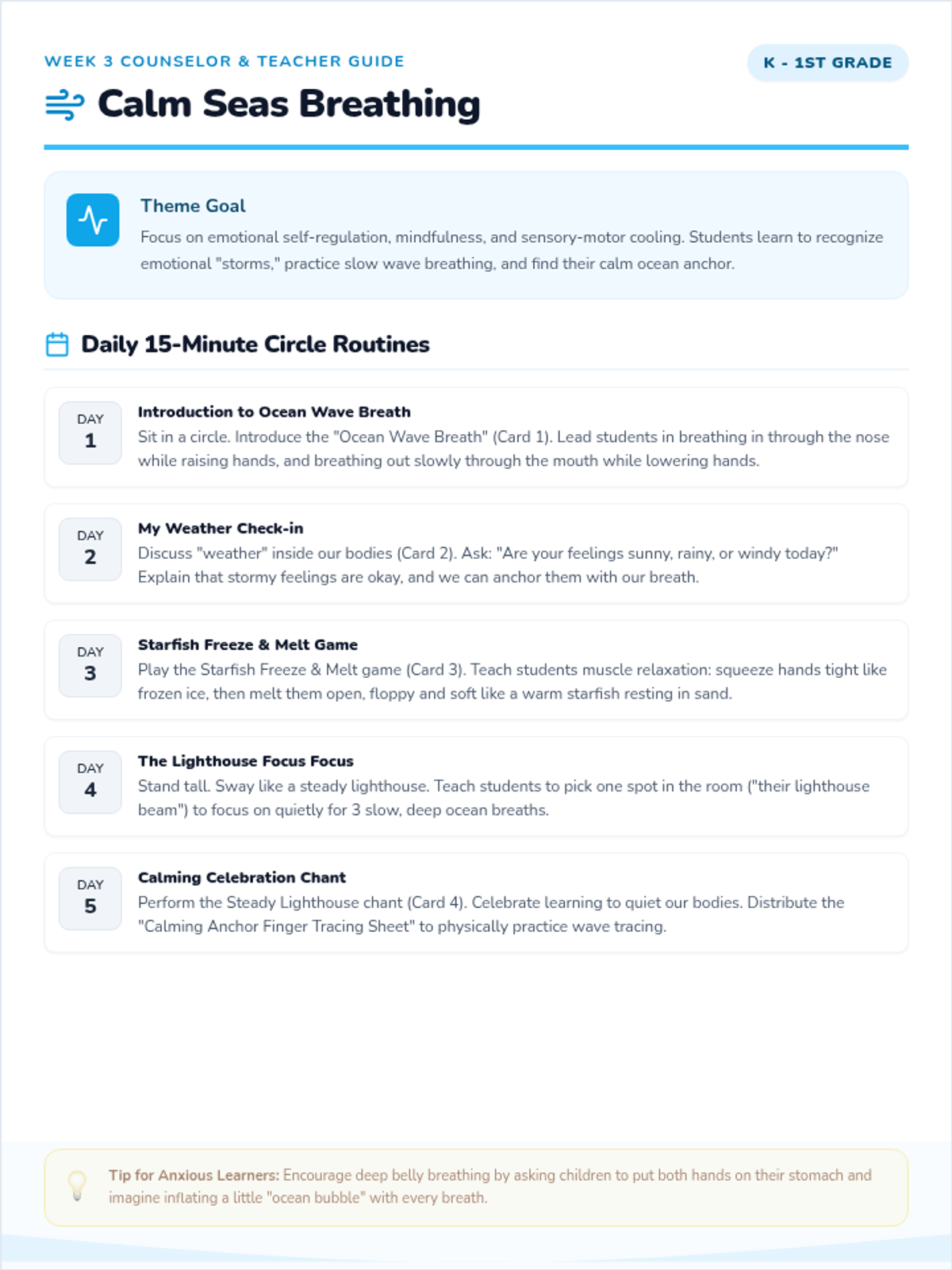
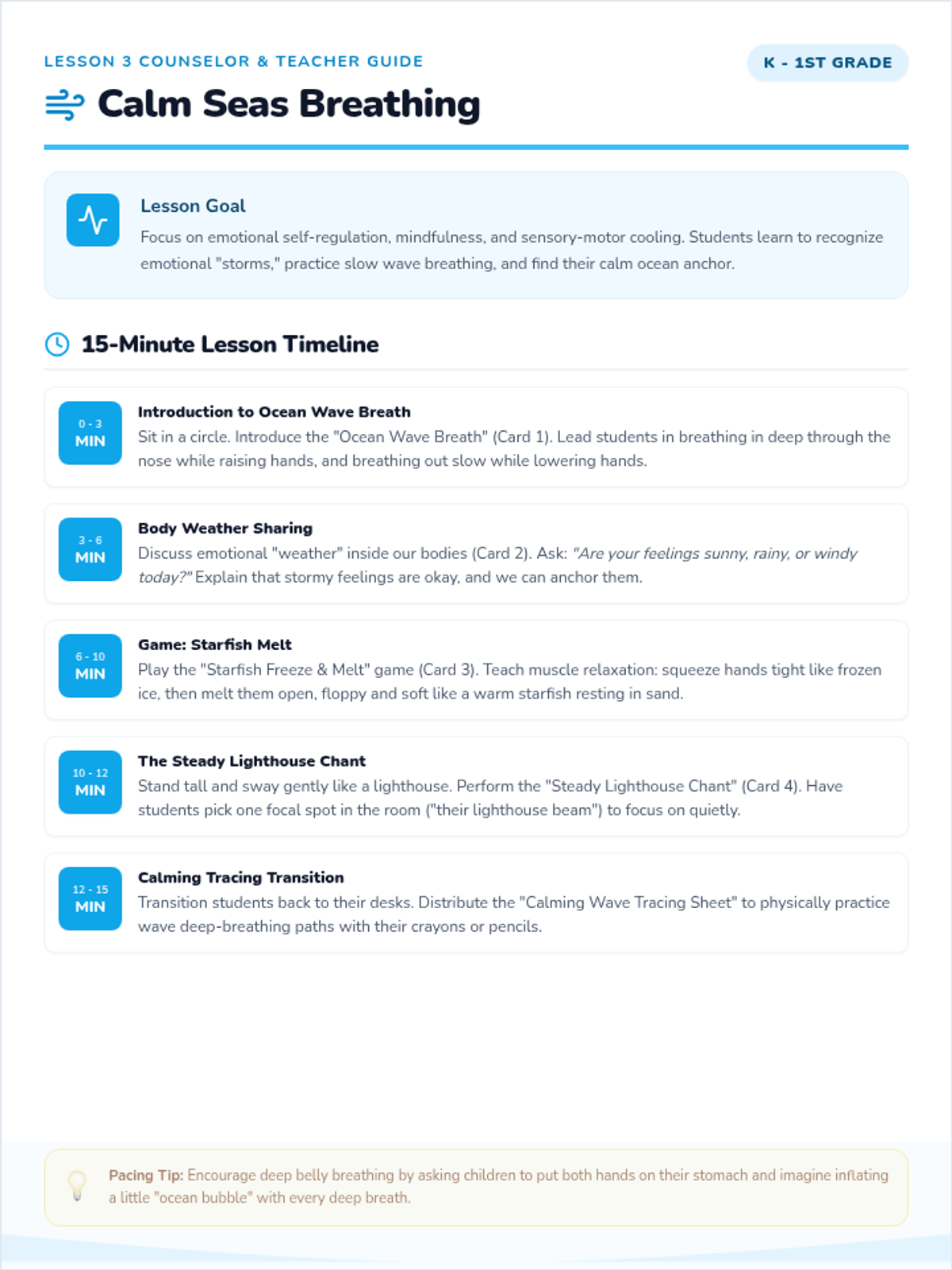
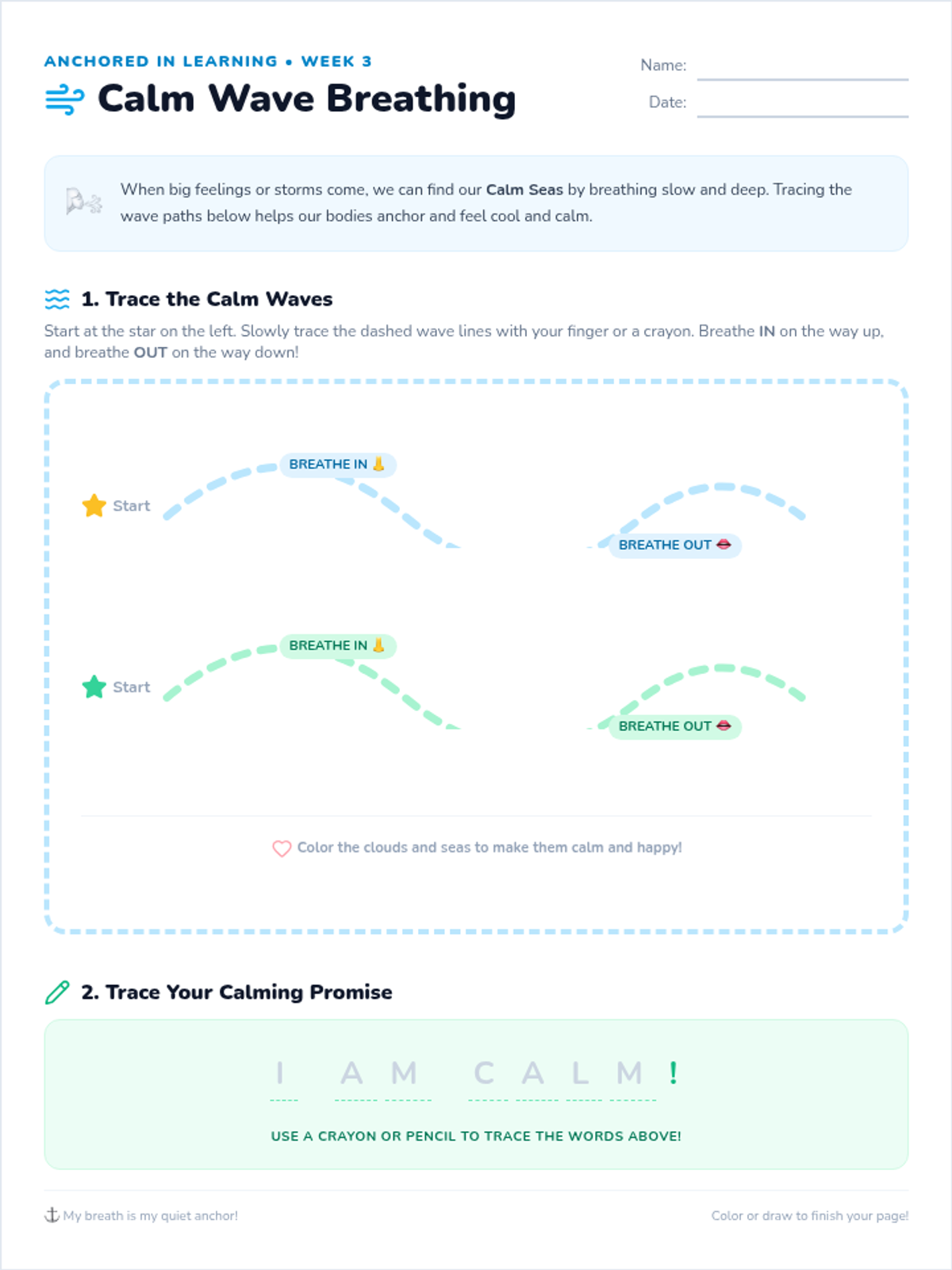
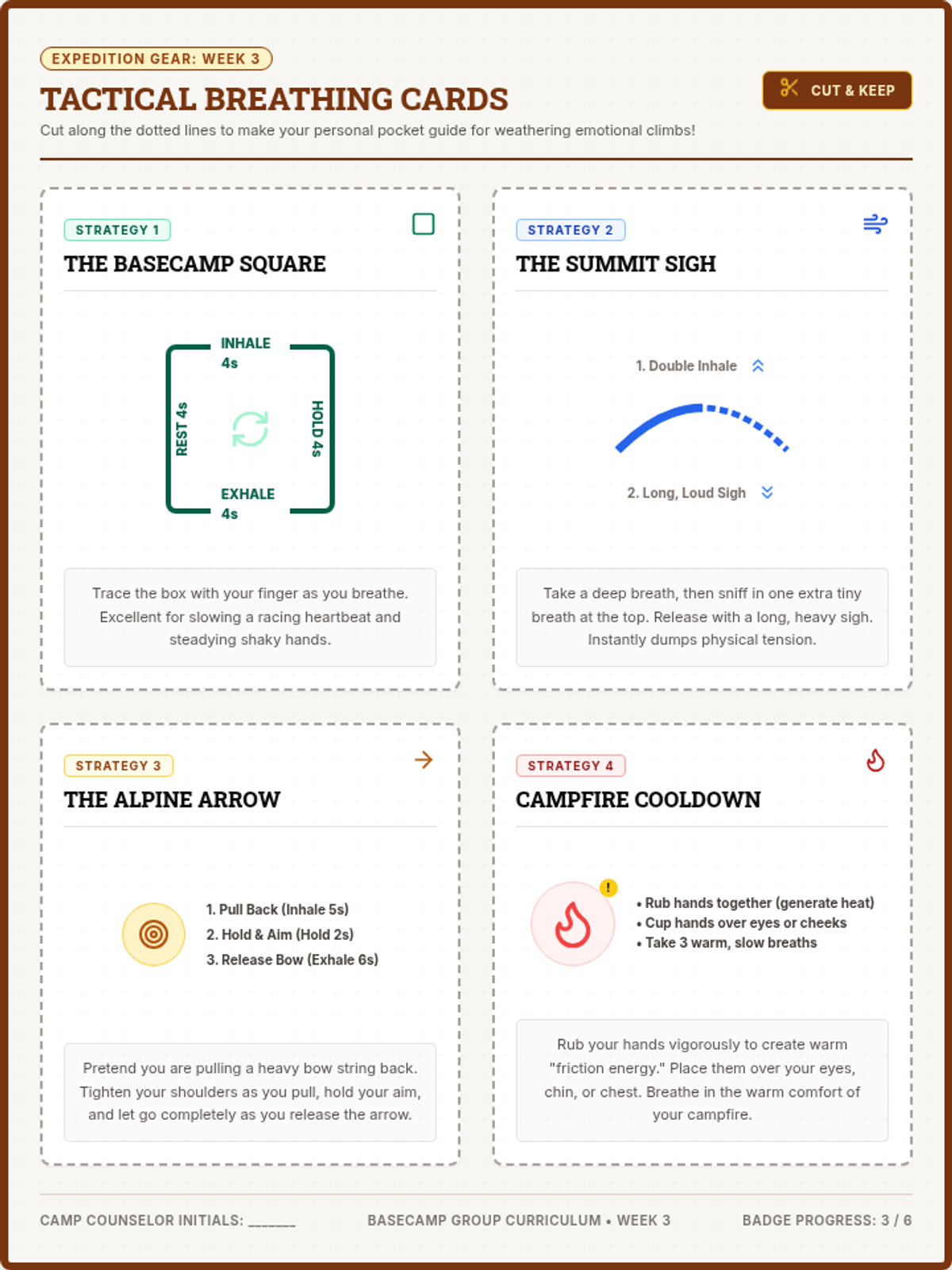
Focusing on the power of breath and mindfulness as internal tools for regulation.
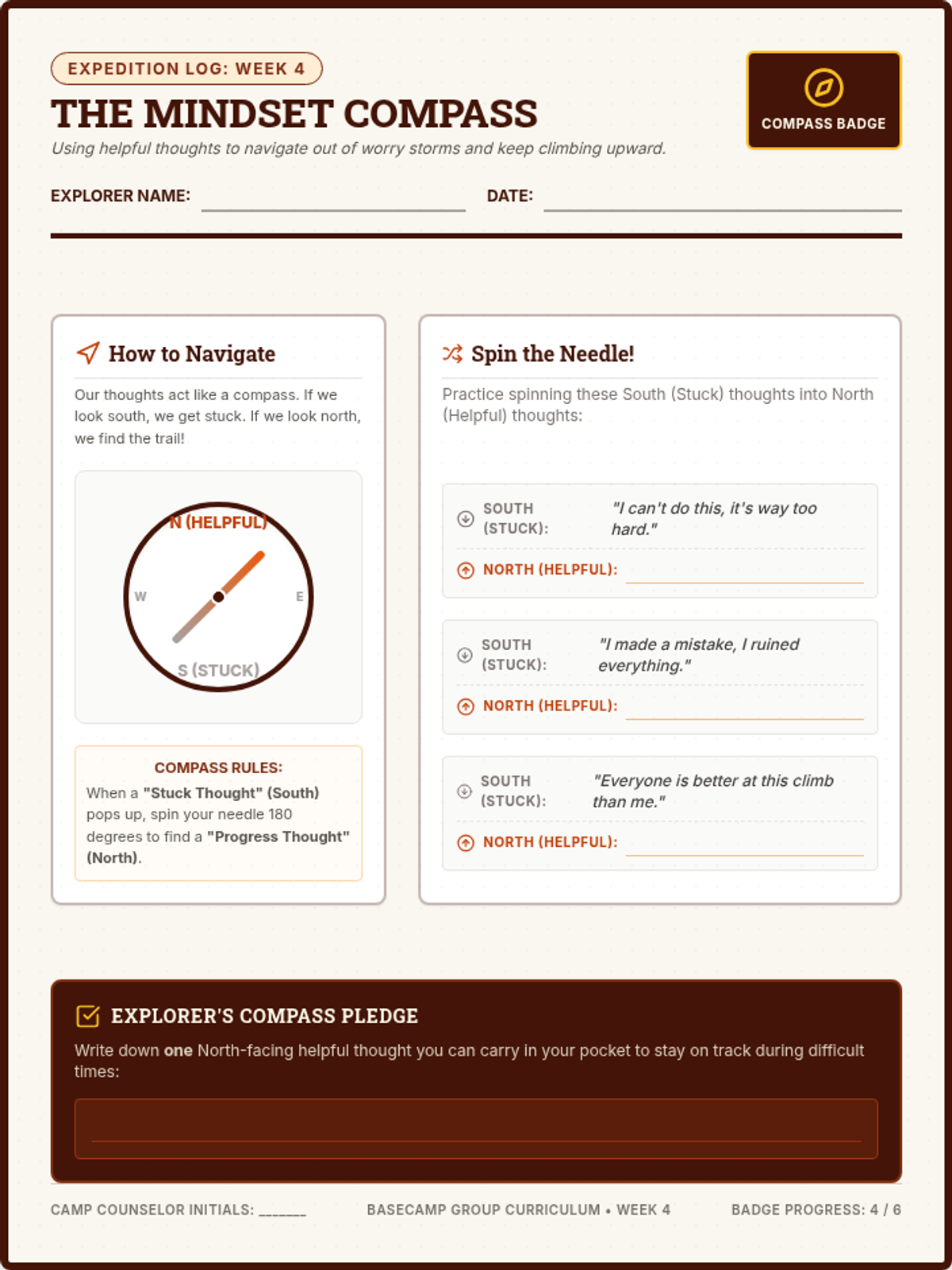
Identifying cognitive distortions or 'tricky trails' and learning to reframe thoughts using a 'Thought Compass'.
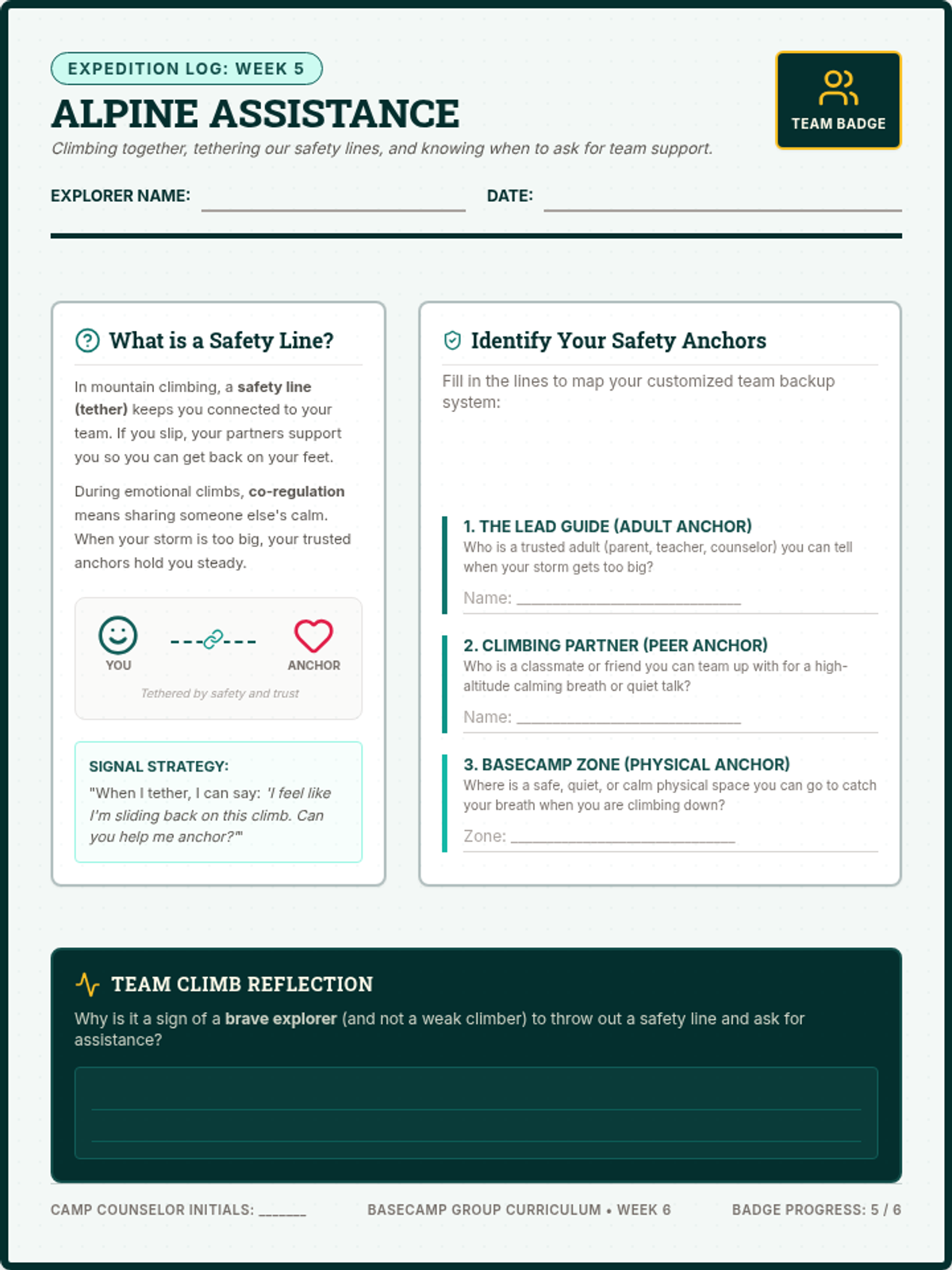
Understanding the physical 'alarm system' of the body and learning grounding techniques to stay present during 'storms'.
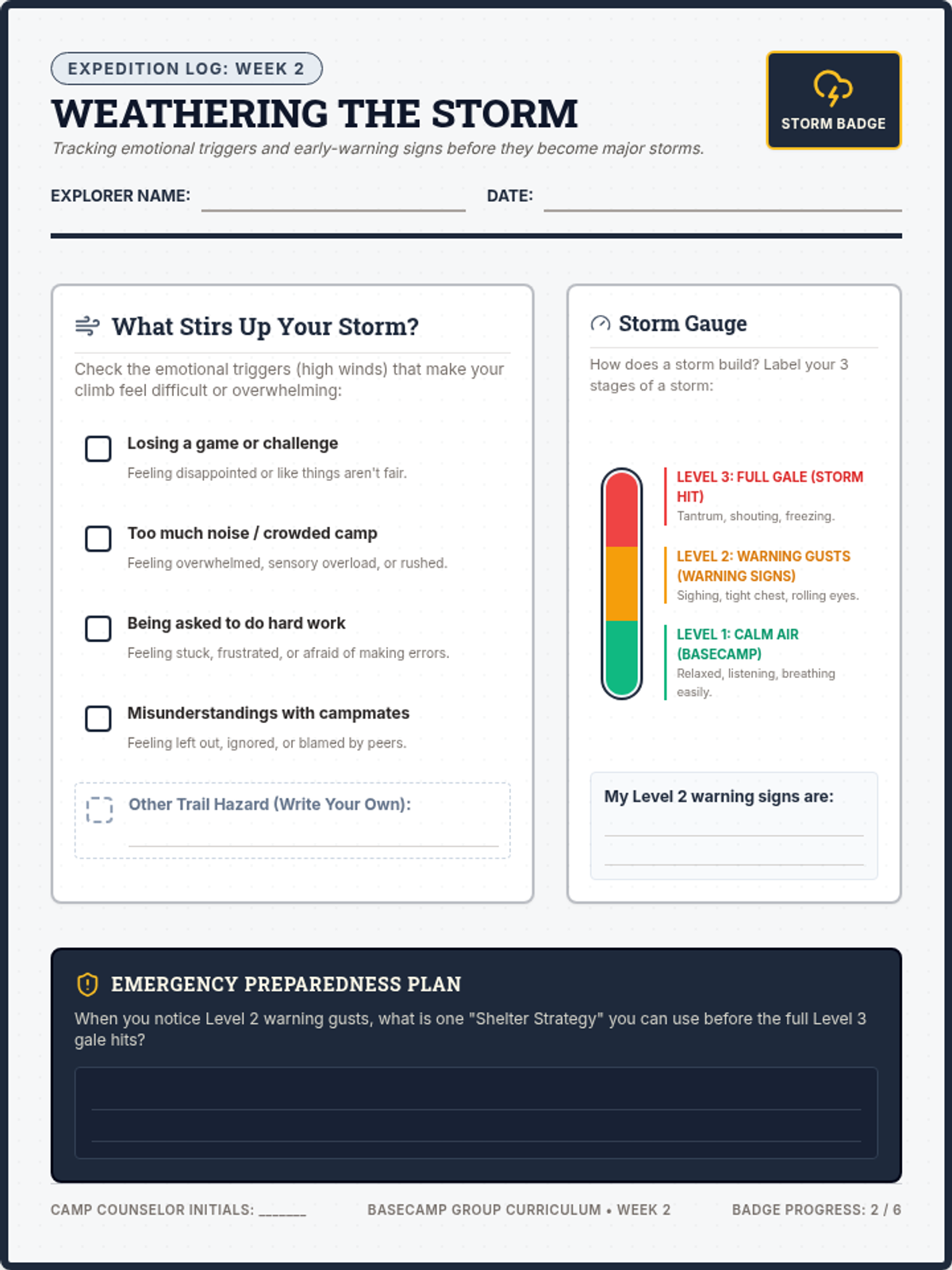
Introduction to the group, establishing norms, and identifying individual stress triggers using the 'Stress Landscape' metaphor.
A hands-on lesson where students build a personal 'calming toolbox' filled with evidence-based strategies for breathing, grounding, and movement. Students learn to identify when they need a tool and how to use it effectively to manage their emotions.
A comprehensive lesson designed to equip students with social-emotional strategies and practical techniques for tackling the STAAR test with confidence and focus.
A social-emotional learning lesson designed for students with trauma backgrounds and impulse control challenges. It focuses on 'Scene Scanning'—assuming positive intent and dissecting social interactions through a detective-style lens to improve perspective-taking and reduce reactivity.
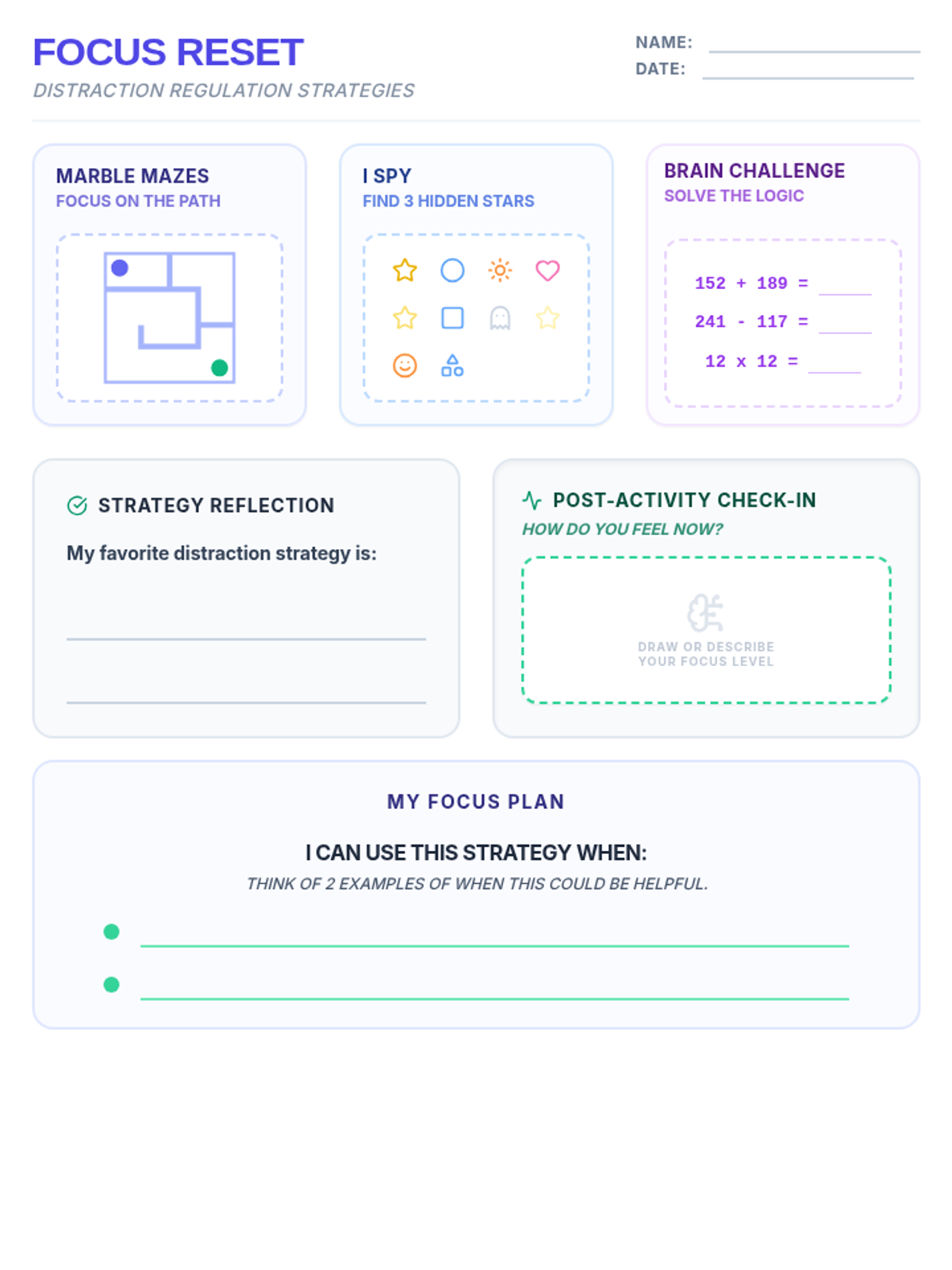
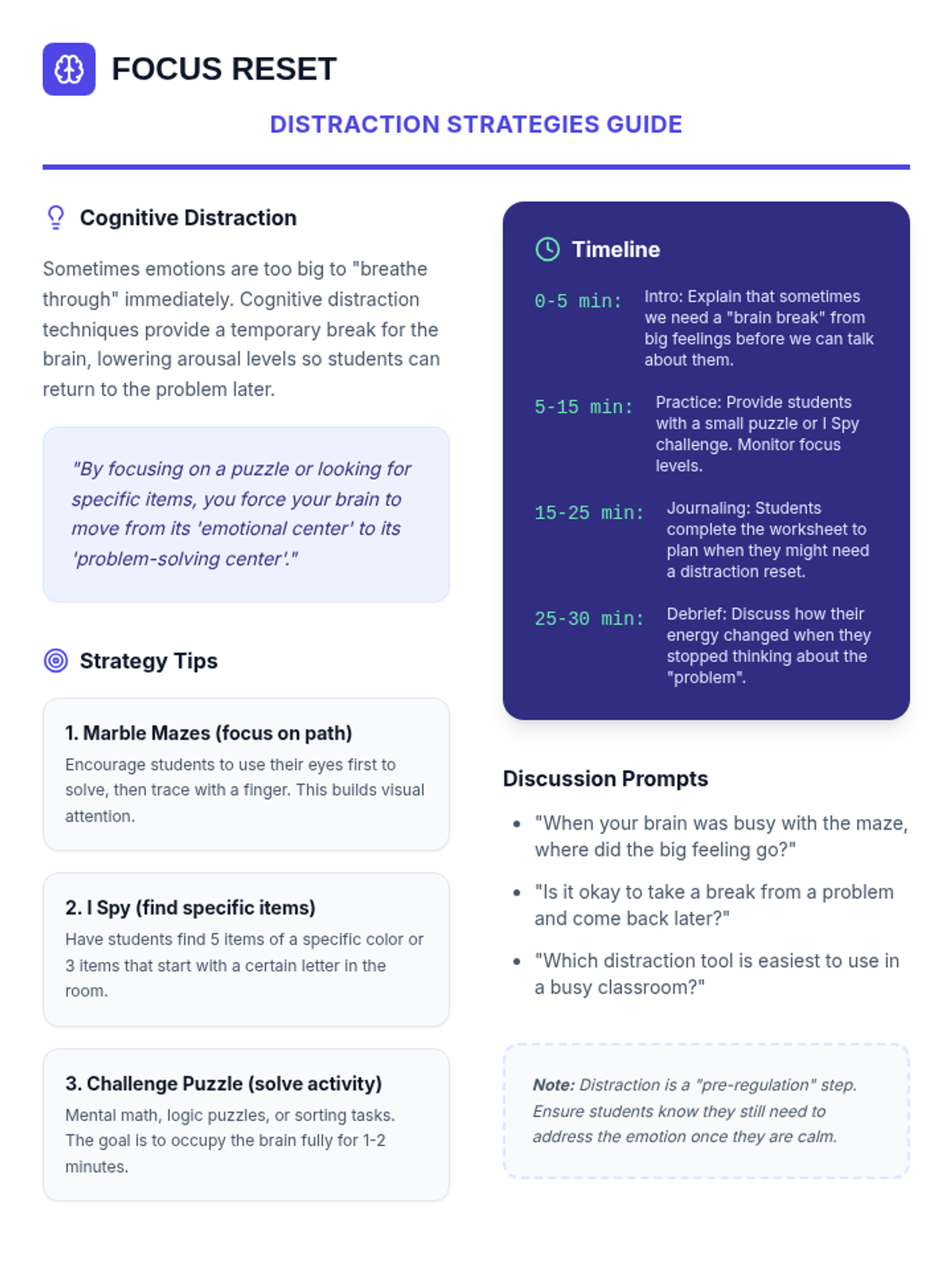
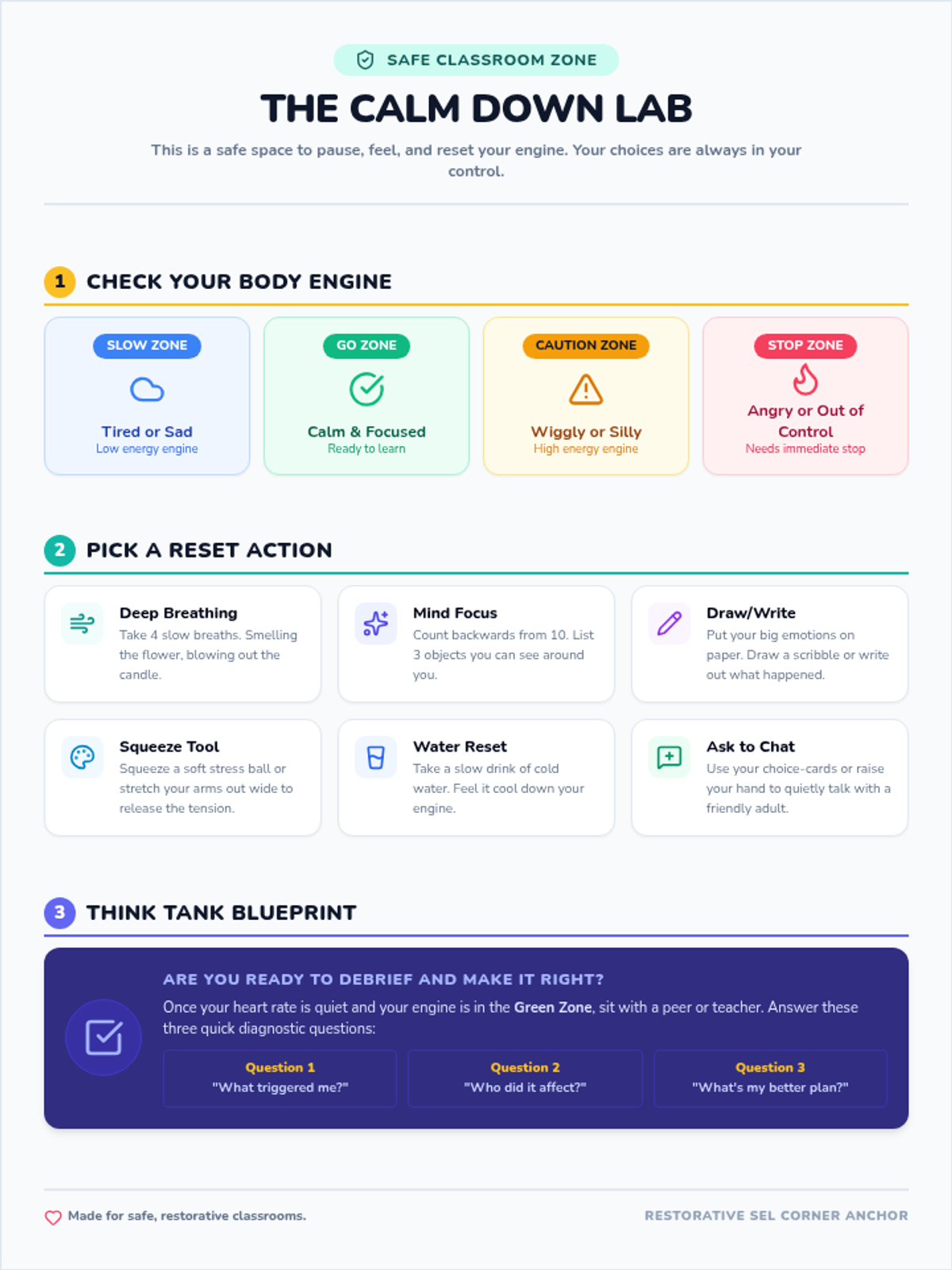
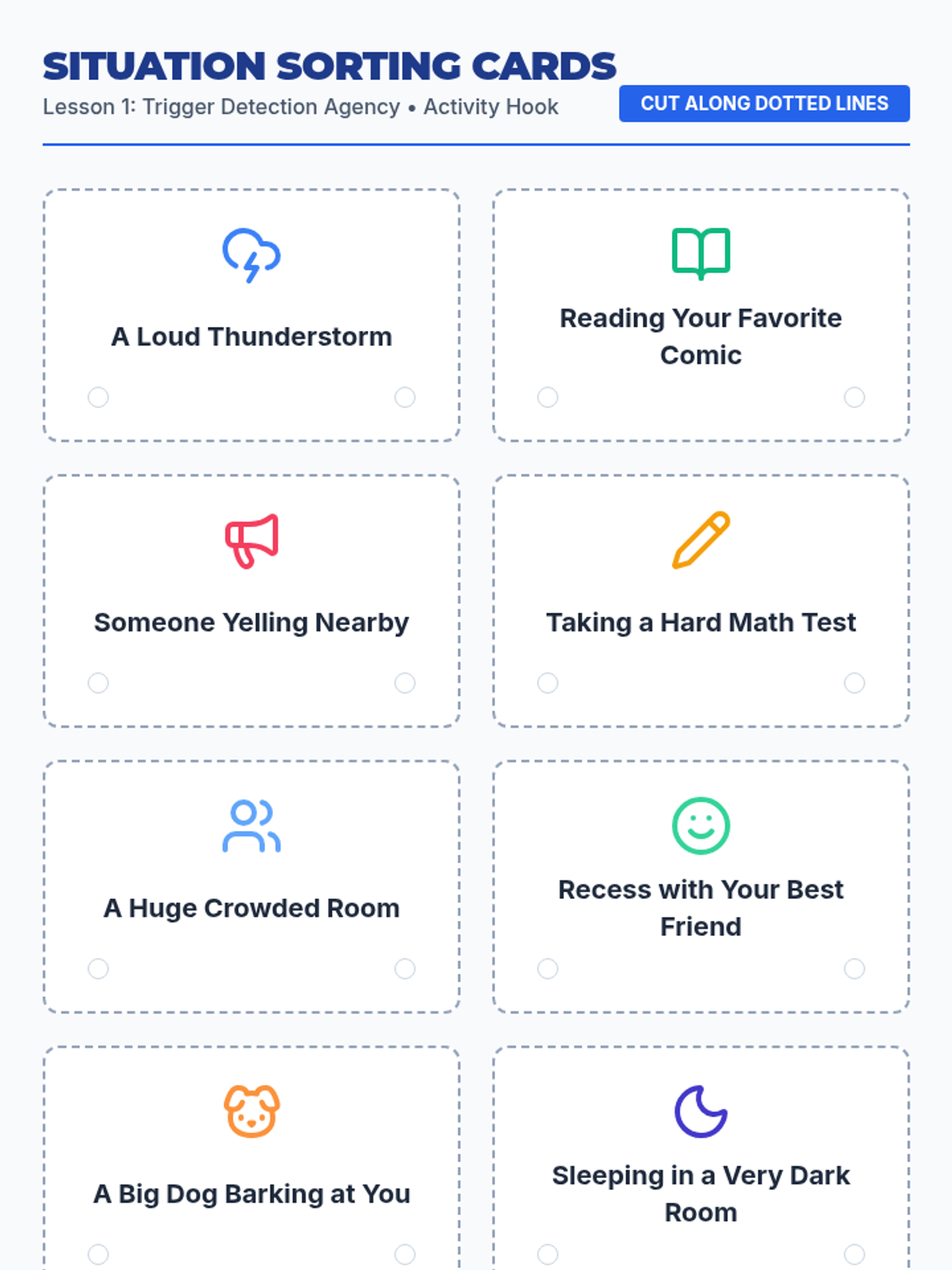
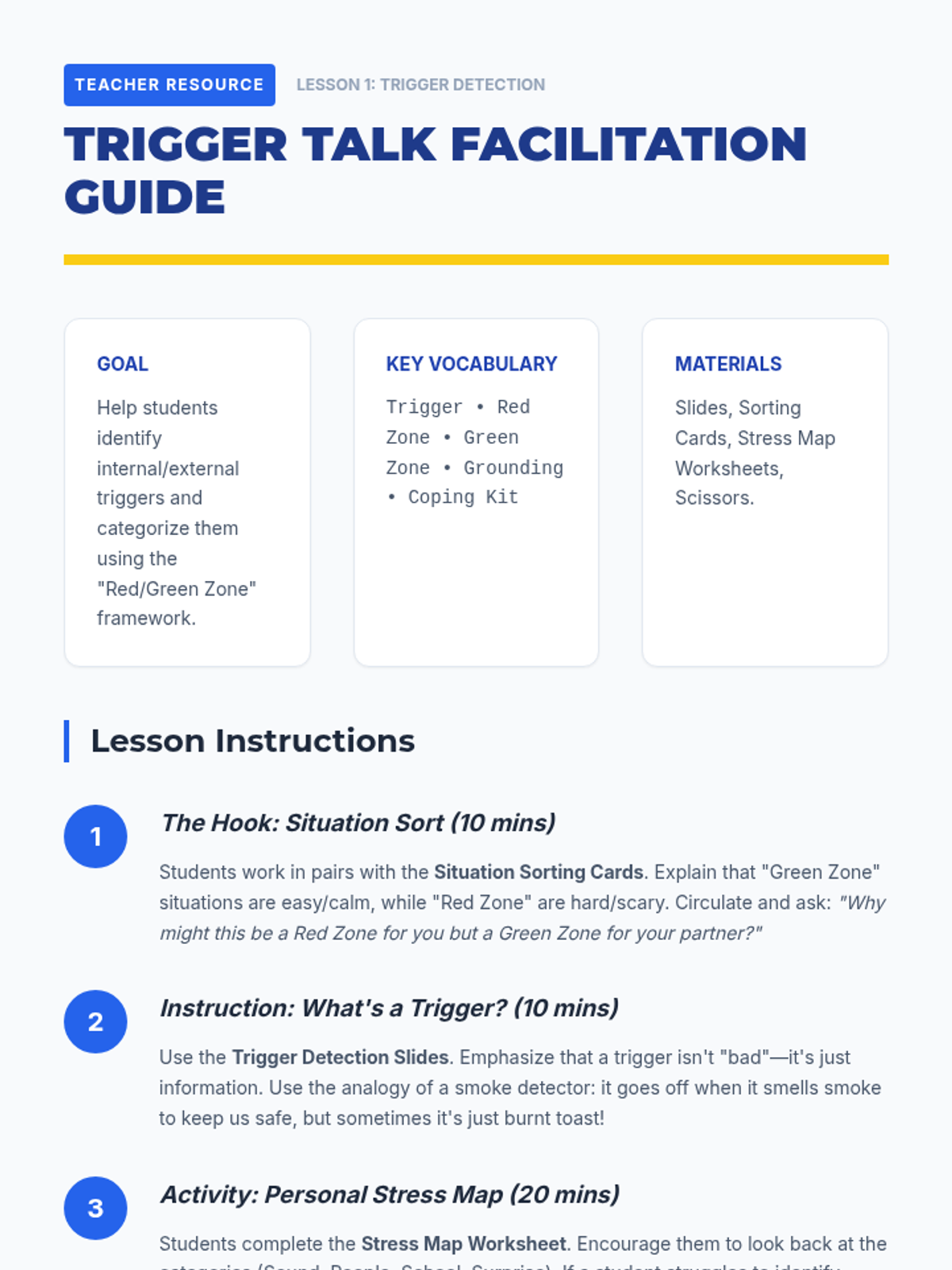
Students will identify and practice specific sensory, physical, and cognitive tools to manage their energy levels and return to the Green Zone.
A 30-minute interactive lesson designed for gifted students in grades 3-5 to understand stress and manage perfectionism through the 'Blueprint' concept. Students explore the difference between excellence and perfection and practice reframing mistakes as necessary revisions.
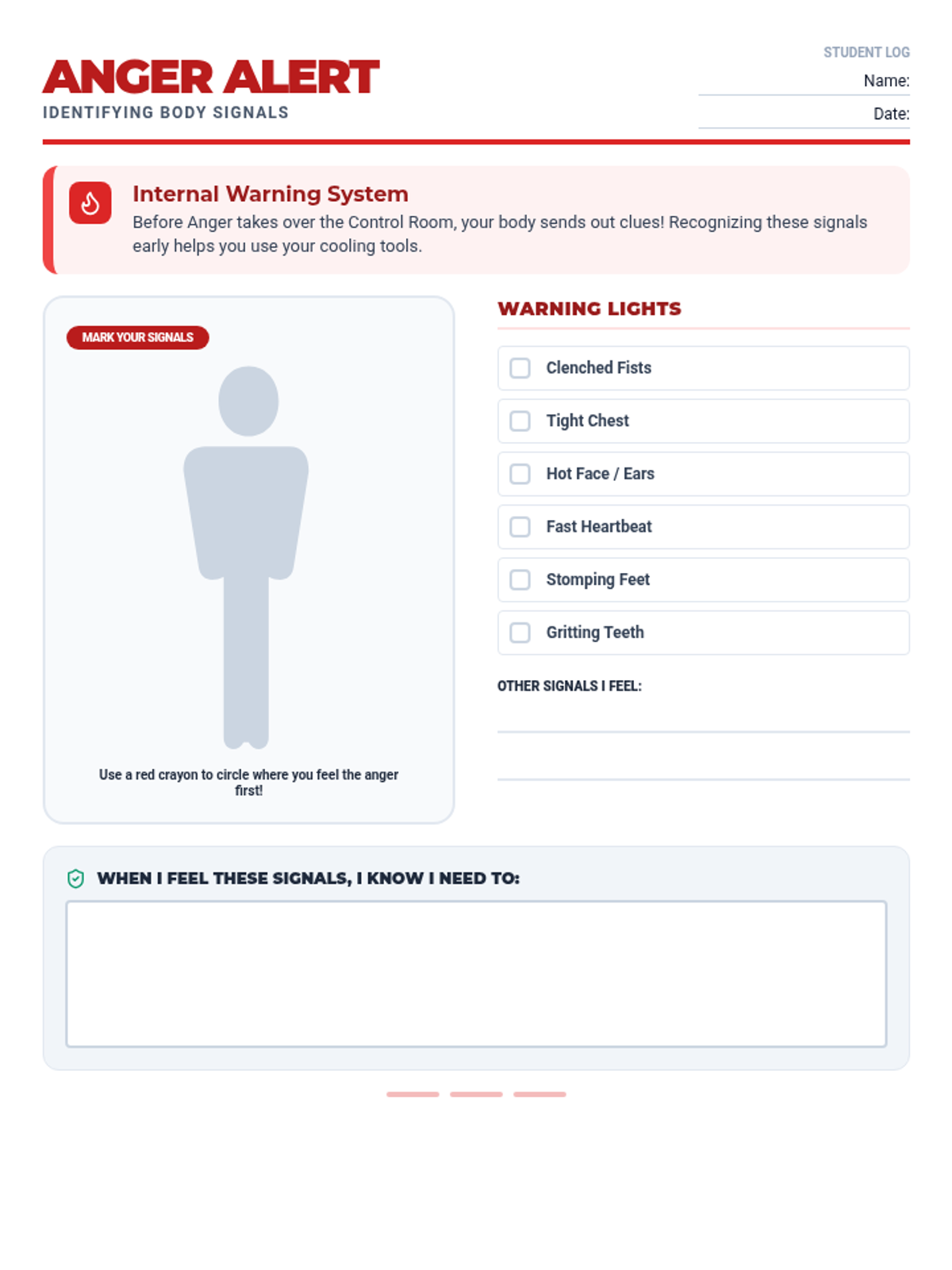
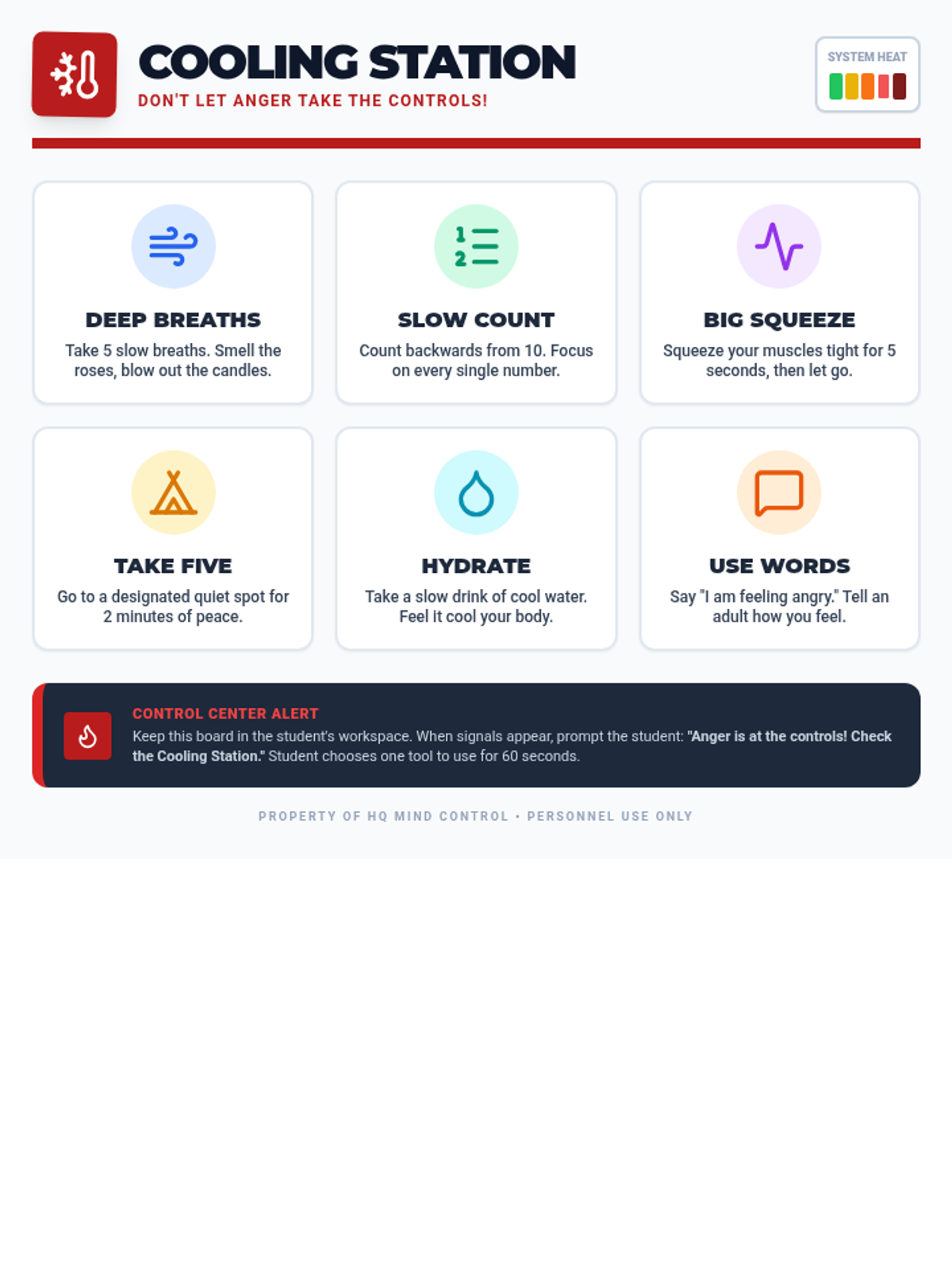
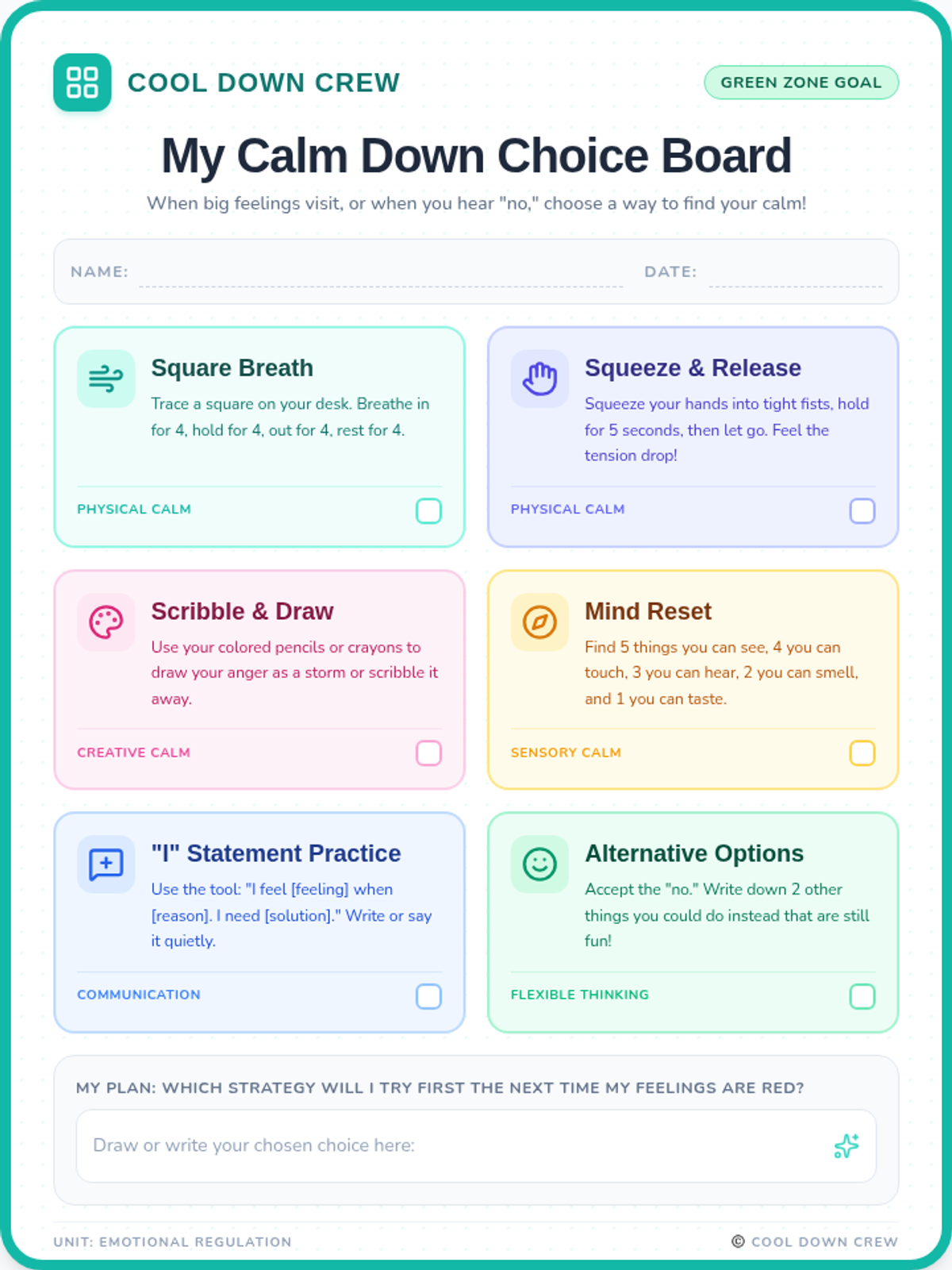
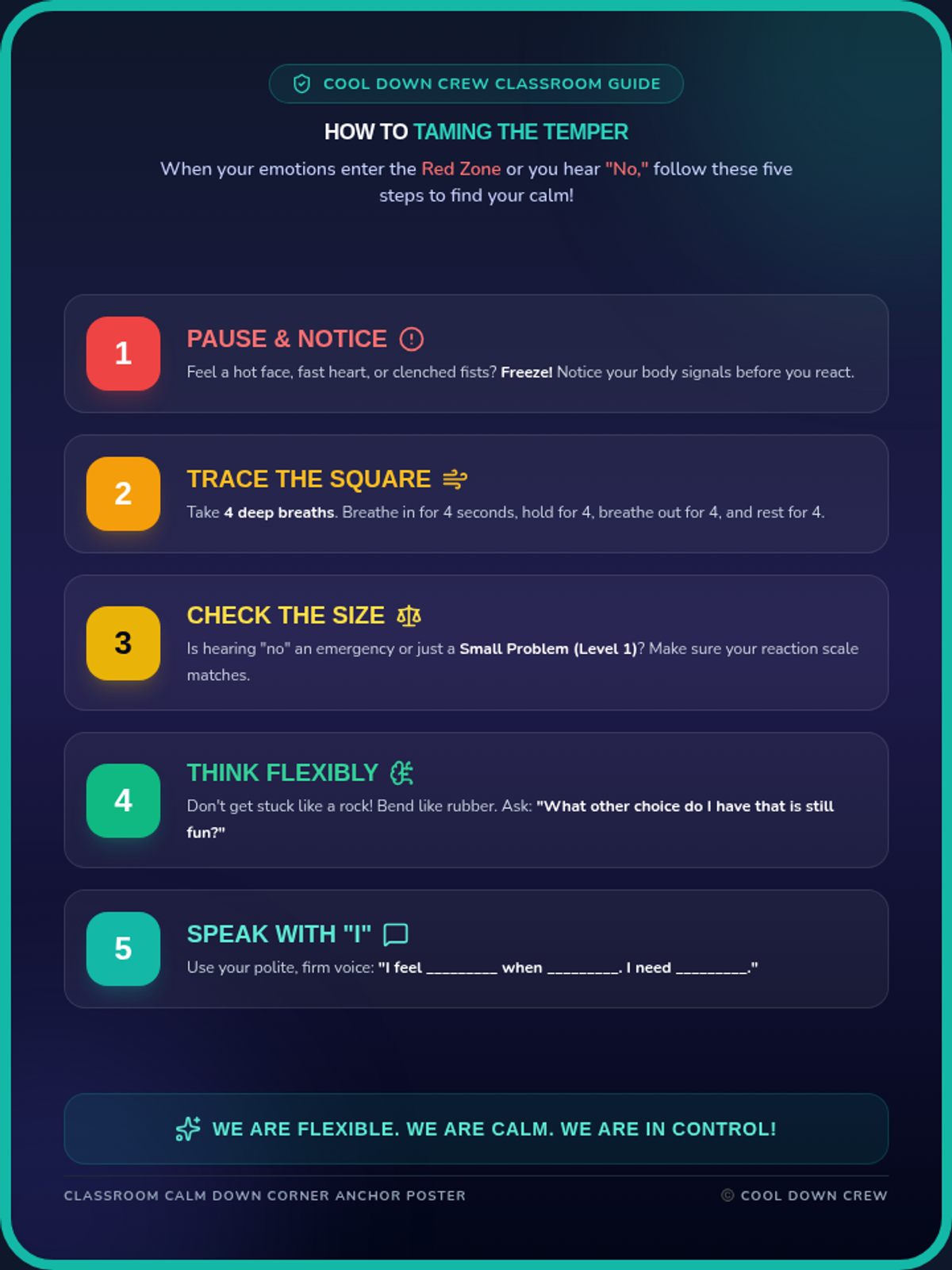
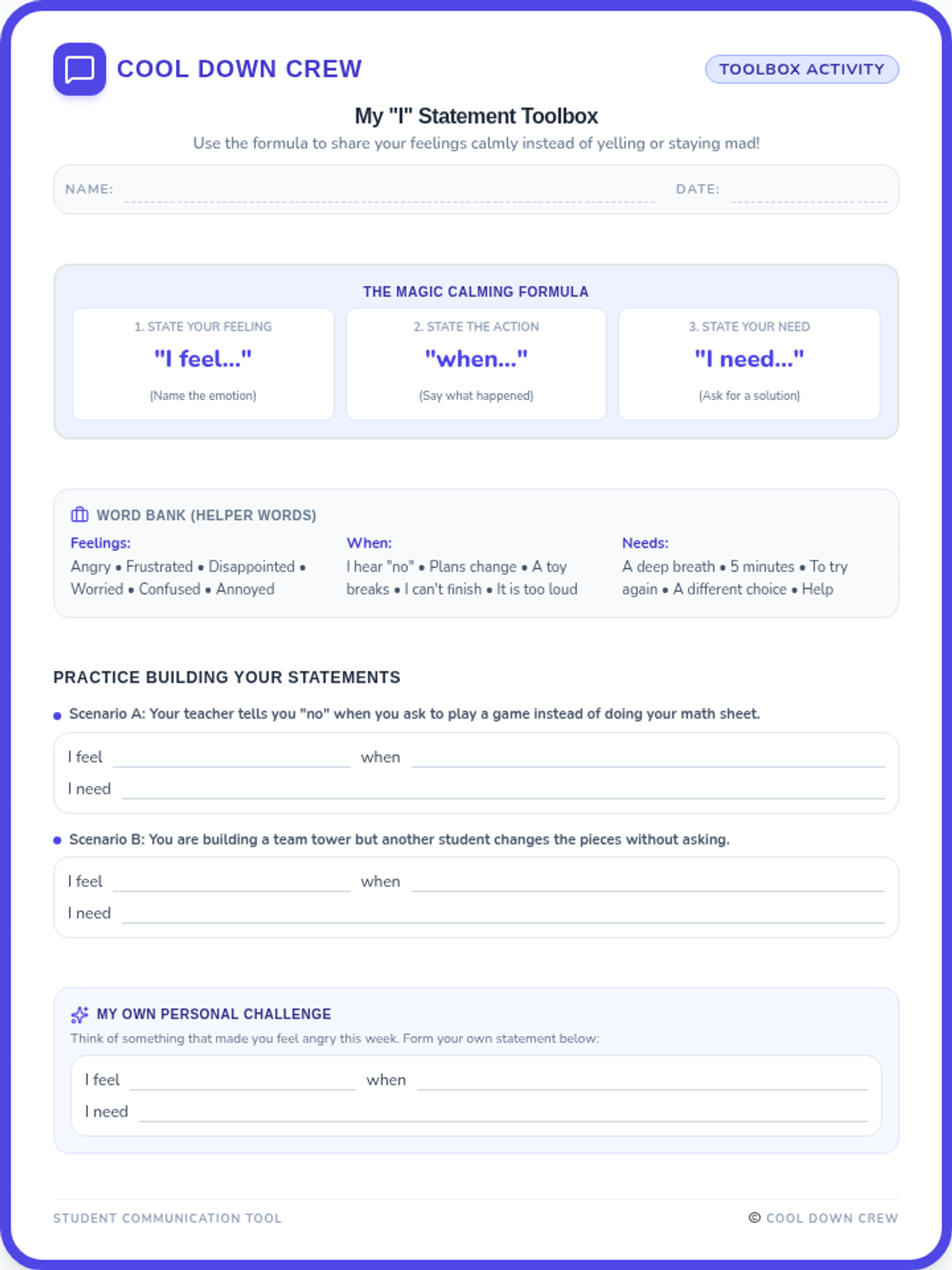
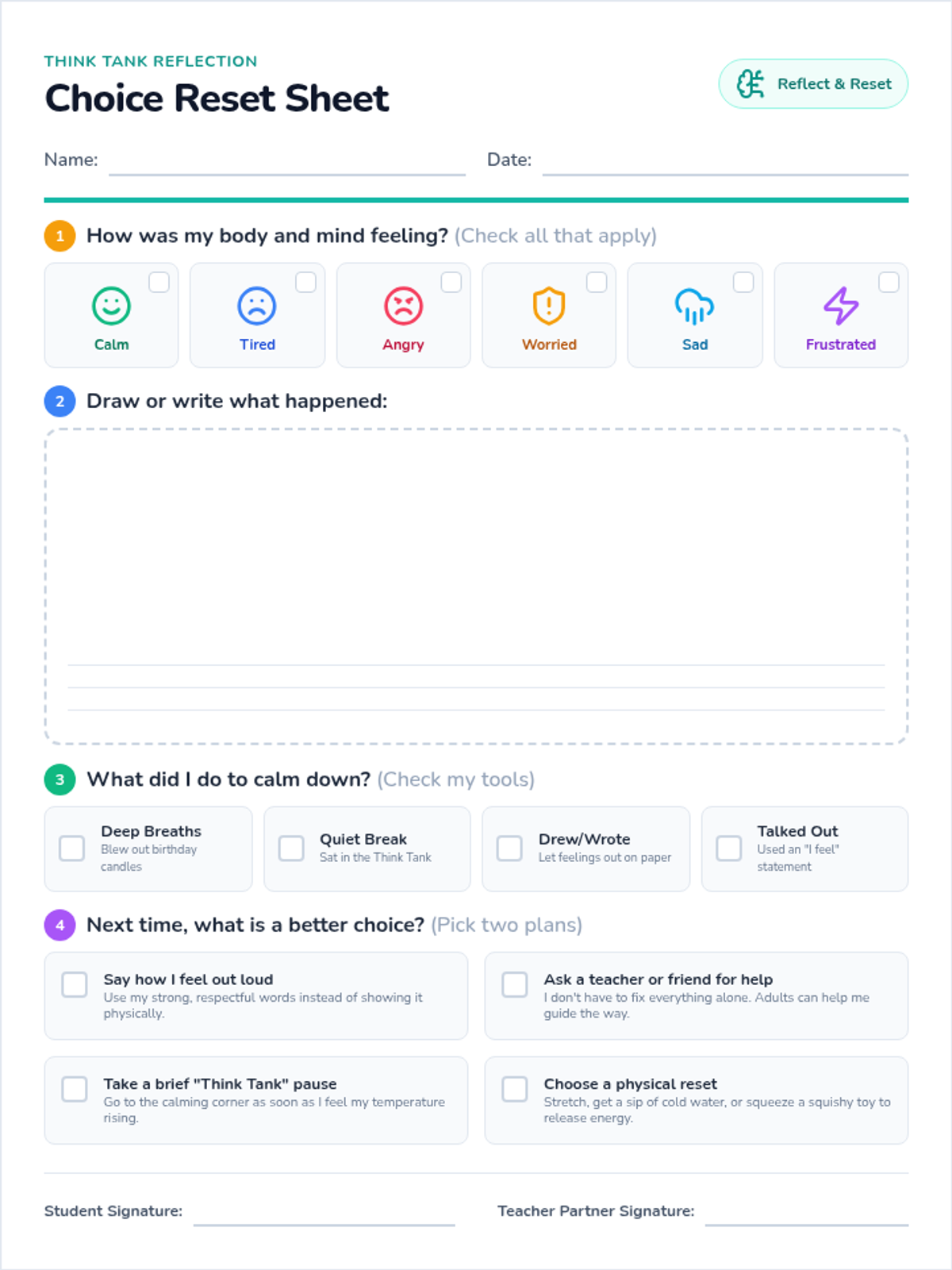
A comprehensive lesson on managing anger through respectful communication and self-regulation techniques. Students learn to use 'I' statements, practice deep breathing, and understand when to take a 'Cool Down' break.
Using Minecraft analogies to manage 'Creeper moments' (unexpected setbacks) and collaborative building conflicts in digital sandbox environments.
A comprehensive binder of emotional regulation and coping tools for a 2nd-grade student. Featuring a friendly cat theme, these visual-heavy resources support feelings identification, break-taking, problem-solving, and classroom engagement with minimal reading required.
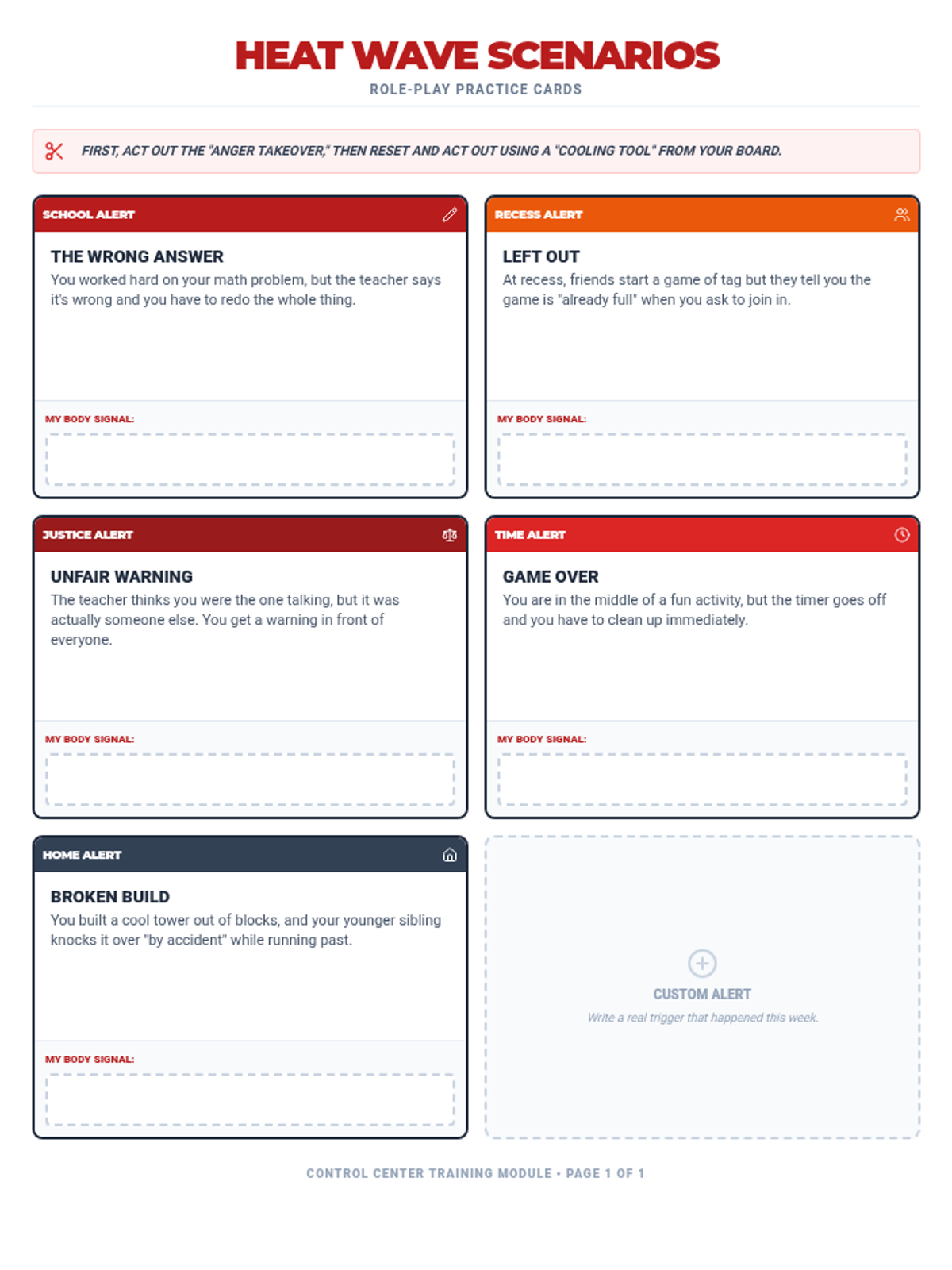
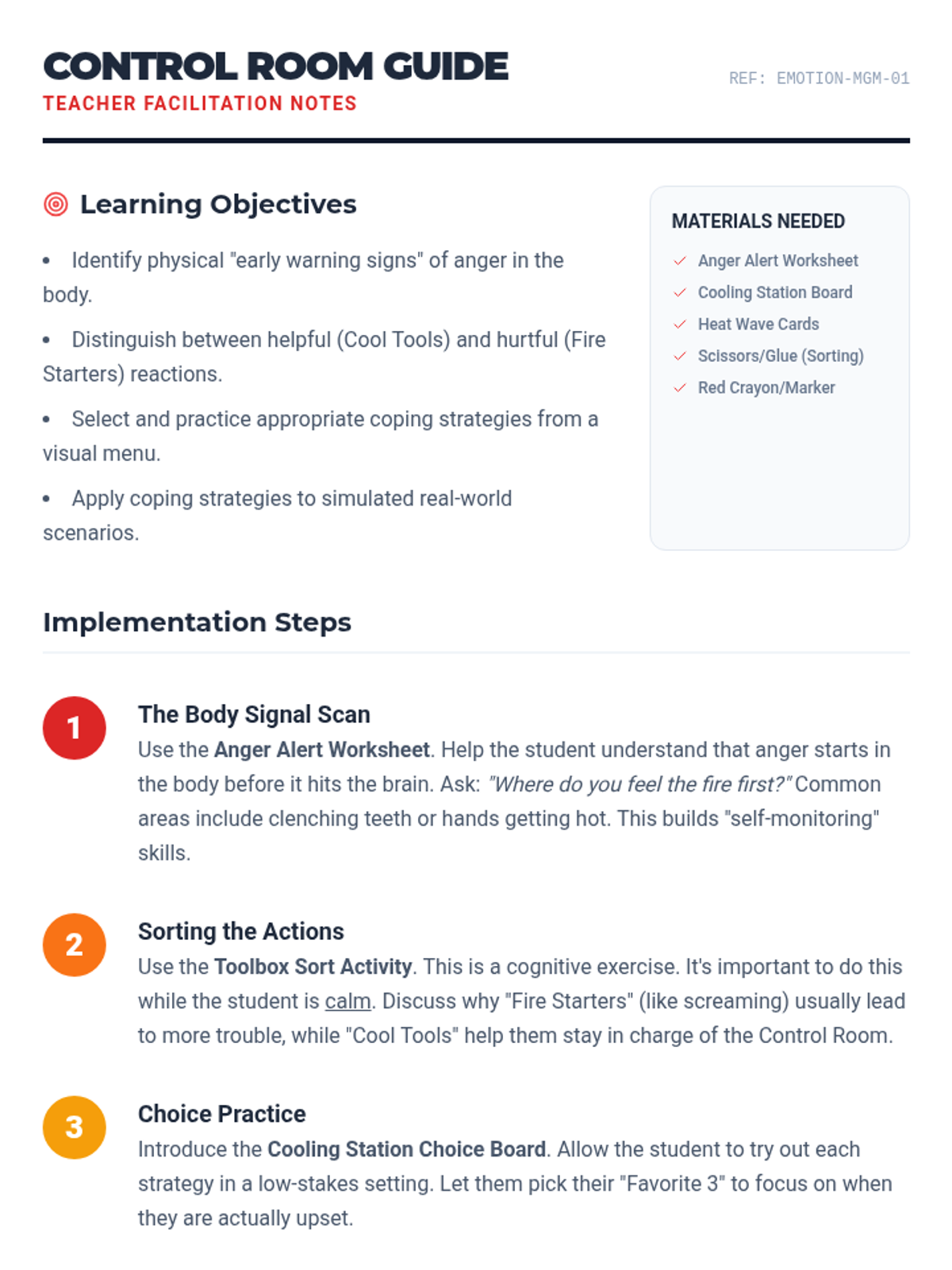
A lesson focused on identifying triggers and applying coping strategies for managing anger in school settings, specifically peer conflict, teacher directions, and academic challenges.
A collection of resources to help families navigate the transition to 4th grade, covering logistics, emotional strategies, and fun preparation activities.
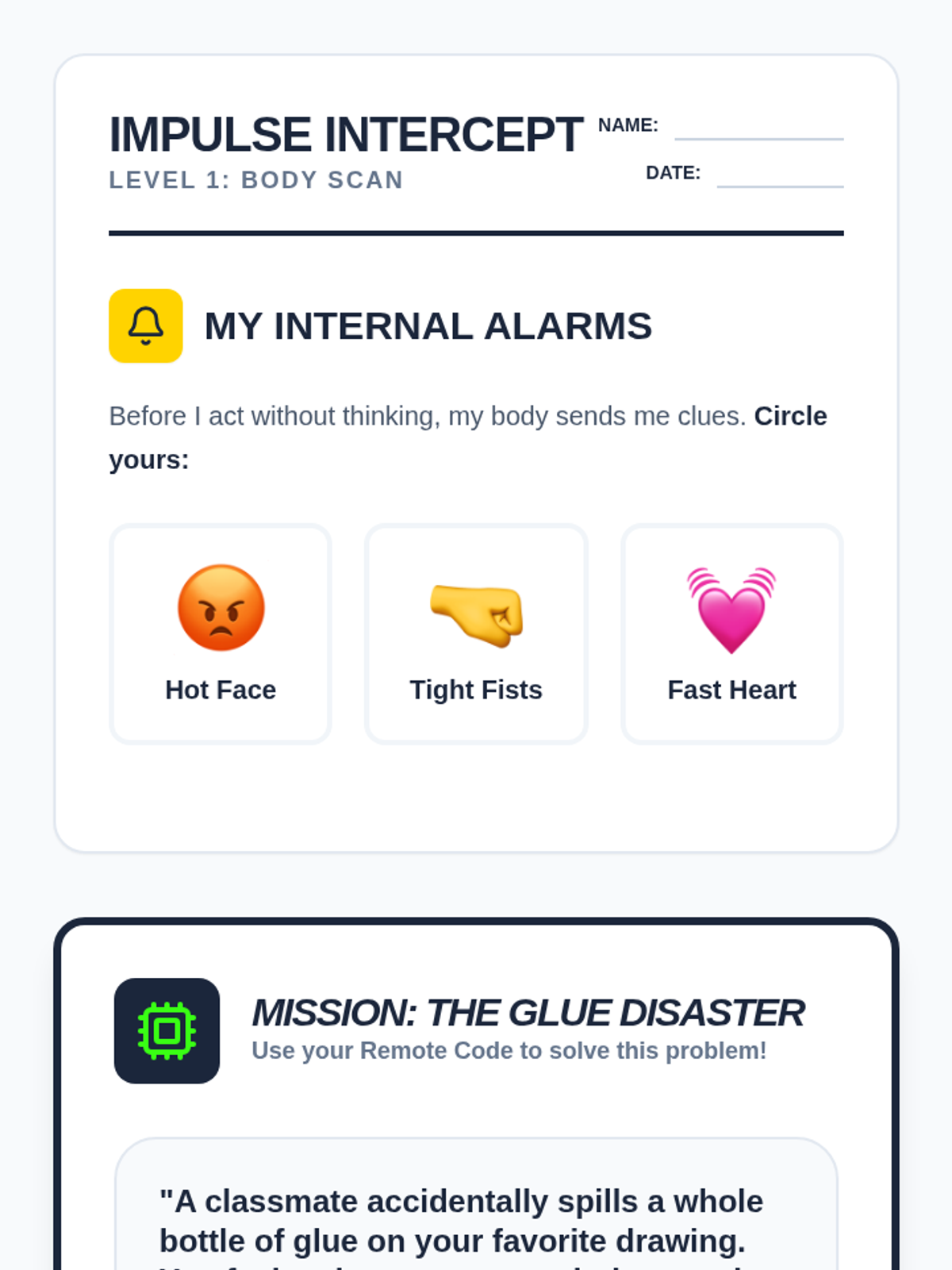
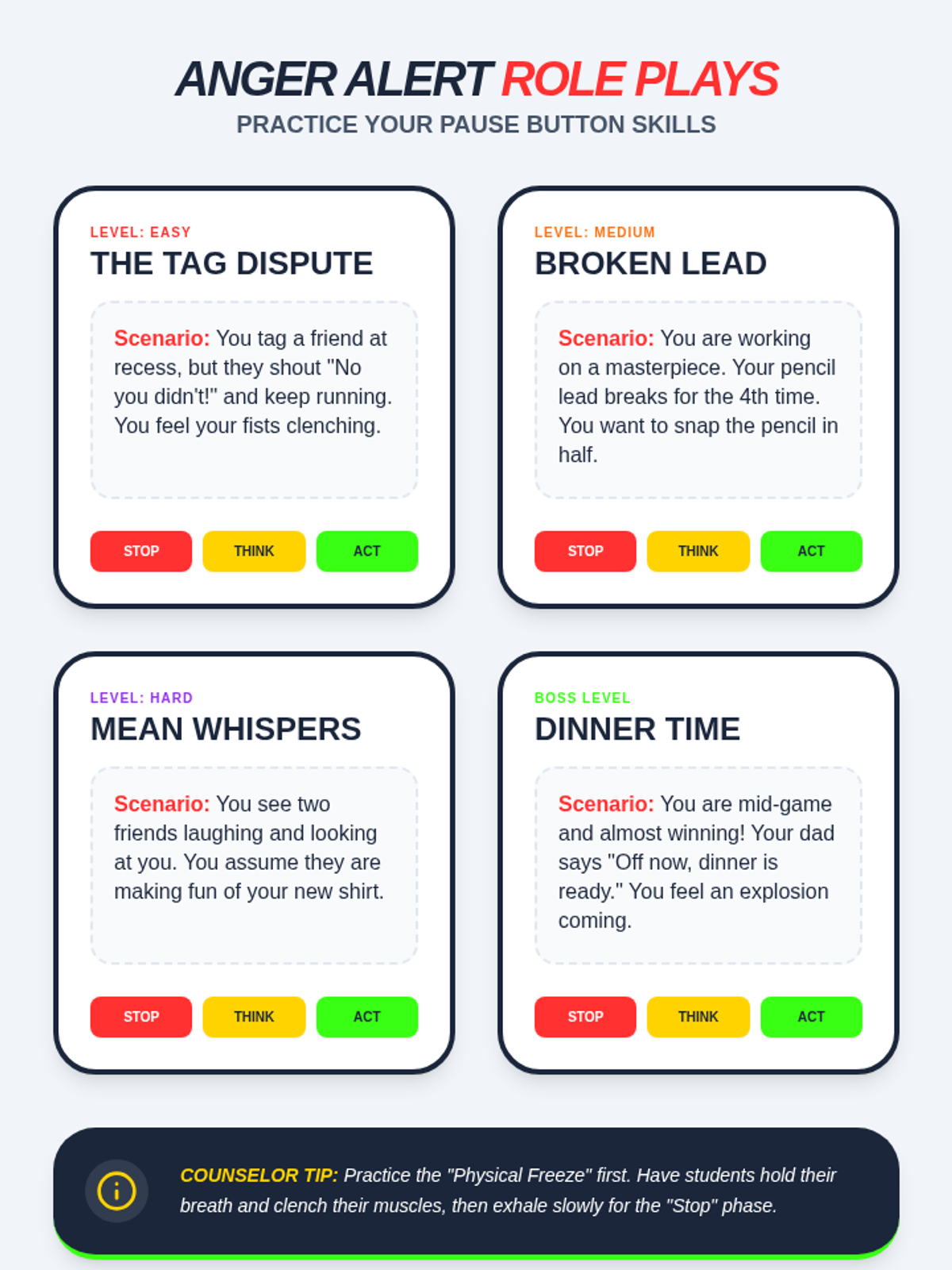
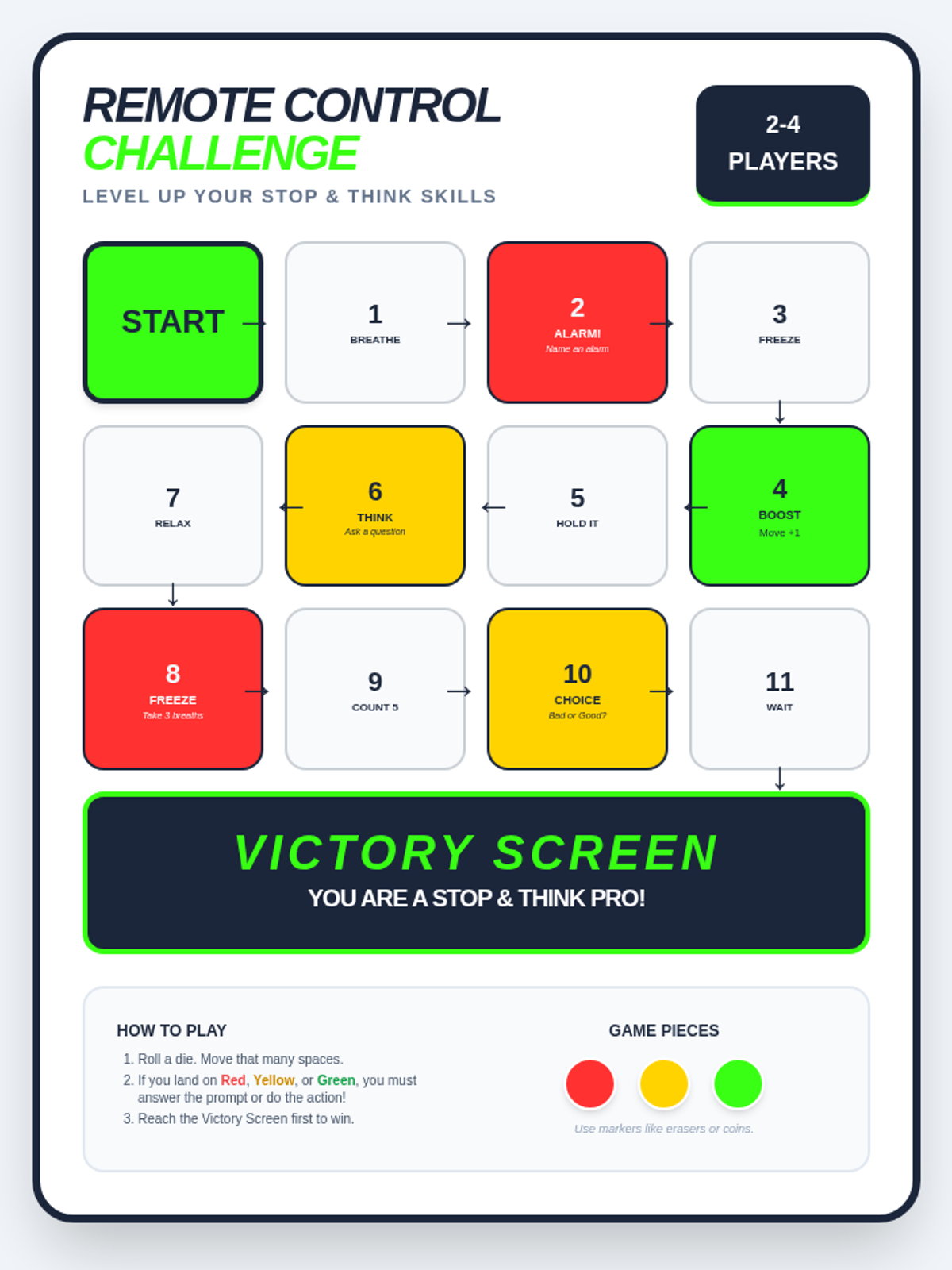
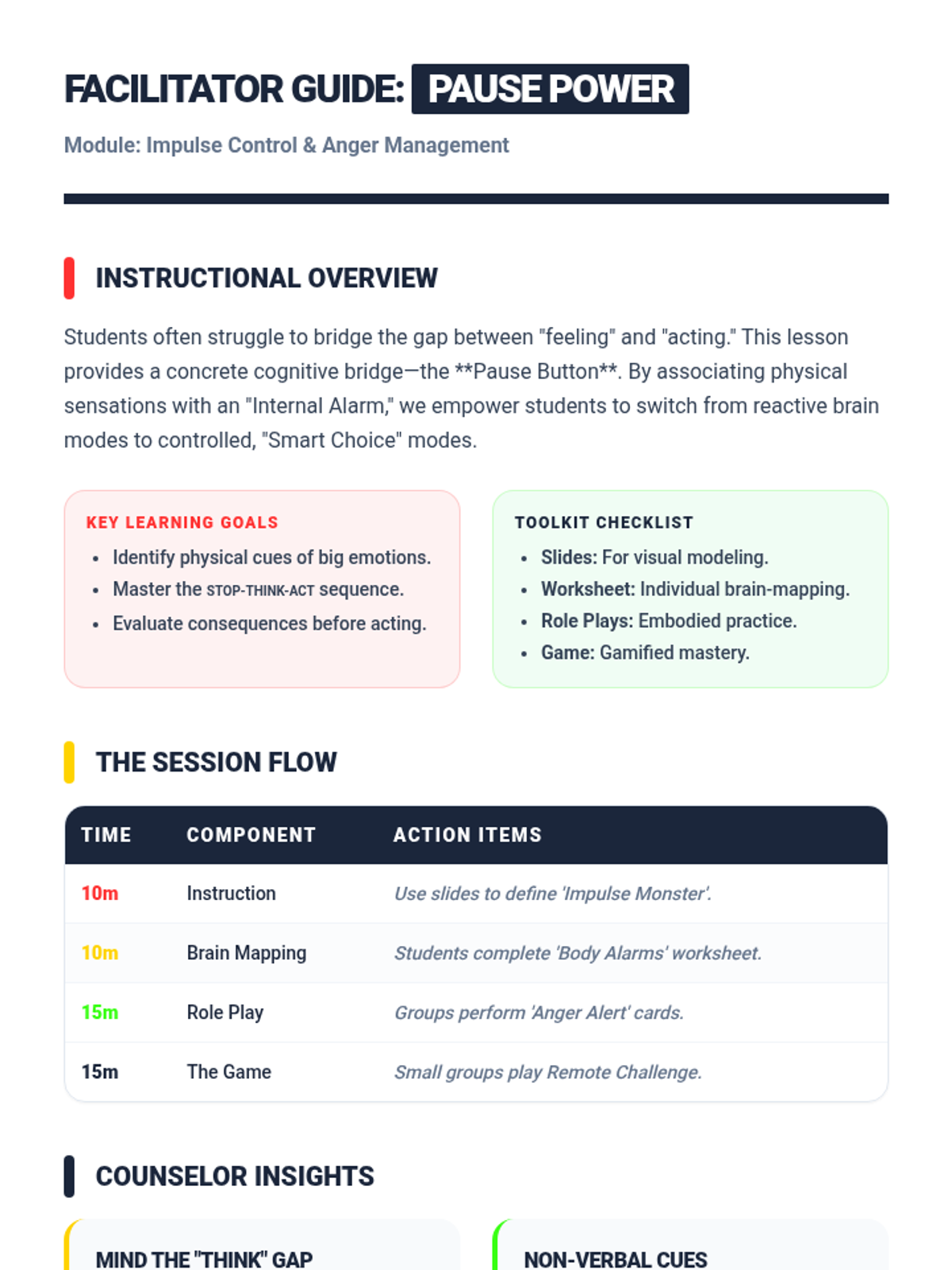
Generalizing the pause button skill to everyday life situations and creating a personalized 'remote control' of regulation strategies.
Applying pause strategies to physical building activities like LEGOs and Magnatiles, focusing on handling 'collapsed' projects or sharing materials.
Using video game analogies to teach students how to 'pause' when they feel frustrated or need to transition away from screen time.
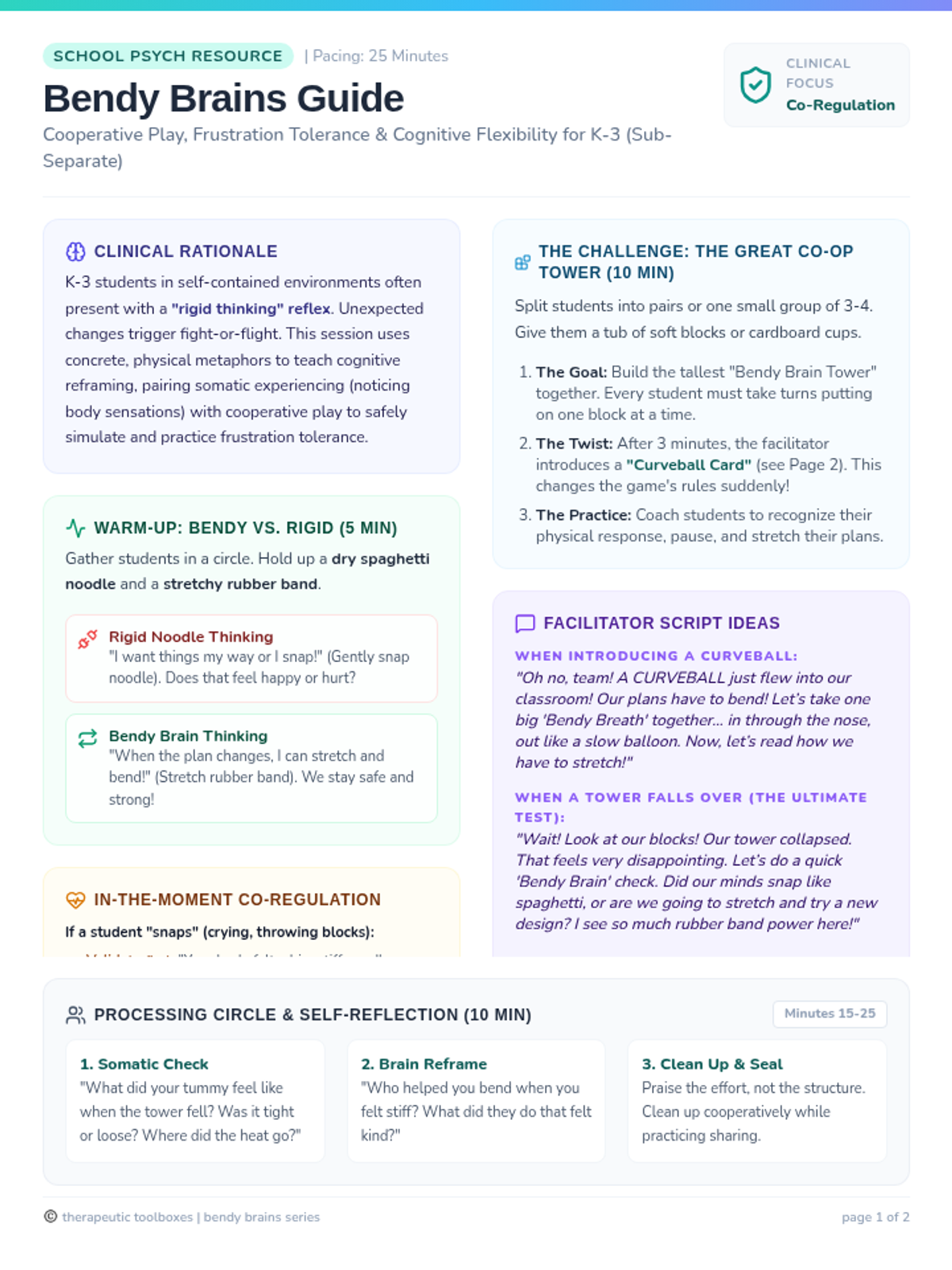
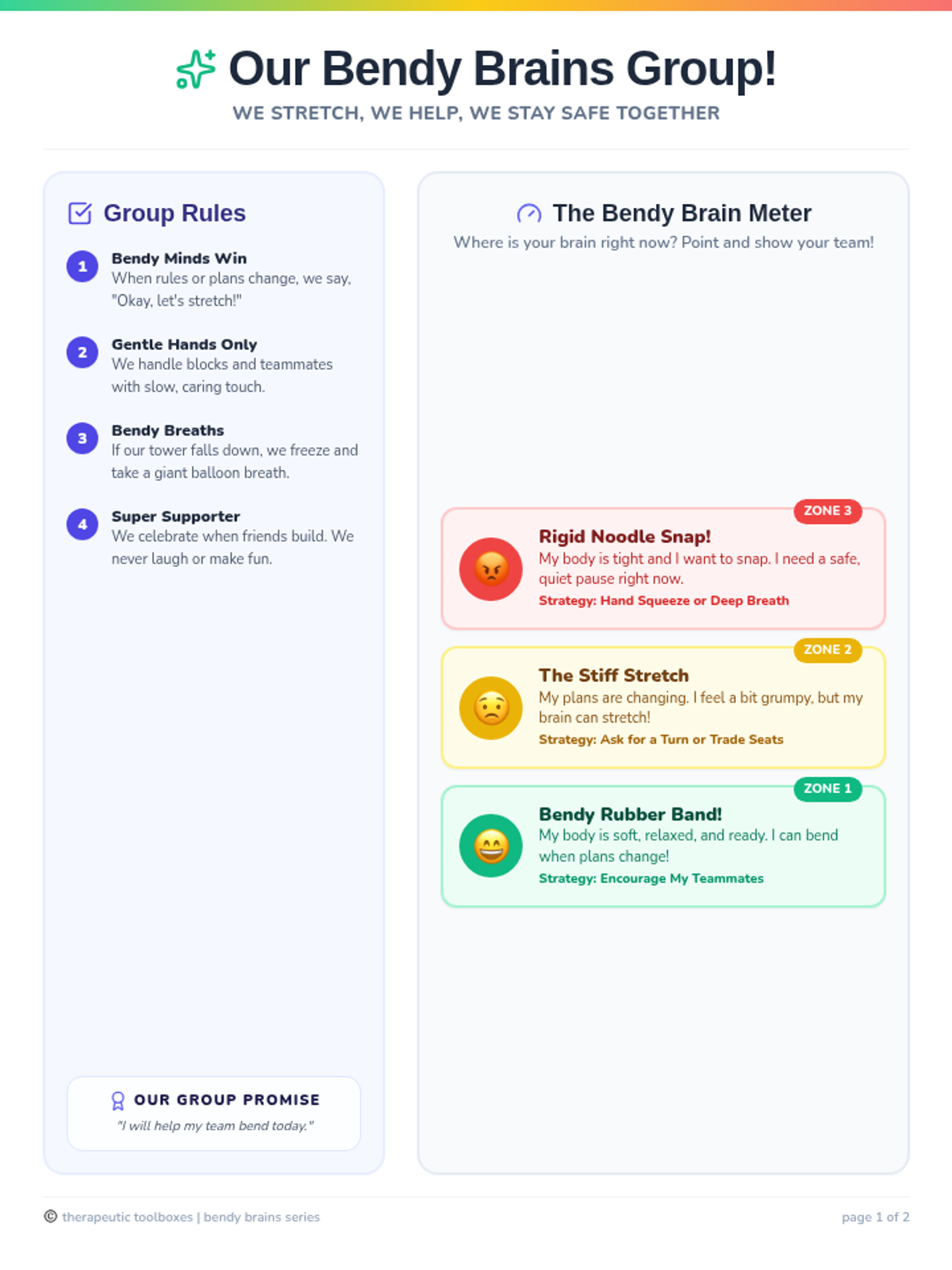
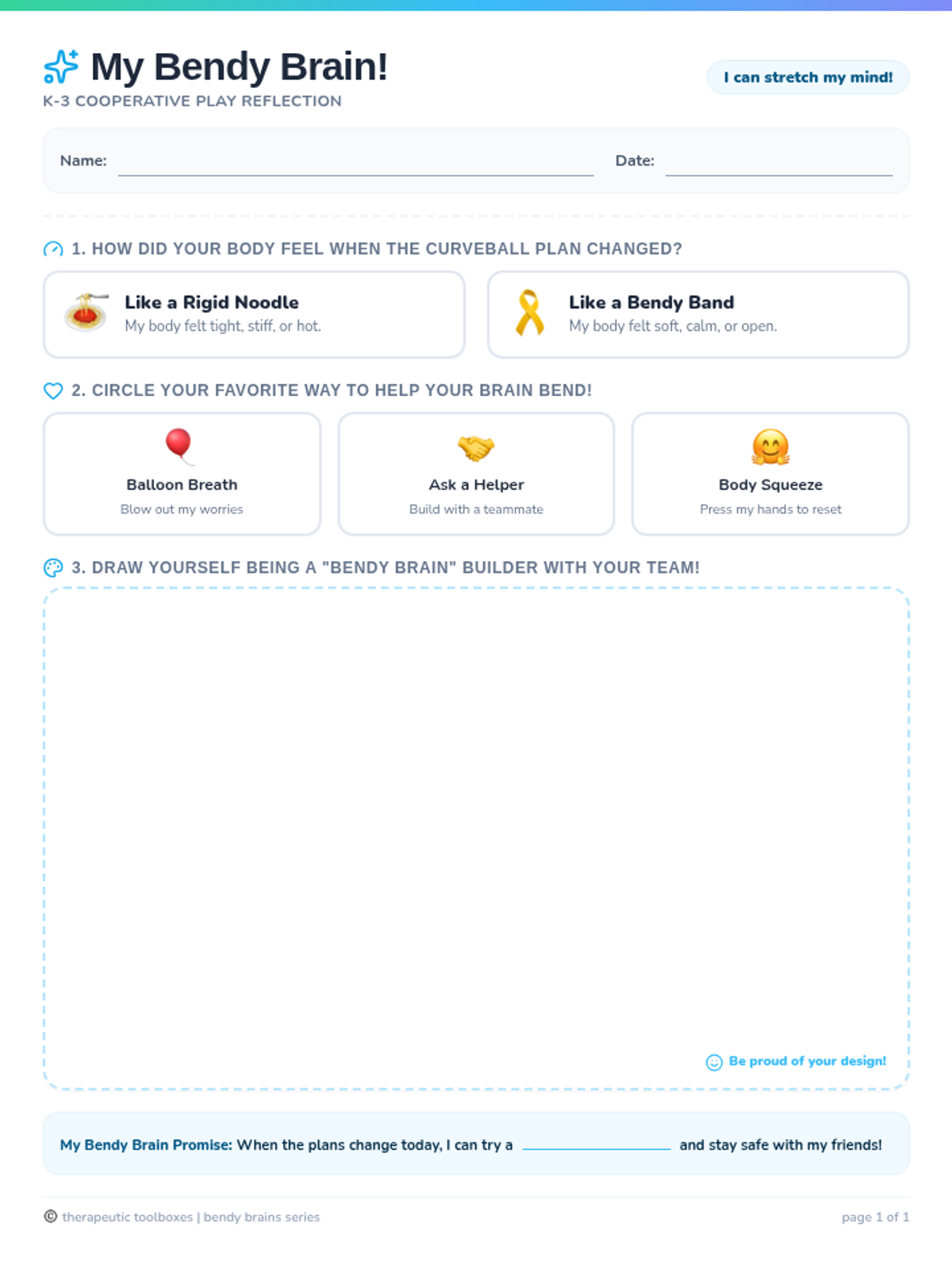
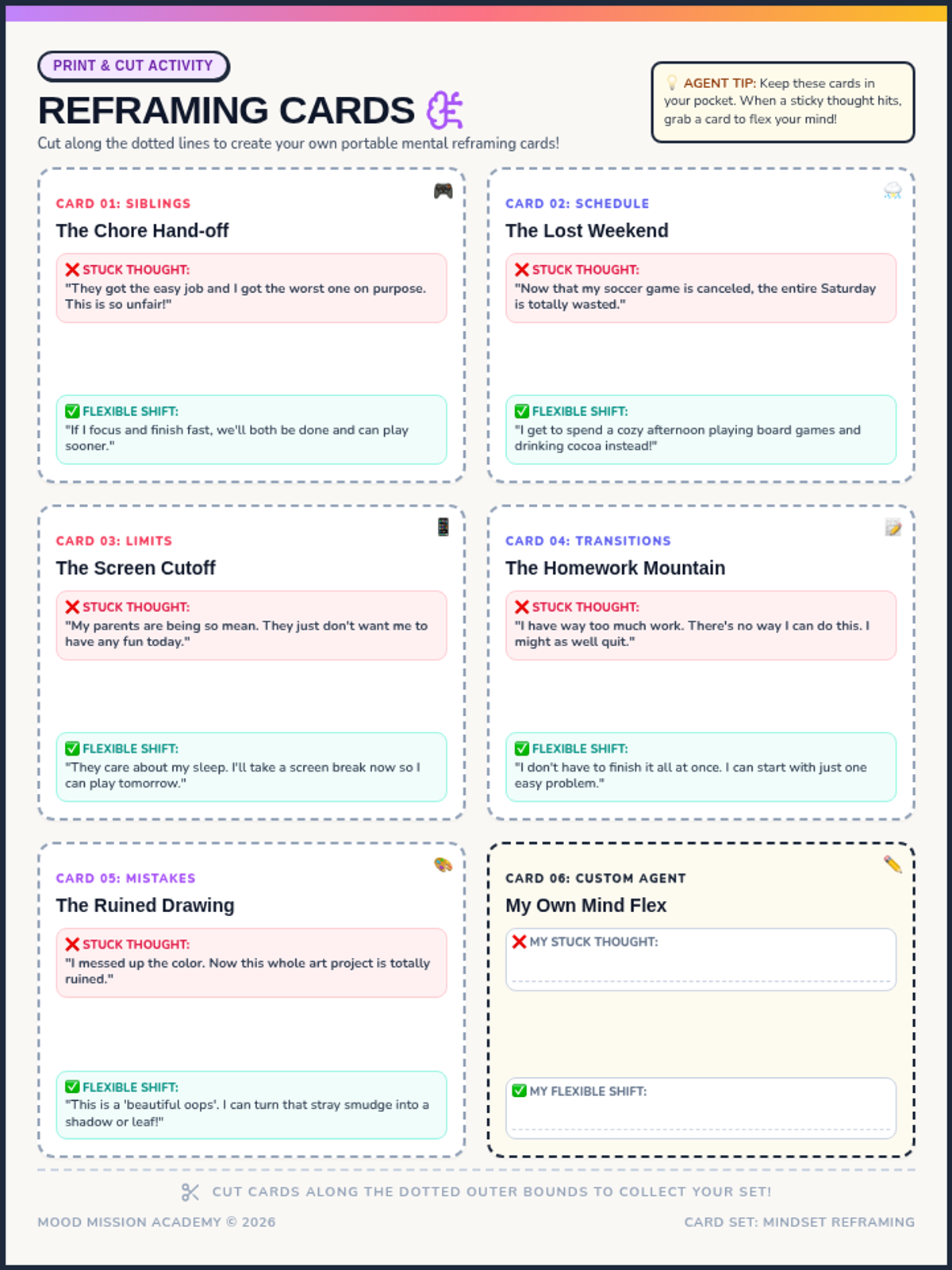
A targeted intervention lesson focused on developing flexible thinking and coping skills during academic tasks for elementary students. It uses the metaphor of 'stretching' the brain like a muscle to handle challenges and changes.
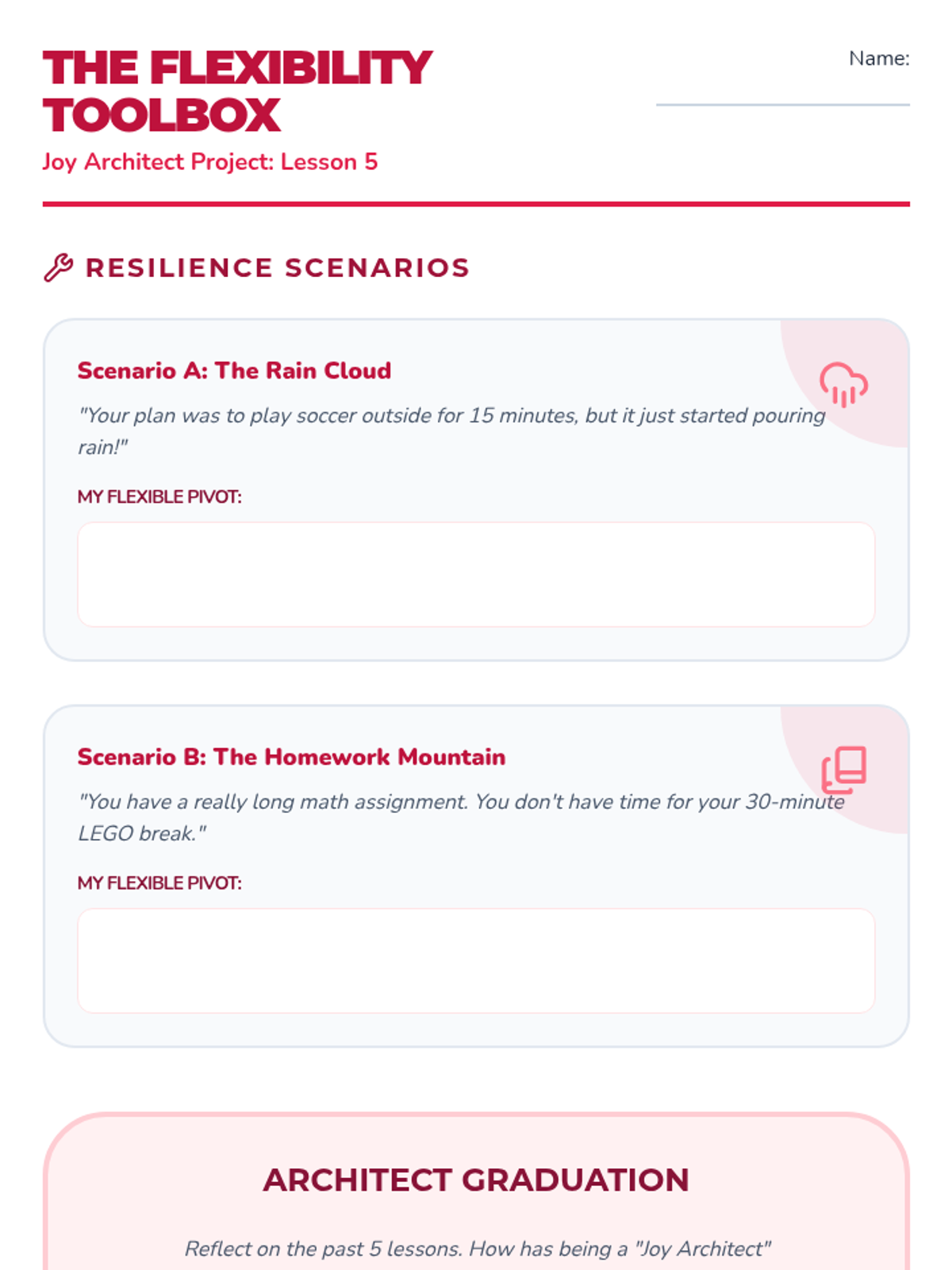
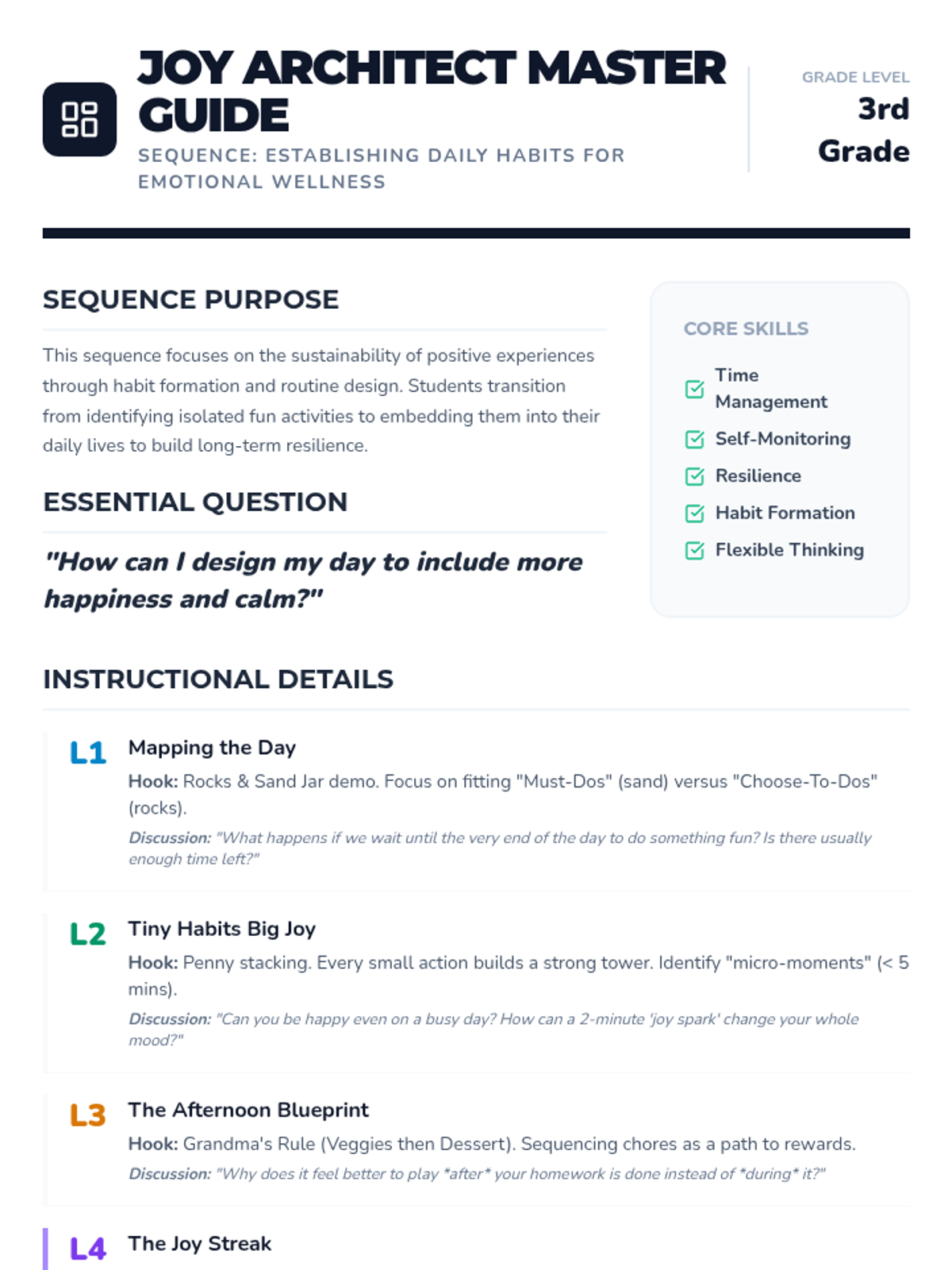
Students reflect on their routine changes and practice 'flexible thinking' for when plans go awry, building resilience and adaptability.
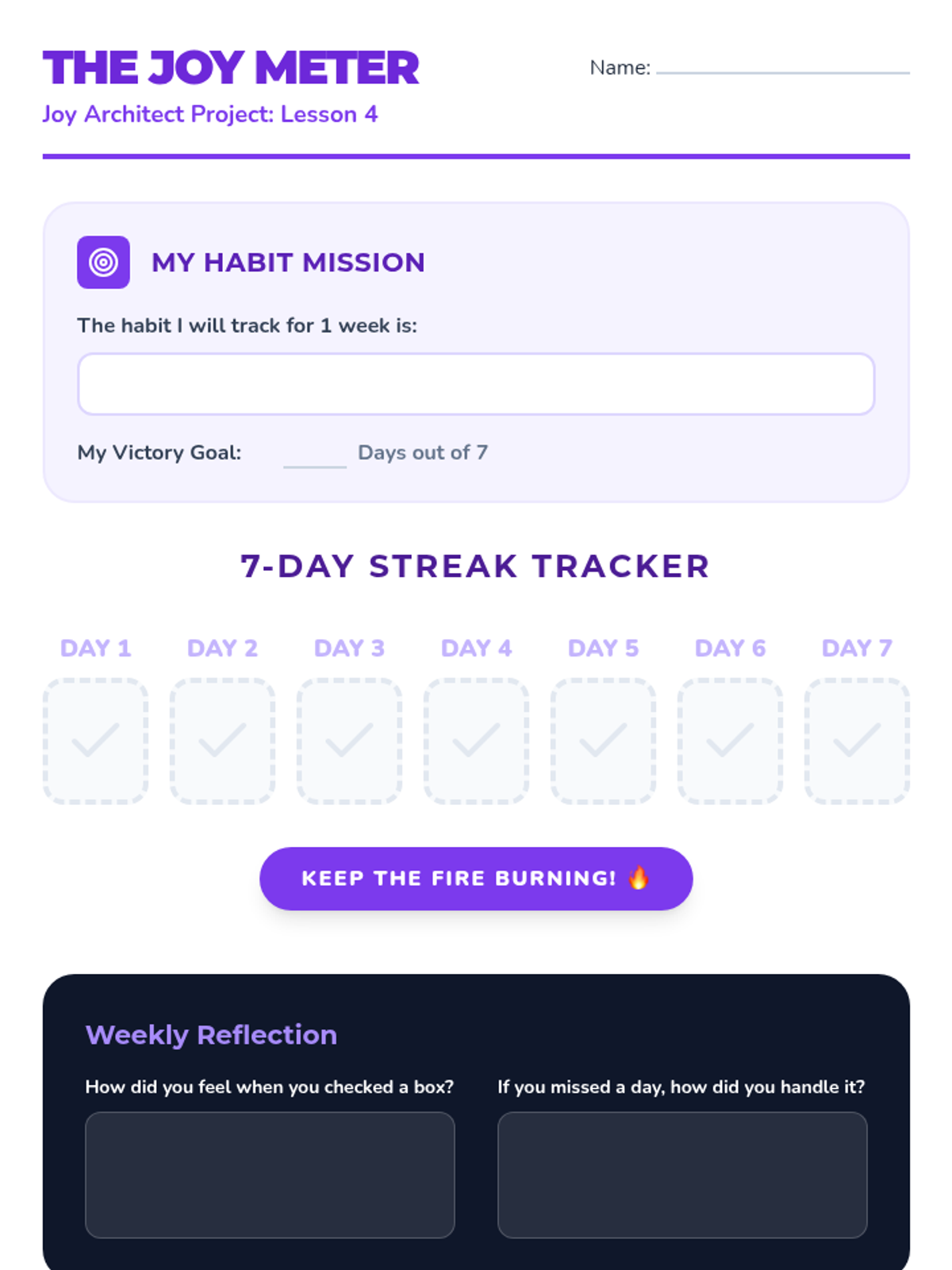
Students create personal trackers to monitor their consistency in engaging with positive habits, learning the power of 'streaks' and self-monitoring.
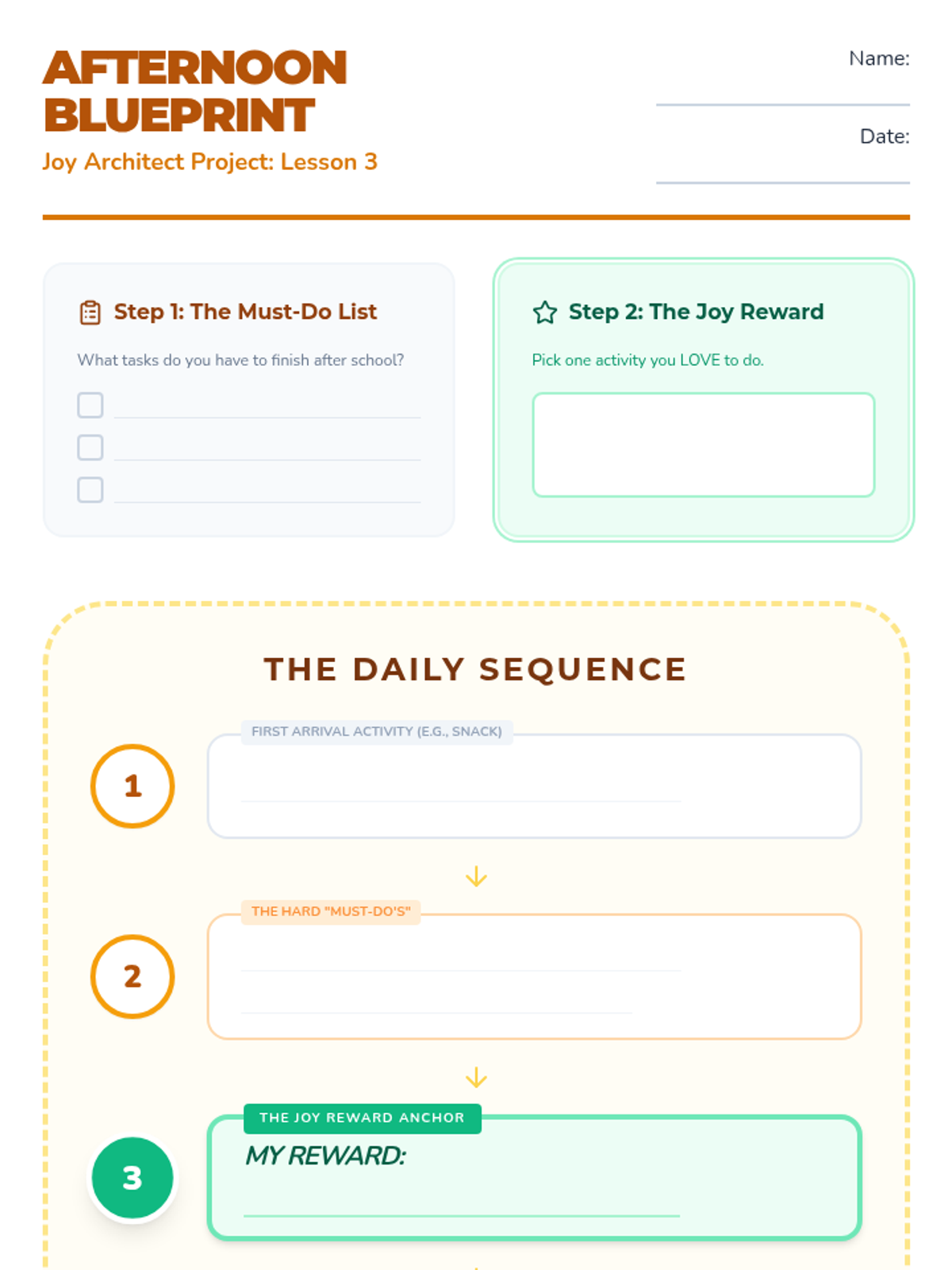
Students design a balanced afternoon routine using 'Grandma's Rule' to sequence chores and rewards, creating a sustainable and motivating schedule.
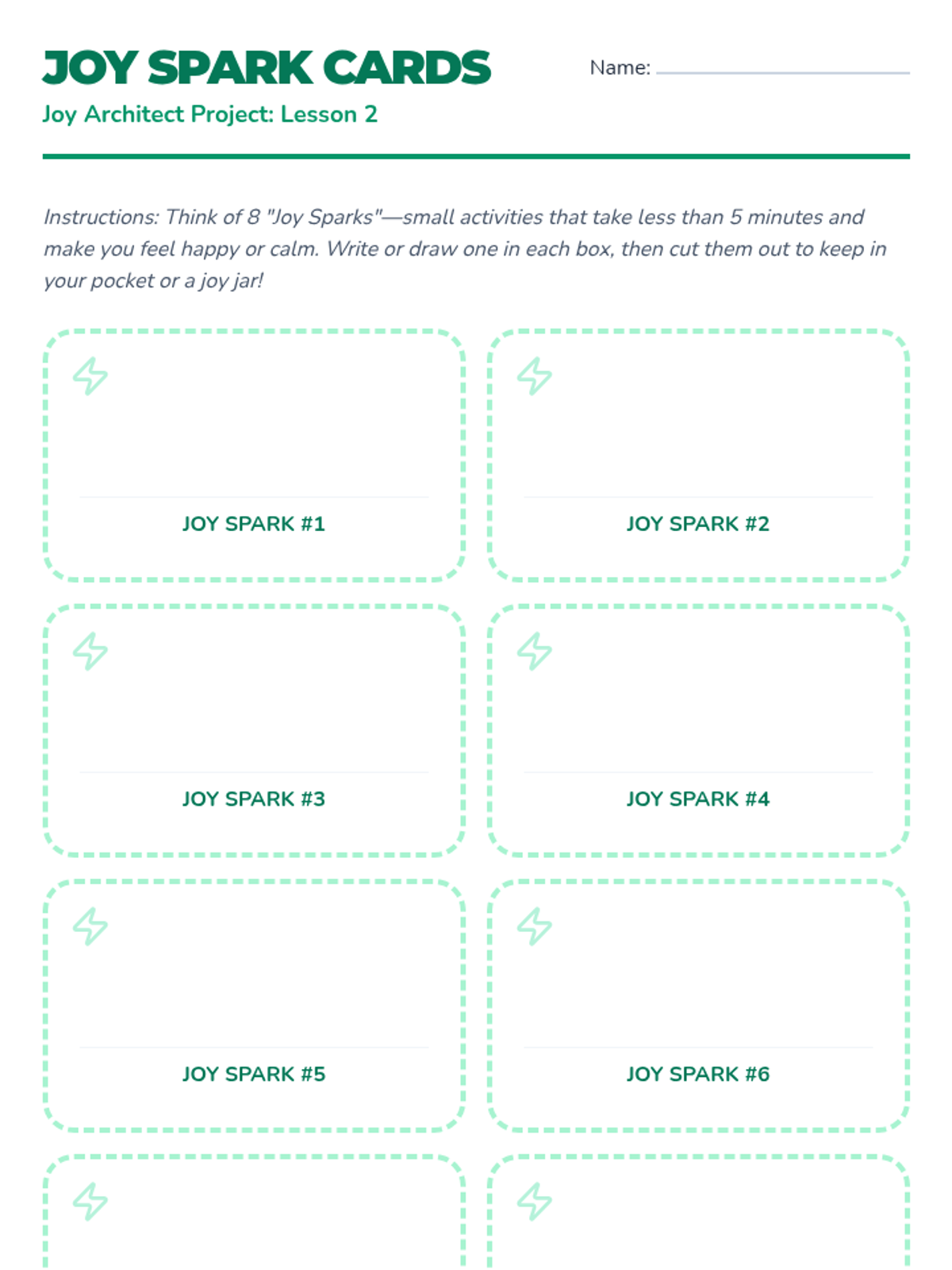
Students explore the concept of 'micro-moments' of joy and learn that frequency of positive experiences is more important than intensity for building long-term happiness.
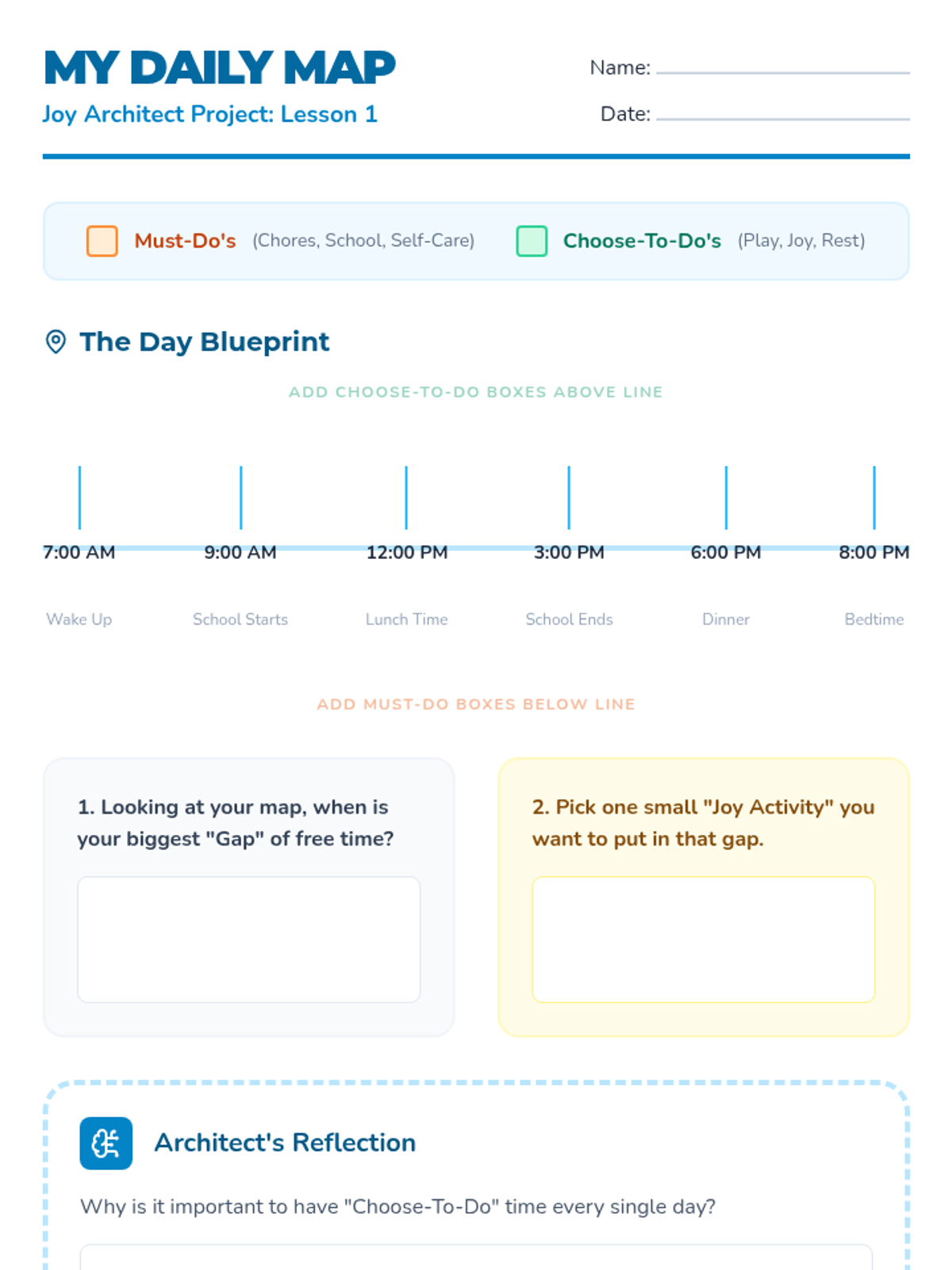
Students audit their current daily schedules to distinguish between 'must-do' tasks and 'choose-to-do' activities, identifying gaps where positive experiences can be added.
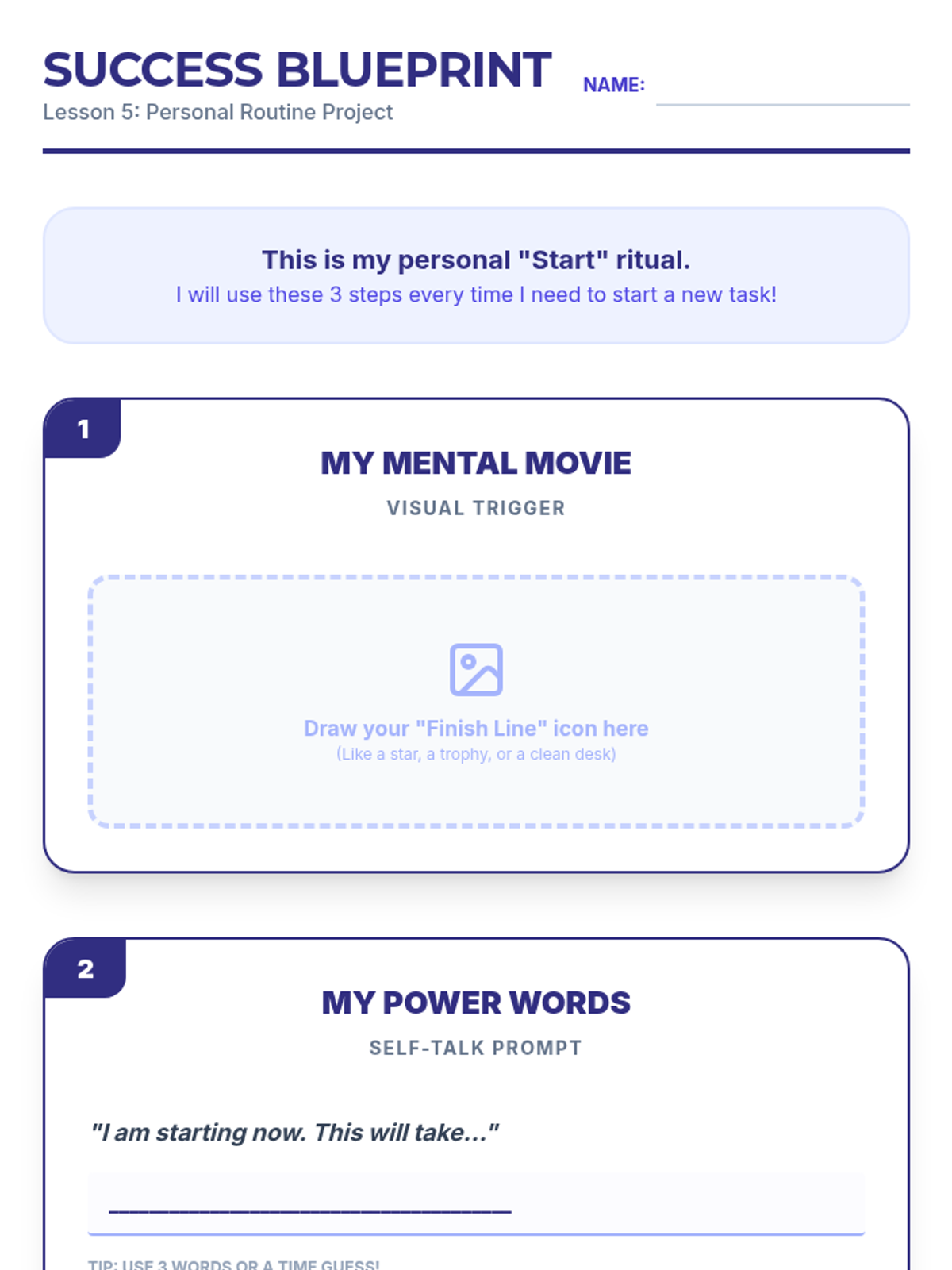
Students create a personal storyboard or checklist that combines a visual icon with a verbal prompt for task initiation.
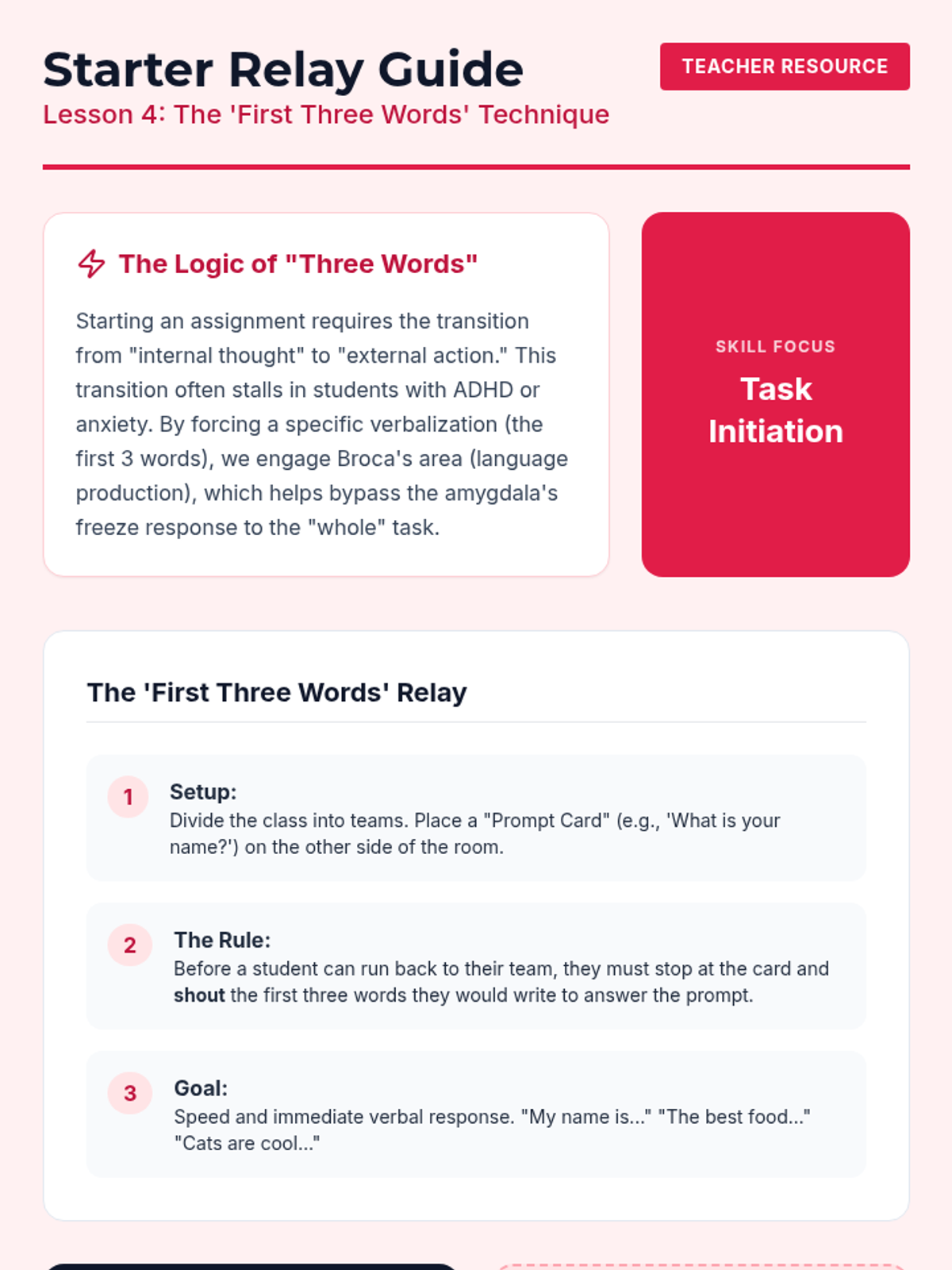
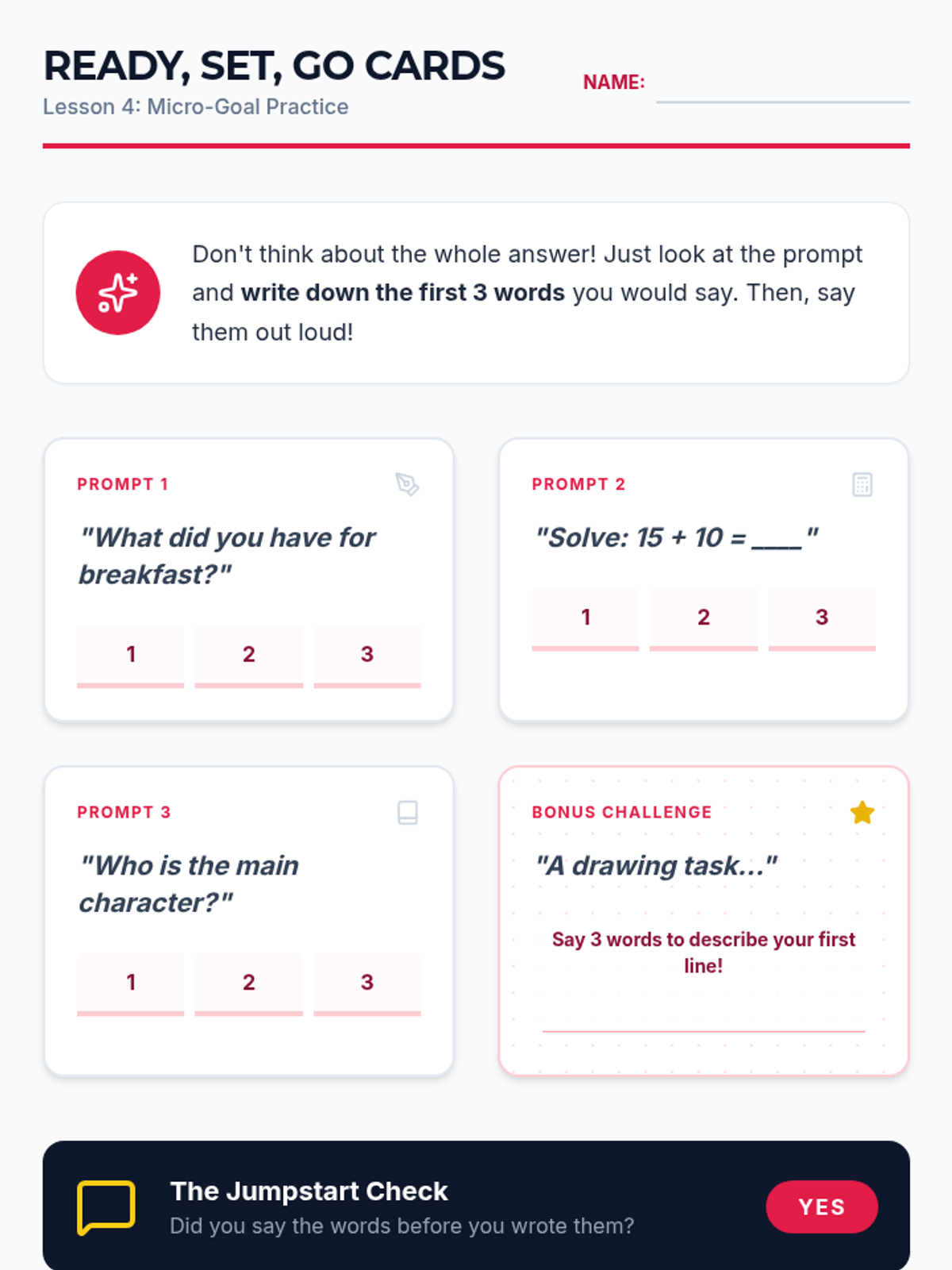
Students learn to identify the first three words of a task to lower the barrier to entry and engage the brain's language center.
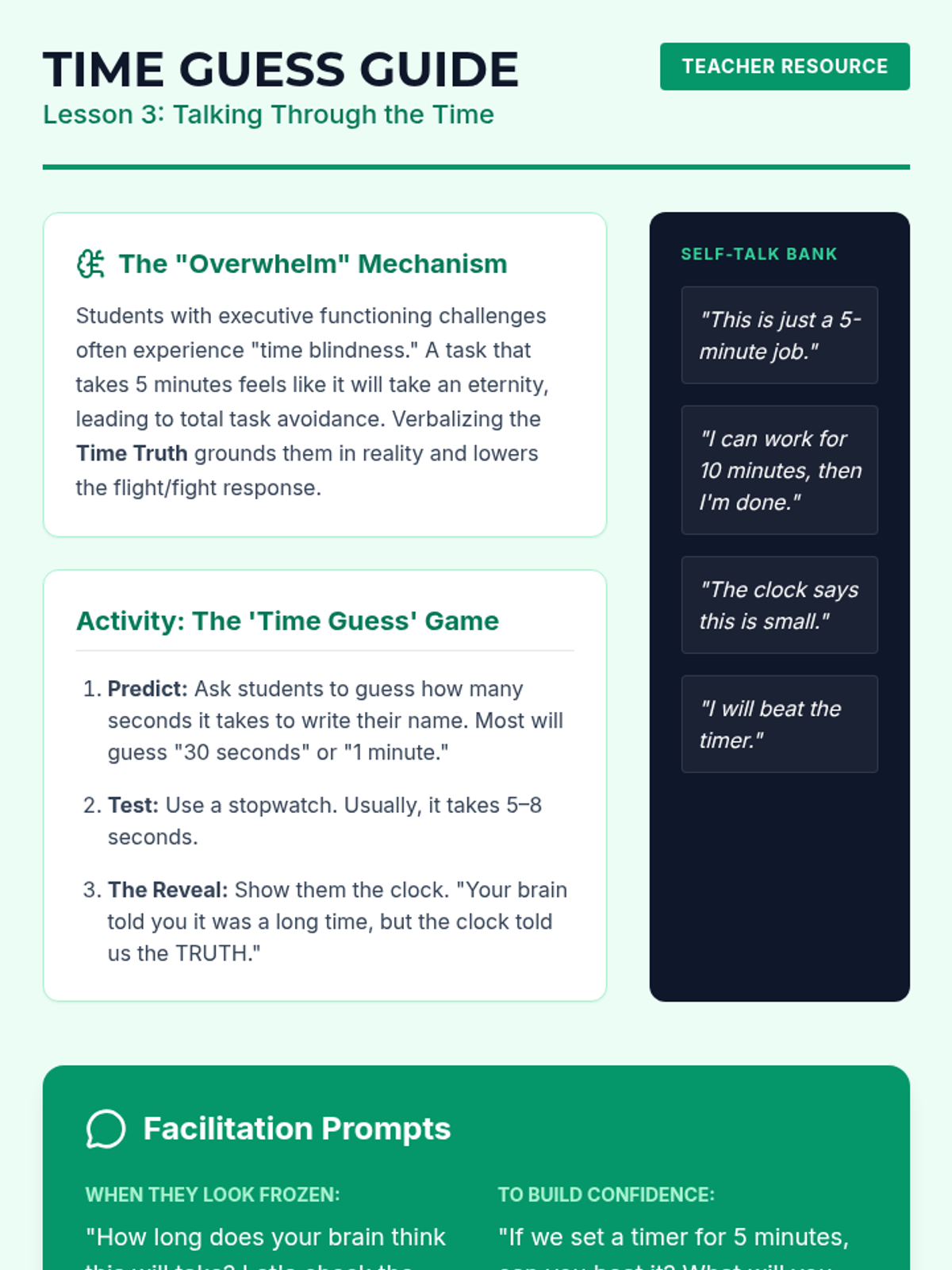
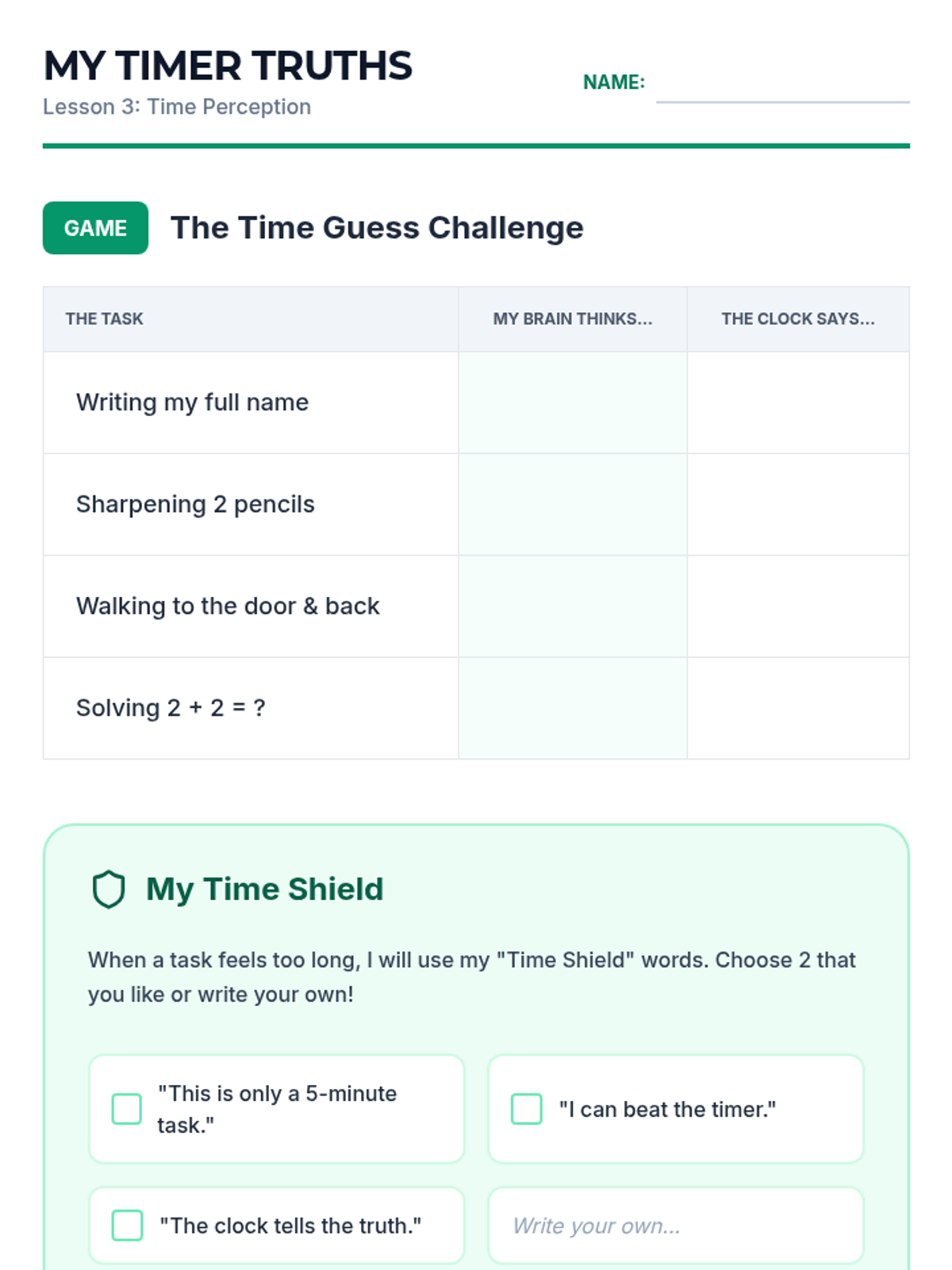
Students learn to estimate time and use verbal reassurance to reduce overwhelm.
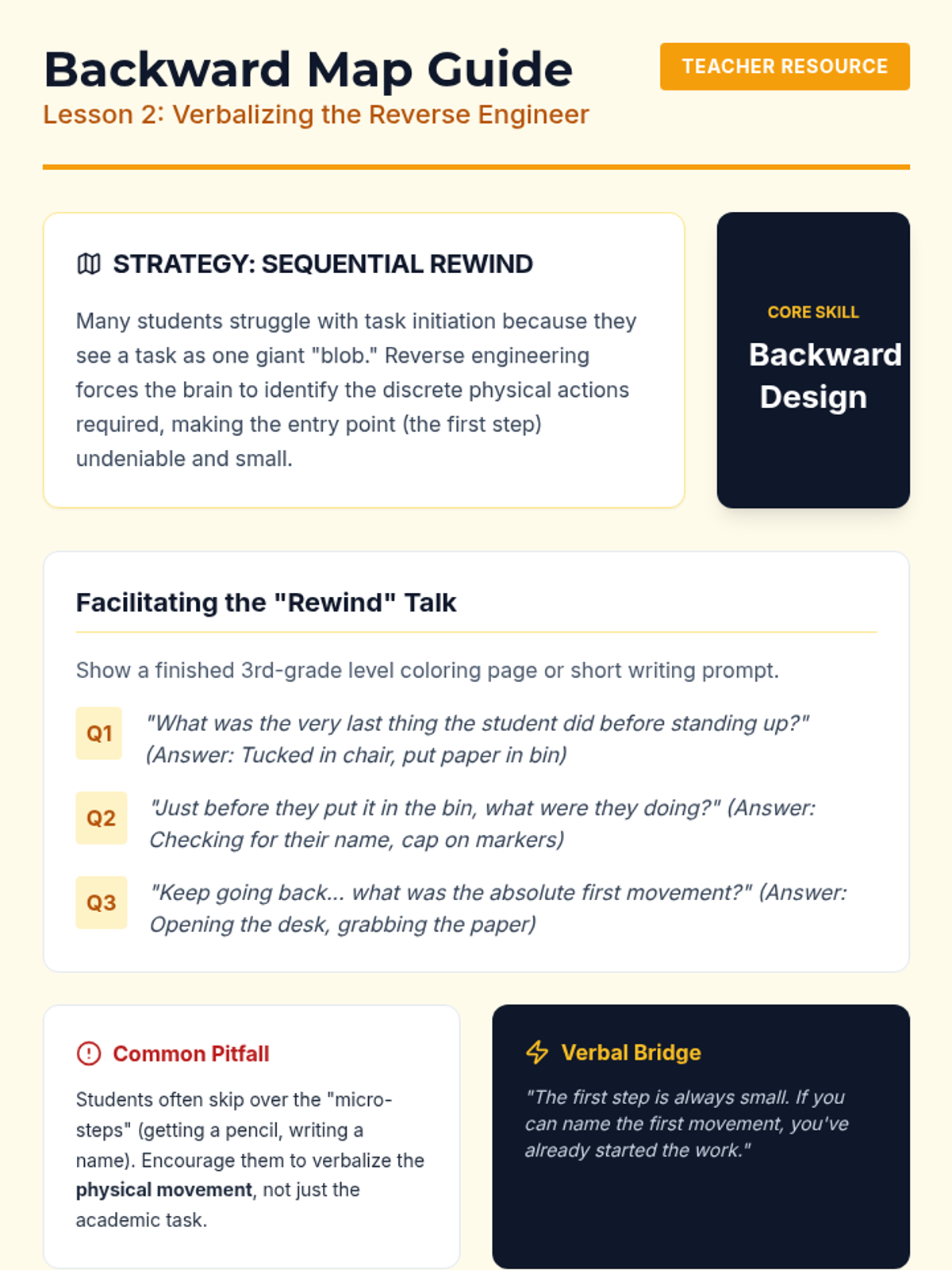
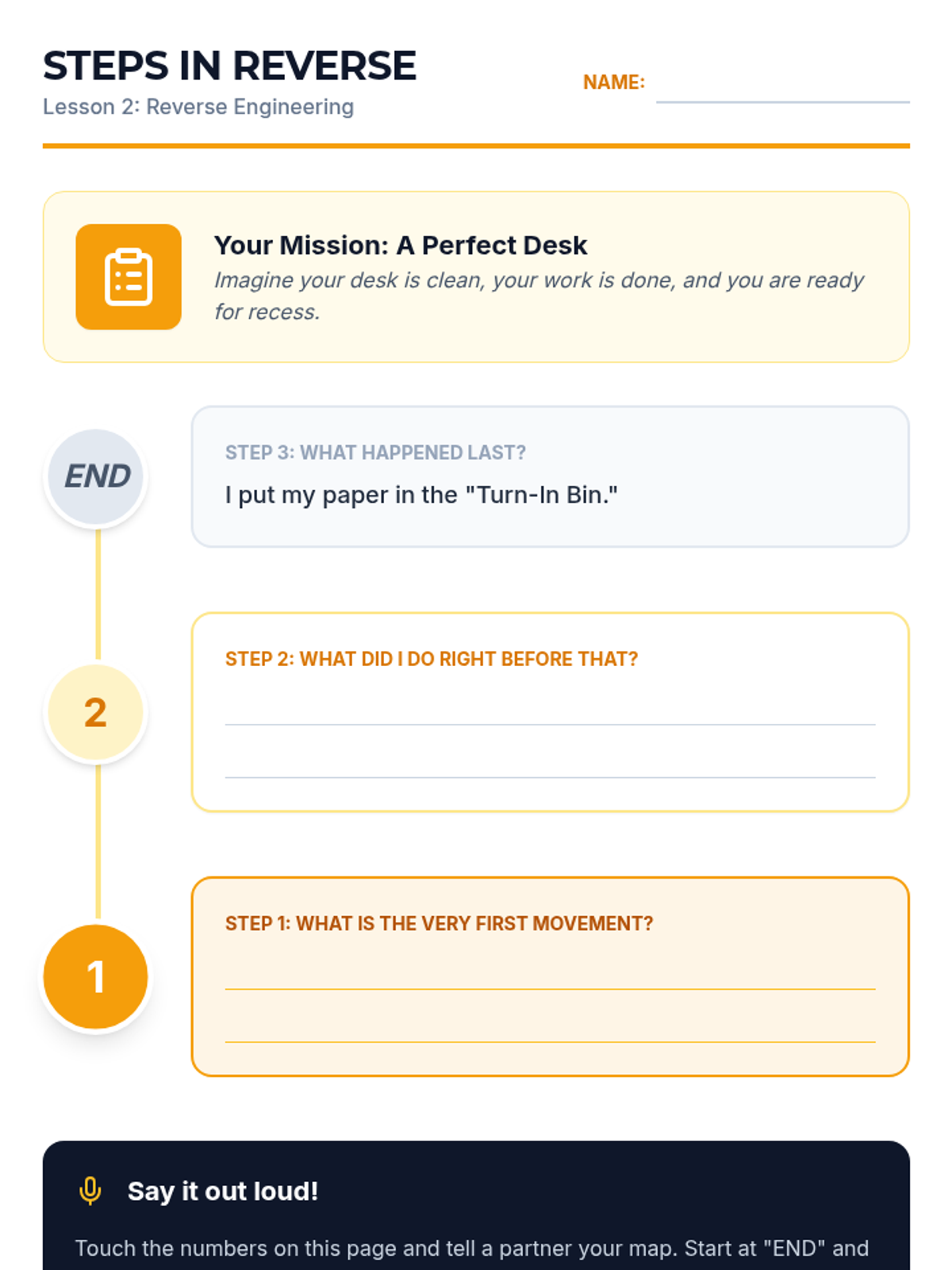
Students talk backward through the steps of a completed sample to make the first step obvious and approachable.
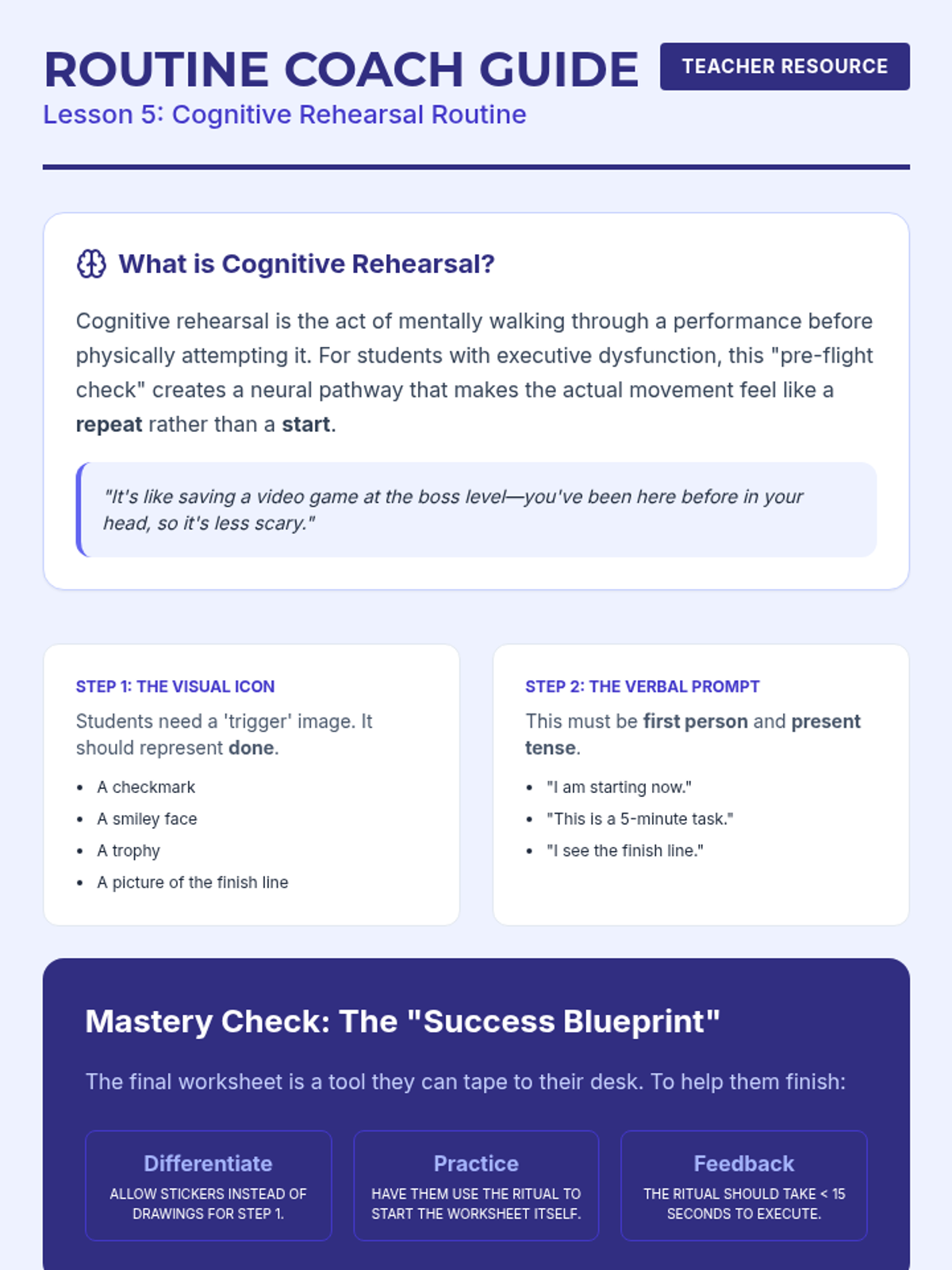
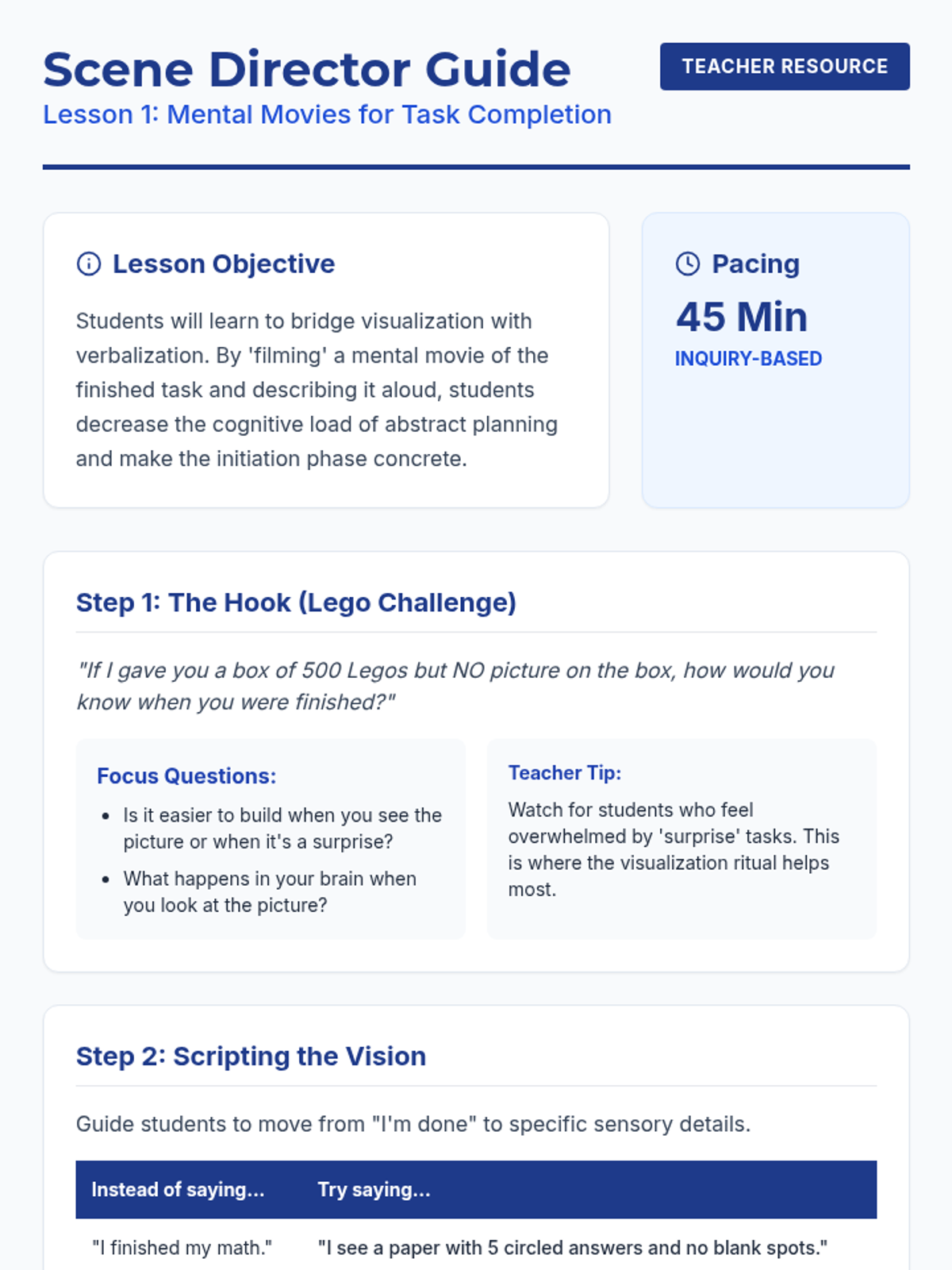
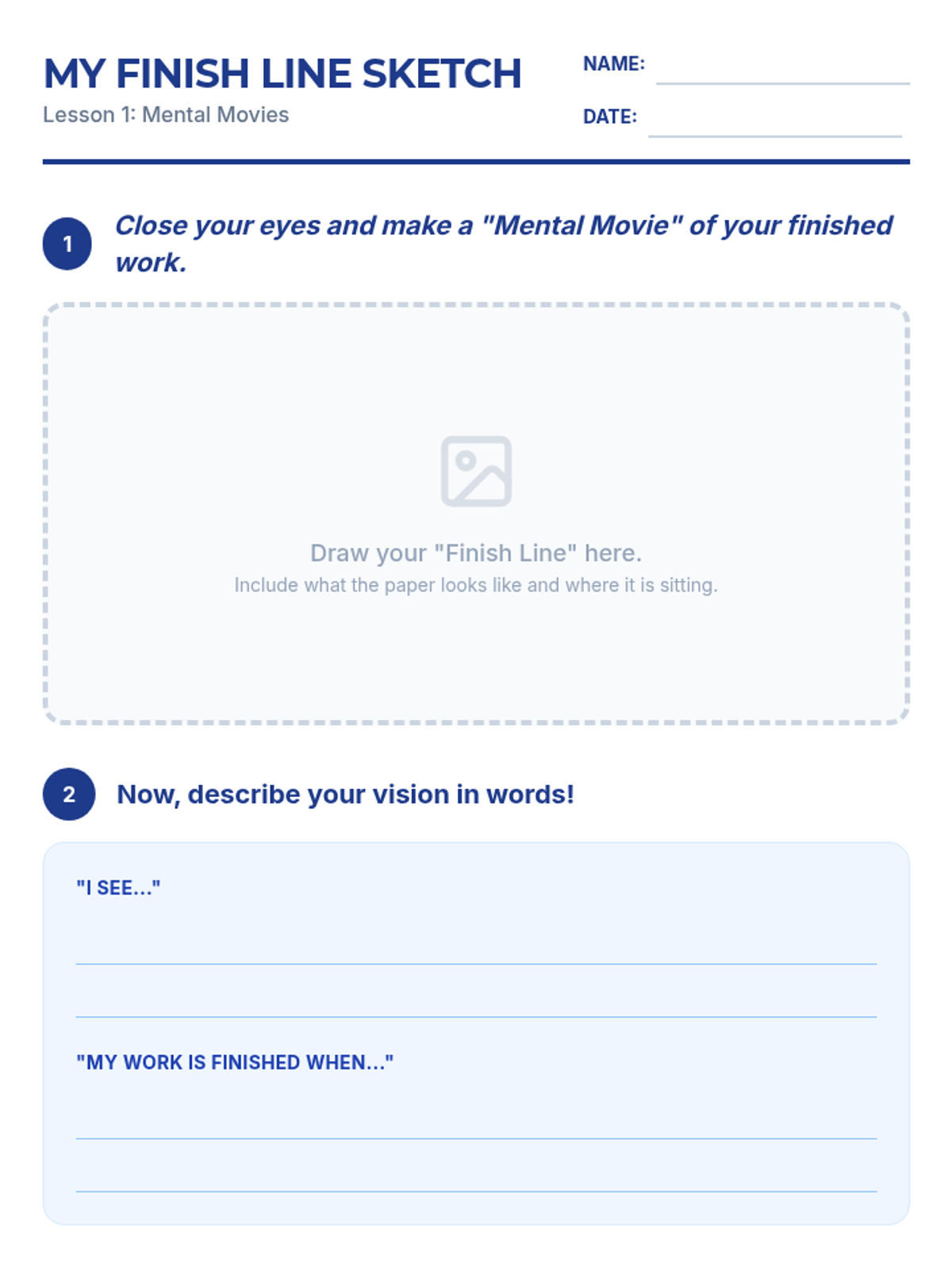
Students practice closing their eyes and creating a detailed mental image of what 'finished' looks like before describing it aloud.
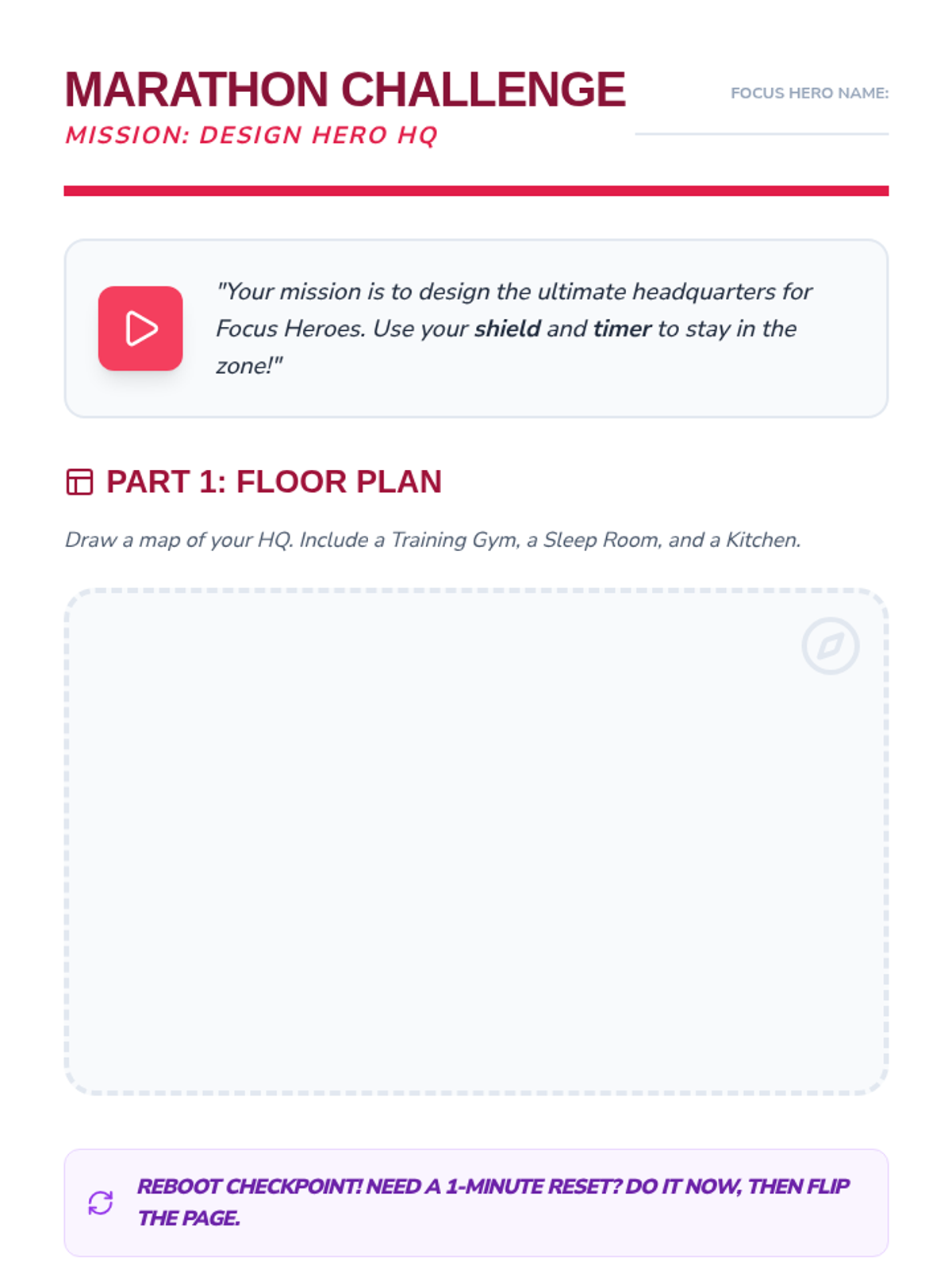
A mastery-based finale where students apply all their learned tools (shields, breaks, timers) to complete a multi-part challenge.
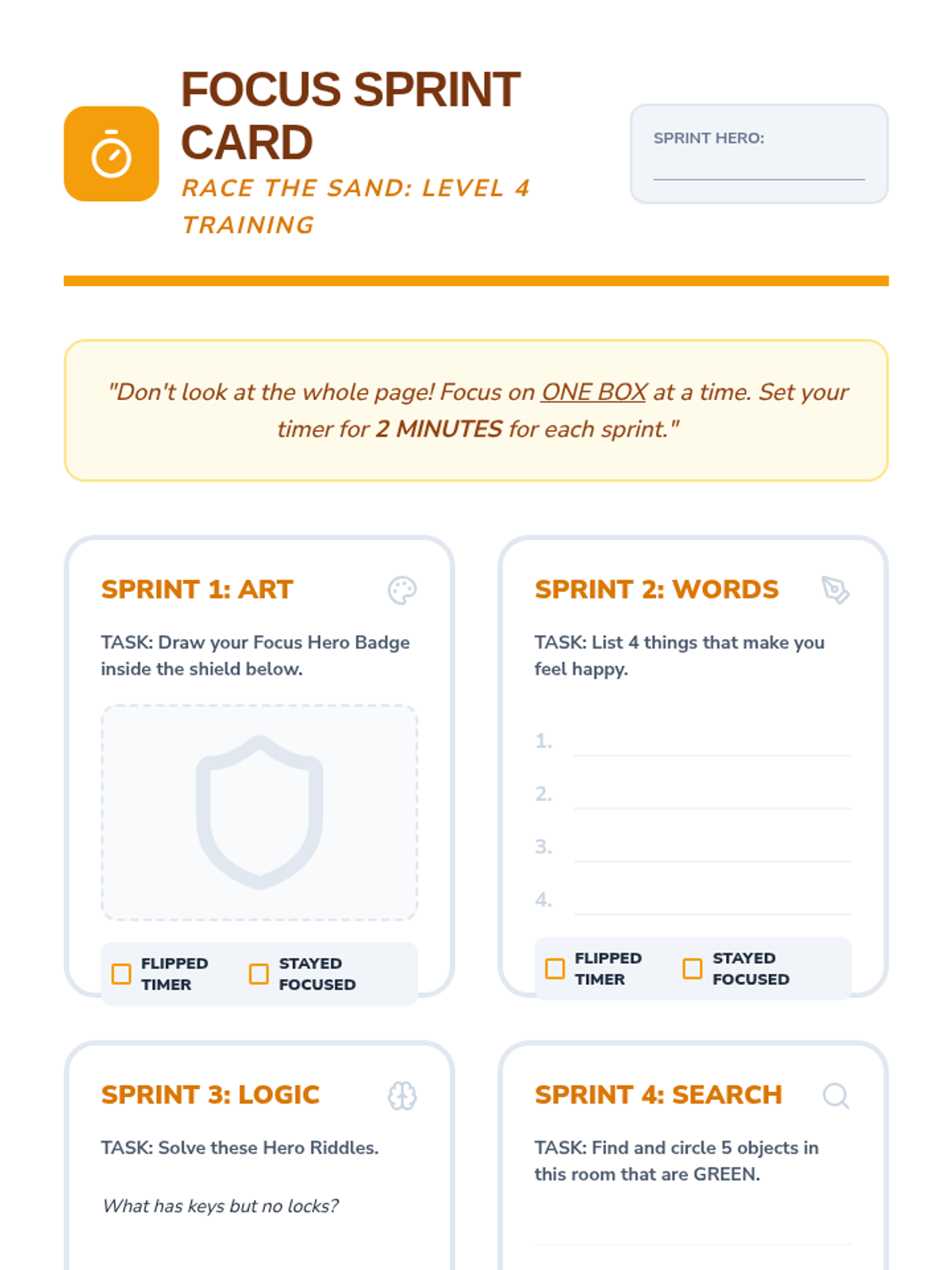
Students practice using timers to chunk complex tasks into manageable pieces, racing against the clock to complete single steps.
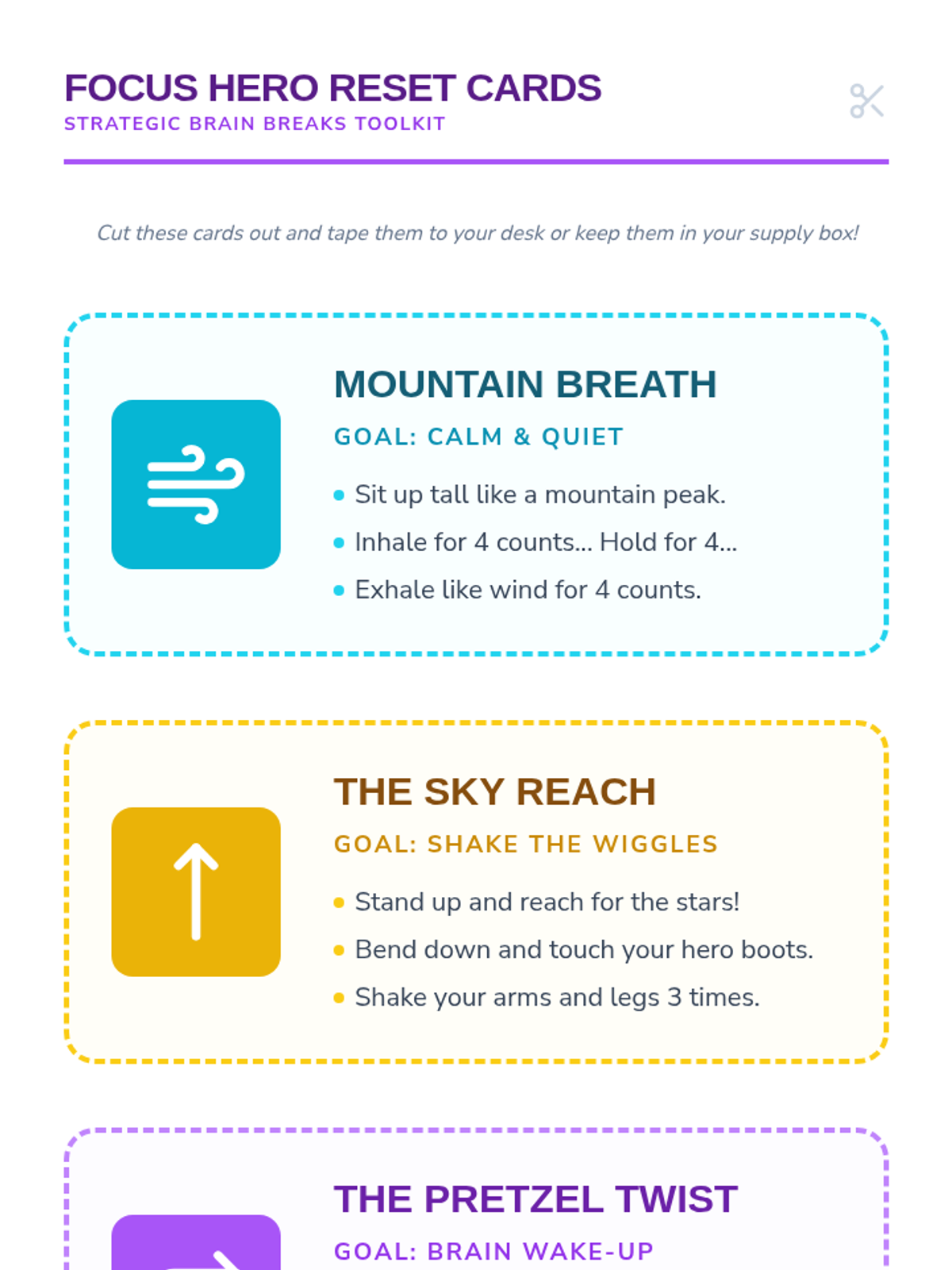
Students learn and practice three specific 1-minute brain breaks to reset their working memory and maintain focus during long tasks.
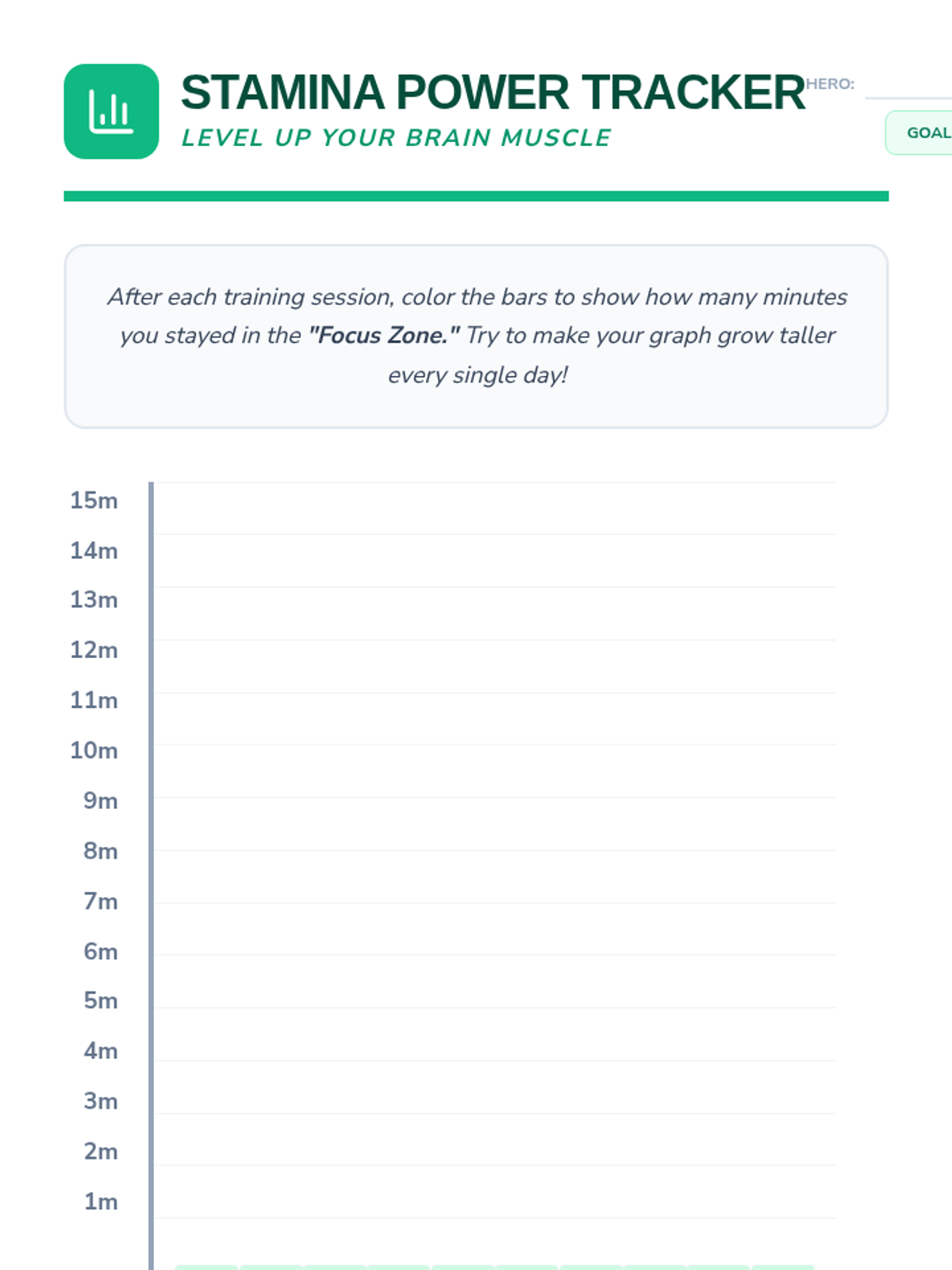
Students engage in incremental endurance training, working for increasing bursts of time and tracking their personal stamina growth on a graph.
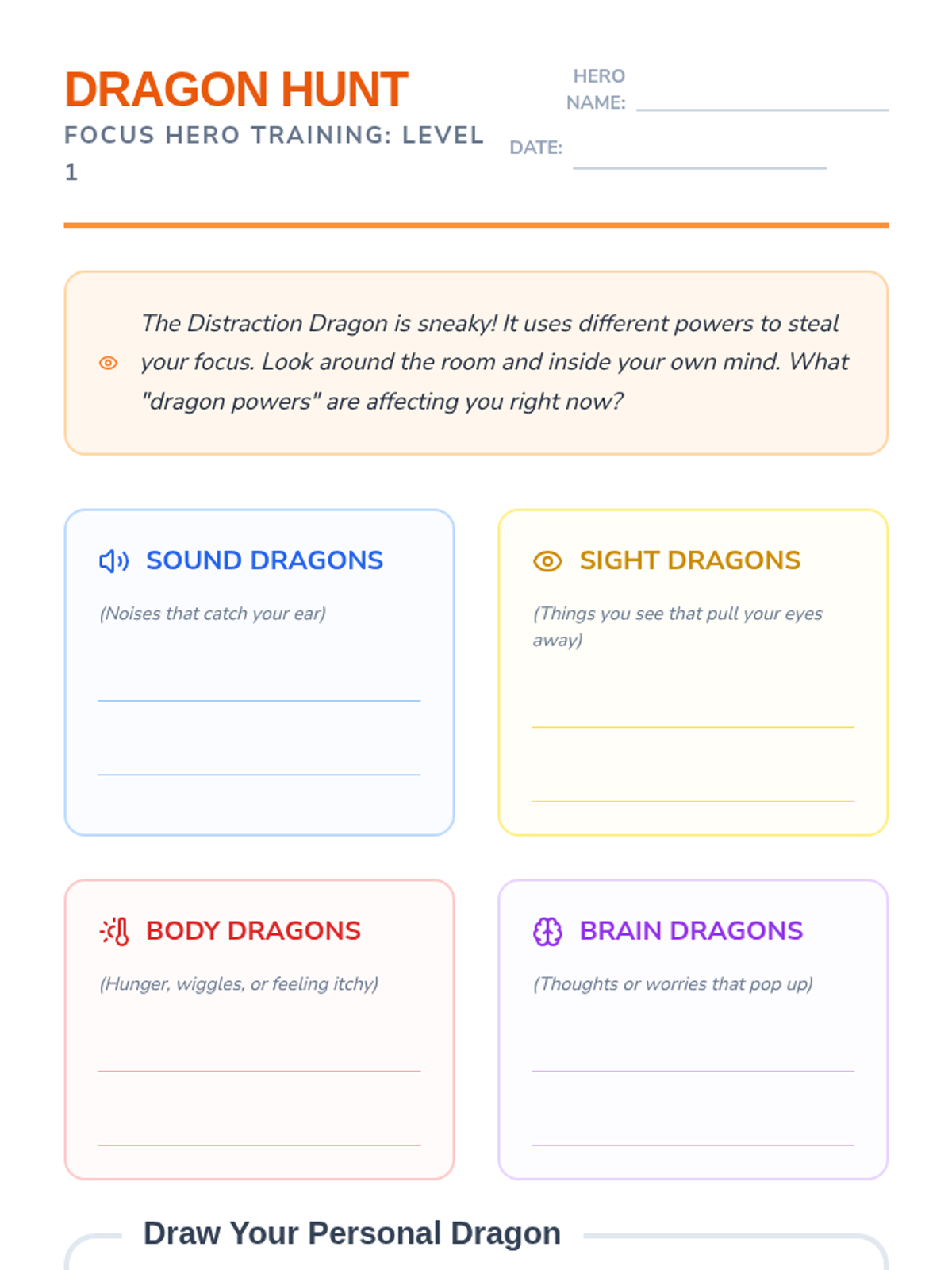
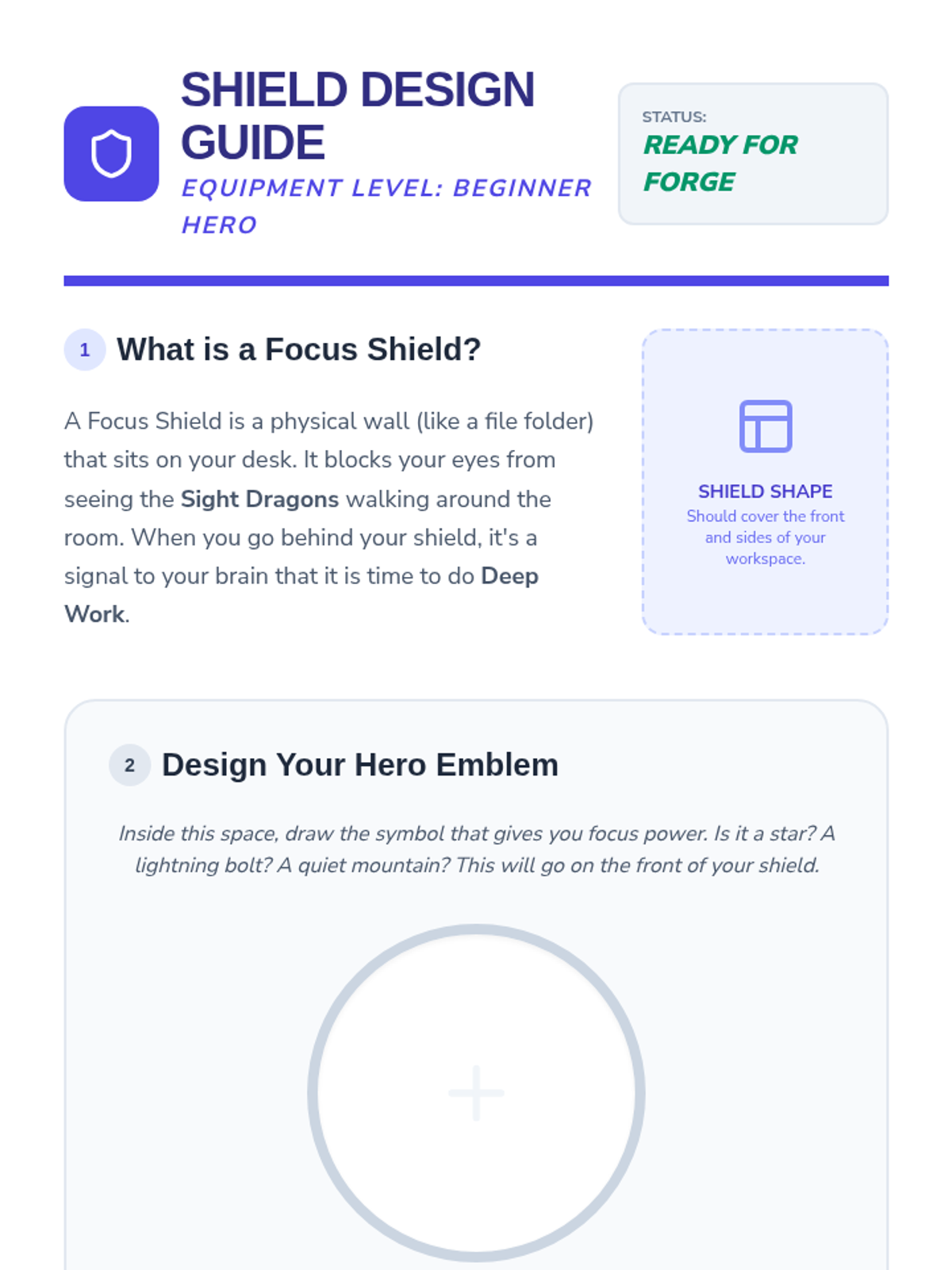
Students identify internal and external distractions (The Distraction Dragon) and create a physical 'Shield' to block visual distractions.
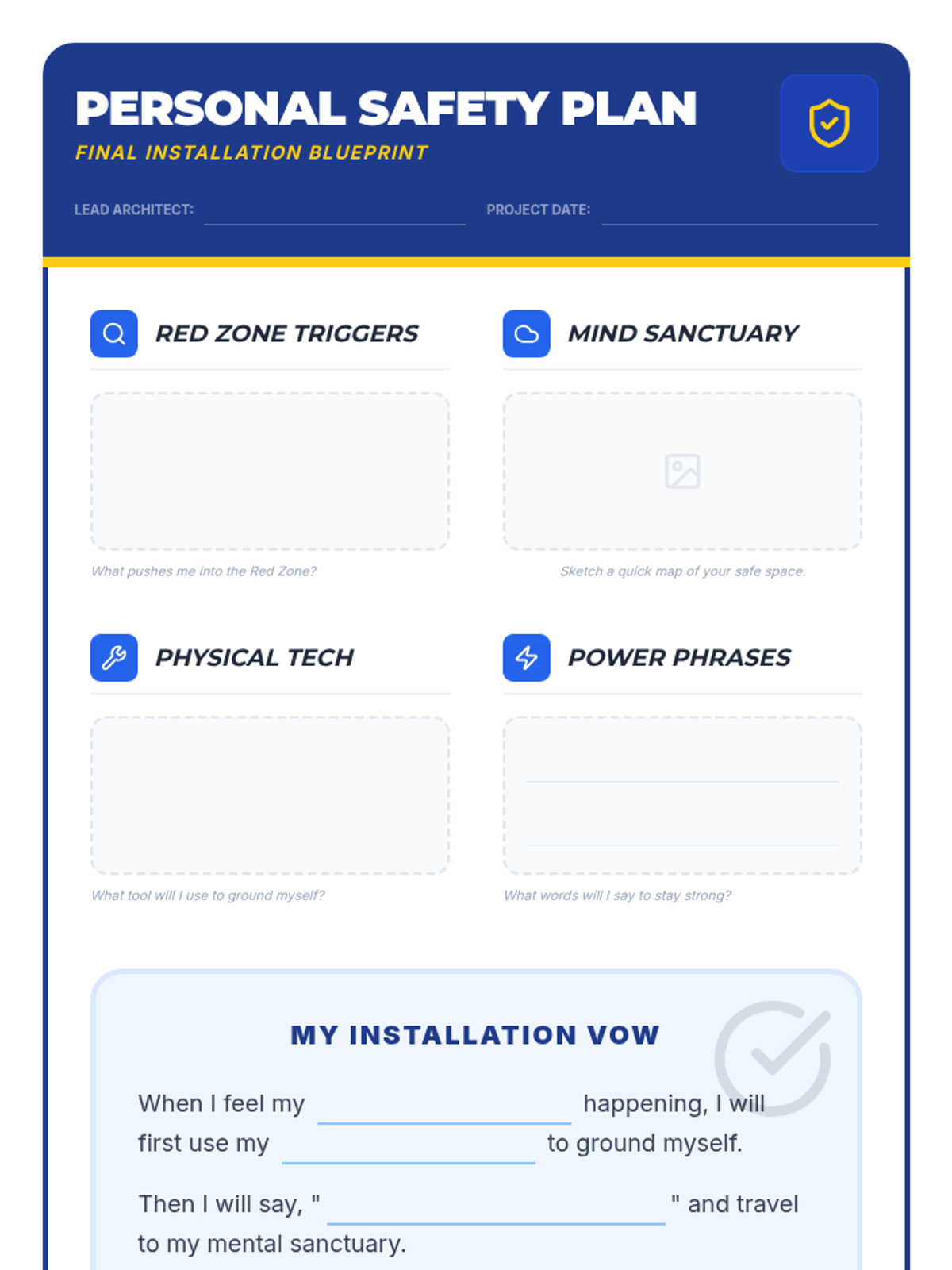
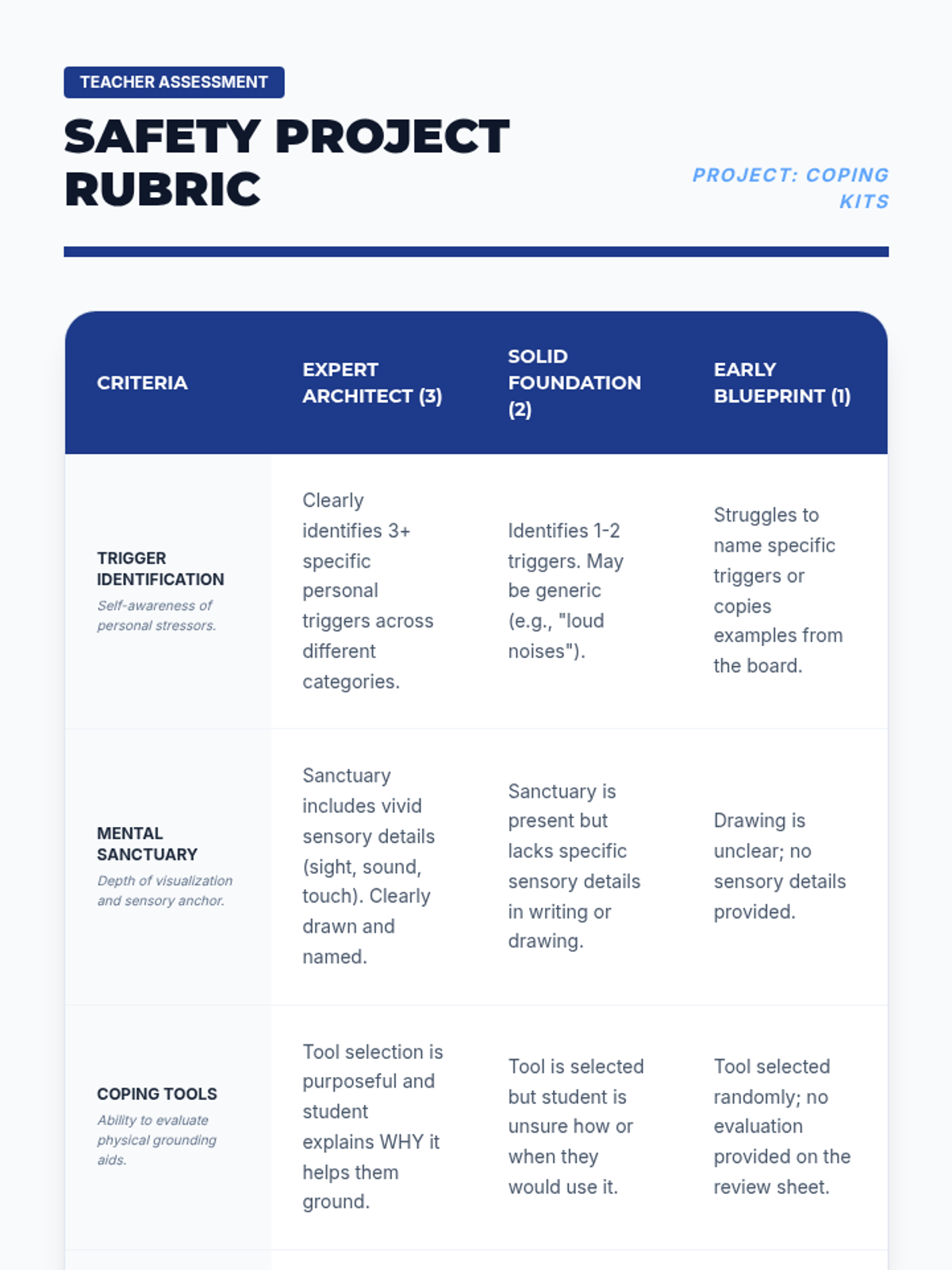
Students compile their triggers, visualizations, tools, and phrases into a cohesive Personal Safety Plan and rehearse it with a partner.
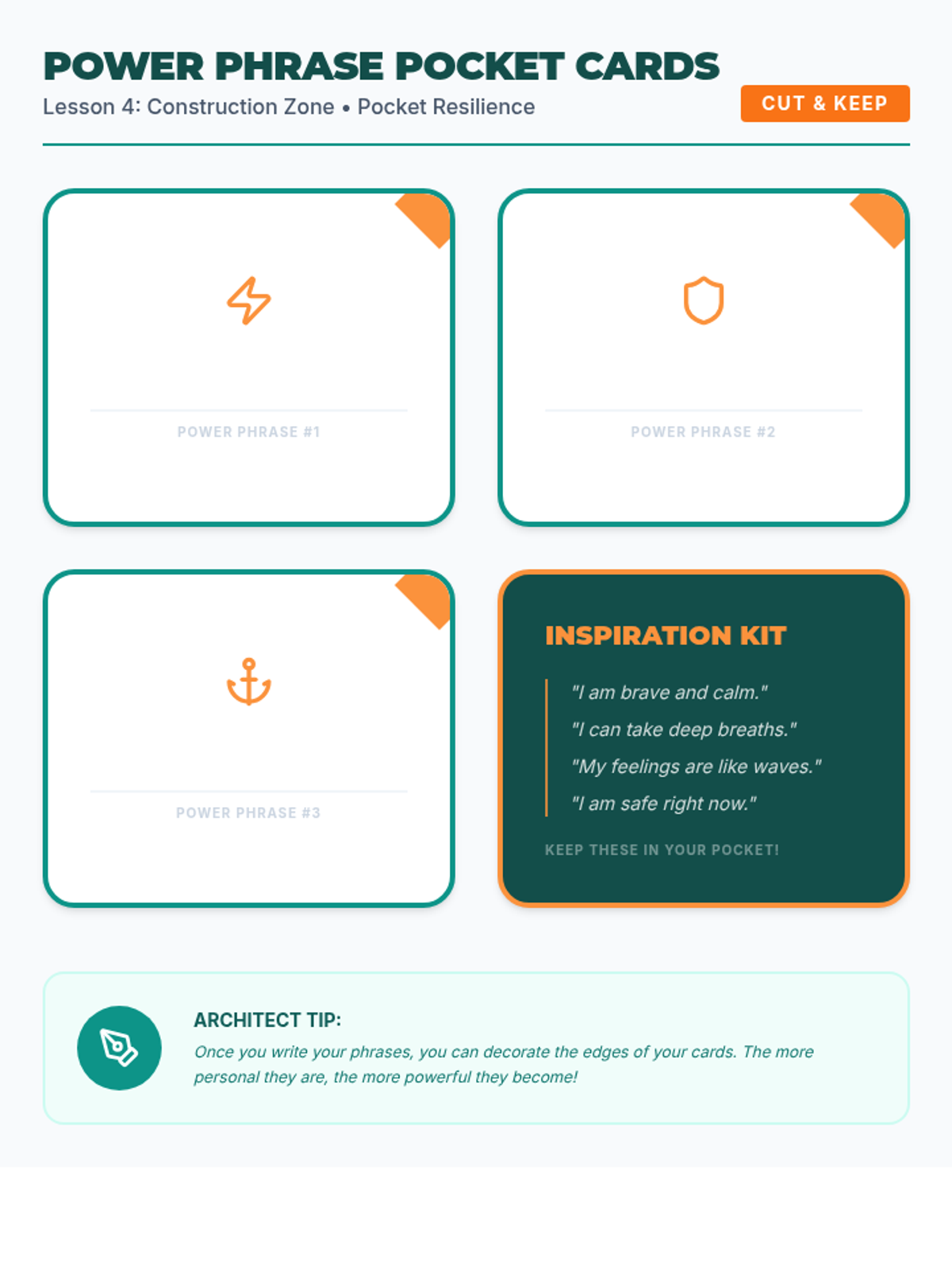
Students create 'Mantra Cards'—short, memorable statements they can say to themselves during a crisis to build cognitive resilience.
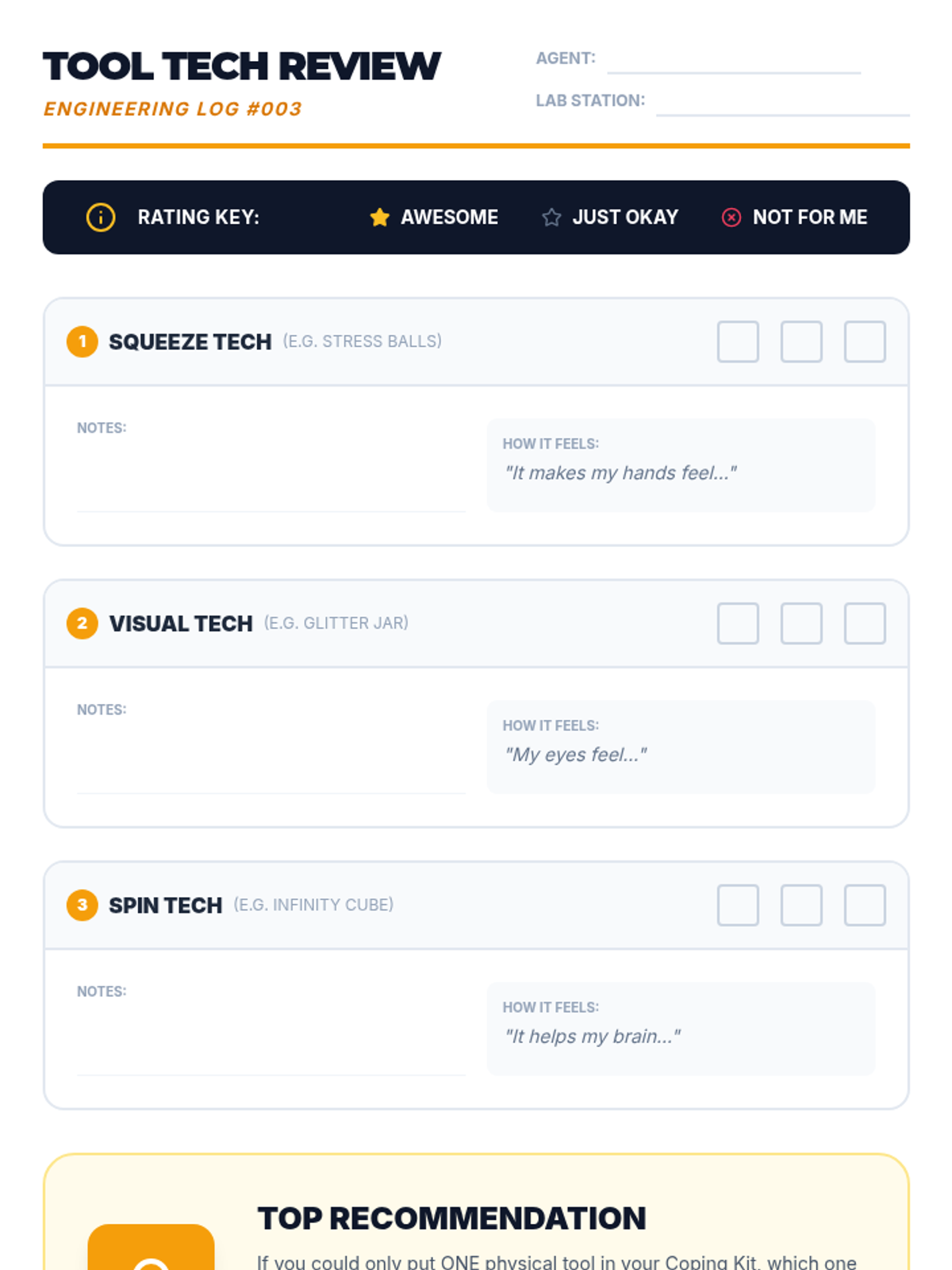
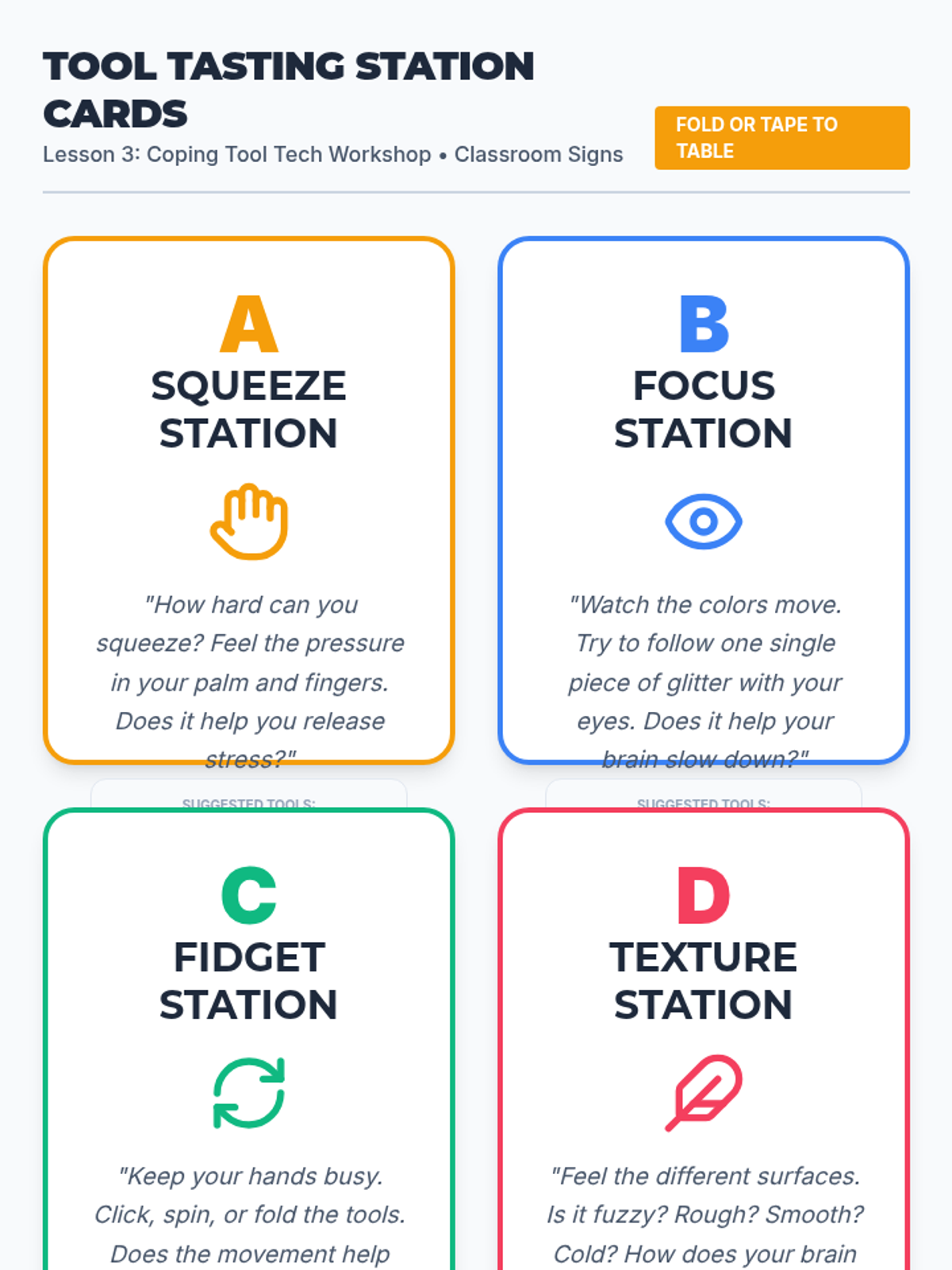
Students explore physical objects like fidgets and calming jars to determine which aids help them ground themselves. They analyze the sensory input of various tools.
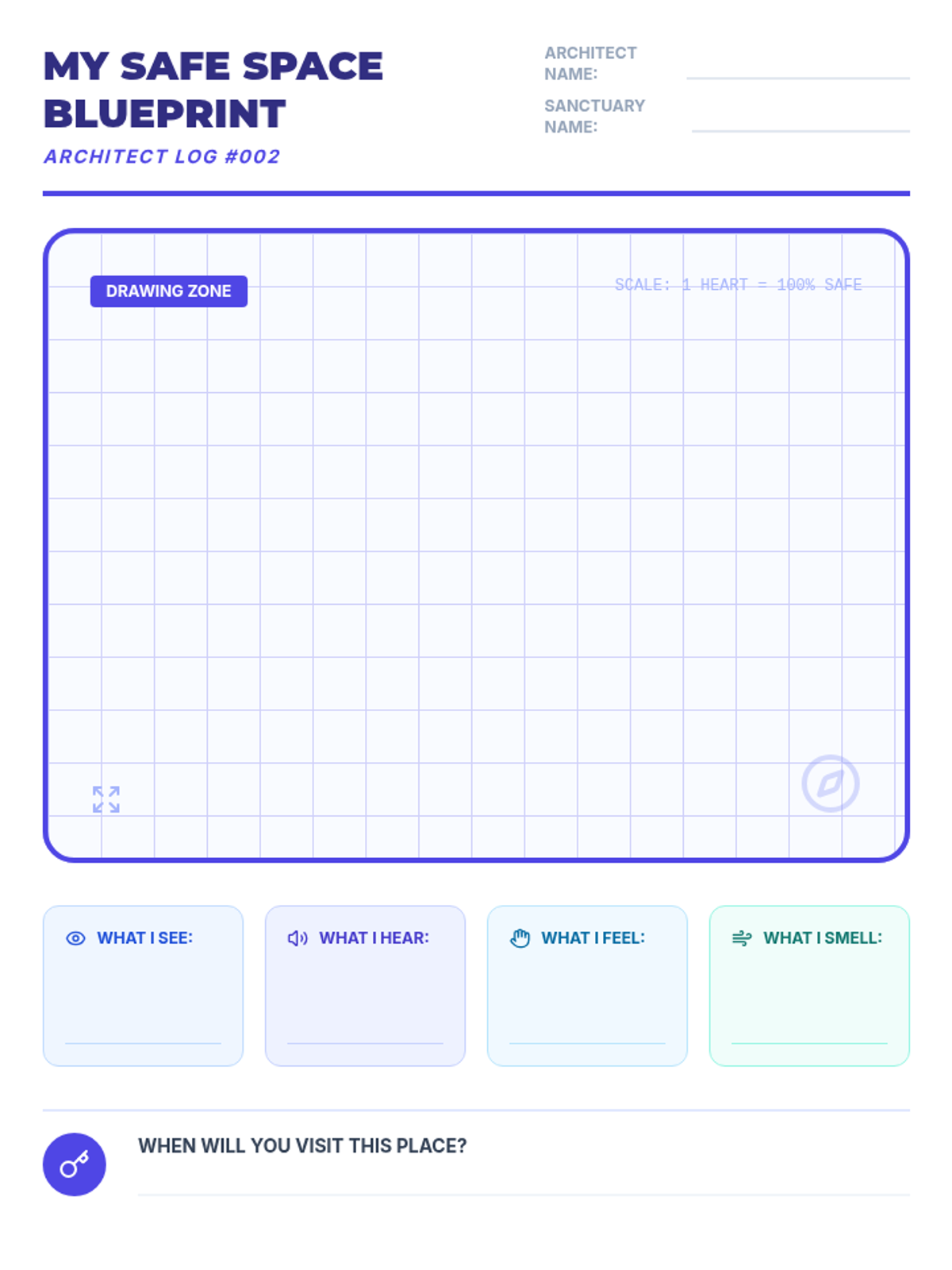
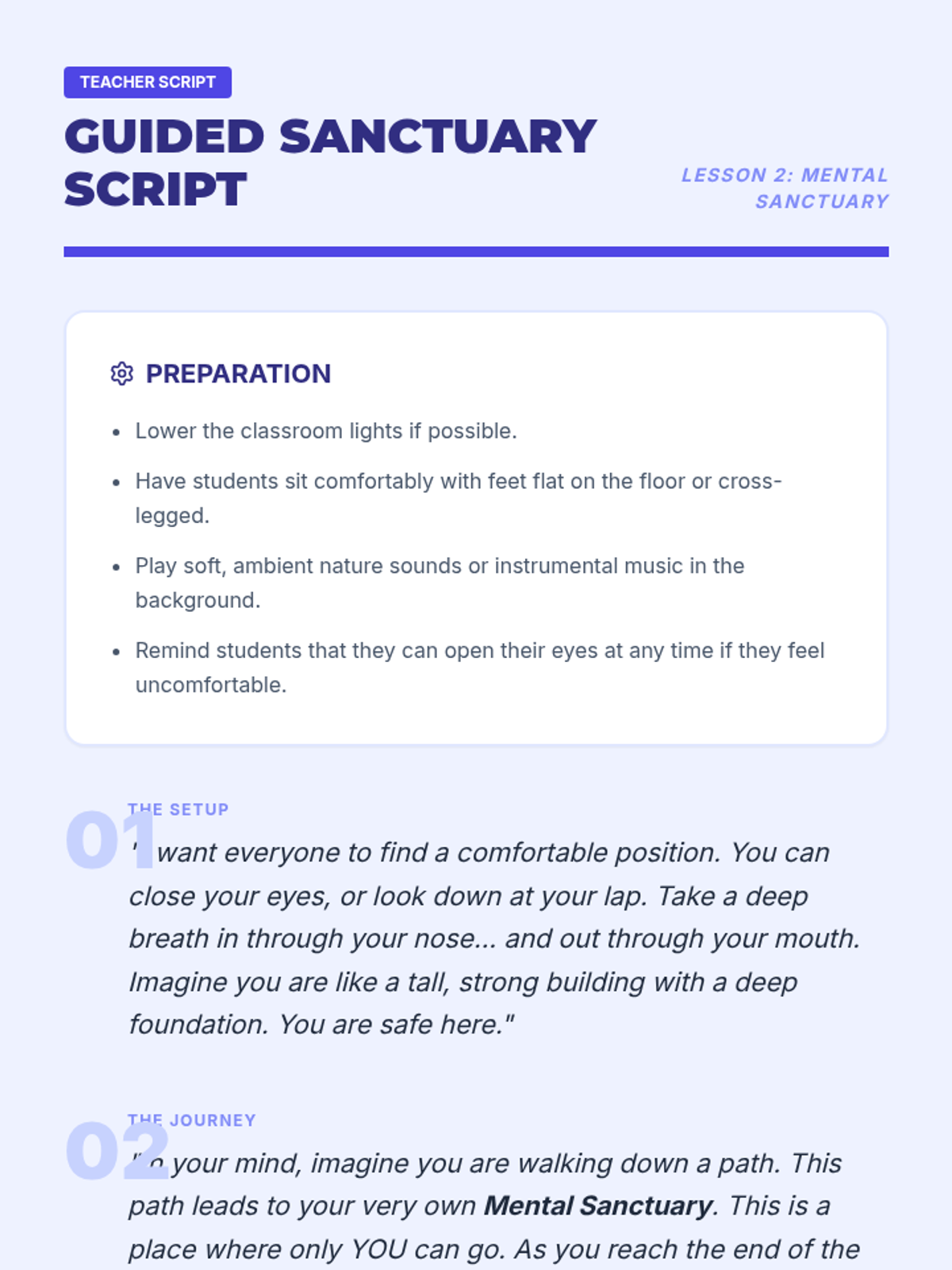
Students learn visualization as a portable safe space. They construct a detailed mental sanctuary, focusing on sensory details, and draw this space to solidify the memory.
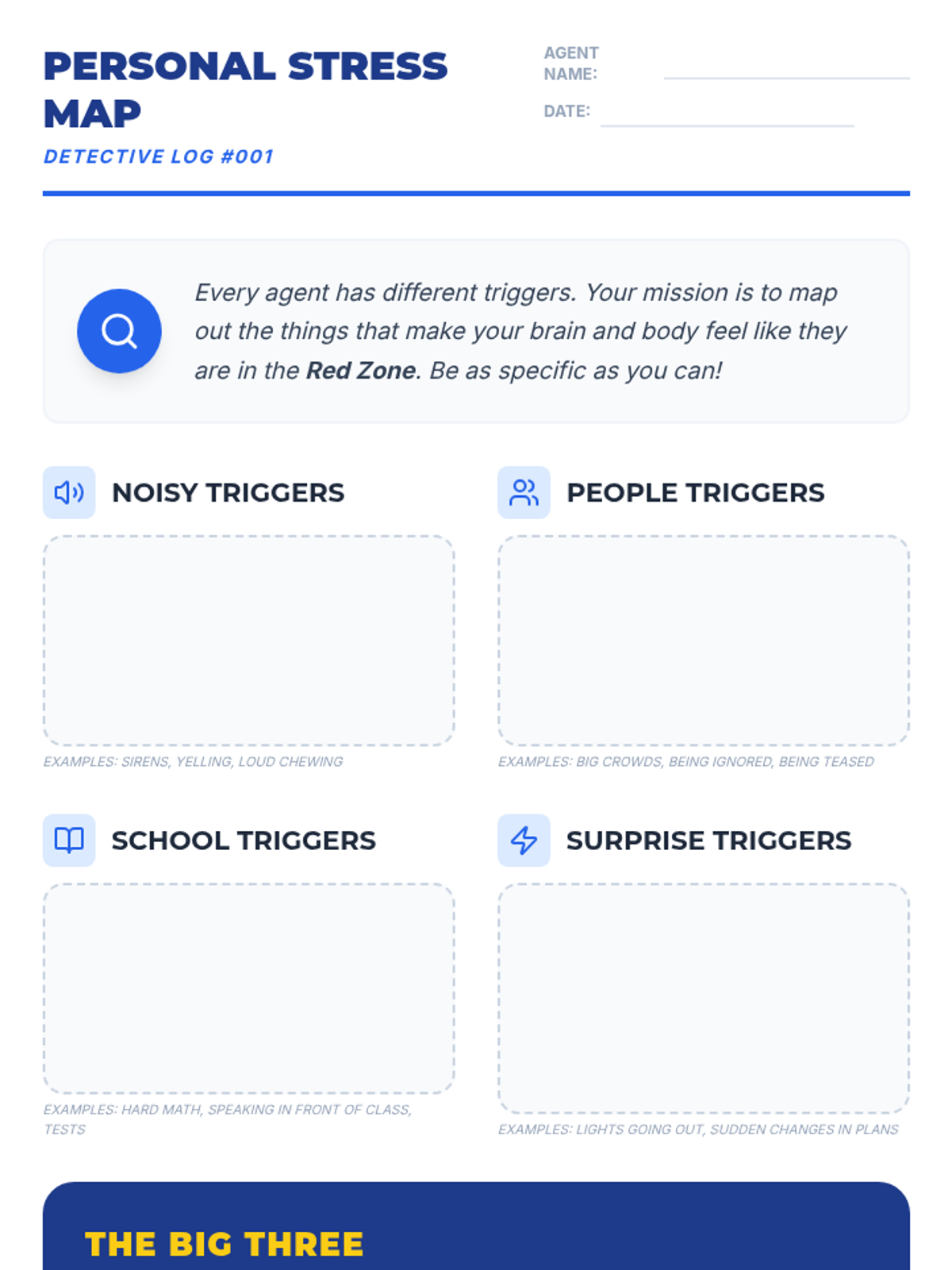
Students engage in a reflective activity to identify specific situations or environments that make them feel unsafe or panicked. They categorize these triggers to understand when they might need extra support.
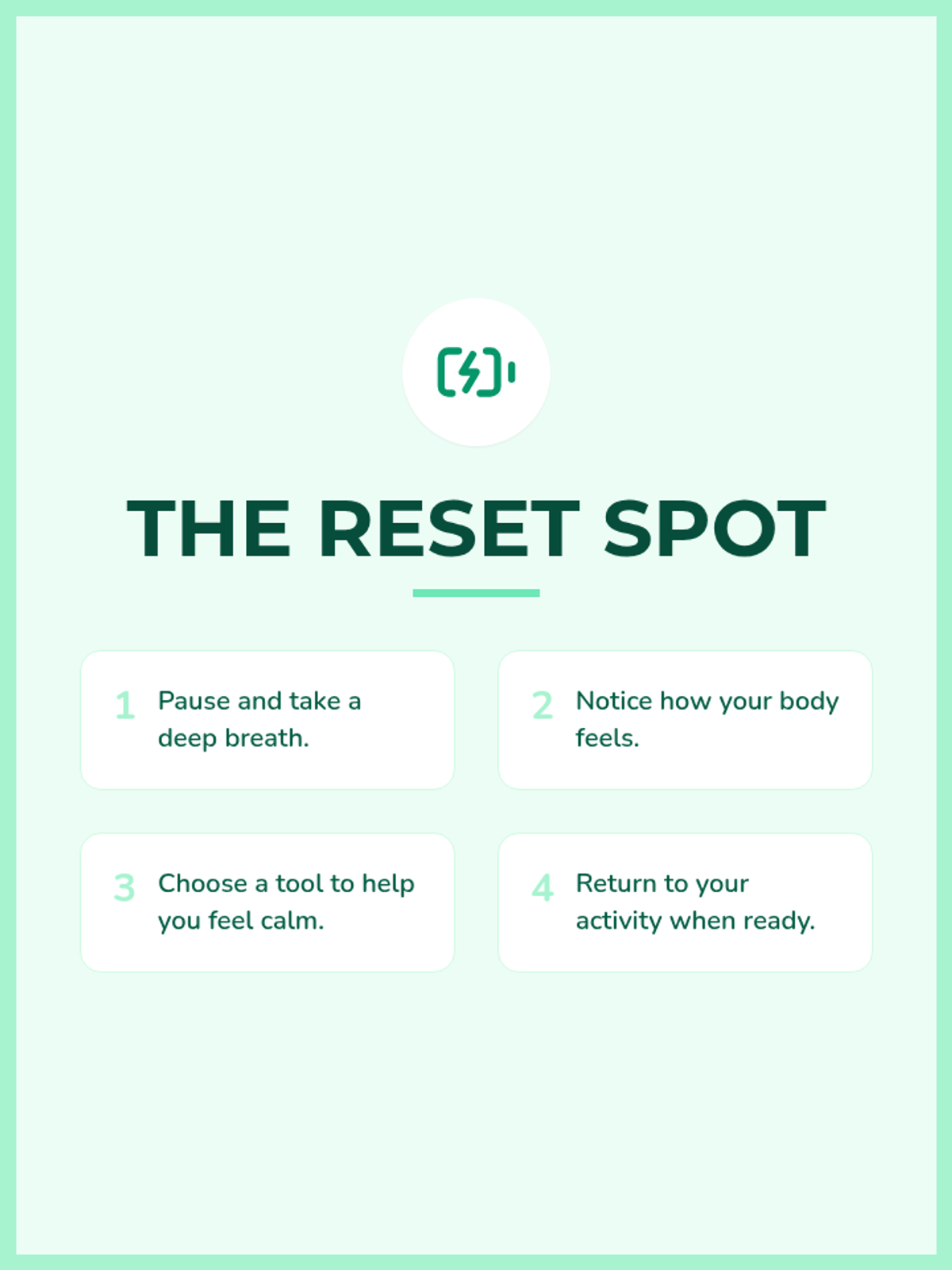
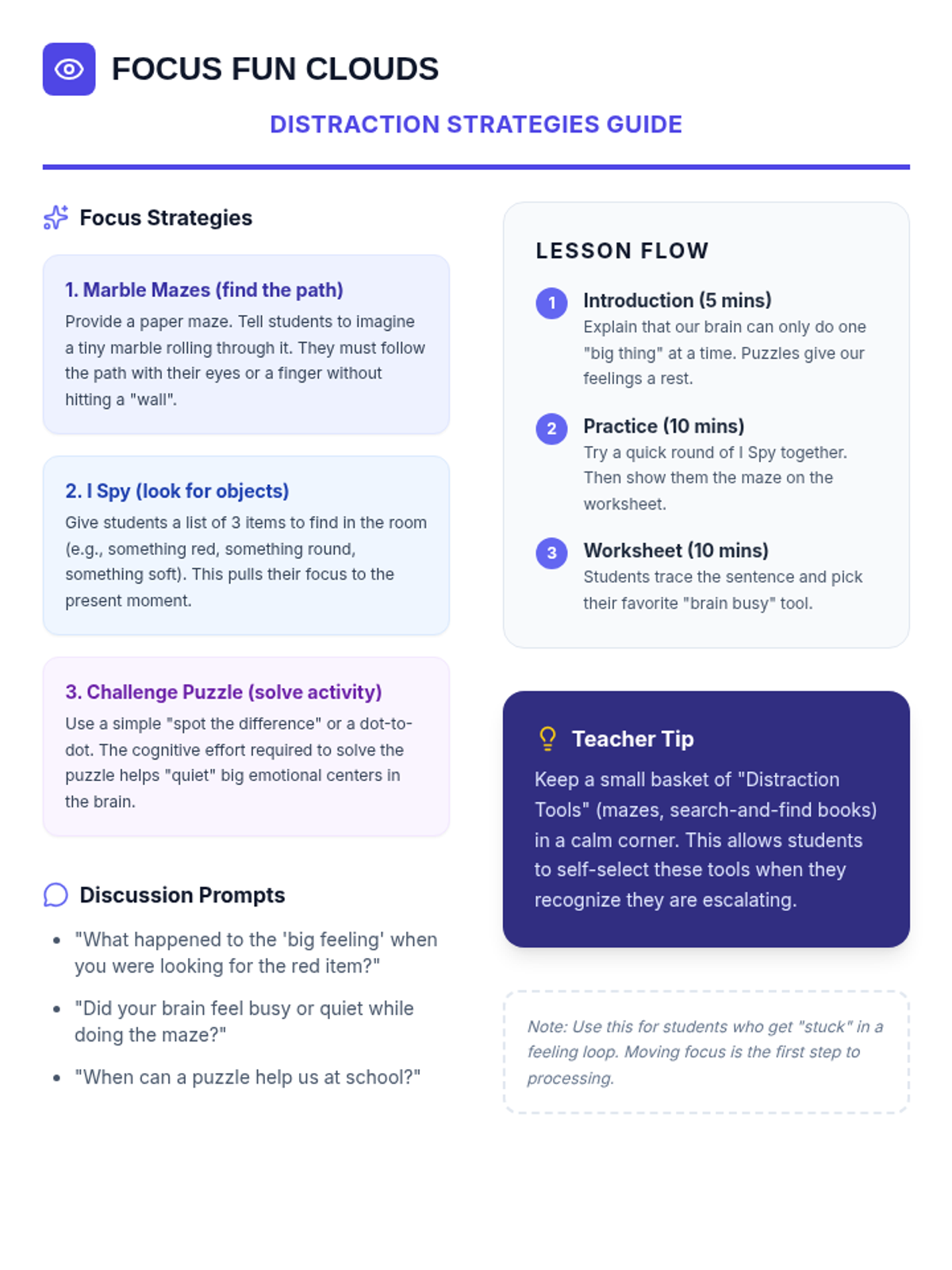
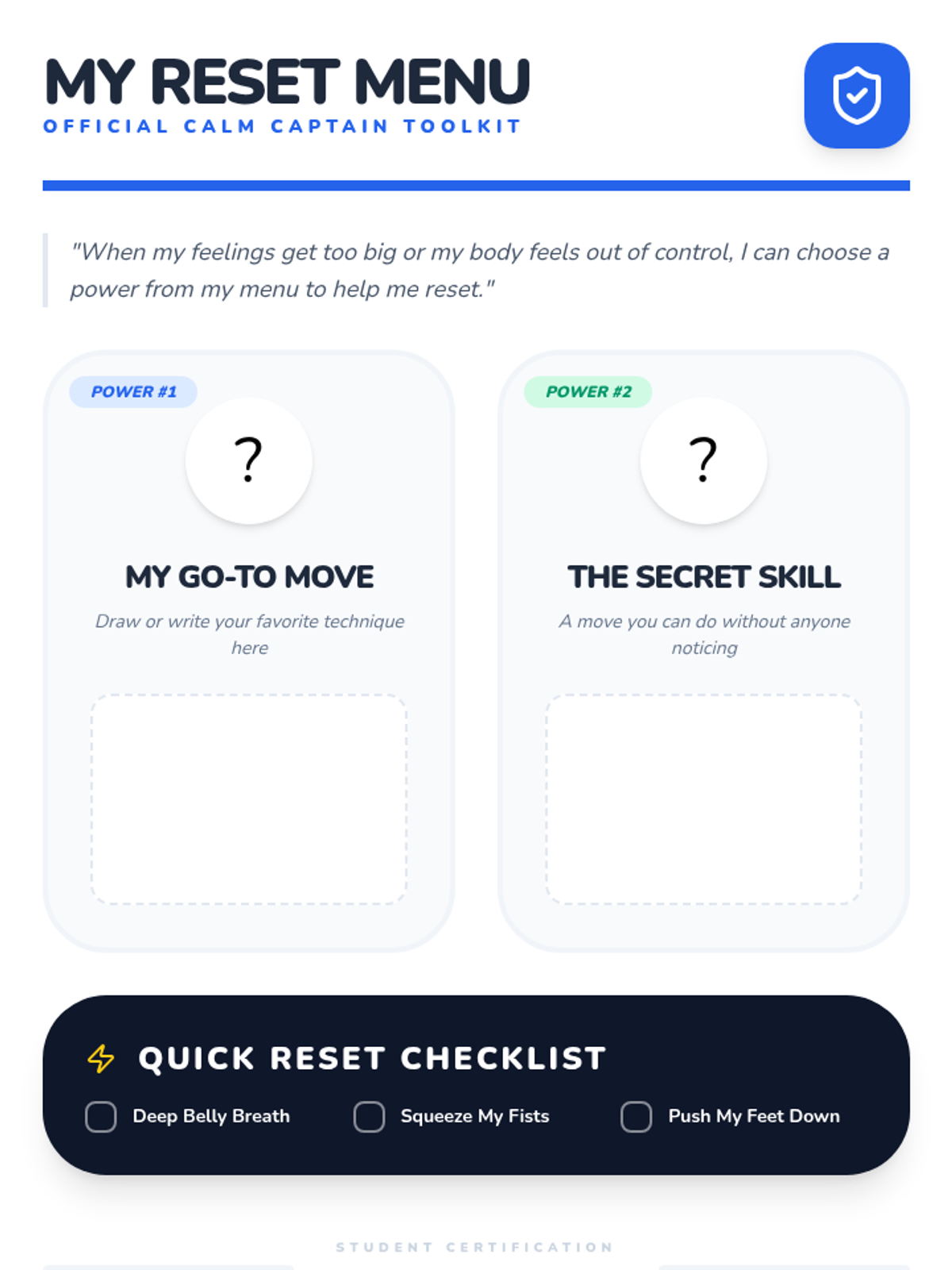
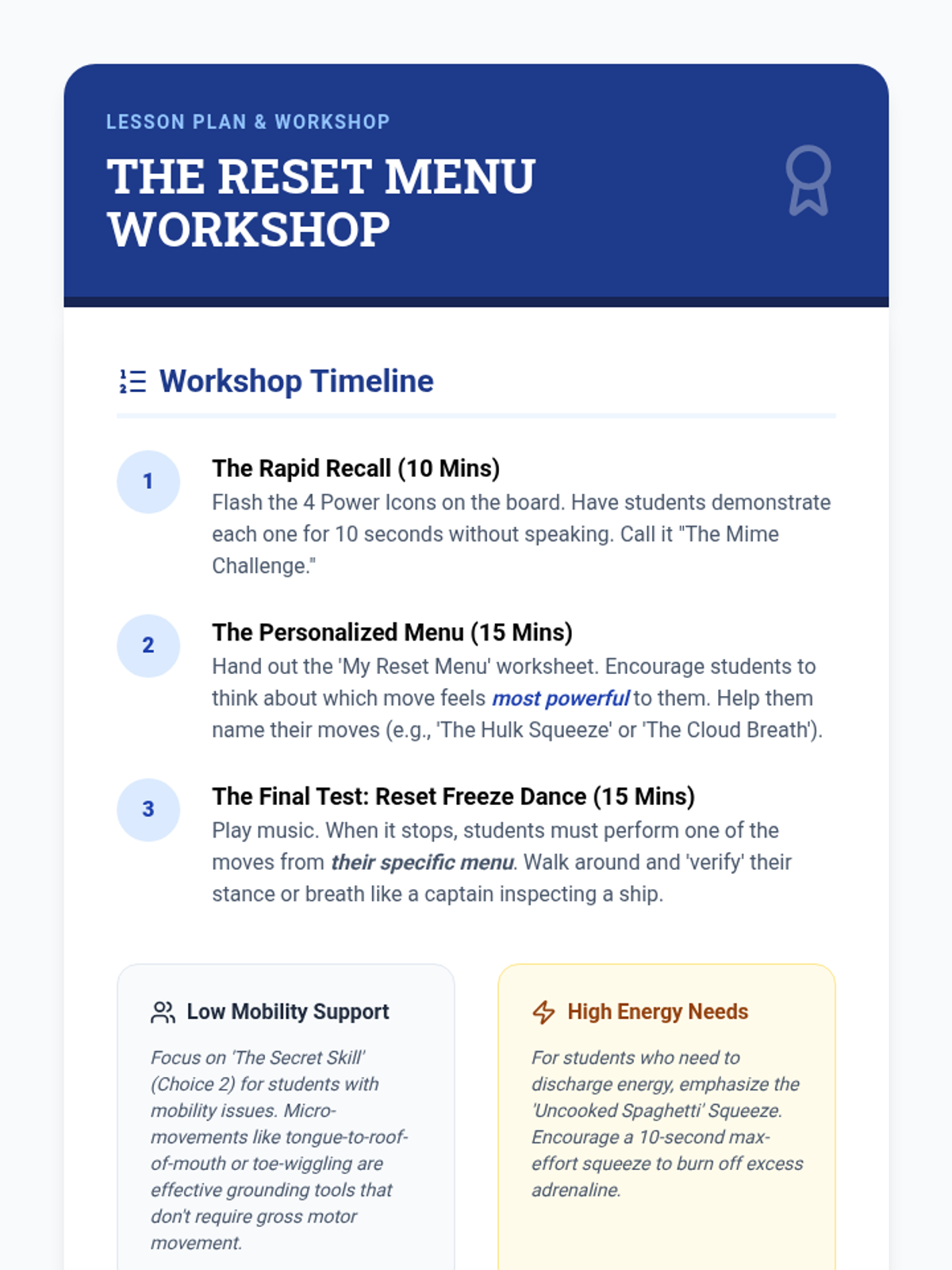
Students synthesize their learning into a personalized 'Reset Menu' of grounding techniques and practice transitioning from high energy to calm.