Stop-and-think strategies, impulse management, and SMART goal setting for personal growth. Develops internal motivation, stress reduction techniques, and resilience through proactive planning and monitoring.
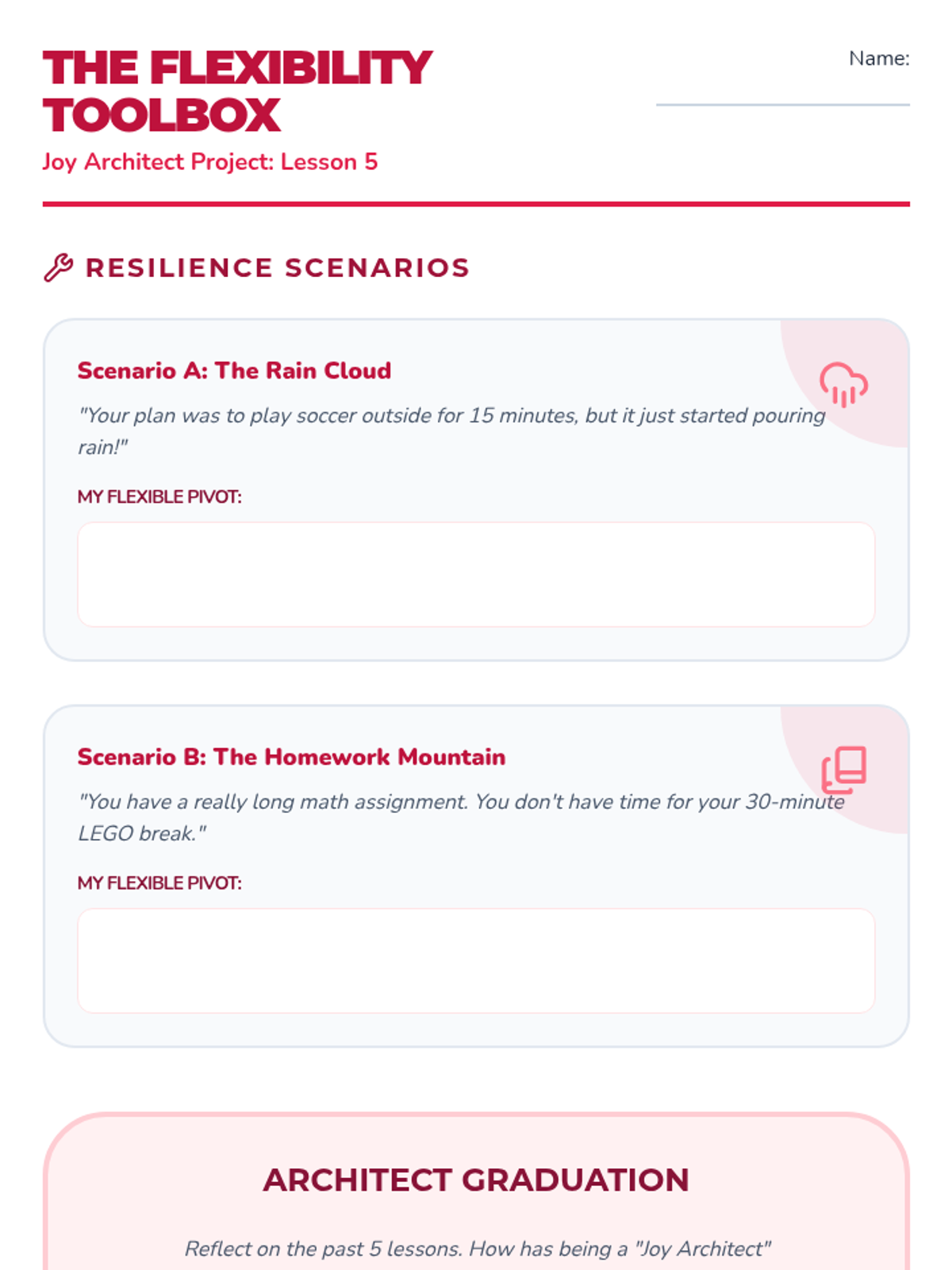
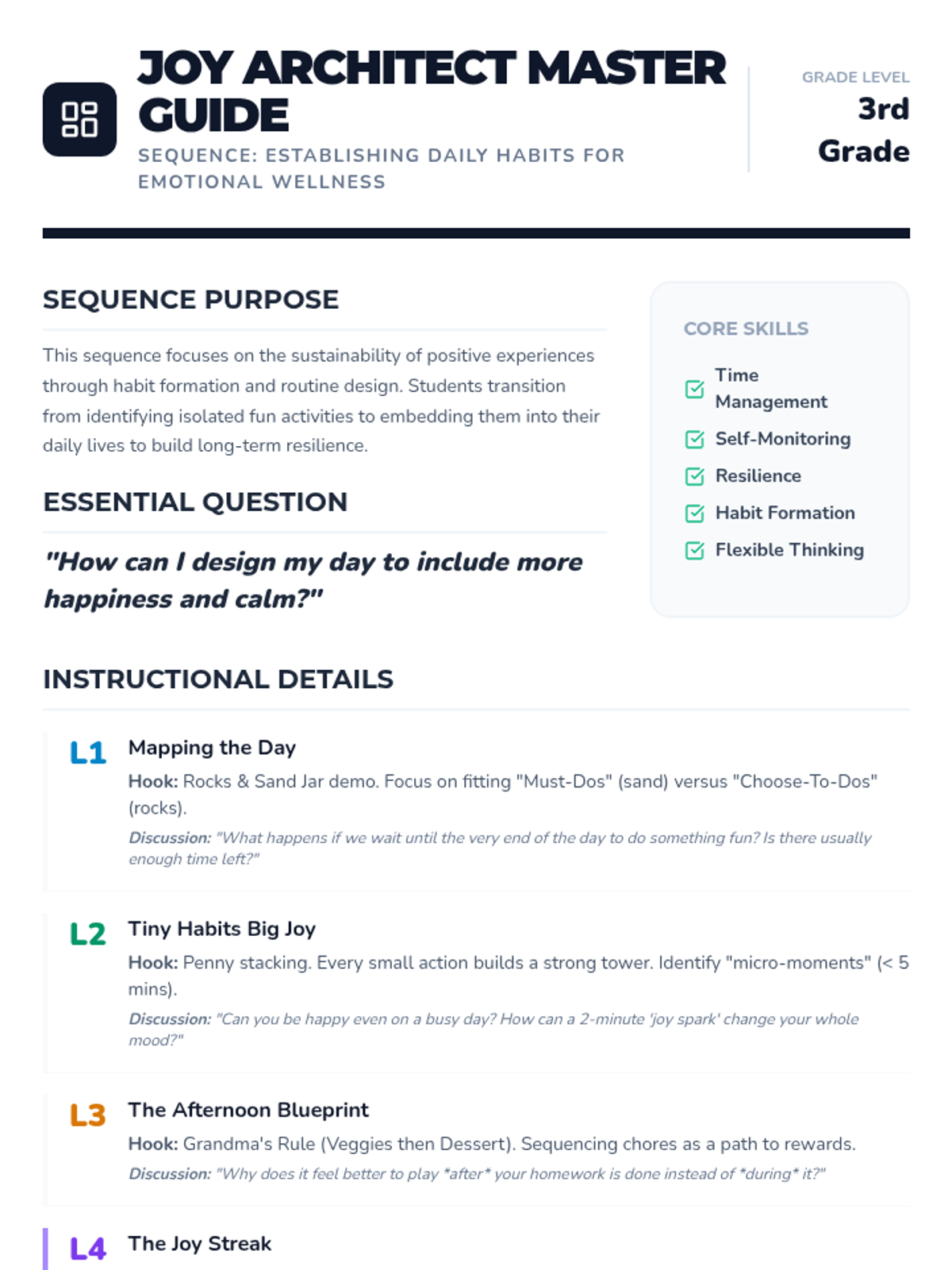
Students reflect on their routine changes and practice 'flexible thinking' for when plans go awry, building resilience and adaptability.
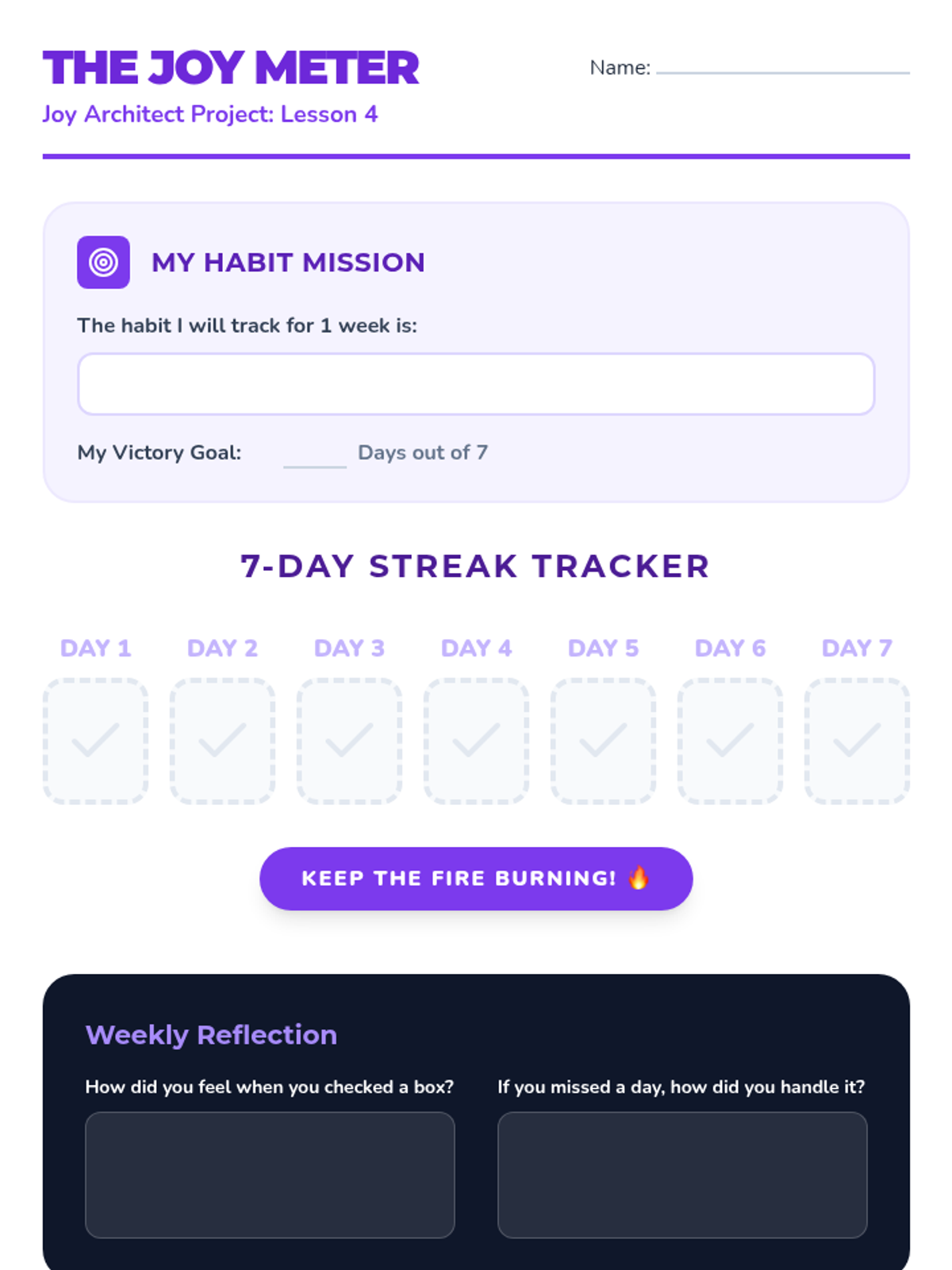
Students create personal trackers to monitor their consistency in engaging with positive habits, learning the power of 'streaks' and self-monitoring.
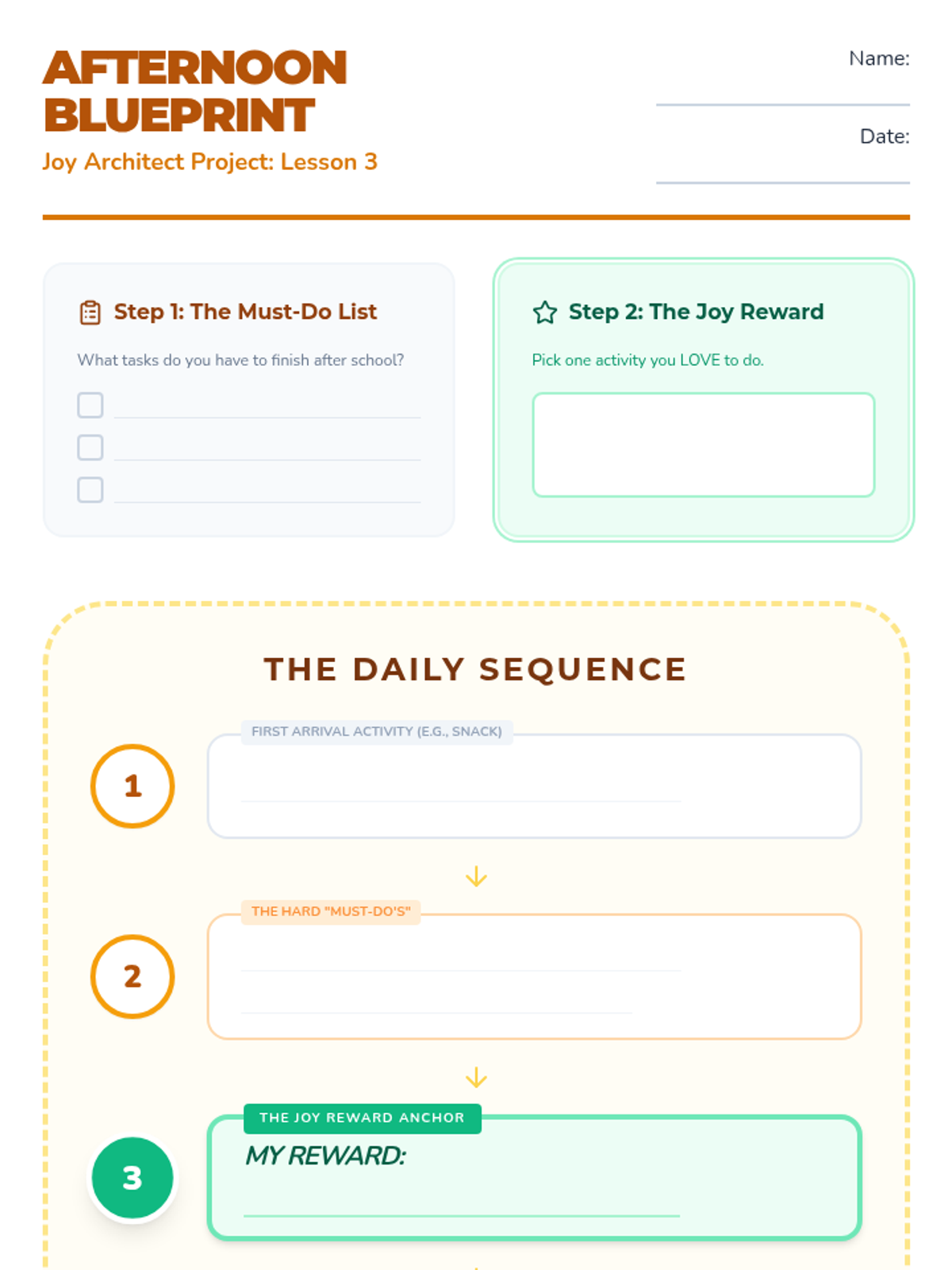
Students design a balanced afternoon routine using 'Grandma's Rule' to sequence chores and rewards, creating a sustainable and motivating schedule.
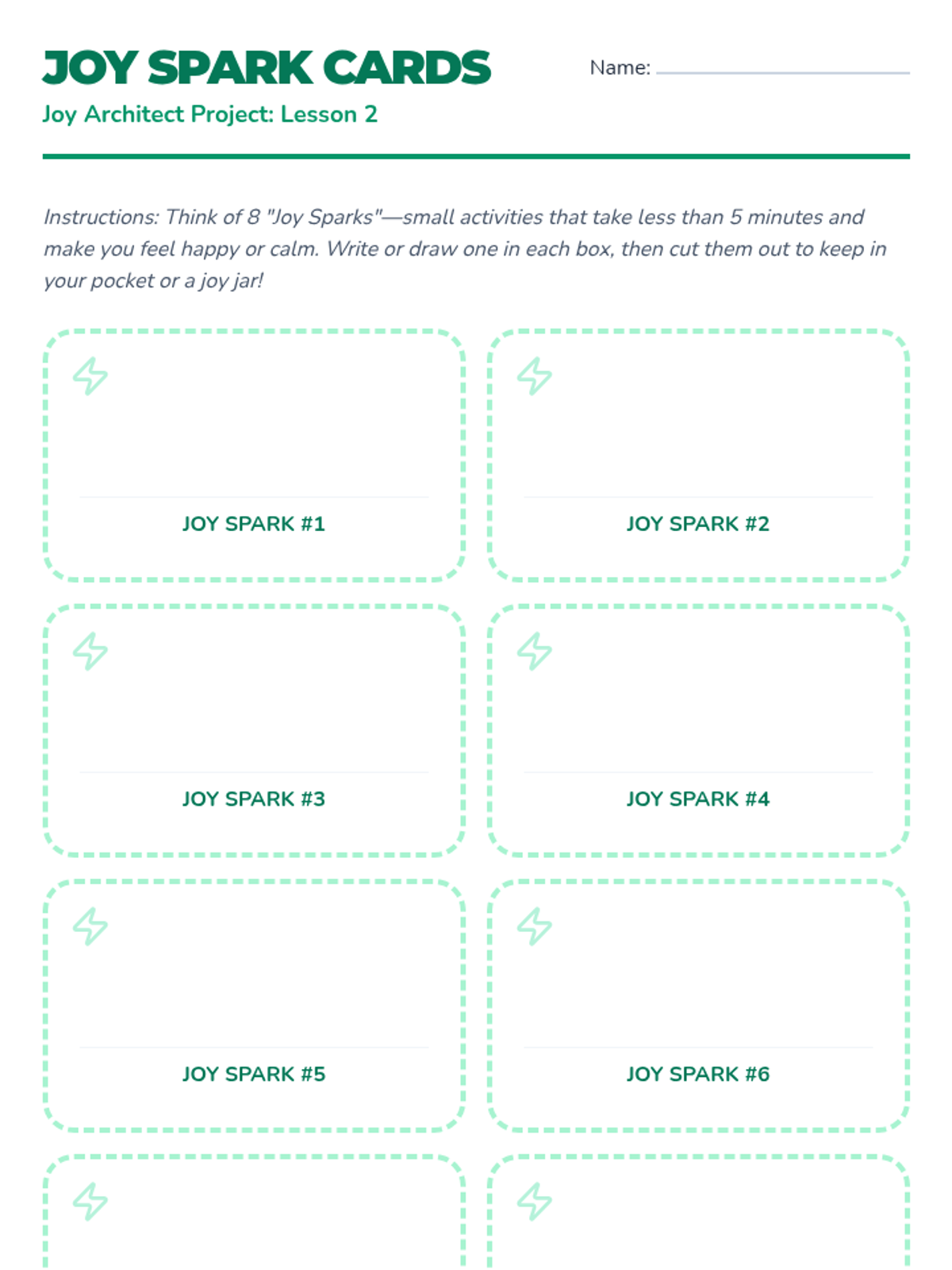
Students explore the concept of 'micro-moments' of joy and learn that frequency of positive experiences is more important than intensity for building long-term happiness.
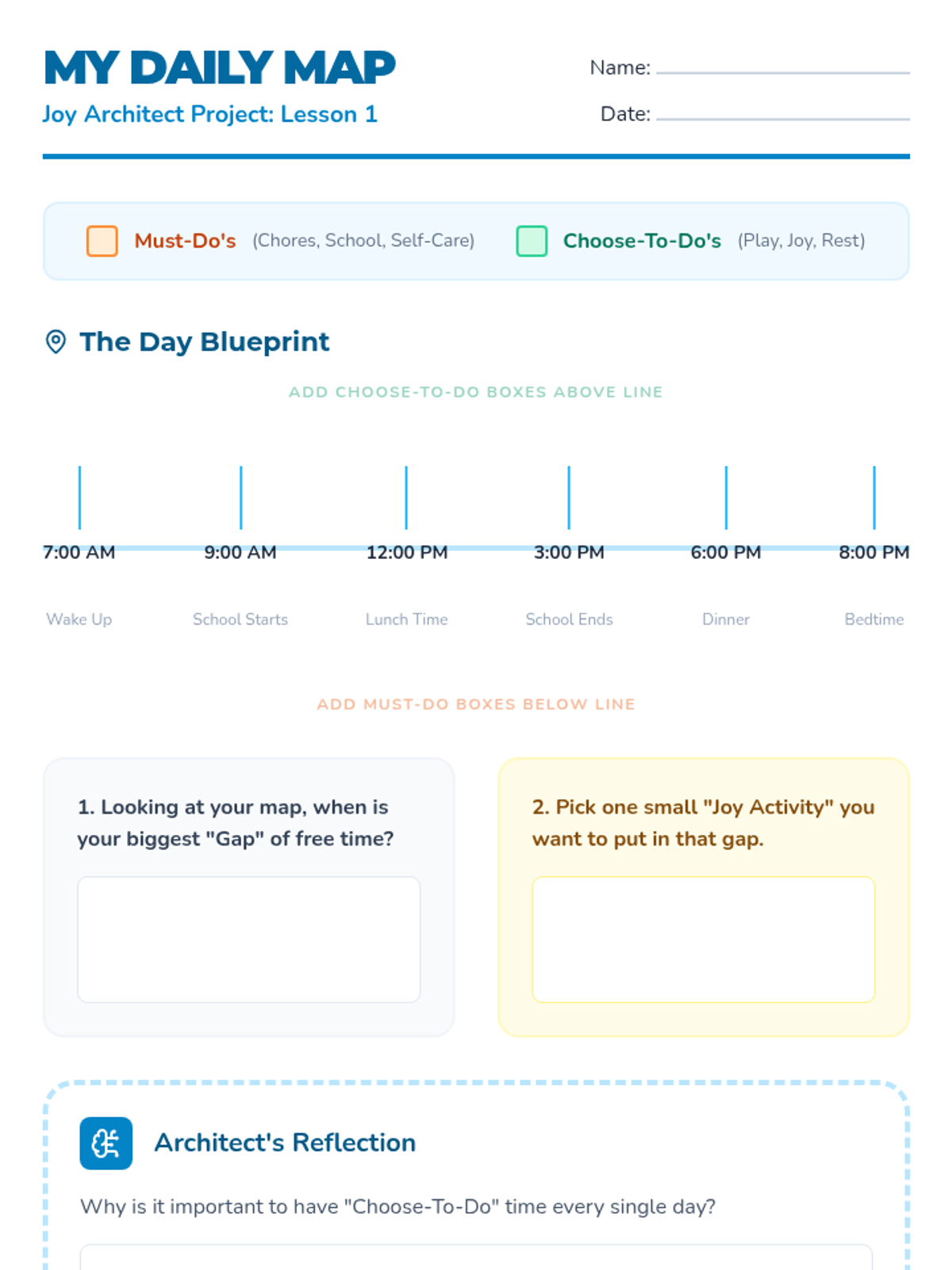
Students audit their current daily schedules to distinguish between 'must-do' tasks and 'choose-to-do' activities, identifying gaps where positive experiences can be added.
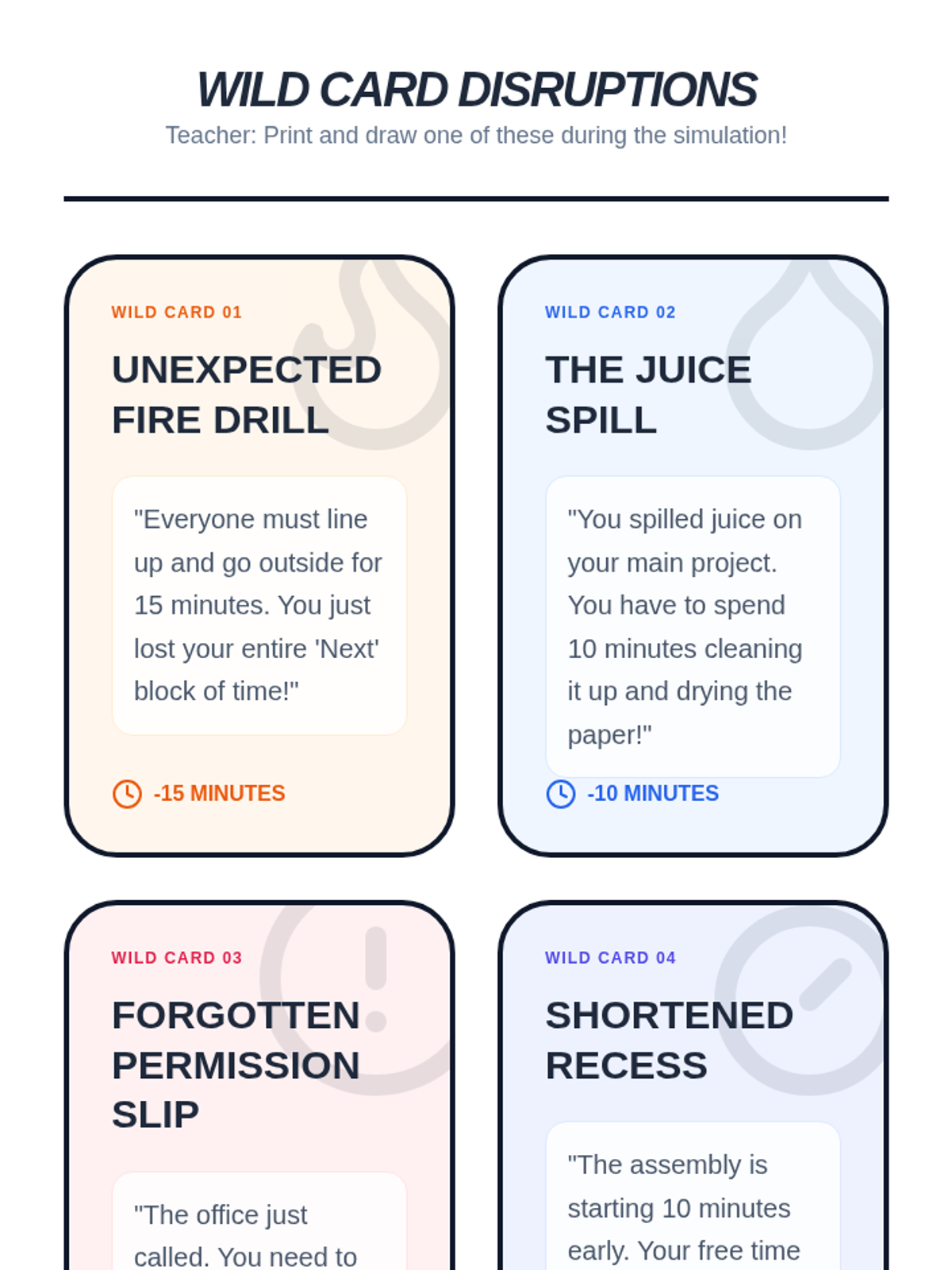
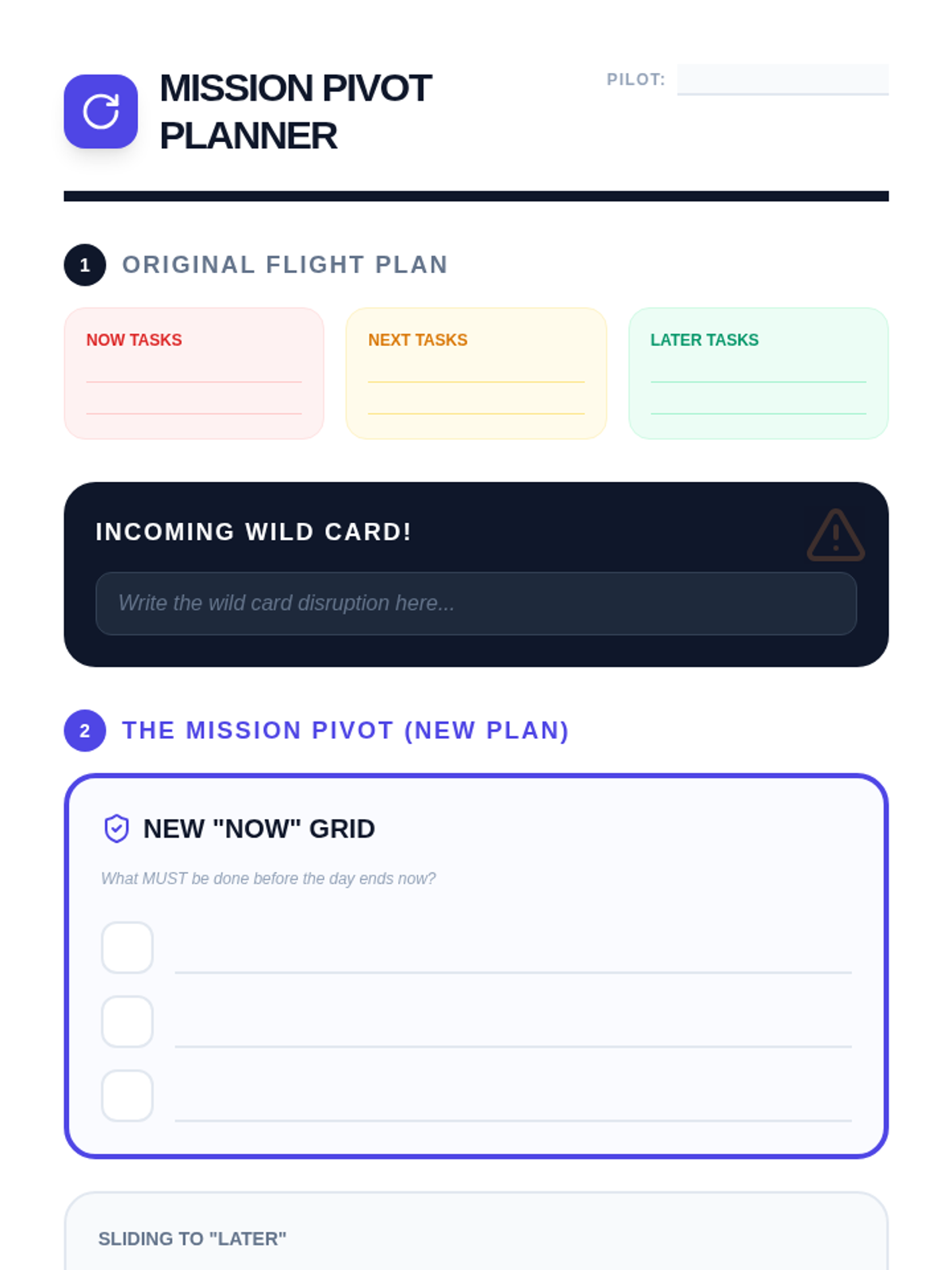
A culminating simulation where students must re-prioritize their tasks in response to 'Wild Card' schedule disruptions.
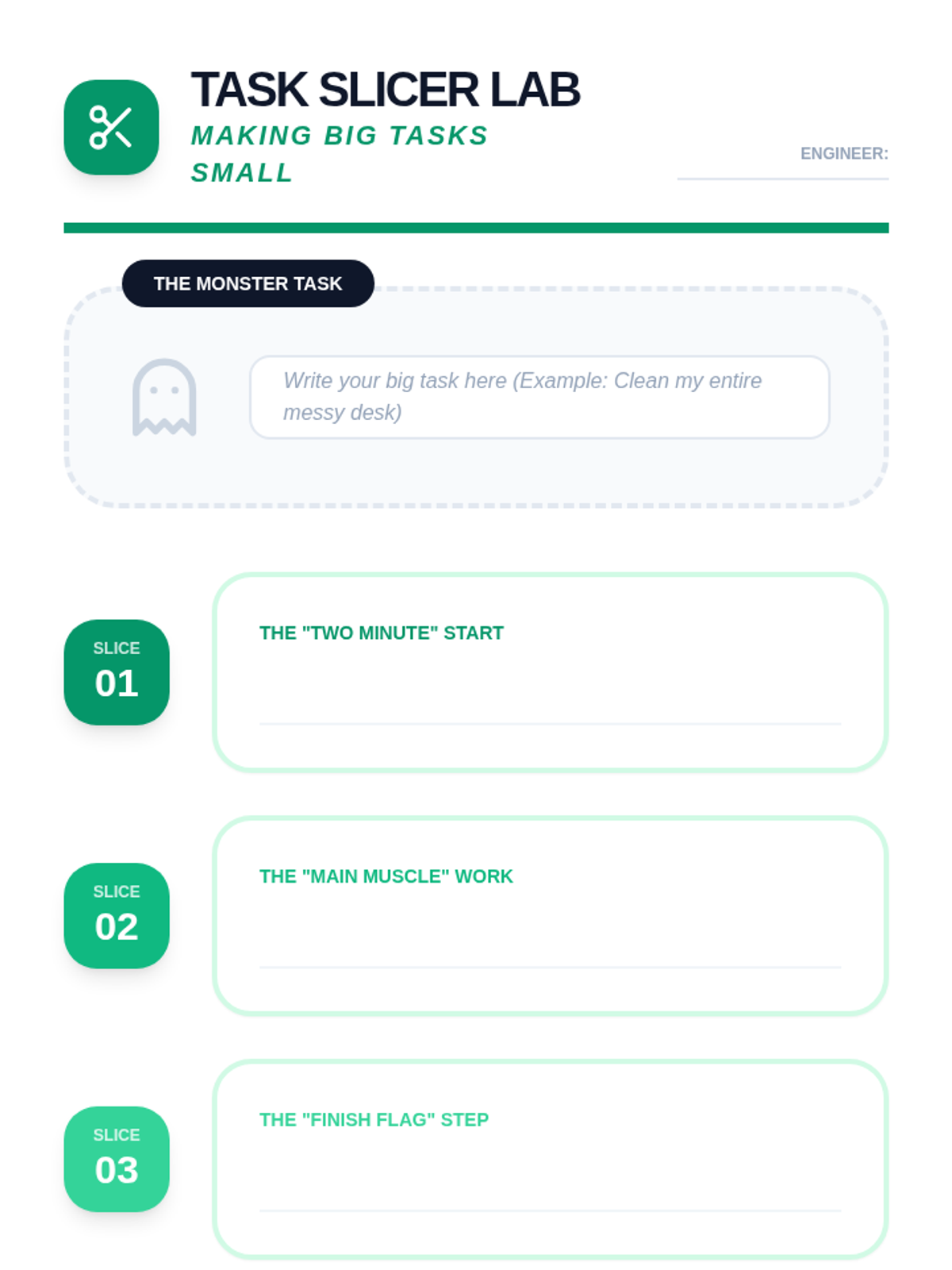
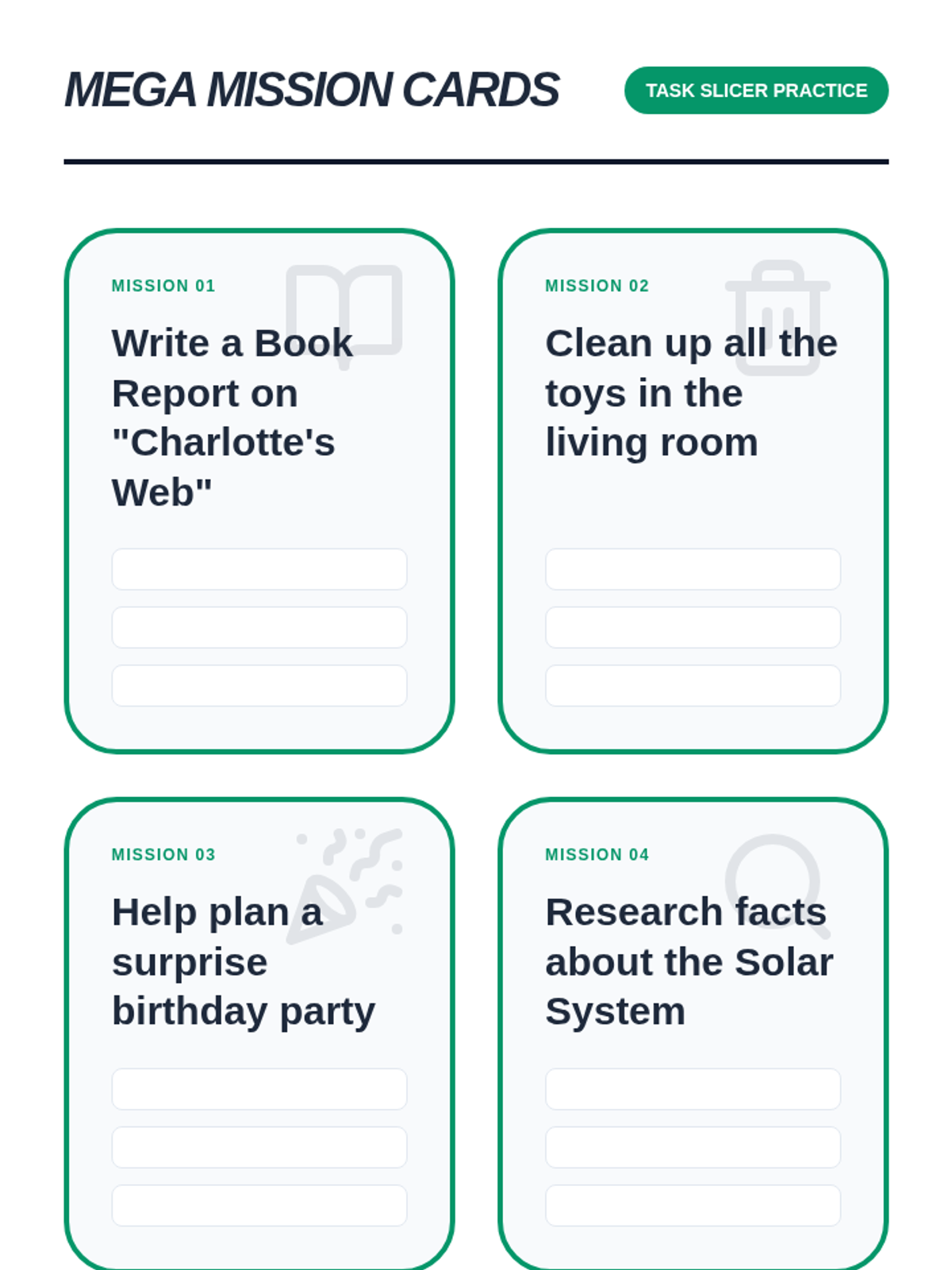
Students learn the 'slicing' technique to break overwhelming projects into three manageable, prioritized steps.
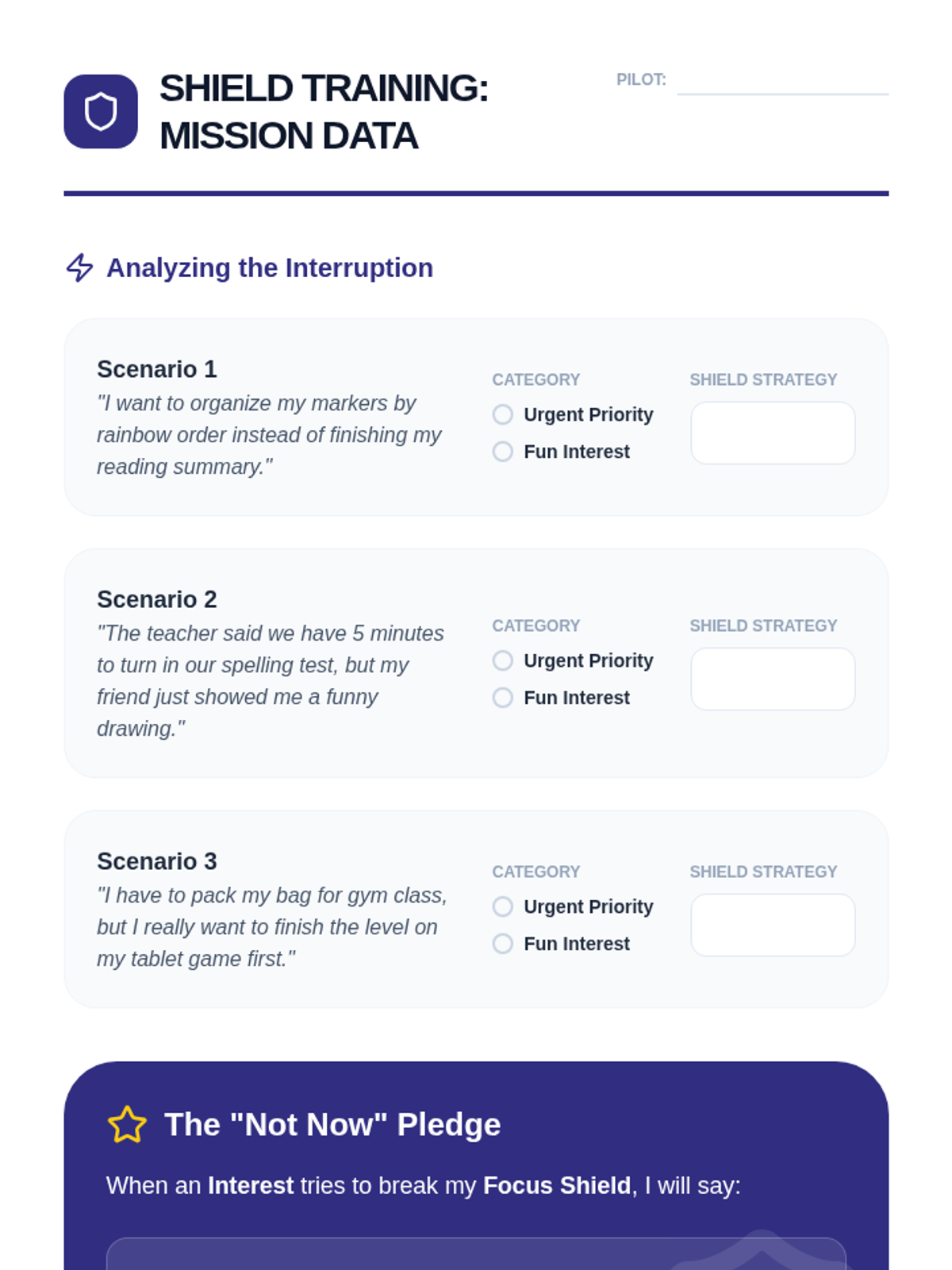
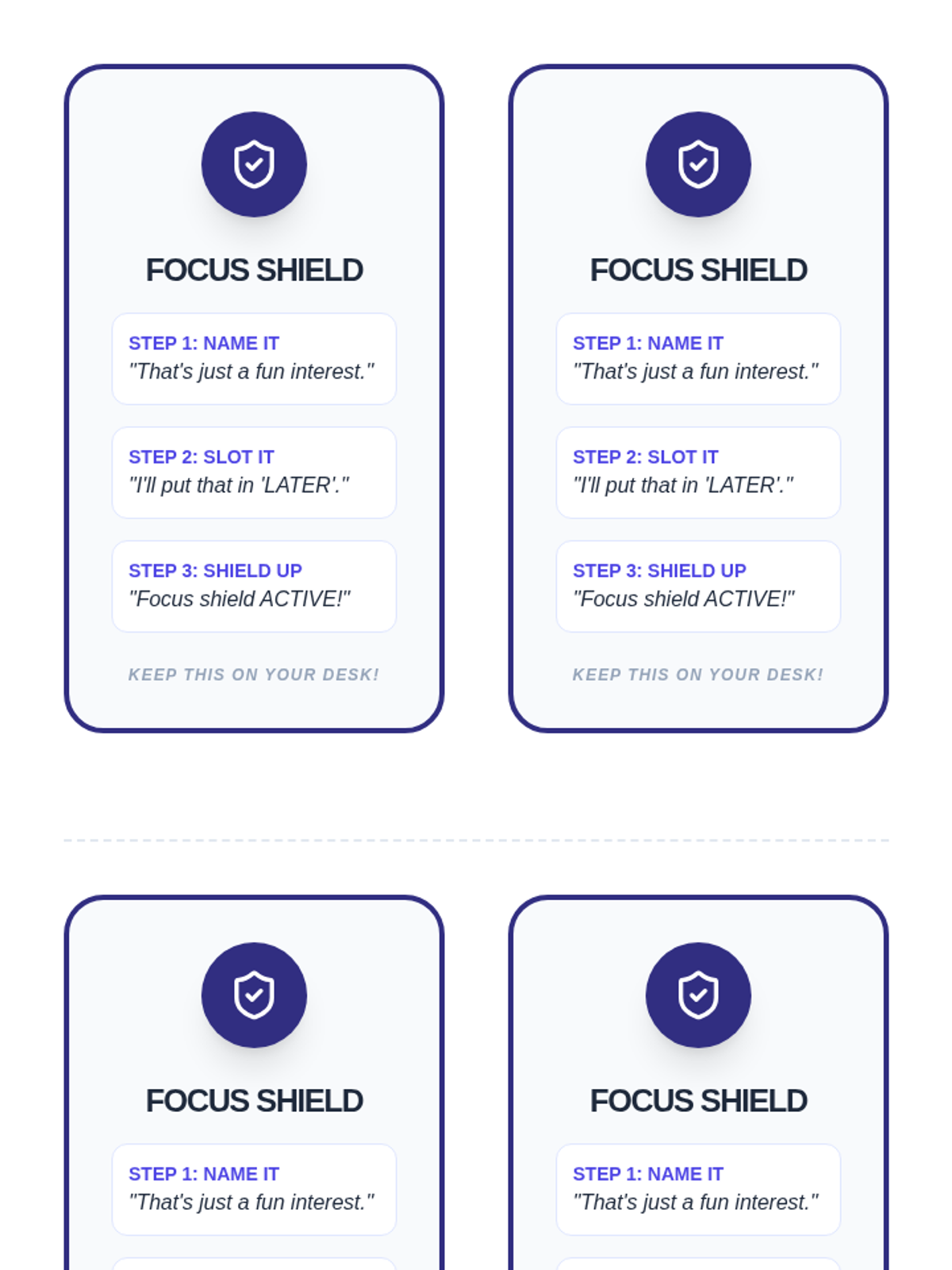
Students identify 'high-interest distractions' that compete with high-priority tasks and practice strategies for delaying gratification to stay on task.
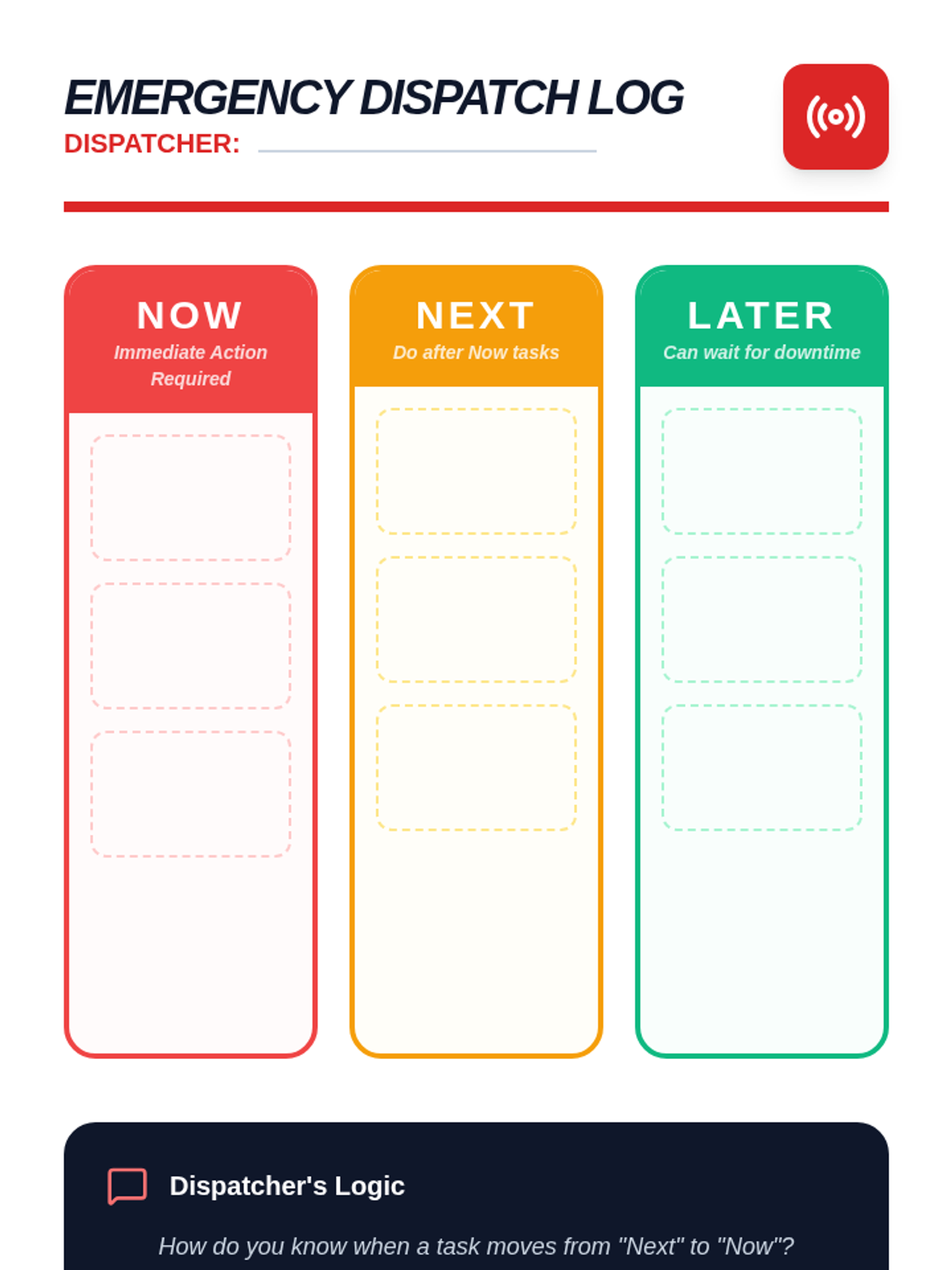
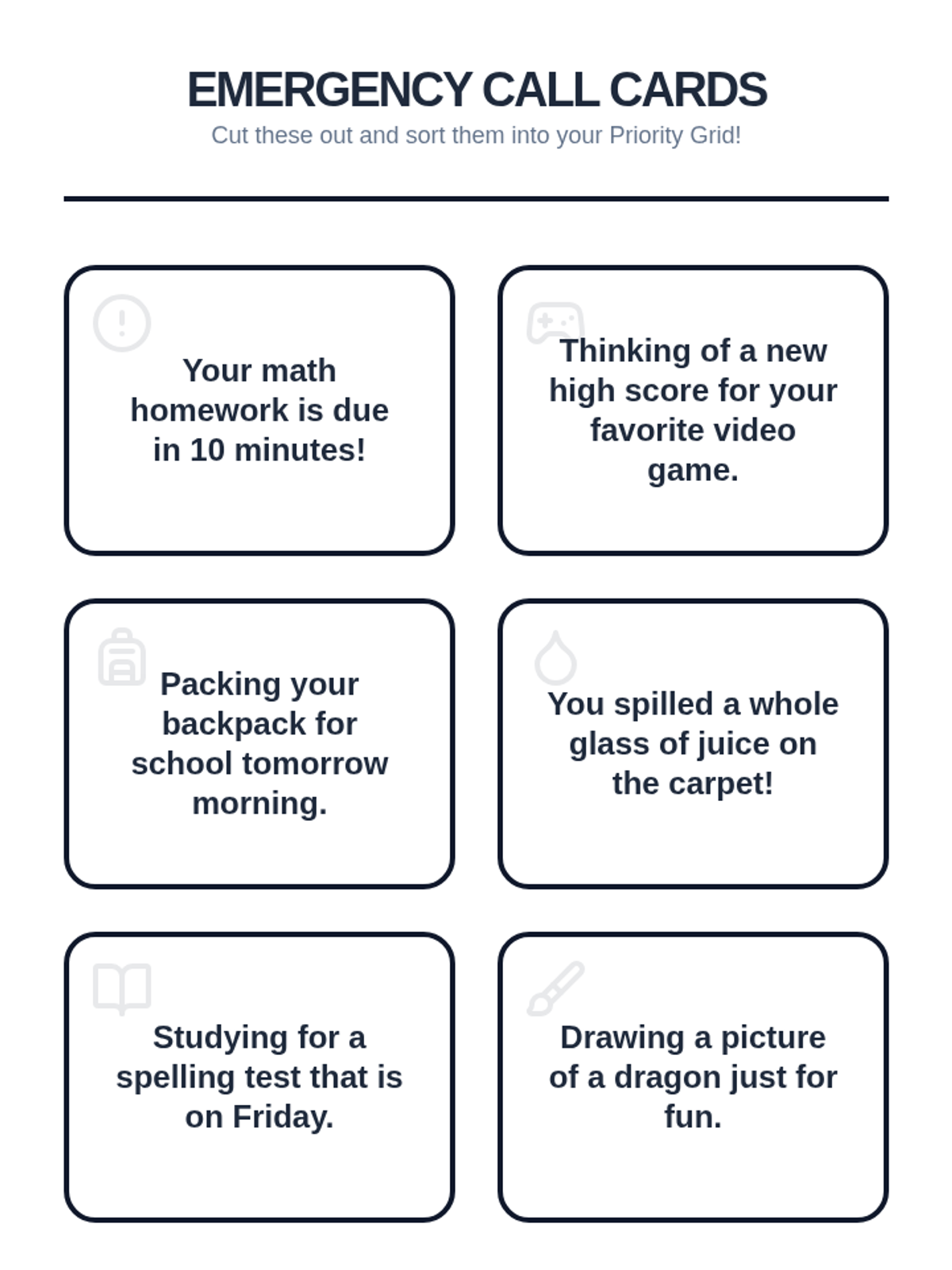
Students learn to use a three-column matrix (Now, Next, Later) to categorize tasks based on deadlines and urgency through an 'Emergency Dispatcher' simulation.
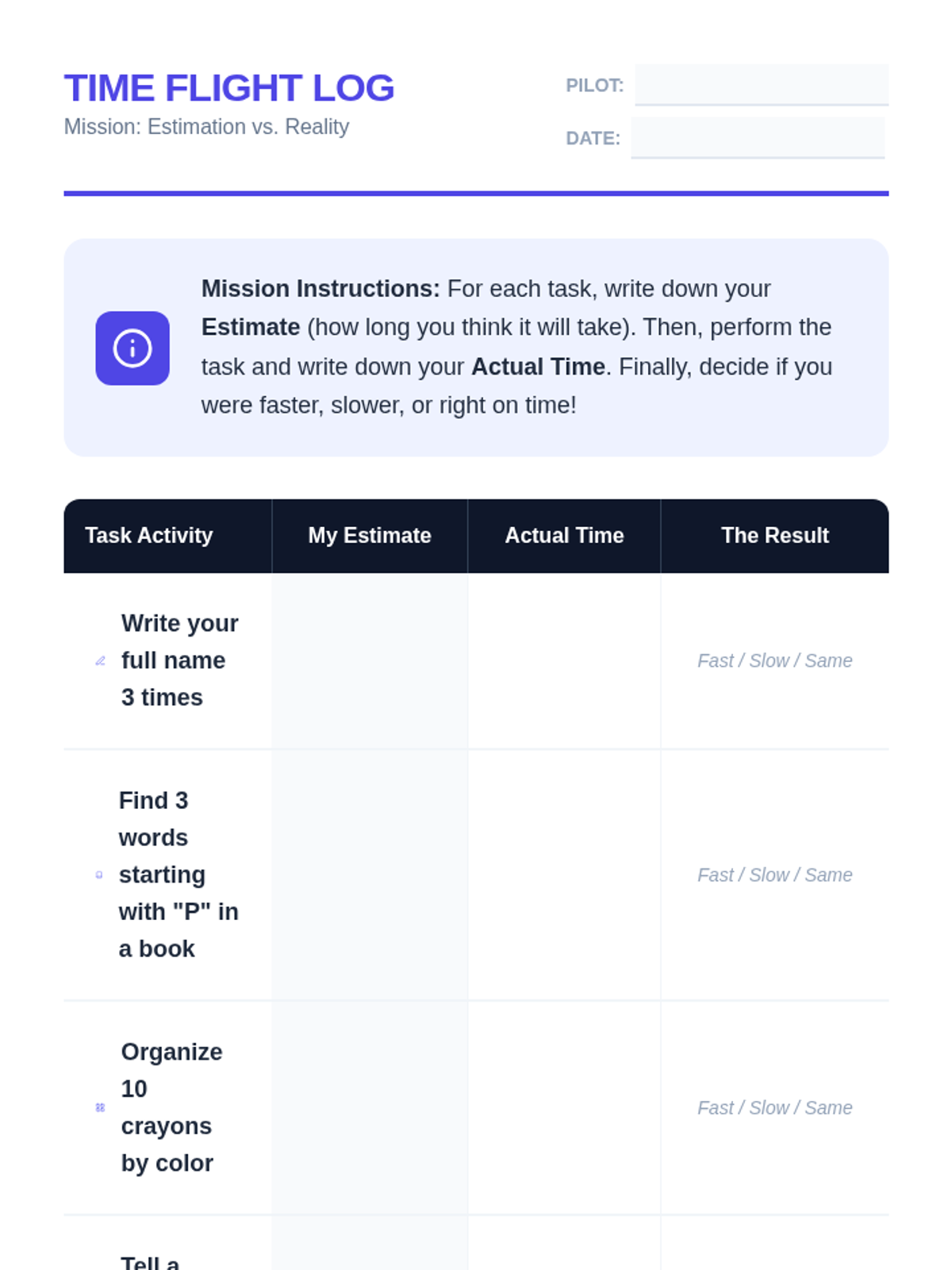
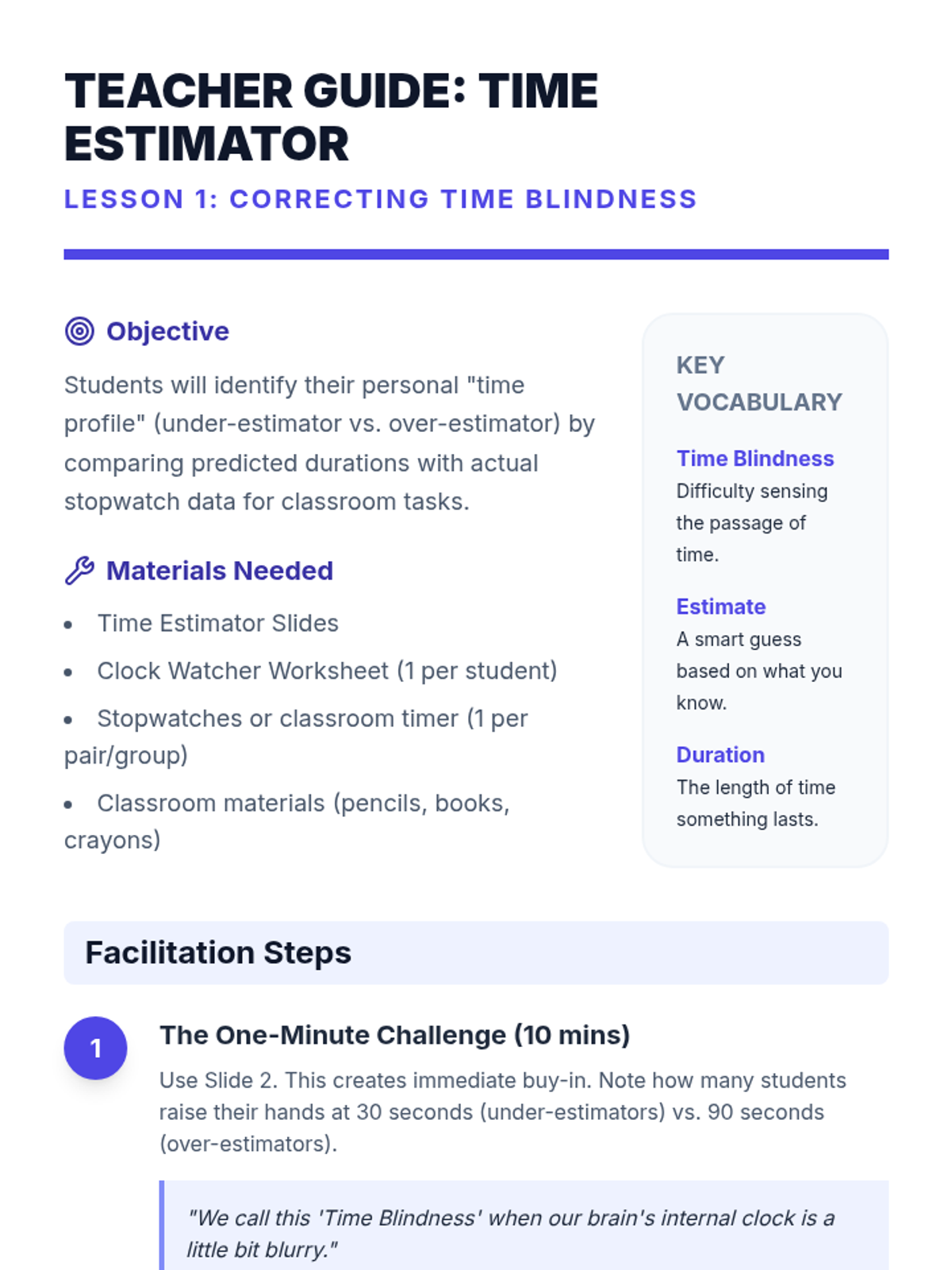
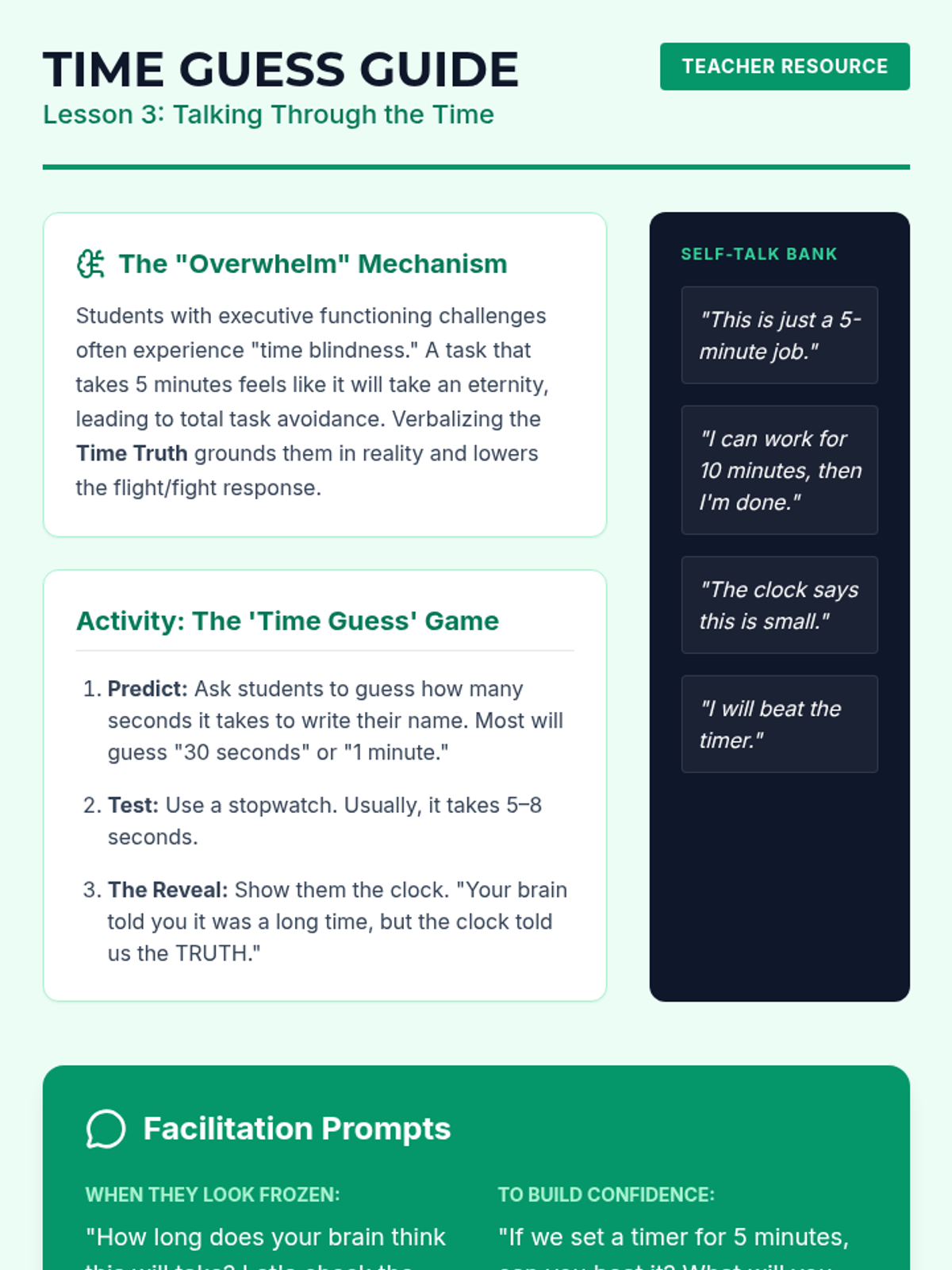
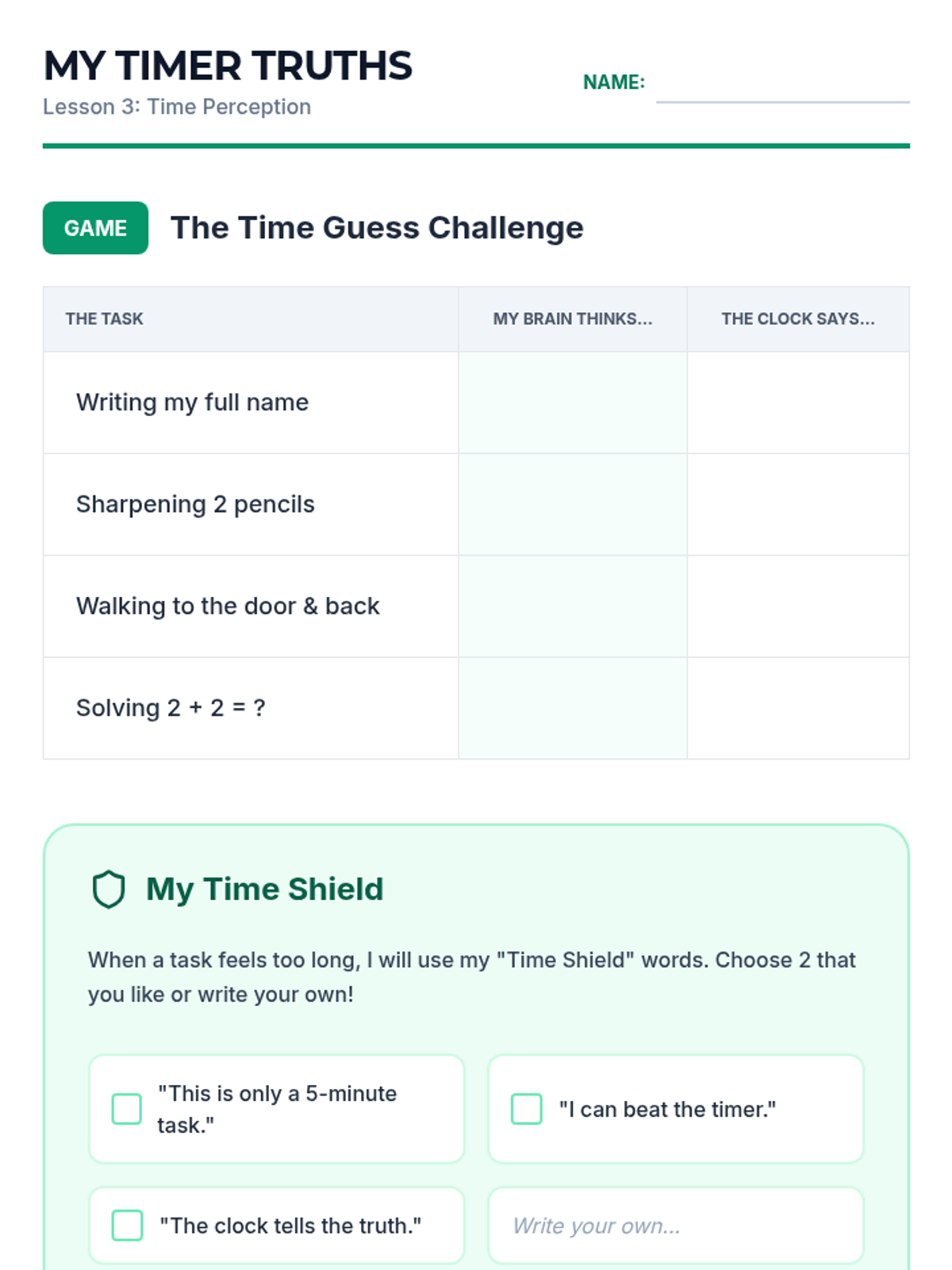
Students practice estimating the duration of everyday tasks and comparing their predictions with actual timed results to build self-awareness of 'time blindness'.
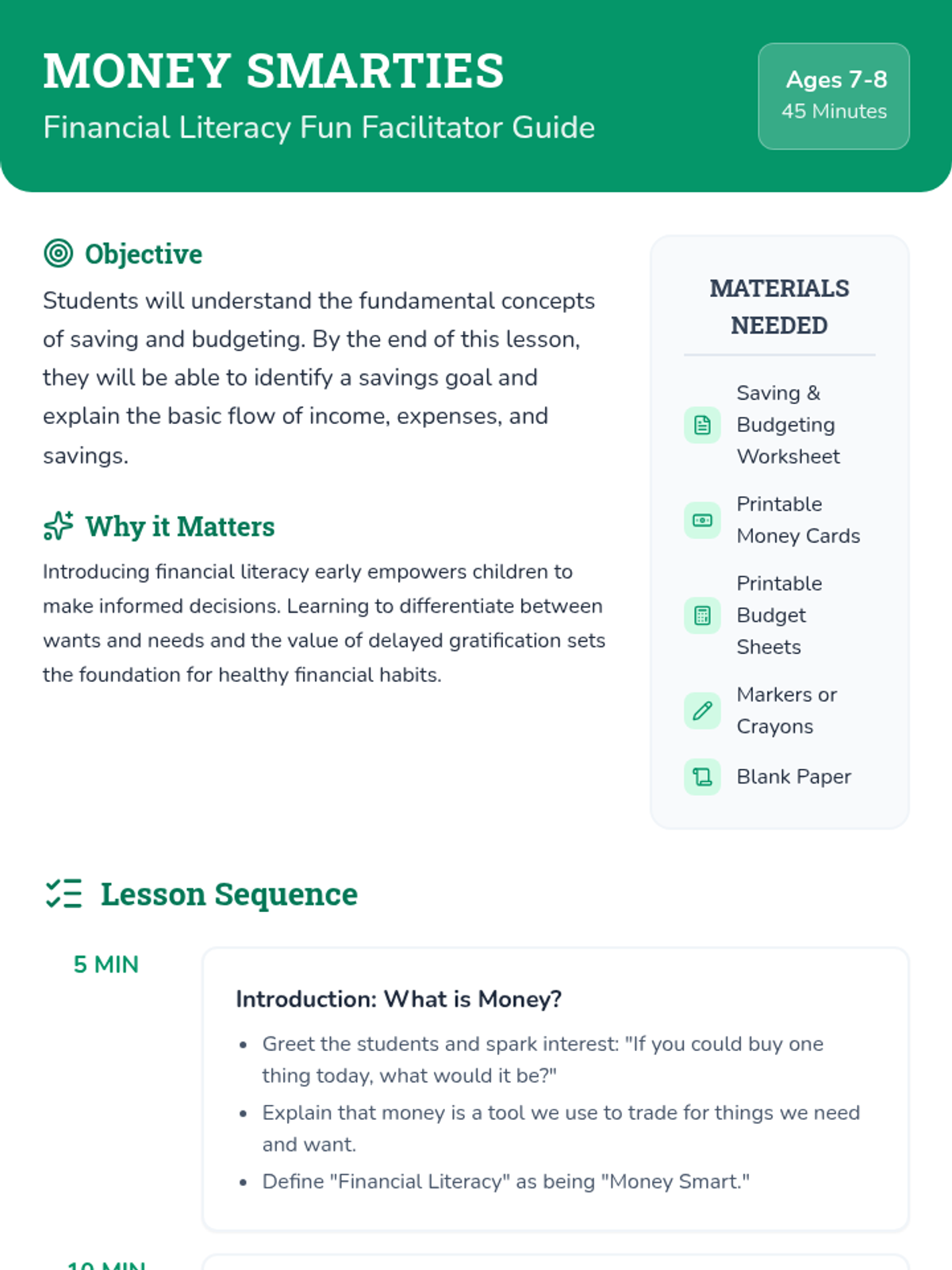
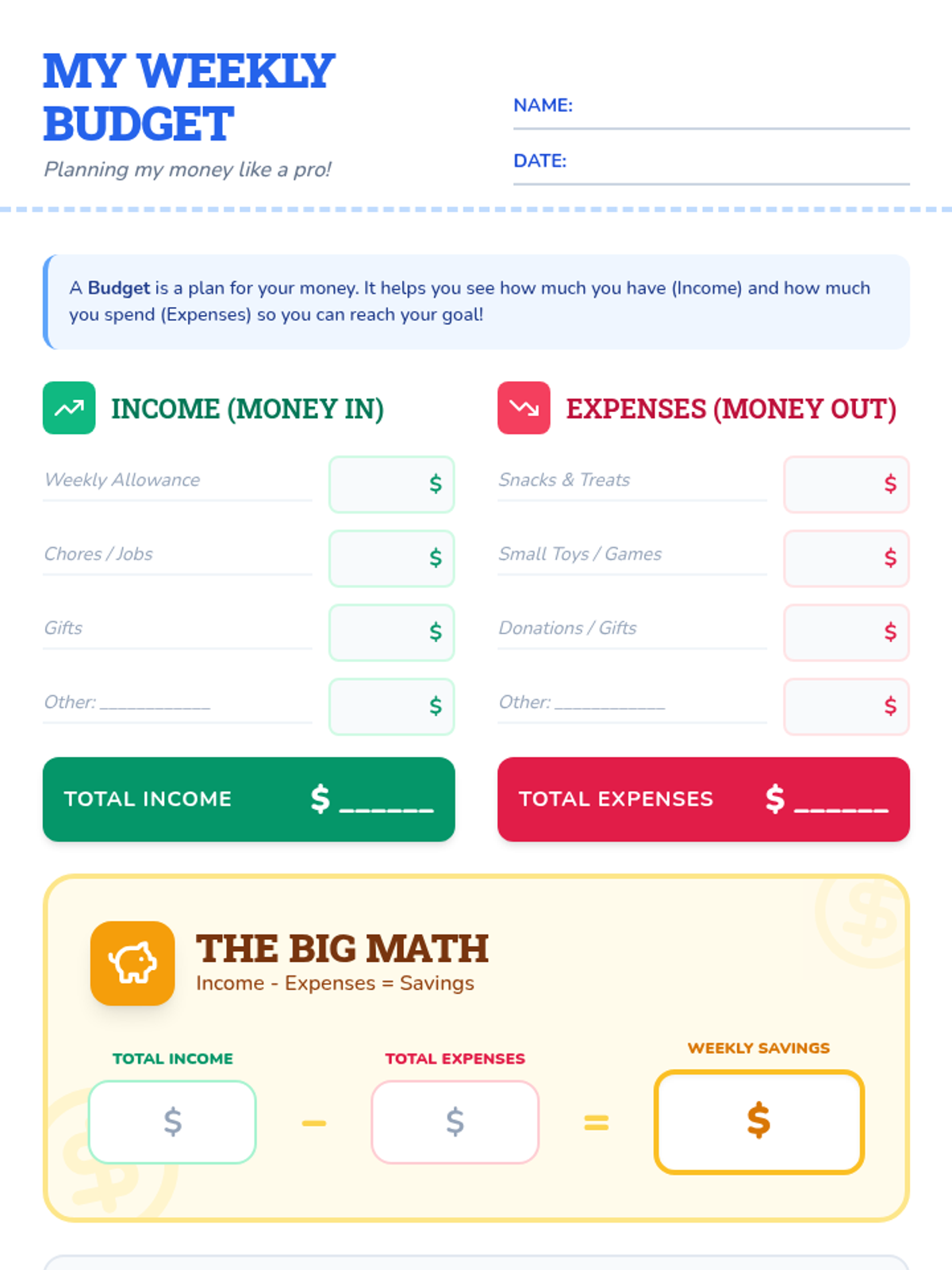
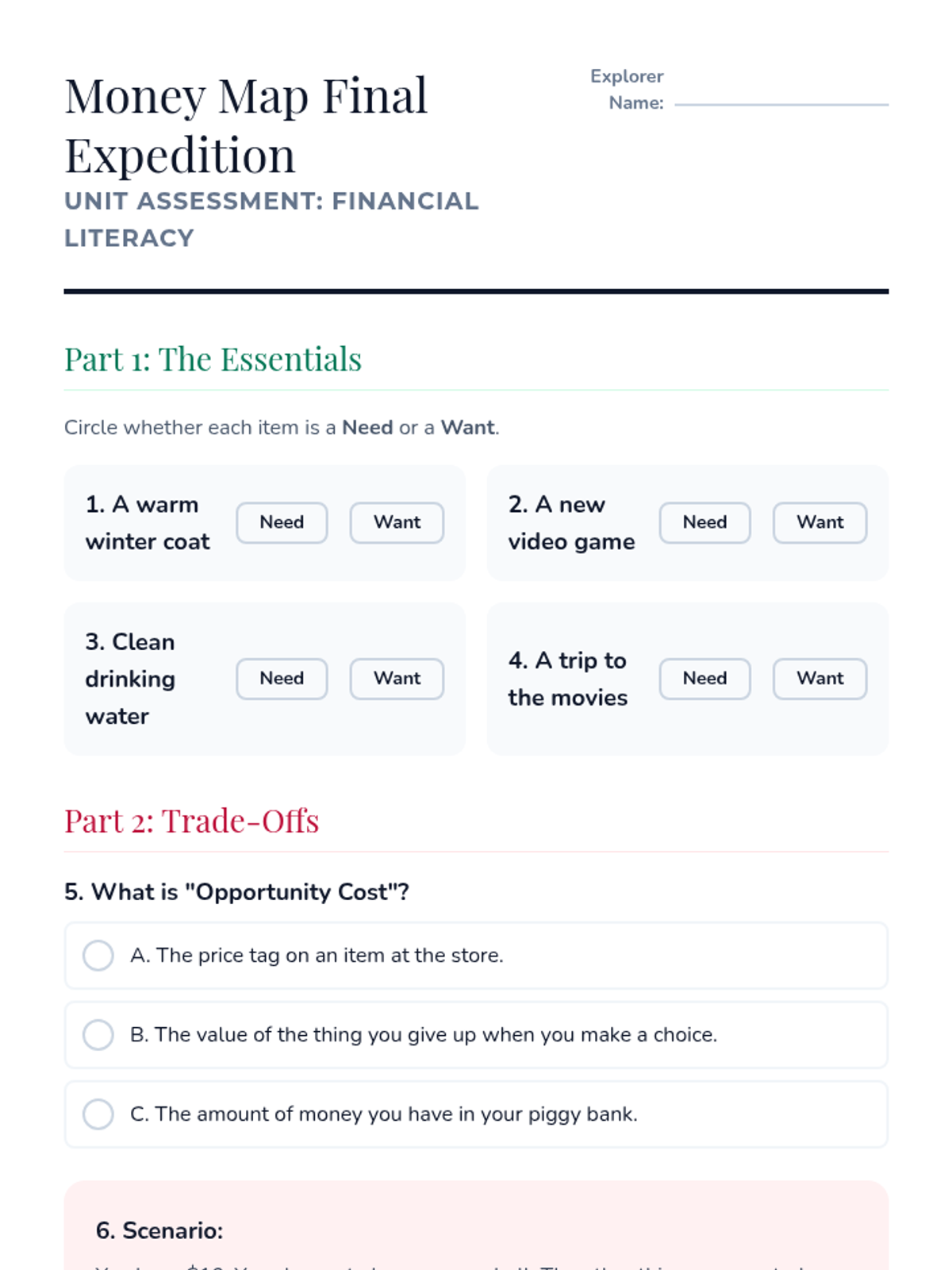
This lesson introduces young students to the basics of financial literacy, focusing on saving, budgeting, and the value of money through interactive activities.
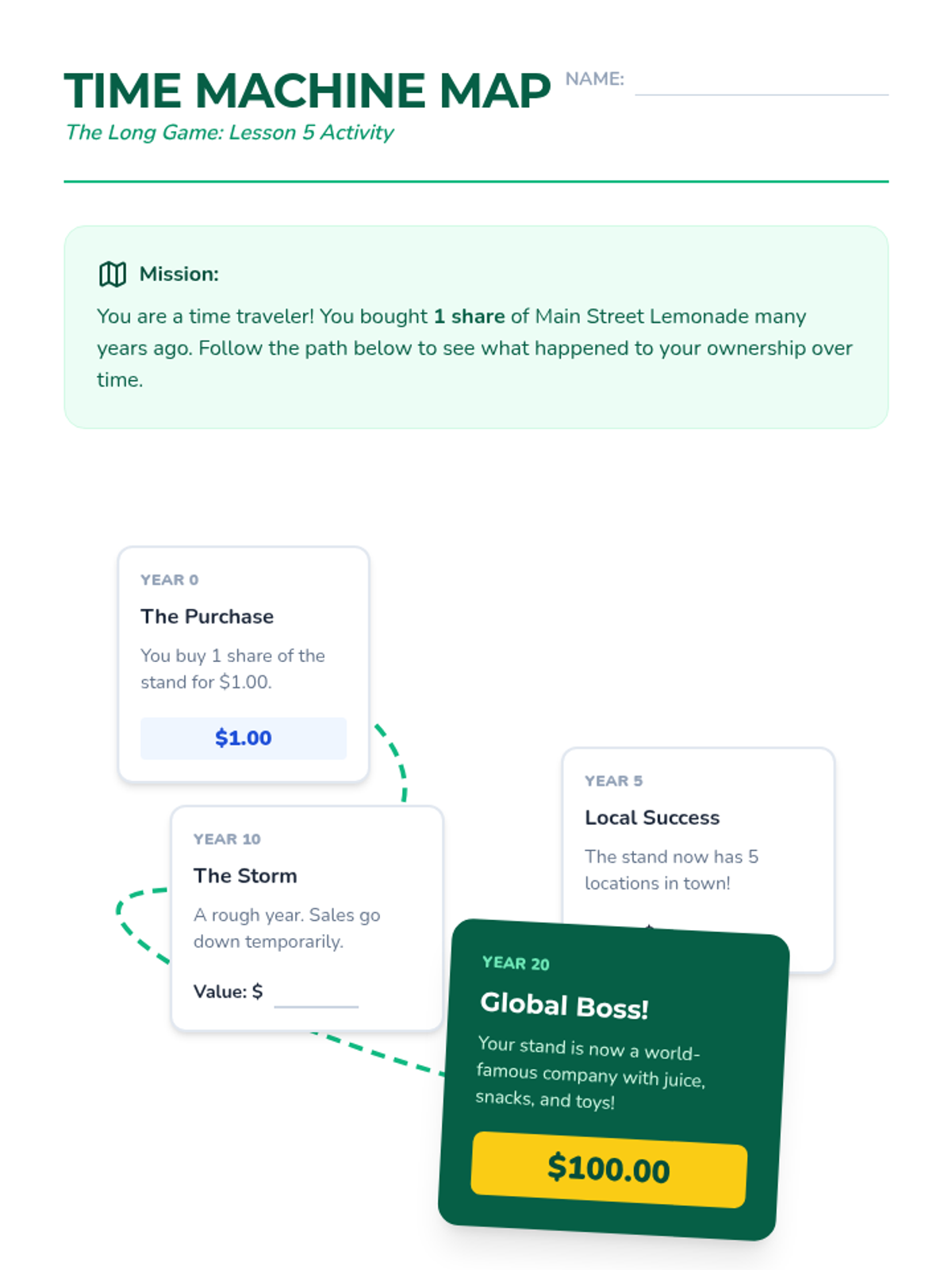
Students look at historical examples to see that despite ups and downs, owning good companies often works out over a long time. They learn about the power of growth.
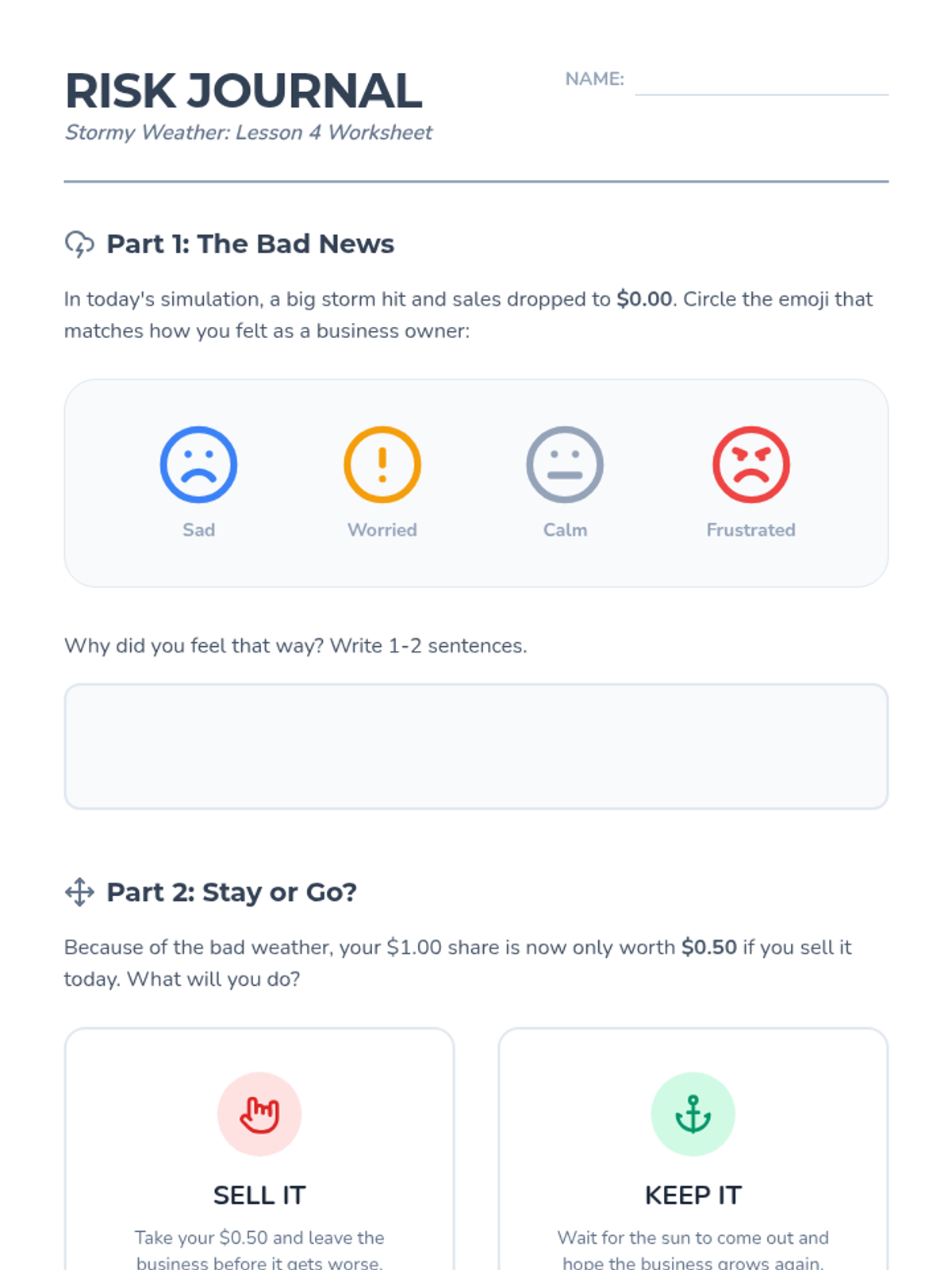
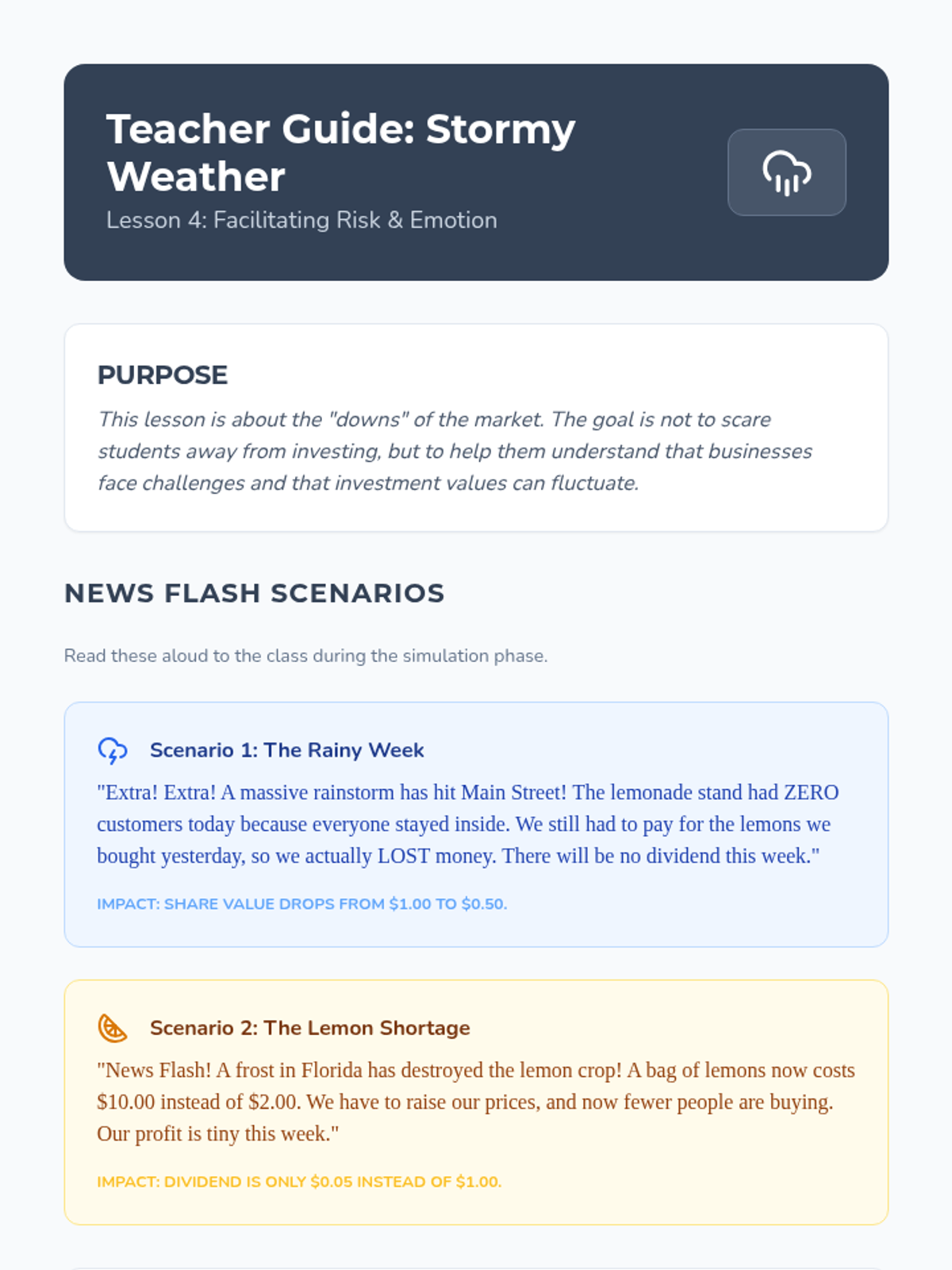
Students explore the downside of investing. Scenarios like 'bad weather' or 'no lemons' reduce the stand's value. Students discuss how it feels to lose value in an investment.
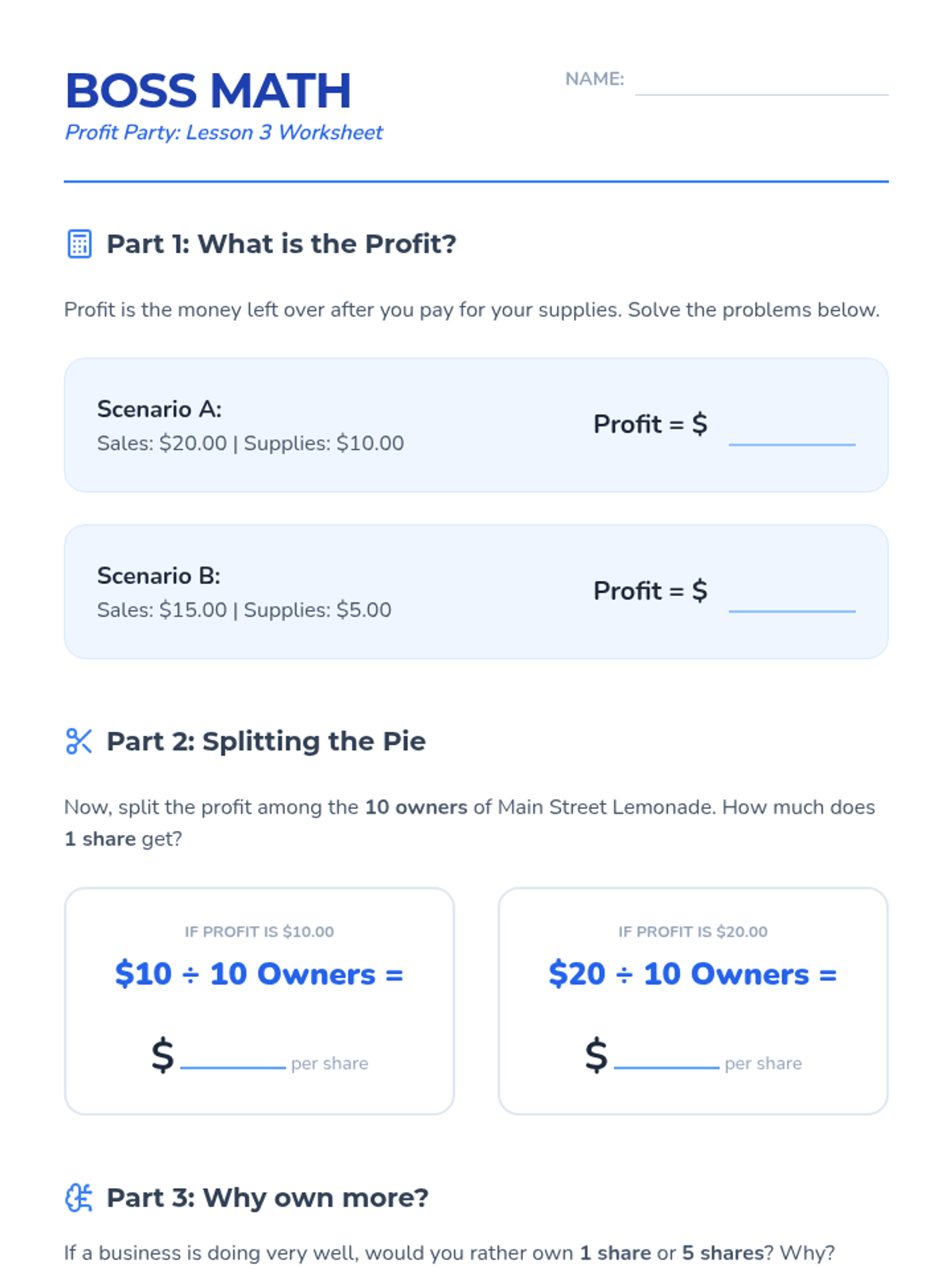
The class explores how owners make money. If the lemonade stand sells a lot, the owners split the profit. If it sells nothing, they get nothing. This illustrates variable returns.
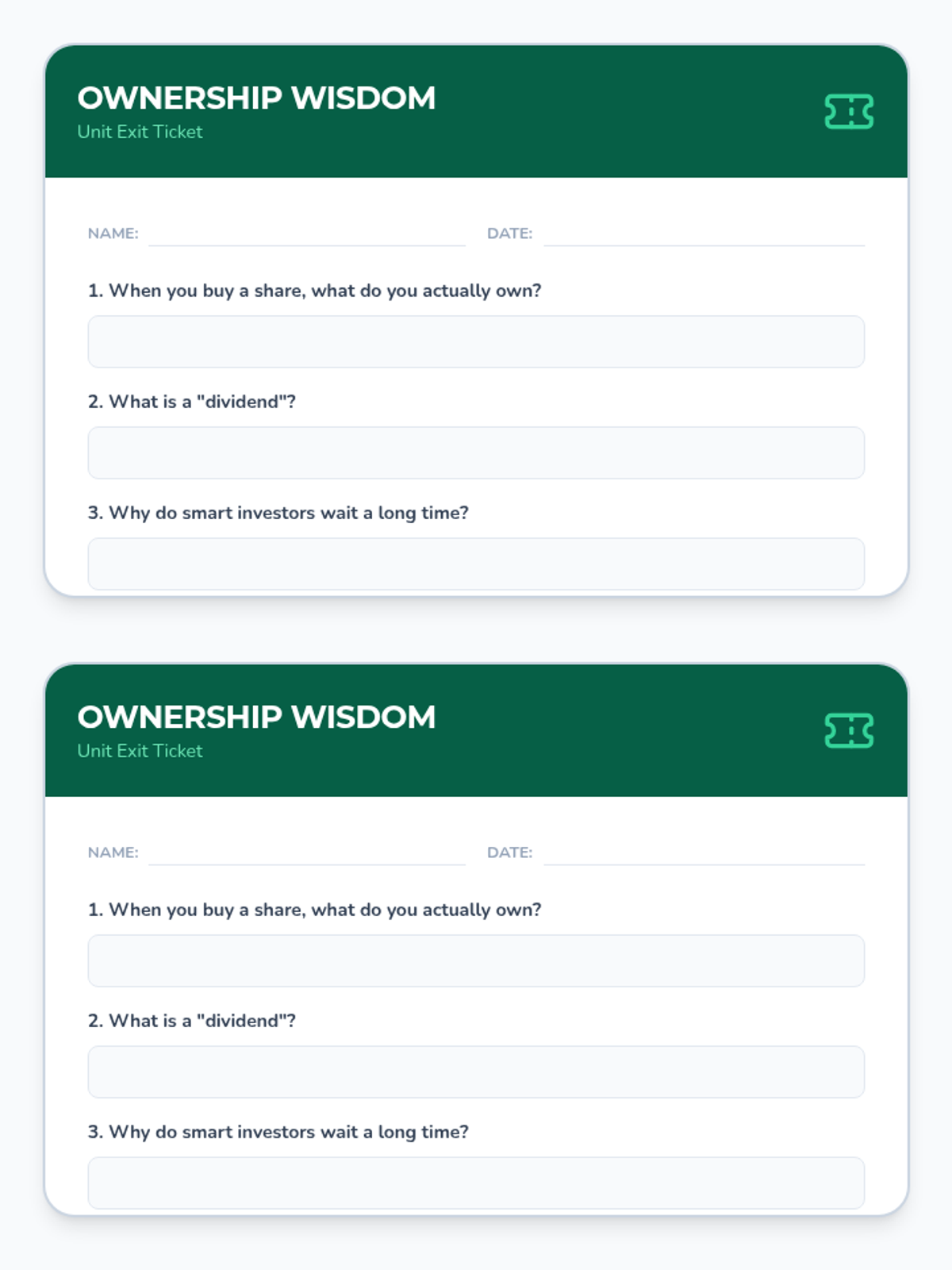
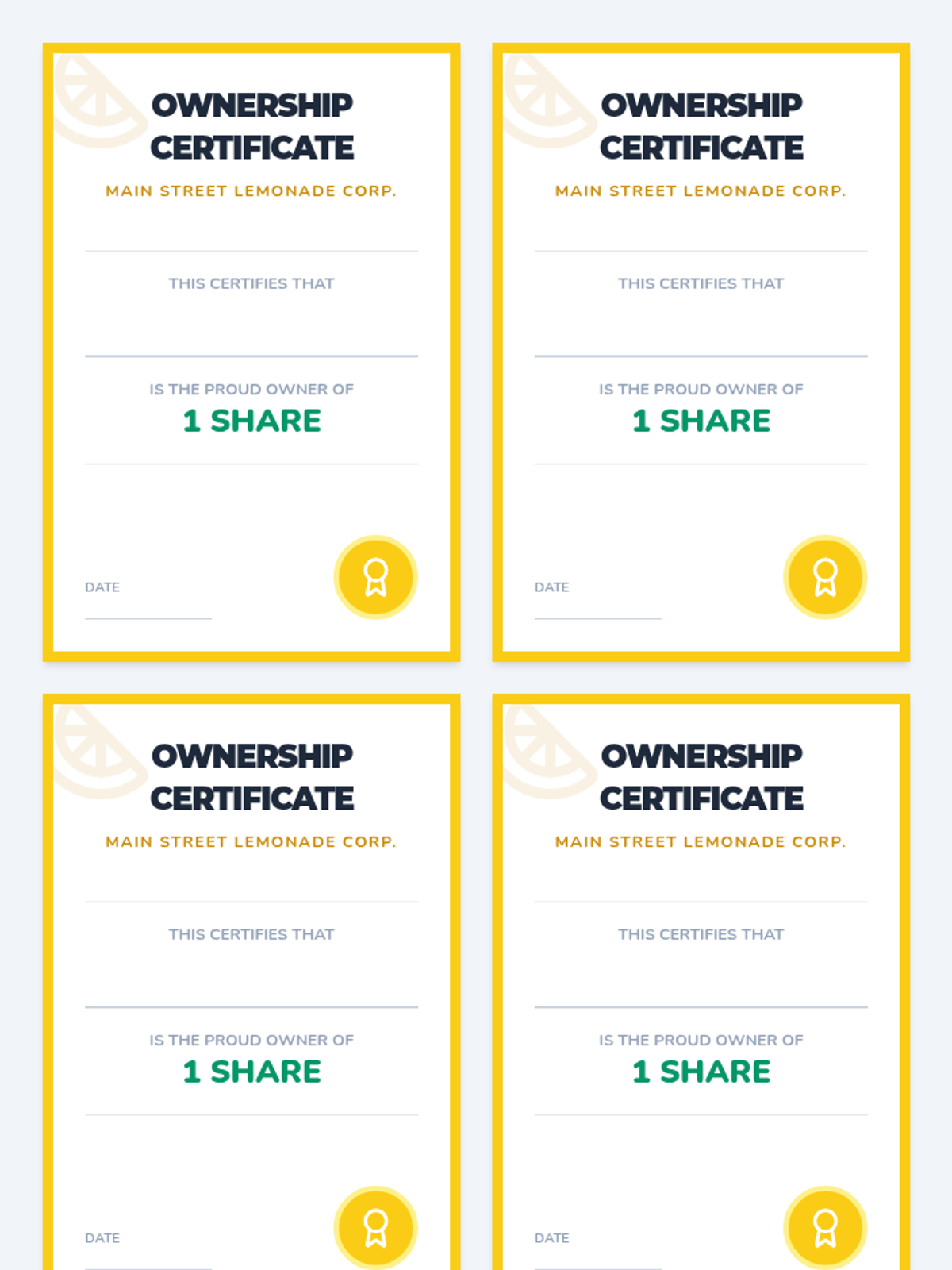
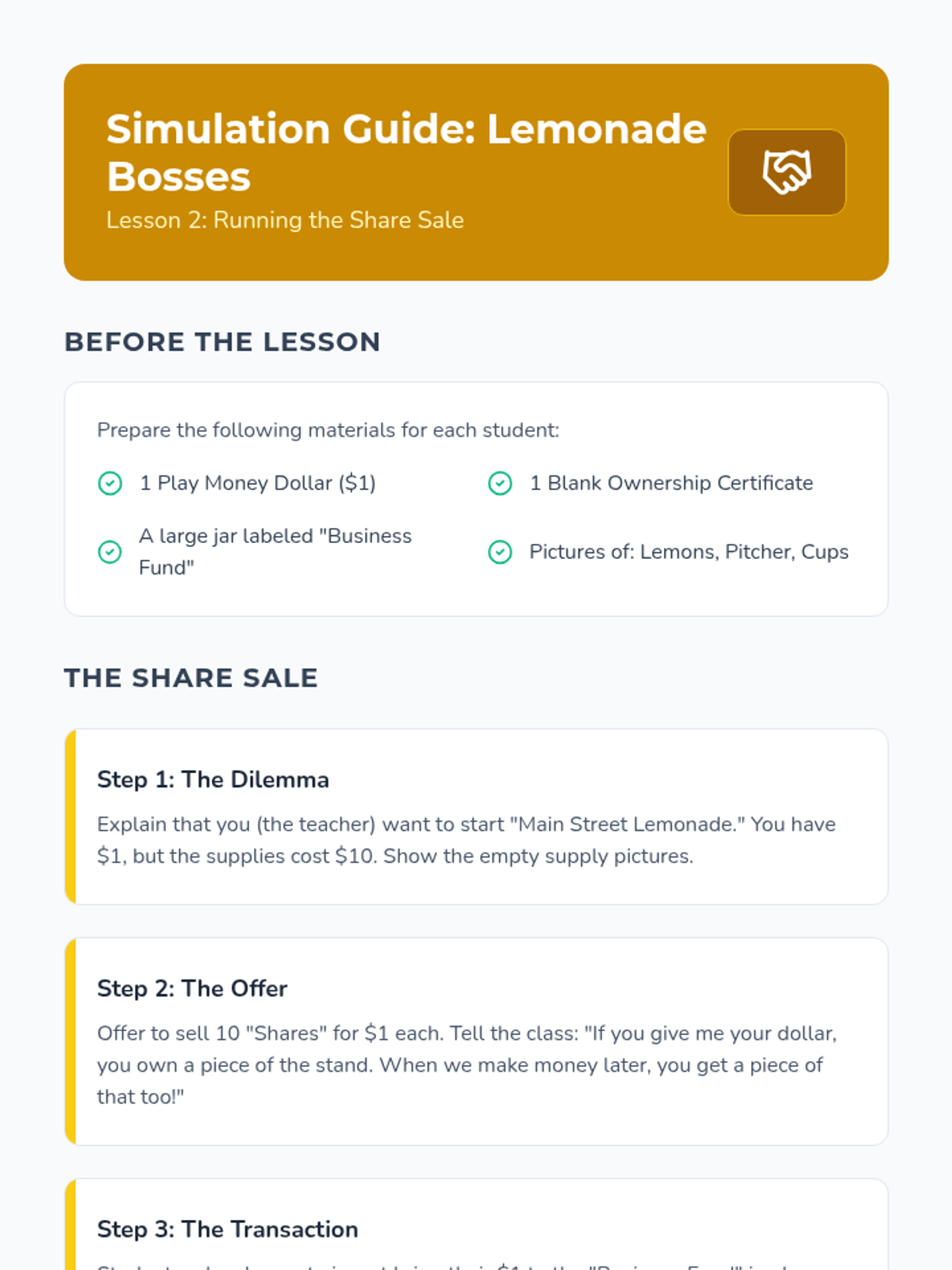
Students learn the concept of a 'share' of stock. They role-play buying paper shares of a classroom lemonade stand, understanding that their money buys equipment to help the stand grow.
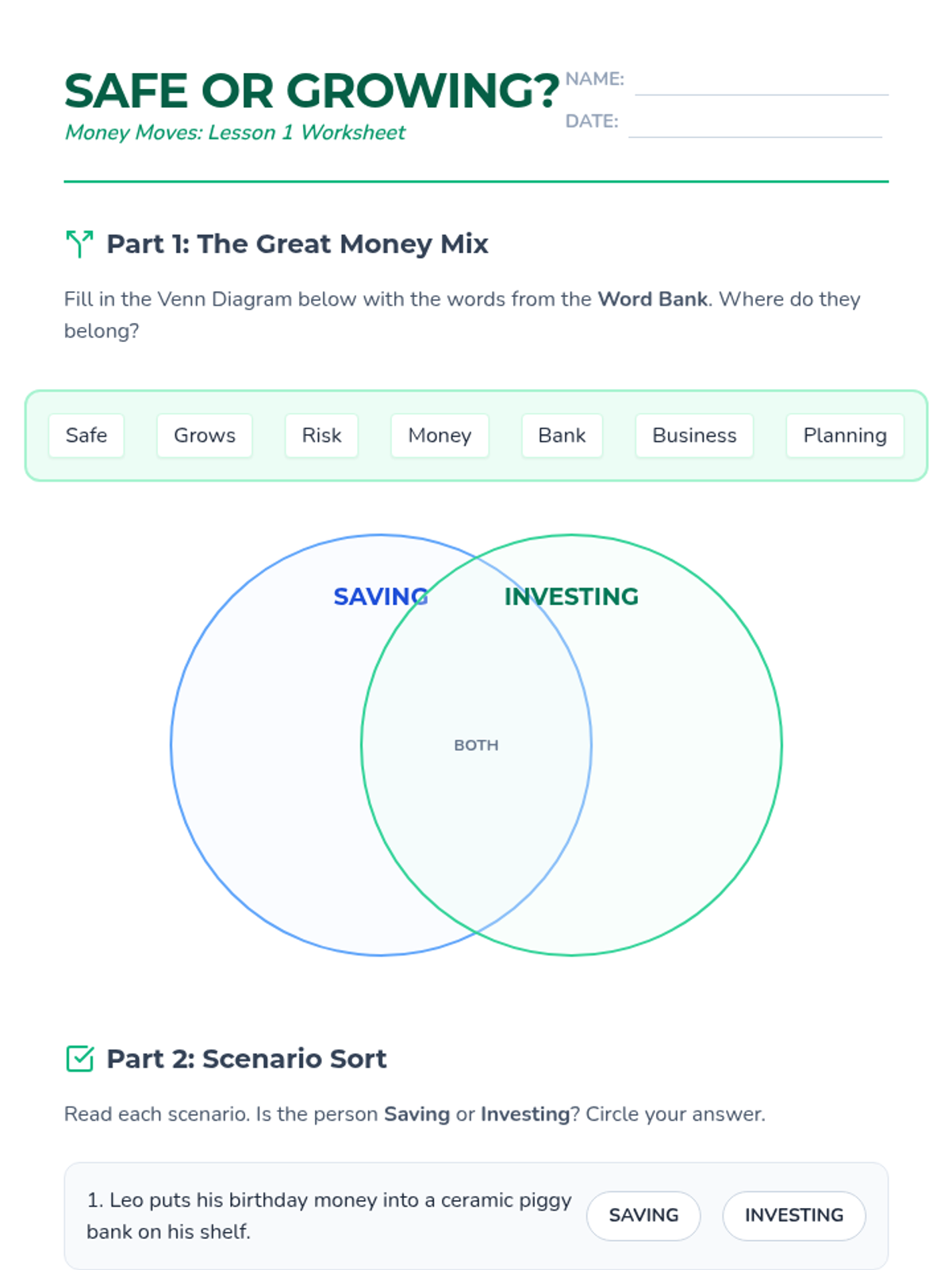
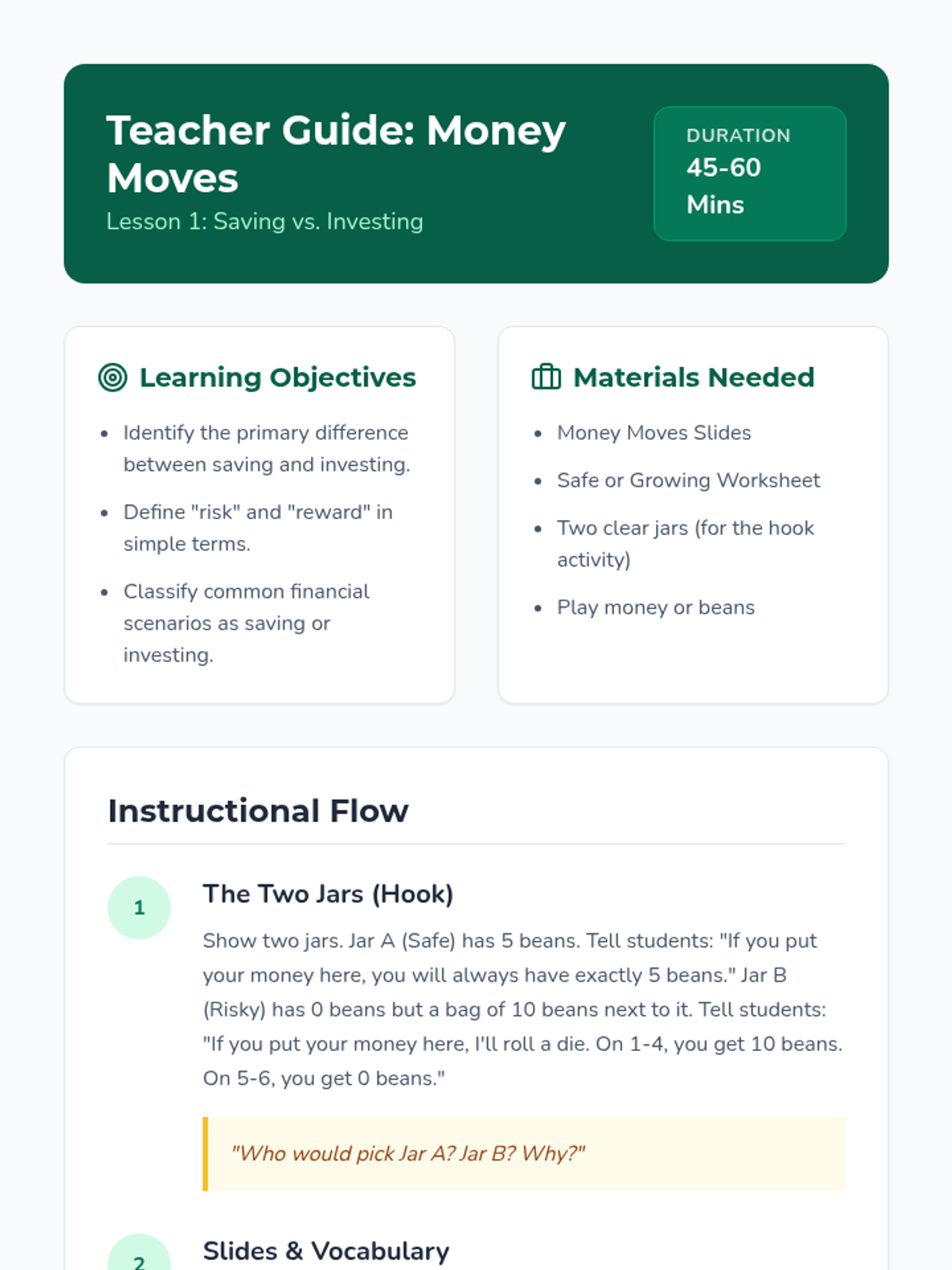
Students compare saving (keeping money safe) with investing (using money to make more money with risk). They create a Venn diagram highlighting the differences in safety and potential growth.
Students reflect on obstacles like impulse buying and share their roadmaps in a gallery walk. Includes a final sequence assessment.
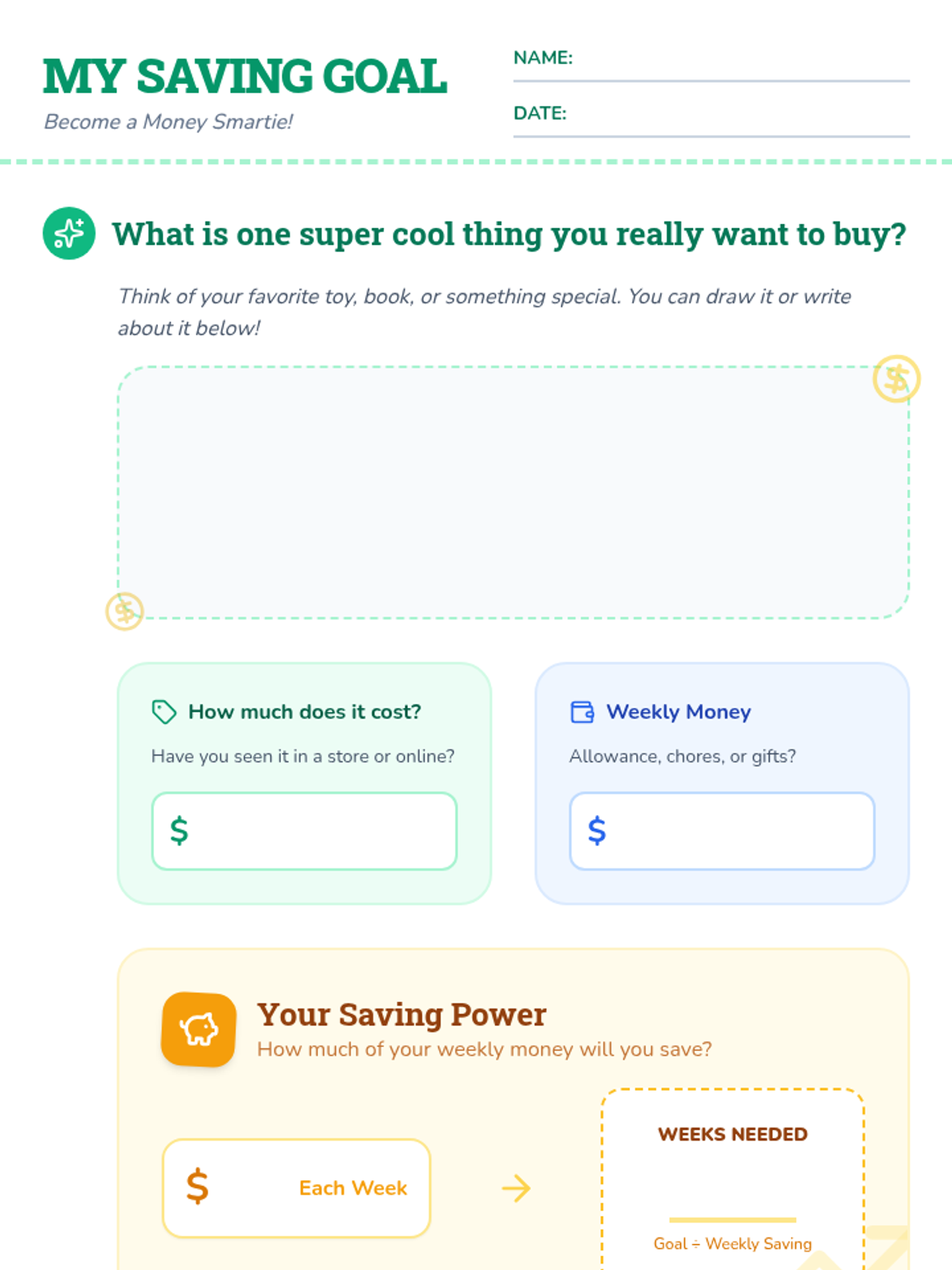
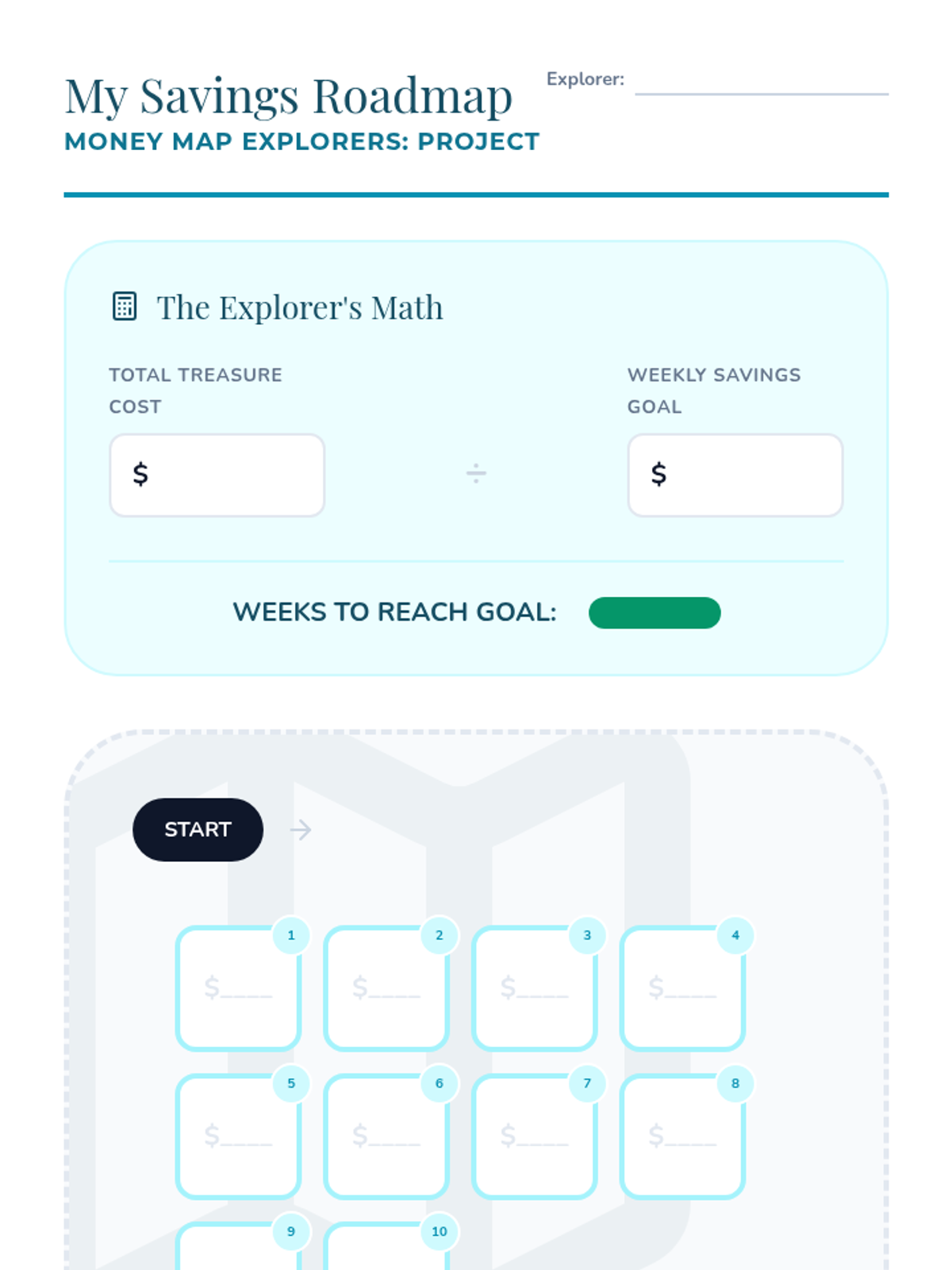
Students calculate savings timelines and design a visual roadmap to track their progress toward a chosen goal.
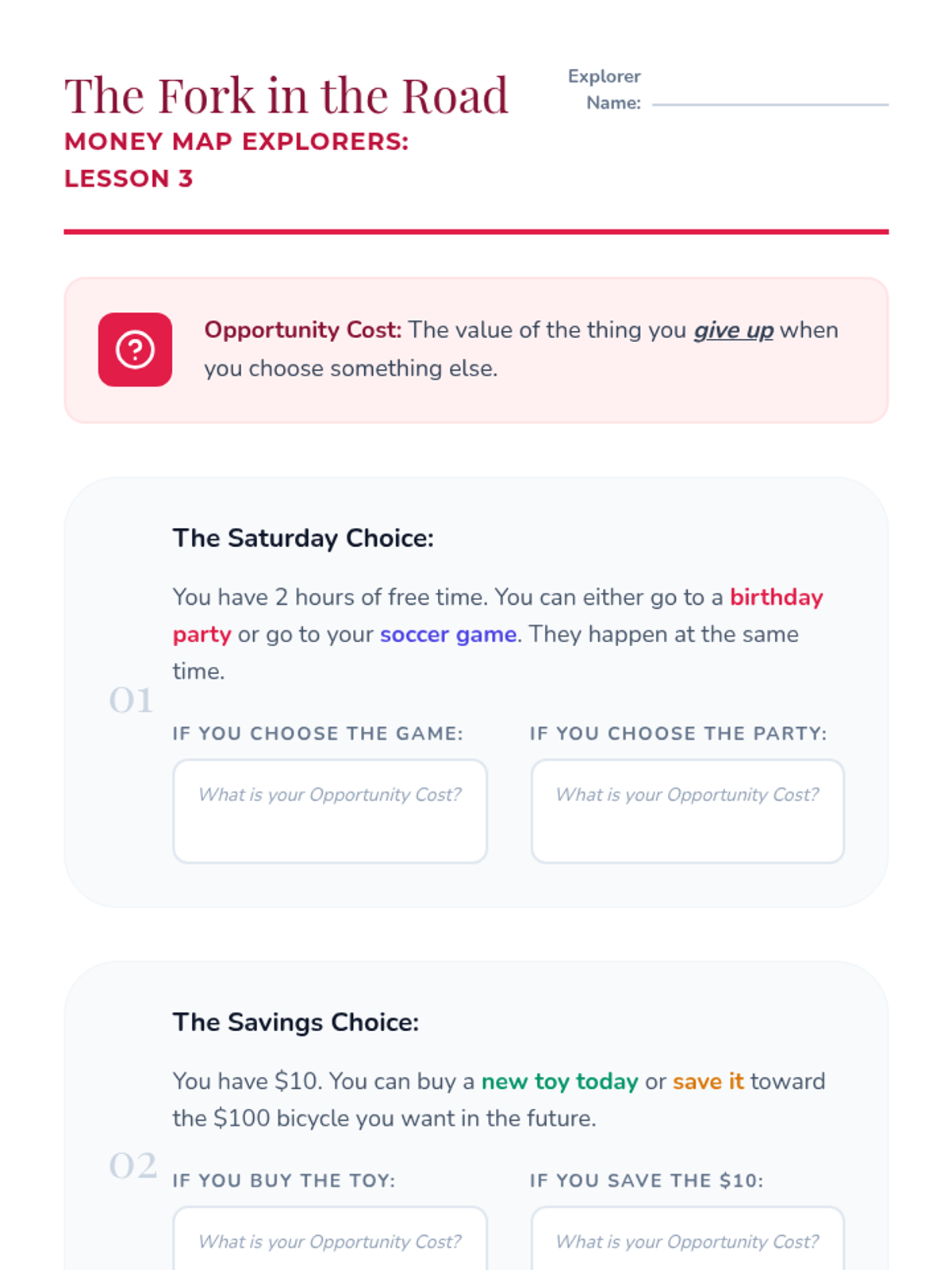
Introduces opportunity cost through role-play. Students learn that choosing one path means giving up another, evaluating the 'cost' of their decisions.
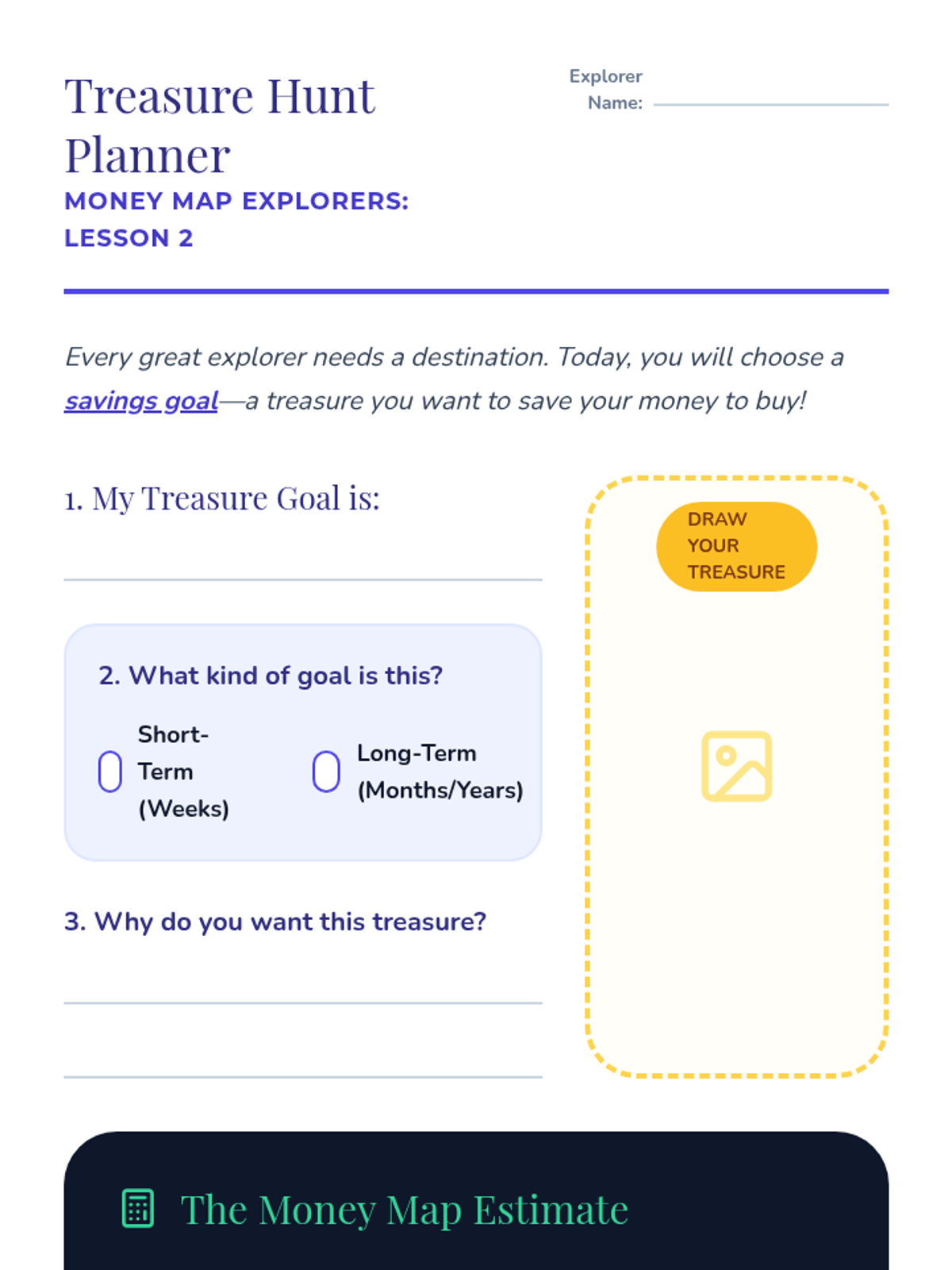
Focuses on time horizons for savings. Students define short-term and long-term goals and begin identifying a personal treasure they want to save for.
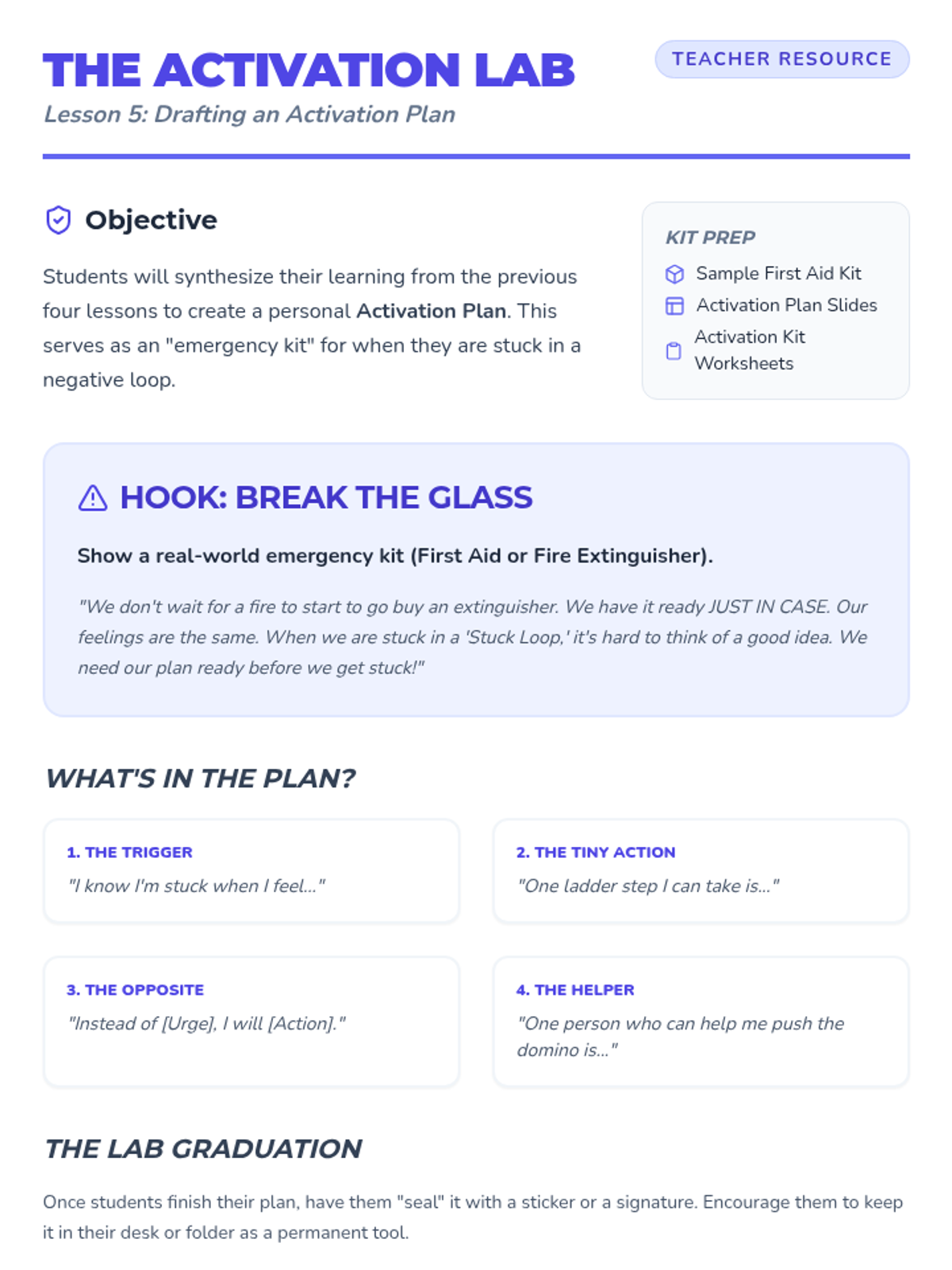
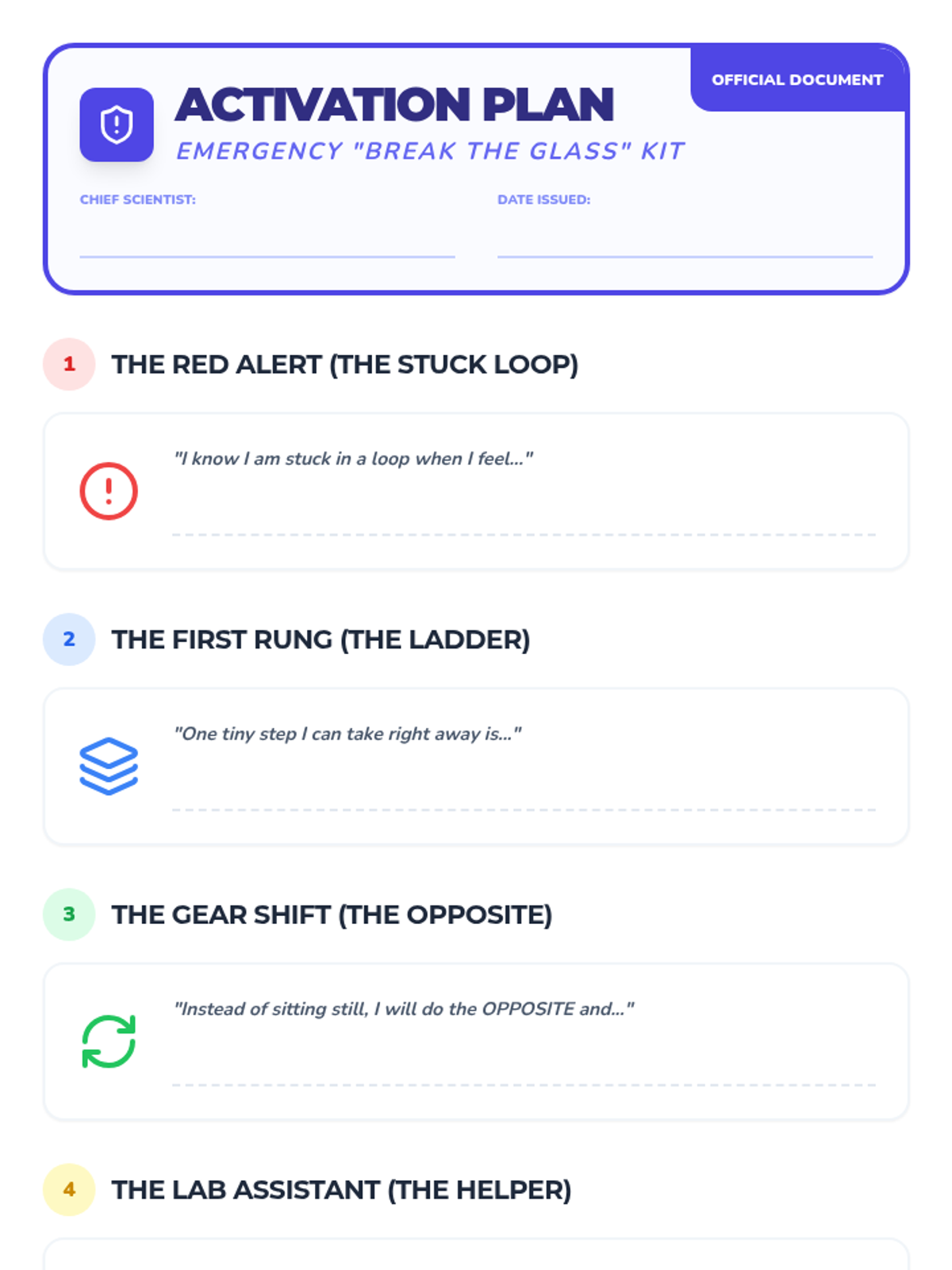
Students synthesize their learning by creating a personal 'Activation Plan' to use when they feel stuck or unmotivated.
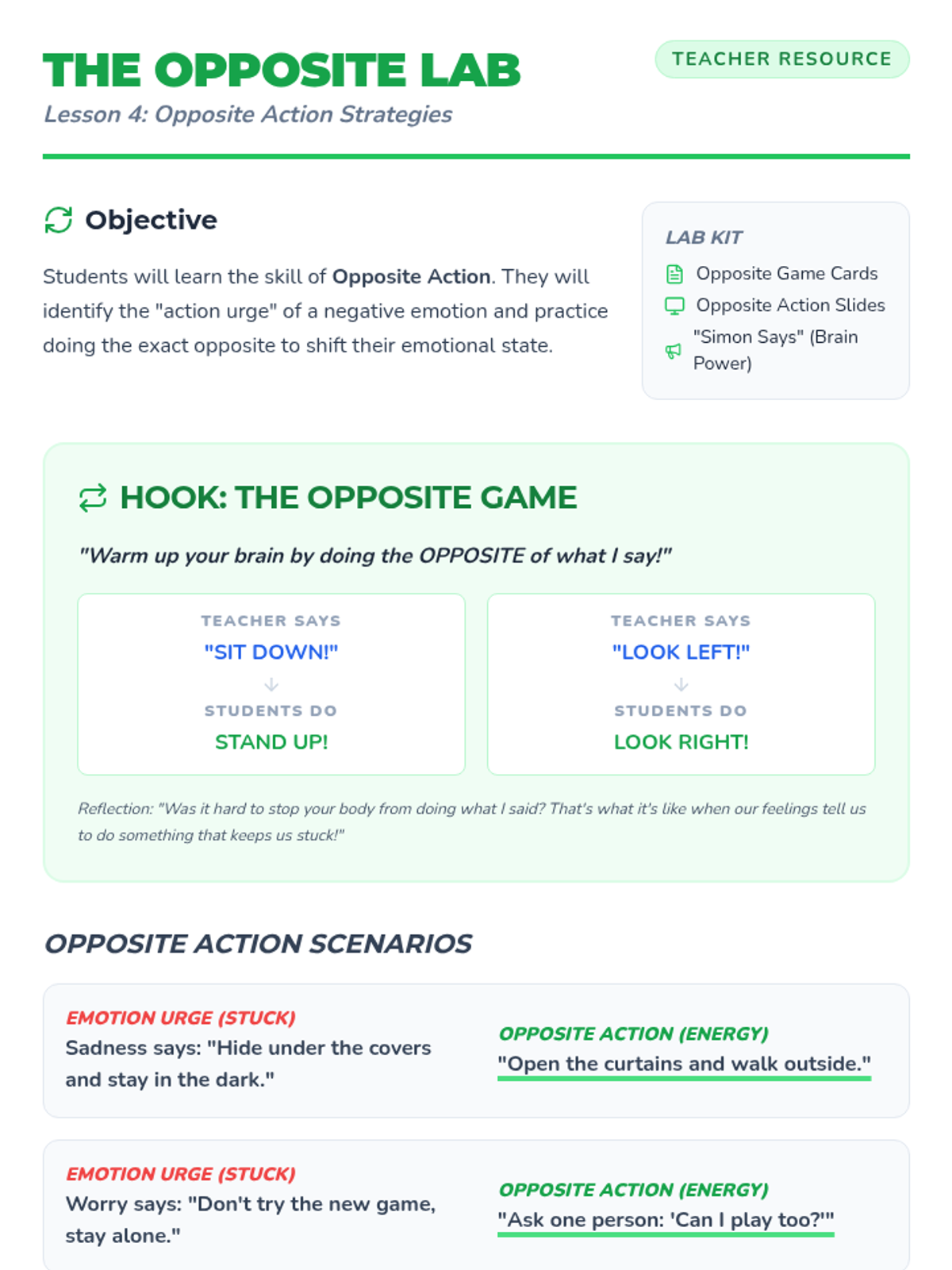
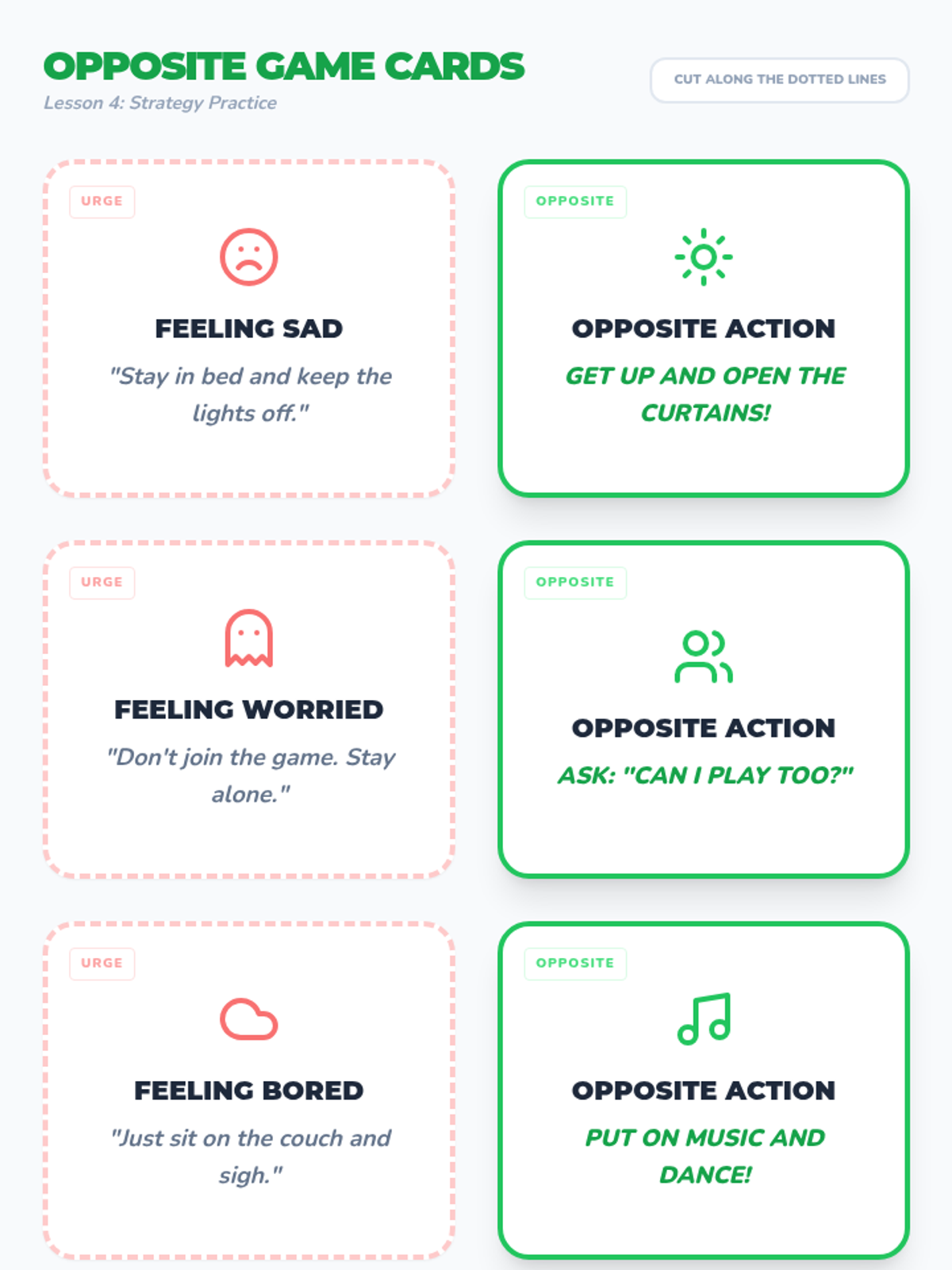
Students learn and practice 'Opposite Action,' doing the reverse of what a negative emotion suggests to shift their mood.
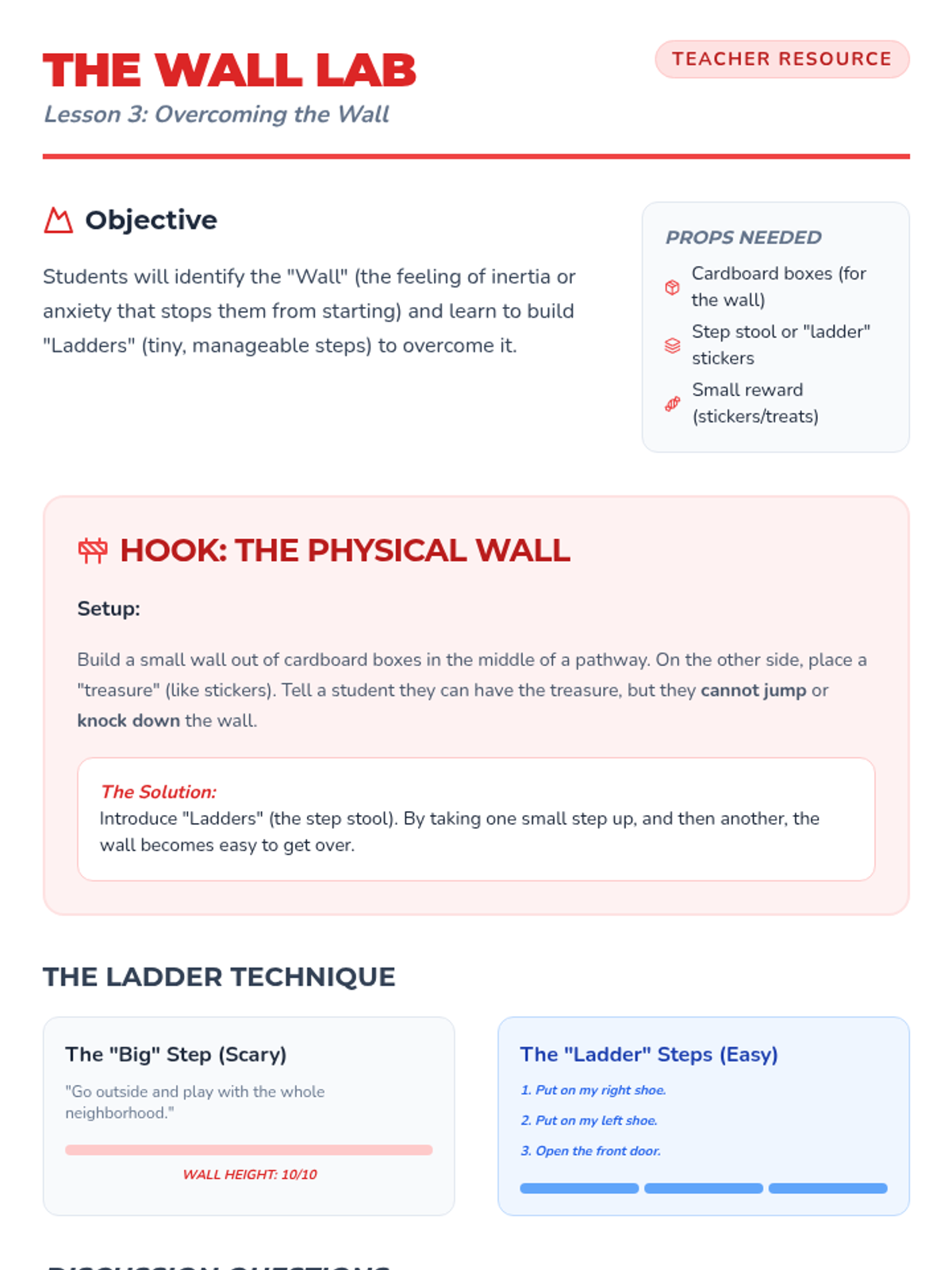
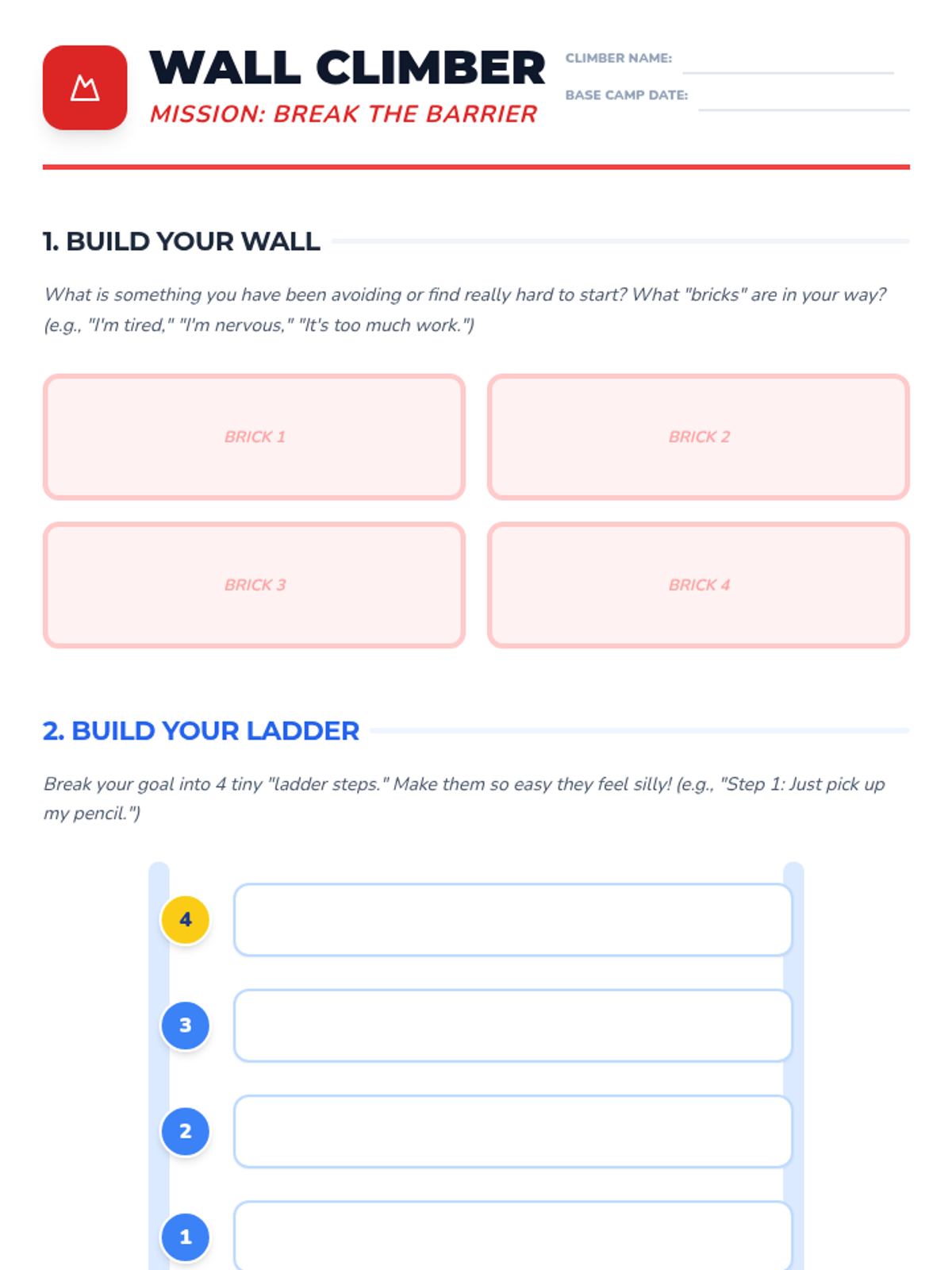
Students identify emotional barriers ('The Wall') and practice breaking large tasks into 'Ladders' or small, manageable steps.
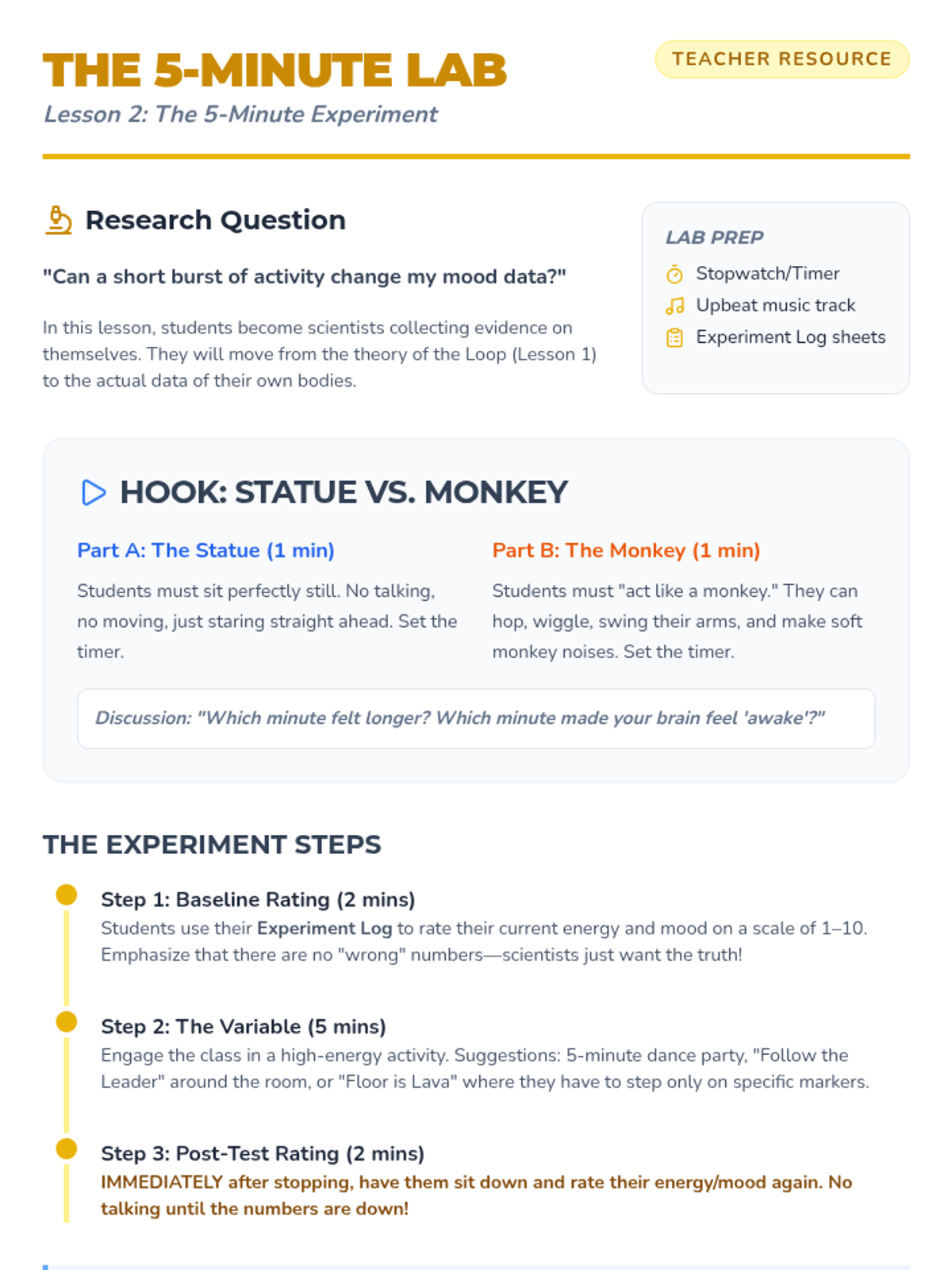
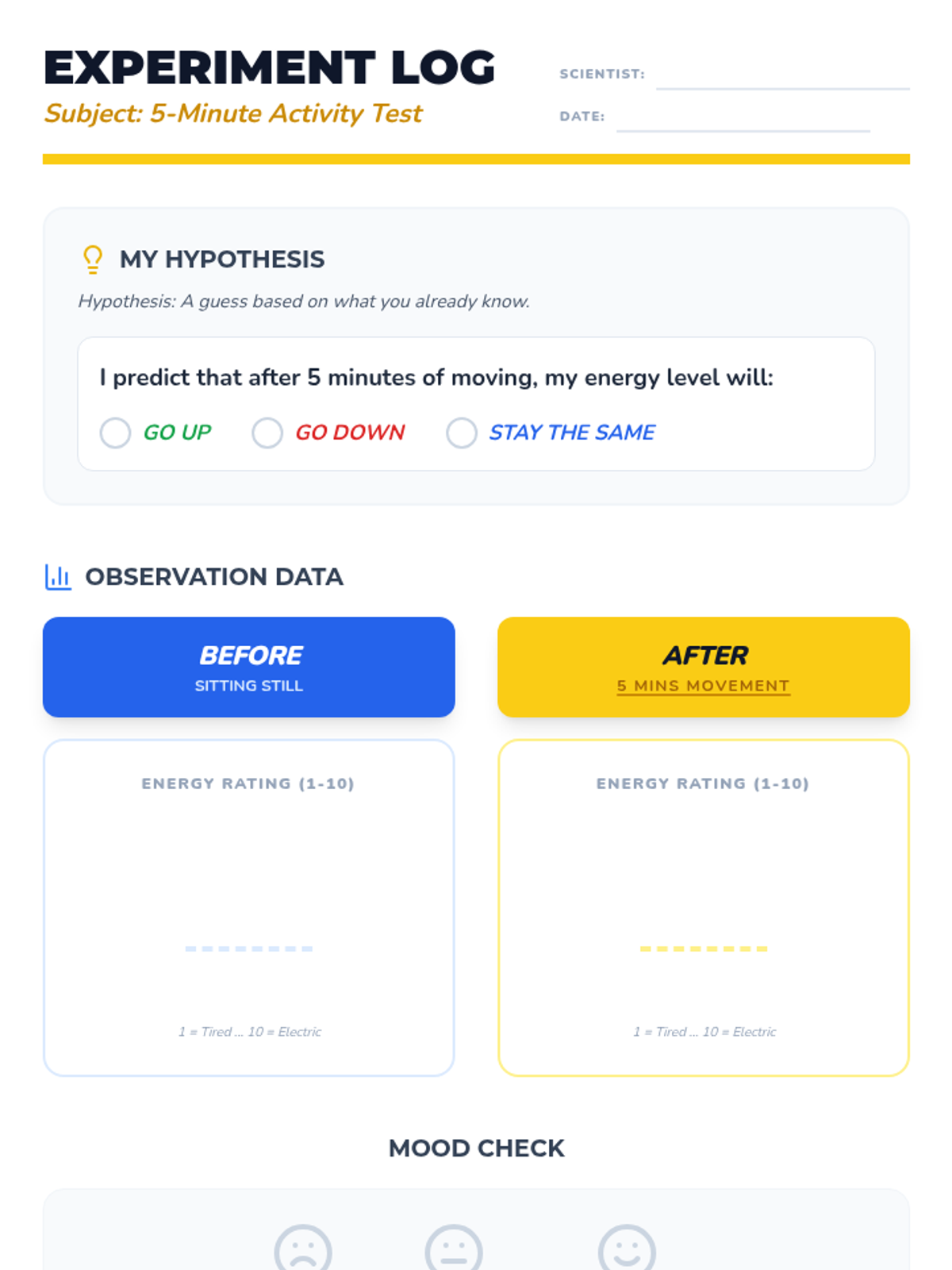
Students conduct a personal experiment to gather evidence on how a short burst of activity affects their energy and mood levels.
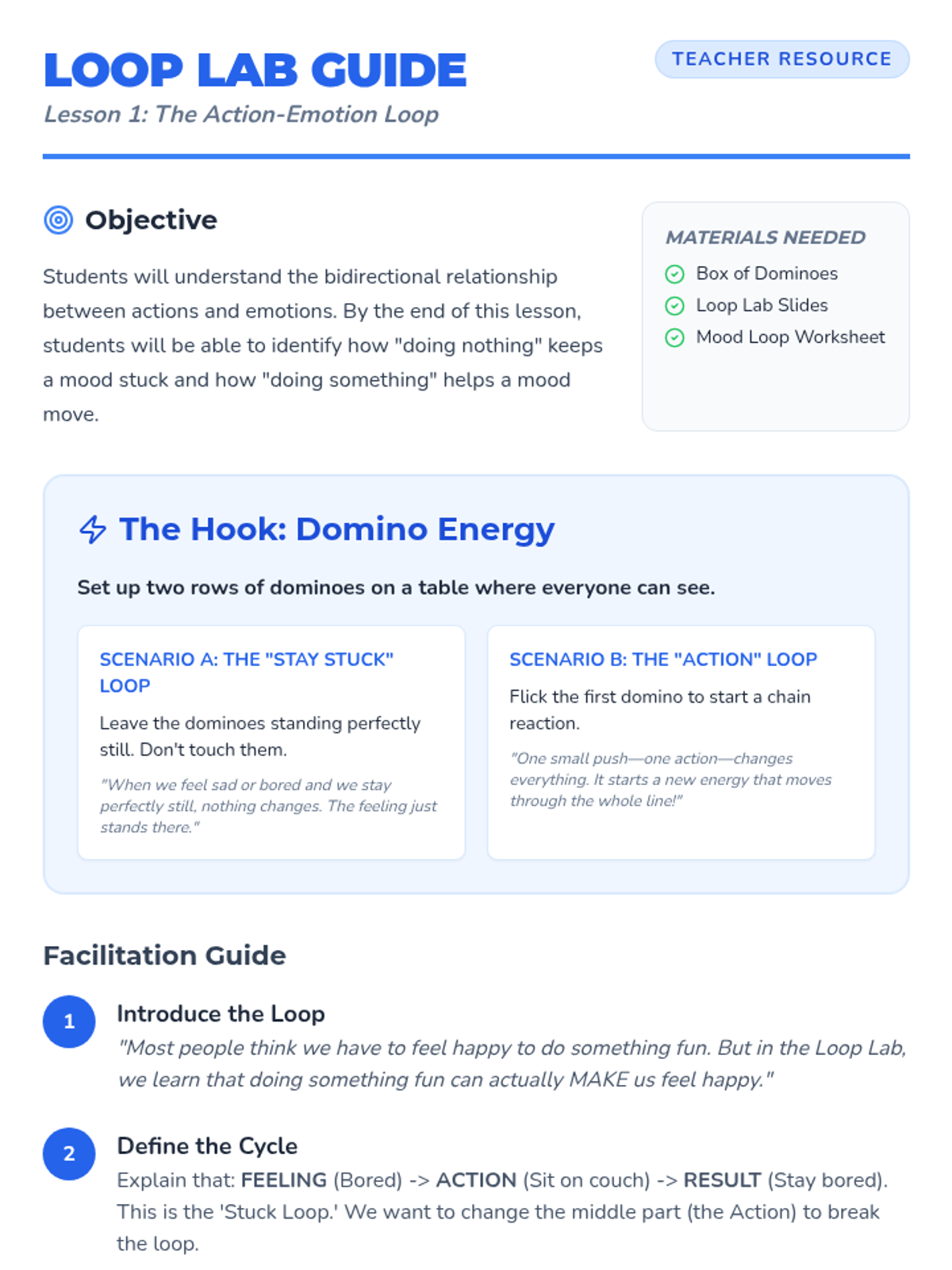
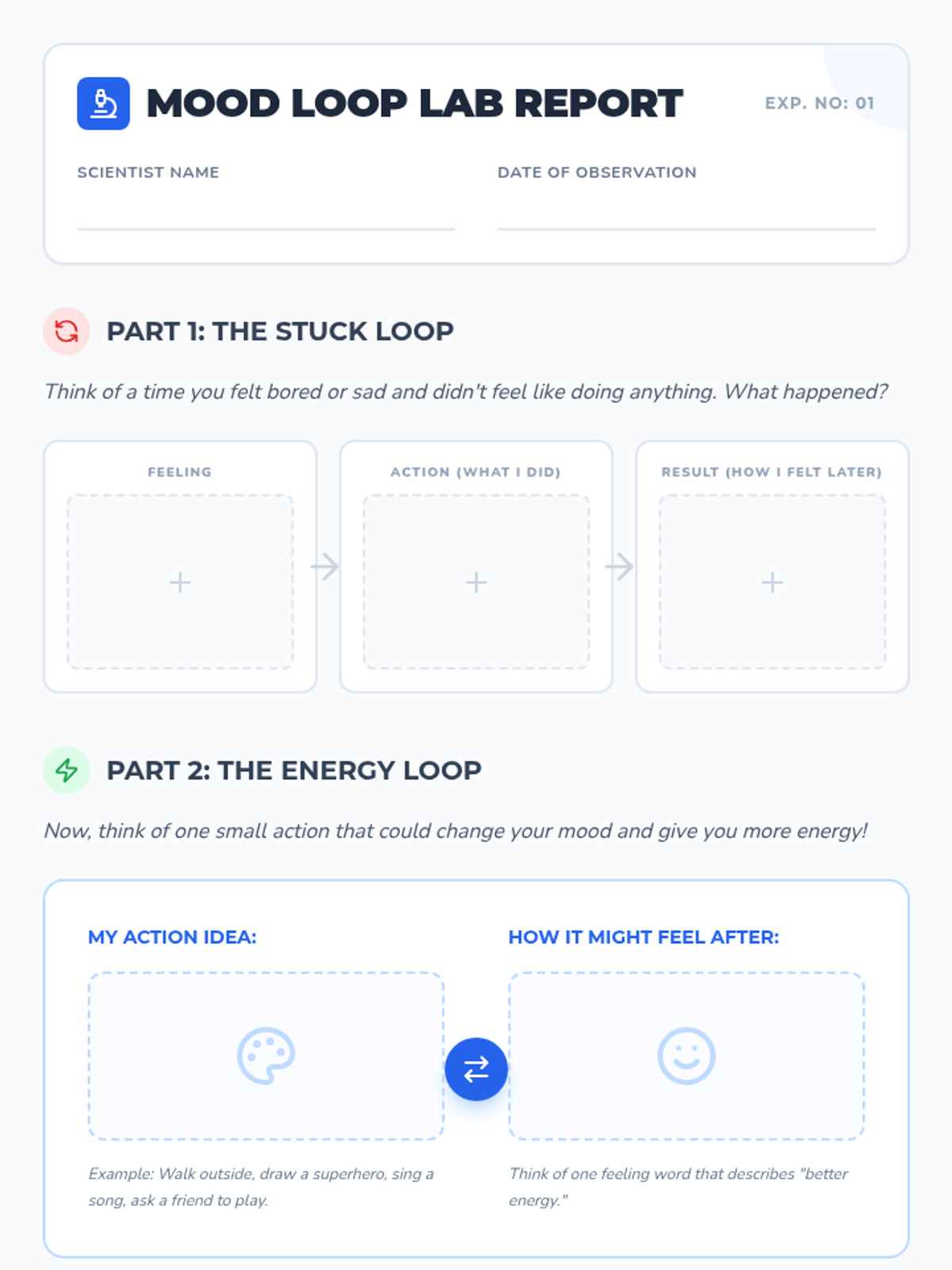
Students learn the basic concept that thoughts, feelings, and actions are connected, using a loop diagram to understand how actions can change emotional states.
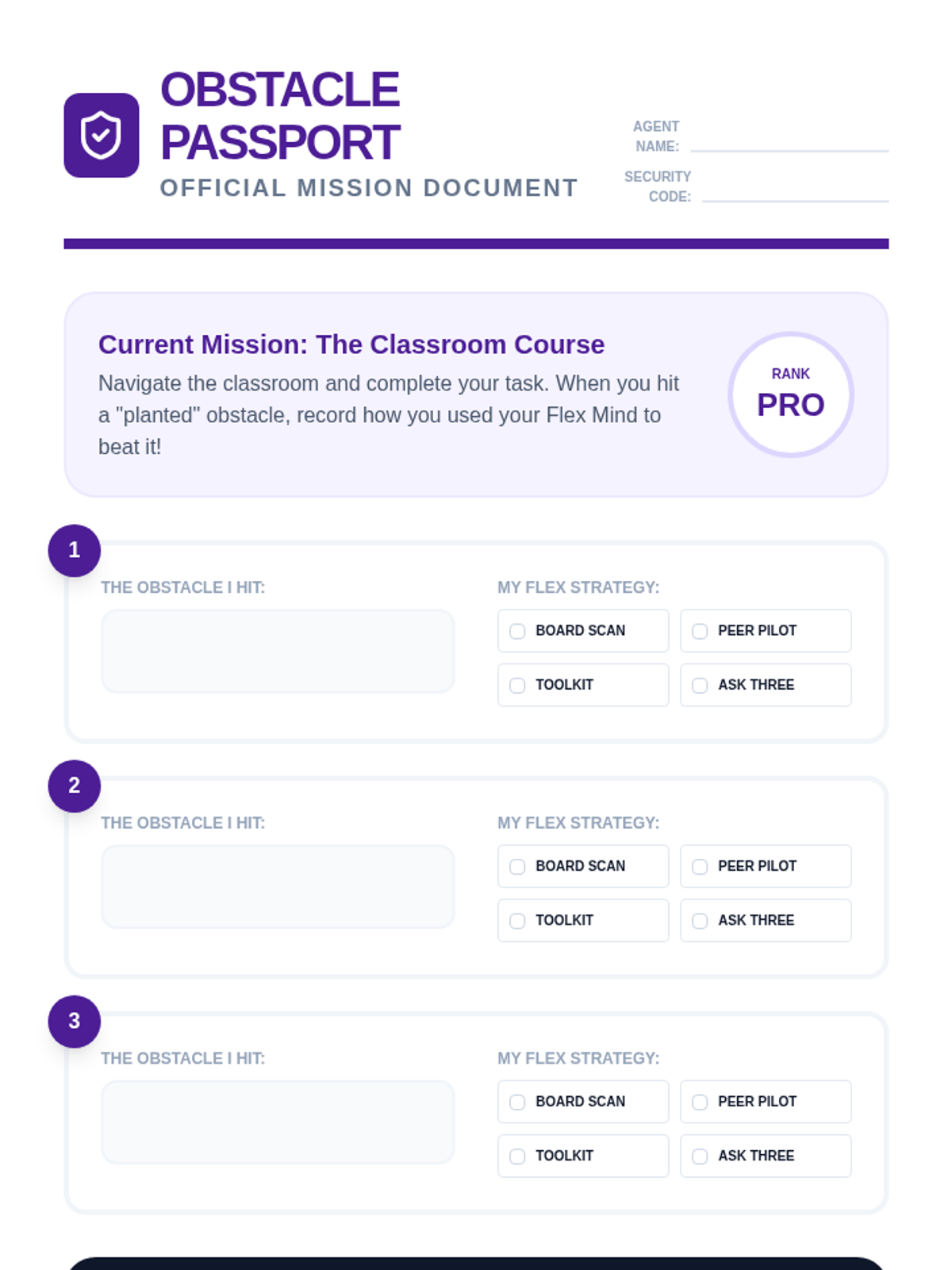
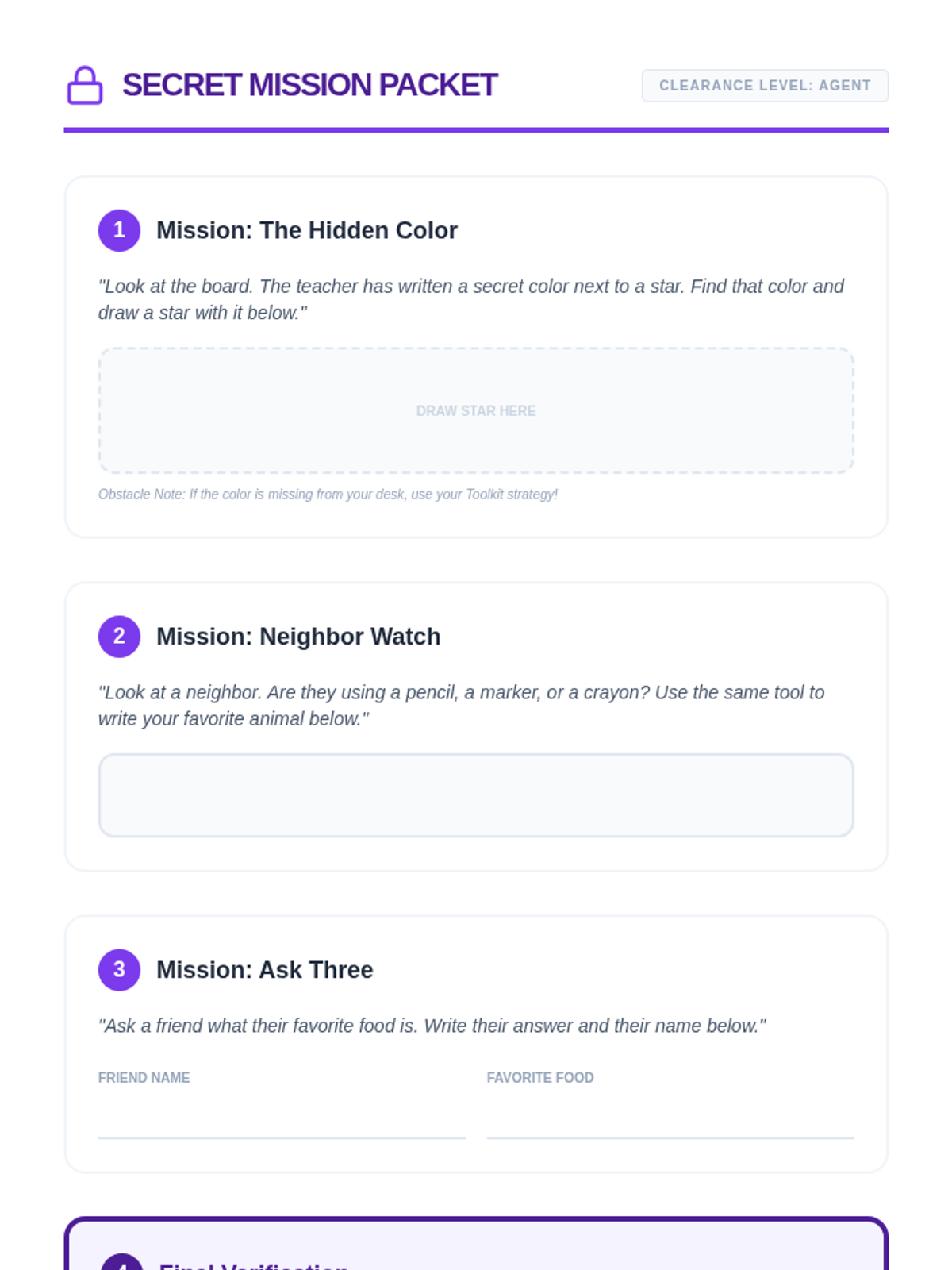
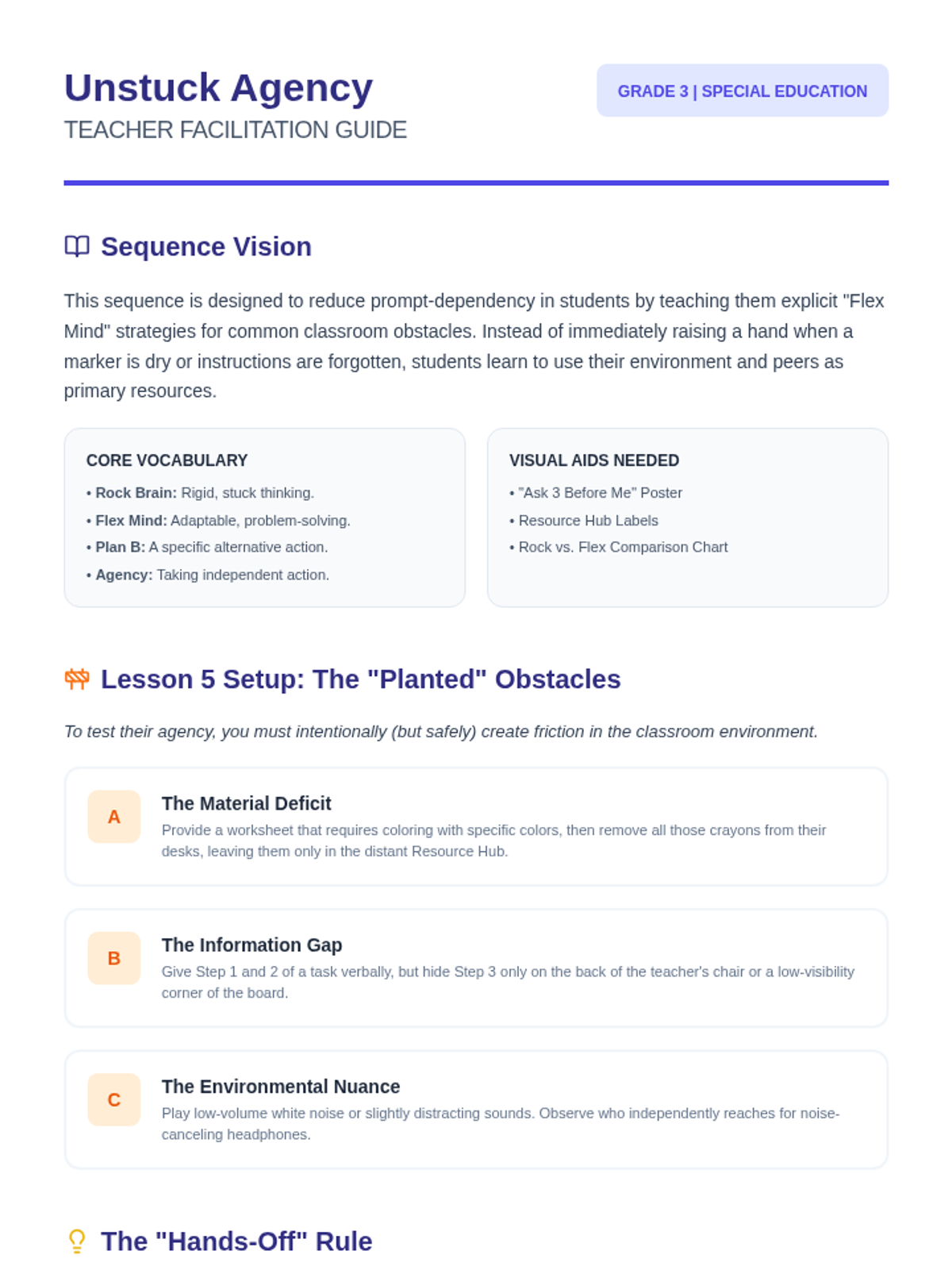
Students navigate a multi-step academic task where obstacles are intentionally planted. They must apply the strategies learned throughout the sequence to complete the task.
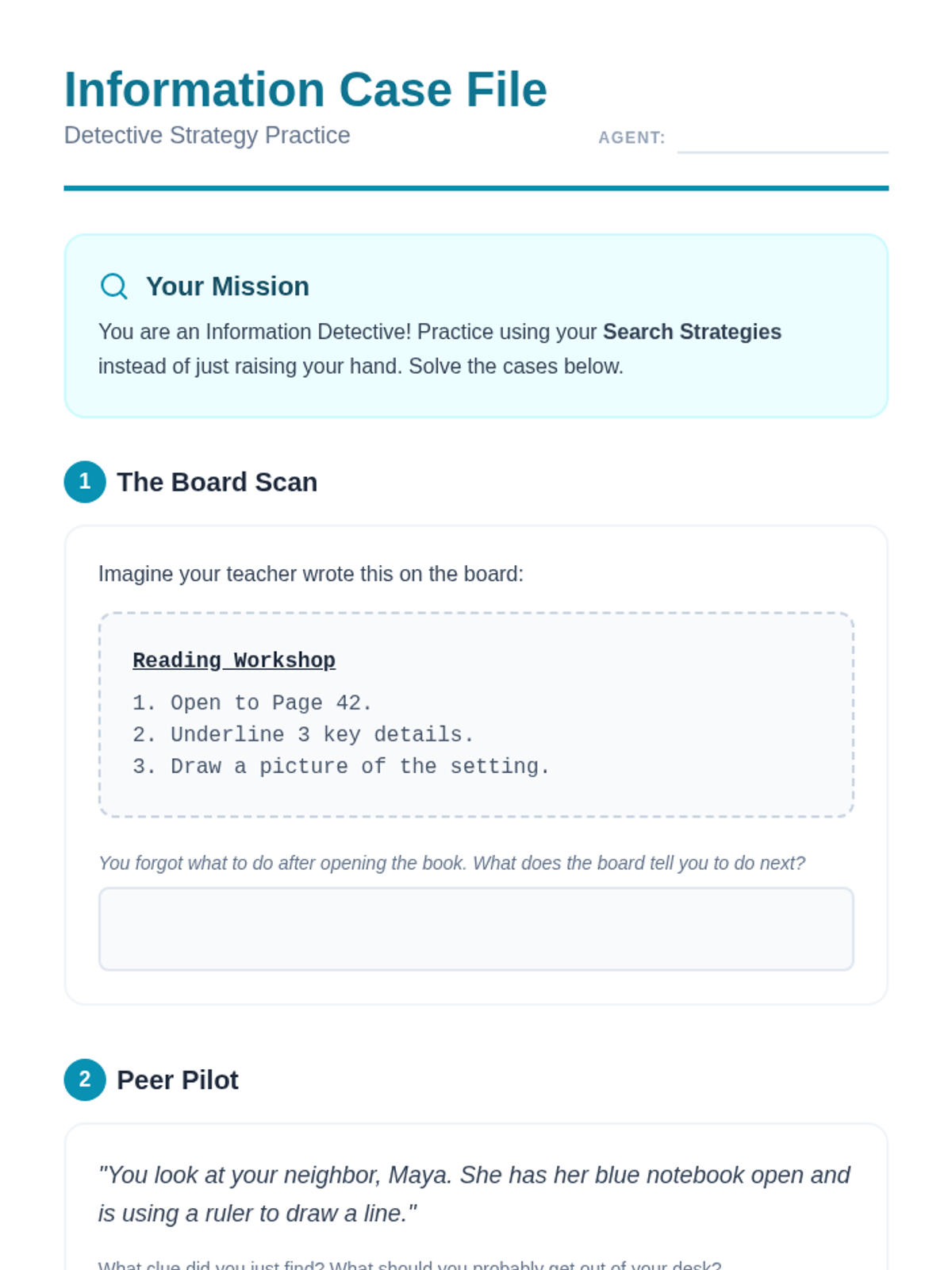
Students practice strategies for when they forget what to do, such as 'ask three before me,' checking the board, or looking at a peer's work. The focus is on finding information independently.
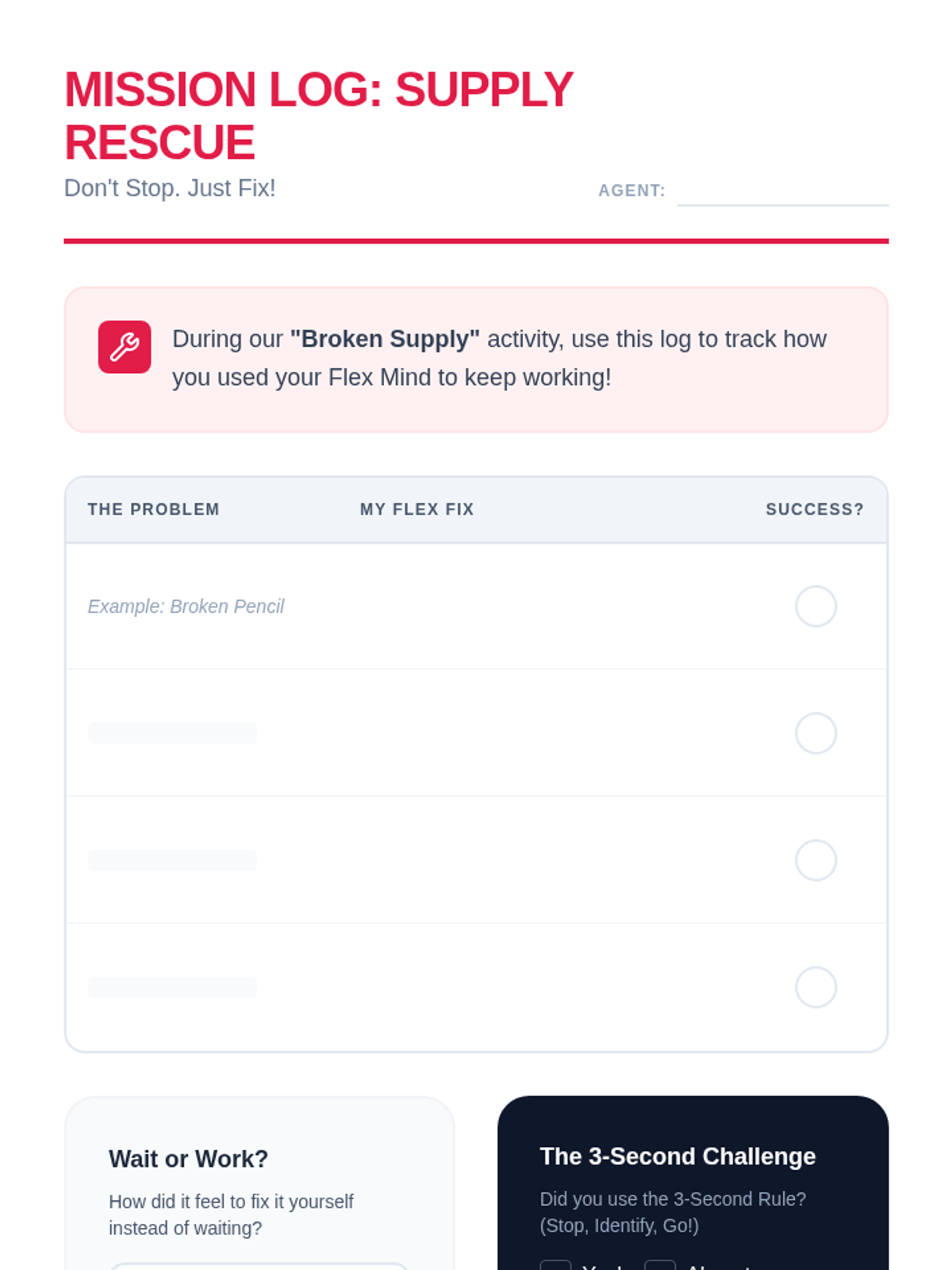
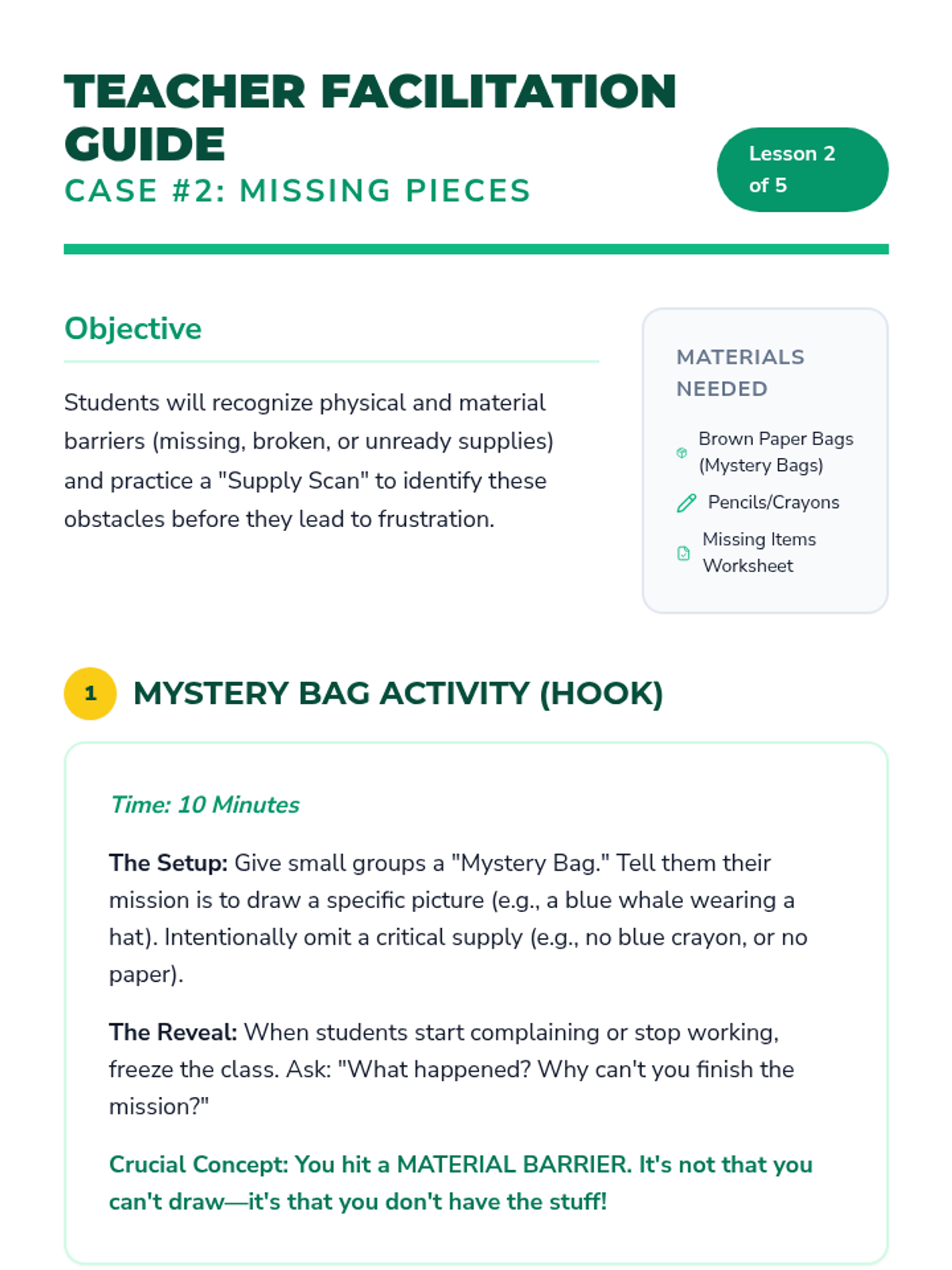
This lesson uses role-play to practice solving material deficits. Students act out scenarios like a dry marker or a broken pencil and practice the specific fix rather than stopping work.
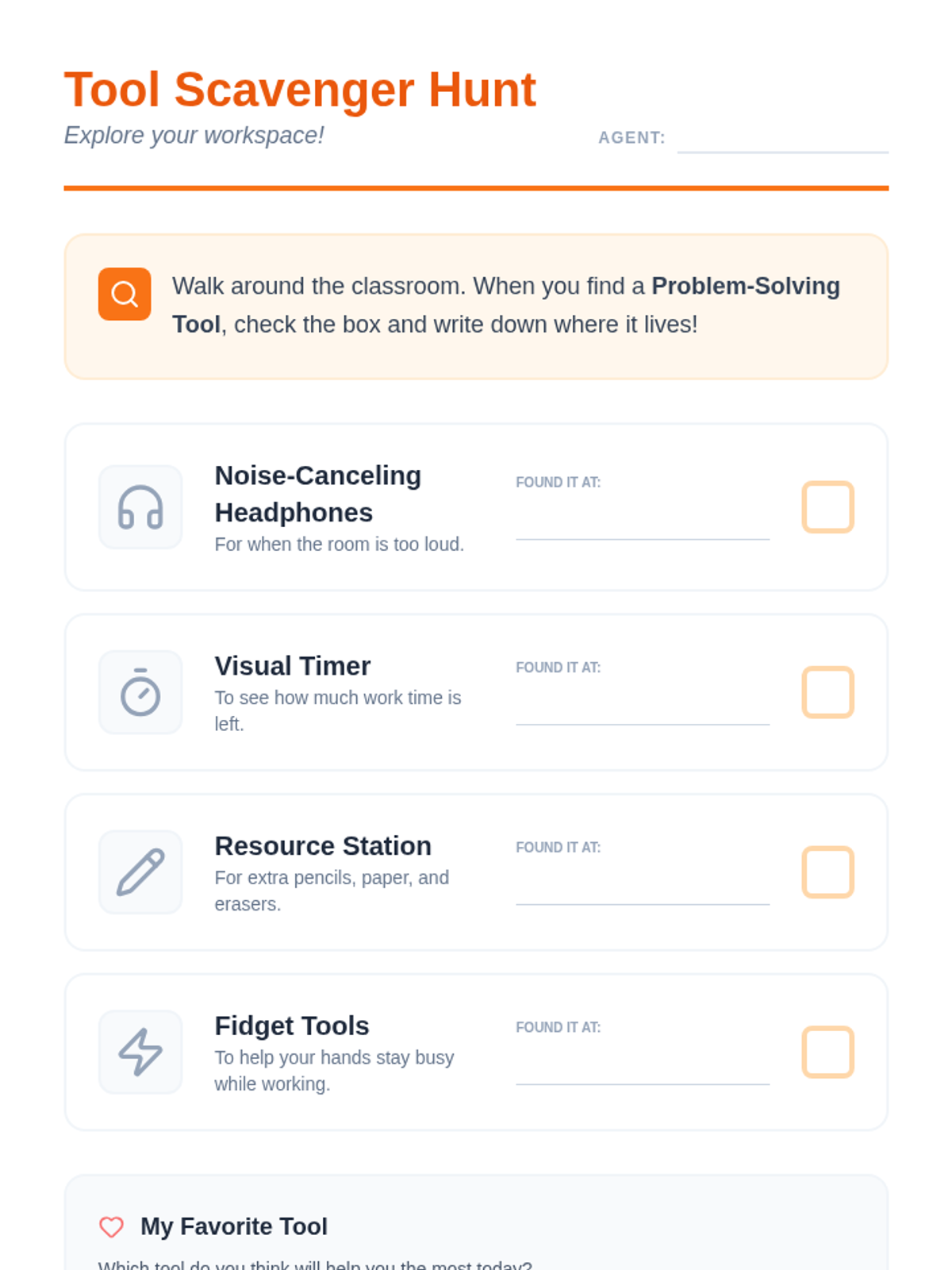
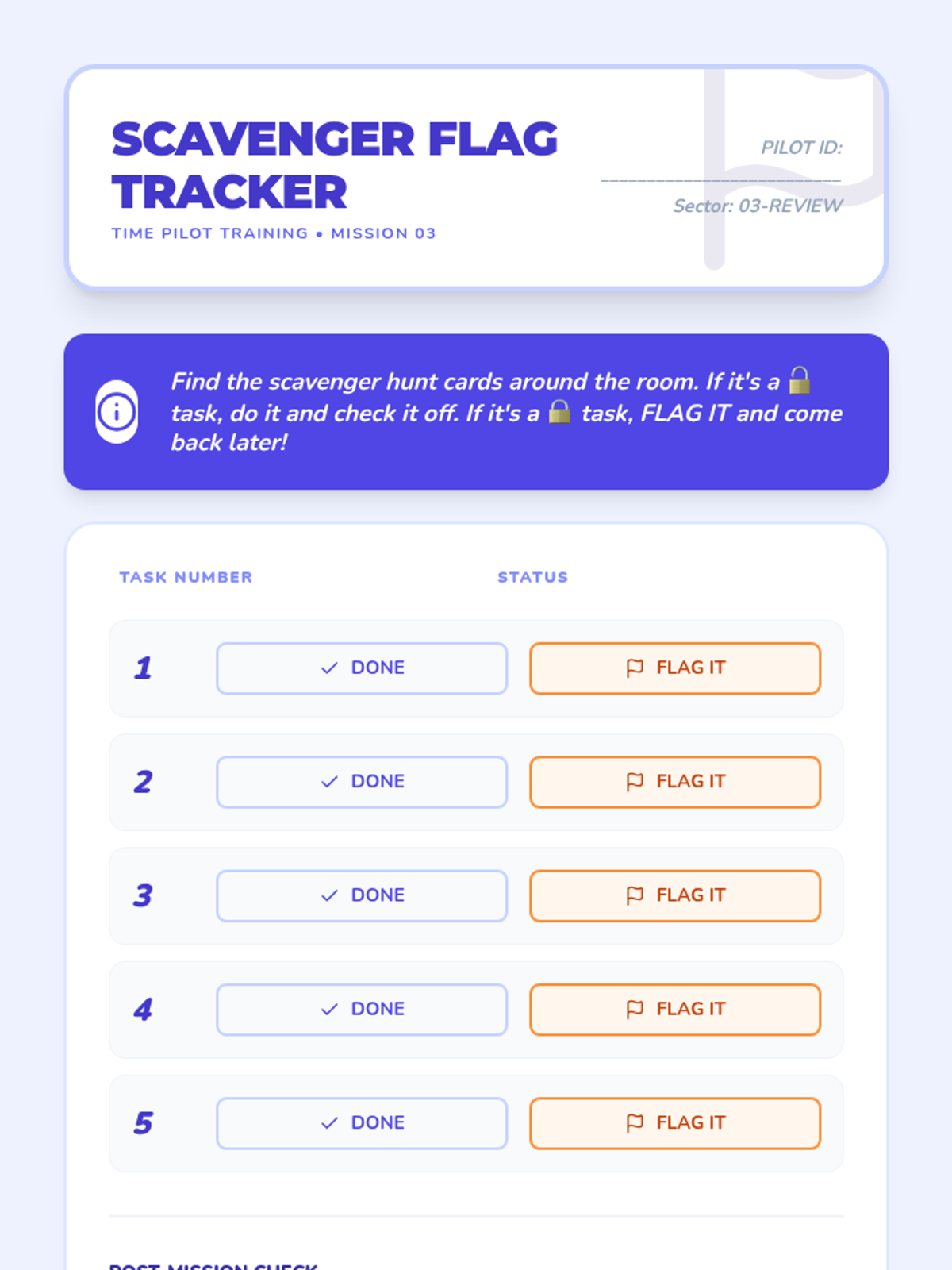
Students review common classroom resources available for problem-solving, such as noise-canceling headphones, visual timers, and resource centers. They engage in a scavenger hunt to locate these tools physically in the classroom.
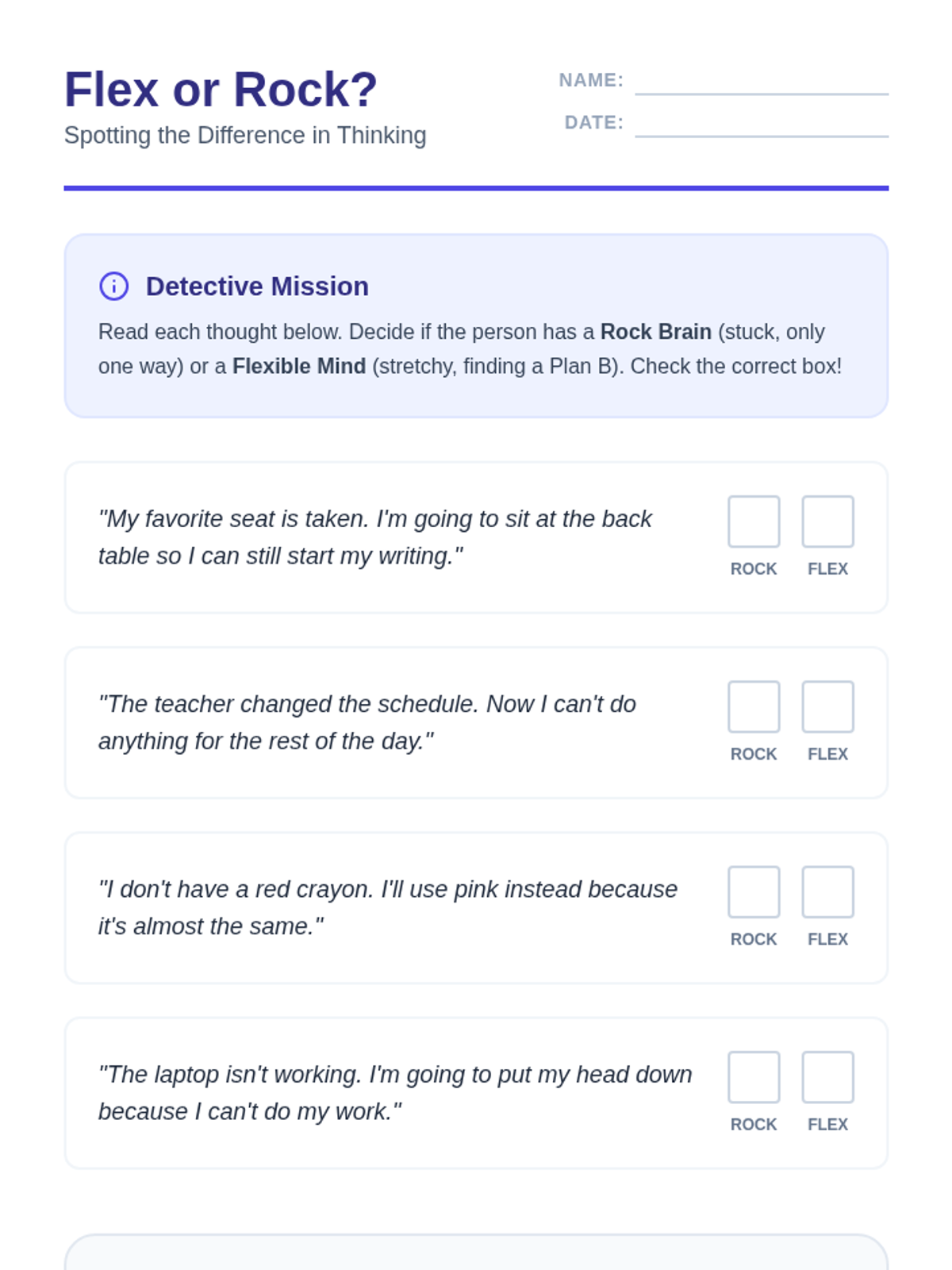
Students are introduced to the concept of 'flexible thinking' versus 'rock brain' thinking. They practice accepting changes to simple routines to understand that there is more than one way to reach a goal.
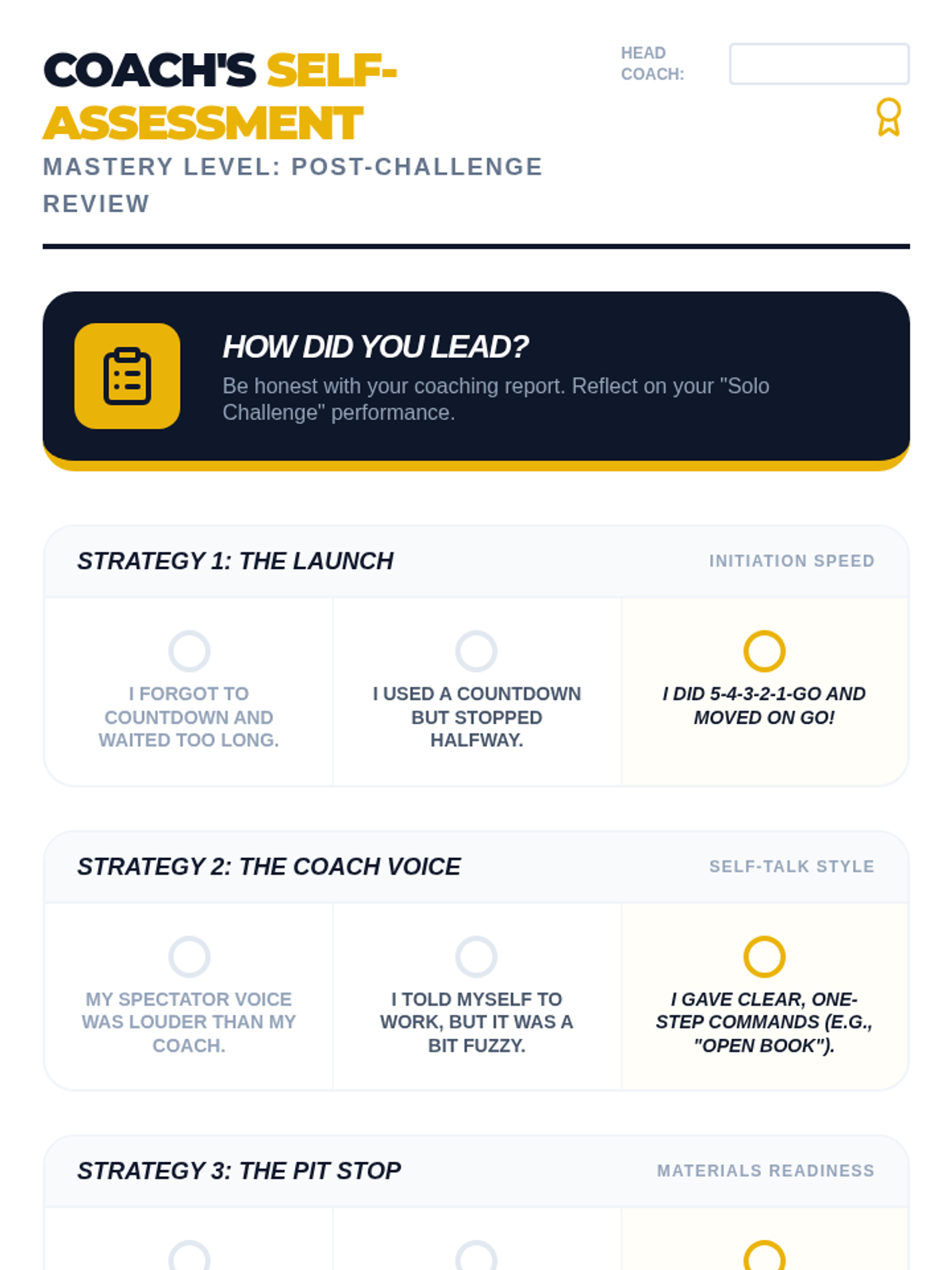
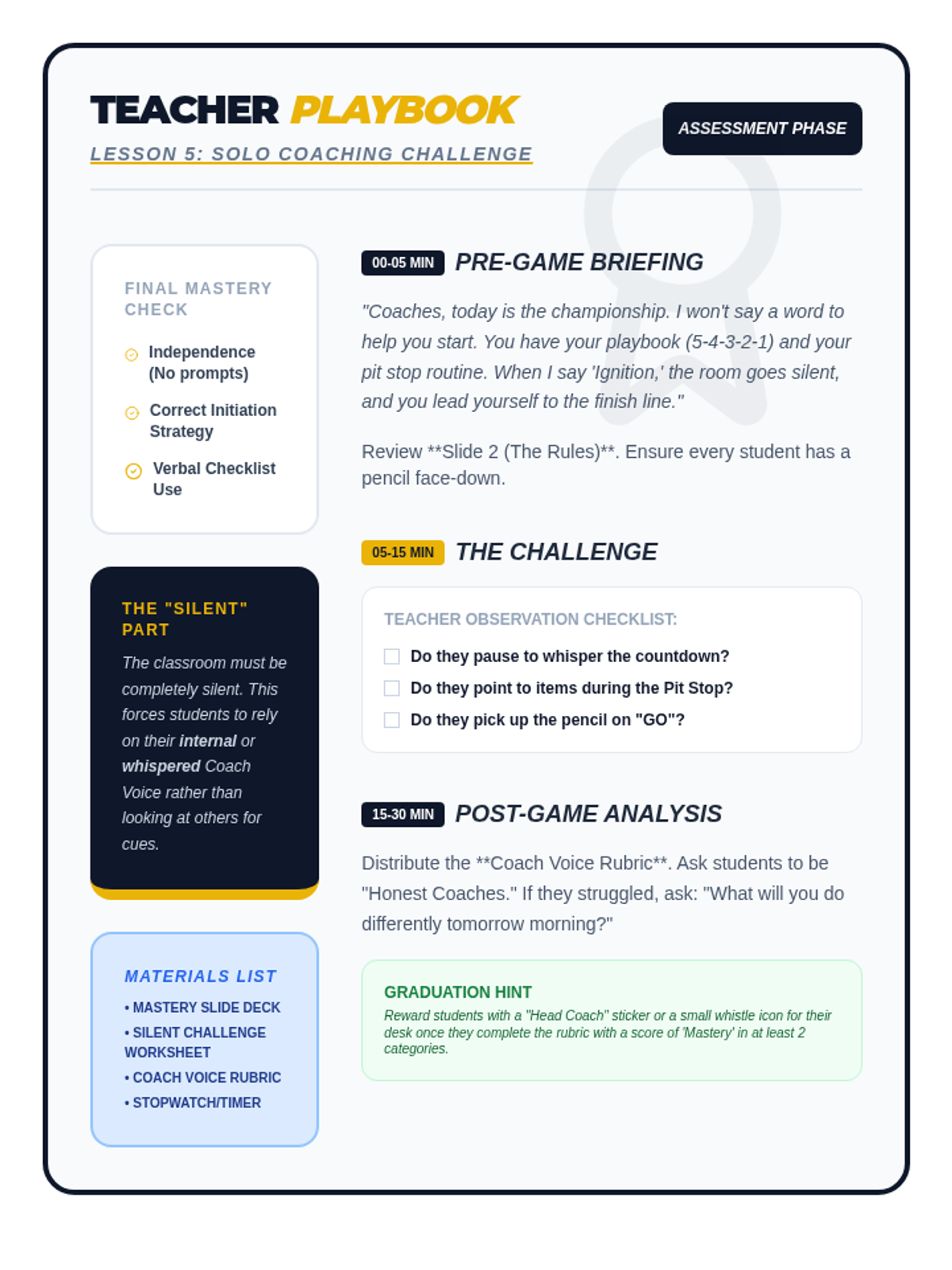
Students apply the coaching techniques to a real, independent task and self-assess their use of 'Coach Voice' using a rubric.
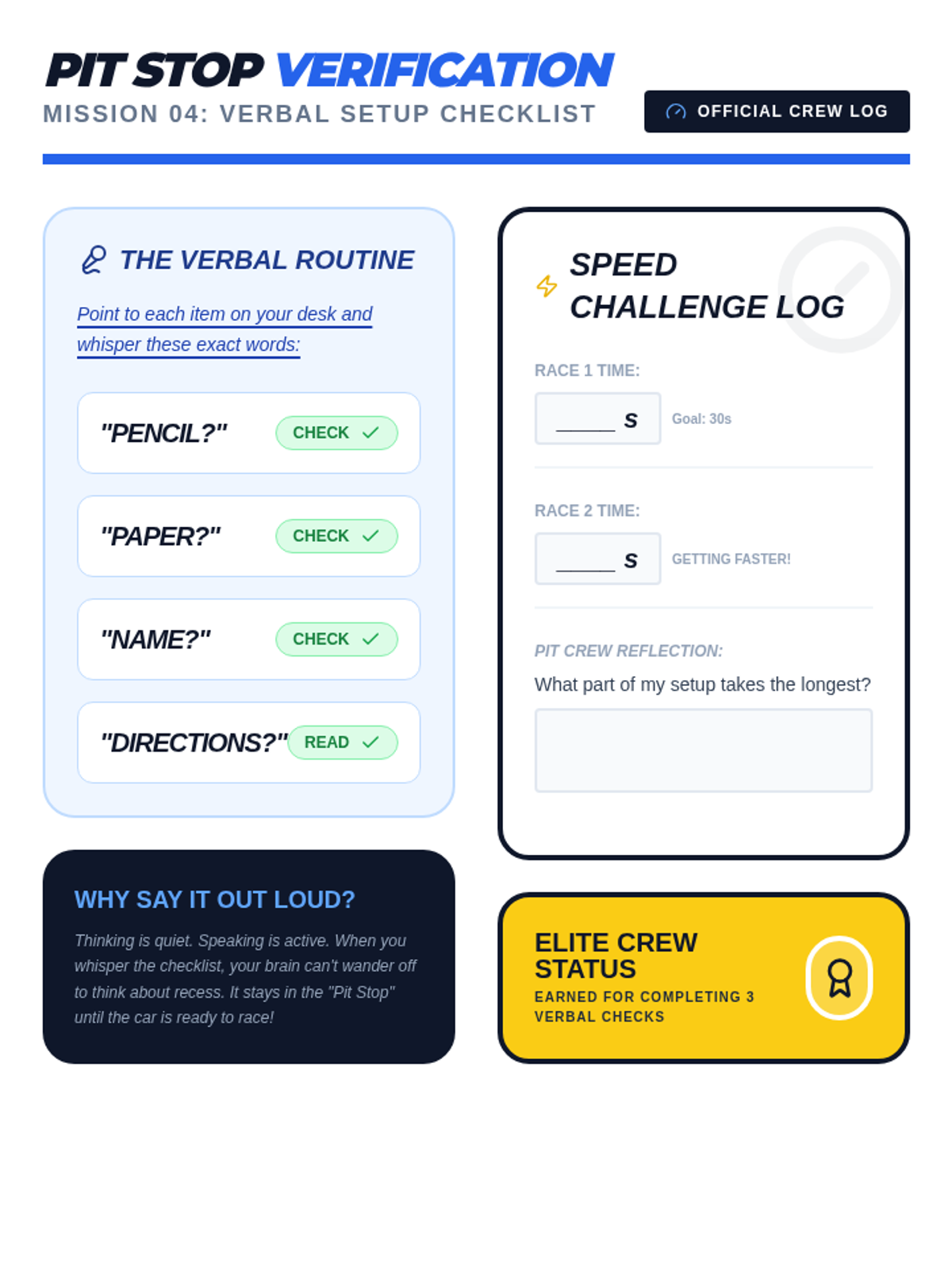
Students practice a verbal checklist routine ('Pencil? Check. Paper? Check. Name? Check.') to turn preparation into an active game rather than a passive wait.
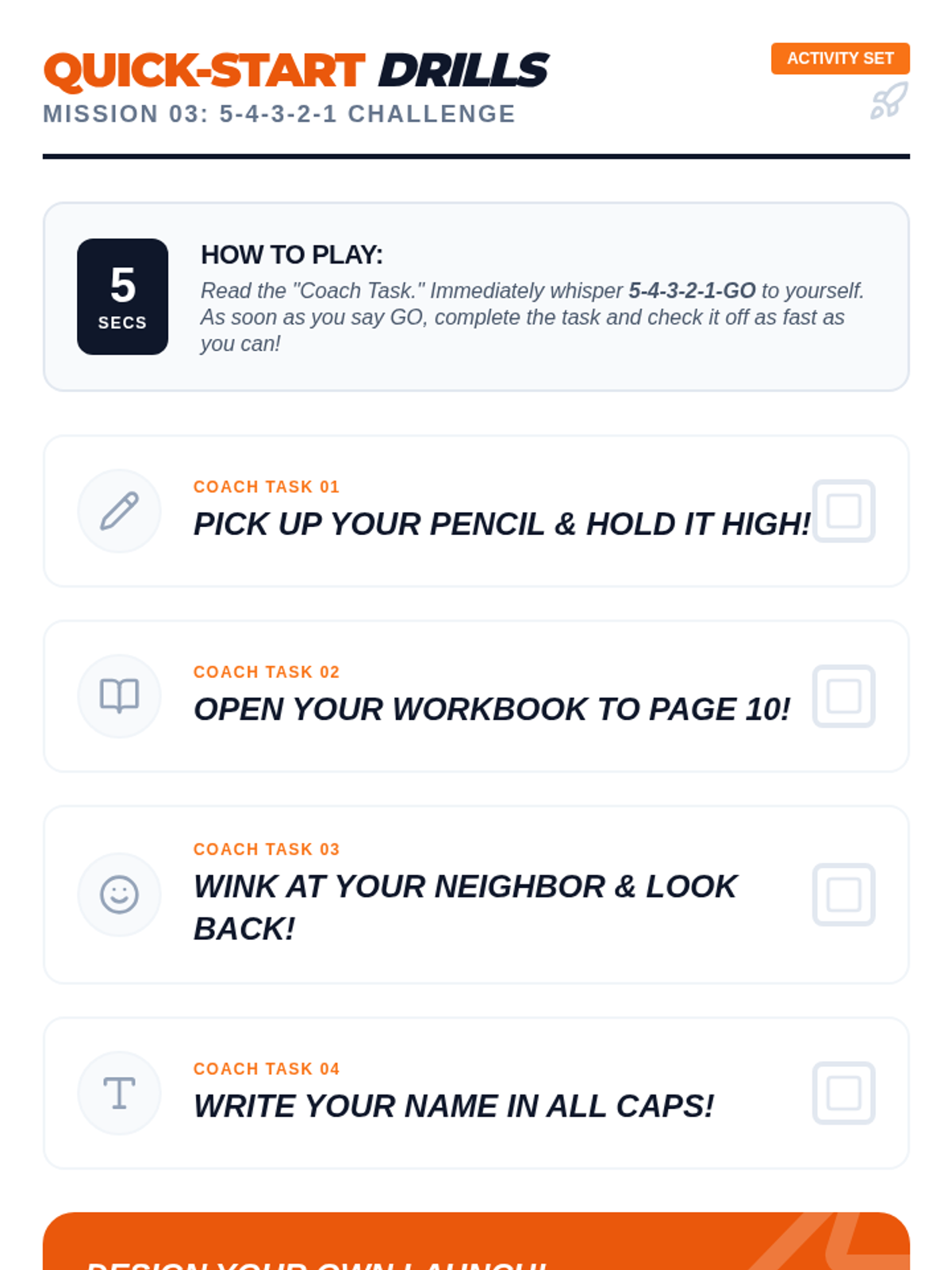
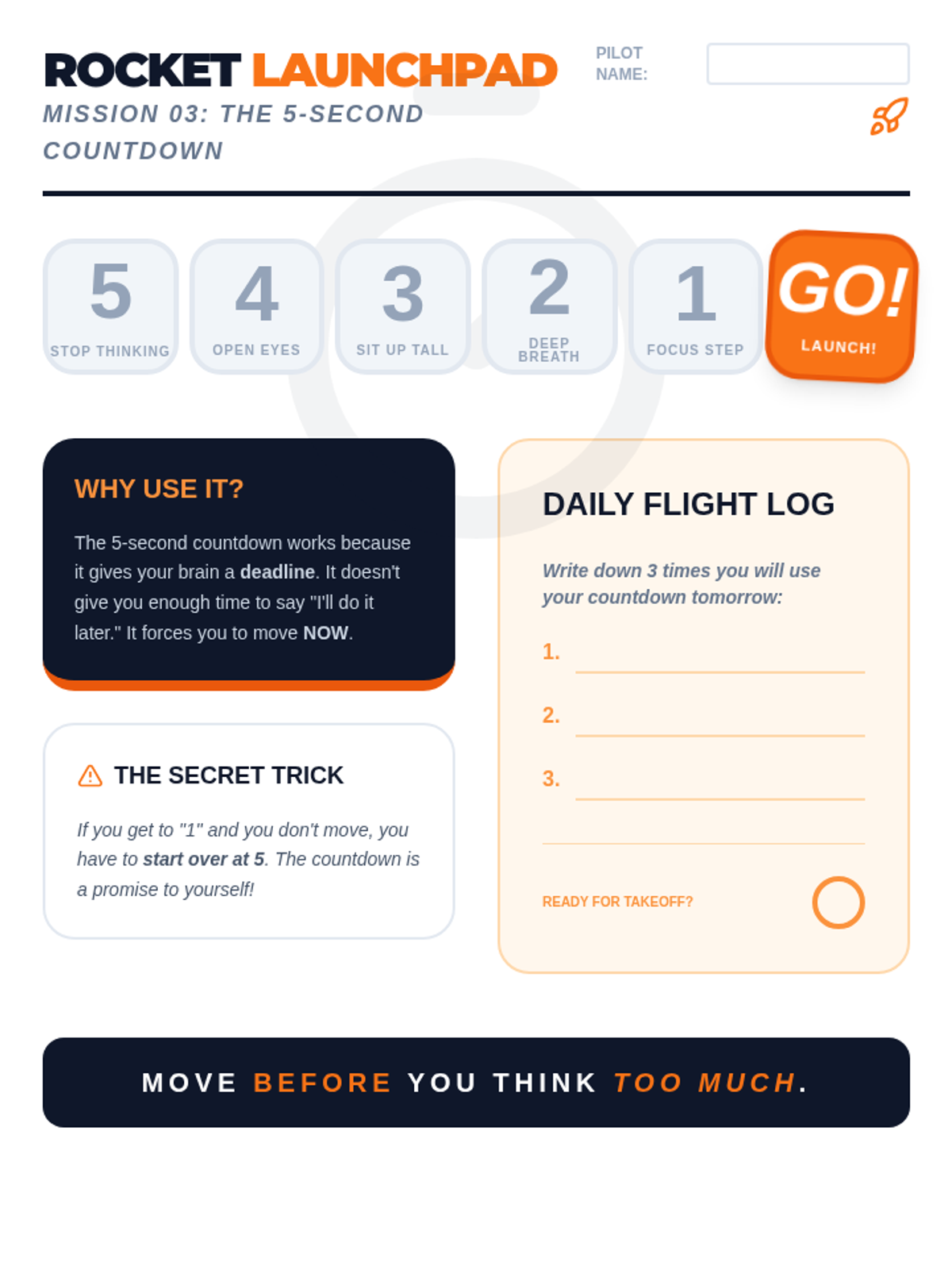
Students learn the 5-4-3-2-1-GO technique to bypass hesitation and build the association between a verbal countdown and physical movement.
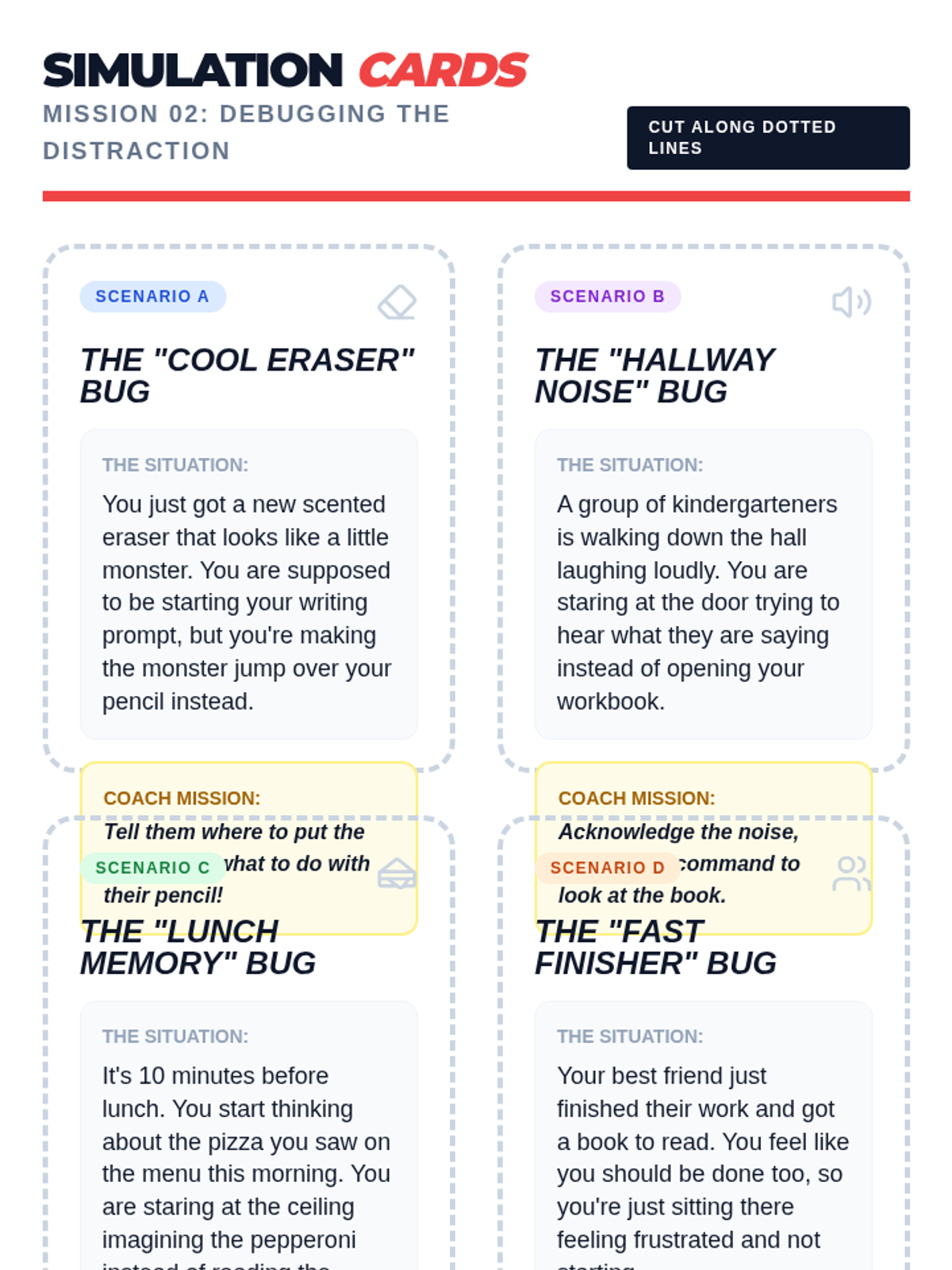
Using character cards with specific distraction problems, students act out solutions where they talk the character through ignoring the distraction and starting the work. They practice firm but kind verbal redirection.
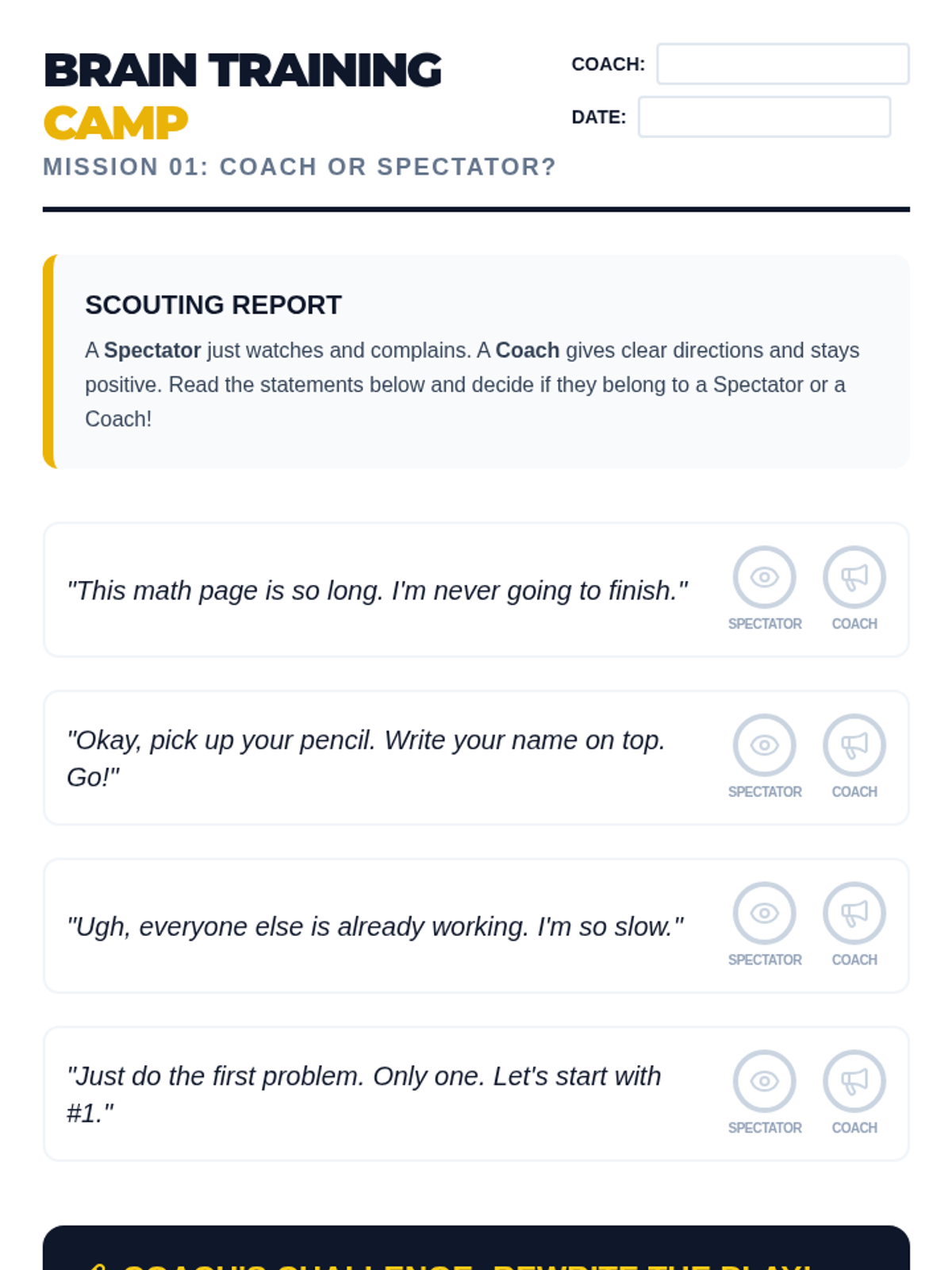
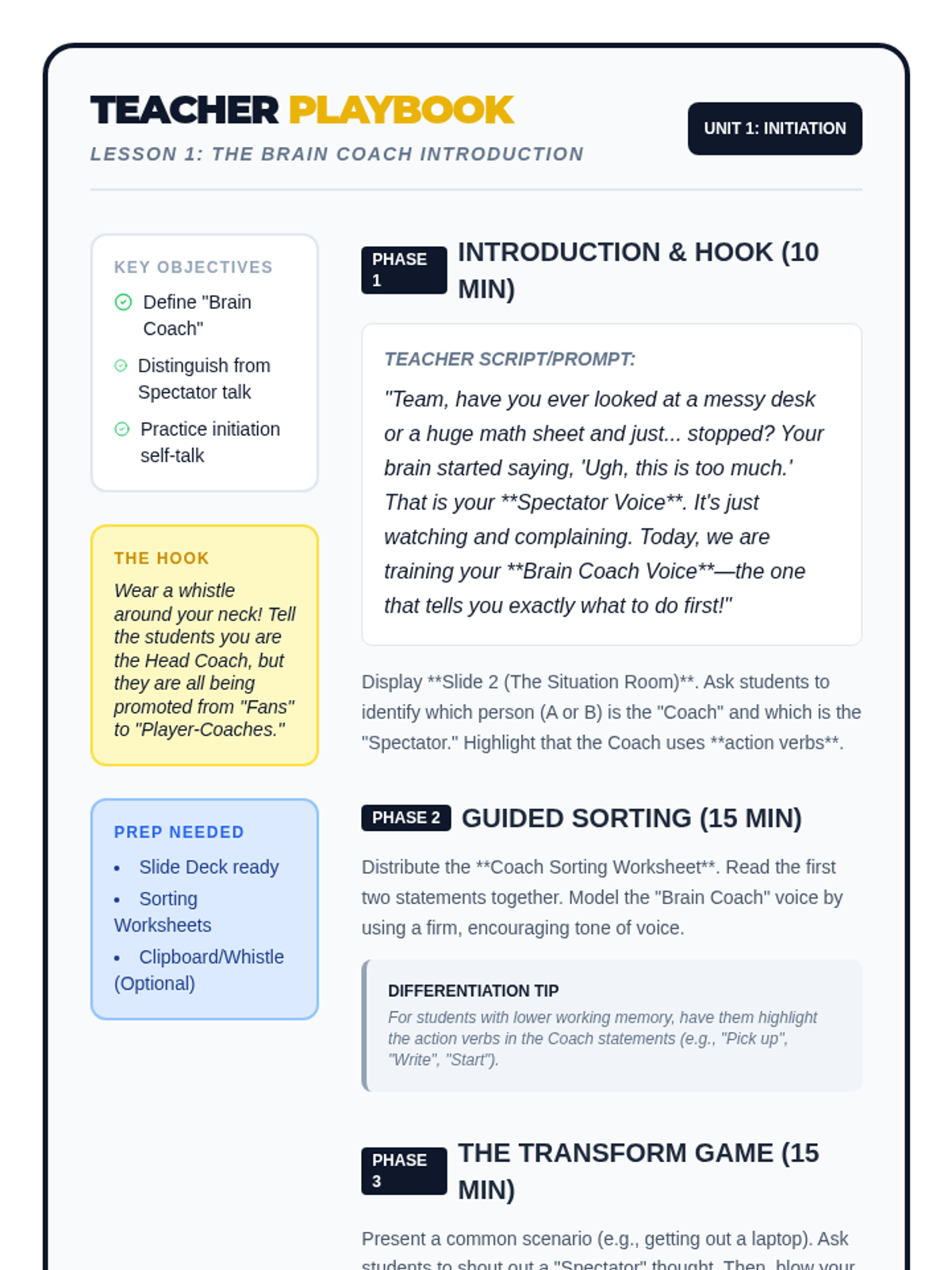
Students are introduced to the concept of the 'Brain Coach'—the part of the mind that directs action. They classify statements as either 'Coach' talk (directive, encouraging) or 'Spectator' talk (passive, observational).
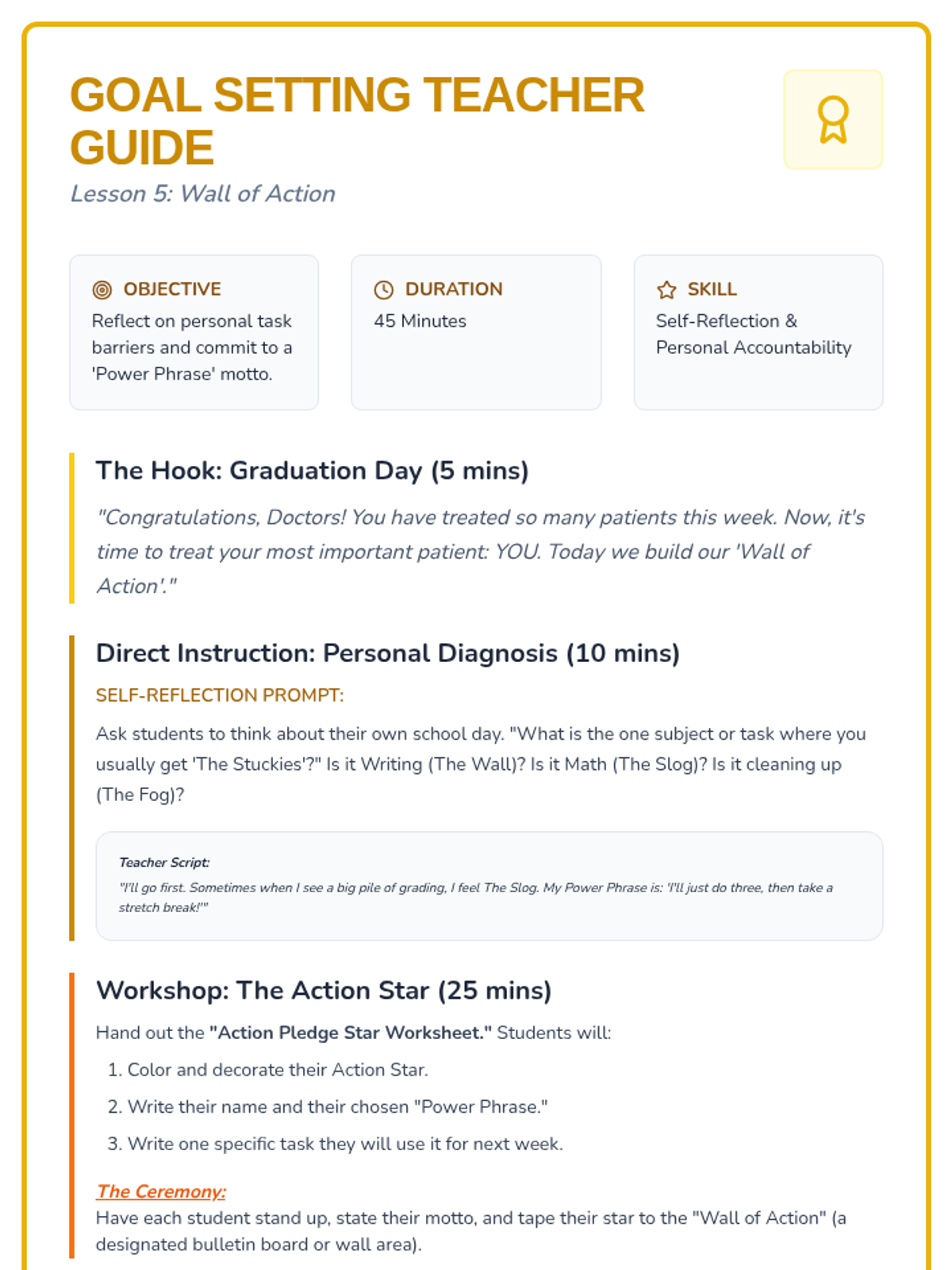
Students identify their own barriers to starting work and select a personal 'Power Phrase' motto for future tasks.
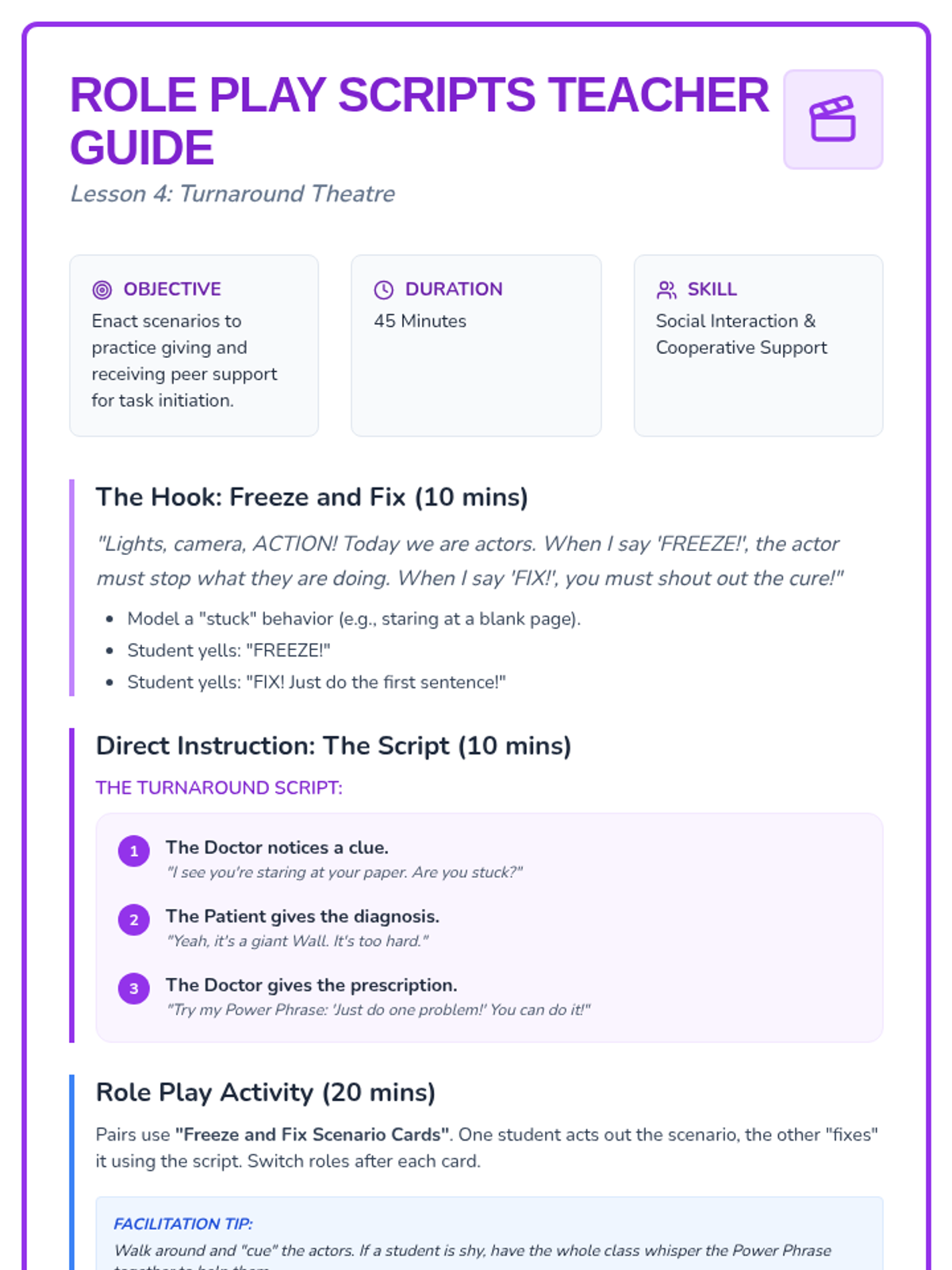
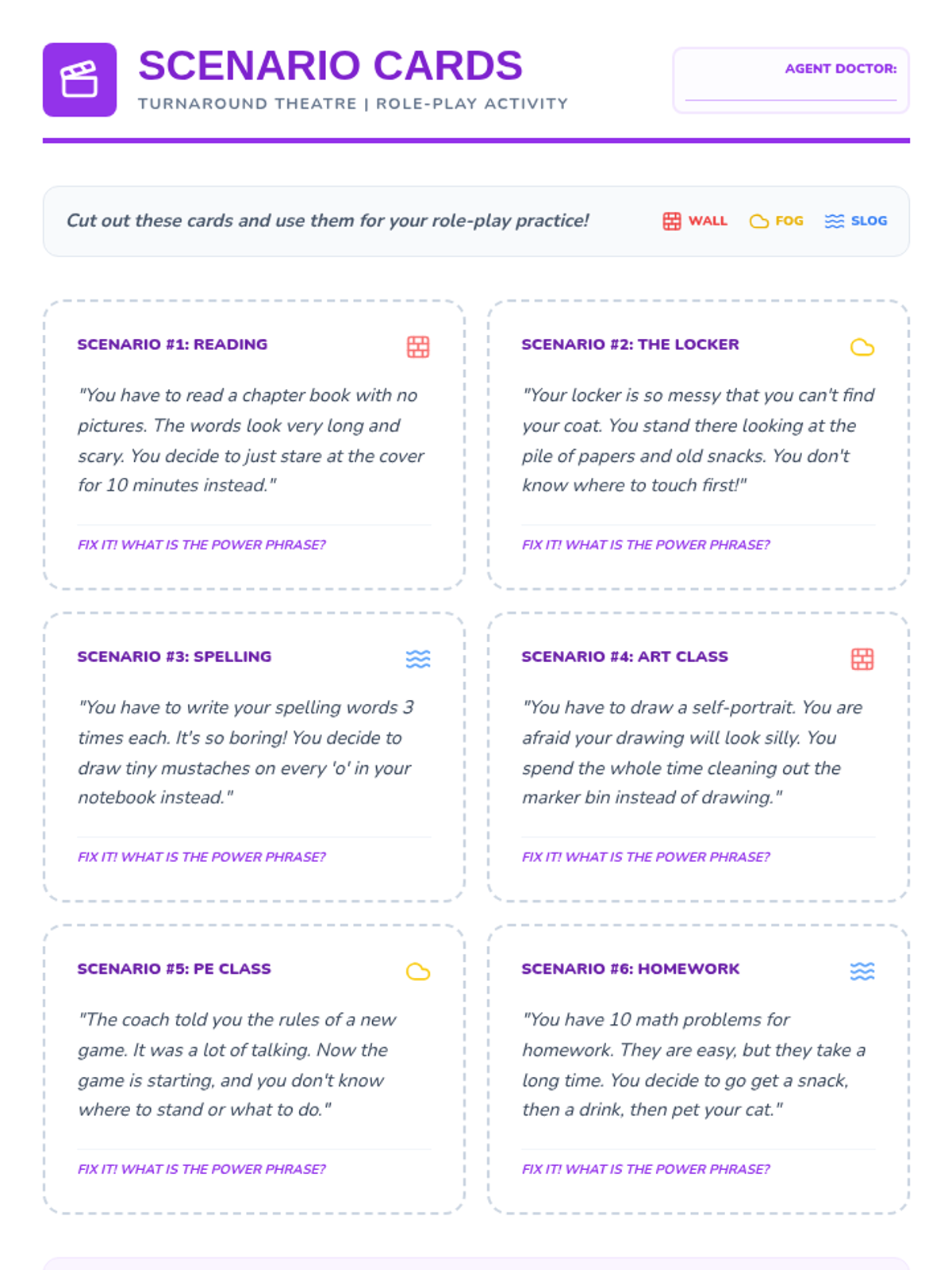
Students role-play scenarios where they help a peer get 'unstuck' using their self-talk prescriptions.
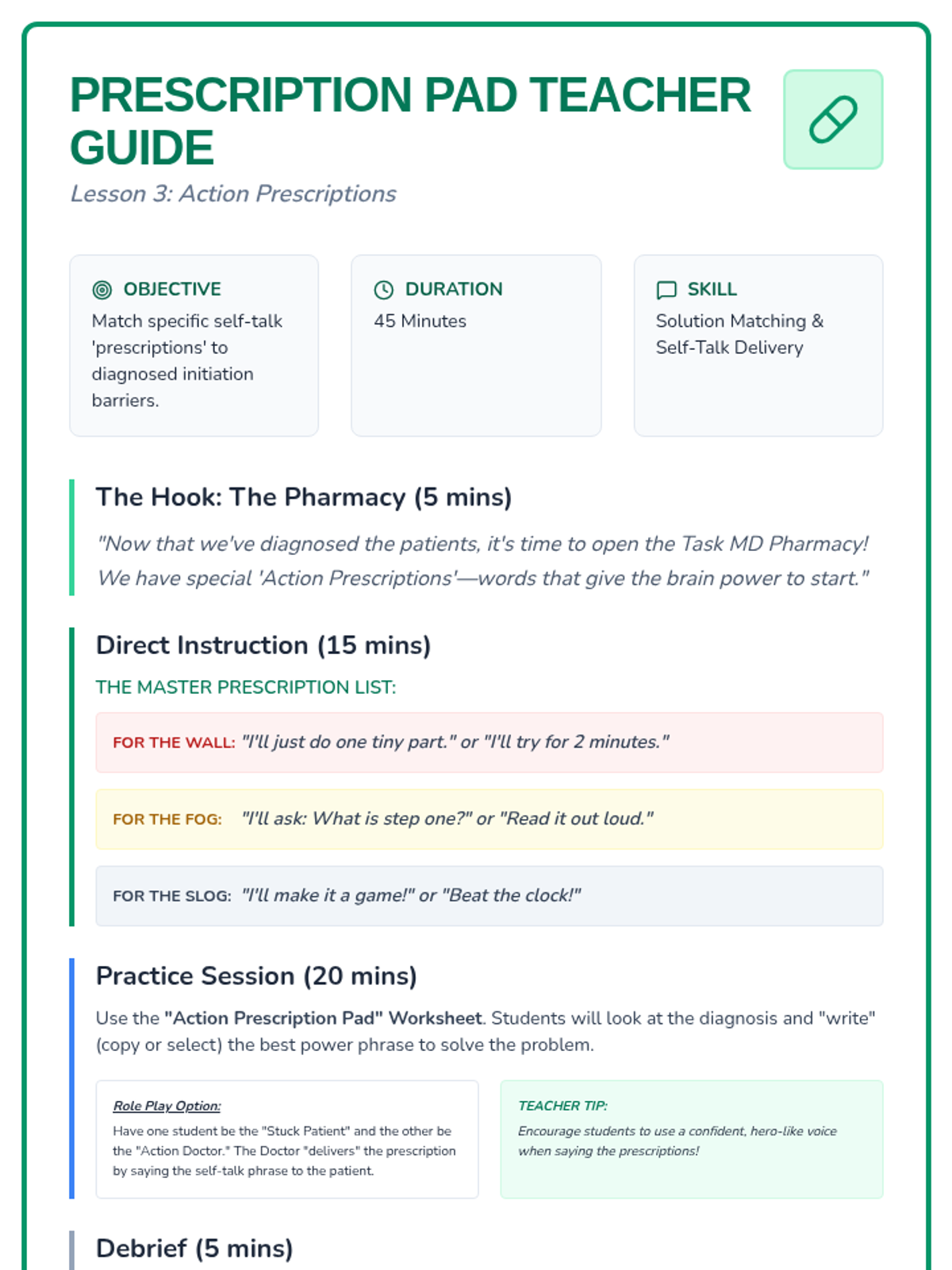
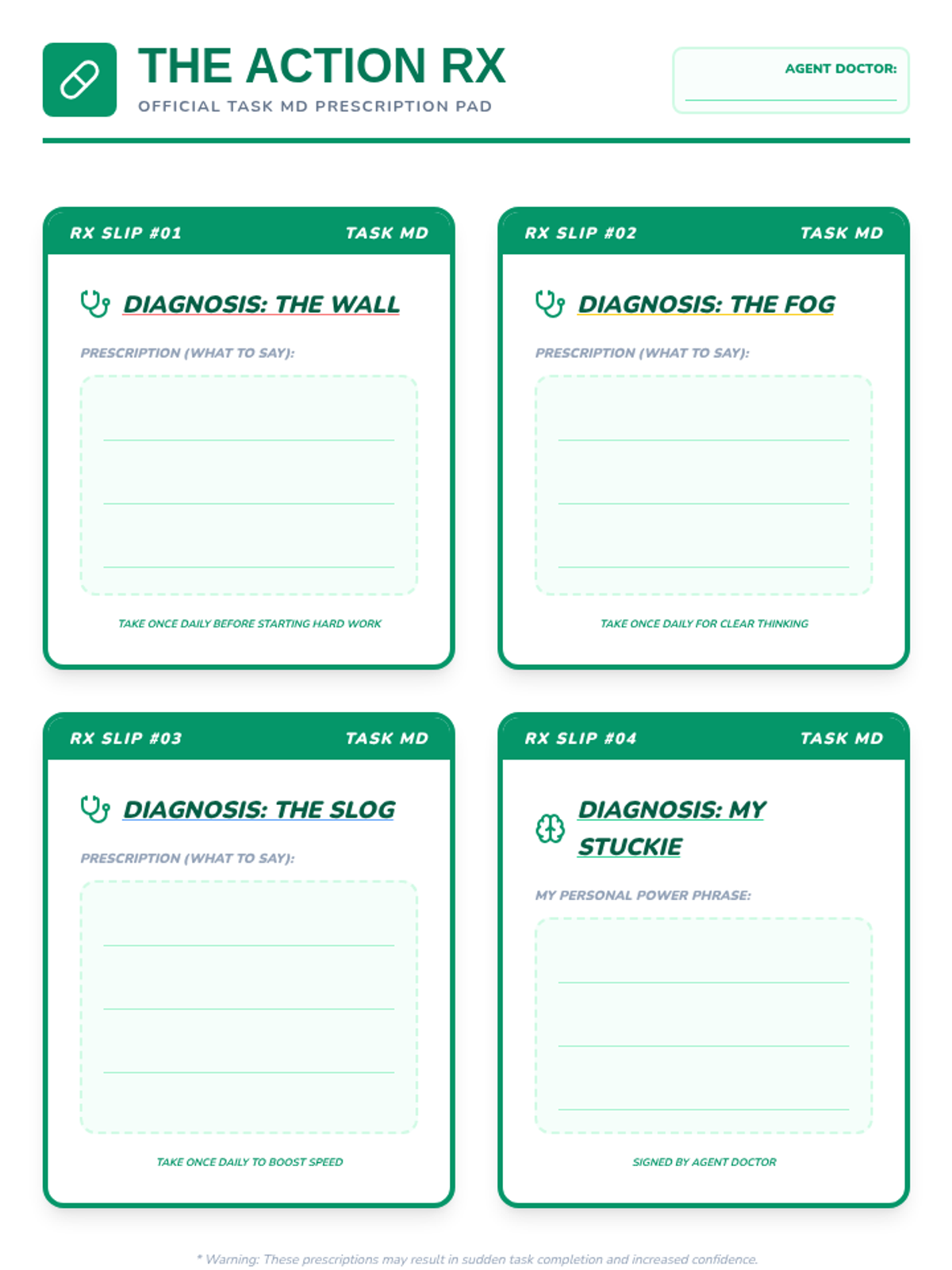
Students match specific self-talk 'prescriptions' to diagnosed problems and practice delivering these lines to characters.
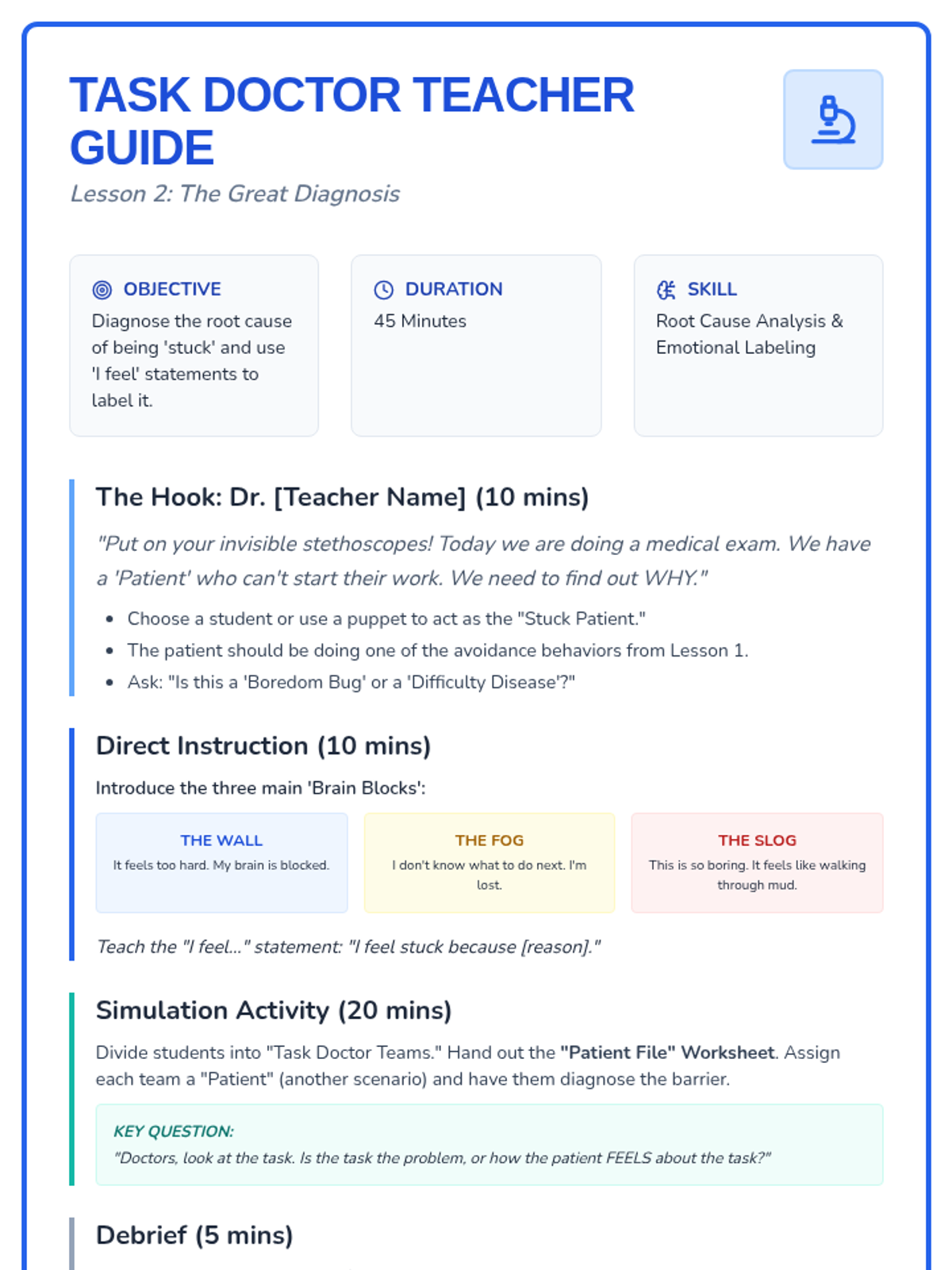
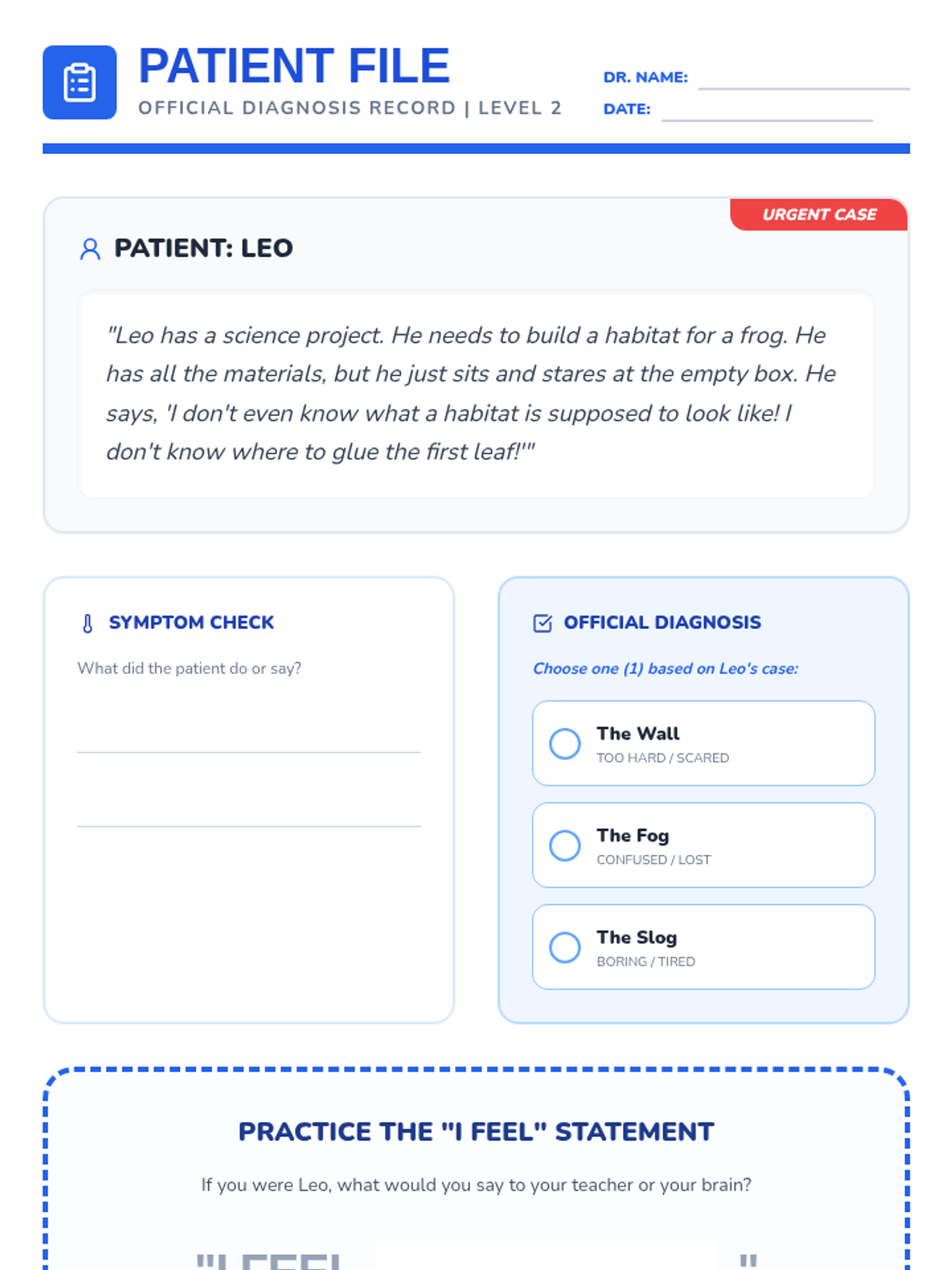
Students act as 'Task Doctors' to determine why a character is stuck (boredom, difficulty, fatigue) and practice labeling these emotions.
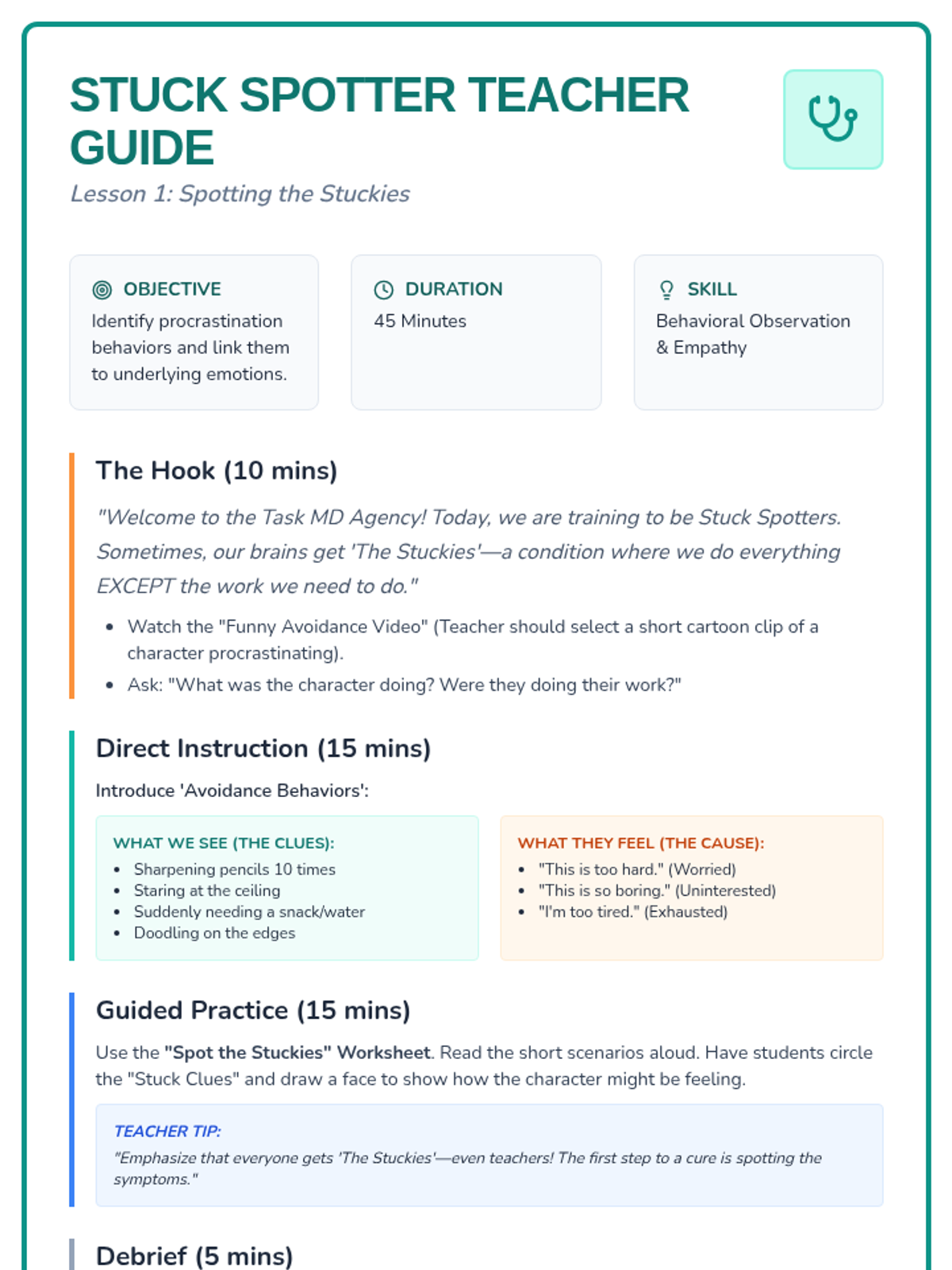
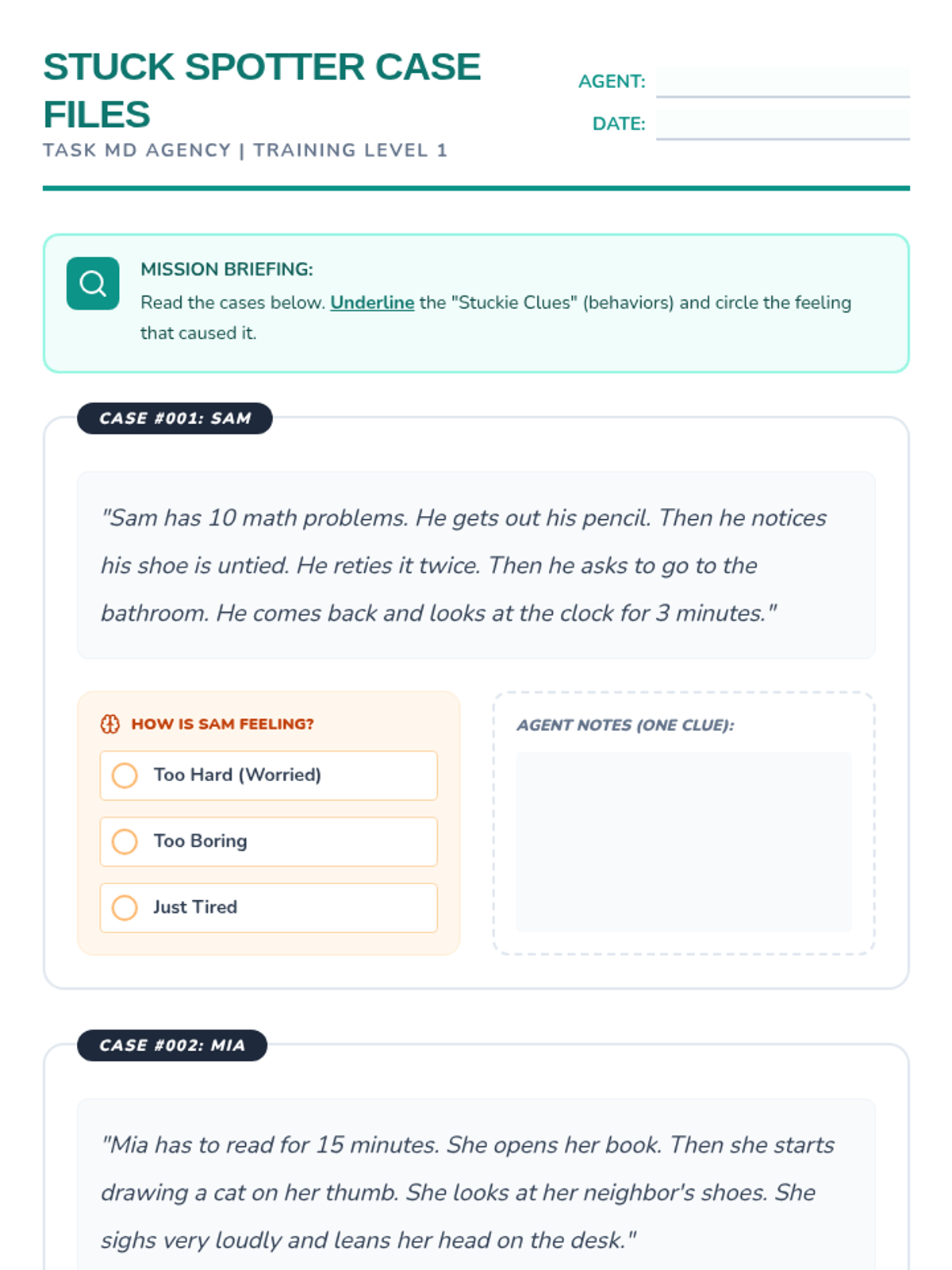
Students identify behaviors that show someone is avoiding work and brainstorm what emotions might be driving those behaviors through case studies.
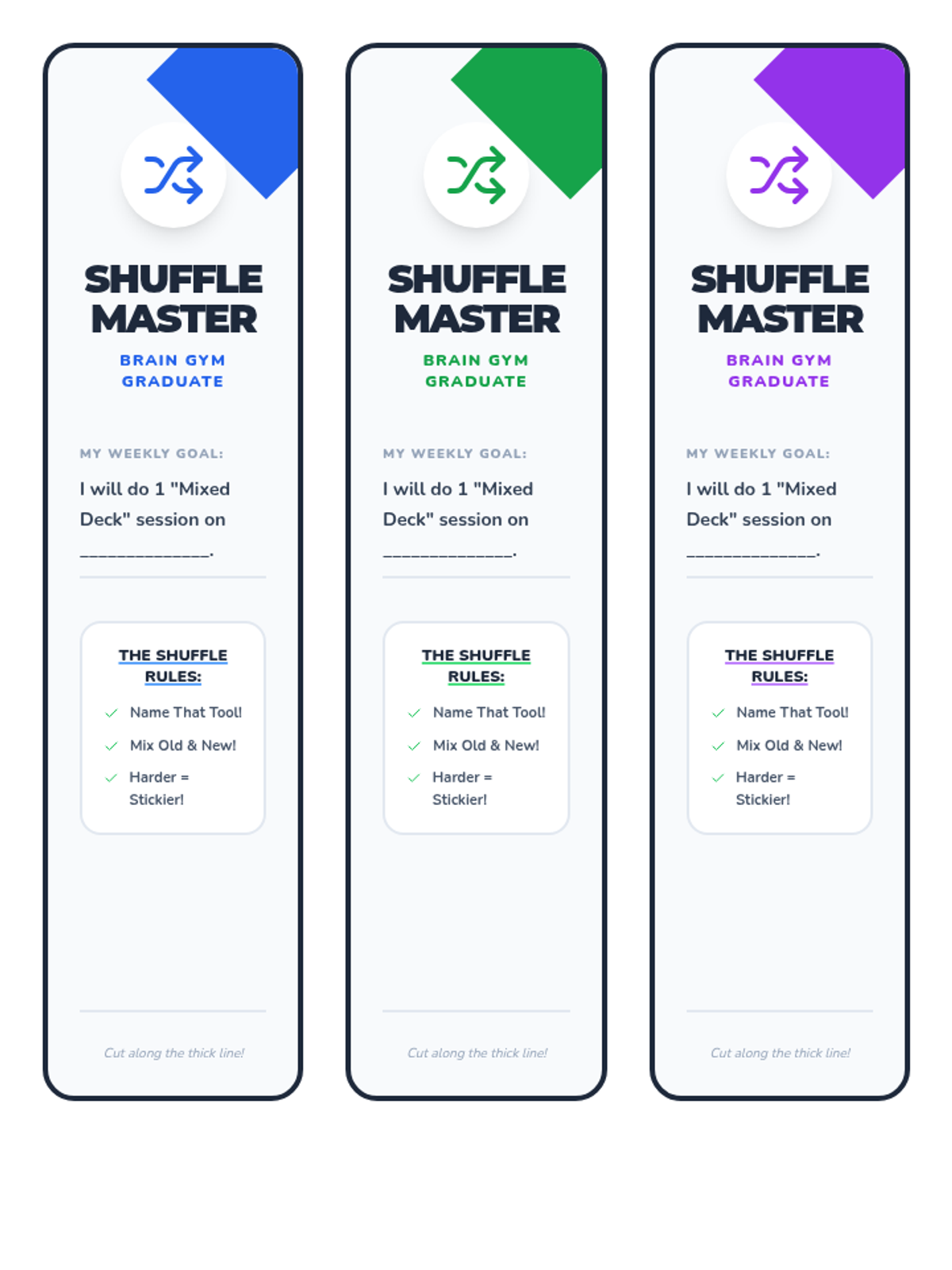
Students discuss how mixing up topics makes the brain work harder but keeps it more alert. They set goals for including one 'mixed review' session in their weekly routine.
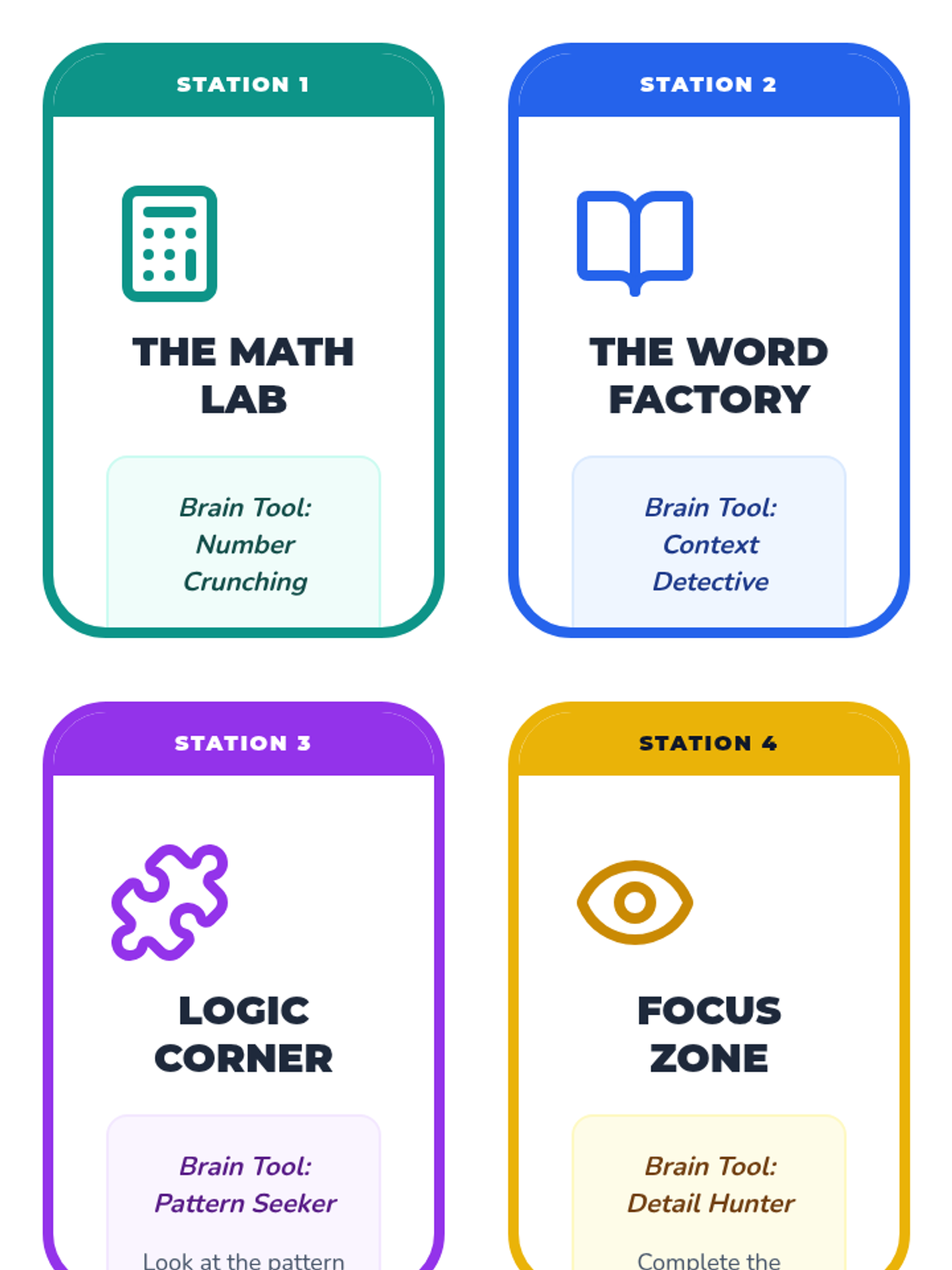
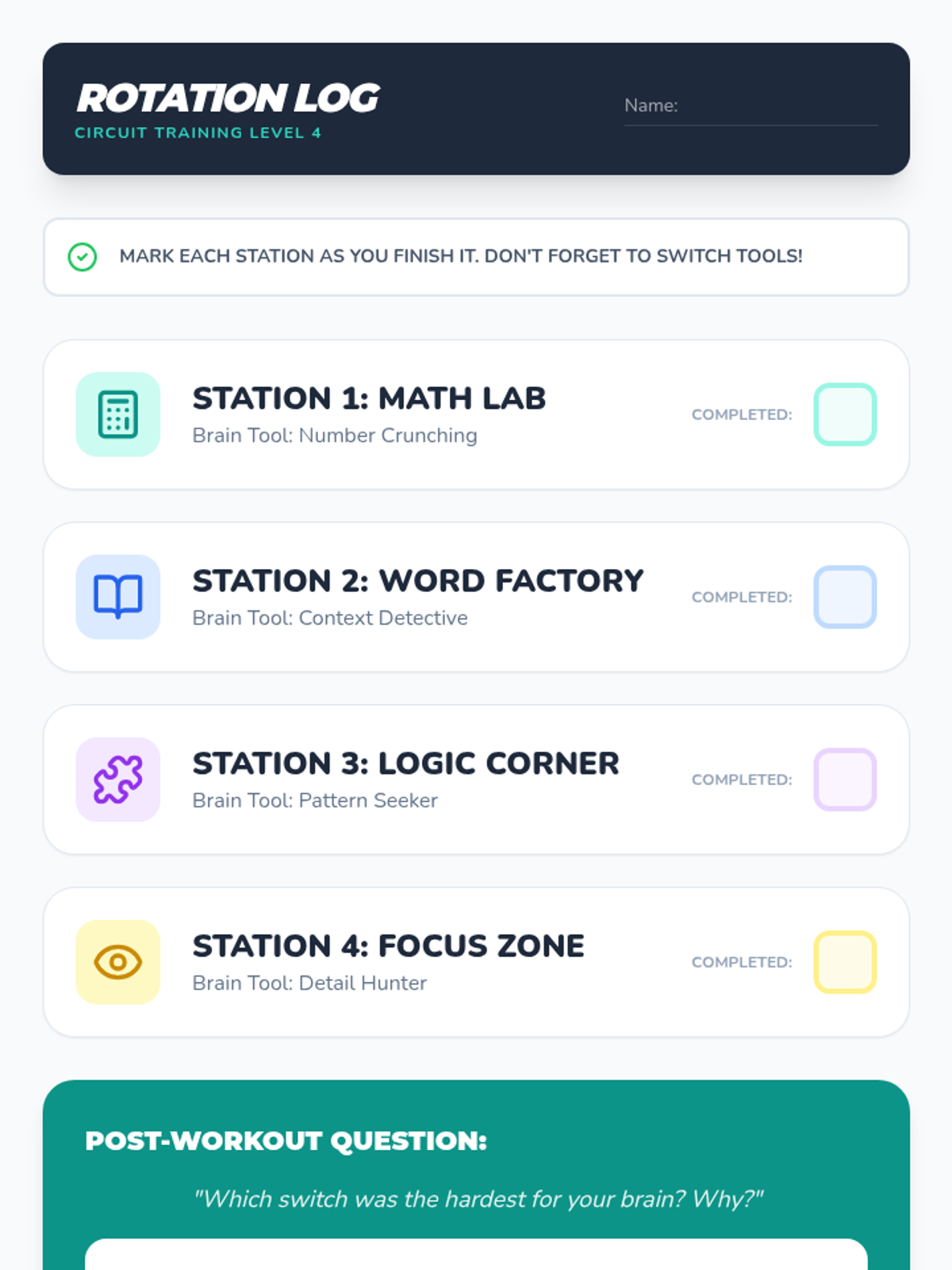
Students rotate through stations that require switching skills rapidly (e.g., a reading station, then a math station, then a logic puzzle) to simulate the mental flexibility required for interleaved spaced repetition.
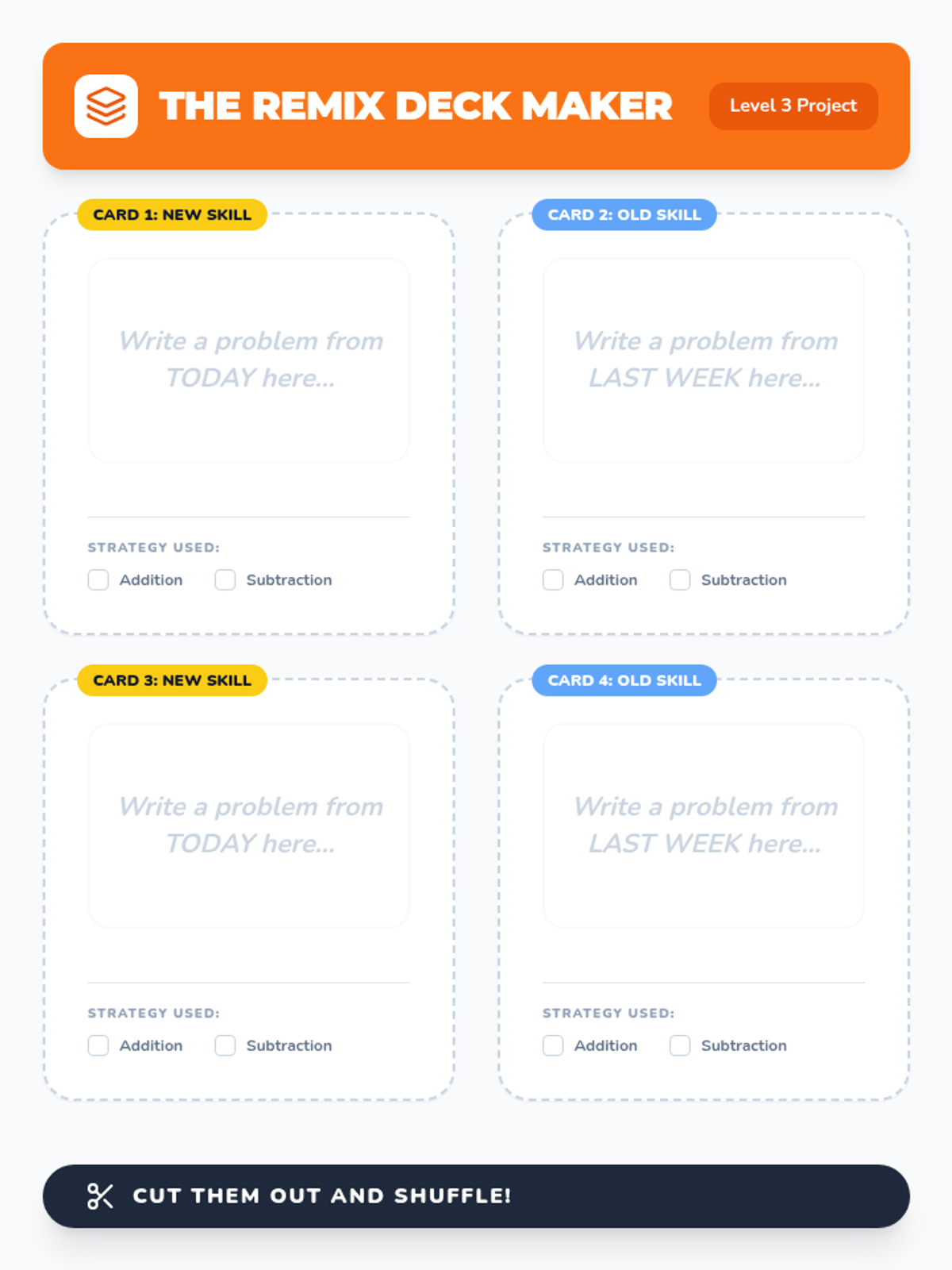
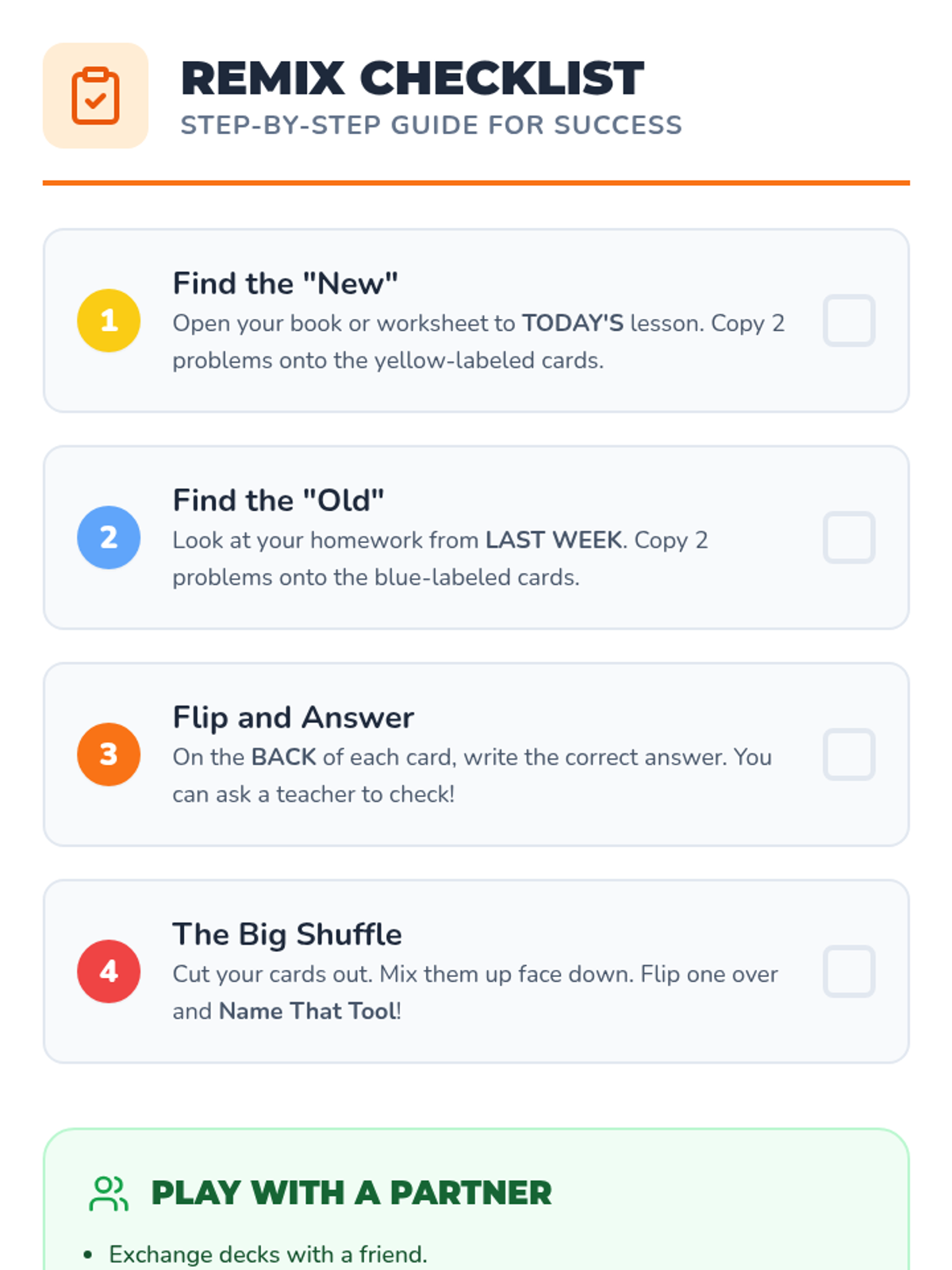
Students cut up old worksheets or homework assignments to create their own 'mixed decks.' They shuffle questions from last week with questions from this week to create a spaced and interleaved review deck.
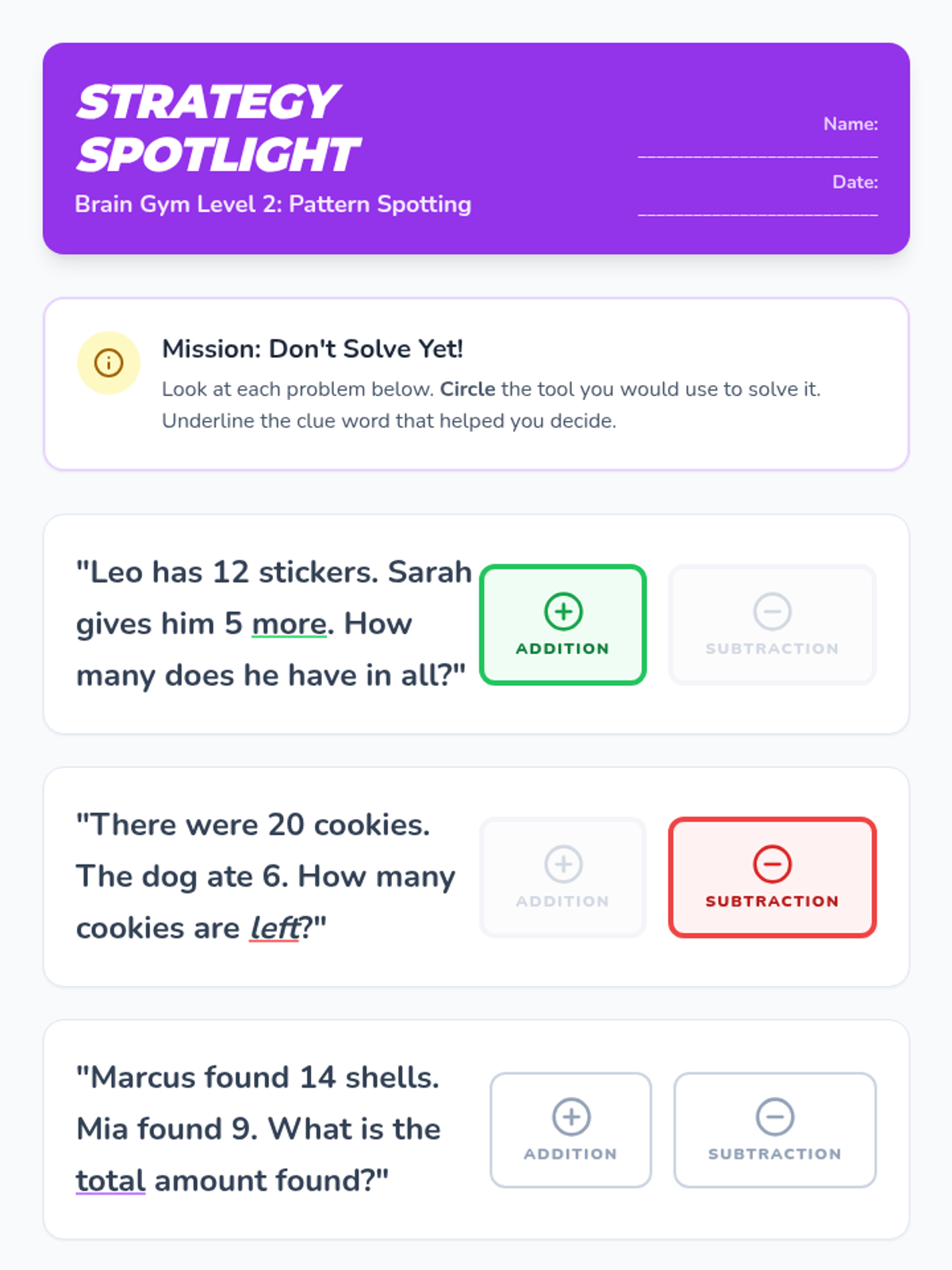
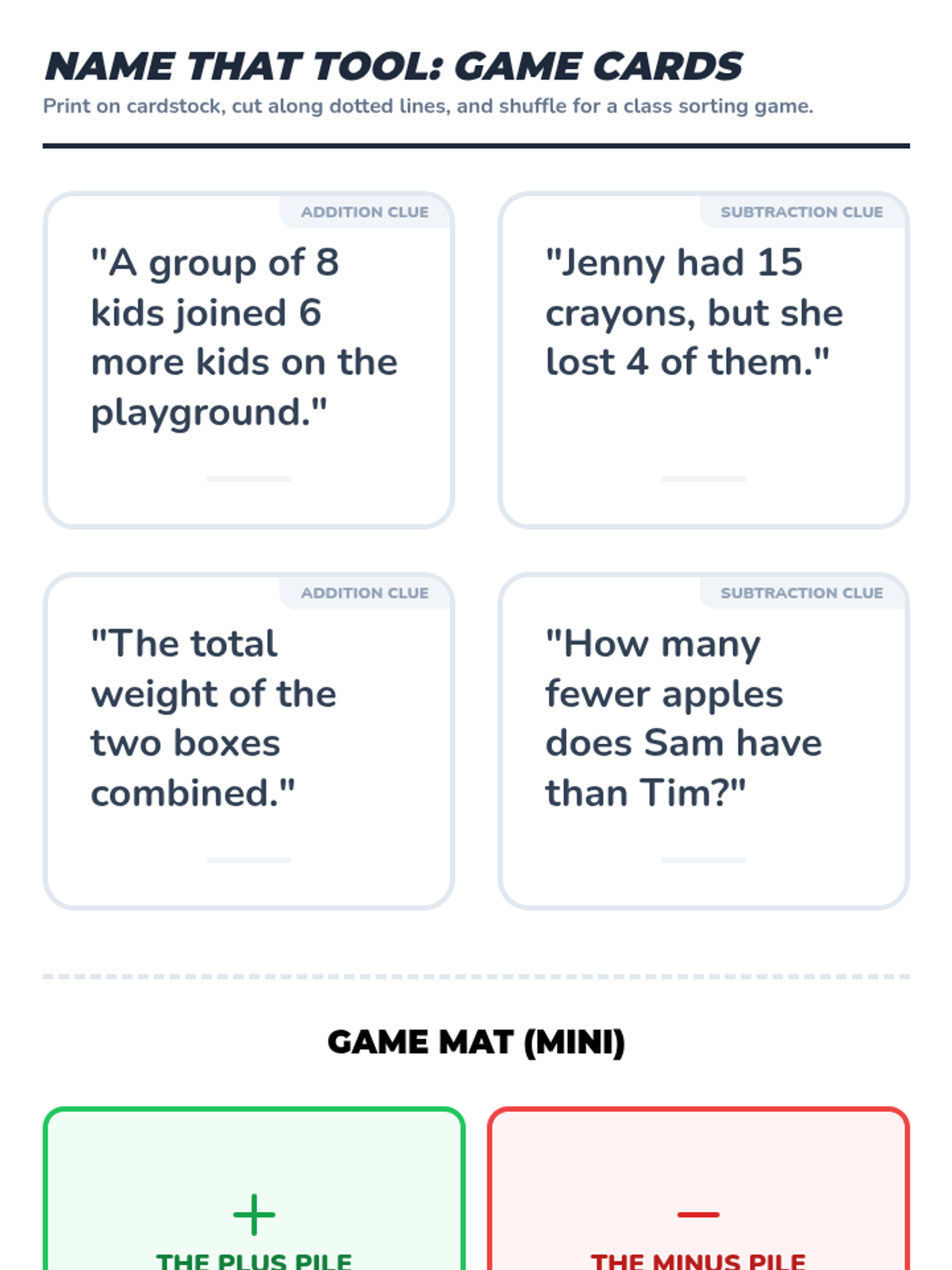
In a mixed review session, students practice identifying what strategy is needed before solving. They label problems (e.g., 'Addition' vs 'Subtraction') without solving them yet.
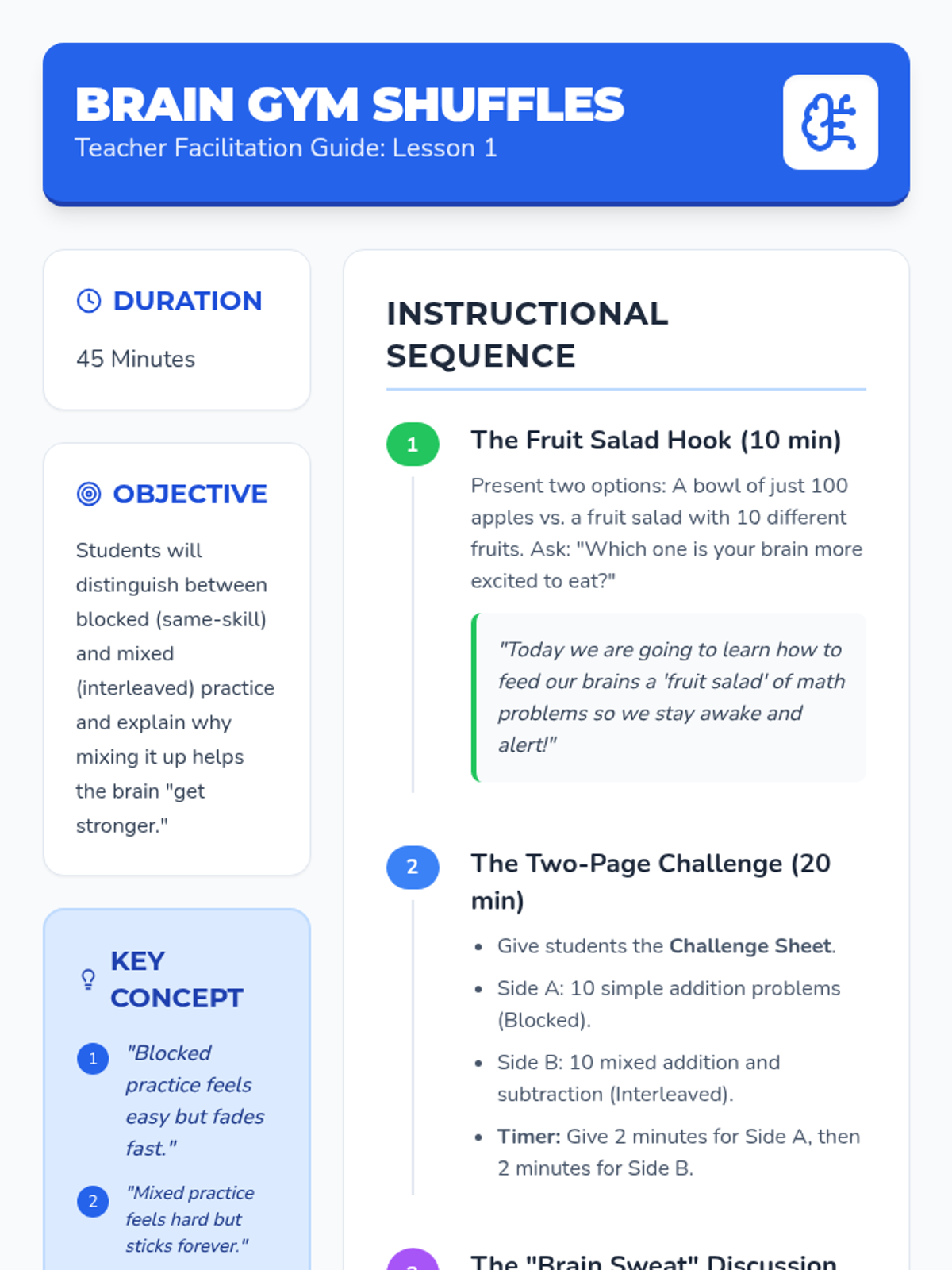
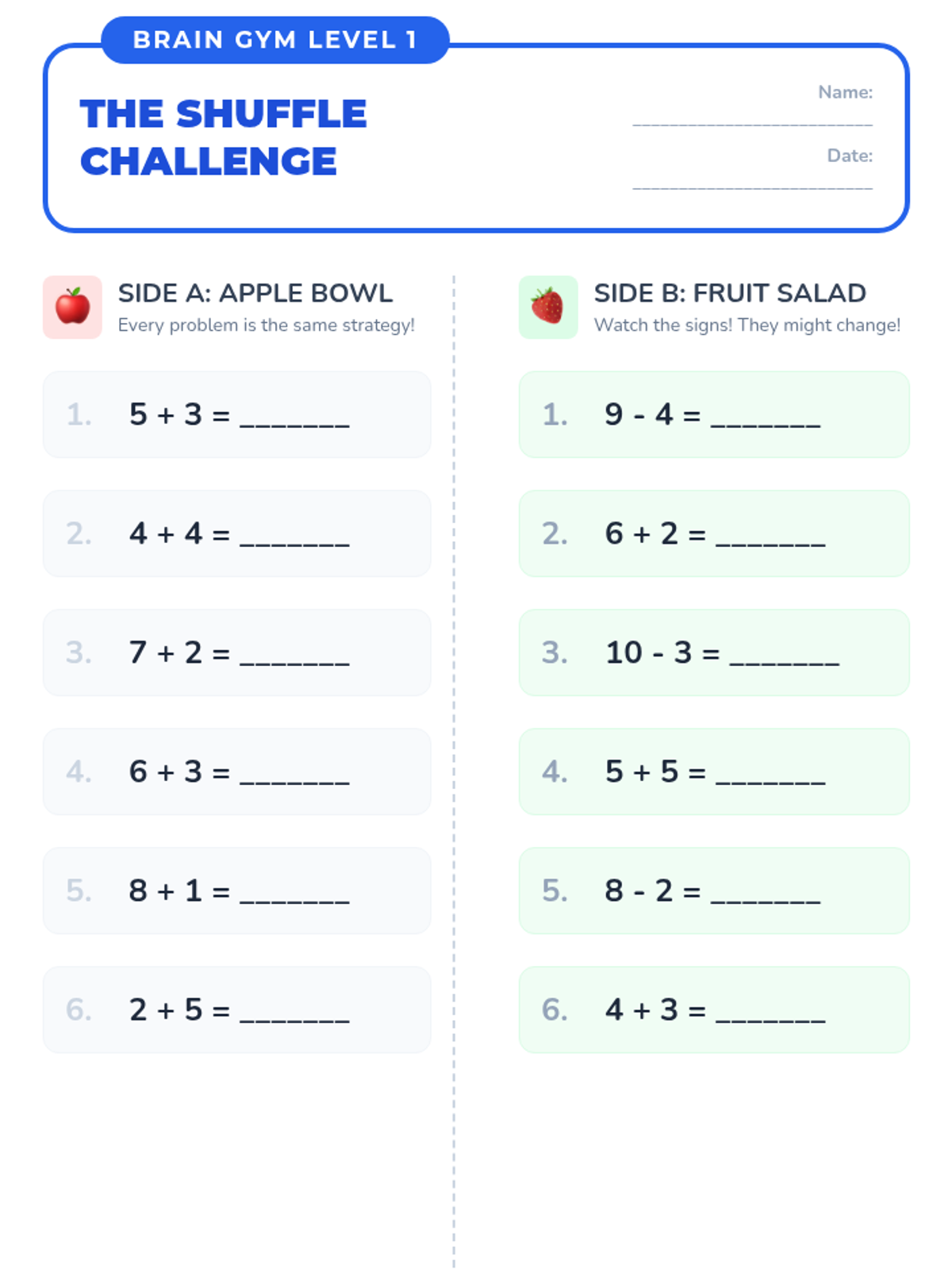
Students compare blocked and mixed practice through a hands-on activity and the Fruit Salad Analogy to understand 'desirable difficulty.'
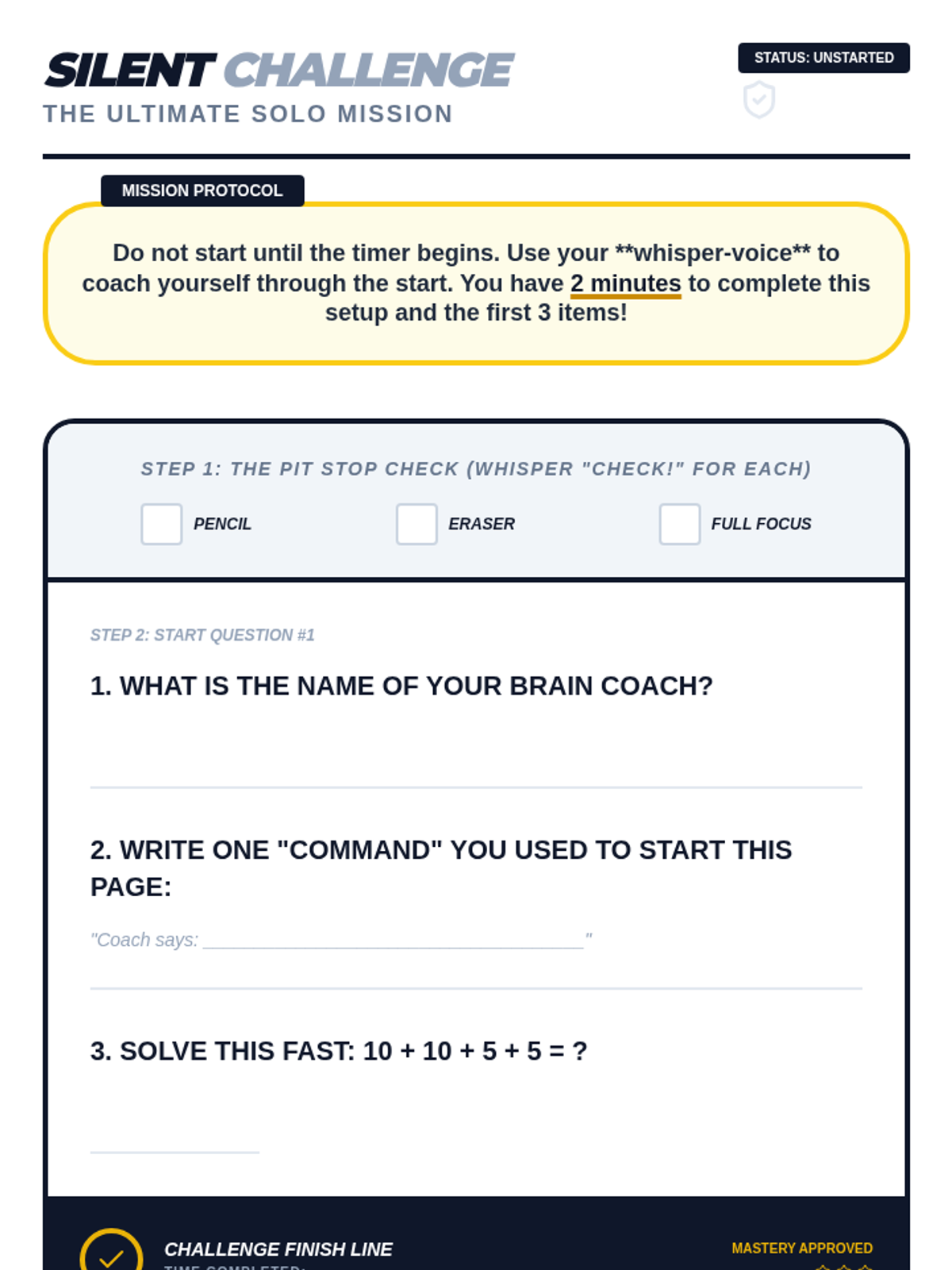
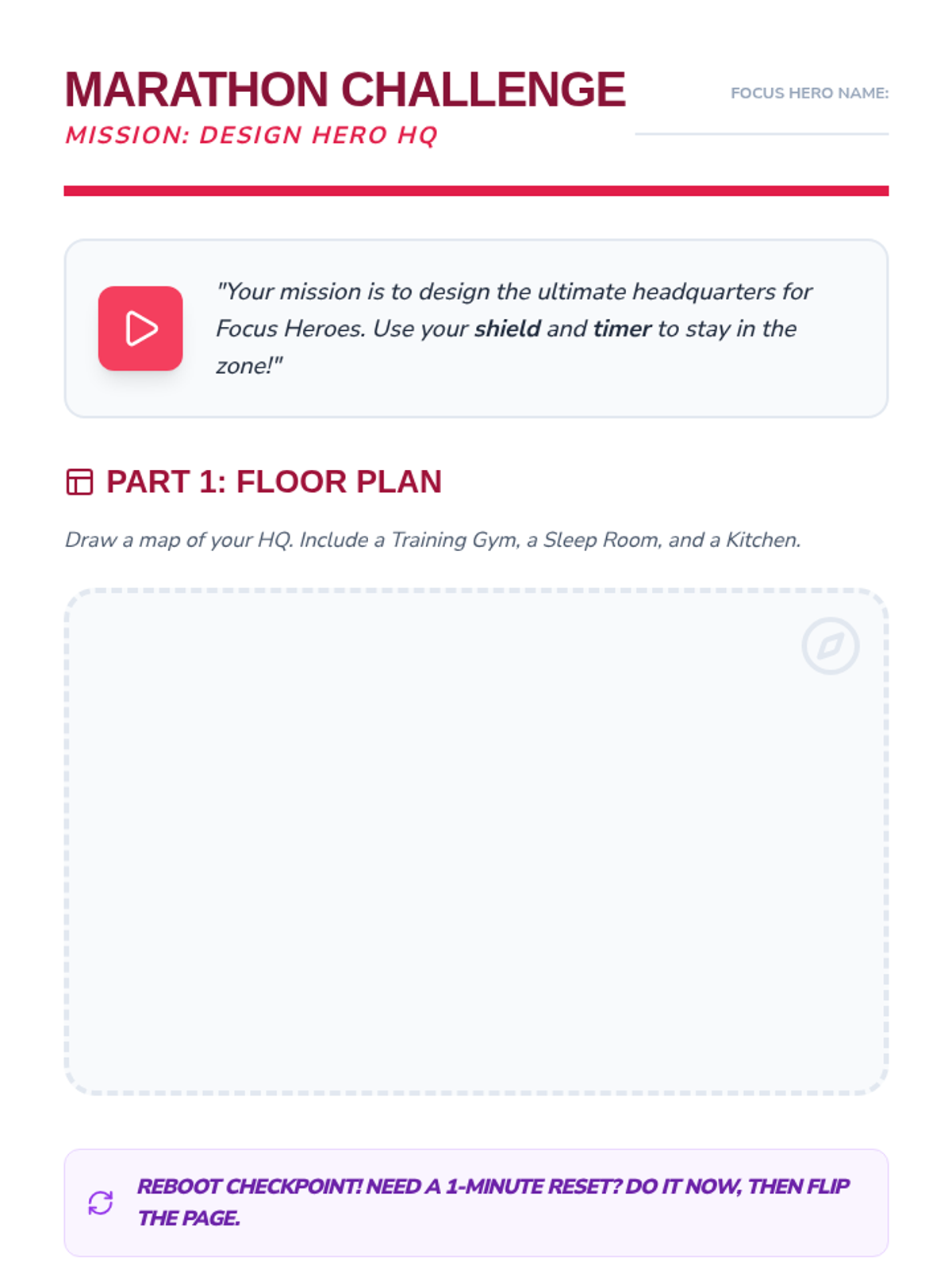
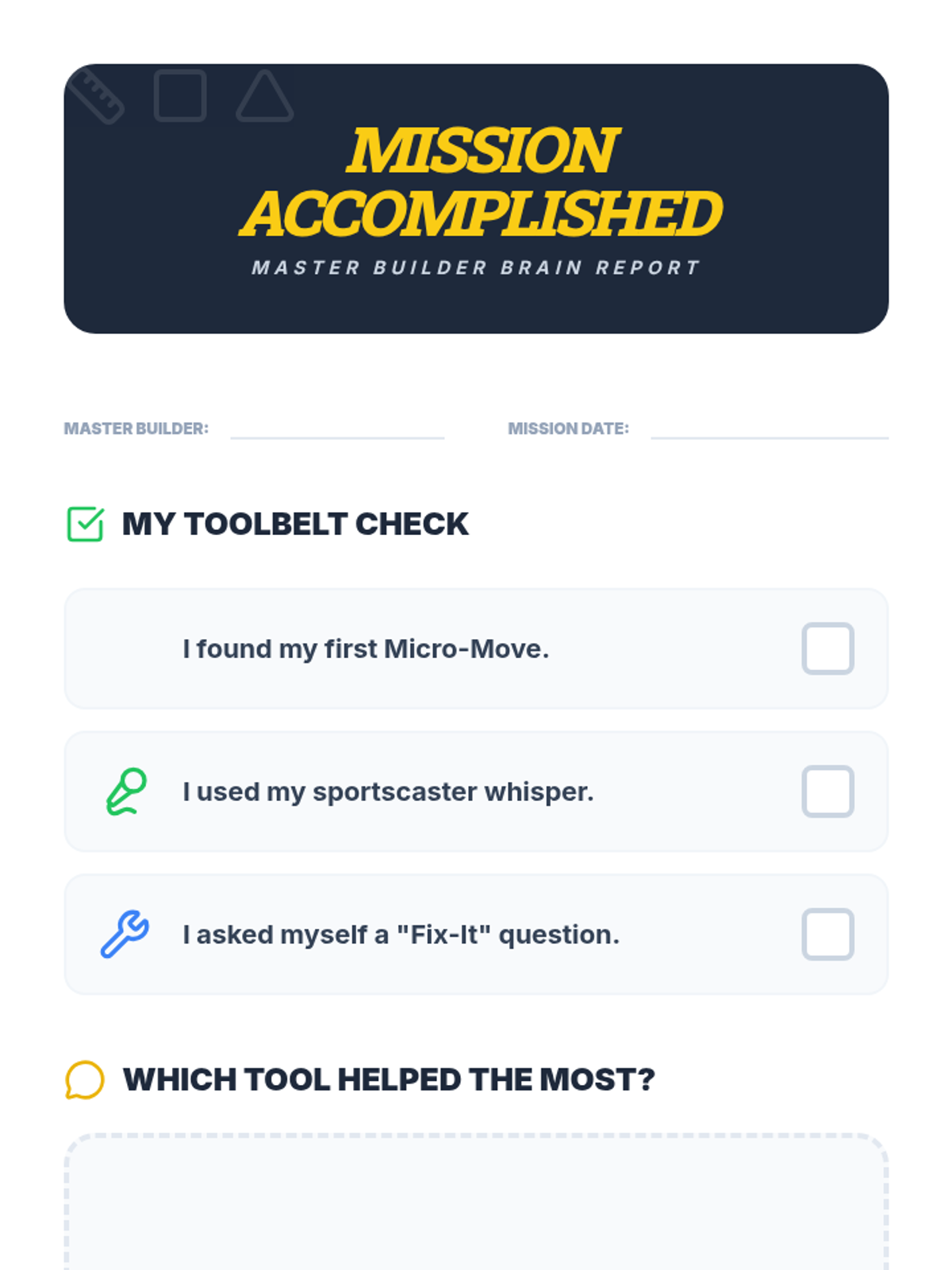
A mastery-based finale where students apply all their learned tools (shields, breaks, timers) to complete a multi-part challenge.
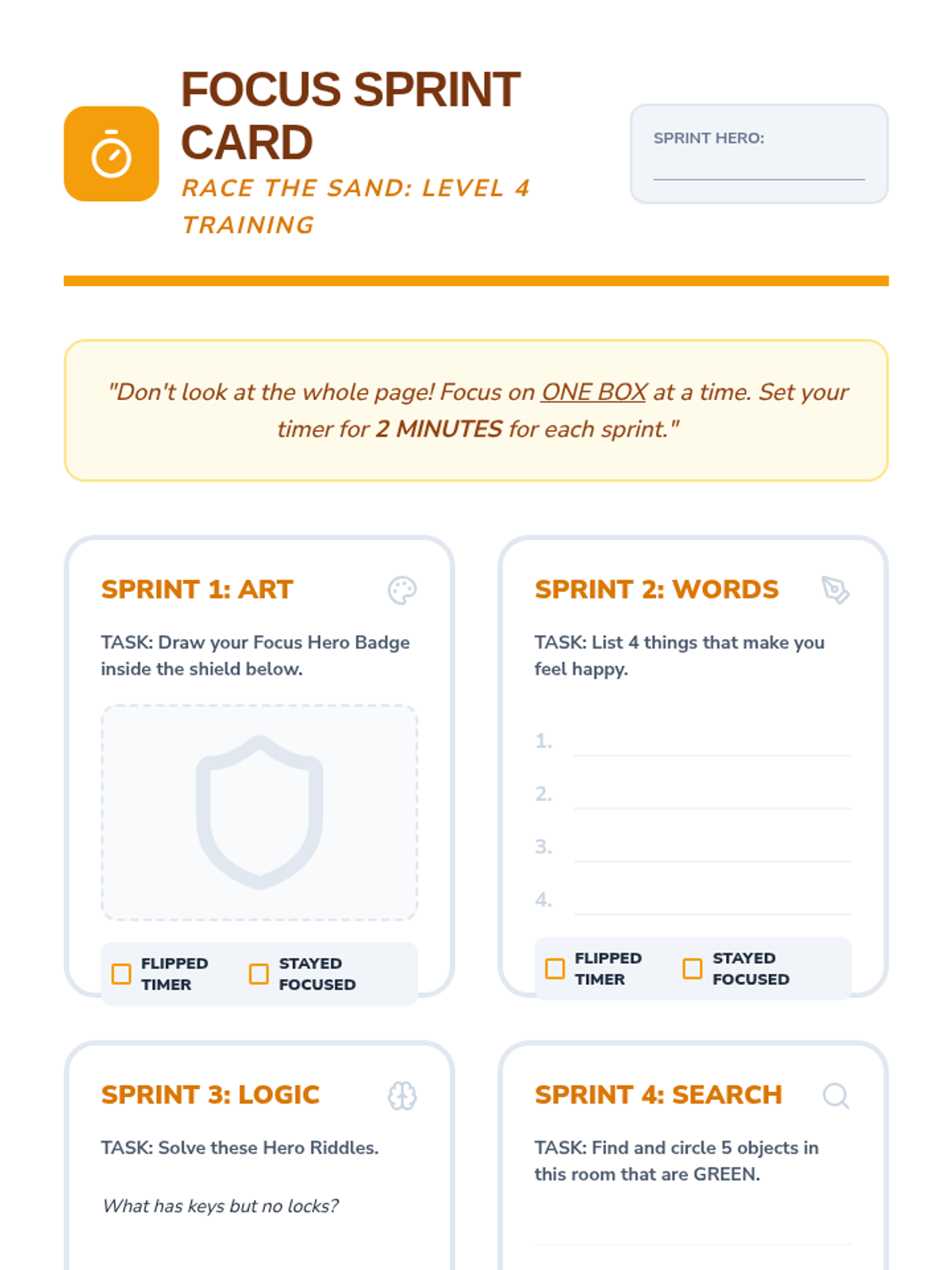
Students practice using timers to chunk complex tasks into manageable pieces, racing against the clock to complete single steps.
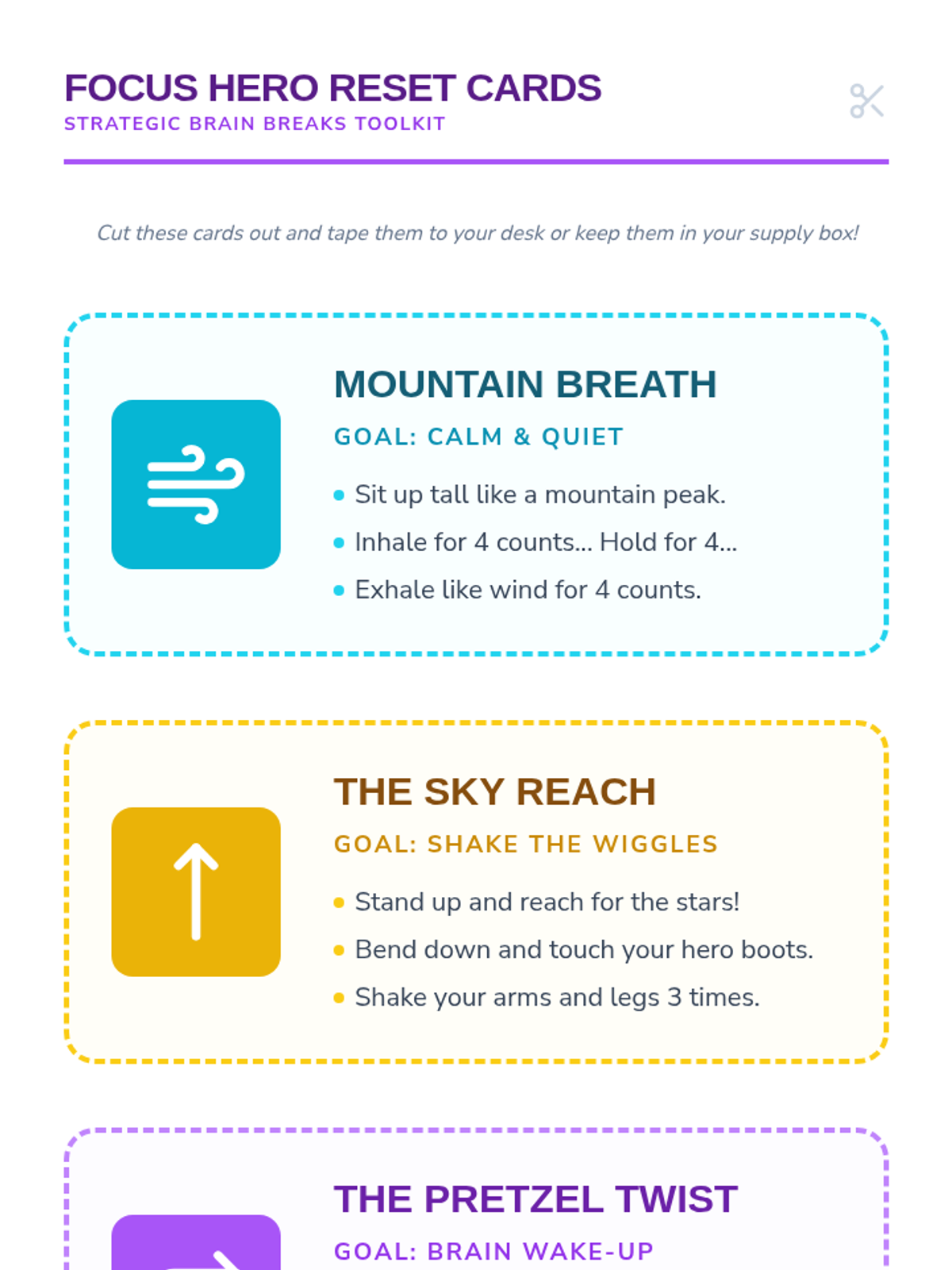
Students learn and practice three specific 1-minute brain breaks to reset their working memory and maintain focus during long tasks.
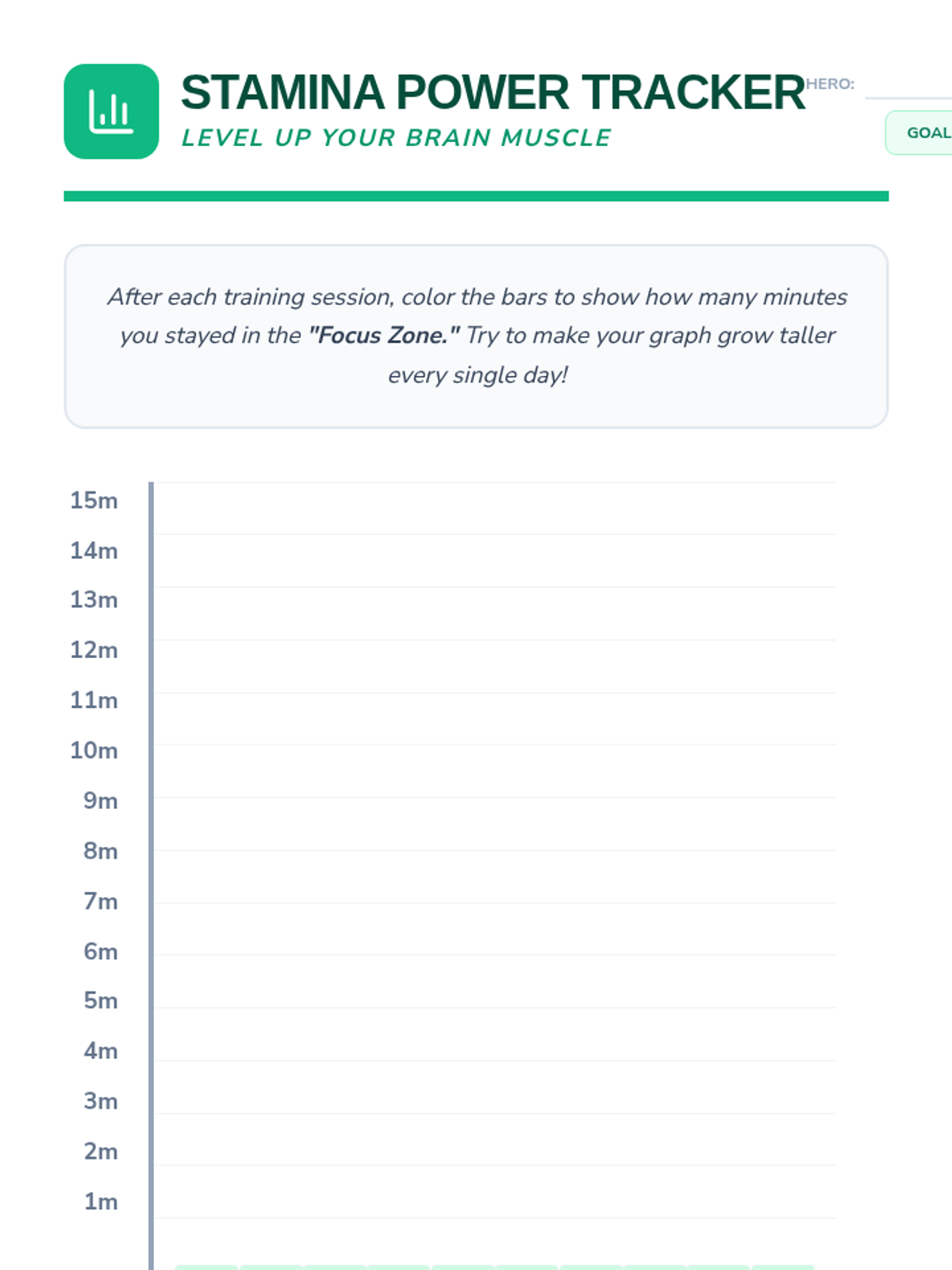
Students engage in incremental endurance training, working for increasing bursts of time and tracking their personal stamina growth on a graph.
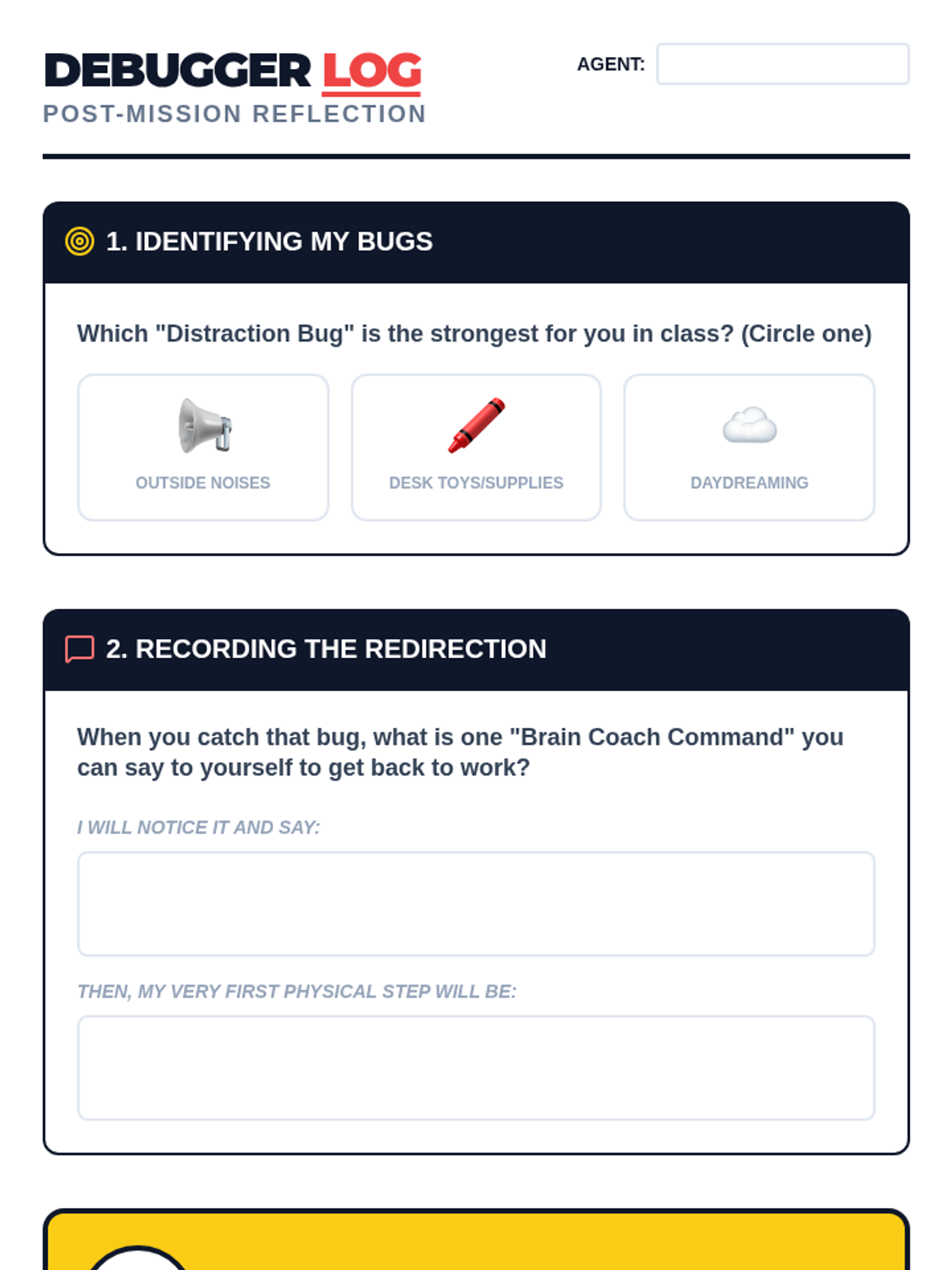
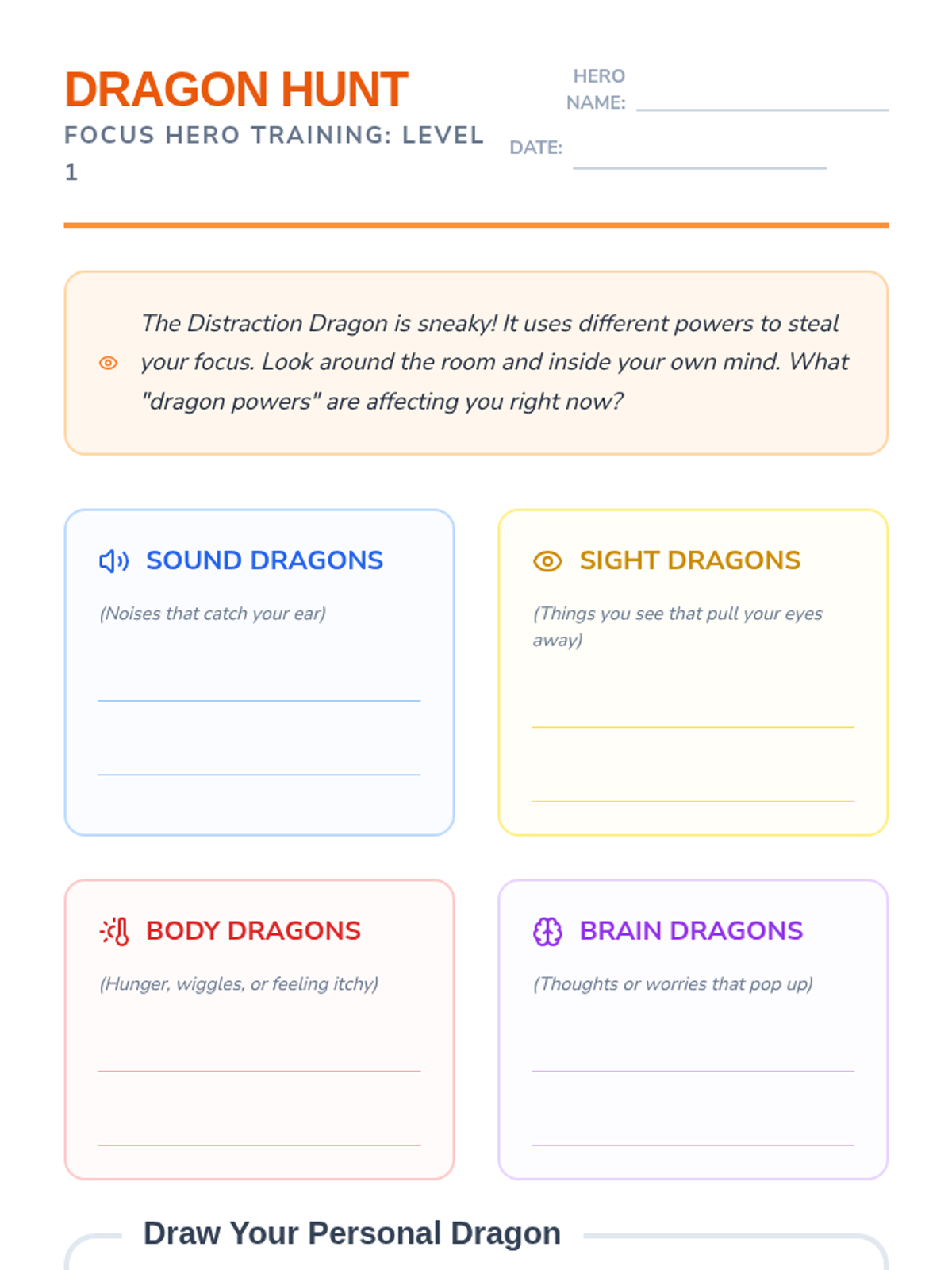
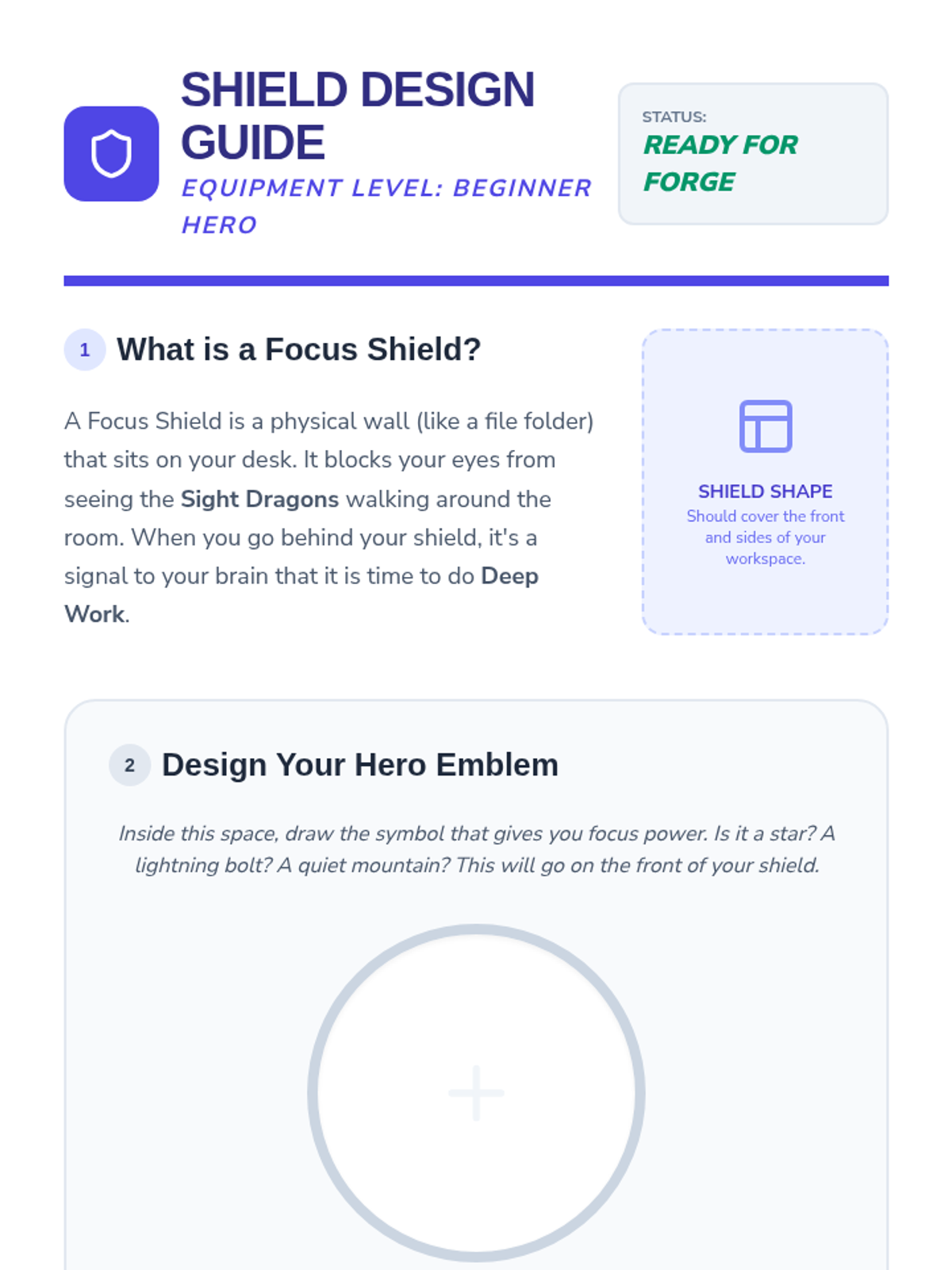
Students identify internal and external distractions (The Distraction Dragon) and create a physical 'Shield' to block visual distractions.
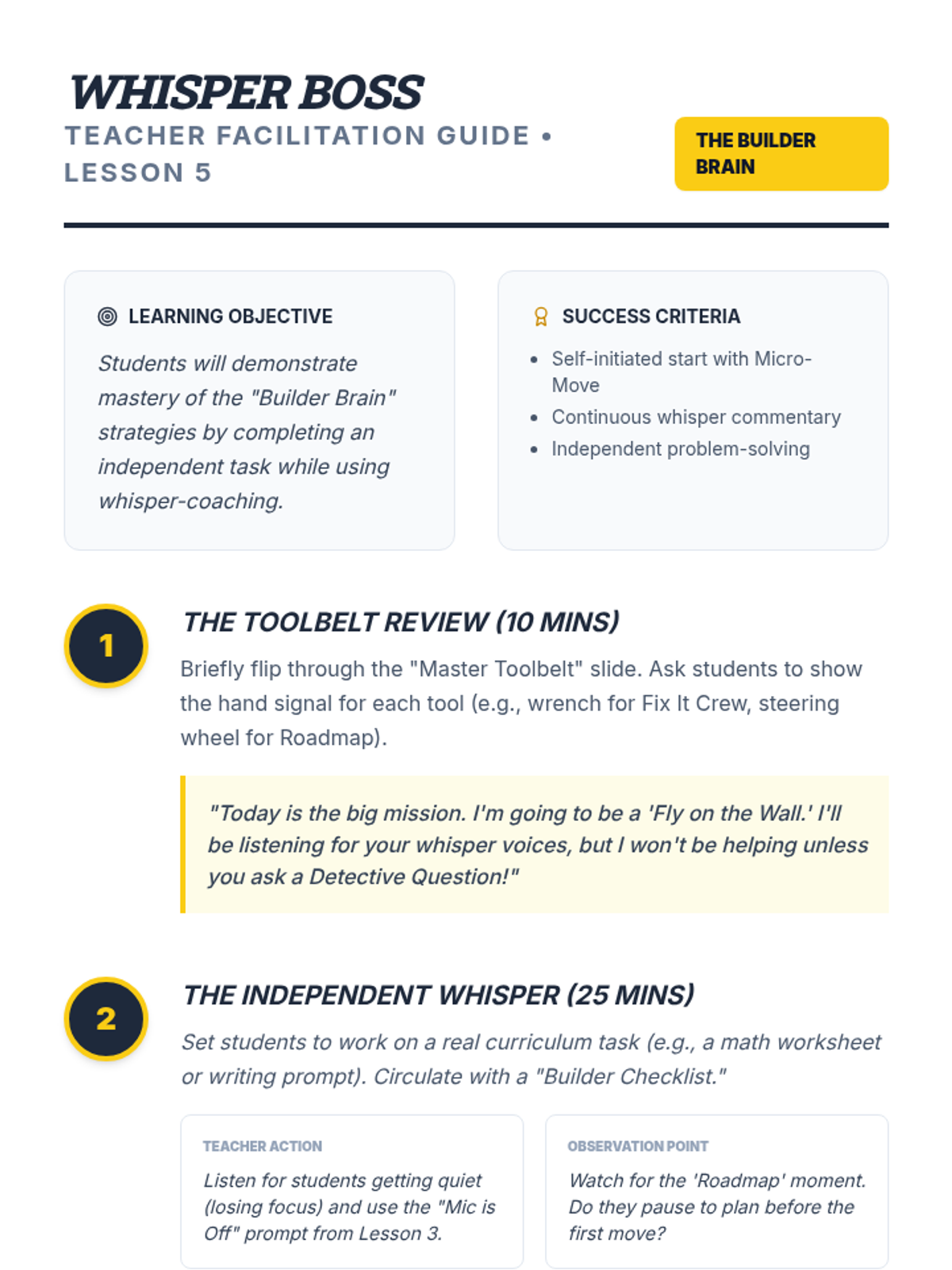
Students apply the breakdown and narration techniques to a real independent work session. The teacher circulates to listen for 'whisper coaching' as students initiate and sustain their work.
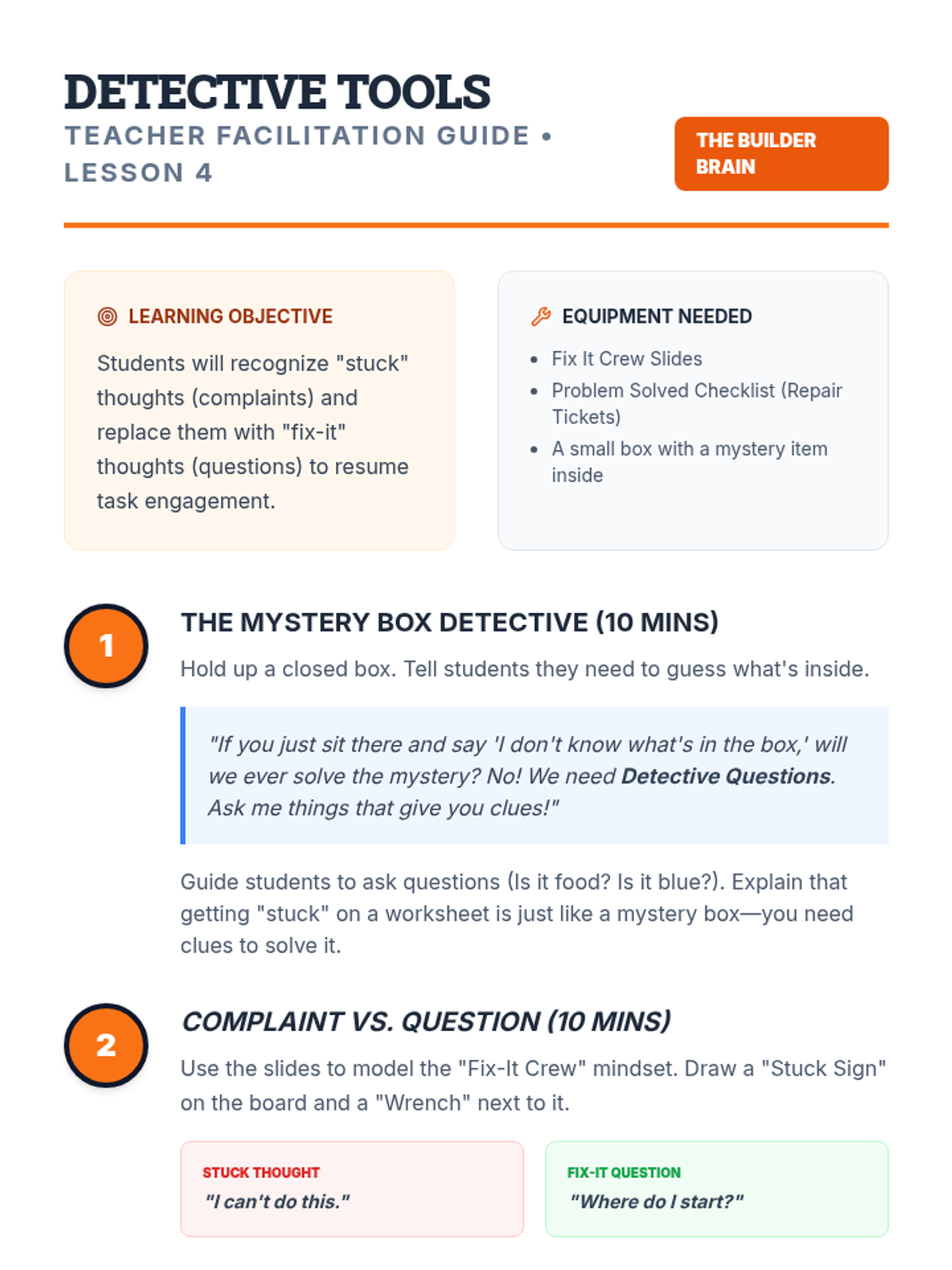
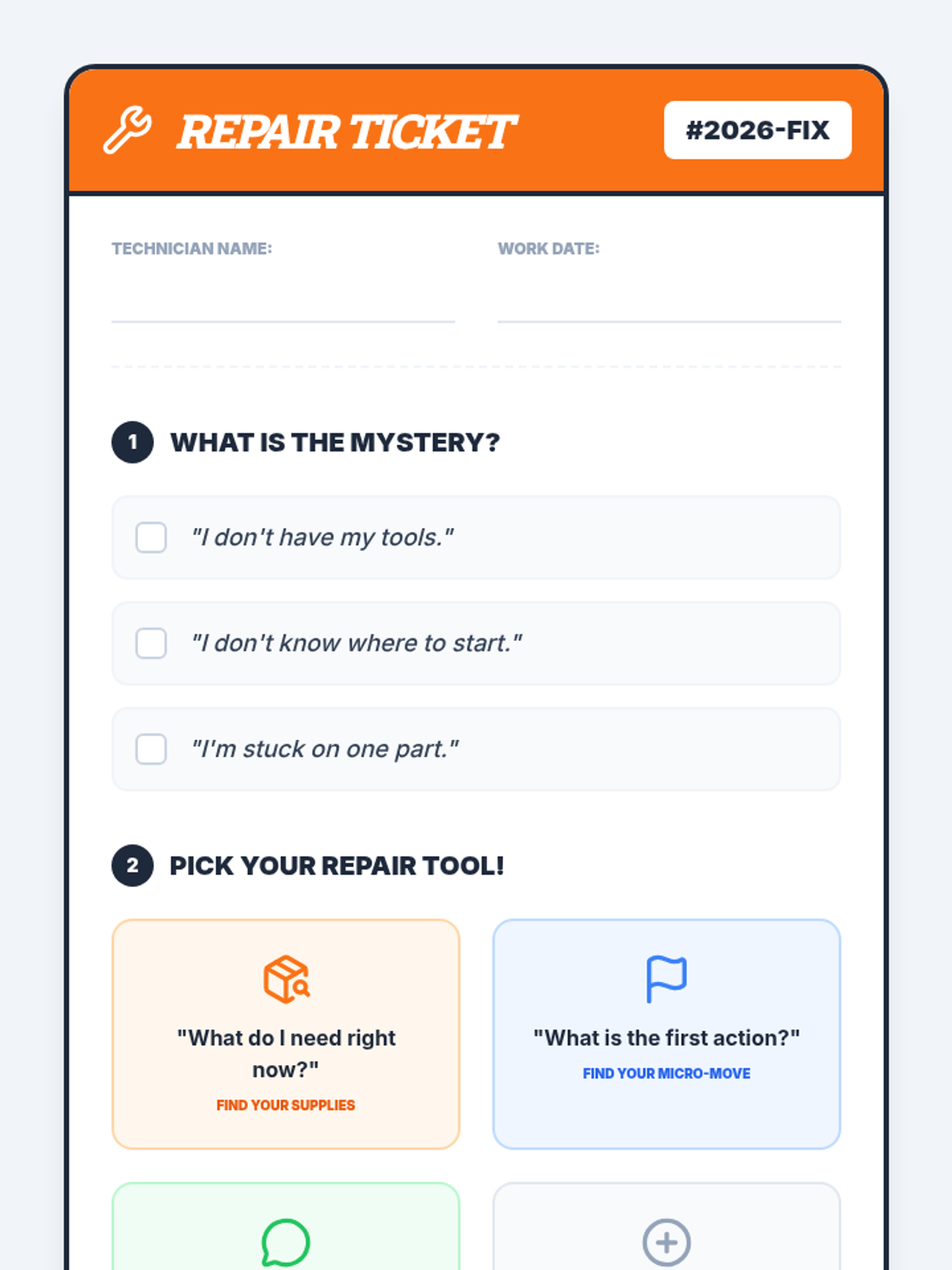
Students learn to ask themselves specific questions when they get stuck. This shifts the internal monologue from complaint to inquiry and problem-solving.
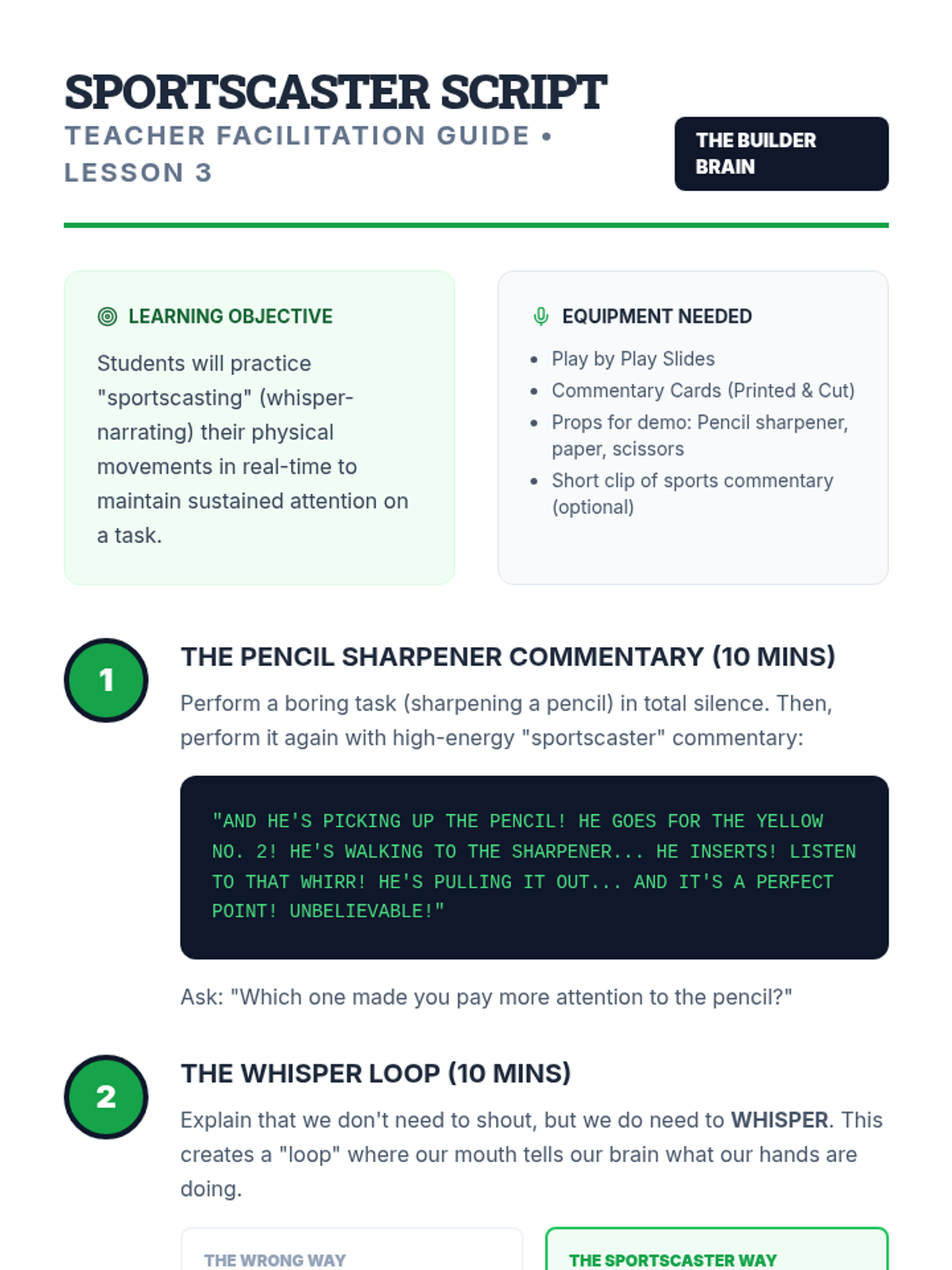
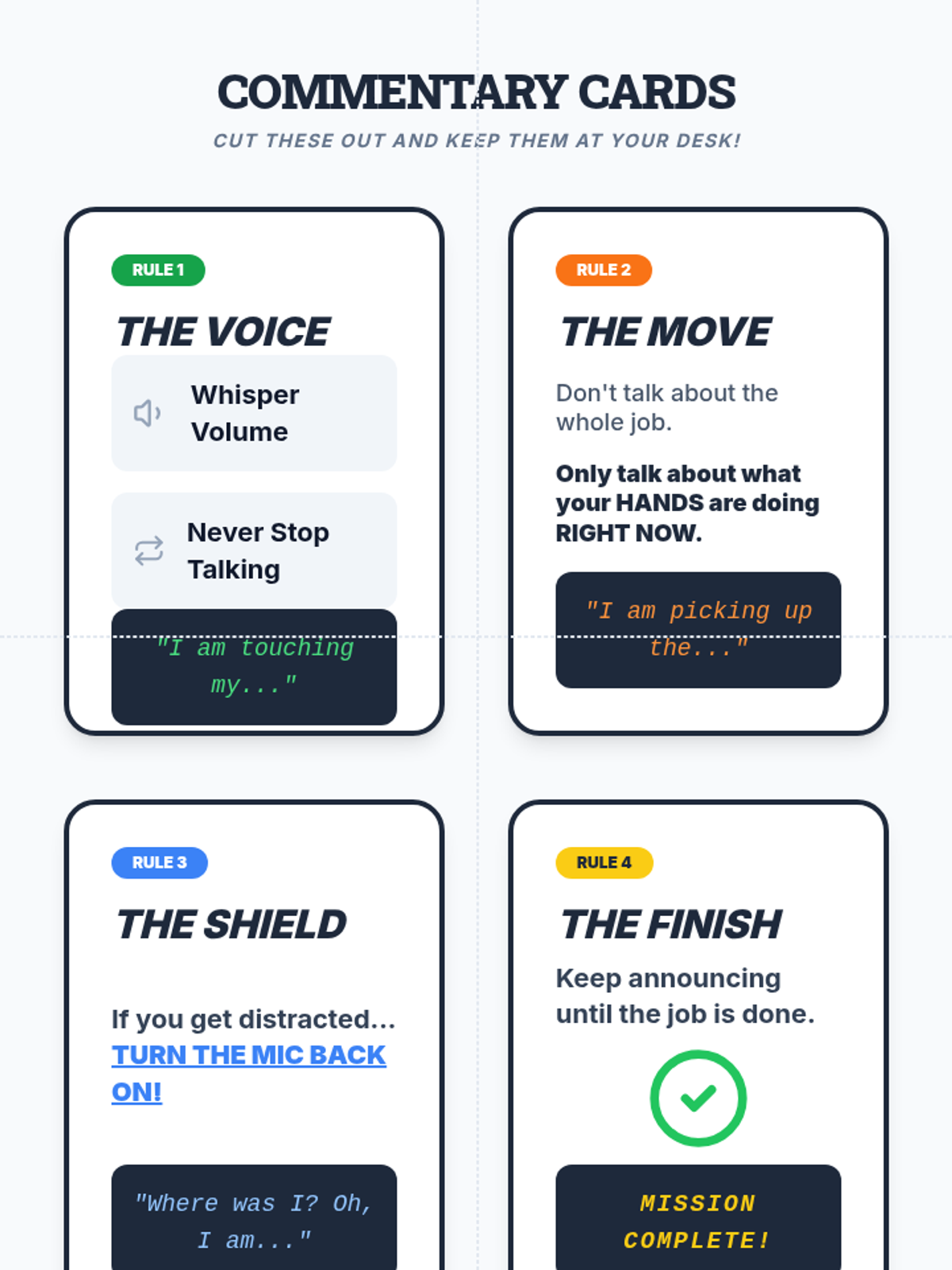
Students practice whispering their actions as they do them, similar to a sportscaster announcing a game. This continuous verbal loop helps prevent distraction and keeps the student engaged.
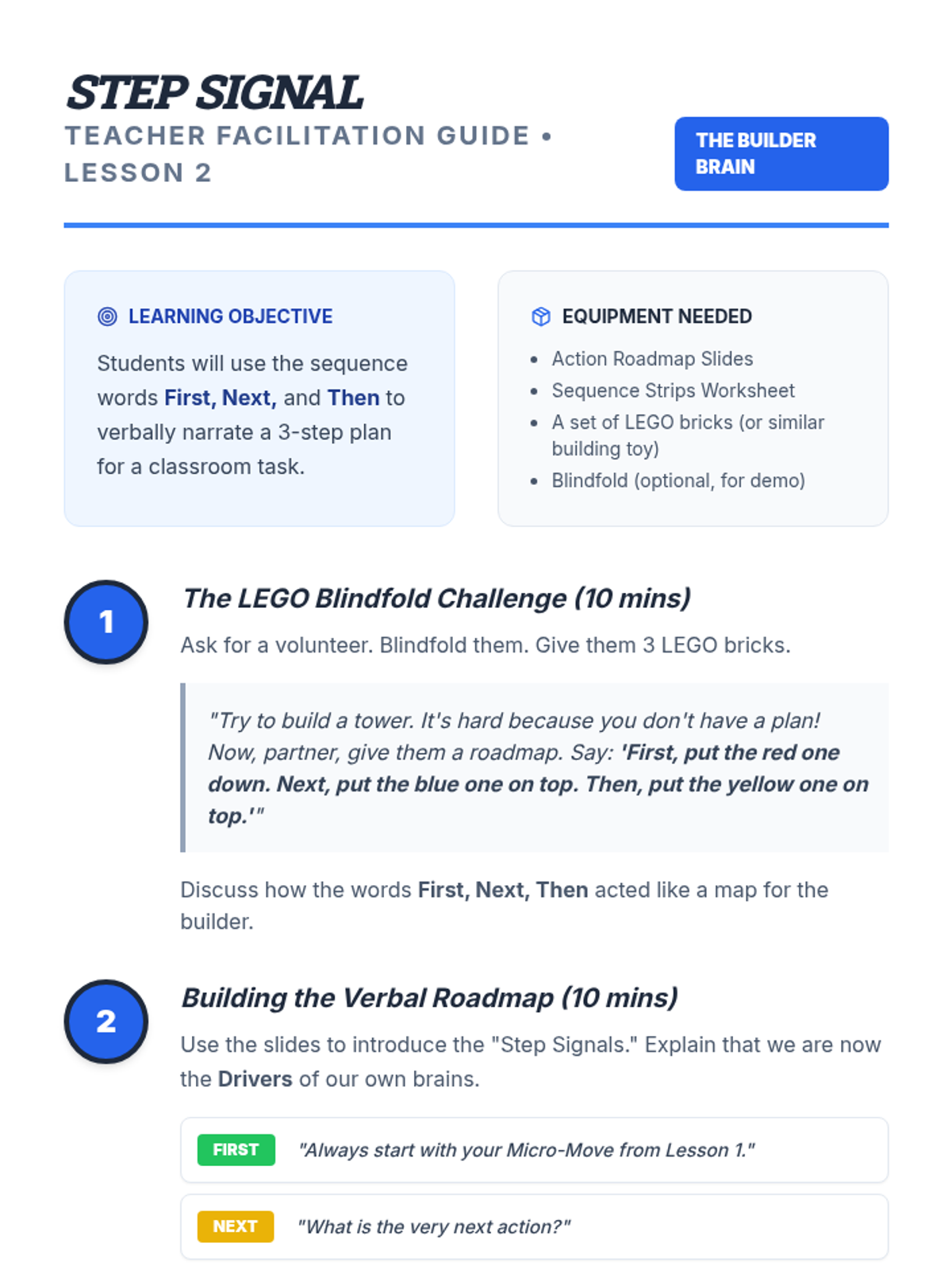
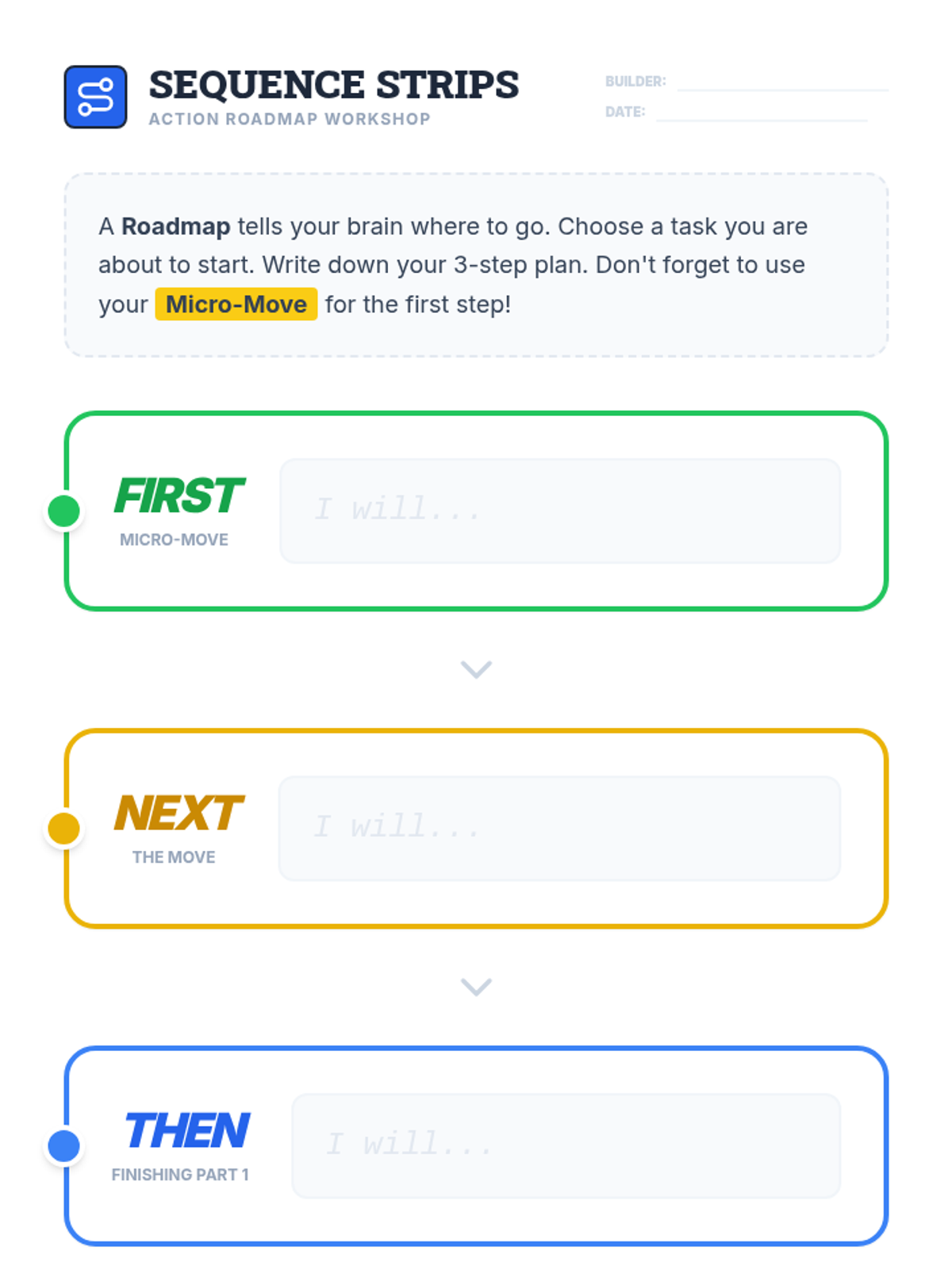
Students practice using the words 'First,' 'Next,' and 'Then' to create a verbal roadmap. They verbally plan a simple classroom routine, ensuring they can narrate the order of operations before beginning.
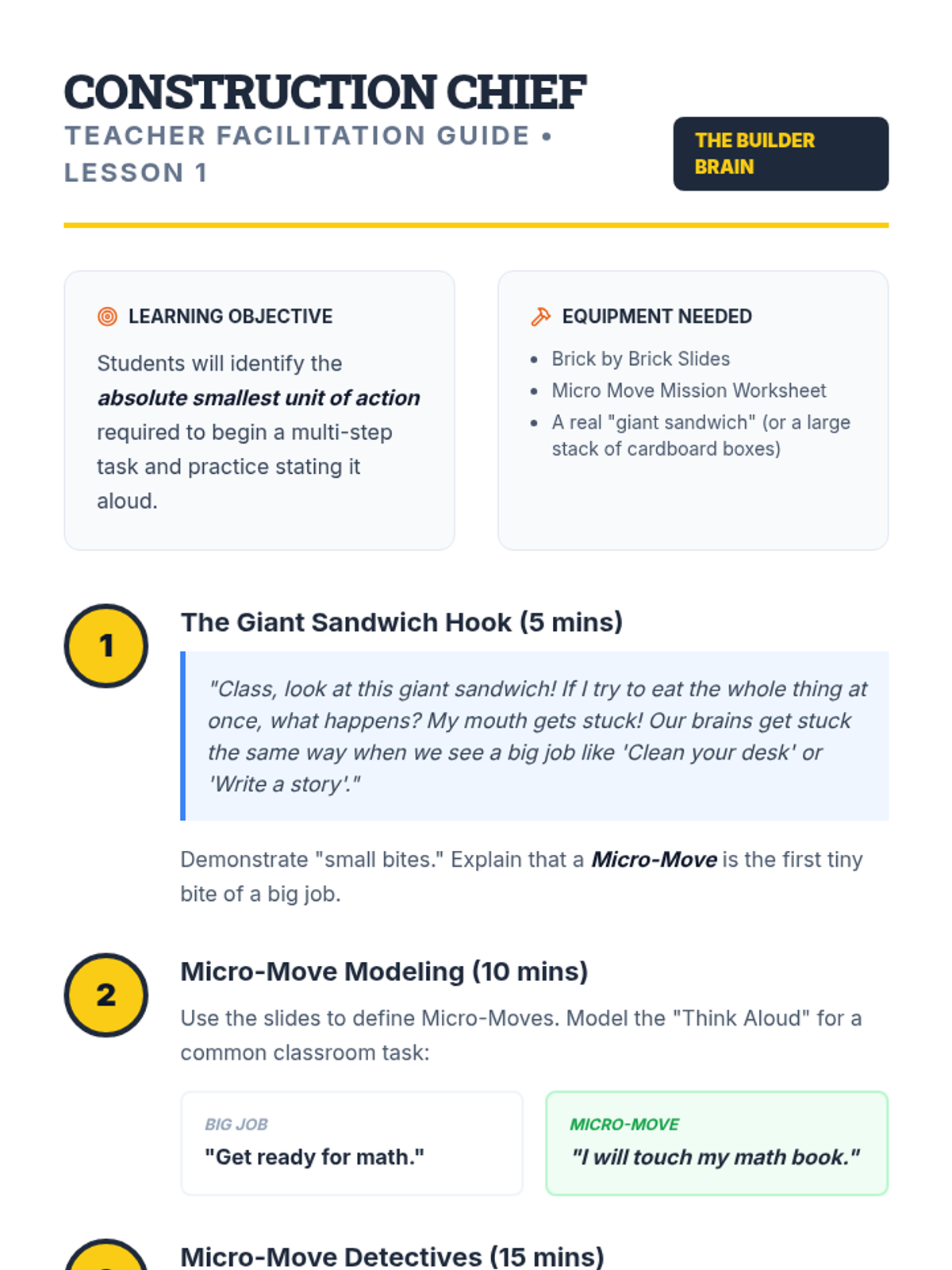
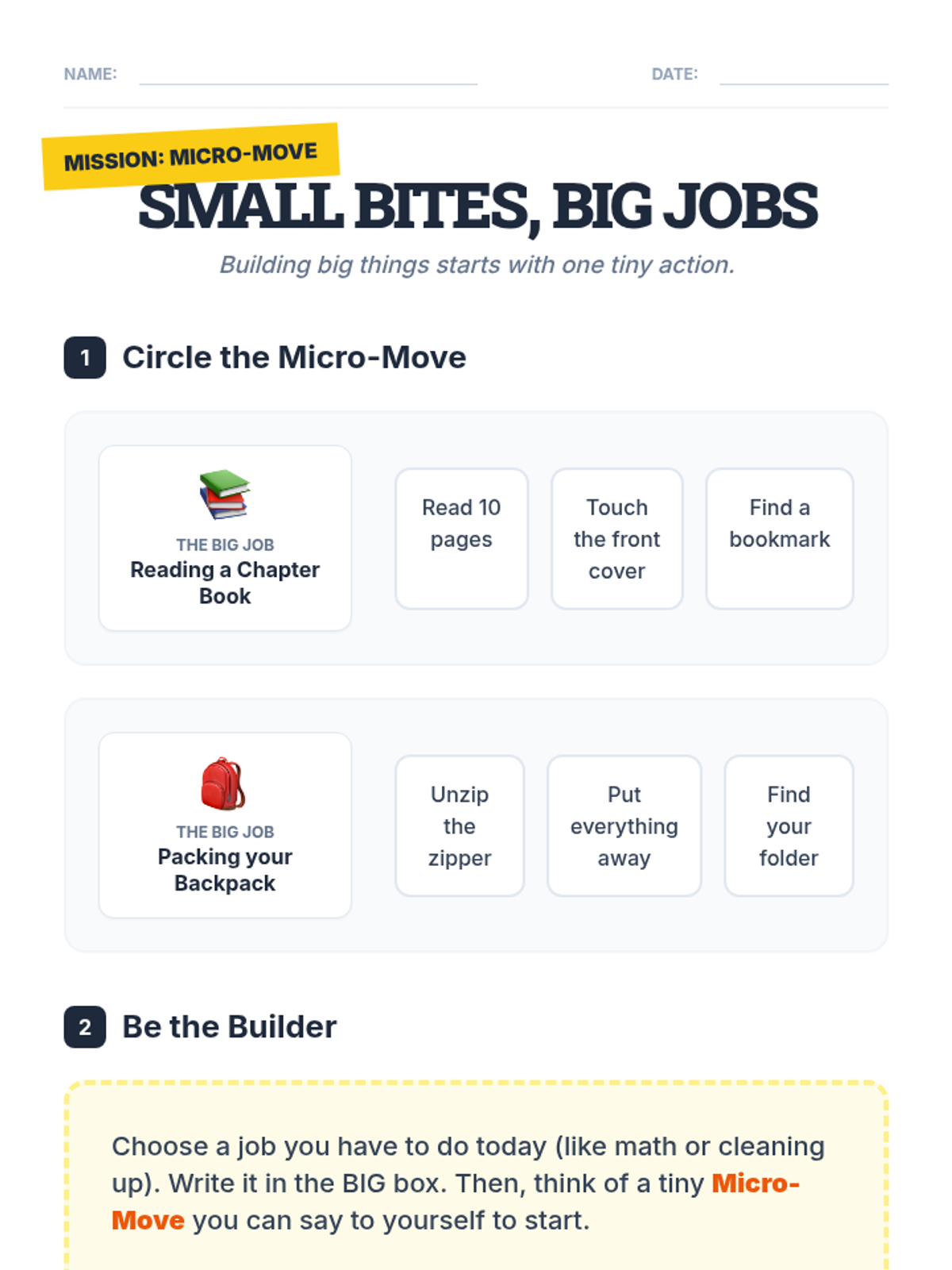
Students learn to identify the absolute smallest unit of action required to begin a task. They practice ignoring the whole assignment to focus solely on the physical action needed to start.
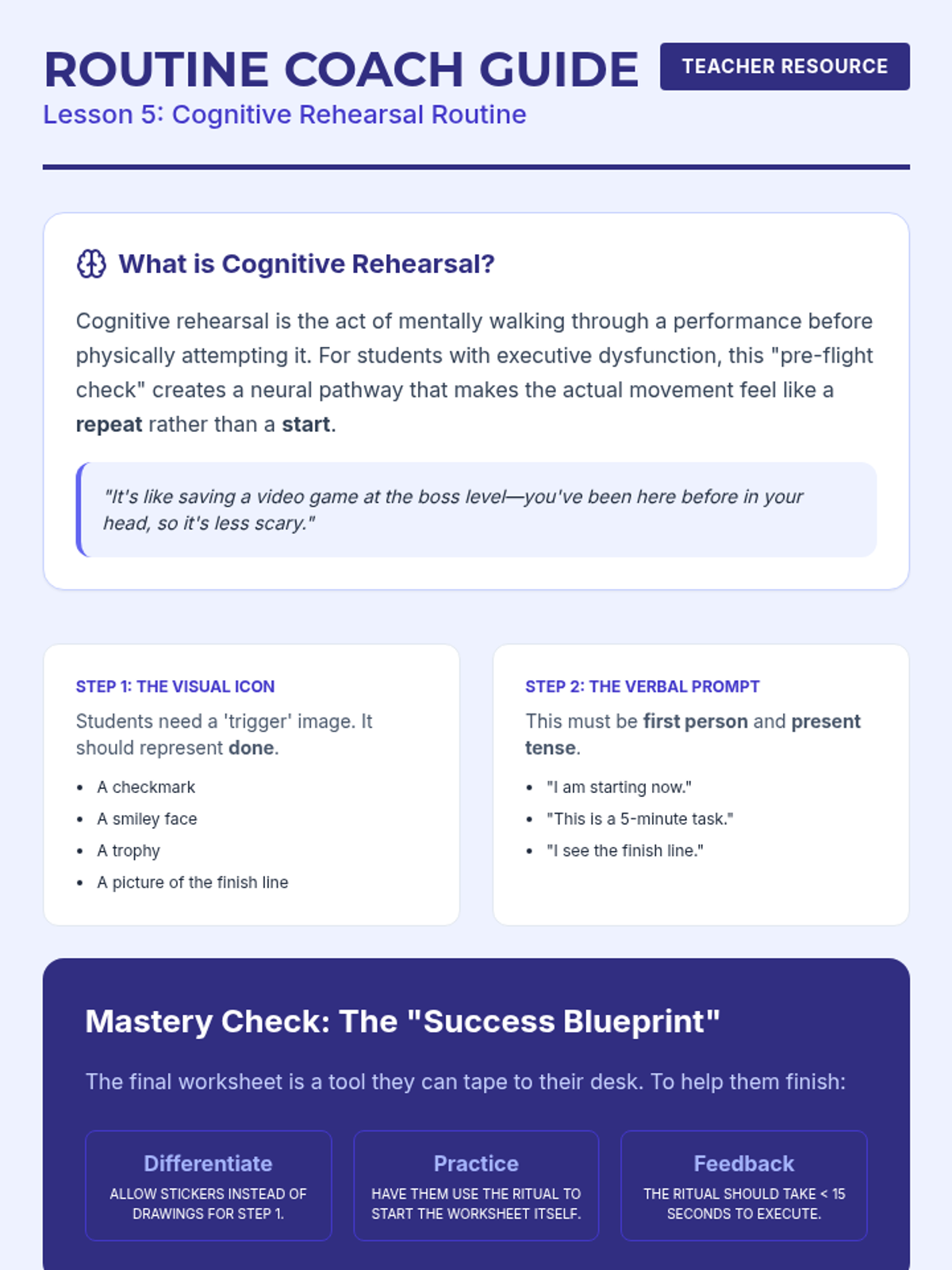
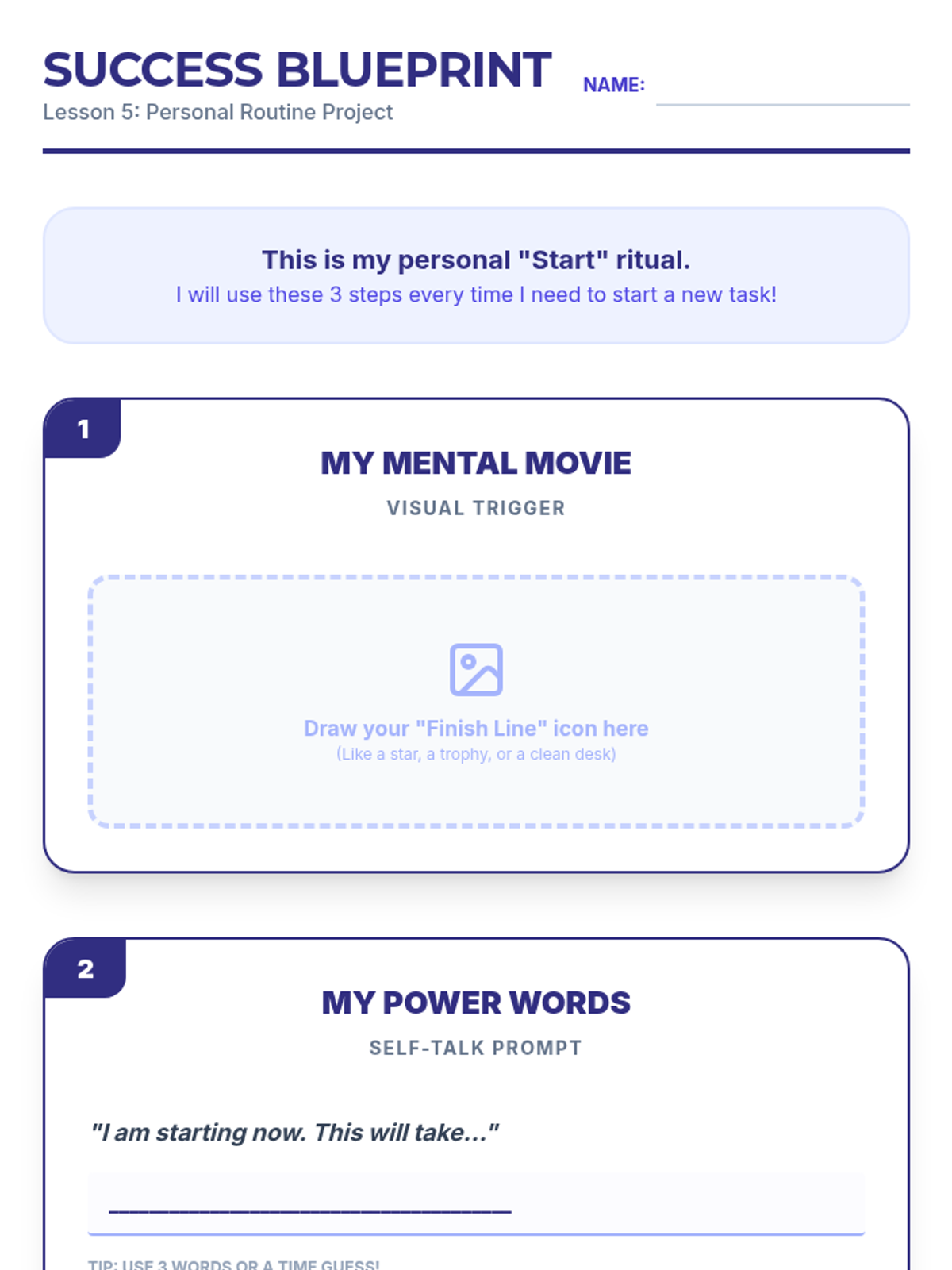
Students create a personal storyboard or checklist that combines a visual icon with a verbal prompt for task initiation.
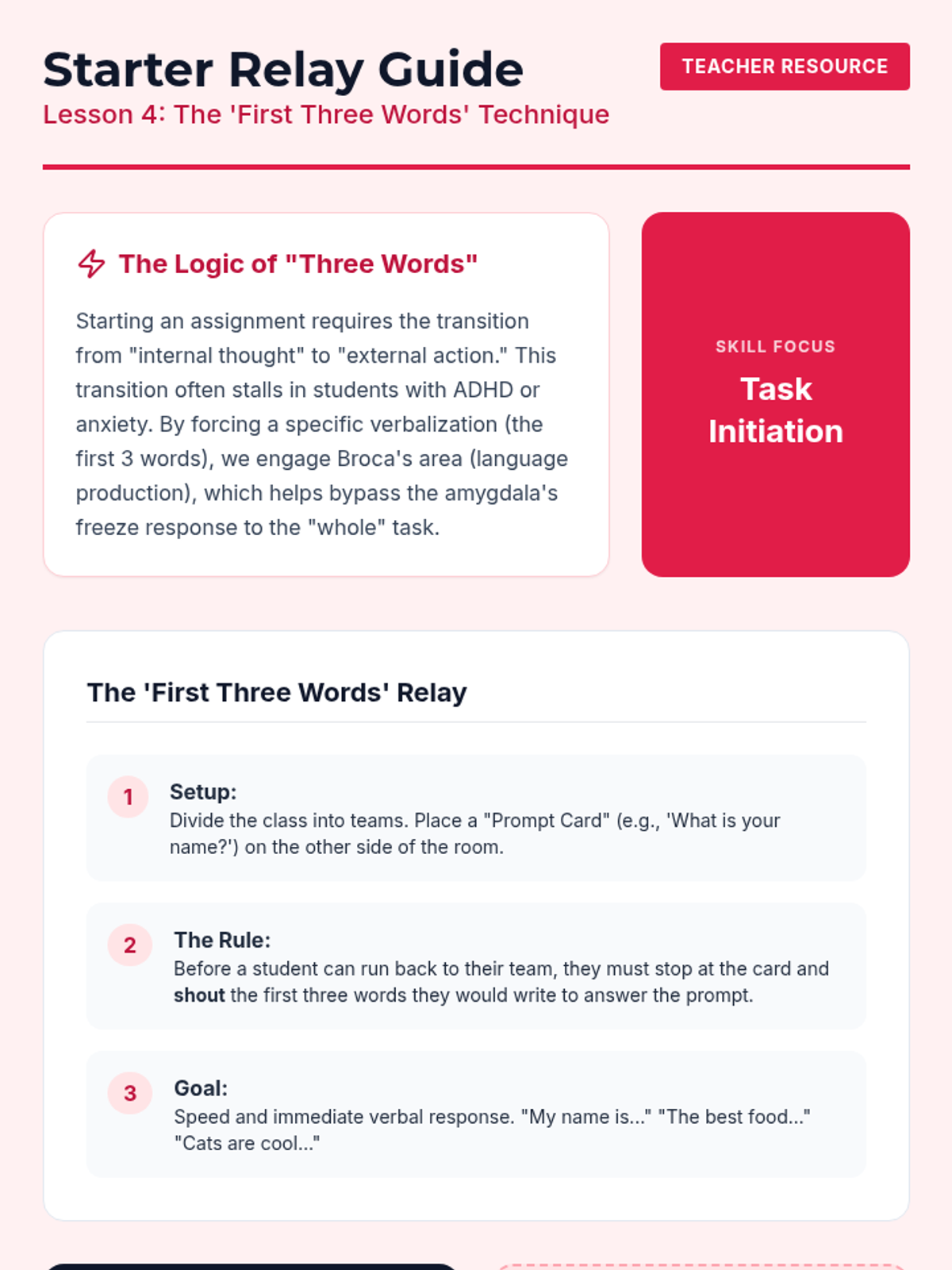
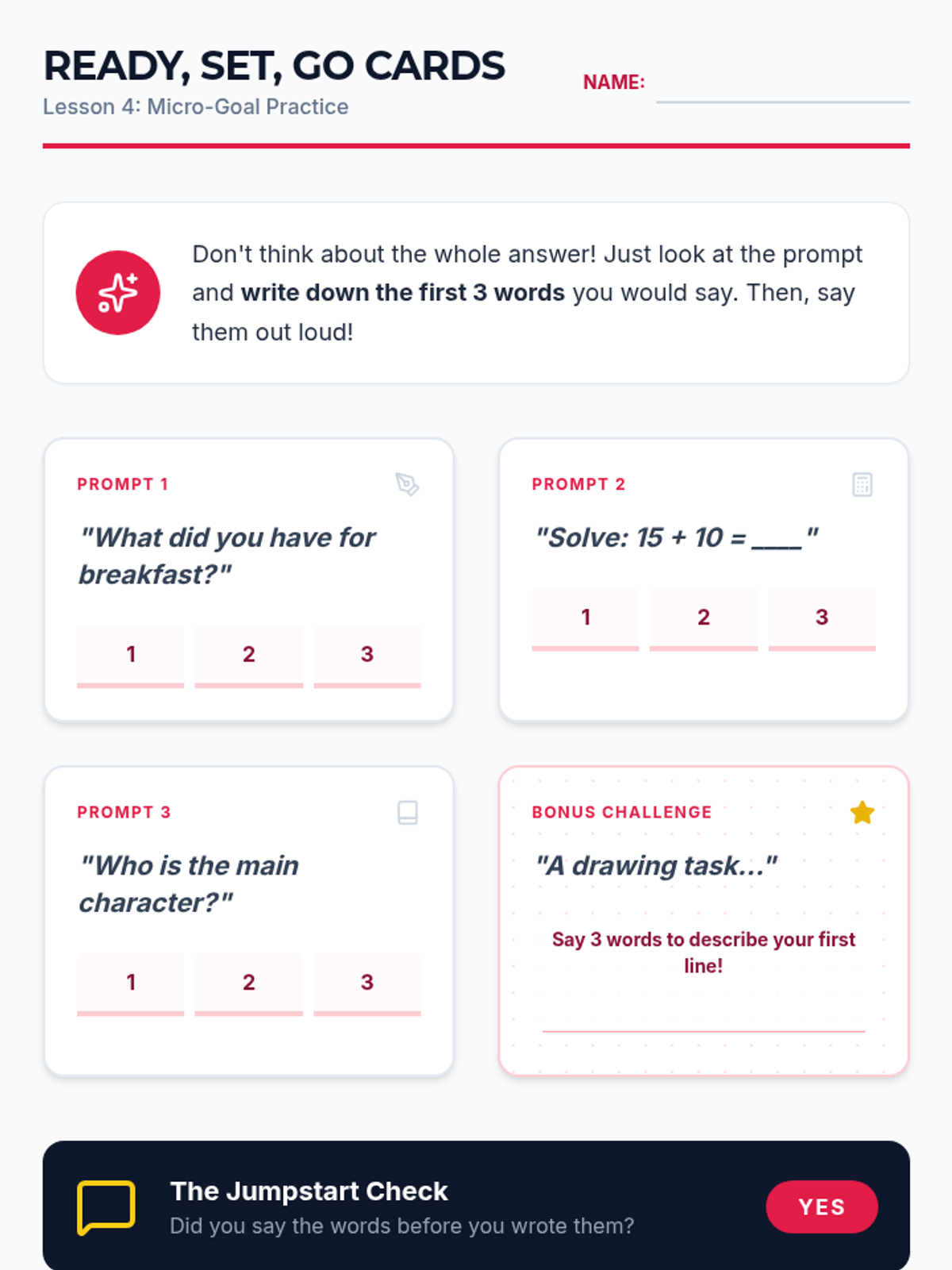
Students learn to identify the first three words of a task to lower the barrier to entry and engage the brain's language center.
Students learn to estimate time and use verbal reassurance to reduce overwhelm.
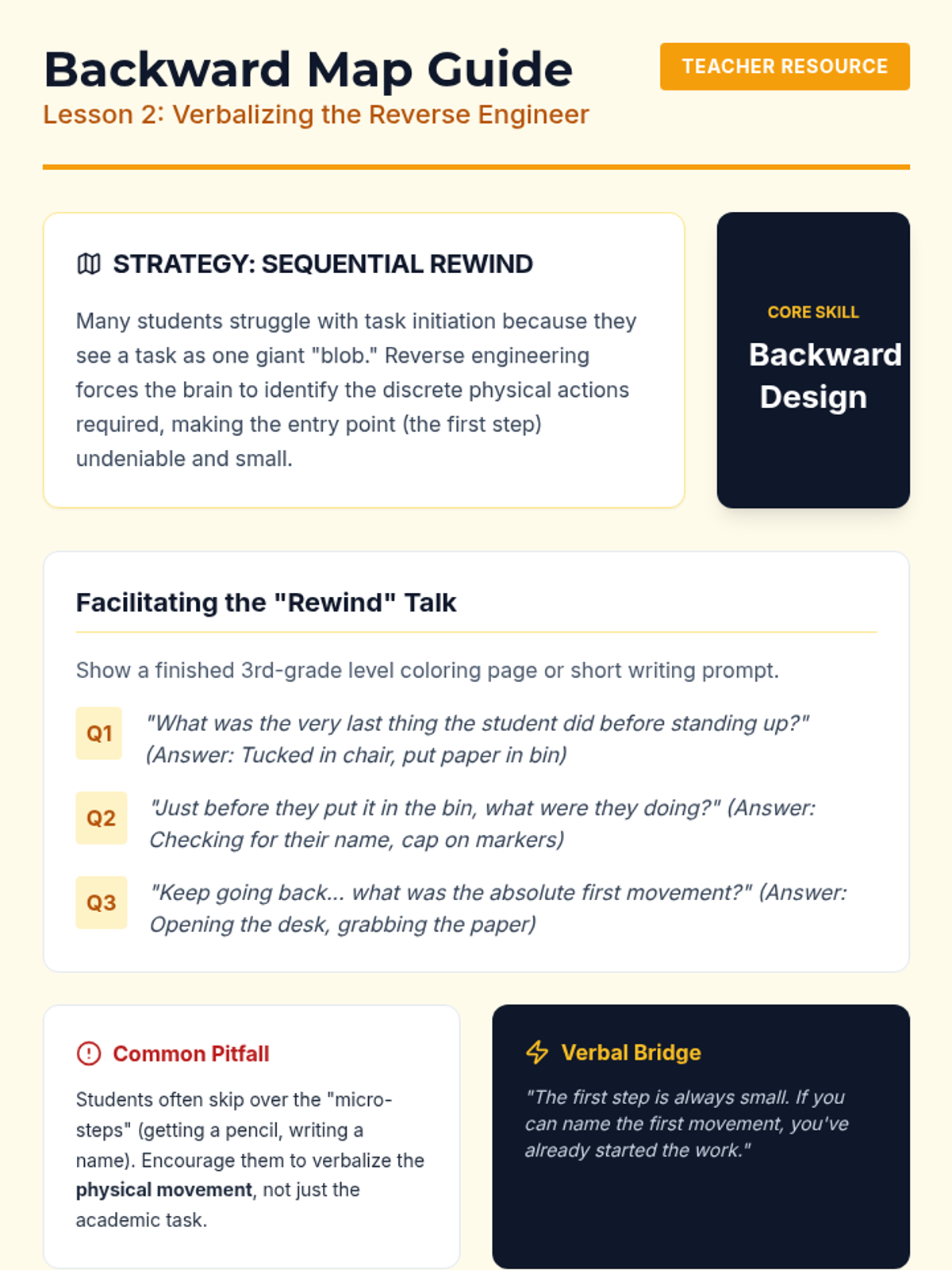
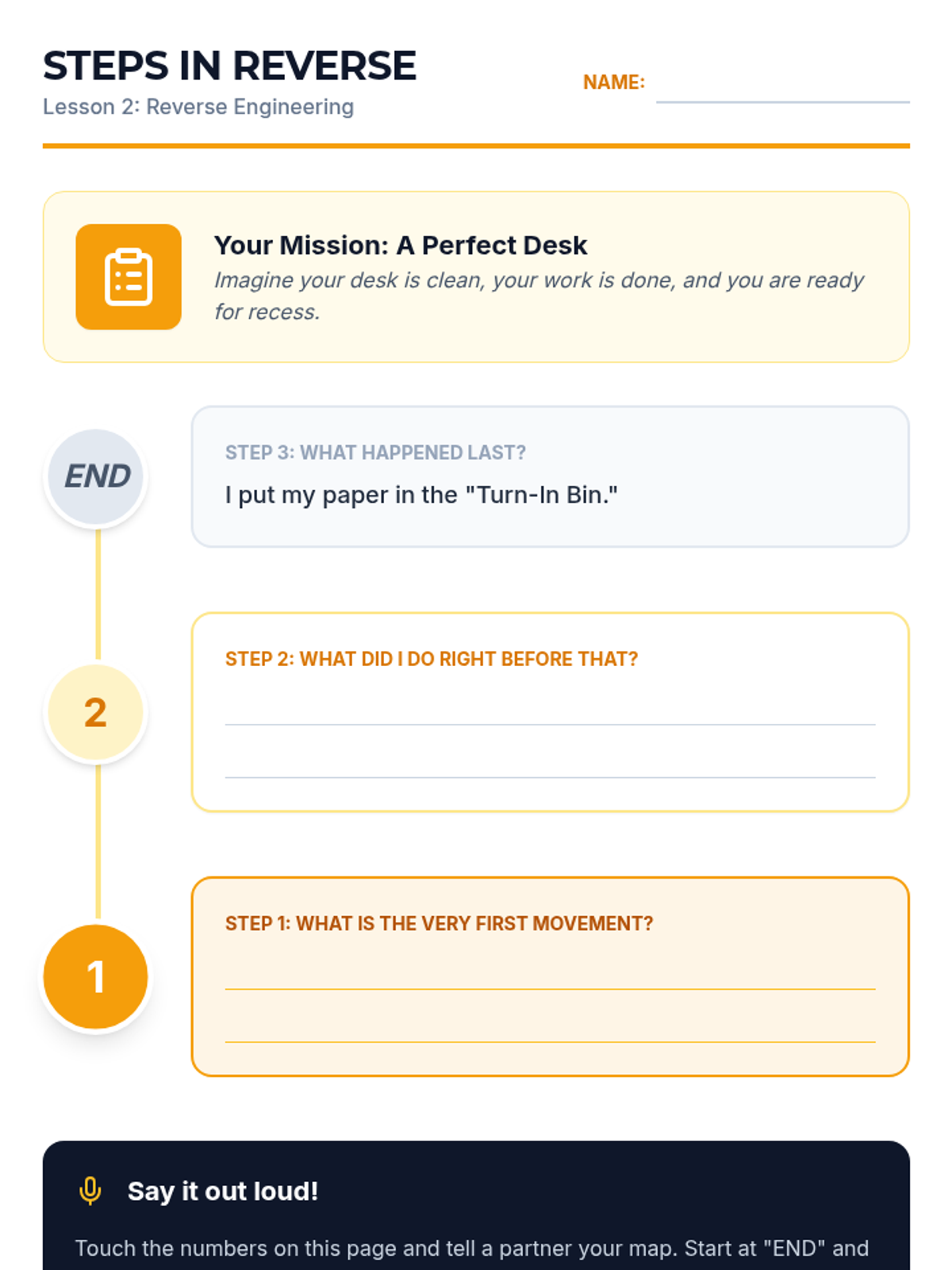
Students talk backward through the steps of a completed sample to make the first step obvious and approachable.
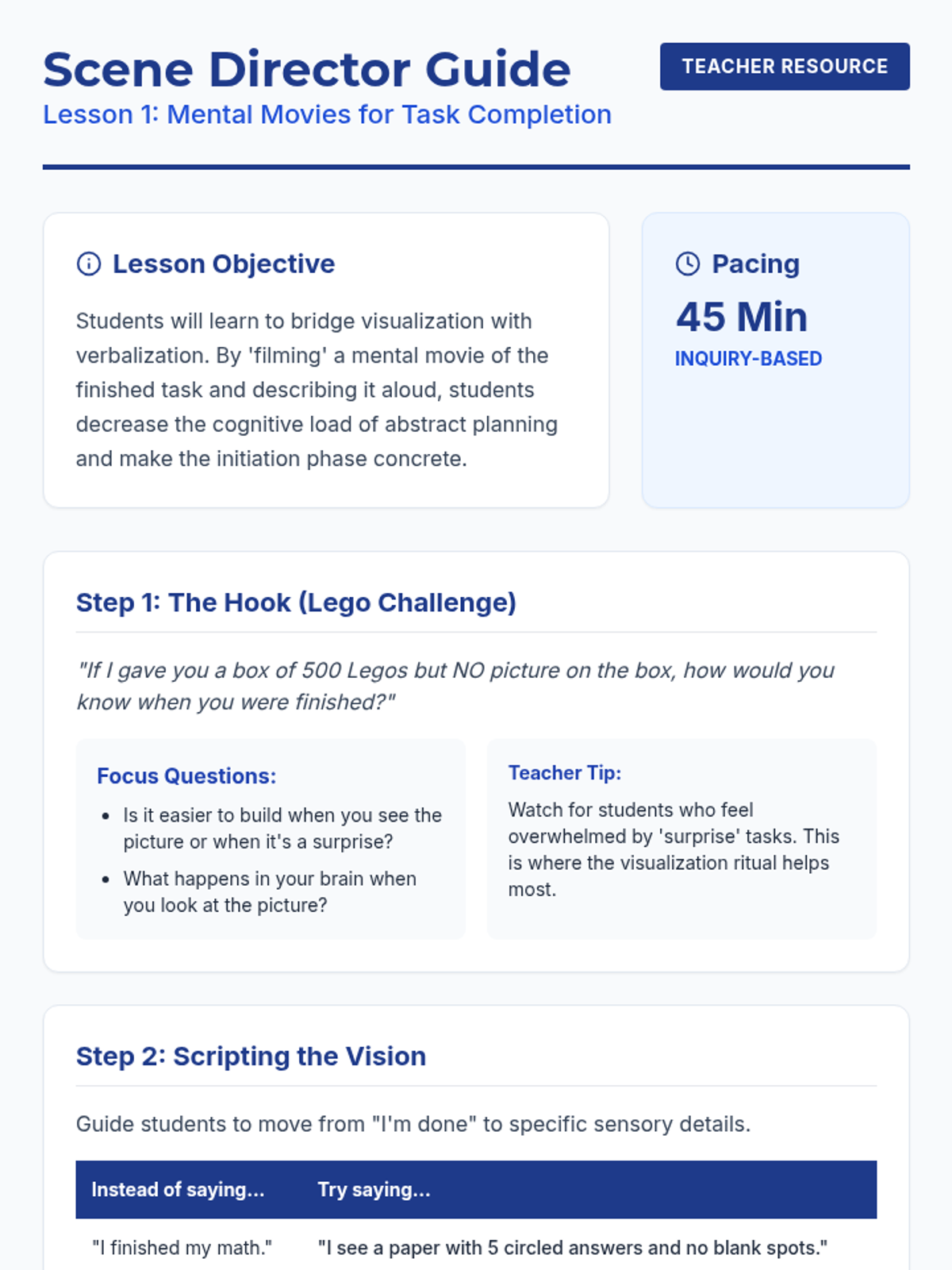
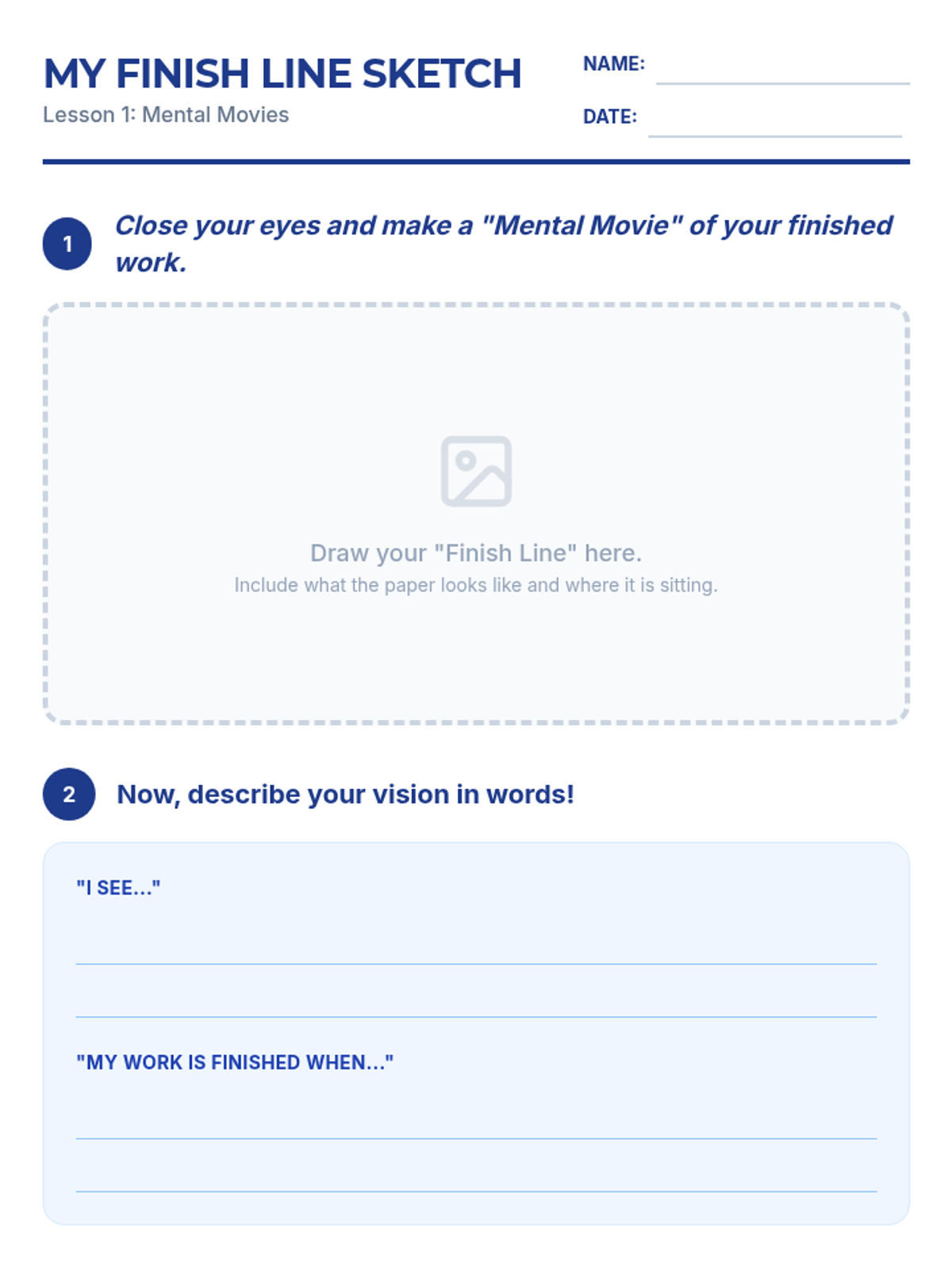
Students practice closing their eyes and creating a detailed mental image of what 'finished' looks like before describing it aloud.
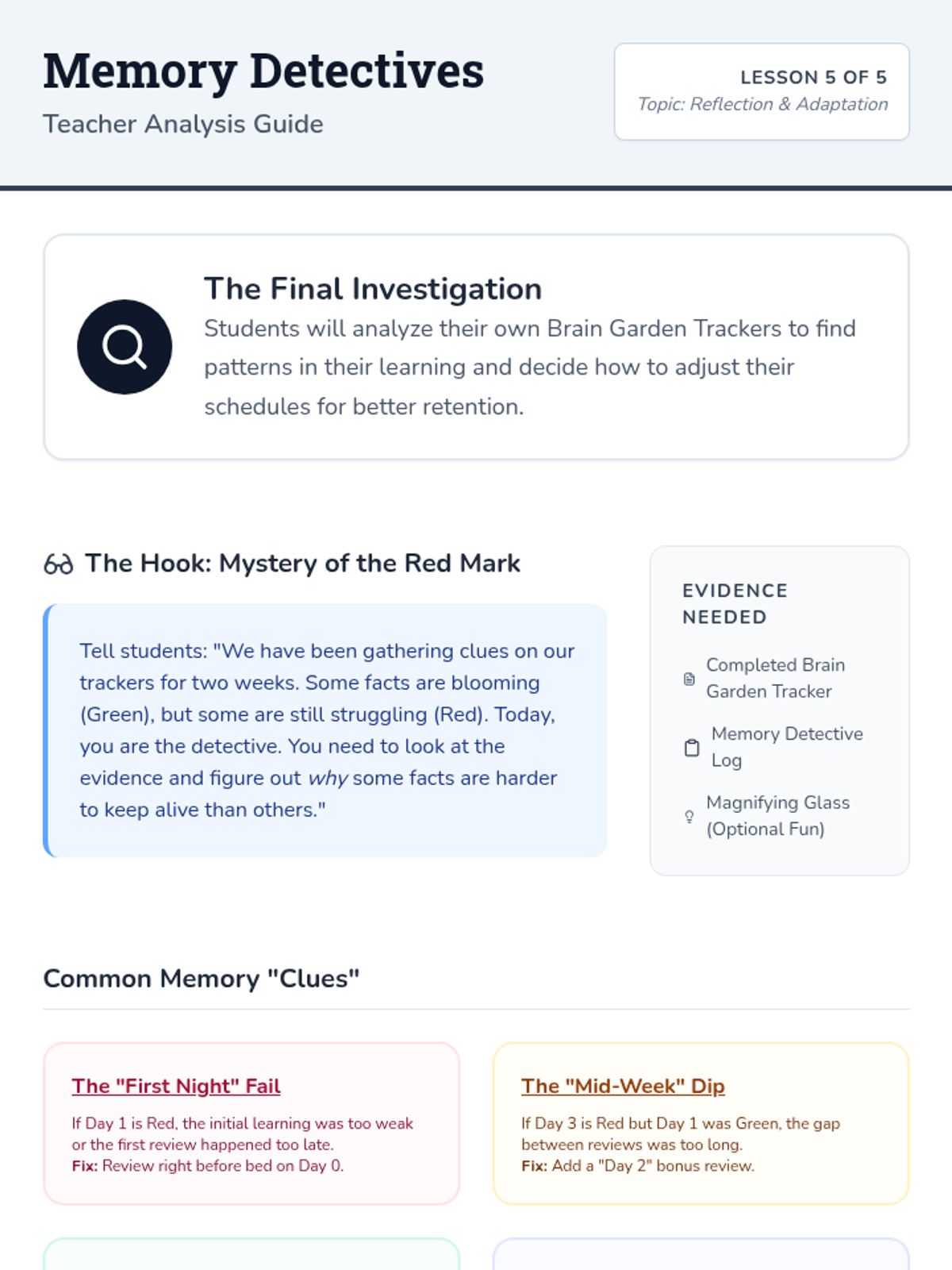
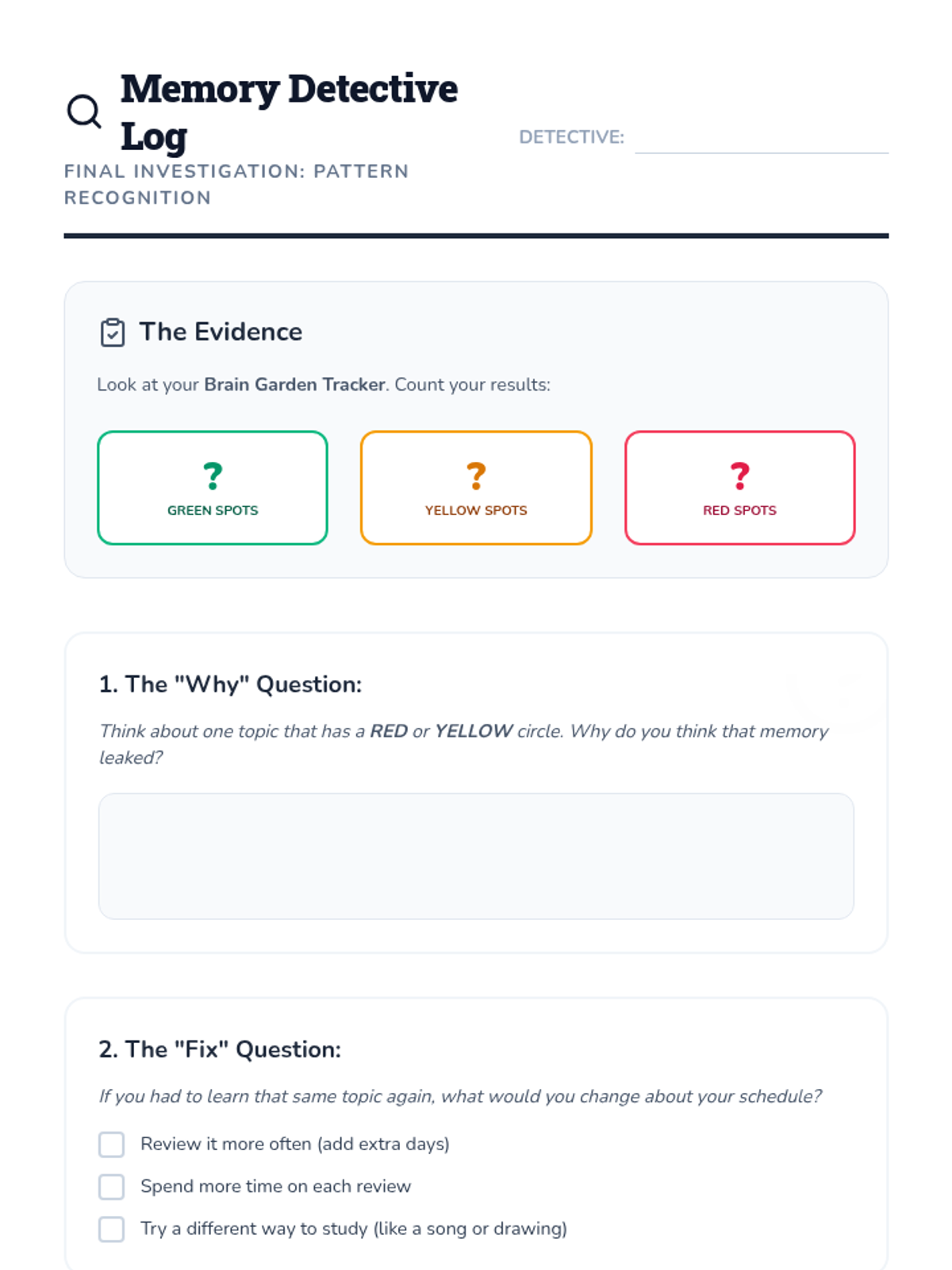
Students analyze their trackers after two weeks. They identify patterns in their memory retention and adjust their future spacing intervals (e.g., needing to review 'Red' items sooner).
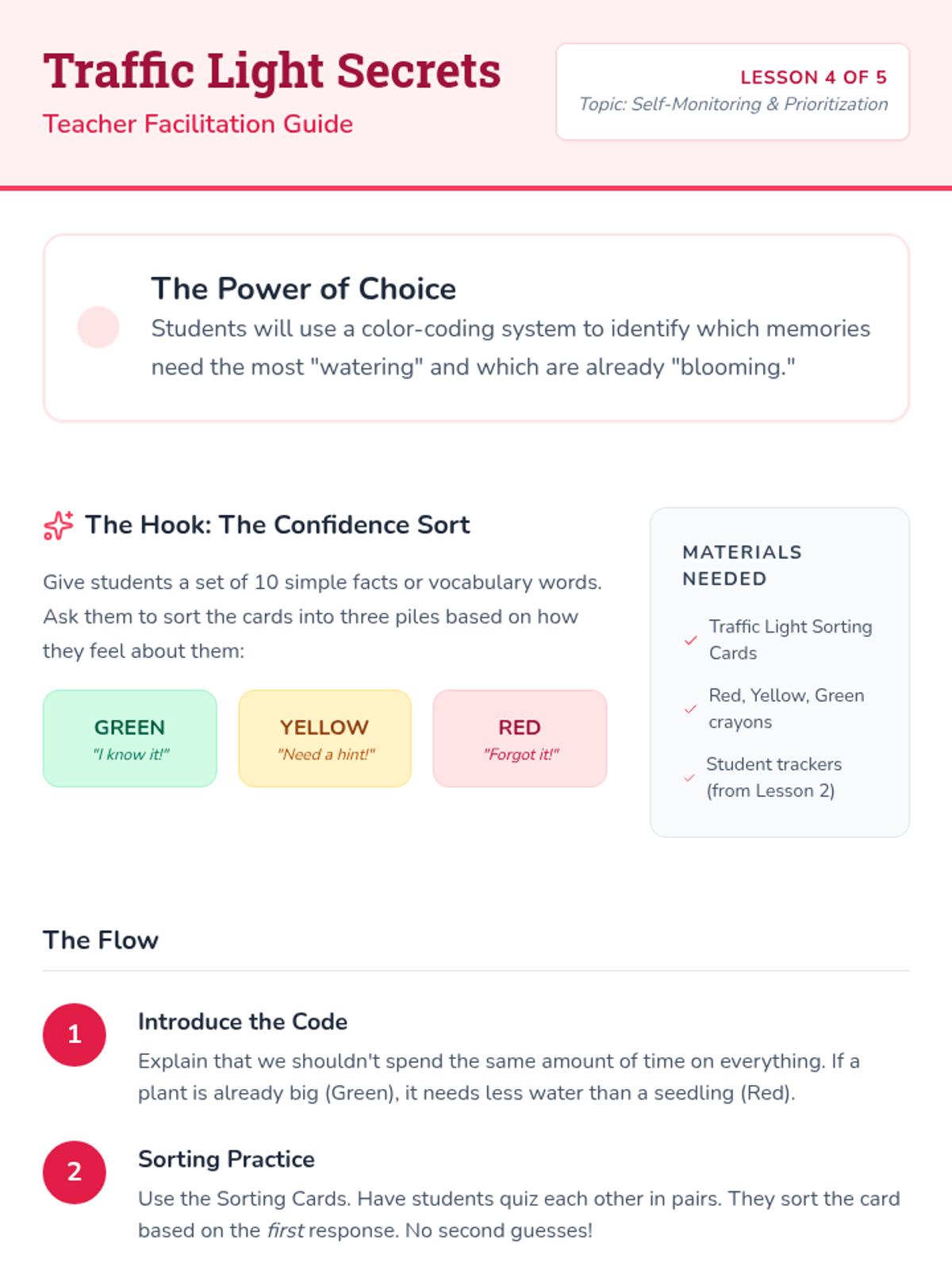
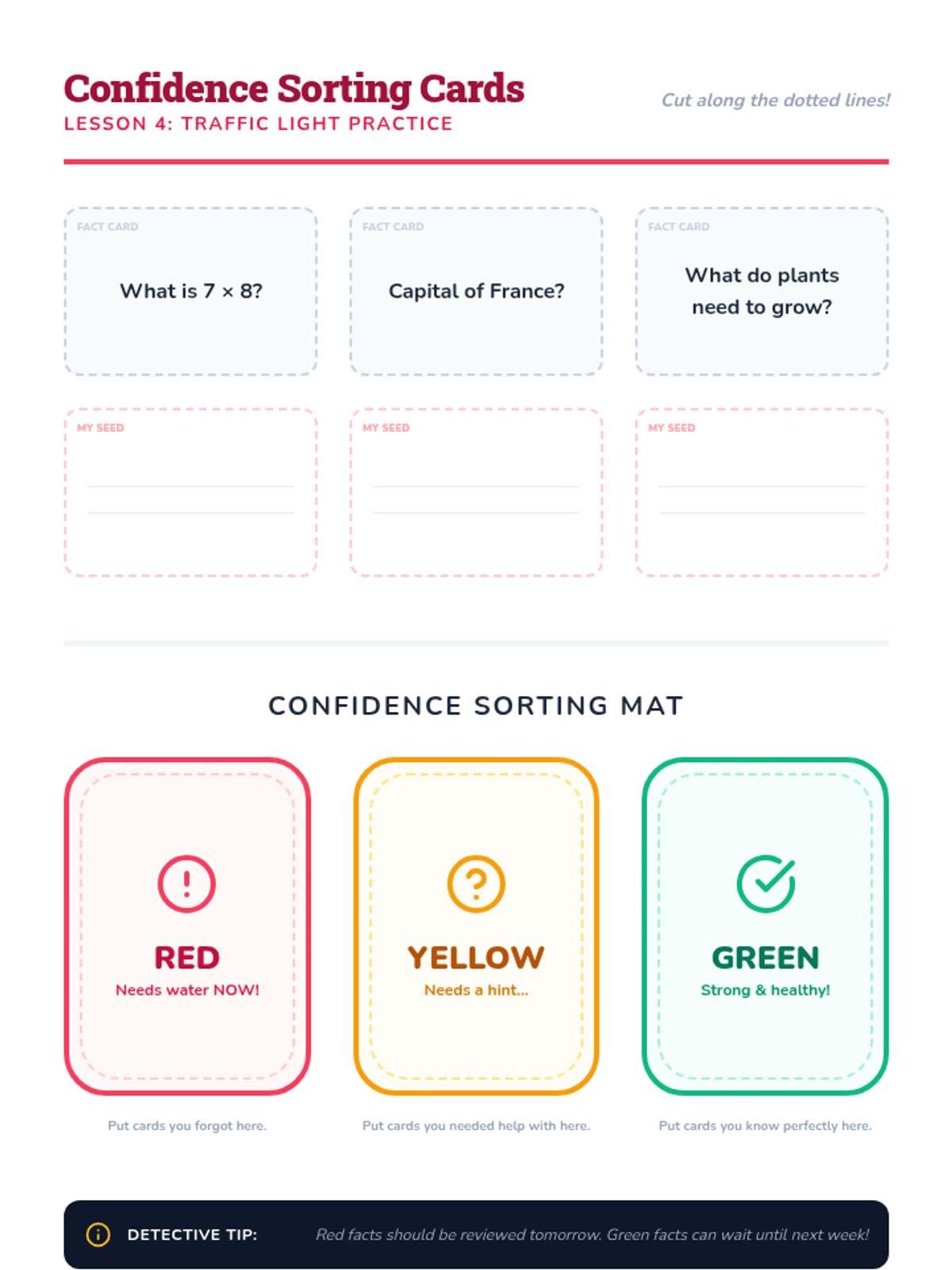
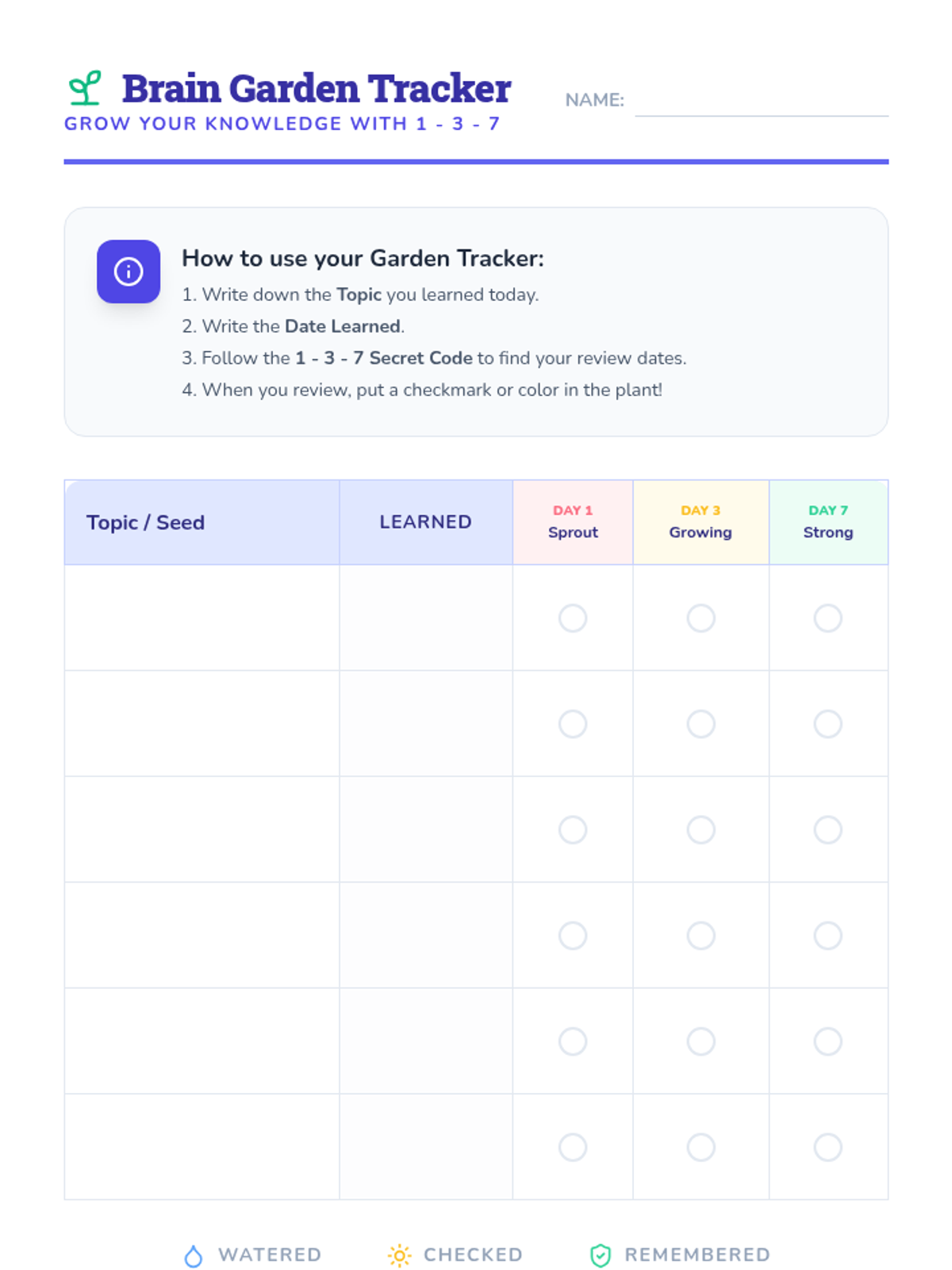
Students learn to color-code their trackers (Green = I know it, Yellow = I need a hint, Red = I forgot). This helps them prioritize which items need immediate spaced repetition and which can wait.
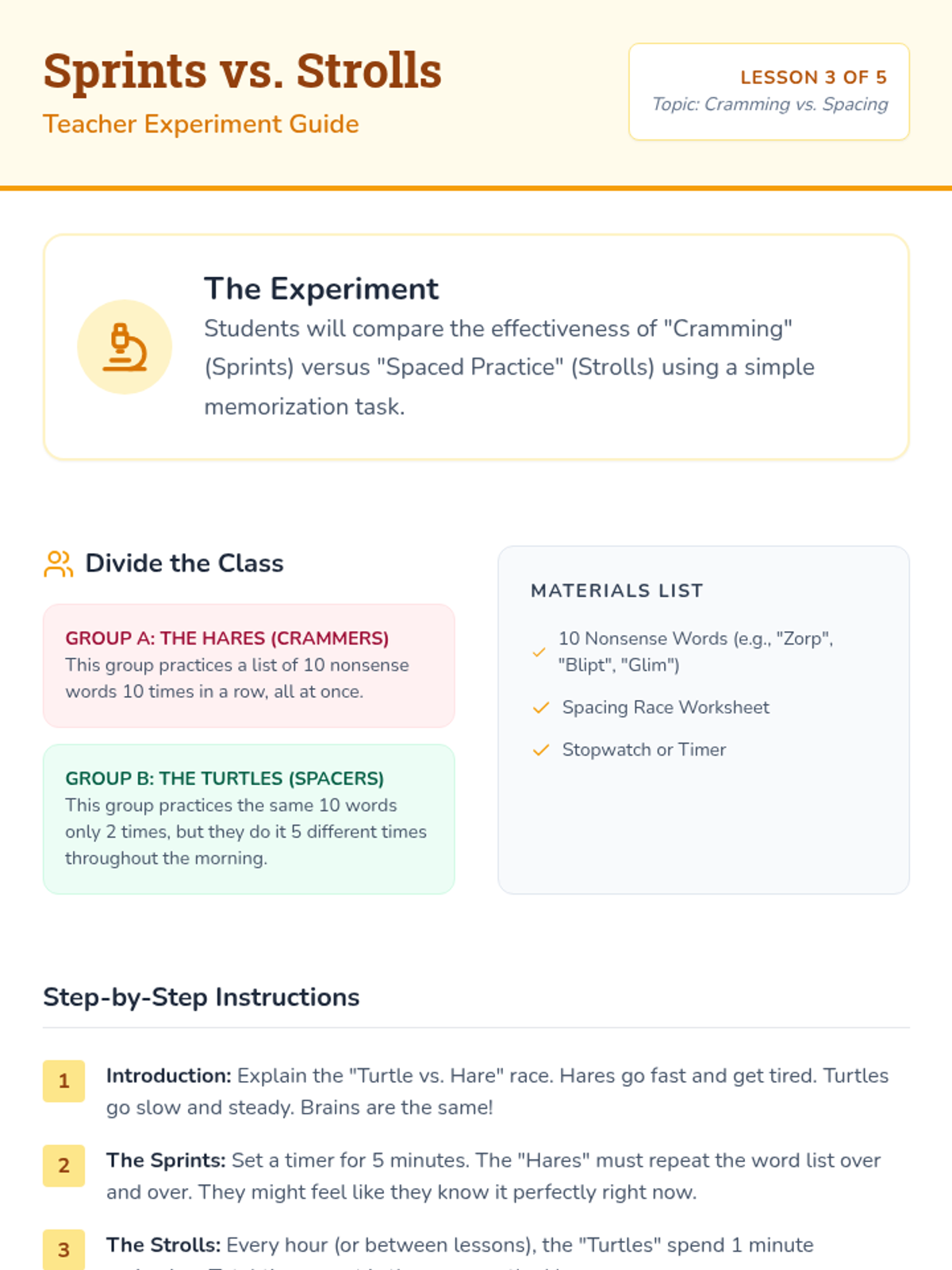
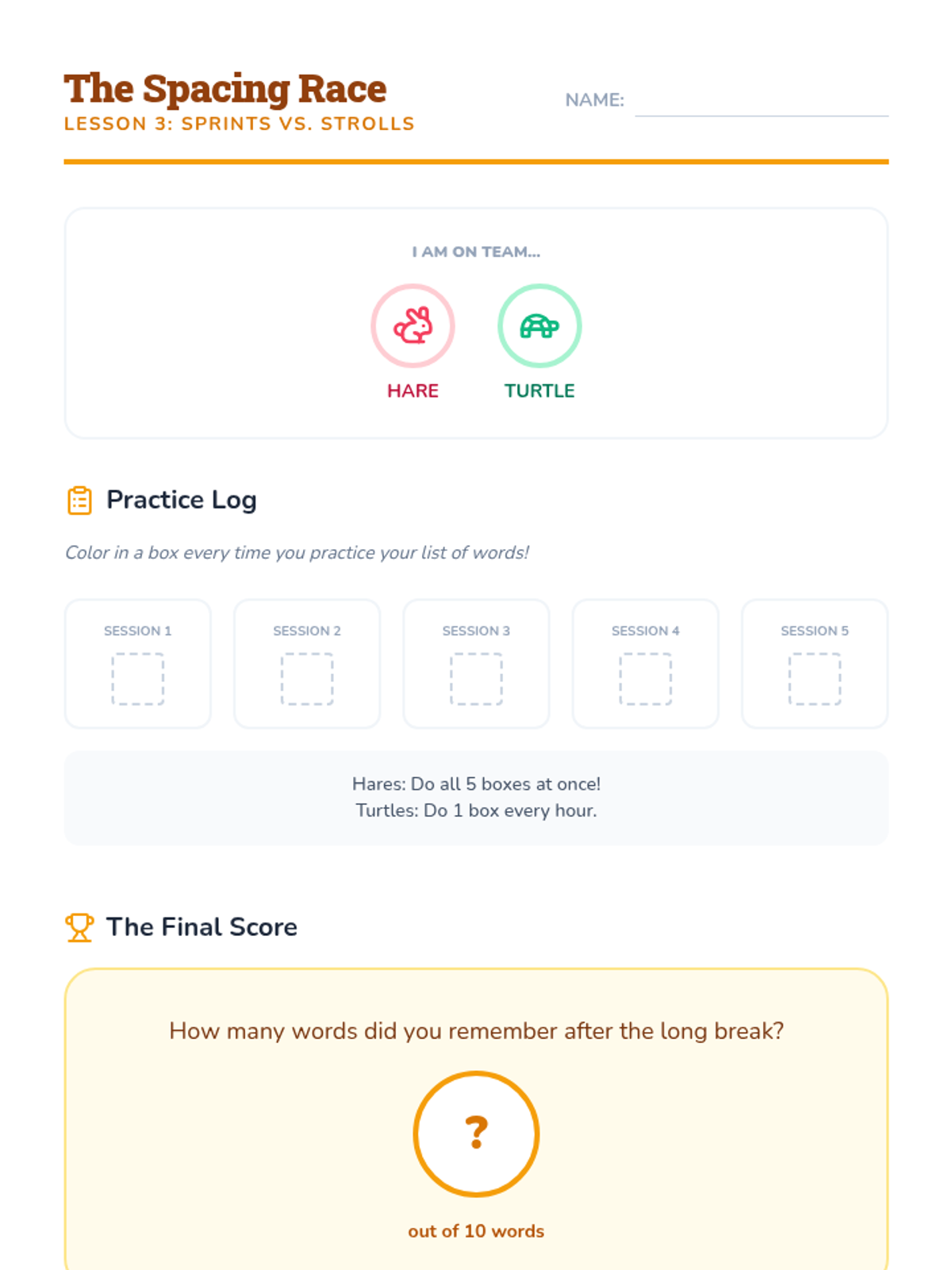
Students engage in an activity that compares 'cramming' (massed practice) vs. spacing. Half the class practices a skill all at once; the other half breaks it up. They compare results to validate their trackers.
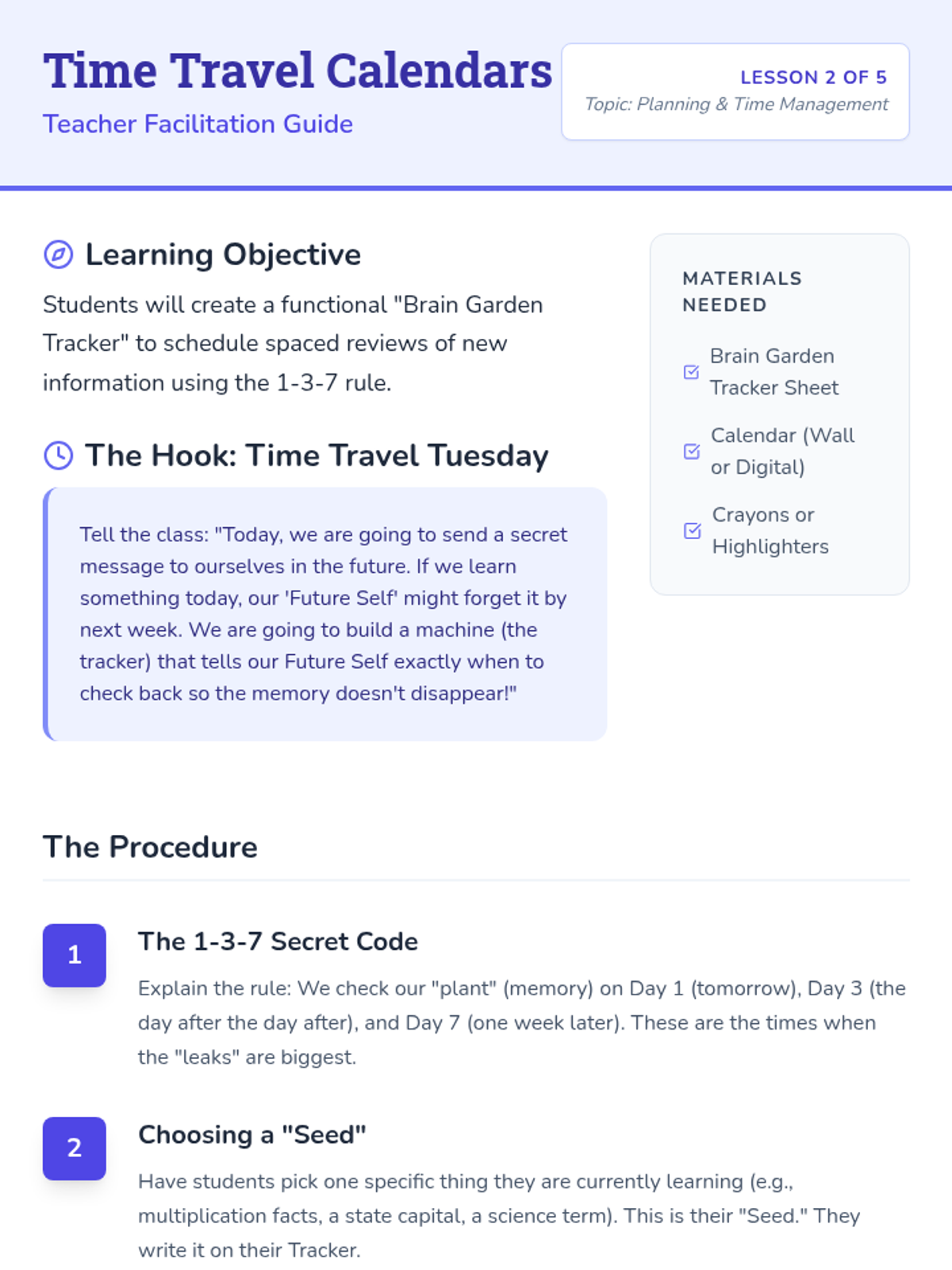
Students create a paper or digital 'Review Tracker' specifically for a content area like Social Studies. They learn to mark dates for the initial learning, 1-day check, 3-day check, and 1-week check.
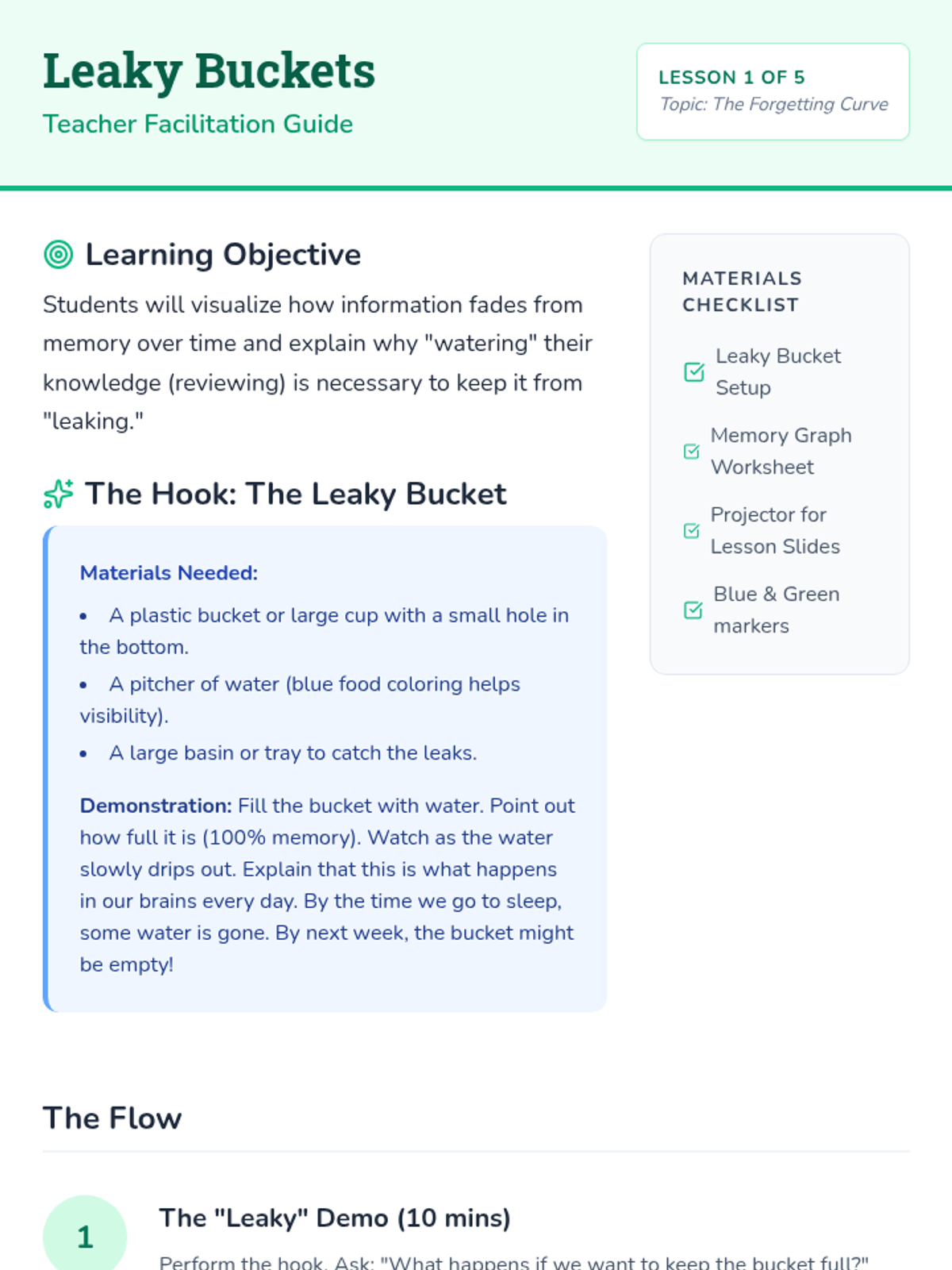
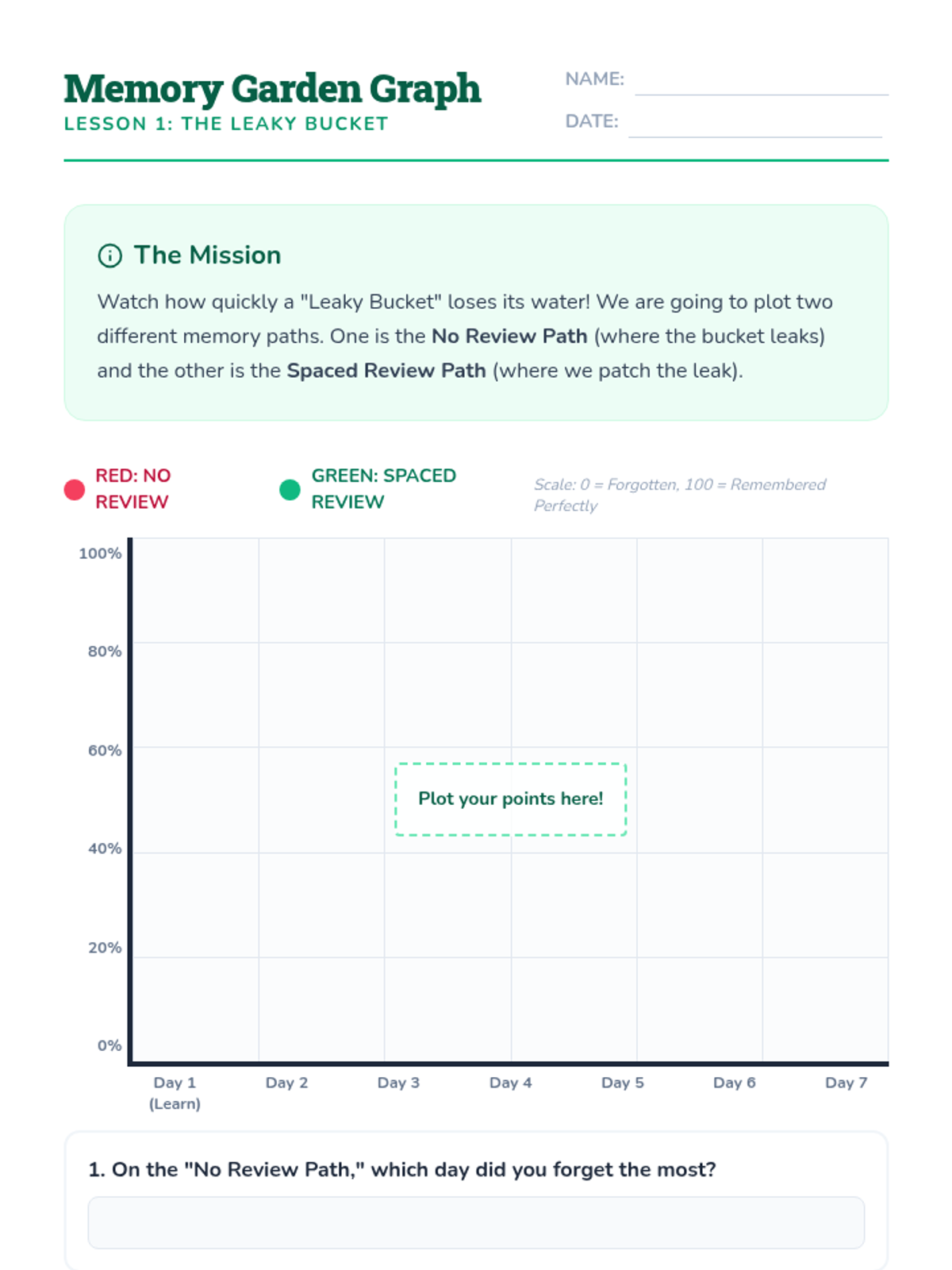
Students explore the concept of the 'Forgetting Curve' through a physical demonstration and graphing activity, understanding that memory fades without active review.
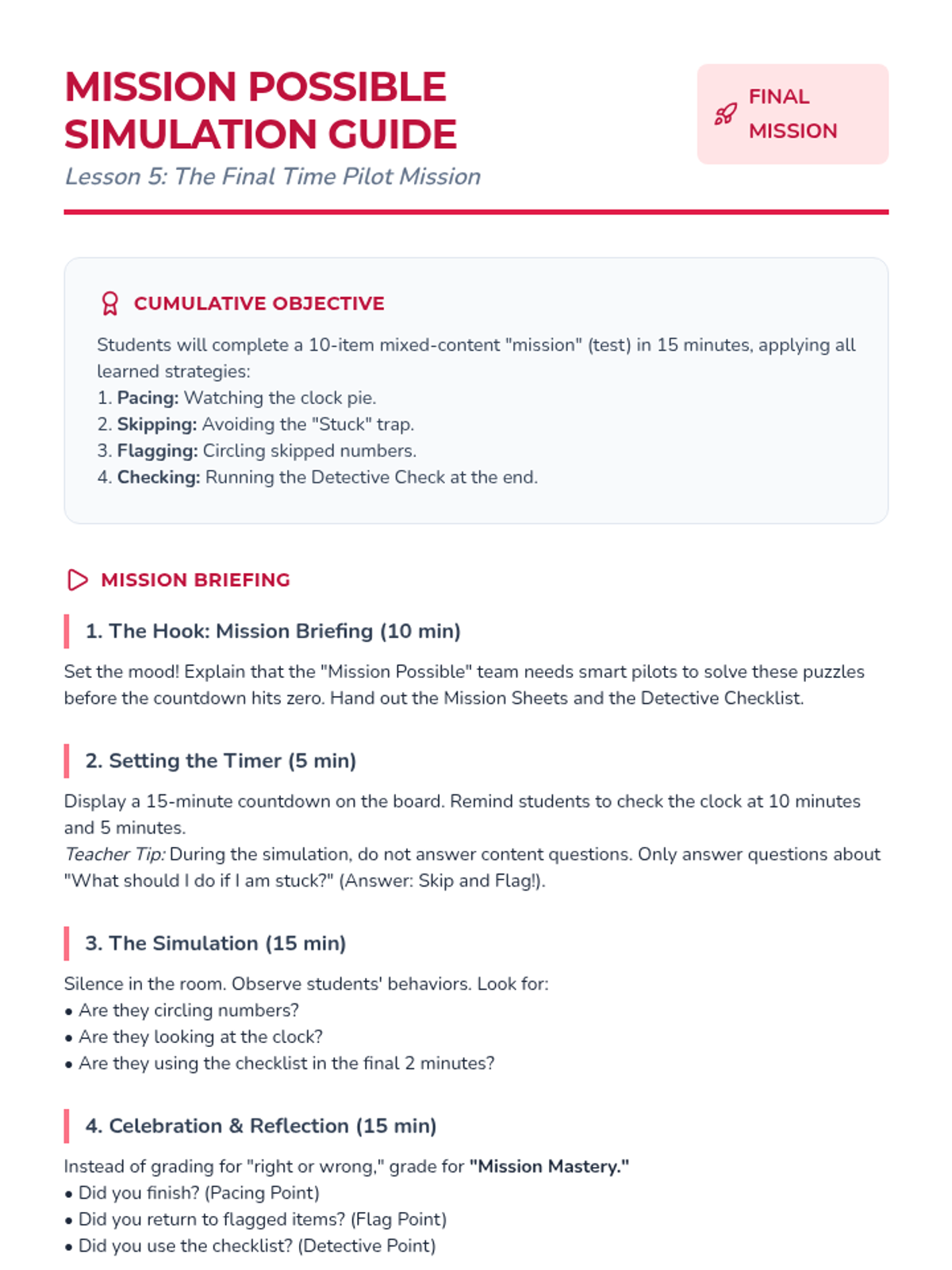
A cumulative simulation where students apply all learned pacing strategies in a low-stakes environment.
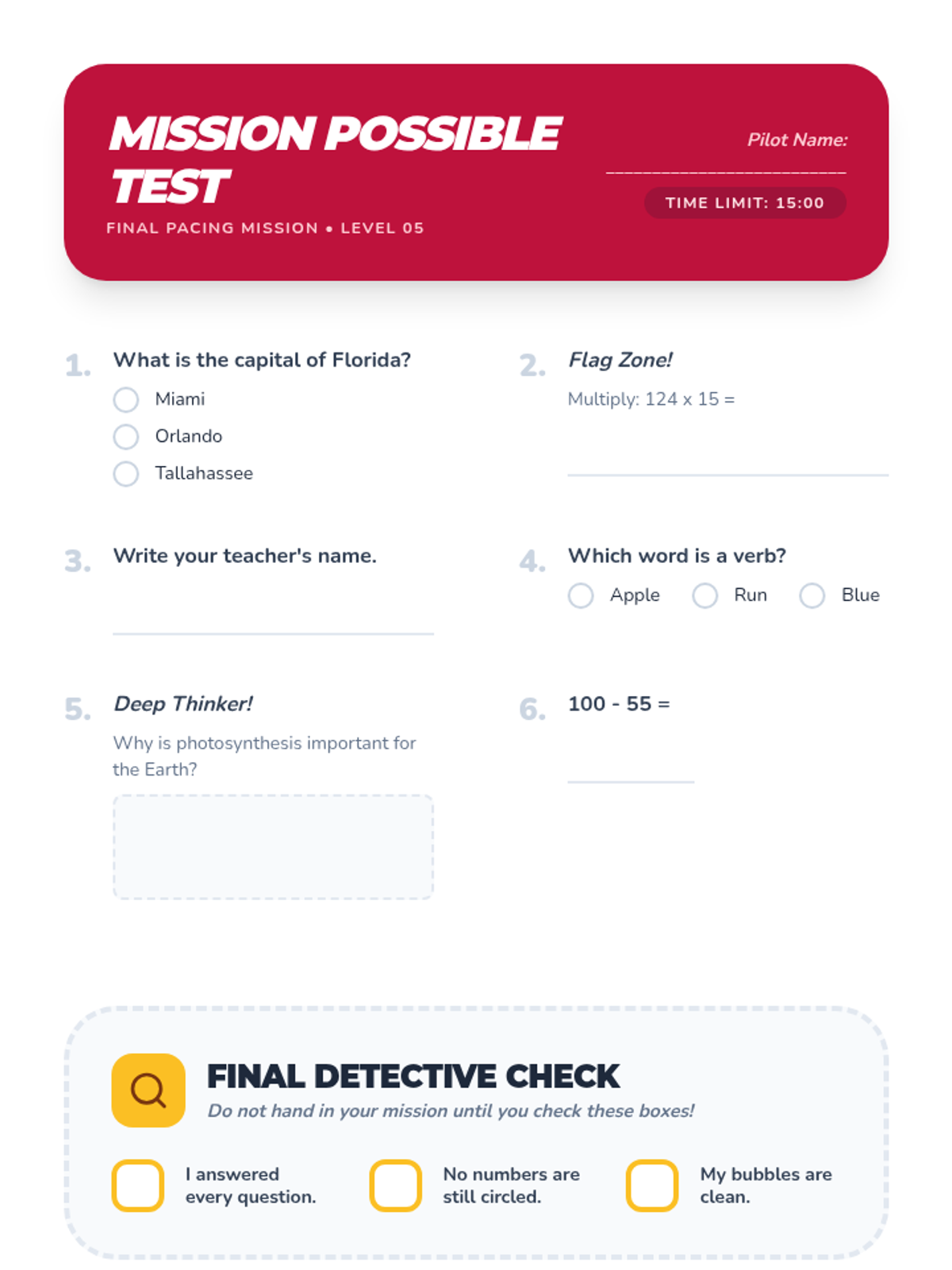
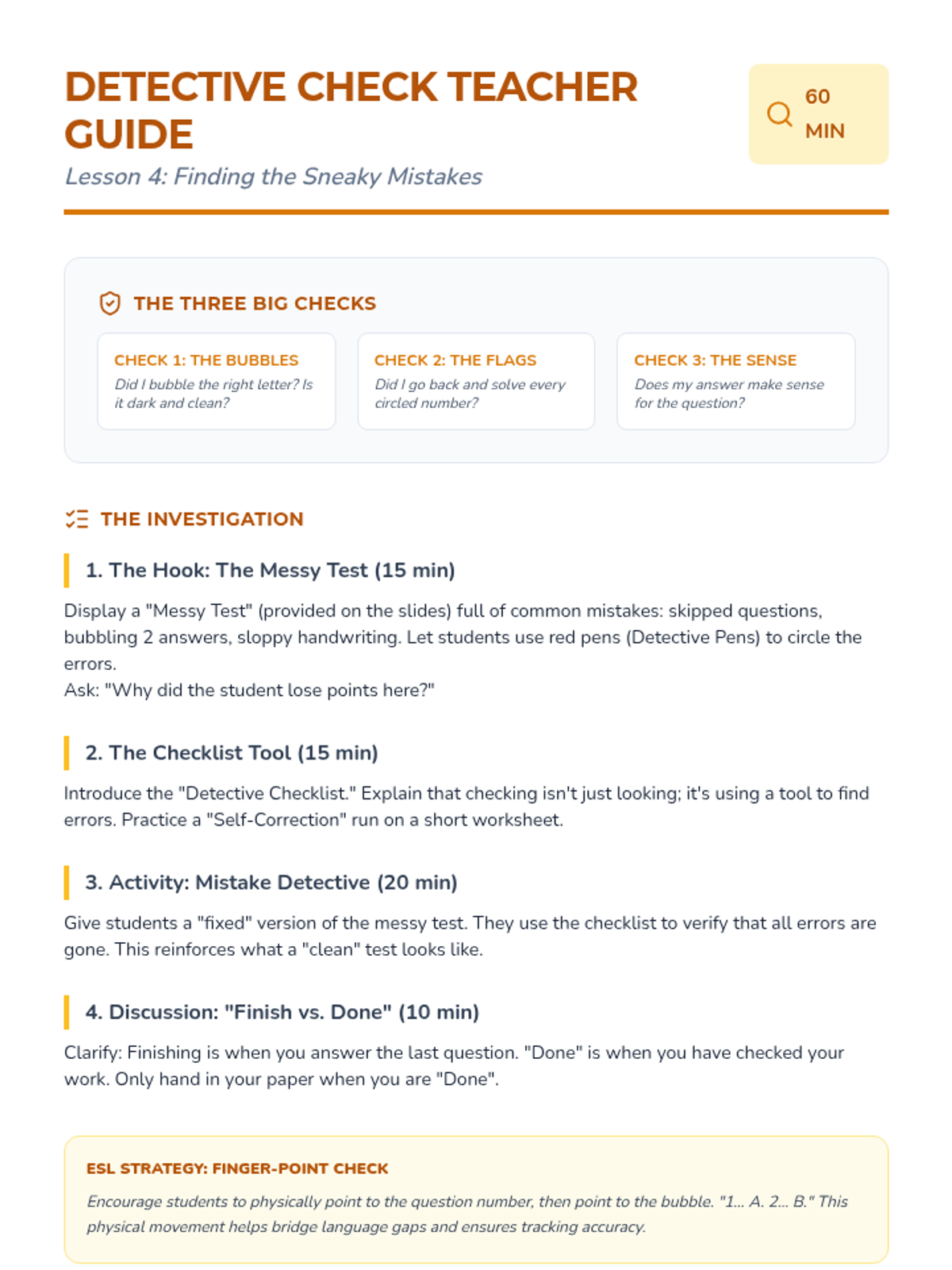
Students learn and practice specific checking strategies using a checklist to catch common errors.
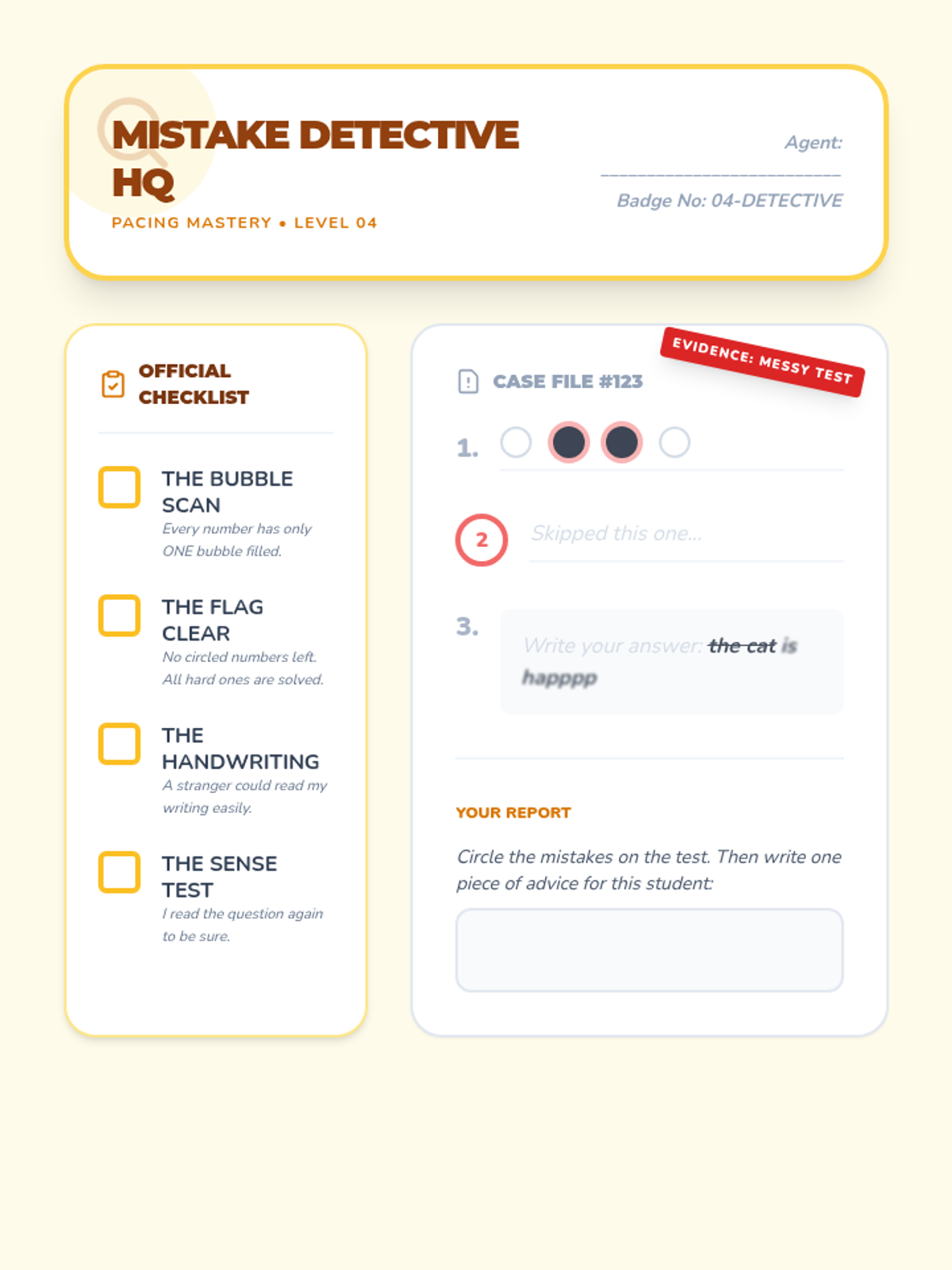
Students practice a system for marking questions for review to navigate tests efficiently.
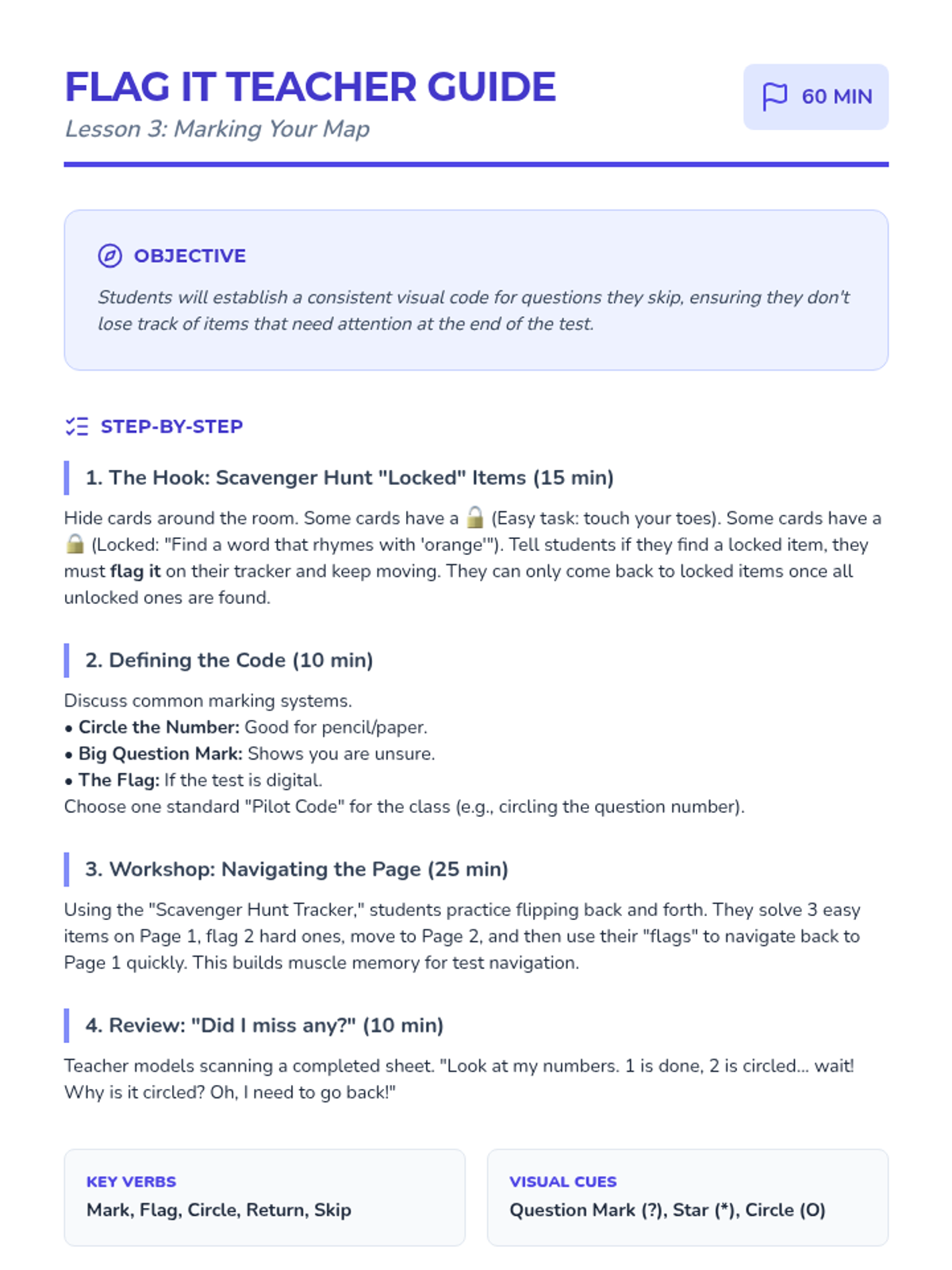
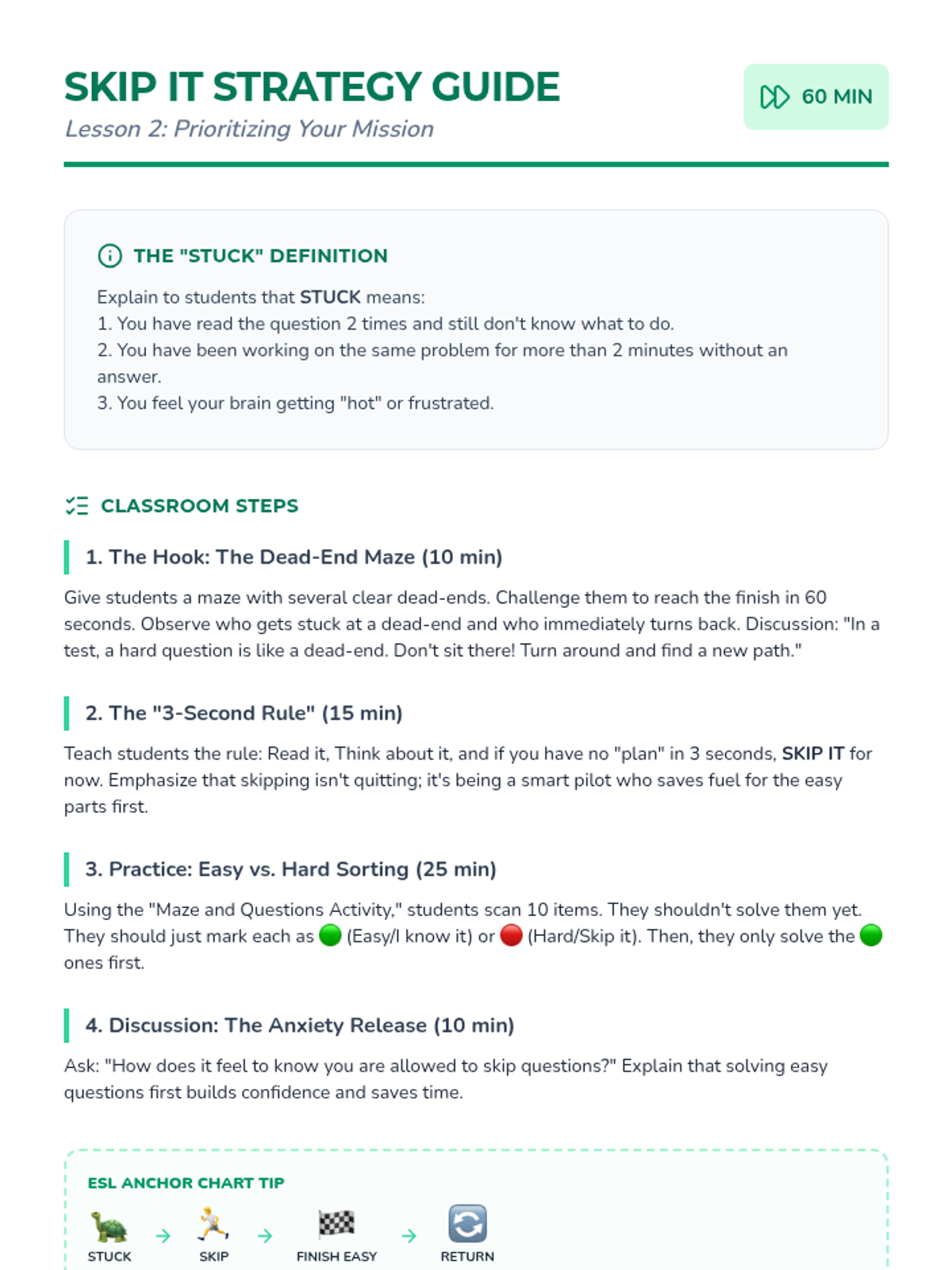
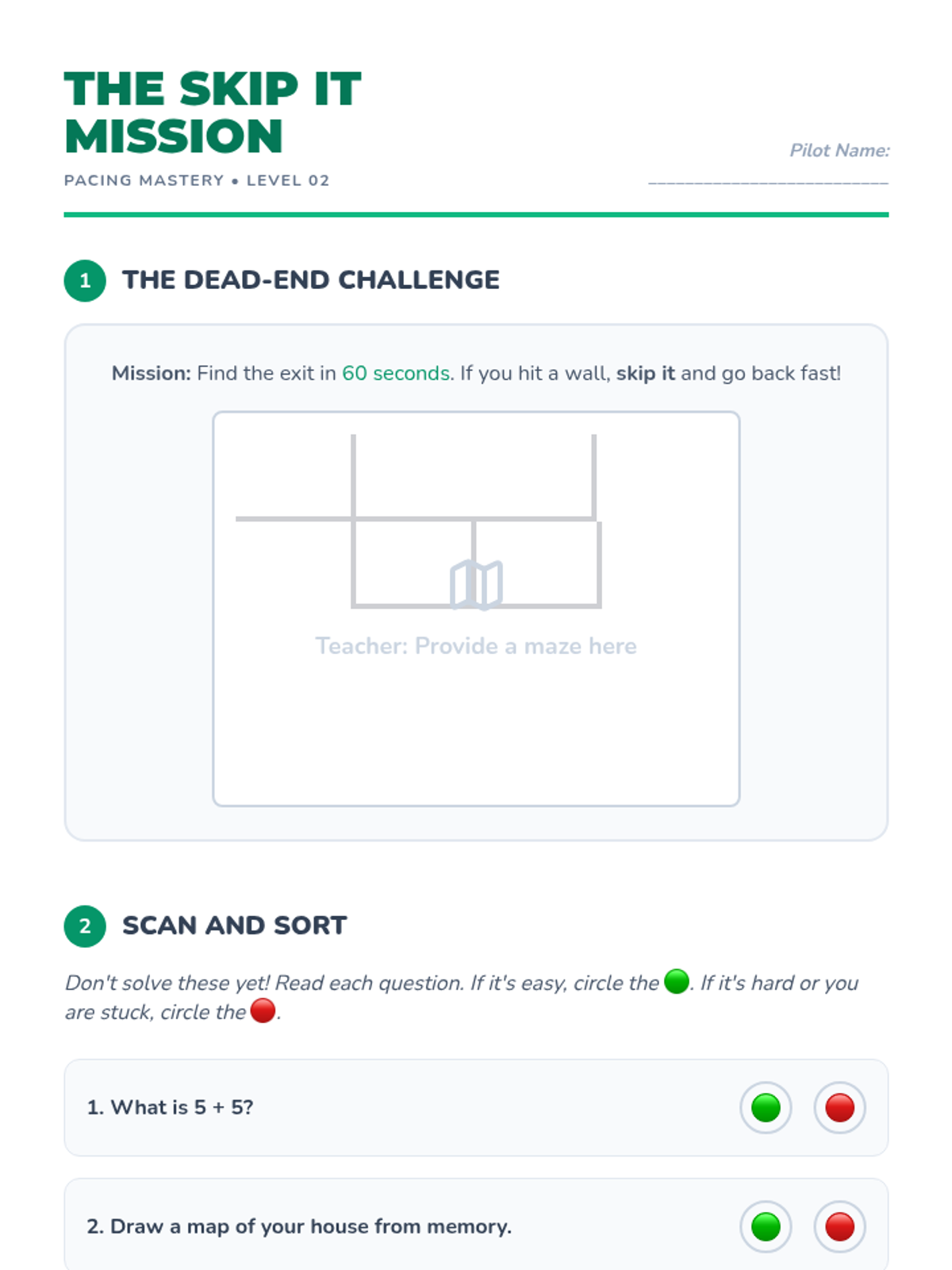
Students learn to recognize when they are stuck and practice skipping difficult items to return to them later.
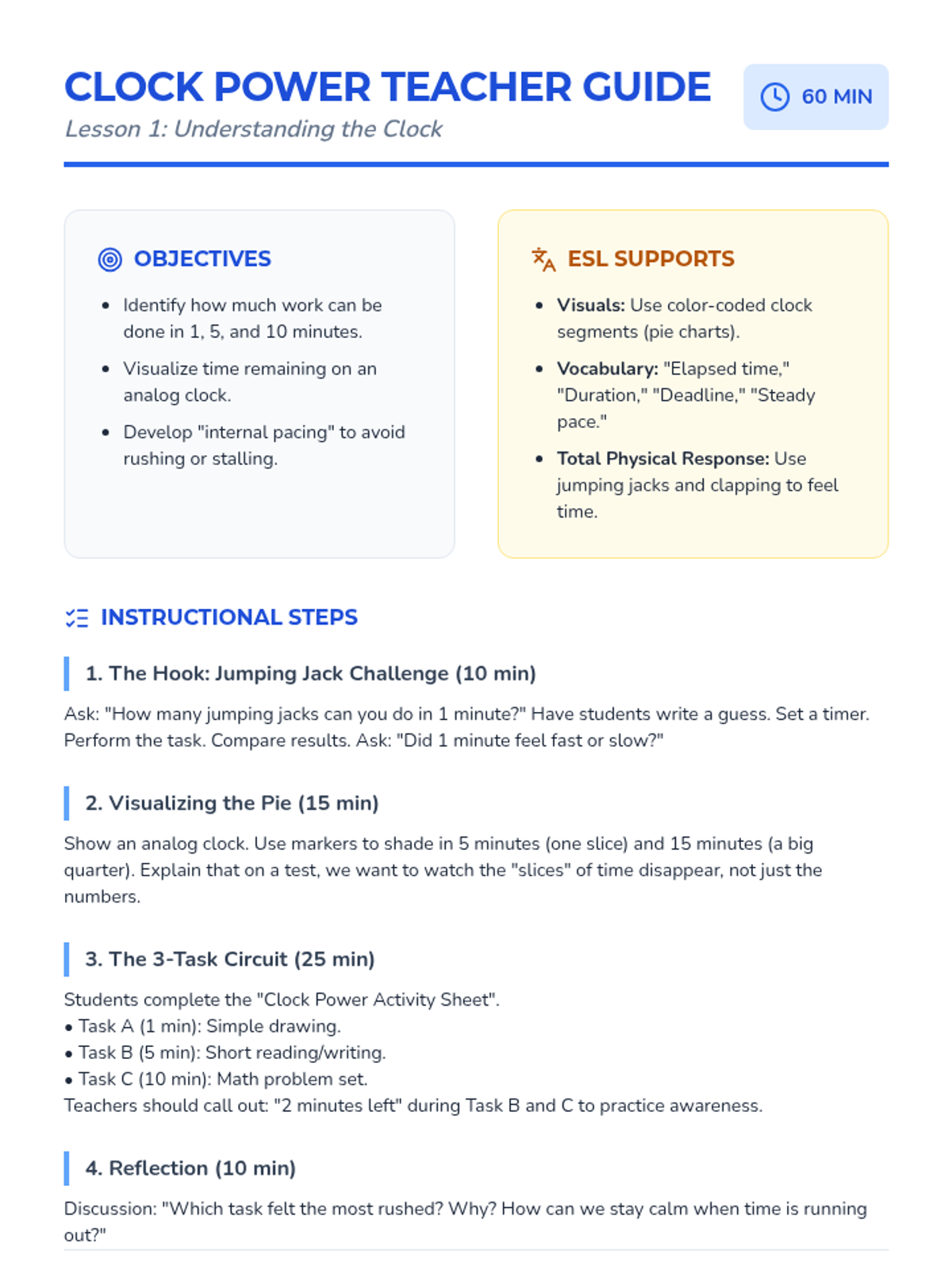
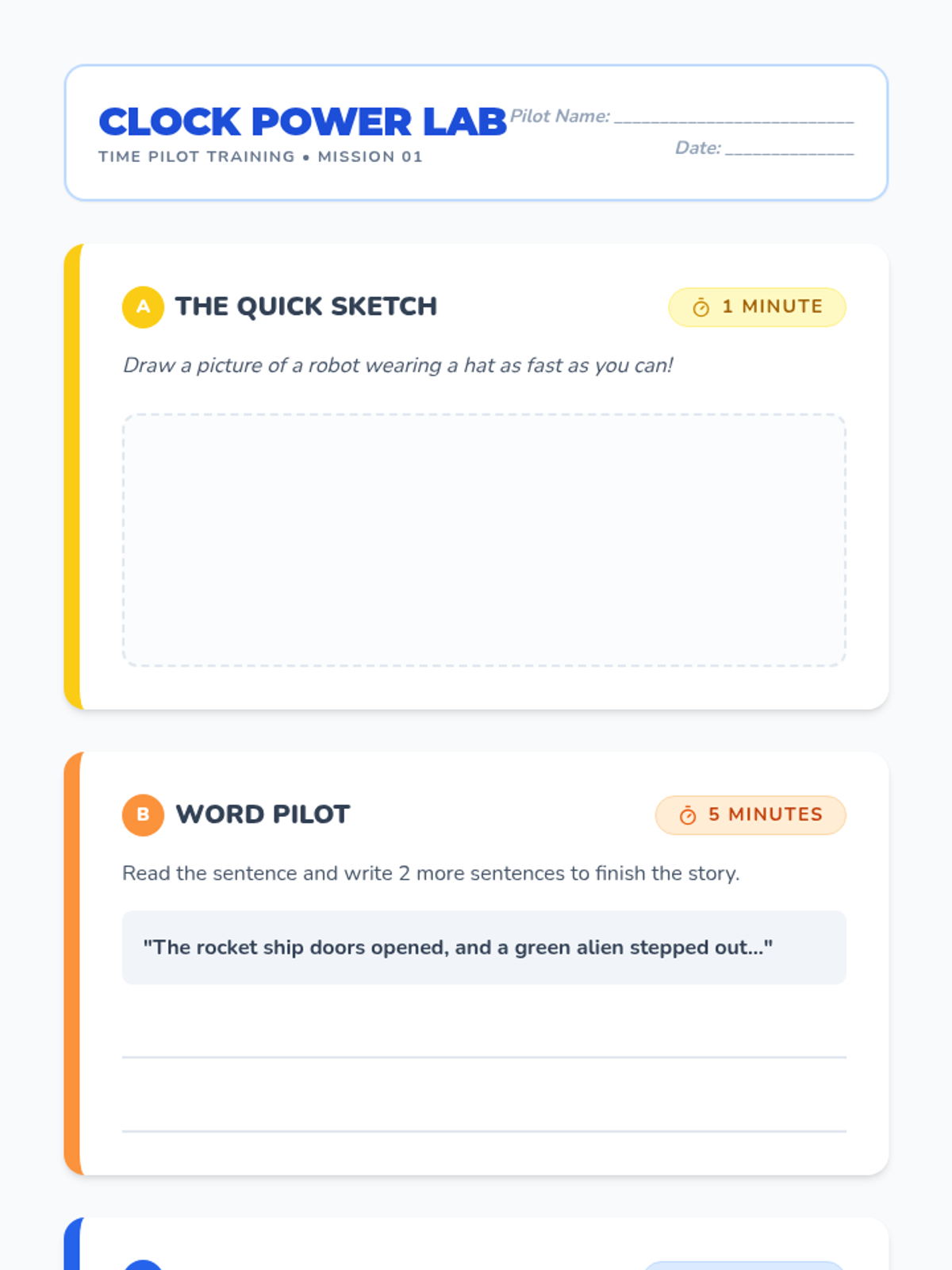
Students visualize time limits and perform tasks to understand the feeling of 1, 5, and 10 minutes.
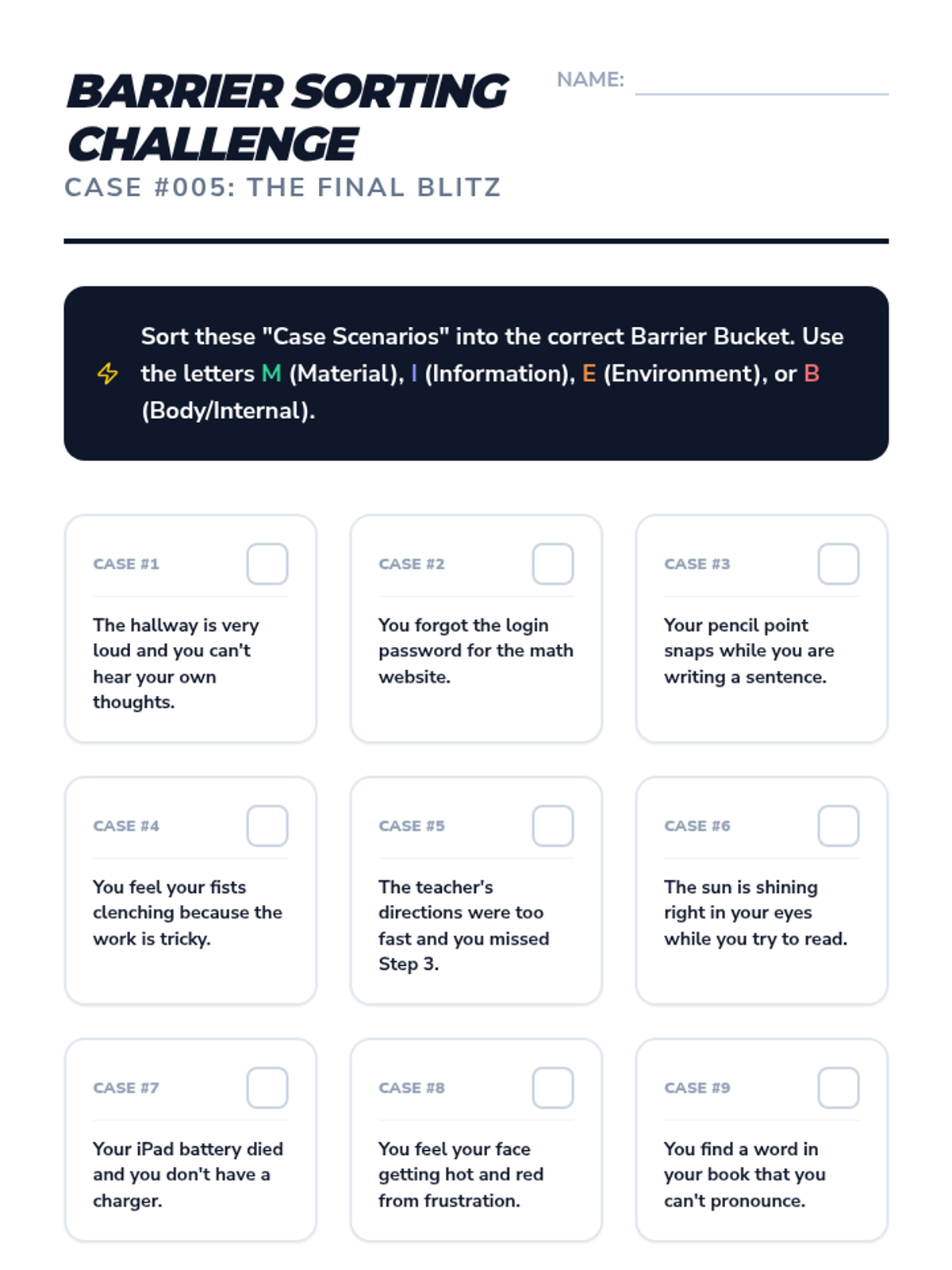
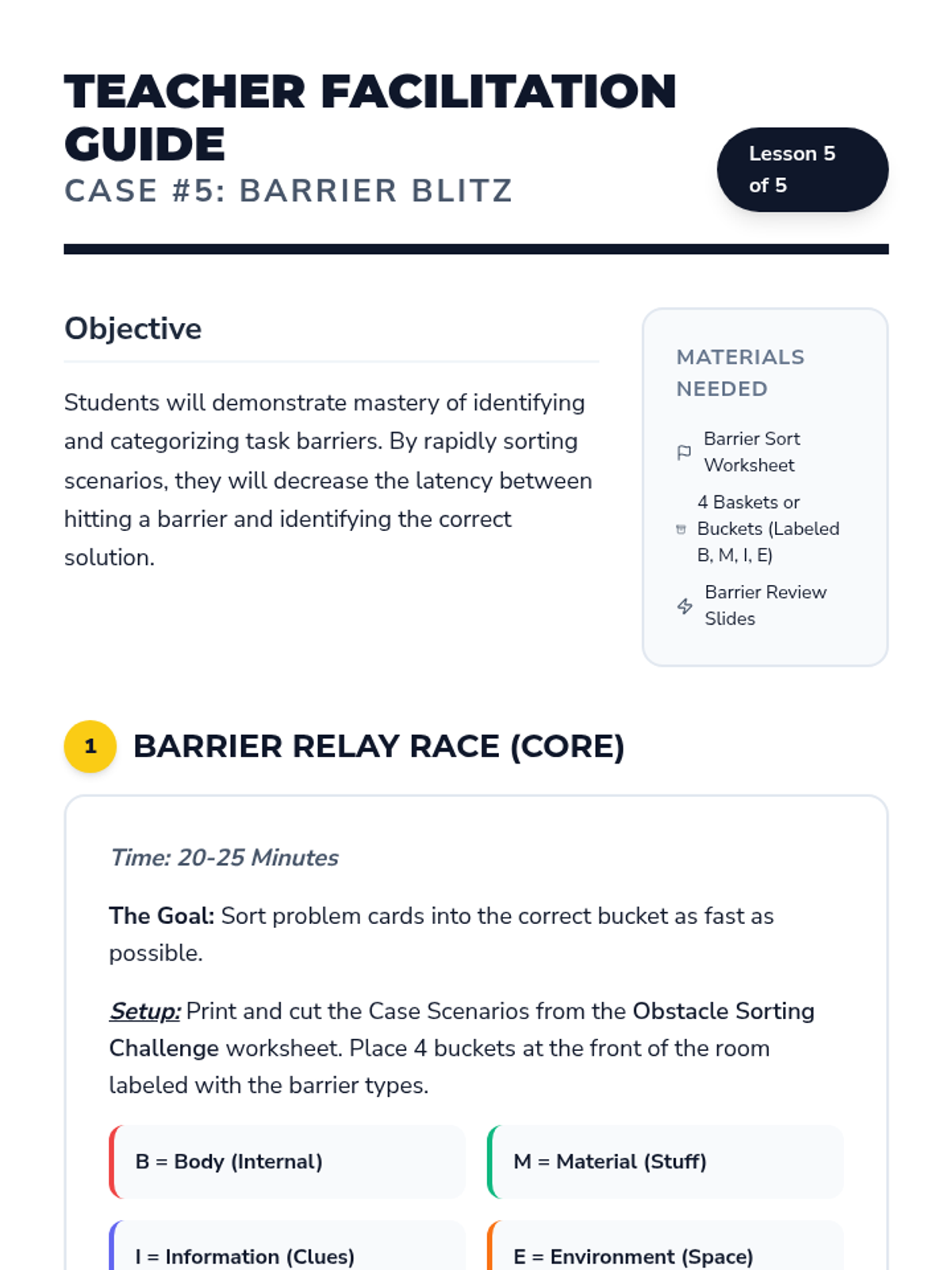
A culminating lesson where students rapidly sort various scenarios into barrier categories to reduce the time between hitting a wall and identifying the solution.
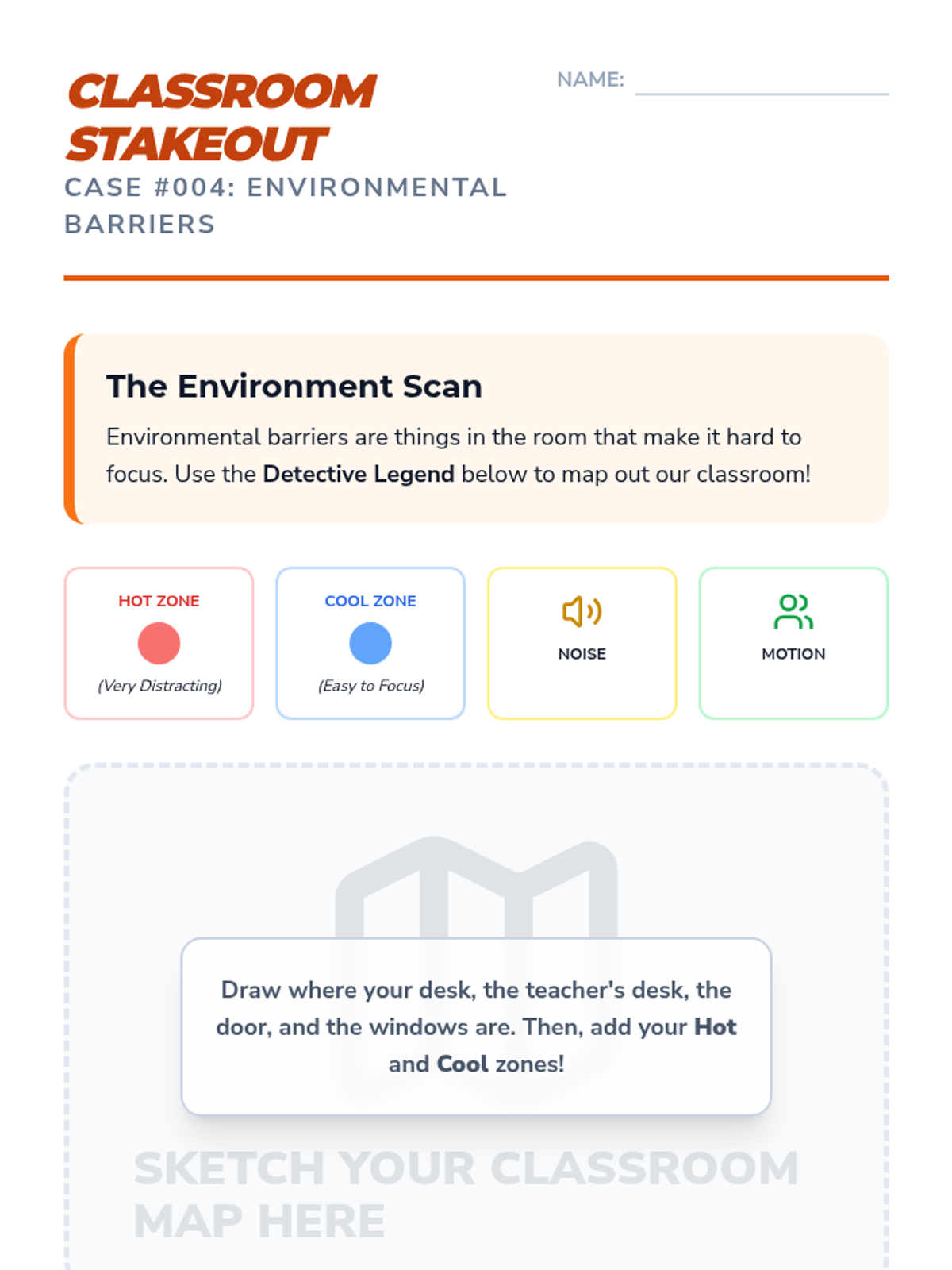
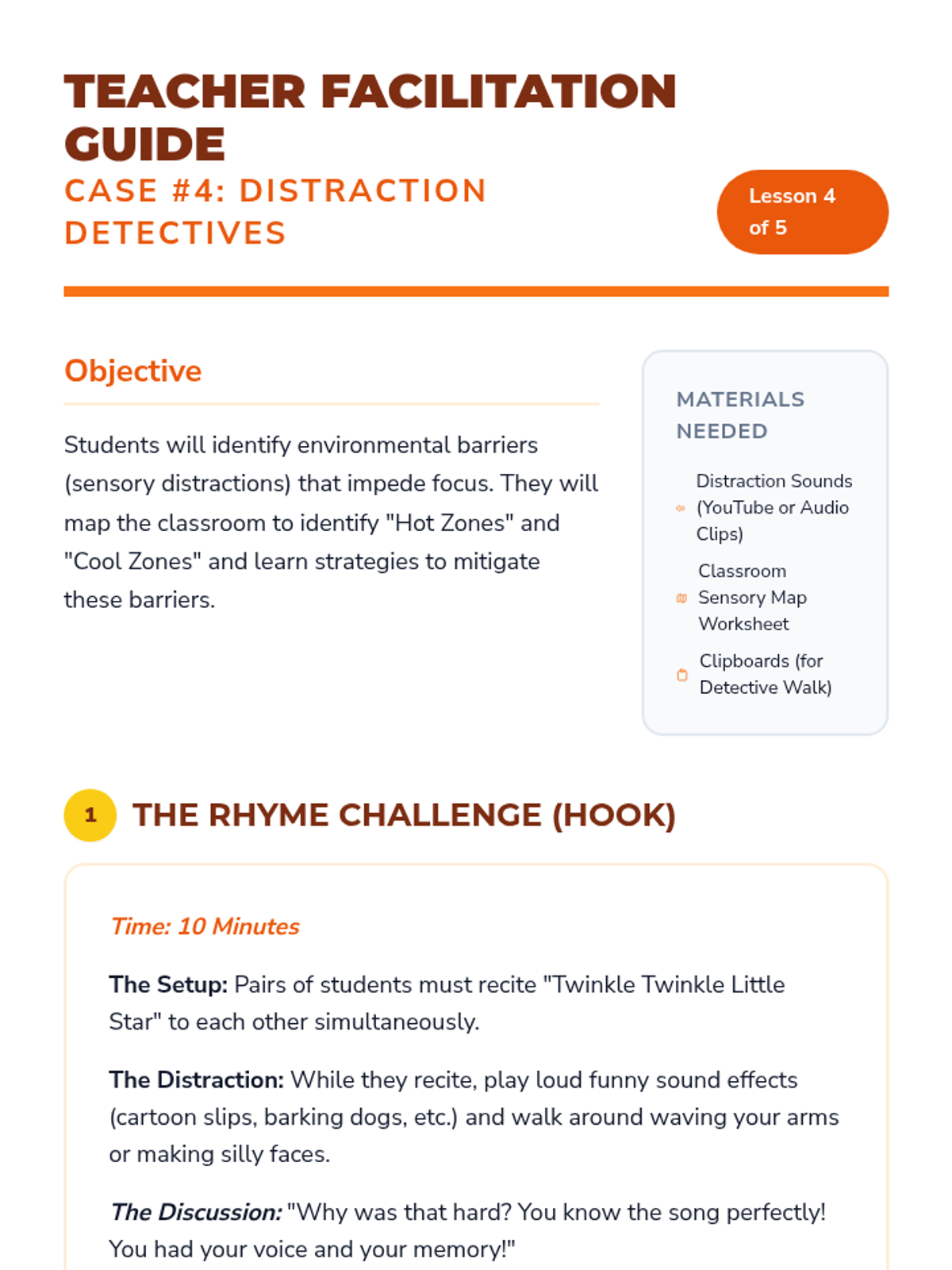
Investigates sensory and environmental barriers like noise or clutter, conducting a 'detective walk' to identify classroom distractions.
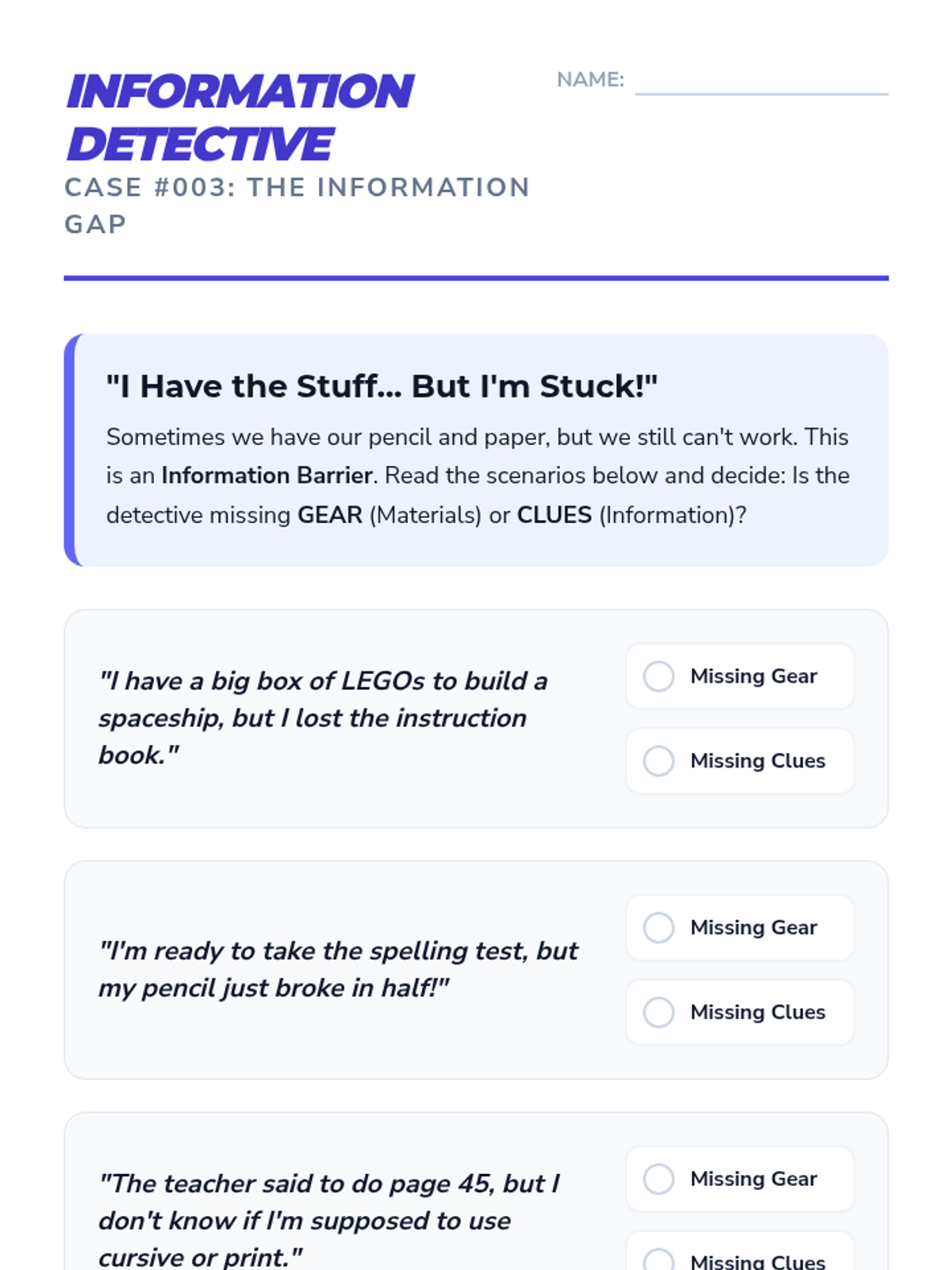
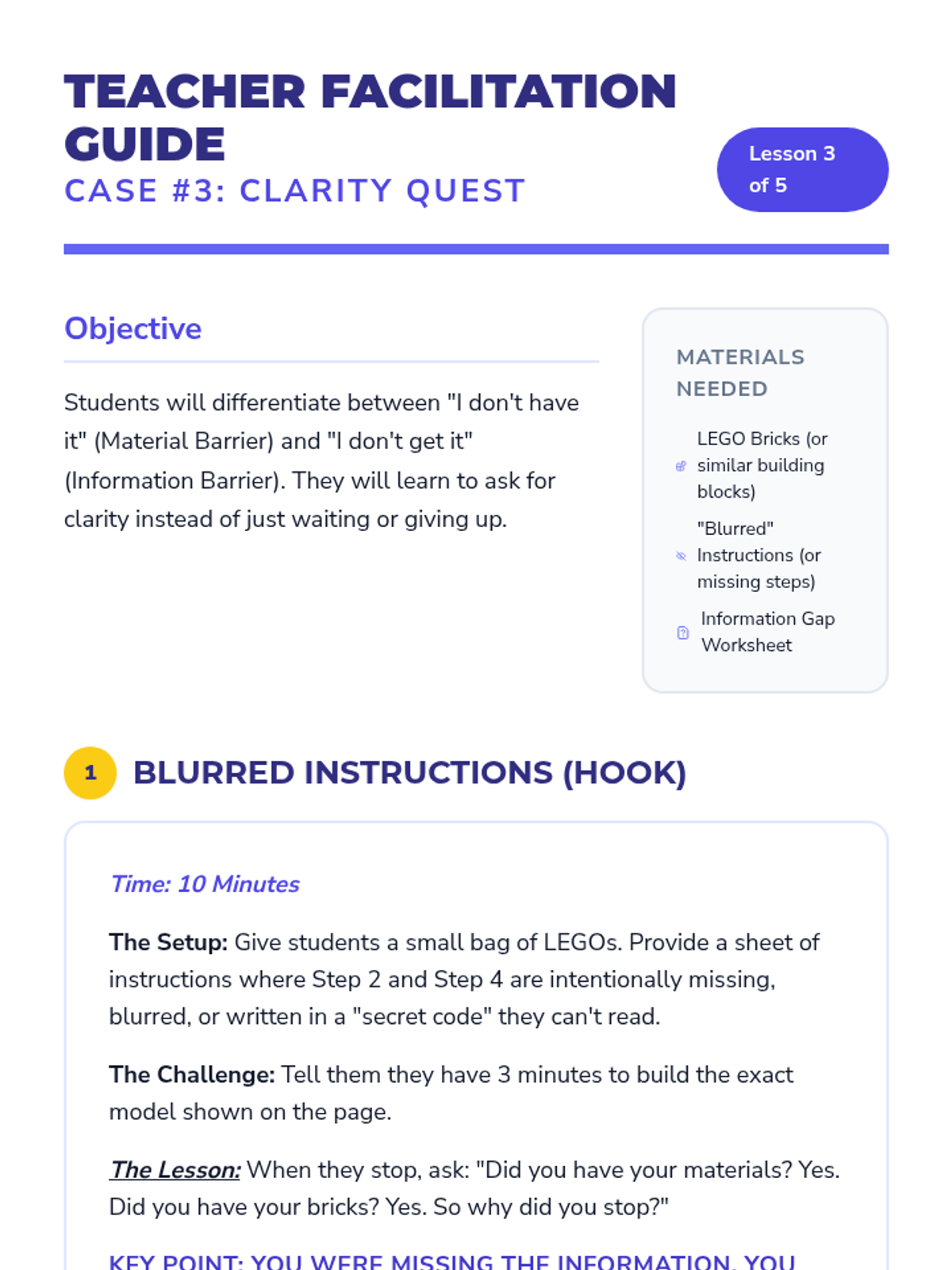
Teaches students to recognize when they are stuck due to a lack of clarity or understanding, differentiating between 'I don't have it' and 'I don't get it.'
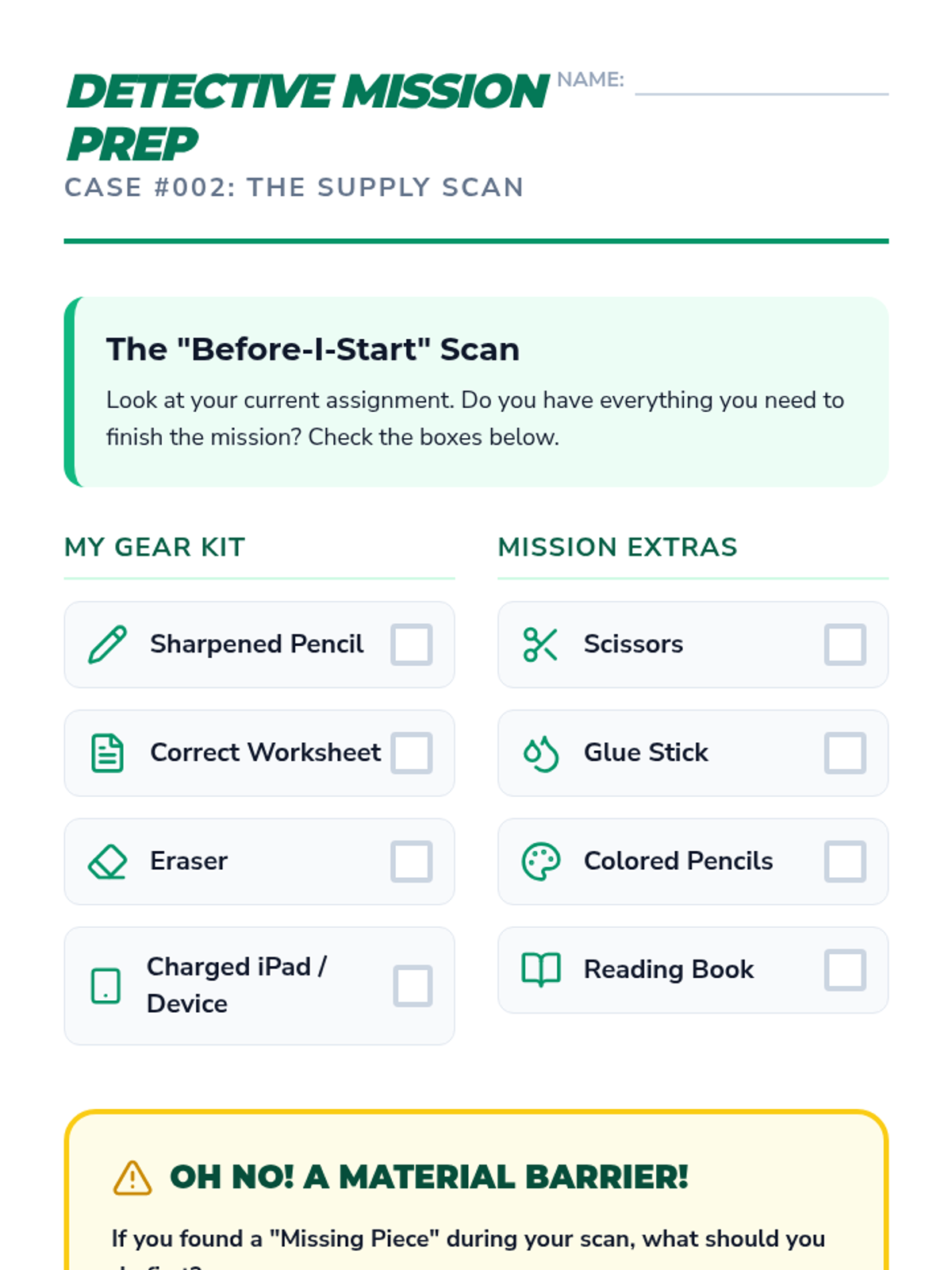
Focuses on tangible obstacles like broken tools or missing materials, teaching students to perform a 'supply scan' to identify what is physically missing.
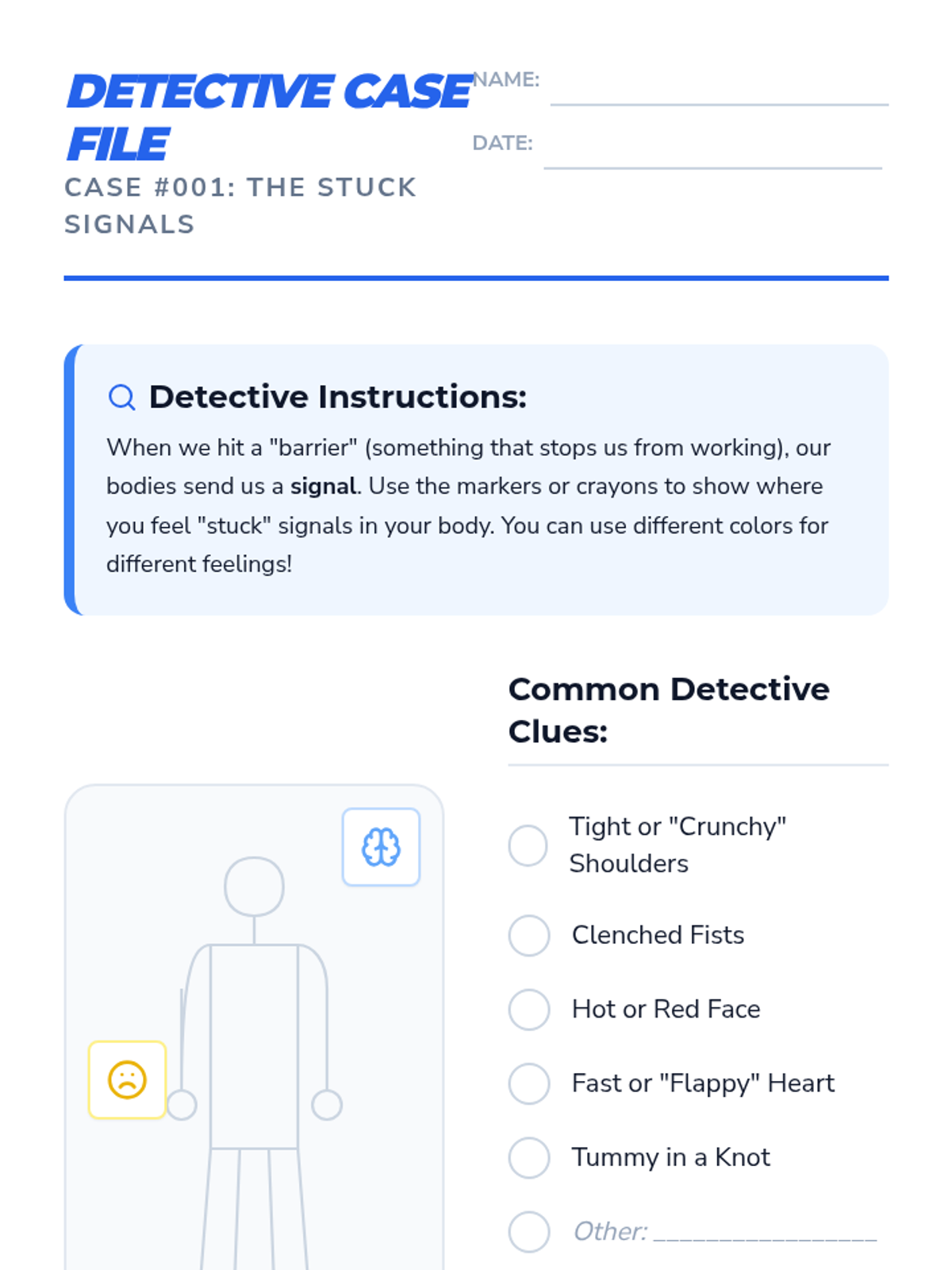
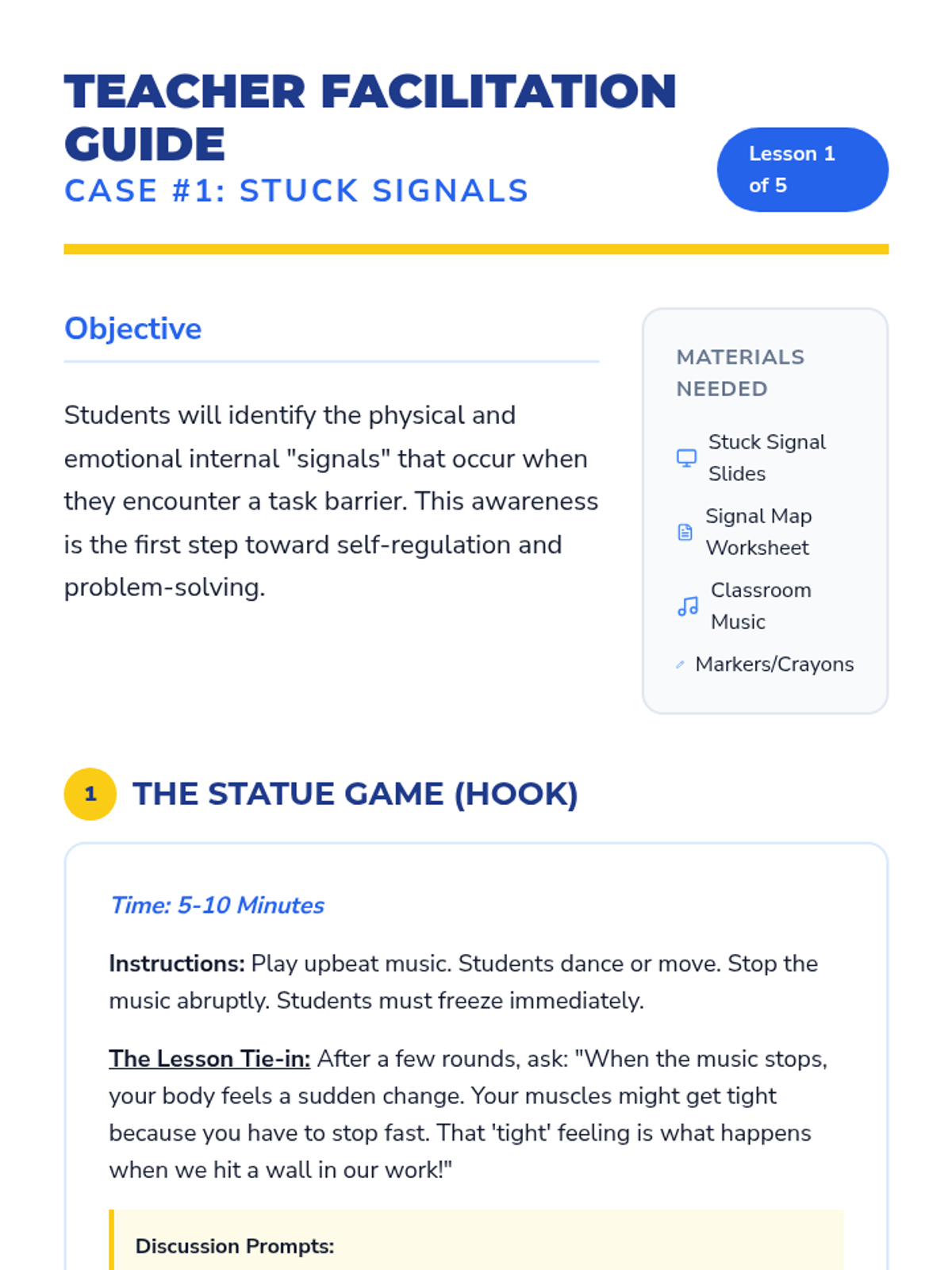
Students explore the physical and emotional sensations associated with hitting a task barrier, identifying what frustration feels like to recognize the moment they need to stop.
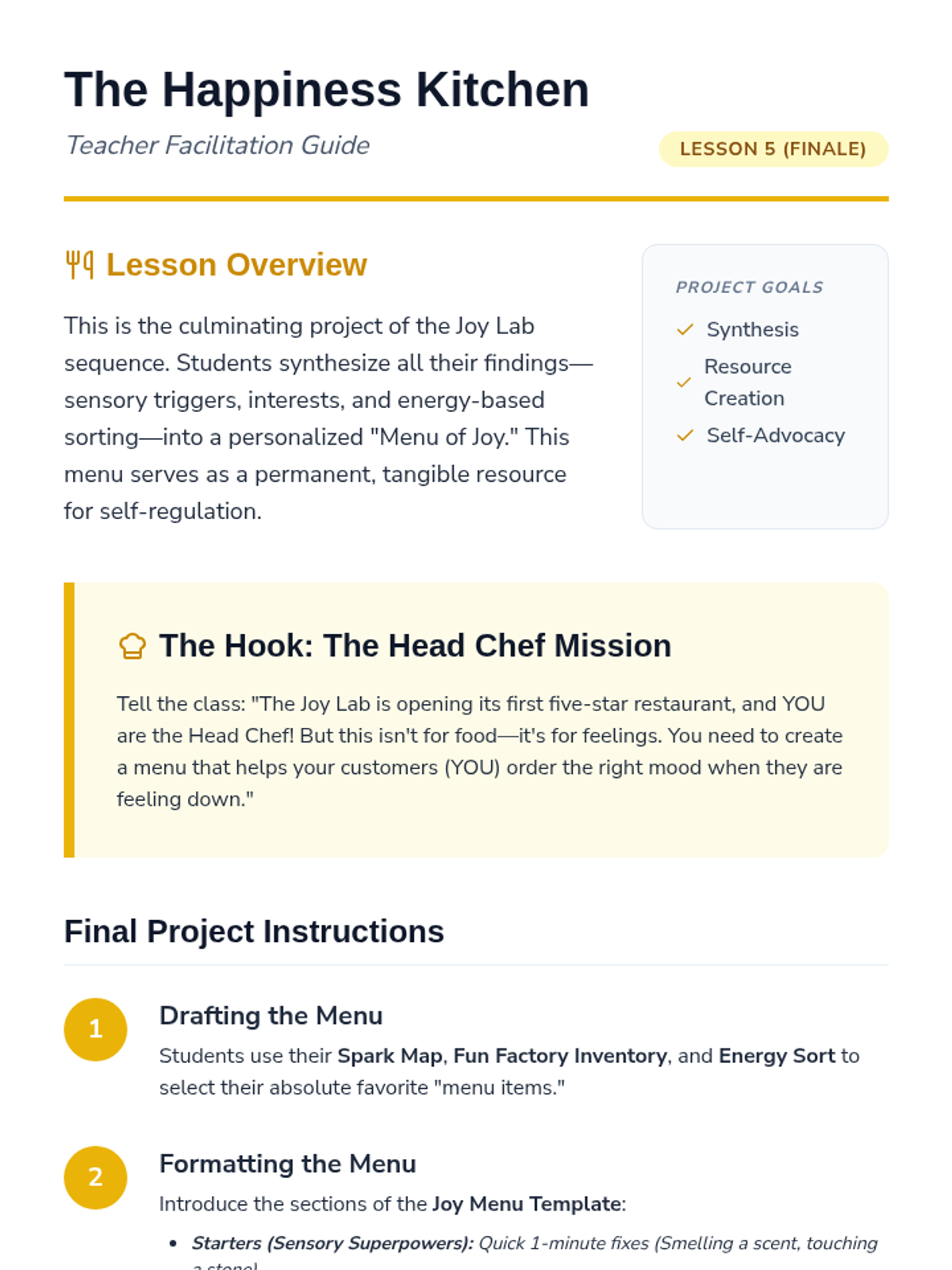
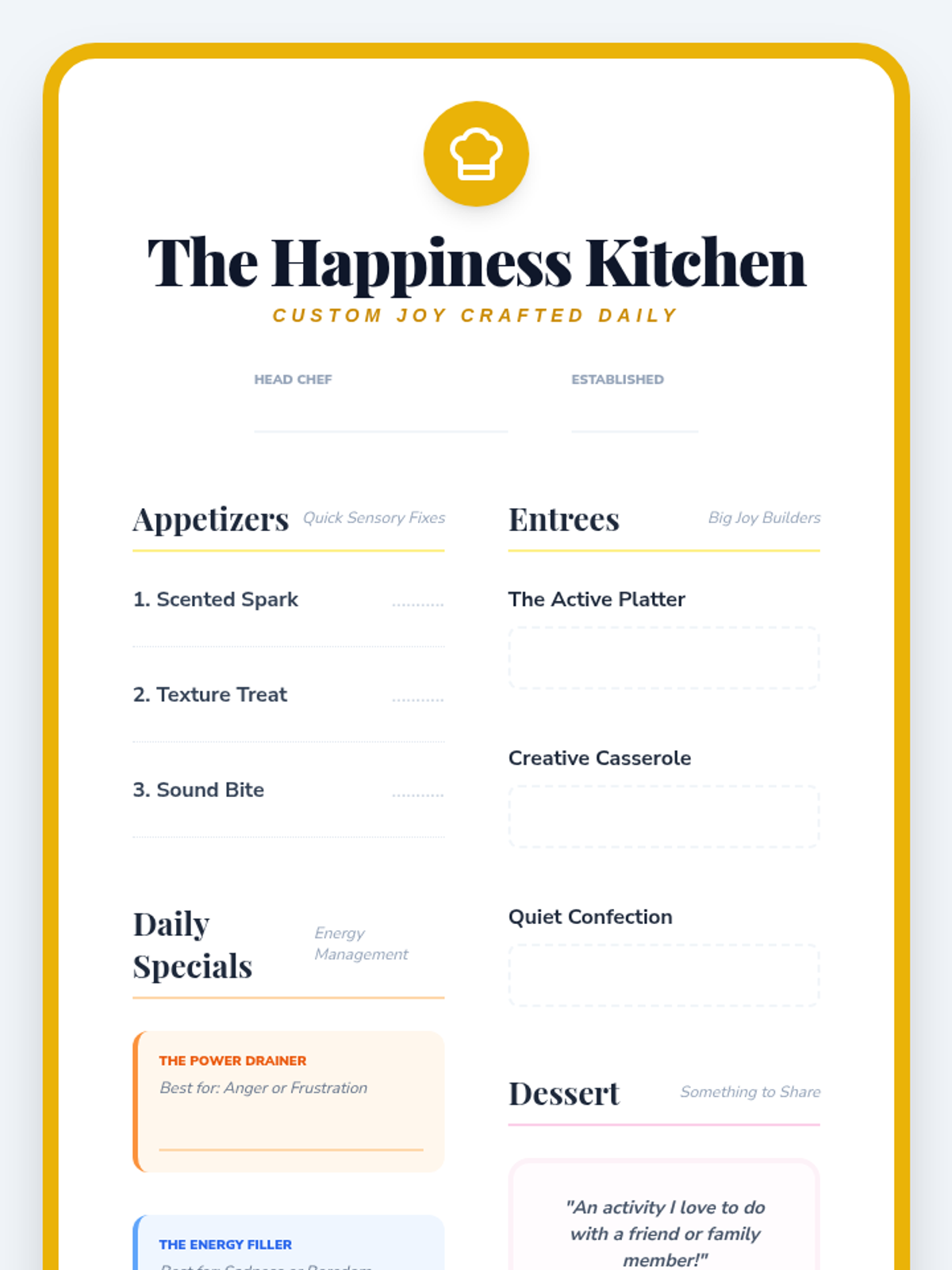
Students synthesize their findings to create a personalized, illustrated menu of 'Go-To' activities and role-play scenarios where they might order from their menu.
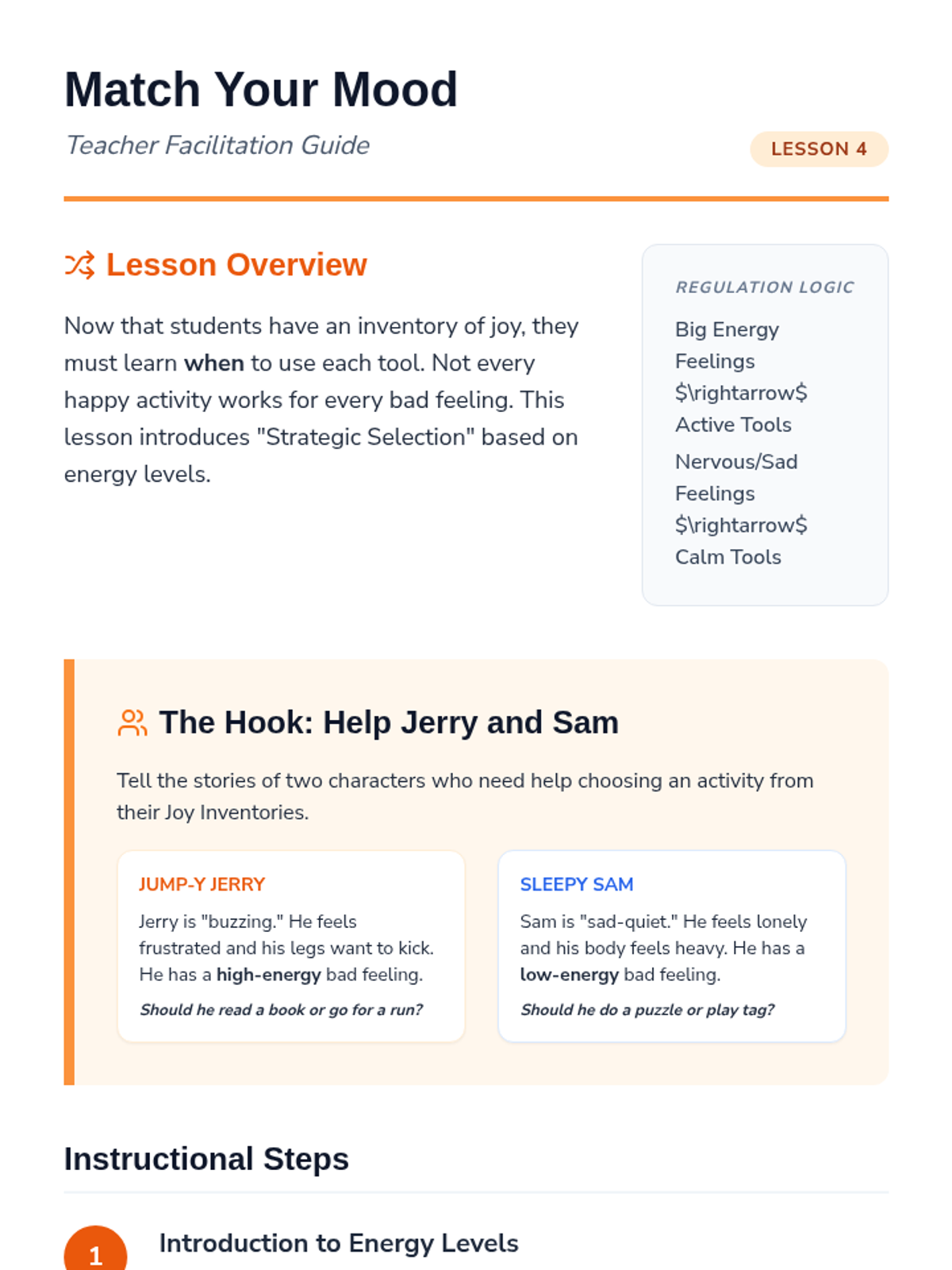
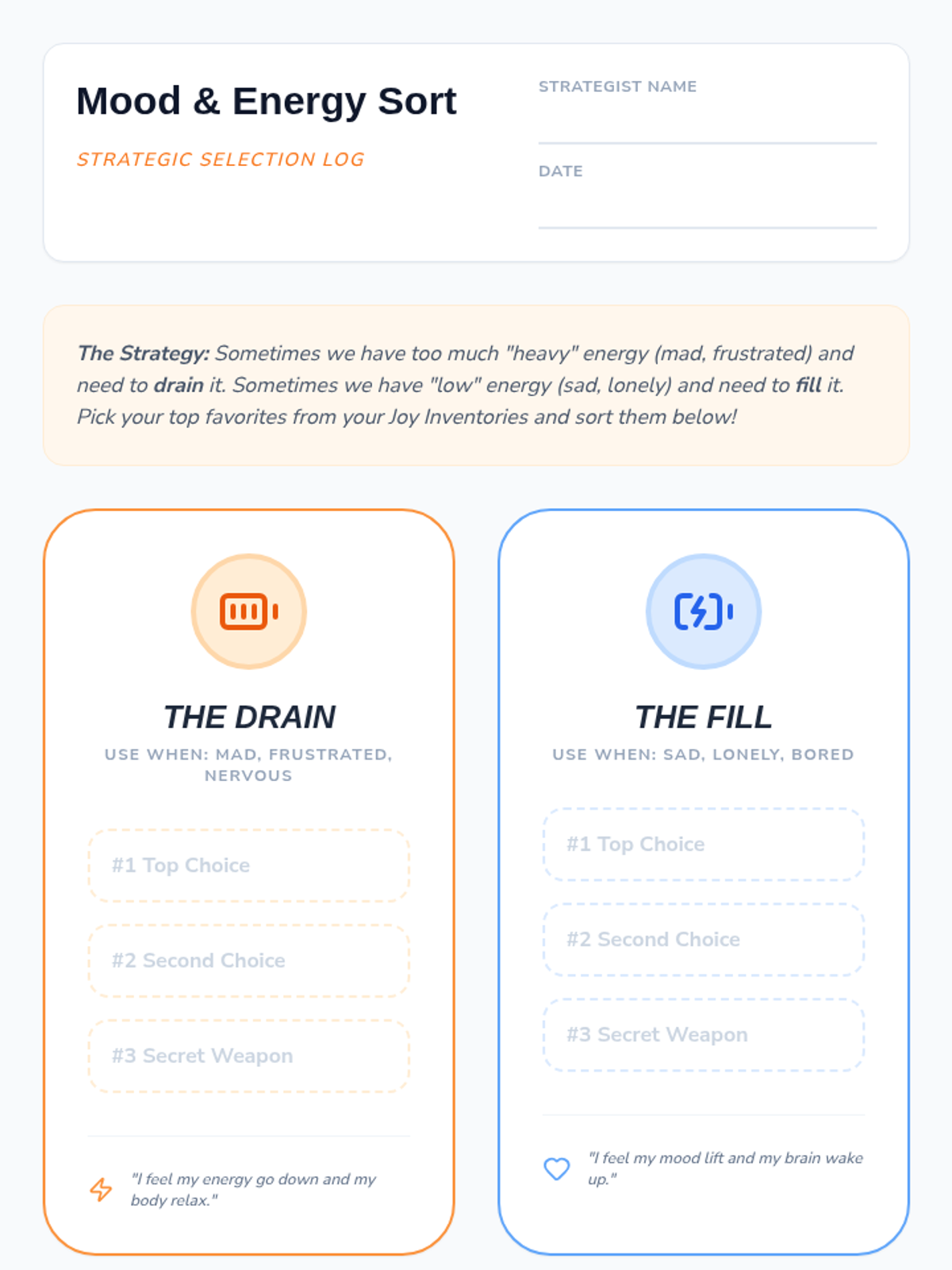
Students organize activities into categories based on energy levels: 'High Energy' for releasing frustration and 'Low Energy' for calming anxiety. They learn to strategically select activities based on current emotional needs.
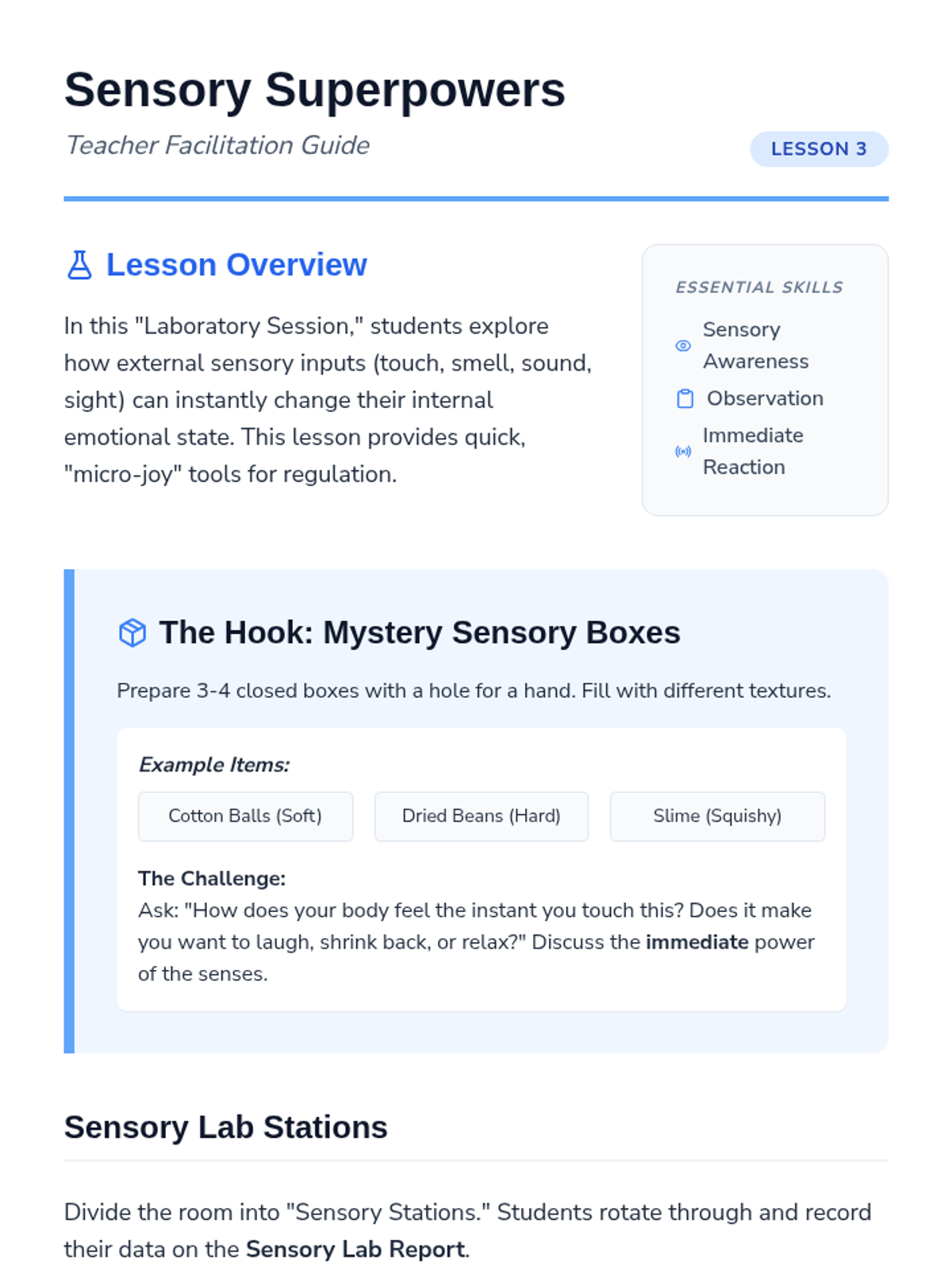
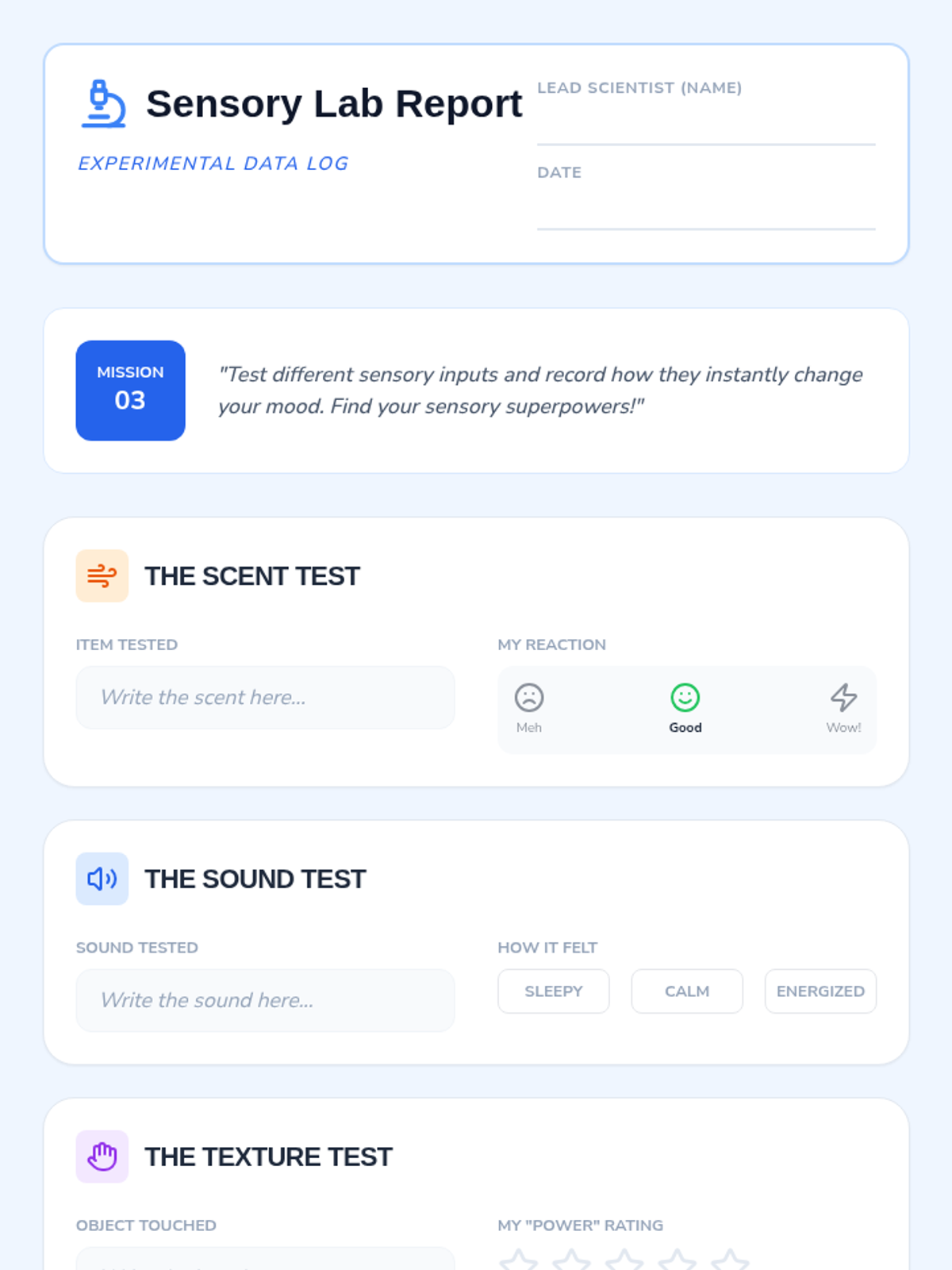
This lesson focuses on simple, sensory-based experiences that can boost mood quickly. Students test different sensory inputs and record their immediate reactions to connect external stimuli to internal emotional states.
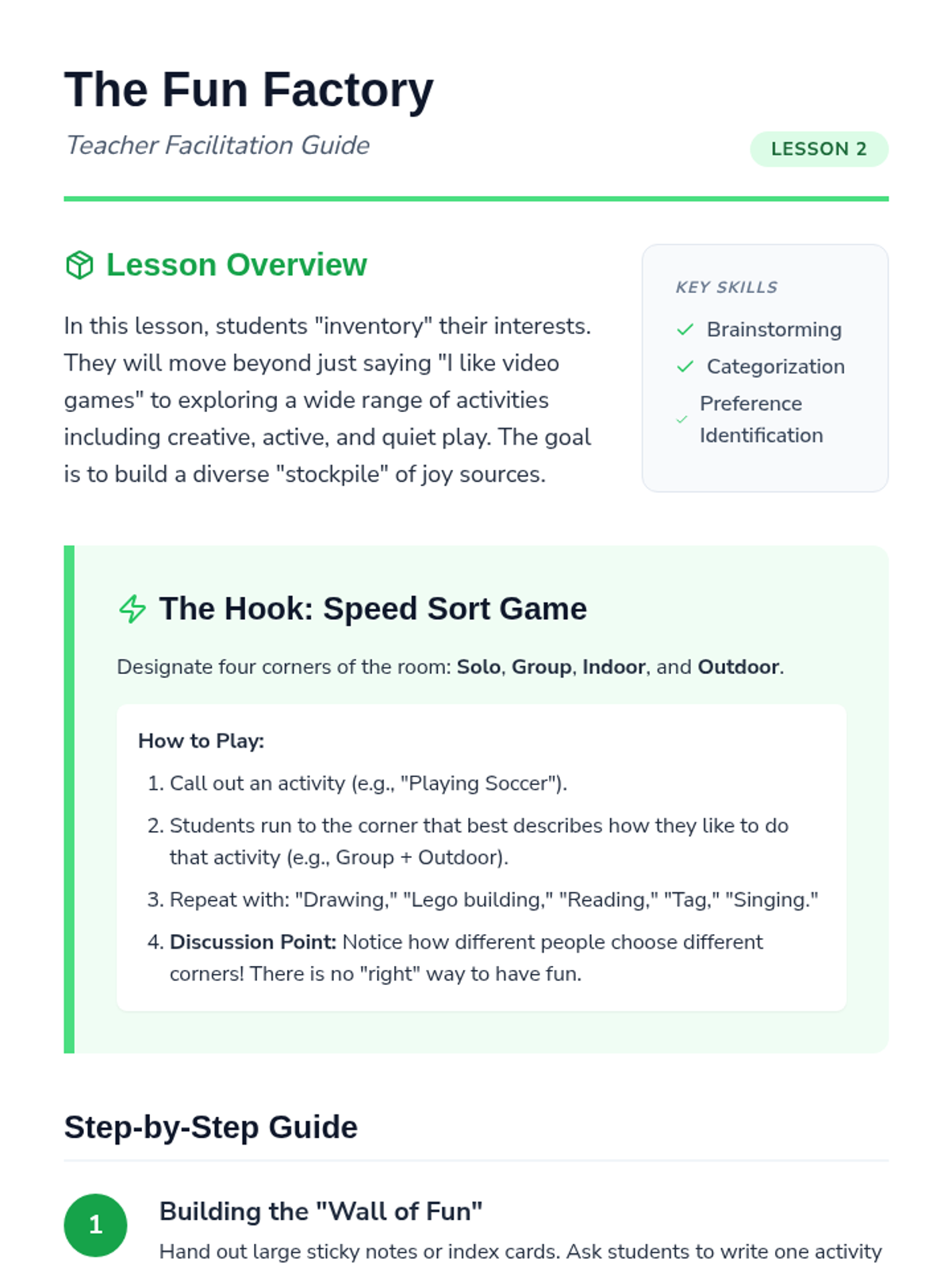
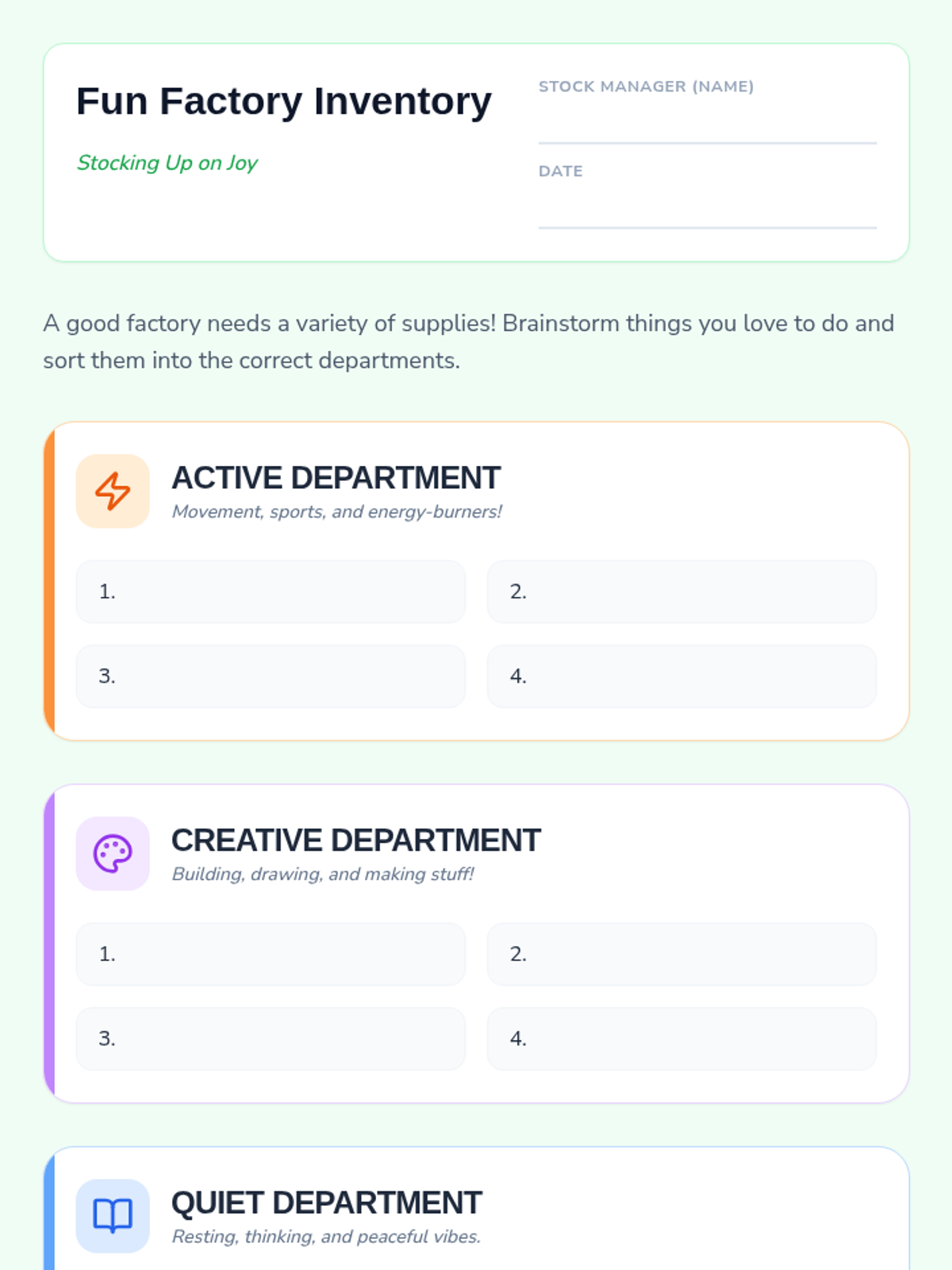
Students brainstorm a wide variety of activities they enjoy, distinguishing between active play, creative expression, and quiet relaxation. They learn that different types of fun serve different emotional needs.
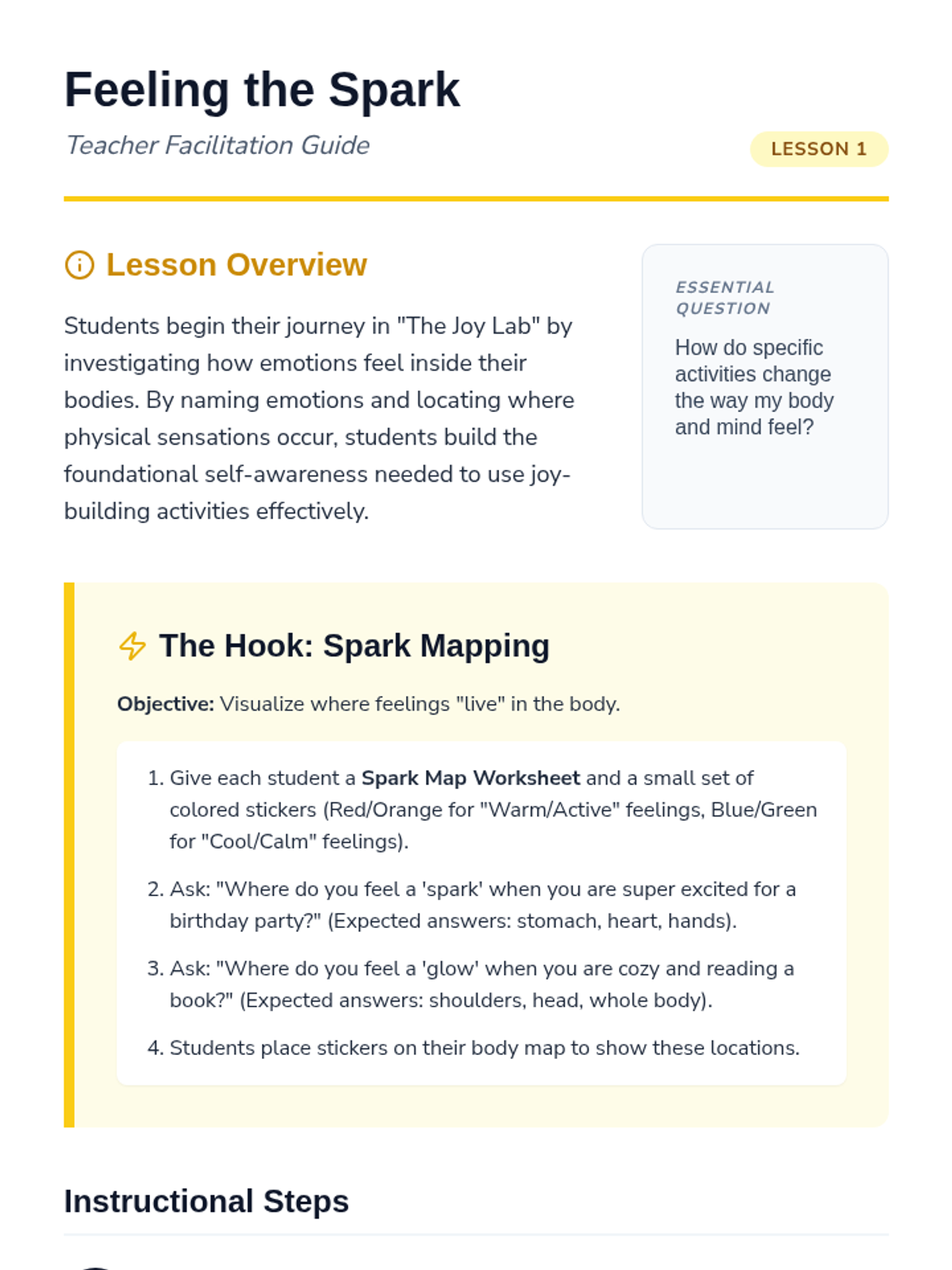
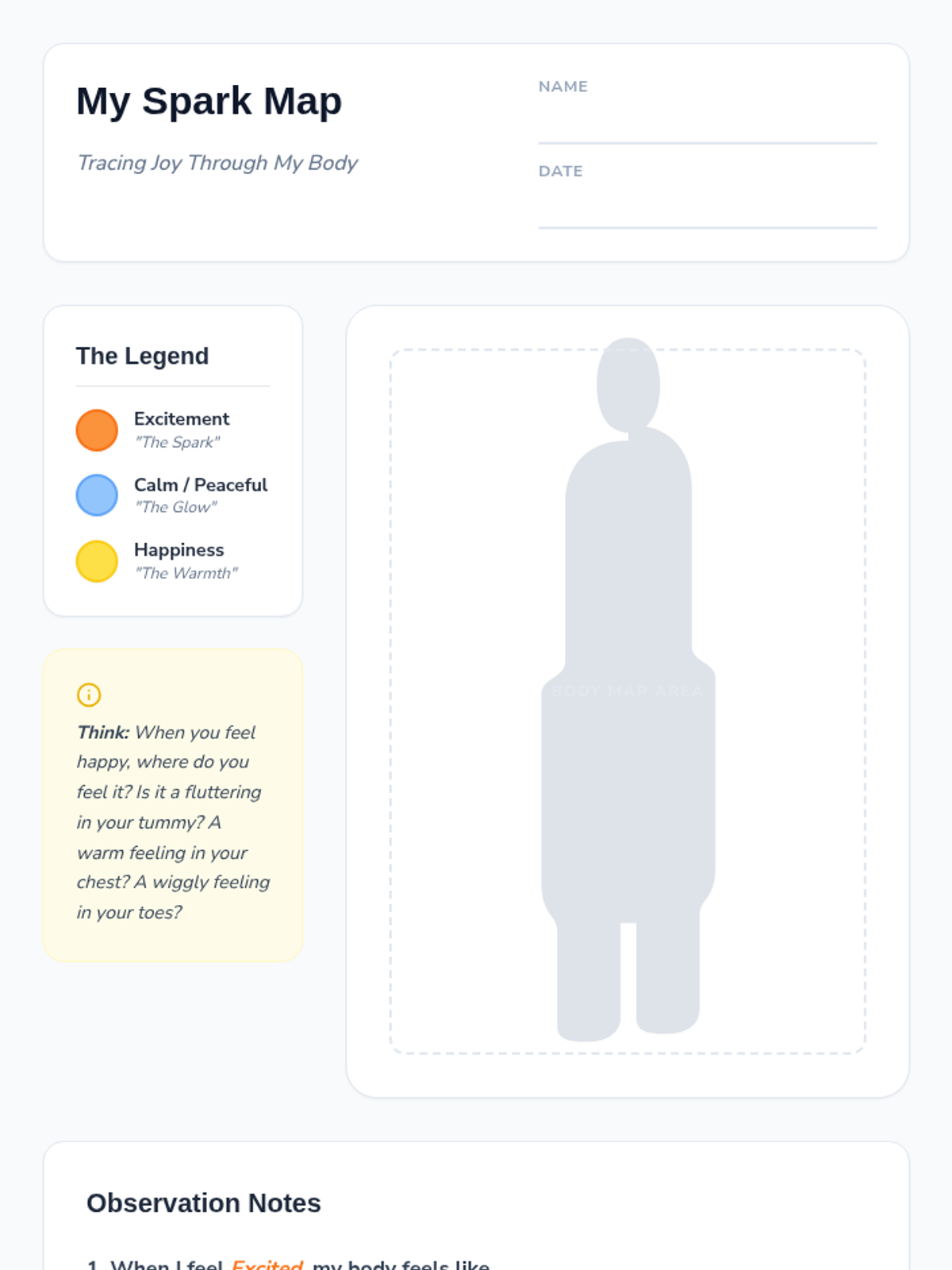
Students explore the vocabulary of emotions and identify physical sensations associated with happiness, calm, and excitement. They create a body map to visualize where they feel positive emotions.
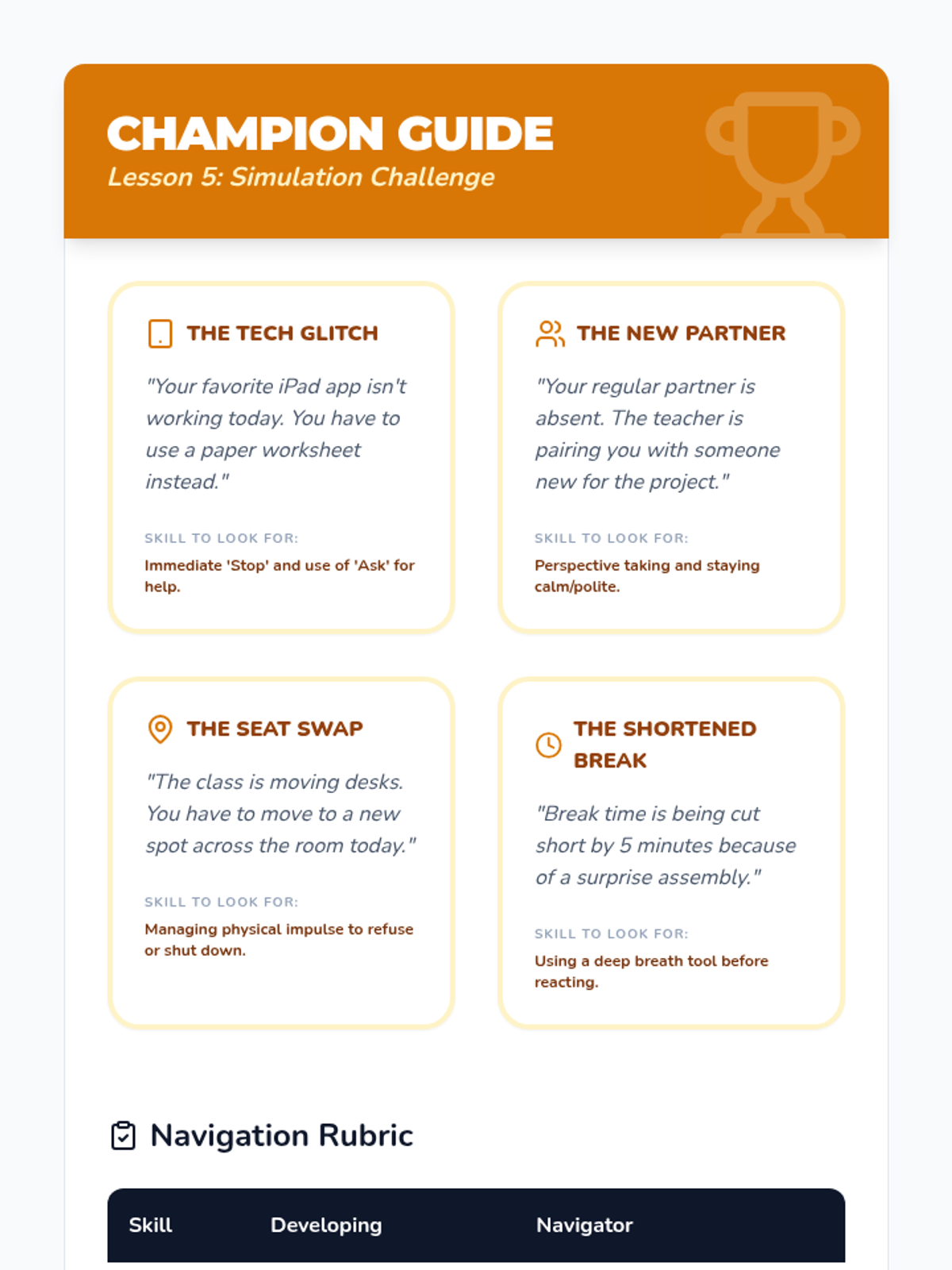
Students participate in simulations using 'Challenge Cards' to apply their coping skills and the 'Stop, Breathe, Ask' routine. Peer feedback reinforces positive adaptation strategies.
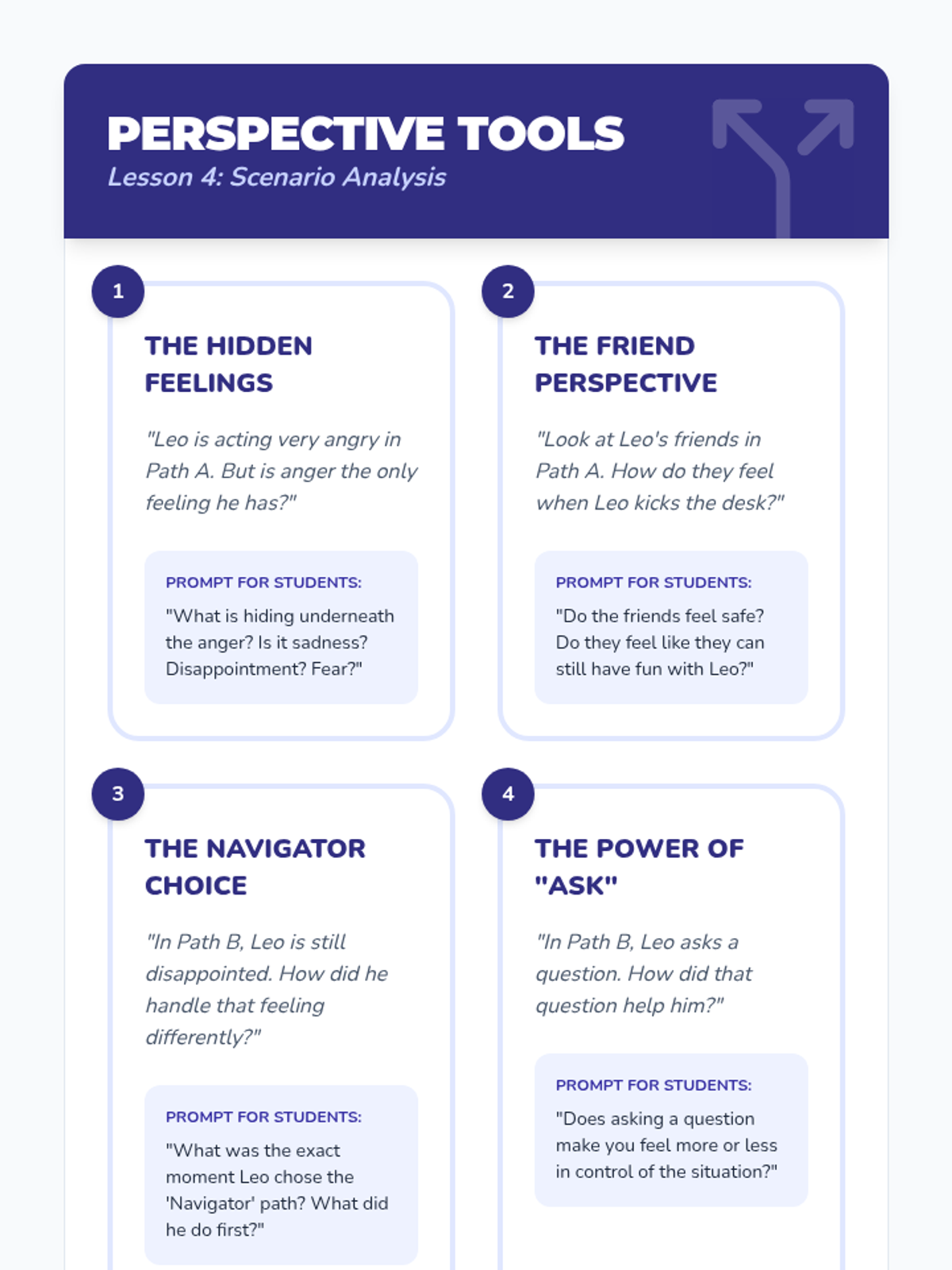
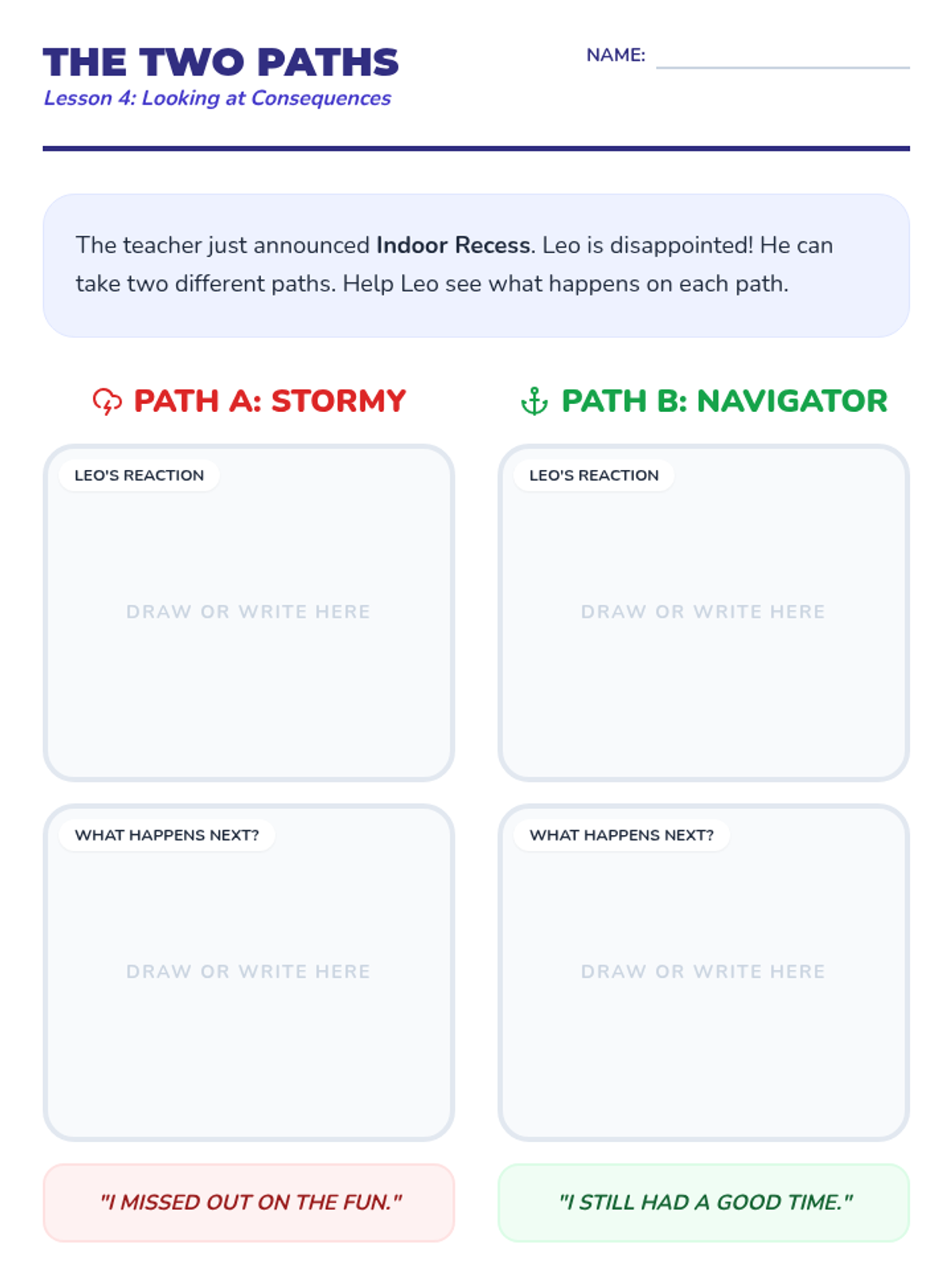
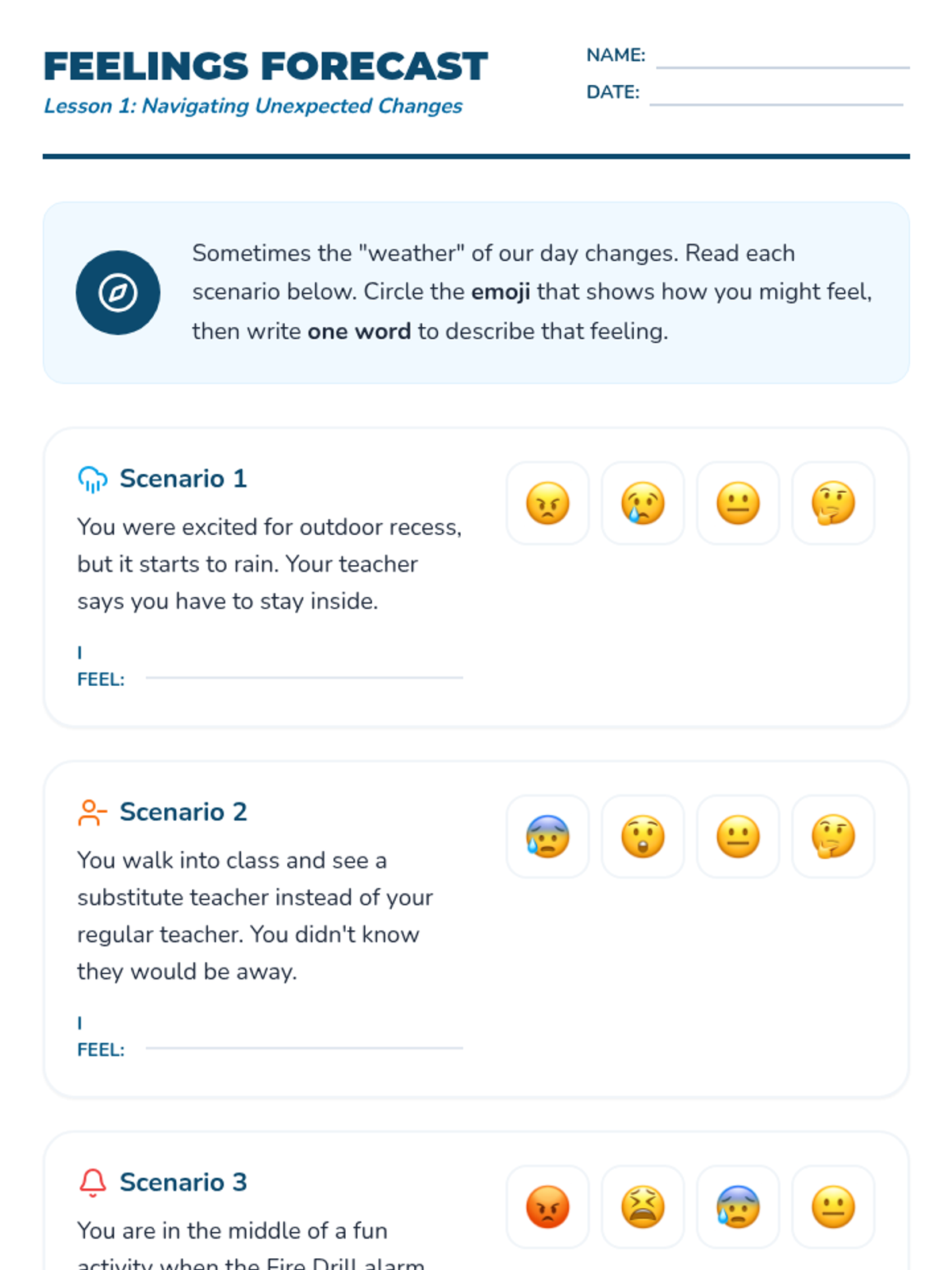
Using the 'Rainy Recess' scenario, students analyze different reactions to plan changes. They map out the consequences of various responses to build perspective-taking skills.
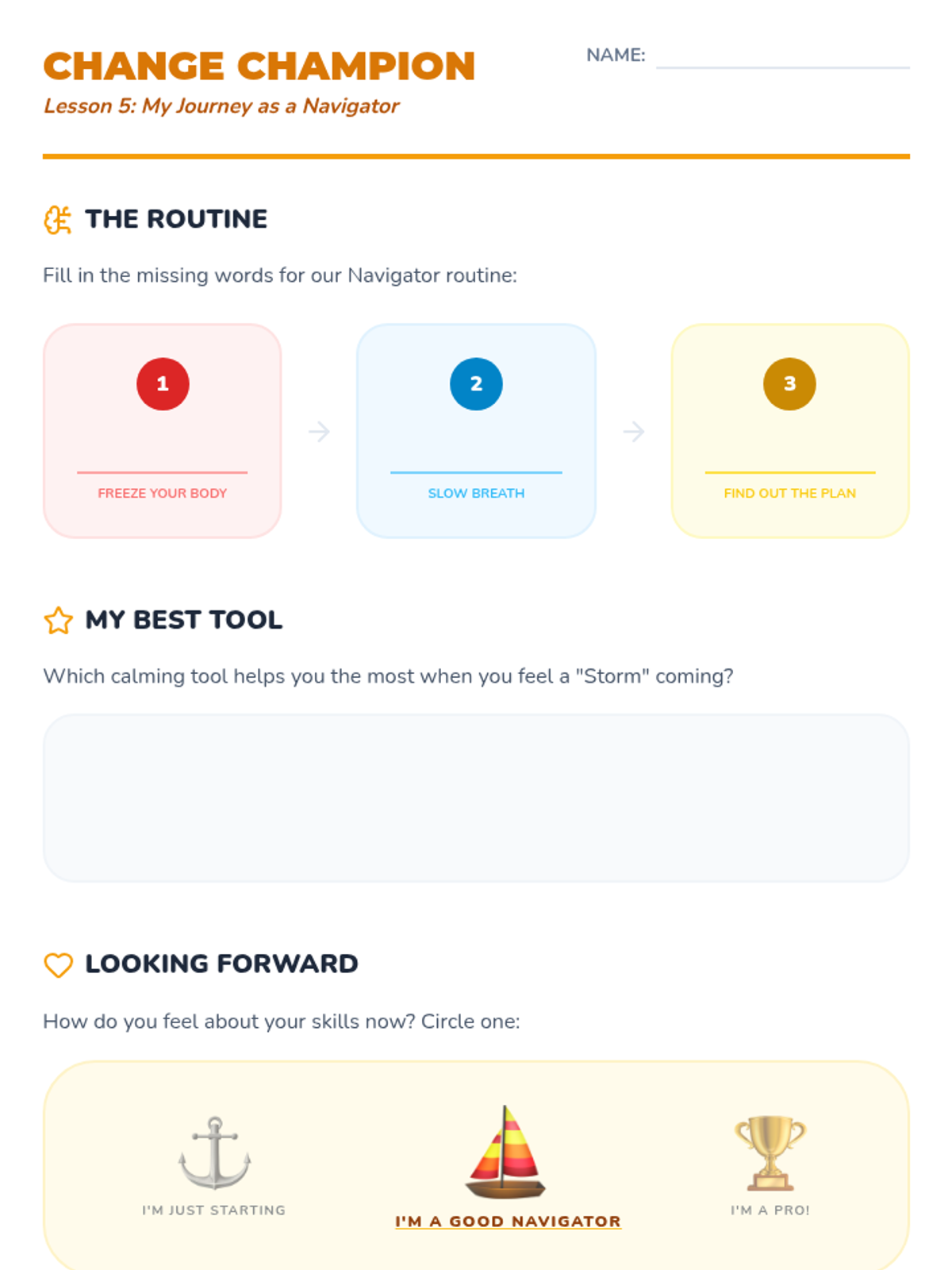
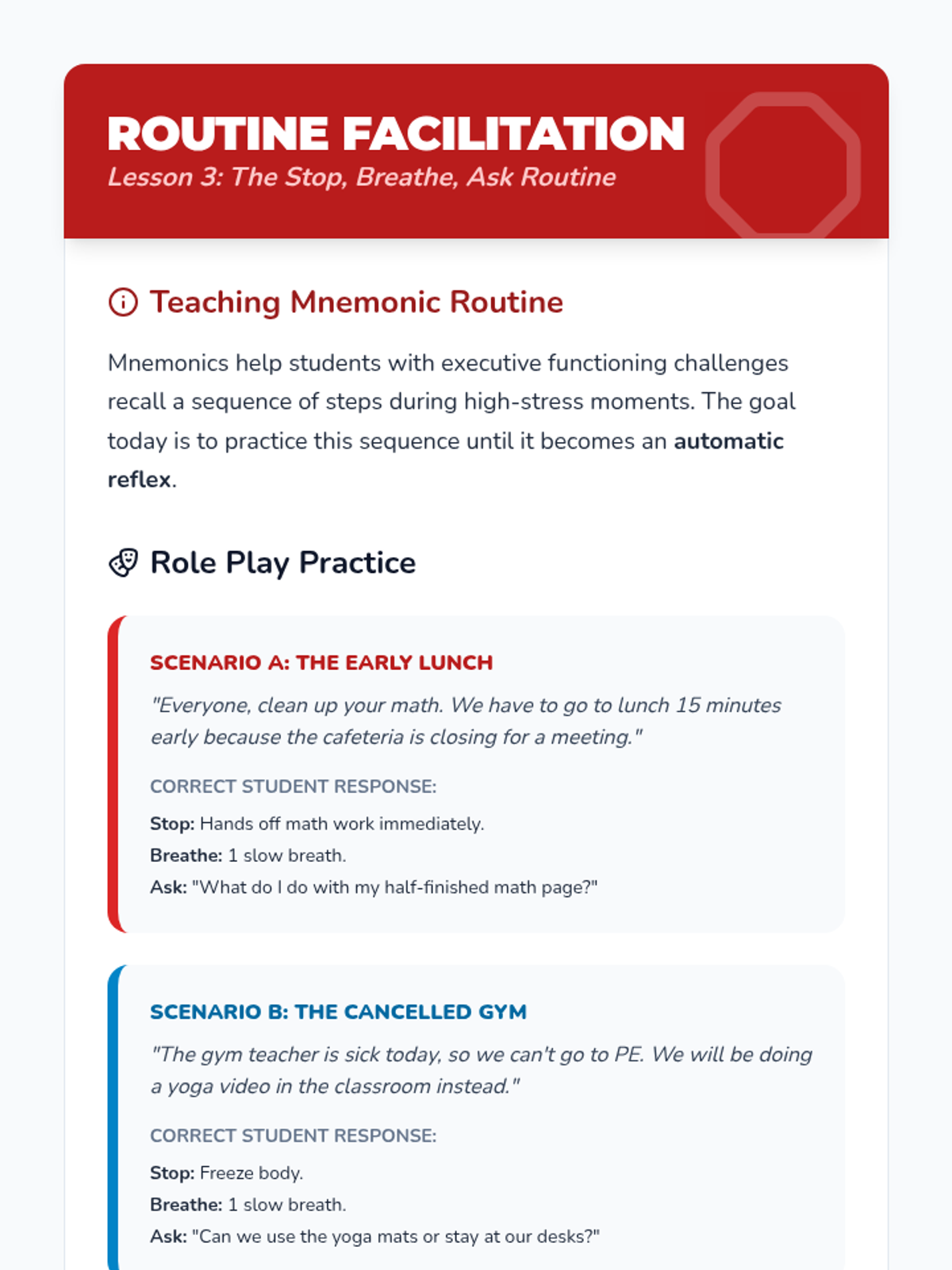
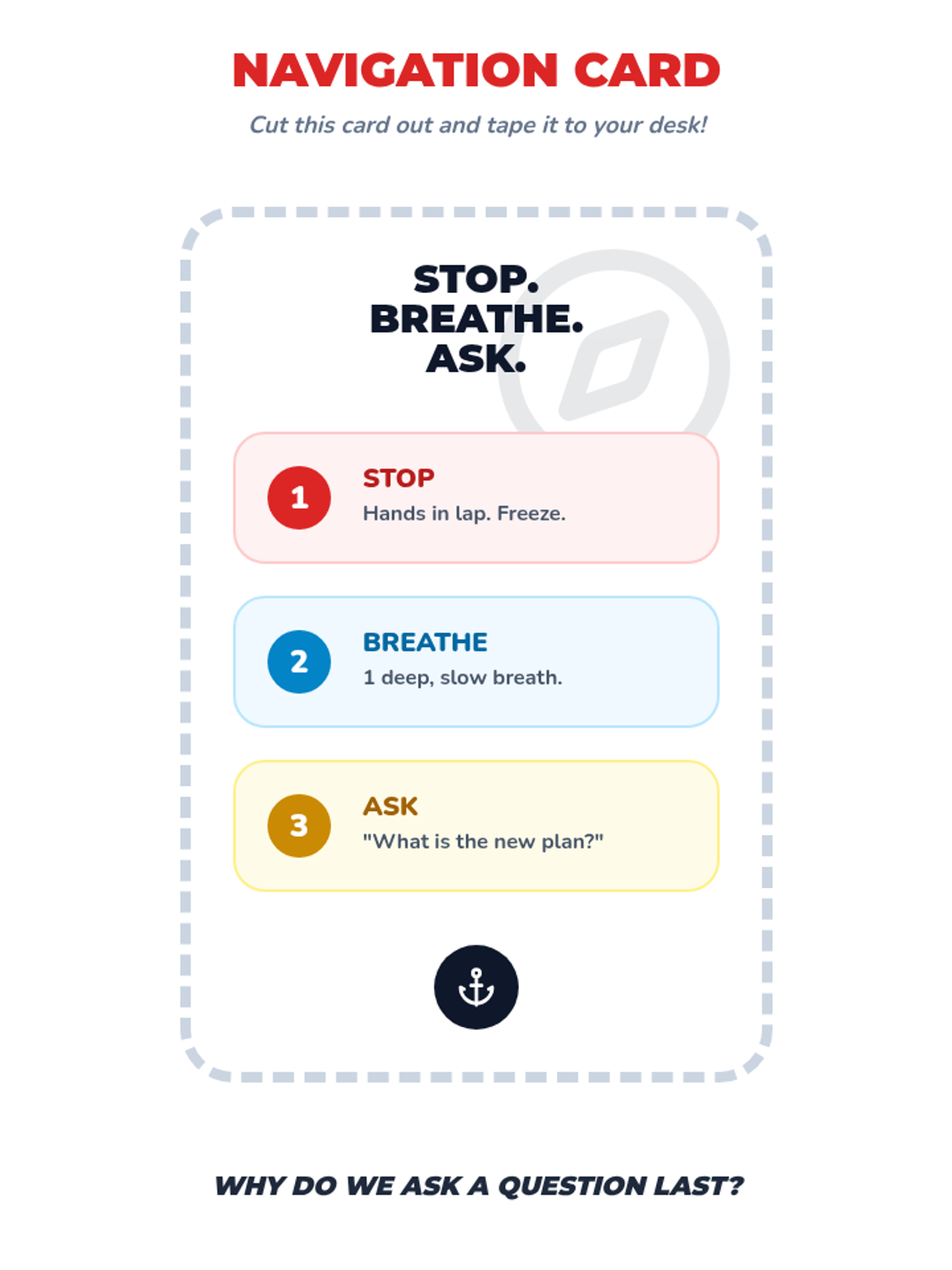
Students learn a three-step mnemonic routine (Stop, Breathe, Ask) to use when changes occur. Role-playing helps internalize the sequence of pausing, breathing, and clarifying the new plan.
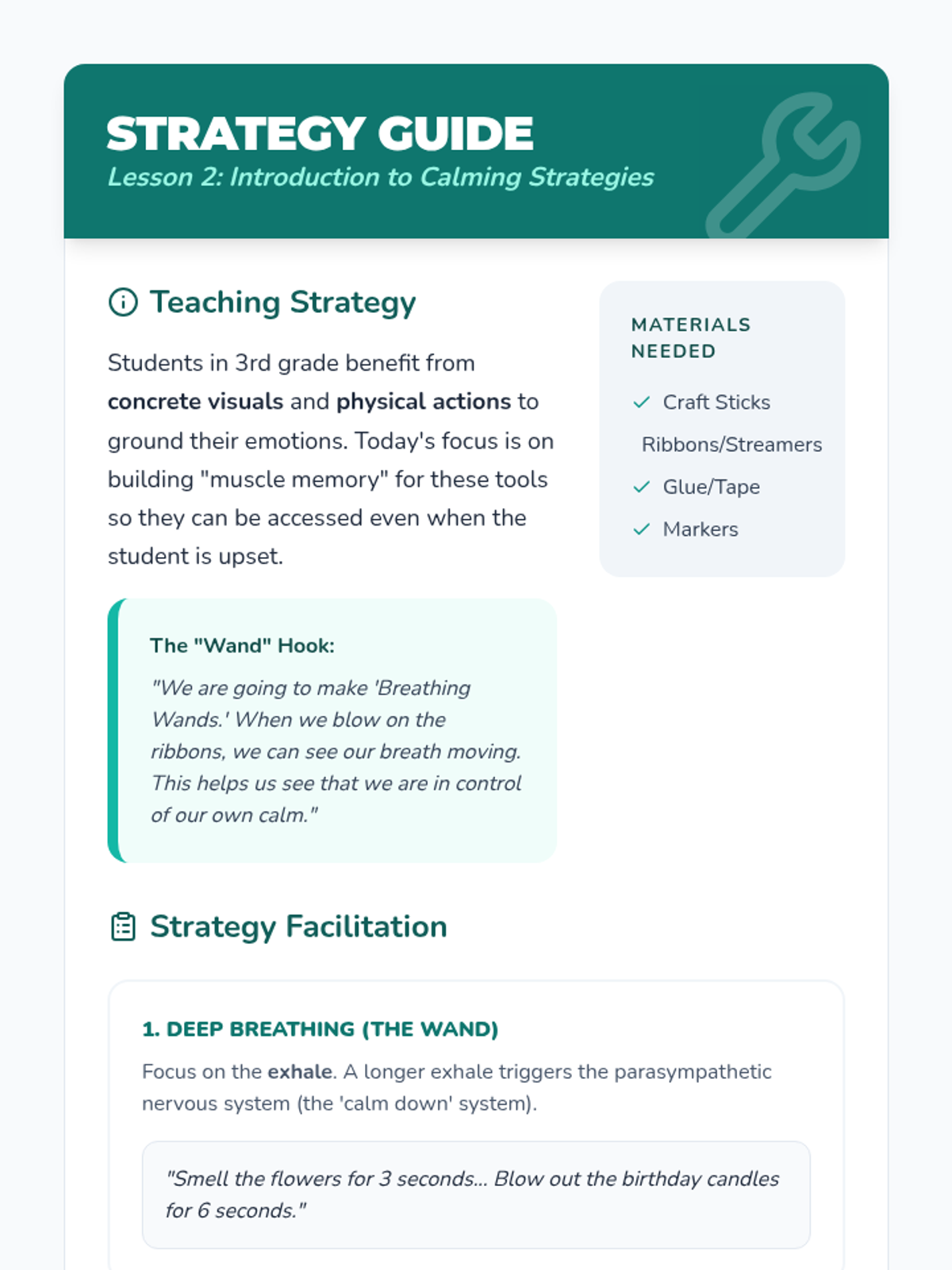
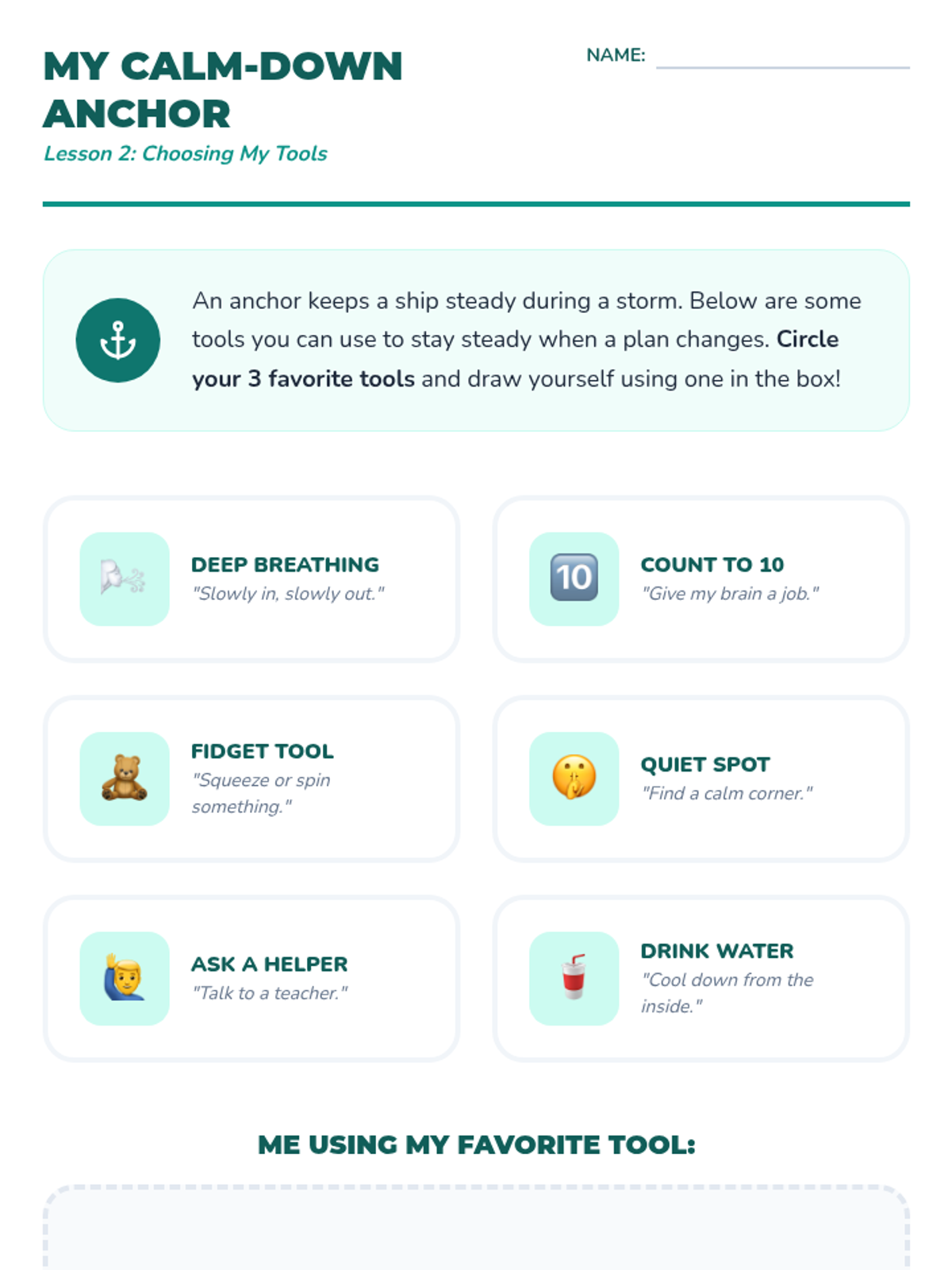
Introduces concrete coping mechanisms like deep breathing and counting to ten. Students build a 'toolbox' of strategies to access when they feel dysregulated.
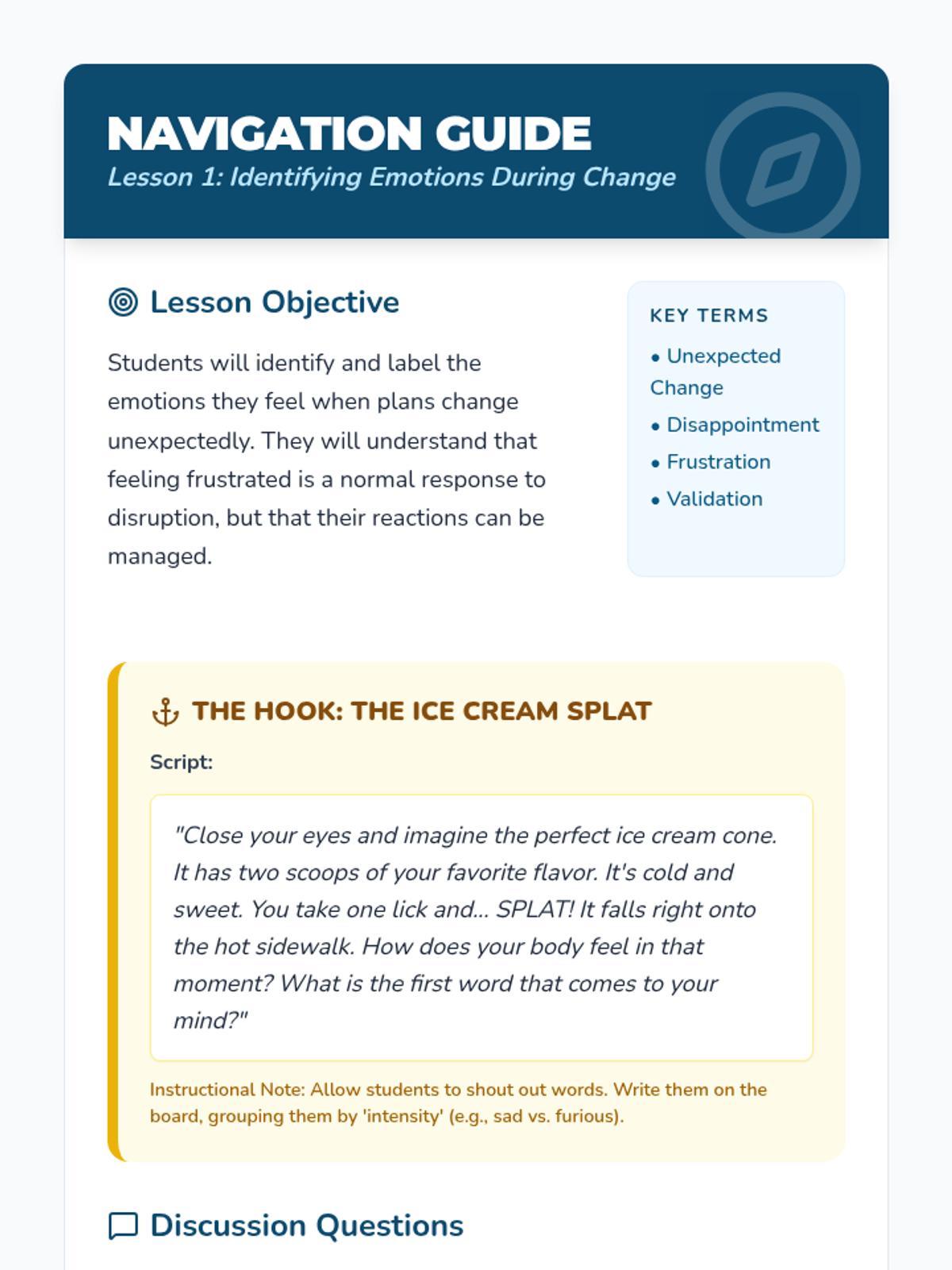
Students explore the range of emotions felt when plans are disrupted and build emotional vocabulary. The lesson validates that feeling frustrated is normal while teaching that reactions can be managed.