Emotion recognition ranging from basic feelings to complex nuances and mixed states. Strengthens accurate self-assessment through identity exploration, strength identification, and values-based decision making.
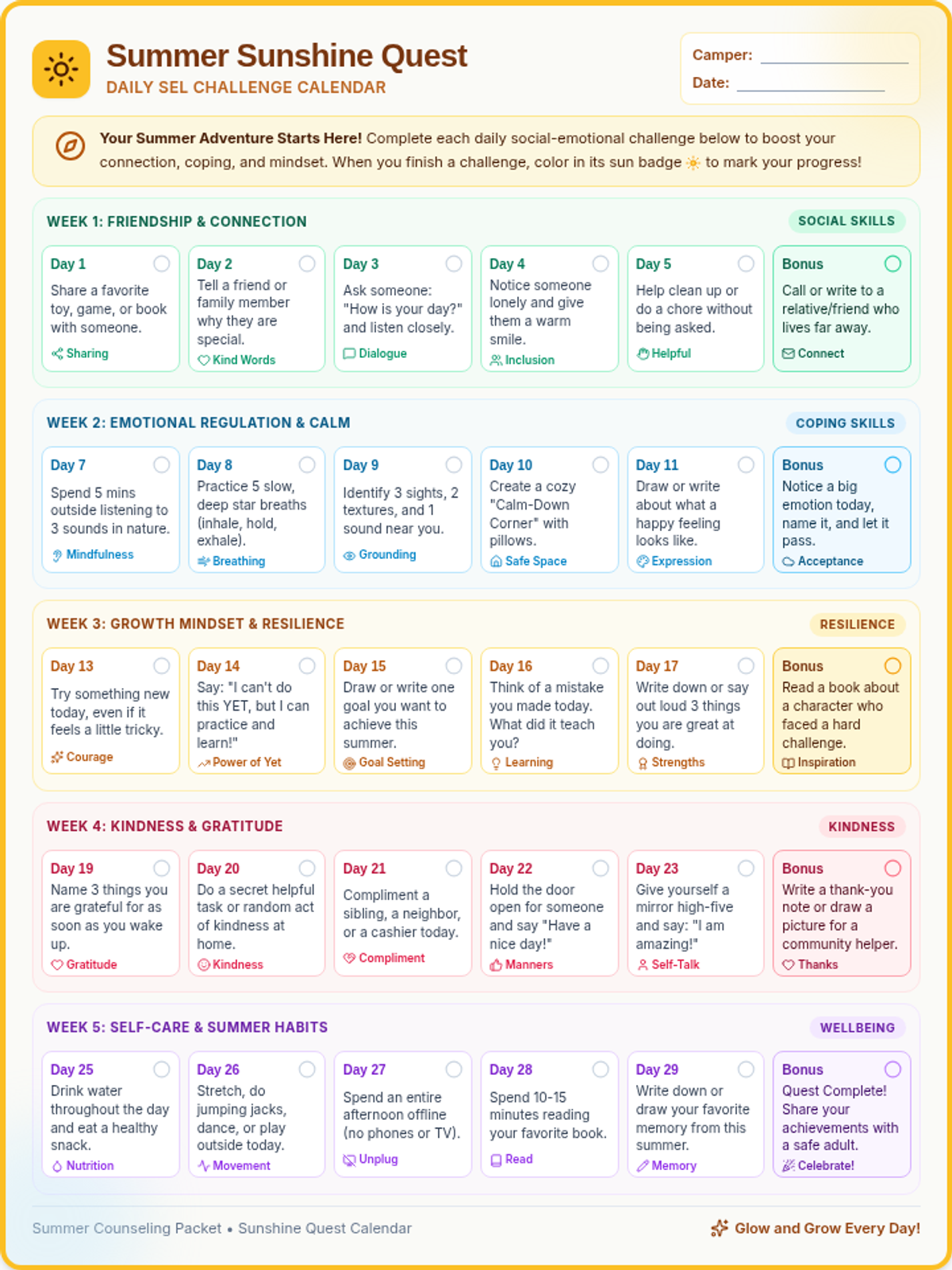
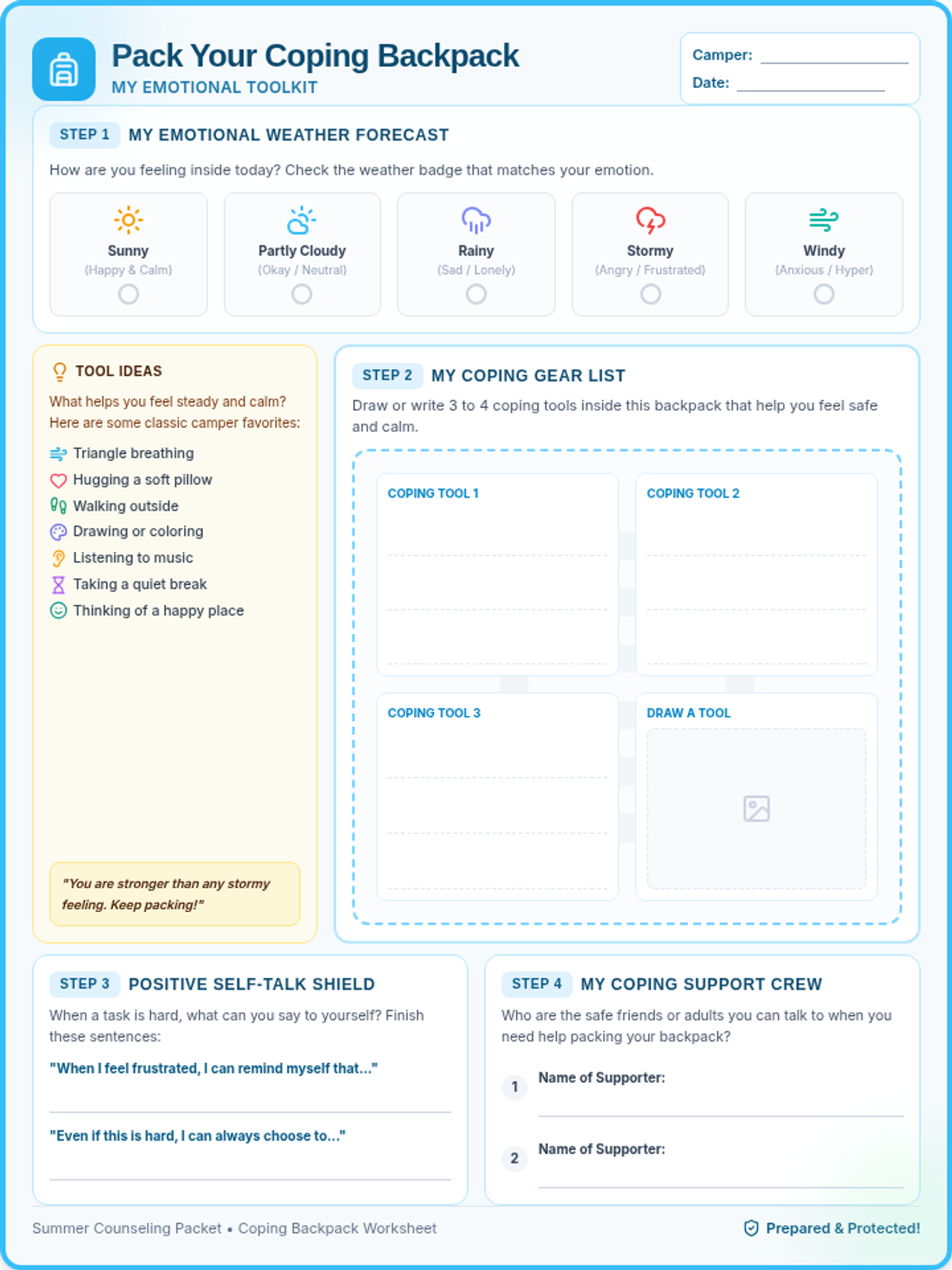
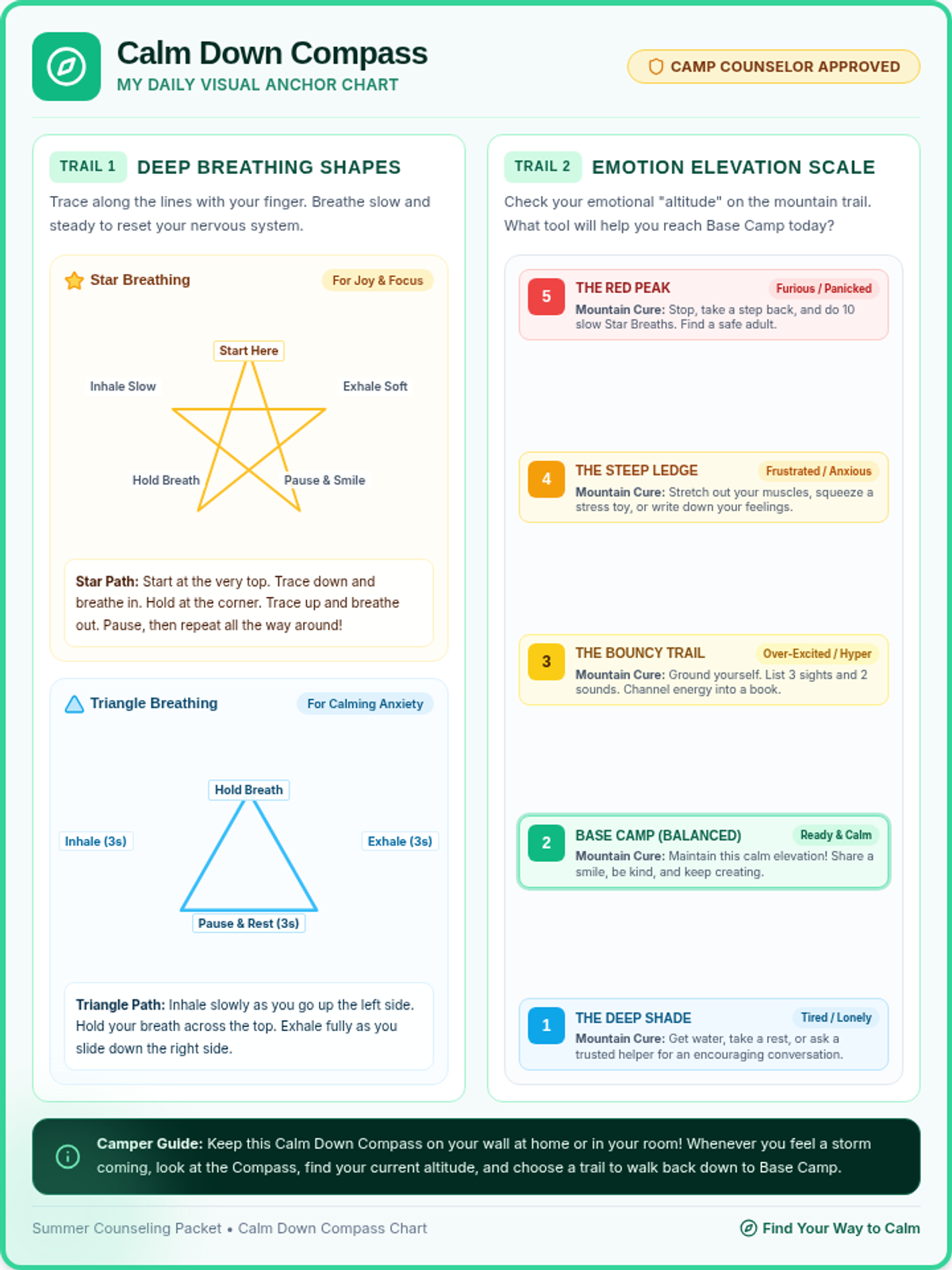
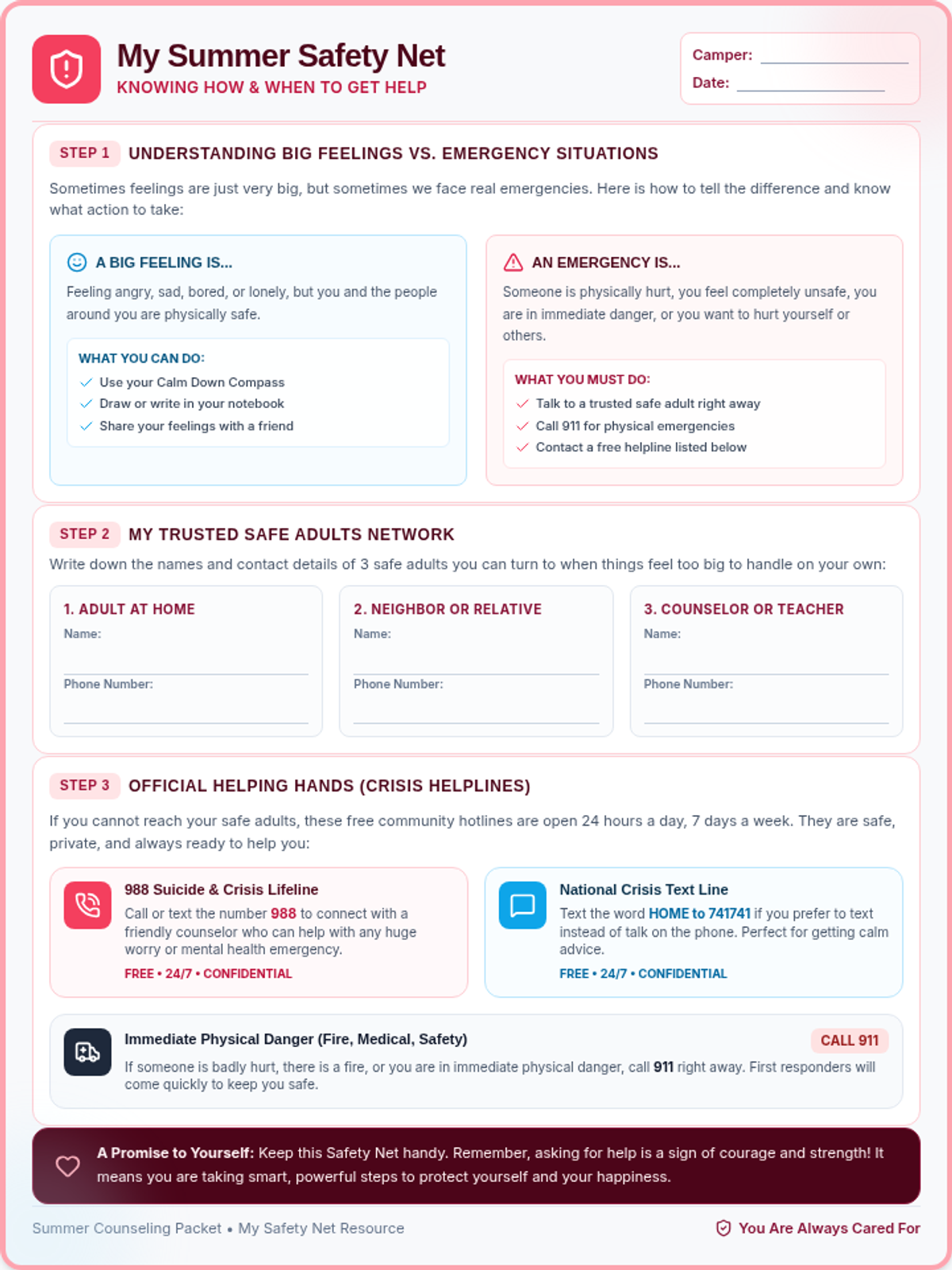
A comprehensive summer counseling packet containing daily SEL challenge calendars, coping skill worksheets, deep breathing visual anchor charts, and a safety net resource for getting help in emergencies.
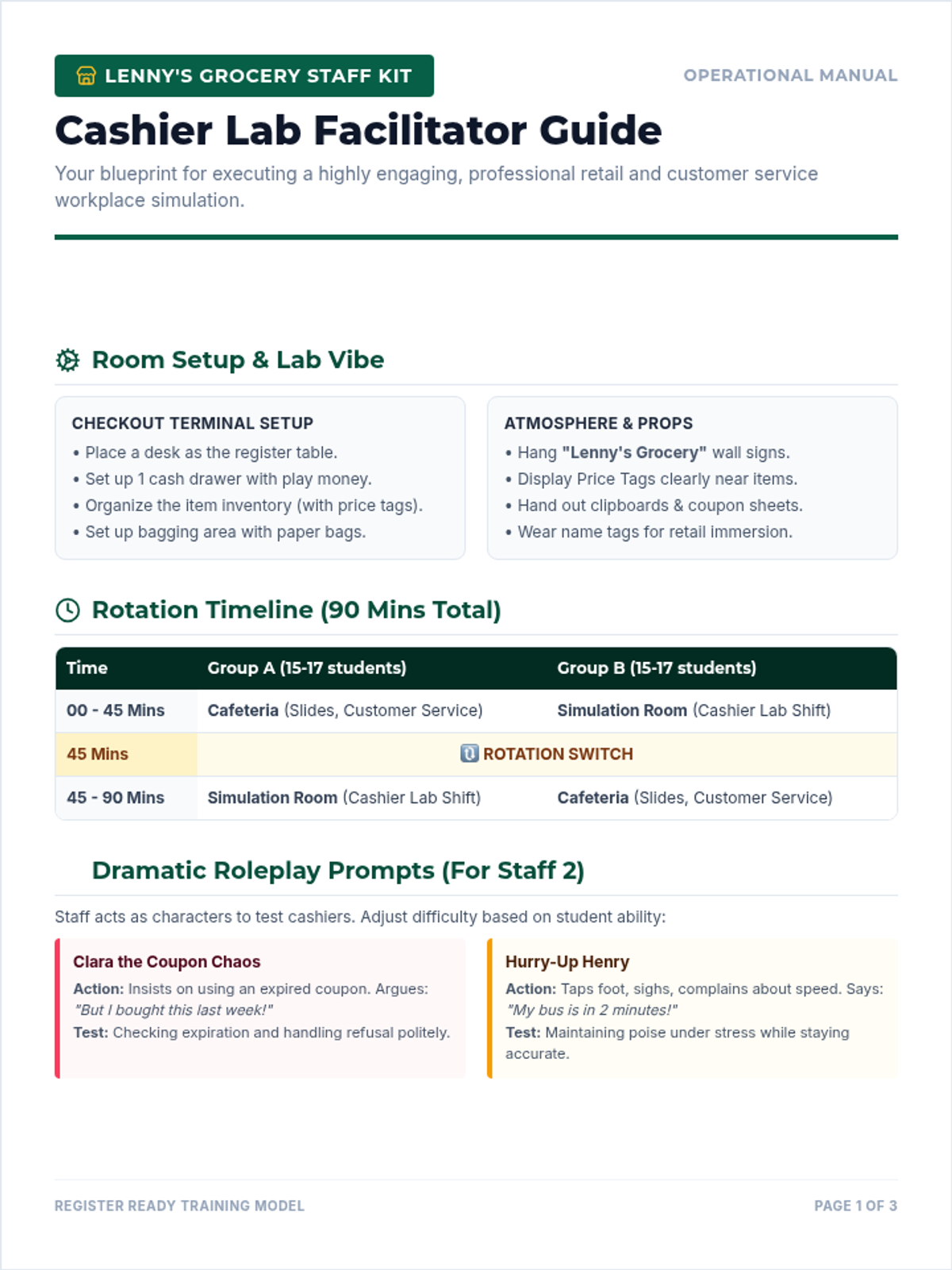
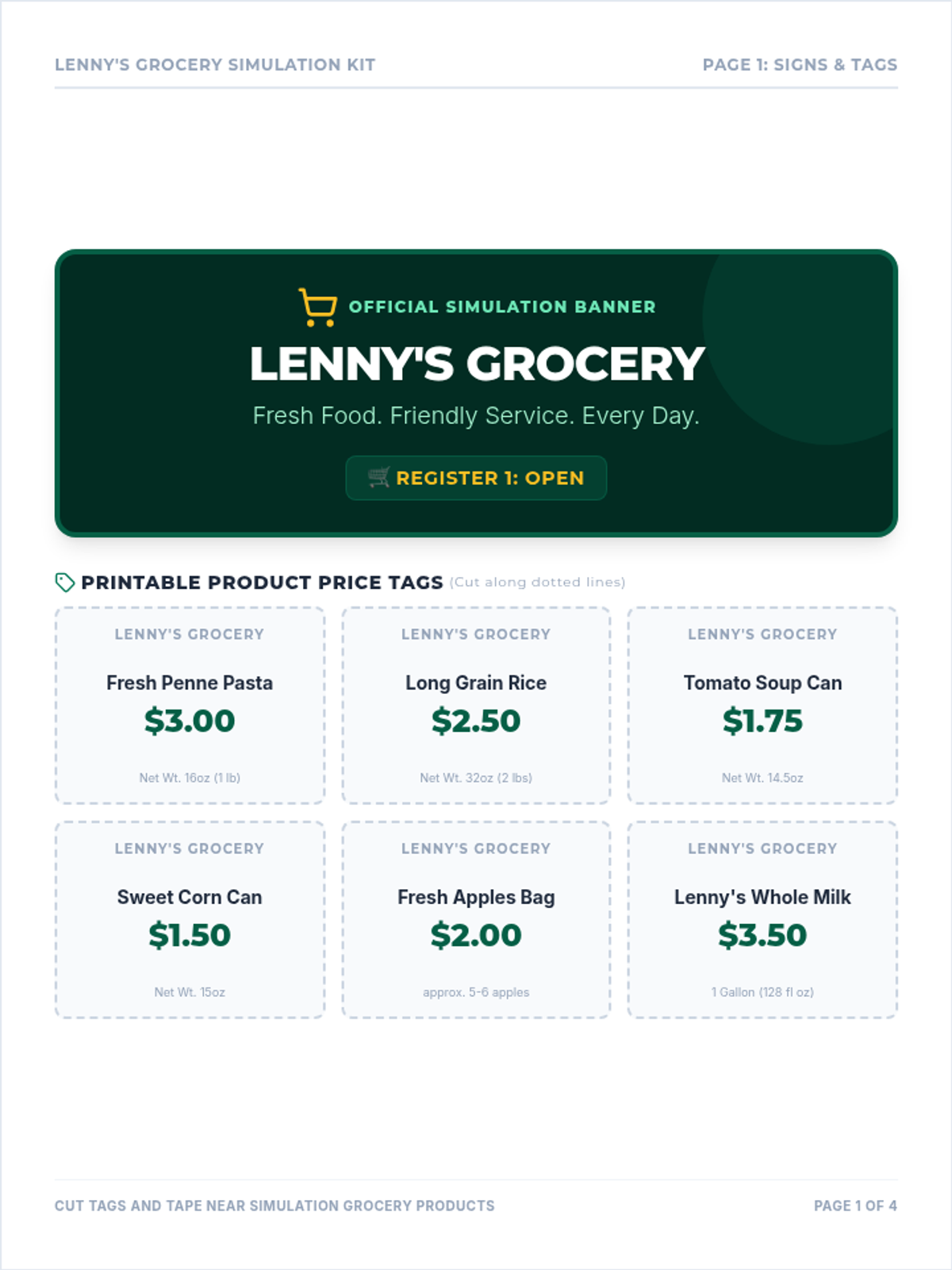
A dynamic rotation lesson where students split between a multimedia classroom training and a realistic, hands-on grocery checkout simulation.
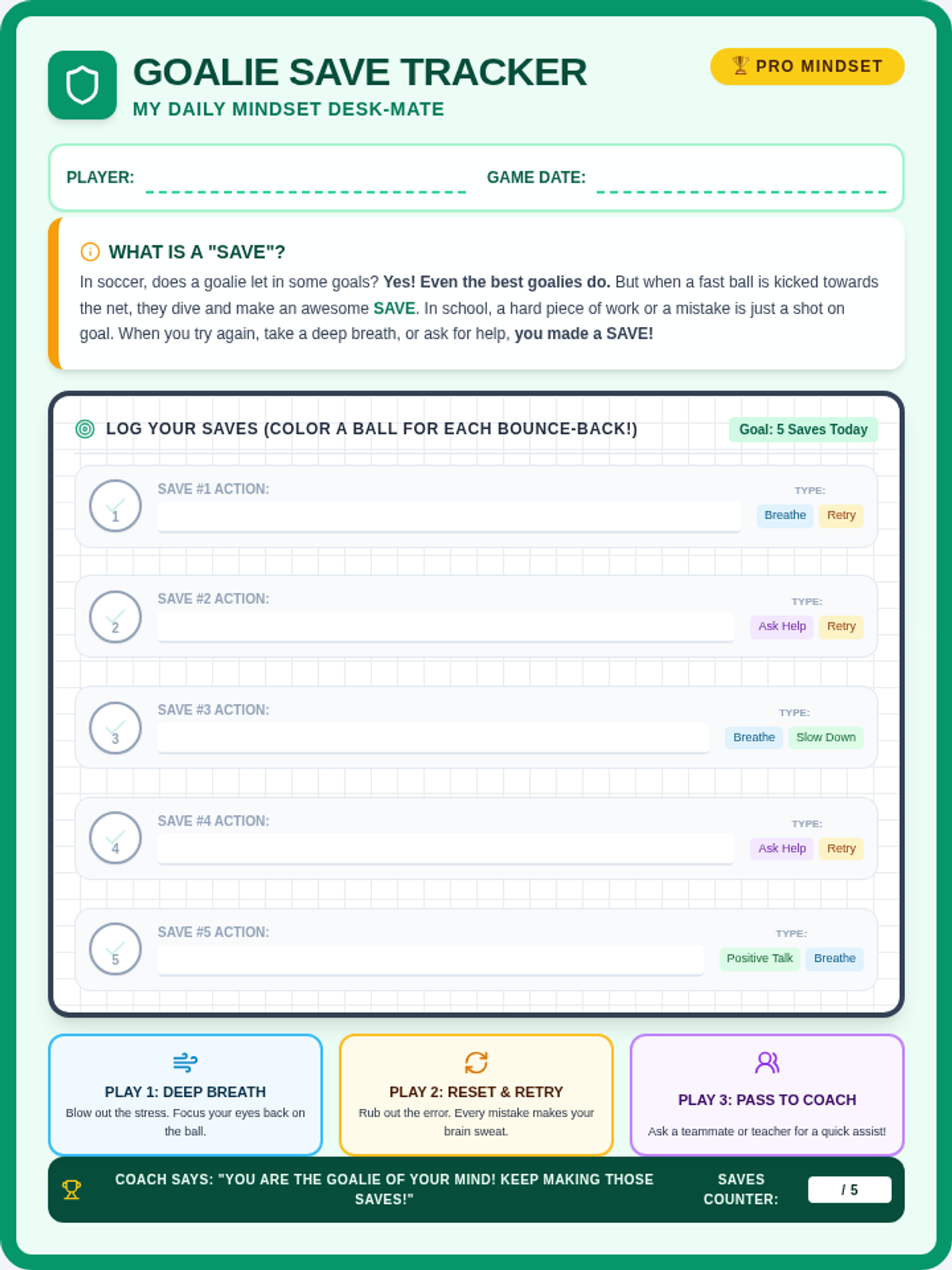
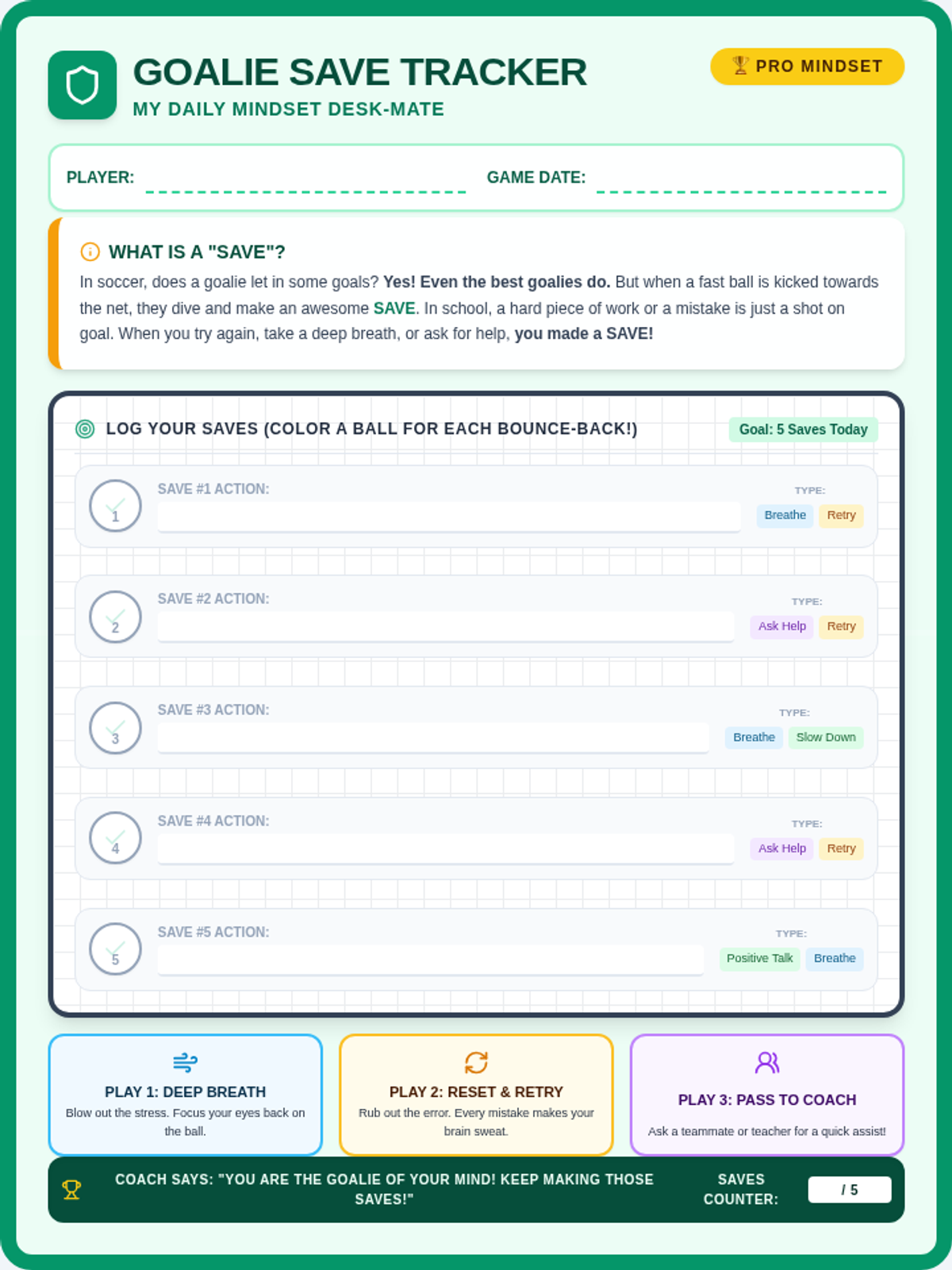
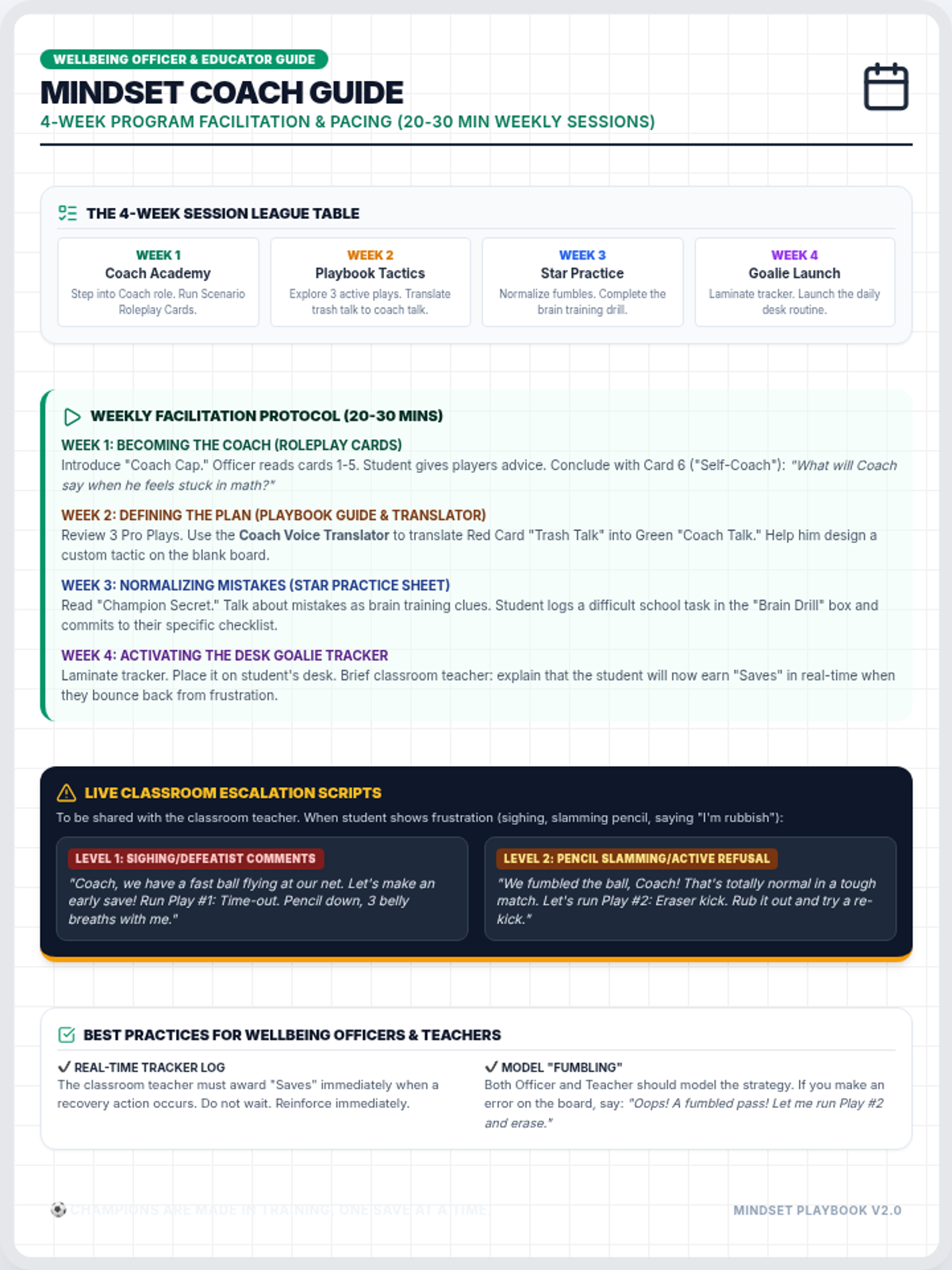
Week 4 of the Wellbeing program. Launches the daily desk-mate tracker routine in the live classroom, establishing goal-setting and long-term reinforcement of coping saves.
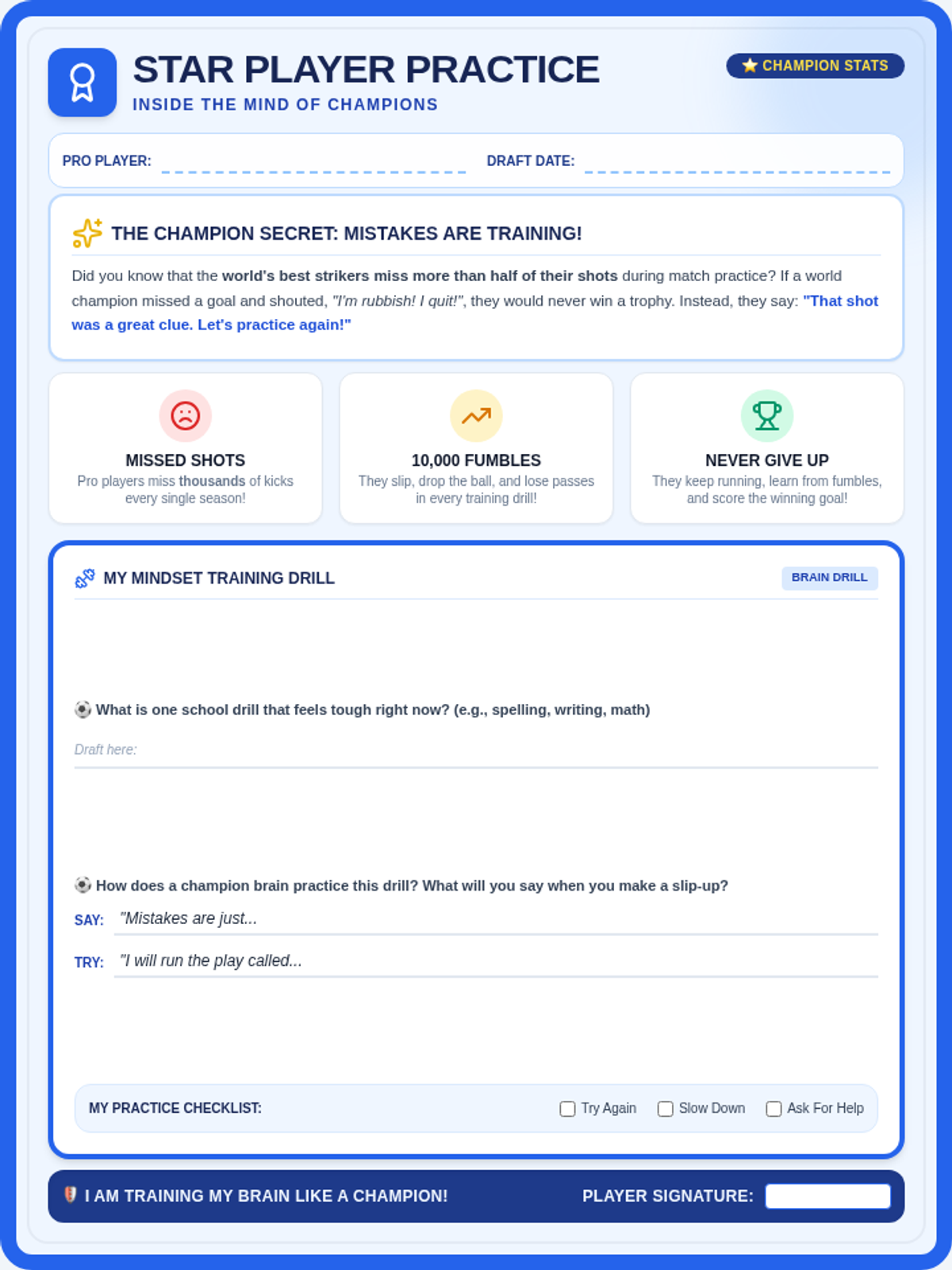
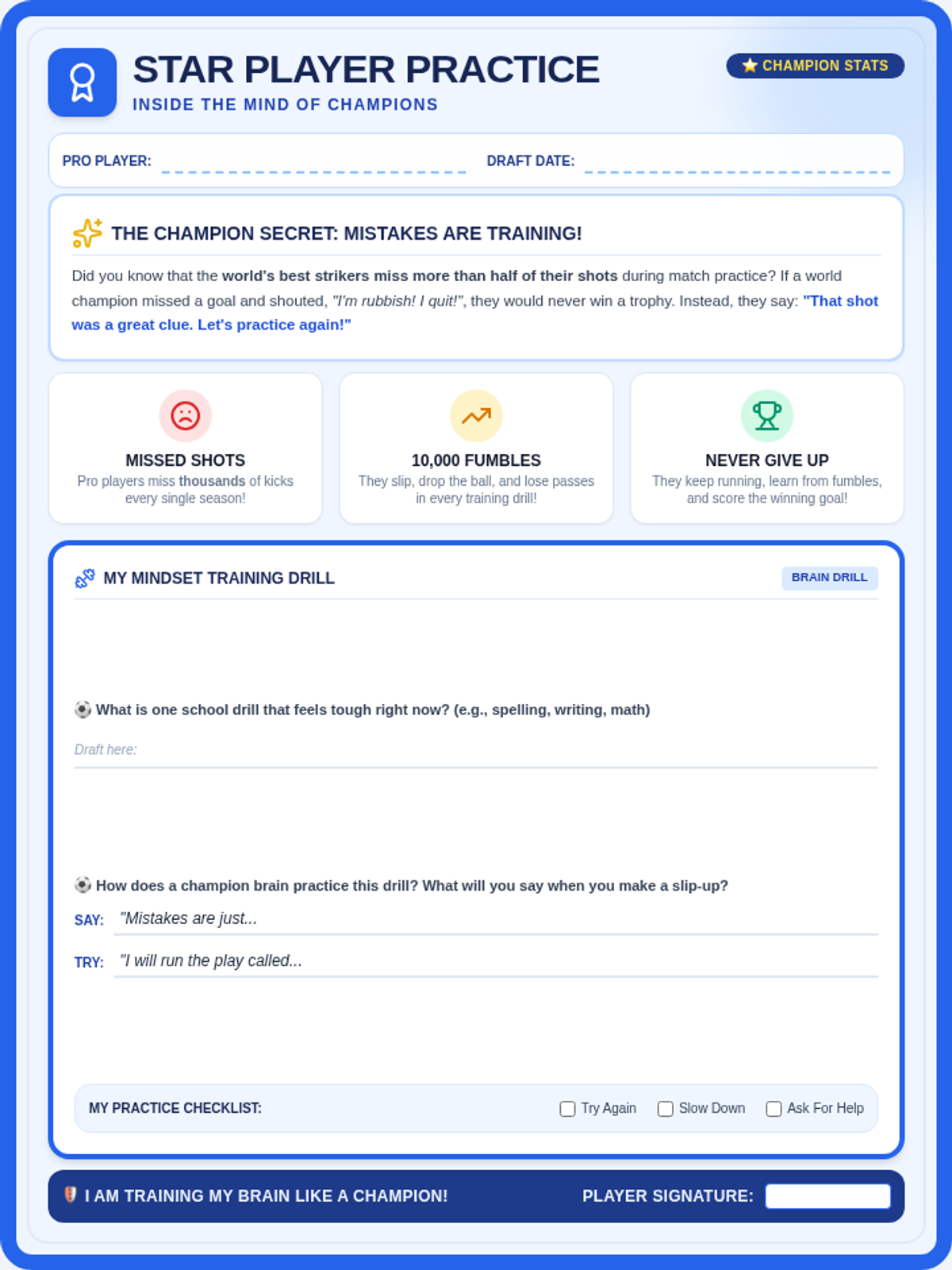
Week 3 of the Wellbeing program. Normalizes error-making by comparing student struggles to professional soccer players fumbling, failing, and practicing daily to train their brains.
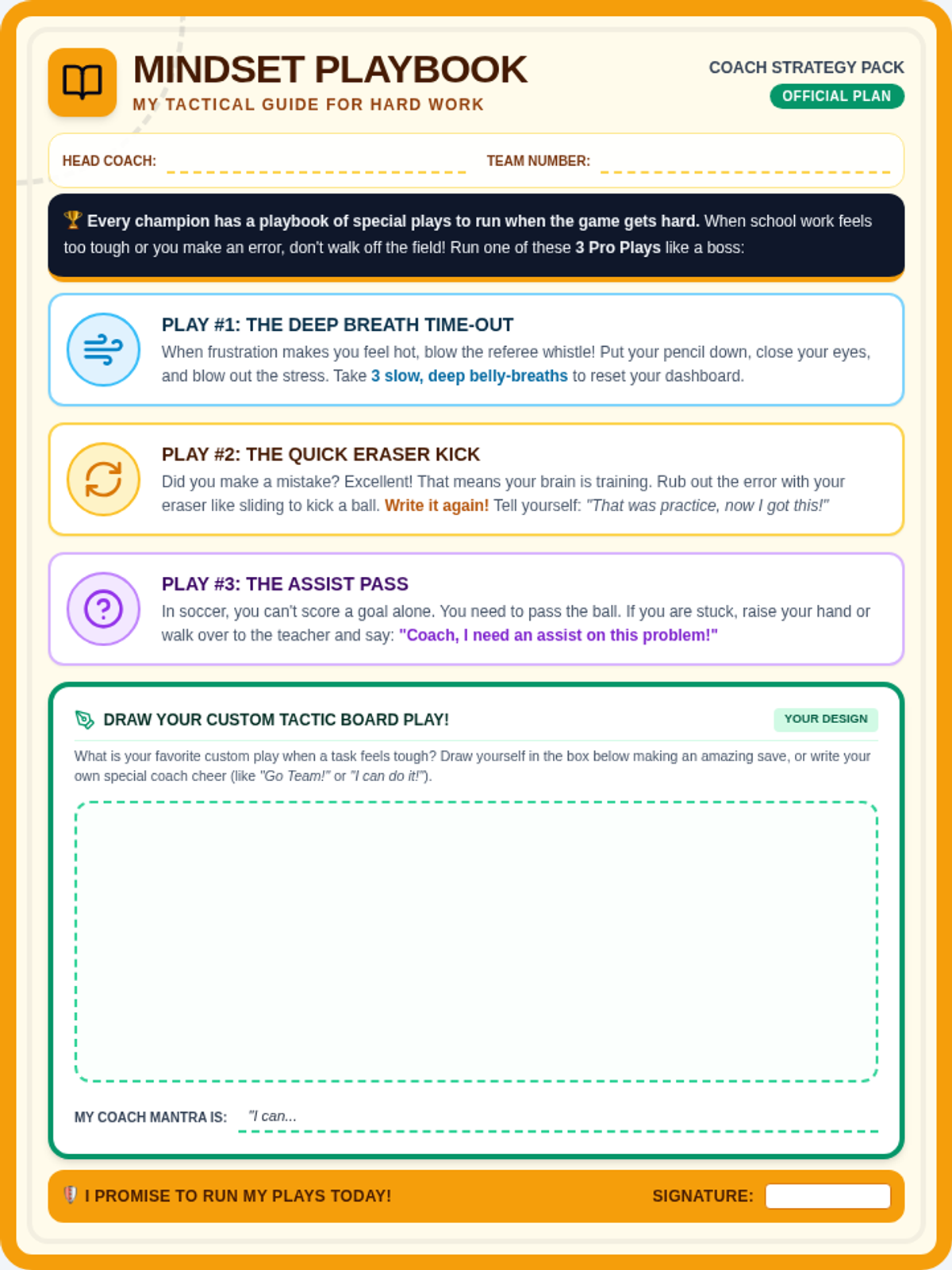
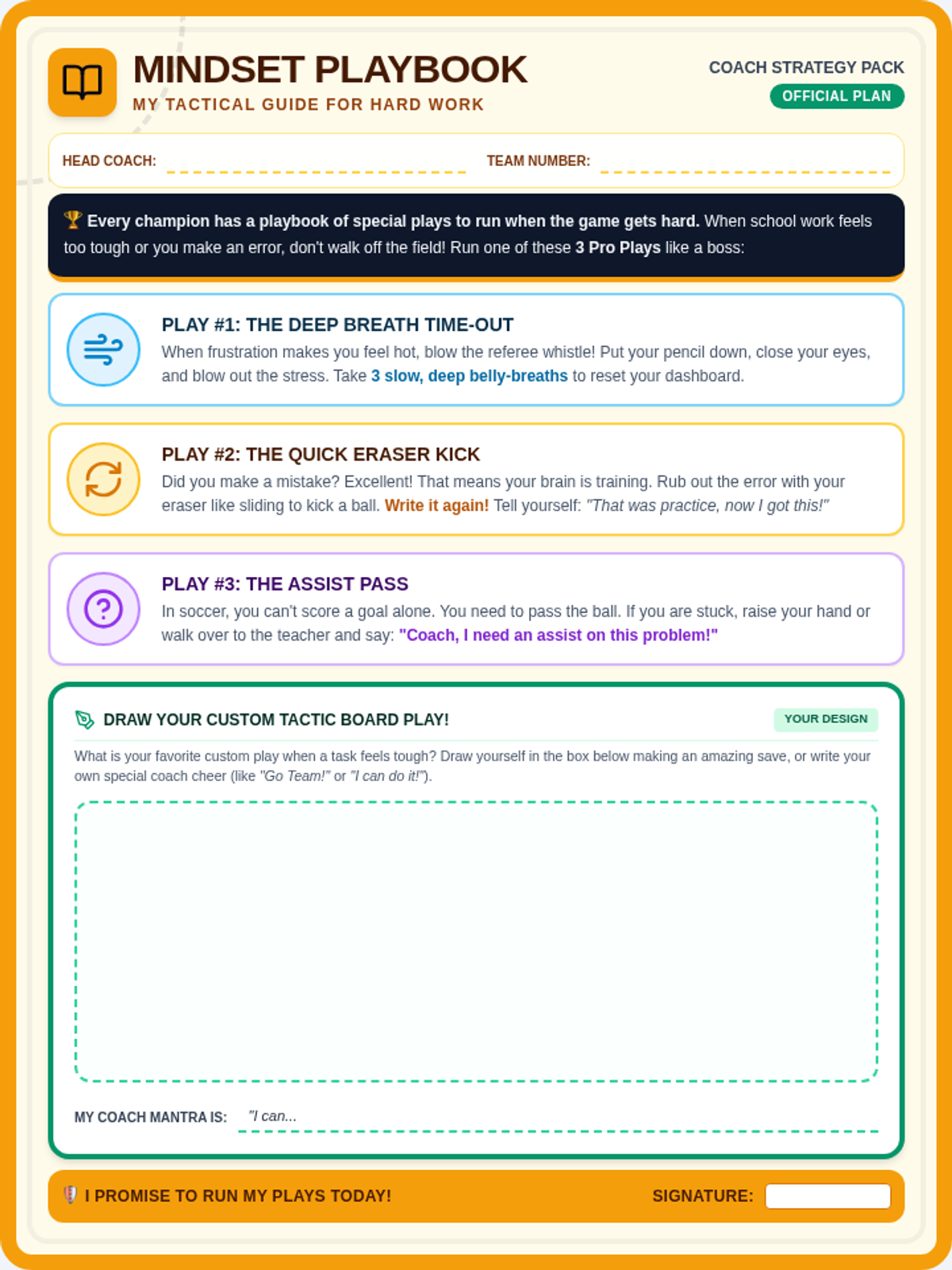
Week 2 of the Wellbeing program. The student learns to formulate a personal action plan by designing specific, physicalized tactical 'plays' to run when academic frustration hits.
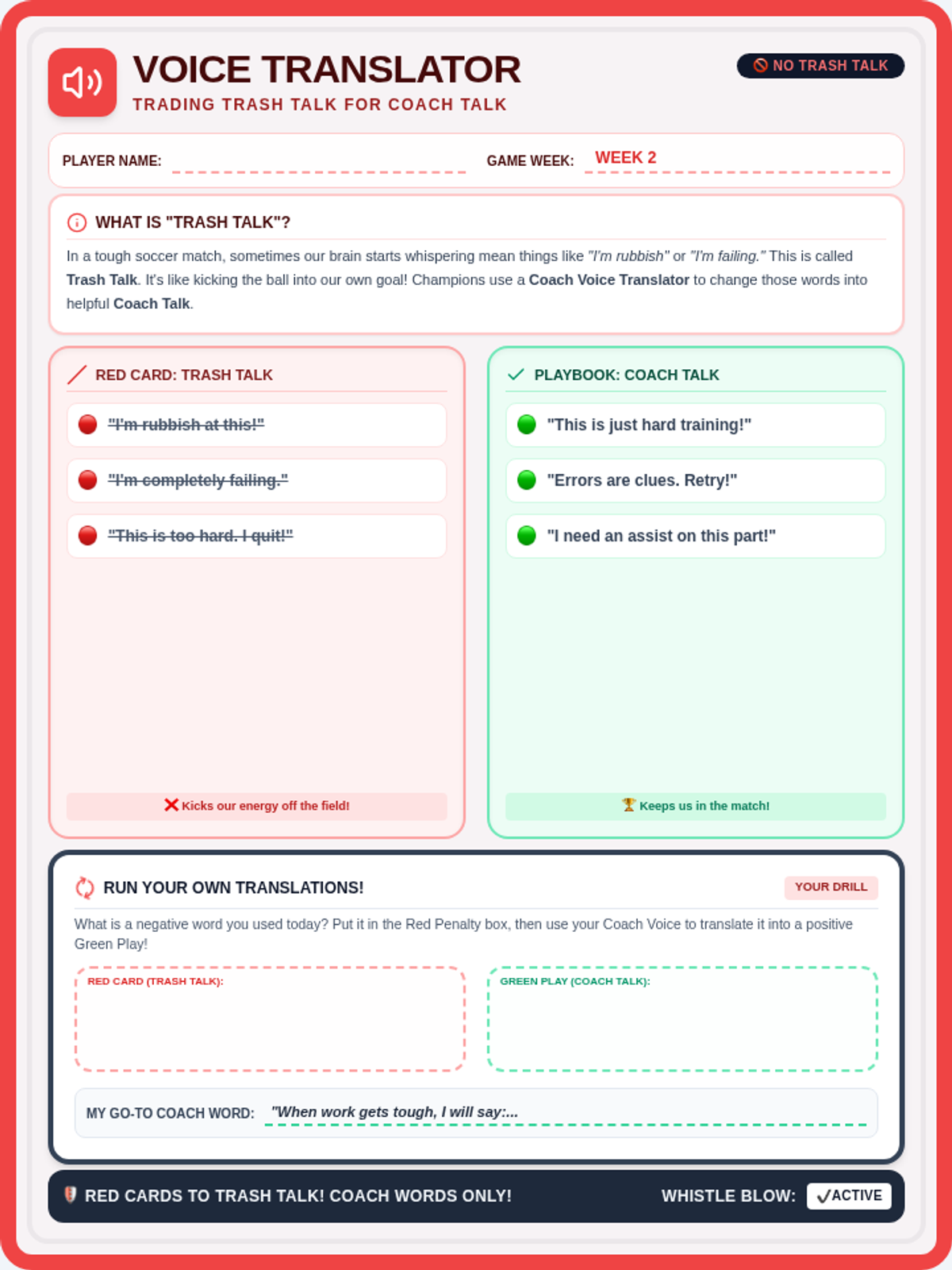
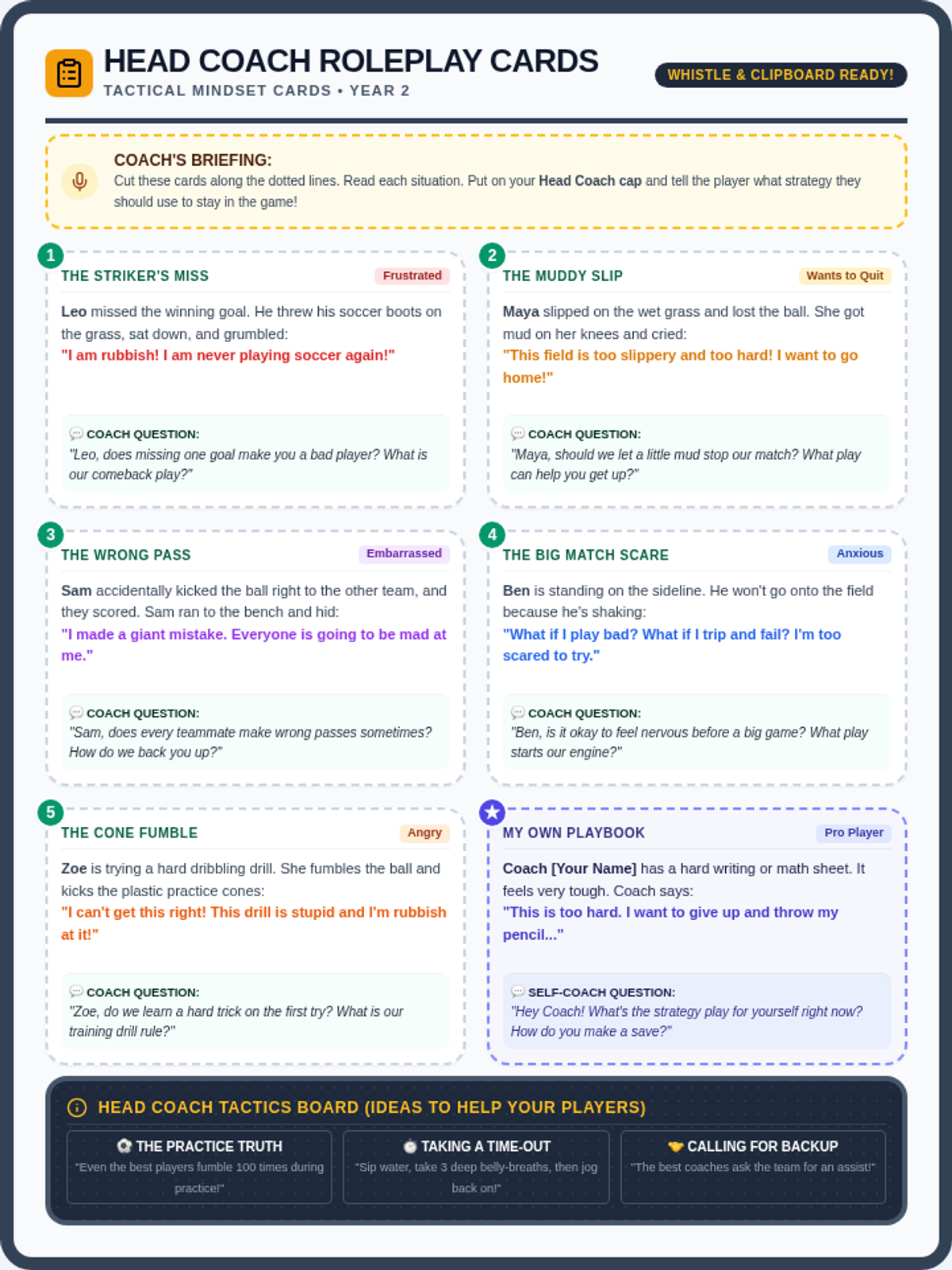
Week 1 of the Wellbeing program. The student takes on the role of the Head Coach to analyze soccer players who want to quit, building externalized positive self-talk and perspective.
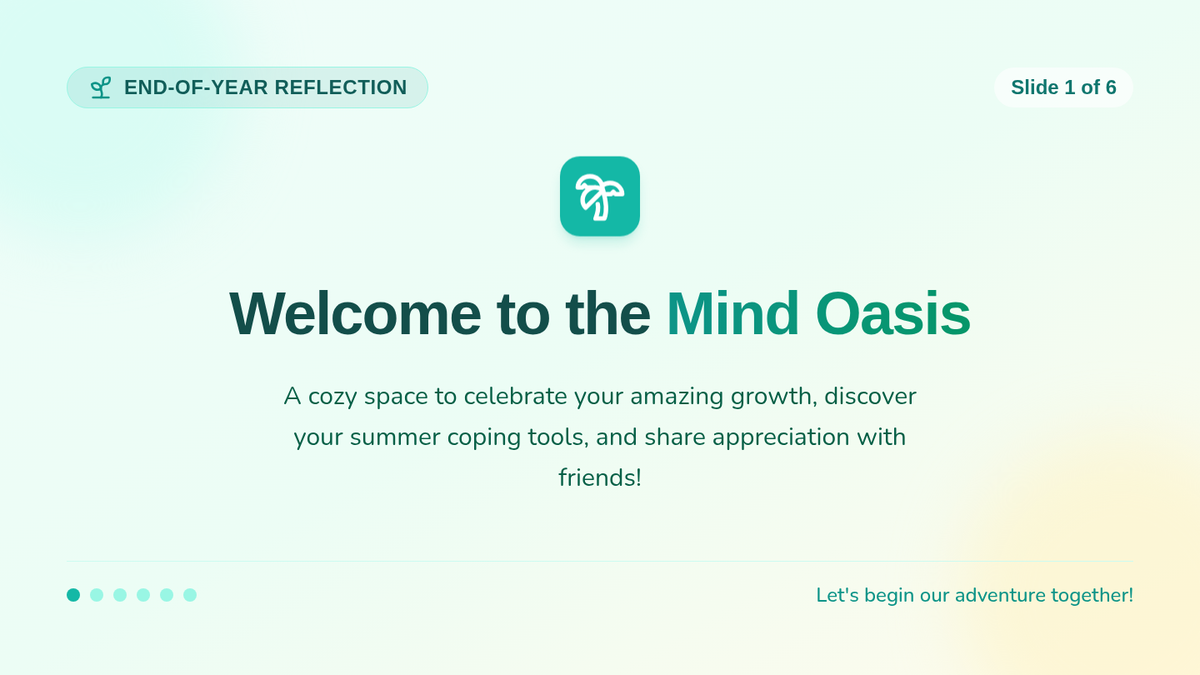
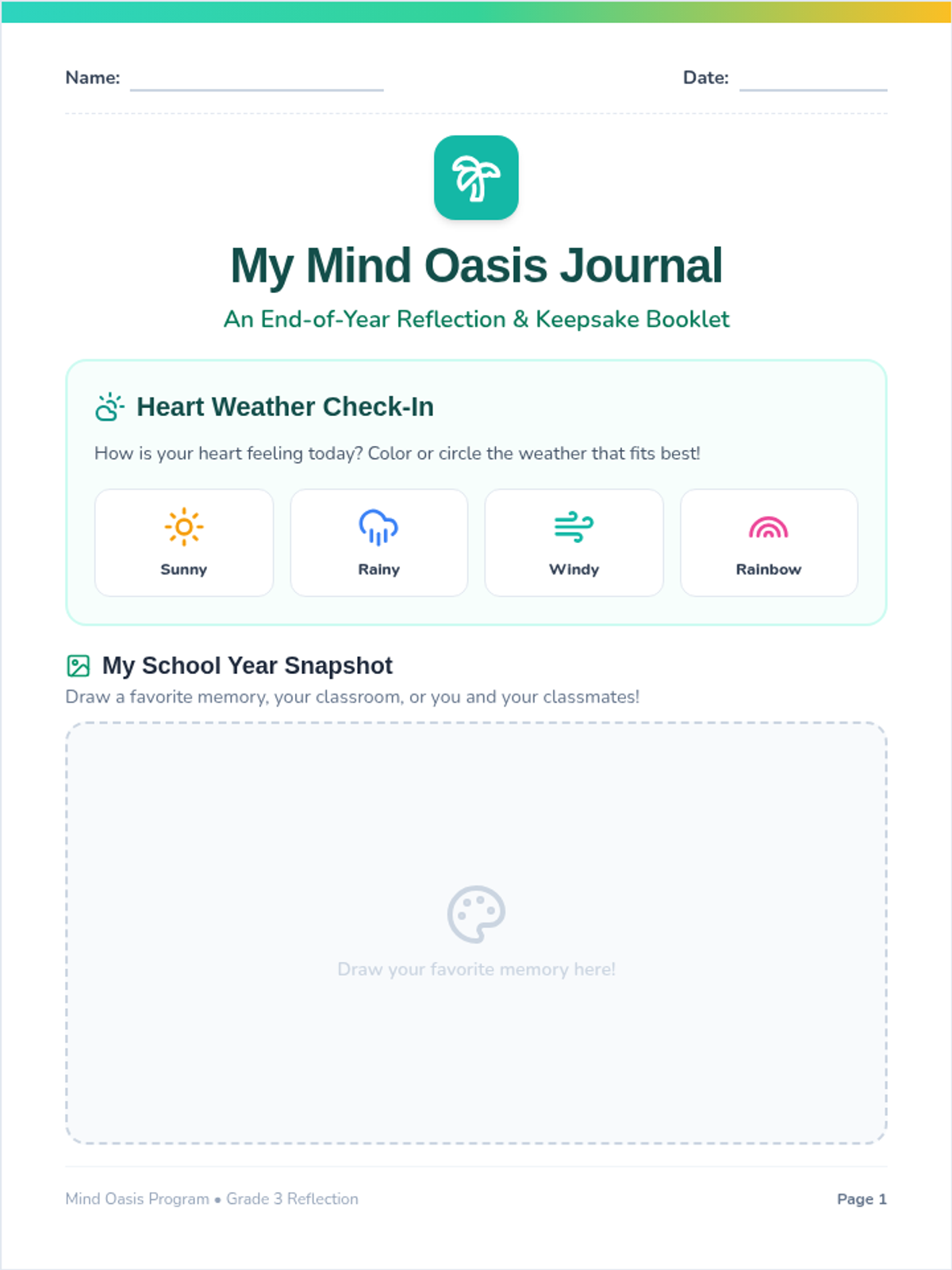
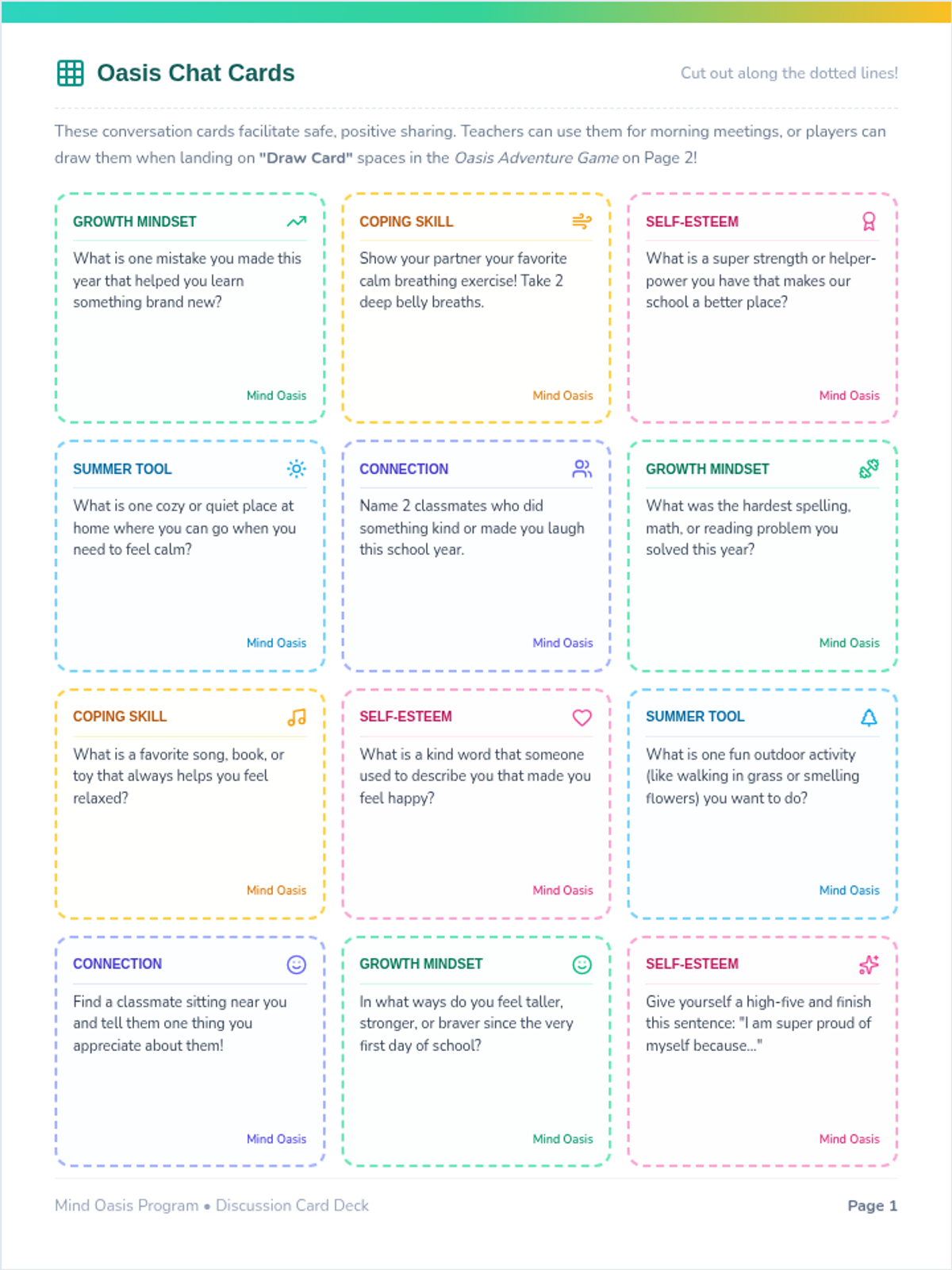
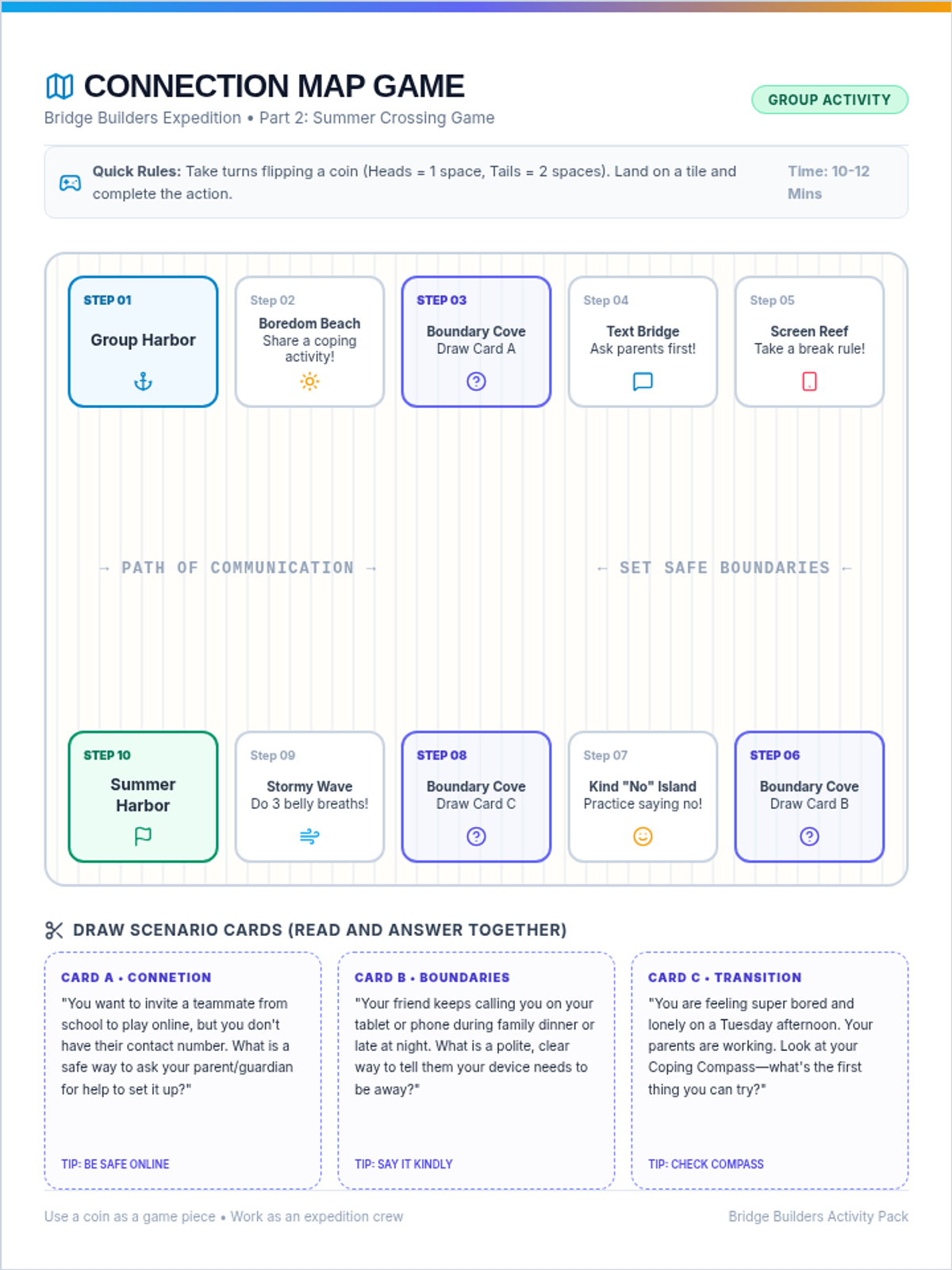
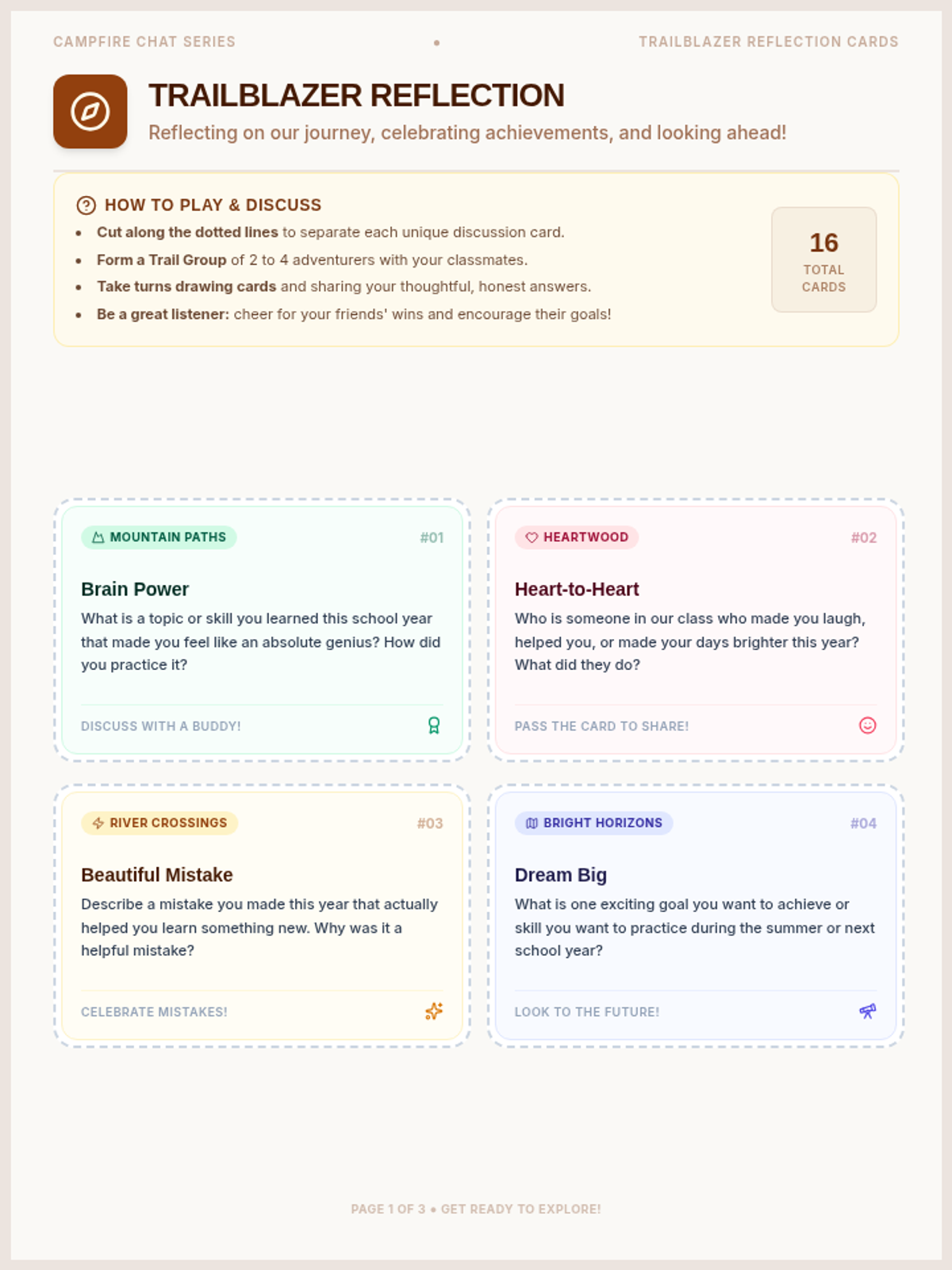
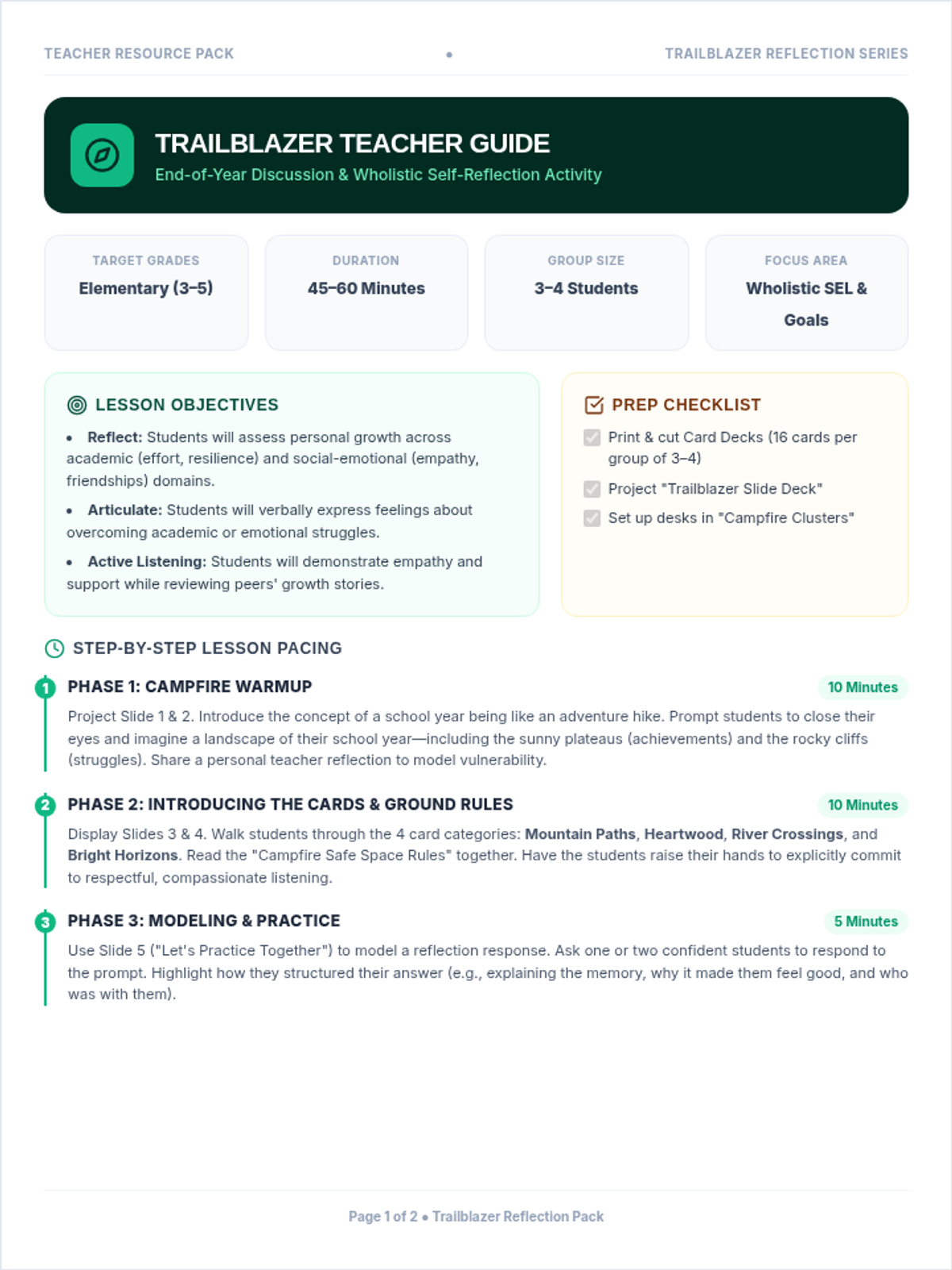
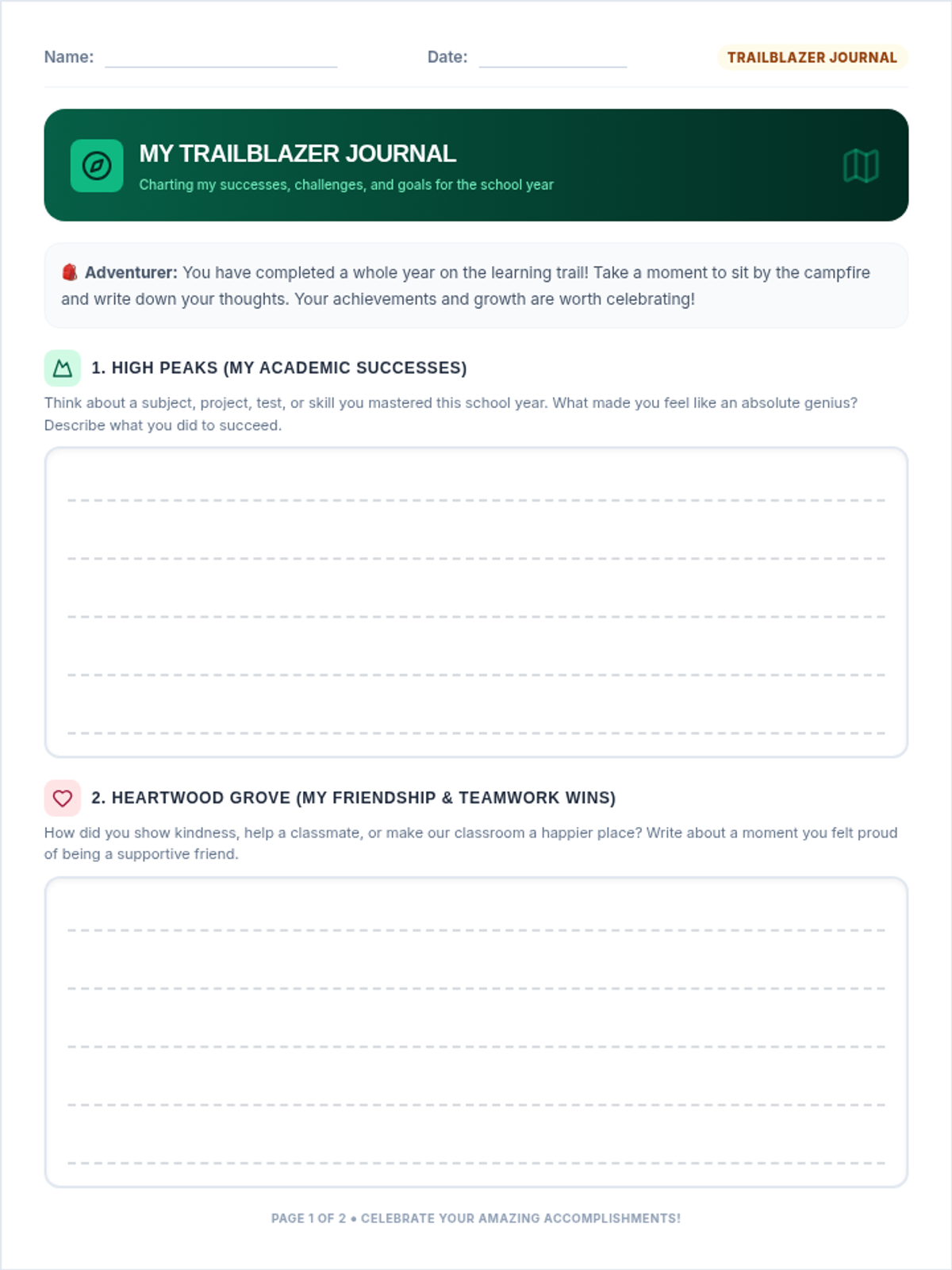
An end-of-school-year mental health lesson for 8-year-olds. It includes guided slides for class reflection, an interactive printable keepsake journal to track emotional growth, and a printable board game with discussion cards to foster positive peer connection and summer coping strategies.
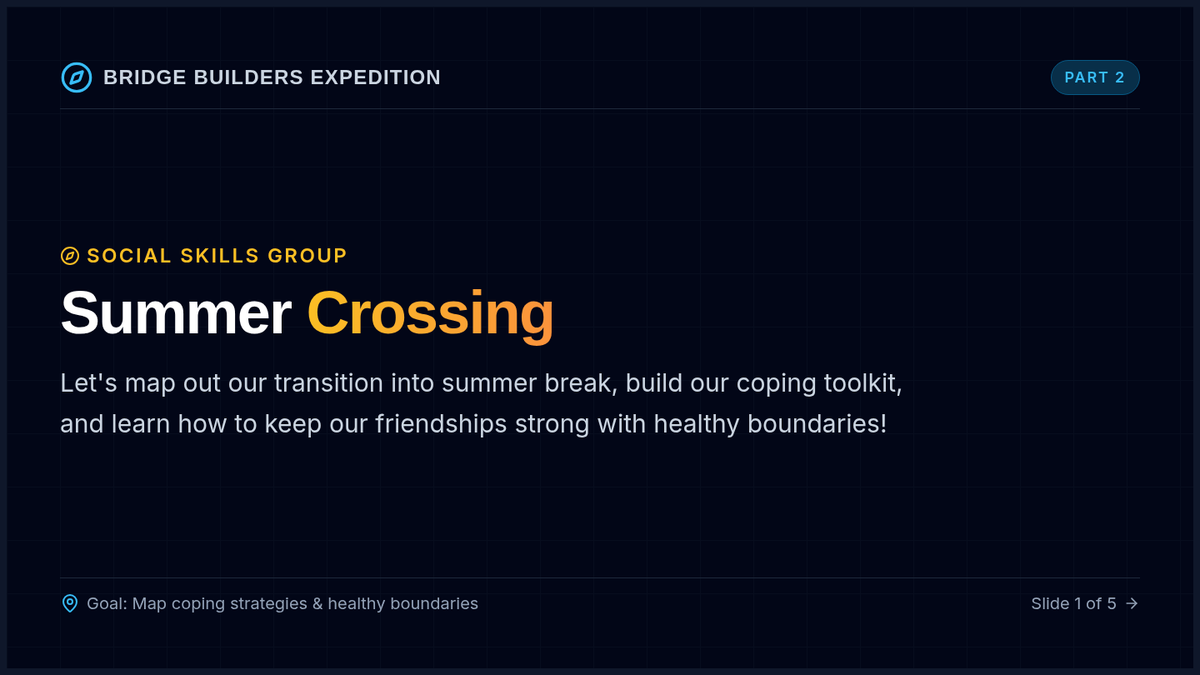
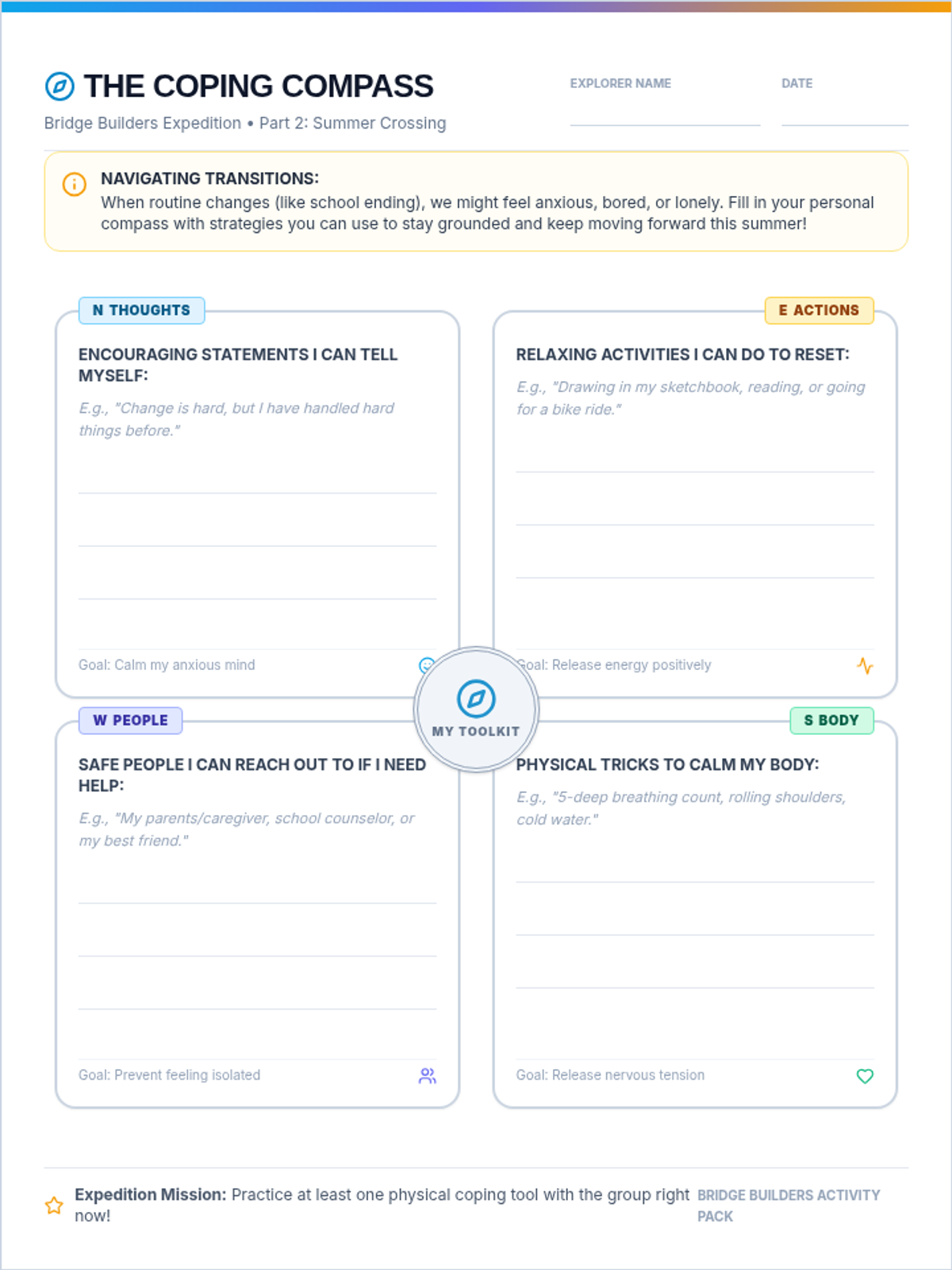
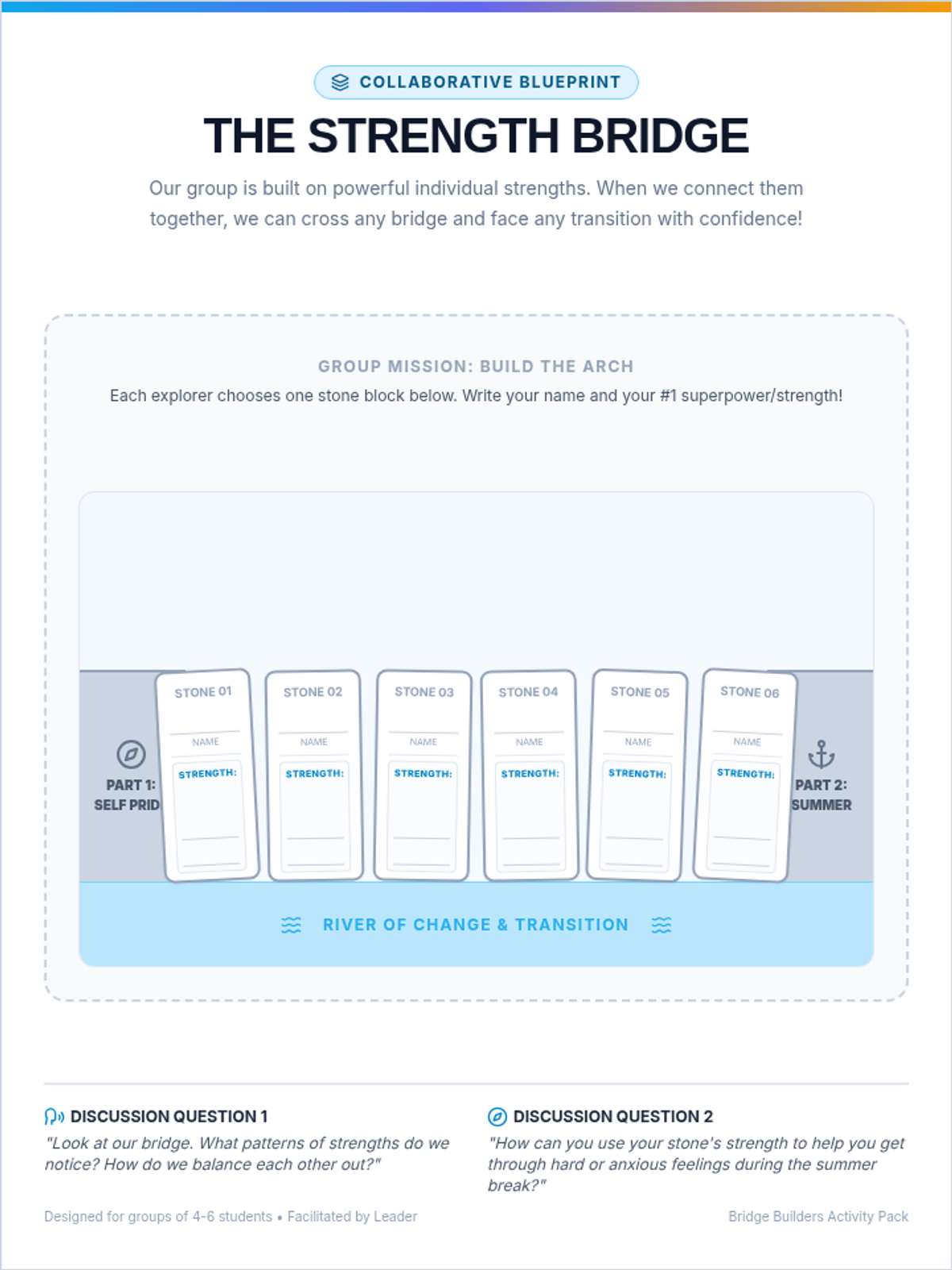
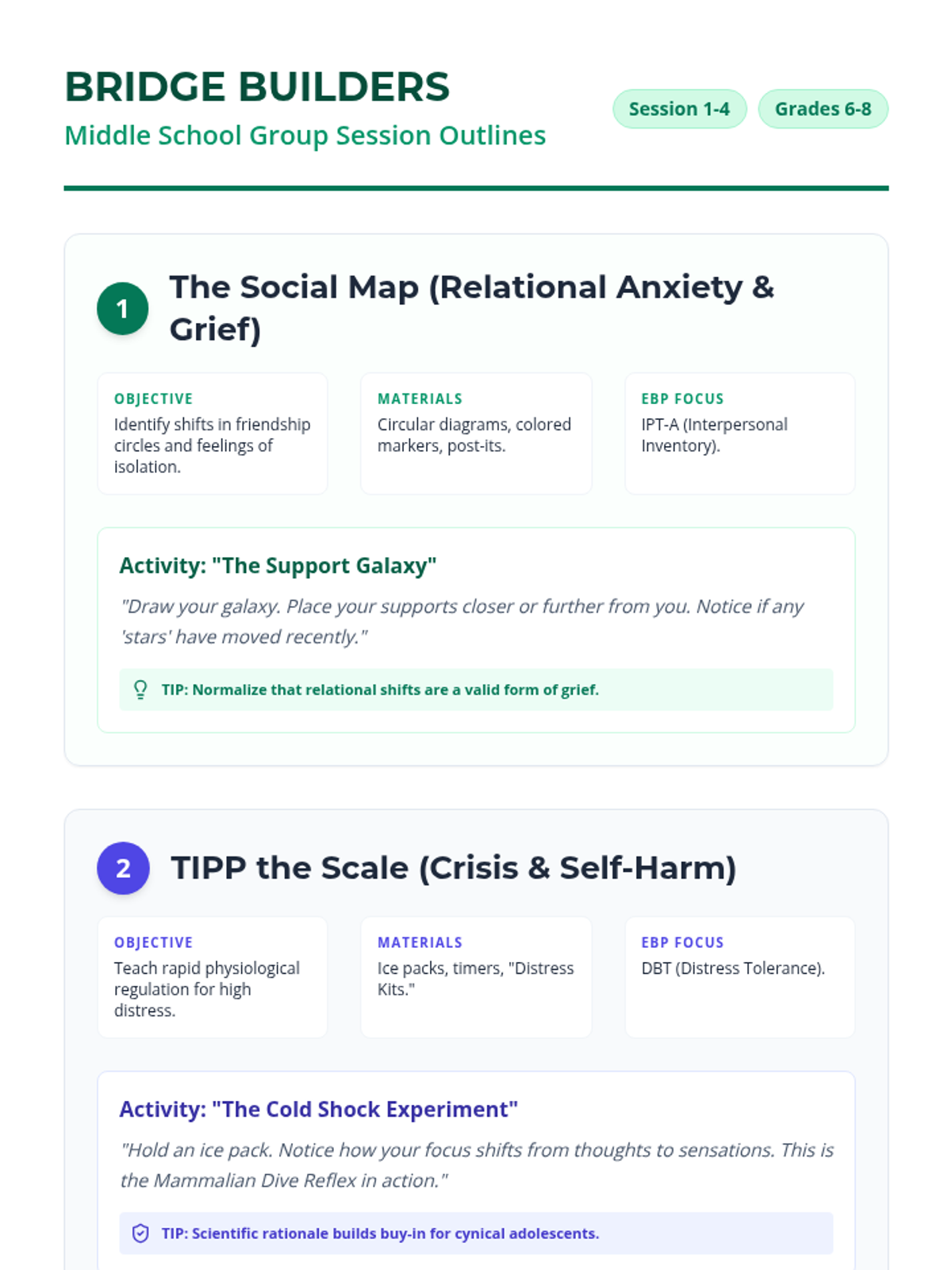
Part 2 of the Bridge Builders social skills group. Focuses on managing change and transition anxiety, setting healthy boundaries, and planning how to stay connected over the summer.
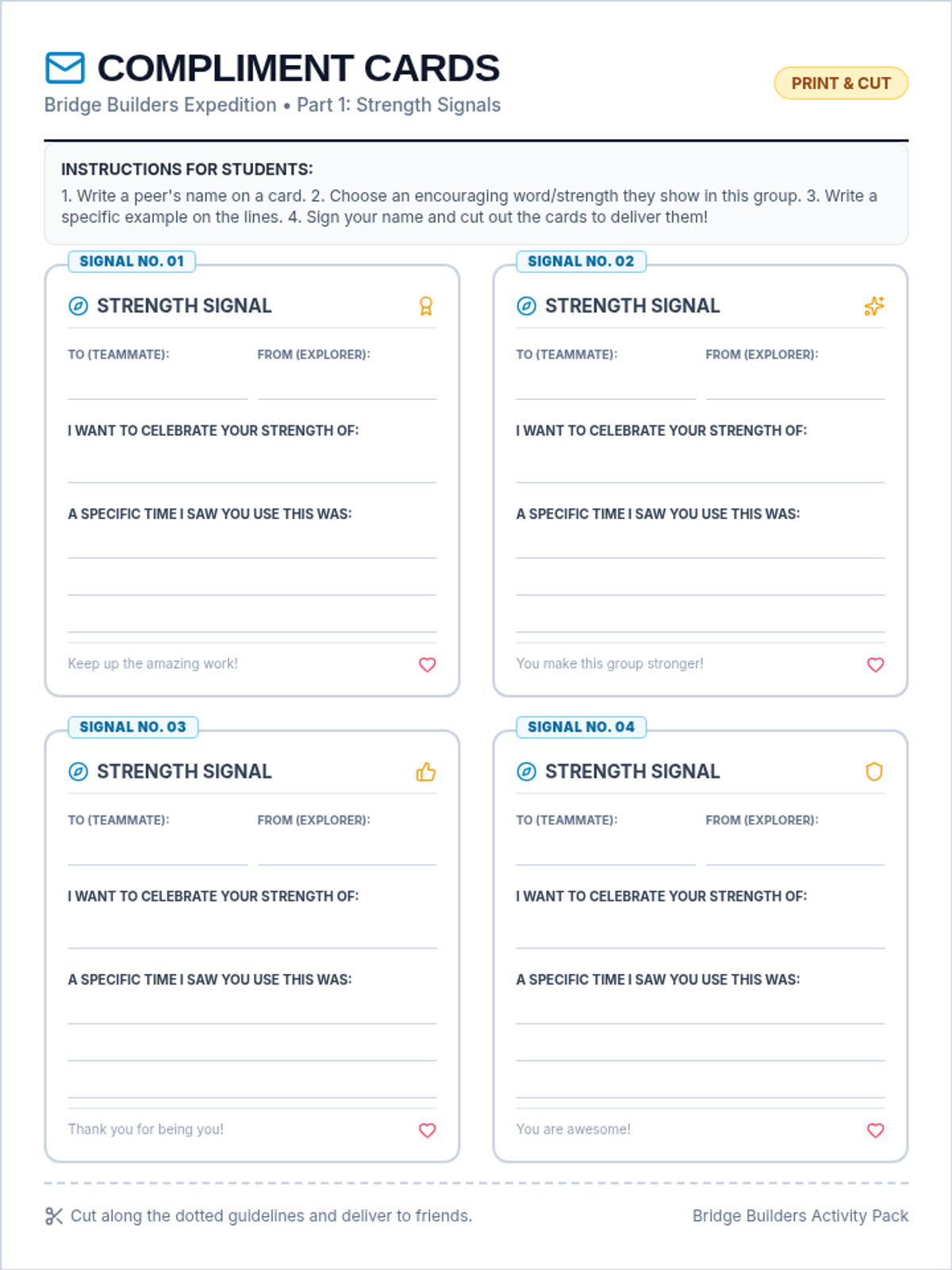
Part 1 of the Bridge Builders social skills group. Focuses on boosting self-esteem by identifying personal strengths and providing positive peer feedback through collaborative activities.
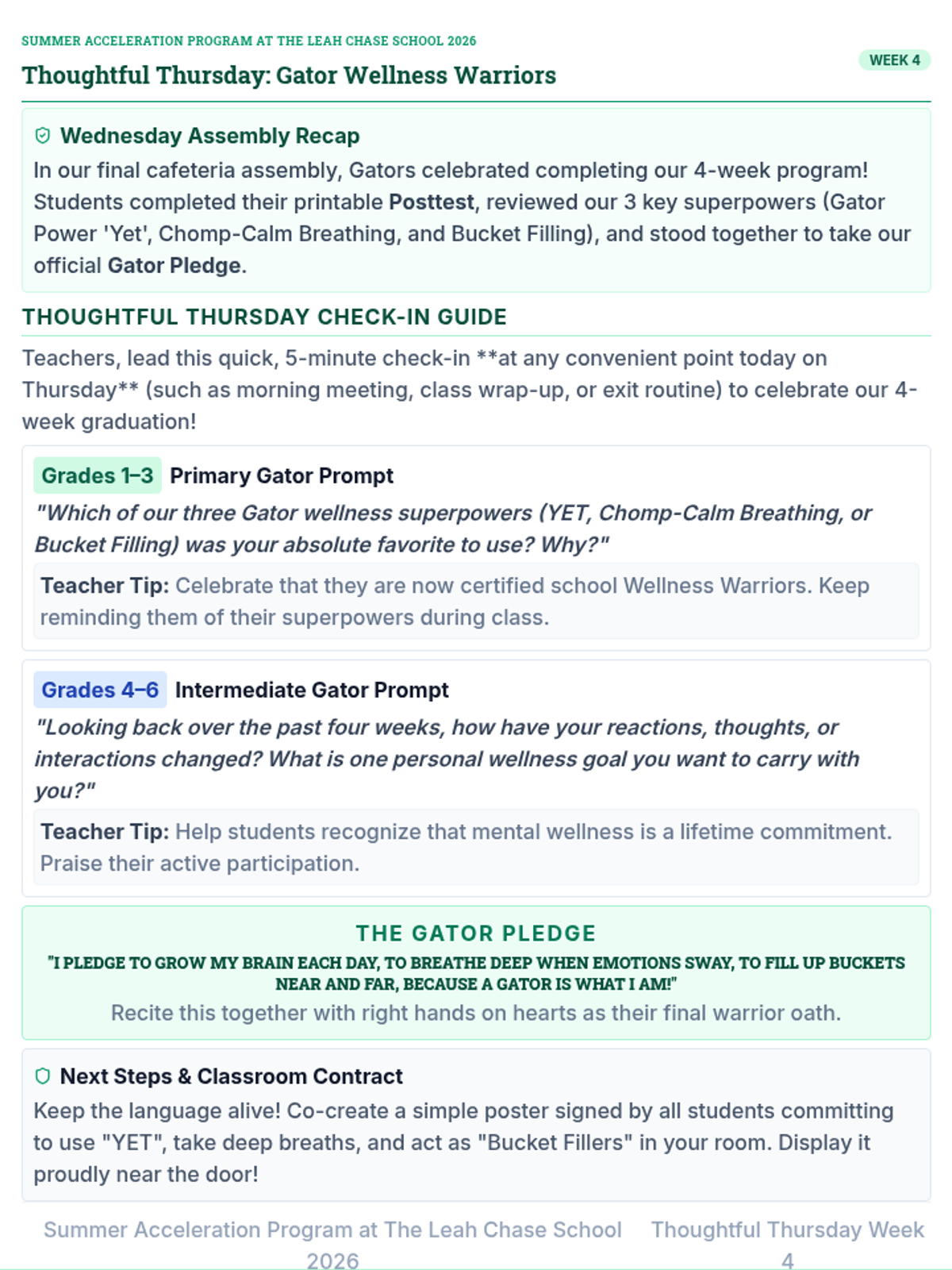
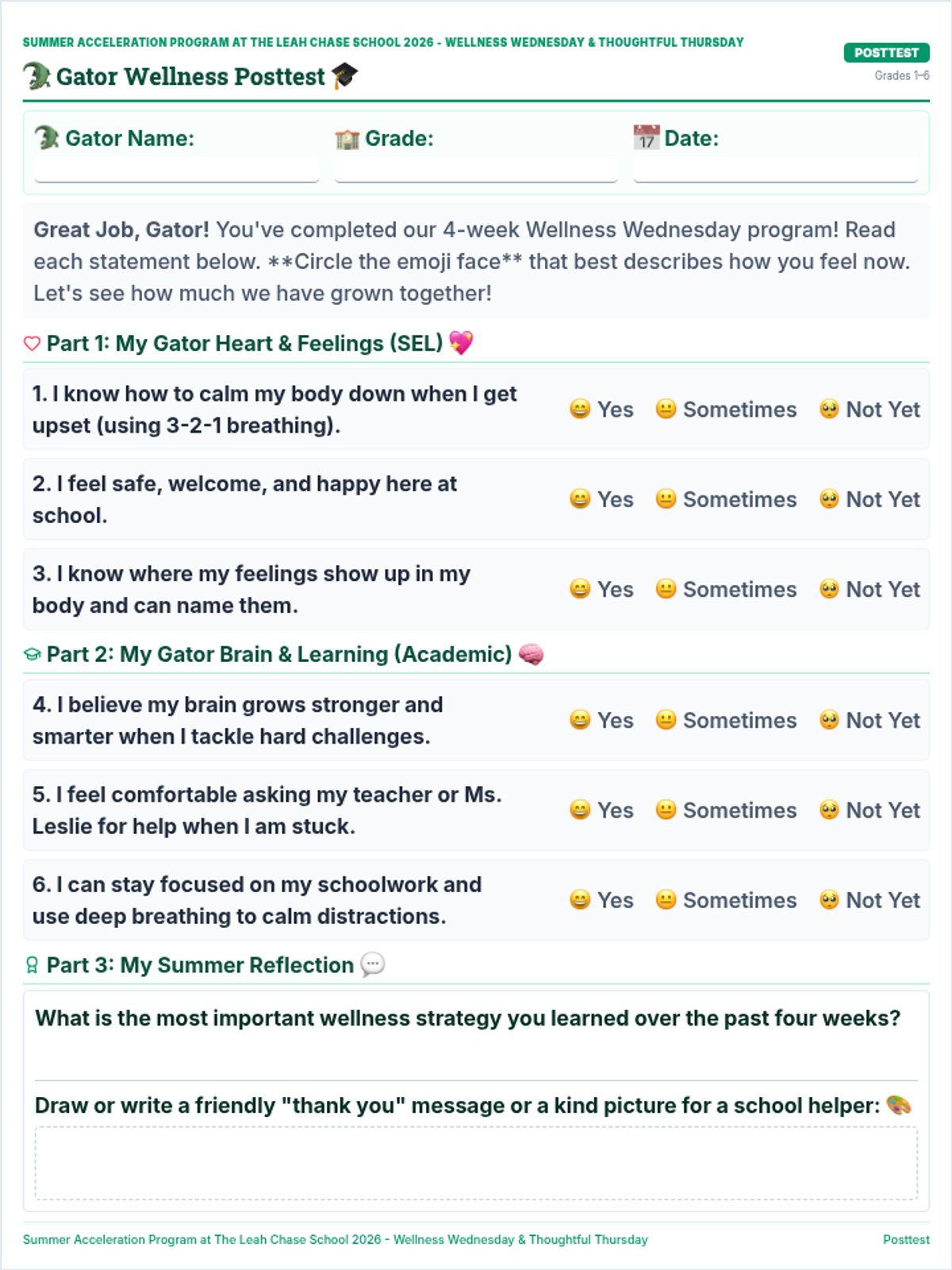
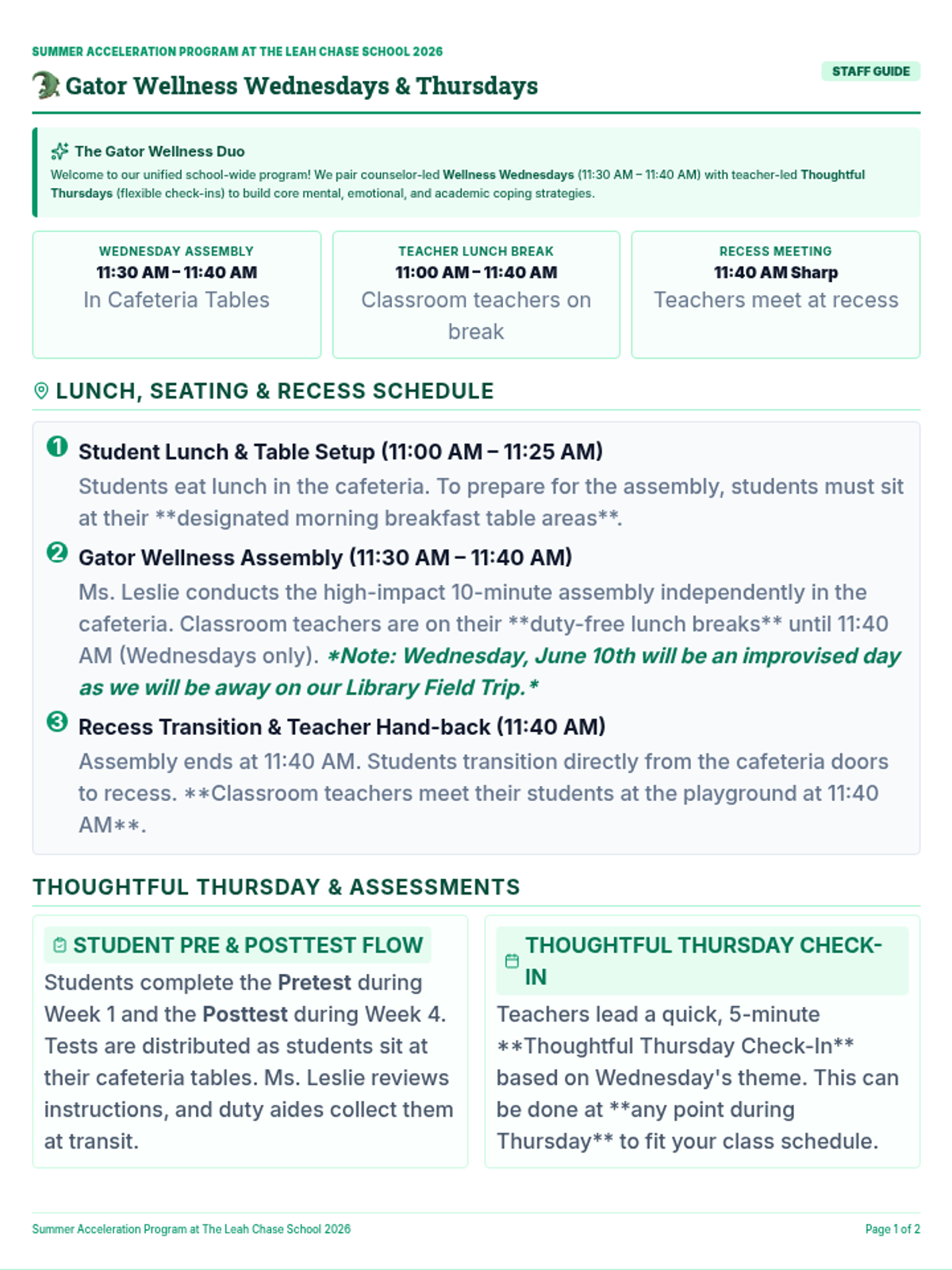
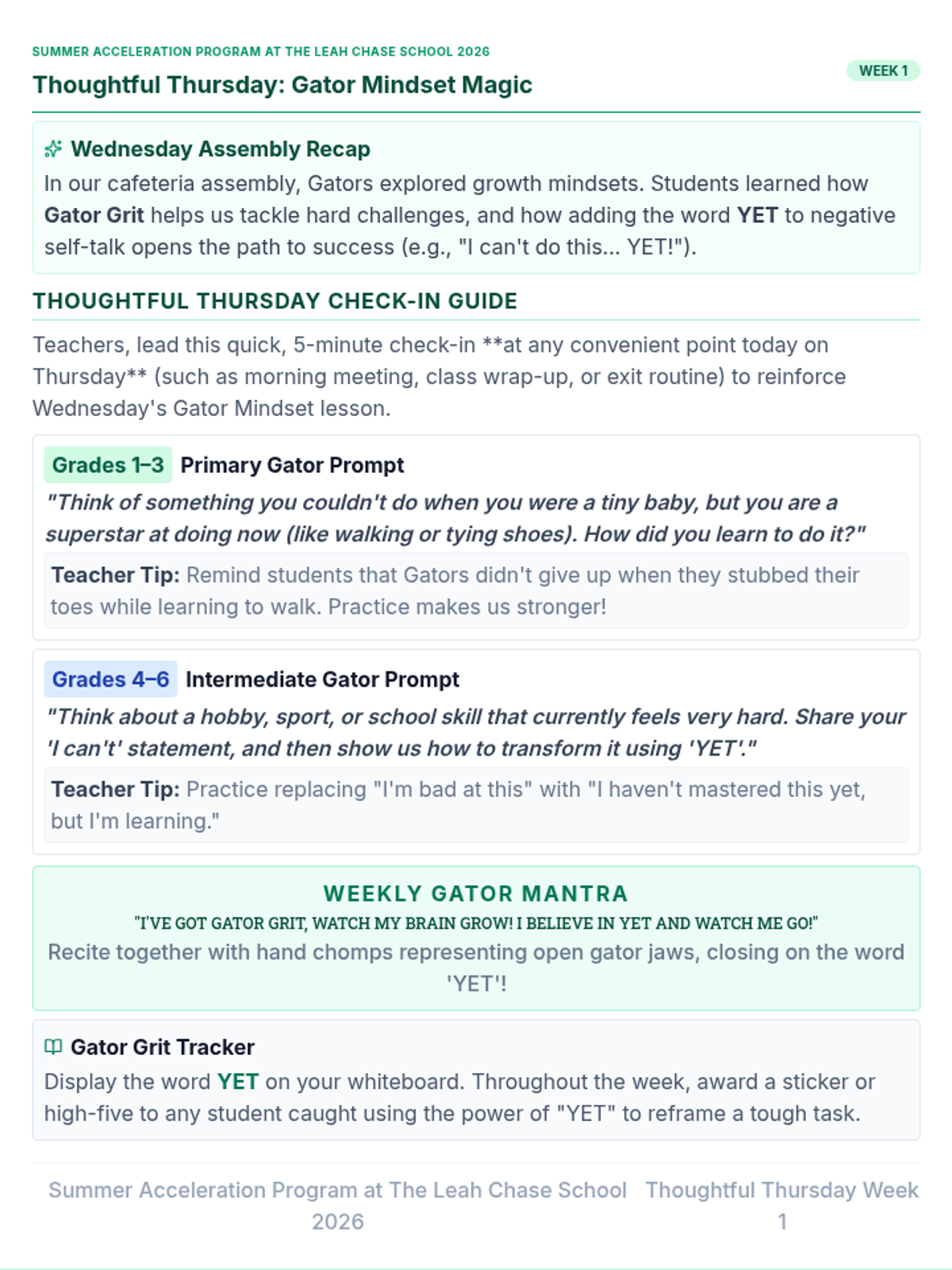
Week 4 of Wellness Wednesdays, celebrating student growth, reflecting on coping strategies, and completing the school-wide post-assessment.
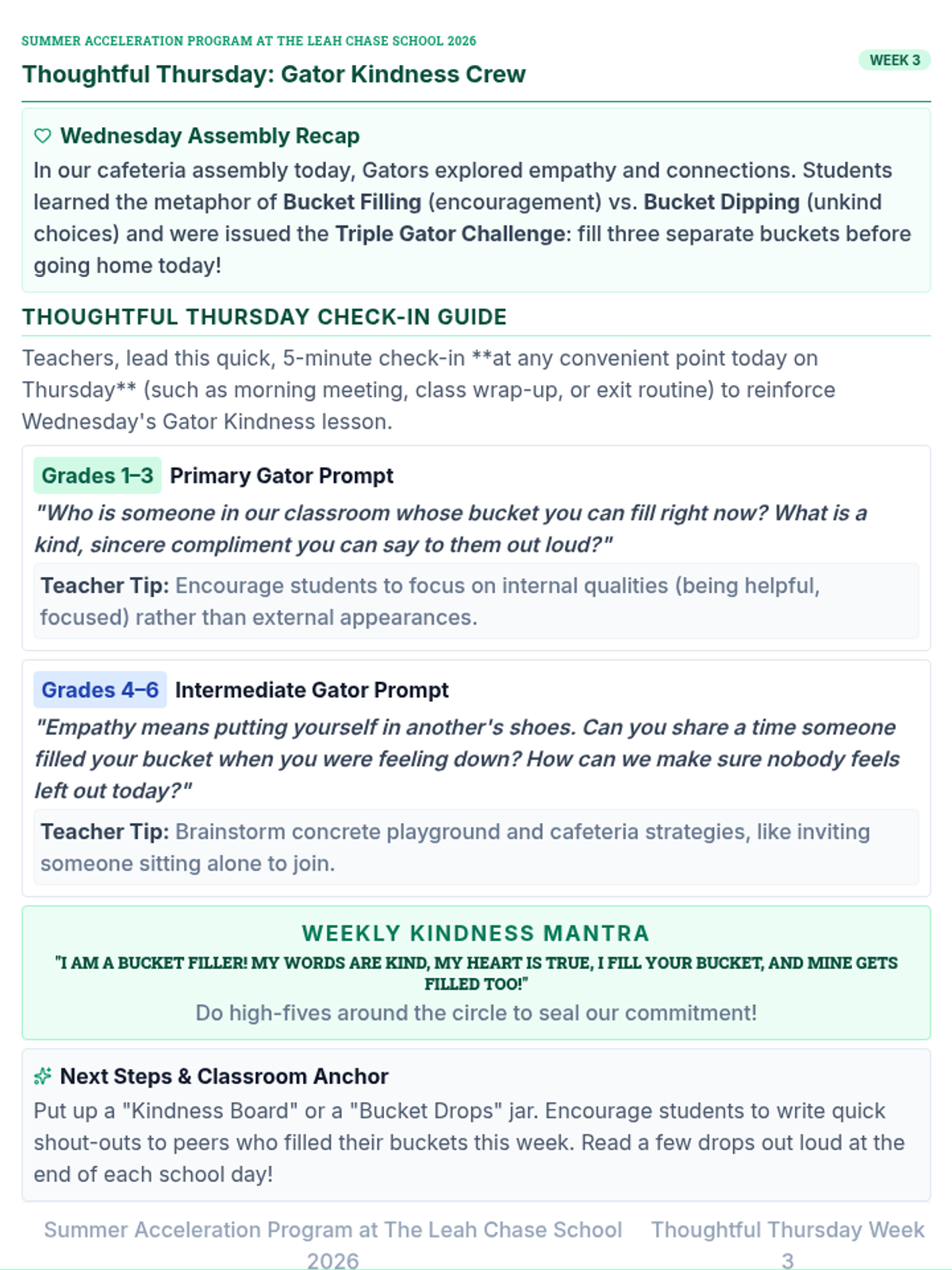
Week 3 of Wellness Wednesdays, exploring empathy, kindness, filling buckets, and building strong, supportive school relationships.
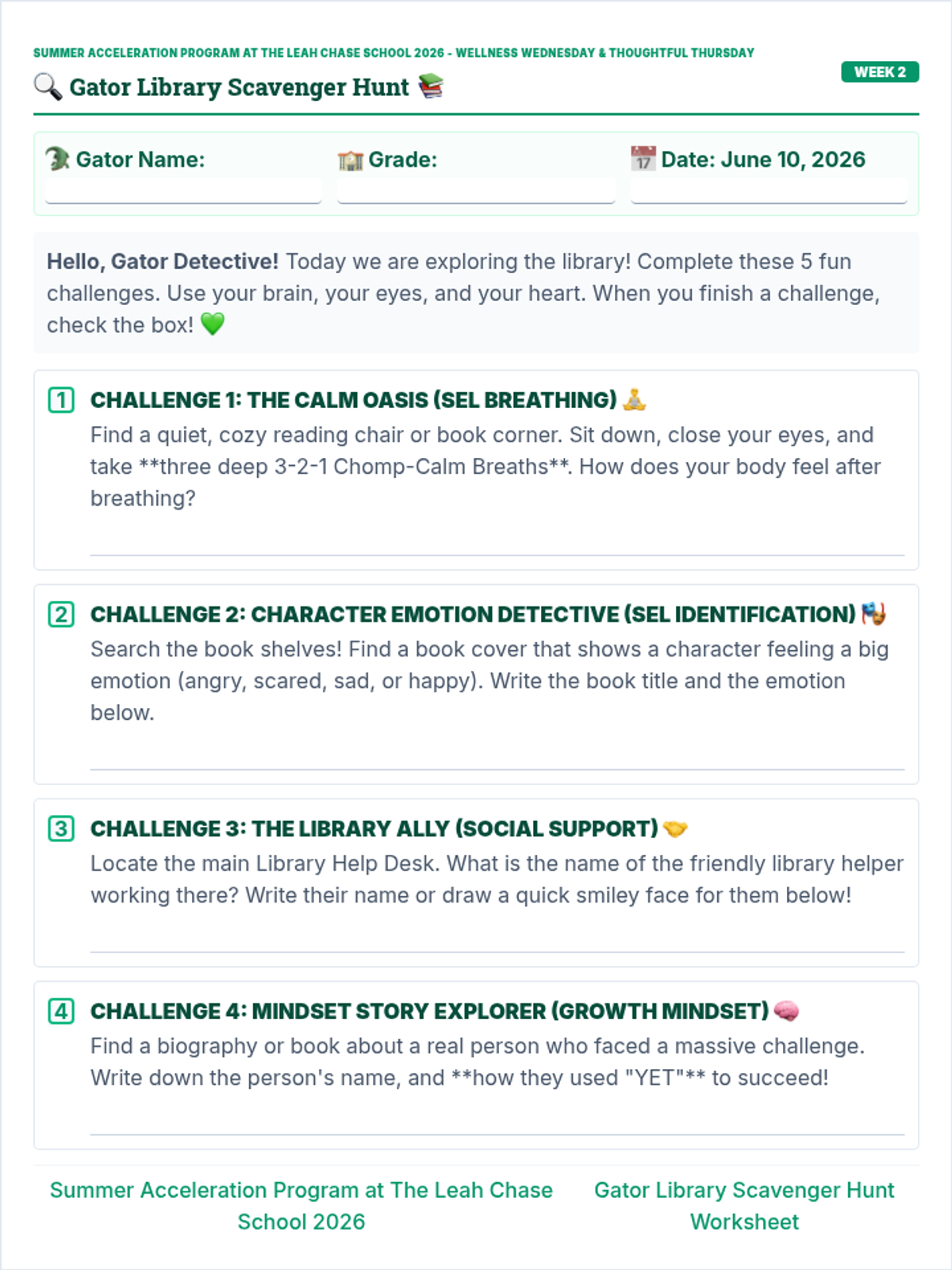
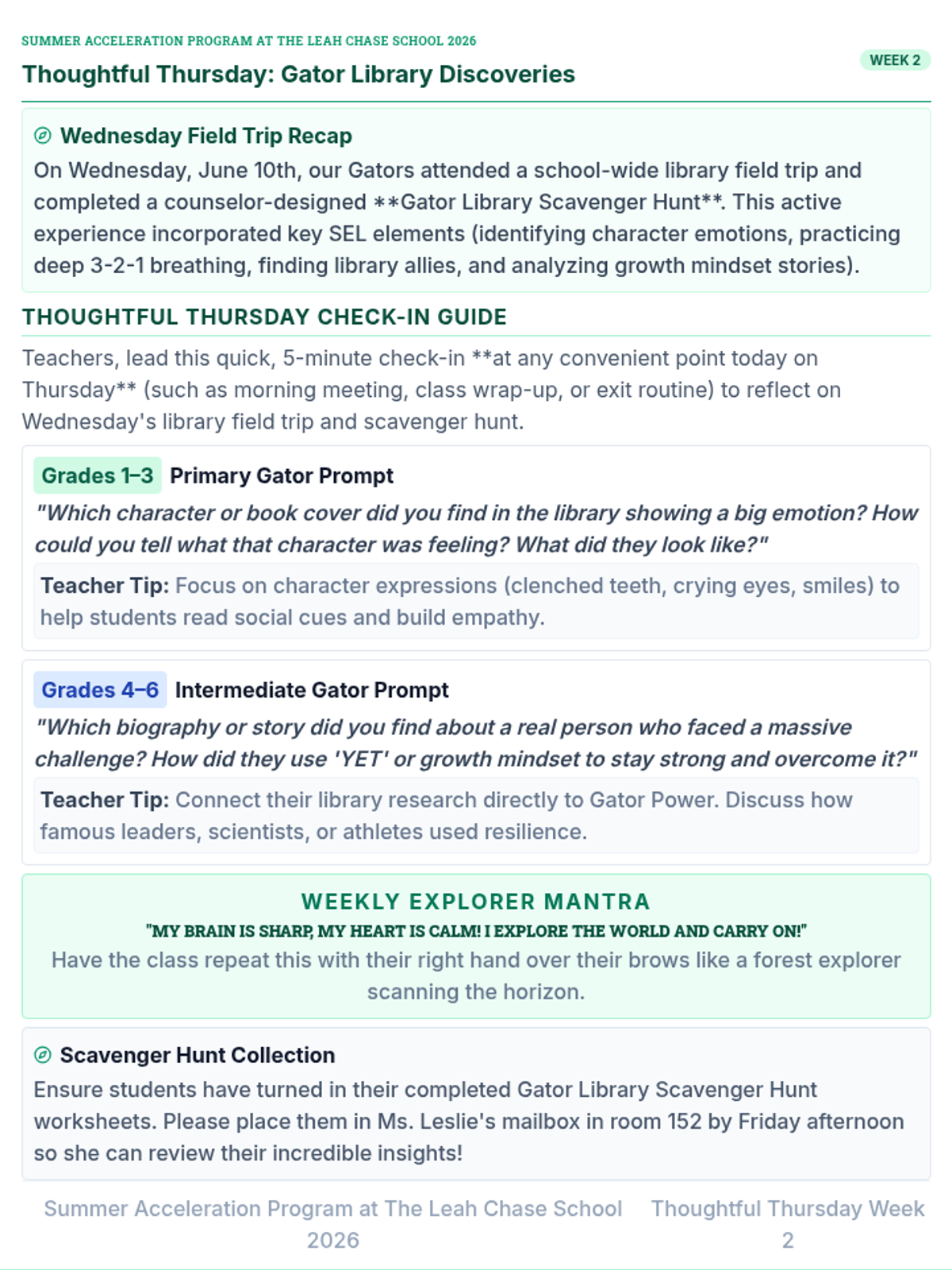
Week 2 of Wellness Wednesdays, teaching students to identify big emotions, understand physical responses, and apply calming strategies.
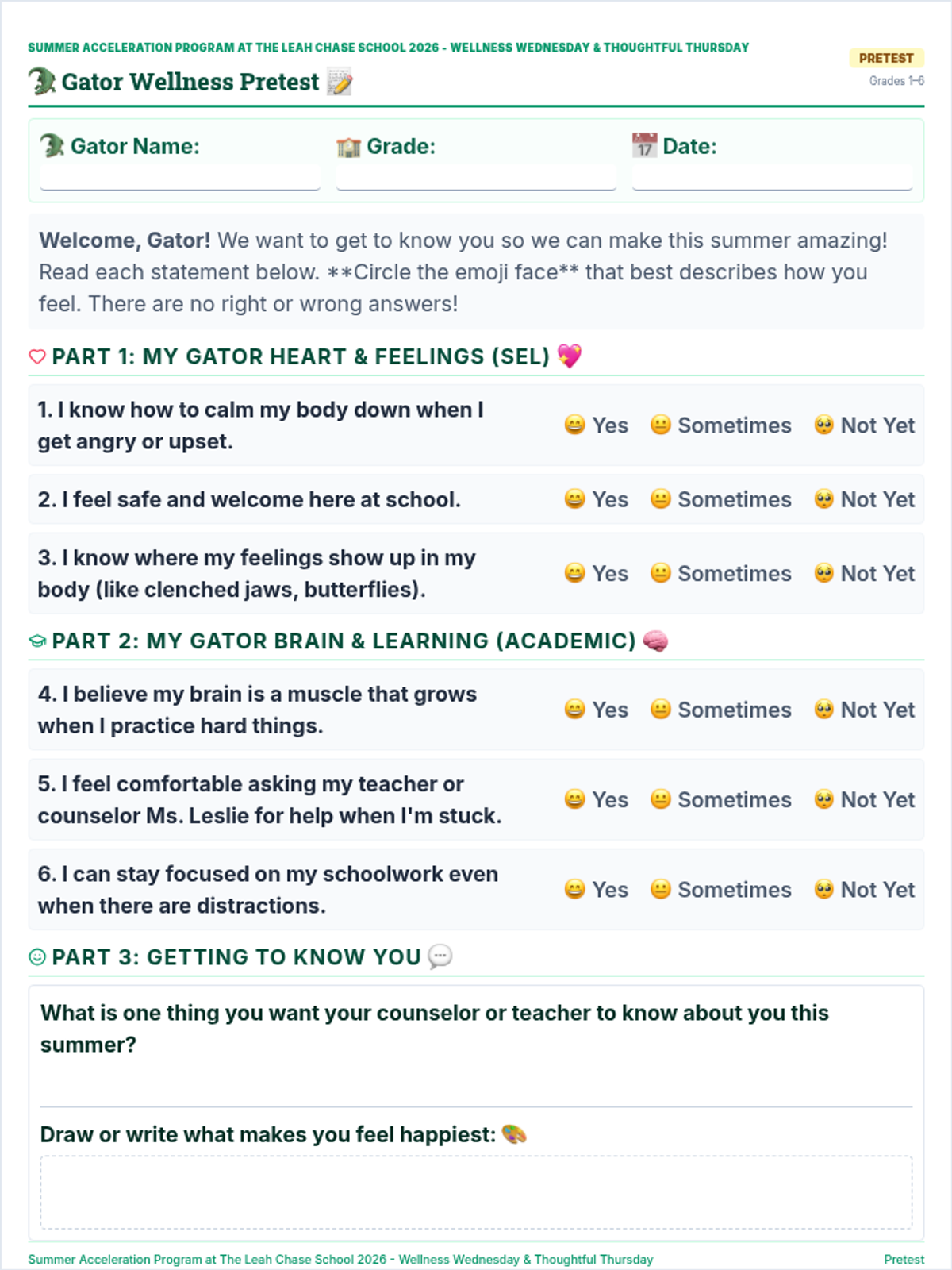
Week 1 of Wellness Wednesdays, introducing the growth mindset, the power of 'yet', and administering the school-wide student pre-assessment.
A reflective, engaging, and social-emotional lesson designed for the end of the school year, guiding students to celebrate achievements, reflect on growth, and set future goals.
Week 3 prepares students for the upcoming school year, addressing transition anxiety directly and helping them map out coping strategies and future goals.
Week 2 focuses on celebrating personal progress, identifying new skills mastered, and tracking how each student has grown emotionally, socially, and academically.
Week 1 focuses on looking back at favorite moments, triumphs, and highlights from the past school year, while acknowledging the complex emotions that come with endings.
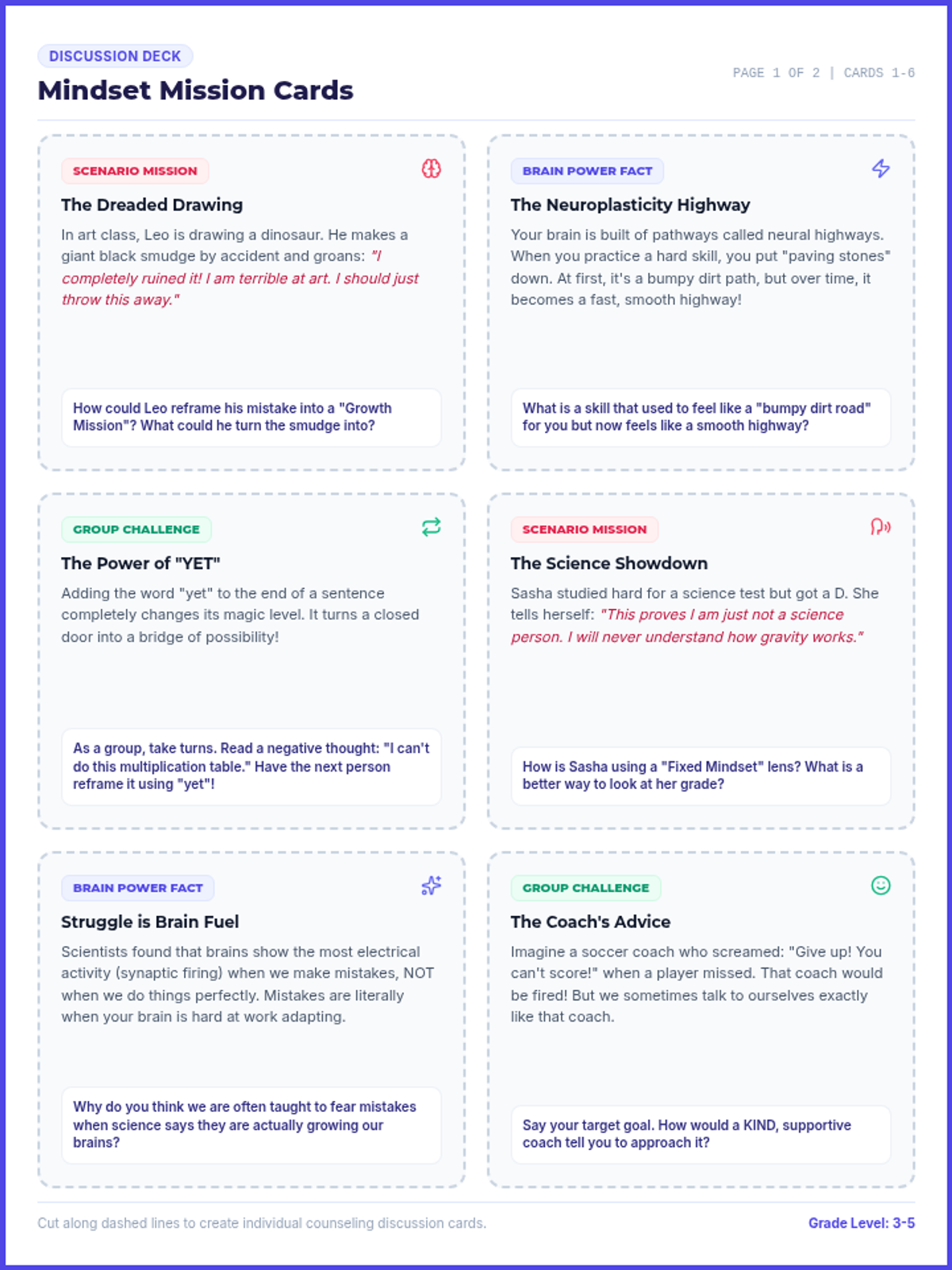
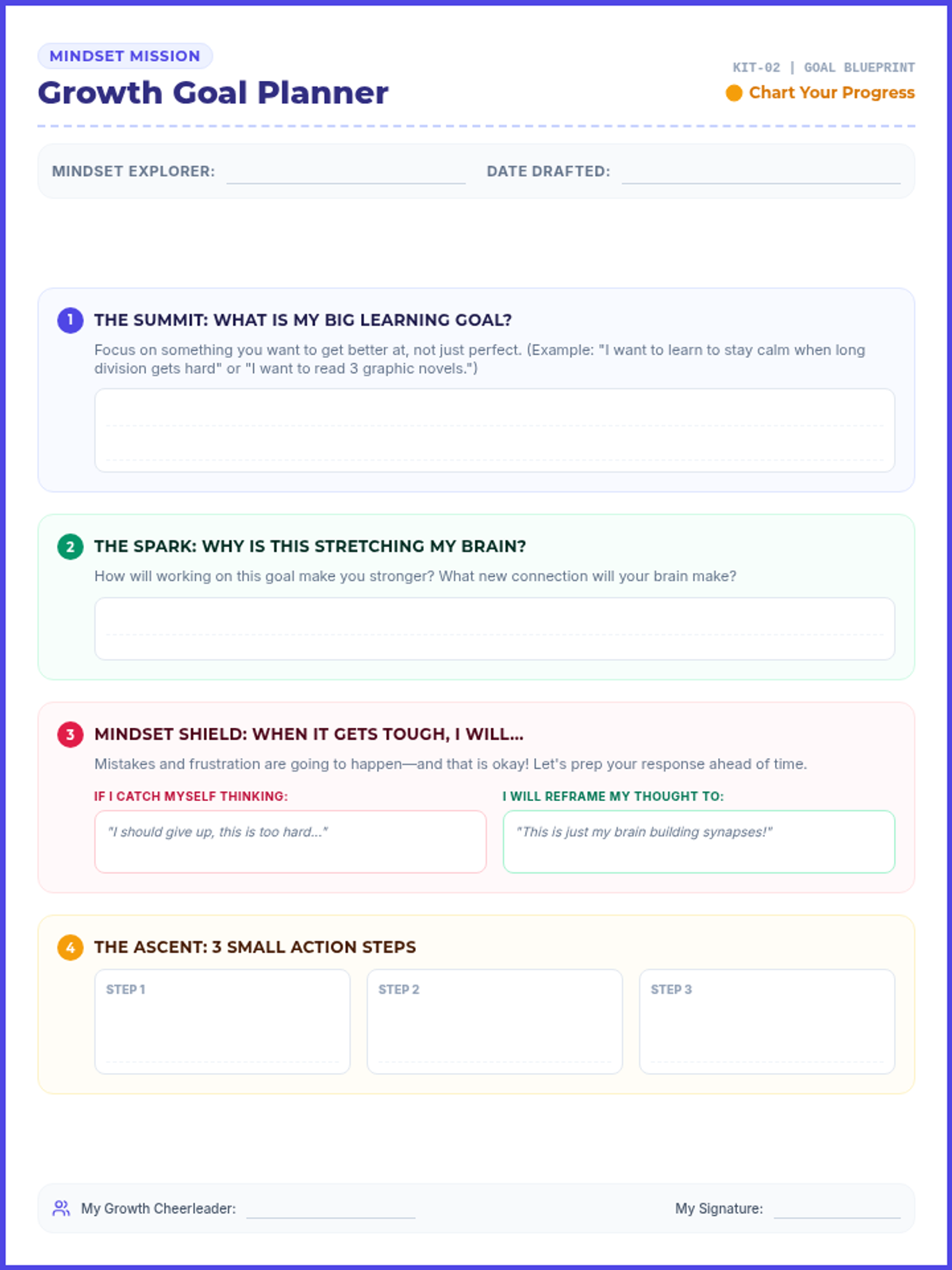
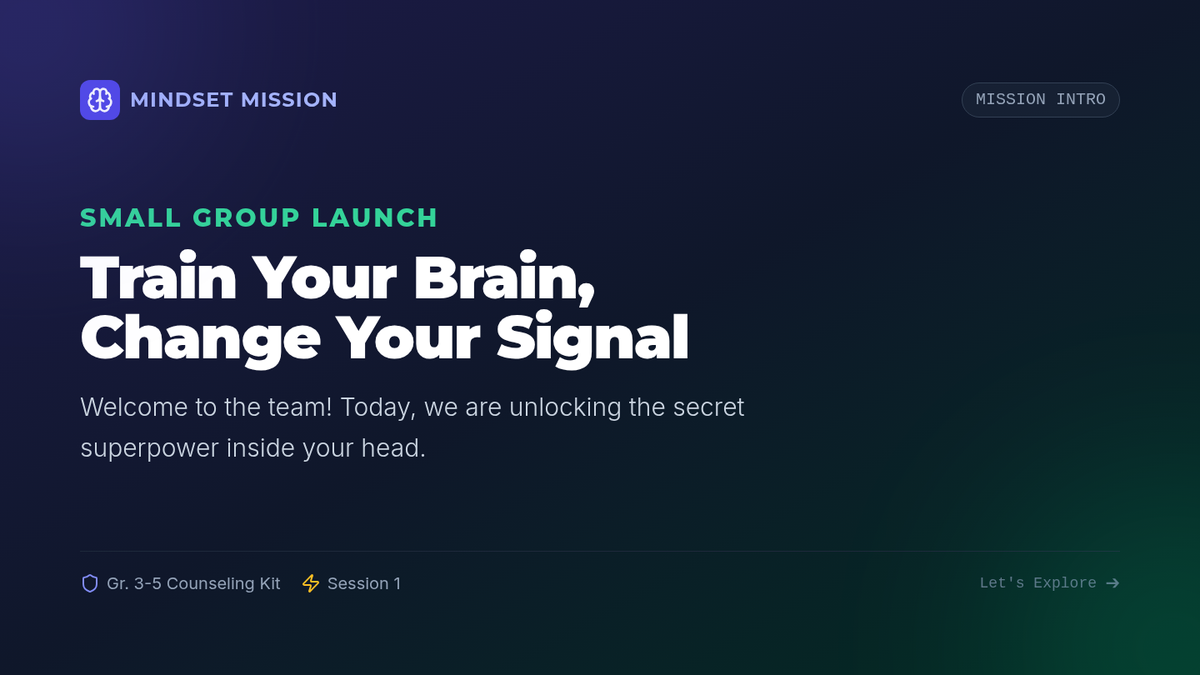
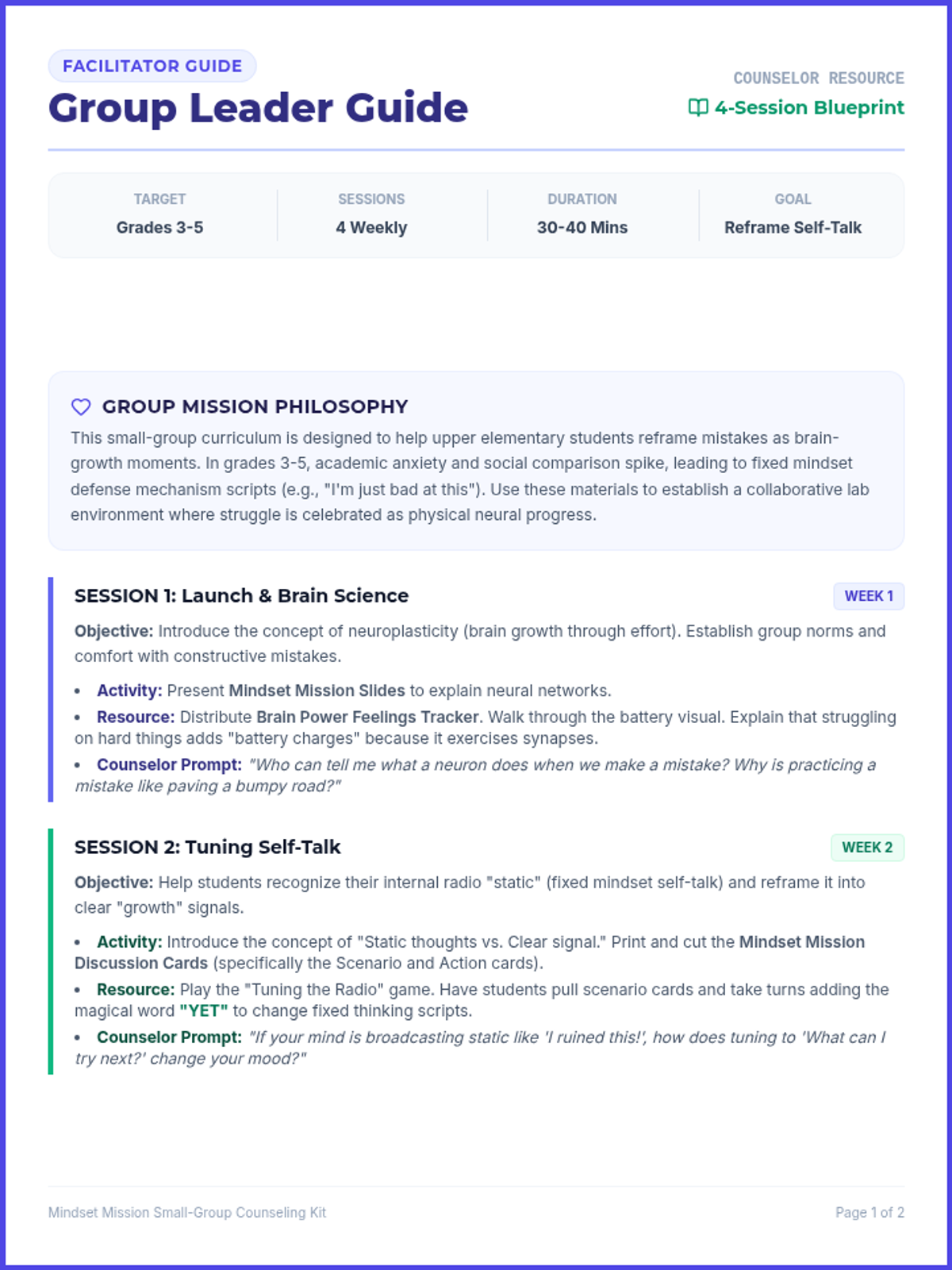
A comprehensive small-group counseling kit for upper elementary students (grades 3-5) focused on growth mindset, reframing negative self-talk, and brain growth. Includes interactive feelings trackers, scenario-based discussion cards, and goal-setting templates.
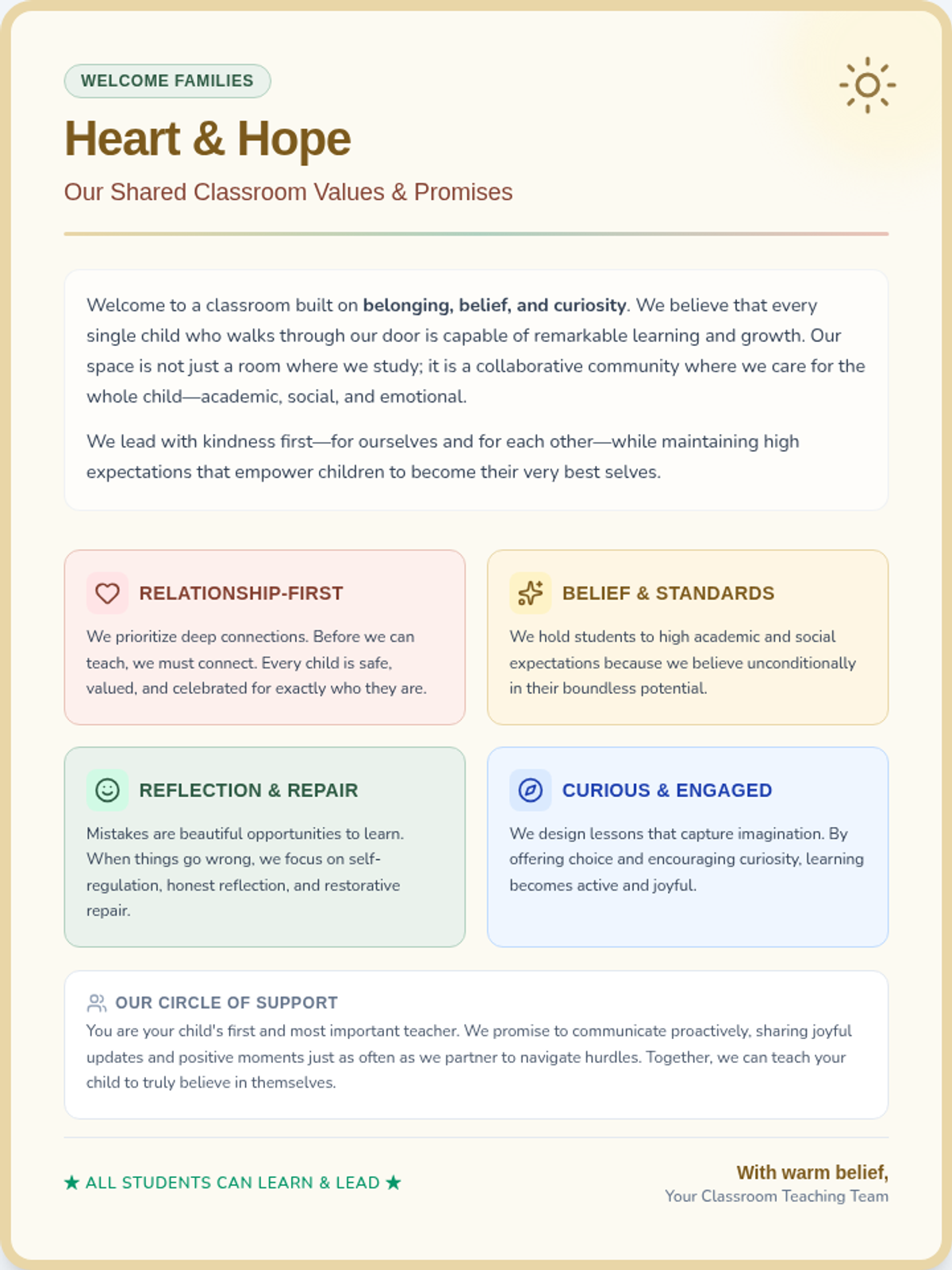
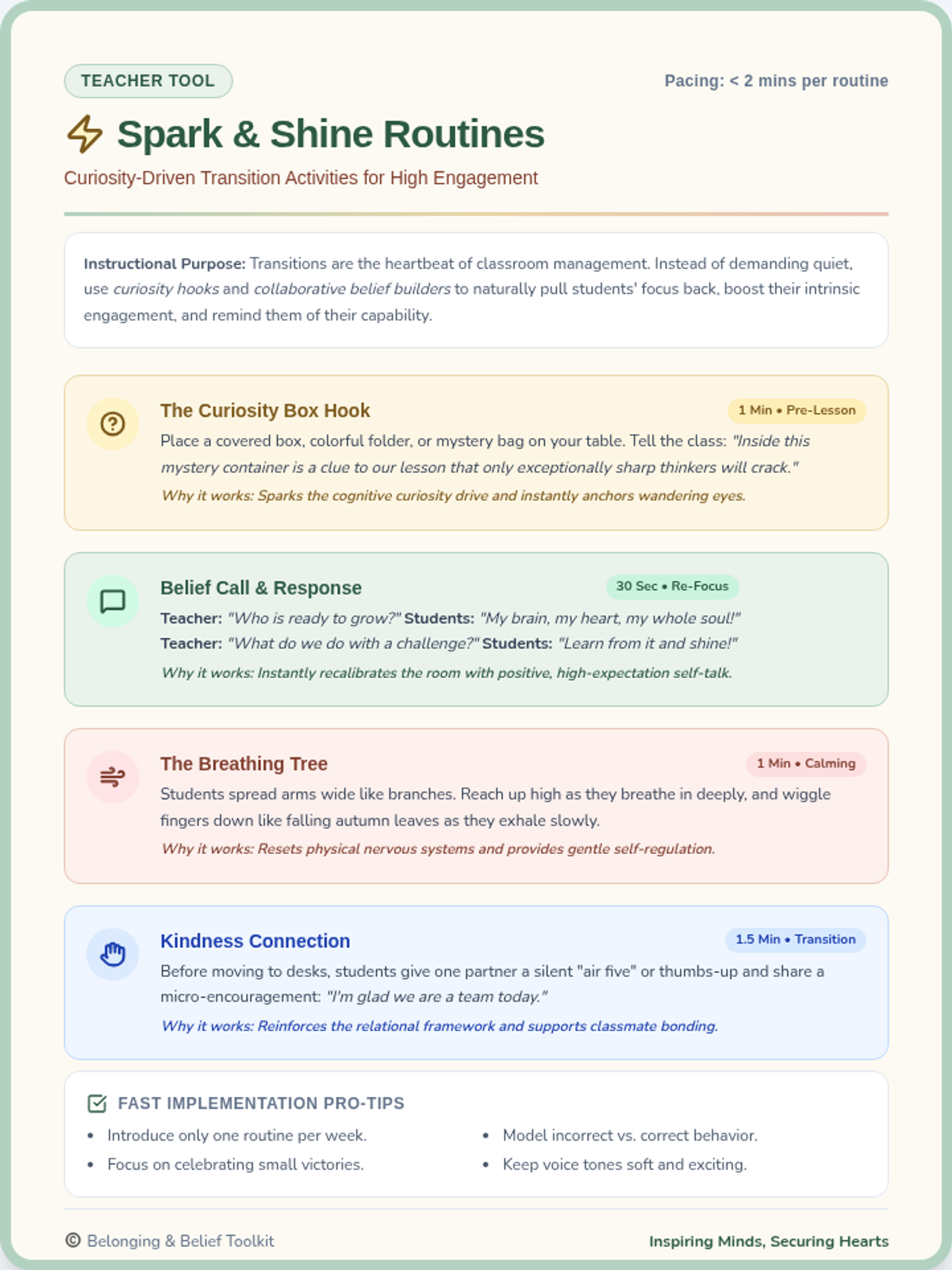
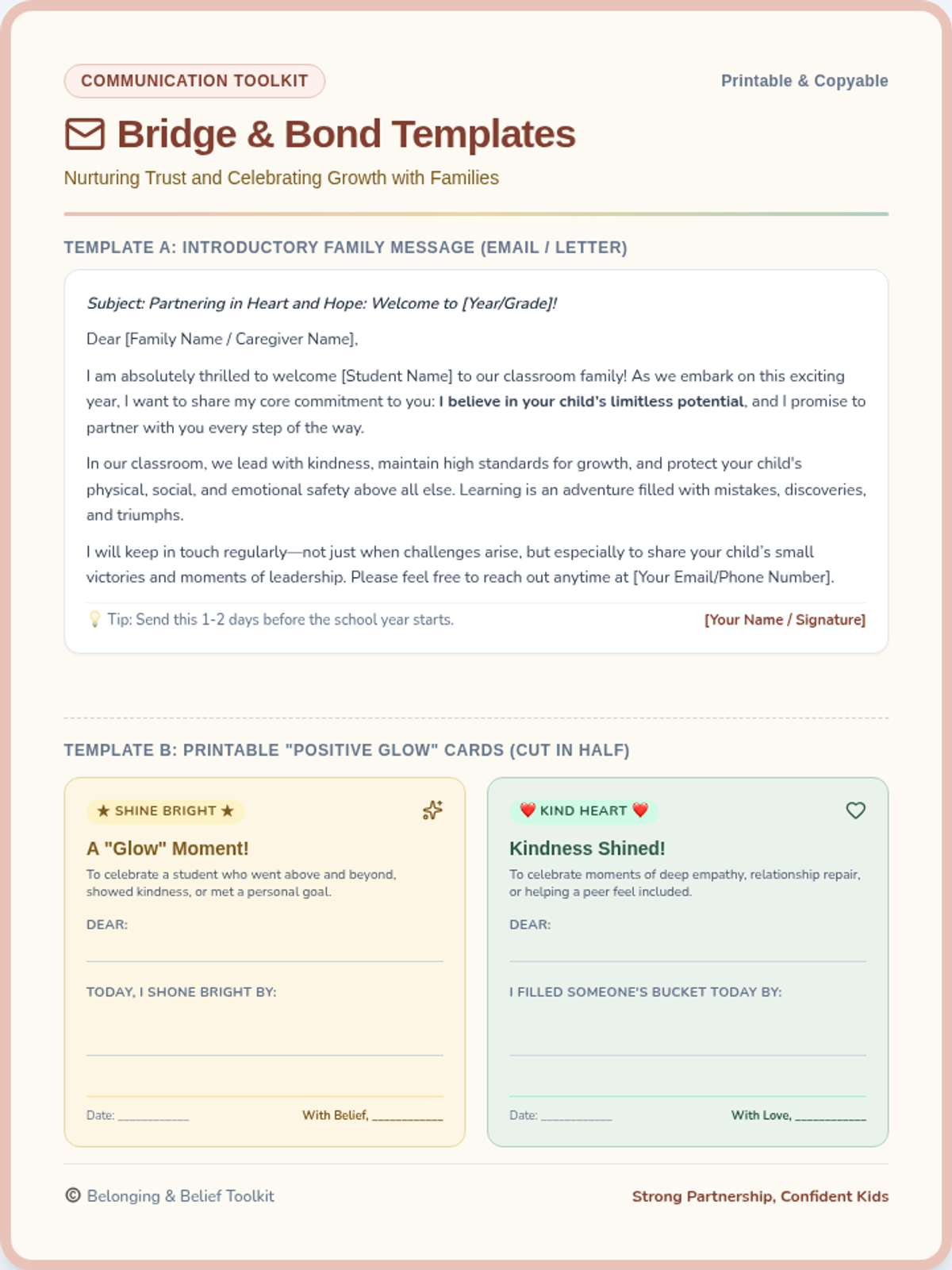
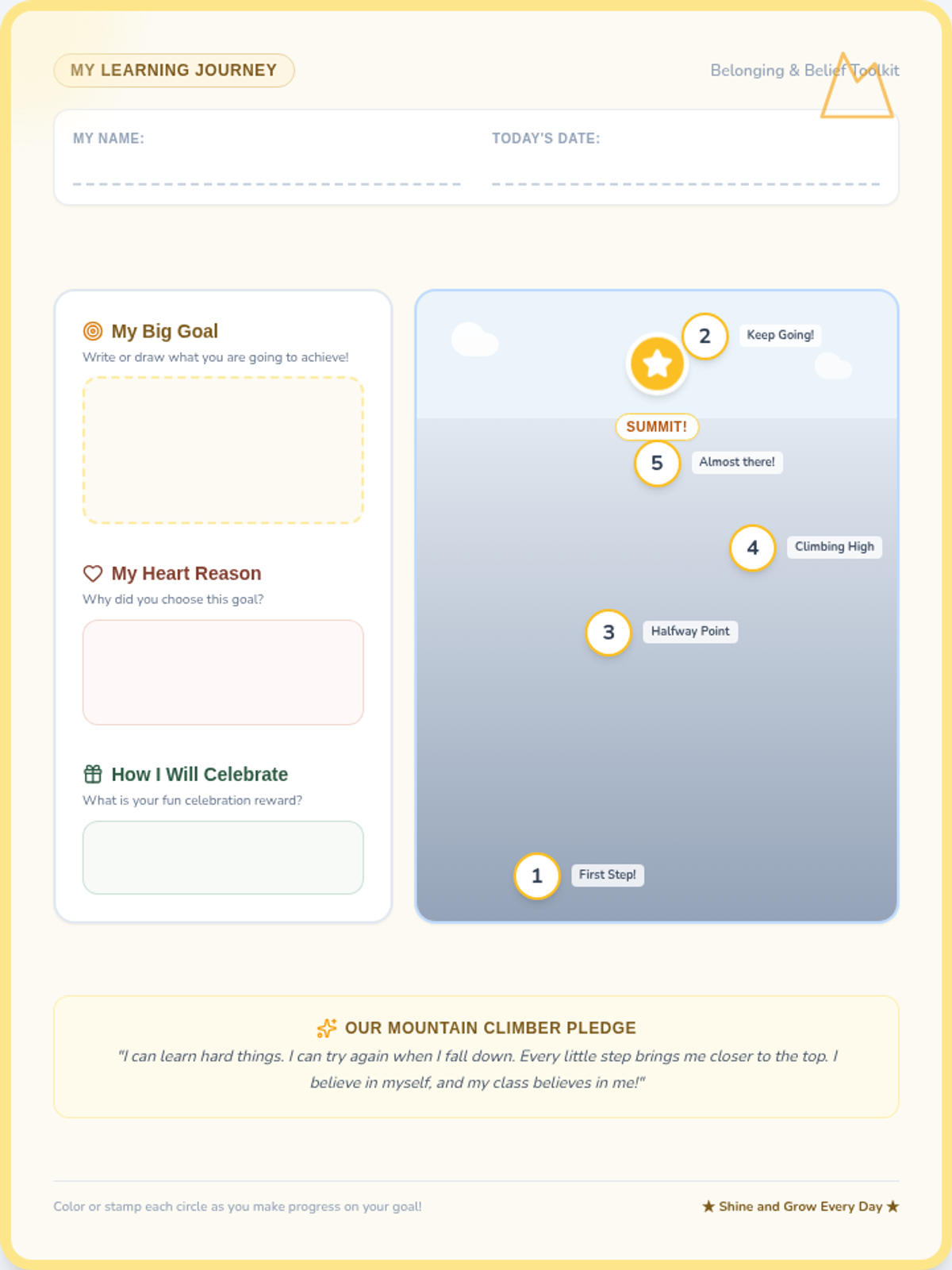
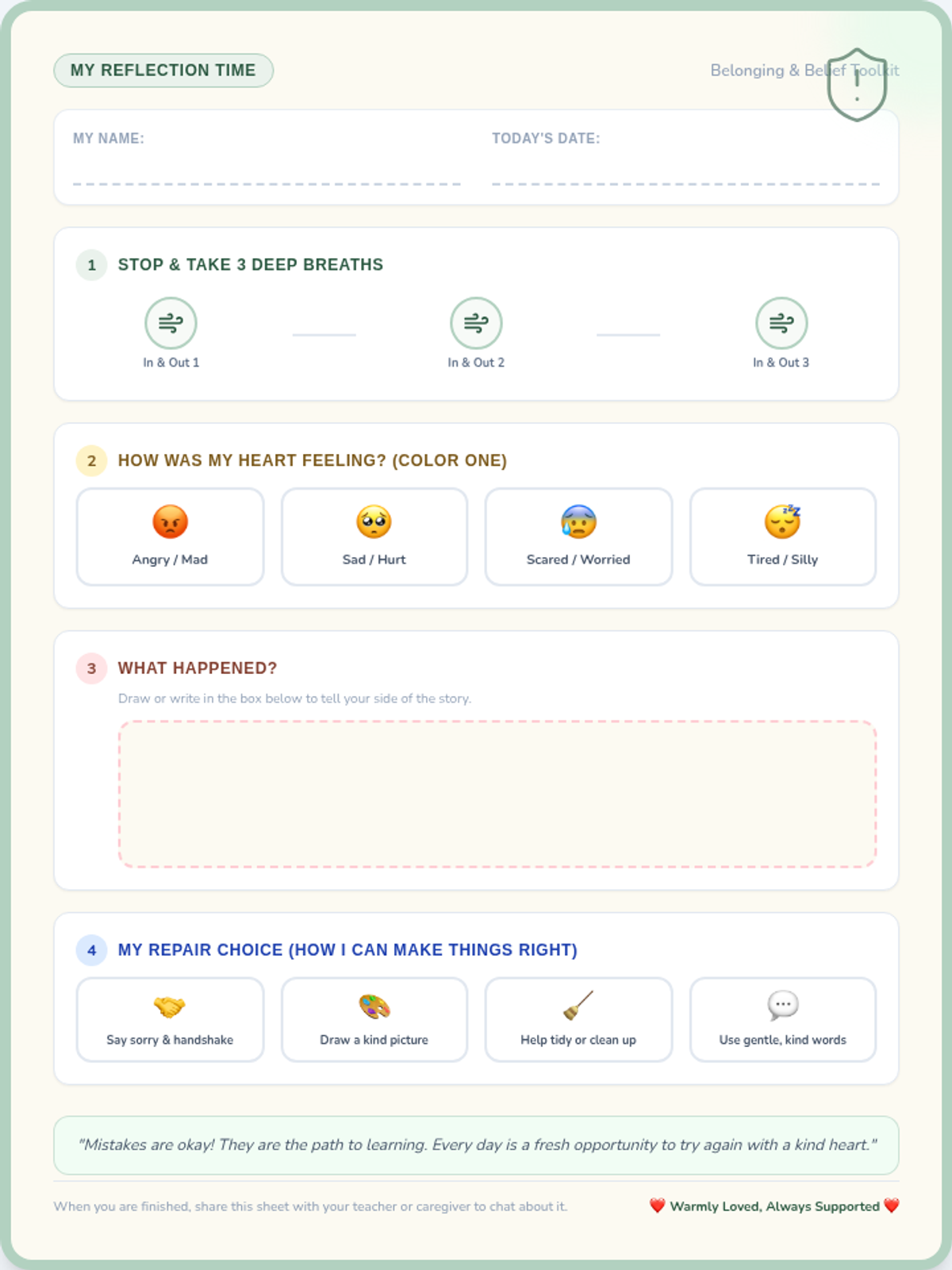
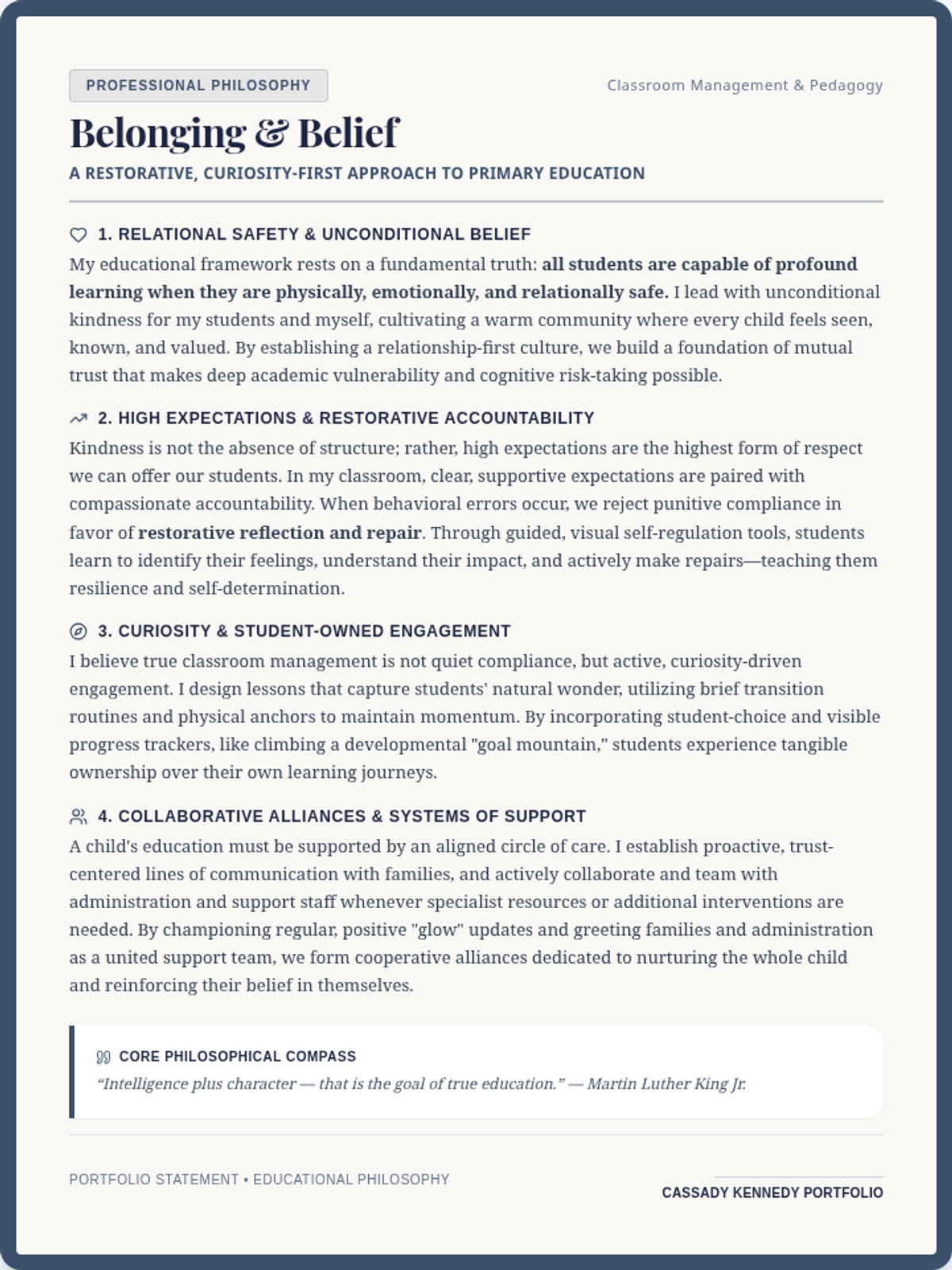
A comprehensive classroom management and family partnership kit designed to cultivate a warm, high-expectation, relationship-first classroom environment. It contains a warm family handbook introduction, positive outreach templates, student goal-tracking charts, curiosity-driven transition routines, and visual reflection/repair sheets for self-regulation.
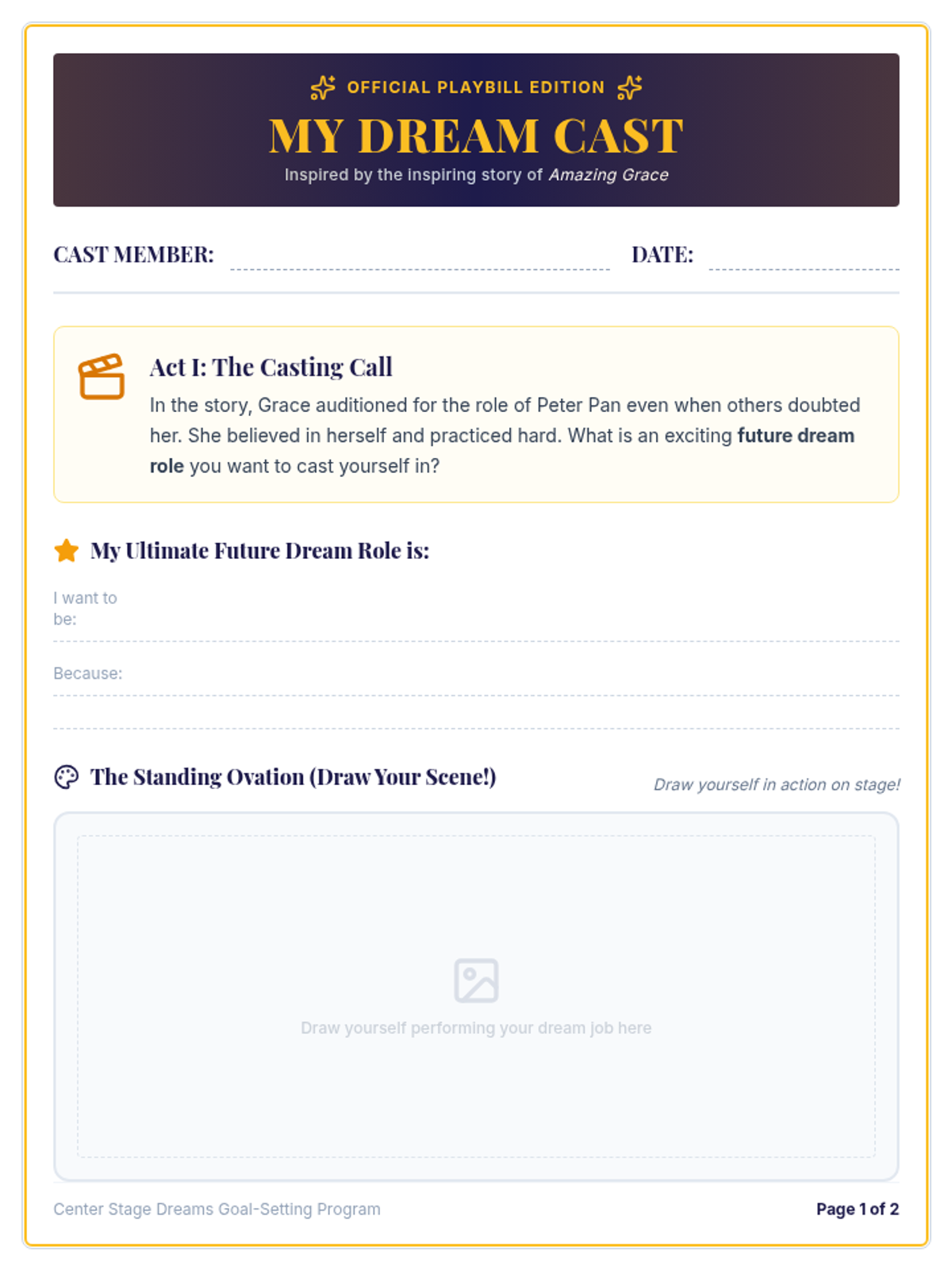
A lesson based on the children's book 'Amazing Grace' by Mary Hoffman, focusing on dreaming big and setting personal goals. Students explore Grace's determination to play Peter Pan and design their own 'dream roles' in life, mapping out the steps to achieve them.
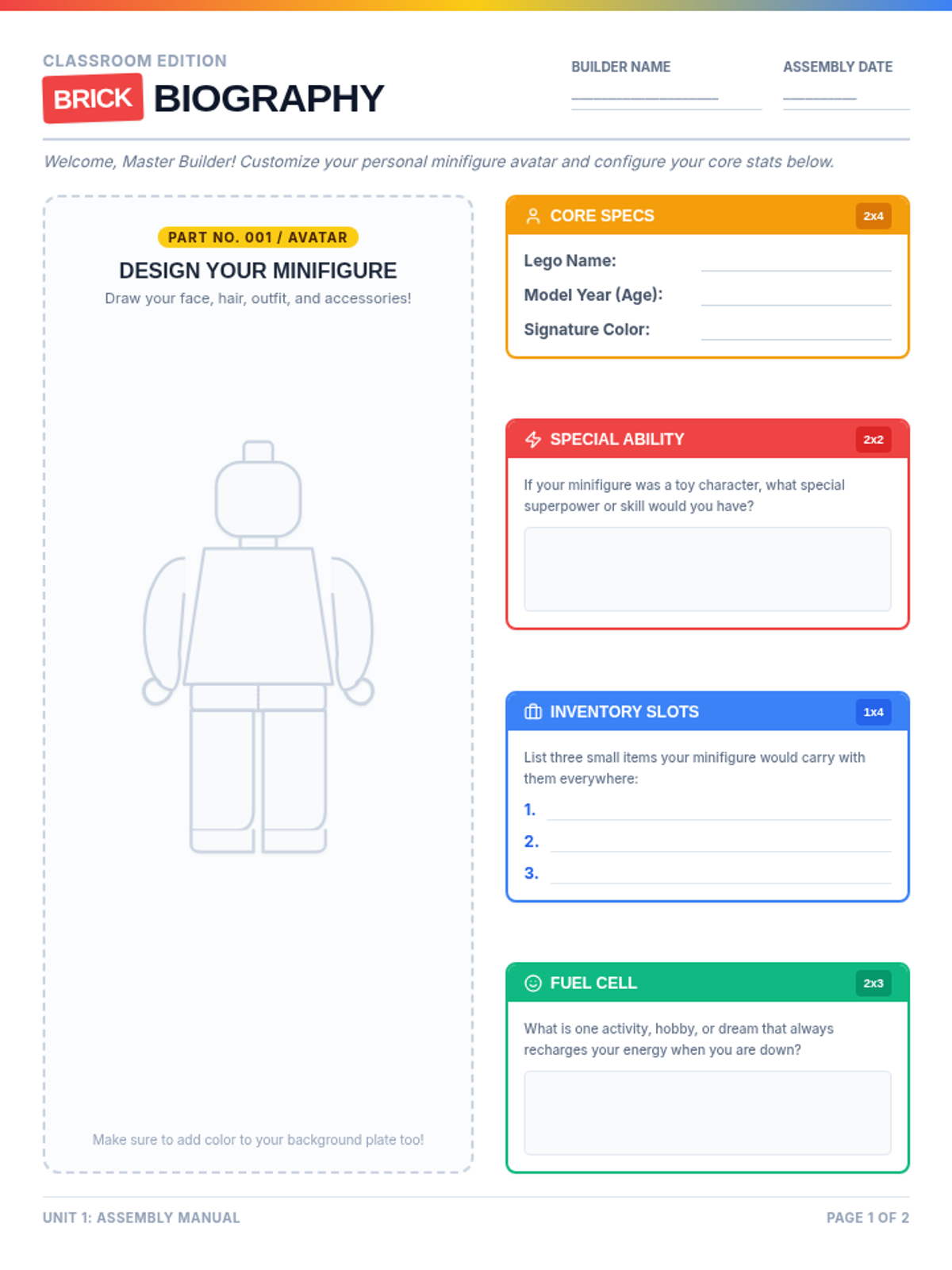
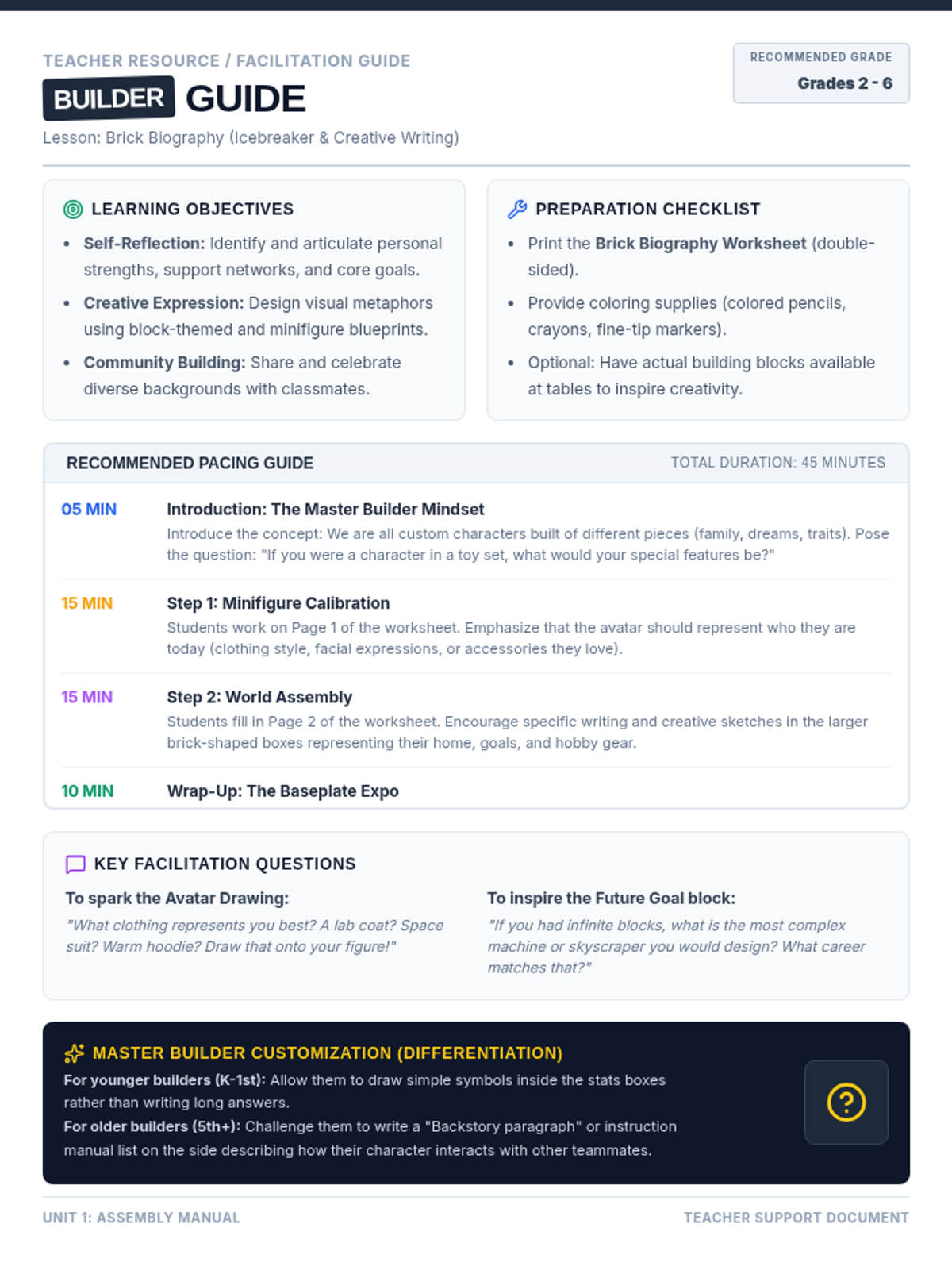
A creative introductory lesson where students design and color paper Lego bricks and minifigures to share their personalities, backgrounds, and future aspirations.
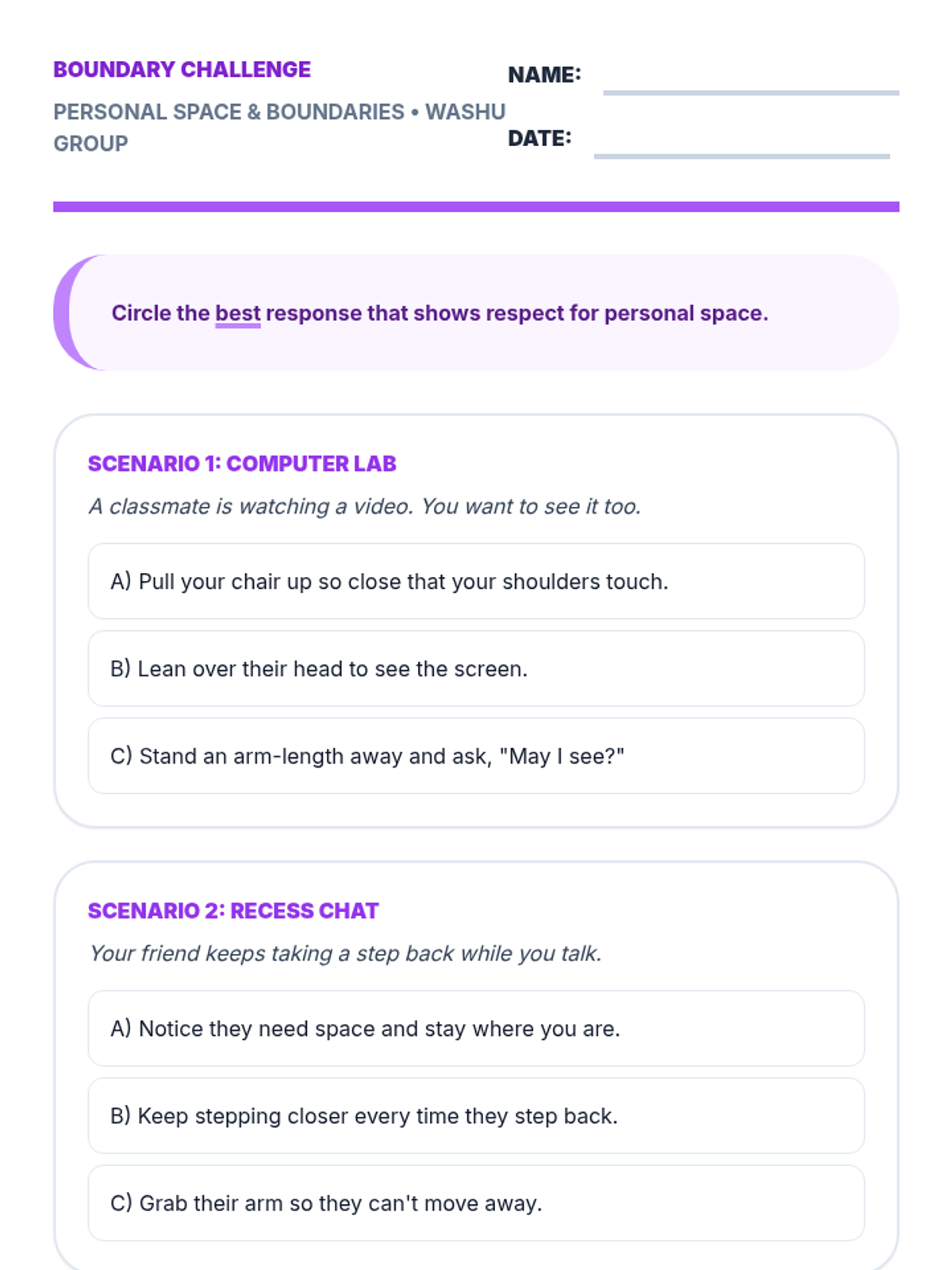
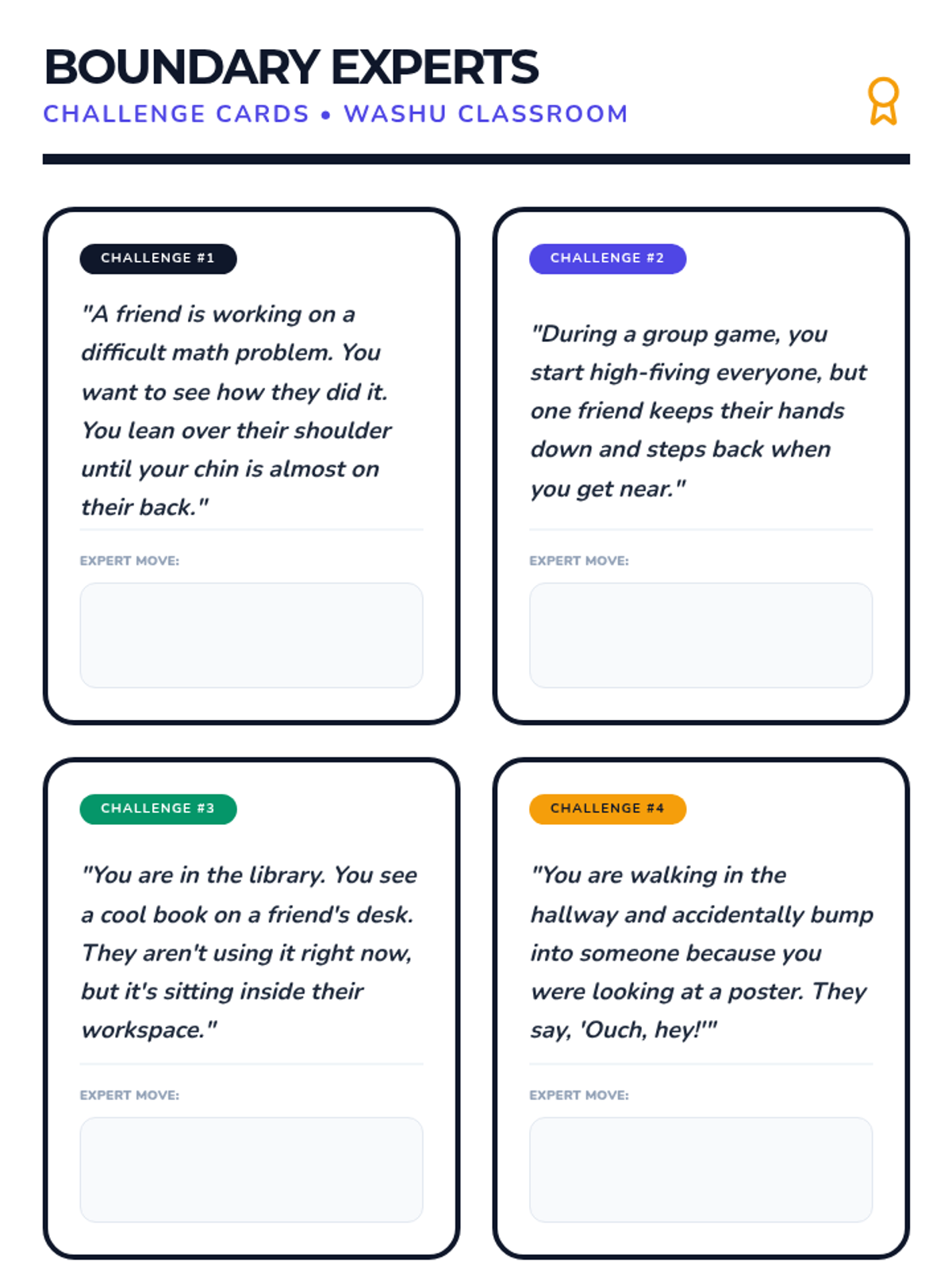
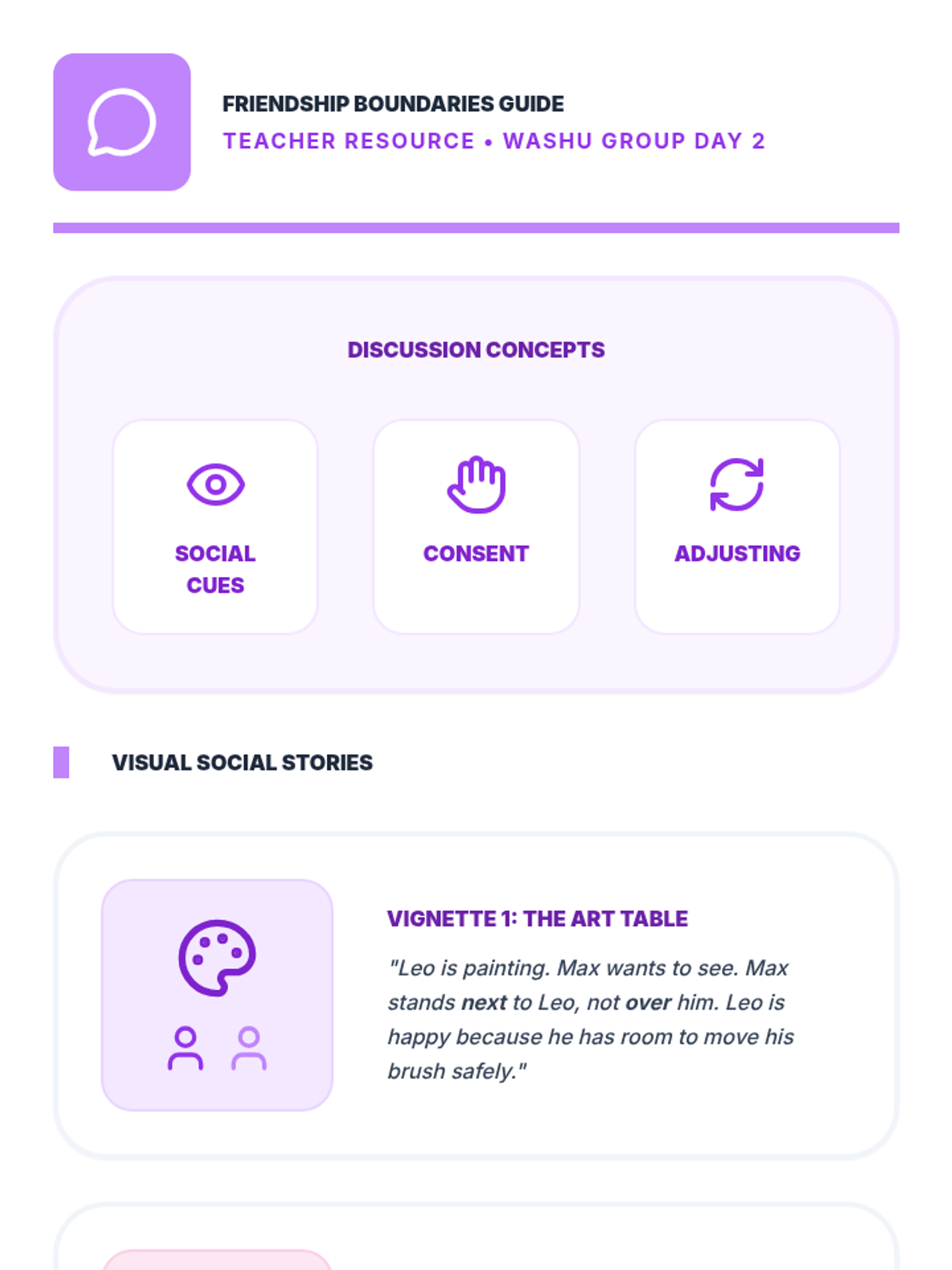
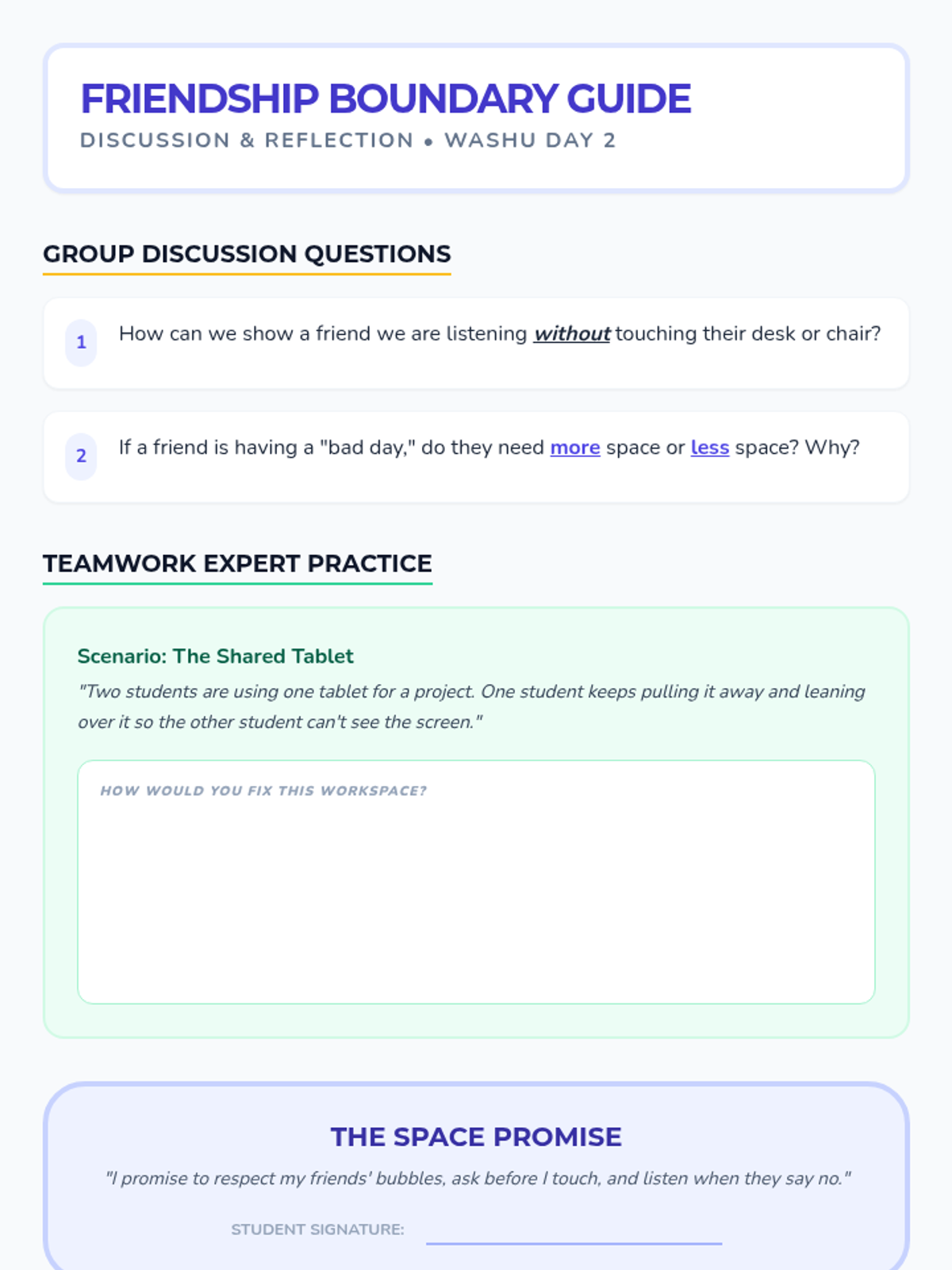
Advanced boundary application for WashU students, focusing on social challenges and respecting personal space within friendships and group work.
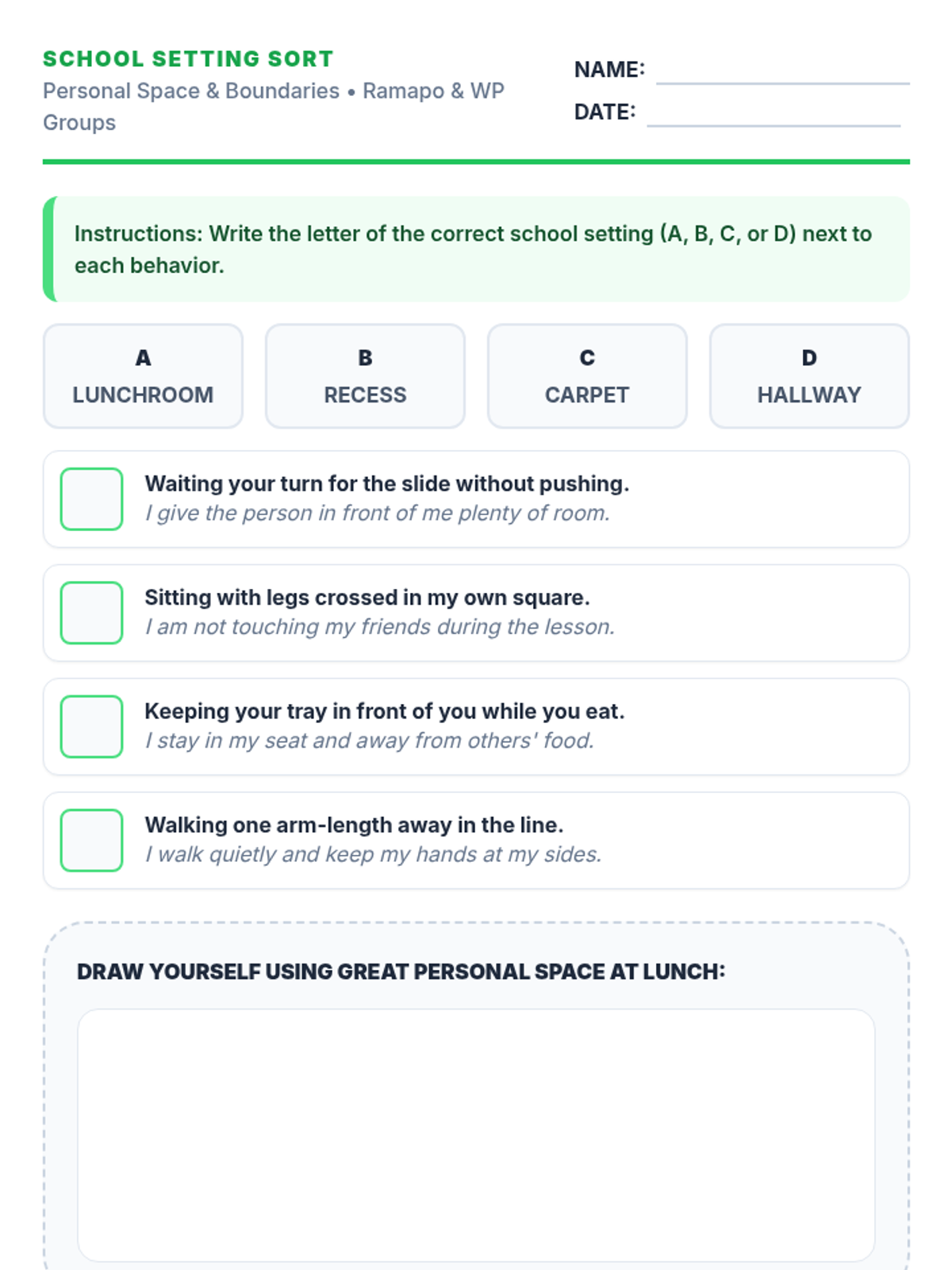
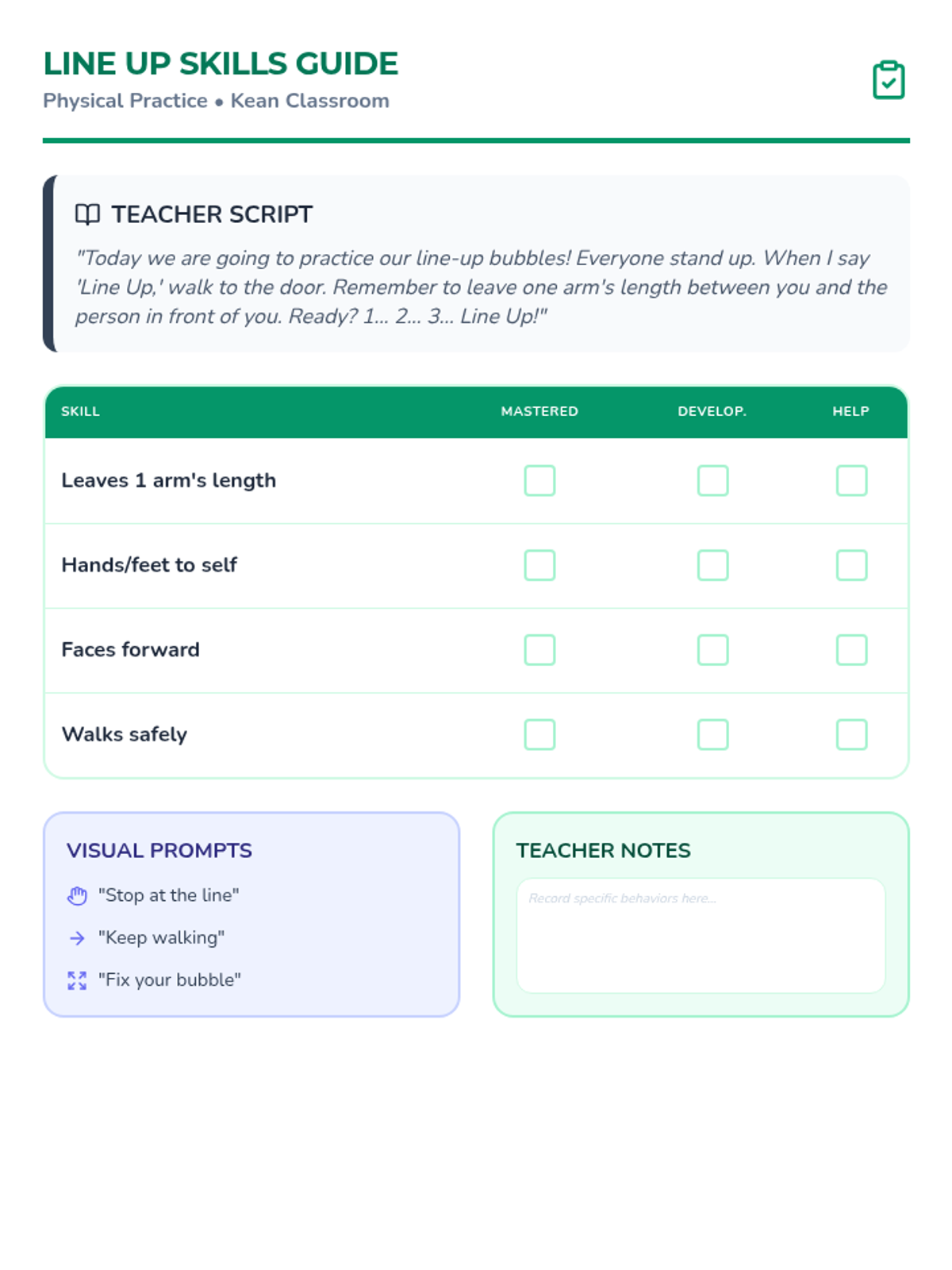
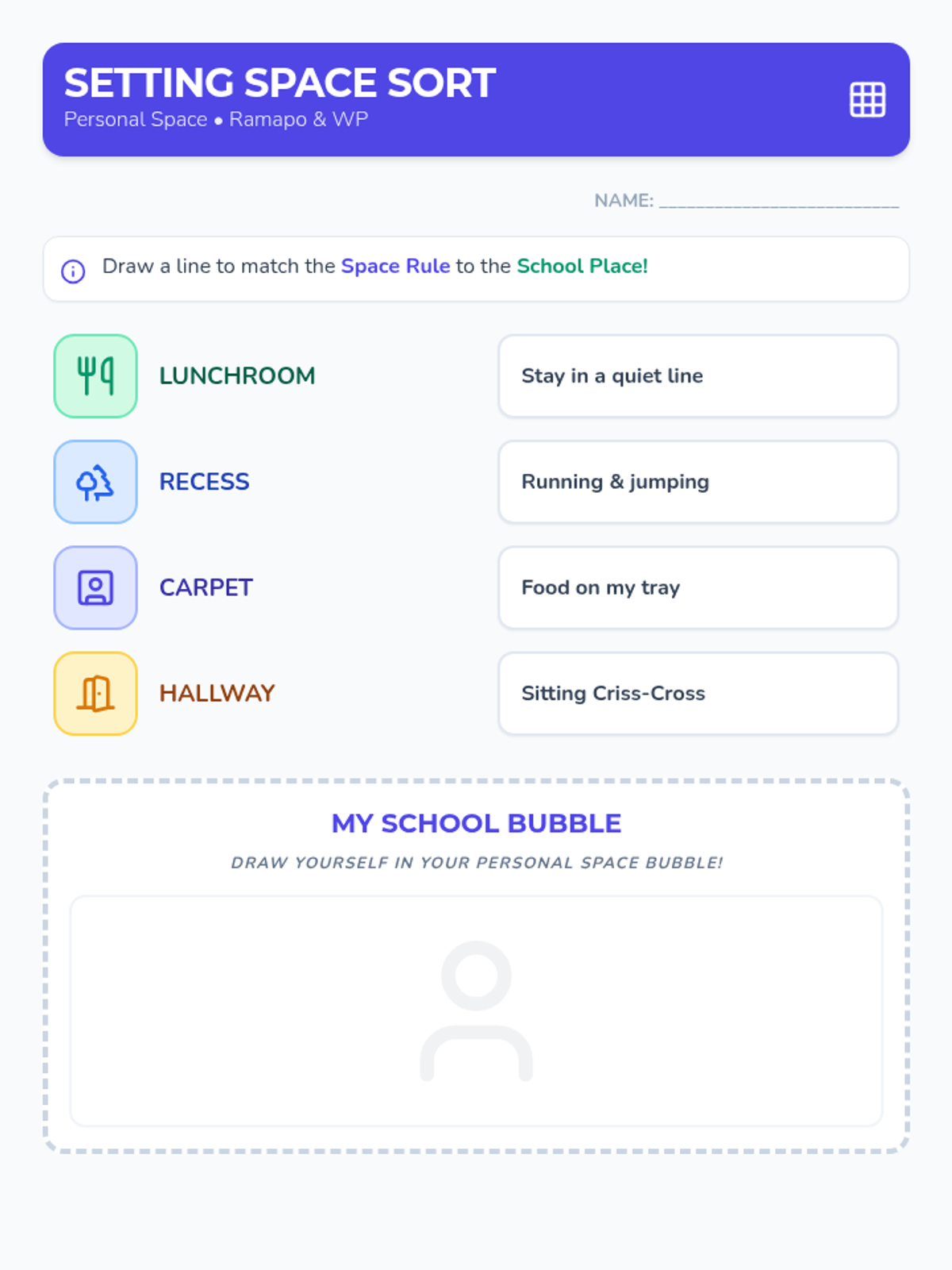
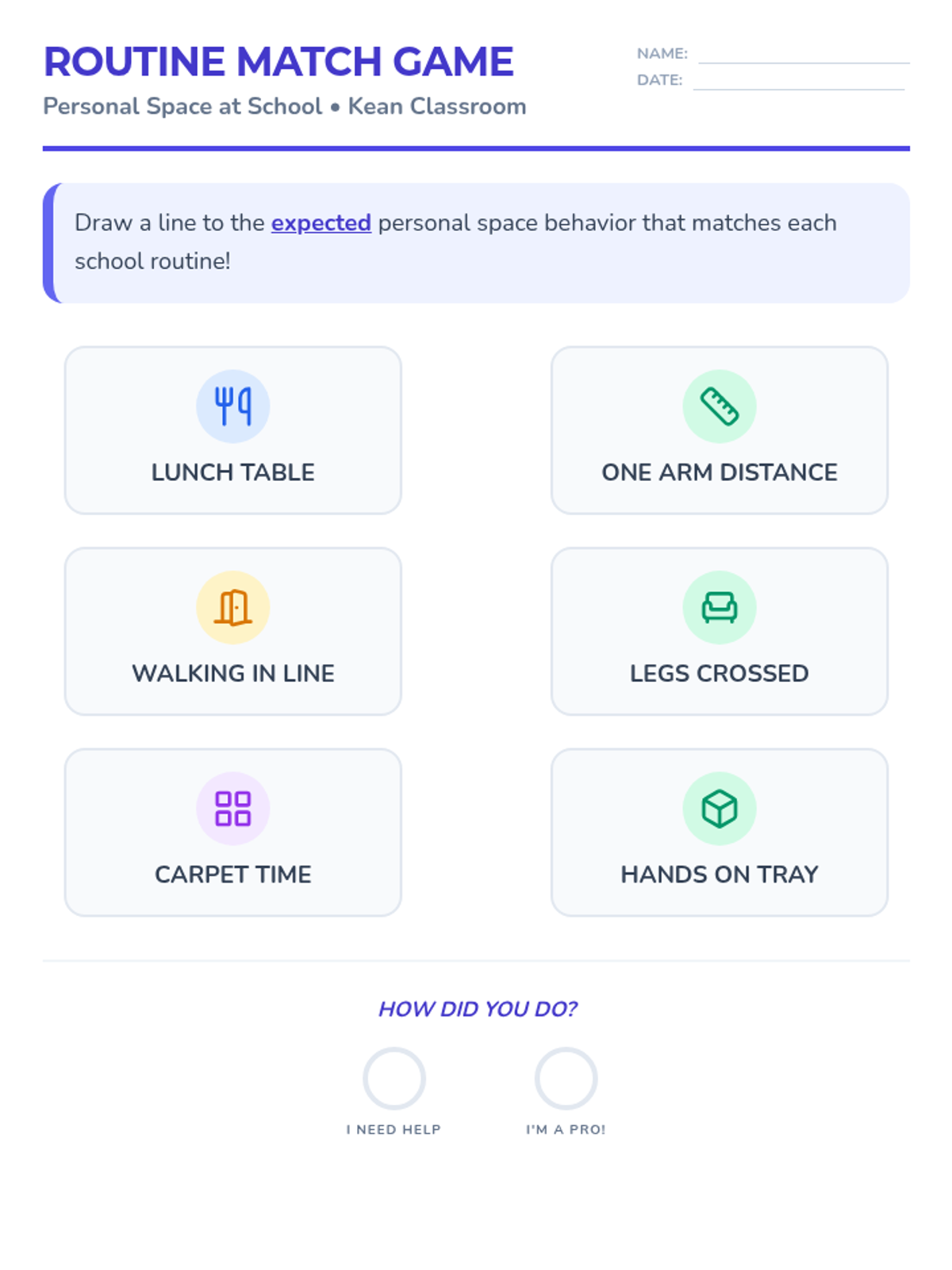
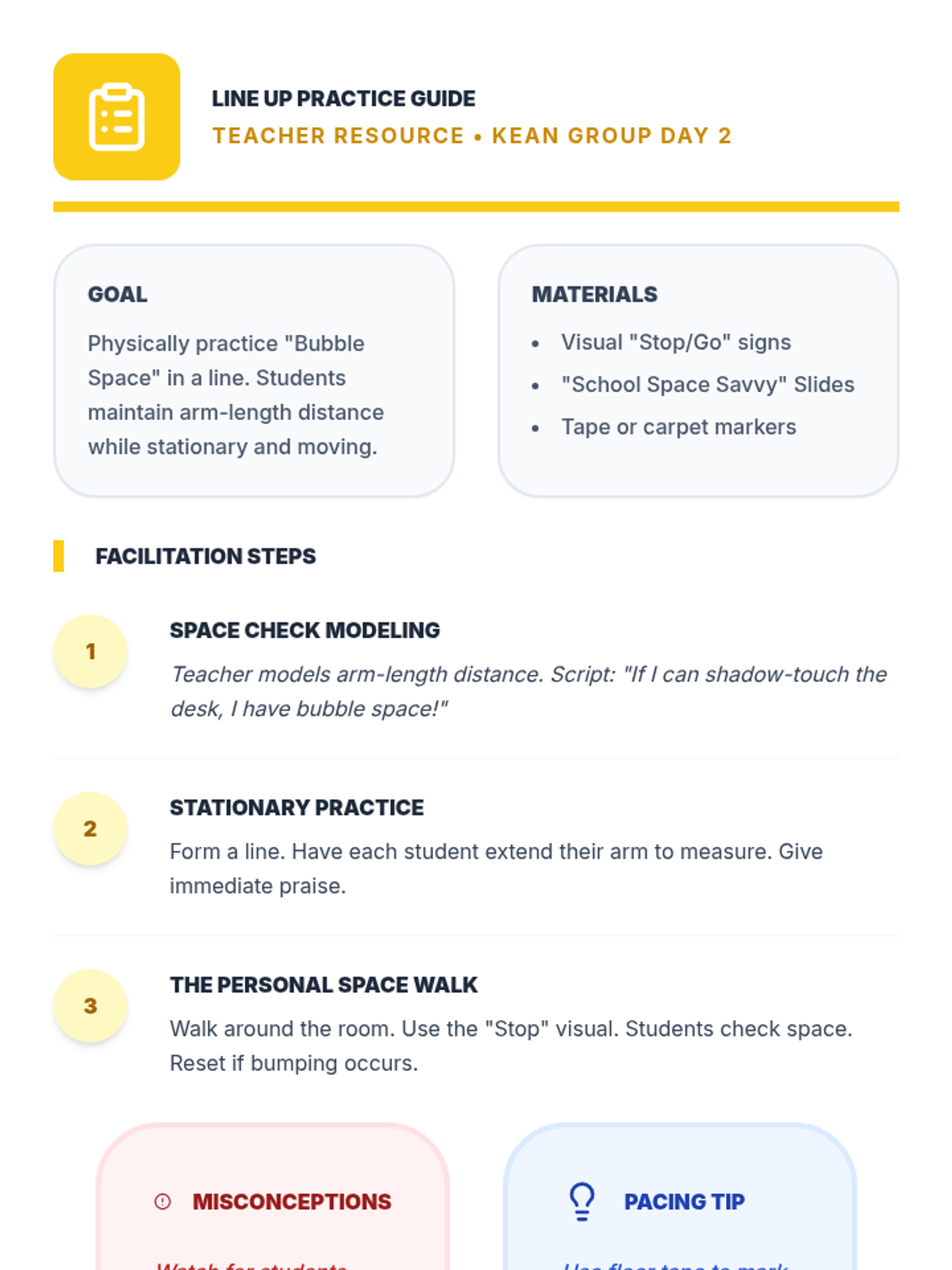
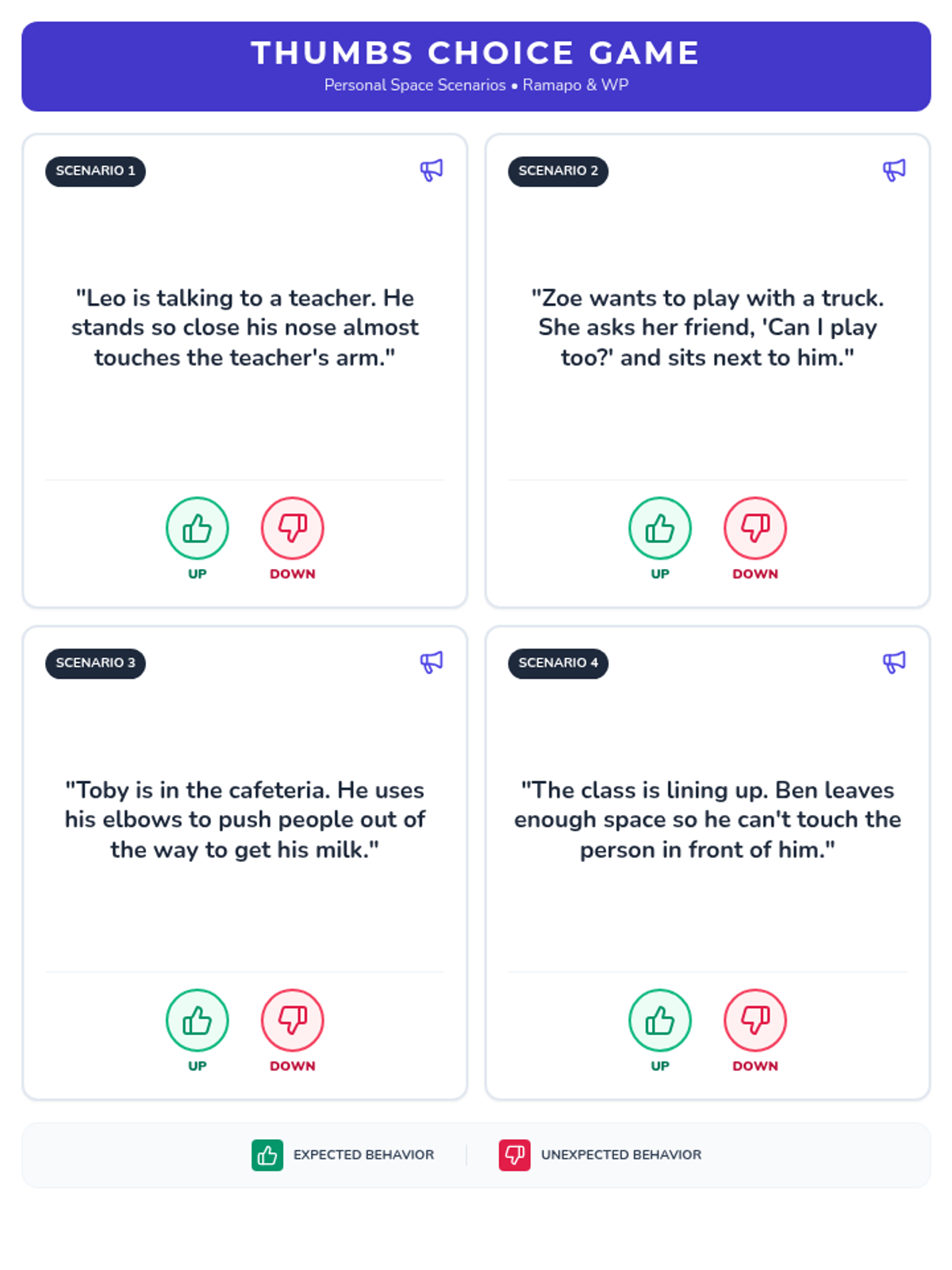
Involves hands-on practice for Kean (lining up) and sorting activities for Ramapo/WP to categorize expected vs. unexpected behaviors in specific school settings.
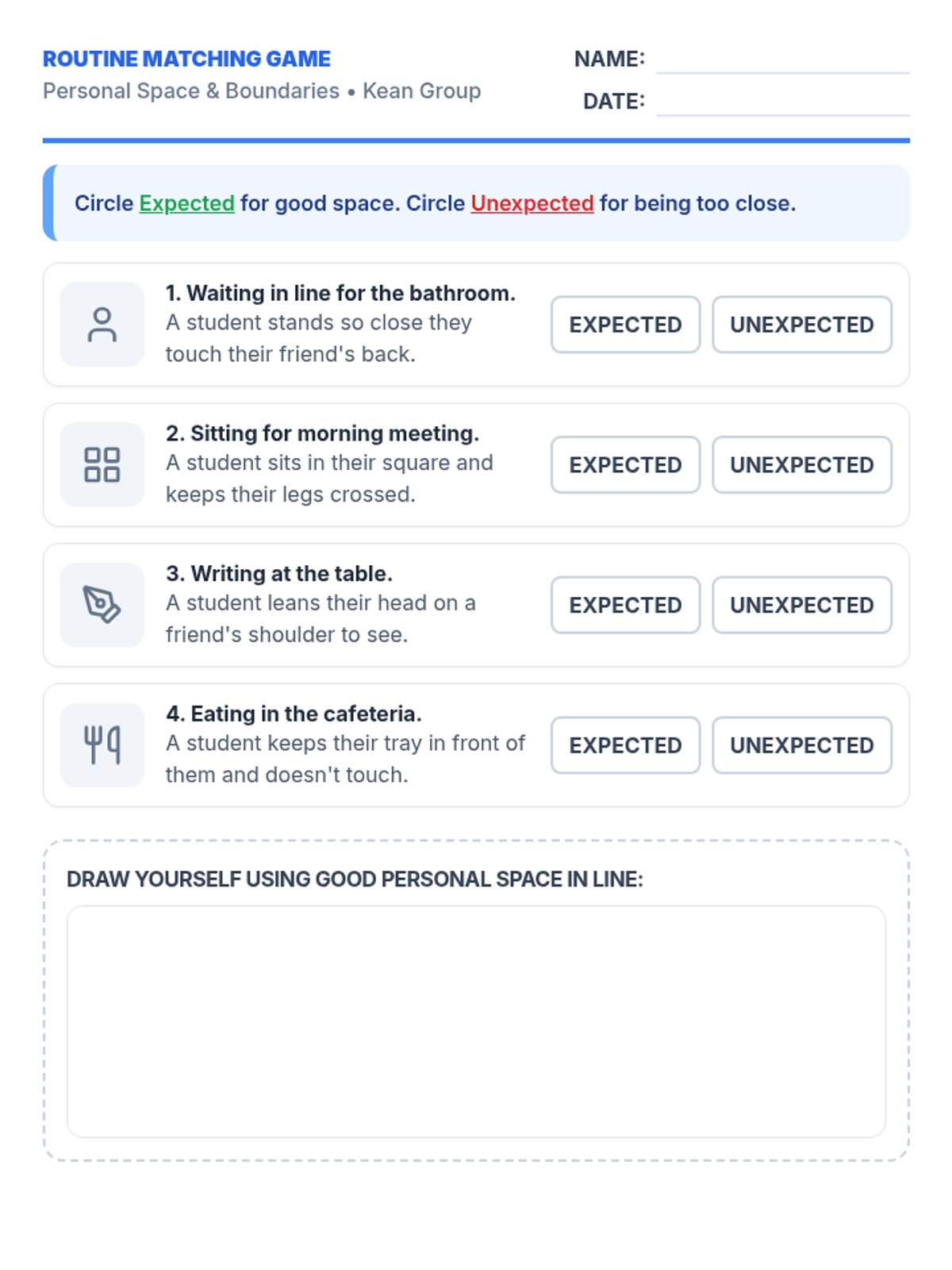
Focuses on identifying and practicing correct personal space behaviors during school routines such as lunch, recess, and transitions for Kean, Ramapo, and WP students.
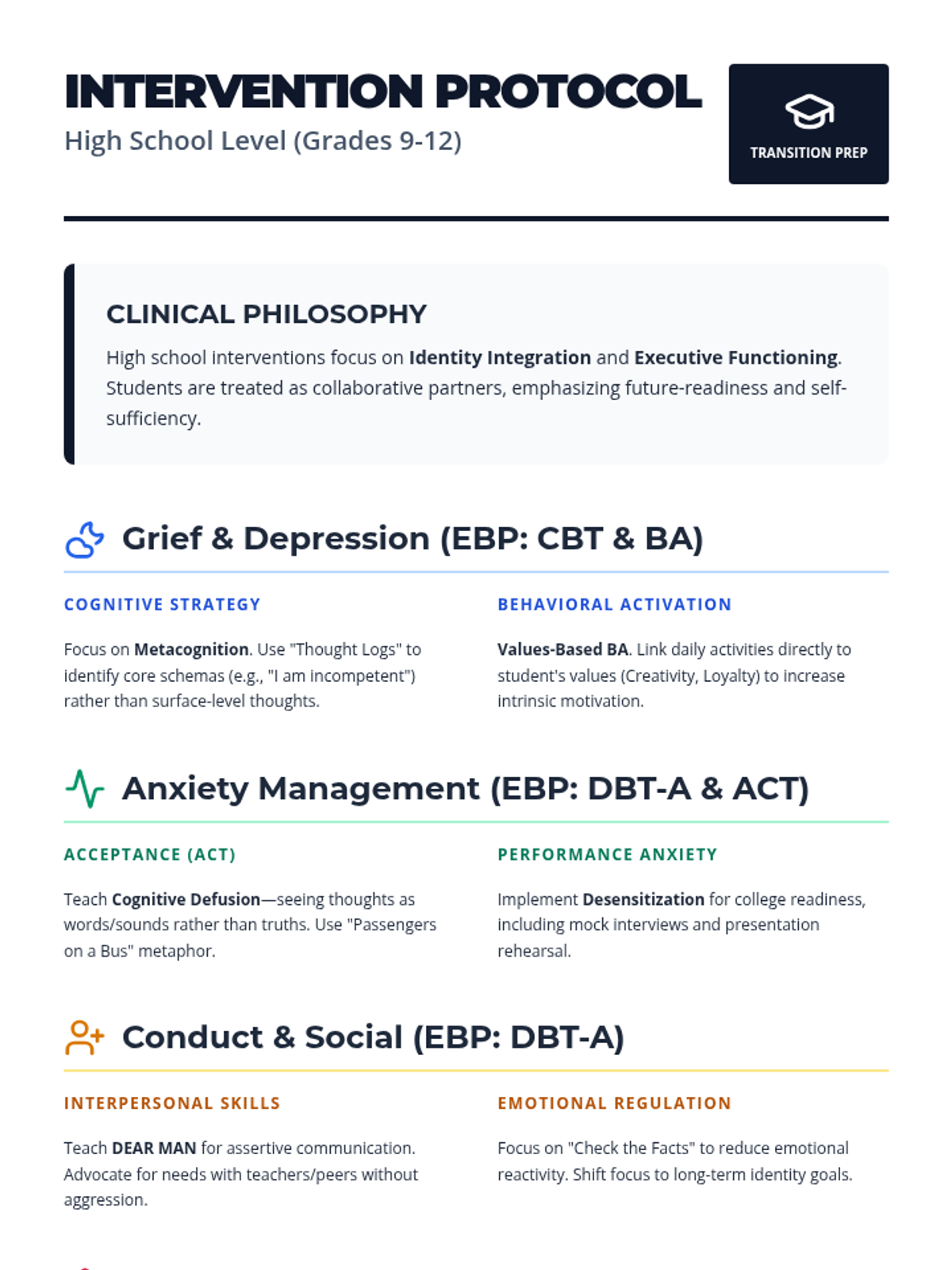
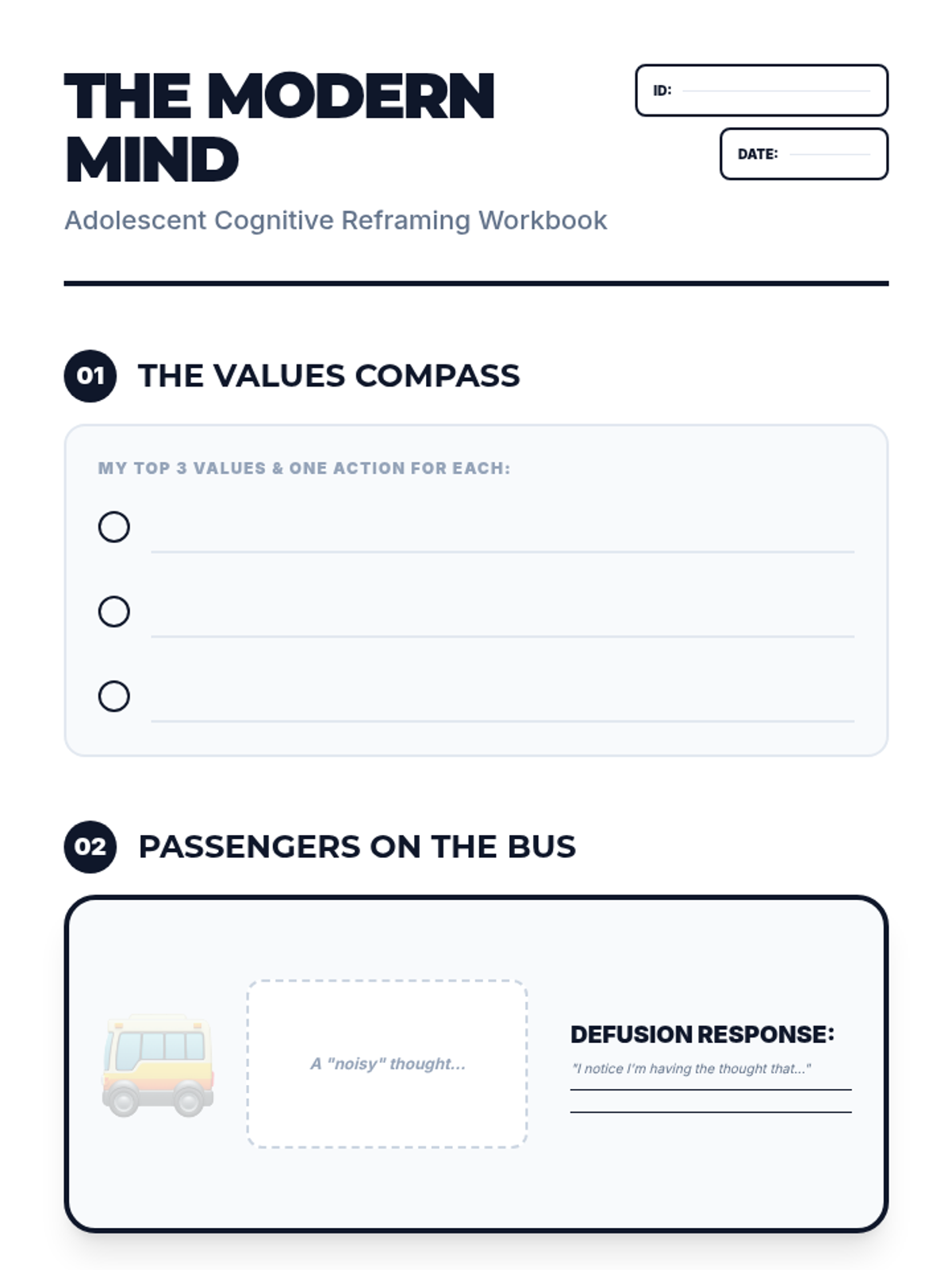
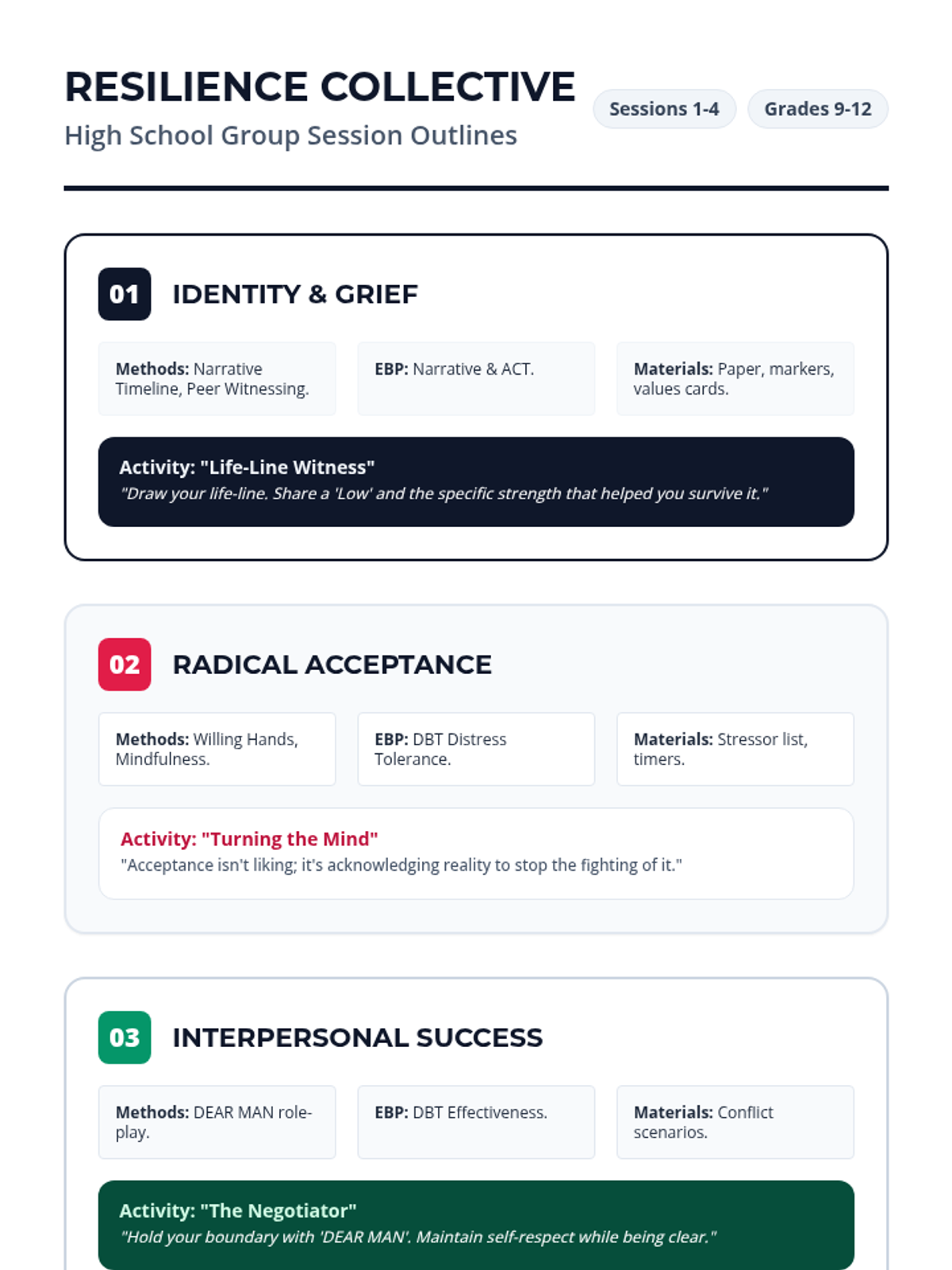
Advanced therapeutic interventions for high schoolers, emphasizing autonomy, complex cognitive reframing, interpersonal effectiveness, and comprehensive crisis protocols.
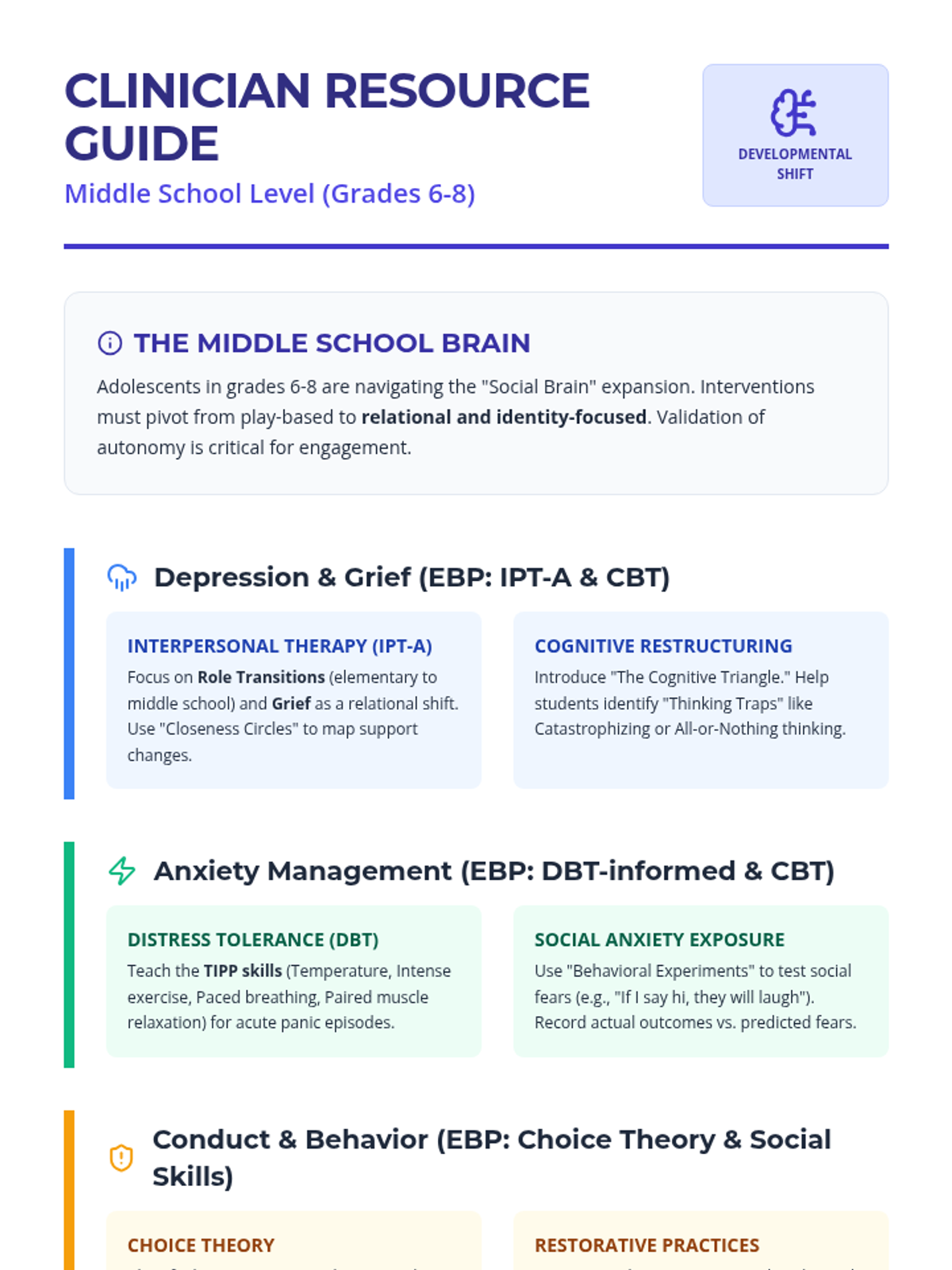
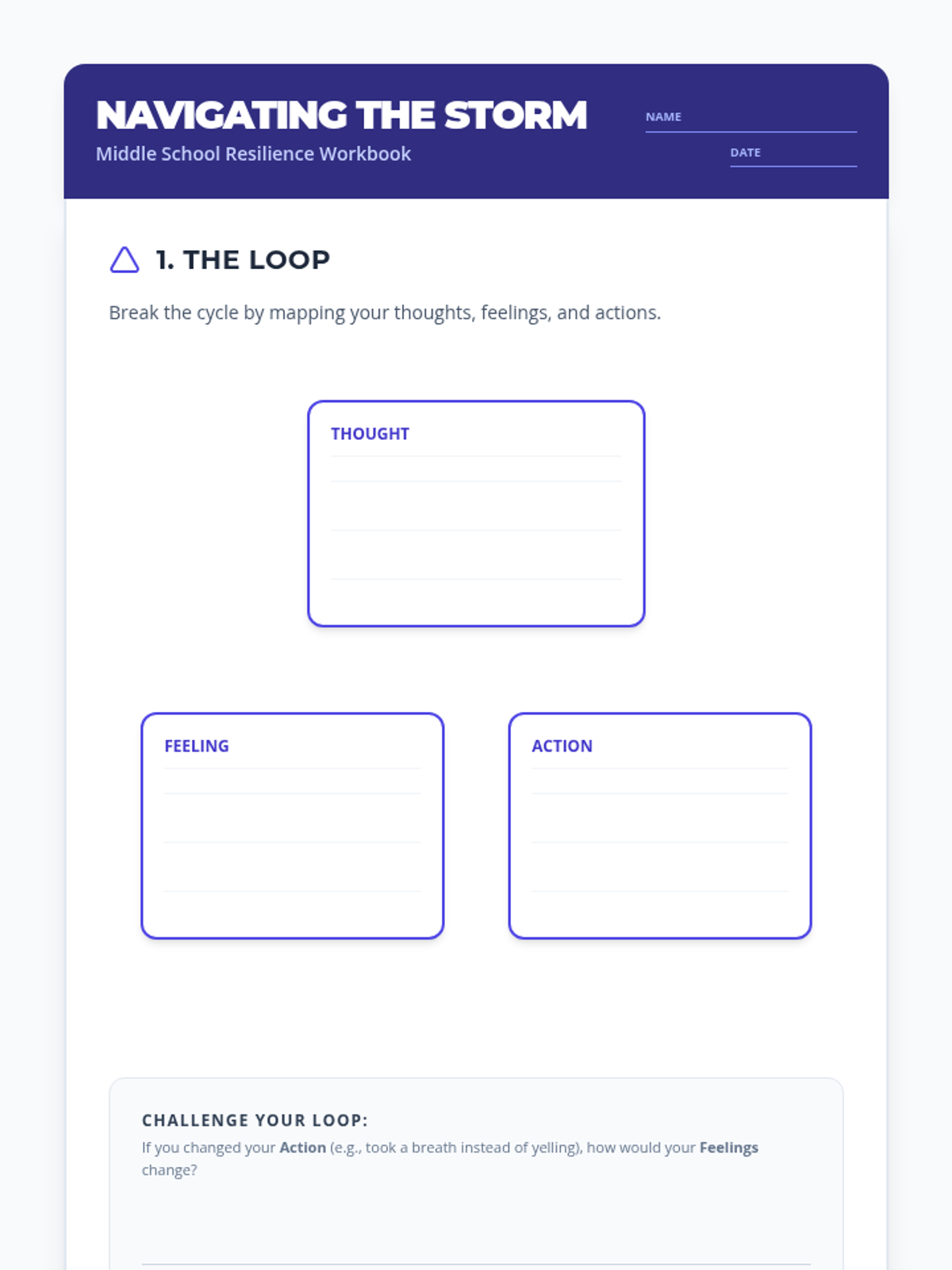
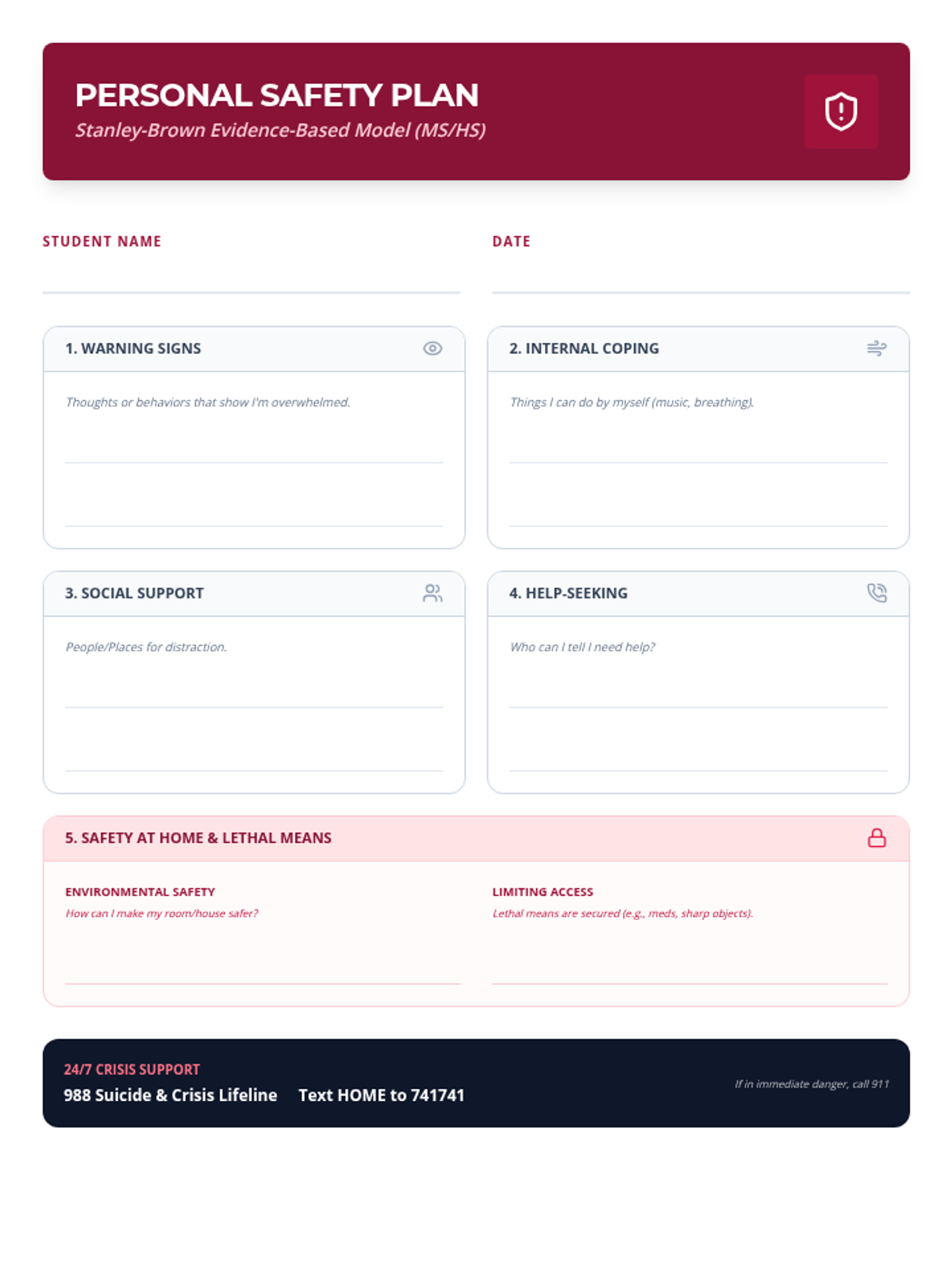
CBT and DBT-informed strategies tailored for the middle school transition, focusing on peer relationships, emotional regulation, and structured safety plans.
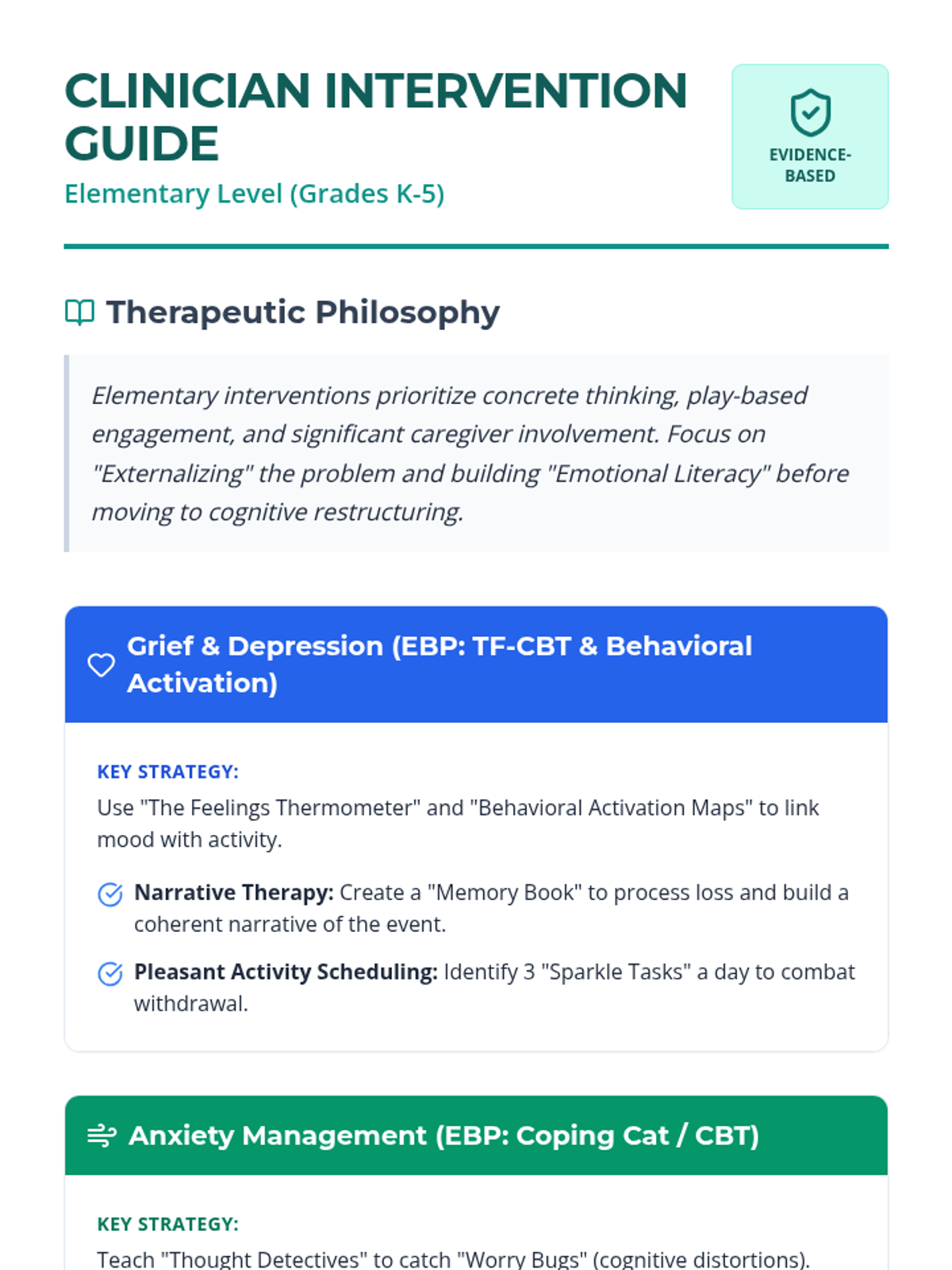
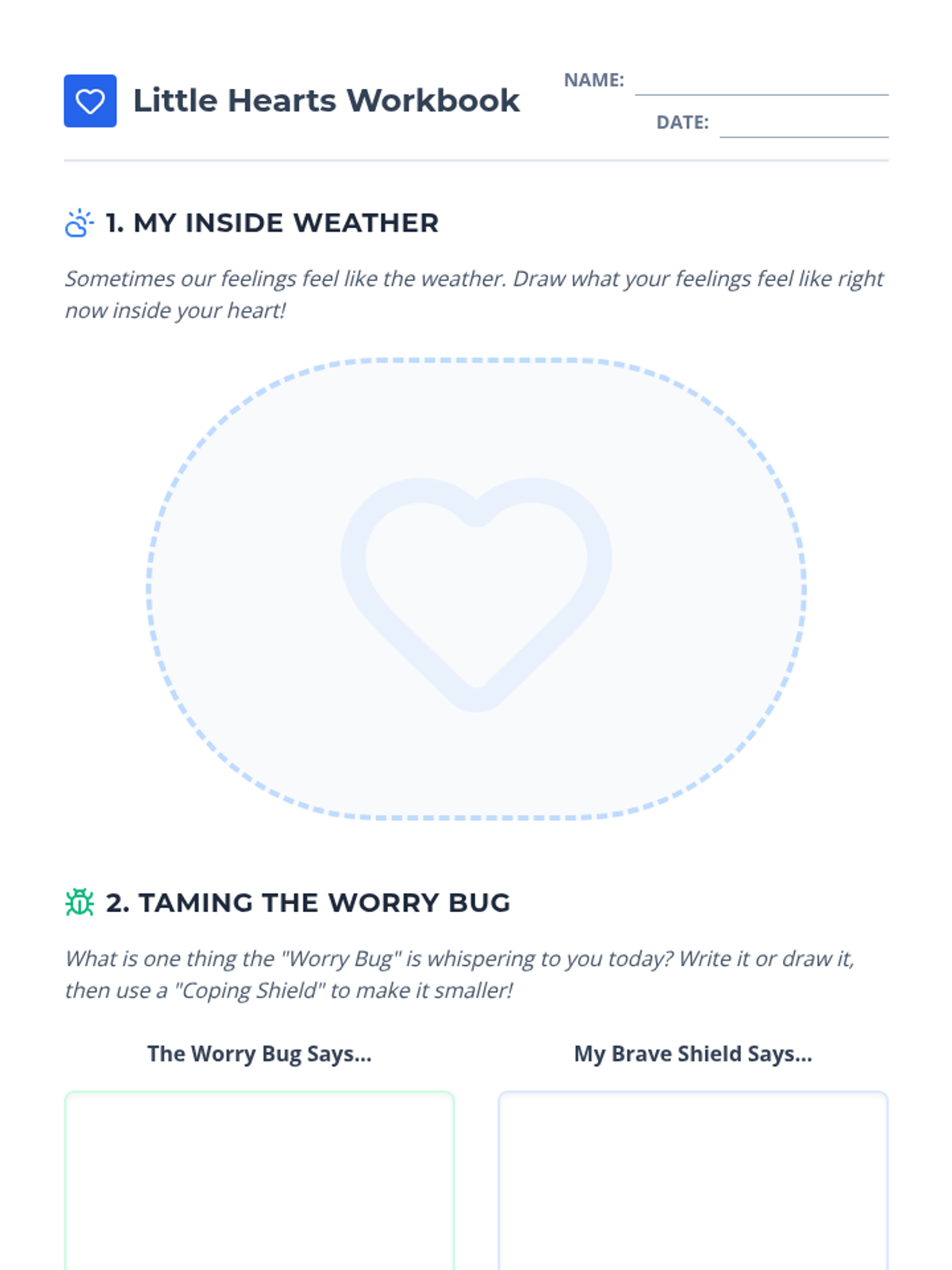
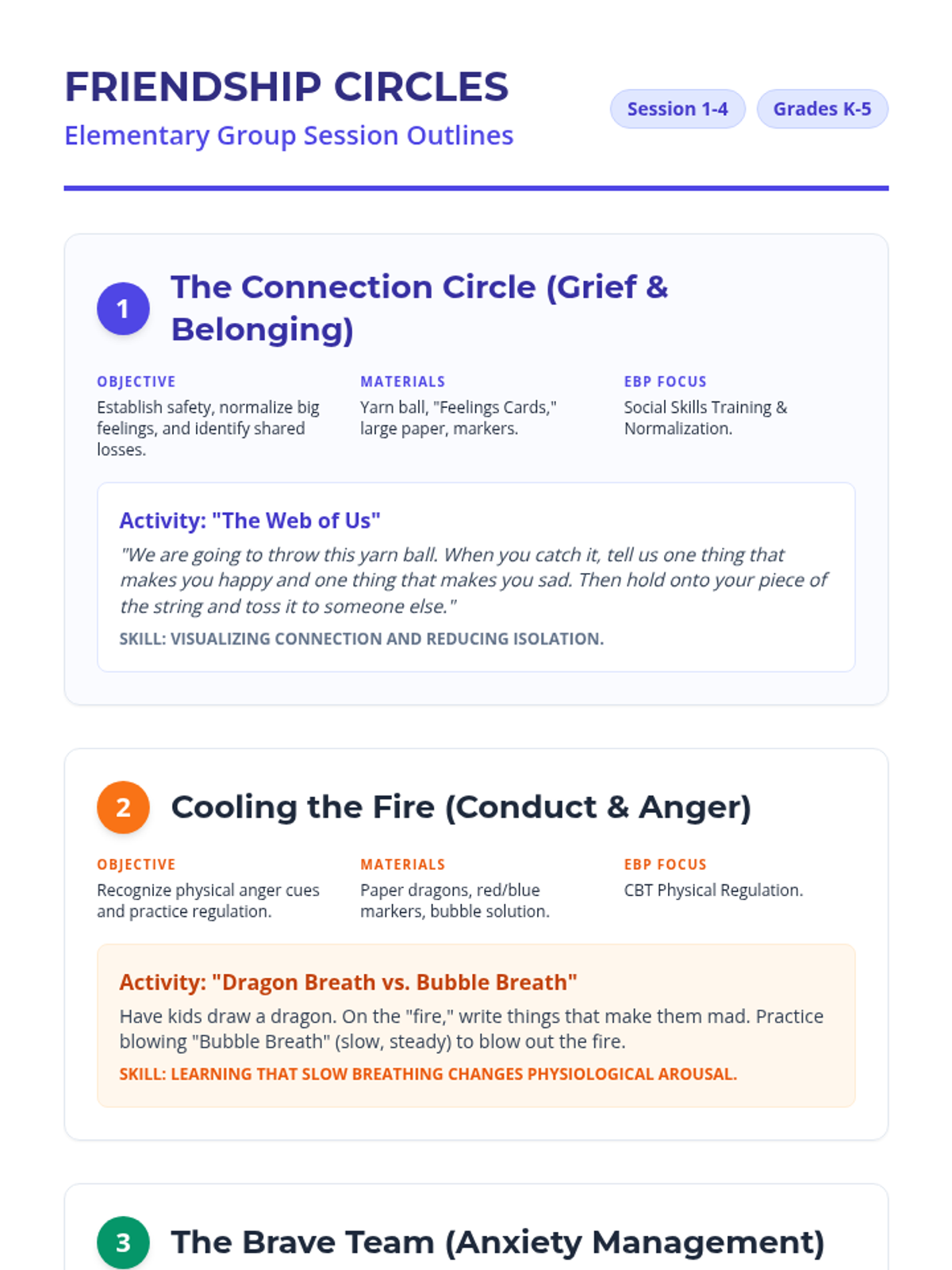
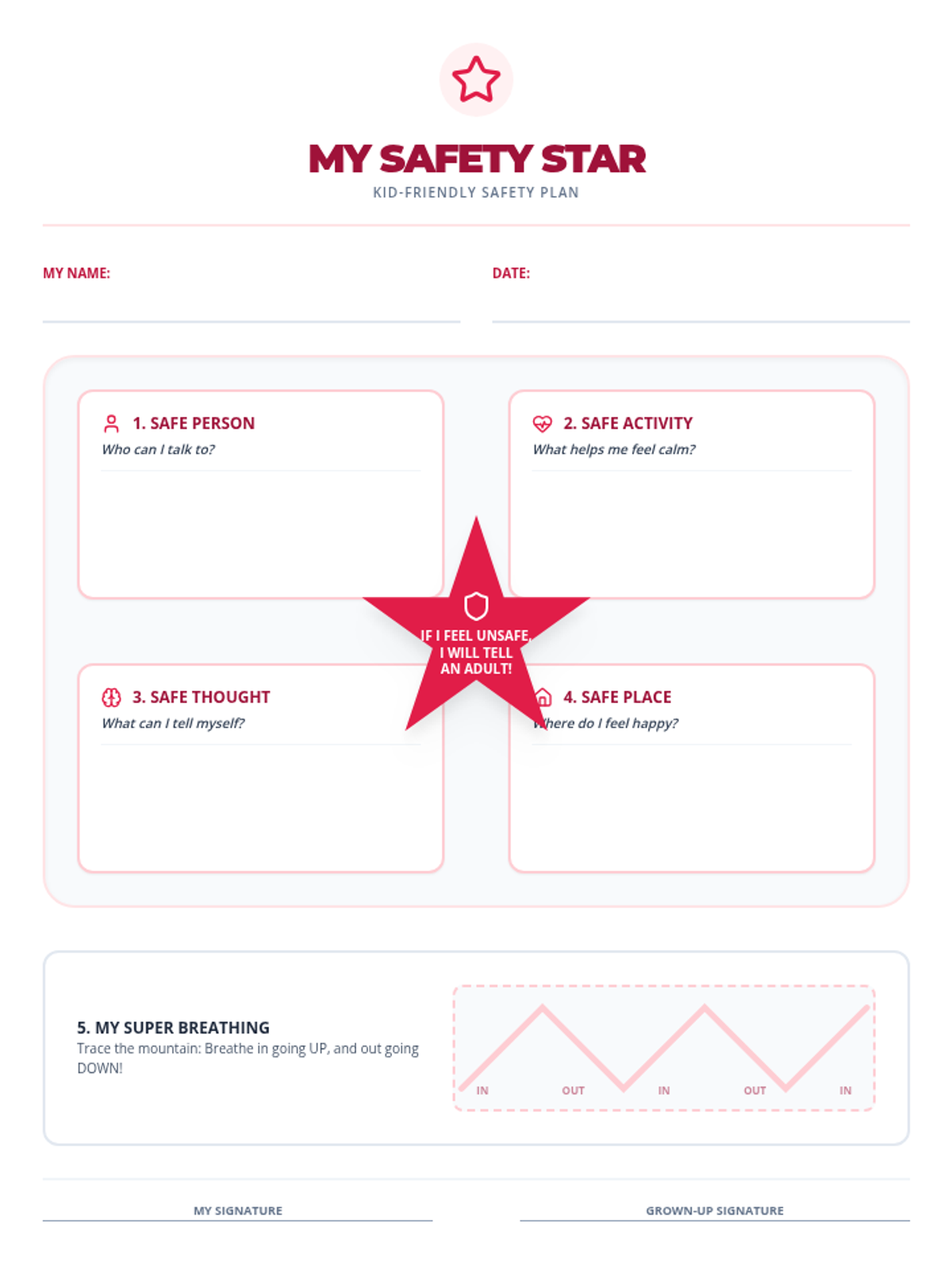
Developmentally appropriate interventions for elementary students focusing on play-based CBT, social-emotional learning, and kid-friendly safety planning.
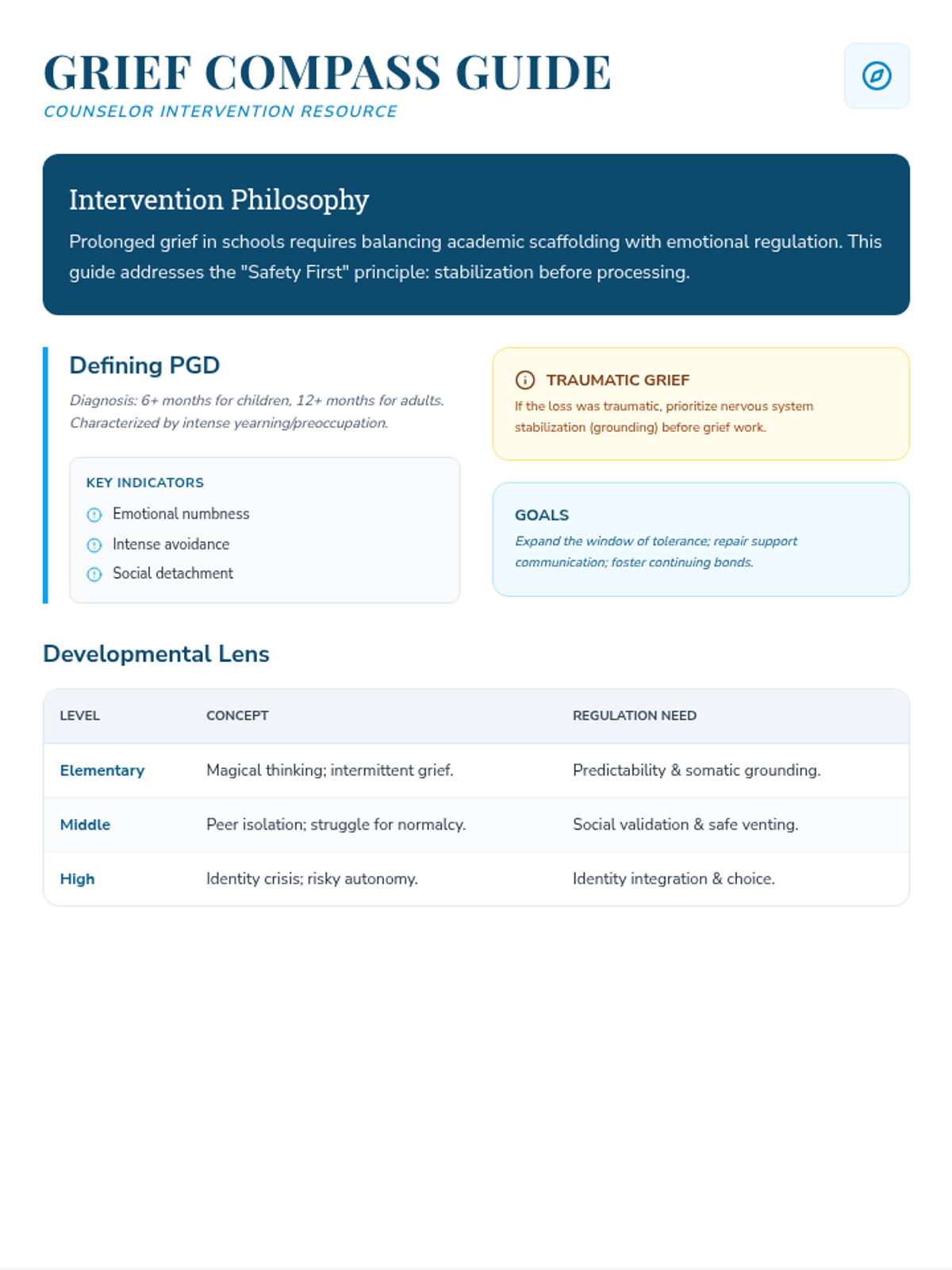
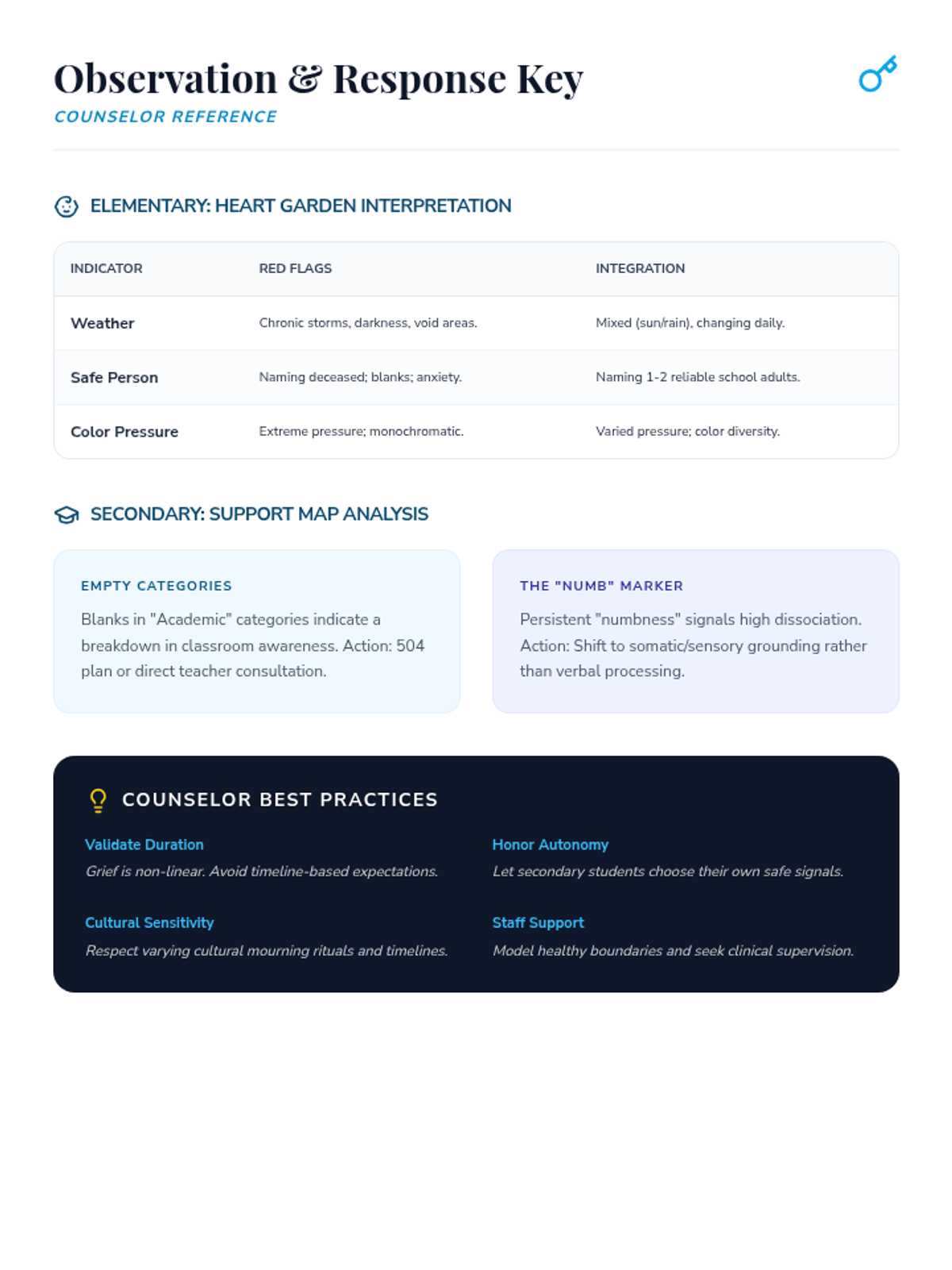
Professional development for school staff to identify signs of prolonged grief disorder and implement supportive classroom strategies.
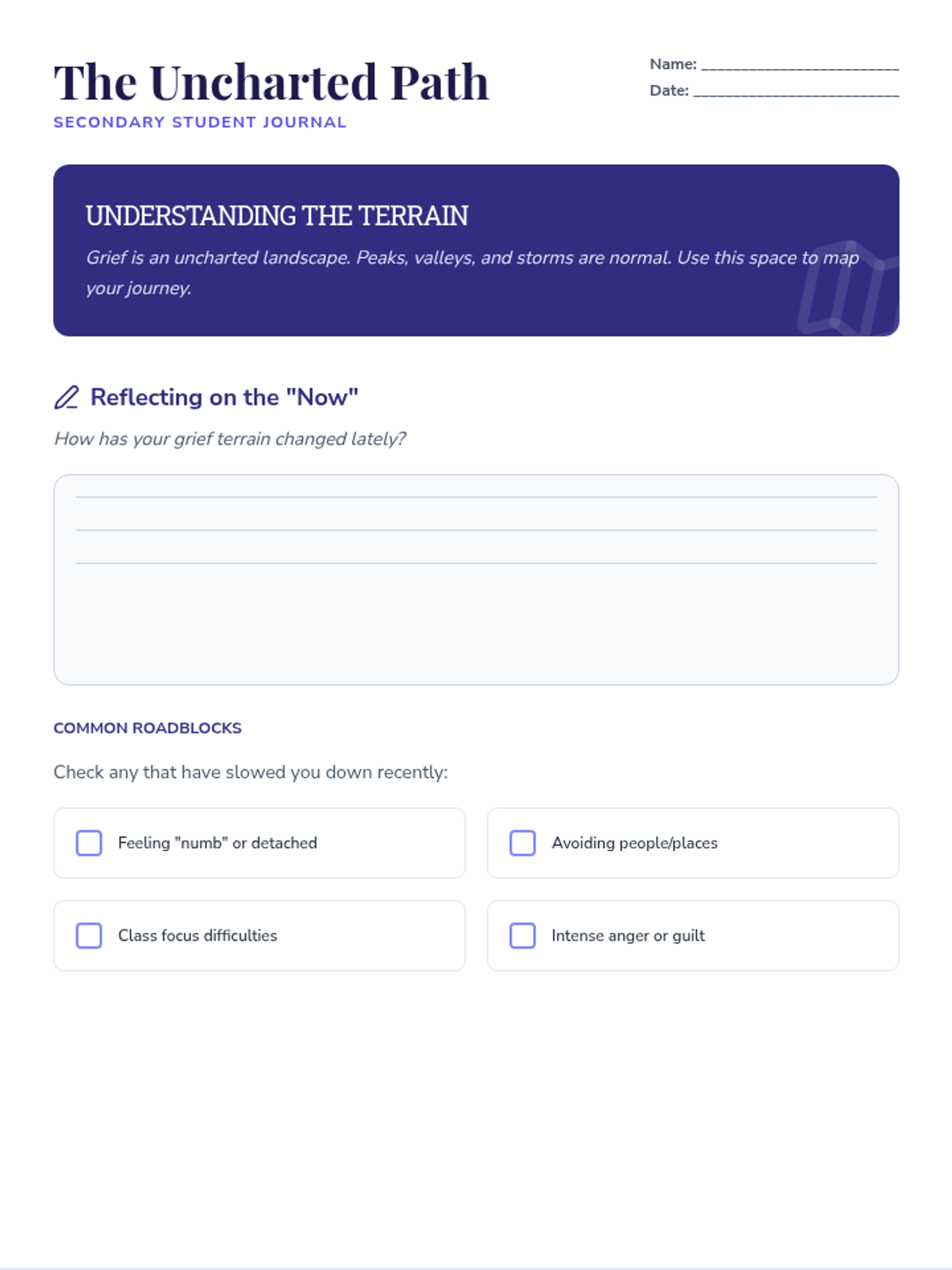
Advanced coping strategies and communication tools for middle and high school students to navigate the complexities of prolonged grief and build sustainable support systems.
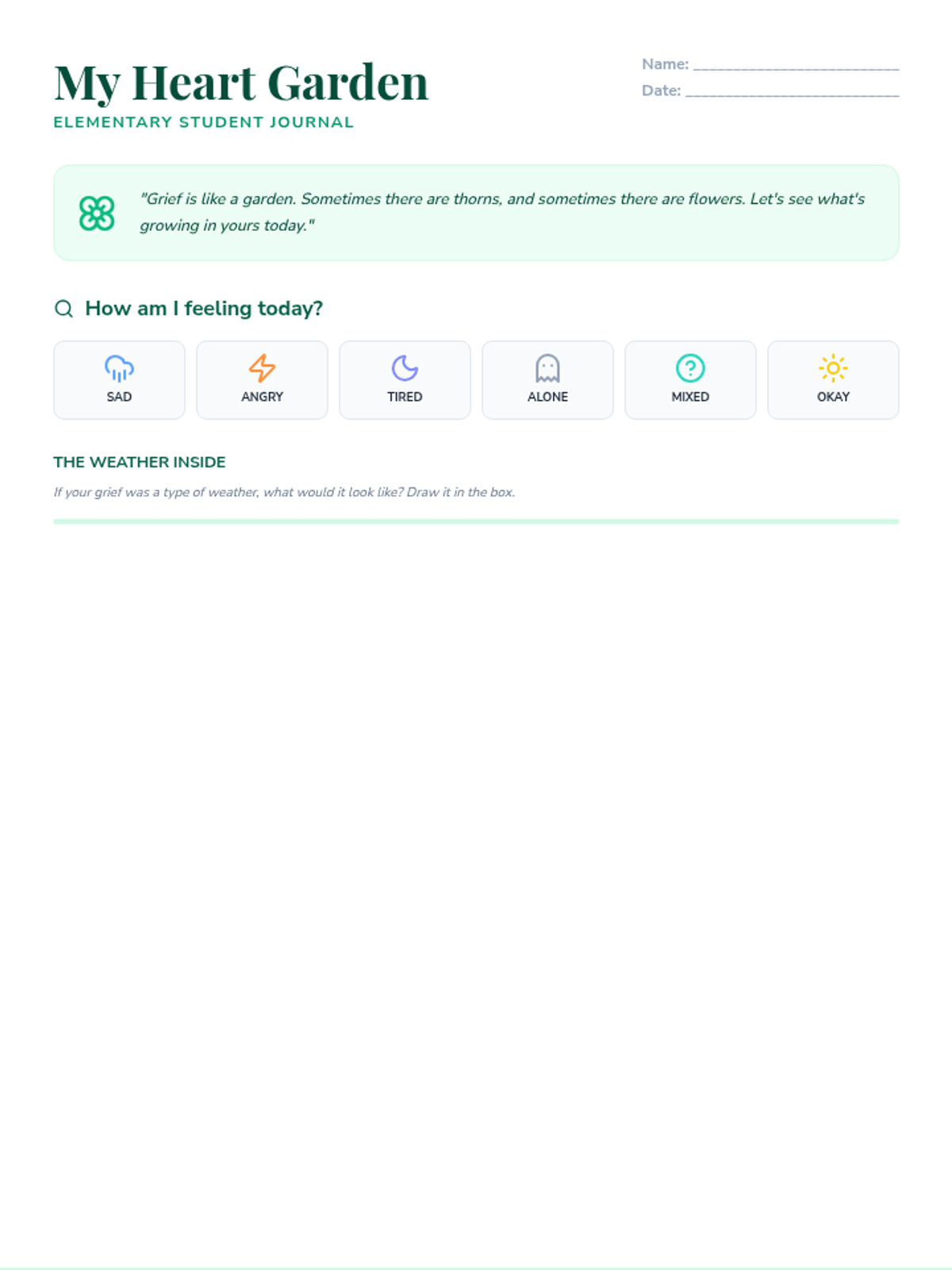
Foundational resources for elementary students focusing on emotional identification, regulation through play and art, and simple coping strategies within a 'Heart Garden' theme.
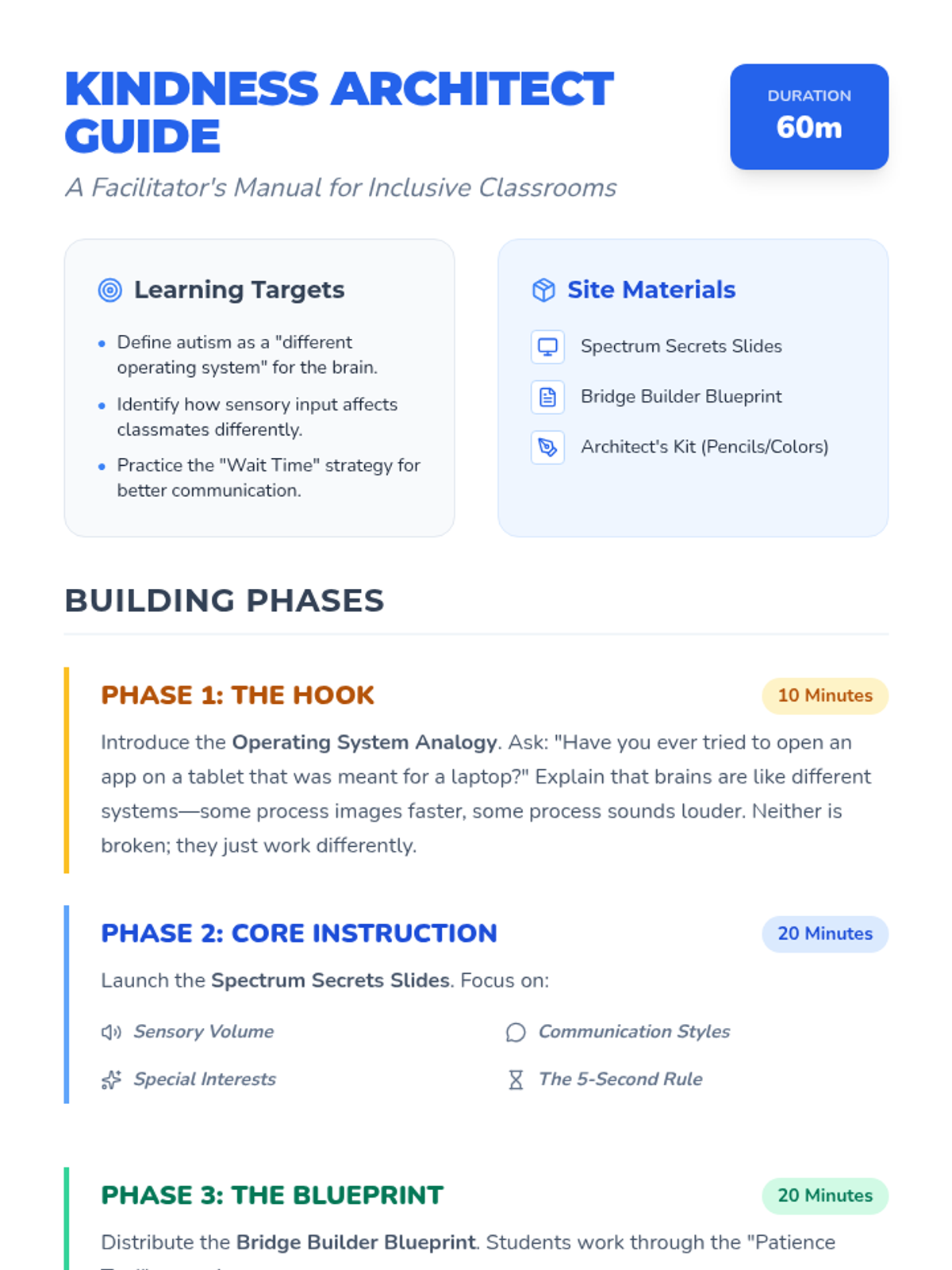
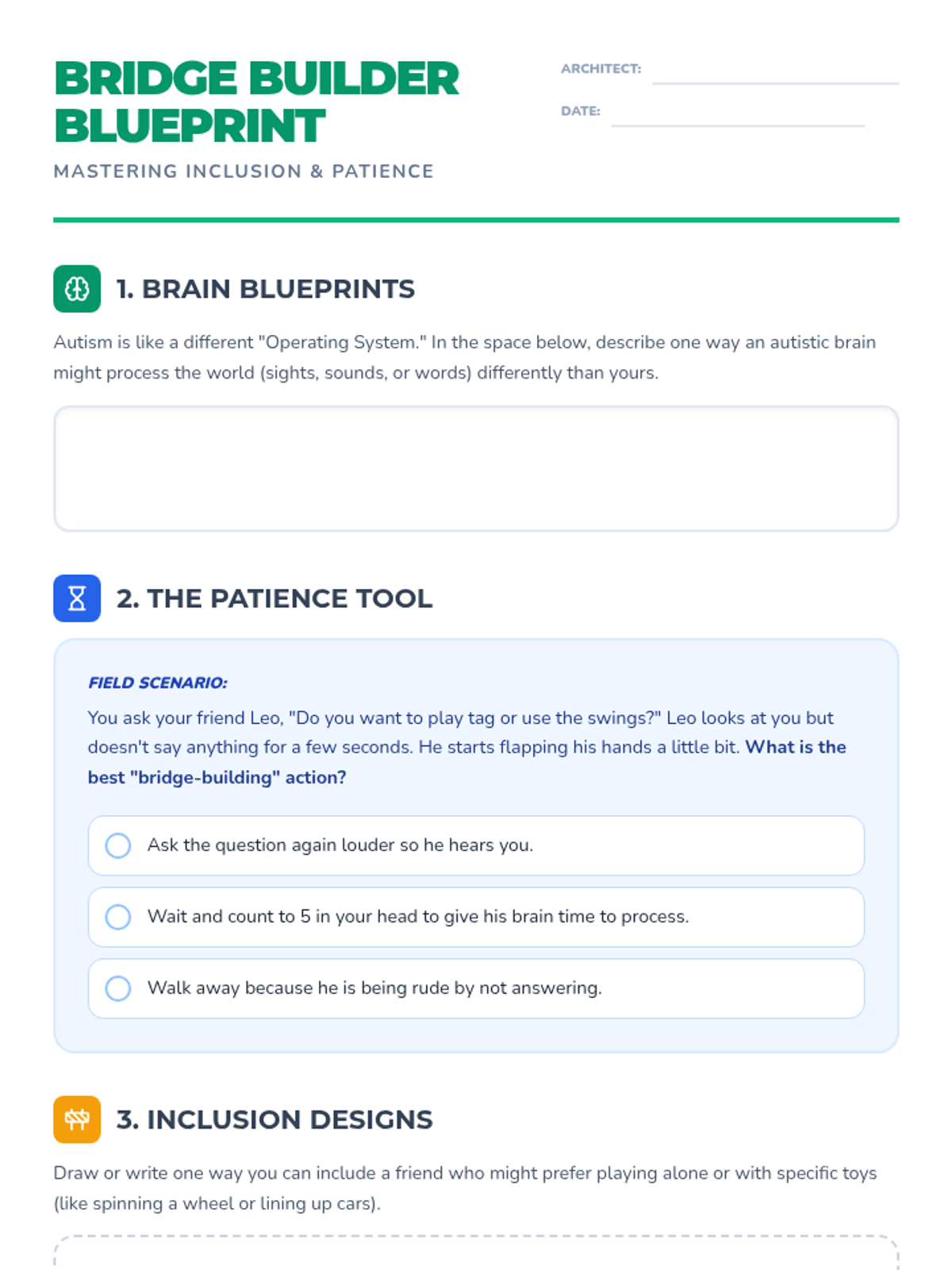
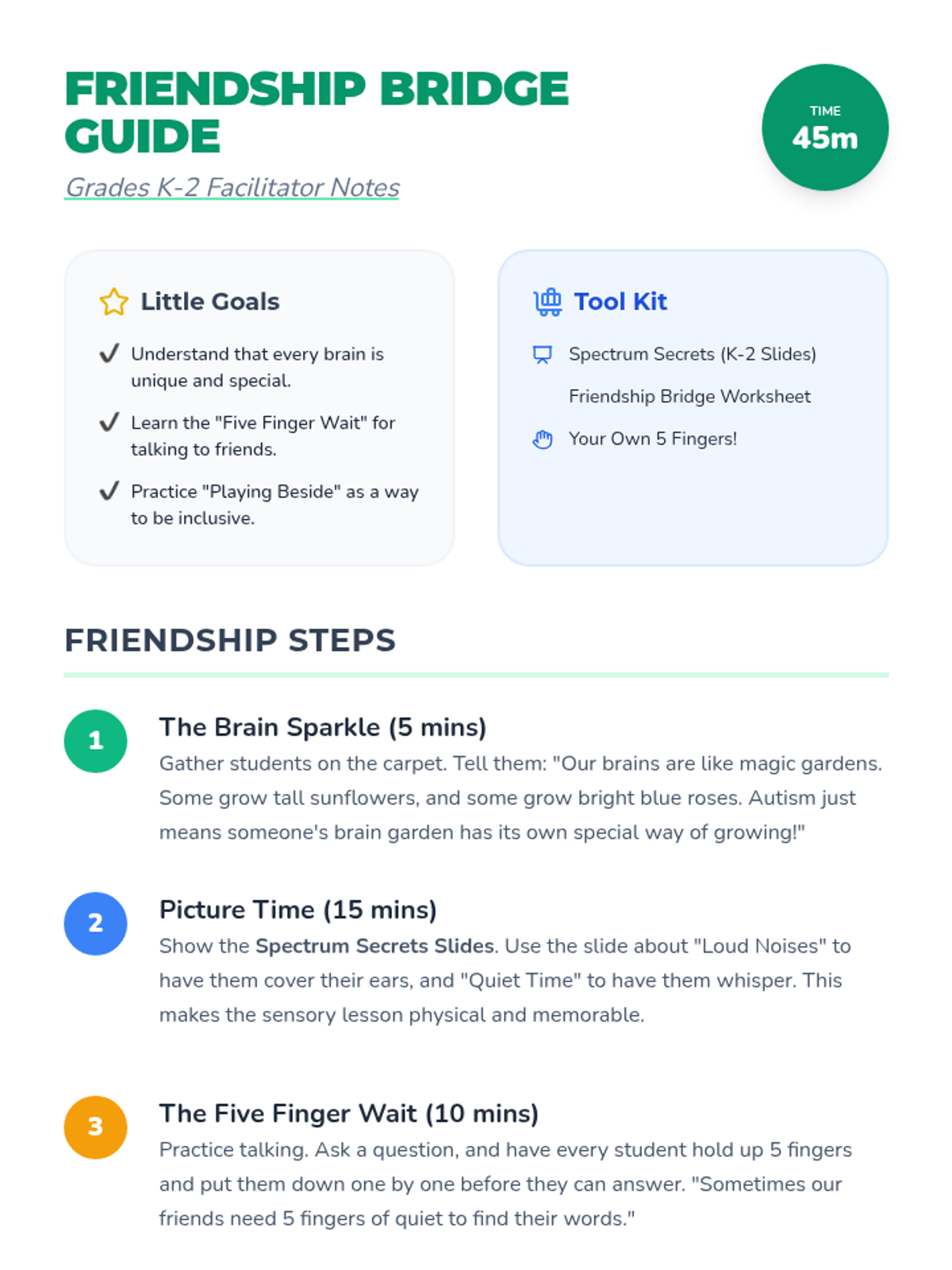
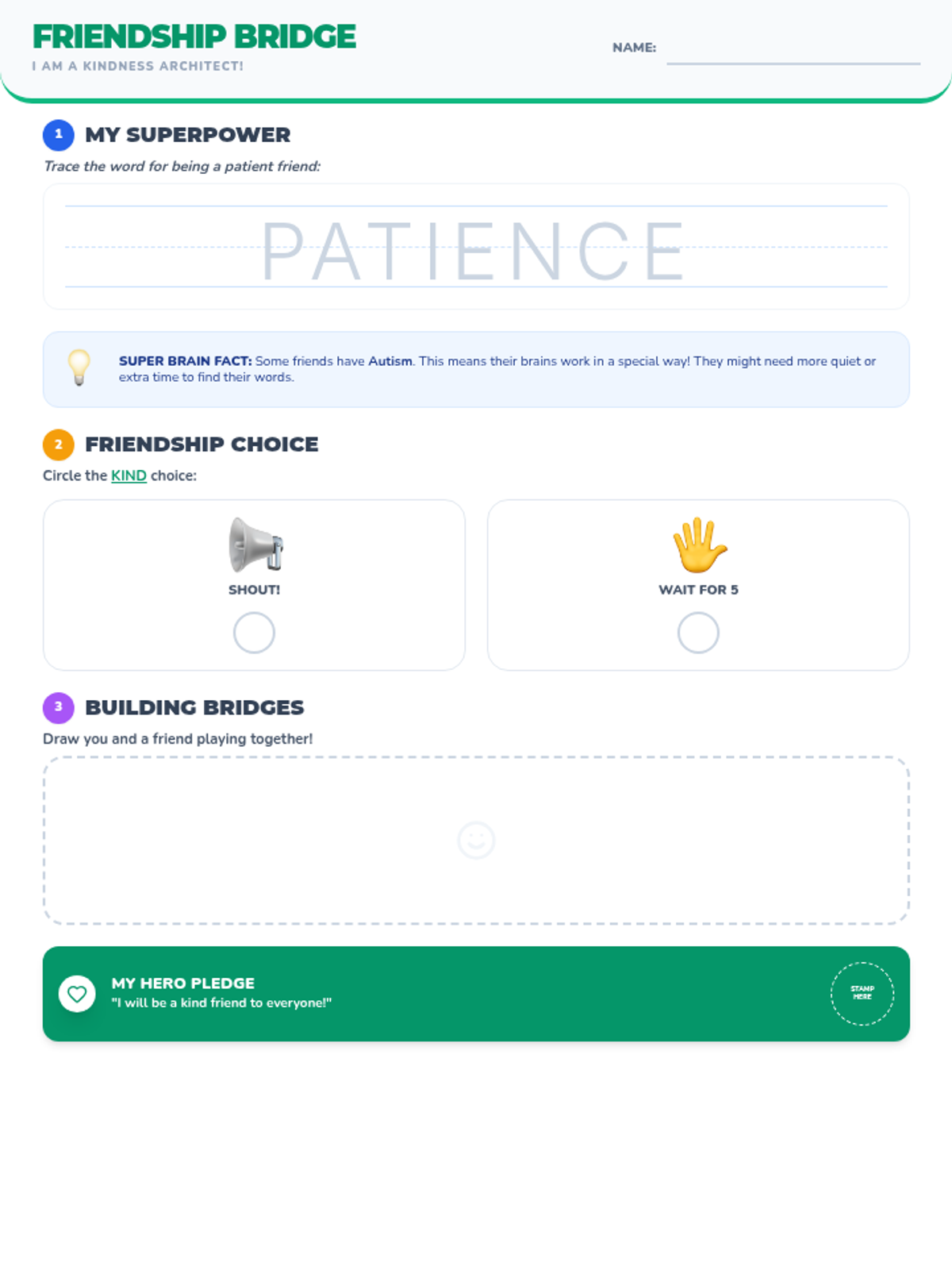
A comprehensive lesson designed to help students understand autism as a natural neurological difference while developing specific friendship skills like patience and inclusive play. Students will explore sensory experiences, communication styles, and practical ways to support peers on the spectrum.
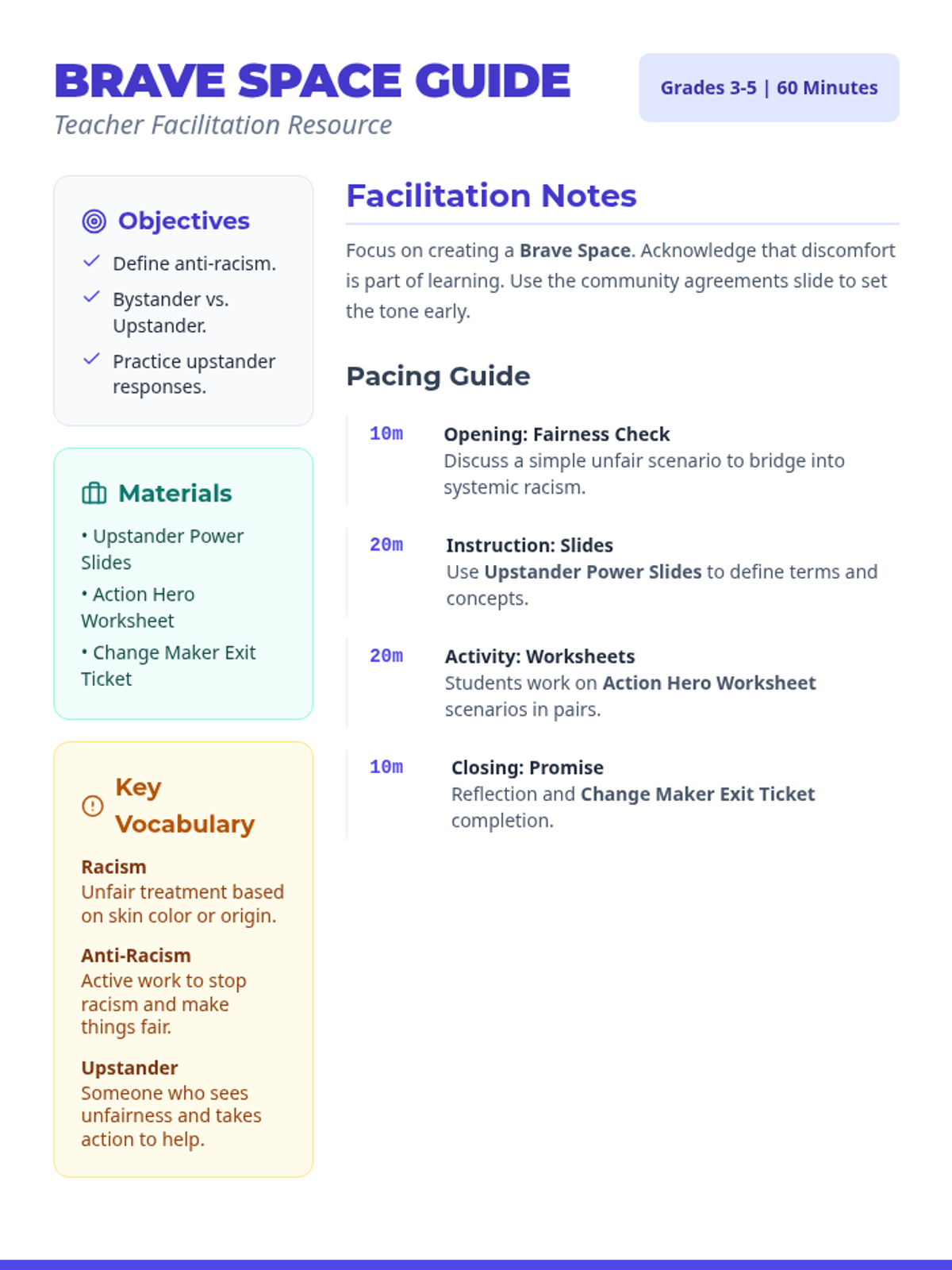
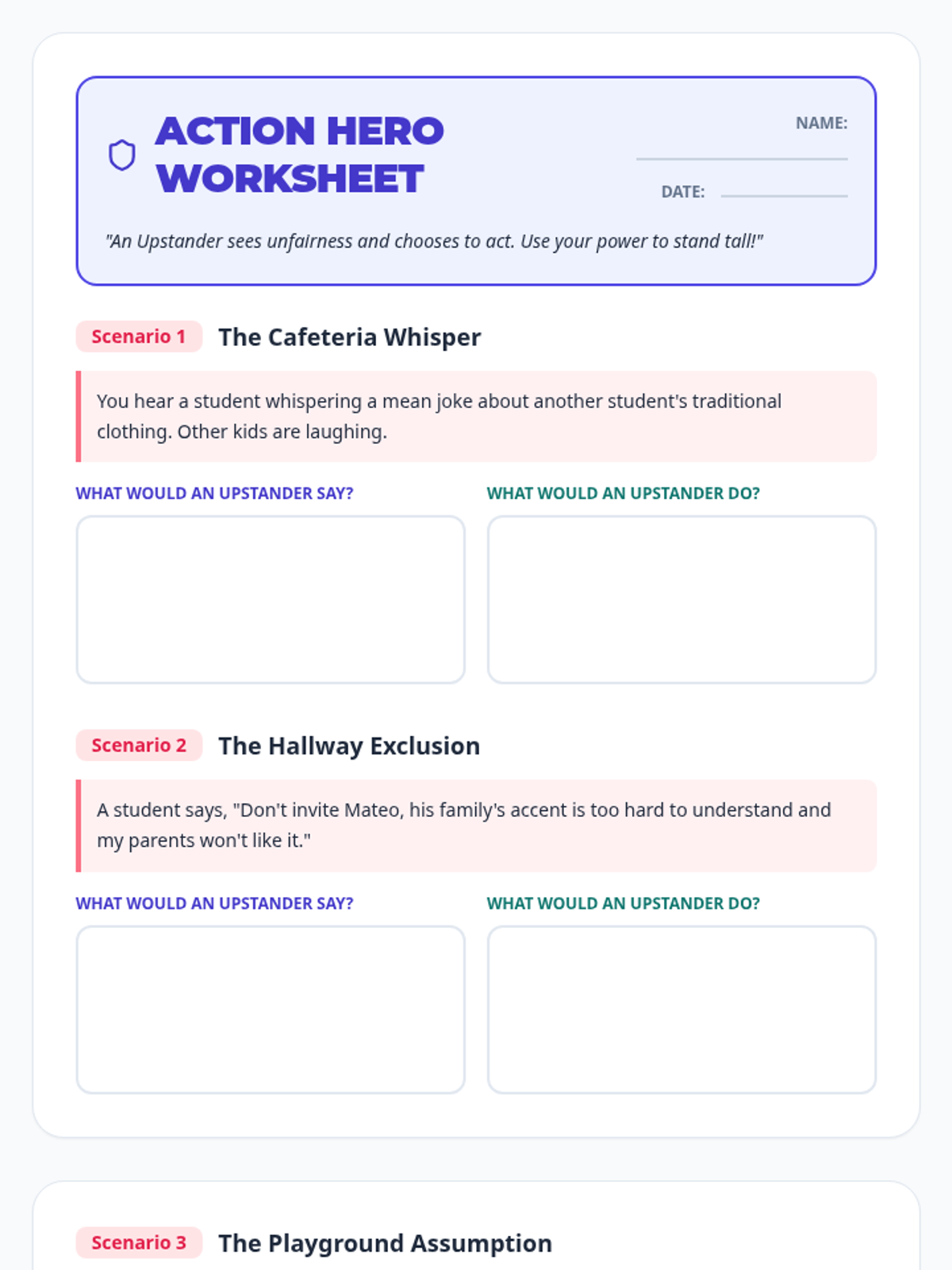
A comprehensive lesson for grades 3-5 that defines anti-racism and empowers students to become upstanders through scenario-based practice and community building.
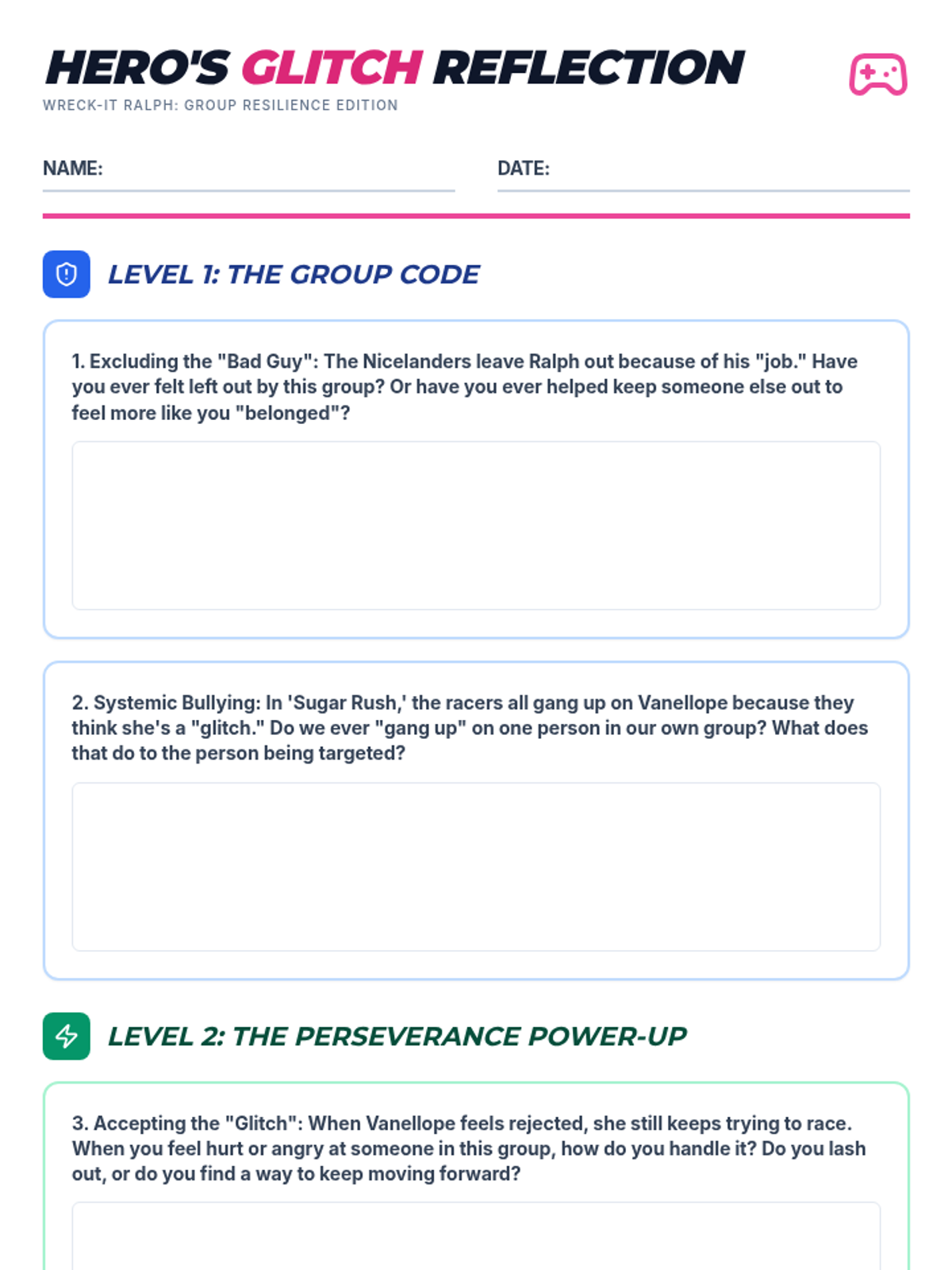
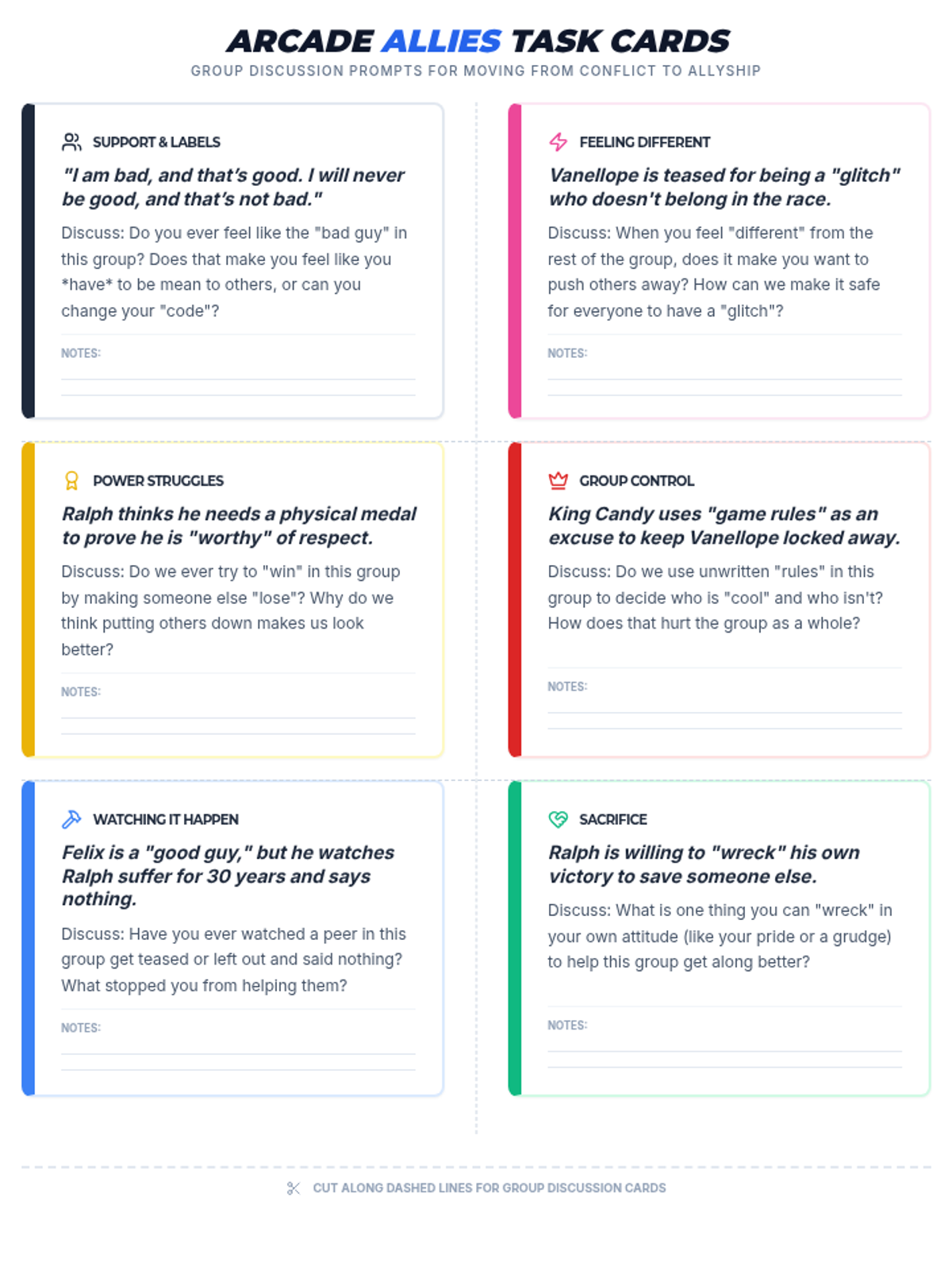
A movie-based training module using 'Wreck-It Ralph' to explore the mechanics of bullying, the importance of perseverance, and strategies for building empathy for those marginalized as 'outsiders'.
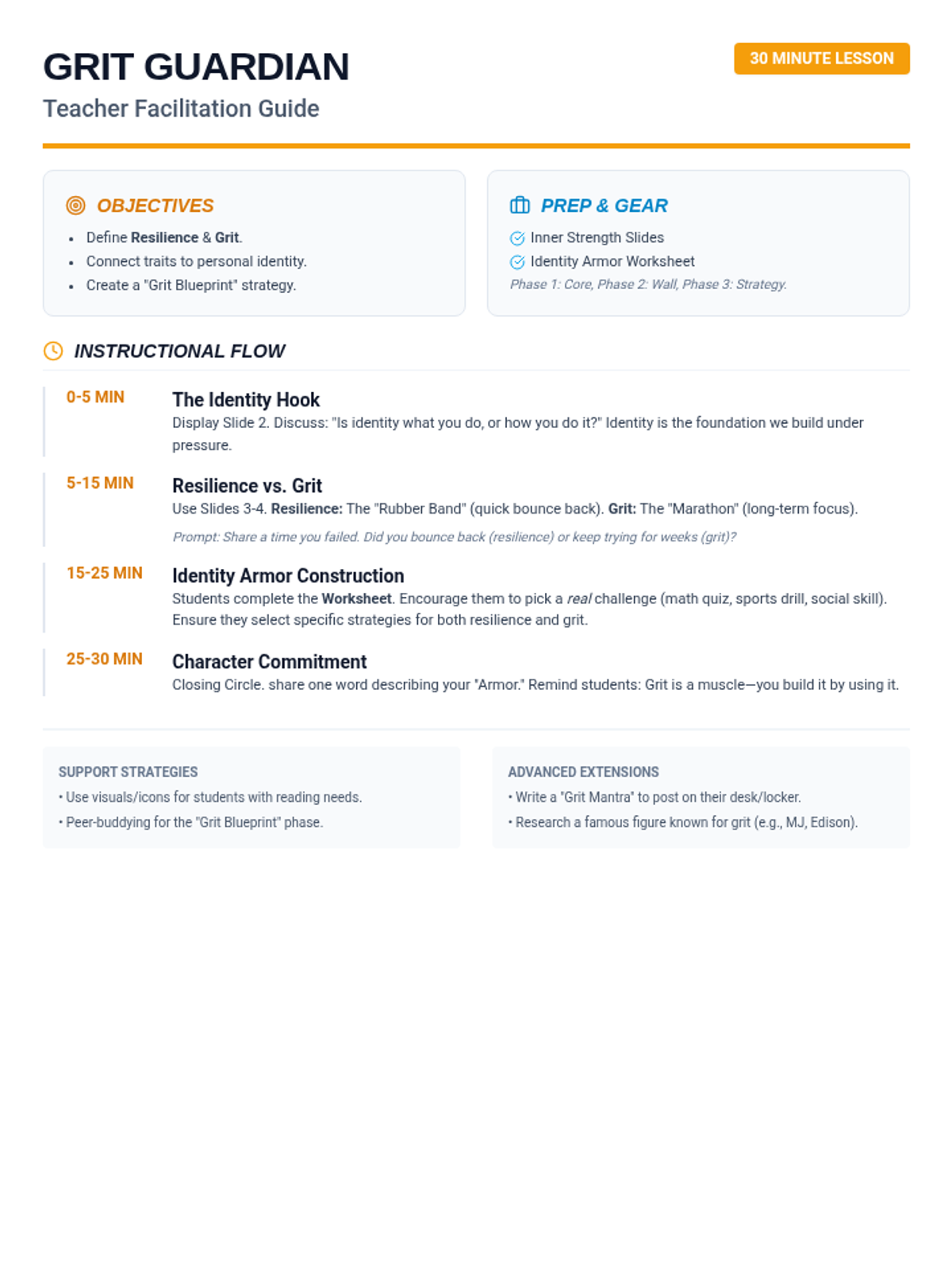
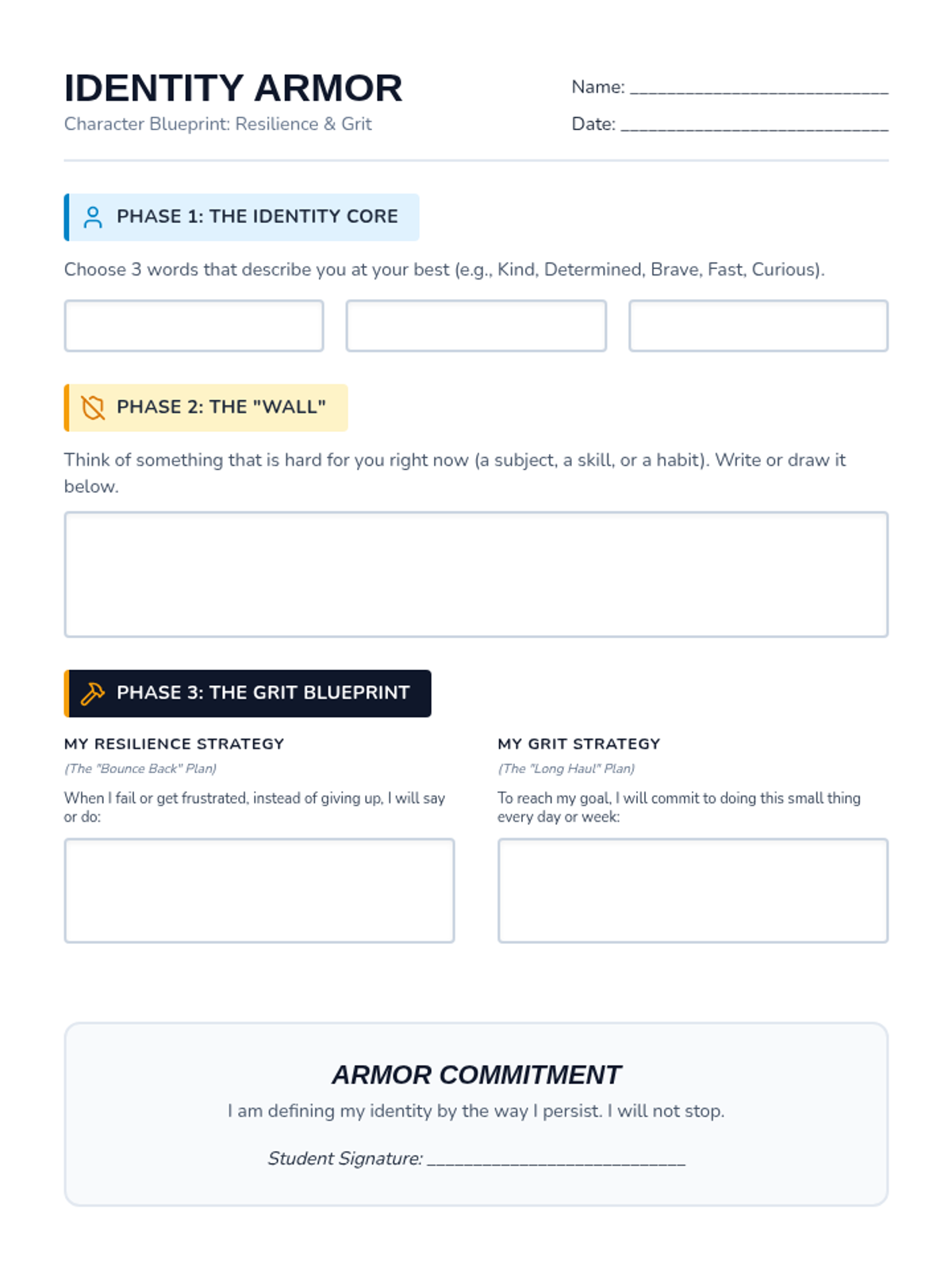
In this 30-minute lesson, students will define resilience and grit, explore how these traits form a part of their identity, and identify personal strategies for overcoming challenges.
Reviewing the complete coping toolbox, celebrating progress, and preparing for the end of the therapeutic journey.
Advanced social role-play and problem-solving for specific anxiety-inducing scenarios like school or playdates.
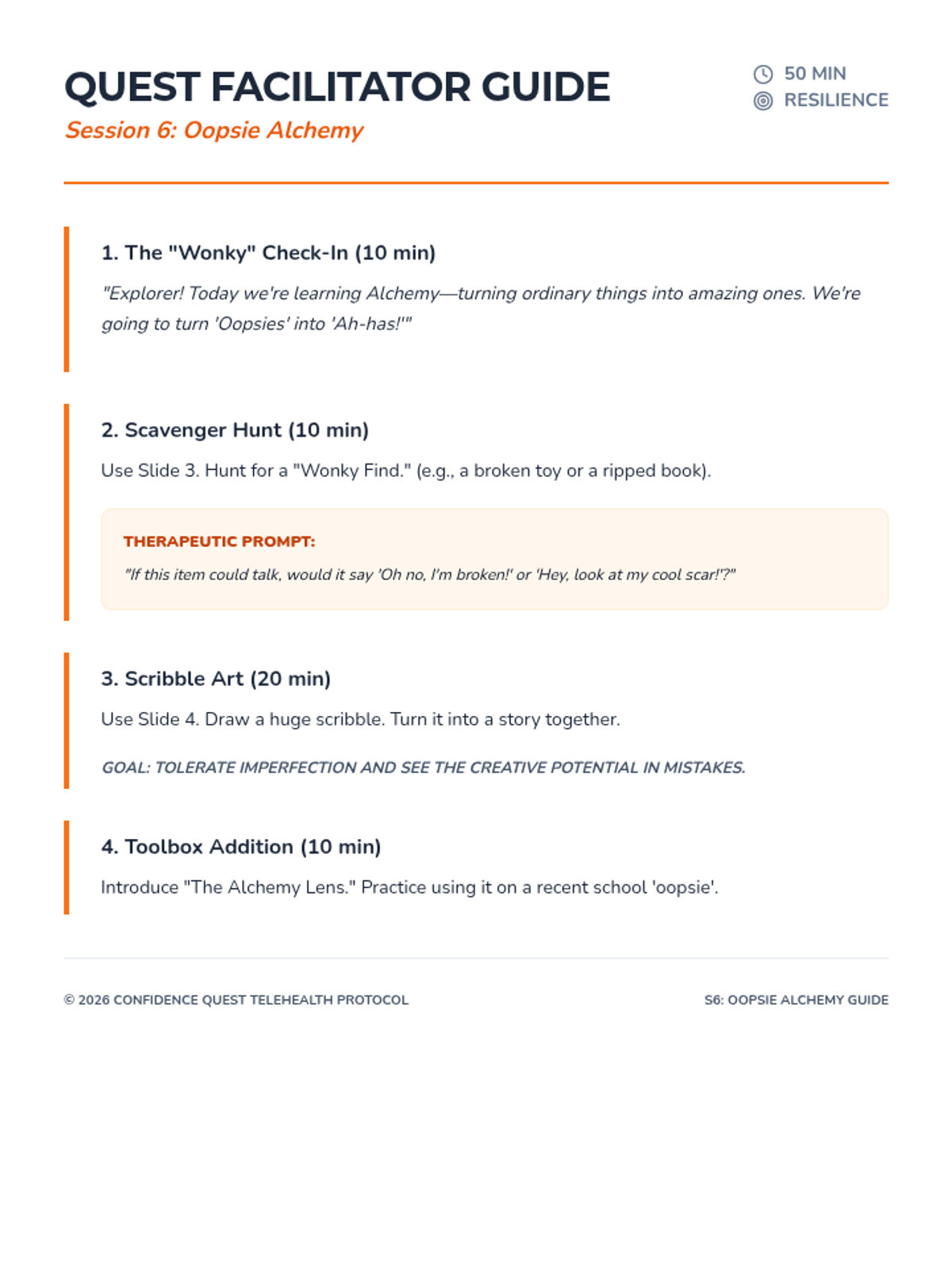
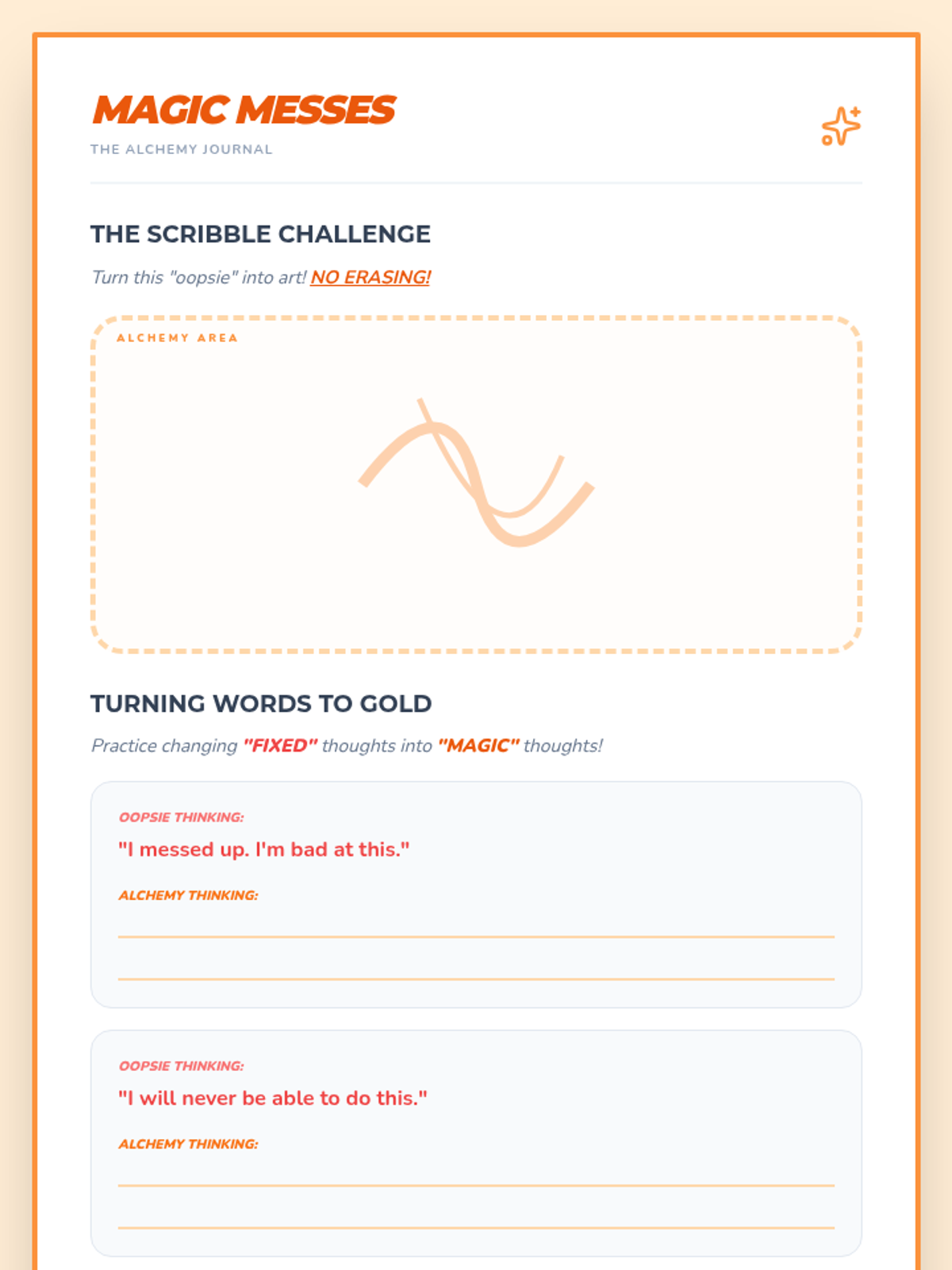
Developing a growth mindset by reframing mistakes as 'Magic Messes' and exploring resilience through play.
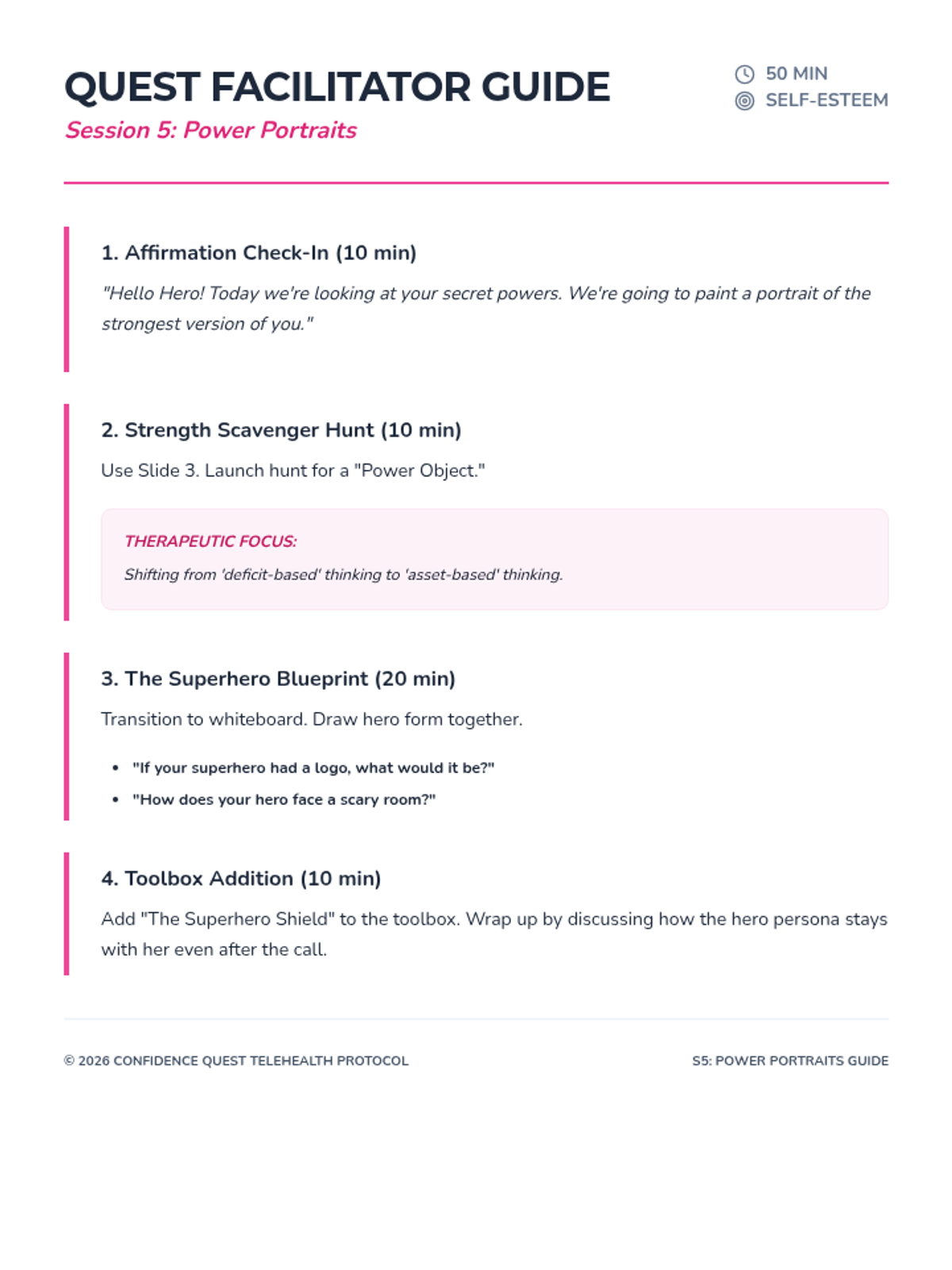
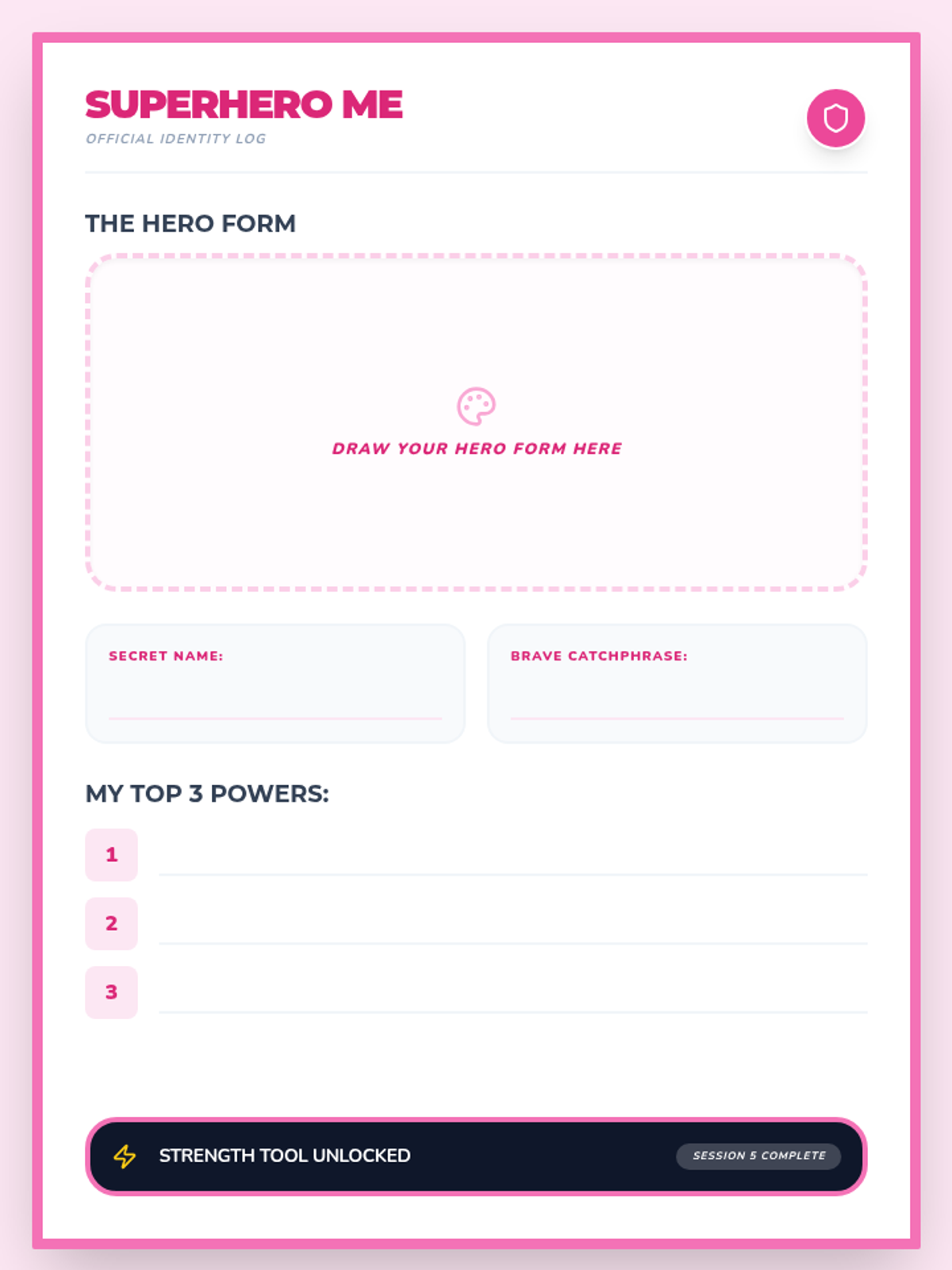
Focusing on internal strengths and self-confidence through the creation of a 'Superhero Me' persona and affirmative drawing.
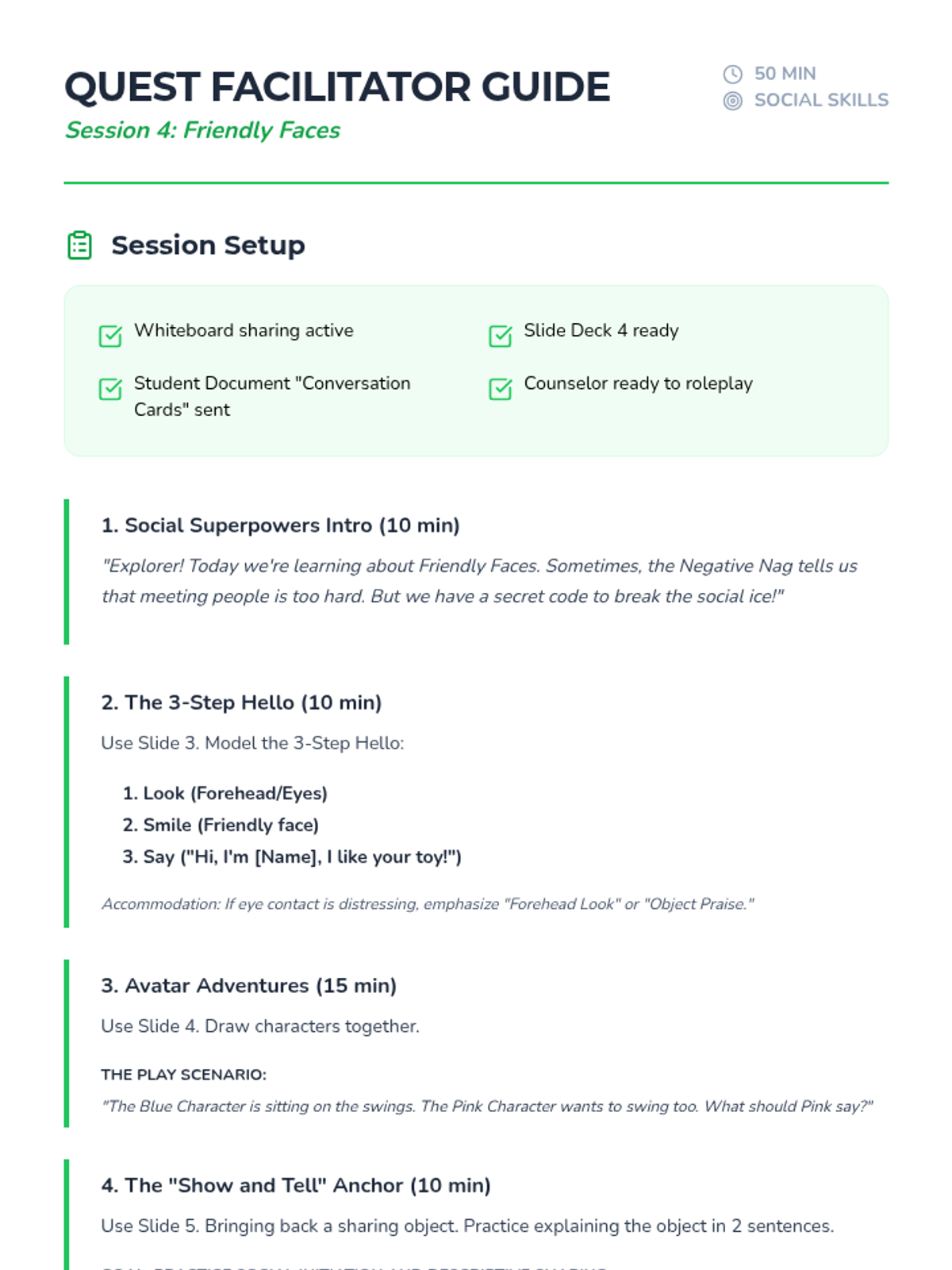
Using storytelling to navigate social anxiety and role-playing new introductions with digital whiteboard 'puppets'.
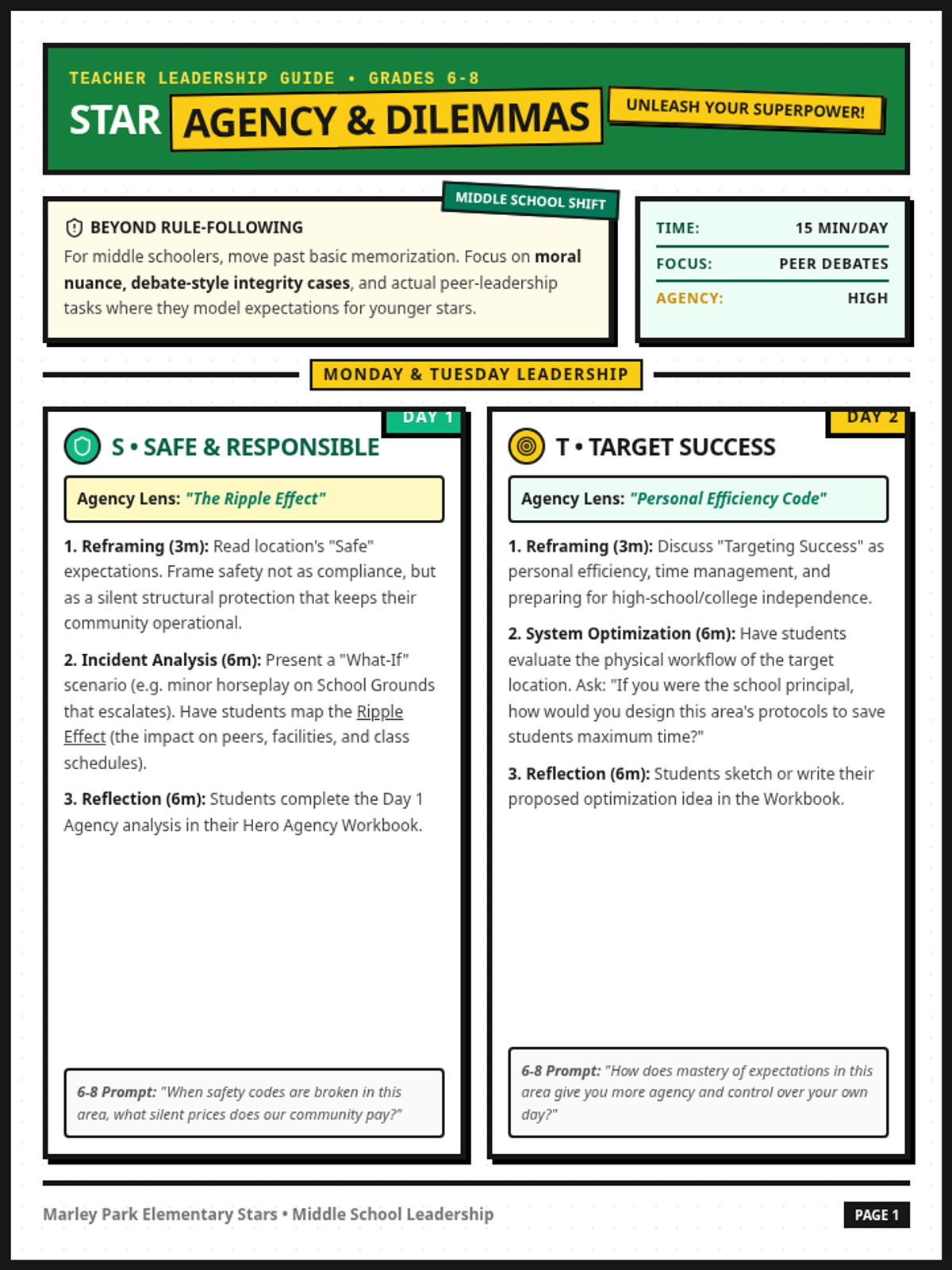
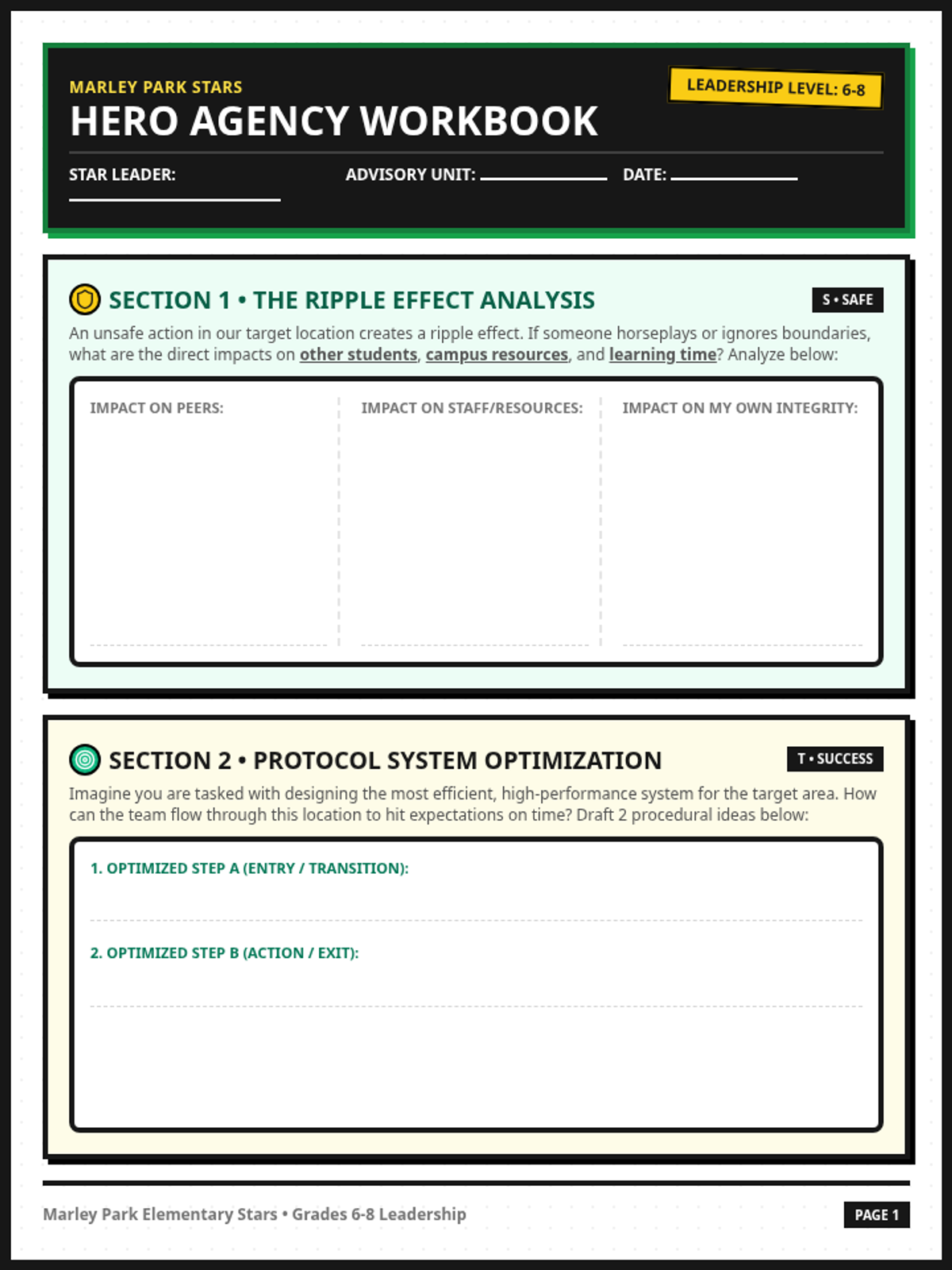
A universal 5-day lesson set for middle school (grades 6-8) that leverages peer leadership, debate-style moral dilemmas (exploring the nuance of integrity), and self-guided agency projects to cultivate respect and responsibility across campus.
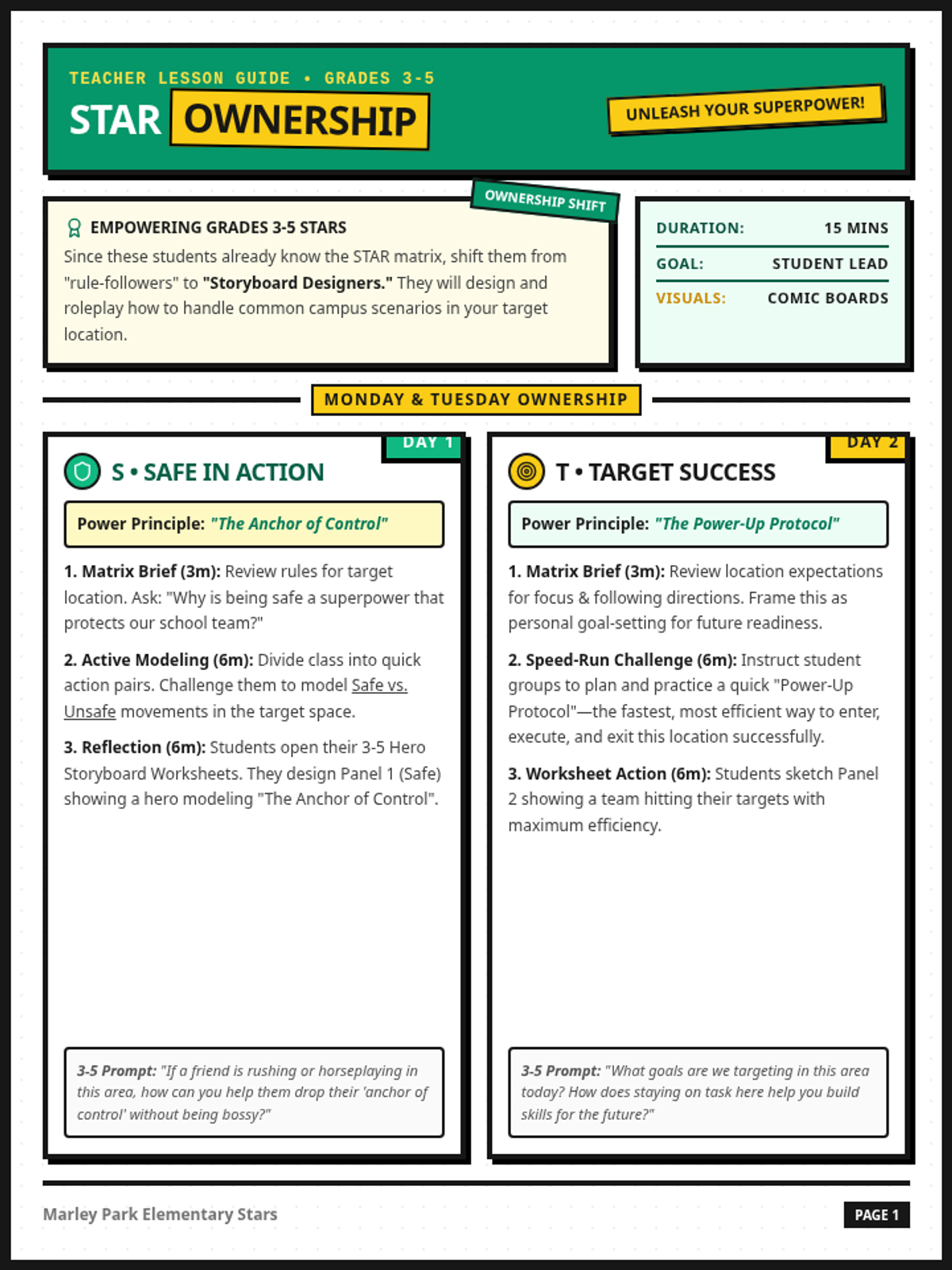
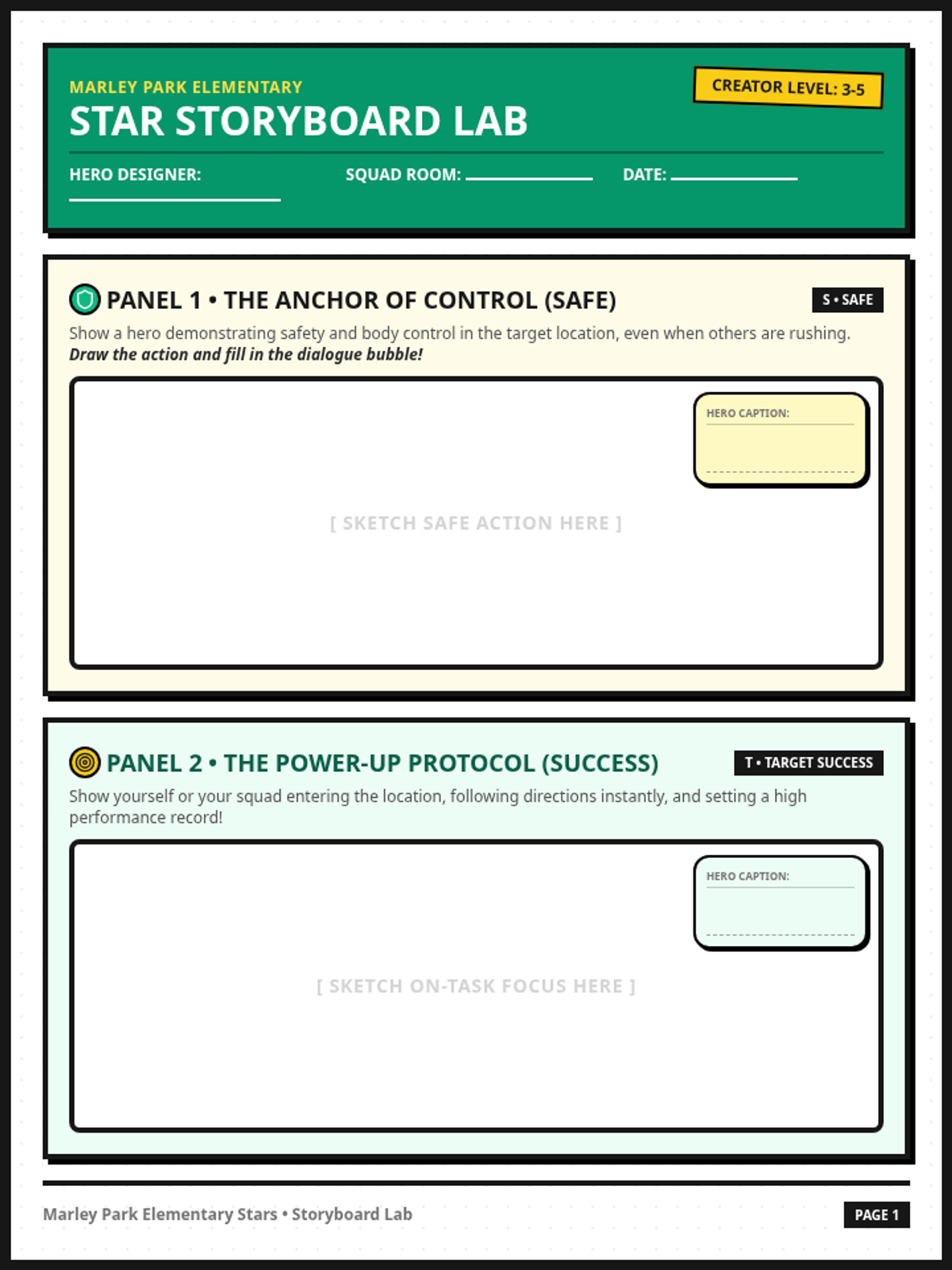
A universal 5-day lesson set for grades 3-5 that shifts focus toward student ownership, comic storyboard creation, and scenario-based problem solving to understand STAR expectations in any school setting.
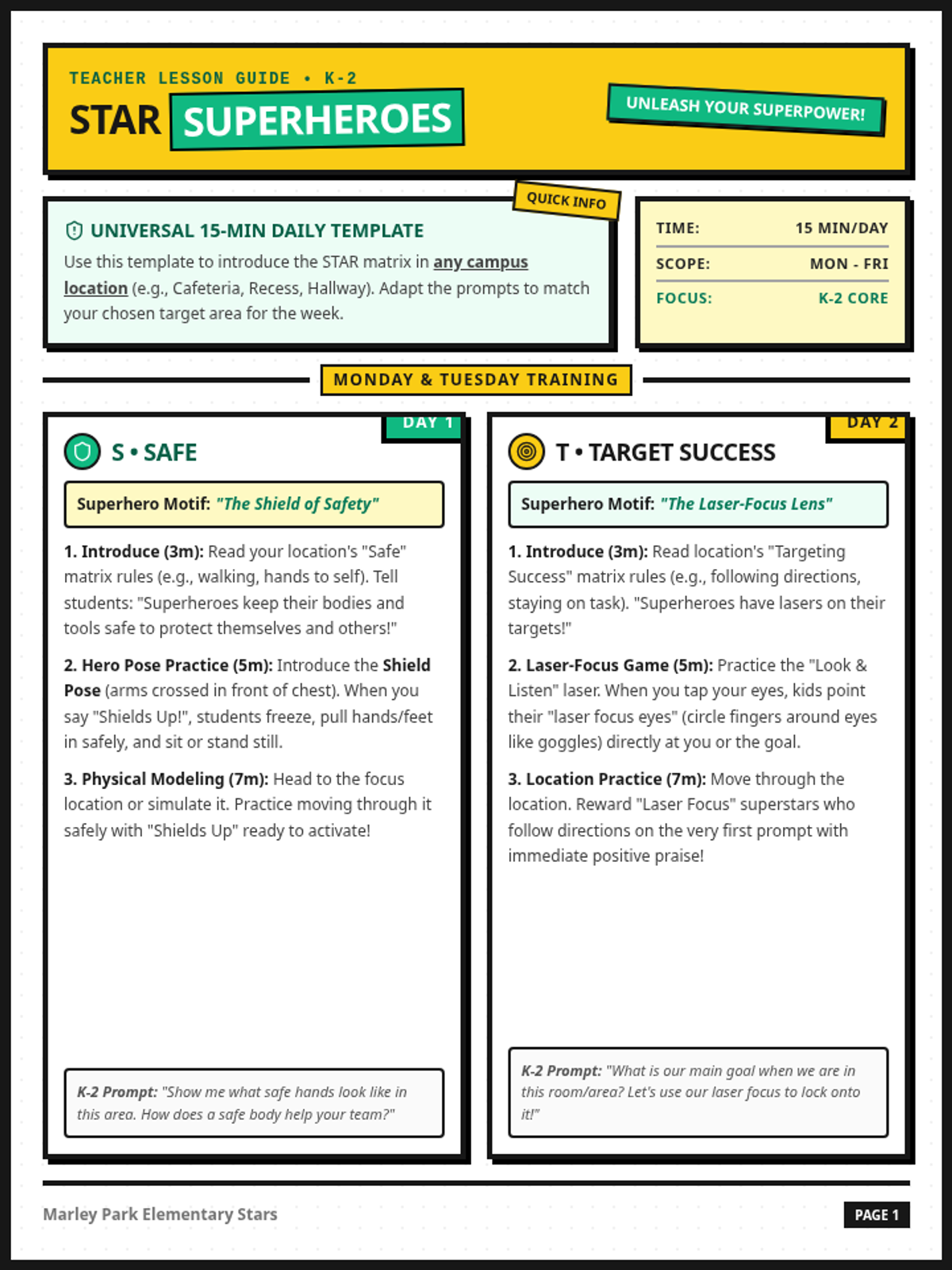
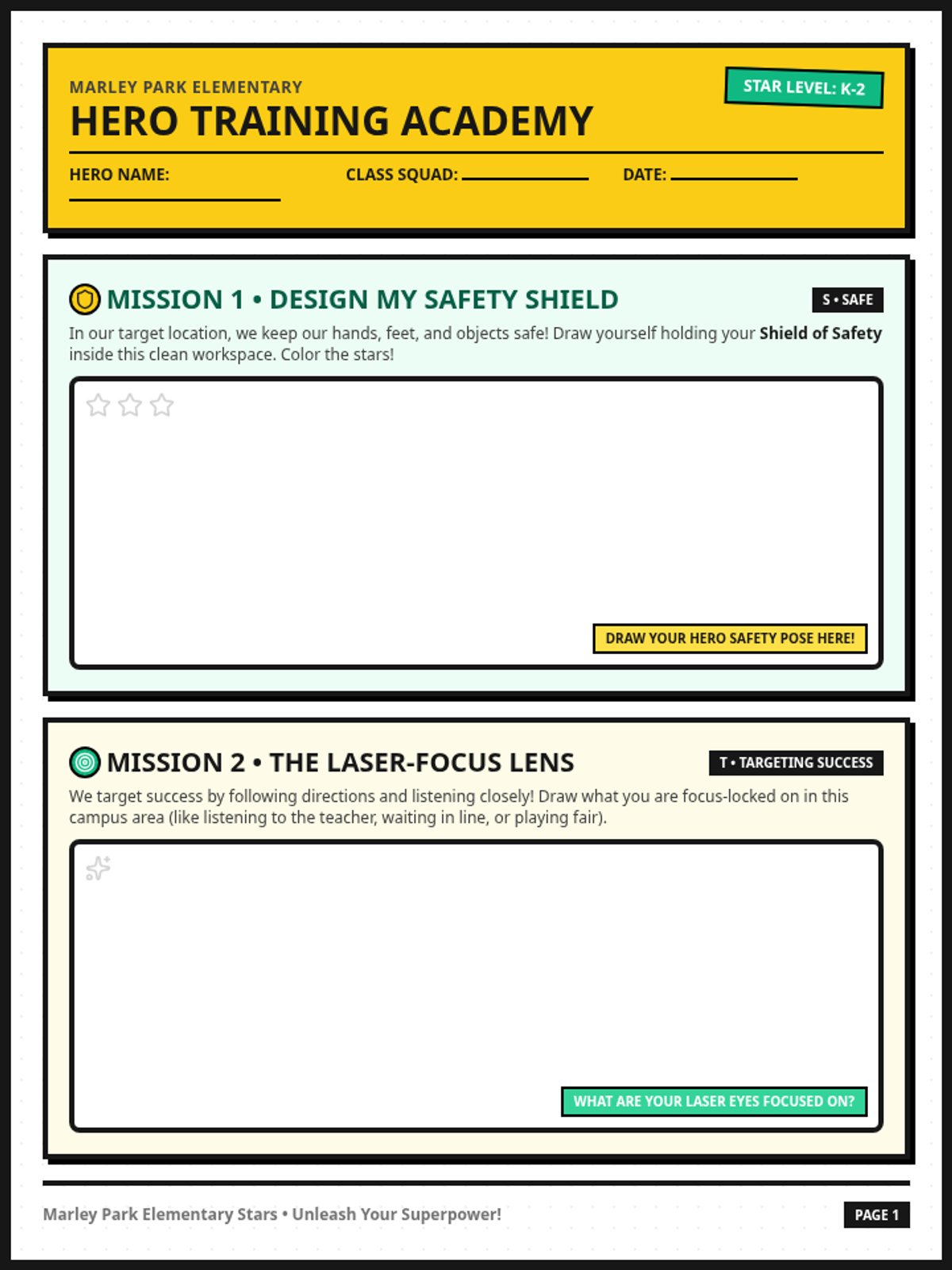
A universal 5-day lesson set for K-2 students focused on introducing STAR expectations (Safe, Targeting Success, Acting with Integrity, Respectful & Responsible) in any campus location through physical modeling, simple superhero analogies, and an interactive superhero-themed student activity guide.
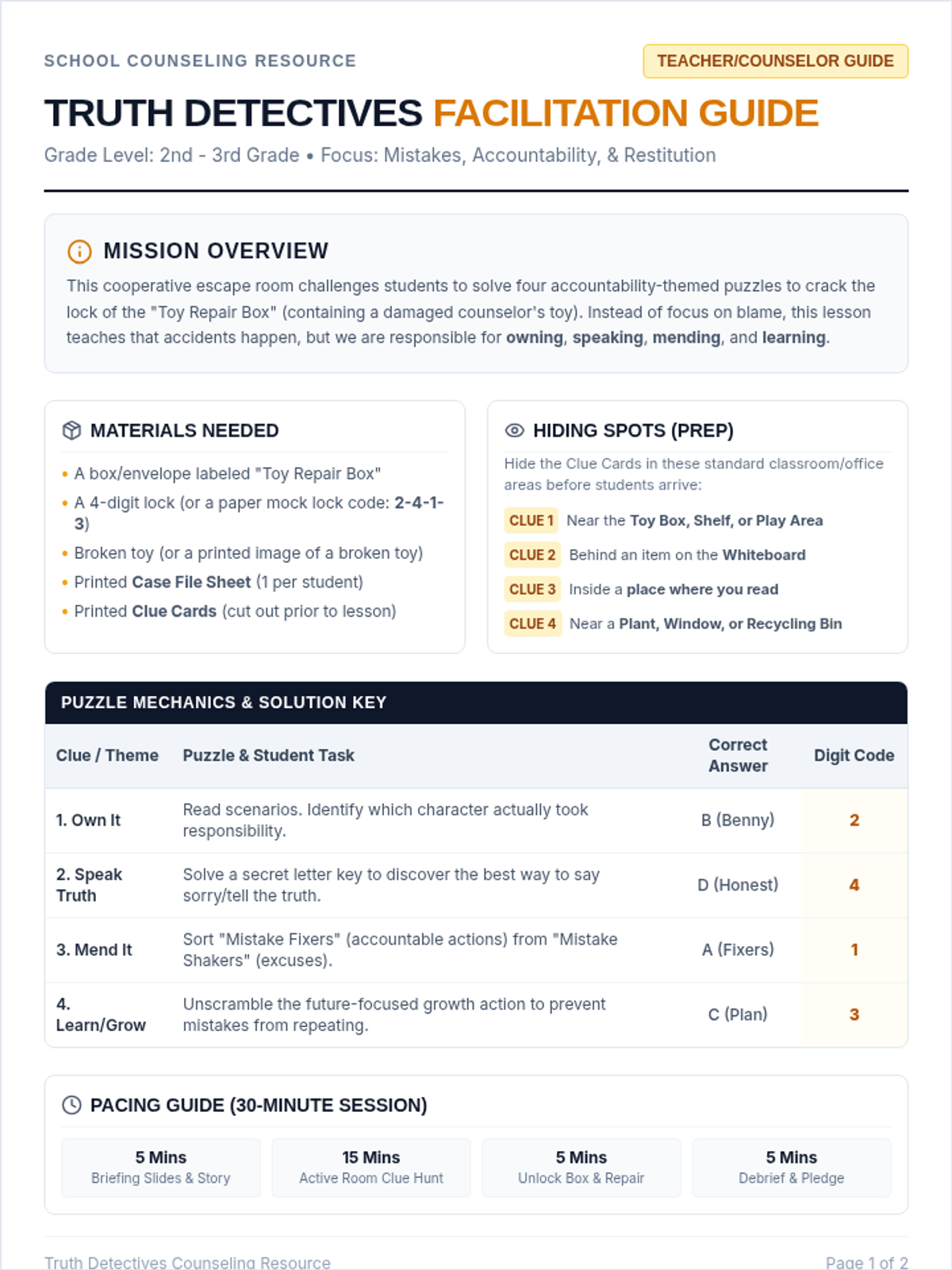
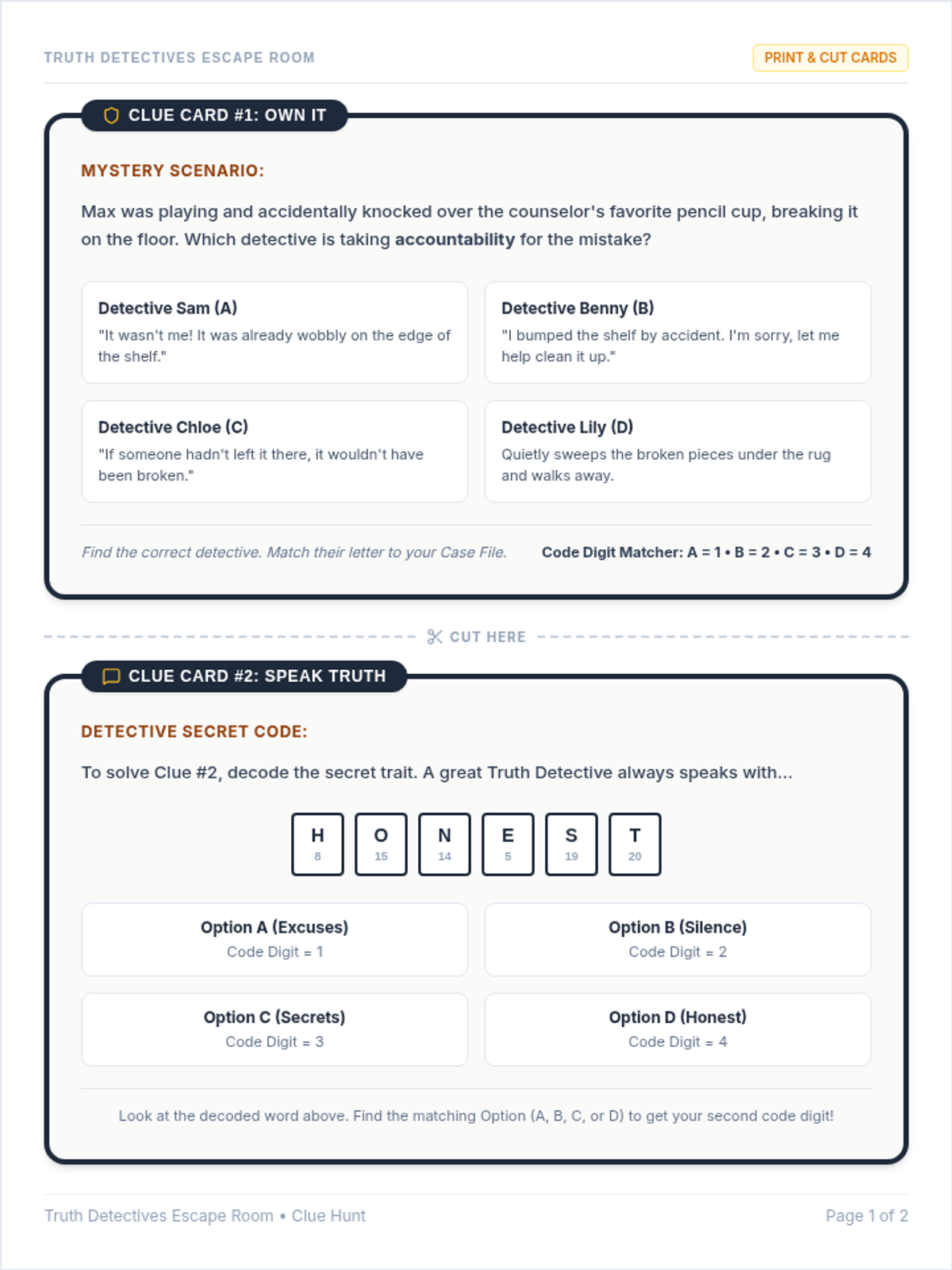
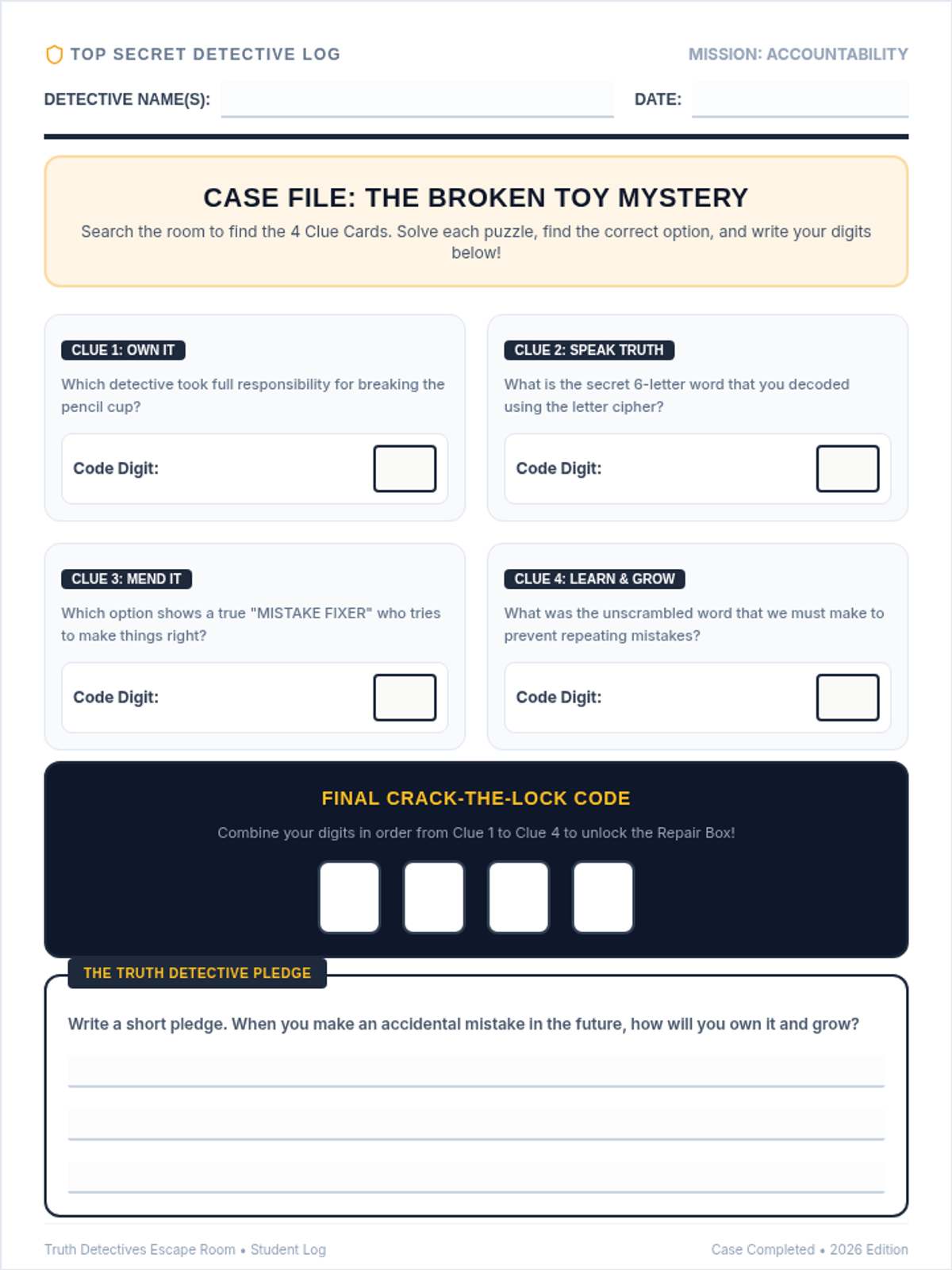
A collaborative counseling escape room for 2nd and 3rd grade students to learn about accountability. Students solve puzzles related to 'The Broken Toy Mystery' to learn how to admit mistakes, tell the truth, and repair damage.
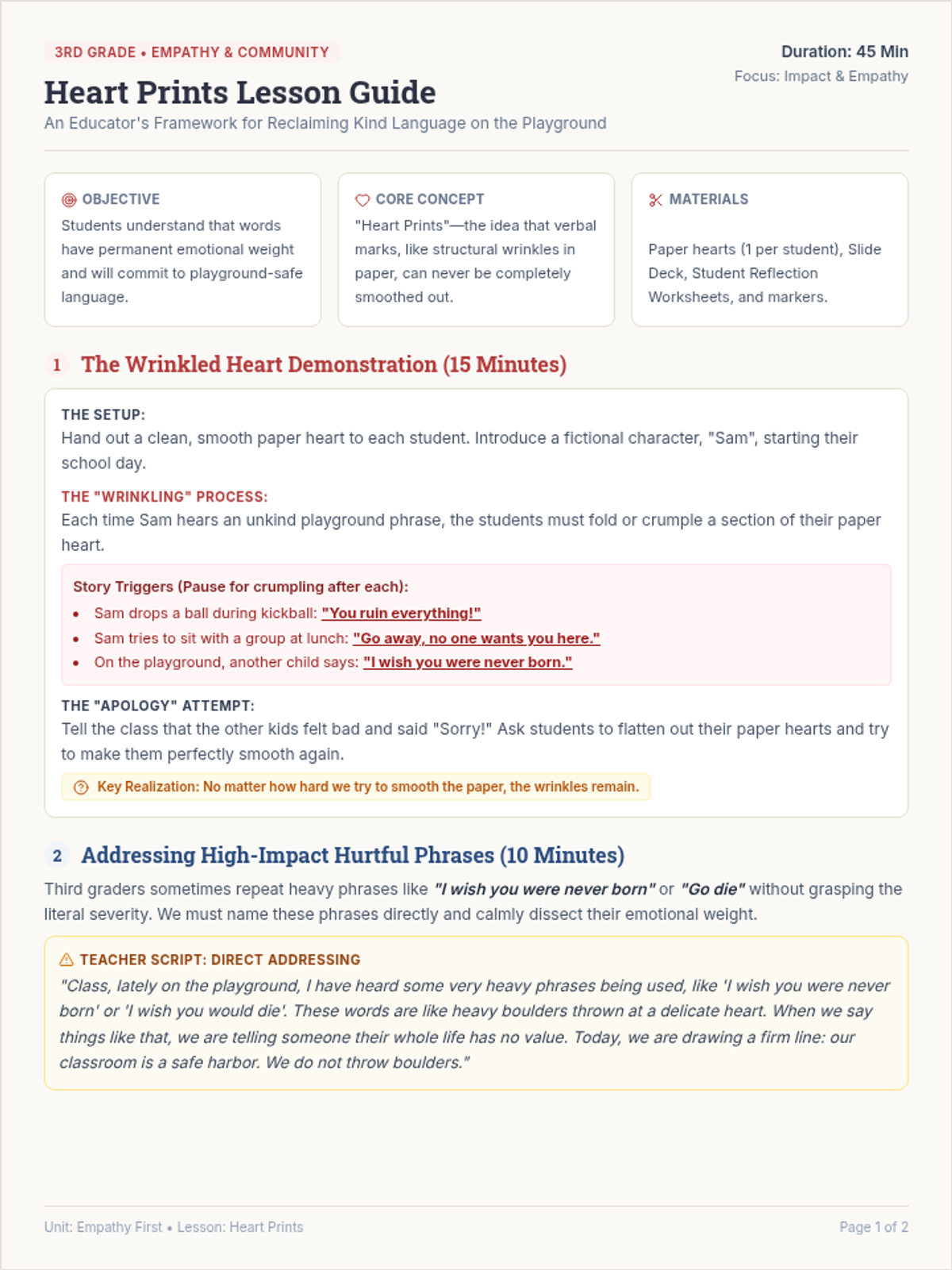
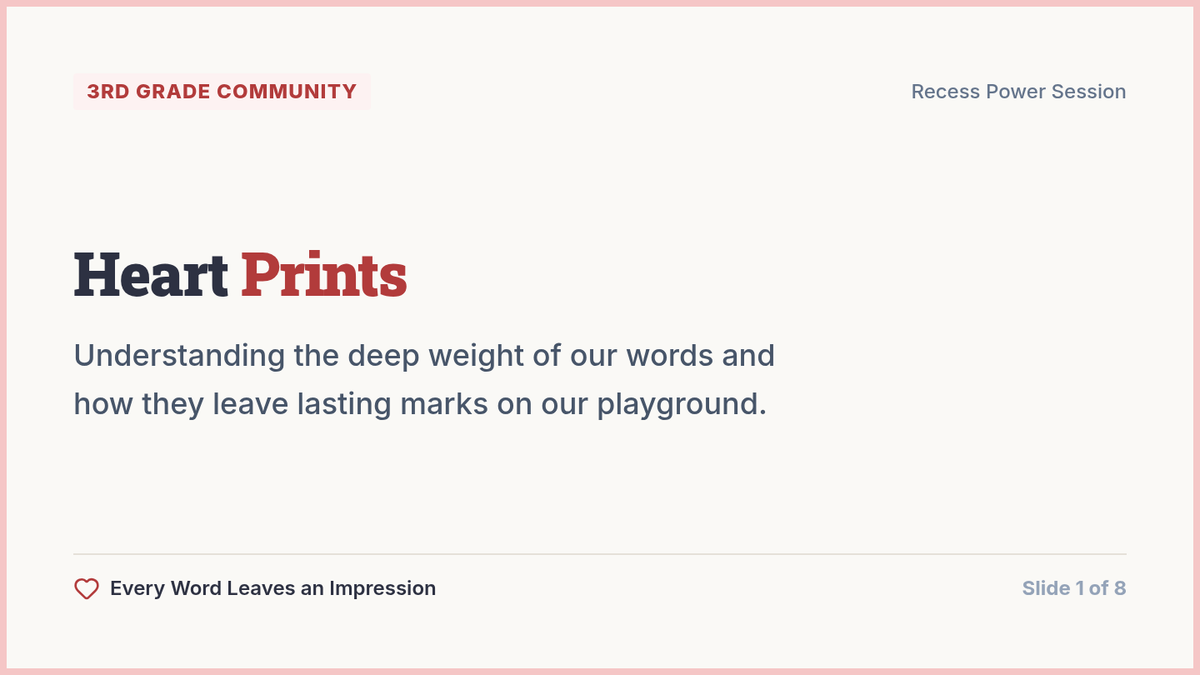
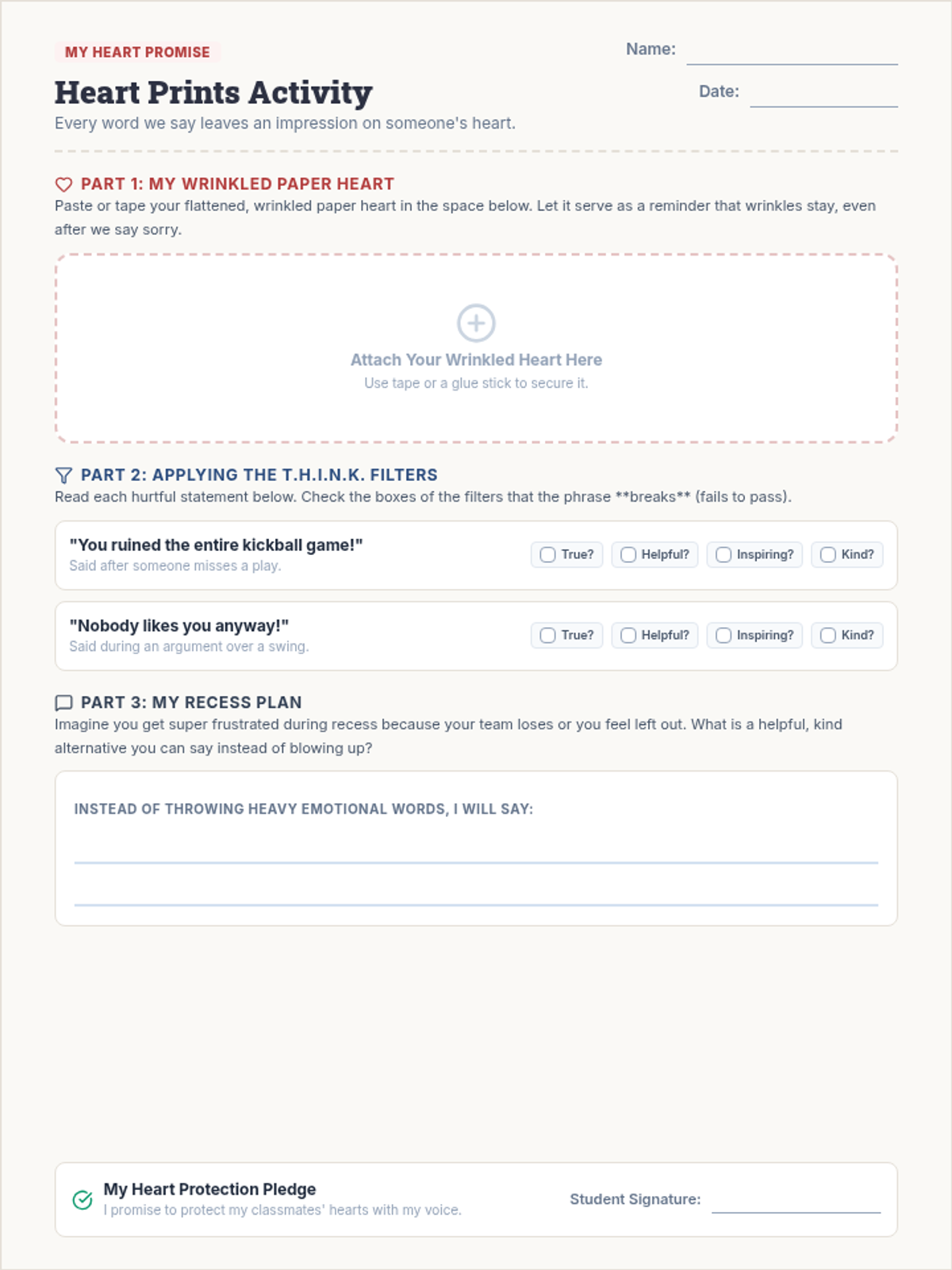
A powerful 3rd-grade lesson designed to help students understand the permanent impact of their words, specifically addressing hurtful playground behavior and fostering empathy through discussion and hands-on reflection.
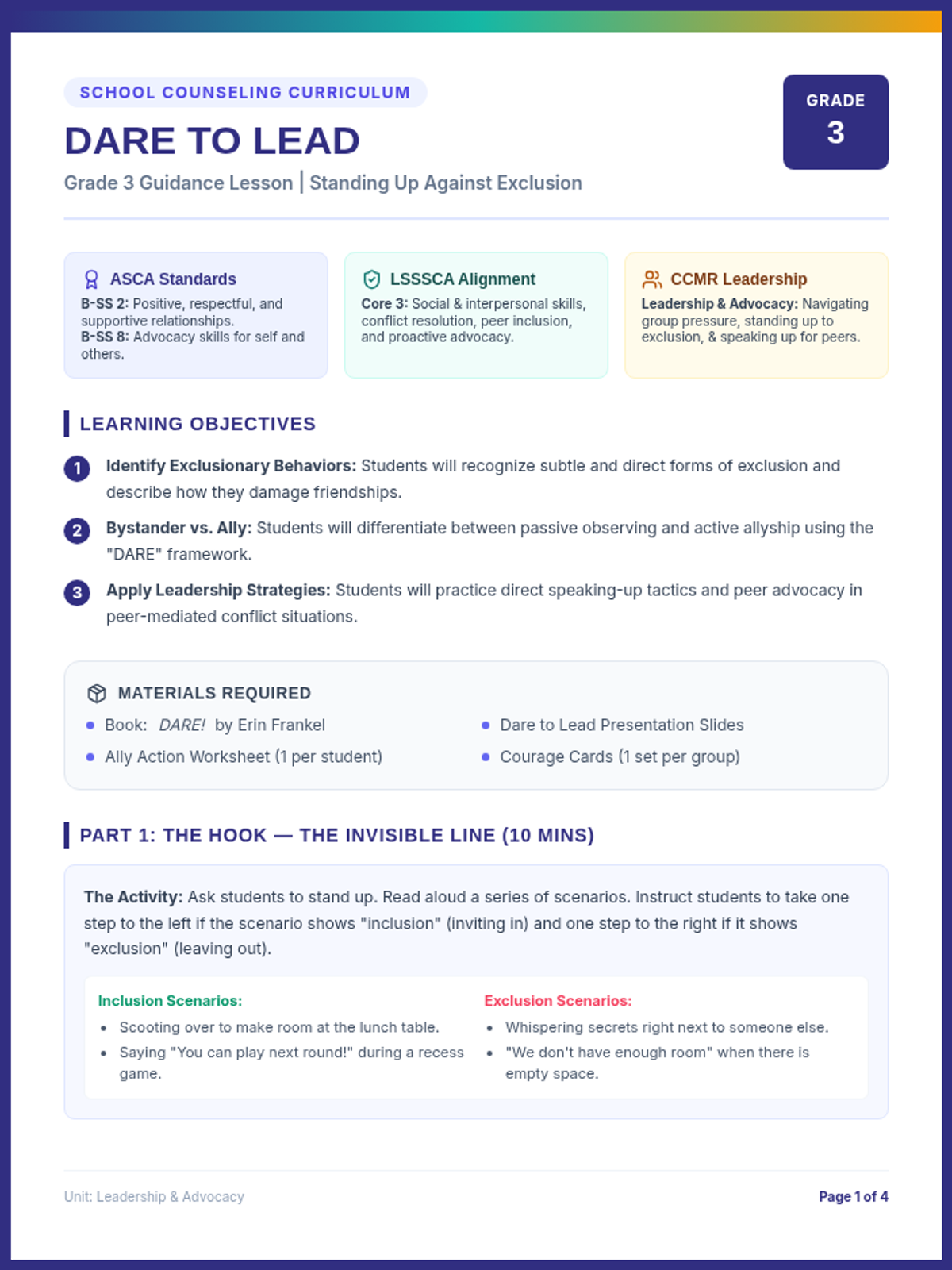
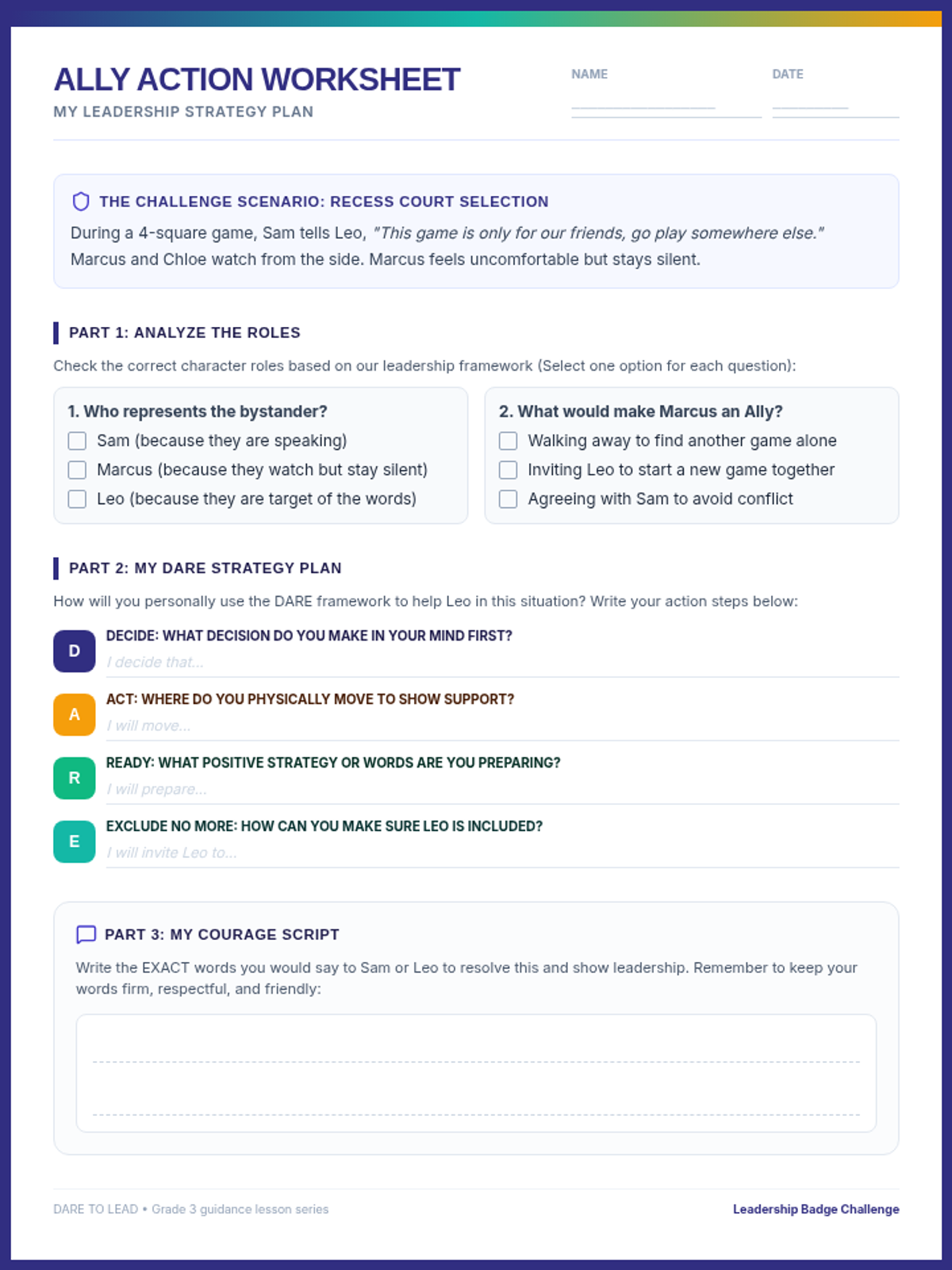
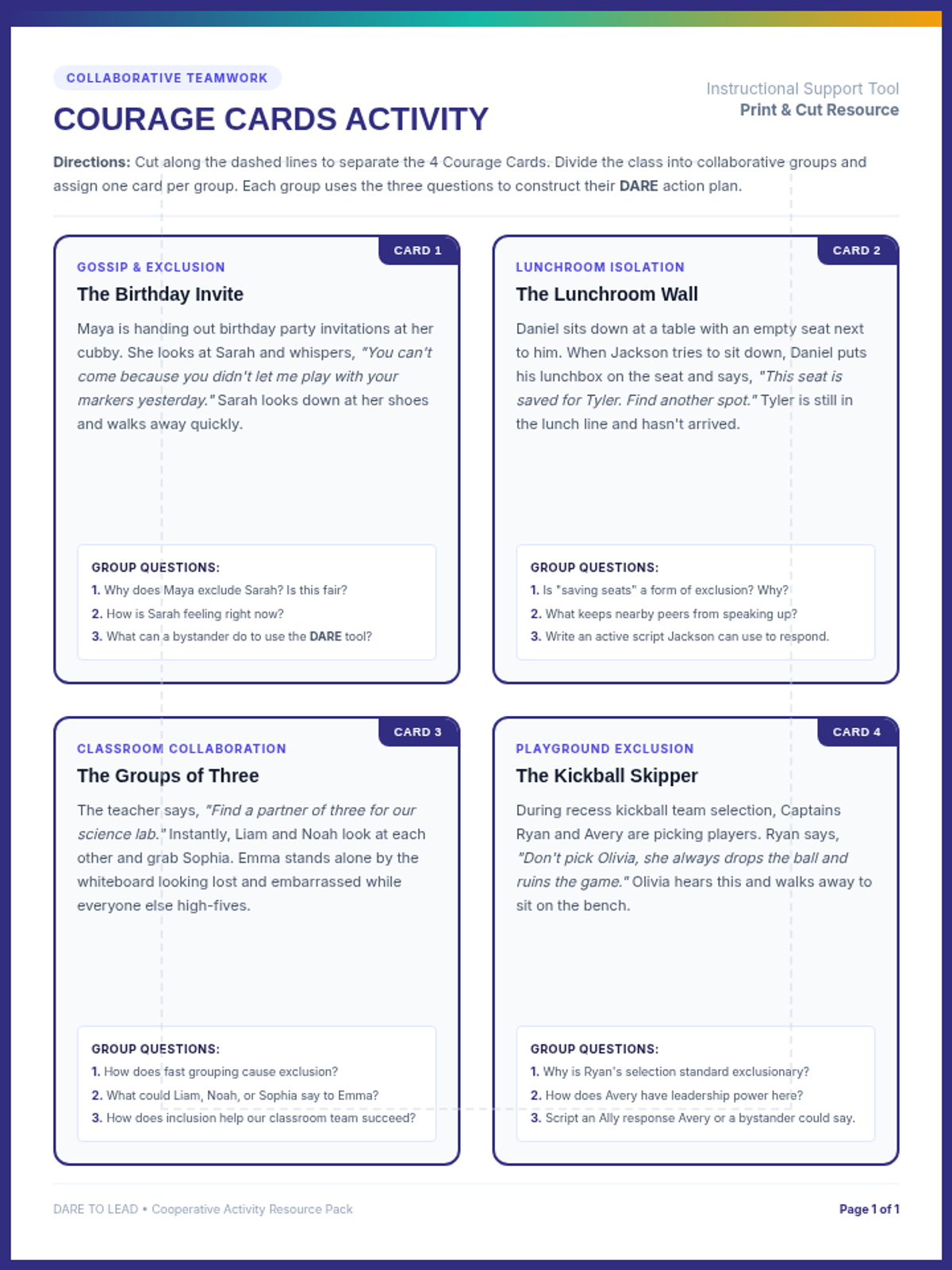
A comprehensive, rigorous 3rd-grade guidance lesson on conflict resolution, friendship, and standing up against exclusion, based on the book 'DARE!' by Erin Frankel. aligned with ASCA, LSSSCA, and CCMR Leadership & Advocacy standards.
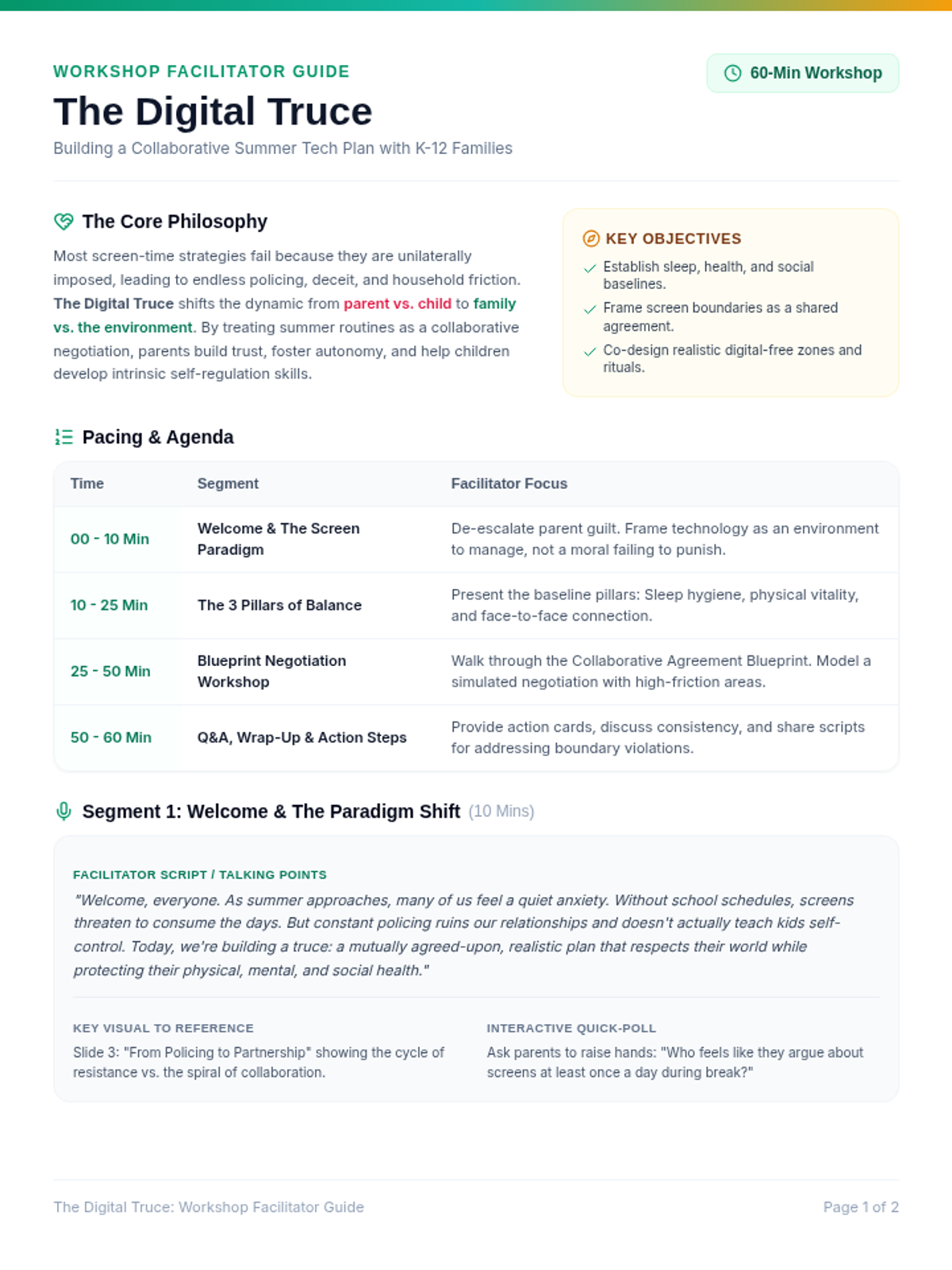
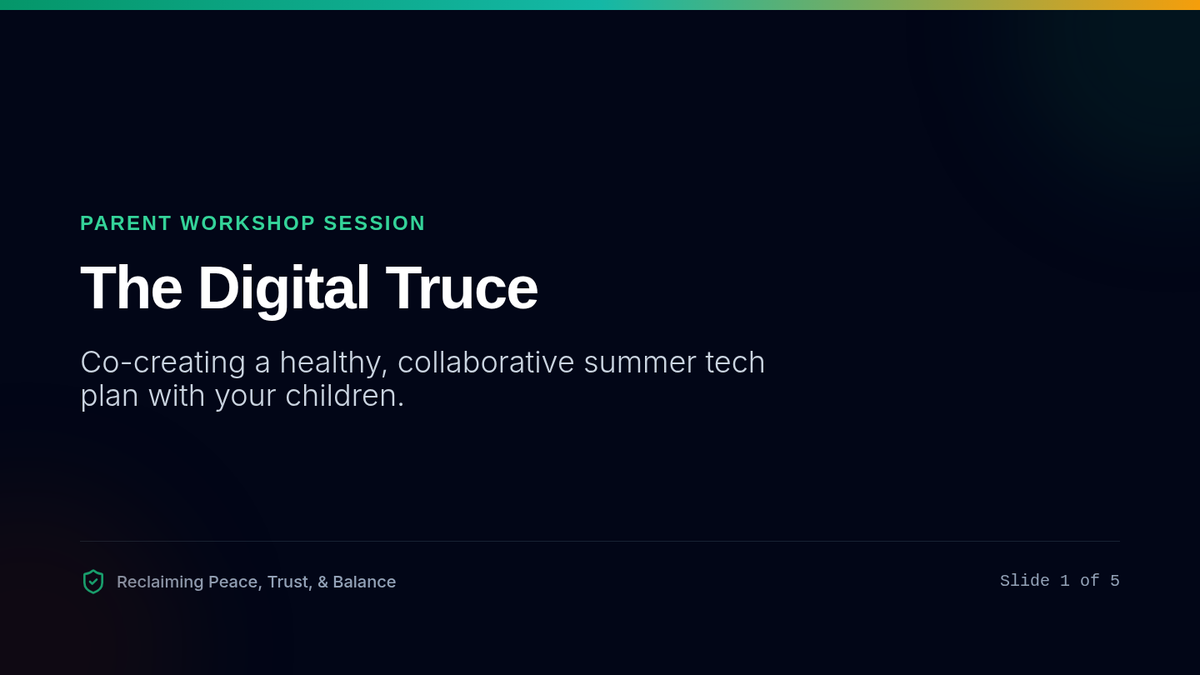
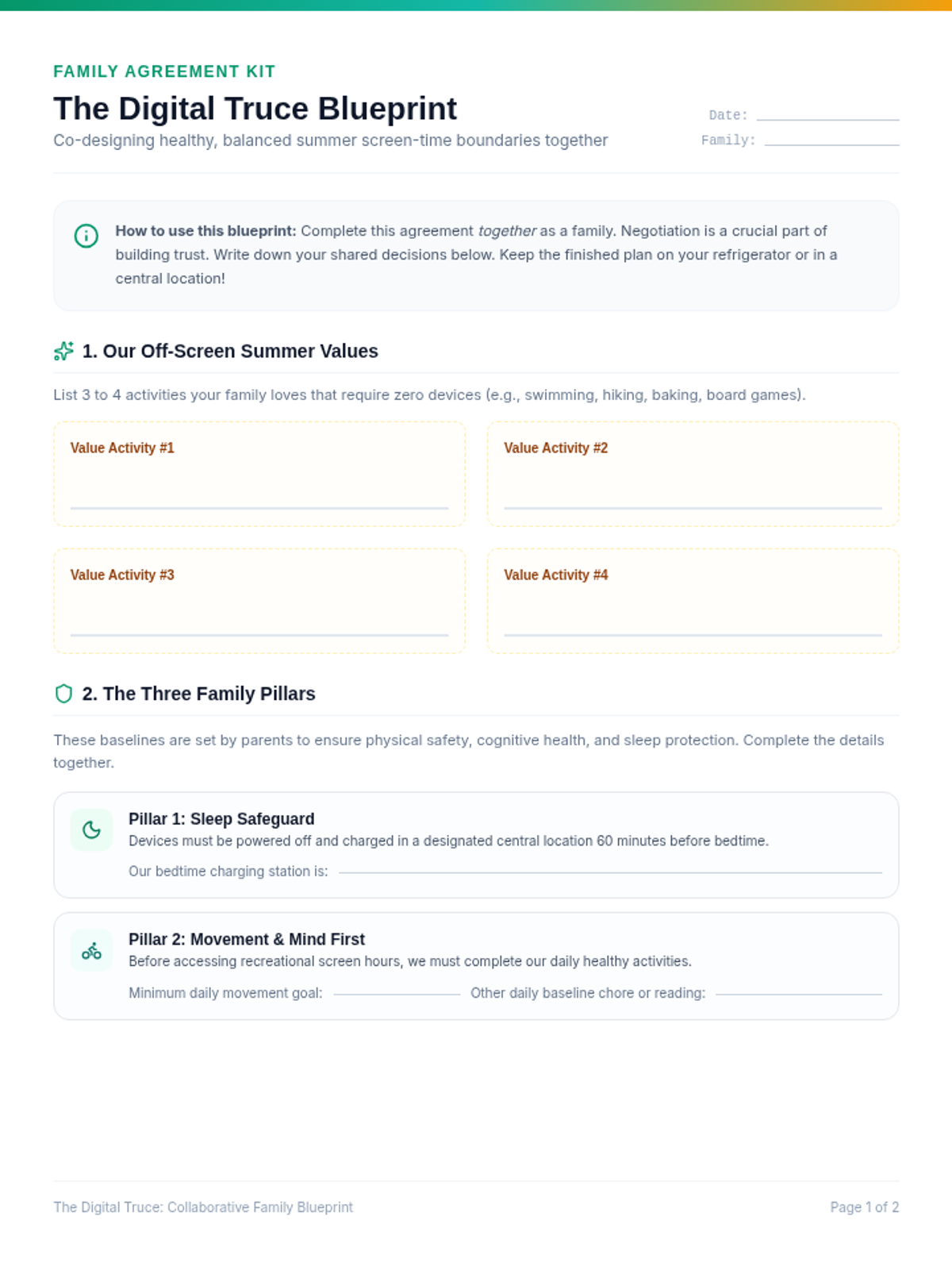
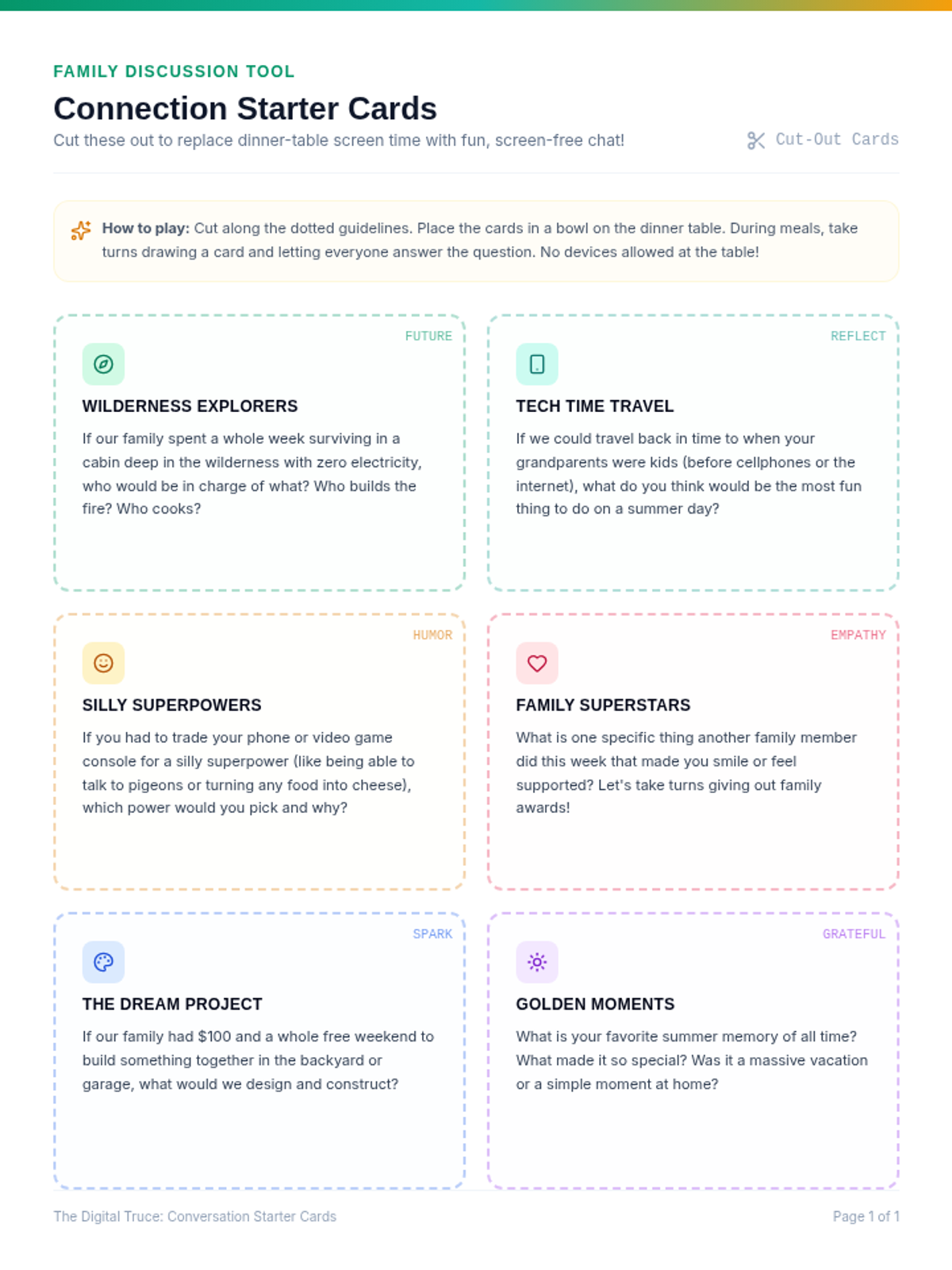
A parent workshop and planning kit to build collaborative, negotiated summer screen-time agreements that protect sleep, physical activity, and family connection.
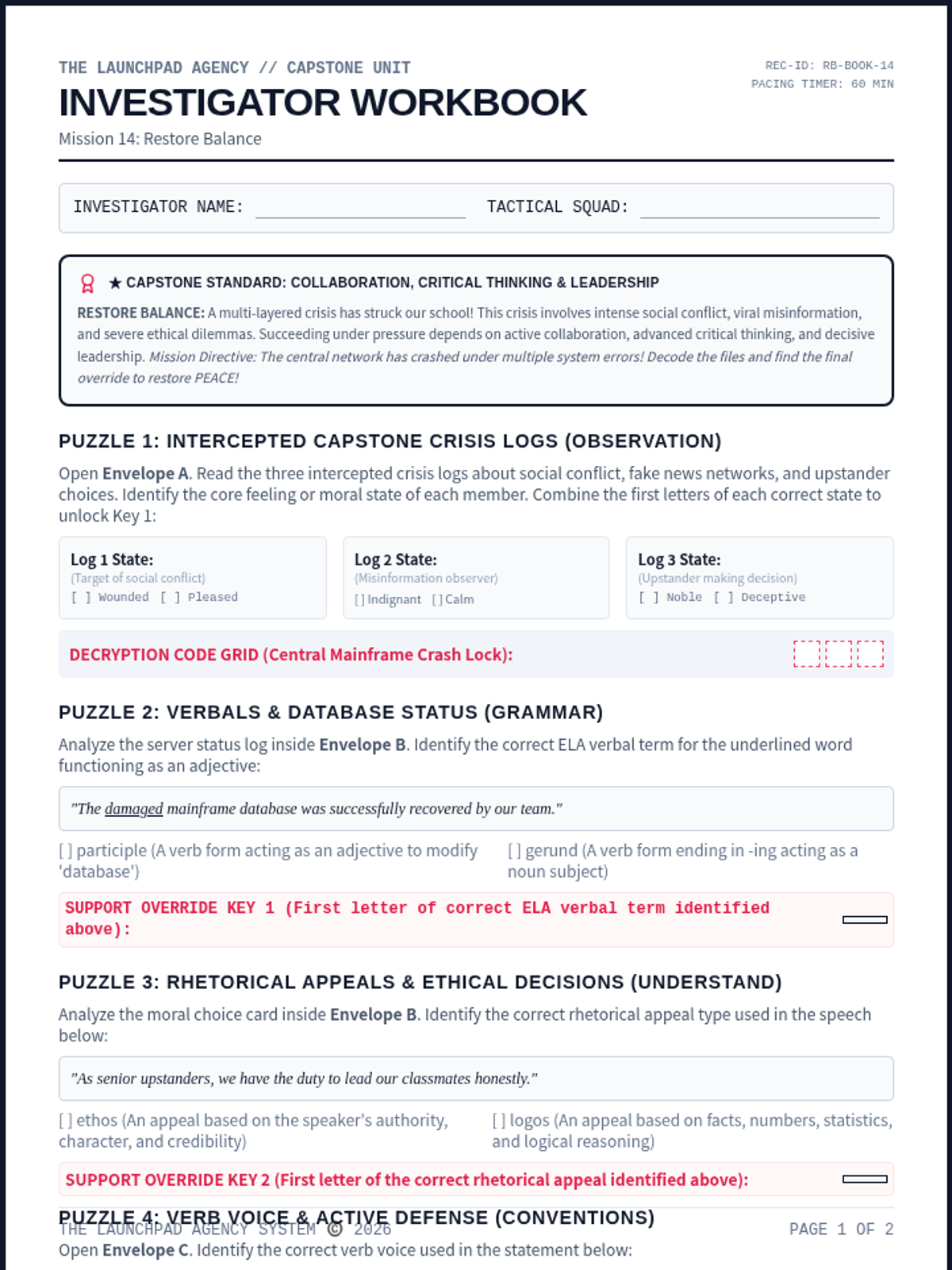
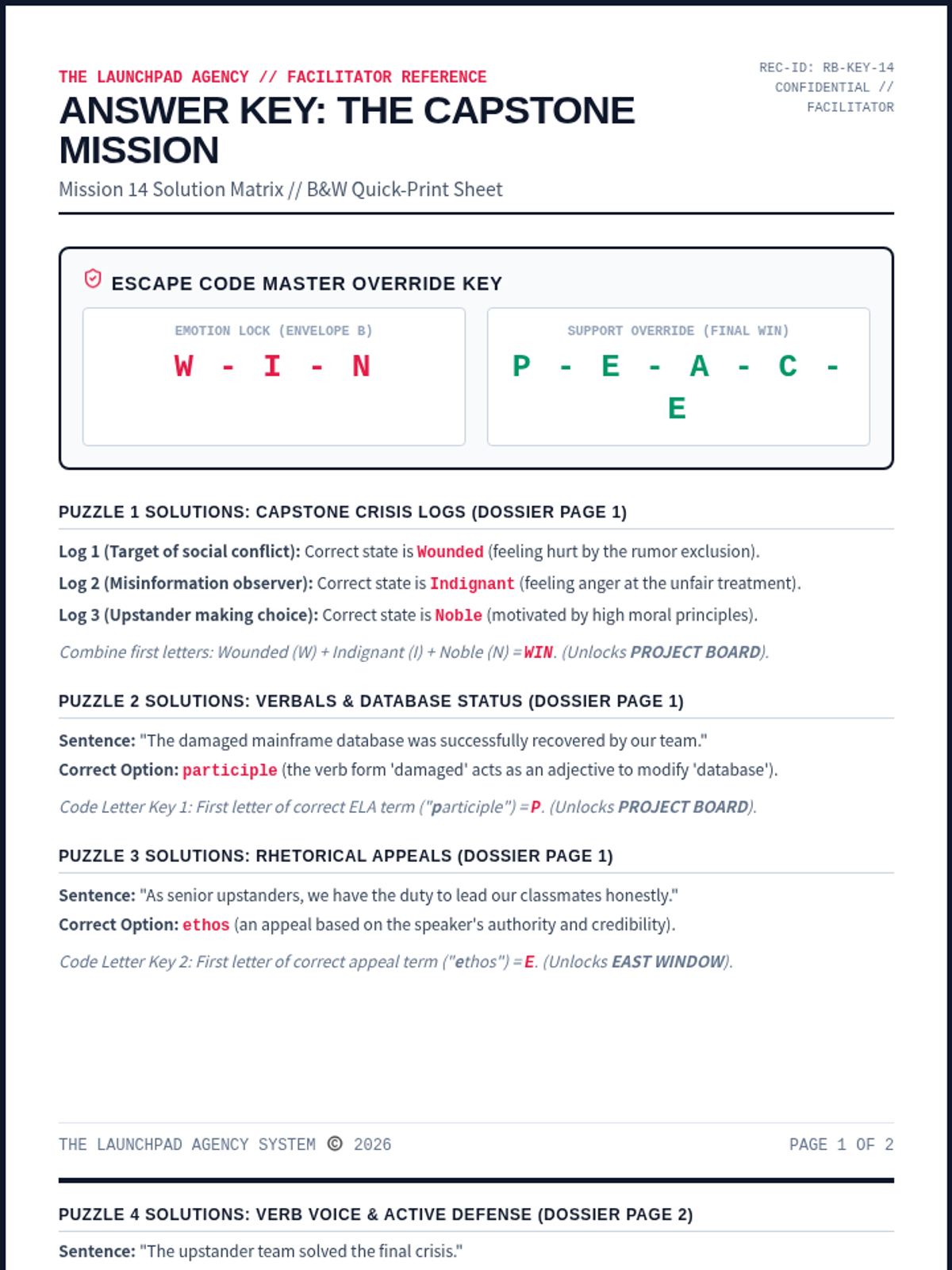
The ultimate multi-layered capstone escape room challenge. Recruits analyze complex social conflict evidence, trace misinformation networks, resolve major ethical dilemmas, and decode the final system override.
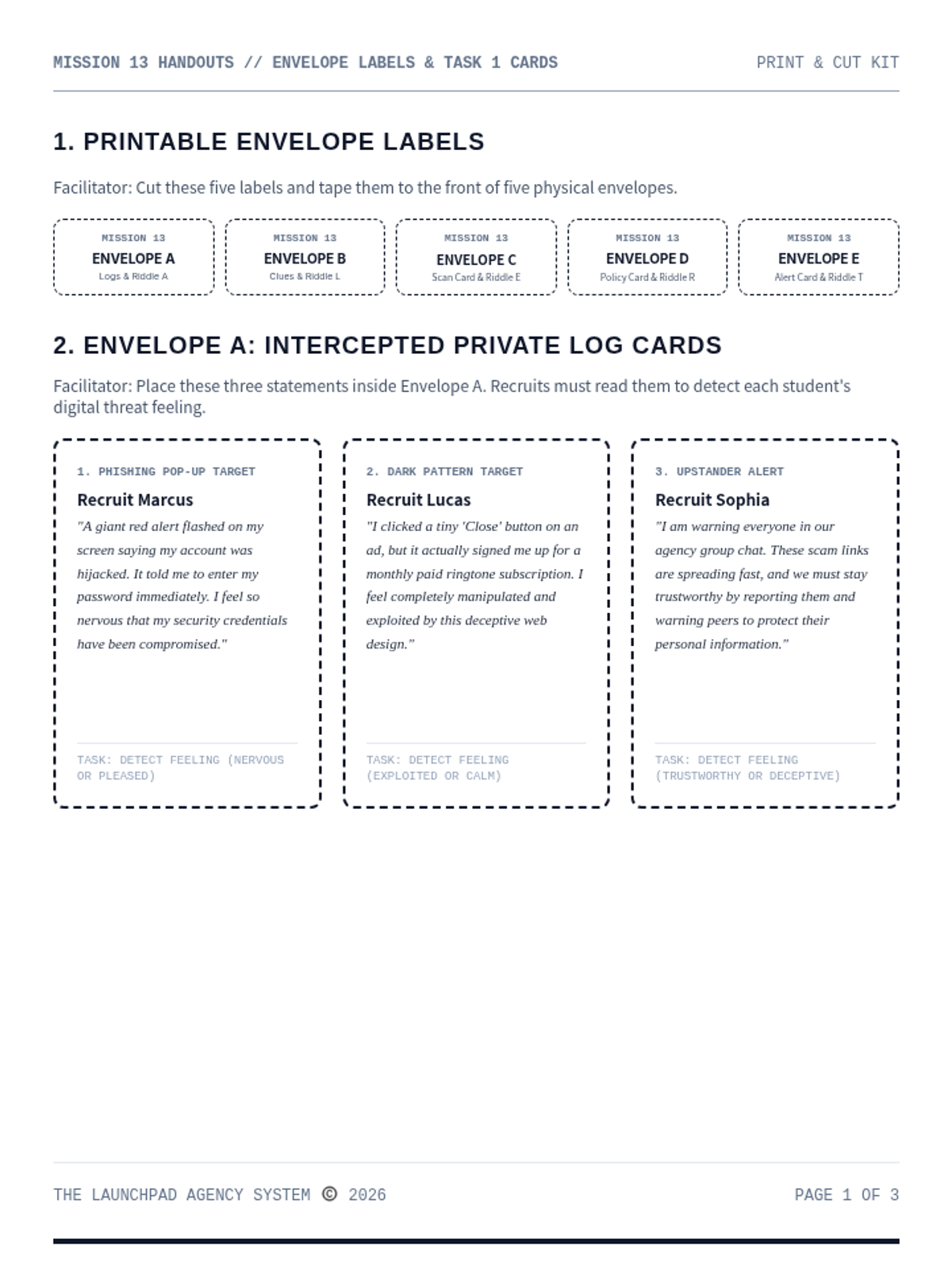
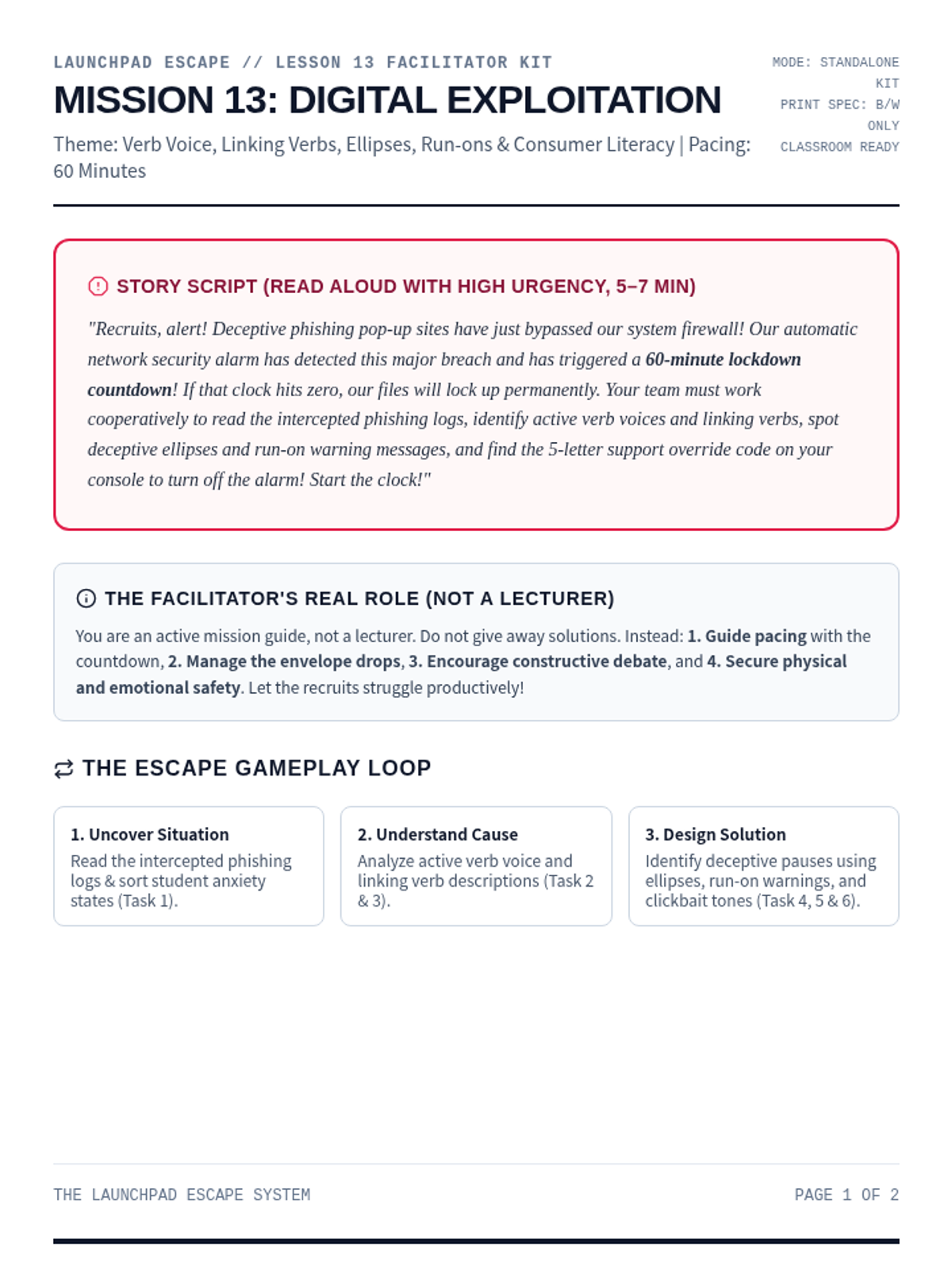
A high-stakes digital safety escape room focused on identifying online scams, recognizing manipulative dark patterns, and protecting personal data. Recruits analyze active verb voices, linking verbs, ellipses punctuation, and deceptive tones to decode the final alert.
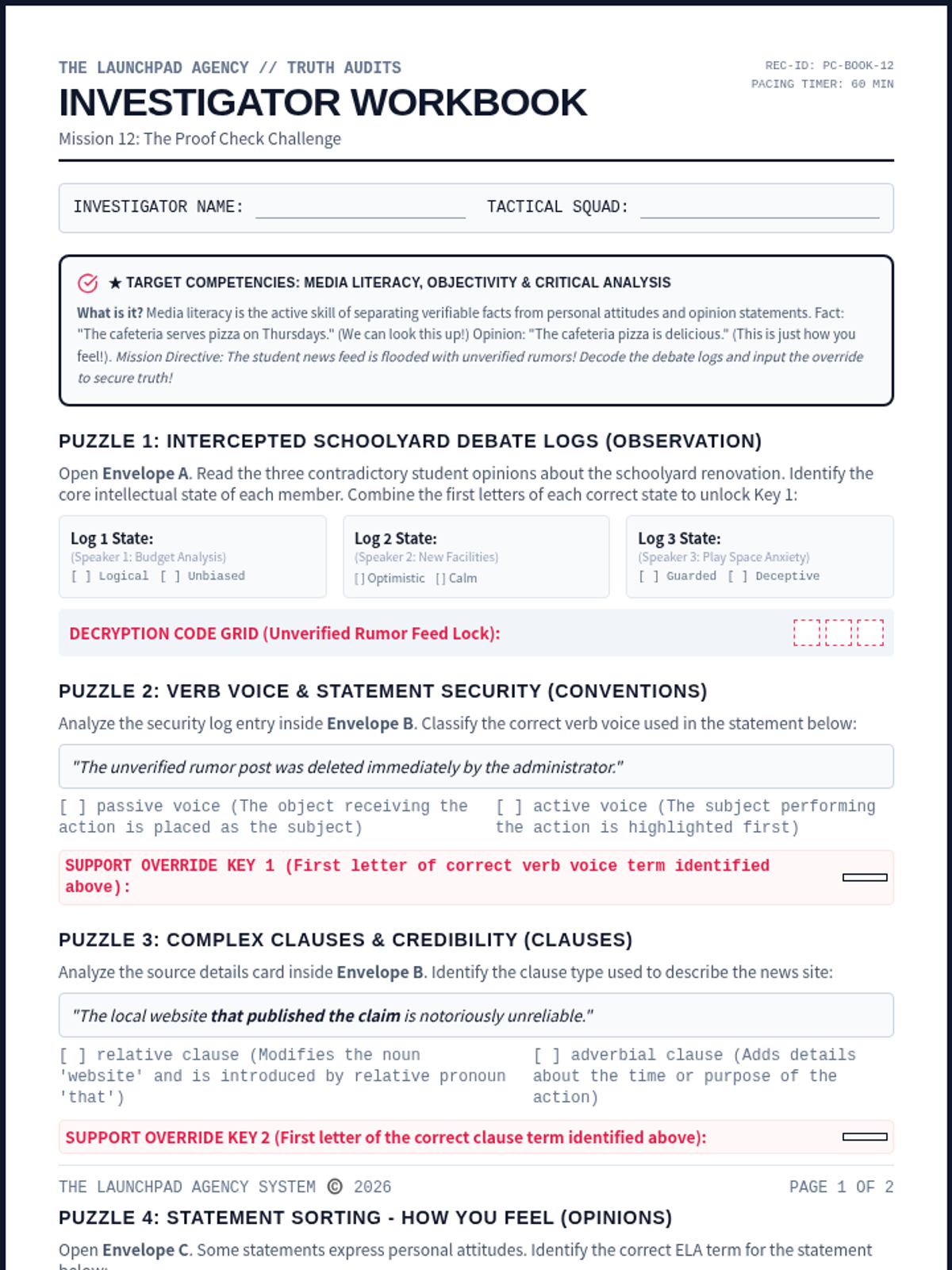
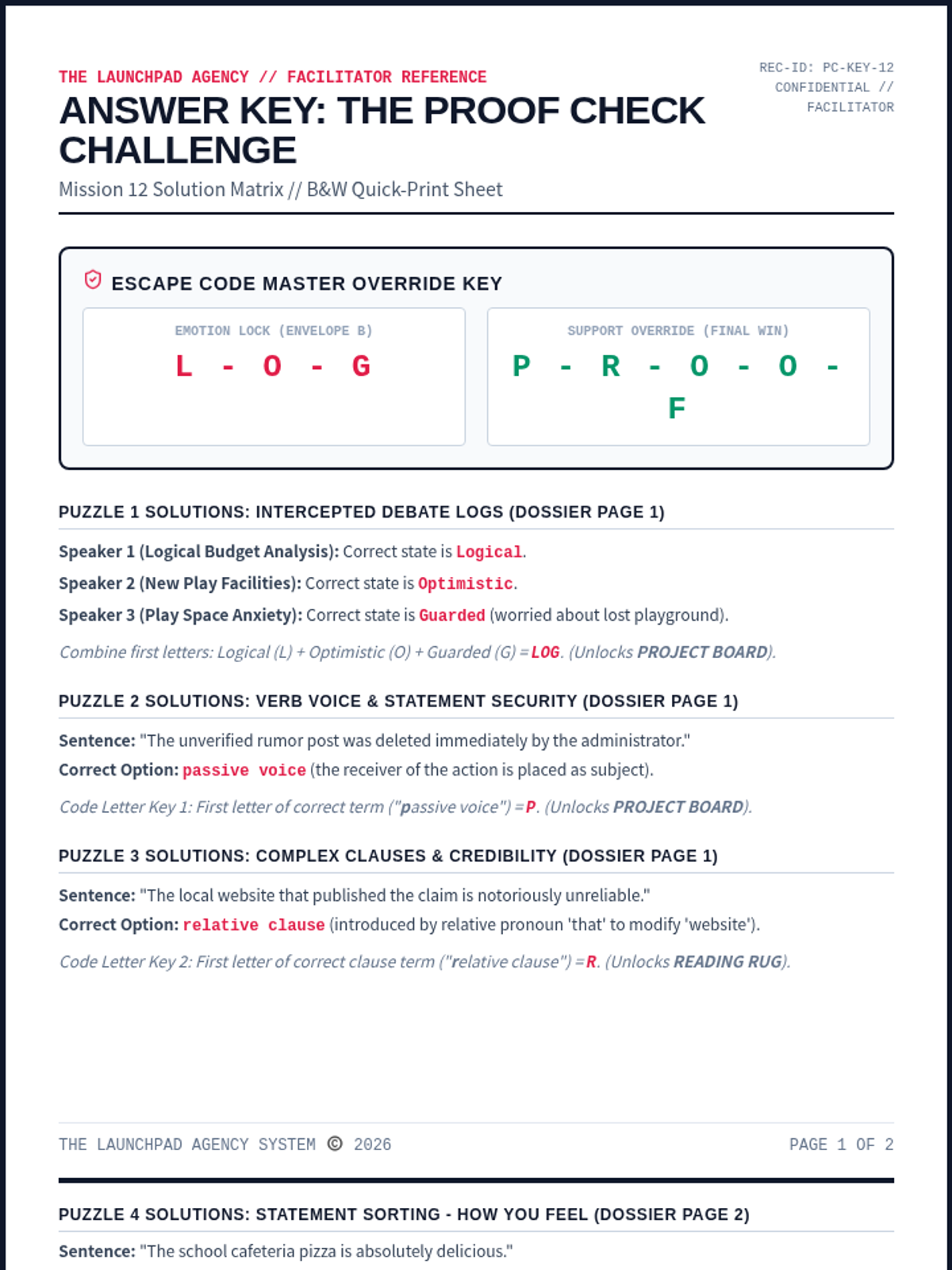
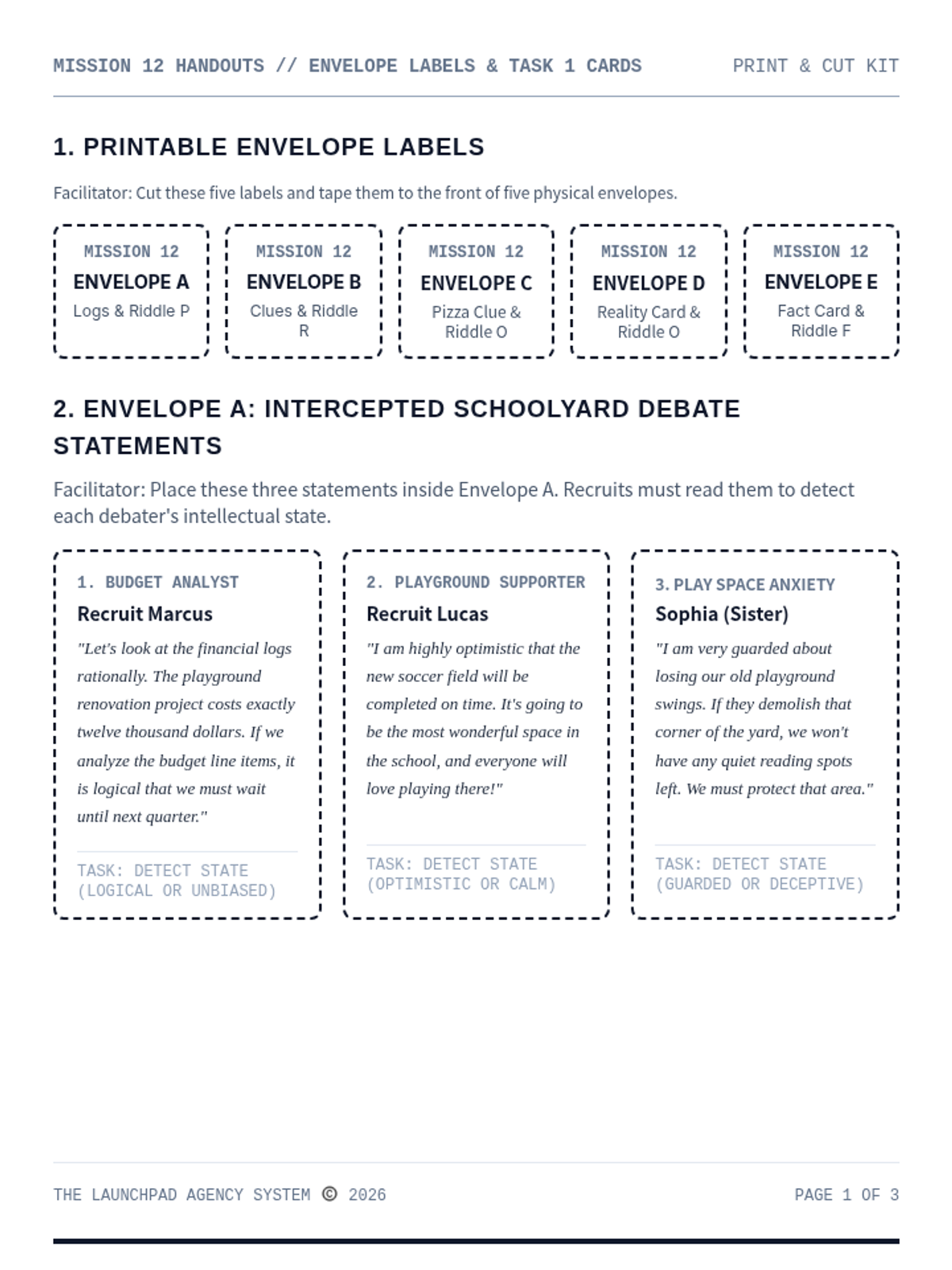
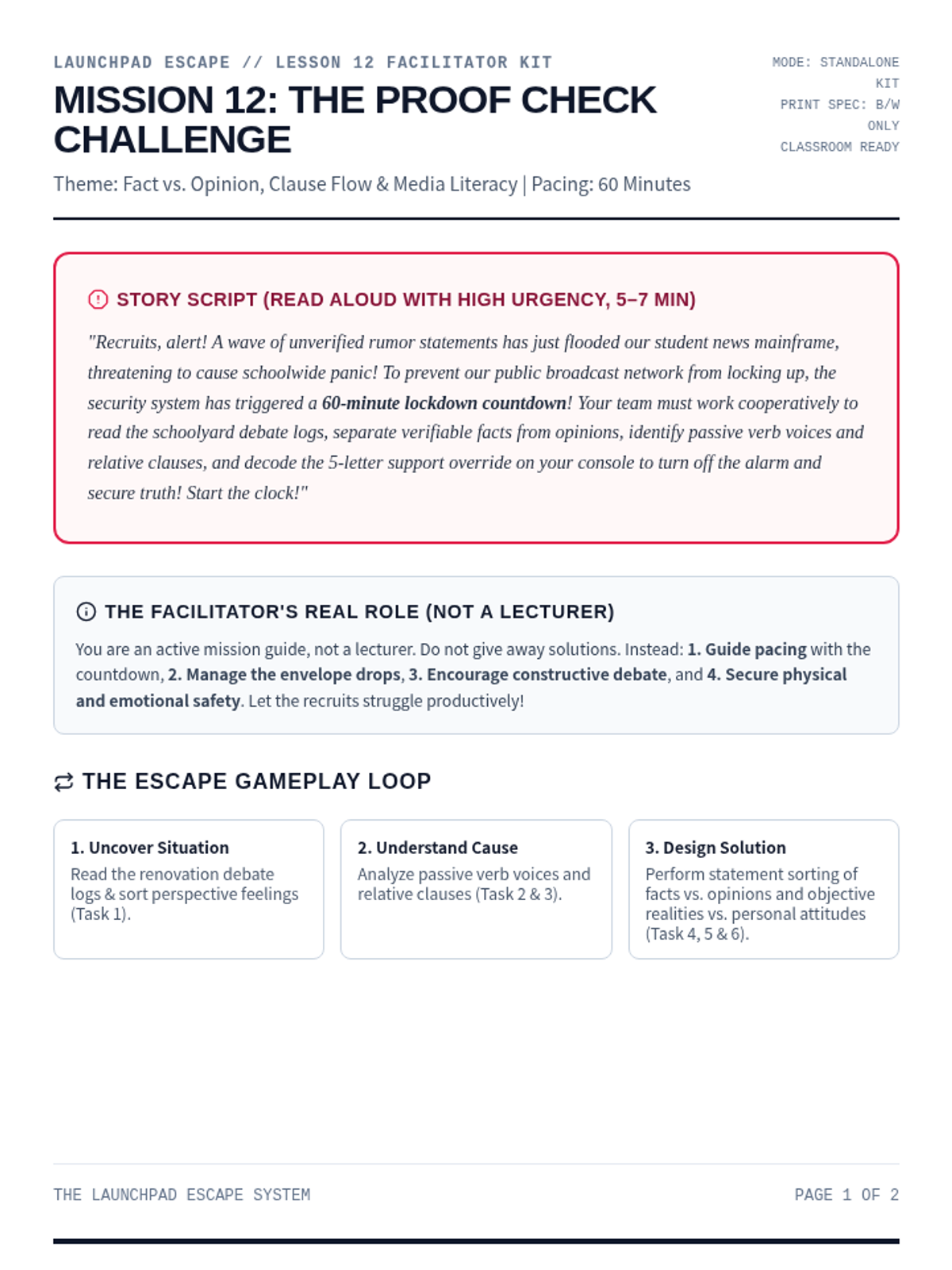
An advanced media literacy and communication escape room for Ages 13-15. Recruits distinguish facts from opinions, analyze objective realities, sort personal attitudes, and input the override PROOF to secure the school news mainframe.
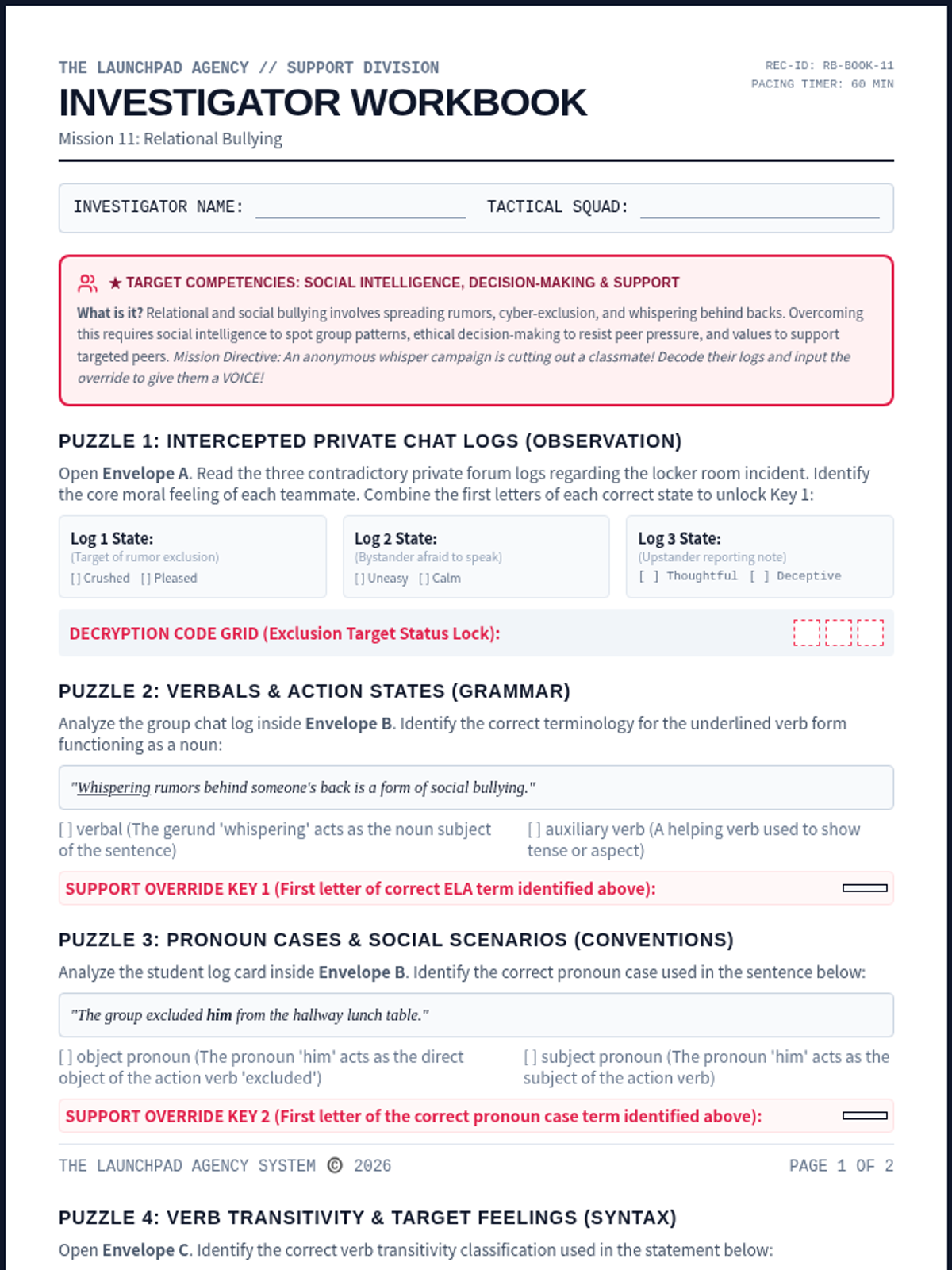
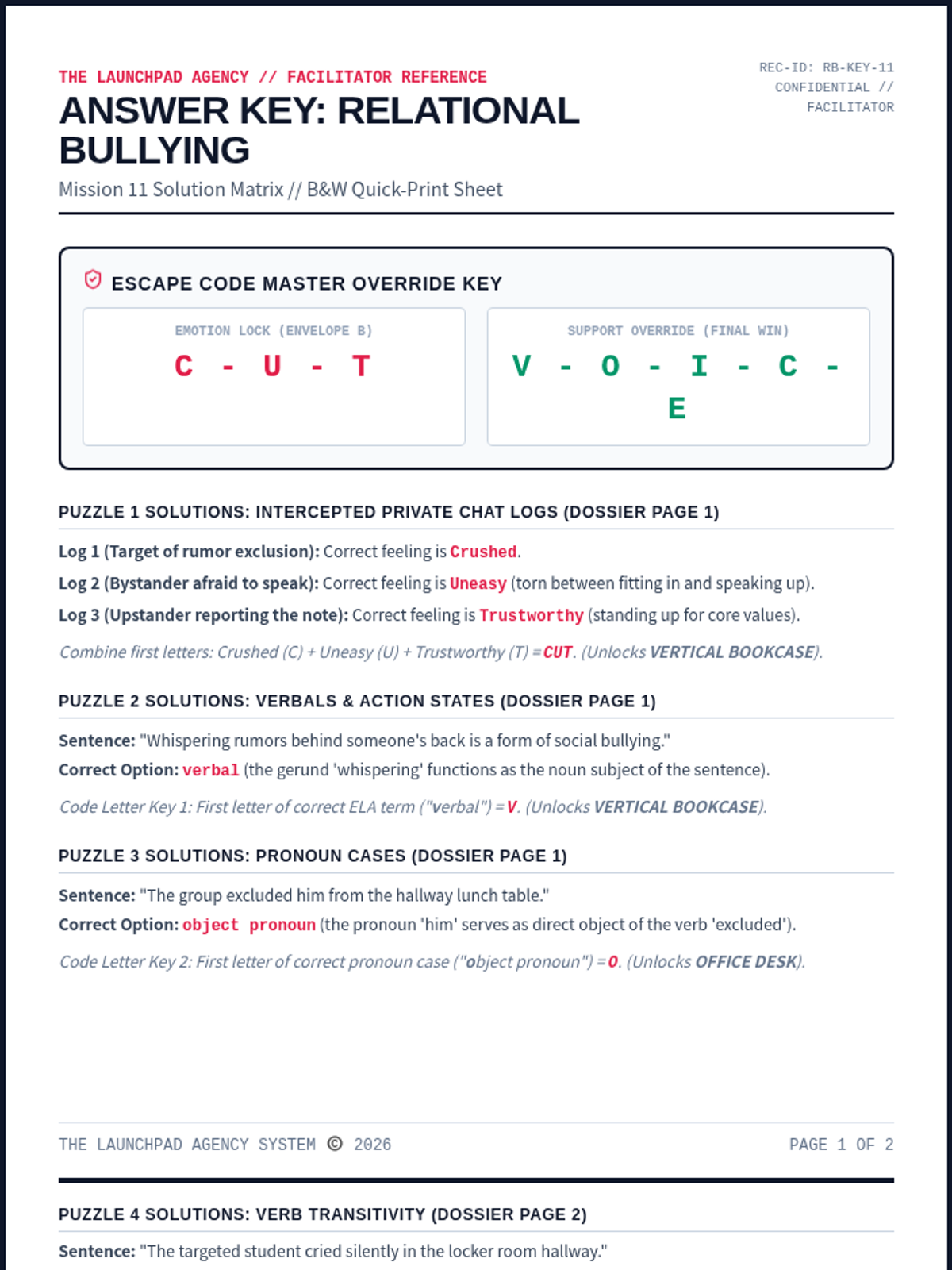
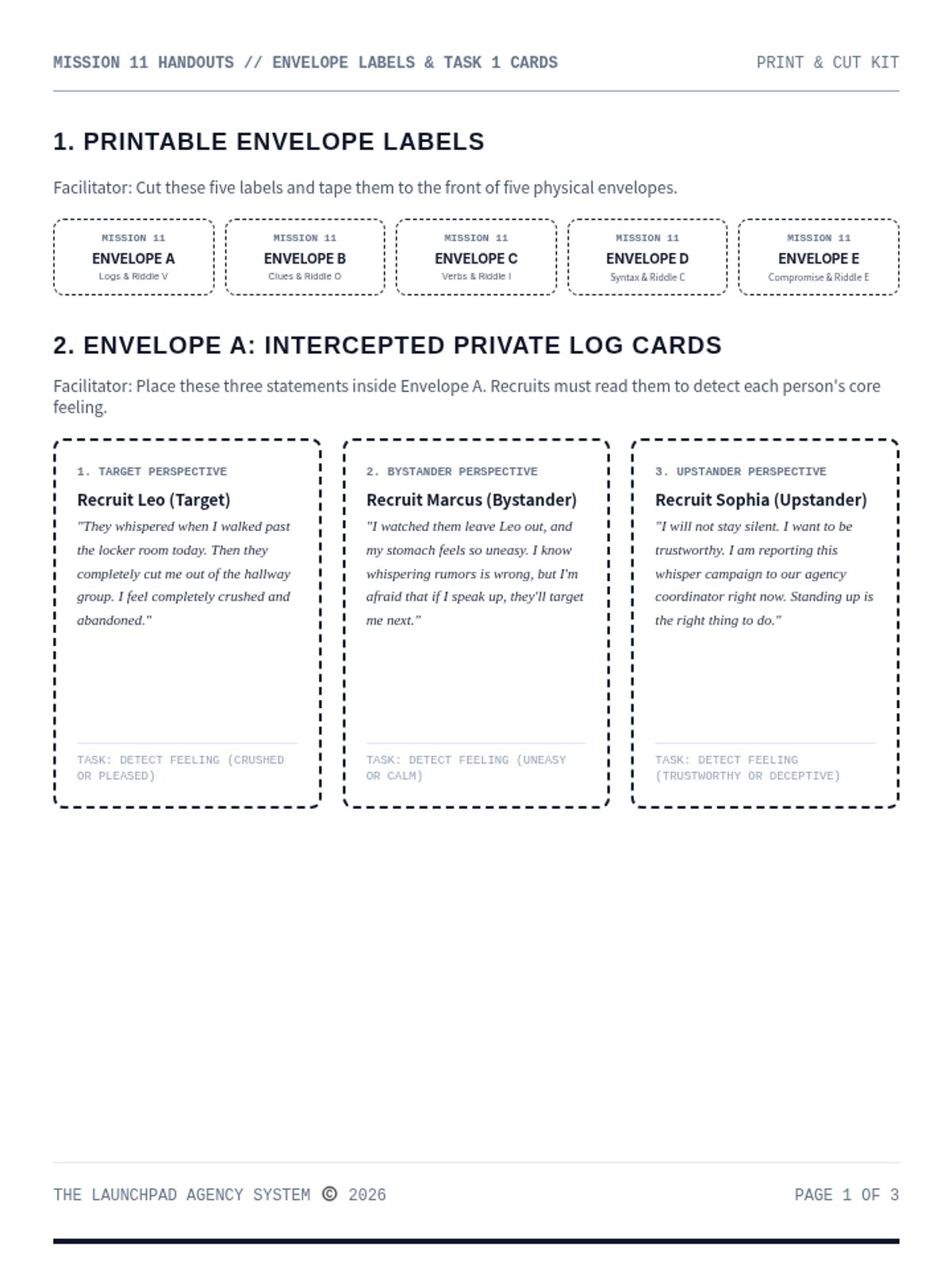
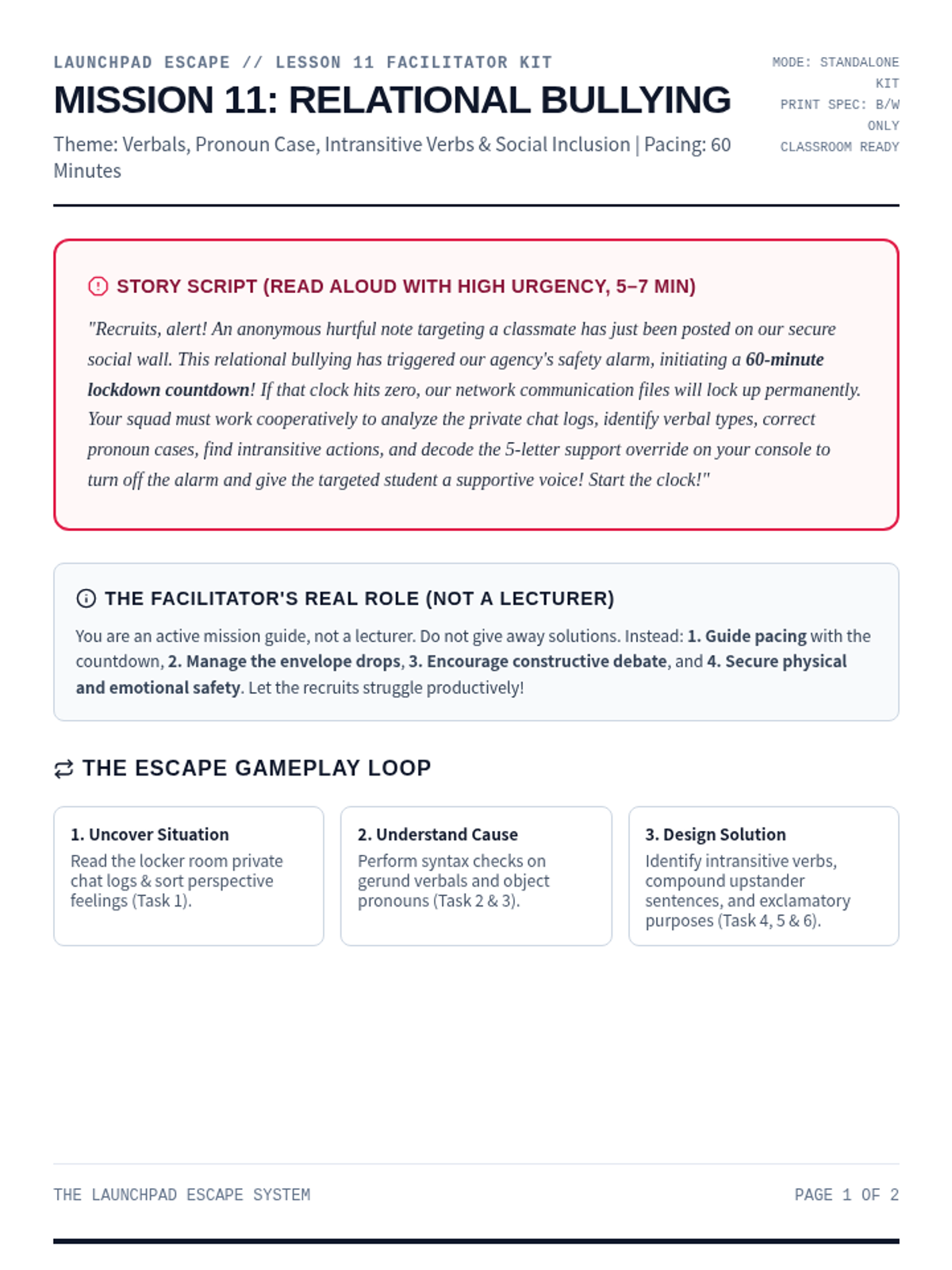
A collaborative social-emotional escape room focused on identifying relational and social bullying, supporting target peers, and standing up to cyber/verbal exclusion. Recruits analyze verb verbal types, pronoun cases, intransitive verbs, and compound syntax to decode the final override.
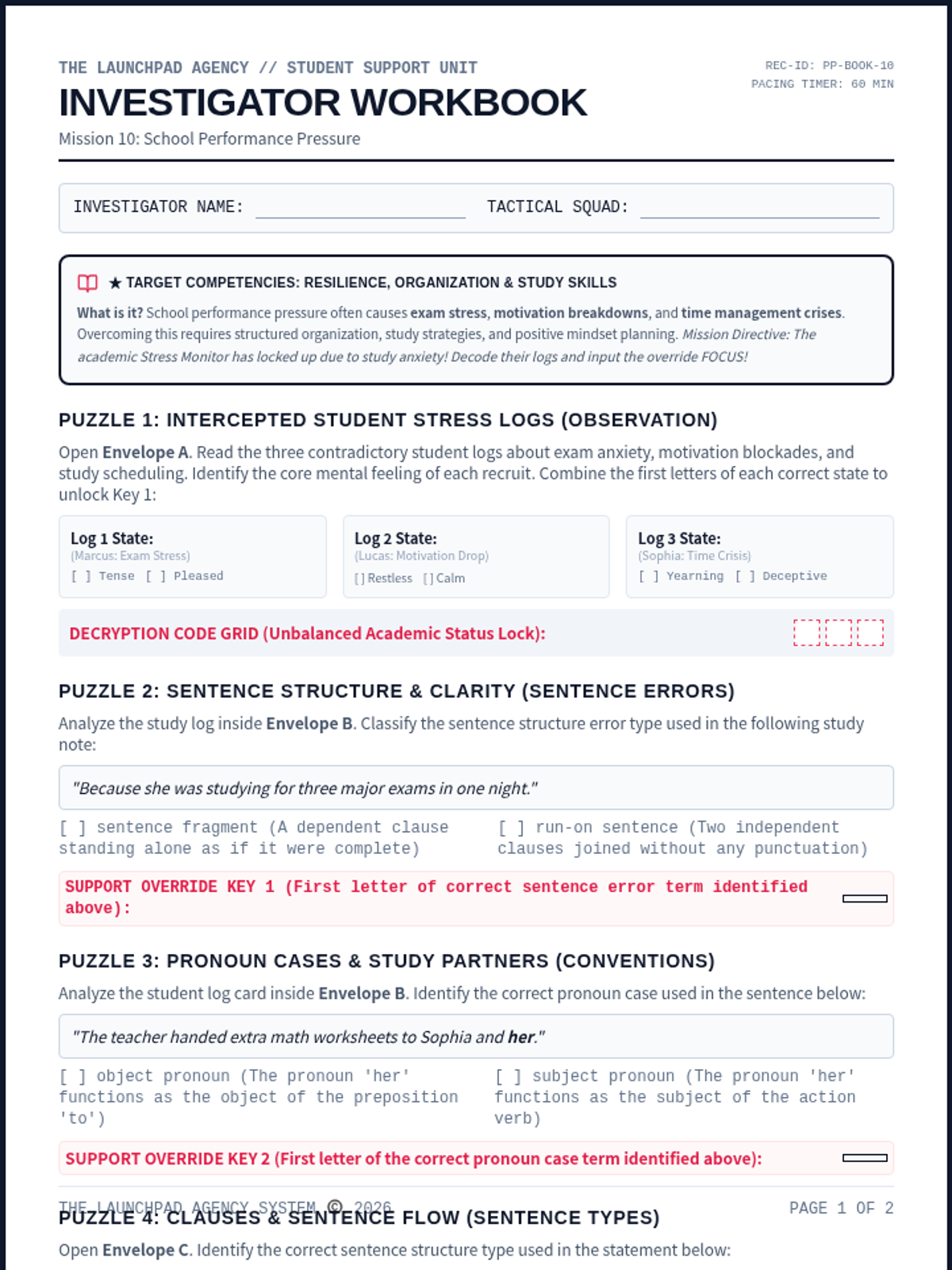
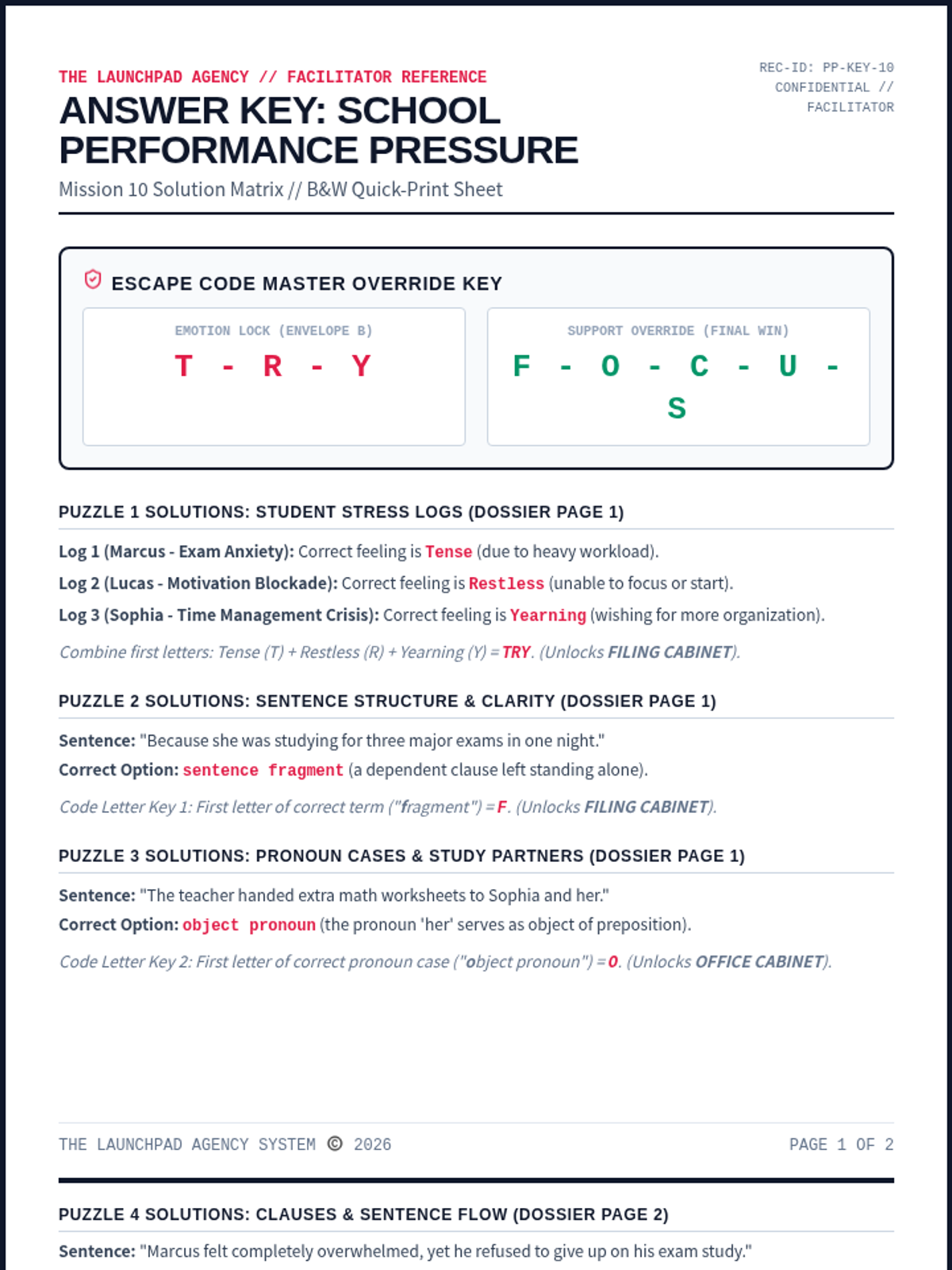
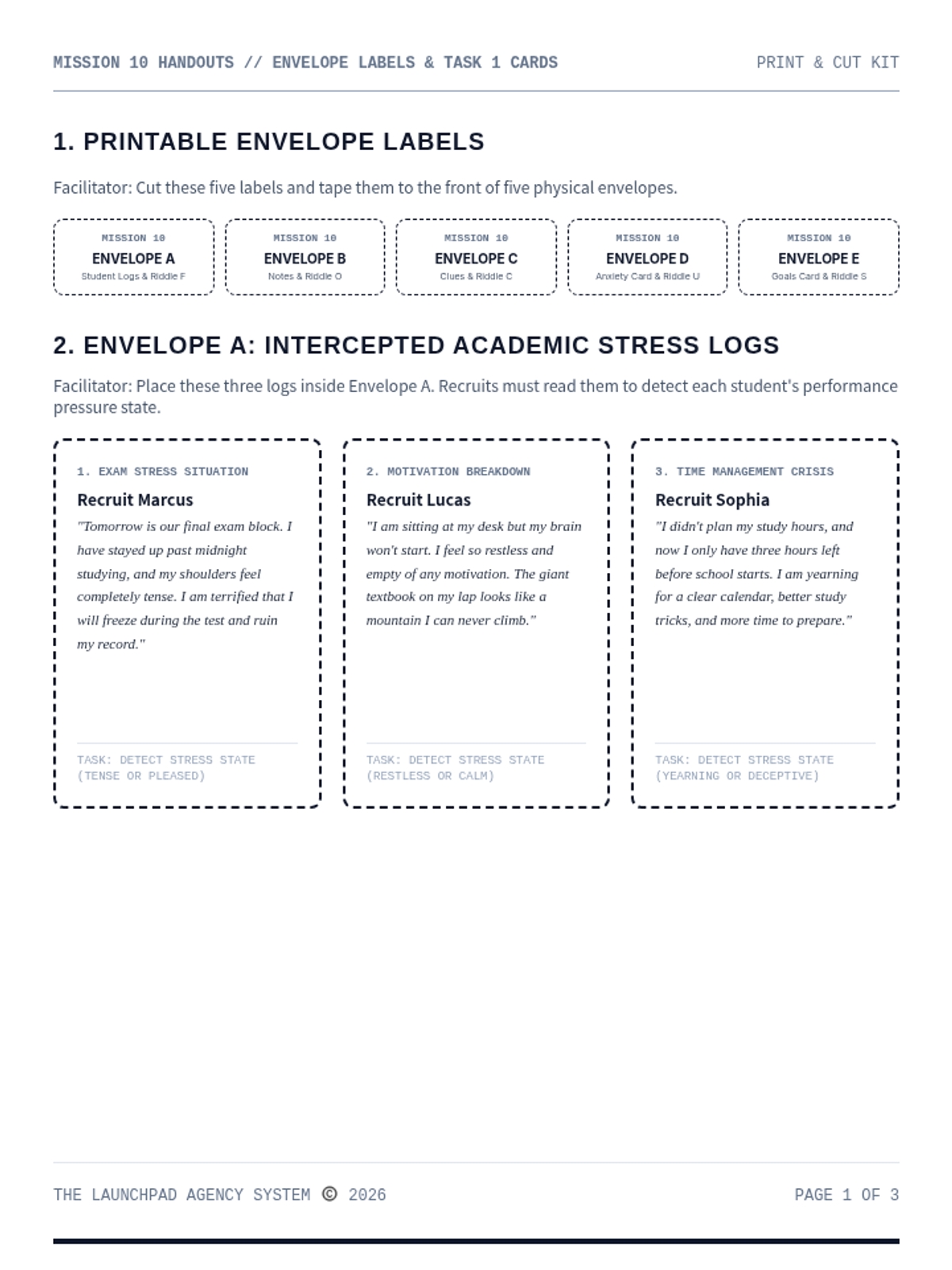
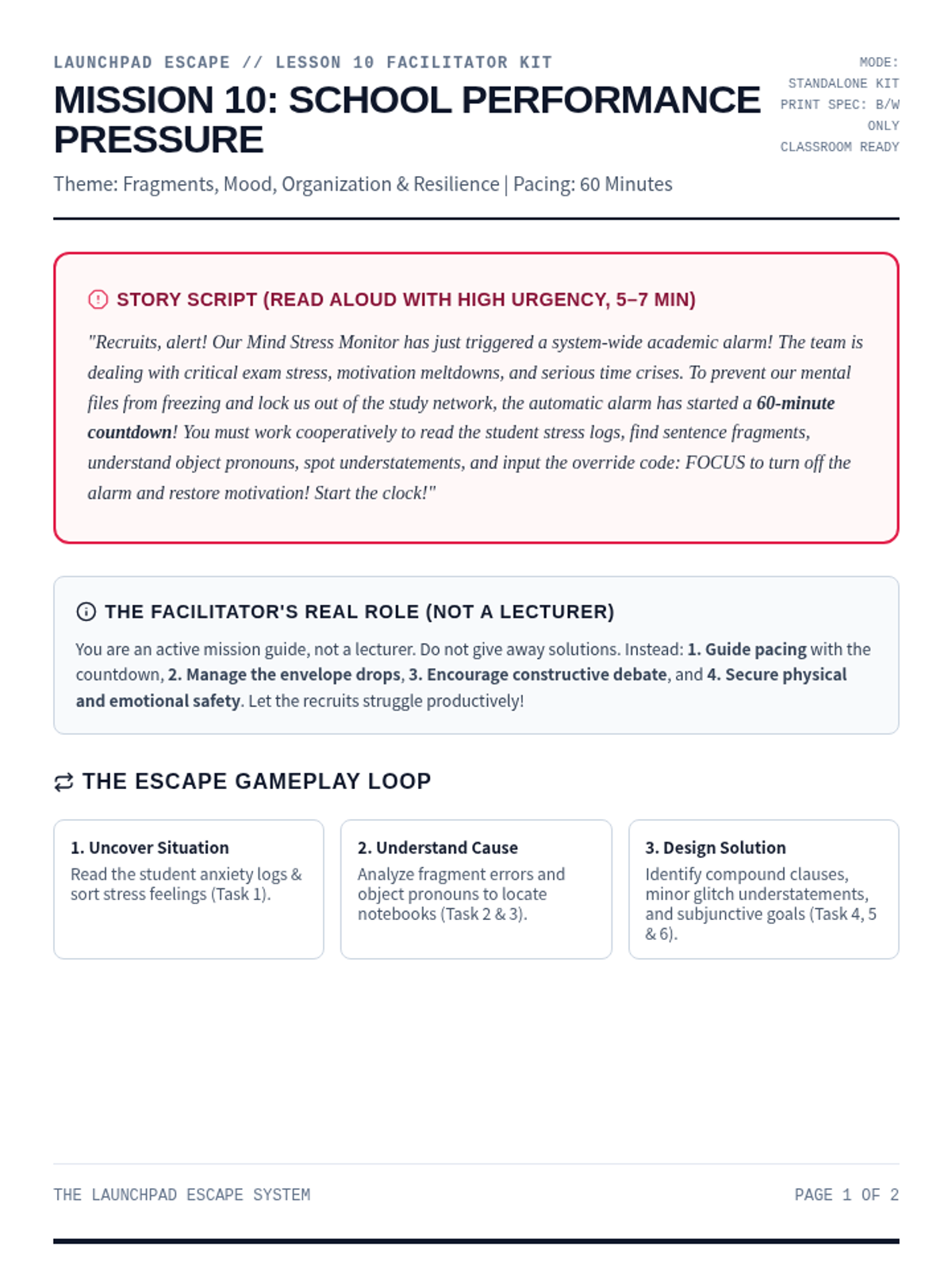
An immersive and strategic escape room focused on managing academic stress, avoiding burnout, and planning study habits. Recruits analyze student logs under performance anxiety, build efficient schedules, and decode the override to restore positive motivation.
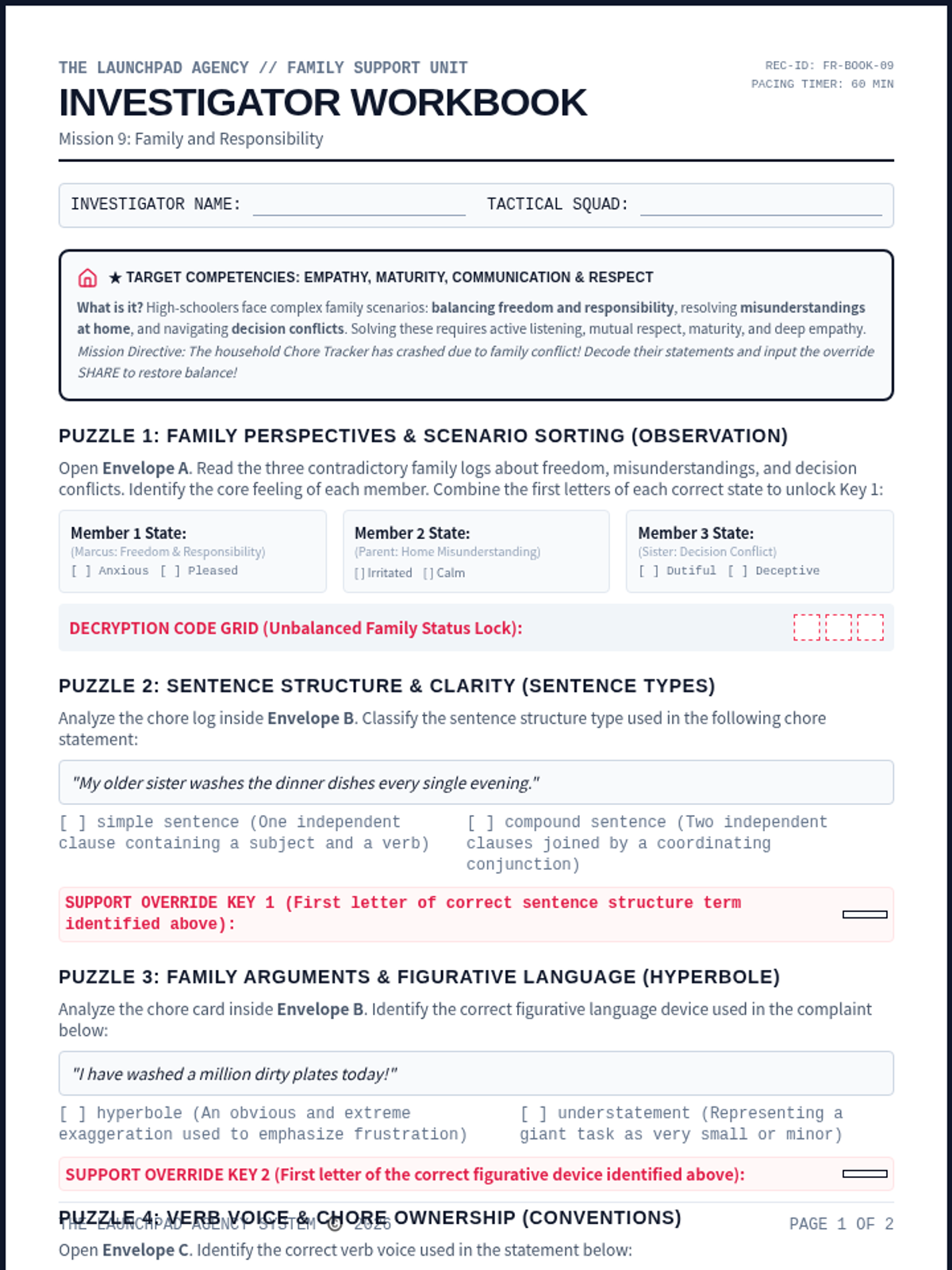
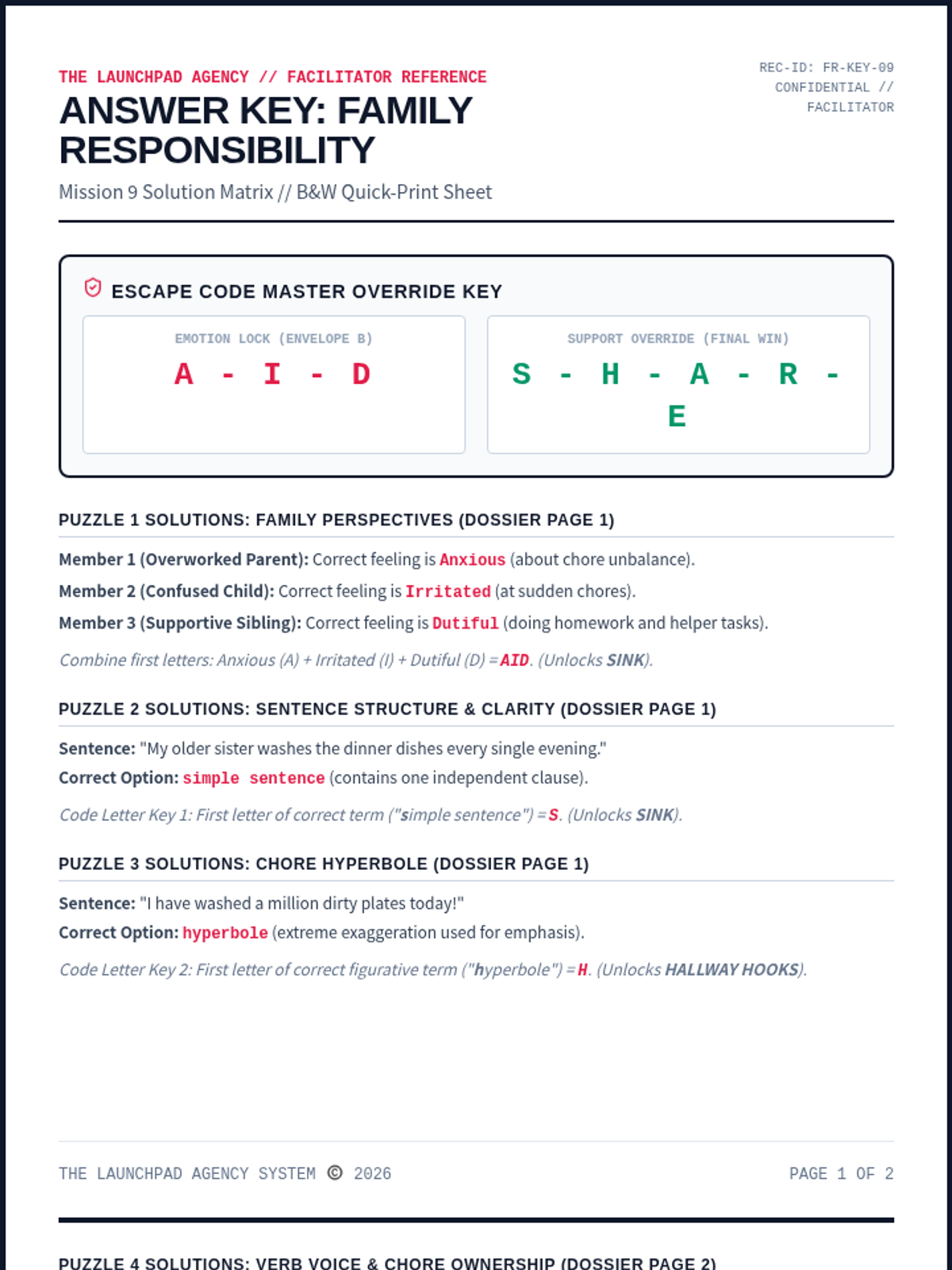
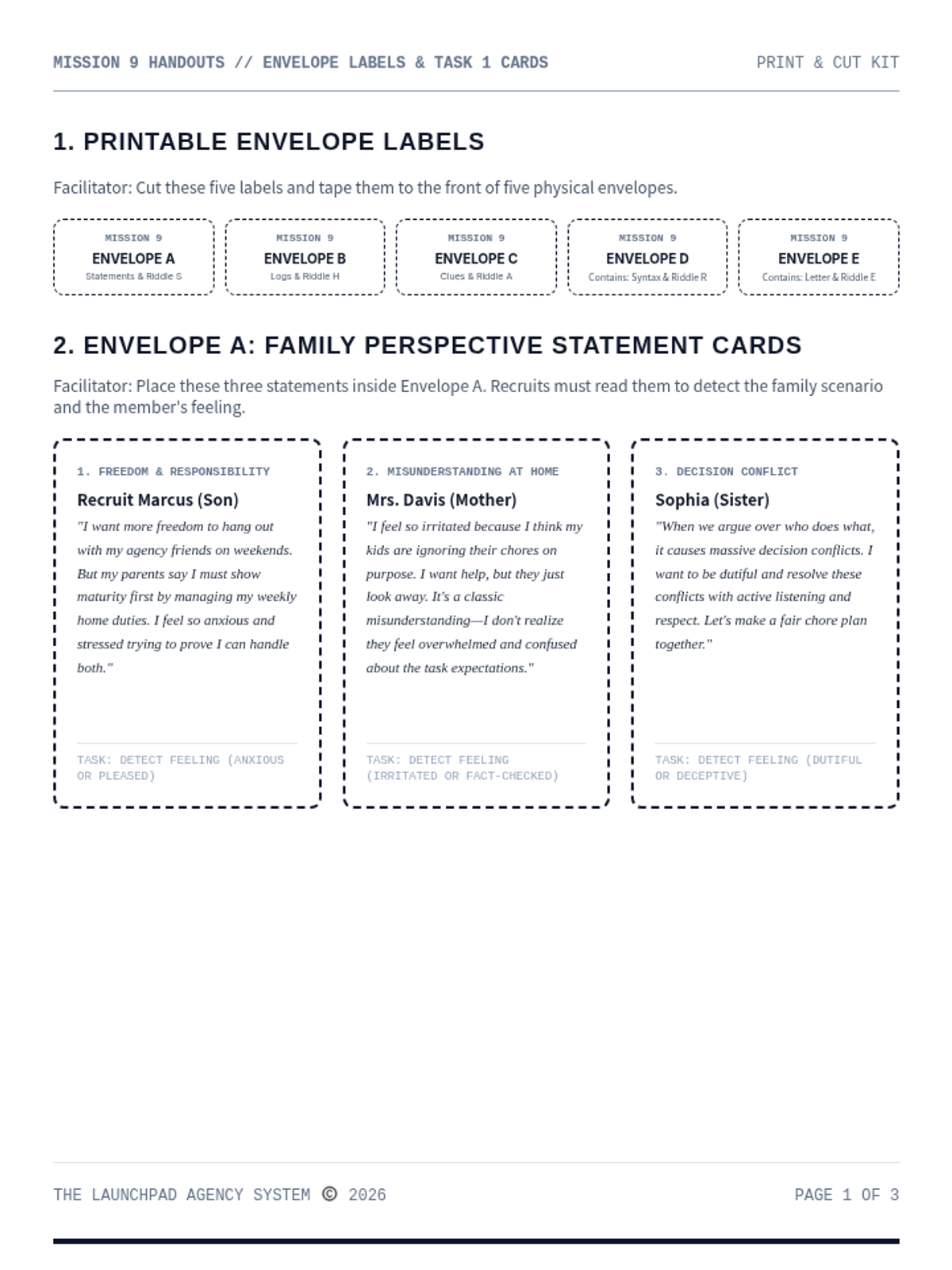
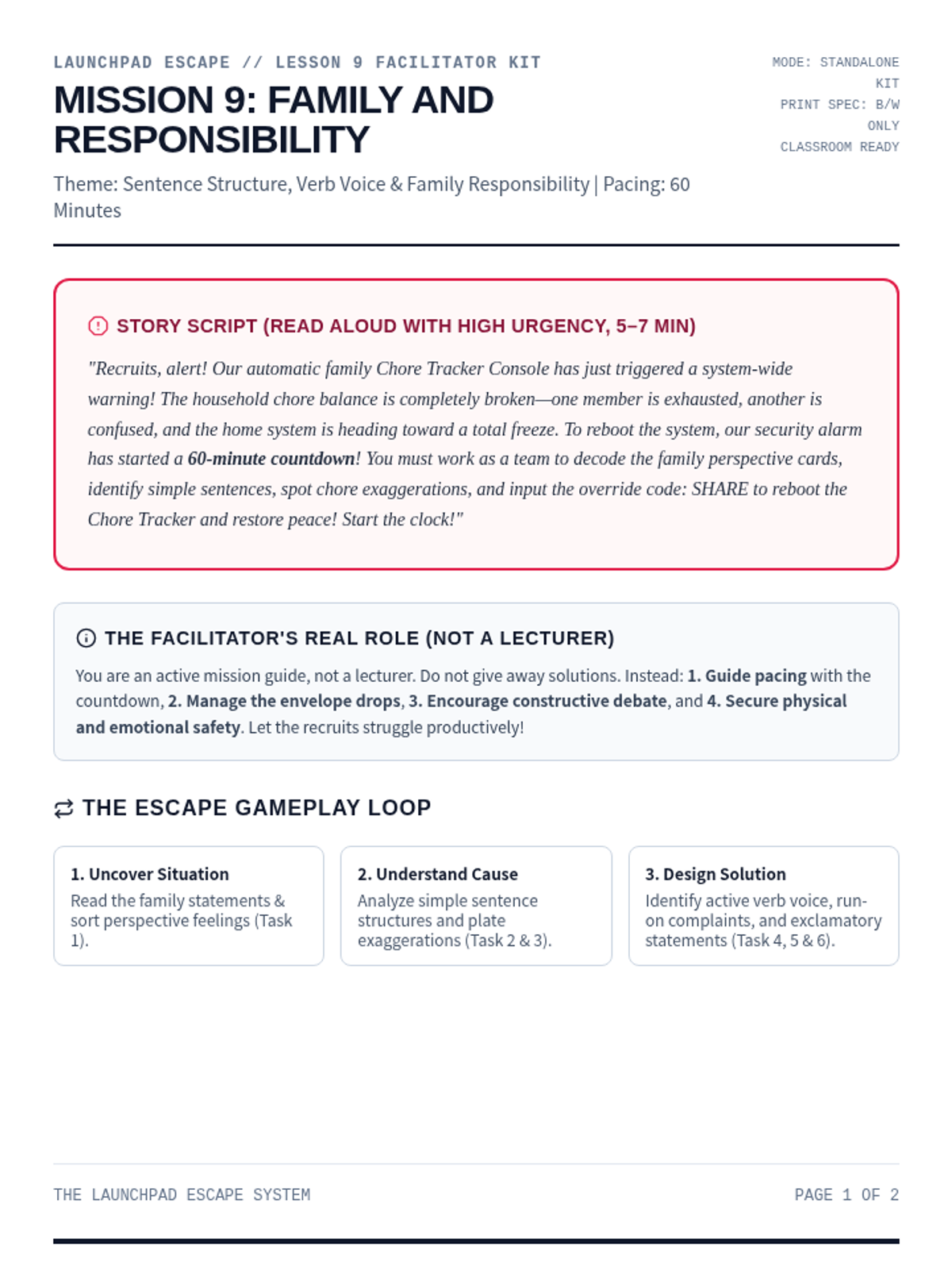
A cooperative and empathetic escape room focused on managing family duties and household balance. Recruits analyze parent/child perspective claims, organize daily chores timelines, and decode the final compromise override.
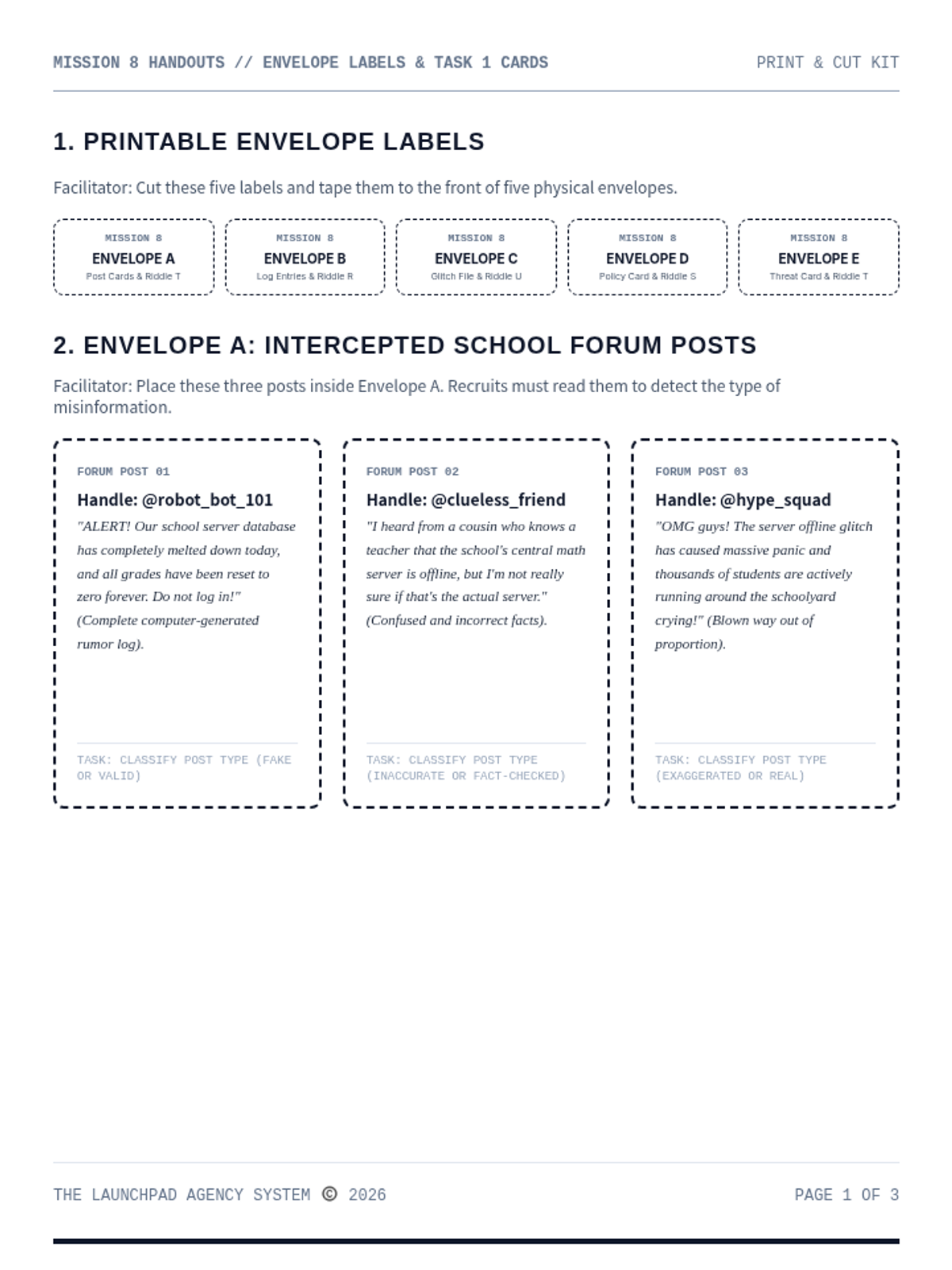
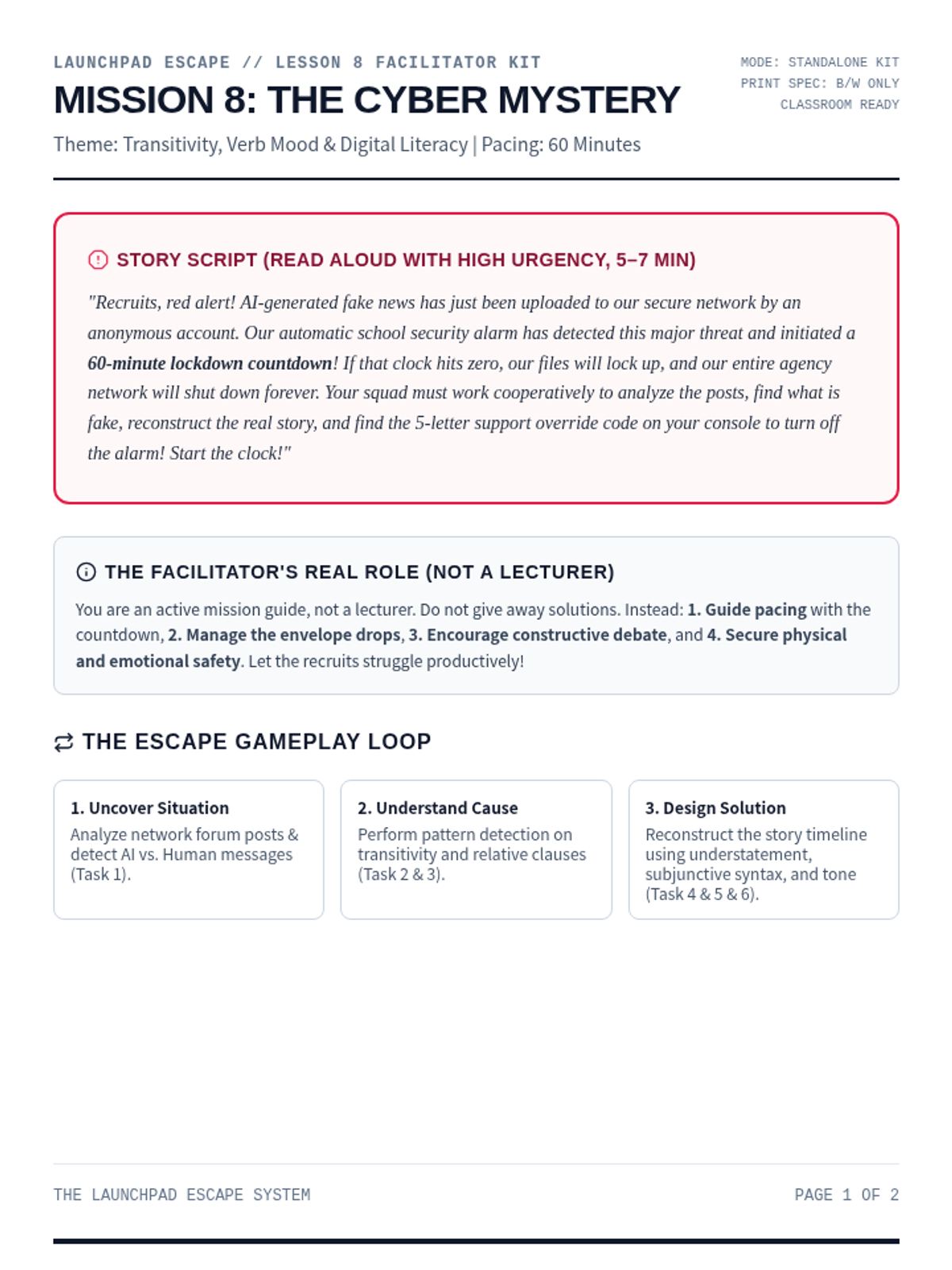
An advanced digital literacy and collaborative cryptography escape room for Ages 14-16. Recruits analyze verb transitivity, relative clauses, subjunctive moods, and tone to stop a school database wipe.
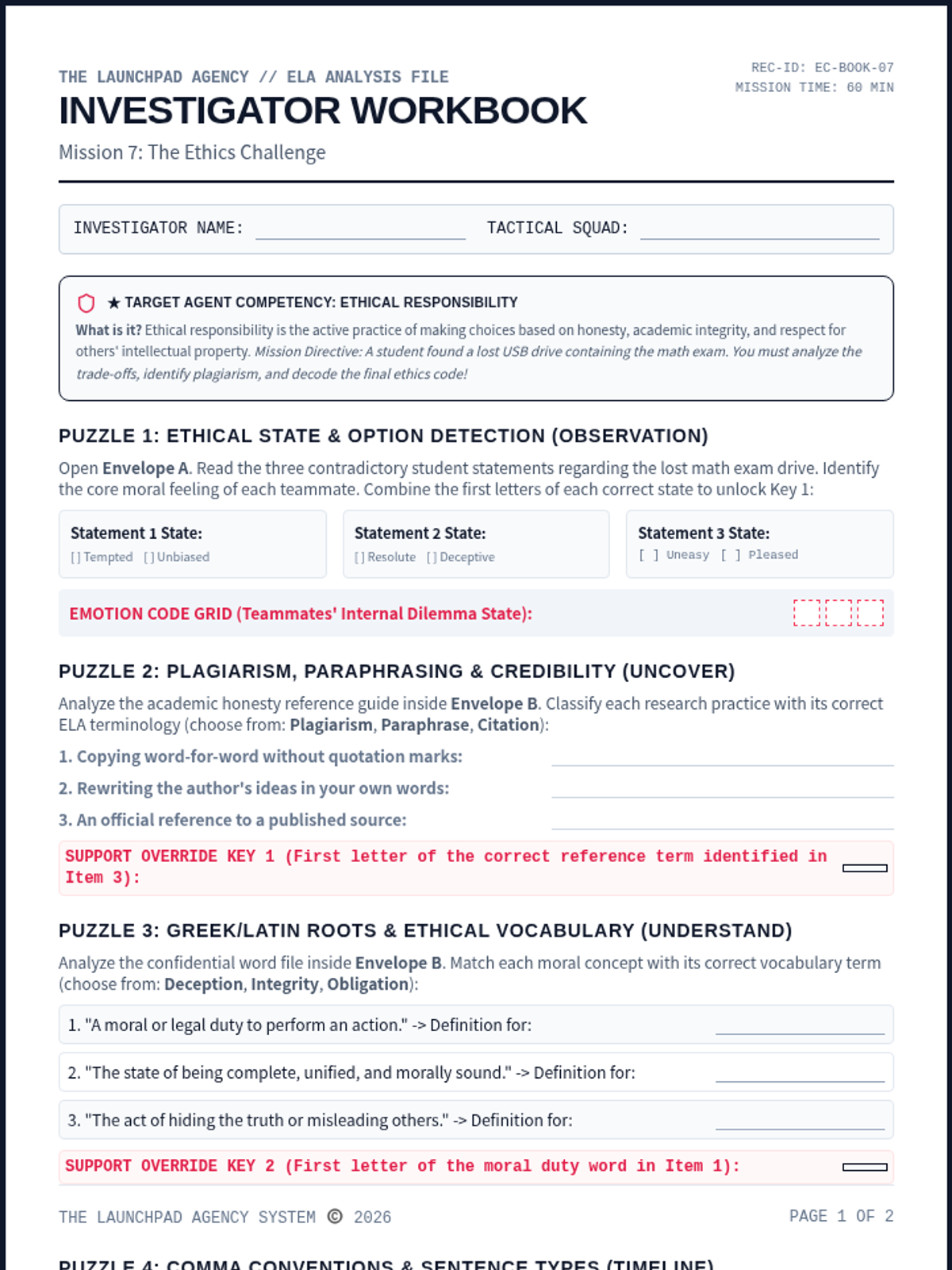
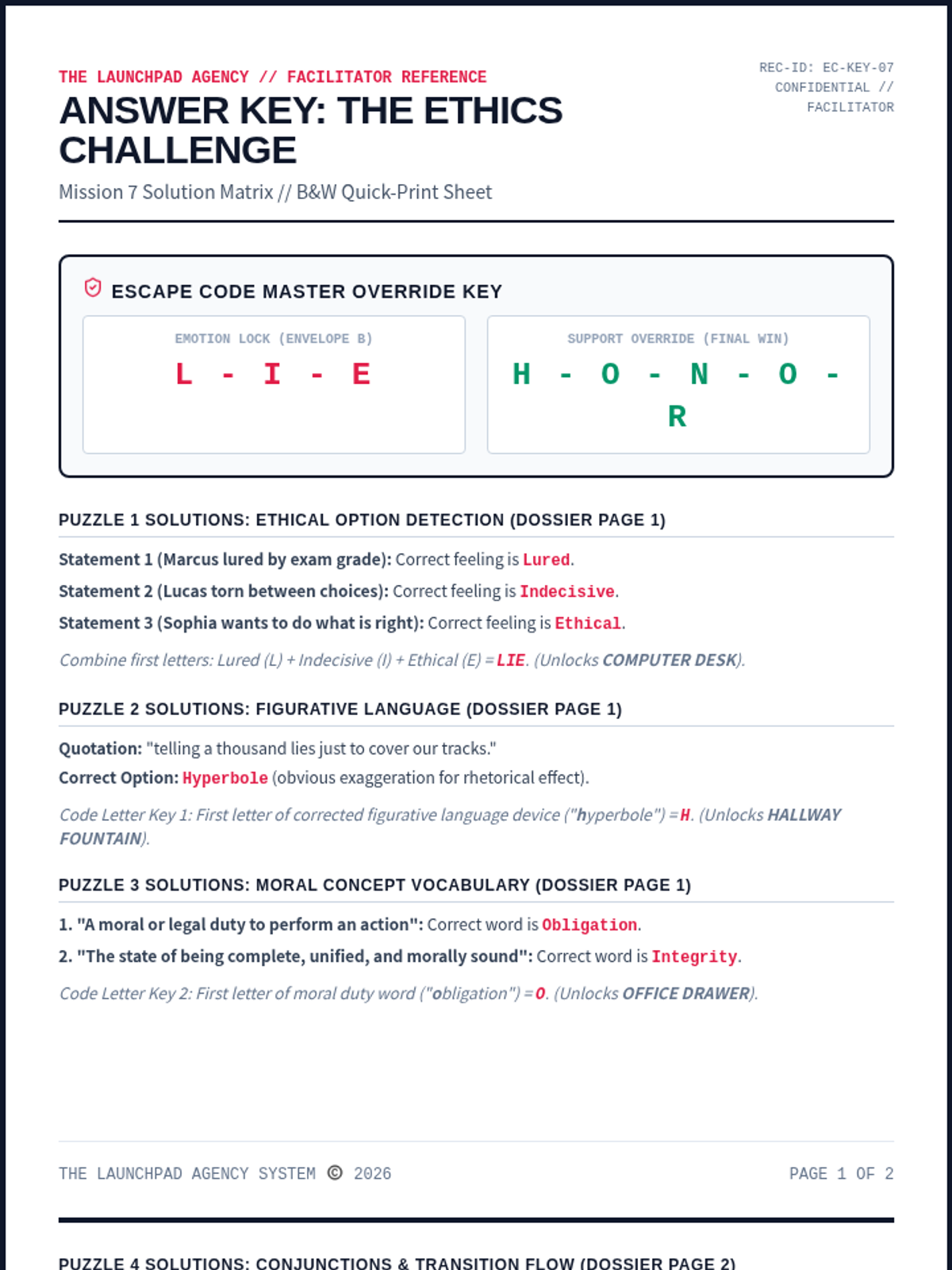
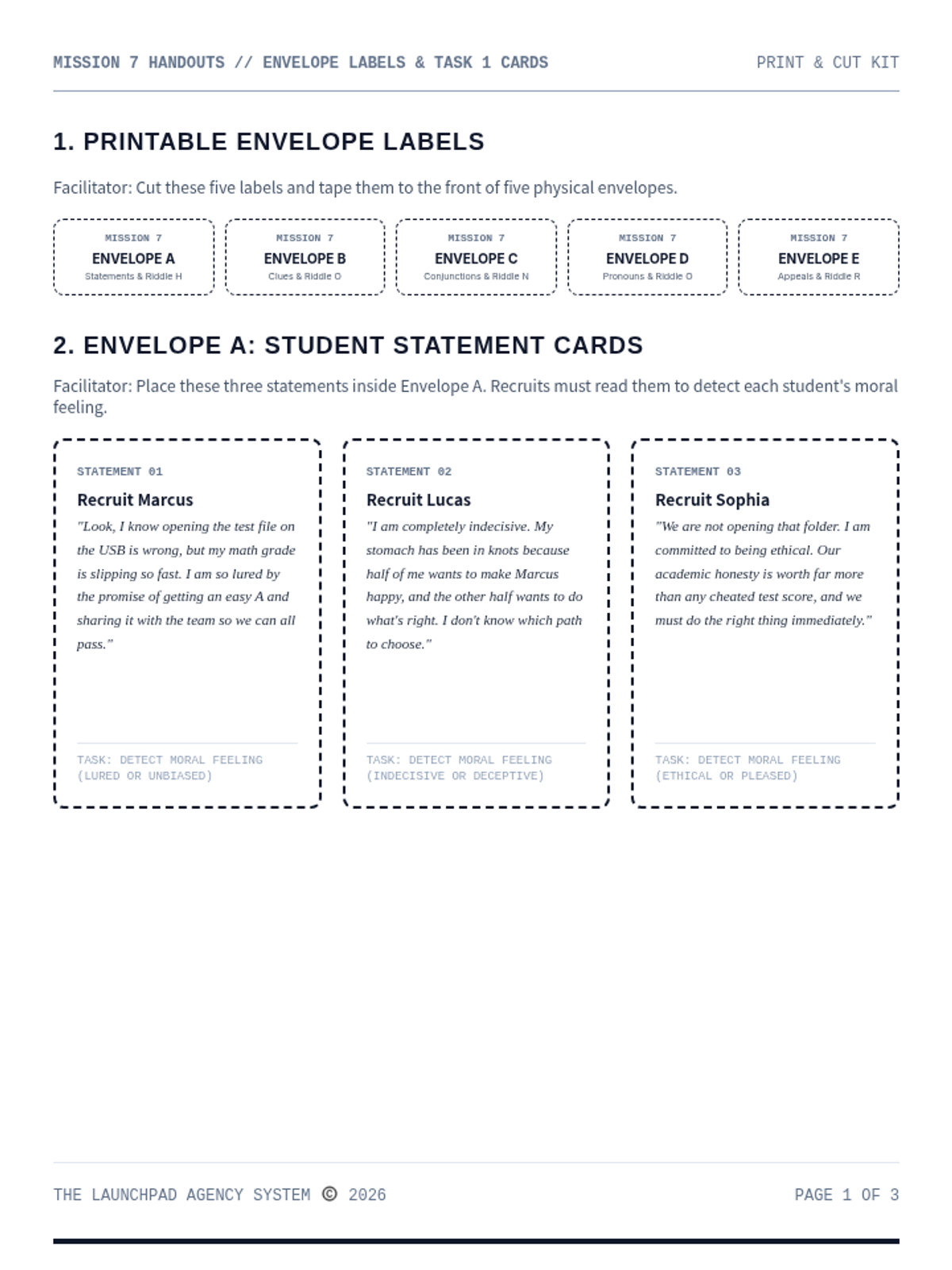
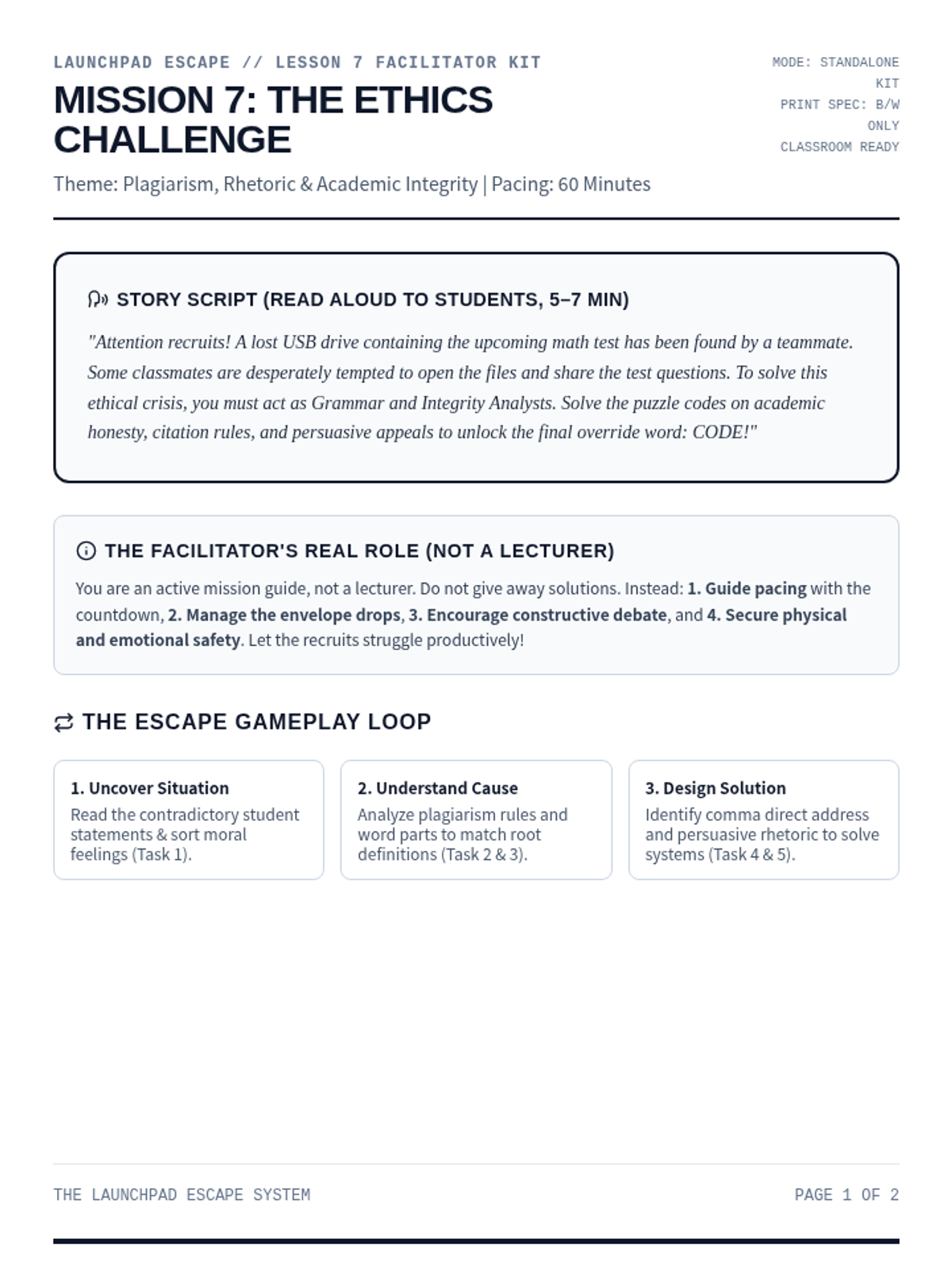
A high-stakes moral dilemma escape room for Ages 11-13. Recruits evaluate the trade-offs of academic honesty, identify plagiarism, analyze persuasive appeals, and decode the final ethics code.
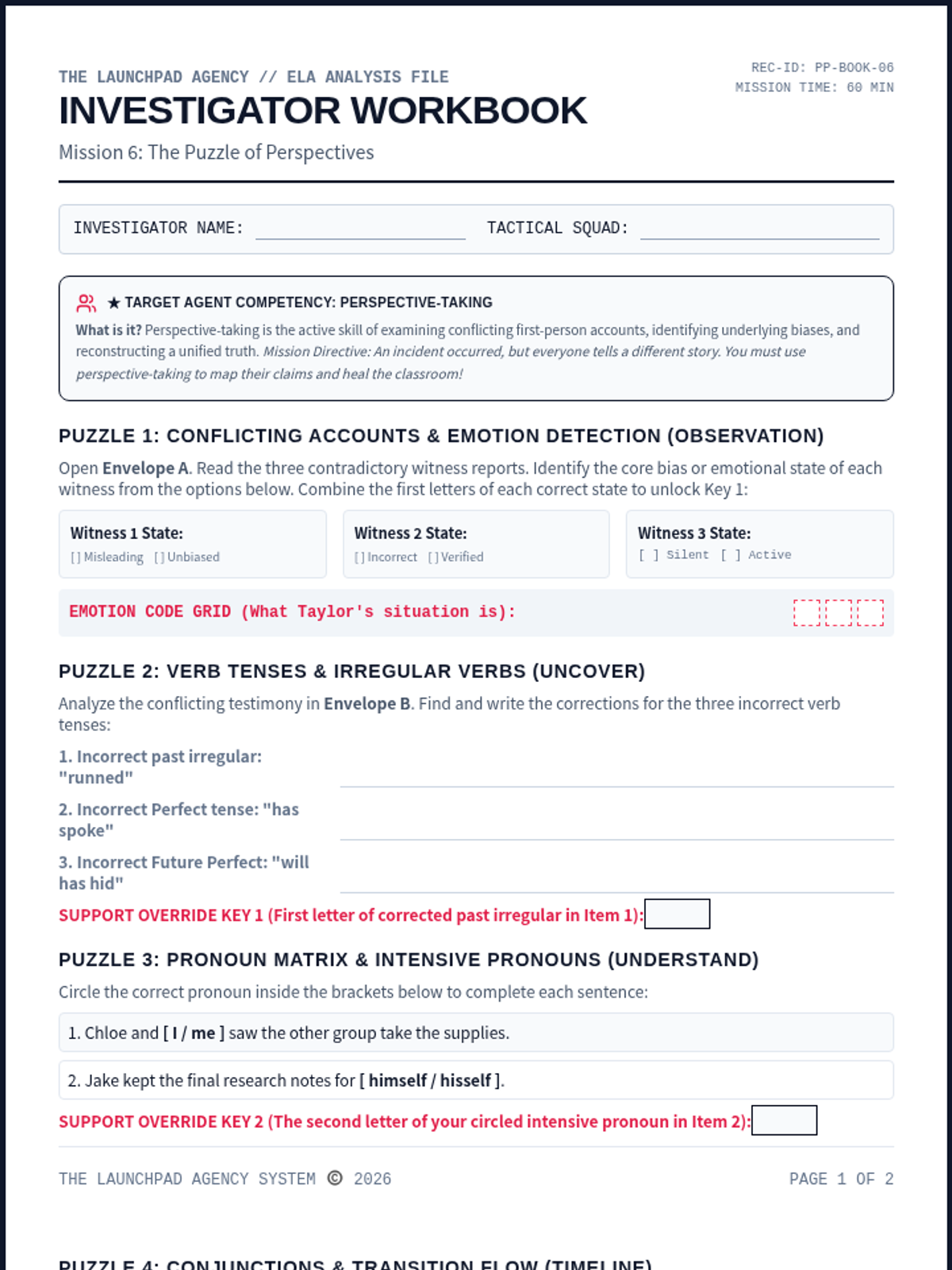
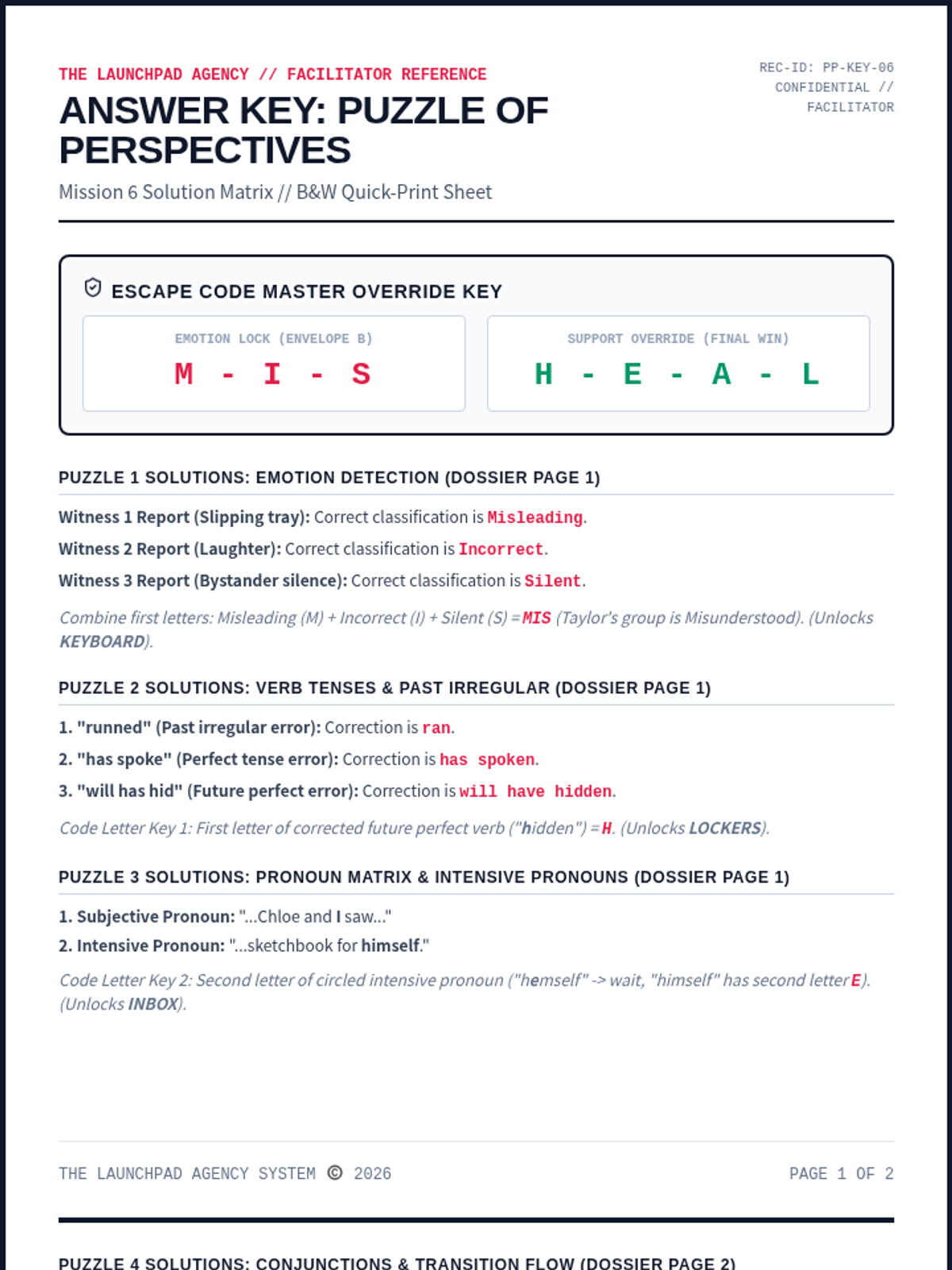
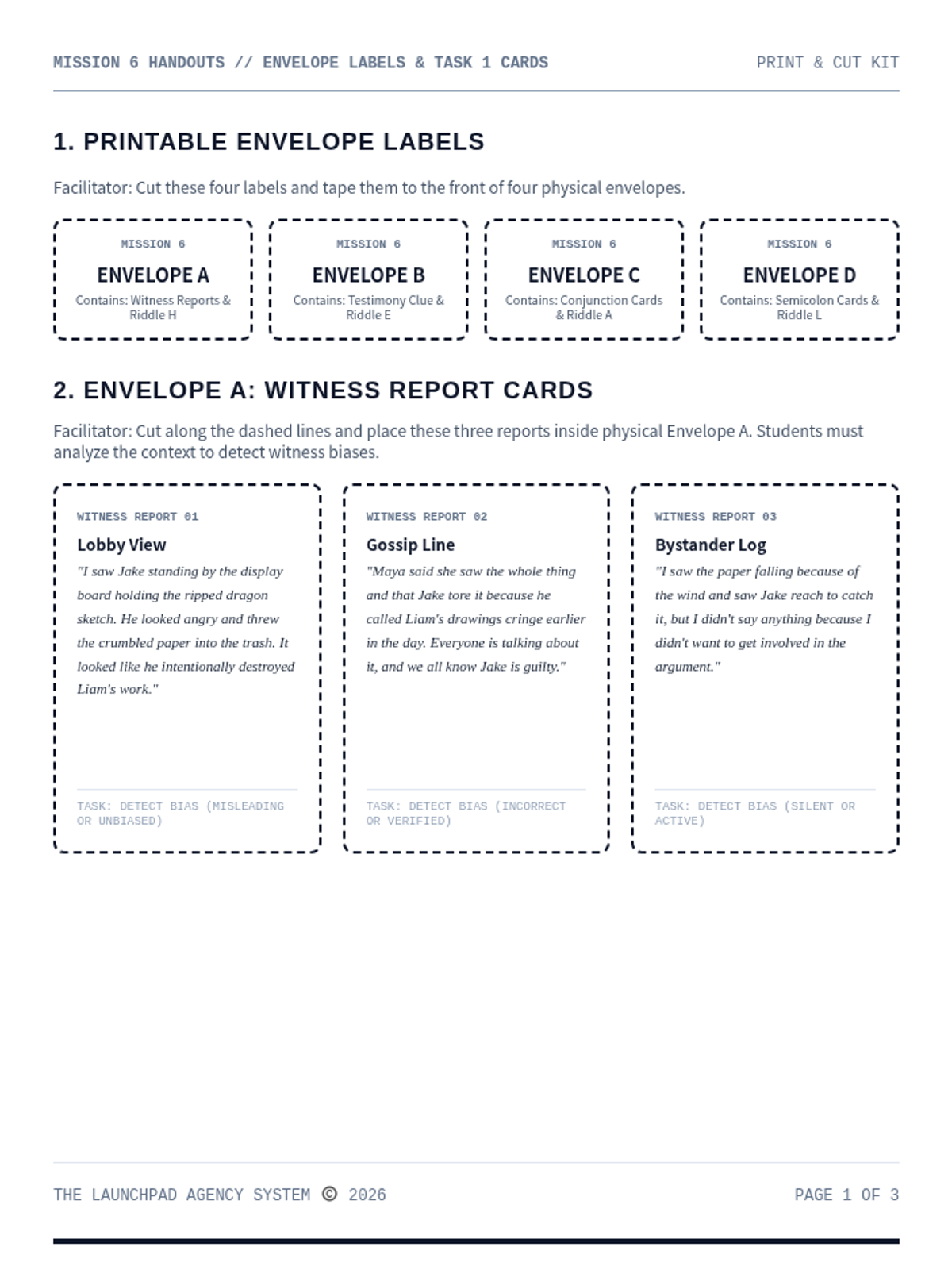
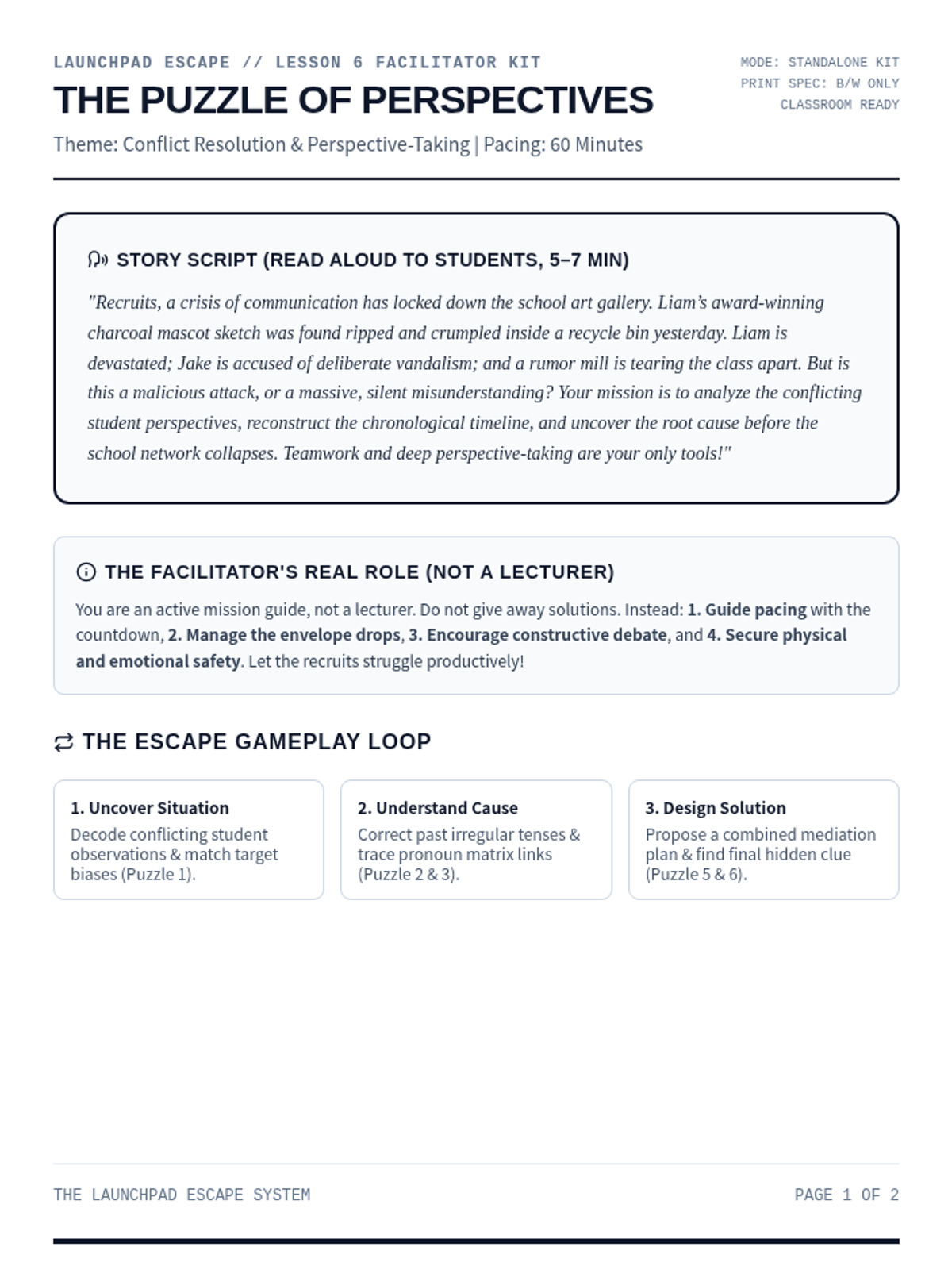
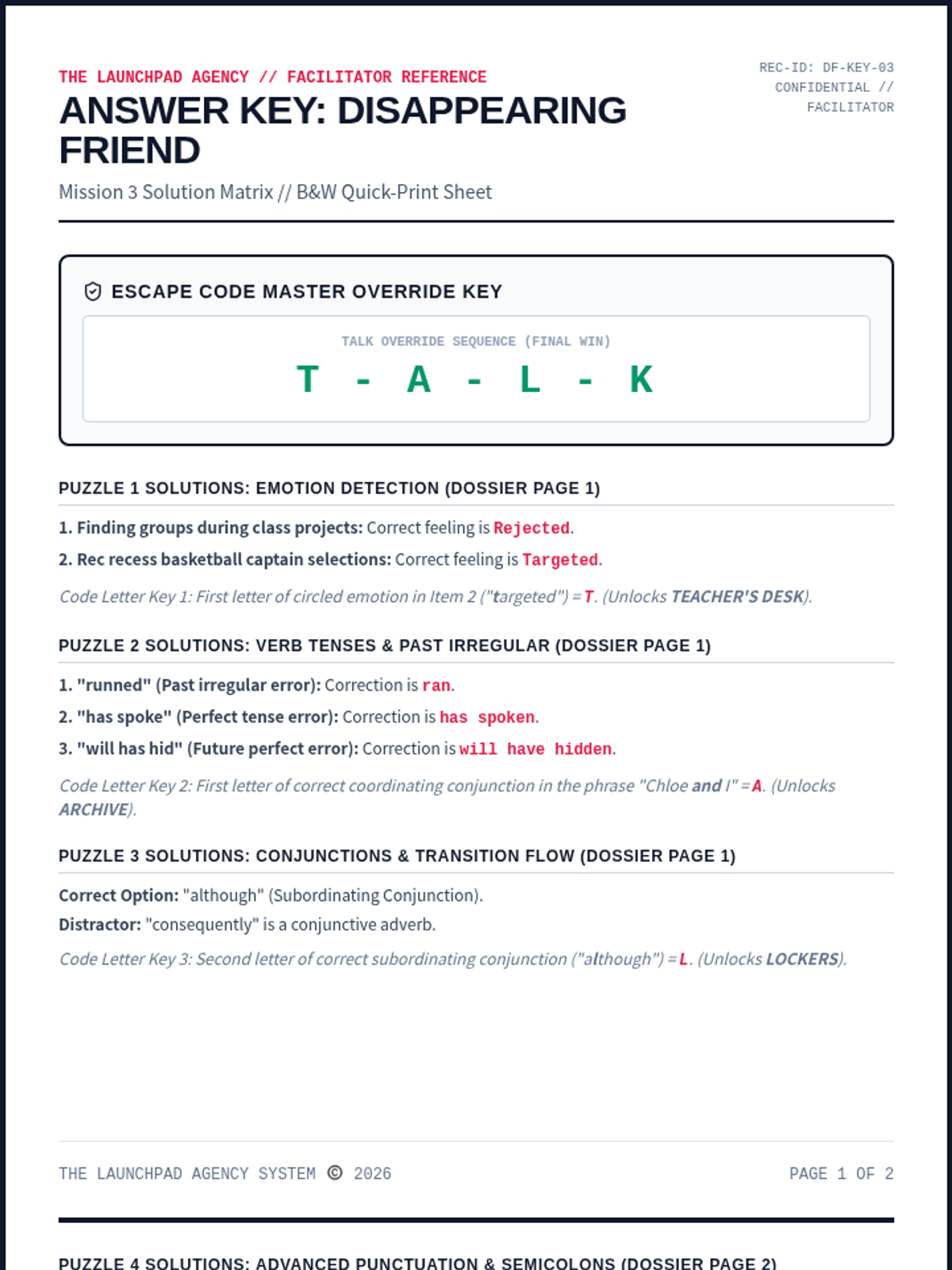
A high-stakes perspective-taking escape room. Recruits examine conflicting first-person accounts, analyze bias, reconstruct a unified timeline, and solve the override code.
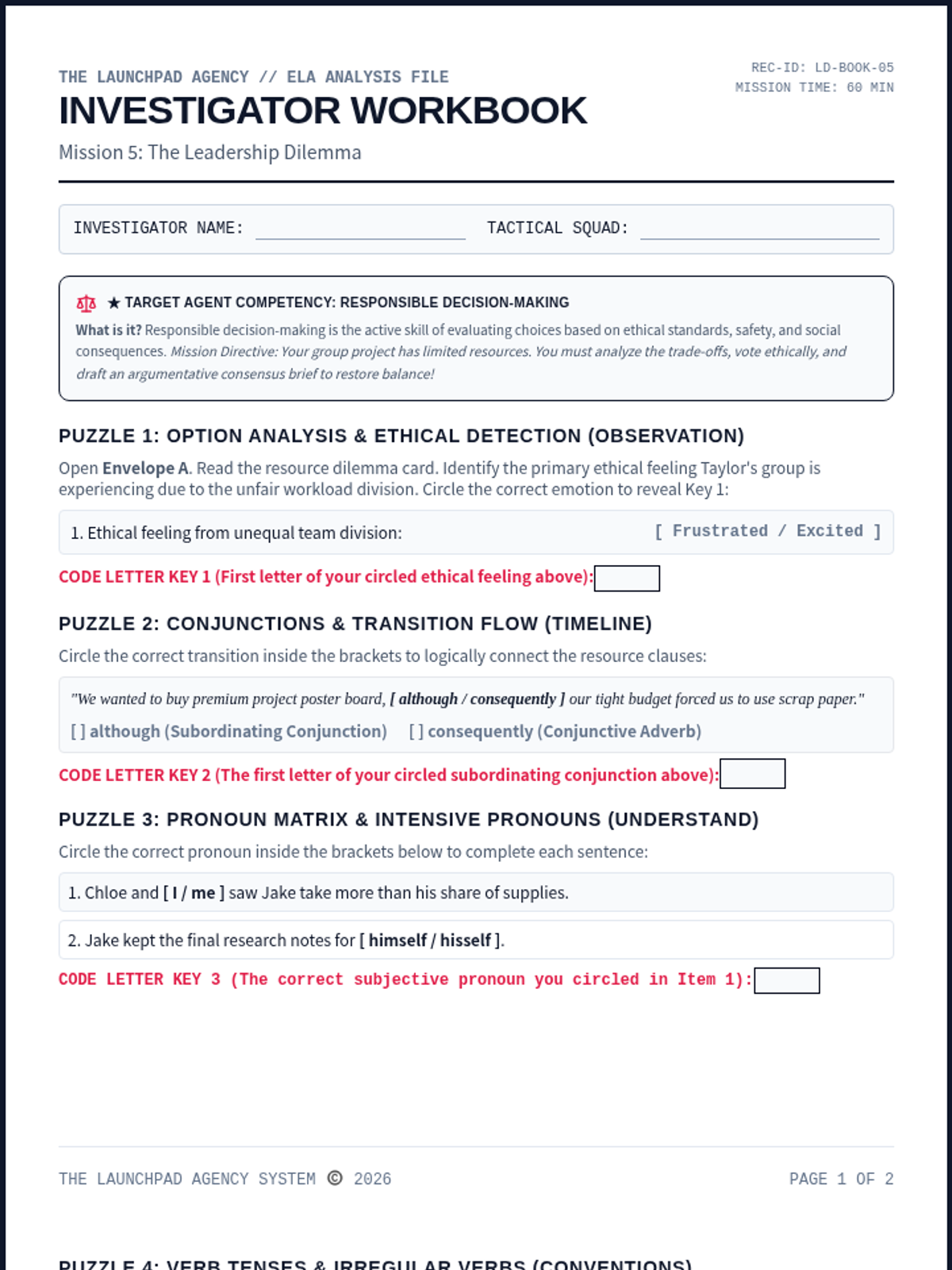
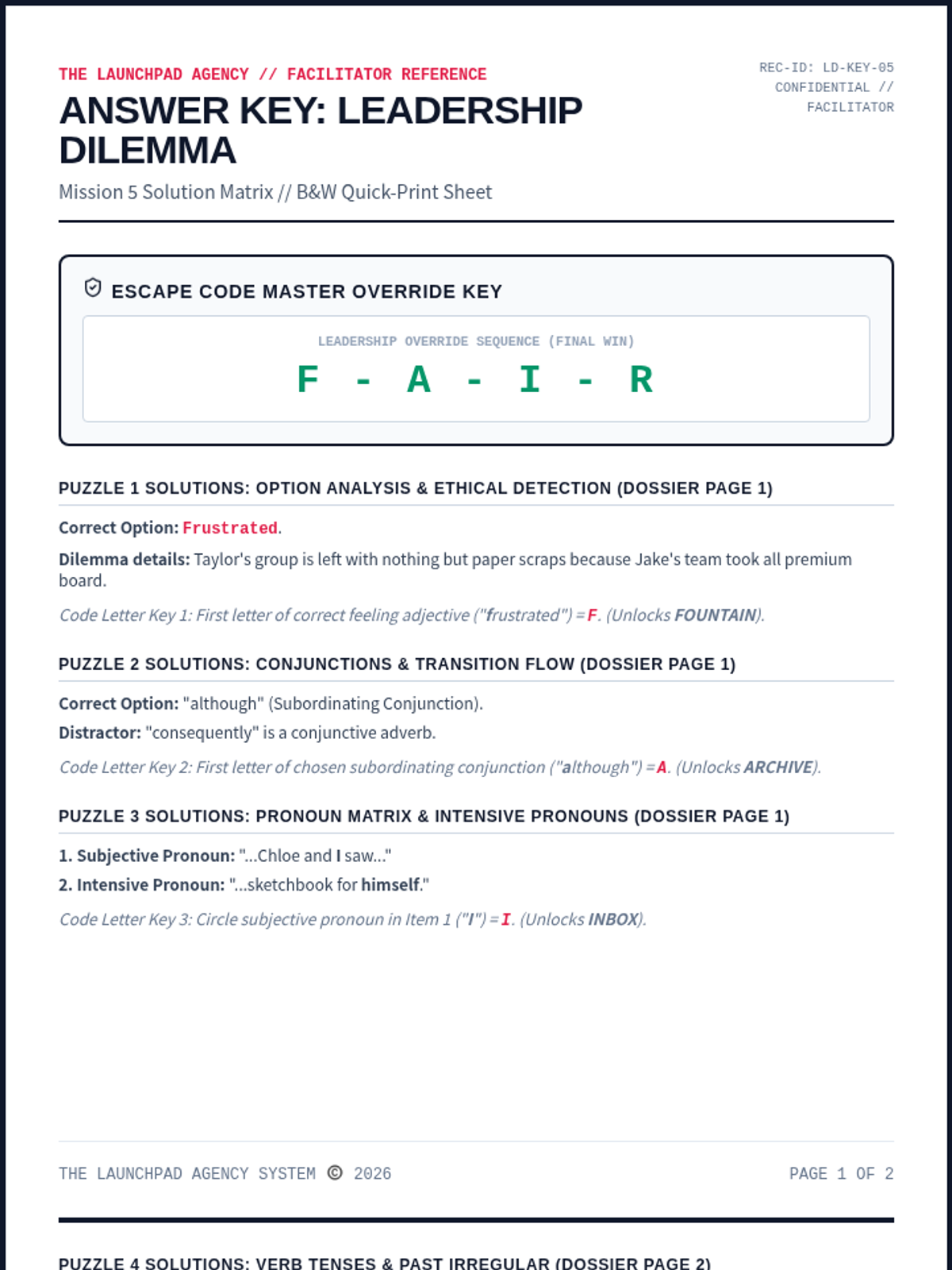
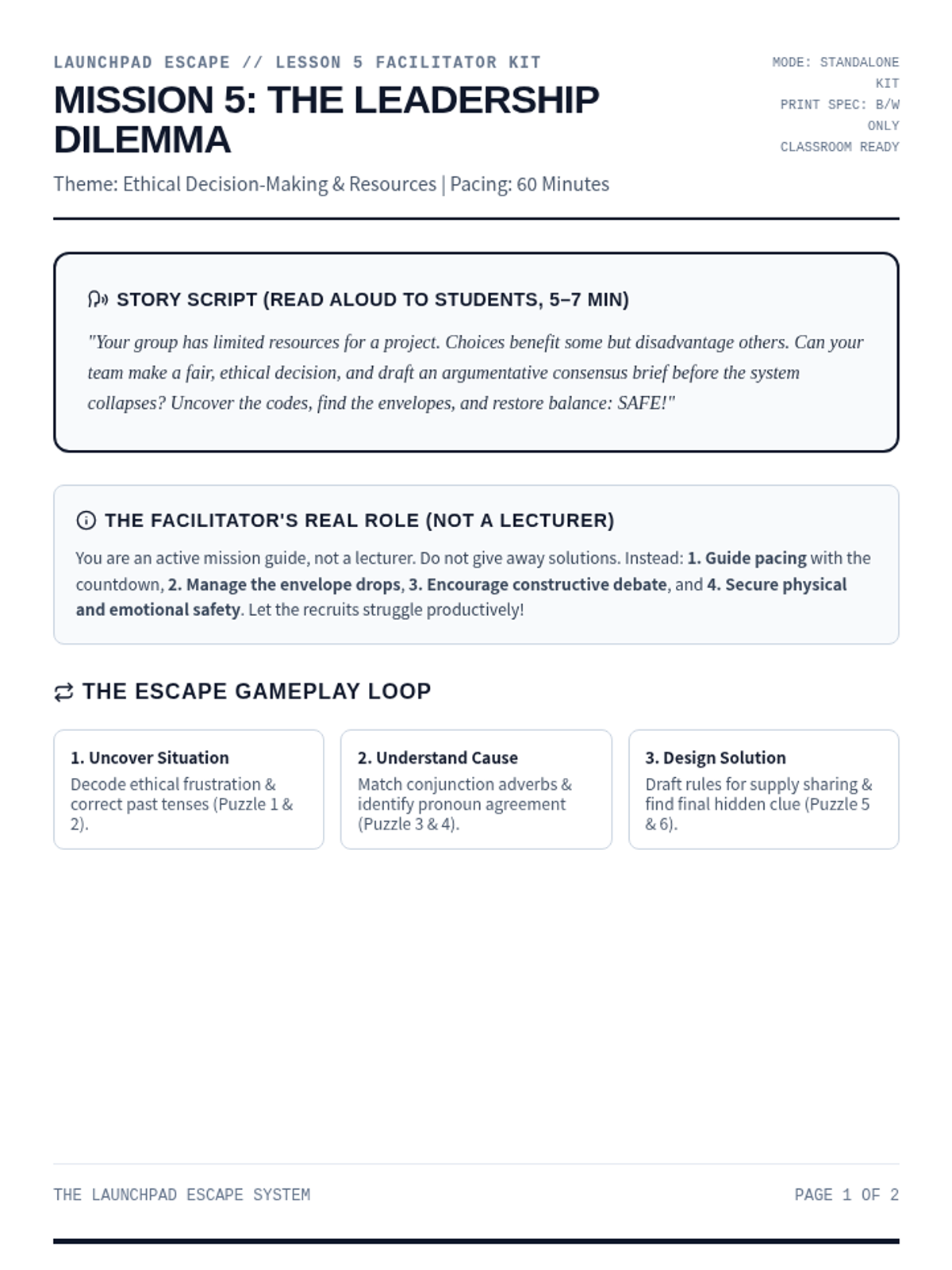
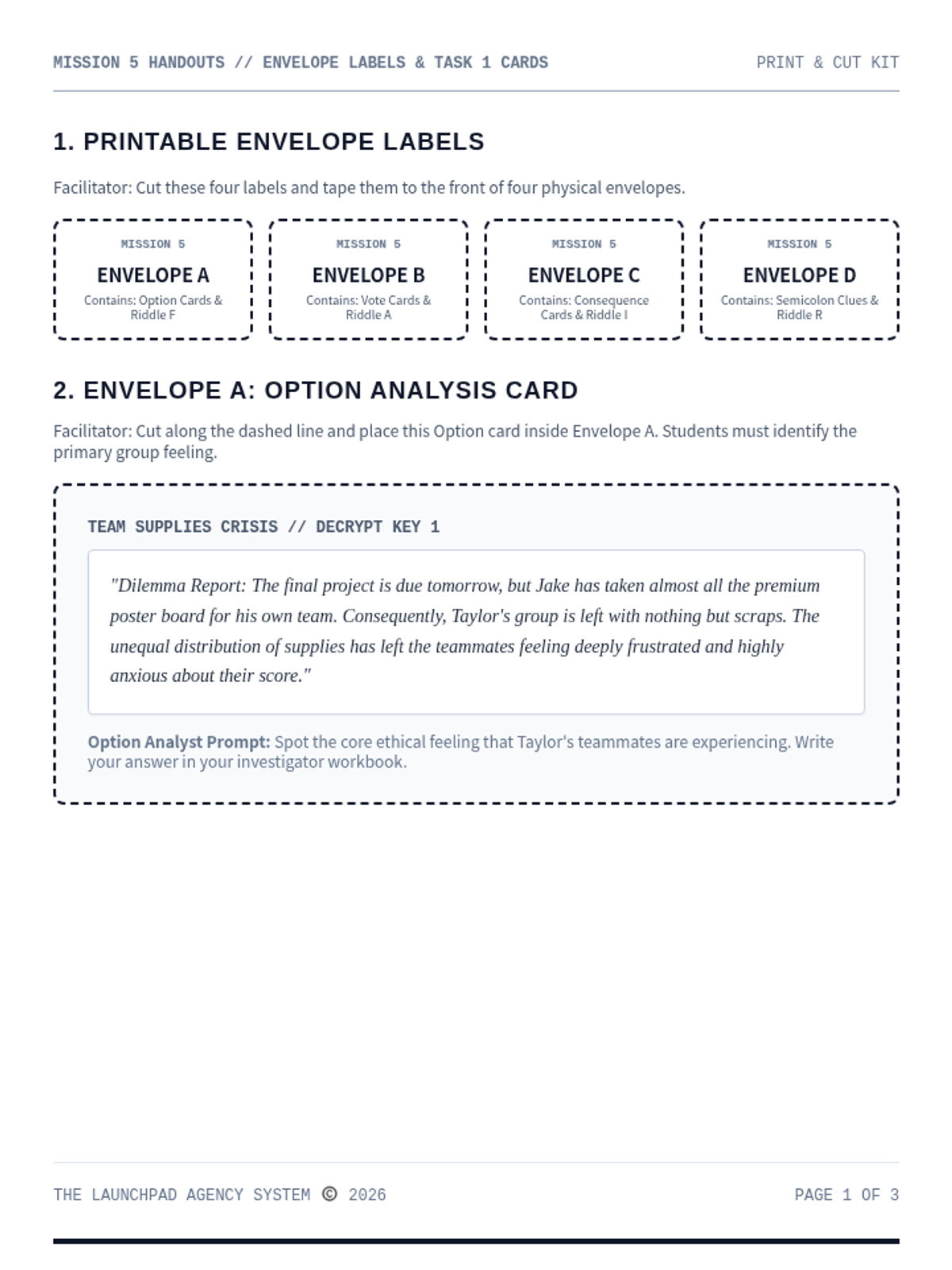
An ethical decision-making and systems-thinking escape room. Recruits analyze resource allocation options, vote on complex tradeoffs, map cascading social consequences, and draft an argumentative consensus brief to restore balance.
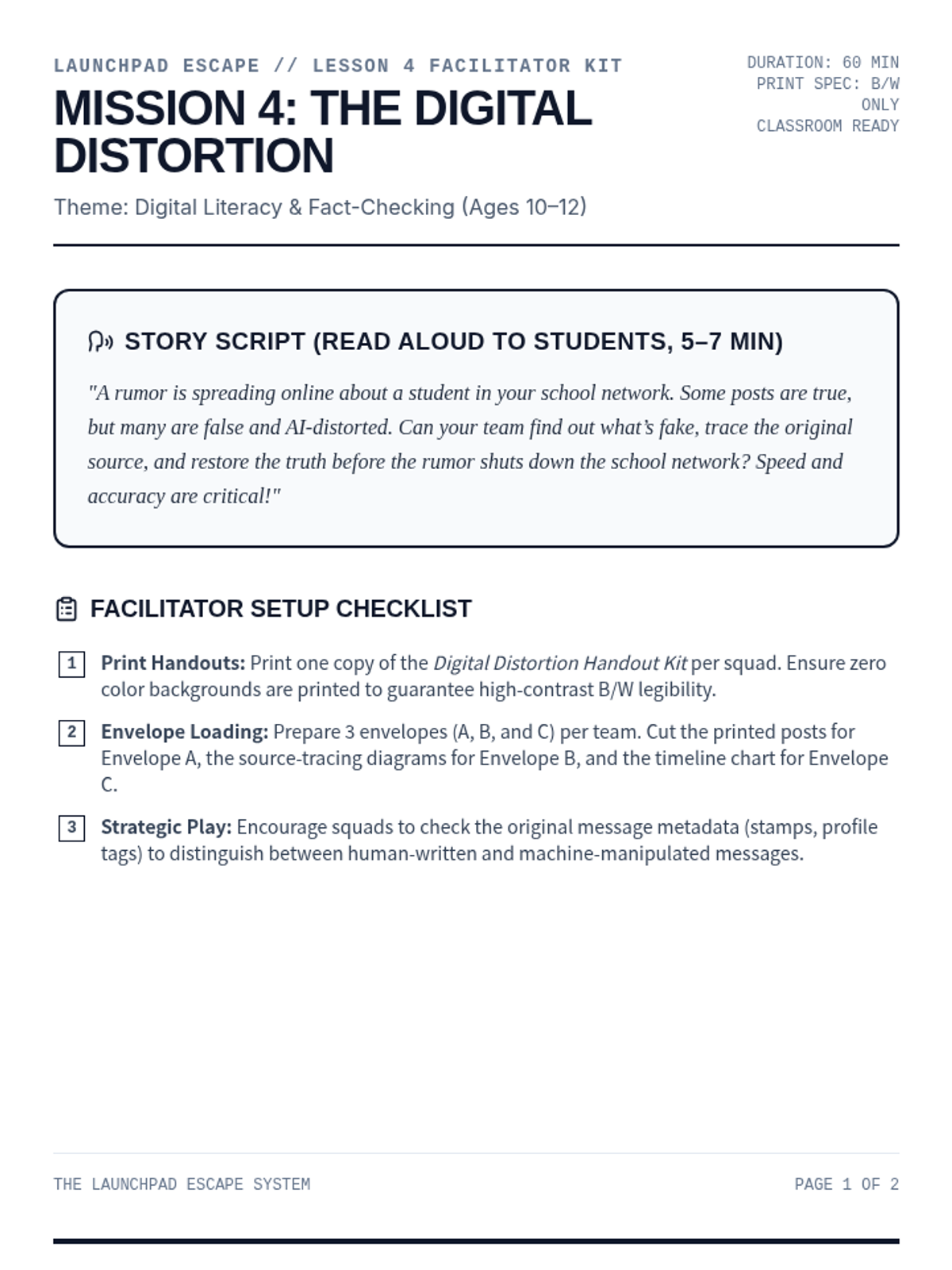
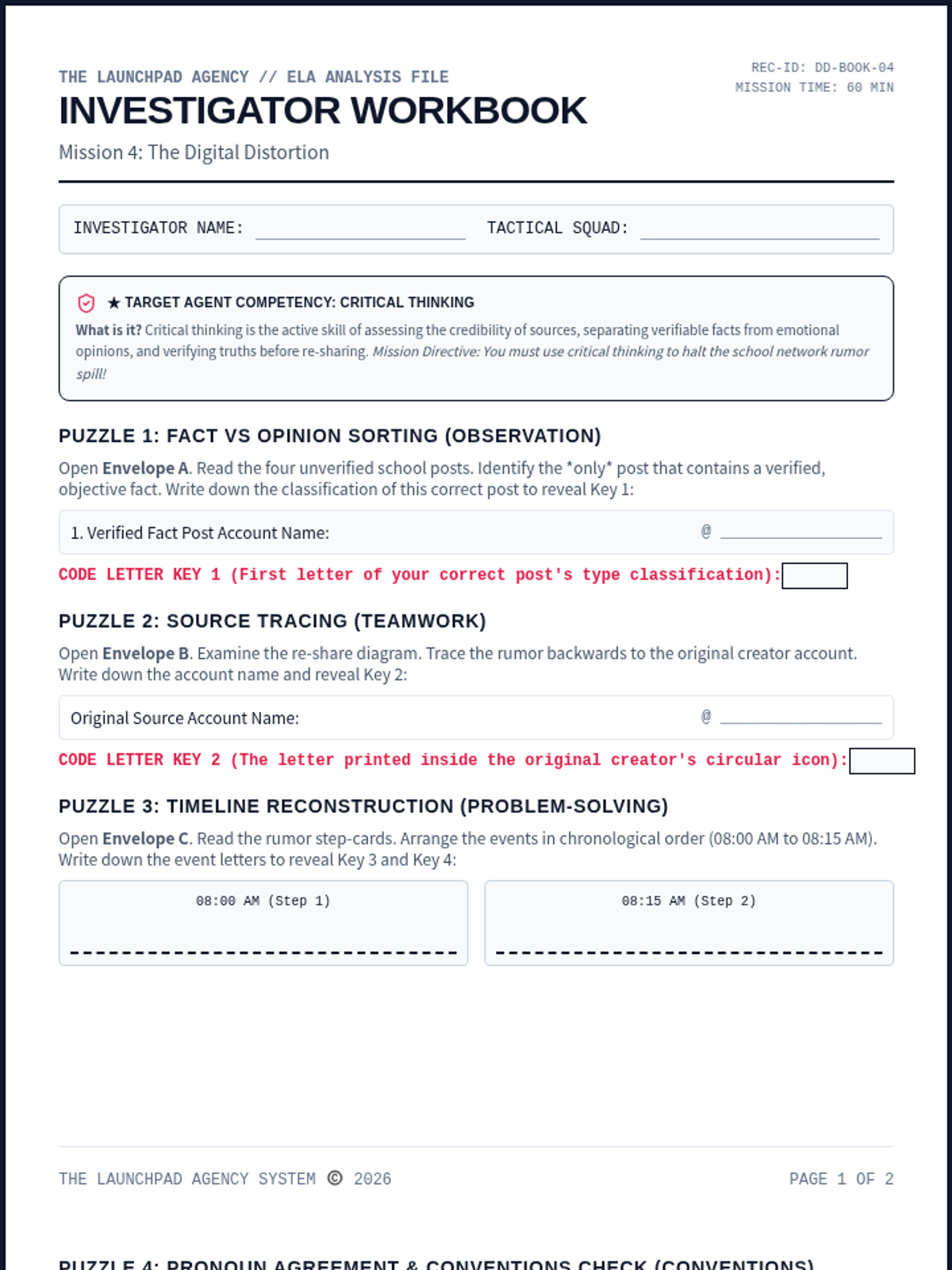
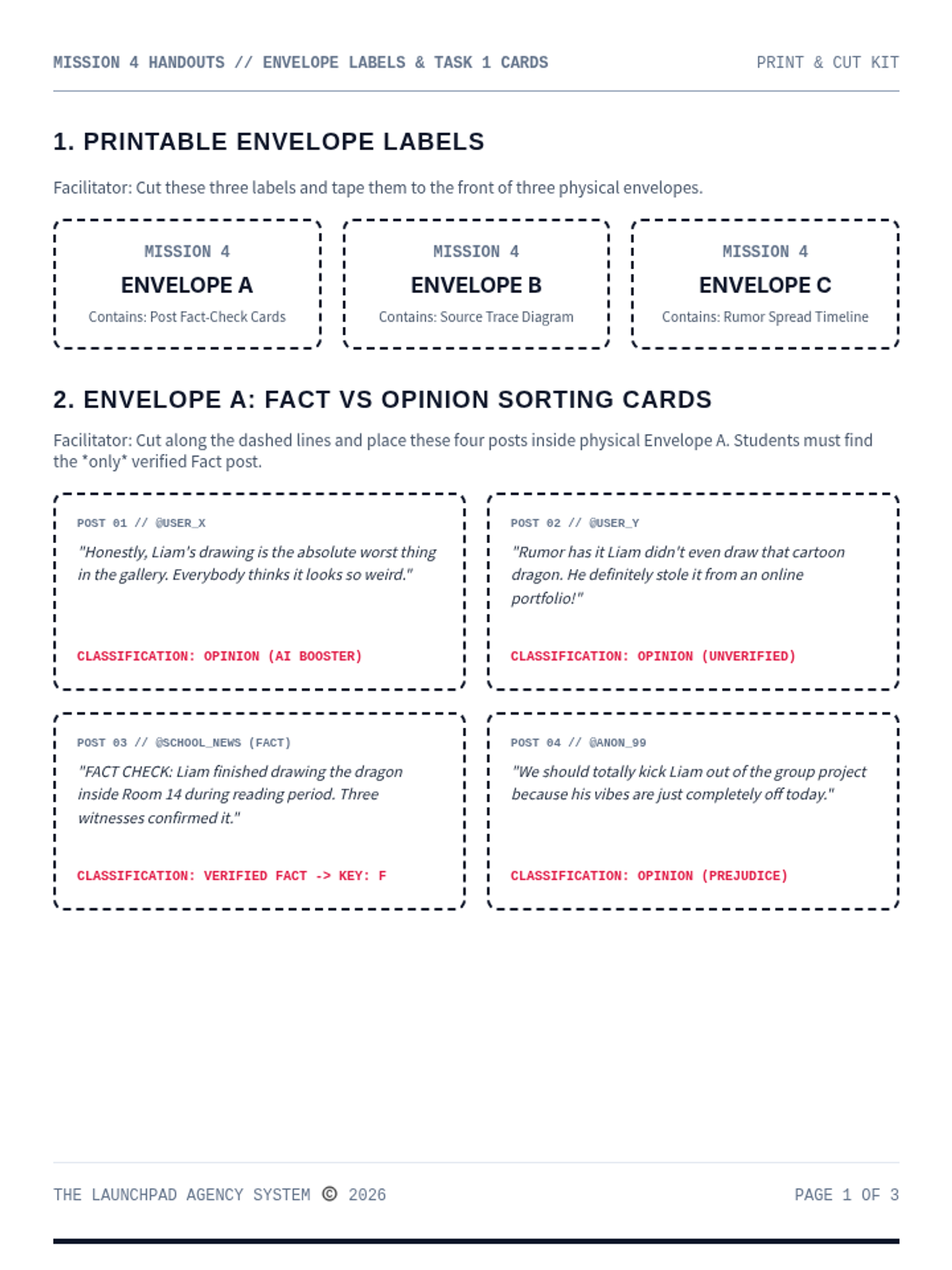
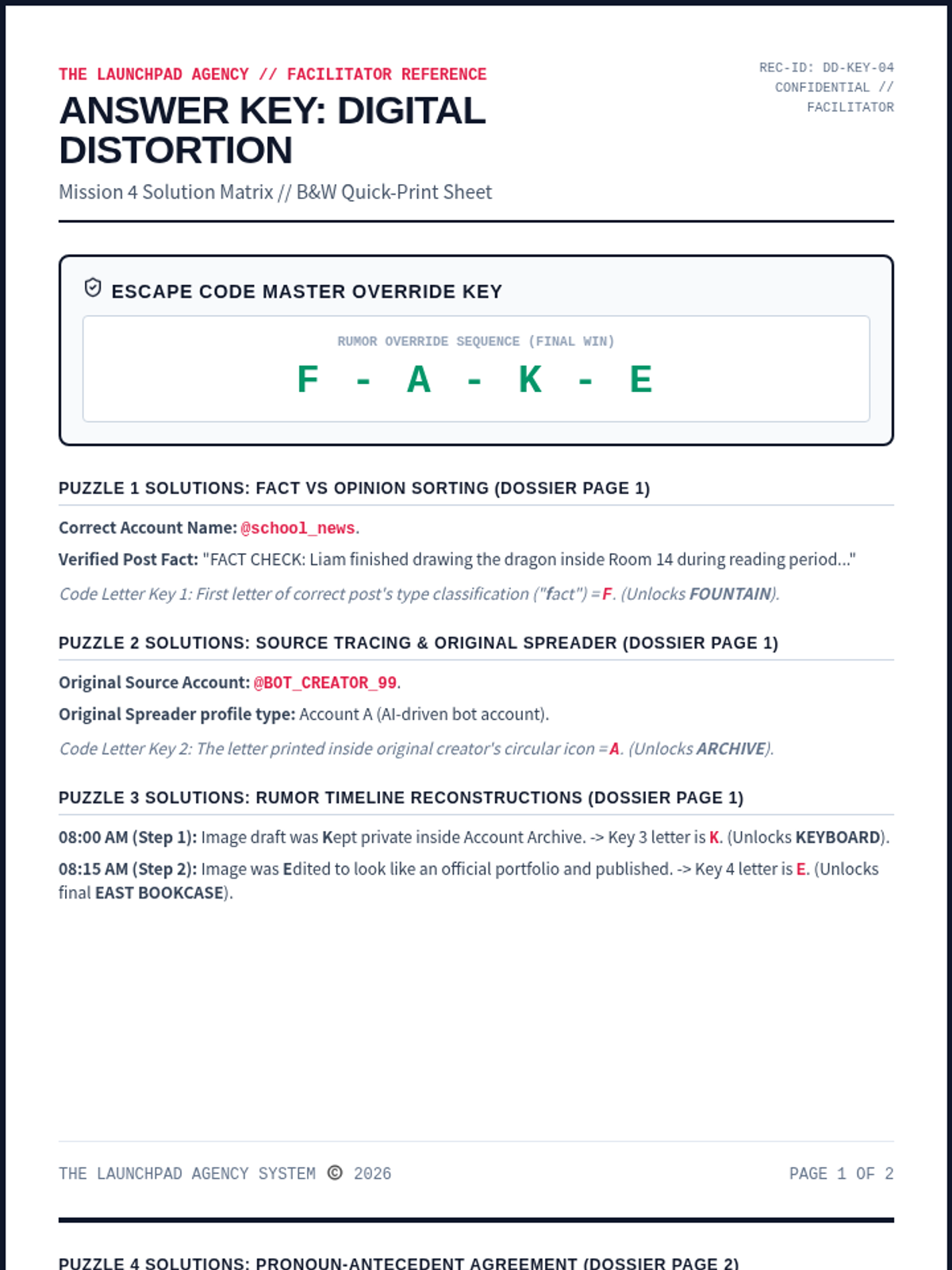
An online misinformation and fact-checking escape room for Ages 10-12. Recruits sort fact vs. opinion, trace original message sources, and reconstruct truth timelines to stop rumors.
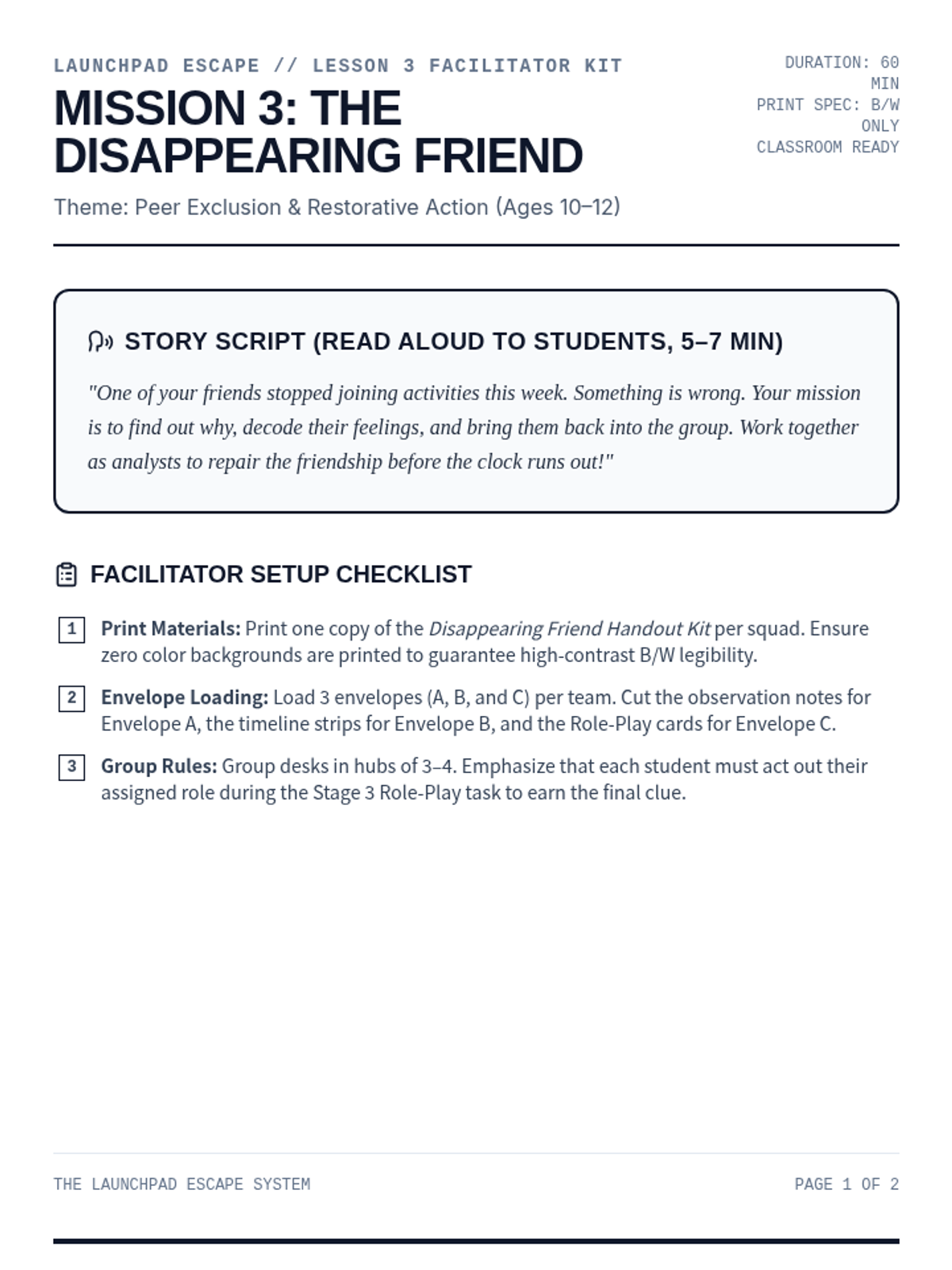
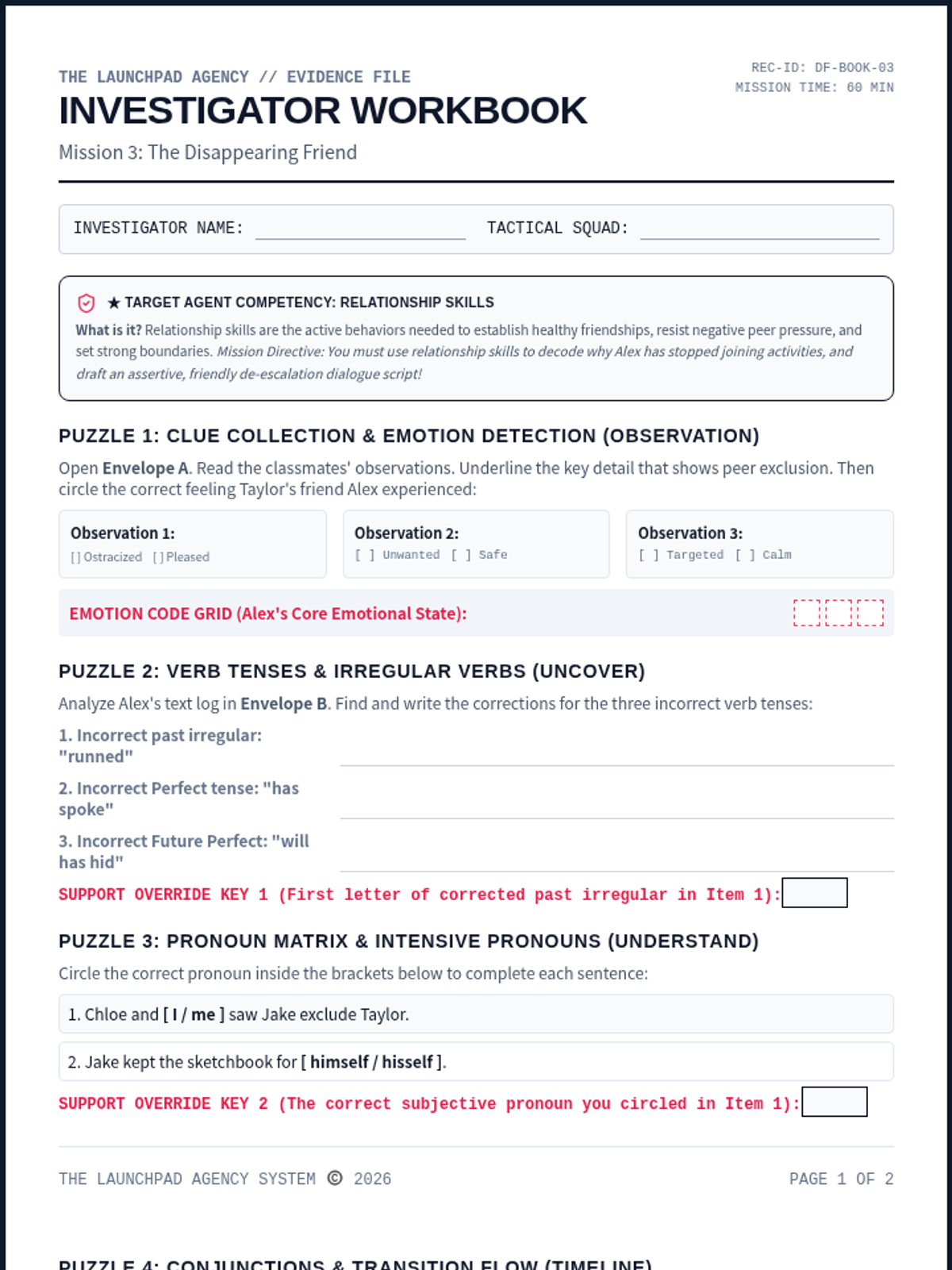
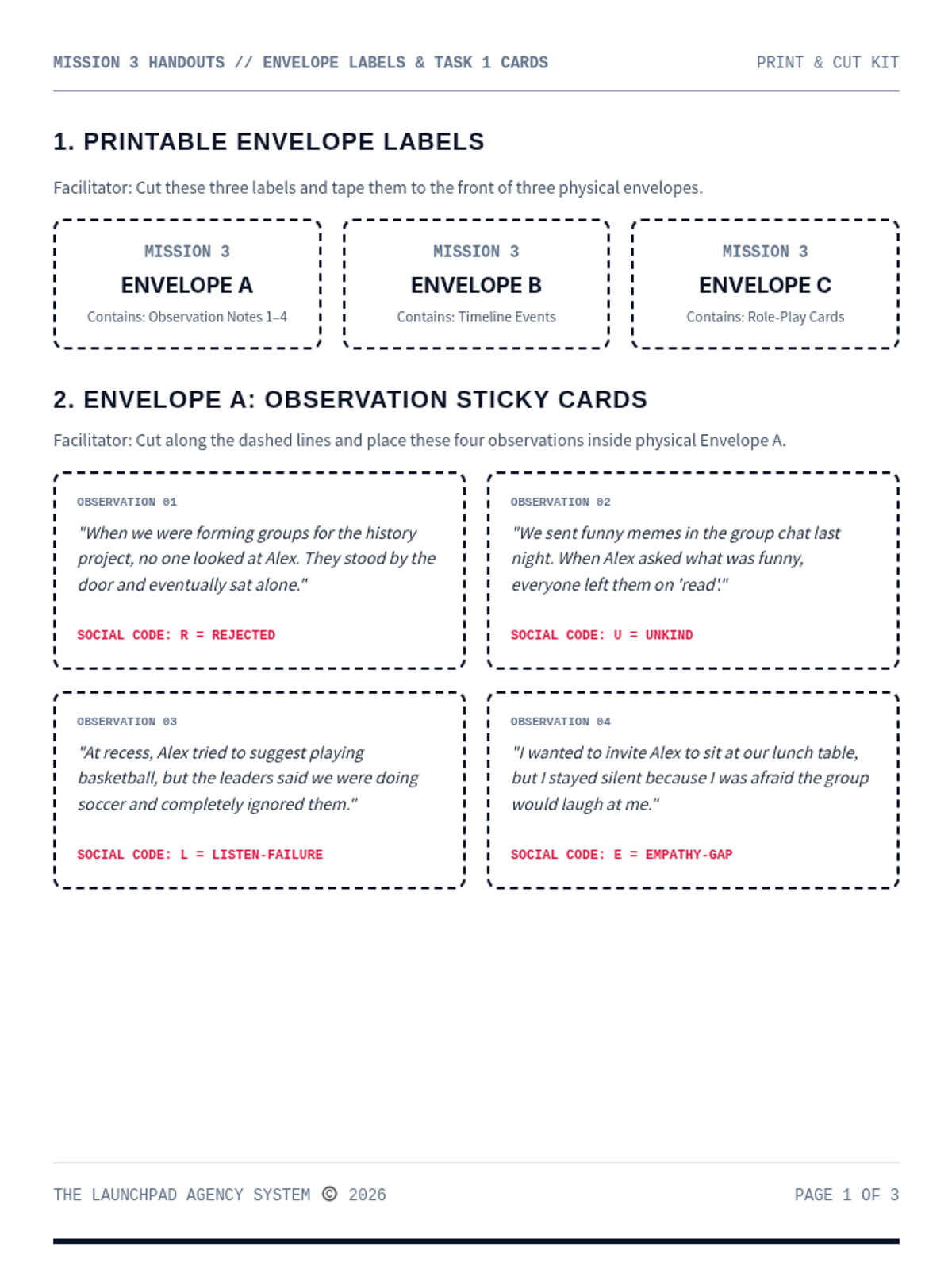
A chronological reconstruction and peer exclusion escape room for Ages 10-12. Recruits analyze sticky-note observations, identify missed social interactions, and role-play restorative de-escalation scripts.
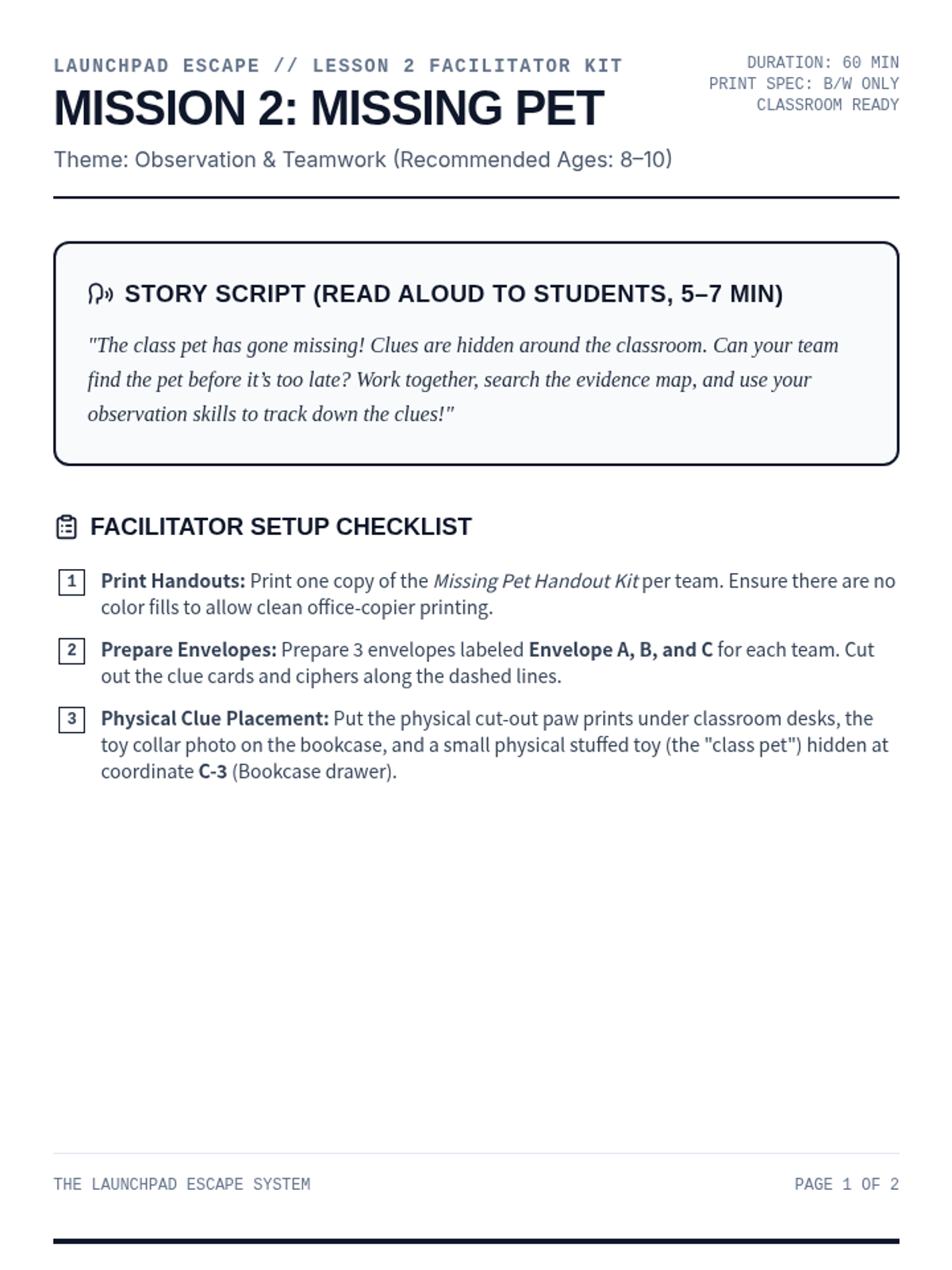
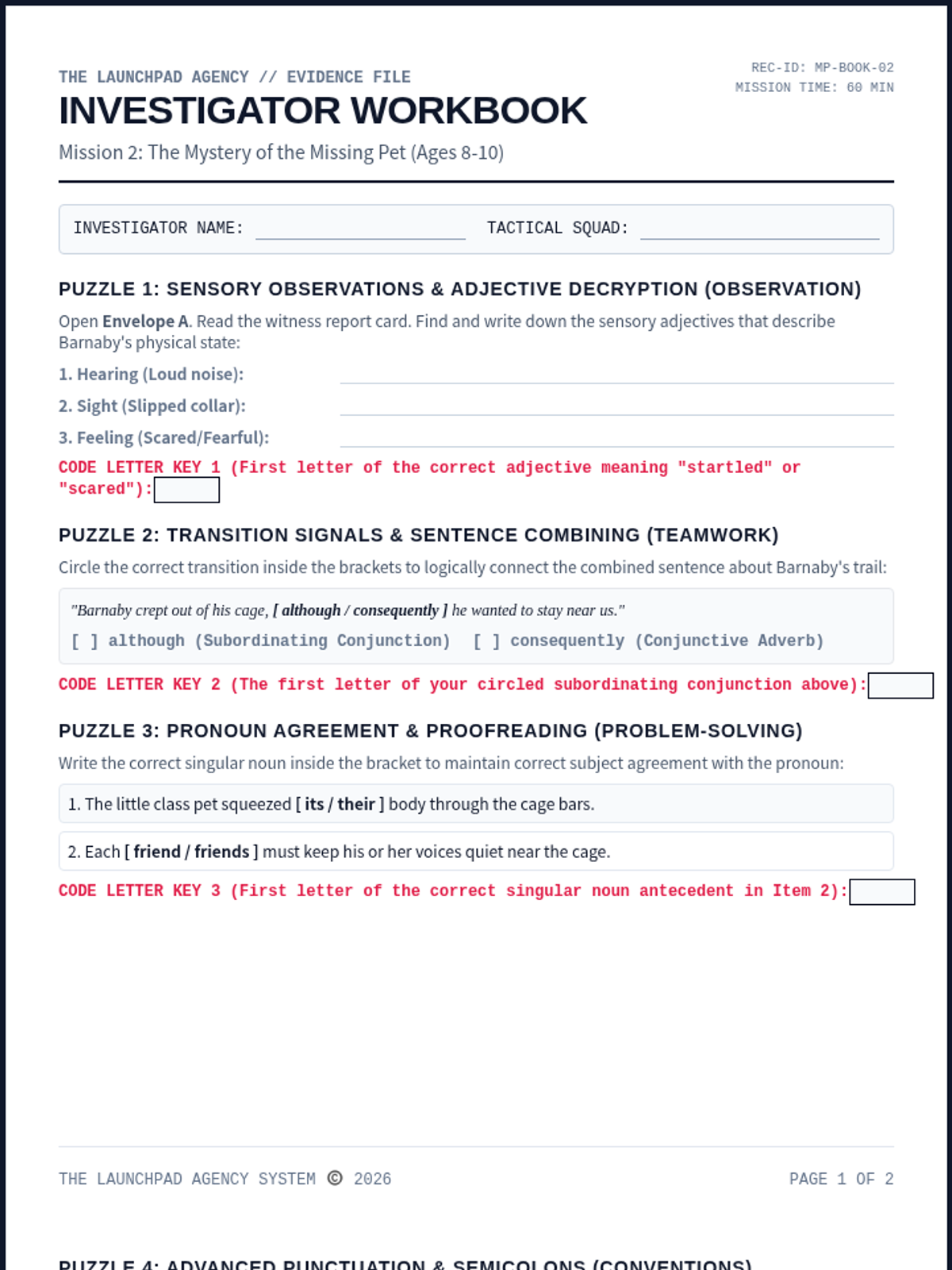
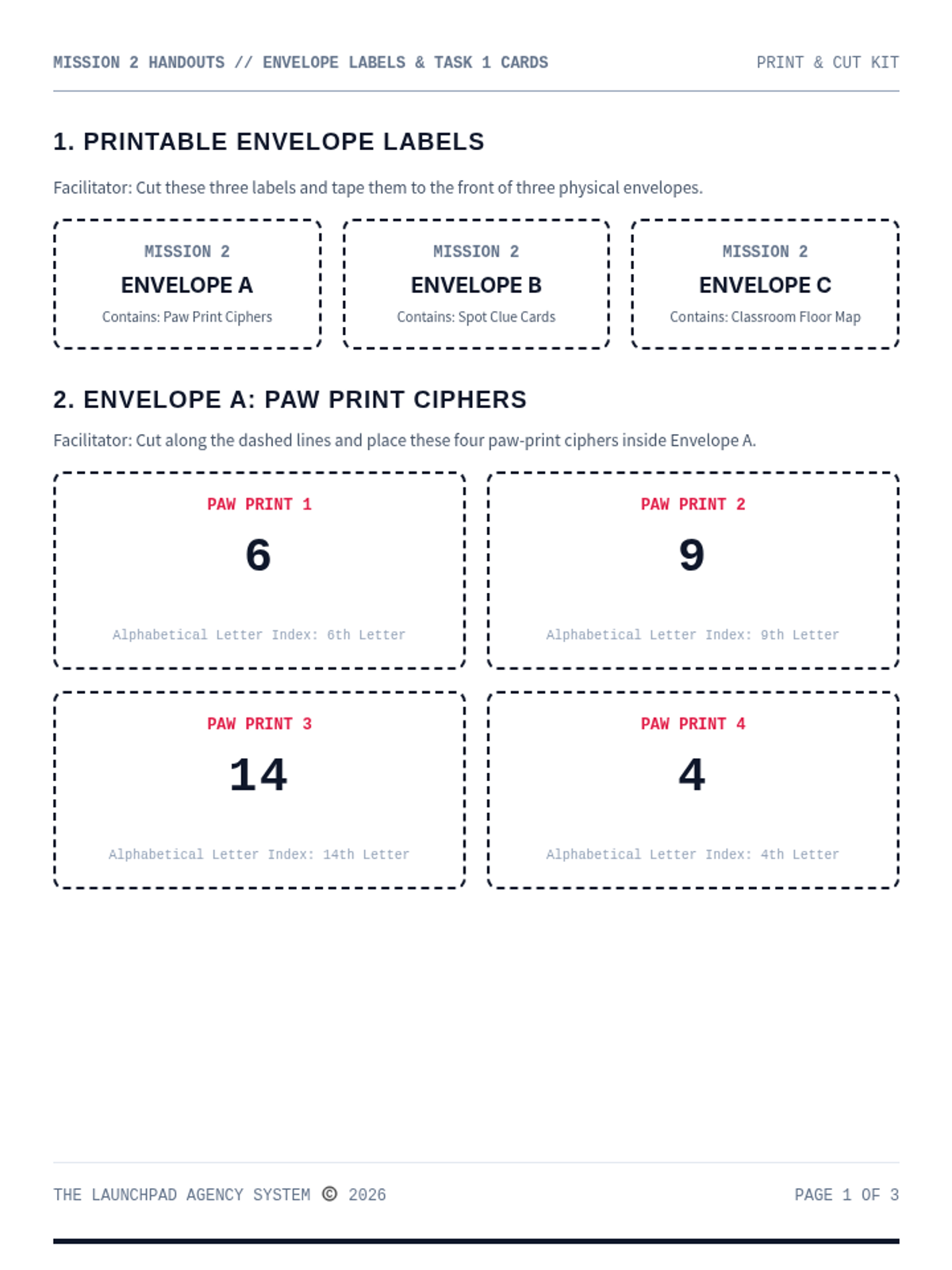
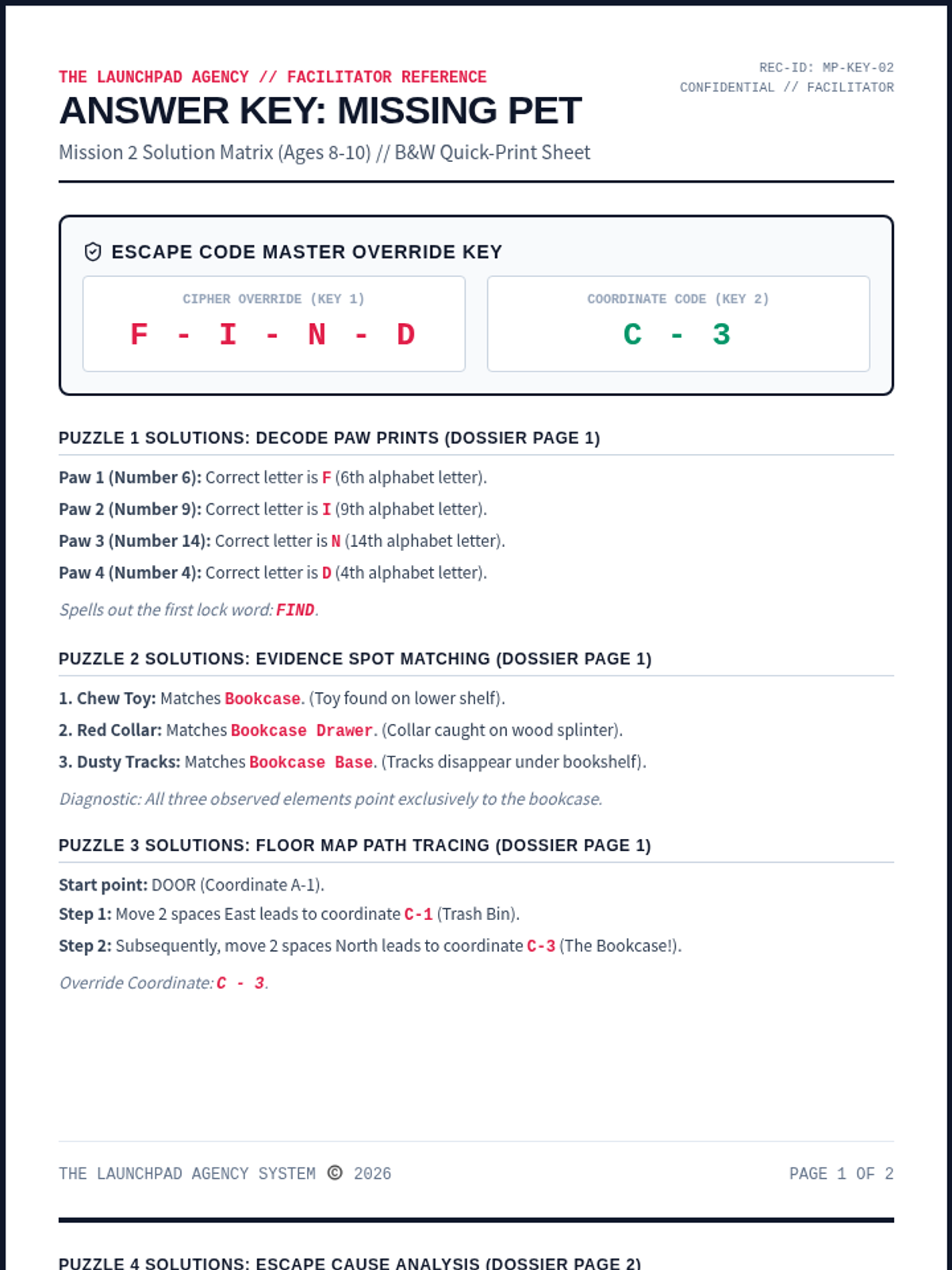
An observation-based escape mission for Ages 8-10. Recruits decode paw ciphers, match footprint evidence to classroom hiding spots, and compile a team map to find the missing class pet.
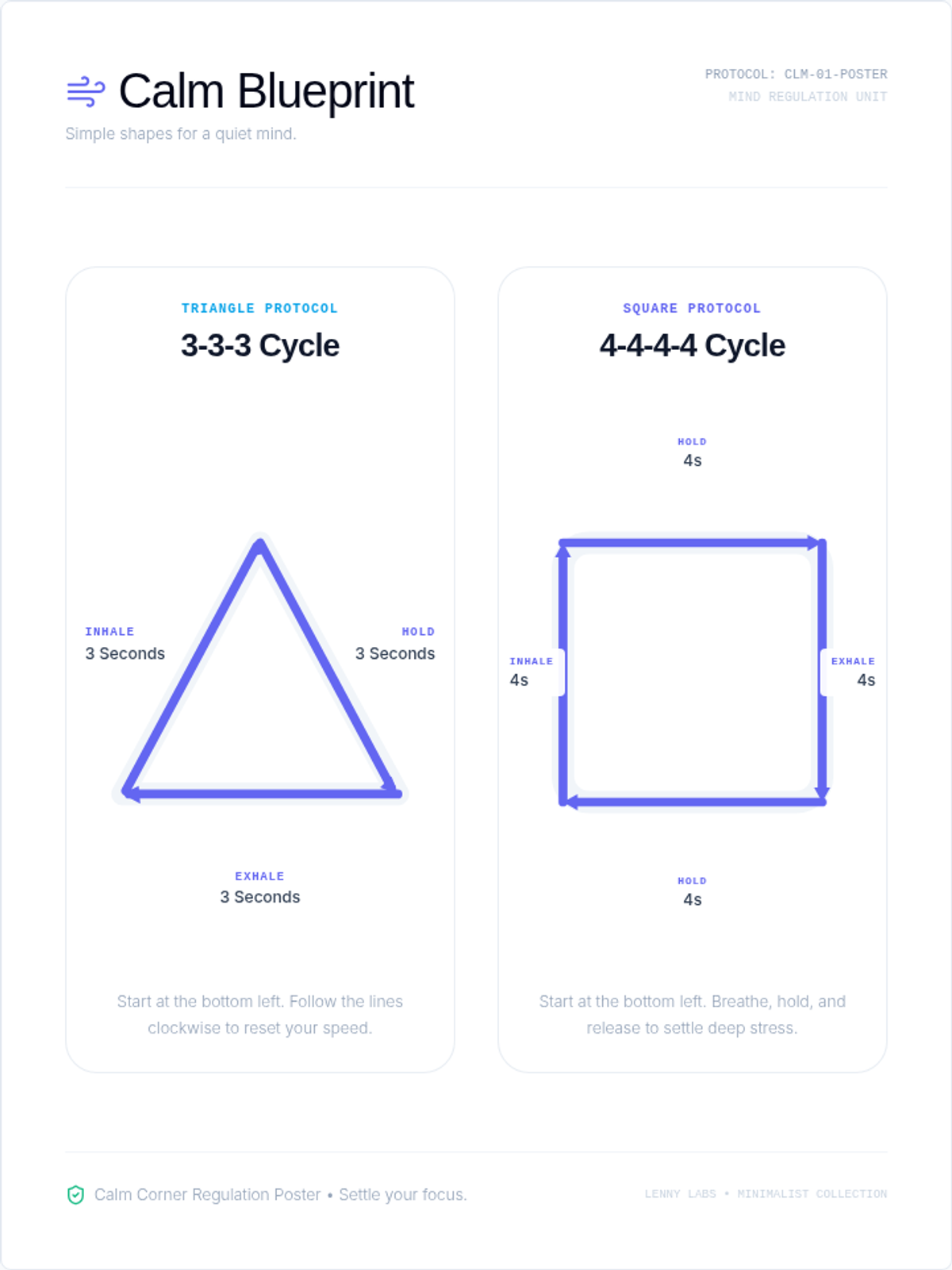
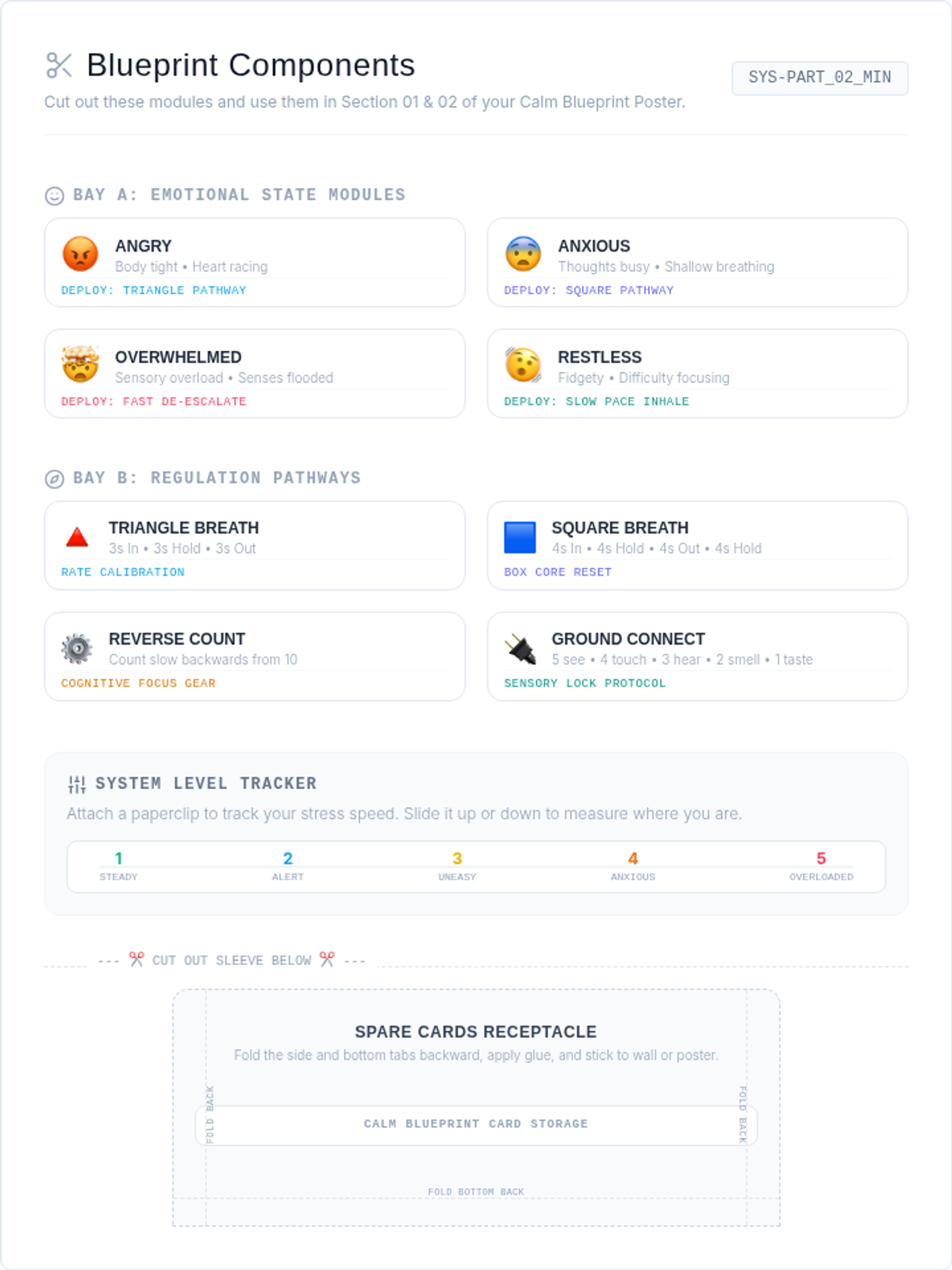
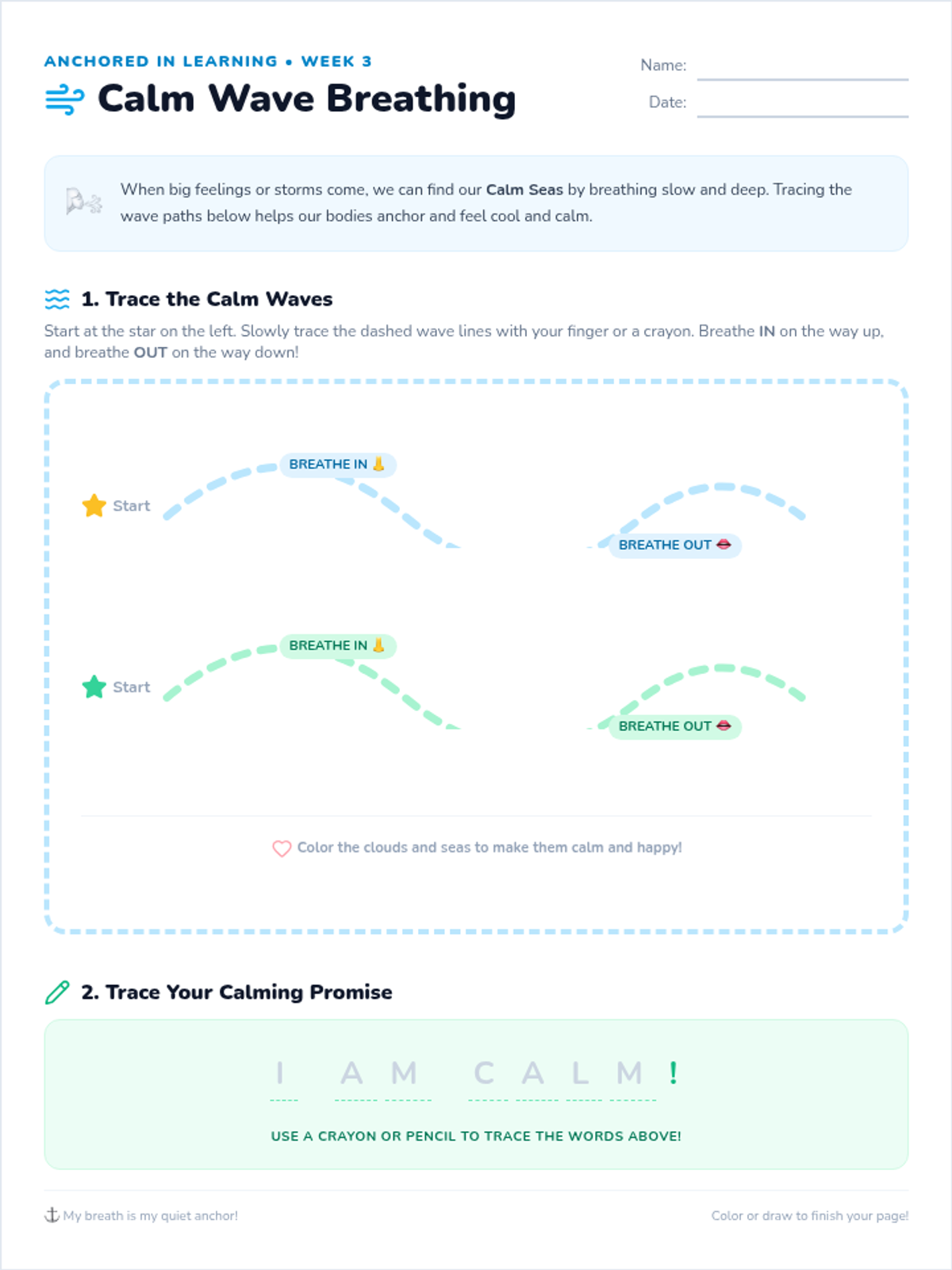
An interactive mental engineering toolkit that teaches children deep breathing exercises using concrete shapes. Students use the visual anchor chart and movable feeling/strategy blueprints to regulate their emotions.
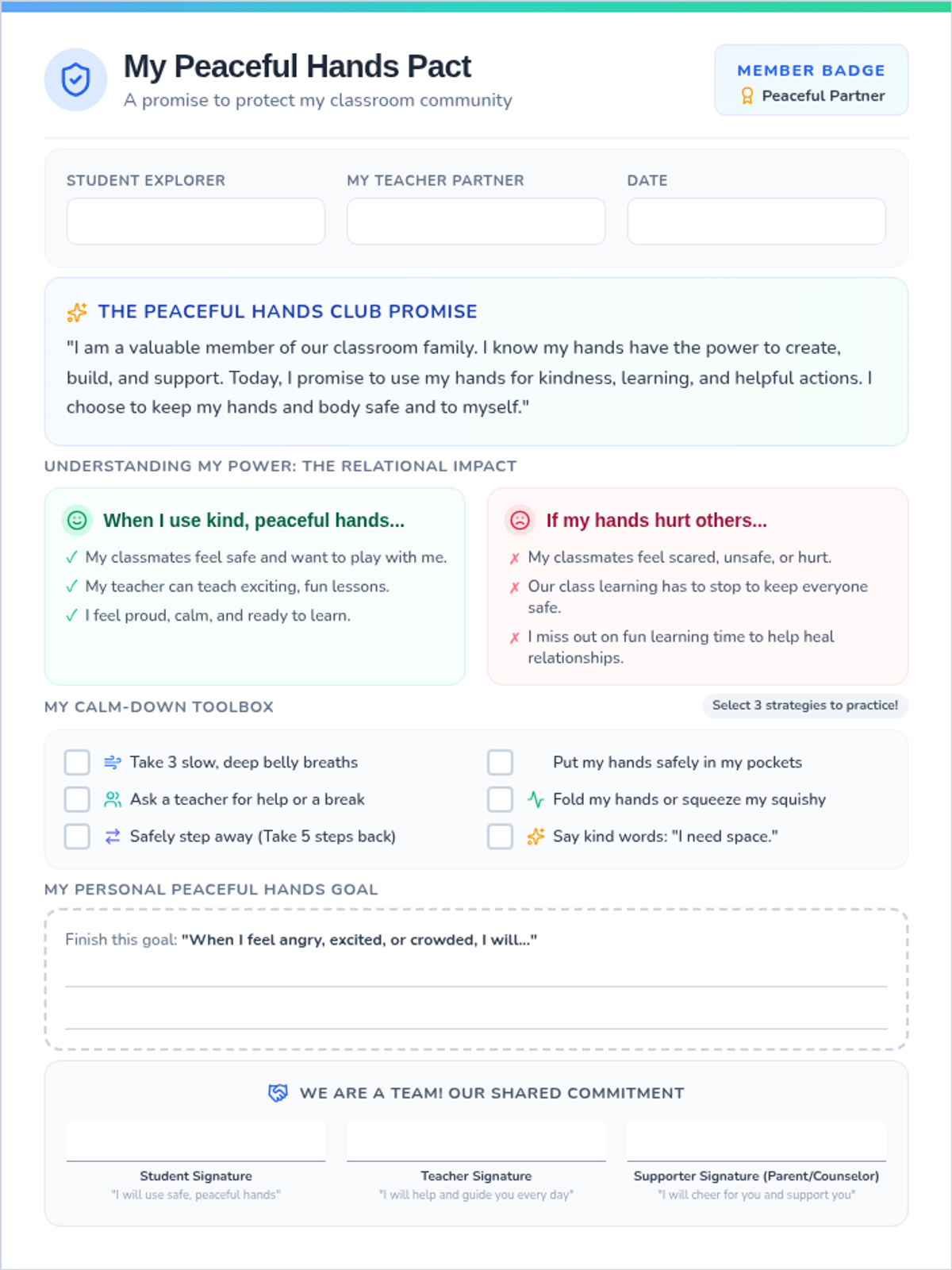
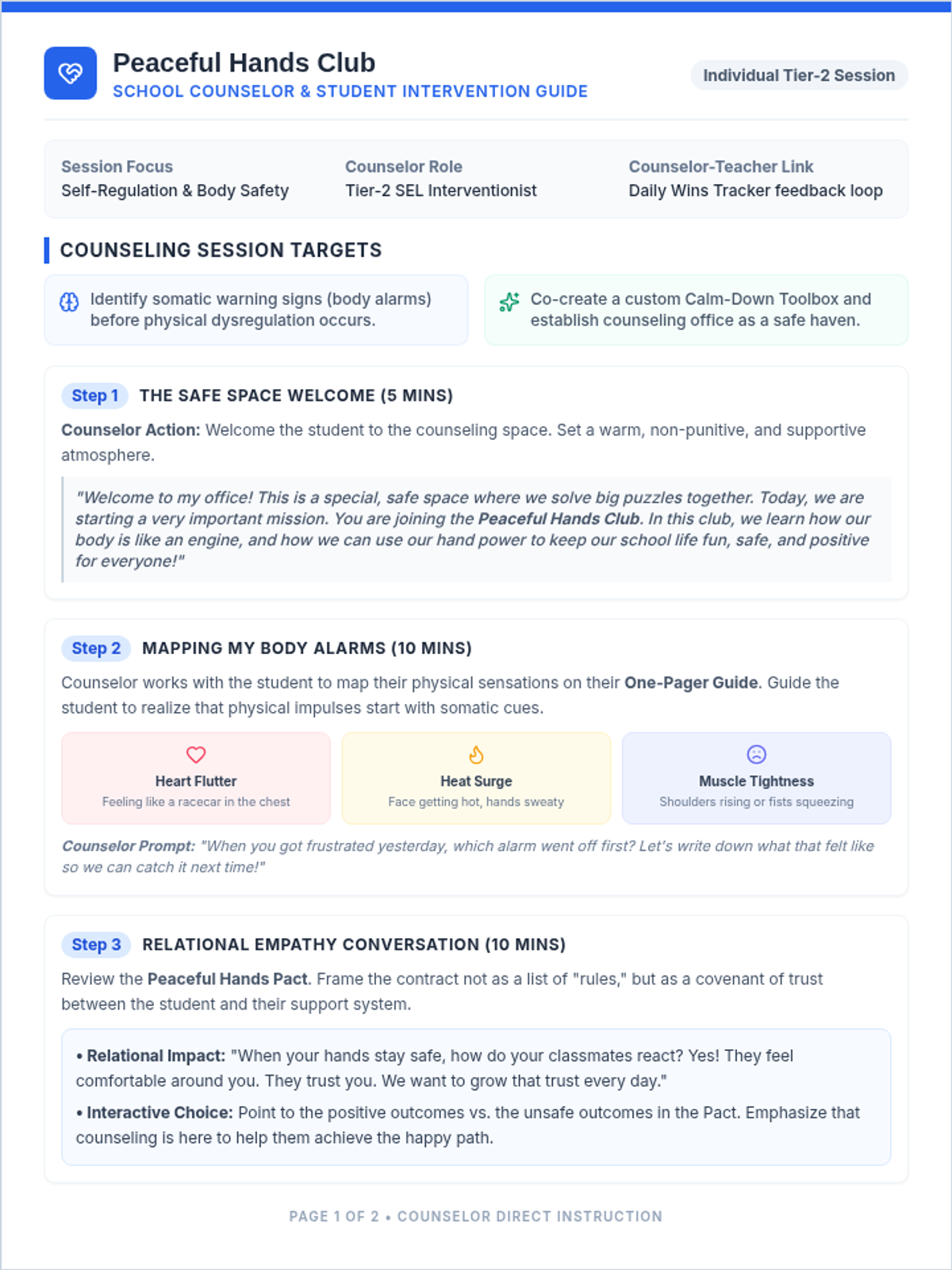
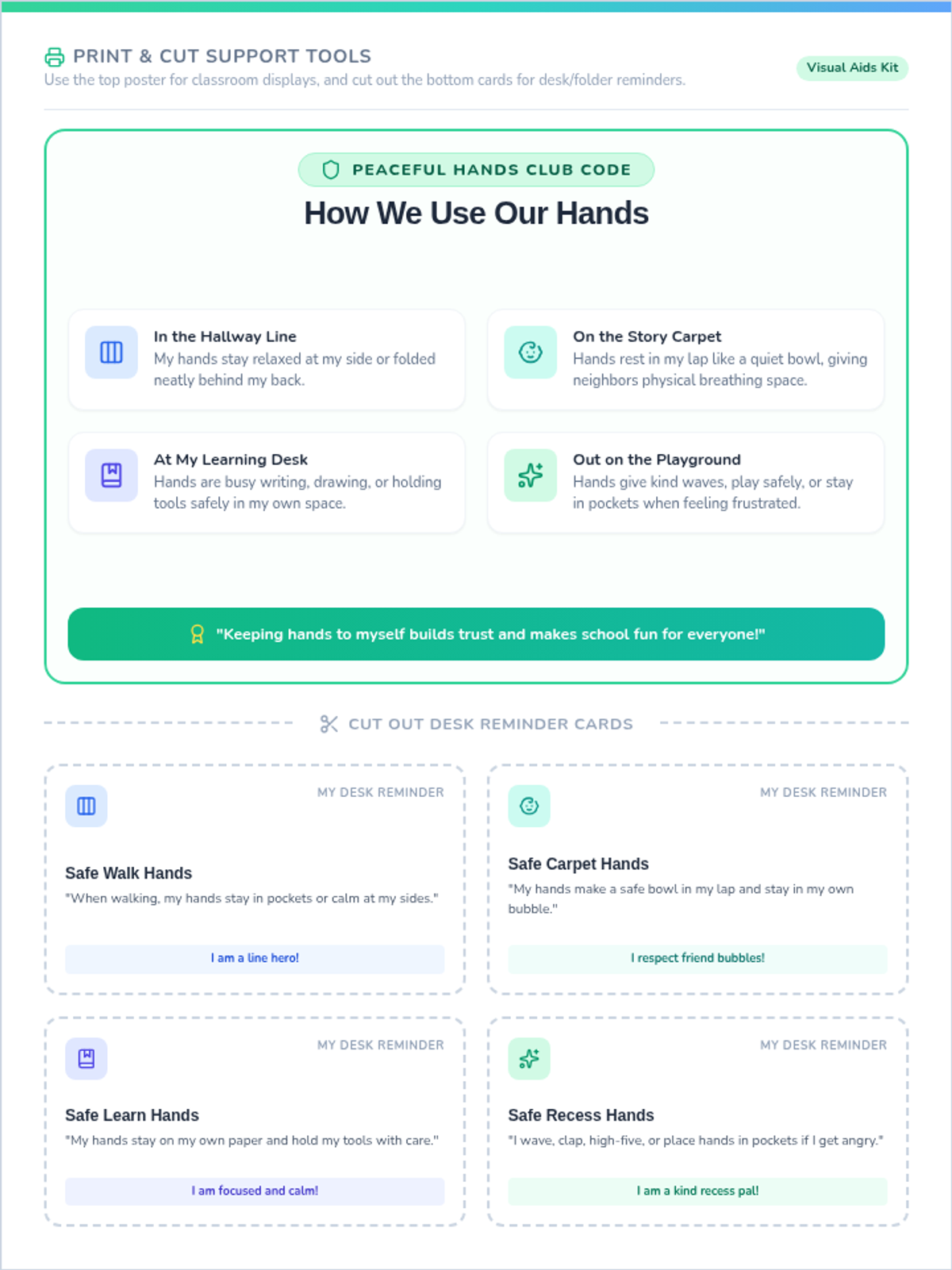
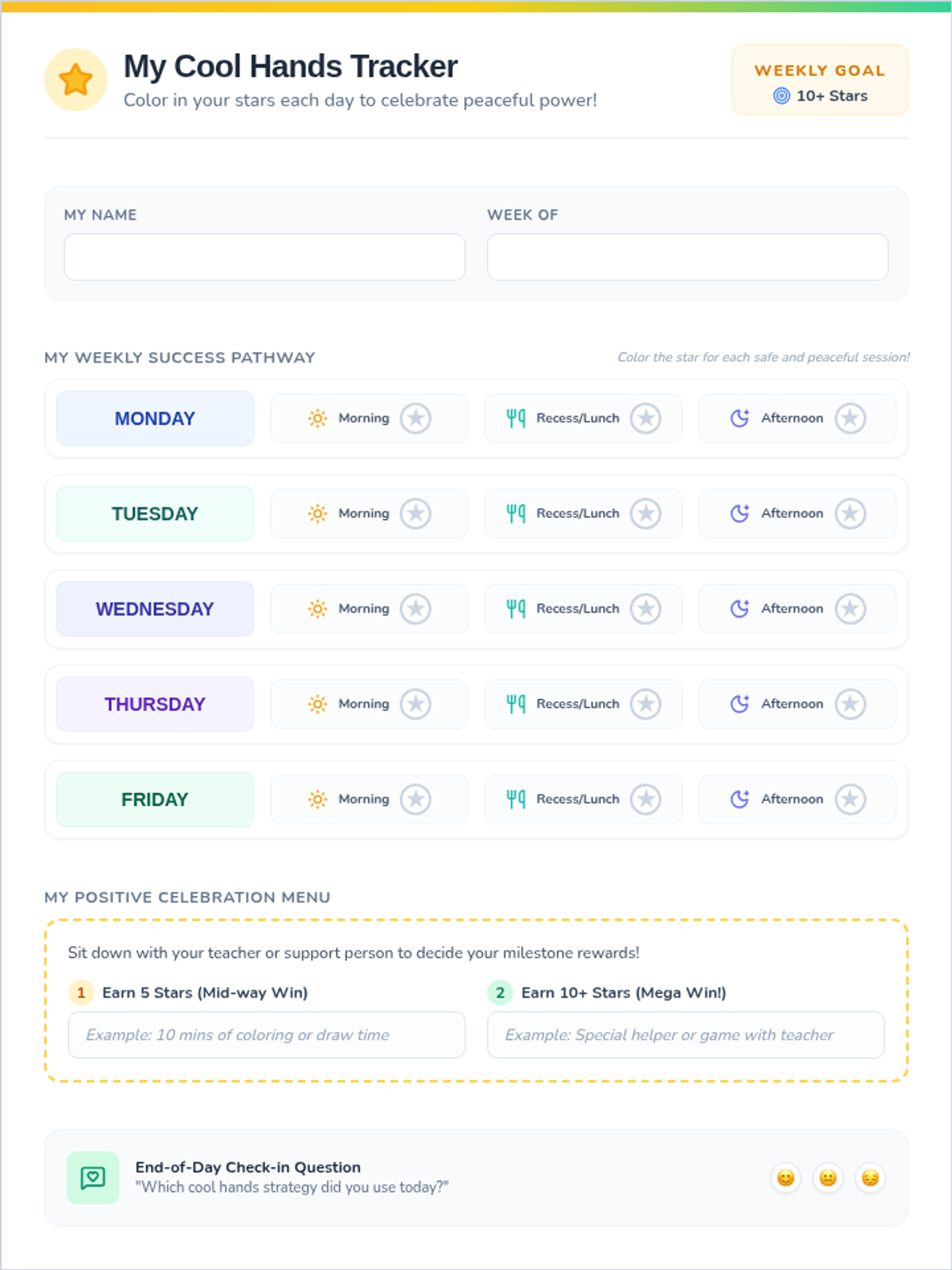
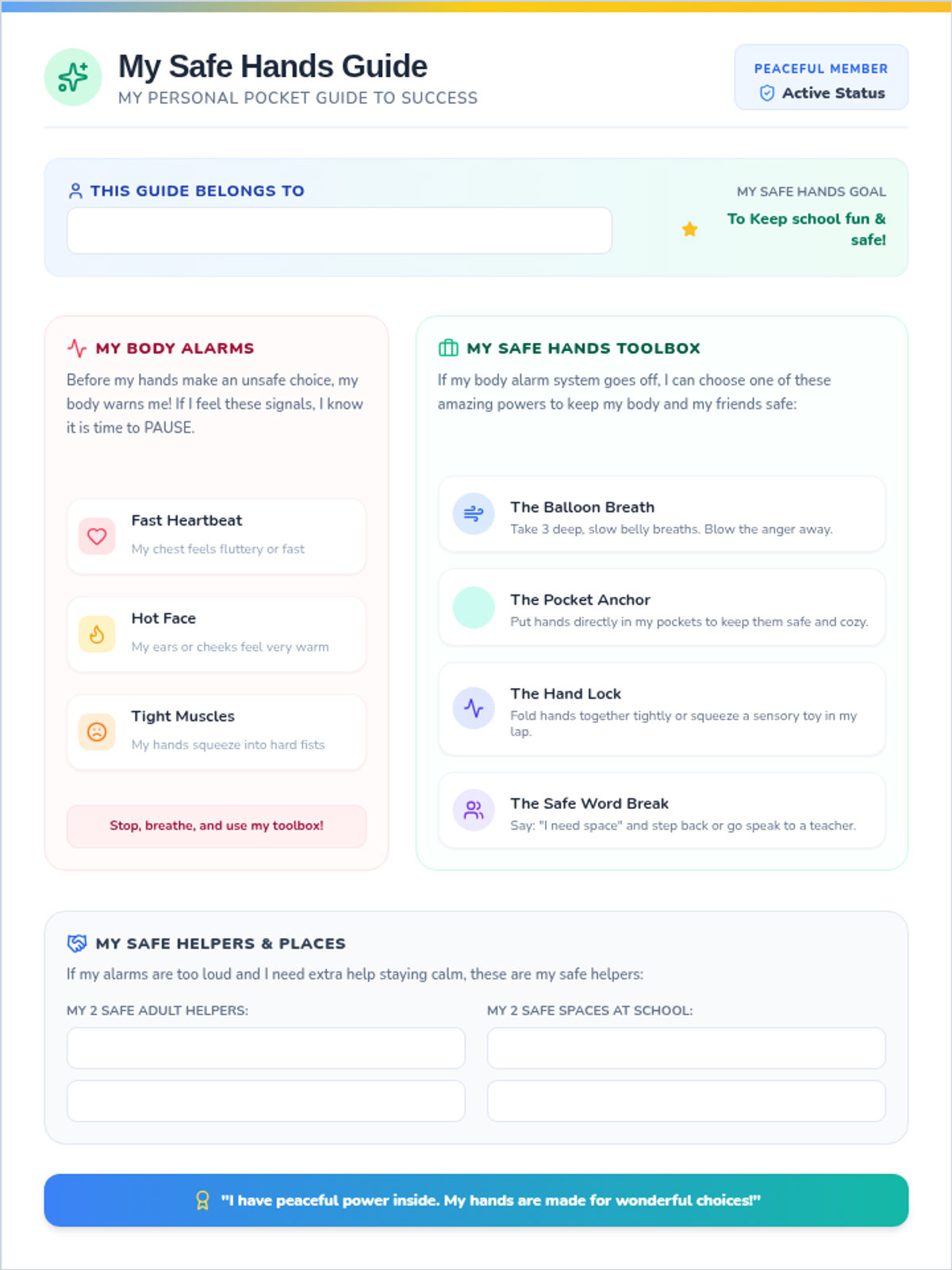
An intensive social-emotional intervention kit designed for lower elementary students to promote self-regulation and keep hands to themselves. This kit includes a relational behavior contract, an interactive lesson plan with role-play scenarios, visual aids, and a daily progress tracker.
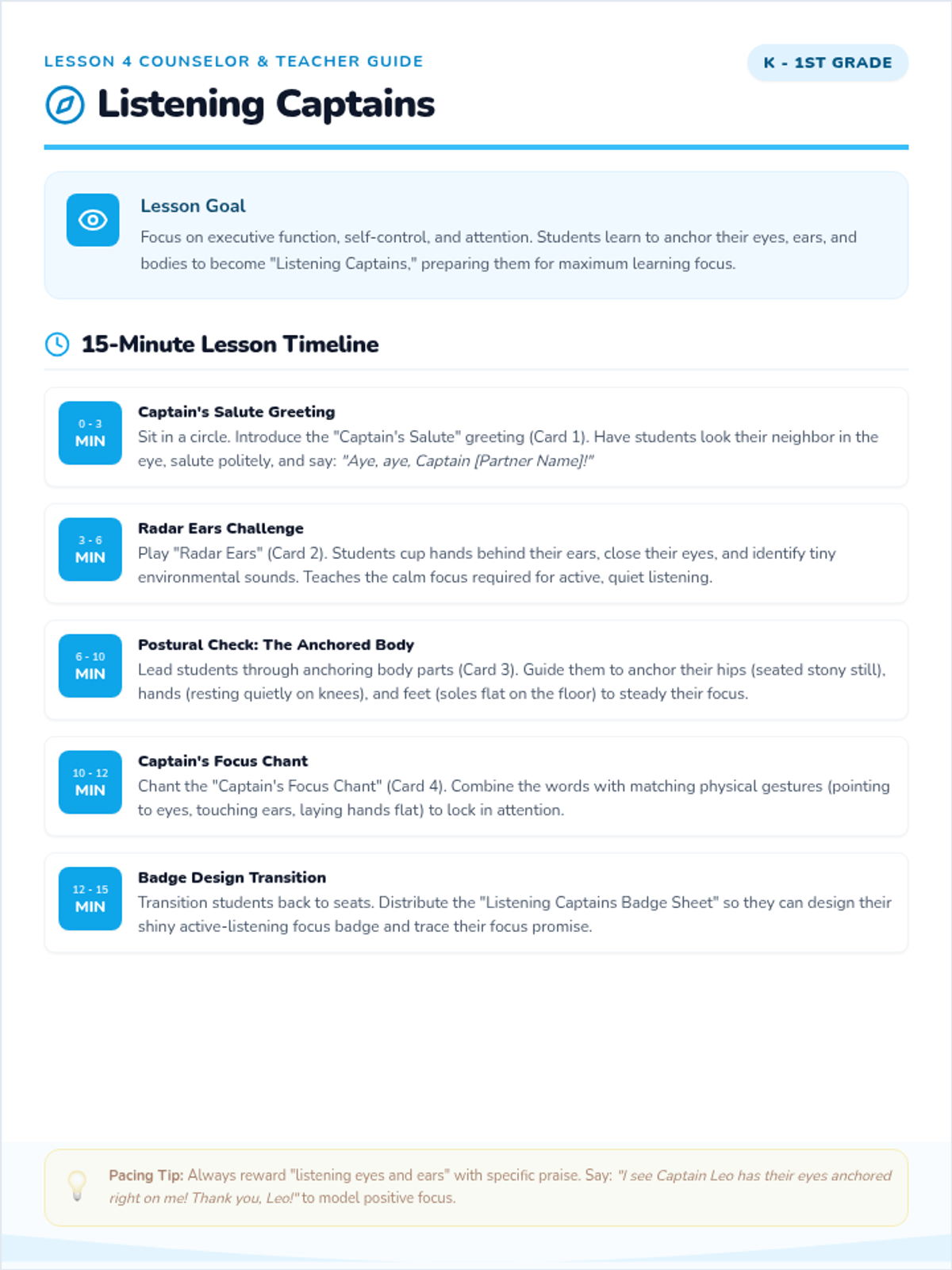
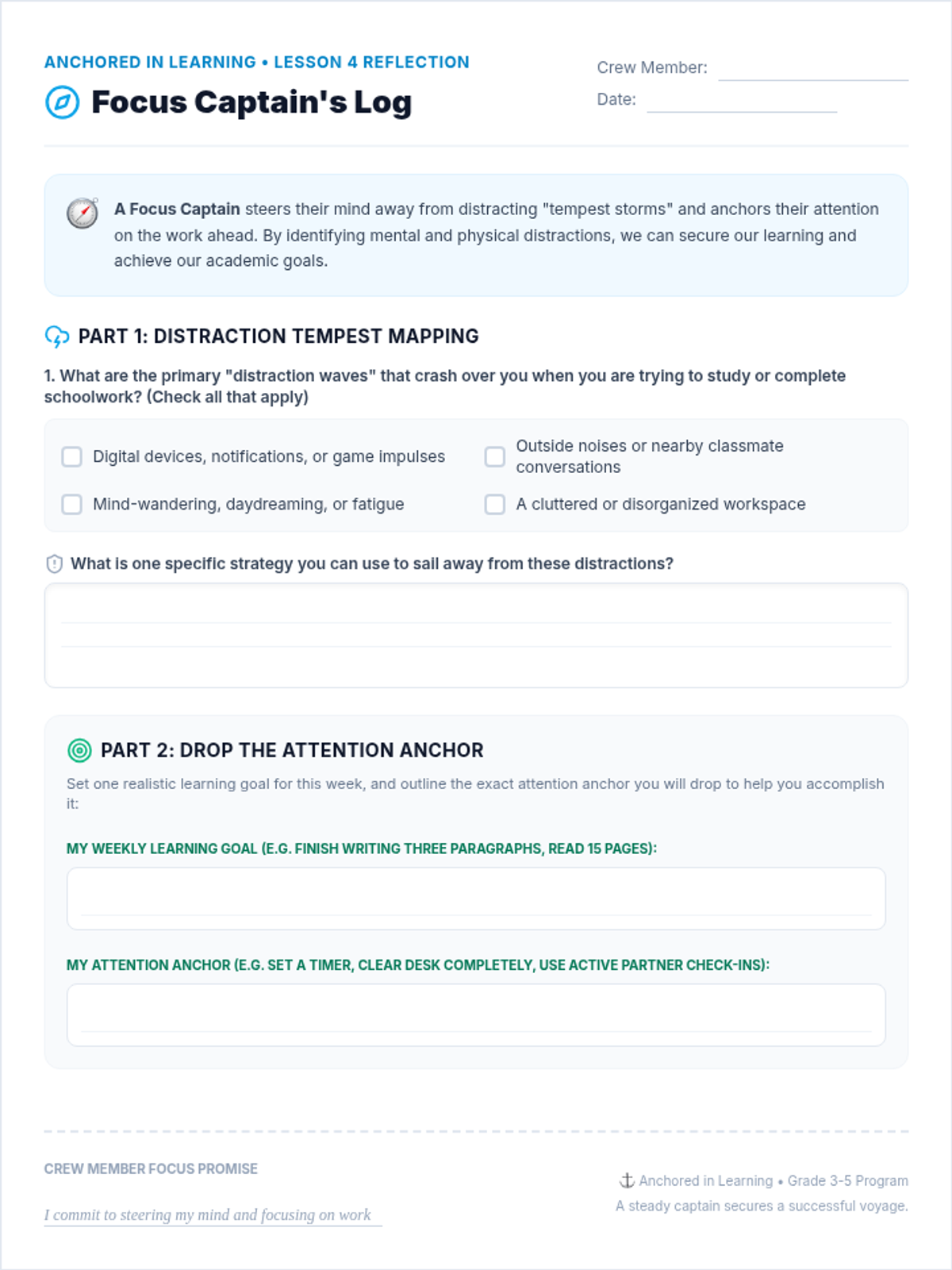
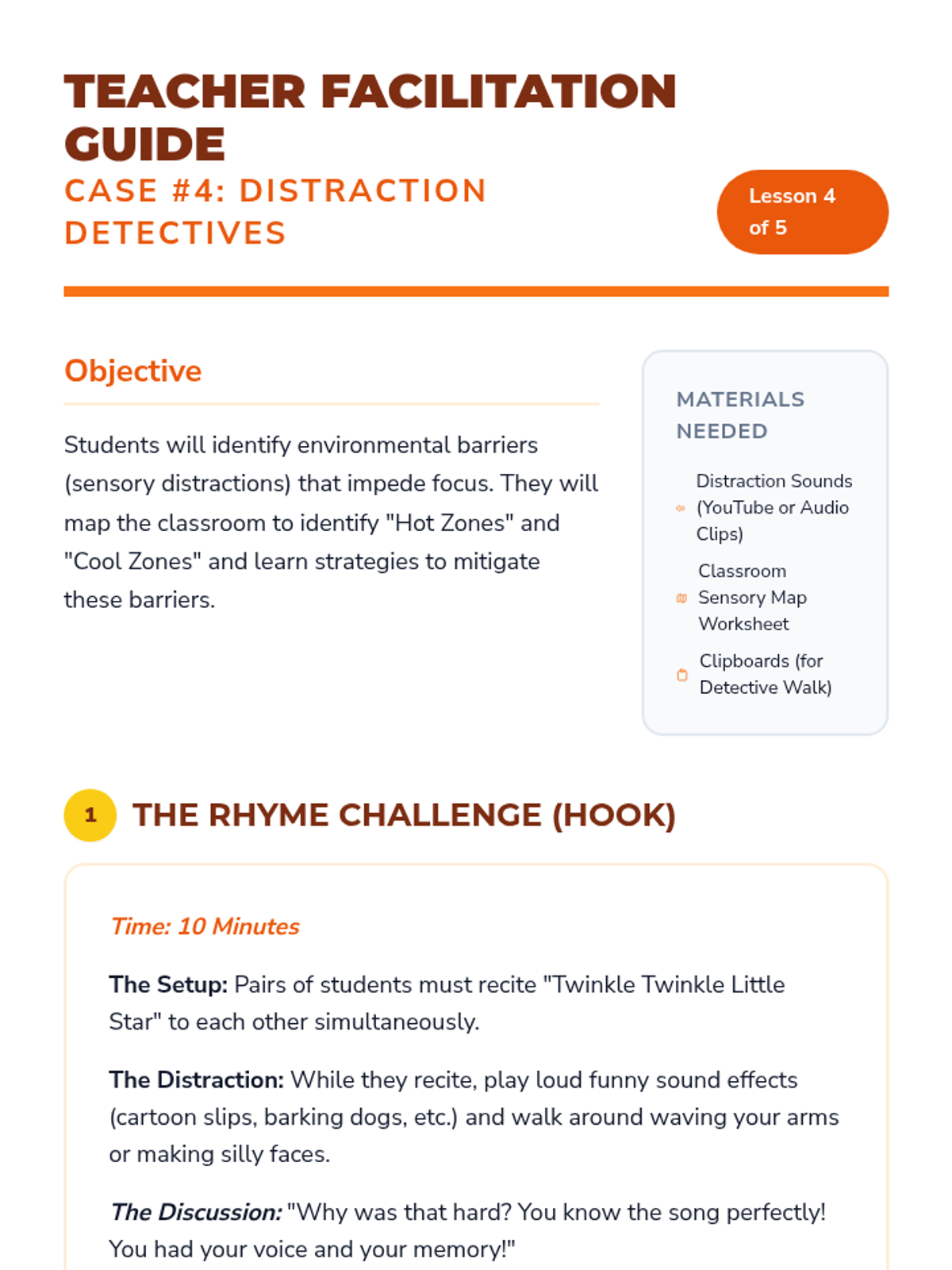
Lesson 4 of the SEL sequence. A complete, ready-to-go 15-minute lesson for 3rd-5th Grade students on focusing attention, managing digital/mental distractions, and anchoring executive attention.
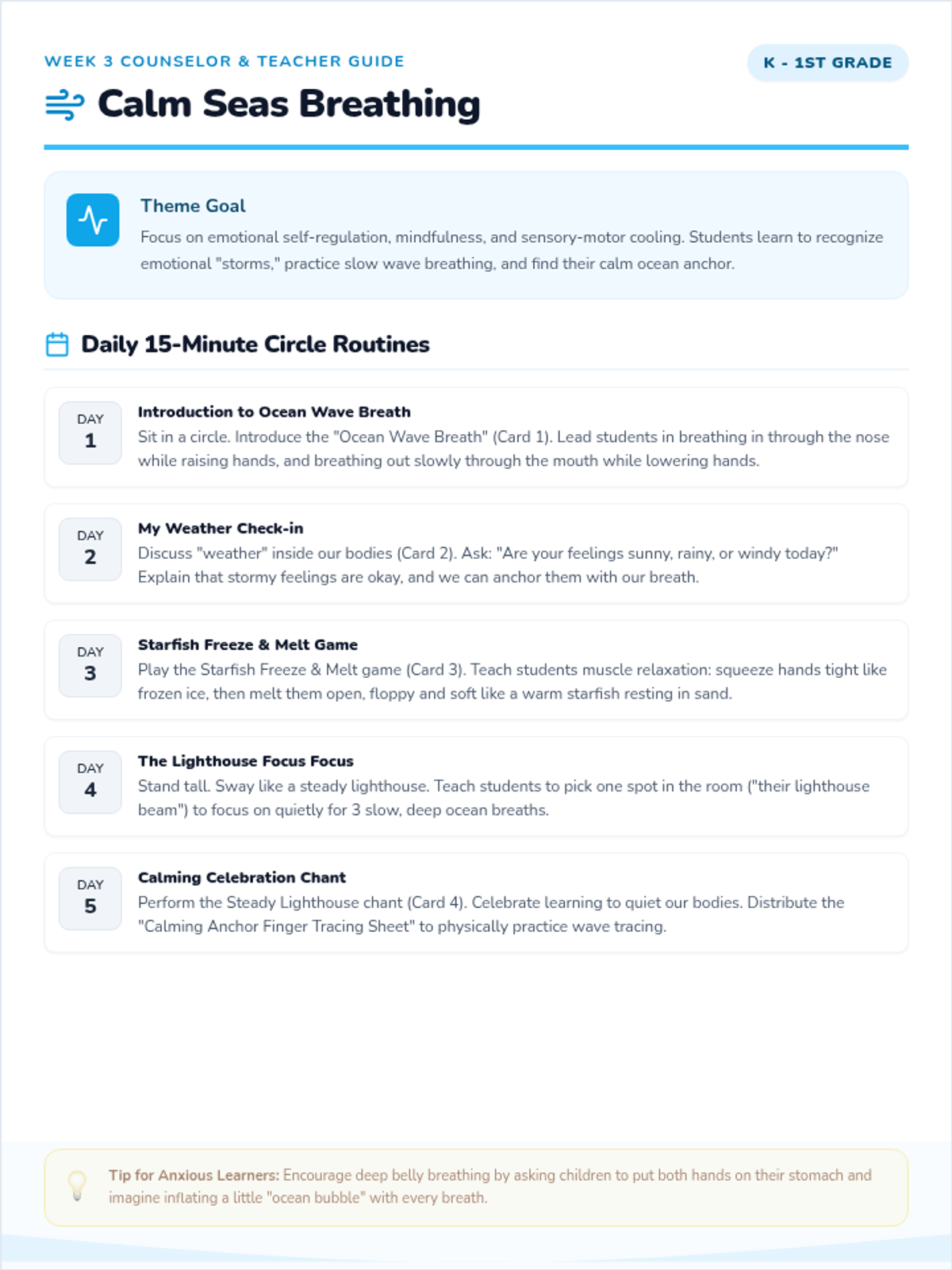
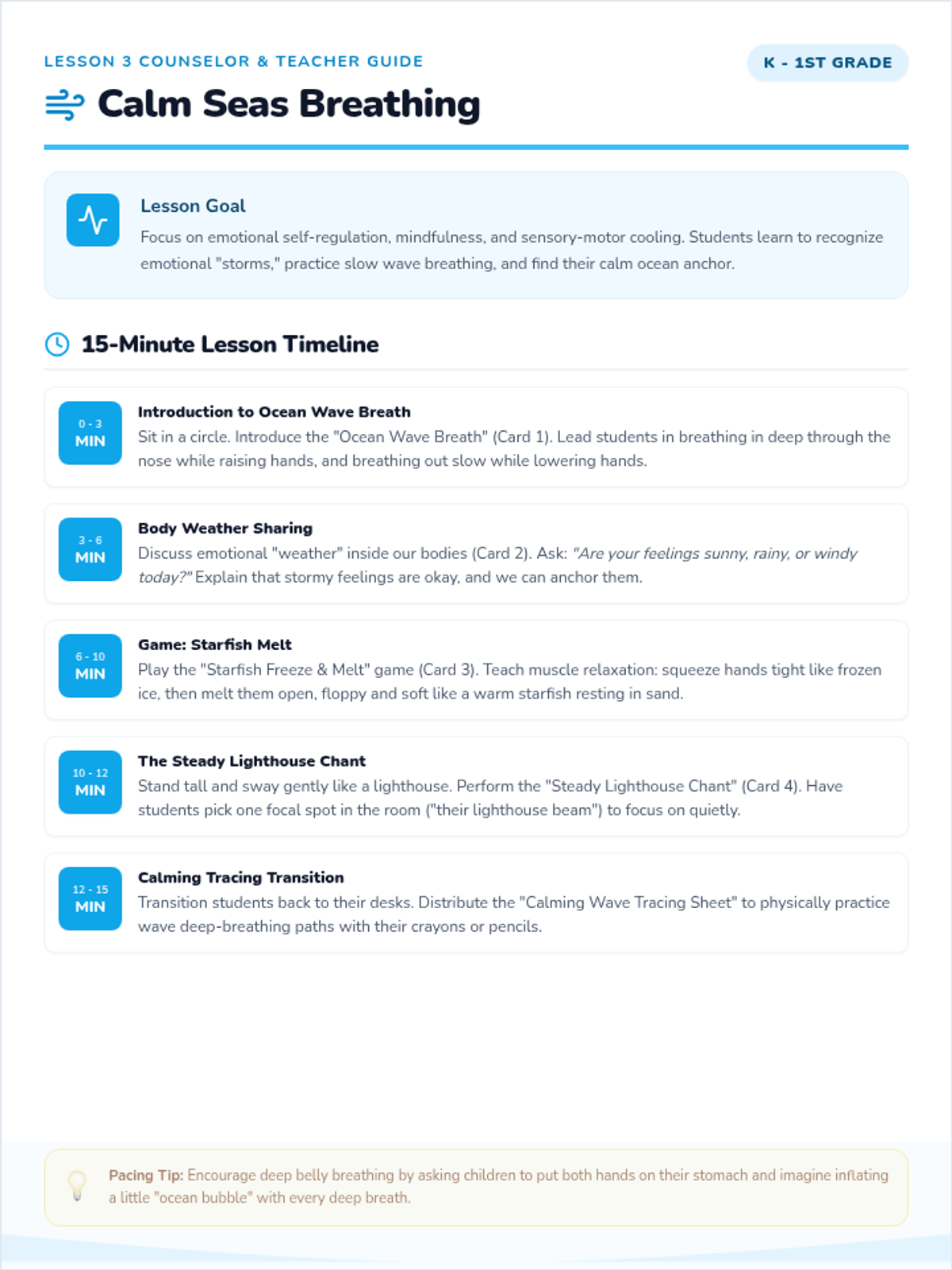
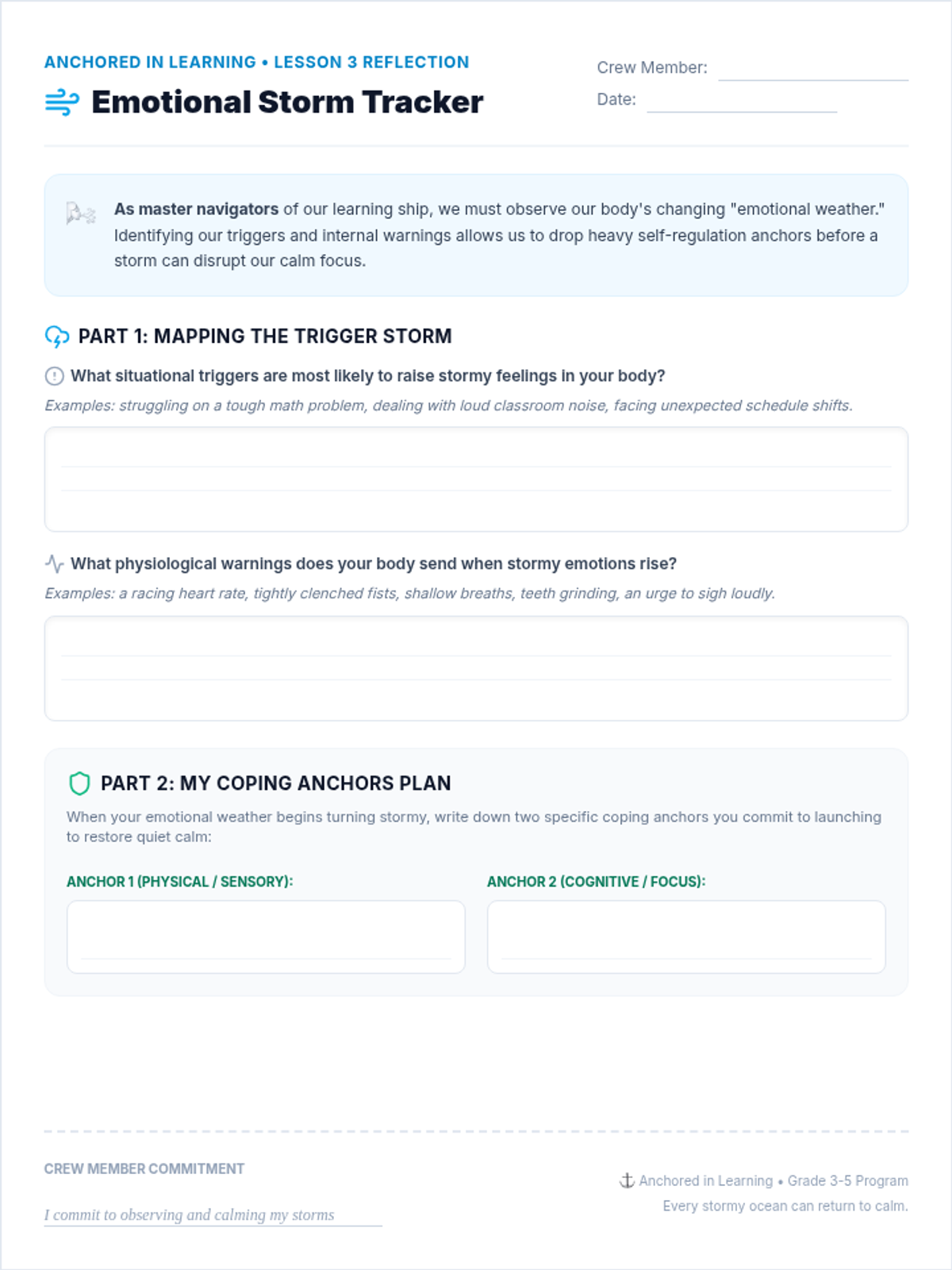
Lesson 3 of the SEL sequence. A complete, ready-to-go 15-minute lesson for 3rd-5th Grade students on emotional self-regulation, recognizing trigger storms, and physical calming strategies.
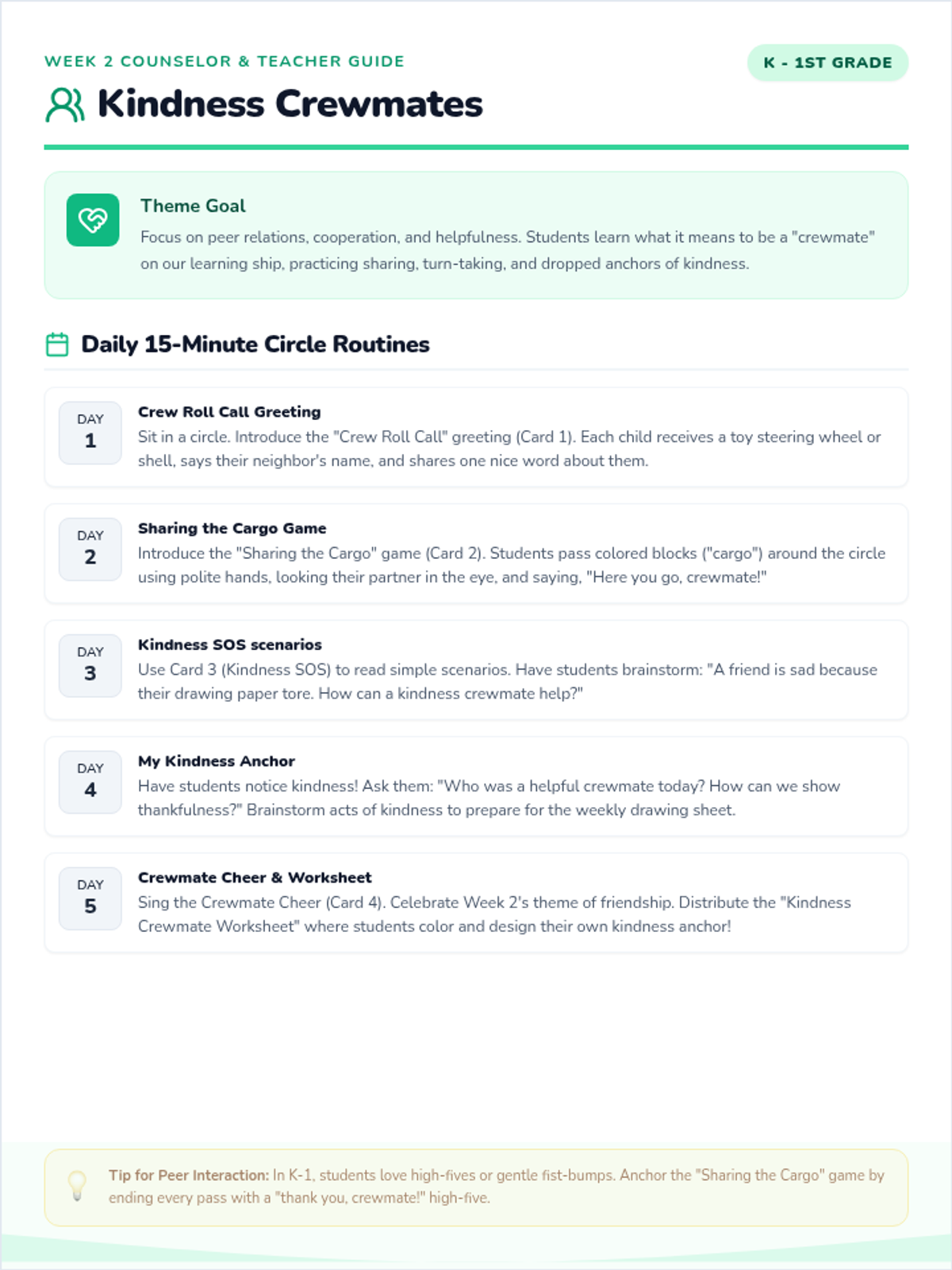
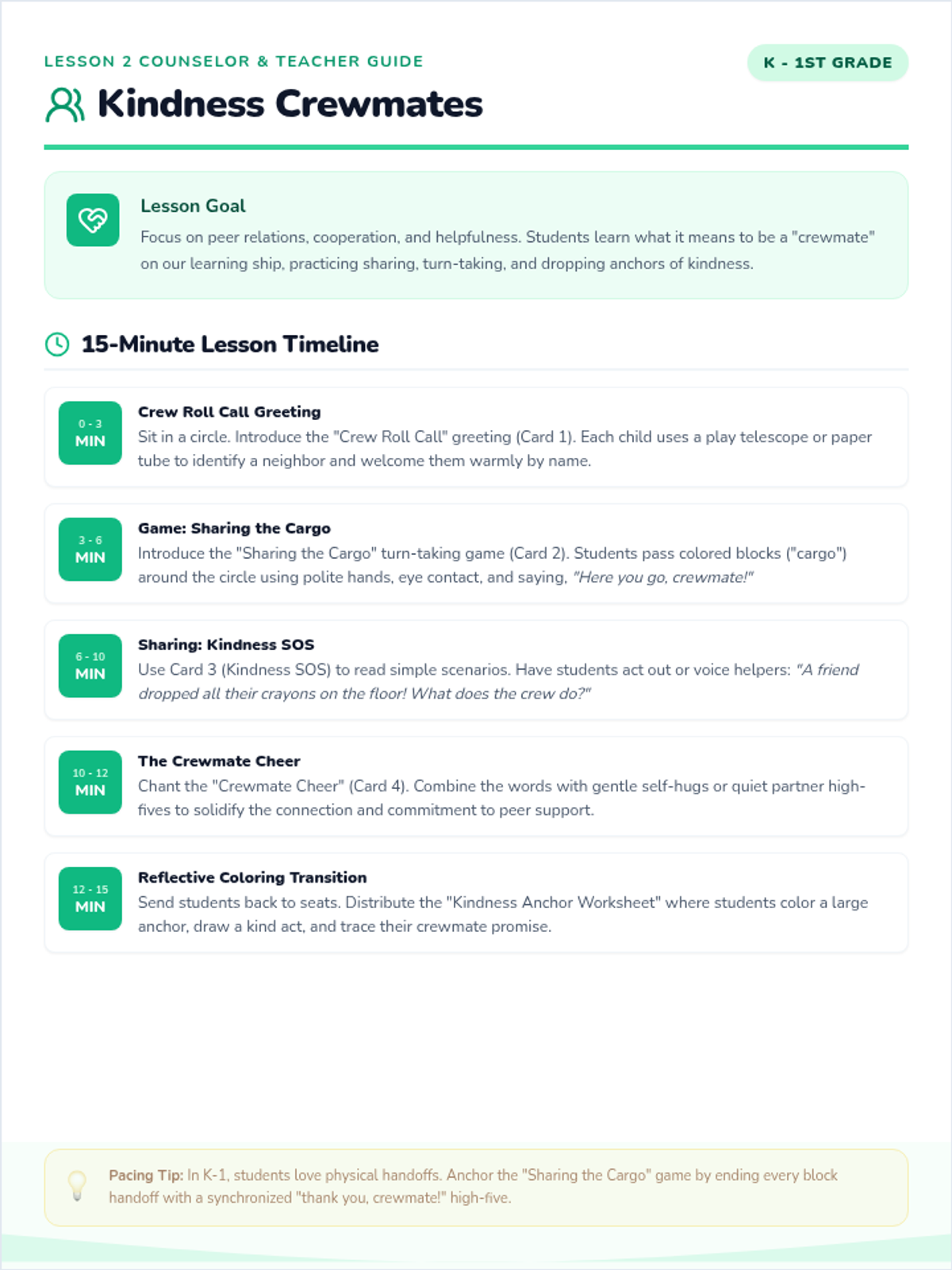
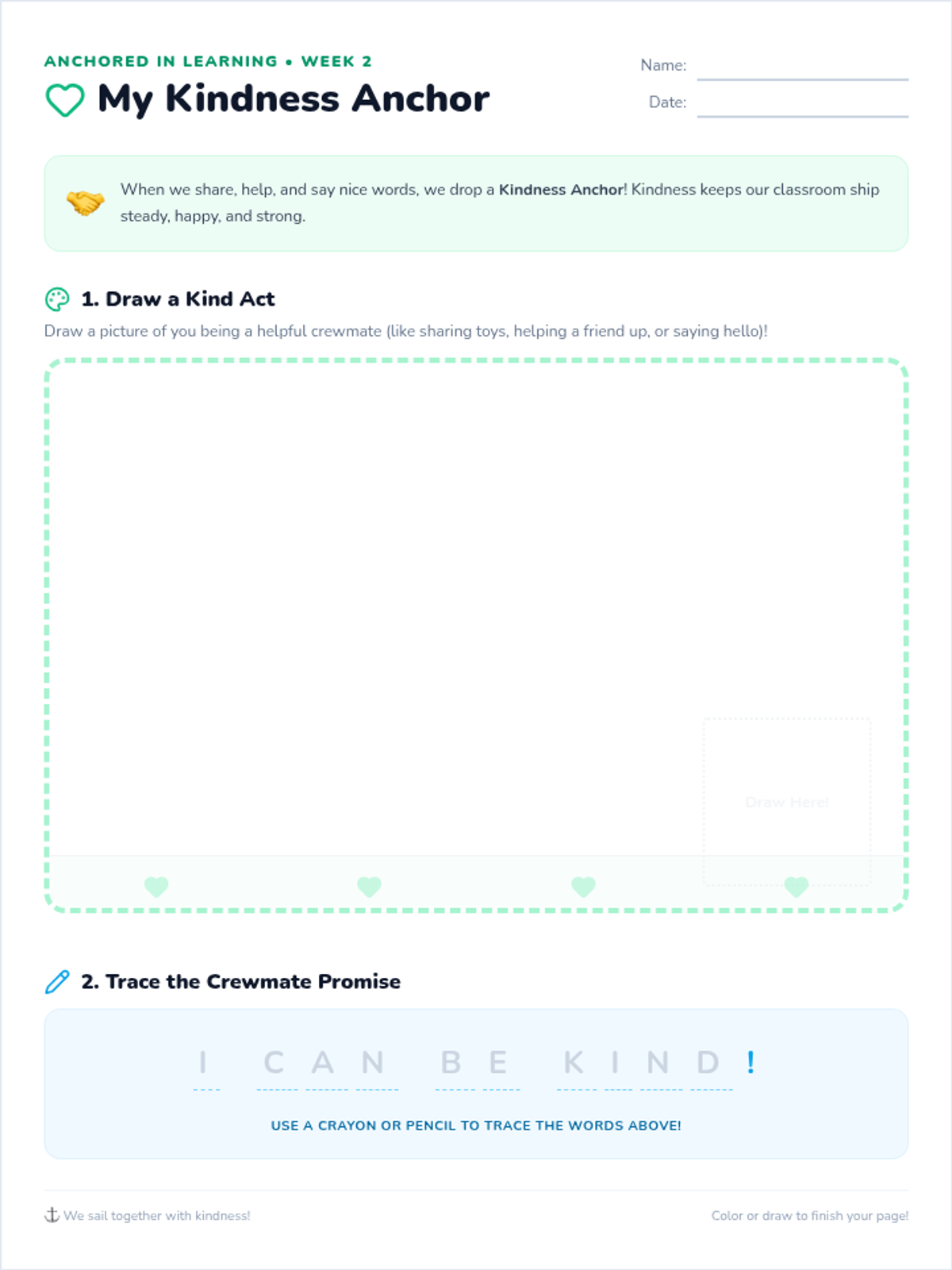
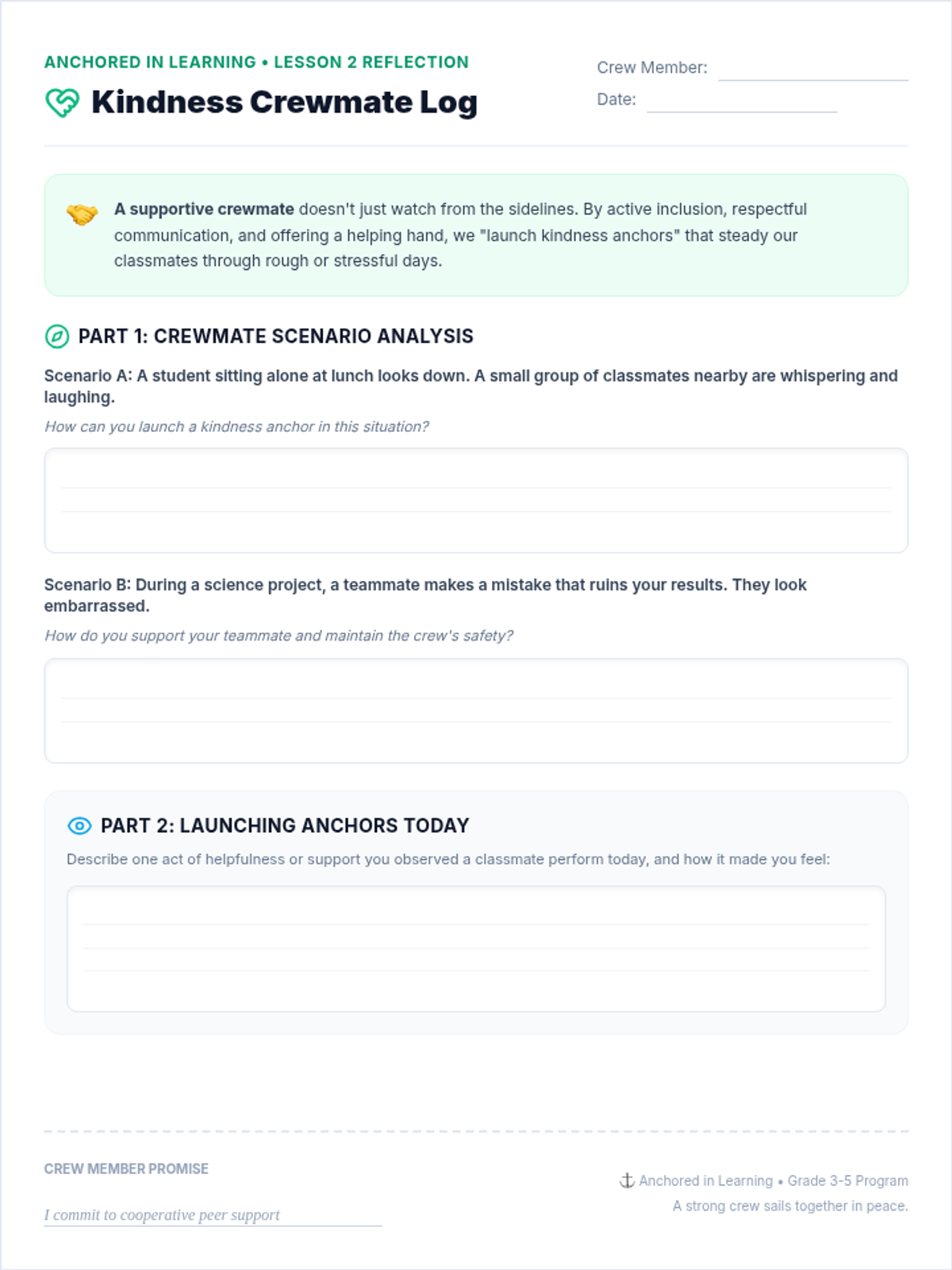
Lesson 2 of the SEL sequence. A complete, ready-to-go 15-minute lesson for 3rd-5th Grade students on cooperative peer relations, active inclusion, and launching kindness anchors.
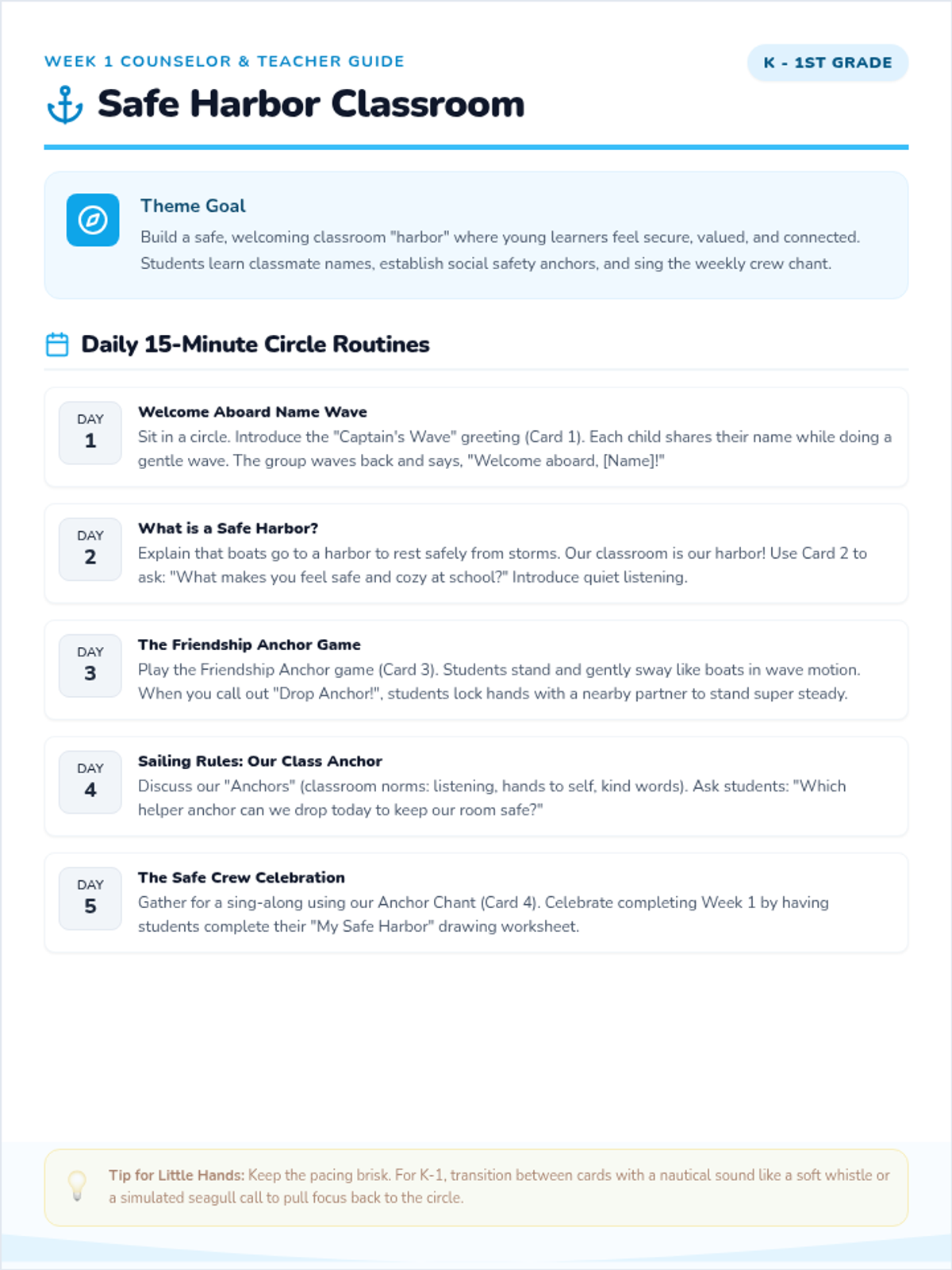
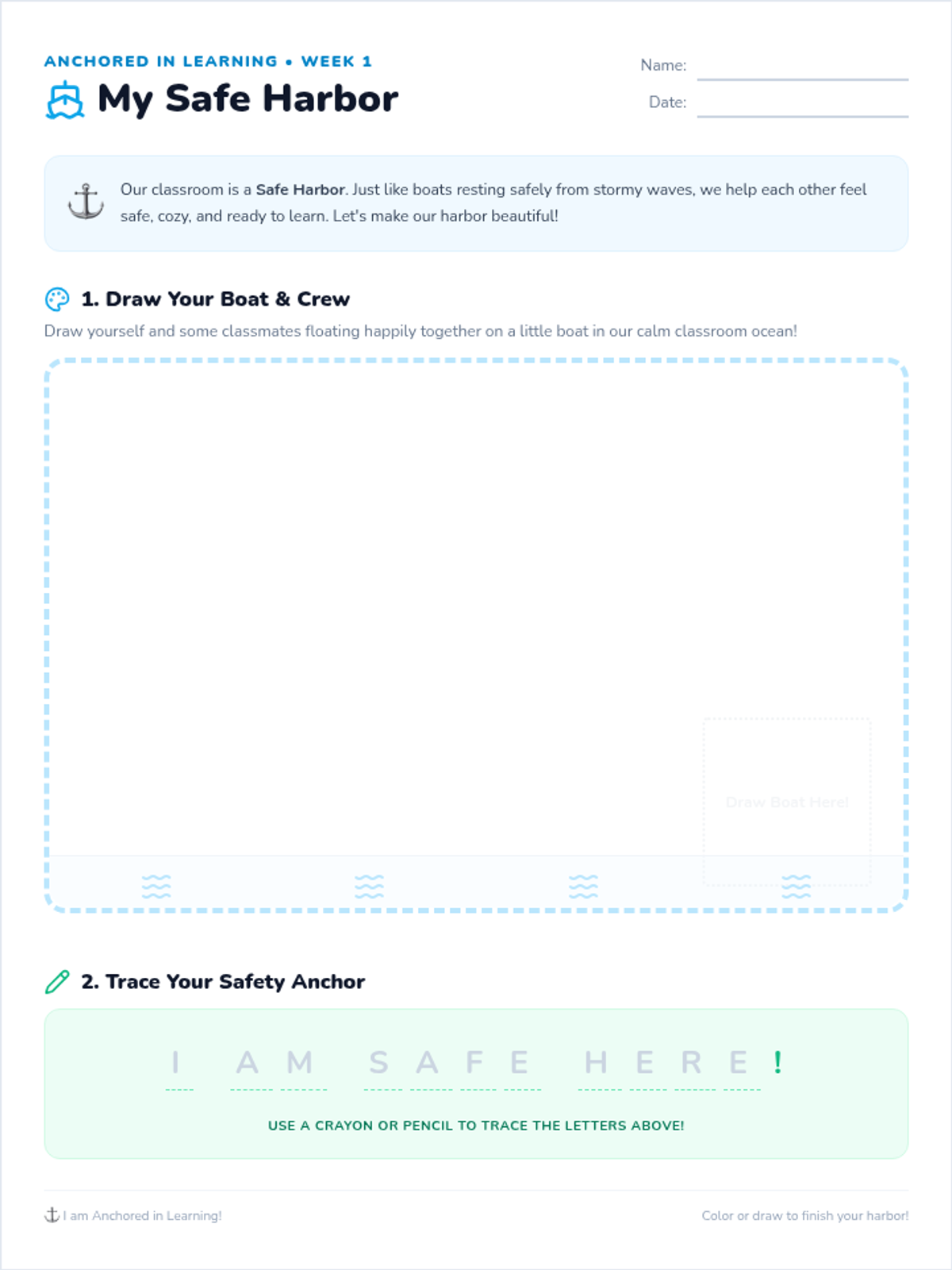
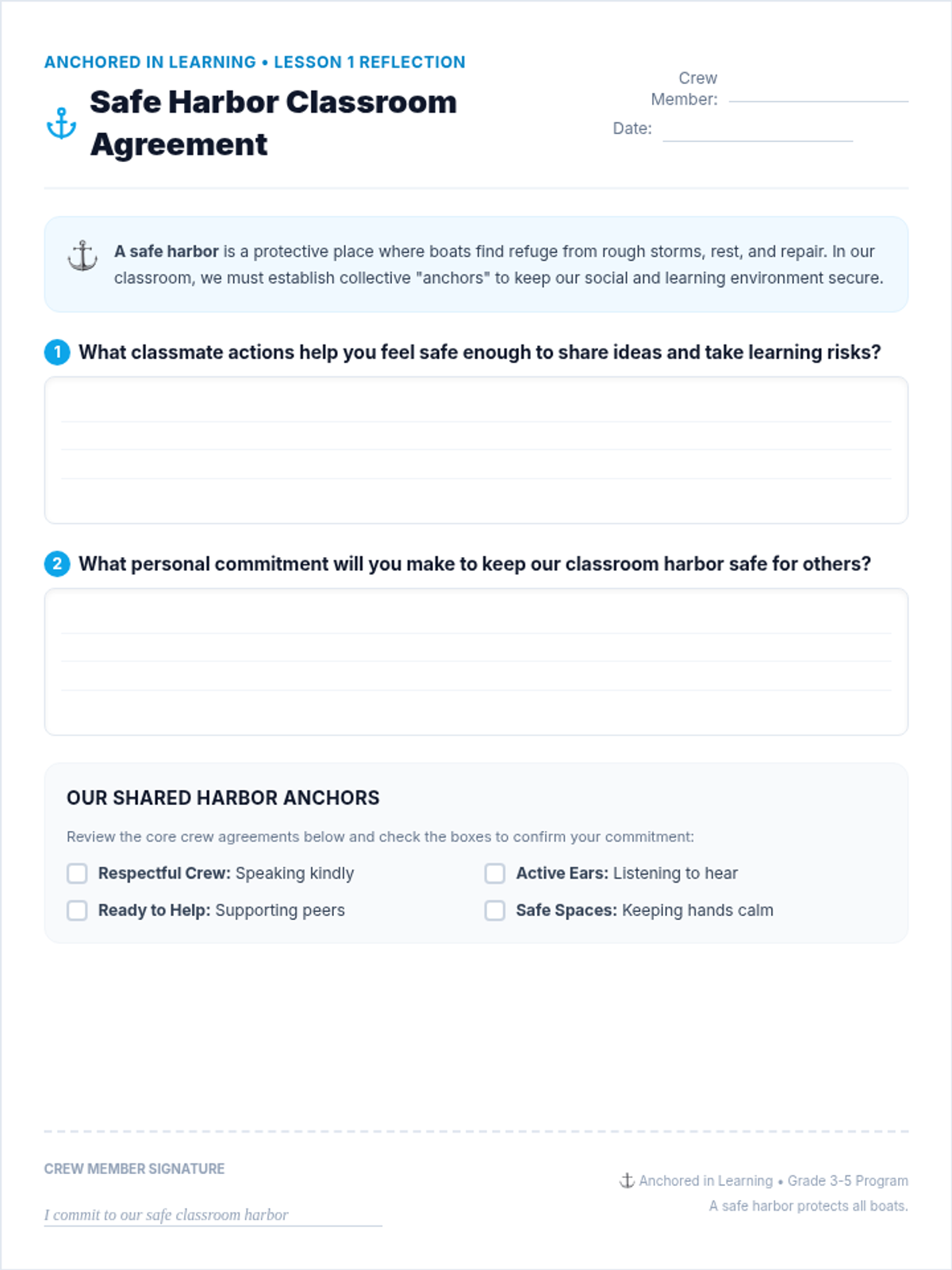
Lesson 1 of the SEL sequence. A complete, ready-to-go 15-minute lesson for 3rd-5th Grade students on building an emotionally safe classroom harbor and establishing mutual support anchors.
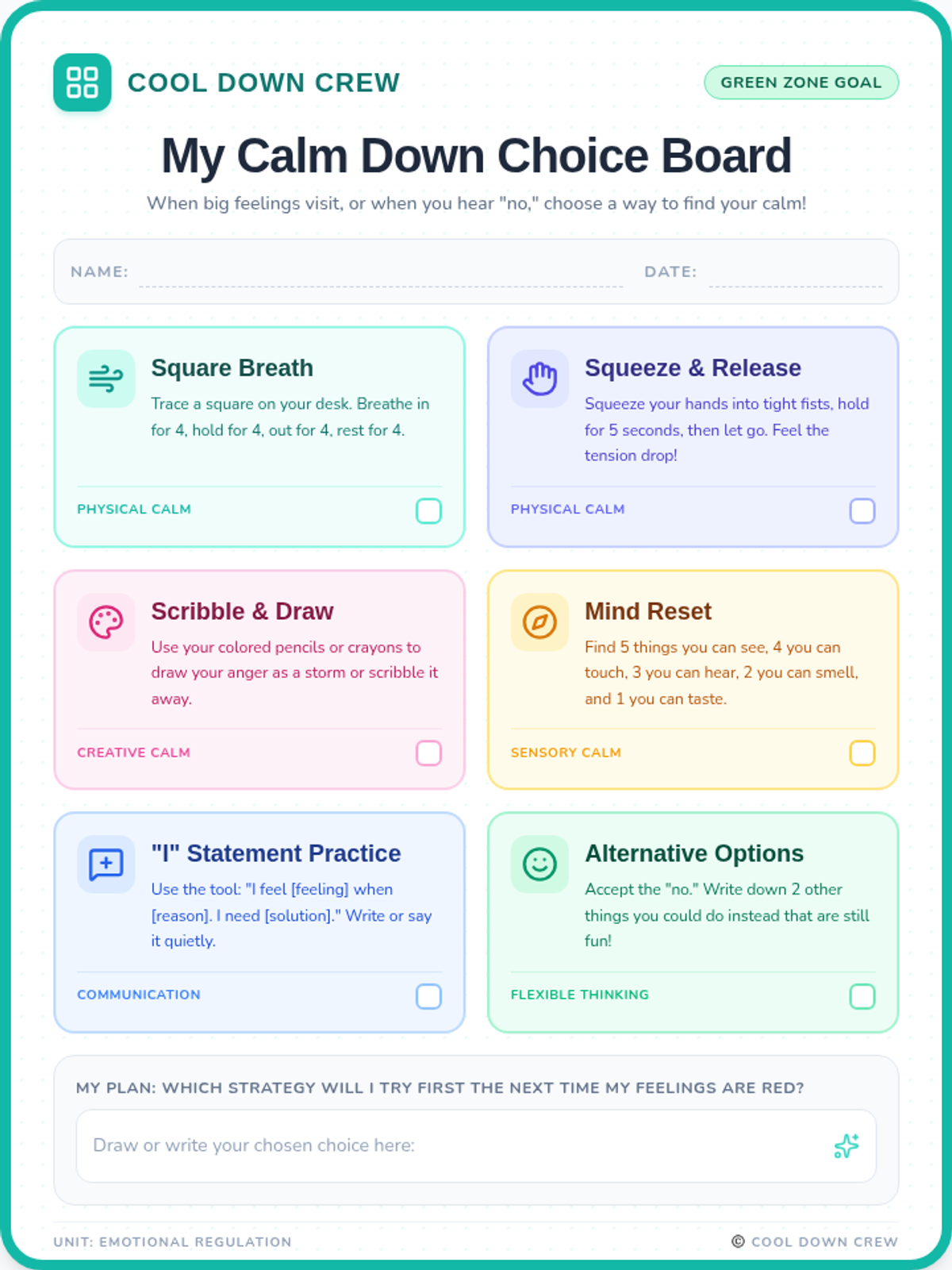
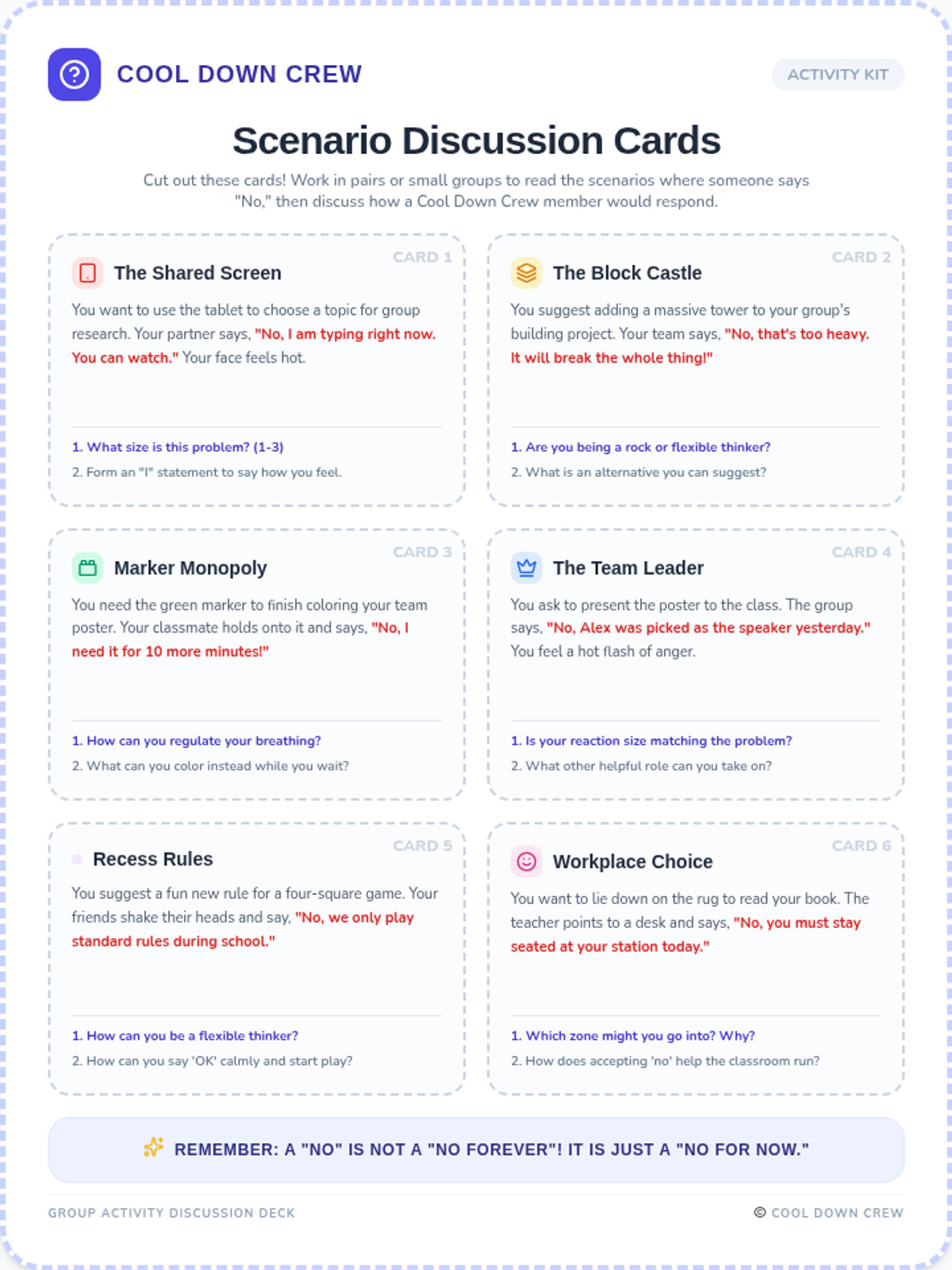
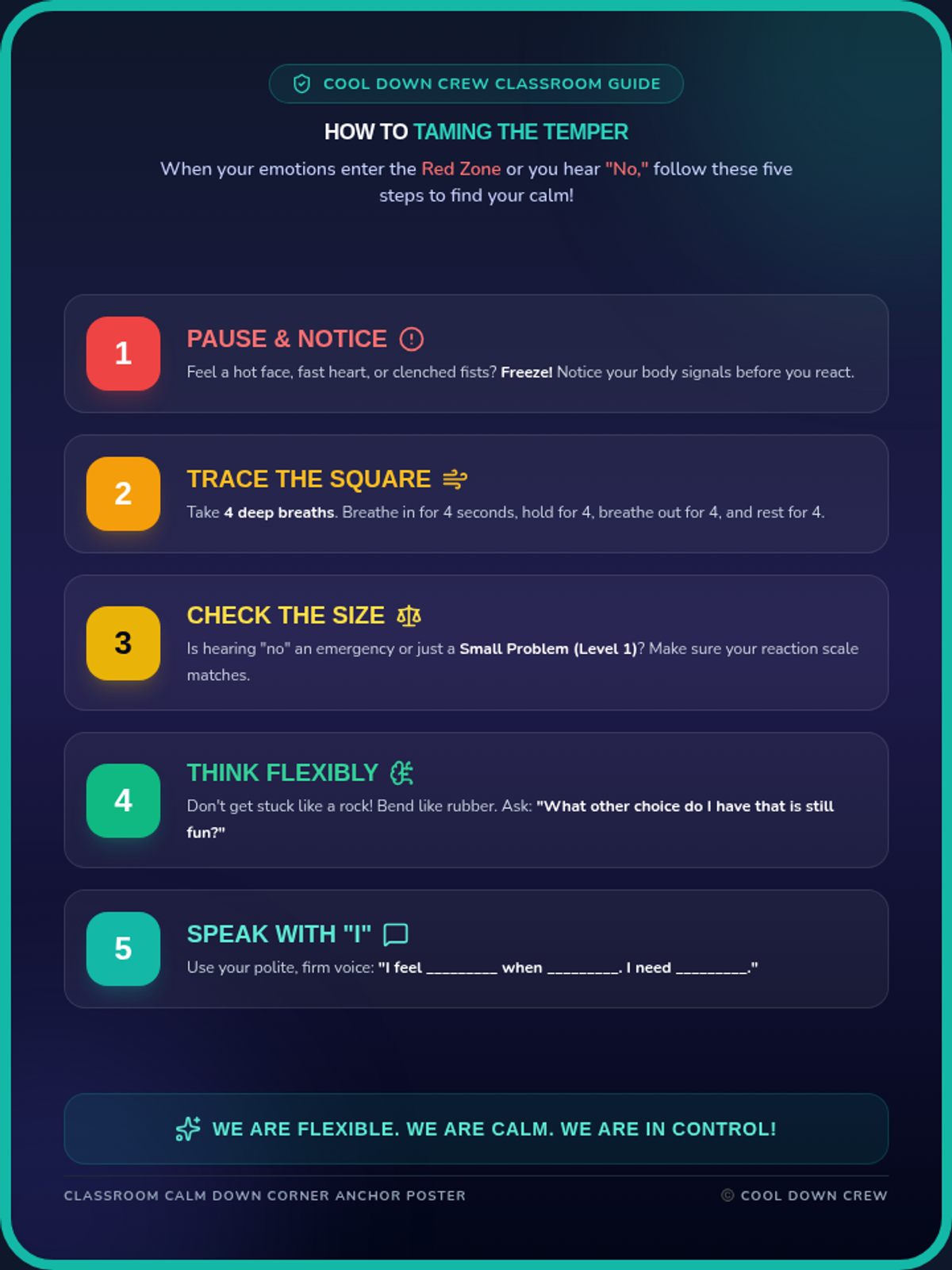
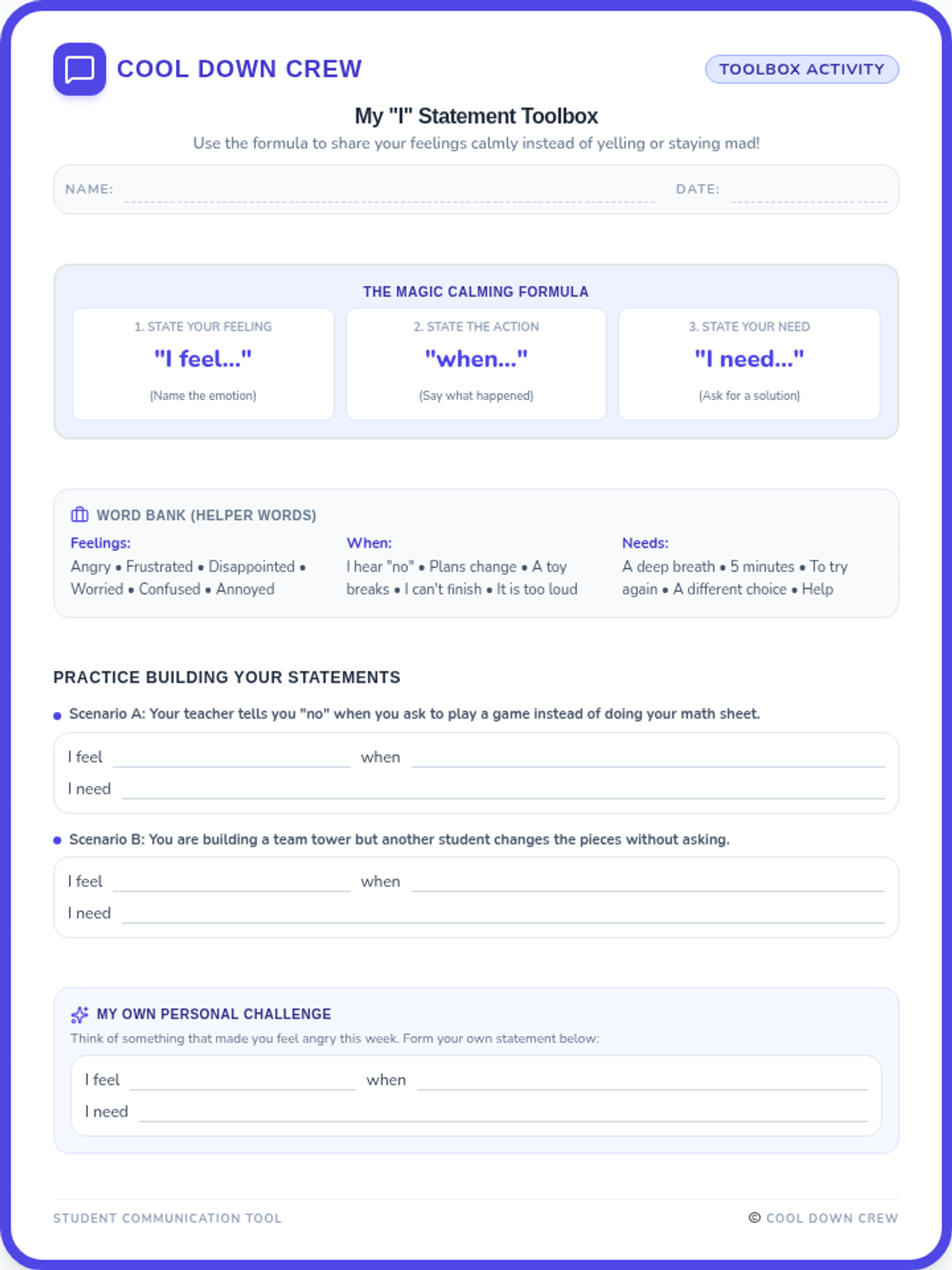
A specialized individual social-emotional learning lesson designed for 1-on-1 telehealth or therapy sessions. Helps individual students recognize the Red Zone, regulate big reactions to "no" using the Size of the Problem scale, practice at-home coping strategies, and use "I" statements constructively over screen-share.
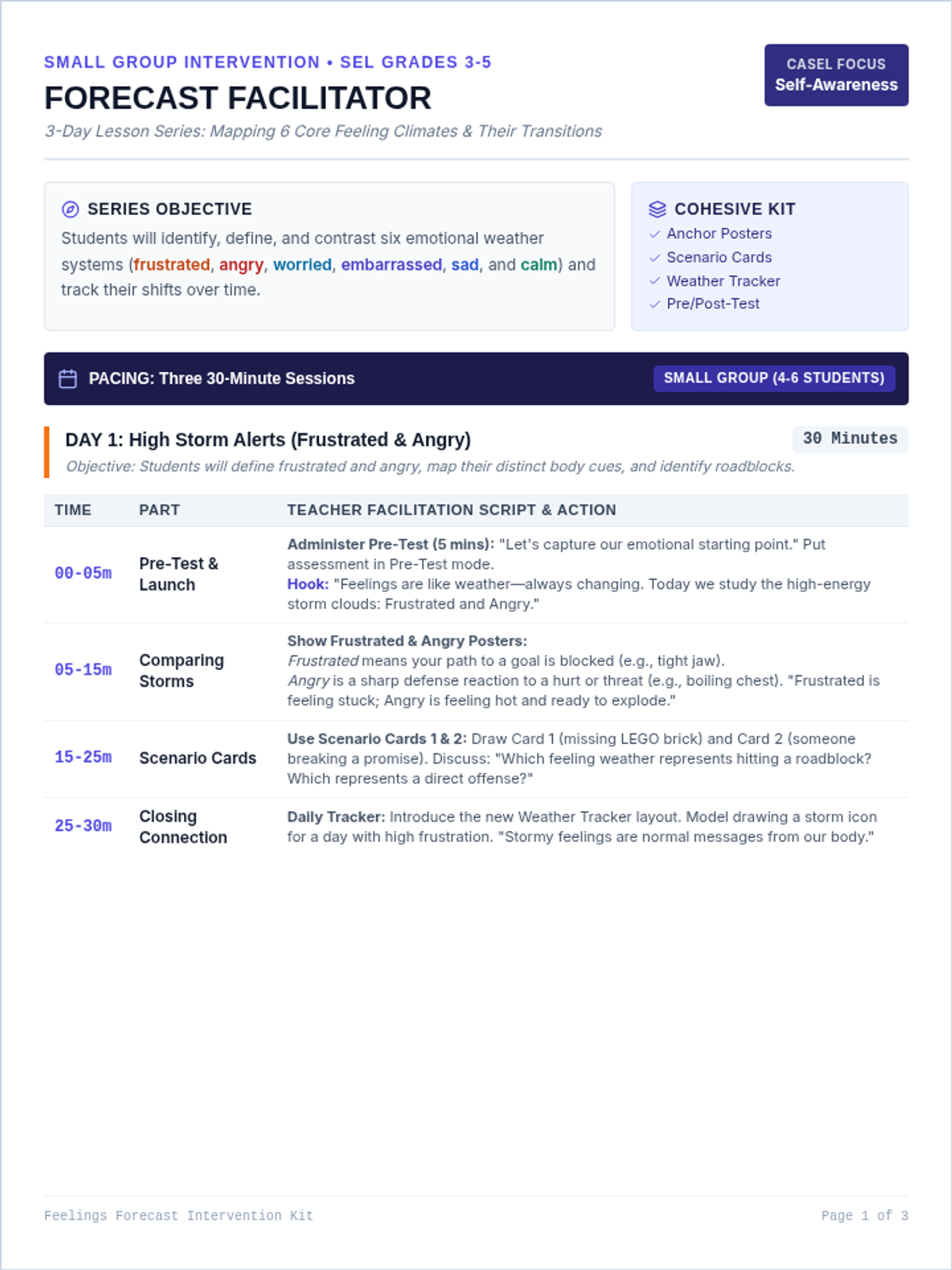
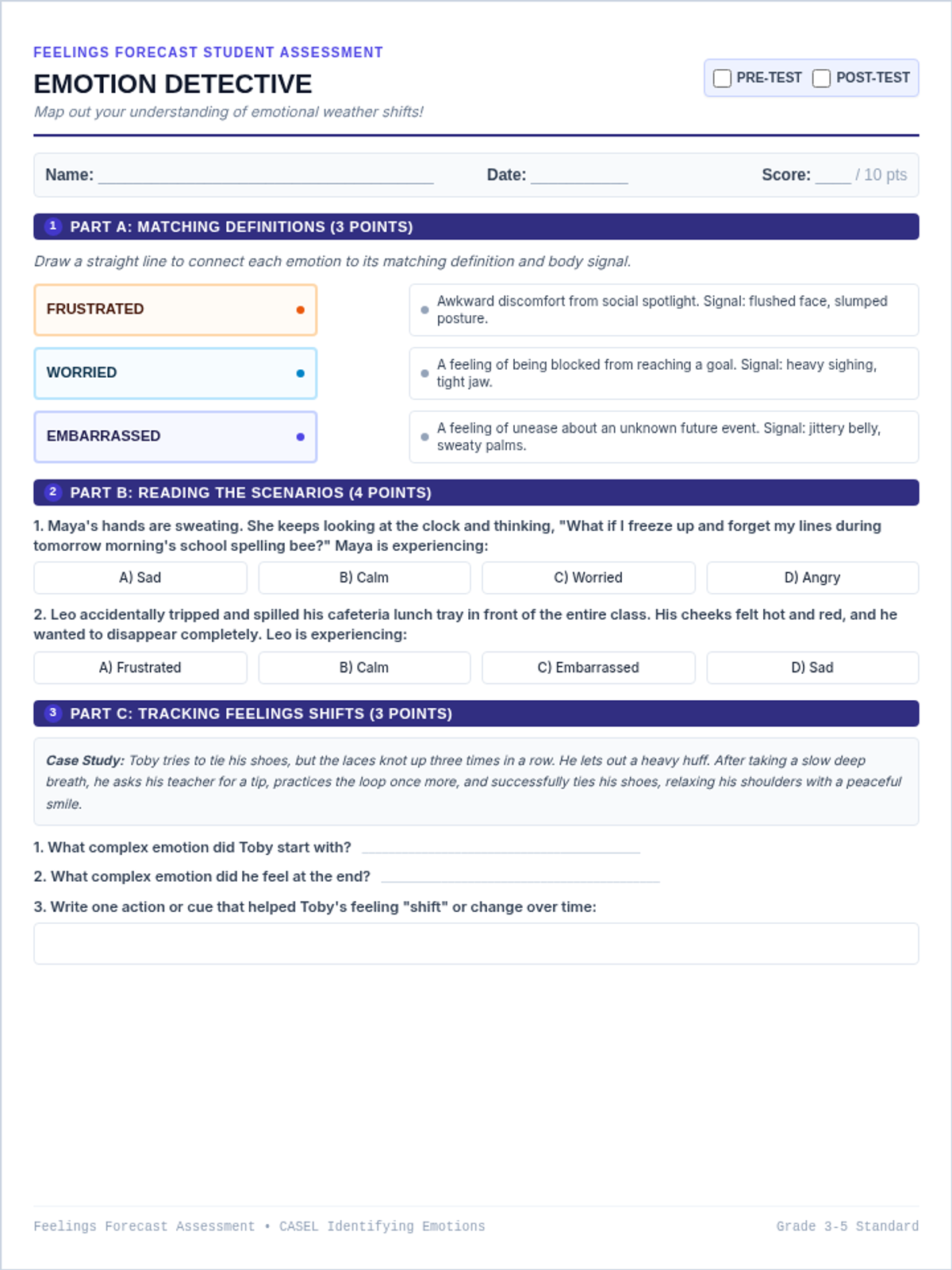
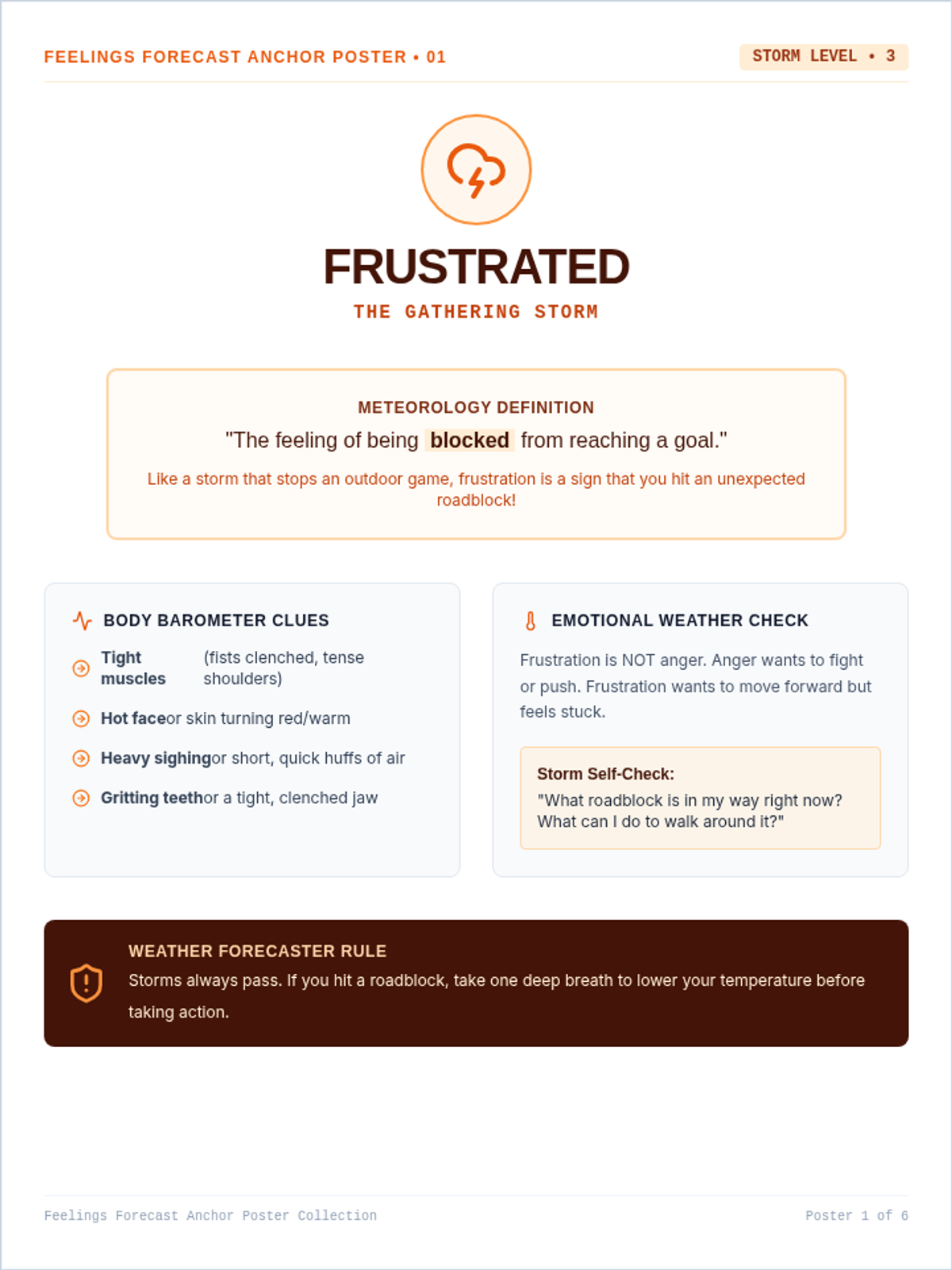
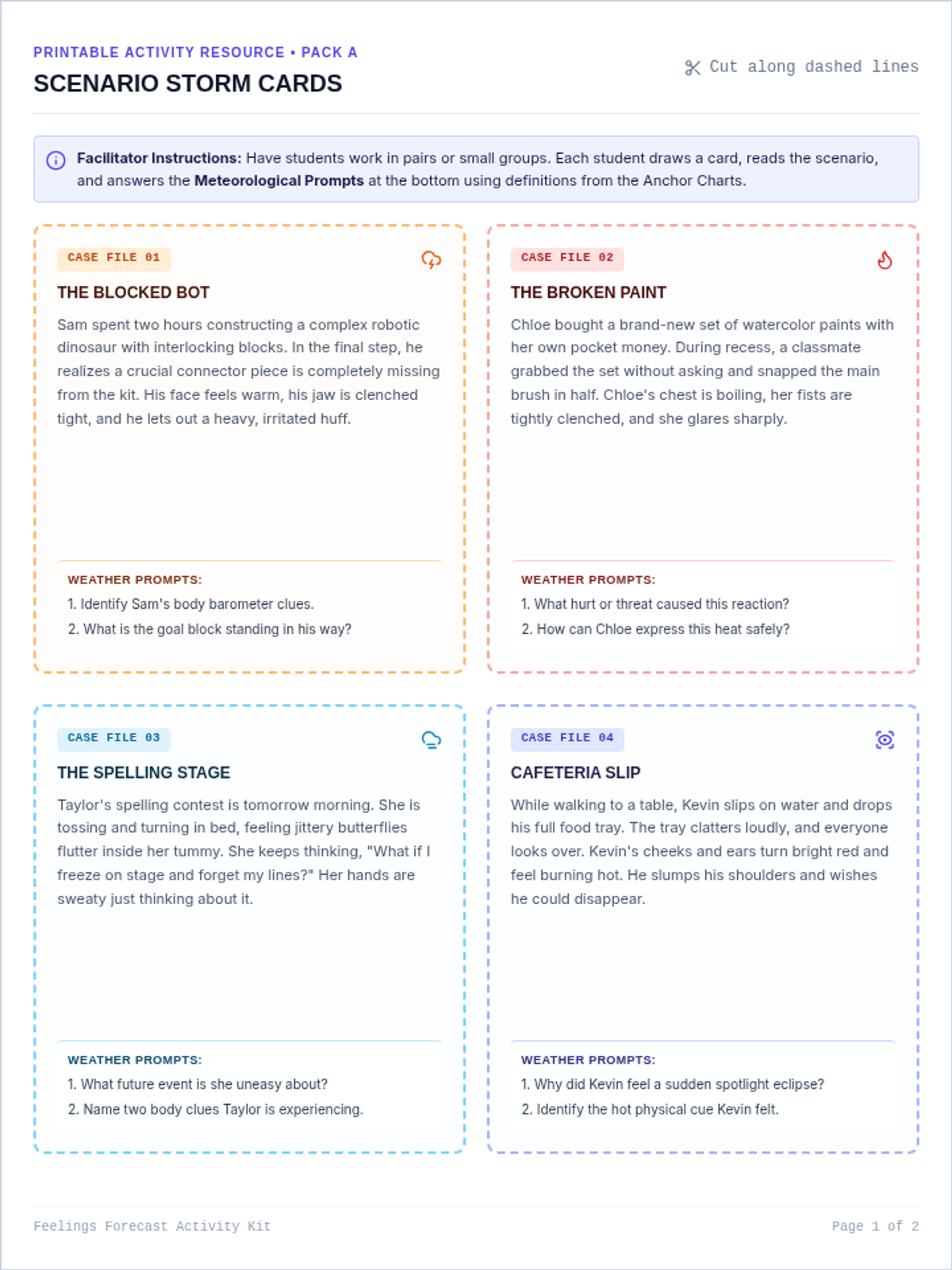
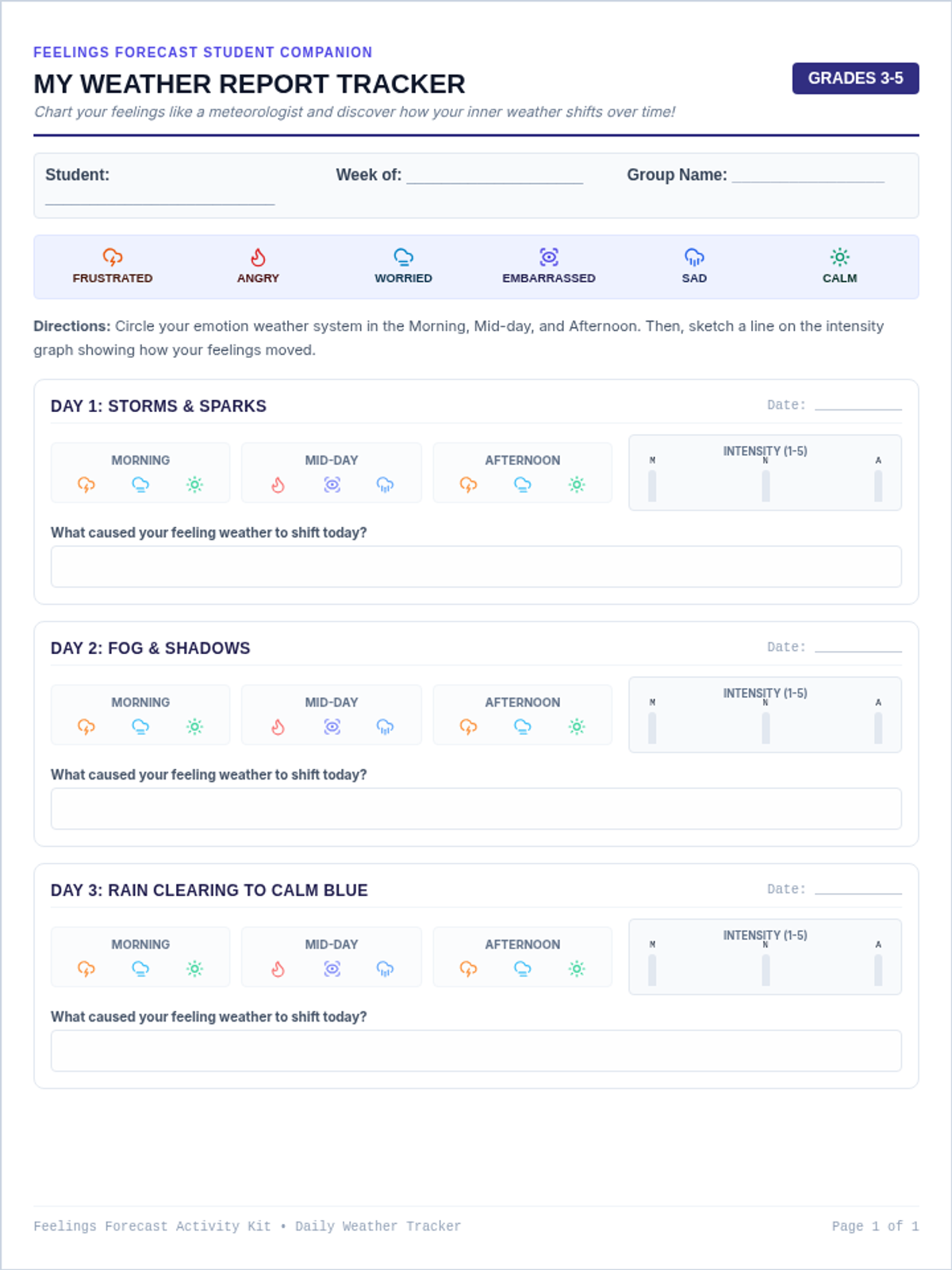
A 3-5 day small group social-emotional learning lesson series designed for upper elementary students (grades 3-5) to identify complex emotions (frustrated, angry, worried, embarrassed, sad, and calm) and explore how feelings change over time, using a meteorological weather-tracking theme.
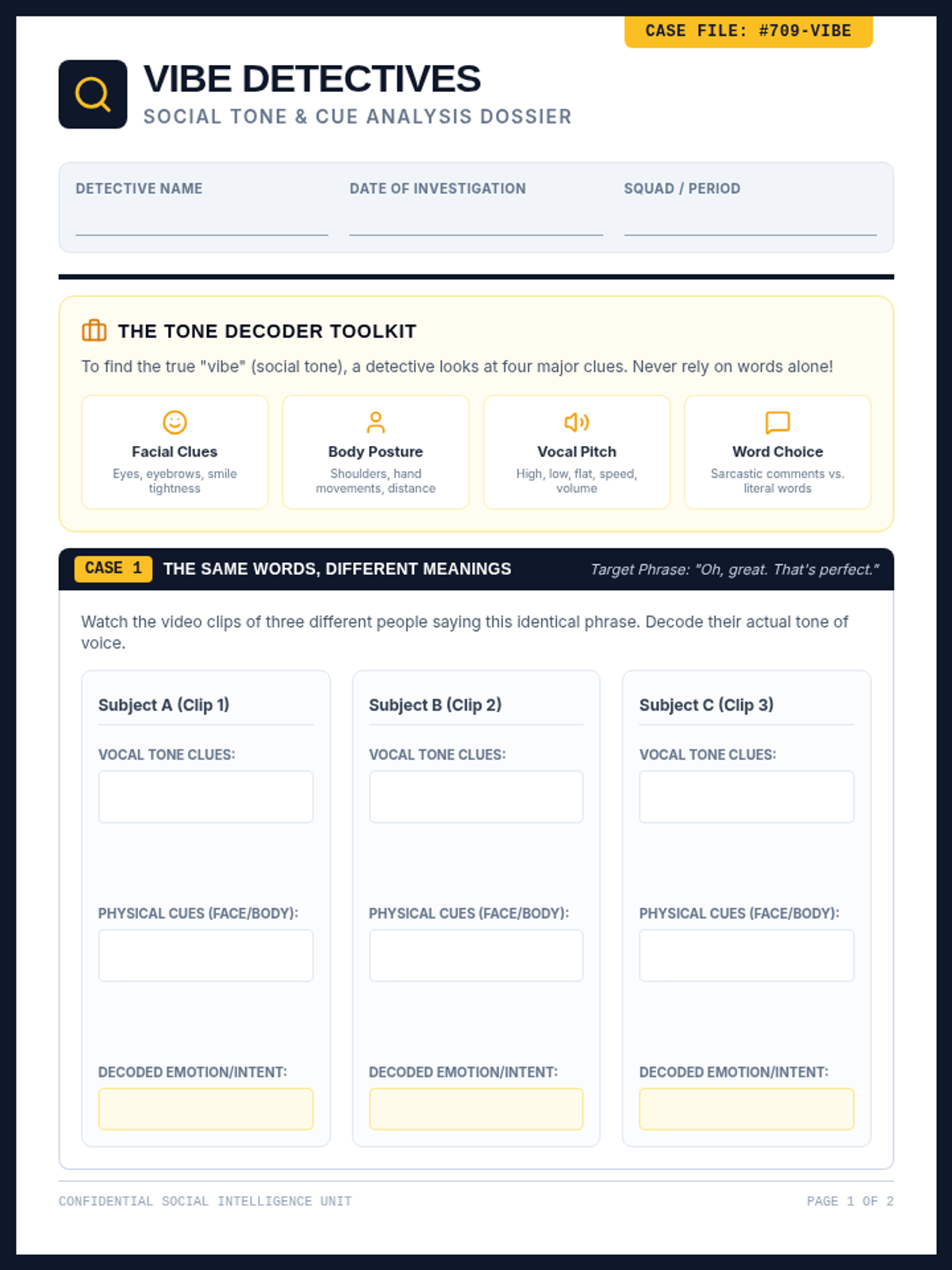
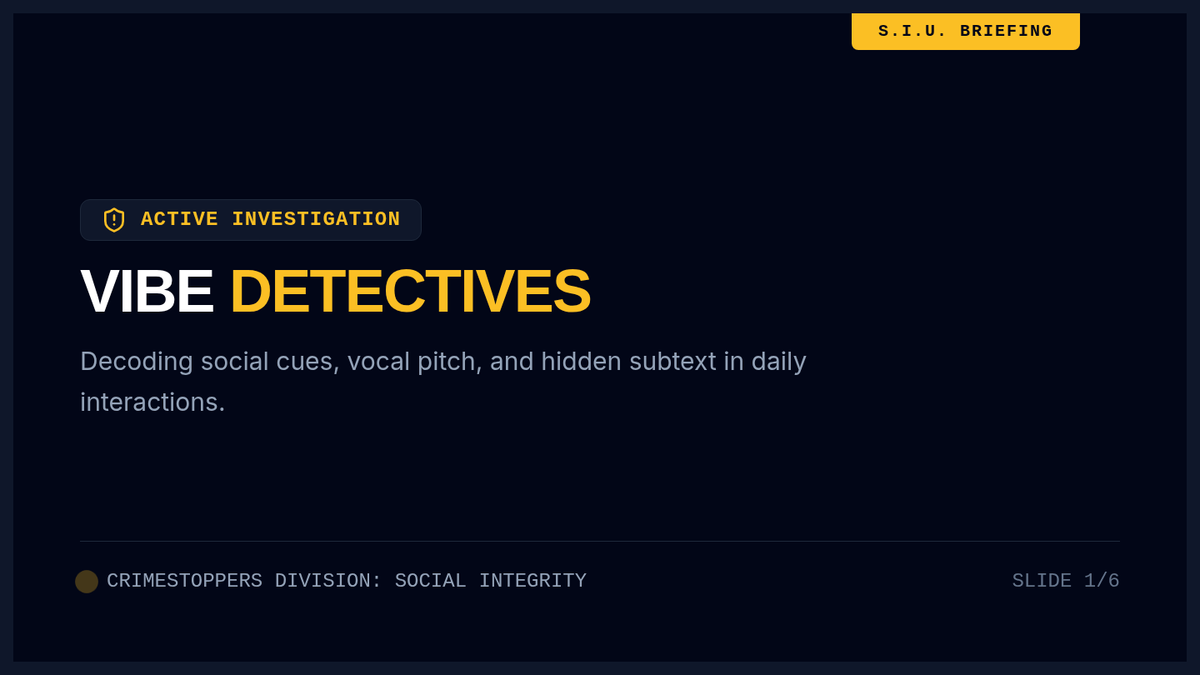
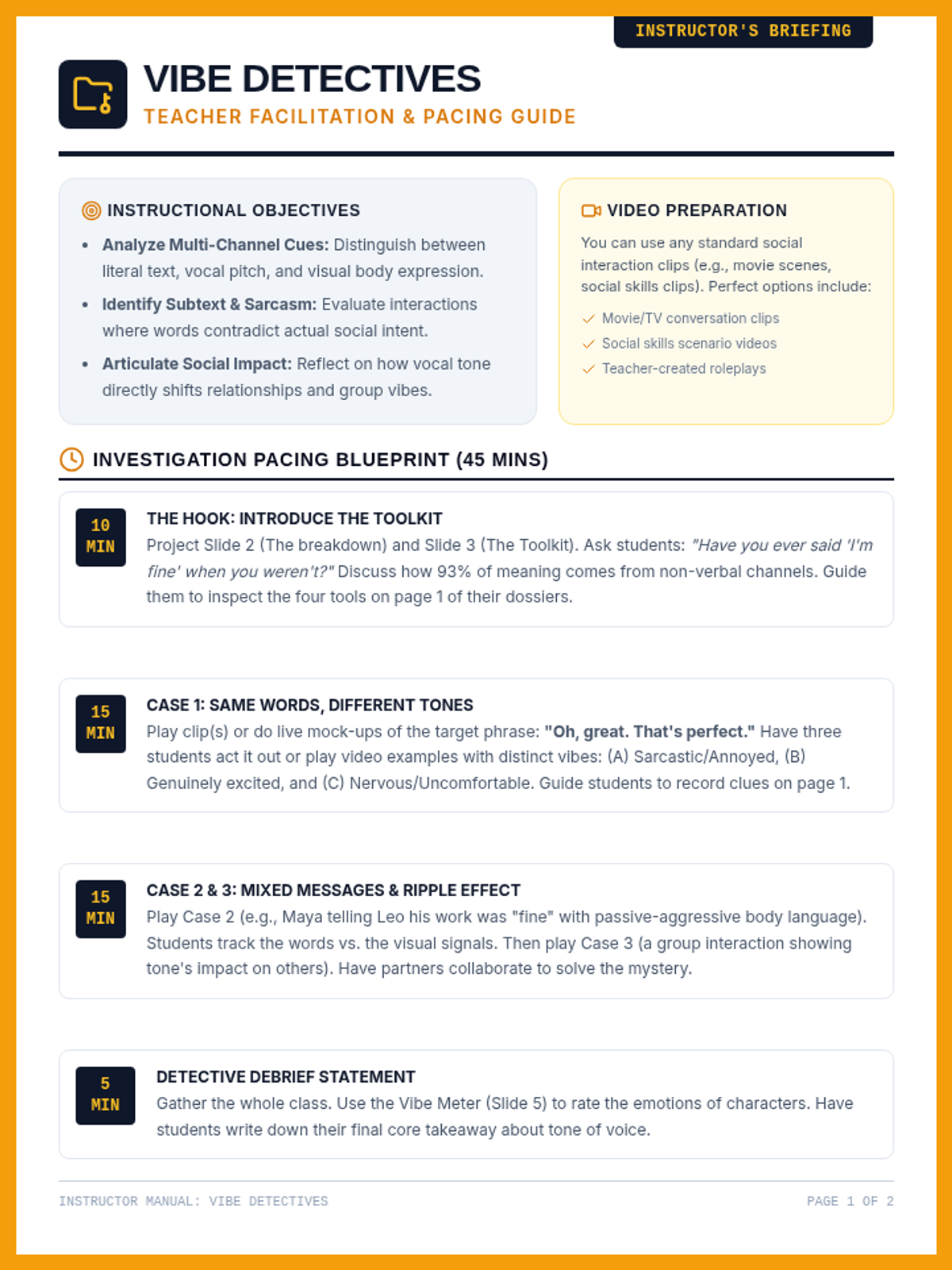
A highly engaging lesson where students analyze social cues, body language, and vocal pitch in videos to decode a character's true tone of voice and social intent.
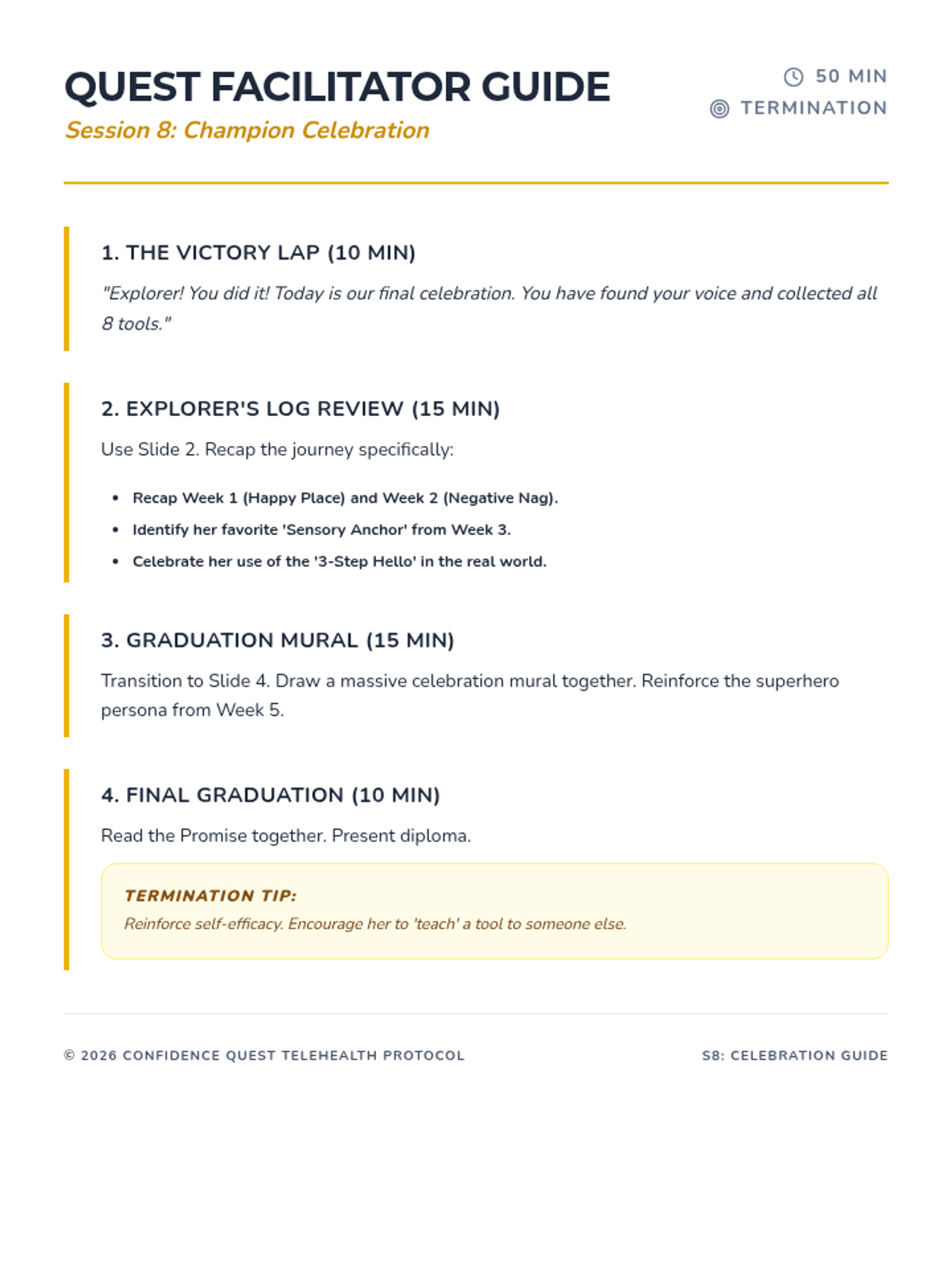
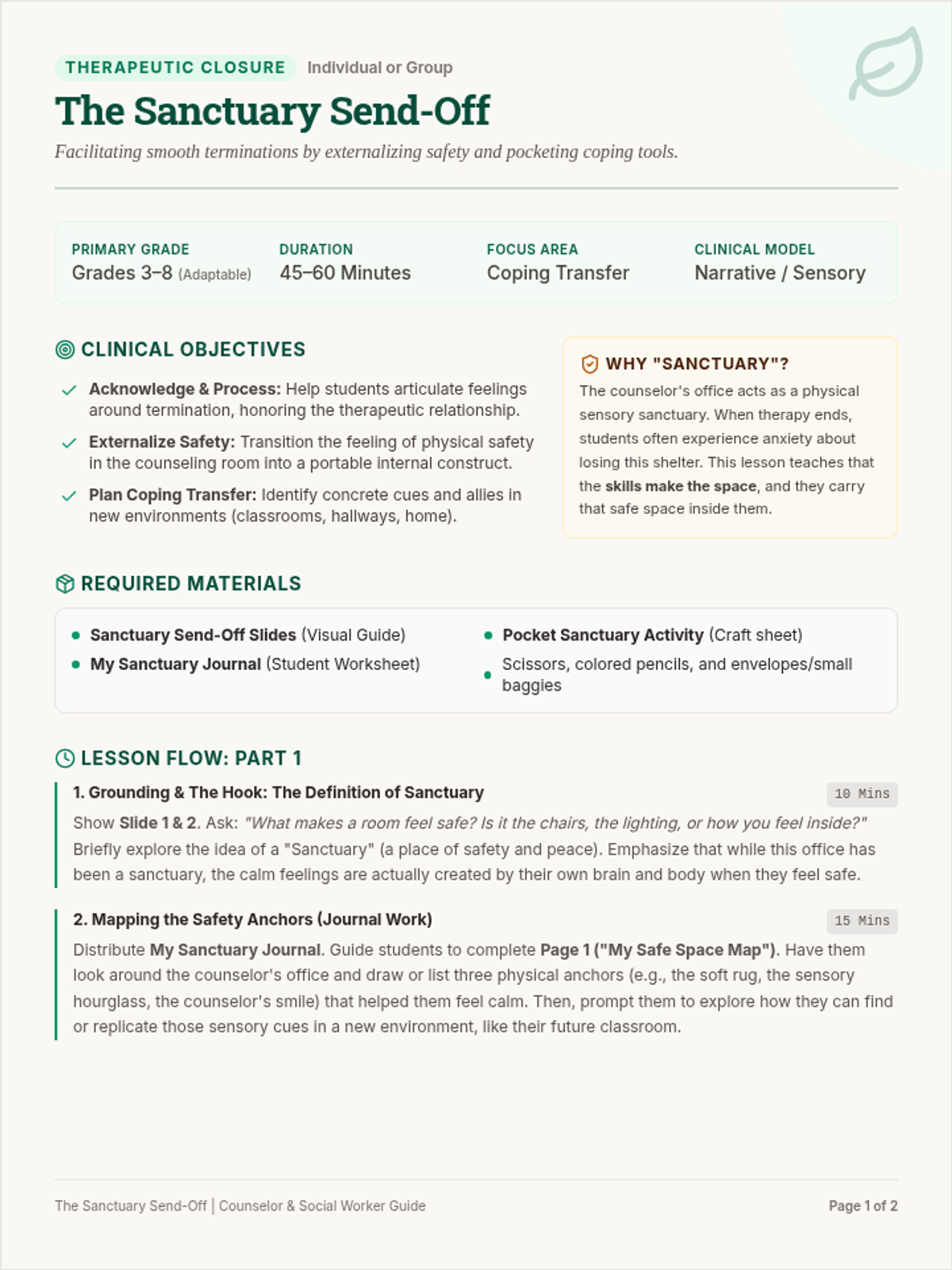
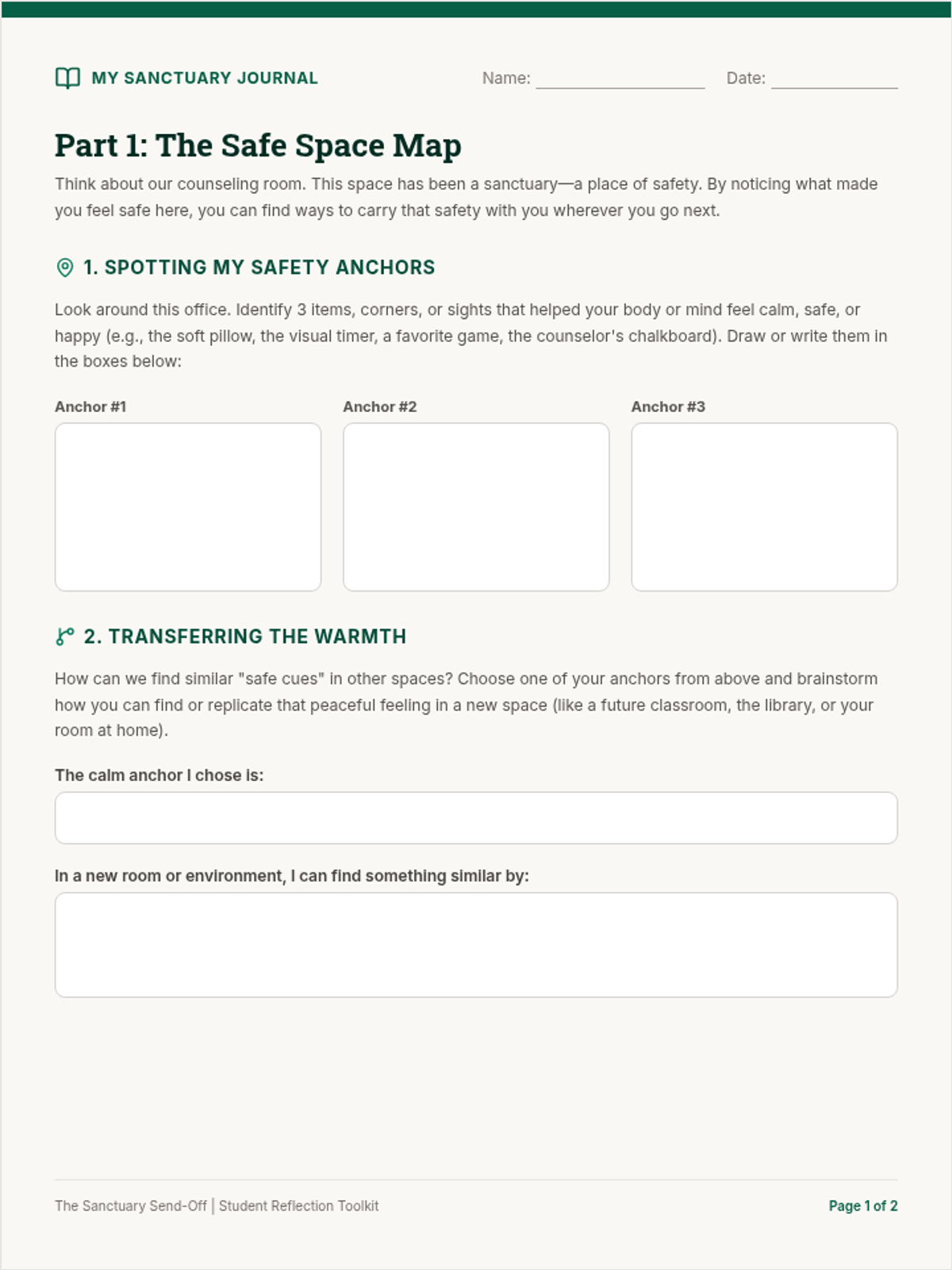
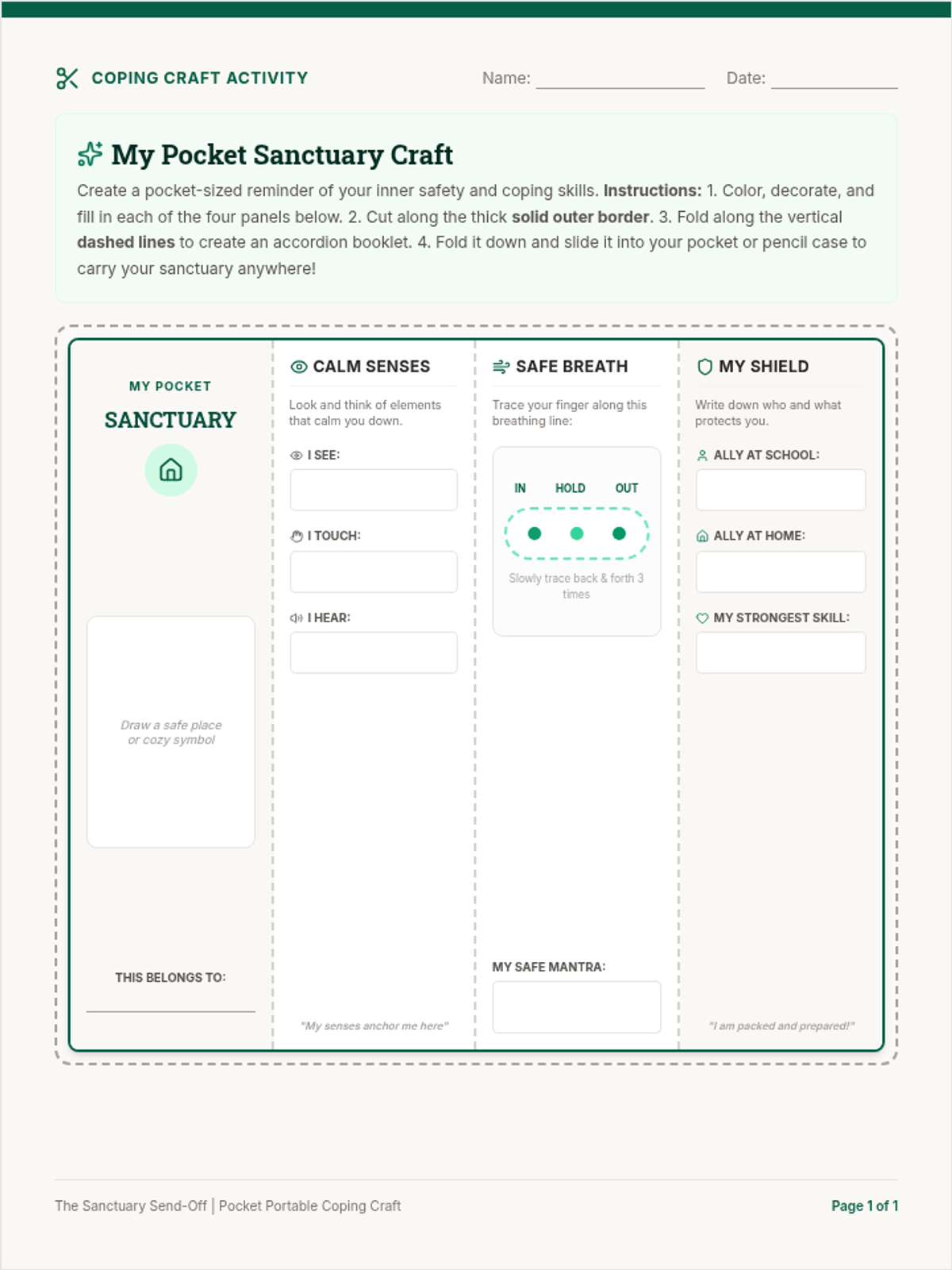
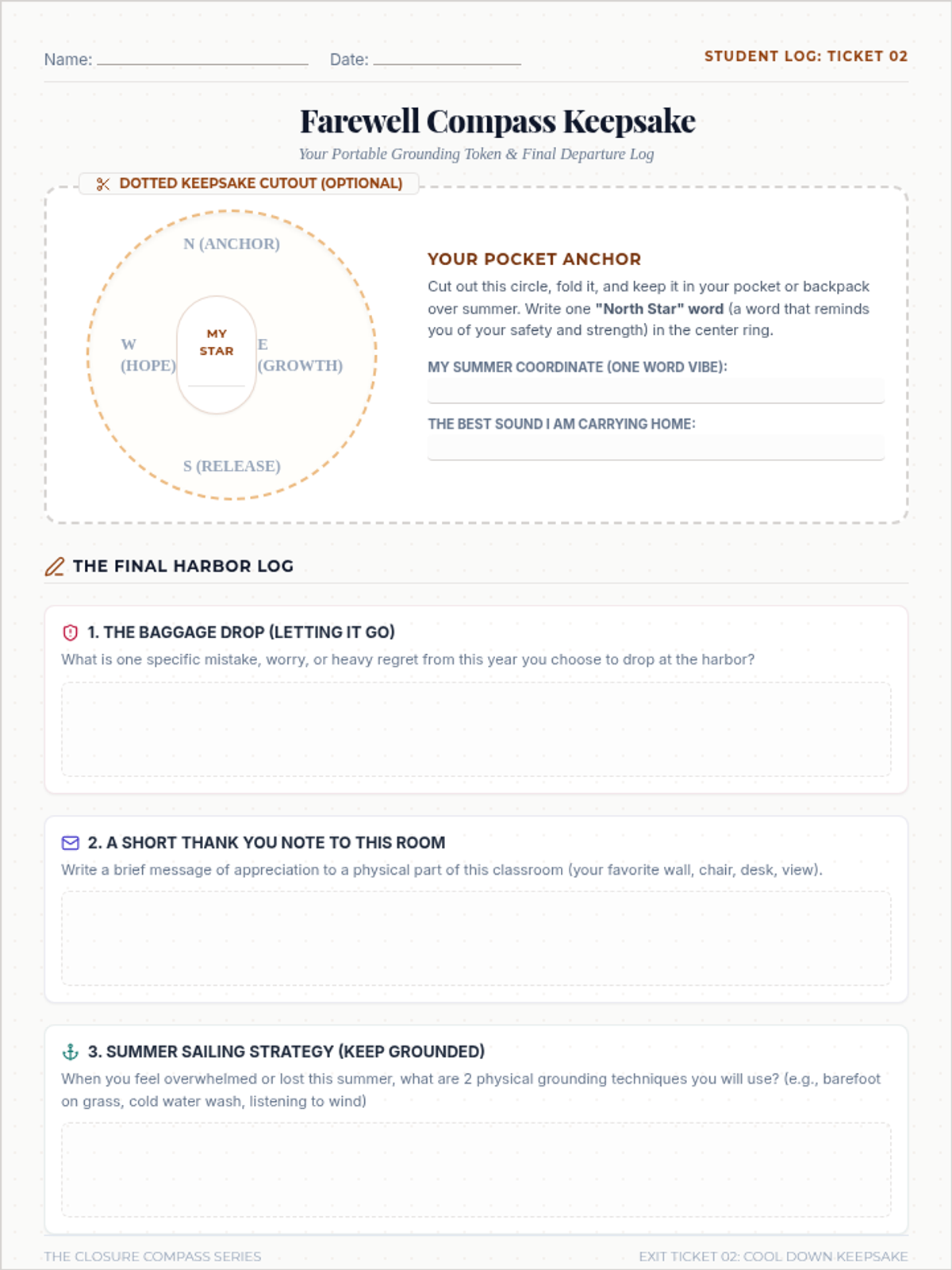
A therapeutic termination and closure lesson designed to help students transition out of individual or group counseling by externalizing their coping strategies and creating portable reminders of safety.
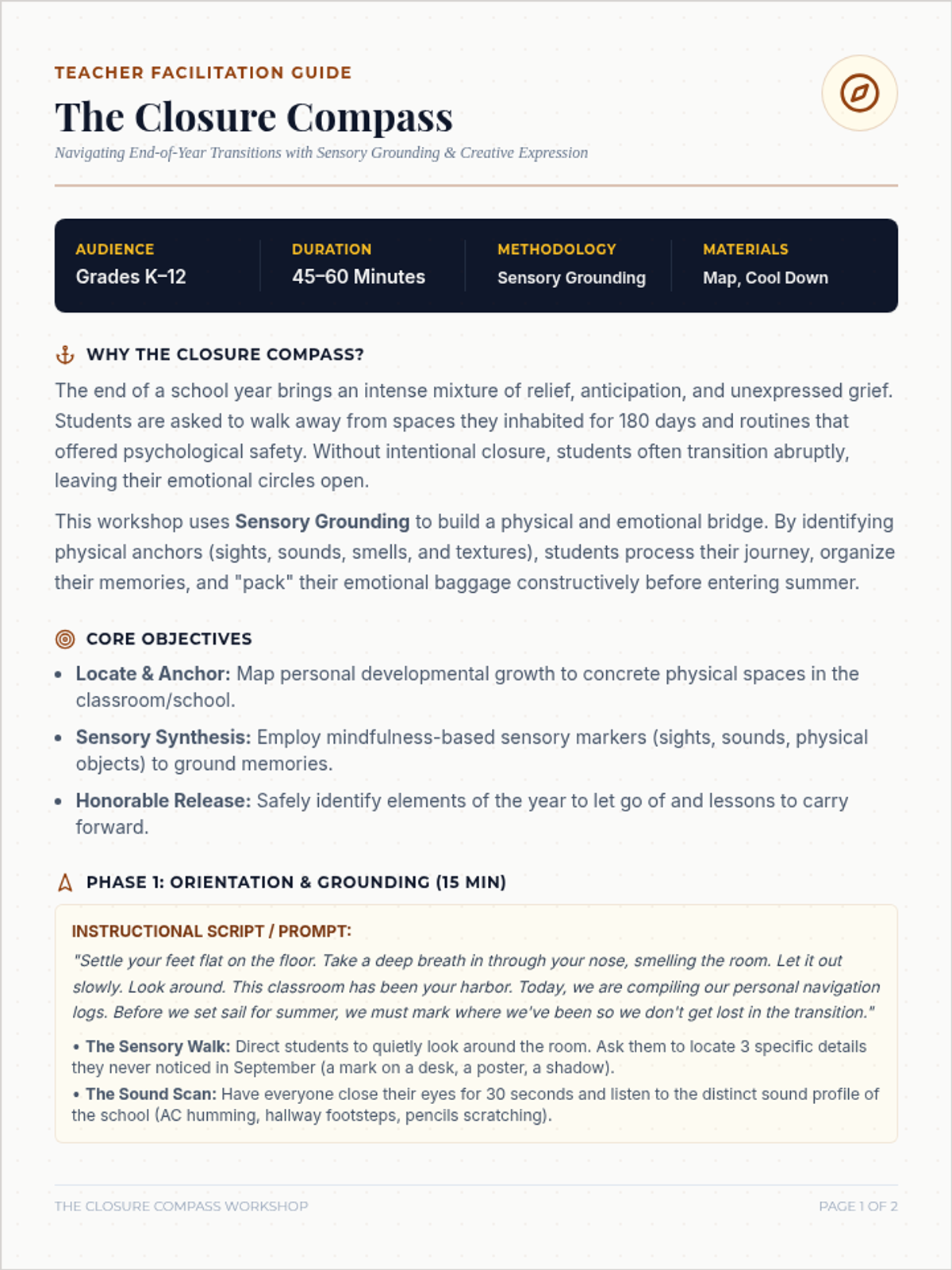
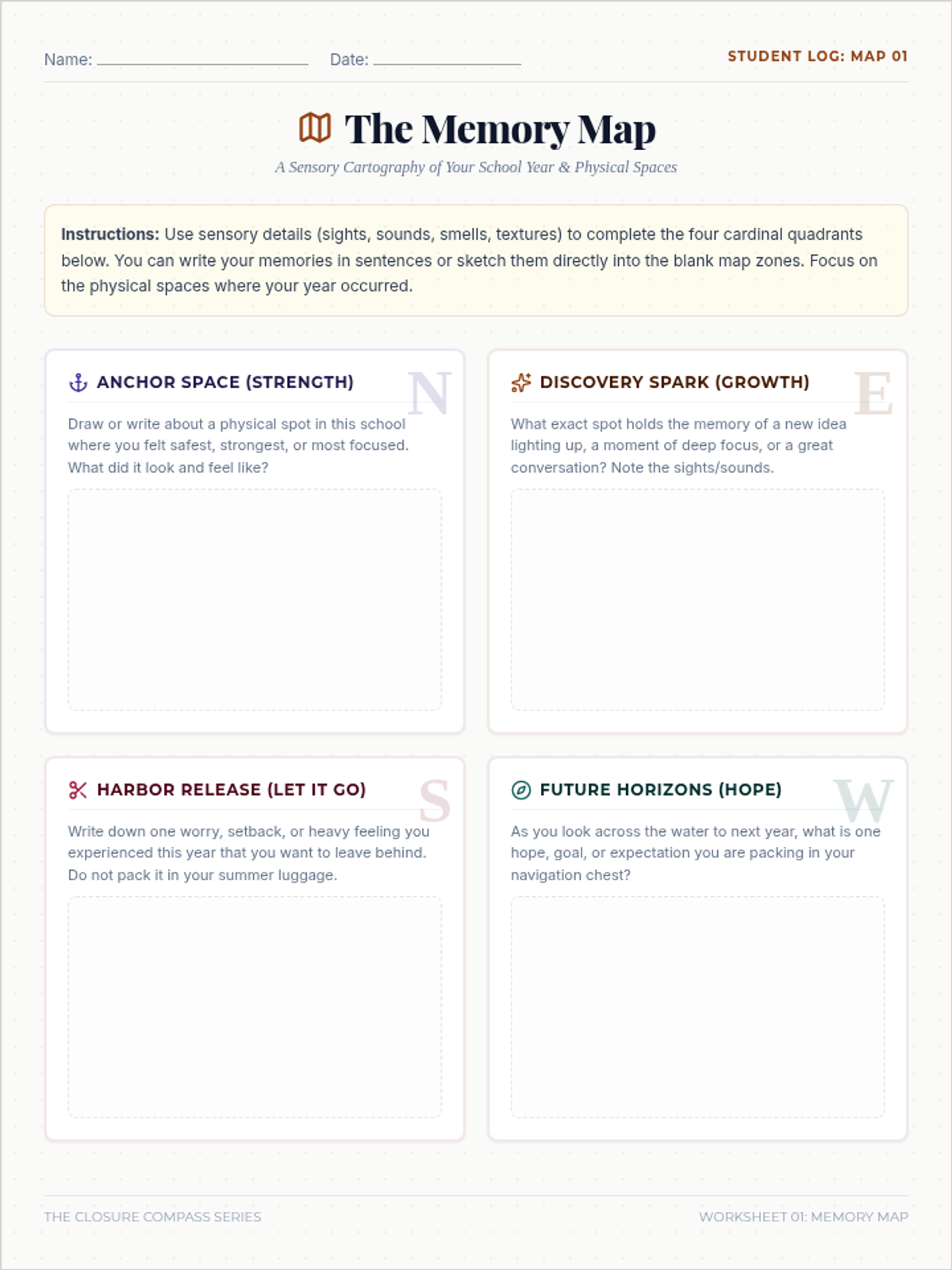
A transition workshop lesson that helps students of all ages navigate the end of the school year using sensory grounding and creative expression. The lesson provides a supportive, structured space to honor memories, express gratitude, and transition peacefully into summer.
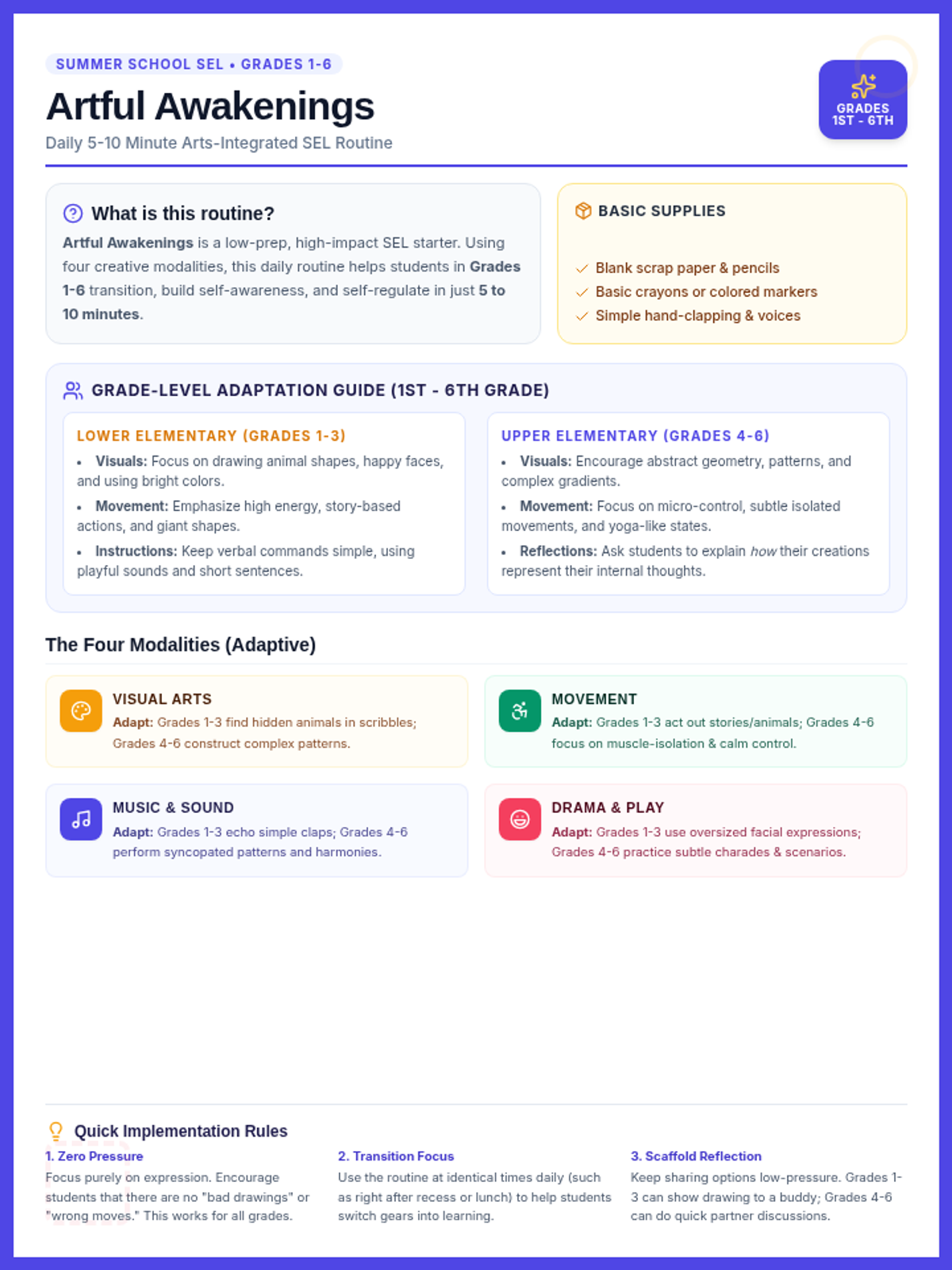
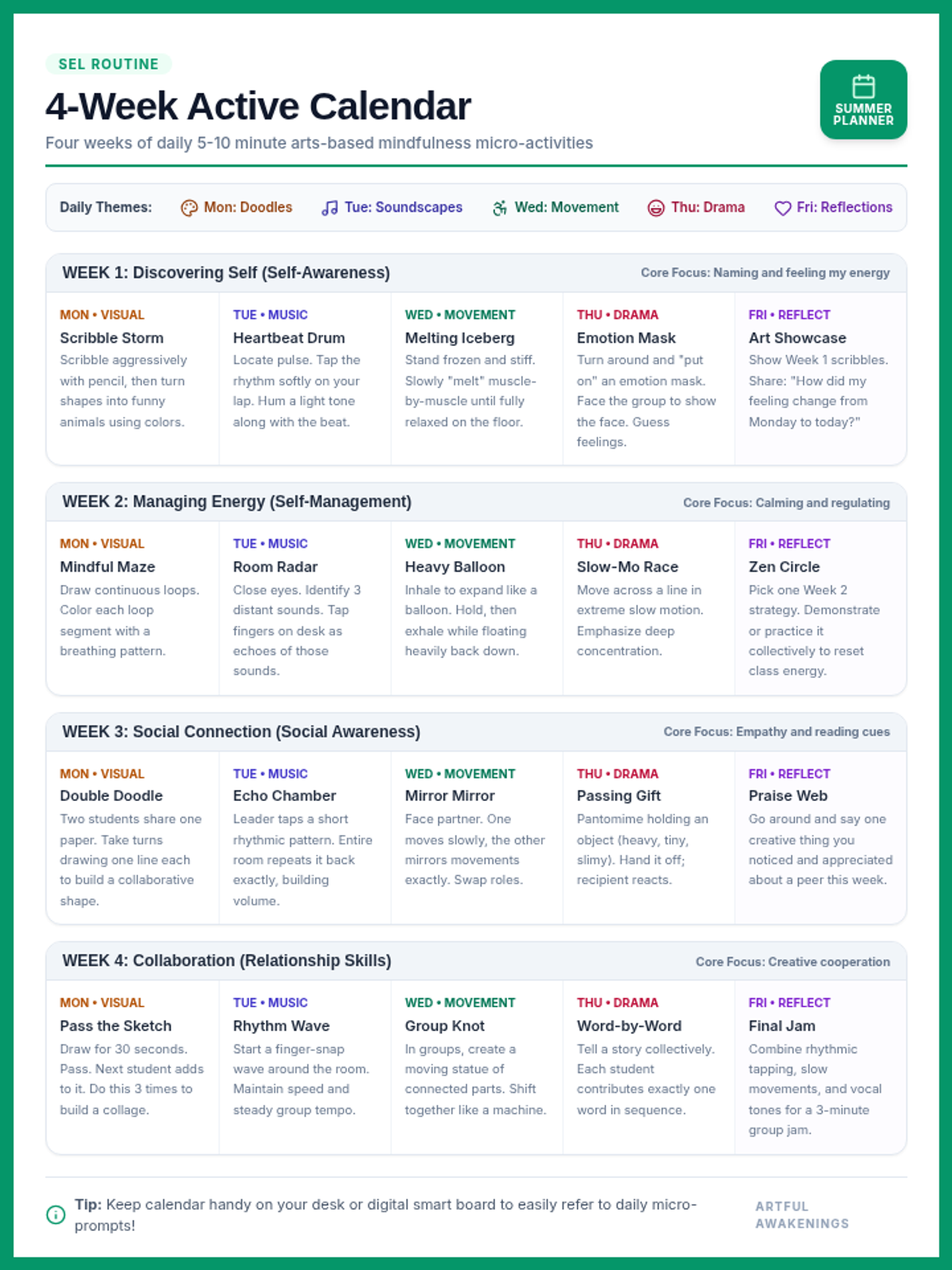
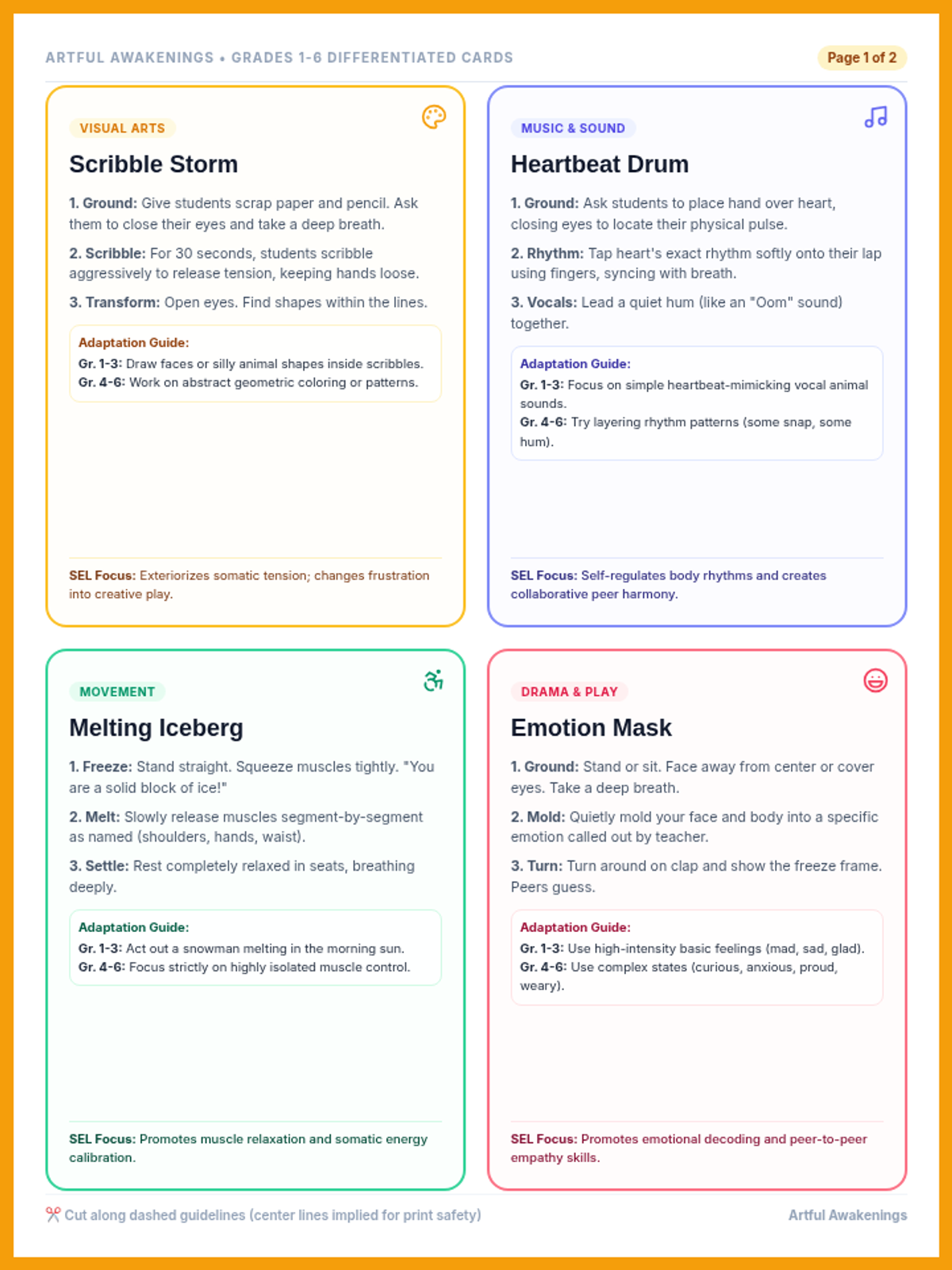
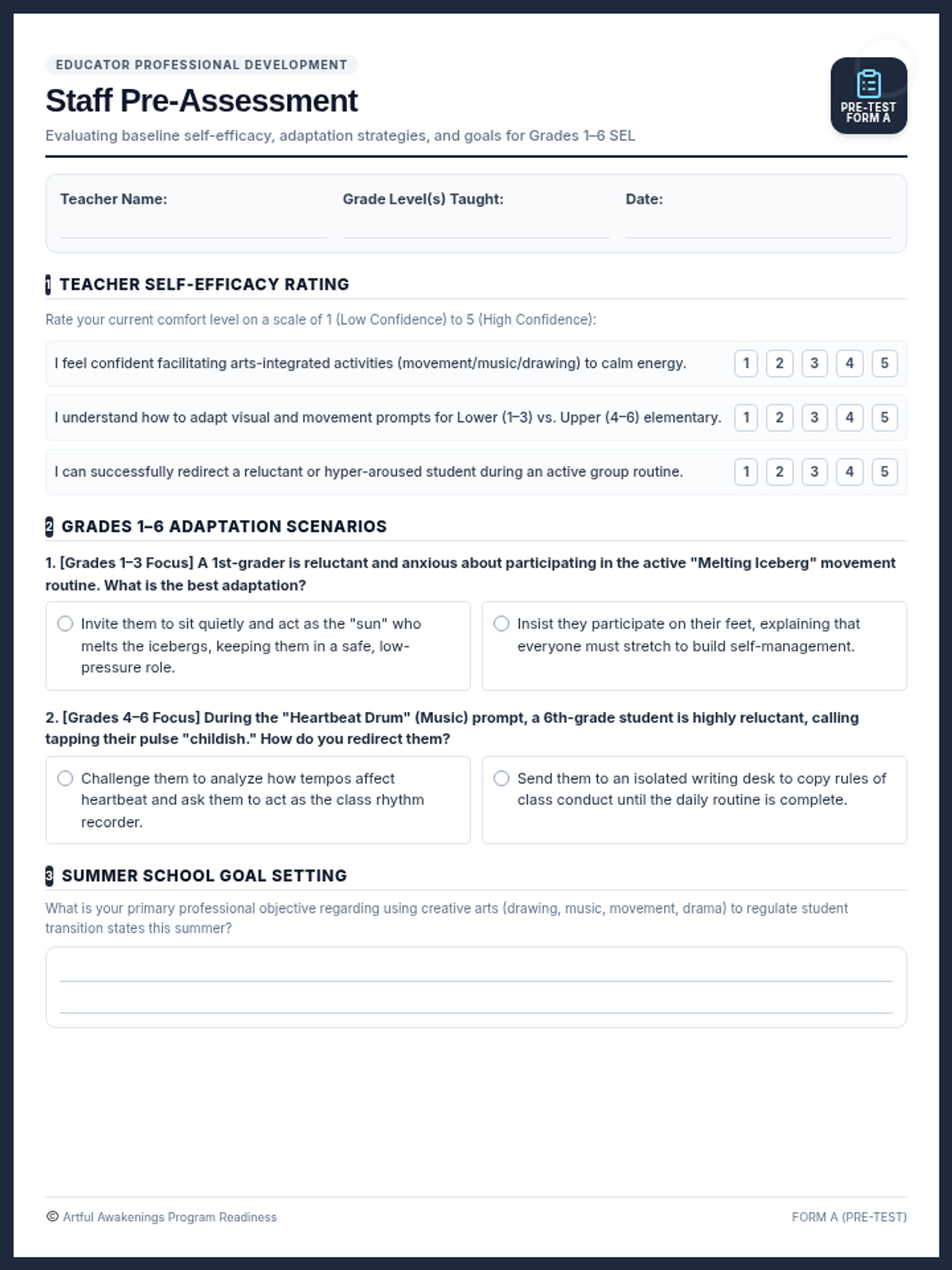
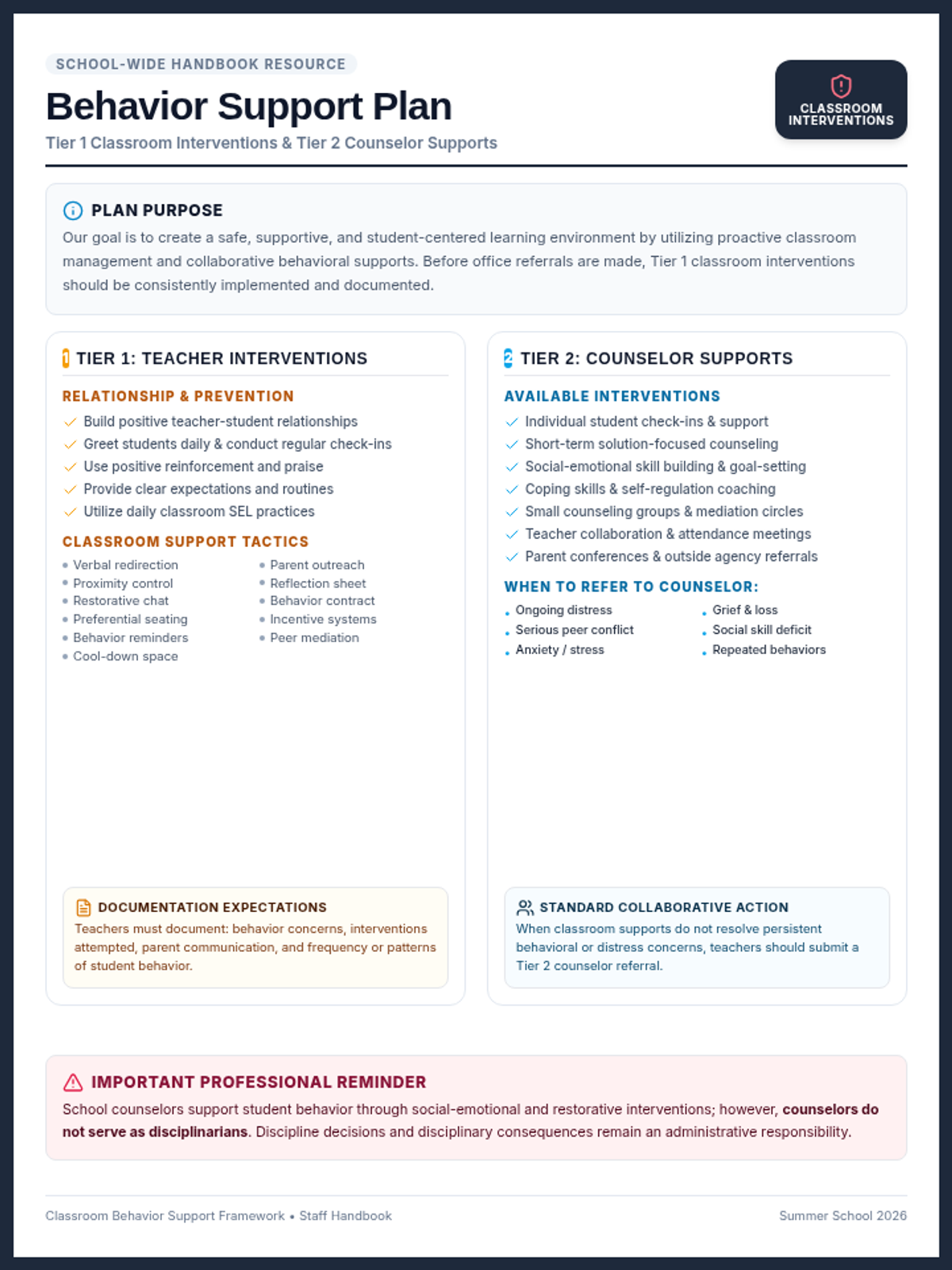
A daily 5-10 minute SEL routine incorporating visual arts, movement, music, and drama to build self-awareness and emotional regulation during summer school.
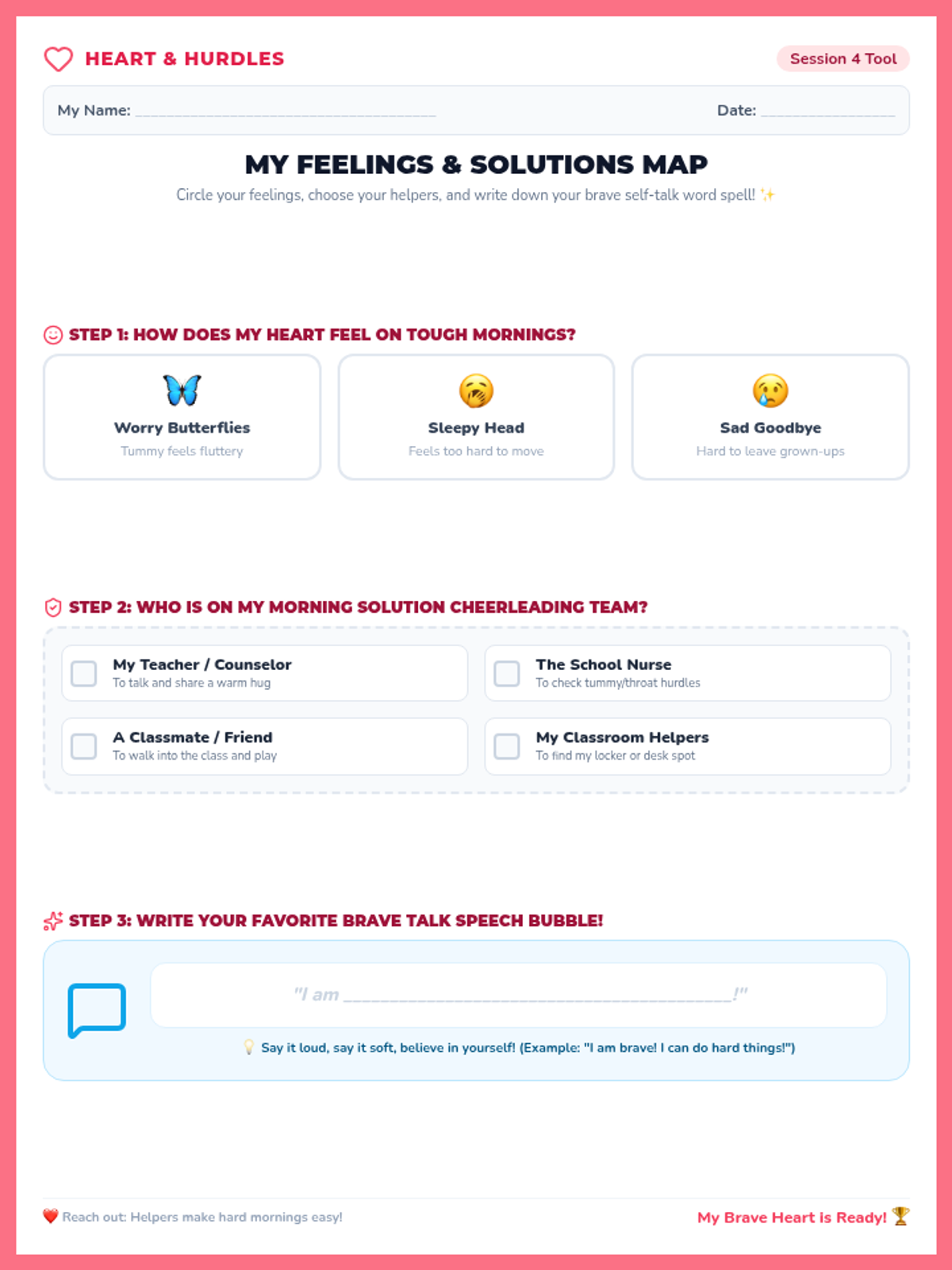
Focuses on identifying anxiety, feeling sick, or other barriers to attending, and teaches children helpful solutions and comforting self-talk.
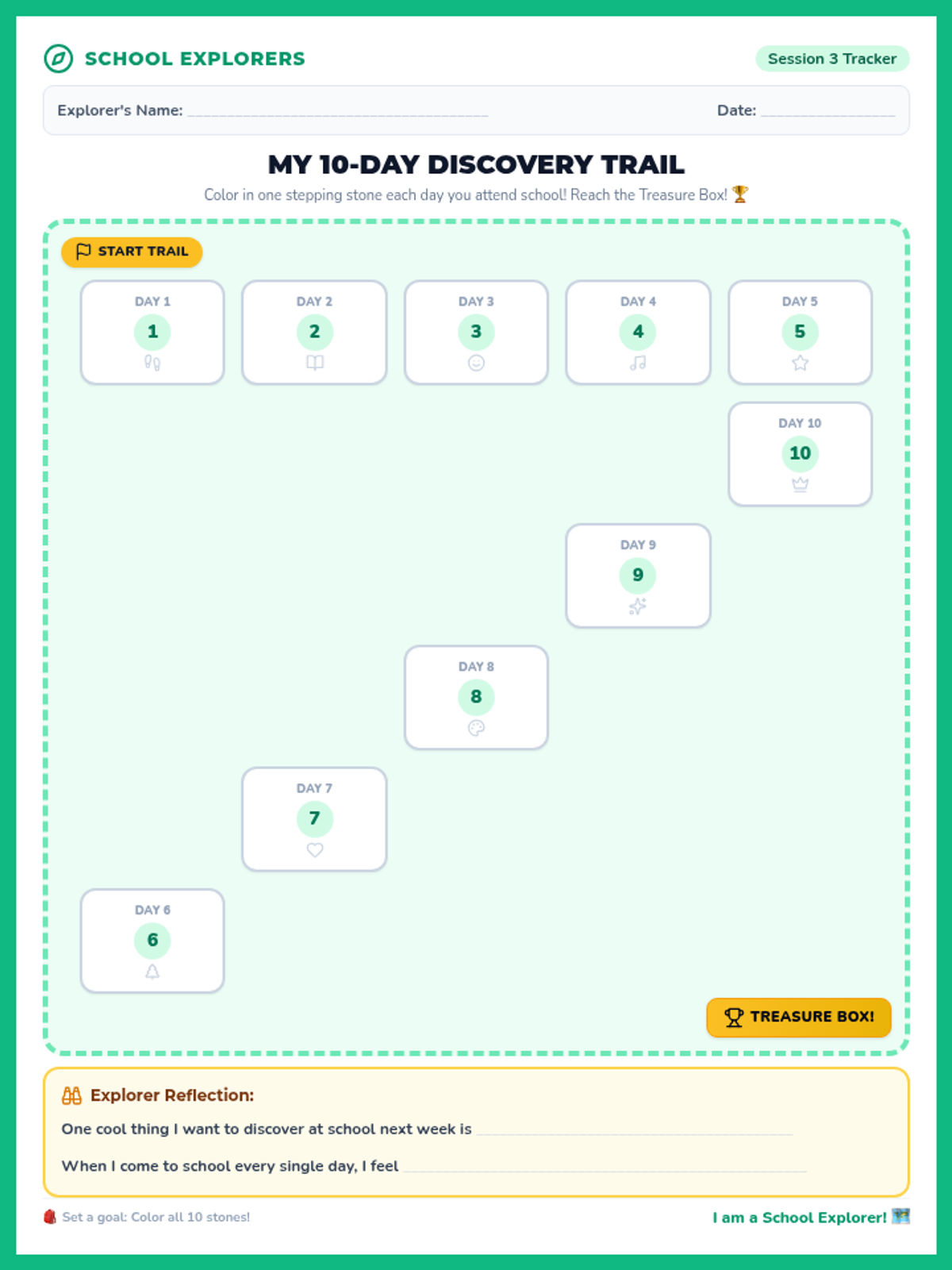
Frames school as a thrilling daily journey of learning, discovery, and friendship to build anticipation and excitement for attendance.
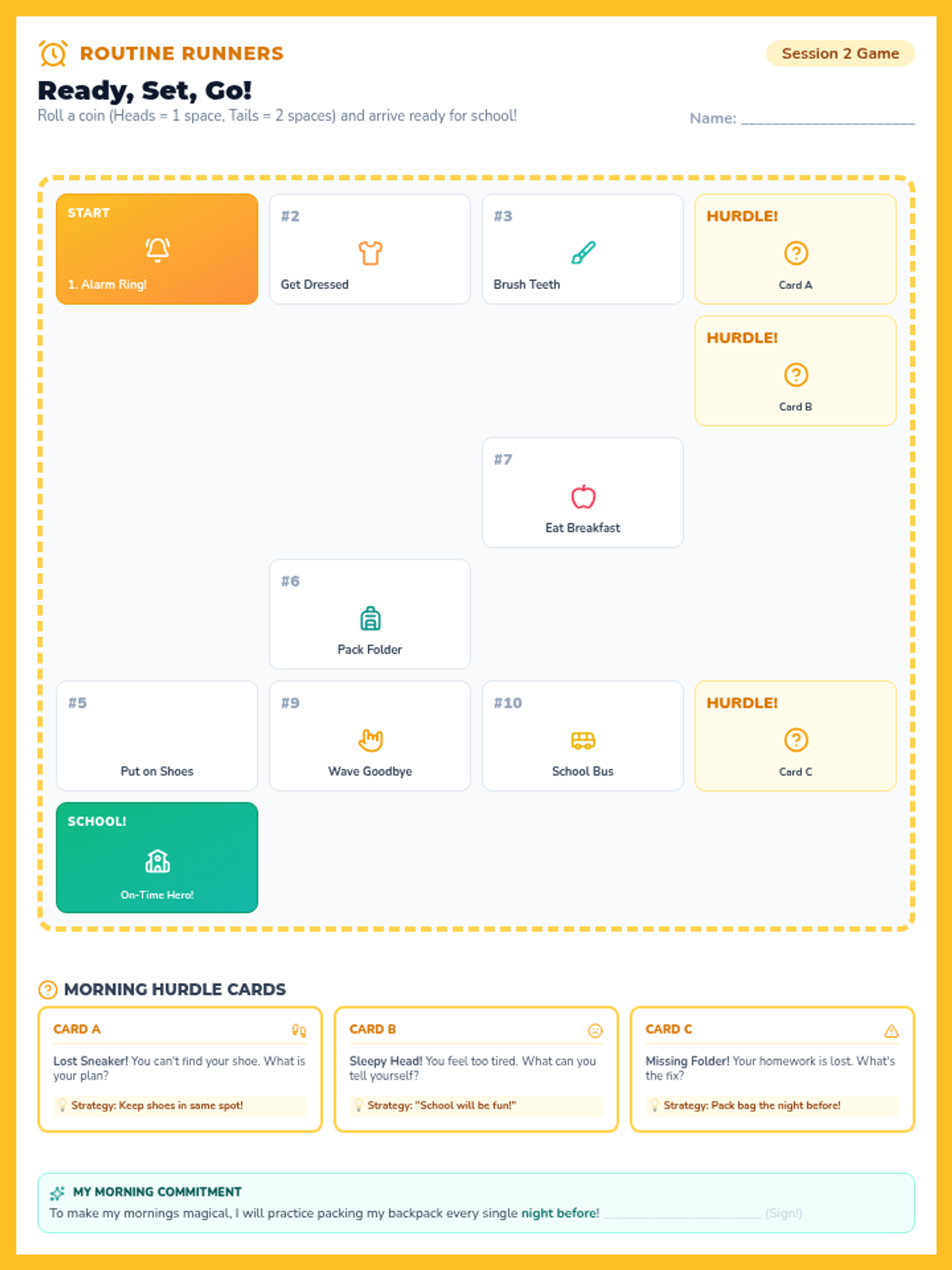
Teaches concrete morning routines and helps students outline practical, visual steps to prepare for school and arrive on time.
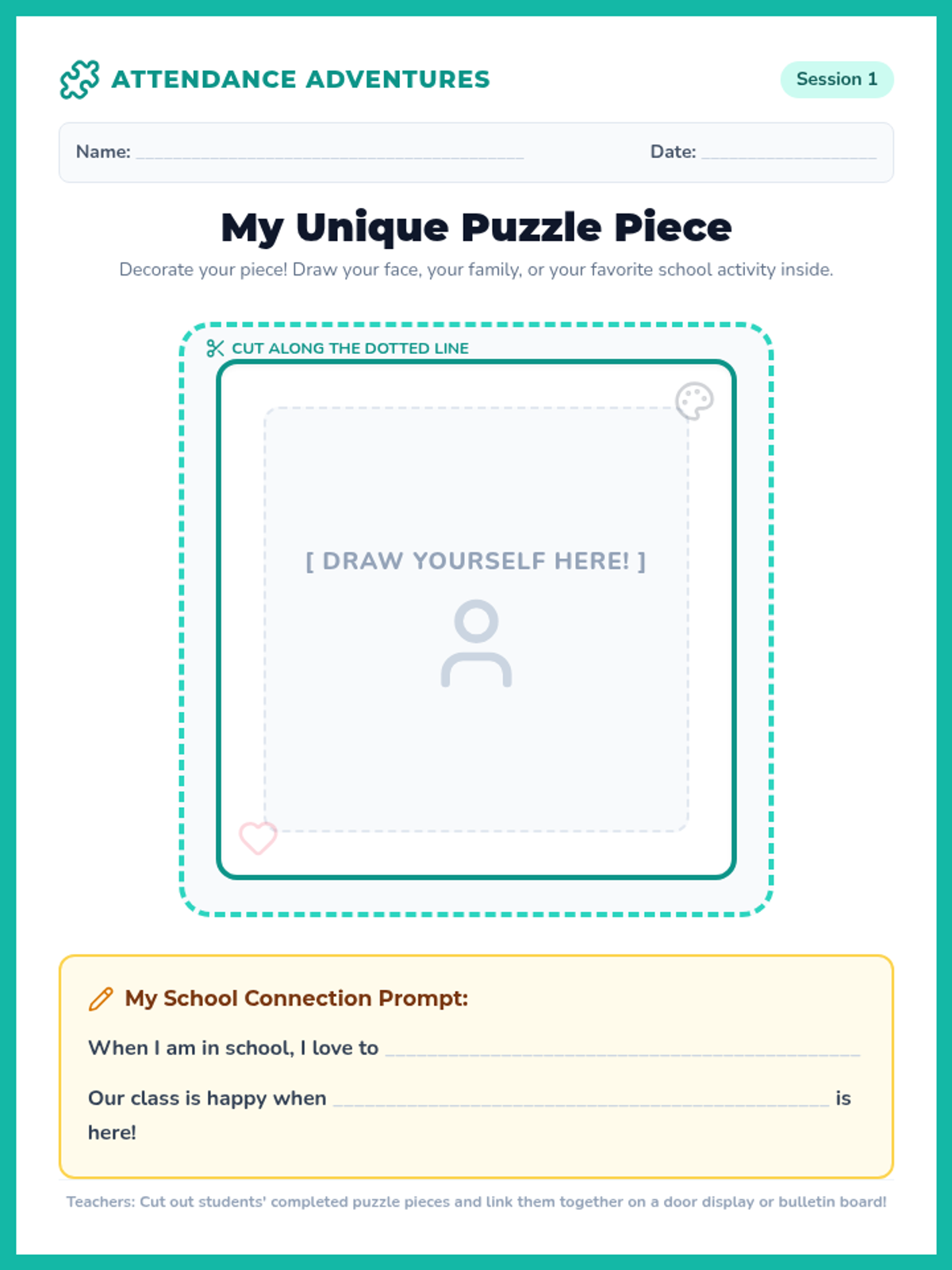
Focuses on the classroom community, demonstrating that every student is a unique and important puzzle piece who is noticed and missed when they are absent.
A 1-to-1 social-emotional learning lesson focusing on empathy and perspective-taking through real-world scenarios. Students practice putting themselves in the shoes of both classmates and teachers to understand different feelings and actions.
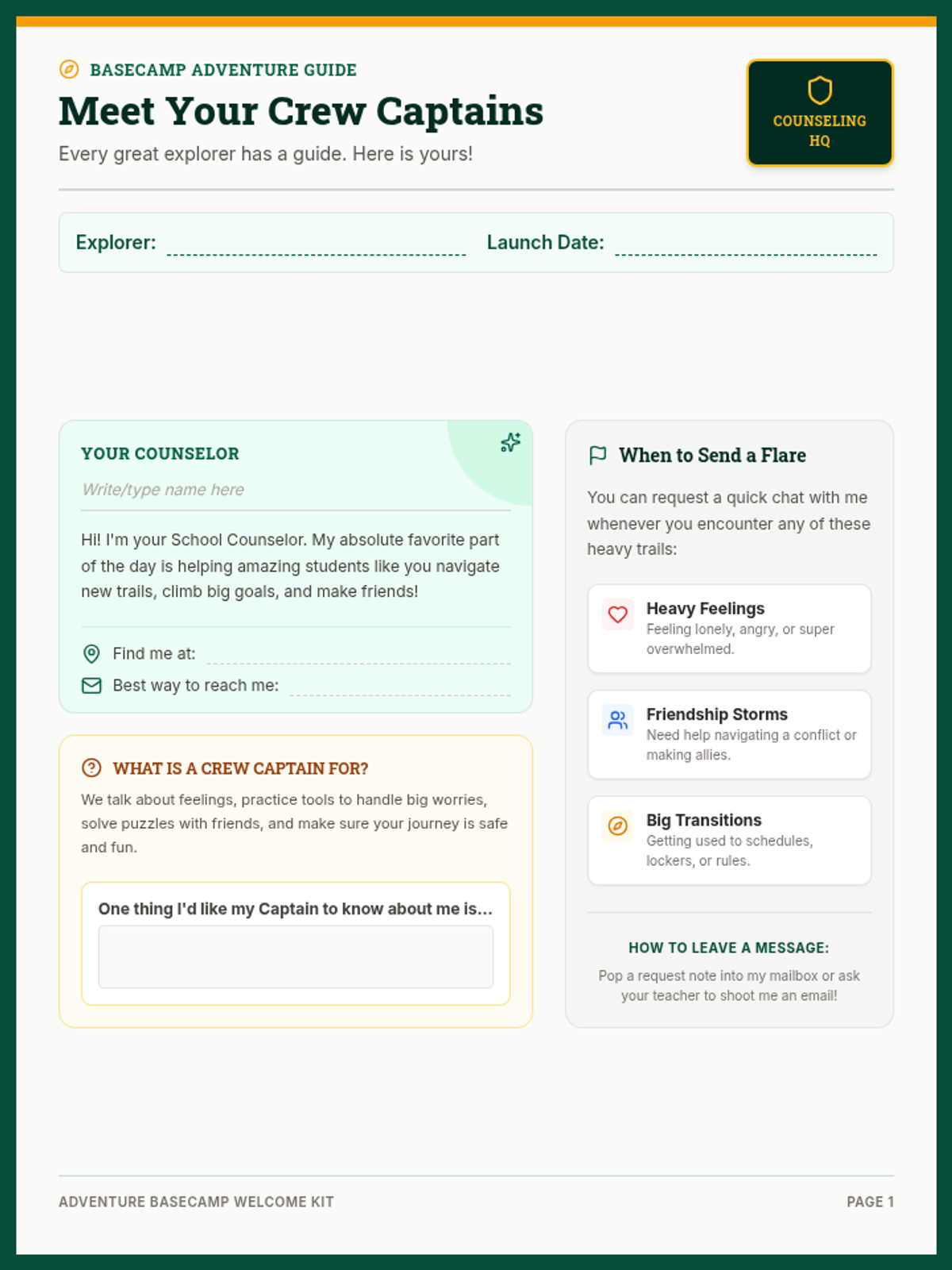
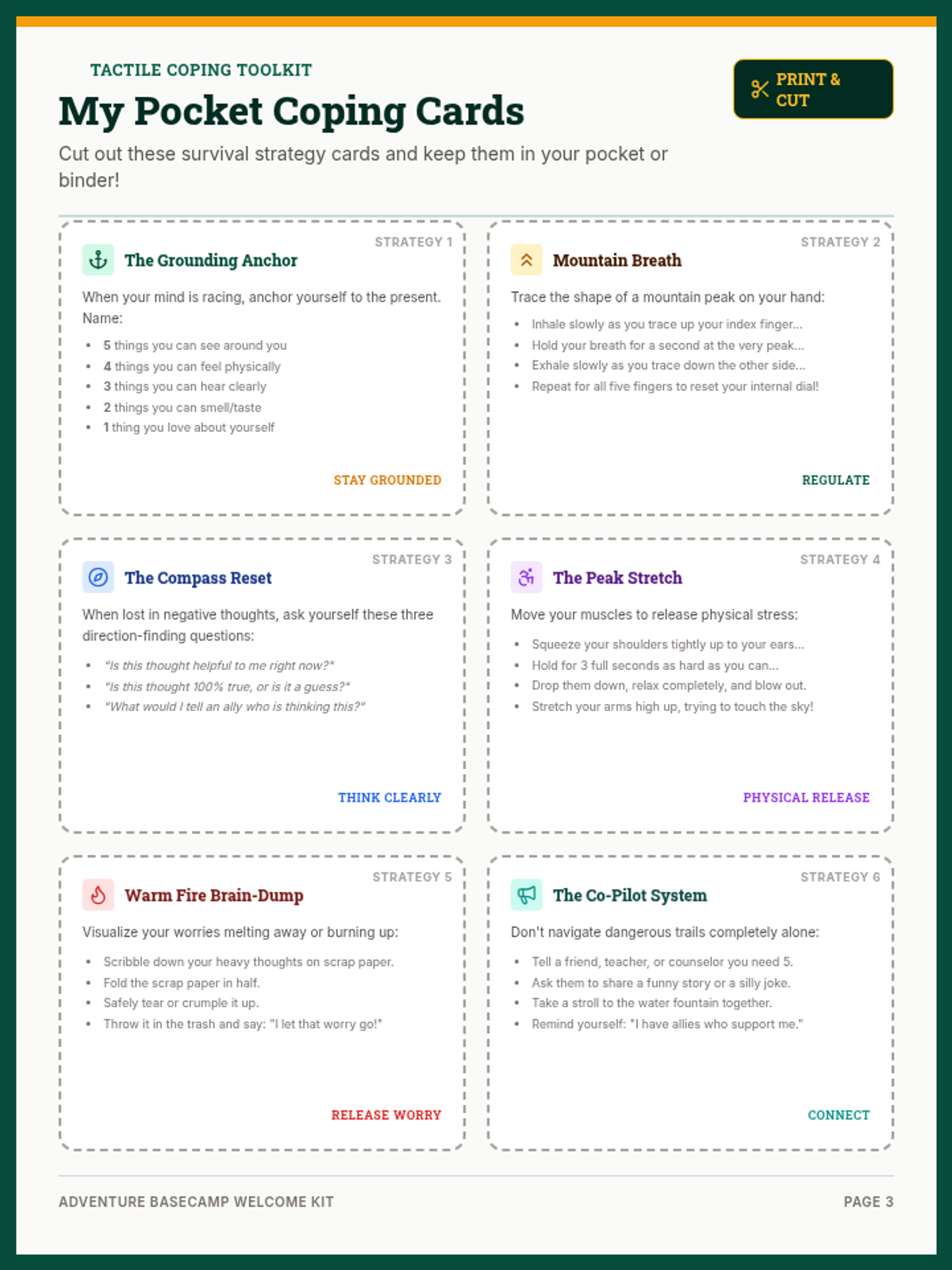
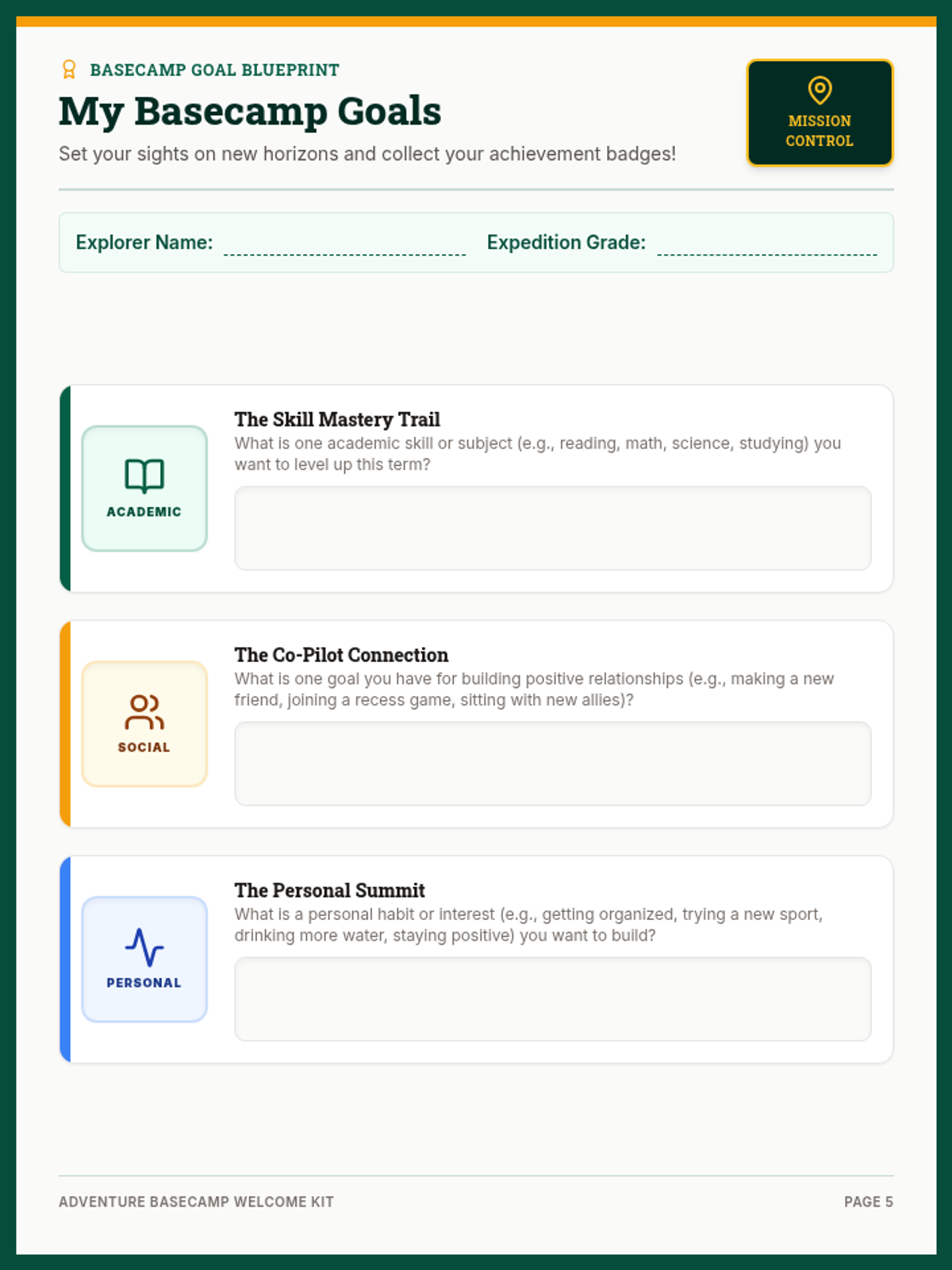
A welcome packet designed for new upper elementary students transitioning to a new school. Features counselor introductions, interactive feelings trackers, physical coping strategy cards, anxiety-relief exercises, goal setting templates, and school activities organizers.
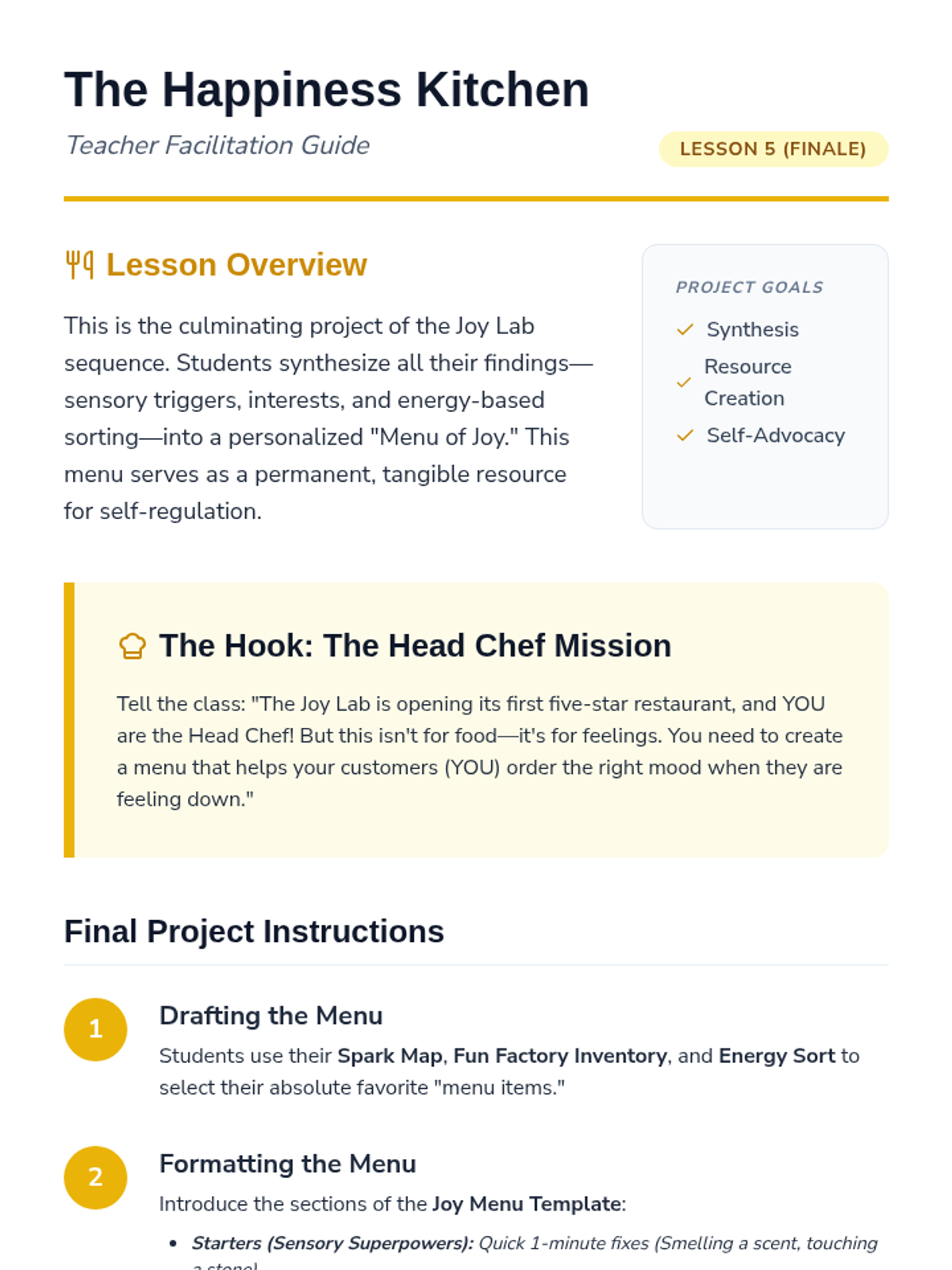
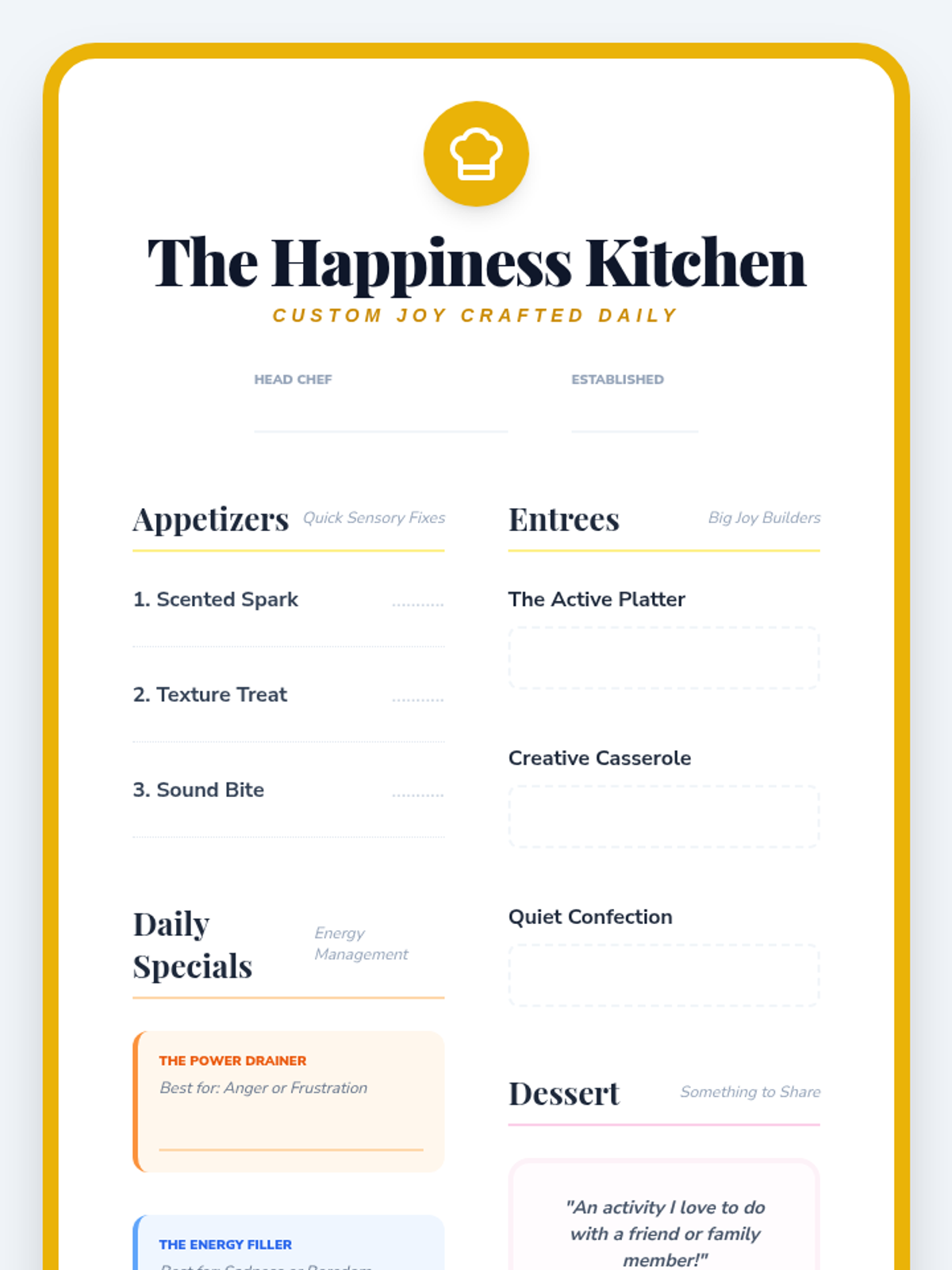
Students synthesize their findings to create a personalized, illustrated menu of 'Go-To' activities and role-play scenarios where they might order from their menu.
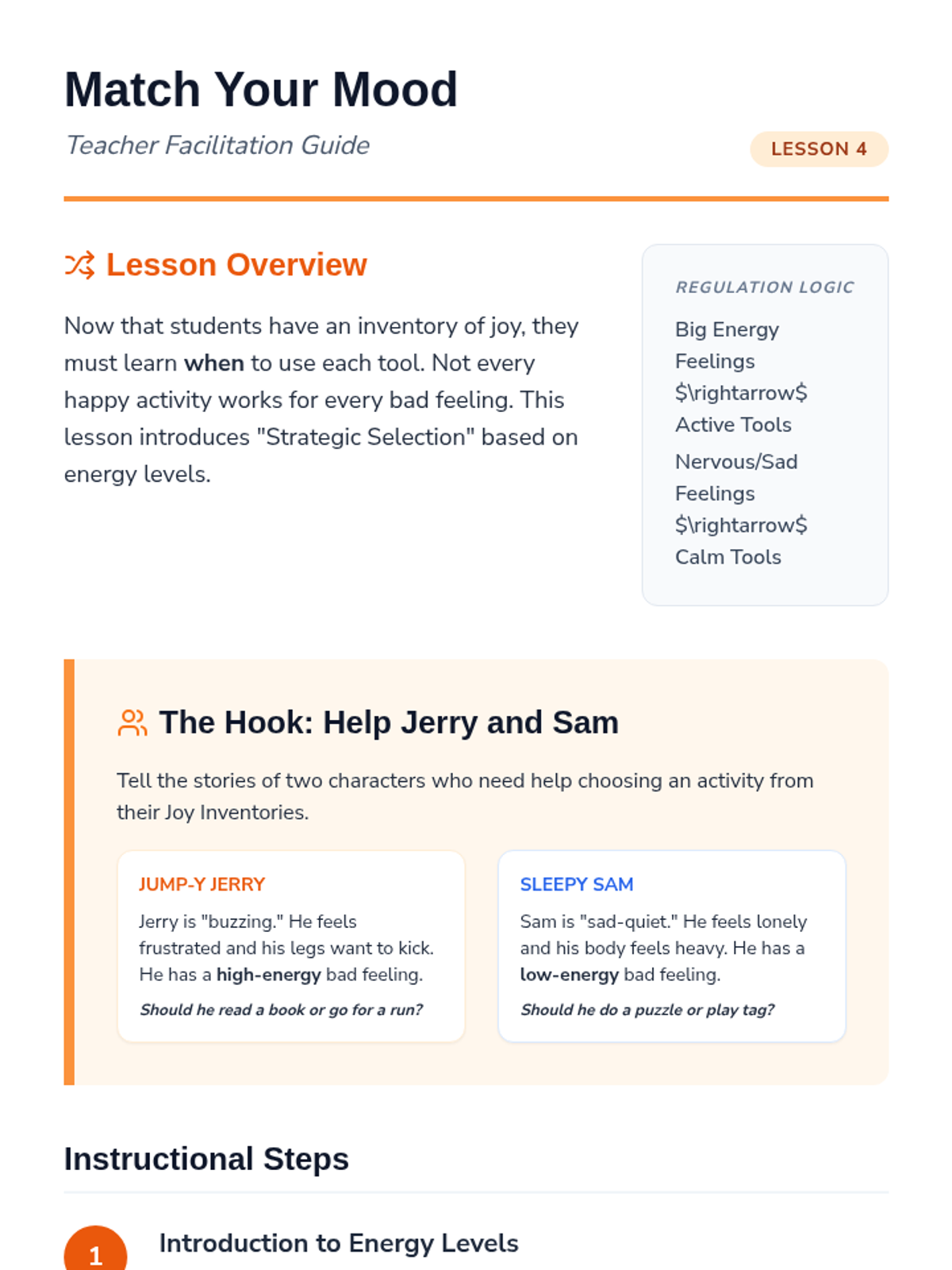
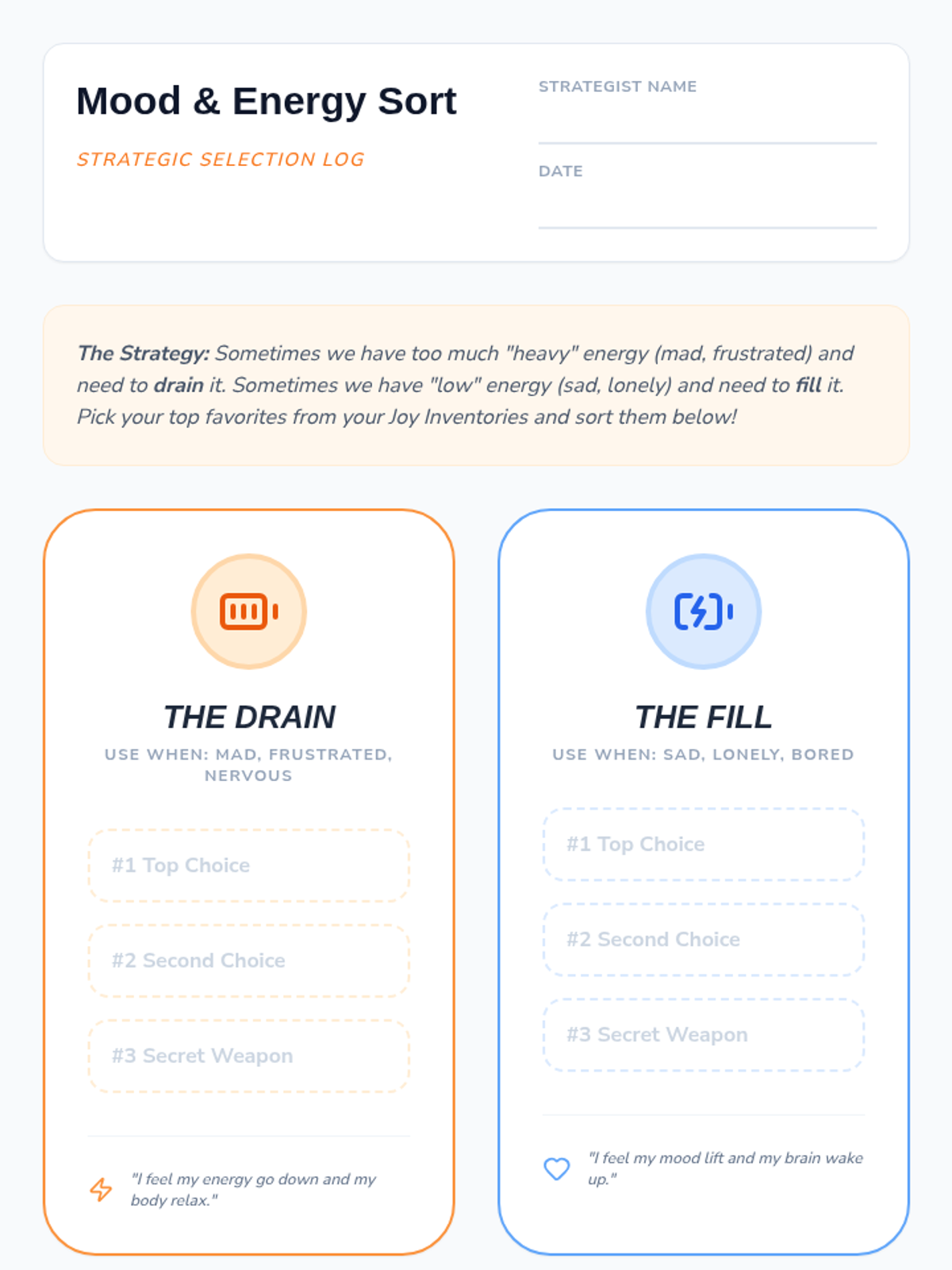
Students organize activities into categories based on energy levels: 'High Energy' for releasing frustration and 'Low Energy' for calming anxiety. They learn to strategically select activities based on current emotional needs.
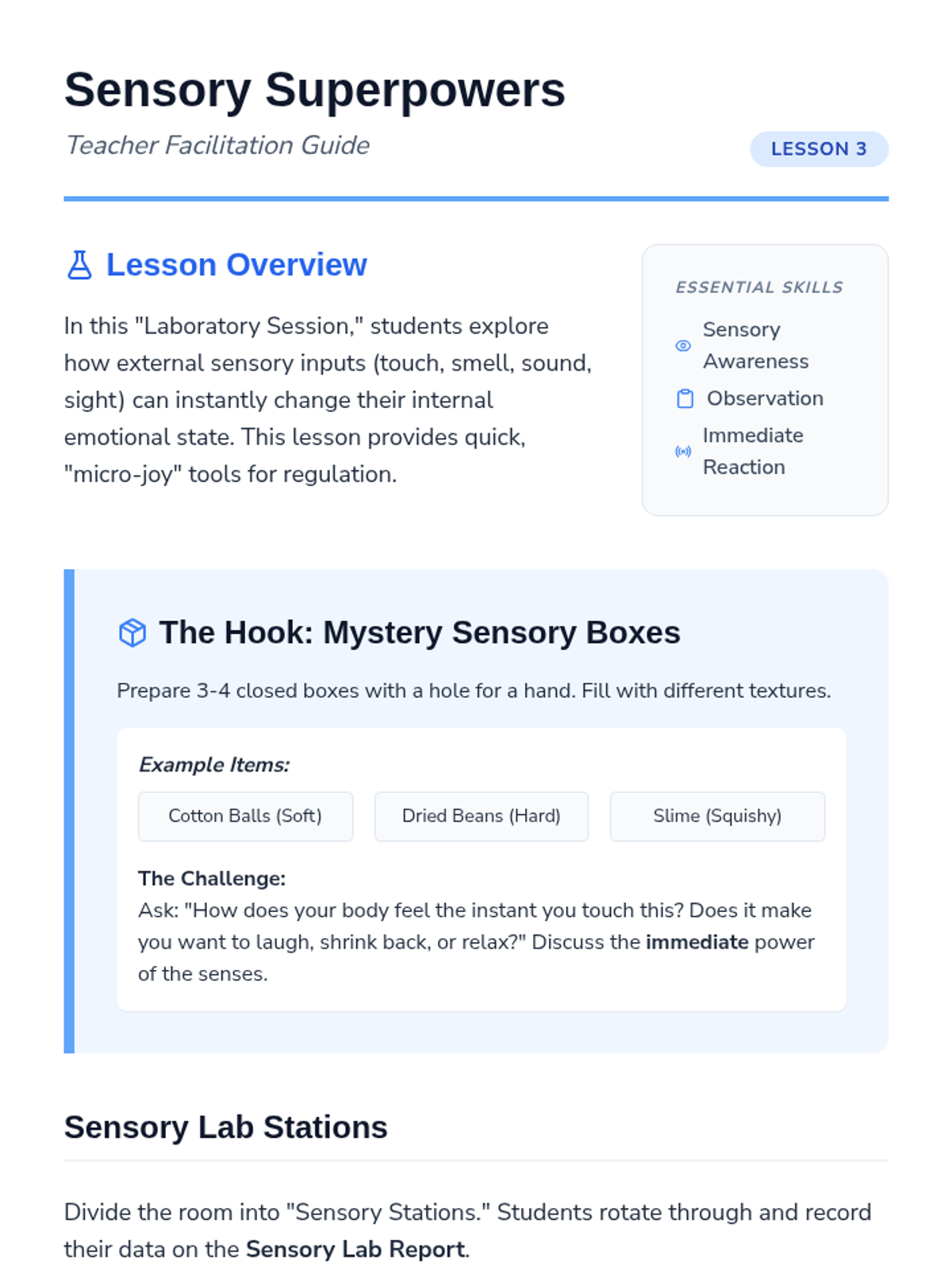
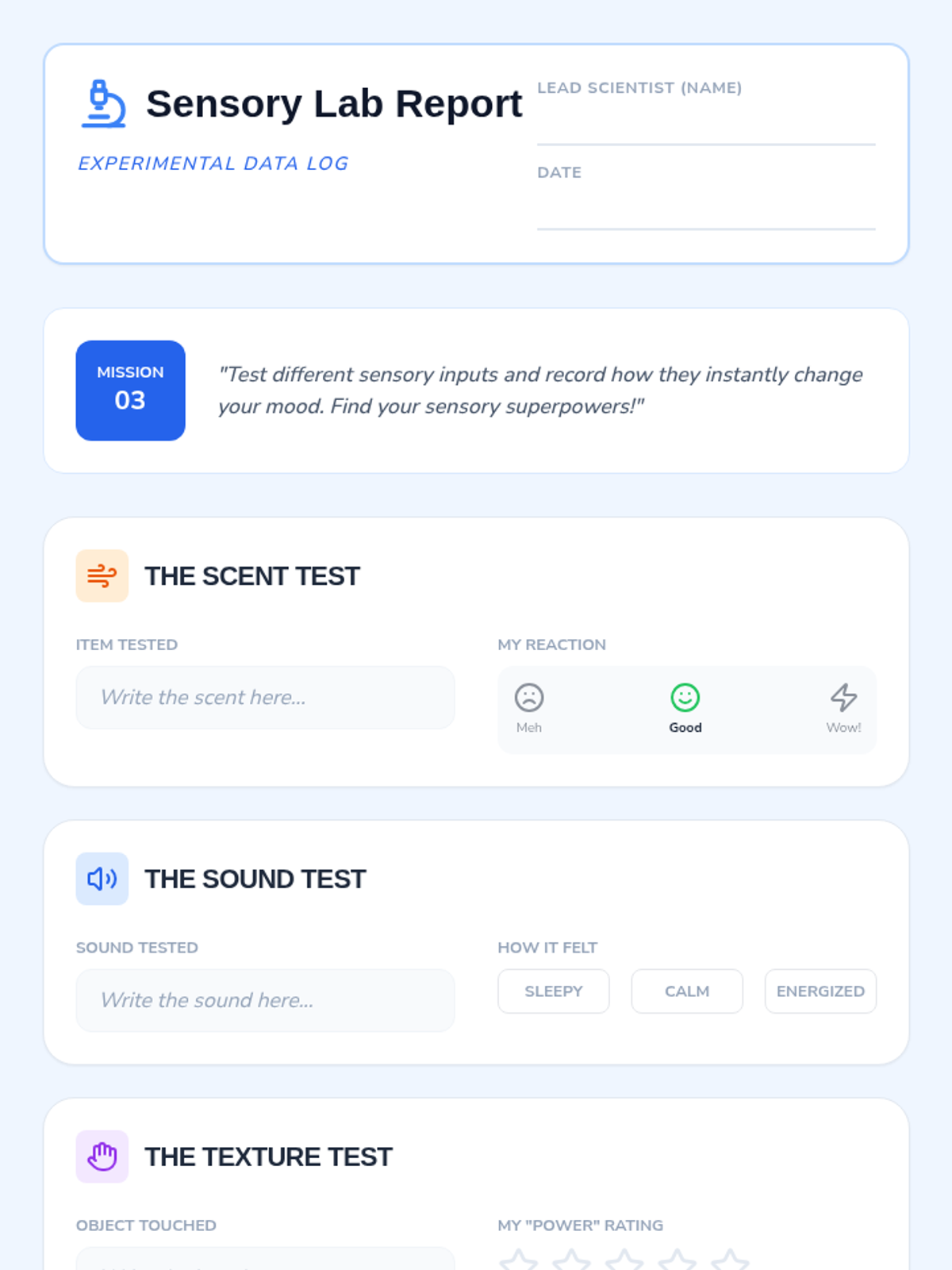
This lesson focuses on simple, sensory-based experiences that can boost mood quickly. Students test different sensory inputs and record their immediate reactions to connect external stimuli to internal emotional states.
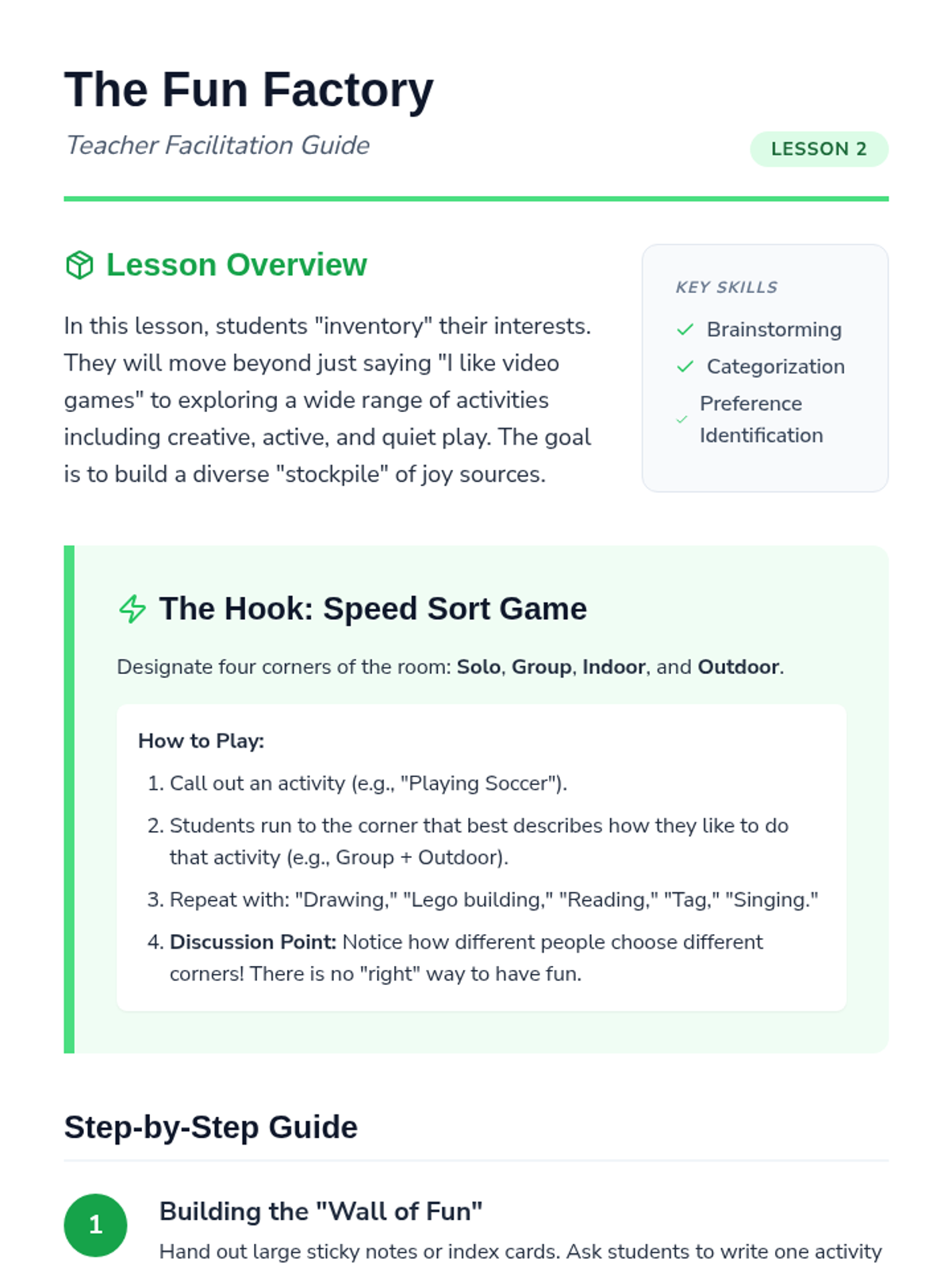
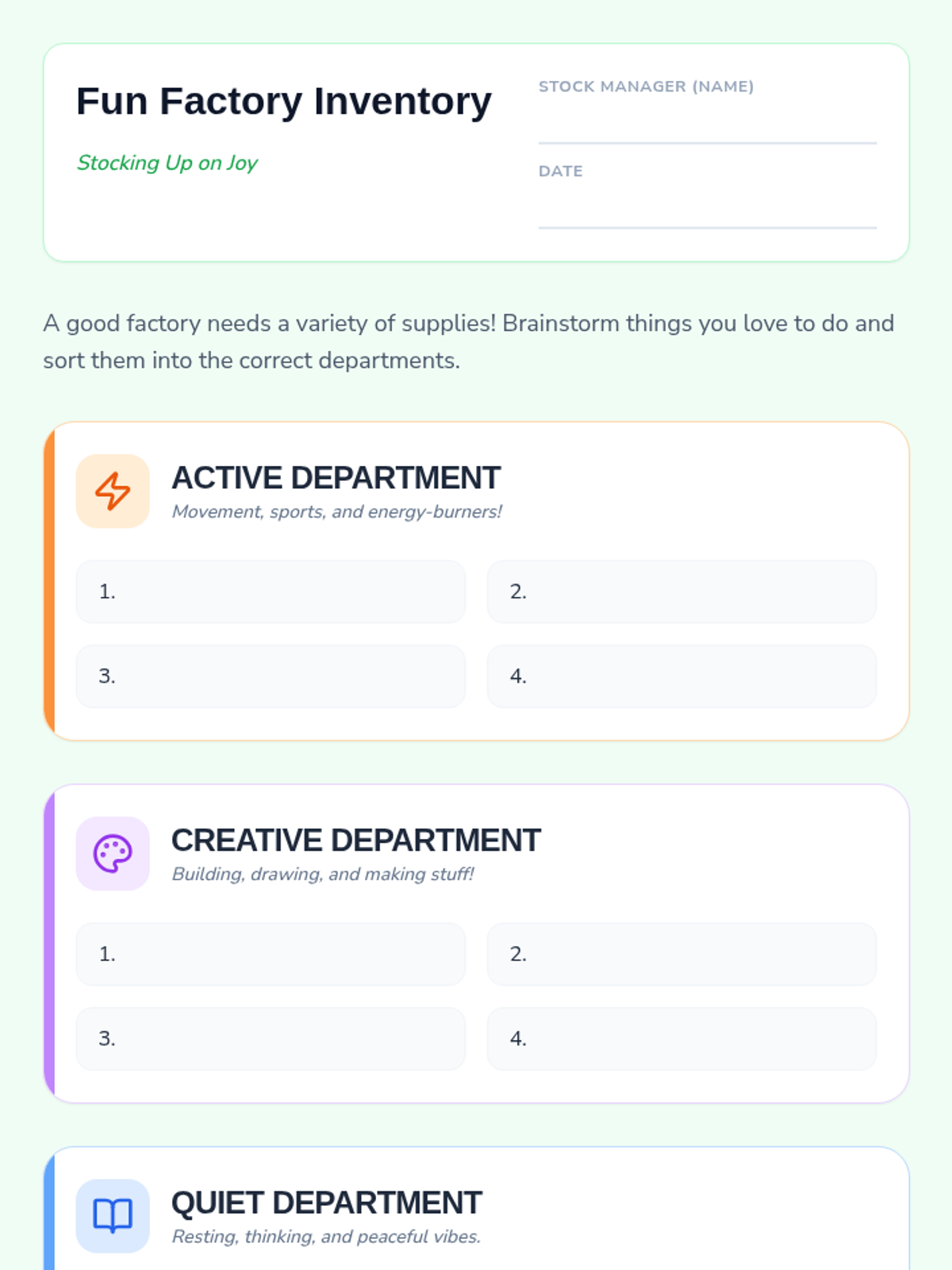
Students brainstorm a wide variety of activities they enjoy, distinguishing between active play, creative expression, and quiet relaxation. They learn that different types of fun serve different emotional needs.
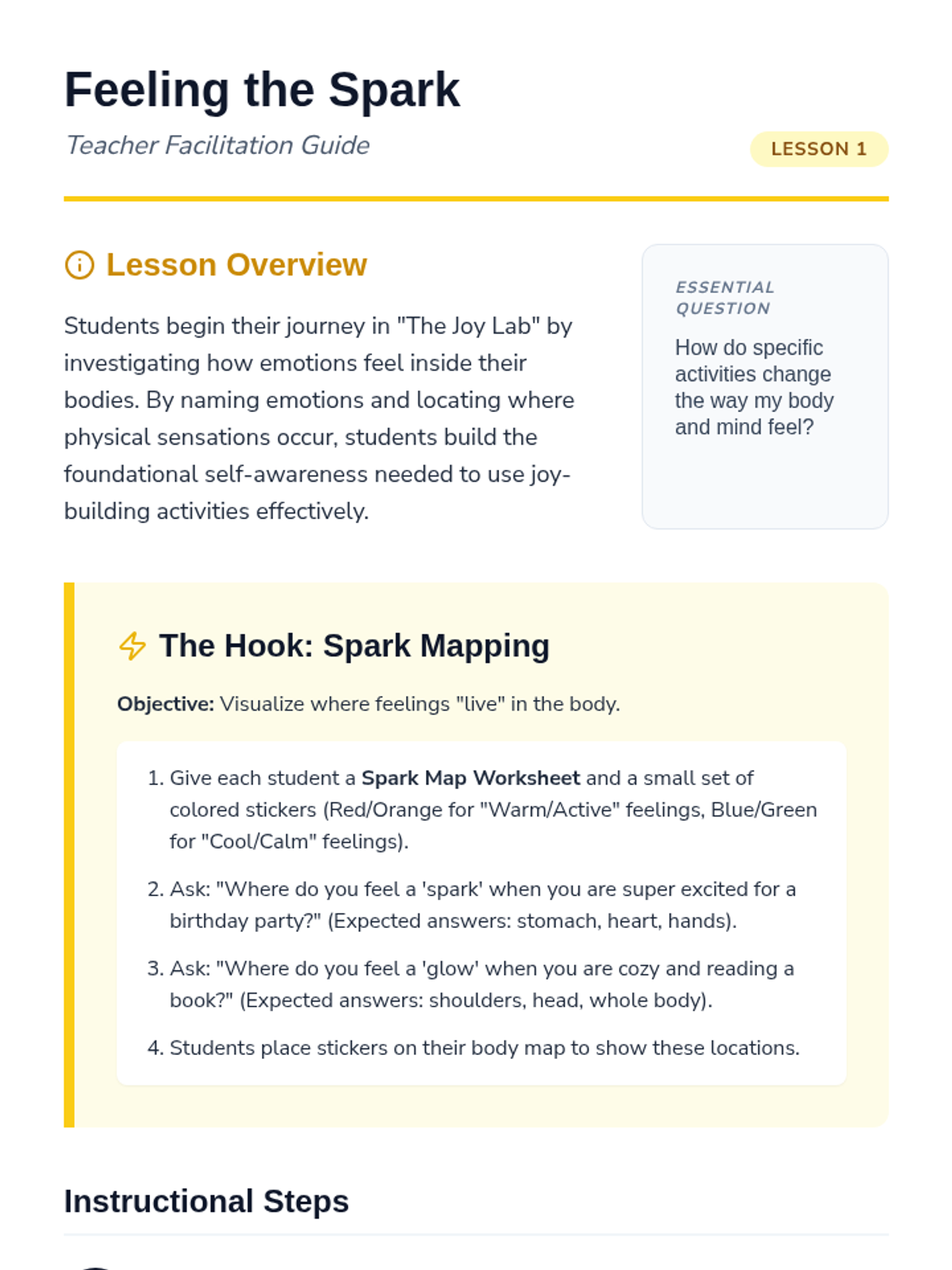
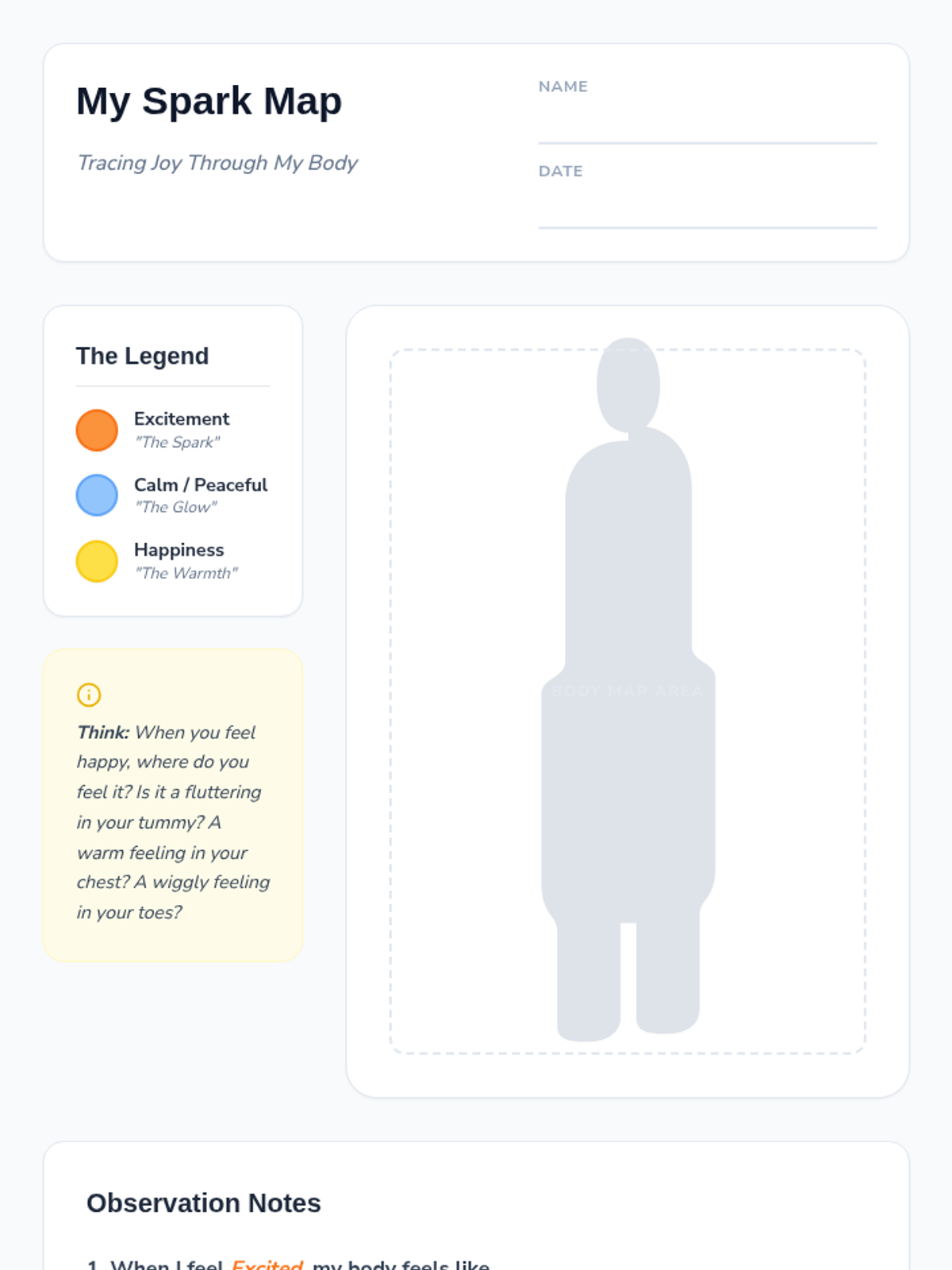
Students explore the vocabulary of emotions and identify physical sensations associated with happiness, calm, and excitement. They create a body map to visualize where they feel positive emotions.
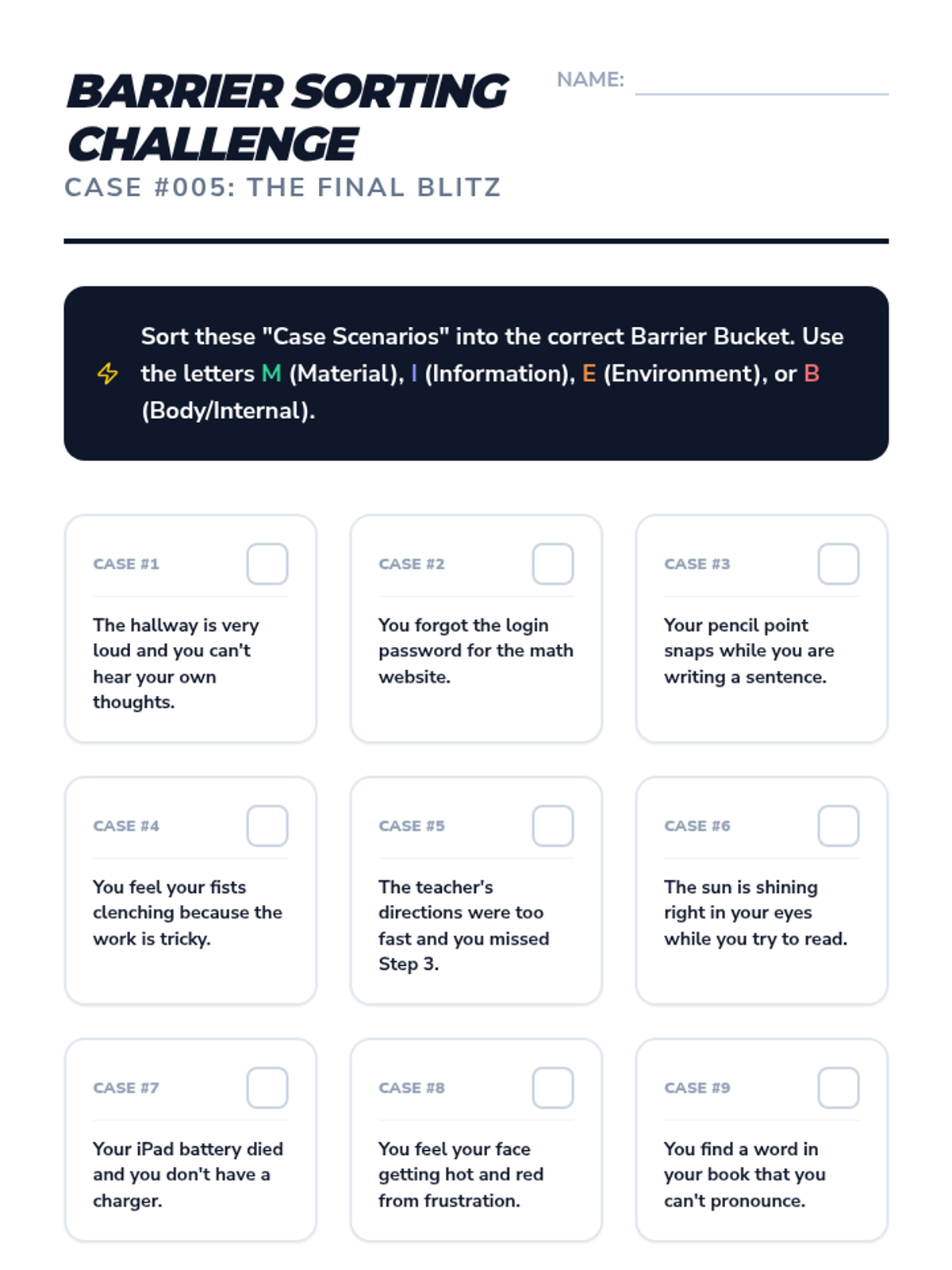
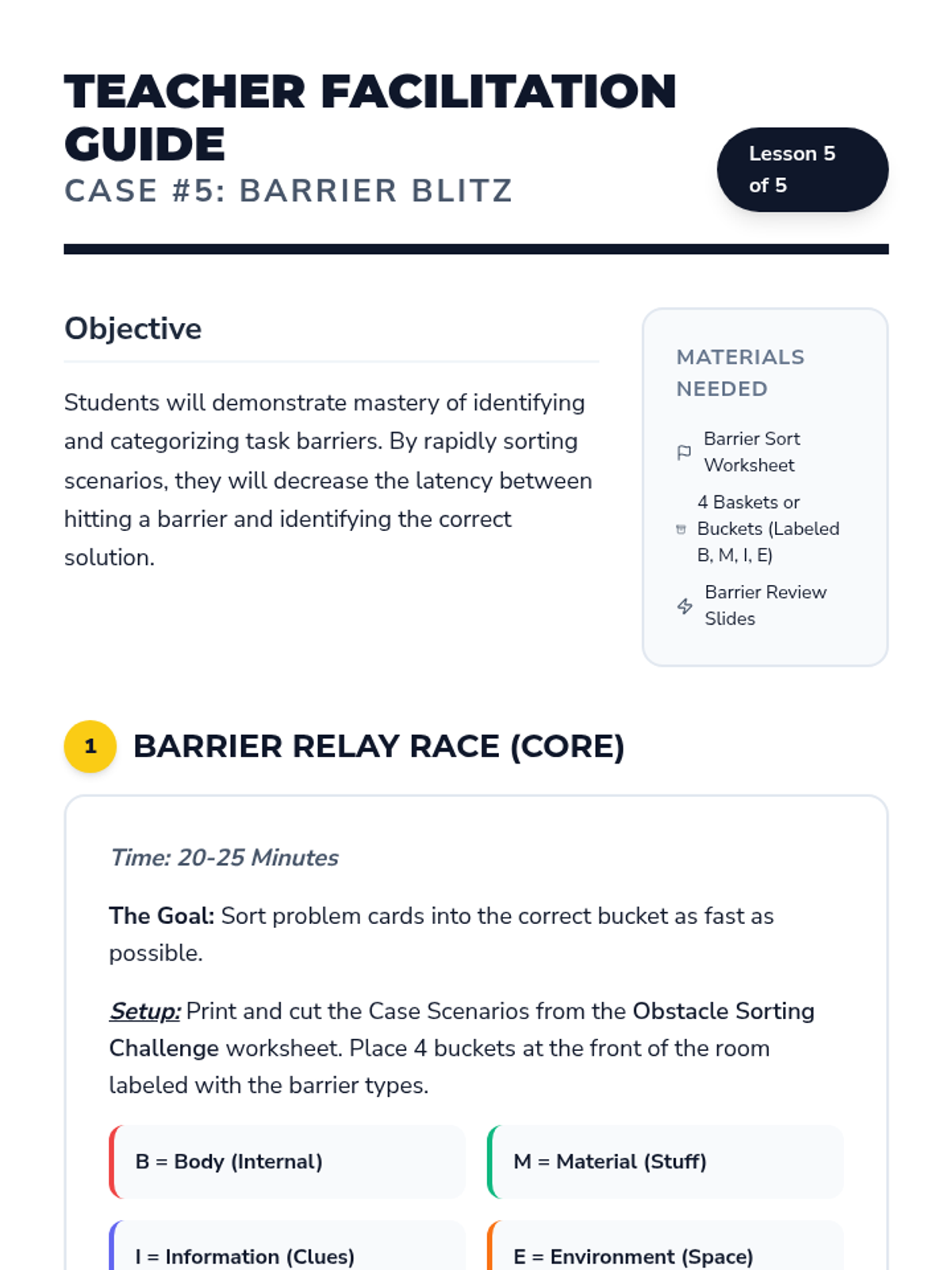
A culminating lesson where students rapidly sort various scenarios into barrier categories to reduce the time between hitting a wall and identifying the solution.
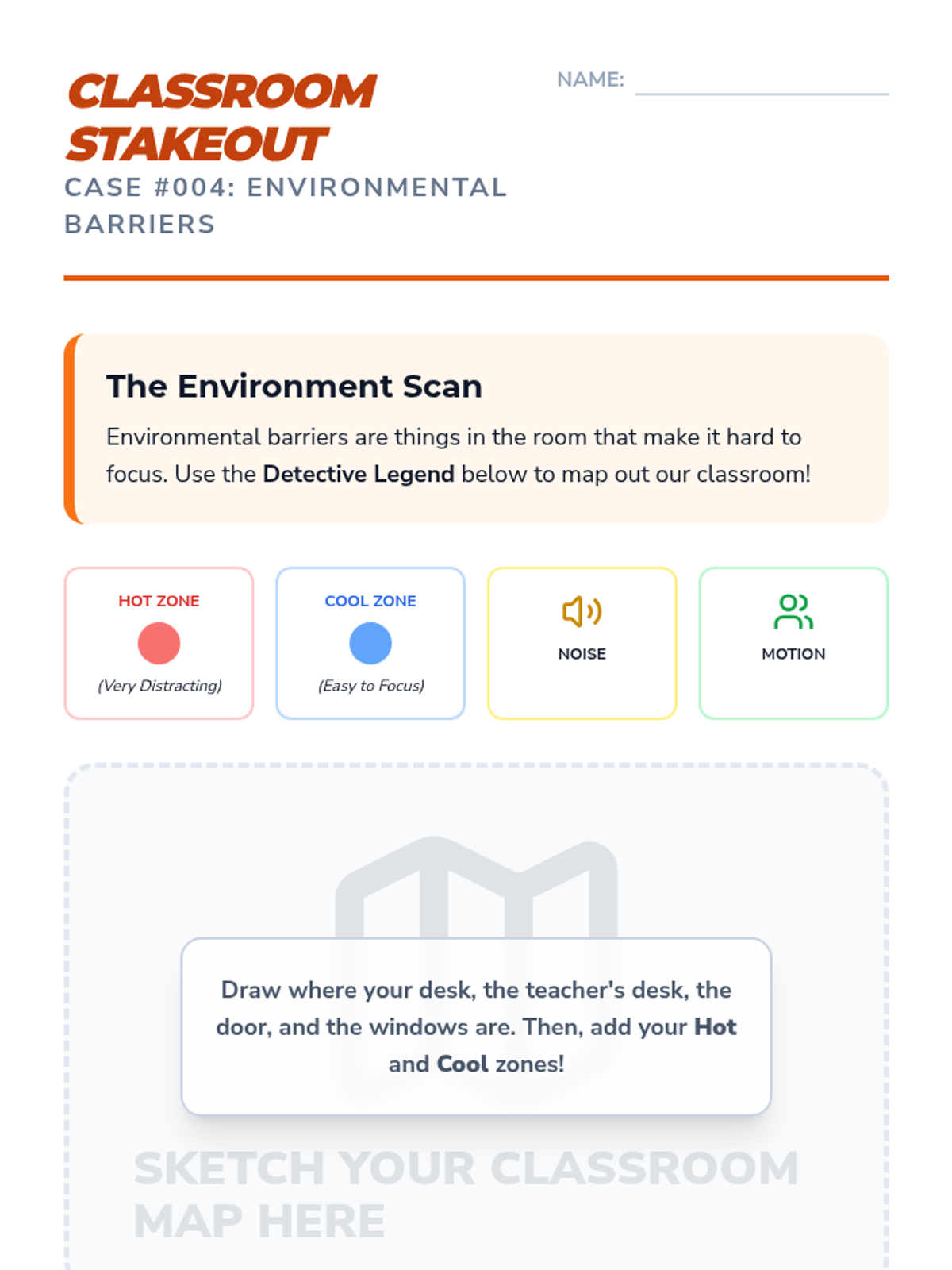
Investigates sensory and environmental barriers like noise or clutter, conducting a 'detective walk' to identify classroom distractions.
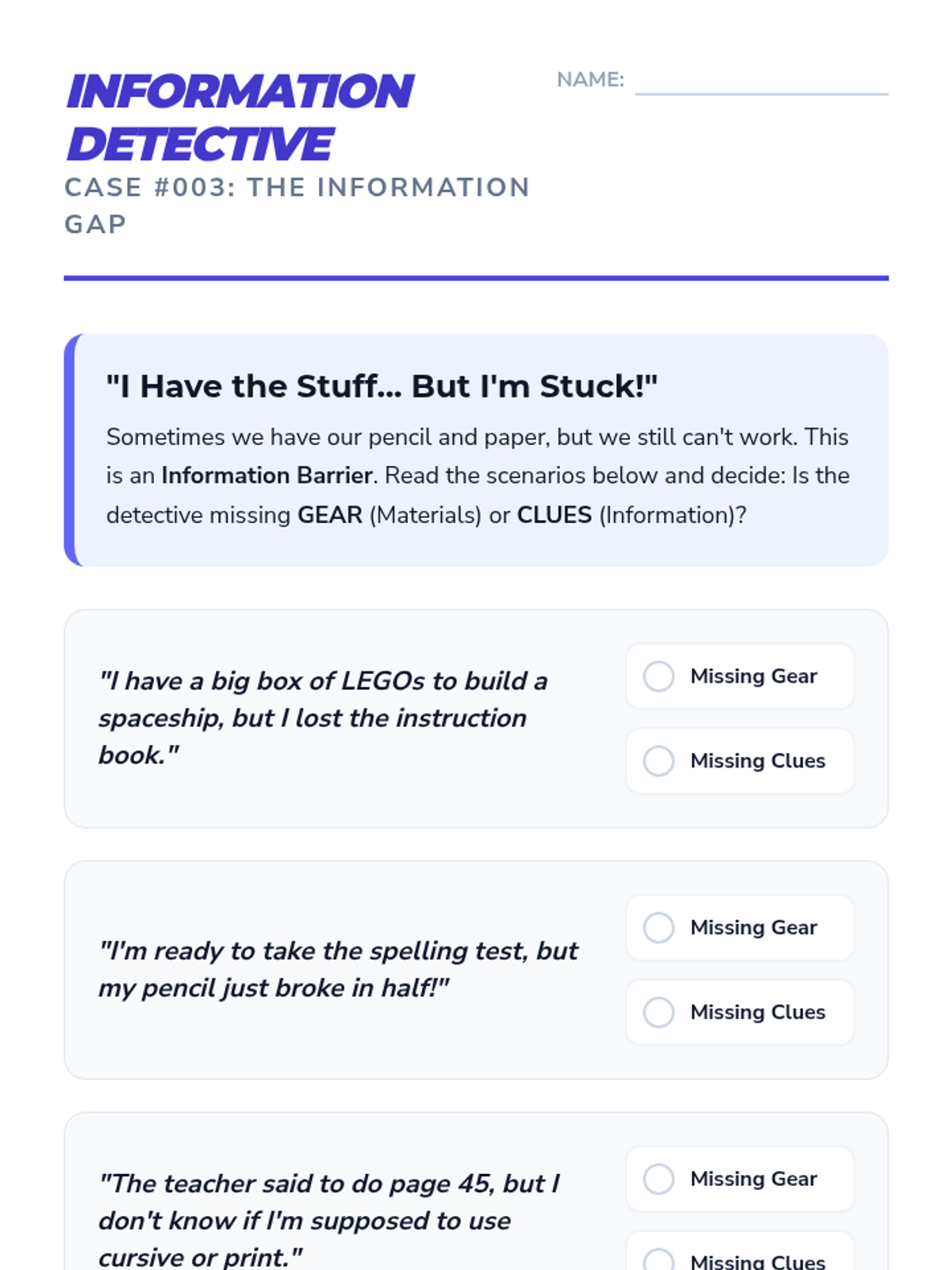
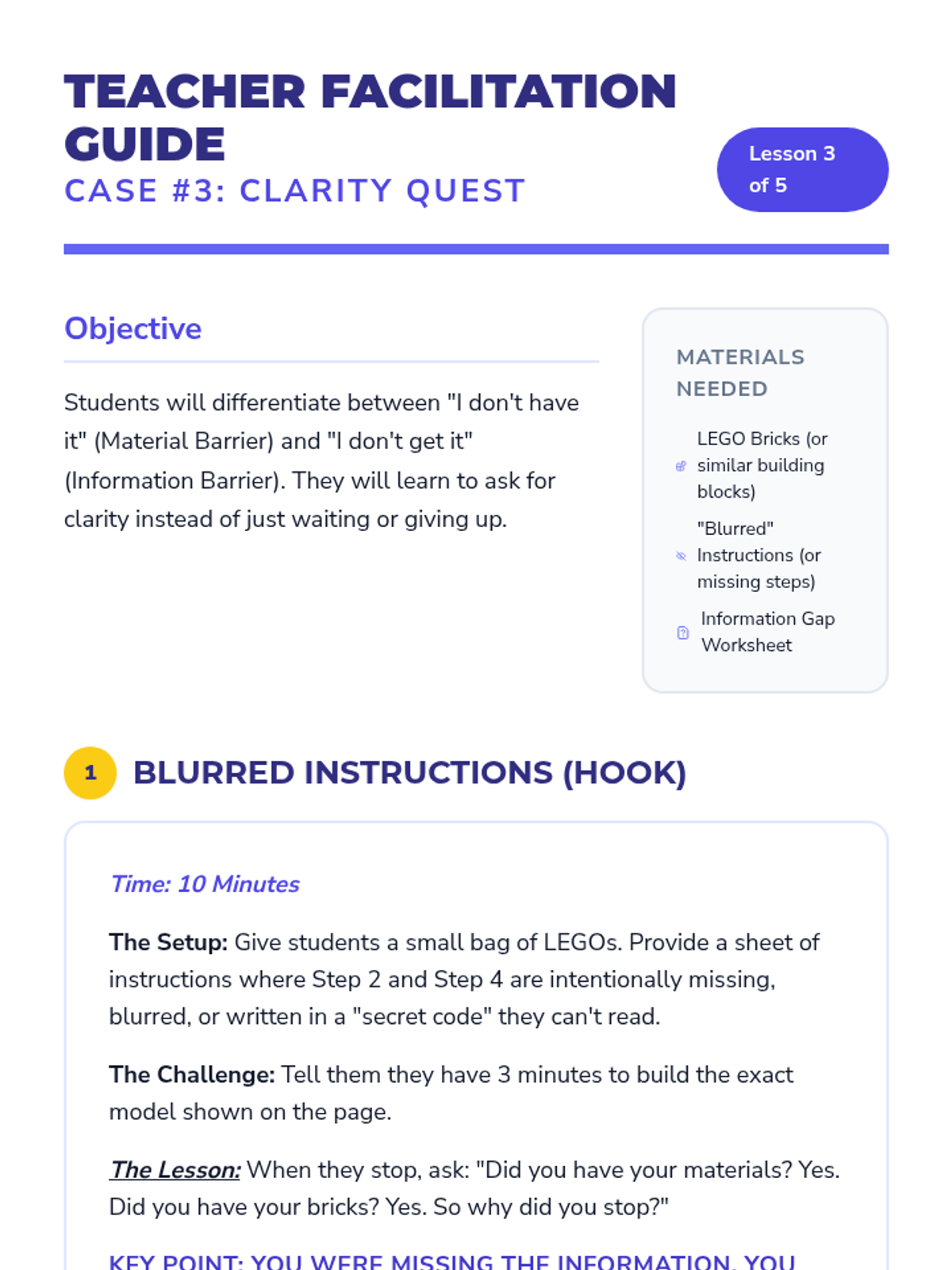
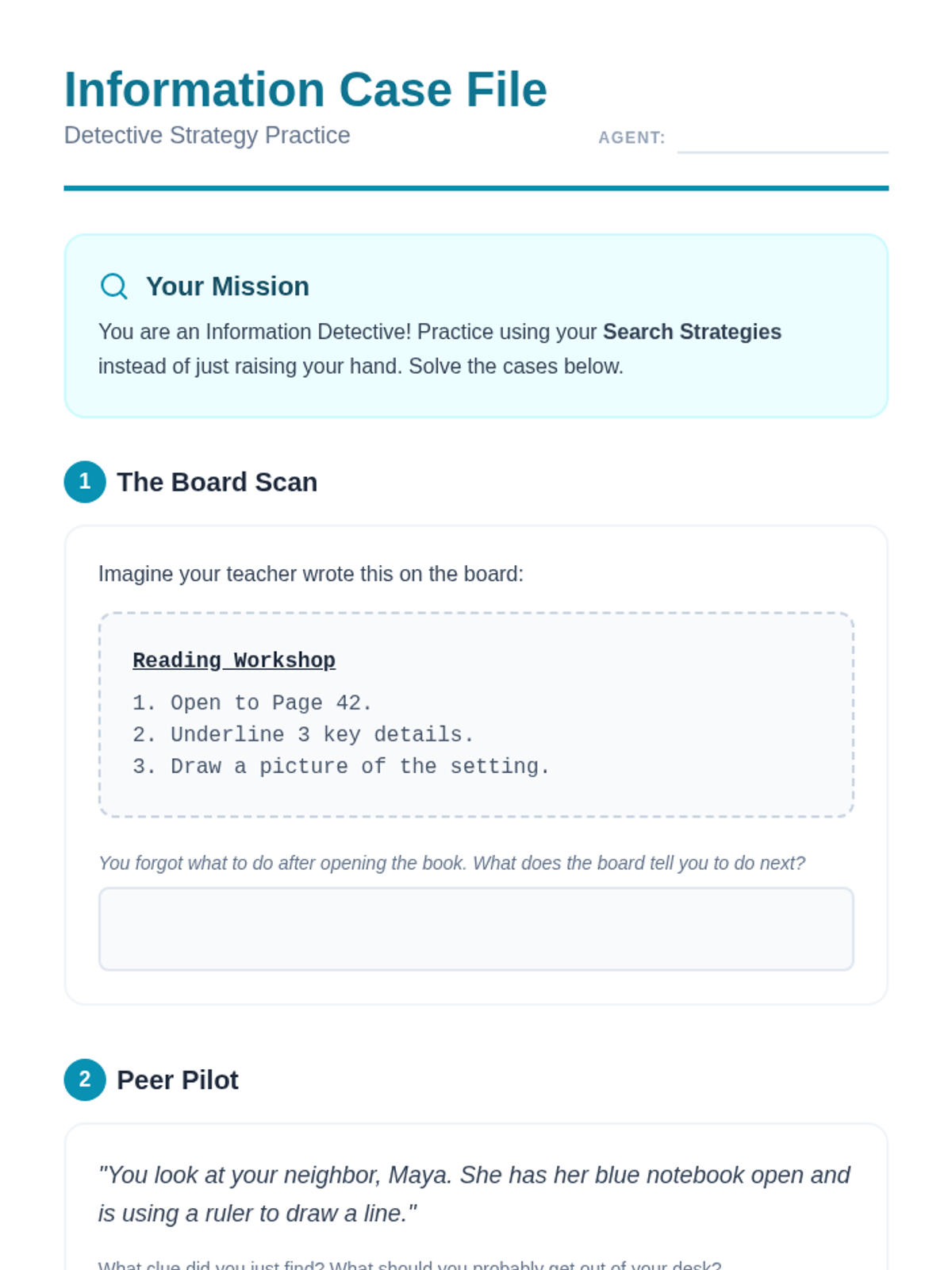
Teaches students to recognize when they are stuck due to a lack of clarity or understanding, differentiating between 'I don't have it' and 'I don't get it.'
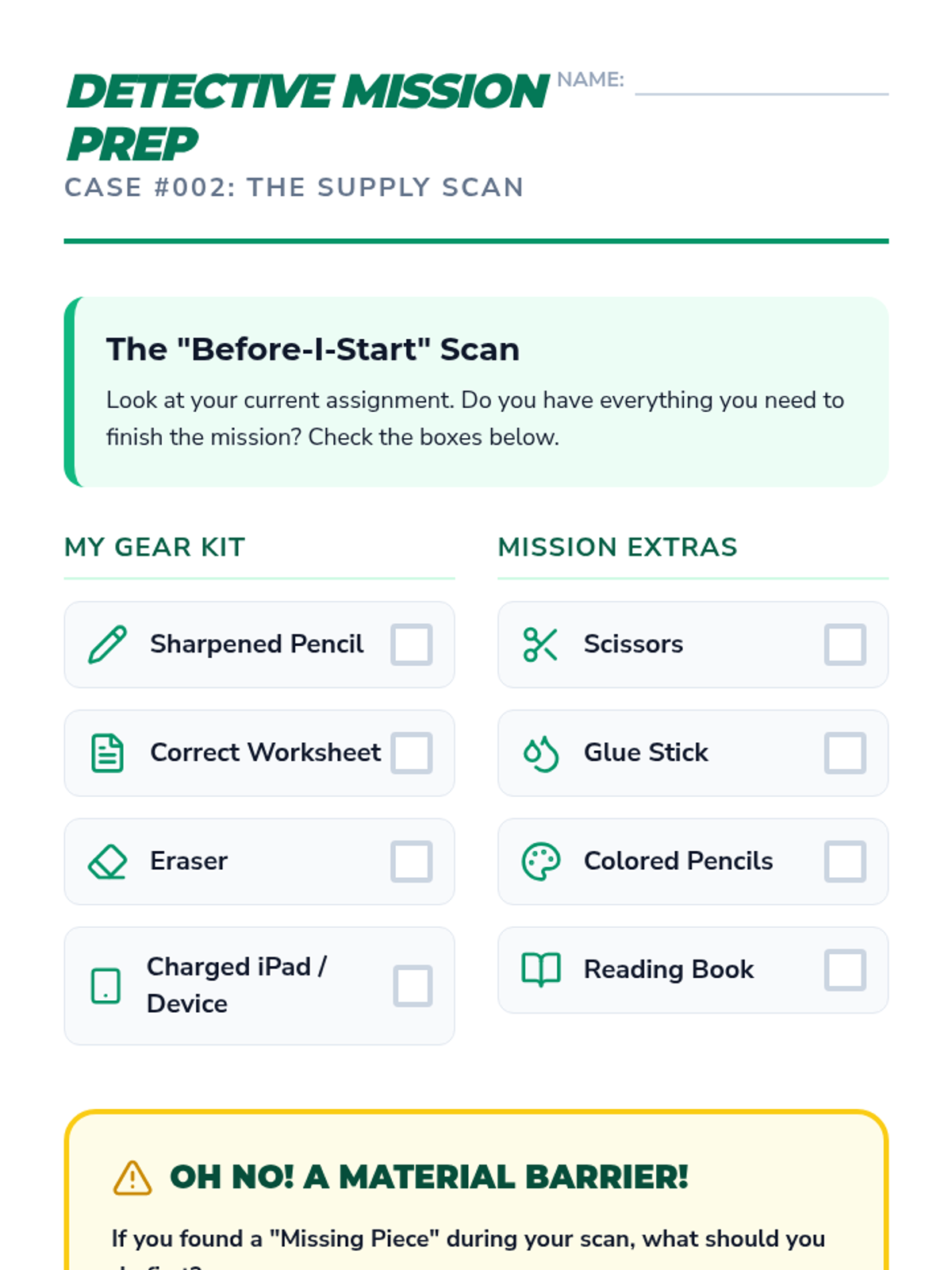
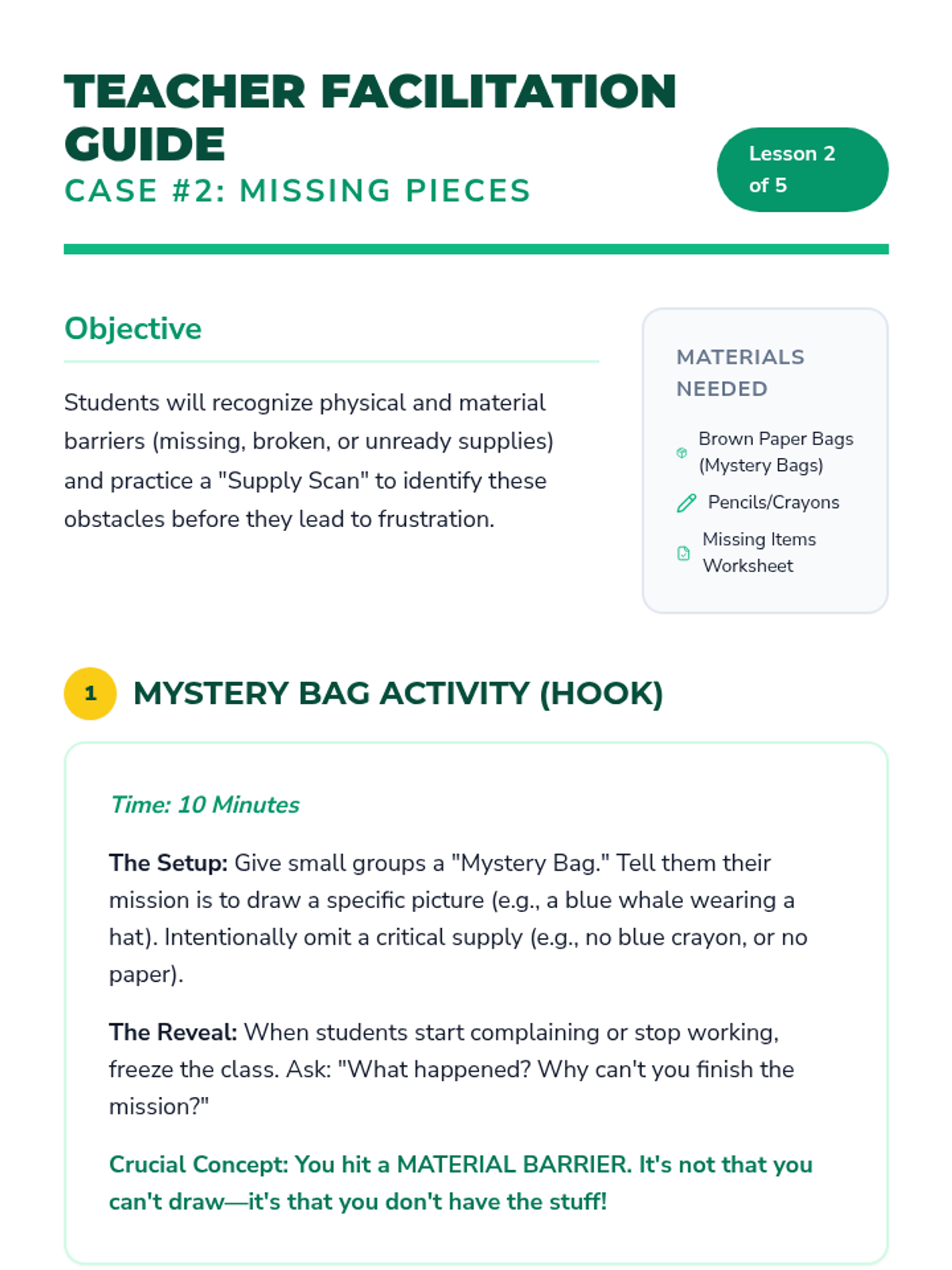
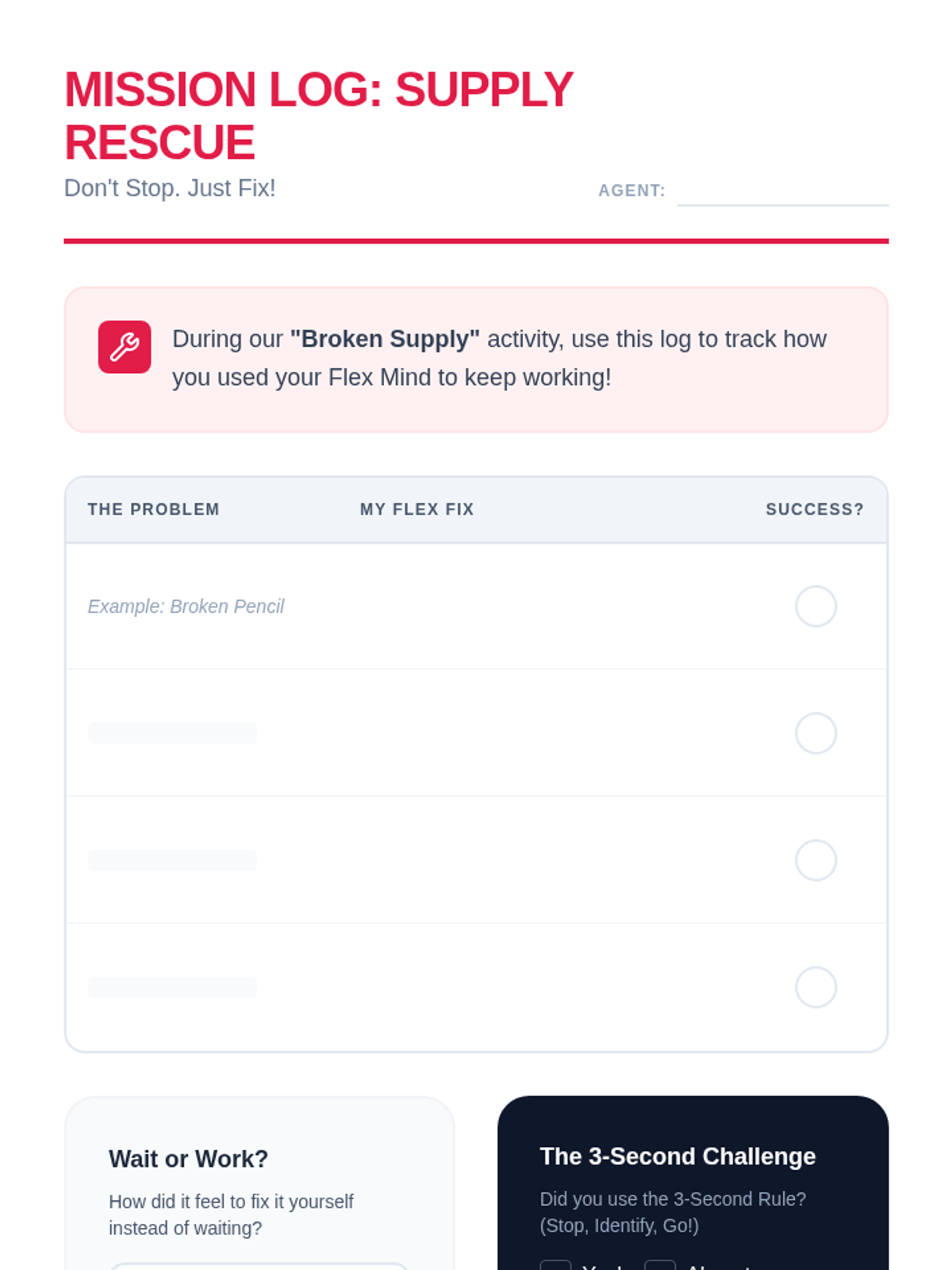
Focuses on tangible obstacles like broken tools or missing materials, teaching students to perform a 'supply scan' to identify what is physically missing.
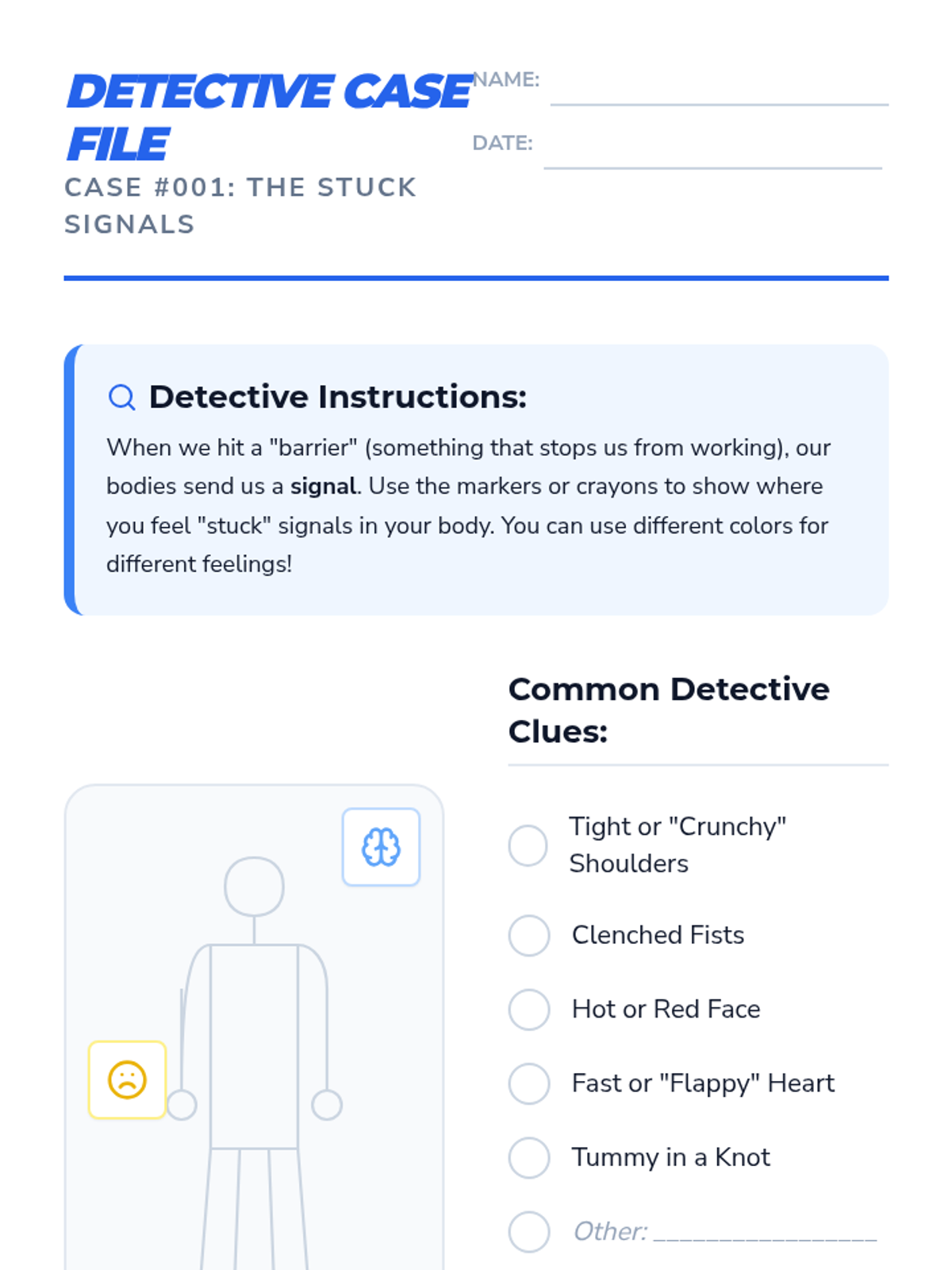
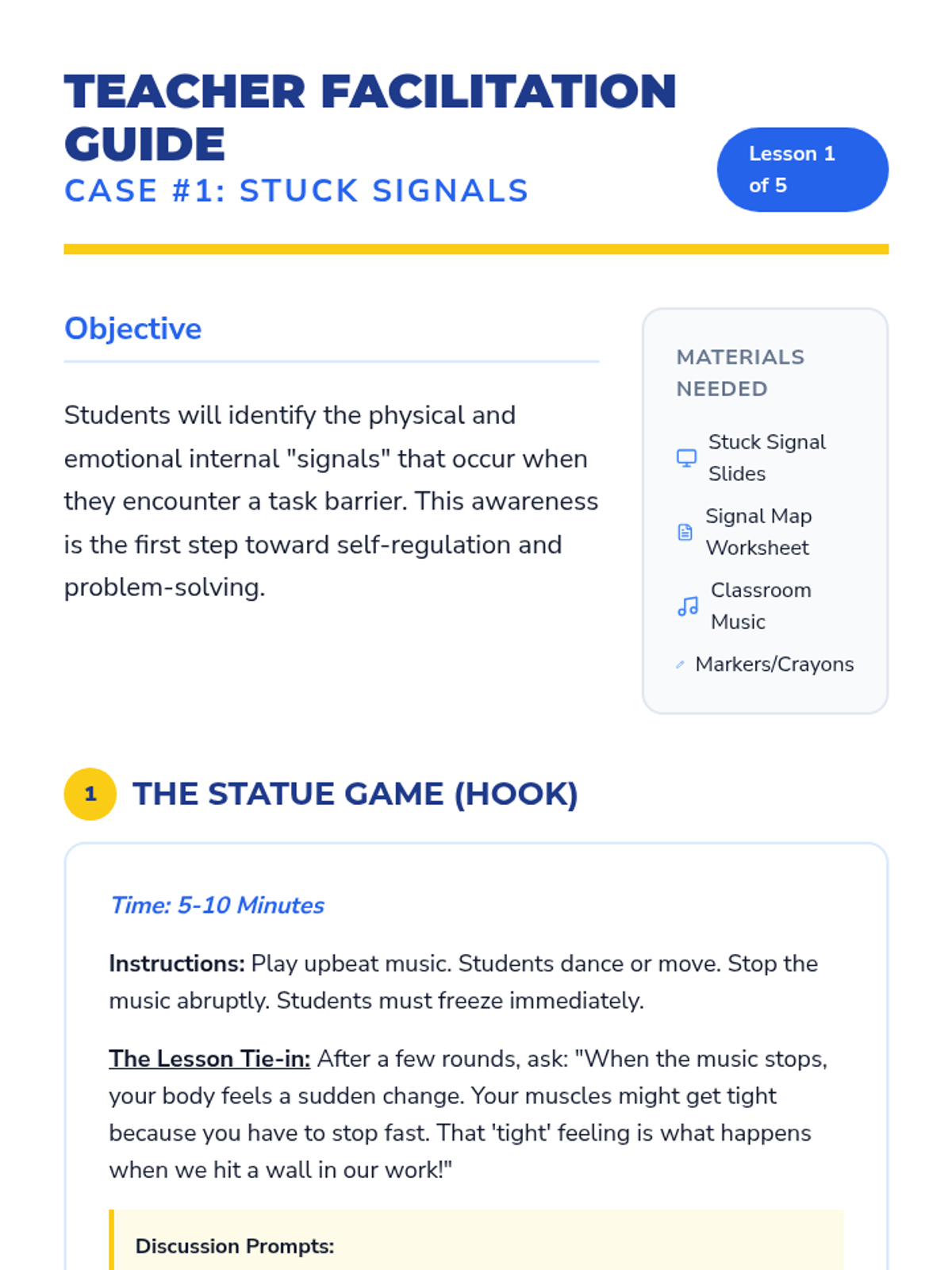
Students explore the physical and emotional sensations associated with hitting a task barrier, identifying what frustration feels like to recognize the moment they need to stop.
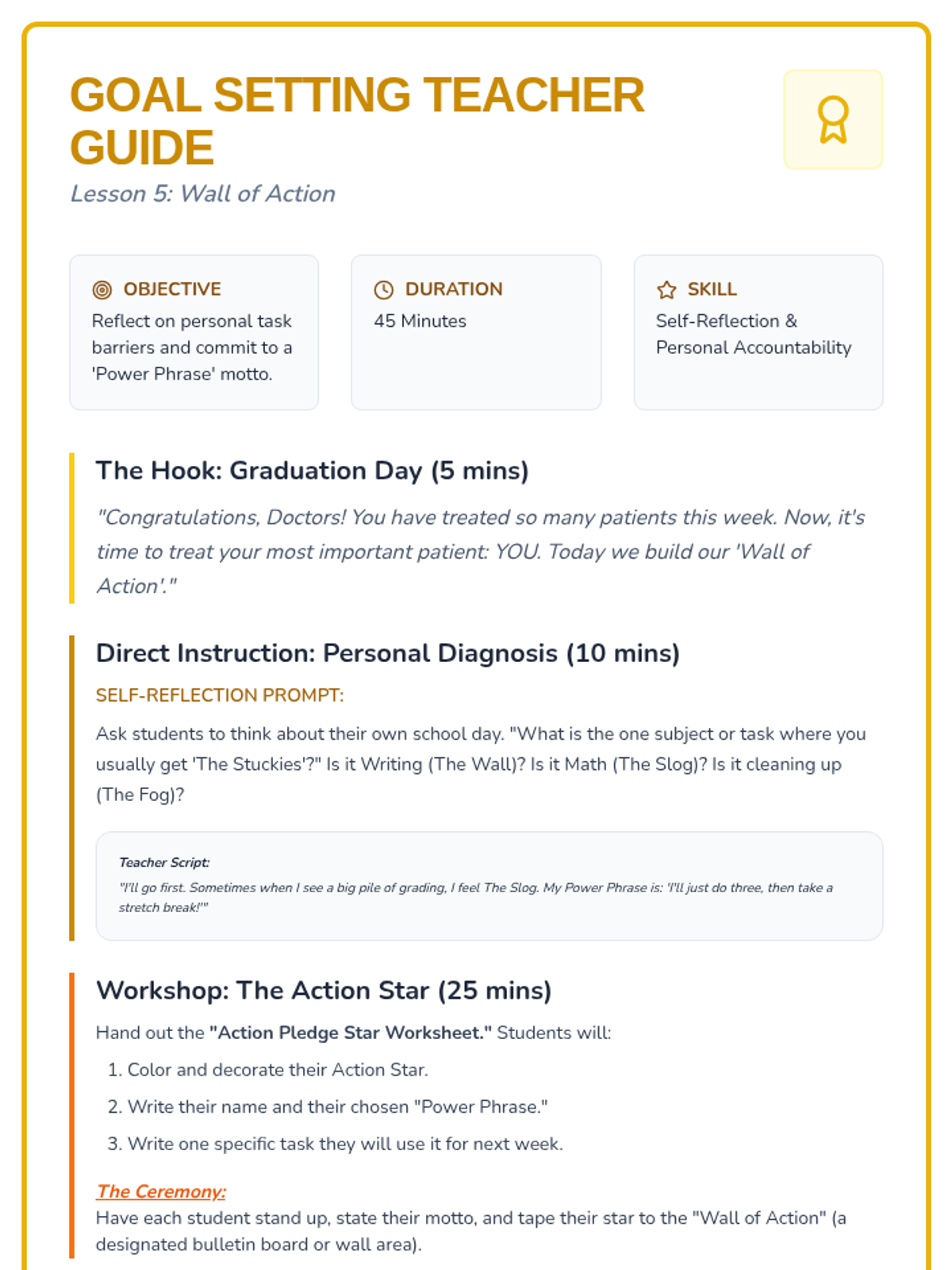
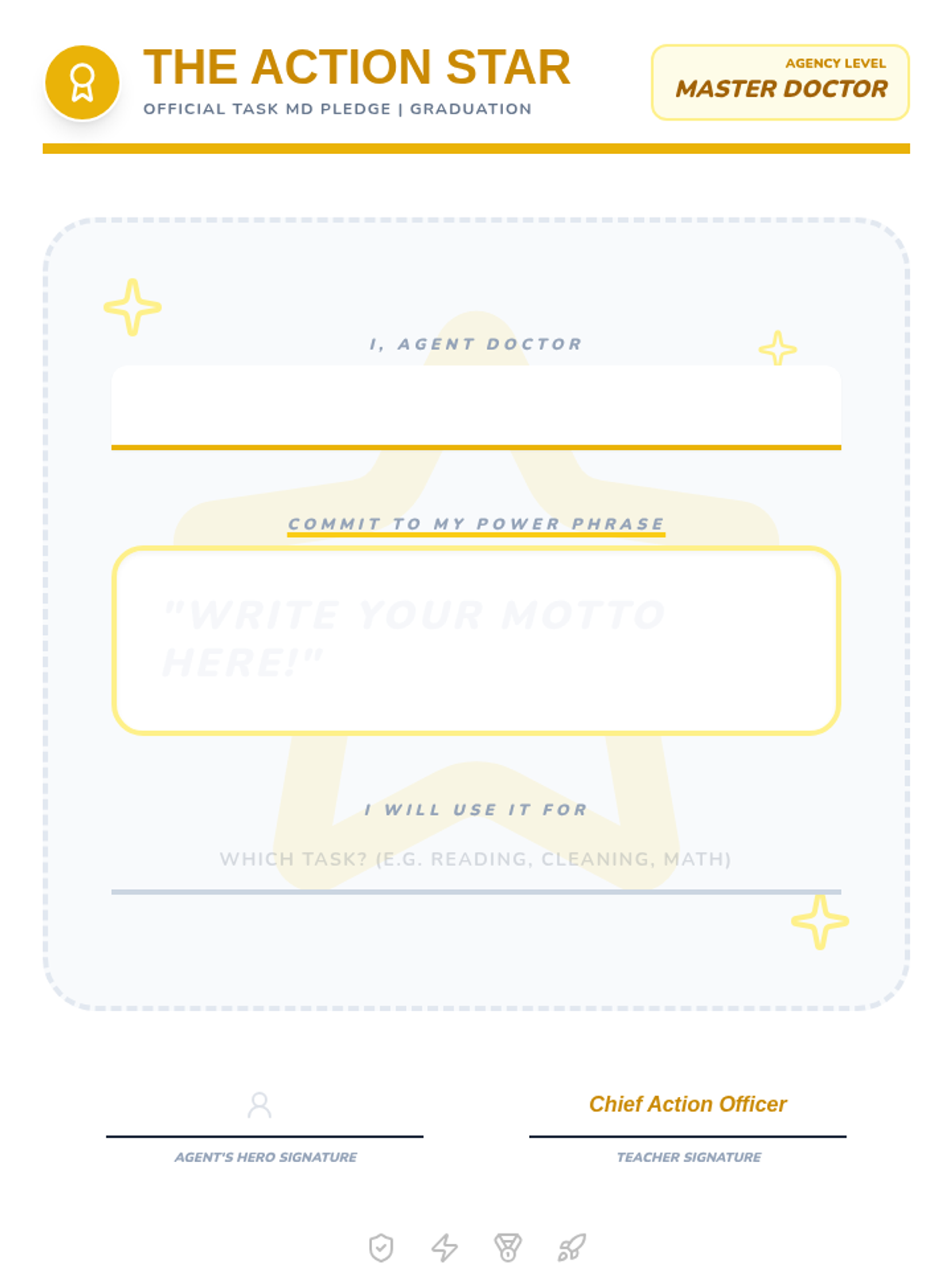
Students identify their own barriers to starting work and select a personal 'Power Phrase' motto for future tasks.
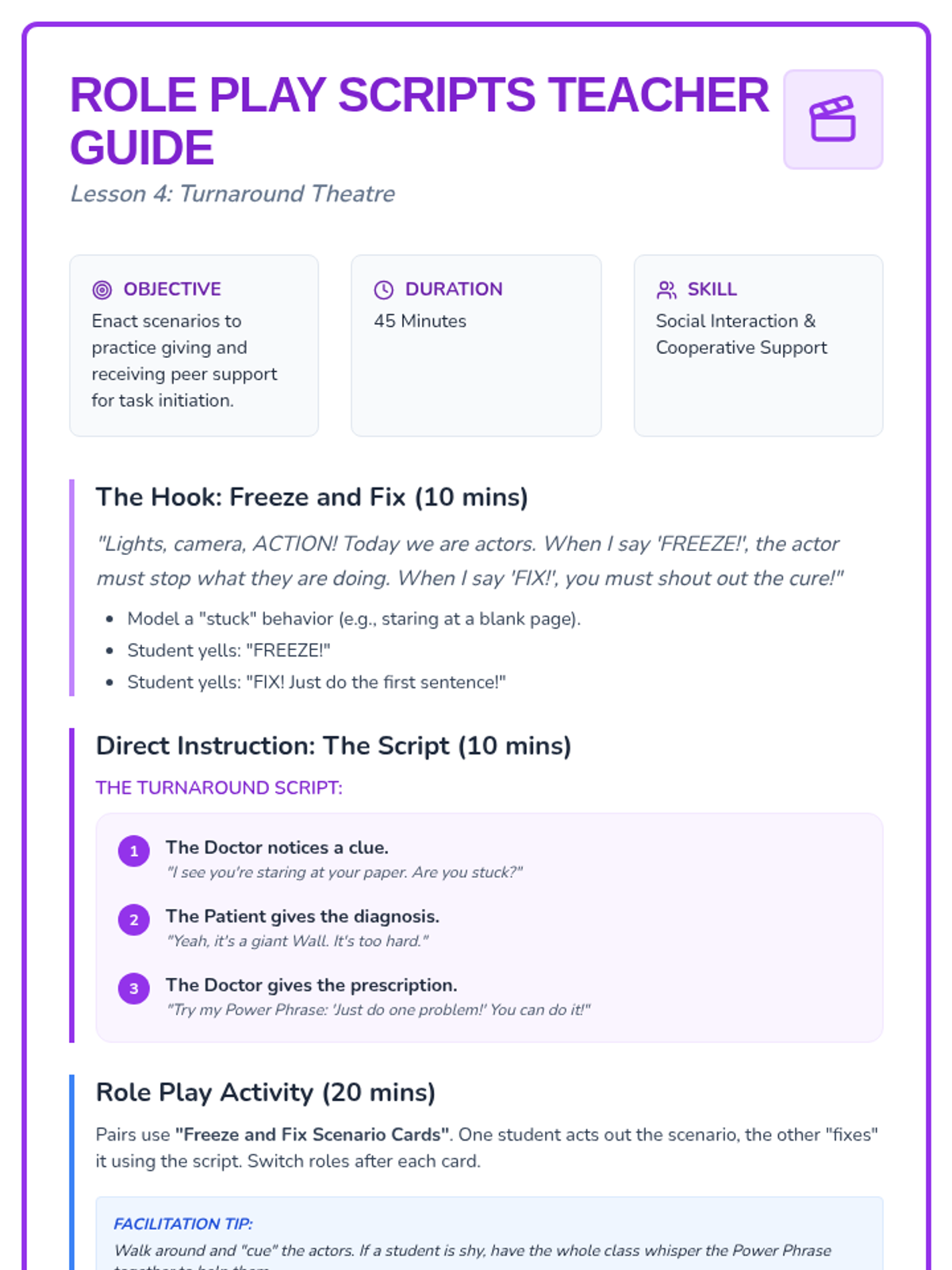
Students role-play scenarios where they help a peer get 'unstuck' using their self-talk prescriptions.
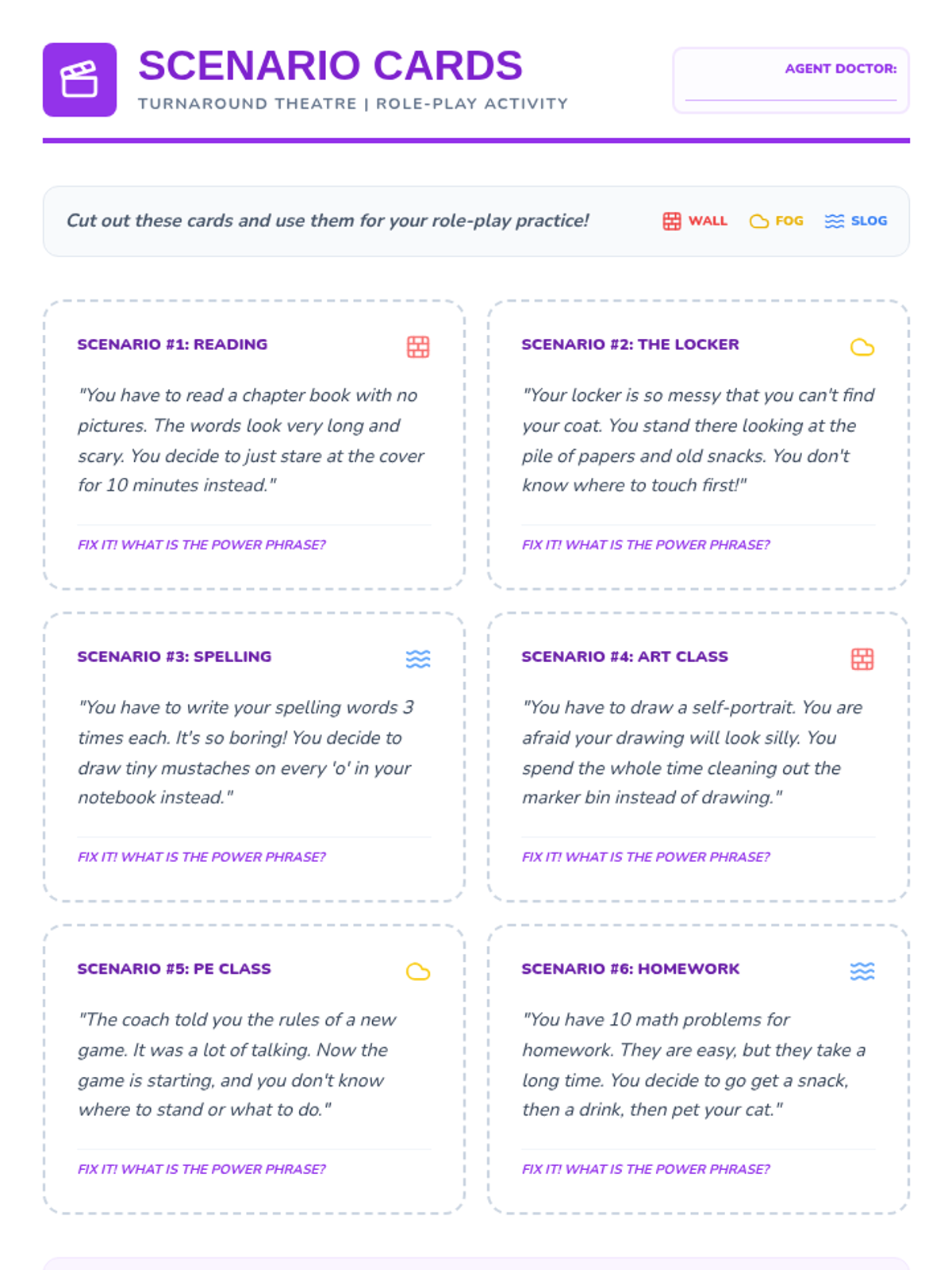
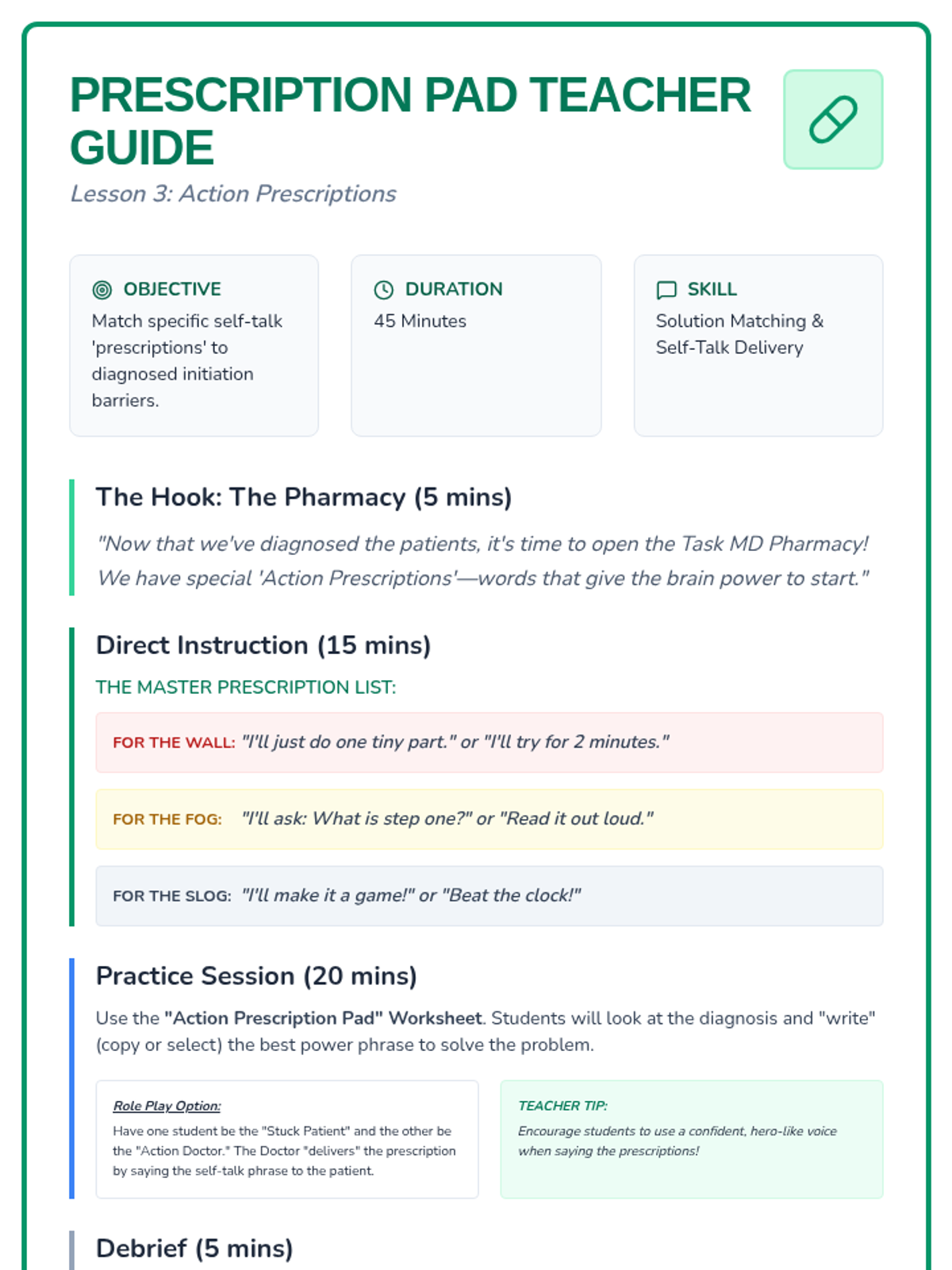
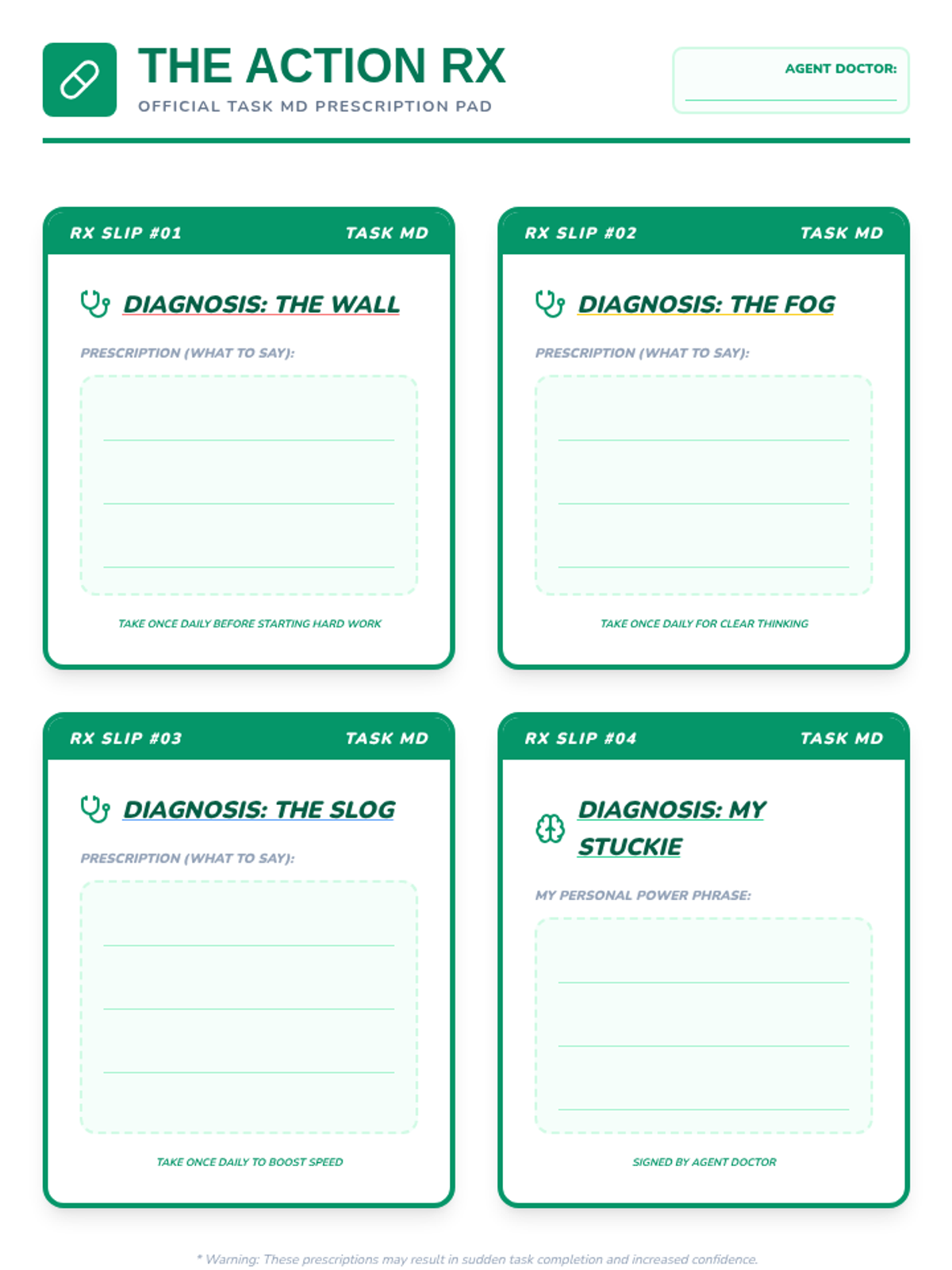
Students match specific self-talk 'prescriptions' to diagnosed problems and practice delivering these lines to characters.
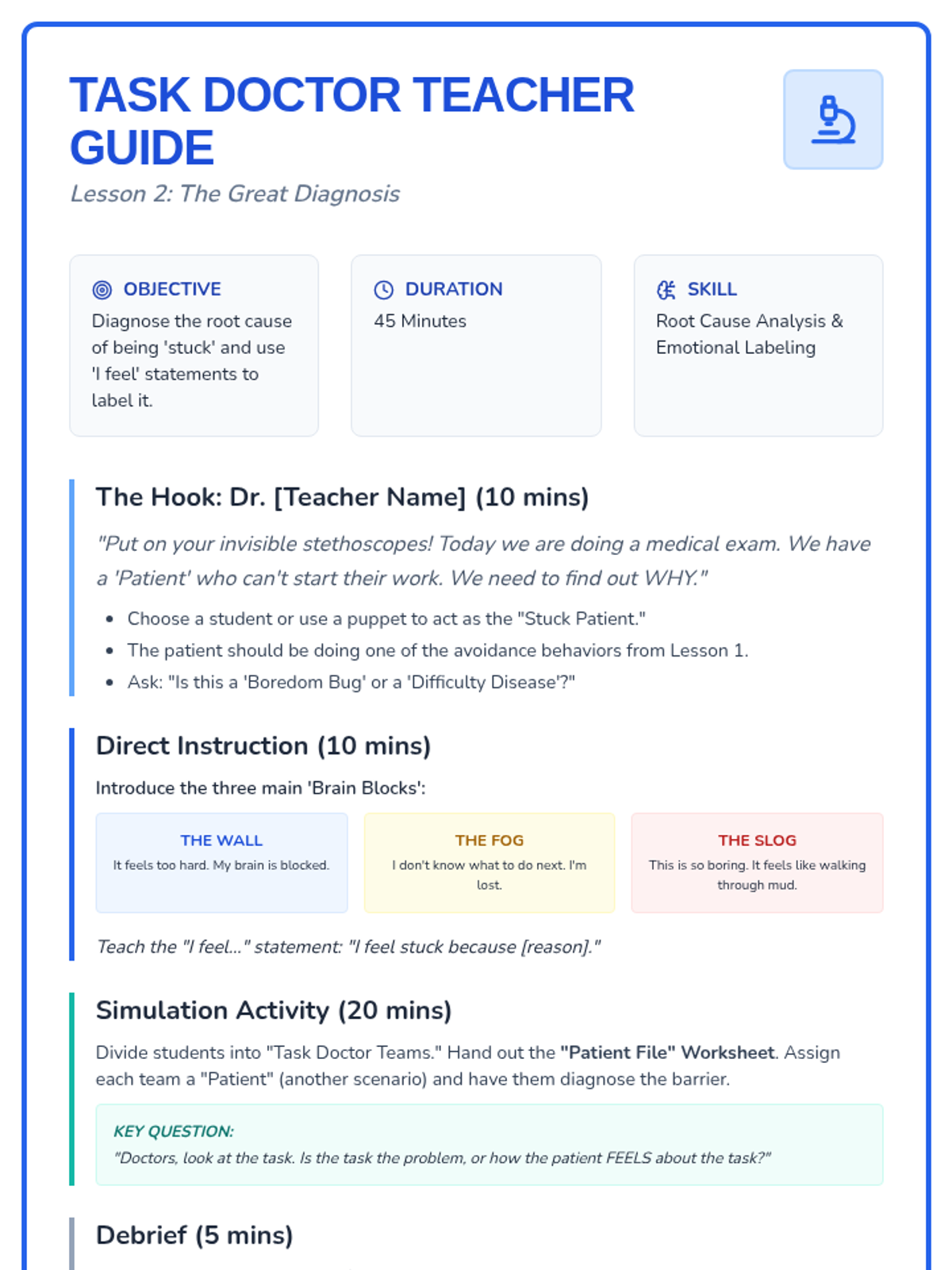
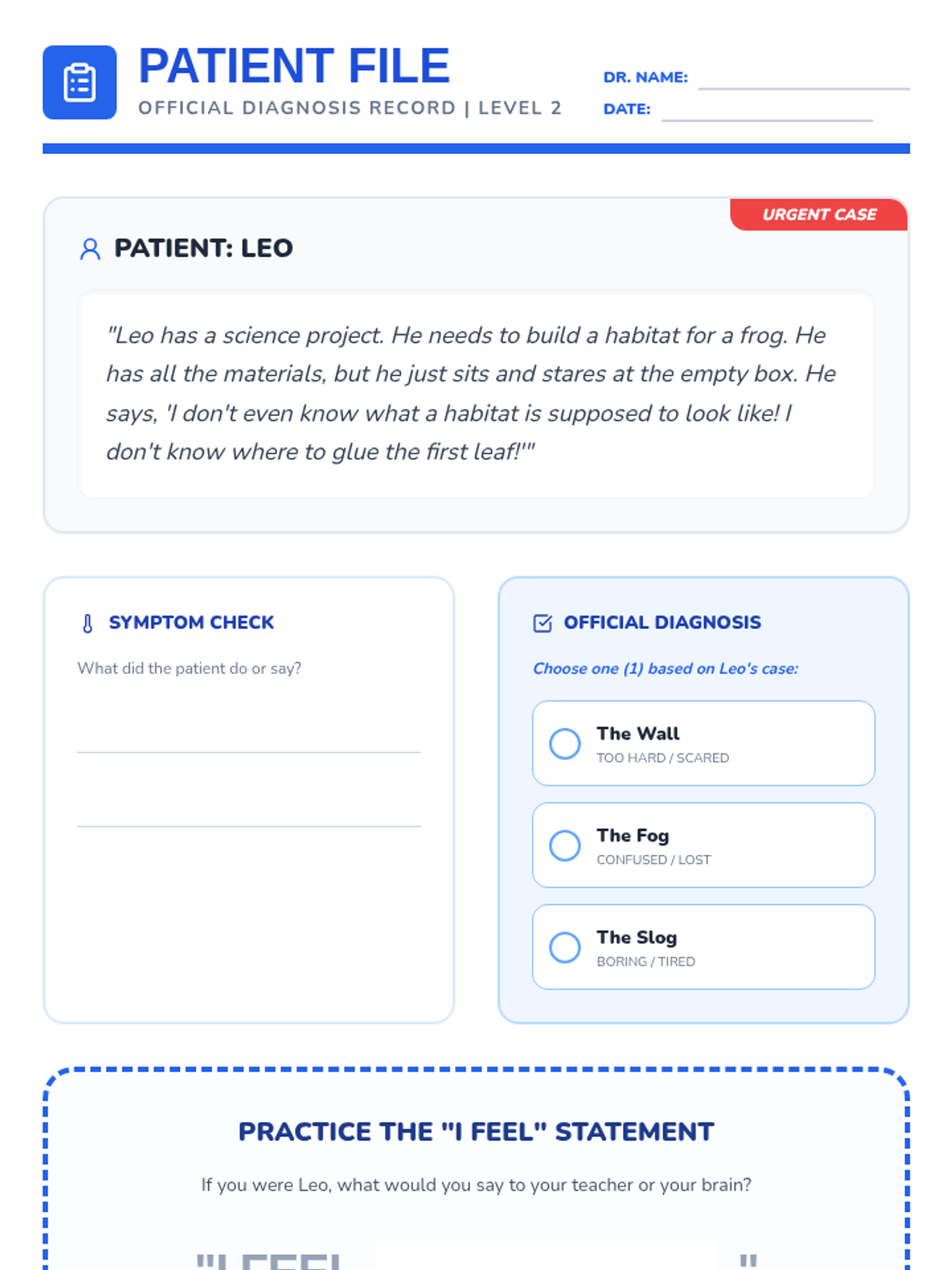
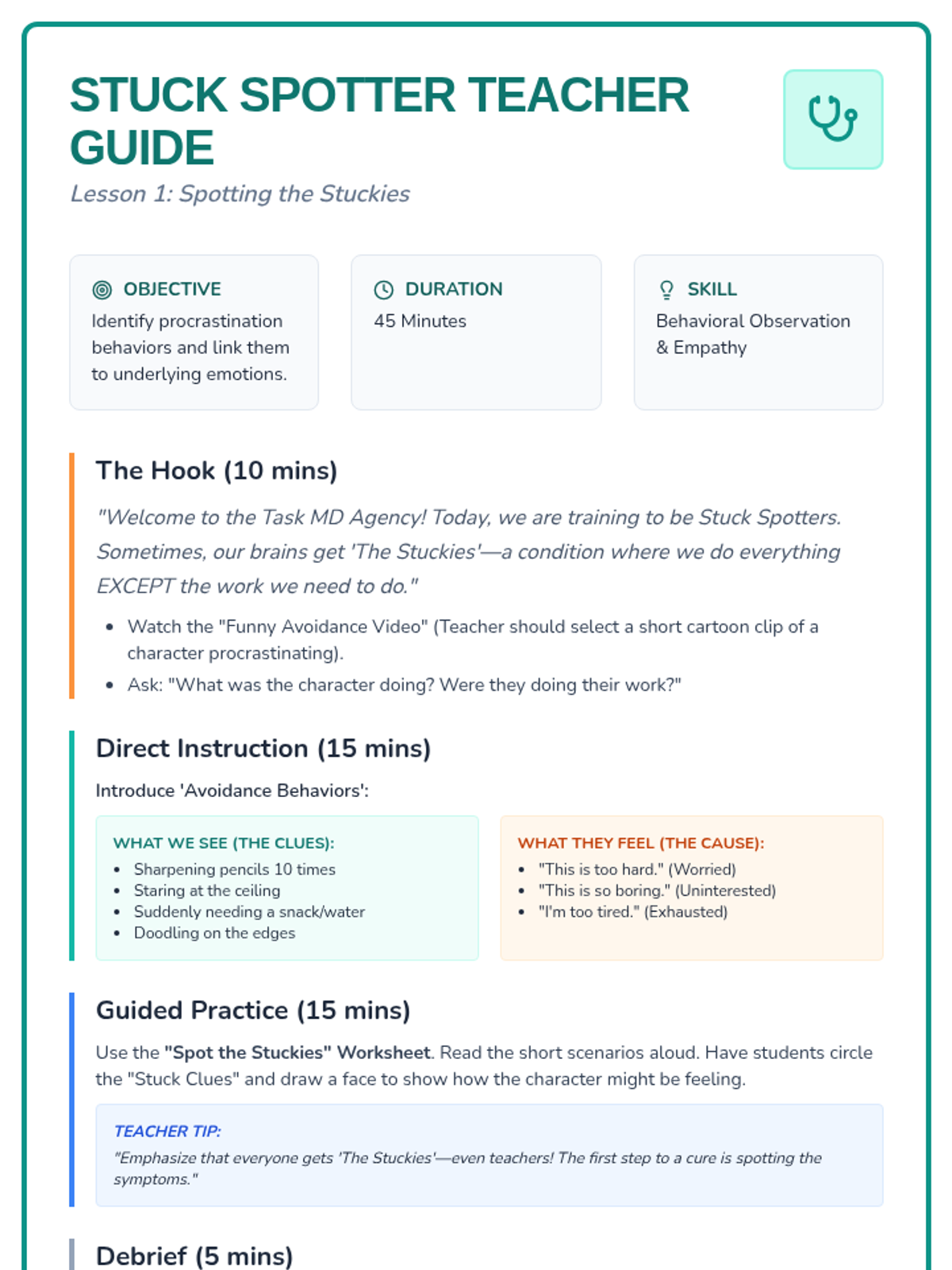
Students act as 'Task Doctors' to determine why a character is stuck (boredom, difficulty, fatigue) and practice labeling these emotions.
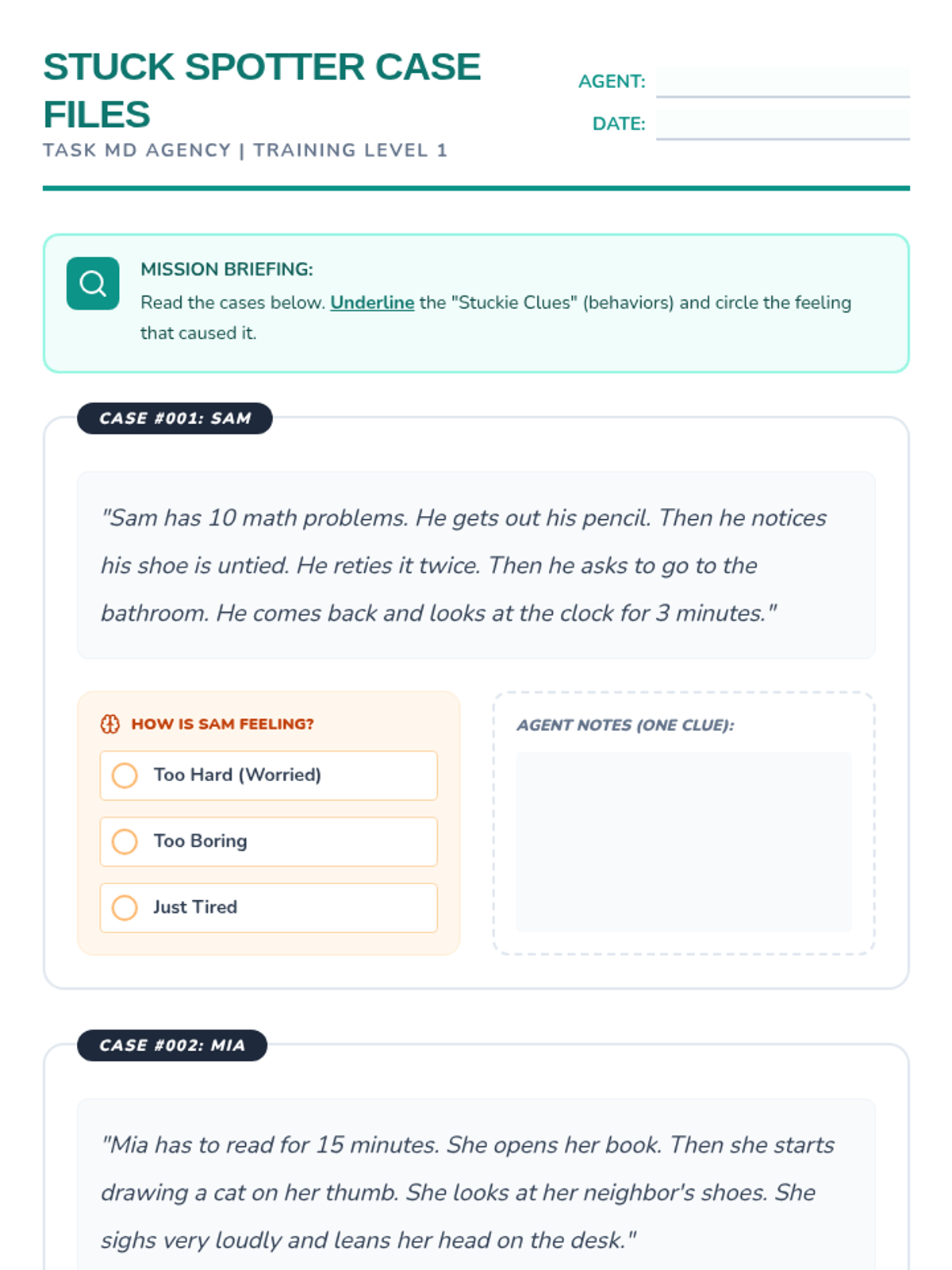
Students identify behaviors that show someone is avoiding work and brainstorm what emotions might be driving those behaviors through case studies.
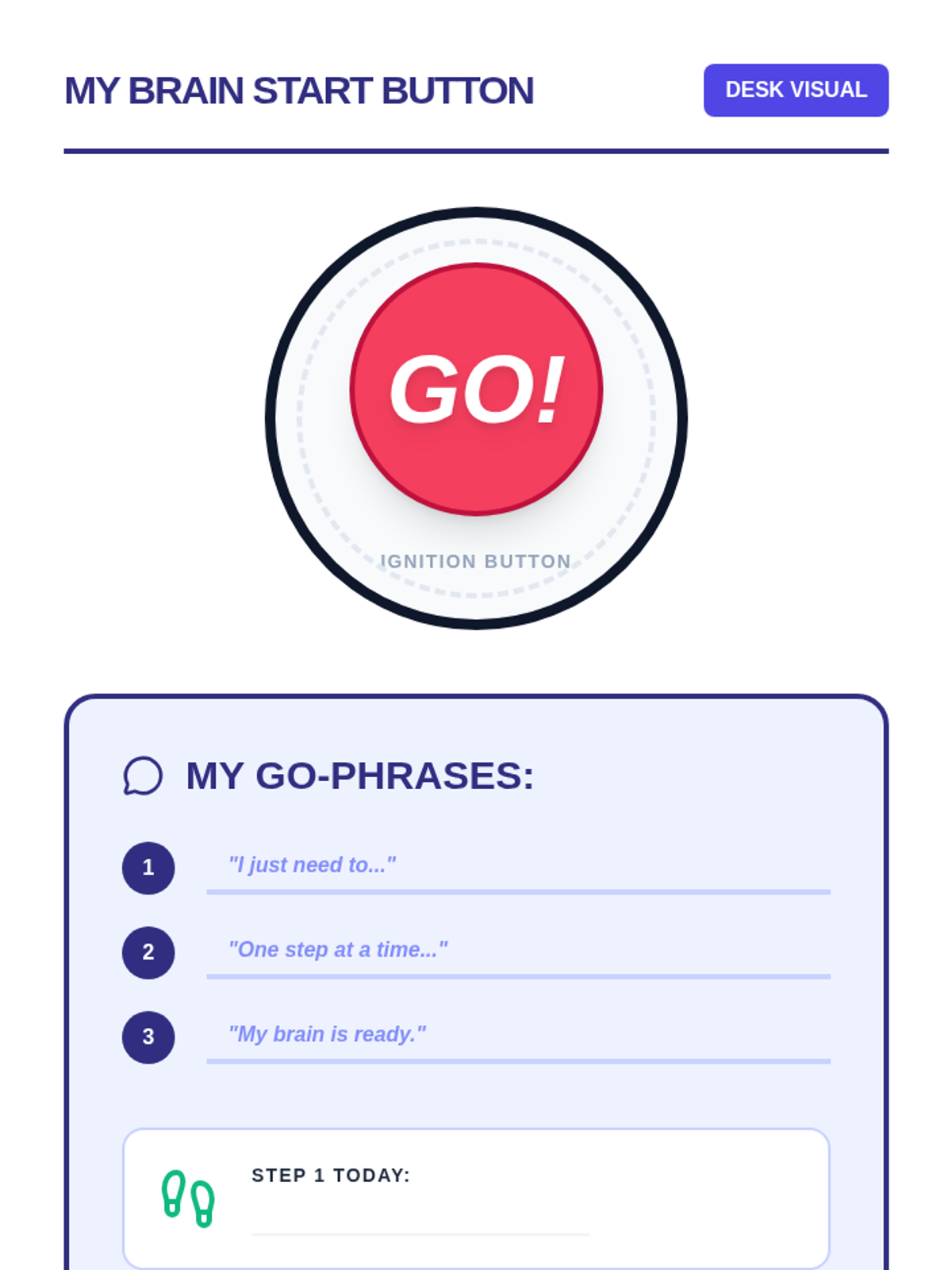
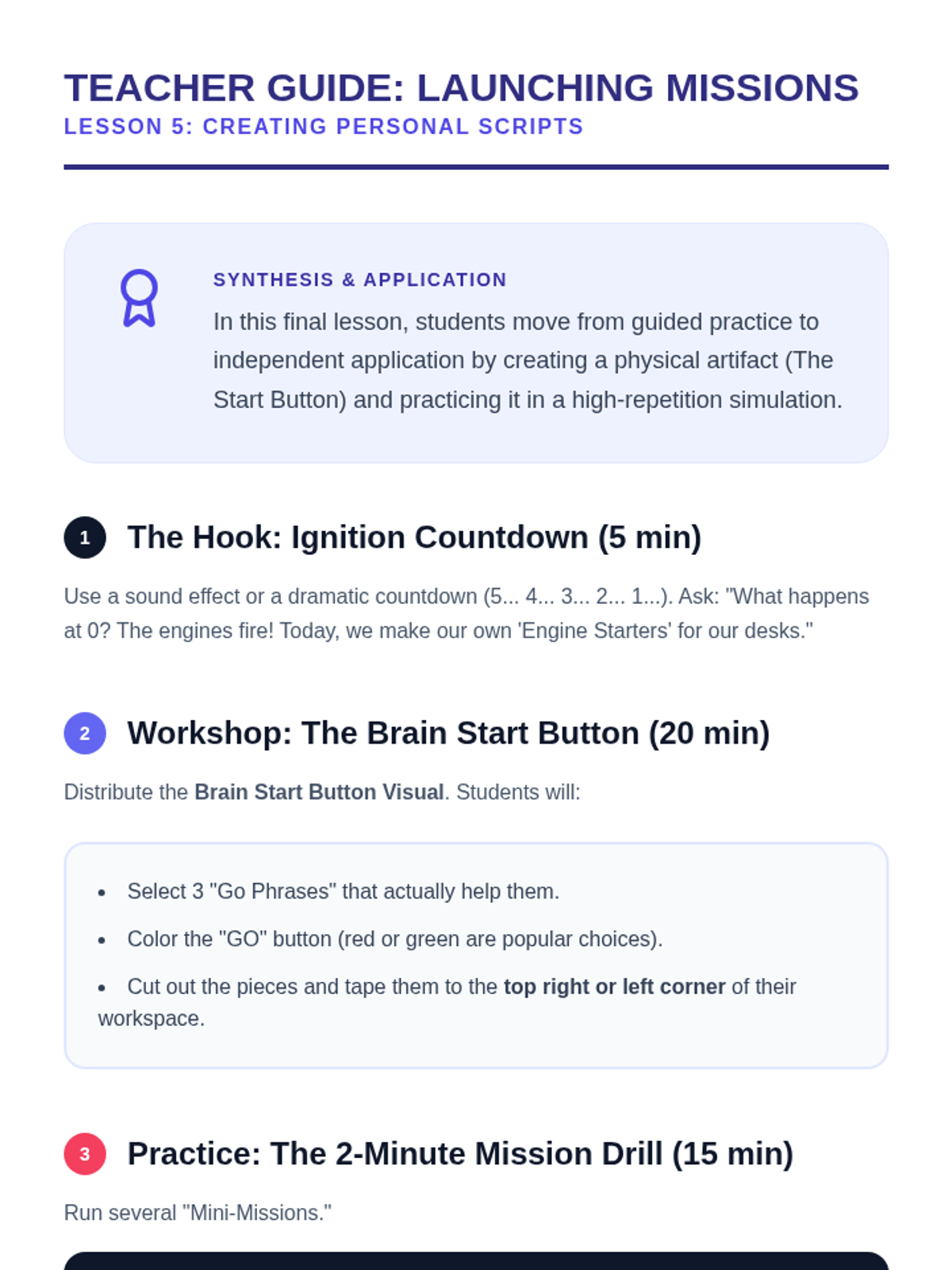
Students synthesize their learning by creating personalized desk visuals and practicing their self-talk scripts in real classroom routines.
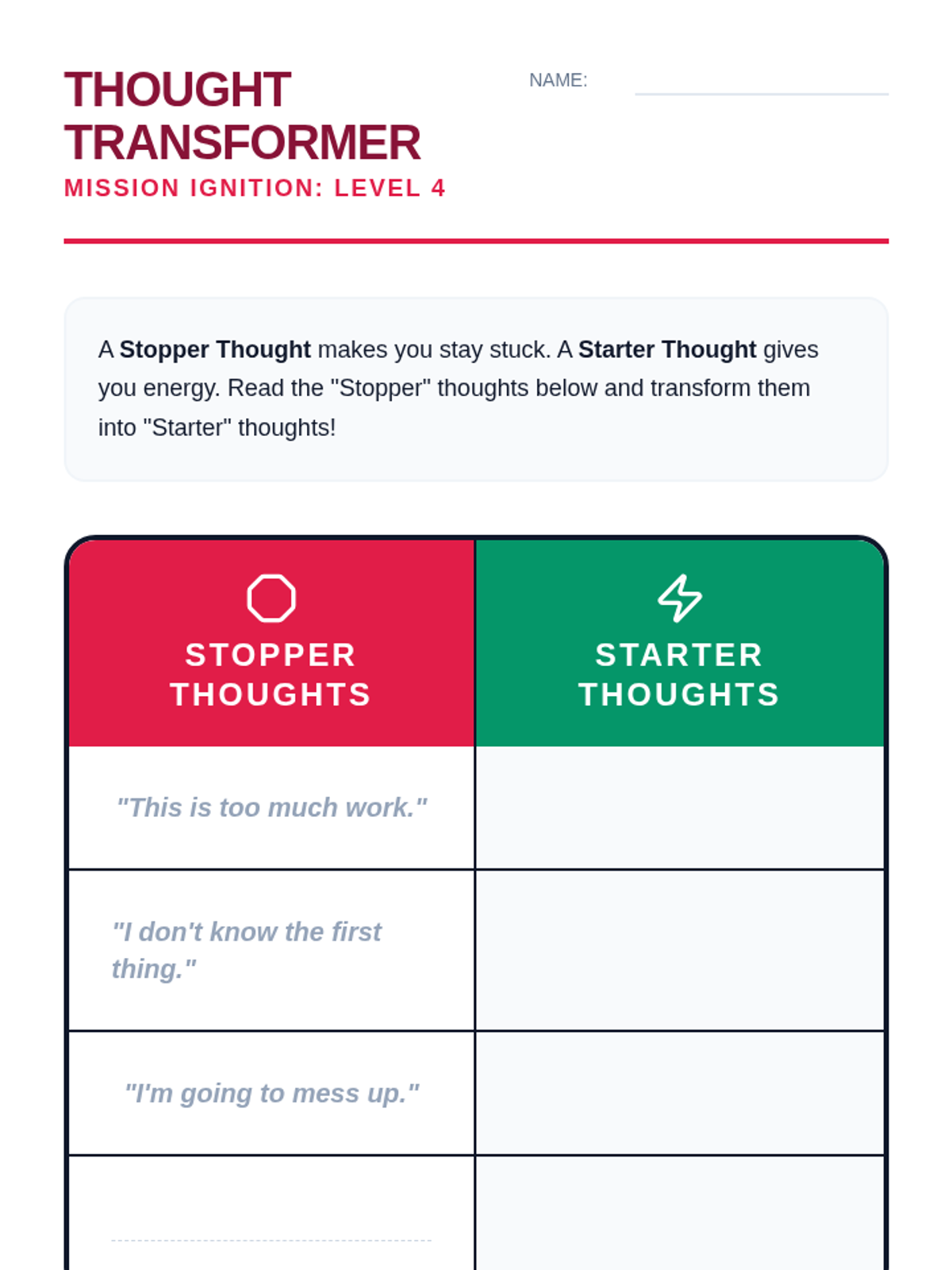
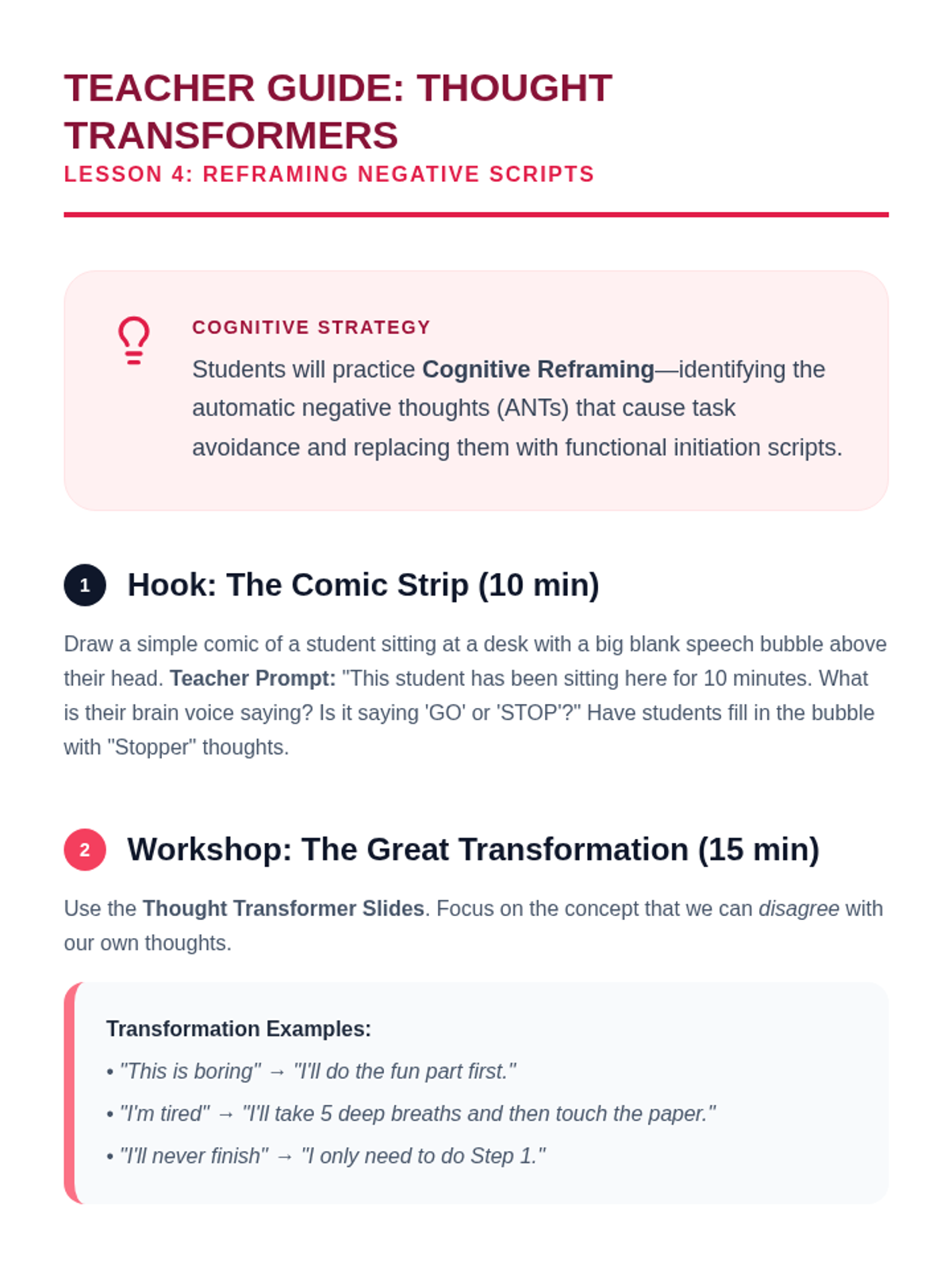
Students identify 'Stopper' thoughts and transform them into 'Starter' thoughts through cognitive reframing exercises.
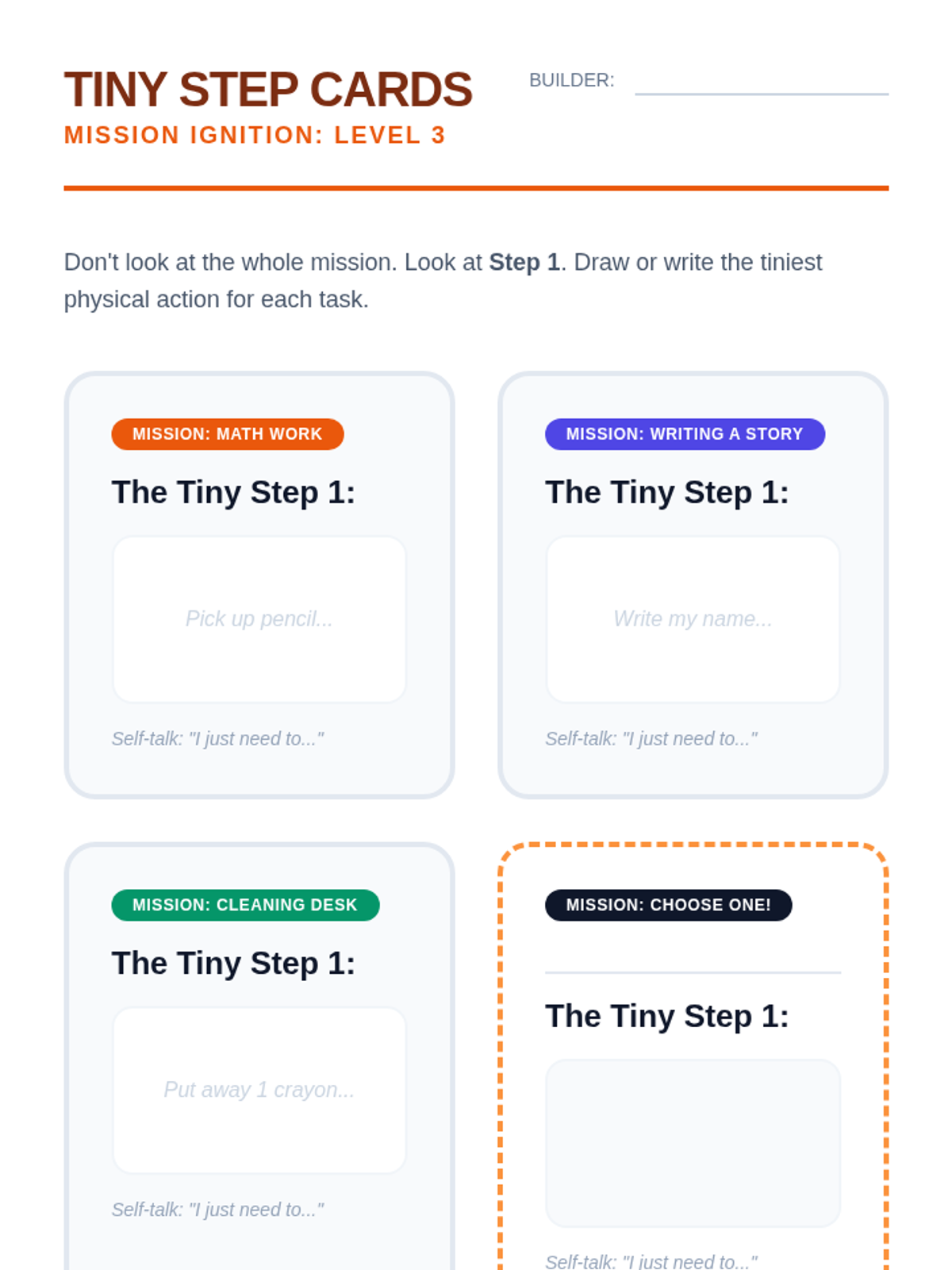
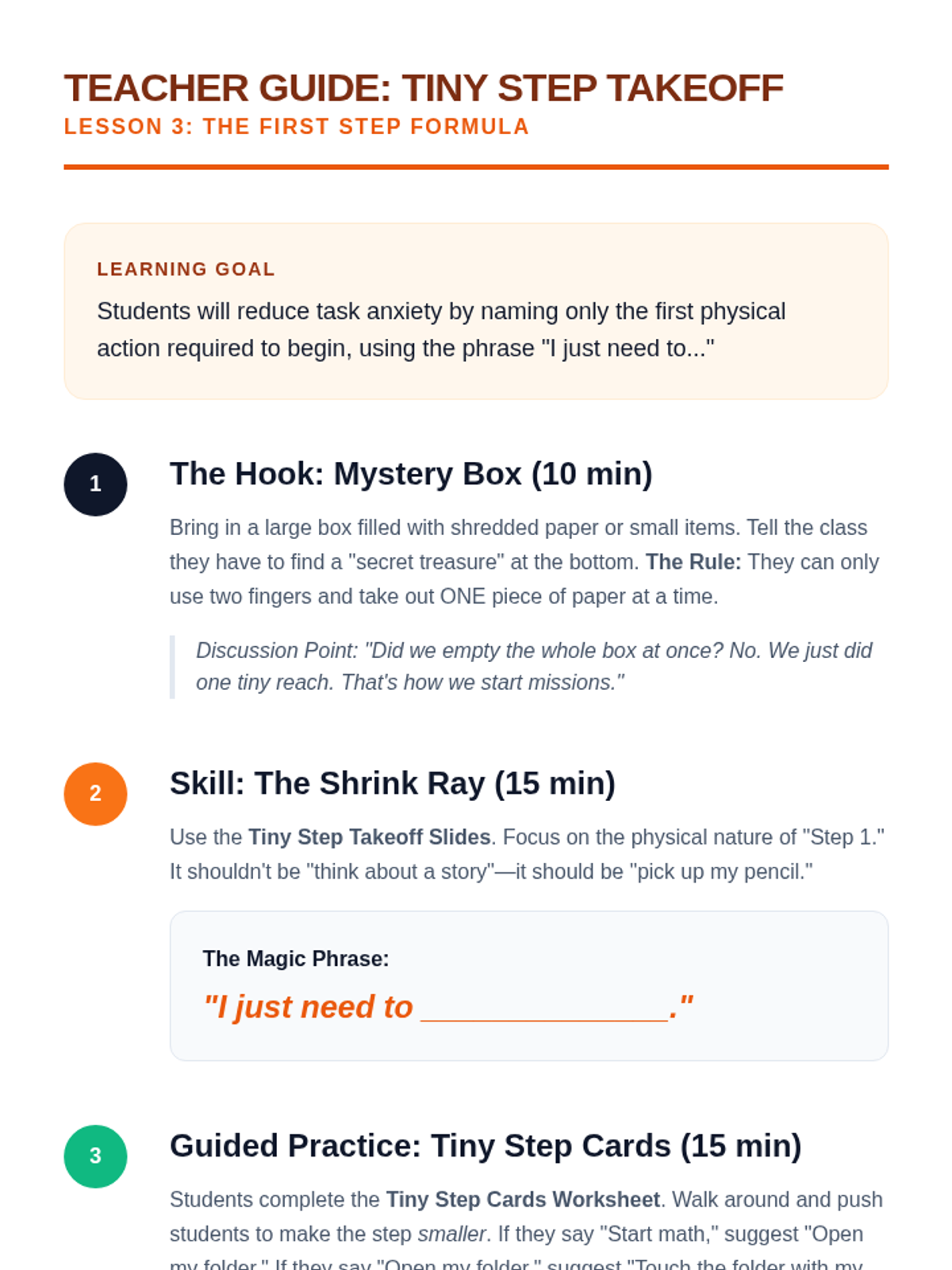
Focuses on task analysis by teaching students to identify and verbalize only the very first, smallest physical step required to begin.
Introduction to the concept of self-talk by moving from narrating actions aloud (sportscasting) to internalizing them as quiet thoughts.
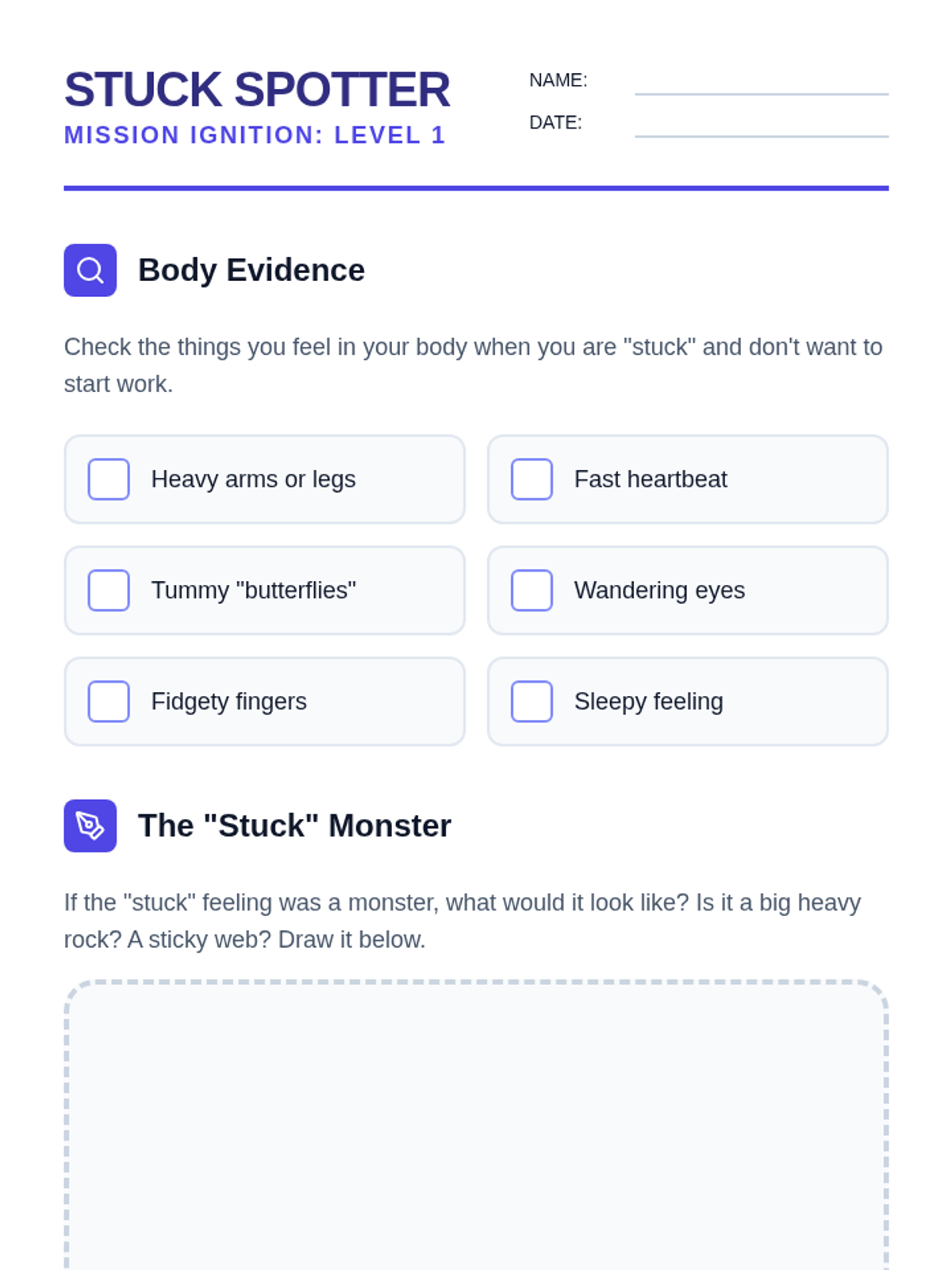
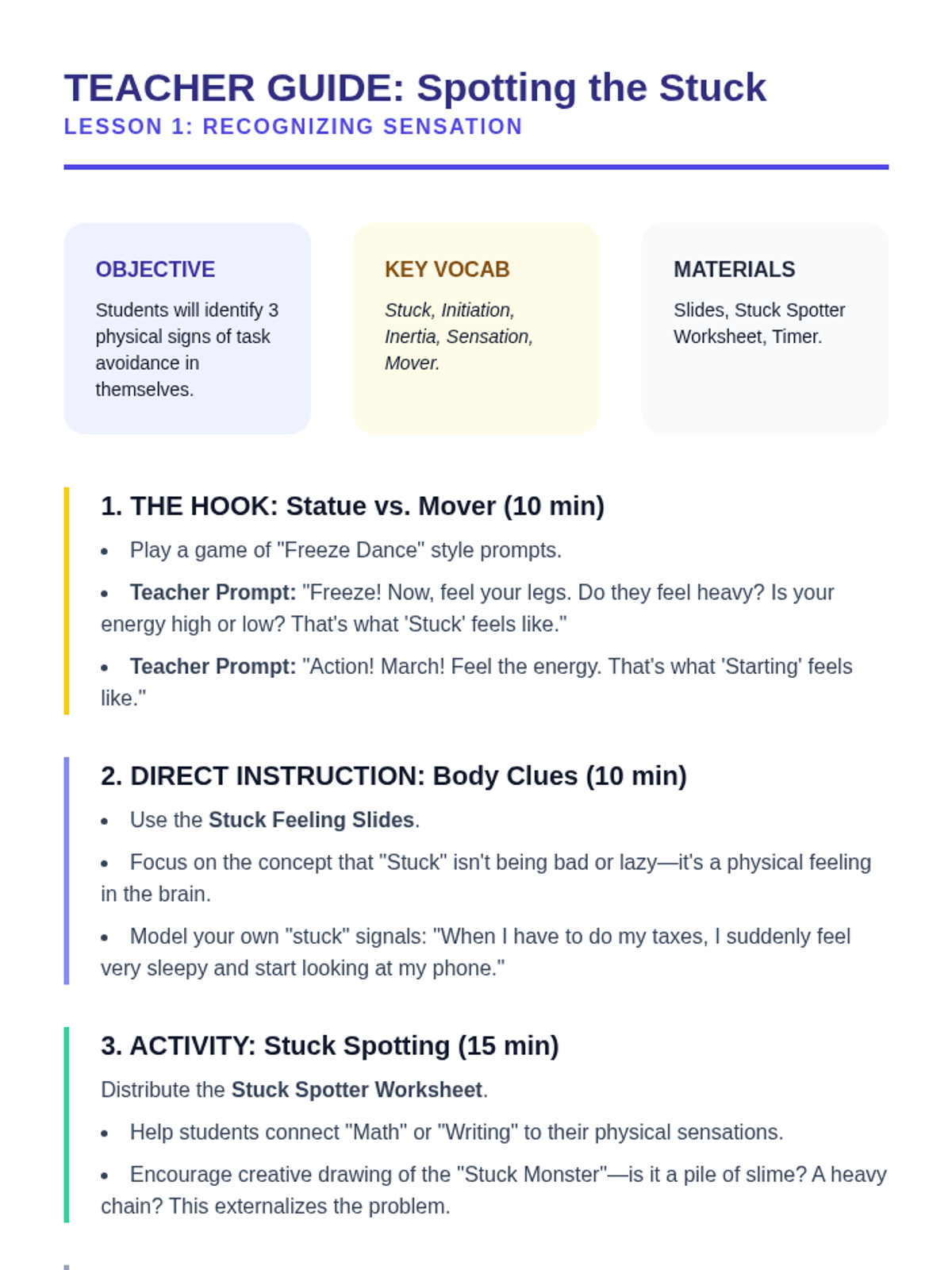
Students identify the physical and mental sensations of being 'stuck' vs. 'starting' through game-based learning and self-monitoring tools.
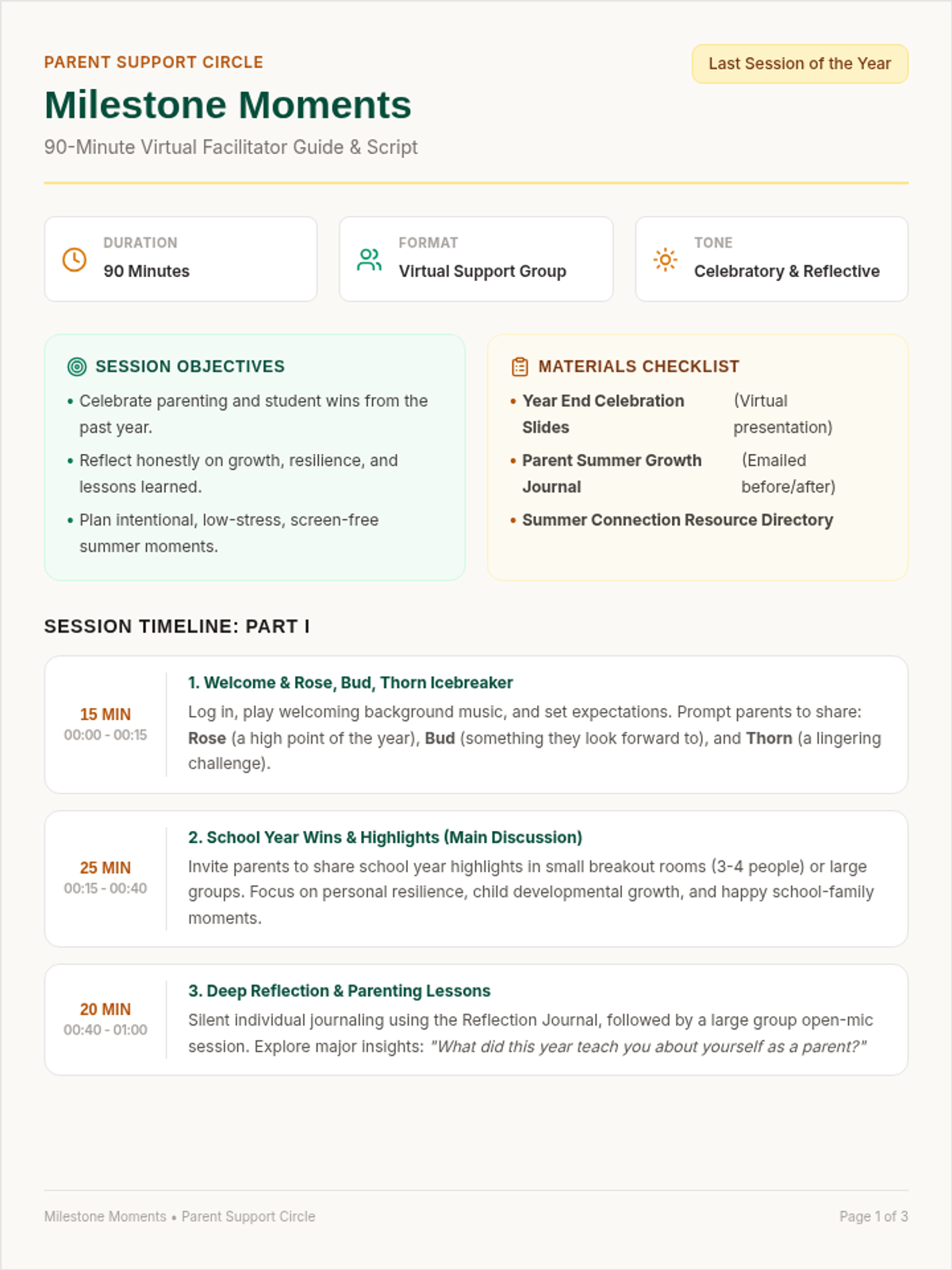
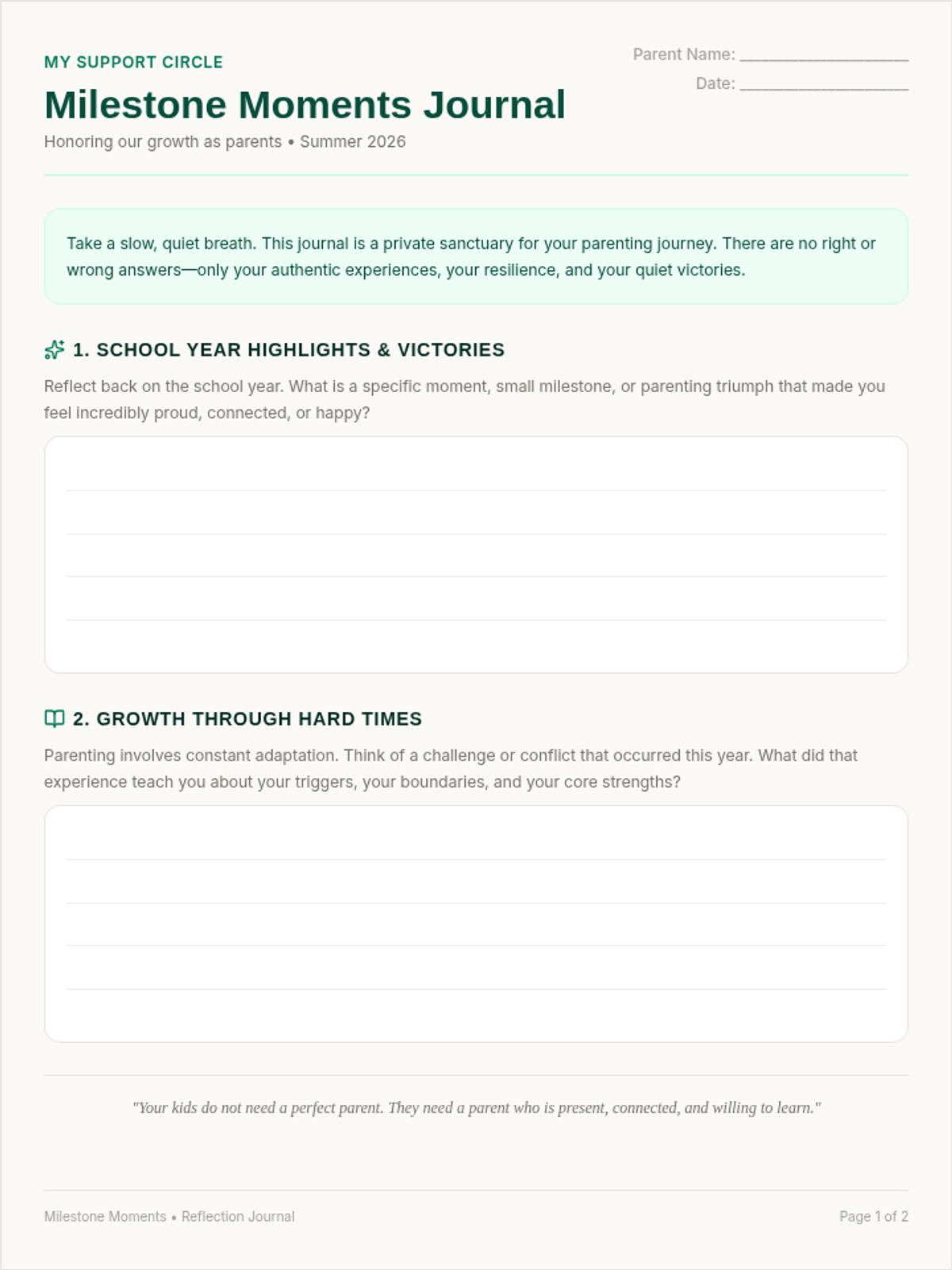
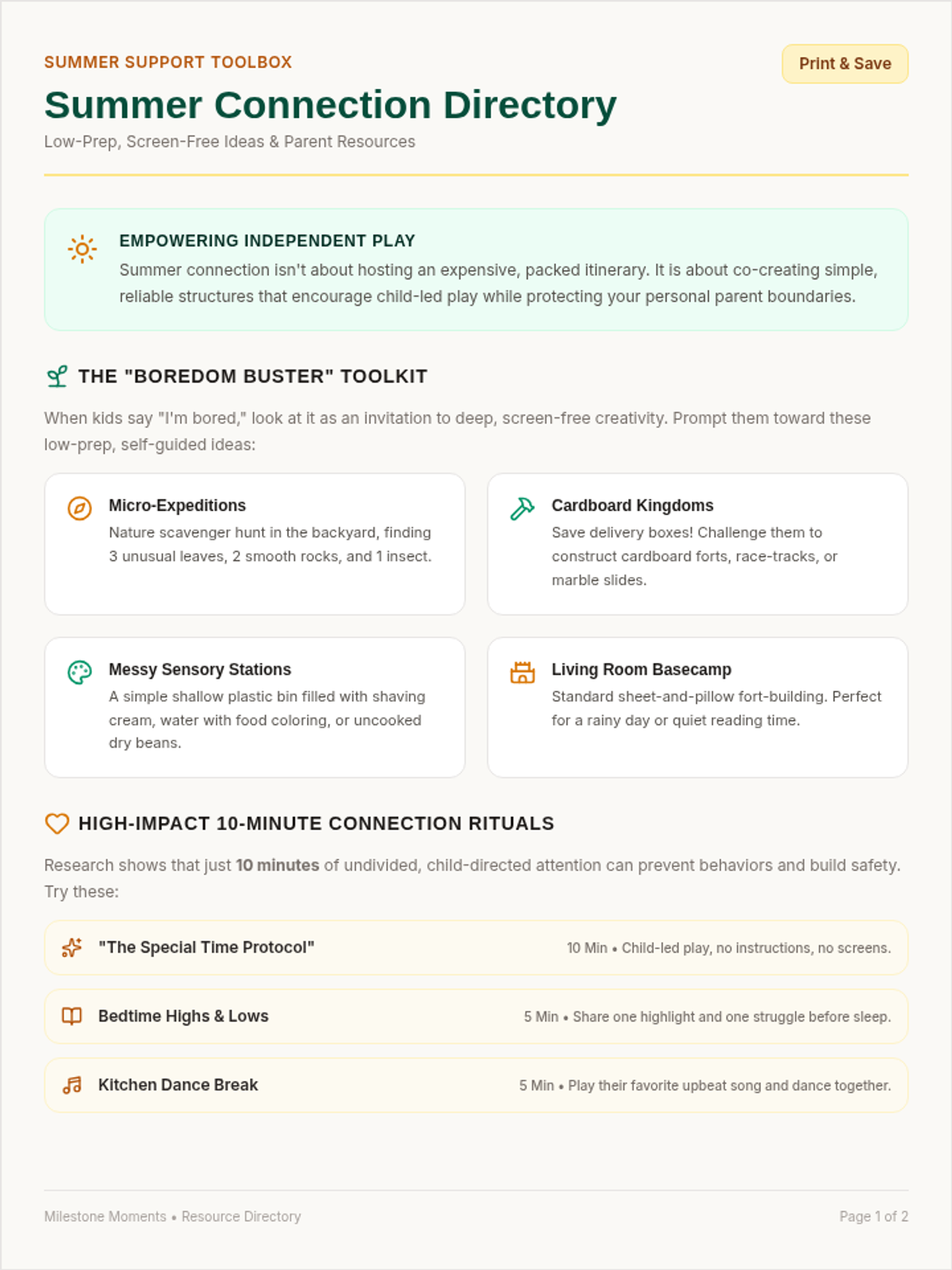
A warm, celebratory parent support group session focused on reflecting on school year successes, planning screen-free summer adventures, and setting growth goals.
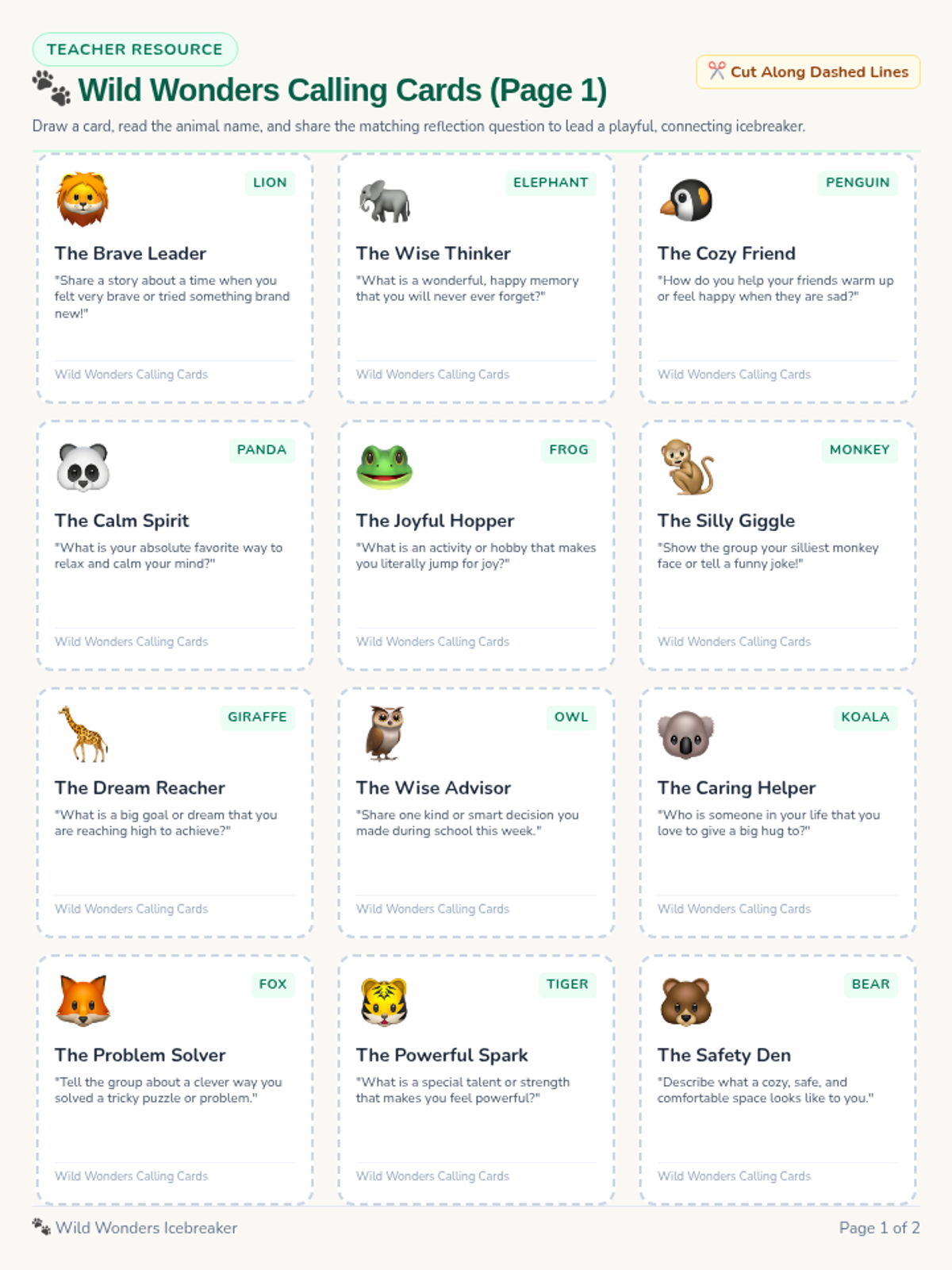
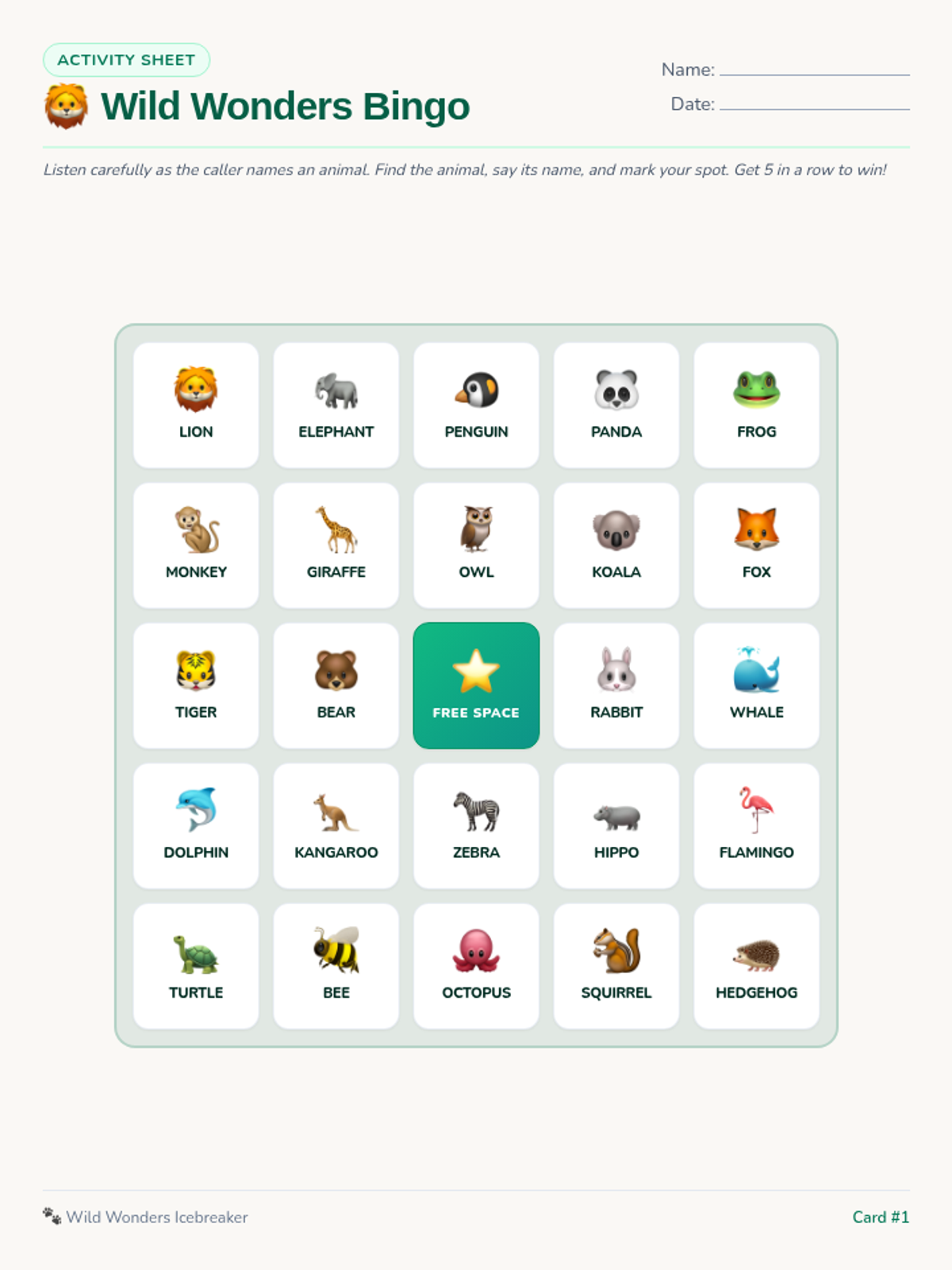
An engaging animal-themed bingo icebreaker designed to help students build social connections, practice active listening, and share fun facts about animals. Includes printable 5x5 student bingo cards and teacher calling cards.
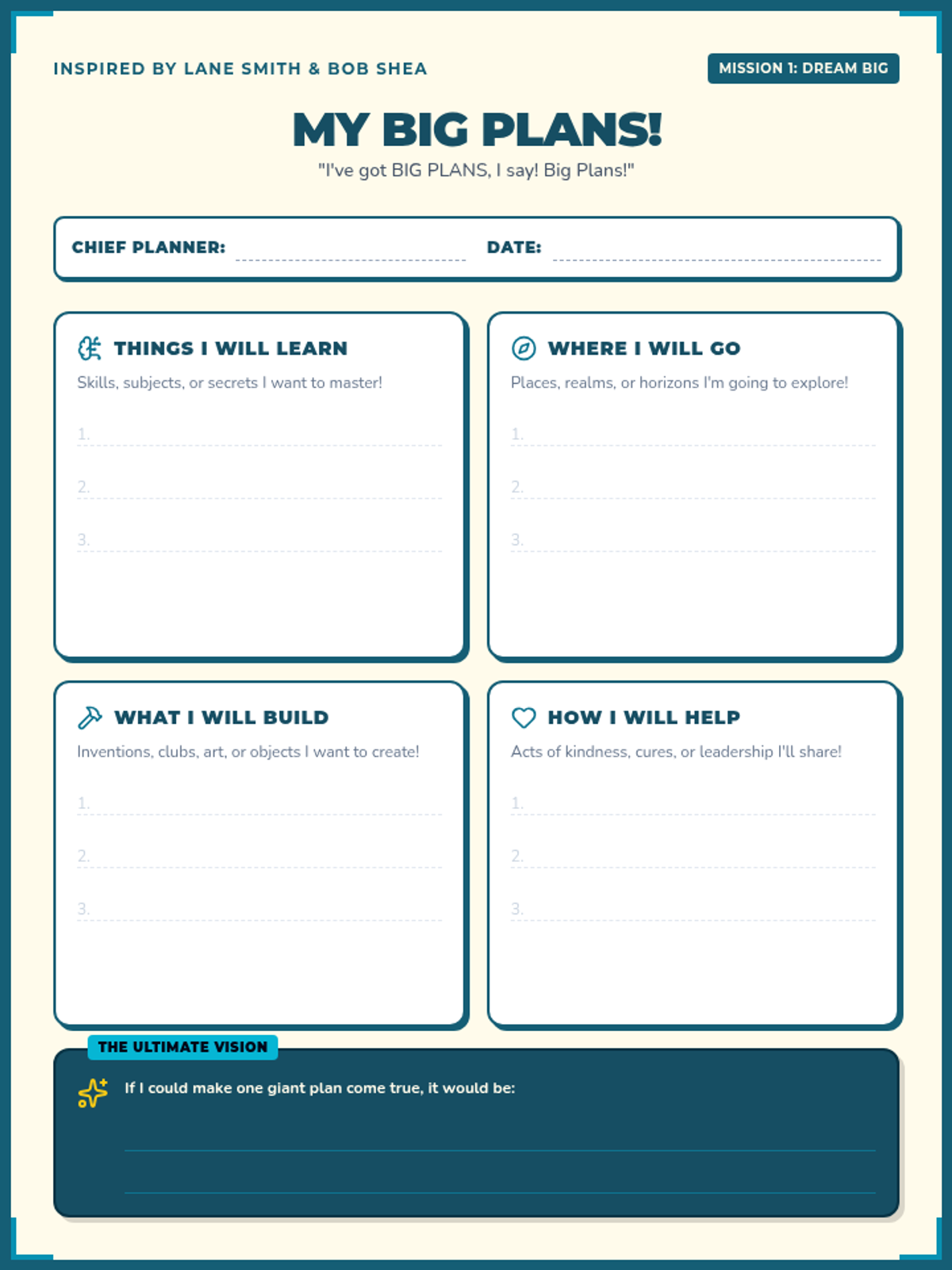
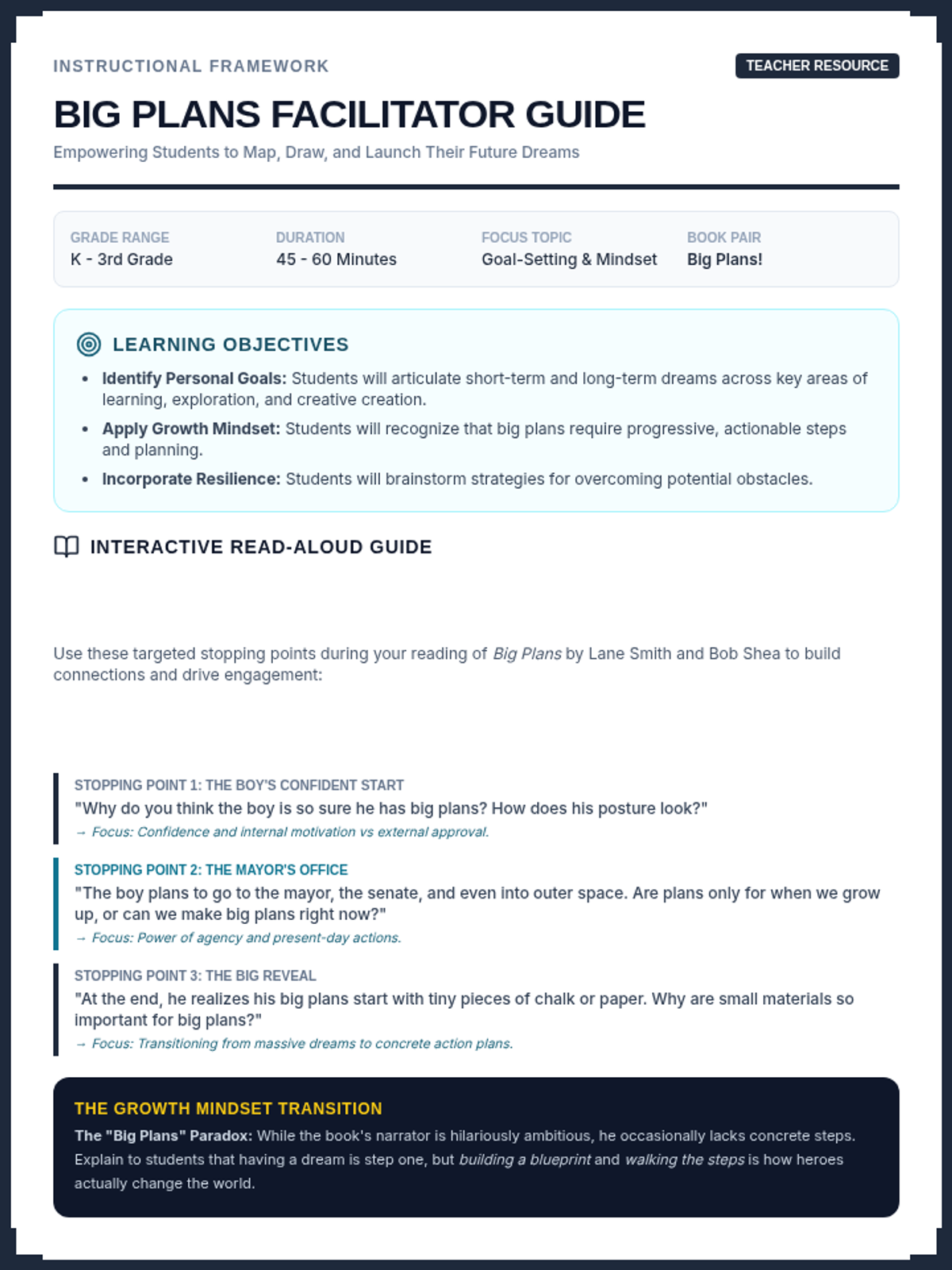
A creative, goal-setting lesson based on the book 'Big Plans' by Lane Smith and Bob Shea. Students design their own 'big plans' and develop a growth mindset through interactive graphic organizers, blueprint drawings, and structured action steps.
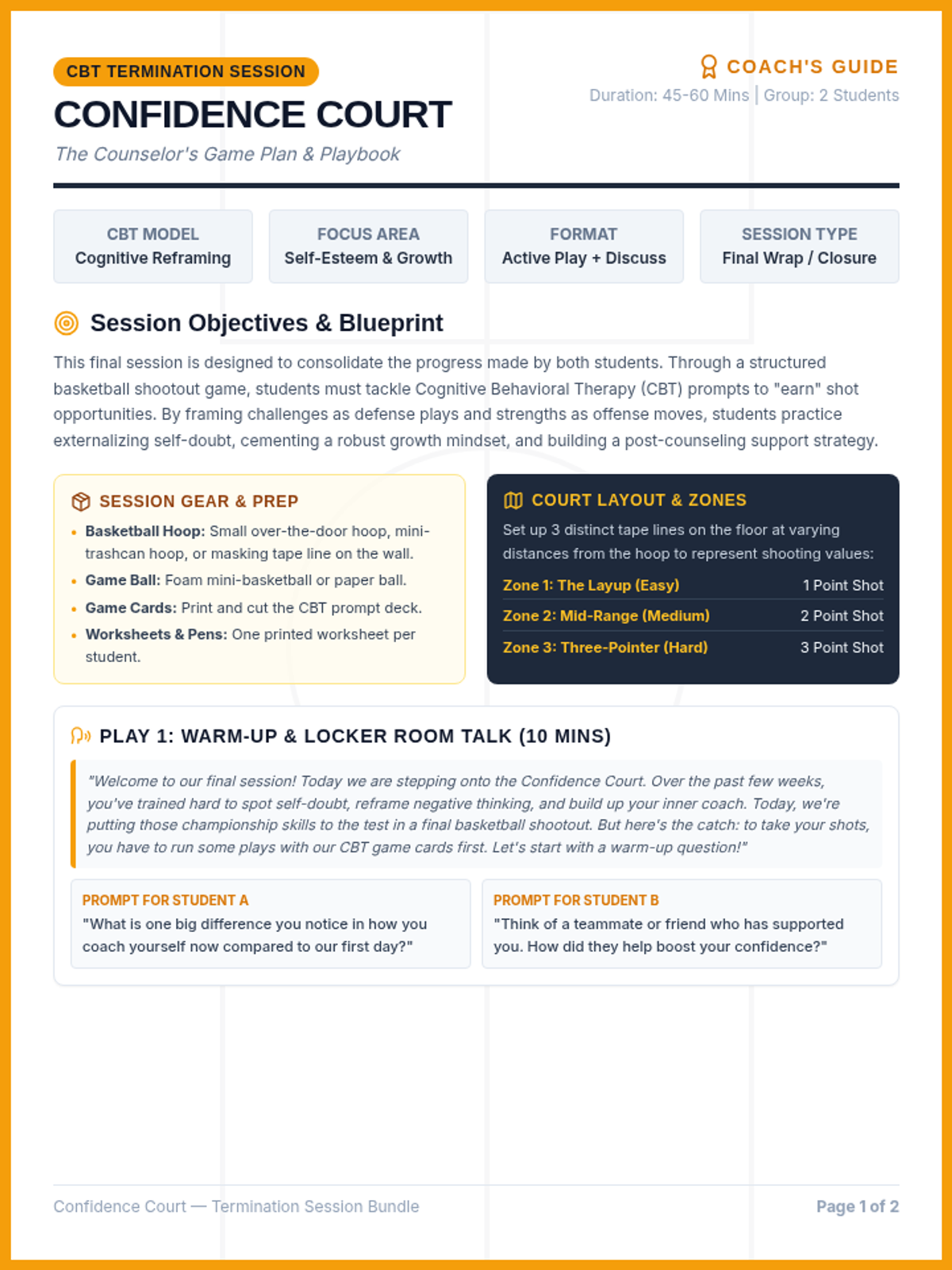
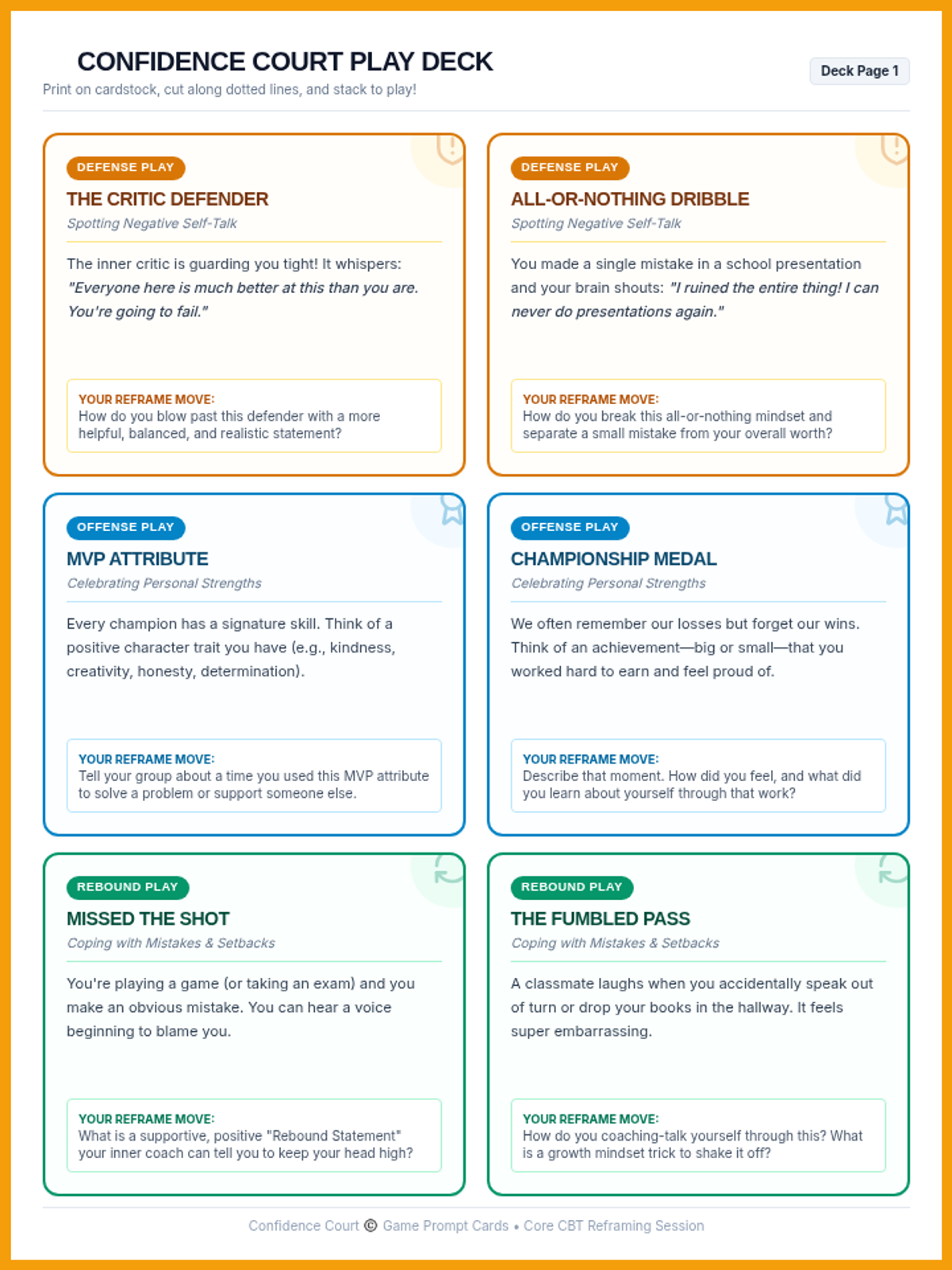
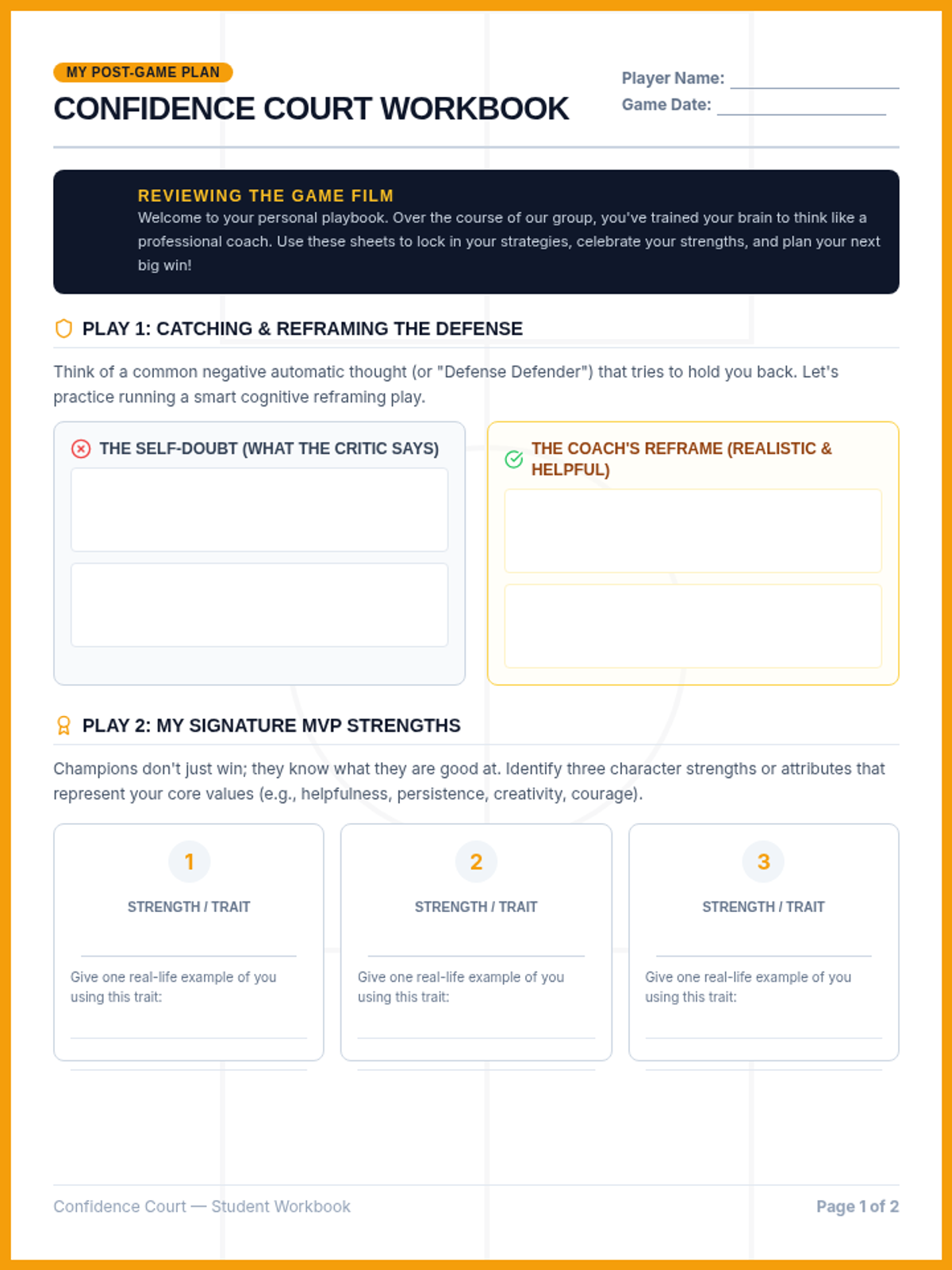
A termination counseling session lesson bundle utilizing a basketball-themed CBT game to reinforce self-esteem, cognitive restructuring, growth mindset, and future growth planning.
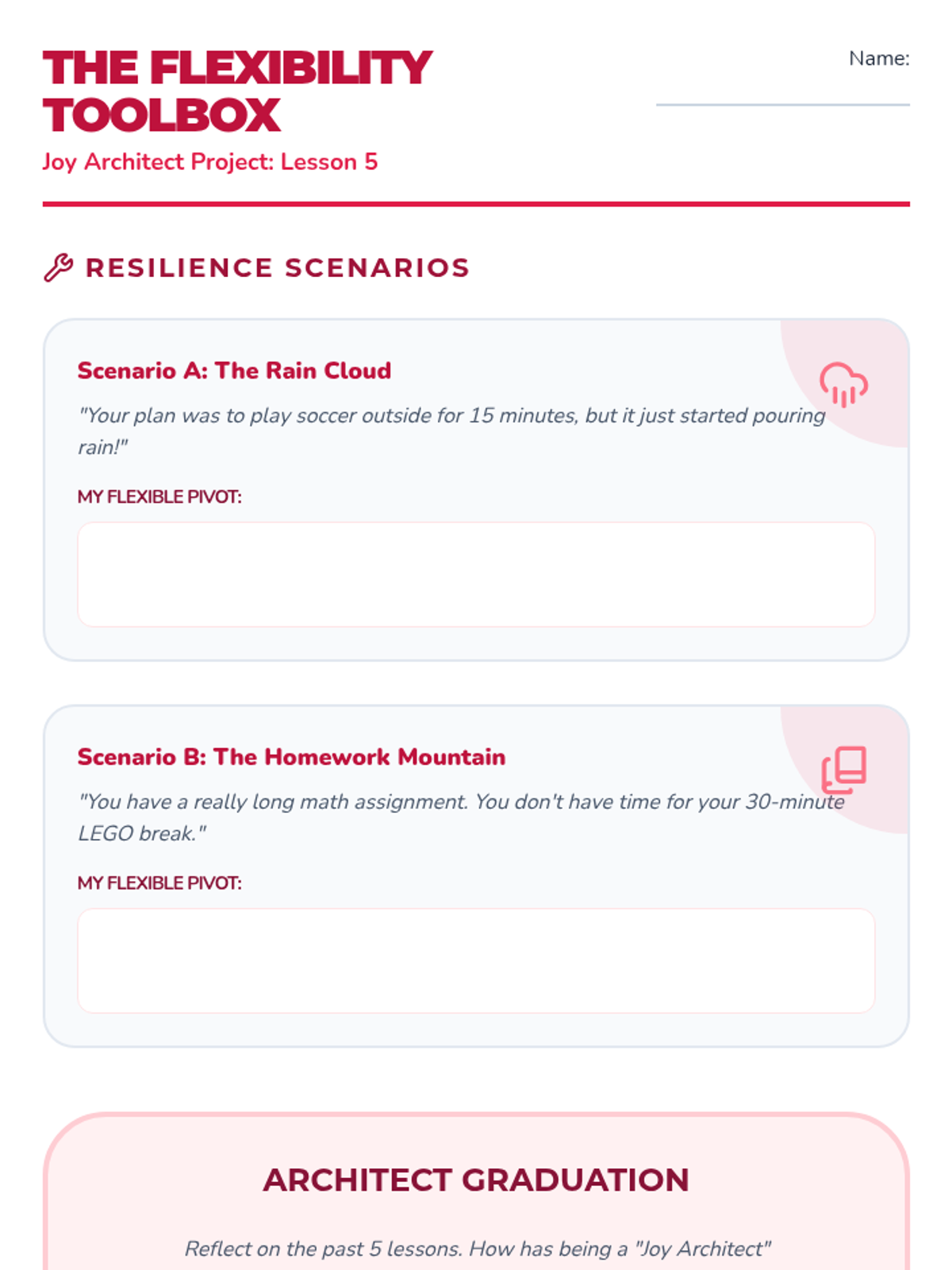
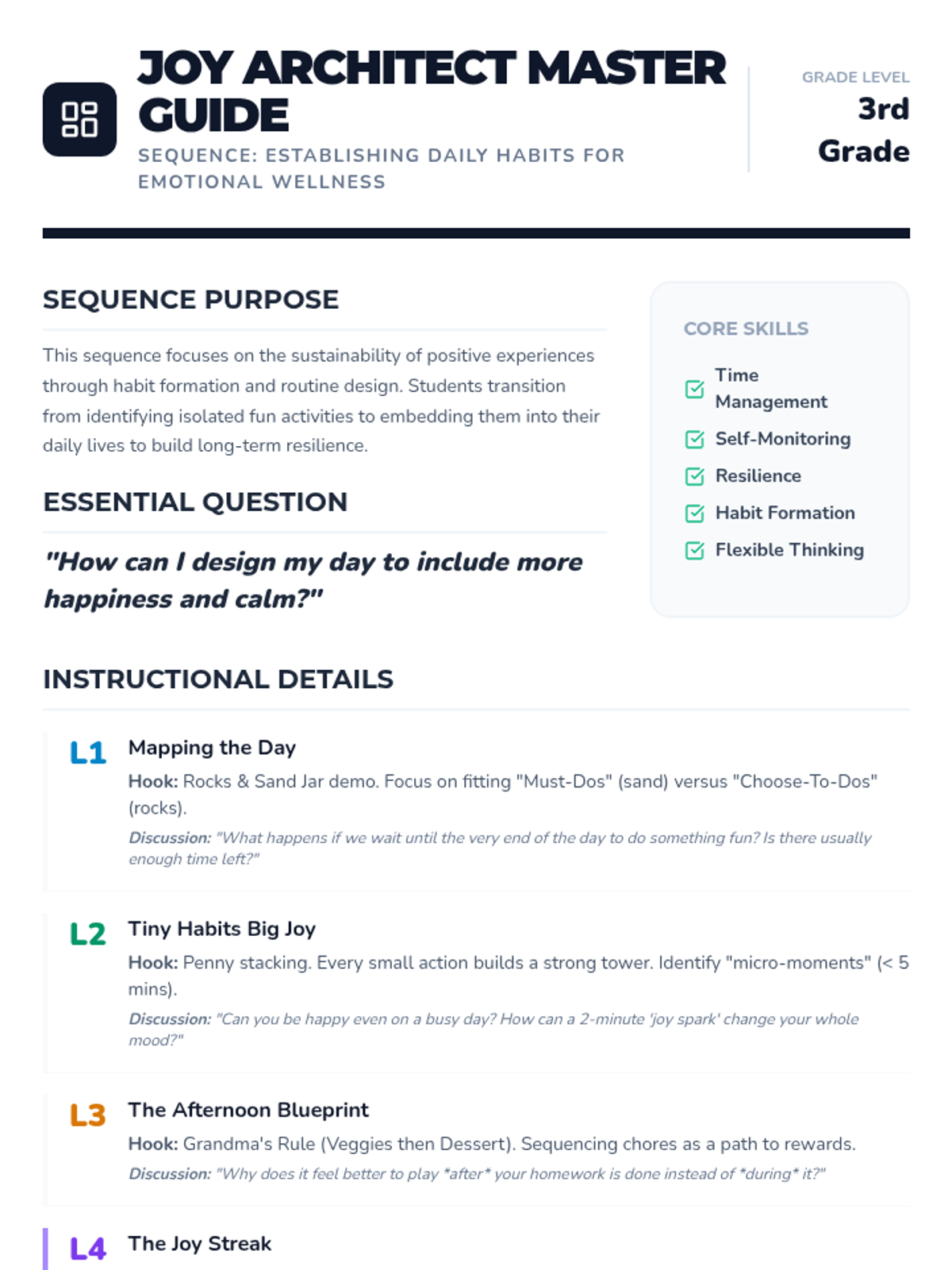
Students reflect on their routine changes and practice 'flexible thinking' for when plans go awry, building resilience and adaptability.
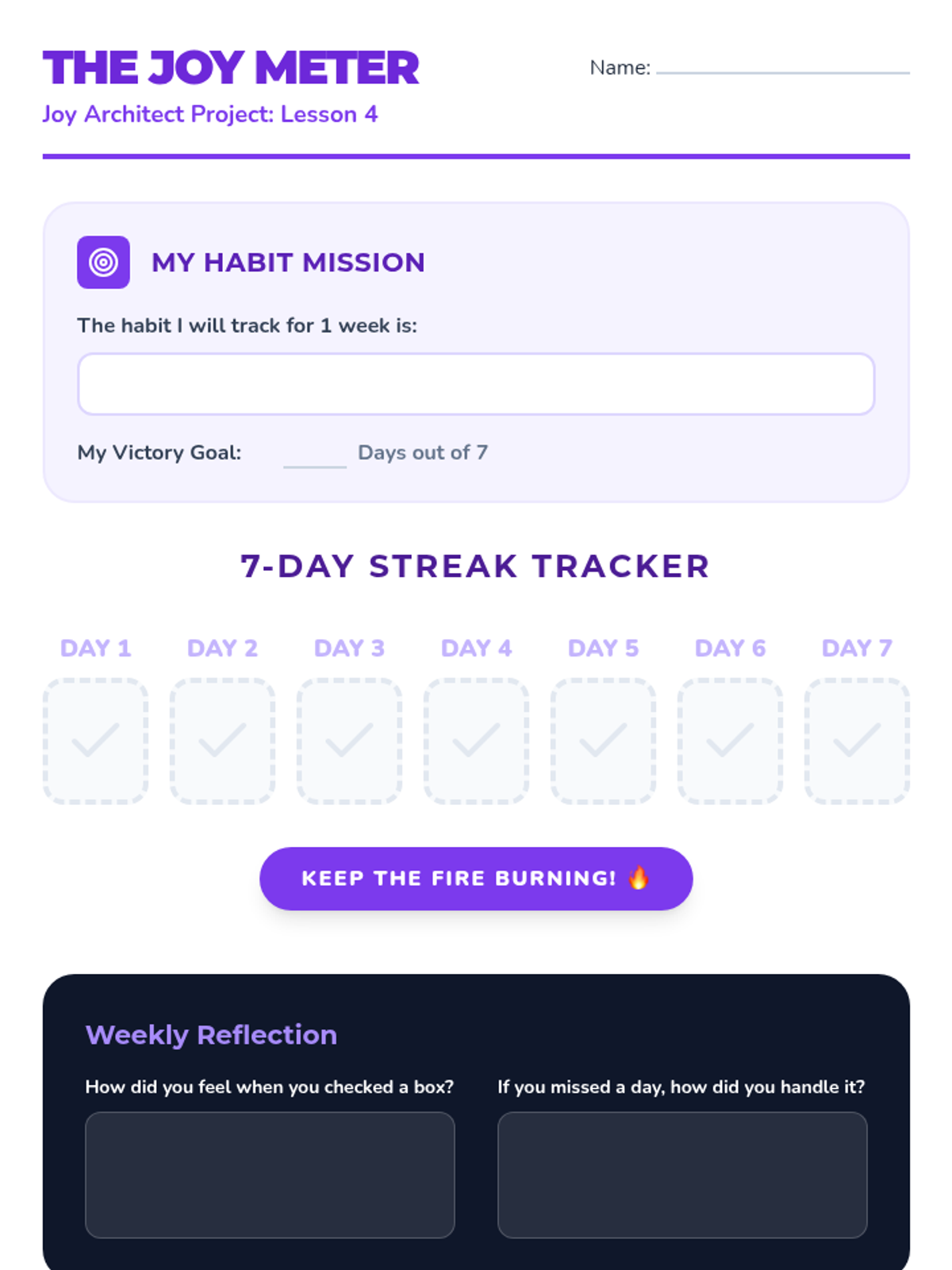
Students create personal trackers to monitor their consistency in engaging with positive habits, learning the power of 'streaks' and self-monitoring.
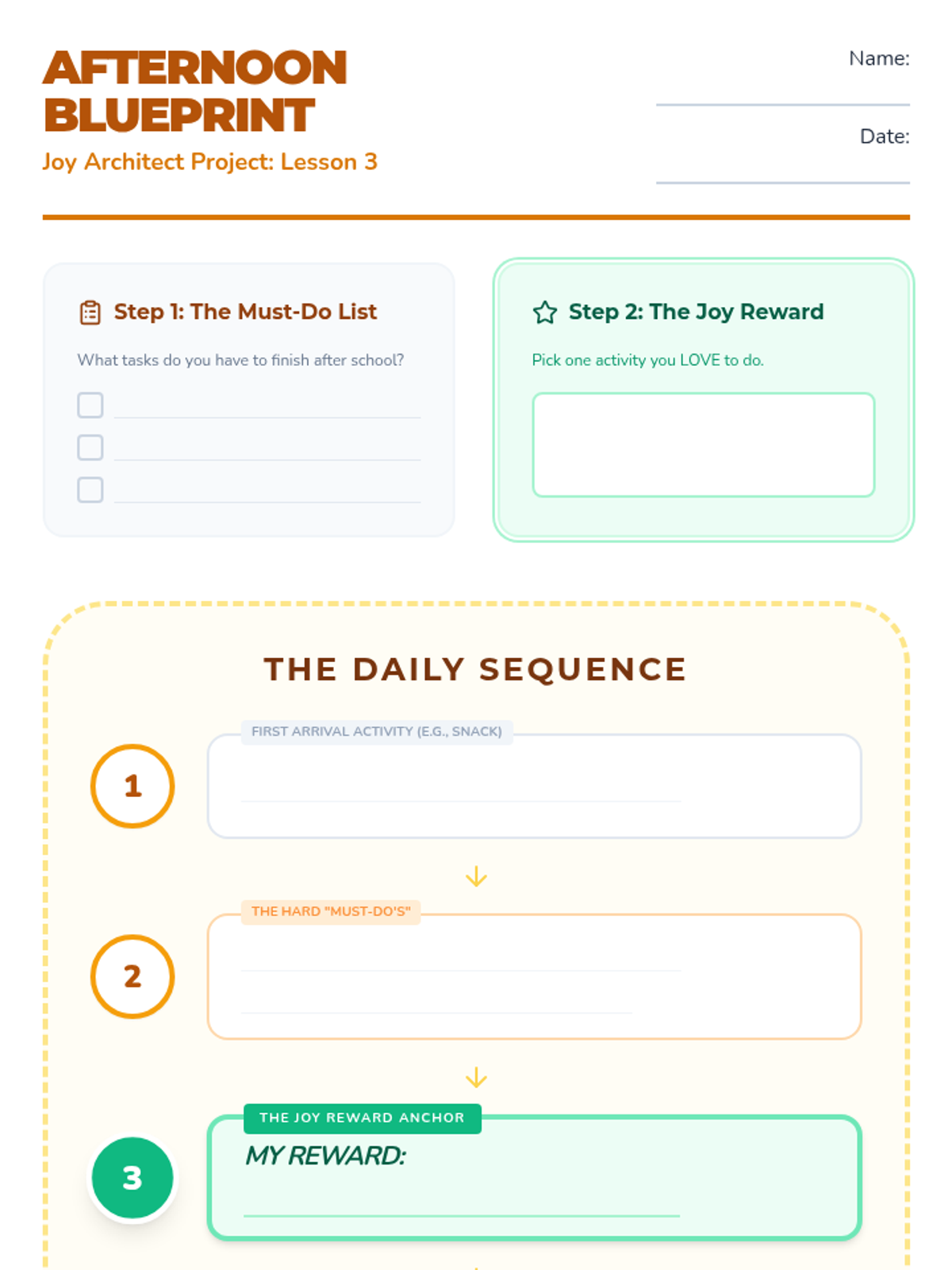
Students design a balanced afternoon routine using 'Grandma's Rule' to sequence chores and rewards, creating a sustainable and motivating schedule.
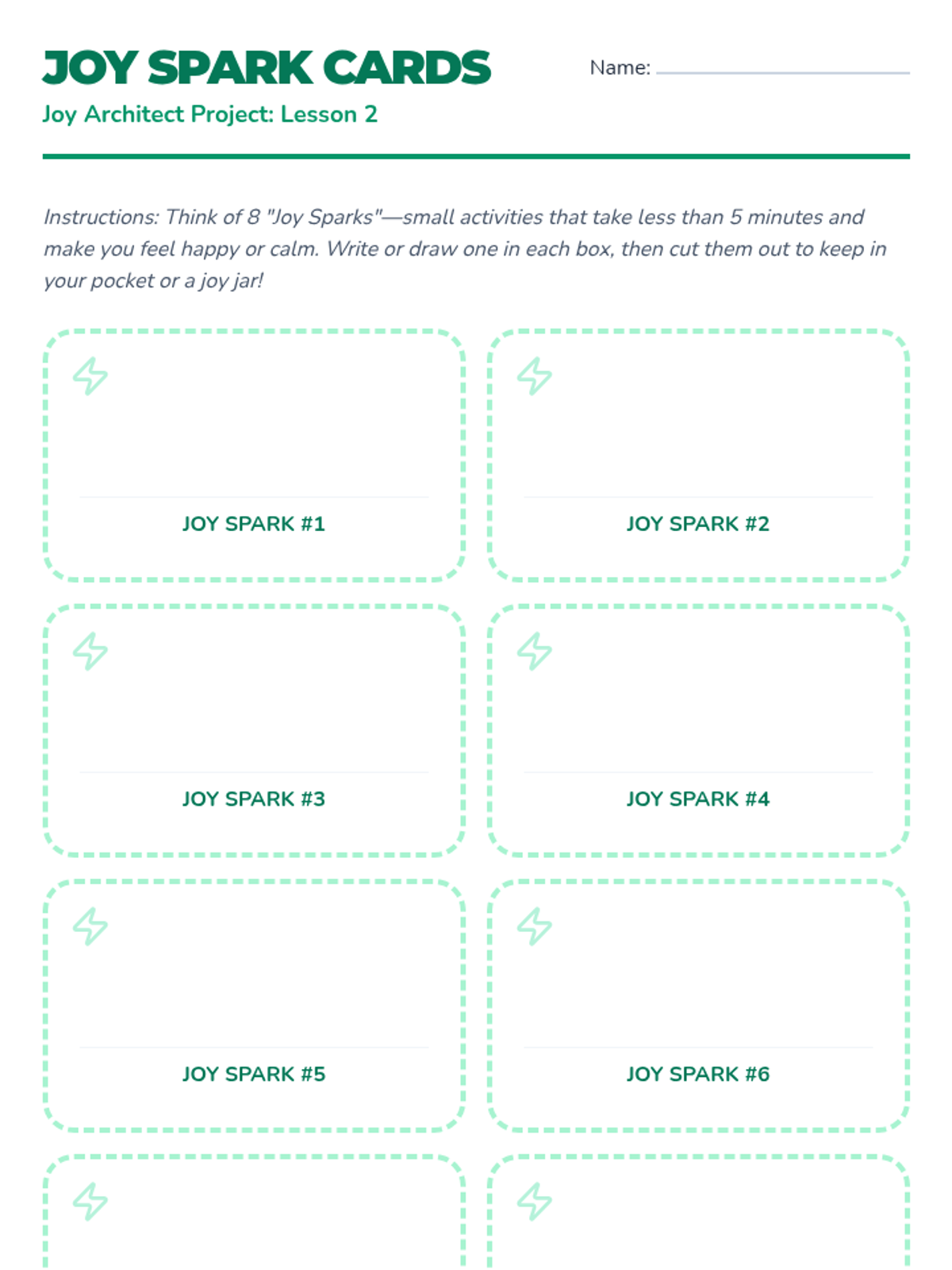
Students explore the concept of 'micro-moments' of joy and learn that frequency of positive experiences is more important than intensity for building long-term happiness.
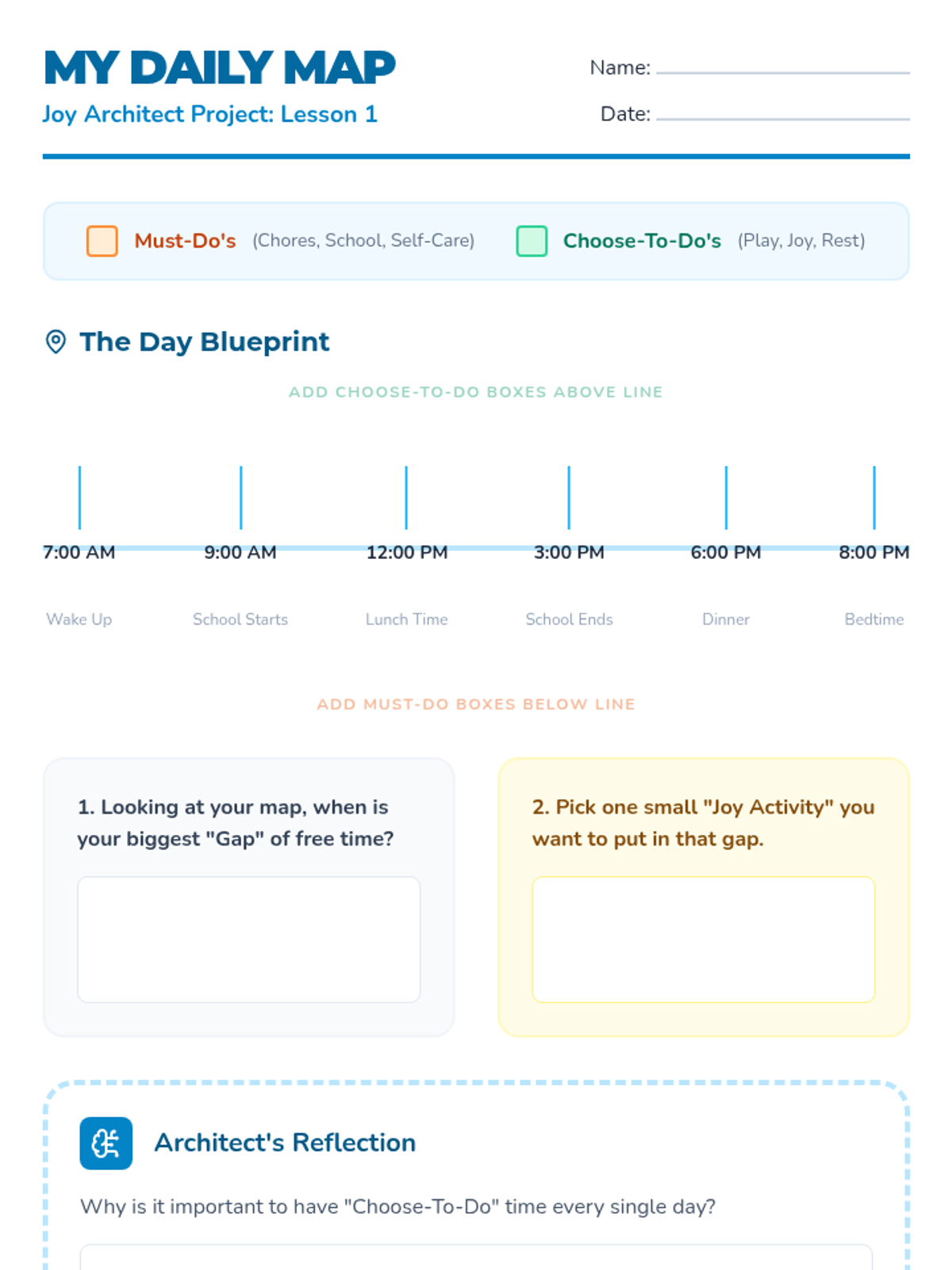
Students audit their current daily schedules to distinguish between 'must-do' tasks and 'choose-to-do' activities, identifying gaps where positive experiences can be added.
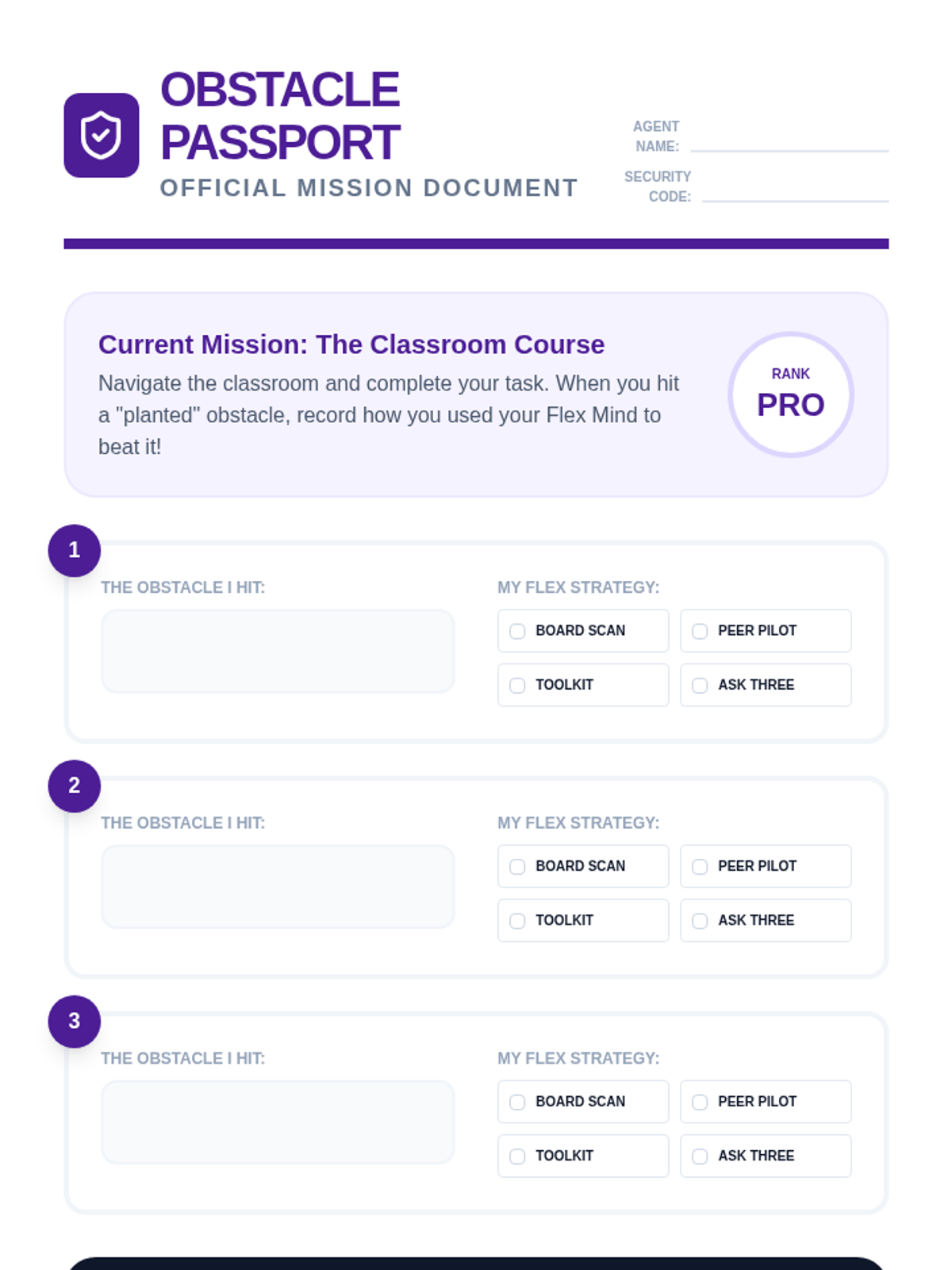
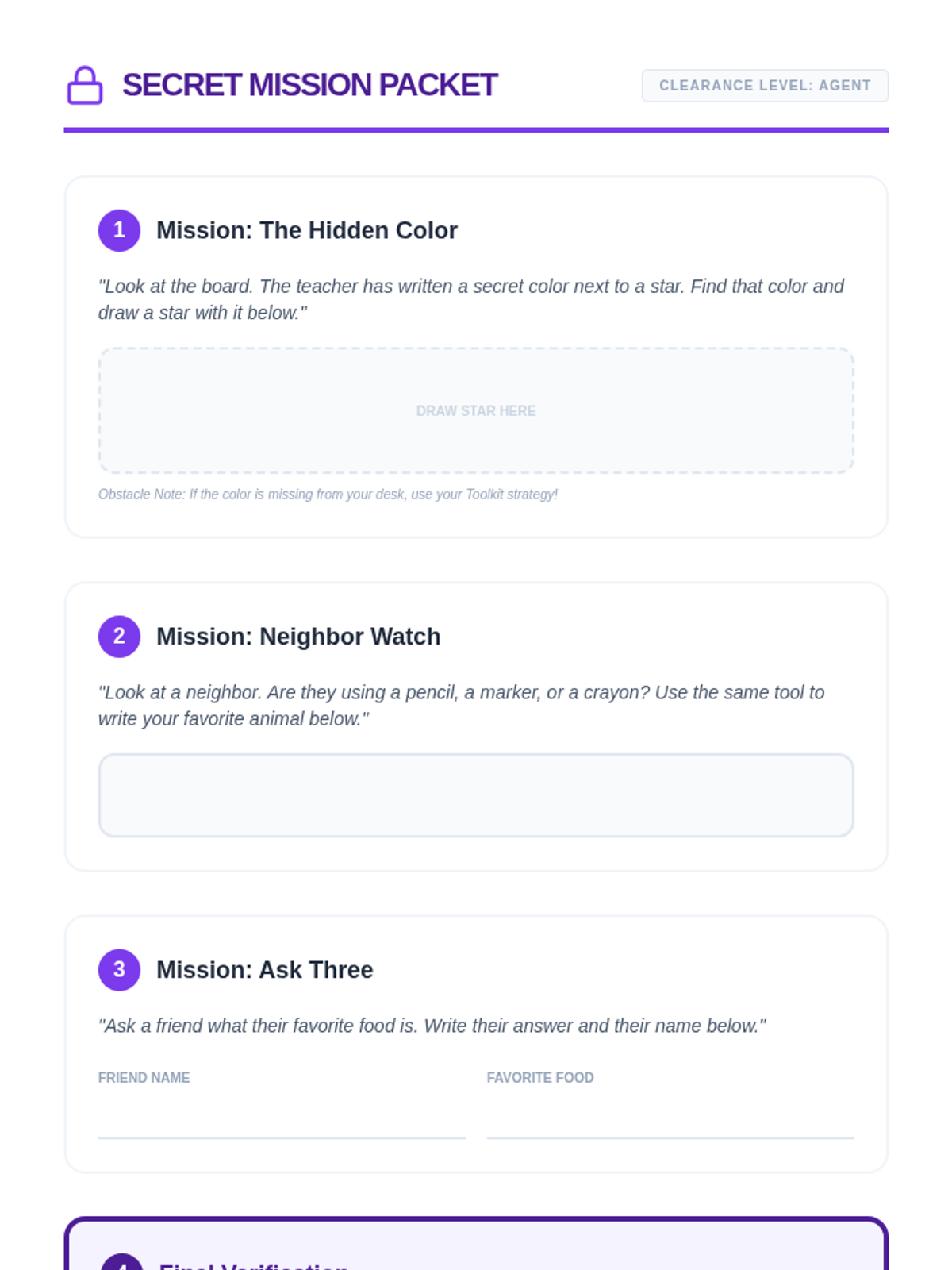
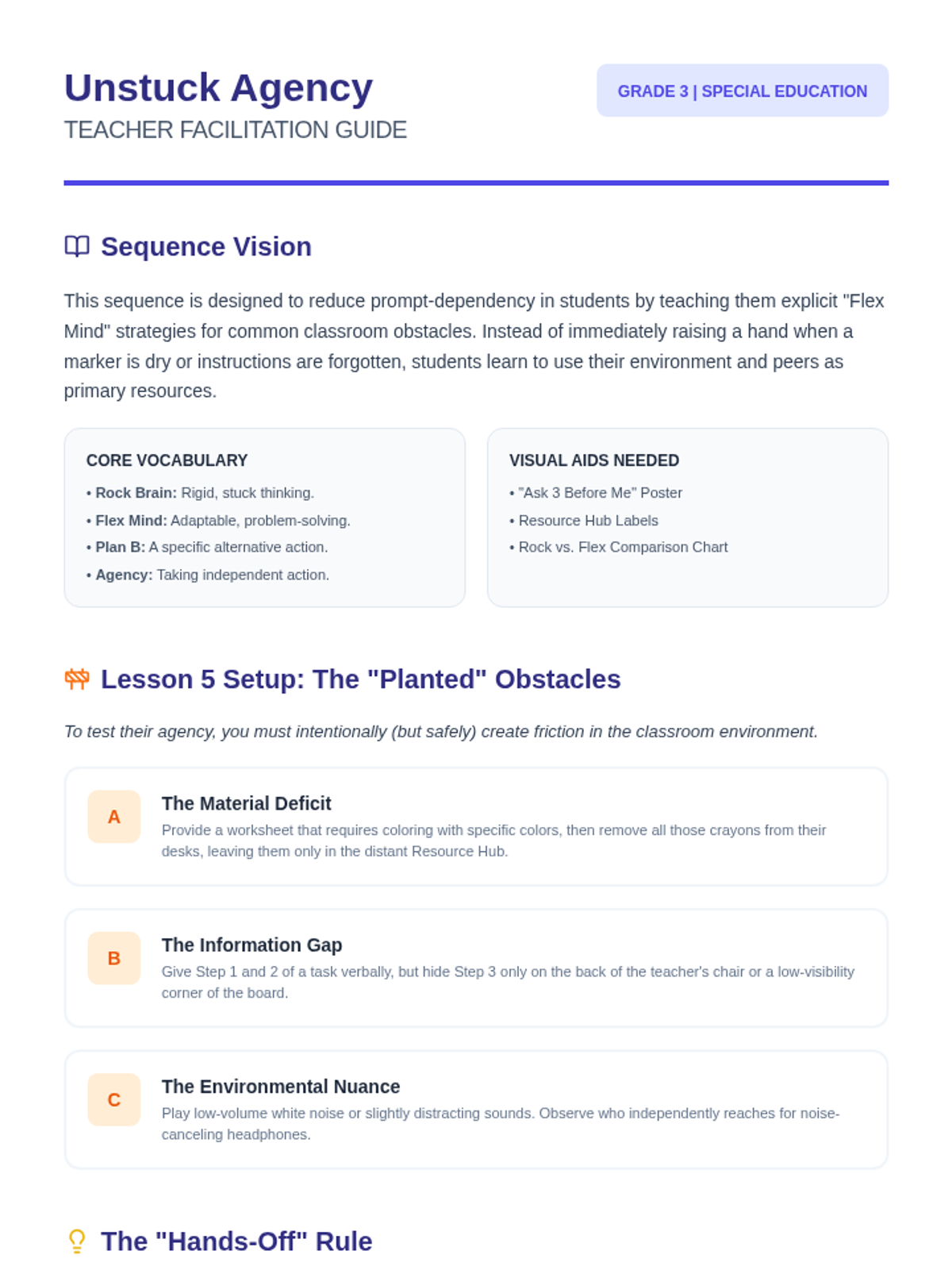
Students navigate a multi-step academic task where obstacles are intentionally planted. They must apply the strategies learned throughout the sequence to complete the task.
Students practice strategies for when they forget what to do, such as 'ask three before me,' checking the board, or looking at a peer's work. The focus is on finding information independently.
This lesson uses role-play to practice solving material deficits. Students act out scenarios like a dry marker or a broken pencil and practice the specific fix rather than stopping work.
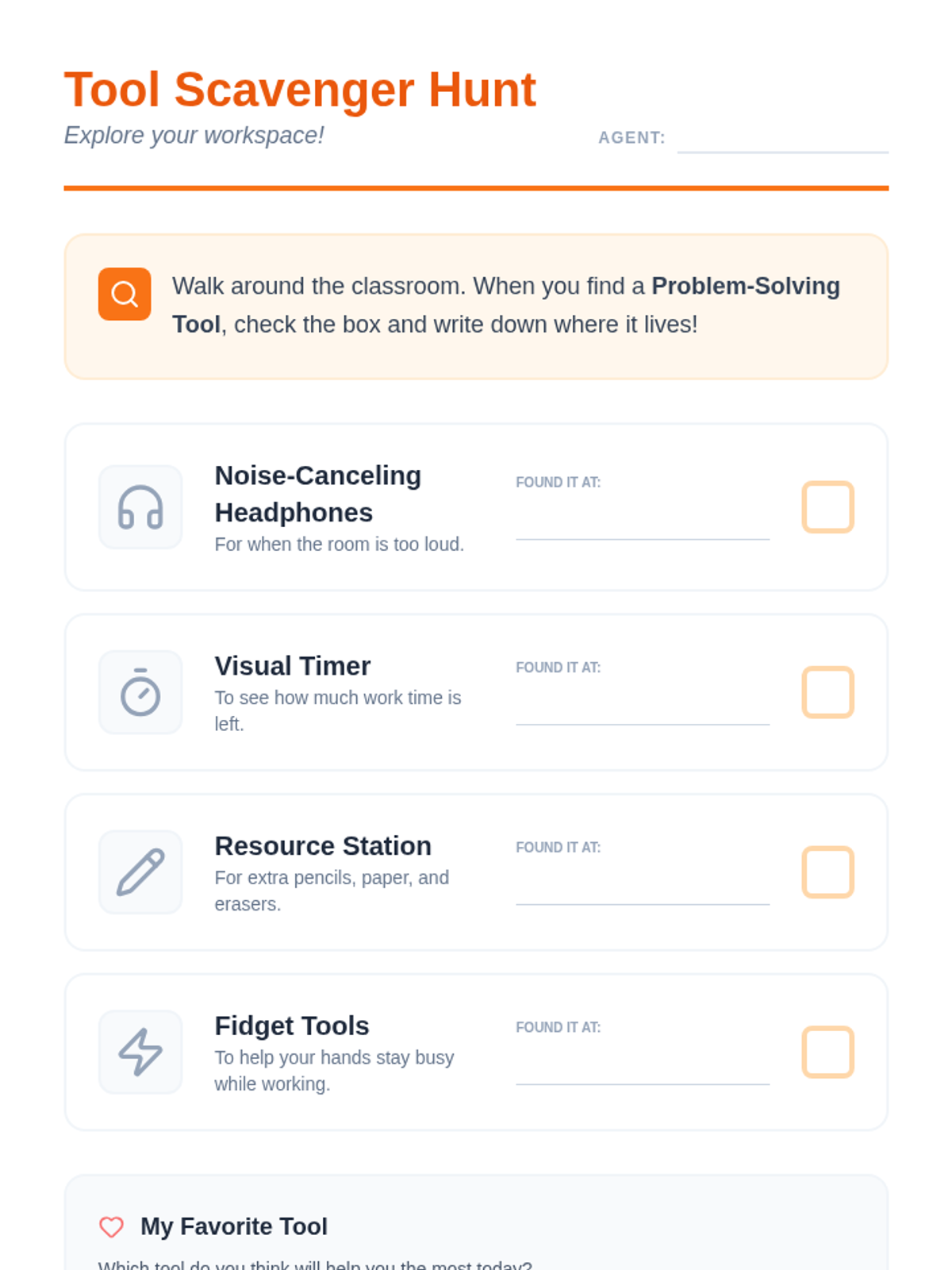
Students review common classroom resources available for problem-solving, such as noise-canceling headphones, visual timers, and resource centers. They engage in a scavenger hunt to locate these tools physically in the classroom.
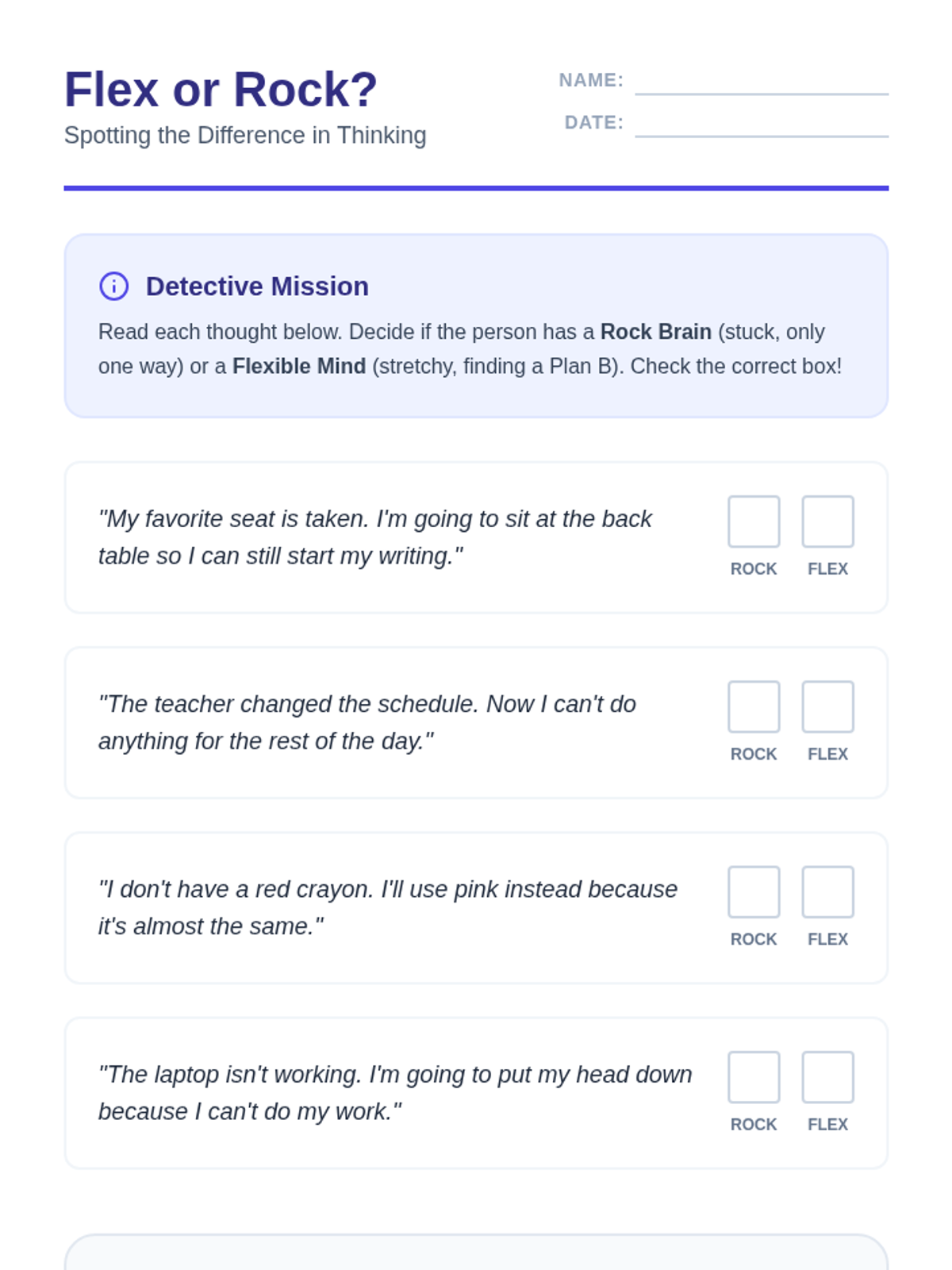
Students are introduced to the concept of 'flexible thinking' versus 'rock brain' thinking. They practice accepting changes to simple routines to understand that there is more than one way to reach a goal.