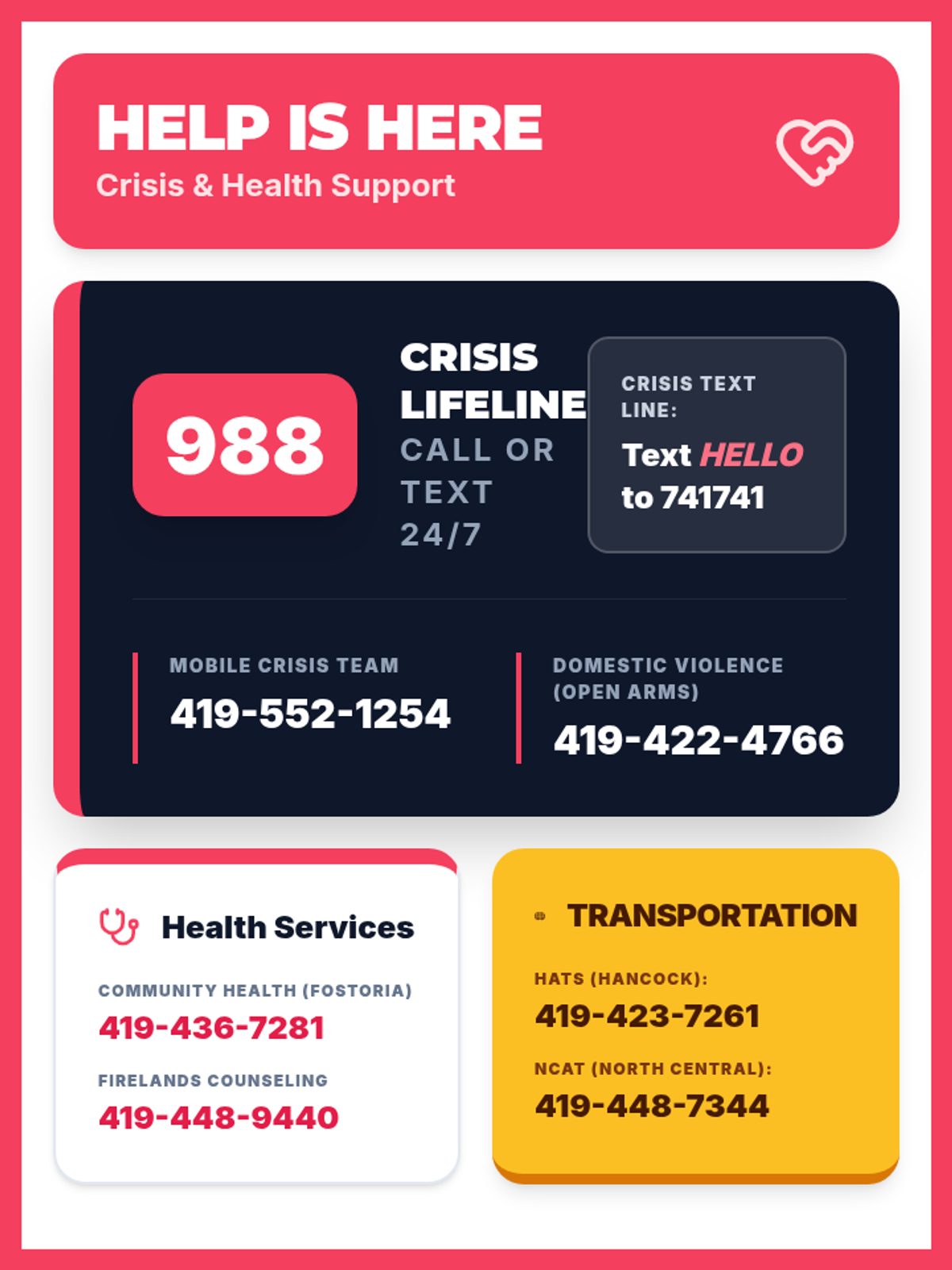
Identifies mental health crises and suicide warning signs while developing personal safety plans and grounding techniques. Equips users with peer gatekeeper skills and direct pathways to professional crisis resources and hotlines.
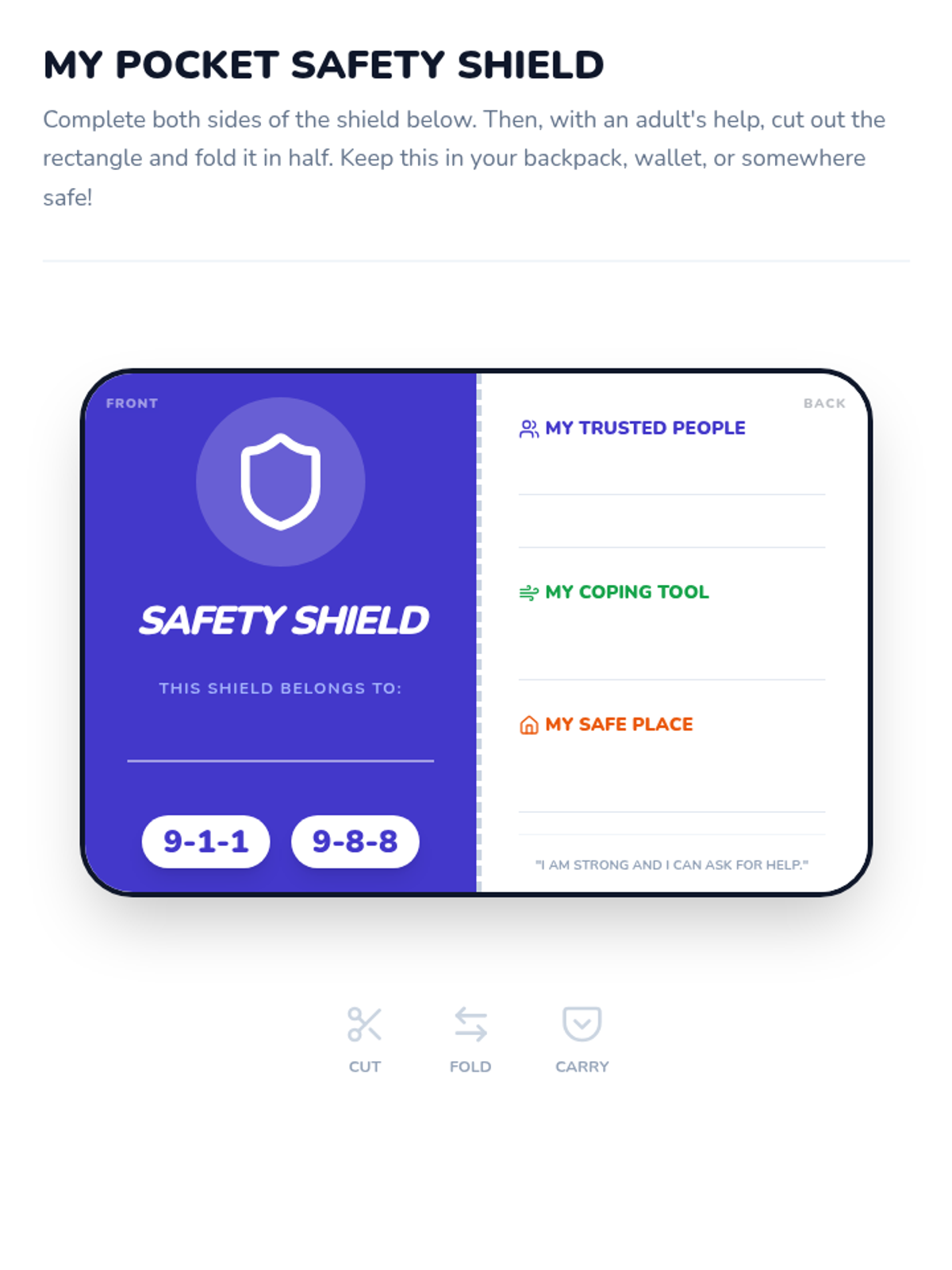
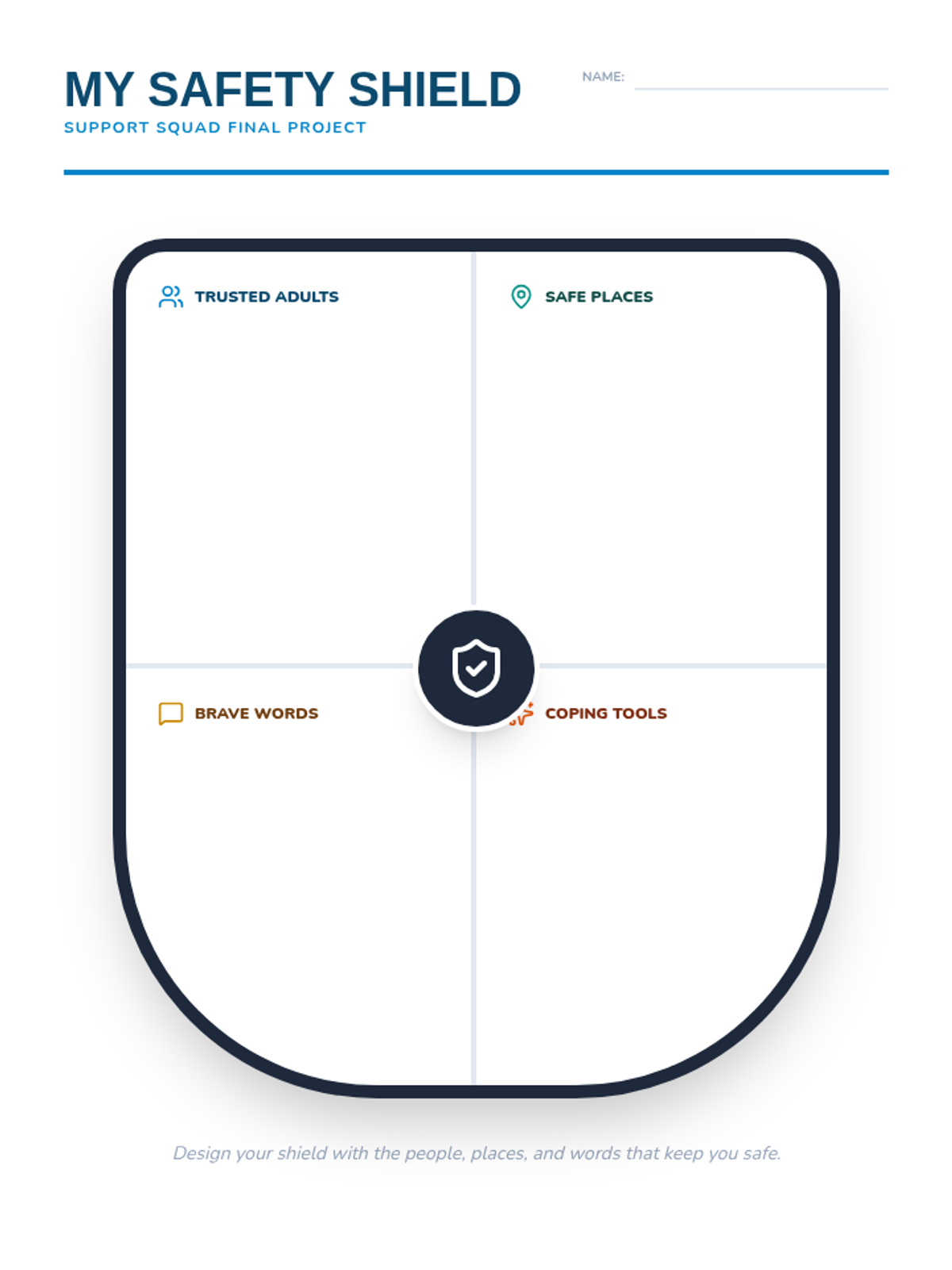
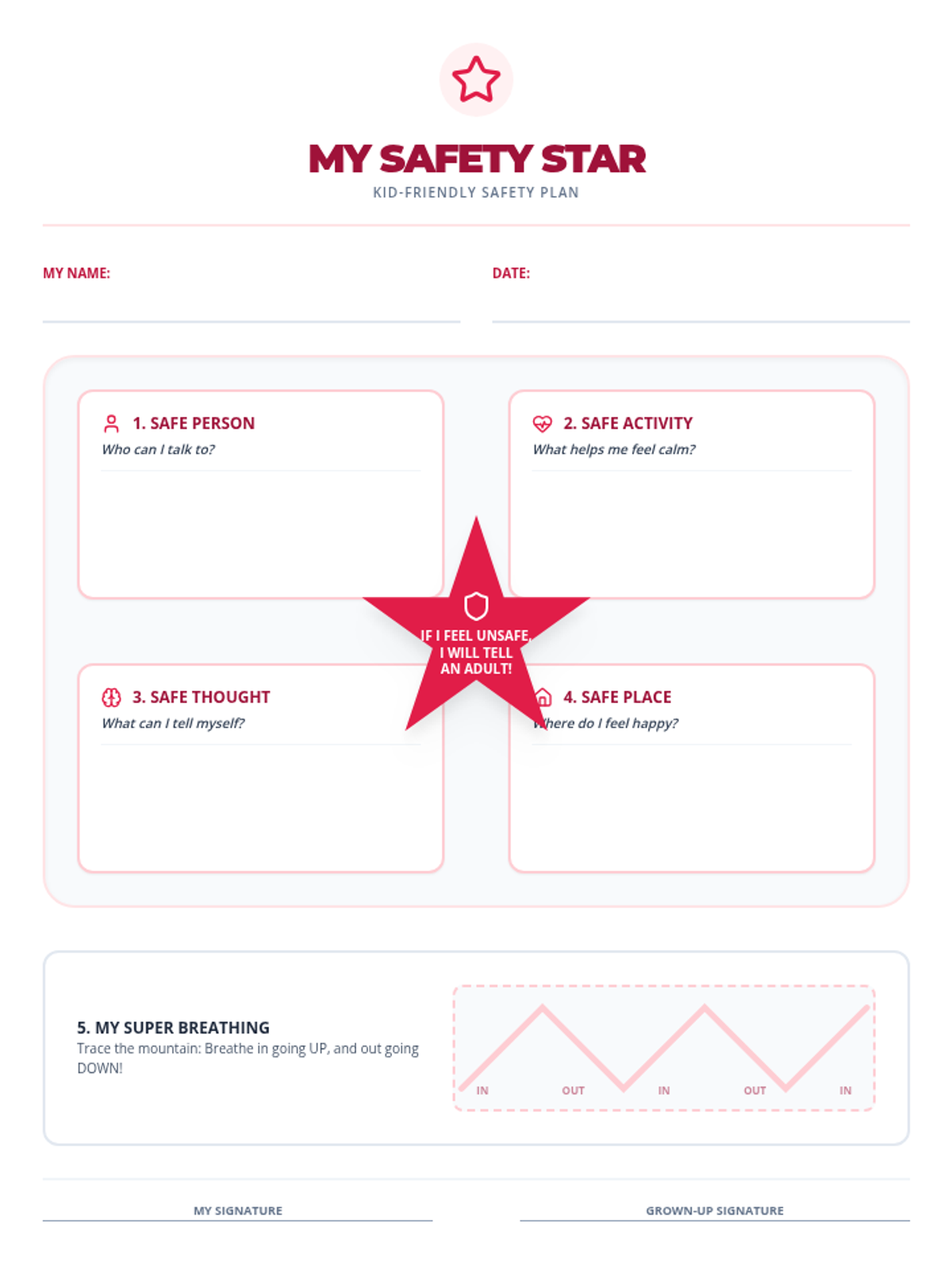
Students create a portable 'Safety Shield' card containing their trusted adults, emergency numbers, and a coping strategy.
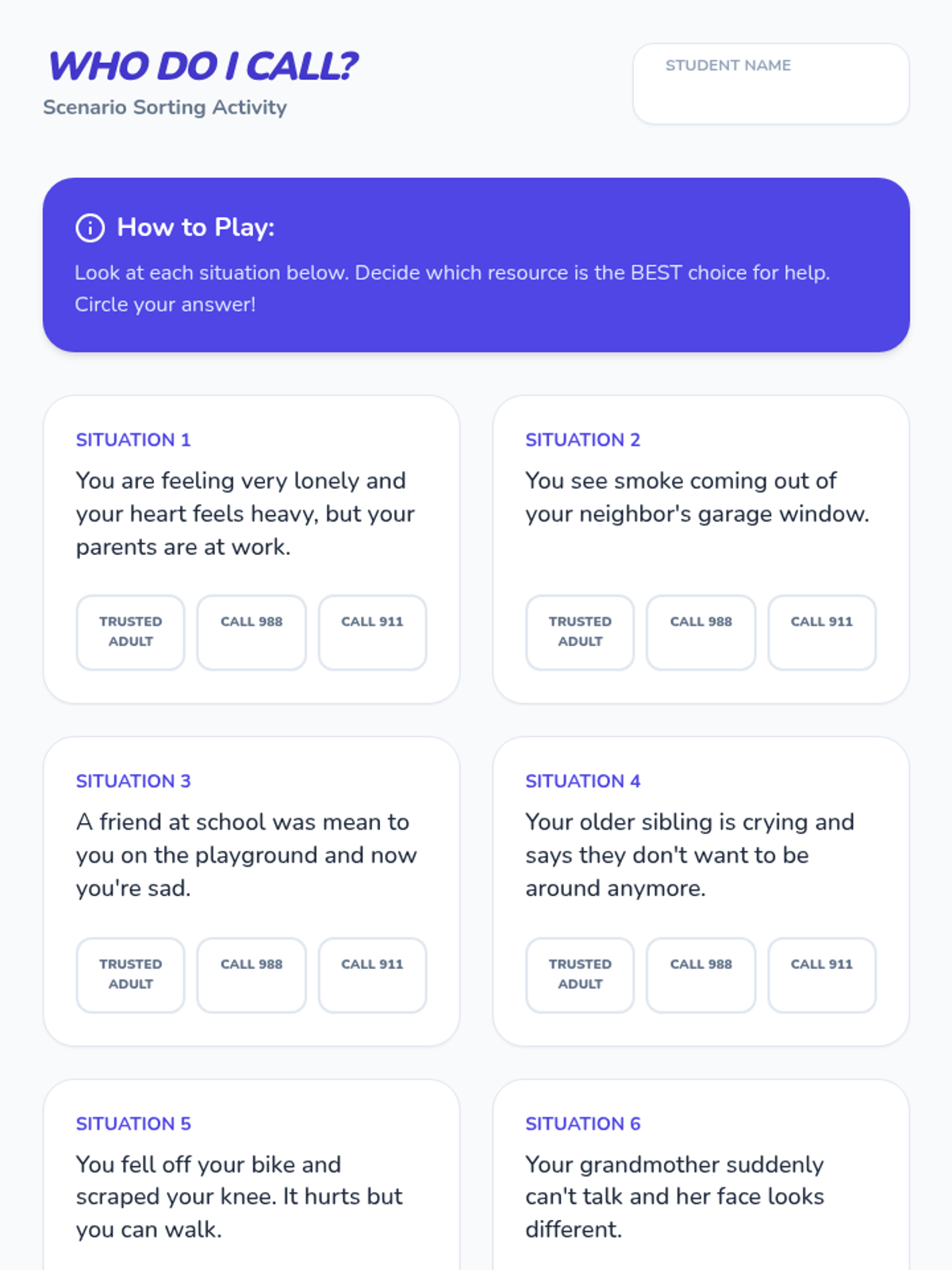
Analyzing scenarios to determine the appropriate resource (911, 988, or a trusted adult) based on the severity and type of situation.
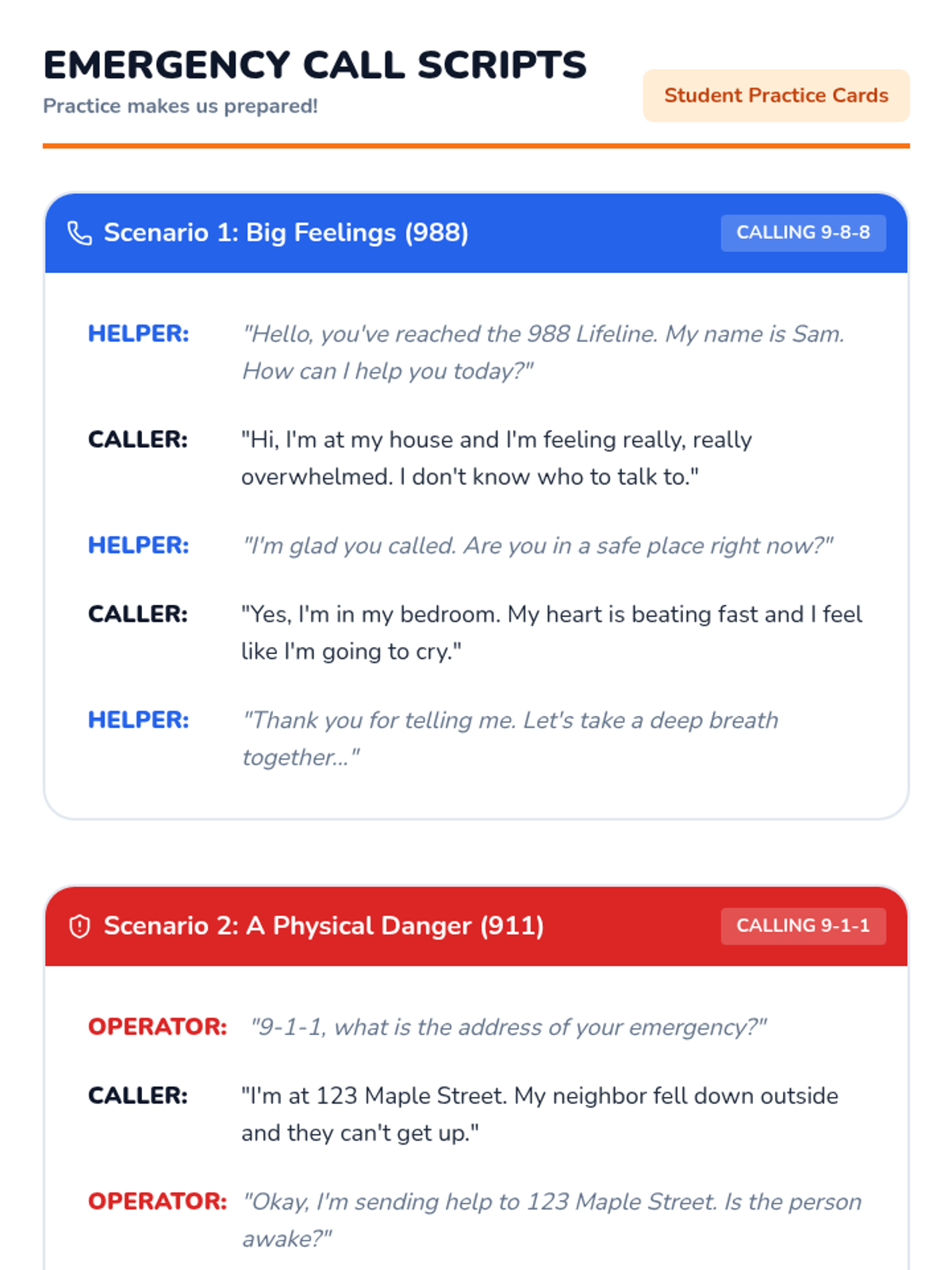
Role-playing exercises to practice speaking clearly and providing necessary information when calling a helpline or emergency number.
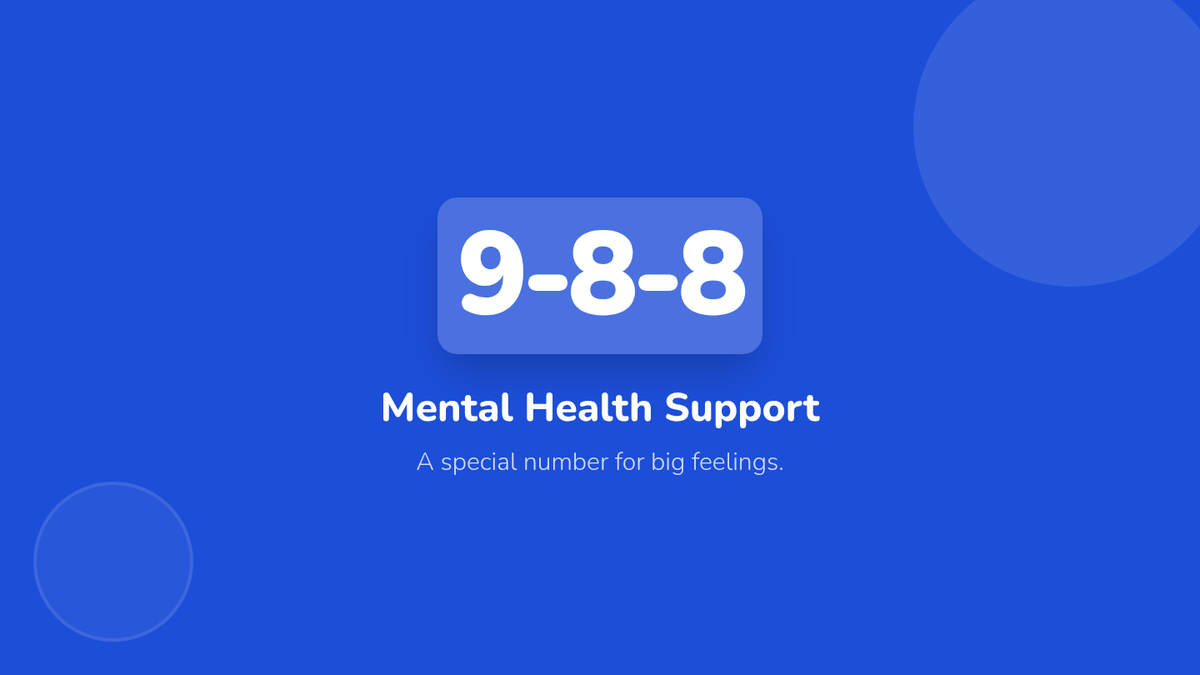
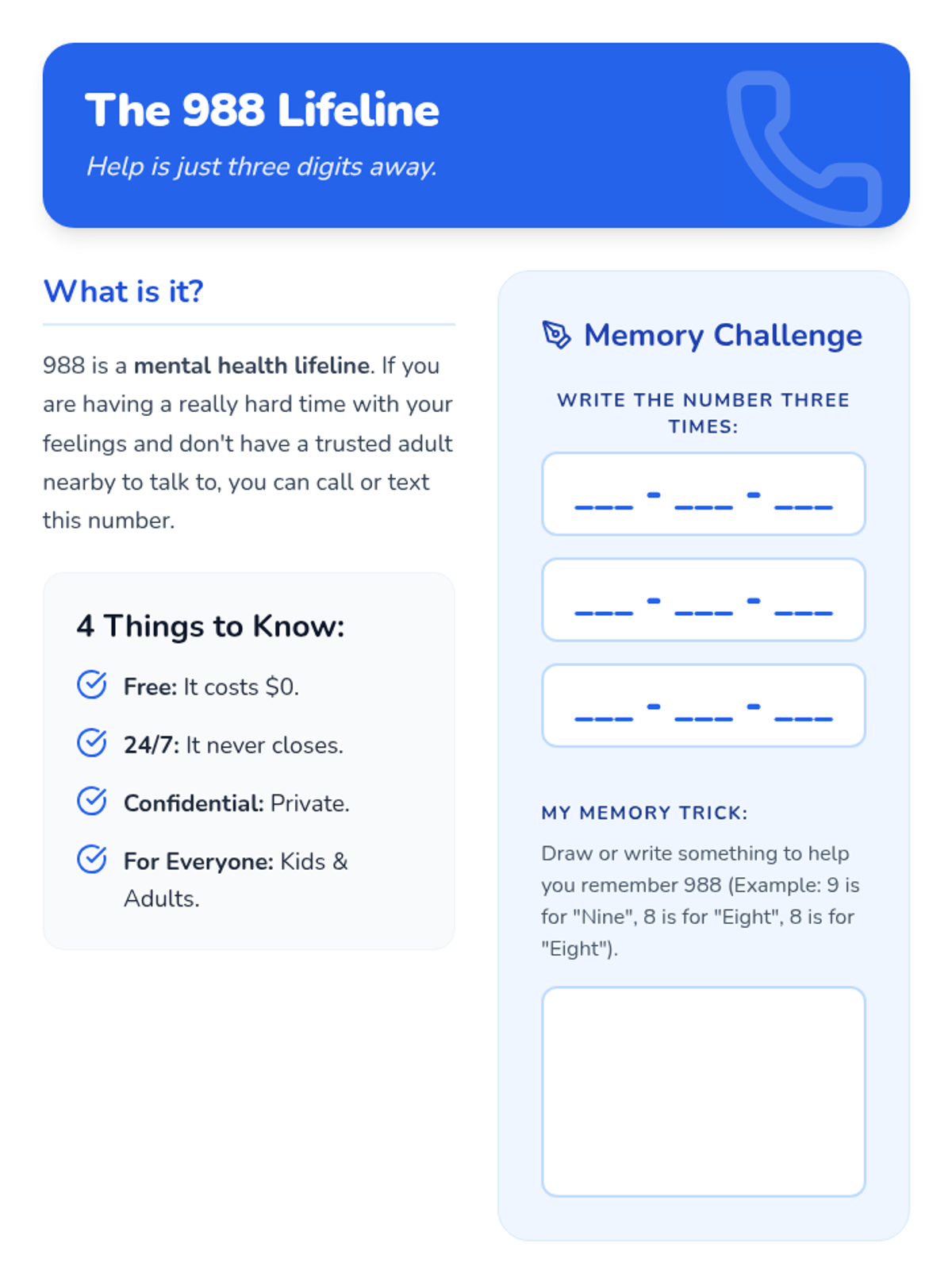
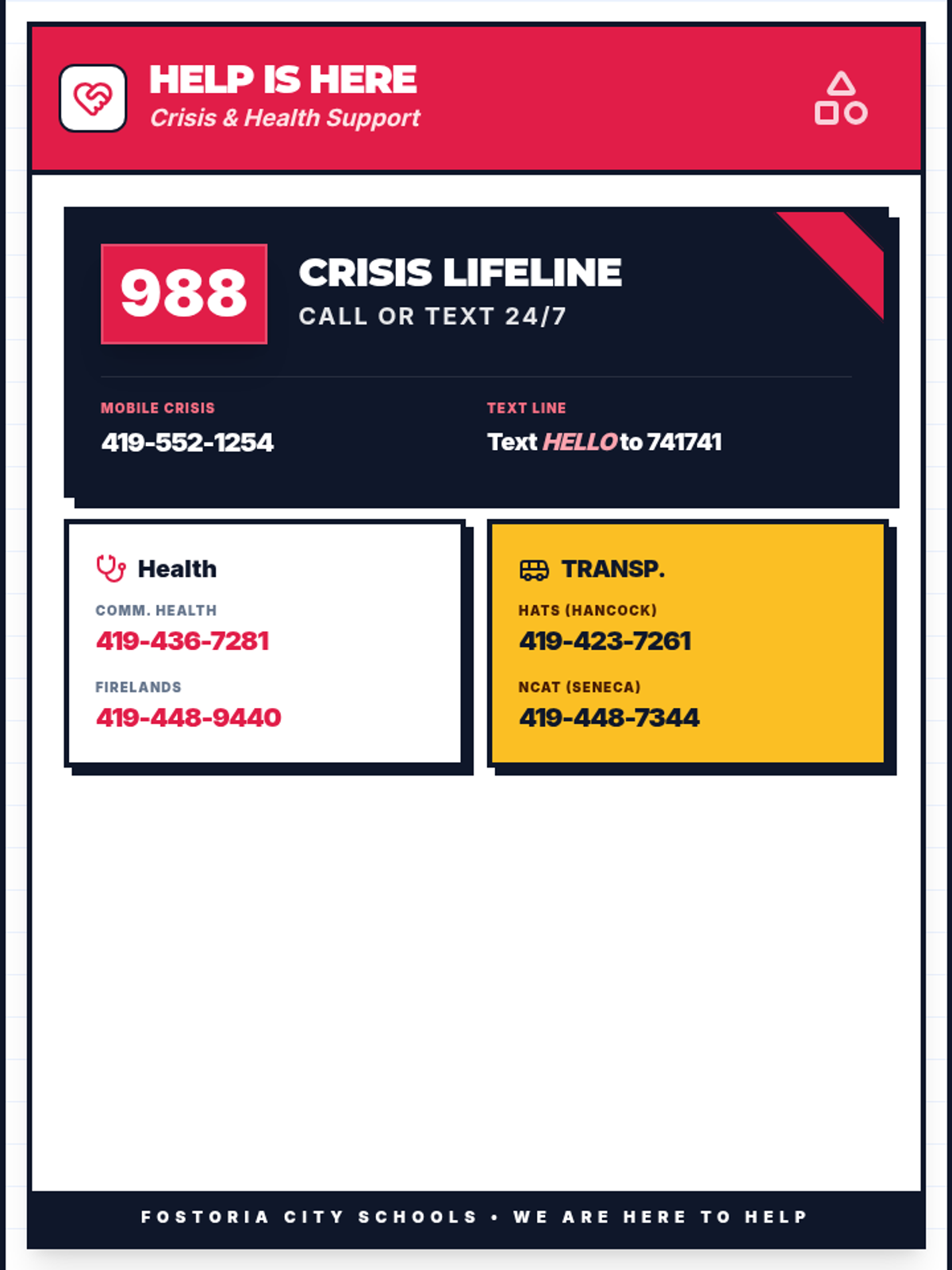
Introduction to the 988 Suicide & Crisis Lifeline, explaining its purpose as a resource for mental health similar to 911 for physical emergencies.
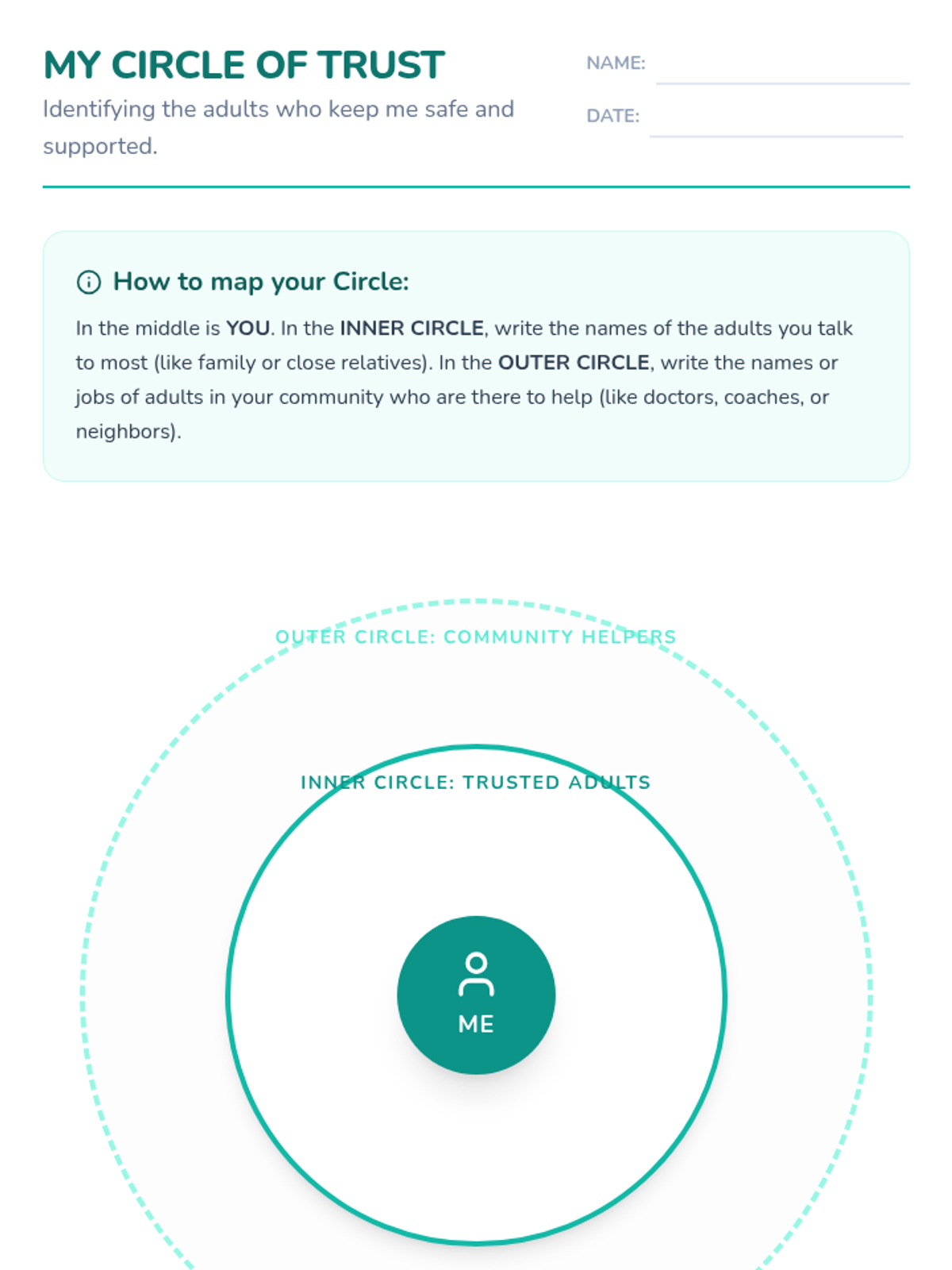
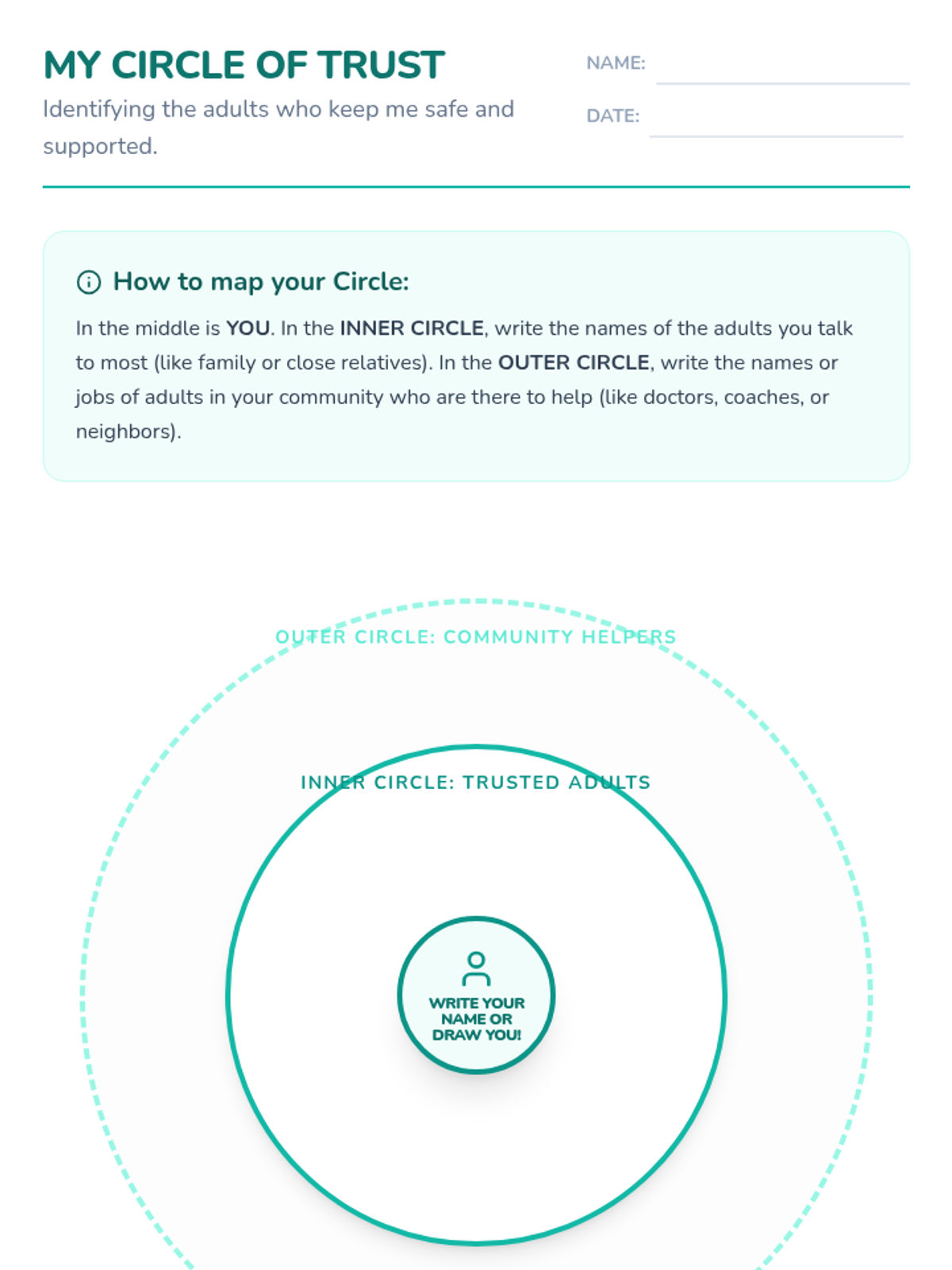
Students expand their support circle beyond the school to include parents, relatives, doctors, and community emergency workers, identifying their 'Circle of Trust'.
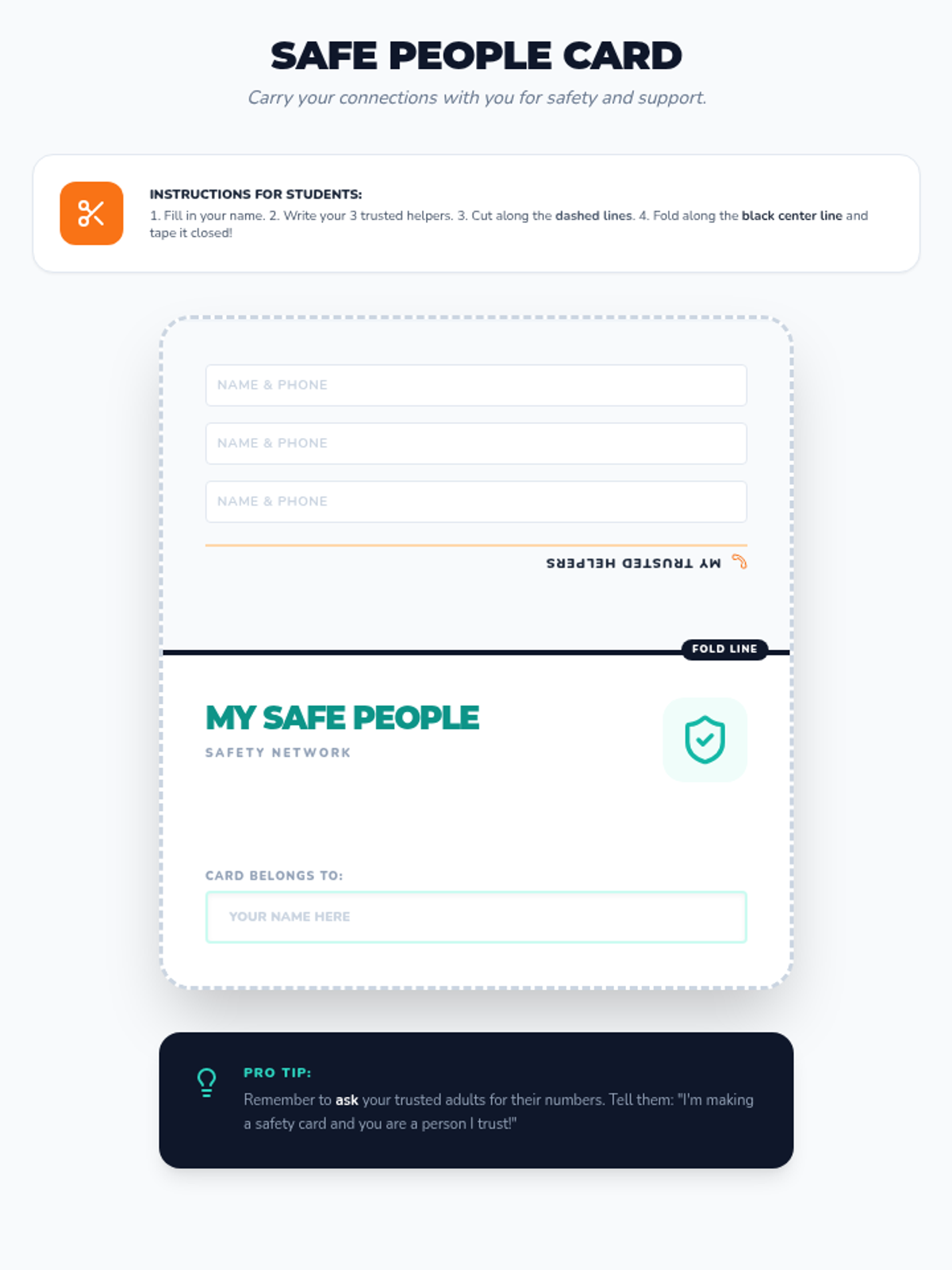
Students synthesize their learning by creating a personal safety shield and a pocket-sized card listing their trusted adults and safe places.
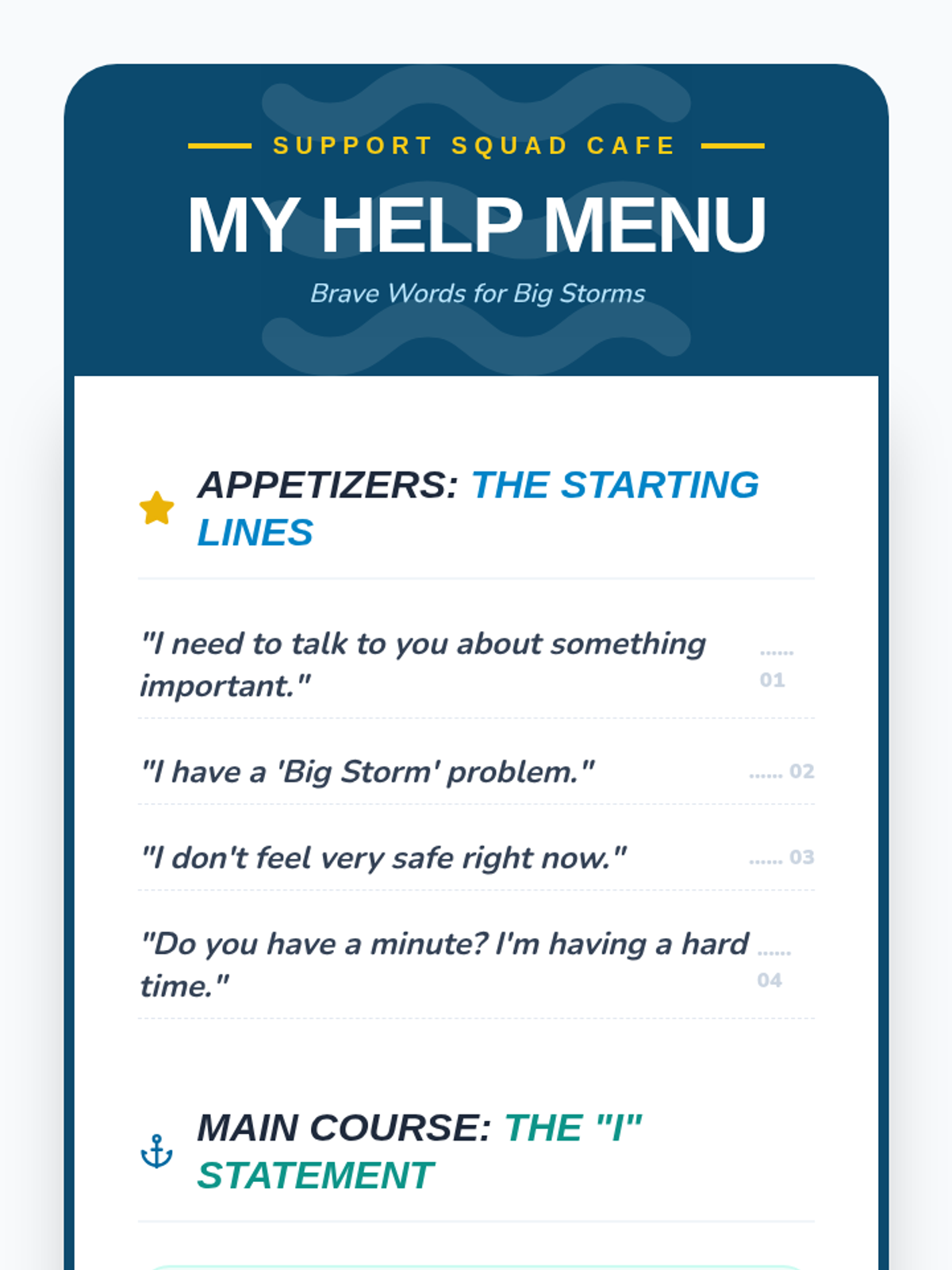
Students practice using 'I statements' and sentence starters to express their needs and ask for help from trusted adults.
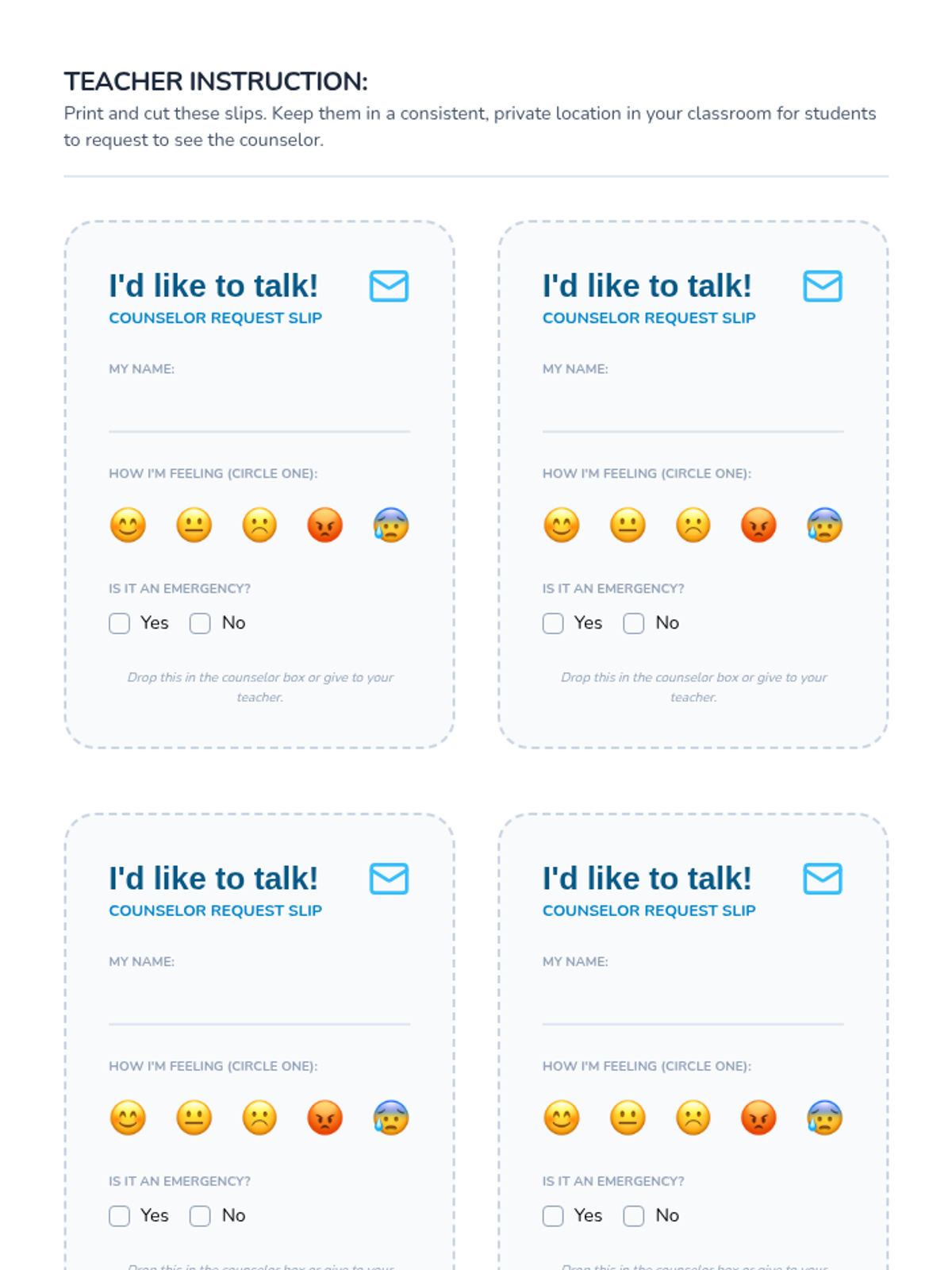
Students learn what school counselors do, how confidentiality works, and how to request a meeting when they need support.
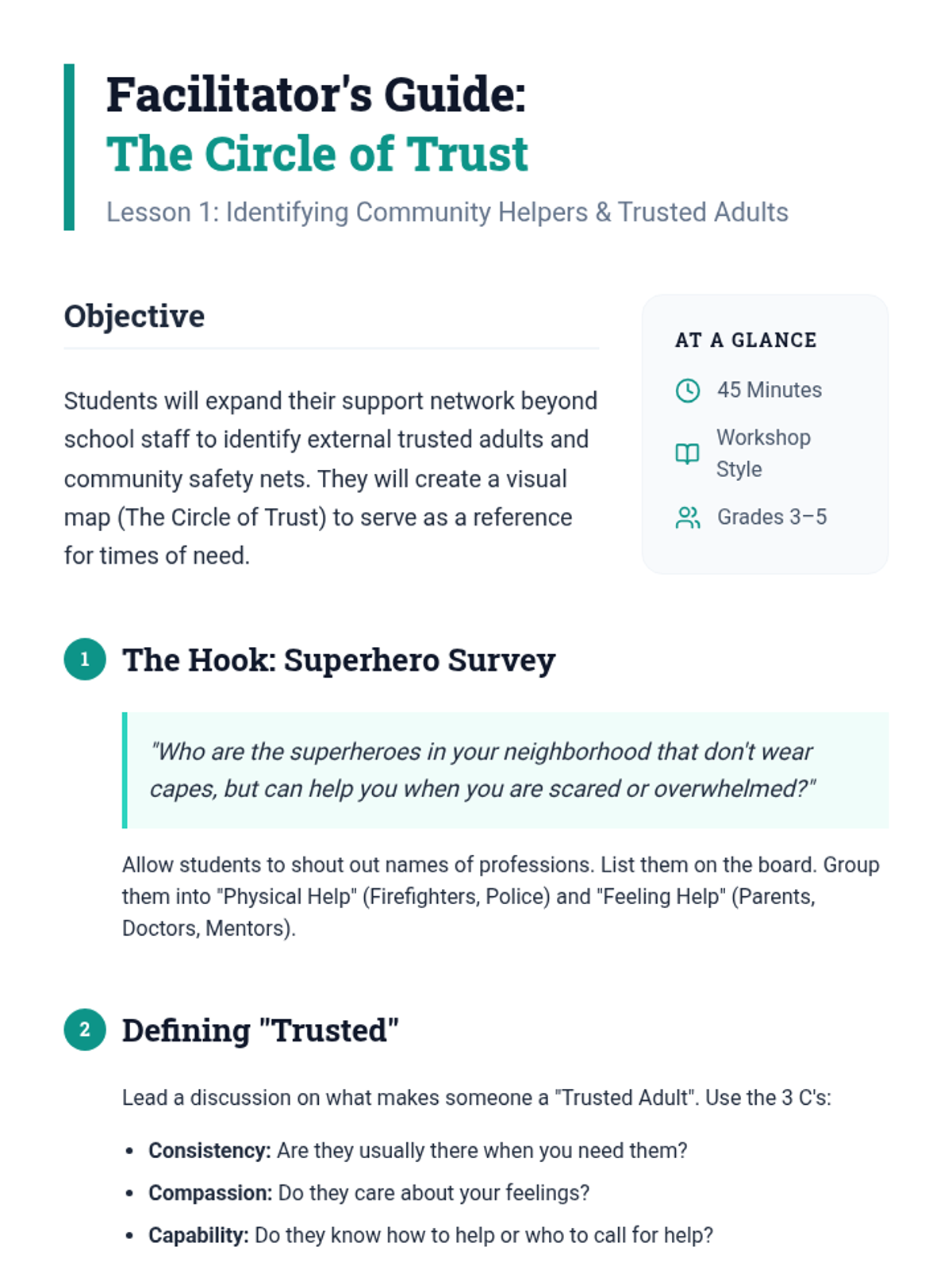
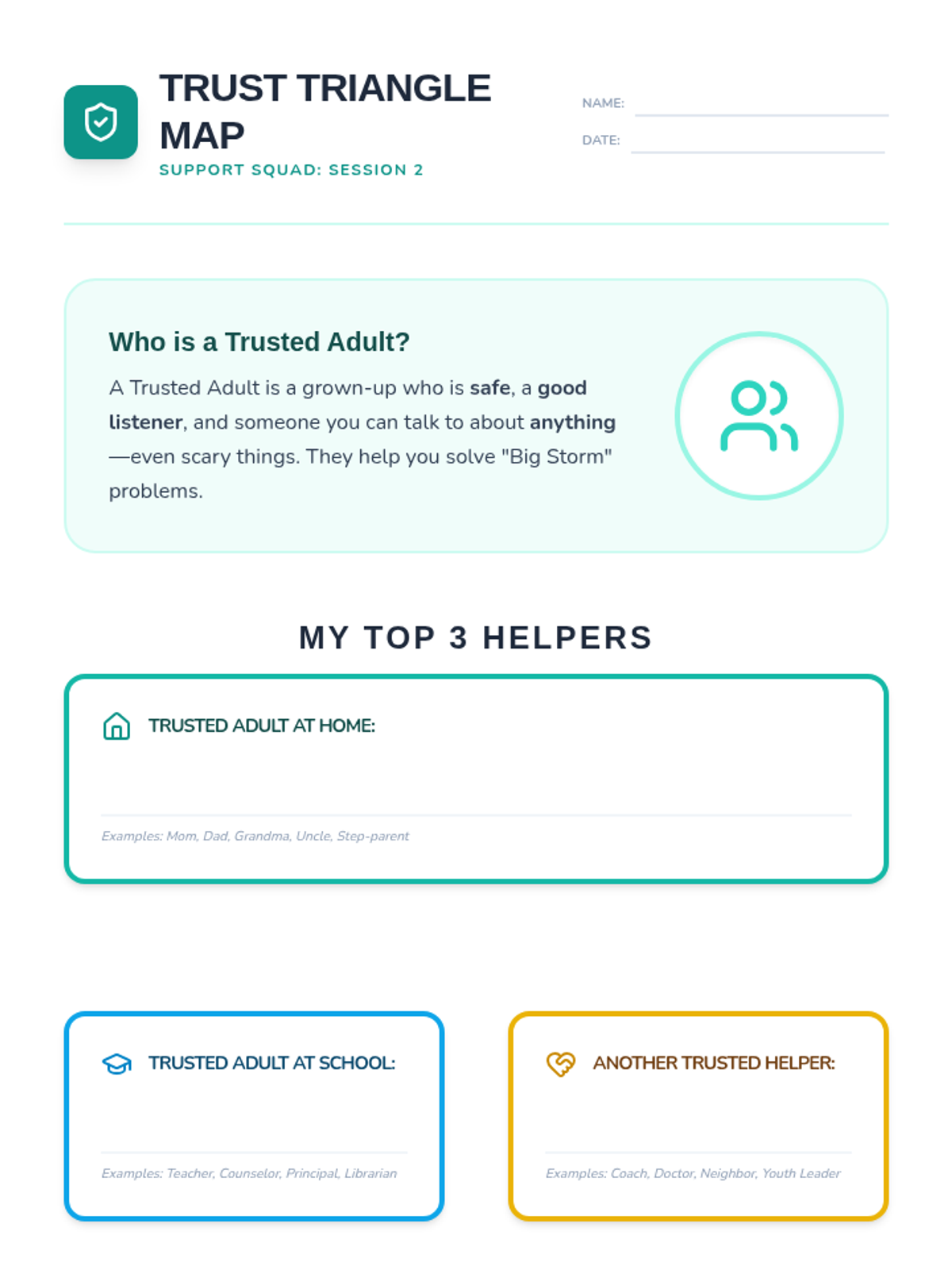
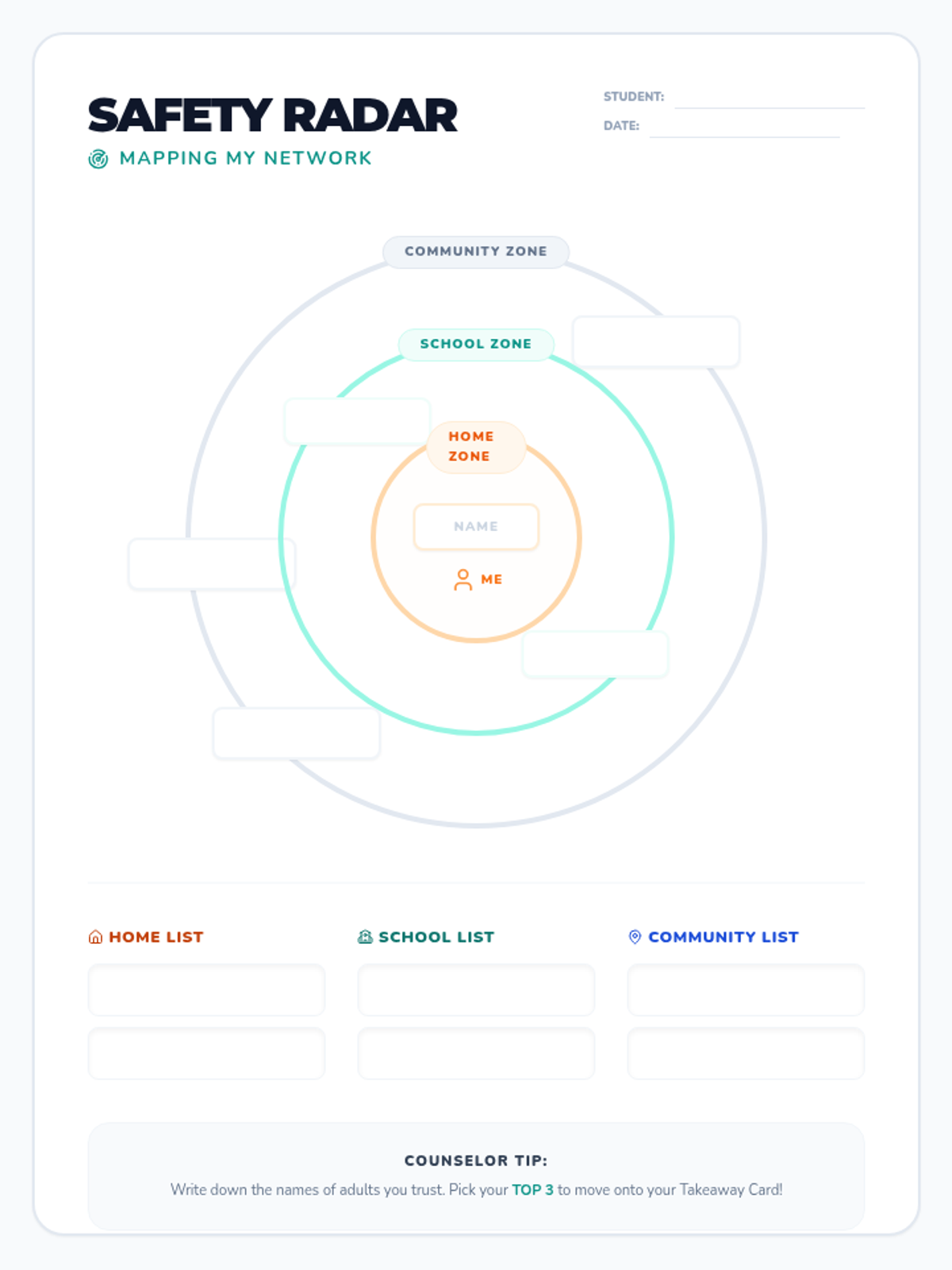
Students define the qualities of trusted adults and identify specific helpers in their home, school, and community using the 'Trust Triangle'.
Students differentiate between everyday frustrations and significant emotional challenges, learning to recognize 'internal alarms' in their bodies.
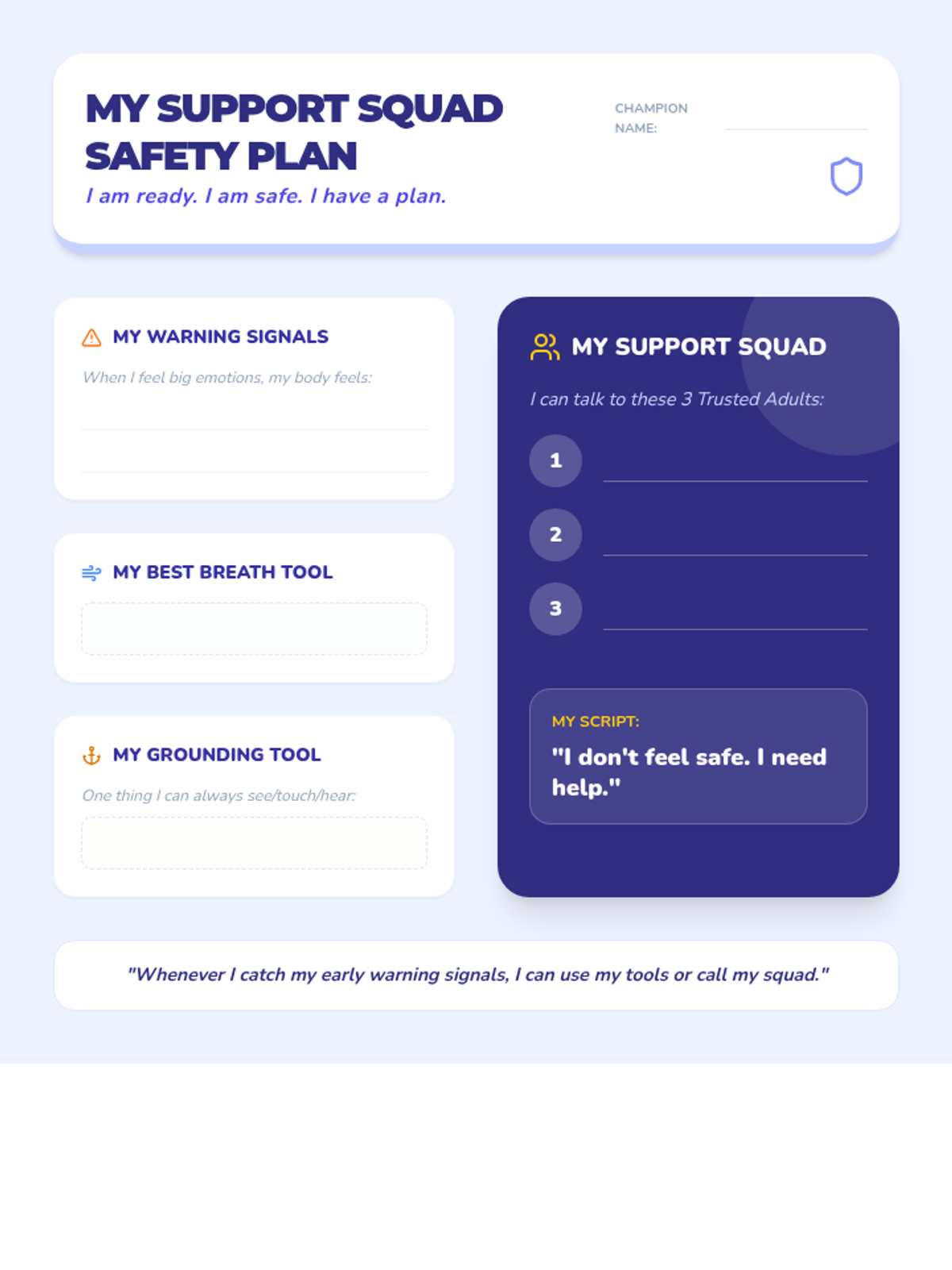
Students identify trusted adults and create a personal safety plan to seek help when they feel overwhelmed.
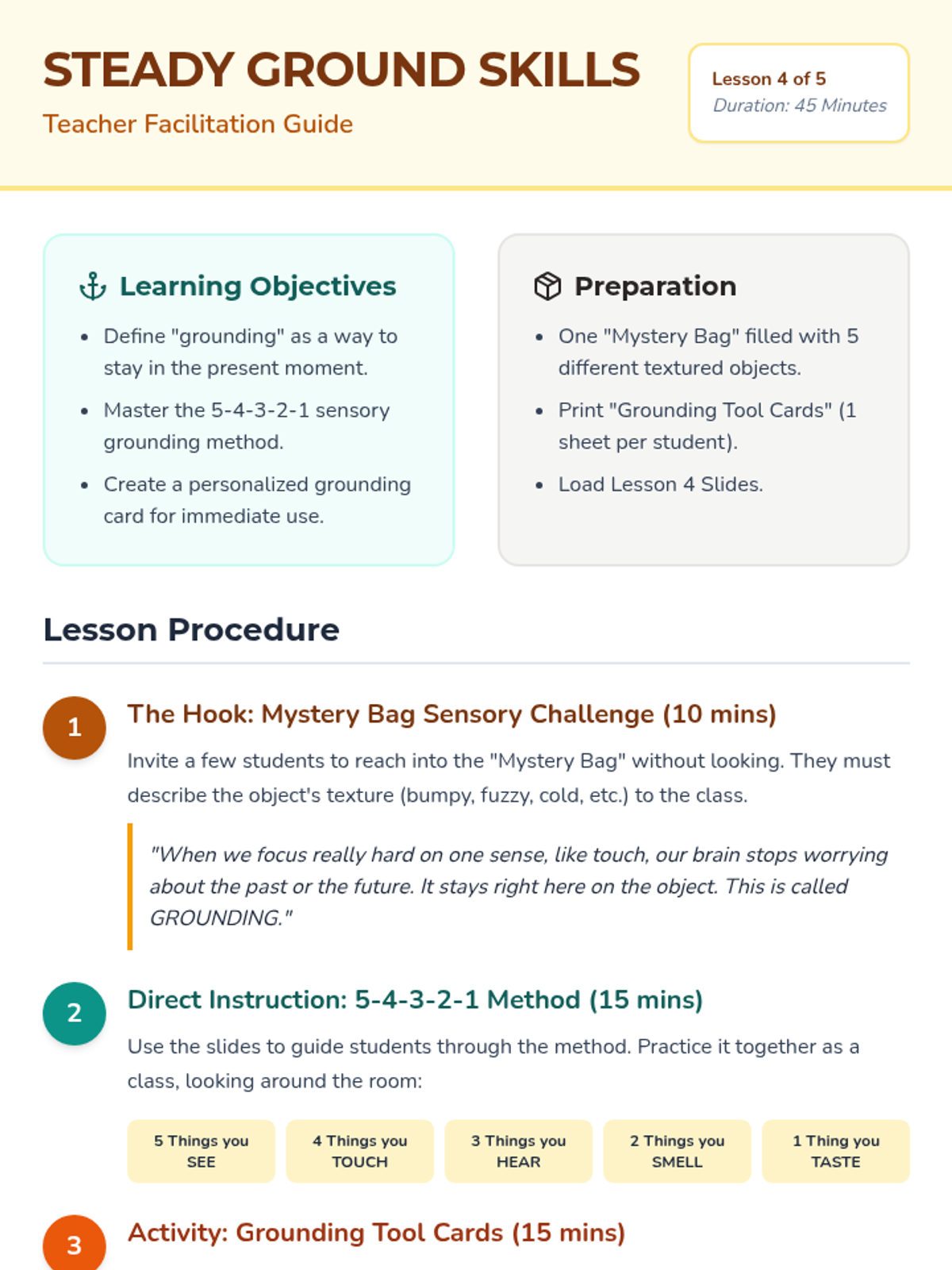
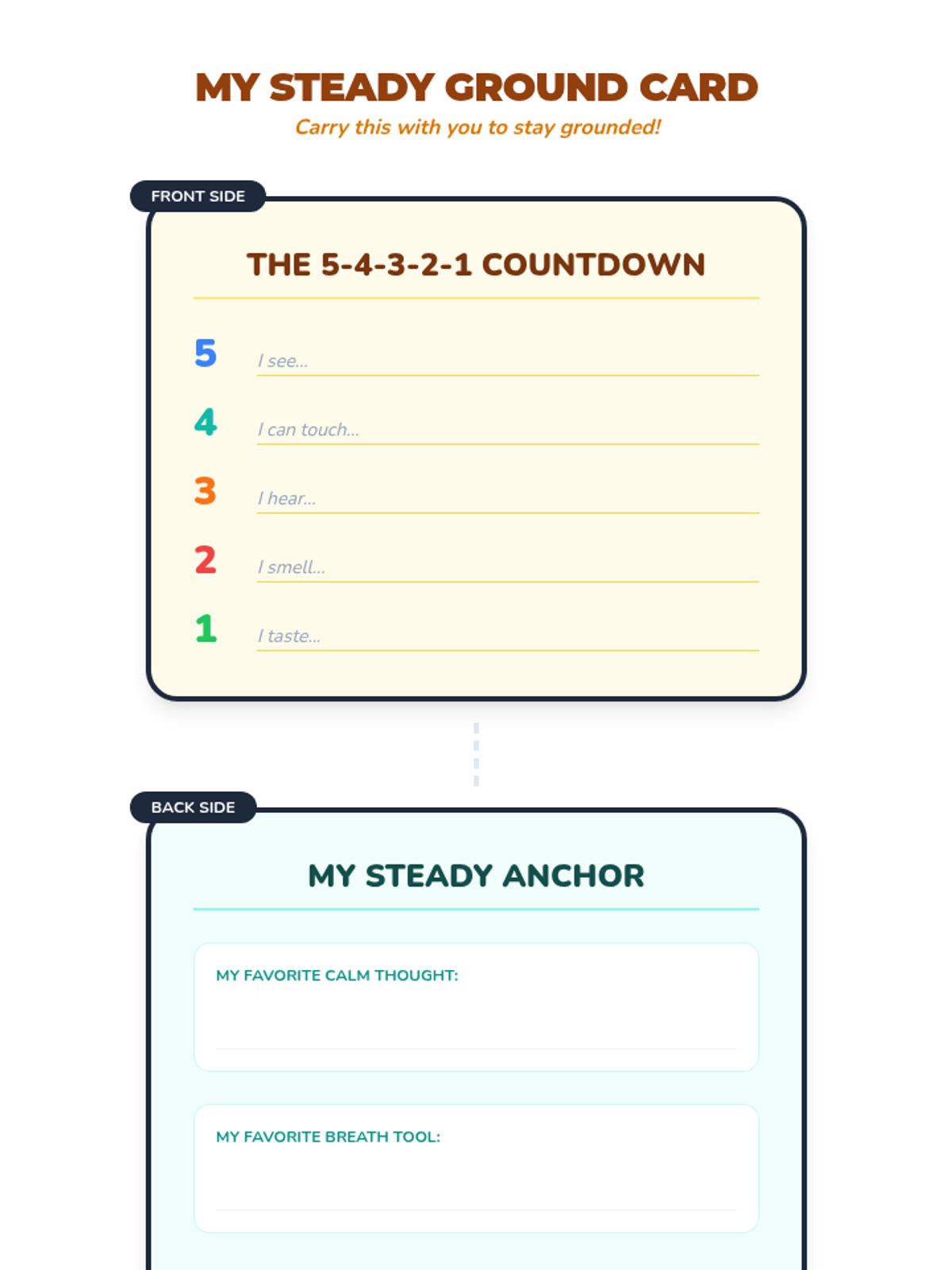
Students master the 5-4-3-2-1 grounding method to anchor themselves in the present moment during high-stress situations.
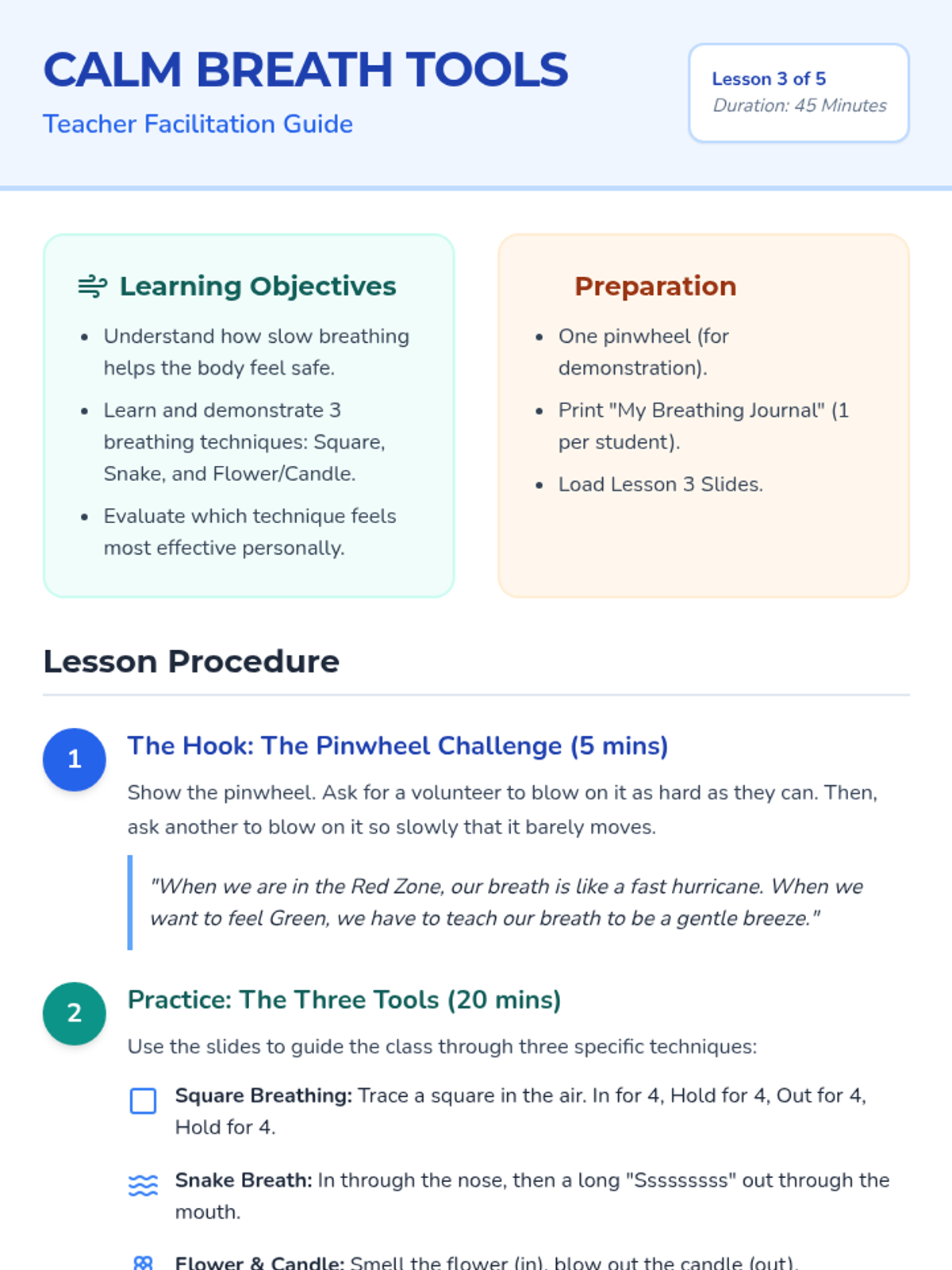
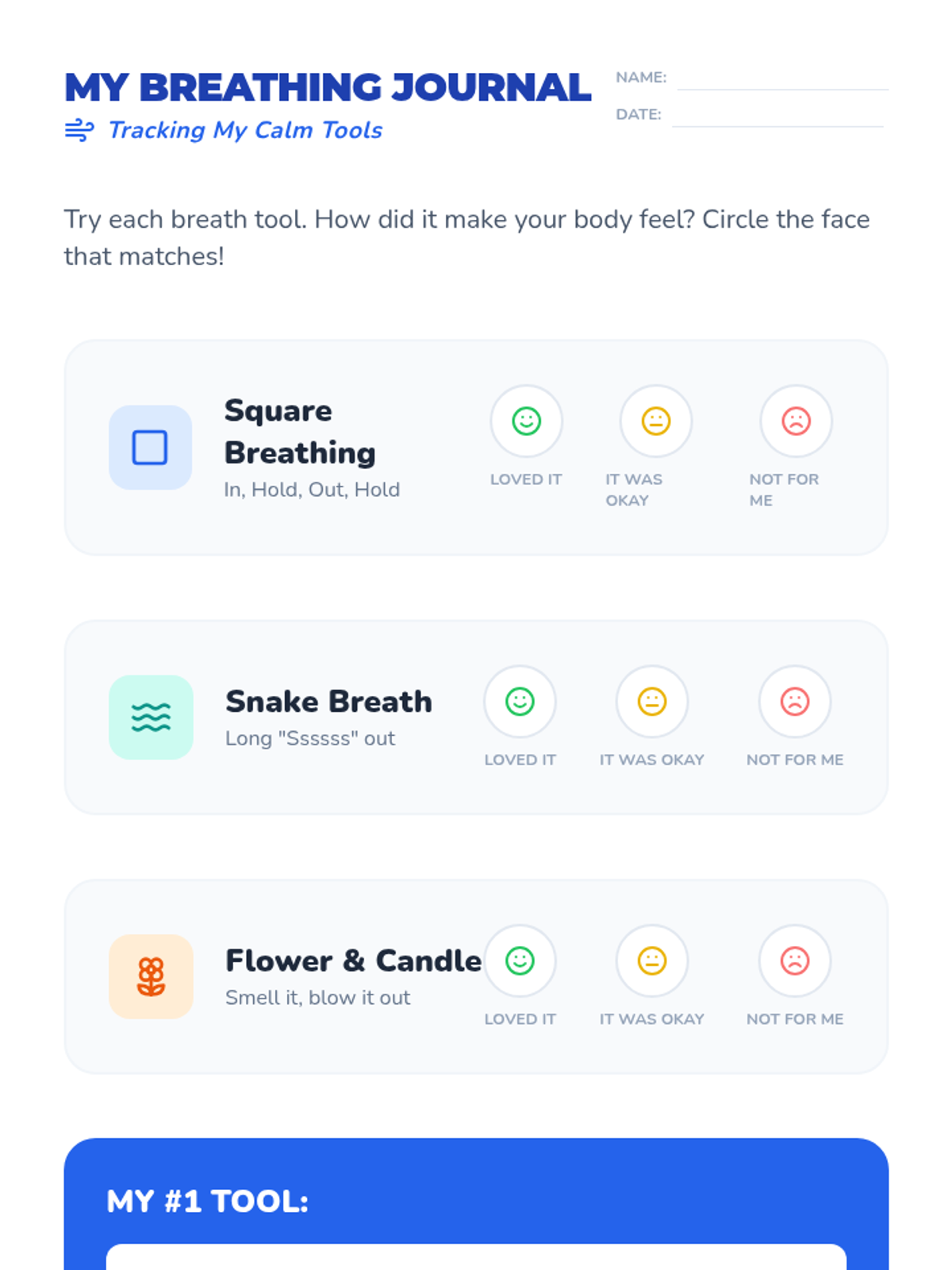
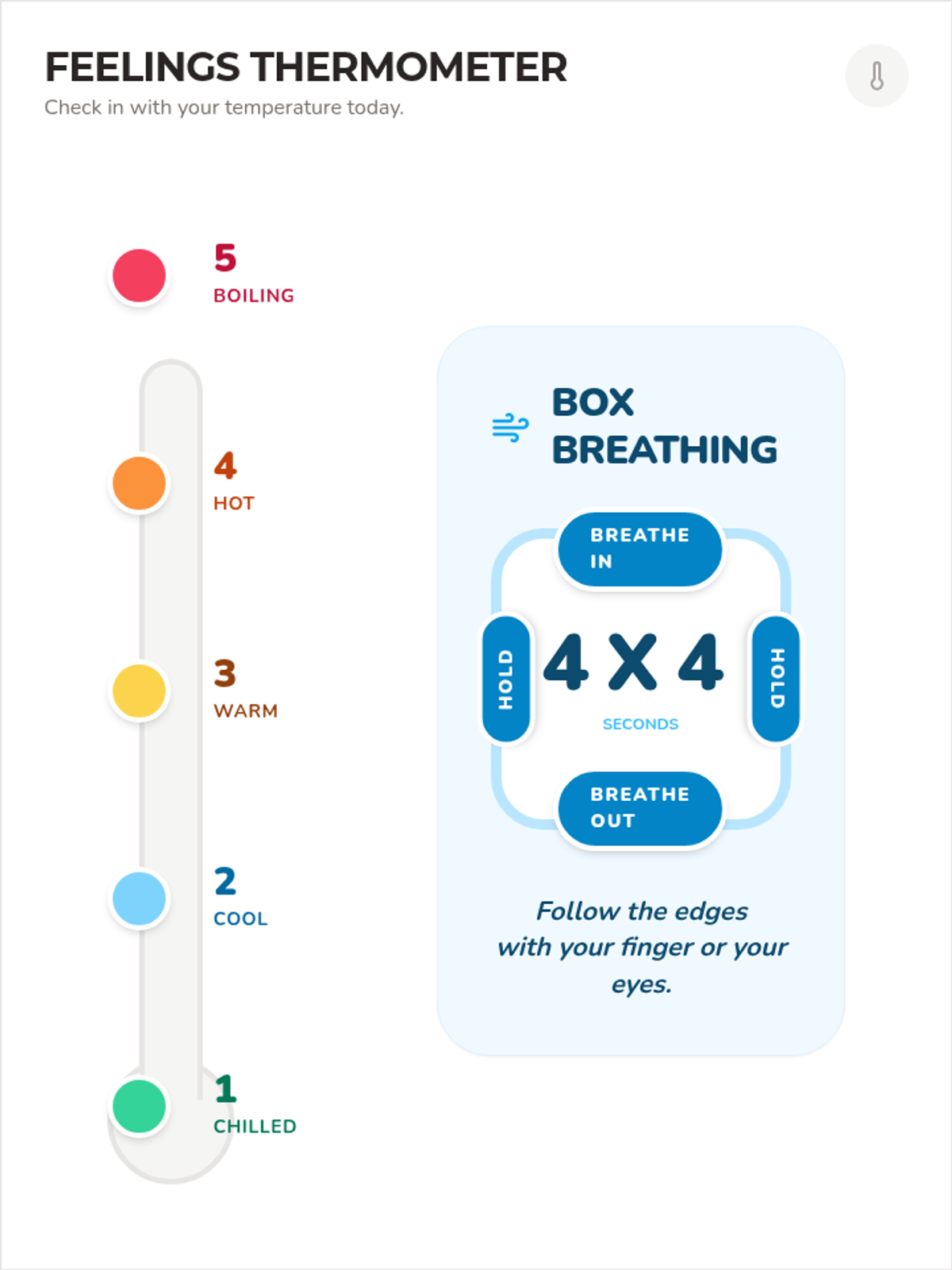
Students learn and practice three breathing techniques to physiologically lower their heart rate and manage stress.
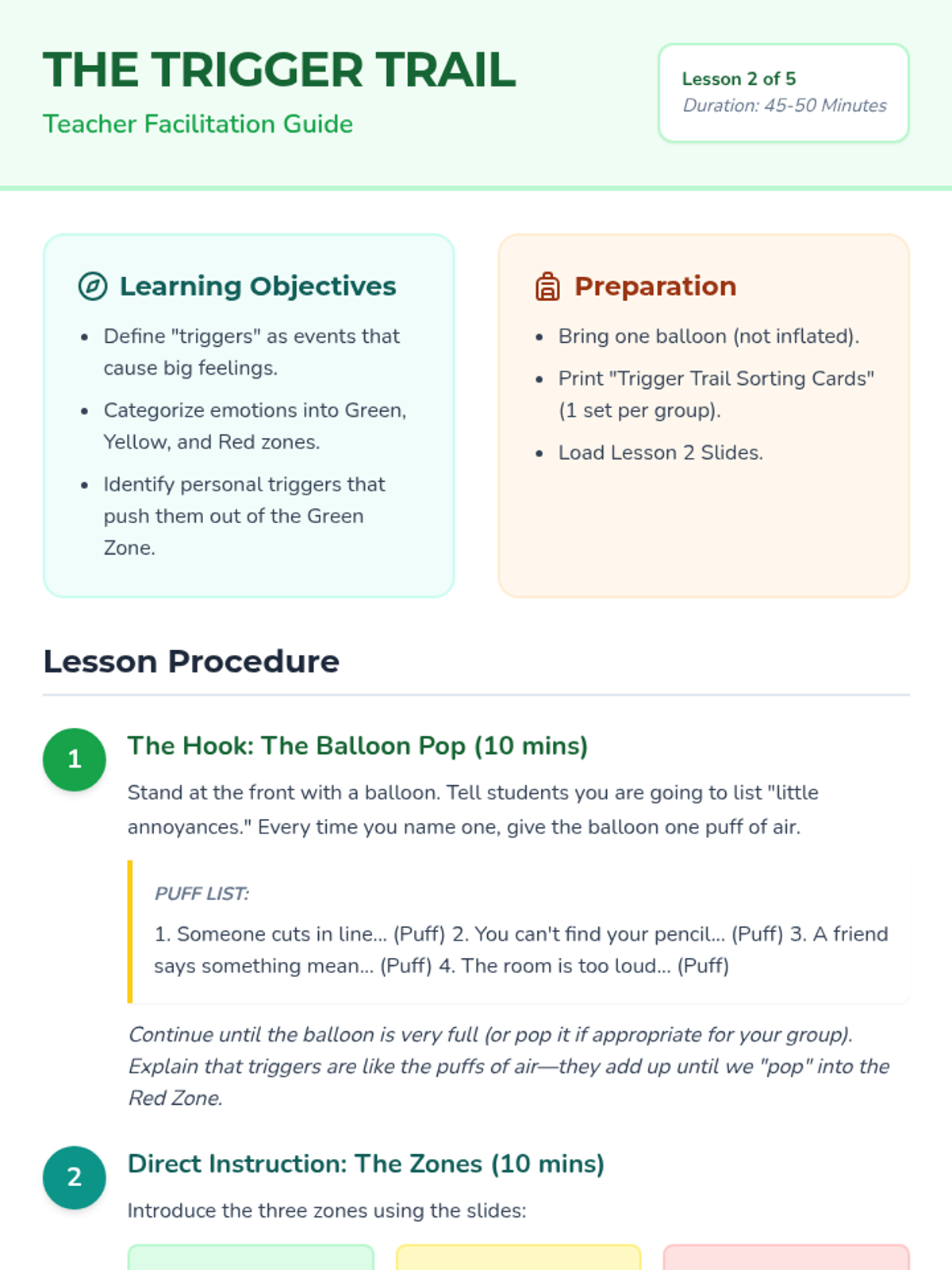
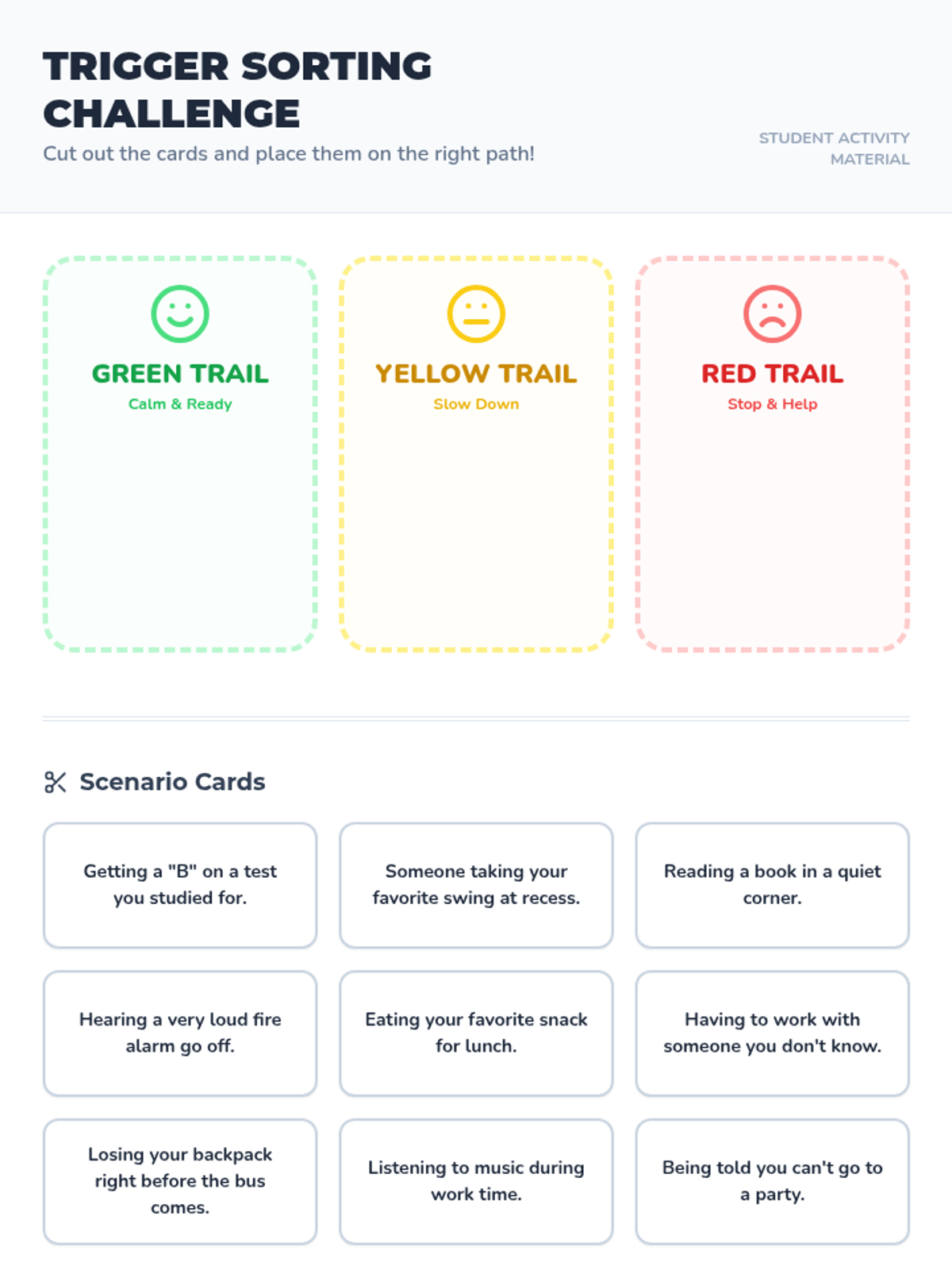
Students explore personal triggers and categorize emotional states into different 'zones' to understand how stress builds.
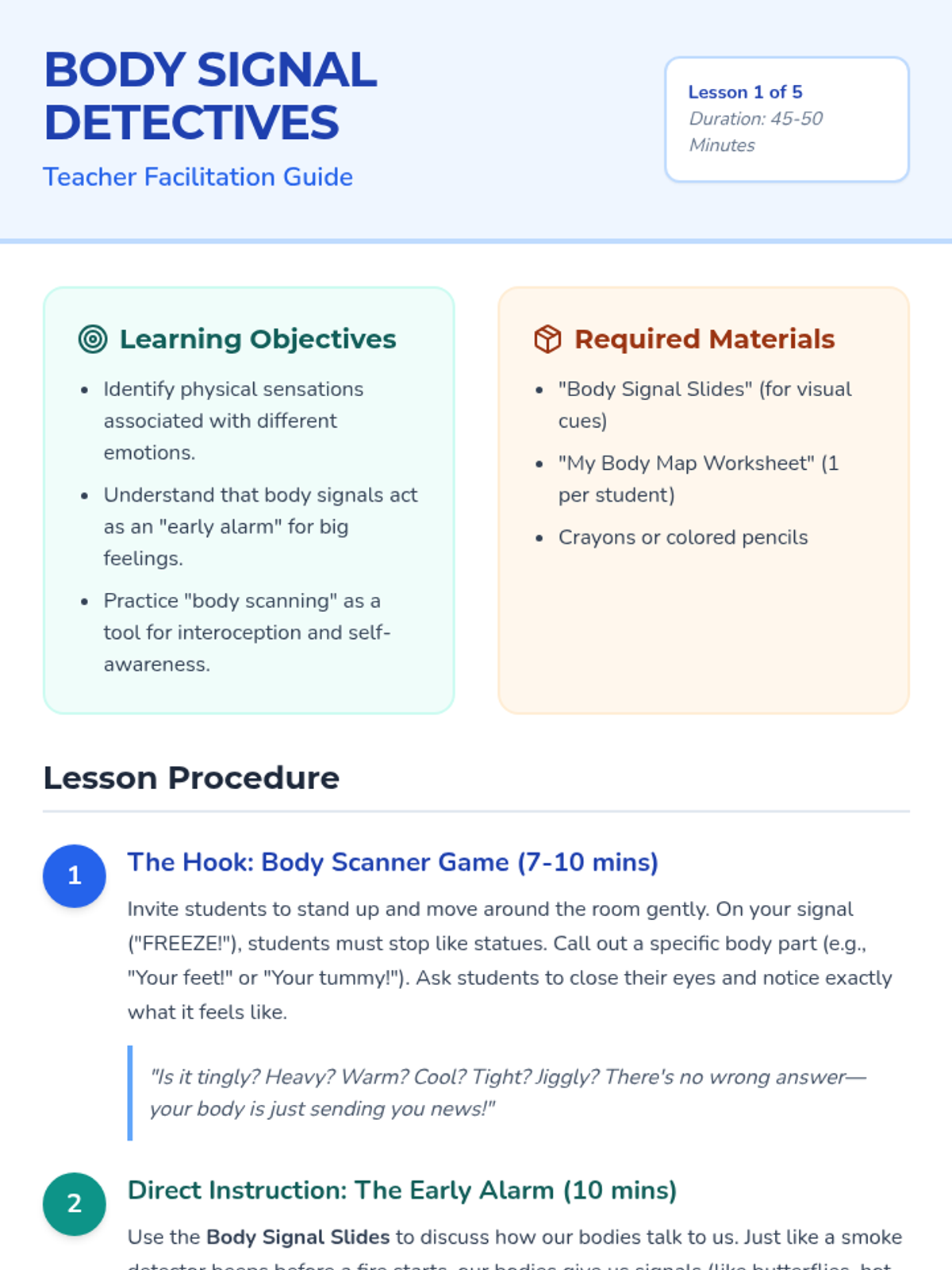
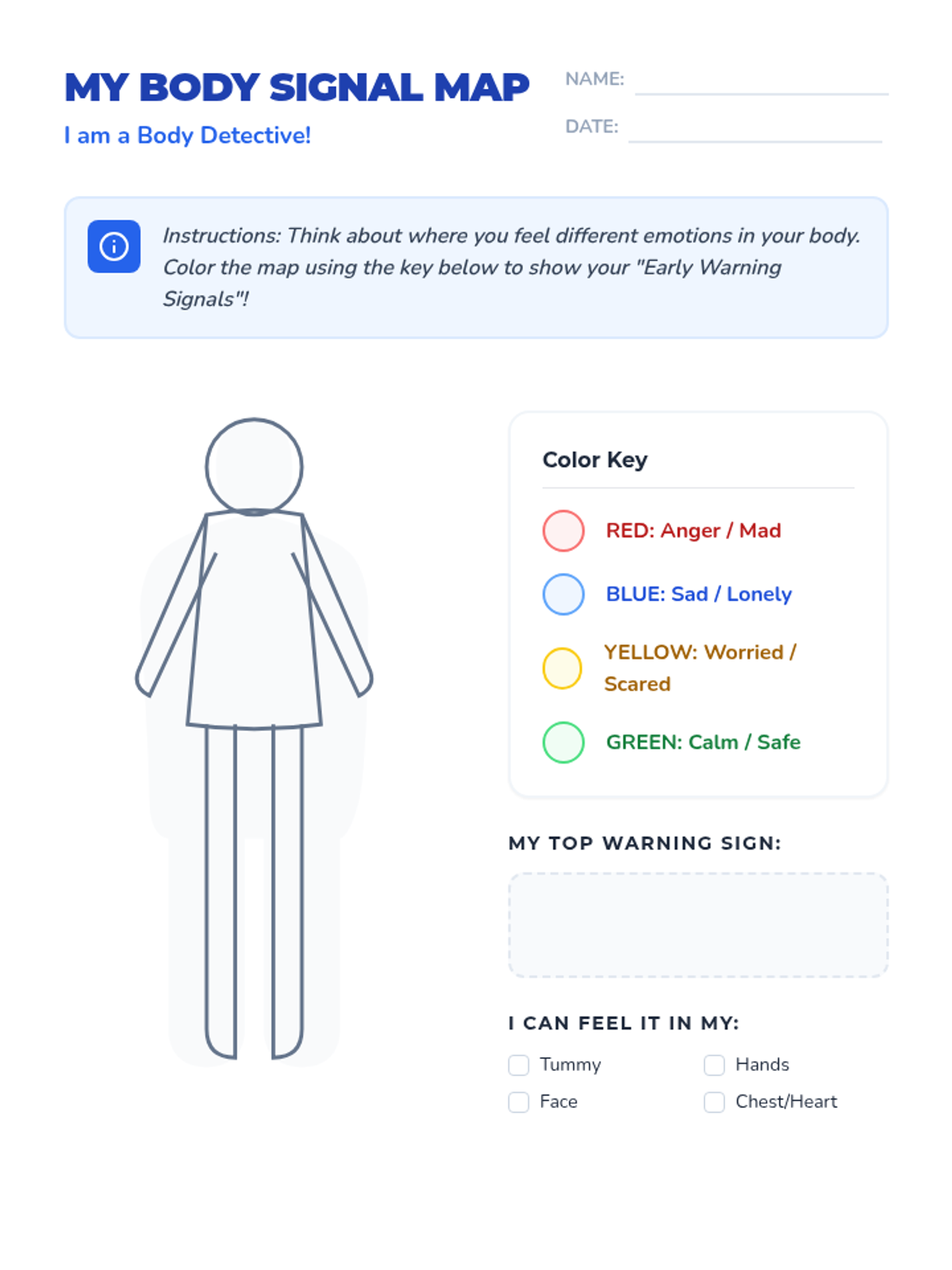
Students identify physical sensations associated with emotions using body-mapping to understand their body's 'early alarm system' for stress.
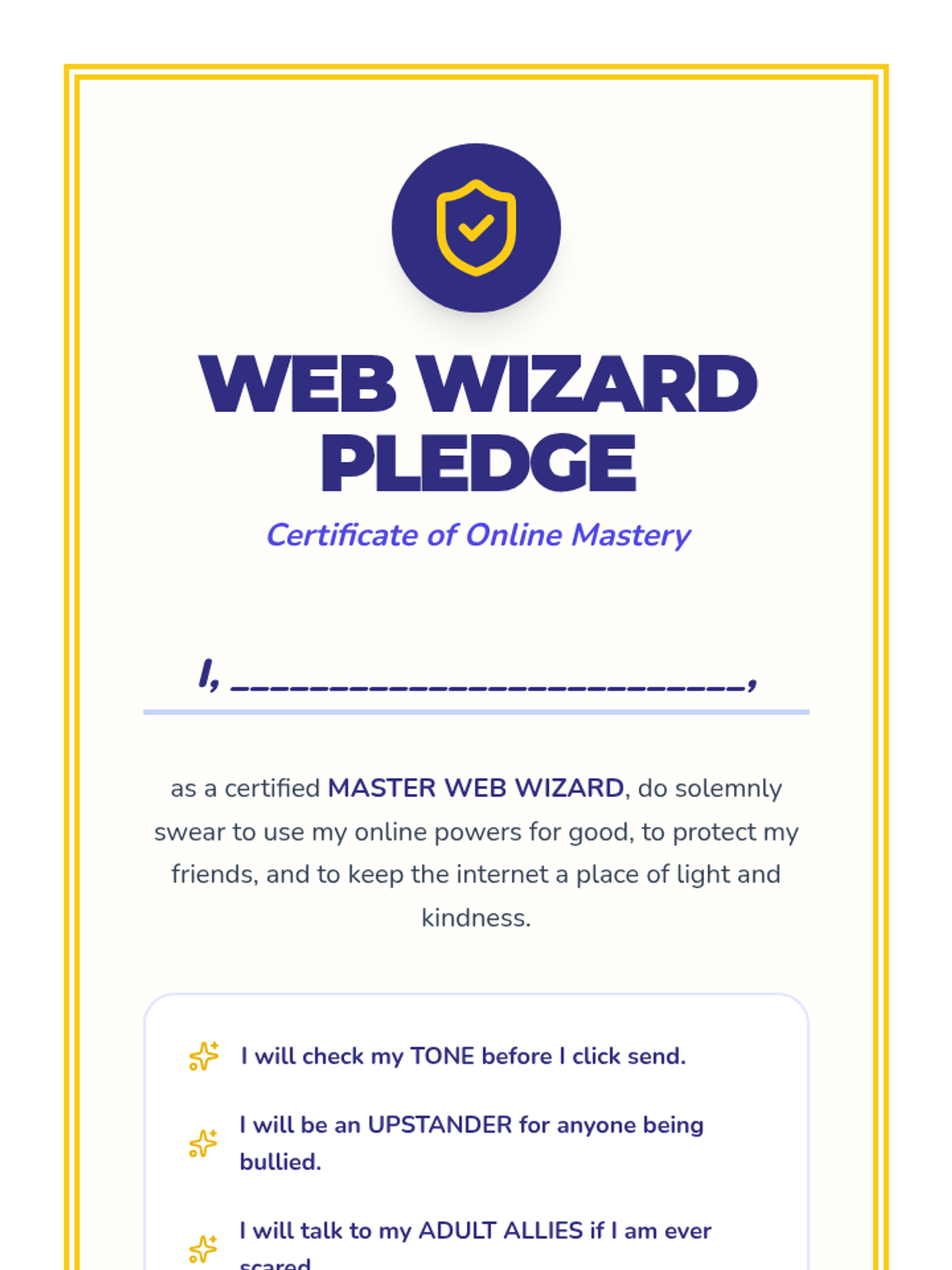
Students collaborate to create a class 'Digital Constitution' or pledge. They brainstorm proactive ways to make others feel good online, such as leaving encouraging comments.
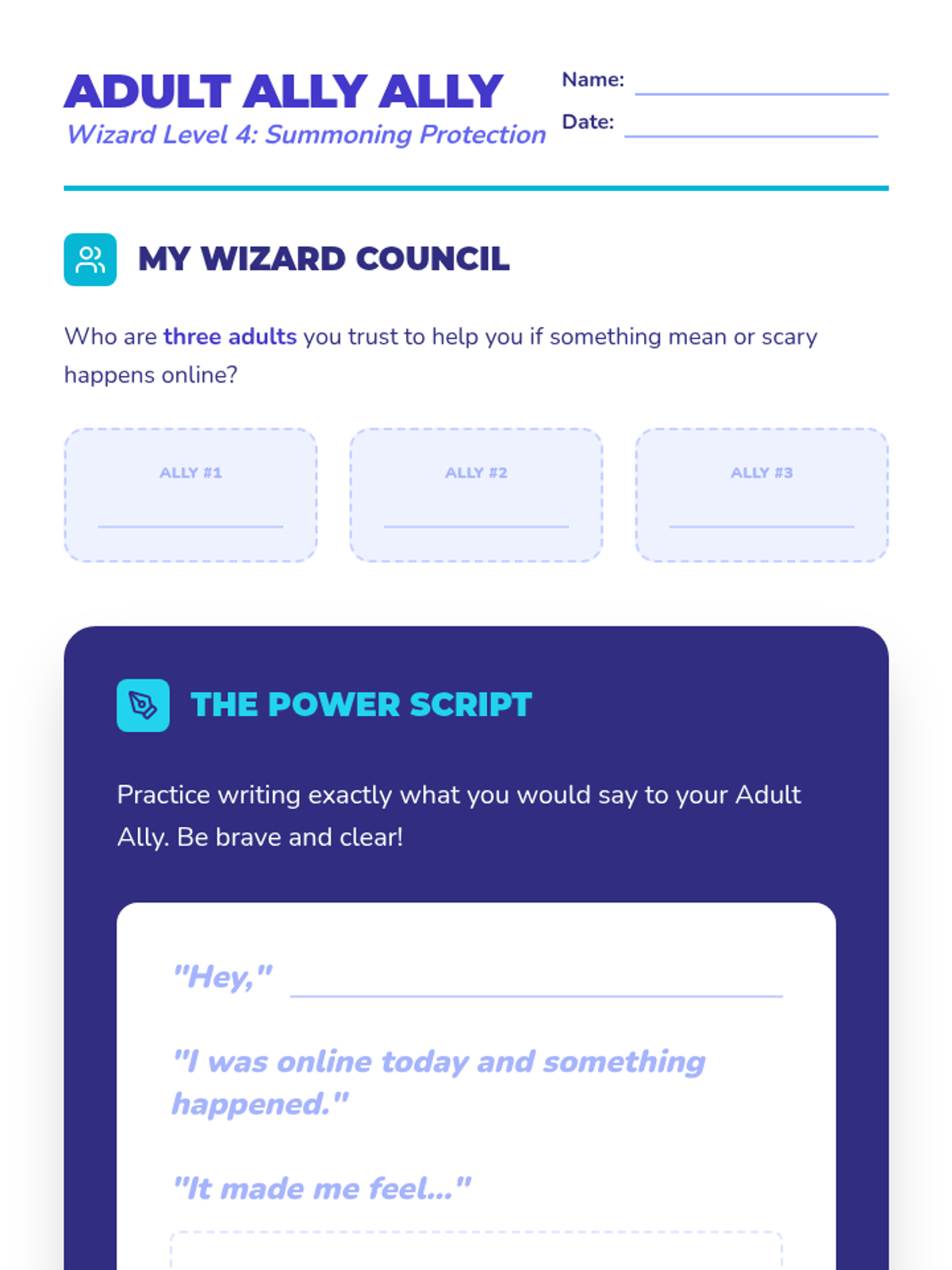
Students learn the technical skills of how to report inappropriate behavior on common platforms and the importance of telling a trusted adult. They practice writing a script for how to tell an adult about an incident.
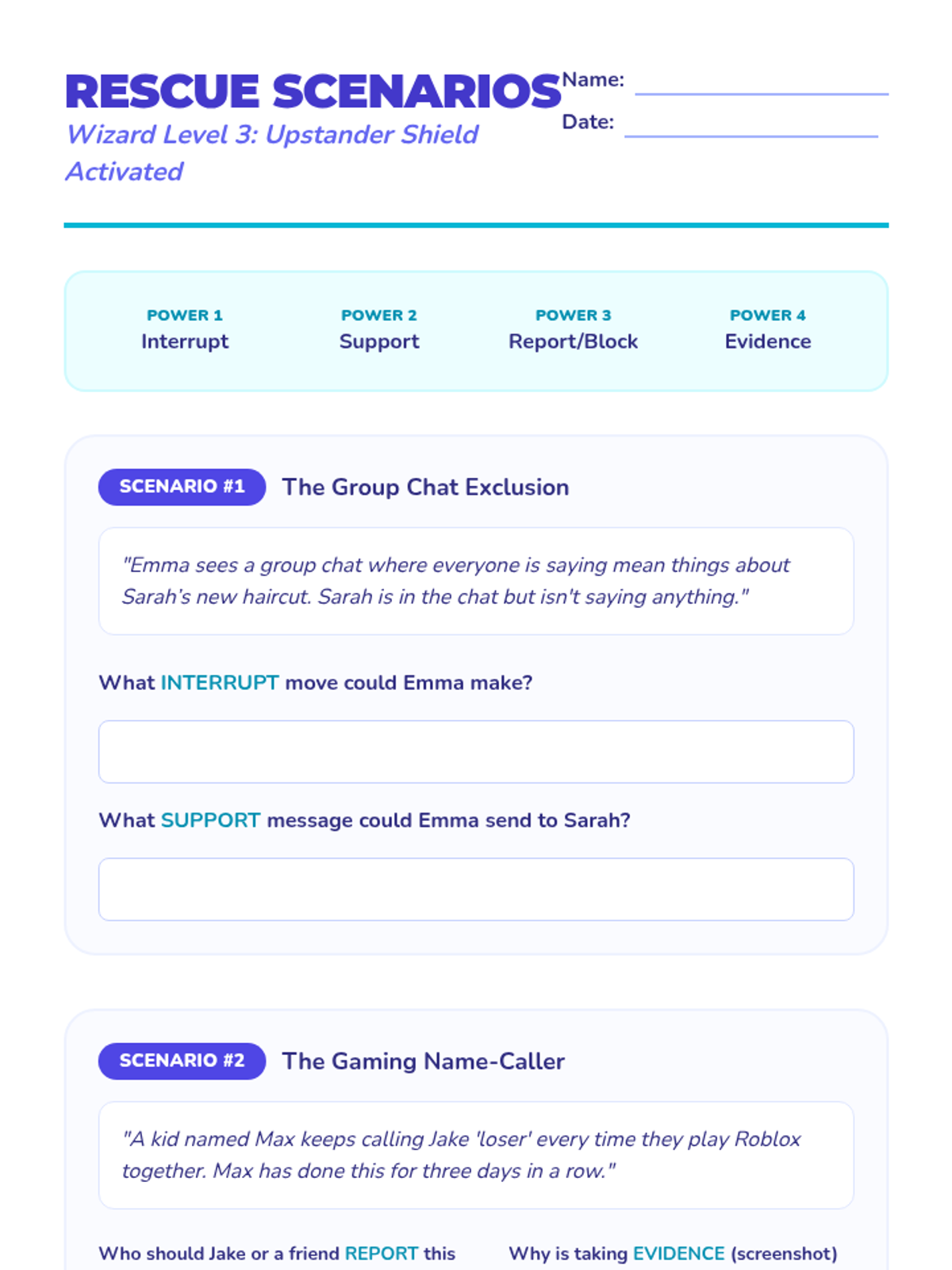
This lesson shifts focus from the bully to the bystander. Students learn four safe ways to intervene when they see mean behavior: interrupt, support the target, report, or screenshot.
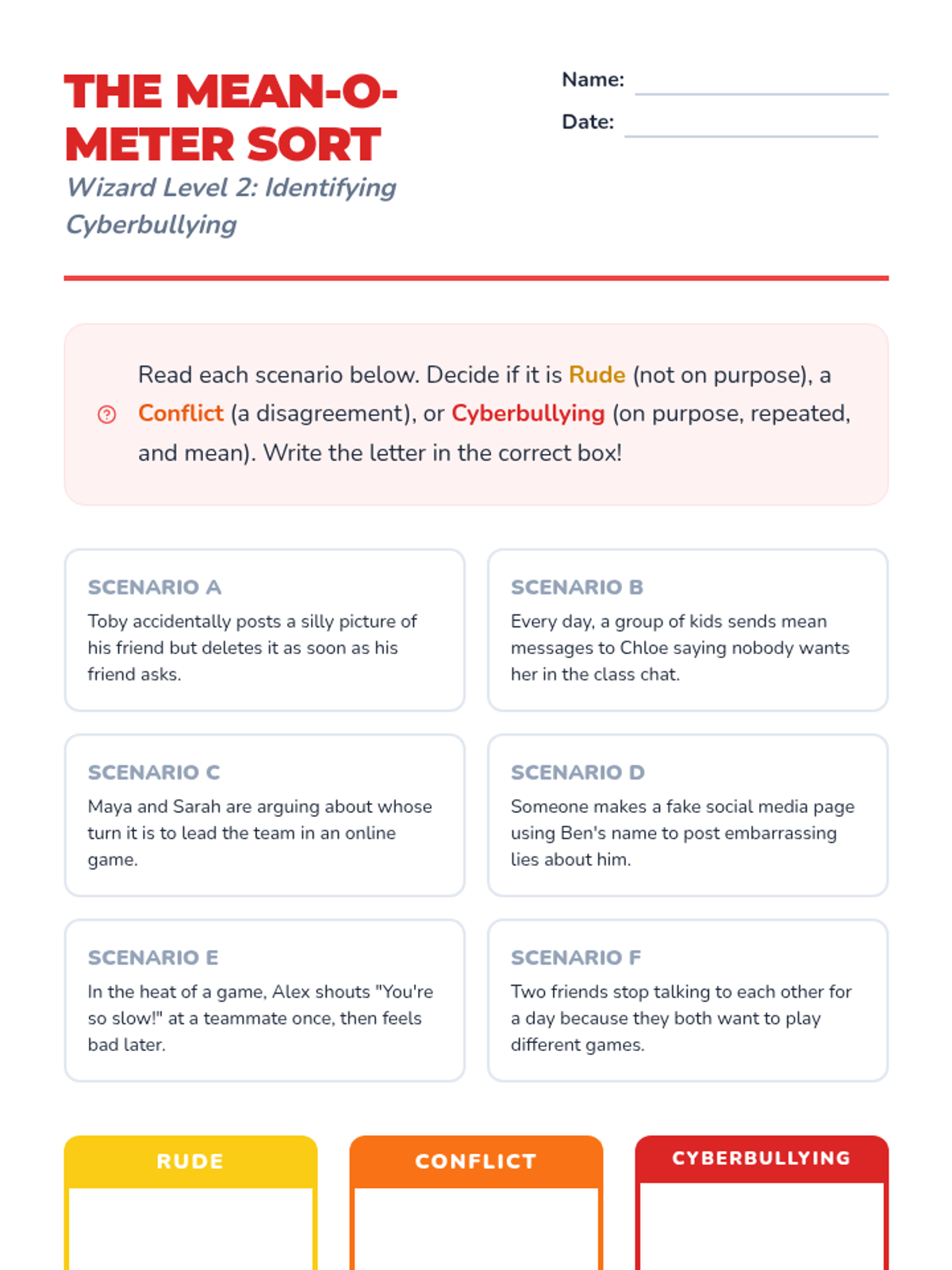
Students define cyberbullying and distinguish it from rude behavior or conflict. They identify specific behaviors like exclusion, spreading rumors, or mean comments in gaming chats.
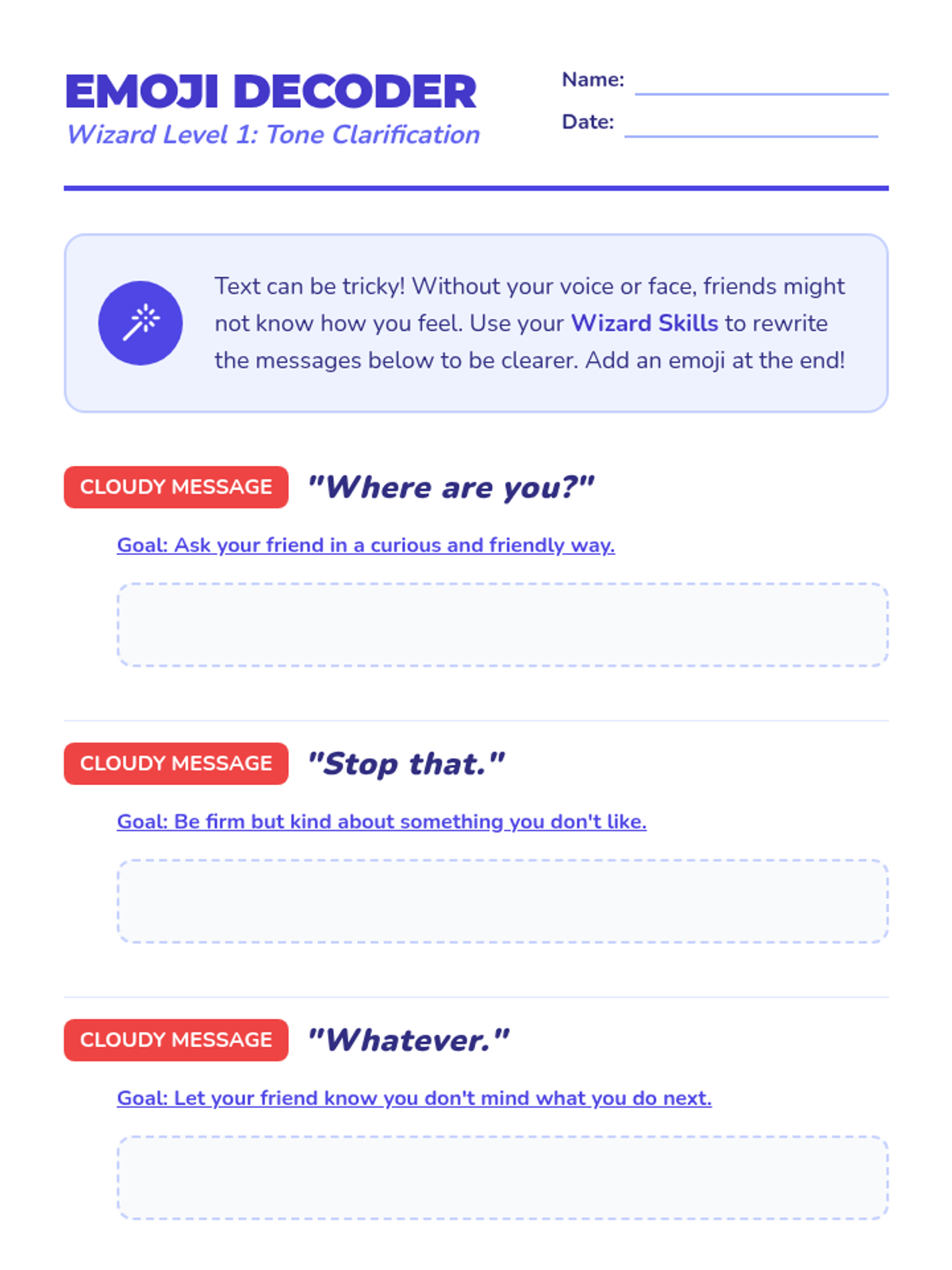
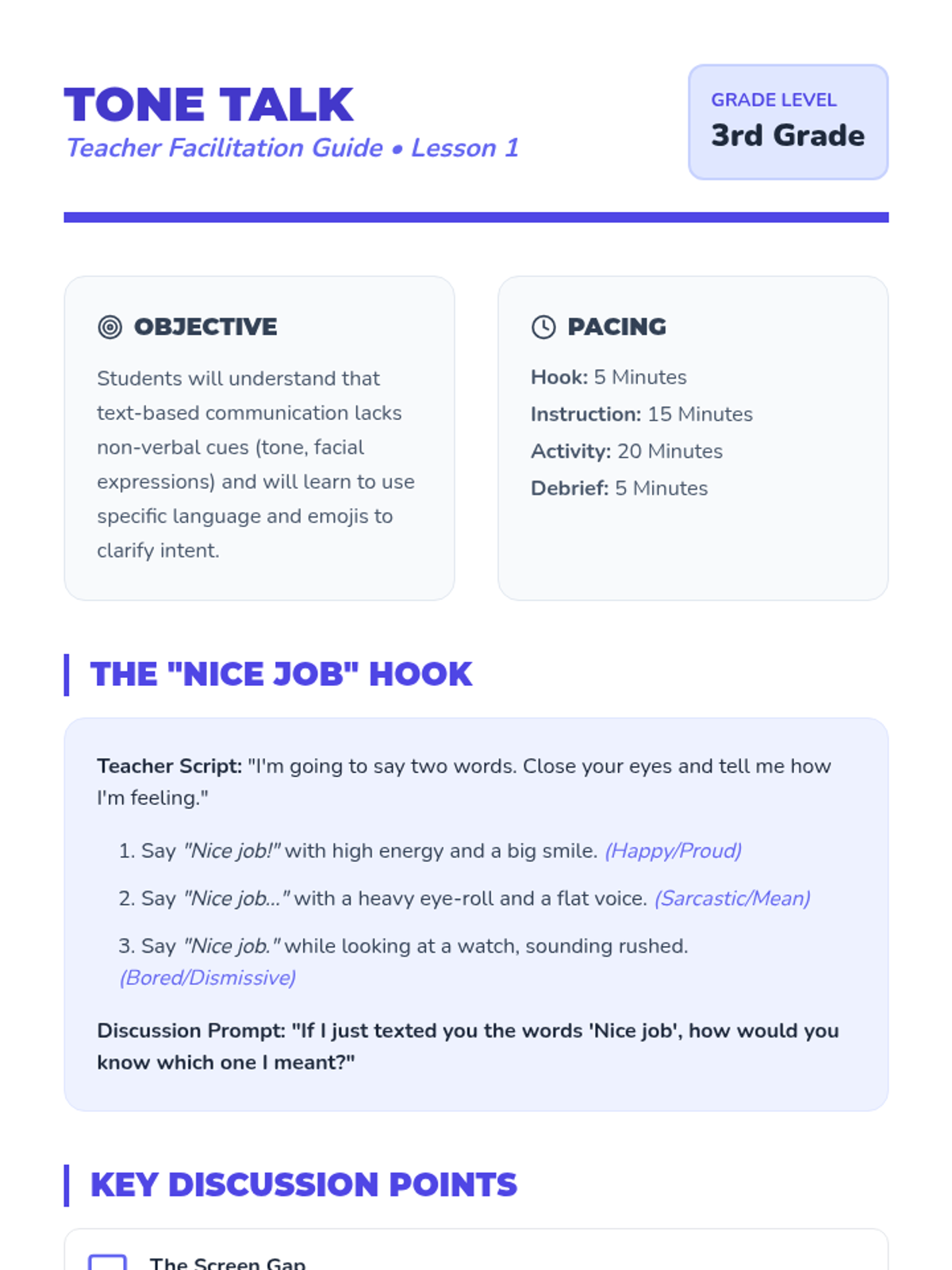
Students explore how written messages can be misunderstood without voice or facial expressions. They practice rewriting messages to be clearer and using emojis to clarify intent.
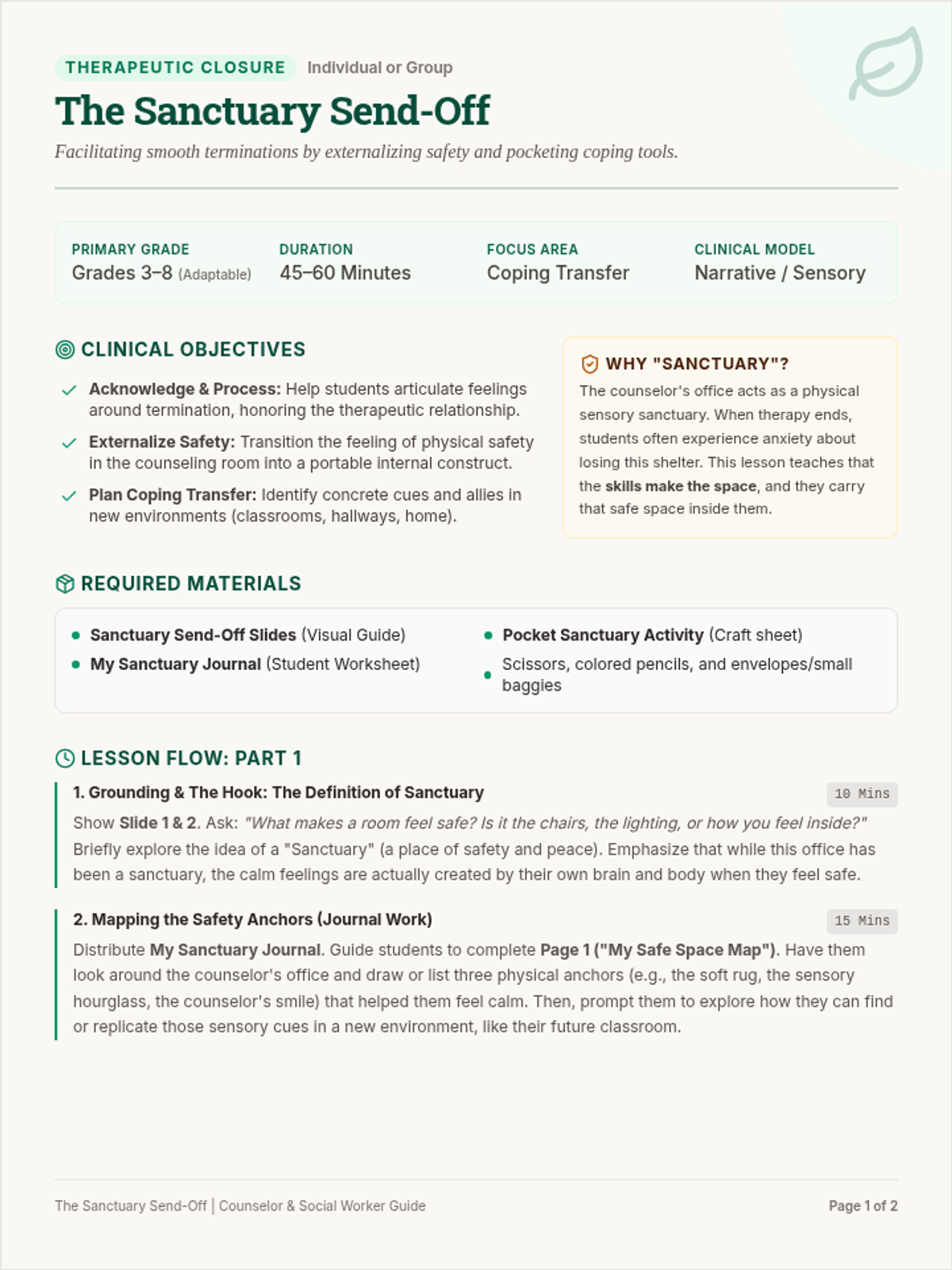
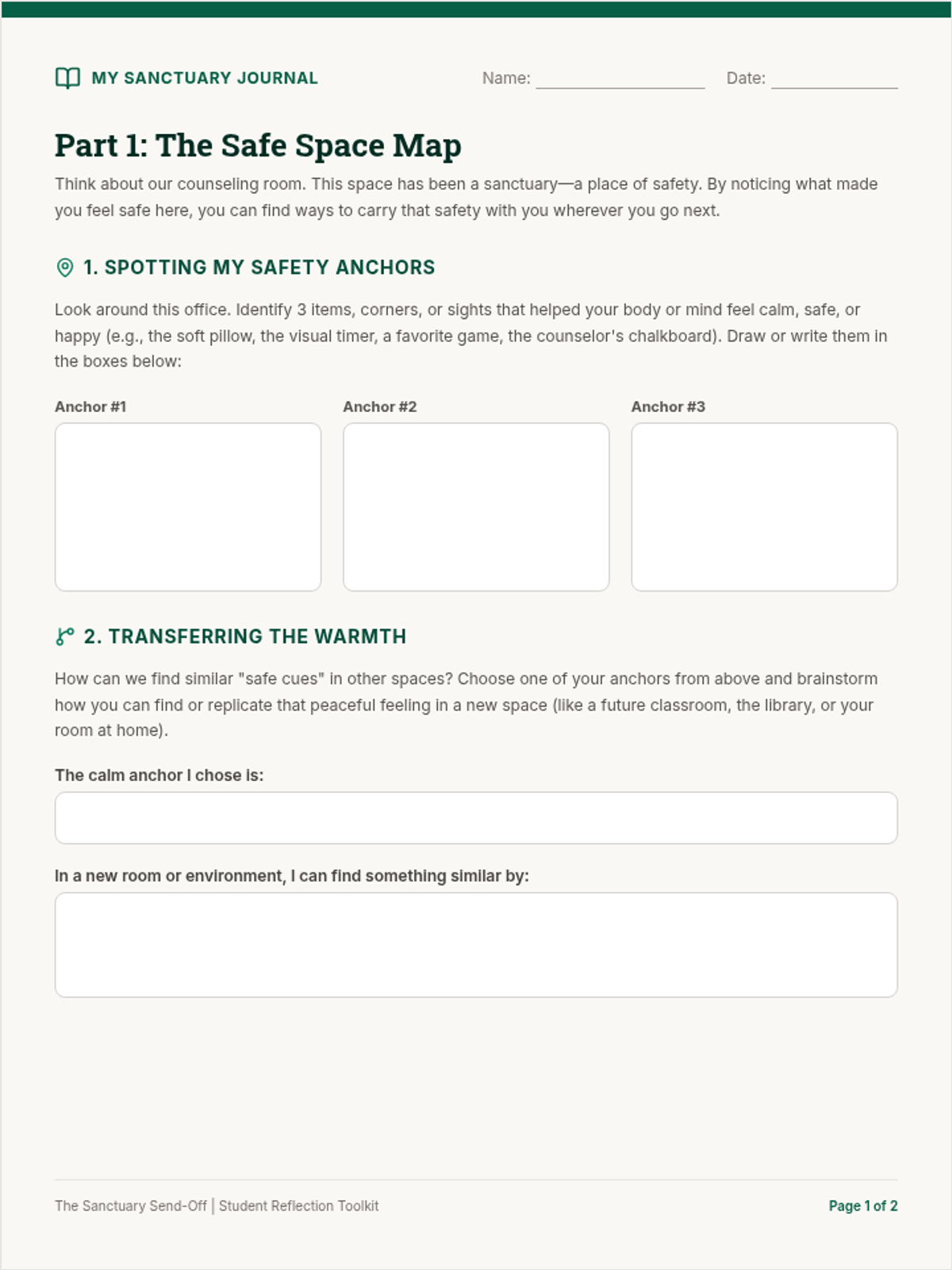
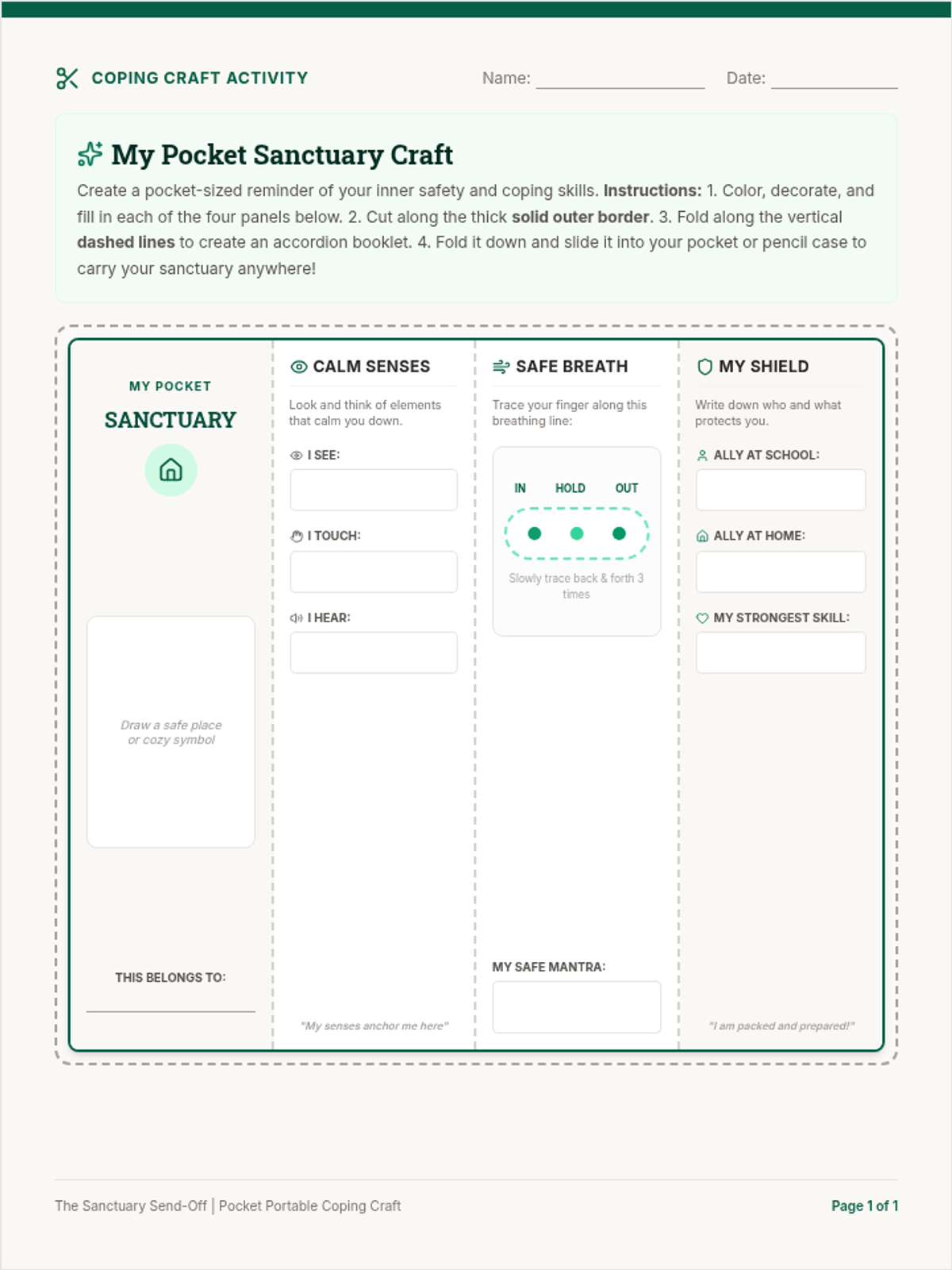
A therapeutic termination and closure lesson designed to help students transition out of individual or group counseling by externalizing their coping strategies and creating portable reminders of safety.
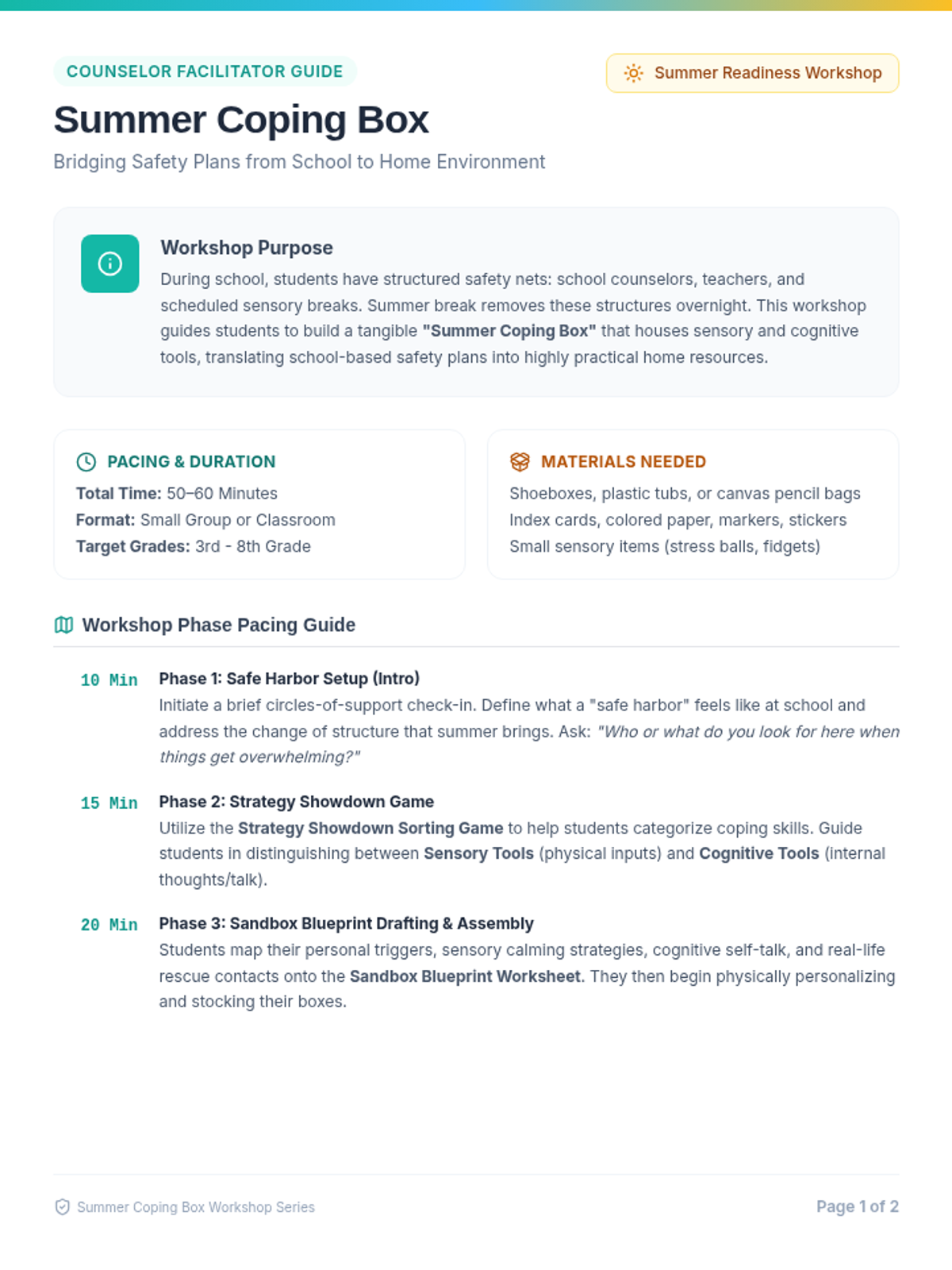
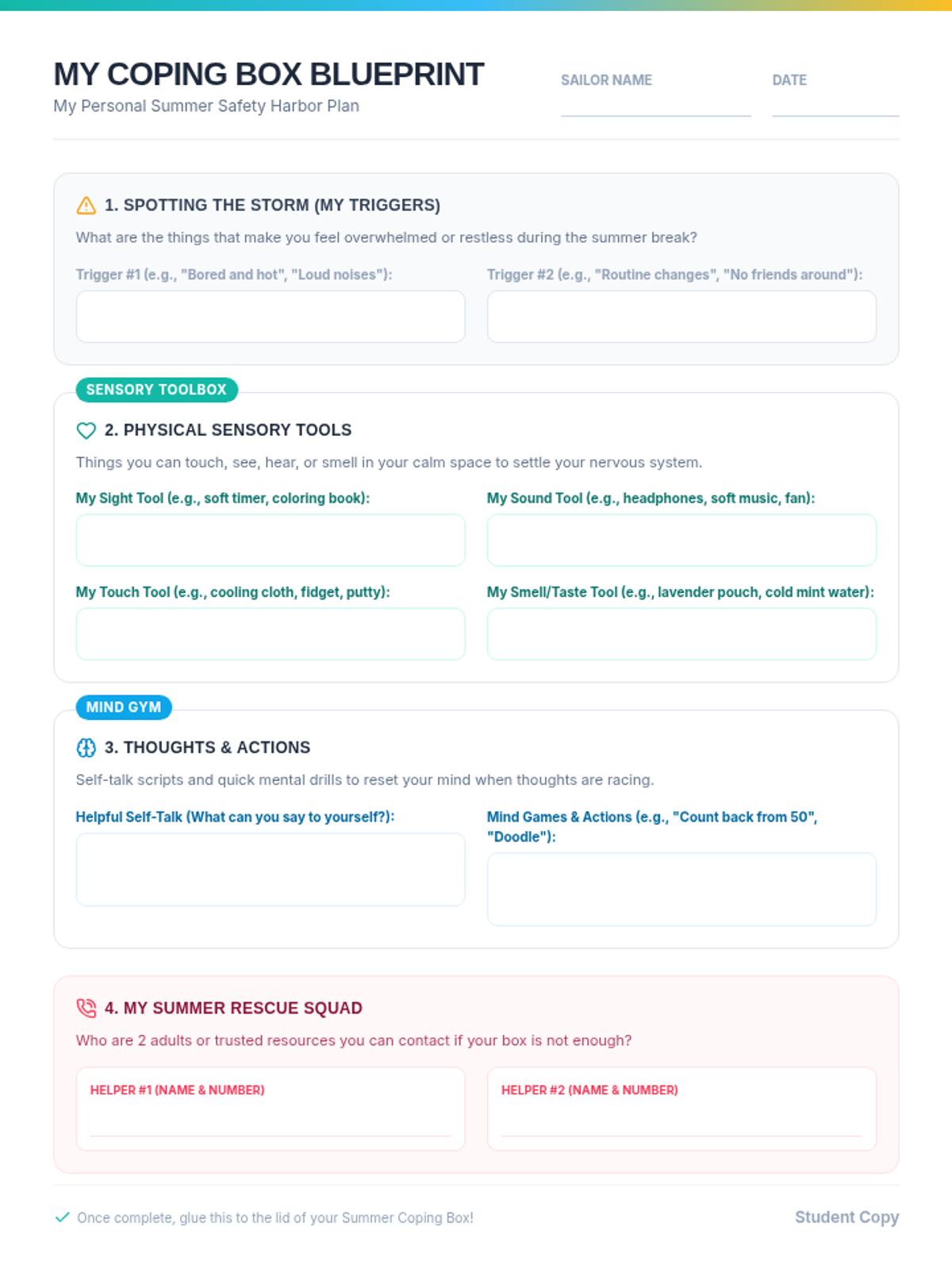
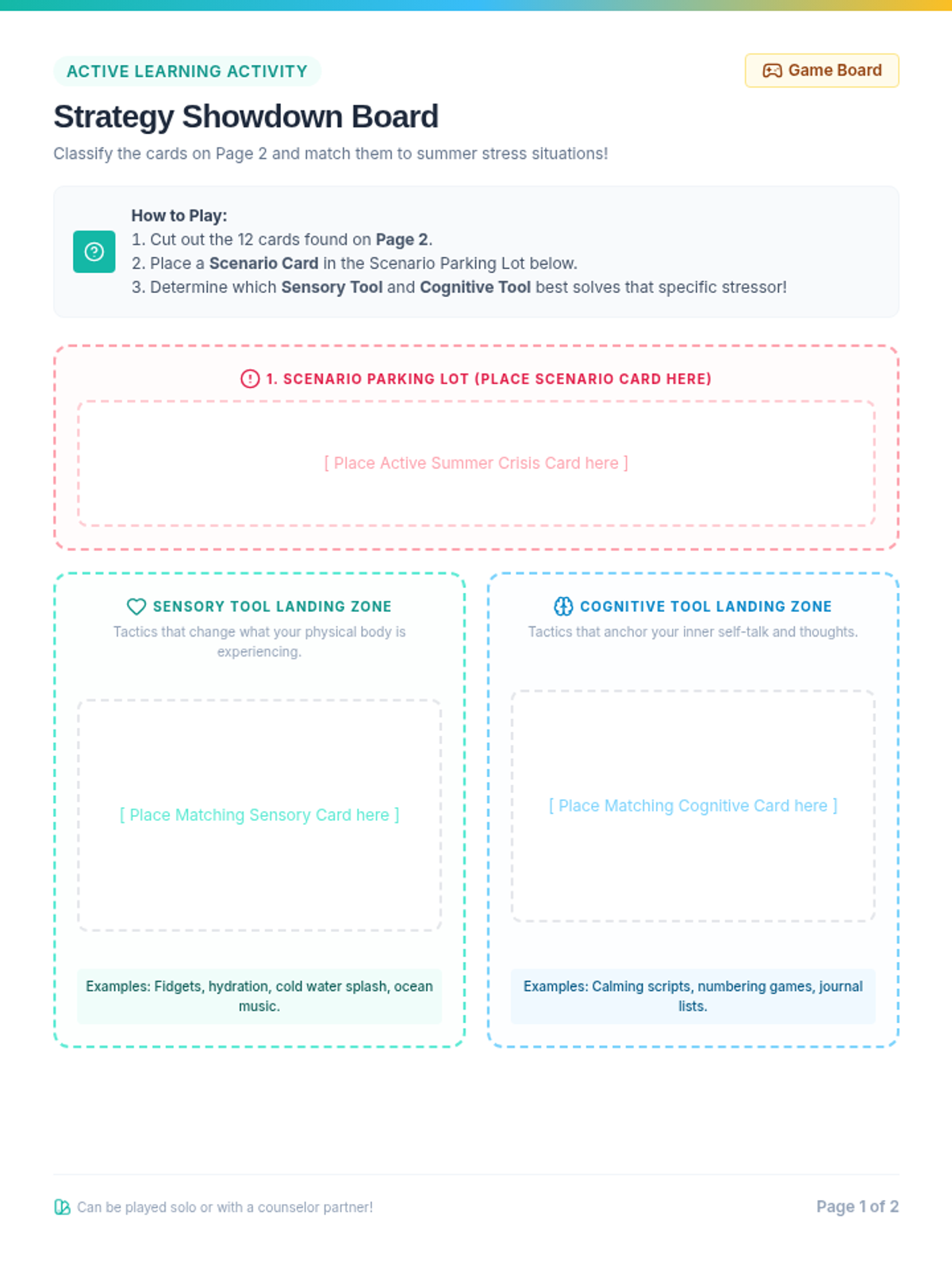
A practical self-regulation workshop where students build personalized, concrete sensory and cognitive coping toolkits to transition safety plans from the counselor's office to the home environment, ensuring continuity of support over summer break.
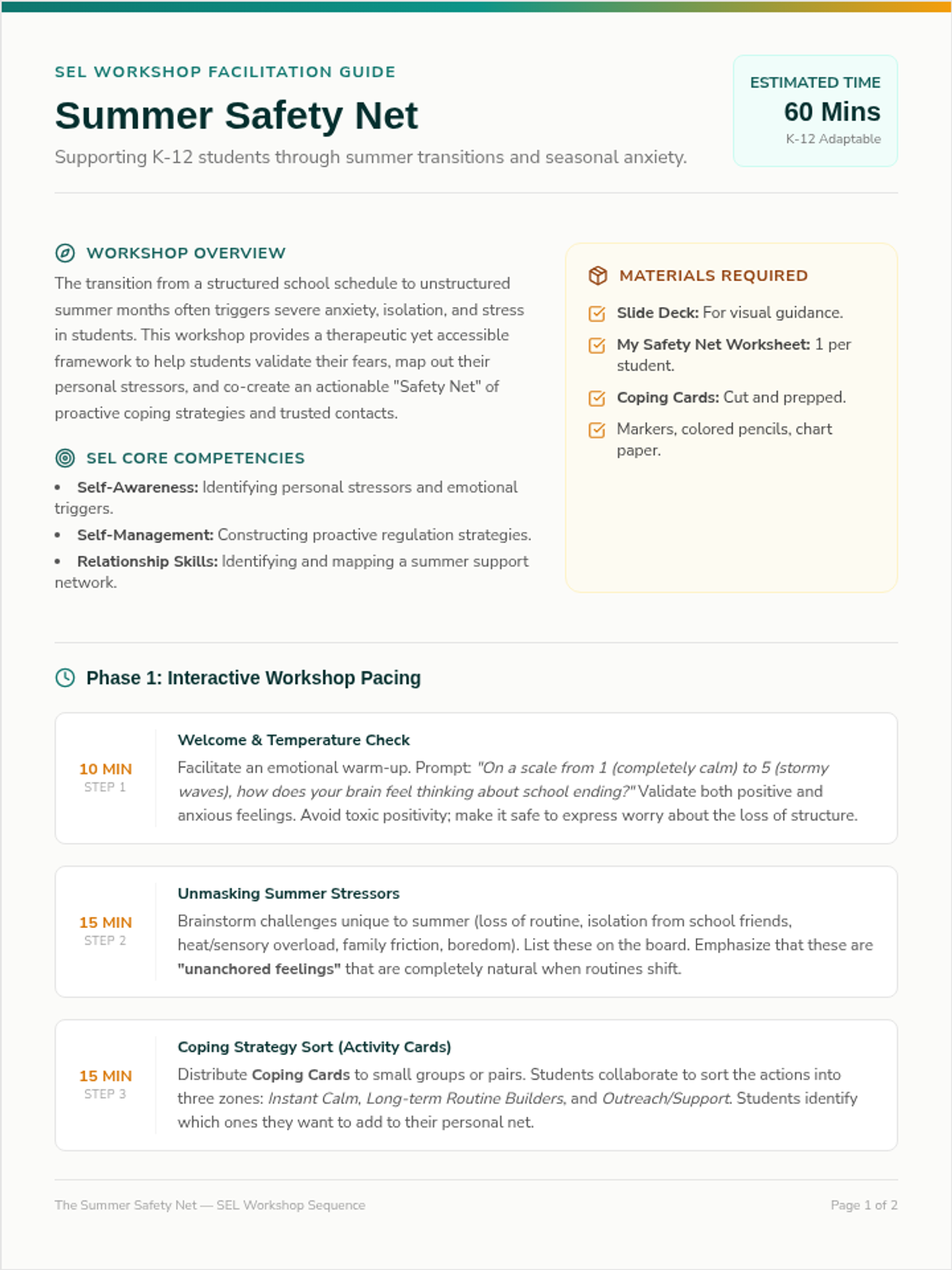
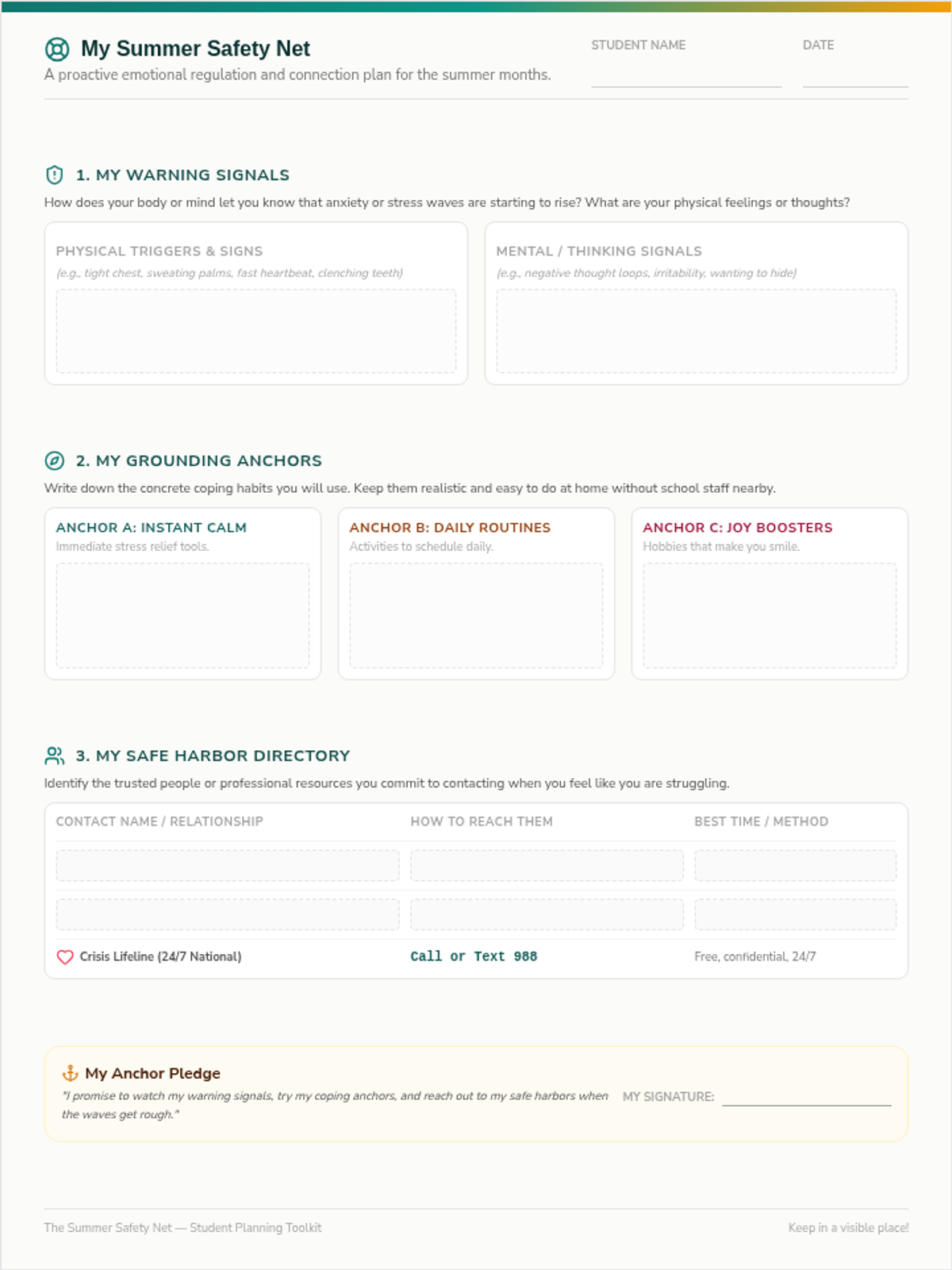
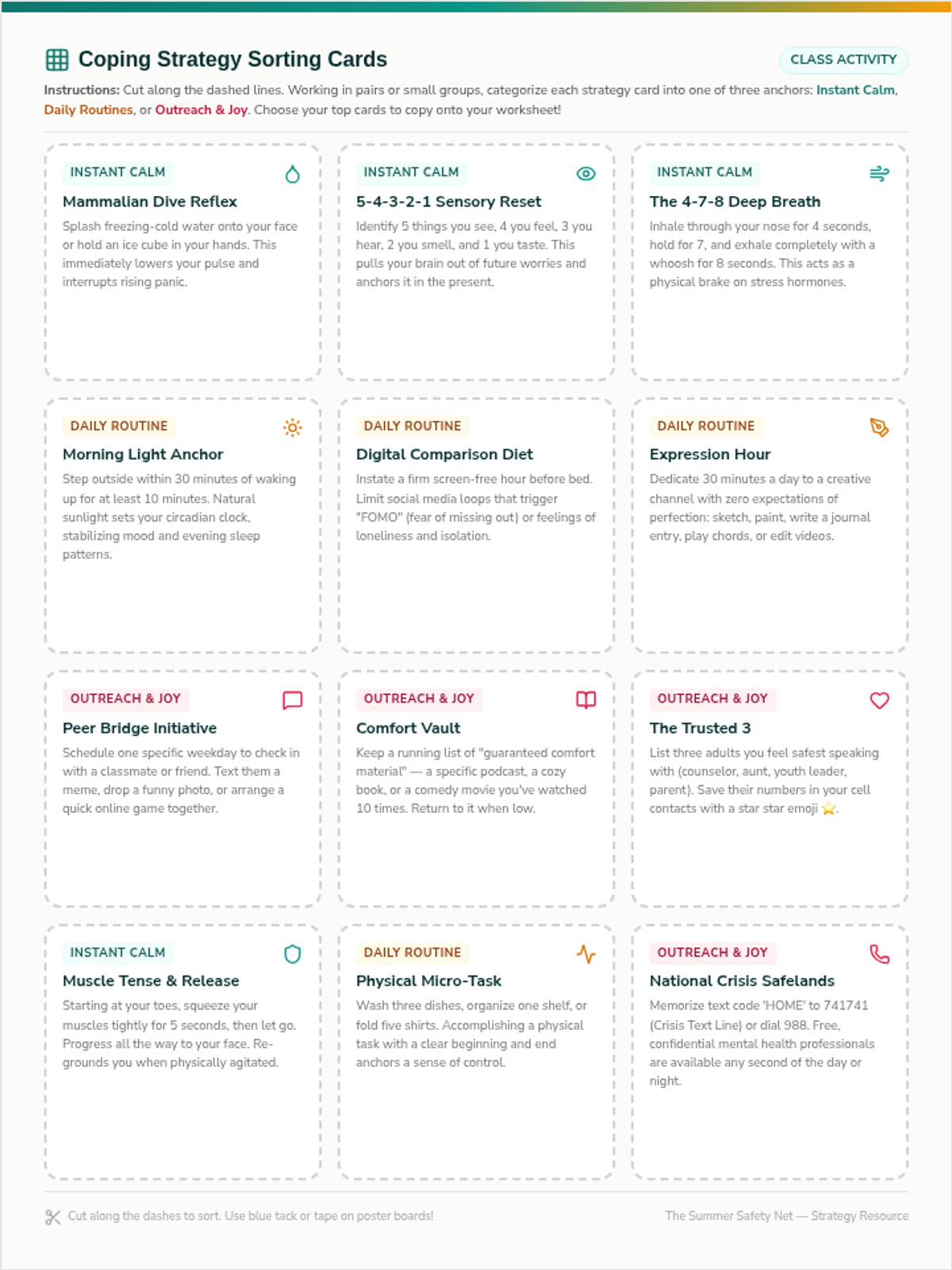
A collaborative mental health workshop designed to help students navigate summer transition anxiety by identifying stressors, mapping coping strategies, and co-creating a personalized proactive emotional regulation plan.
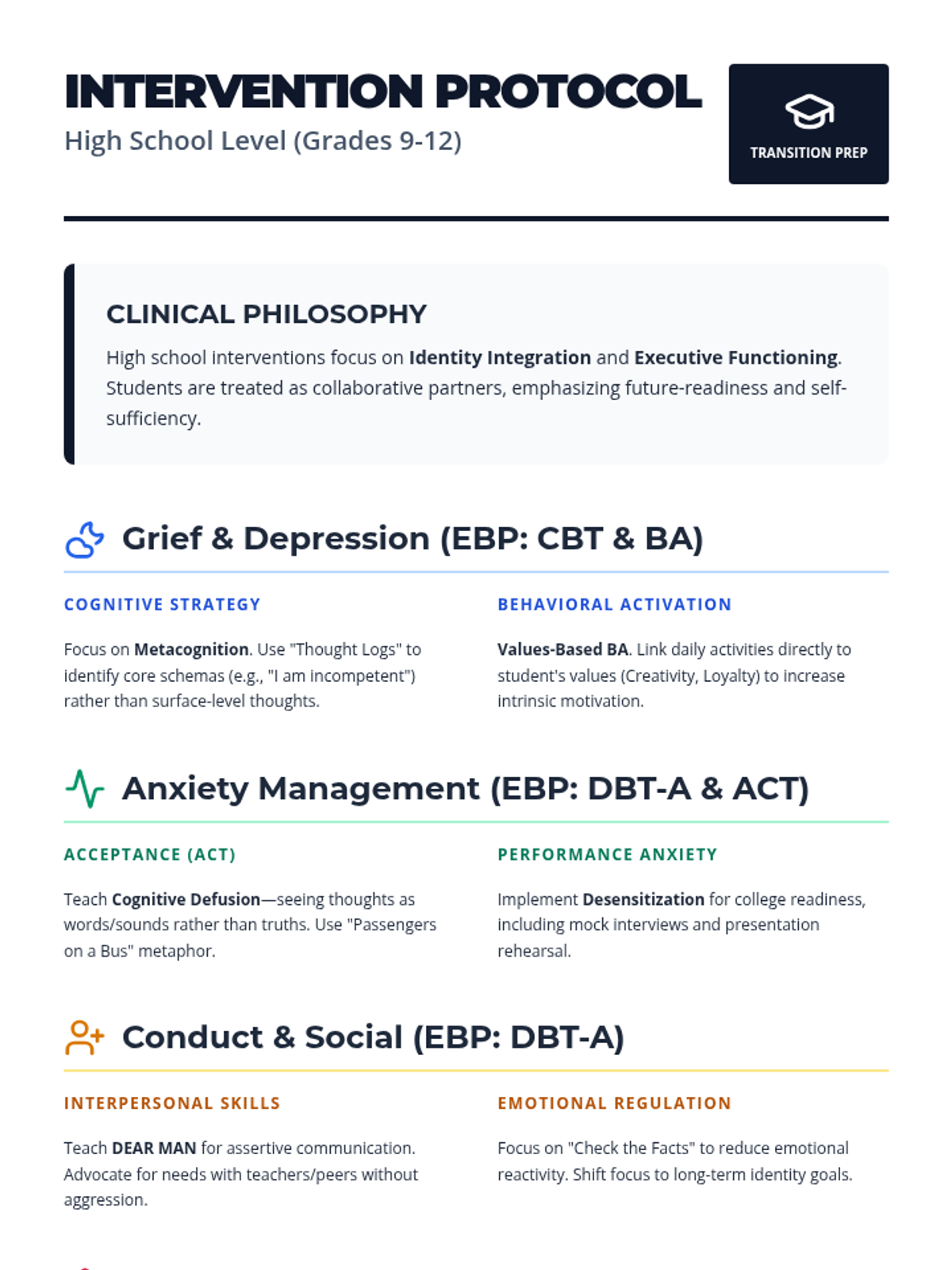
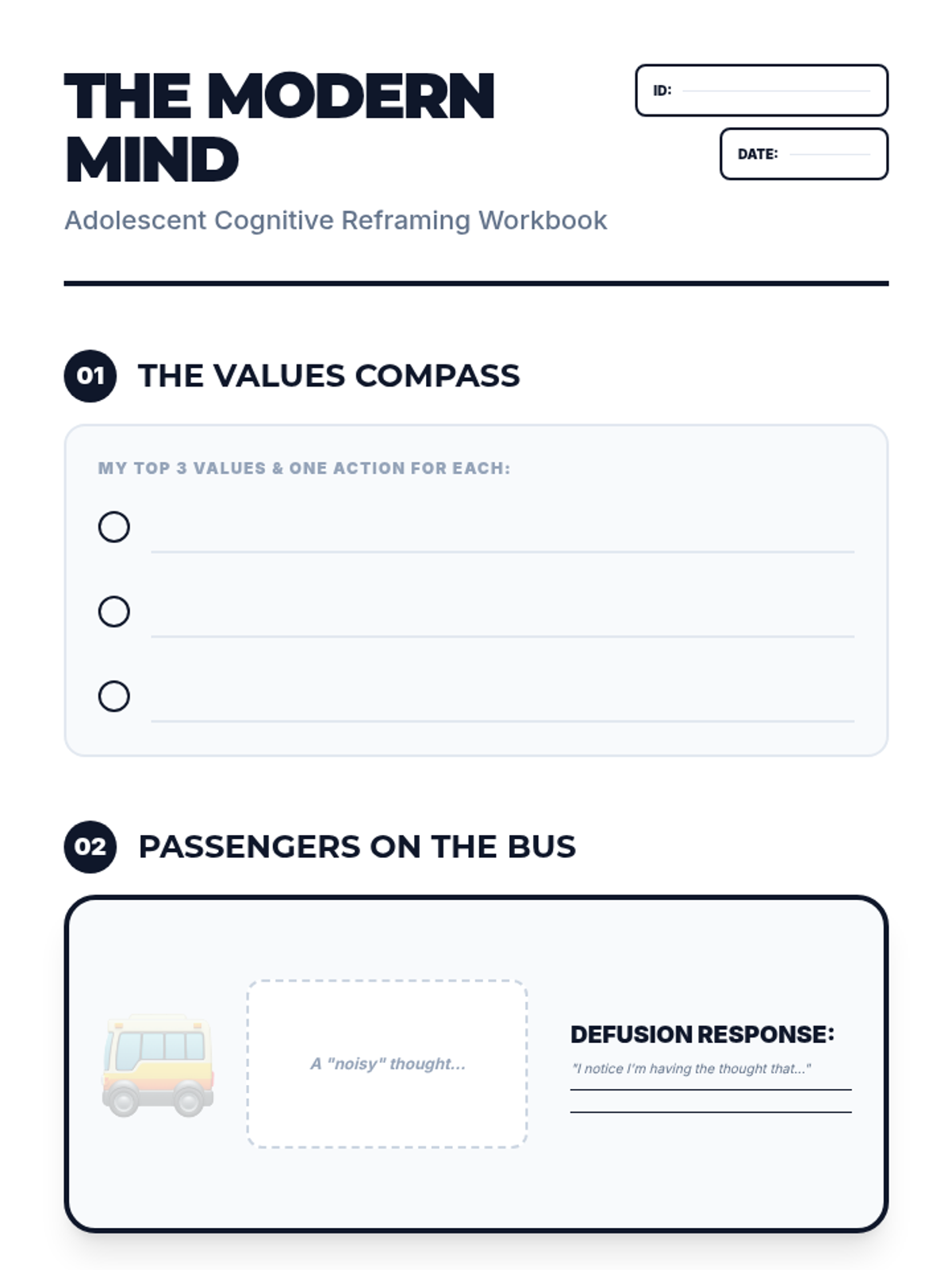
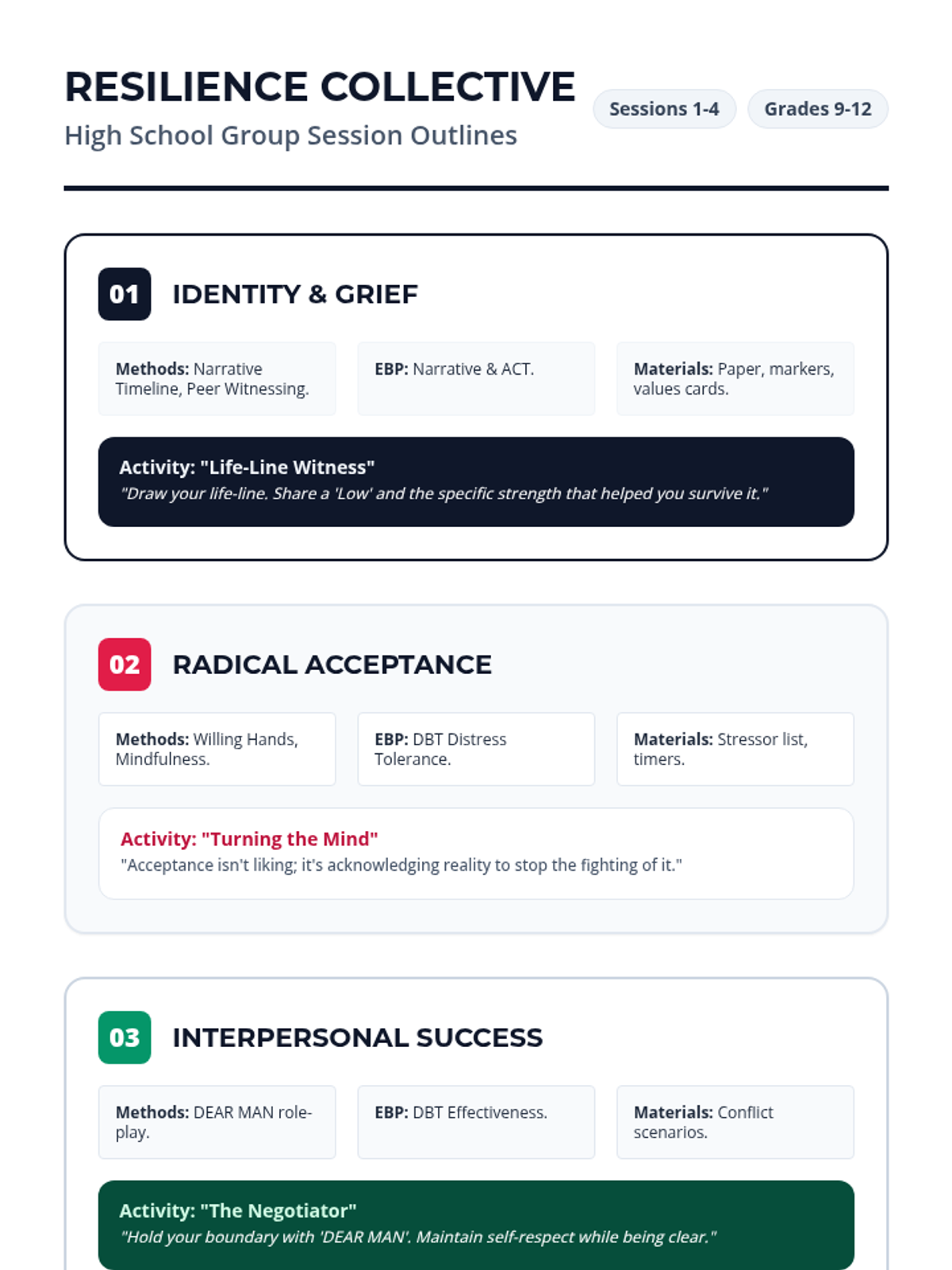
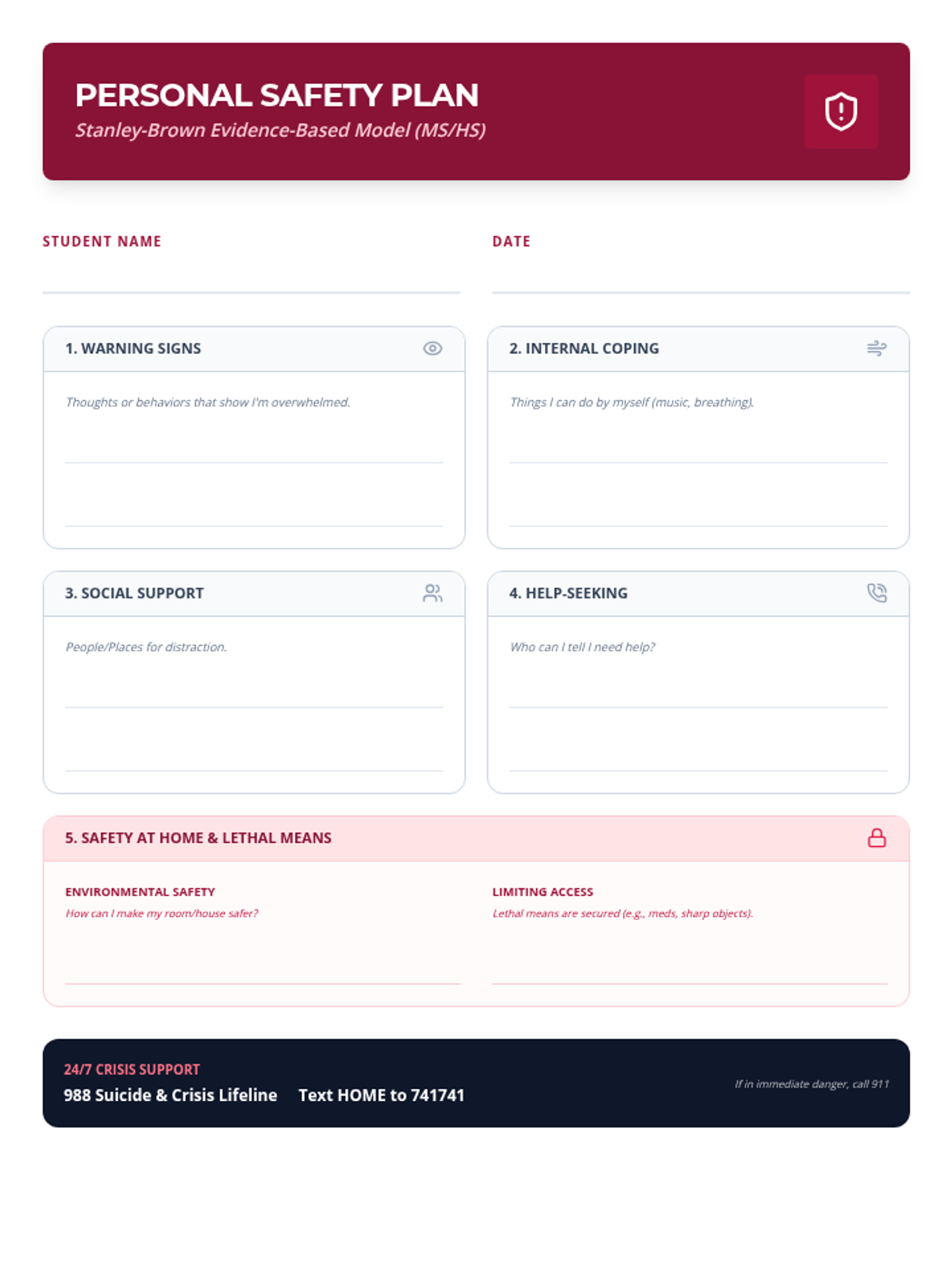
Advanced therapeutic interventions for high schoolers, emphasizing autonomy, complex cognitive reframing, interpersonal effectiveness, and comprehensive crisis protocols.
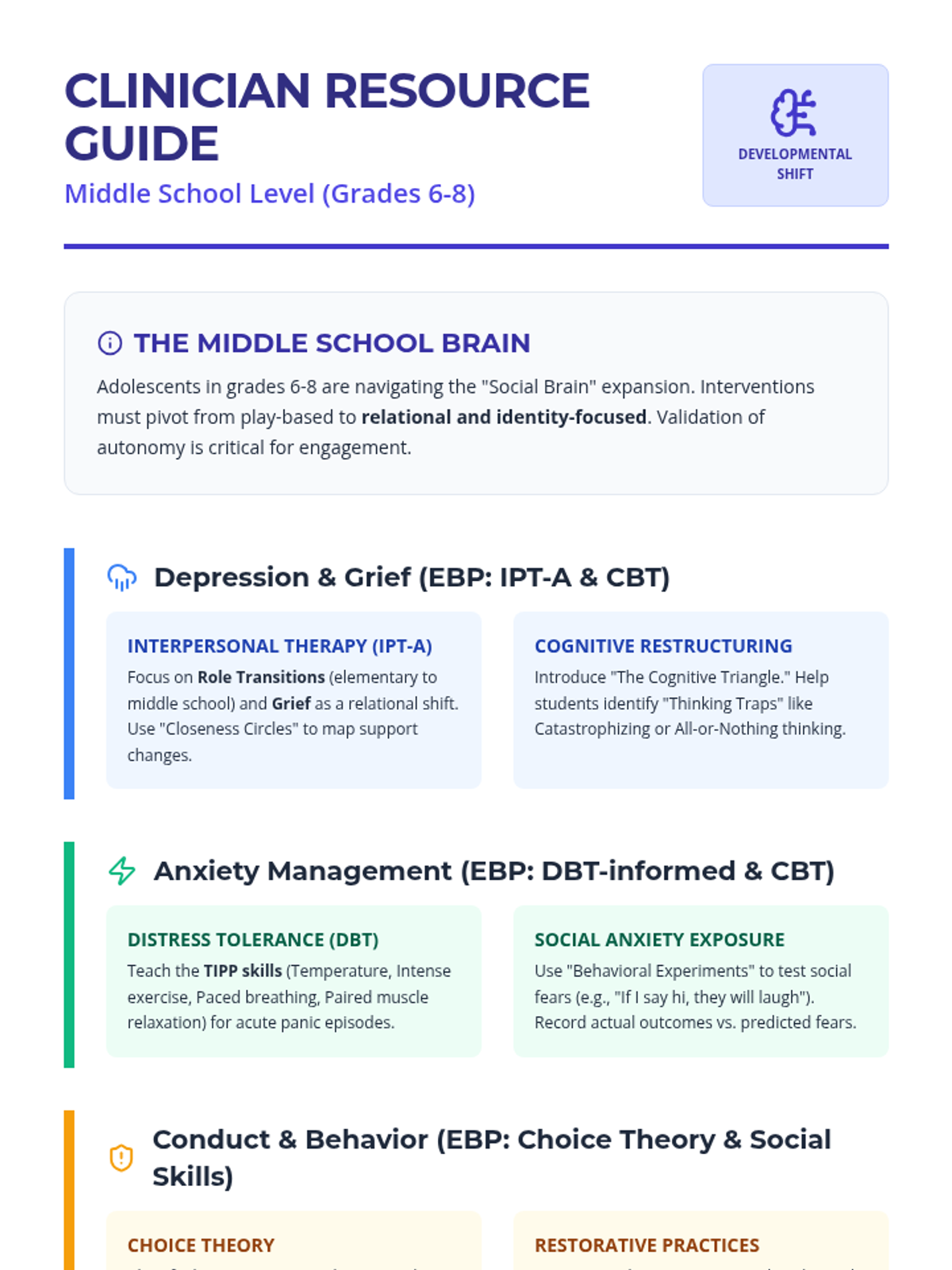
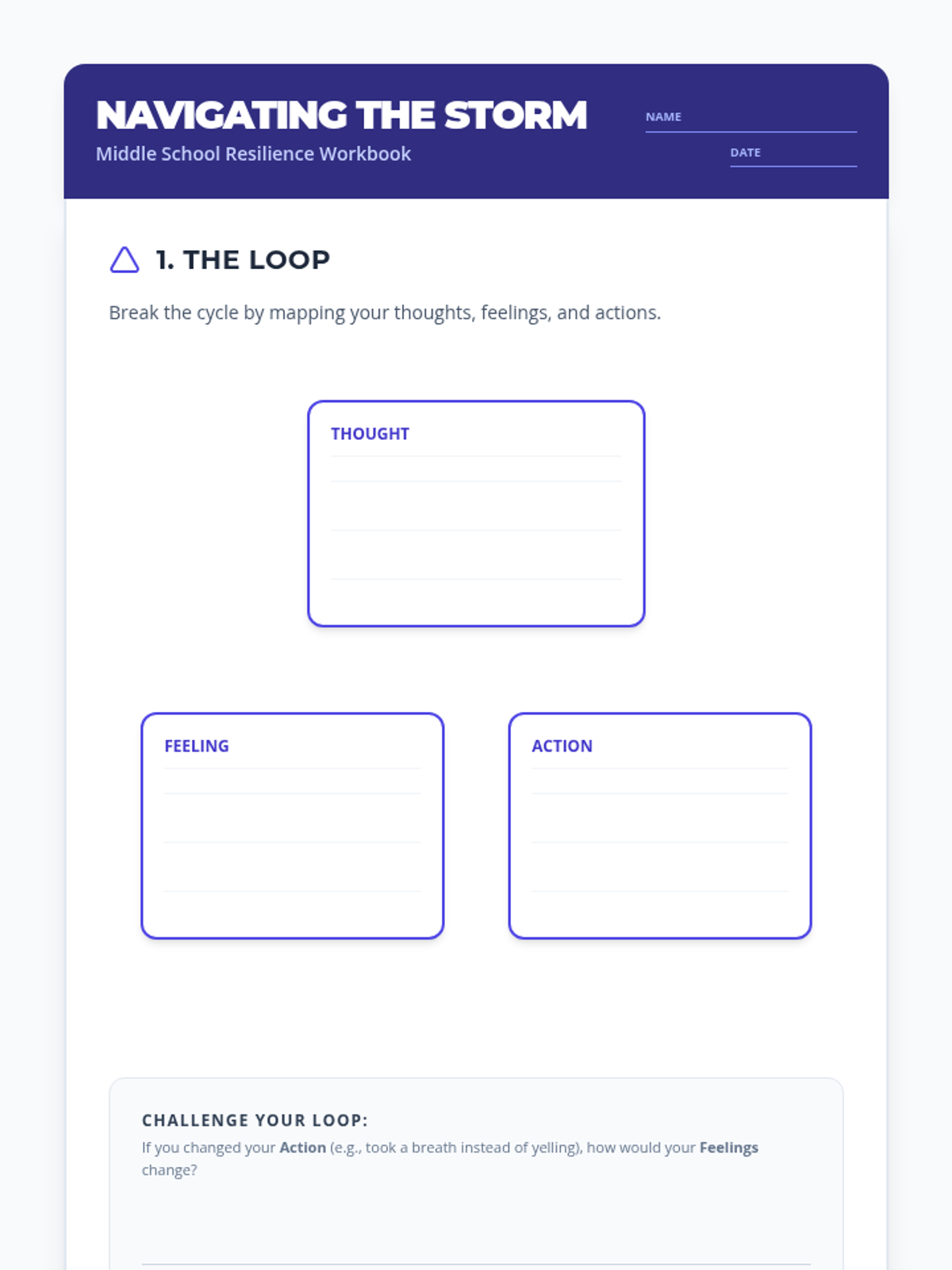
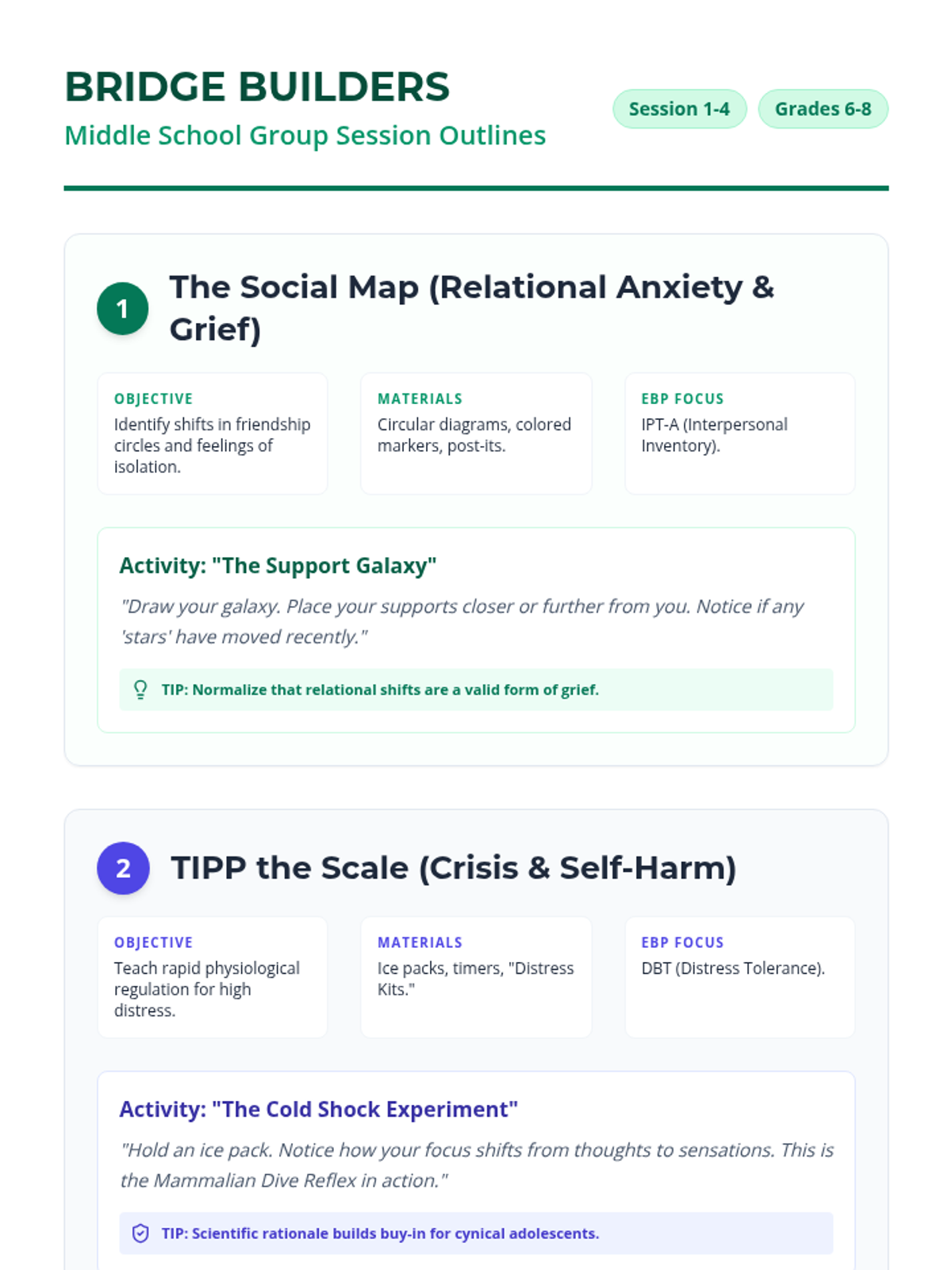
CBT and DBT-informed strategies tailored for the middle school transition, focusing on peer relationships, emotional regulation, and structured safety plans.
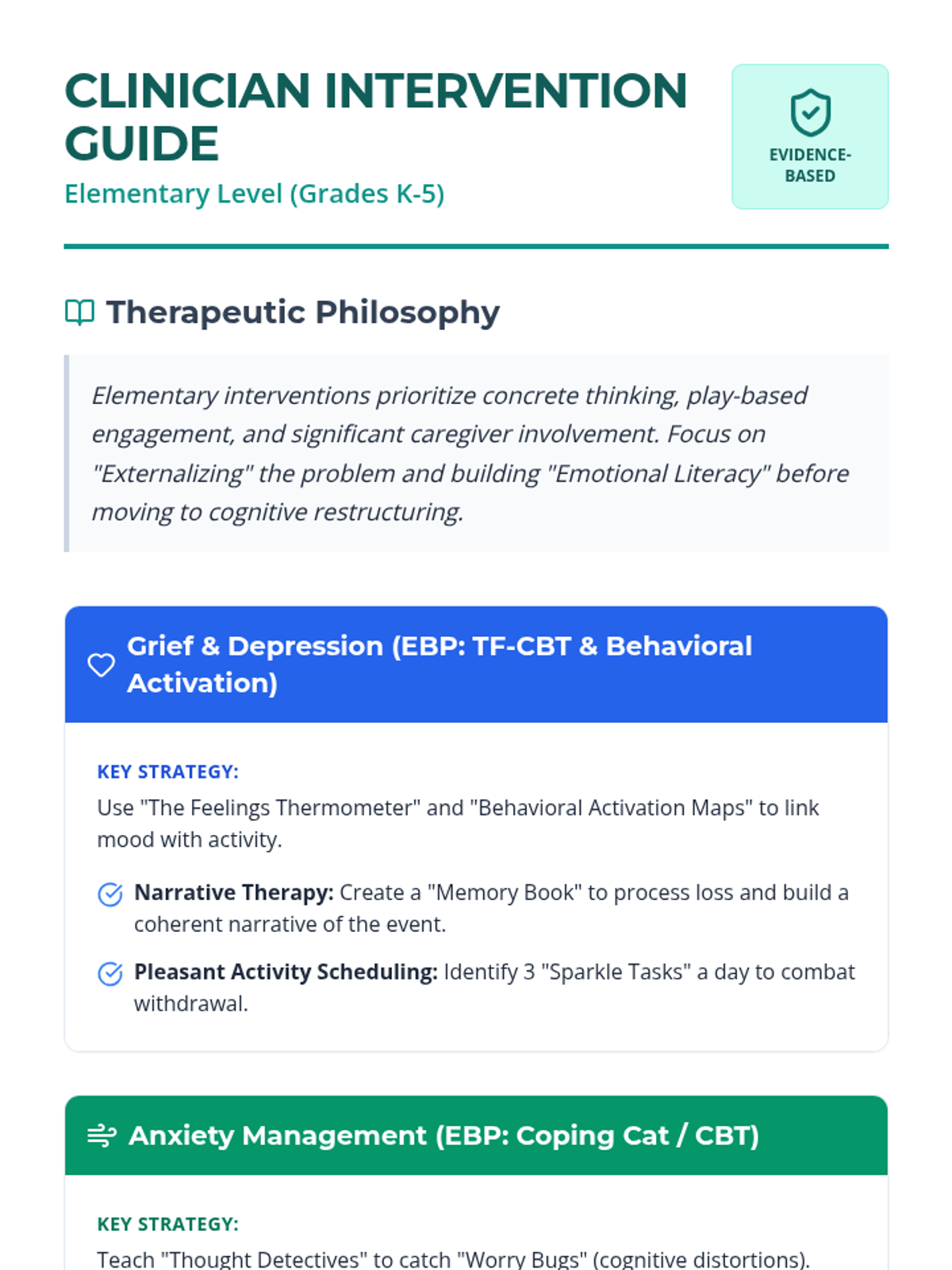
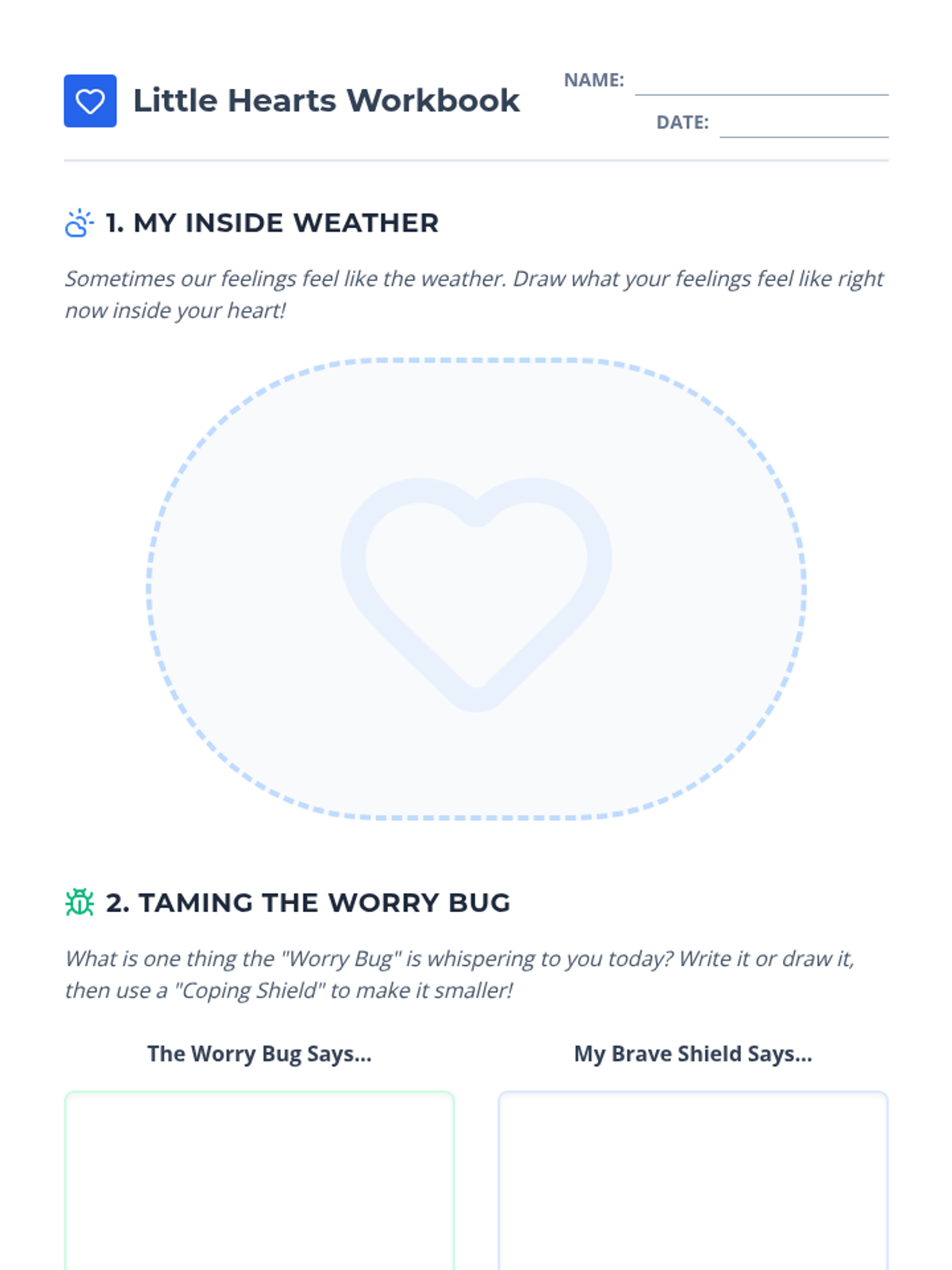
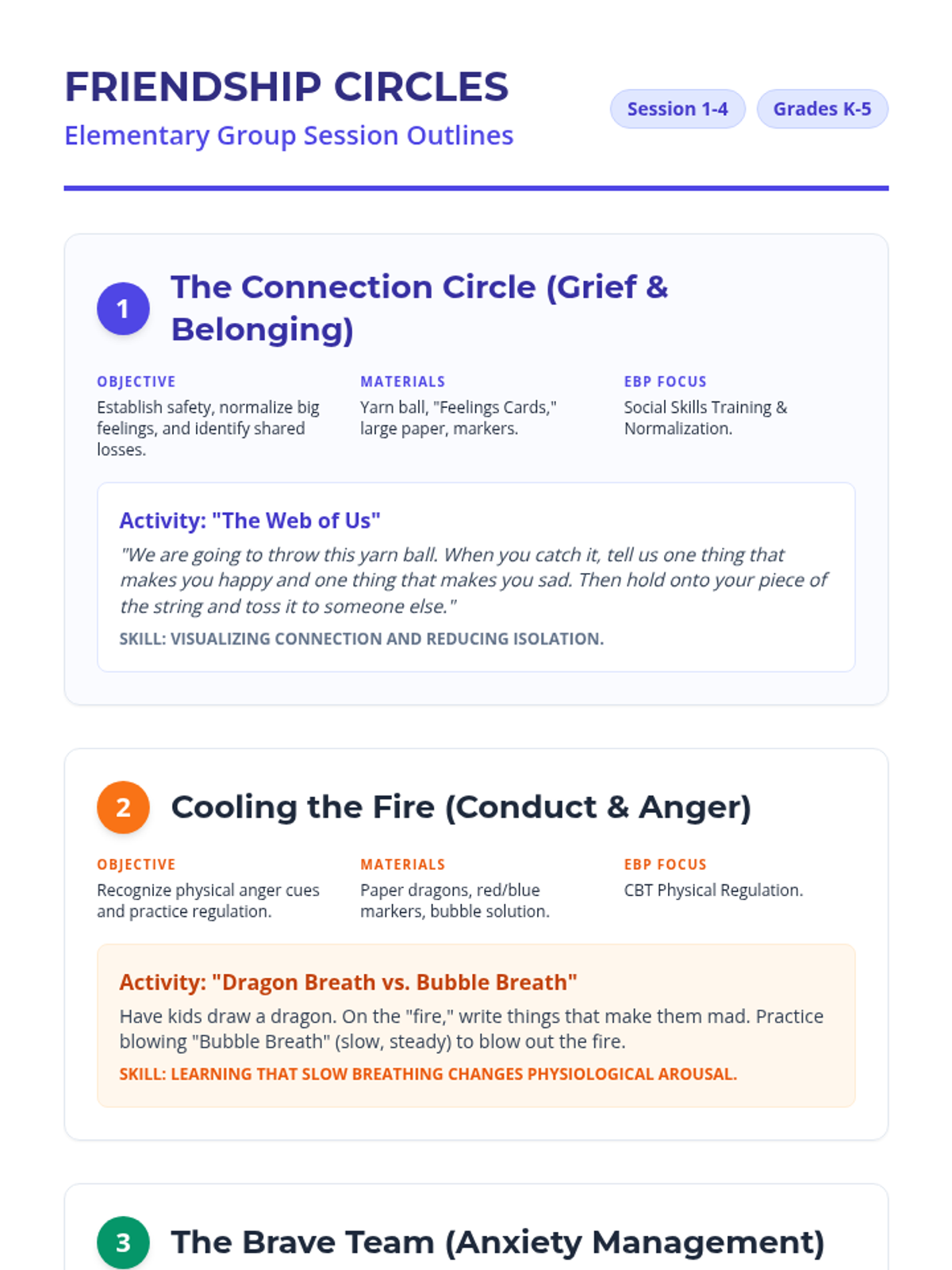
Developmentally appropriate interventions for elementary students focusing on play-based CBT, social-emotional learning, and kid-friendly safety planning.
A comprehensive suite of calming, nature-inspired office decor for a school social worker, featuring posters, interactive tools, and affirmation cards.
A comprehensive update to the summer coping skills packet, featuring interactive movement activities, new grounding techniques, and a video vault for digital support.
This lesson provides school social workers with a clinical and practical framework for identifying and supporting students struggling with anxiety, depression, and self-harm. It includes evidence-based interventions and safety planning tools specifically for the school environment.
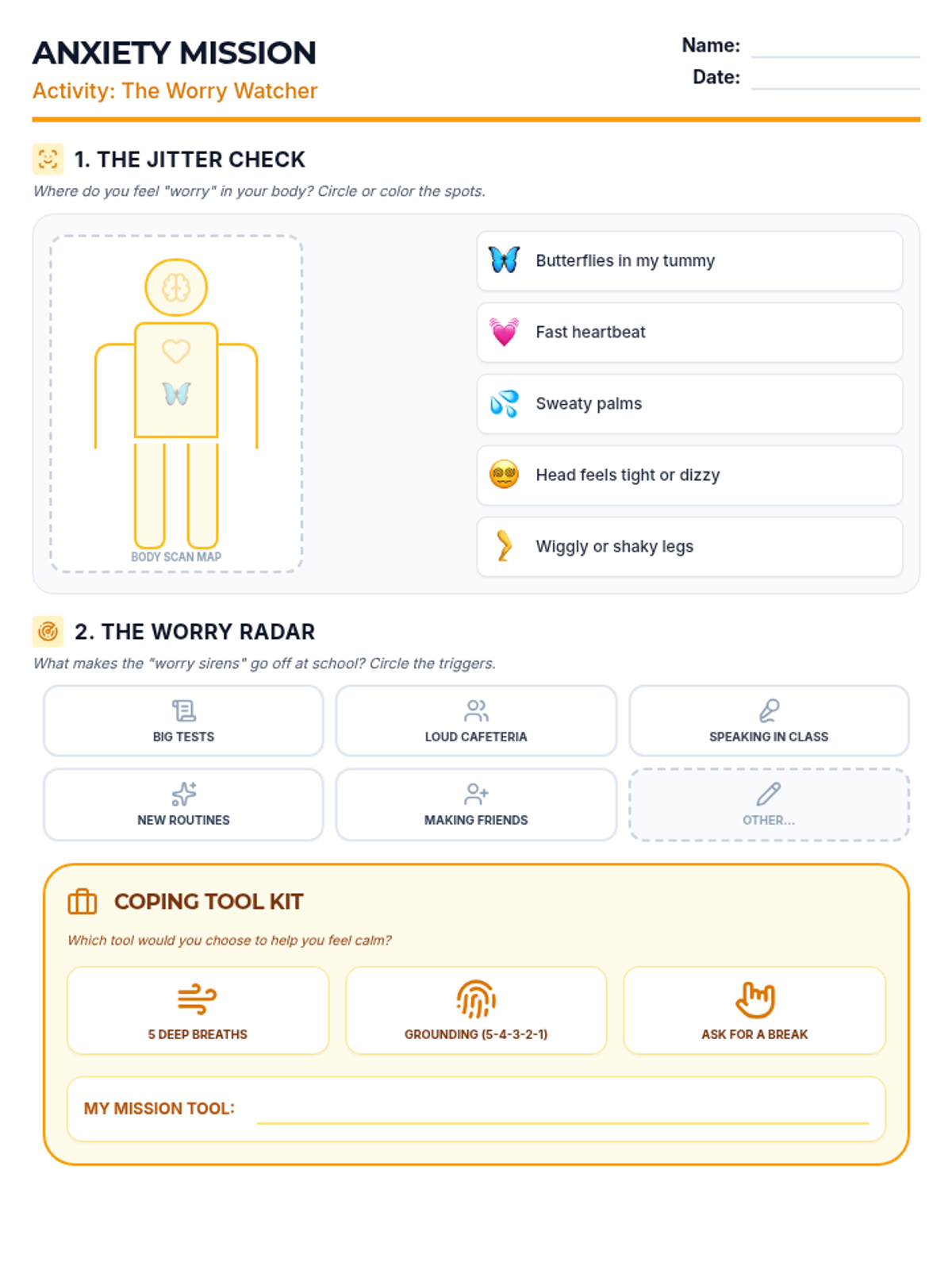
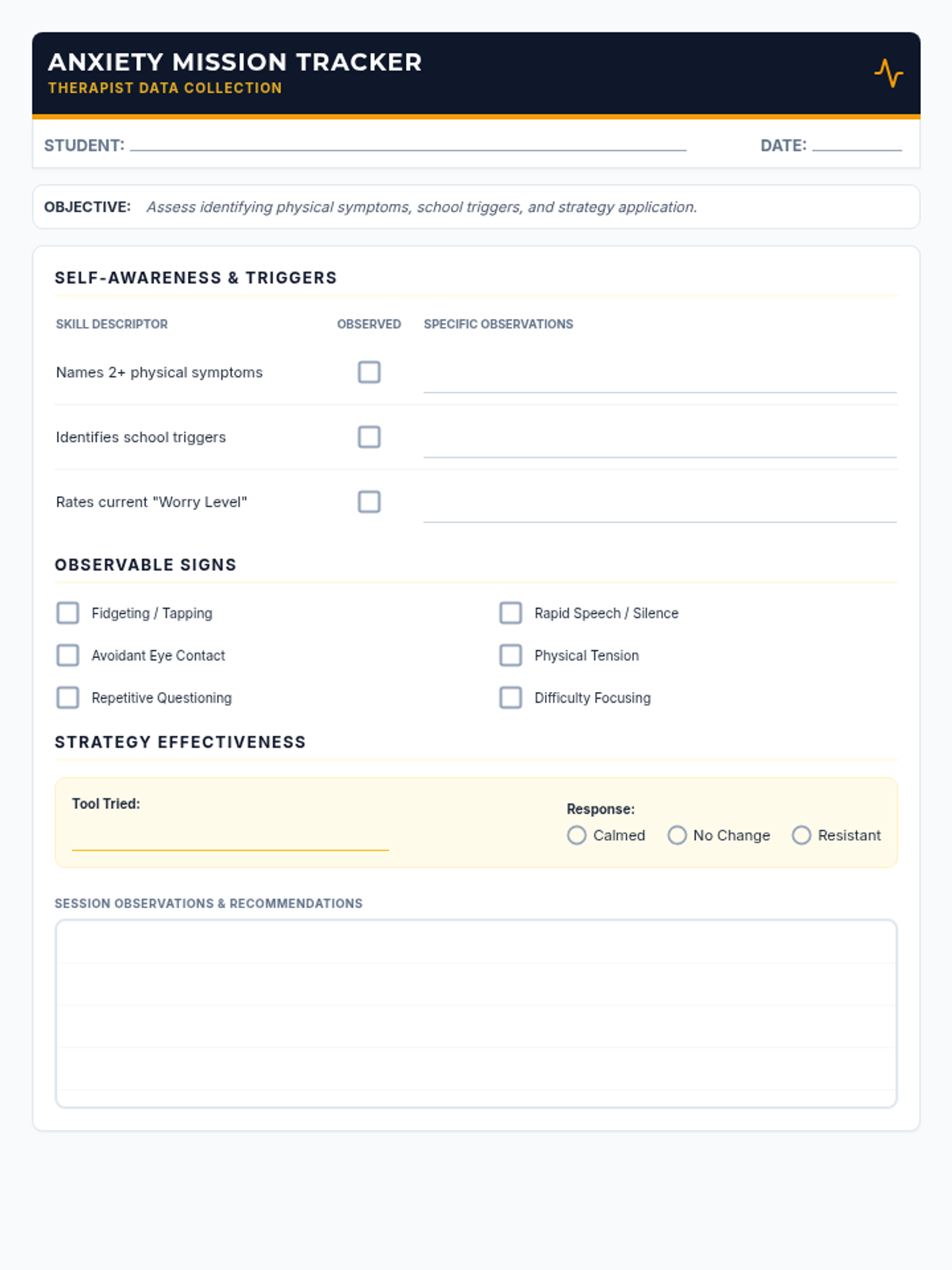
A 15-minute session assessing physiological indicators of anxiety, school-based triggers, and the effectiveness of identified coping strategies through a 'Worry Watch' investigation.
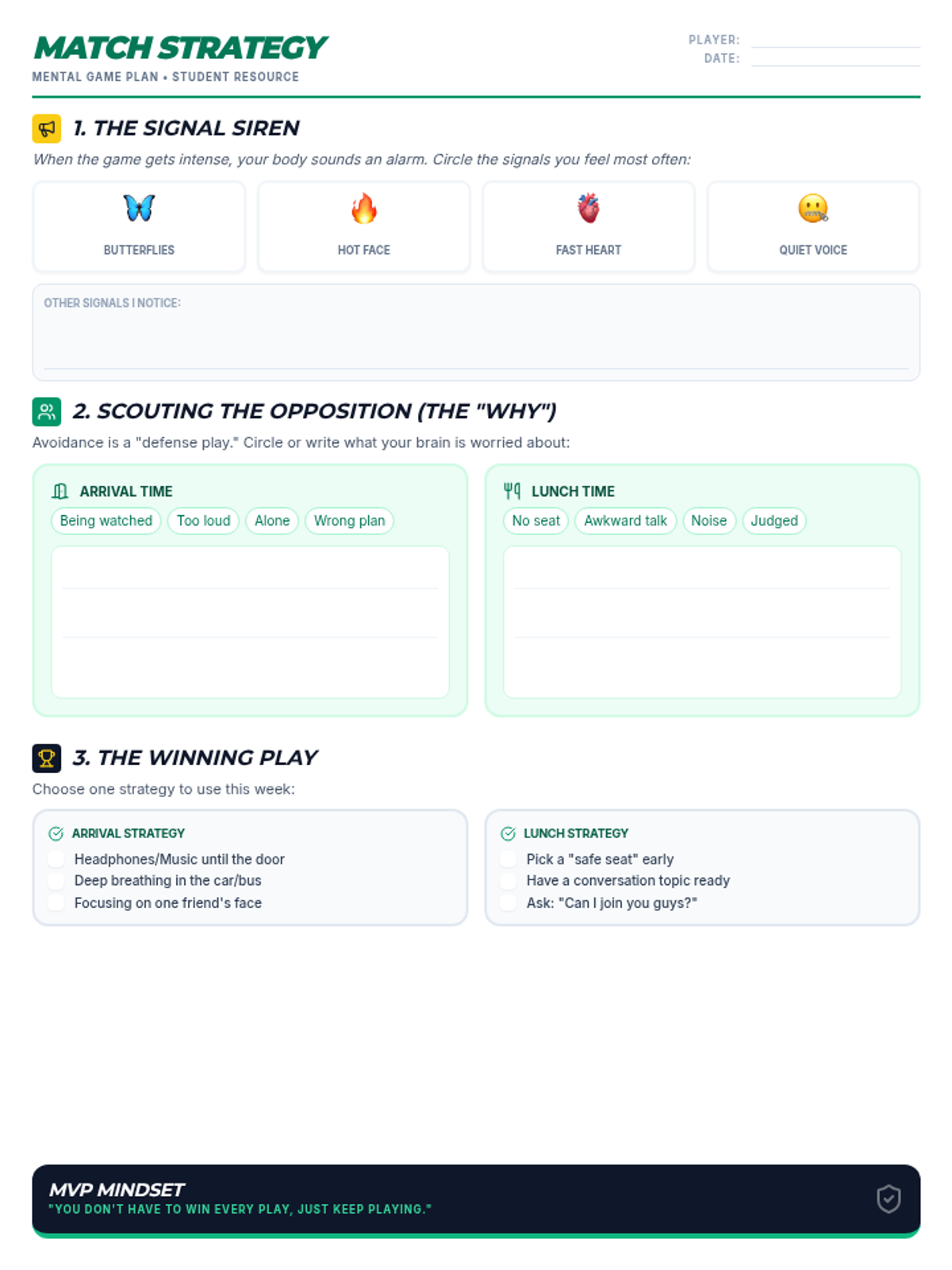
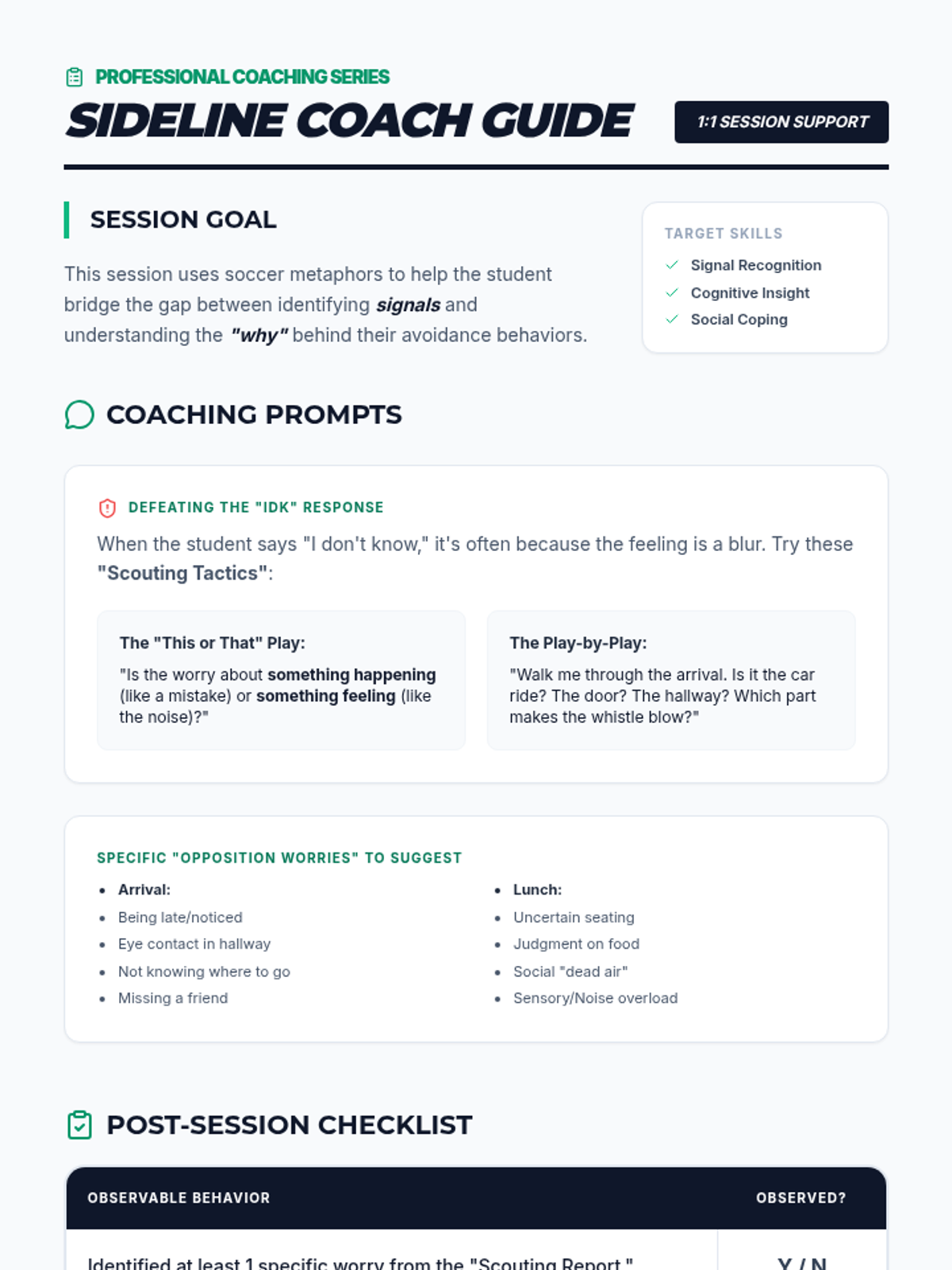
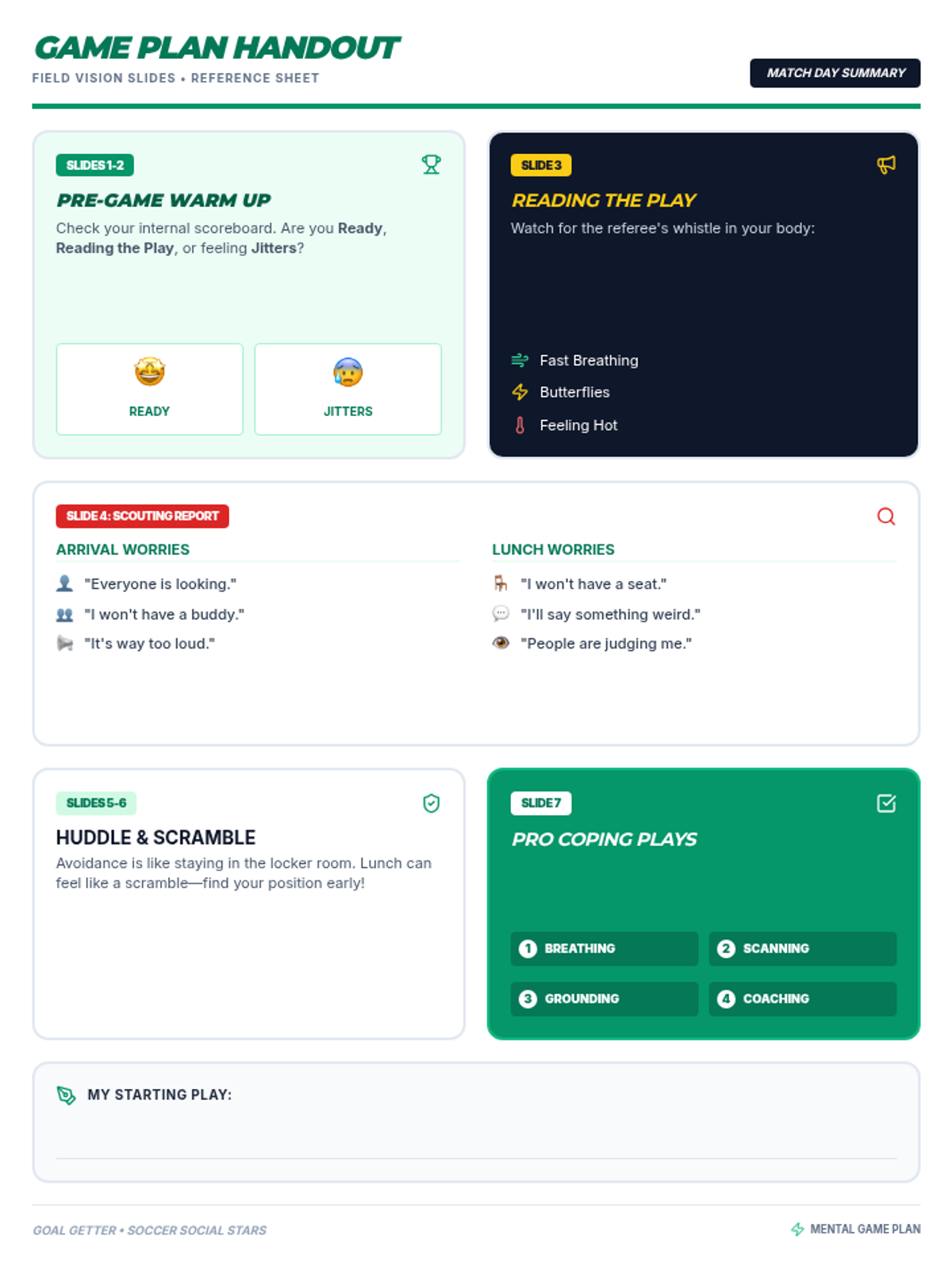
Focuses on identifying the 'why' behind avoidance of arrival and lunch through soccer analogies, identifying physical signals, and selecting coping strategies.
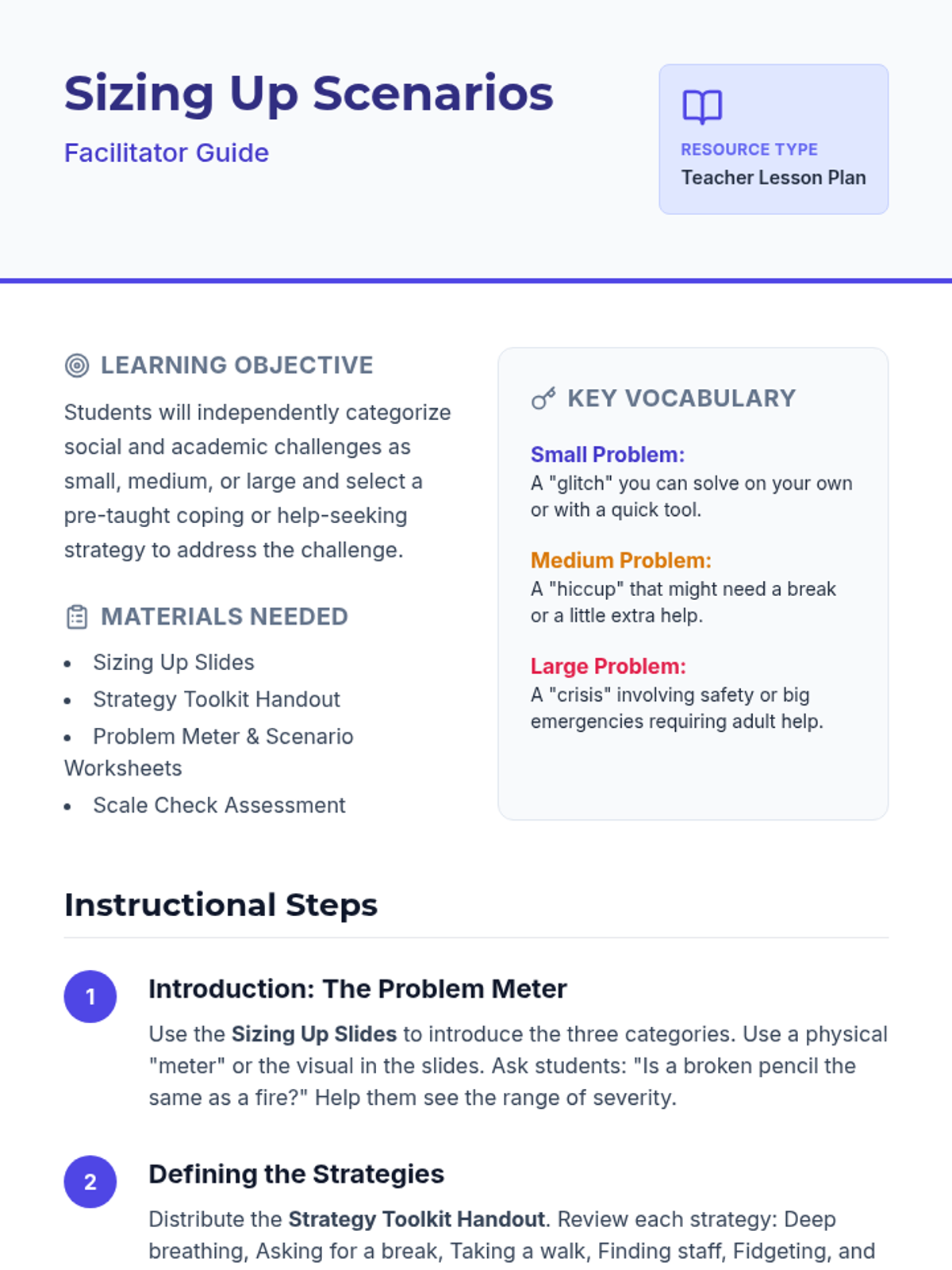
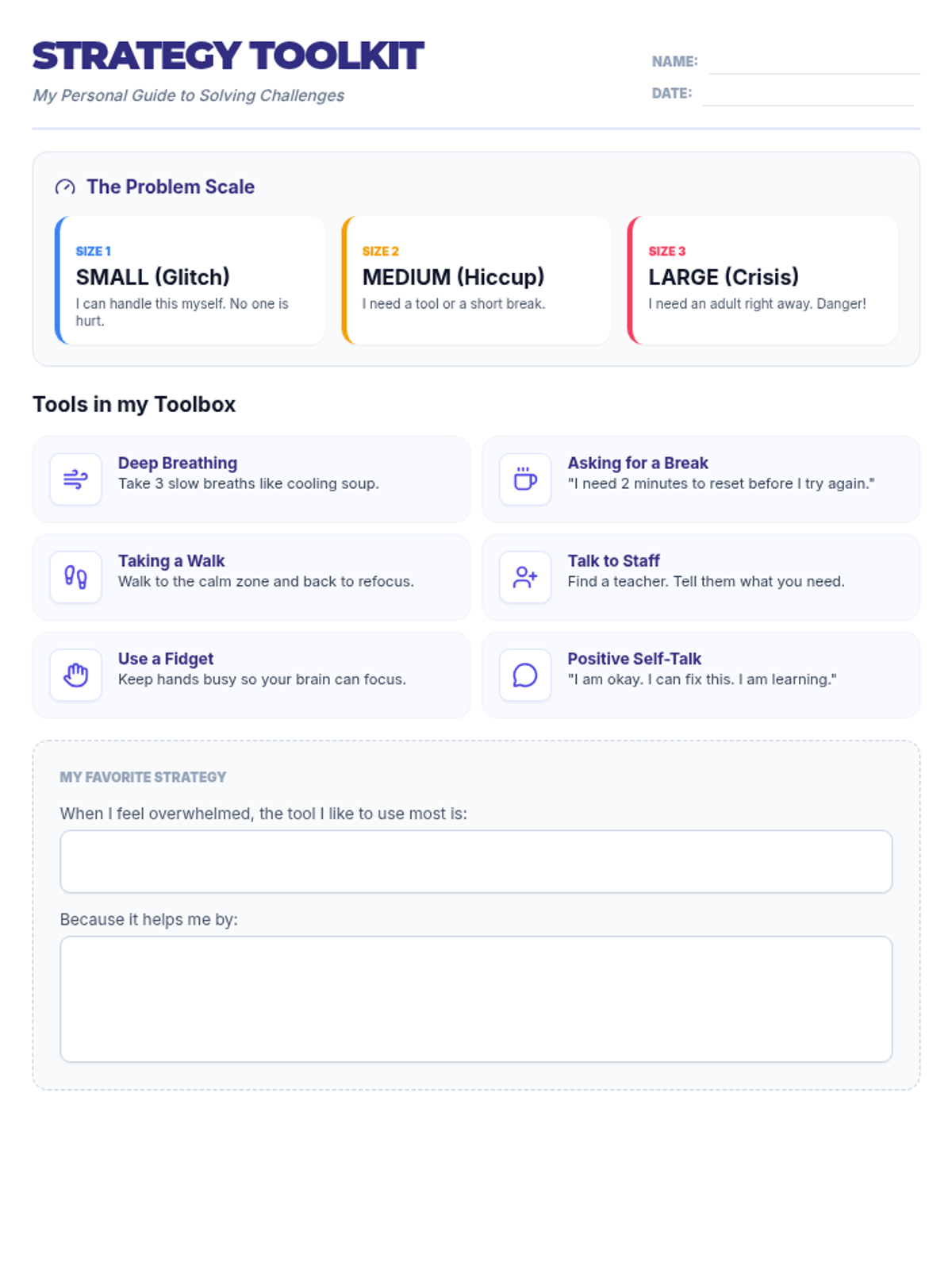
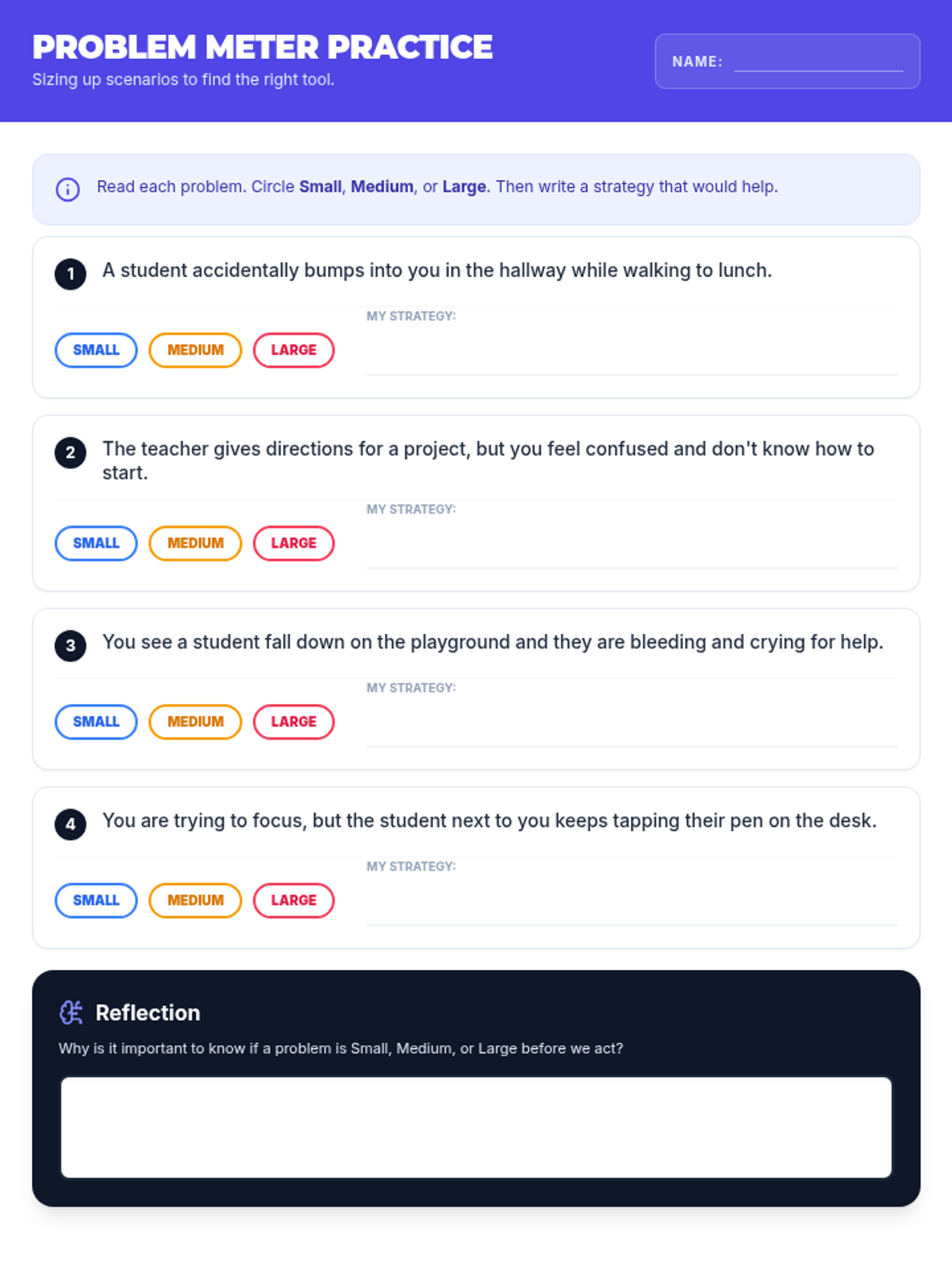
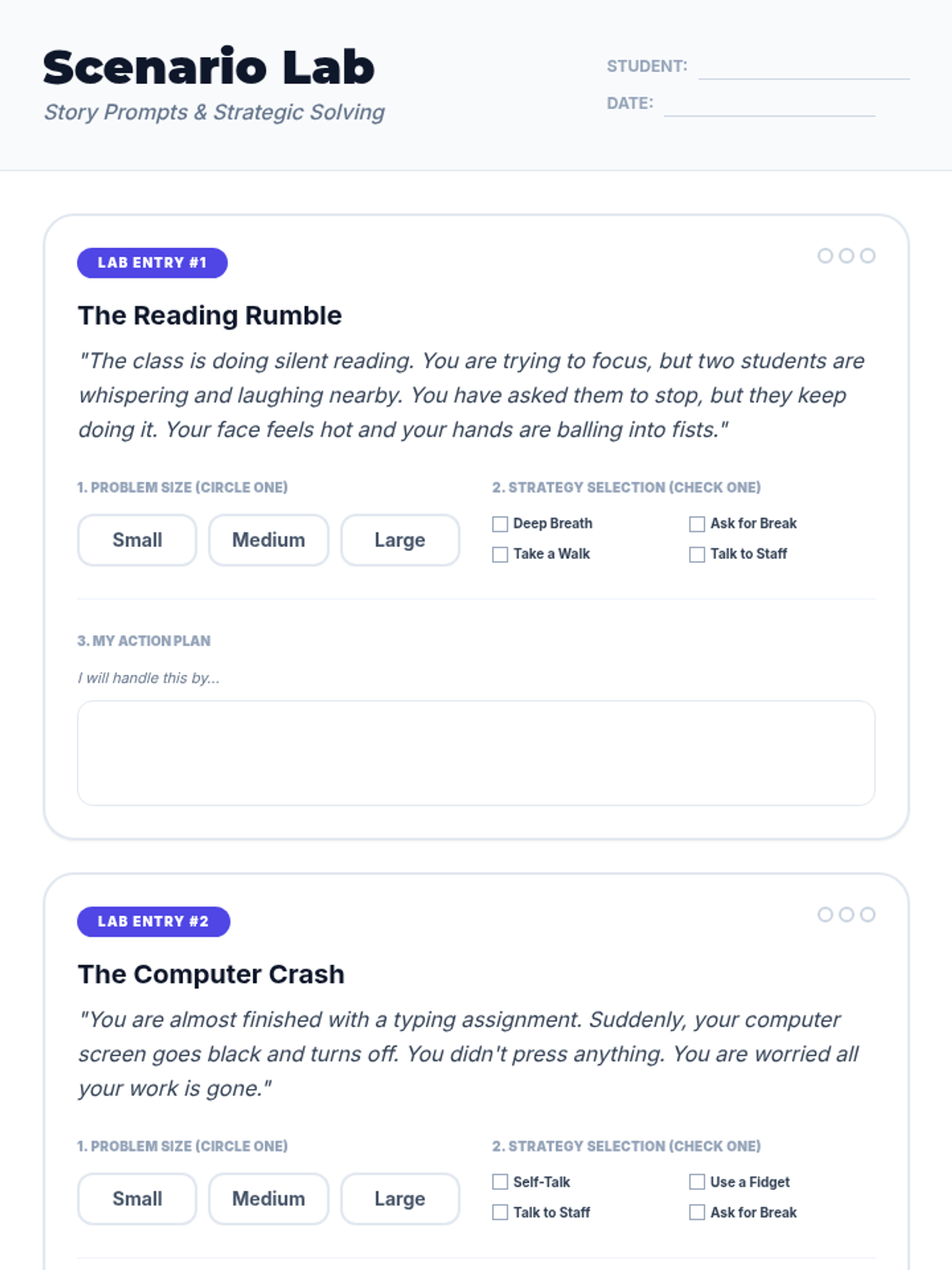
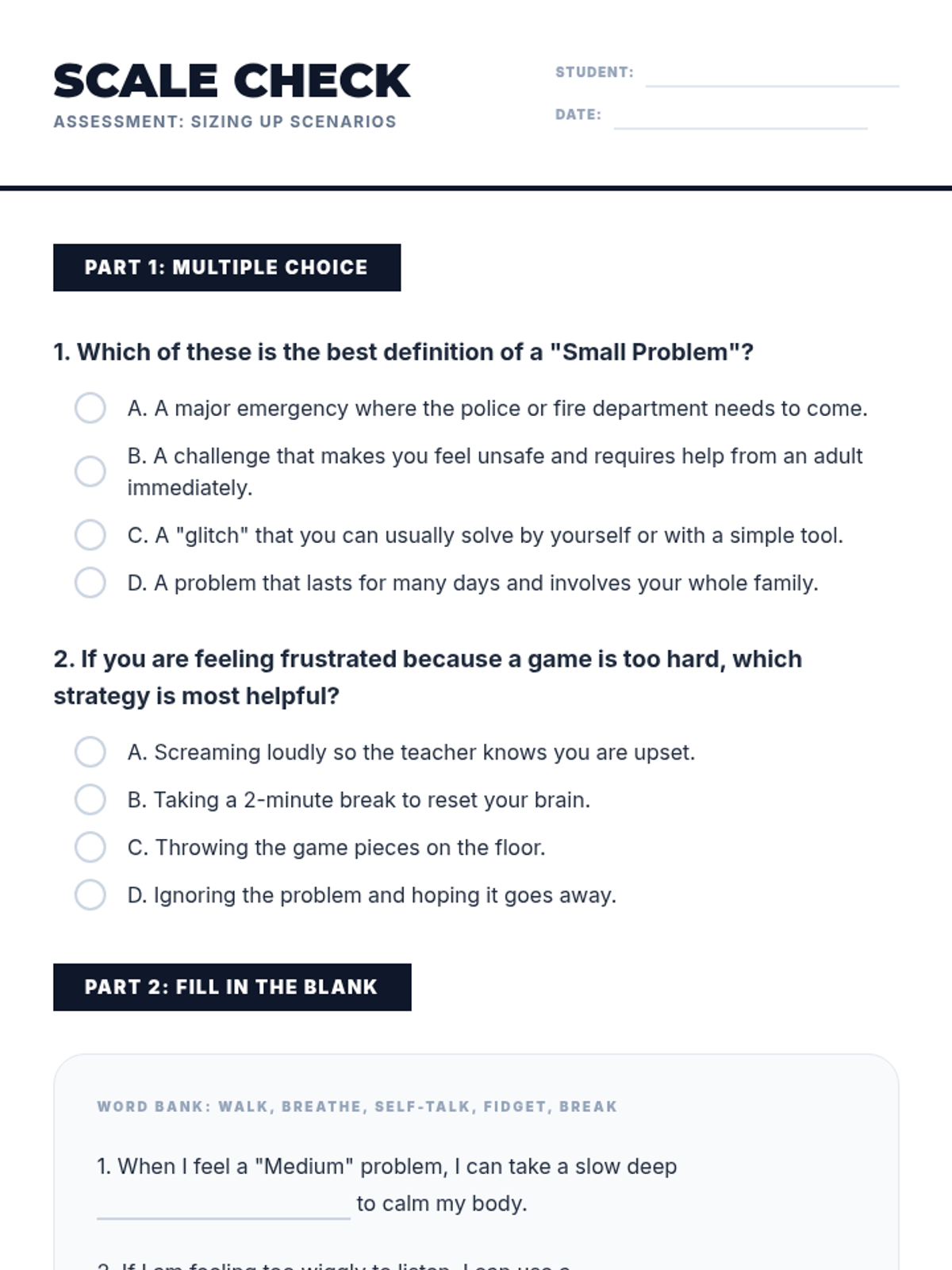
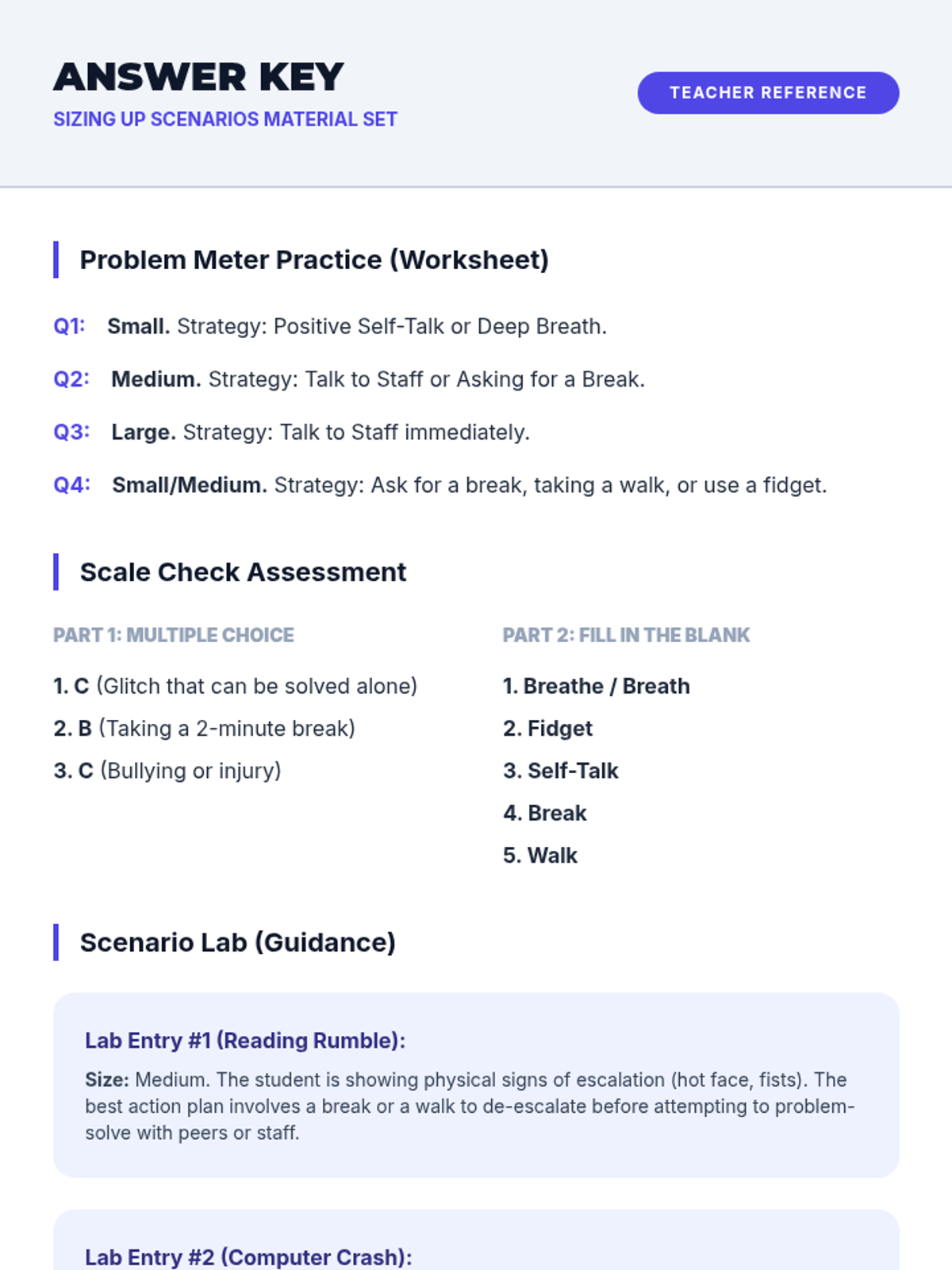
Students learn to categorize problems into small, medium, and large sizes and pair them with effective coping strategies like deep breathing or asking for help.
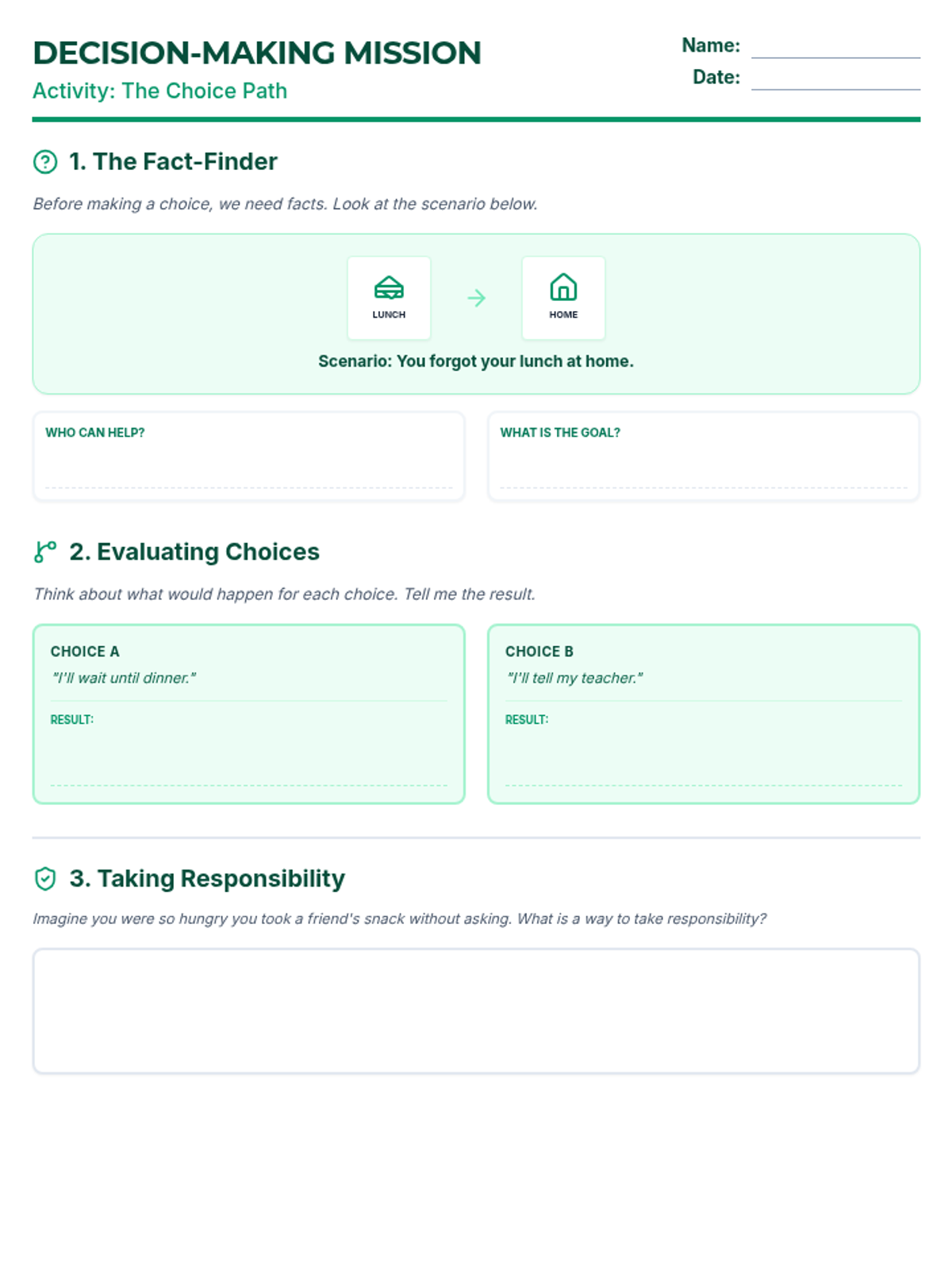
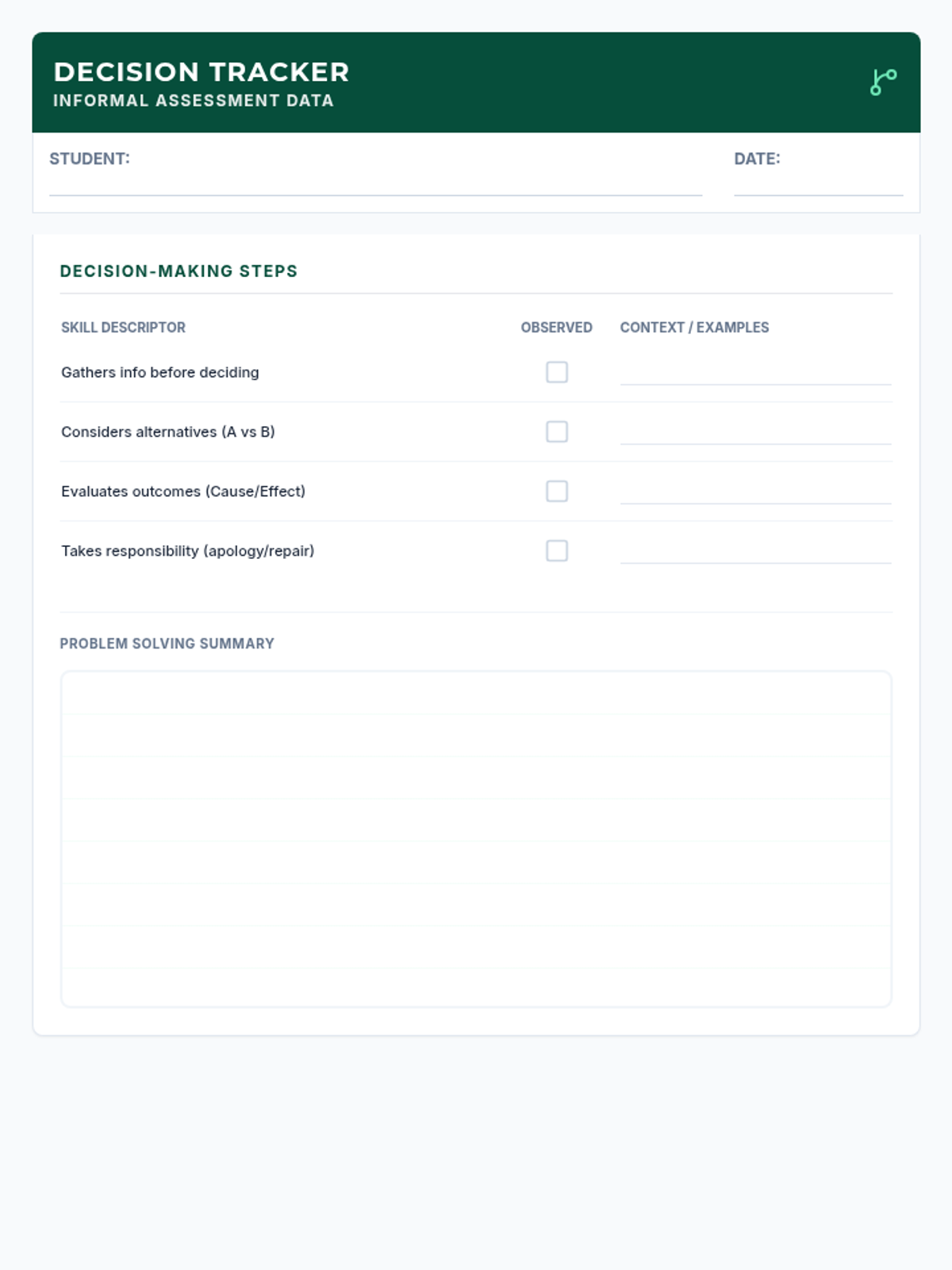
A 15-minute session assessing problem-solving steps and choice evaluation using simple scenario "Choice Path" cards.
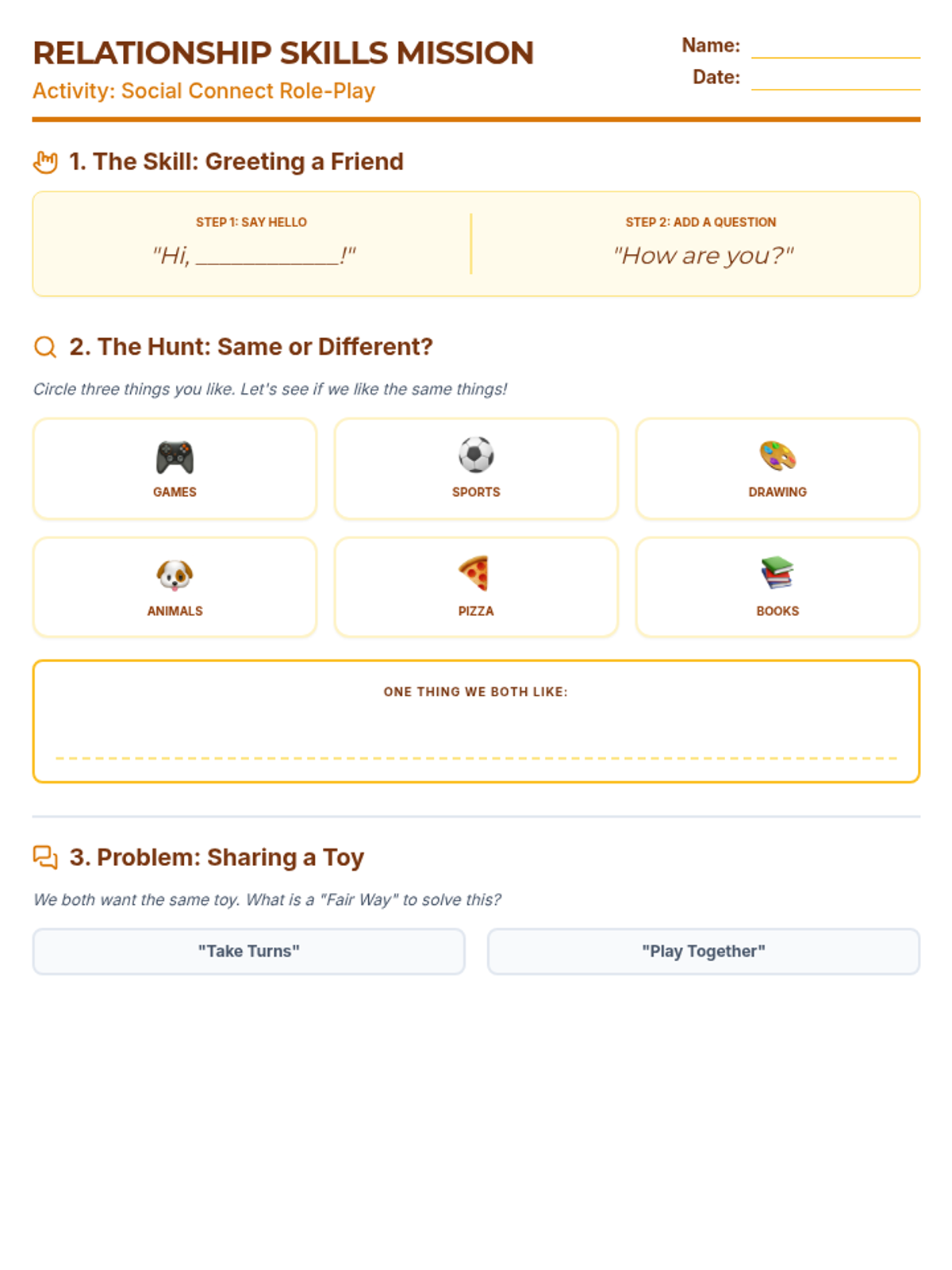
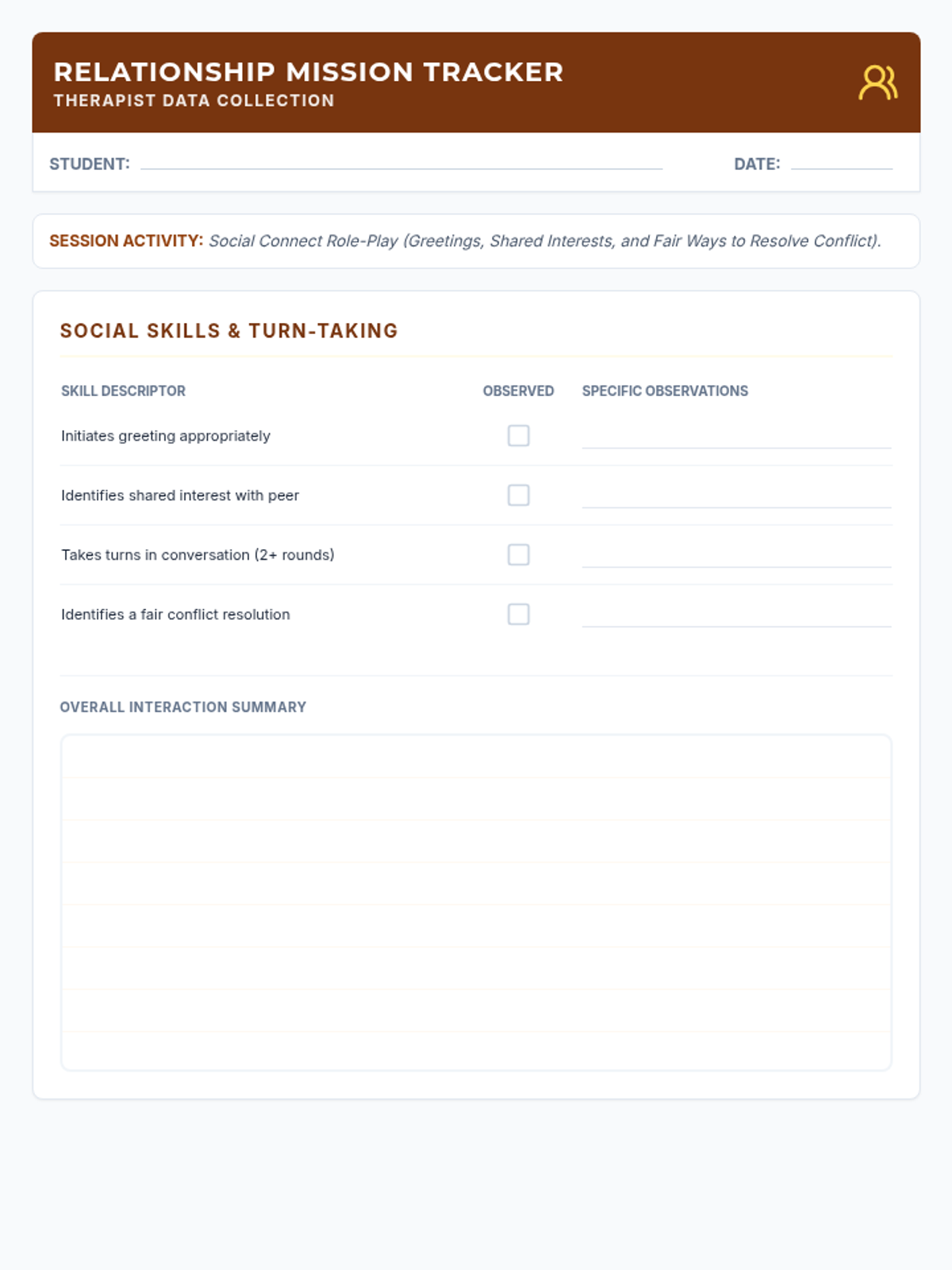
A 15-minute session focused on social greetings, reciprocal conversation, and identifying shared interests through a "Social Connect" role-play.
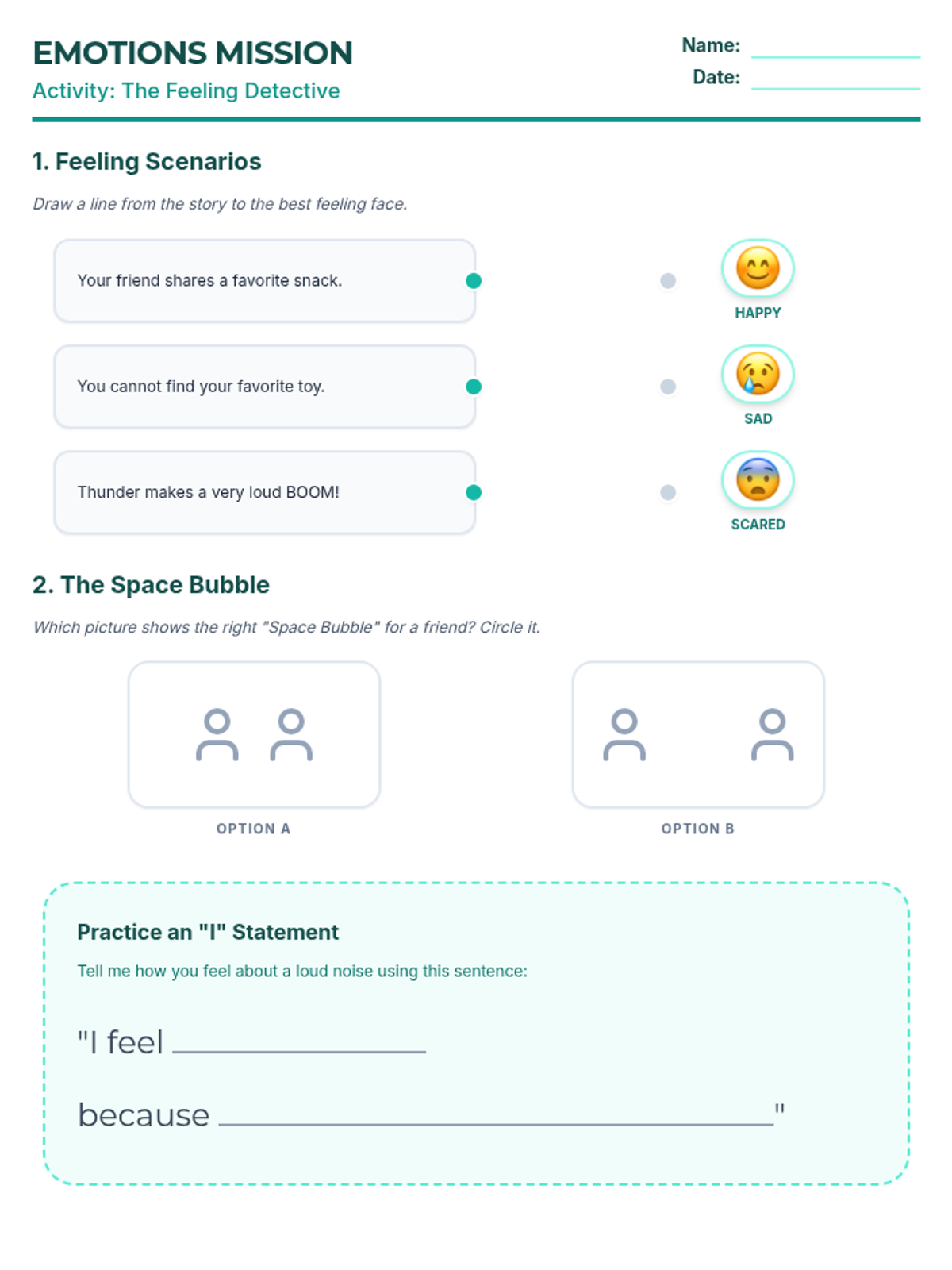
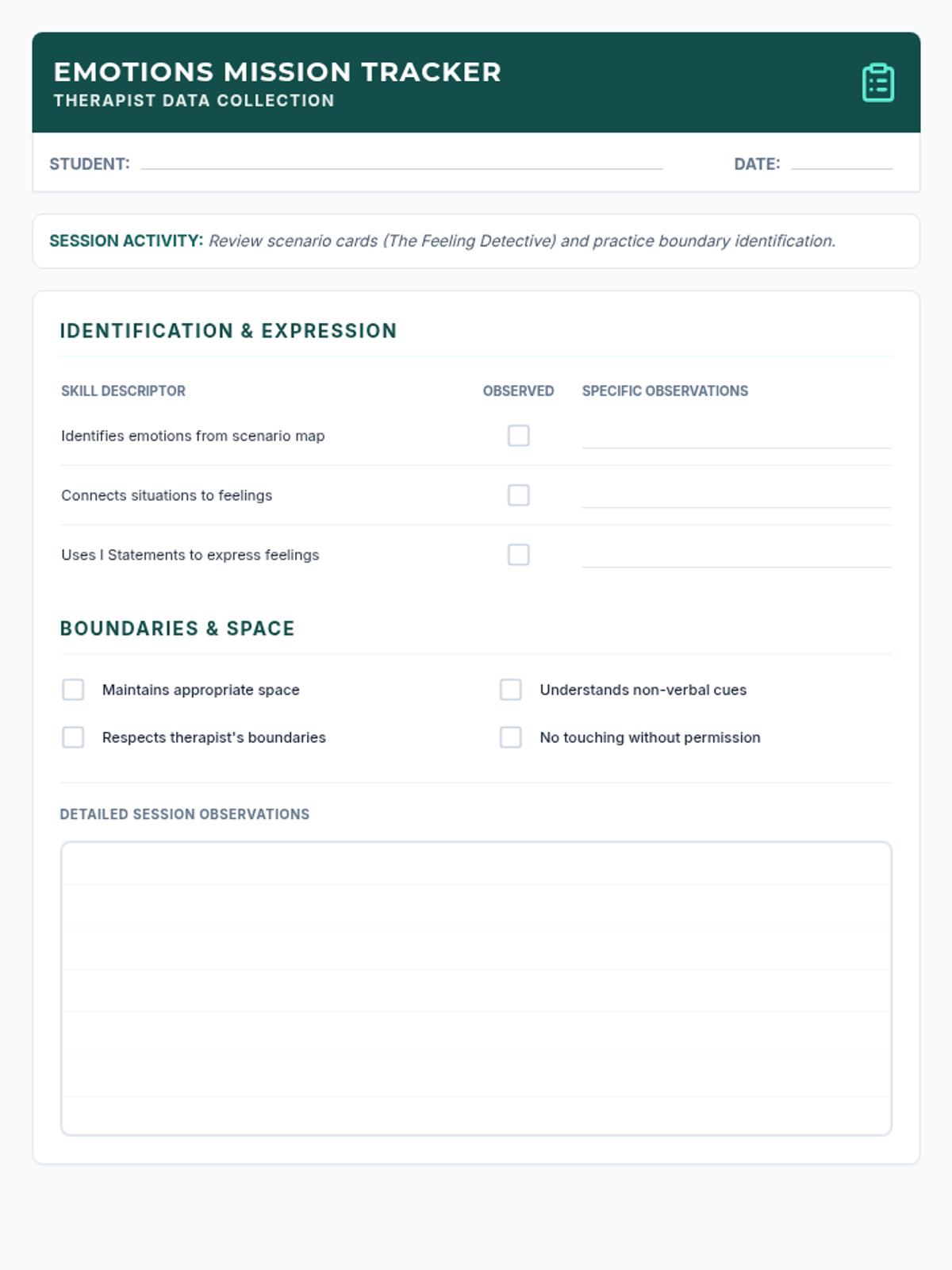
A 15-minute session to evaluate emotional identification, situational connection, and personal space boundaries using a "Feeling Detective" scenario map.
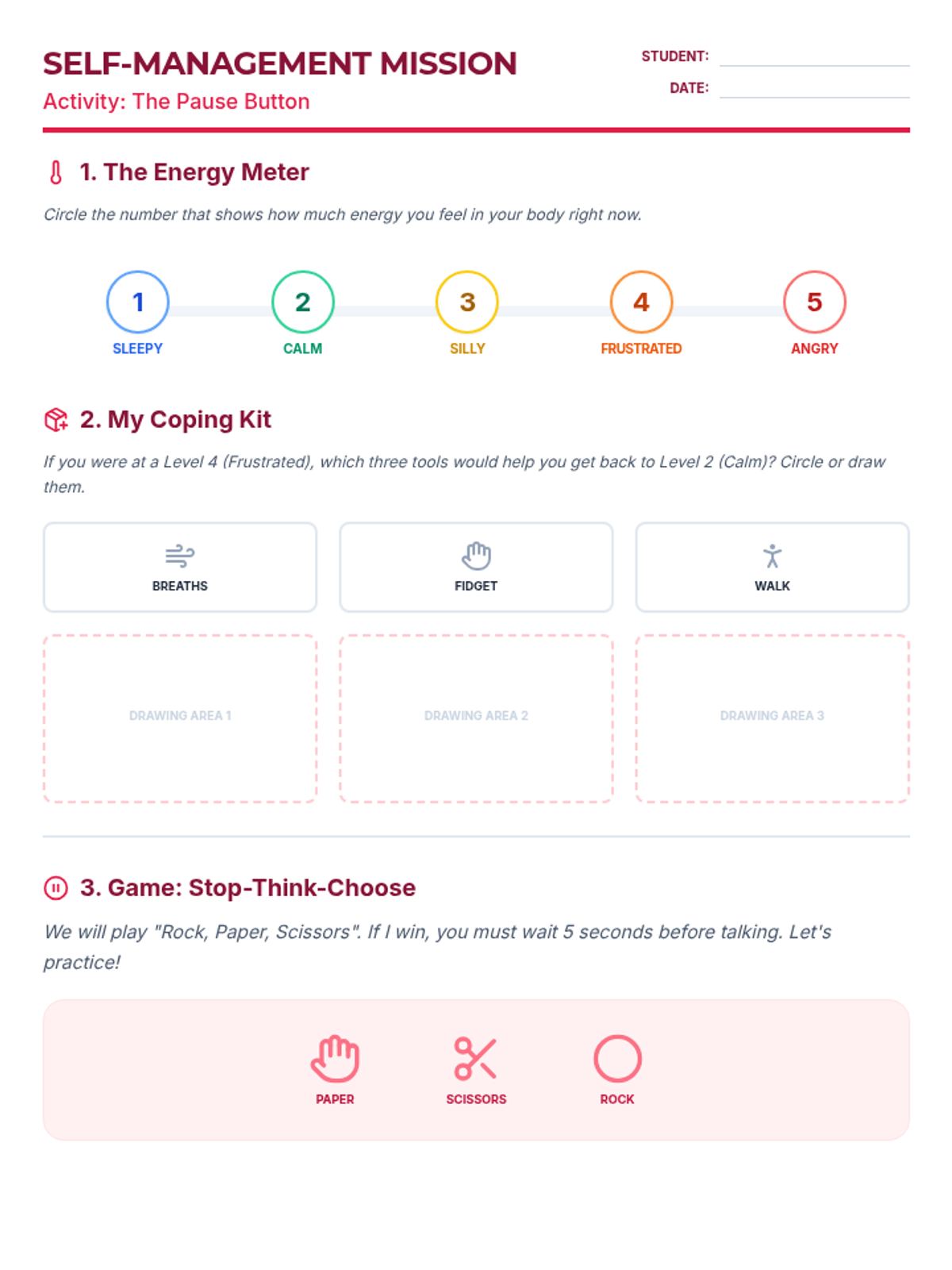
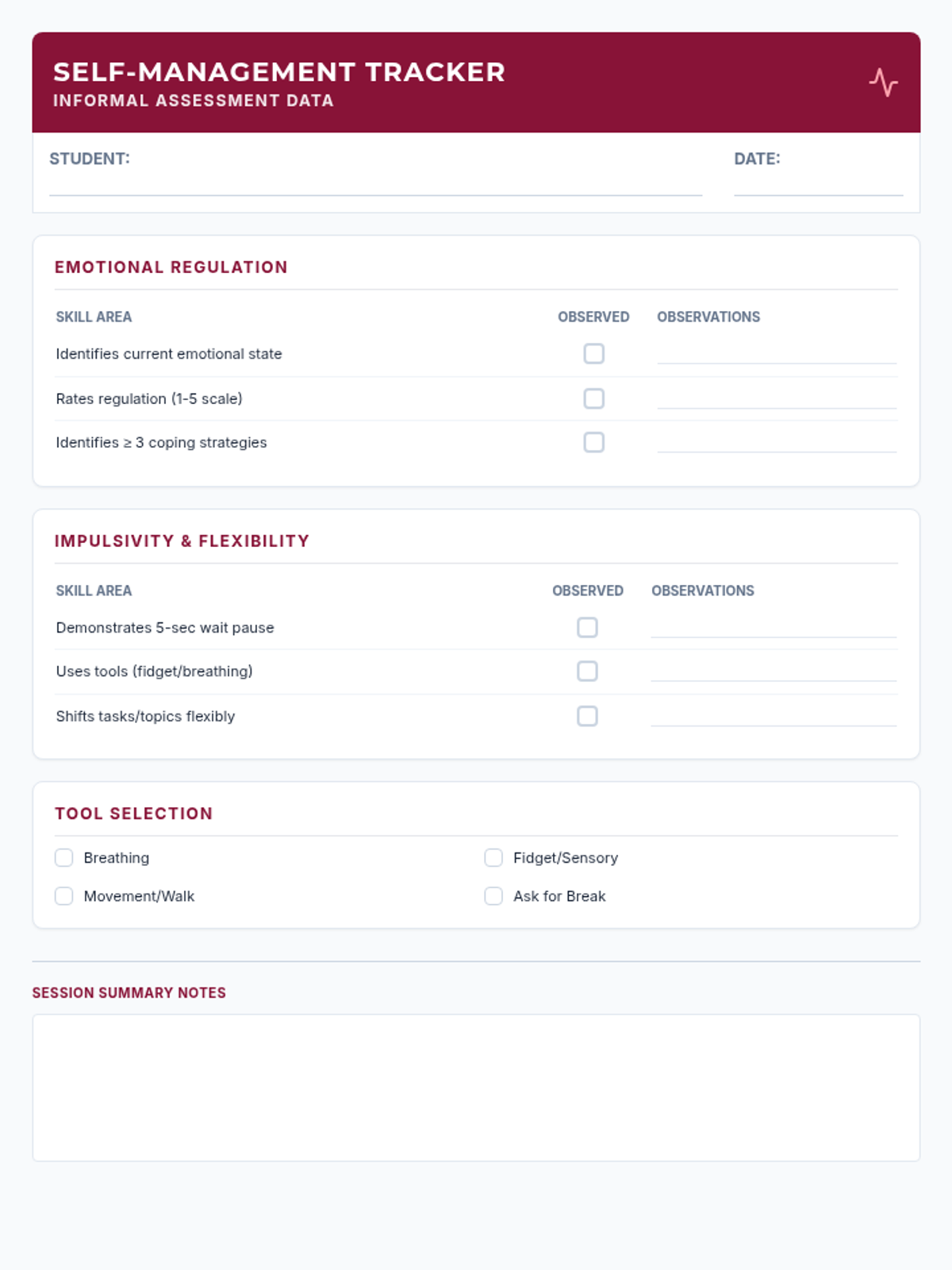
A 15-minute session assessing emotional regulation and impulsivity through the "Pause Button" game and coping strategy identification.
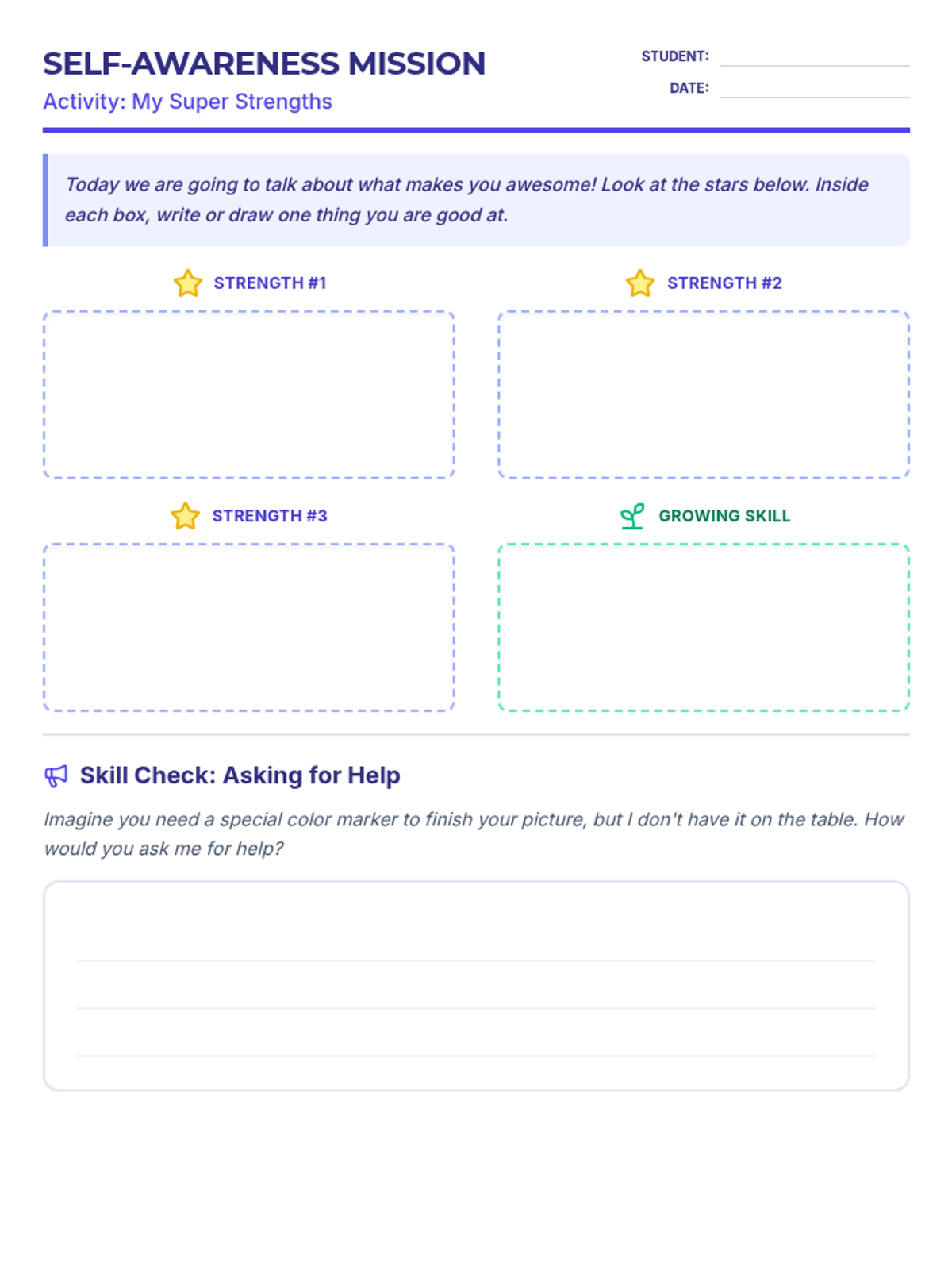
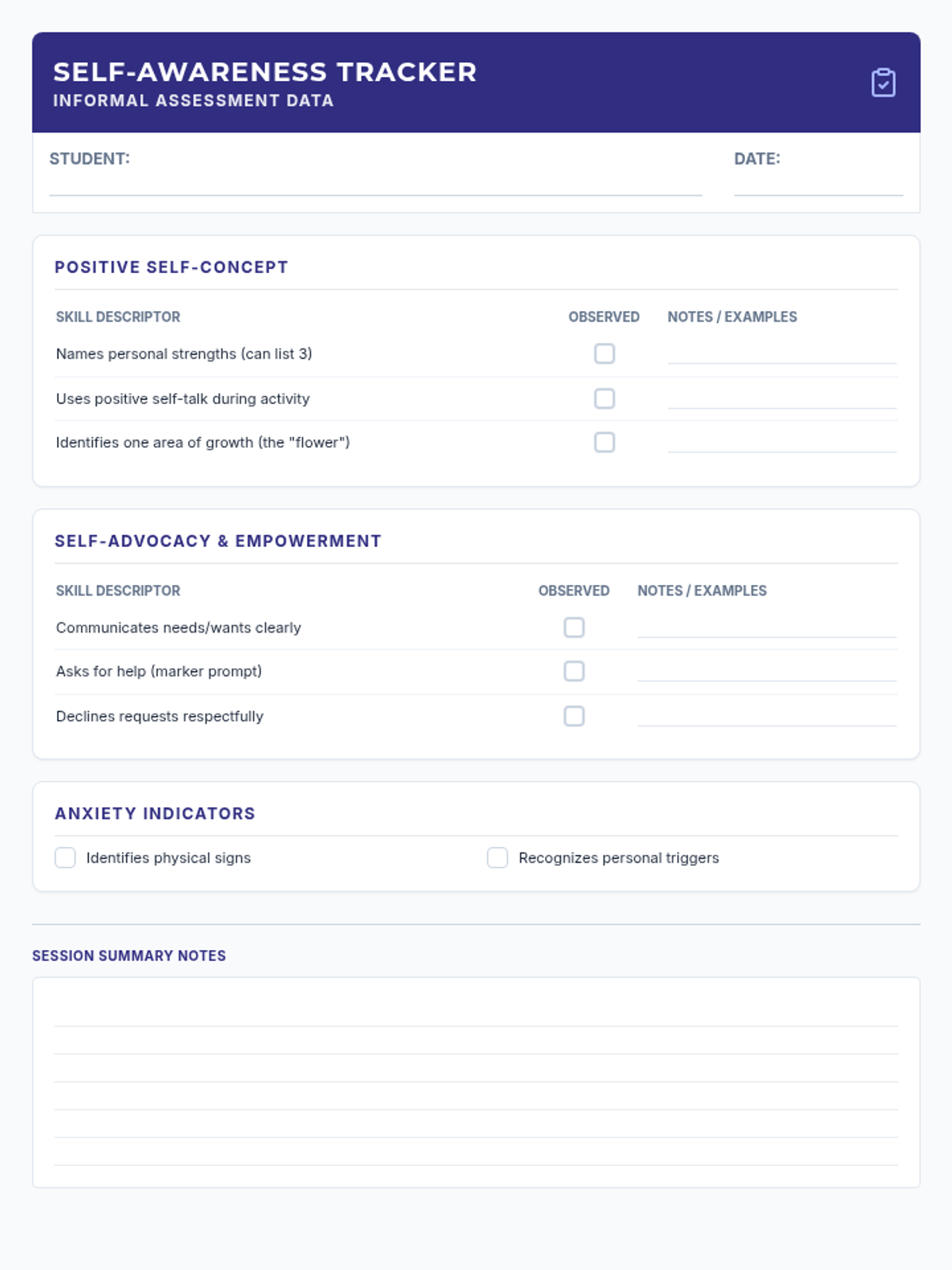
A 15-minute session focused on identifying personal strengths, areas of growth, and practicing self-advocacy through a "Super Strength" portrait activity.
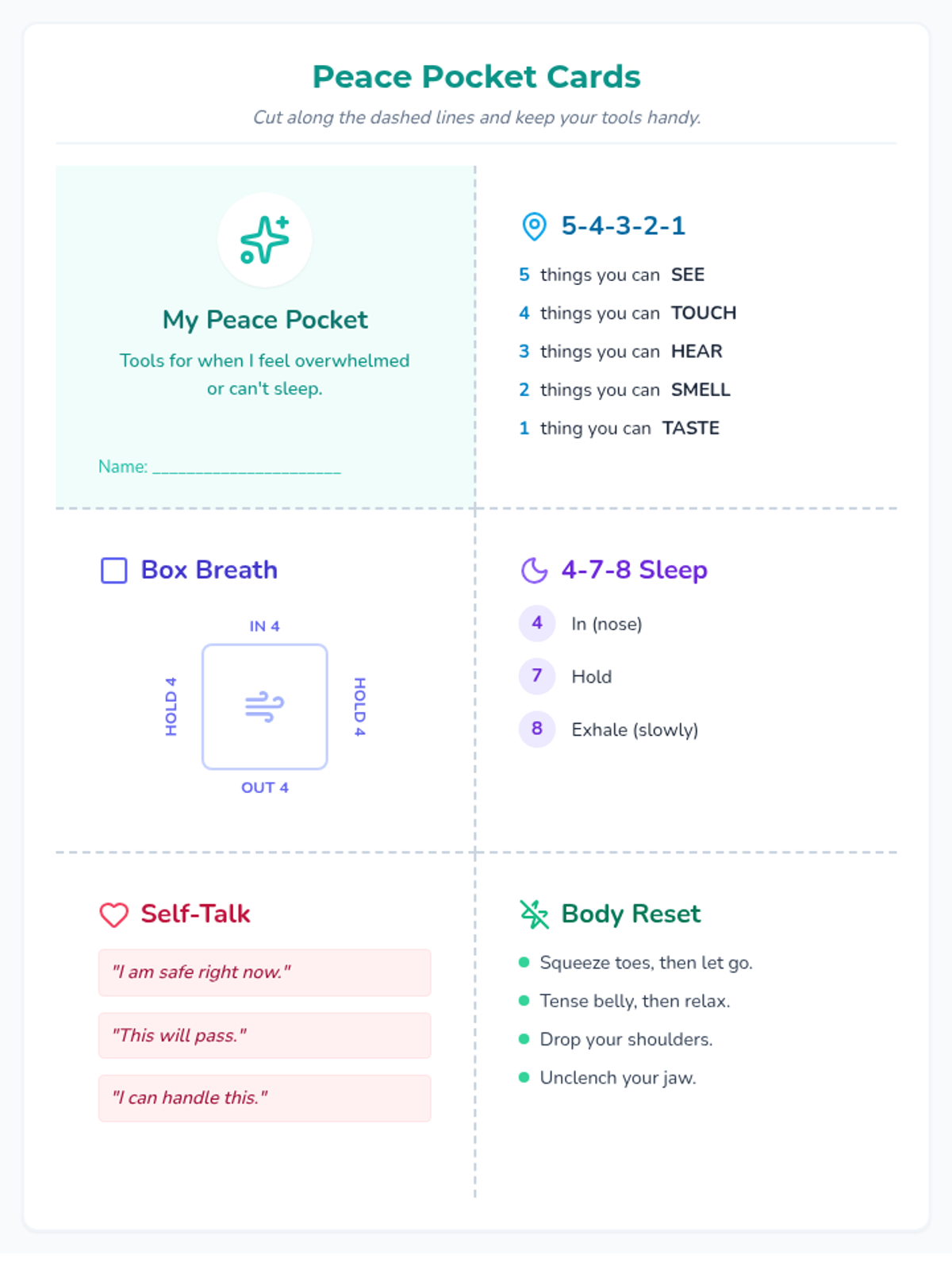
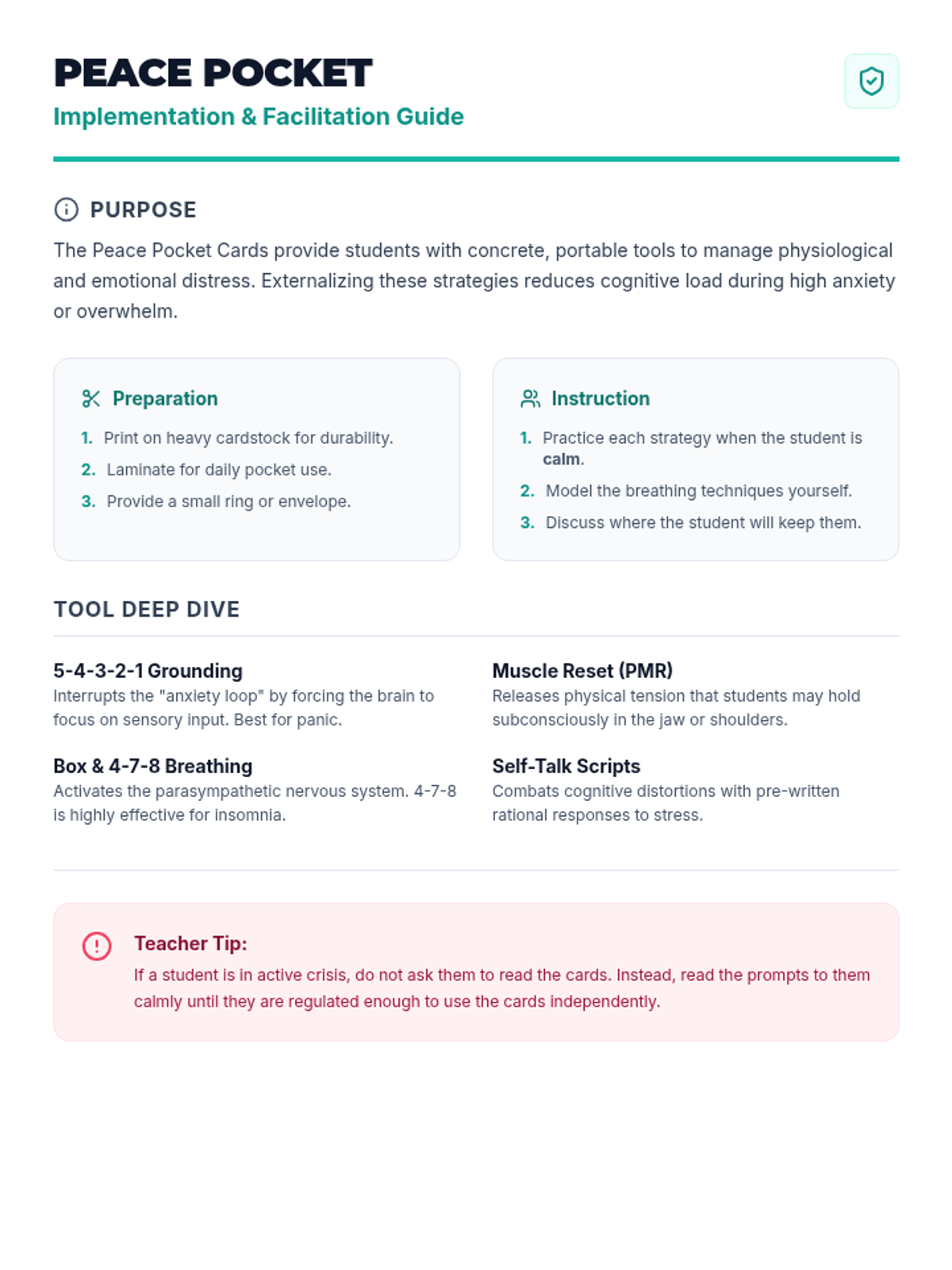
A collection of portable coping strategies designed to help students manage anxiety, sleep difficulties, and sensory overwhelm in the moment.
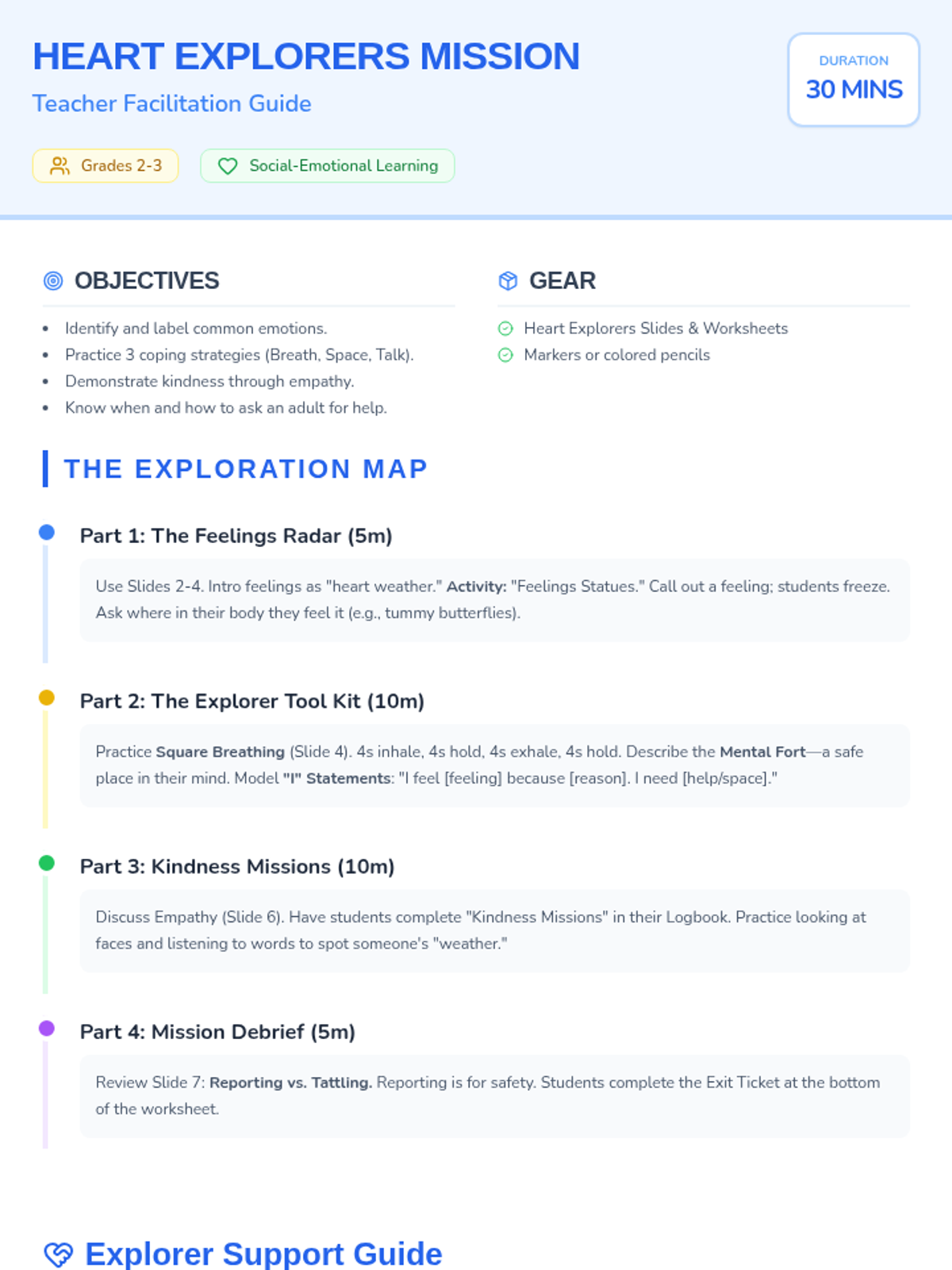
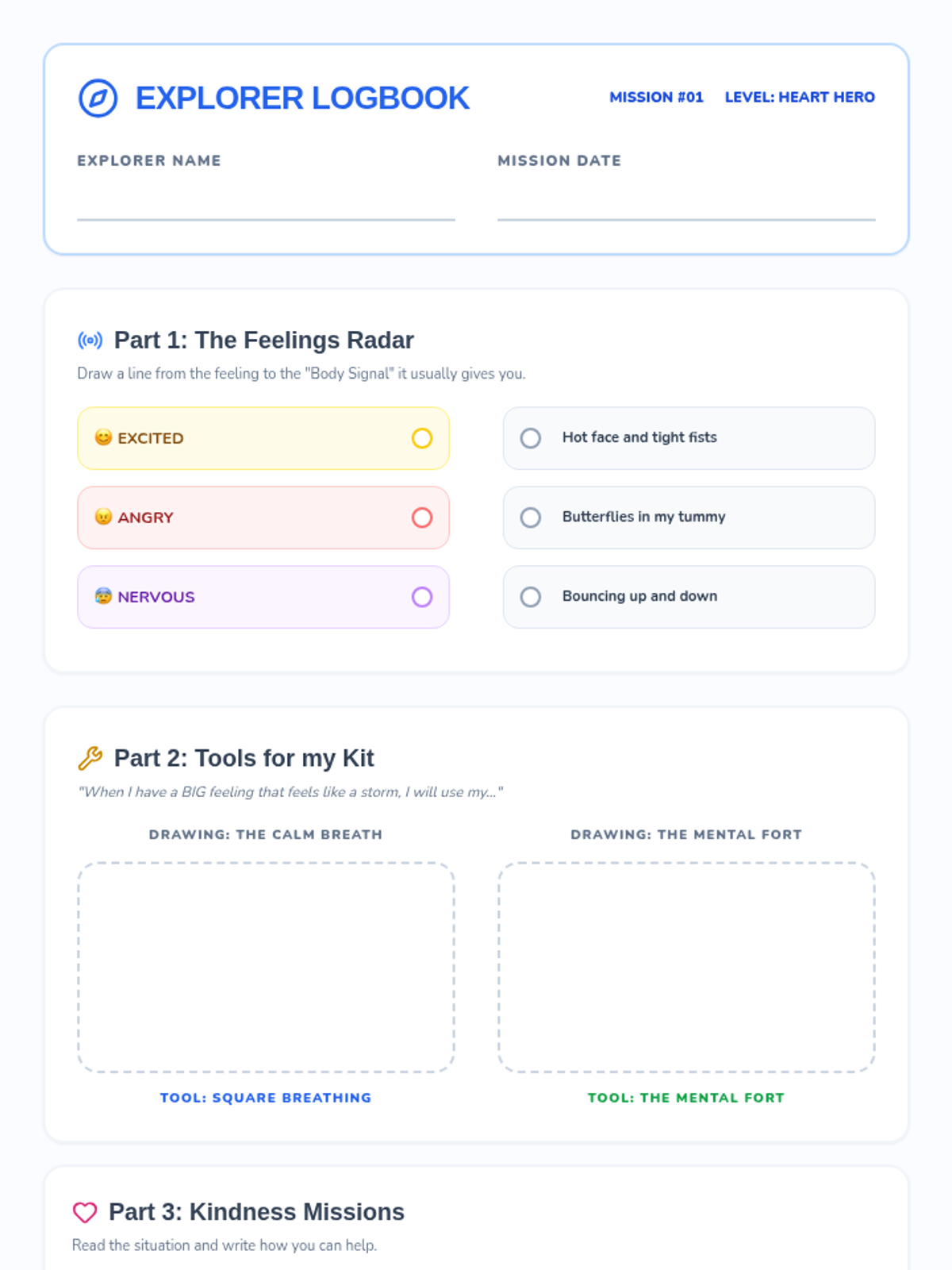
A 30-minute introductory lesson for 2nd and 3rd graders to identify feelings, practice coping strategies, and understand the importance of kindness and asking for help.
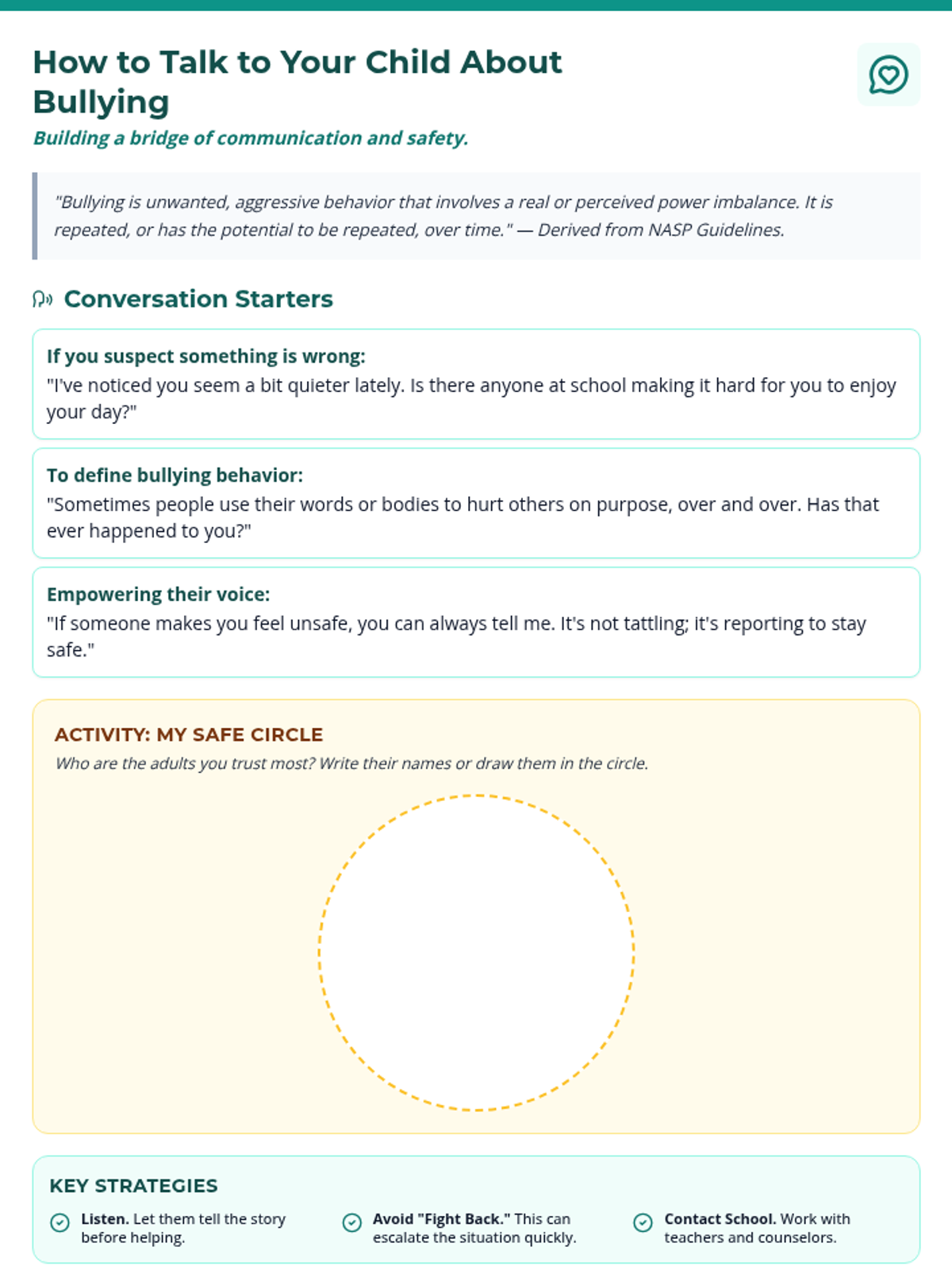
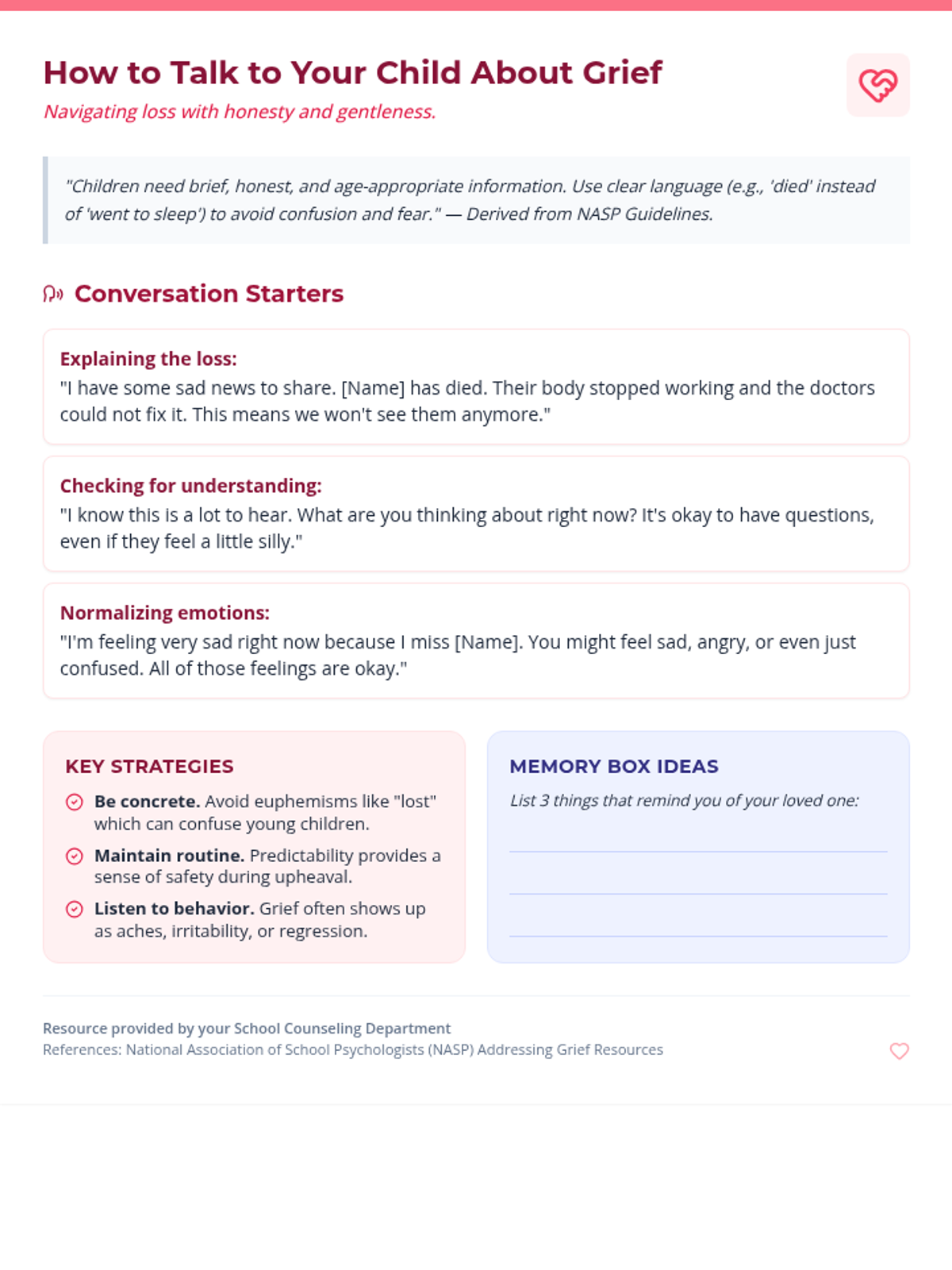
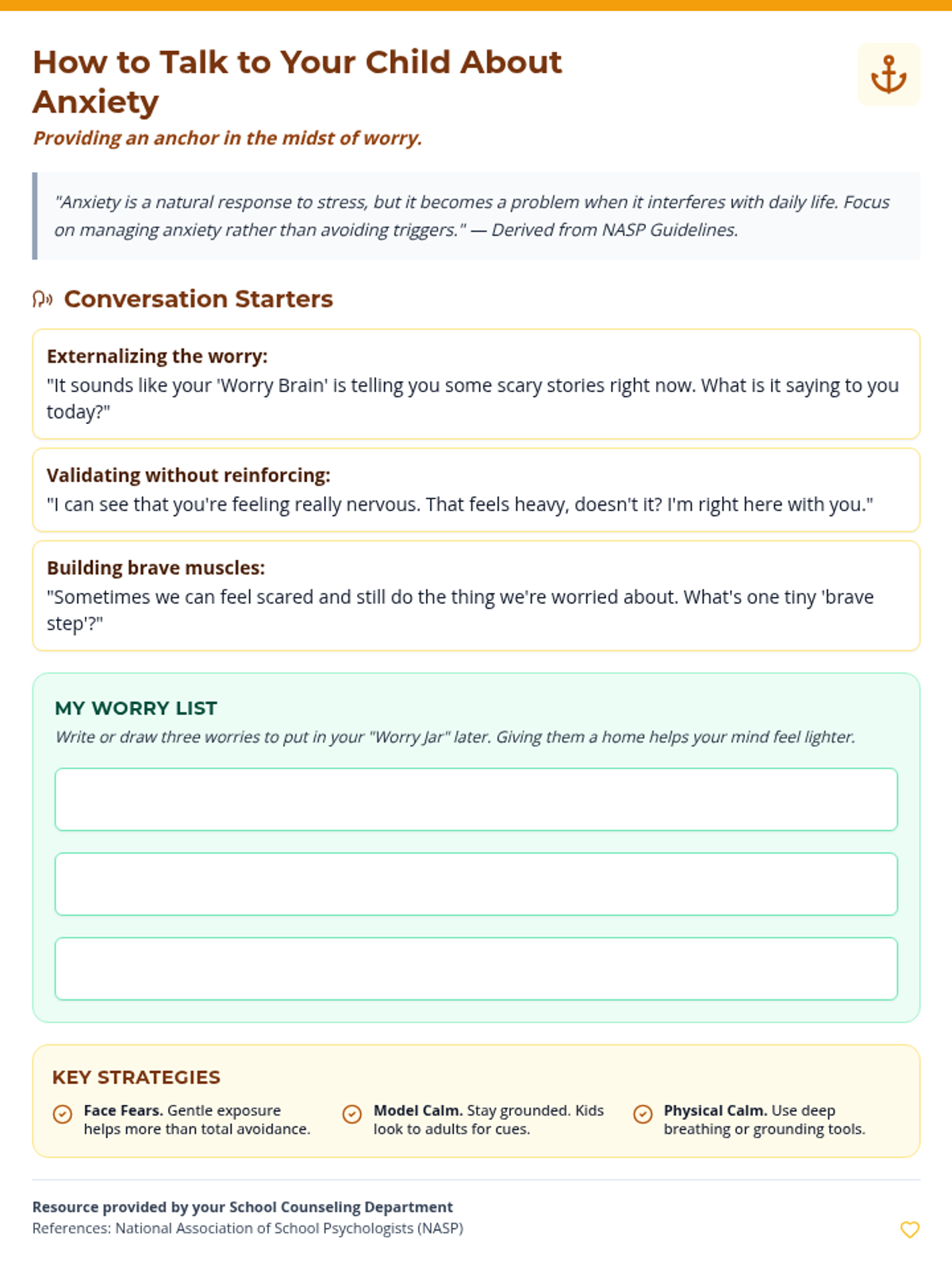
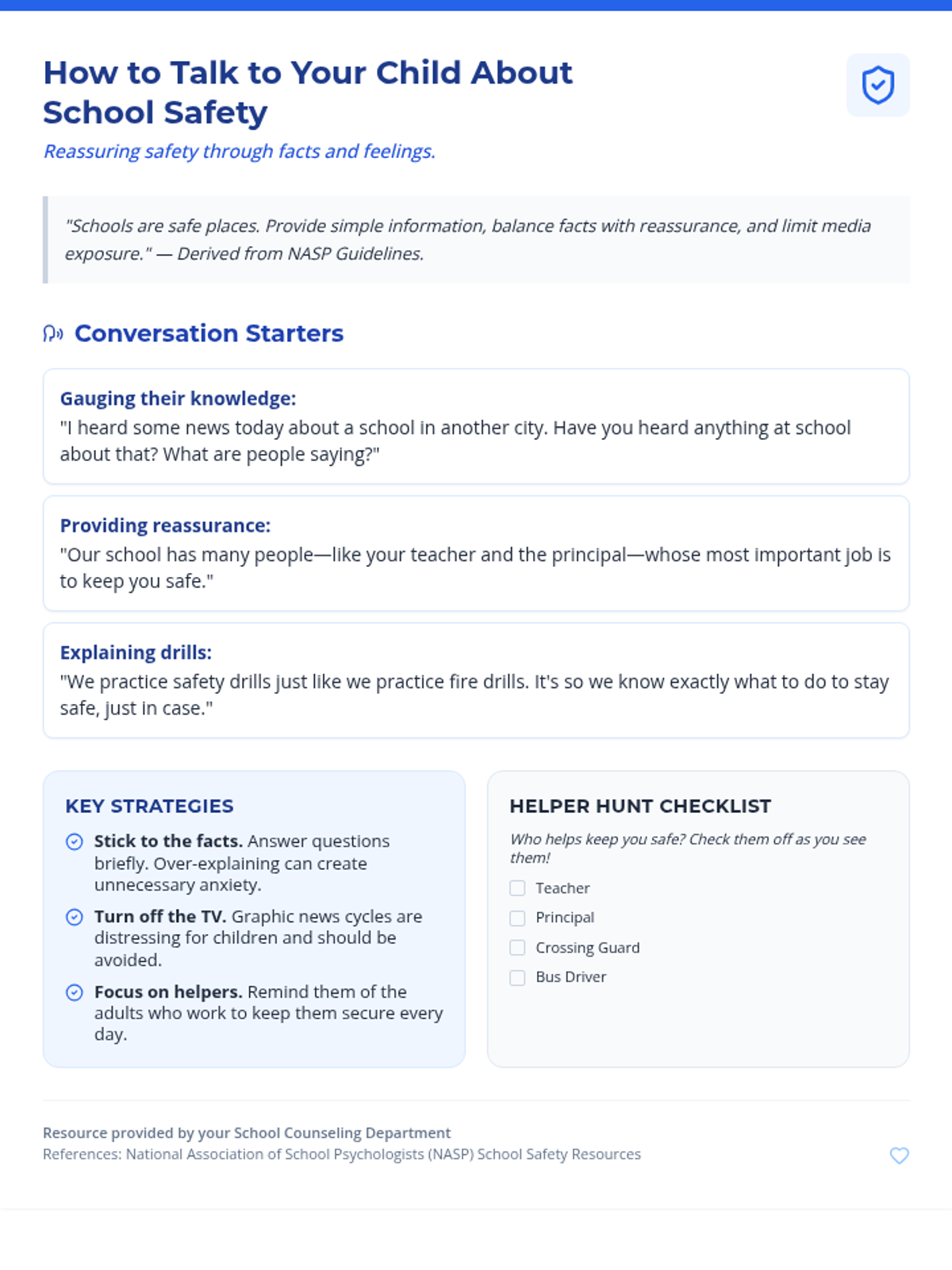
A collection of one-page guides for parents on navigating sensitive topics with elementary-aged children, featuring conversation starters and supportive activities.
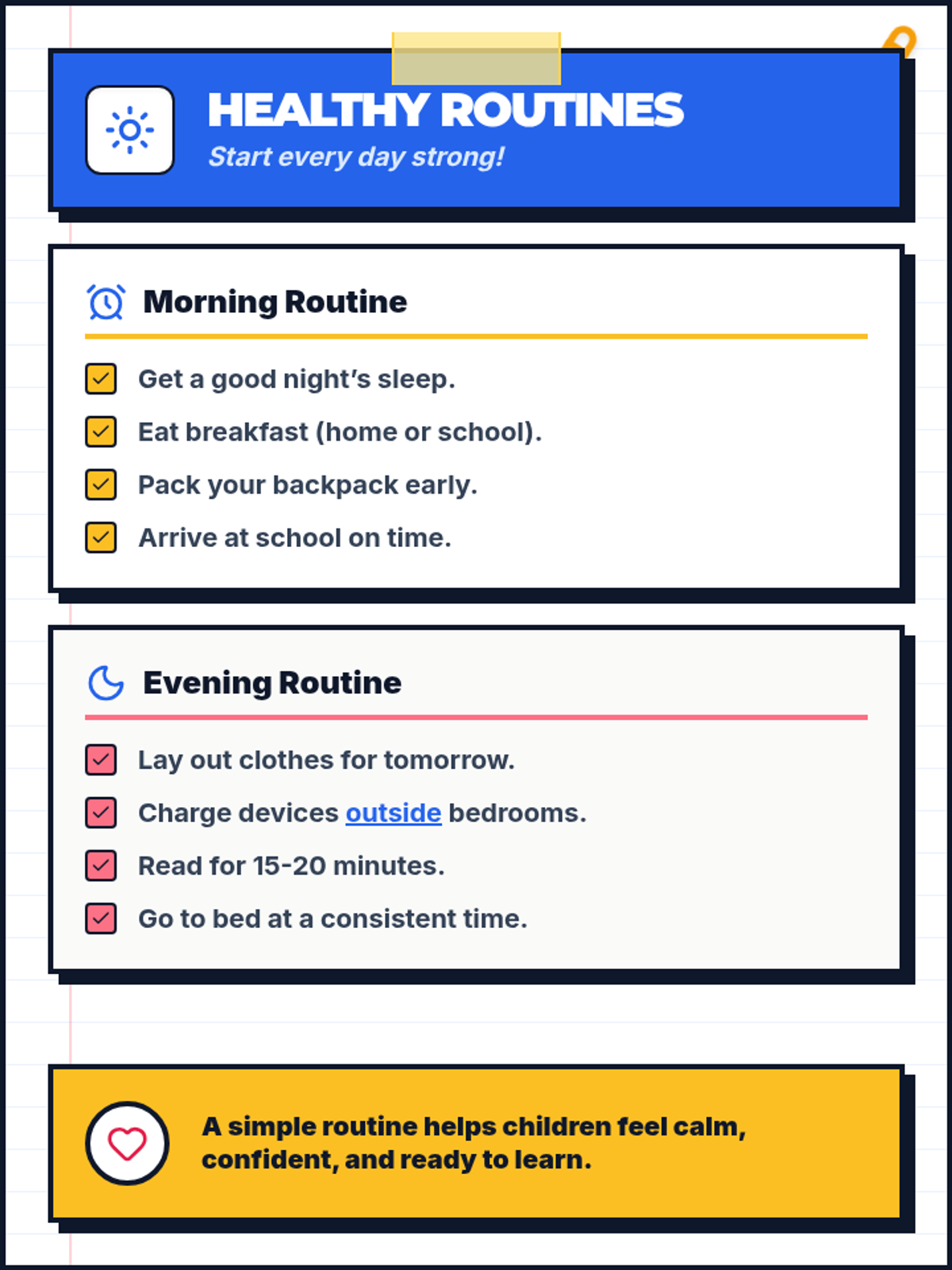
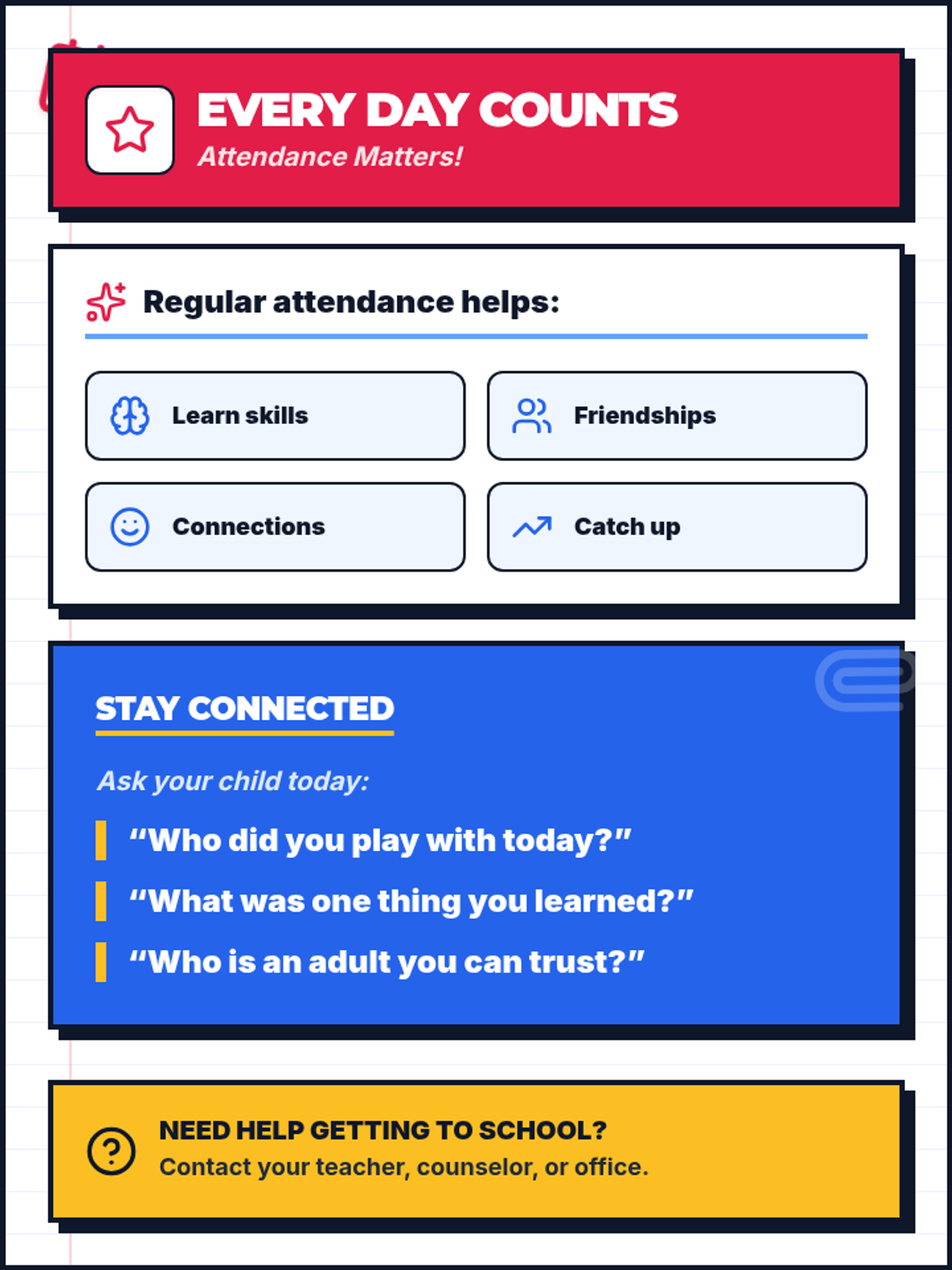
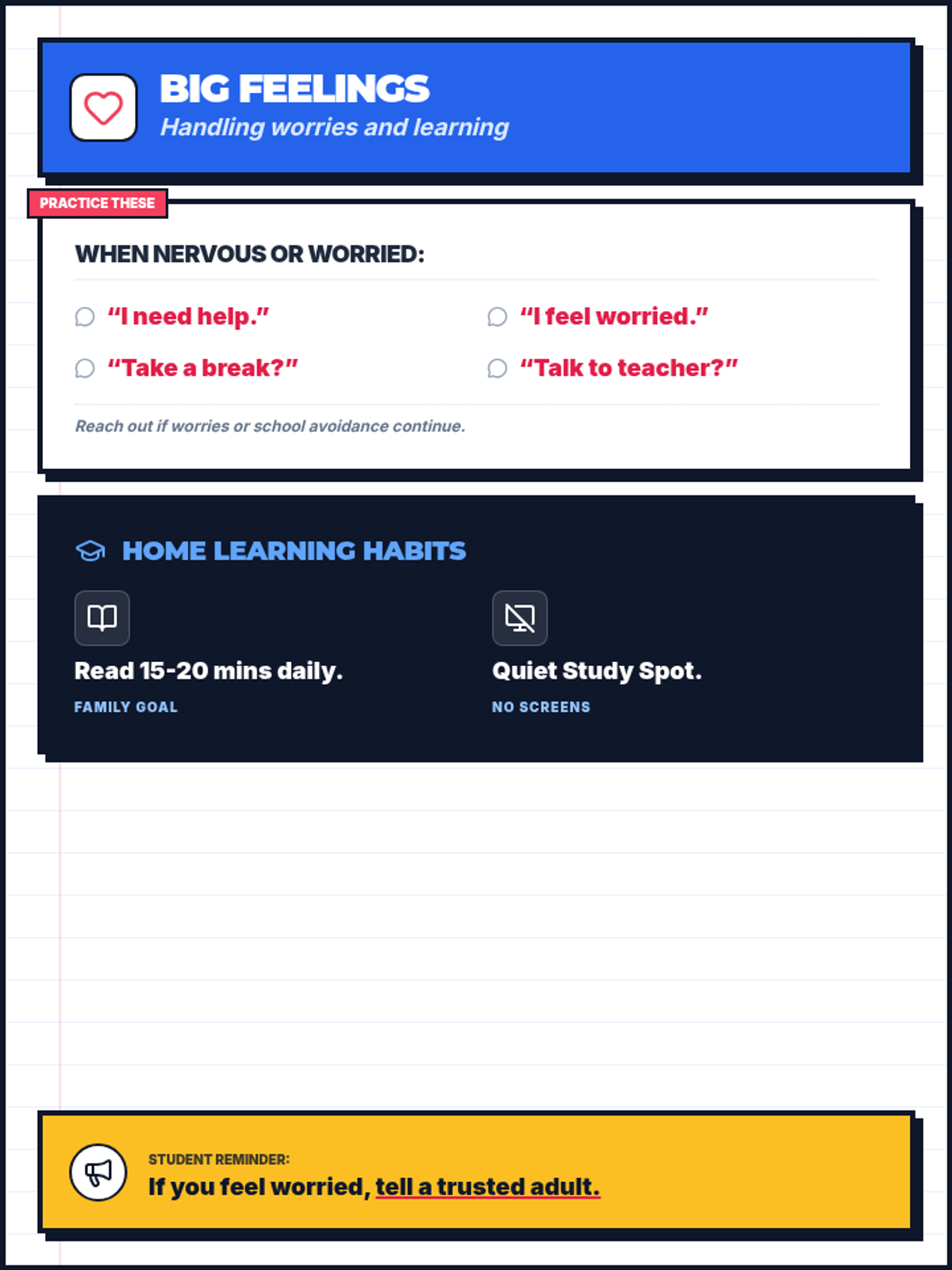
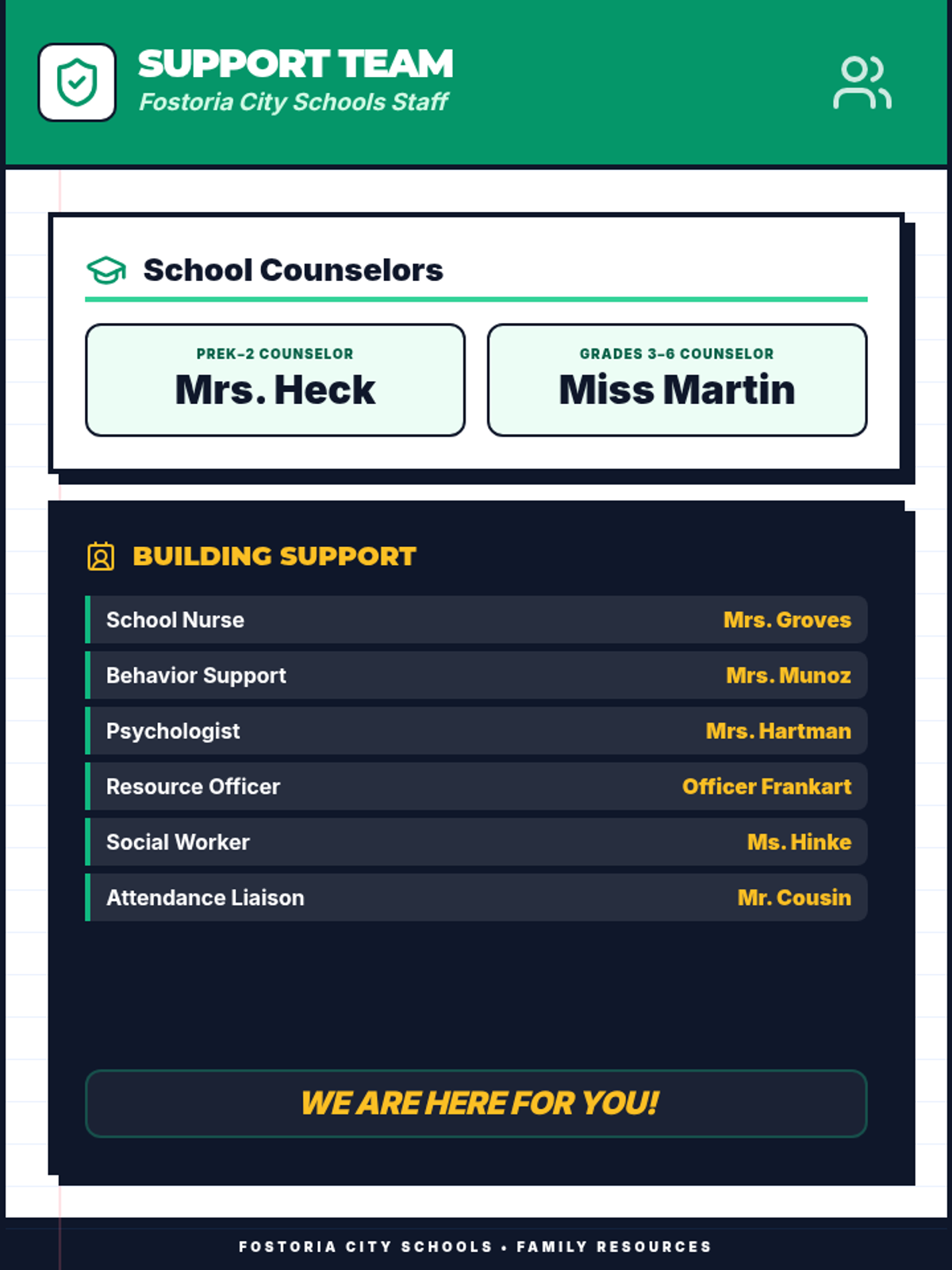
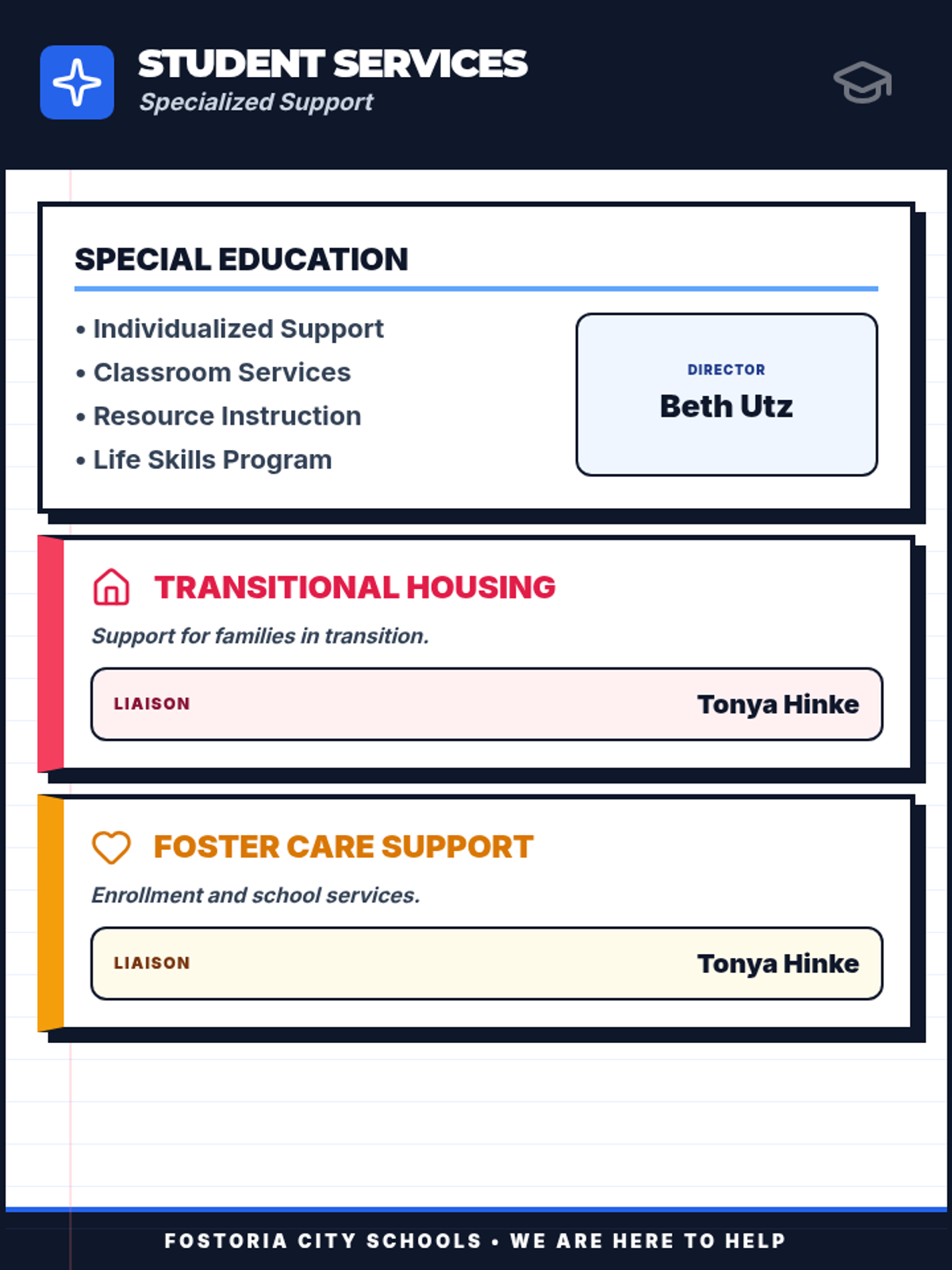
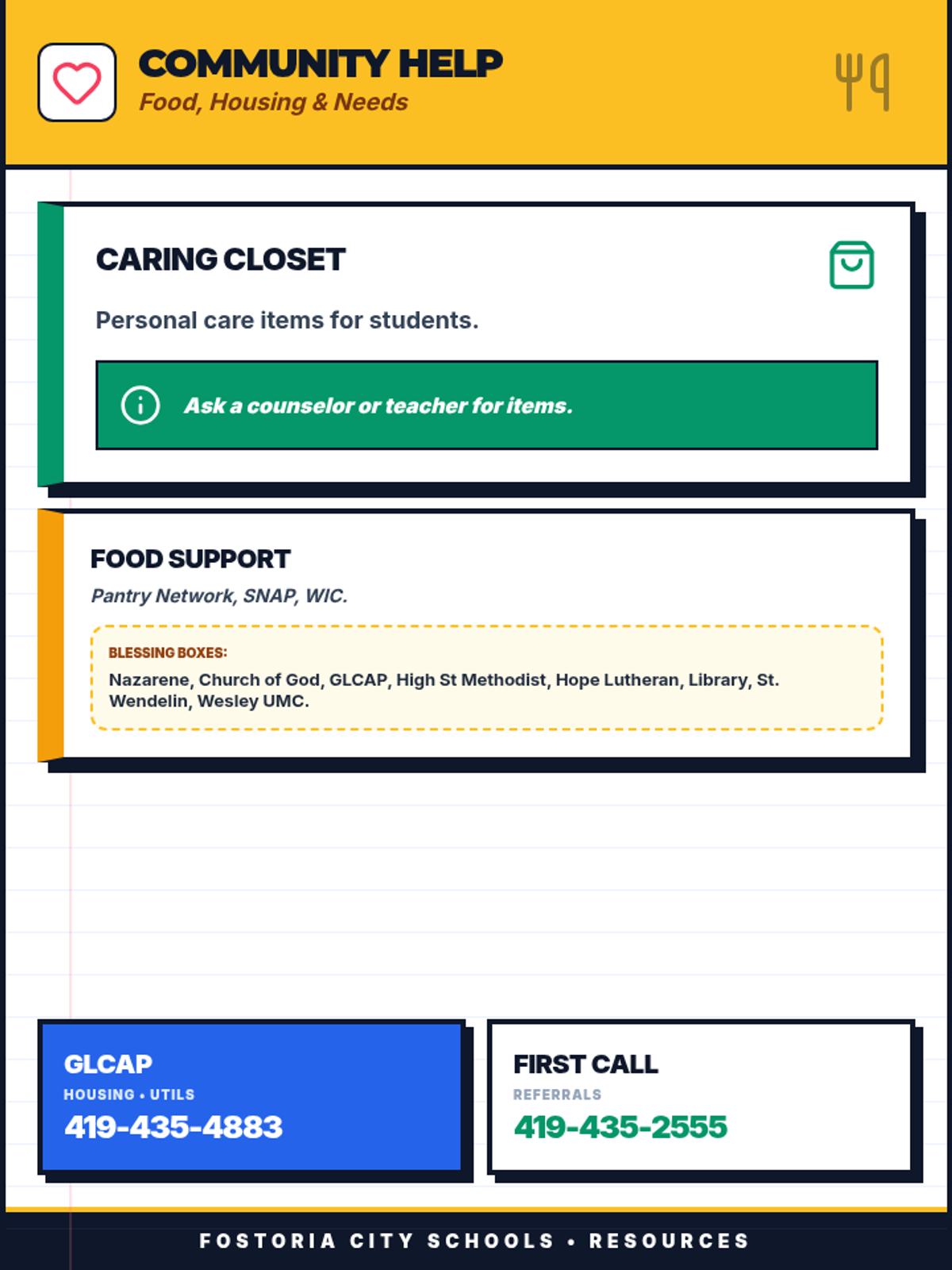
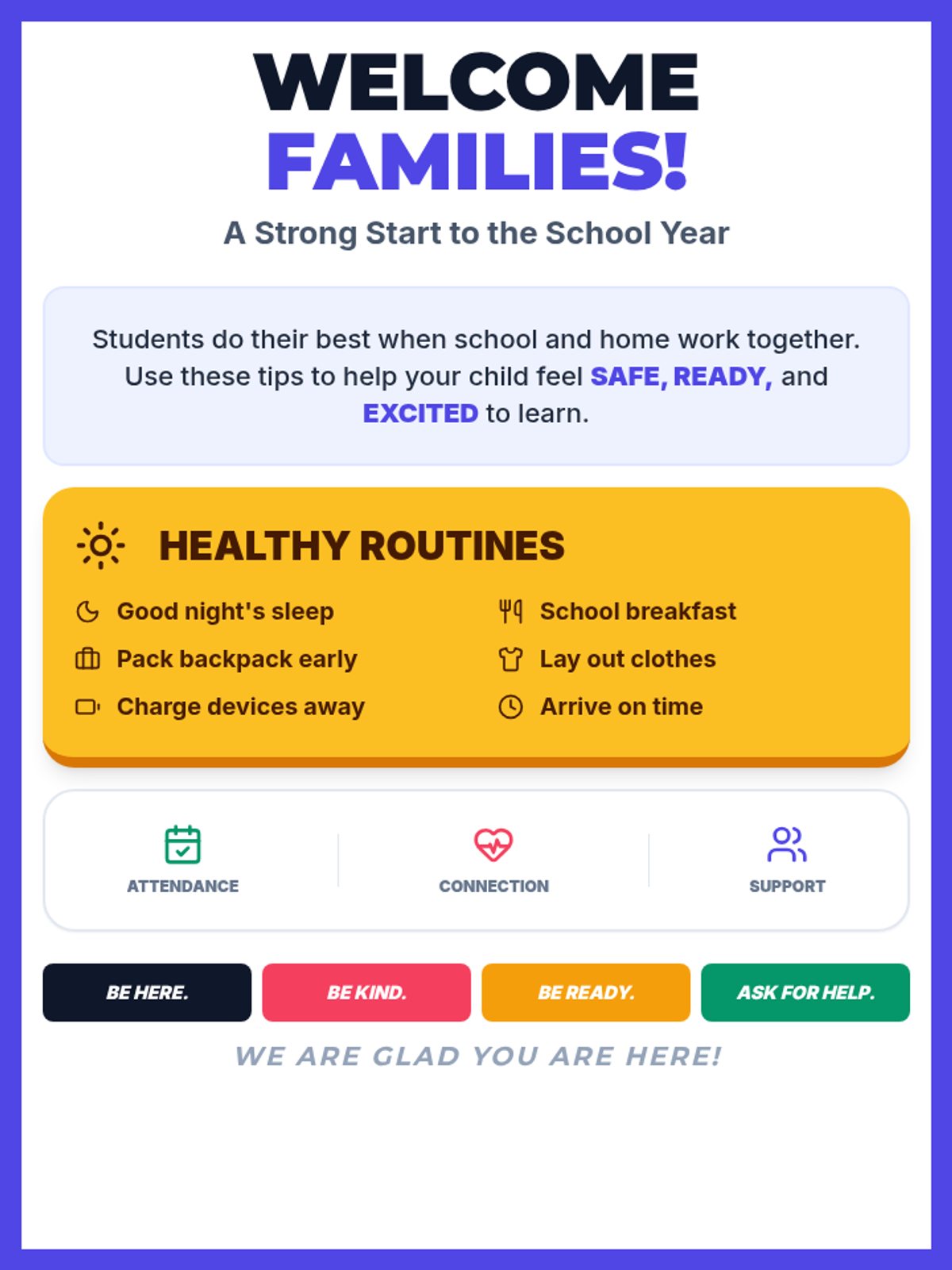
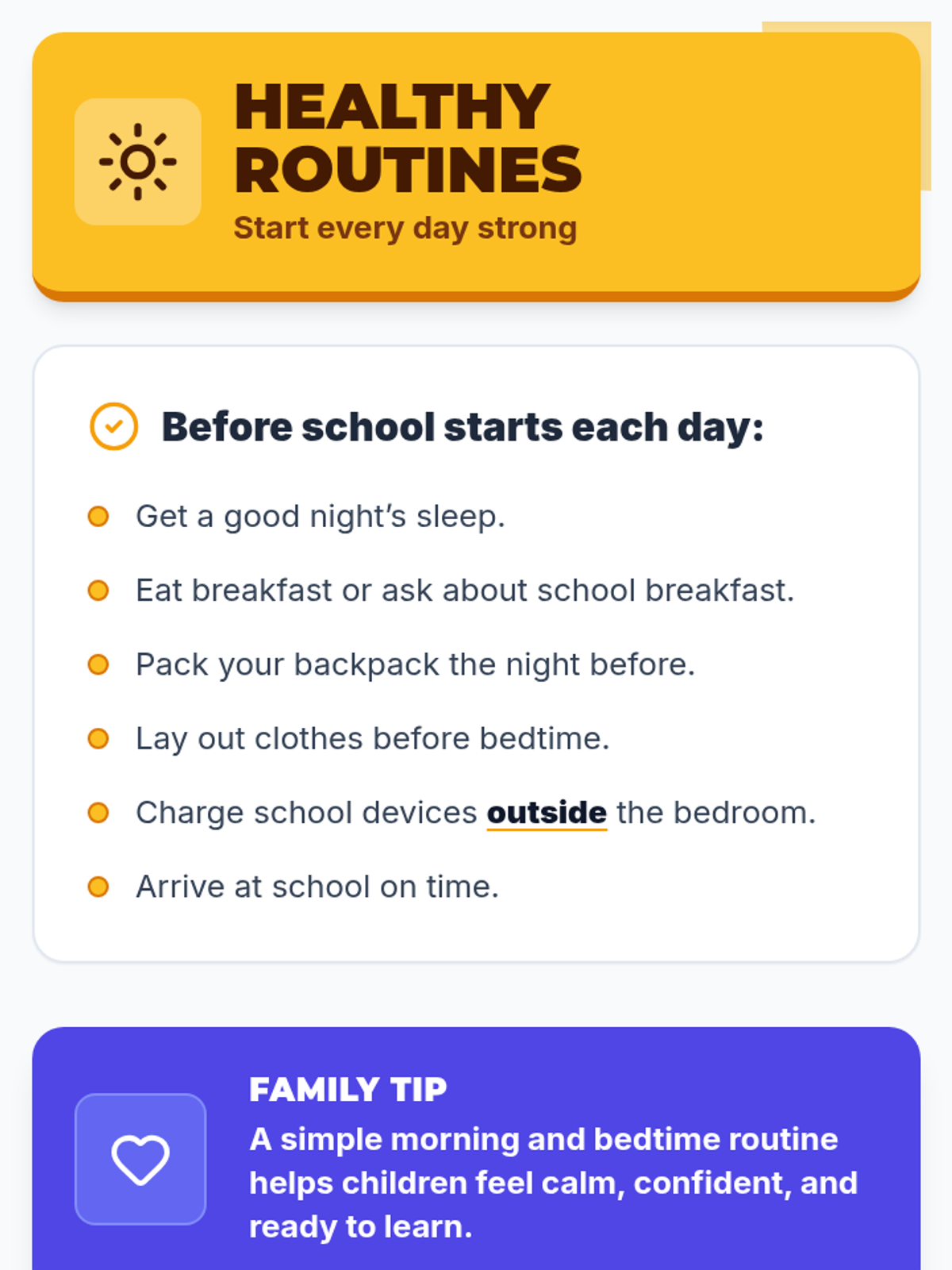
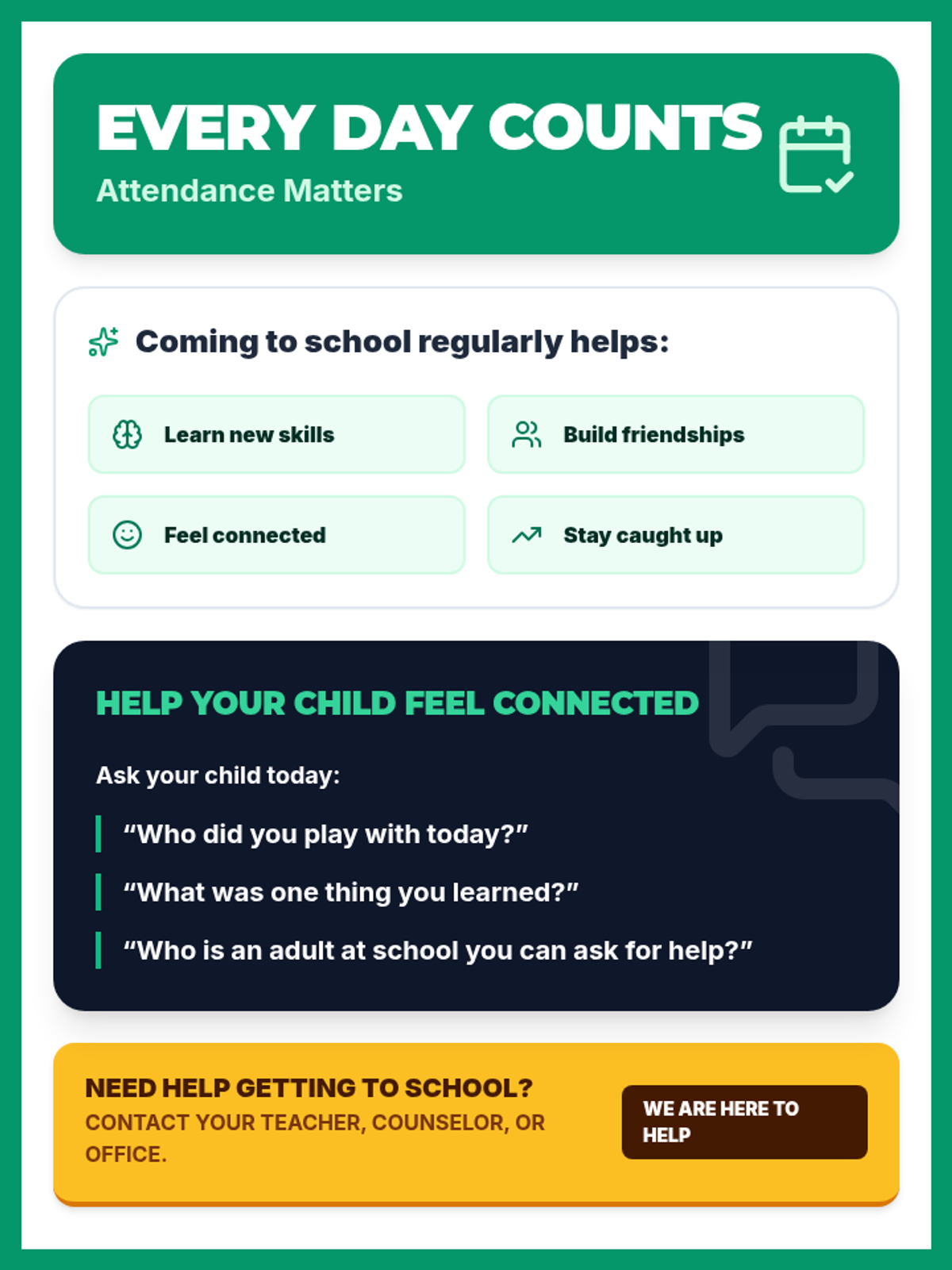
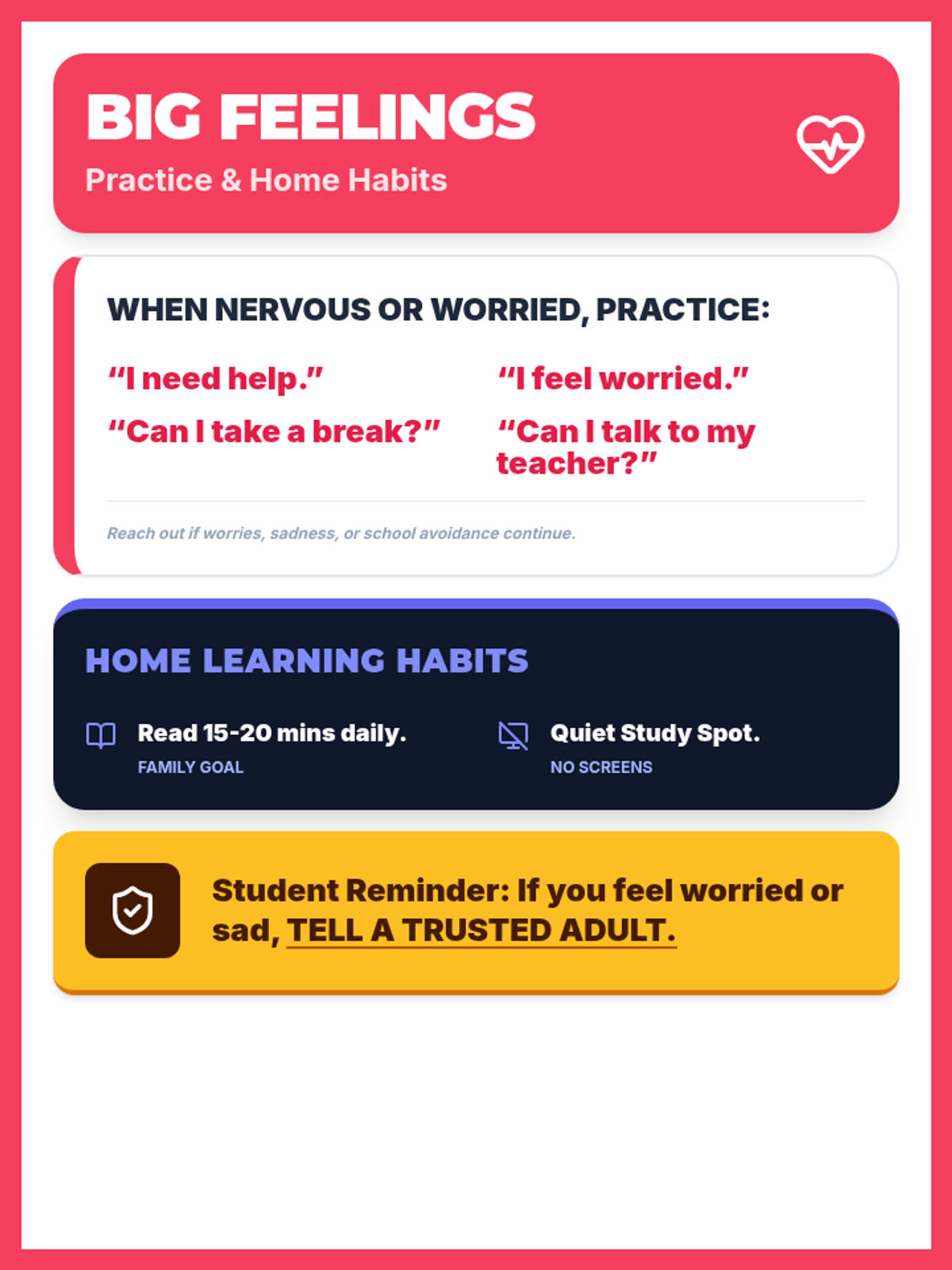
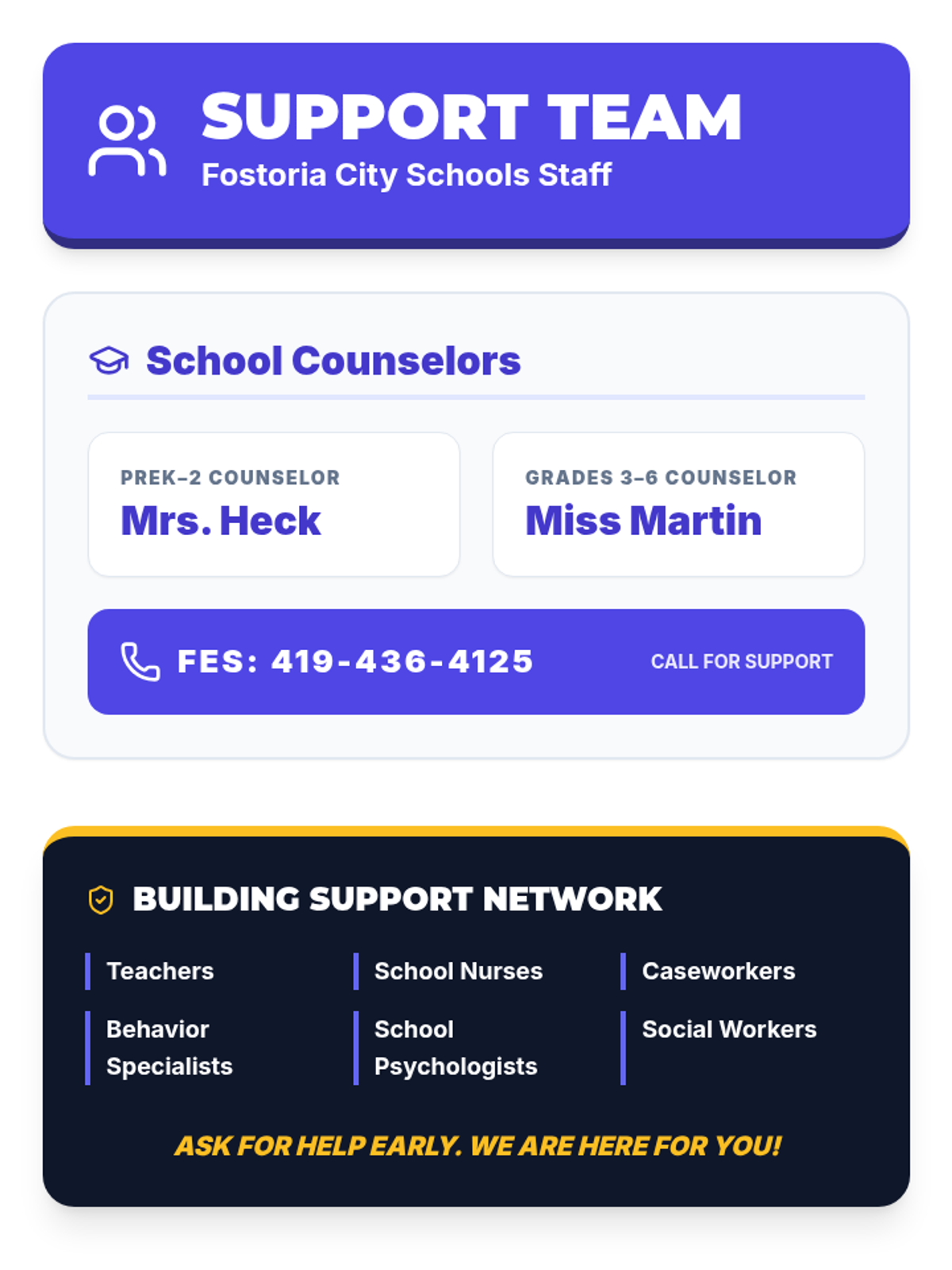
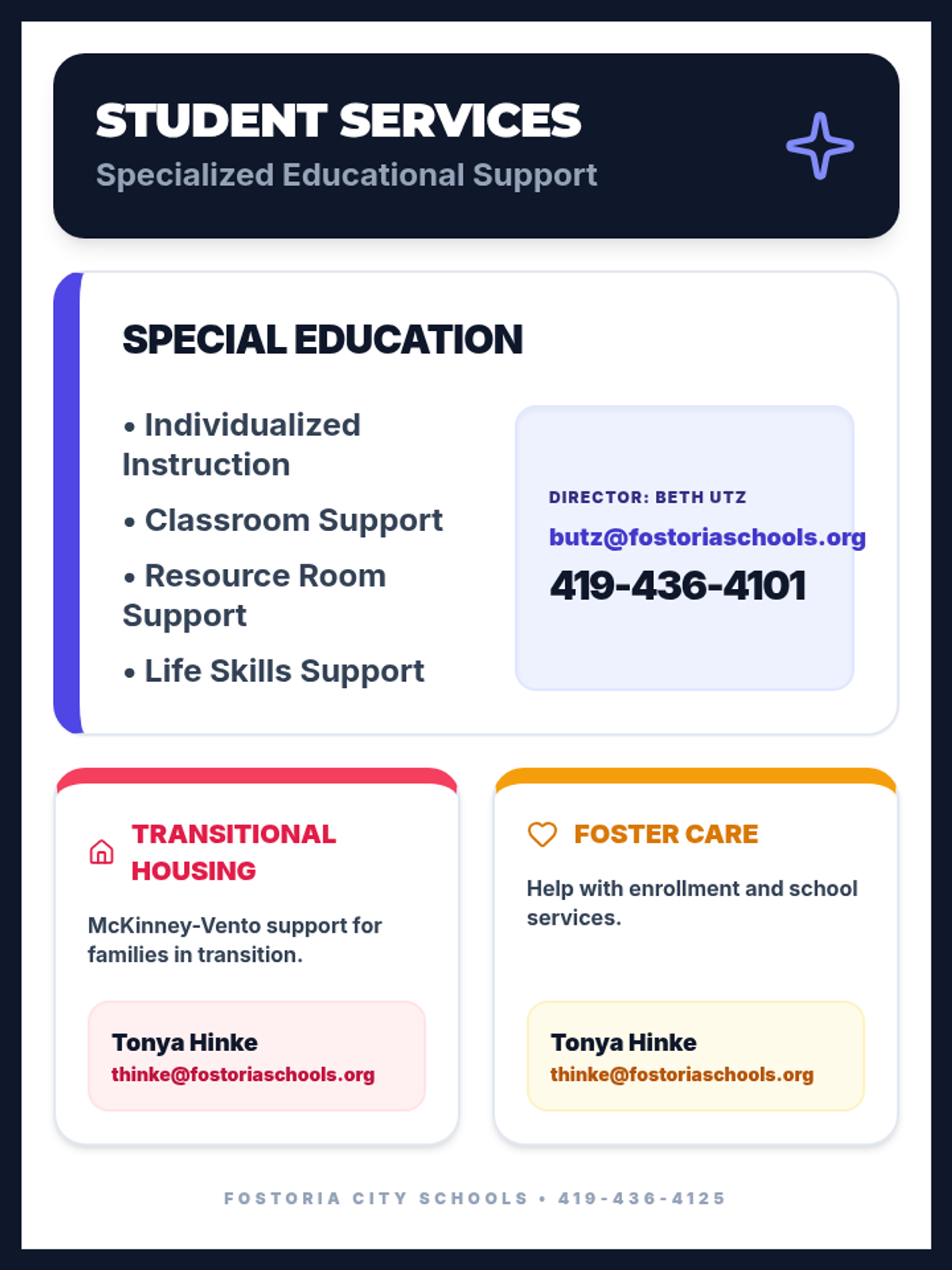
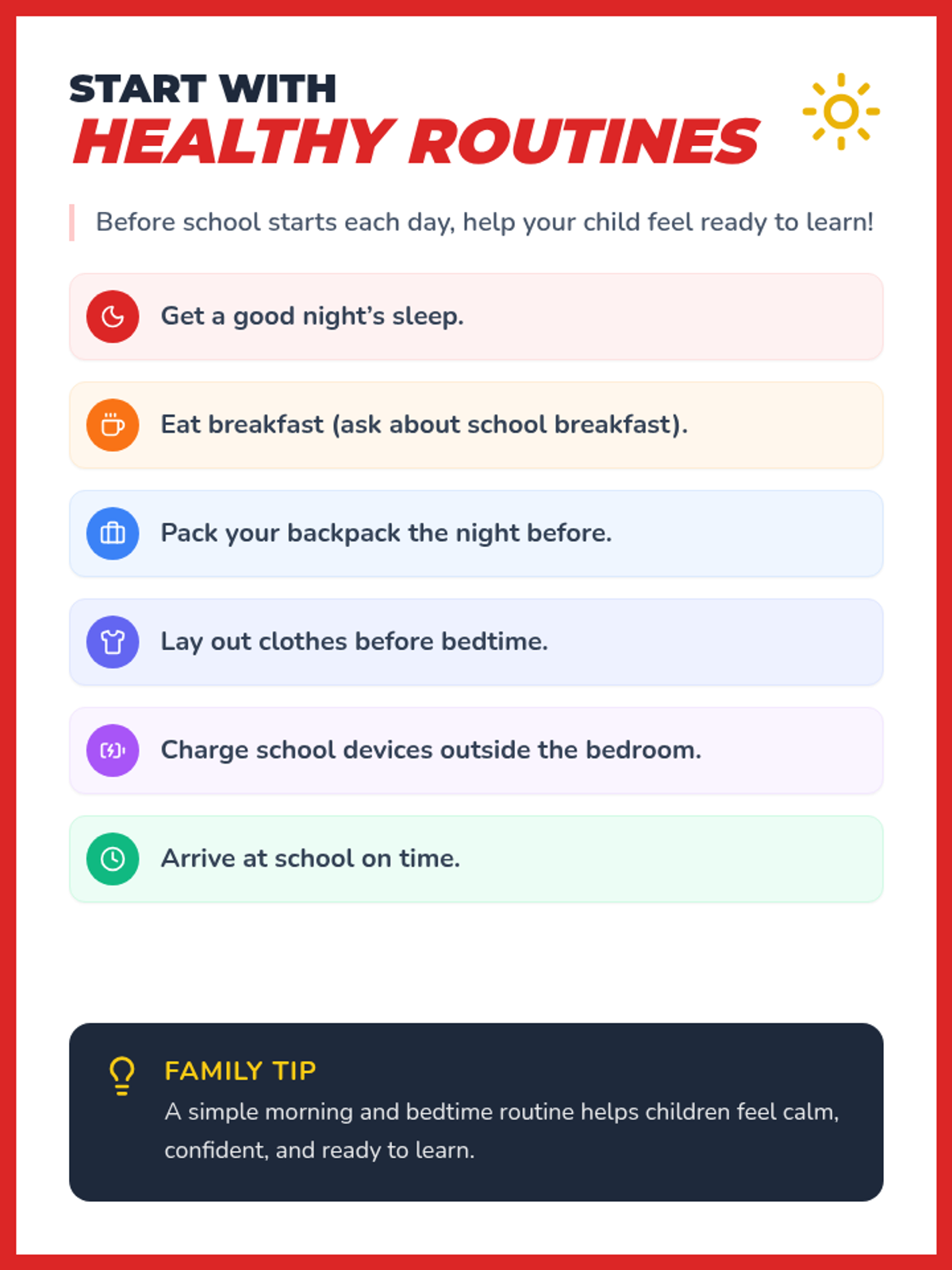
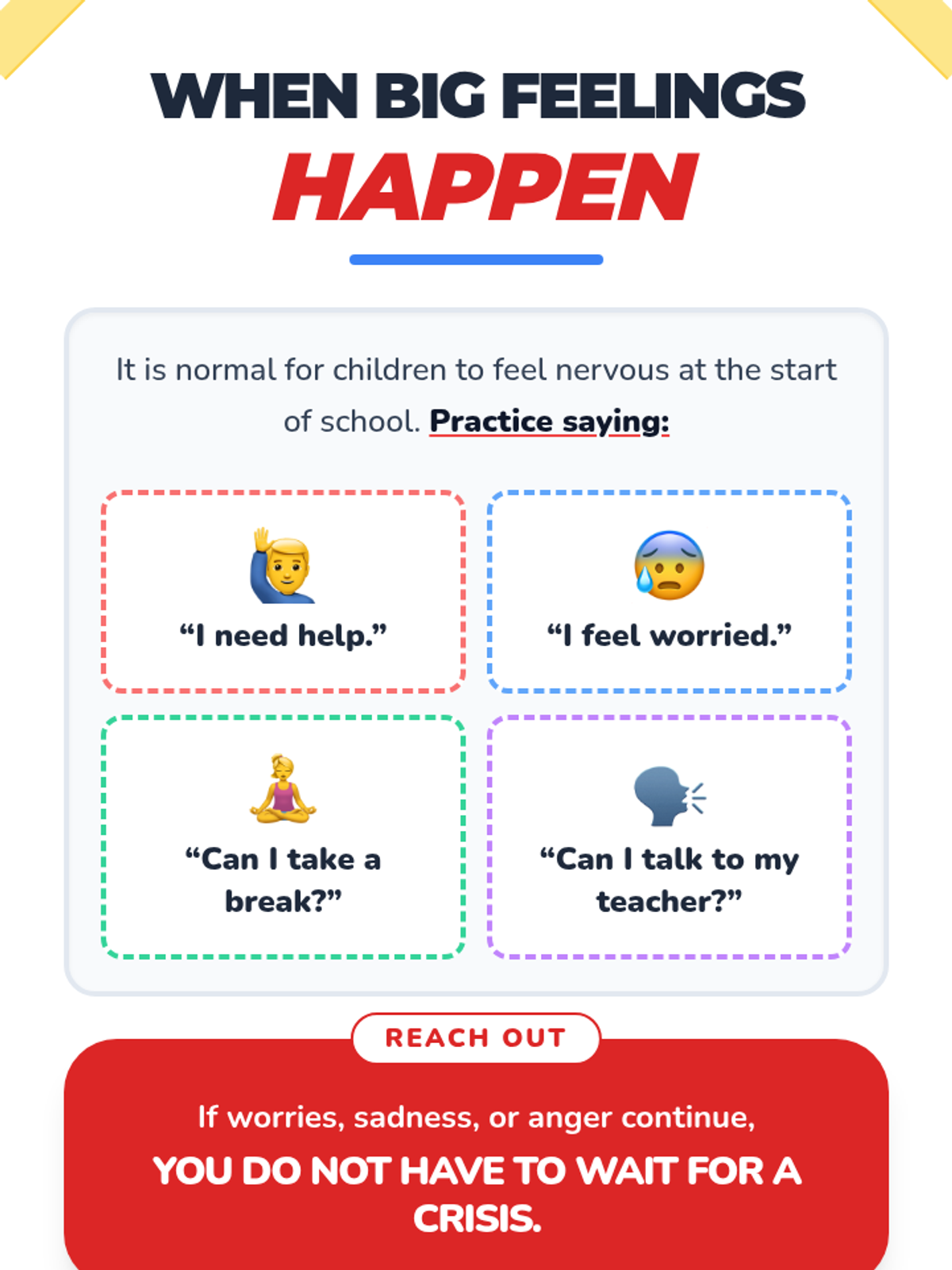
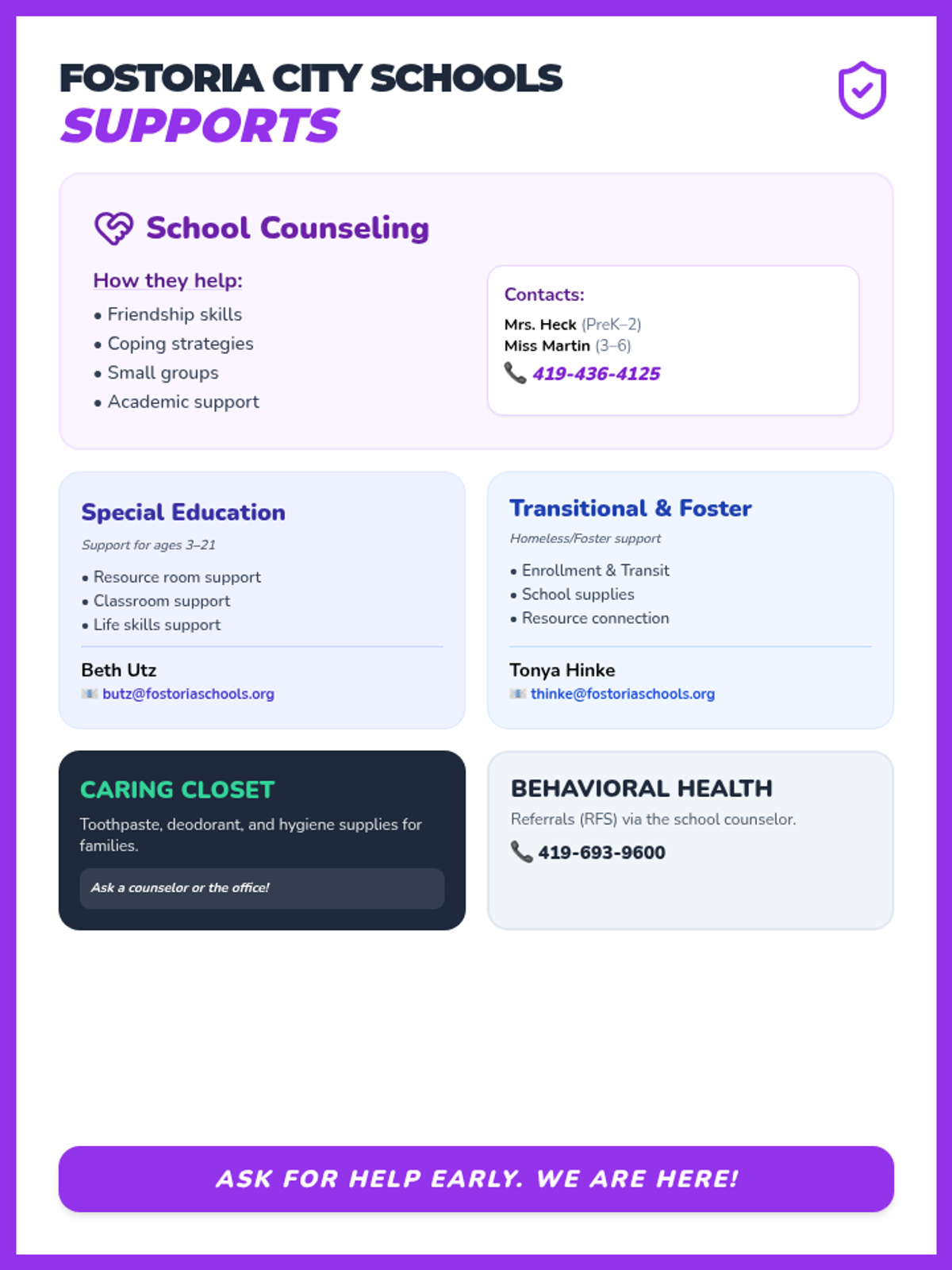
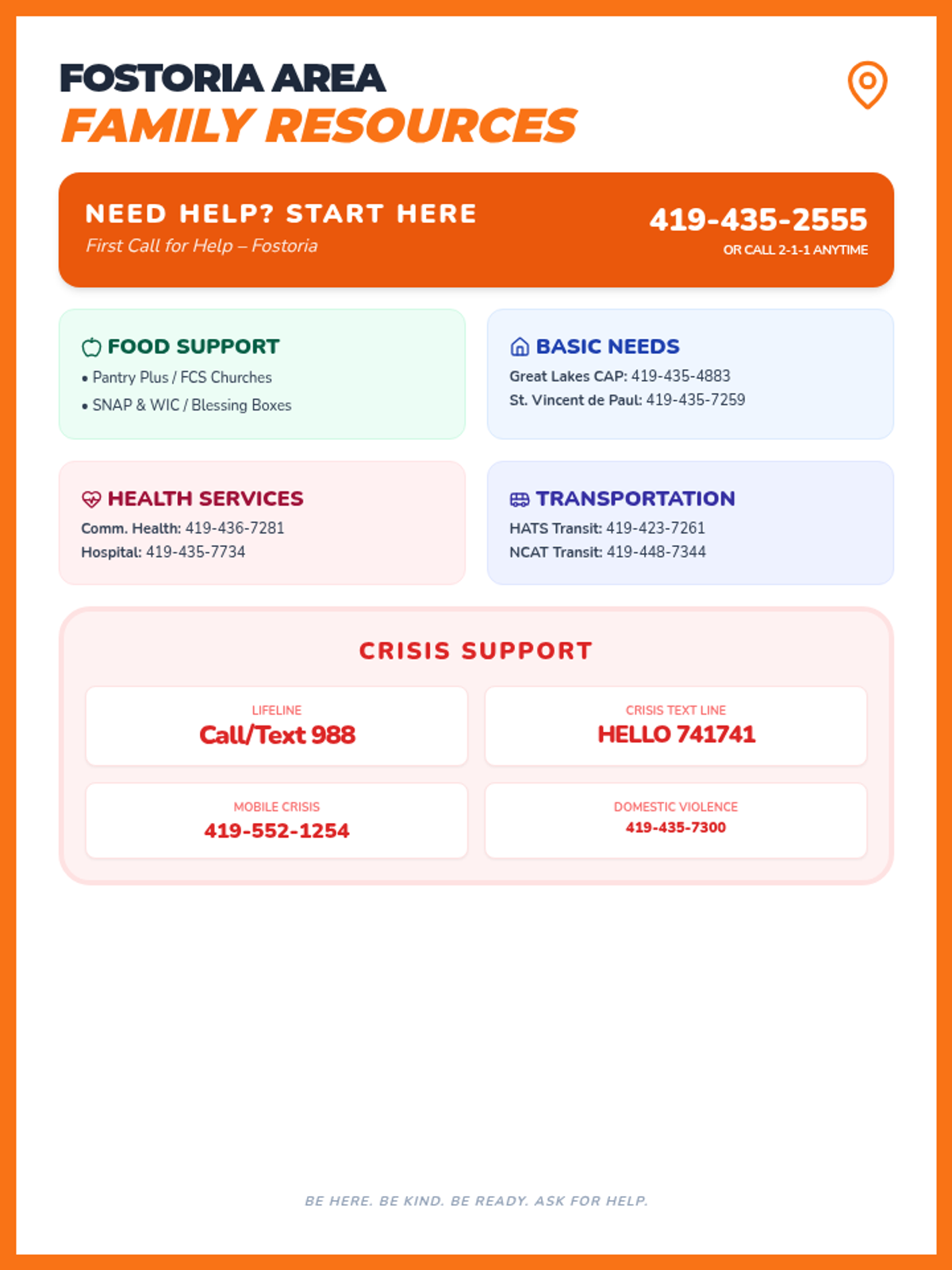
Informational posters for families during the back-to-school season, focusing on success routines and school/community supports.
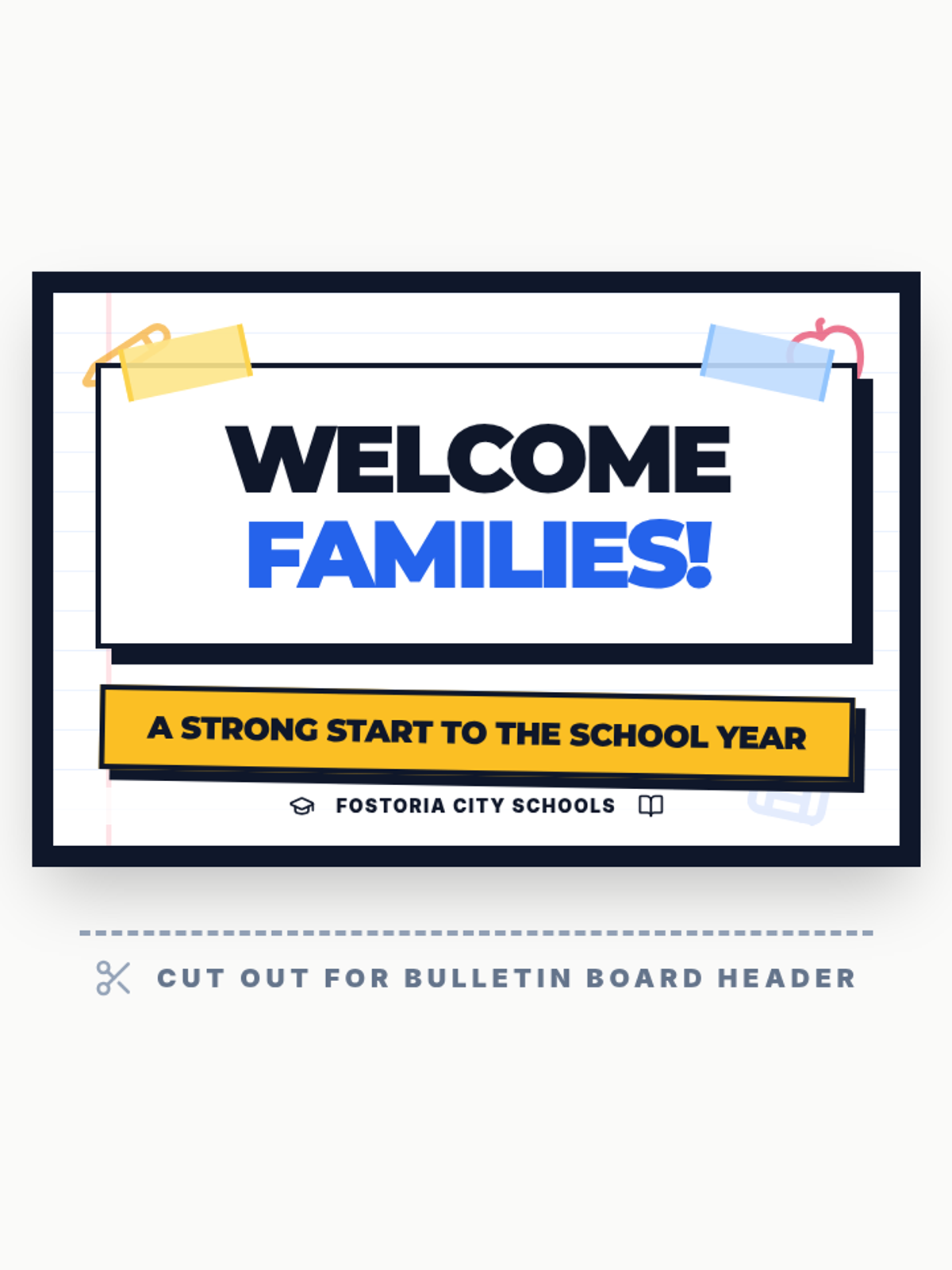
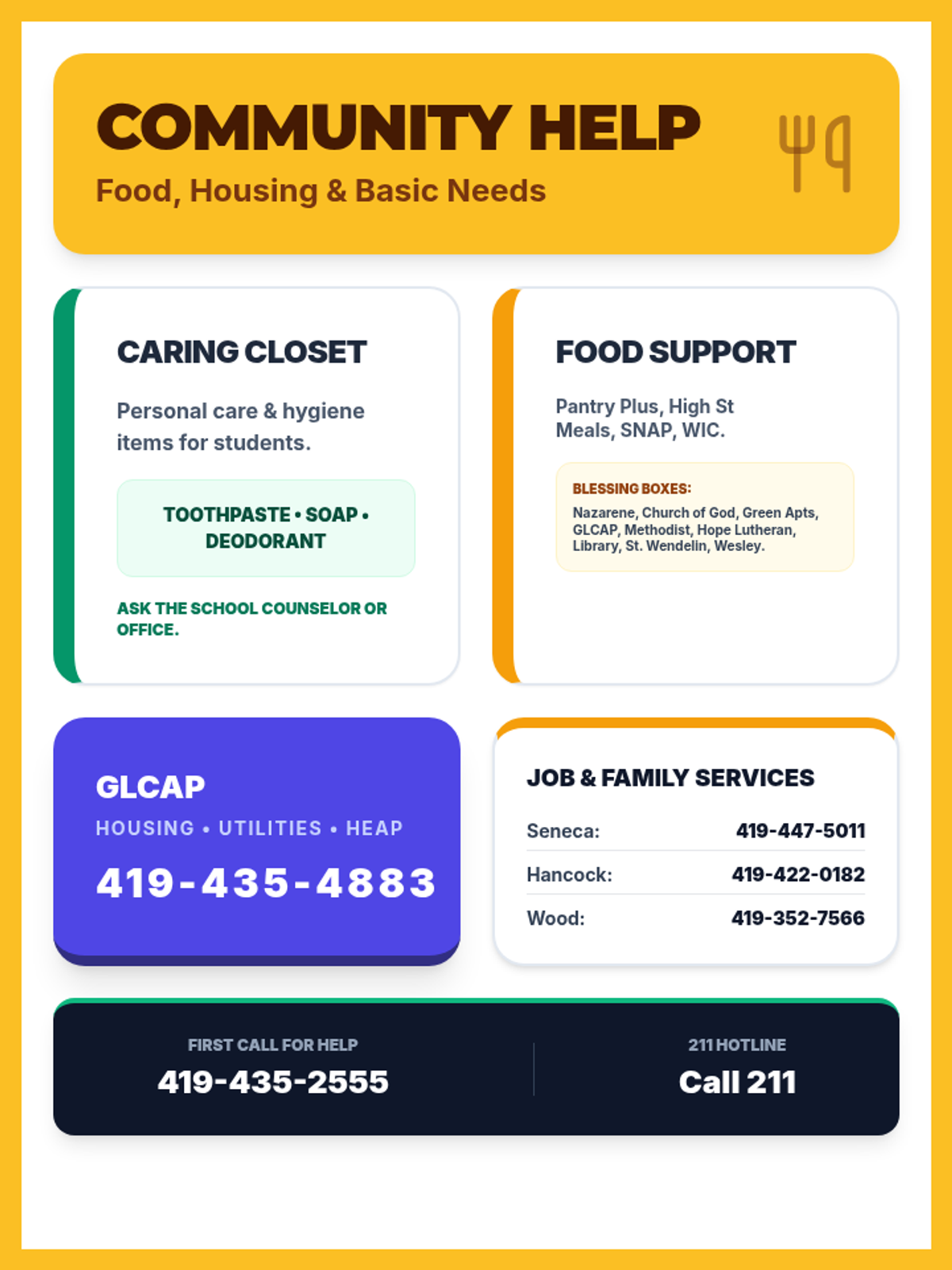
A comprehensive set of bulletin board materials designed to welcome families and provide essential school and community resource information. Includes posters, anchor charts, and contact cards for a professional and welcoming foyer or hallway display.
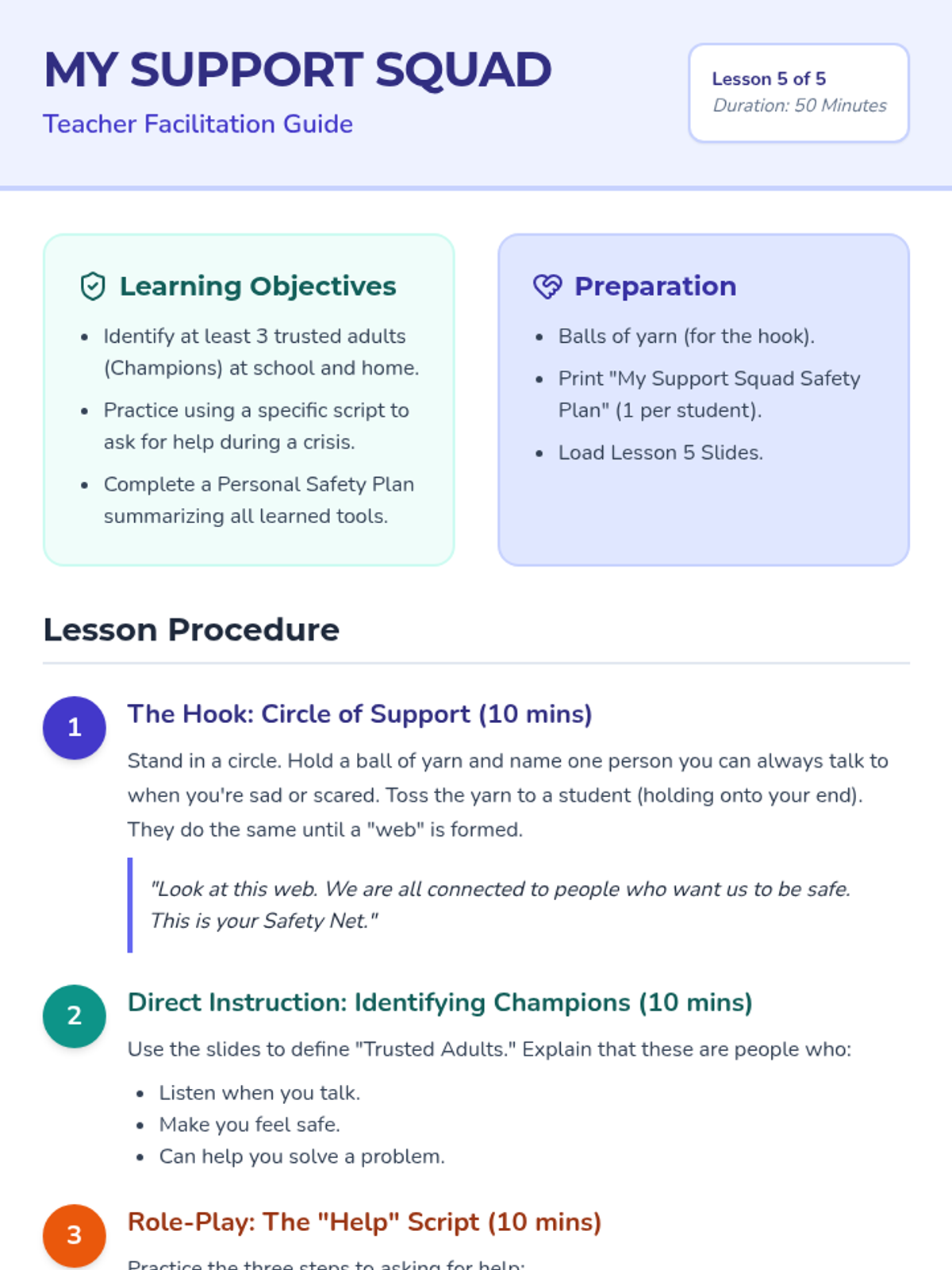
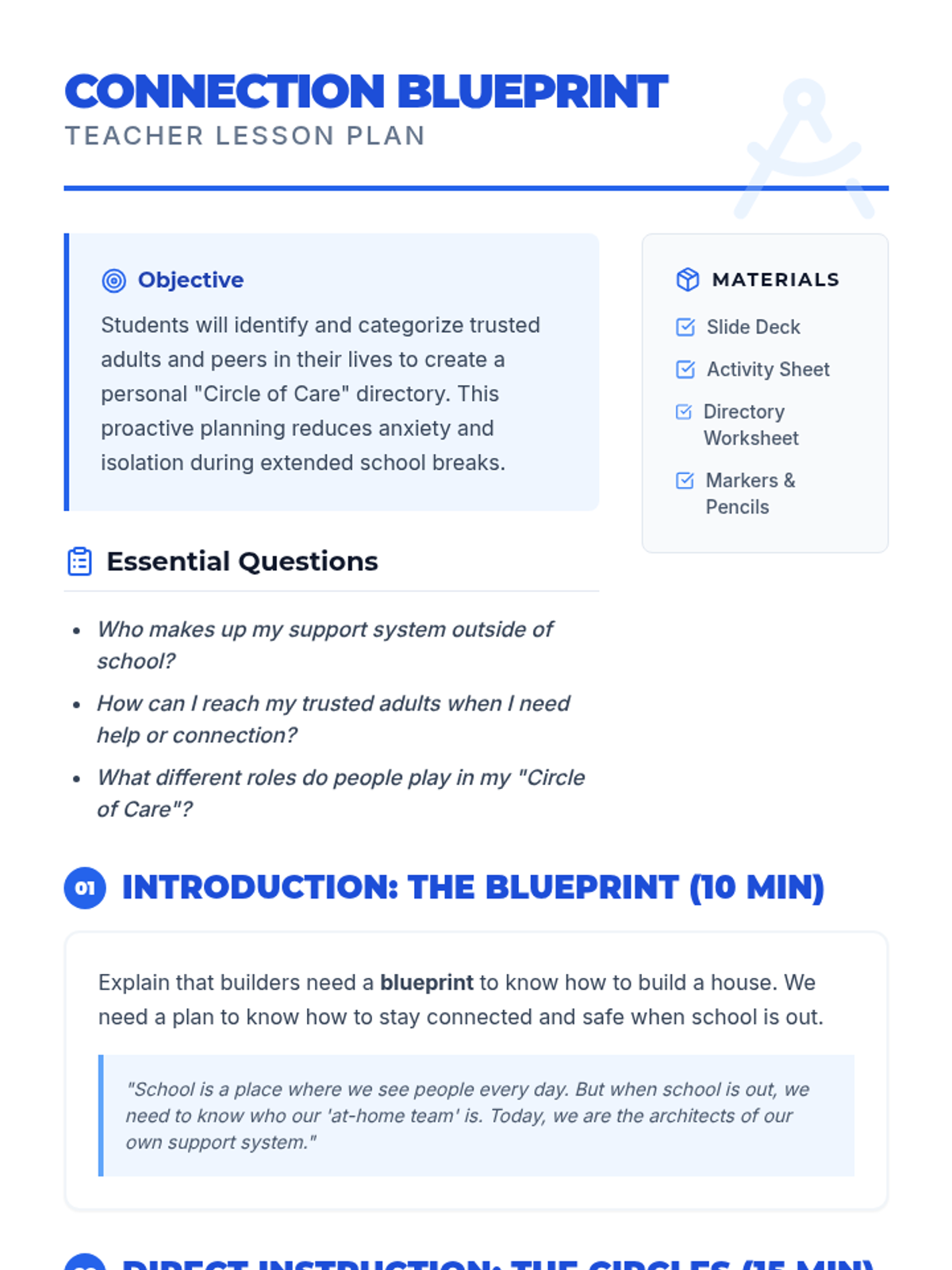
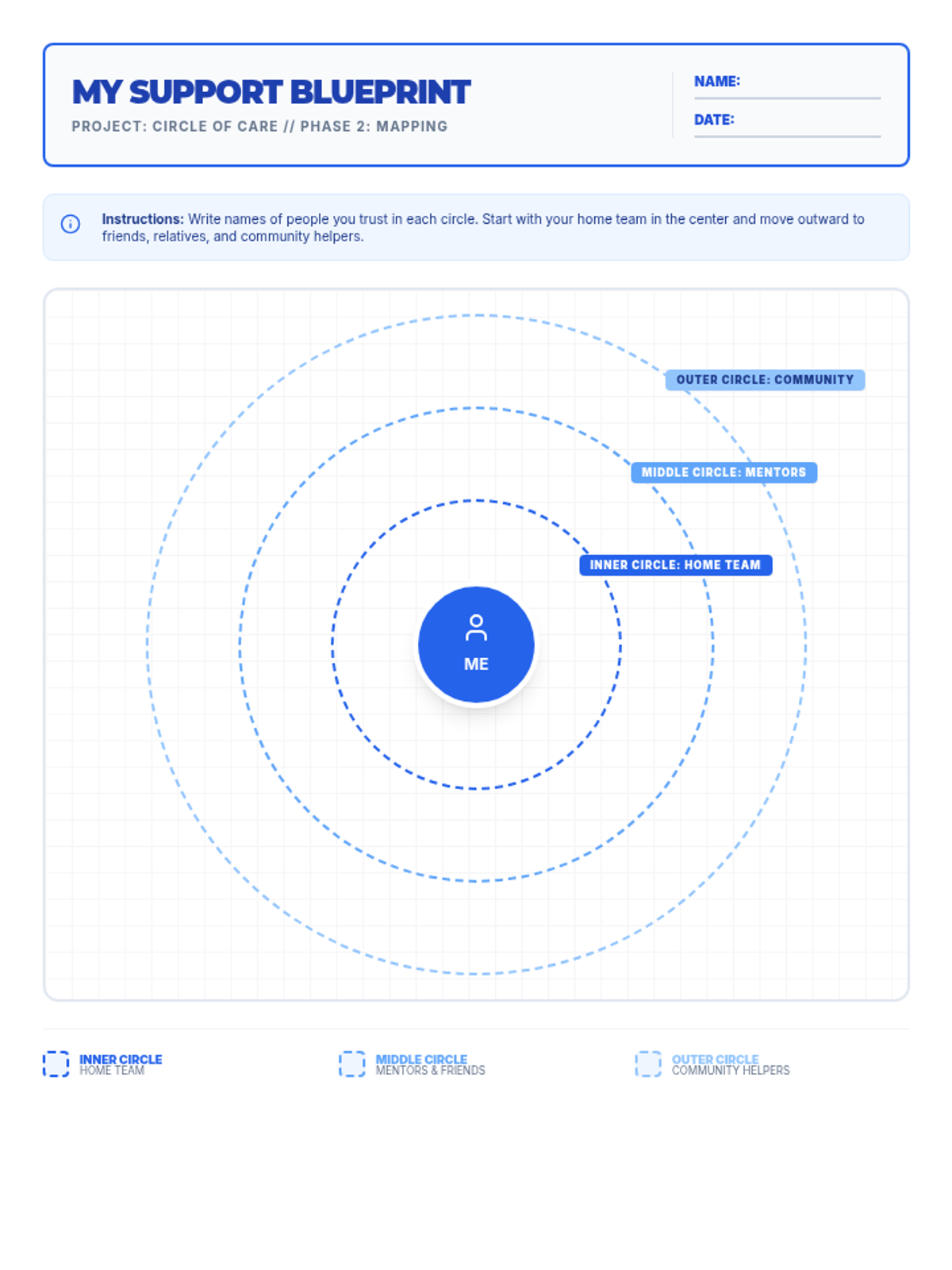
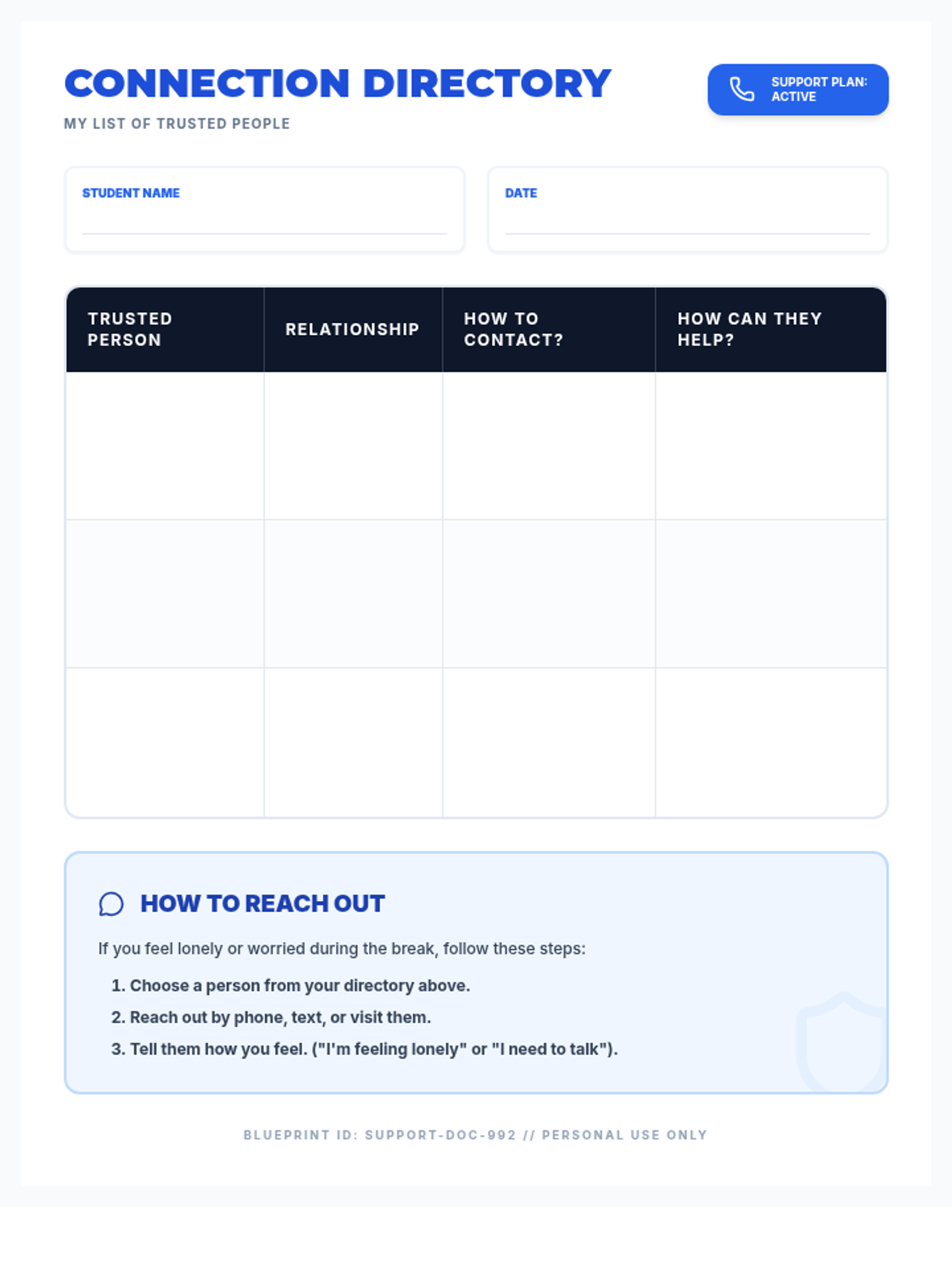
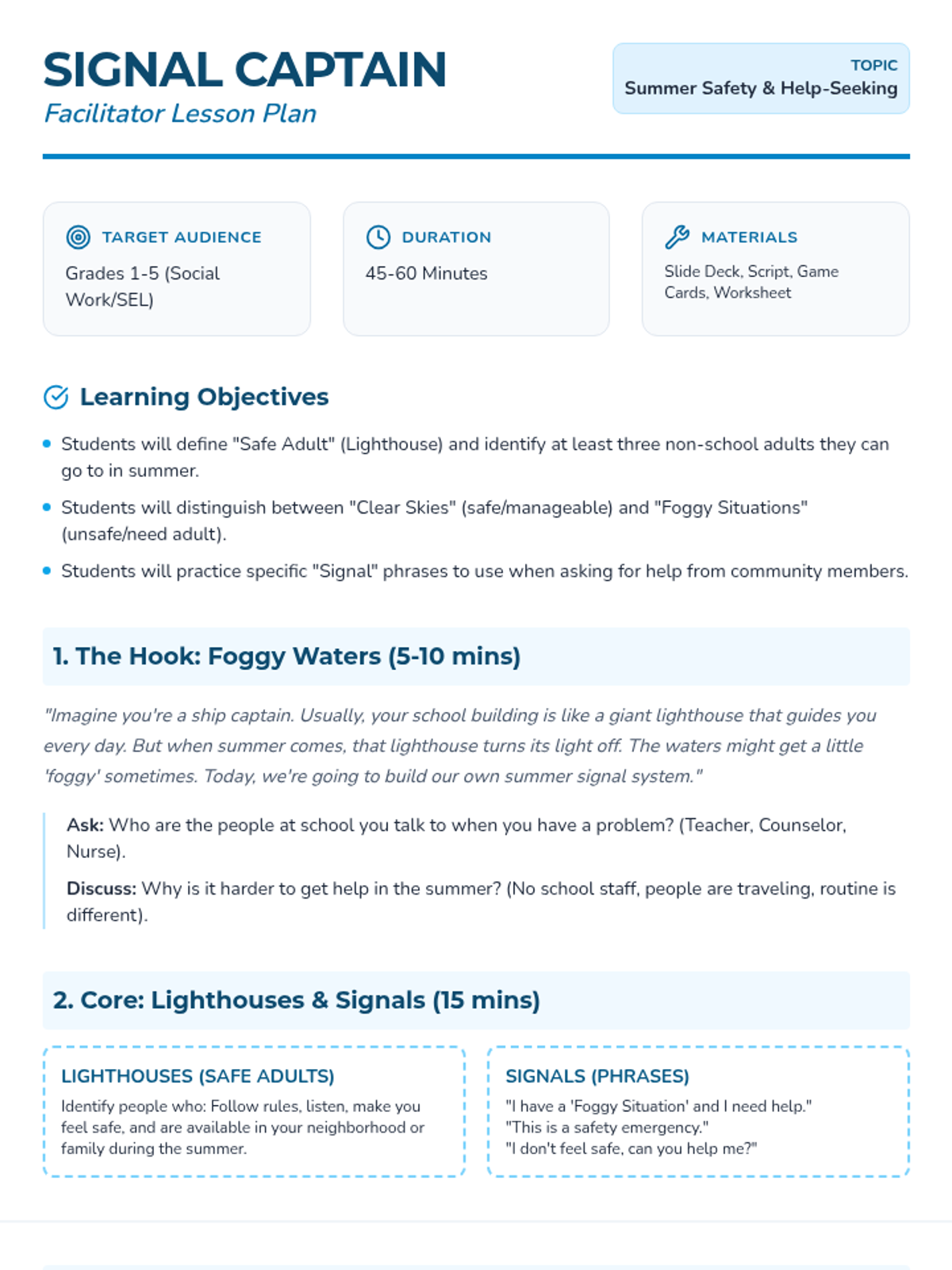
An intervention lesson designed to help students build a visual network of support before long school breaks, ensuring they have a plan for connection and safety outside the school building.
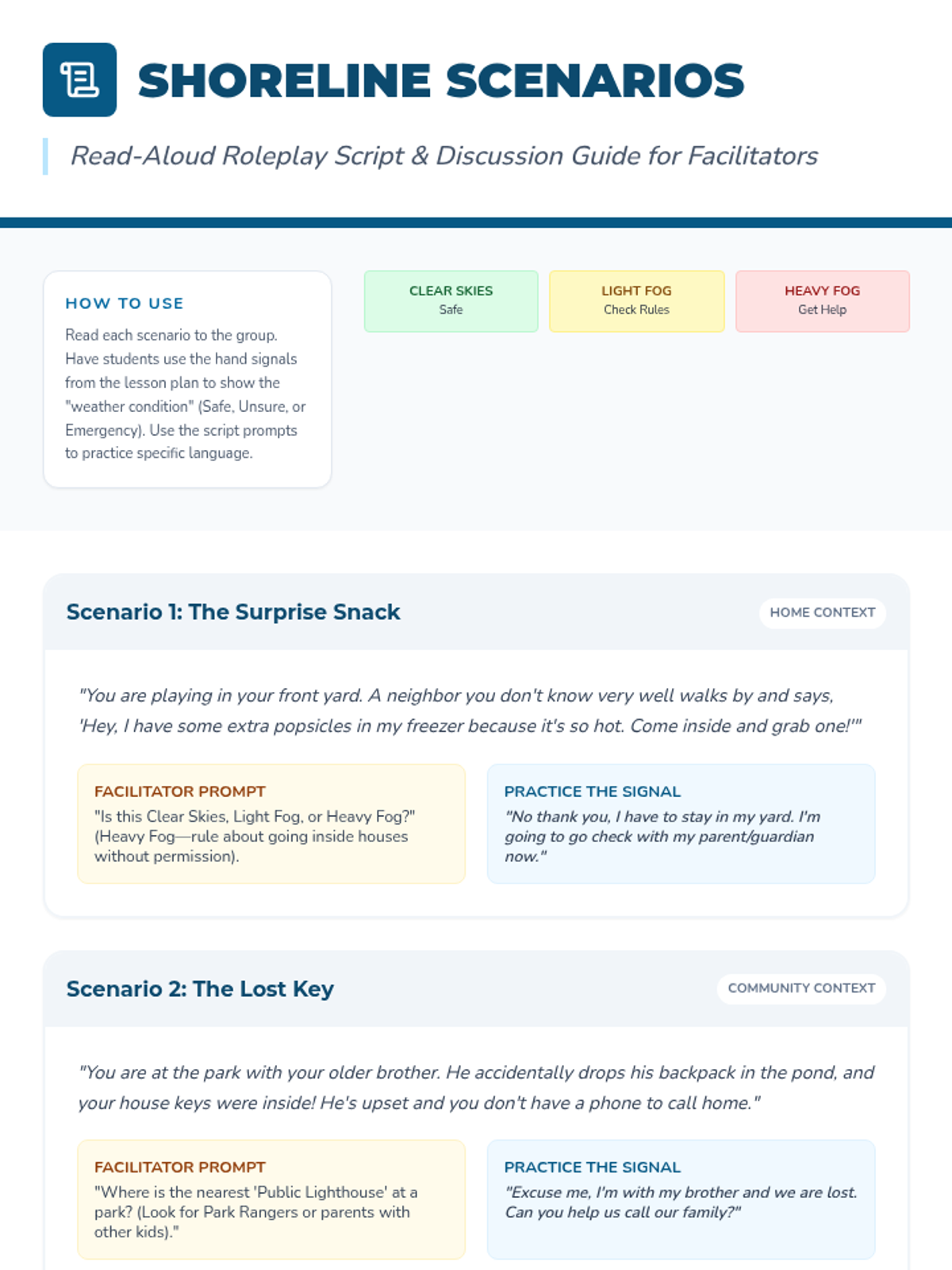
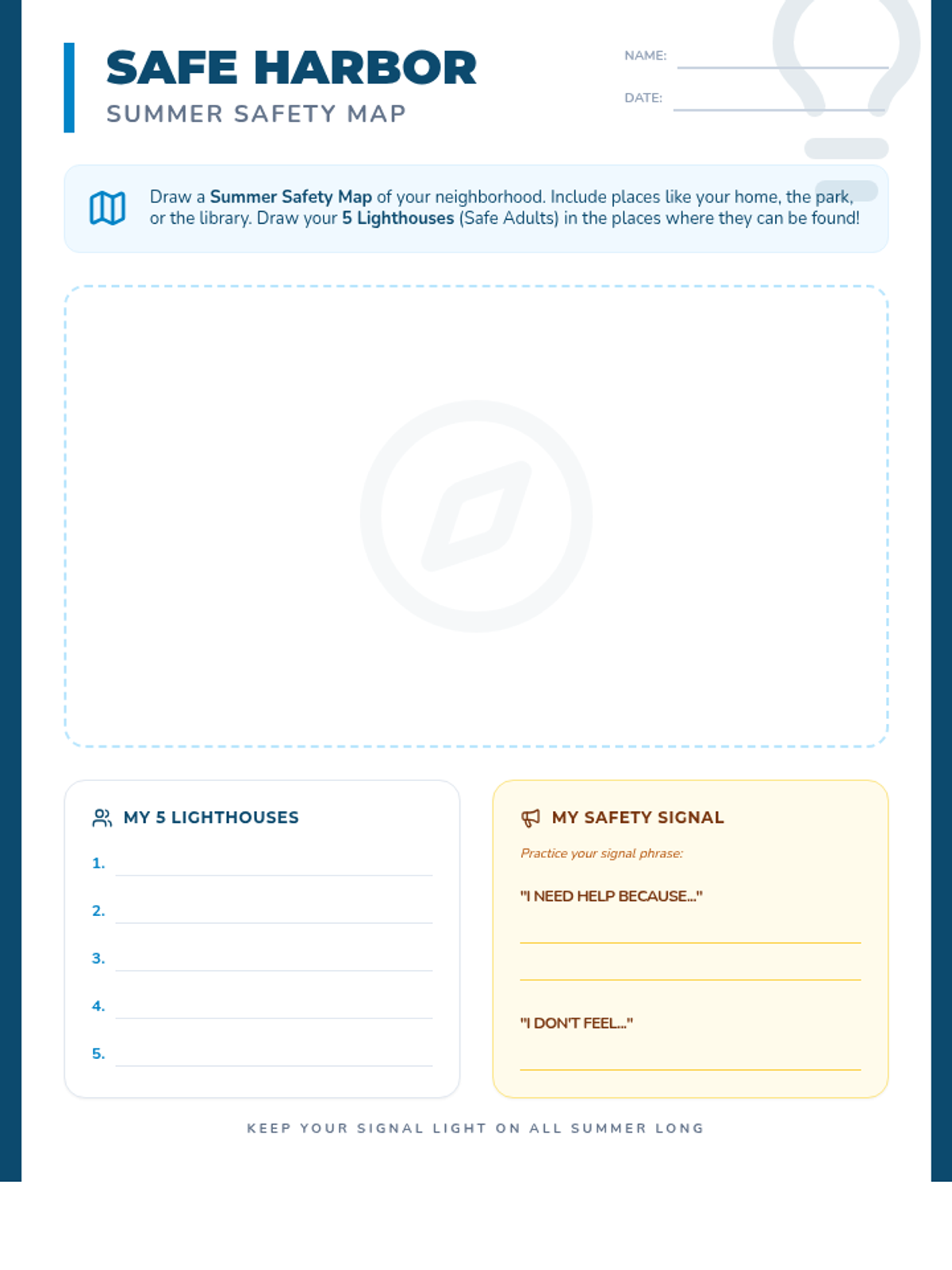
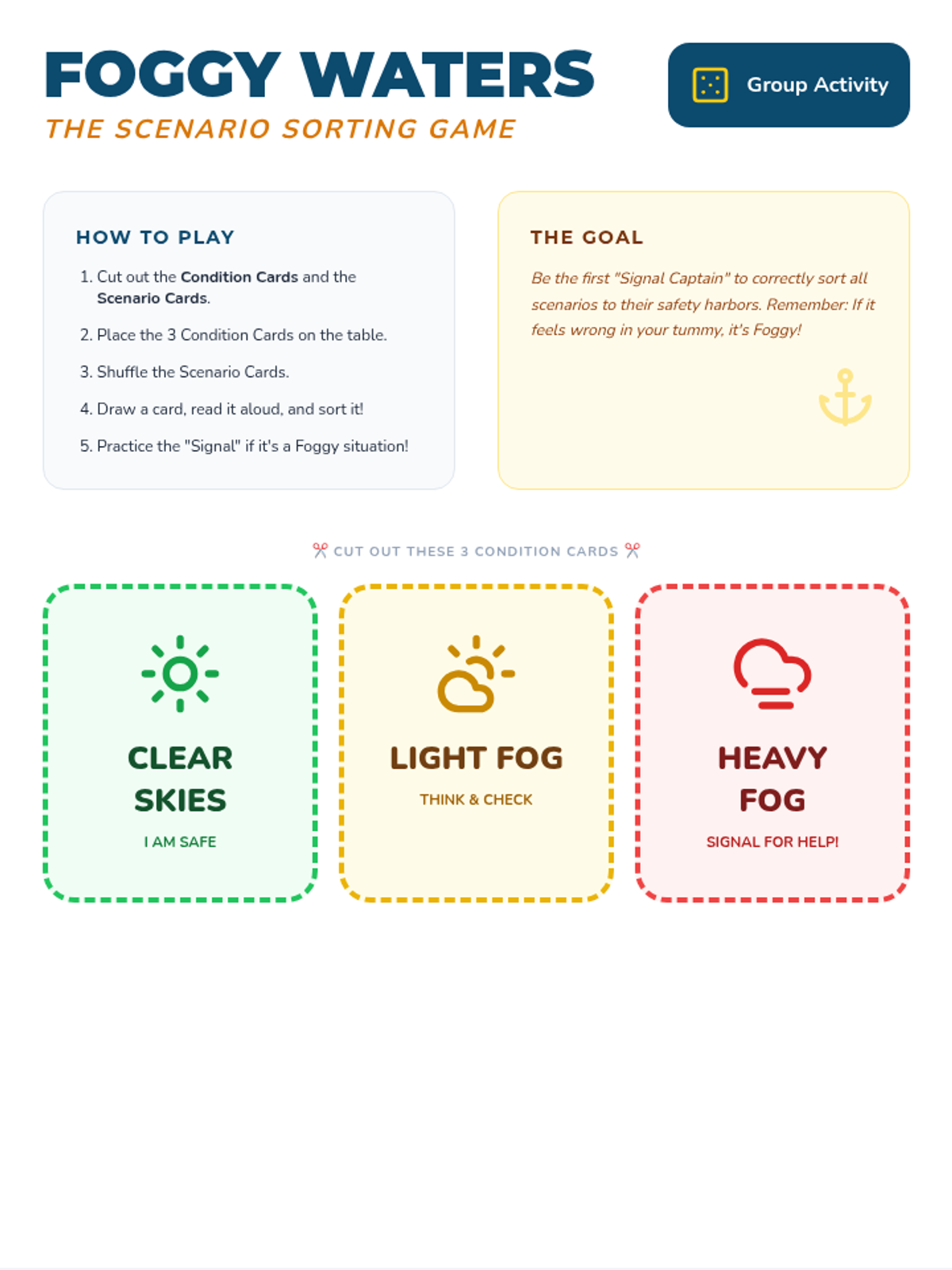
A comprehensive social work resource for elementary students to identify safe adults and practice asking for help during summer break using a lighthouse-themed framework.
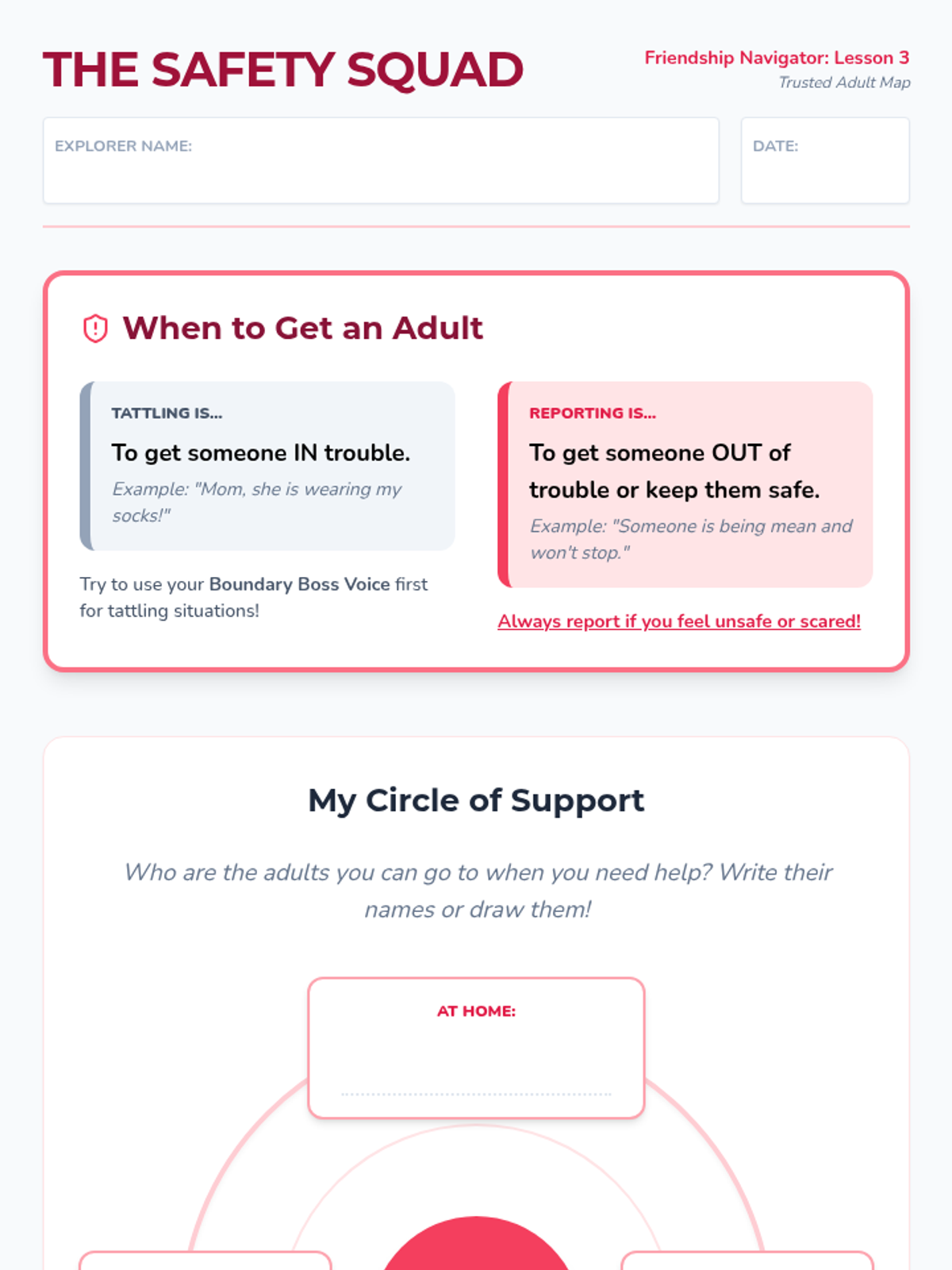
This lesson helps students identify trusted adults in their lives and clarifies the difference between 'tattling' and 'reporting' for safety.
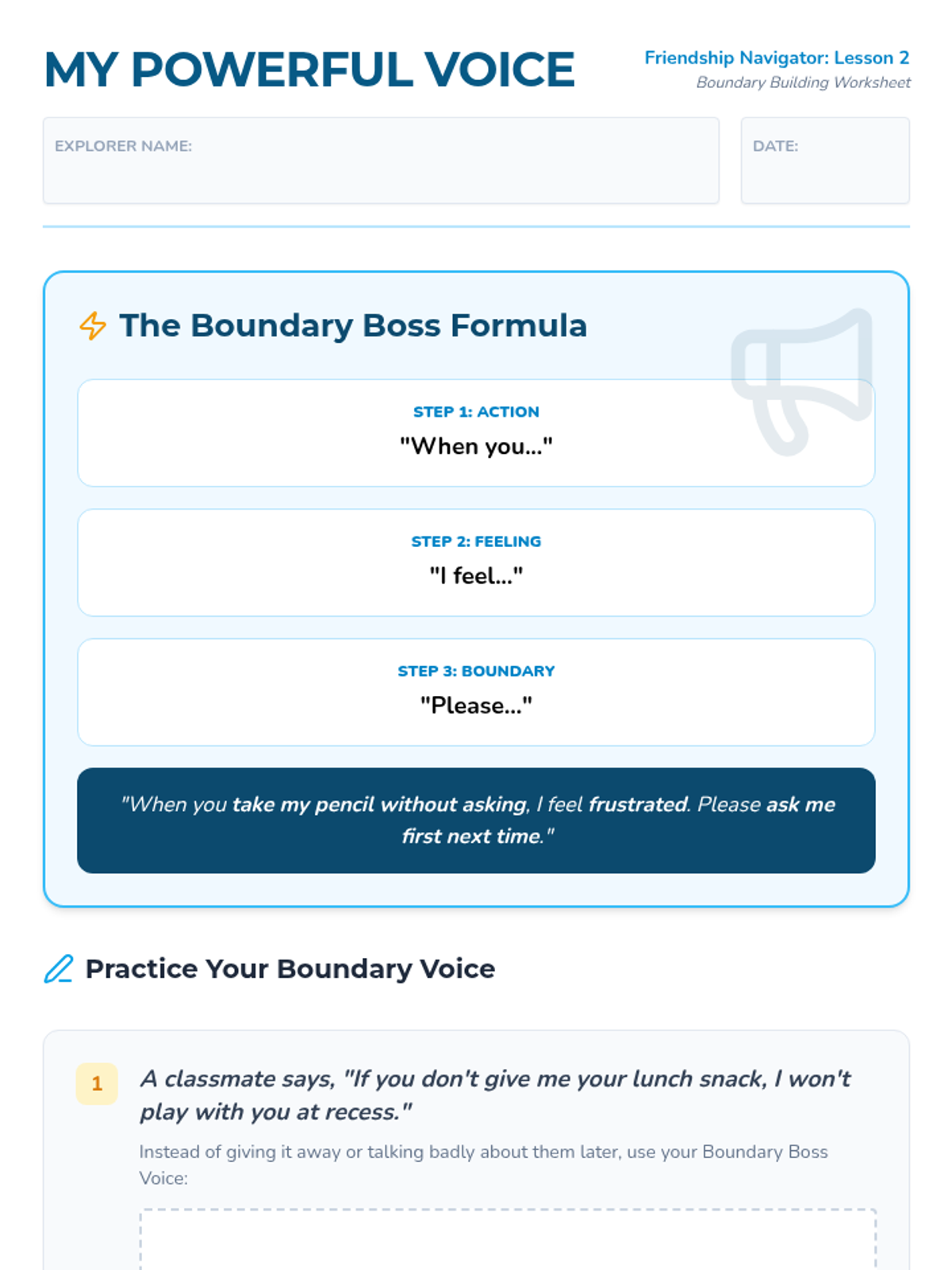
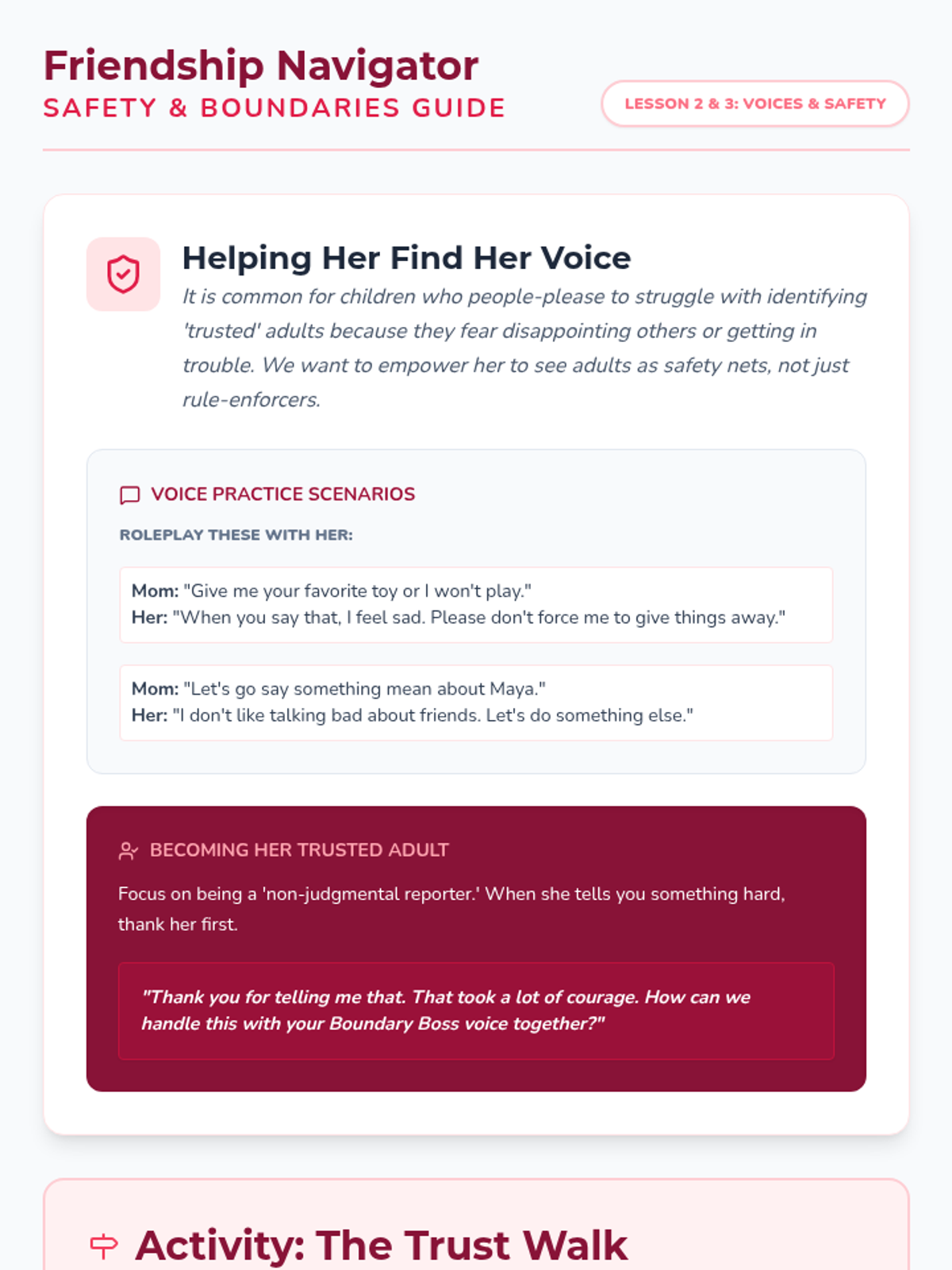
This lesson teaches assertive communication skills, providing students with the tools to set boundaries and use their words effectively instead of resorting to gossip or compliance.
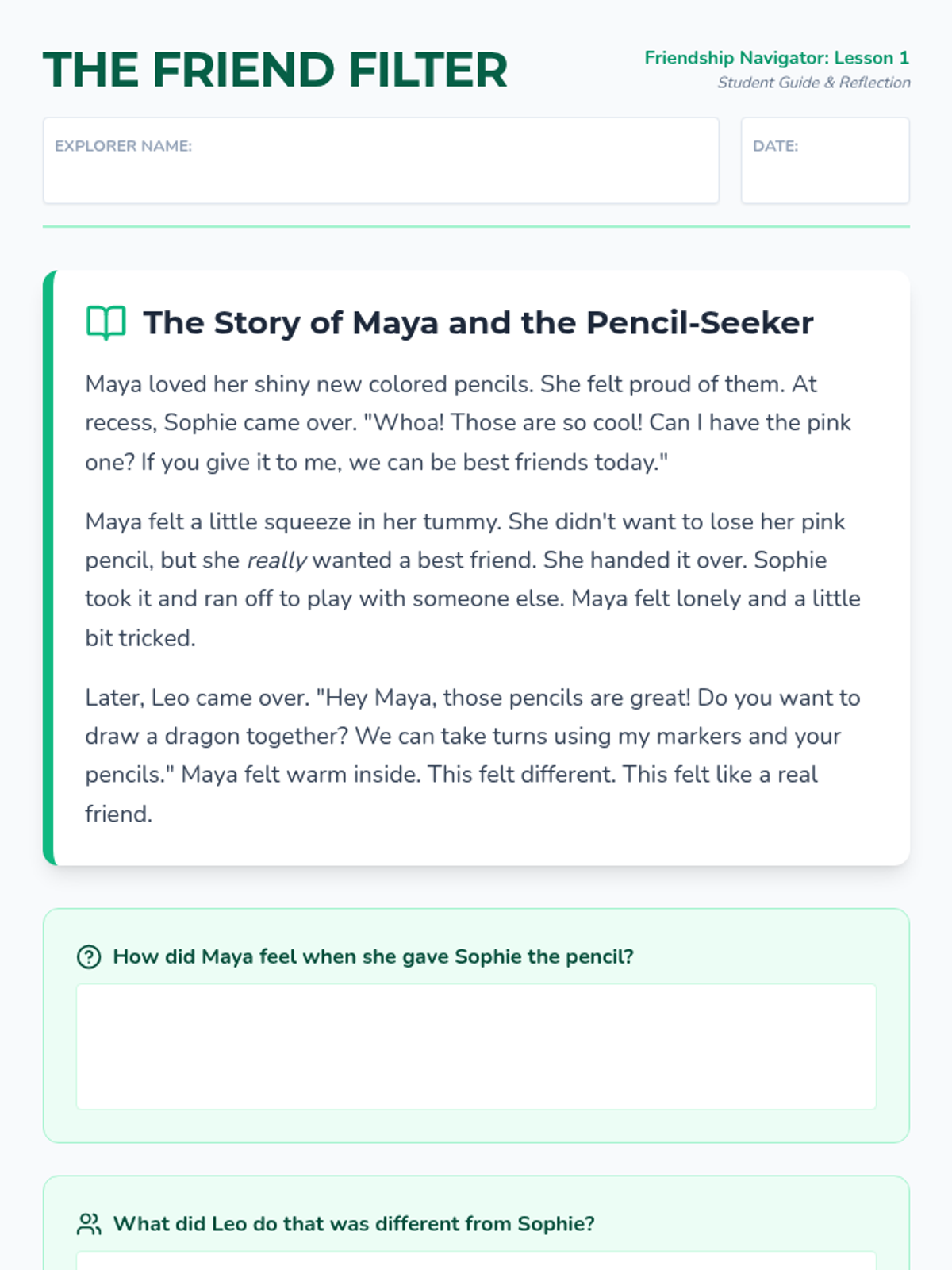
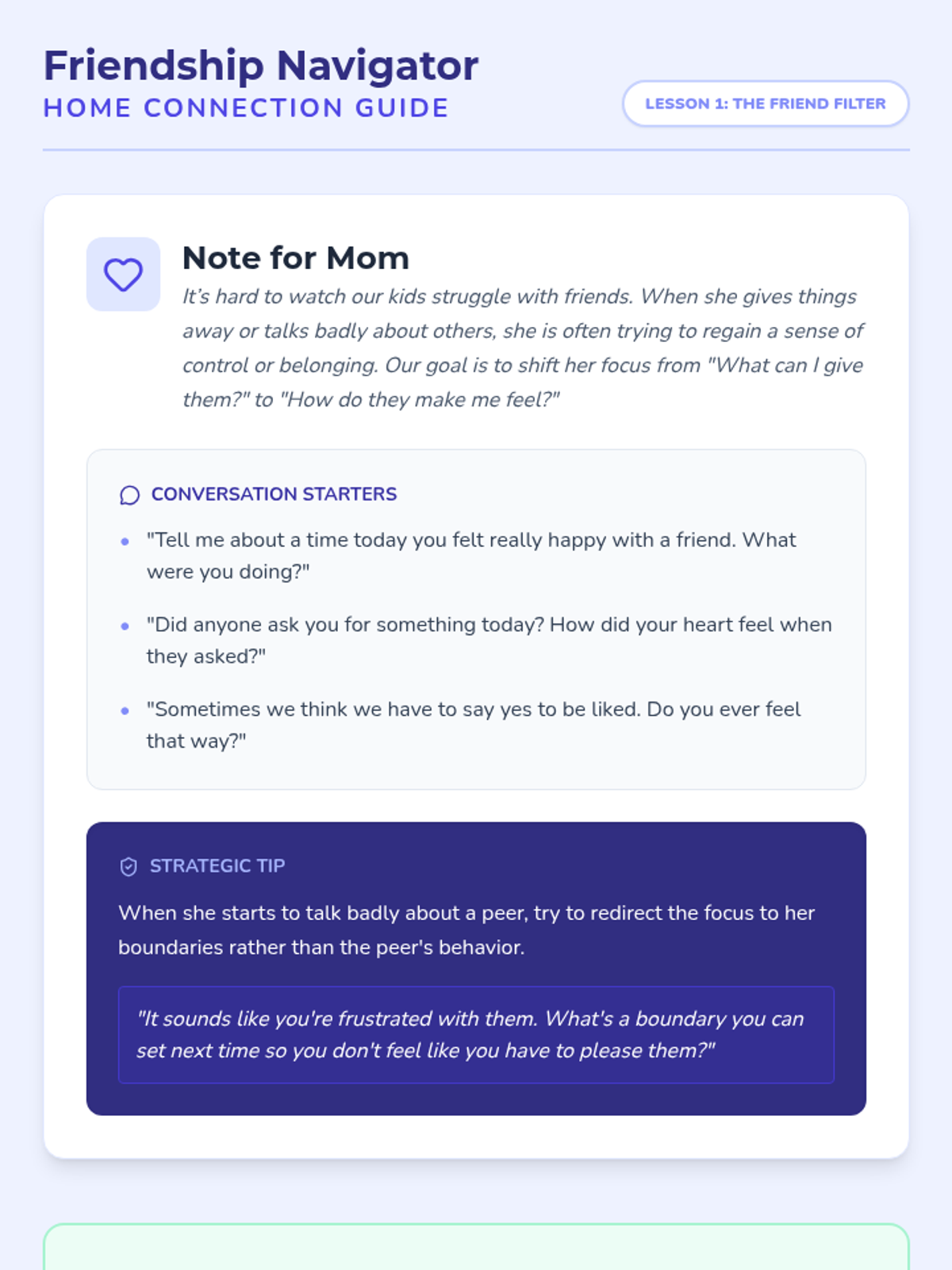
This lesson focuses on distinguishing between genuine friendship and people-pleasing behaviors, helping students identify when they are being 'used' versus valued.
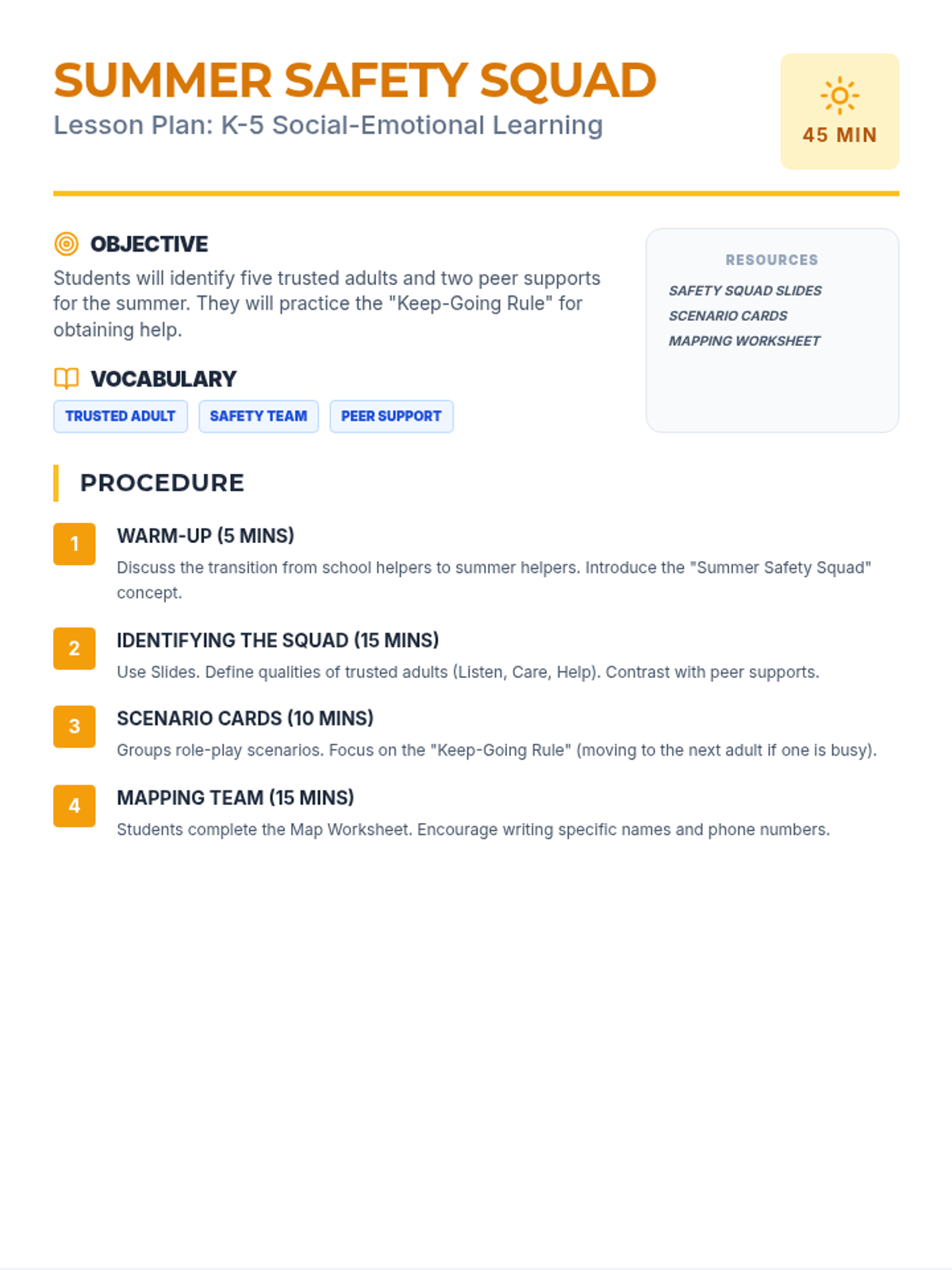
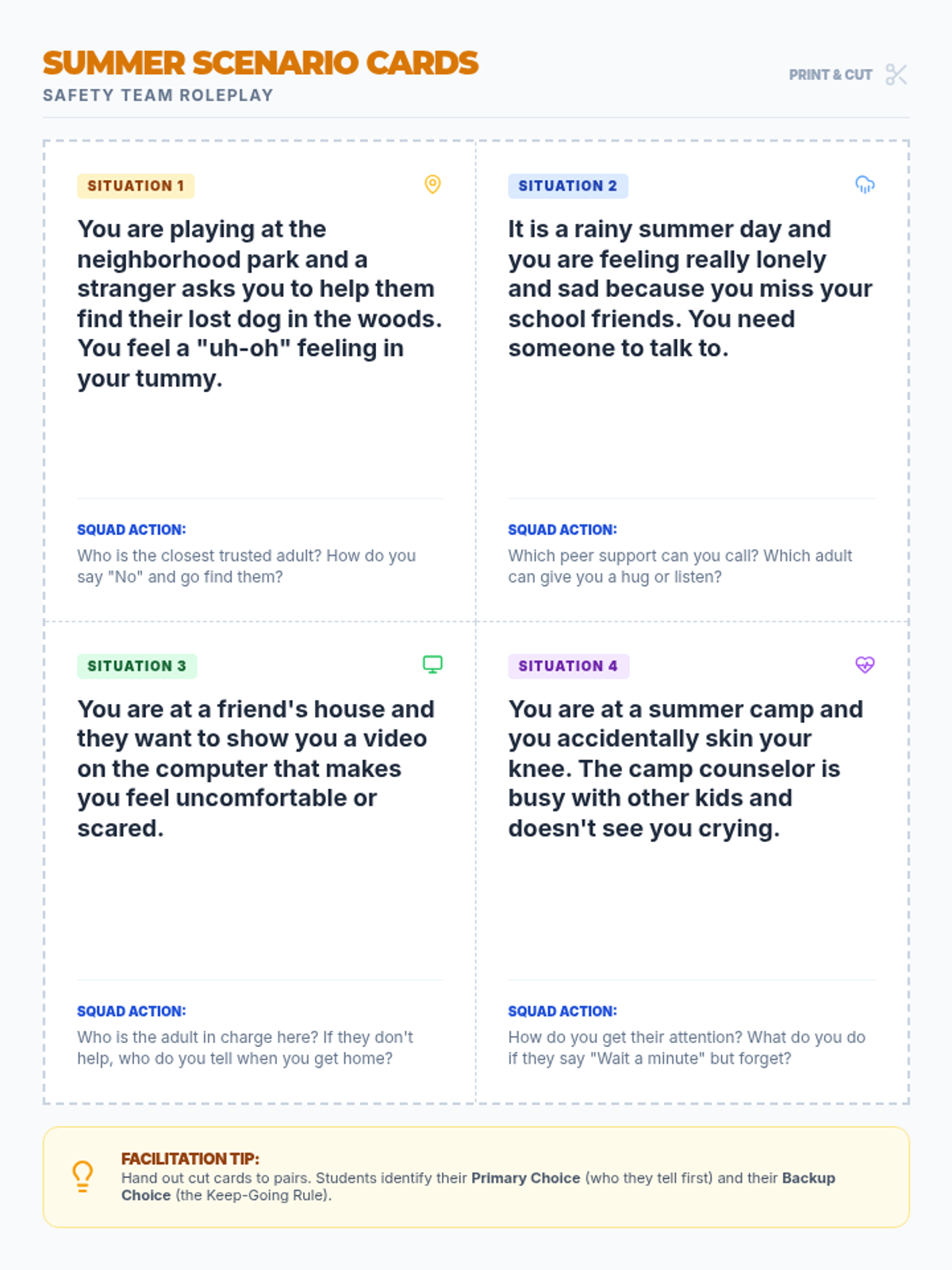
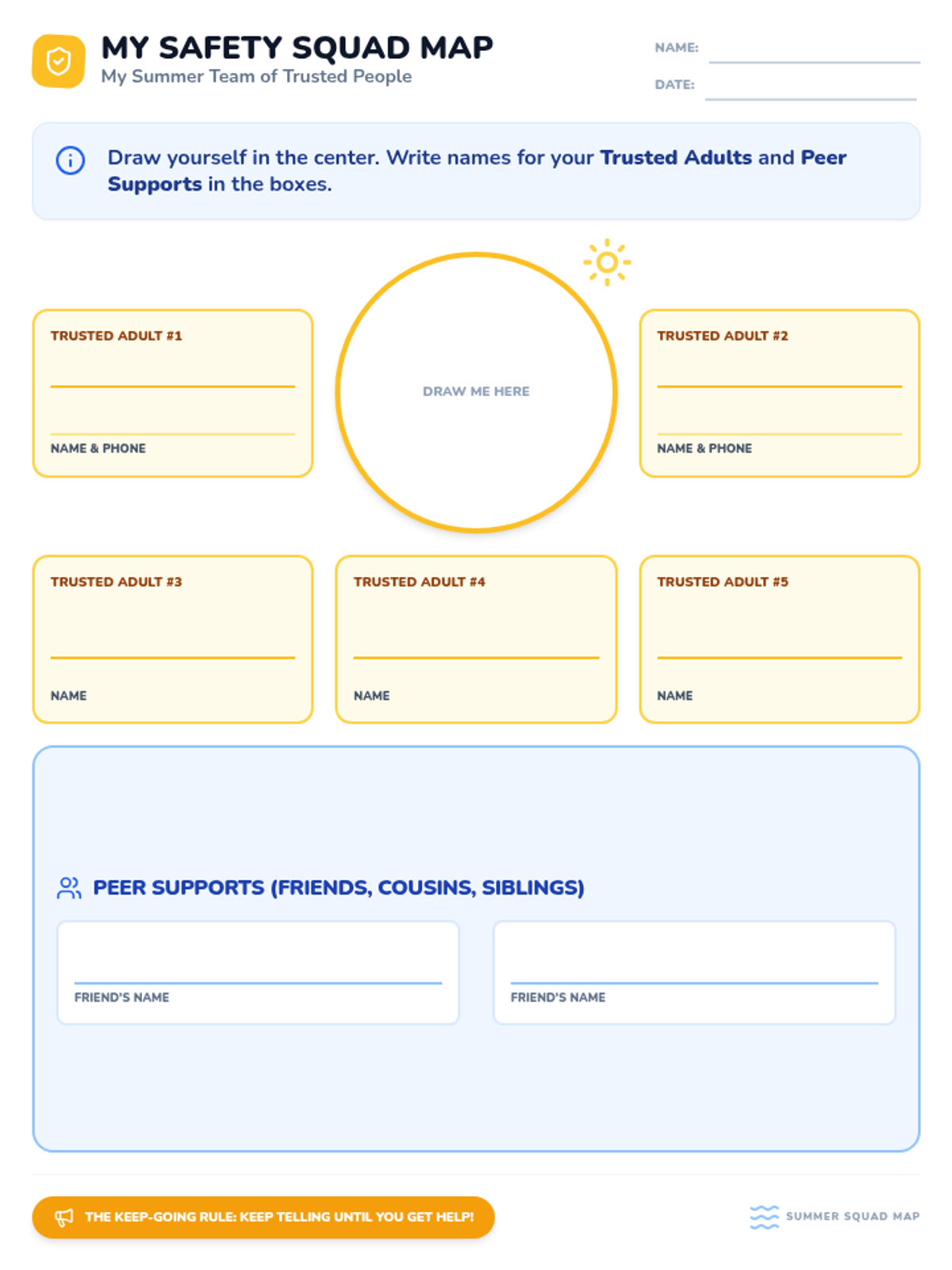
A transition lesson for K-5 students to identify a 'safety team' of trusted adults and peers for the summer months. Through visual mapping and discussion, students build a concrete network of support for when school is closed.
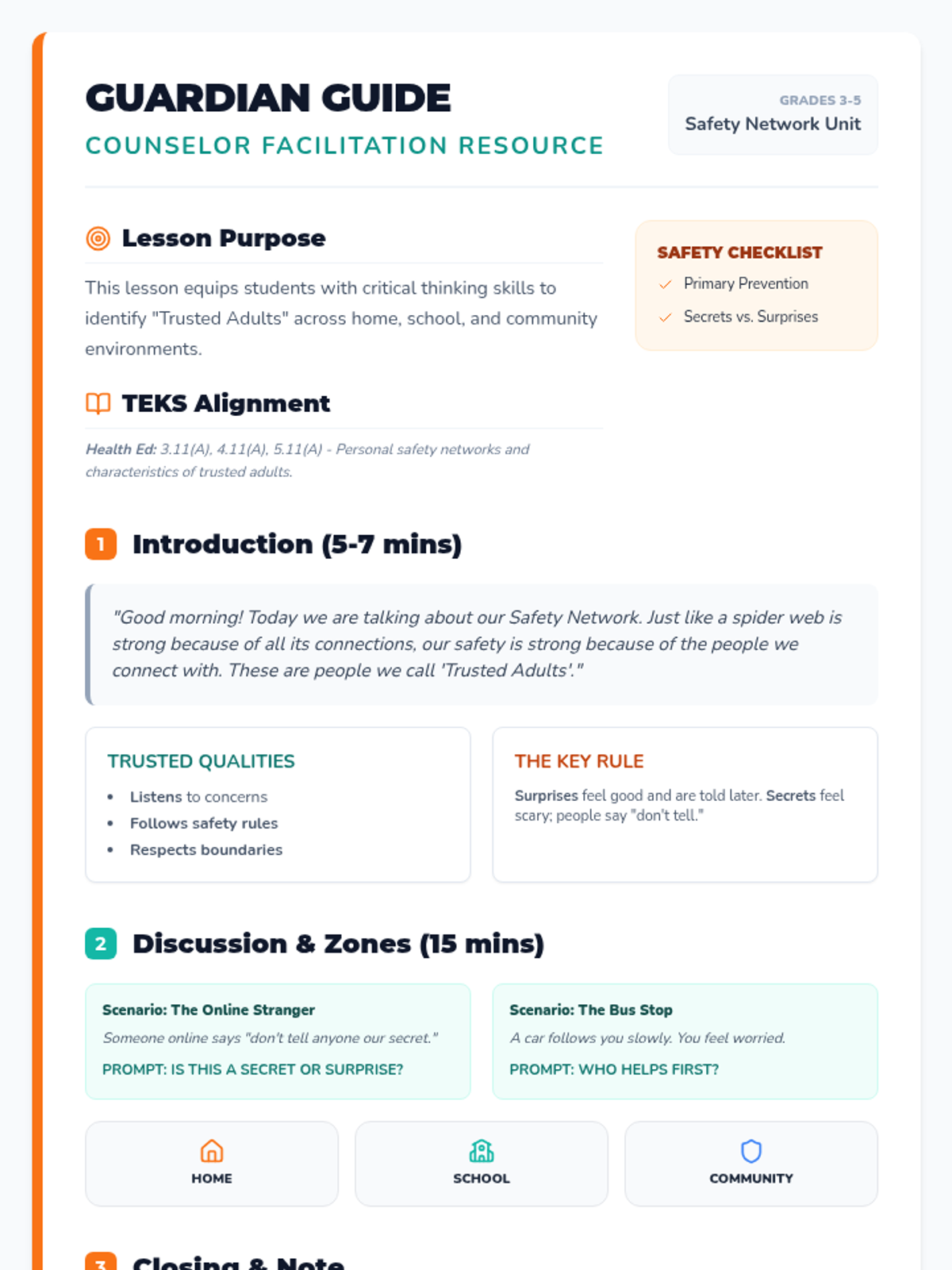
A lesson for grades 3-5 focusing on the criteria for trusted adults and the creation of a personal safety network card.
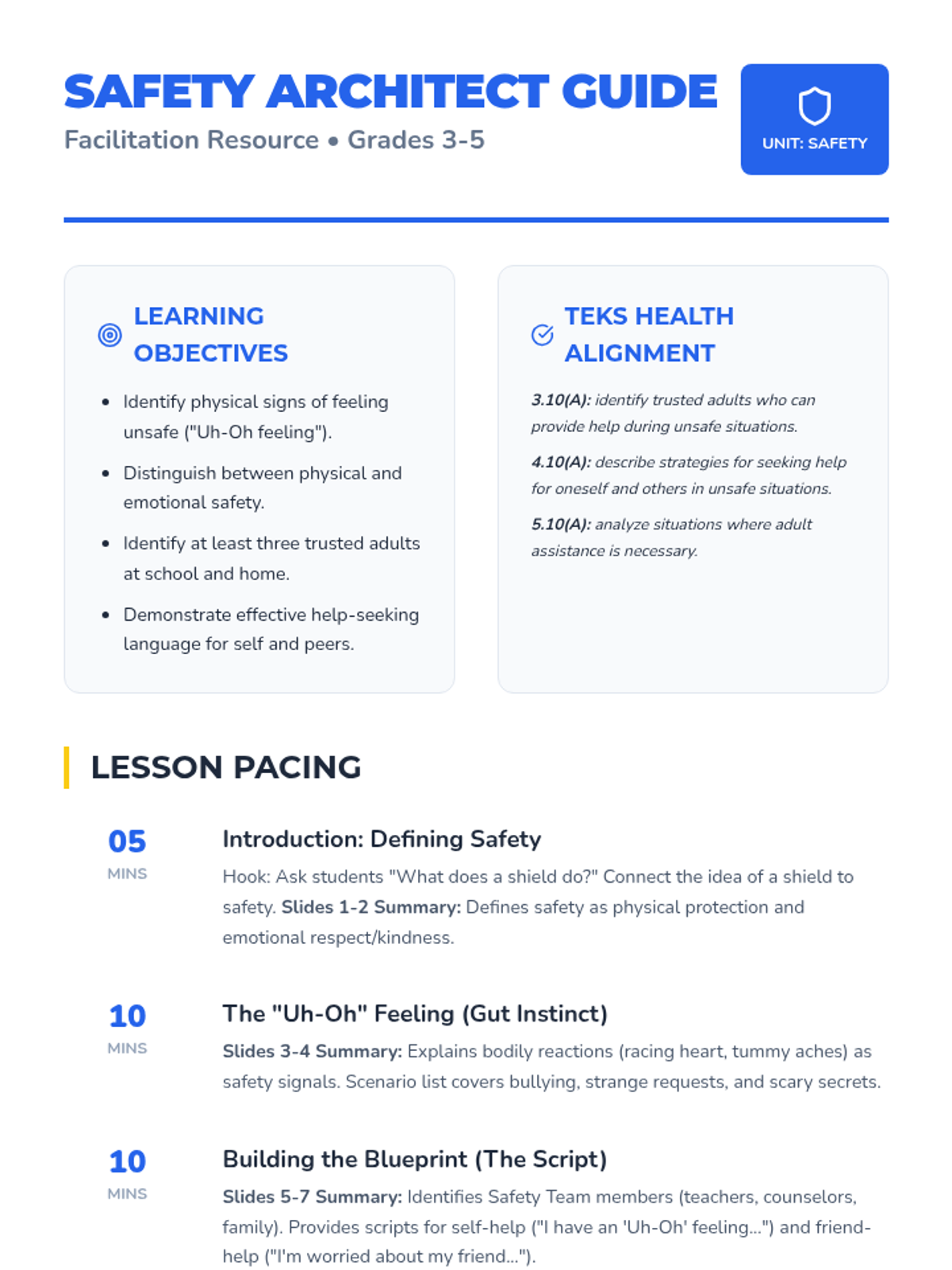
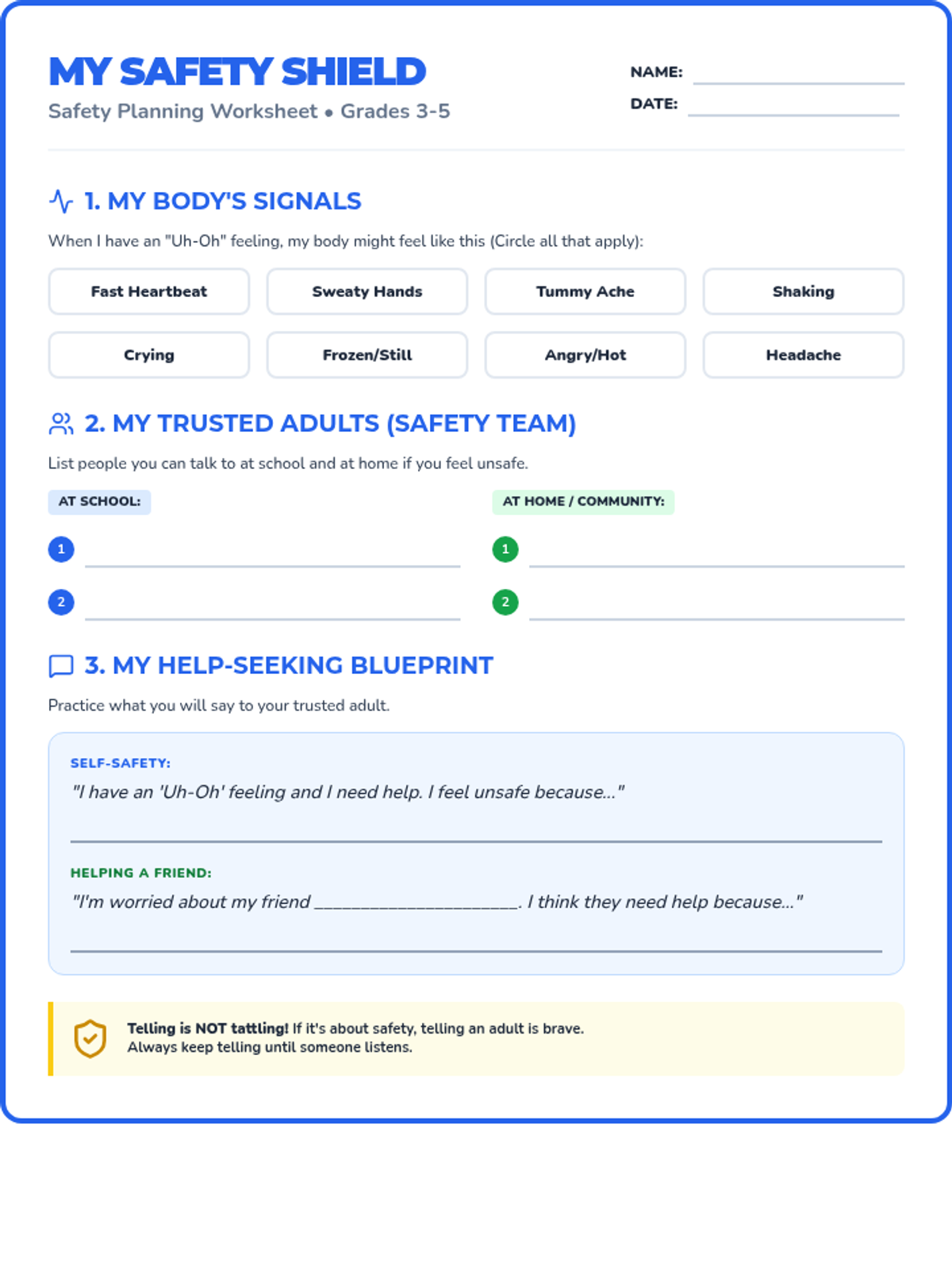
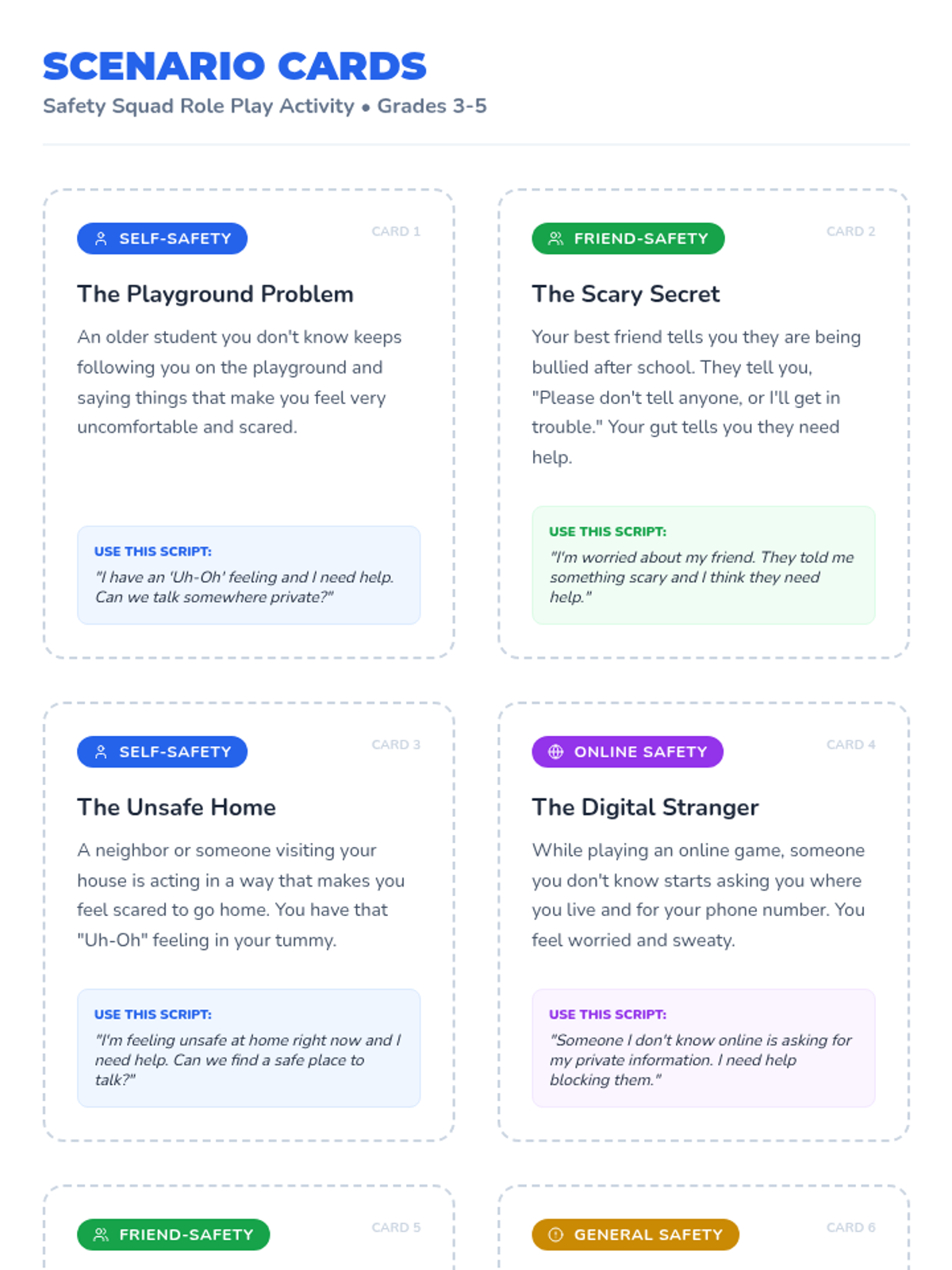
A comprehensive school counseling lesson for grades 3-5 focused on identifying unsafe situations, building a support network of trusted adults, and practicing the specific language needed to ask for help for oneself or a friend.
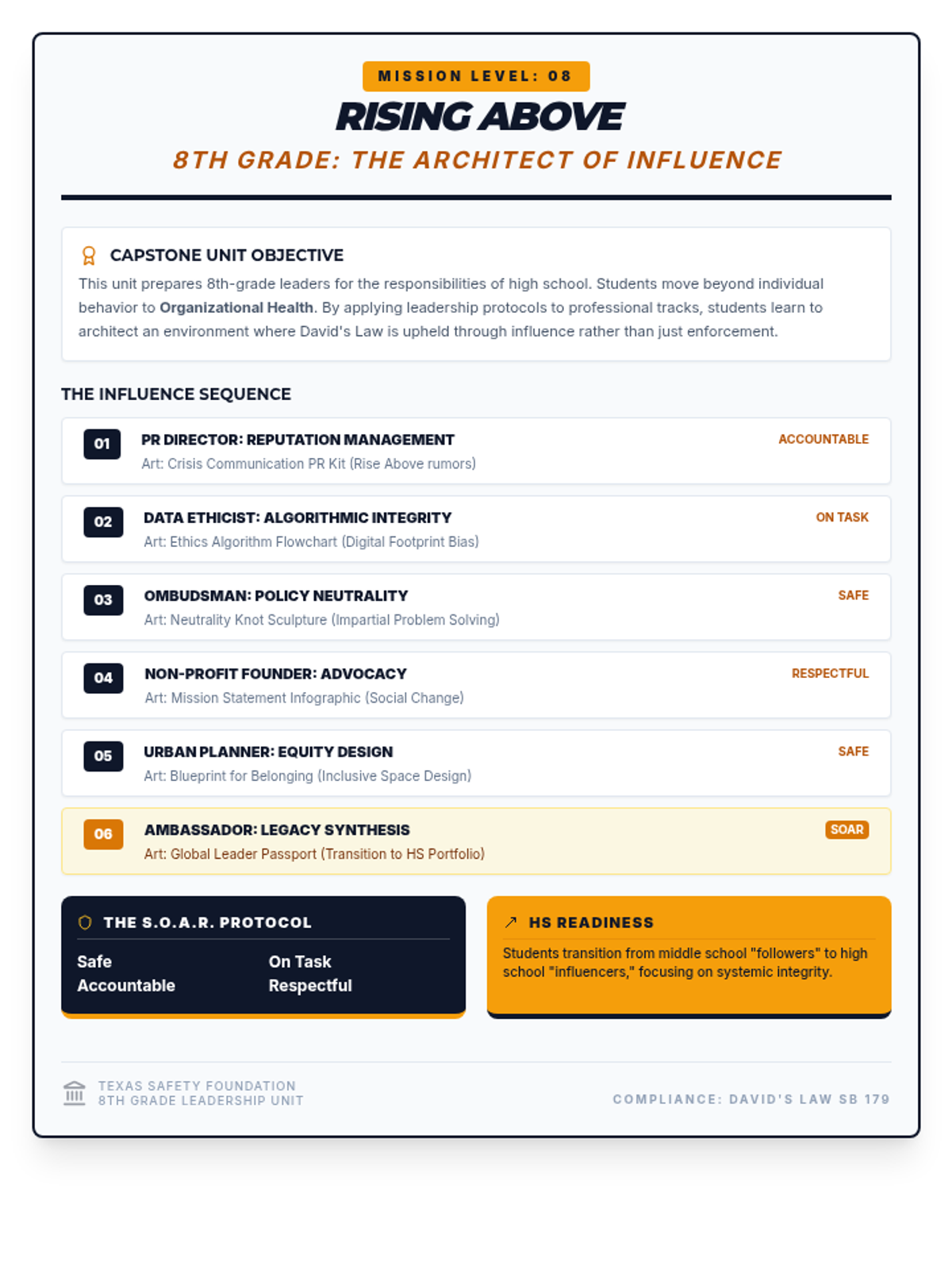
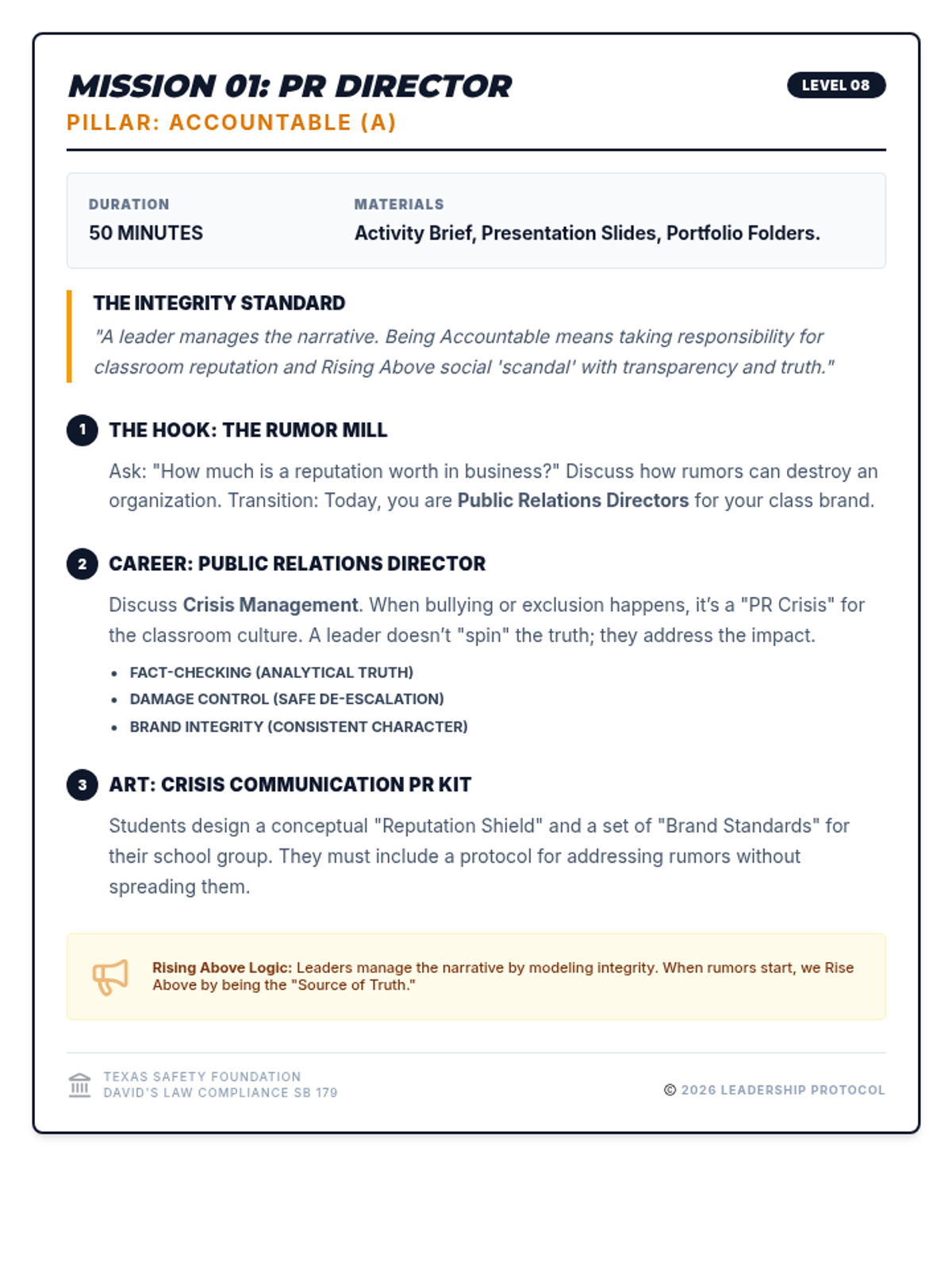
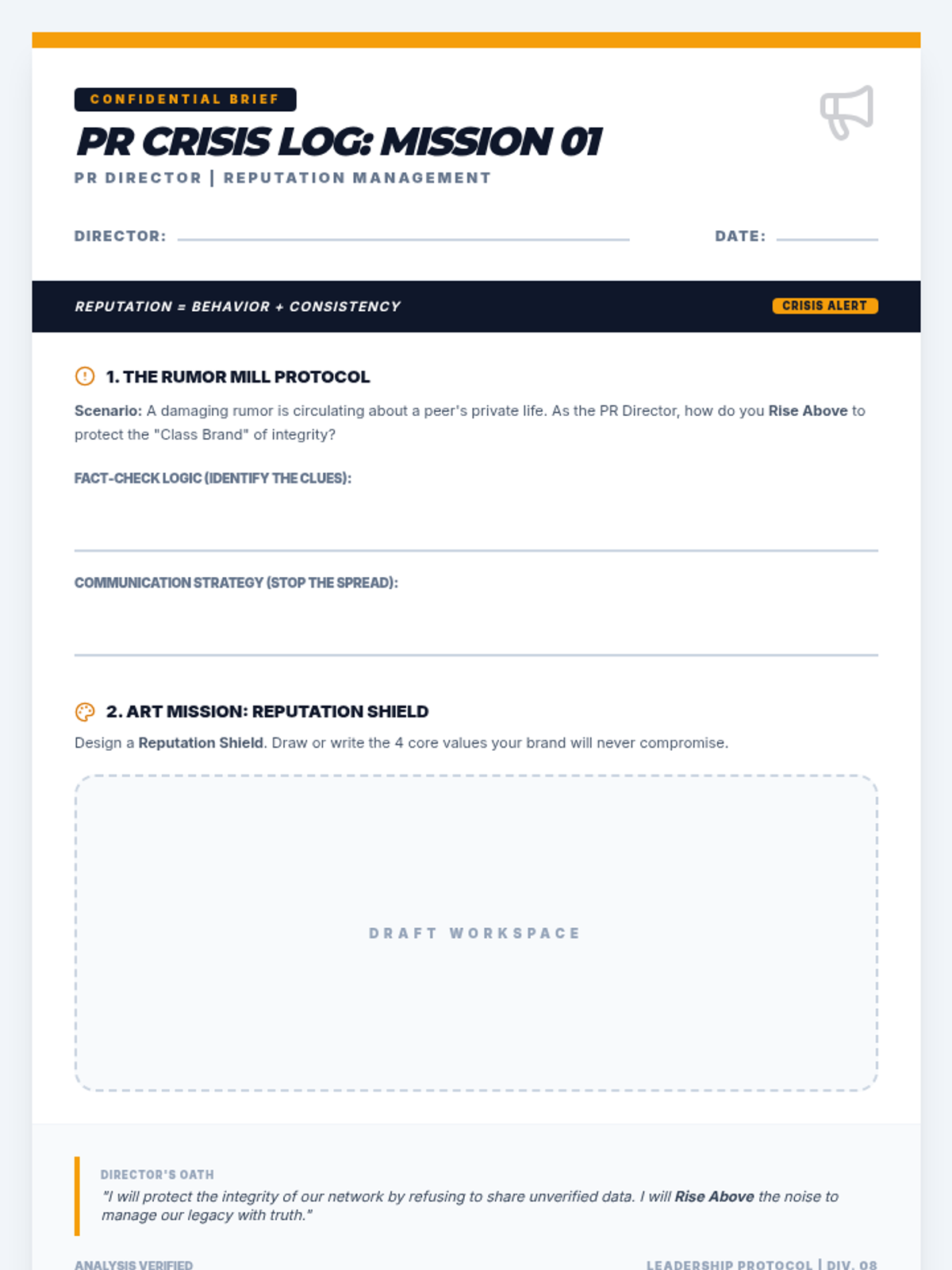
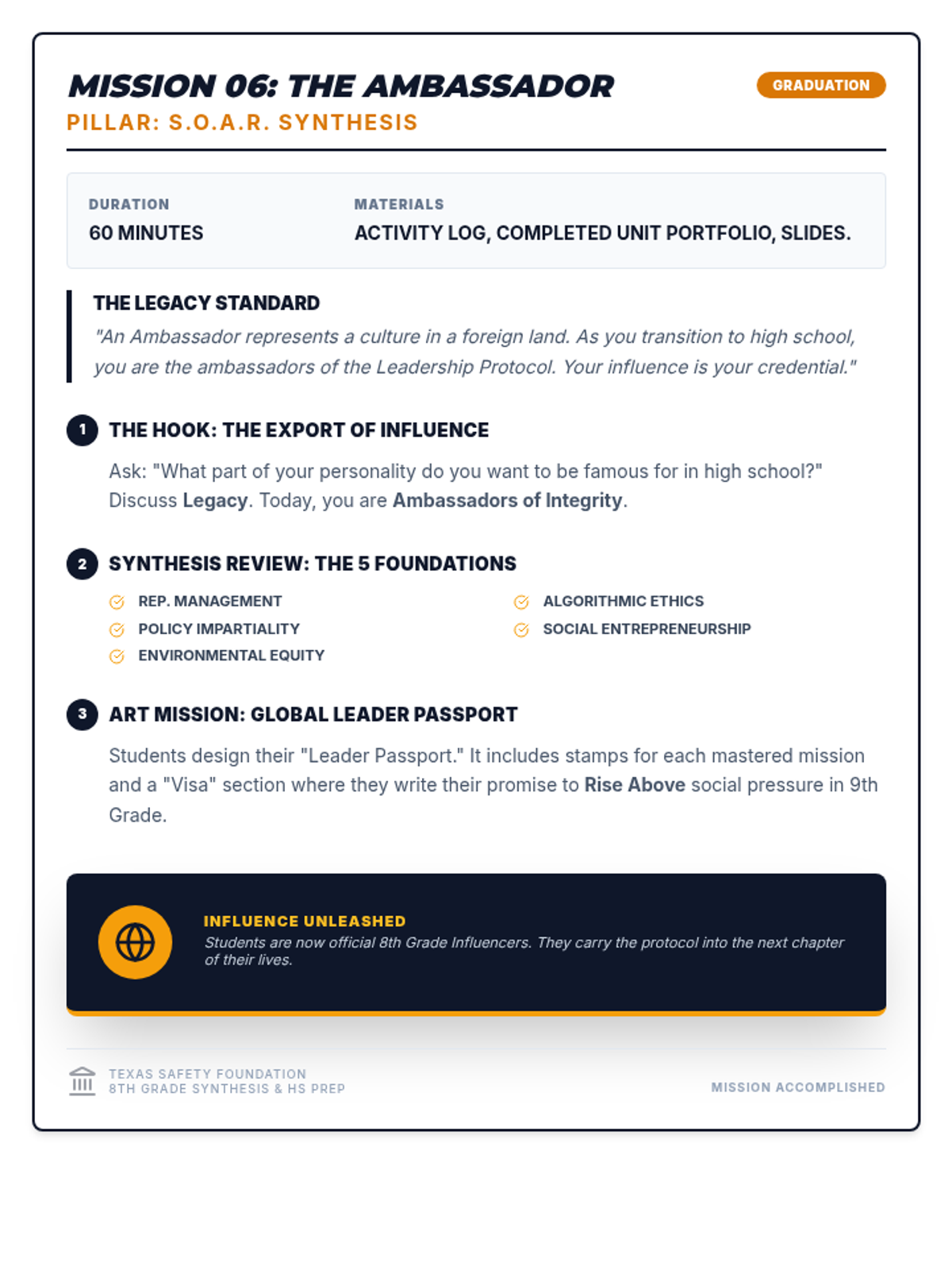
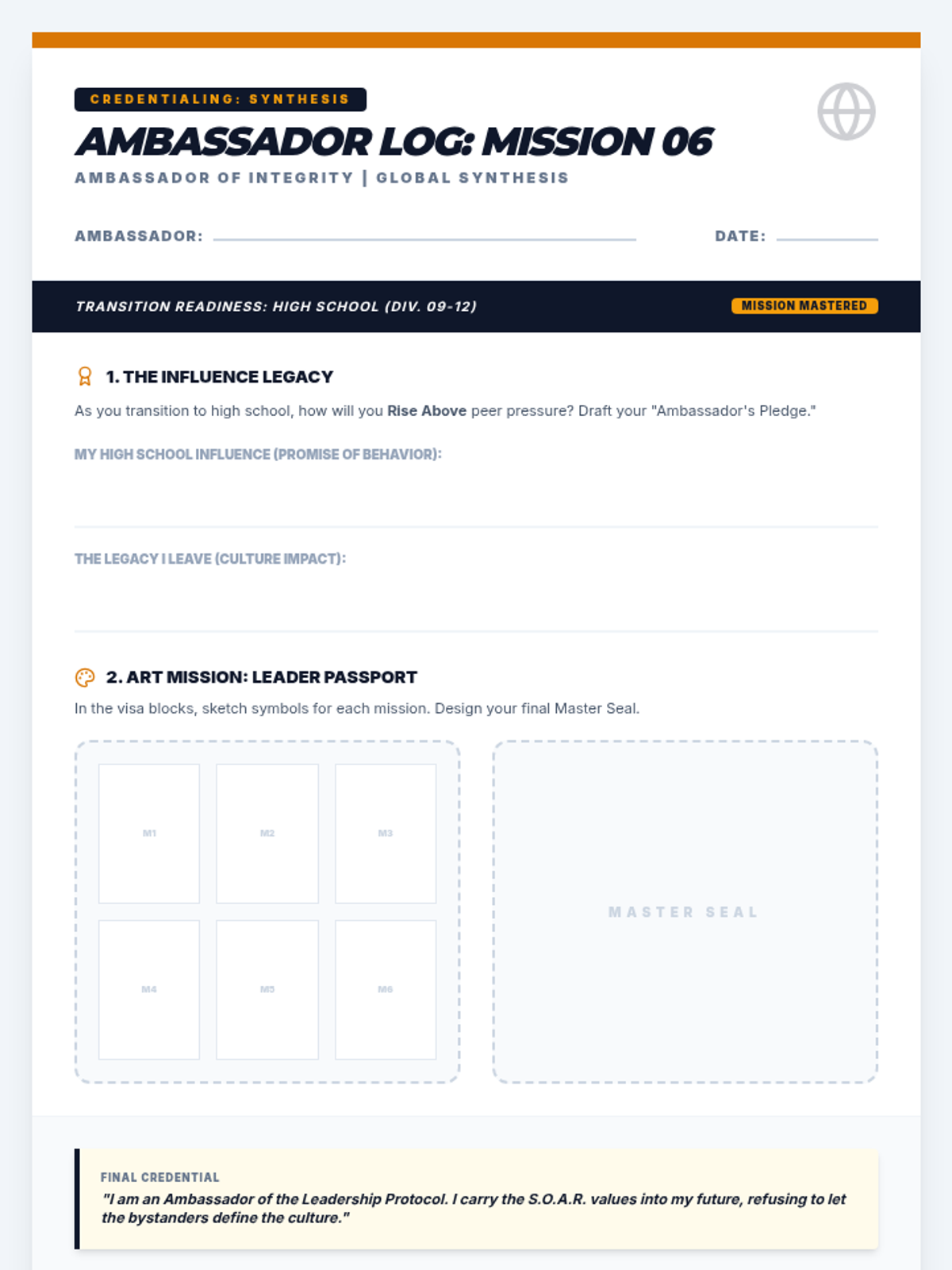
8th Grade focus on reputation management and accountability through a PR Director lens. Art: Crisis Communication PR Kit.
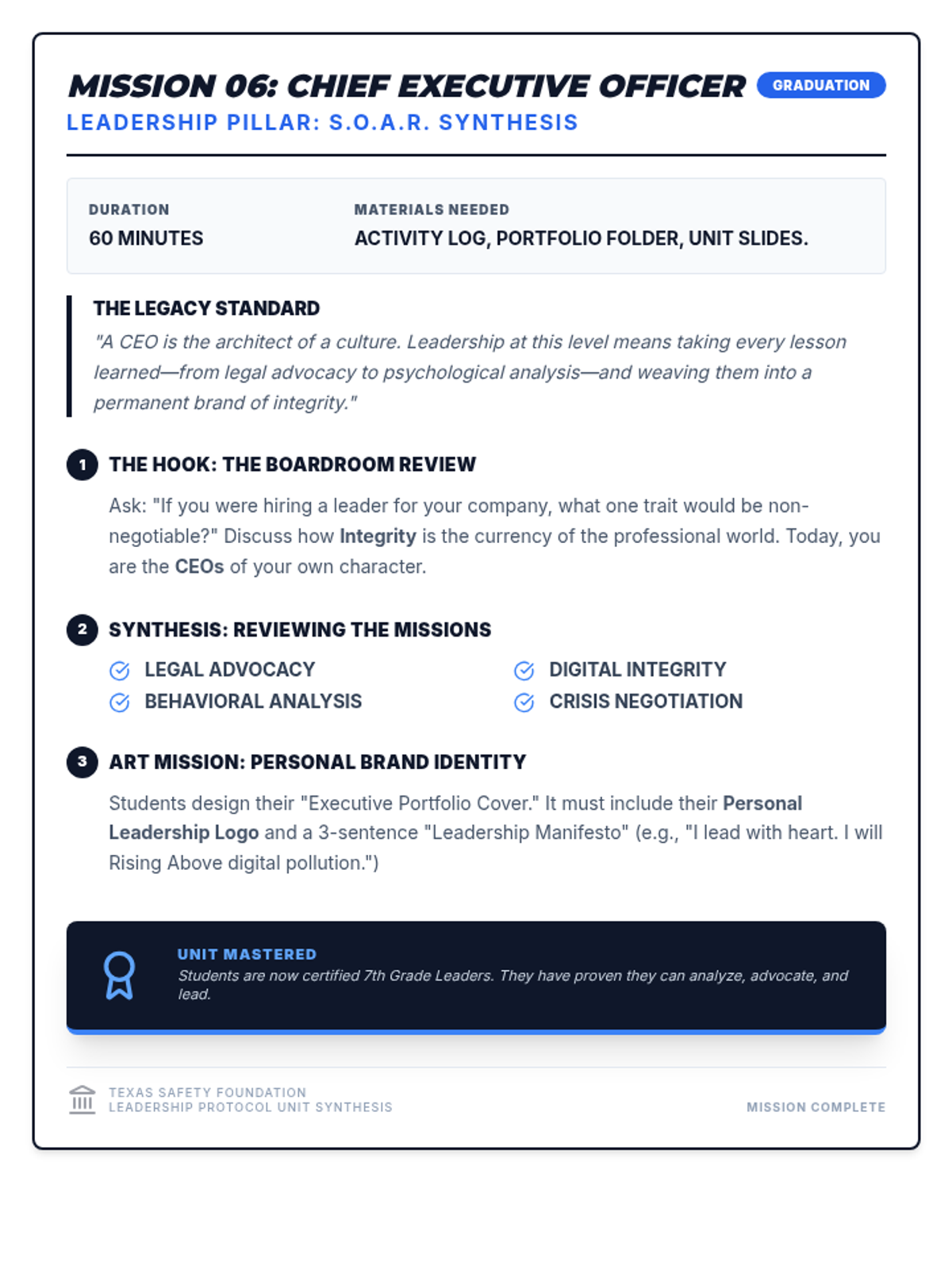
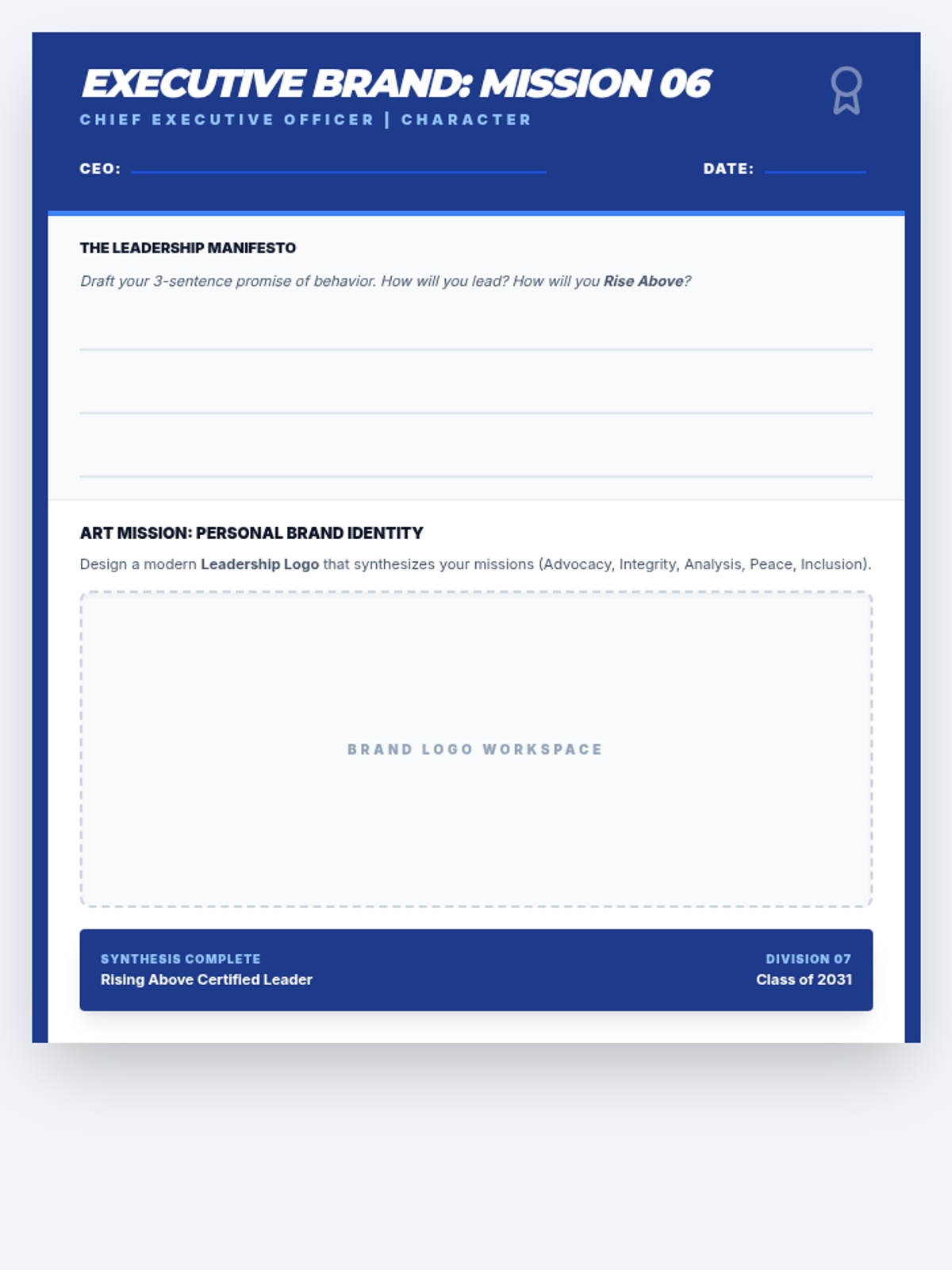
7th Grade unit synthesis focusing on personal leadership branding and the S.O.A.R. framework. Art: Personal Brand Identity.
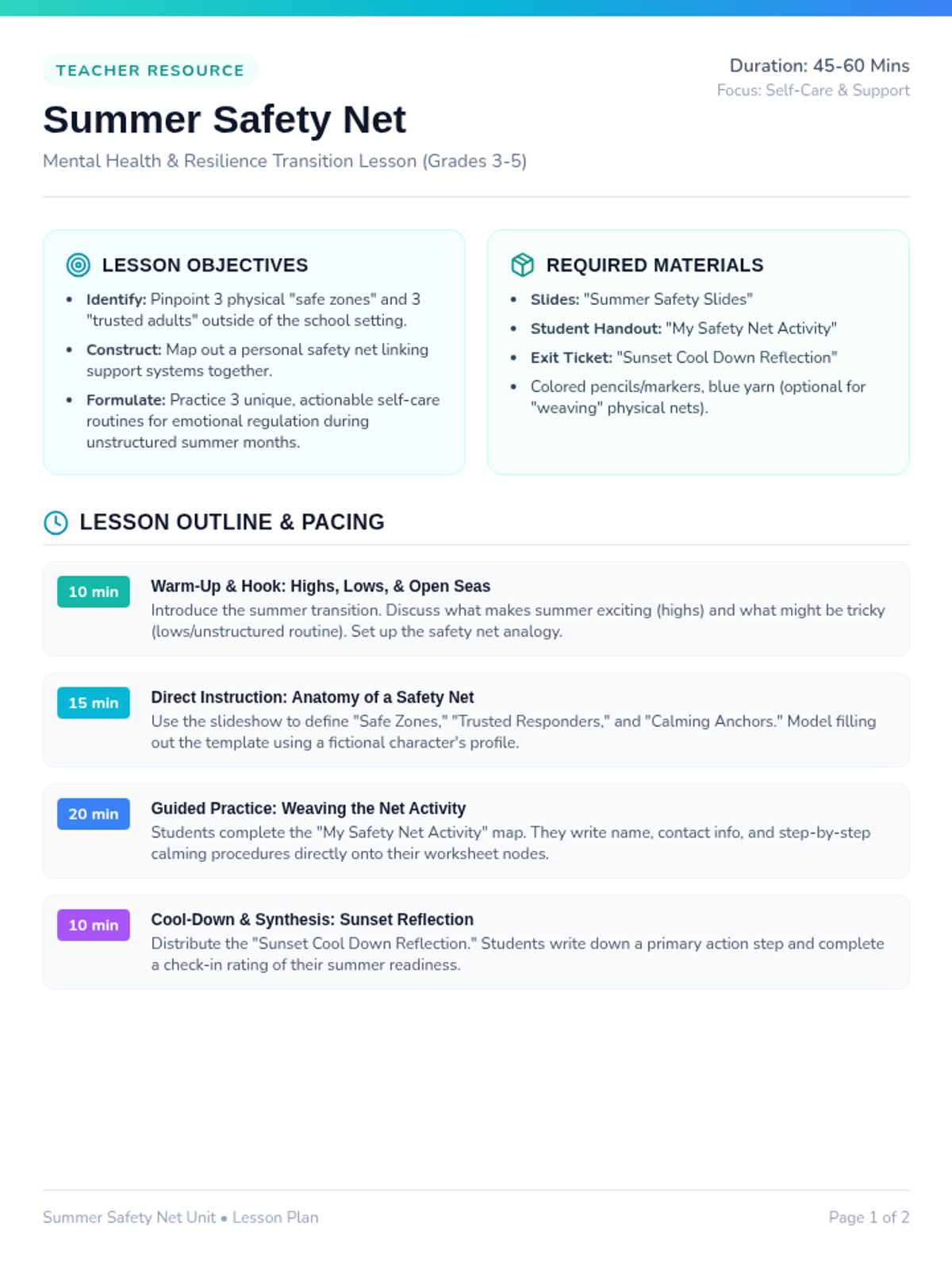
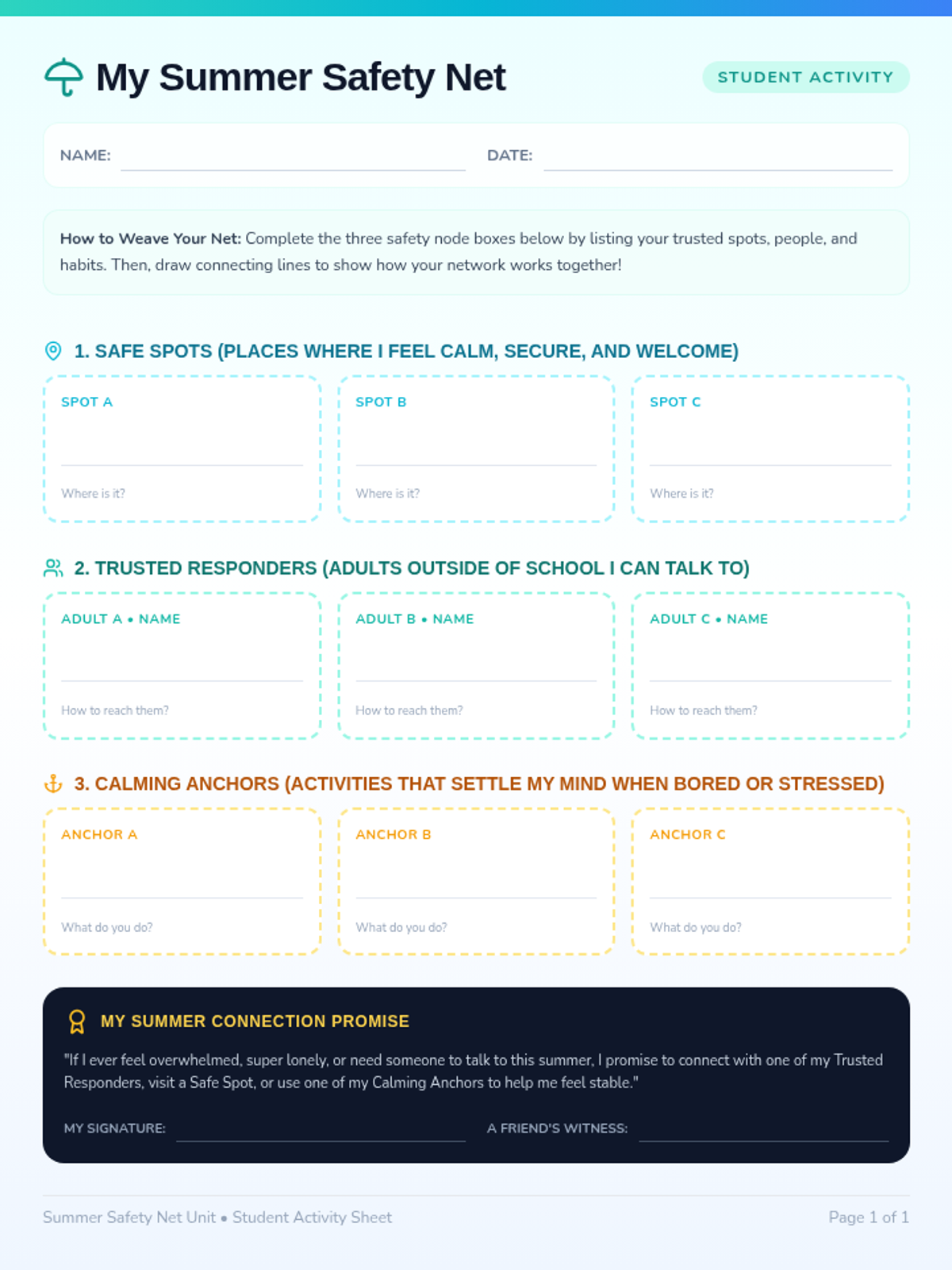
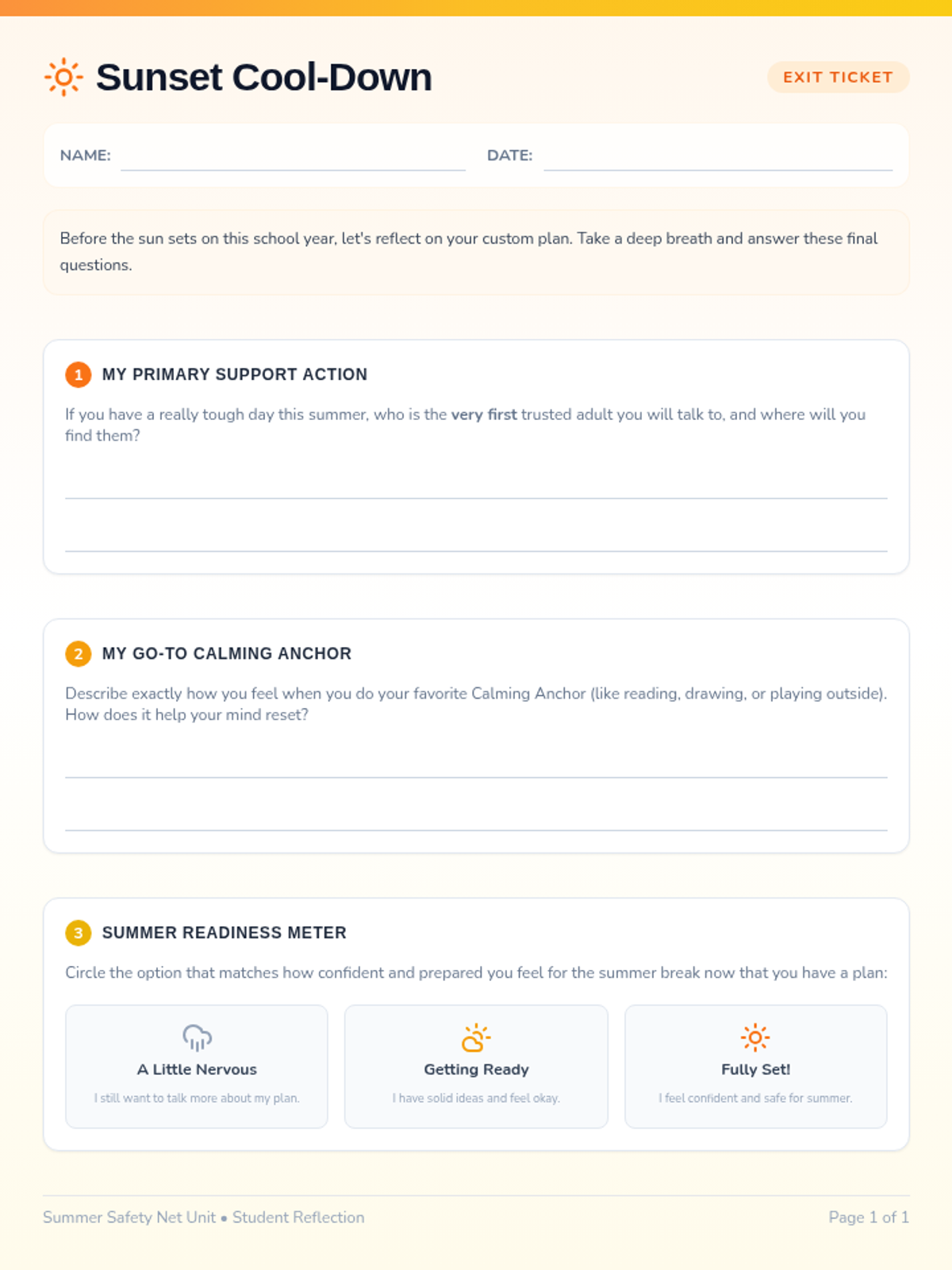
A transition lesson for 3rd-5th grade students to construct a physical and mental safety net for the unstructured summer months. Students identify safe spots, trusted adults, and calming activities to ensure a safe, connected, and relaxing break.
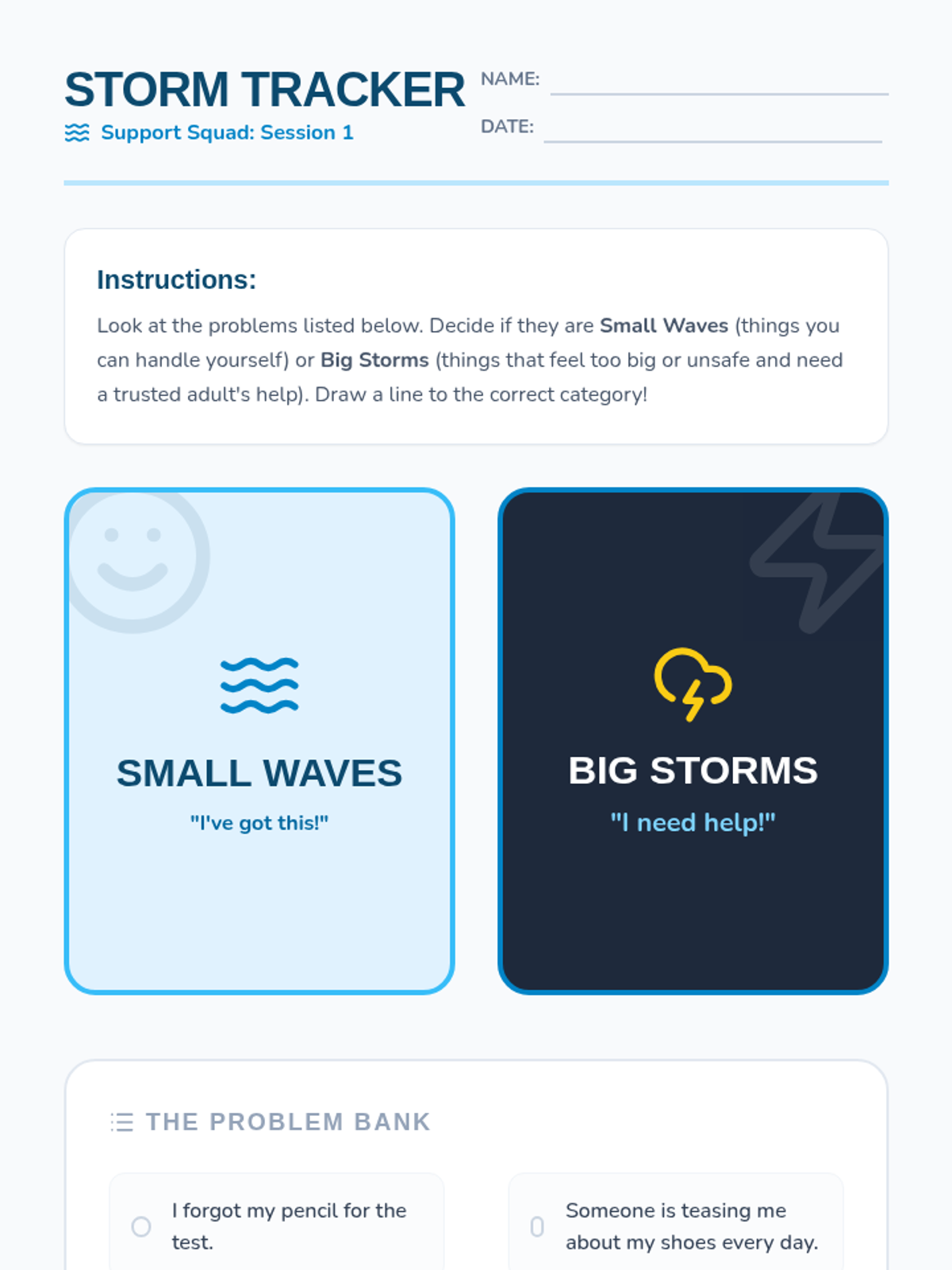
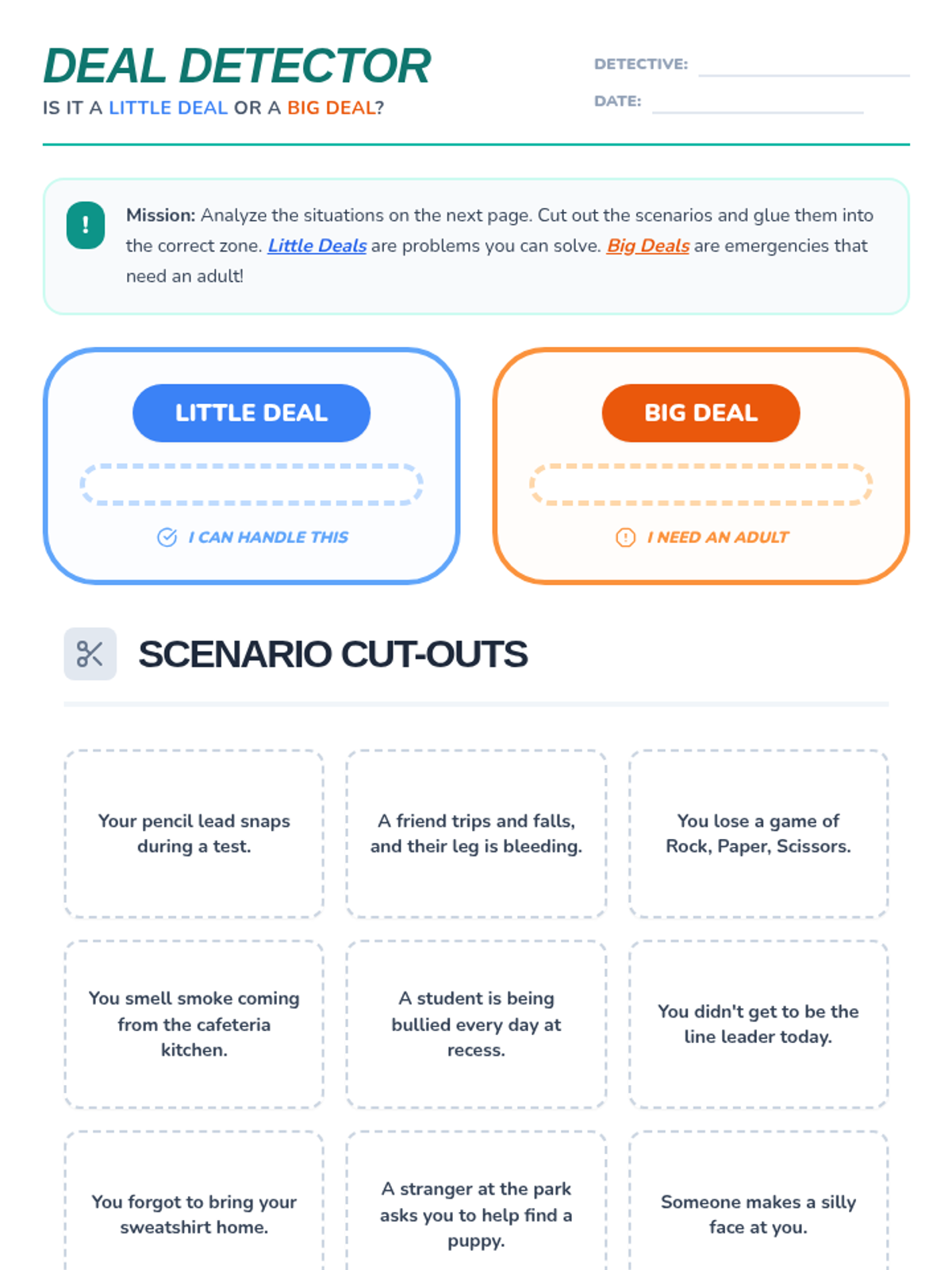
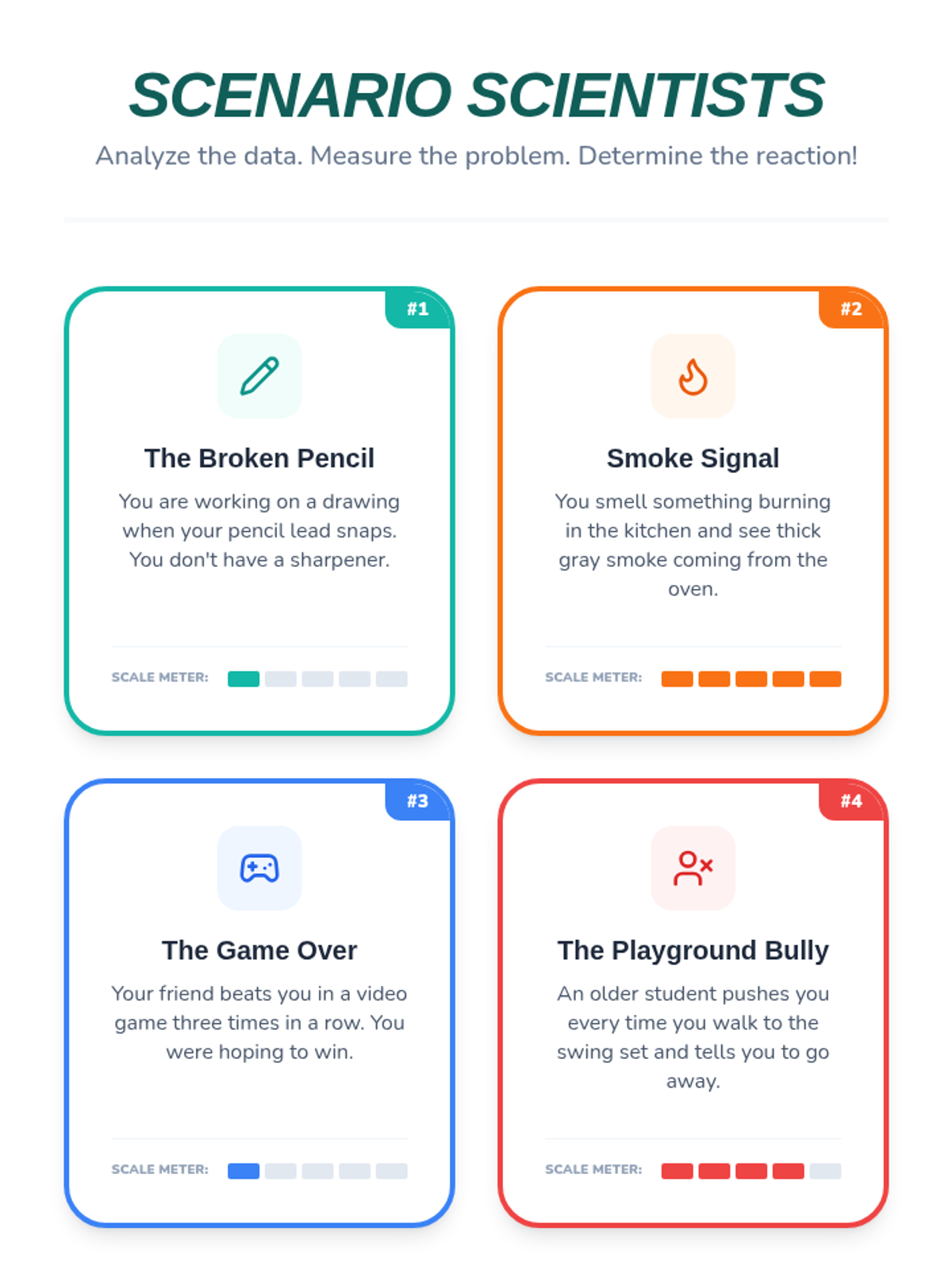
A social-emotional learning lesson focused on helping students differentiate between minor inconveniences (little deals) and serious situations (big deals) to determine appropriate reactions.