Stop-and-think strategies, impulse management, and SMART goal setting for personal growth. Develops internal motivation, stress reduction techniques, and resilience through proactive planning and monitoring.
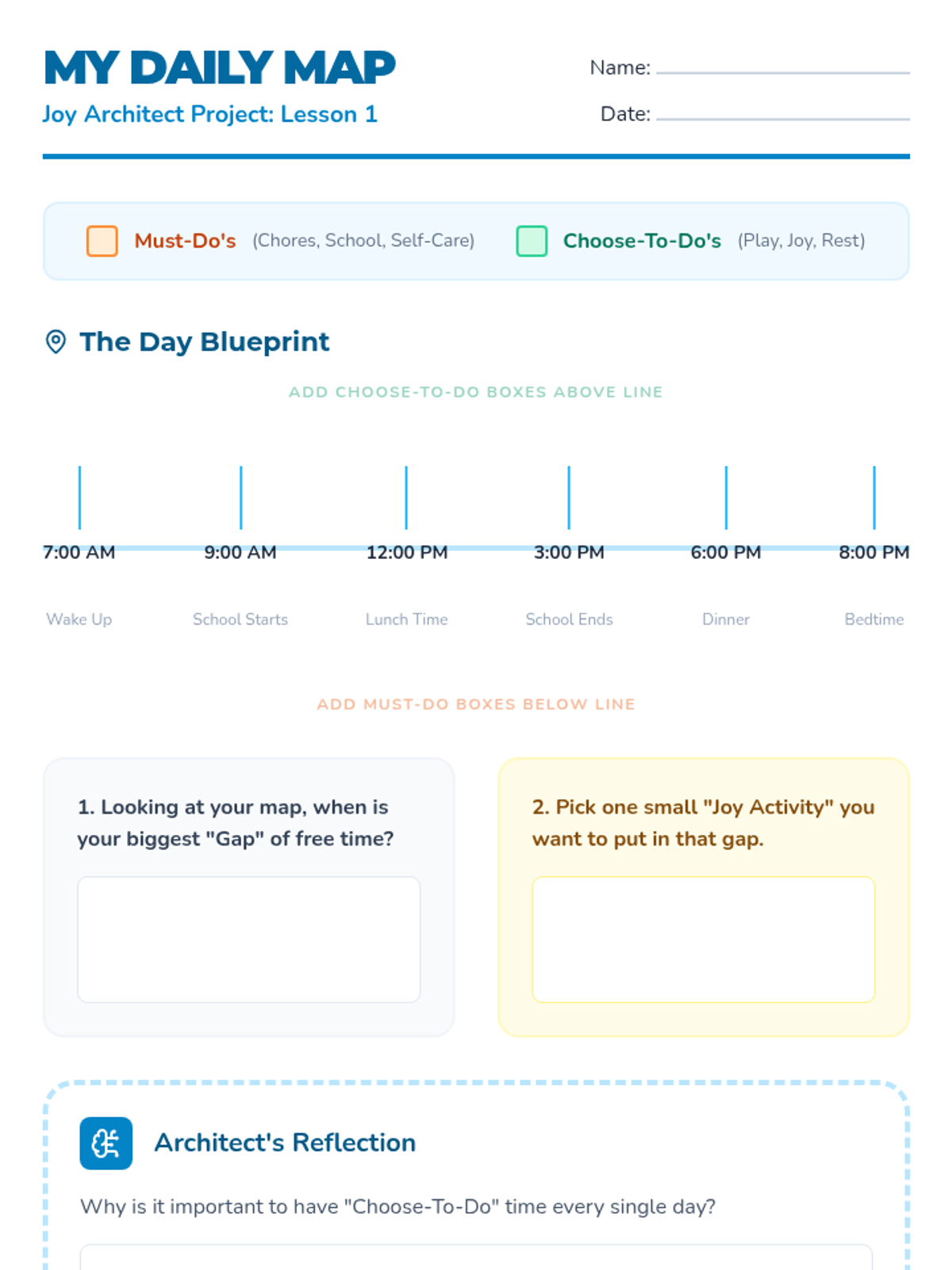
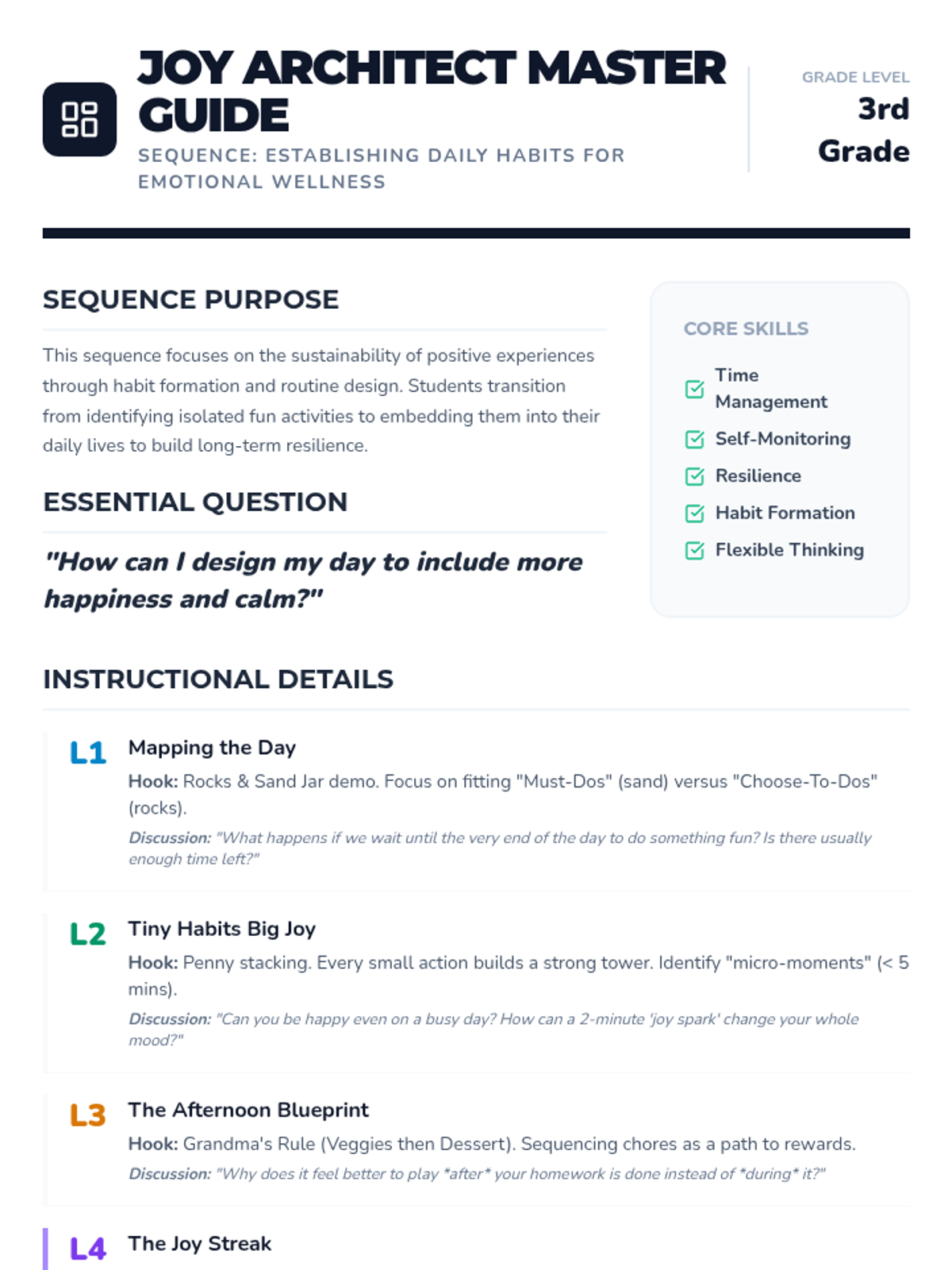
A 5-lesson unit for 3rd graders focused on building emotional resilience through habit formation. Students learn to audit their time, identify small 'micro-moments' of joy, and design balanced daily schedules that prioritize positive experiences.
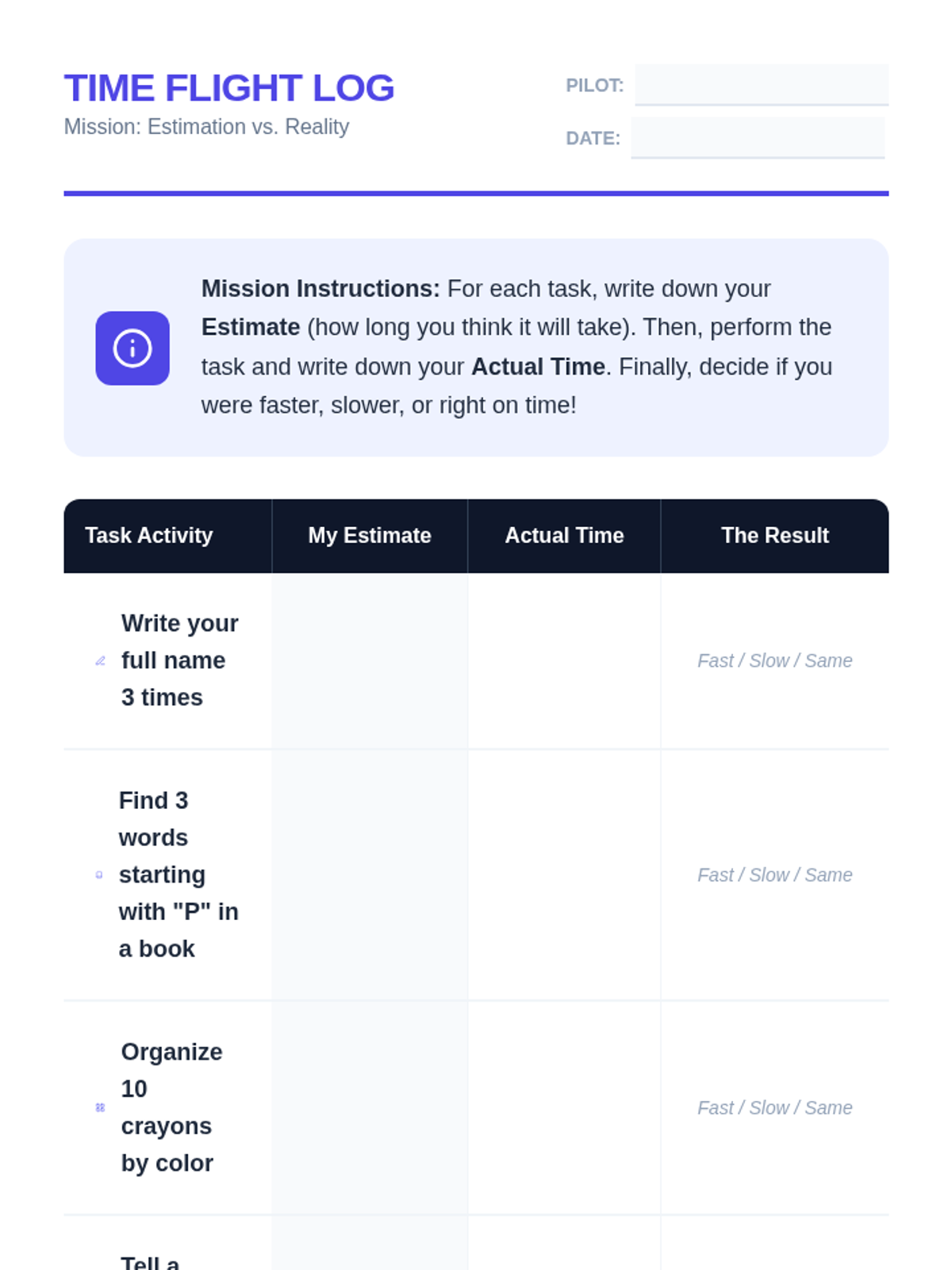
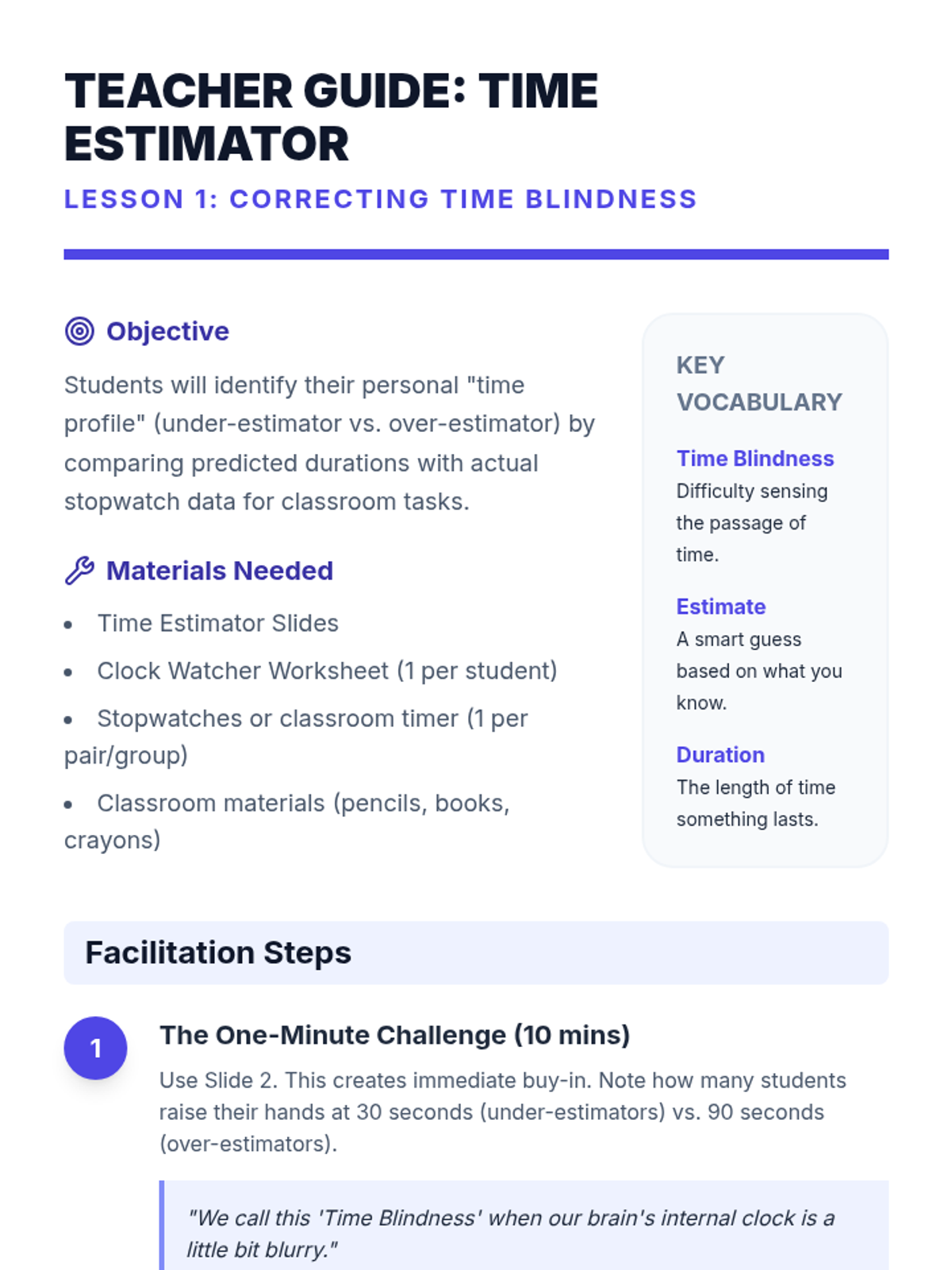
This sequence helps 3rd-grade students overcome 'time blindness' and master task prioritization through the 'Now-Next-Later' framework. Students practice time estimation, distinguish between urgency and interest, and learn to adapt plans when unexpected changes occur.
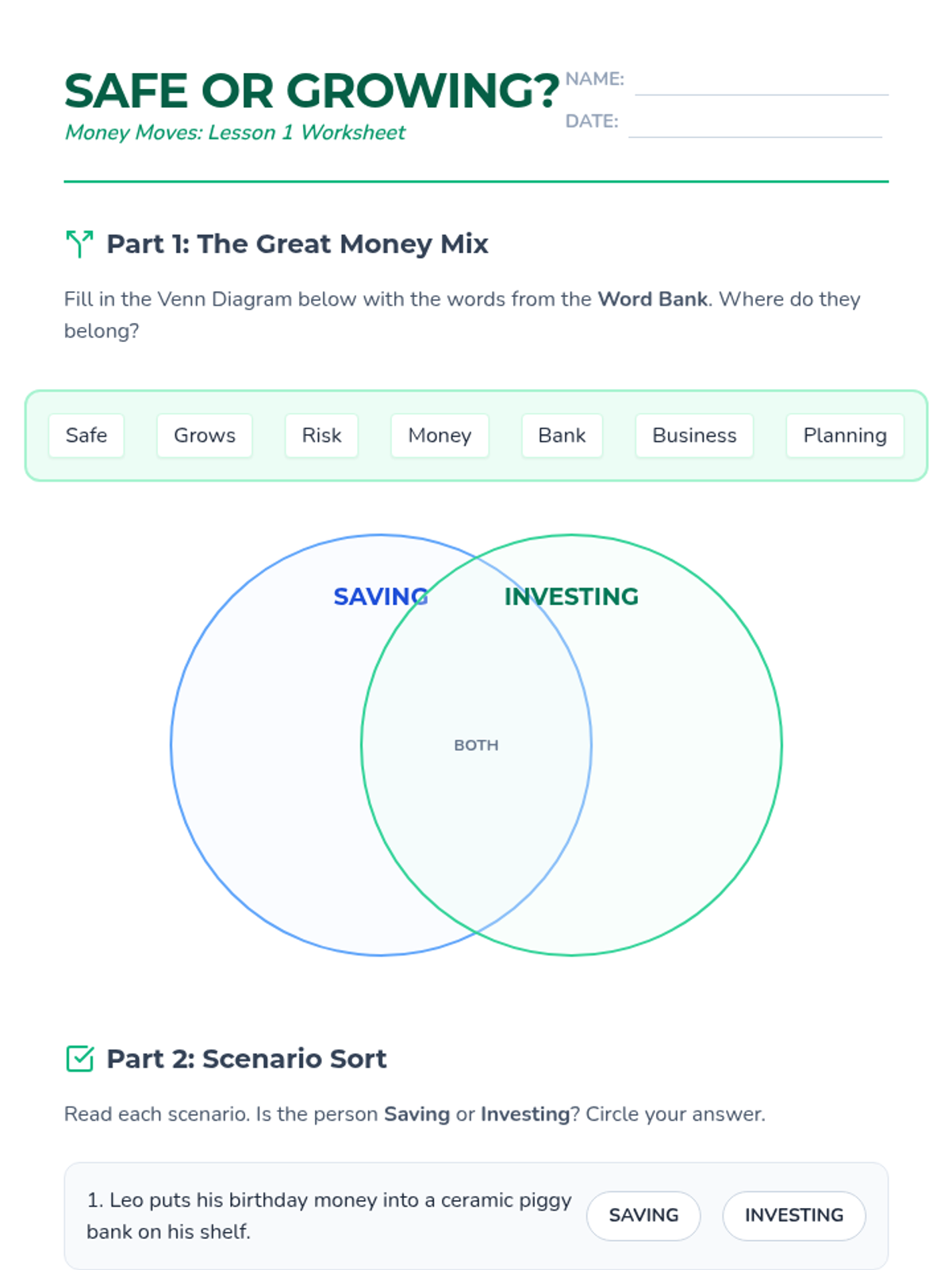
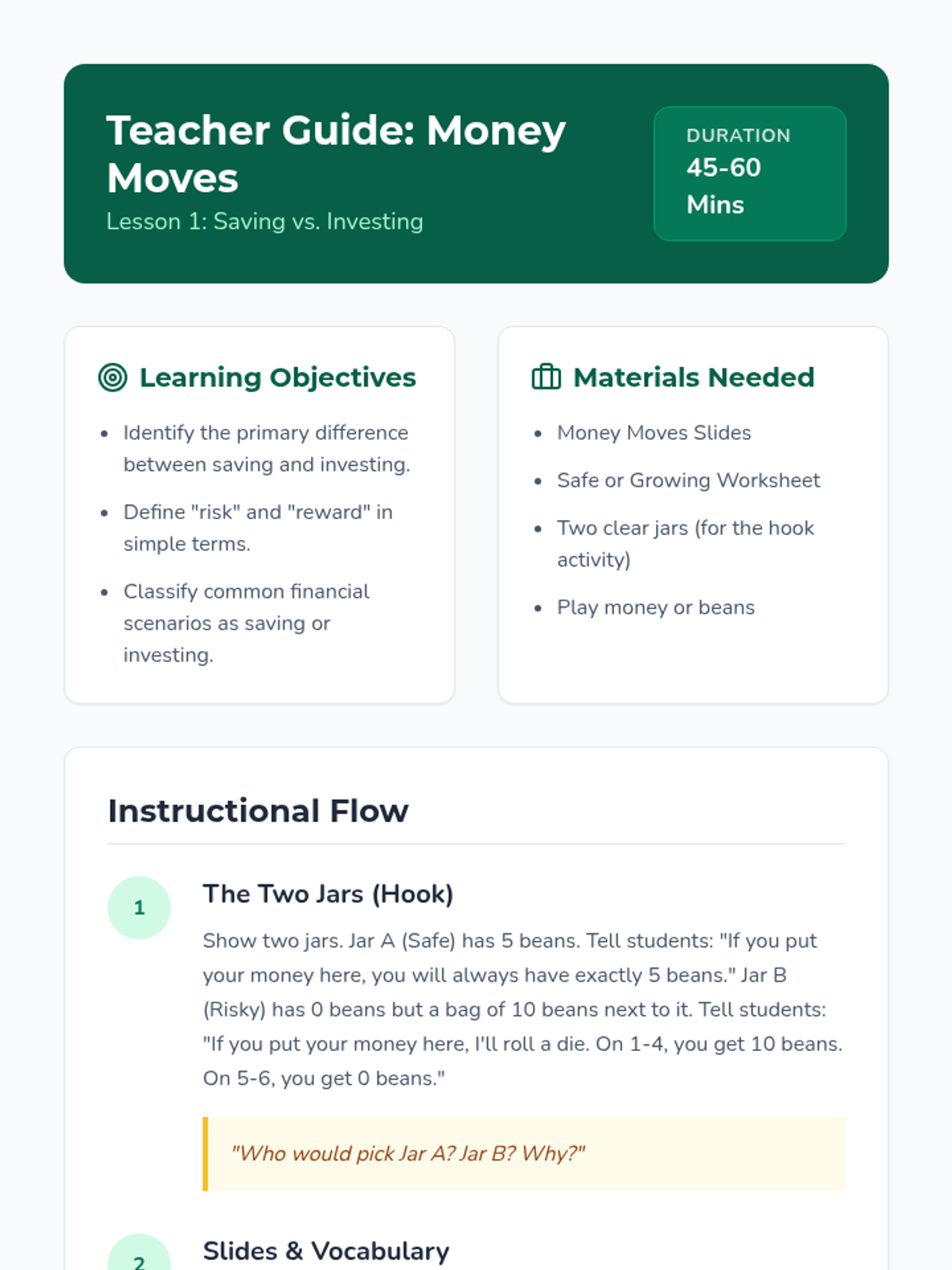
This sequence introduces 3rd-grade students to the basic concepts of investing by differentiating it from saving. Through the relatable 'lemonade stand' model, students learn about ownership, risk, reward, and long-term thinking.
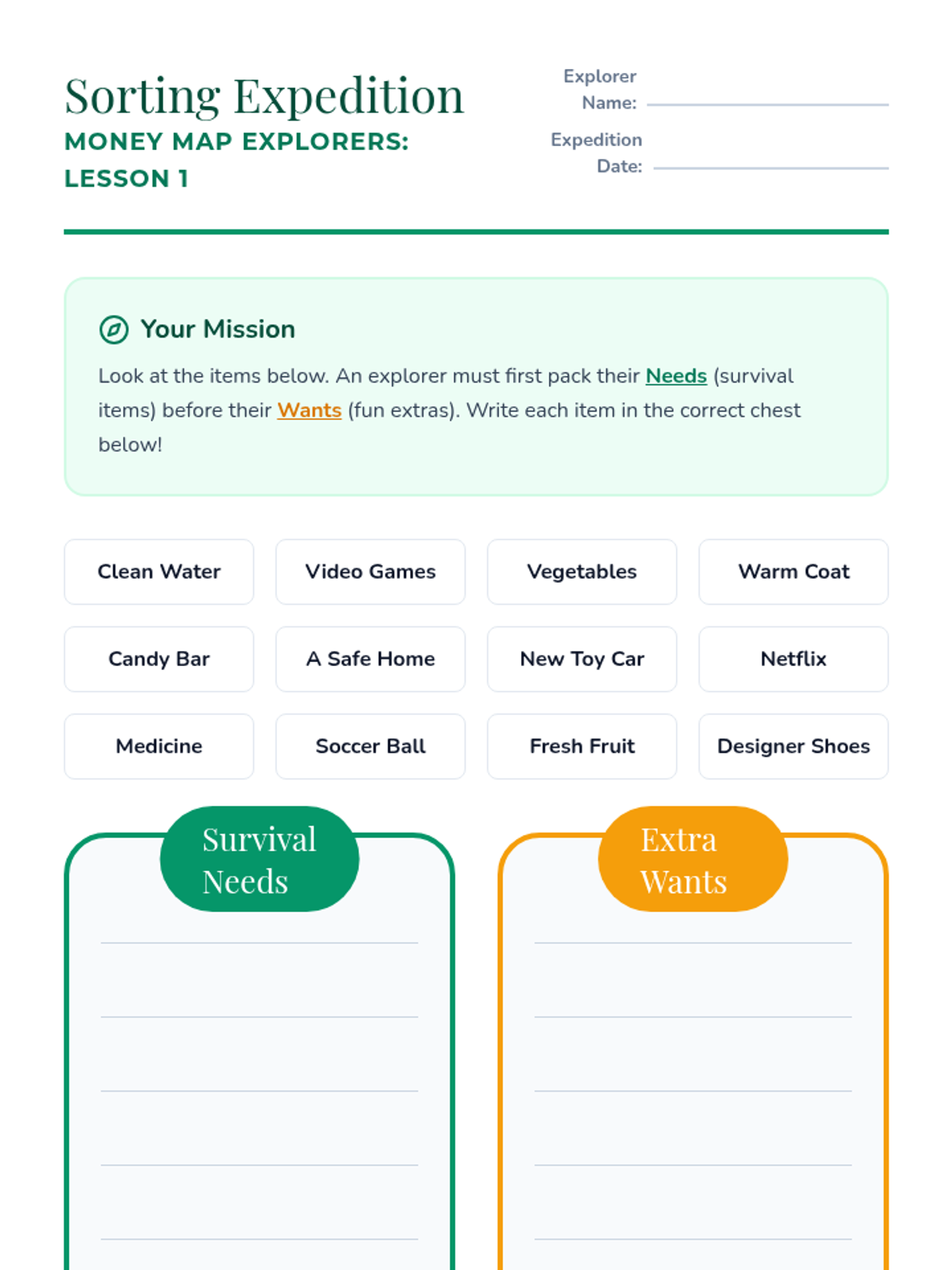
A 5-lesson unit for 3rd graders on financial literacy, focusing on distinguishing wants from needs, setting goals, understanding opportunity costs, and building a concrete savings plan. Students use a 'Money Map' theme to explore how today's choices shape their future treasures.
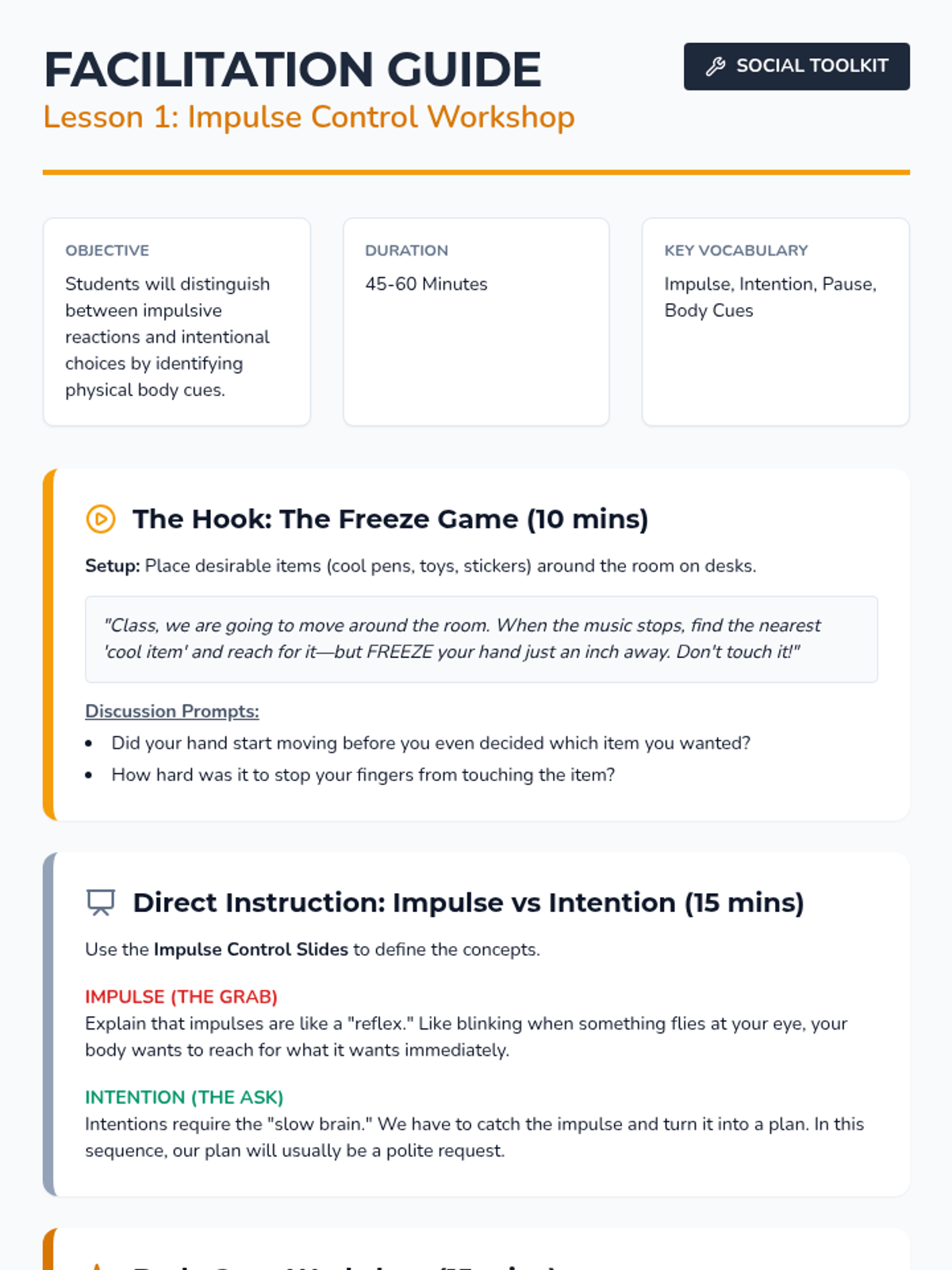
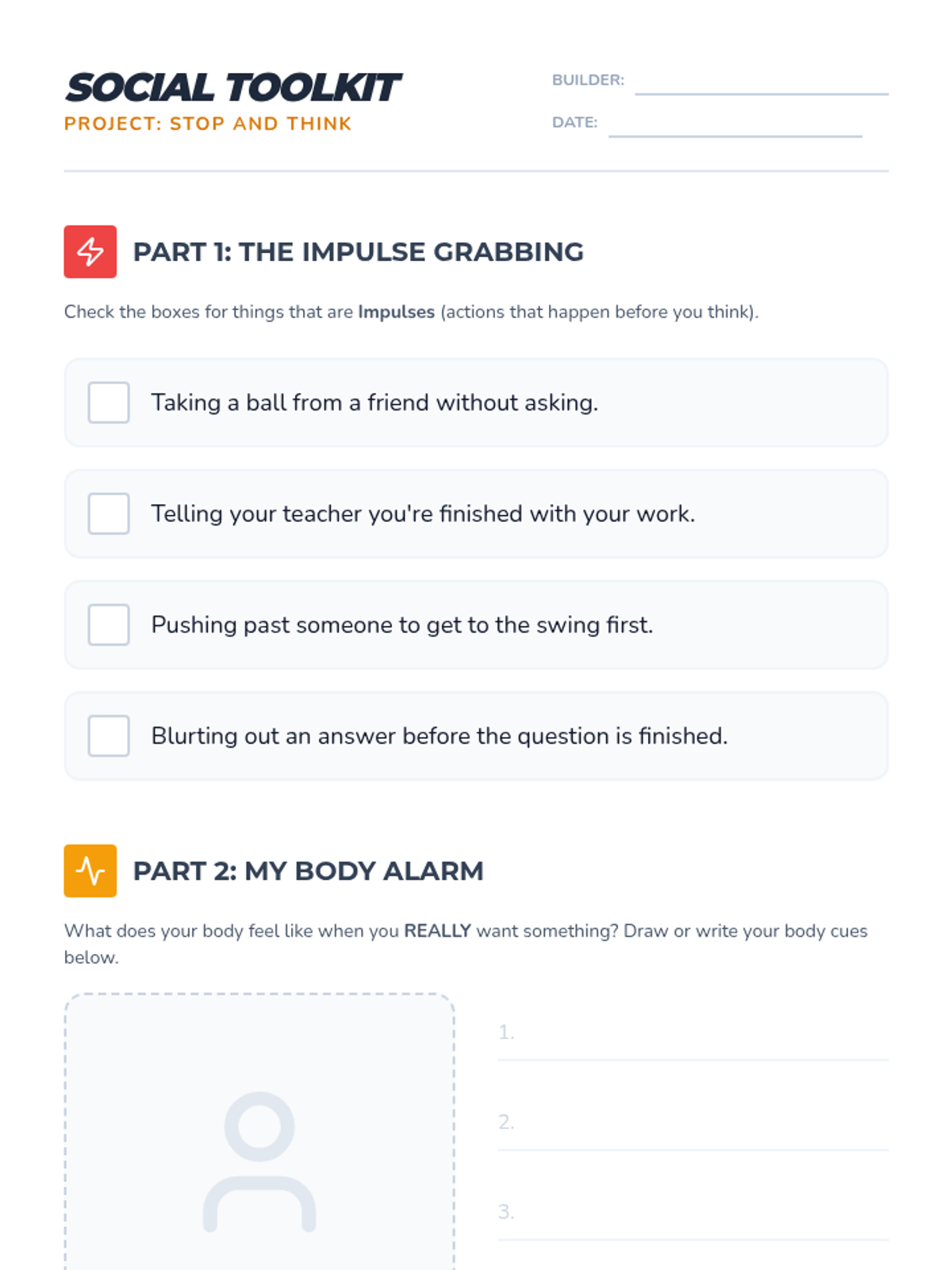
A 5-lesson sequence for 3rd graders focused on the verbal and behavioral mechanics of turn-taking, sharing, and negotiation. Students progress from impulse control to mastering polite requests, active waiting, and complex social compromises.
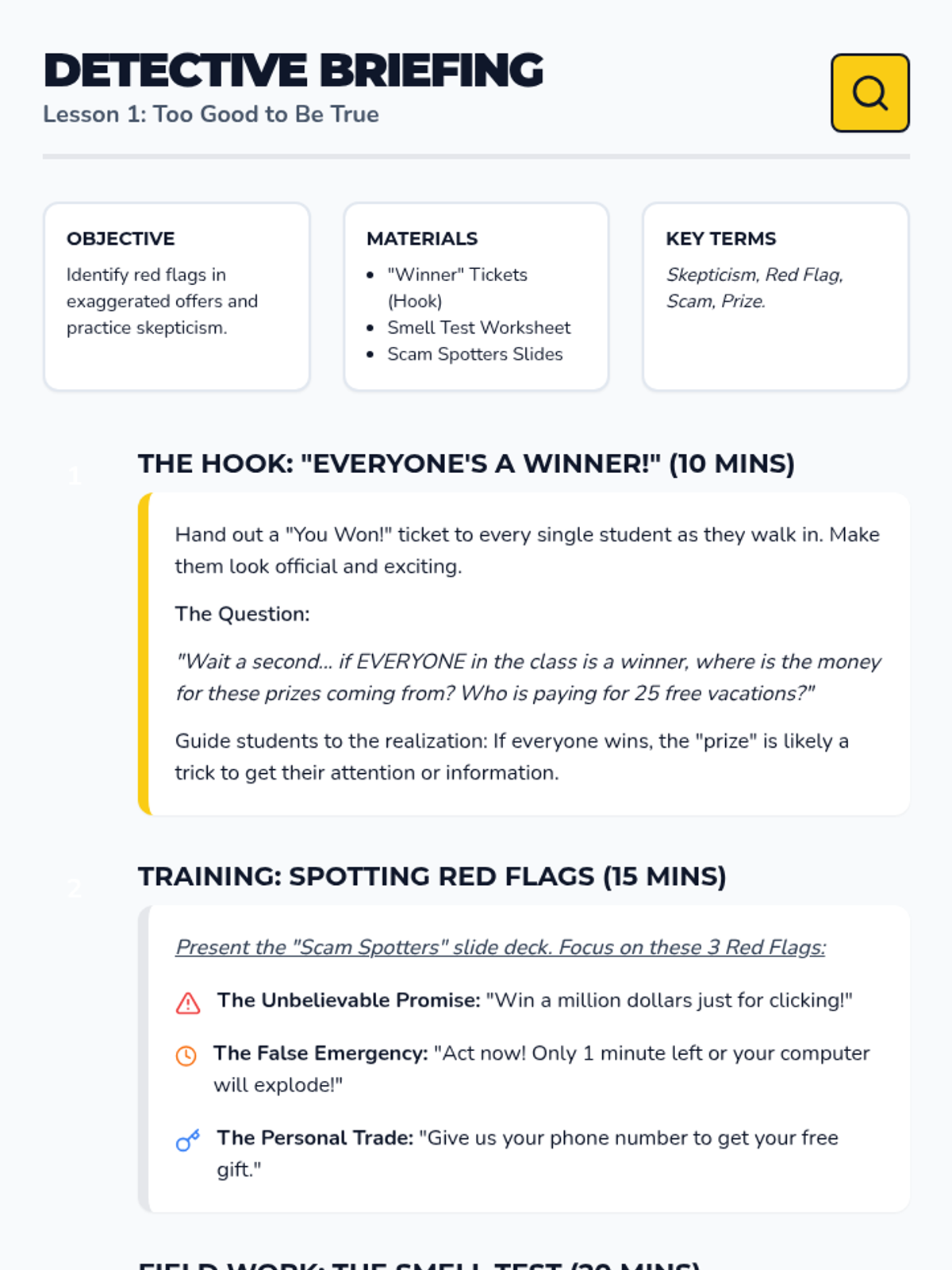
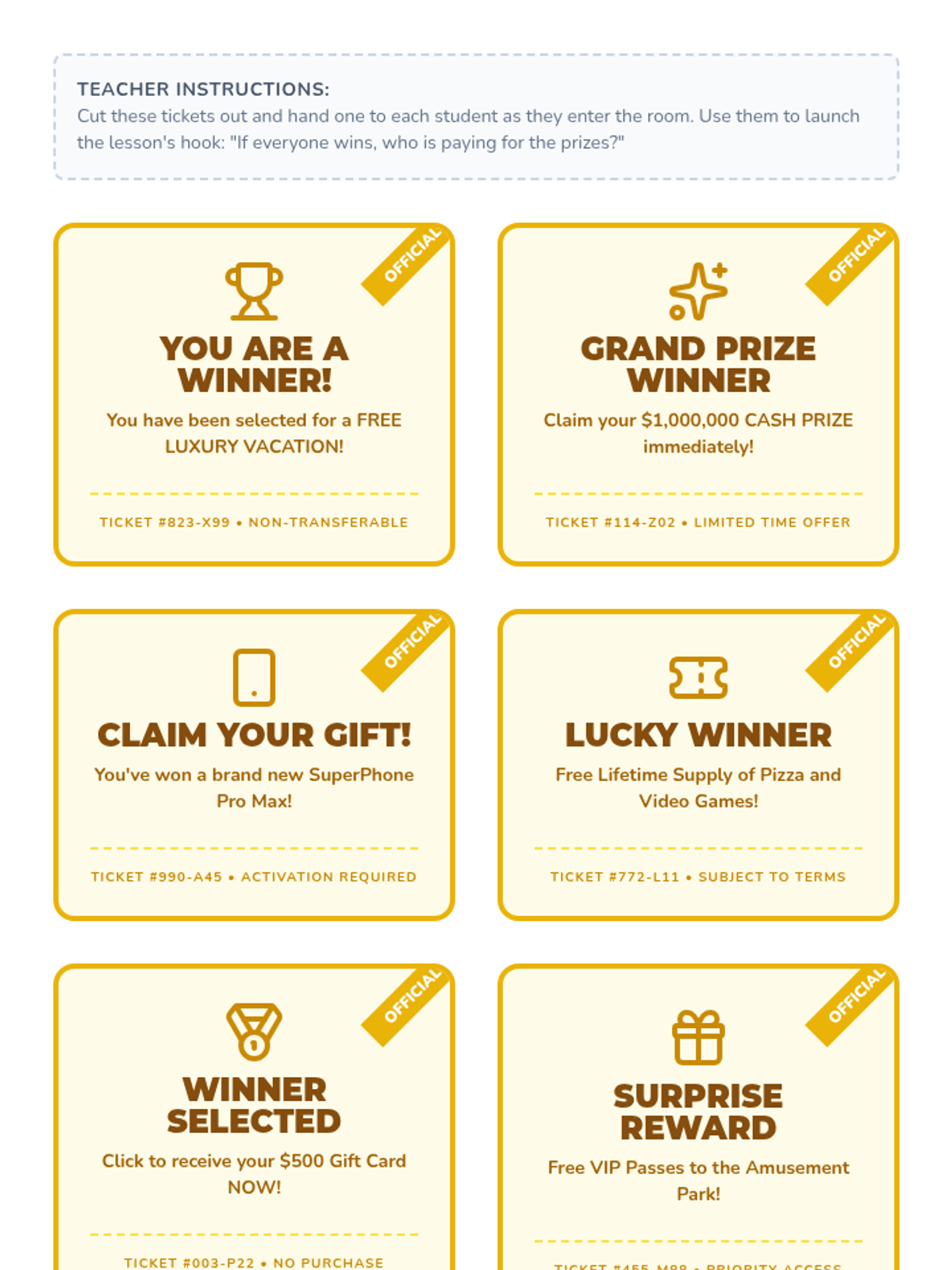
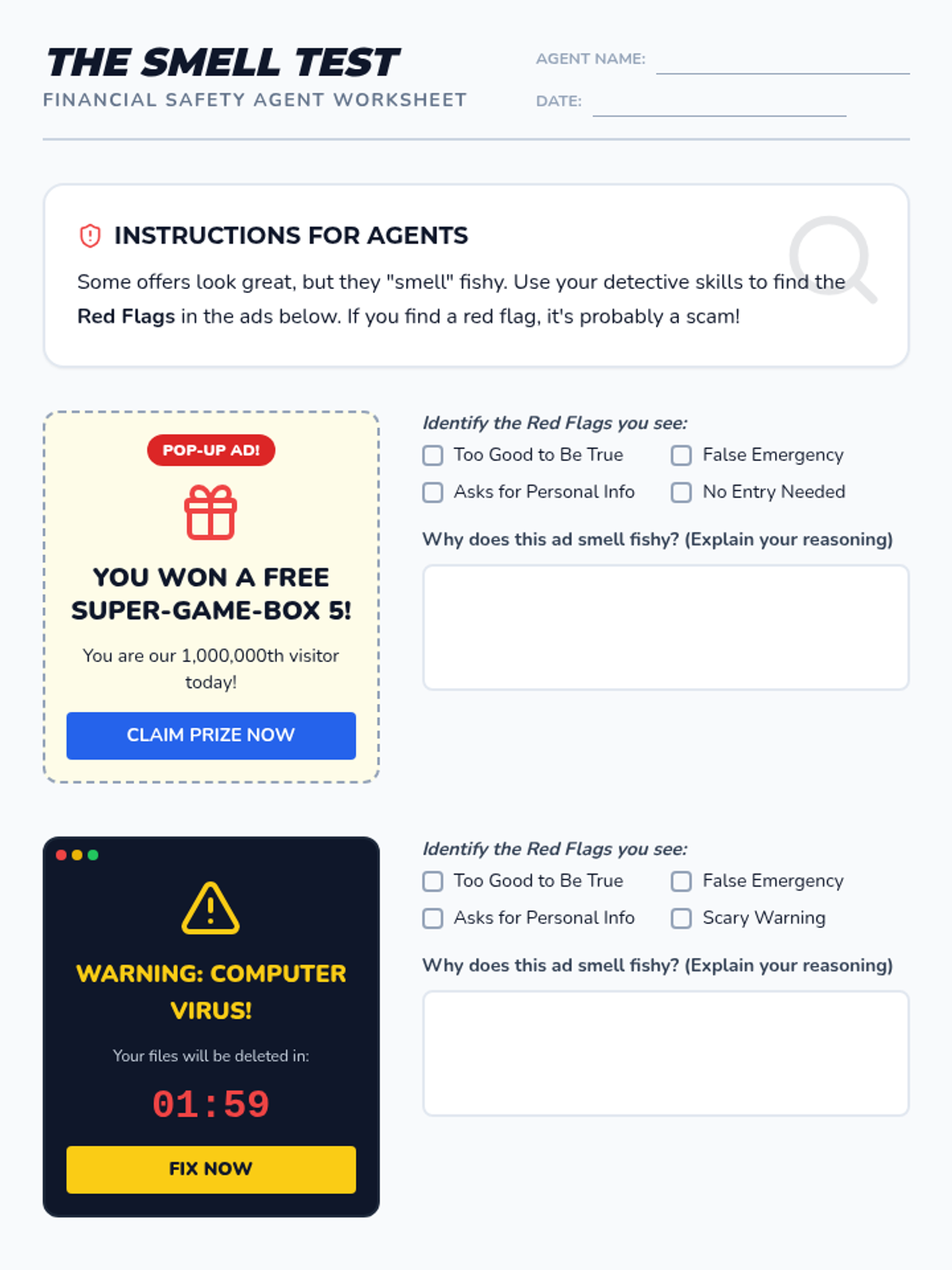
In this 5-lesson sequence, 3rd-grade students become 'Financial Safety Agents' to learn about consumer protection. They explore identifying scams, understanding digital in-game purchases, protecting personal information, reading fine print, and asserting their consumer rights when products are faulty.
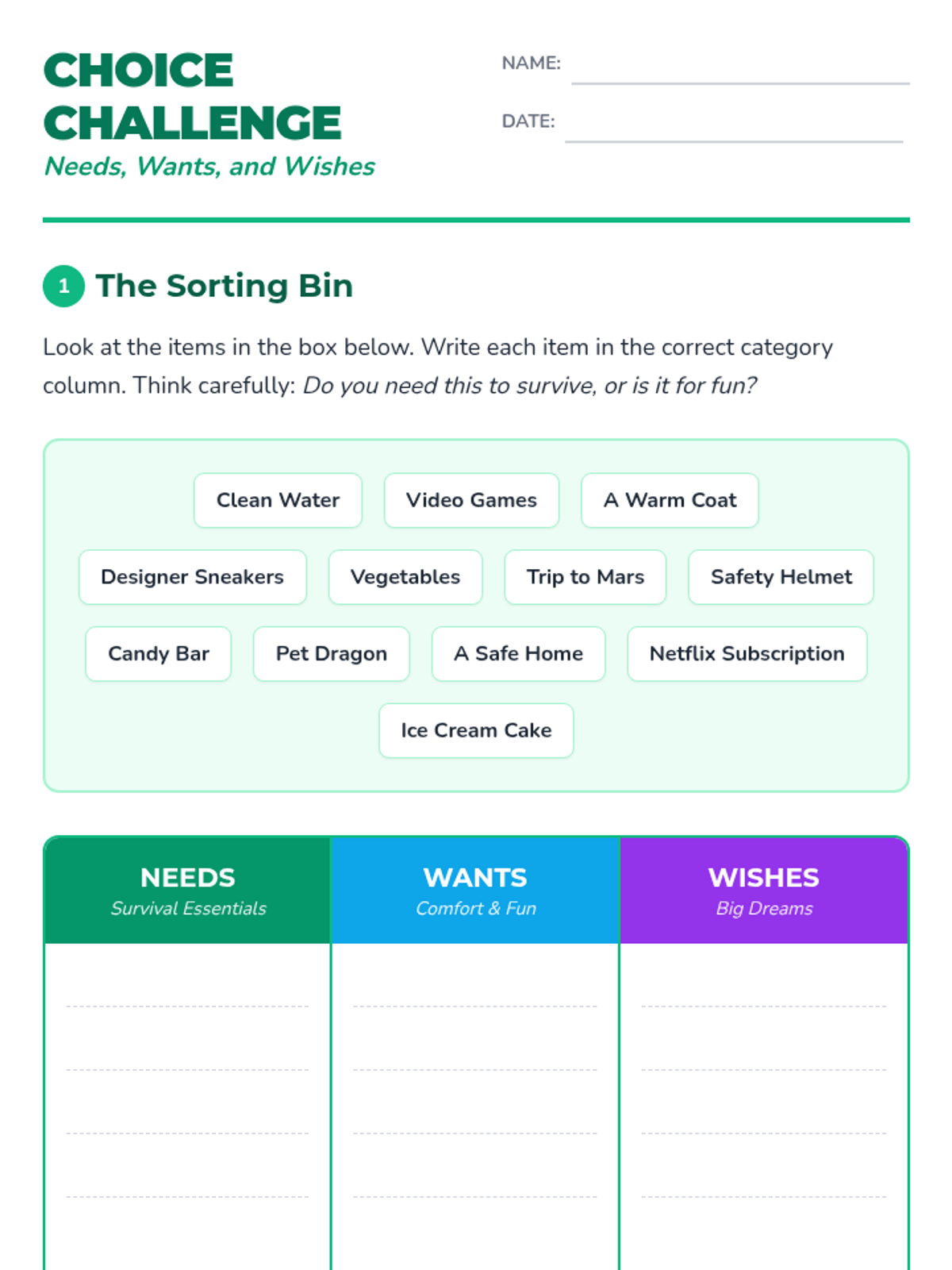
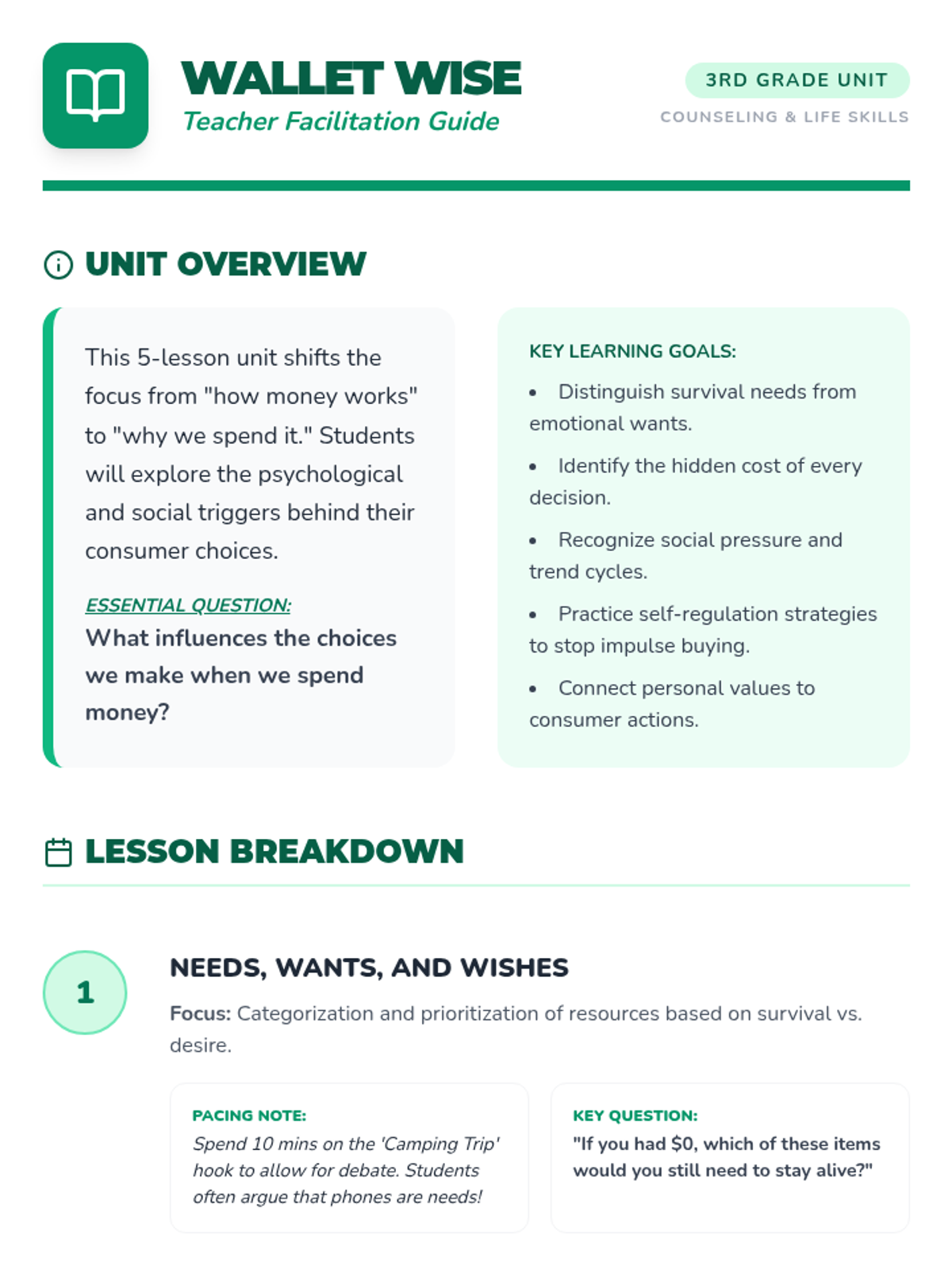
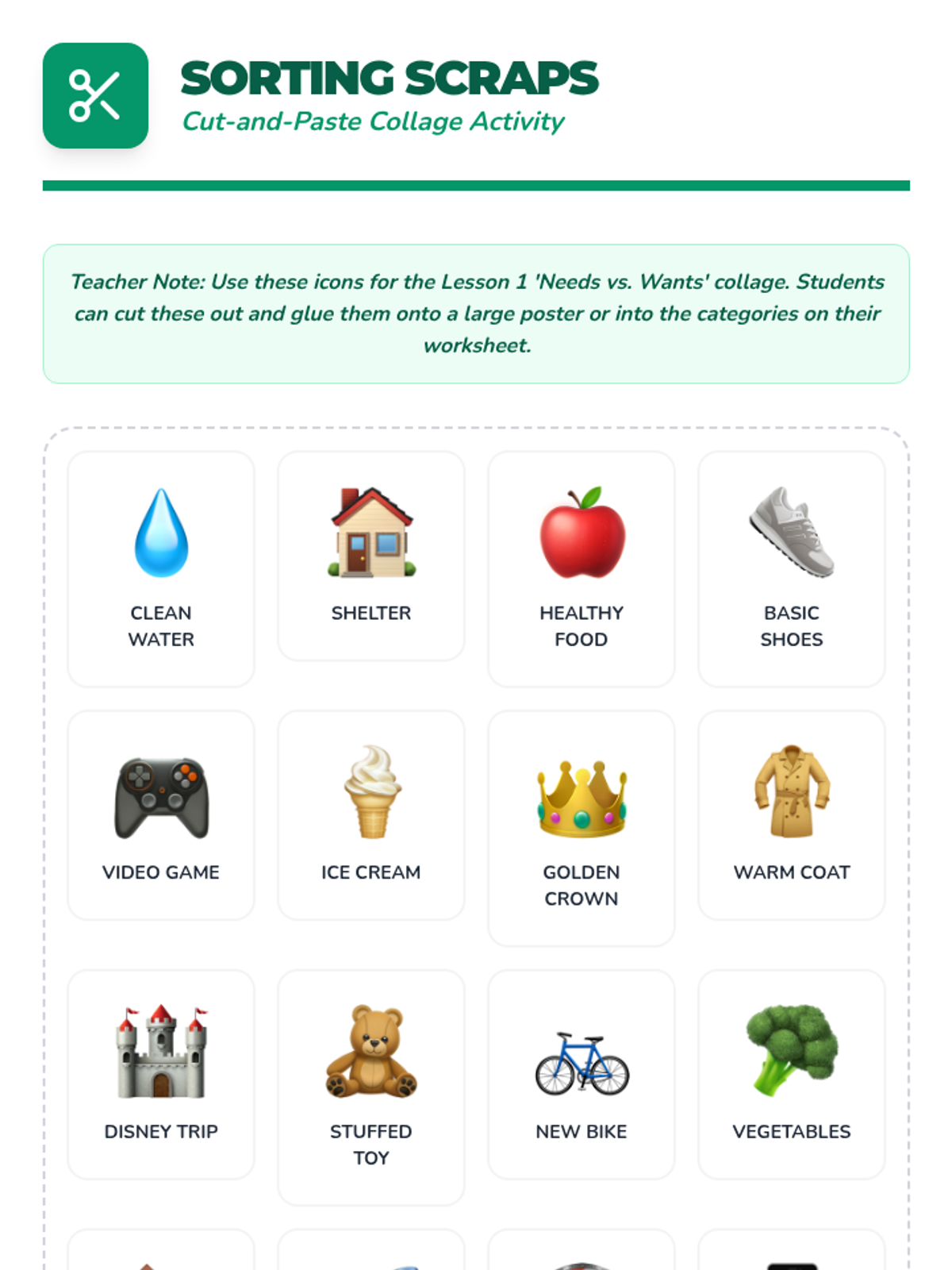
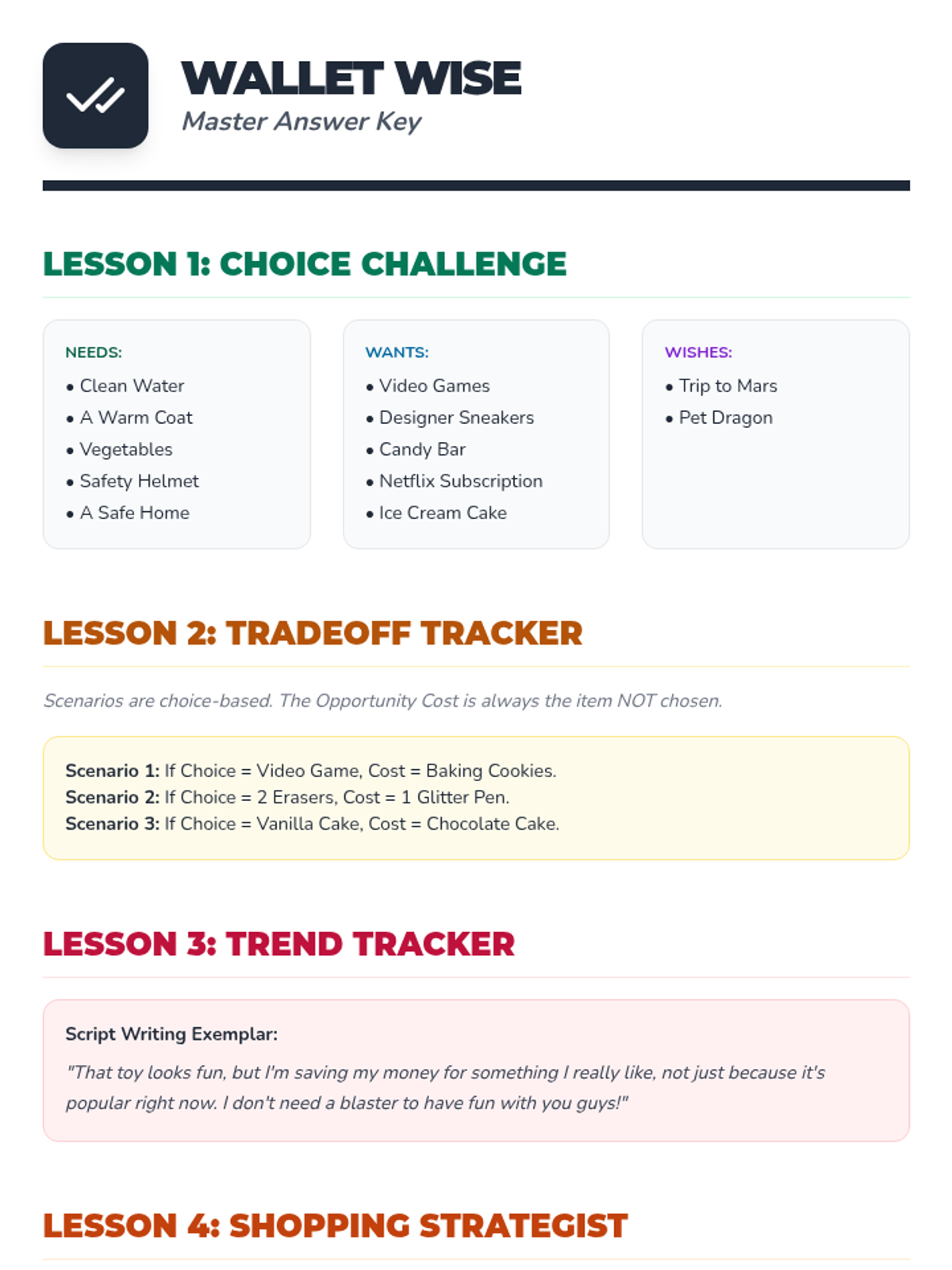
A comprehensive 5-lesson unit for 3rd grade students focusing on the psychological, social, and practical aspects of consumerism. Students will move from distinguishing basic needs and wants to understanding complex concepts like opportunity cost, peer influence, and value-based spending.
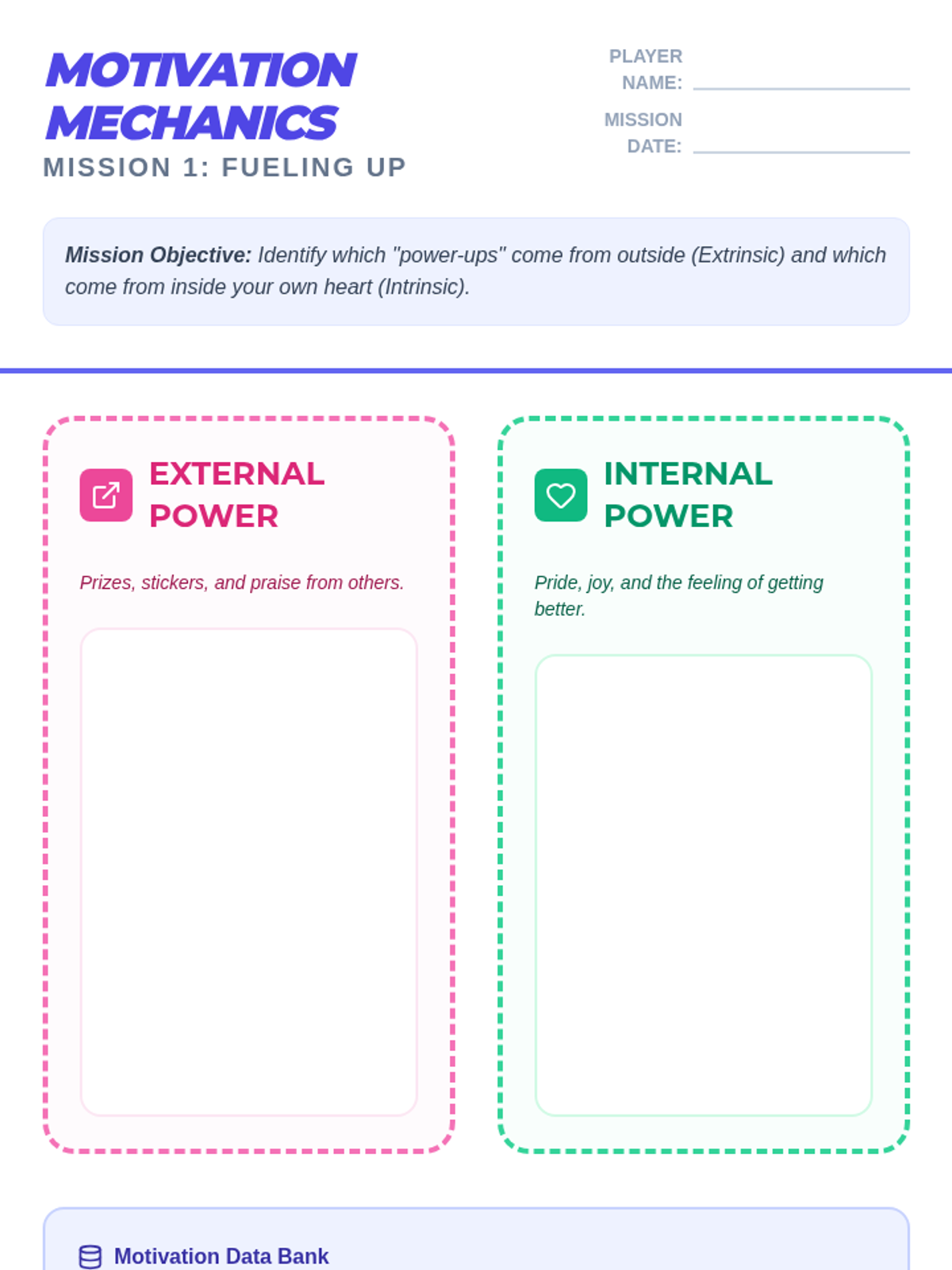
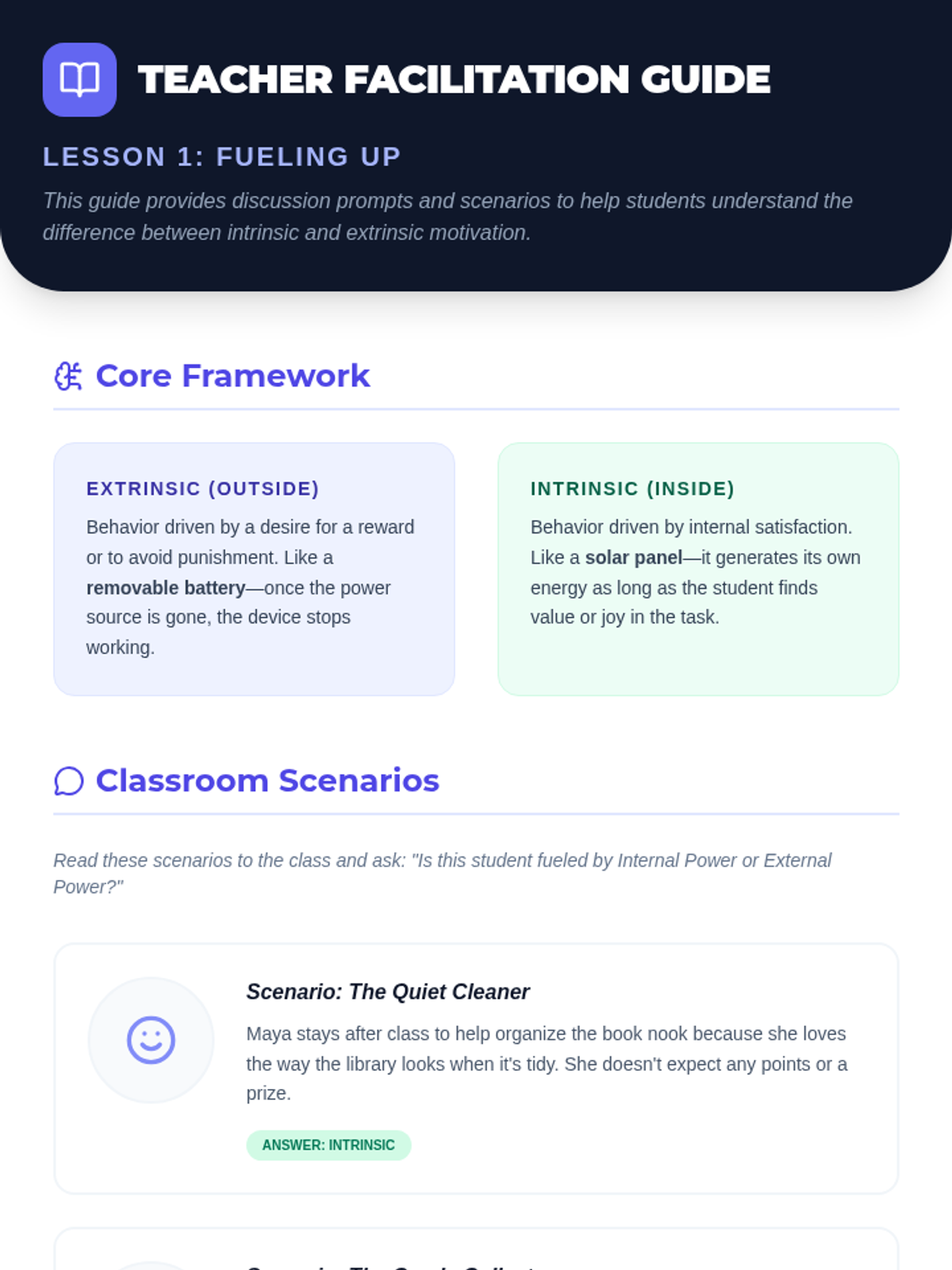
This sequence explores the psychology of motivation and reward systems. Students learn to distinguish between internal and external rewards, design meaningful reinforcement menus, and plan for long-term growth and independence.
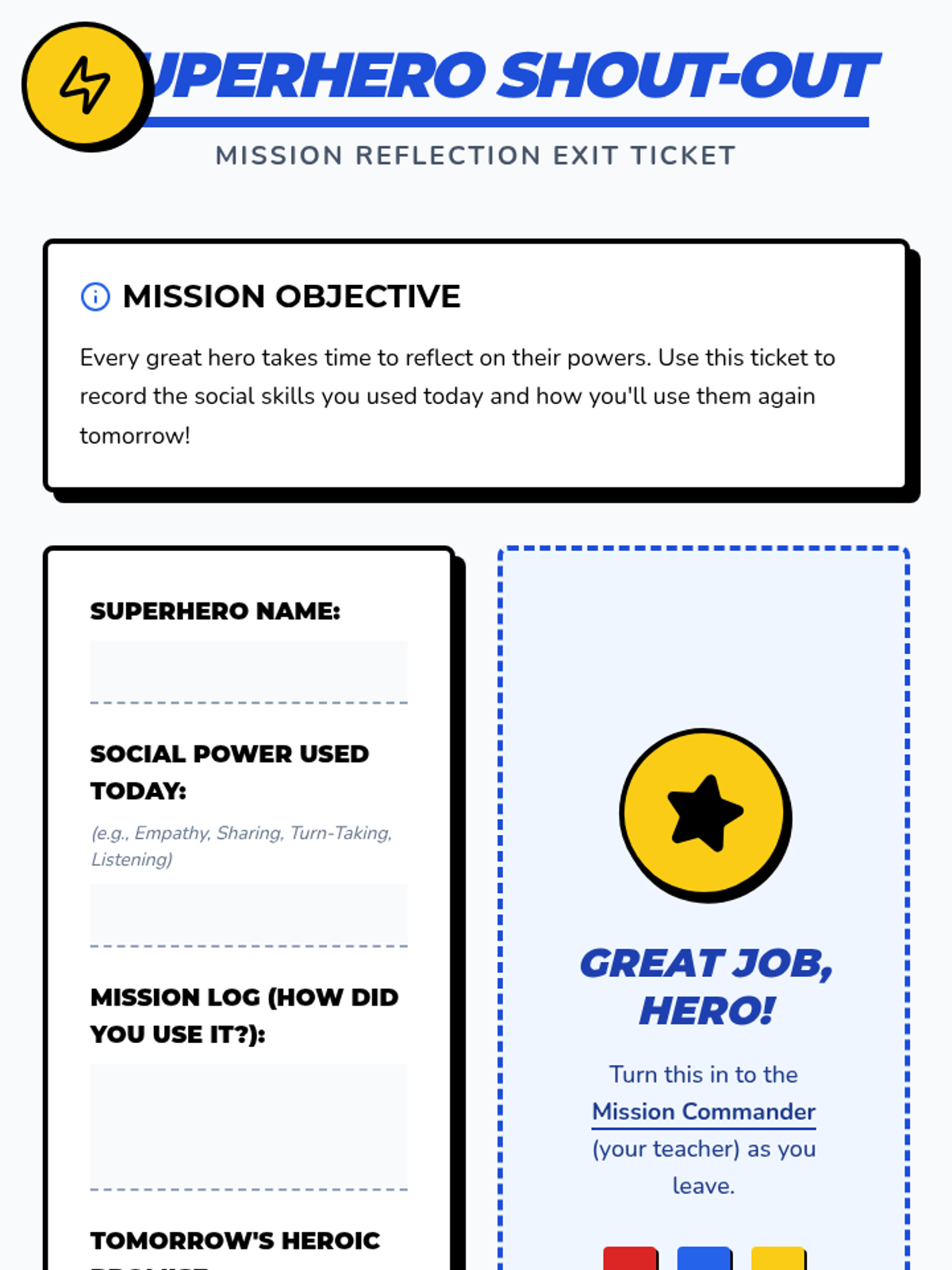
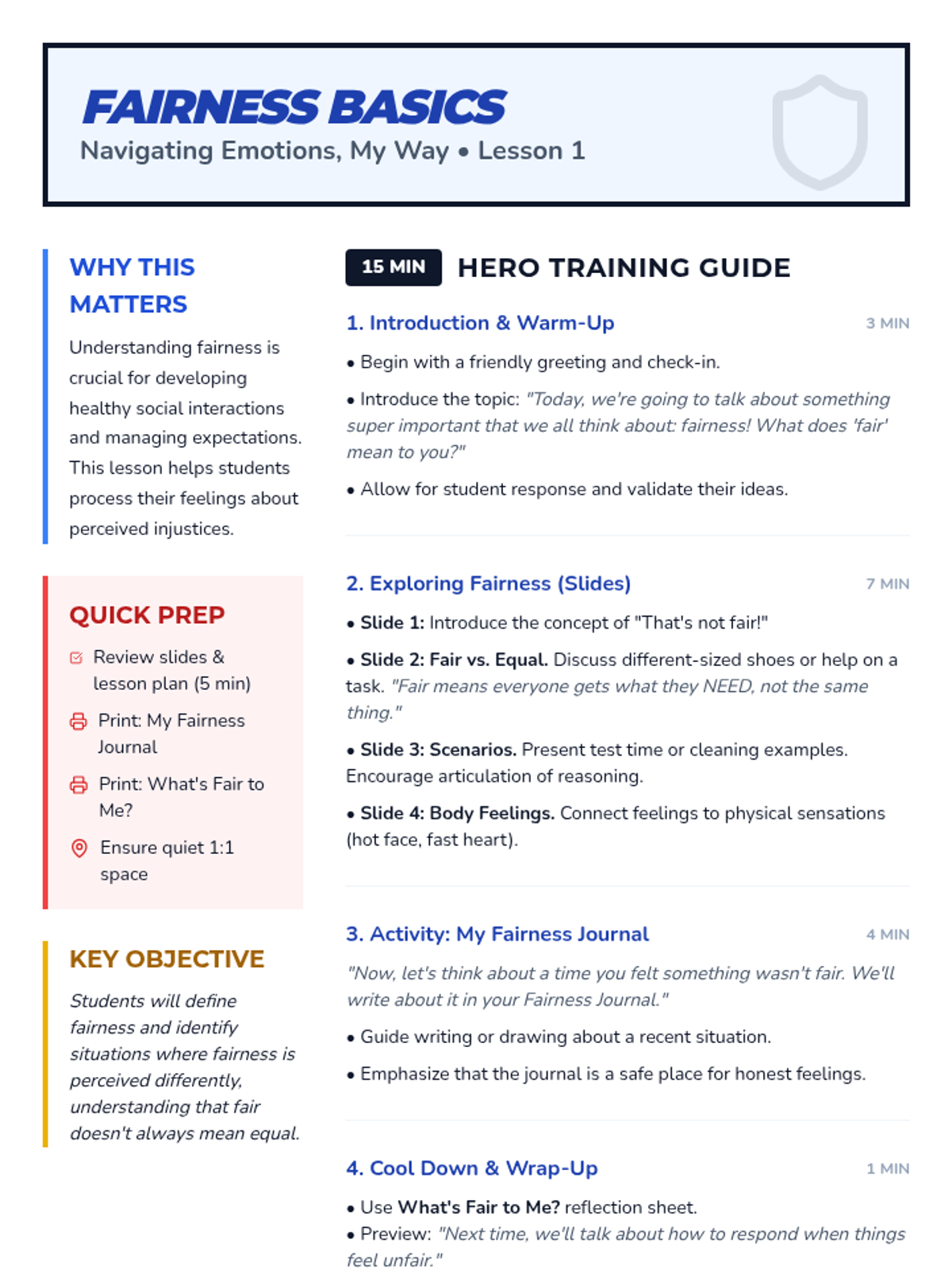
An 11-session Tier 2 social skills intervention for elementary students, focusing on friendship, empathy, patience, and conflict resolution through a superhero-themed creative curriculum.
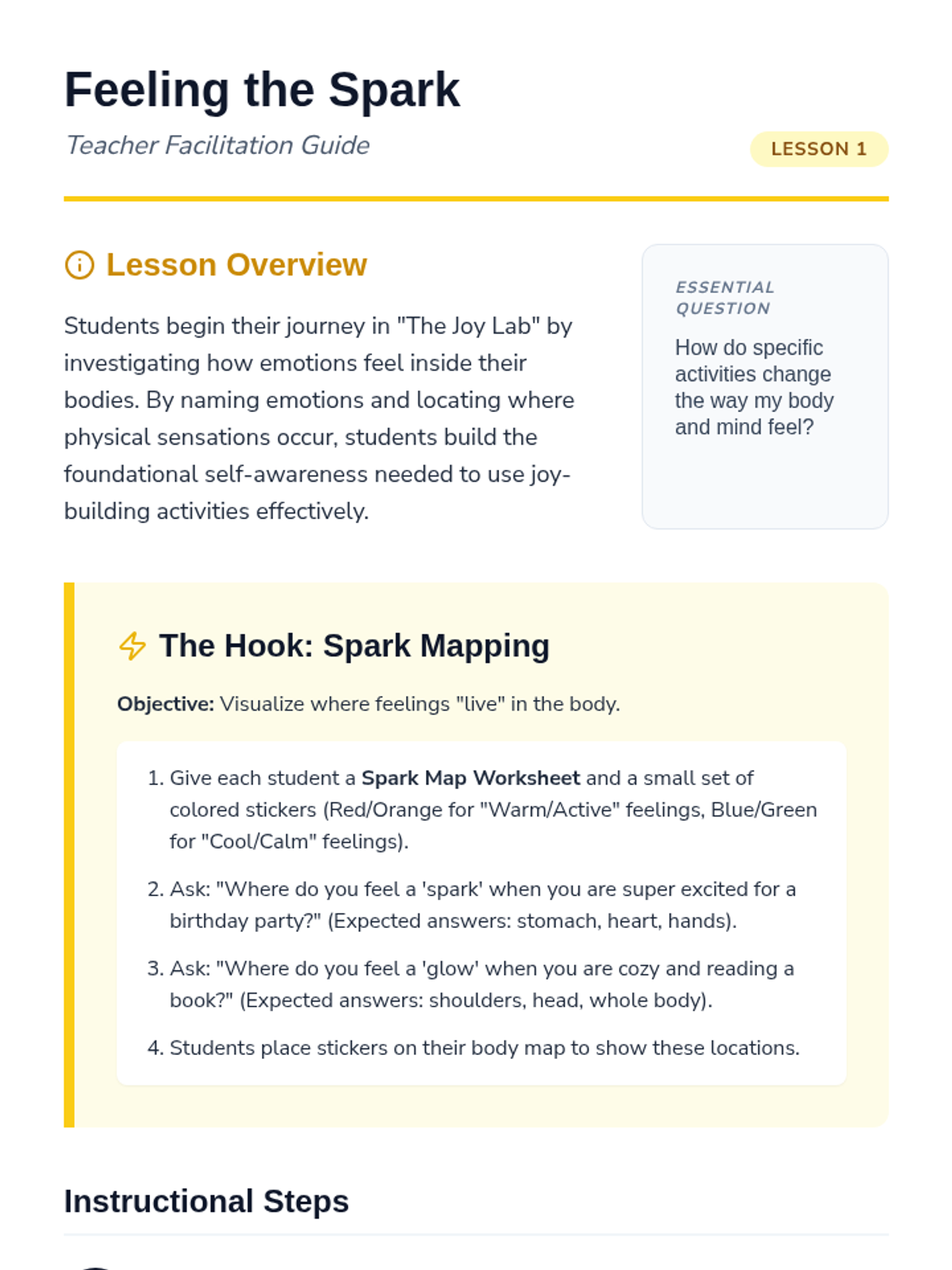
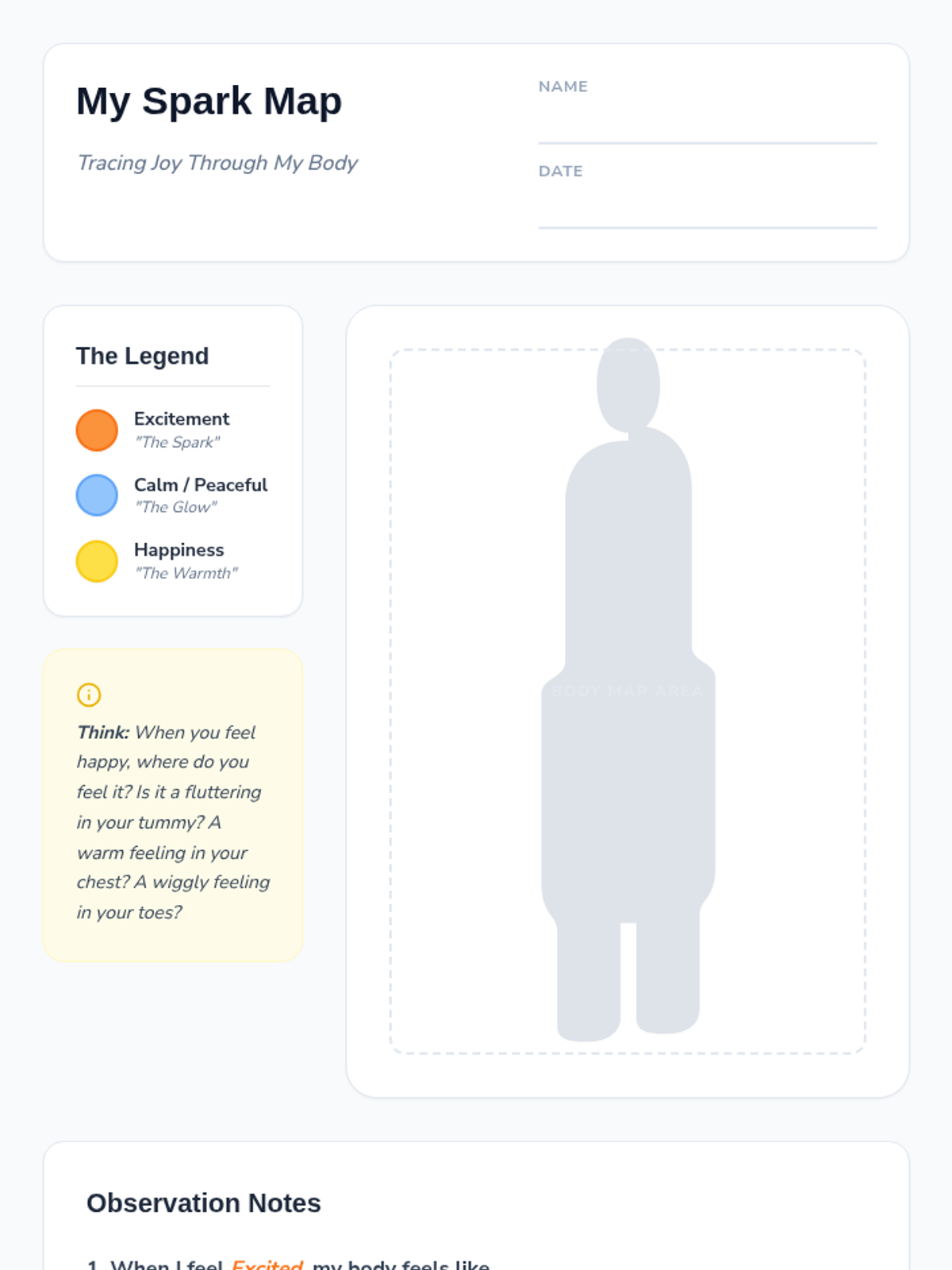
This sequence introduces 3rd-grade students to identifying personal sources of joy and satisfaction. It guides them through recognizing physical emotional shifts, inventorying interests, exploring sensory joy, categorizing activities by energy levels, and creating a personalized 'menu' of coping strategies for emotional regulation.
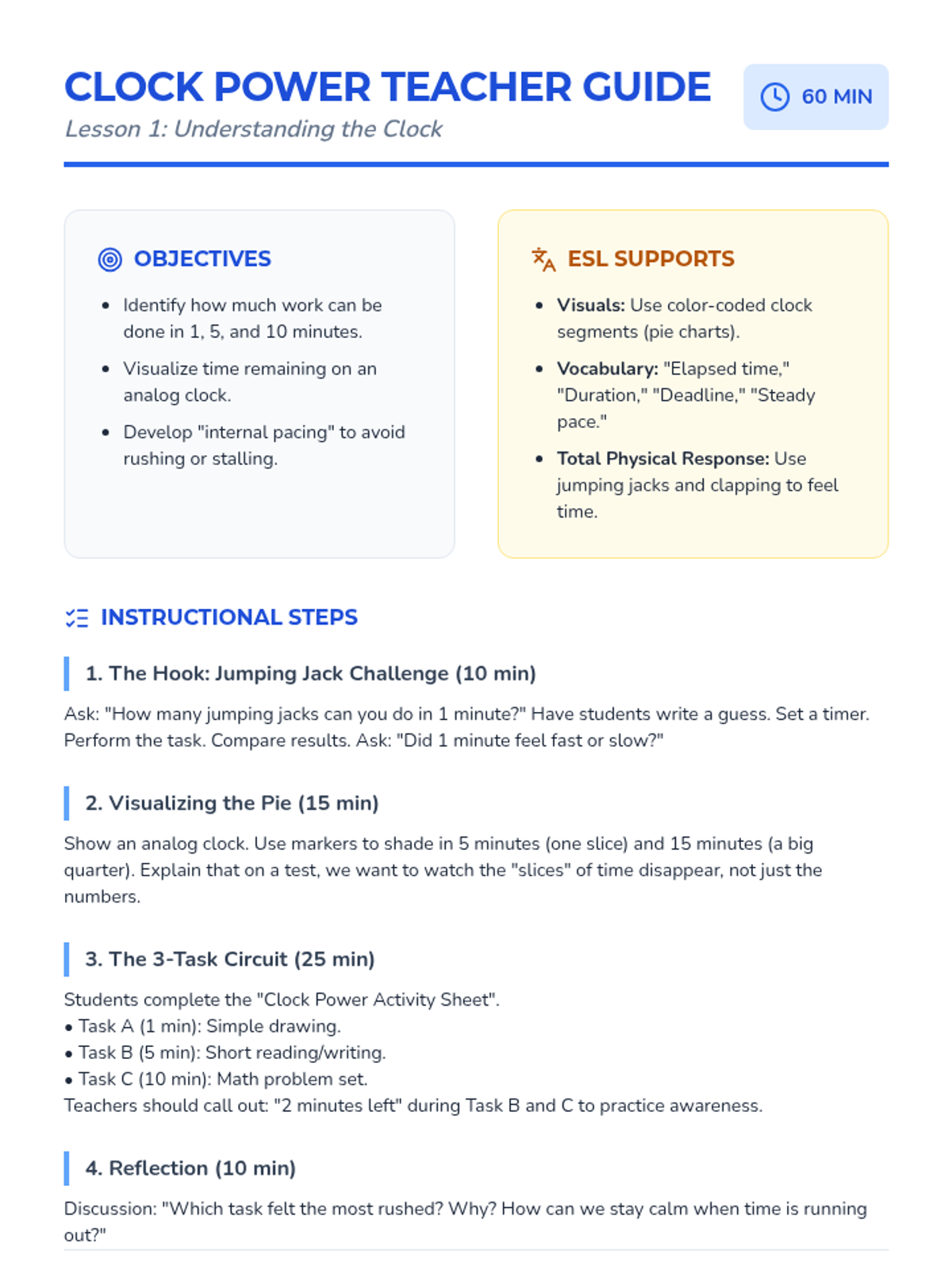
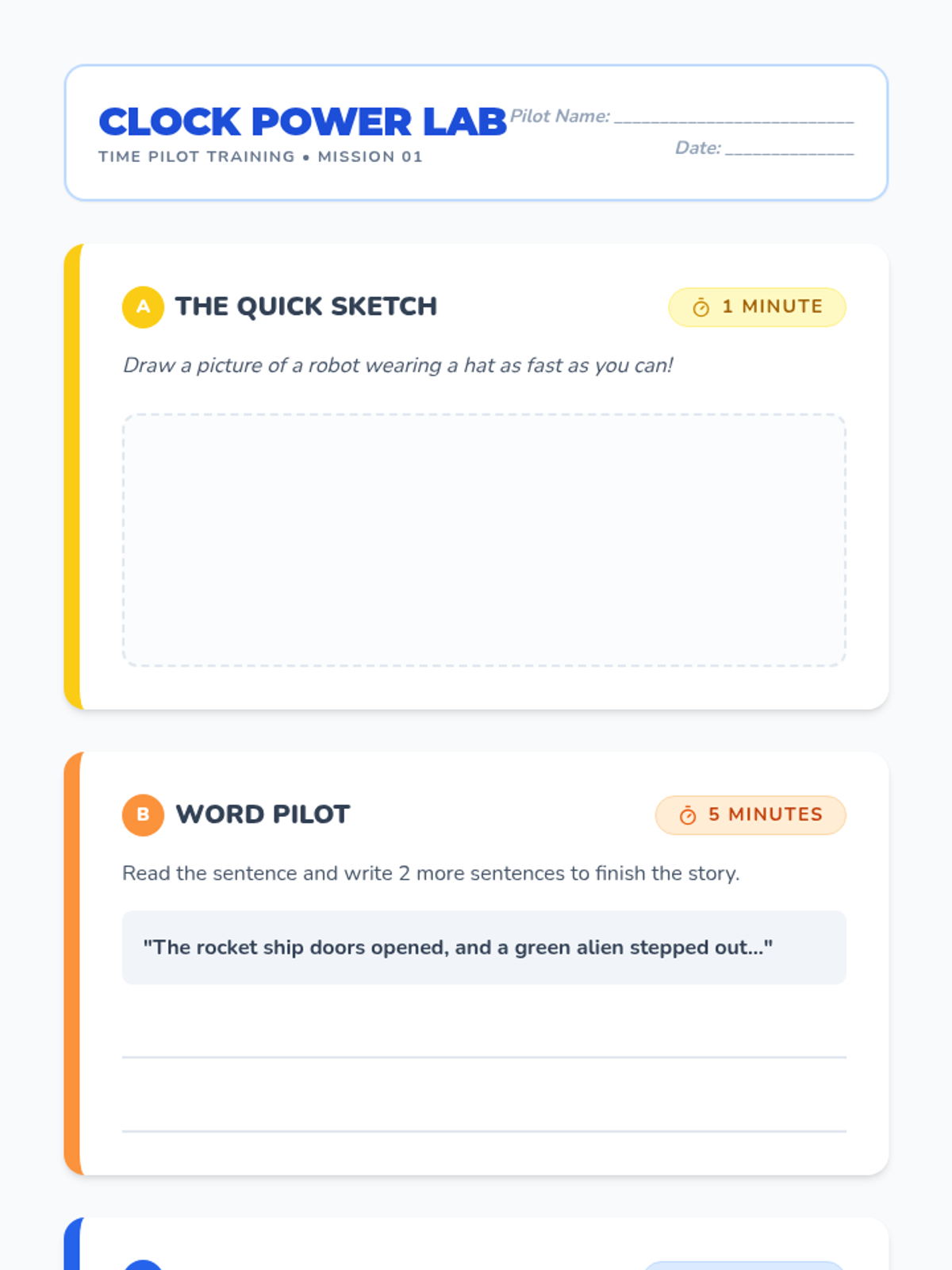
A sequence for 3rd Grade ESL students focused on developing executive functioning skills for timed testing. Students learn time perception, prioritization strategies, and review techniques to manage anxiety and improve performance.
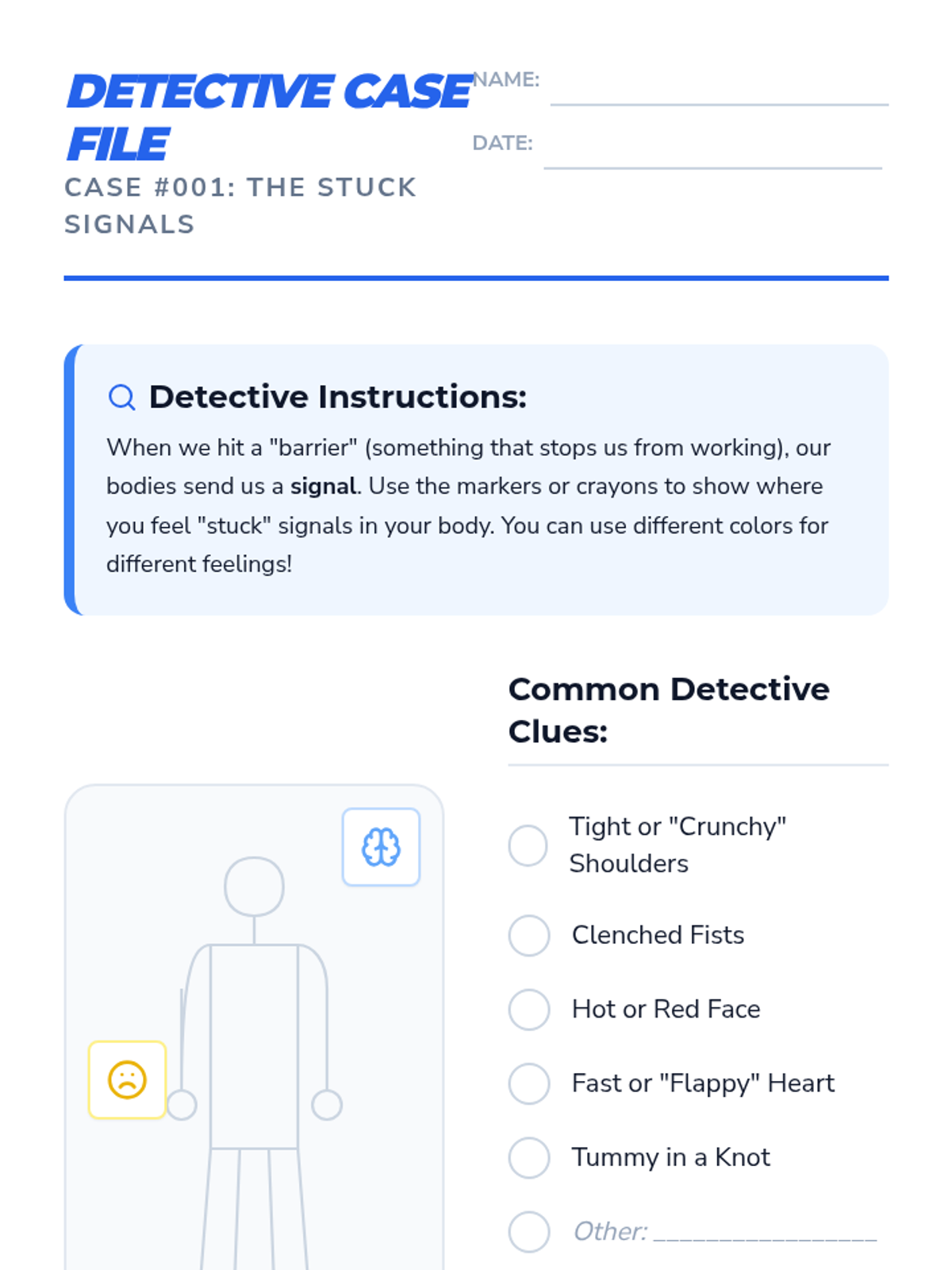
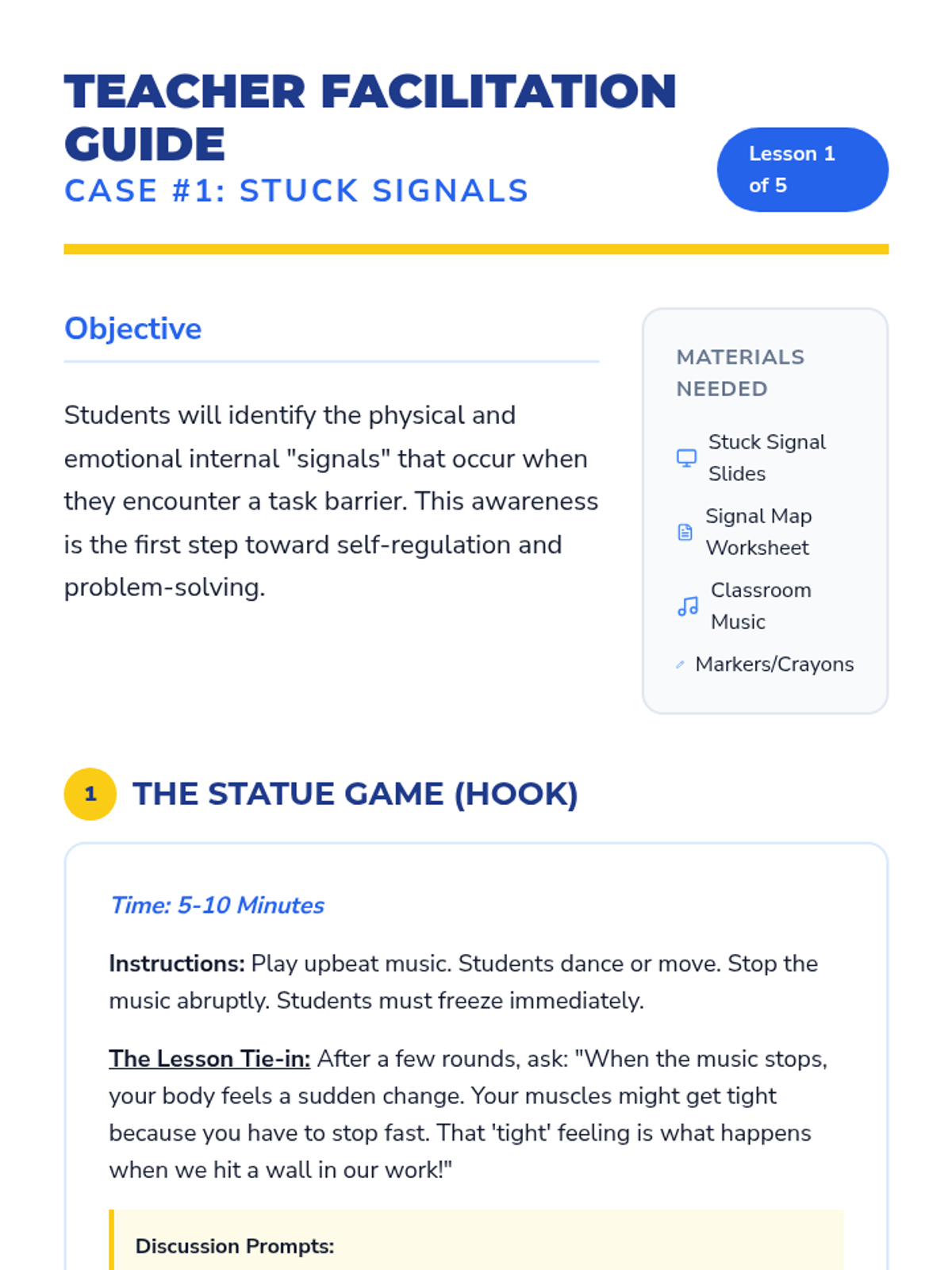
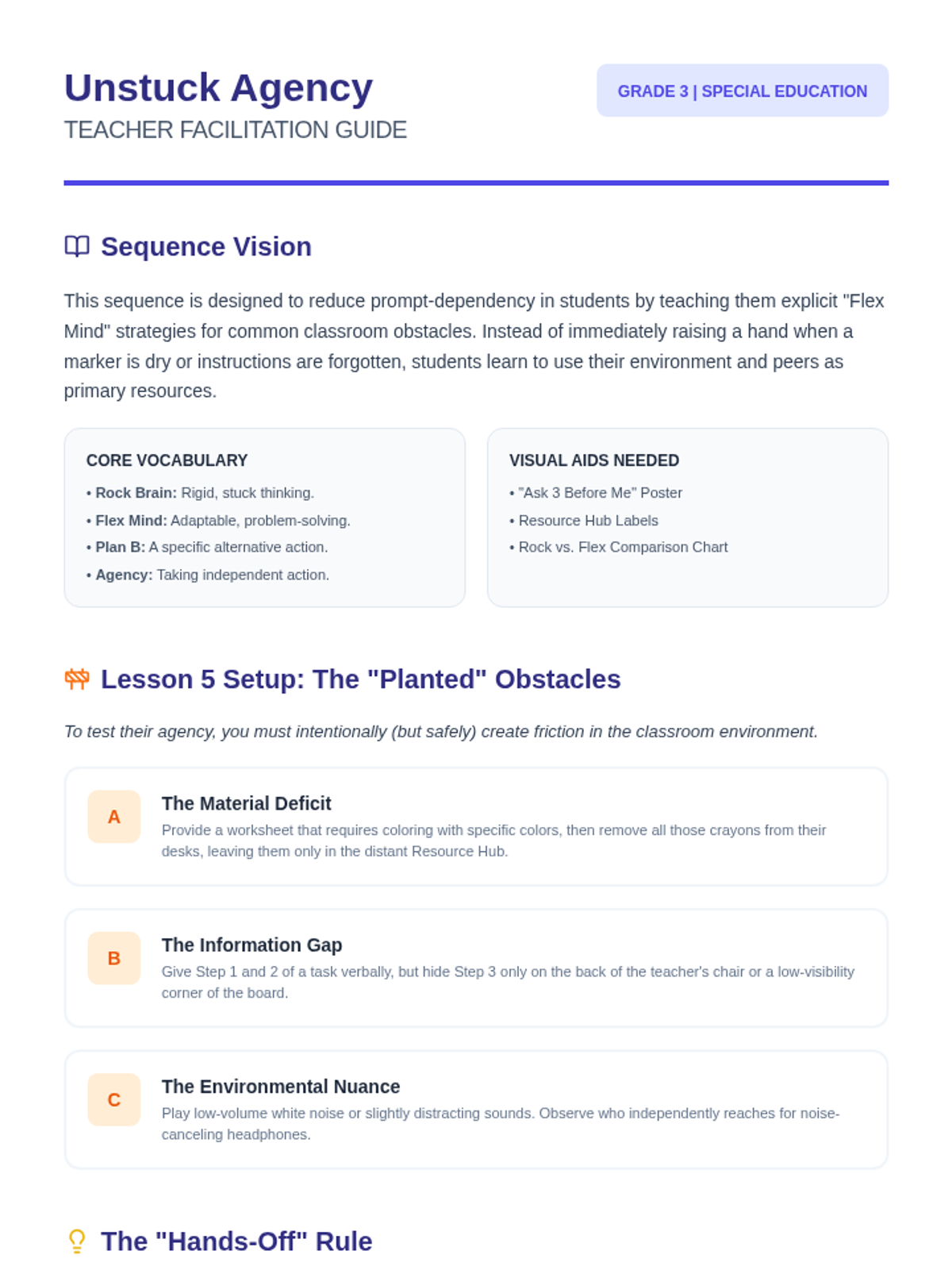
A 5-lesson unit for 3rd-grade students focused on identifying and categorizing obstacles that prevent task completion. Students learn to recognize internal emotional signals and external barriers (physical, informational, and environmental) to build self-advocacy and problem-solving skills.
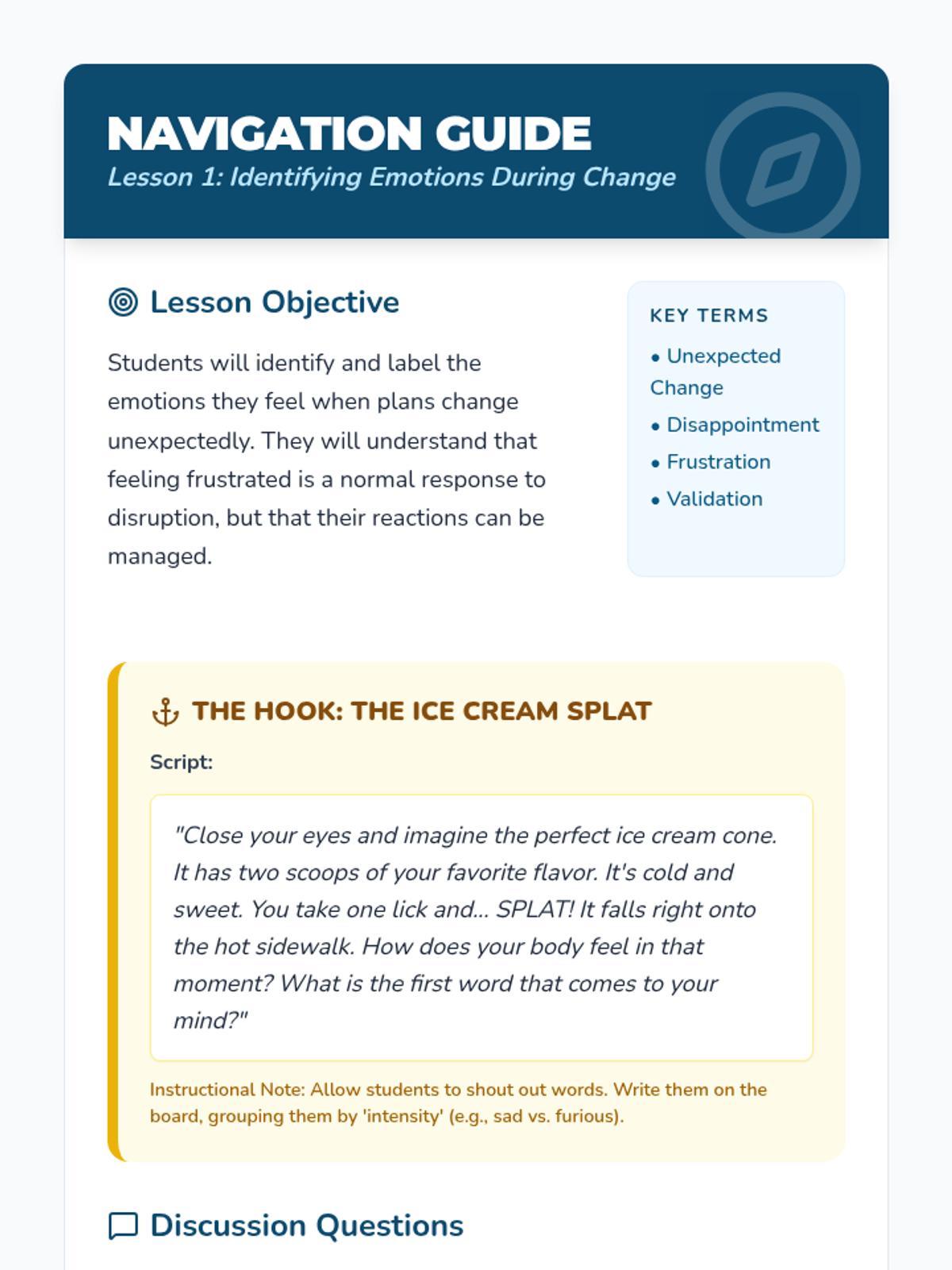
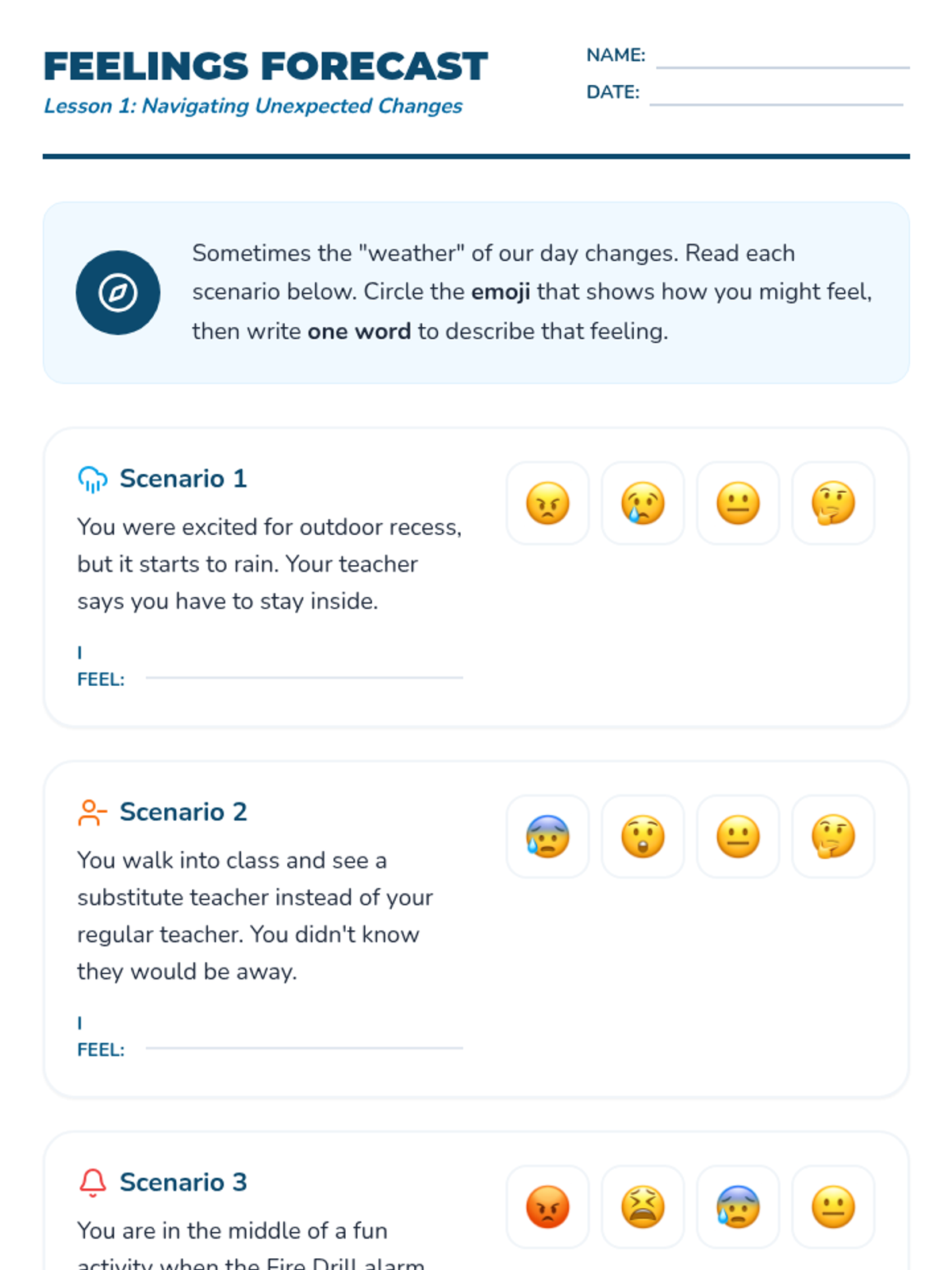
A sequence for 3rd Grade students focusing on cognitive flexibility and emotional regulation when plans change. Students learn to identify emotions, use calming strategies, and follow the 'Stop, Breathe, Ask' routine to manage transitions.
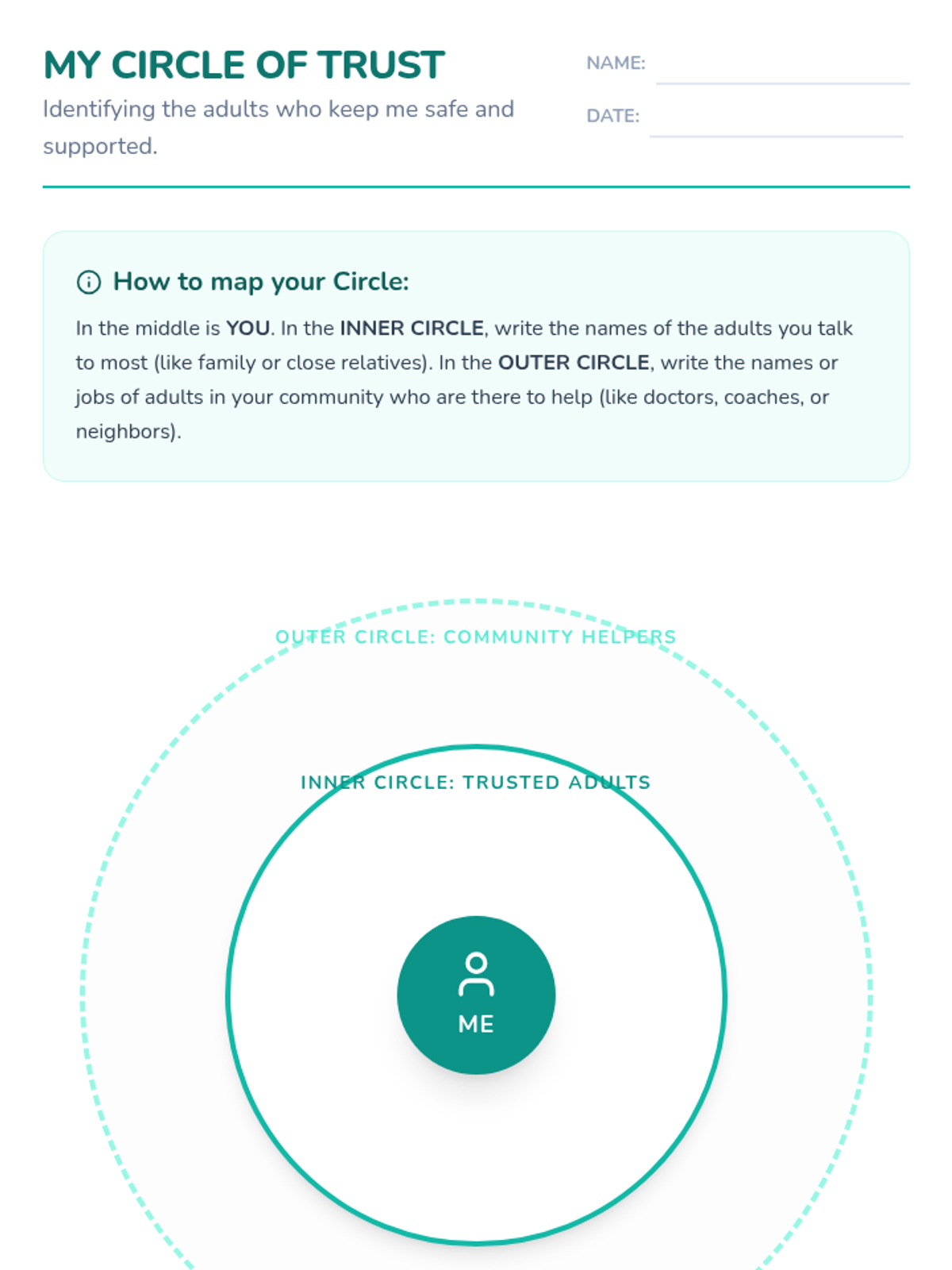
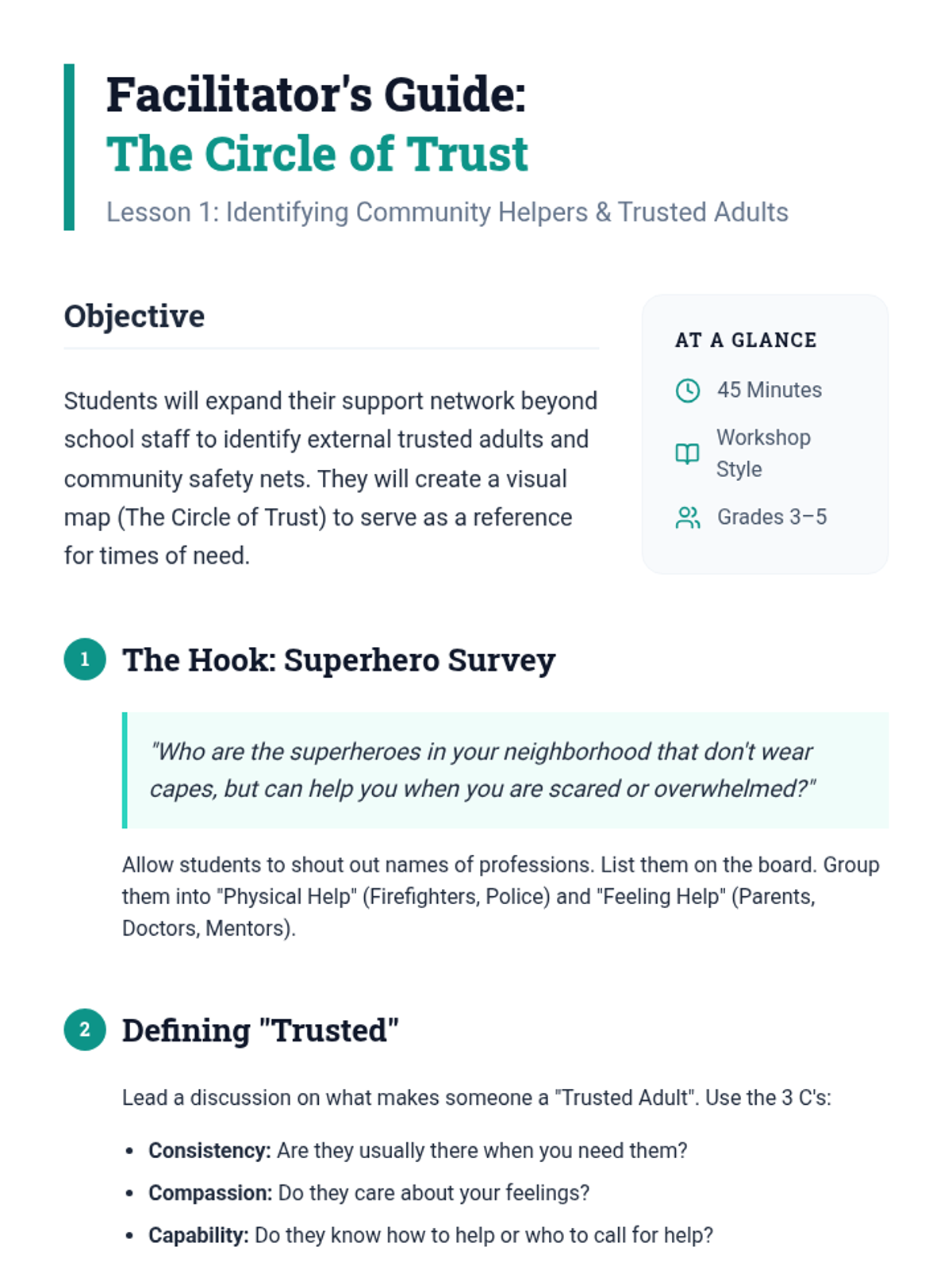
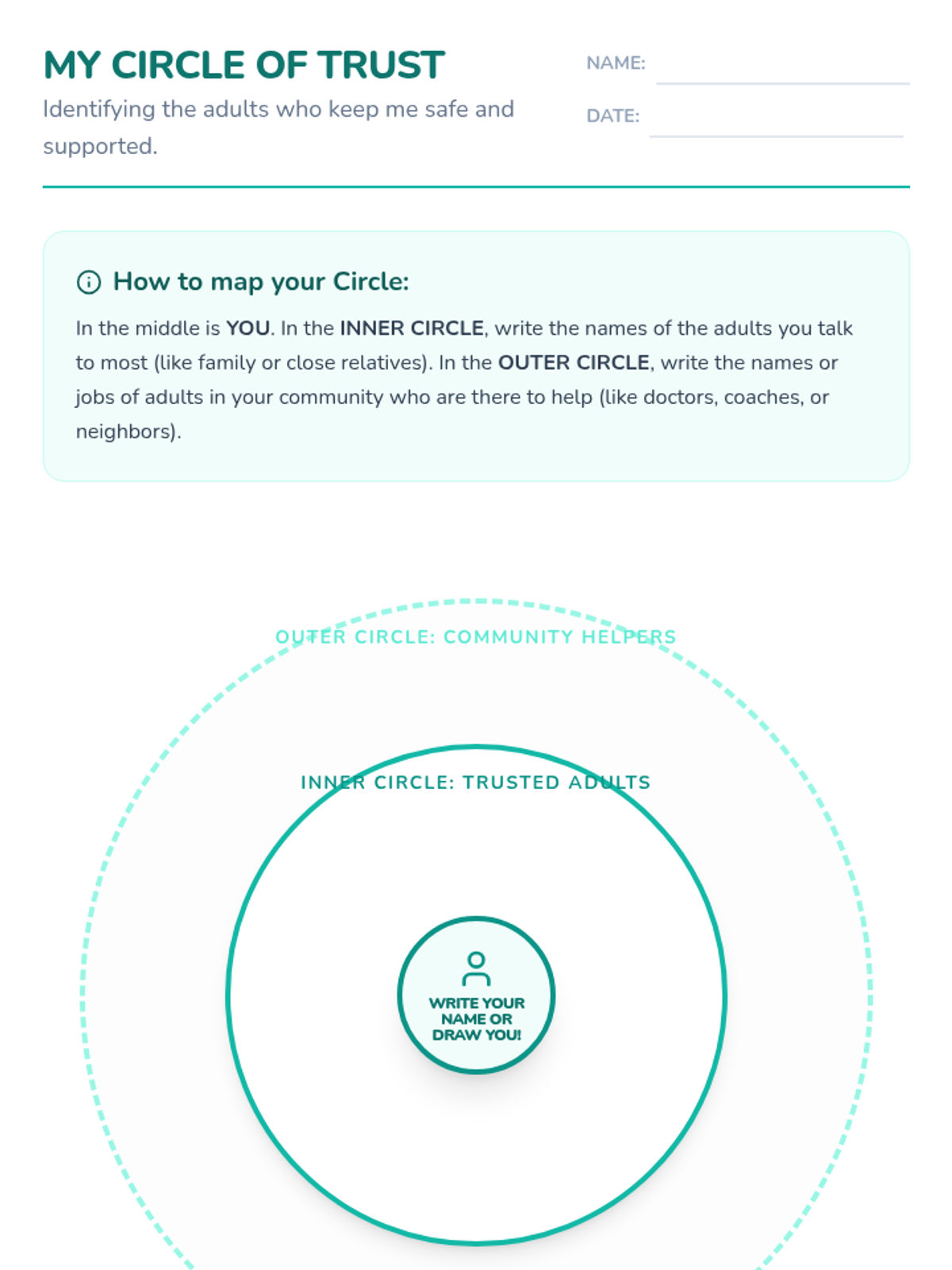
This sequence teaches 4th-grade students how to identify and access external mental health resources and emergency protocols. It covers trusted community adults, the 988 Suicide & Crisis Lifeline, emergency communication skills, and distinguishing between types of crises, culminating in a personal safety plan.
Students design and create a personalized 'Coping Kit' (mental or physical) containing tools for managing crisis moments. This project-based sequence guides 3rd graders through self-reflection, visualization techniques, tool selection, and the creation of a comprehensive safety plan.
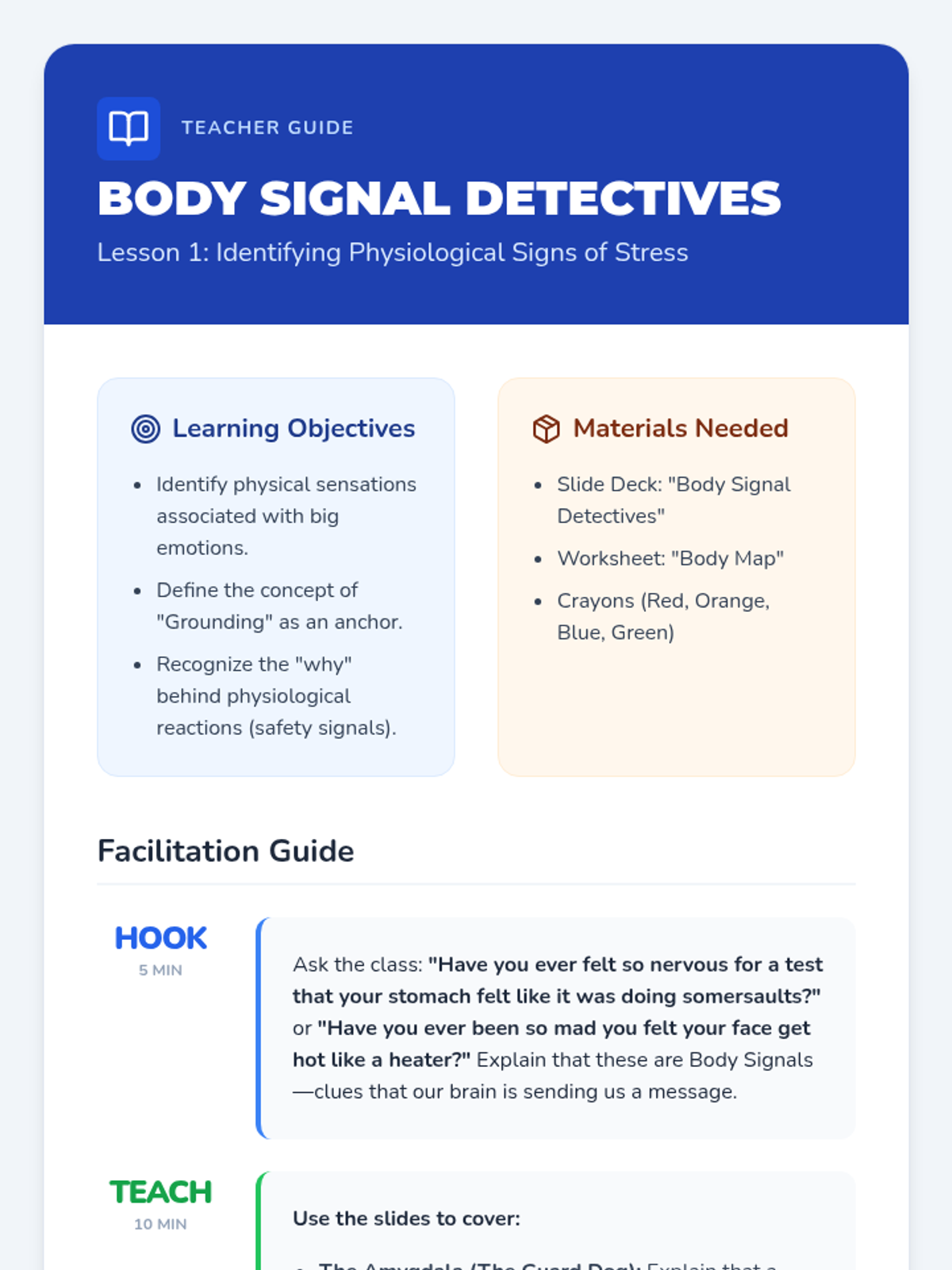
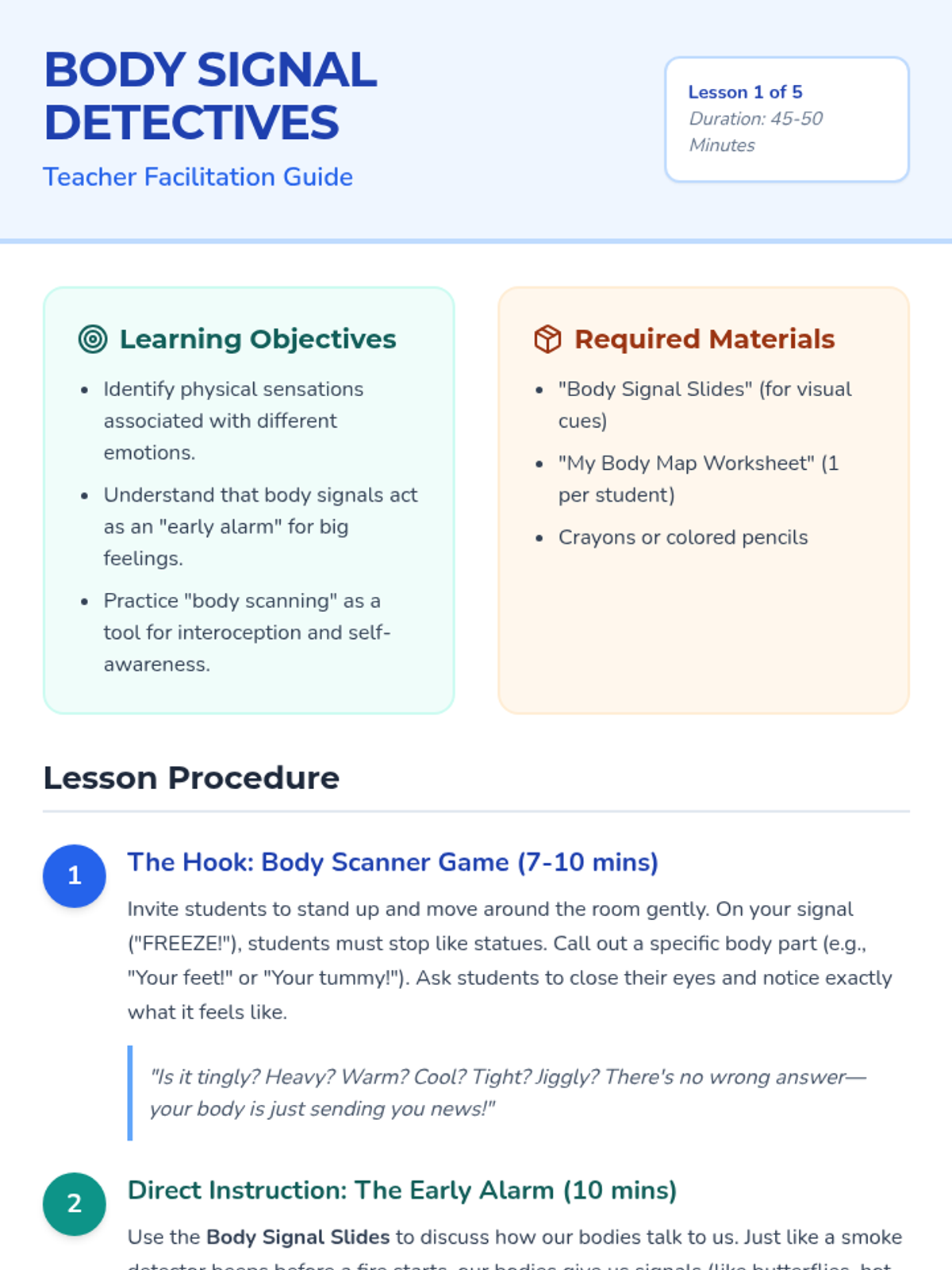
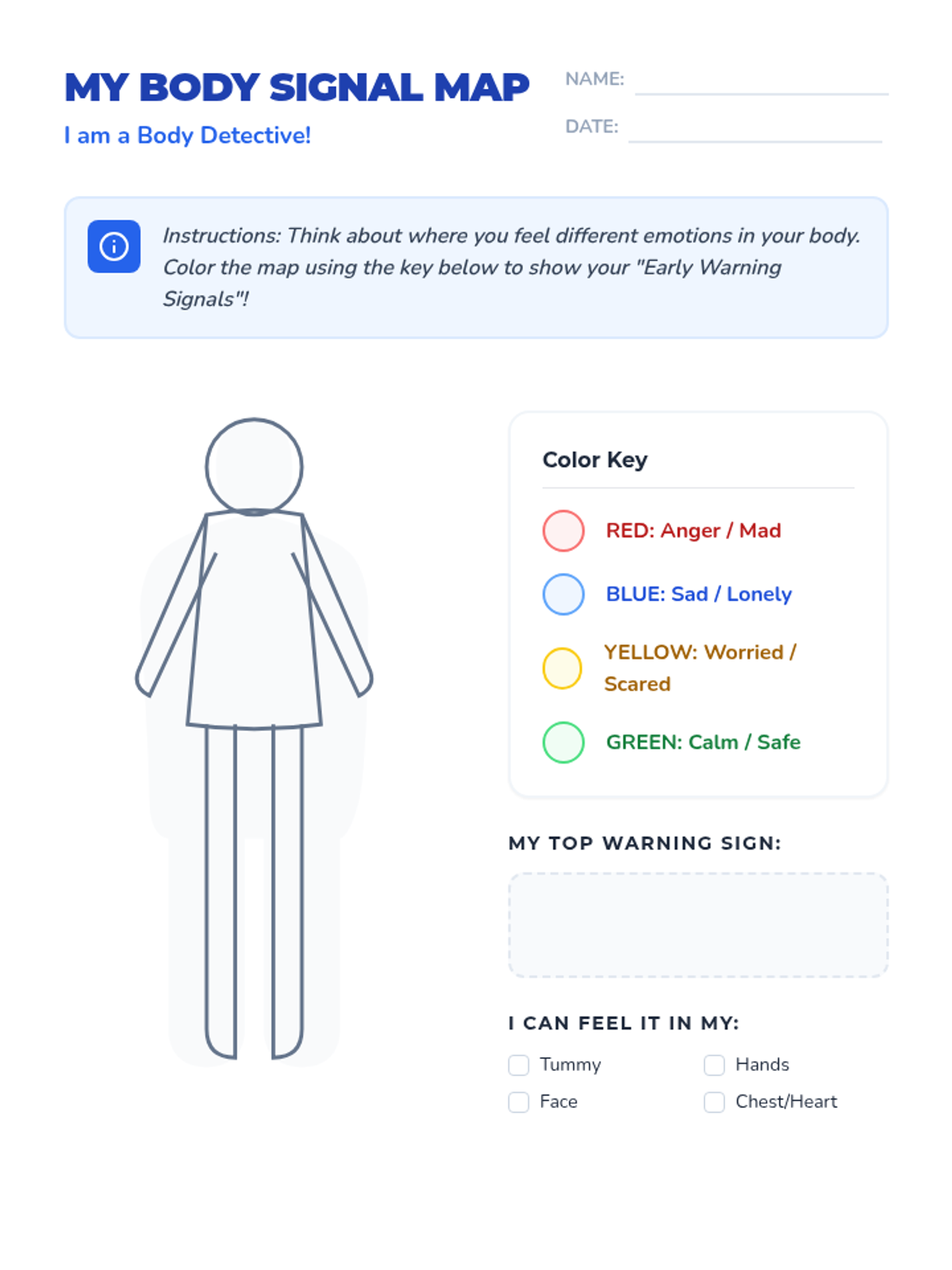
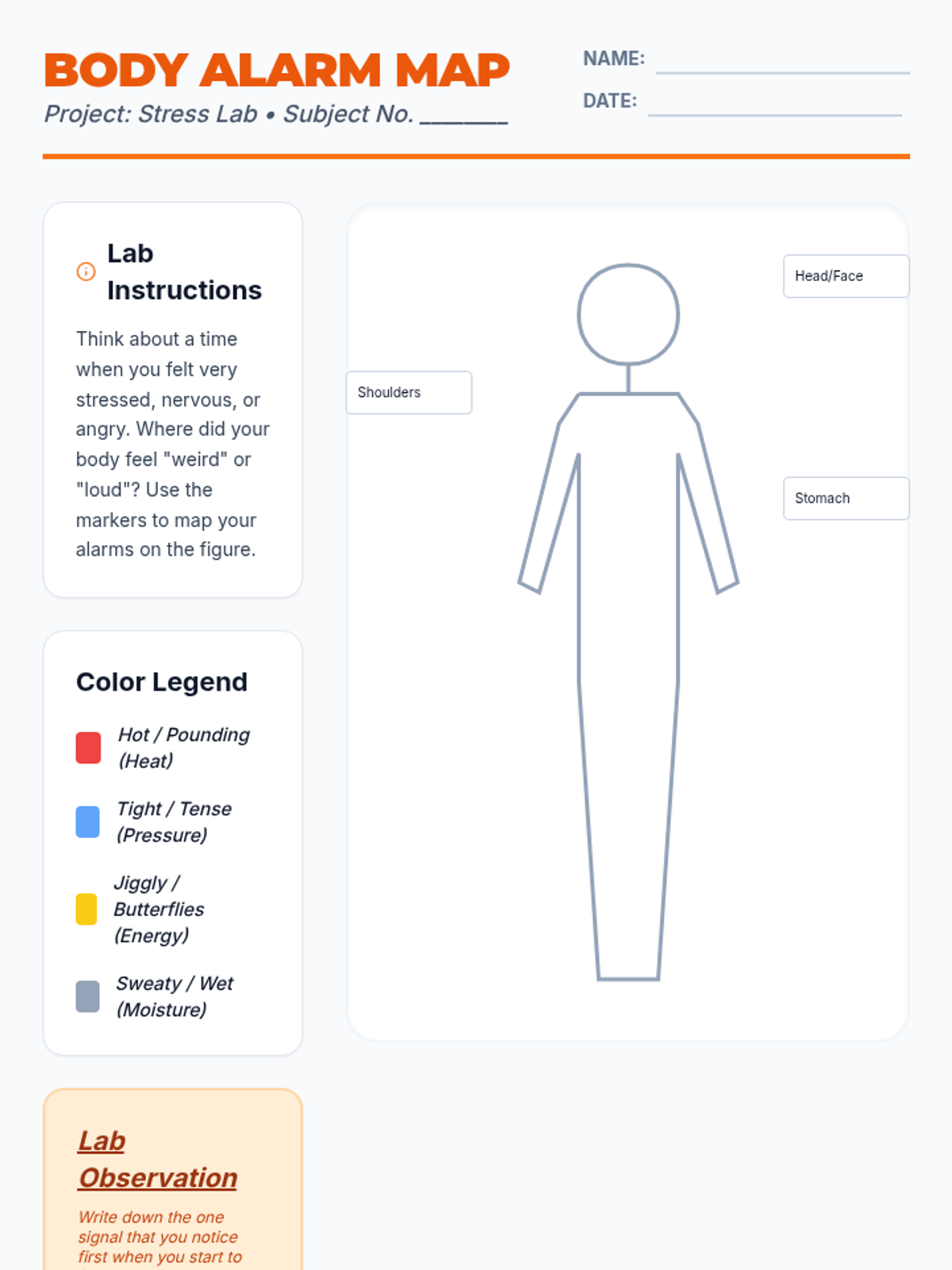
A 5-lesson sequence for 3rd graders on grounding techniques. Students learn to recognize physical signs of stress and master sensory strategies like the 5-4-3-2-1 method to regulate big emotions.
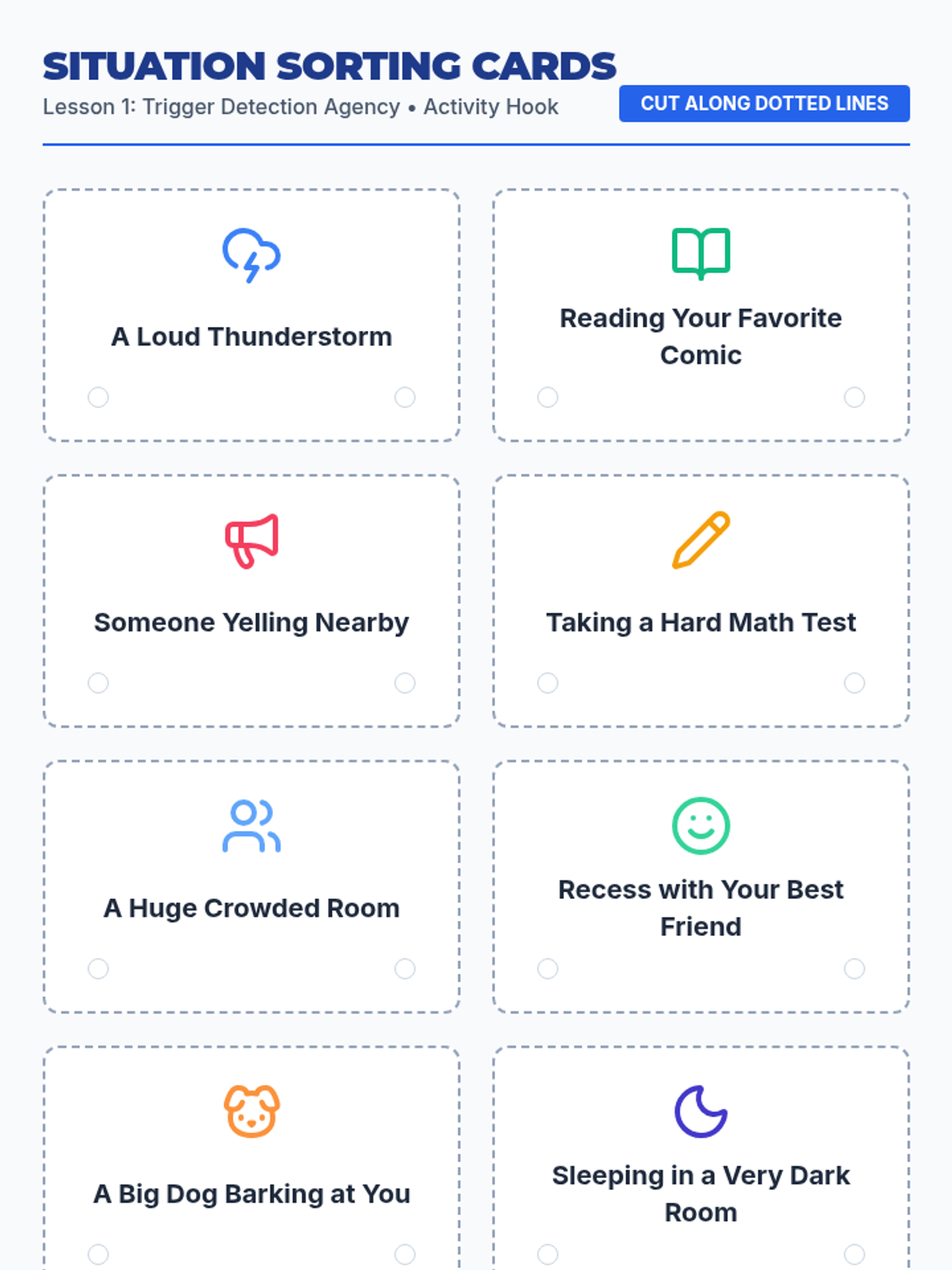
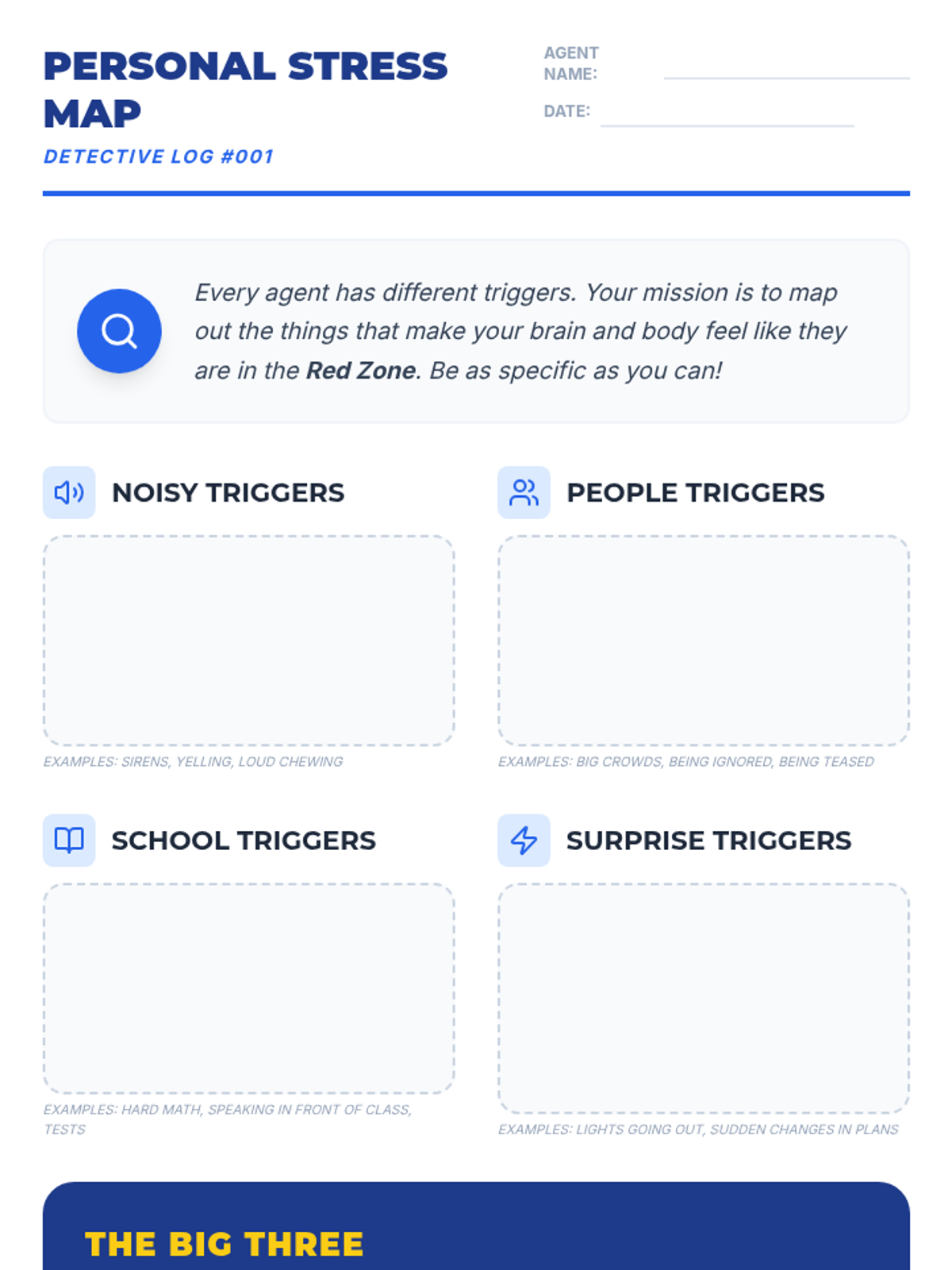
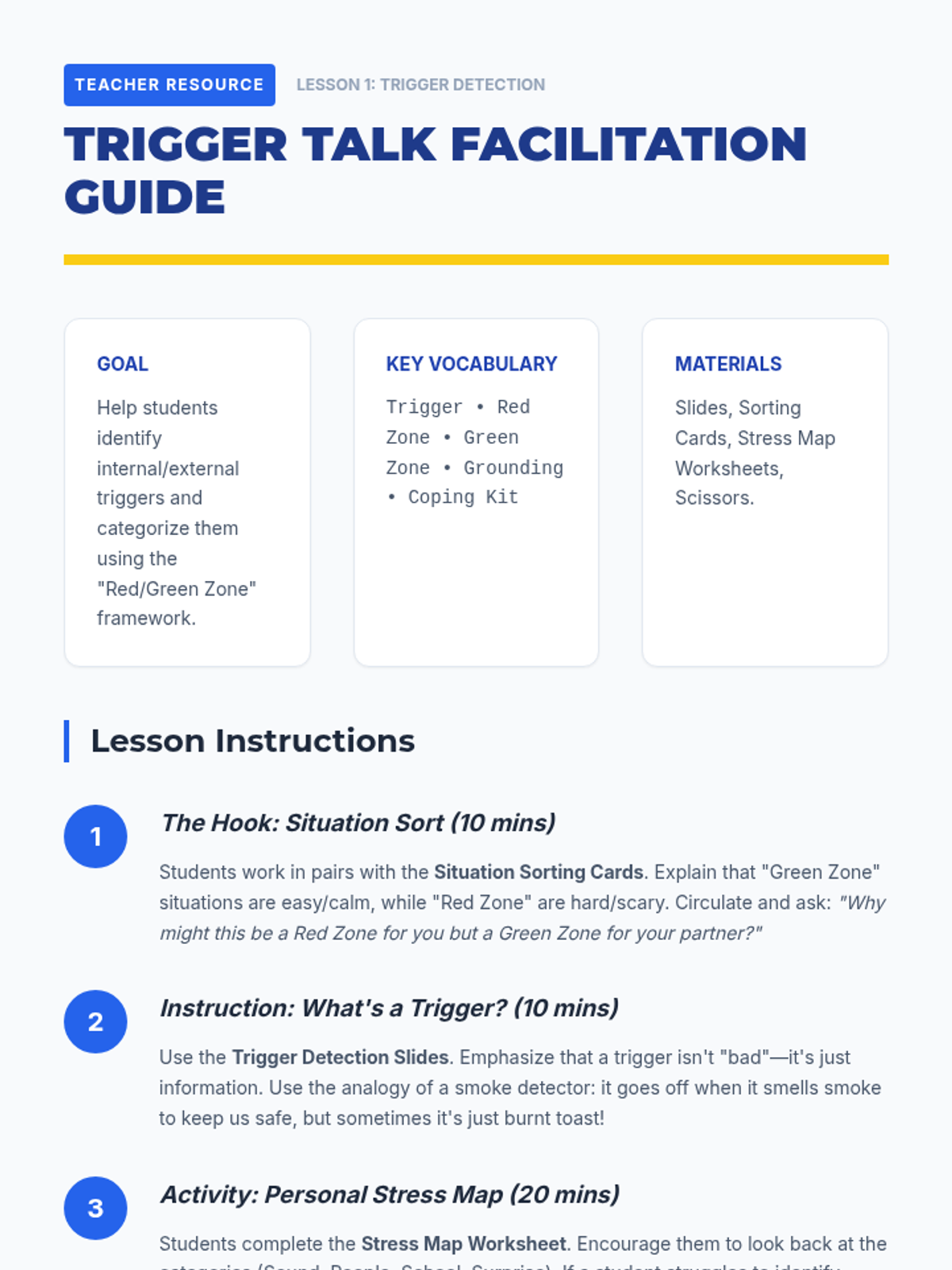
A 5-lesson sequence for 3rd graders to identify physical signs of stress, understand emotional triggers, practice regulation techniques like deep breathing and grounding, and build a personal safety plan with trusted adults.
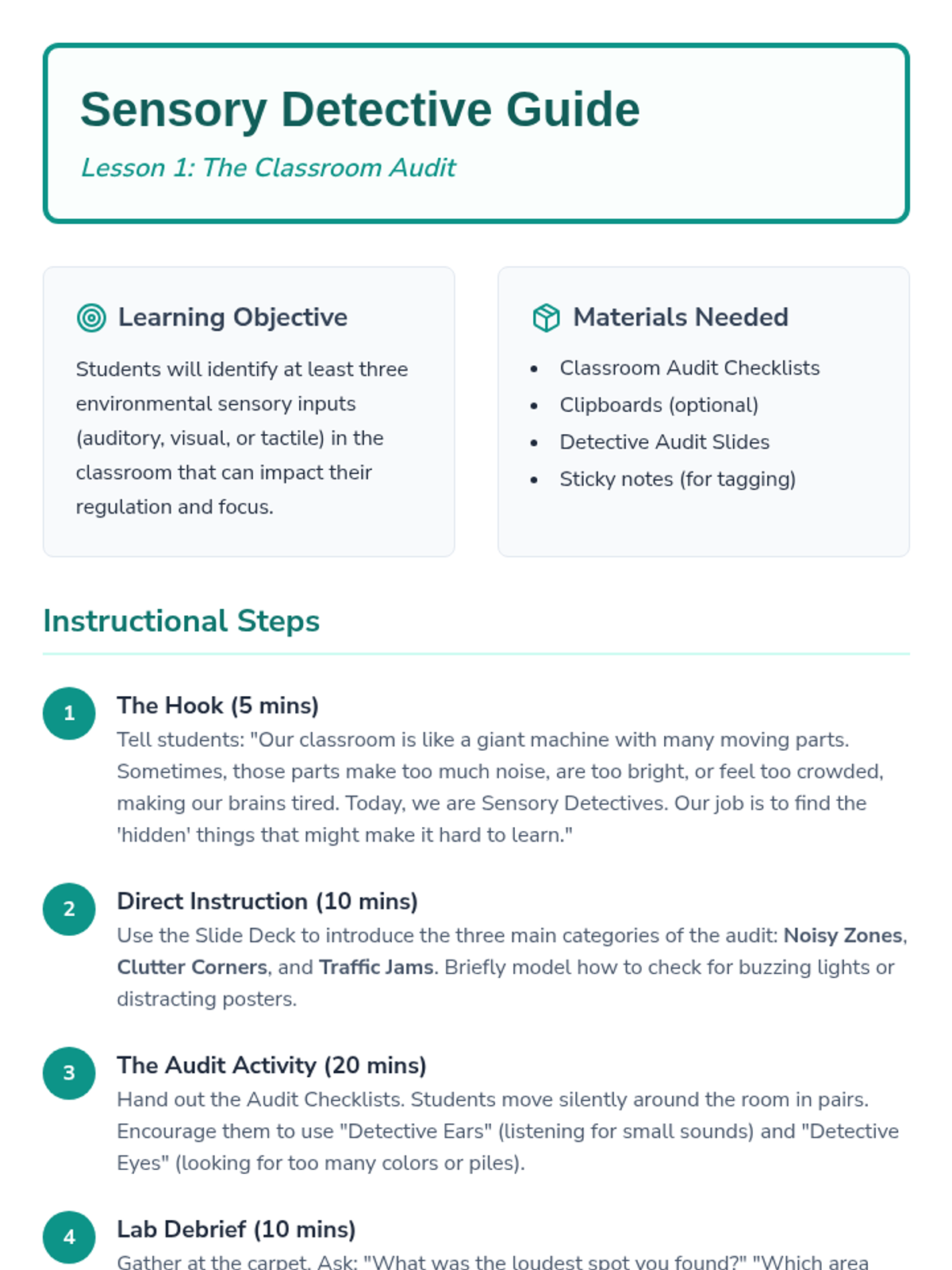
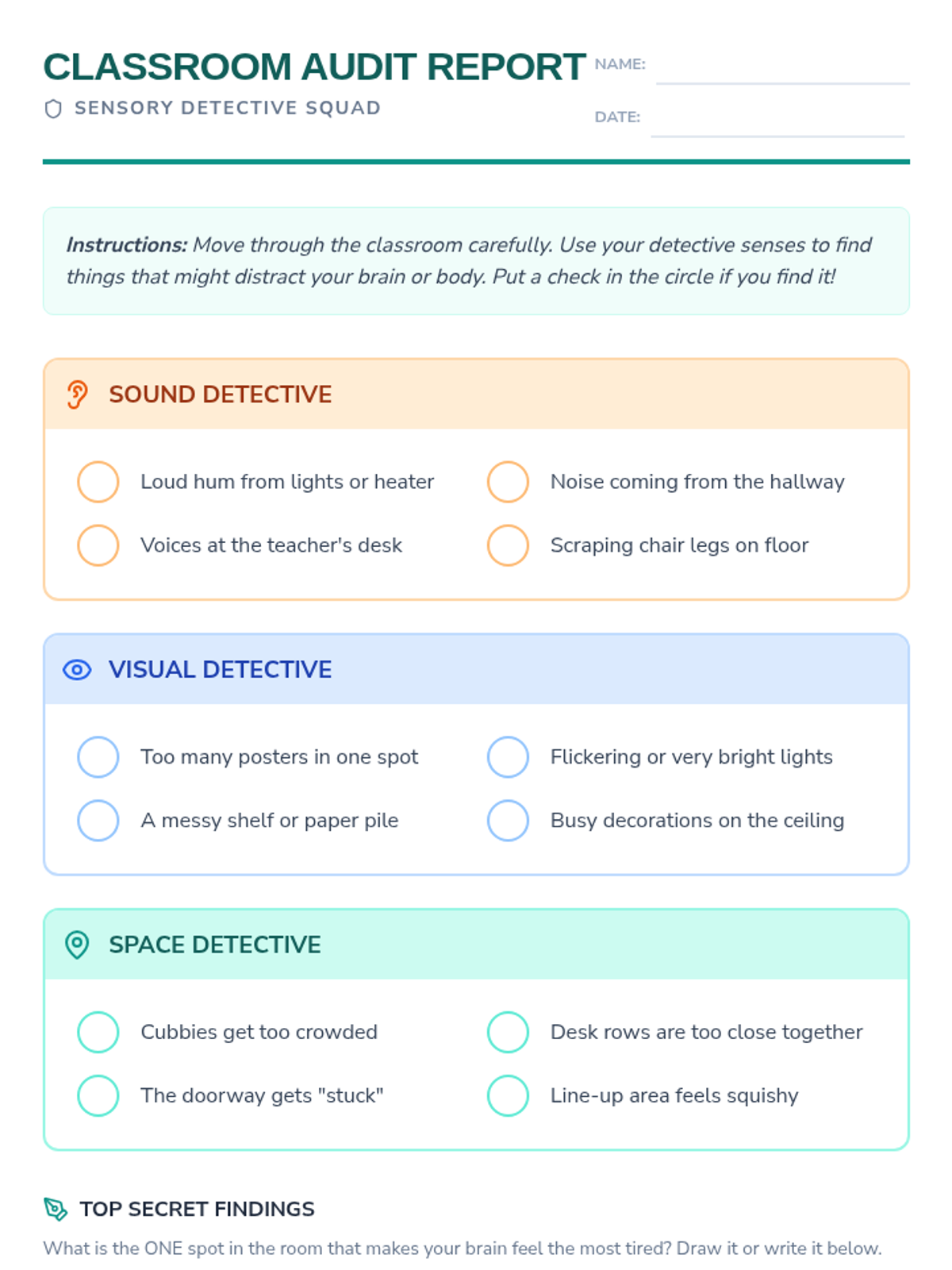
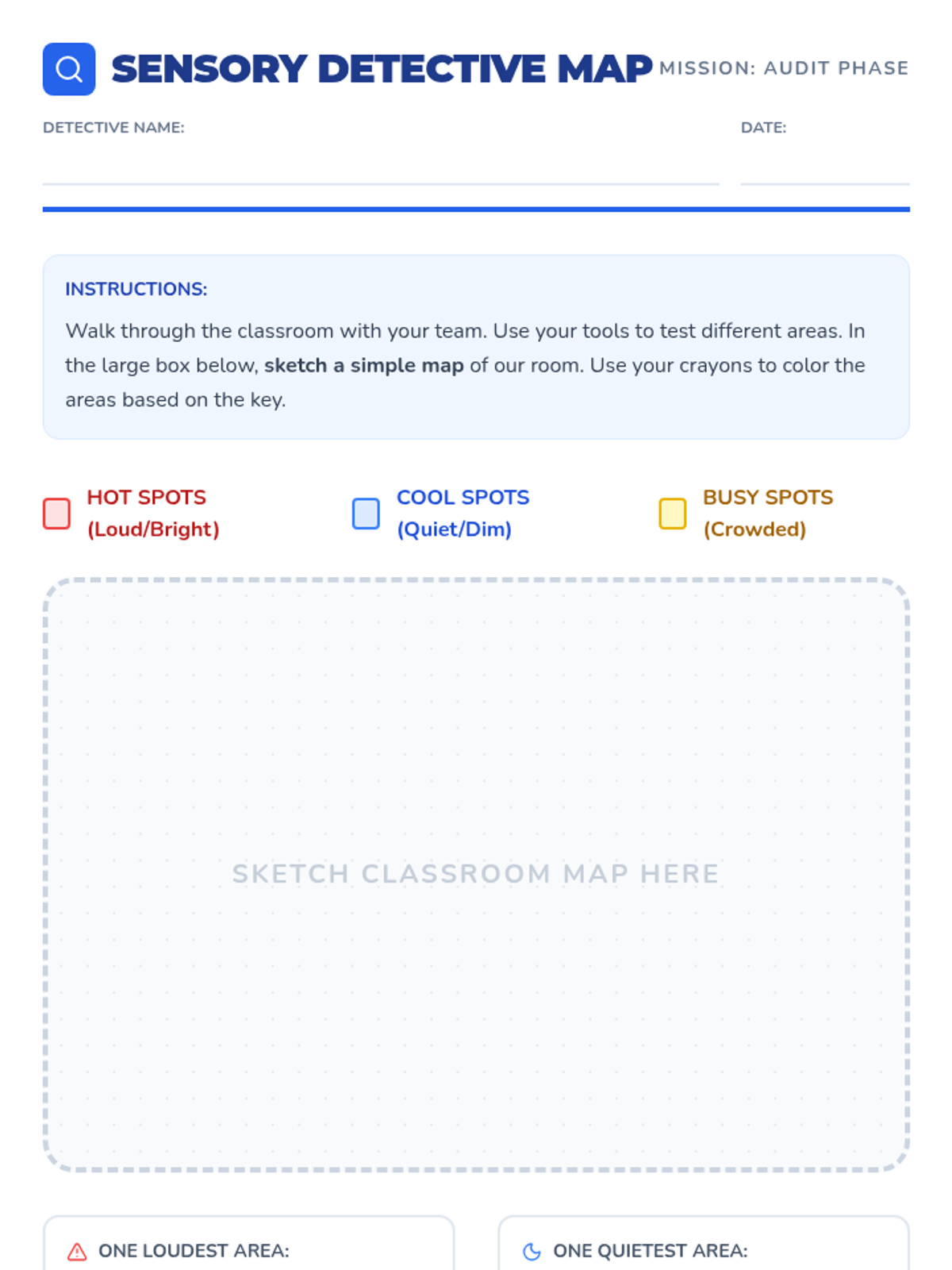
This sequence explores how environmental factors and community interactions impact sensory regulation. Students learn to audit their surroundings, respect diverse sensory needs, practice co-regulation, troubleshoot transitions, and collaboratively create a classroom sensory contract.
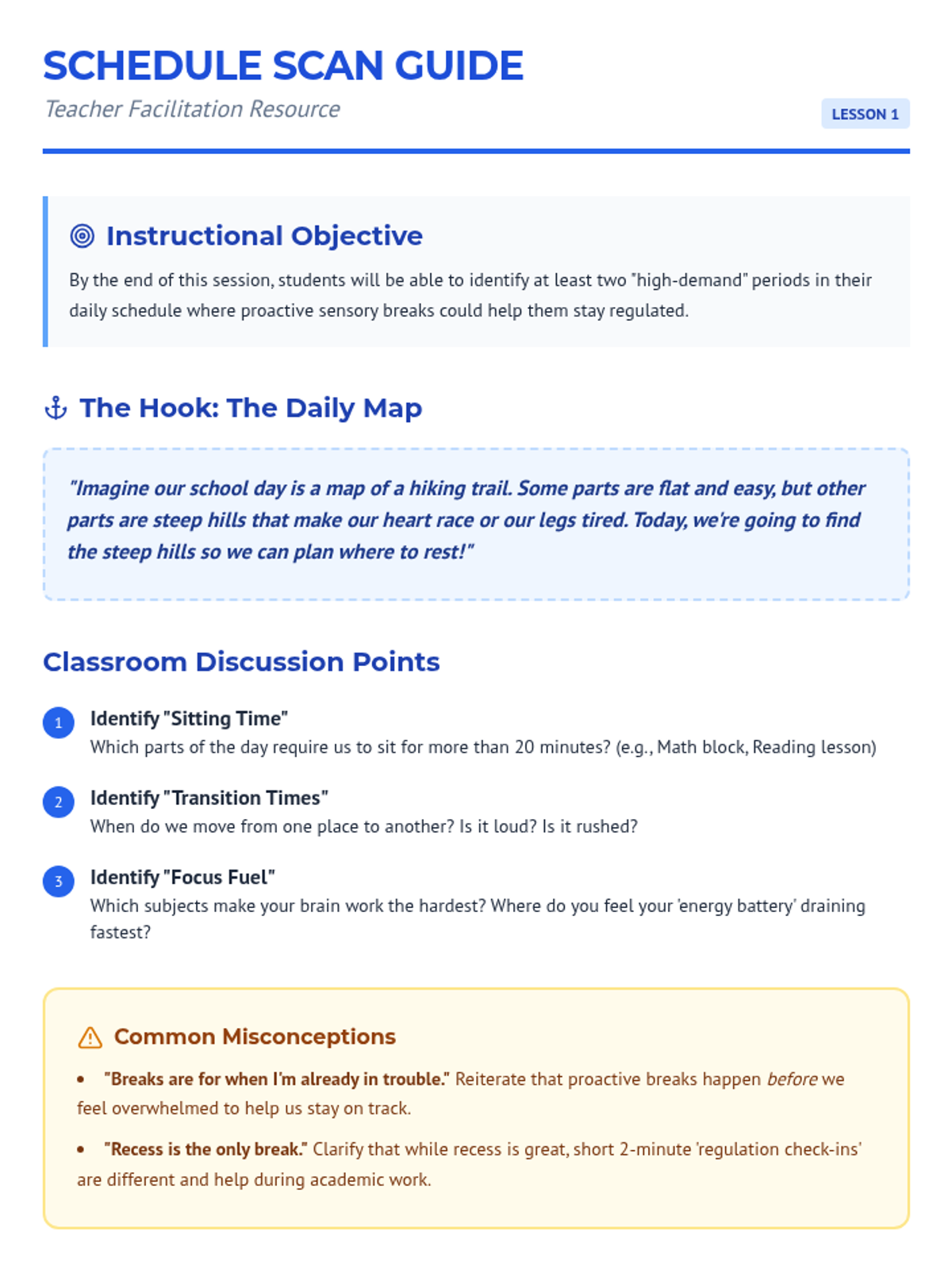
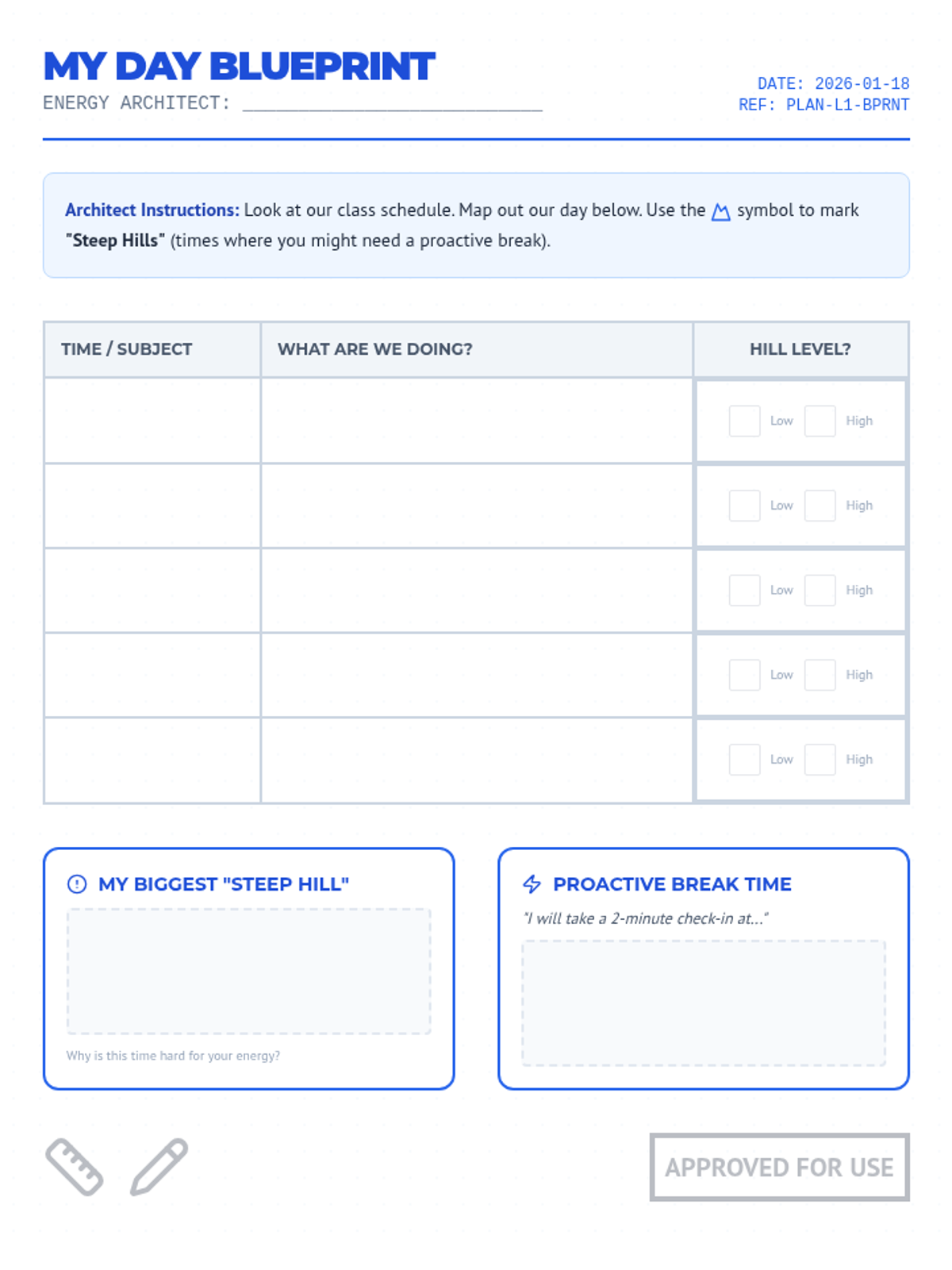
A 3rd-grade sequence focused on proactive sensory regulation. Students learn to analyze their school schedule, match sensory strategies to specific settings, communicate their needs through a ticket system, and design their own regulation plans to support self-advocacy and classroom success.
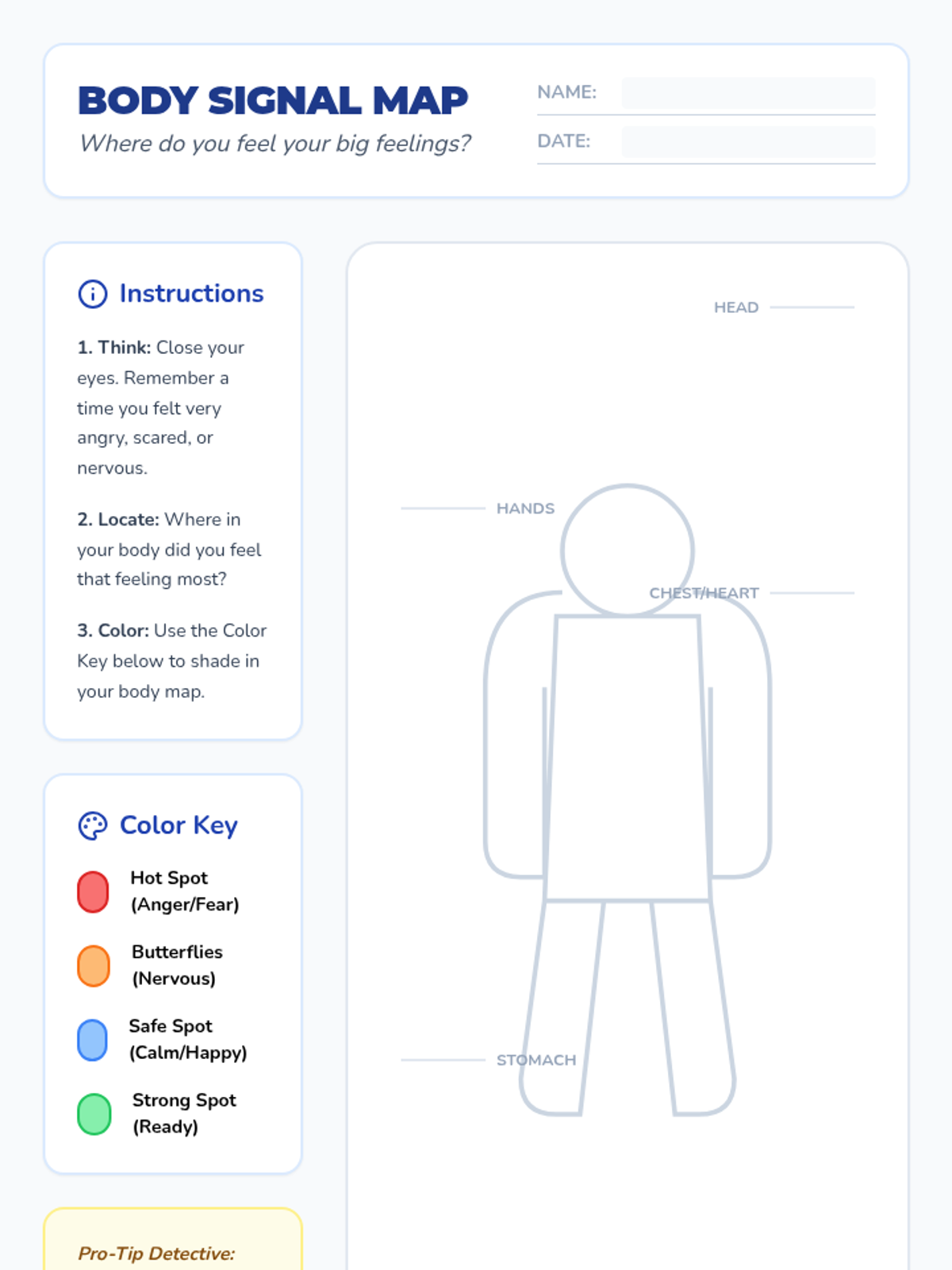
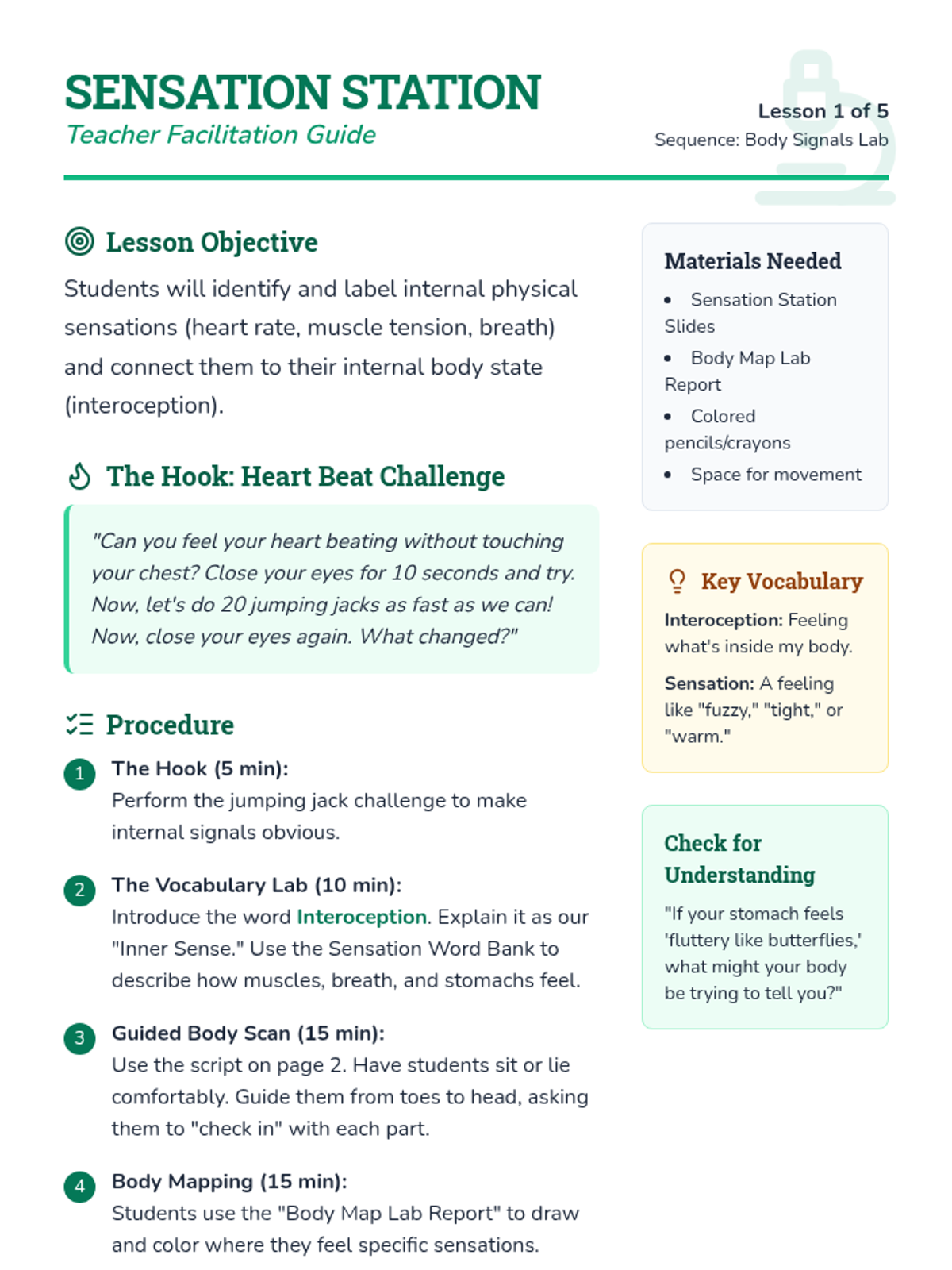
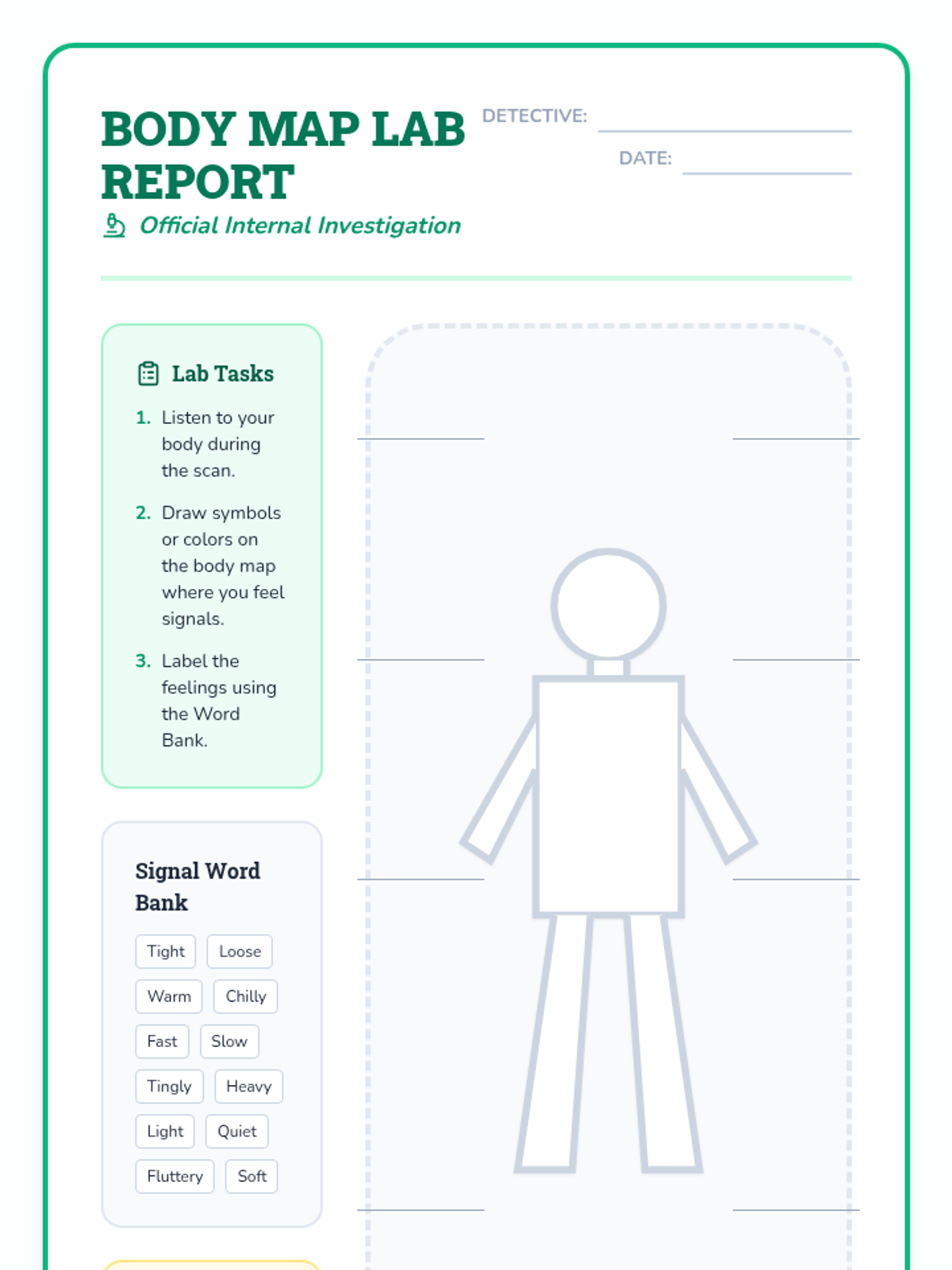
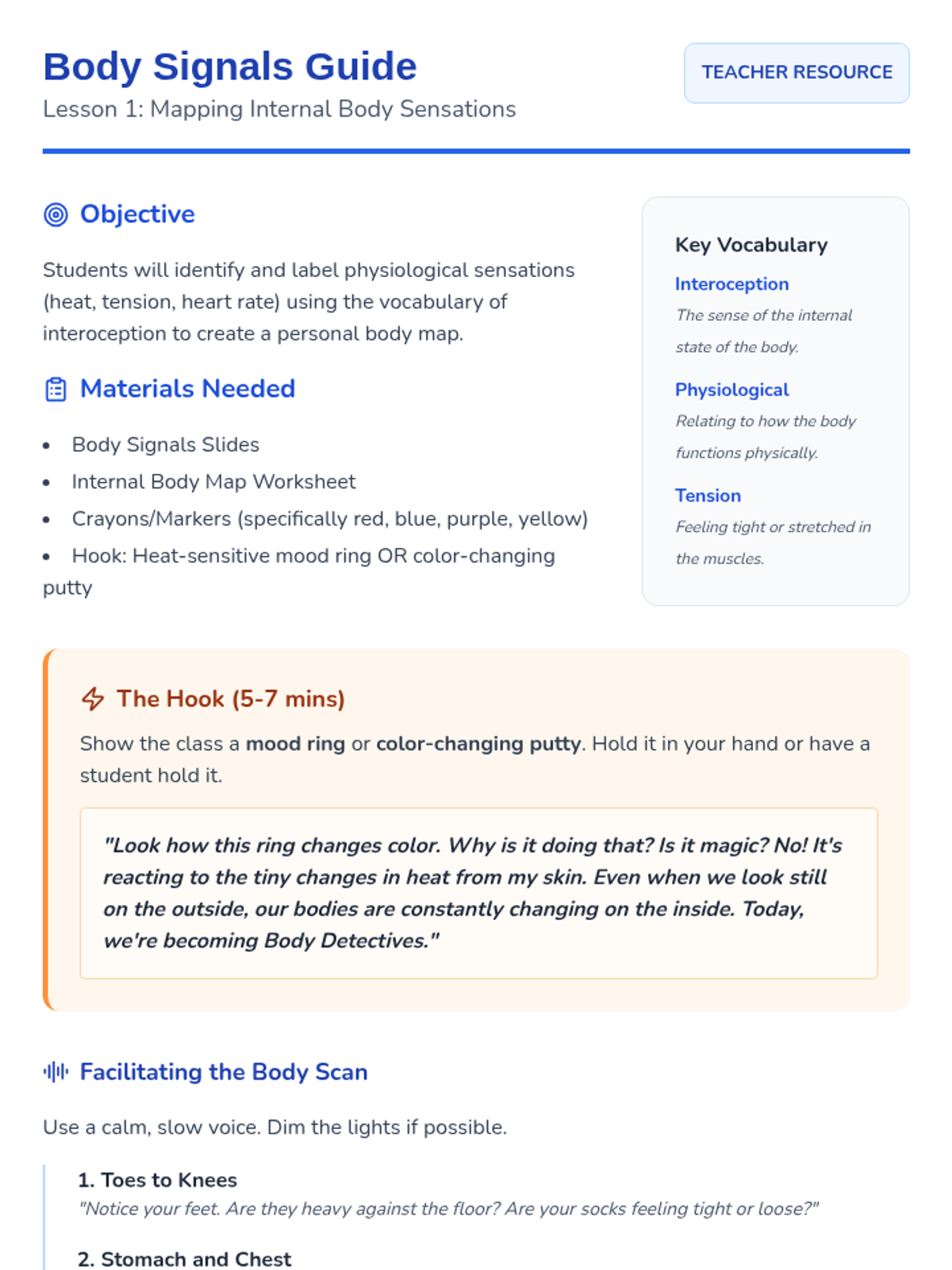
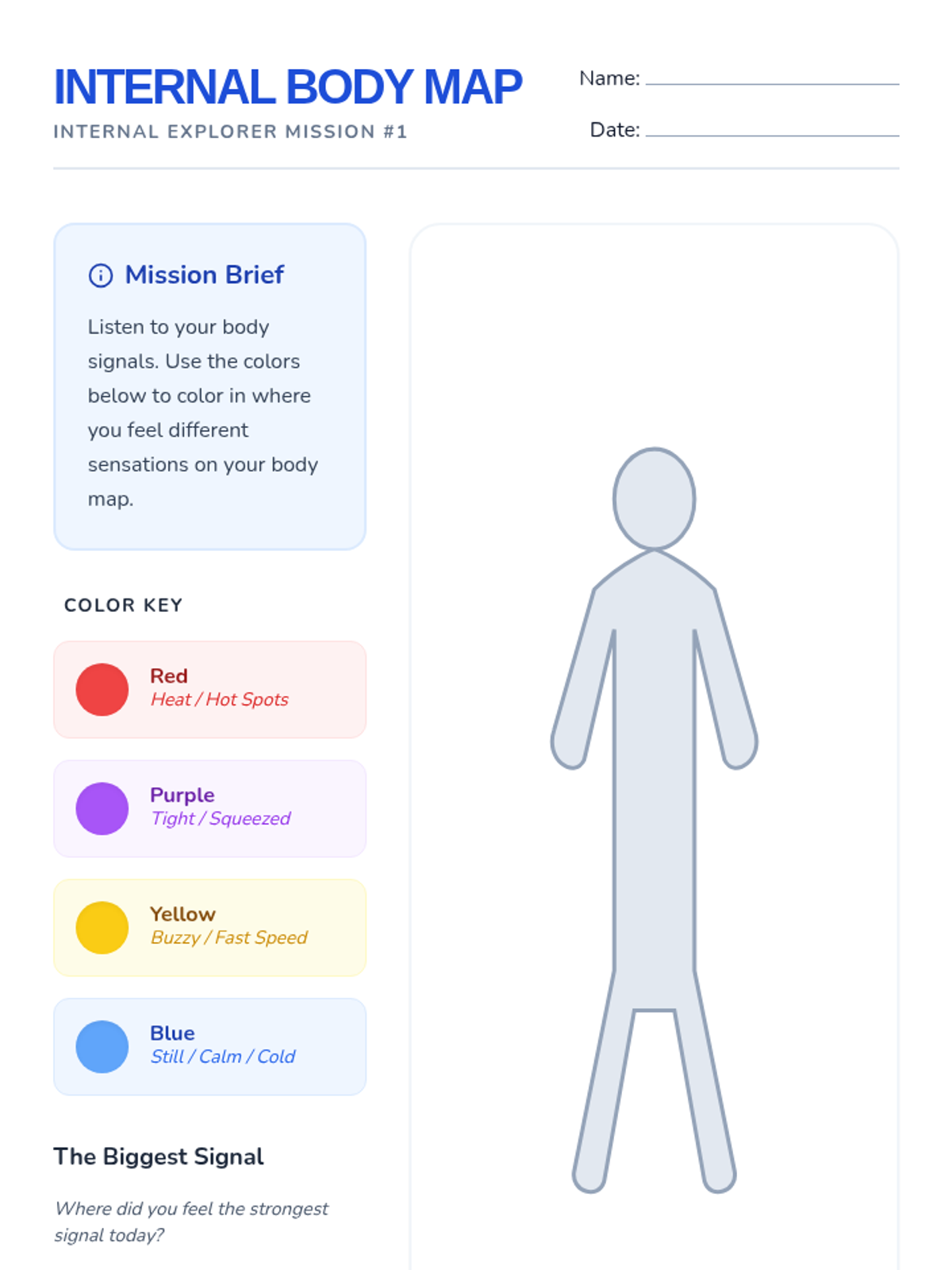
A 5-lesson sequence for 3rd graders focused on developing interoception and body awareness. Students learn to identify internal physical cues, track energy levels, recognize triggers, and distinguish between proactive and reactive breaks to improve self-regulation.
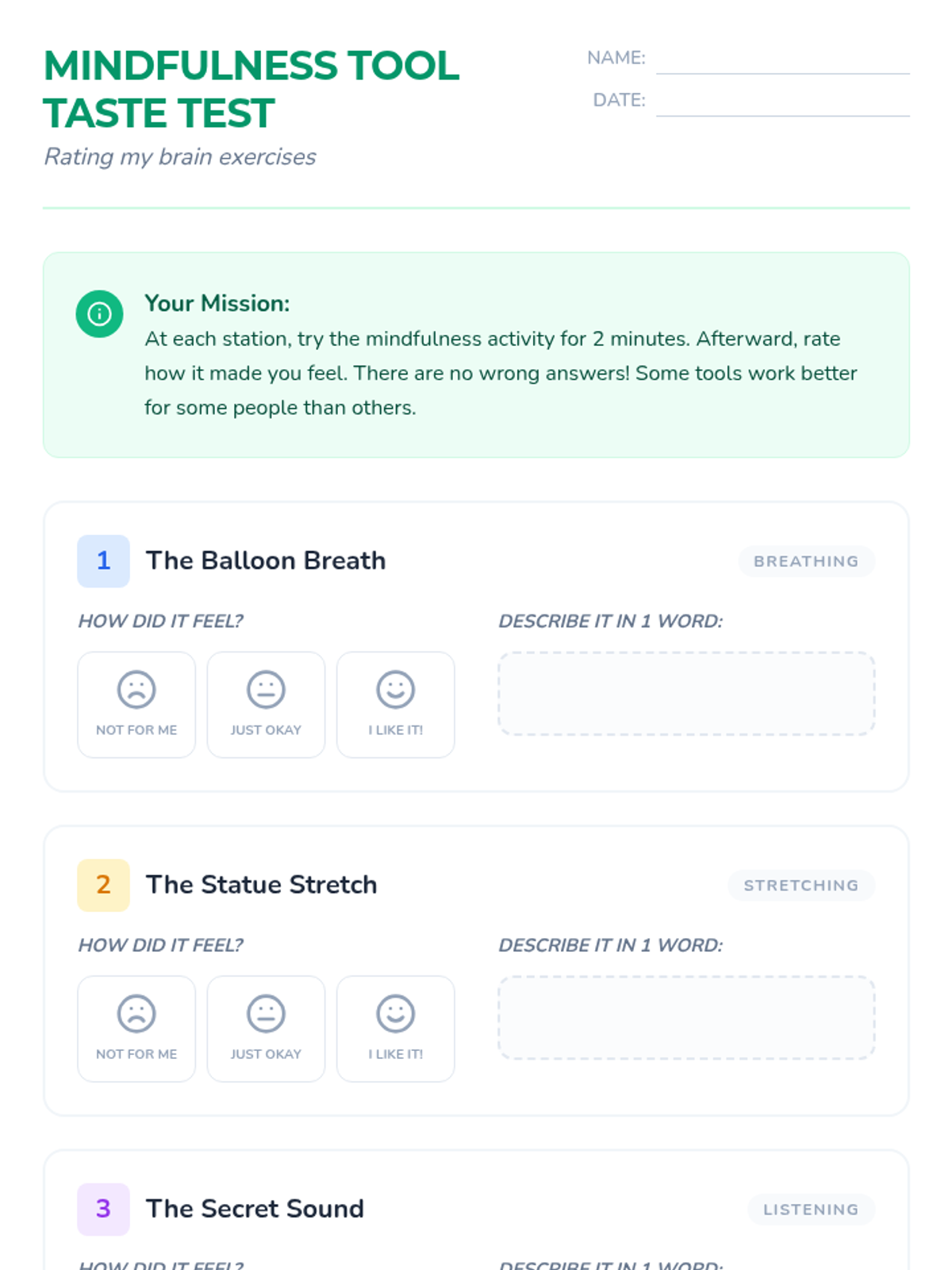
A comprehensive 5-lesson sequence for 3rd-grade students to learn and apply mindfulness techniques for emotional regulation and stress management. Students progress from basic breathing to sensory grounding, body awareness, and focused listening, culminating in a personalized mindfulness toolkit.
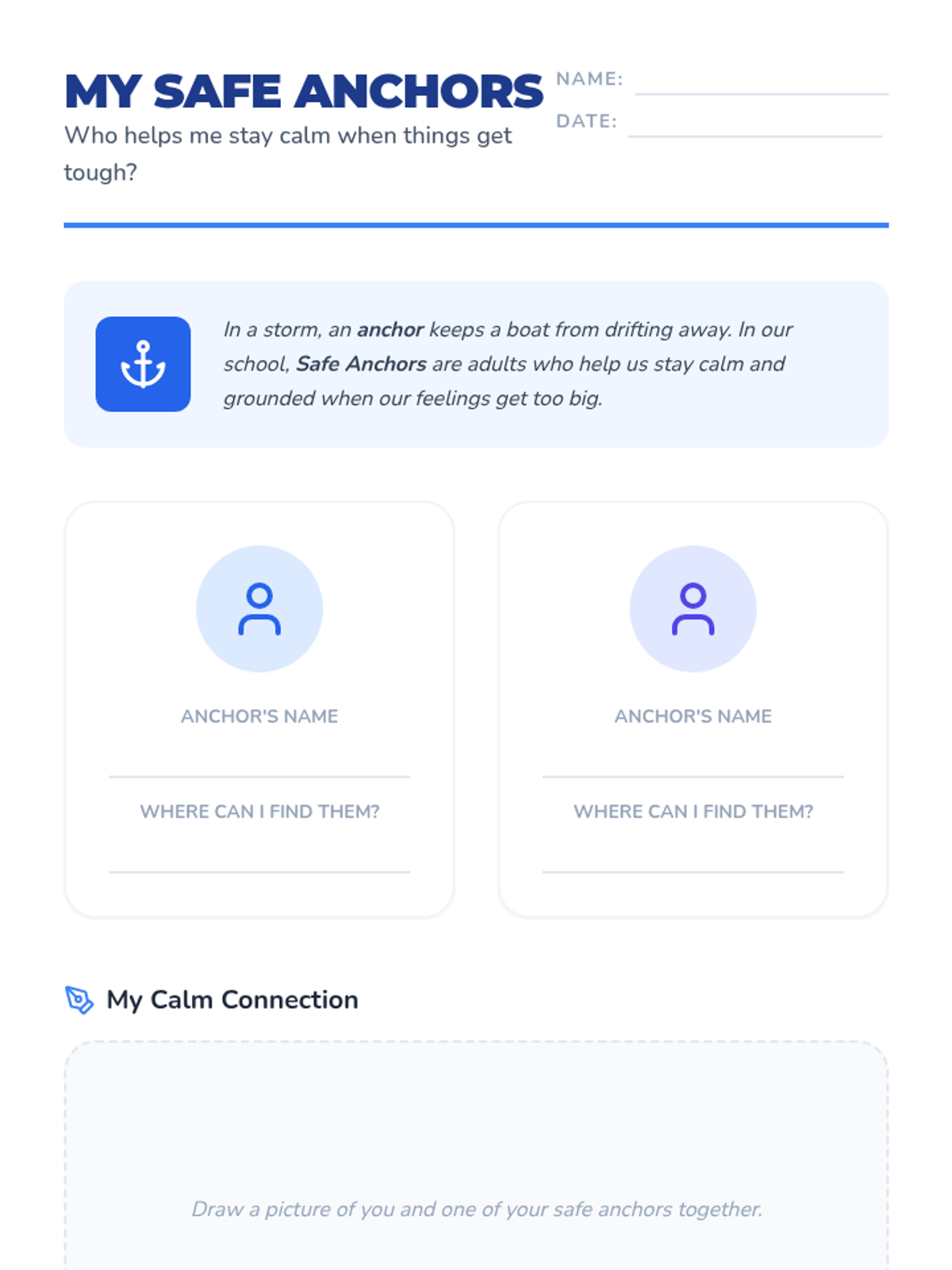
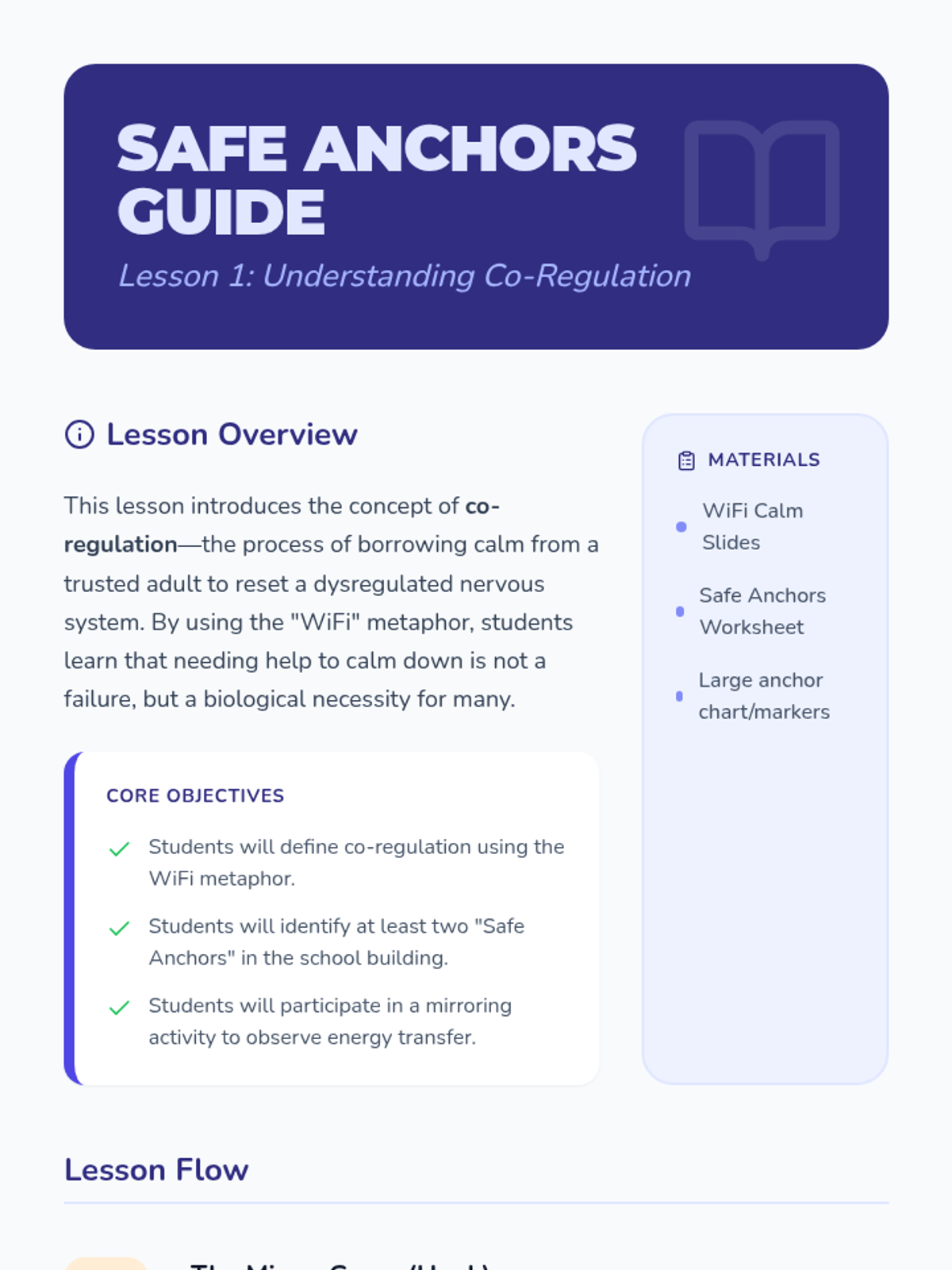
This sequence teaches 3rd-grade students how to communicate their needs for co-regulation during moments of dysregulation. It moves from understanding the concept of borrowing calm to developing non-verbal signals, verbal scripts, and personalized co-regulation plans.
A project-based sequence where 3rd-grade students analyze their classroom environment and design a 'Calm Corner' to aid in dysregulation recovery. Students move from environmental auditing to design thinking and protocol establishment.
A 3rd-grade sequence focused on building interoceptive awareness and physiological regulation skills. Students learn to recognize internal body cues and apply somatic techniques like proprioceptive input and rhythmic breathing to return to a calm baseline state.
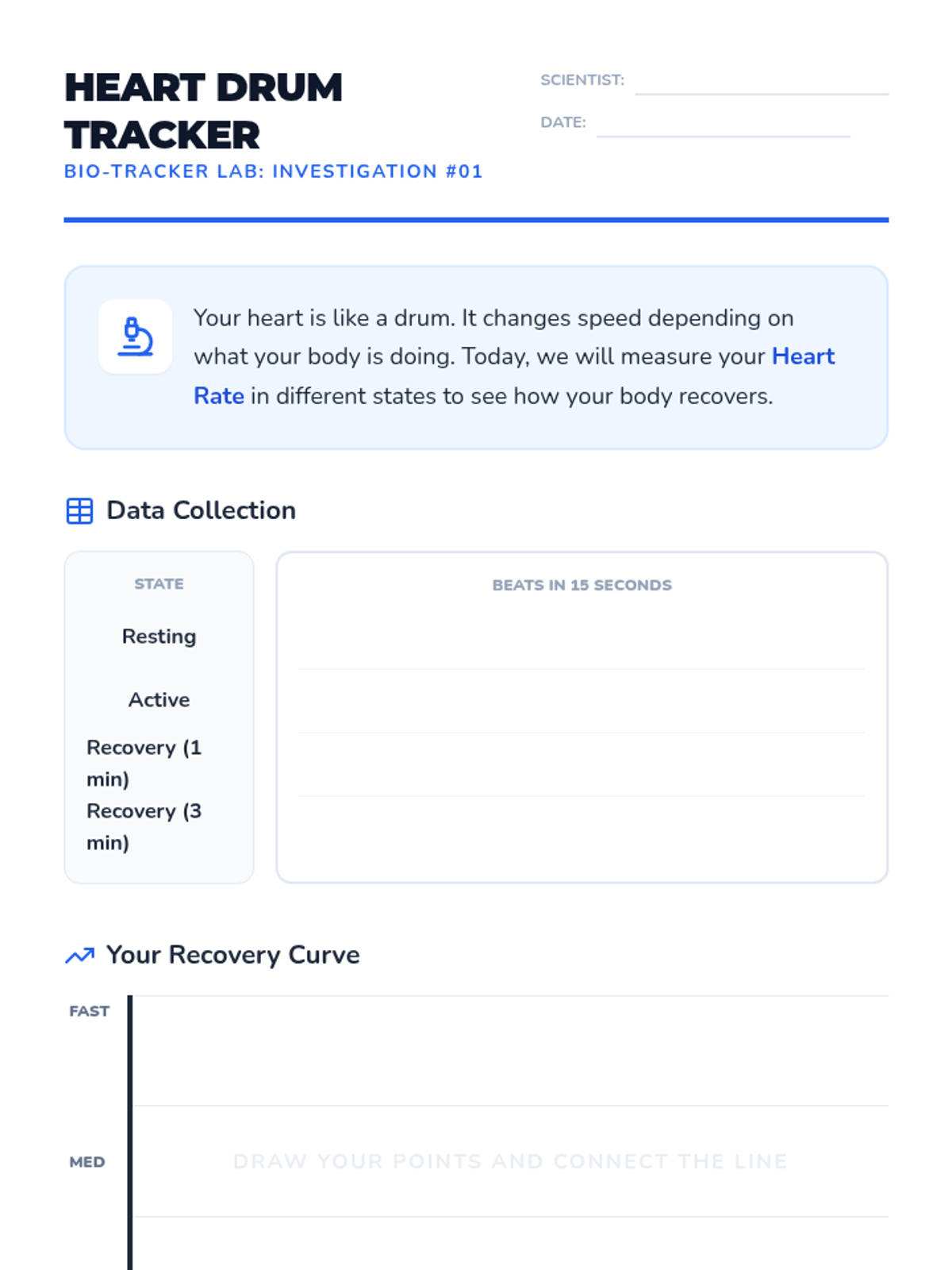
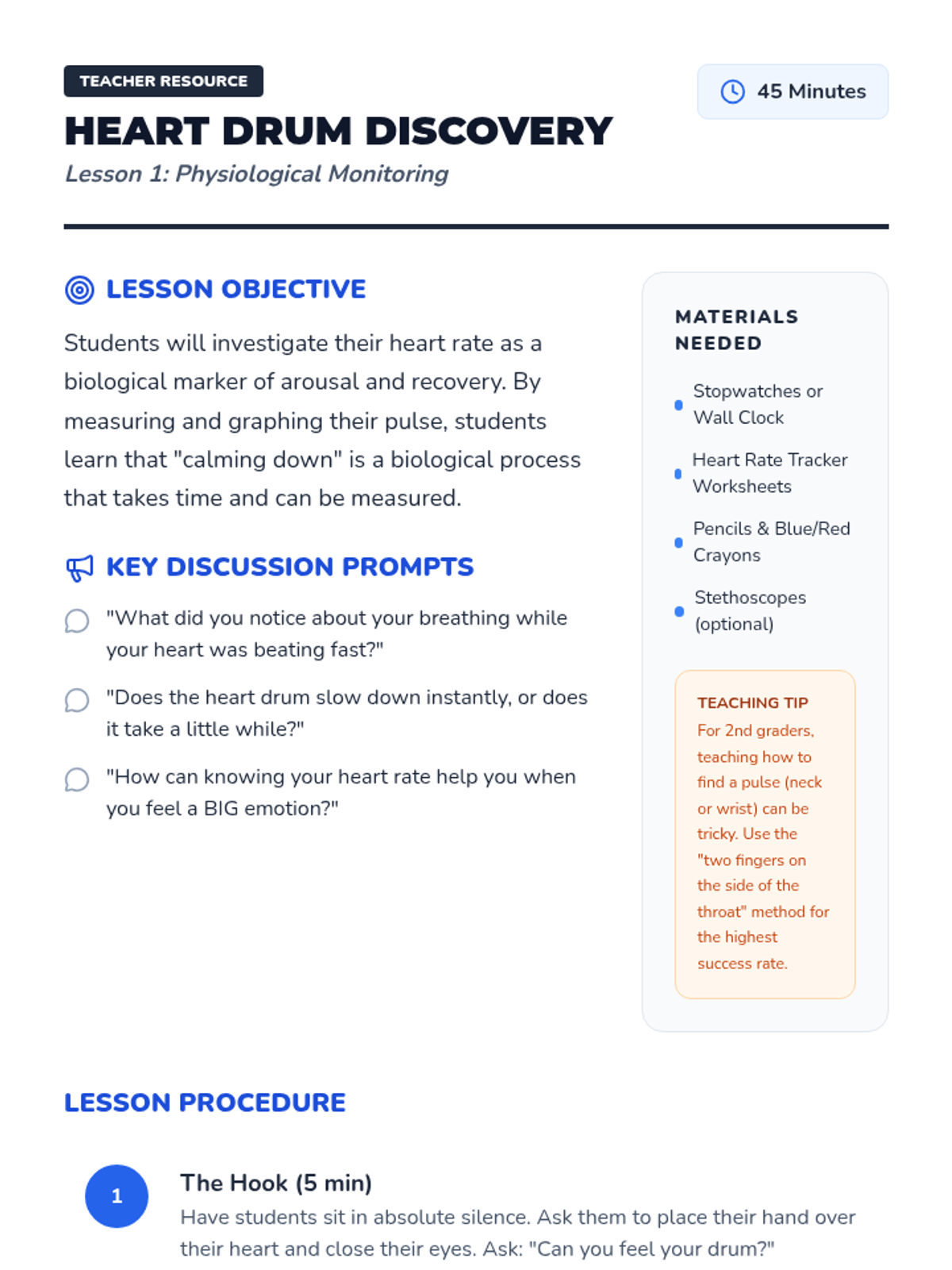
An inquiry-based sequence where students investigate the internal biology of dysregulation and recovery, focusing on heart rate, muscle tension, and breath to identify their physiological baseline.
A 5-lesson sequence for 3rd graders to explore various mindfulness techniques and design a personalized routine that works for their unique needs and daily schedule.
A 5-lesson sequence for 3rd graders focused on identifying, communicating, and respecting physical and emotional boundaries using assertive communication and empathy.
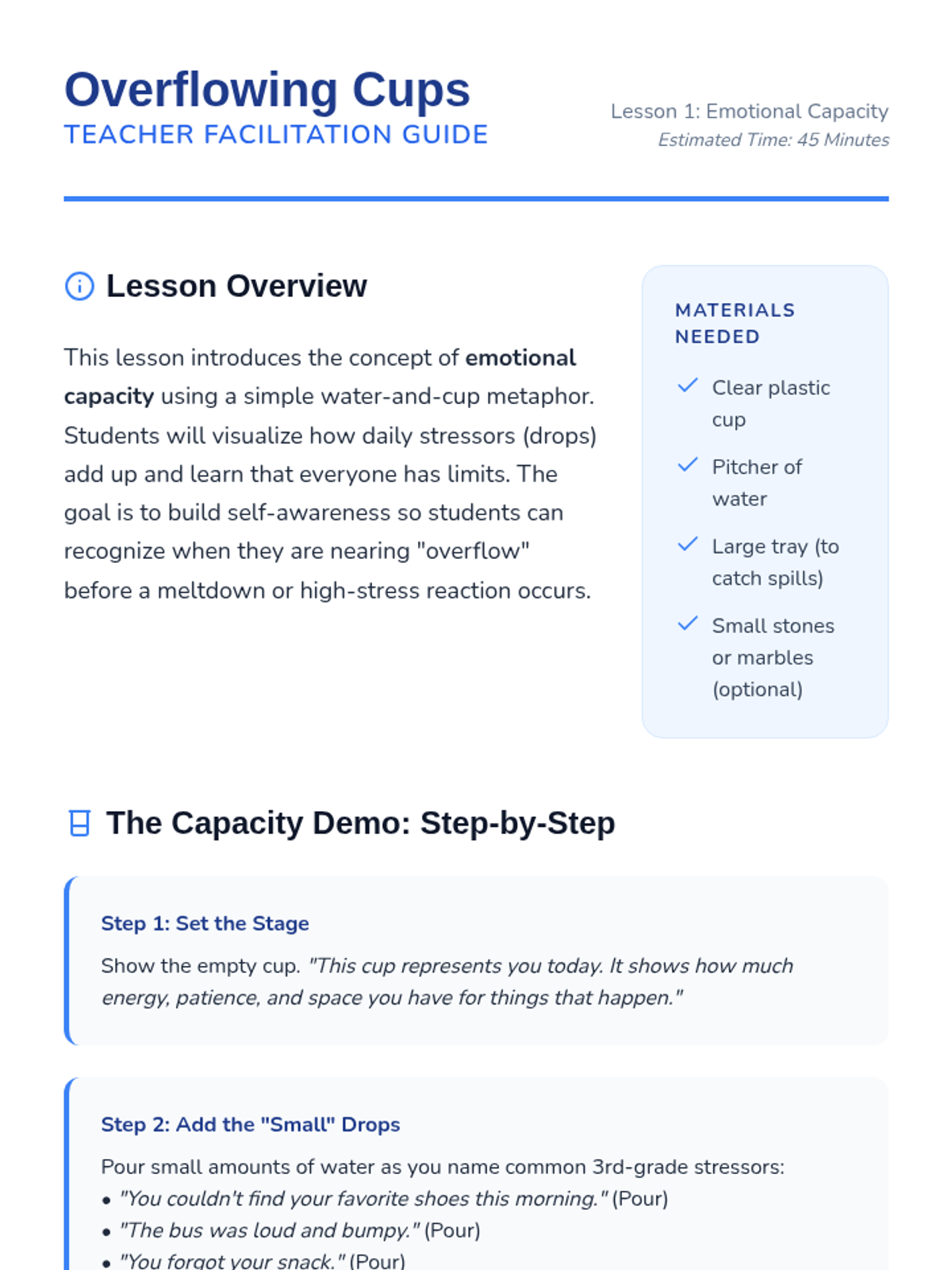
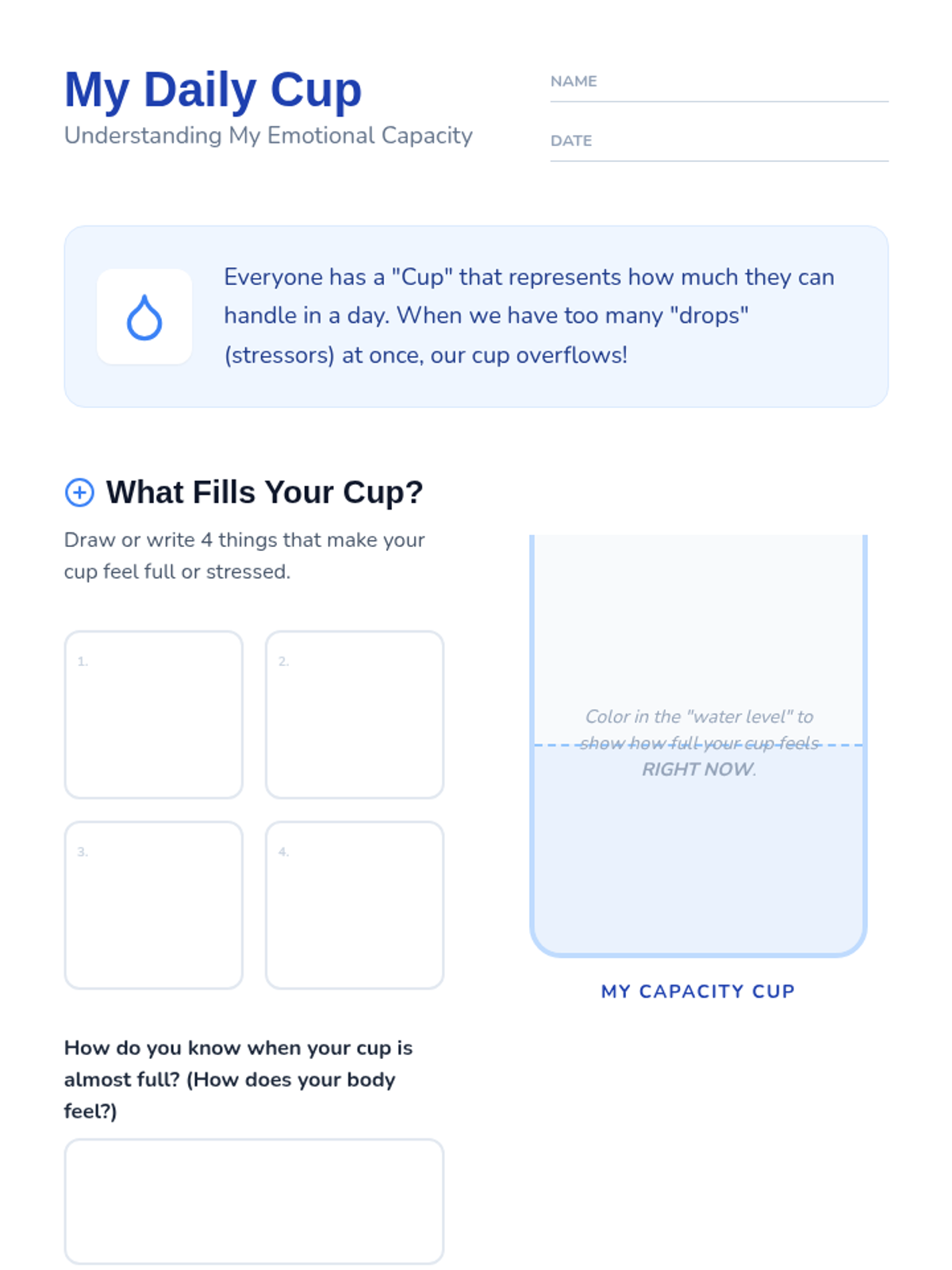
A sequence for 3rd Grade students on mental health and stress management, focusing on organizing time, setting boundaries, and preventing stress through proactive planning. Students explore metaphors like the 'capacity cup' and 'big rocks' to develop practical social-emotional skills.
A comprehensive 3rd-grade sequence focused on recognizing physiological stress signals and applying regulation techniques like deep breathing and muscle relaxation.
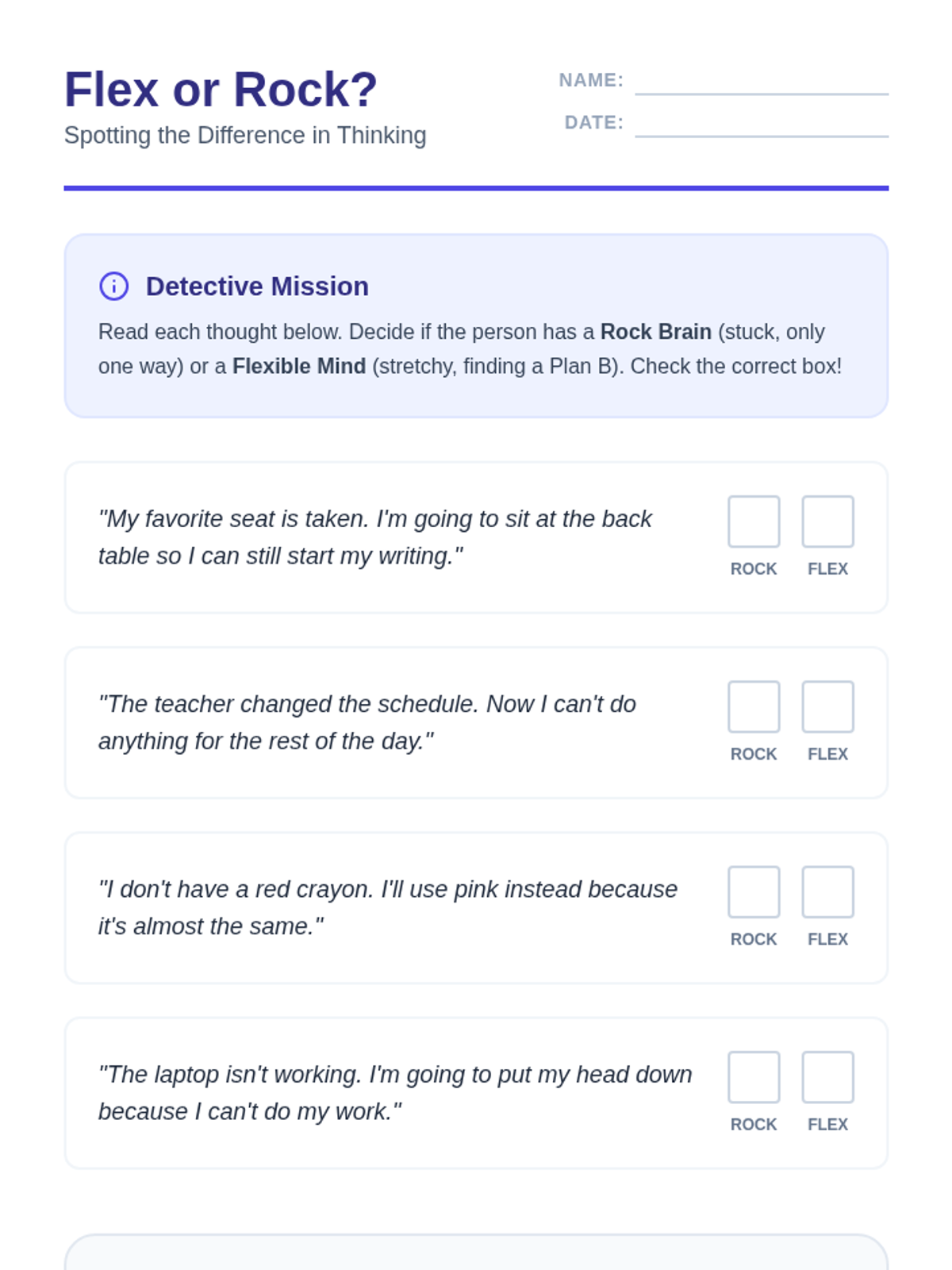
A 5-lesson sequence for 3rd-grade students focused on cognitive flexibility and independent problem-solving for classroom obstacles. Students move from understanding 'flexible thinking' to using a toolkit of strategies for material issues, forgotten instructions, and unexpected changes.
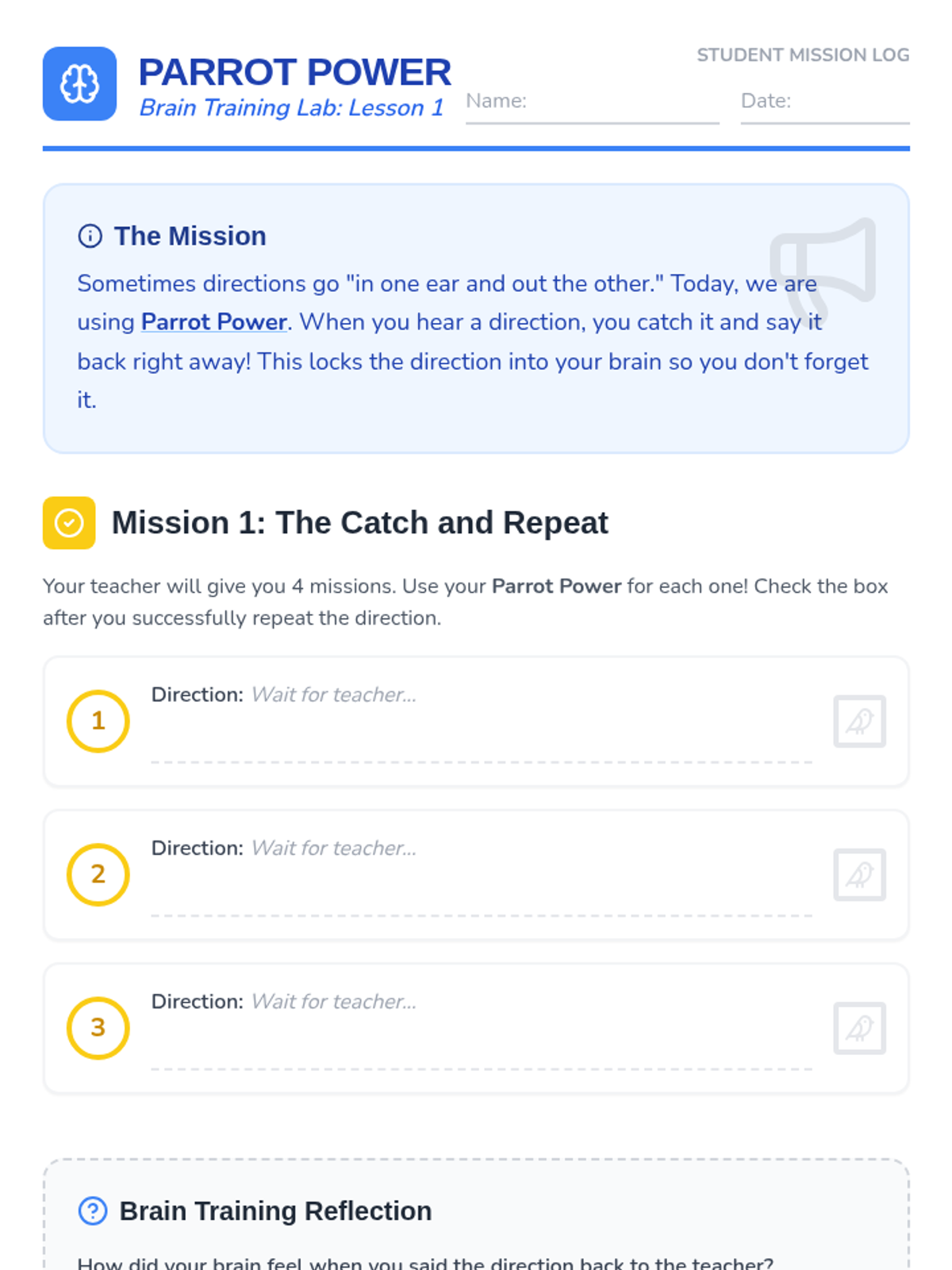
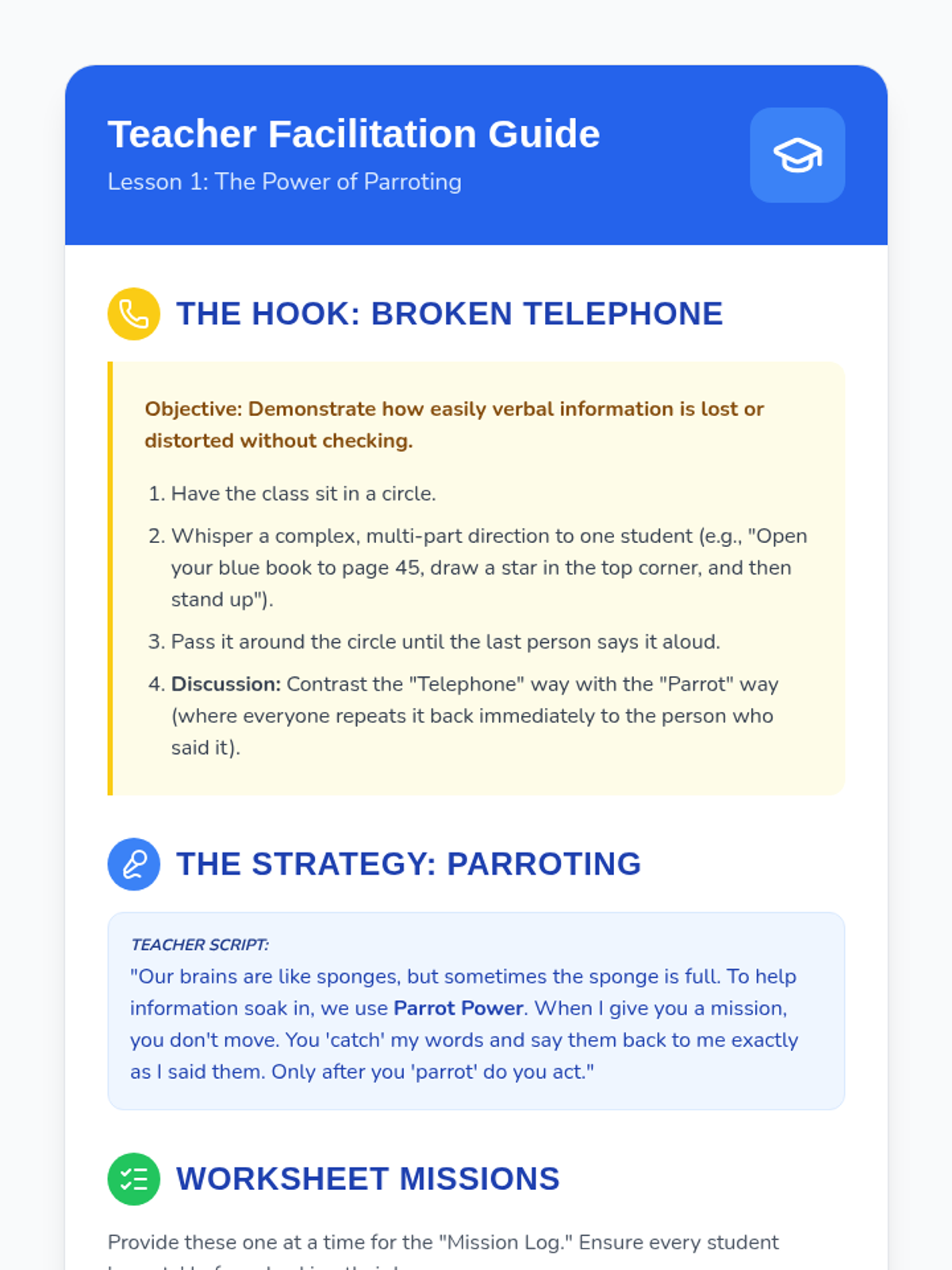
This sequence focuses on auditory processing and the cognitive strategy of verbal rehearsal (self-talk) to hold information in working memory. Students learn to 'catch' a verbal instruction, repeat it to themselves or a peer, and then execute it.
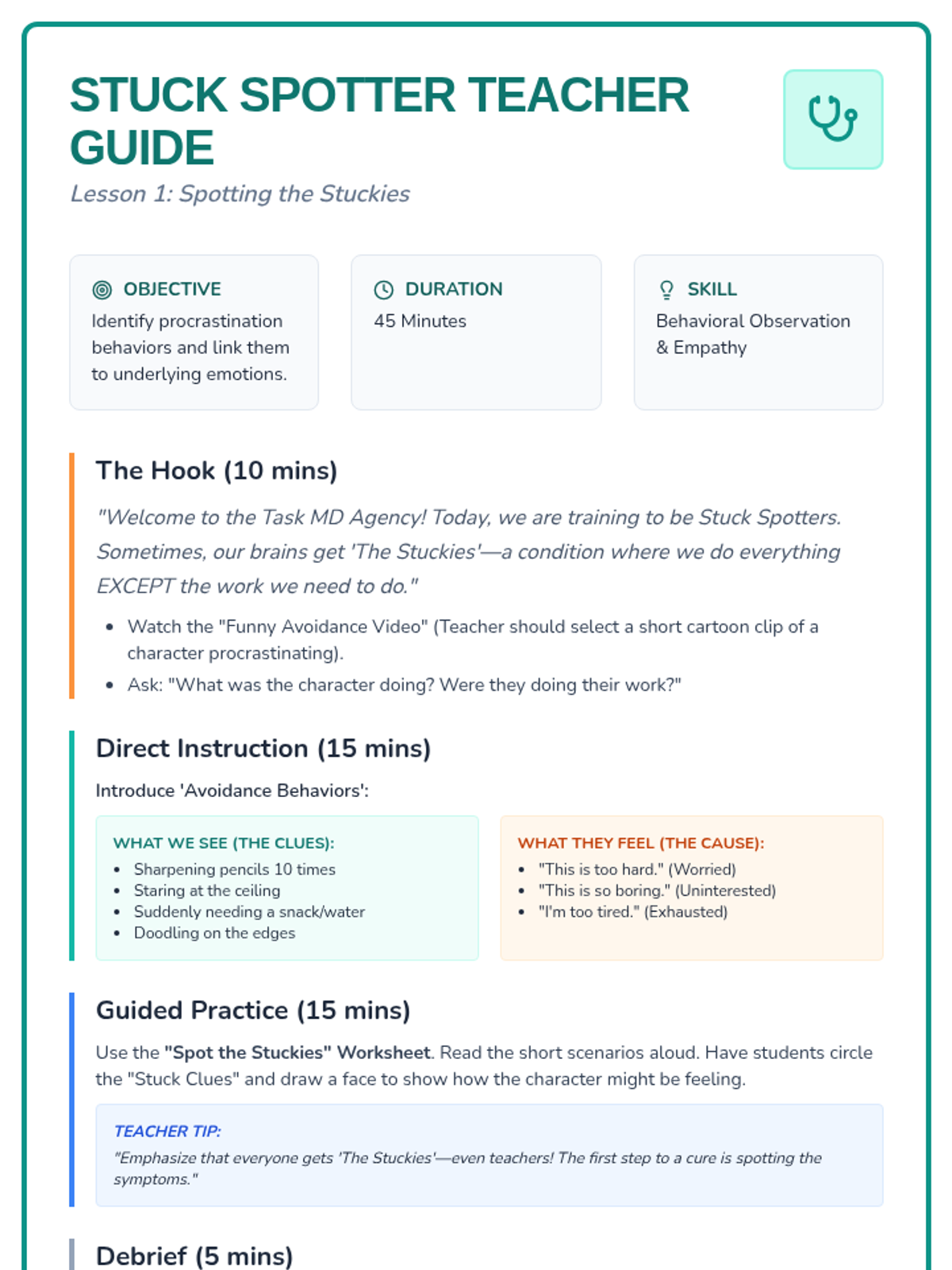
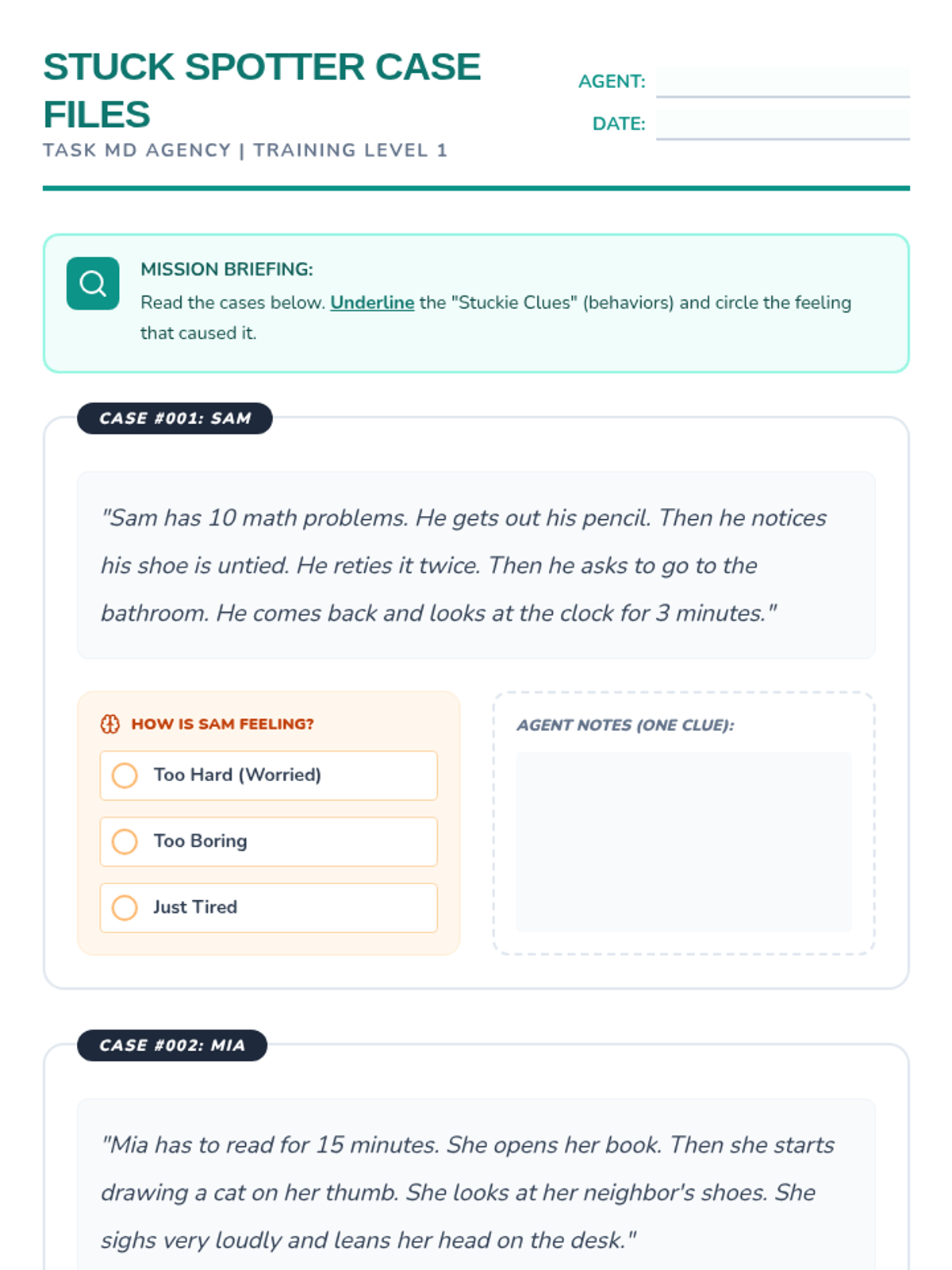
A sequence focused on helping students overcome emotional barriers to task initiation using a 'Task Doctor' theme. Students learn to identify avoidance behaviors, diagnose the root cause of being 'stuck', and prescribe effective self-talk solutions through role-play and reflection.
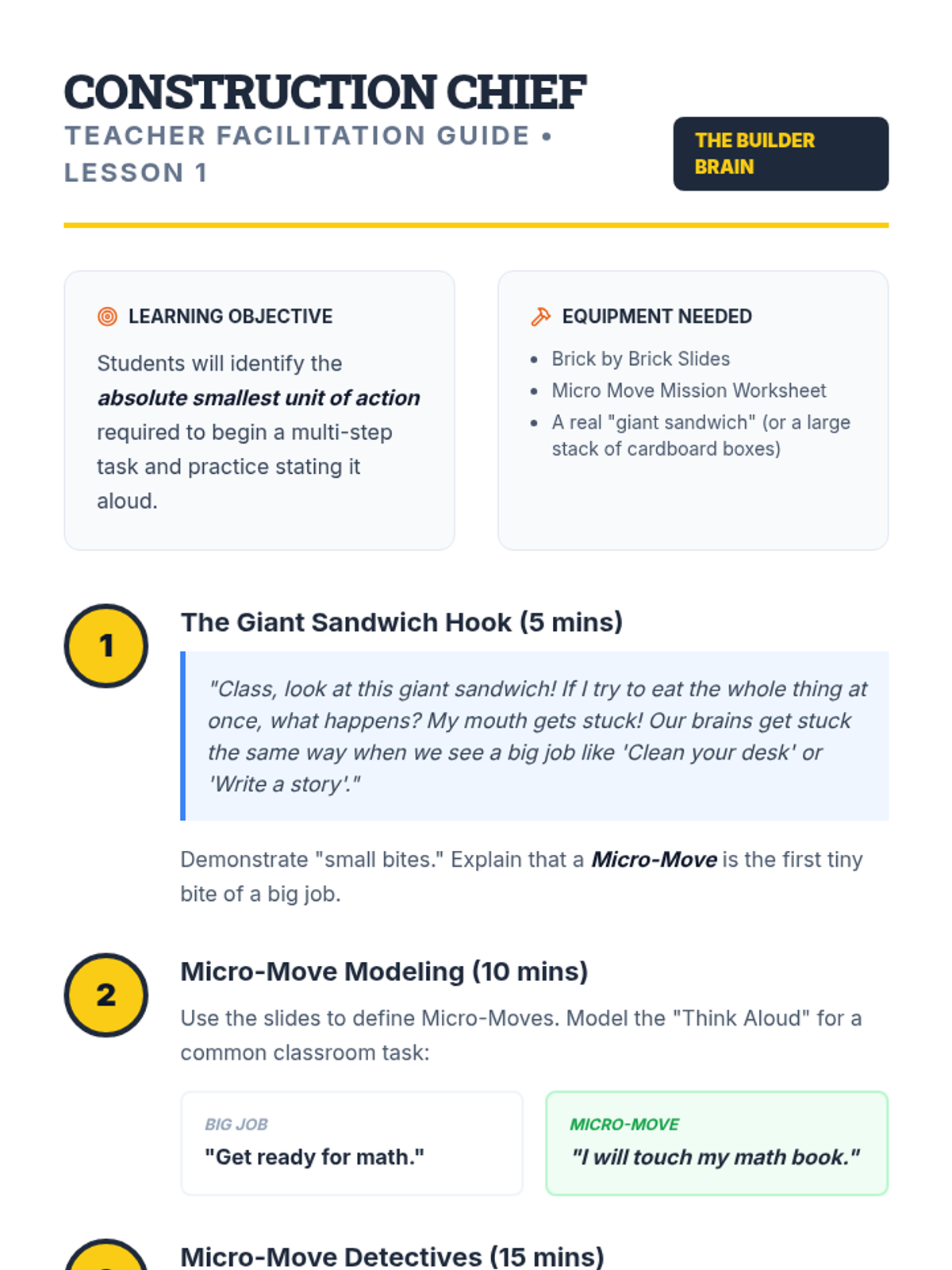
Students learn to use verbal prompts to break complex tasks down into manageable actions. The sequence moves from identifying the immediate first step to narrating a sequence of actions and troubleshooting challenges.
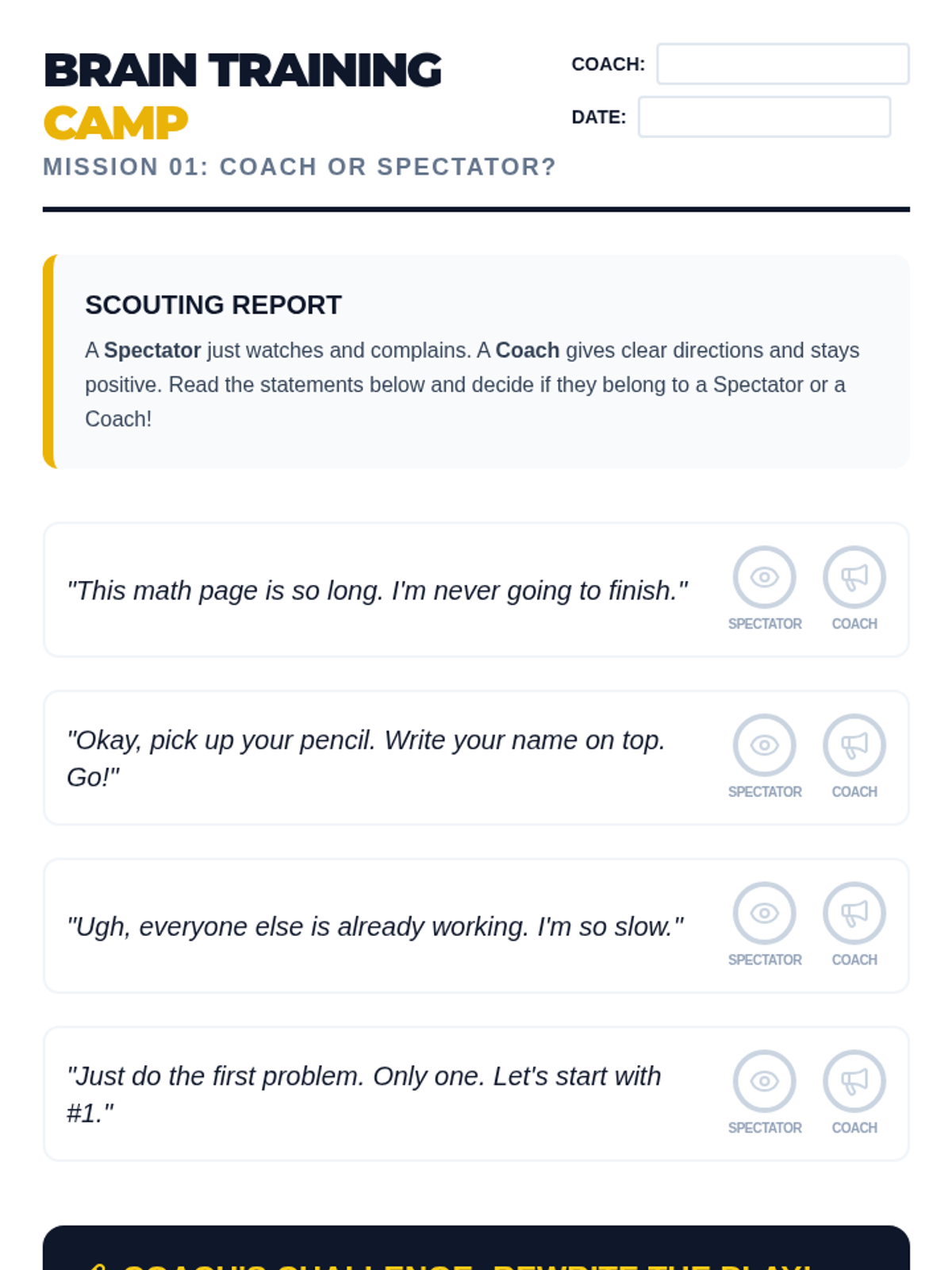
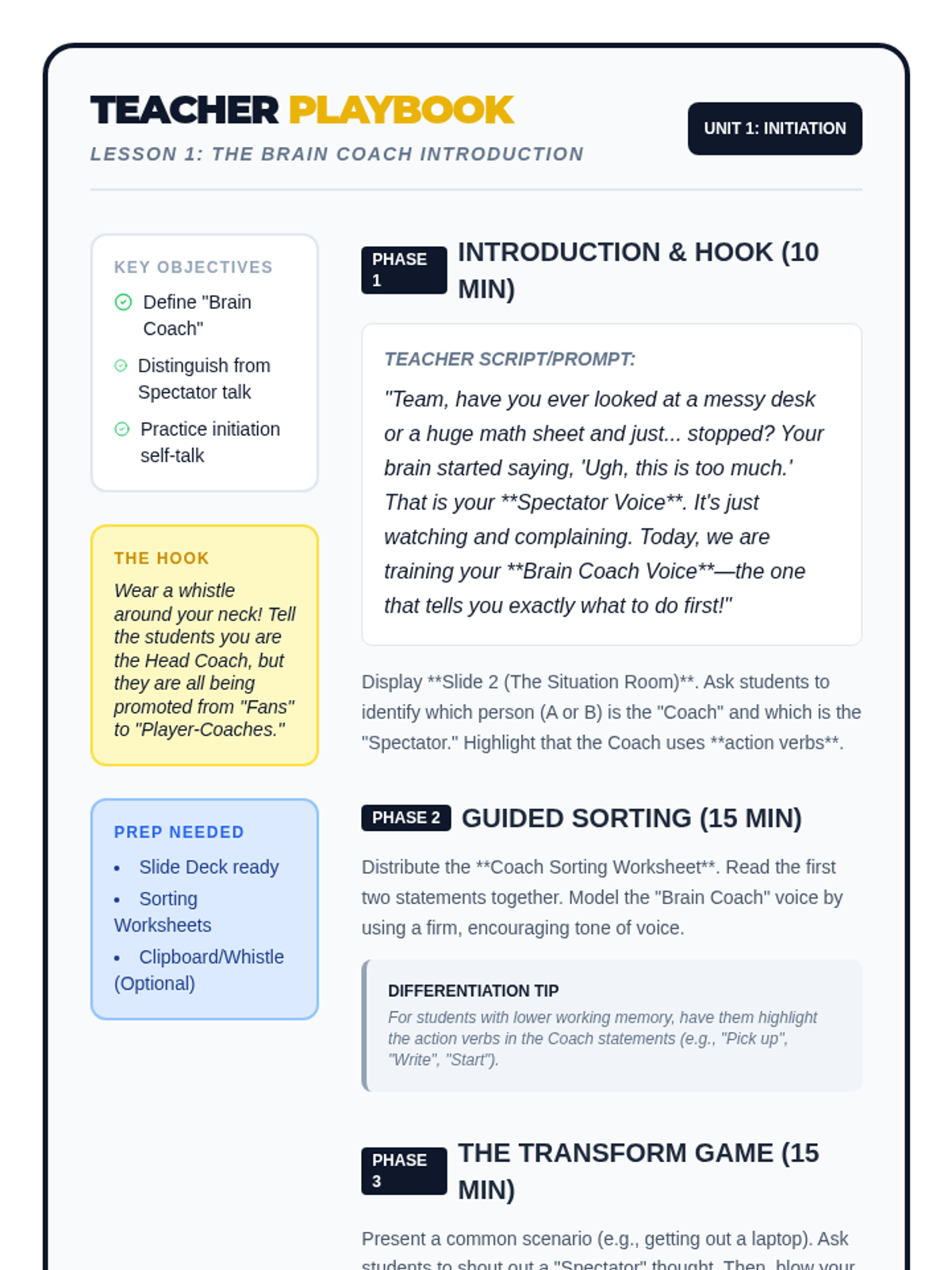
A sequence for 3rd graders to master self-talk strategies for task initiation. Students take on the role of 'Brain Coaches' to externalize executive function challenges and build a toolkit for overcoming procrastination through role-play, games, and simulations.
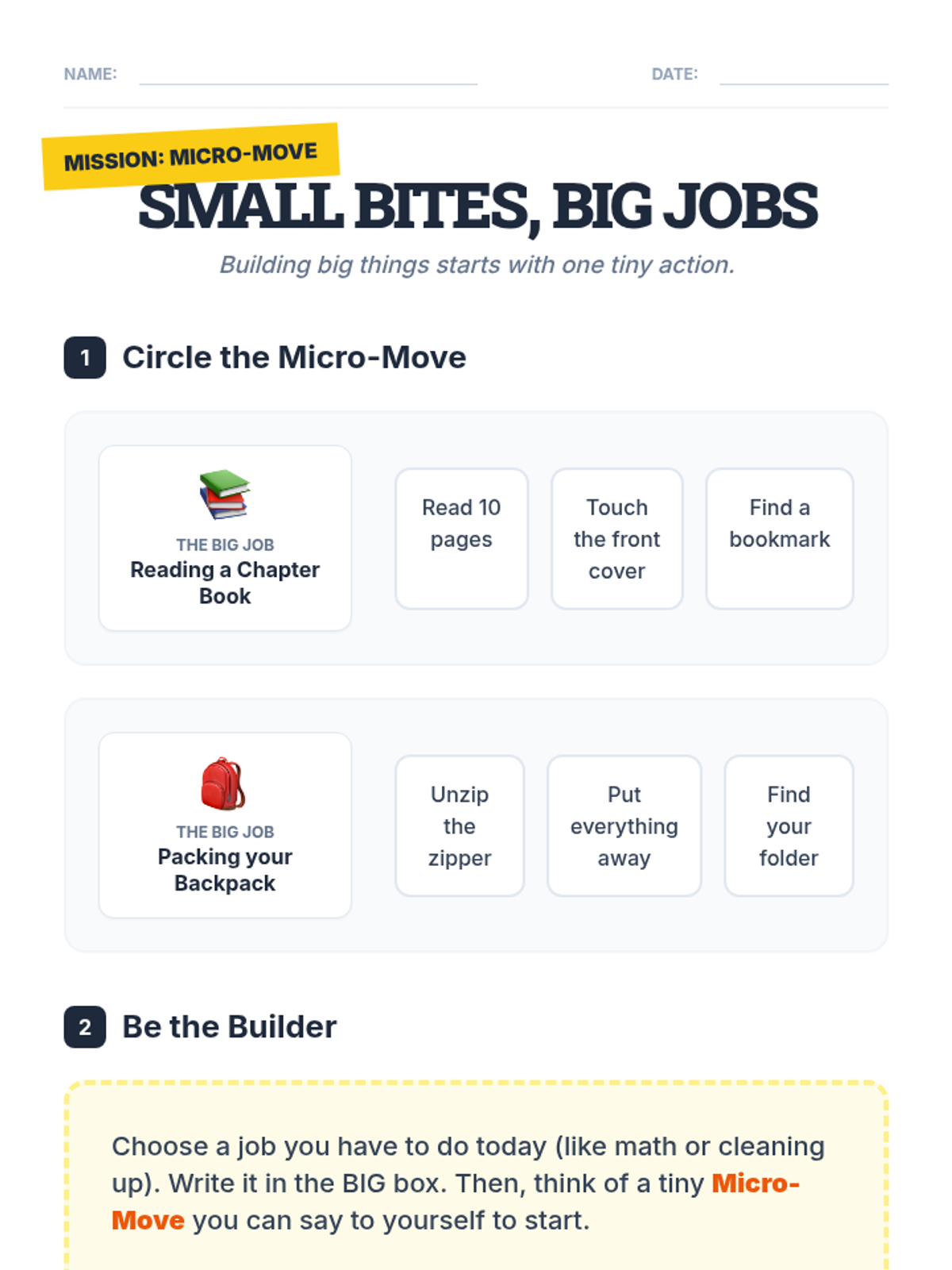
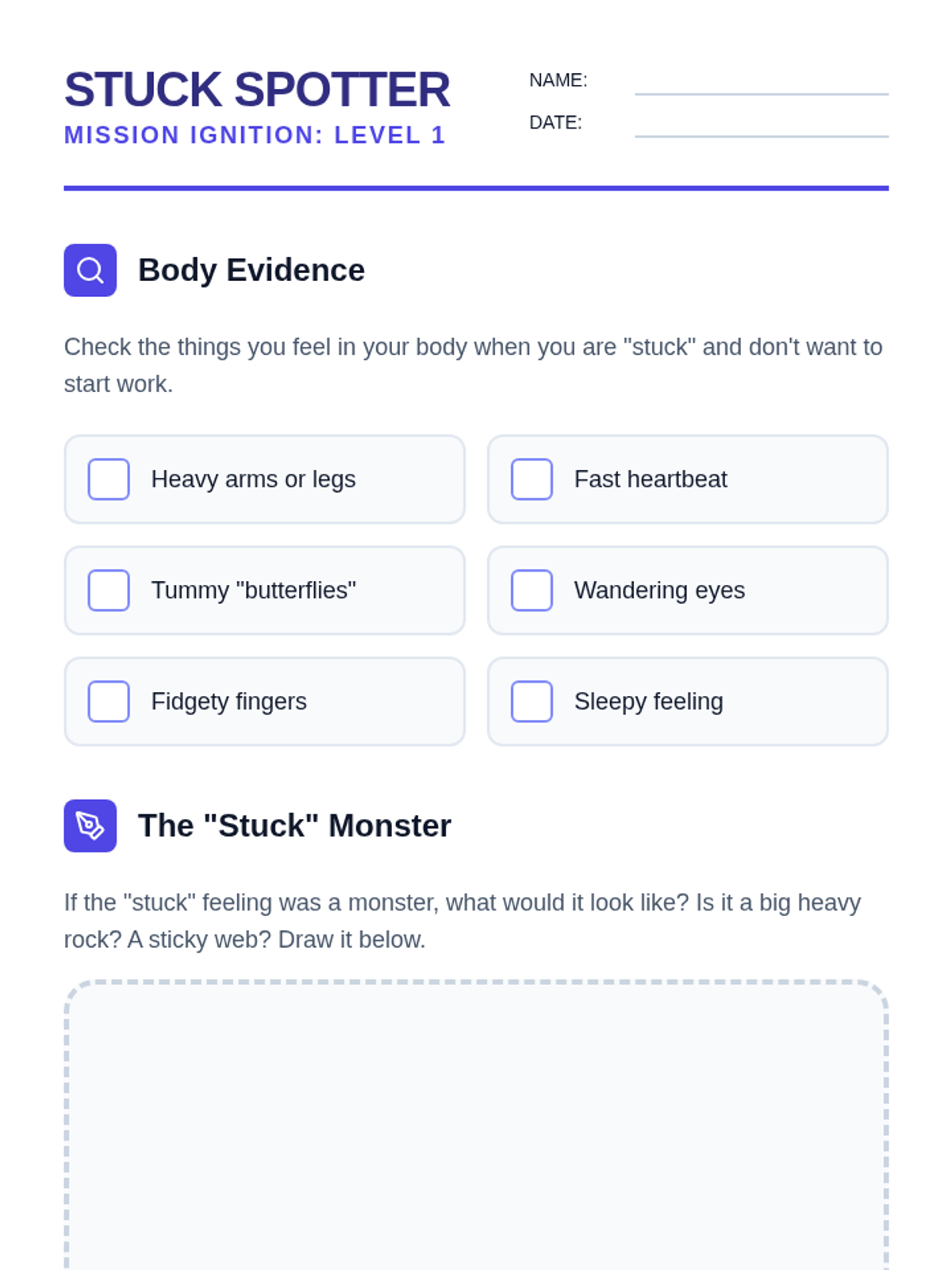
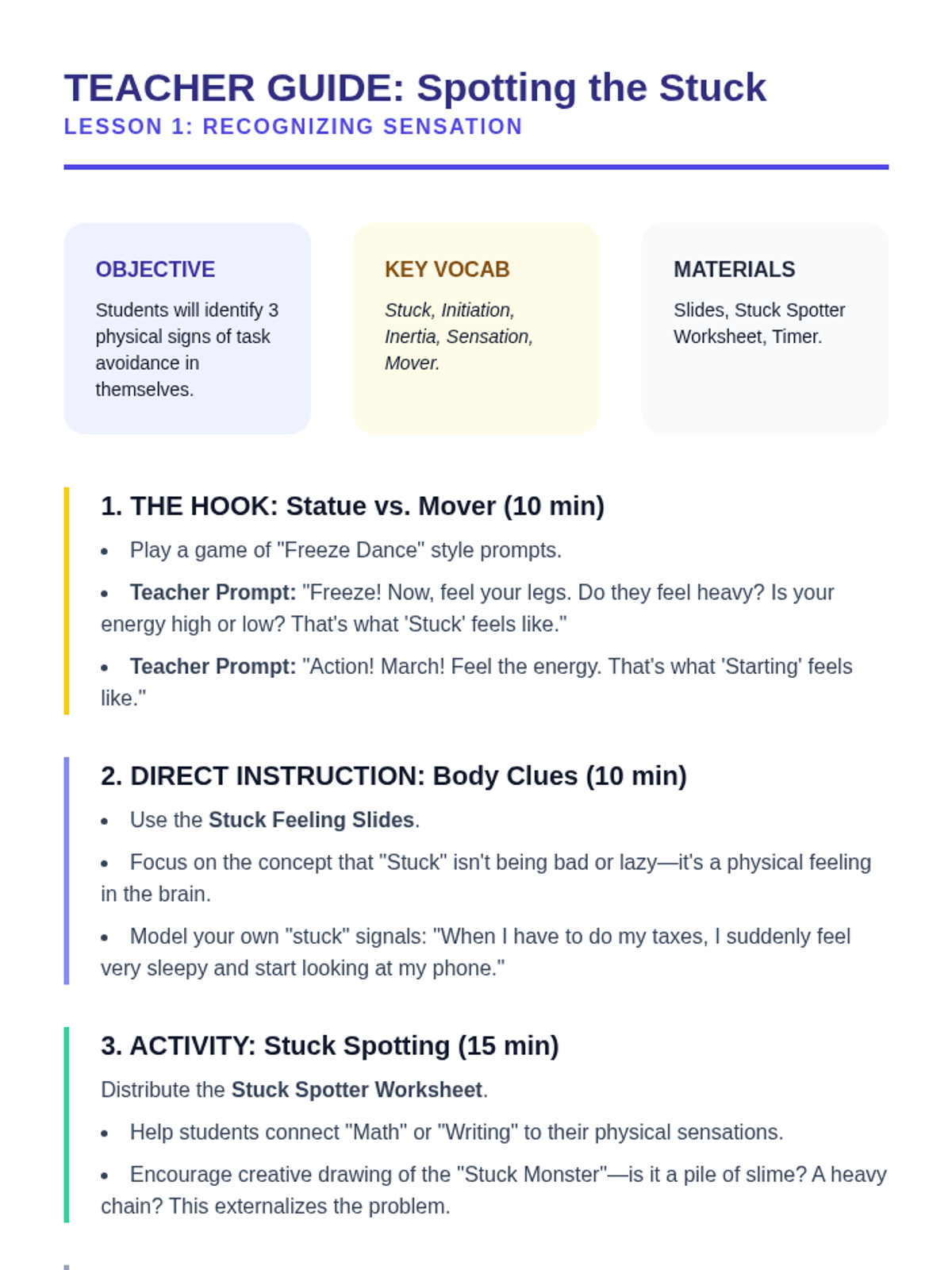
This sequence teaches 3rd-grade students how to use internal self-talk to overcome task initiation barriers. Students progress from recognizing the physical feeling of being 'stuck' to developing and using personalized 'Go Phrases' to start independent work.
A comprehensive sequence teaching 3rd-grade students to master their digital workspace using keyboard shortcuts. Students will learn to launch, switch, snap, and close applications to increase independence and productivity, particularly focused on assistive technology needs.
This sequence introduces 3rd-grade students to active recall and spaced repetition strategies for vocabulary. Through a 'Memory Lab' theme, students move from understanding the 'illusion of competence' to building a toolkit of retrieval practices like flashcards and the Cover-Copy-Compare method.
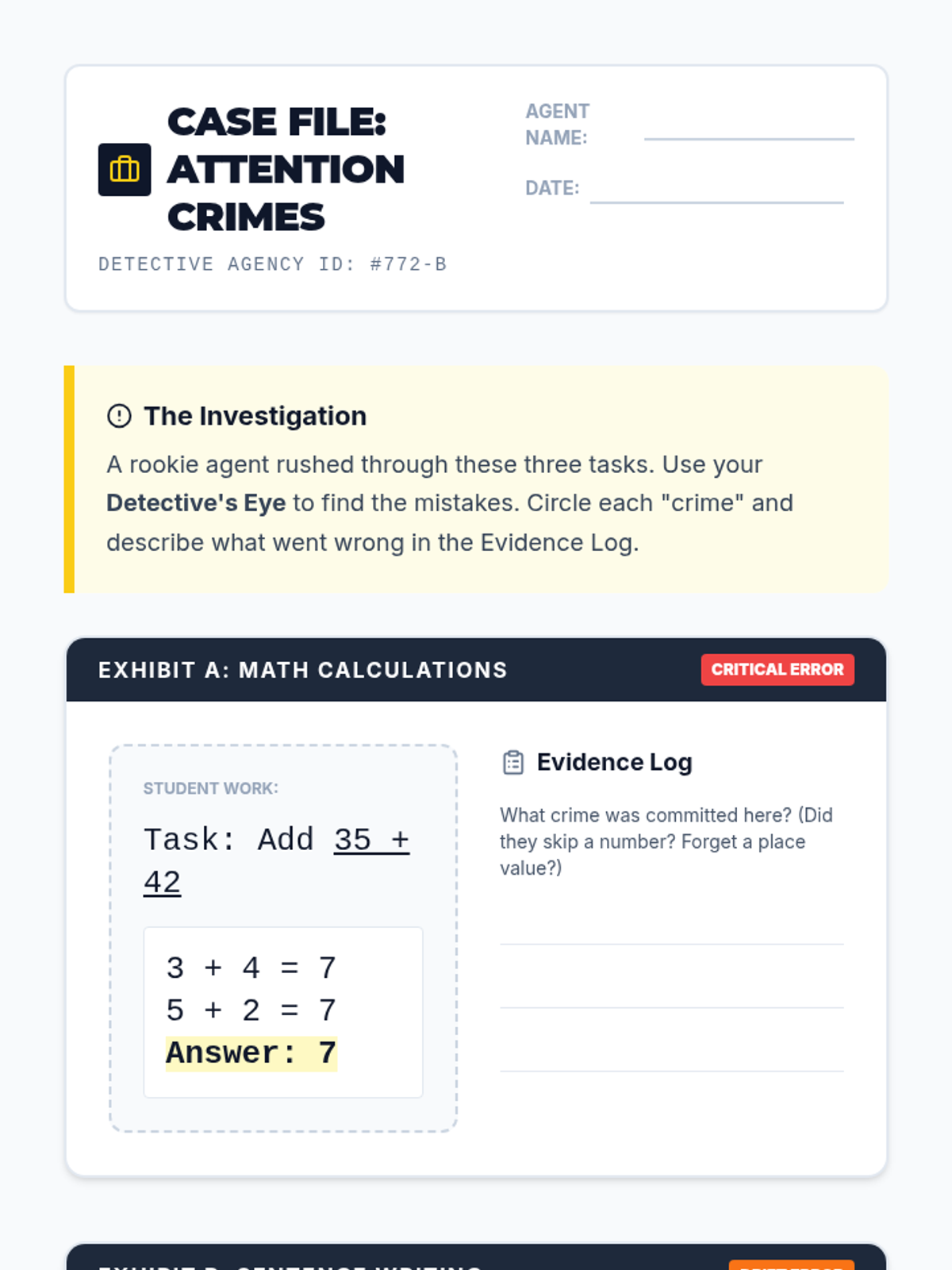
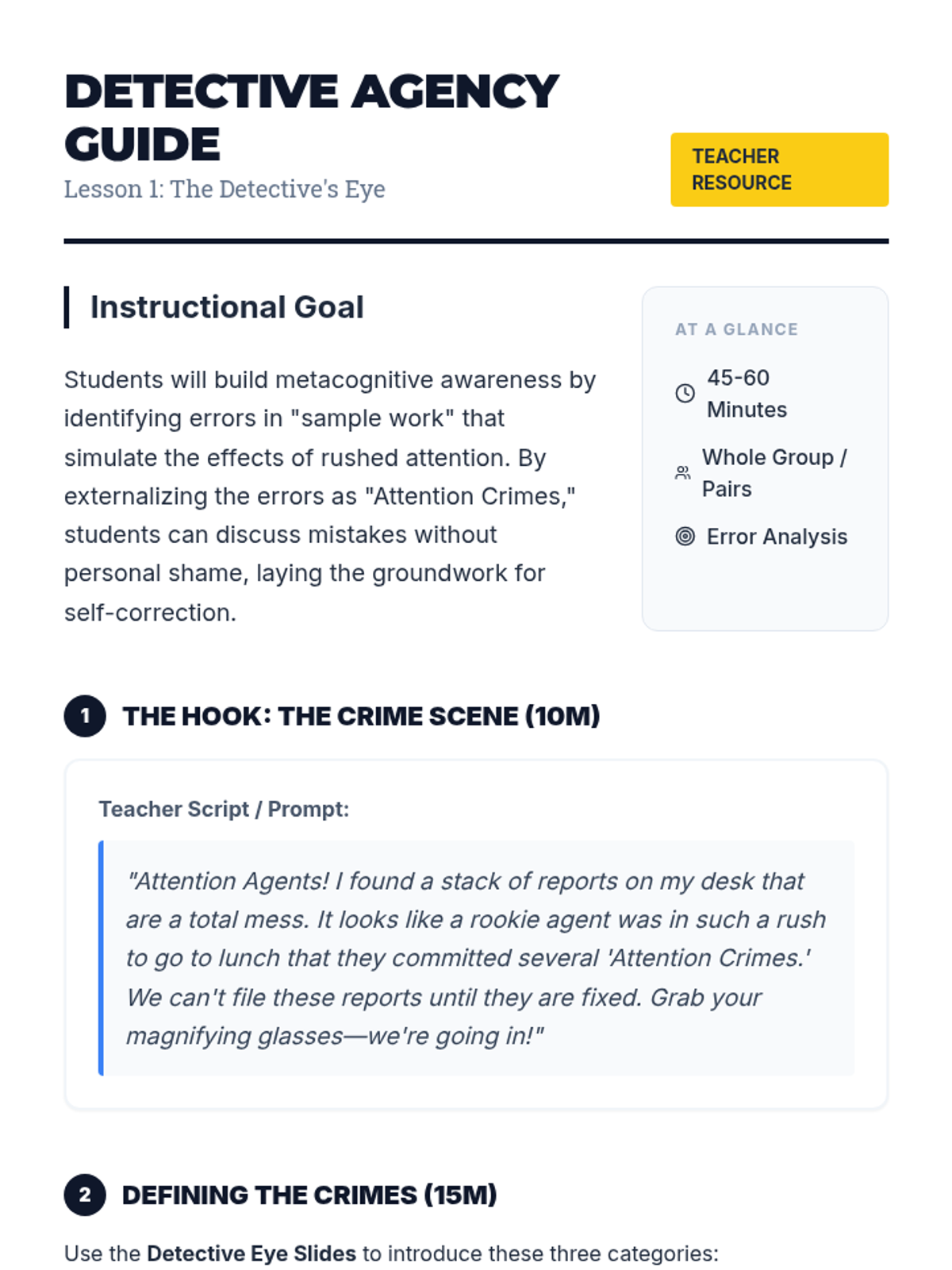
A 5-lesson unit for 3rd-grade students focused on metacognitive monitoring and self-correction. Using a detective theme, students learn to identify errors, use pacing strategies like 'Stop-and-Check', and monitor their own attention during complex tasks.
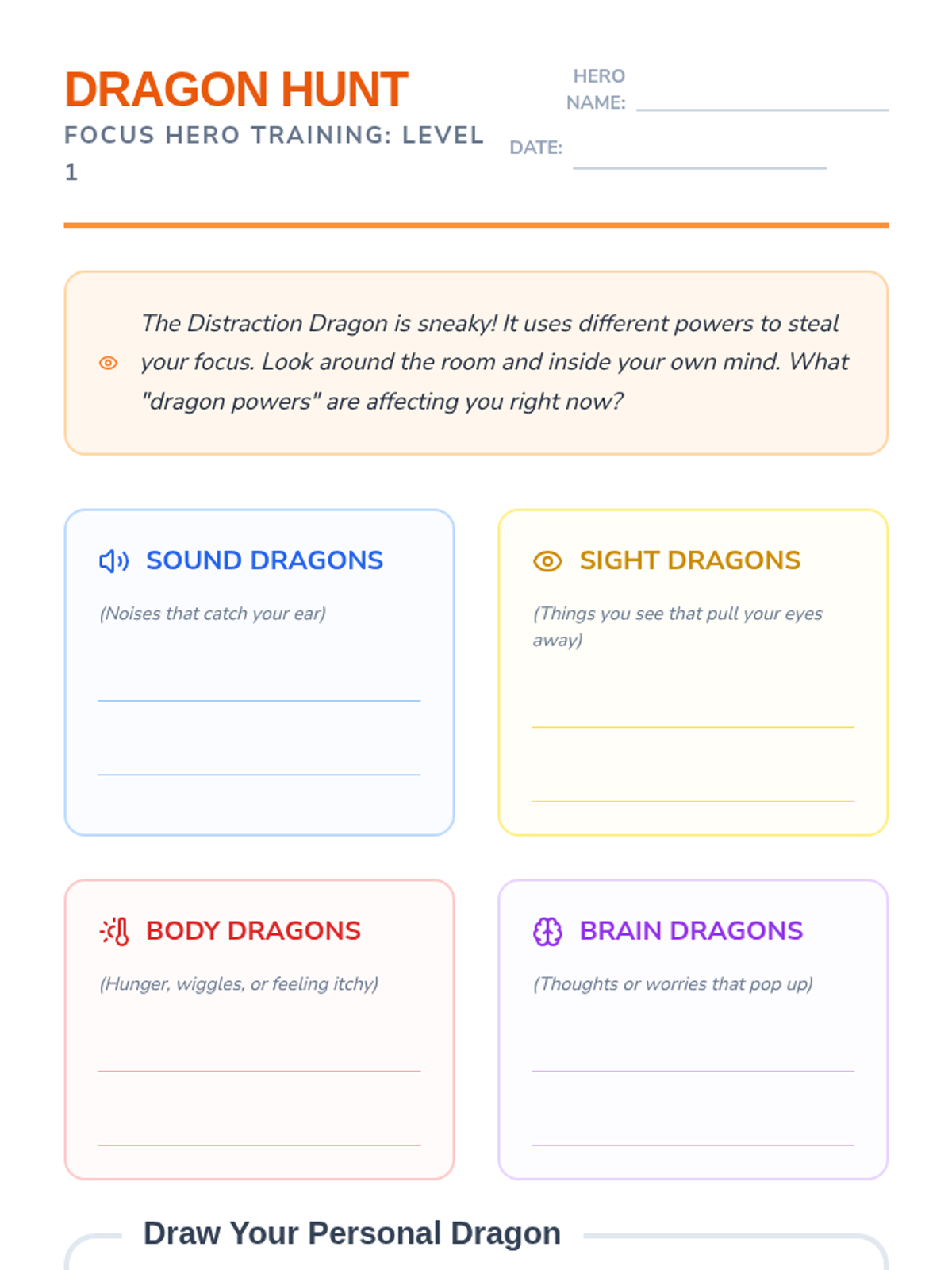
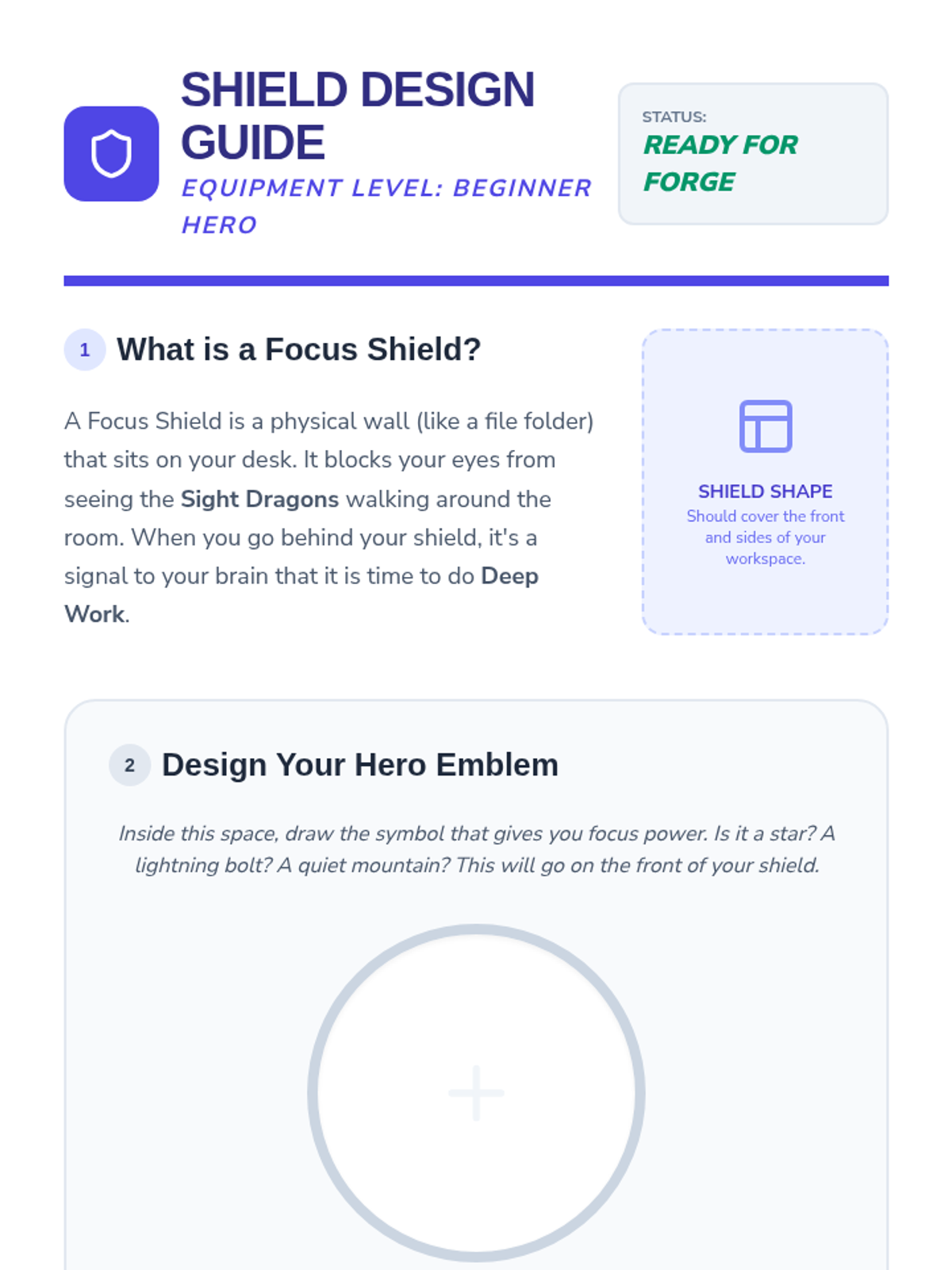
A gamified sequence designed for 3rd-grade students to build sustained attention and working memory stamina. Students learn to identify distractions, manage their environment, use timers, and utilize strategic brain breaks to complete complex tasks.
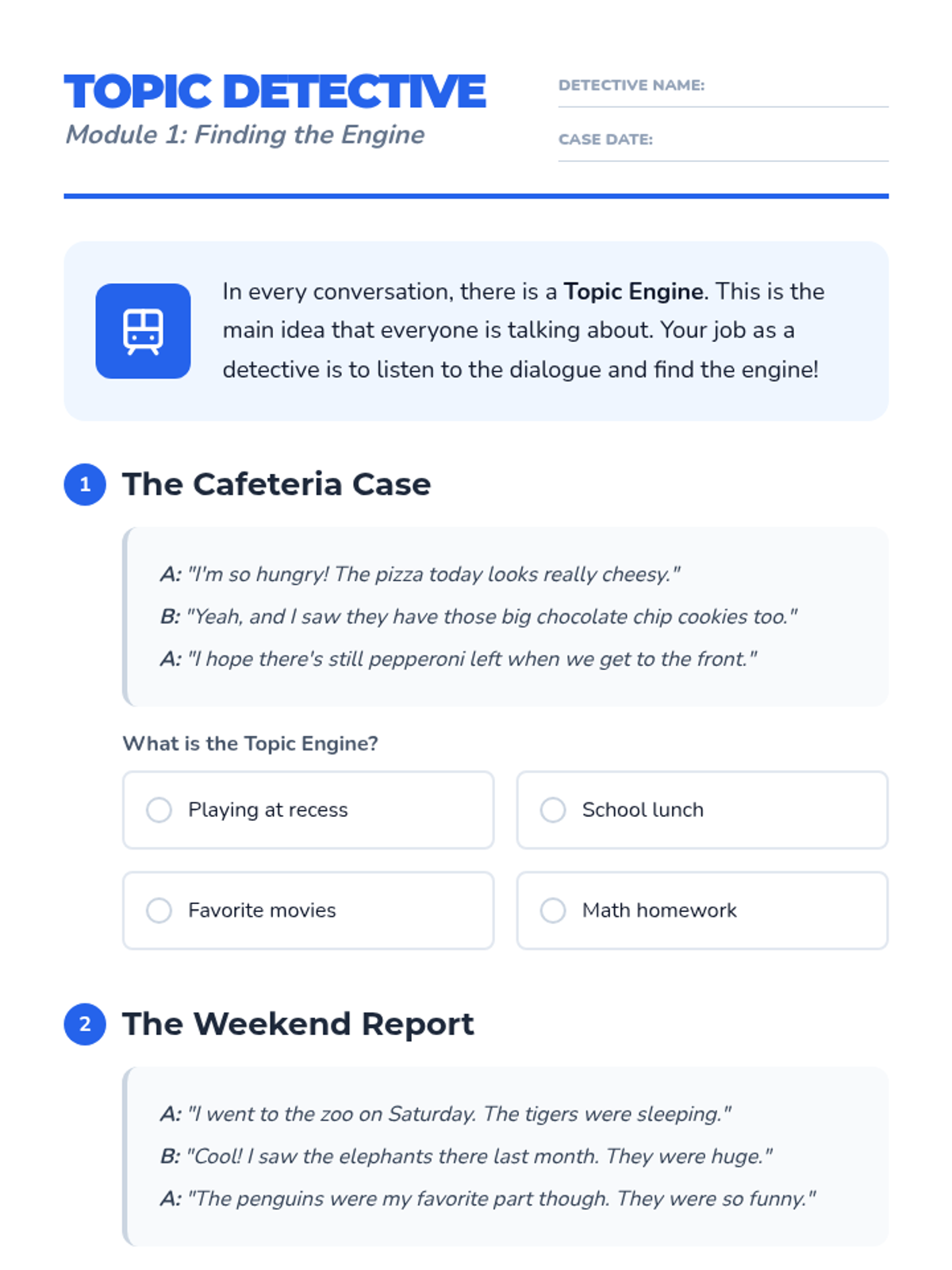
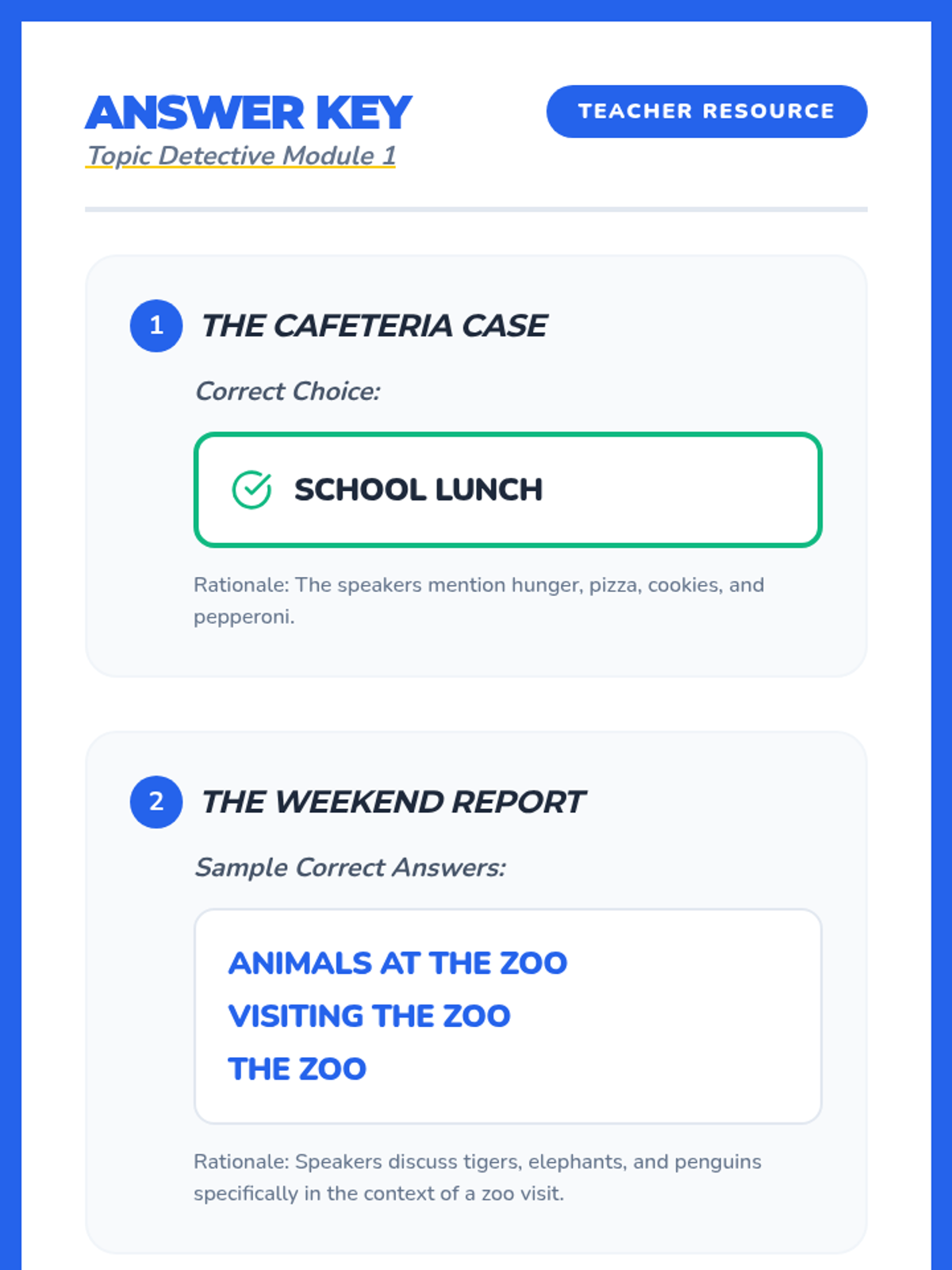
A game-based sequence focused on topic maintenance, using the 'Conversation Train' metaphor to help students visualize linear coherence, filter relevance, and utilize smooth transitions in discussion.
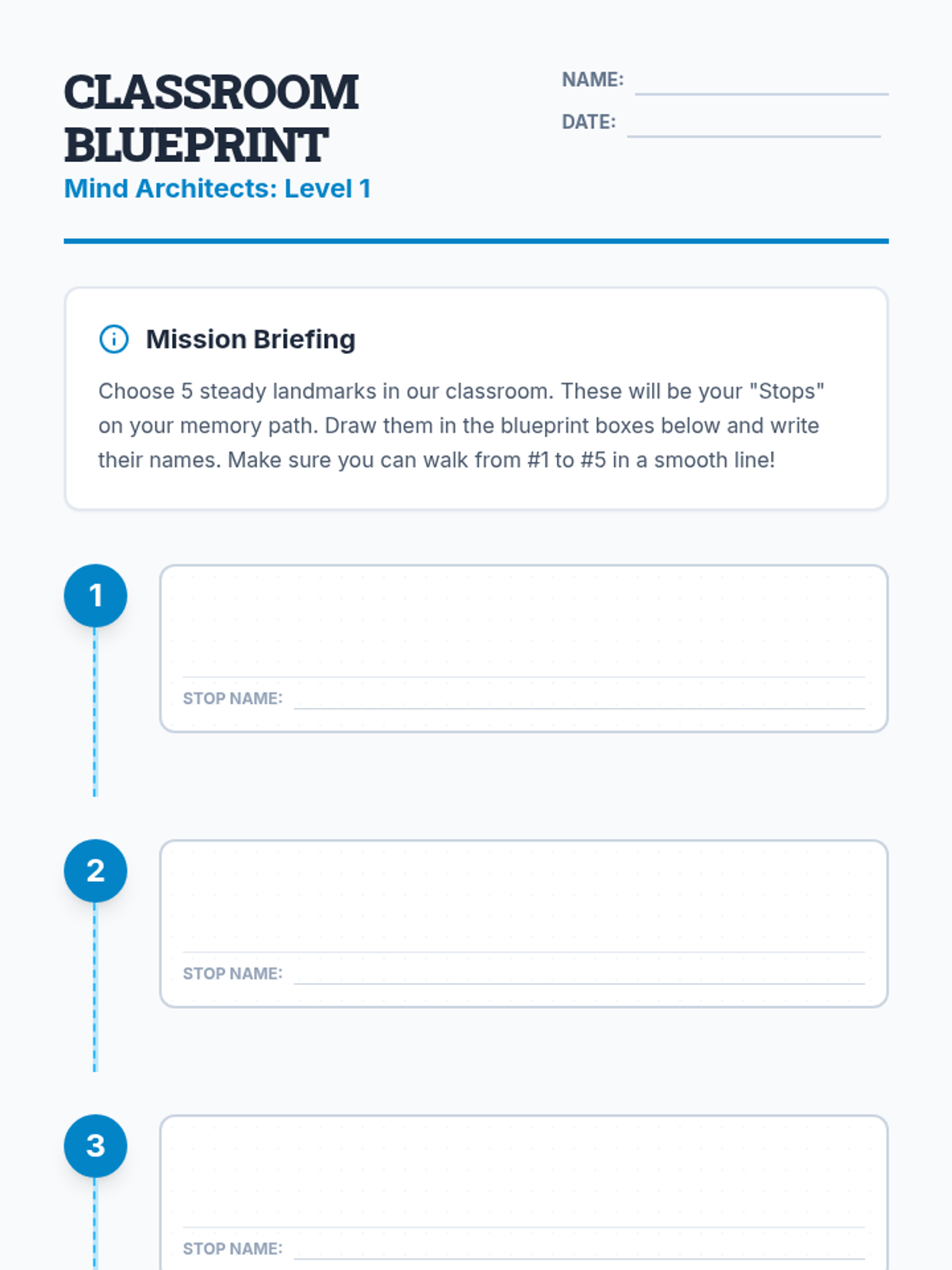
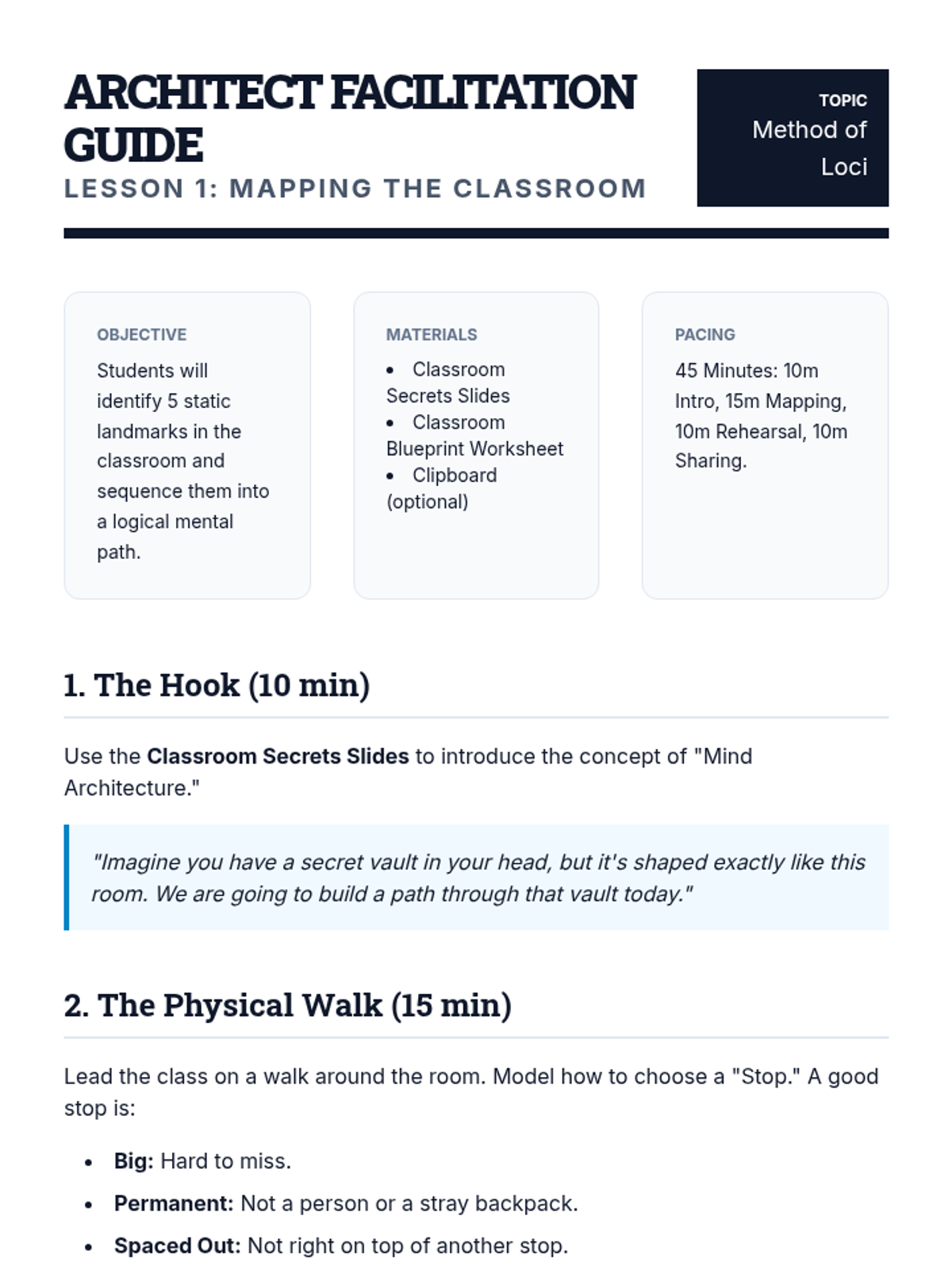
A comprehensive 3rd-grade sequence introducing the Method of Loci (Memory Palace) to support working memory. Students learn to map physical locations, associate objects with landmarks, and use their own bodies as portable memory tools to store and retrieve information through spatial visualization.
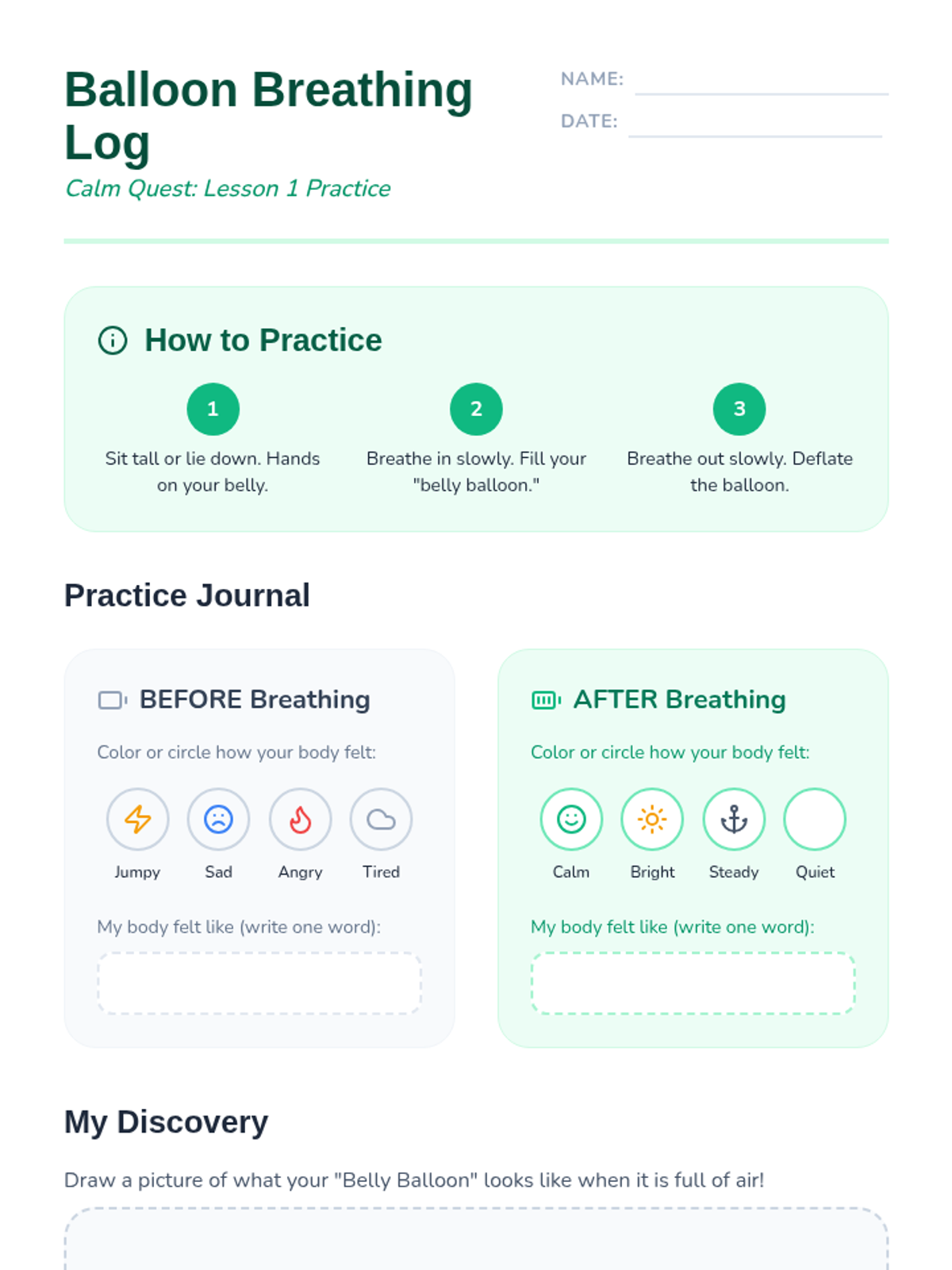
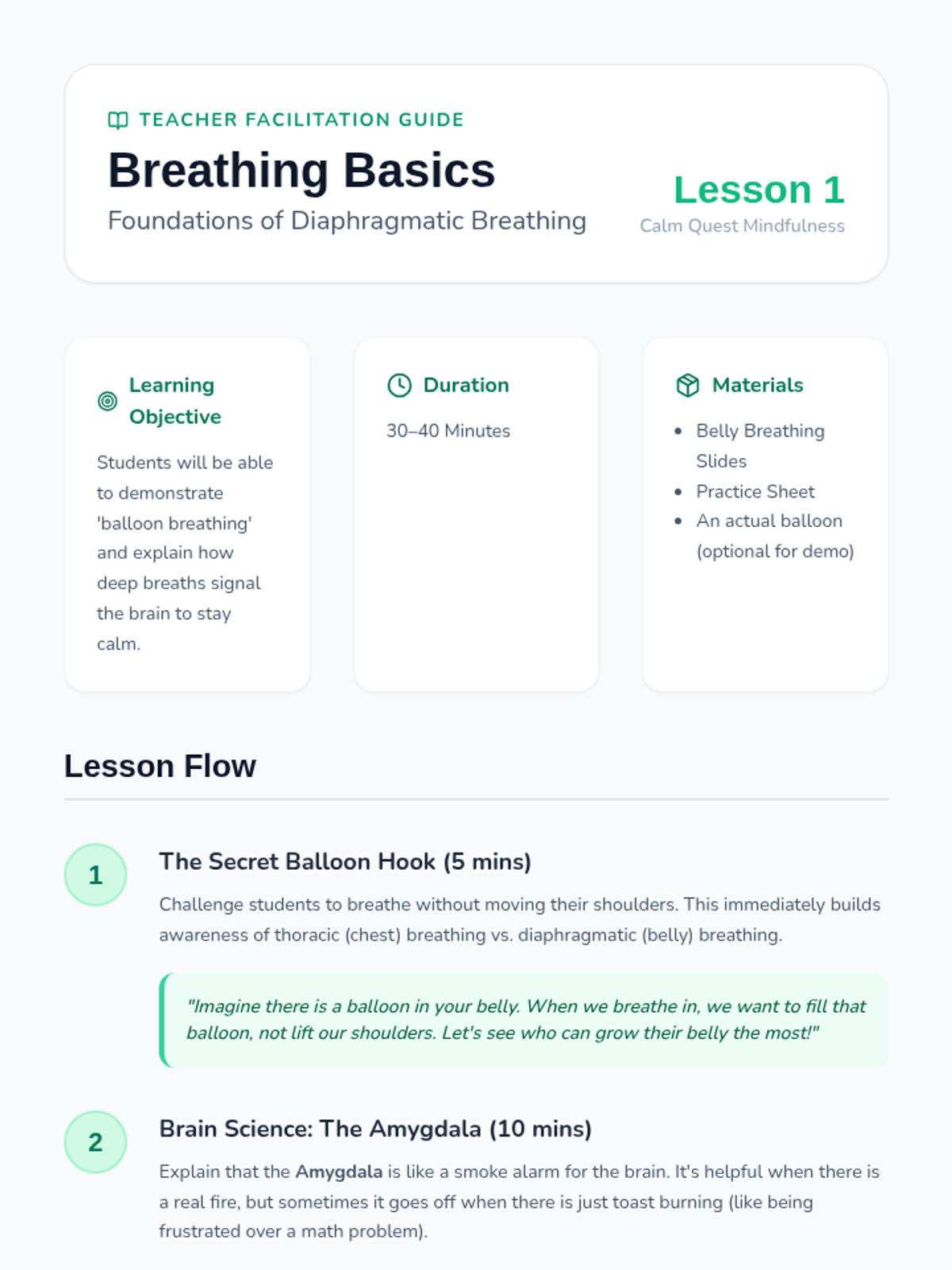
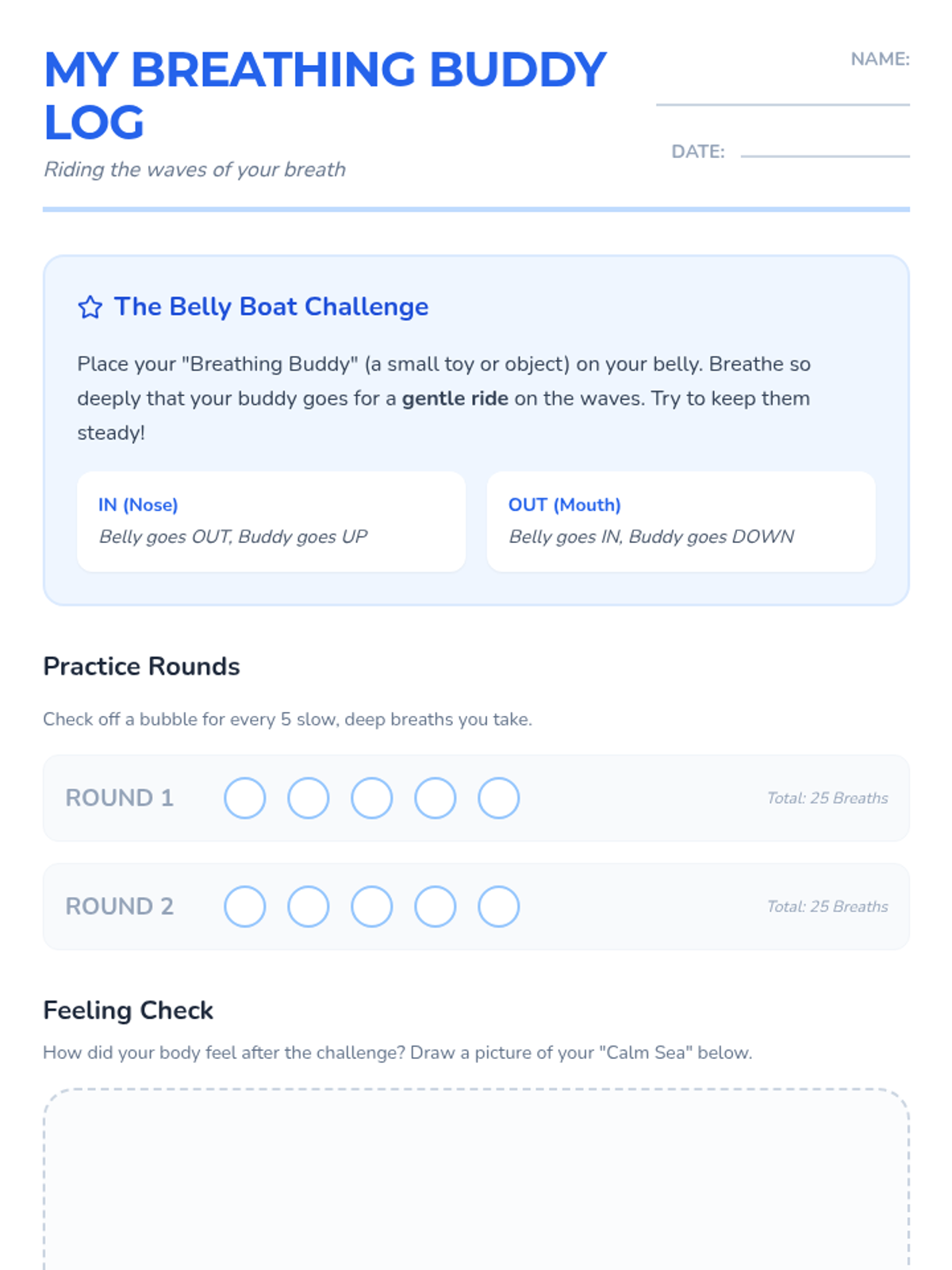
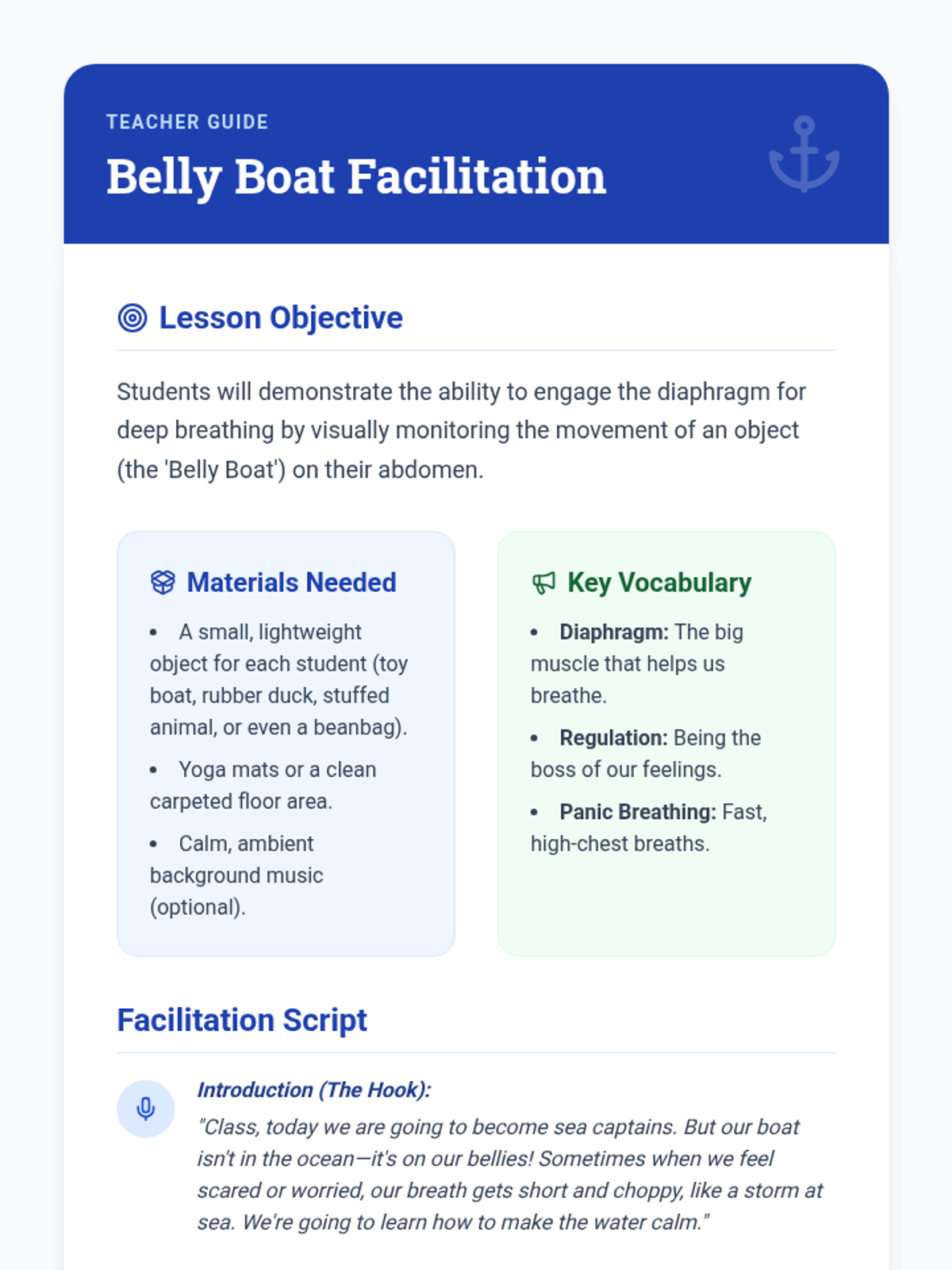
A 5-lesson sequence for 3rd grade students on physical regulation and breathing techniques to manage acute distress. Students learn belly breathing, rhythmic patterns, muscle relaxation, and postural grounding to create a personal toolkit for emotional stability.
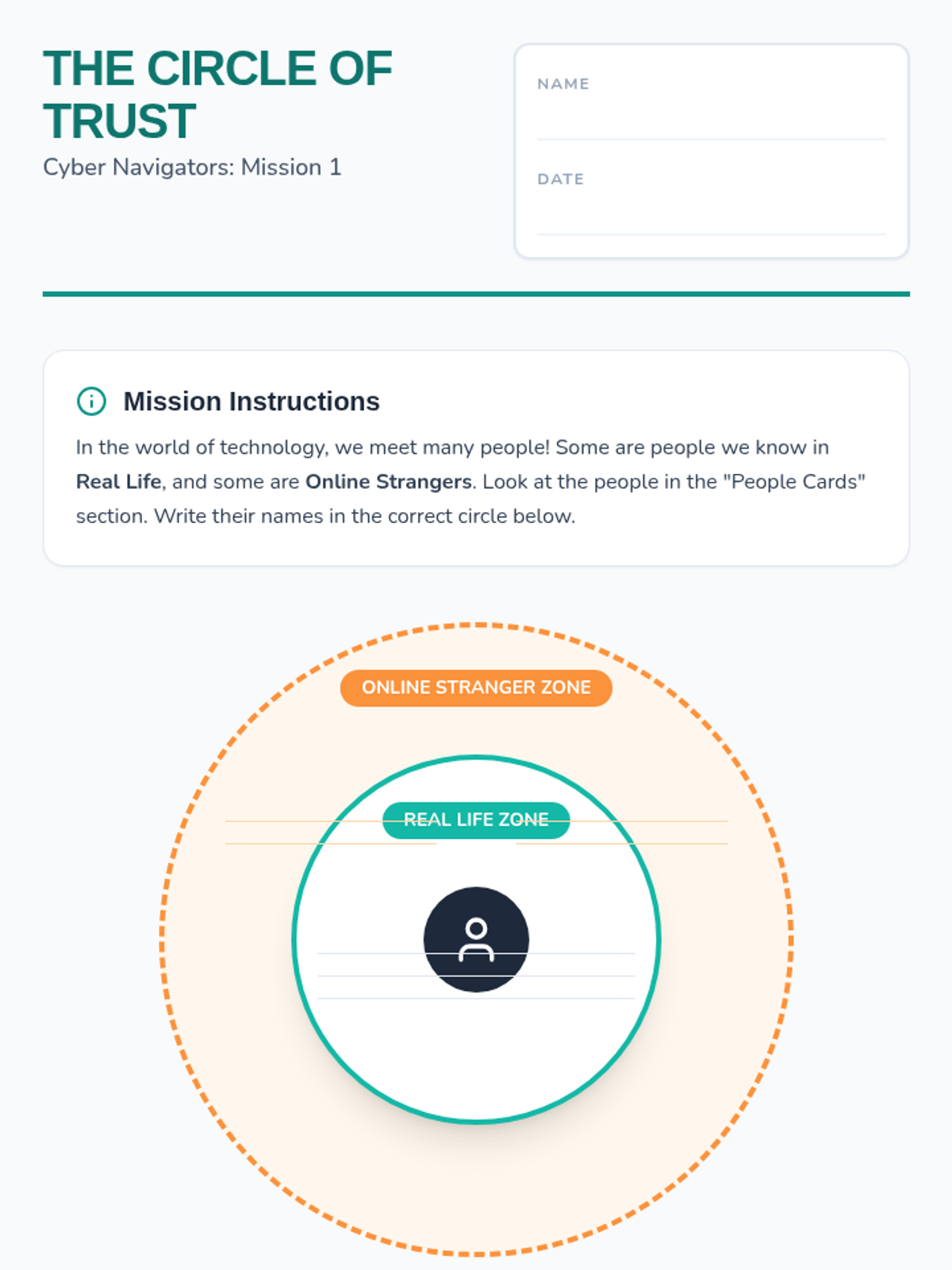
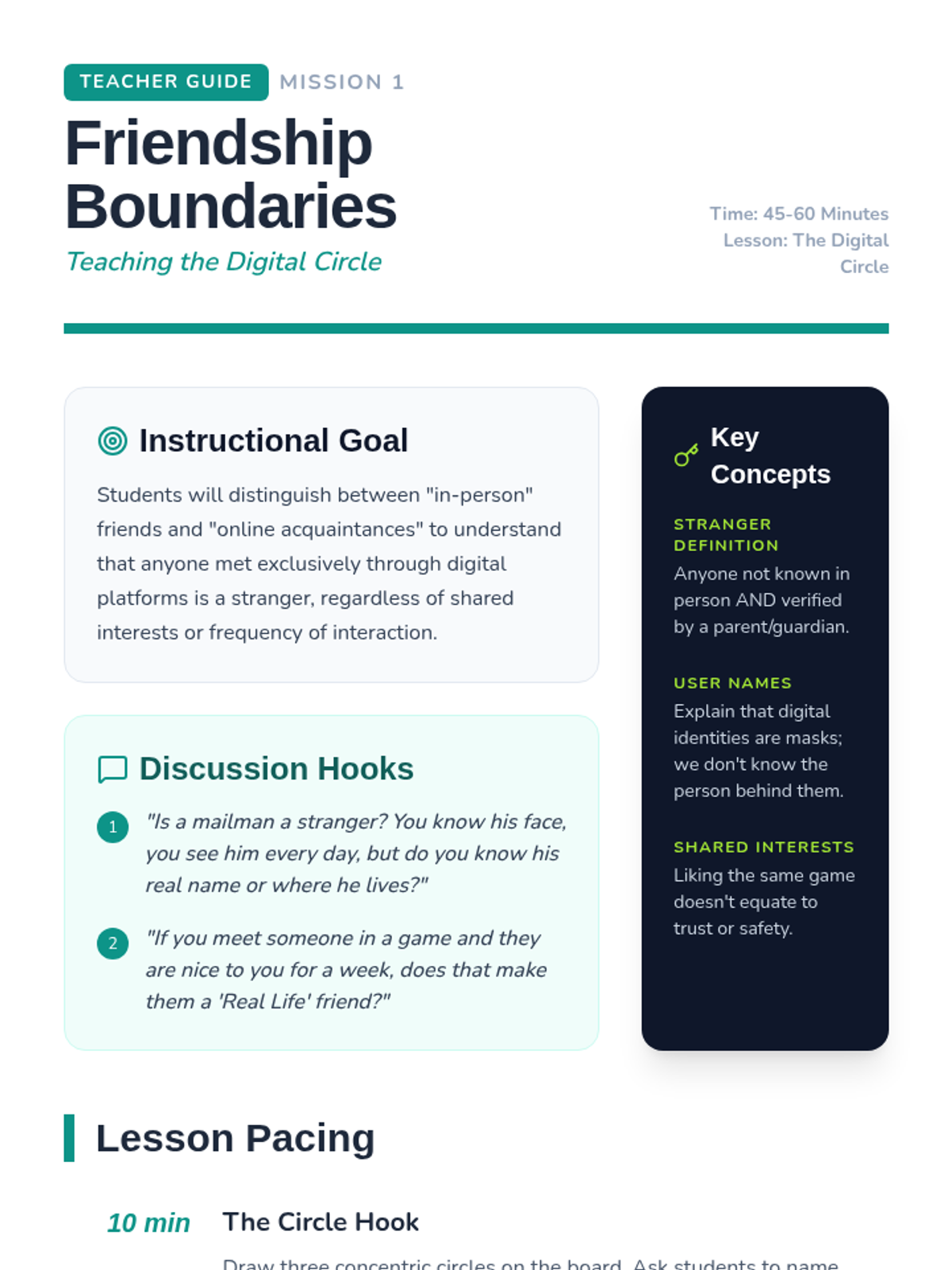
A comprehensive 3rd-grade sequence focused on internet safety, helping students distinguish between online and offline relationships, identify warning signs in digital communication, and develop a personal safety code for gaming and social media.
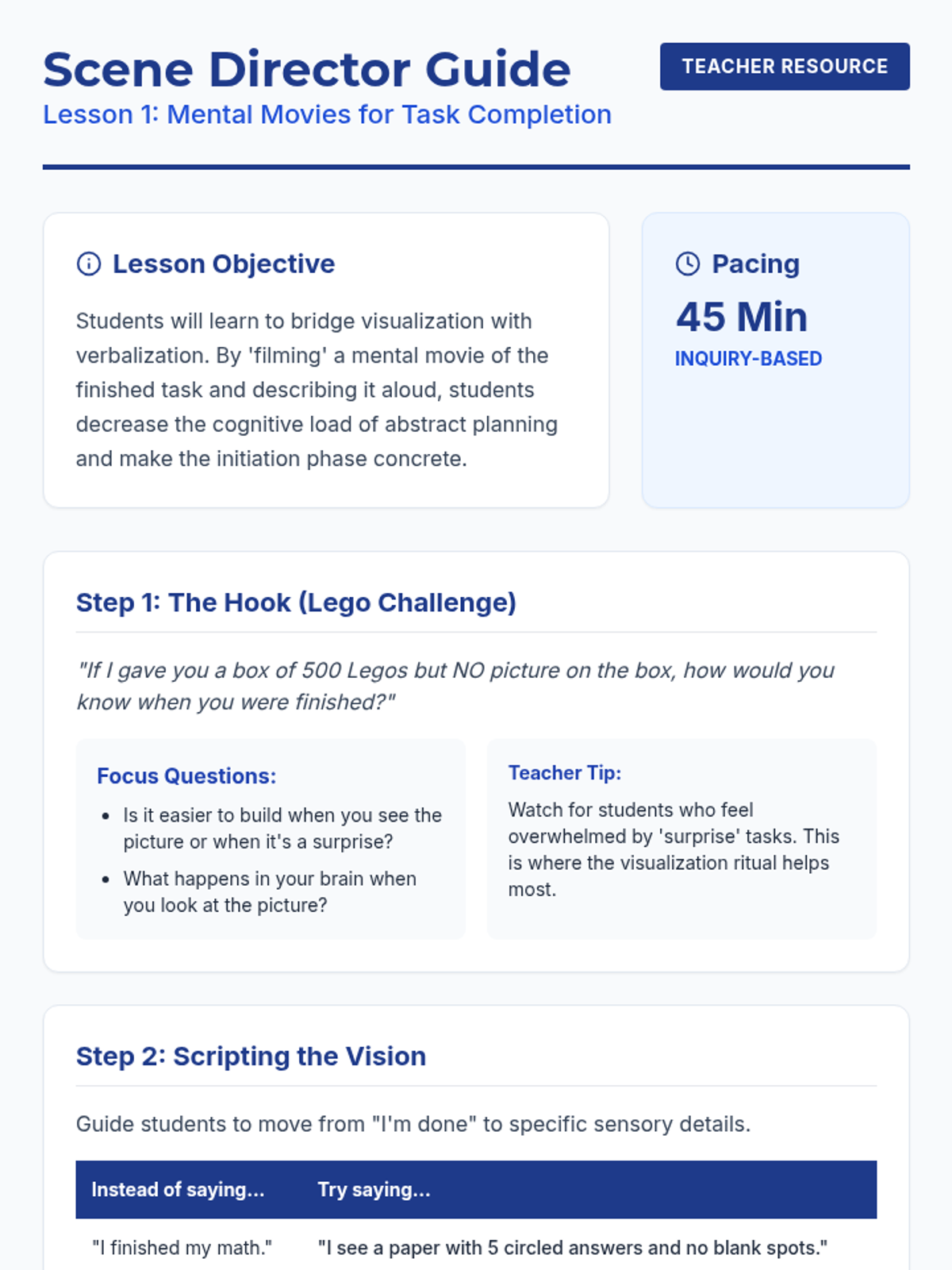
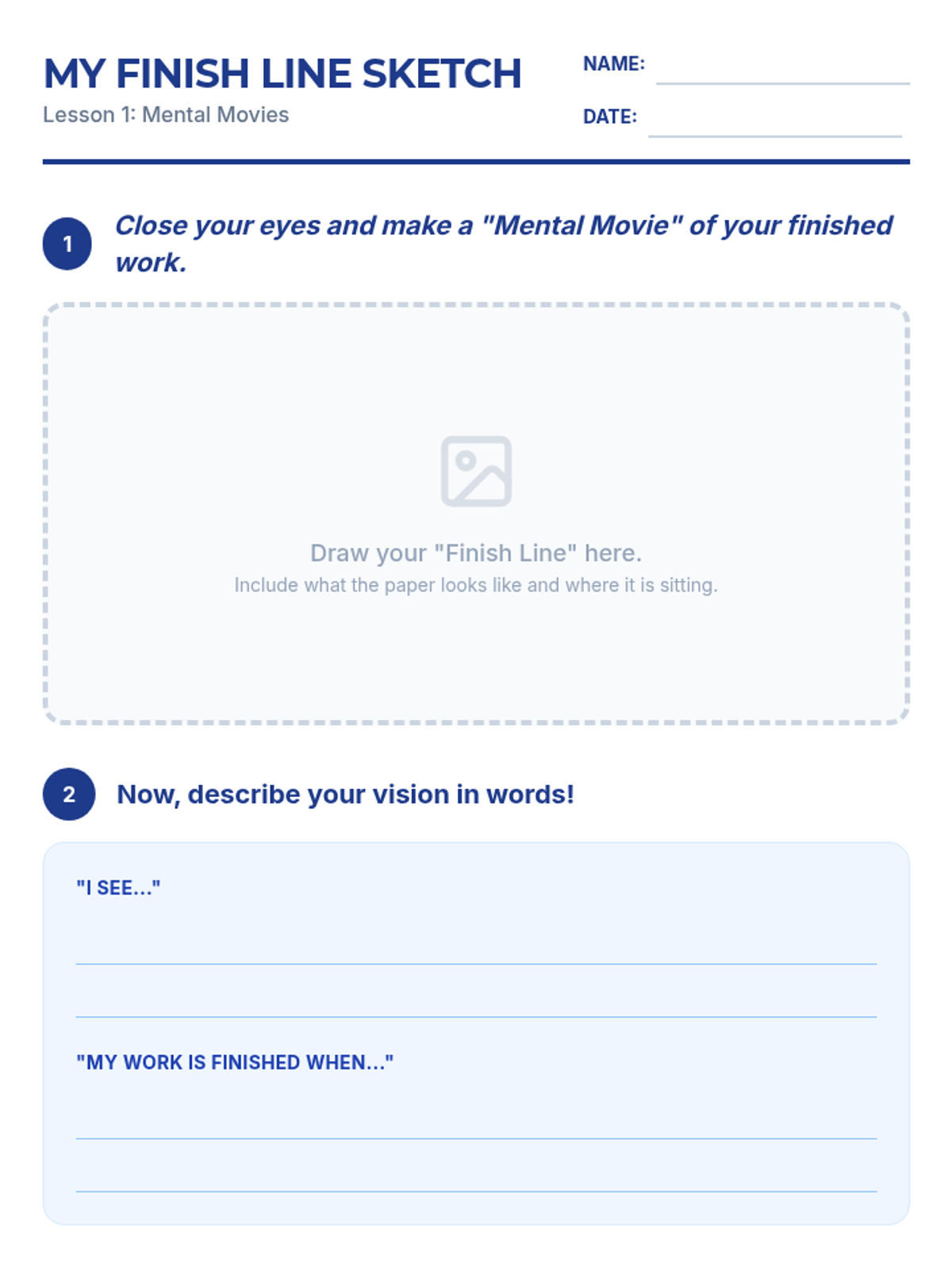
This sequence helps students overcome task initiation hurdles by combining visualization and verbal self-talk. Students learn to 'see' the finished product, reverse engineer the steps, estimate time accurately, and use micro-goals to take the first step.
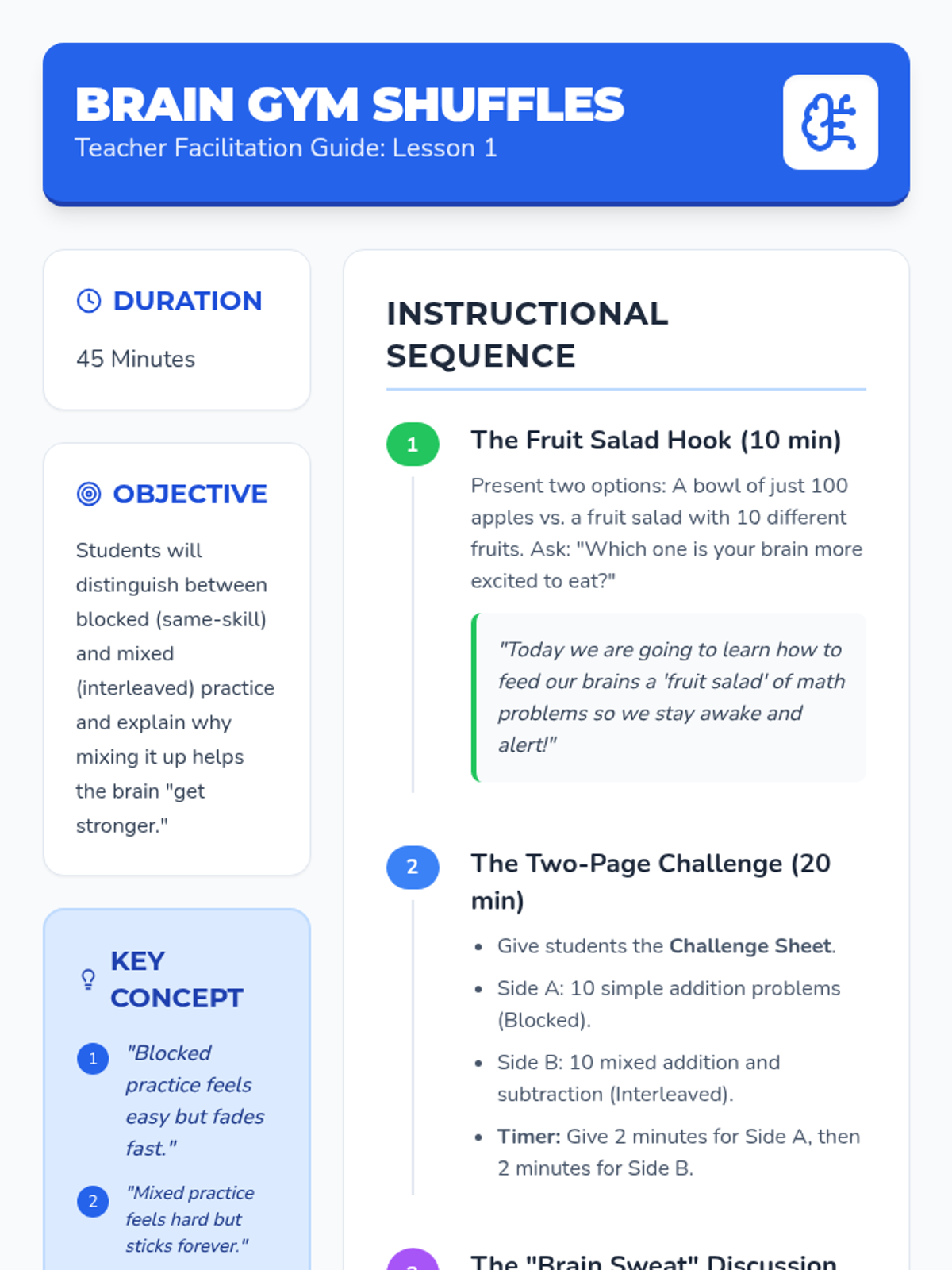
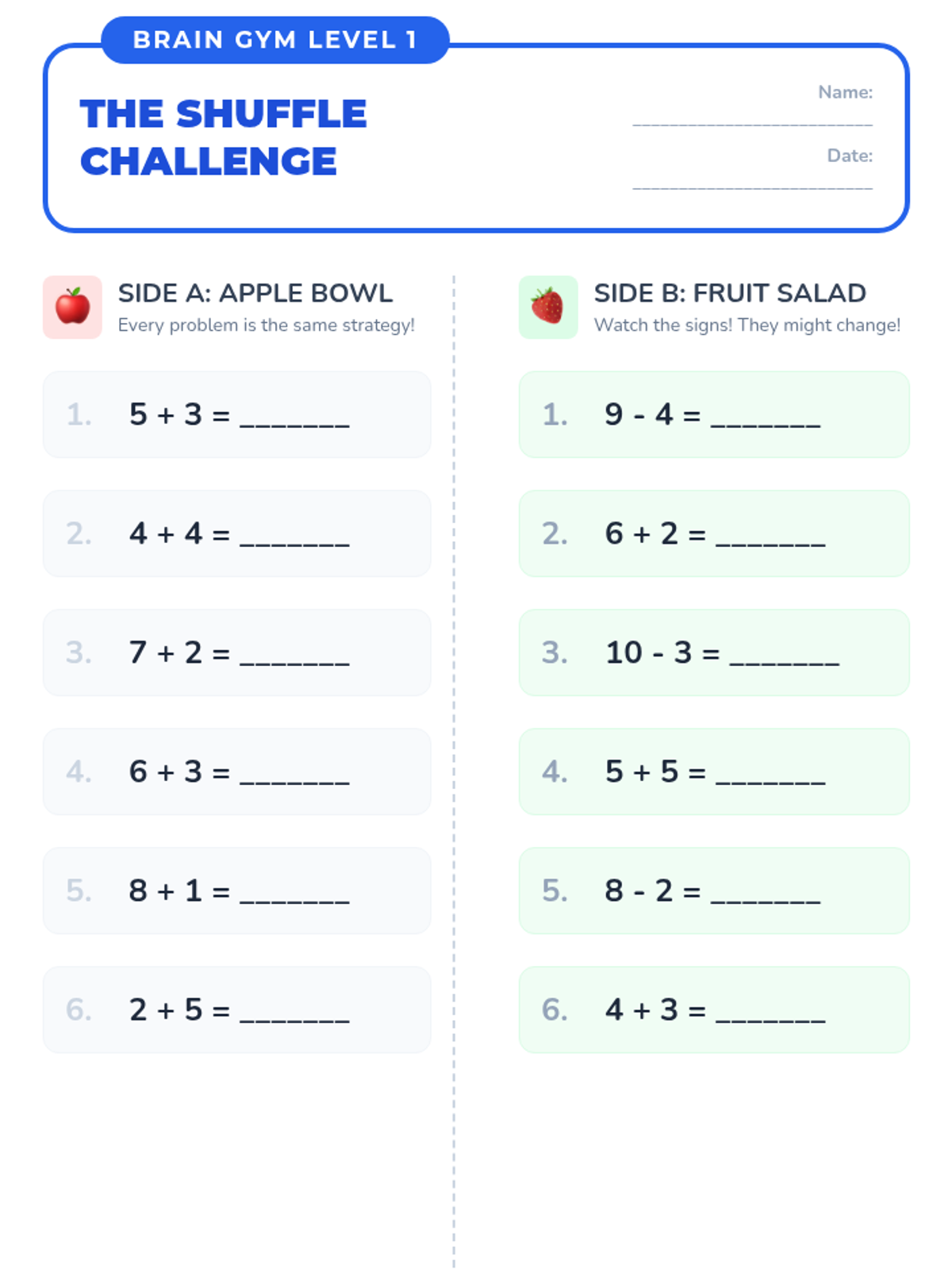
A 5-lesson sequence for 3rd-grade students focused on interleaved practice and spaced repetition. Students learn to move from blocked practice to mixed review to improve long-term memory and problem-solving flexibility.
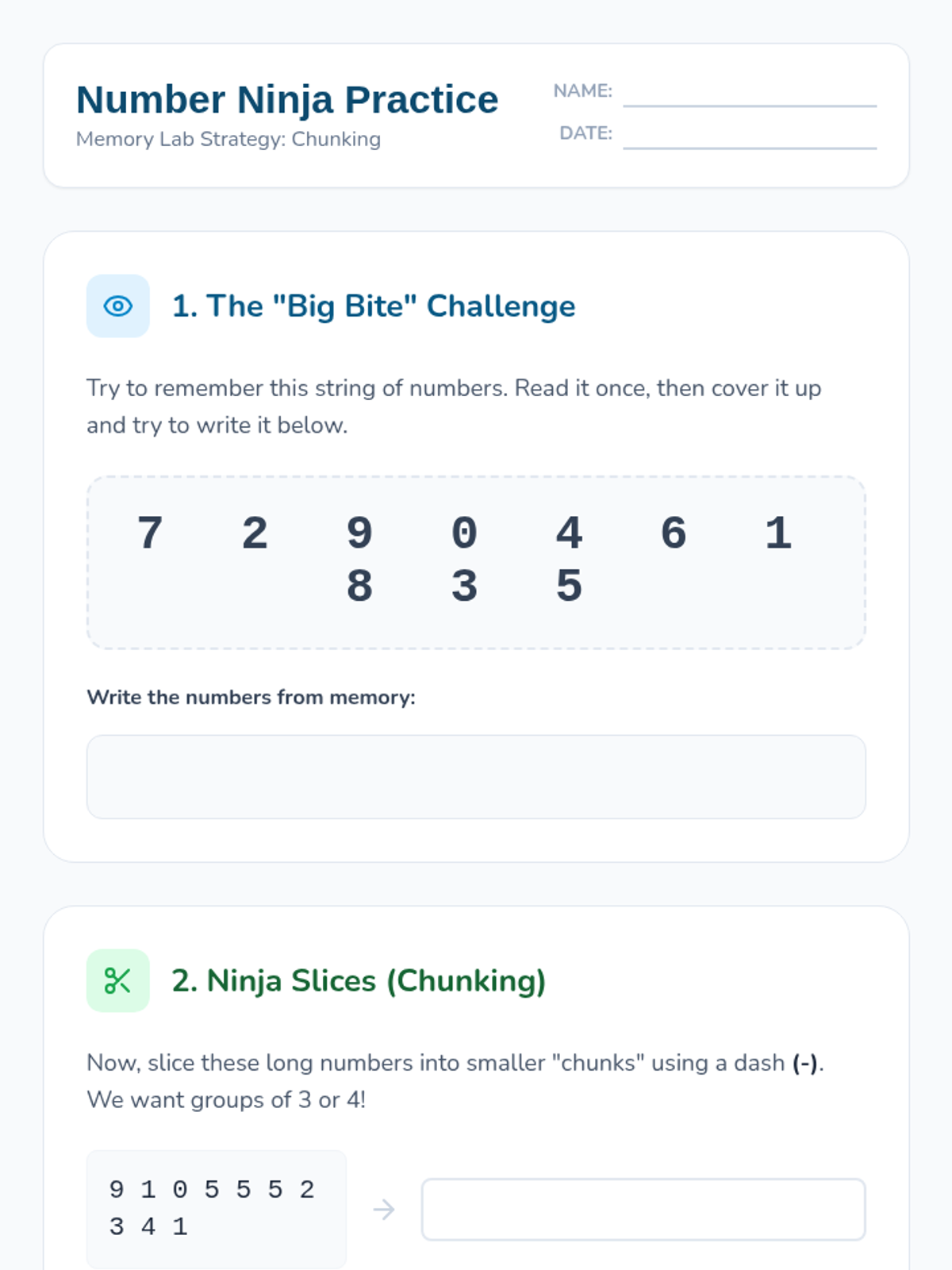
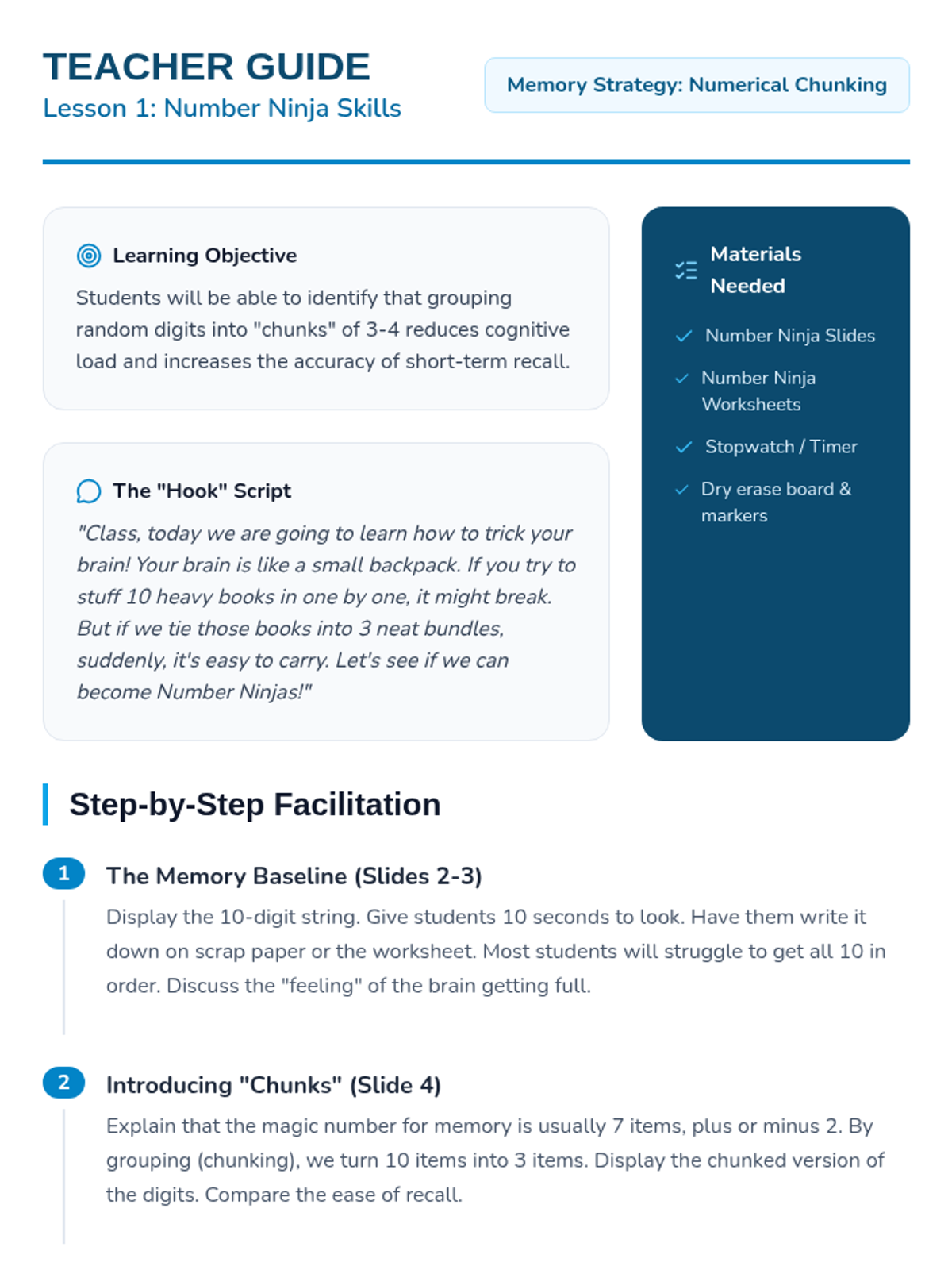
This sequence teaches 3rd-grade students cognitive strategies for memory support. Students learn to chunk numerical and semantic information and progress to creating and using acronyms to facilitate data retrieval and reduce cognitive load.
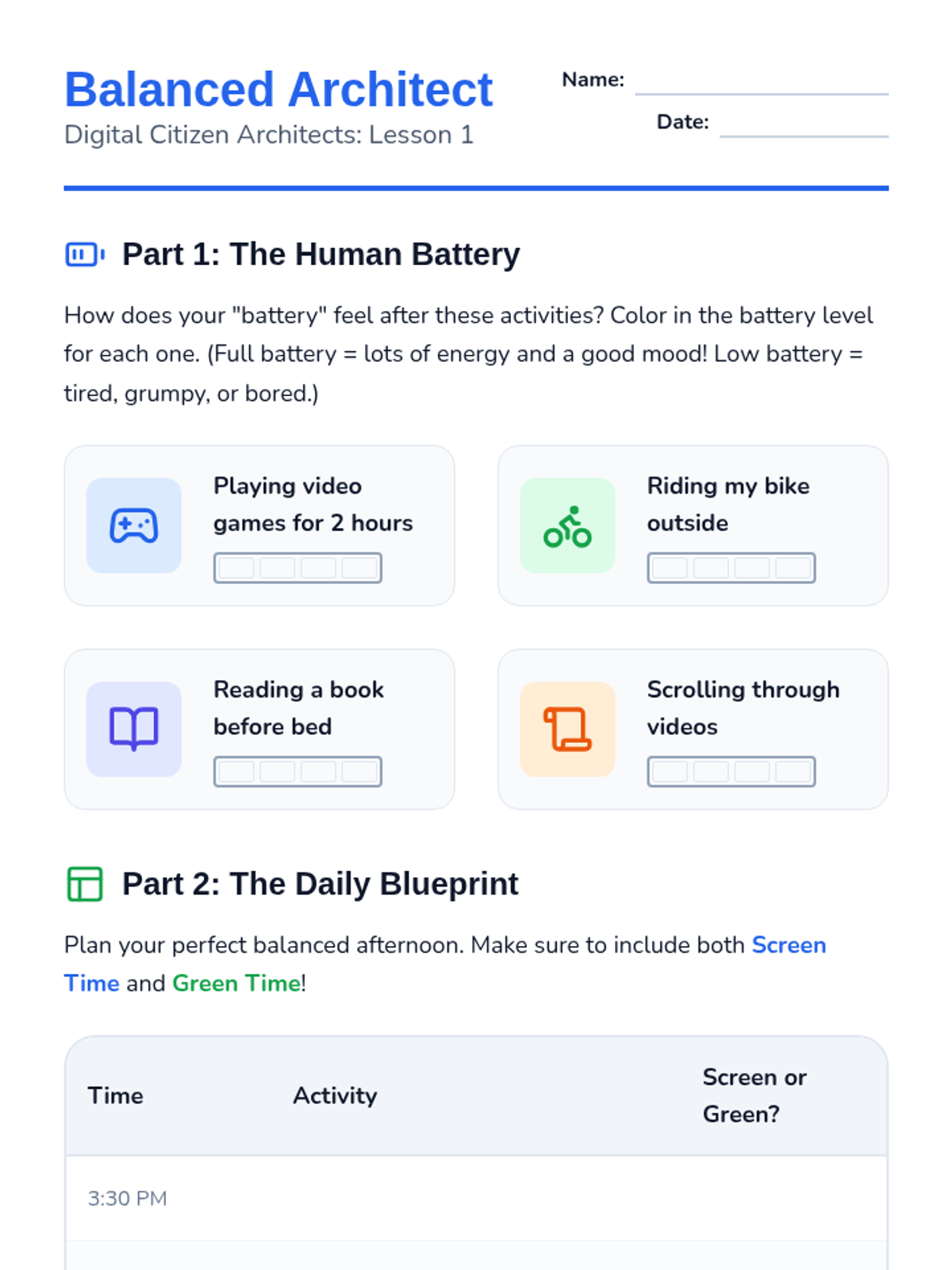
A 5-lesson sequence for 3rd graders on digital citizenship, focusing on screen time balance, intellectual property, safety rules, and family media planning. Students transition from learners to 'Digital Architects' who design their own healthy online habits.
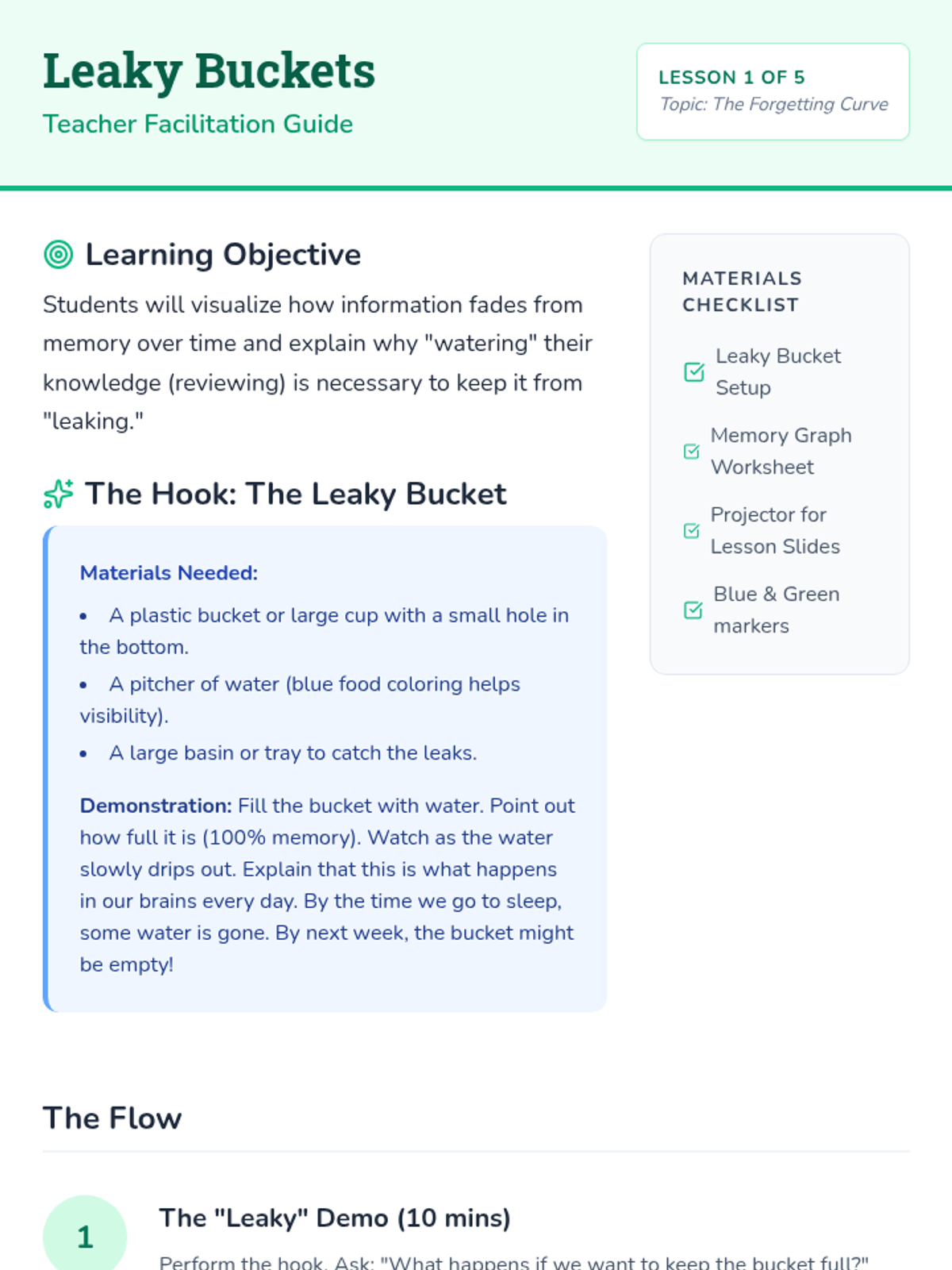
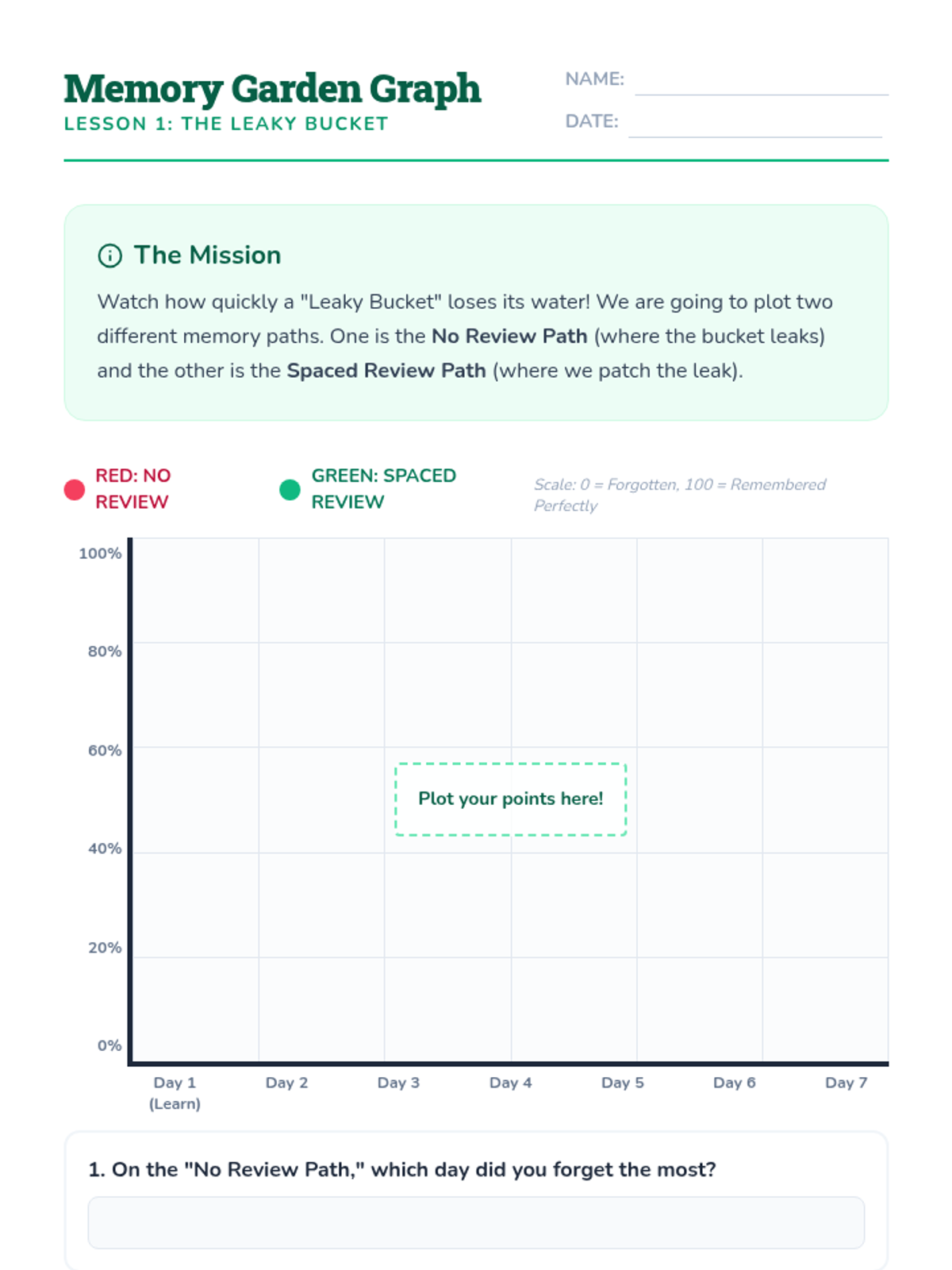
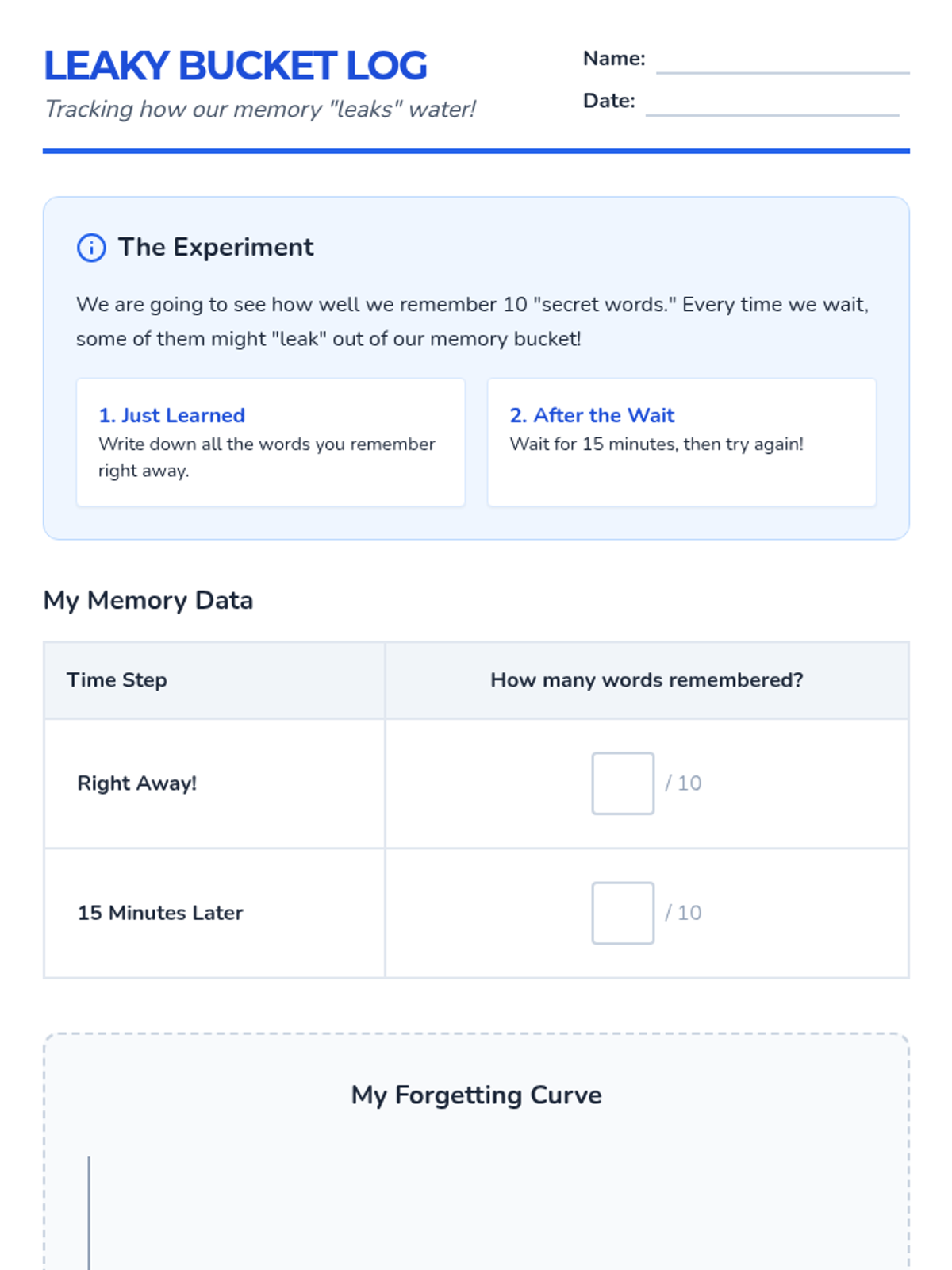
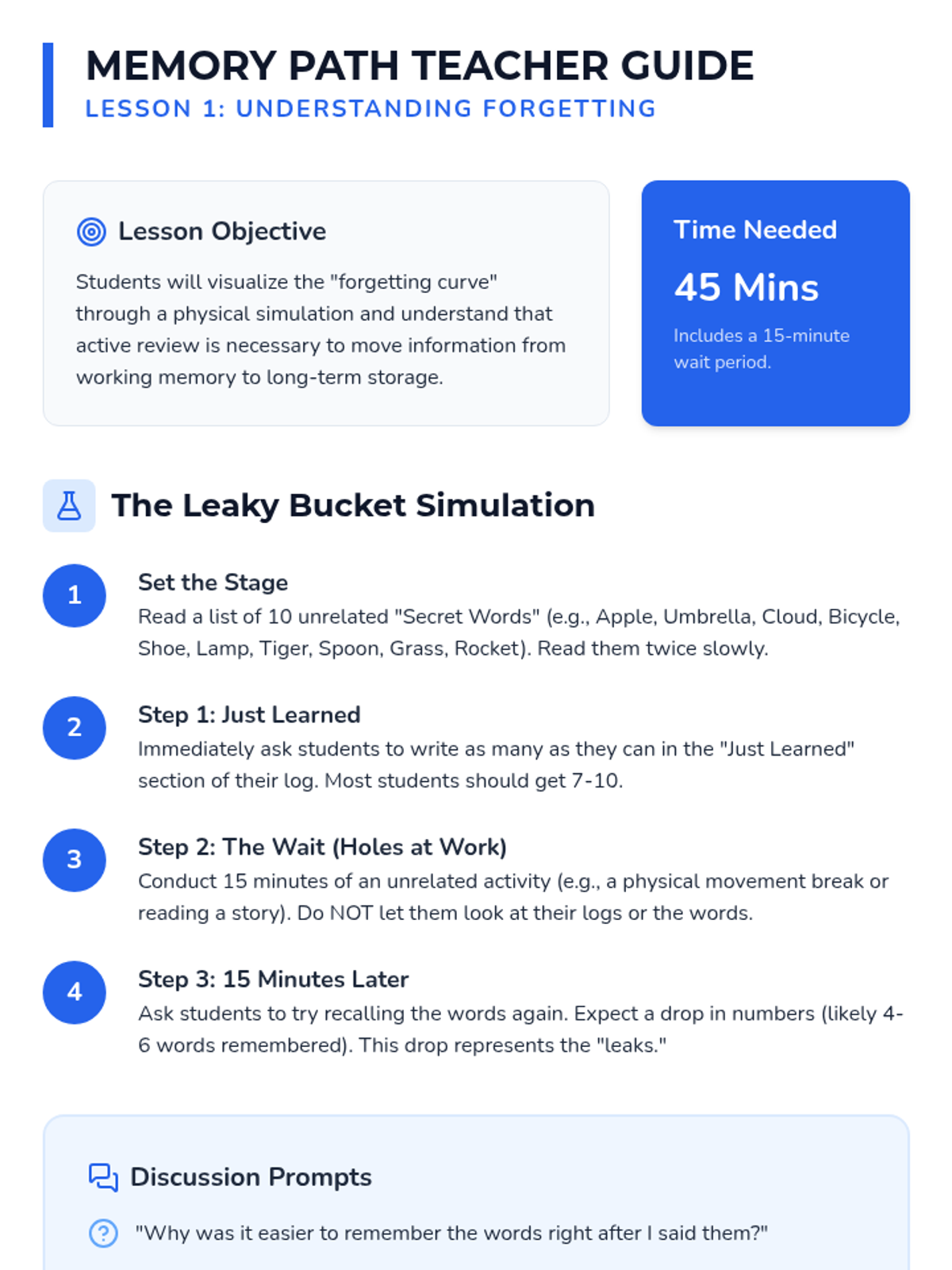
A 5-lesson unit for 3rd-grade students focused on memory retention strategies and executive function. Students learn about the forgetting curve, build visual review trackers, conduct experiments on spaced repetition, and use self-monitoring tools to maintain their 'Brain Garden' of knowledge.
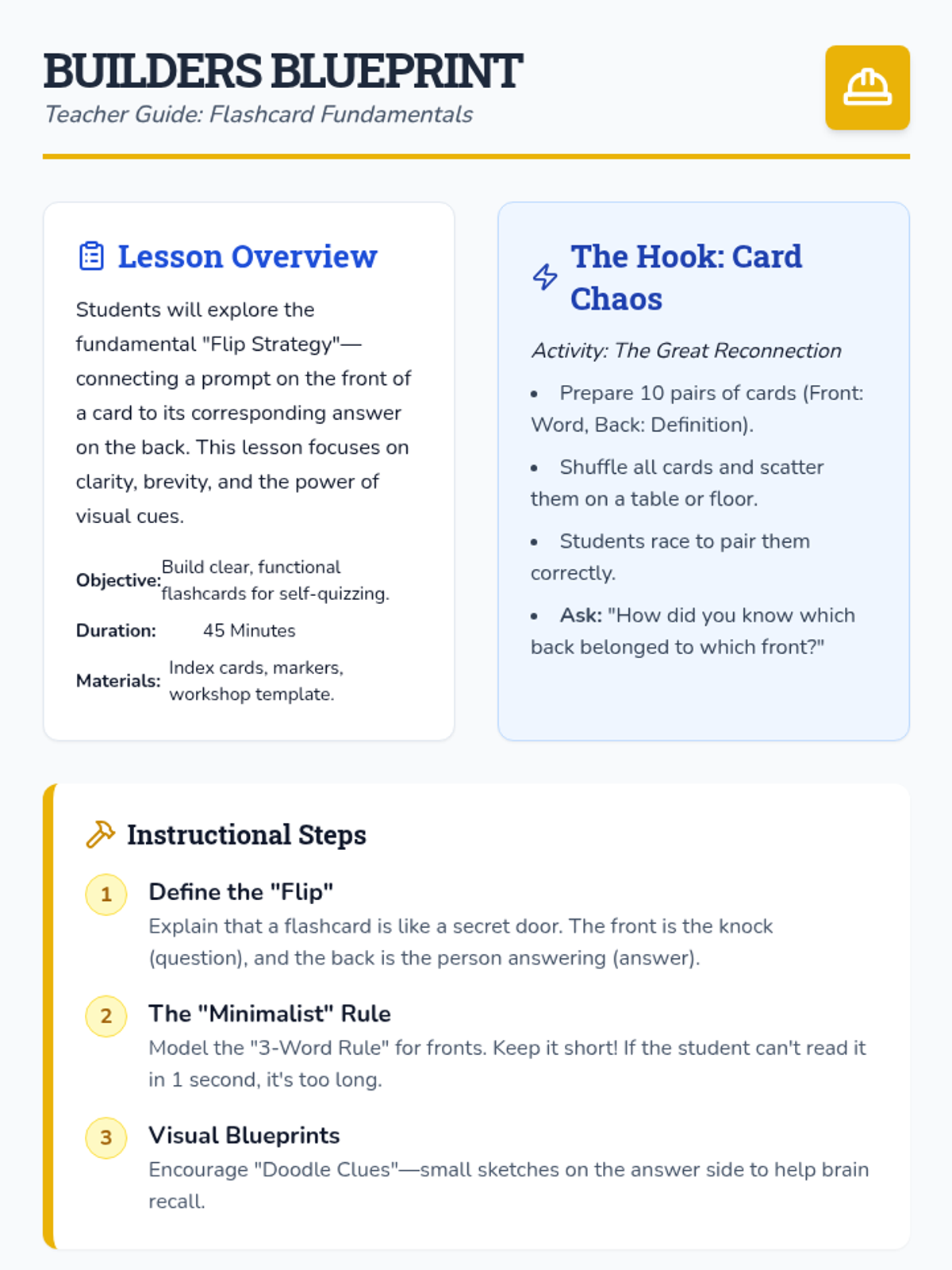
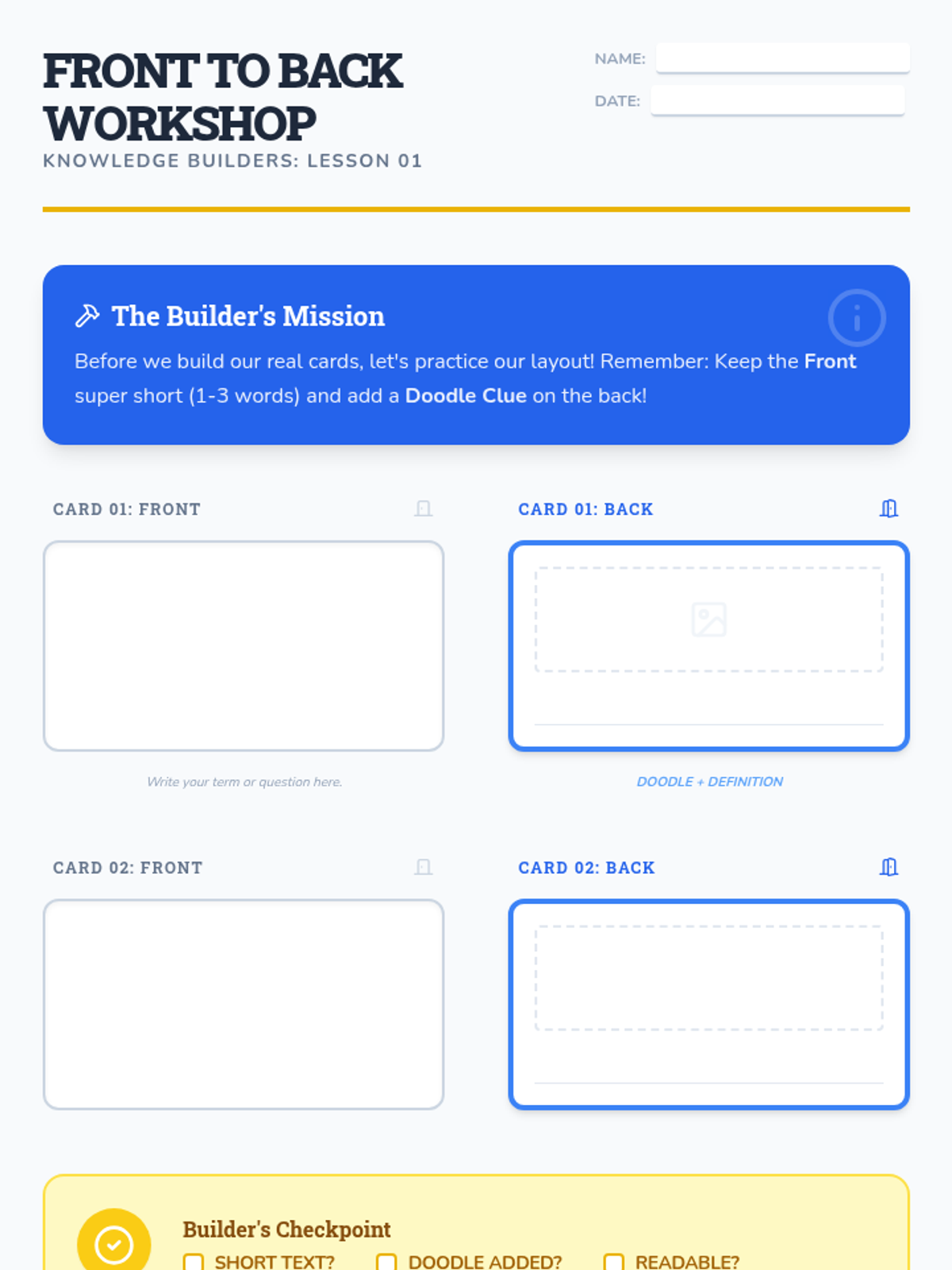
A hands-on sequence for 3rd-grade students in academic support settings, teaching them to build and use physical study tools like flashcards and foldables to become independent learners.
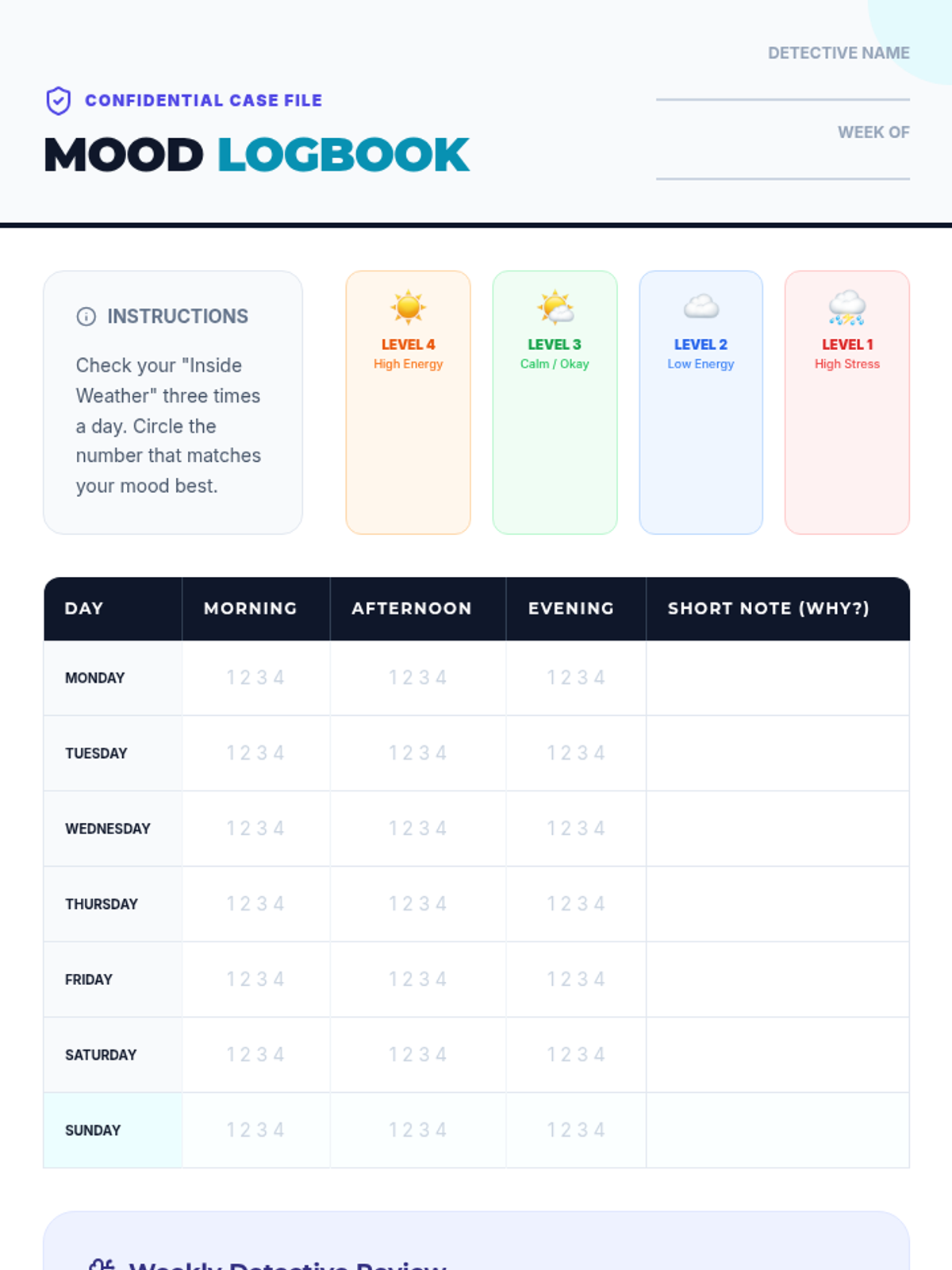
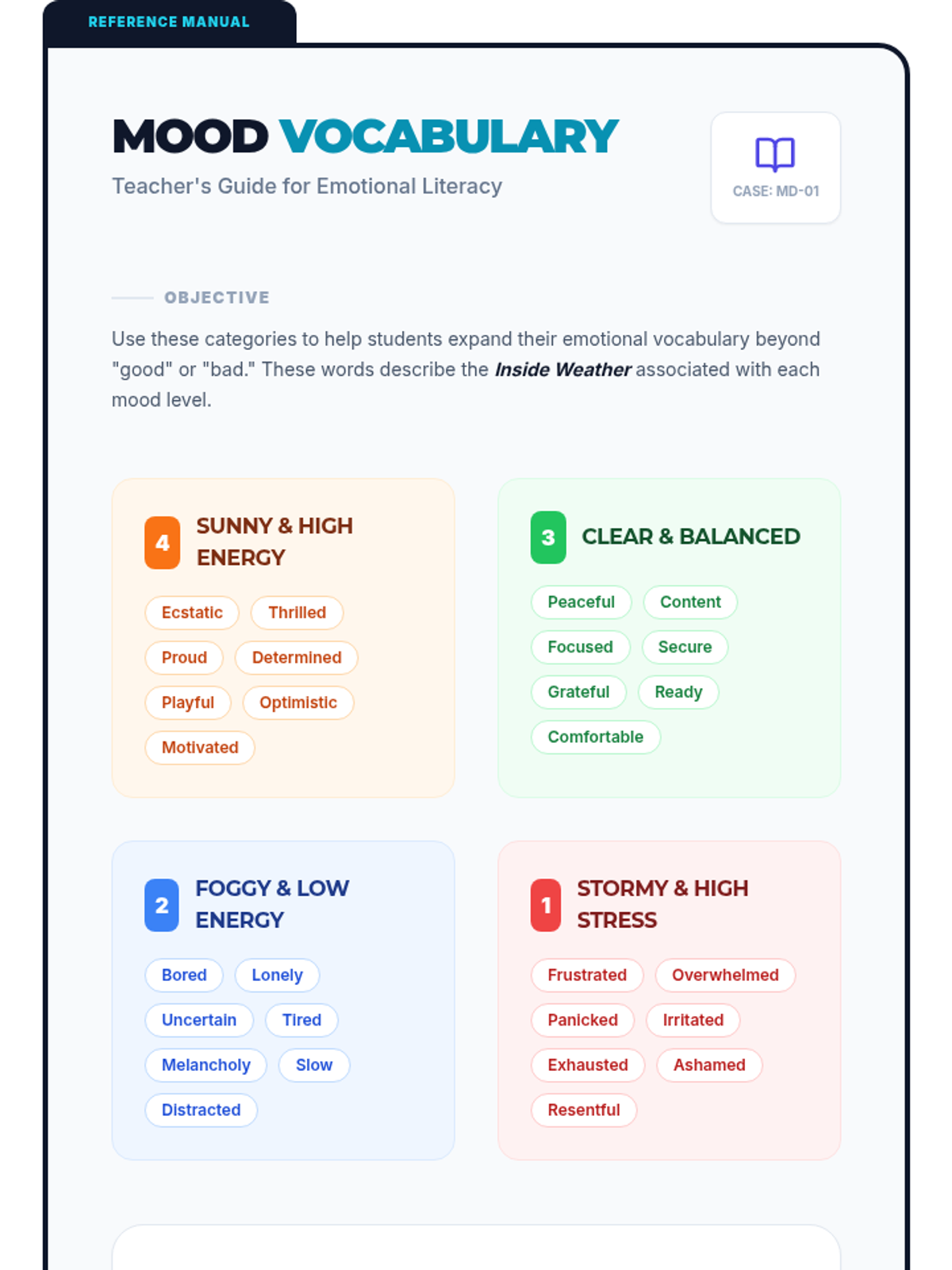
Students become 'Mood Detectives' to track daily habits and emotions, uncovering patterns to manage their mental health. The sequence culminates in a personalized 'Mood Toolbox' and Wellness Dashboard.
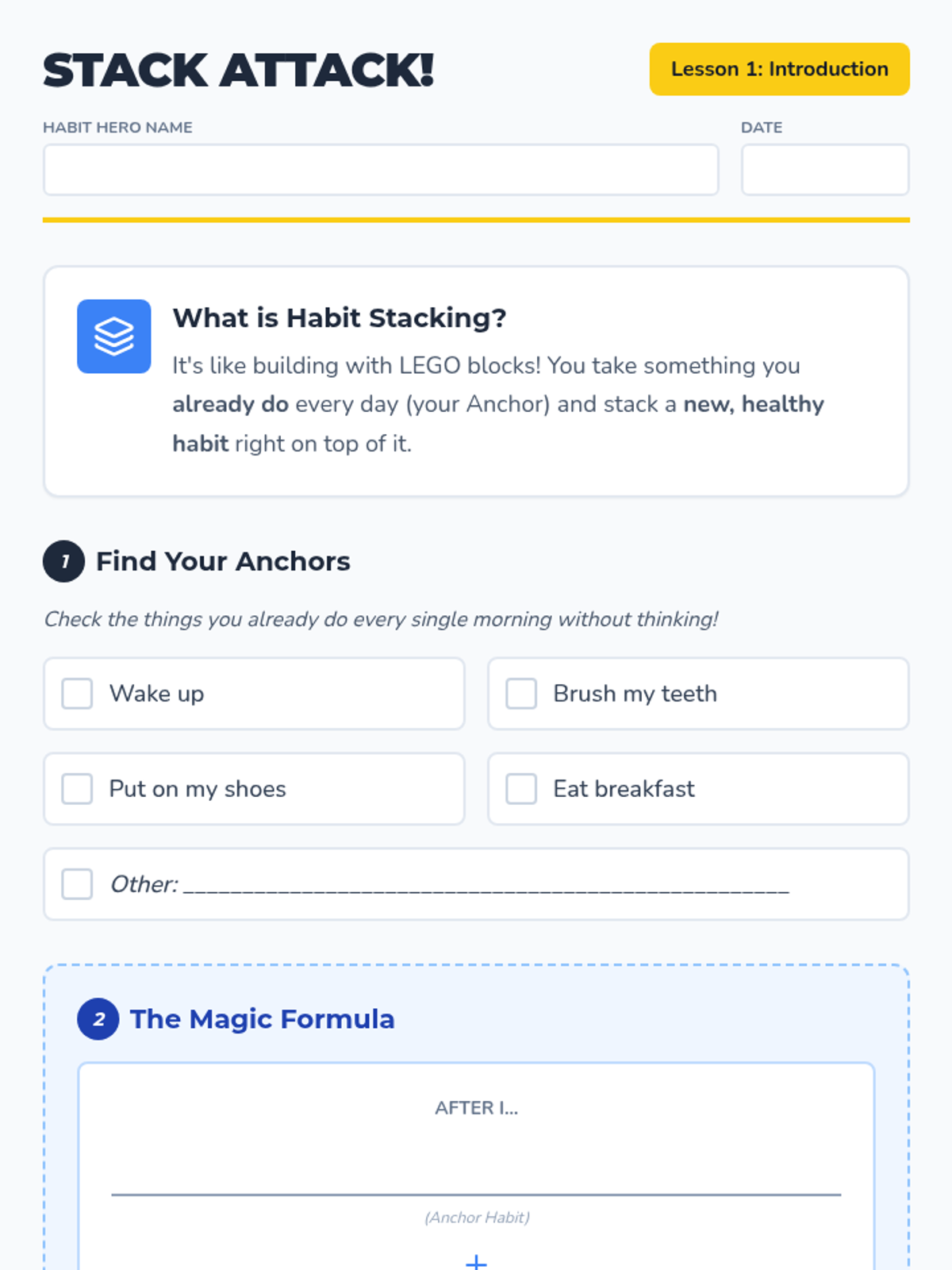
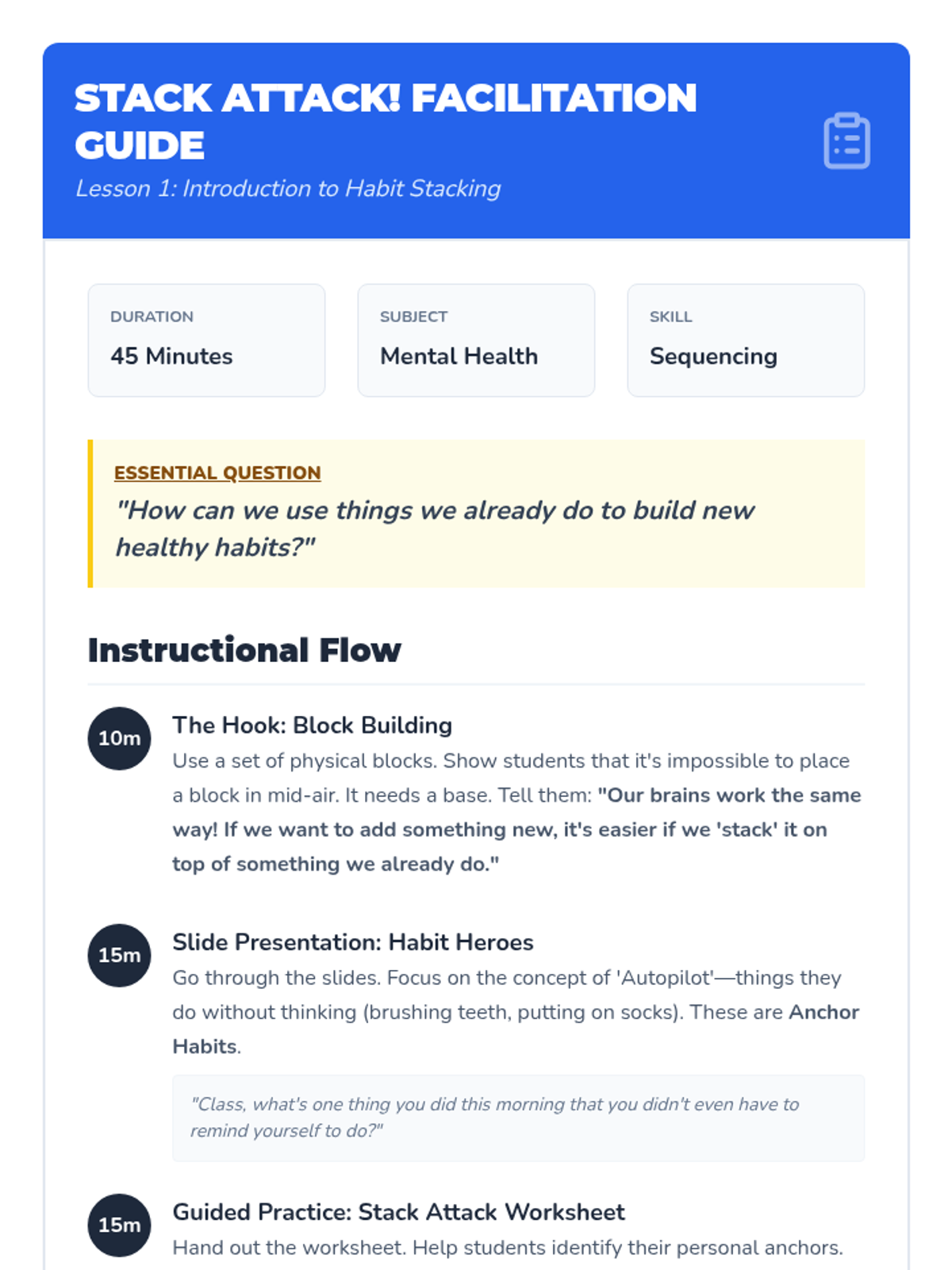
This synthesis sequence focuses on the mechanics of habit formation, specifically 'habit stacking' to build morning routines that support mental health. Students move from understanding individual healthy choices to organizing them into a coherent flow using simple tracking tools and reflection.
This mastery-based sequence teaches students to view check-ins not just as a morning event, but as a continuous cycle of self-monitoring and reflection. Students learn to track their emotional patterns over time, identifying triggers and successful interventions to develop long-term metacognitive habits.
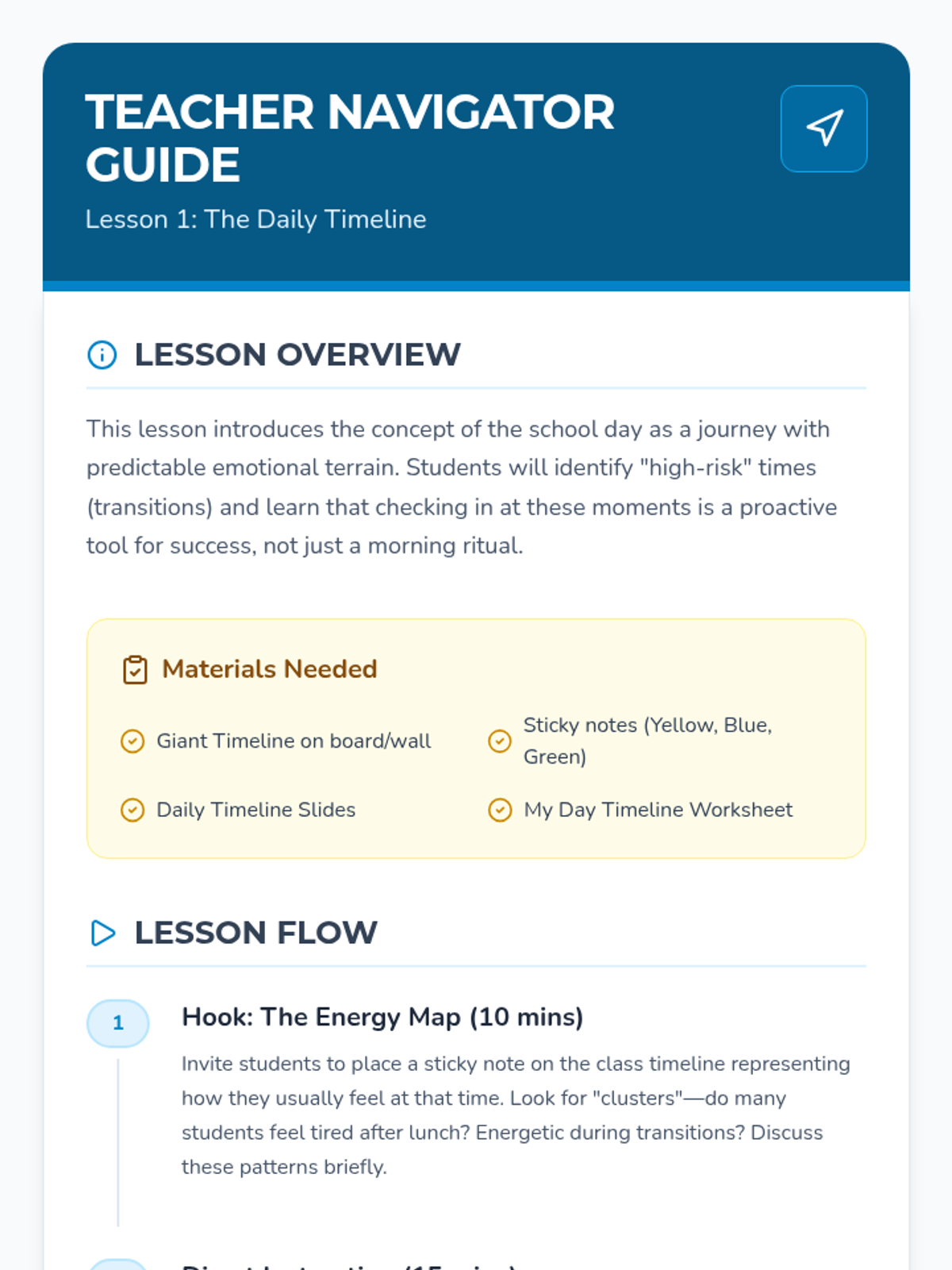
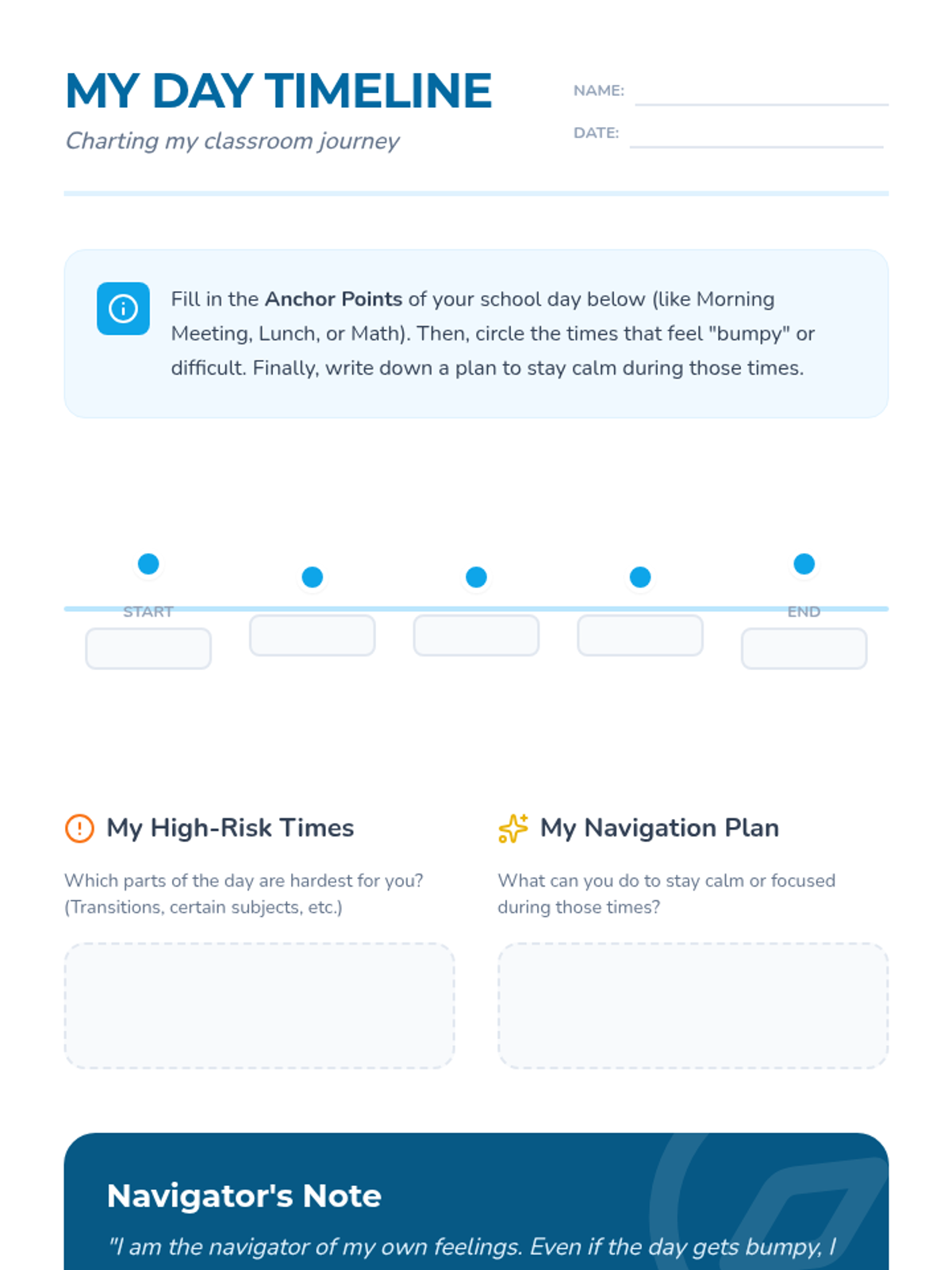
A counseling and life skills sequence for 3rd grade focused on shifting emotional check-ins toward actionable behavioral goal-setting. Students learn to define readiness, identify obstacles, choose strategies, and write daily intentions.
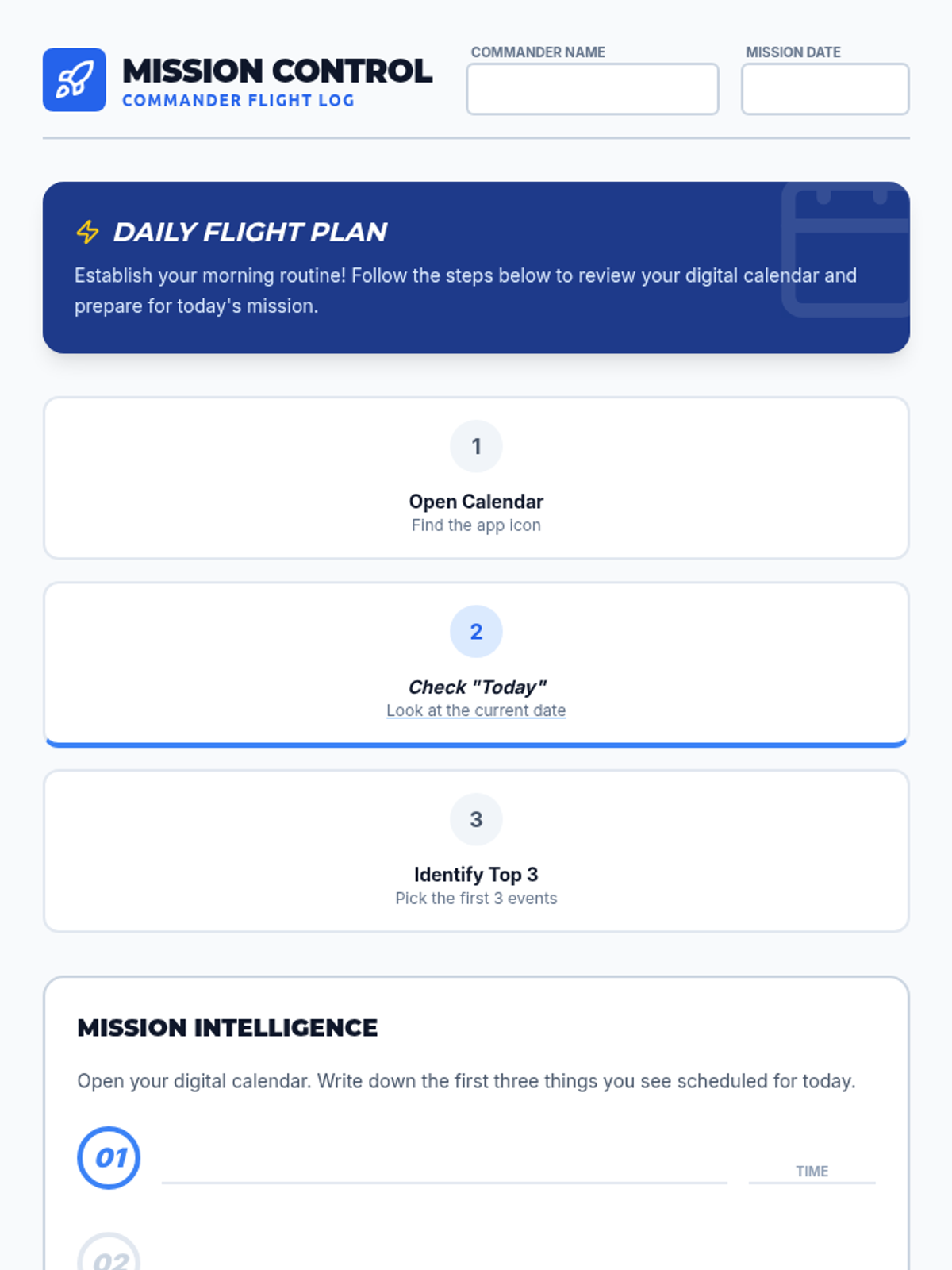
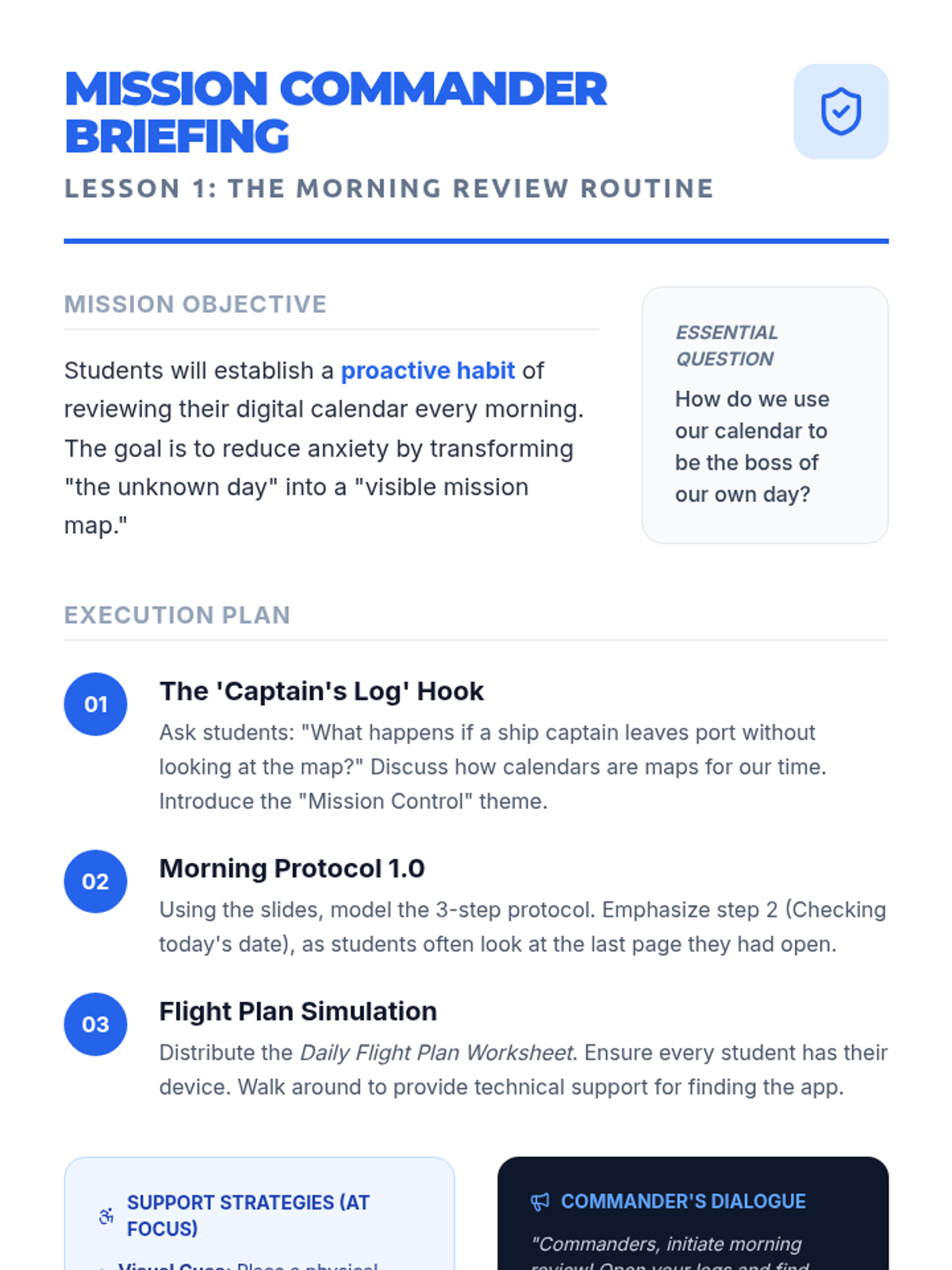
A 3rd-grade sequence on digital calendar use, focusing on independence, routine, and flexibility through a 'Mission Control' theme. Students learn to manage their daily schedule as 'Commanders' of their own time.
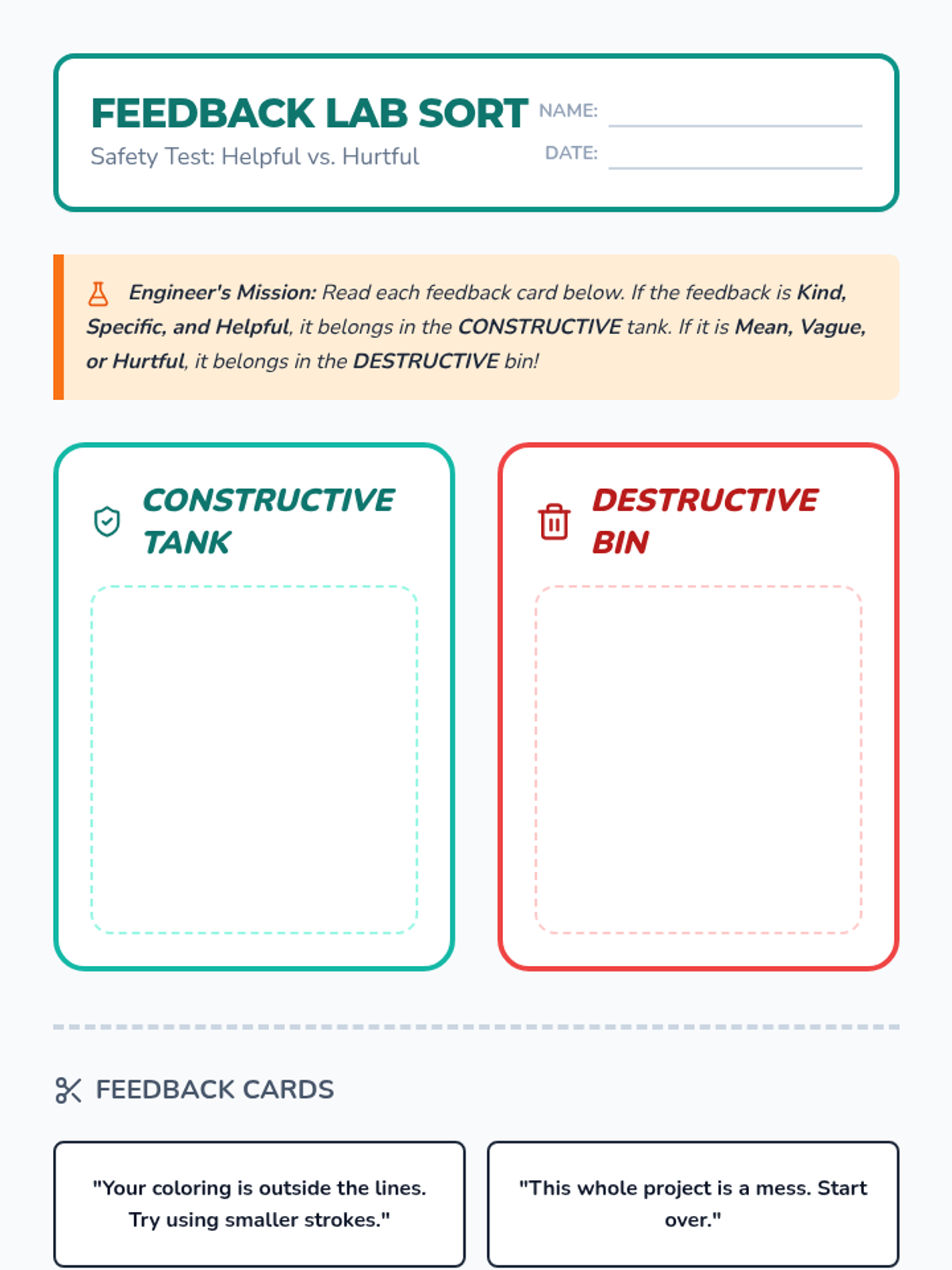
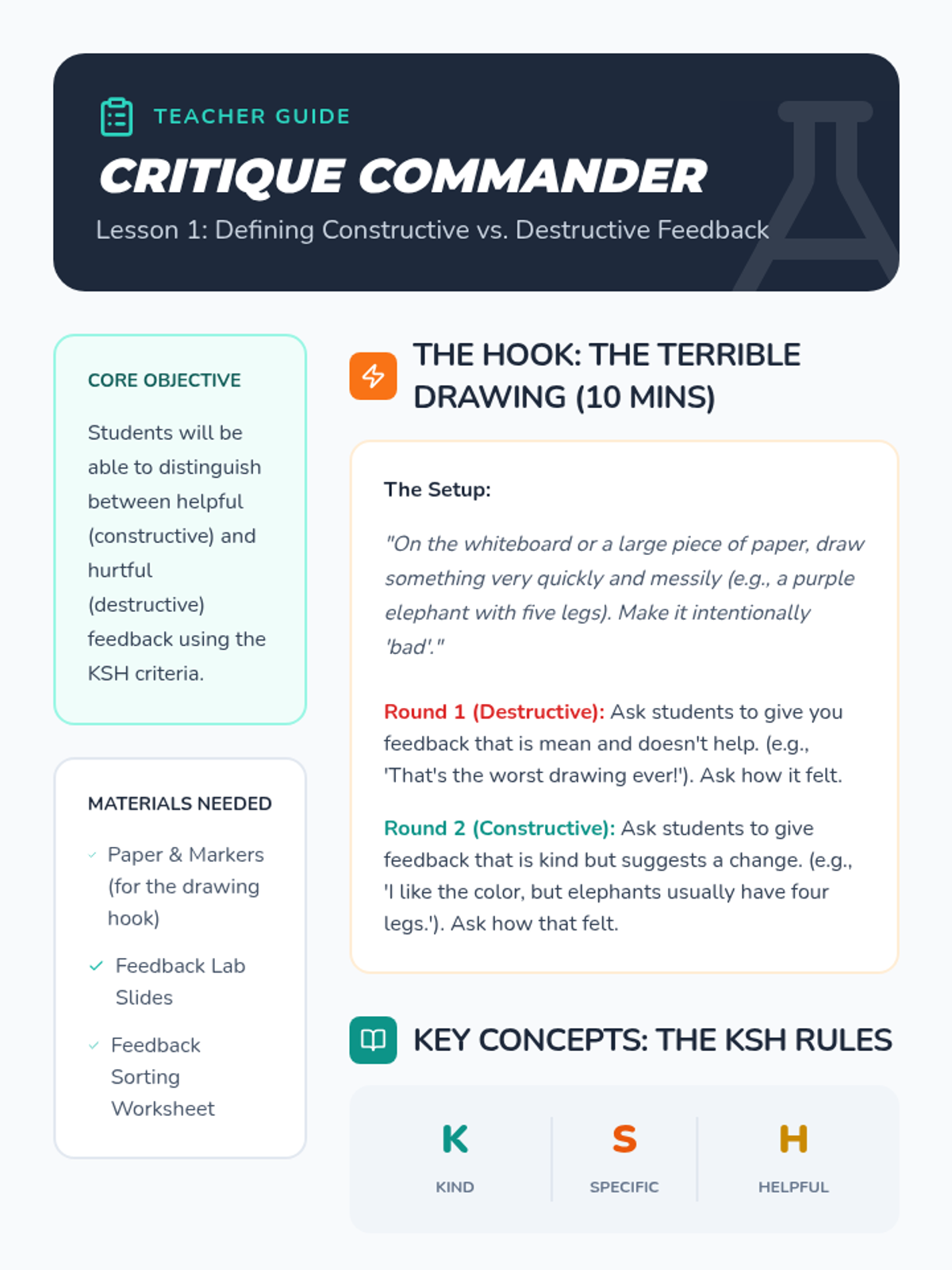
This sequence teaches 3rd-grade students how to give and receive constructive feedback. Through the lens of 'The Feedback Lab,' students learn to differentiate between helpful and hurtful comments, use the Sandwich Method (Glows and Grows), maintain a growth mindset when receiving advice, and apply feedback to improve their work.
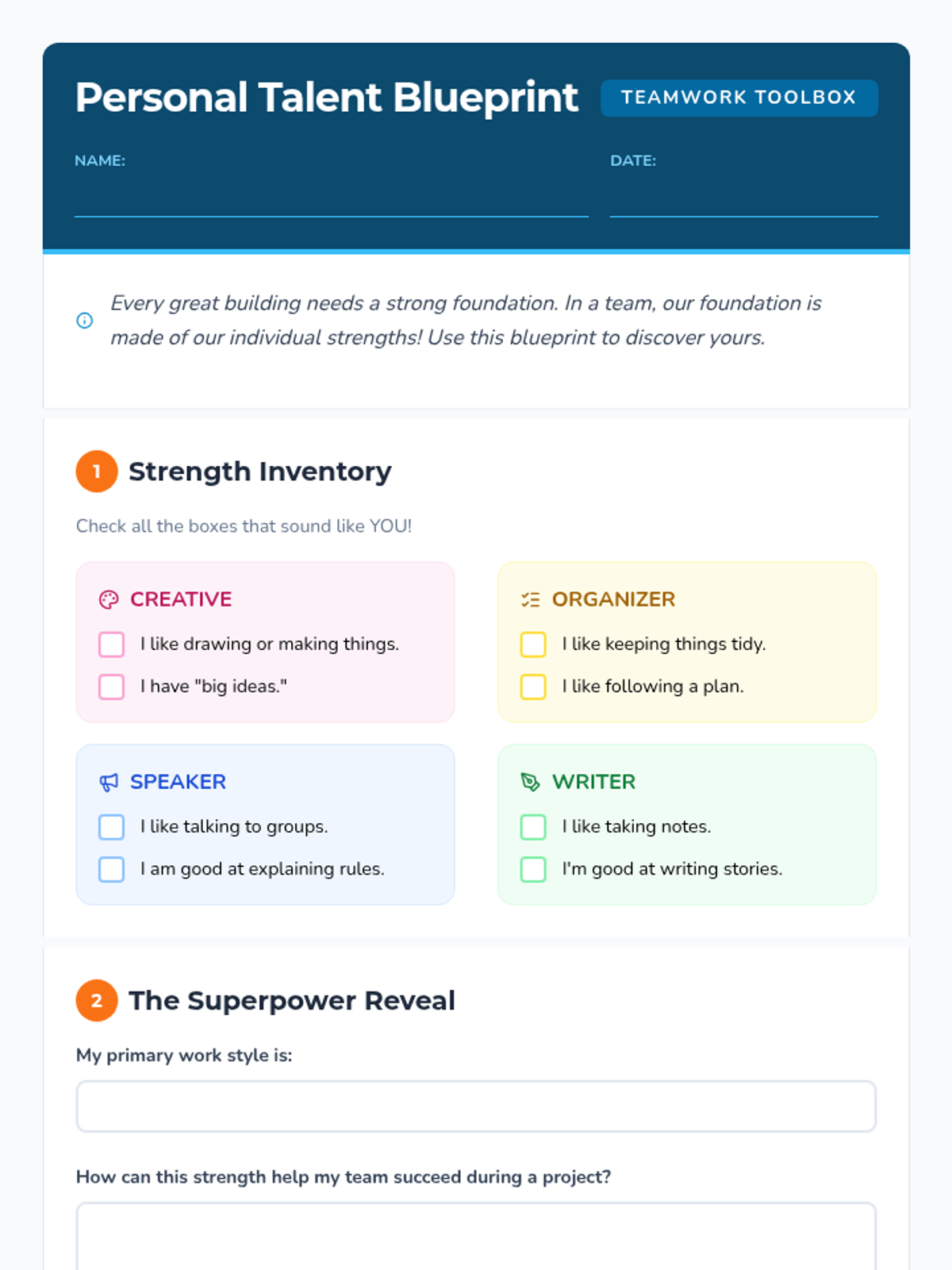
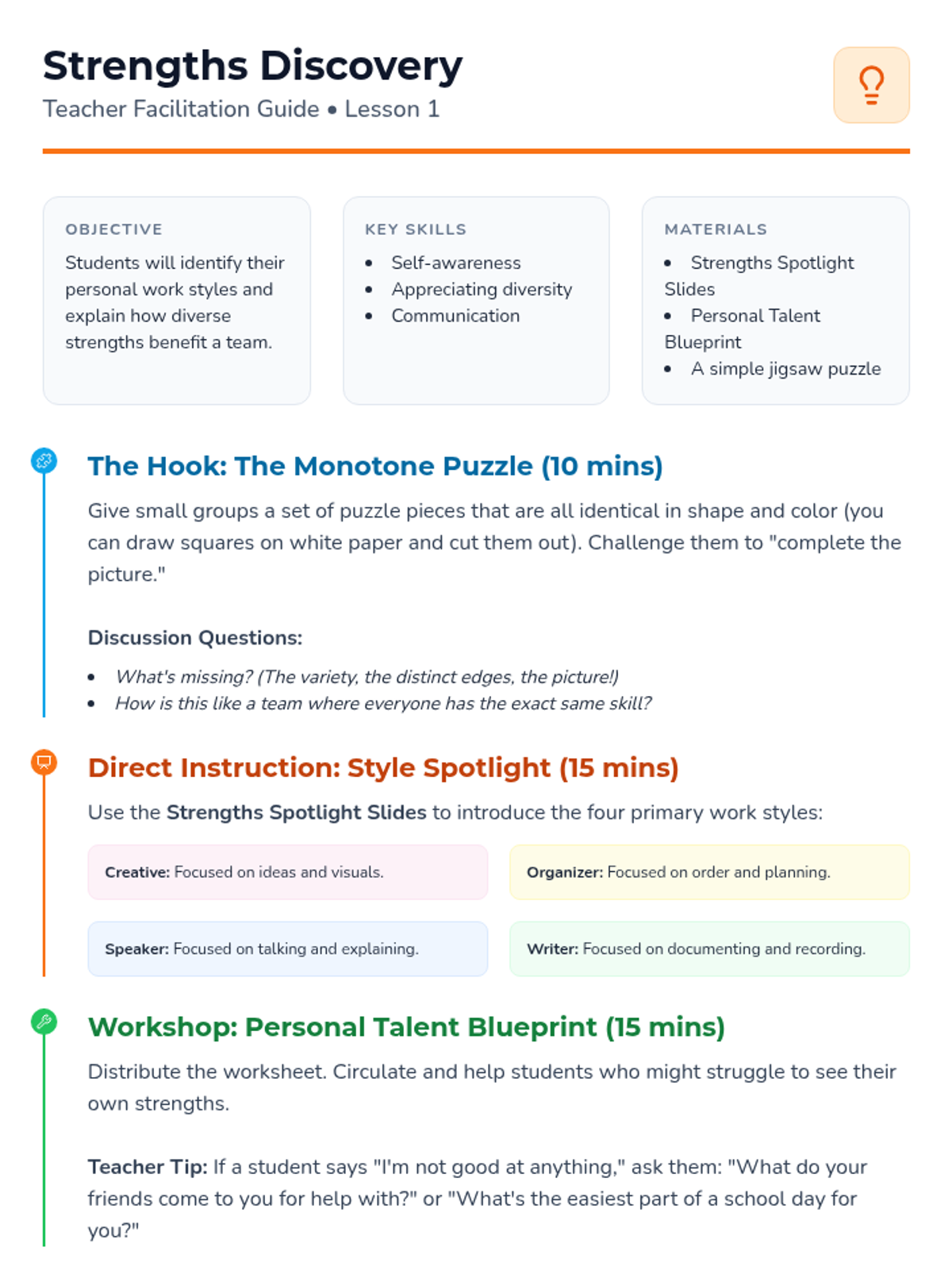
A 5-lesson sequence for 3rd graders focused on the structural side of teamwork, including role definition, SMART goal setting, and collaborative execution. Students move from self-awareness of their own strengths to applying specific group roles in a hands-on engineering challenge.
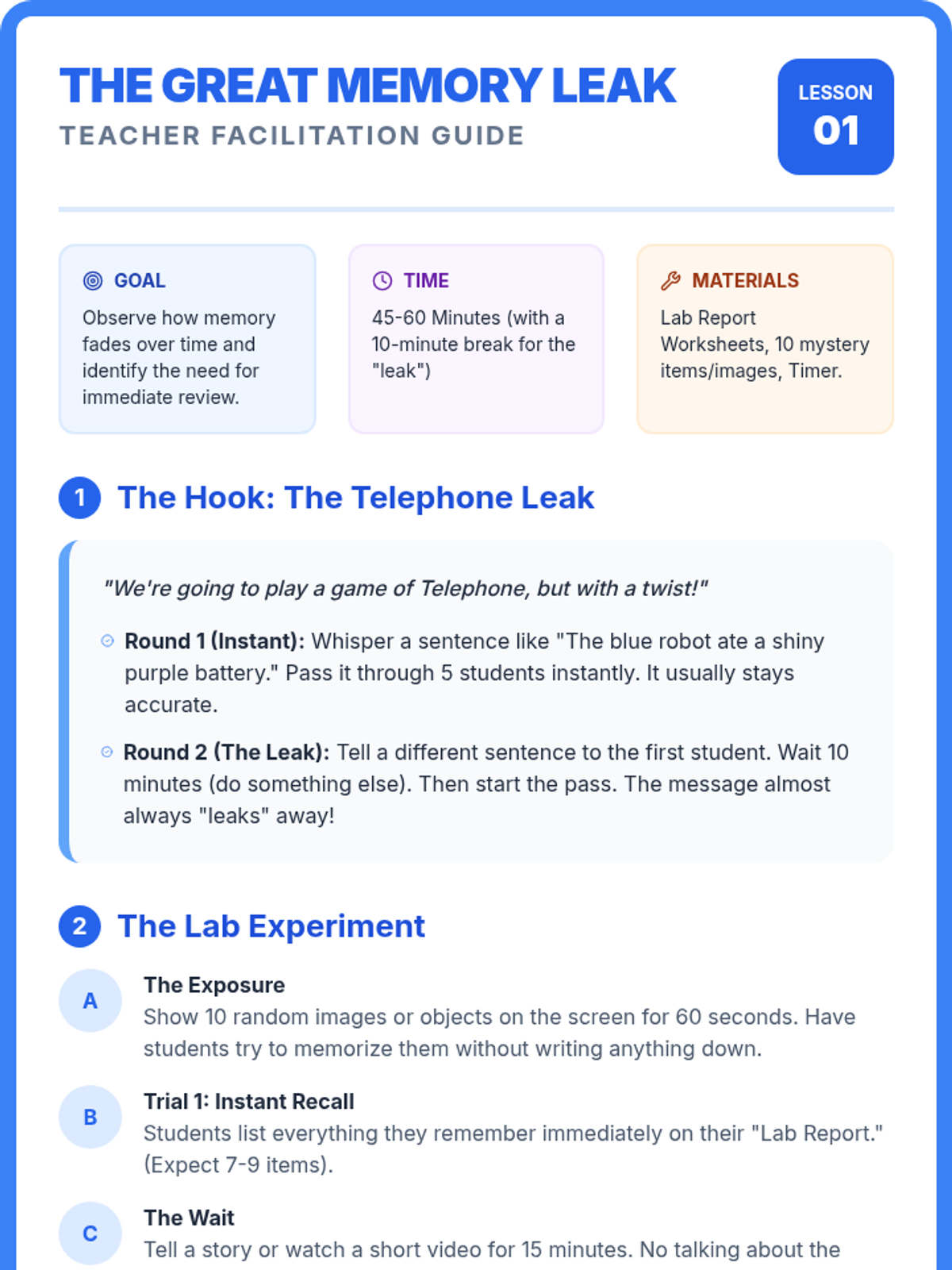
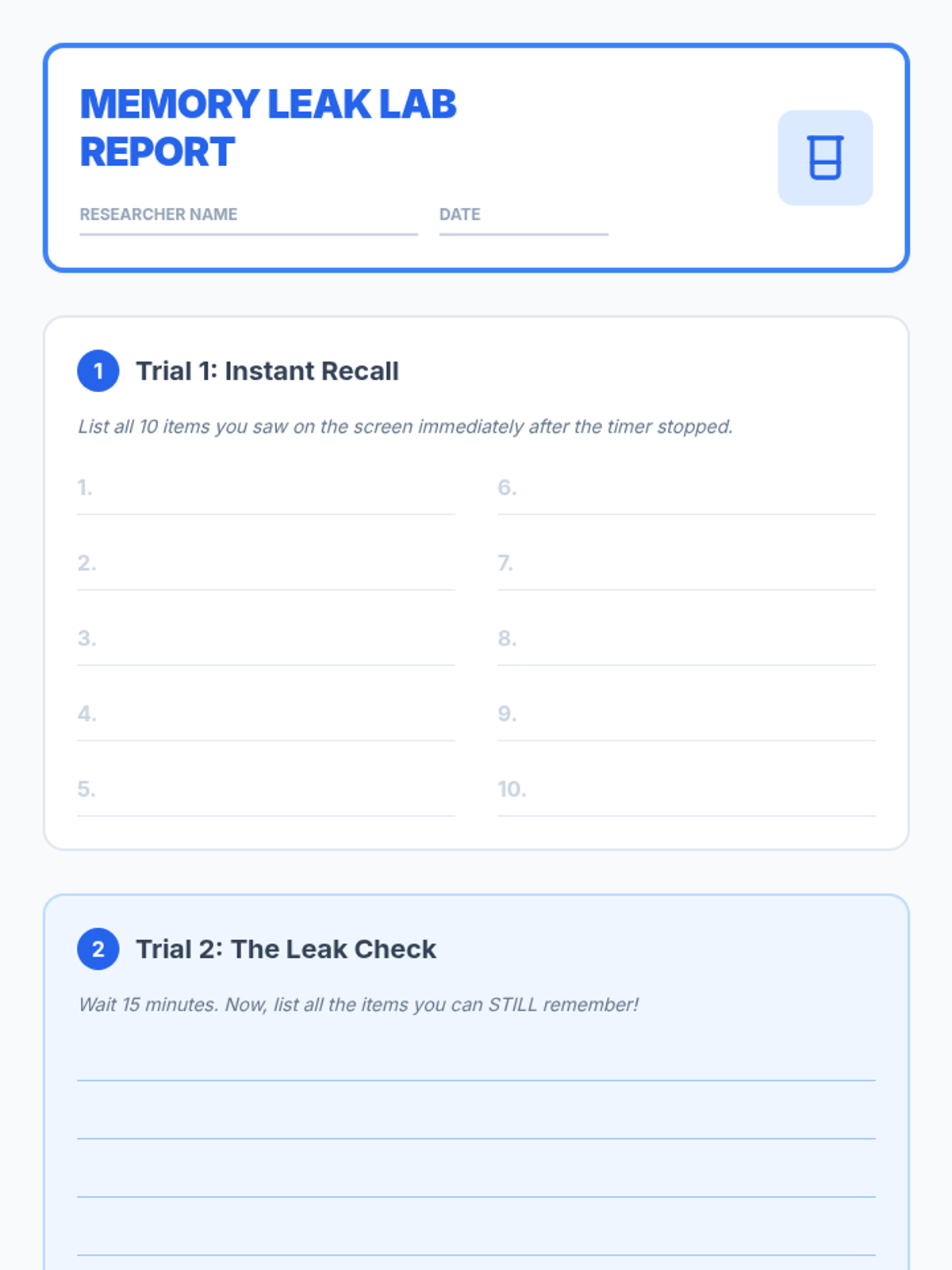
A sequence designed for 3rd-grade students to understand and apply active recall and spaced repetition techniques to support working memory. Students learn how memory fades over time and how to use specific review intervals to move information into long-term storage.
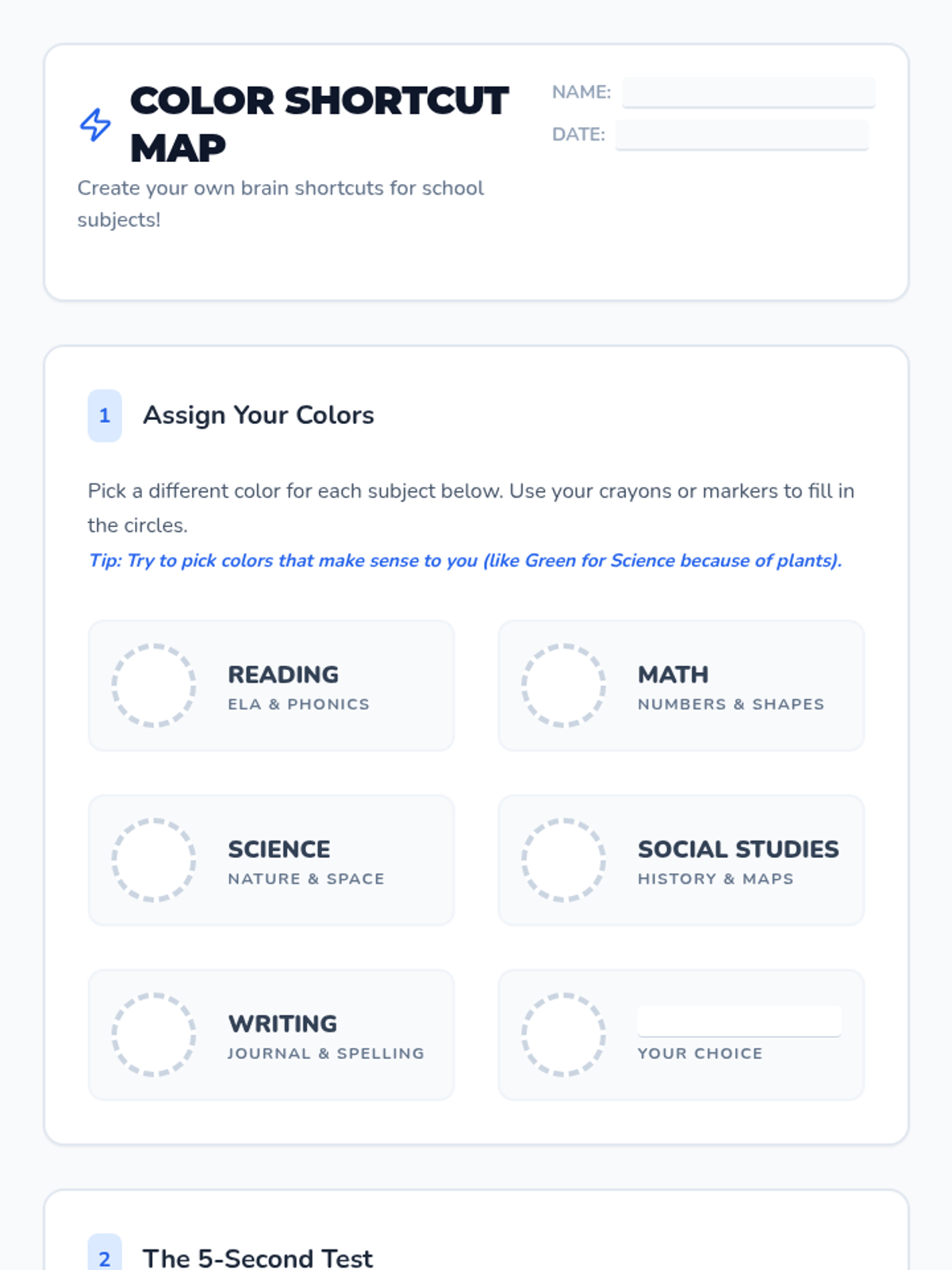
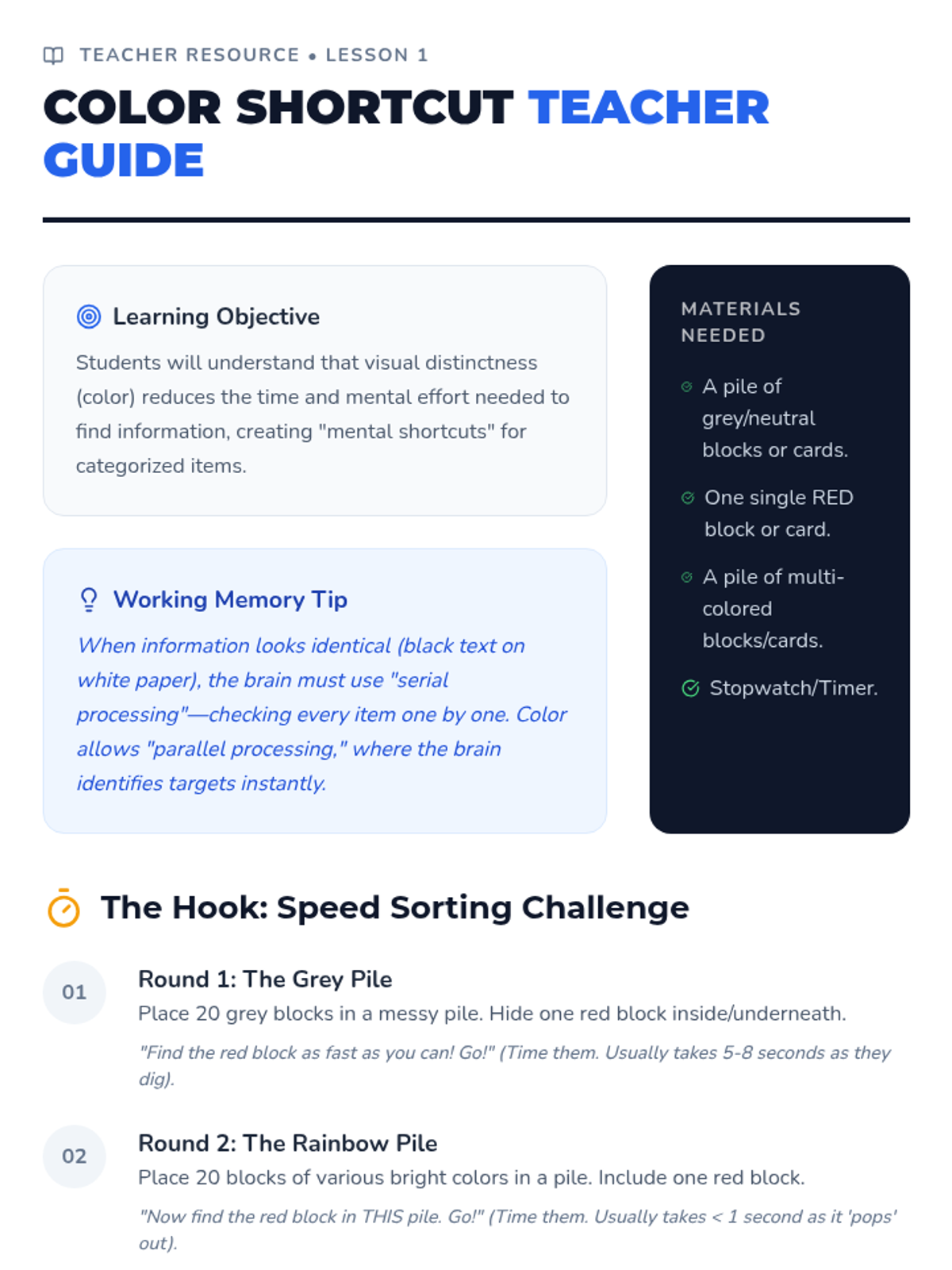
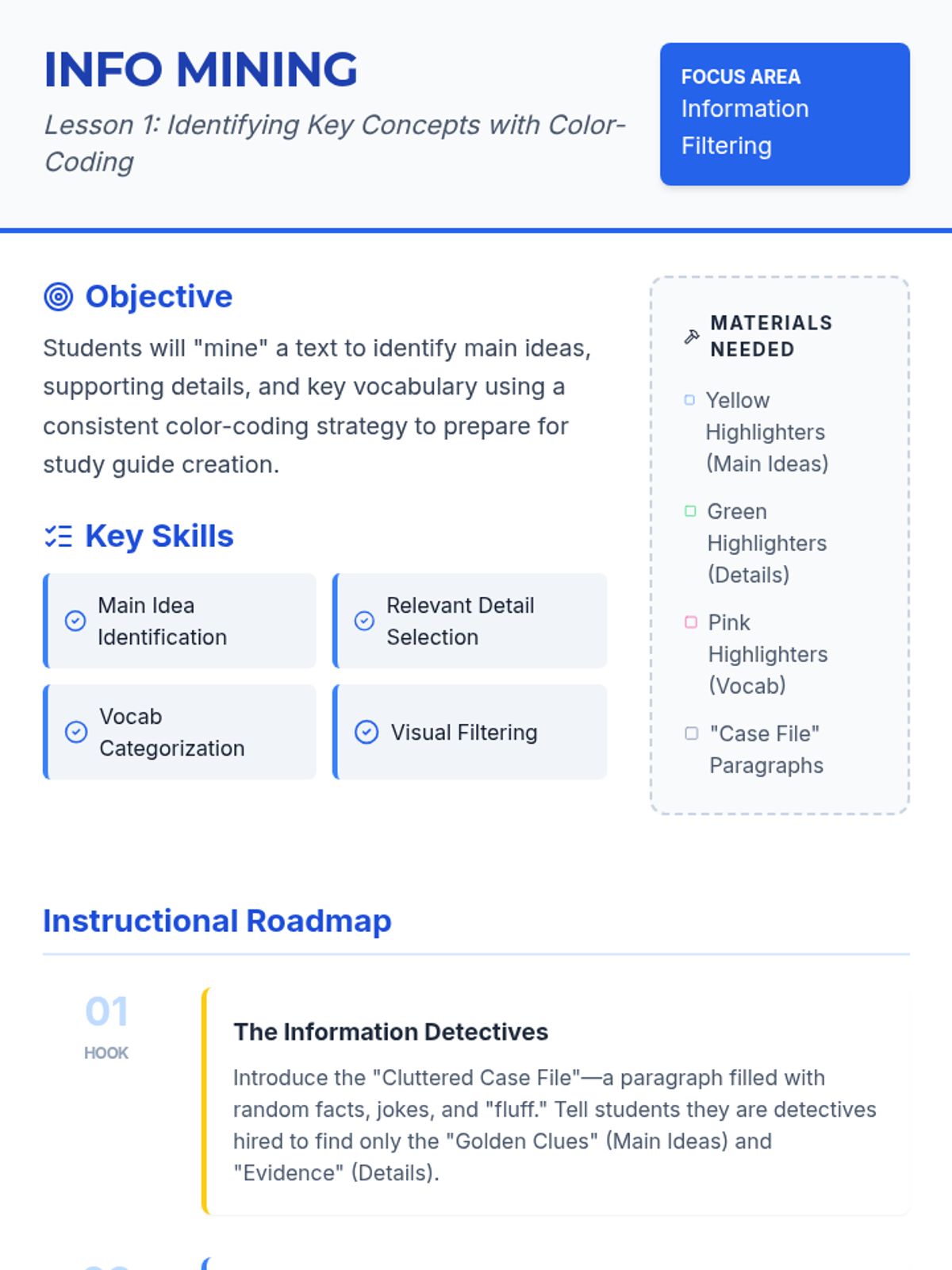
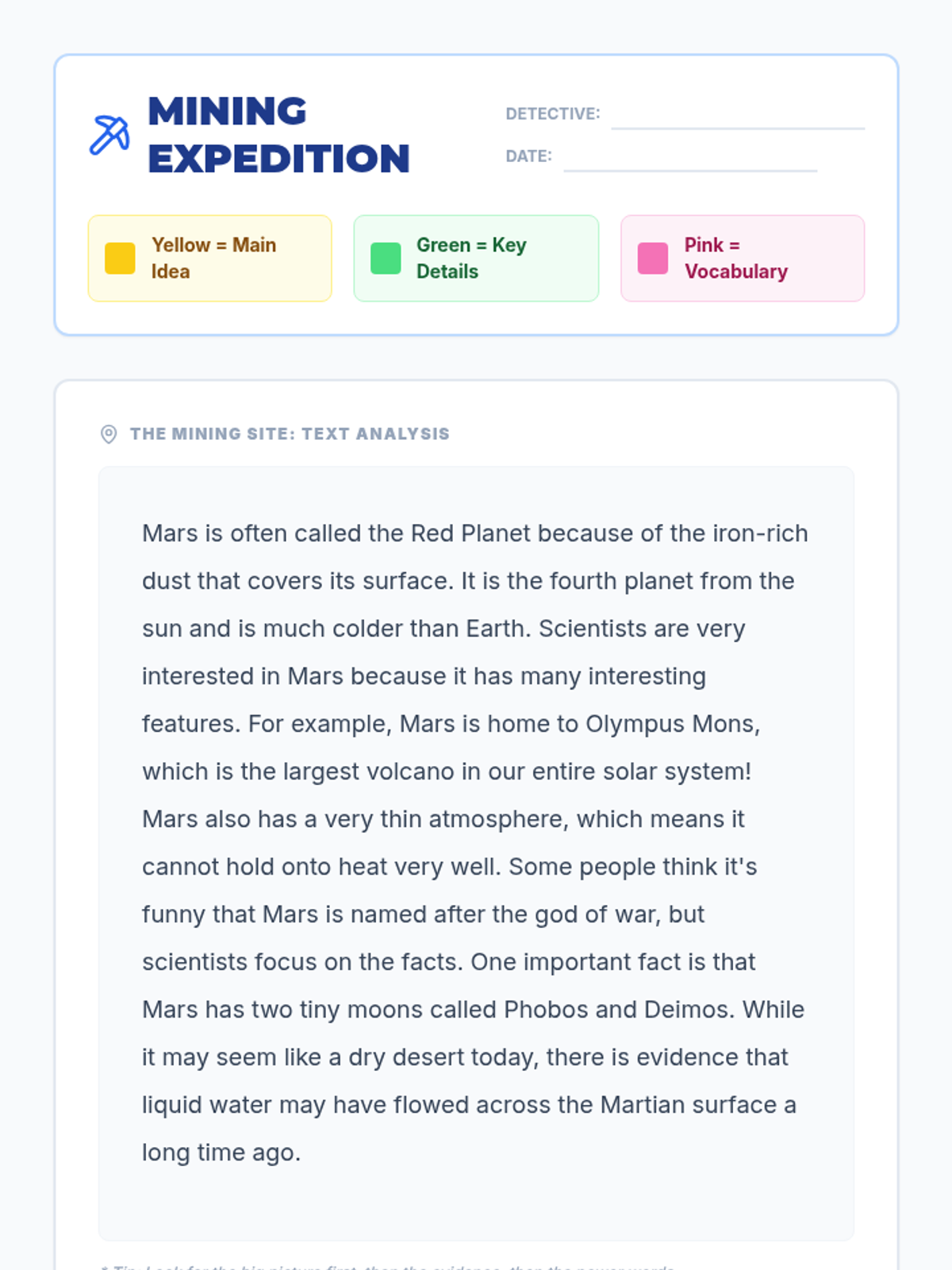
A 5-lesson sequence for 3rd-grade students focused on using color-coding to support working memory. Students learn to categorize information, highlight key details using a stoplight system, and create personal organization keys to improve information retrieval and reduce cognitive load.
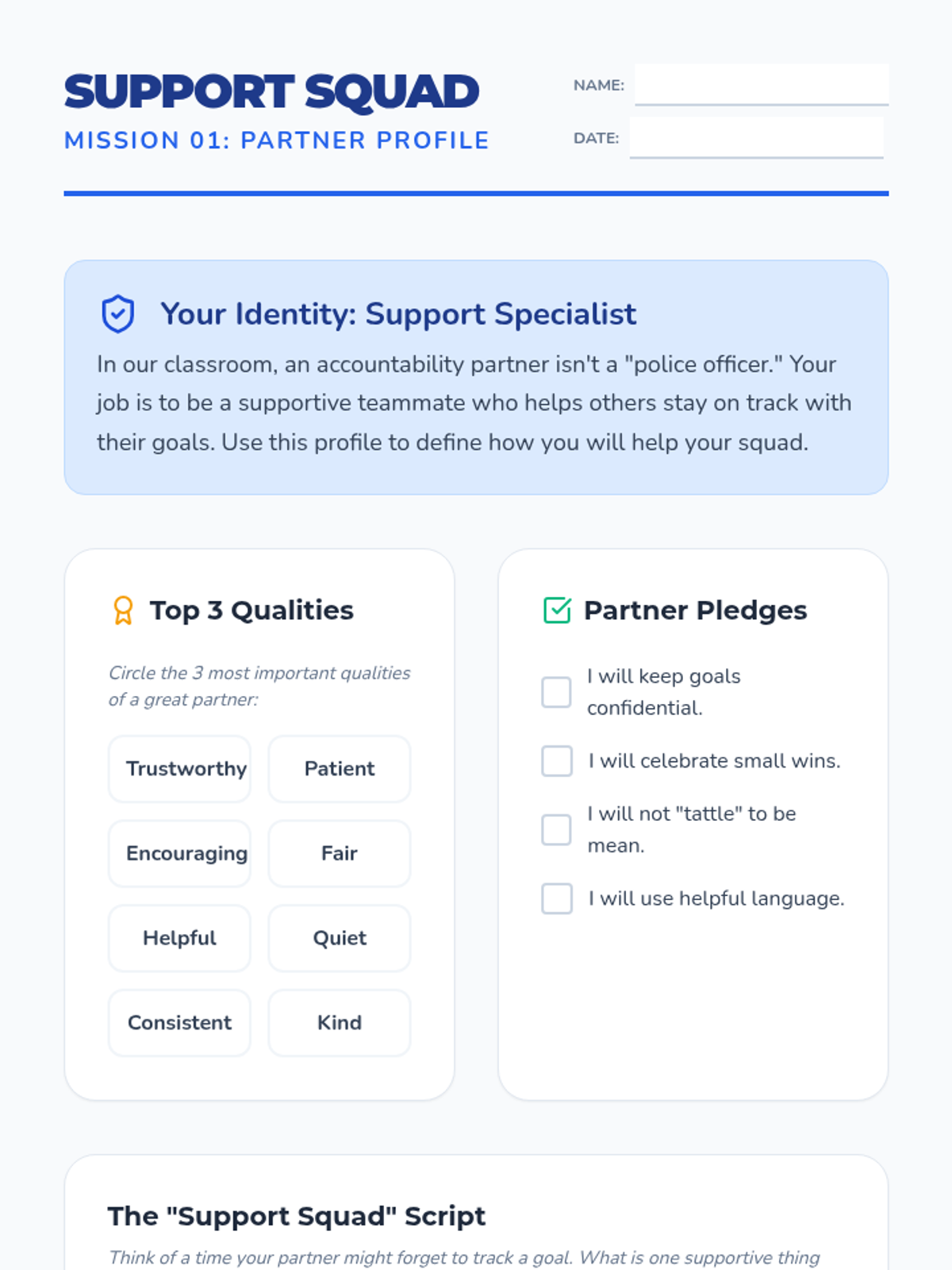
Focusing on the social aspect of behavioral growth, this sequence introduces peer accountability and collaborative goal setting. Students participate in simulations to learn how to be supportive accountability partners without being critical. The sequence builds social-emotional skills by teaching students that individual tracking contributes to the community environment.
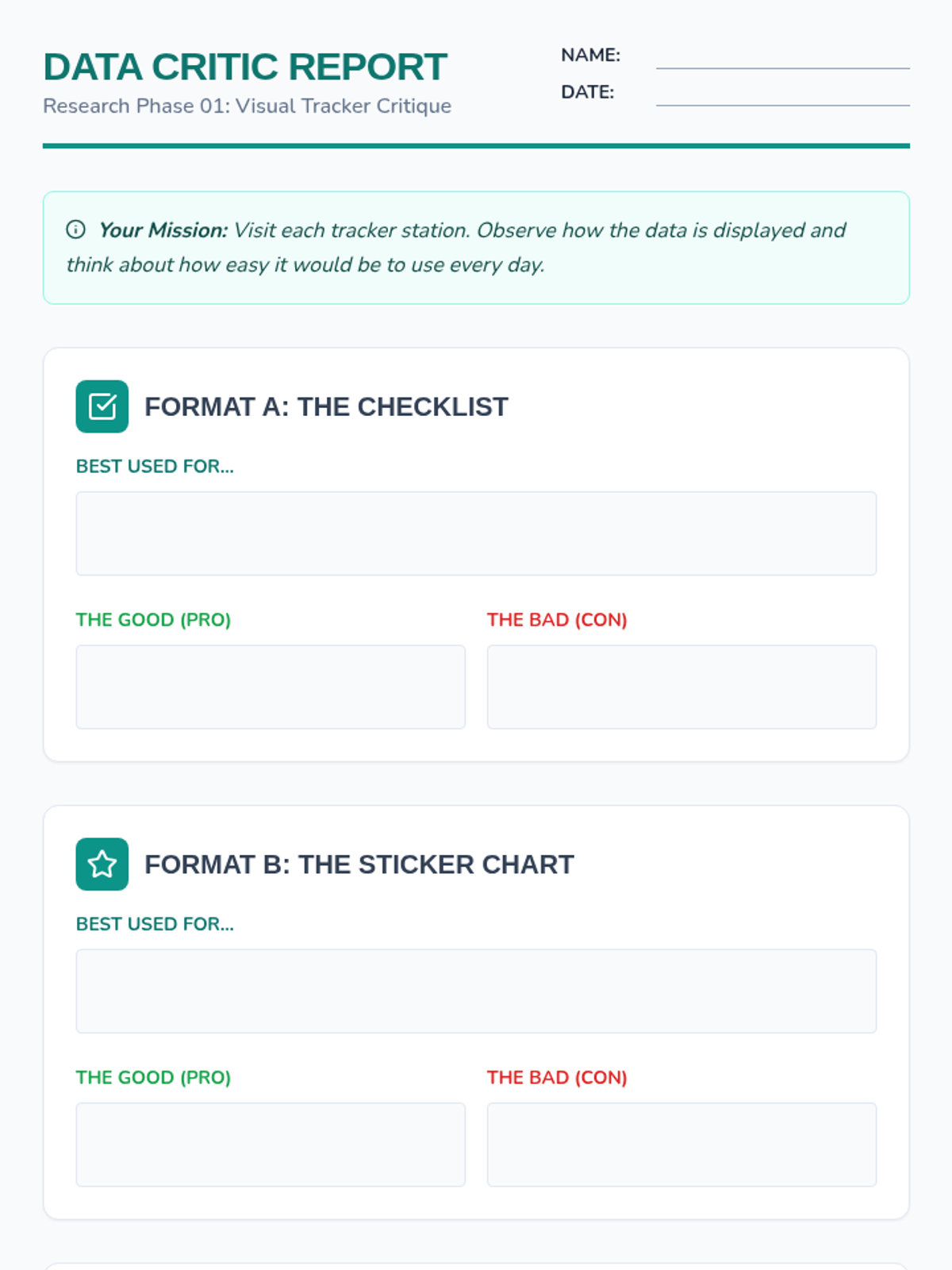
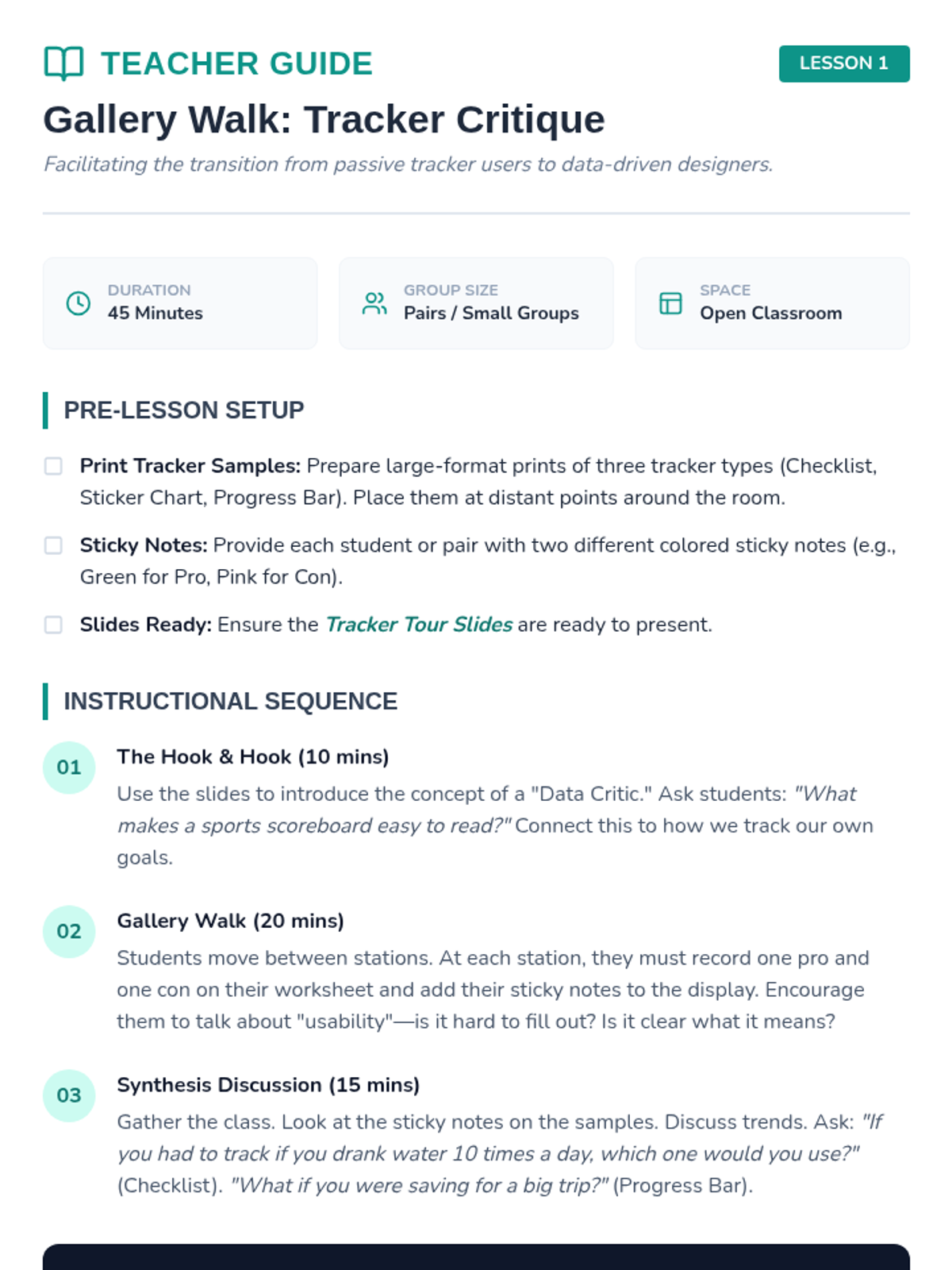
Students transition from passive recipients of behavior charts to active designers, creating personalized systems for tracking their own goals. The sequence covers visual design for data clarity, the ethics of self-reporting, and establishing sustainable routines for long-term success.
A 5-lesson sequence for 3rd-grade students focused on group behavior tracking and collective responsibility through game-based mechanics. Students collaborate to set norms, track progress using a 'Group Gauge,' and practice supportive peer communication to achieve class-wide goals.
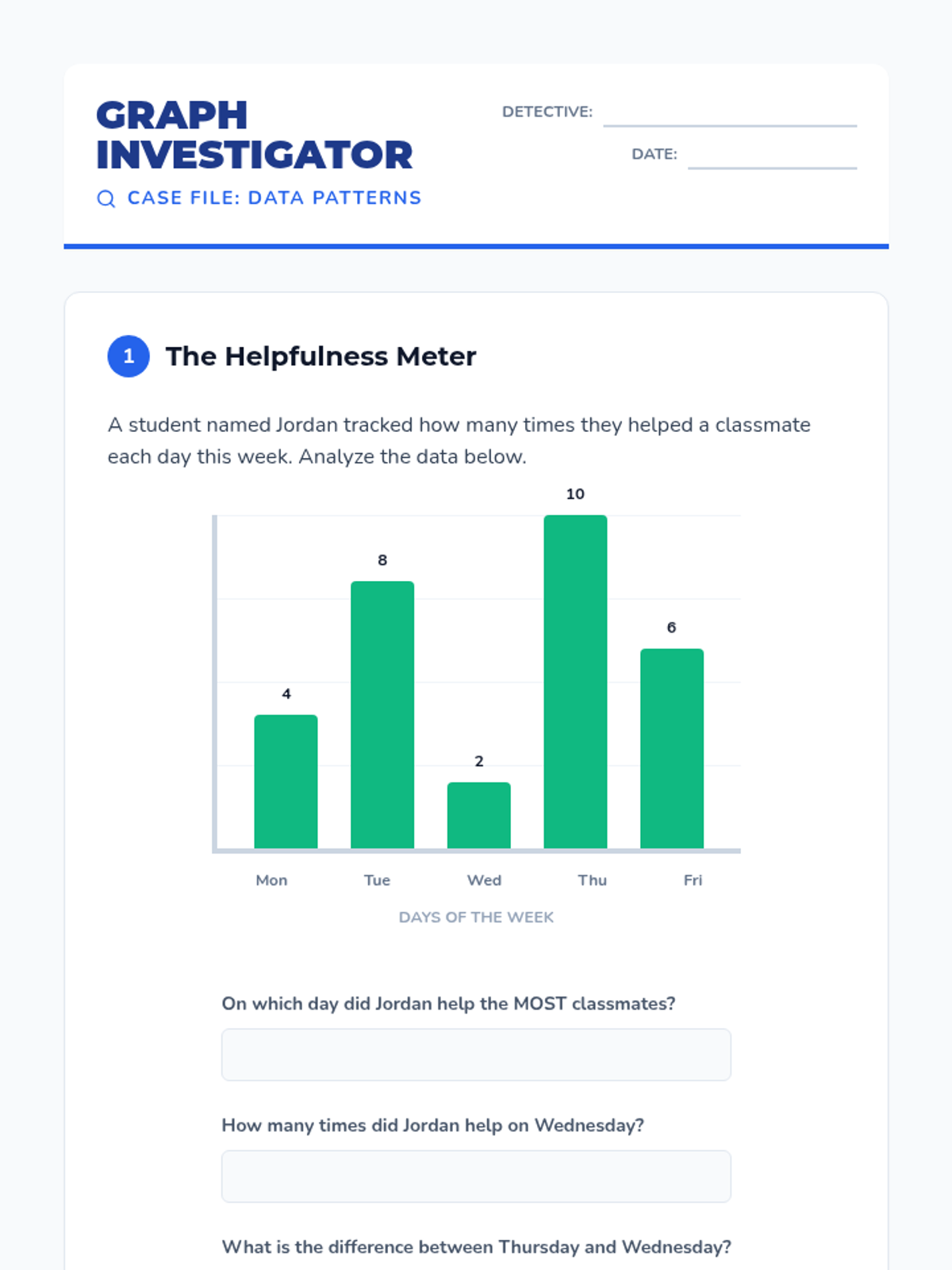
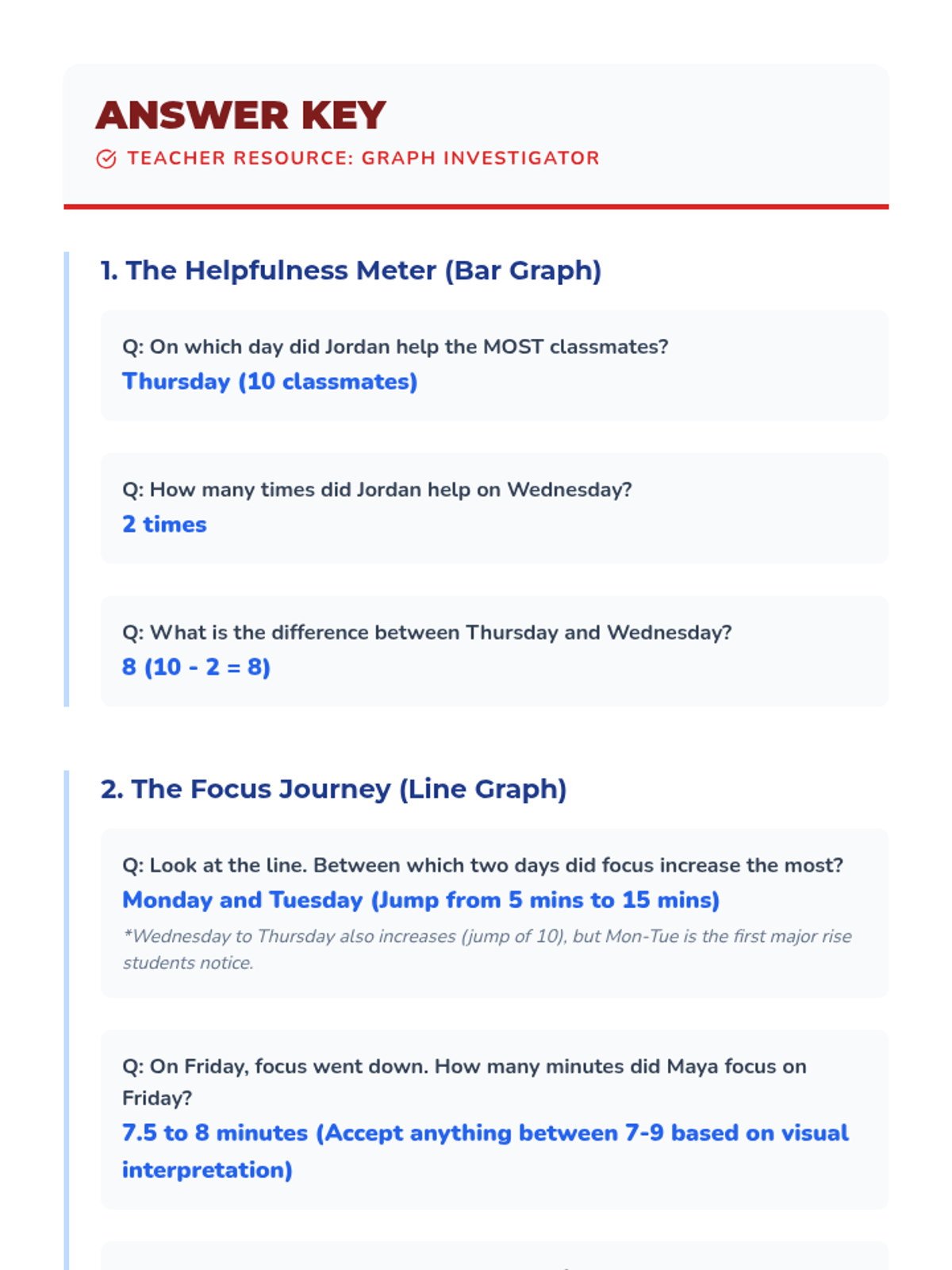
A 5-lesson sequence for 3rd graders that treats behavior tracking as a data science project. Students learn to interpret graphs, identify time-based and environmental triggers, and create evidence-based strategies for personal growth.
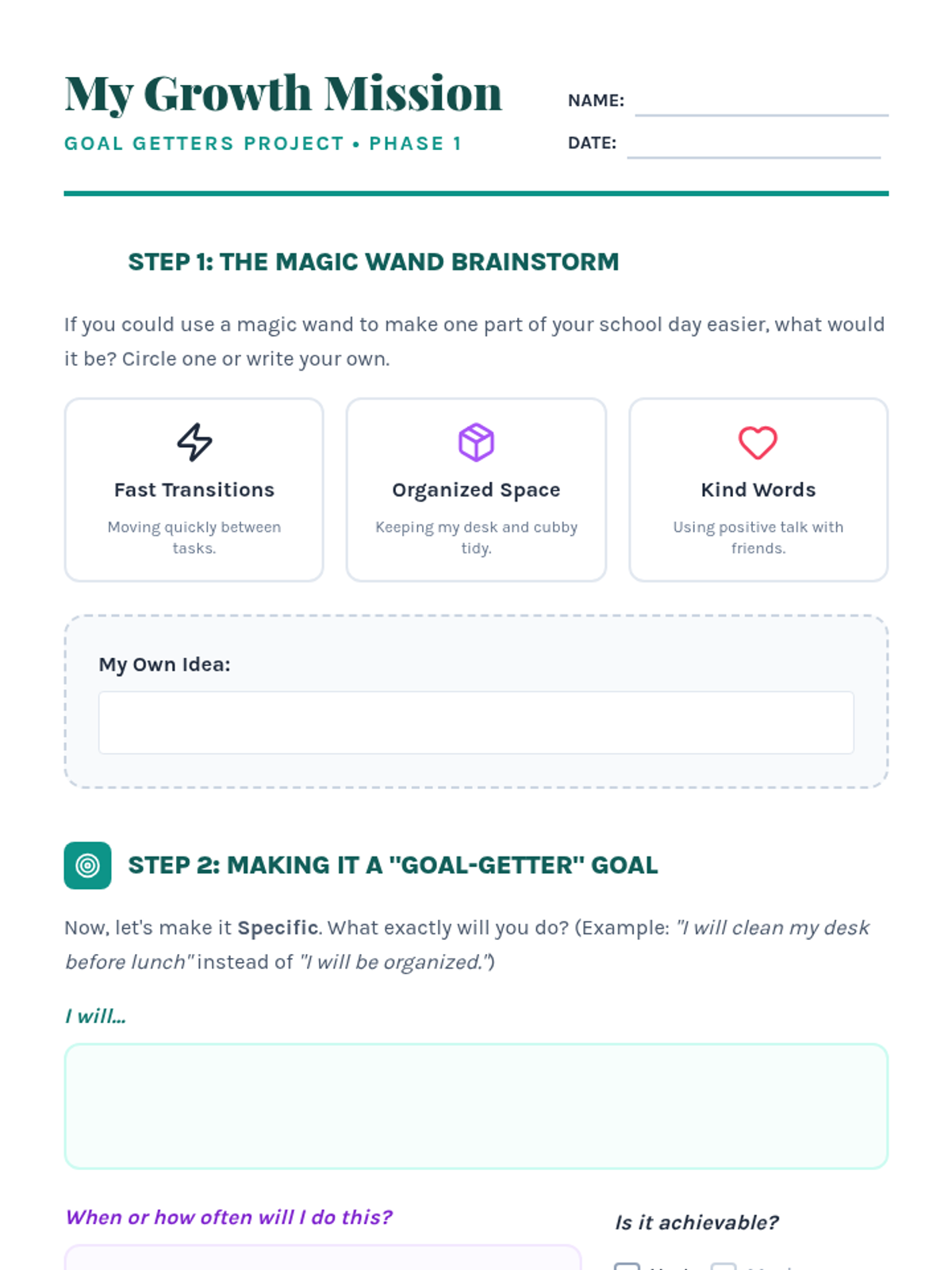
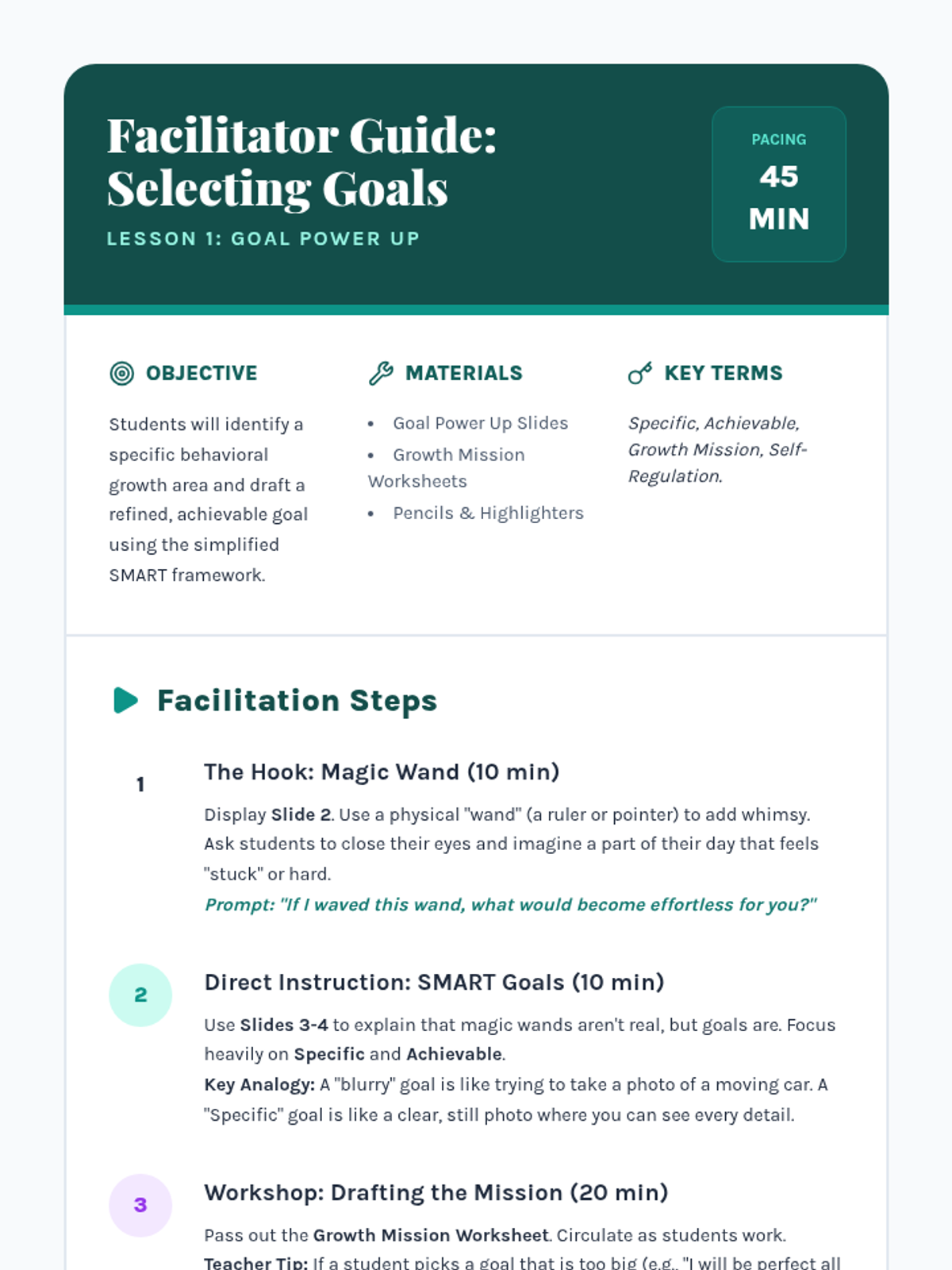
A project-based unit where 3rd graders design and use personalized behavior trackers to build agency and self-regulation skills. Students move from goal setting to design, implementation, and final reflection.
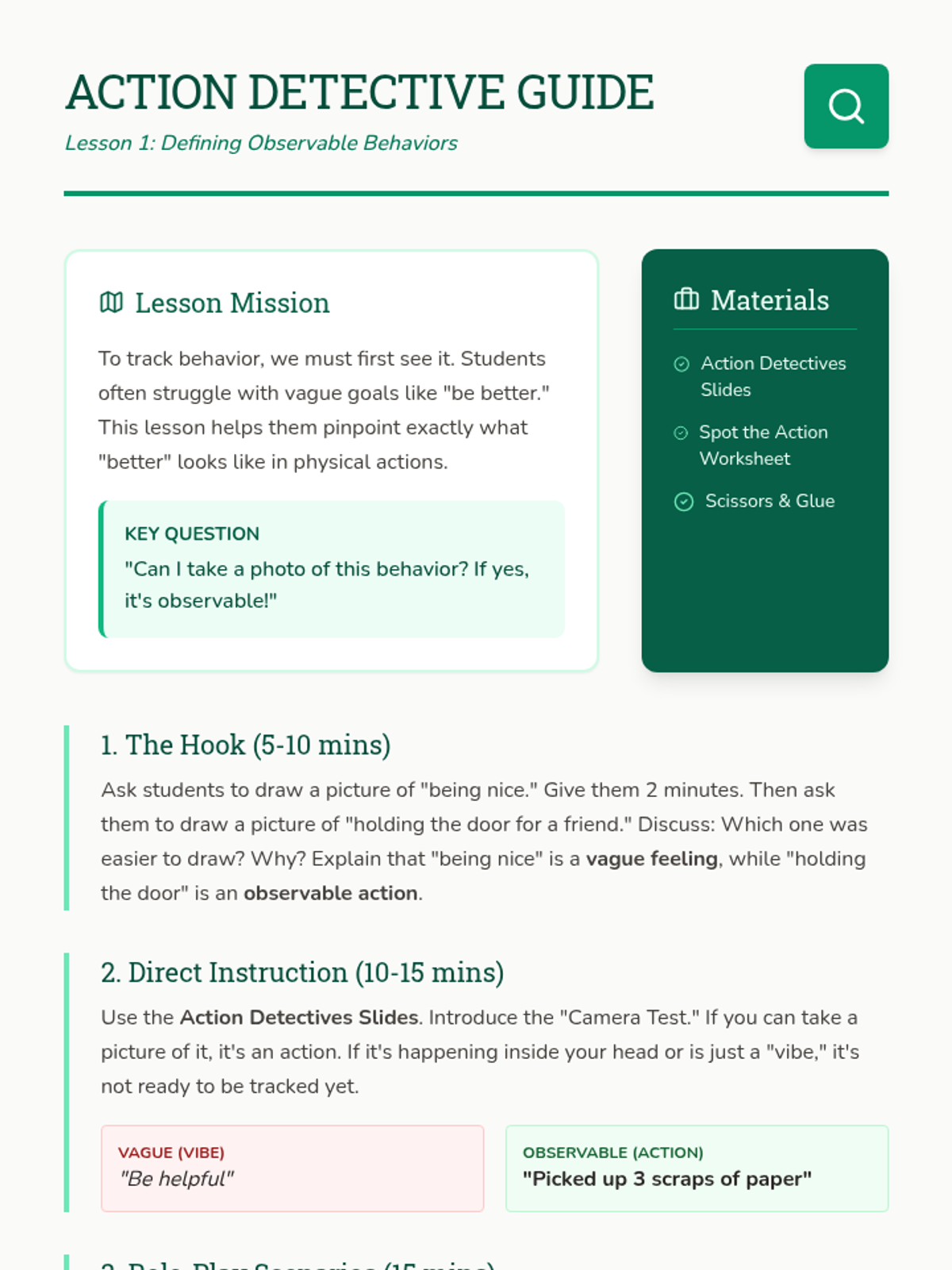
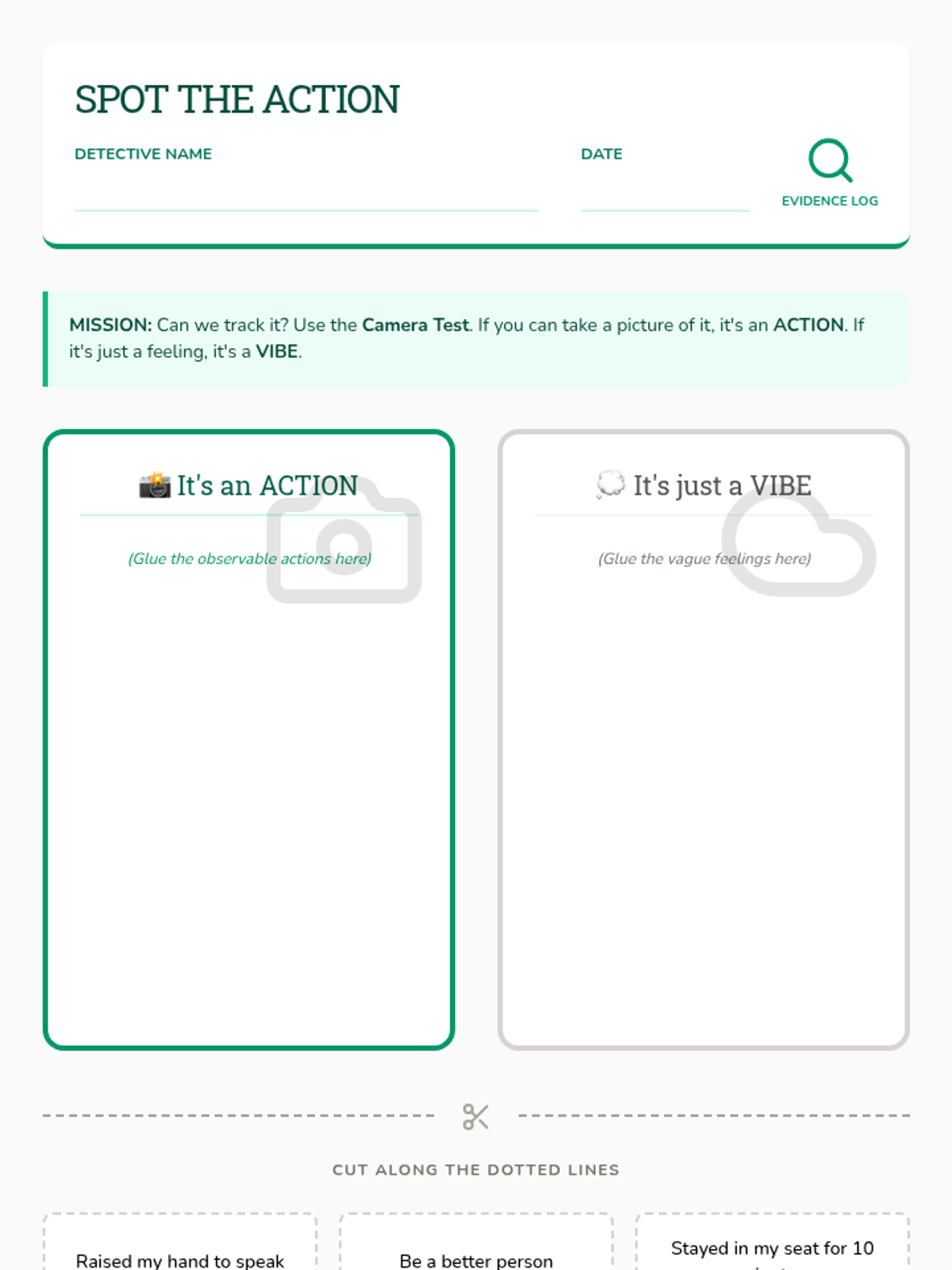
A 5-lesson sequence for 3rd graders on self-monitoring and behavior tracking. Students transition from identifying specific behaviors to using trackers honestly and reflecting on their progress using a 'Pathfinder' theme.
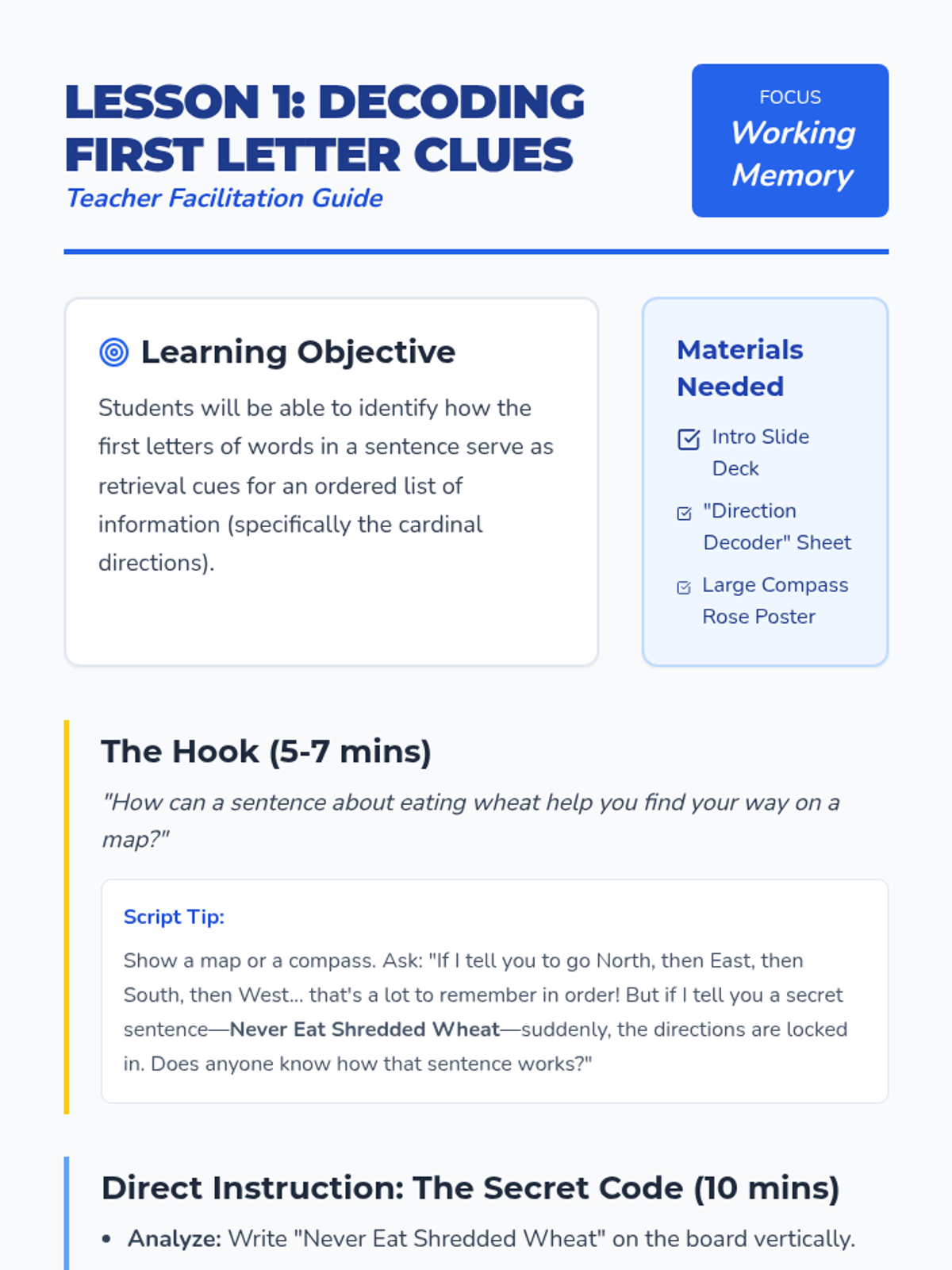
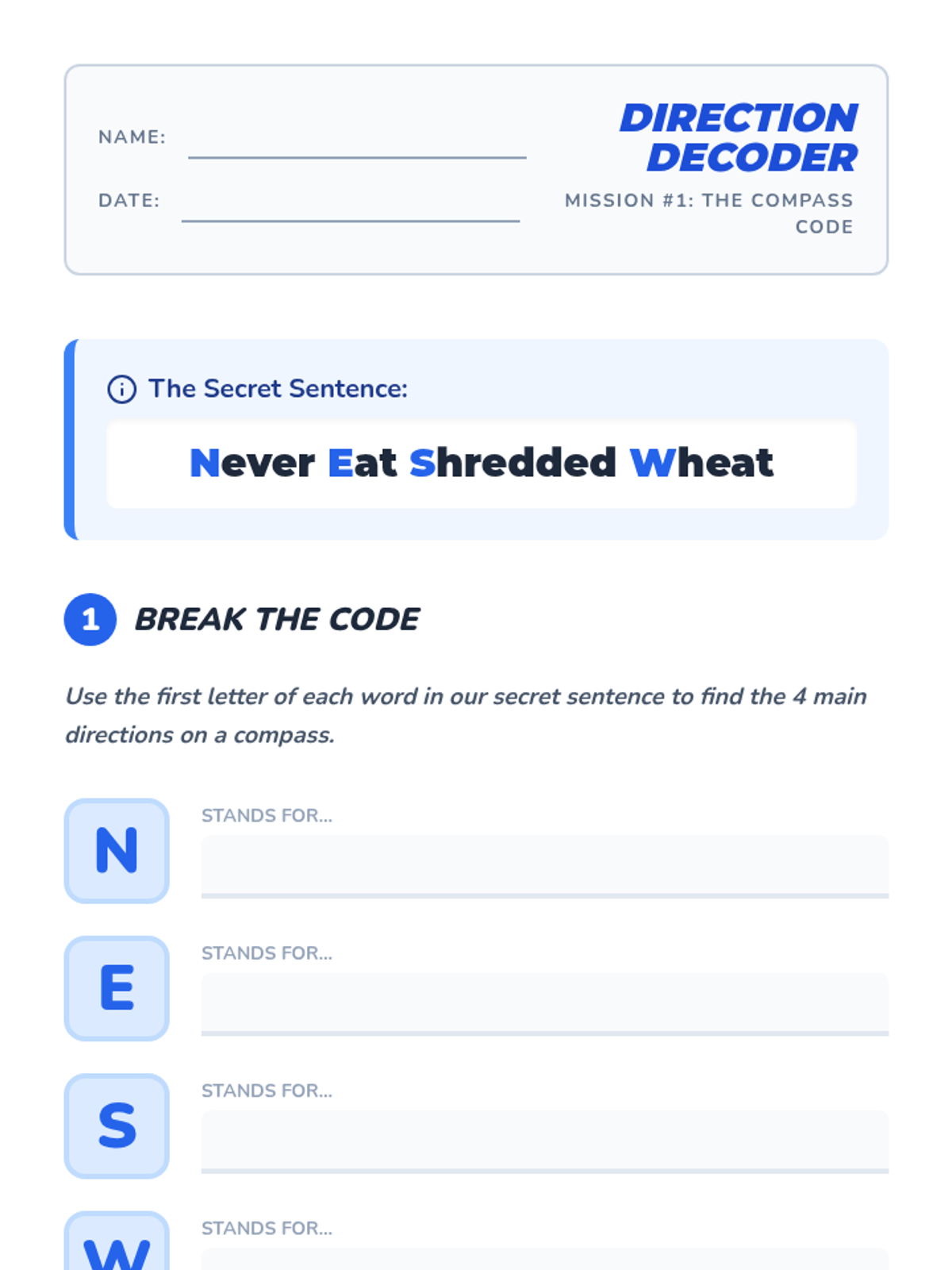
A sequence for 3rd-grade students focused on mastering verbal mnemonic strategies like acrostics and sentence mnemonics to improve working memory and retention of ordered lists. Students progress from decoding existing mnemonics to creating their own for academic content and spelling.
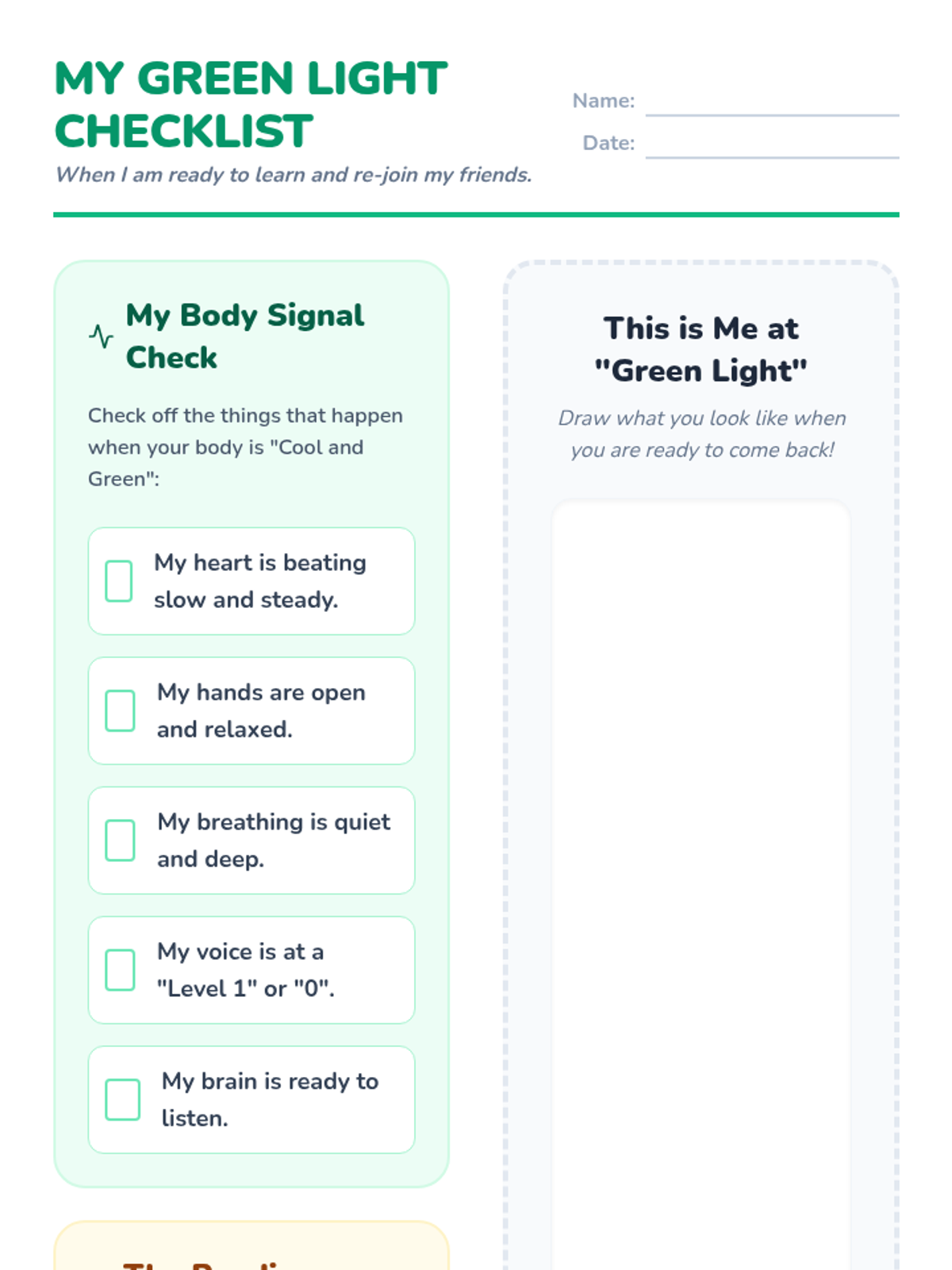
A 5-lesson sequence designed for 3rd-grade students to navigate the 'Re-entry' phase following dysregulation. Students learn to recognize their own readiness signals, practice restorative repairs, master academic re-entry strategies, combat shame with positive self-talk, and formalize their return through structured check-ins.
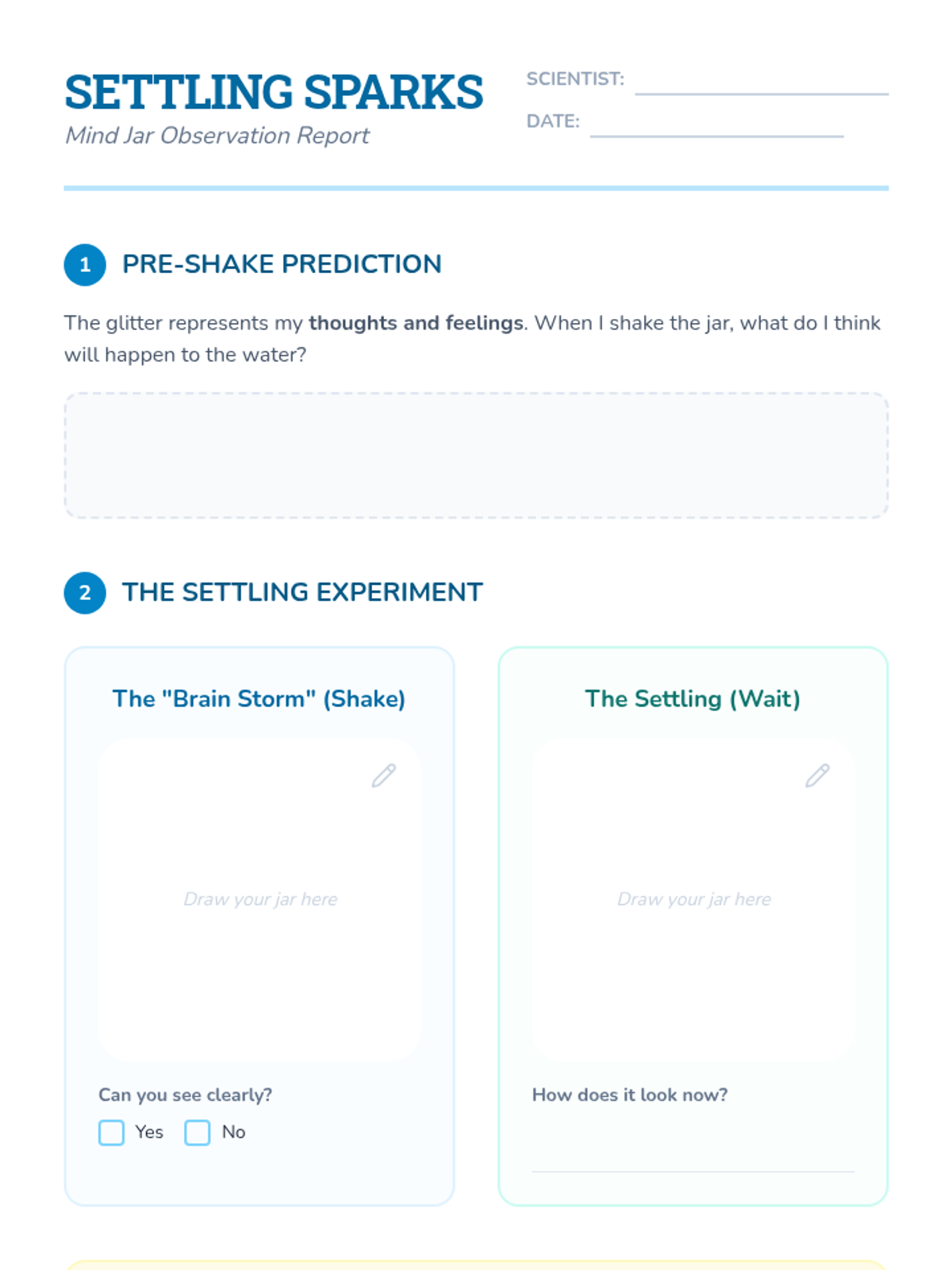
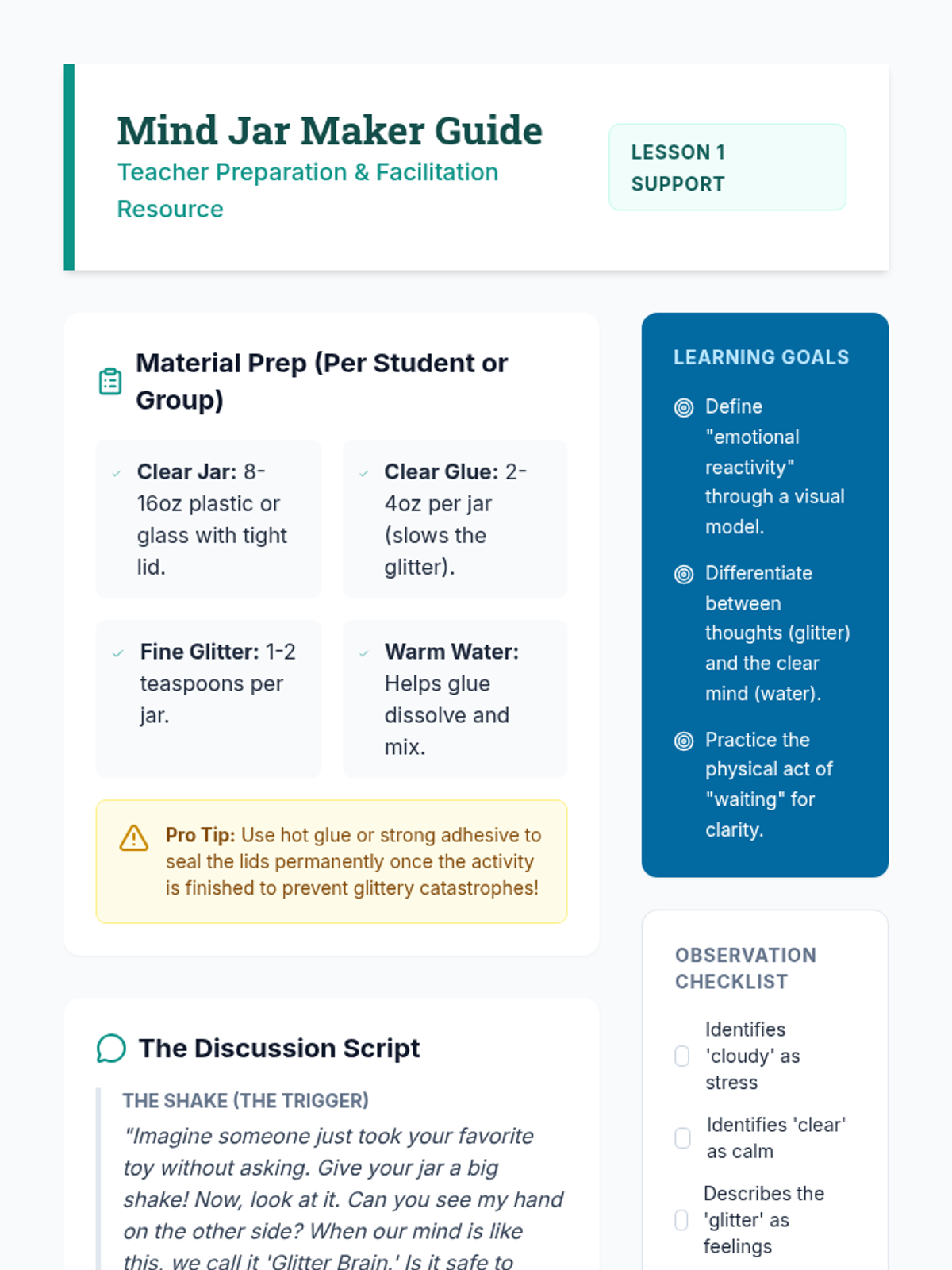
A 3rd-grade mindfulness sequence exploring emotional regulation through metaphors like mind jars, weather reporting, and visualization to help students widen the gap between triggers and reactions.
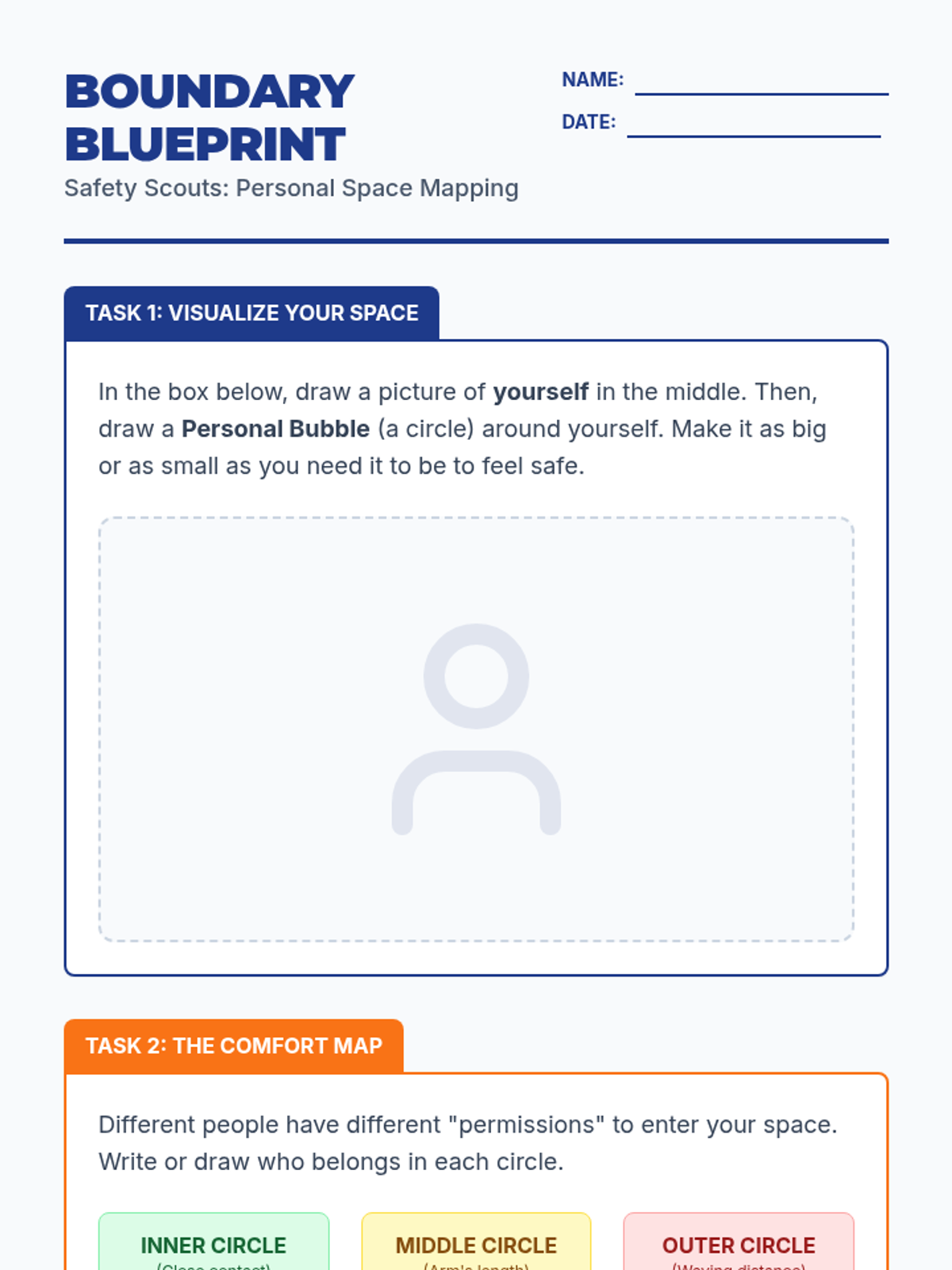
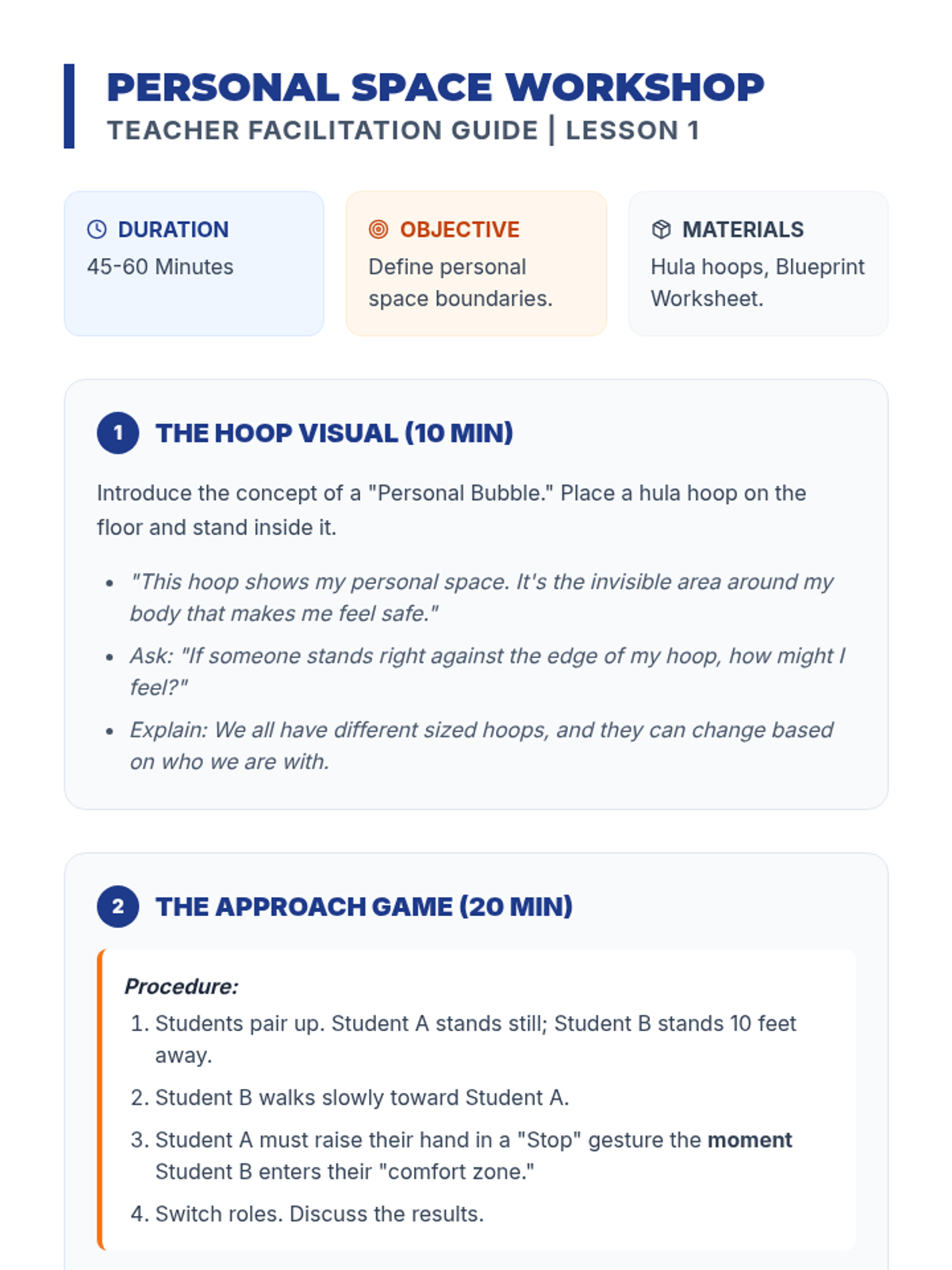
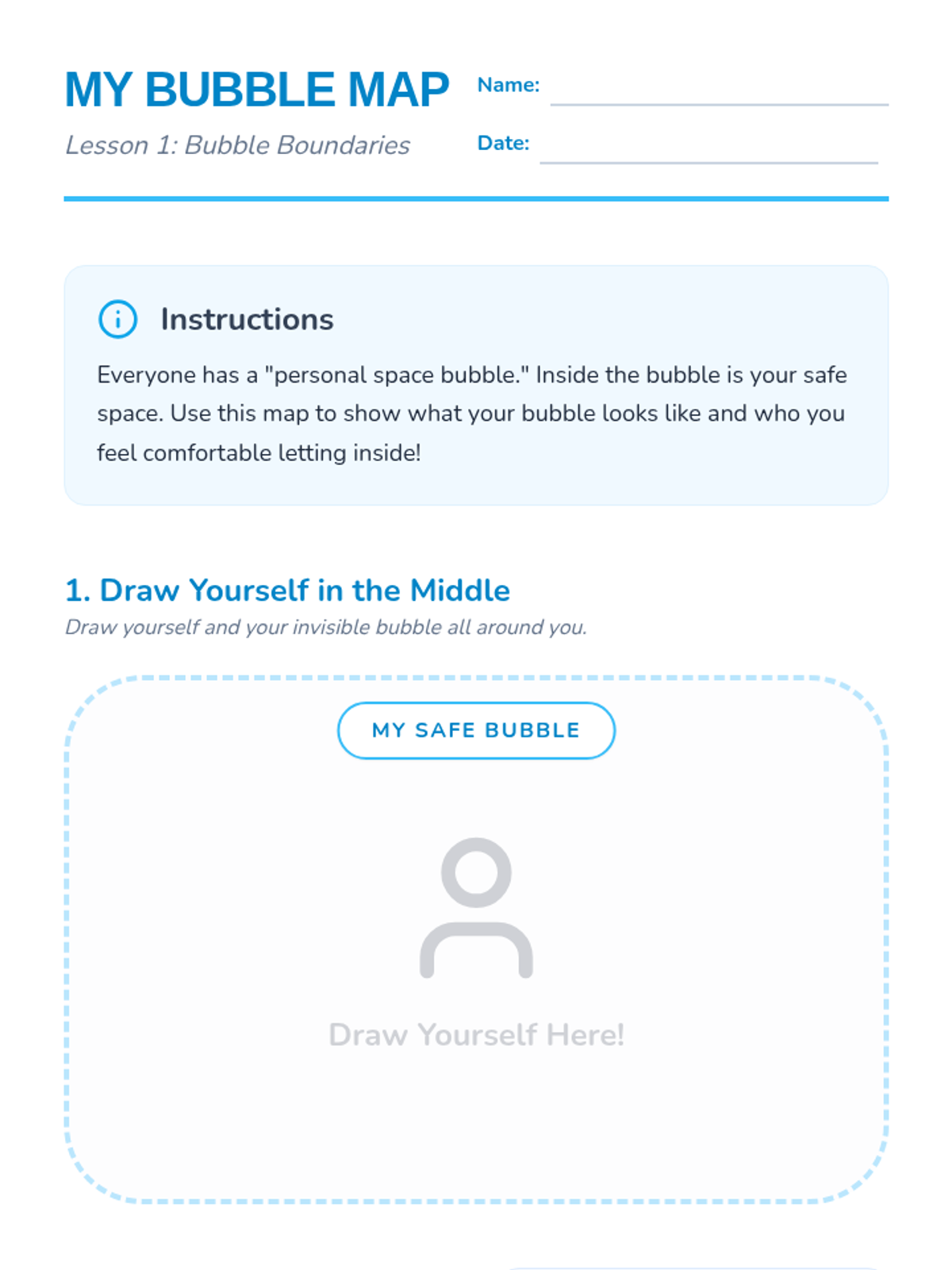
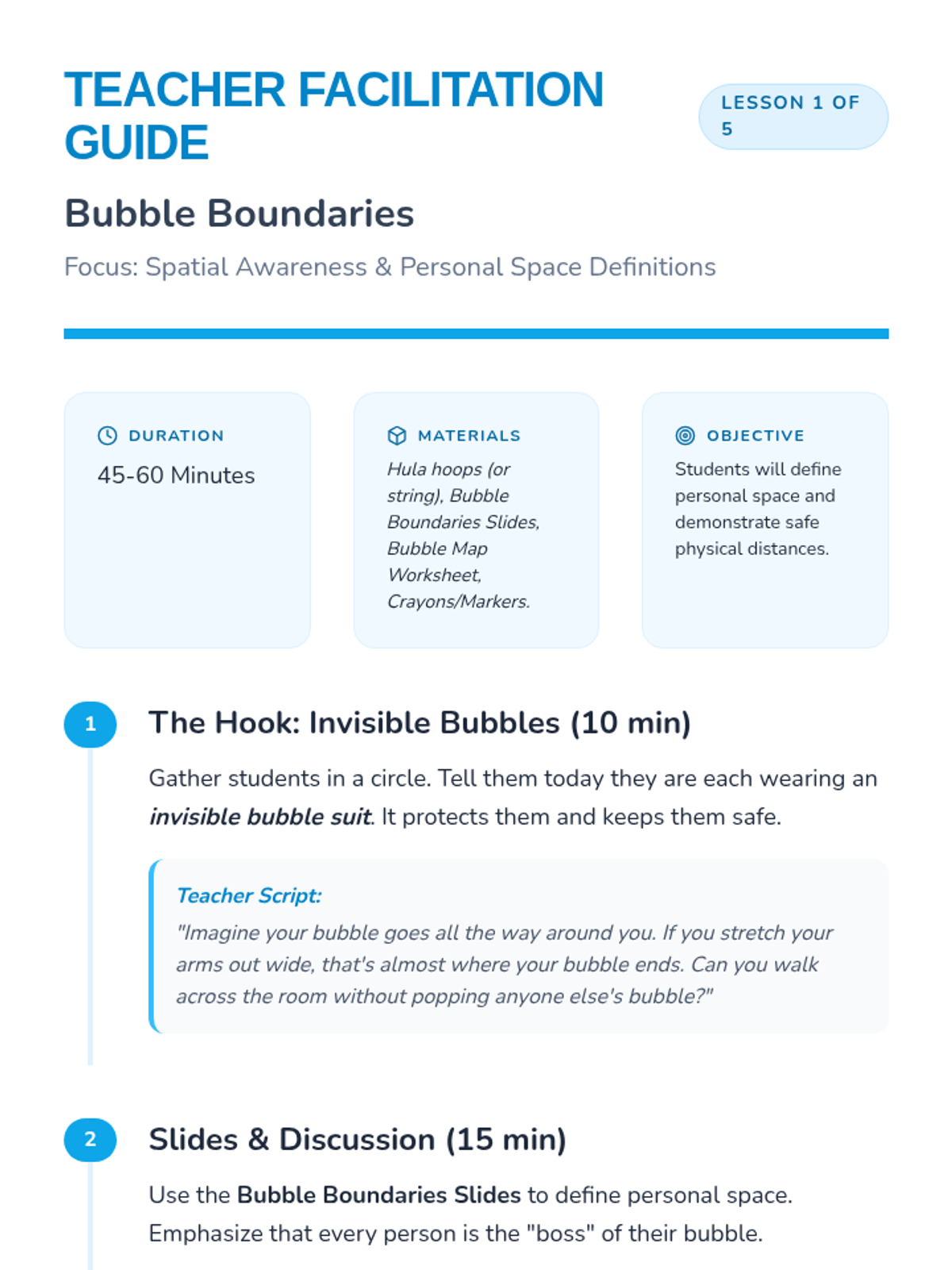
This sequence introduces students to the fundamental concepts of personal space and physical boundaries through interactive movement and role-playing activities. Students learn to define their personal space, practice asking for consent, and develop assertive communication skills to maintain their safety and respect the boundaries of others.
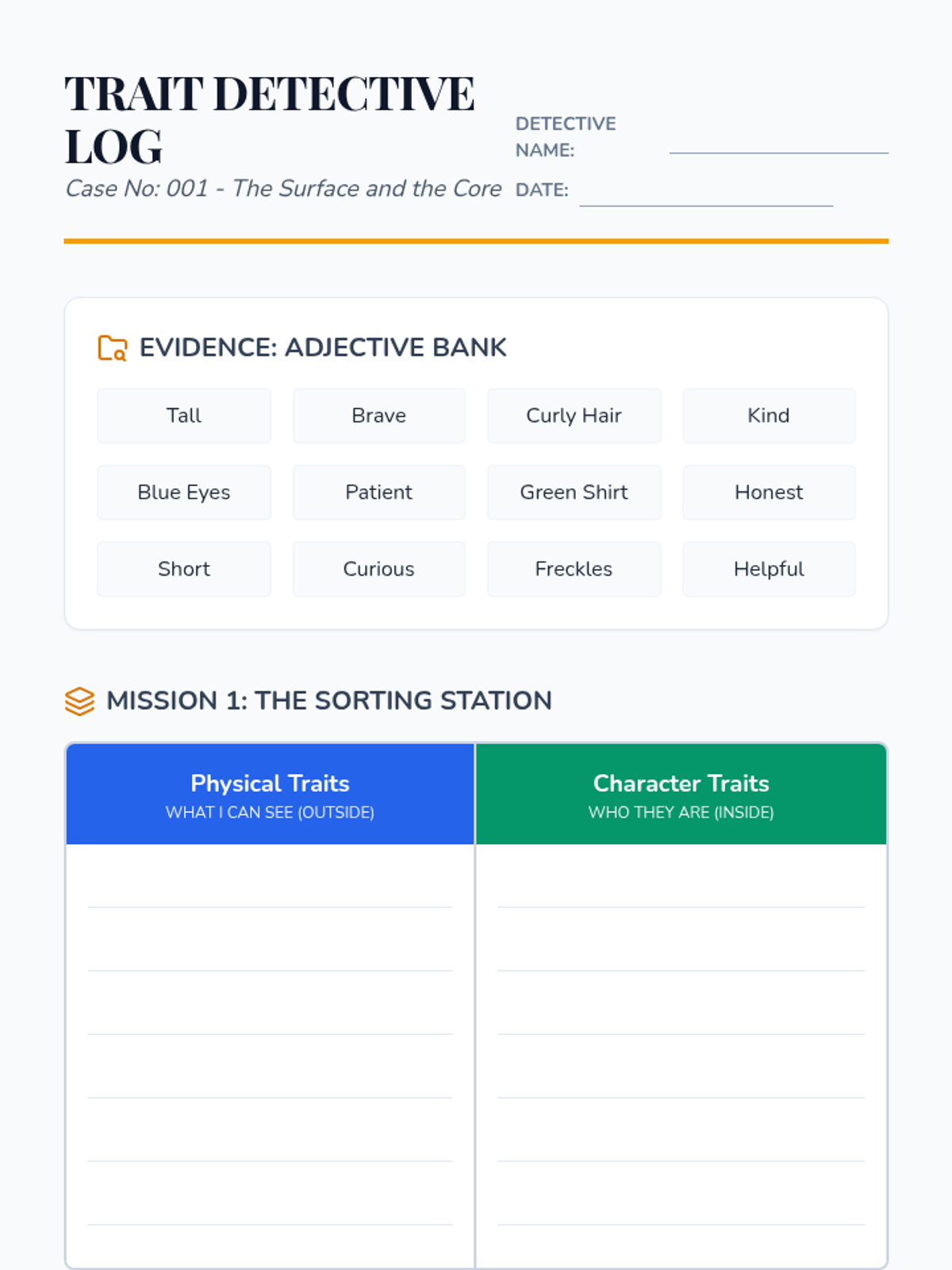
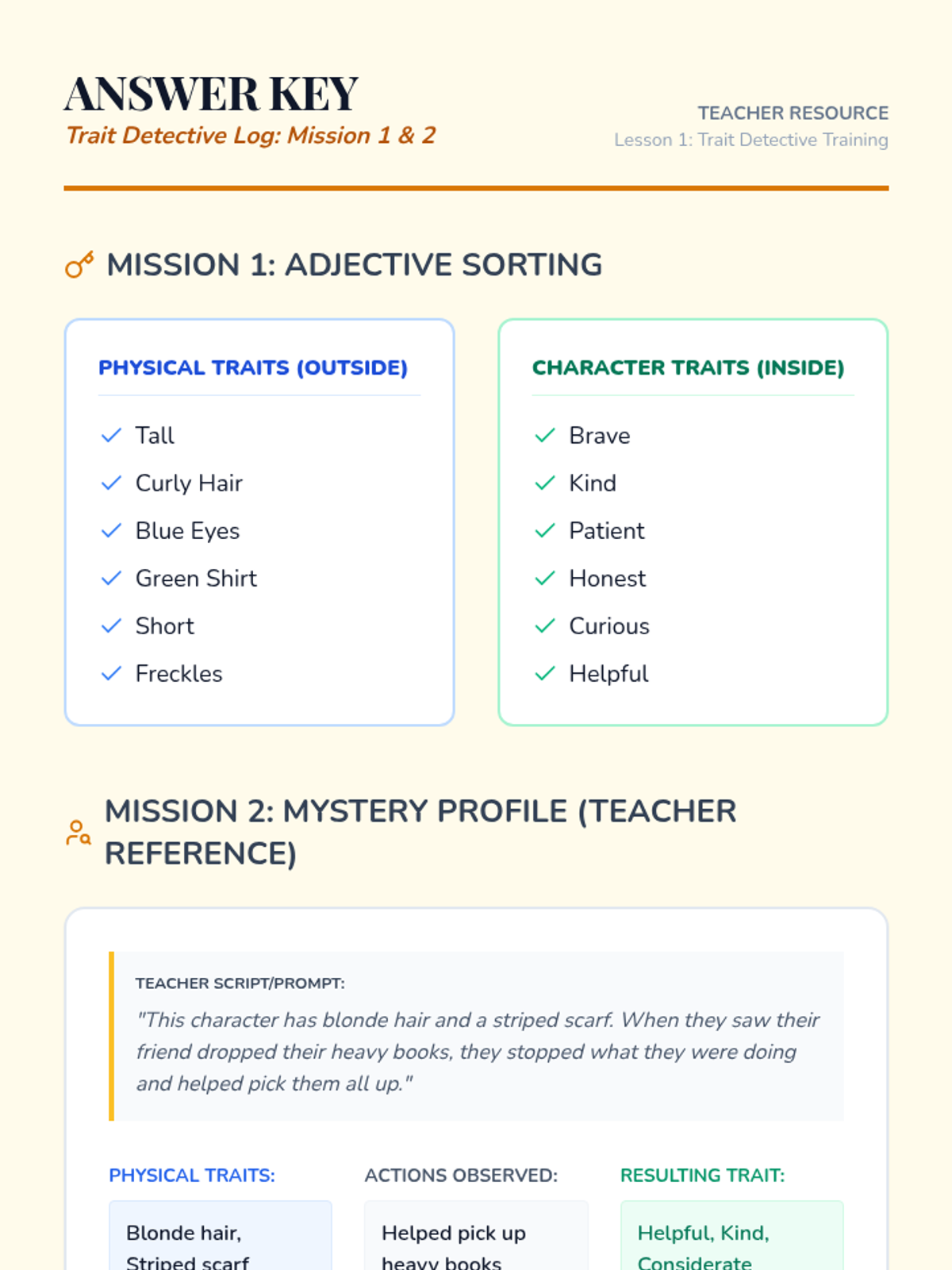
This sequence introduces students to the concept of personal identity by distinguishing between physical attributes and internal character traits. Students explore their own strengths, recognize how actions reflect identity, and learn to view growth areas through a growth mindset, culminating in a symbolic self-portrait.
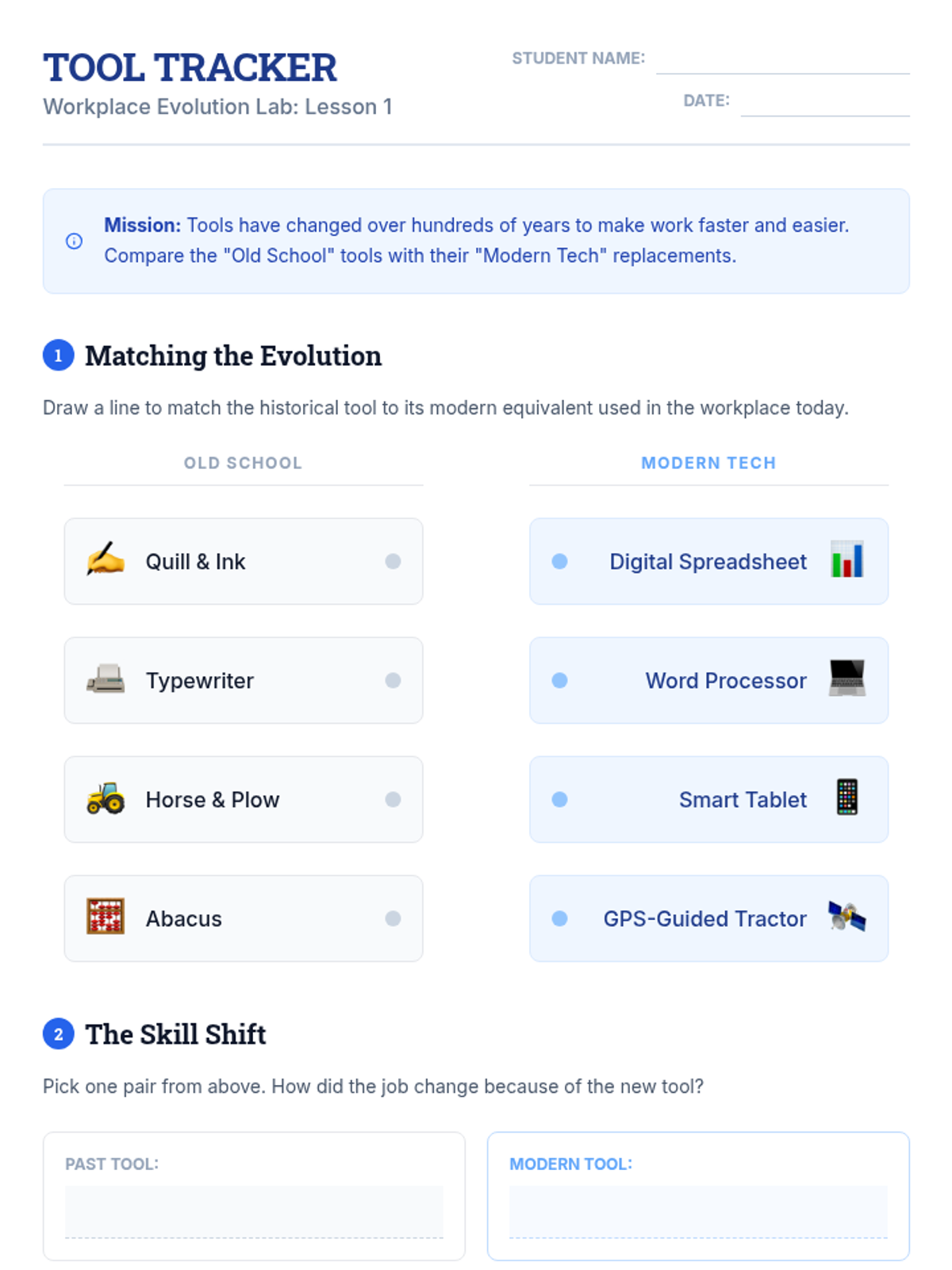
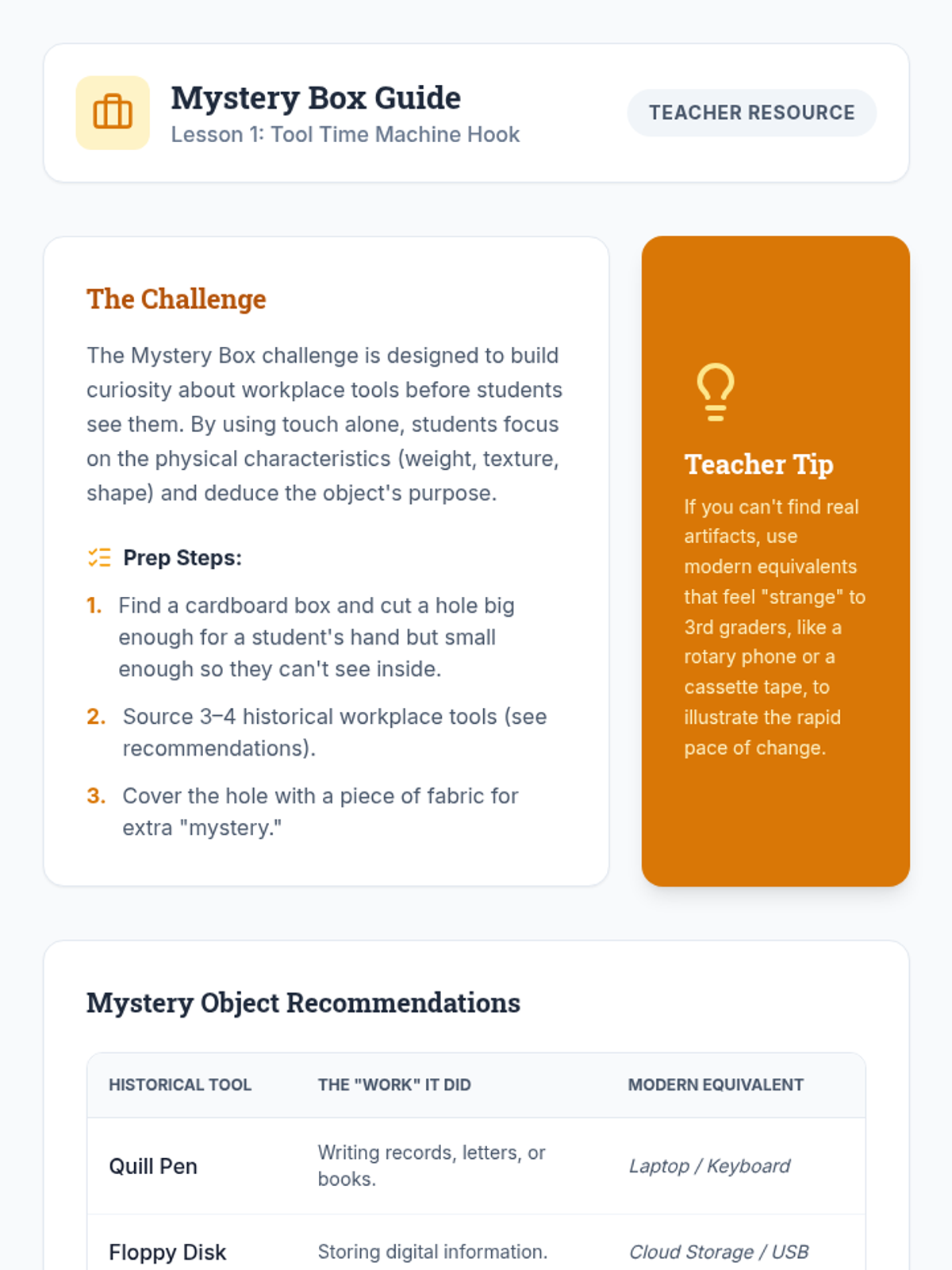
This sequence explores the evolution of the workplace, from historical tools to modern automation, remote work, the gig economy, and future career forecasting for 3rd-grade students.
A comprehensive 9-week social-emotional learning program for neurodivergent 3rd graders, focused on building regulation, communication, and resilience superpowers through one-on-one sessions.
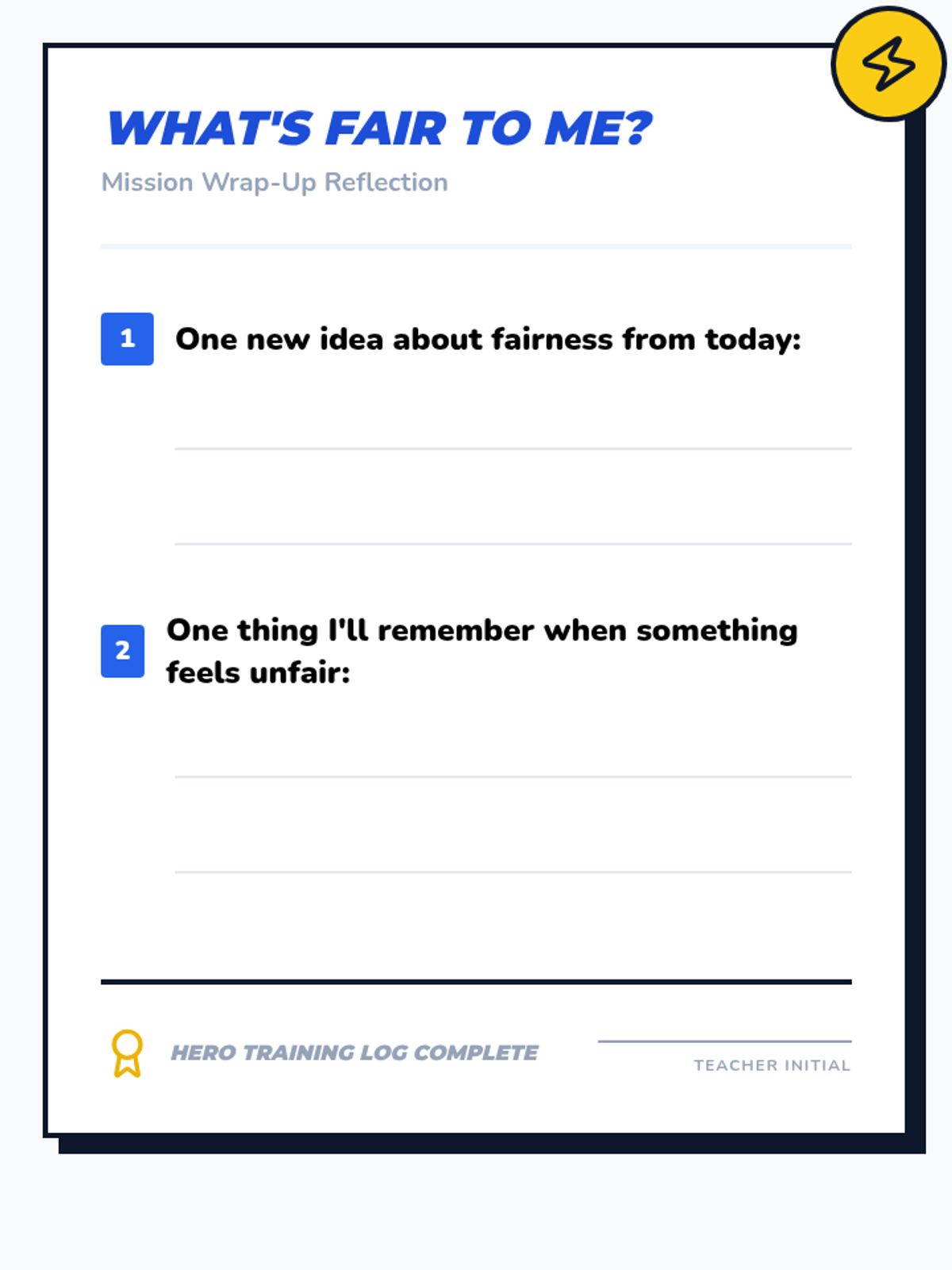
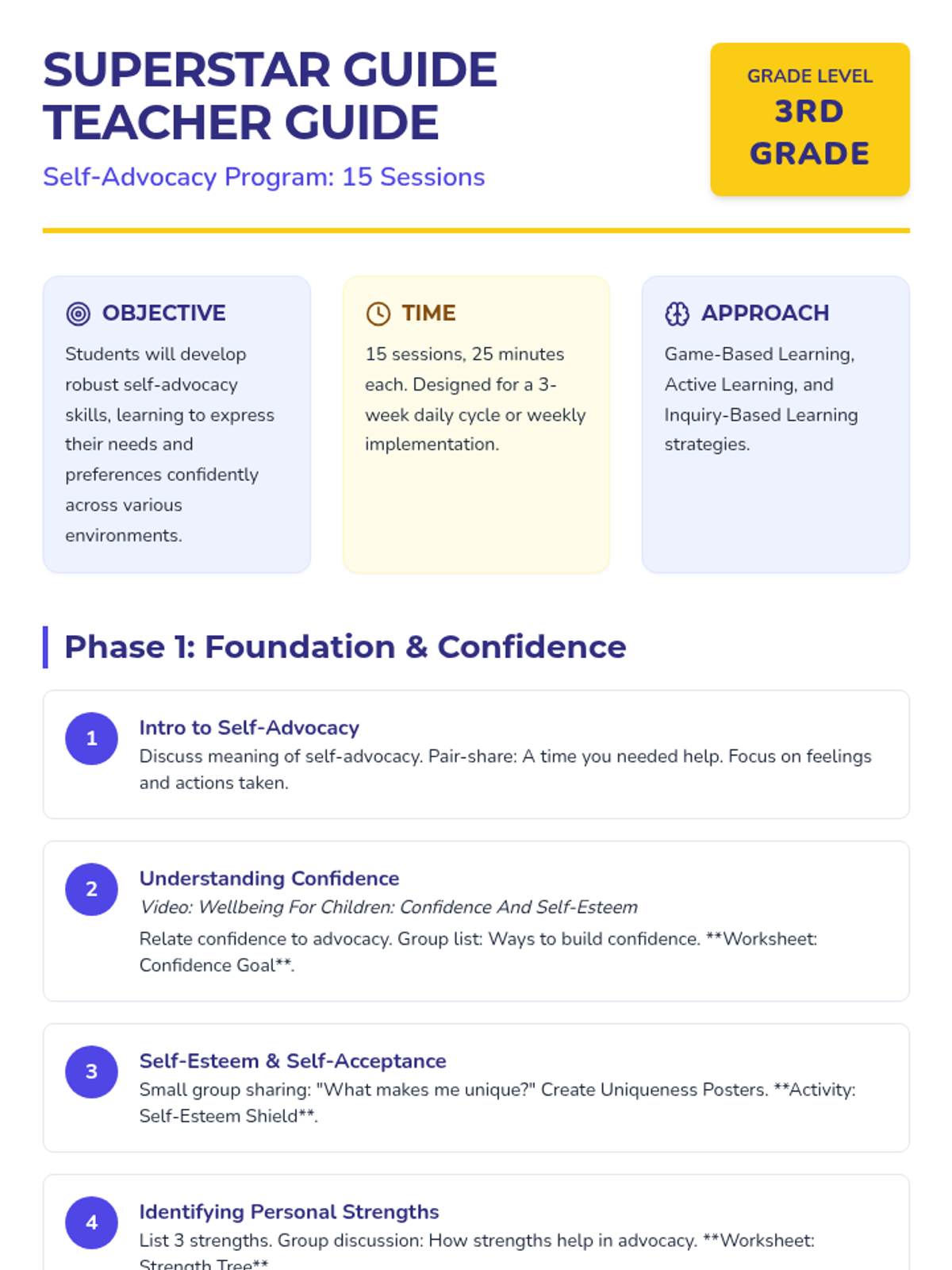
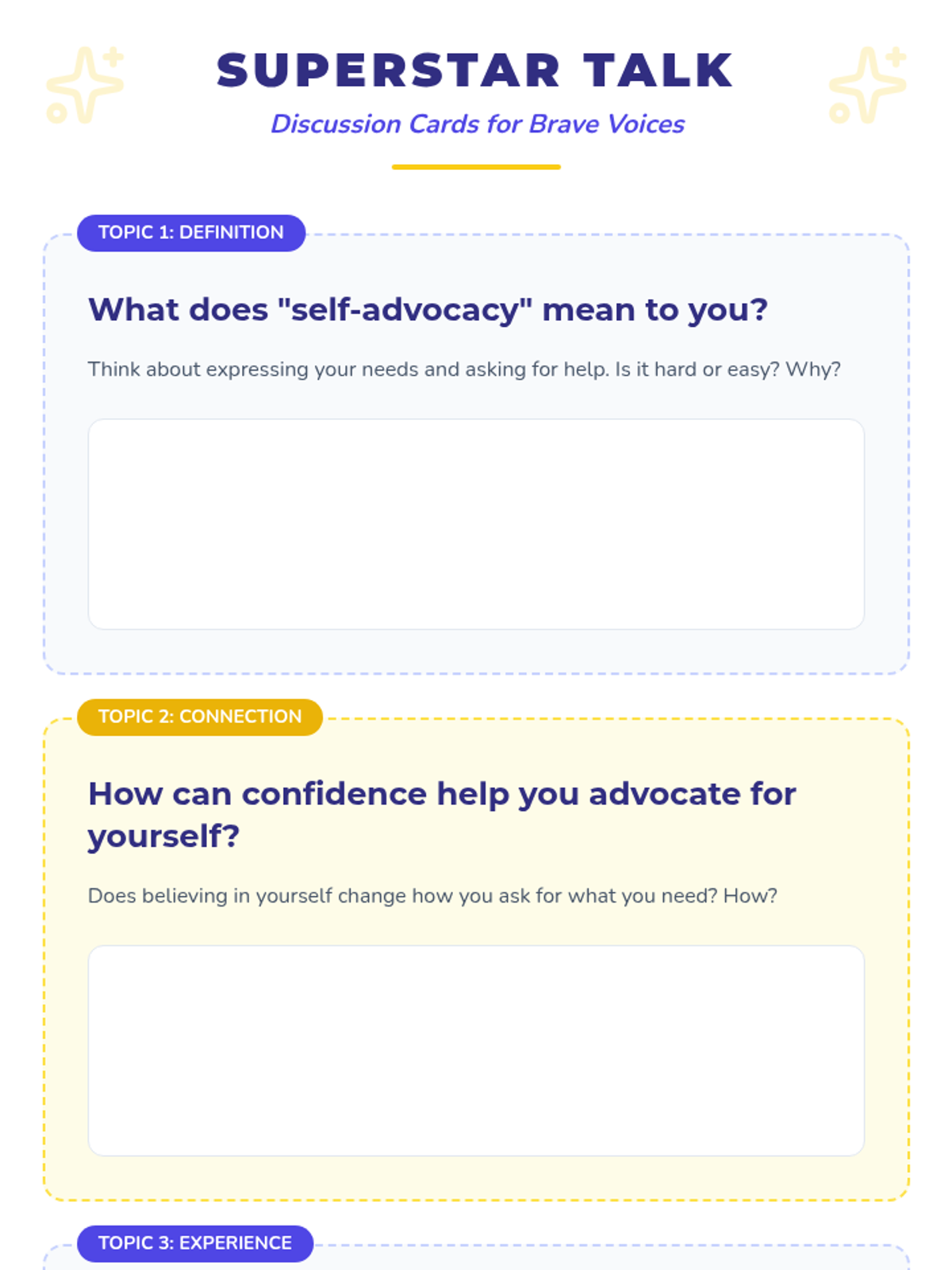
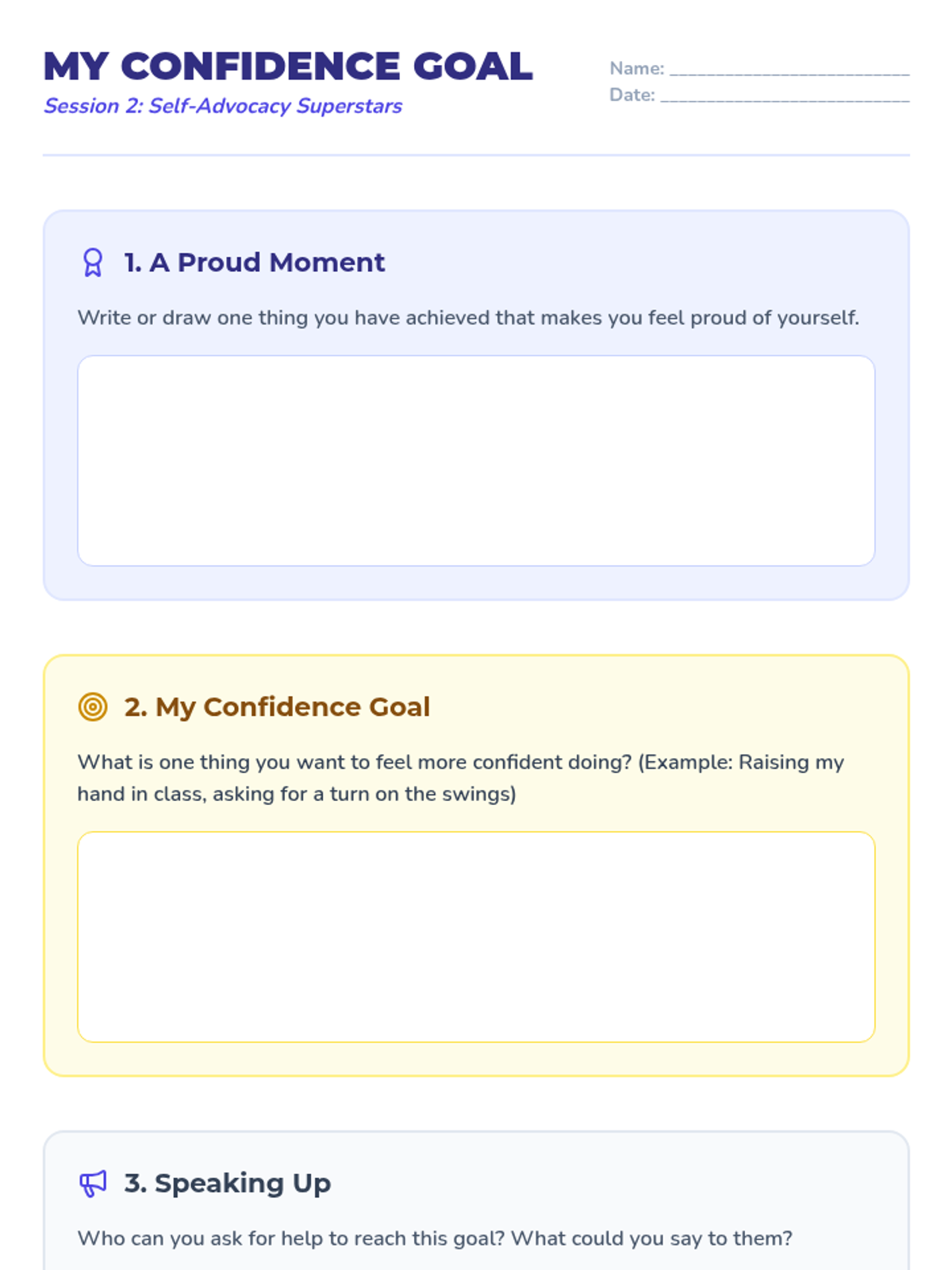
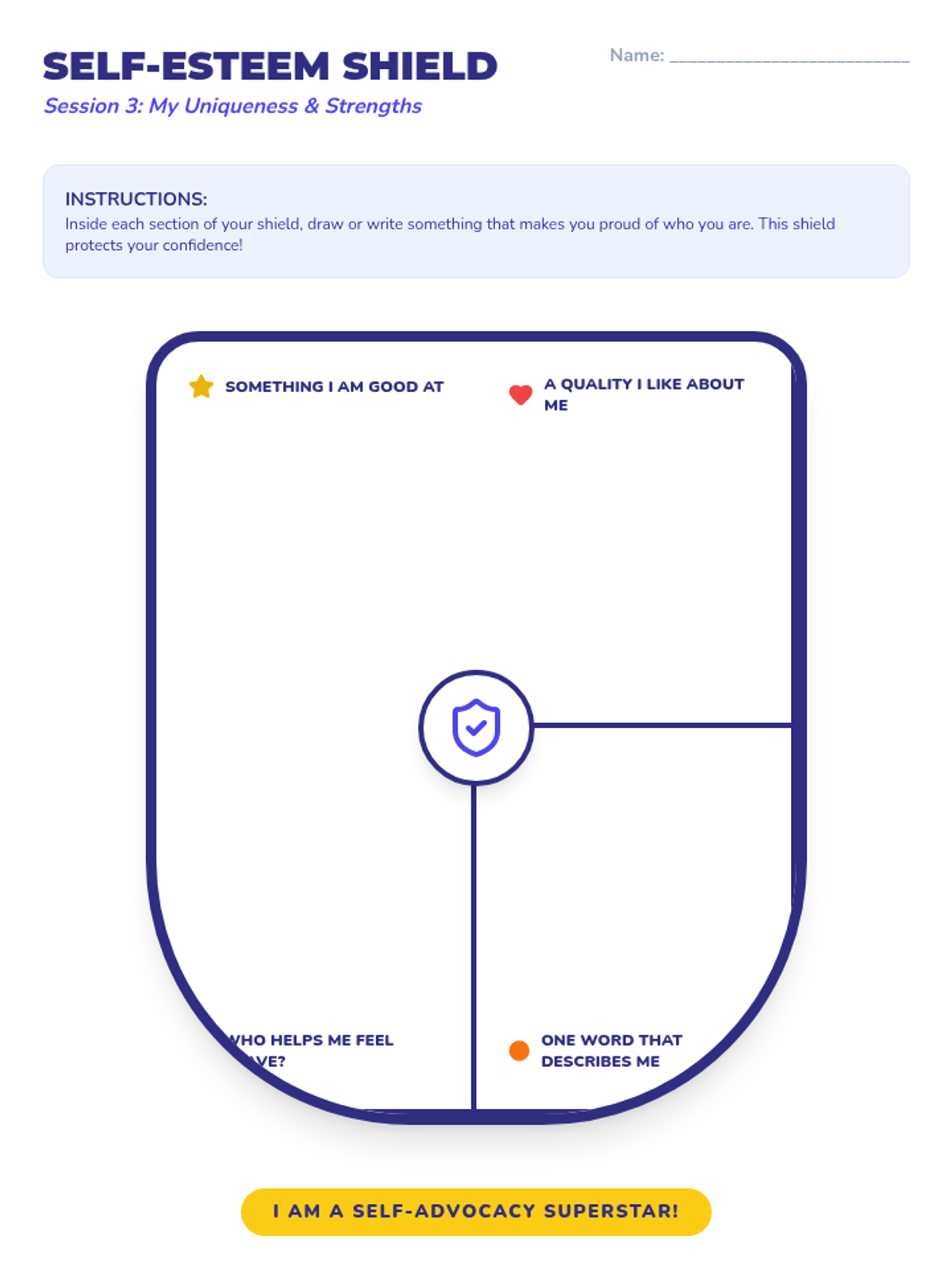
A 15-session program for 3rd graders to develop self-advocacy skills through games, activities, and reflection, helping them confidently express their needs and strengths.
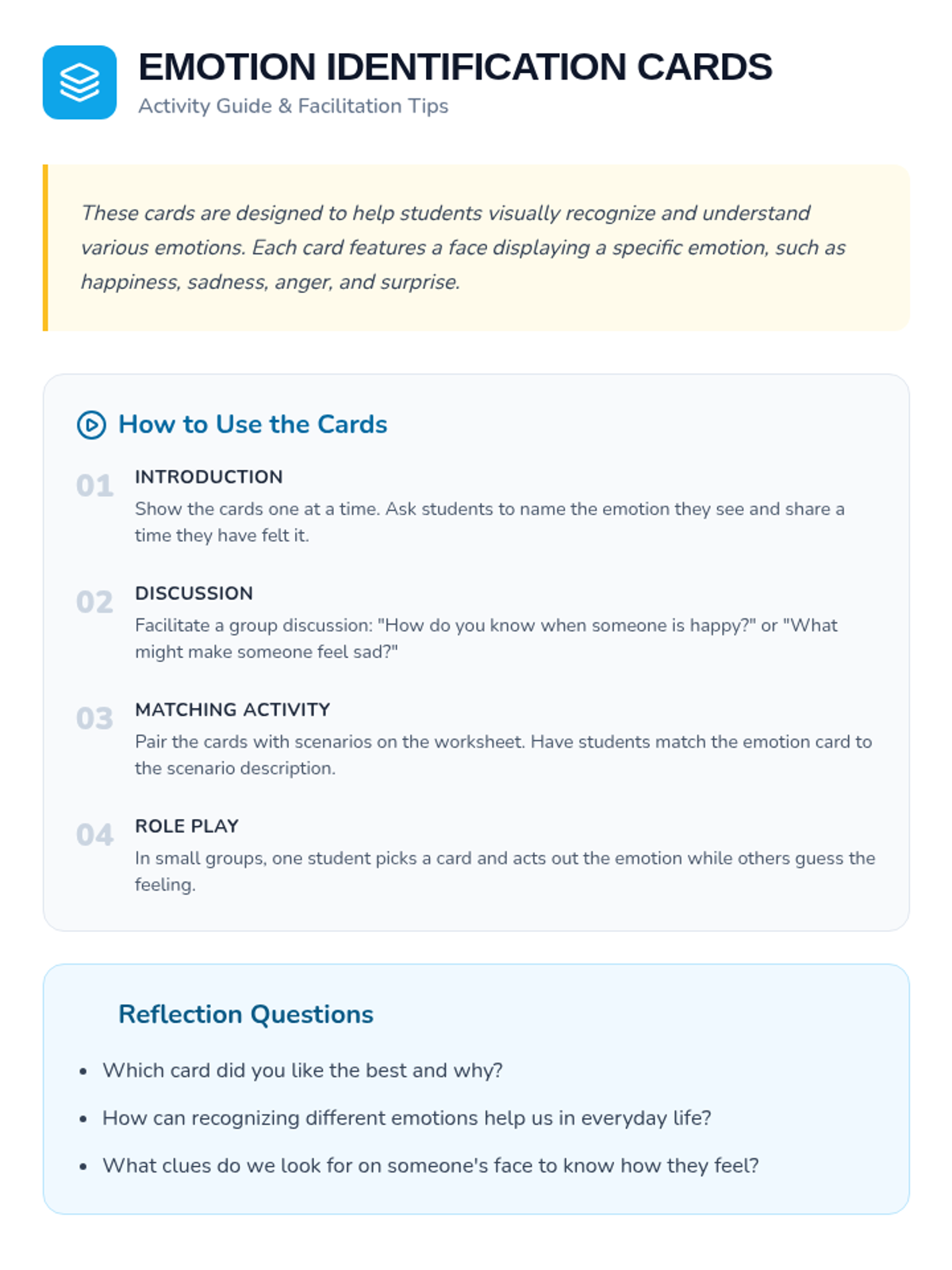
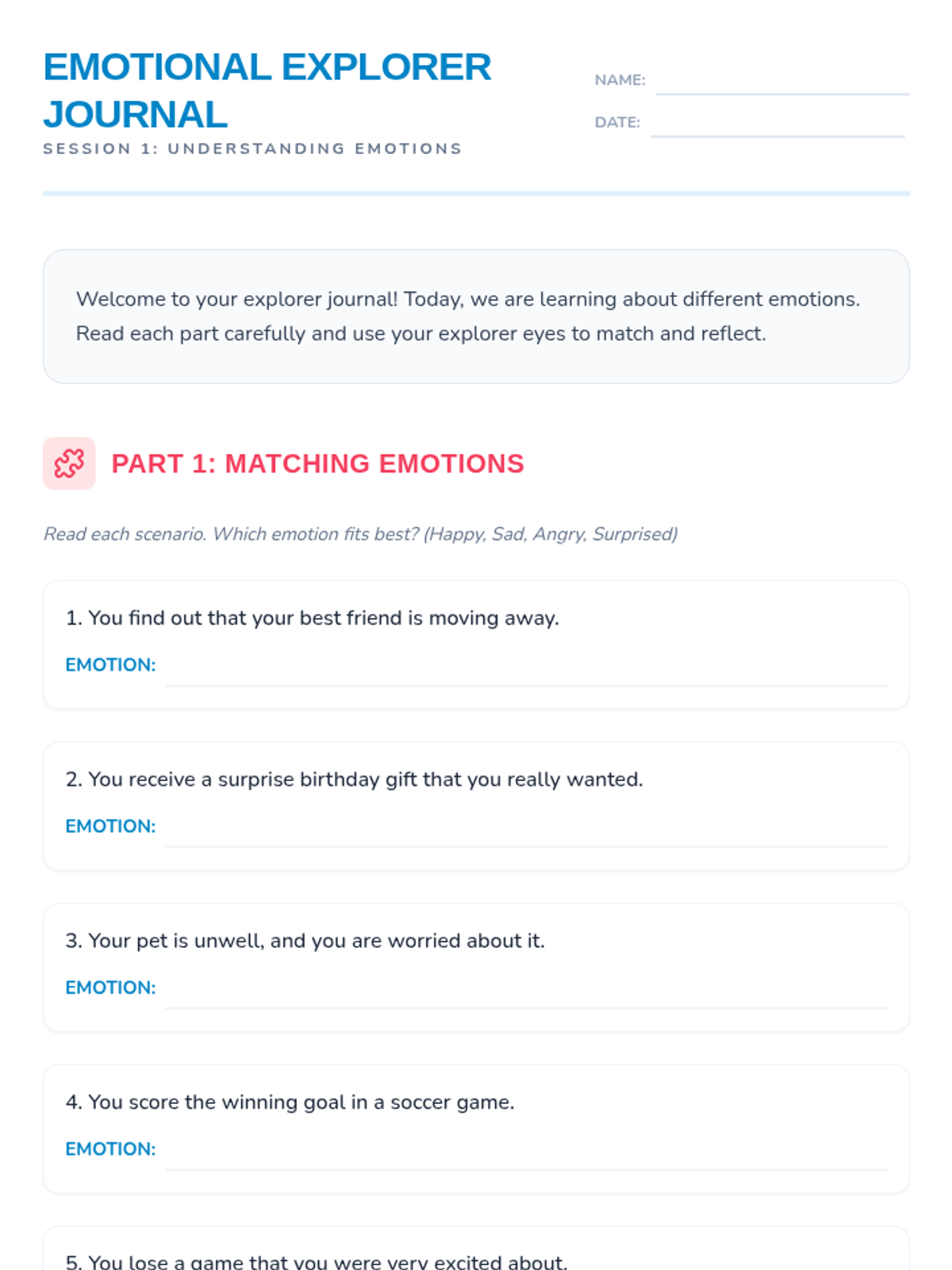
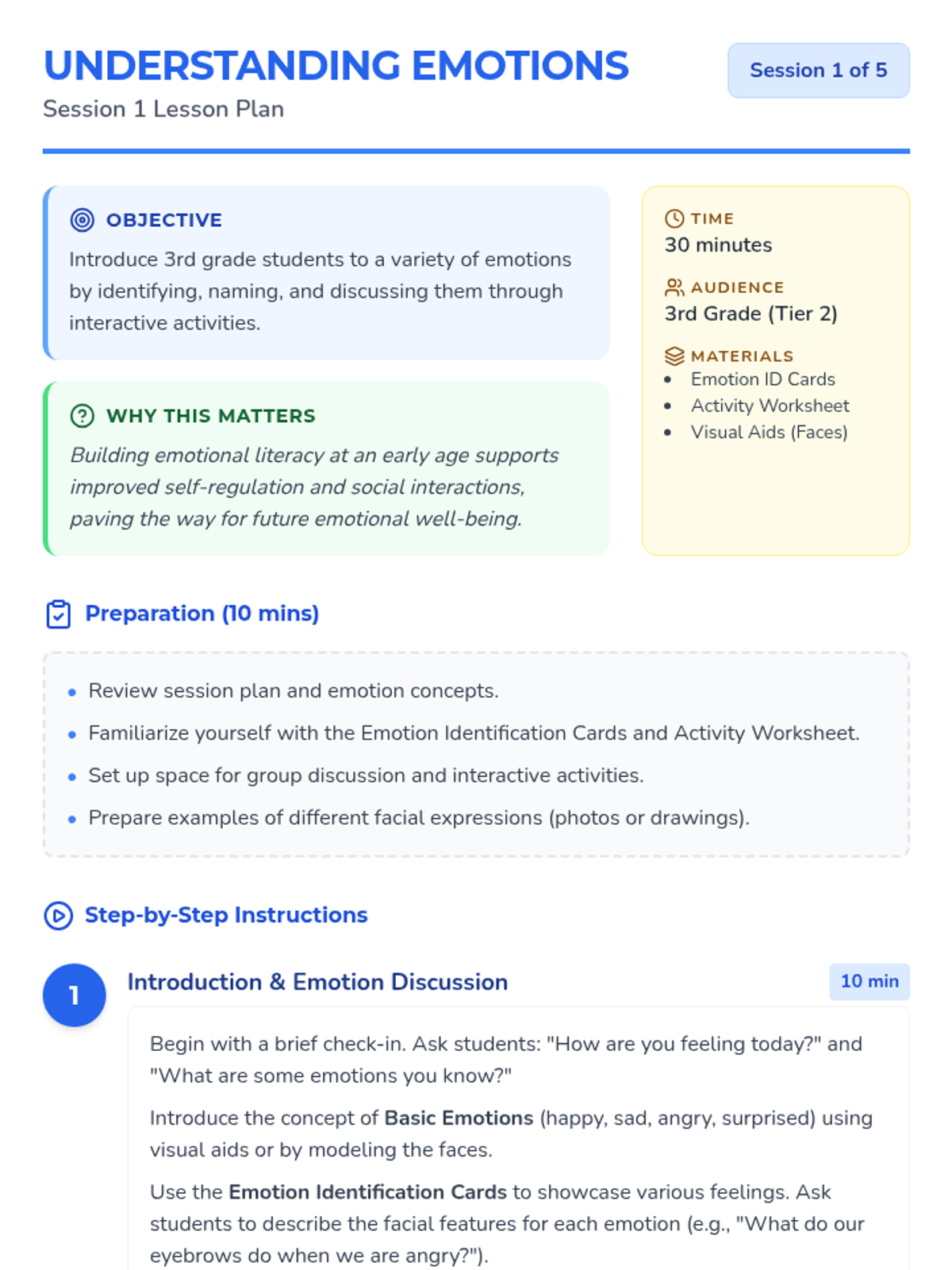
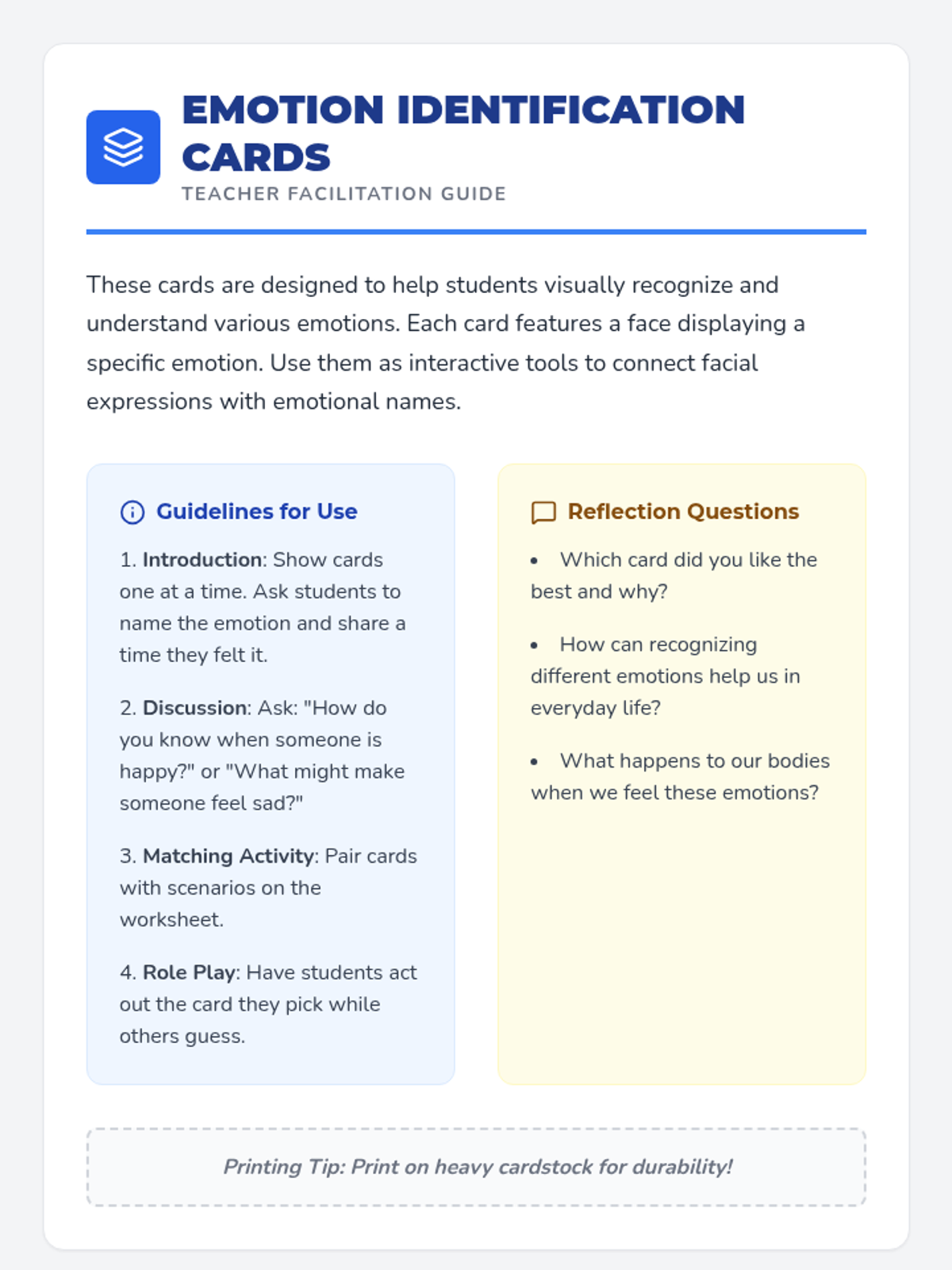
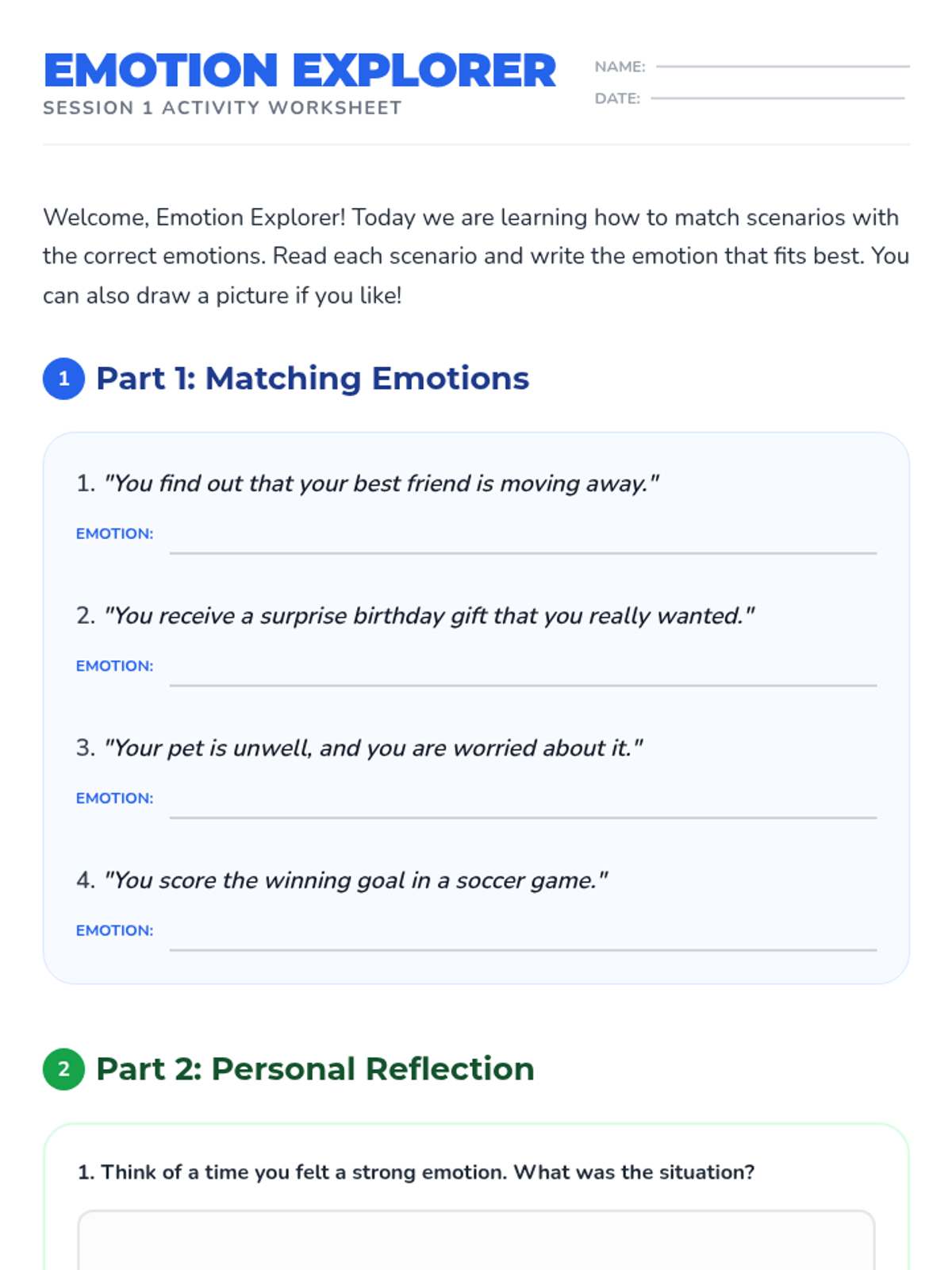
A 5-session Tier 2 group intervention for 3rd graders focused on emotional literacy, expression, management, empathy, and resilience. Students will explore their feelings through interactive activities, role-play, and reflective exercises.
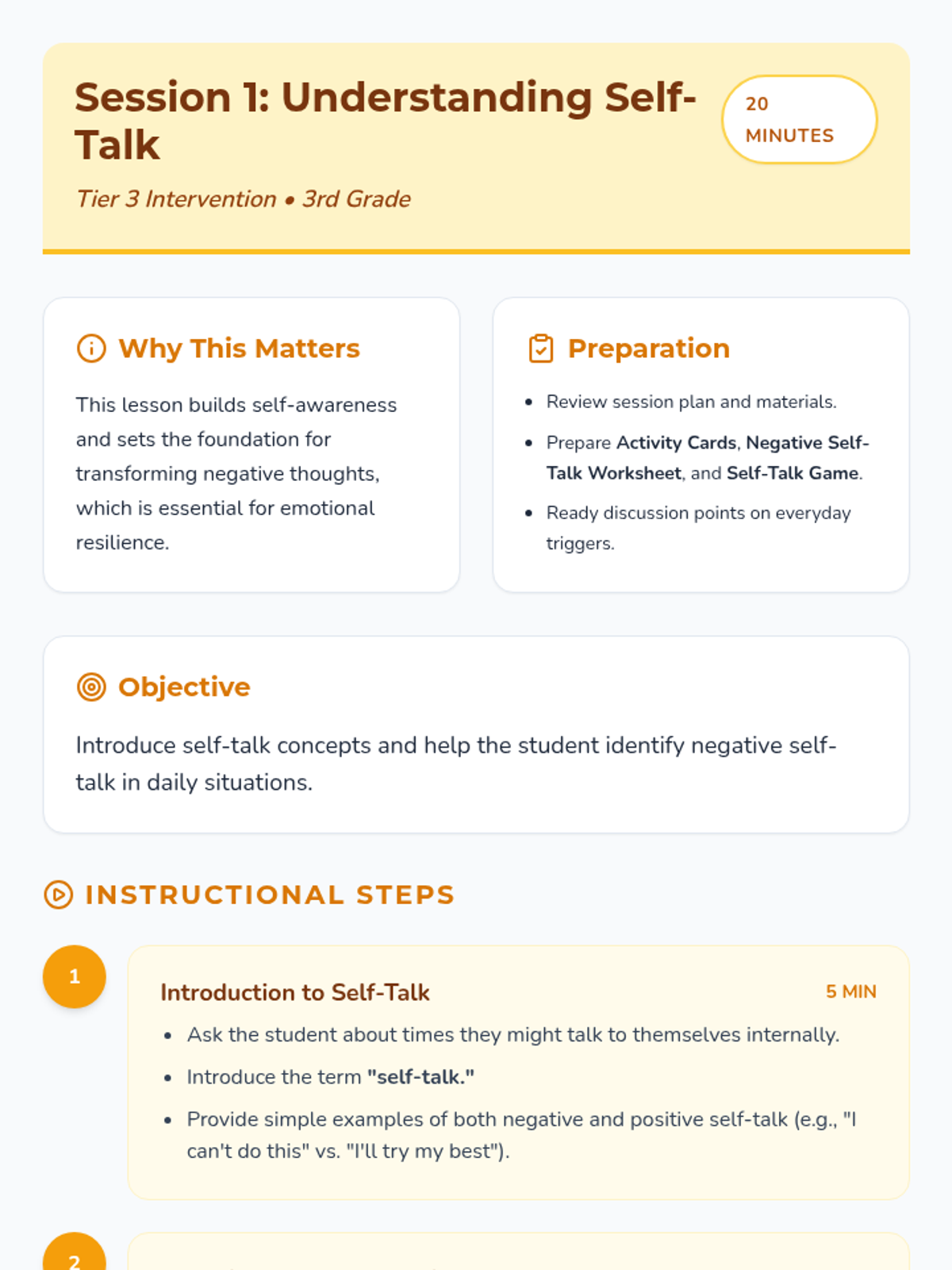
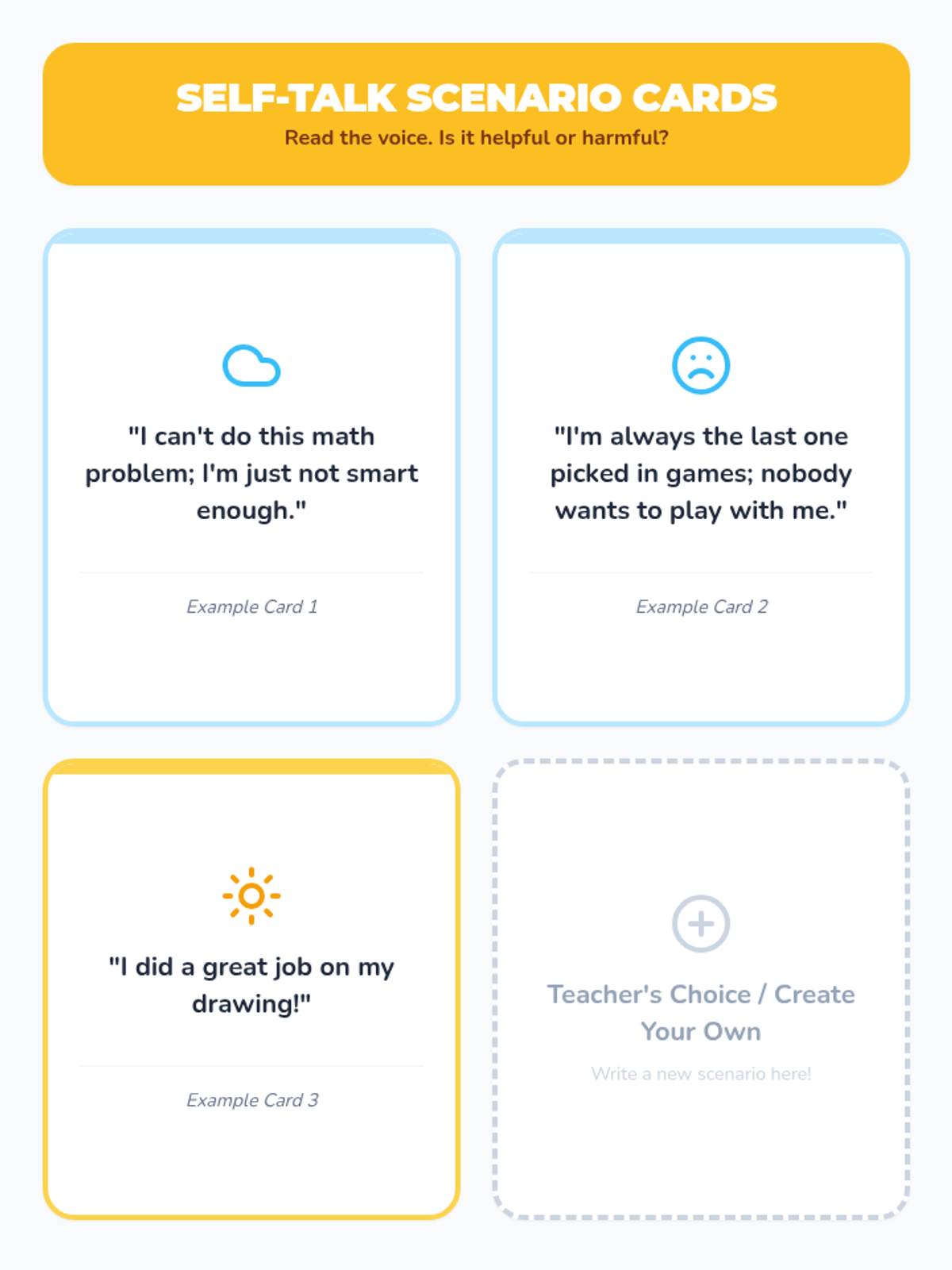
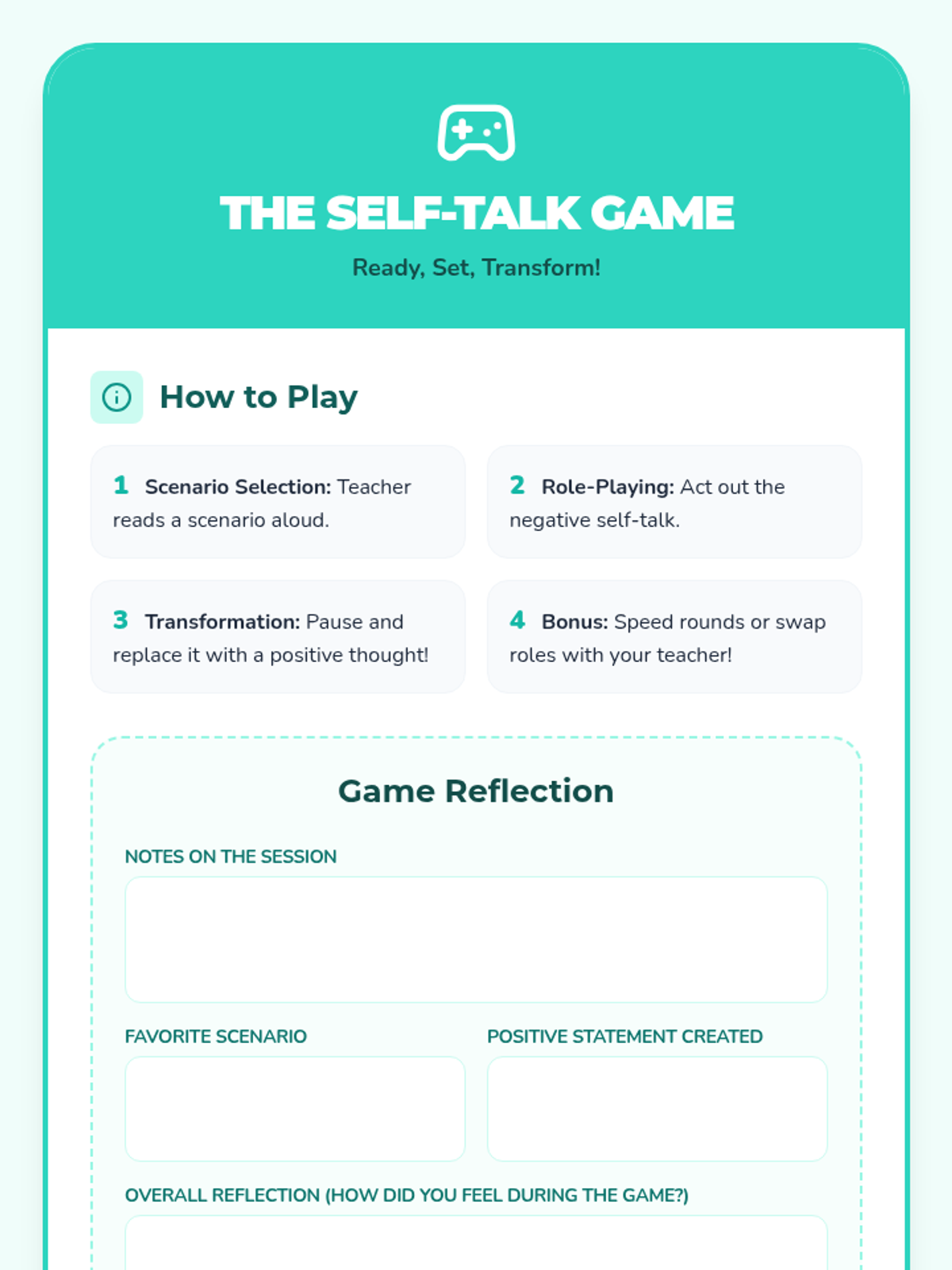
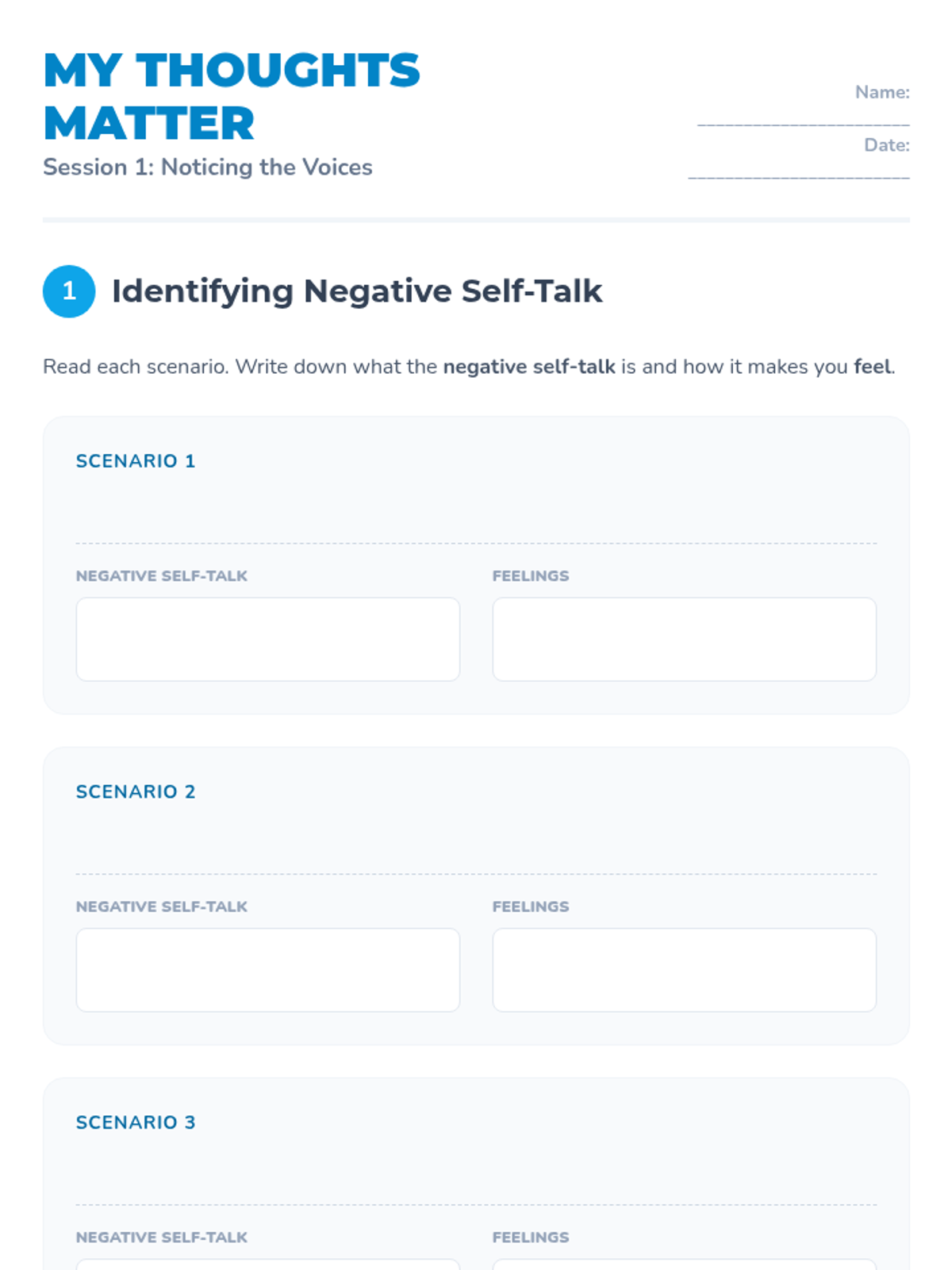
A 5-session Tier 3 intervention for 3rd grade students on IEPs, focused on identifying negative and positive self-talk, cognitive-behavioral triangle connections, and coping strategies to build resilience.
A 5-session Tier 2 group intervention for 3rd graders focused on emotional regulation, empathy, and resilience. Students learn to identify, express, and manage emotions through interactive activities, role-play, and creative reflection.
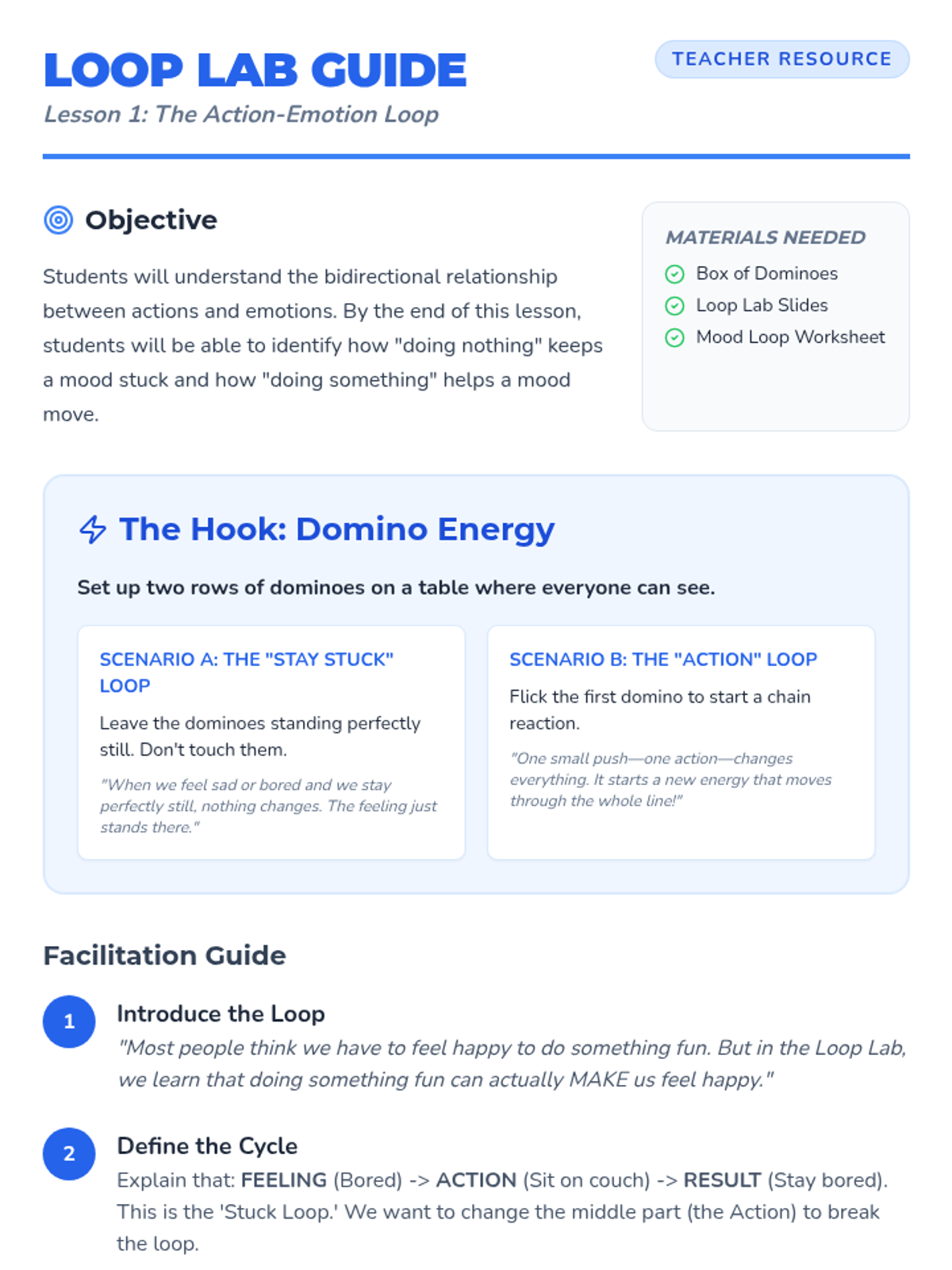
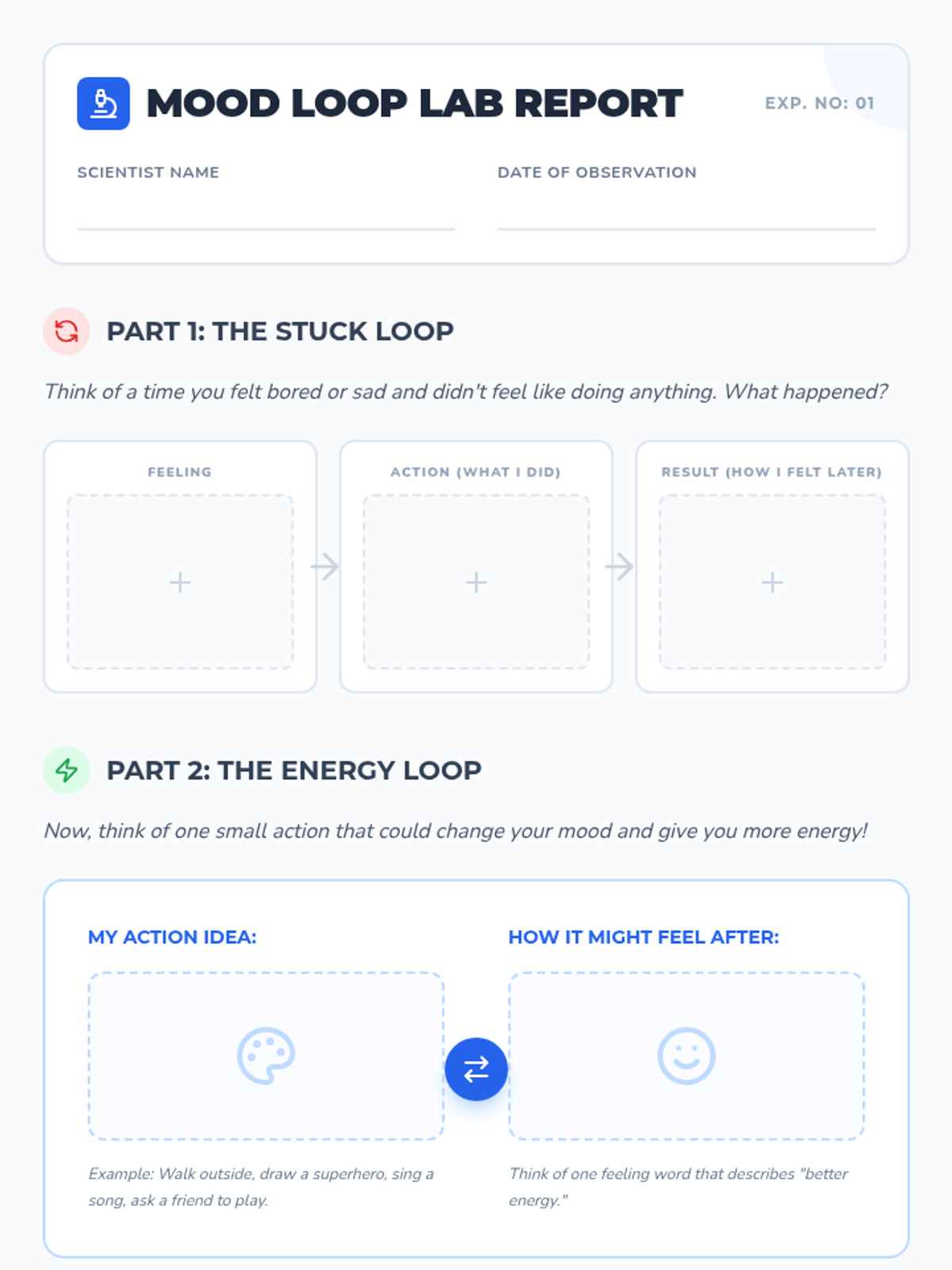
A 5-lesson sequence for 3rd grade students exploring behavioral activation. Students learn how their actions influence their emotions and develop strategies to initiate positive behaviors even when motivation is low.
A 5-lesson sequence designed for 3rd-grade students to build effective working memory through consistent review routines. Students explore the science of forgetting, practice active recall and teach-back methods, and establish a personalized spaced repetition schedule.
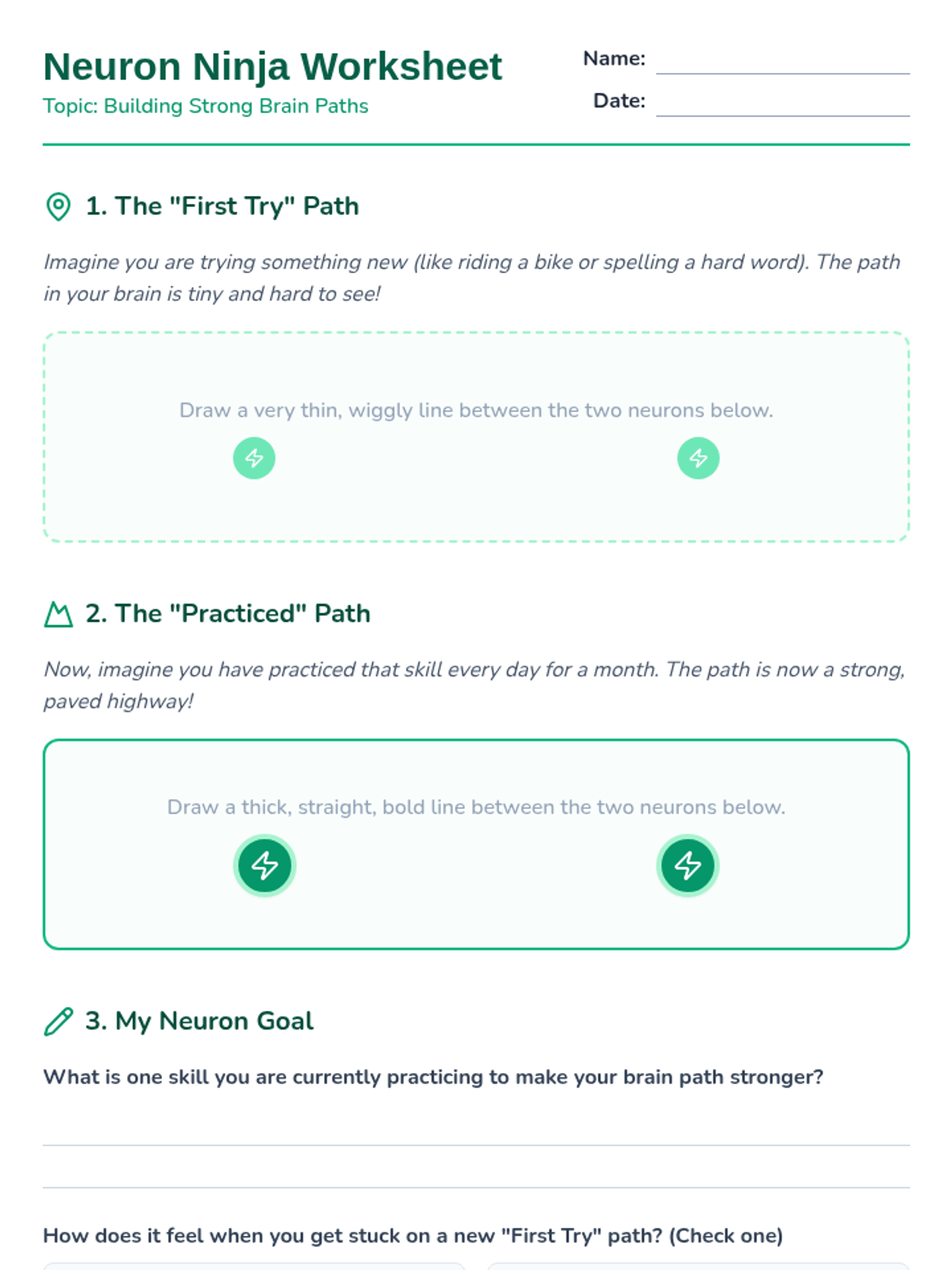
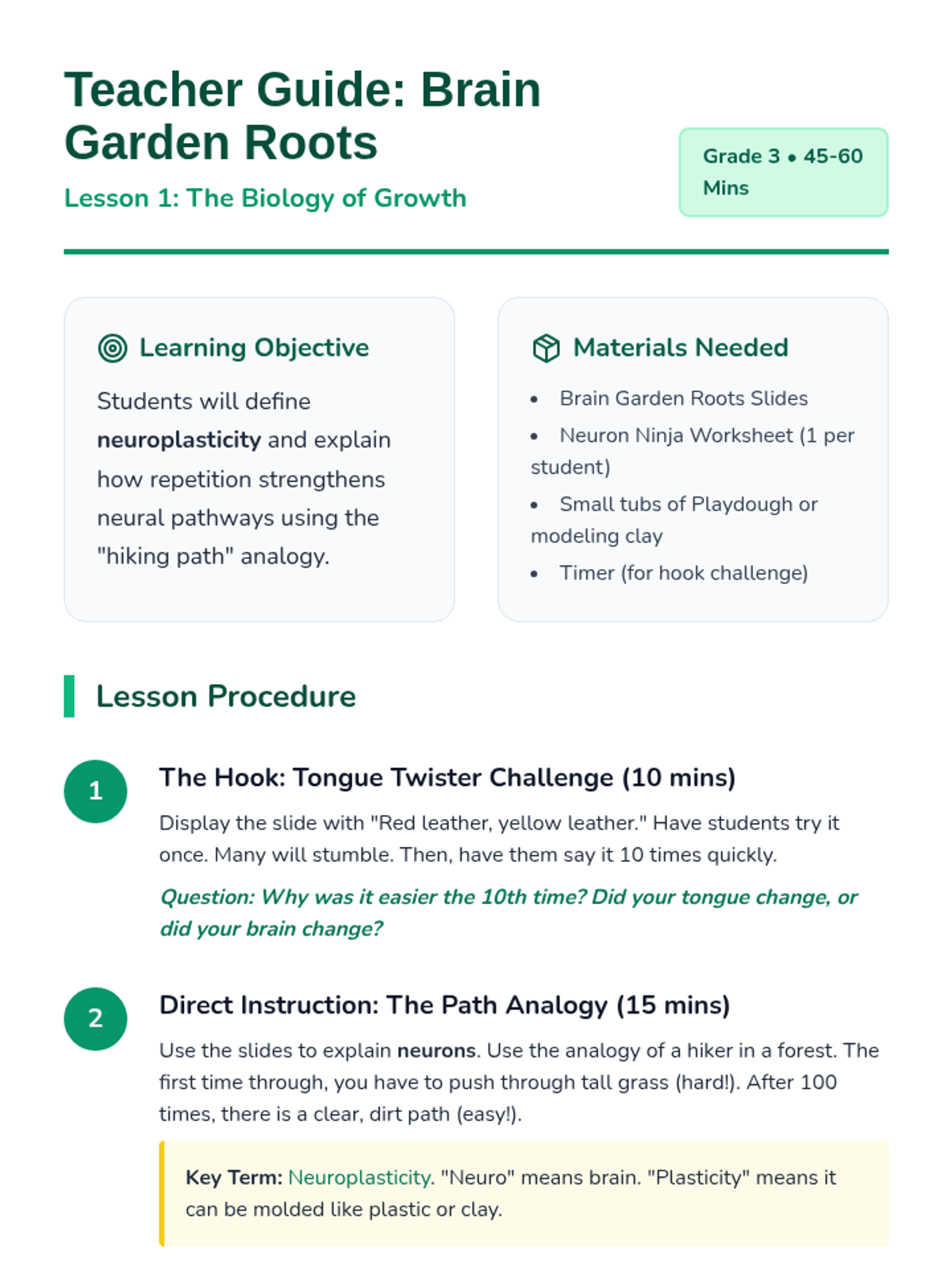
A 3rd-grade sequence focused on neuroplasticity and growth mindset. Students explore how their brains change through learning, differentiate between fixed and growth mindsets, and visualize their future selves.
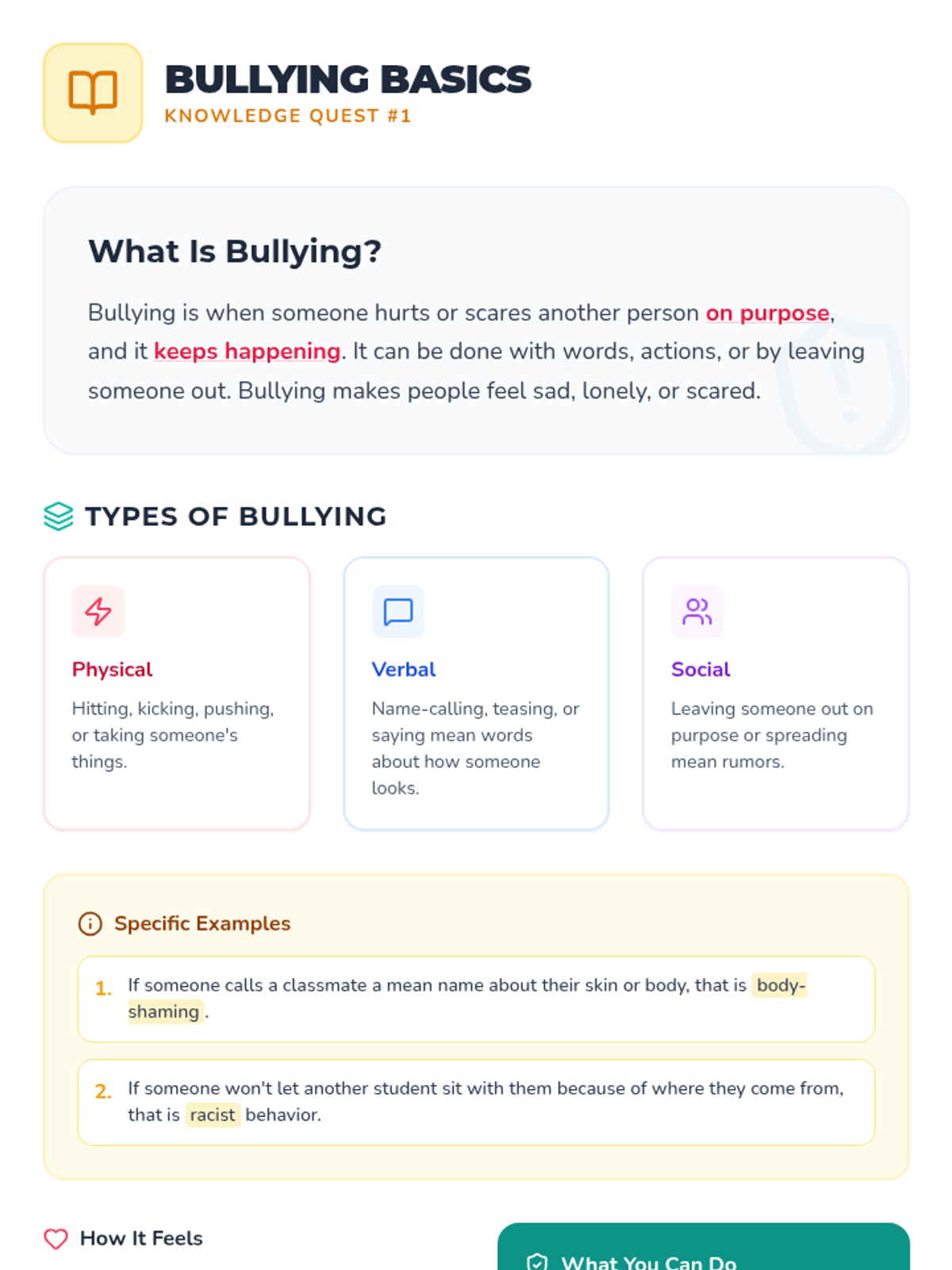
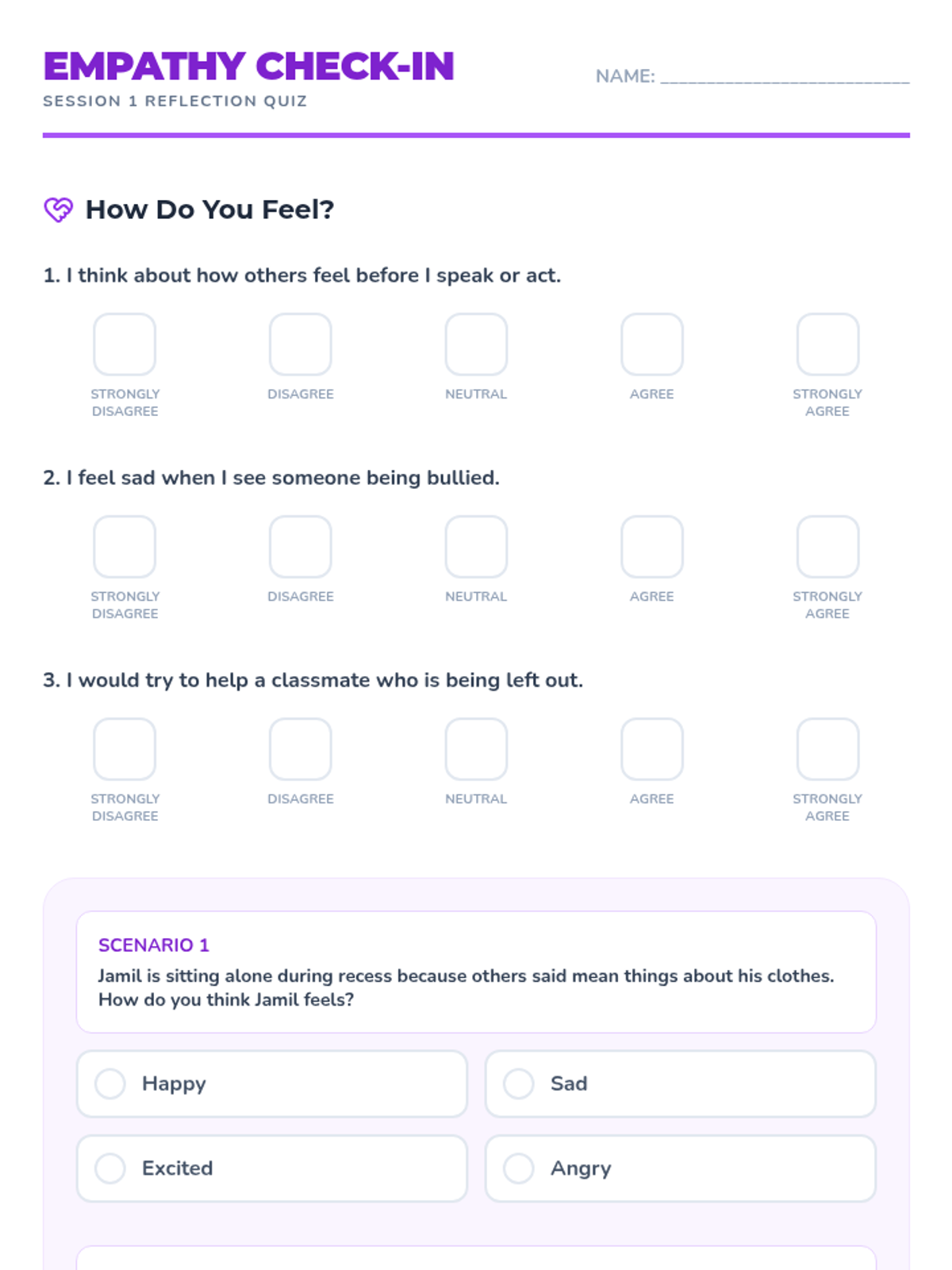
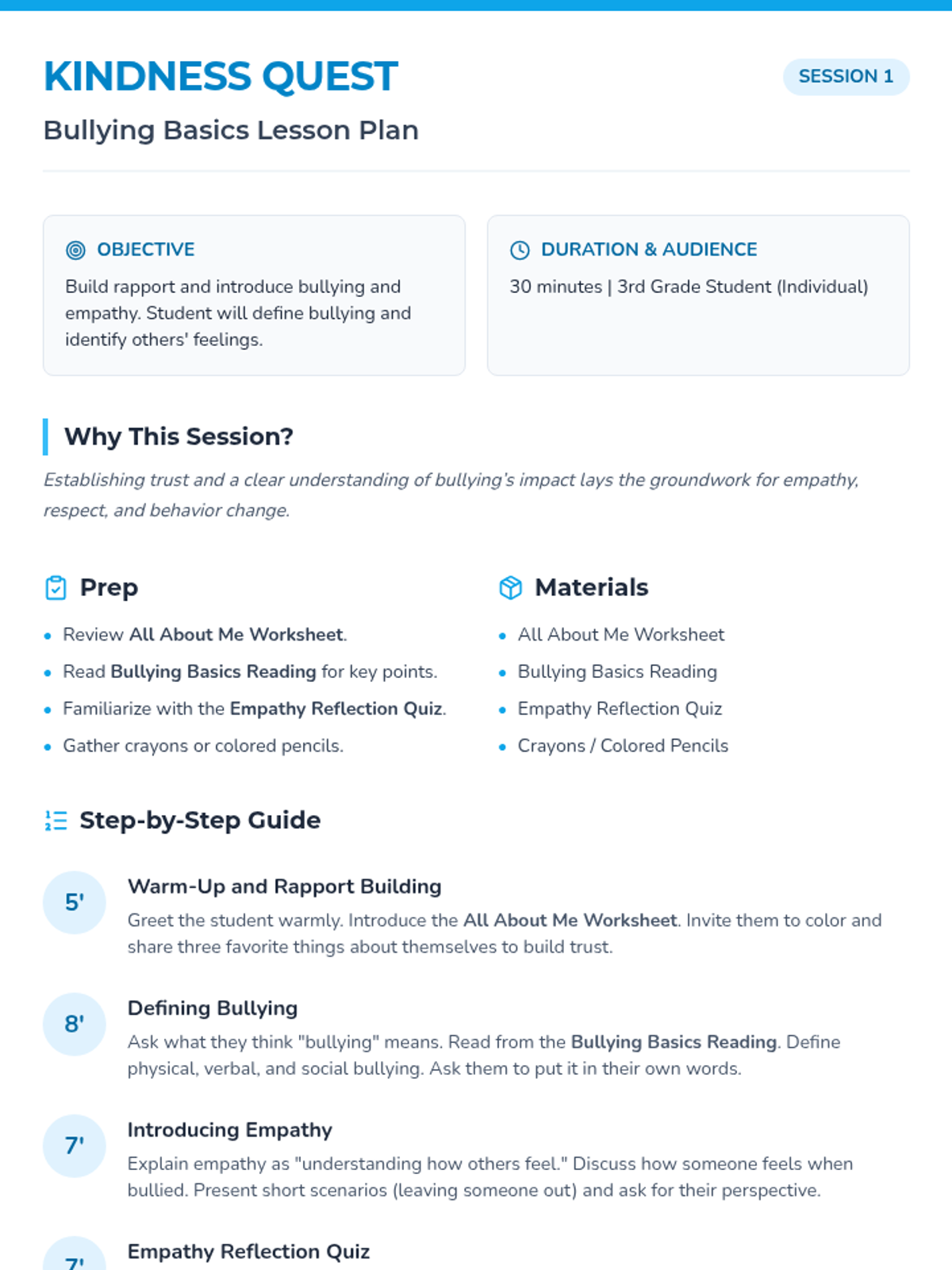
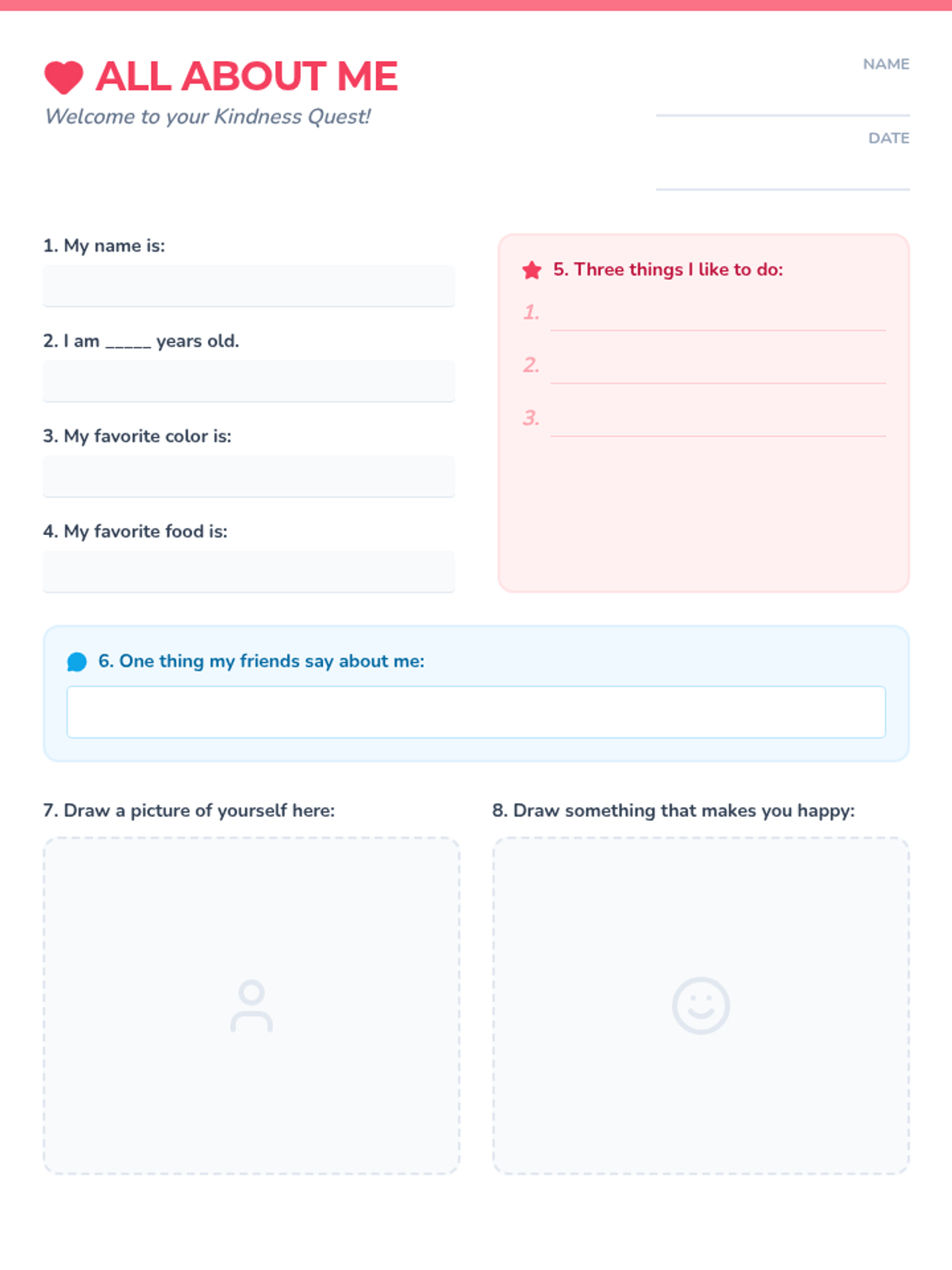
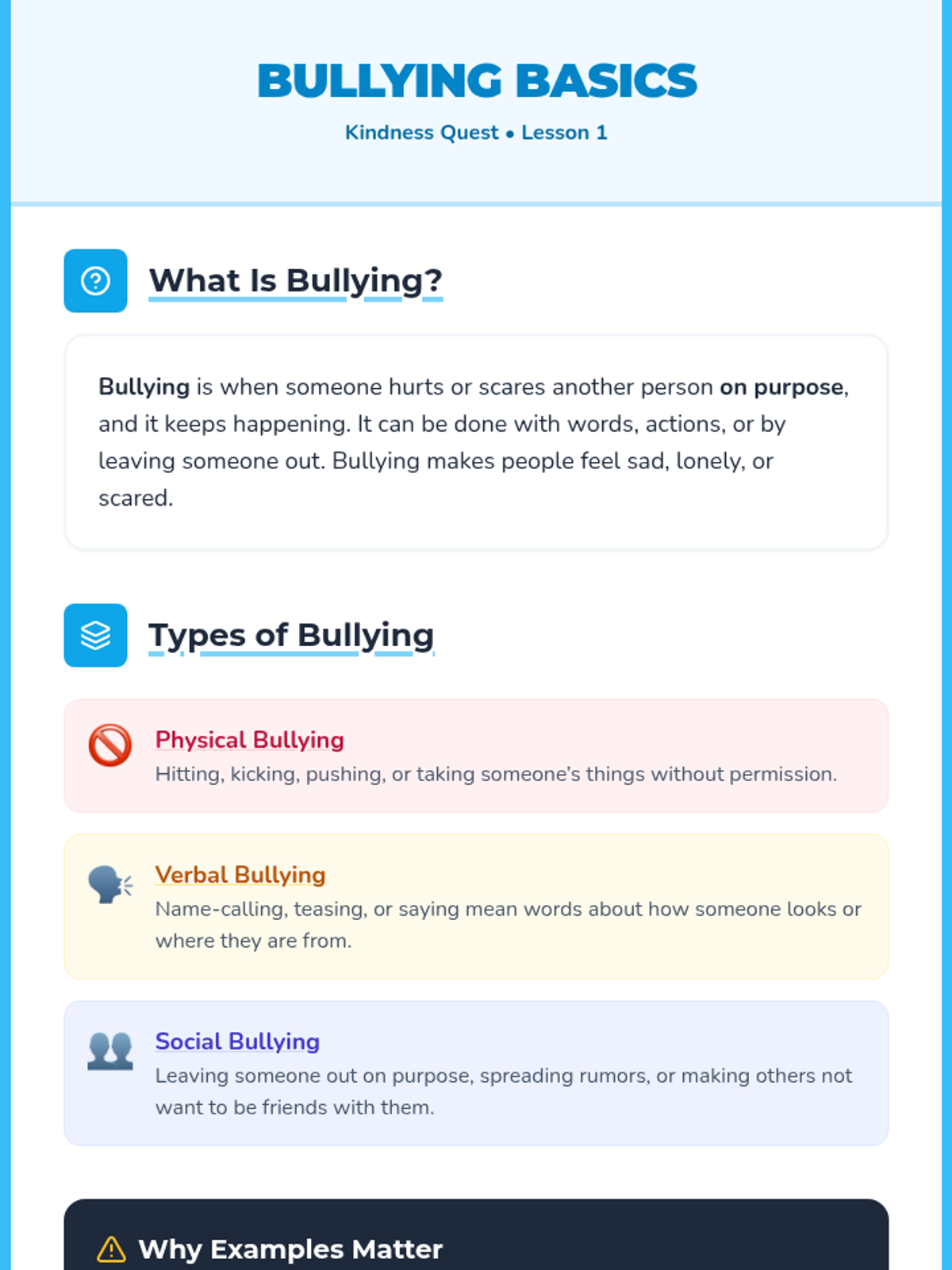
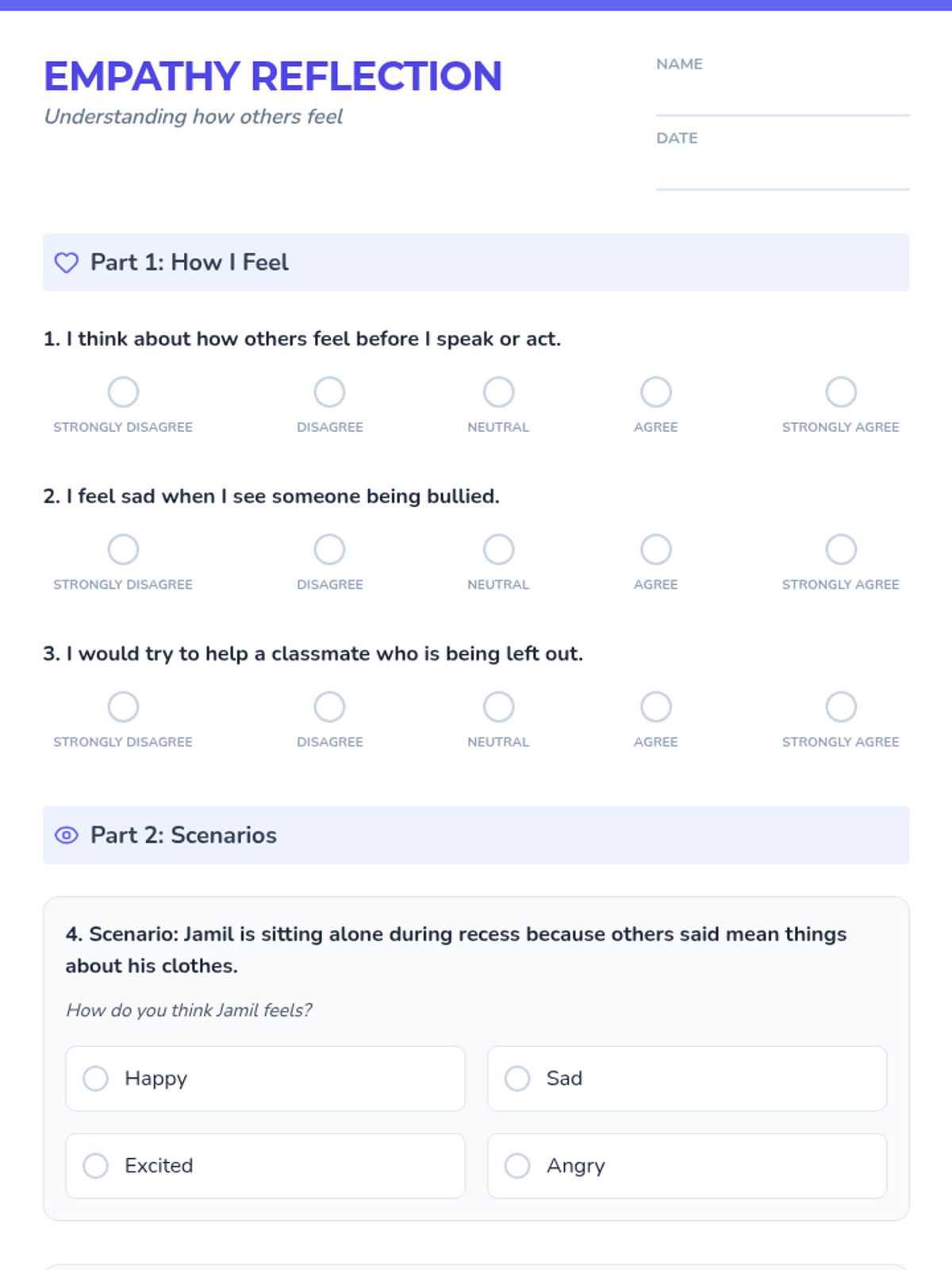
A 5-session individual Tier 3 program for 3rd graders focusing on empathy, body positivity, and anti-racism to prevent bullying. Through interactive readings and reflections, students build the confidence to stand up for themselves and others.
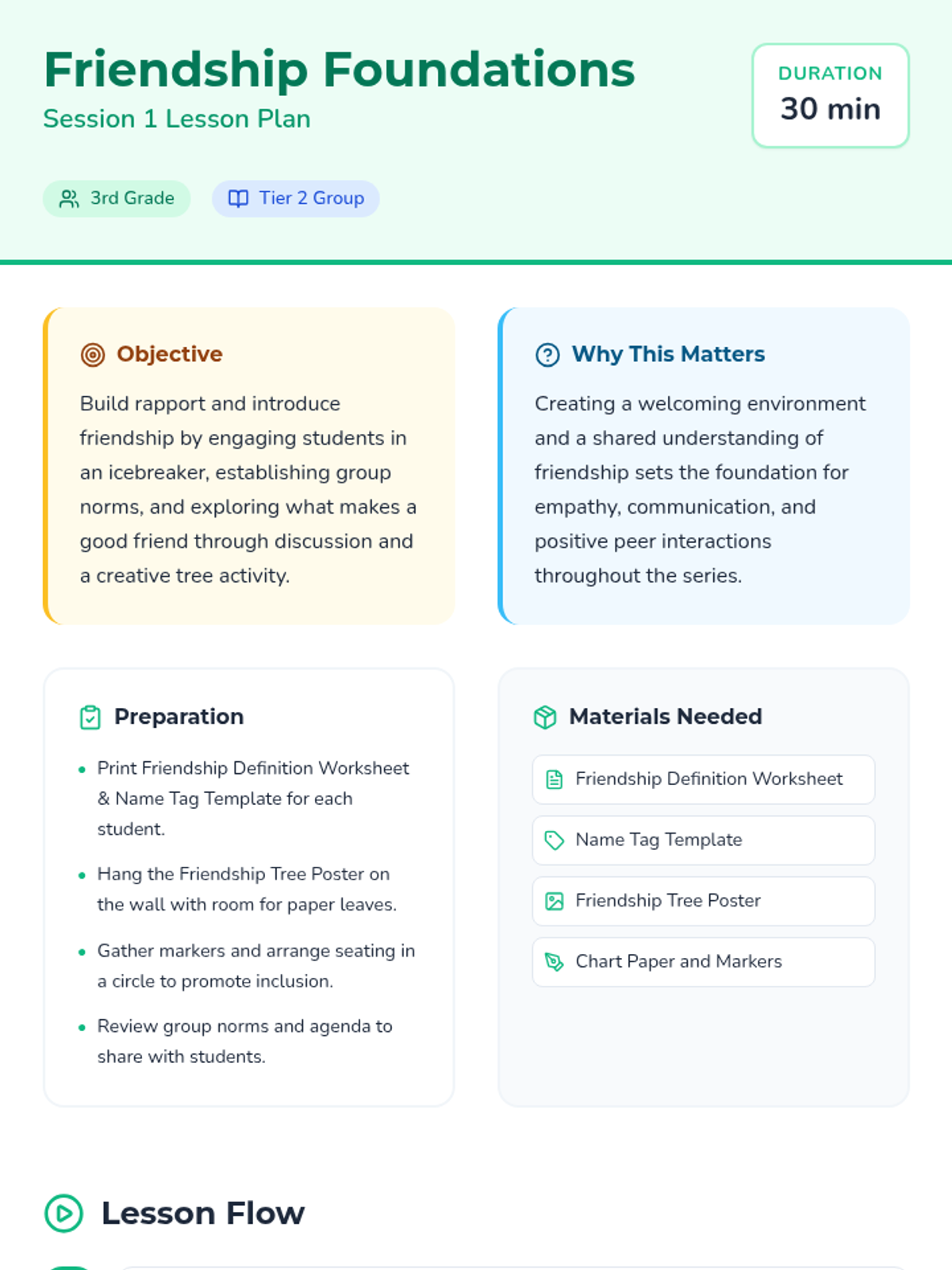
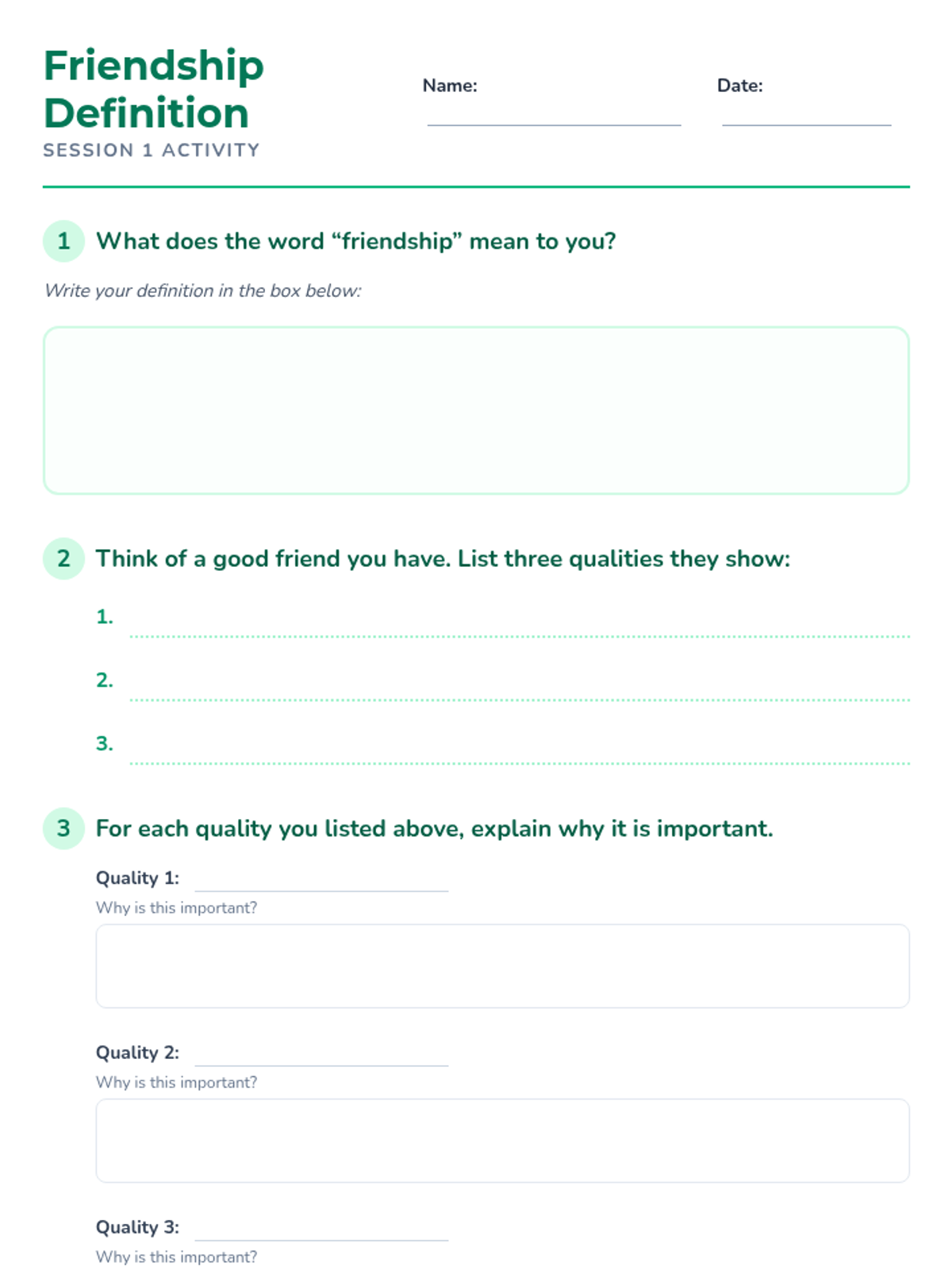
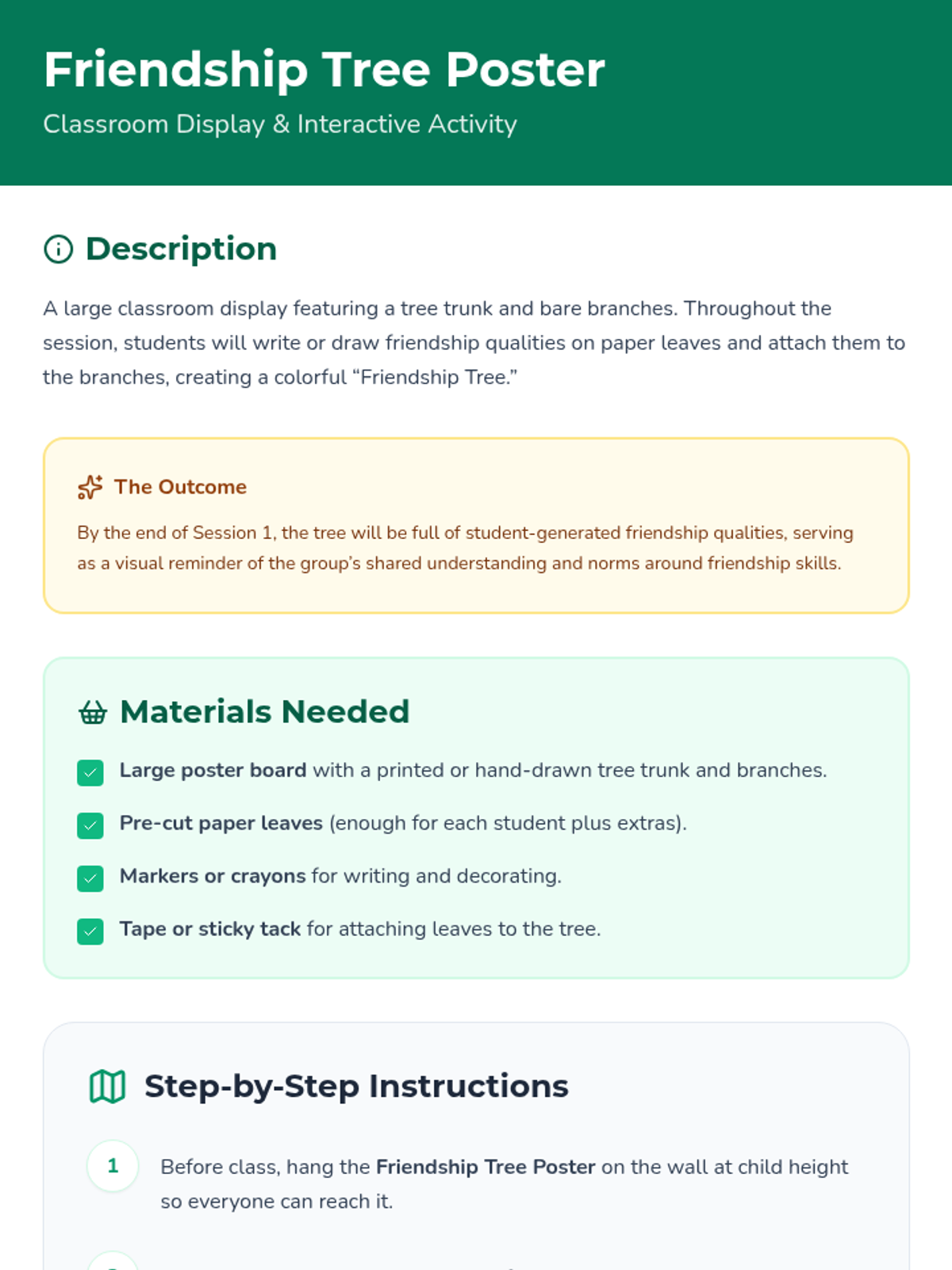
A 6-week Tier 2 social skills group for 3rd graders focused on empathy, communication, conflict resolution, and teamwork using a 'Friendship Tree' theme.
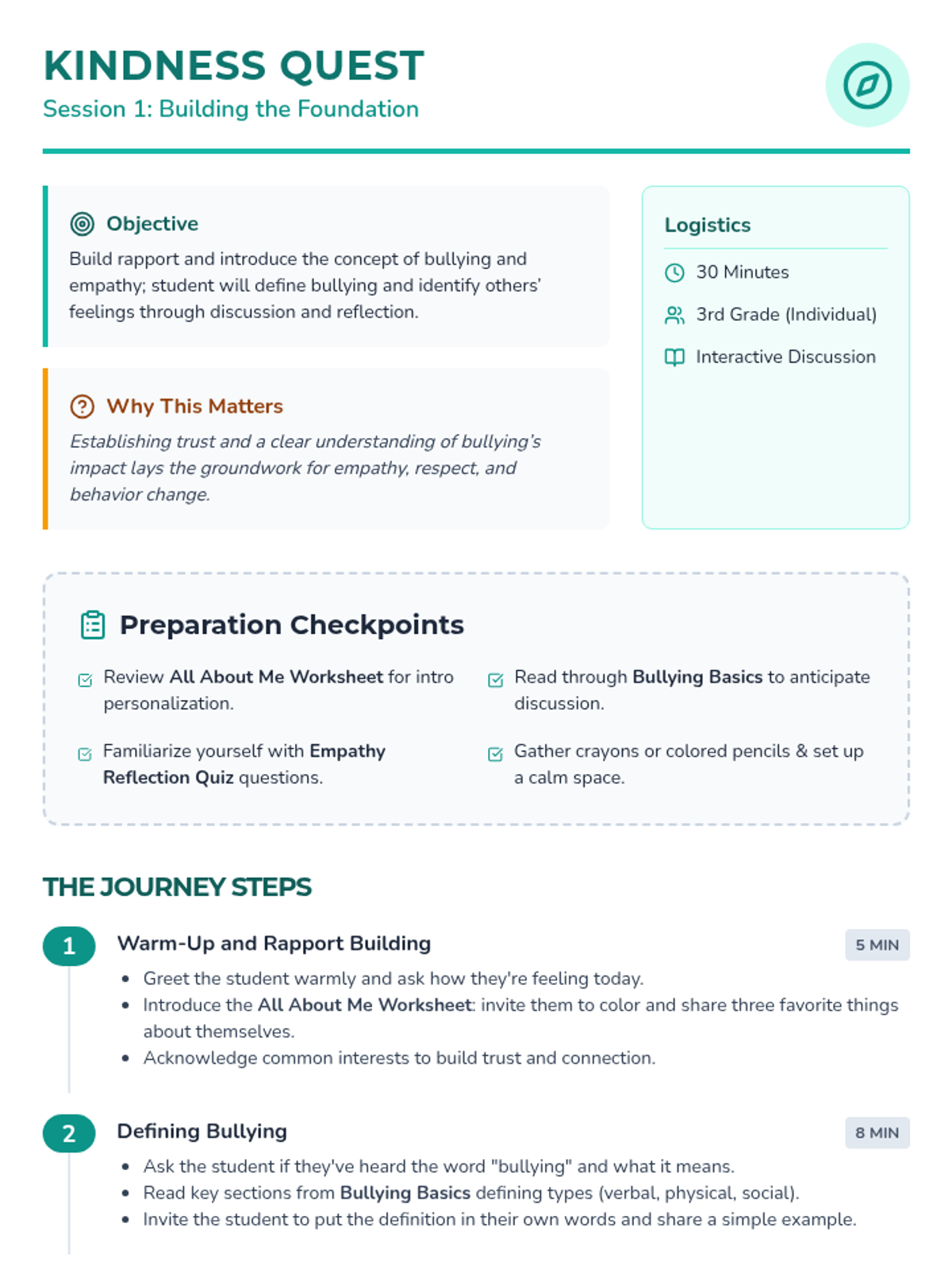
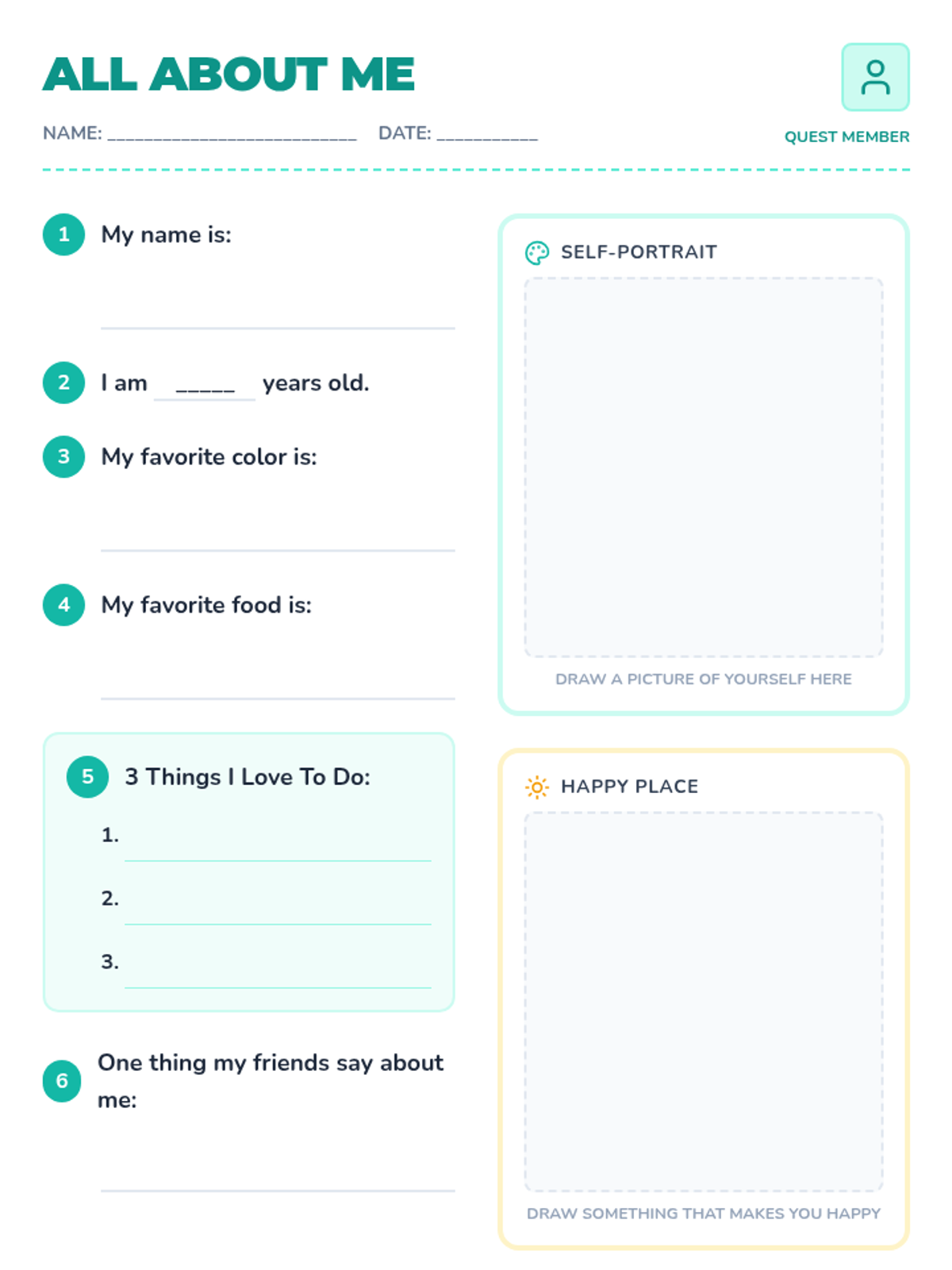
A 5-session individual program for a 3rd grader to understand and prevent bullying, focusing on race and body-shaming. Through readings, activities, and reflections, this series builds empathy, respect, and positive communication skills.
A sequence focused on helping students transform passive reading into active, visual study tools. Students learn color-coding, concept mapping, foldable creation, and comparison charting to organize and retain information.
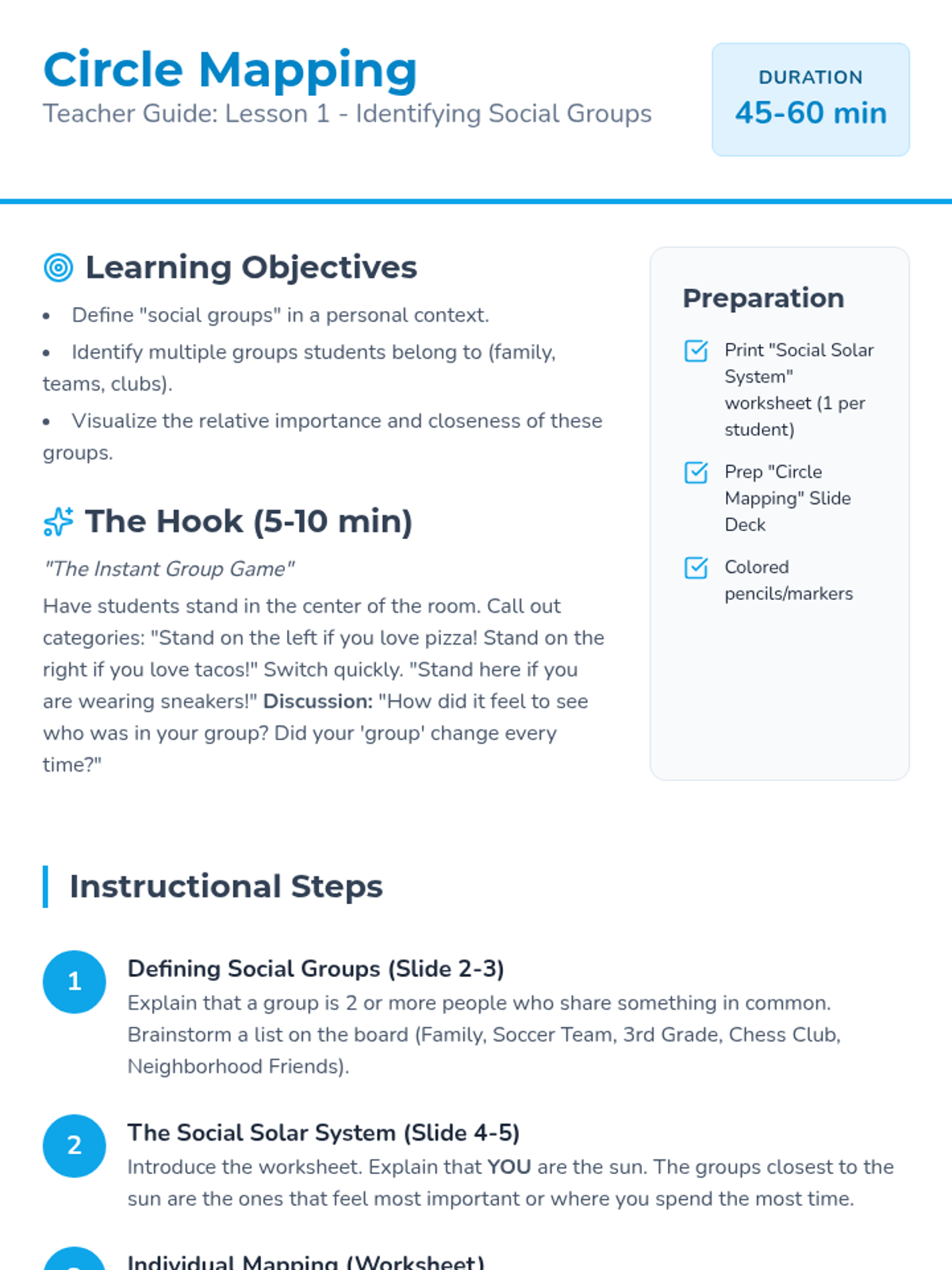
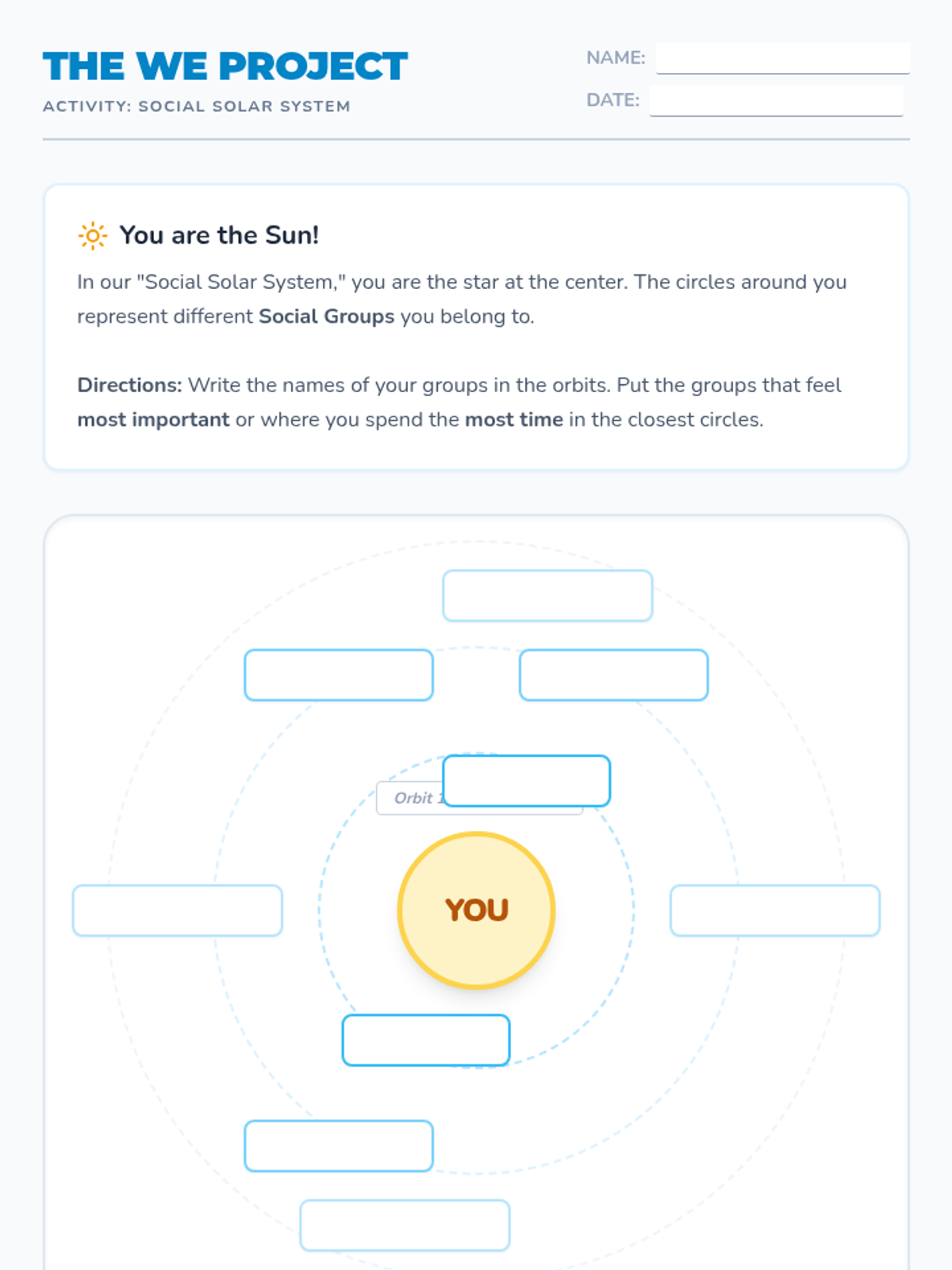
This 3rd-grade sequence explores the psychology of social groups, belonging, and how group membership affects self-perception. Students will navigate from identifying their own social circles to understanding group norms, the emotional impact of inclusion/exclusion, and finally designing an inclusive community.