A multi-sensory lesson focusing on the distinction between the /f/ and /v/ sounds, using visual and tactile cues to support memory and phonetic awareness for ELL students.
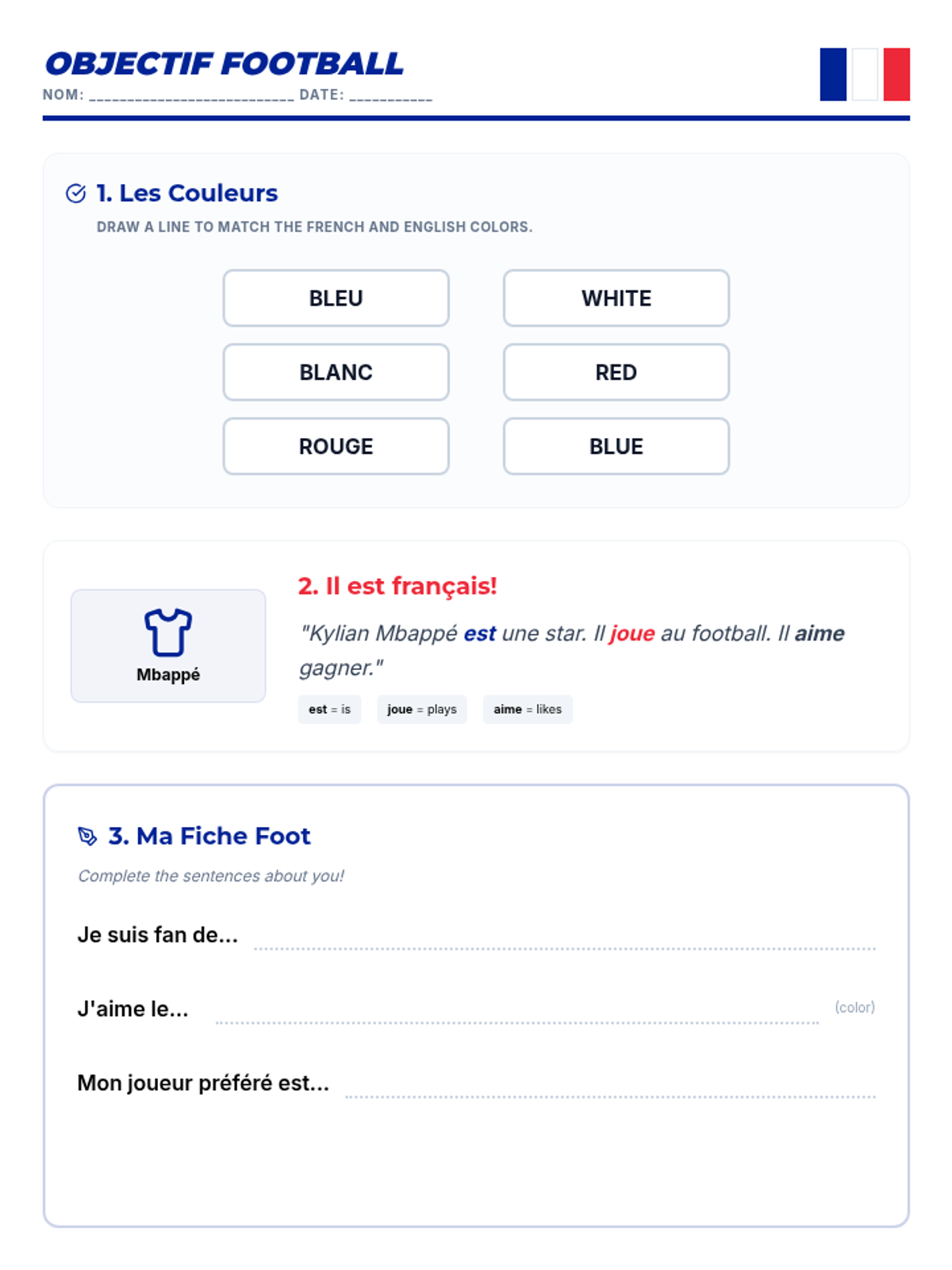
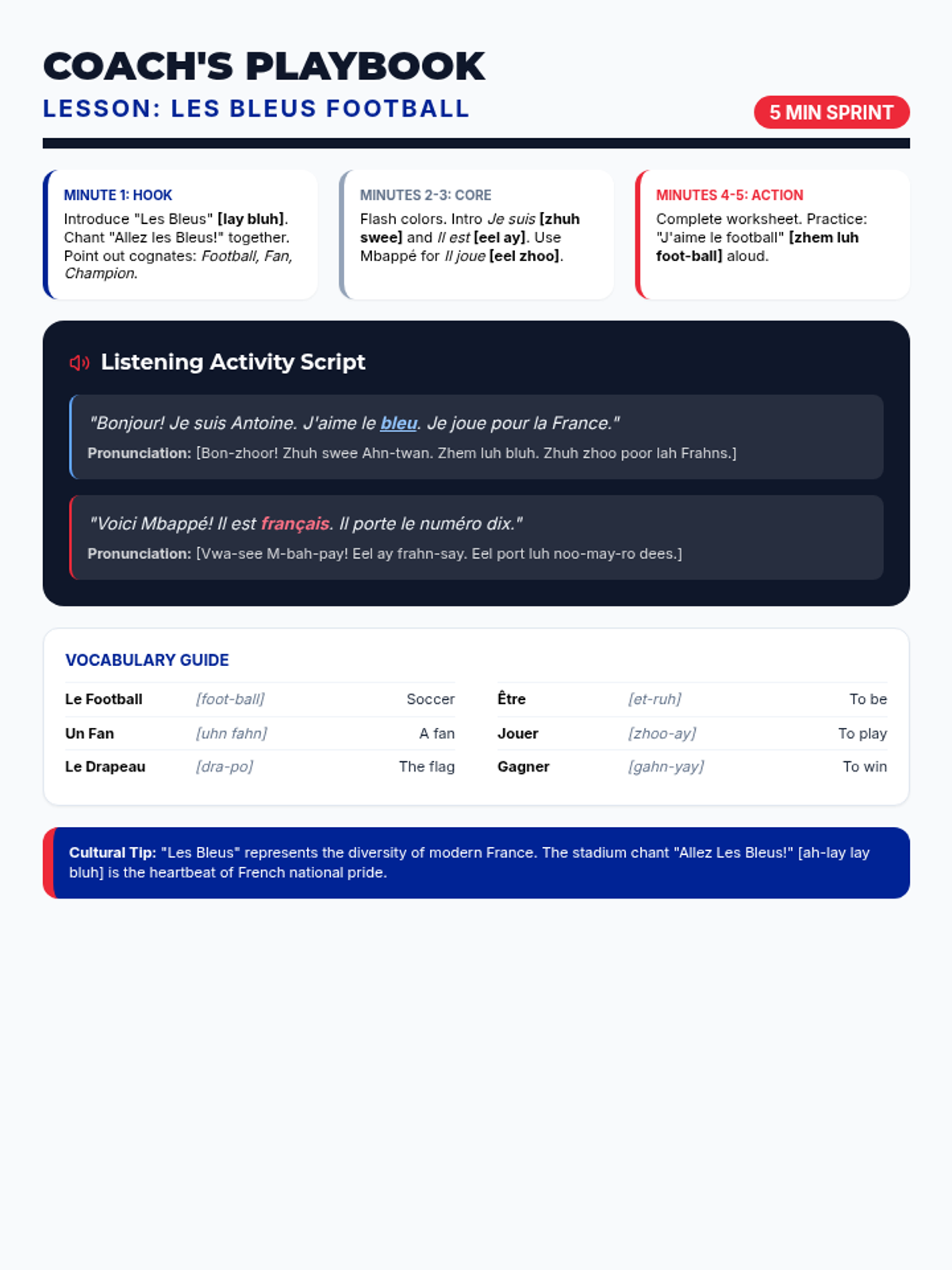
A high-energy, 5-minute introduction to French through the lens of football (soccer). Students learn basic verbs, colors, and national pride while exploring famous French players like Kylian Mbappé.
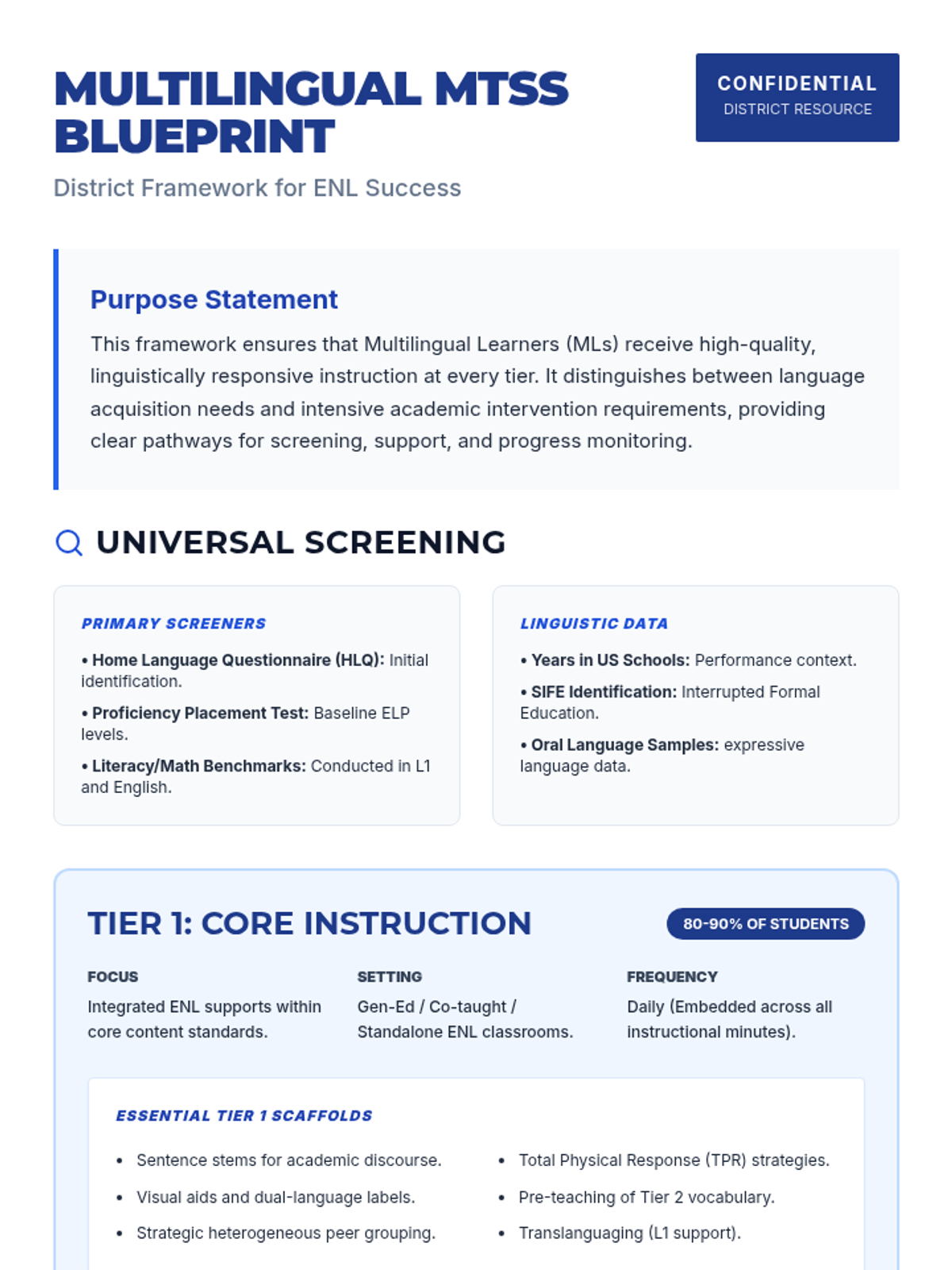
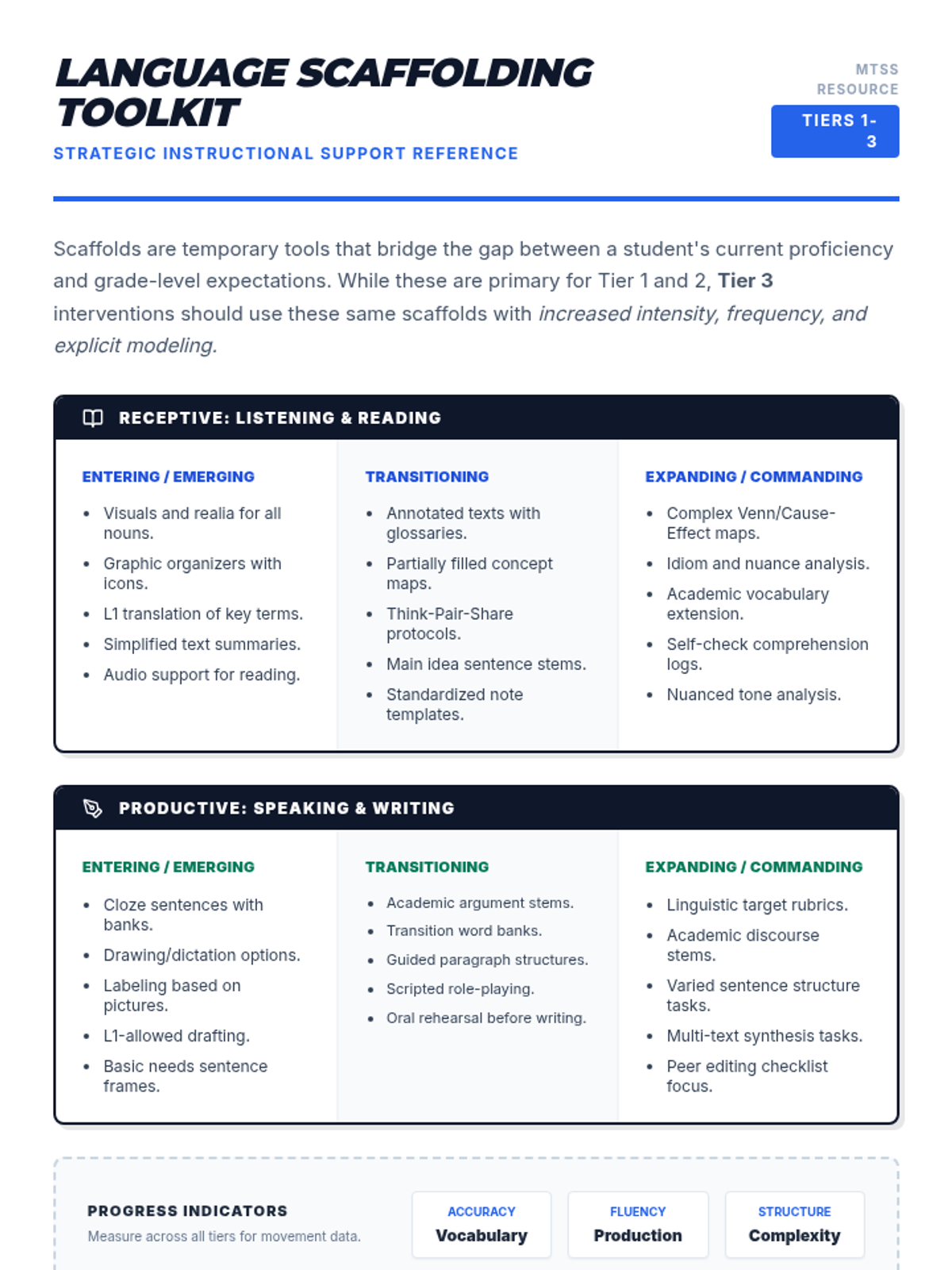
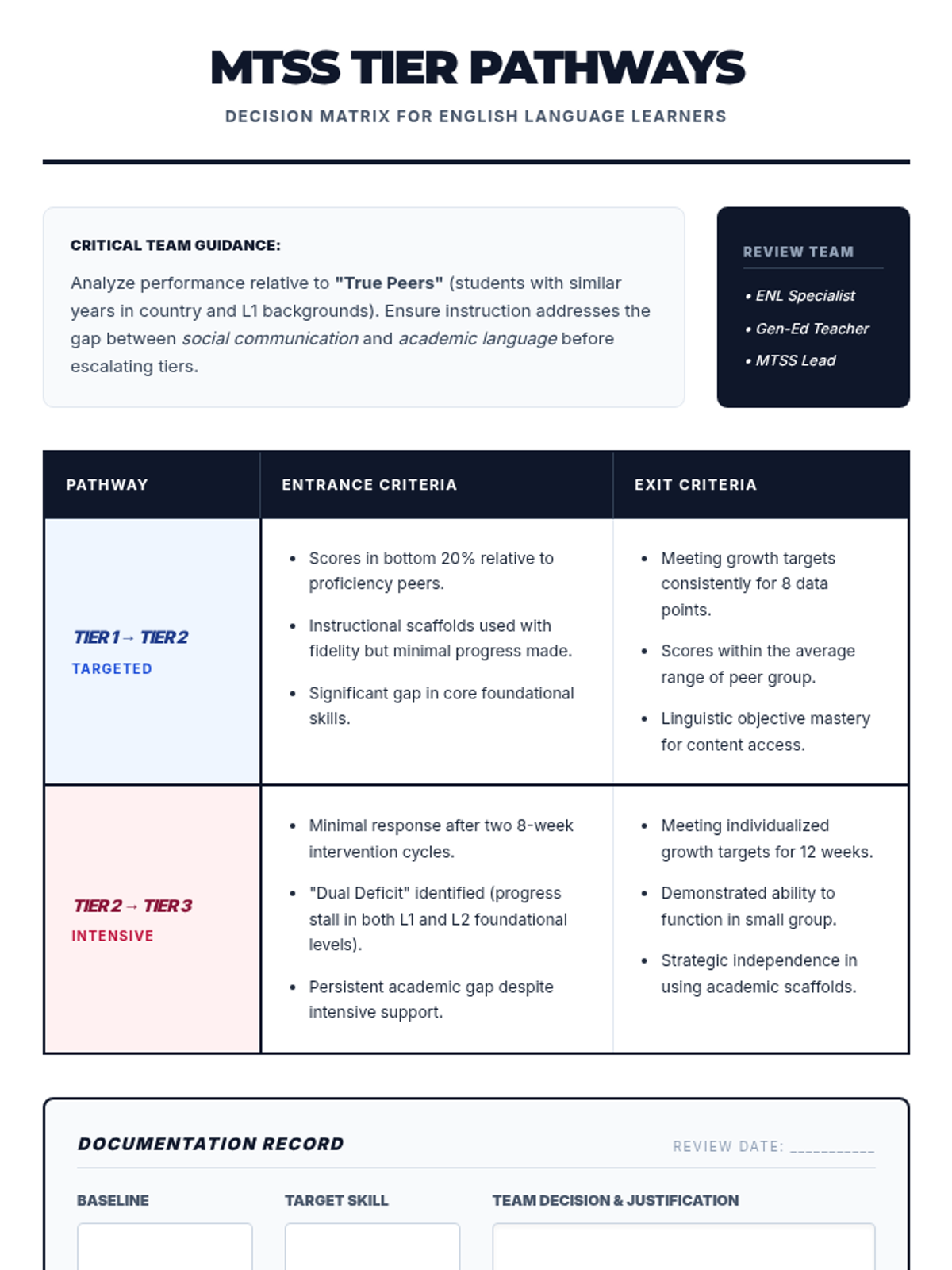
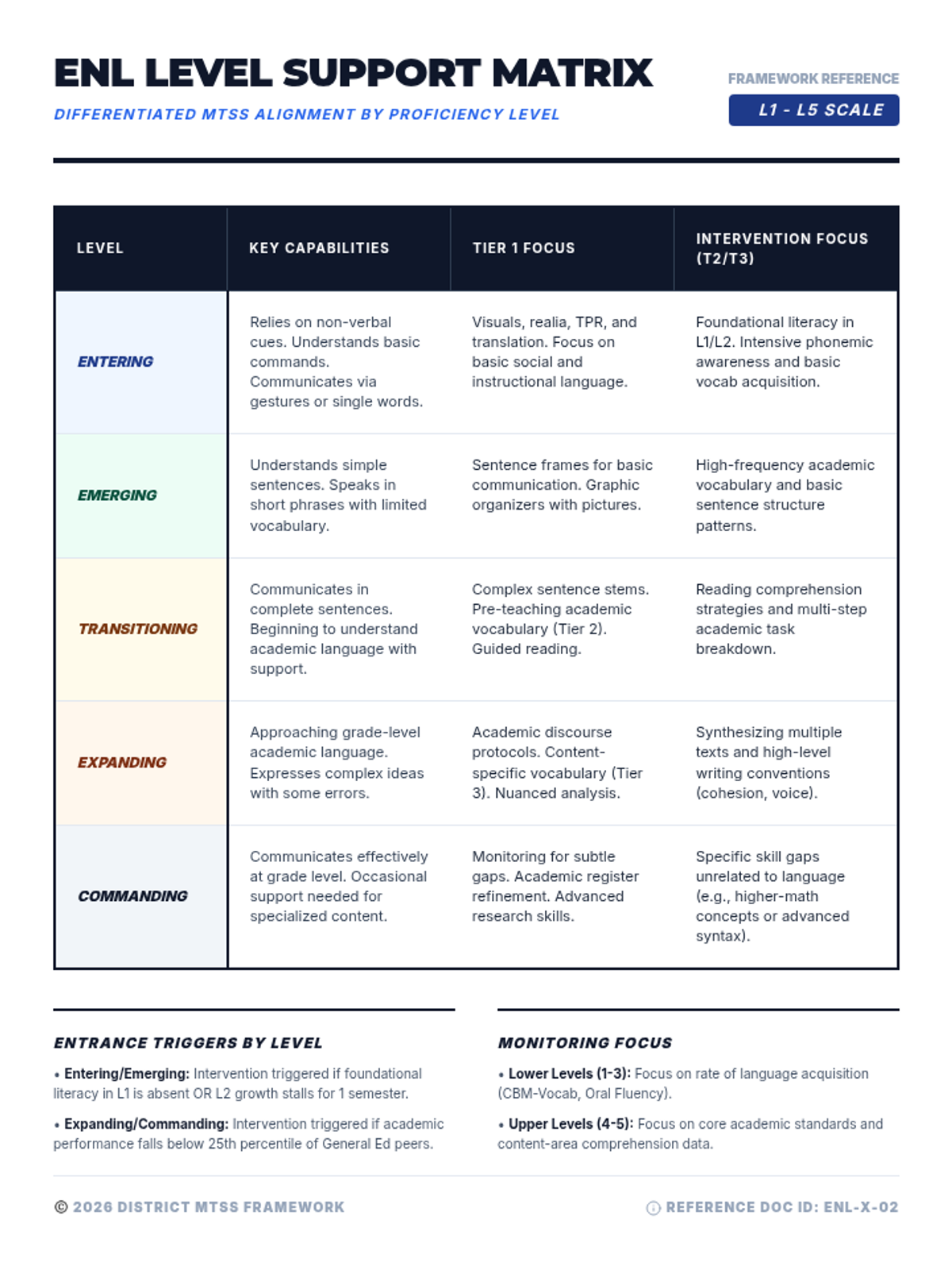
A comprehensive framework for supporting English Language Learners through a multi-tiered system of supports, including screening protocols, specific instructional scaffolds, and clear criteria for tier movement.
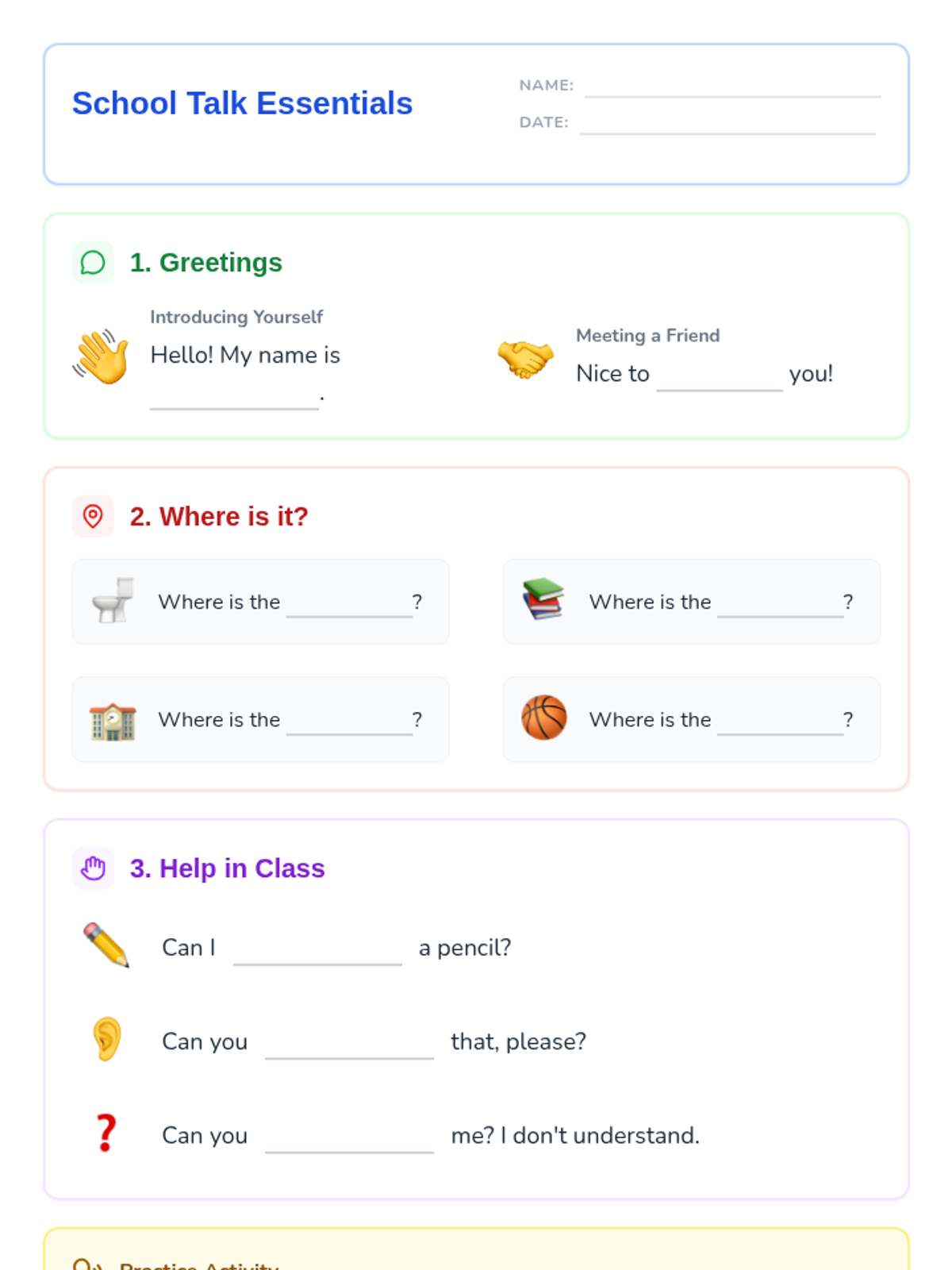
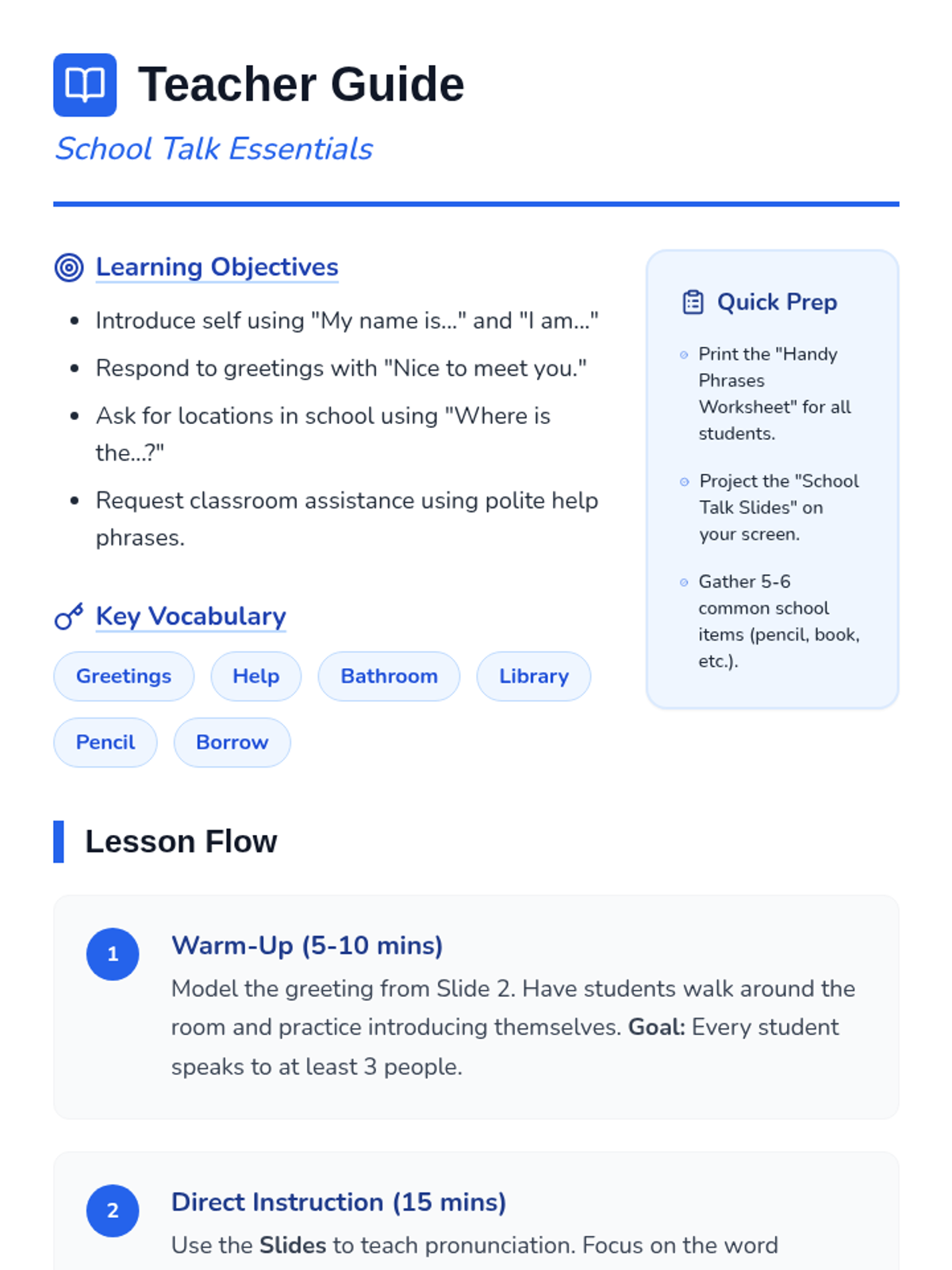
A beginner-friendly ESL lesson focused on mastering essential greetings and practical school-based help phrases through visual prompts and sentence starters.
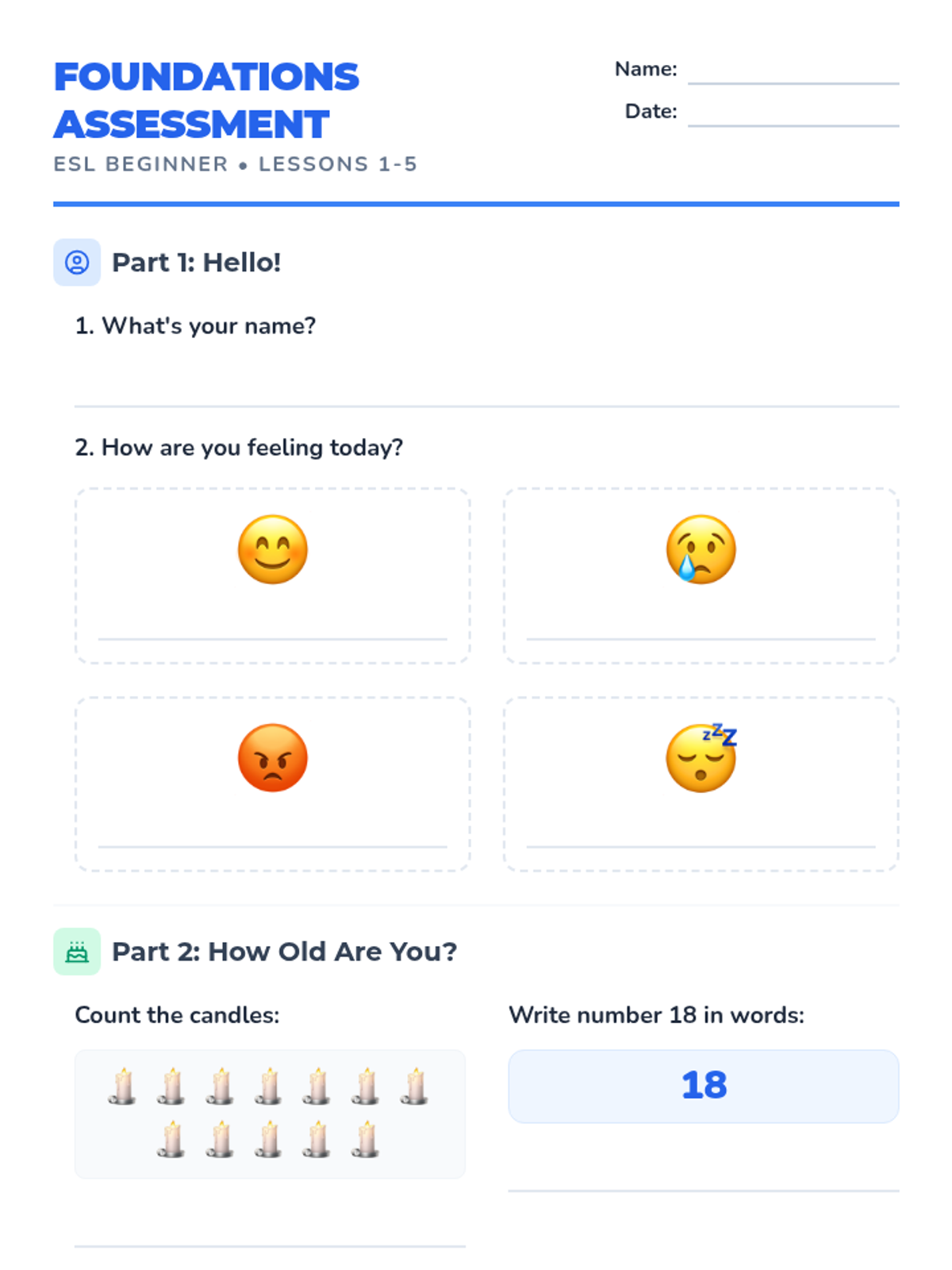
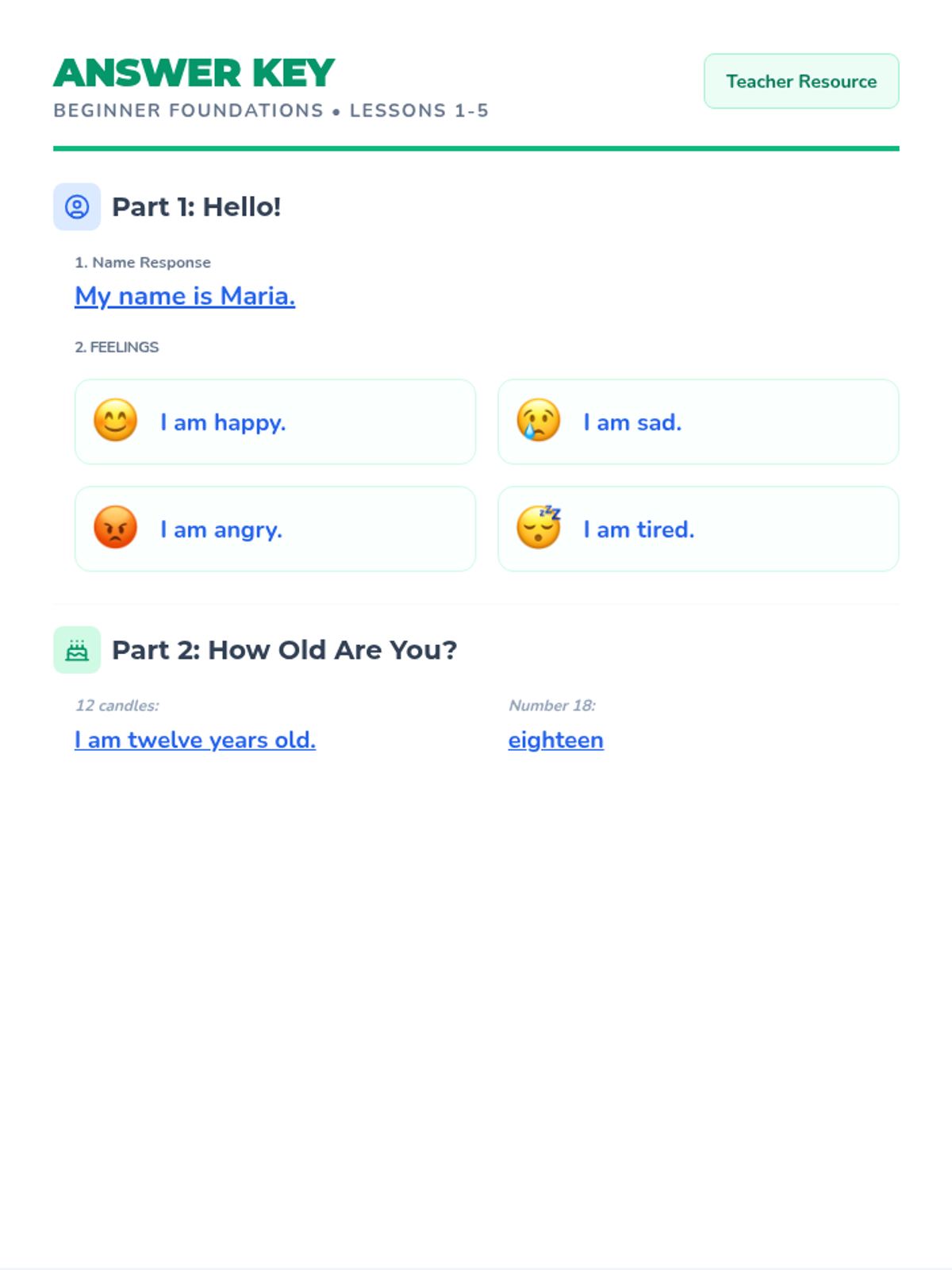
A comprehensive assessment designed for beginner ESL students covering personal introductions, feelings, numbers, countries, classroom objects, and plural food items.
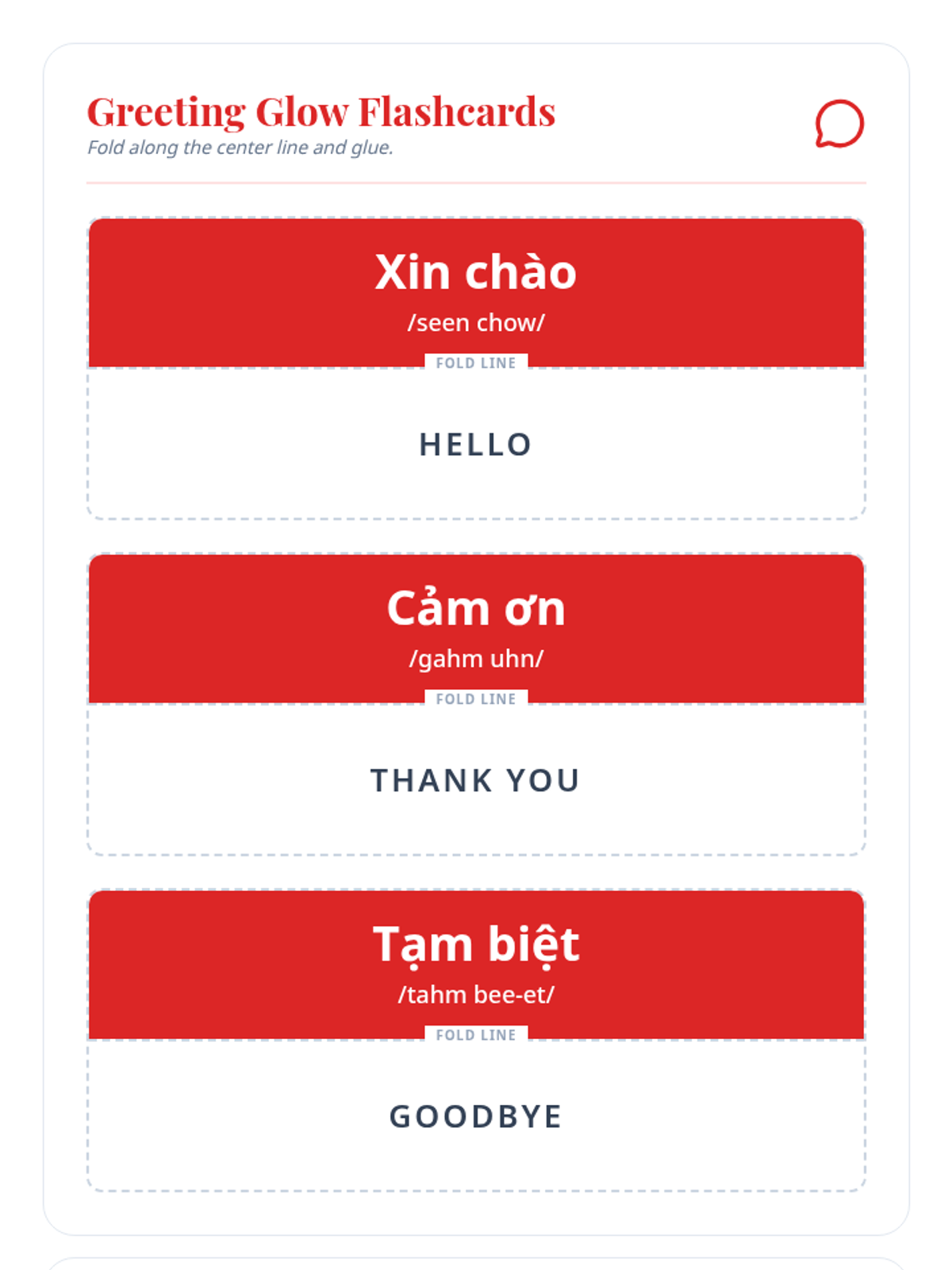
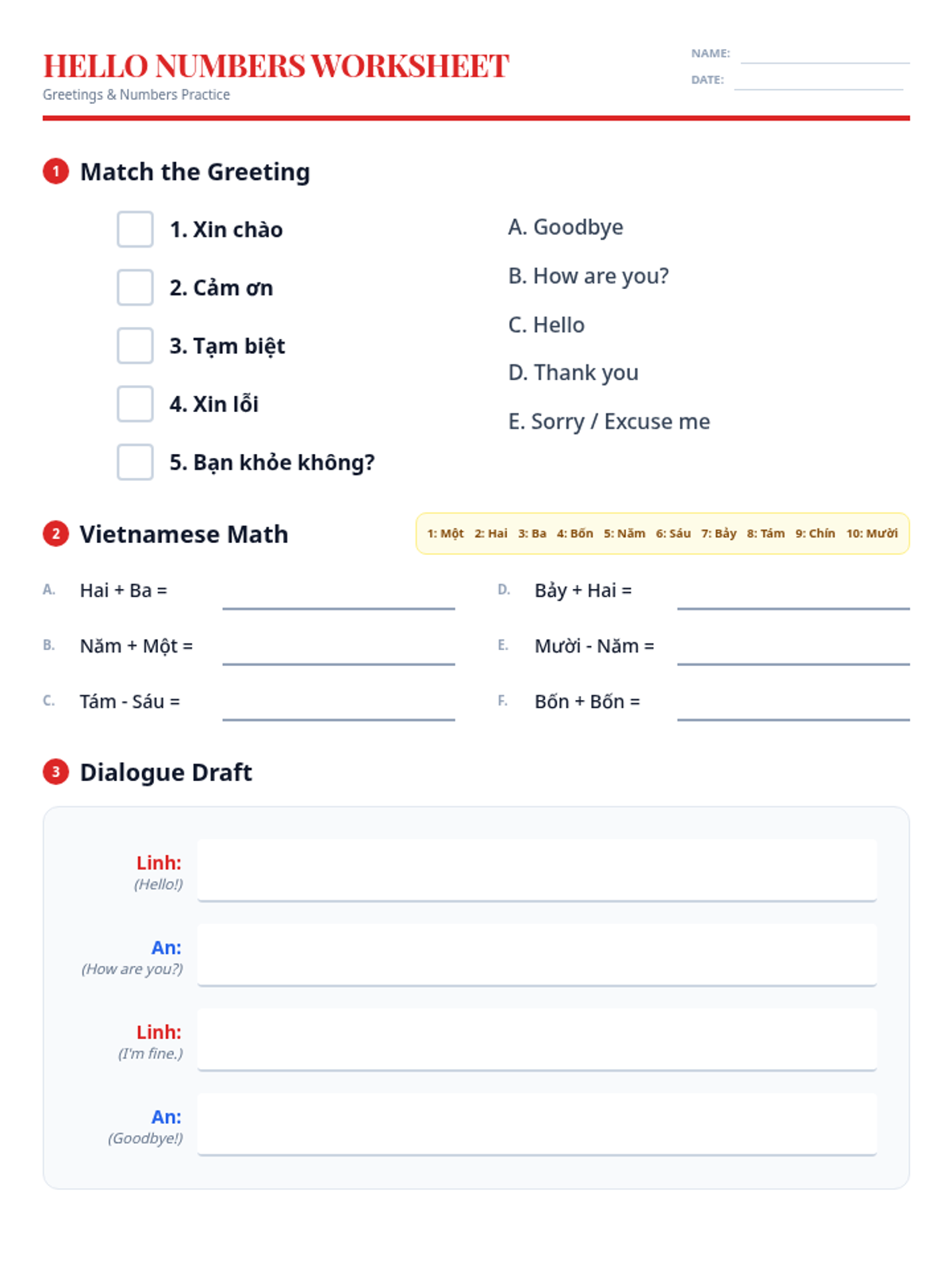
An introductory lesson to Vietnamese covering essential greetings and numbers 1-10, focusing on basic pronunciation and conversational phrases.
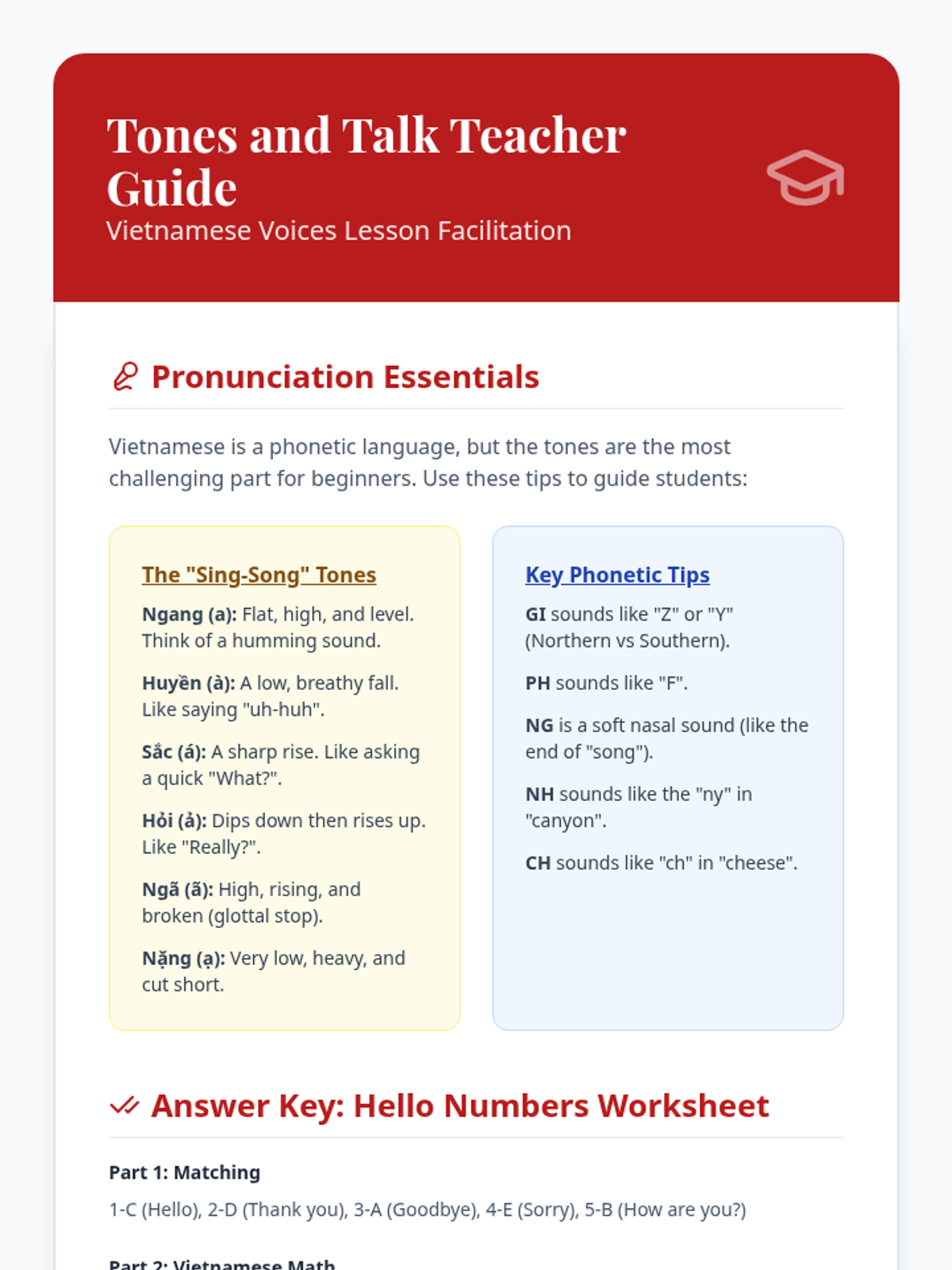
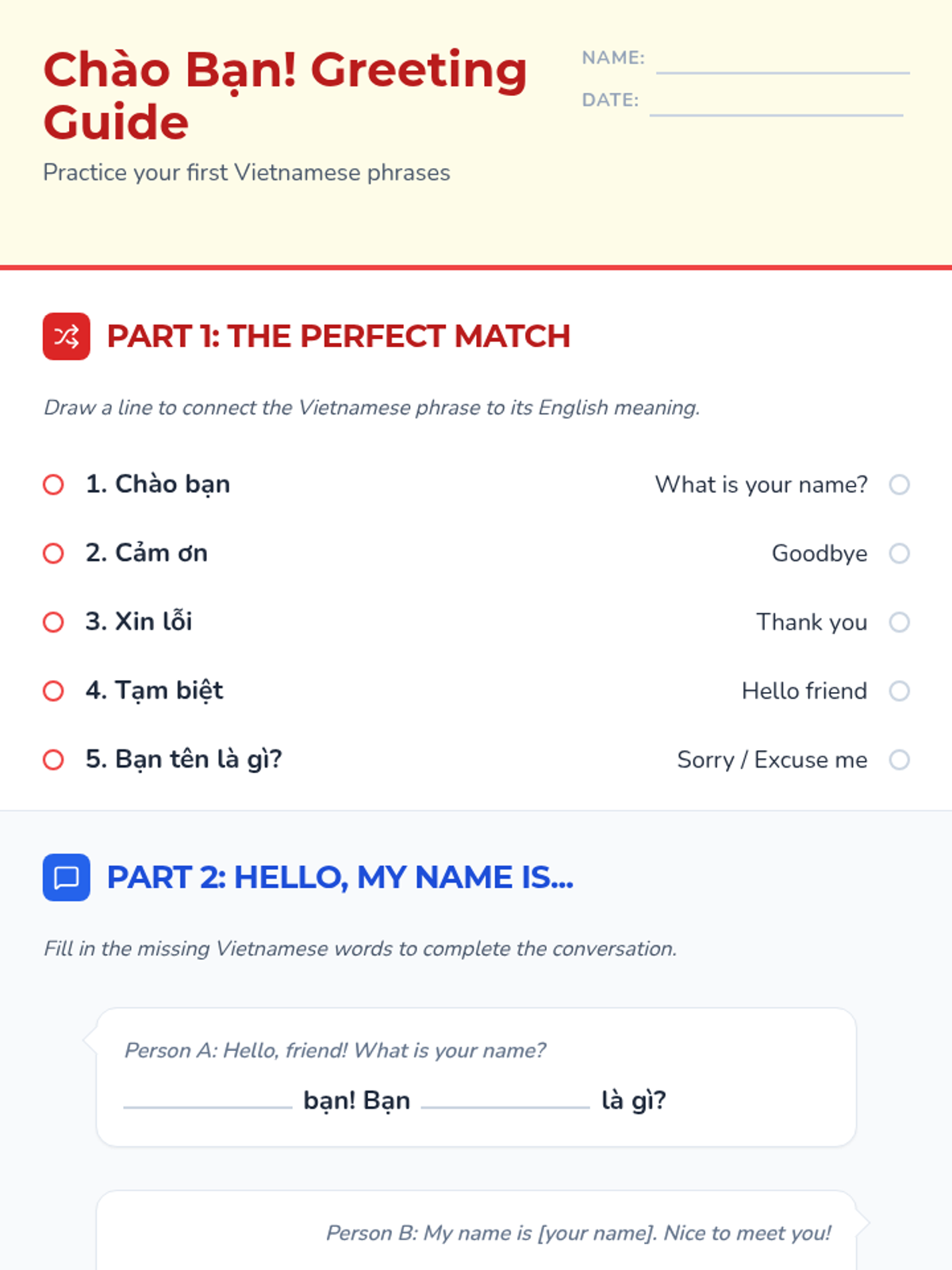
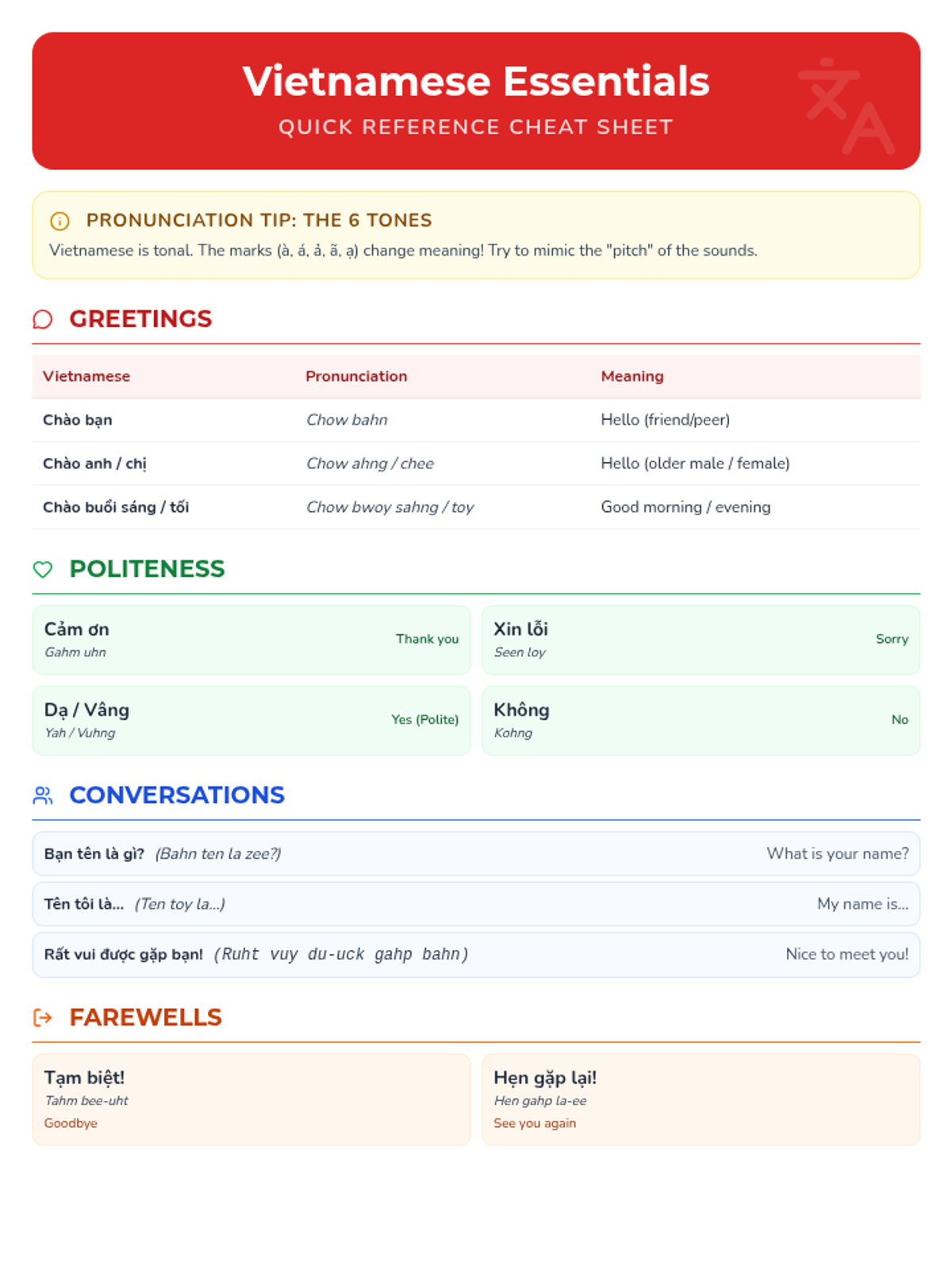
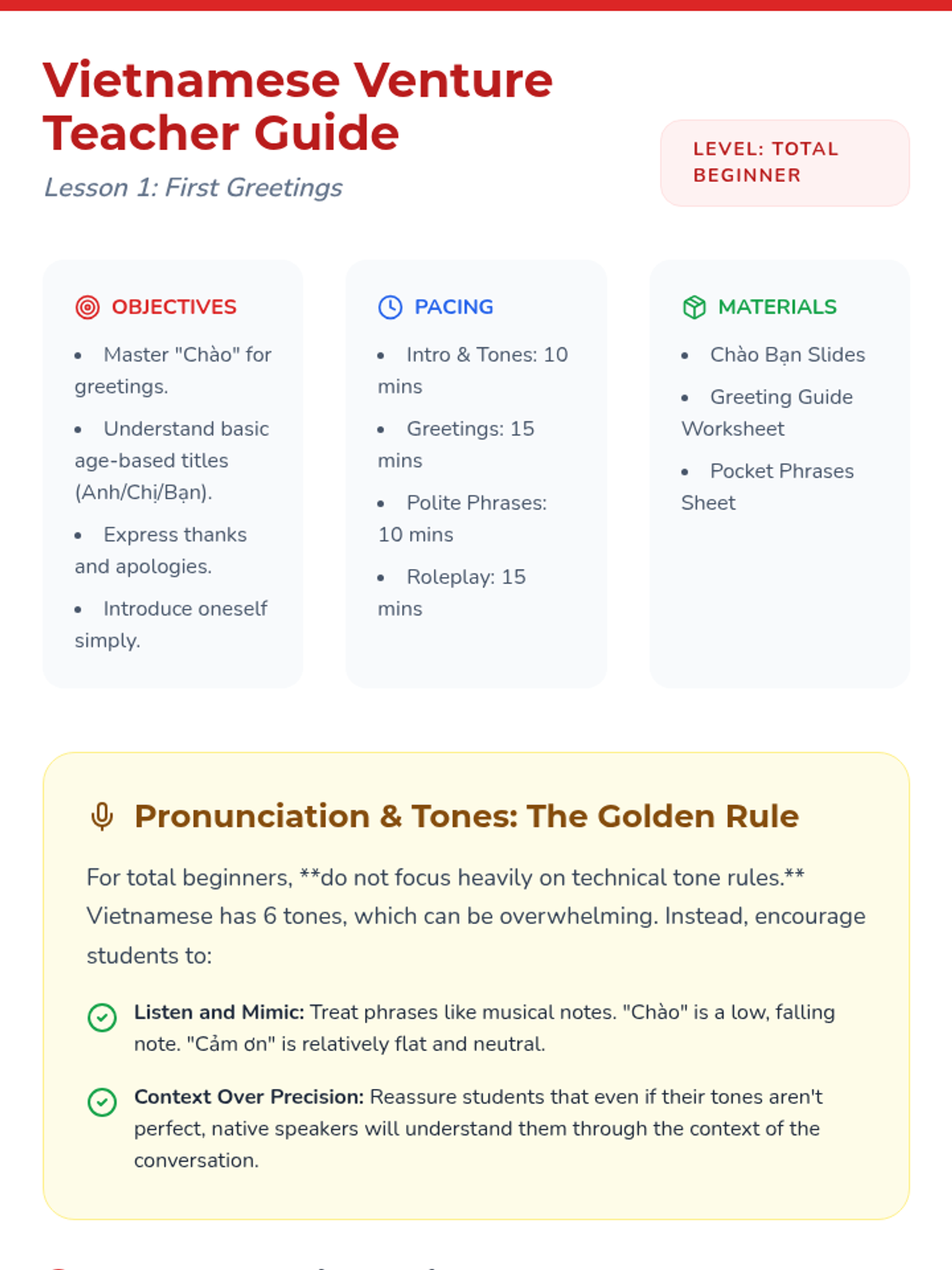
An introductory lesson covering basic greetings, polite expressions, and a brief introduction to the importance of tones in Vietnamese.
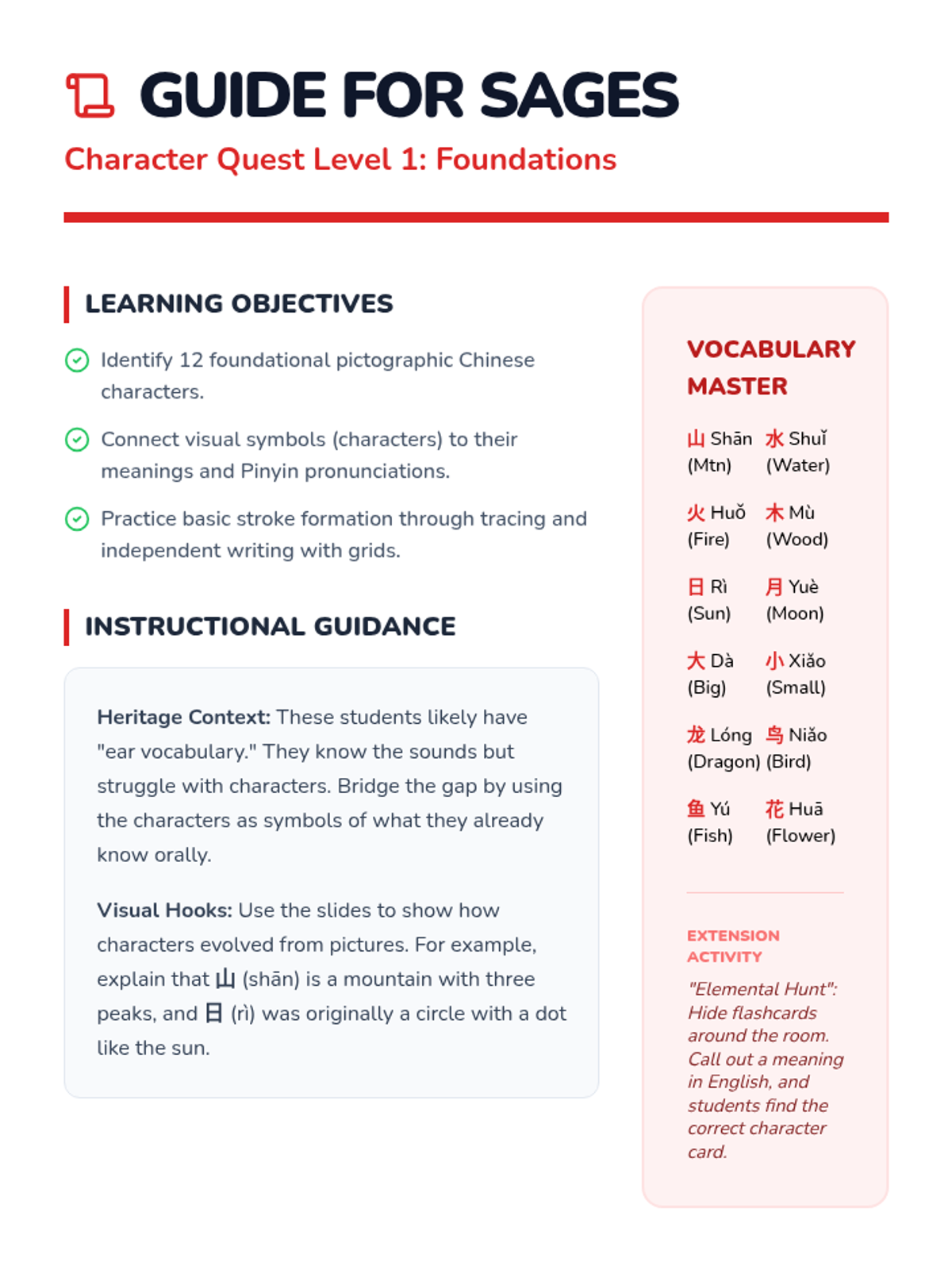
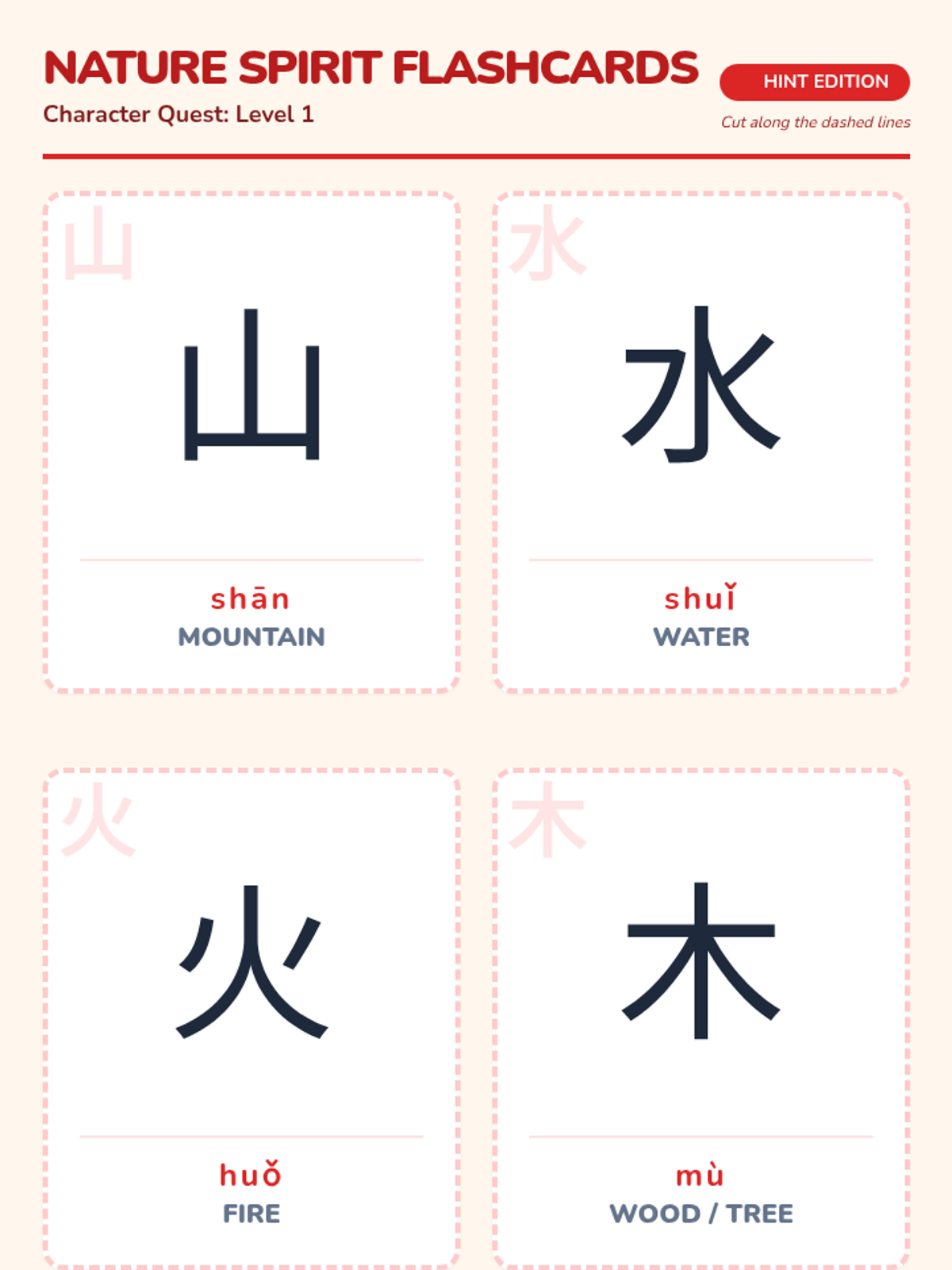
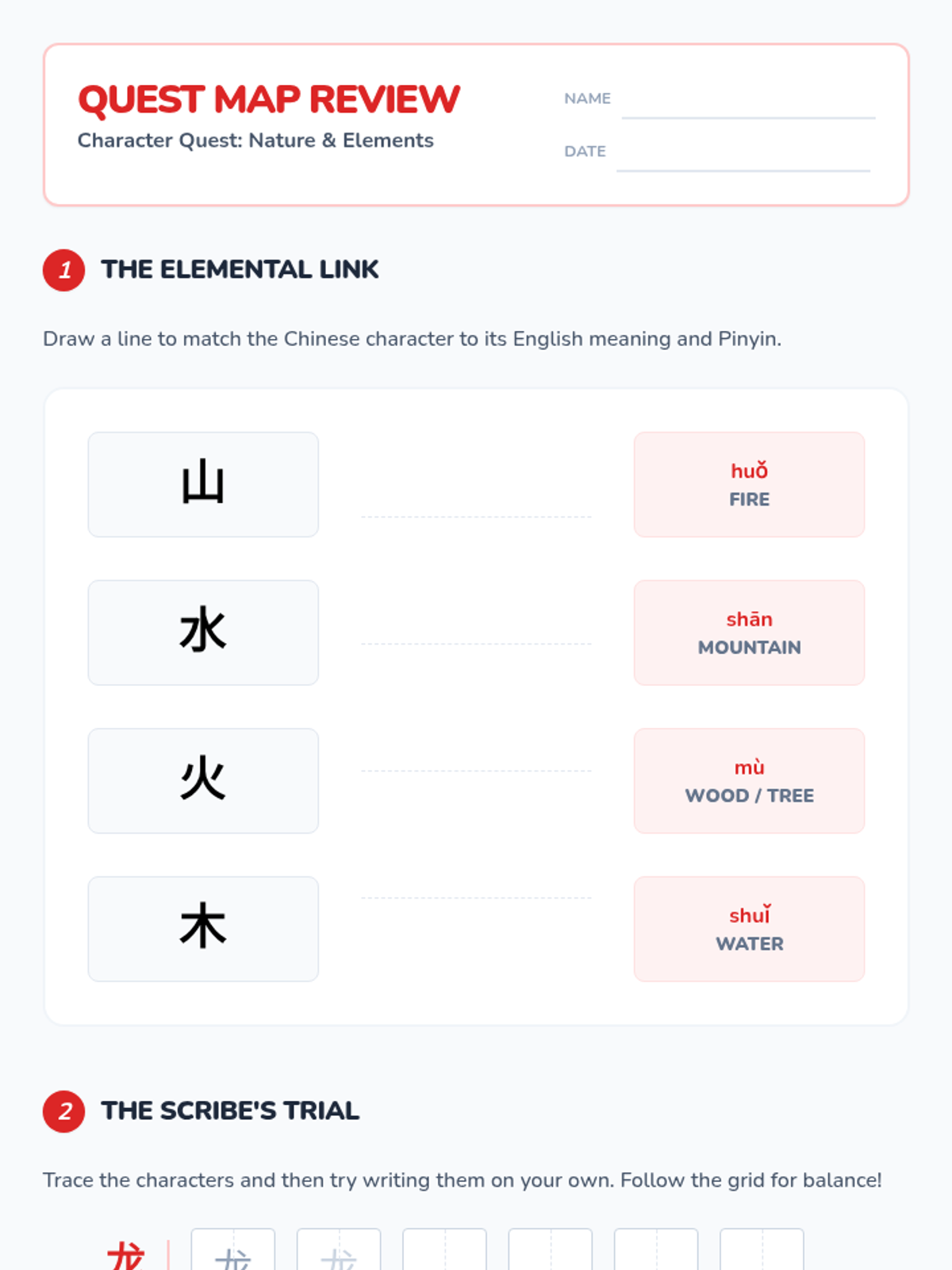
A foundational vocabulary lesson for K-5 heritage learners focusing on nature elements and common animals through visual flashcards and practice activities.
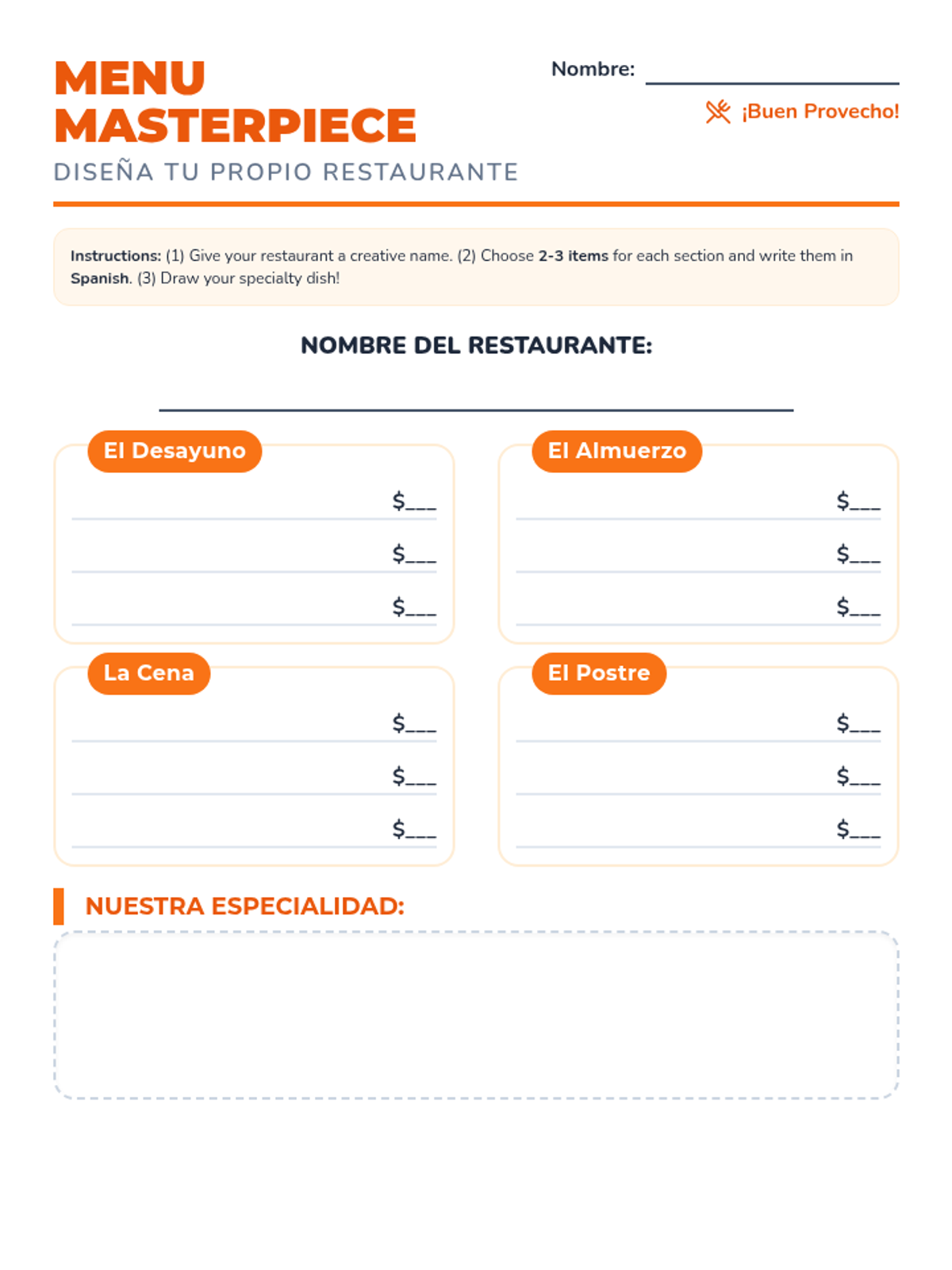
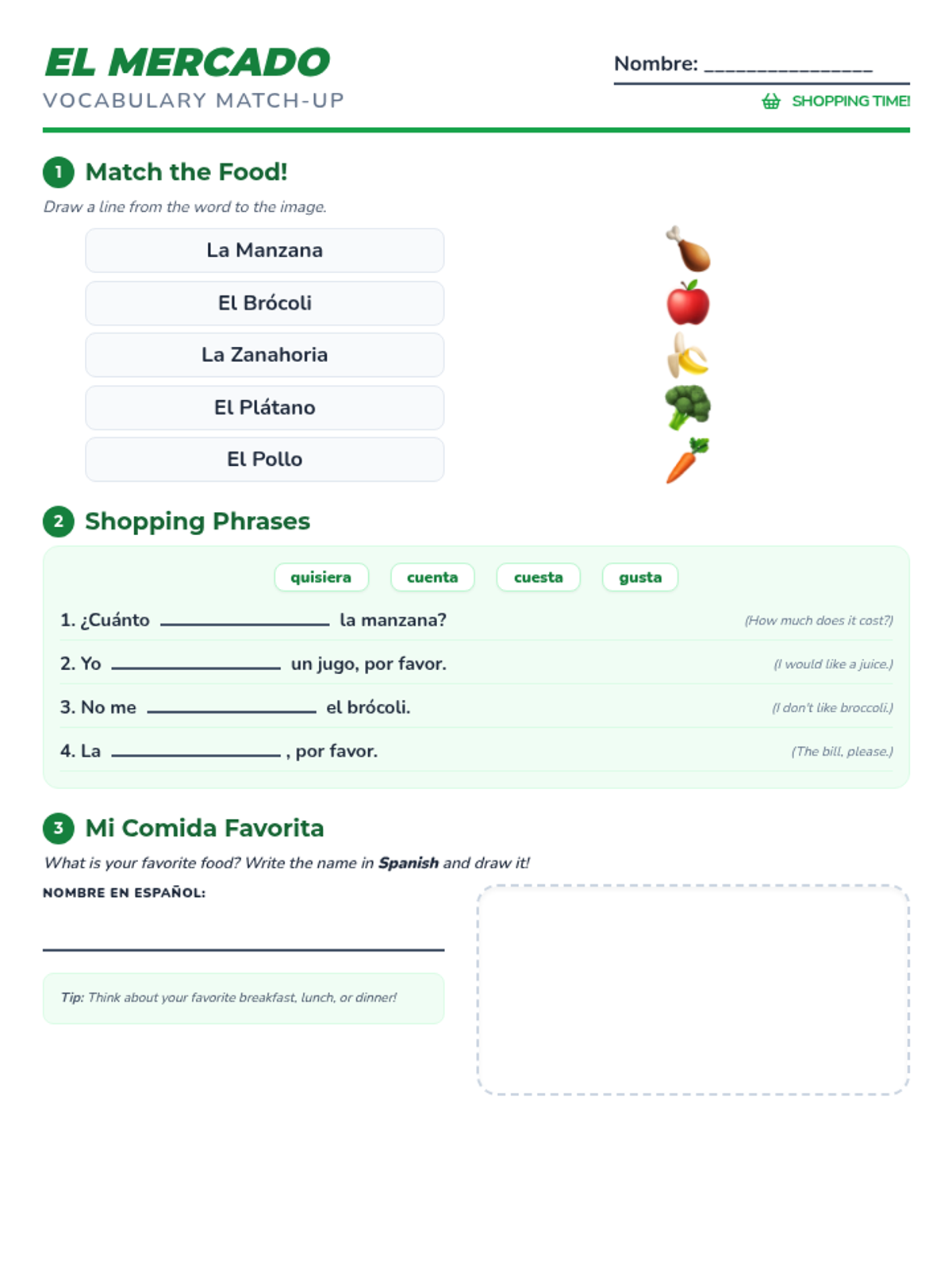
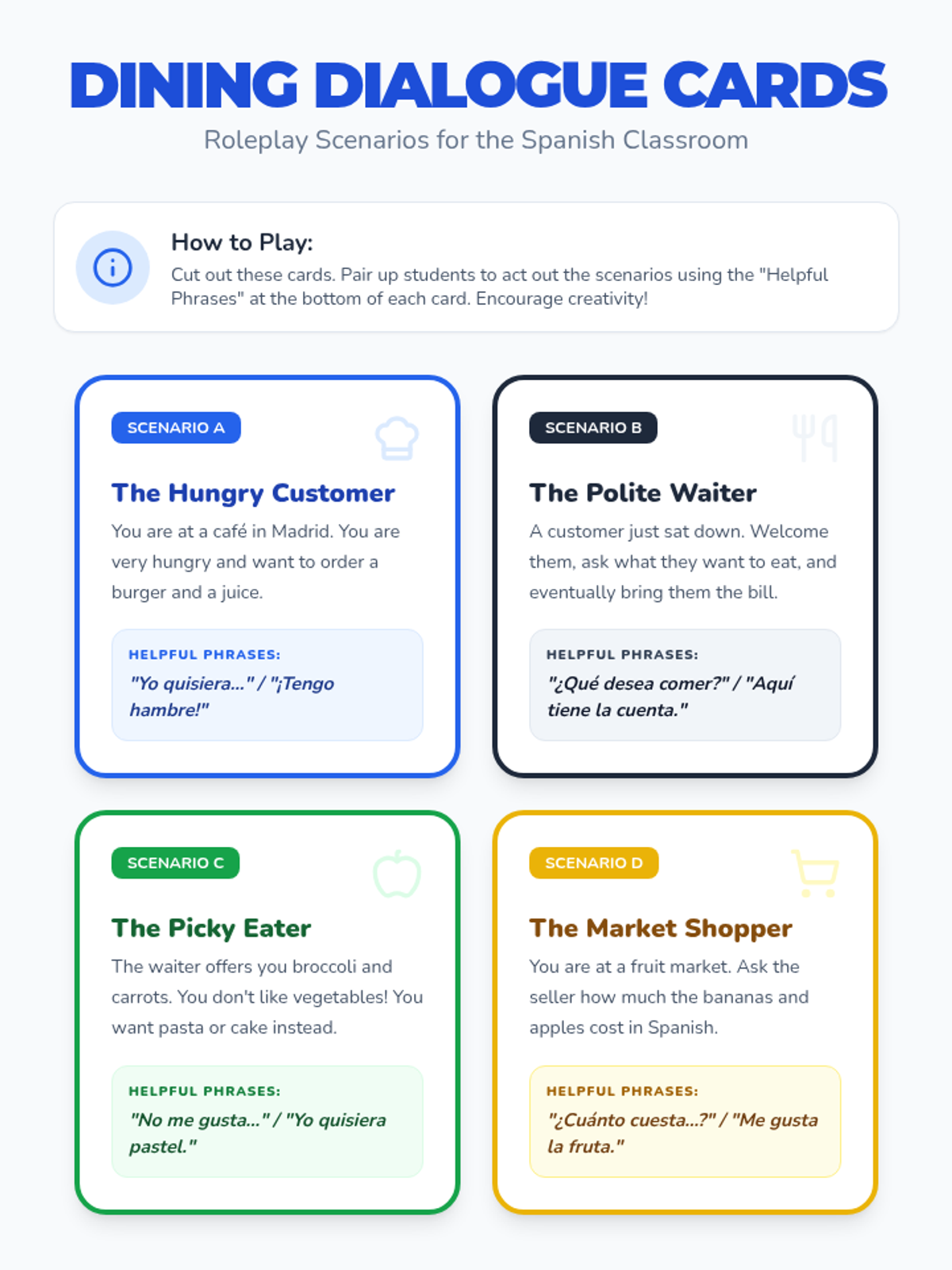
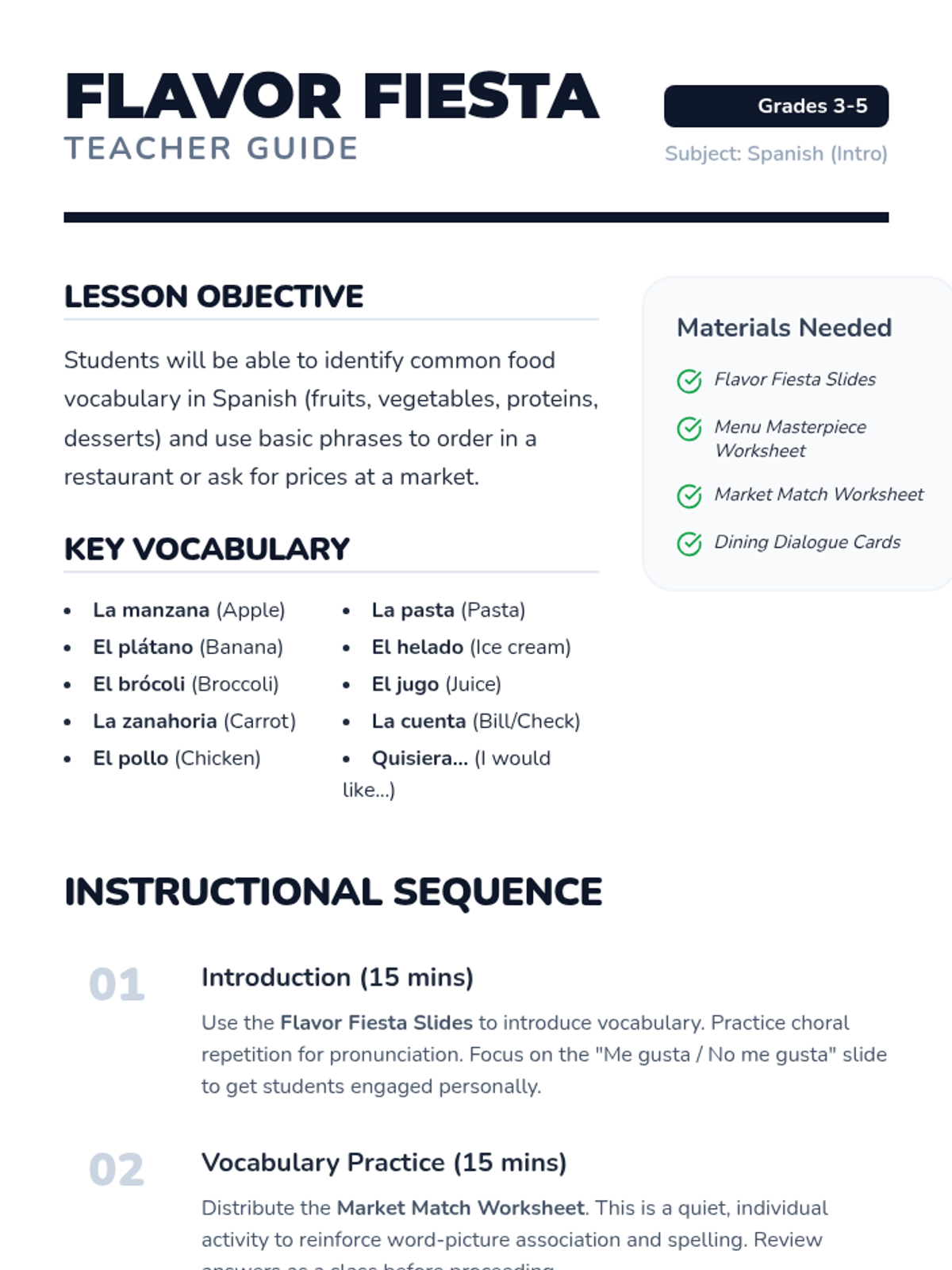
An introductory Spanish lesson for elementary students focused on food vocabulary, ordering in a restaurant, and market shopping. Students will learn essential nouns and polite phrases through interactive slides, creative menu design, and roleplay activities.
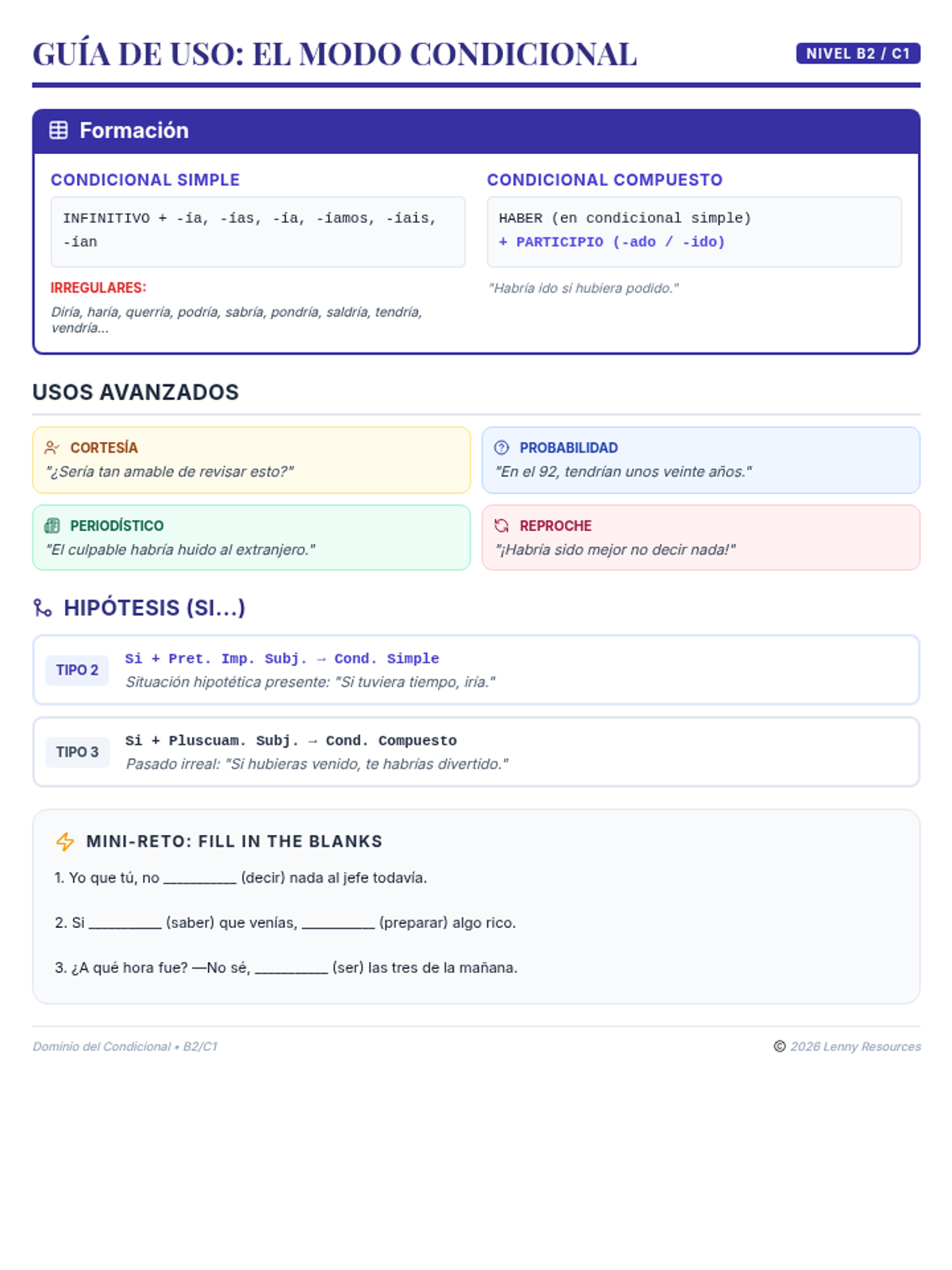
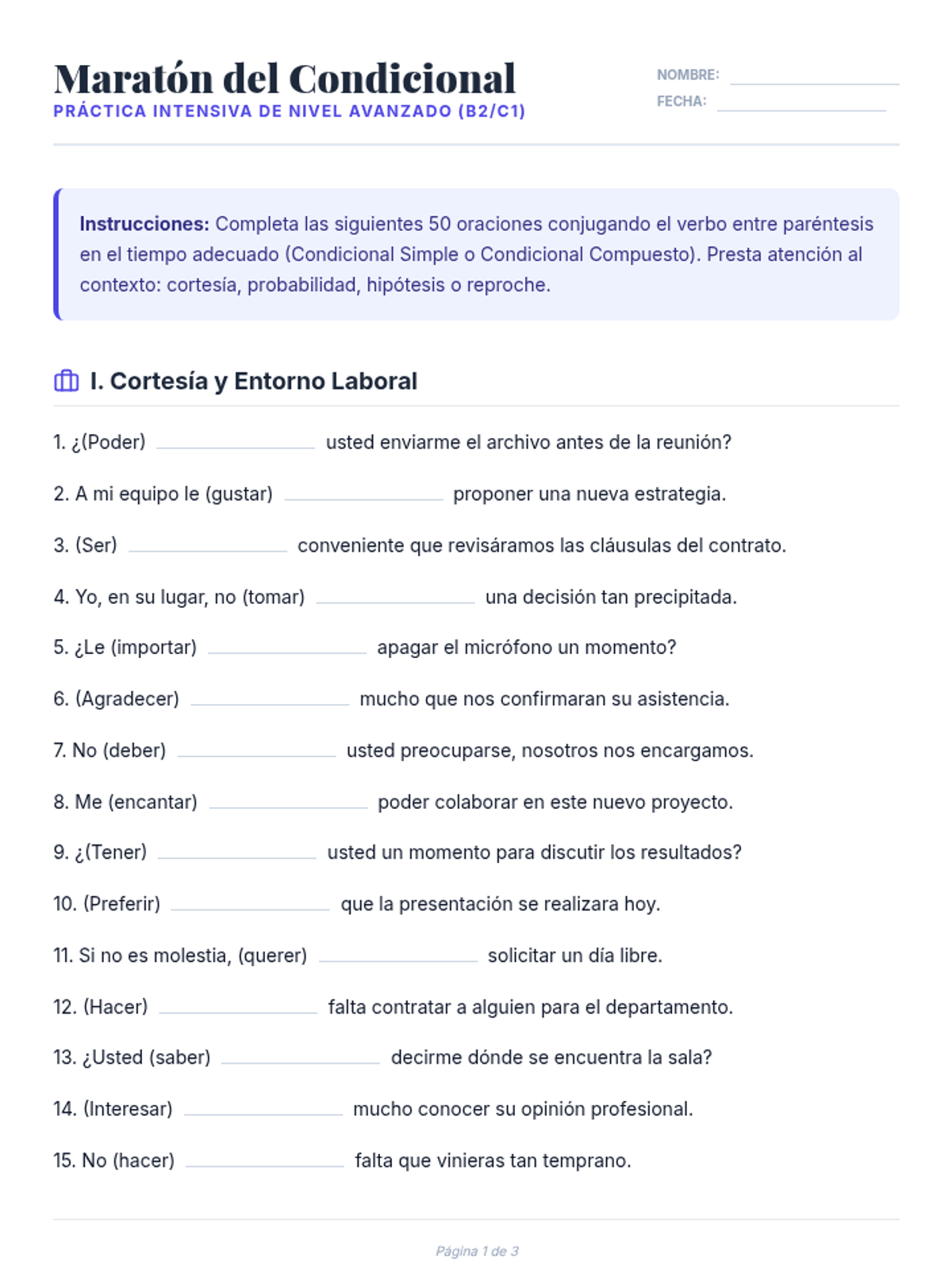
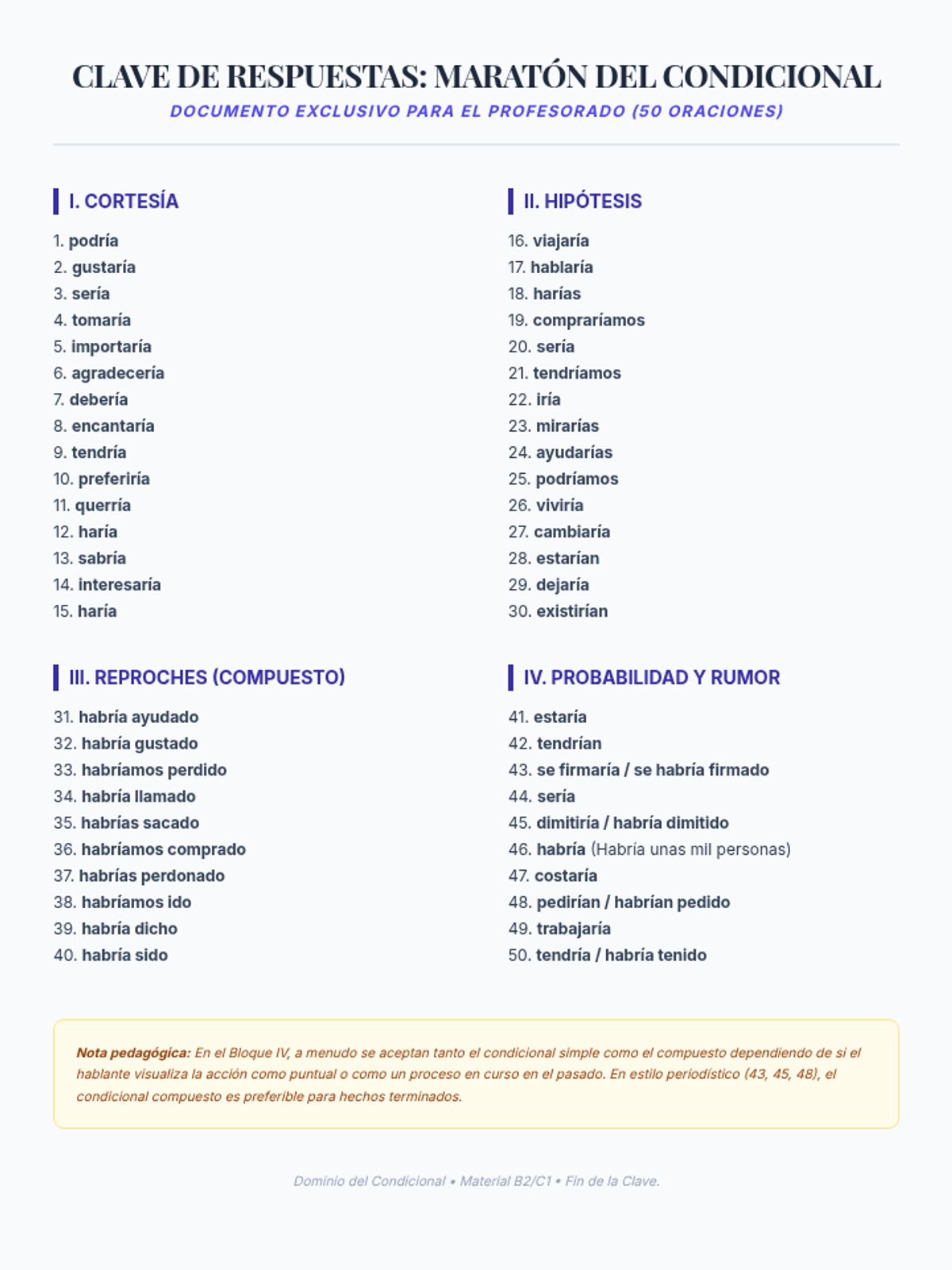
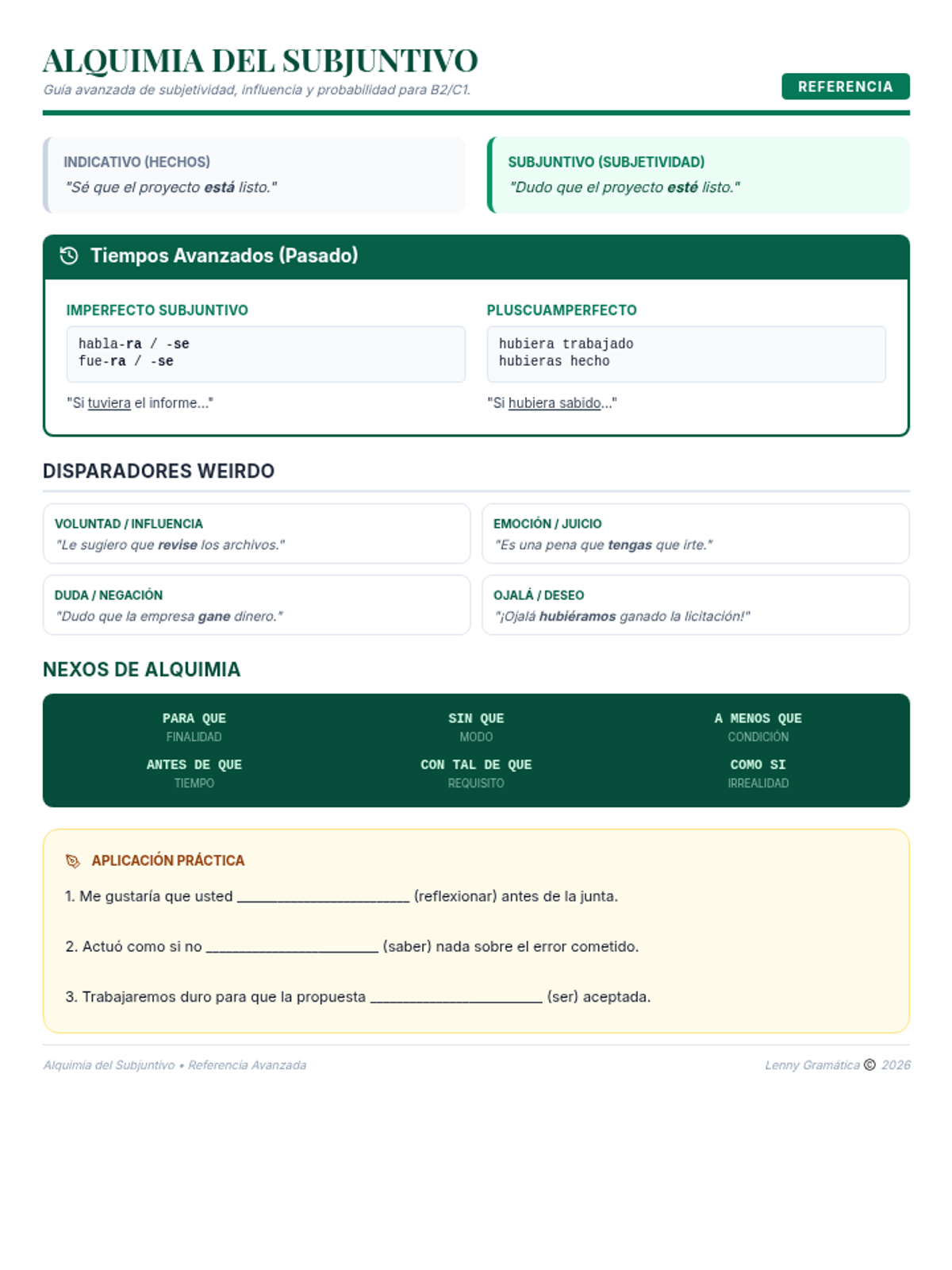
Lección completa sobre los usos avanzados del condicional simple y compuesto, incluyendo cortesía, probabilidad en el pasado, oraciones hipotéticas y estilo periodístico.
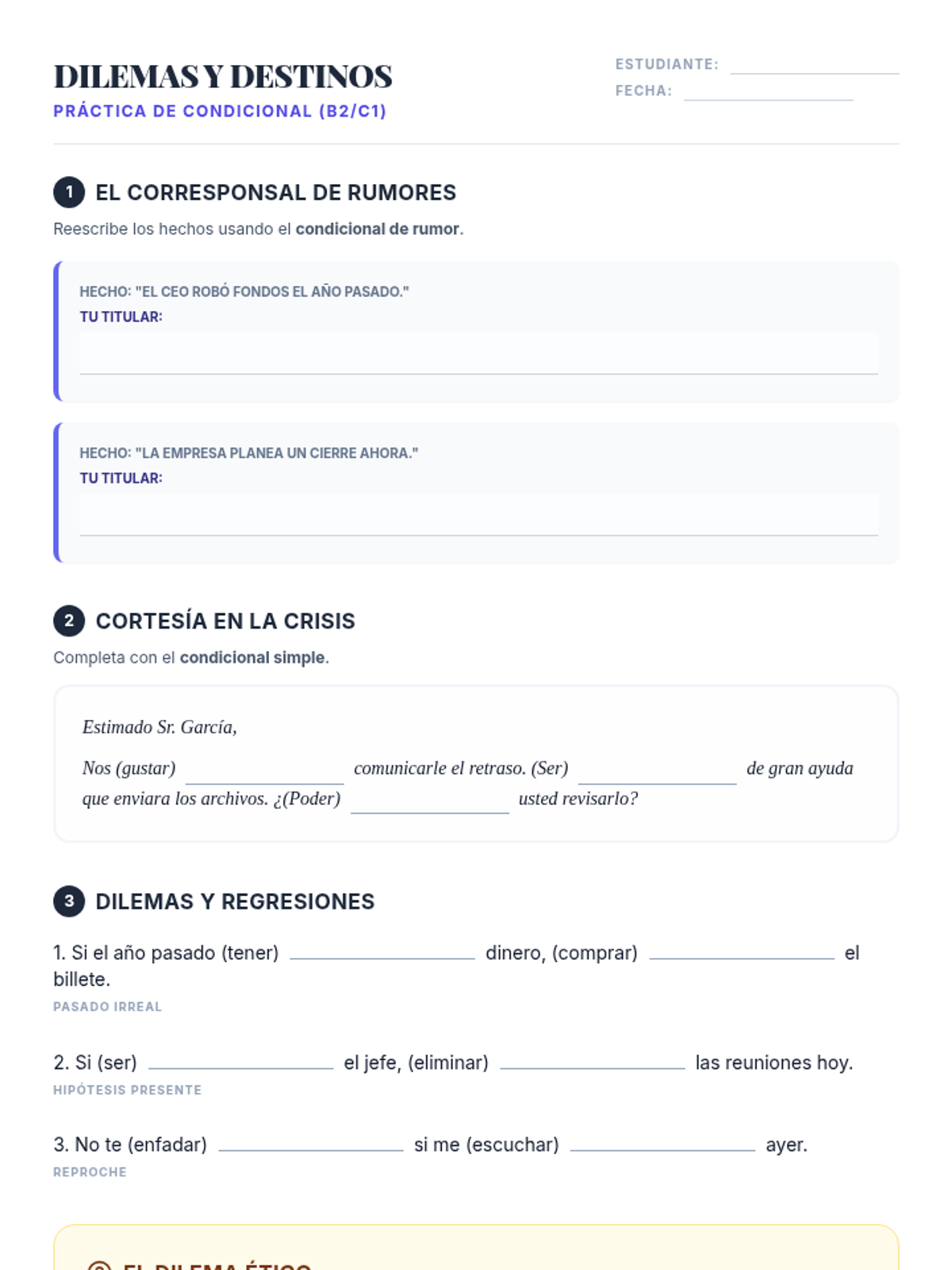
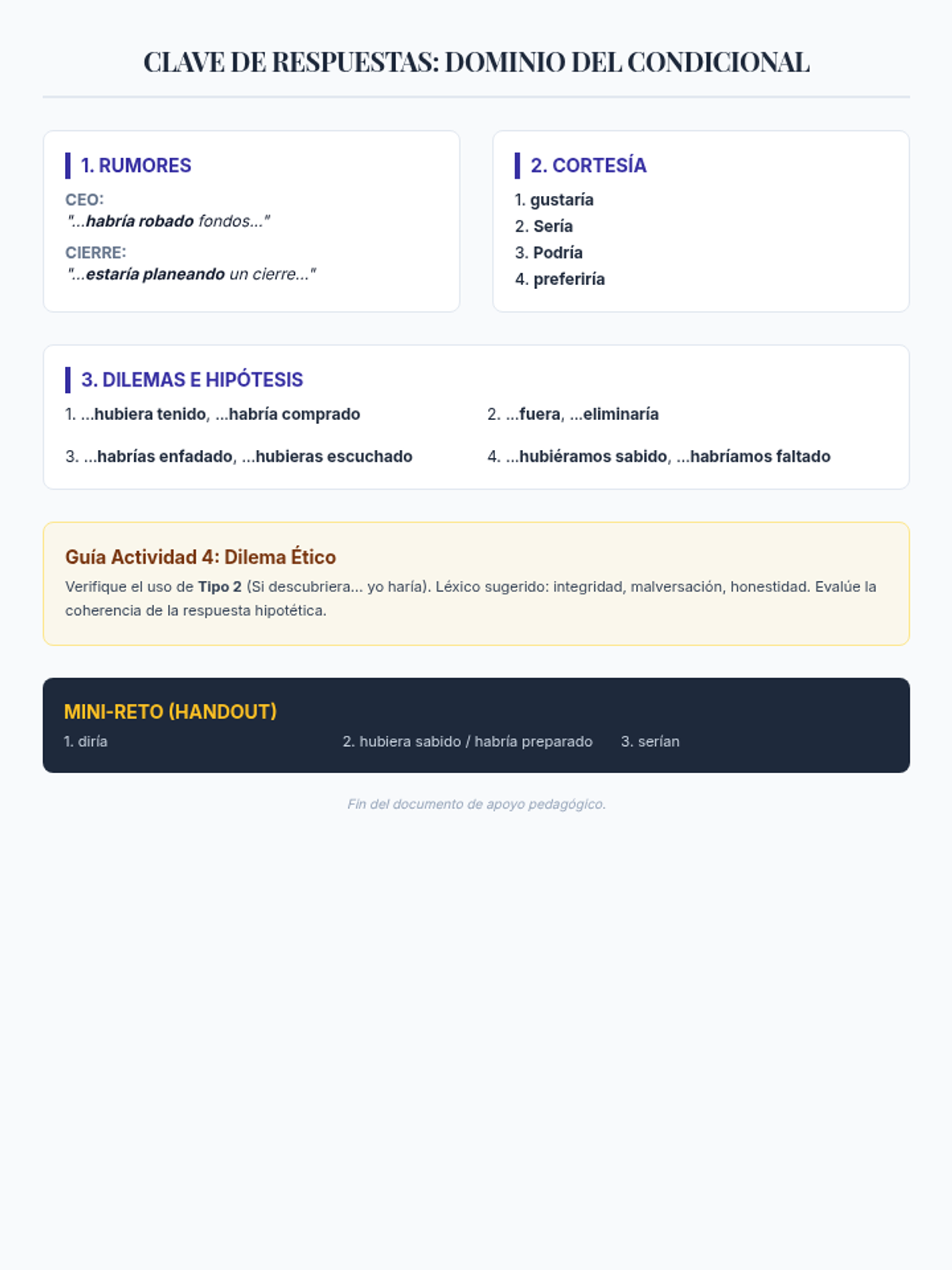
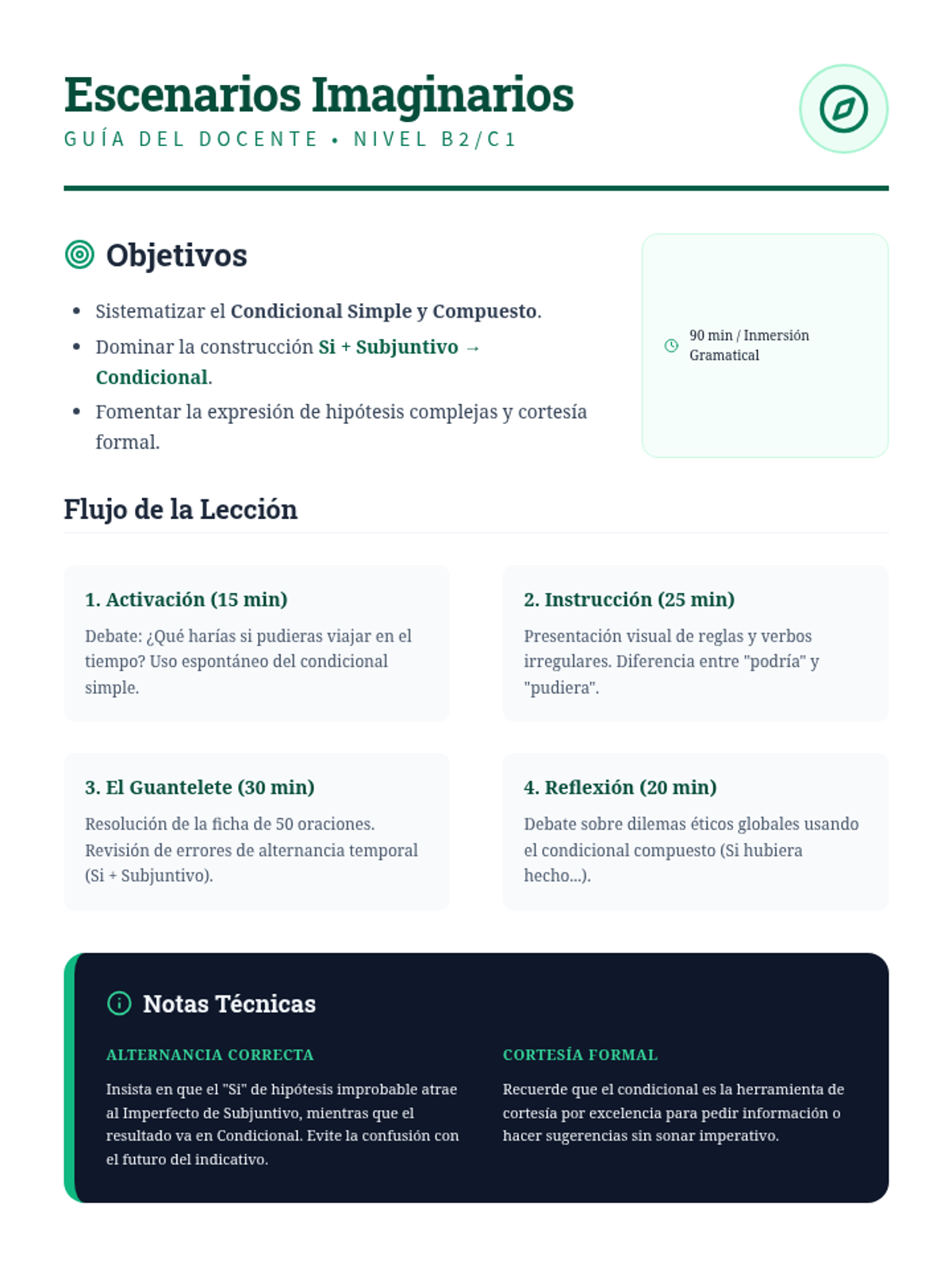
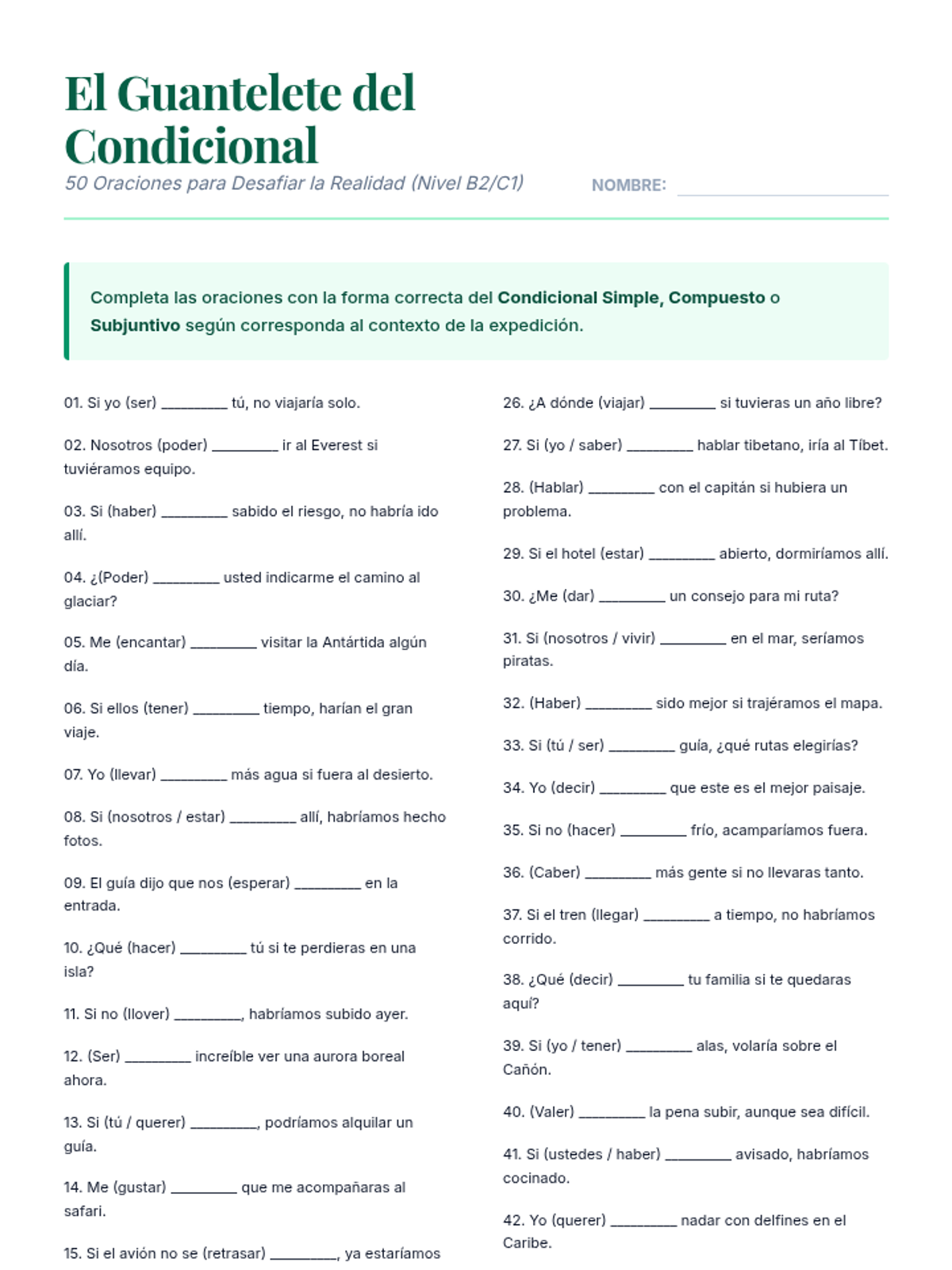
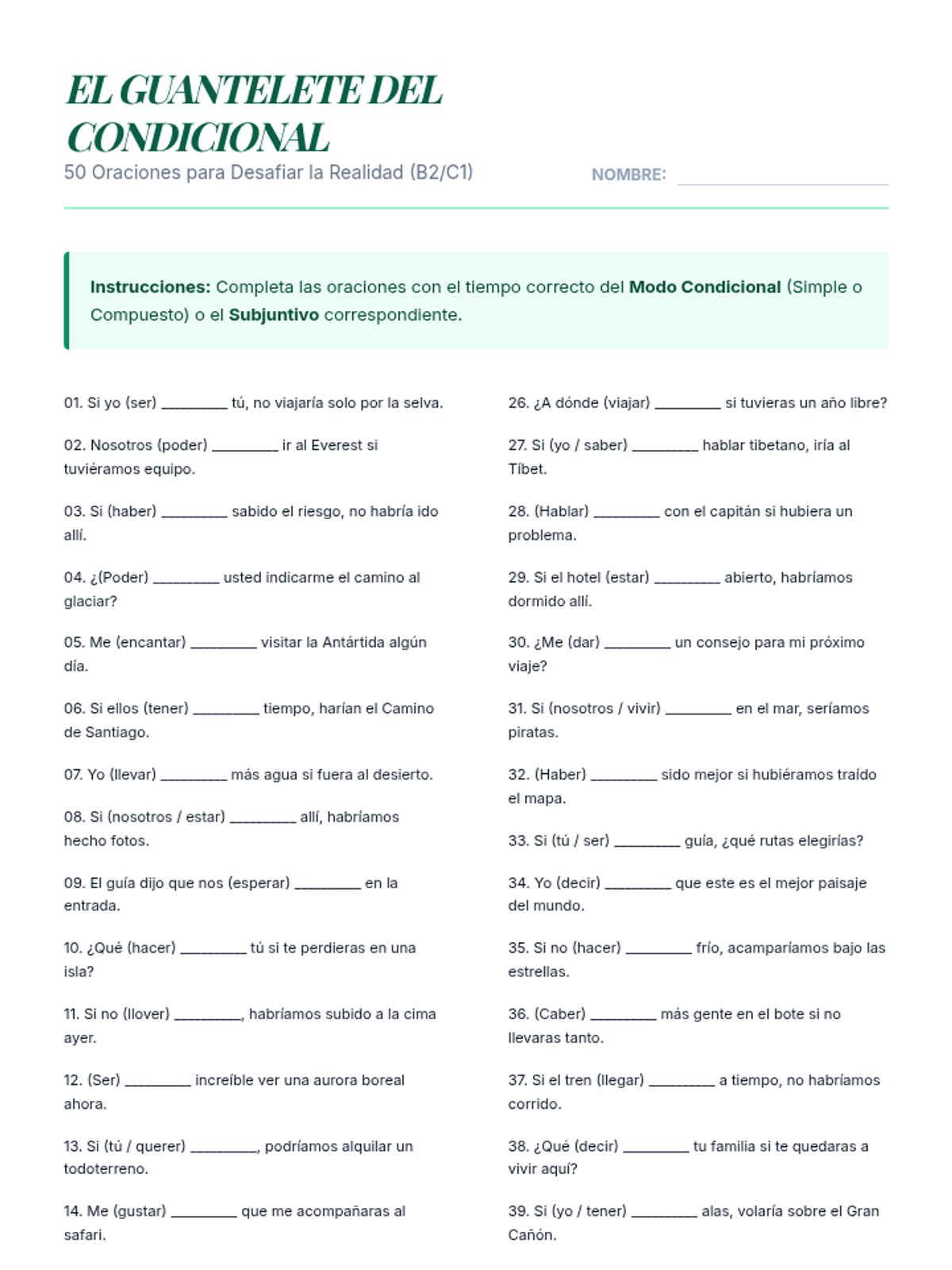
Una lección avanzada enfocada en el dominio del modo condicional (simple y compuesto) y las oraciones condicionales, contextualizada en escenarios de viaje hipotéticos y dilemas éticos globales.
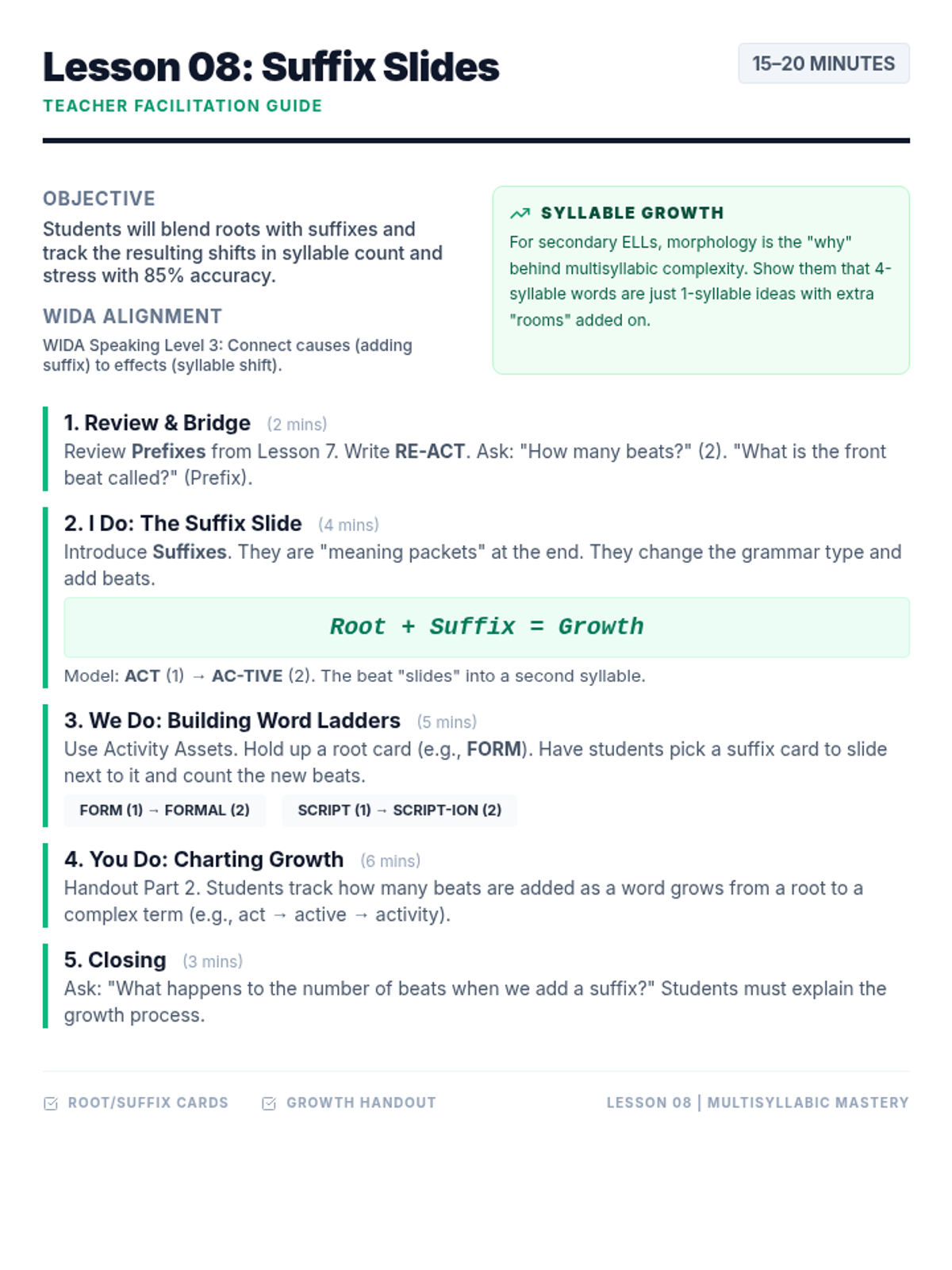
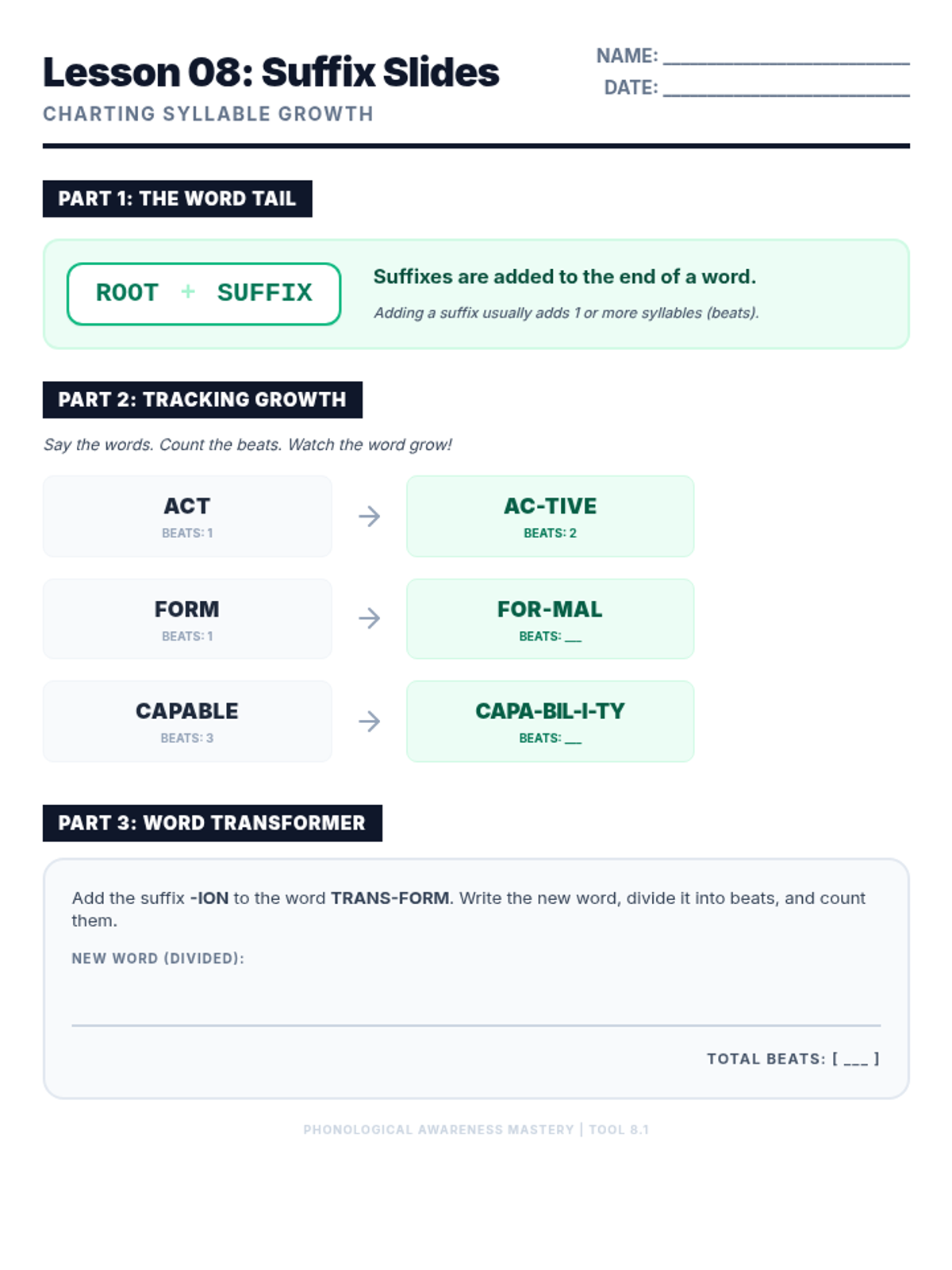
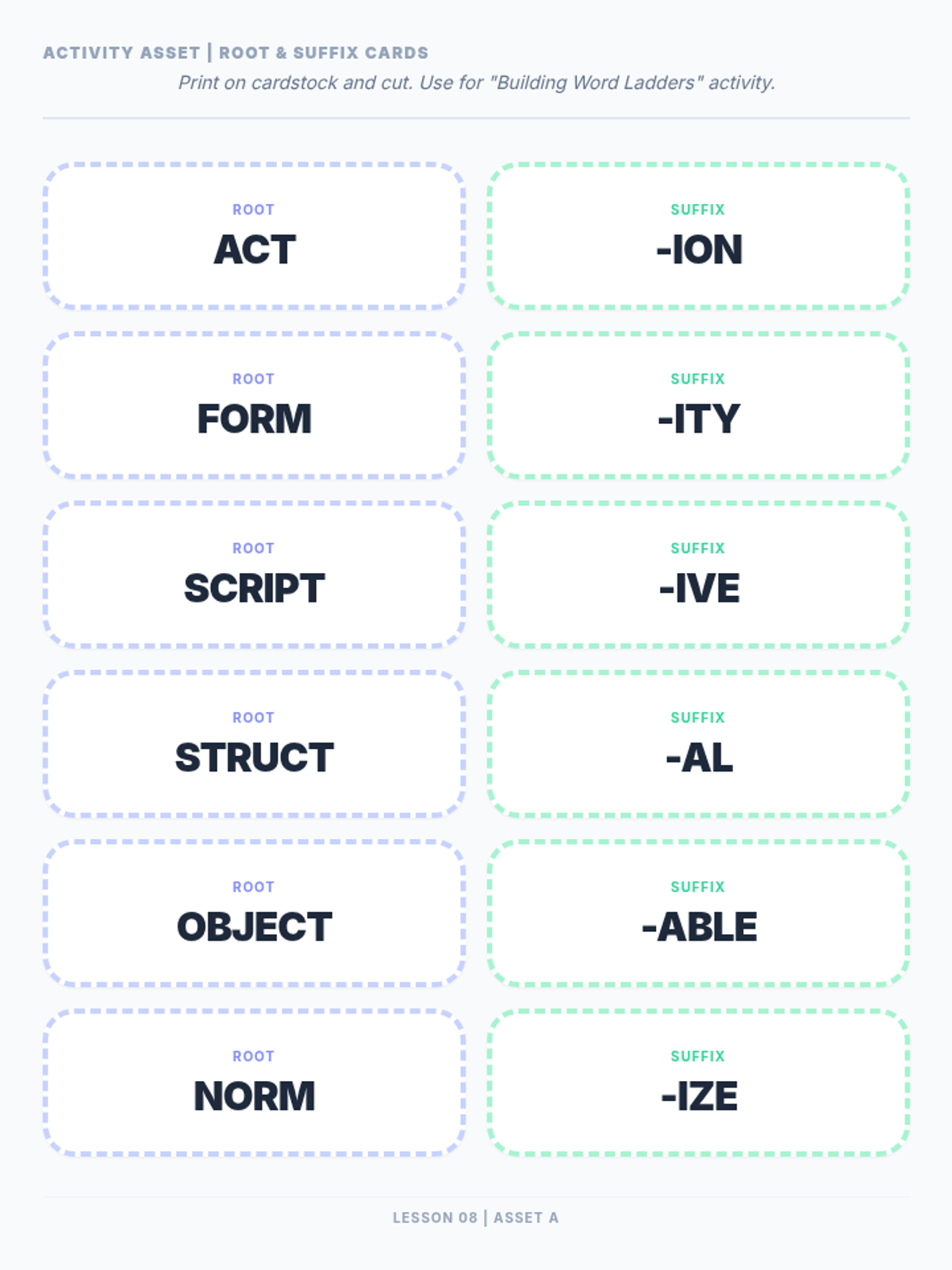
Eighth lesson in the sequence, focusing on blending roots with academic suffixes and tracking the resulting shifts in syllable count and word function.
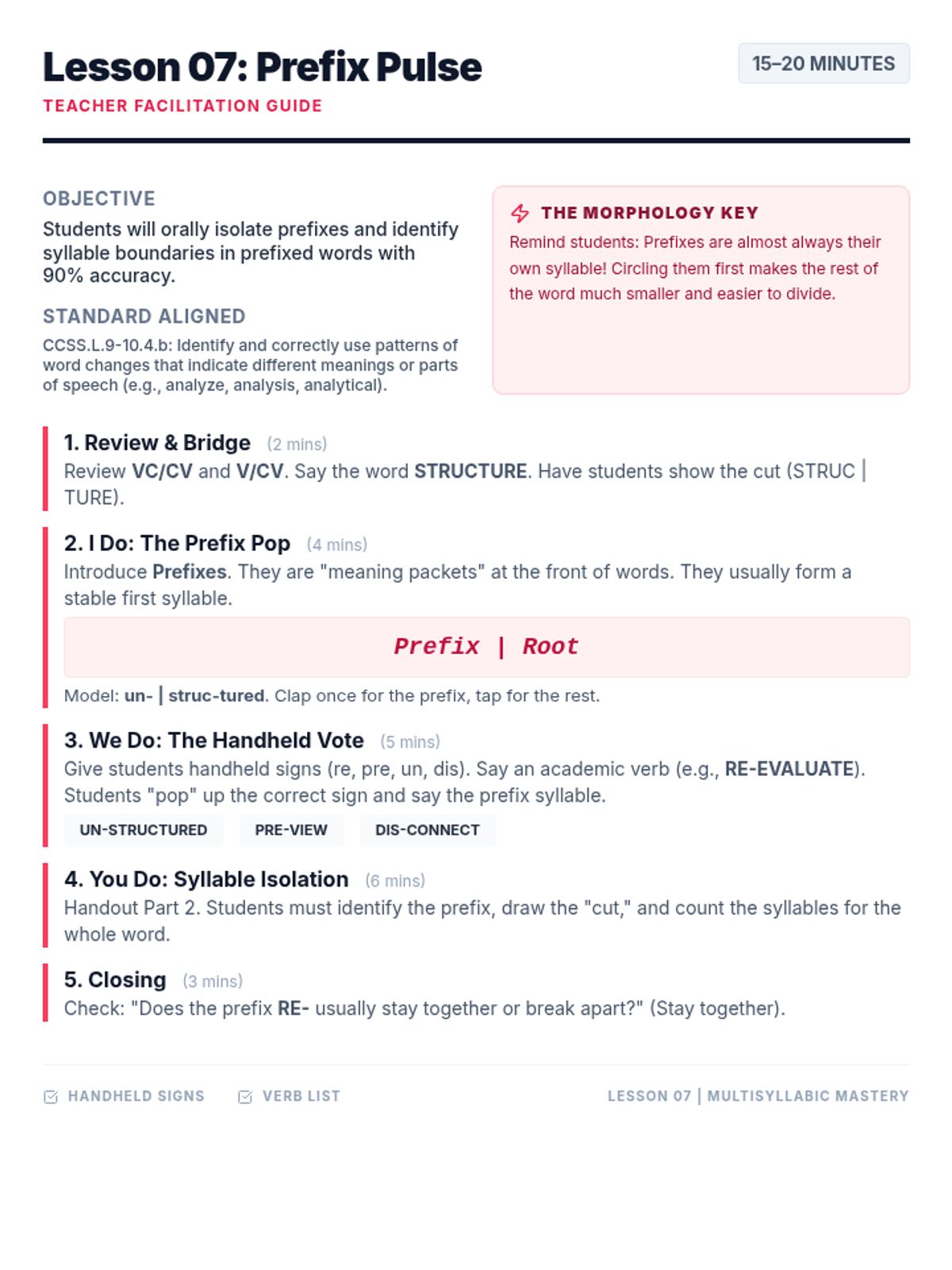
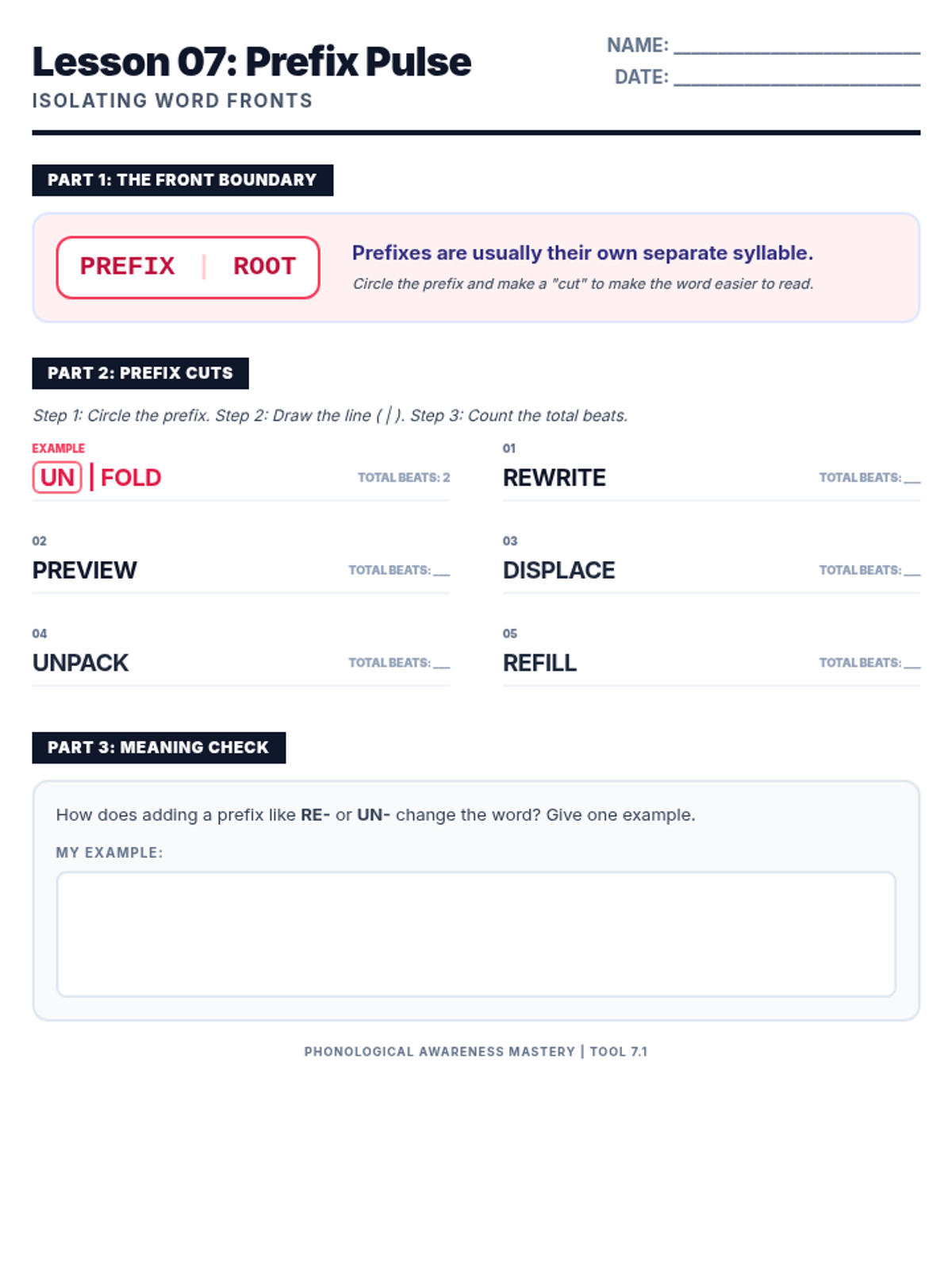
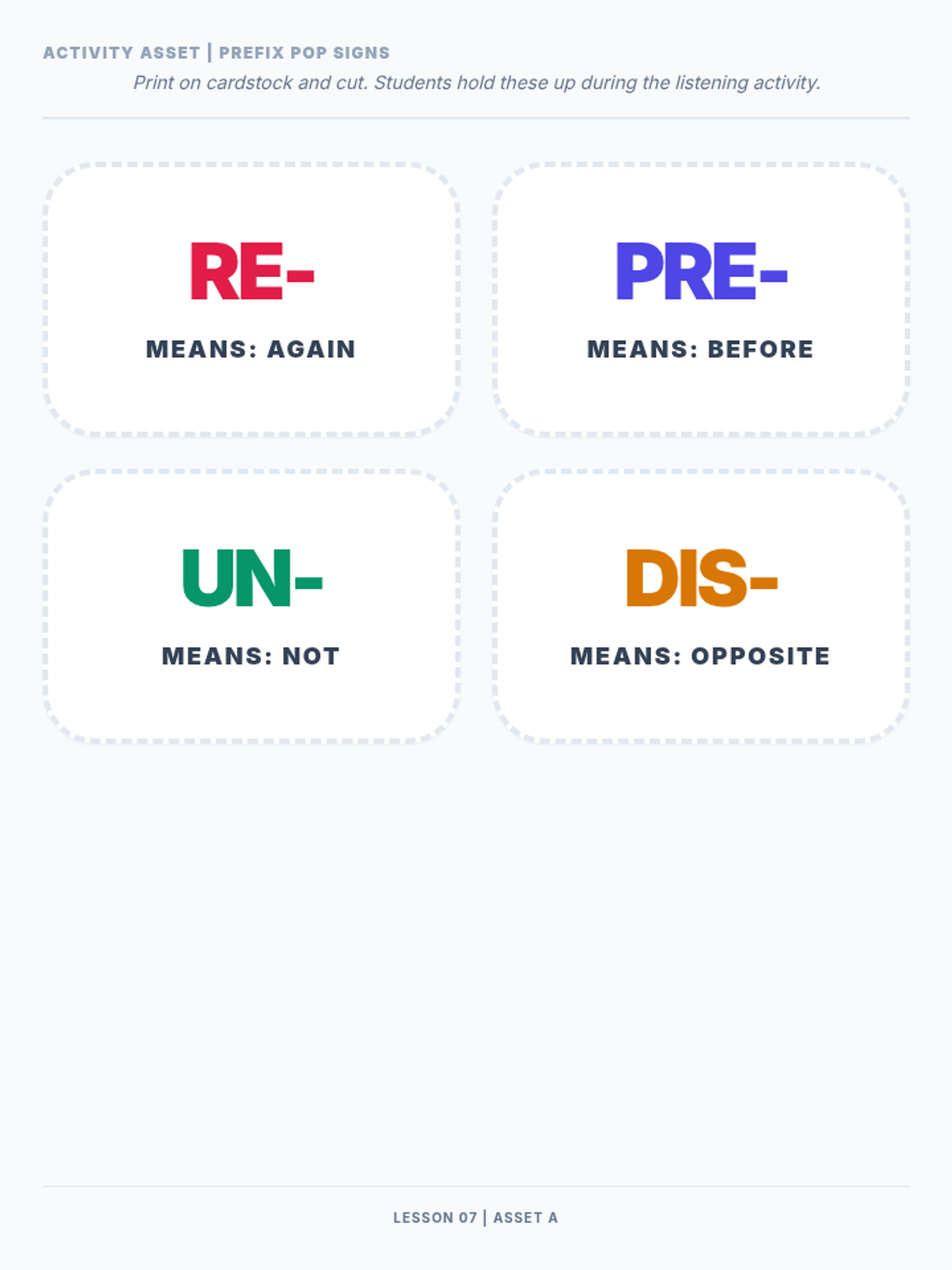
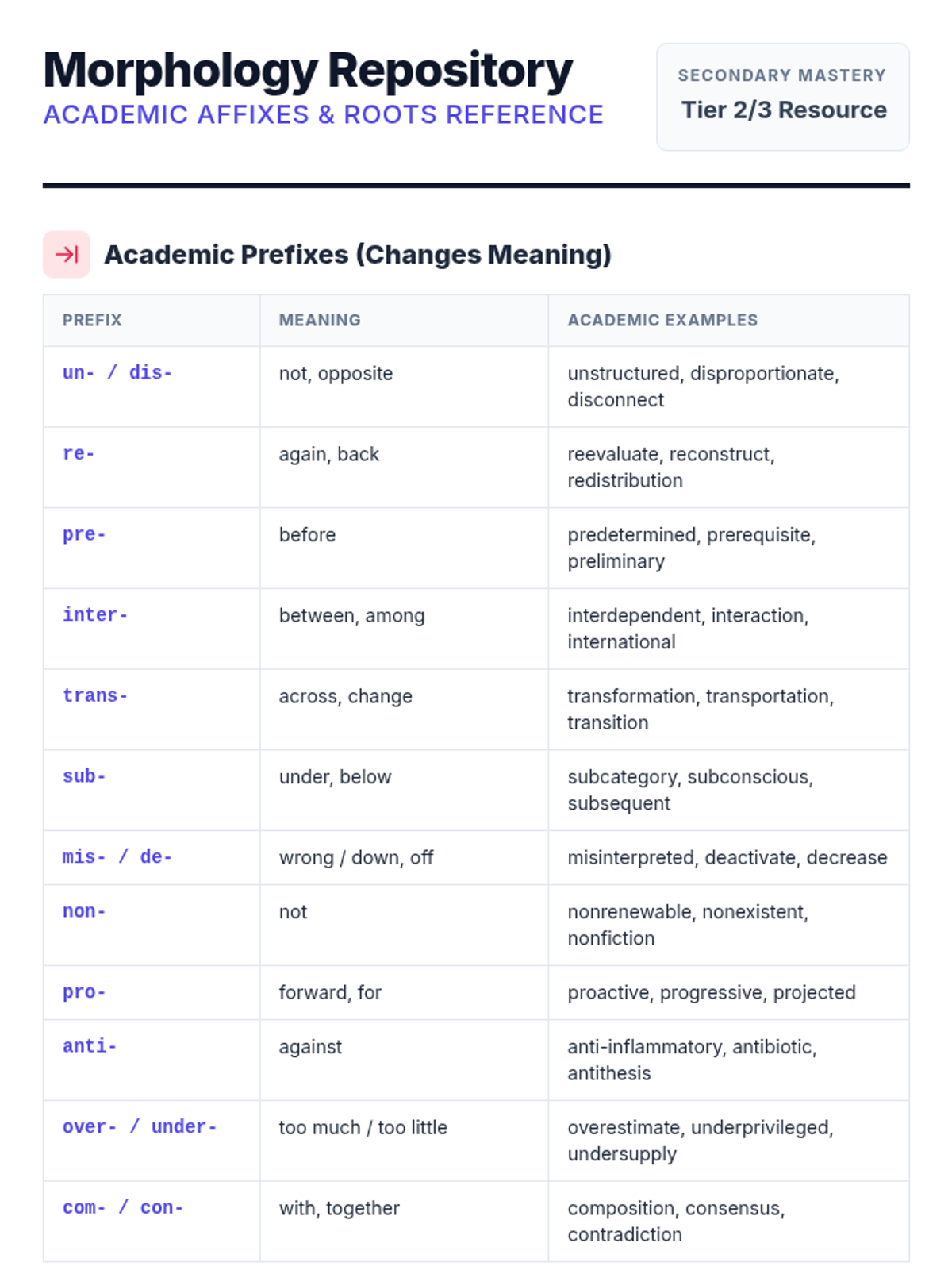
Seventh lesson in the sequence, focusing on identifying prefixes as distinct oral syllables in academic vocabulary.
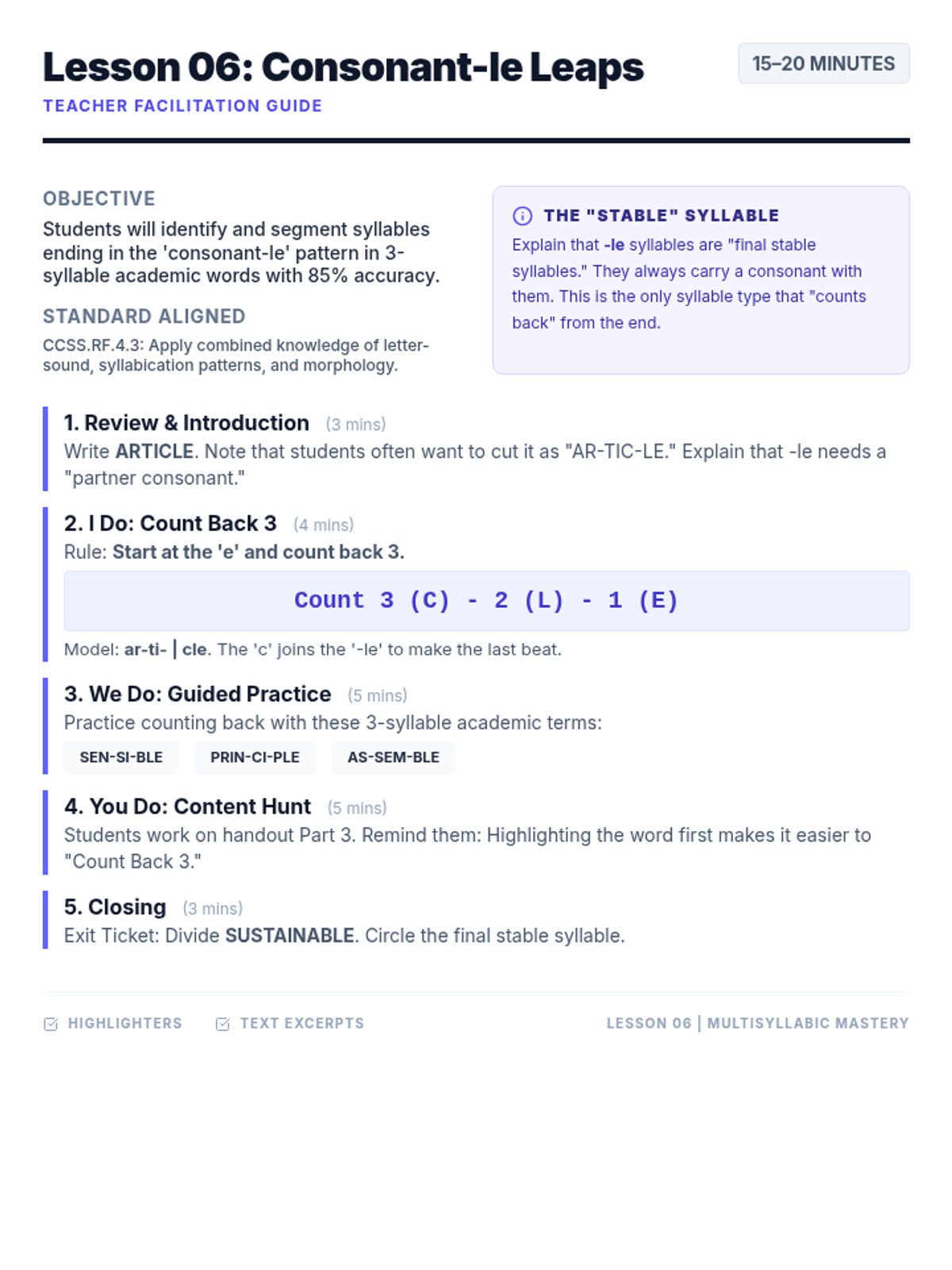
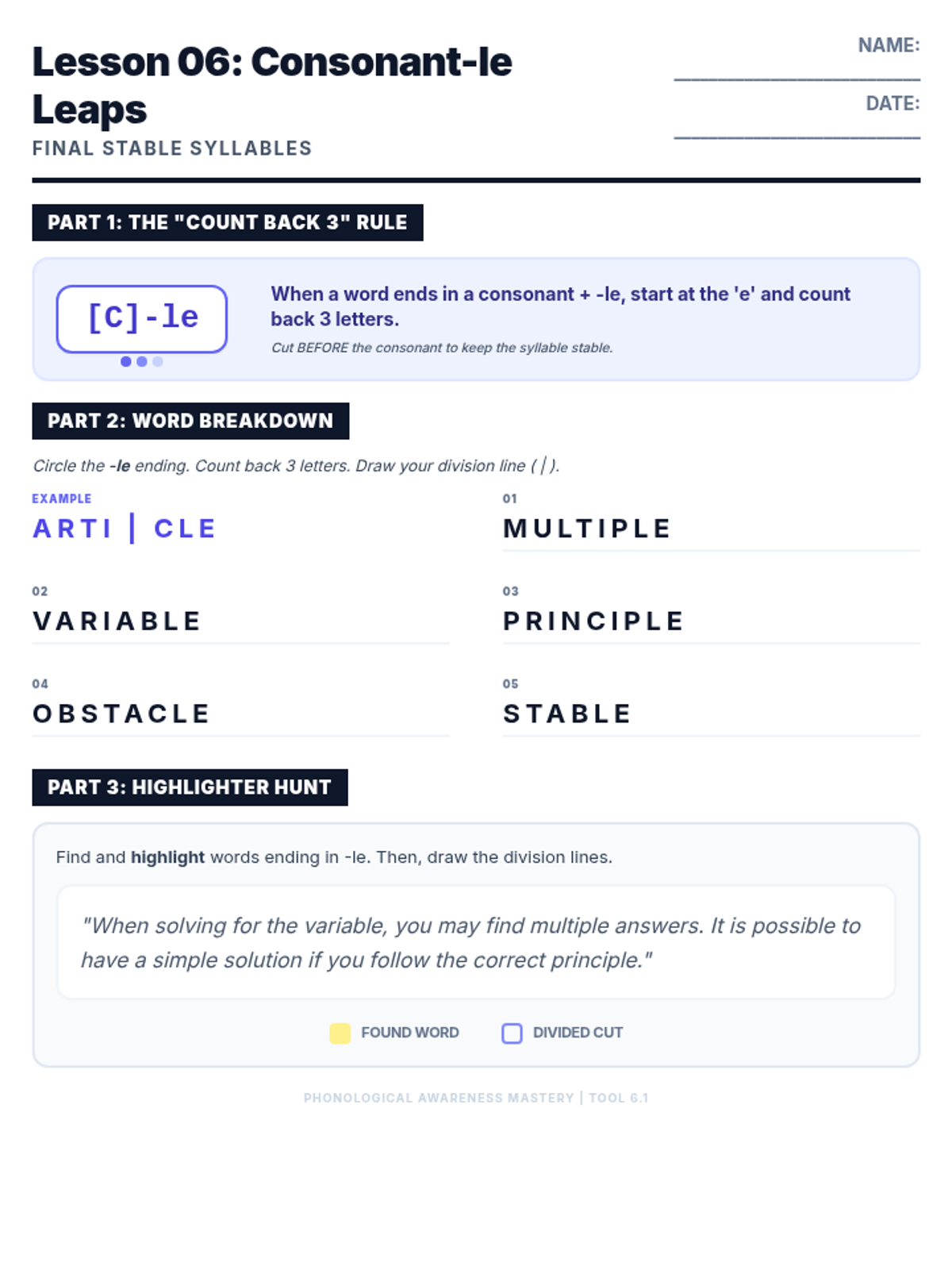
Sixth lesson in the sequence, focusing on identifying and dividing syllables ending in the 'consonant-le' pattern in academic vocabulary.
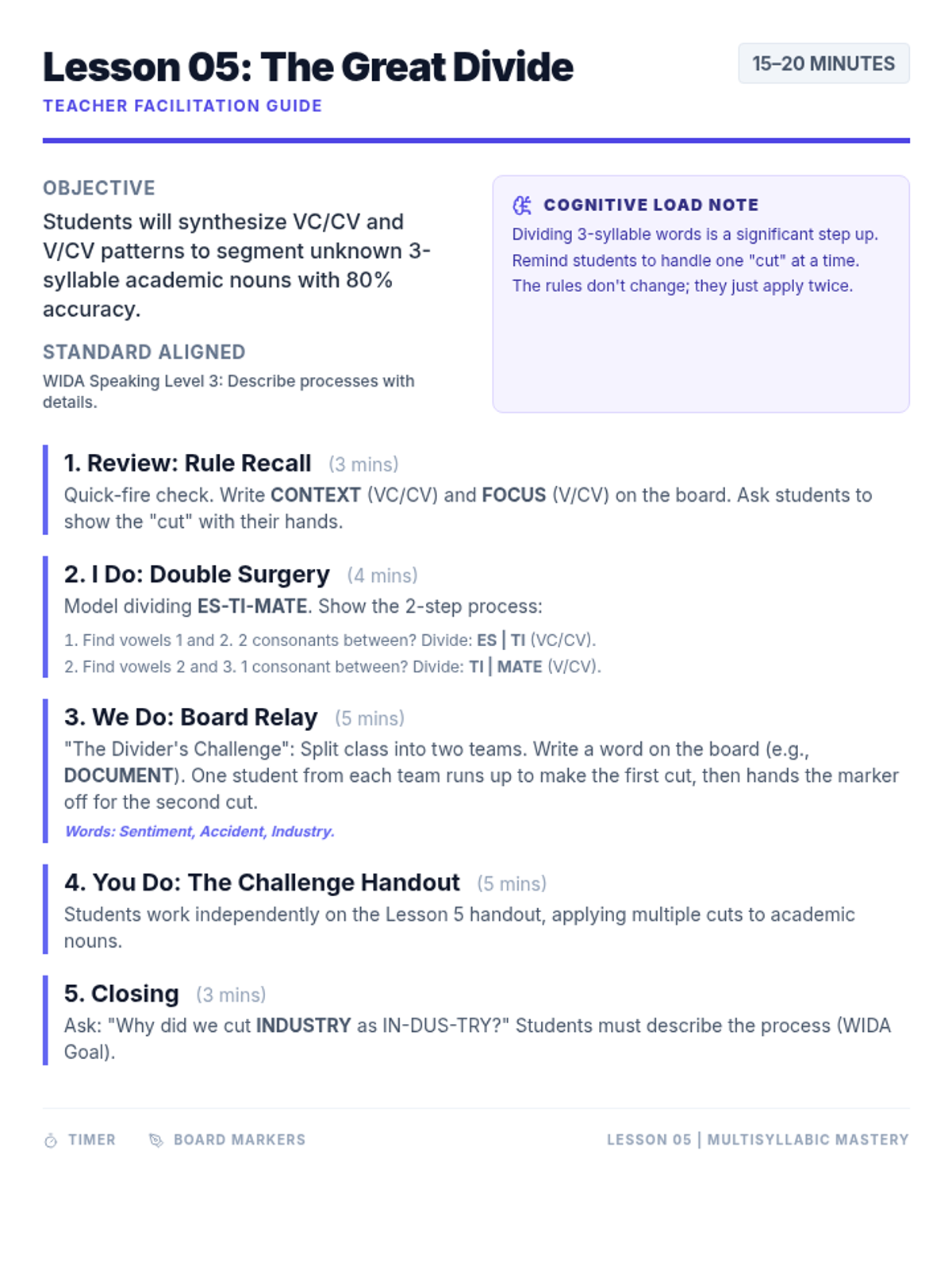
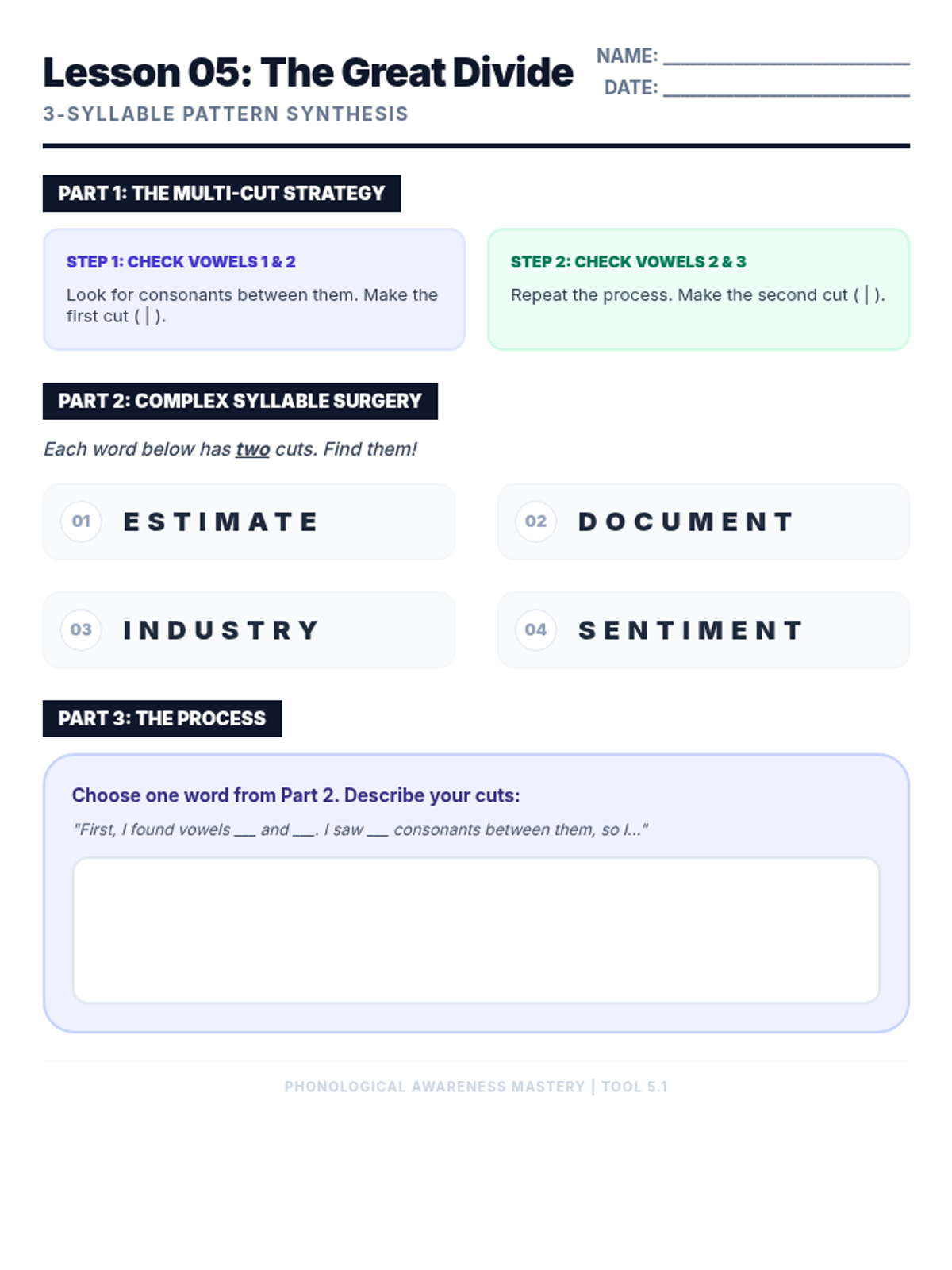
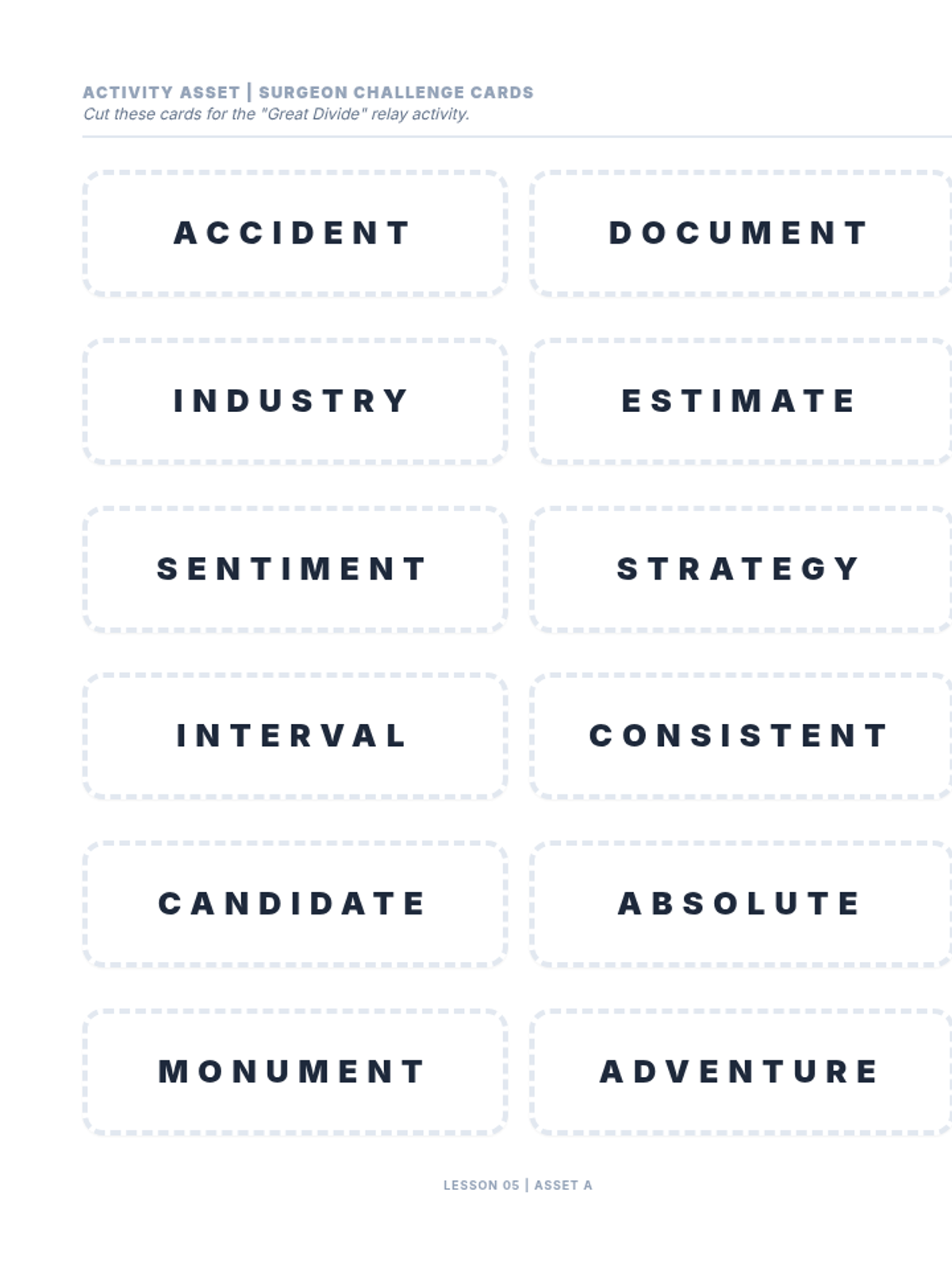
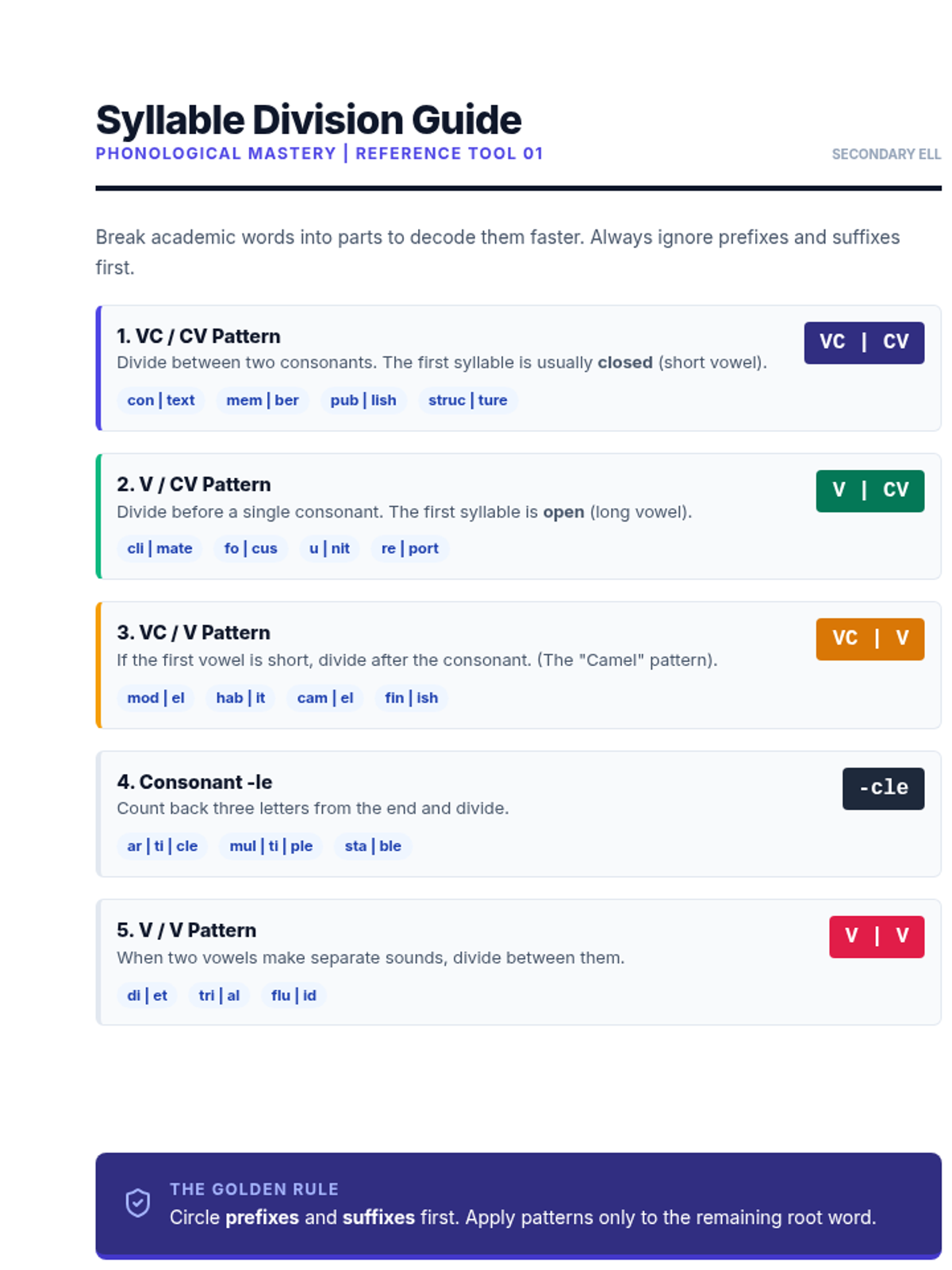
Fifth lesson in the sequence, focusing on synthesizing VC/CV and V/CV patterns to divide 3-syllable academic vocabulary.
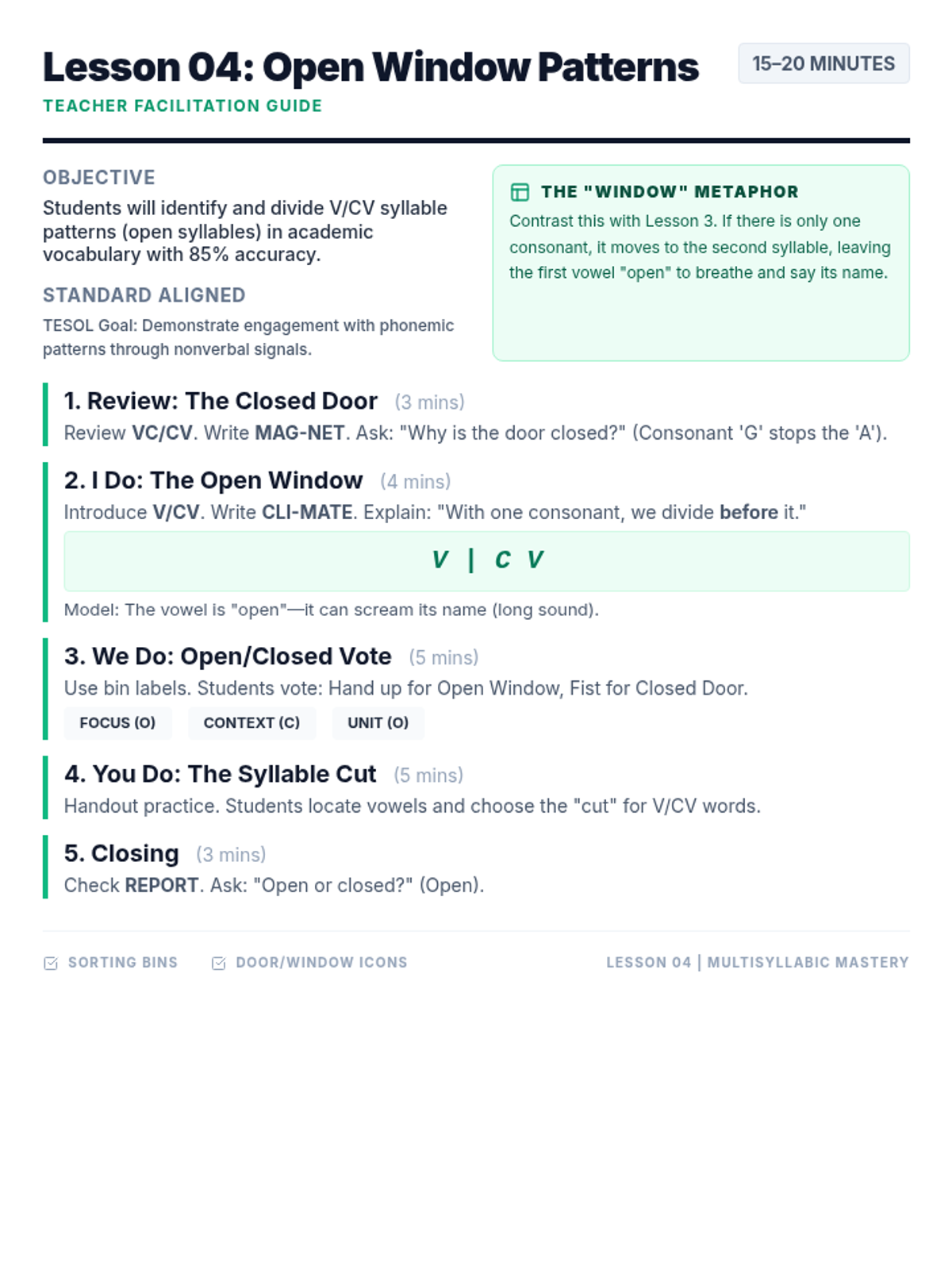
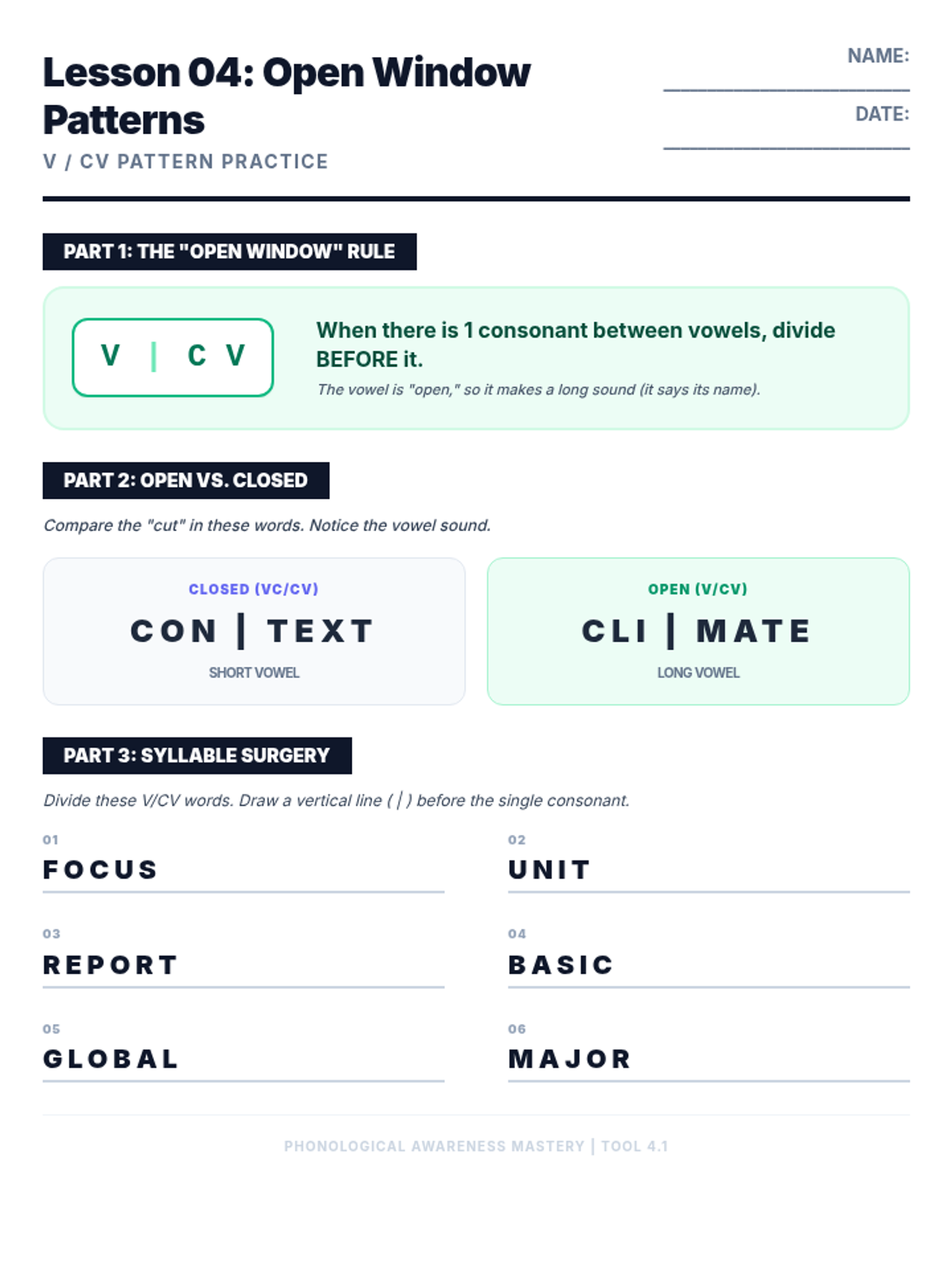
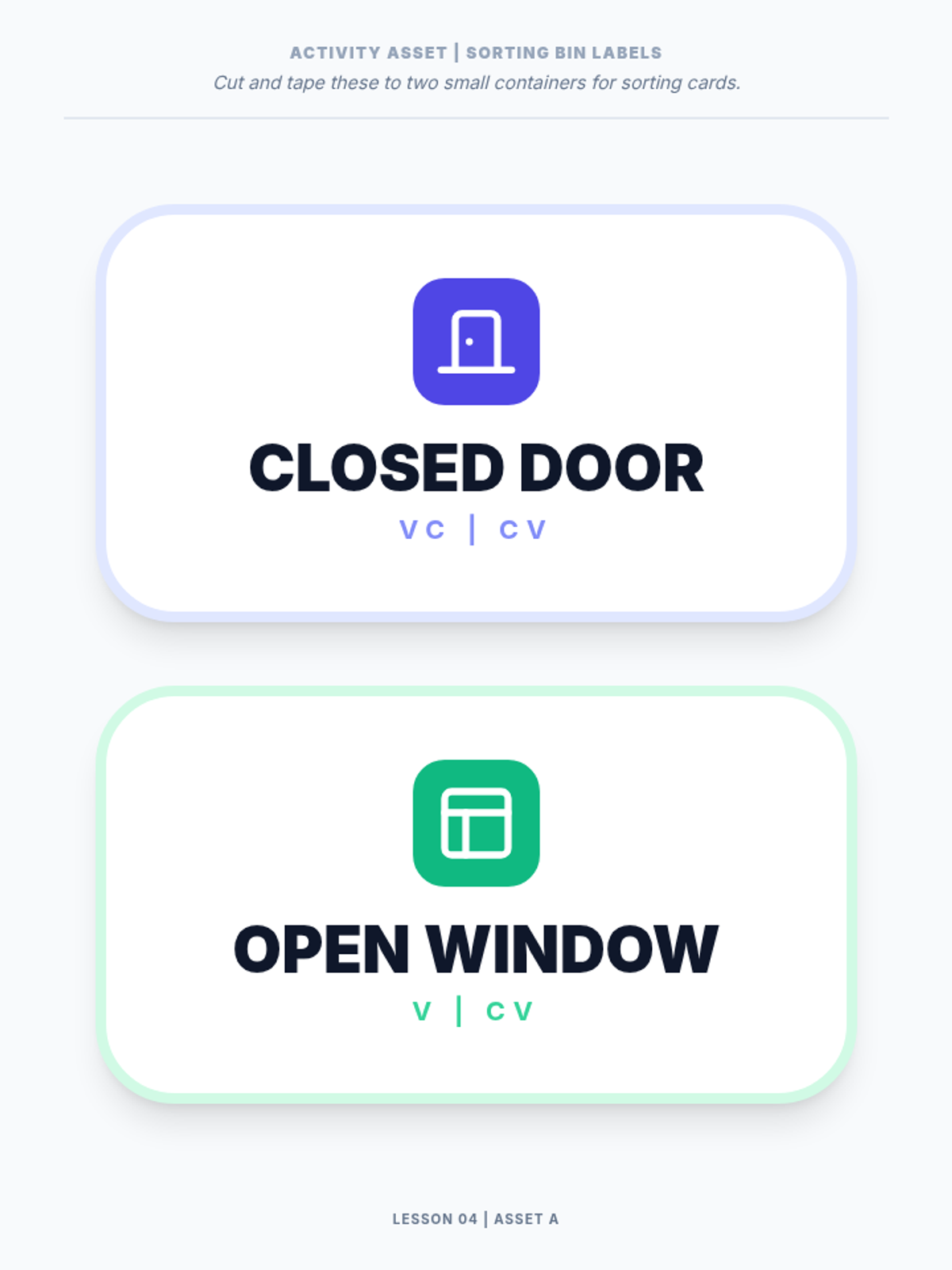
Fourth lesson in the sequence, focusing on identifying and dividing the V/CV (open syllable) pattern in academic vocabulary.
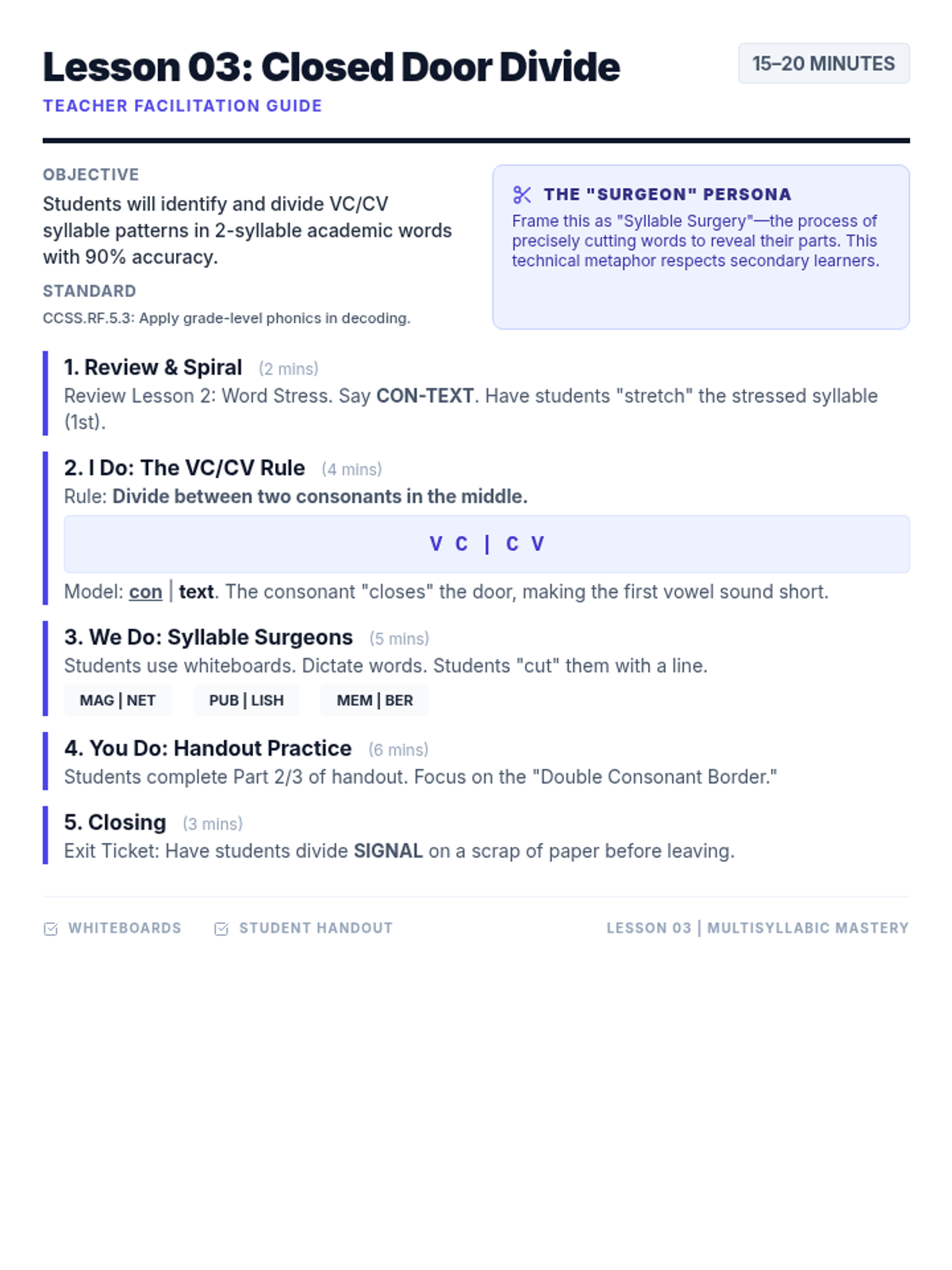
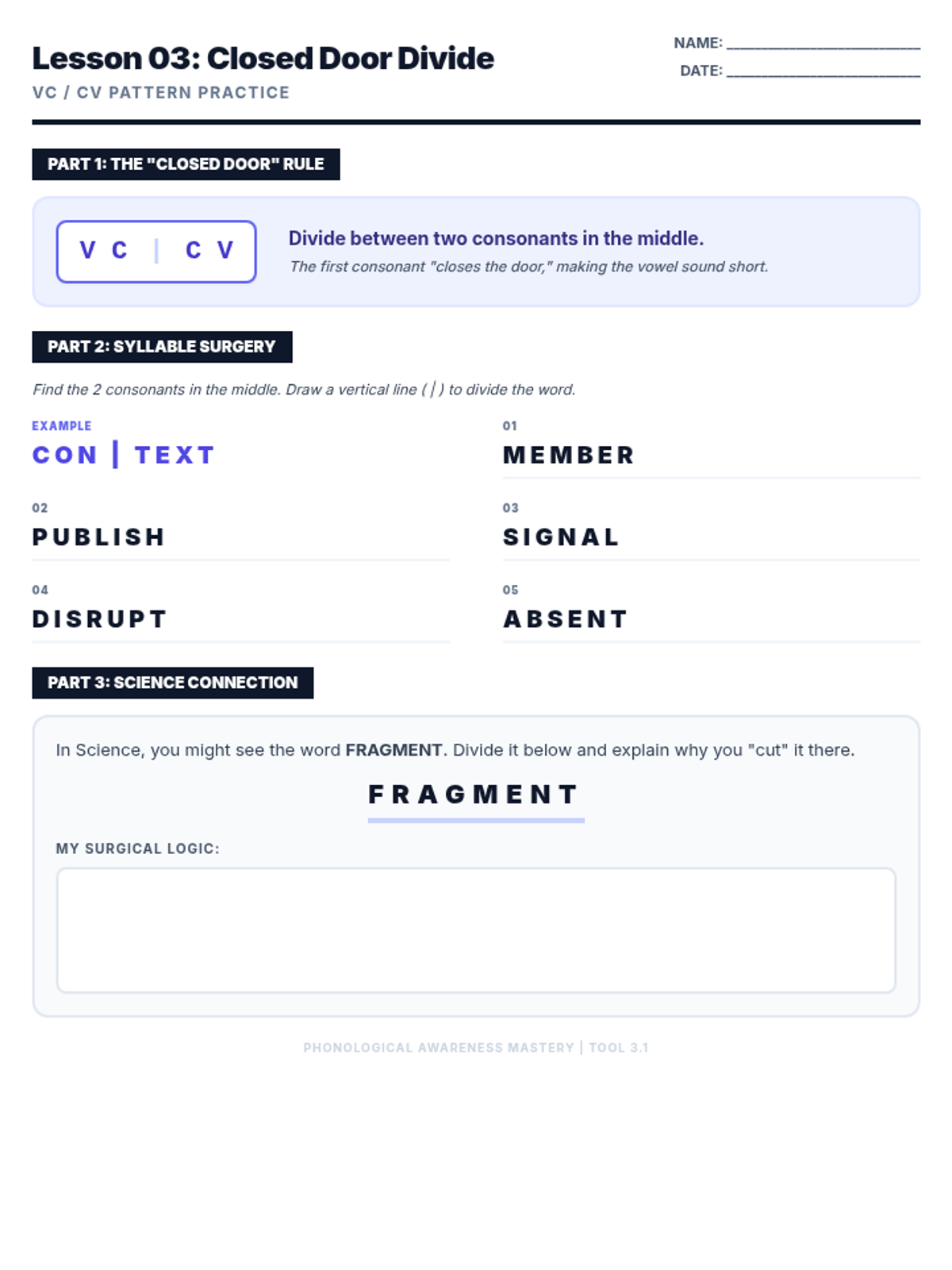
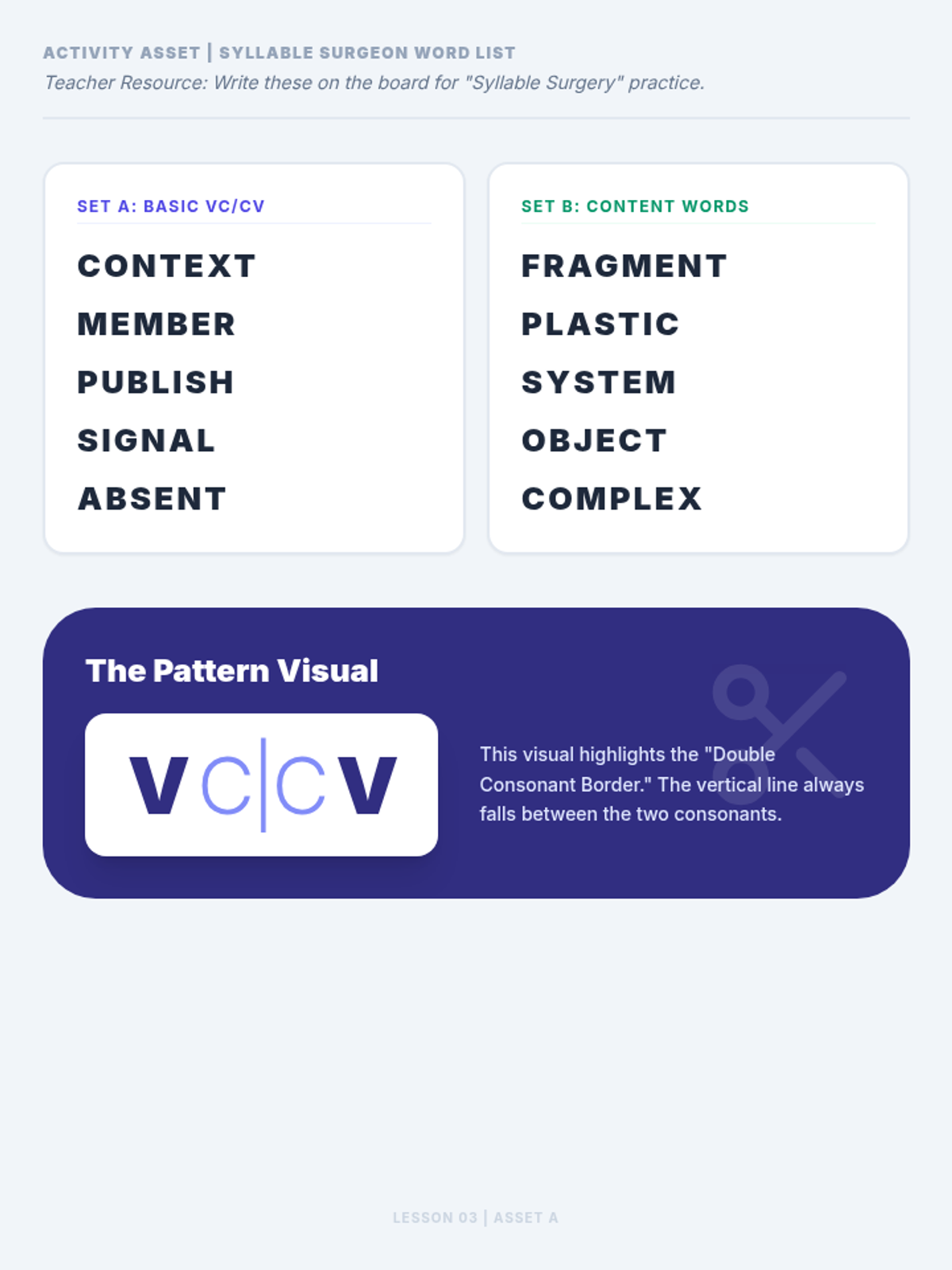
Third lesson in the sequence, focusing on identifying and dividing the VC/CV (closed syllable) pattern in academic vocabulary.
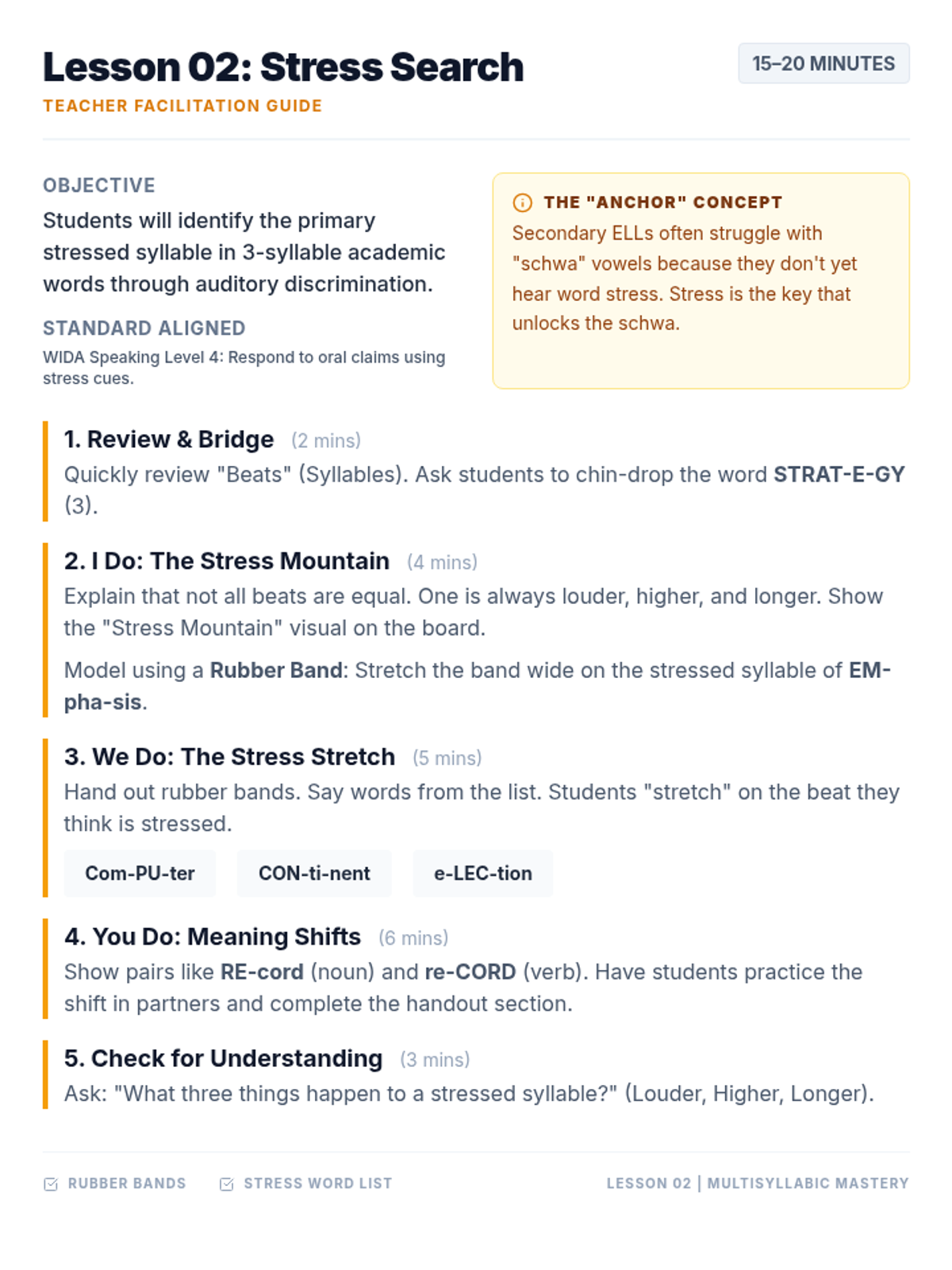
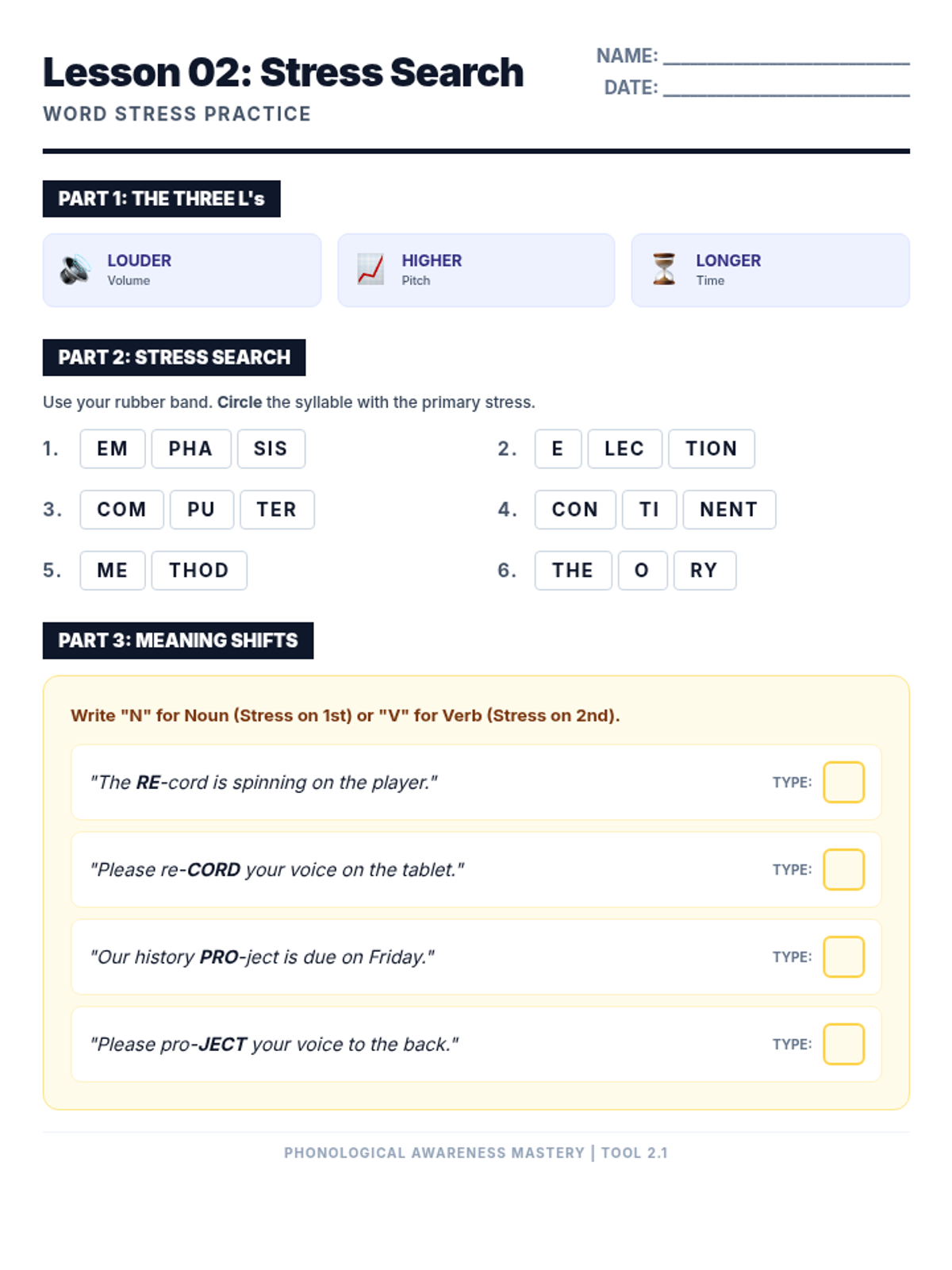
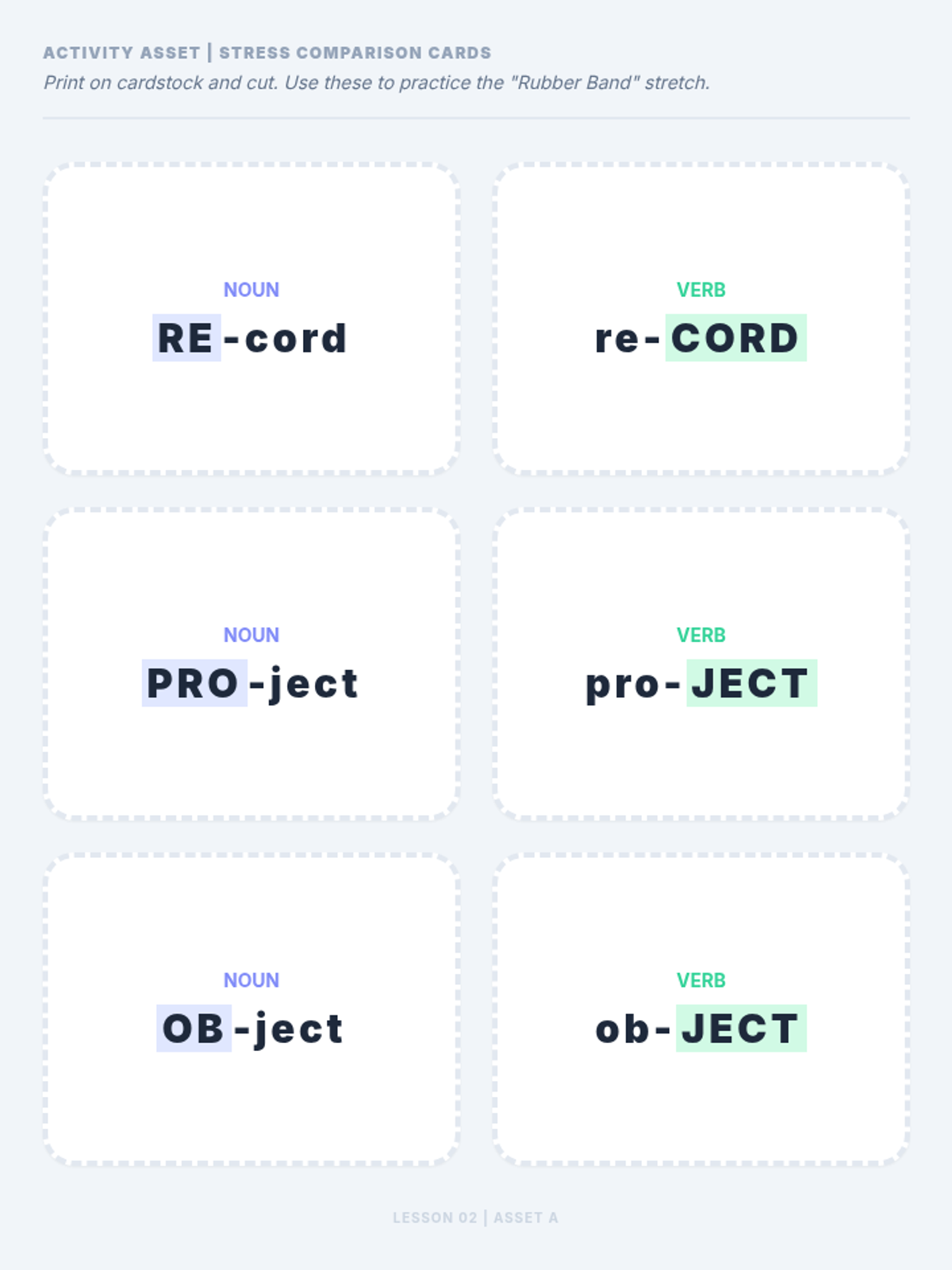
Second lesson in the sequence, focusing on identifying and manipulating primary word stress in academic vocabulary.
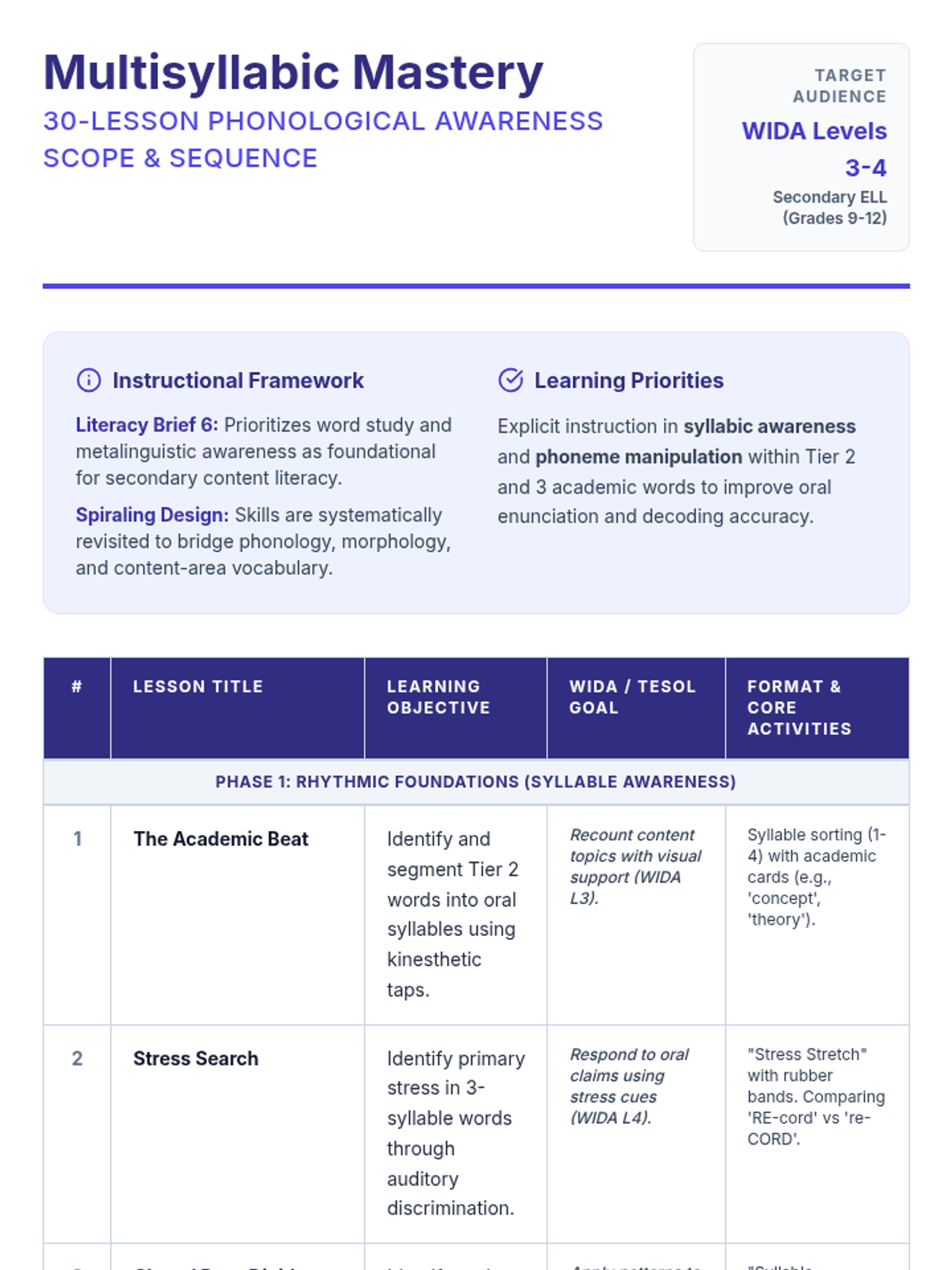
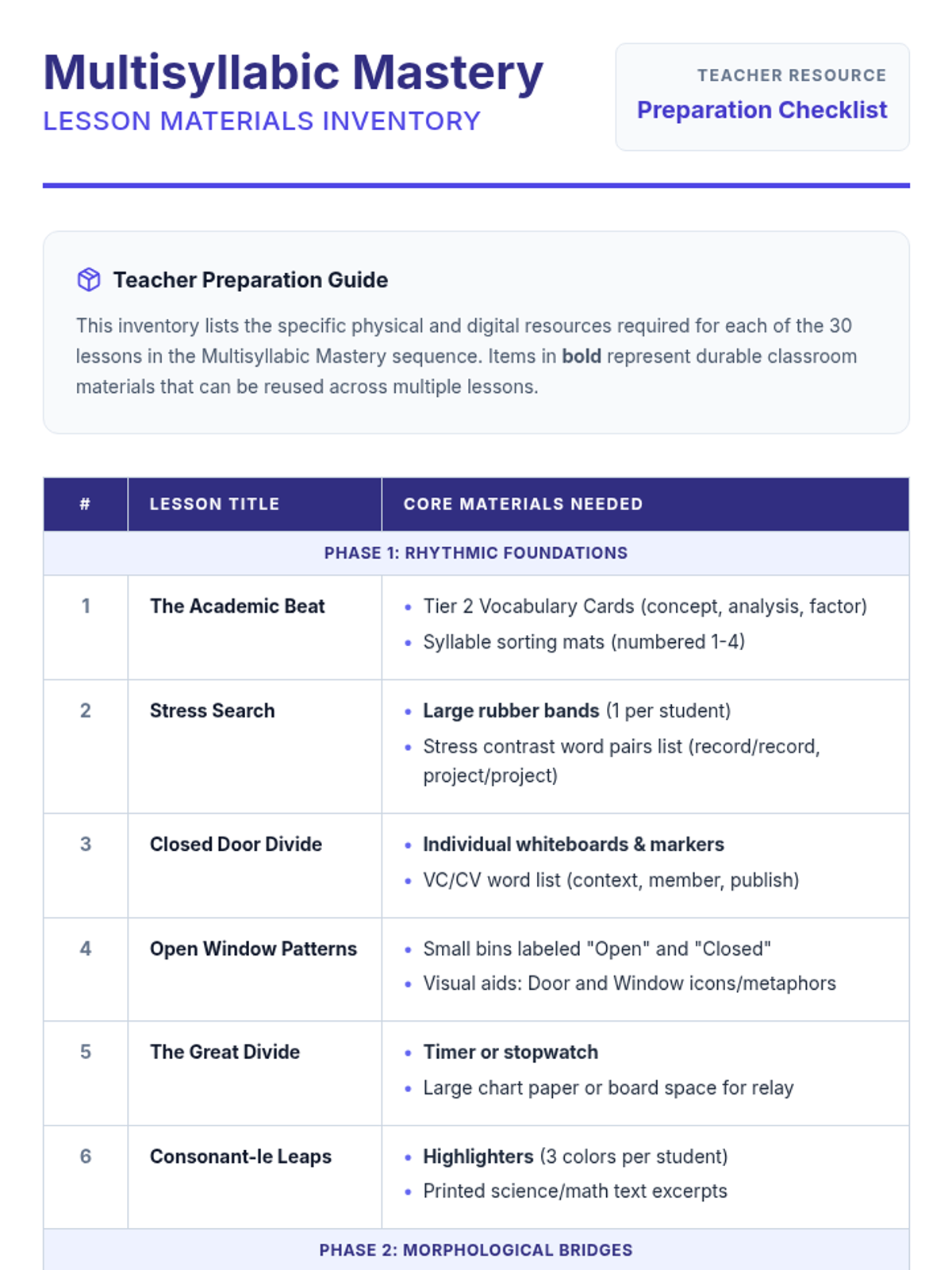
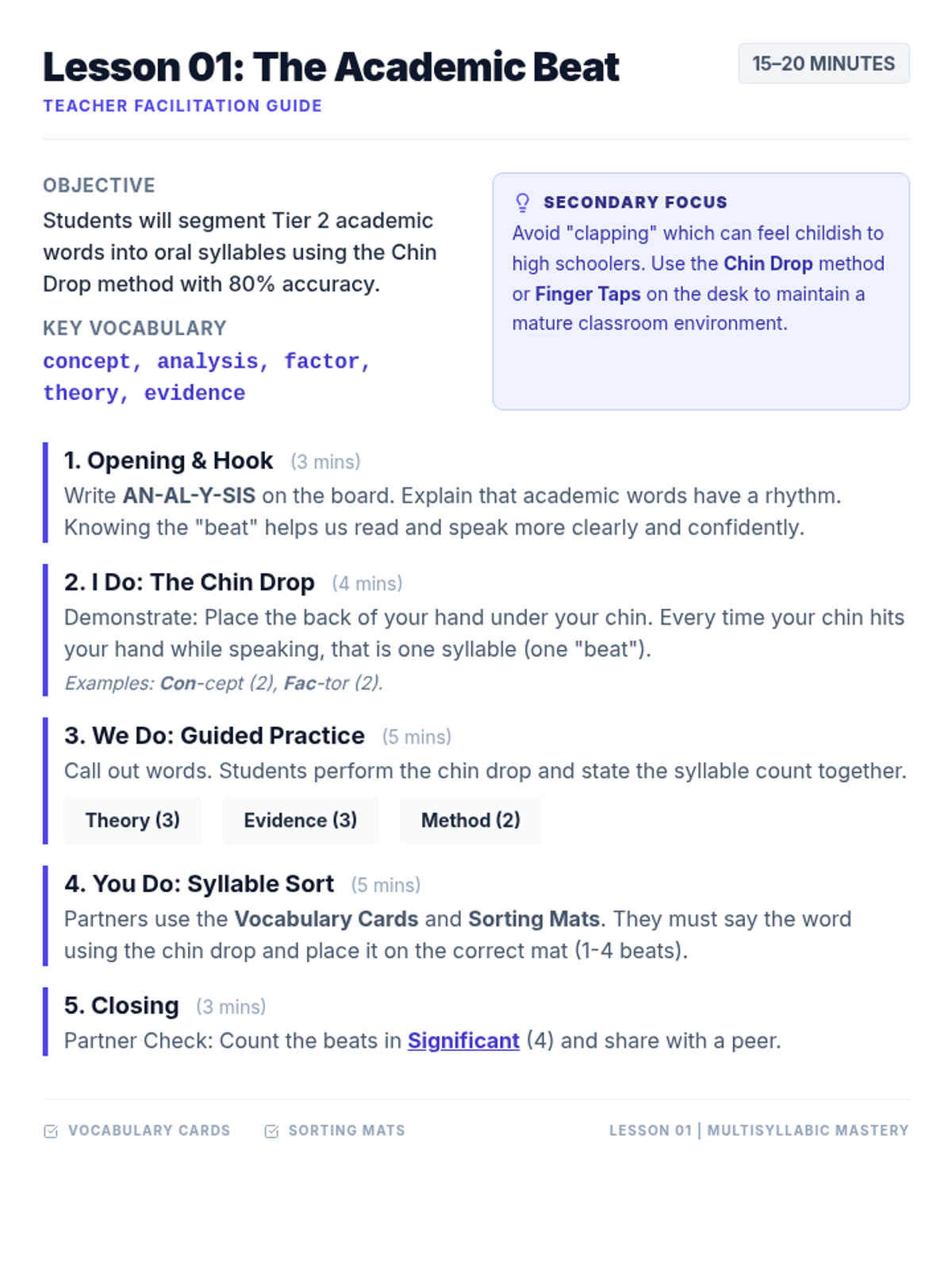
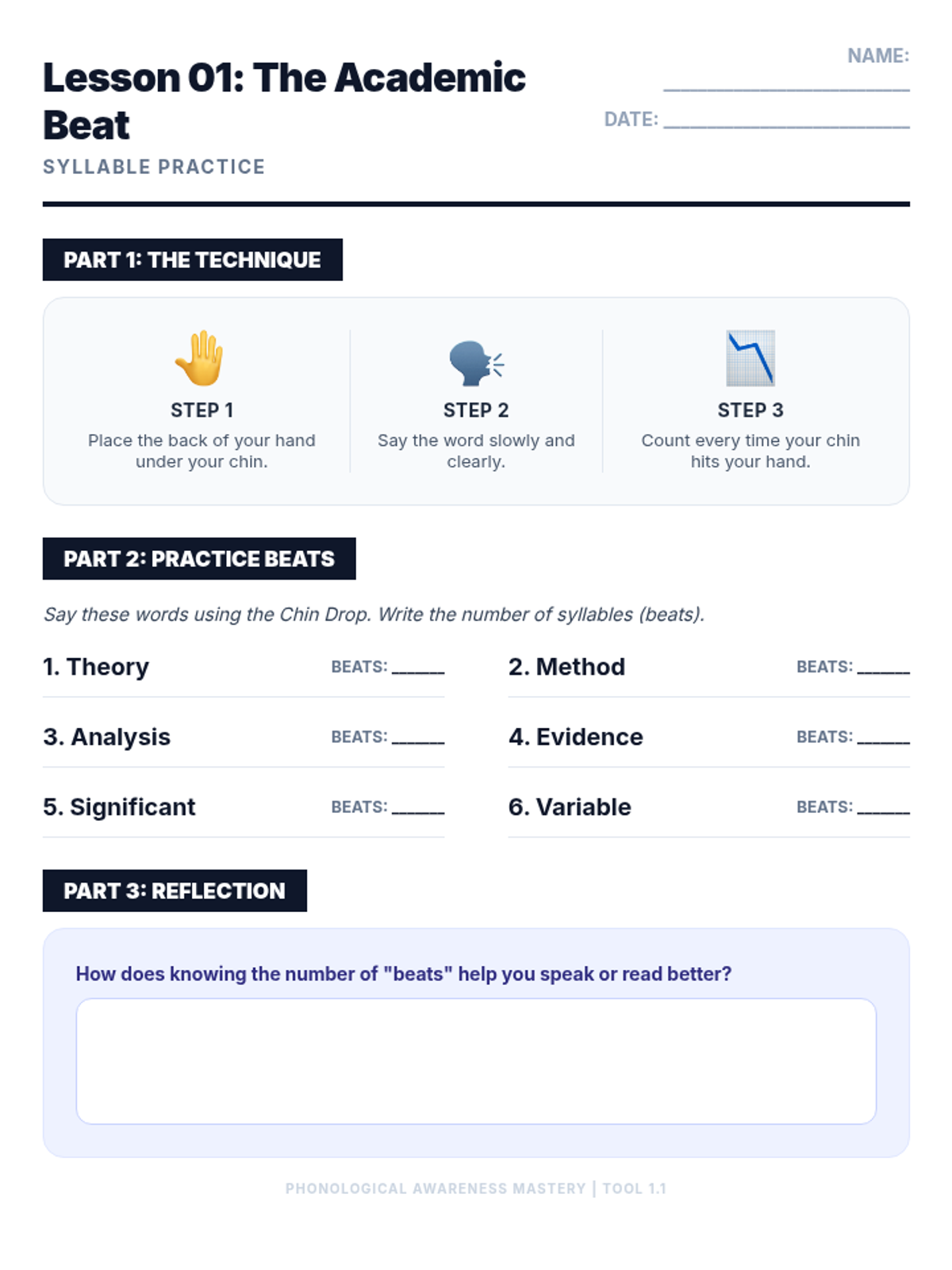
A comprehensive scope and sequence for teaching phonological awareness to secondary ELLs, focusing on multisyllabic academic vocabulary and phoneme manipulation.
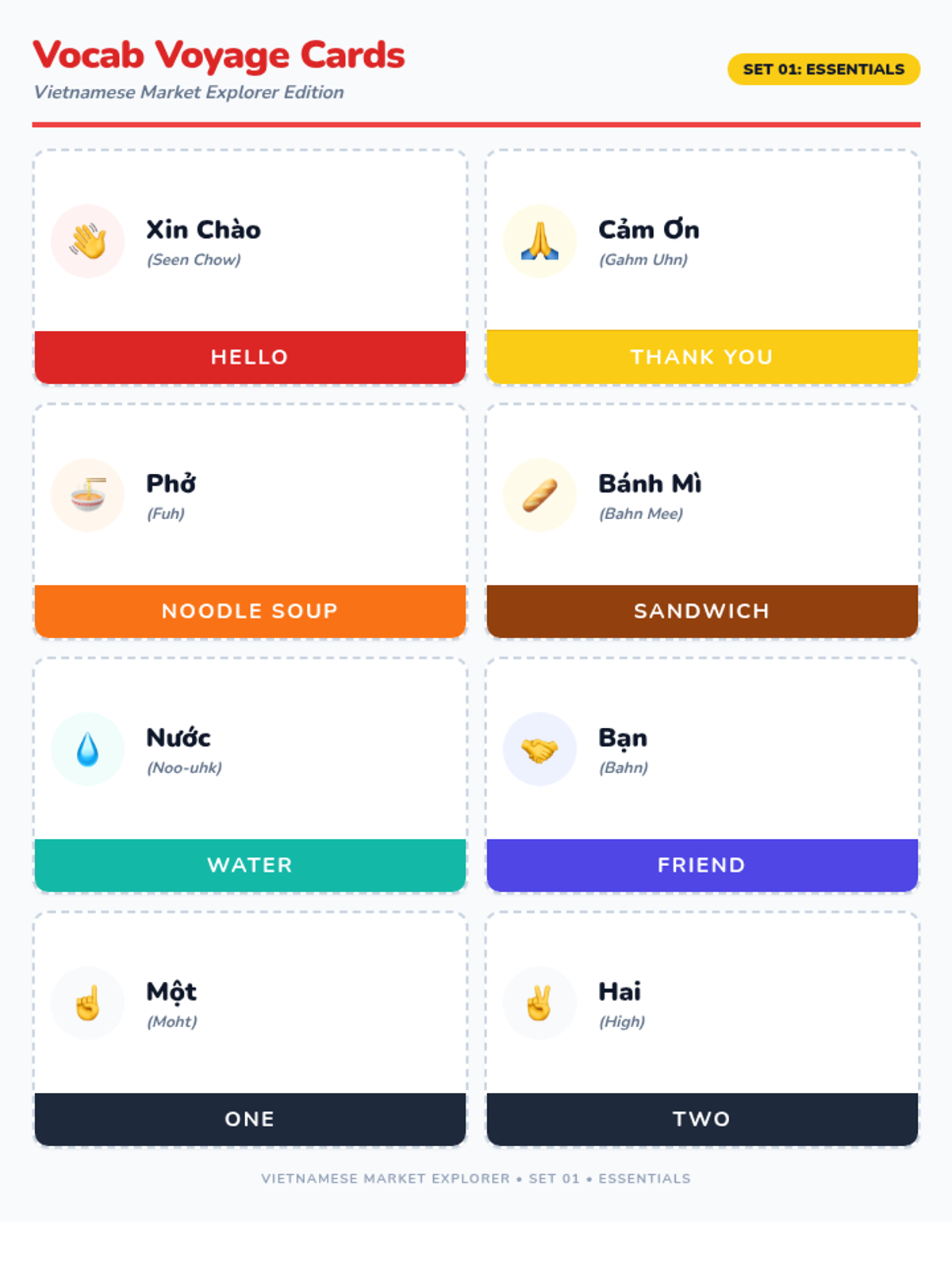
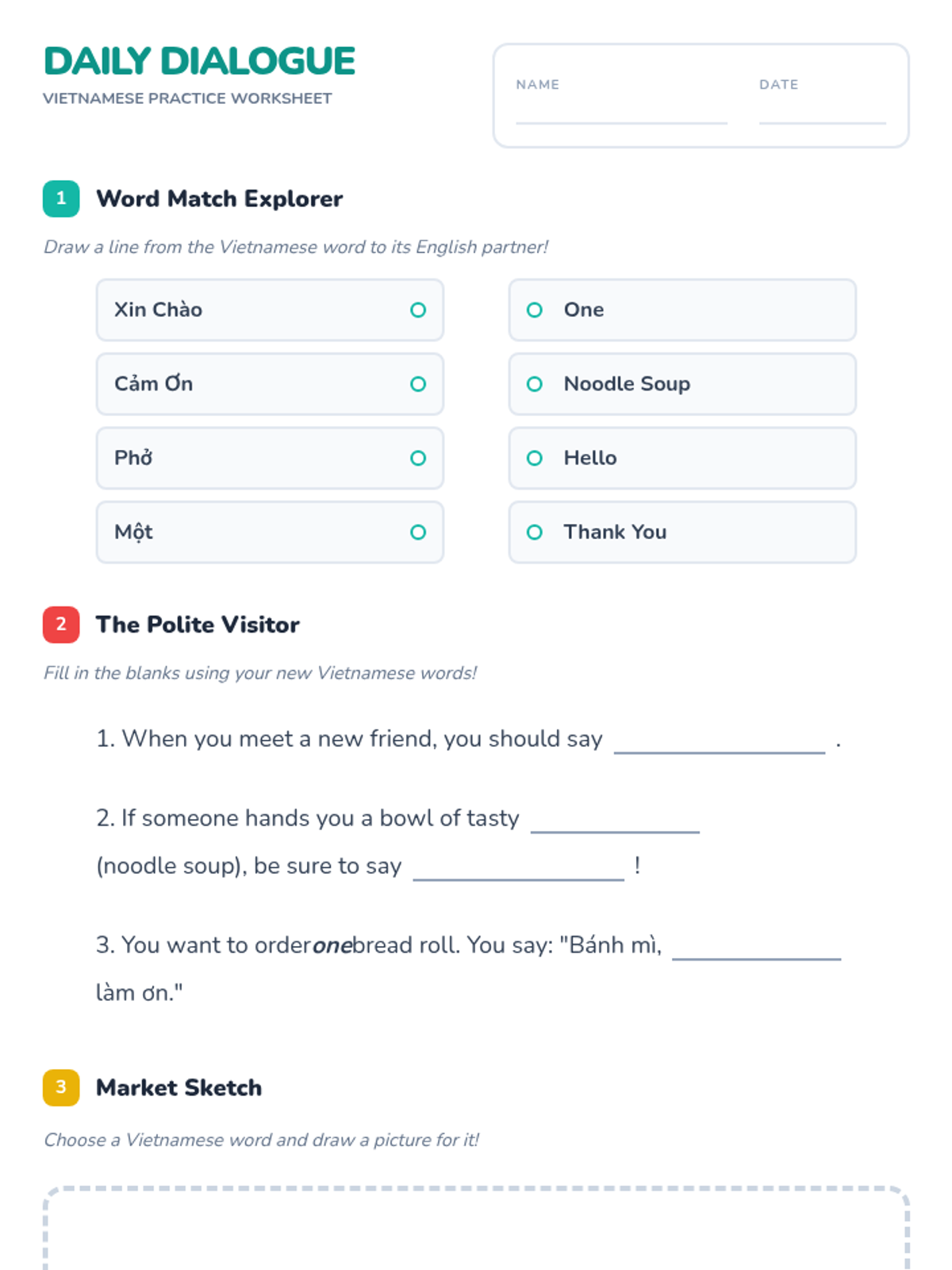
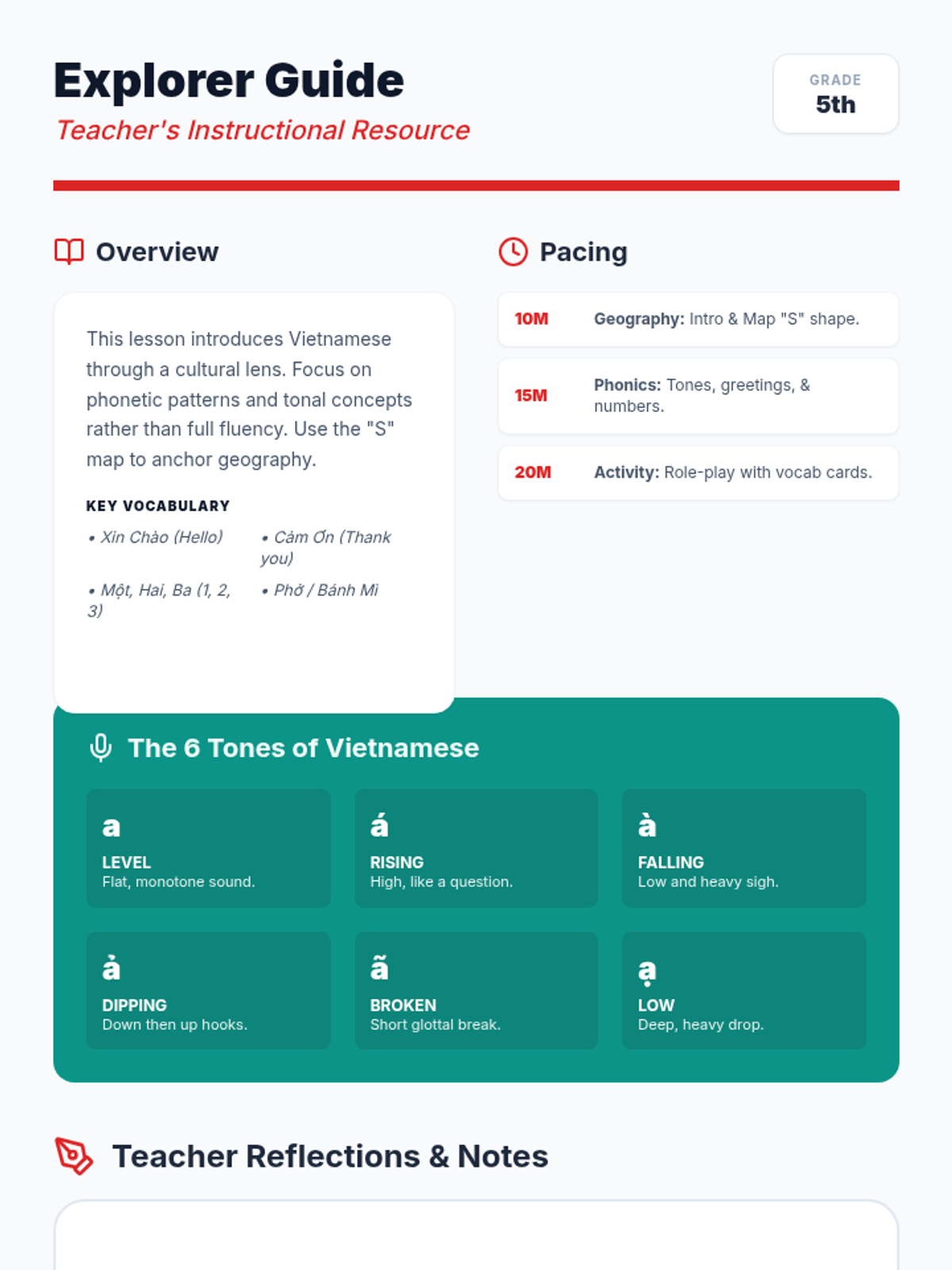
An introductory Vietnamese language lesson for 5th graders focused on essential greetings, numbers, and common food items through a vibrant market-themed exploration.
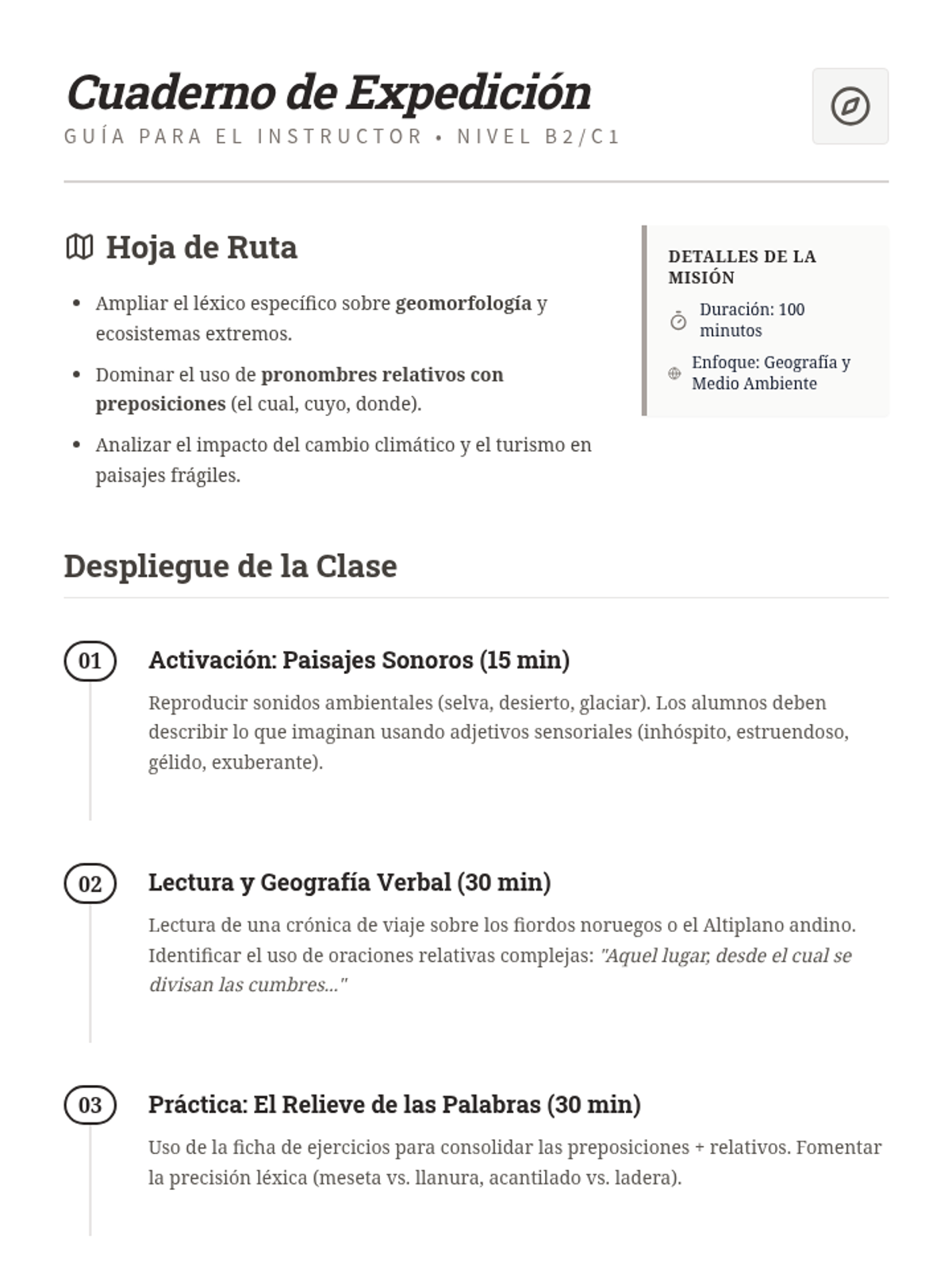
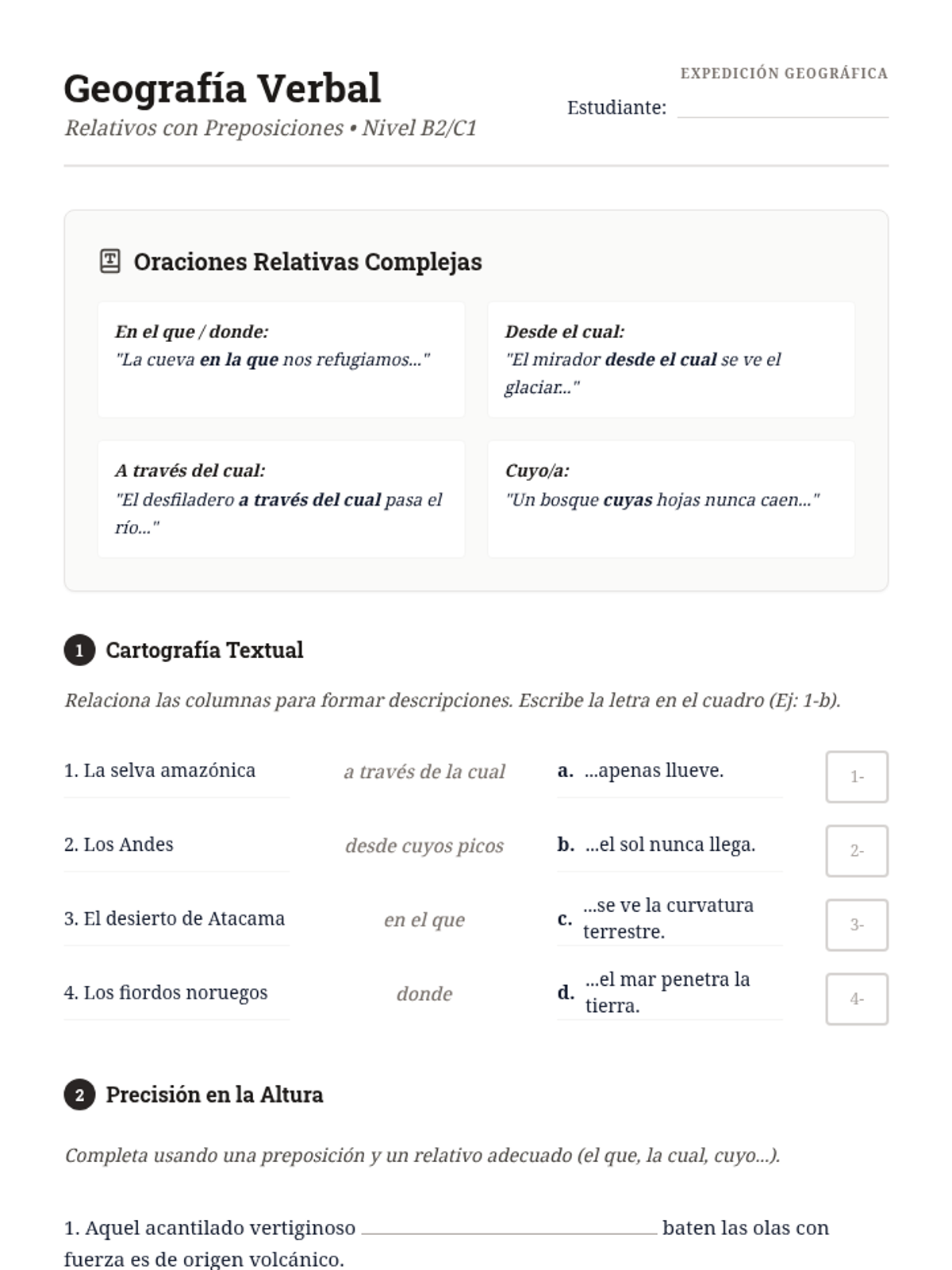
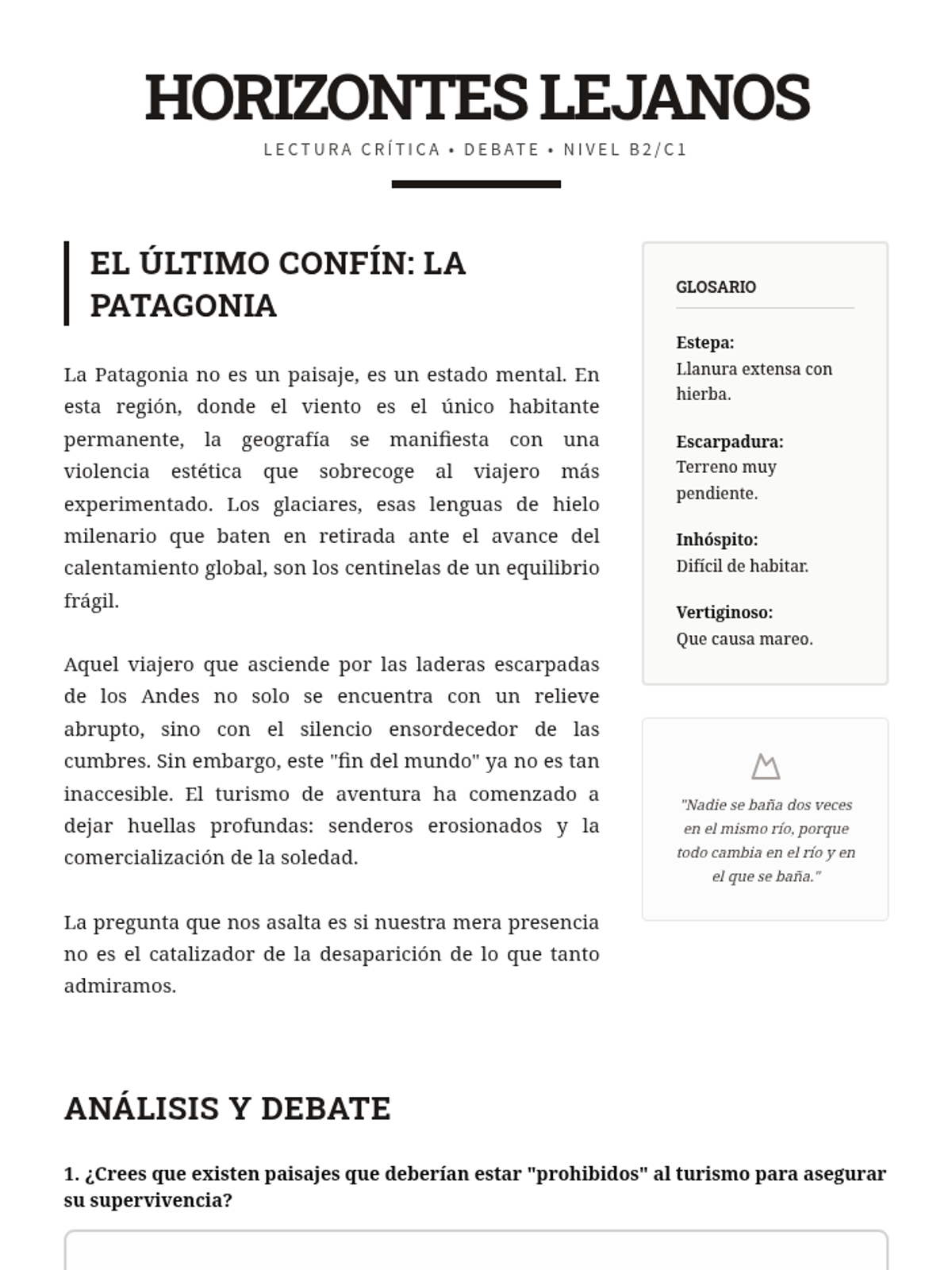
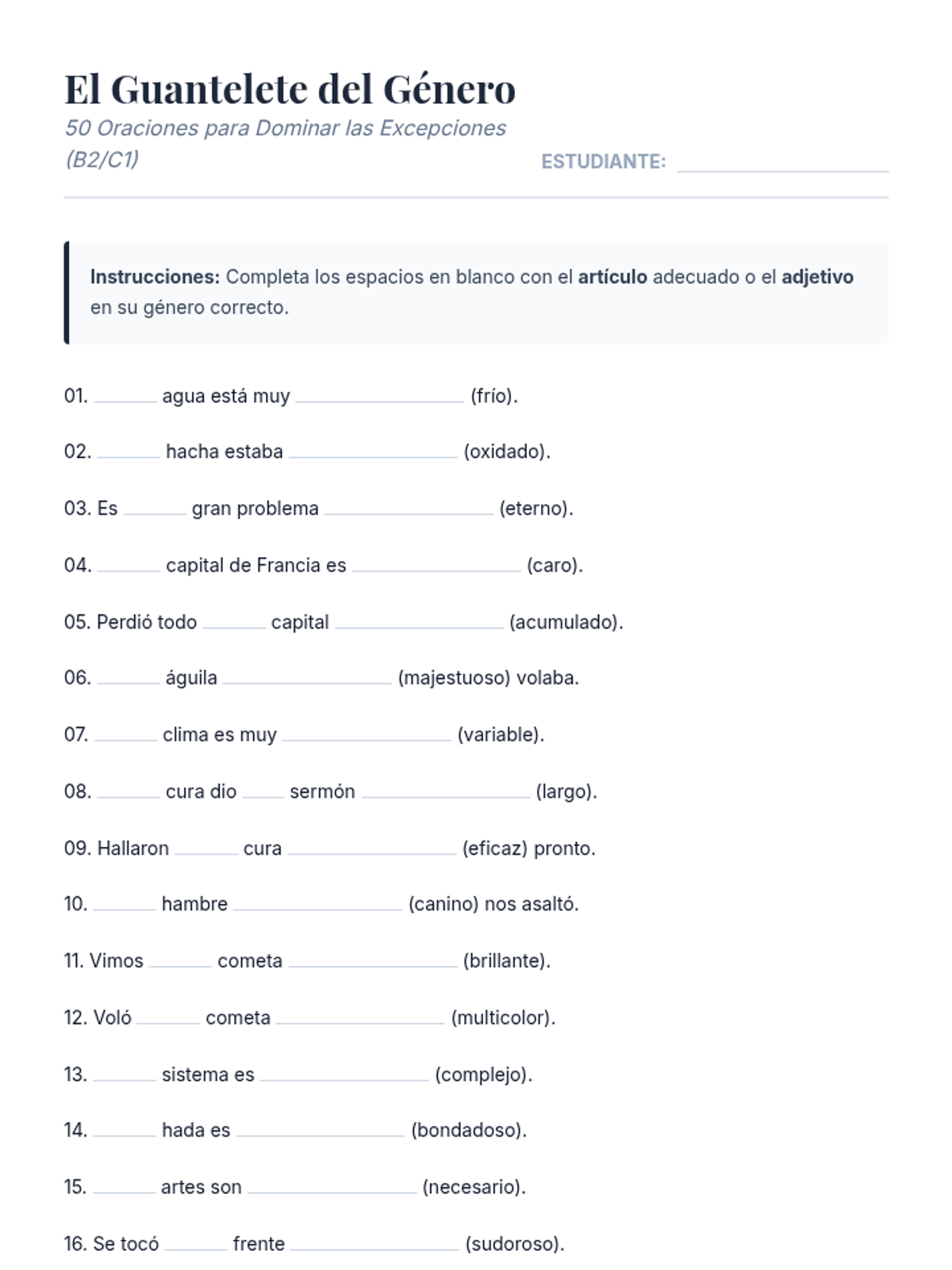
Una lección avanzada (B2-C1) para adultos que explora la diversidad geográfica del mundo, trabajando la descripción técnica de paisajes y el uso avanzado de oraciones relativas con preposiciones.
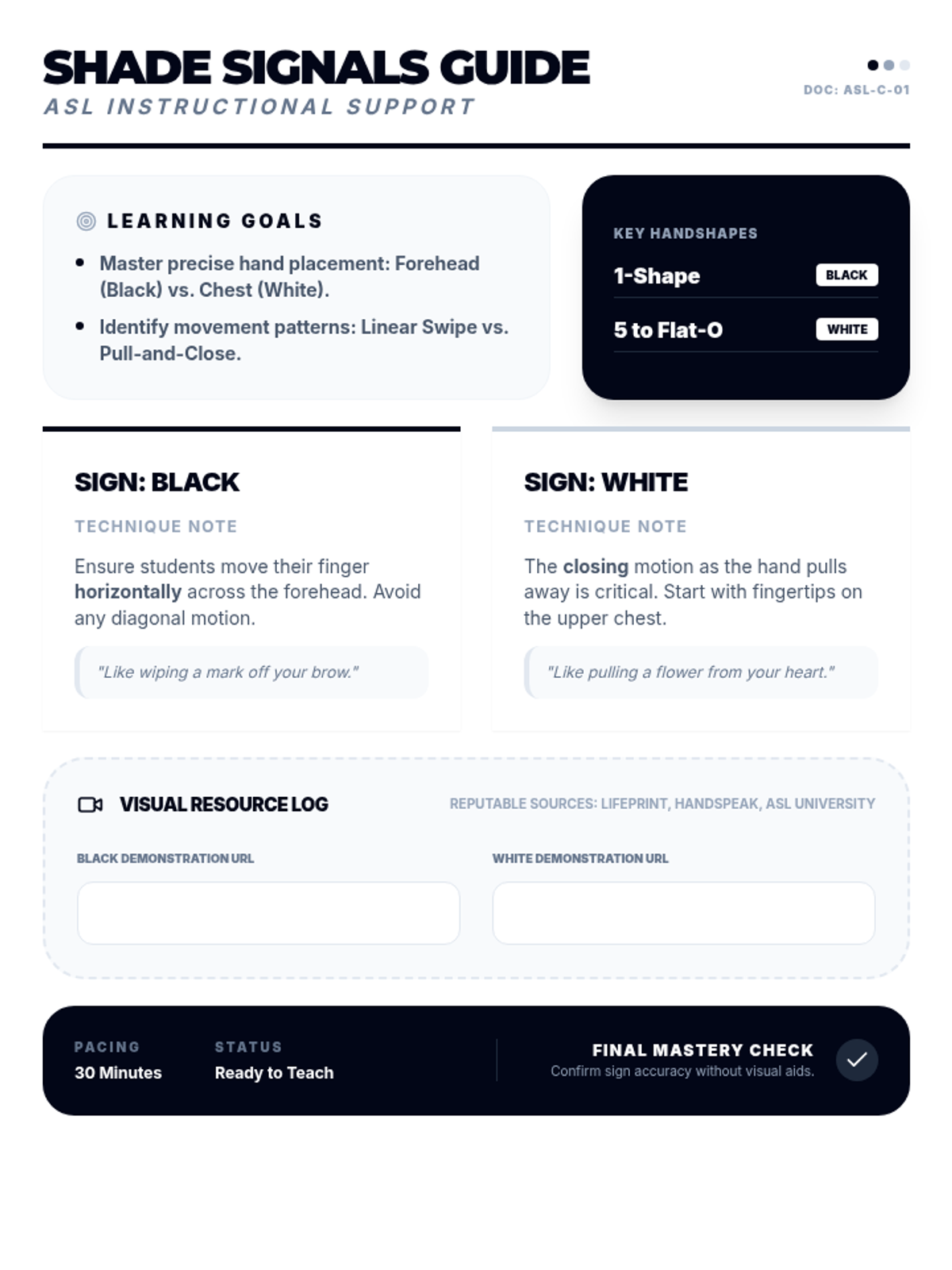
A focused lesson on the ASL signs for black and white, featuring visual sign descriptions and teaching tips for high-contrast colors.
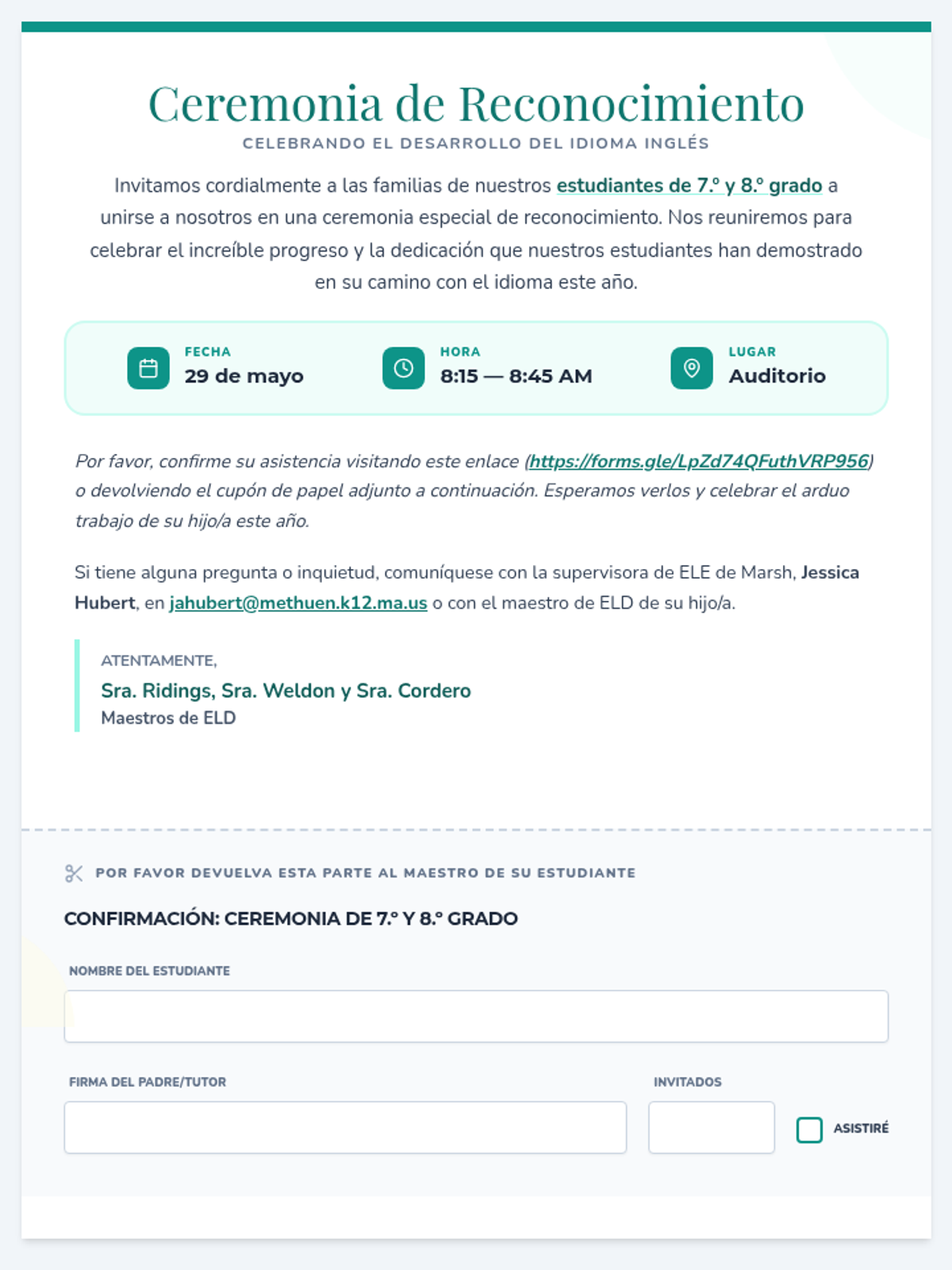
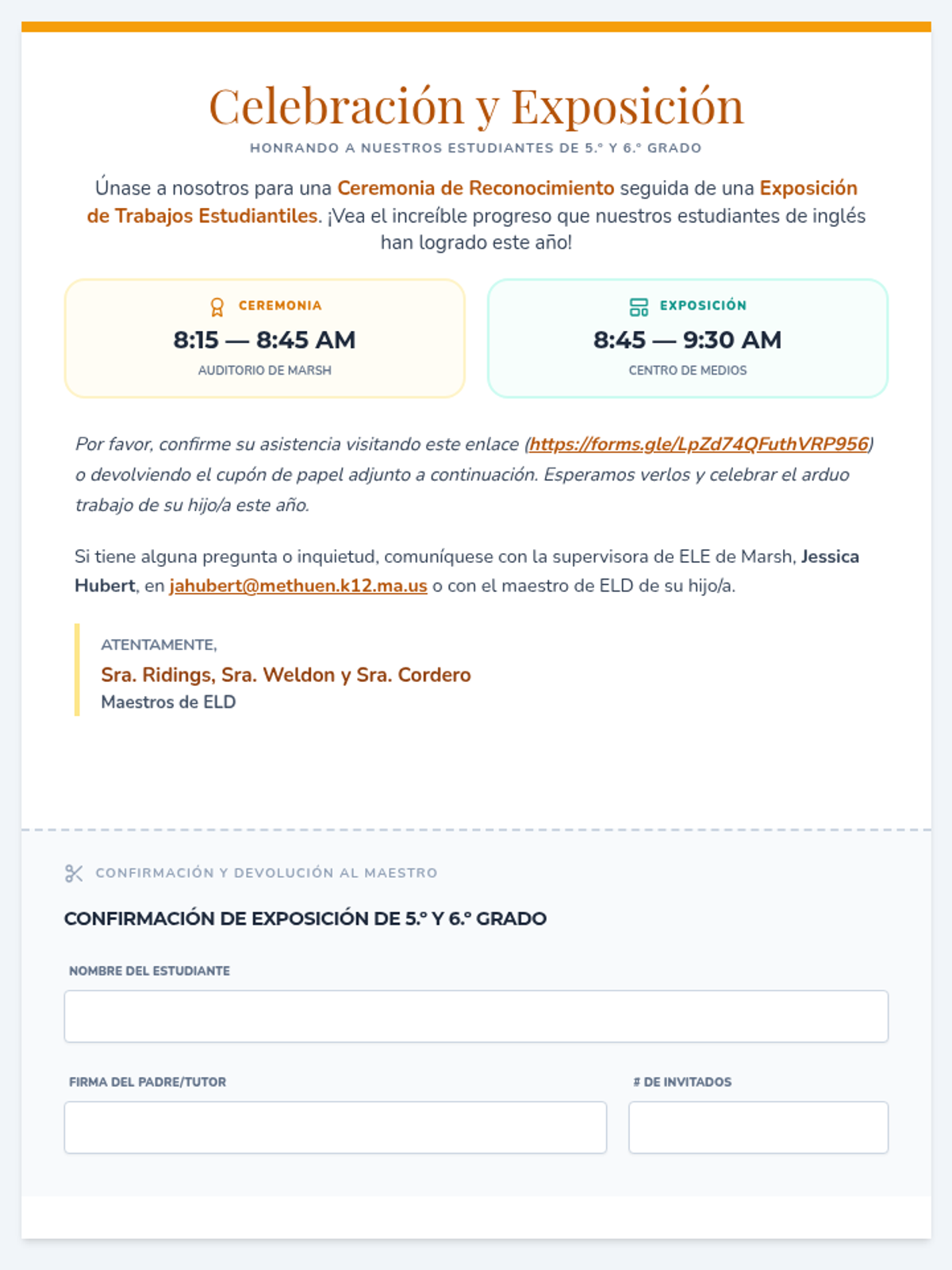
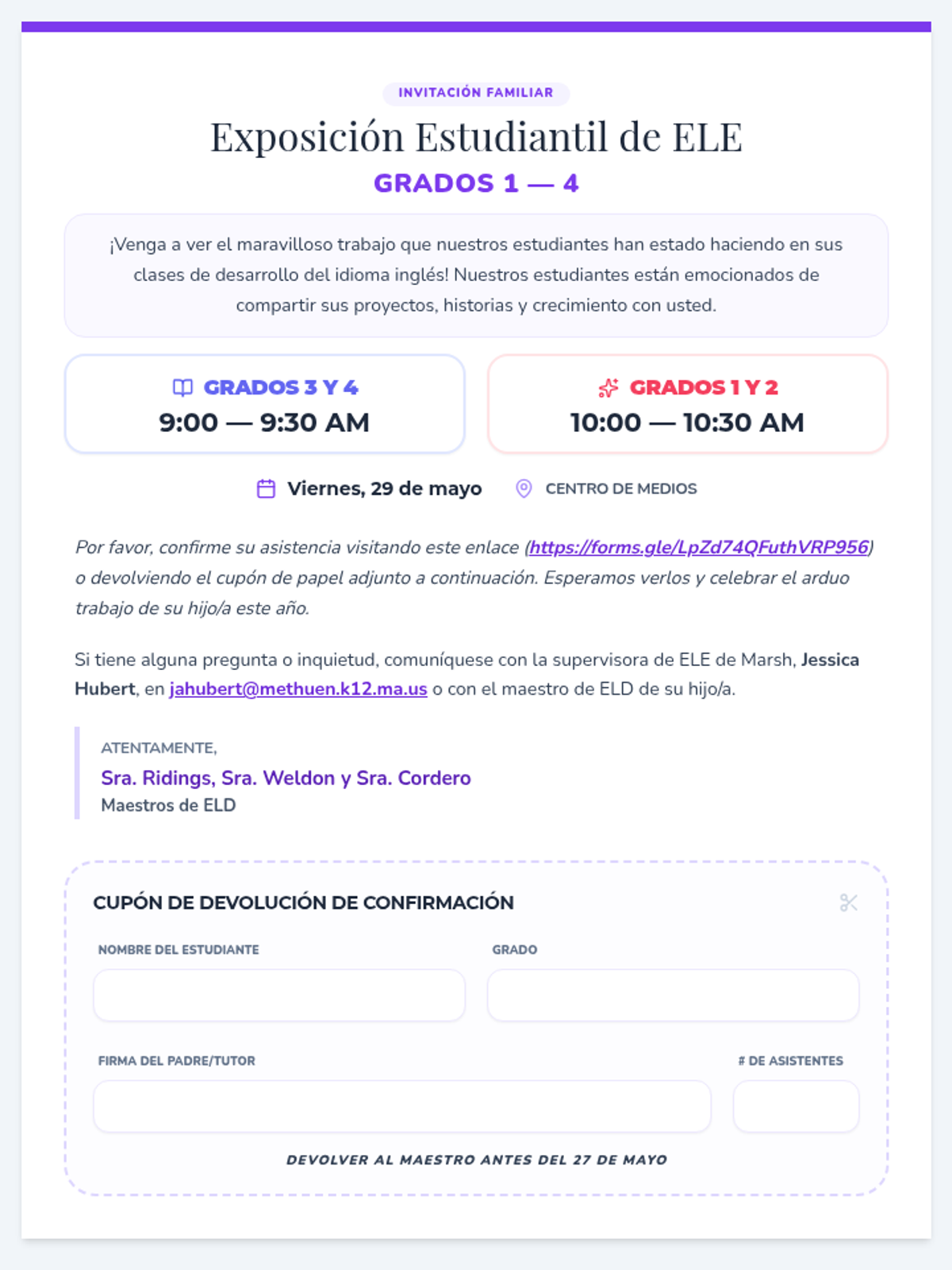
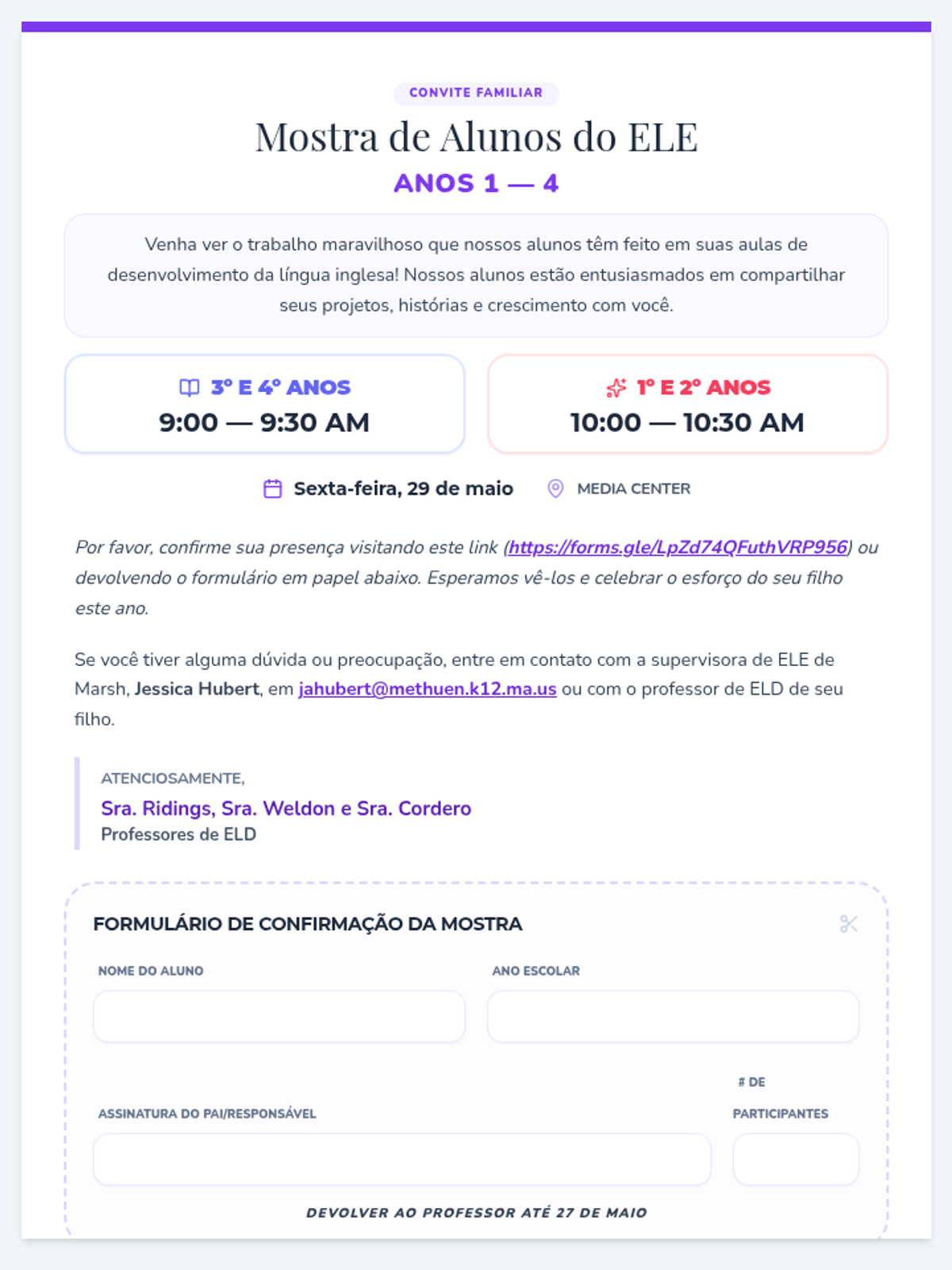
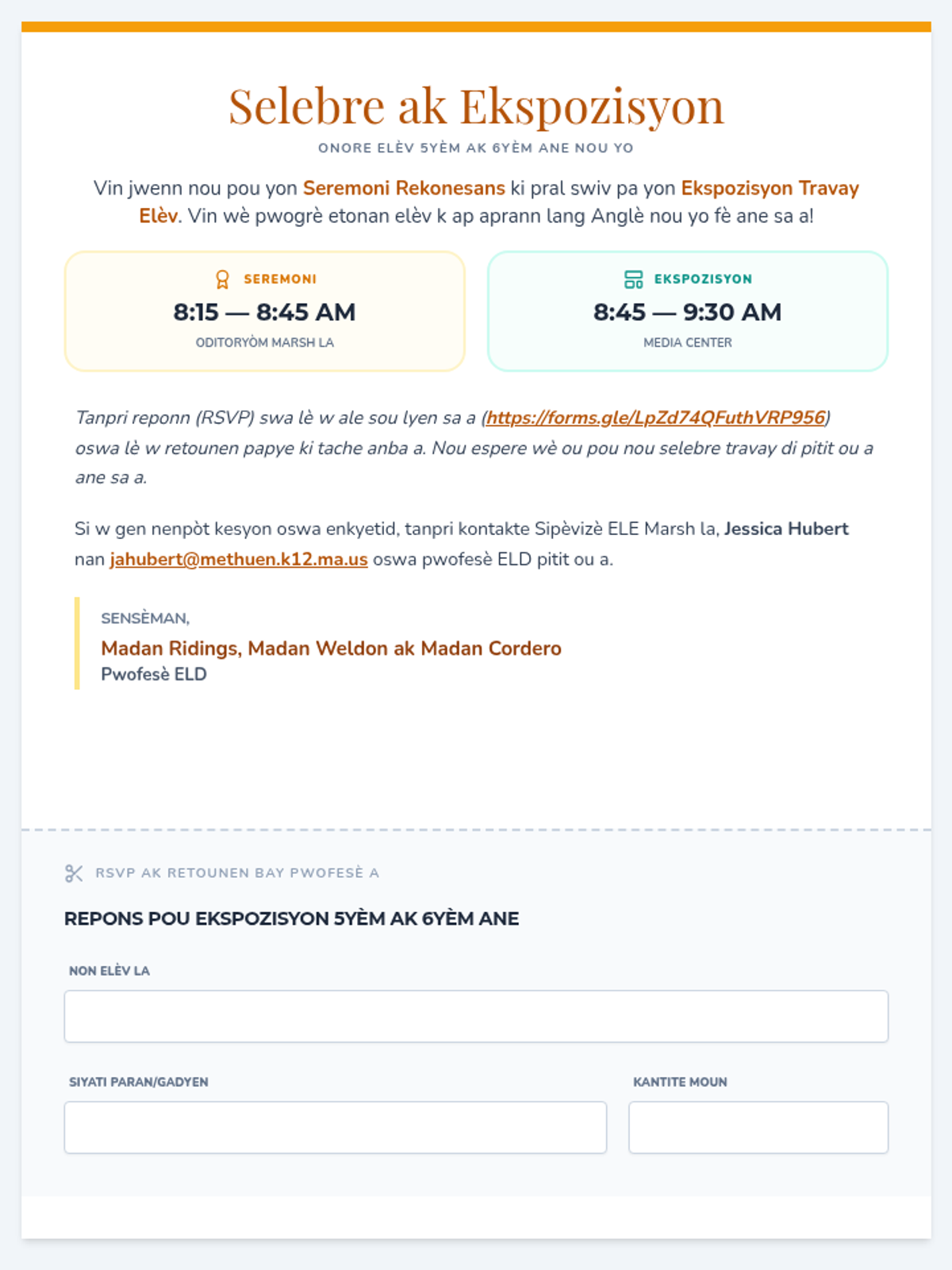
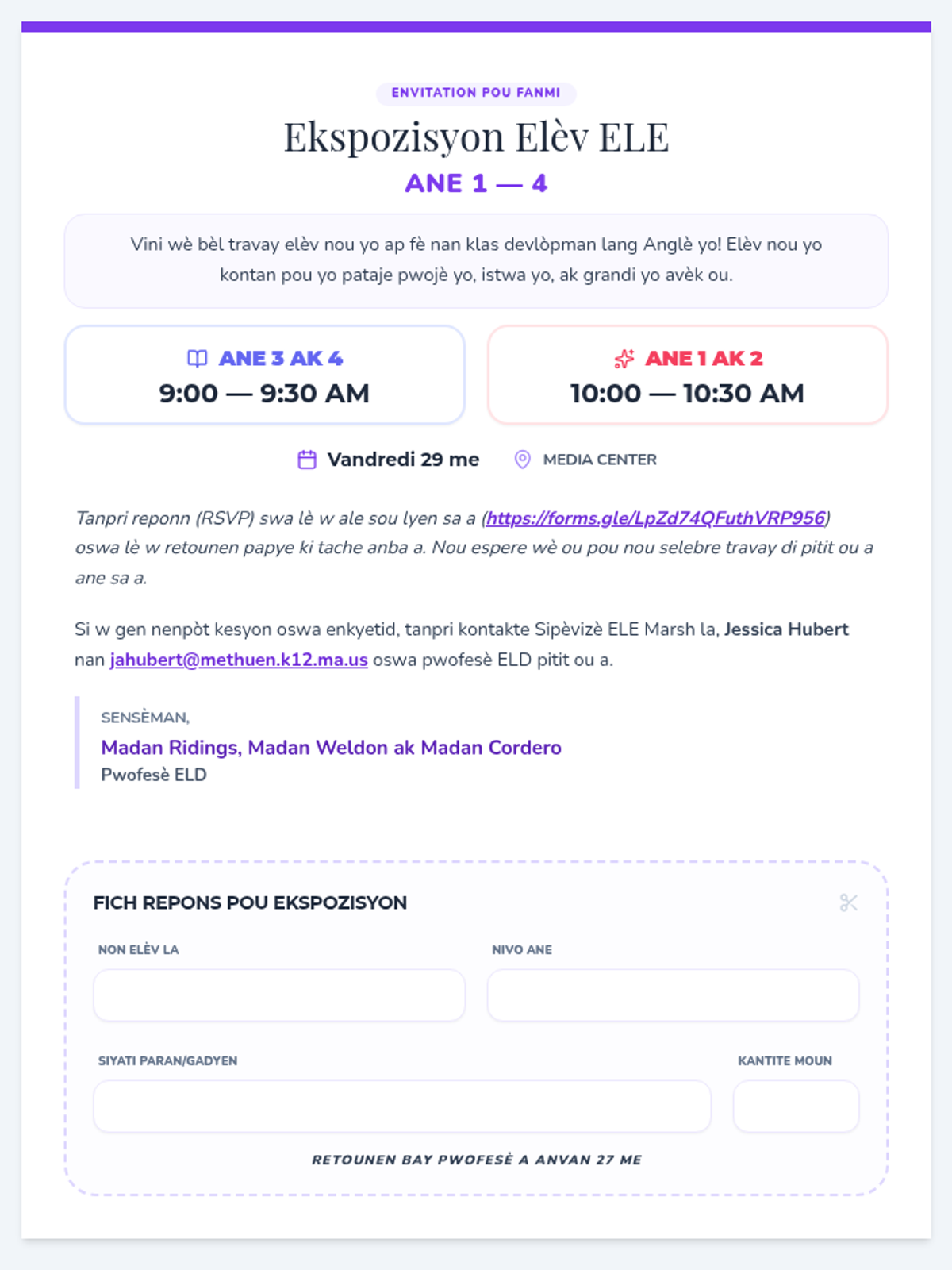
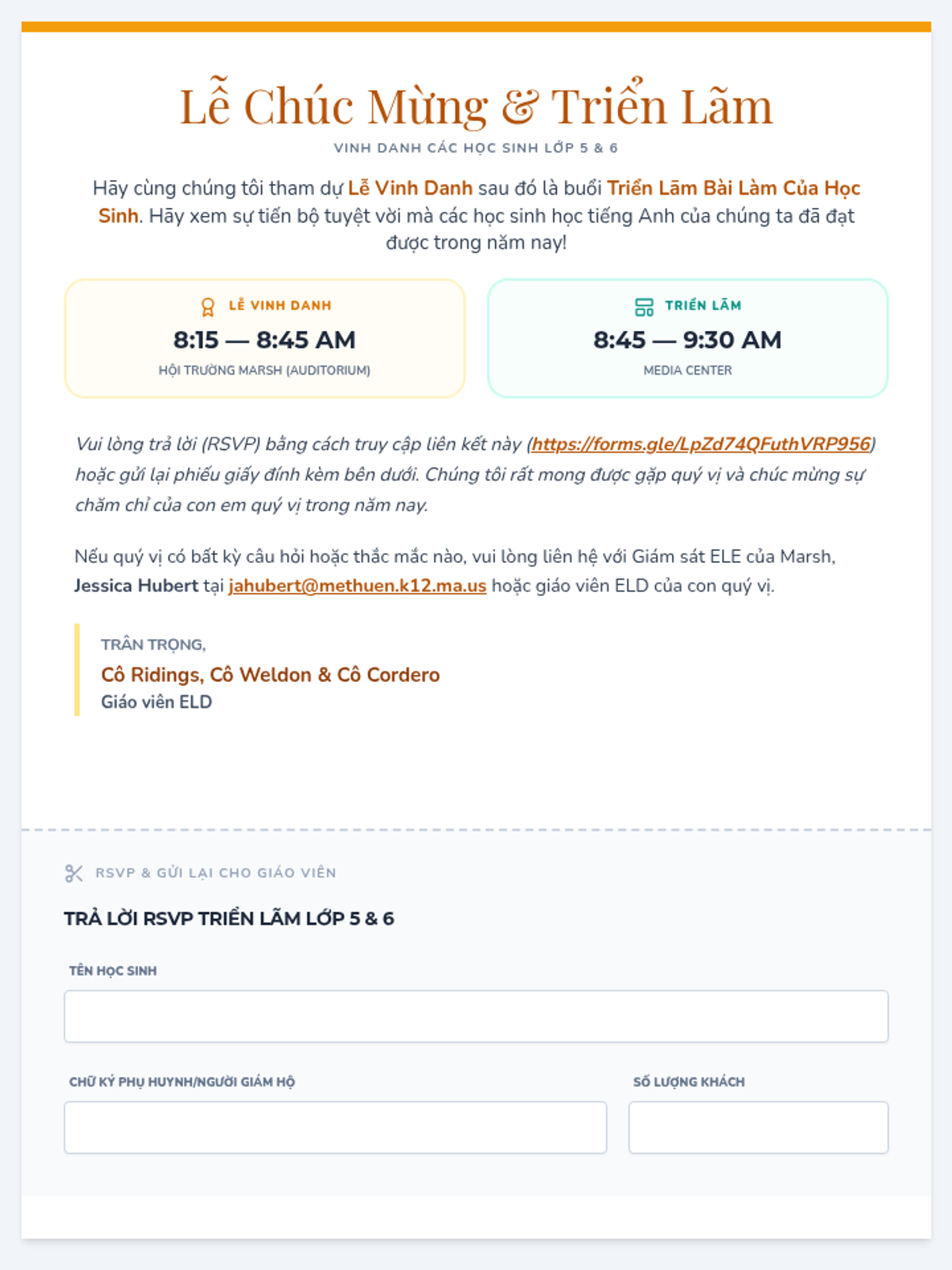
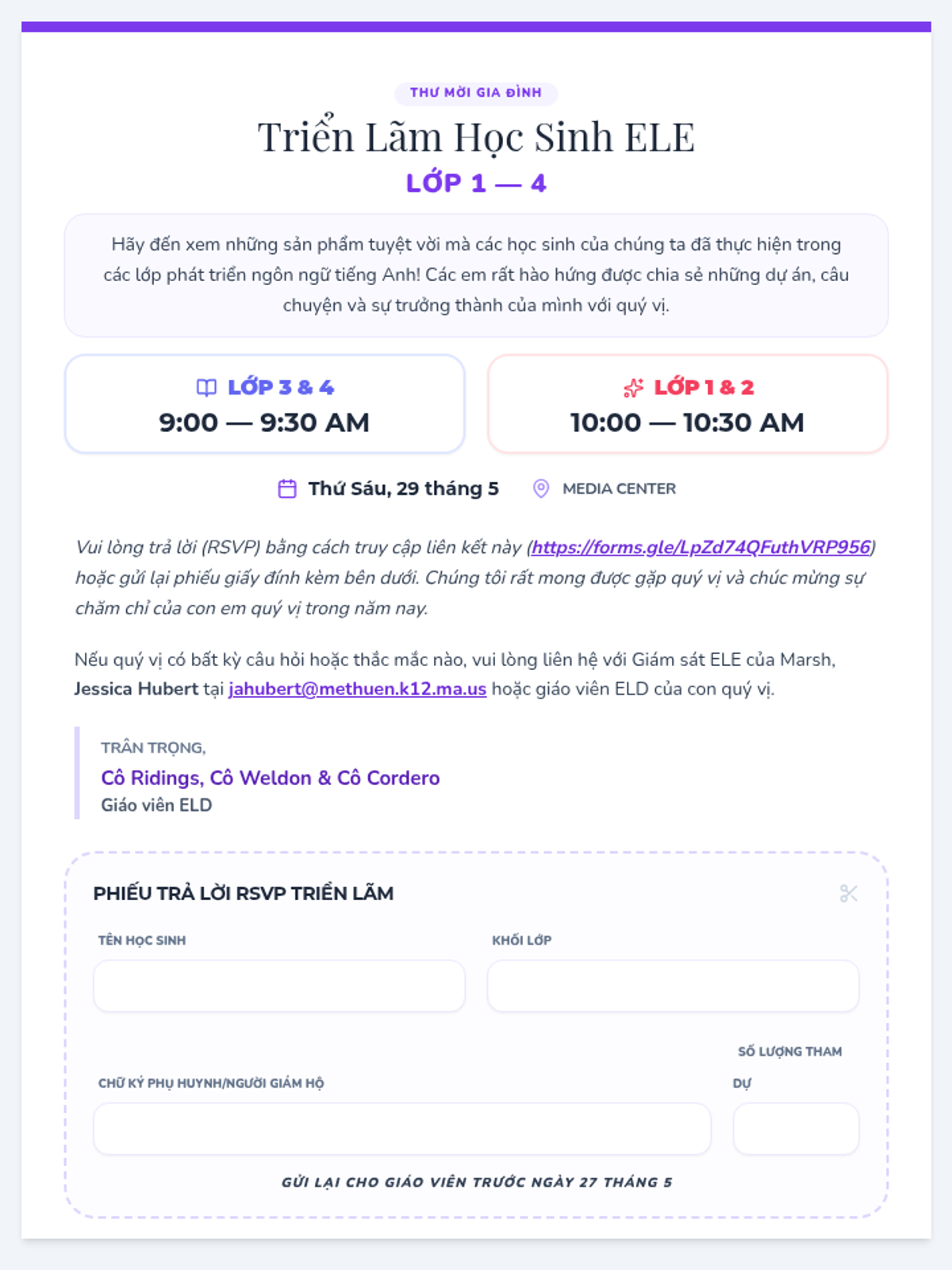
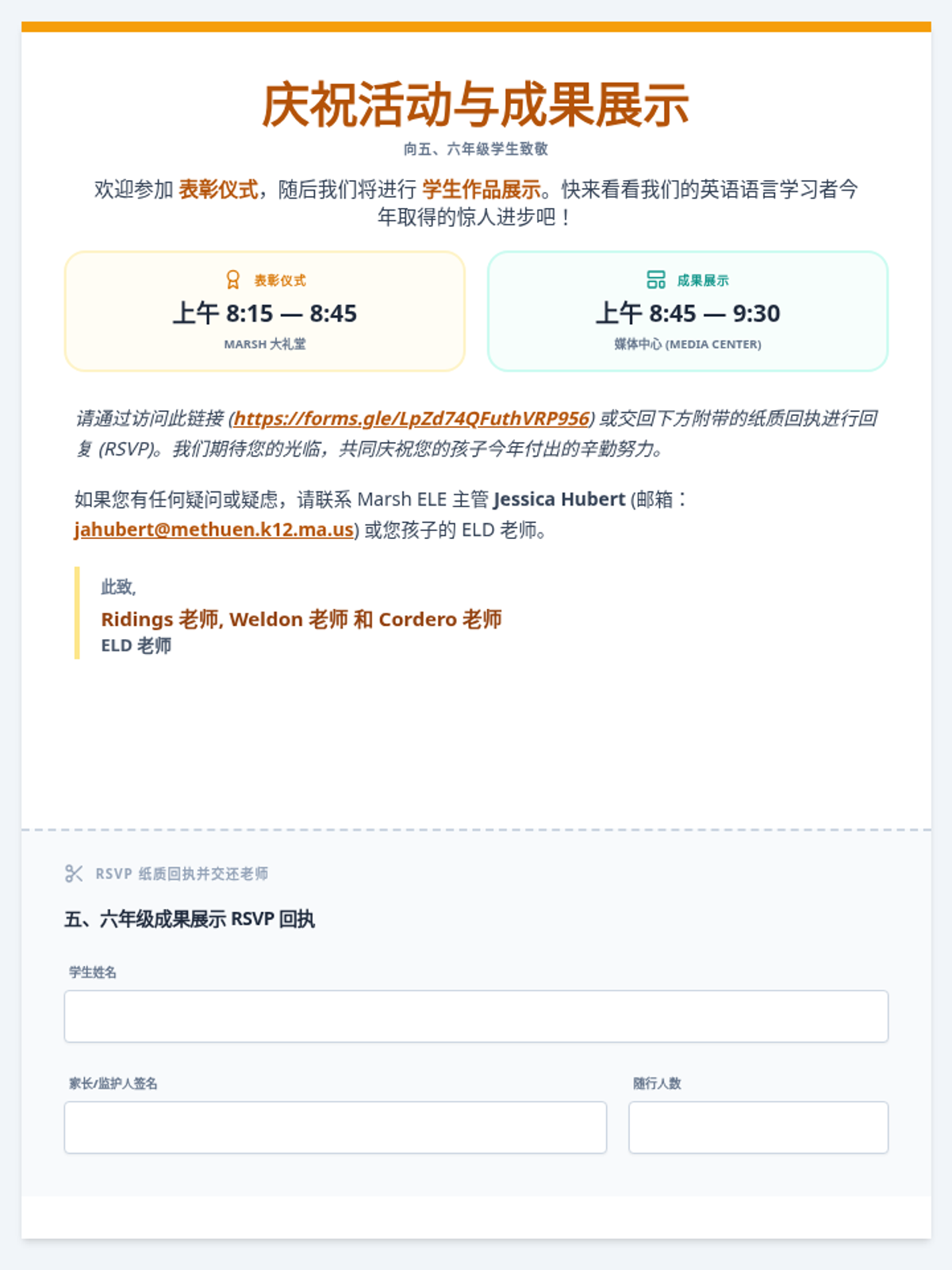
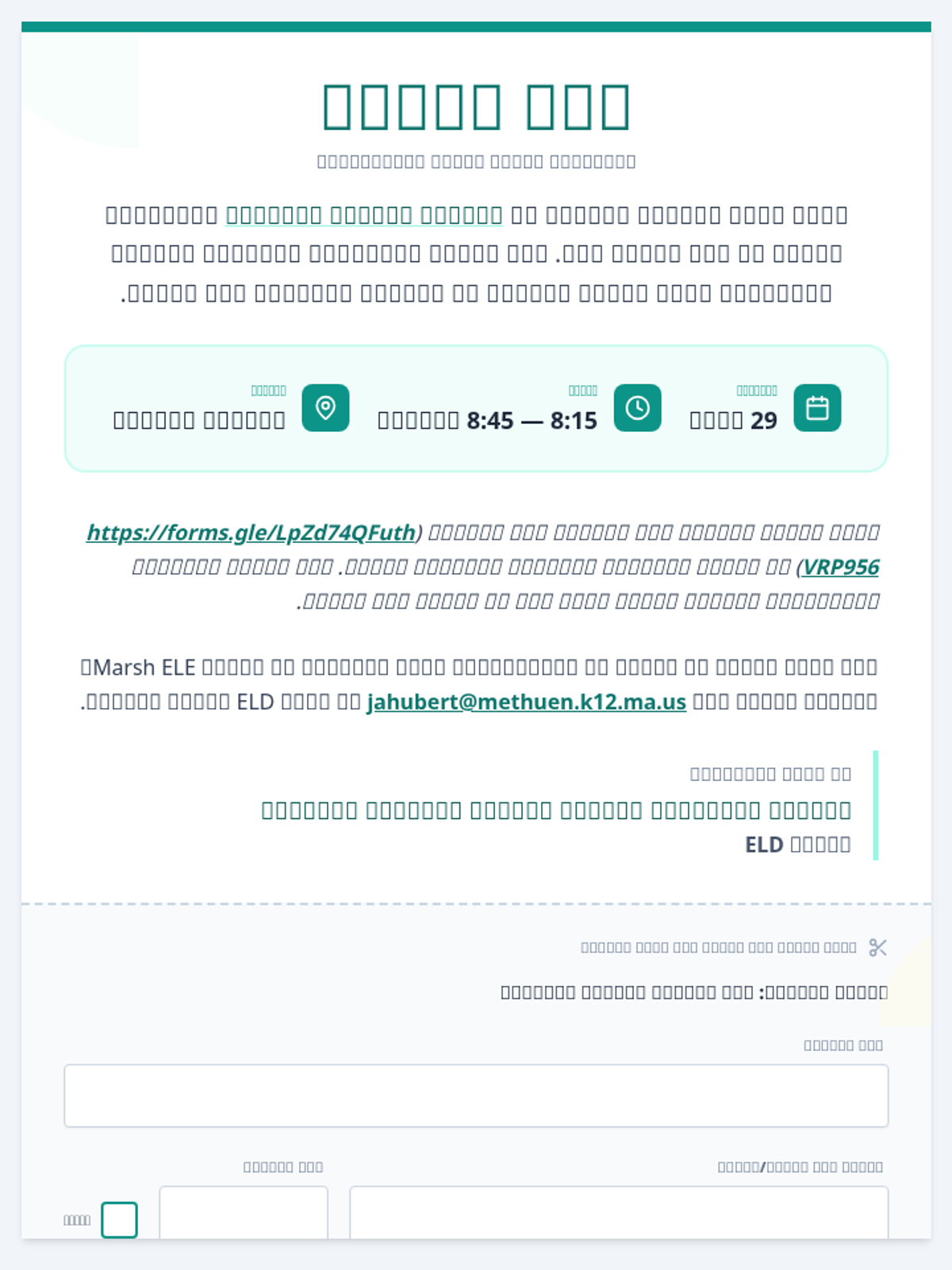
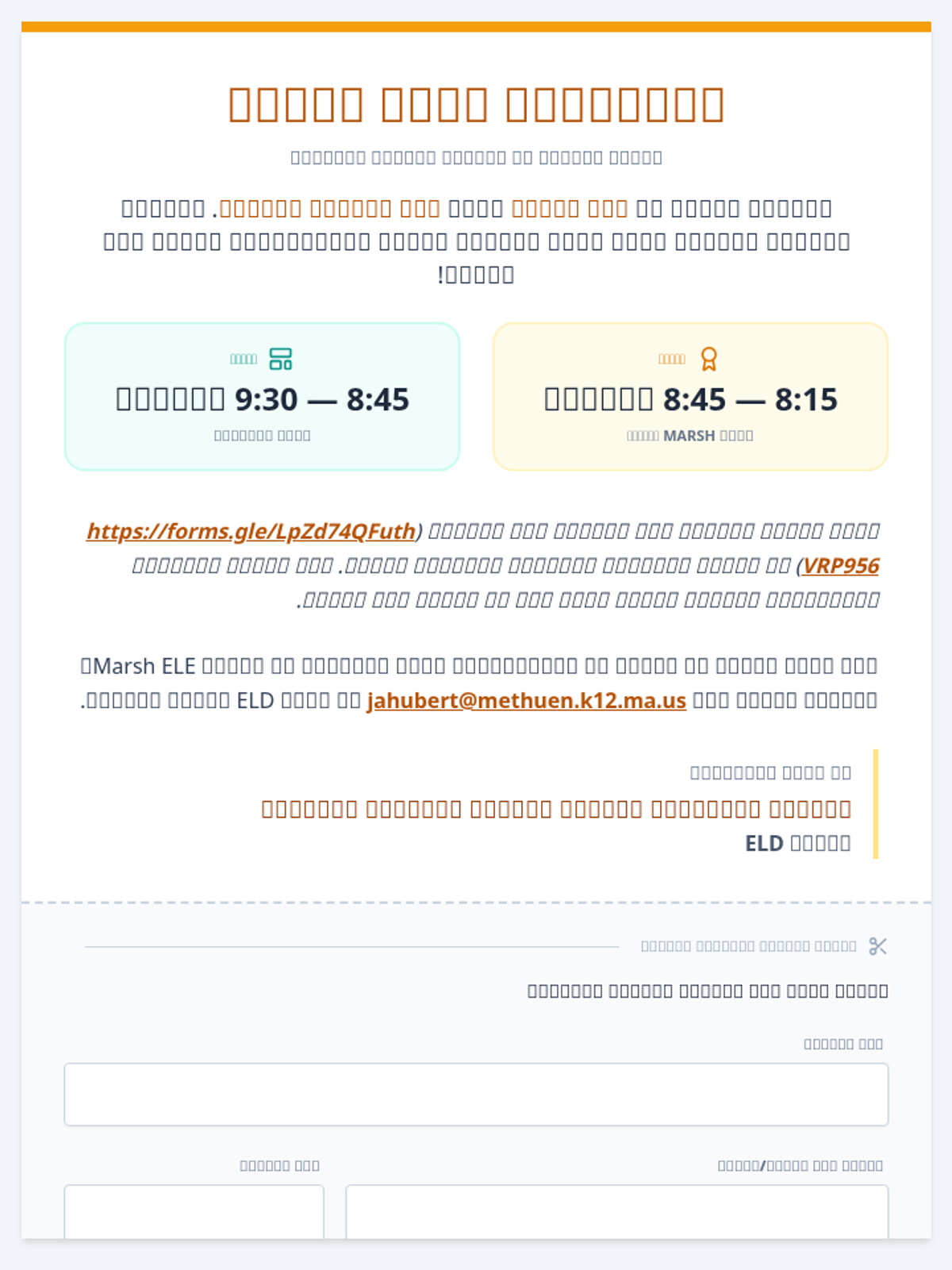
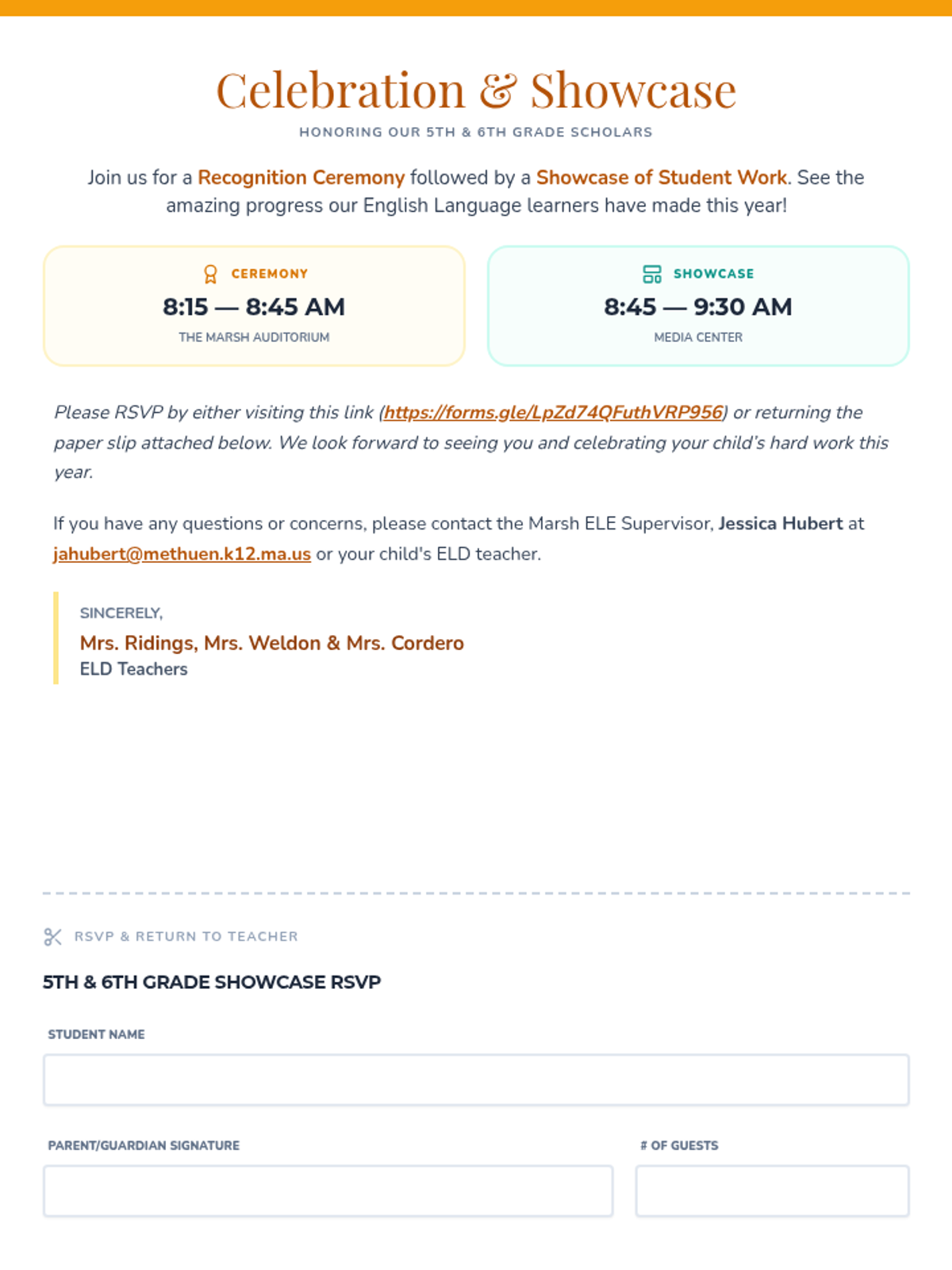
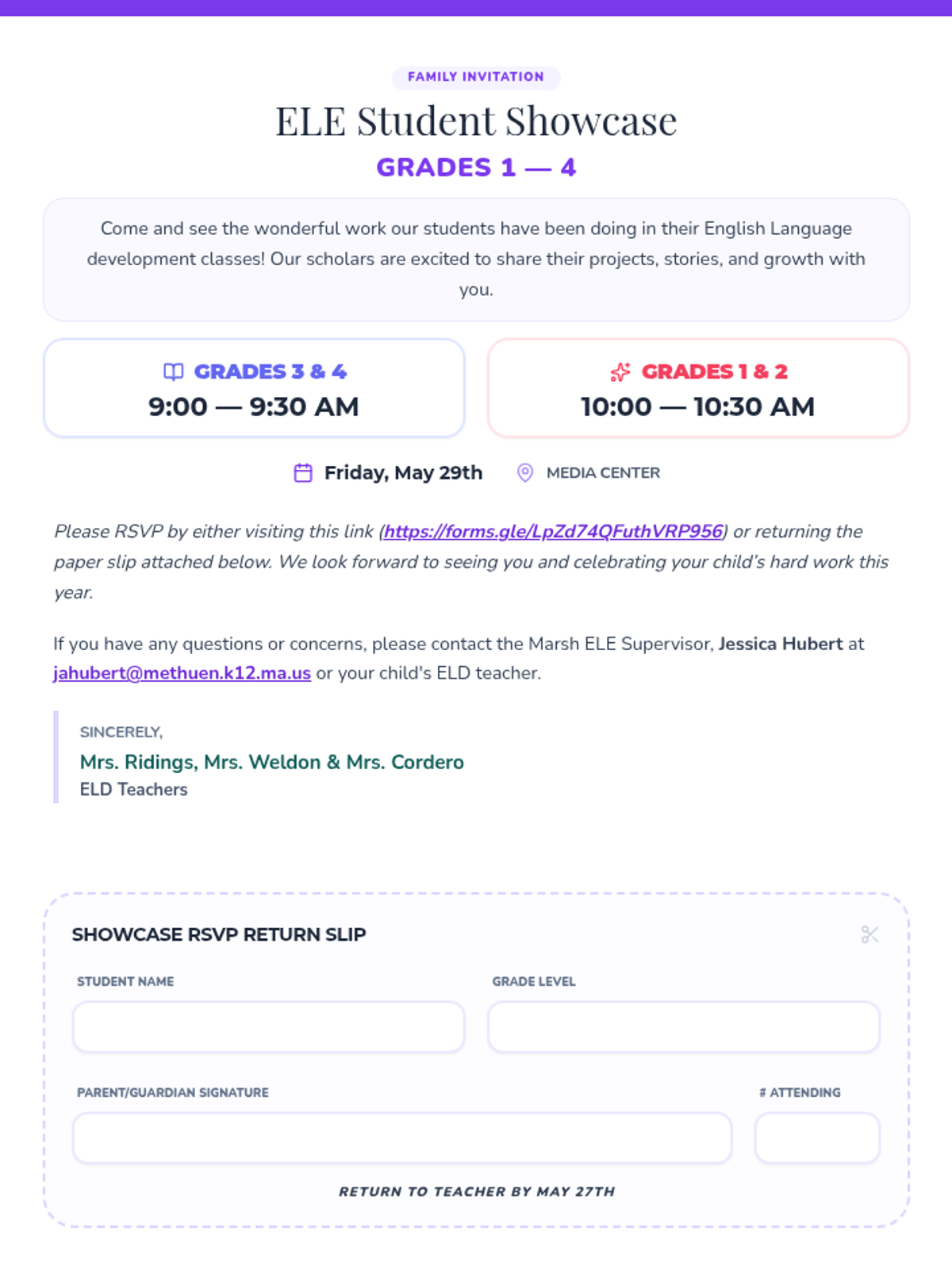
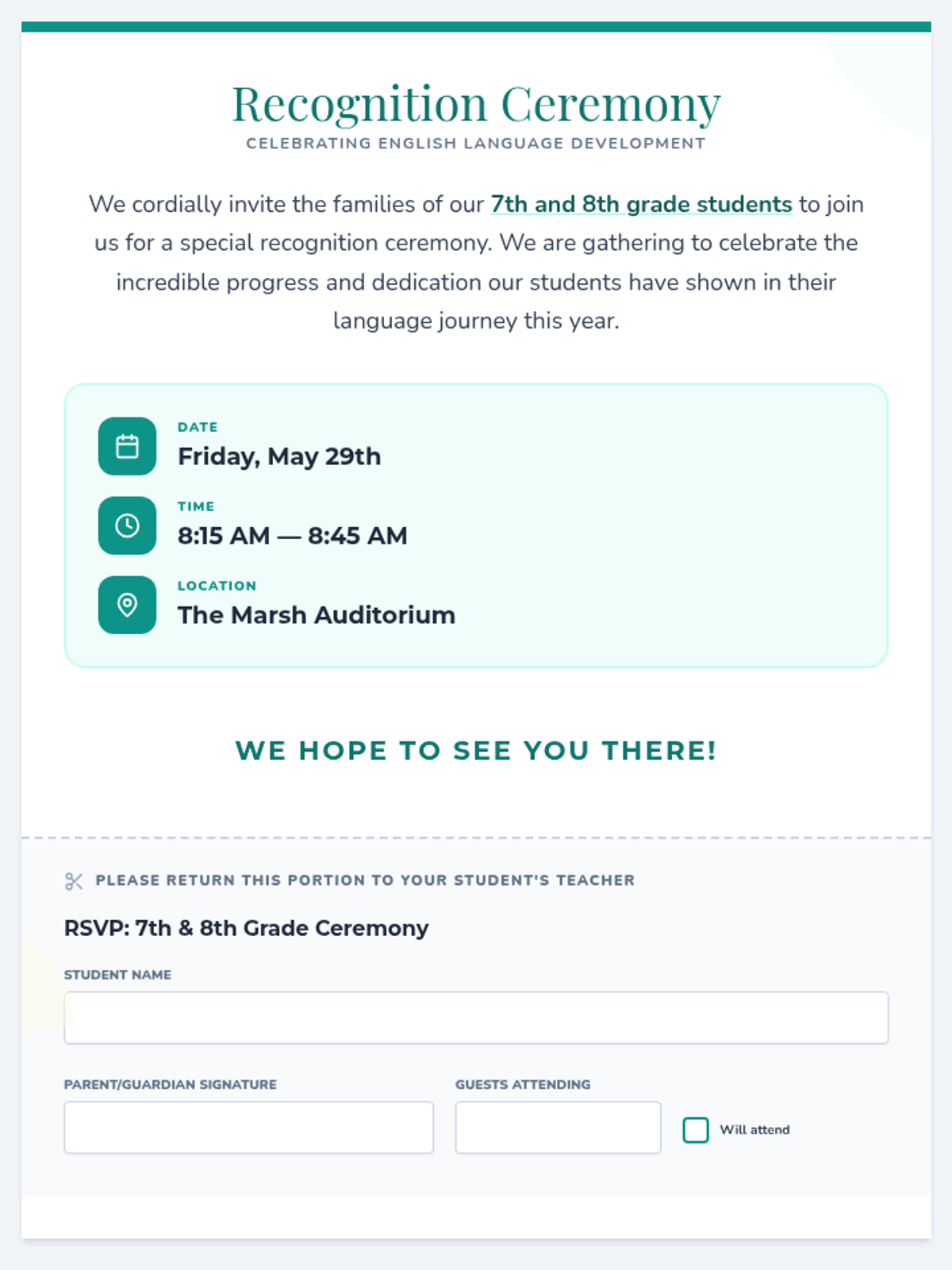
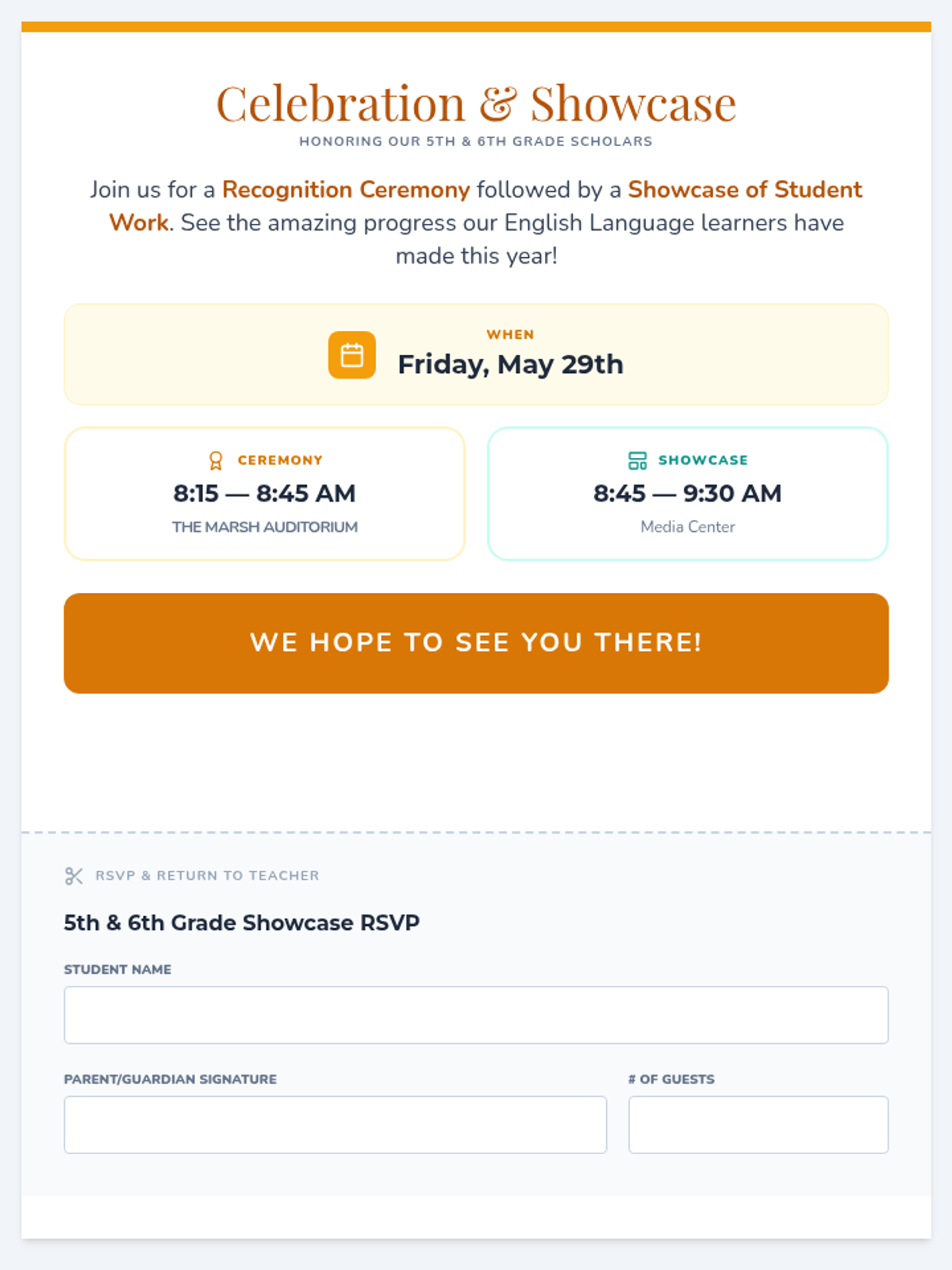
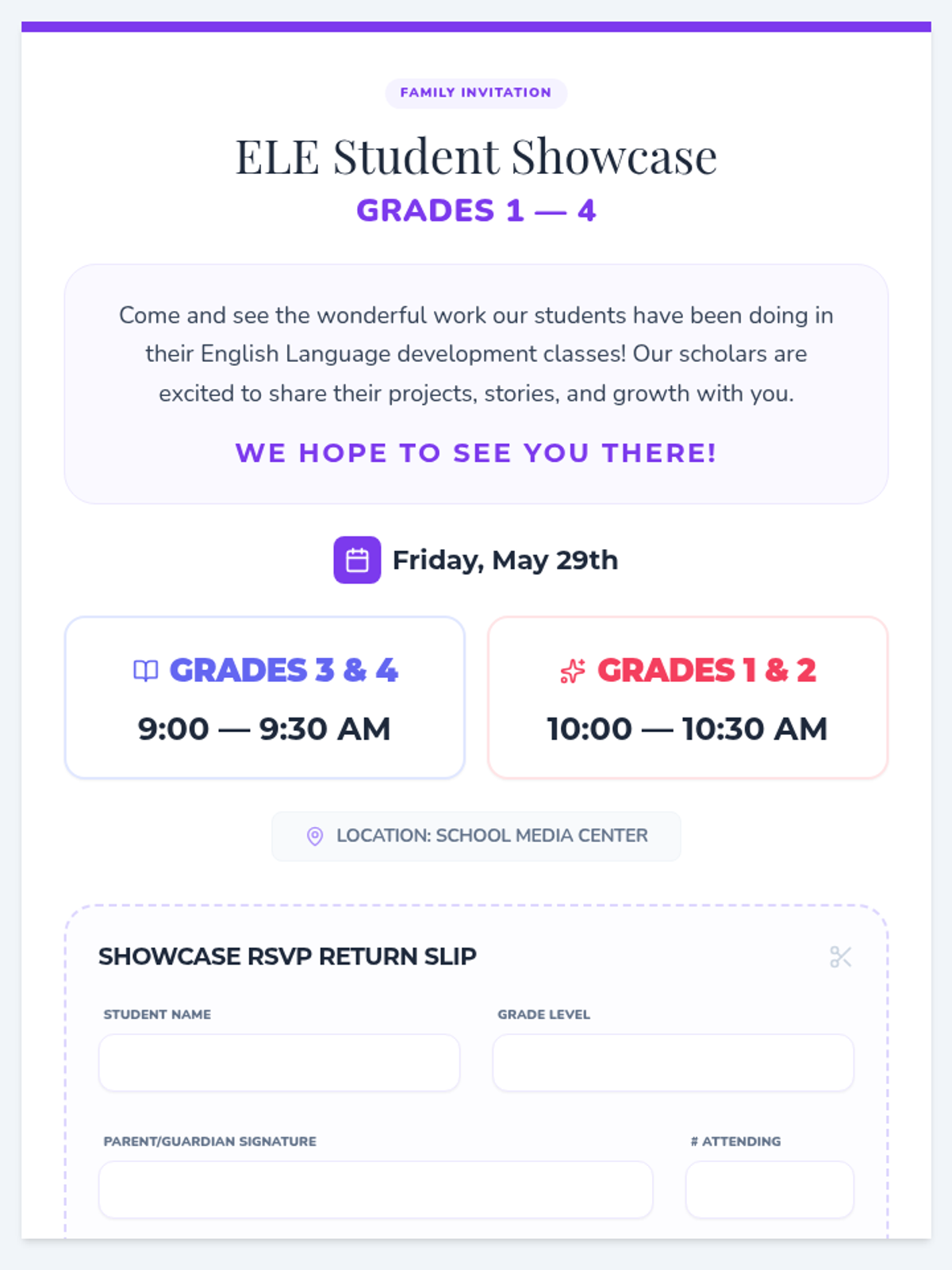
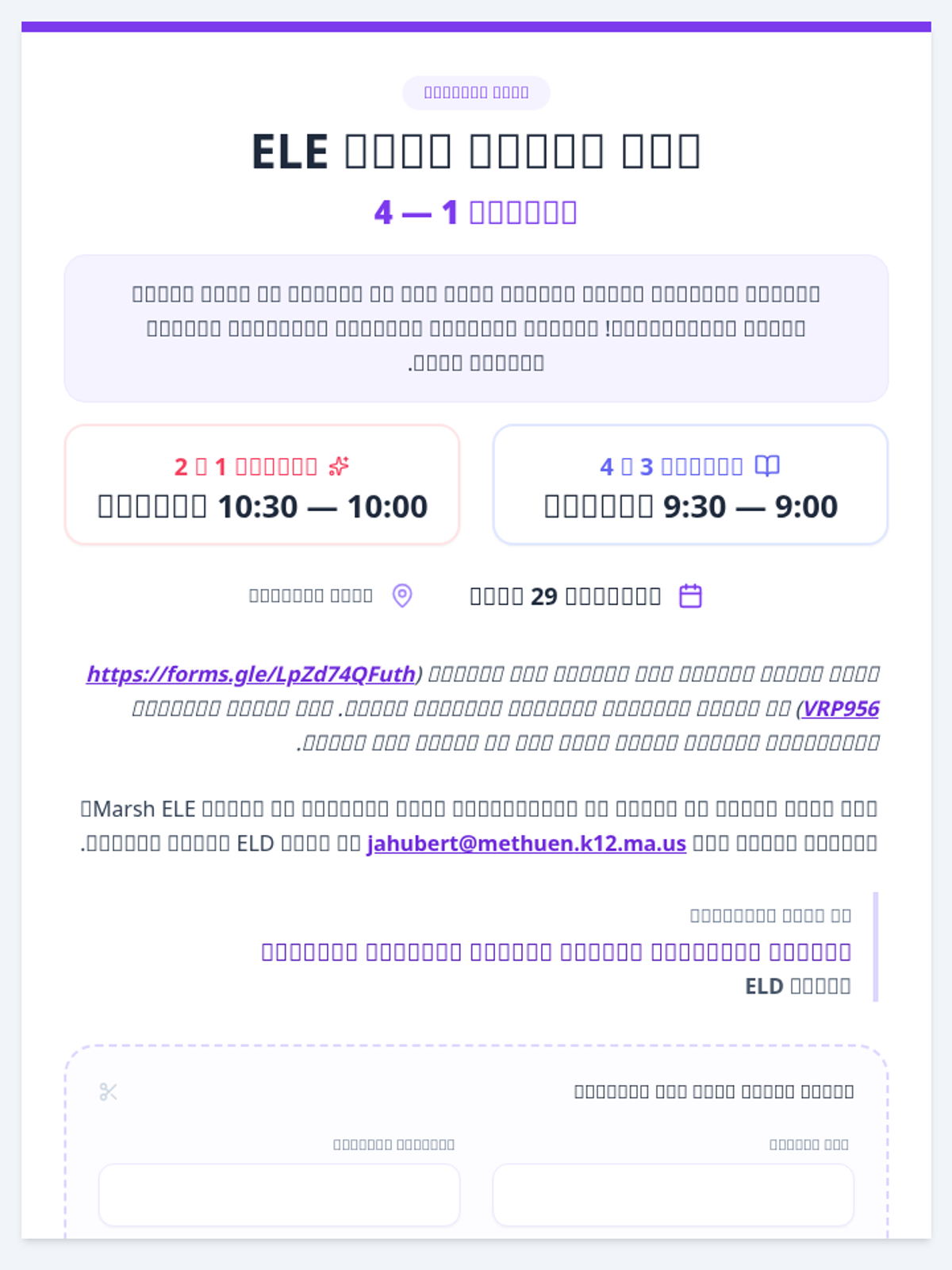
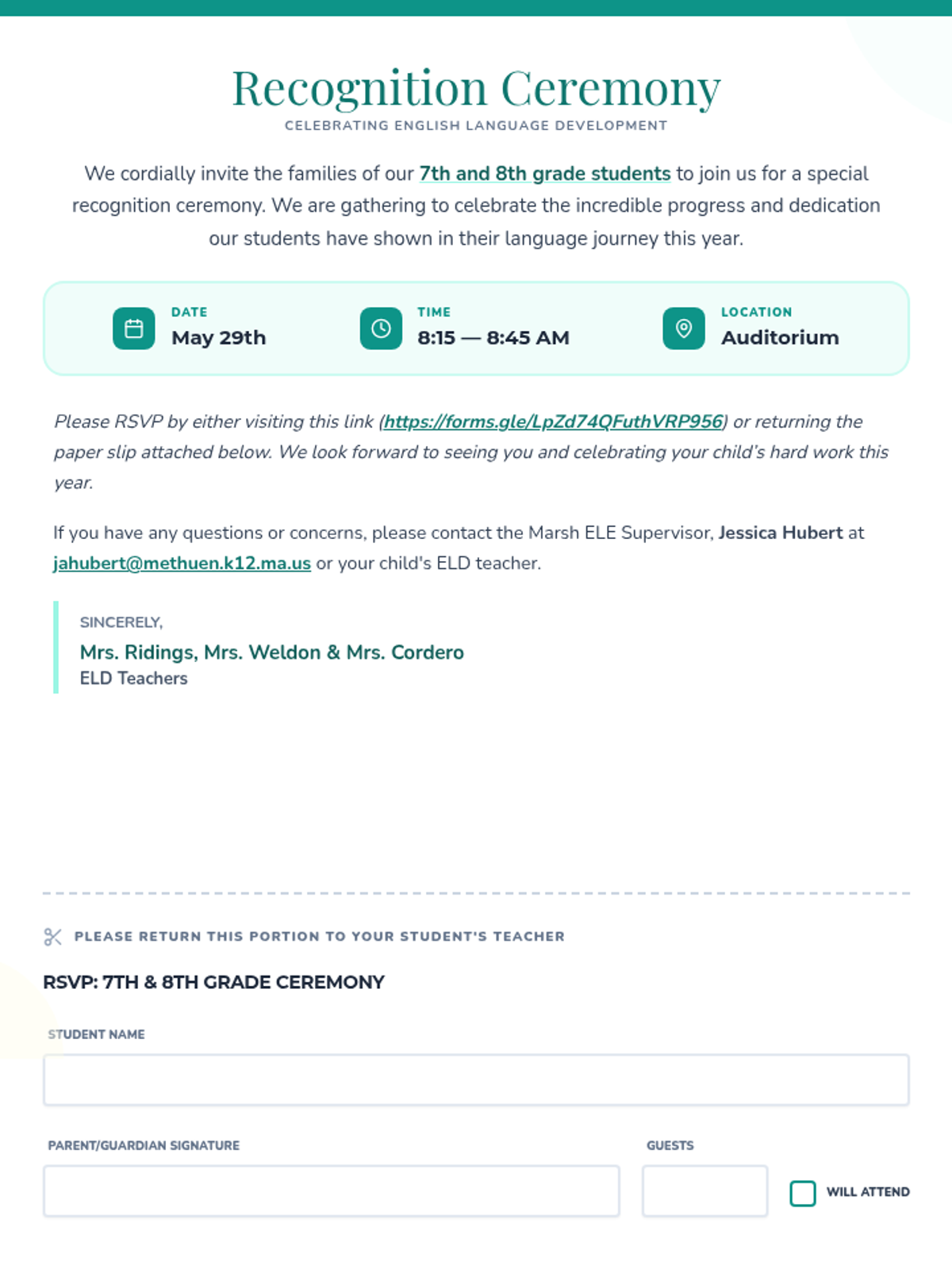
A collection of family invitation flyers for the English Language Education (ELE) showcase and recognition ceremonies across various grade levels. Each flyer includes specific timing, location details, and a return slip for RSVPs.
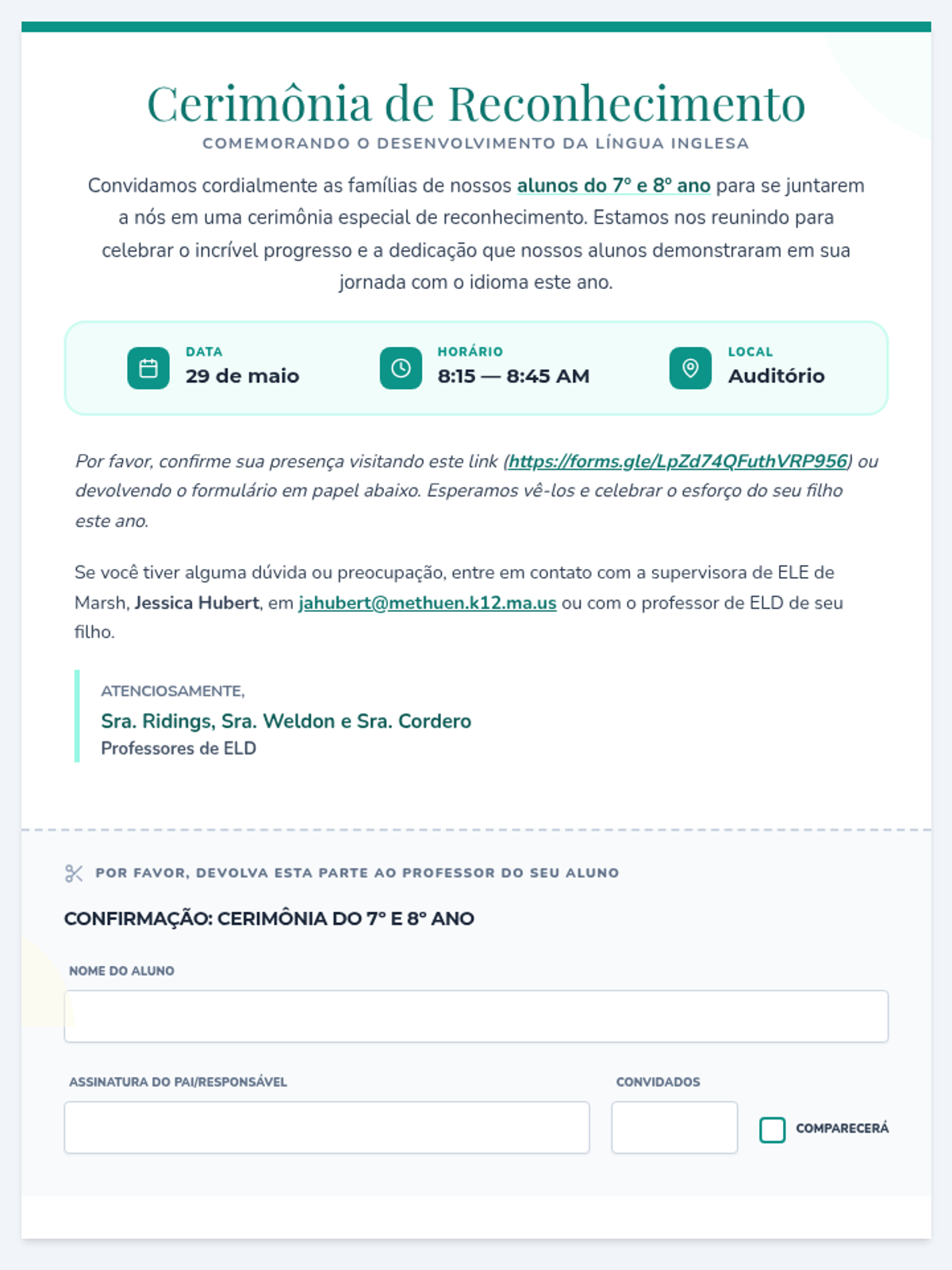
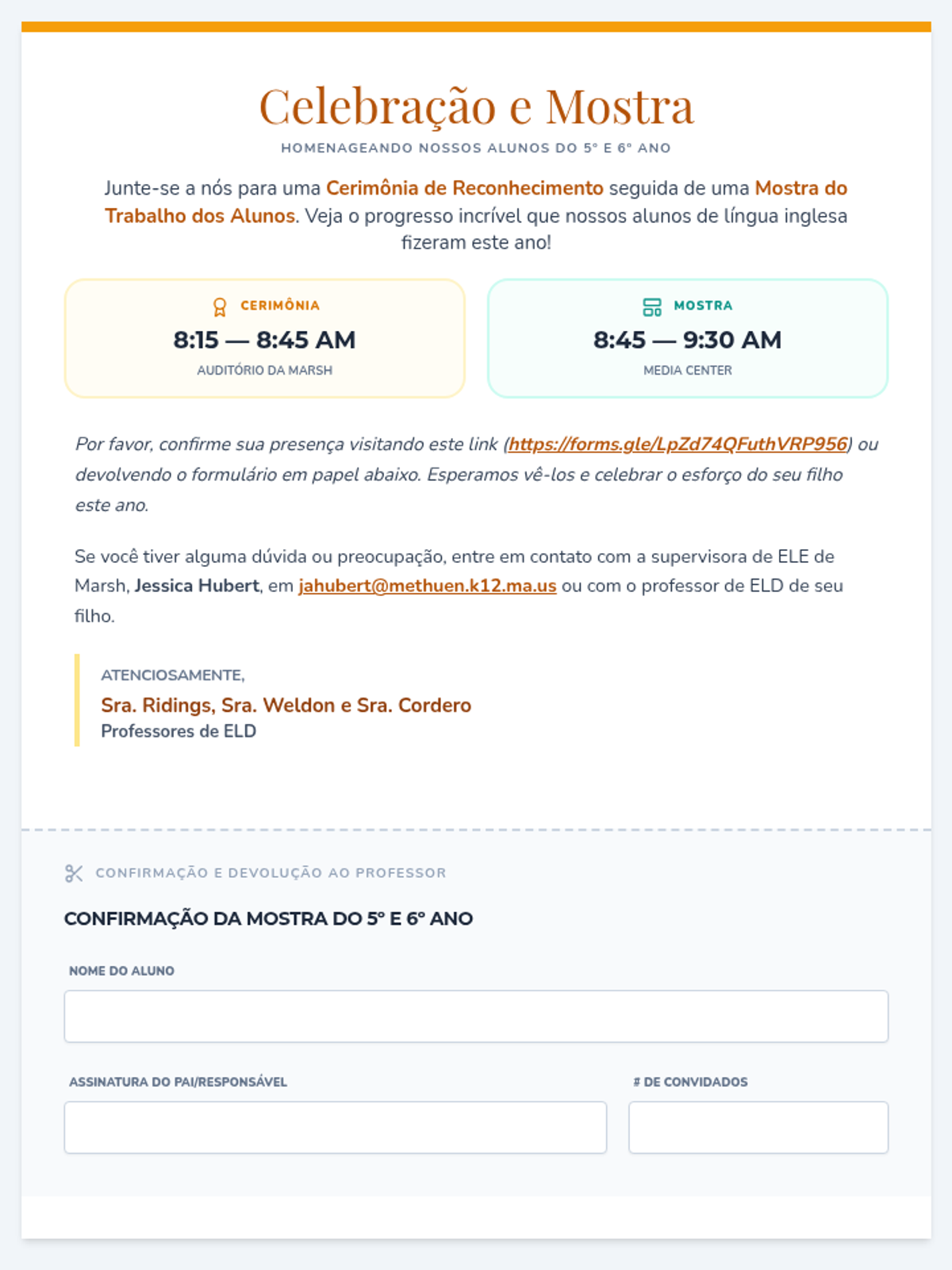
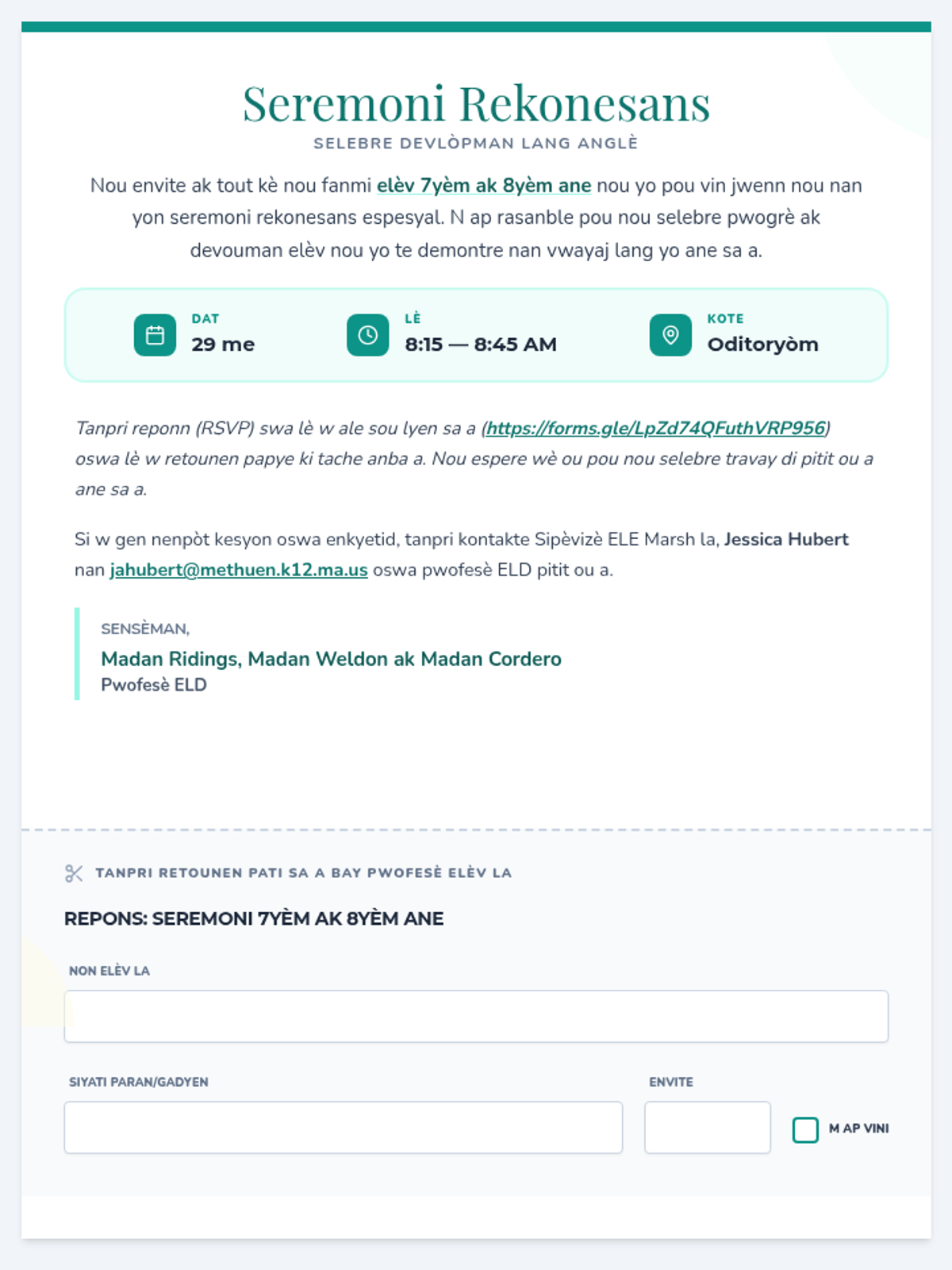
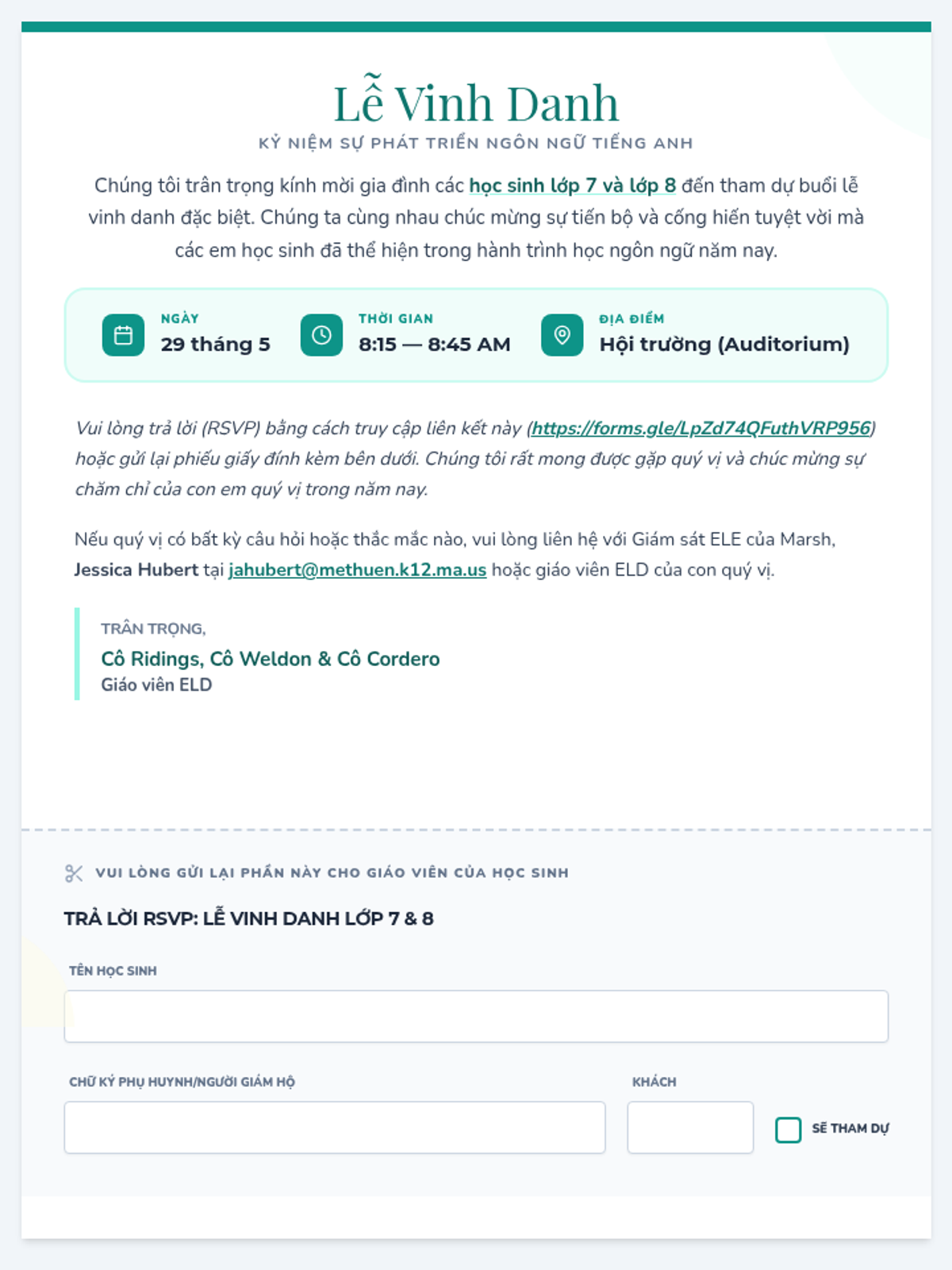
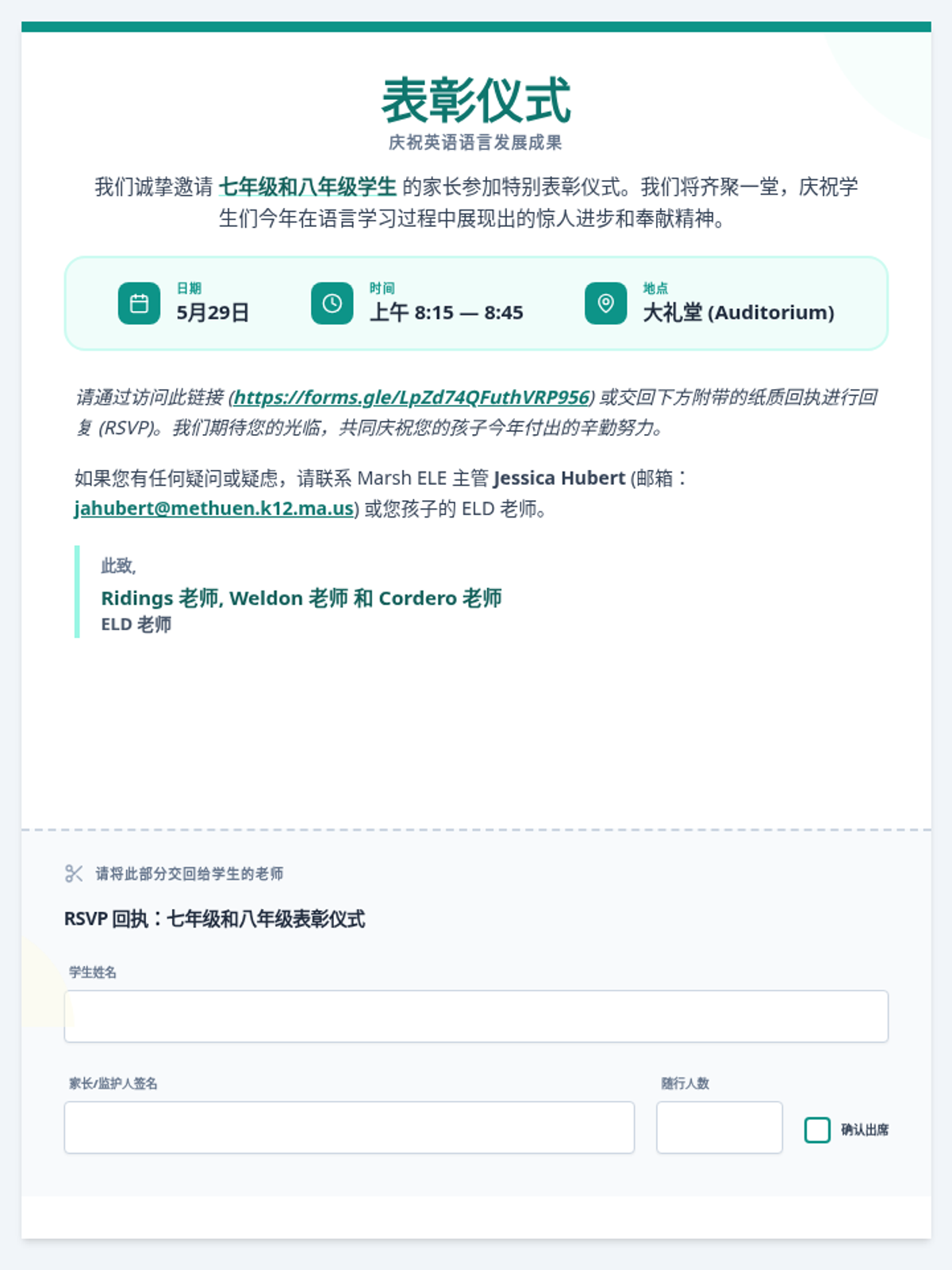
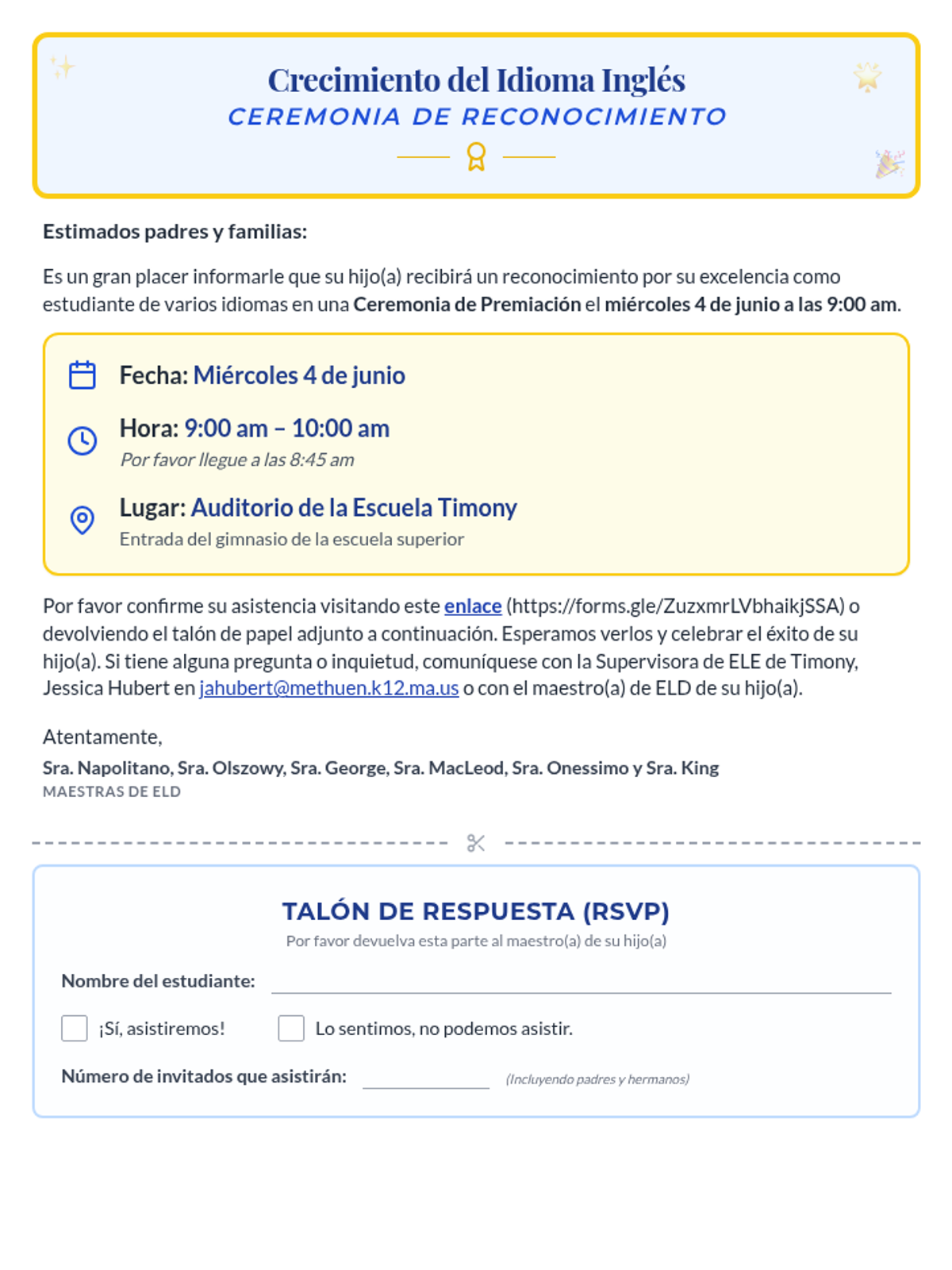
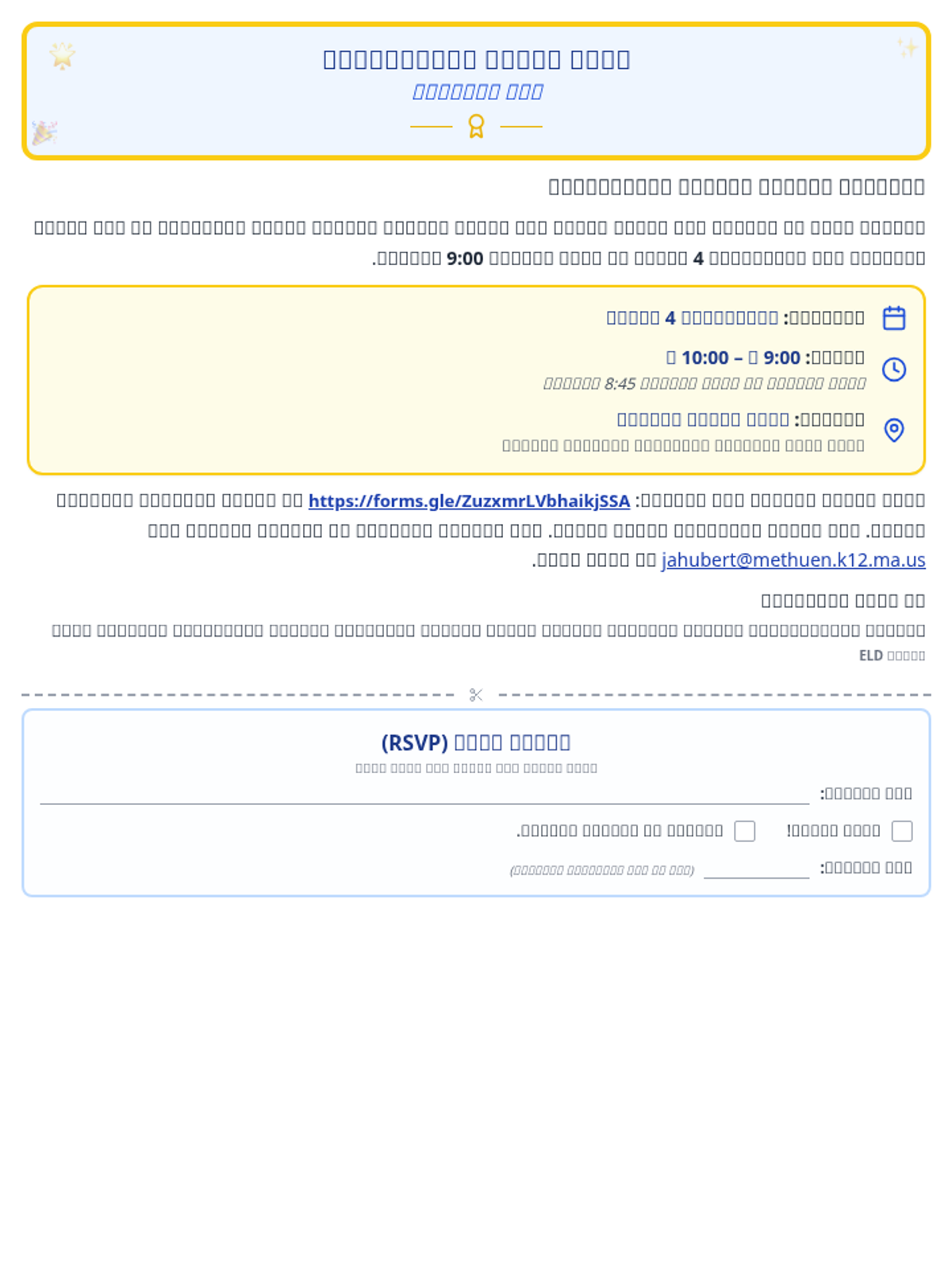
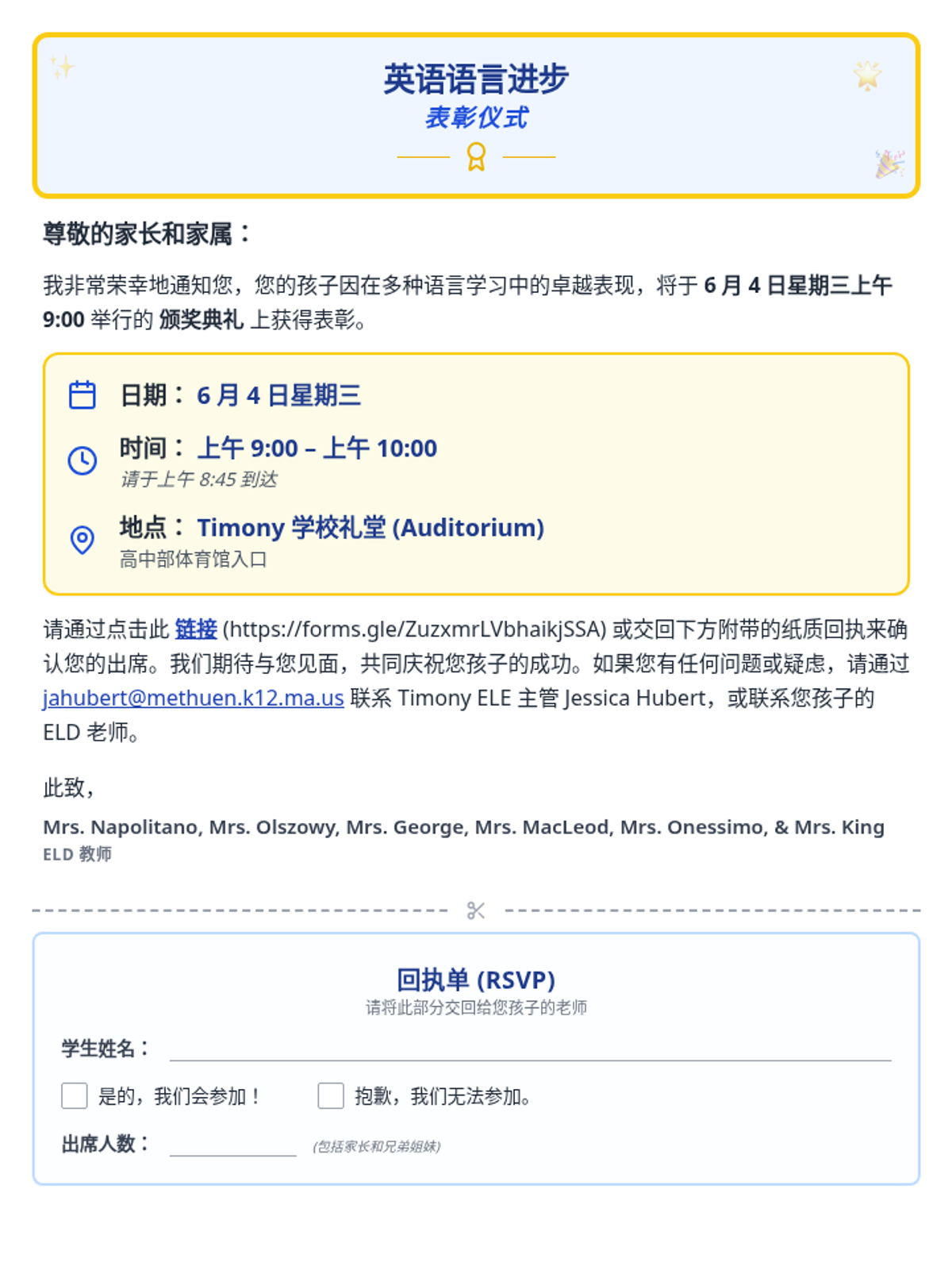
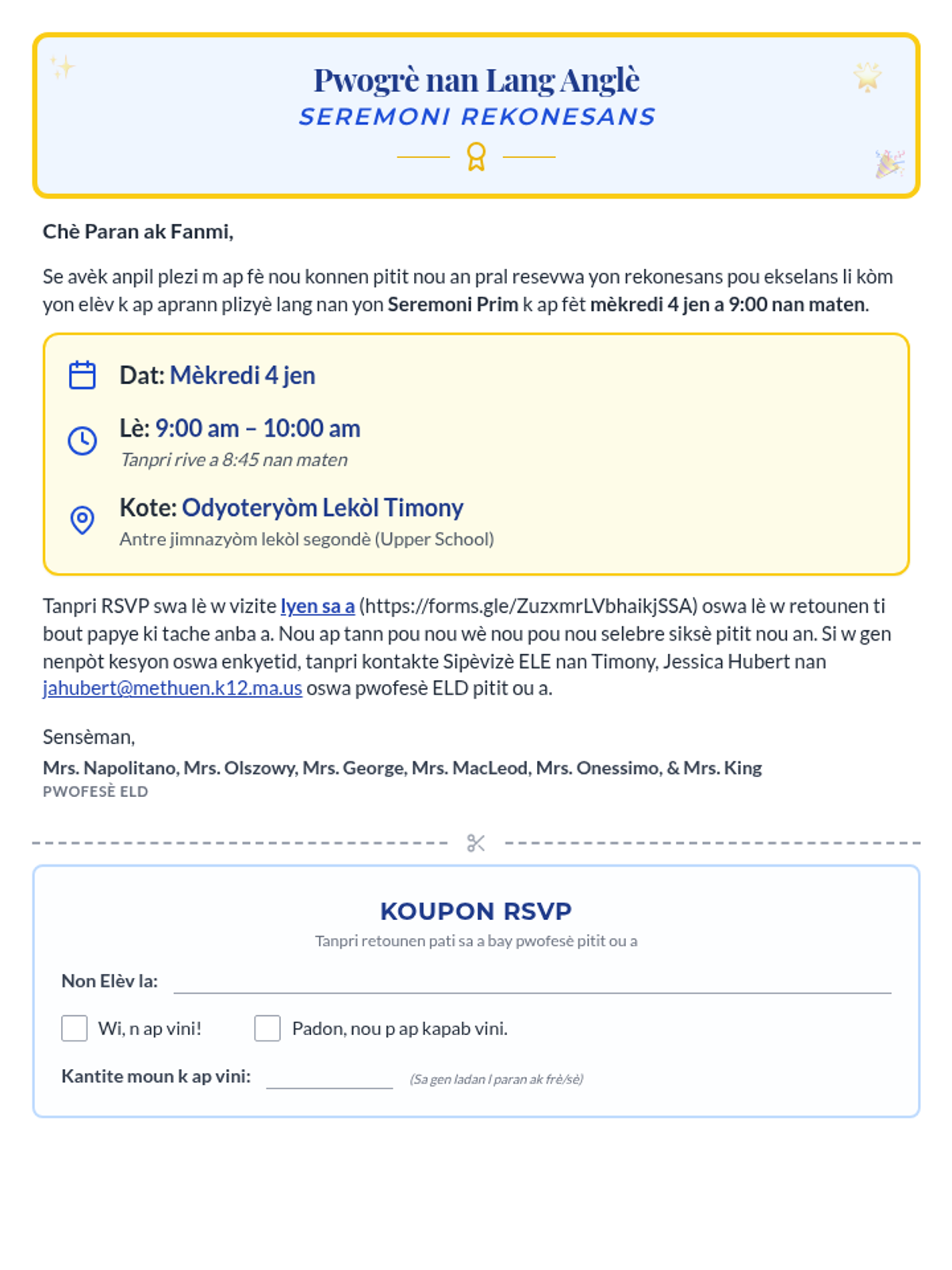
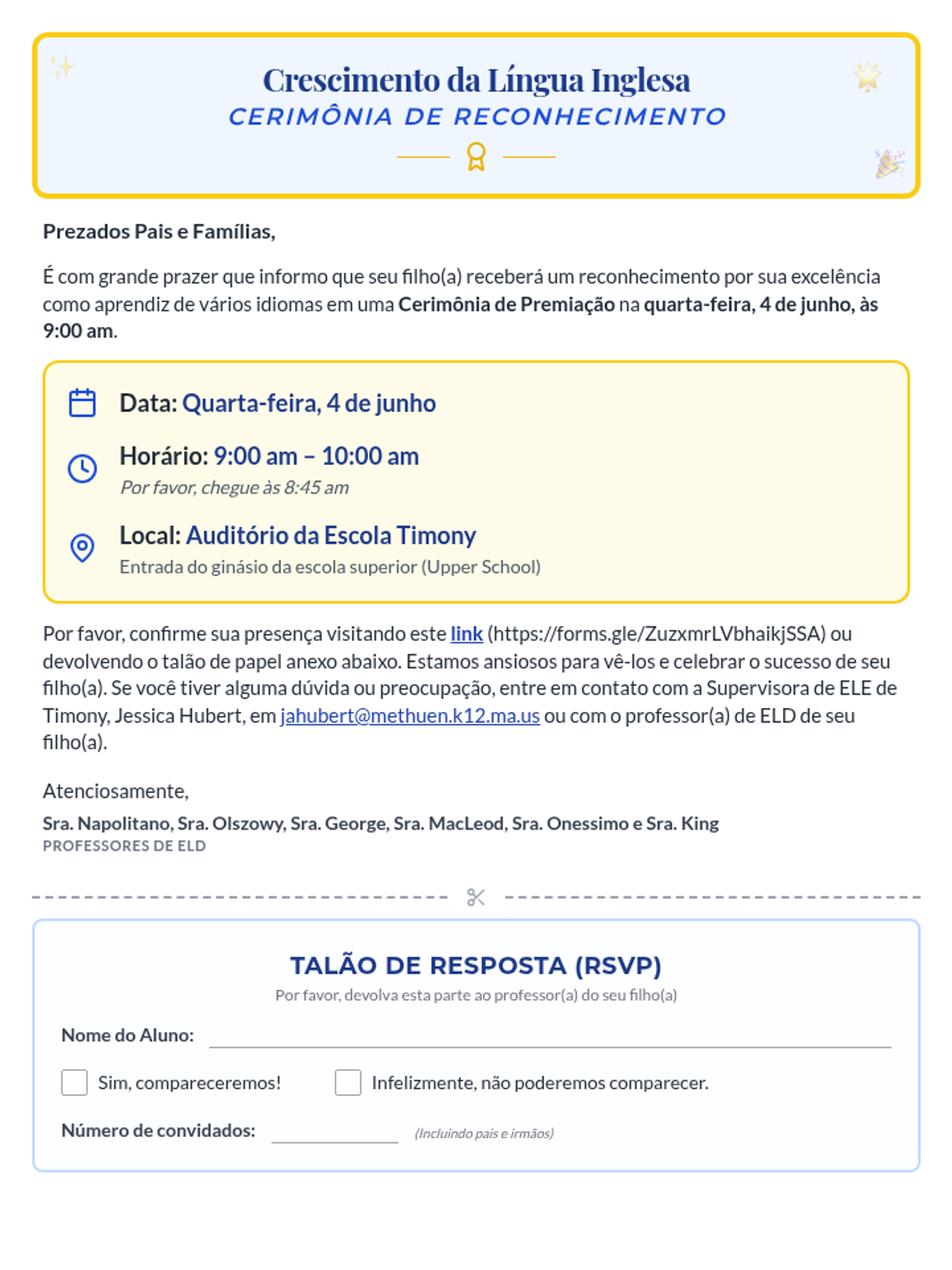
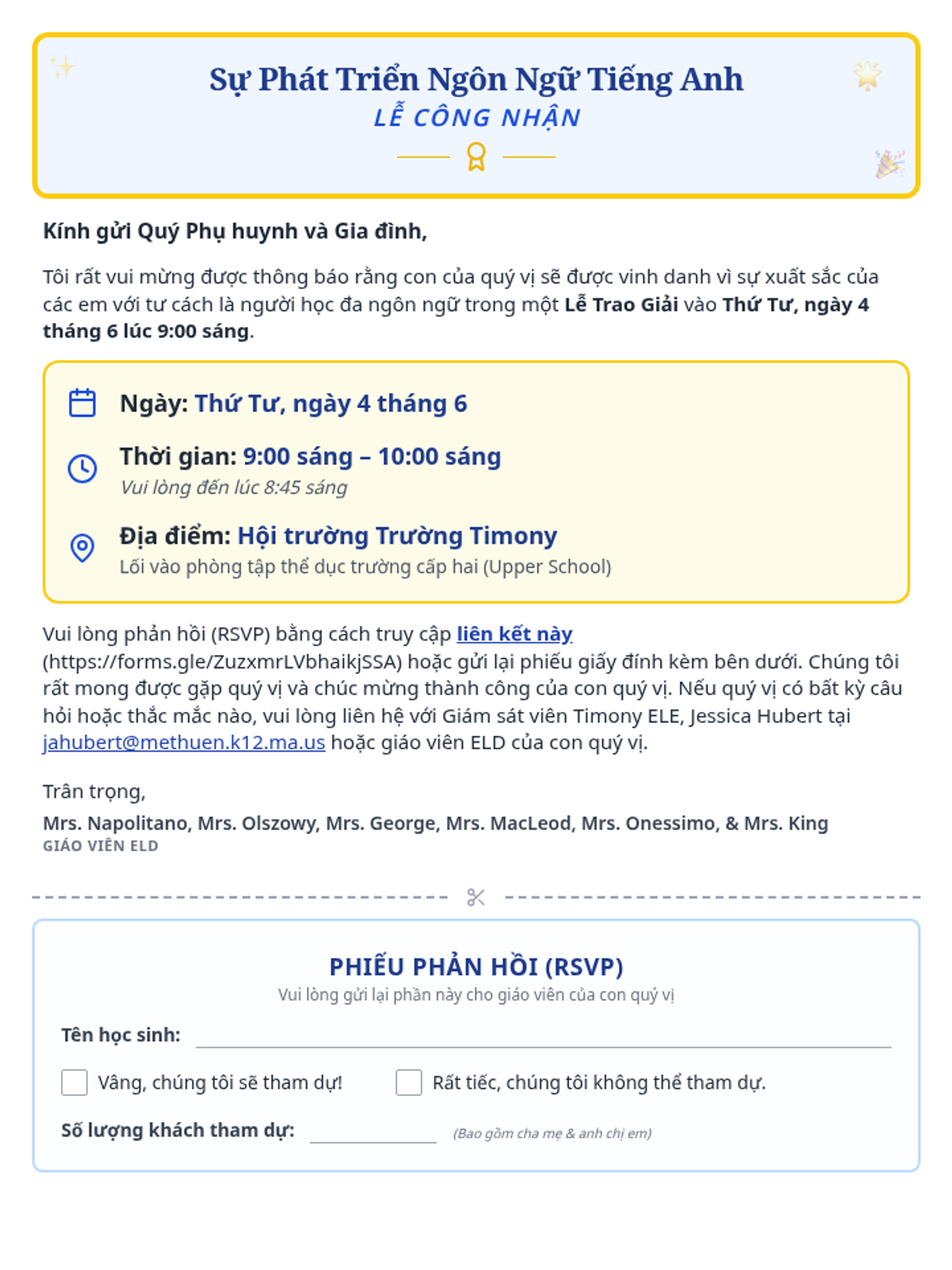
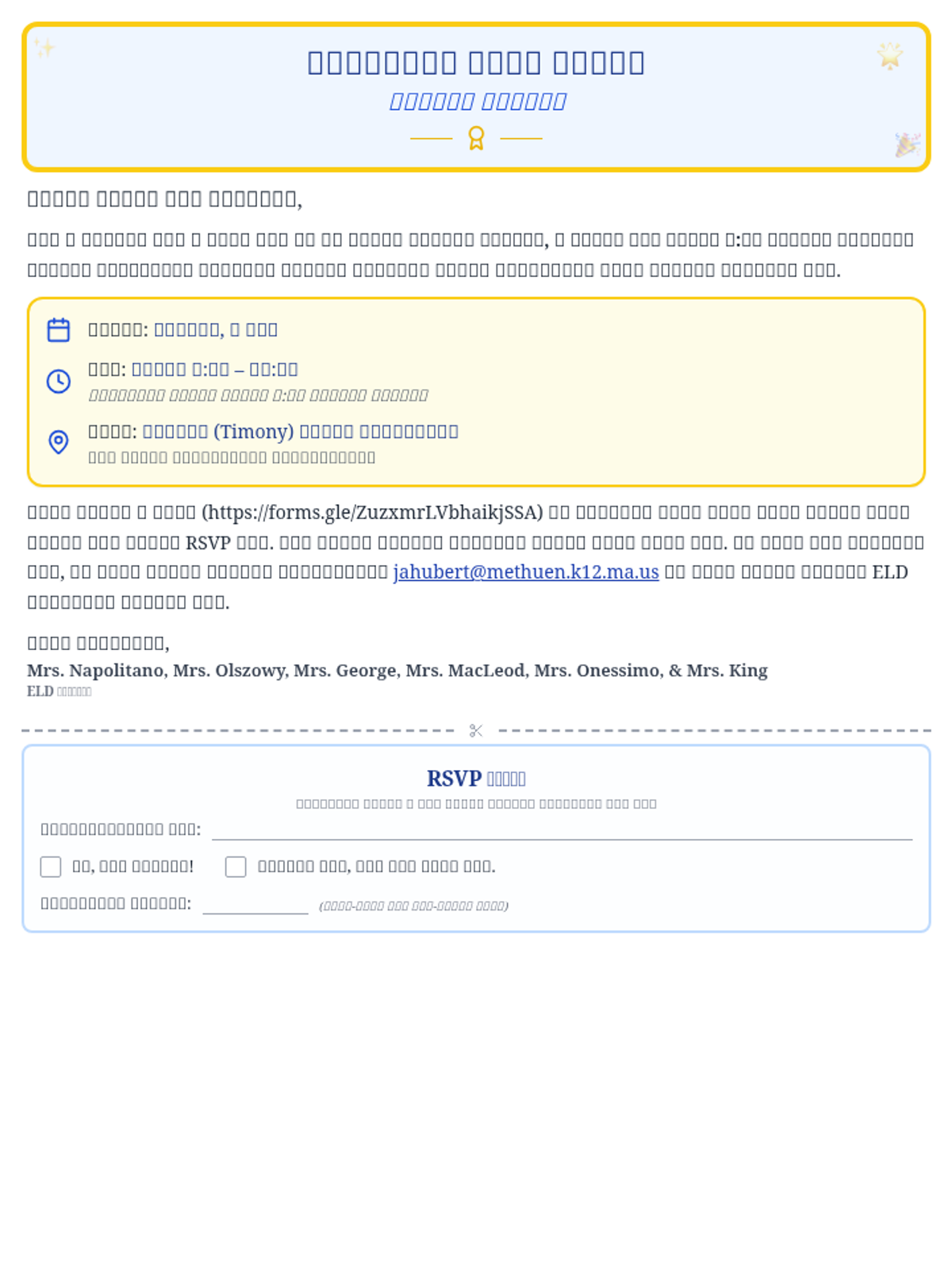
A collection of invitation forms in multiple languages for the English Language Growth Recognition Ceremony, ensuring all families can participate and celebrate student success.
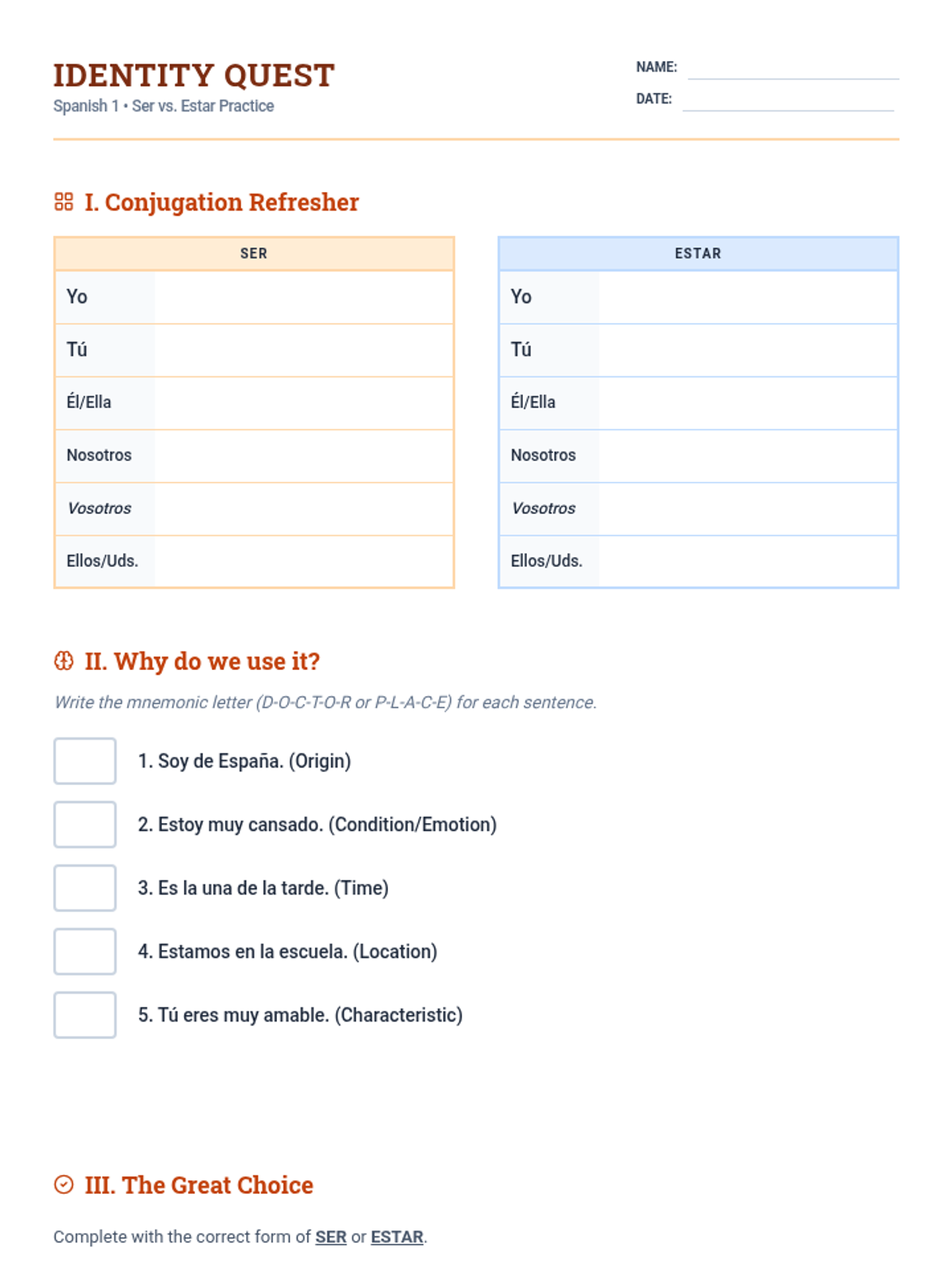
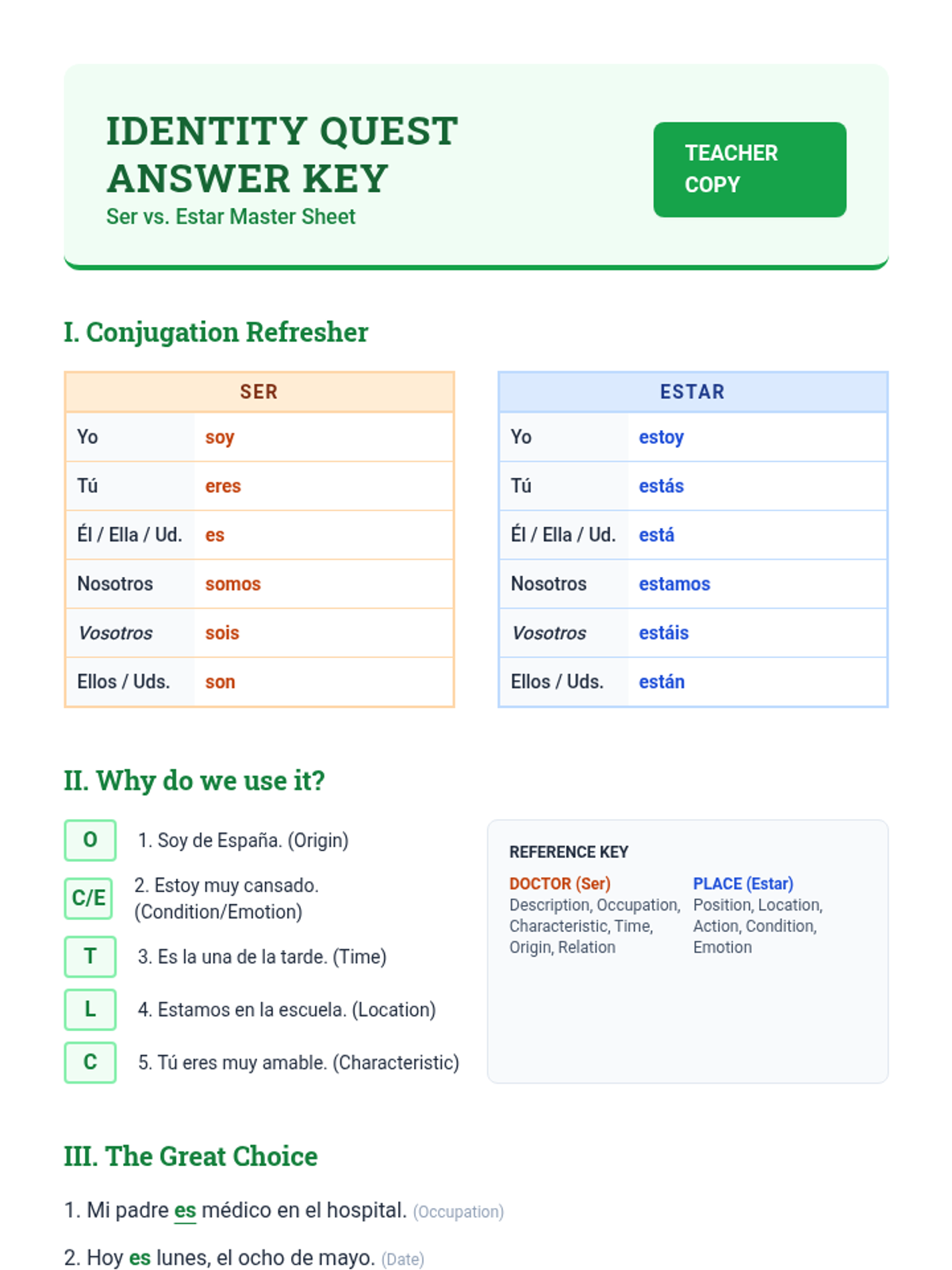
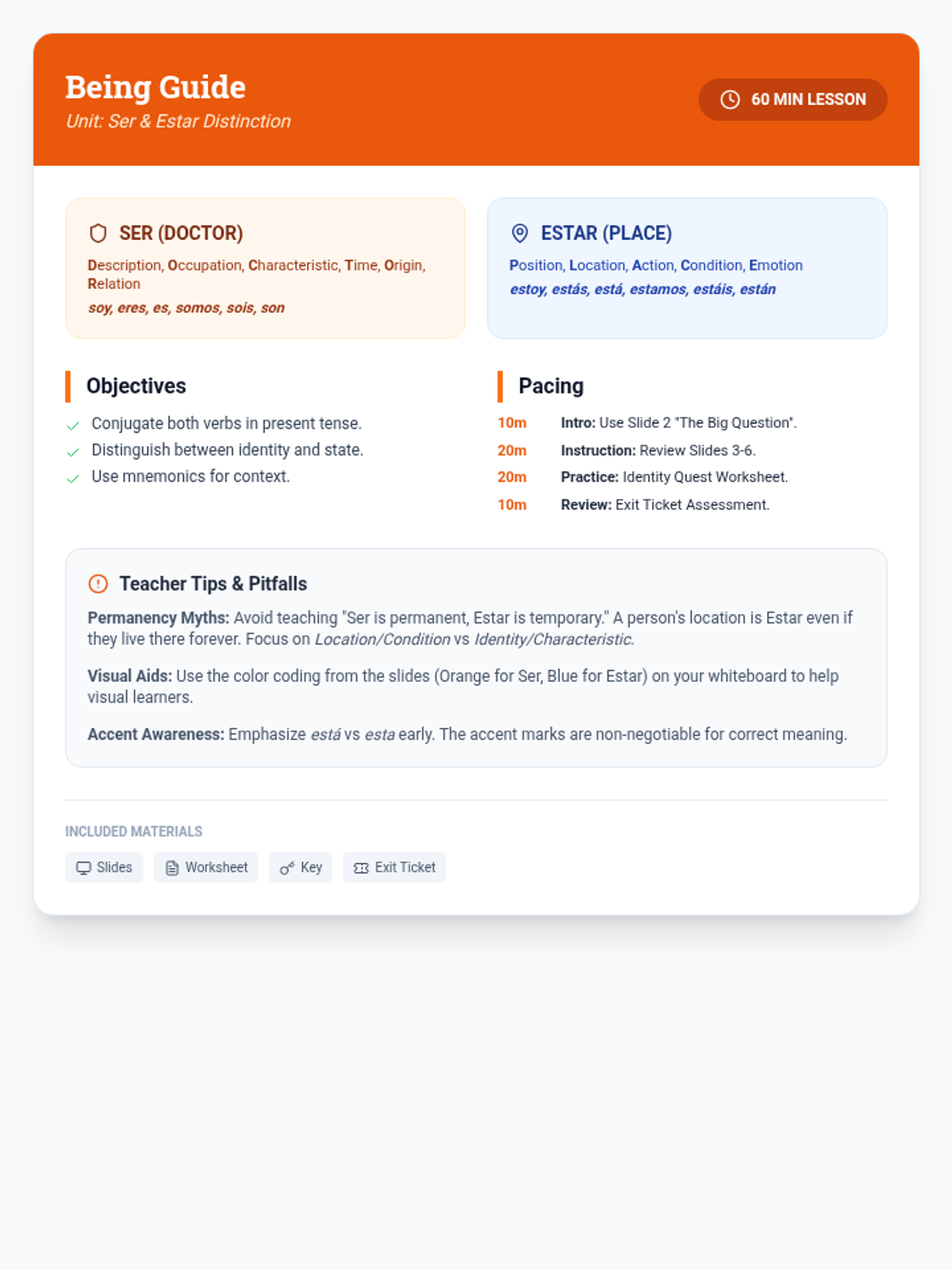
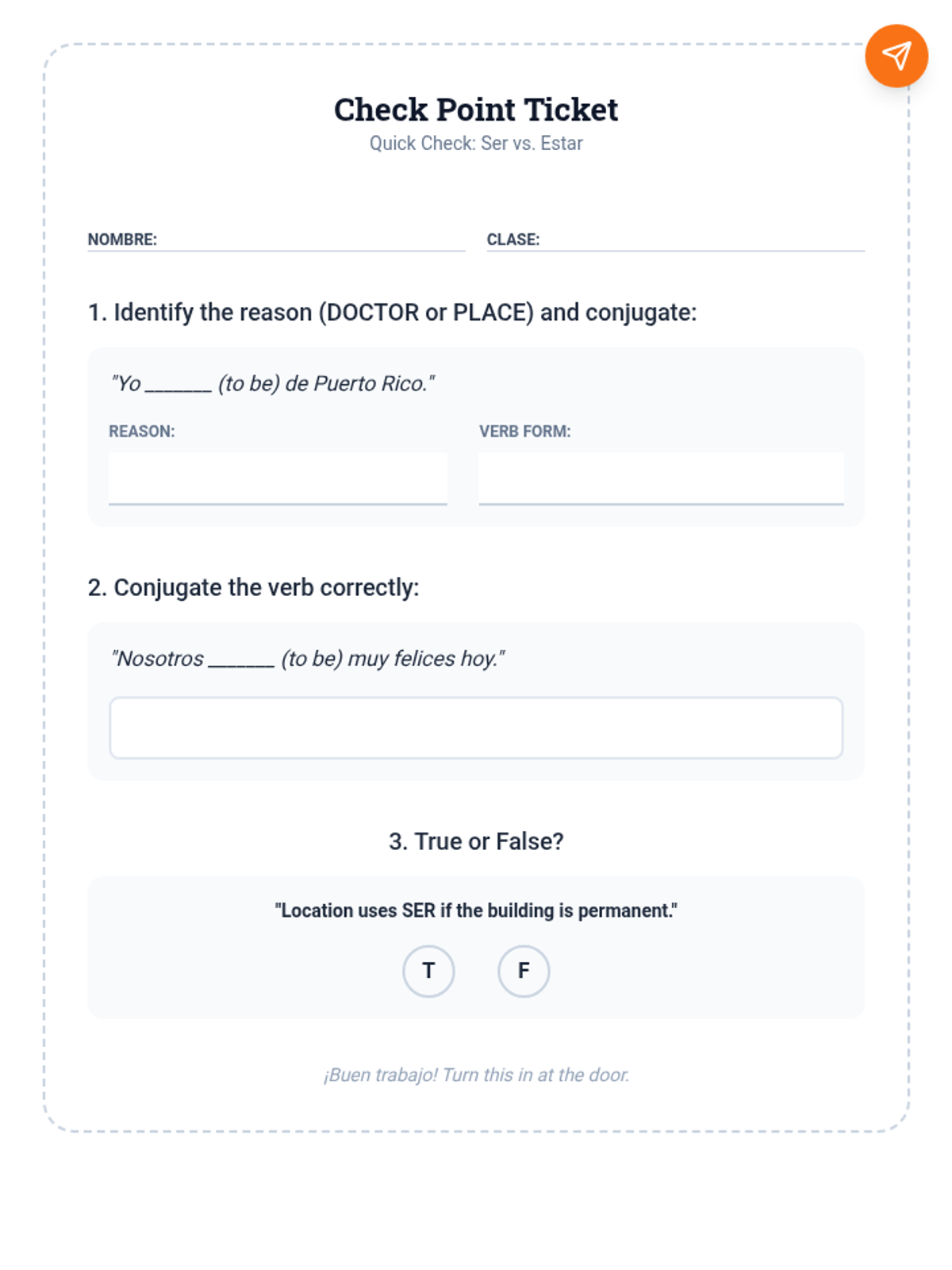
A comprehensive introduction to the Spanish verbs 'ser' and 'estar' for 9th-grade beginners, focusing on conjugation and the DOCTOR/PLACE mnemonics.
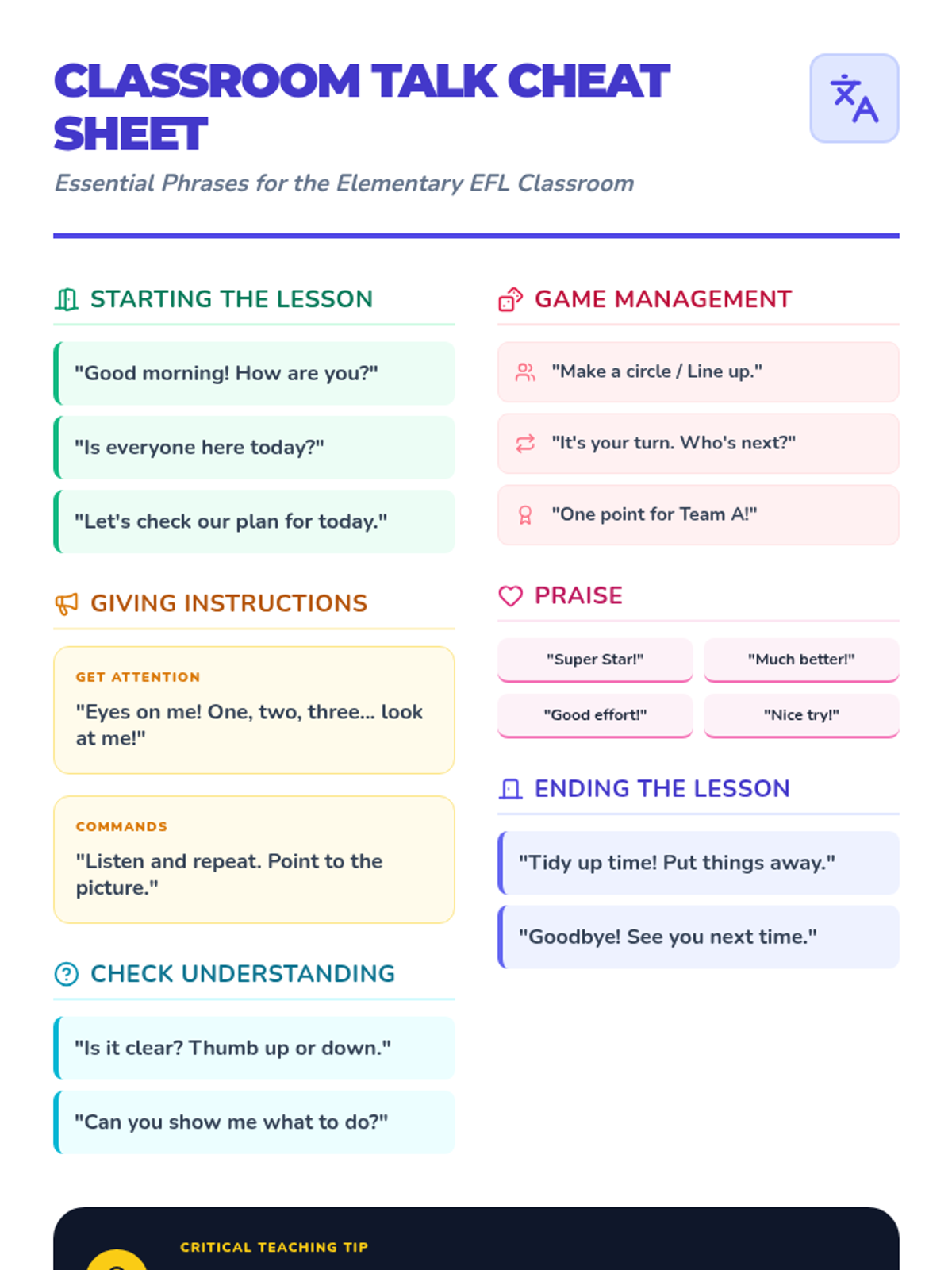
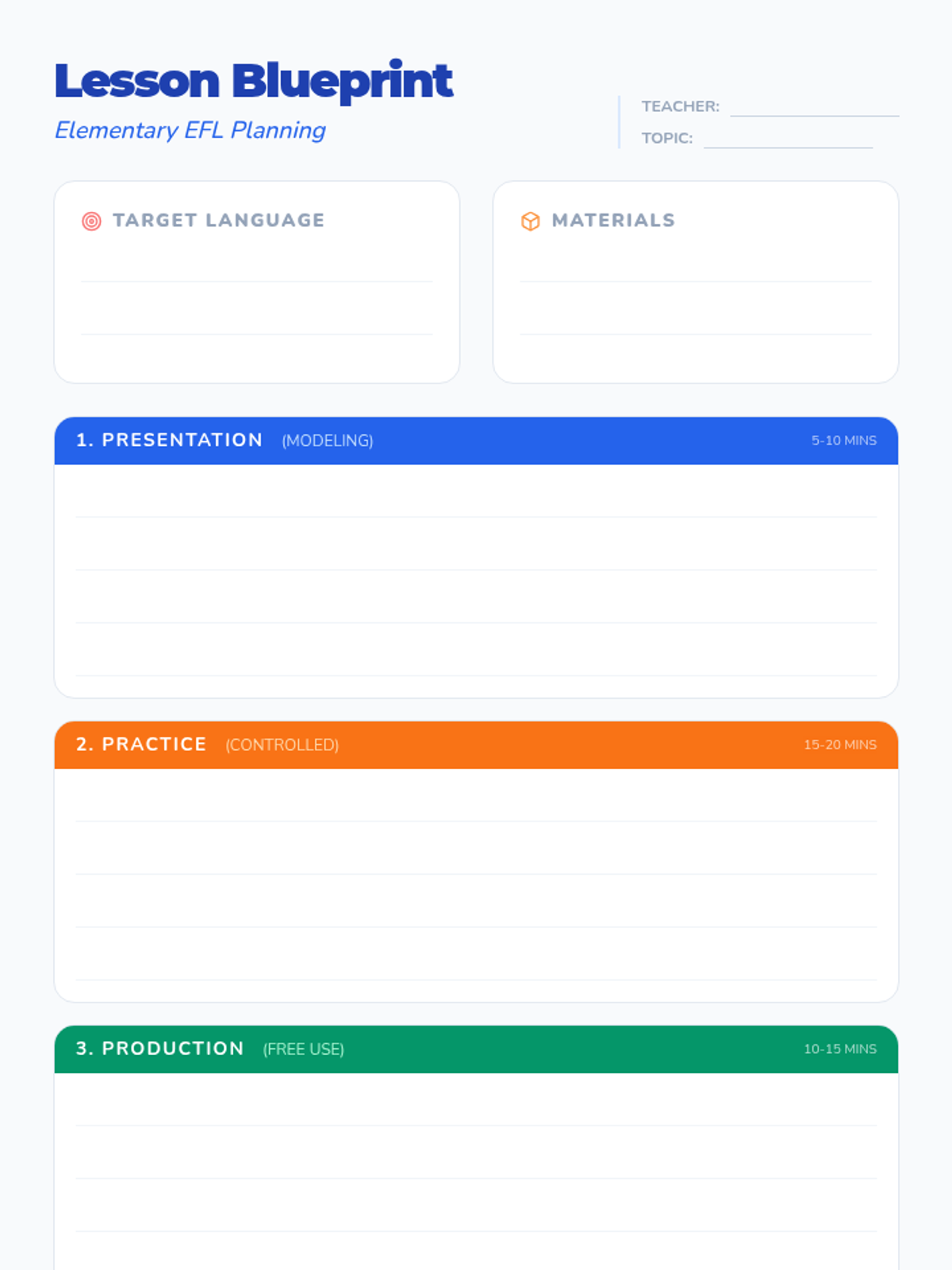
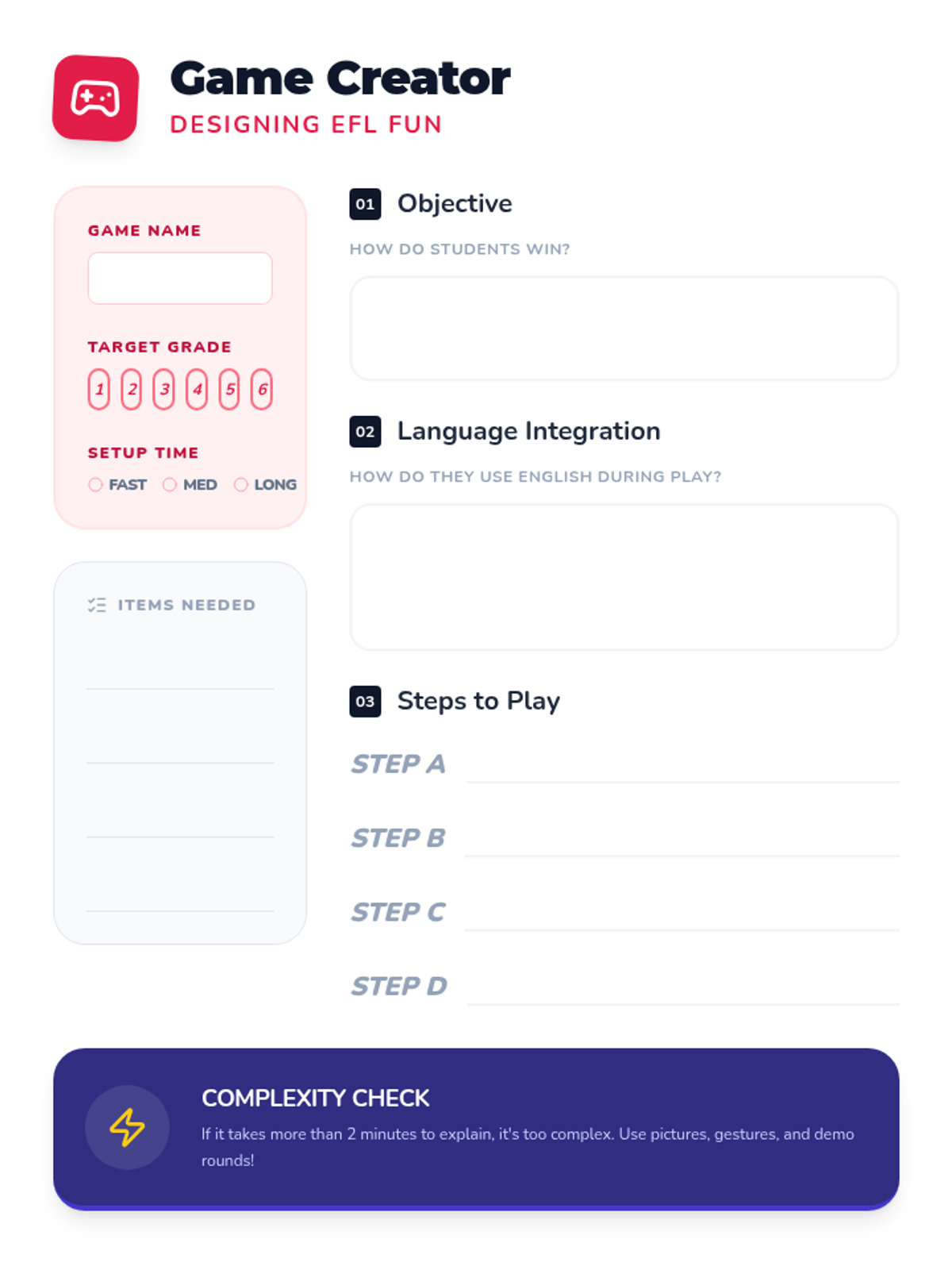
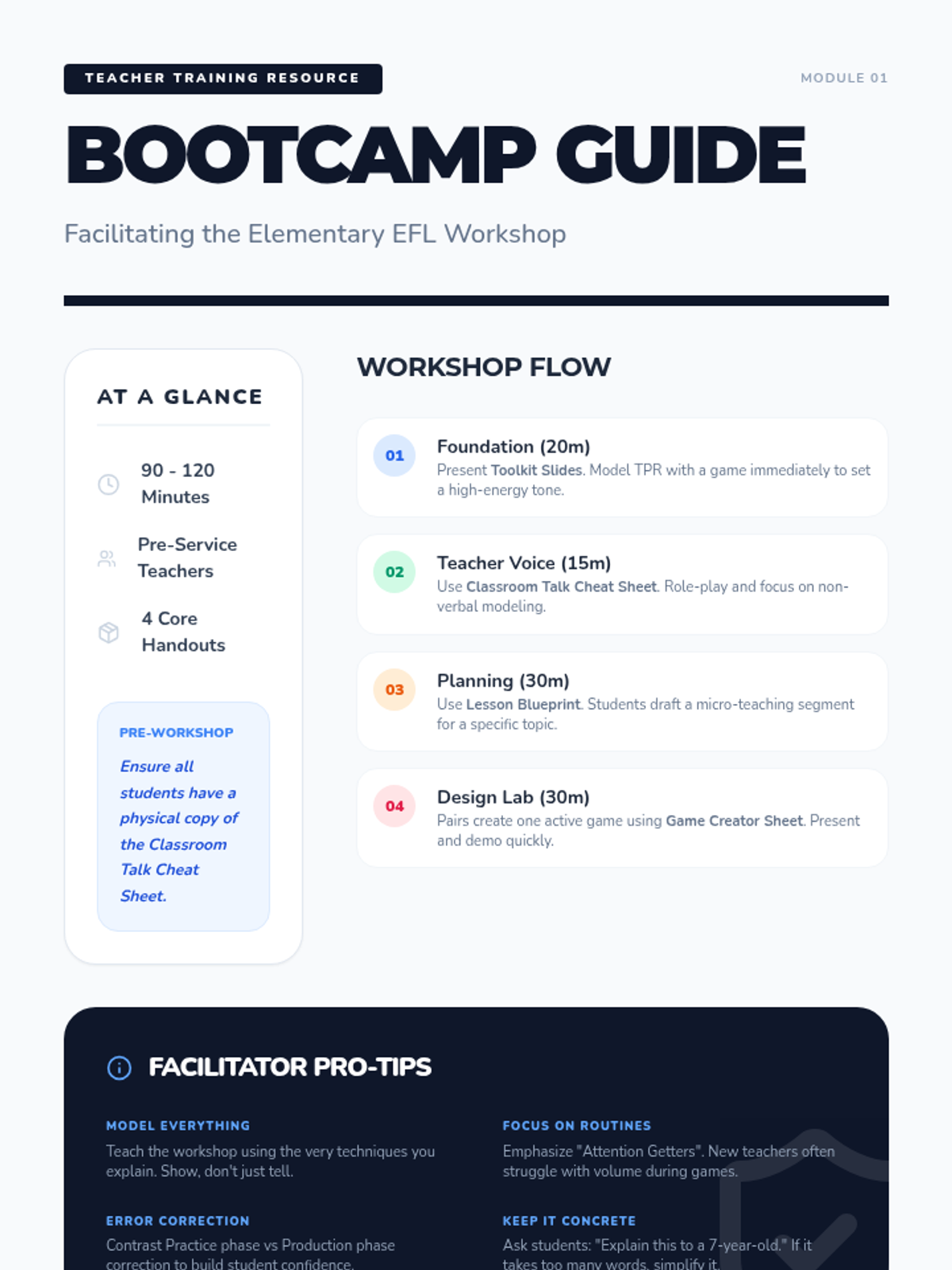
This lesson focuses on the core components of an elementary English classroom, including classroom management language, lesson structuring, and game design.
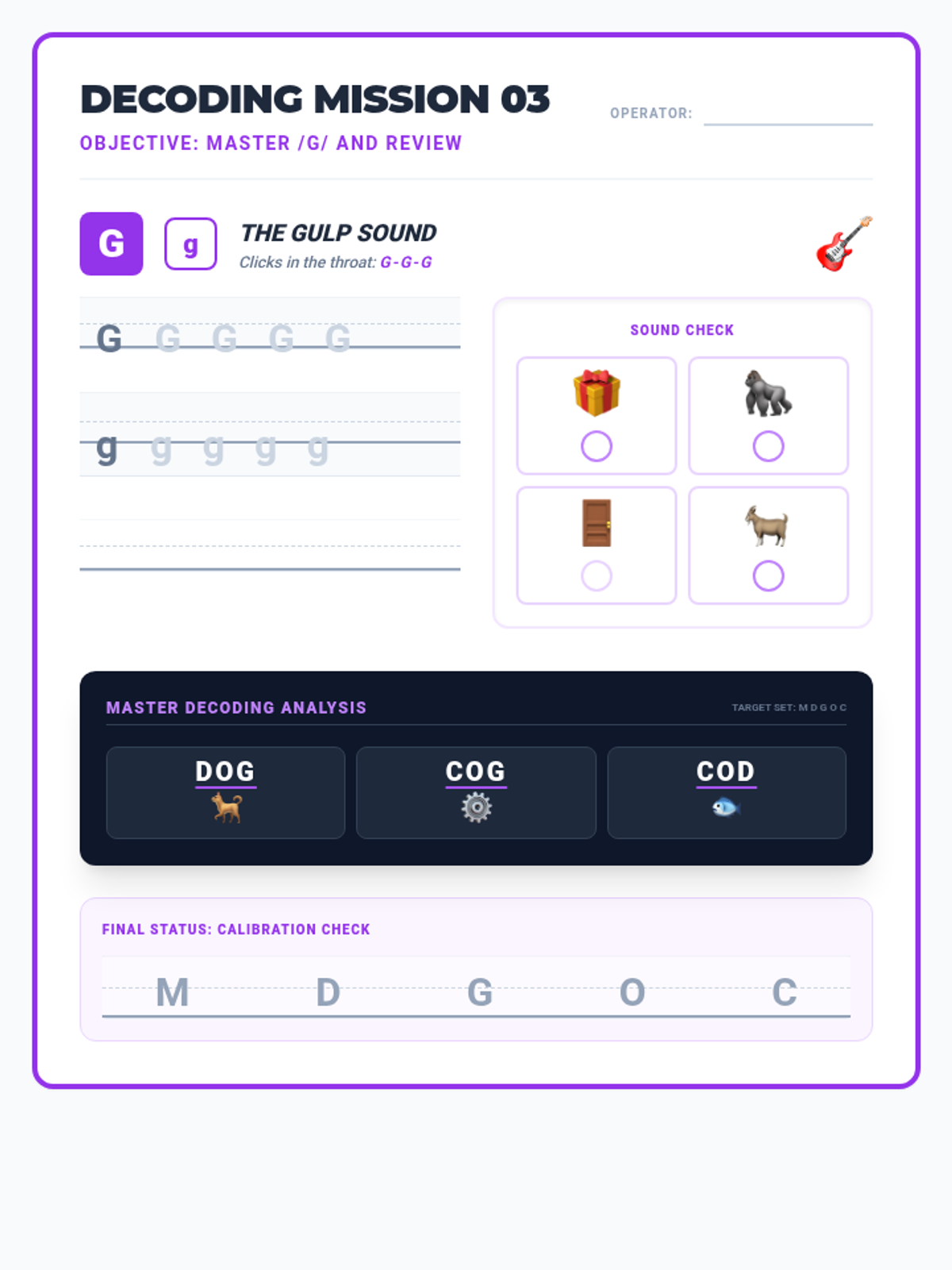
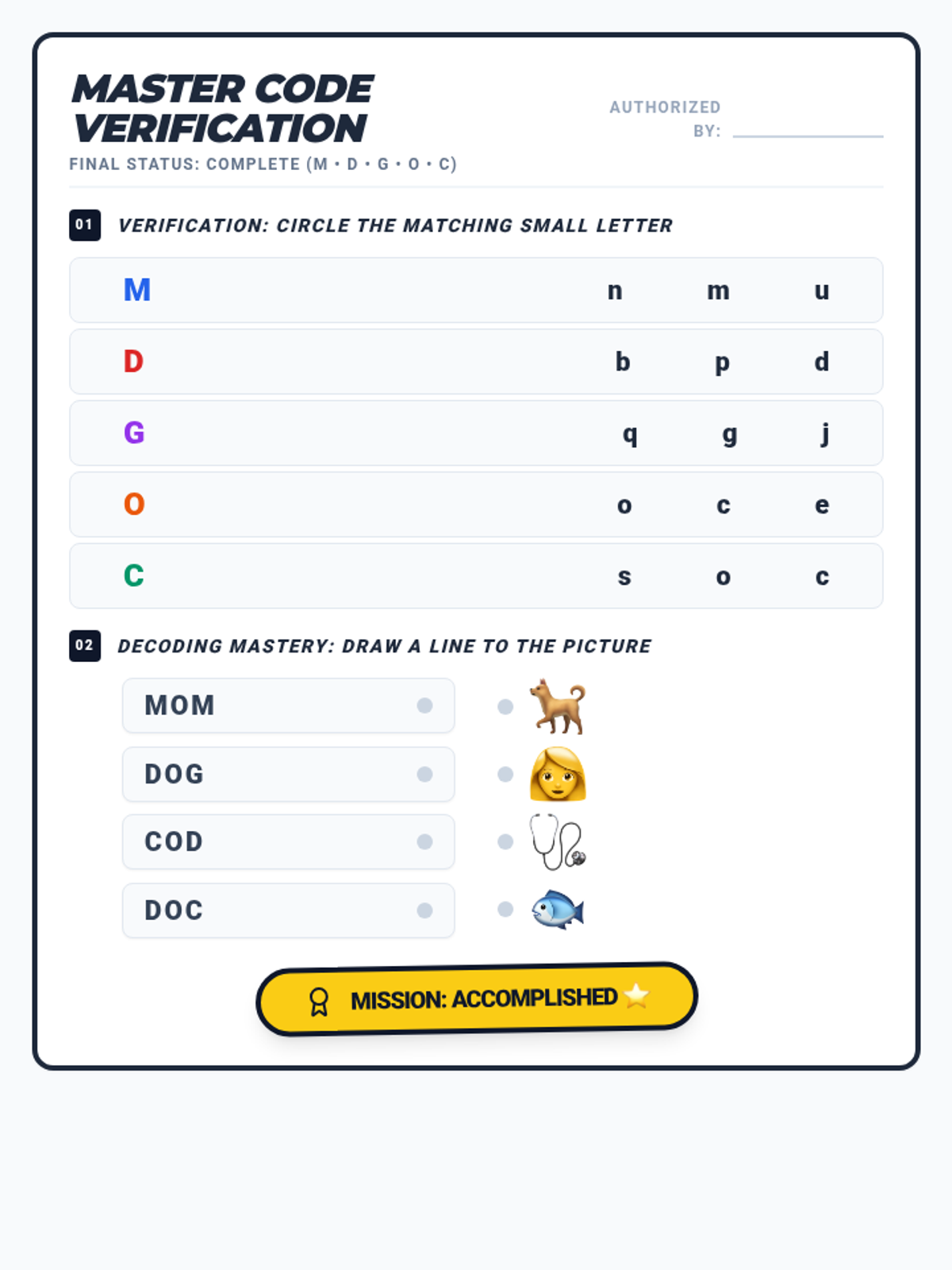
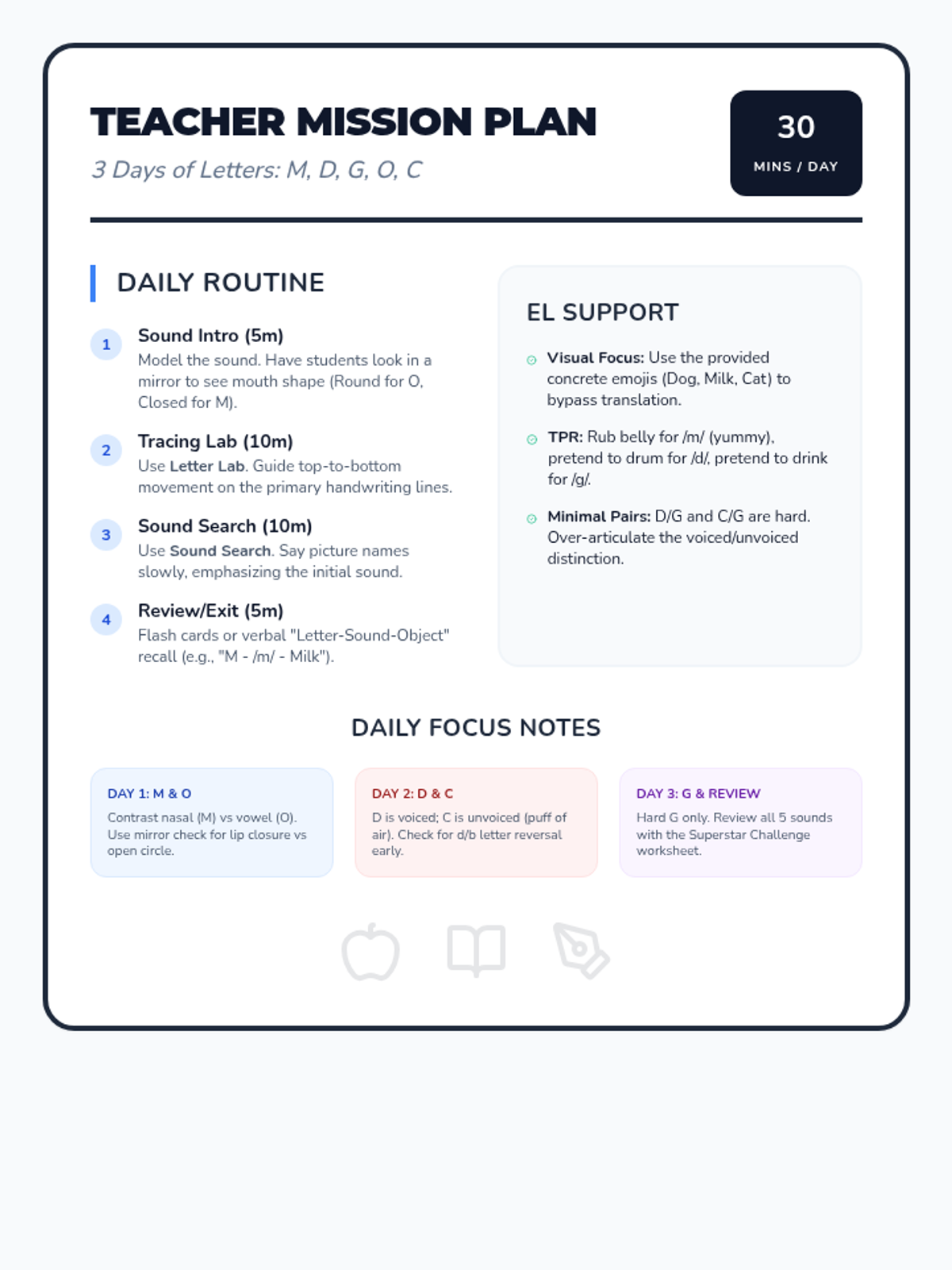
Day 3 masters the /g/ sound and provides a cumulative review of all 5 letters through word building and high-frequency decoding.
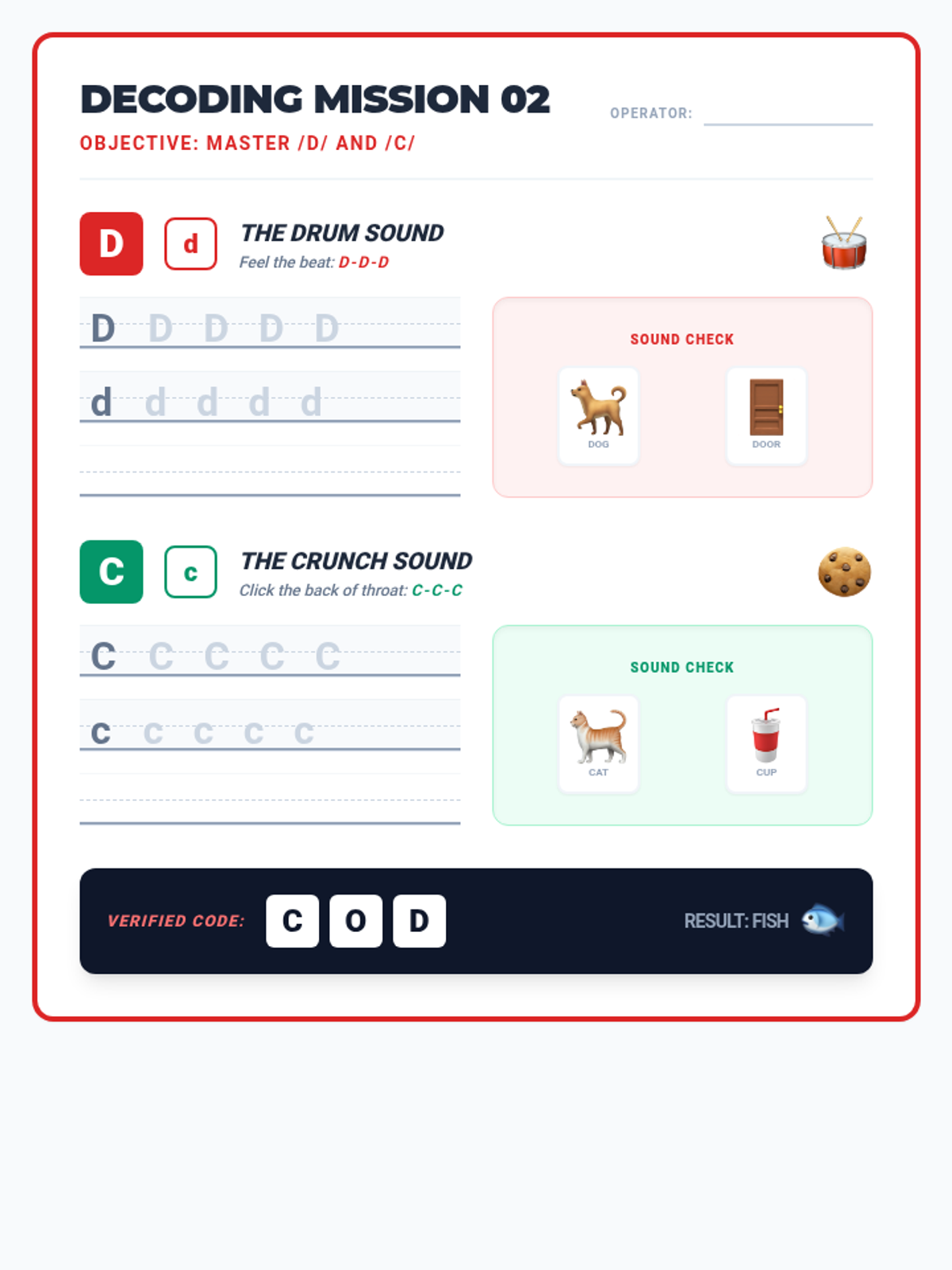
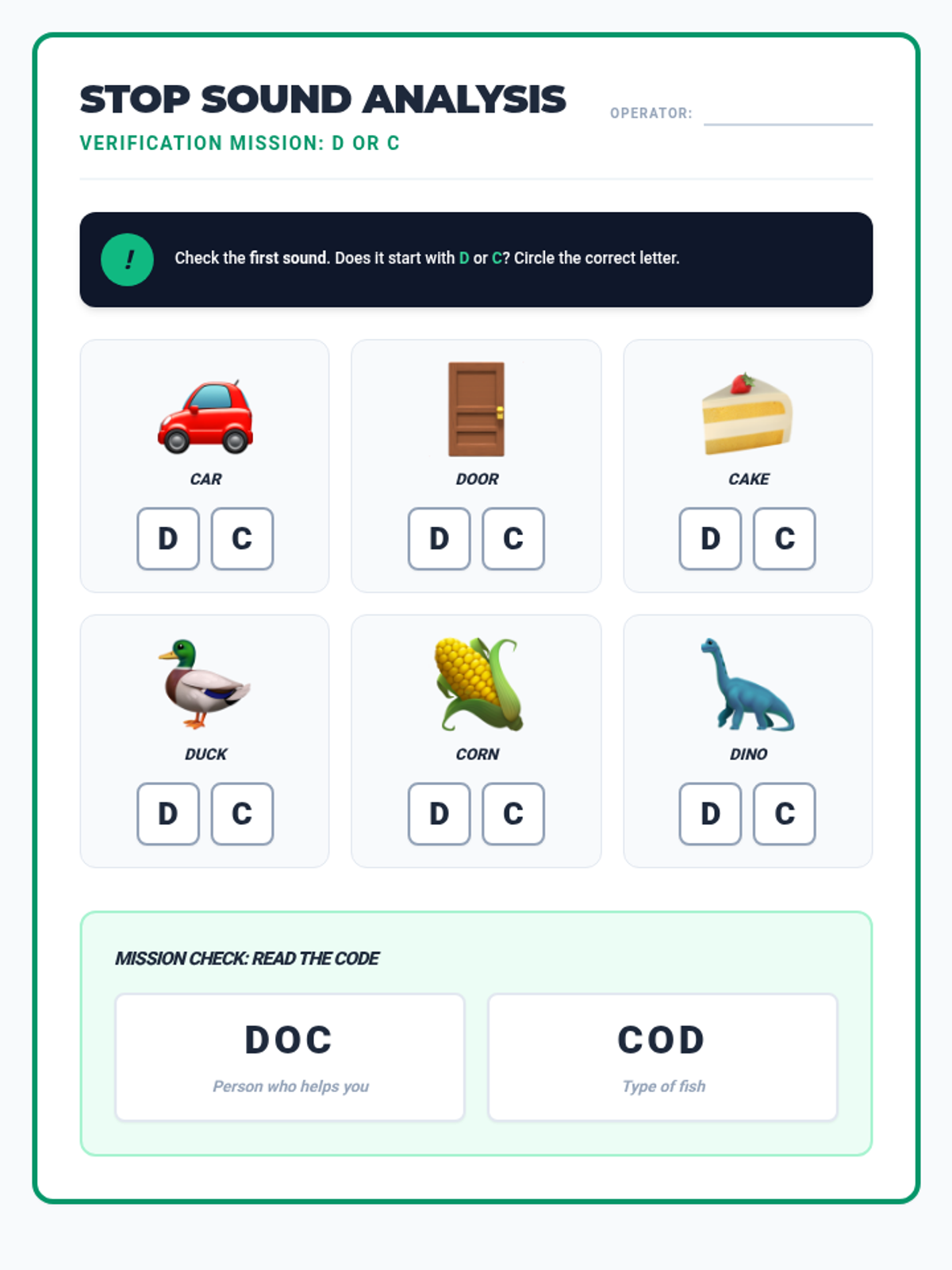
Day 2 focuses on the stop sounds /d/ and /k/, introducing letter C and D with word blending for 'dad', 'mad', and 'cat'.
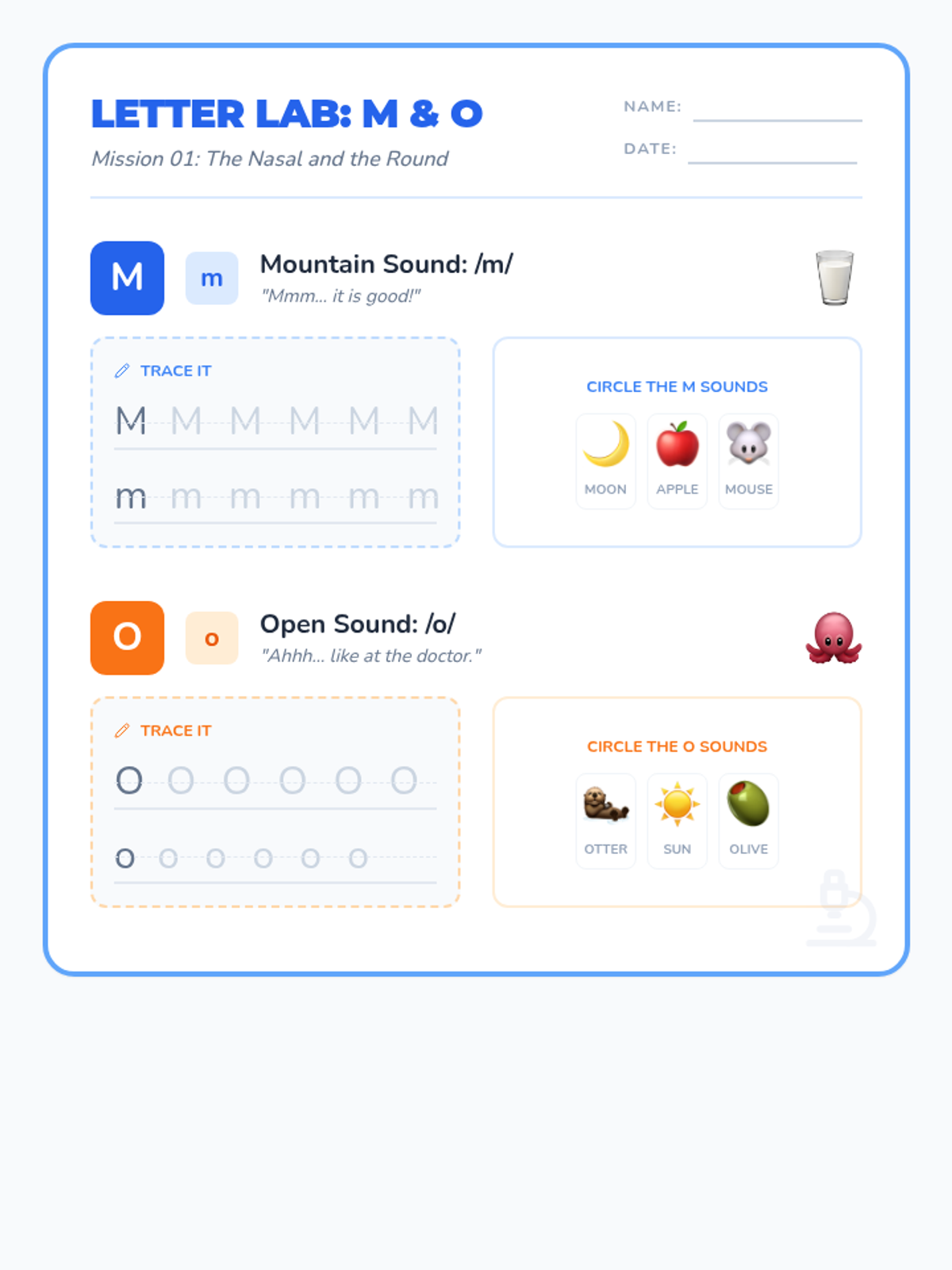
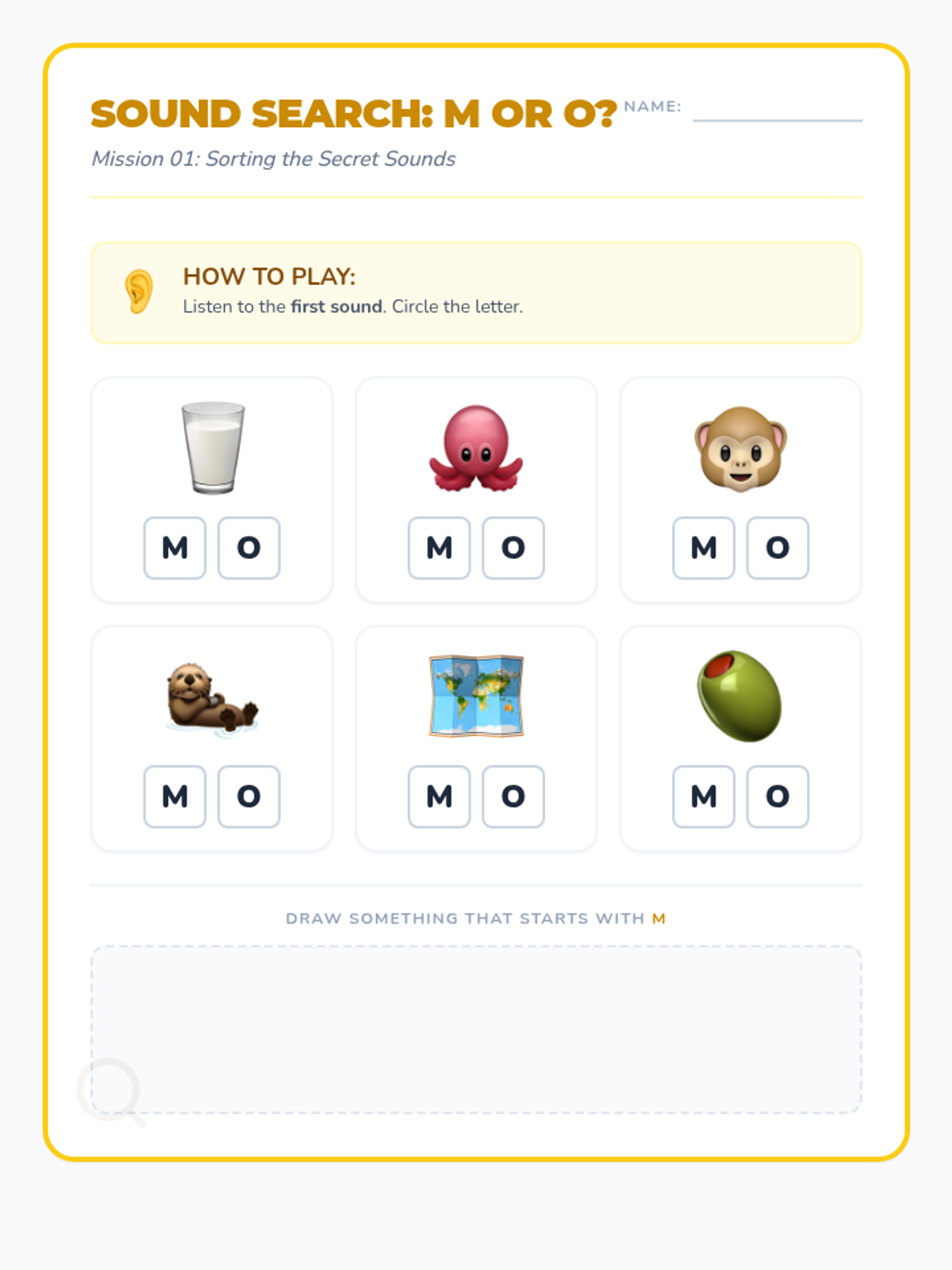
Day 1 introduces the /m/ and short /o/ sounds, focusing on mouth shape and initial sound recognition, concluding with reading the word 'mom'.
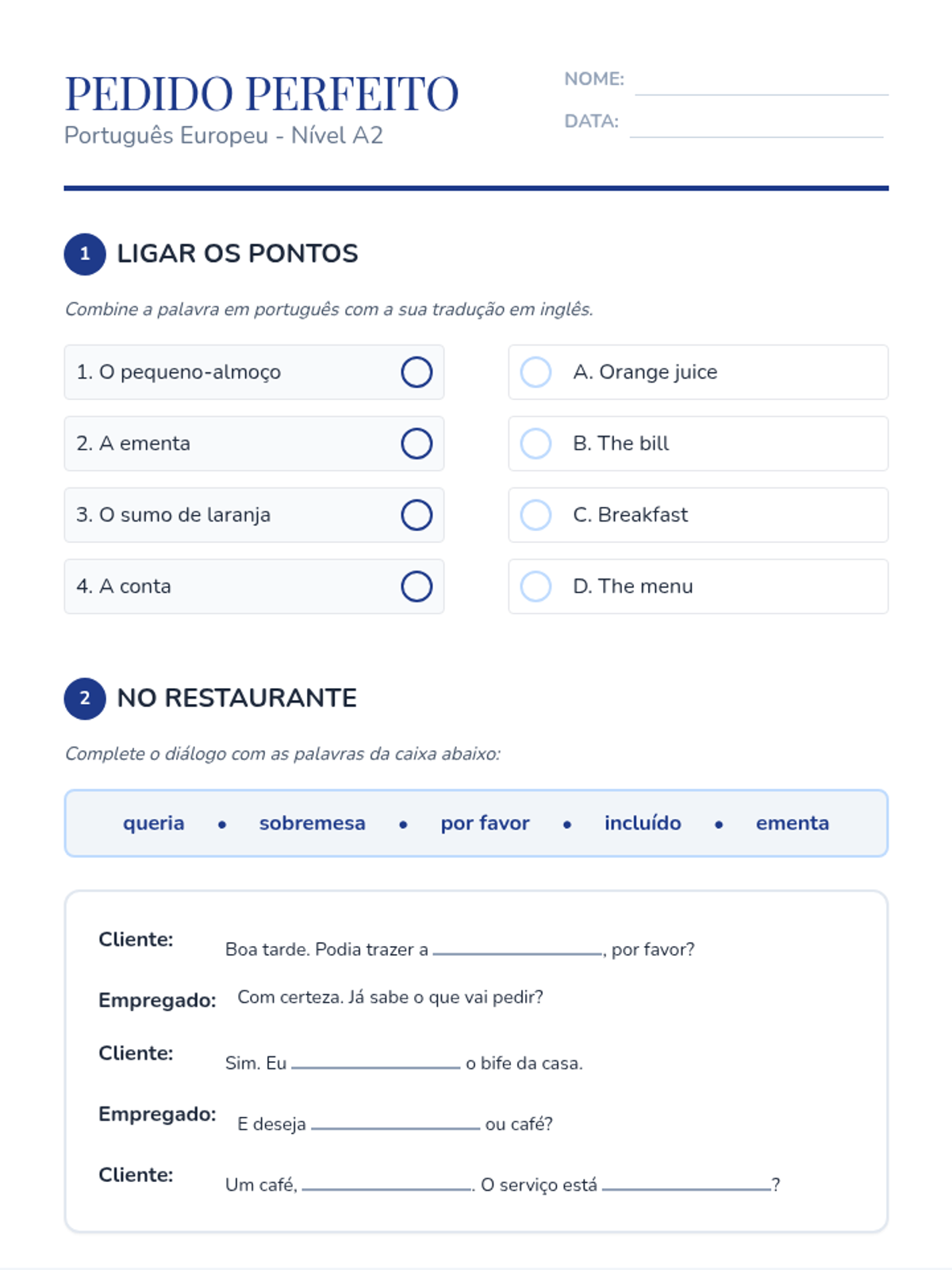
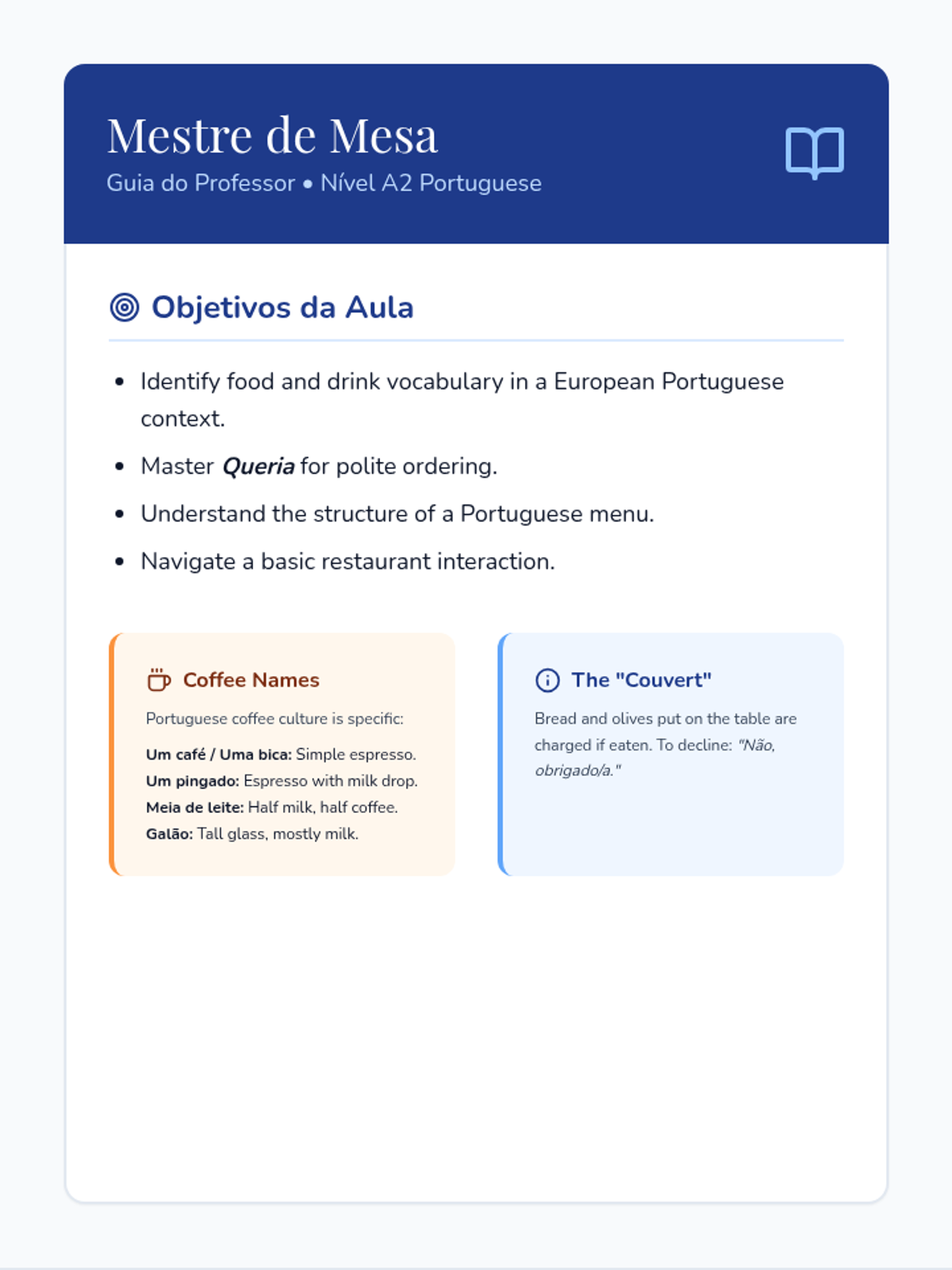
A comprehensive A2-level Portuguese lesson focused on food vocabulary, restaurant etiquette, and ordering phrases specifically for European Portuguese contexts. Students will practice polite requests, learn typical dishes, and engage in role-play scenarios.
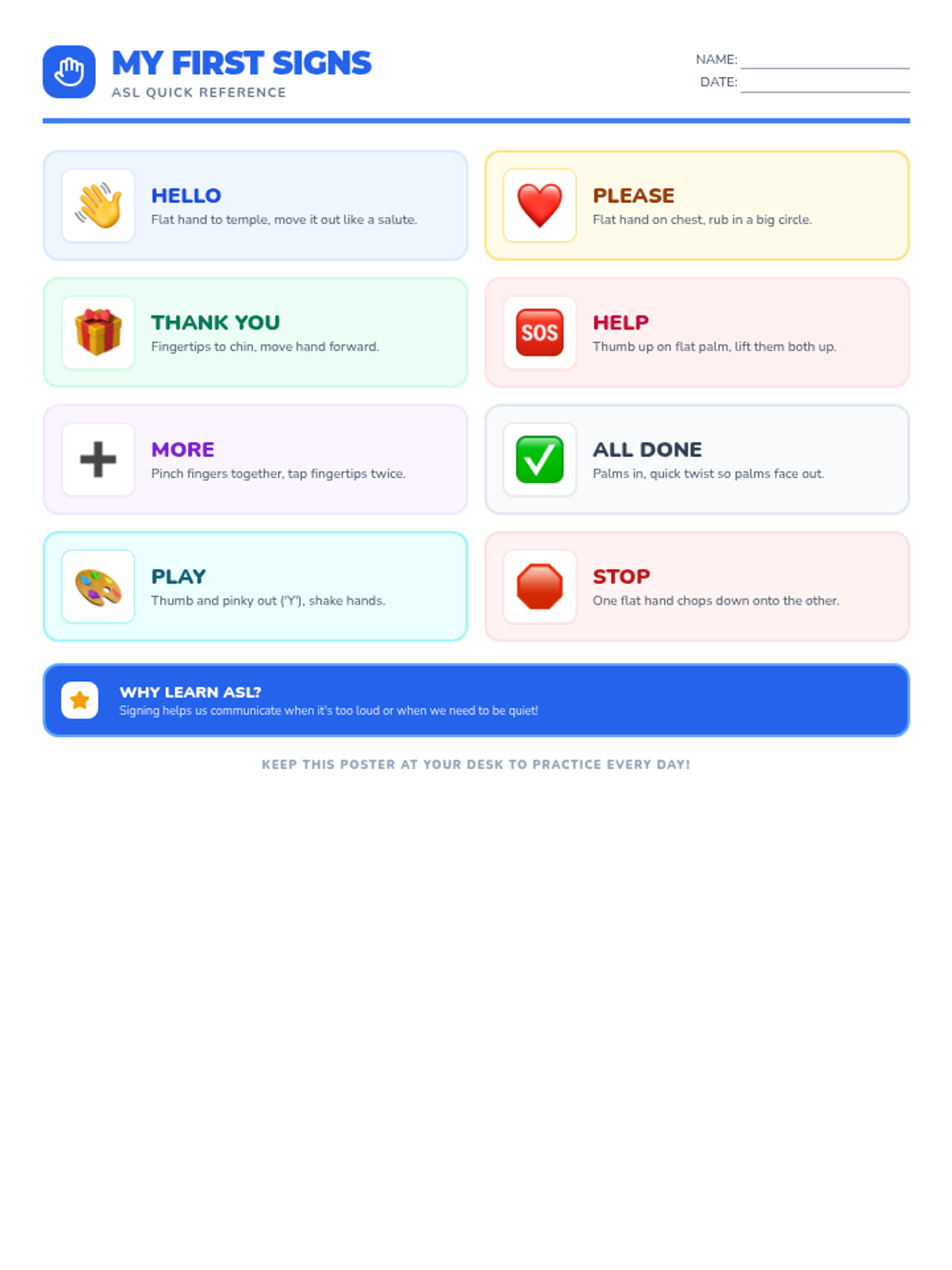
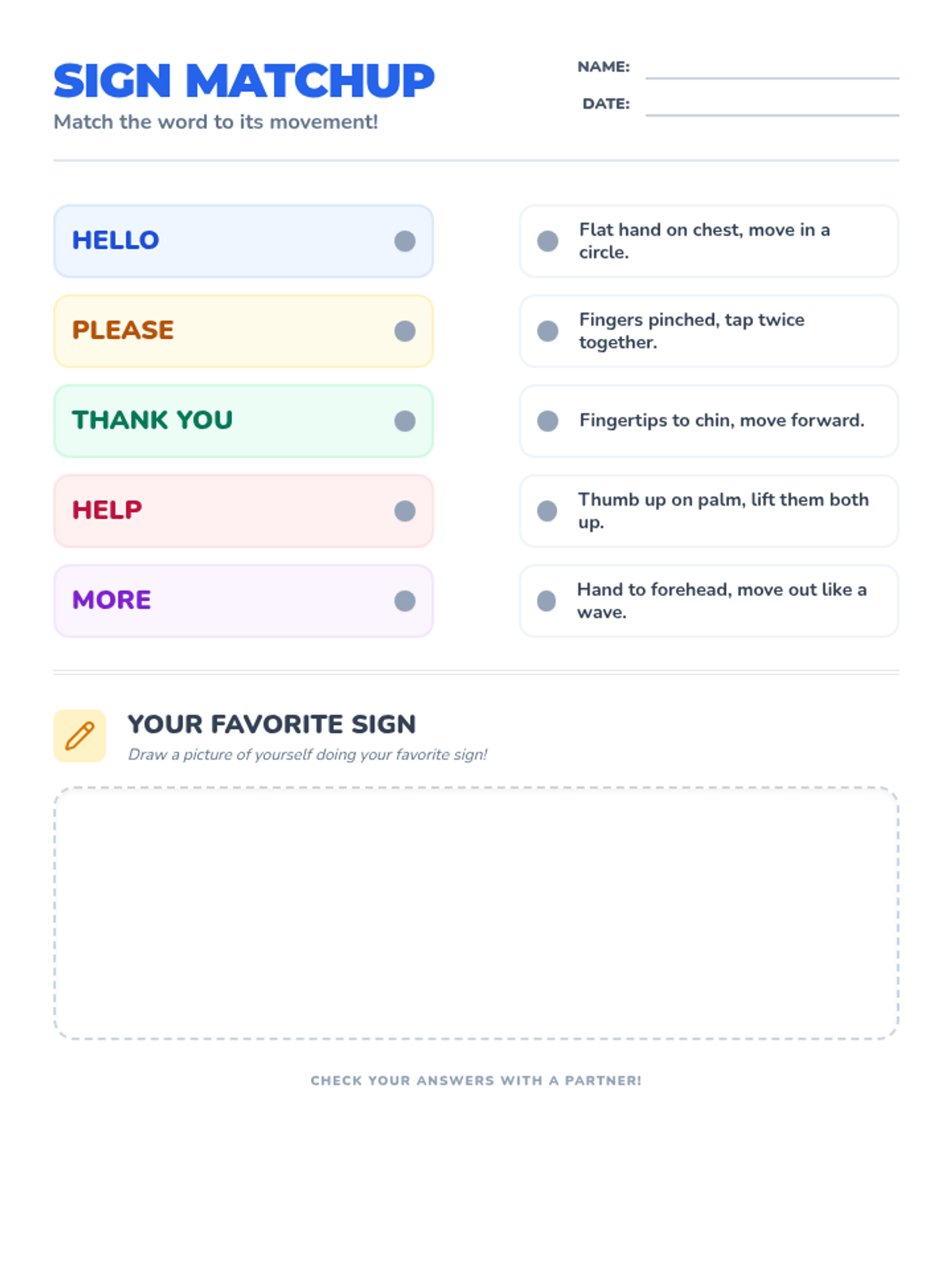
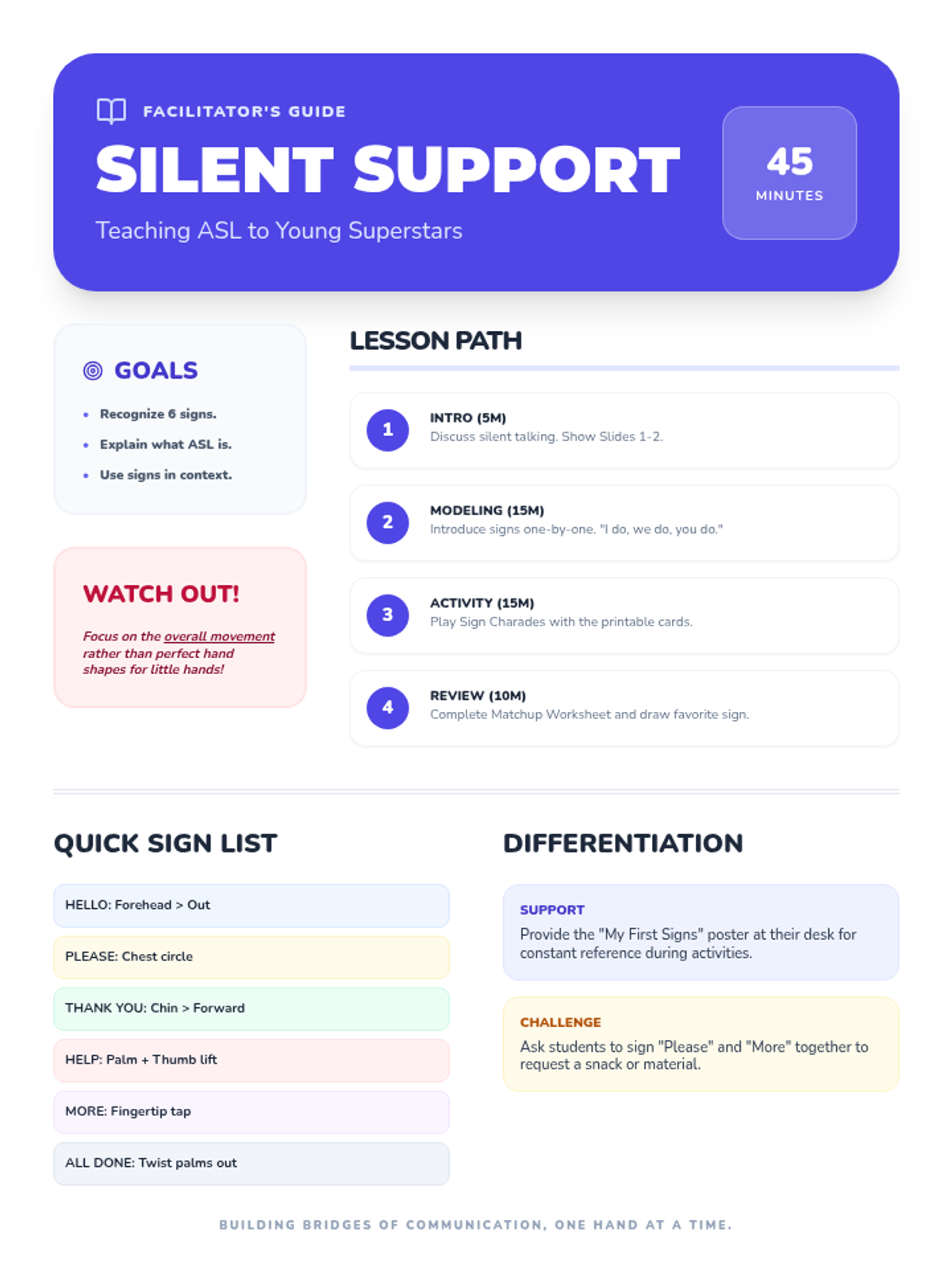
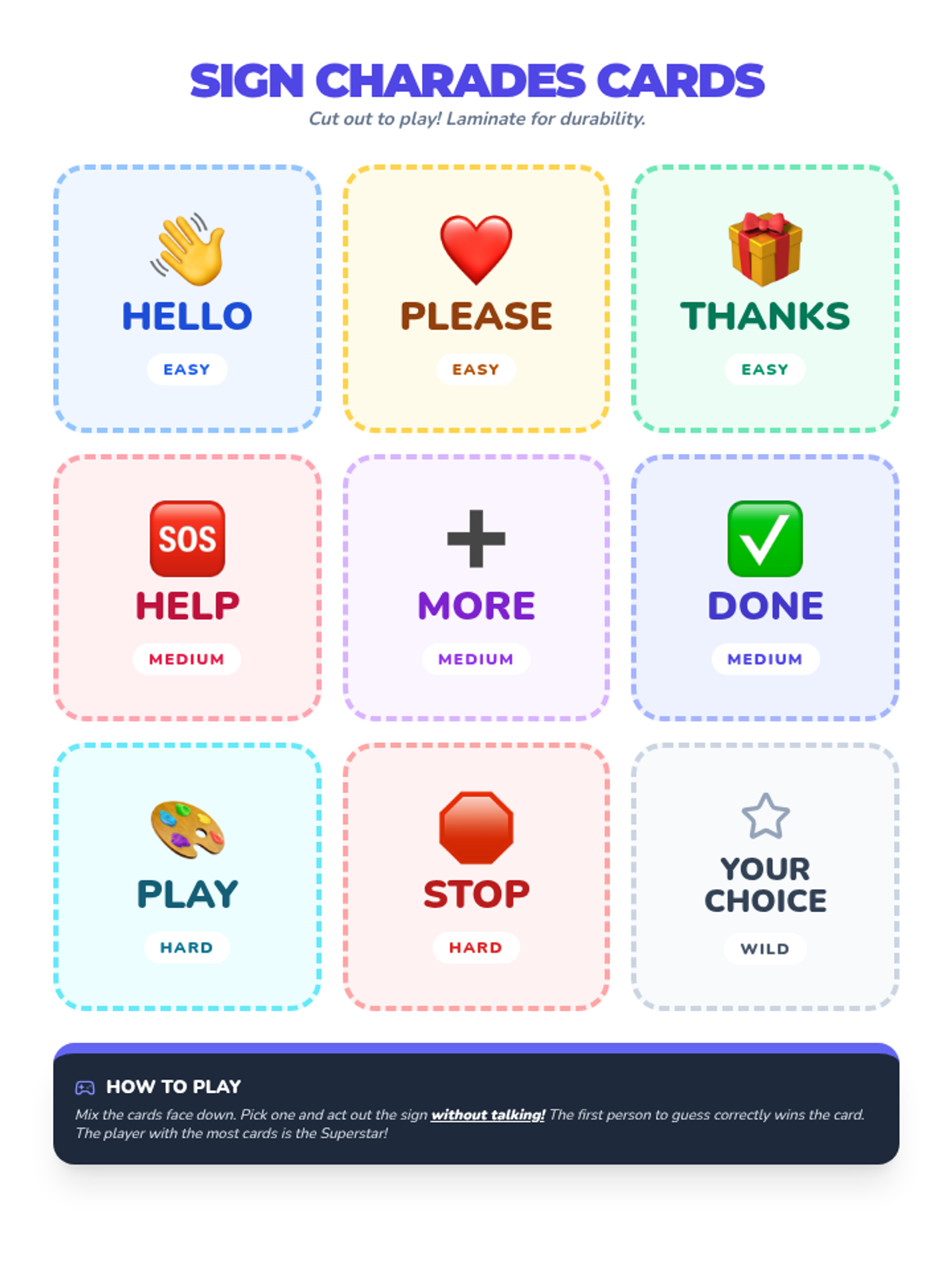
An introductory American Sign Language (ASL) lesson designed for young children, focusing on essential signs for communication and classroom interaction.
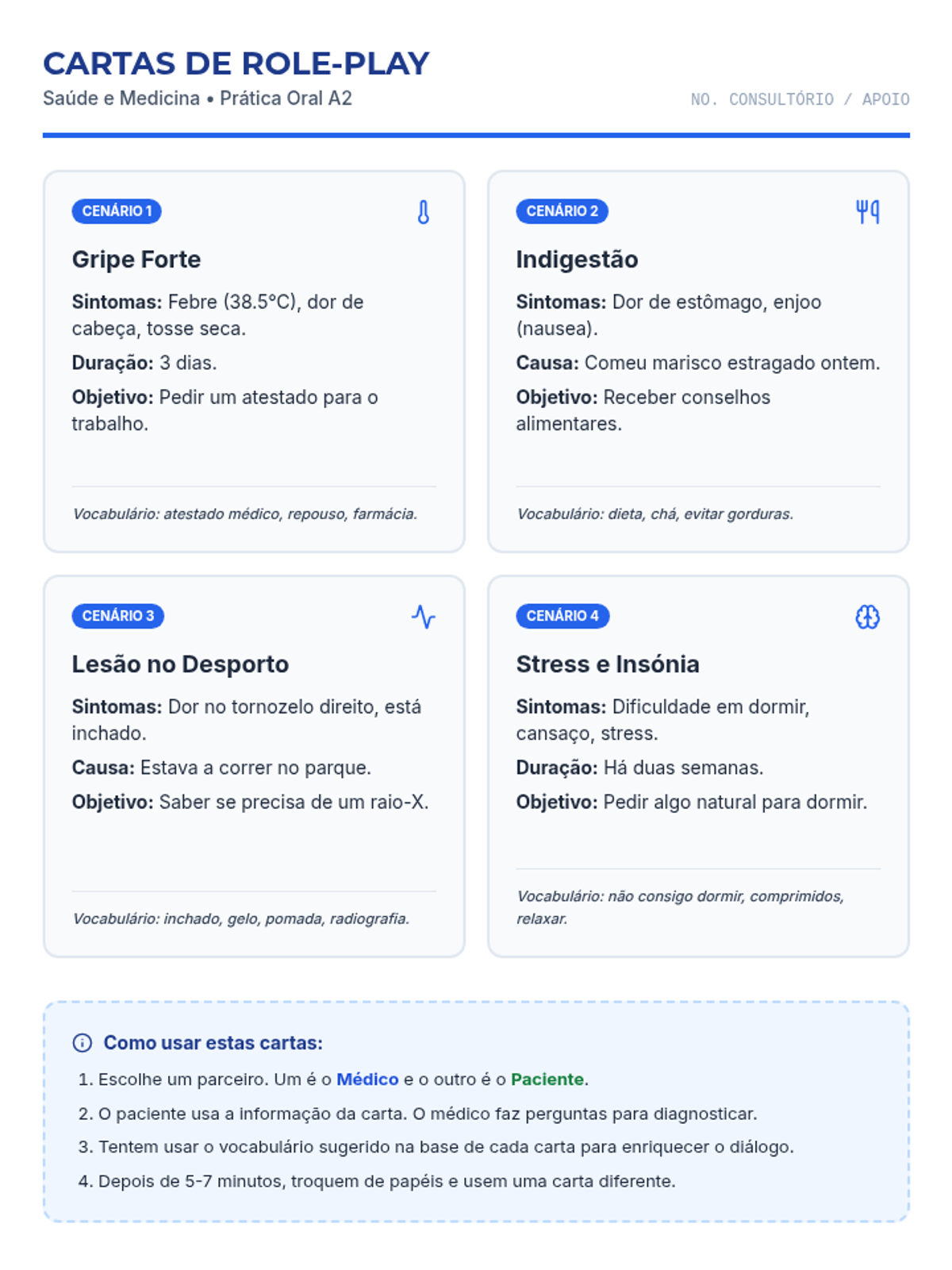
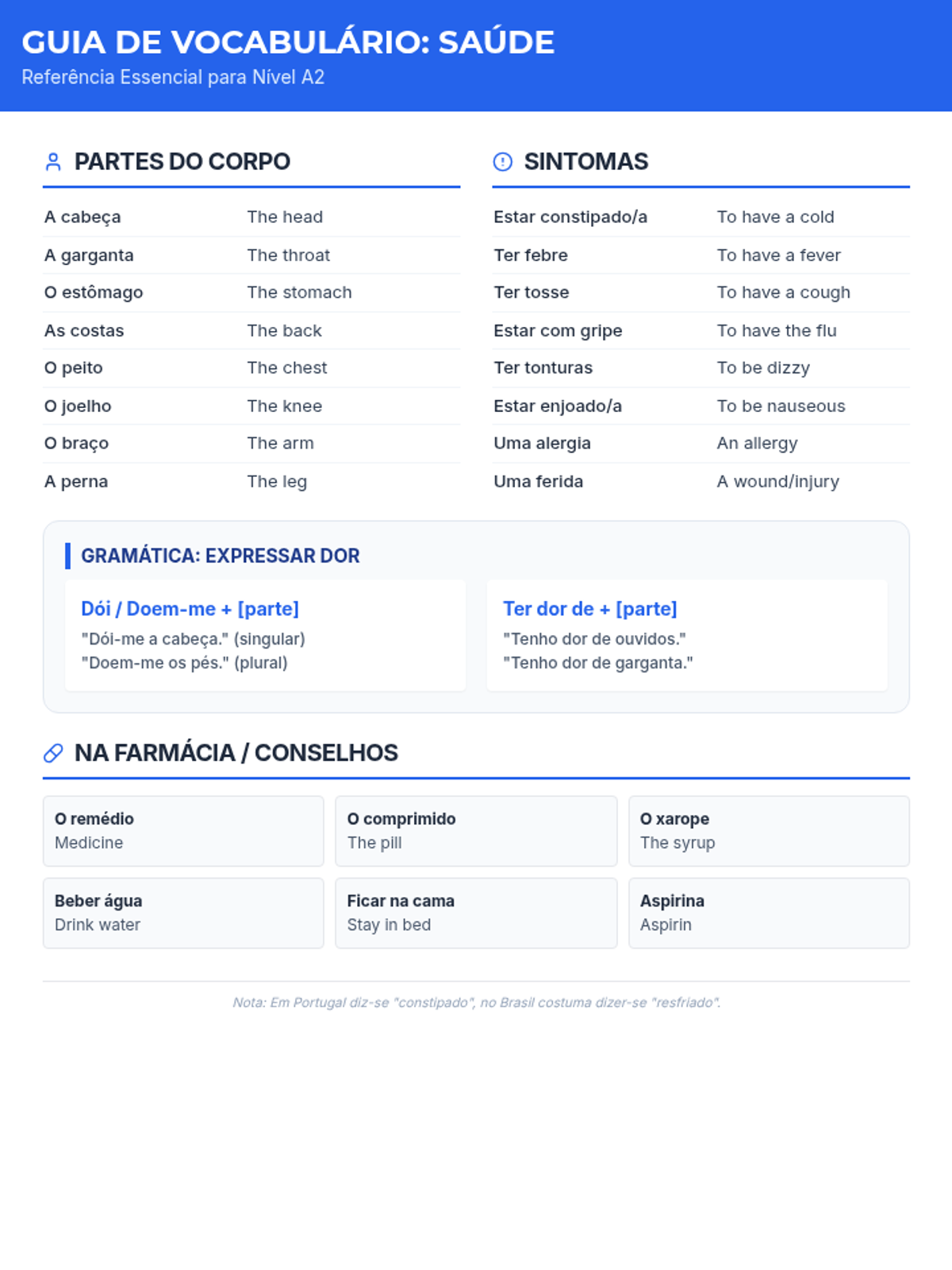
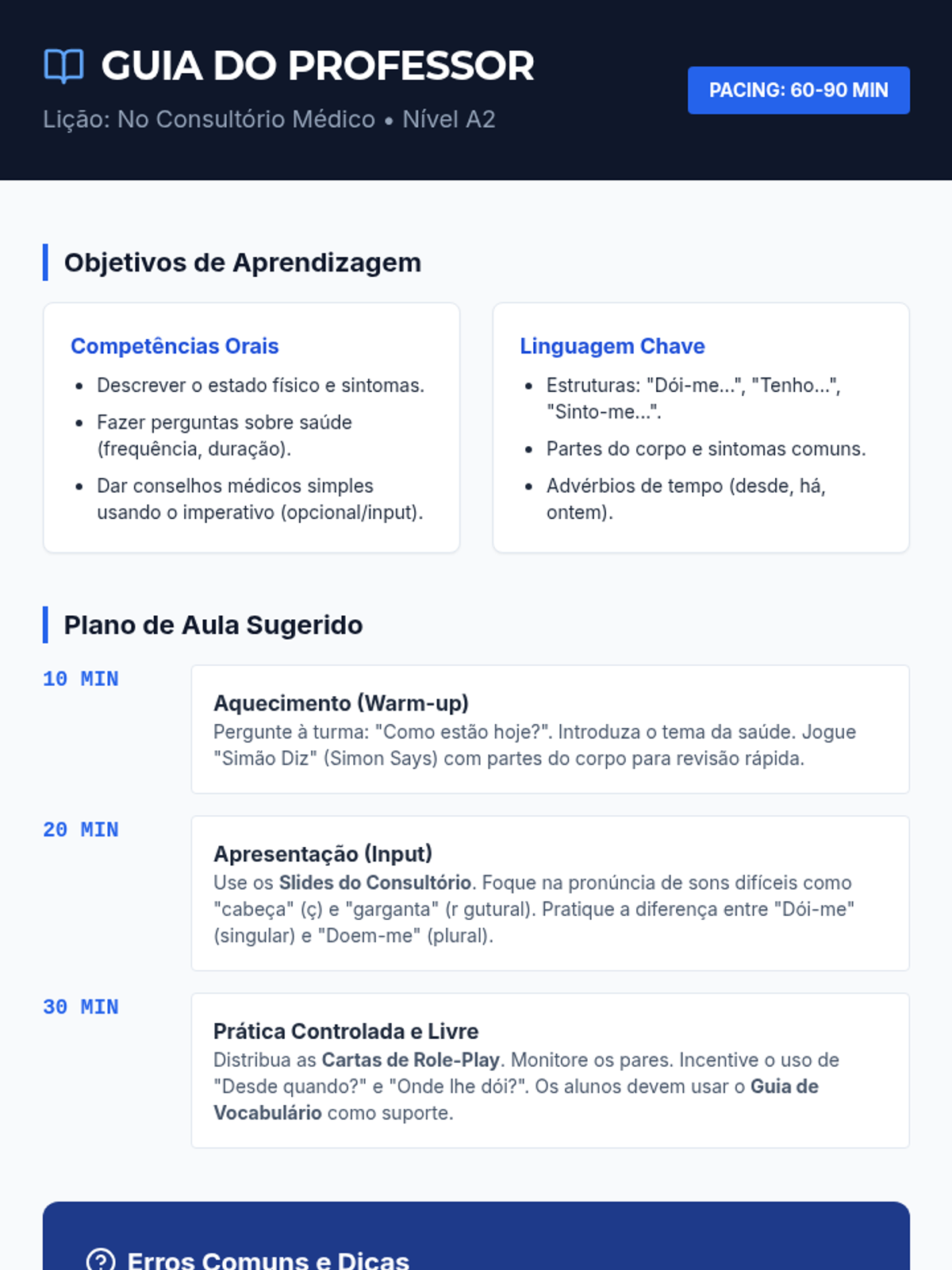
This lesson covers essential vocabulary for body parts, symptoms, and the structure of a typical doctor-patient conversation in Portuguese.
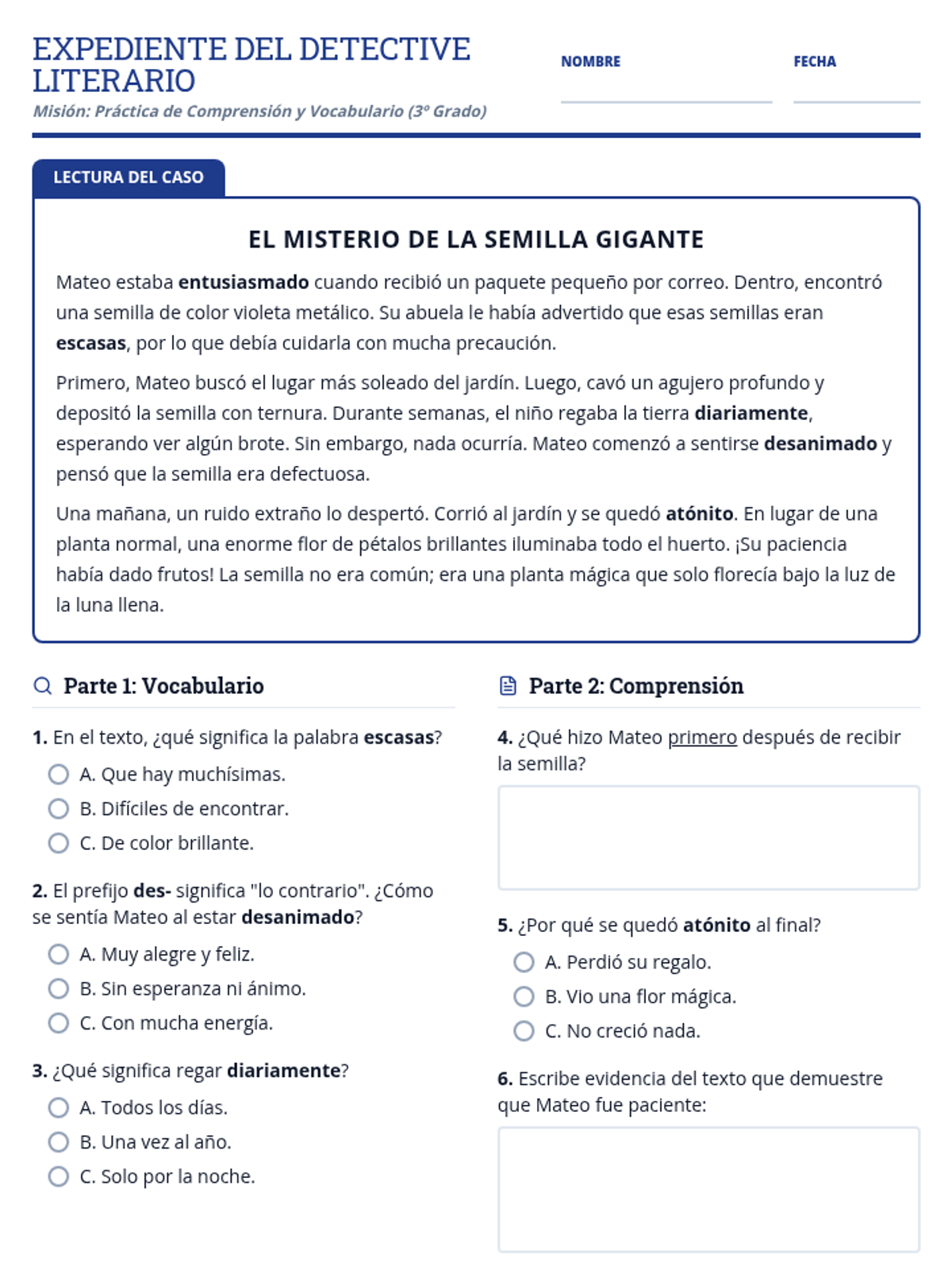
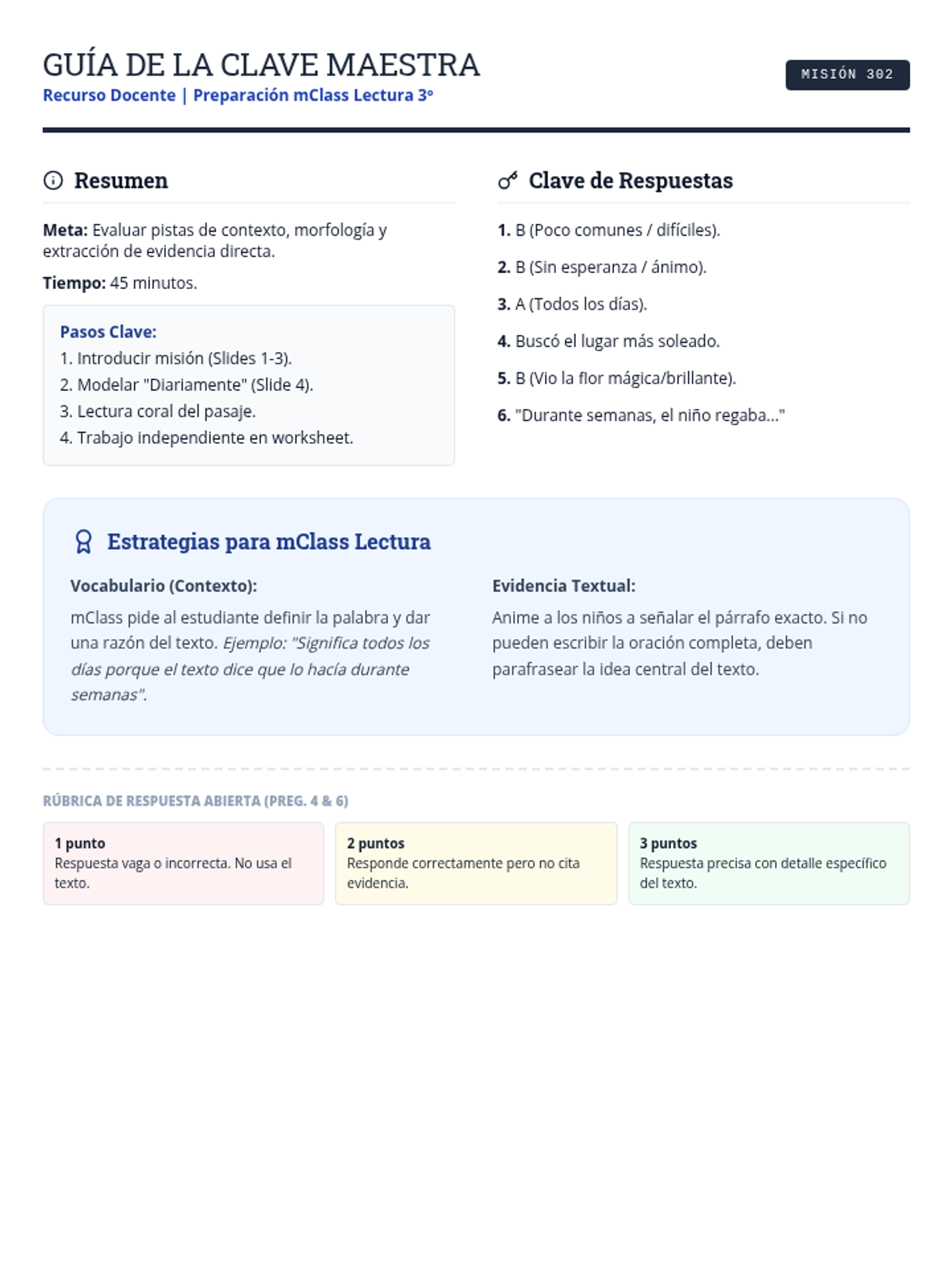
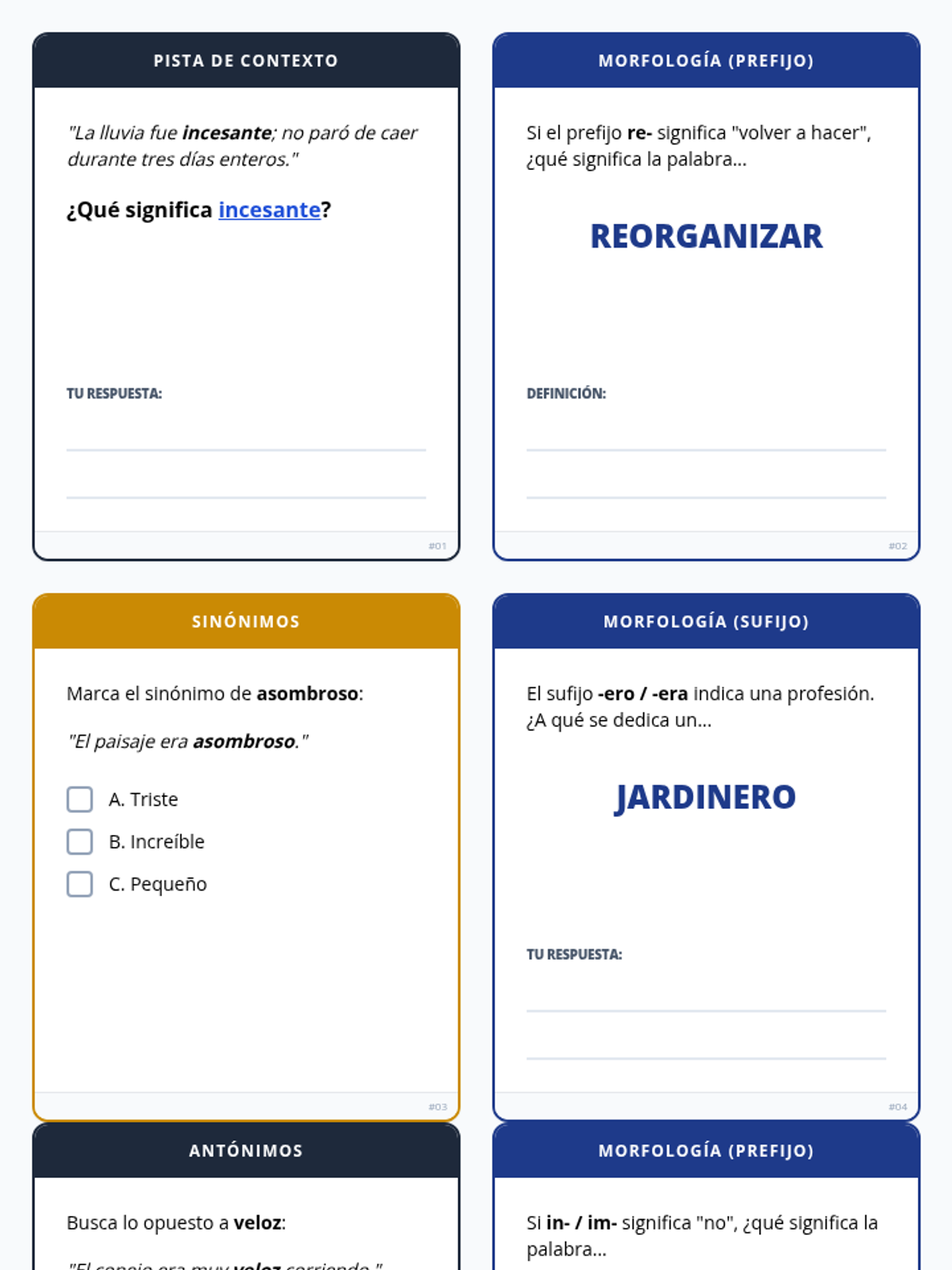
Una lección diseñada para preparar a estudiantes de tercer grado para las evaluaciones de mClass Lectura (Amplify), enfocándose en estrategias de pistas de contexto, morfología y extracción de evidencia textual. Incluye práctica de pasajes narrativos y ejercicios de vocabulario de alta frecuencia.
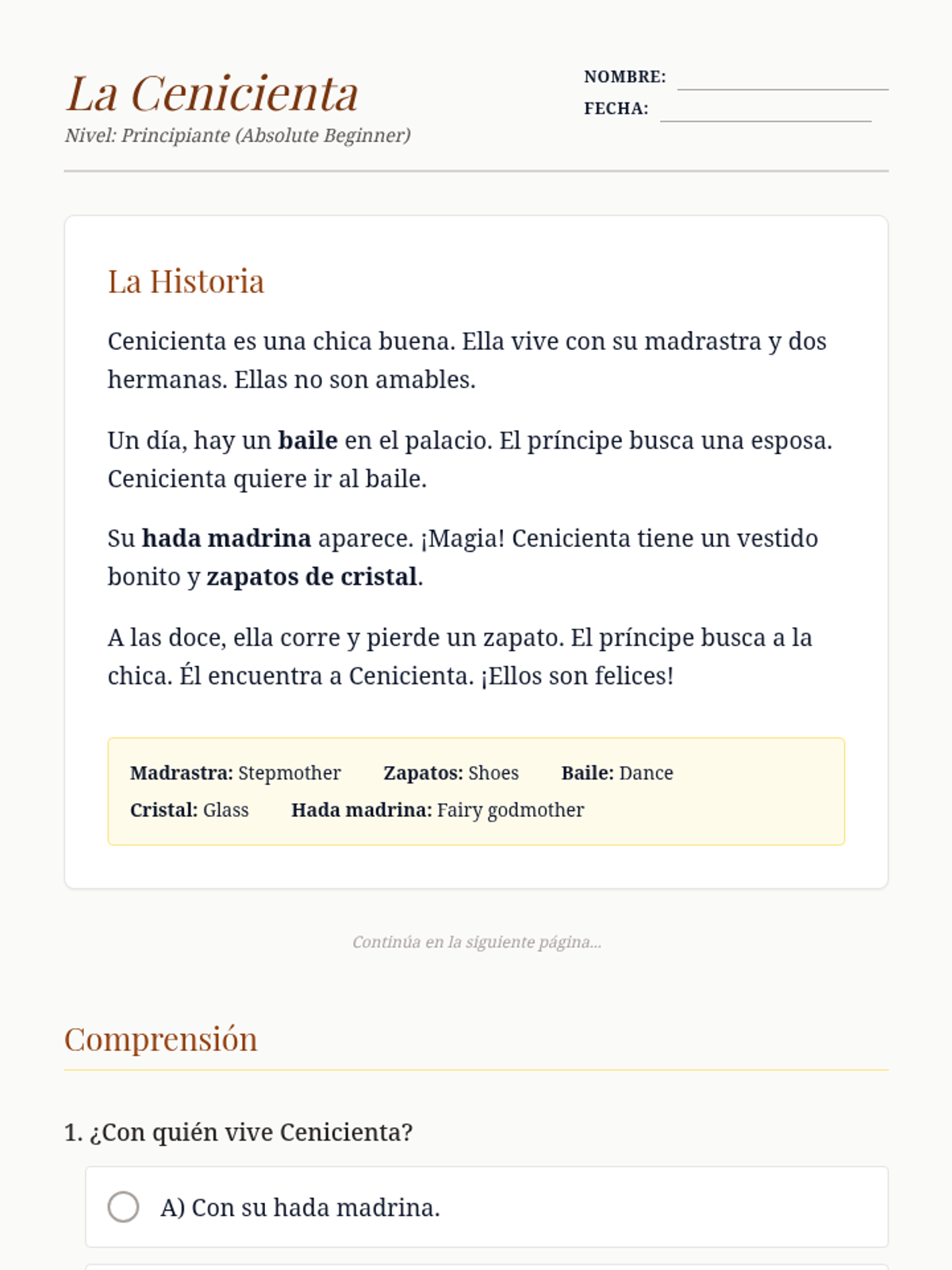
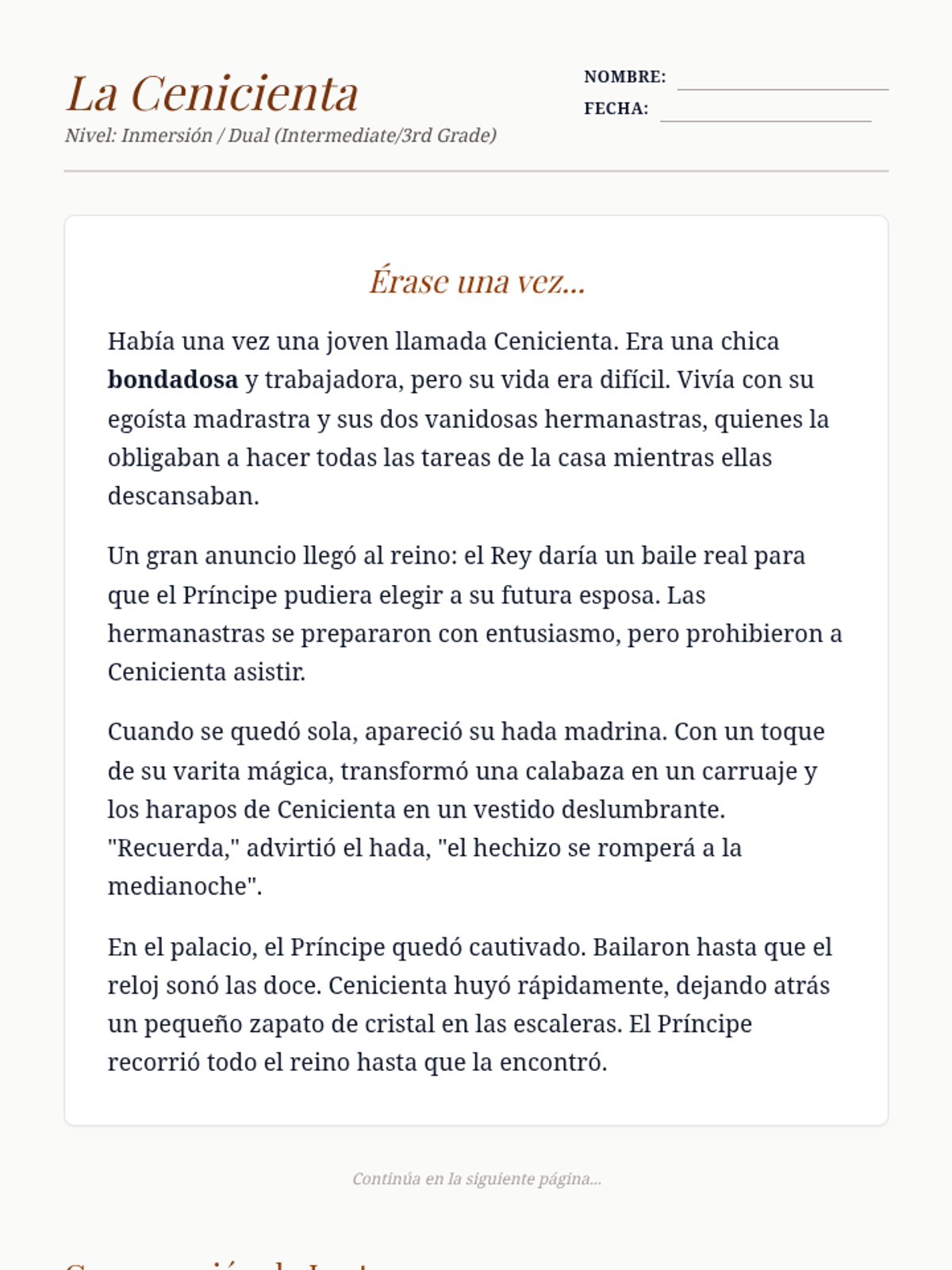
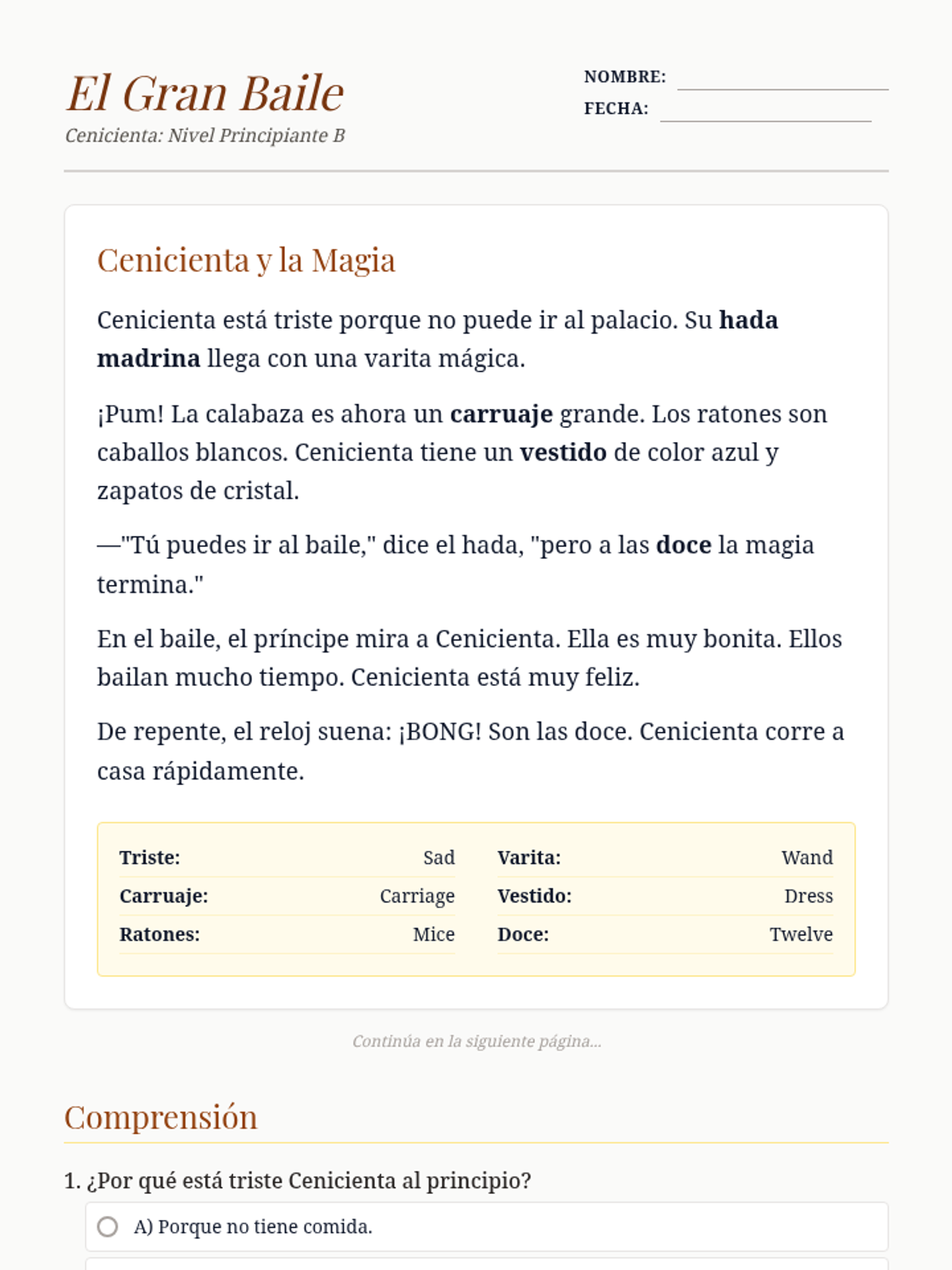
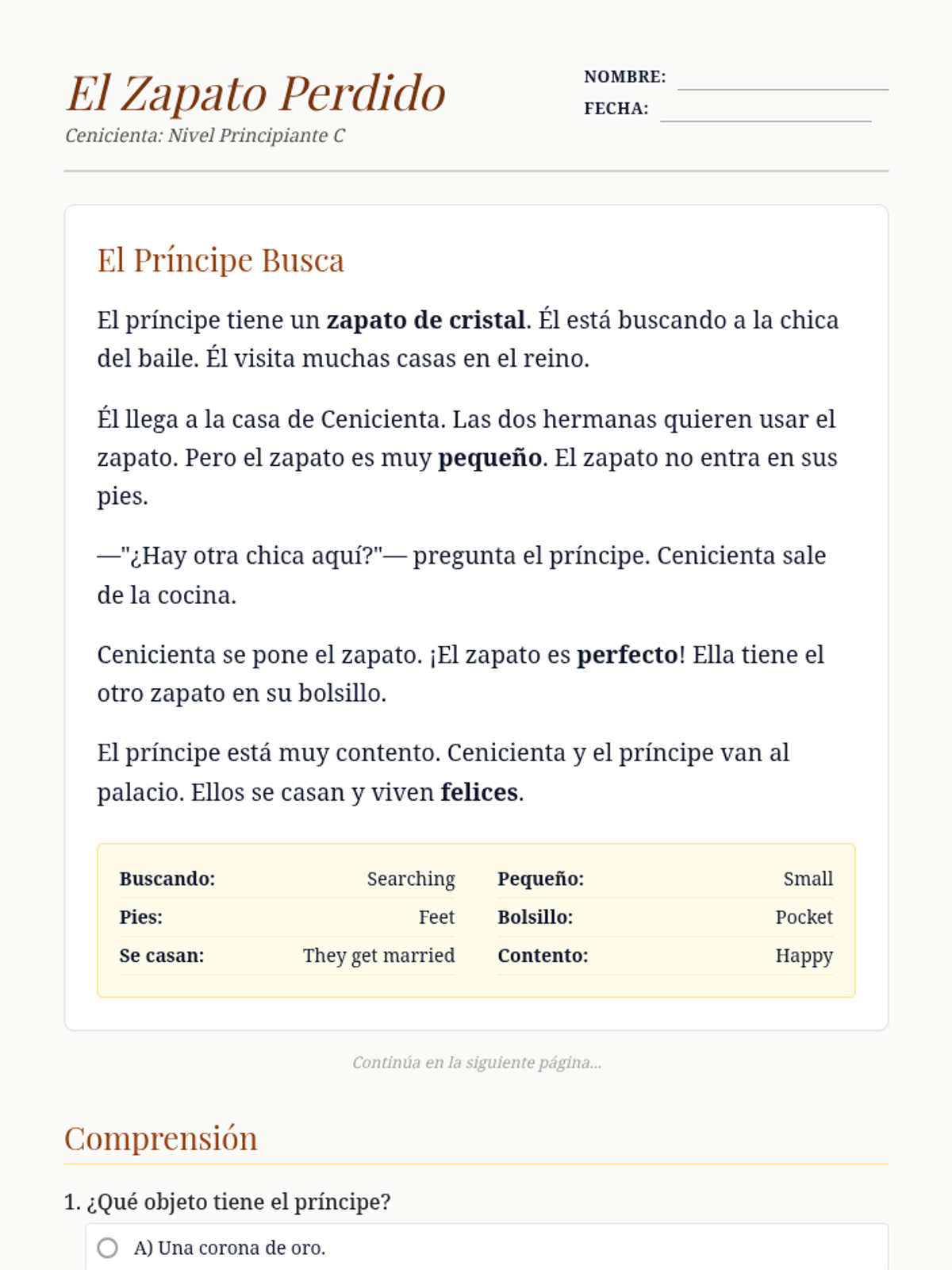
A collection of reading comprehension worksheets for third-grade Spanish learners based on the classic tale of Cinderella, tailored for both absolute beginners and dual-language students.
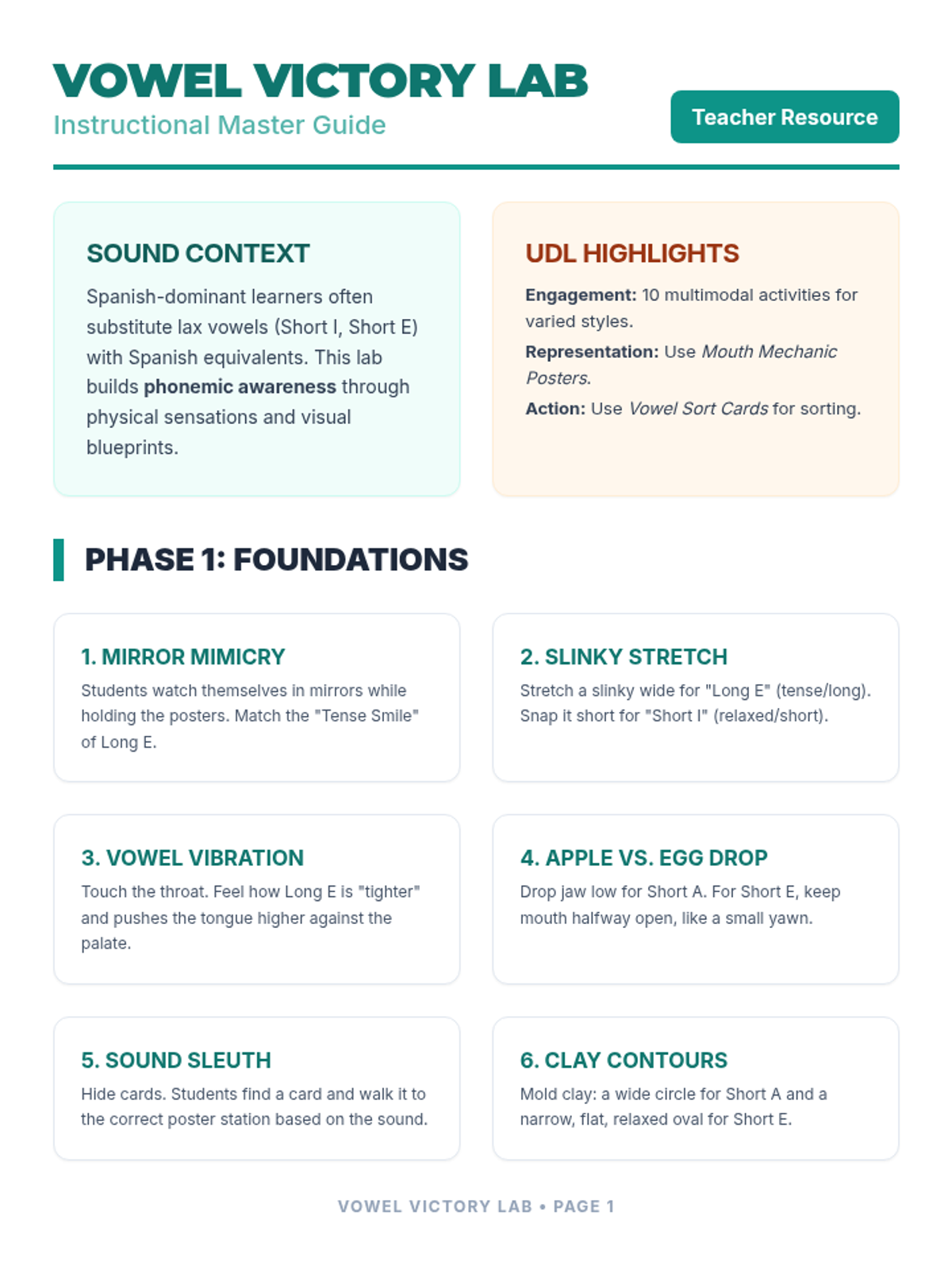
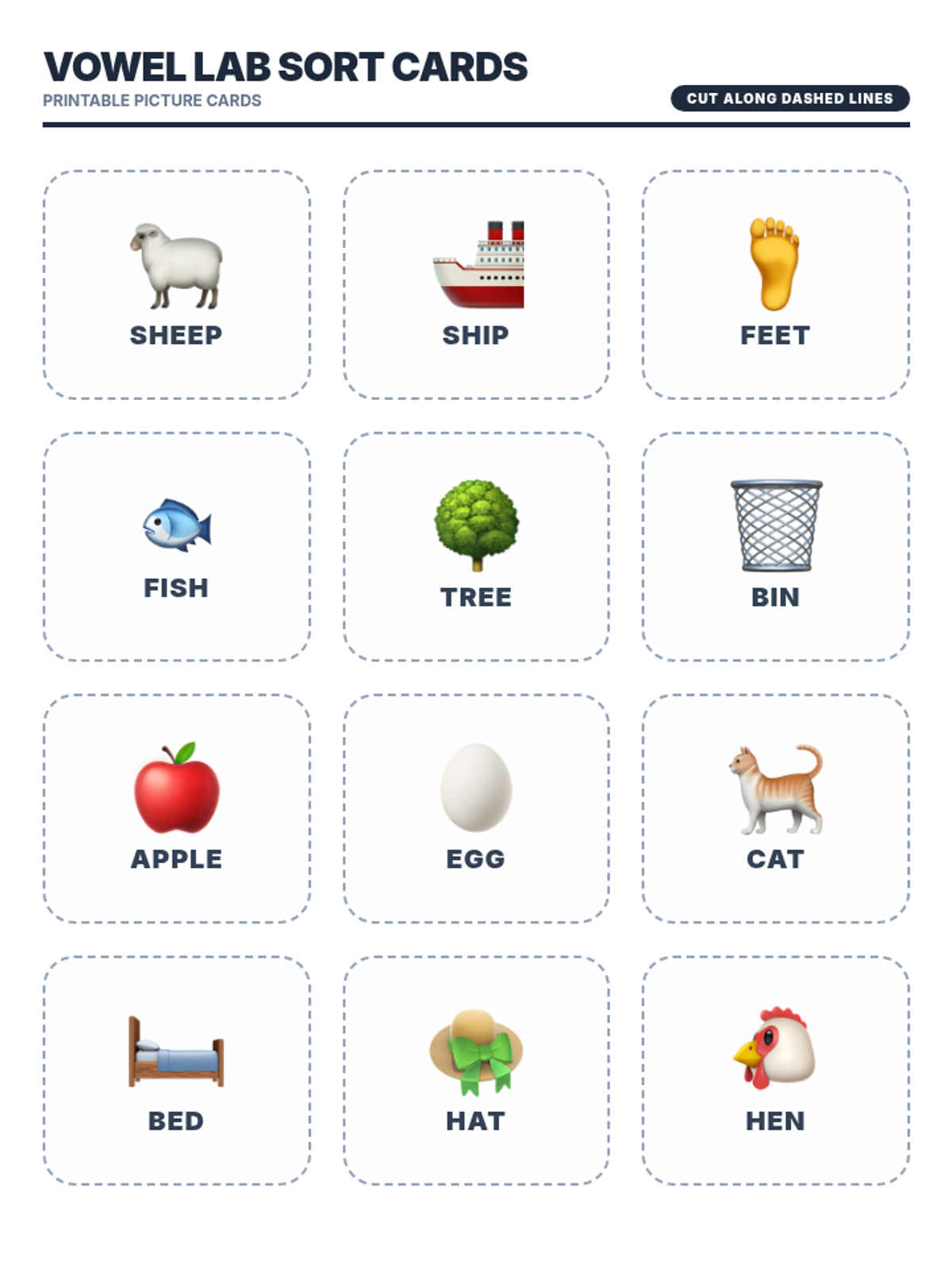
A comprehensive phonics lesson for bilingual students focusing on the specific vowel contrasts of Long E/Short I and Short A/Short E through multisensory, UDL-aligned activities.
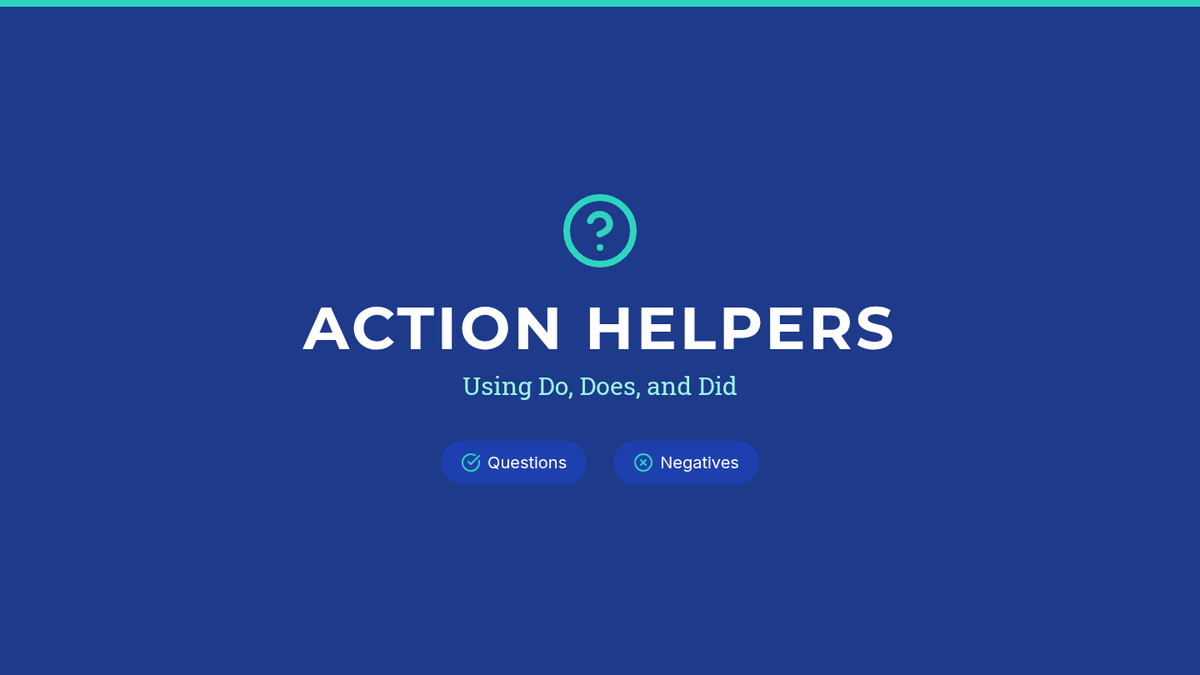
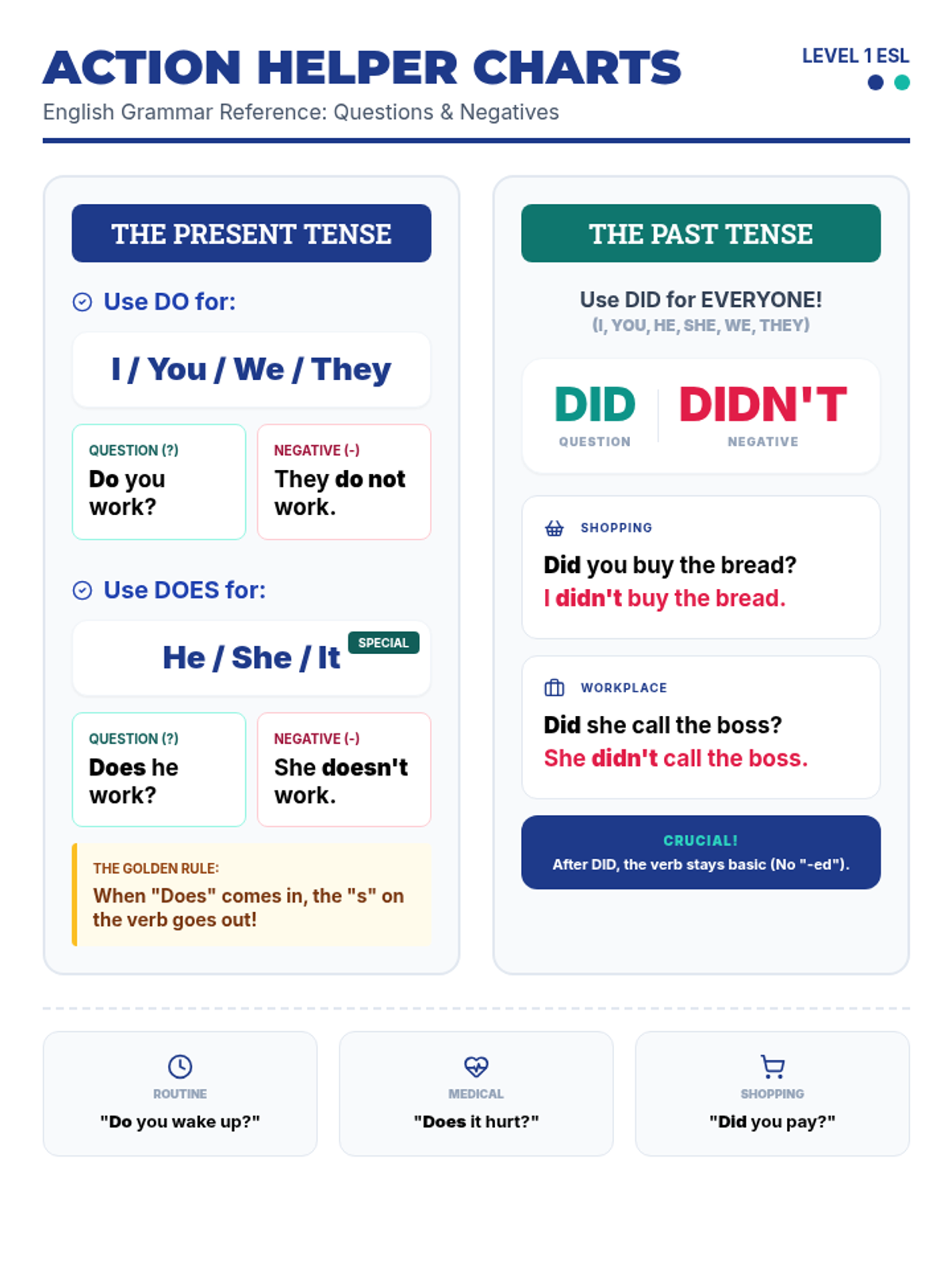
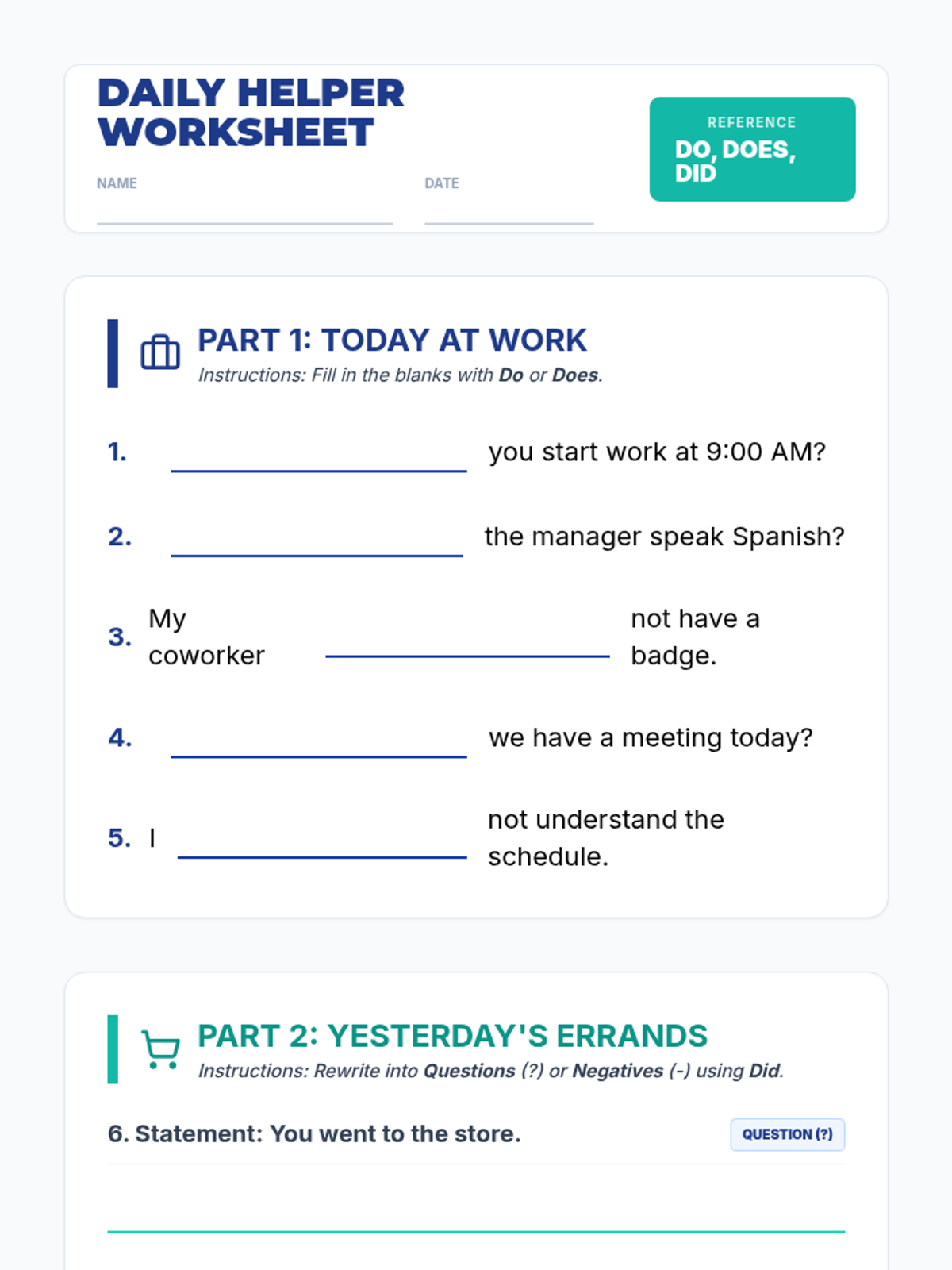
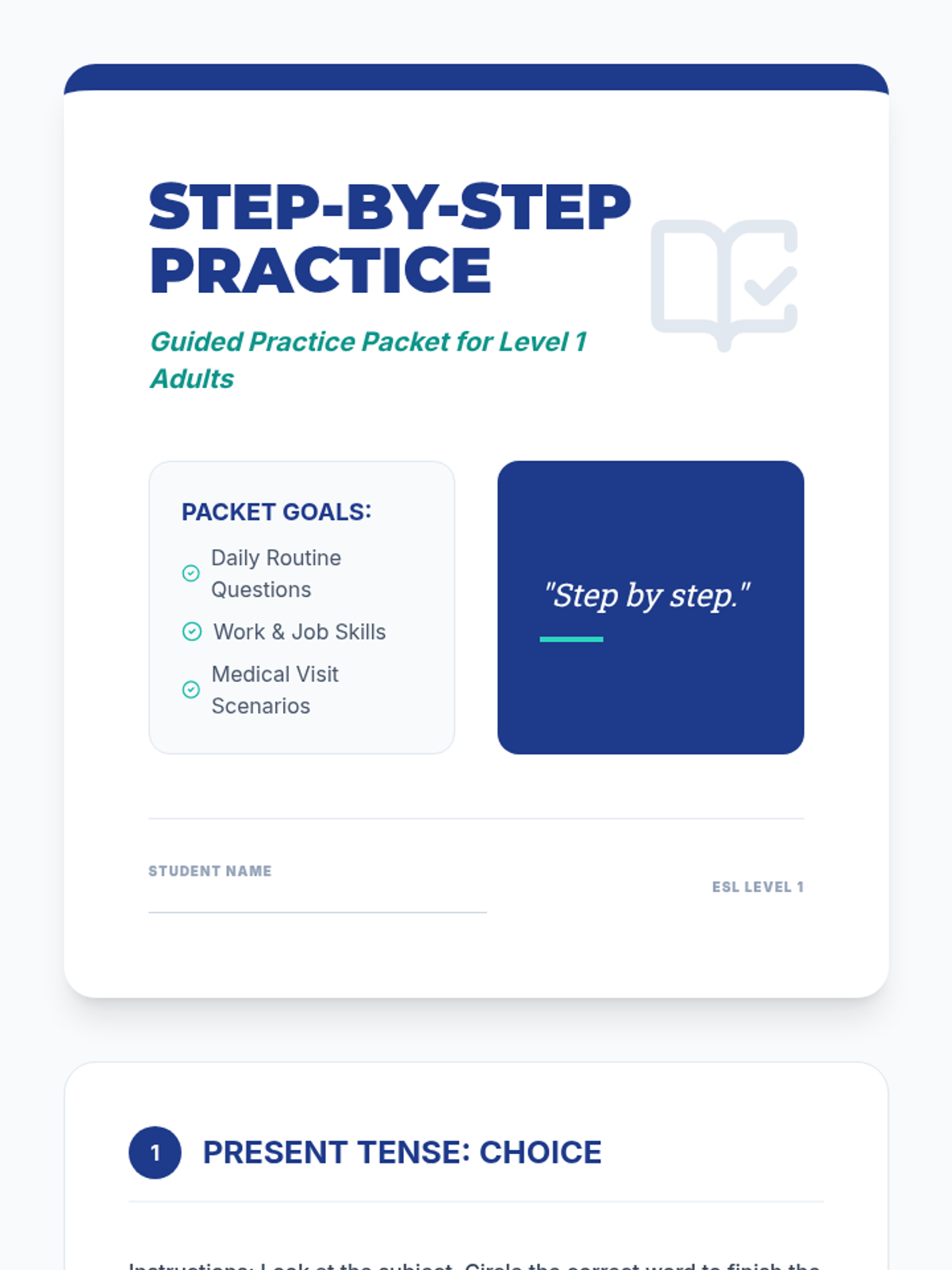
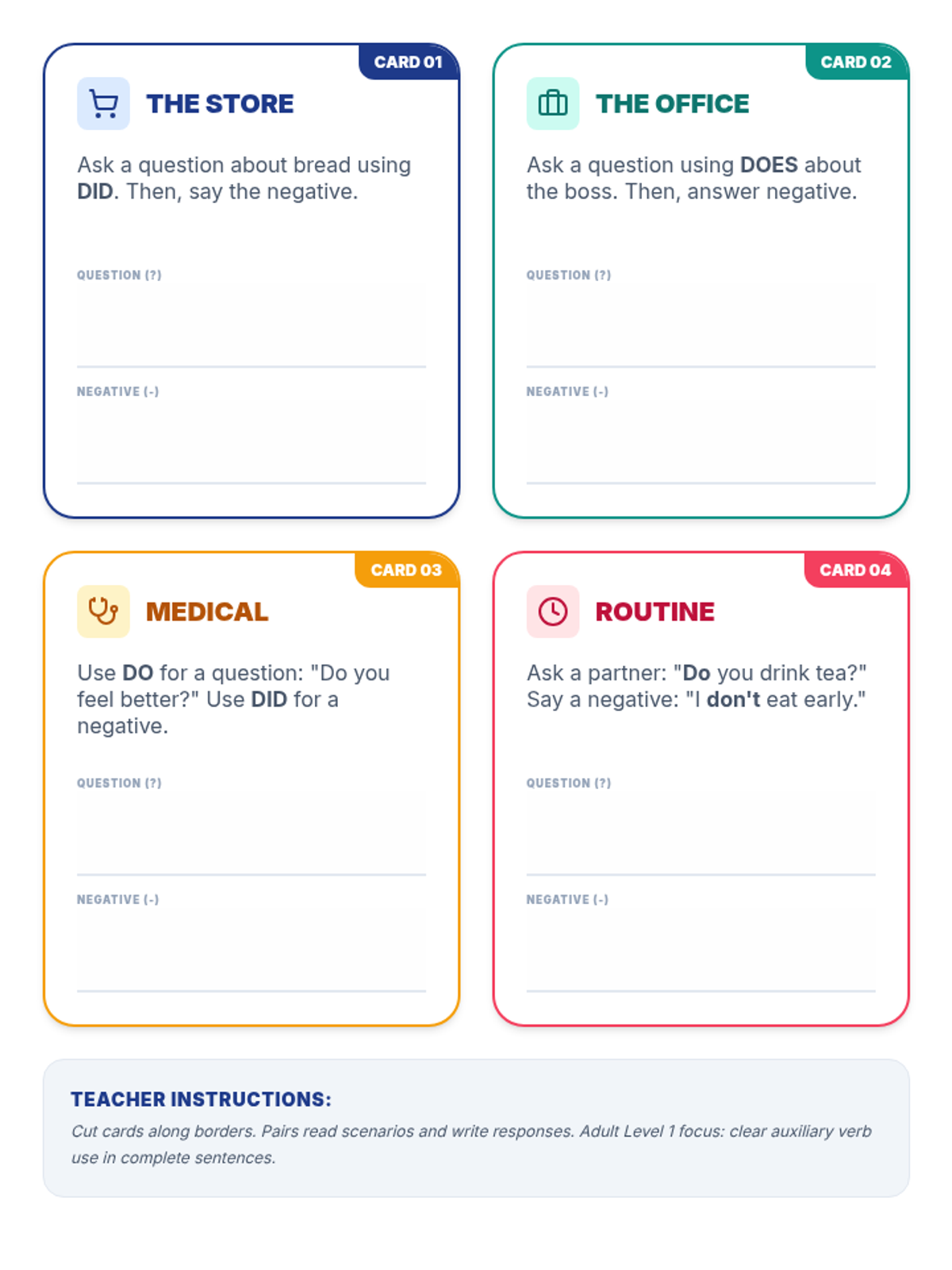
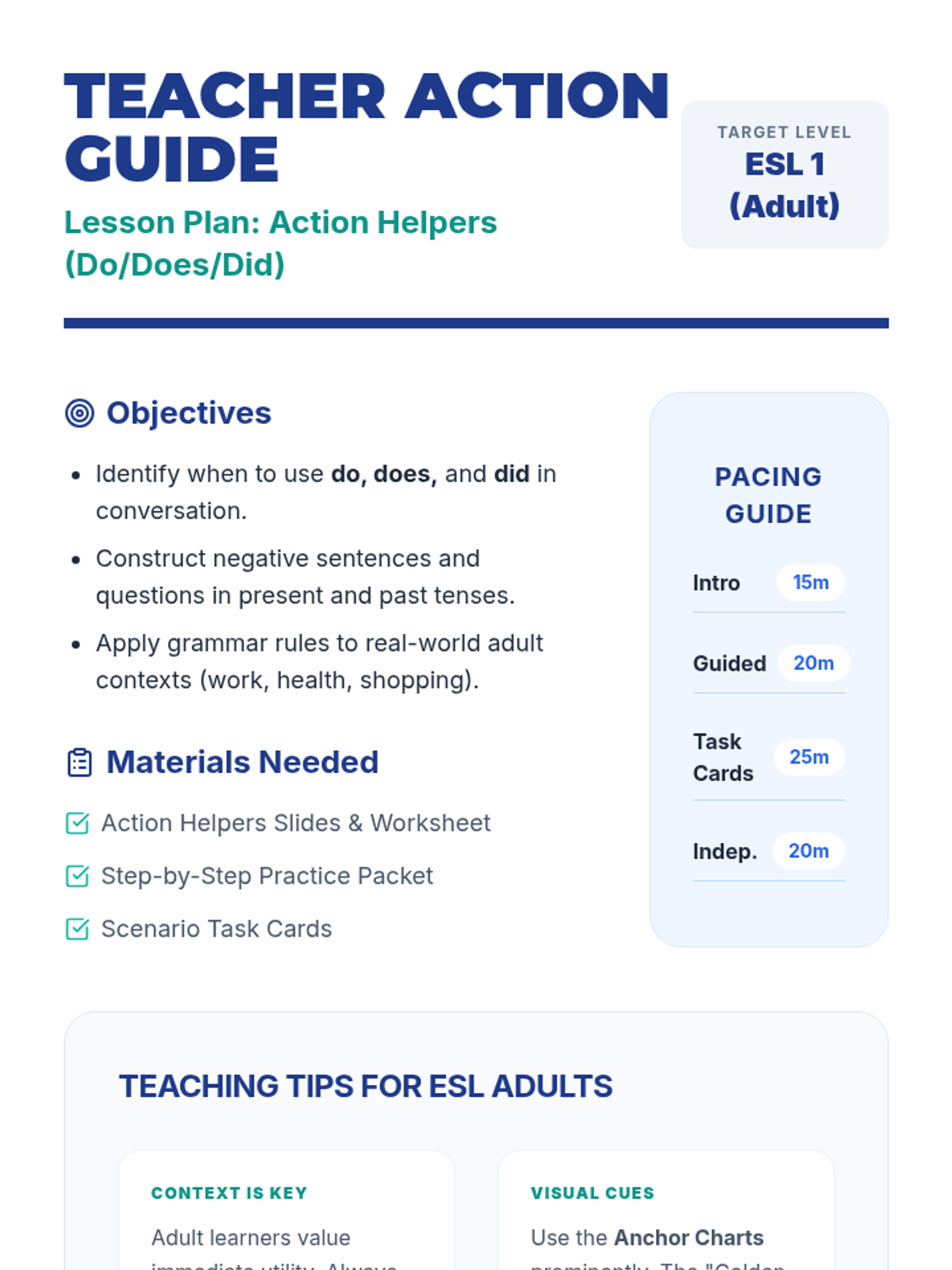
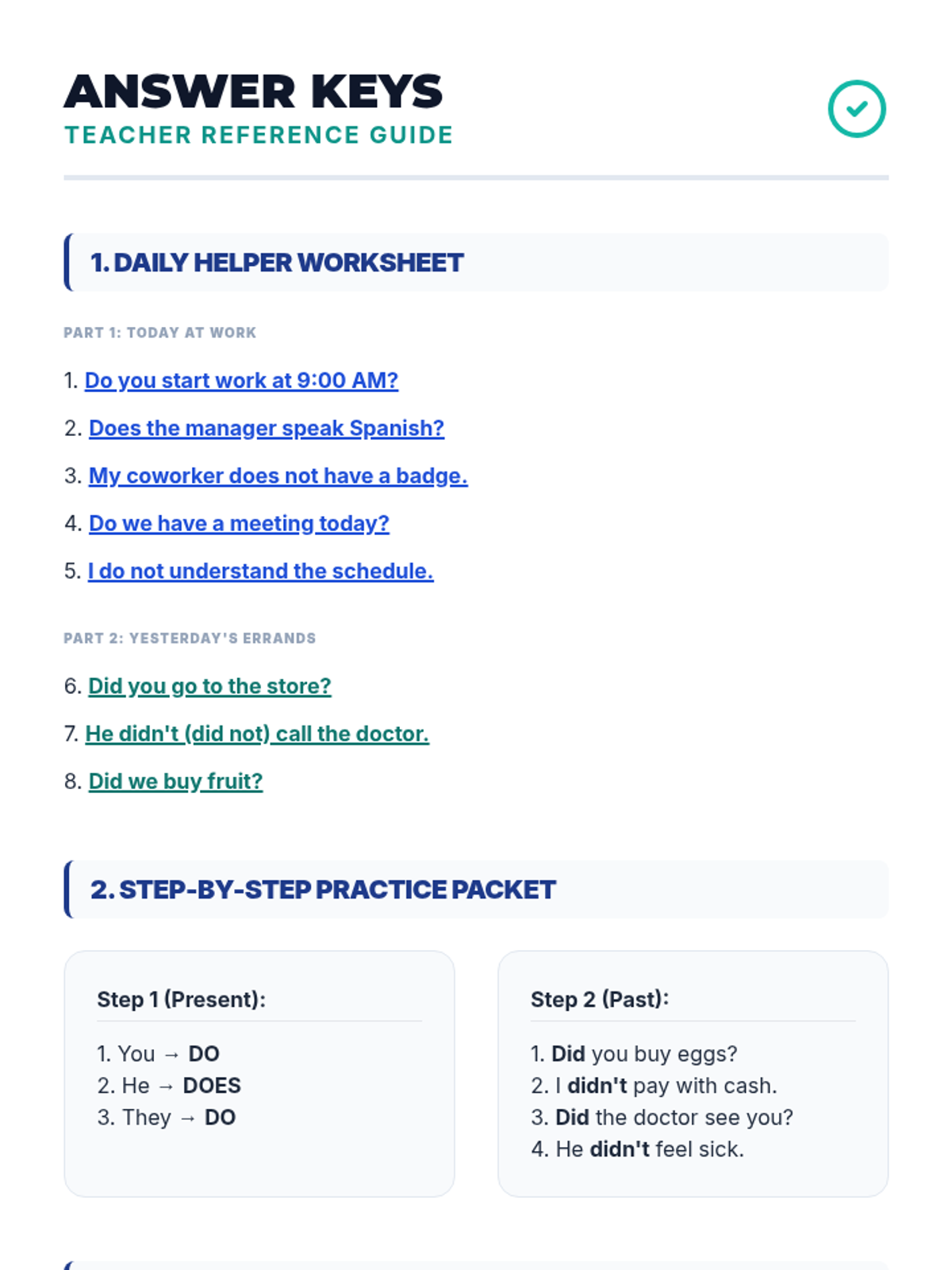
Mastering the use of 'do', 'does', and 'did' for asking questions and forming negative statements in practical adult scenarios.
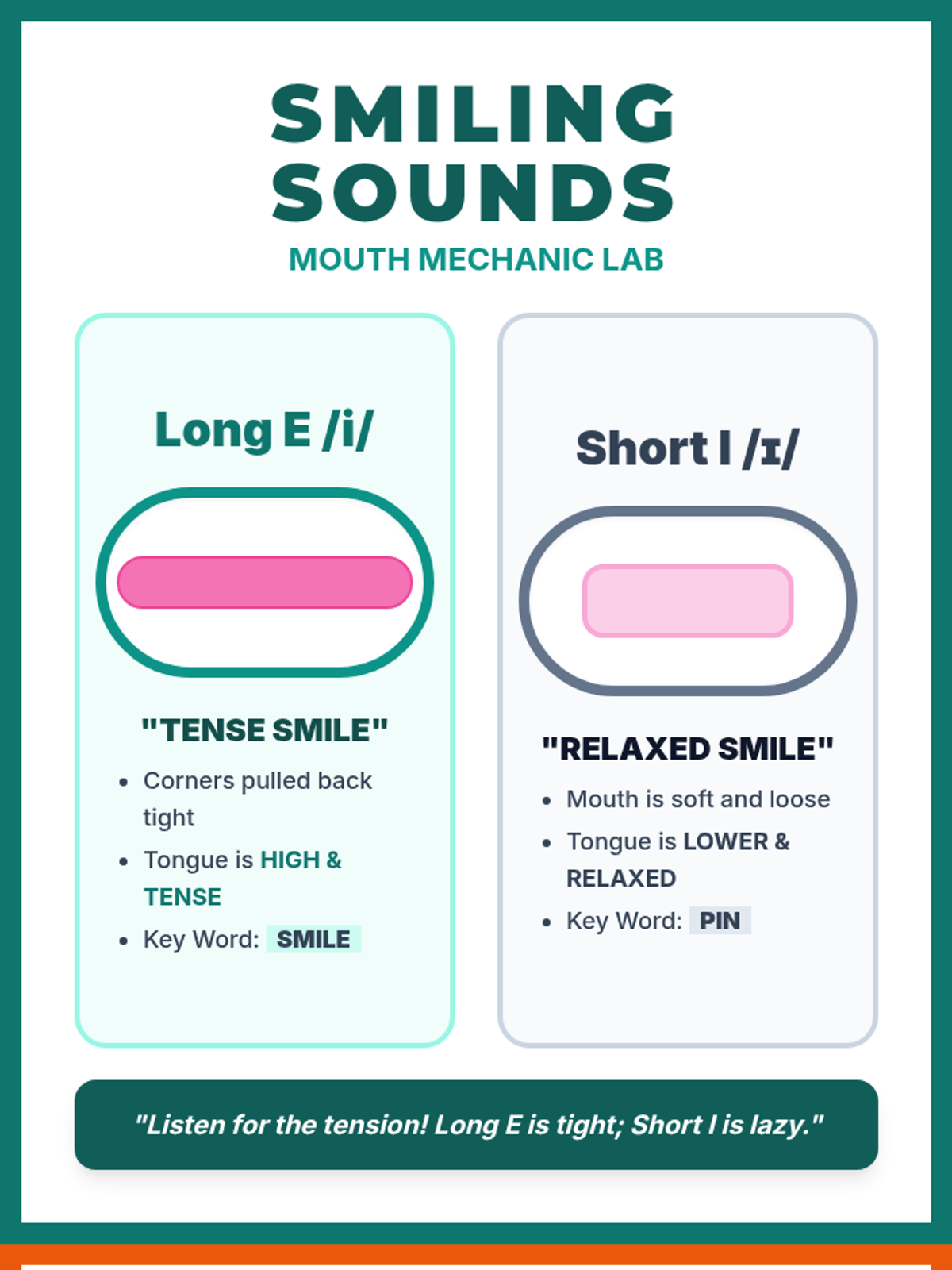
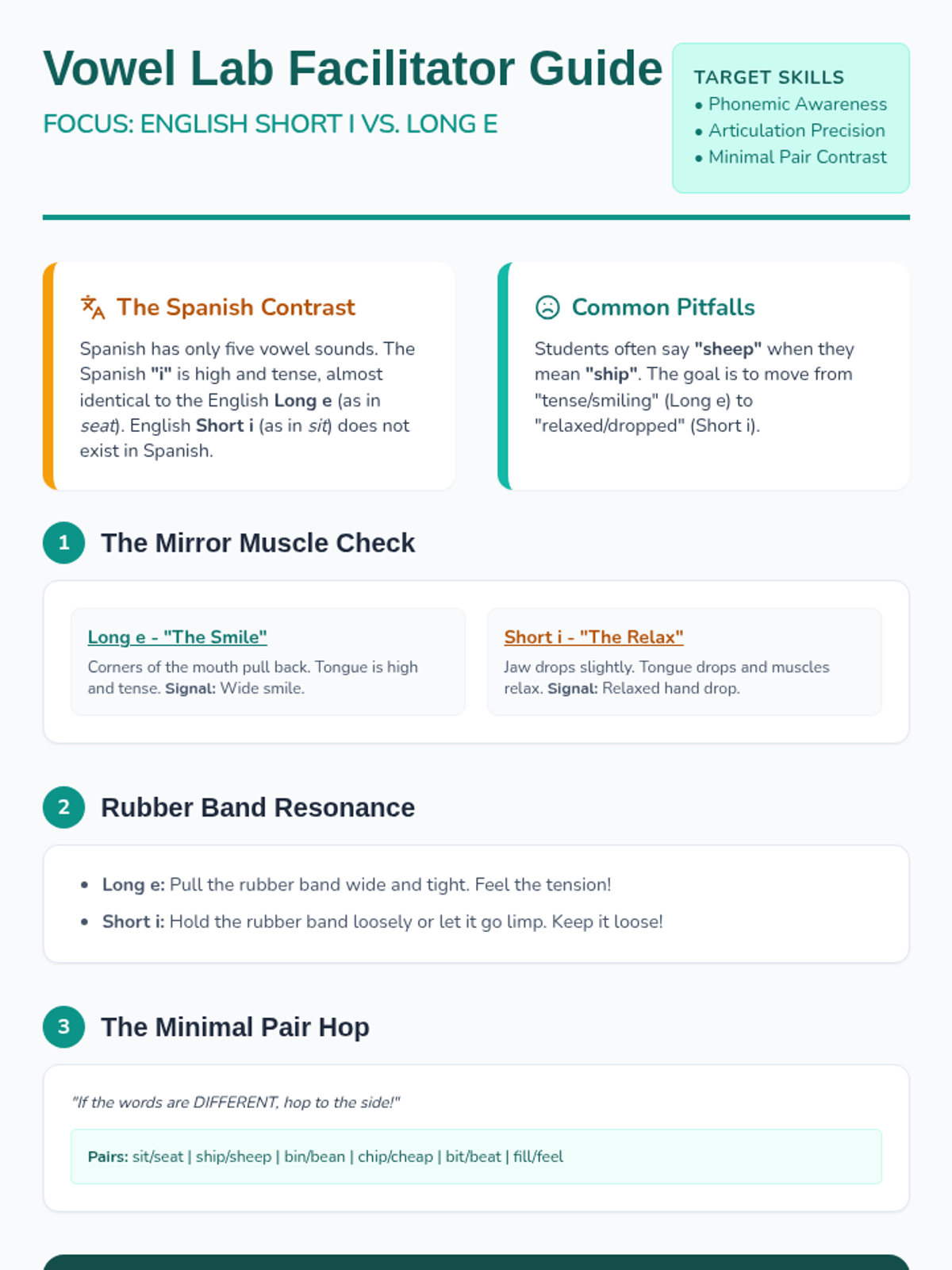
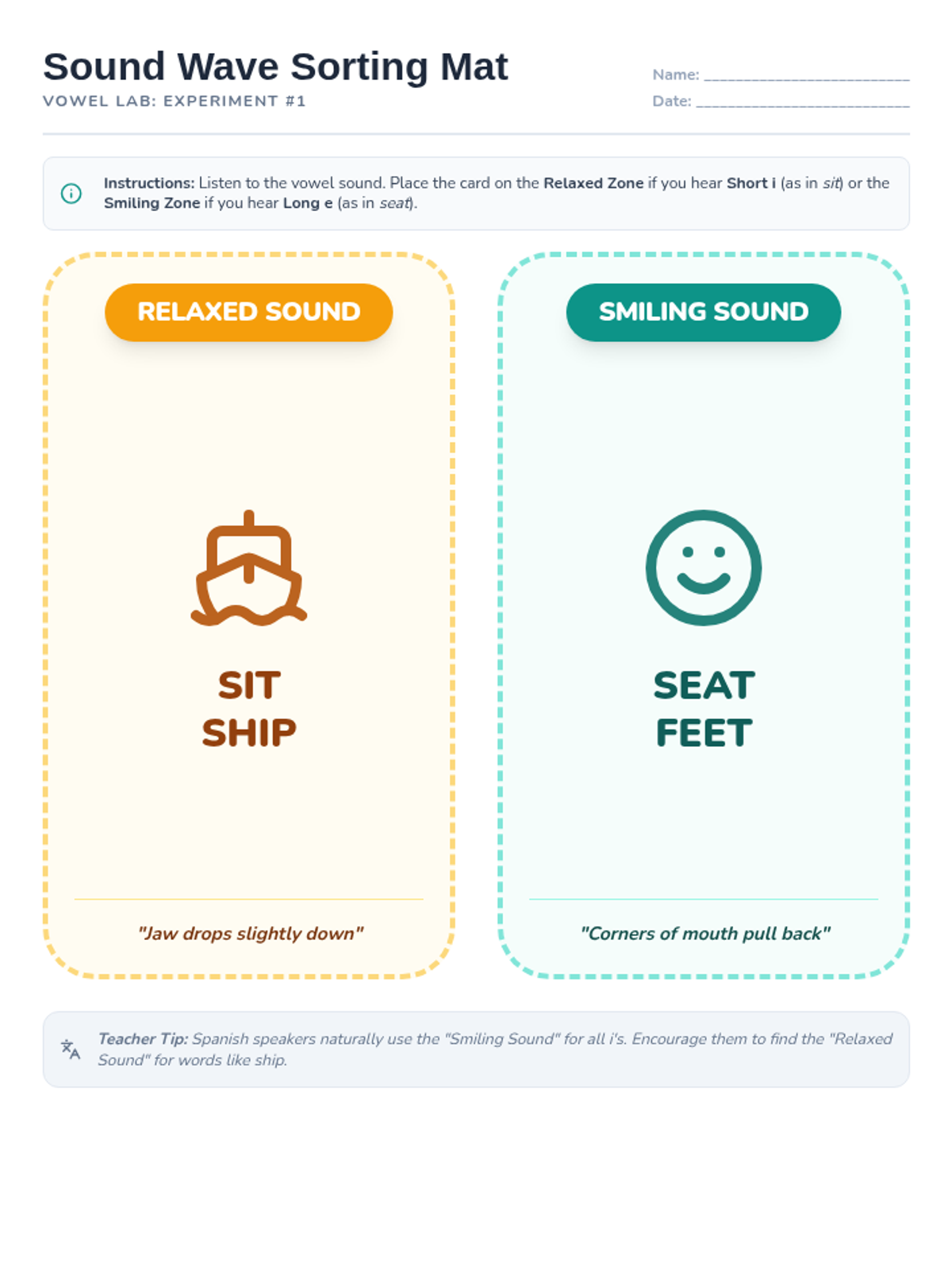
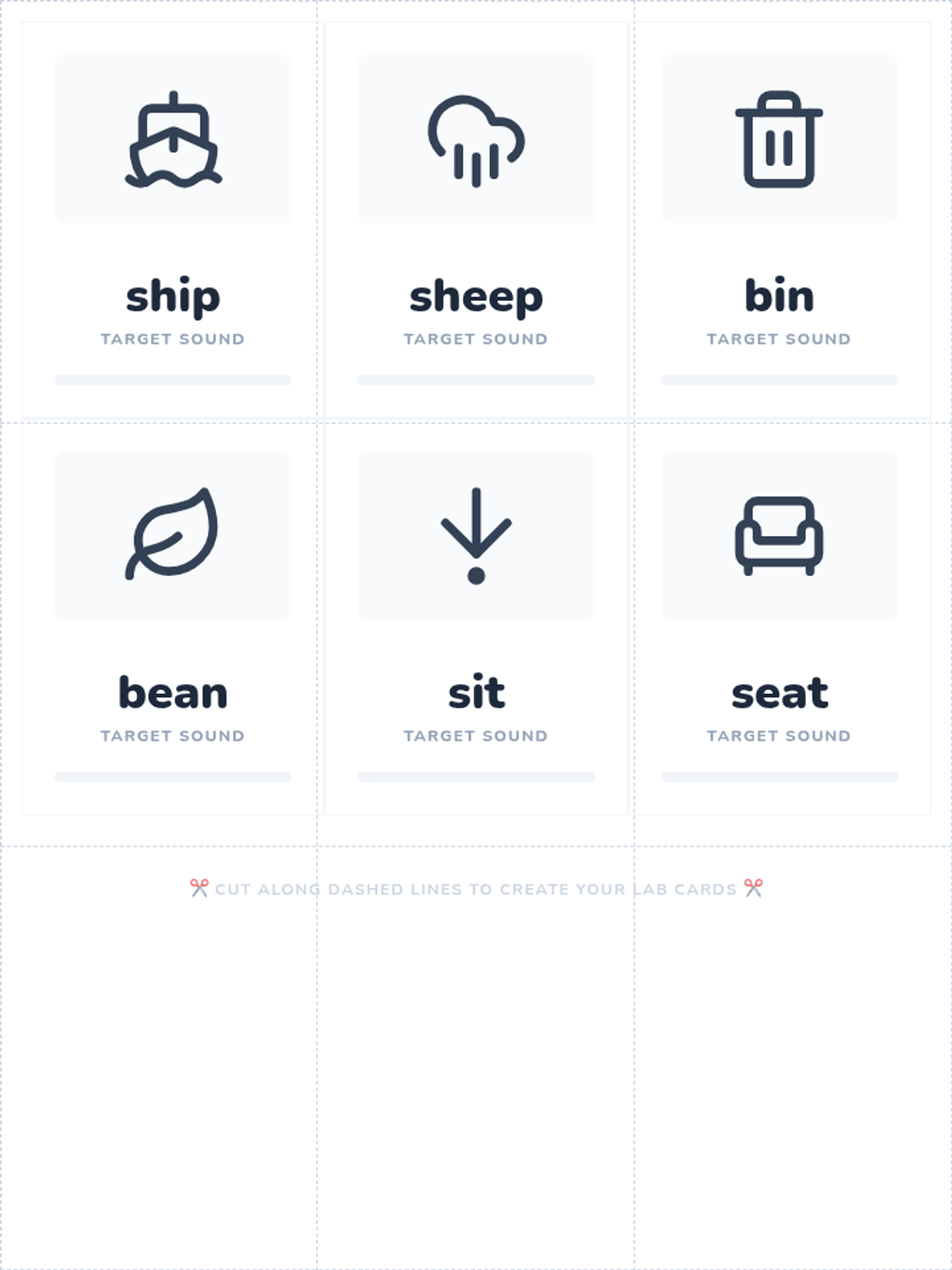
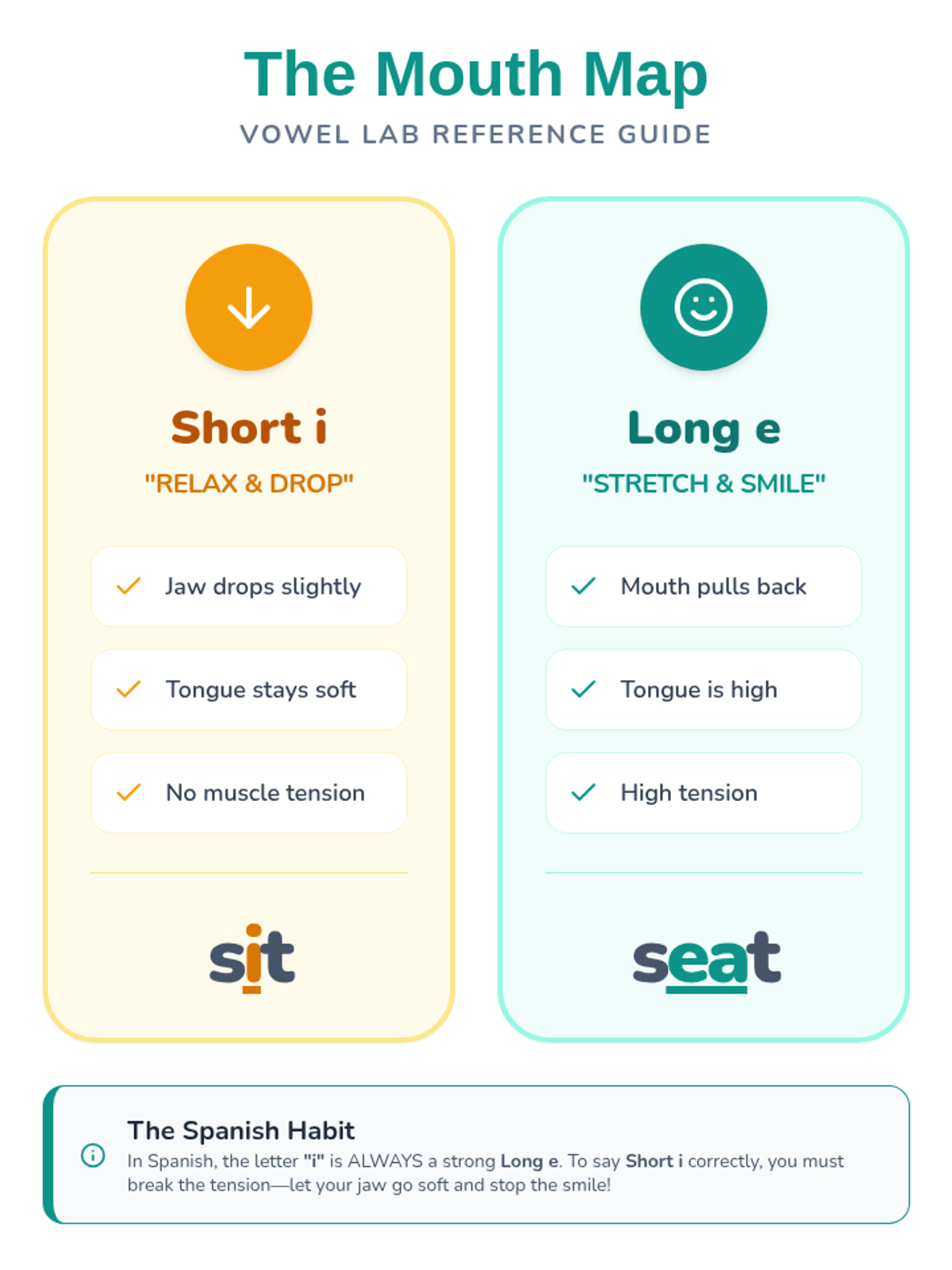
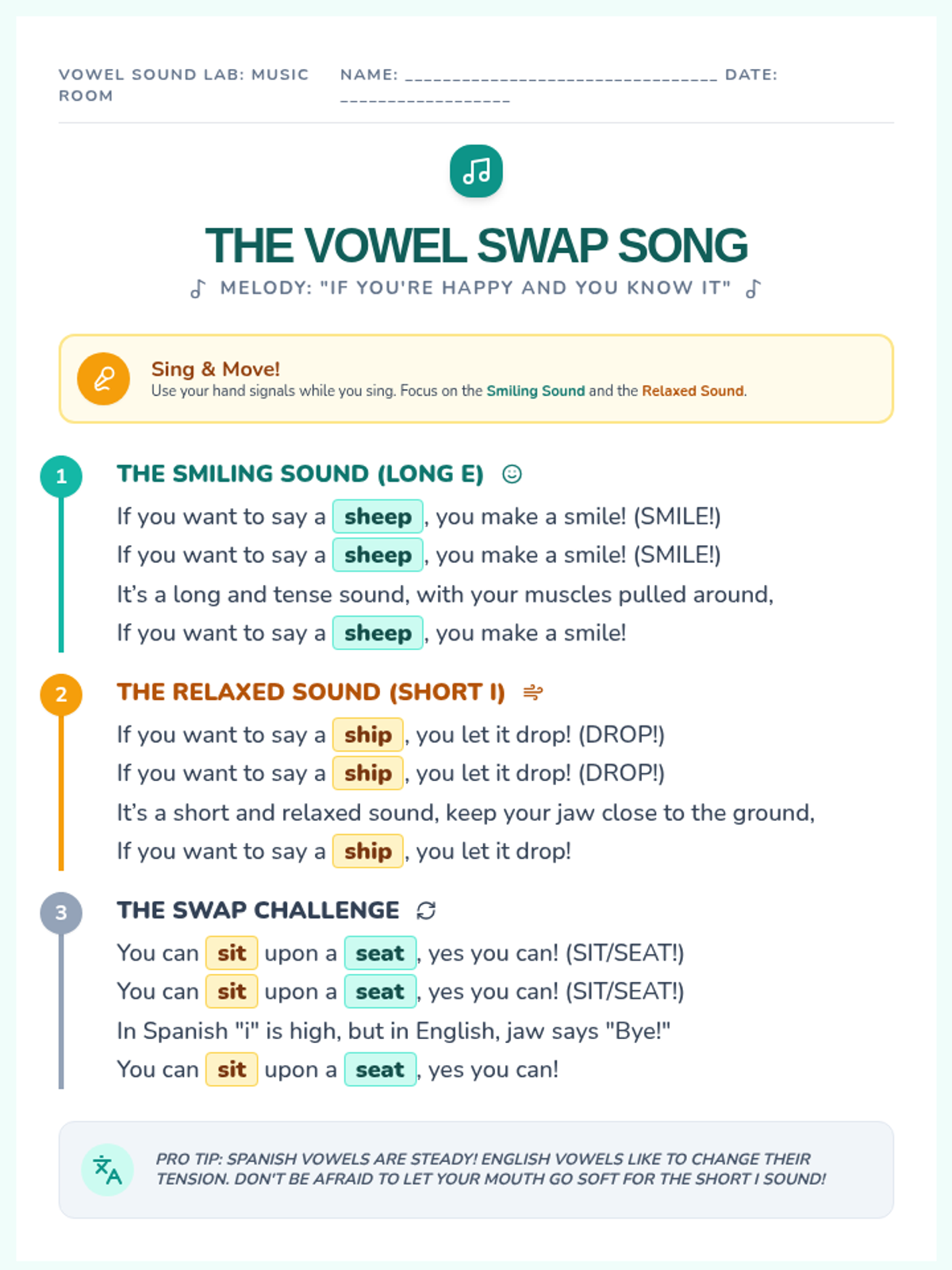
A multisensory lesson focusing on the phonetic distinction between the English short /ɪ/ and long /i/ sounds, specifically designed for students bridging from Spanish.
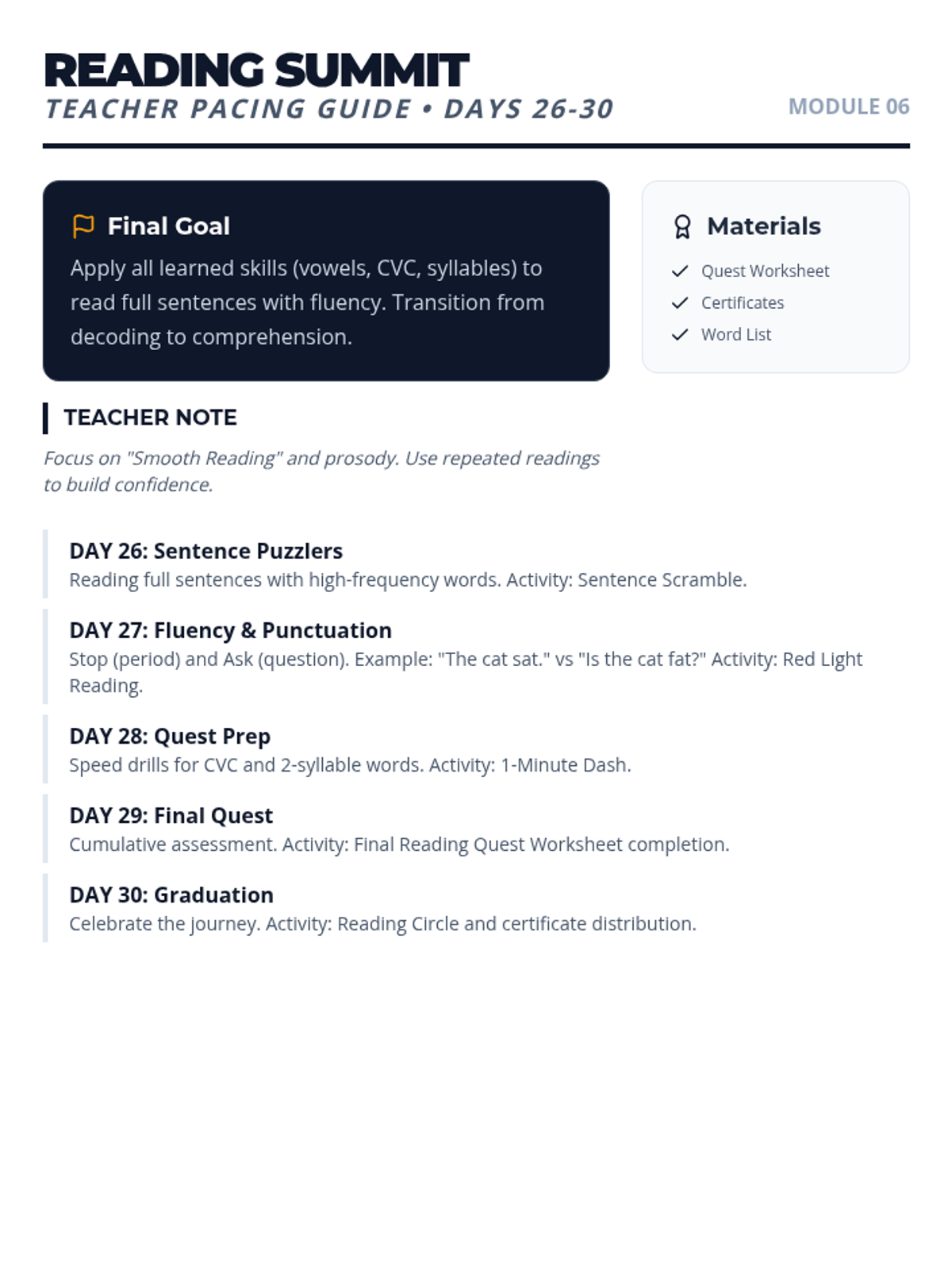
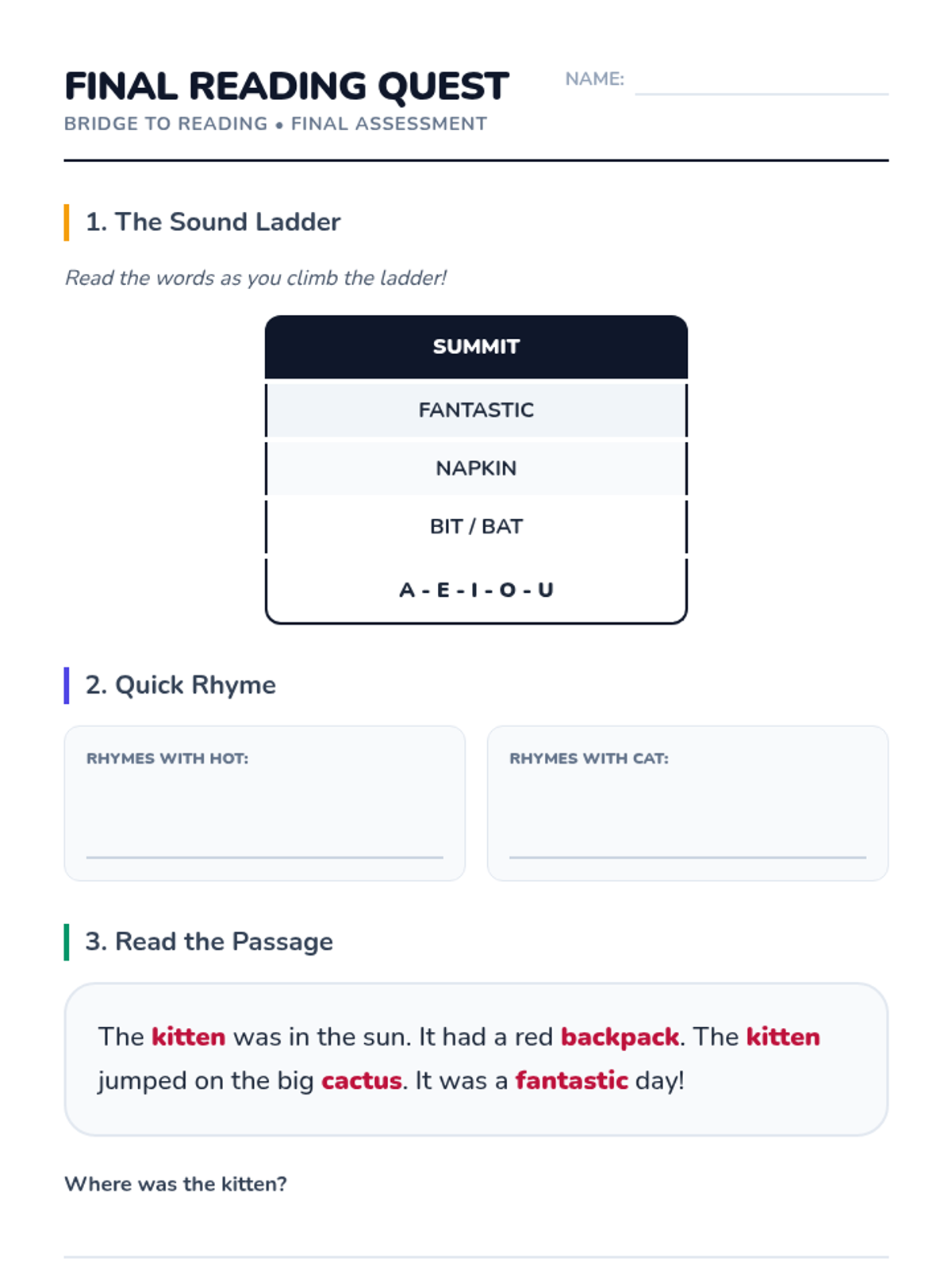
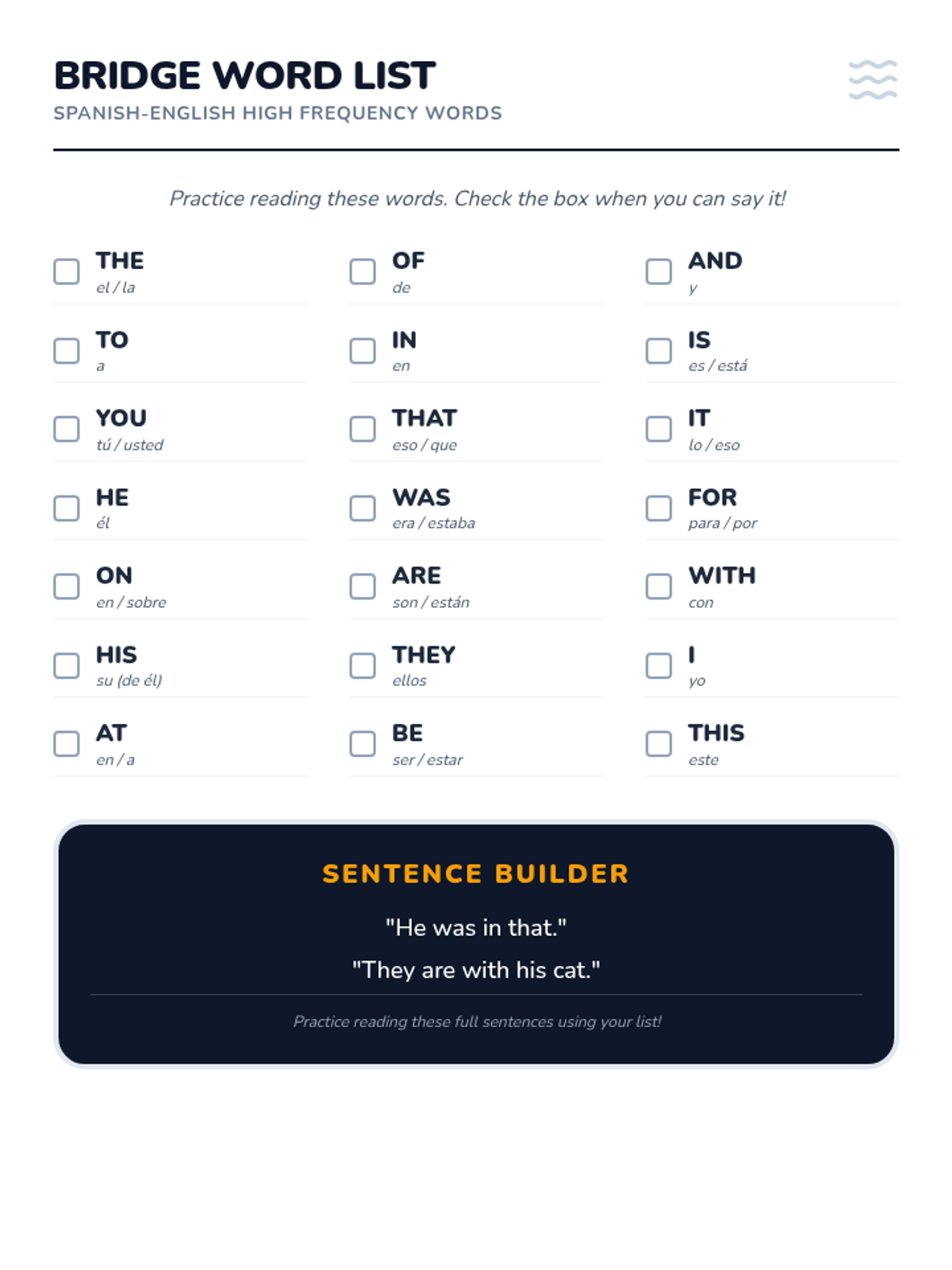
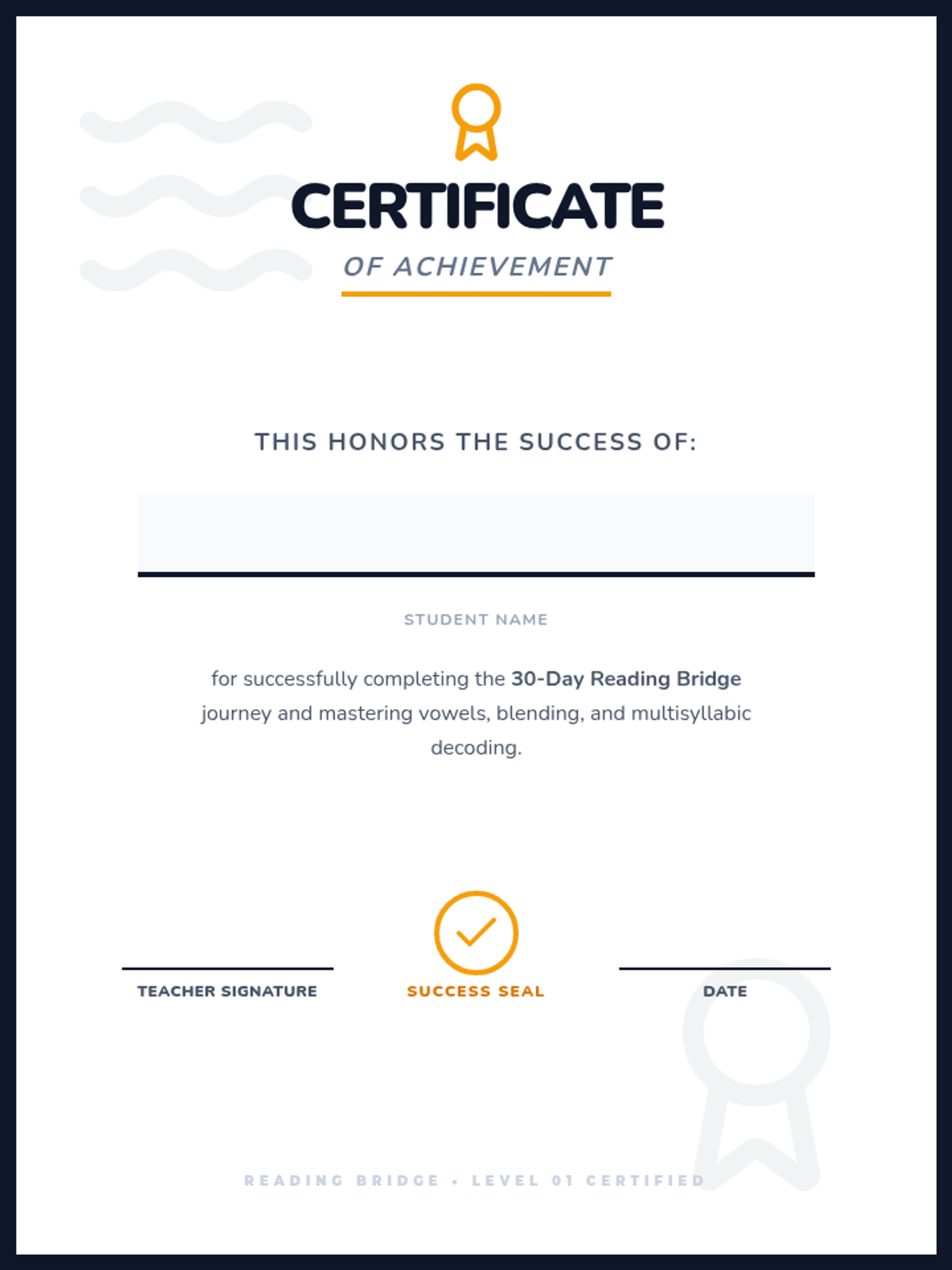
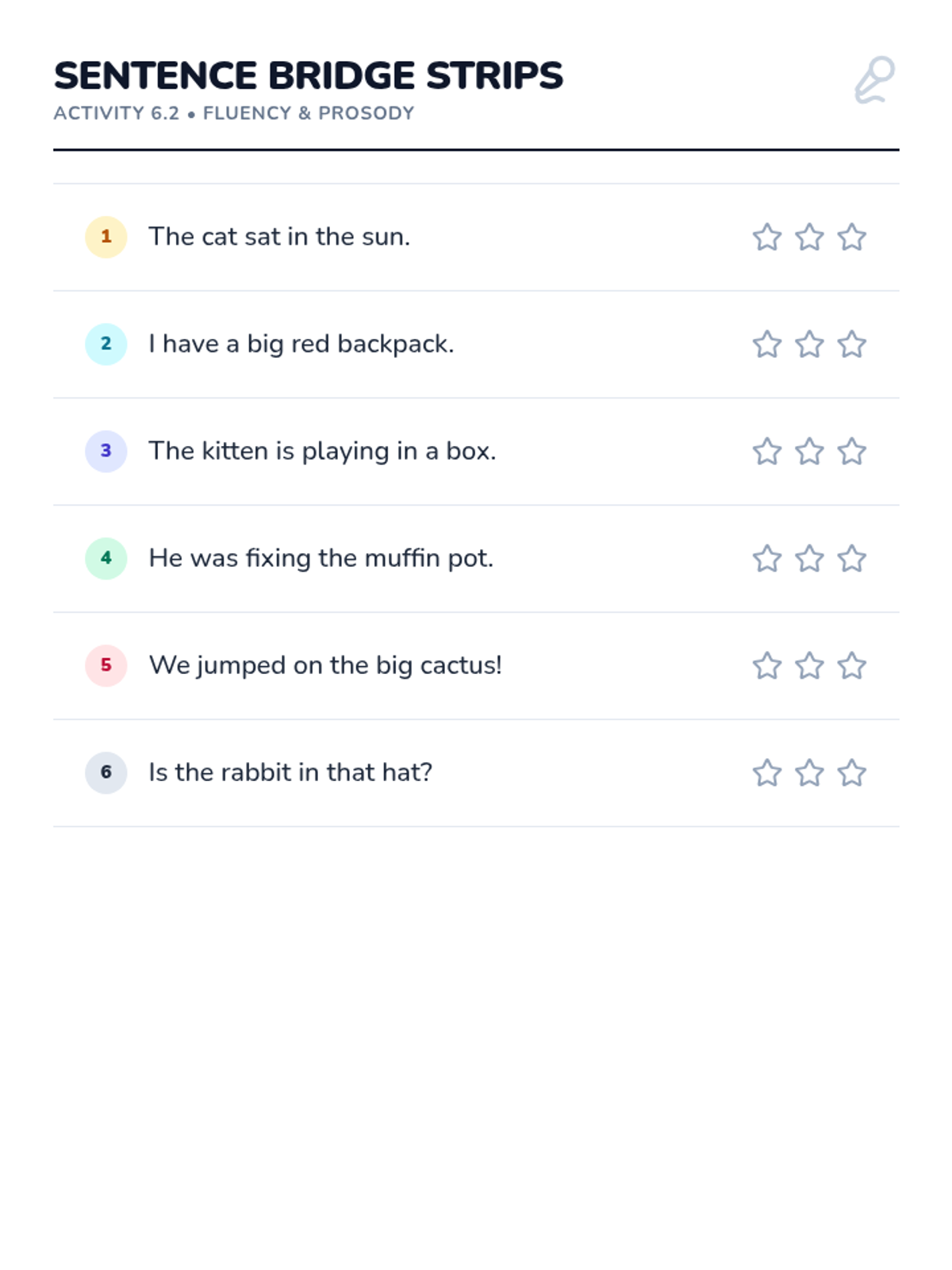
Consolidates all skills through fluency practice, sentence reading, and a final assessment of the 30-day journey. Days 26-30 of the 30-day plan.
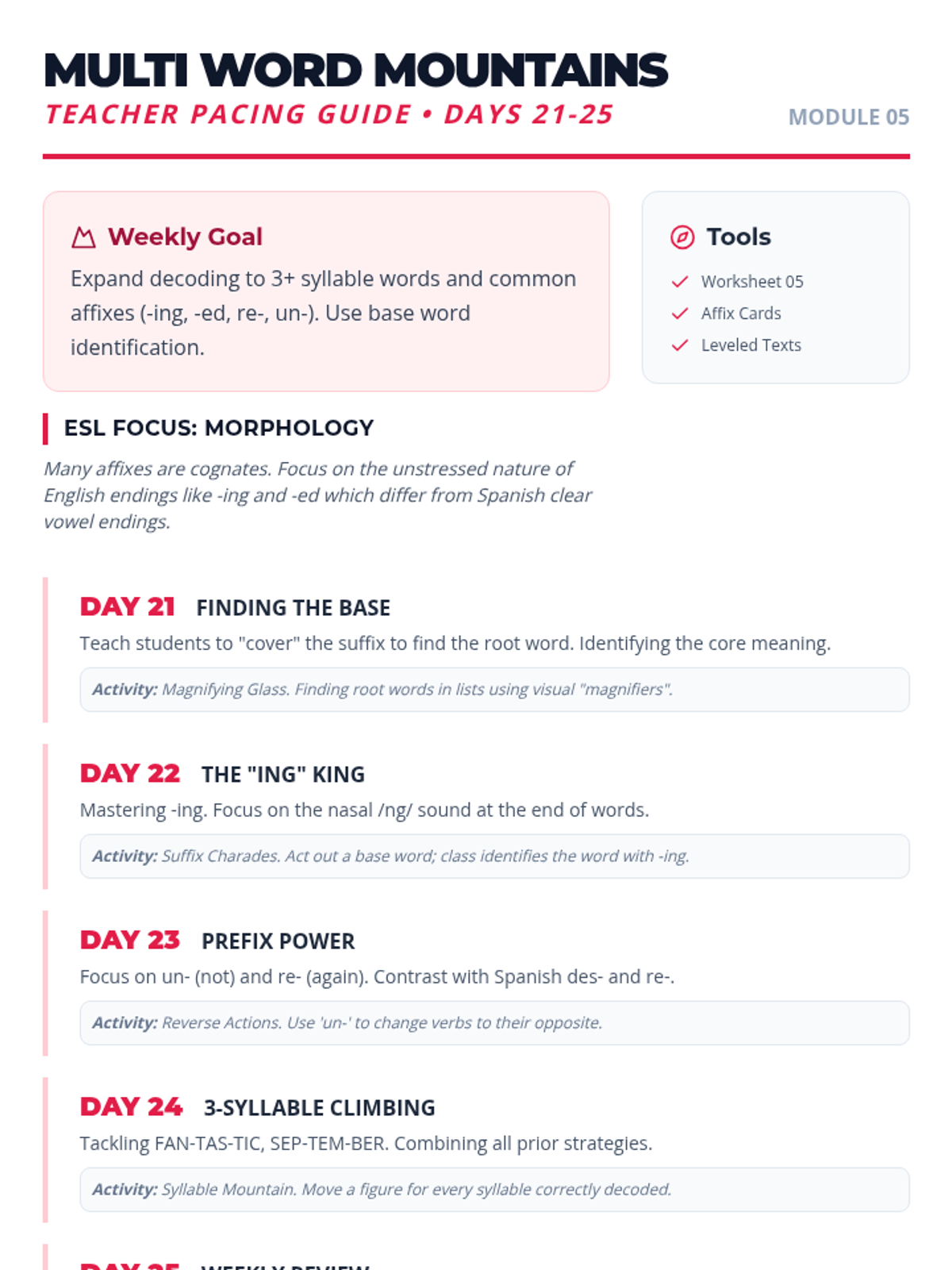
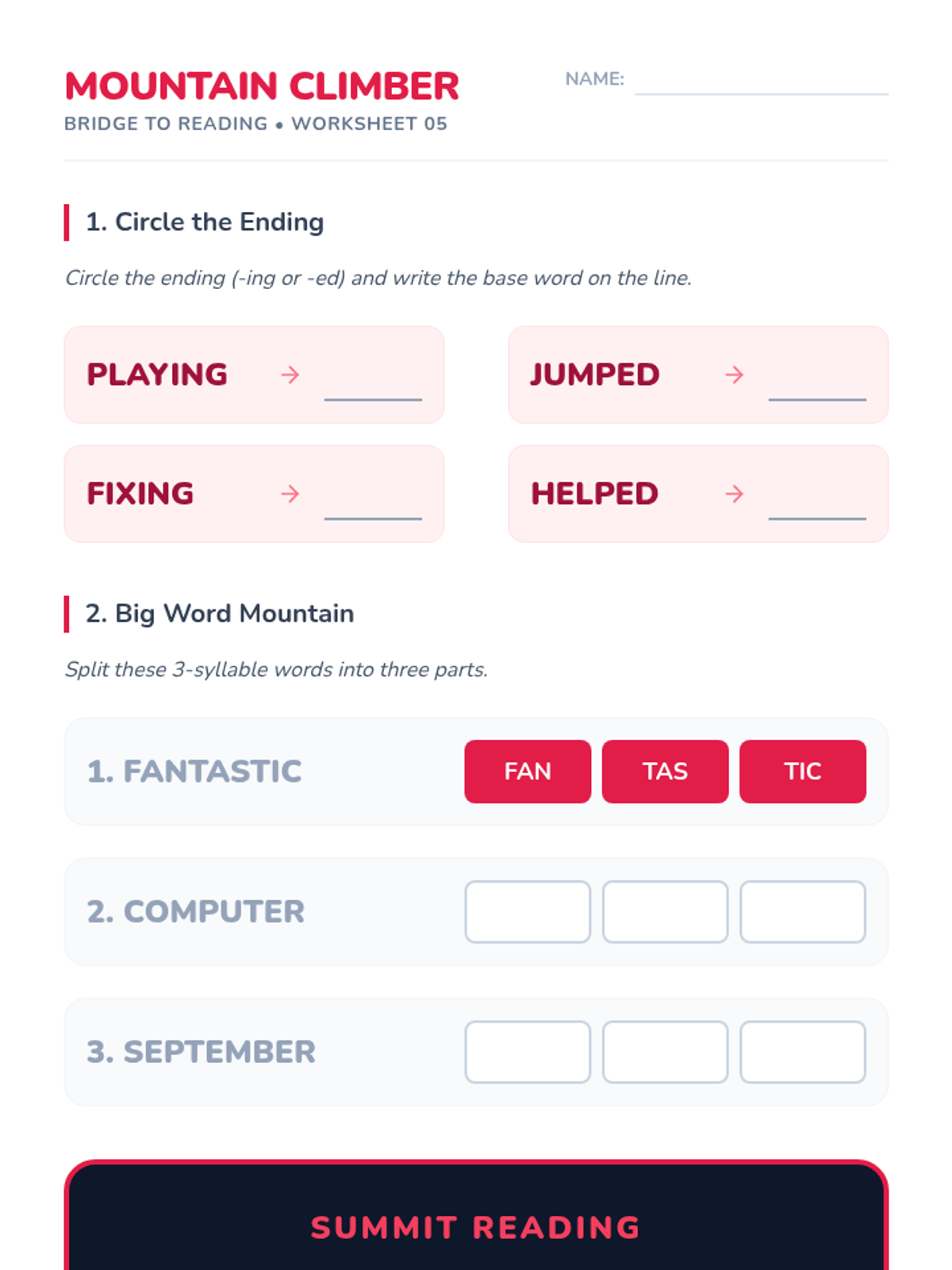
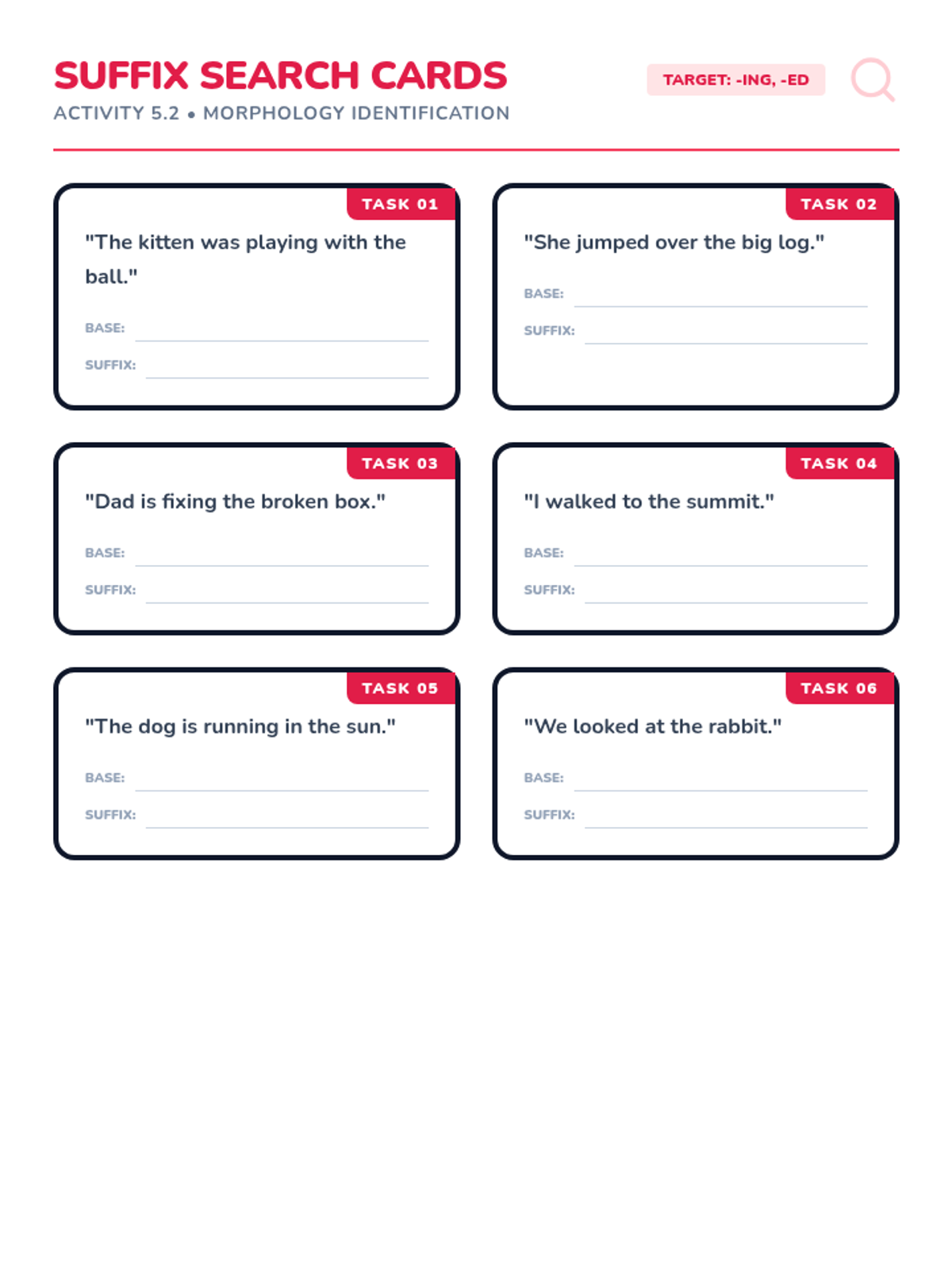
Focuses on more complex multisyllabic words, common prefixes, and suffixes to expand decoding capabilities. Days 21-25 of the 30-day plan.
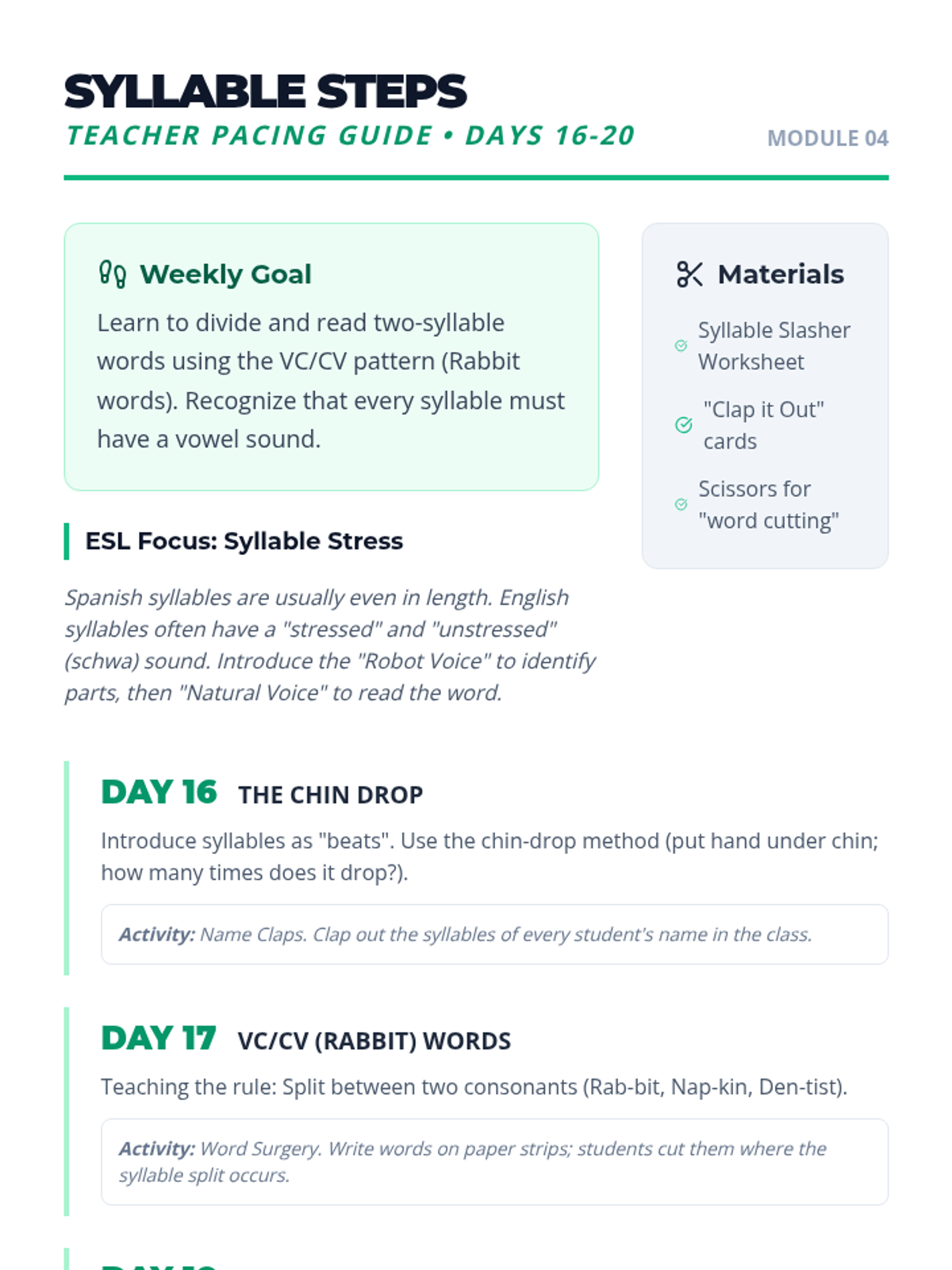
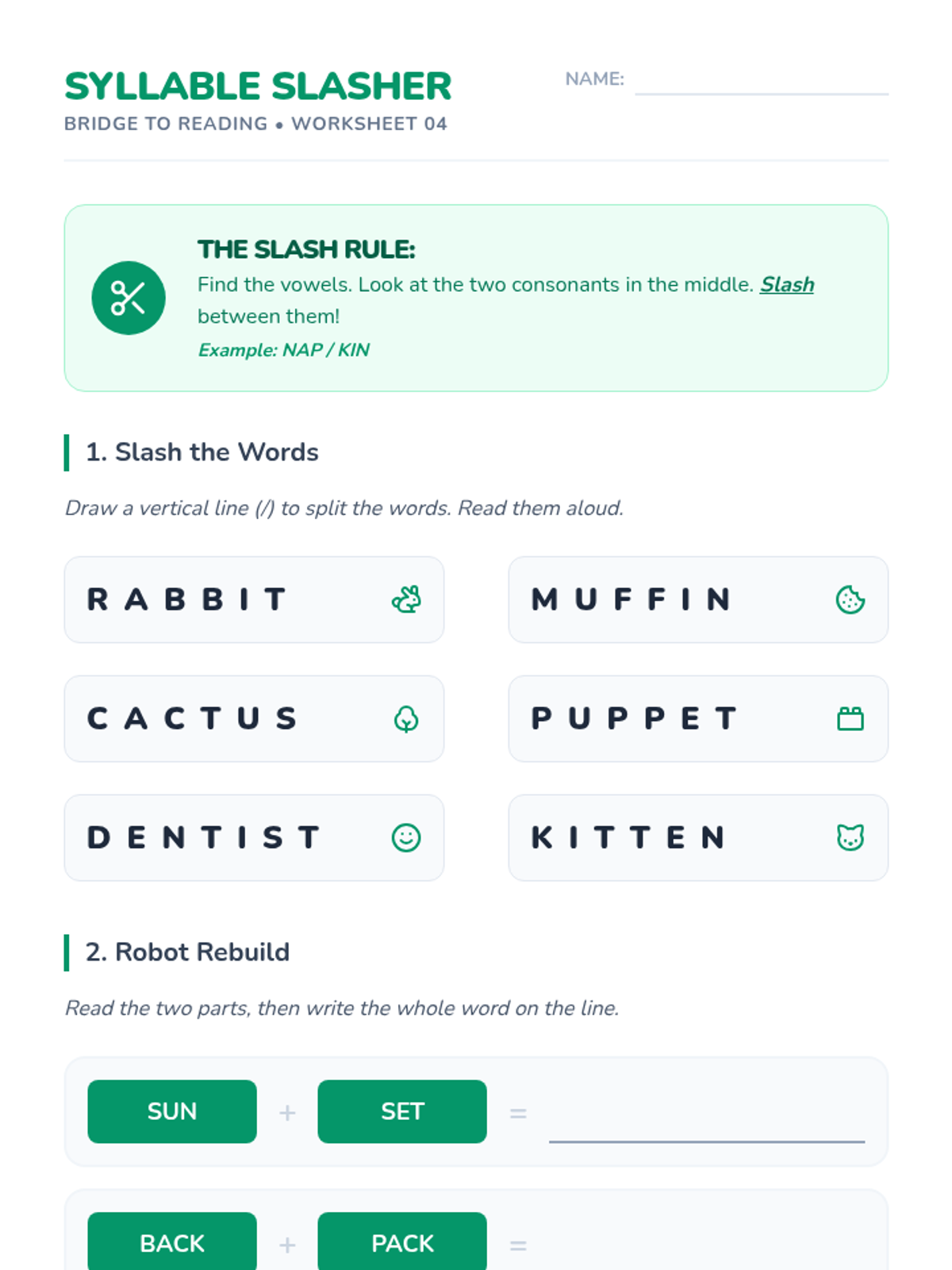
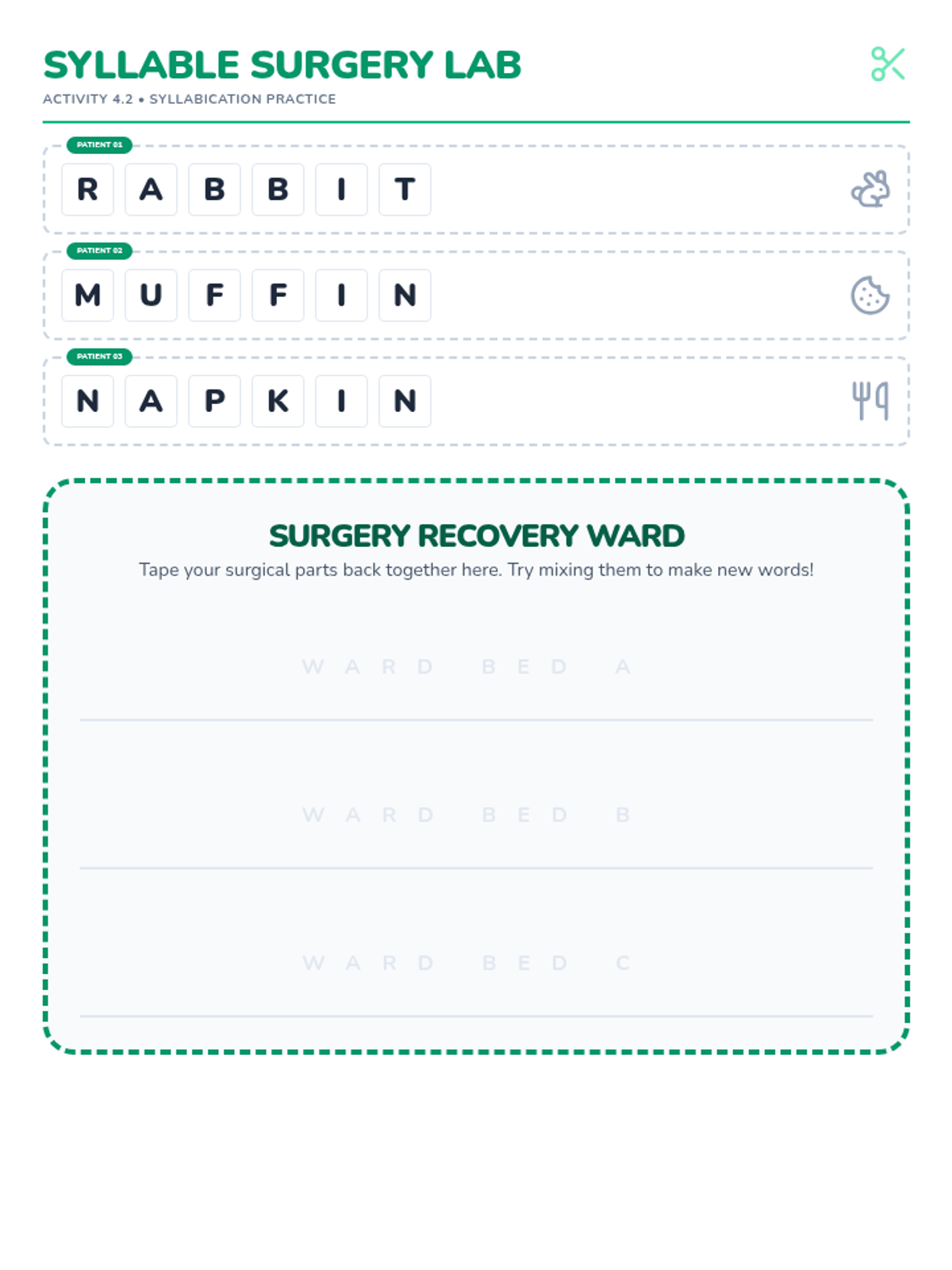
Introduces two-syllable words and basic syllabication rules (VC/CV), helping students tackle longer words. Days 16-20 of the 30-day plan.
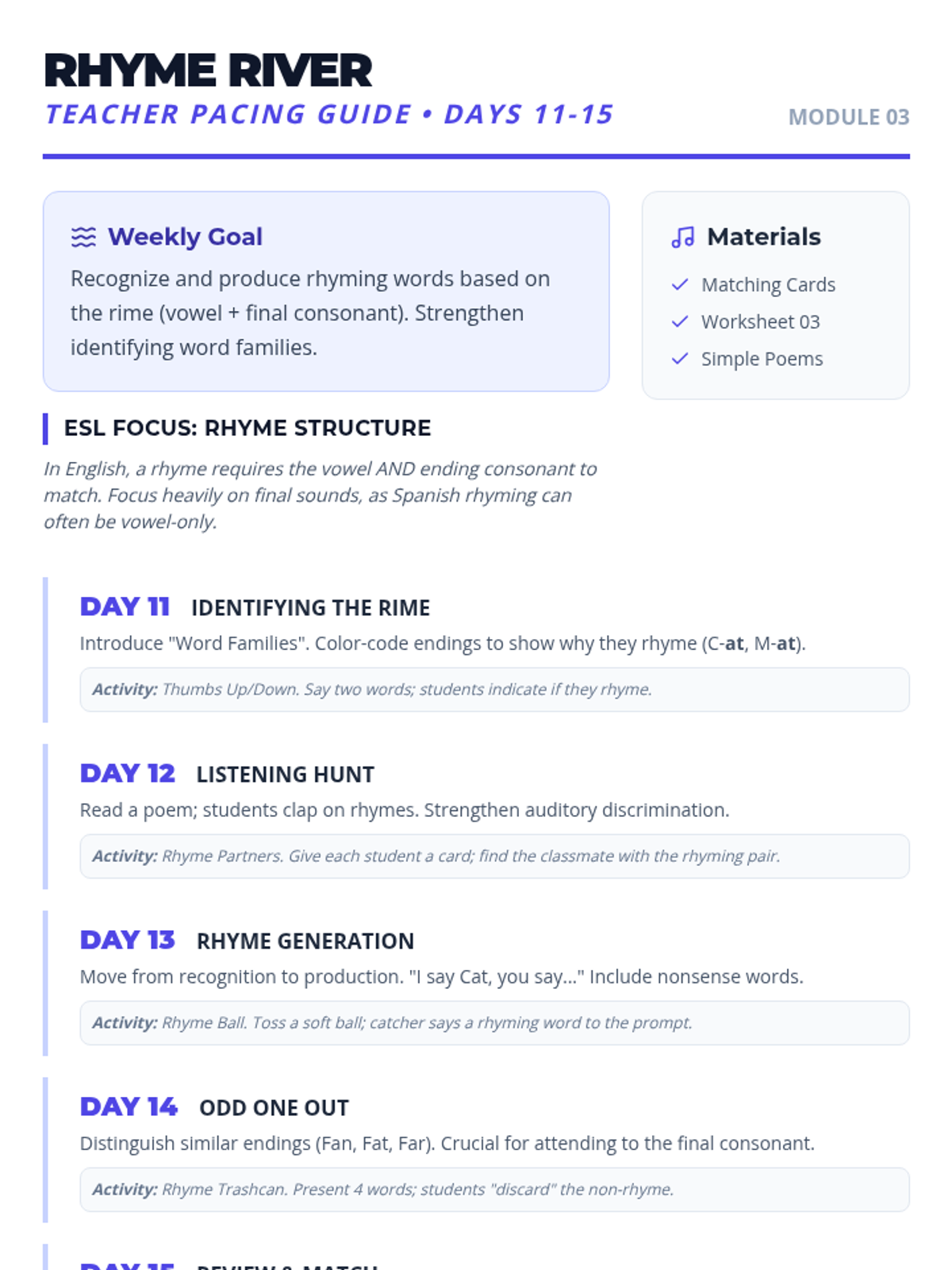
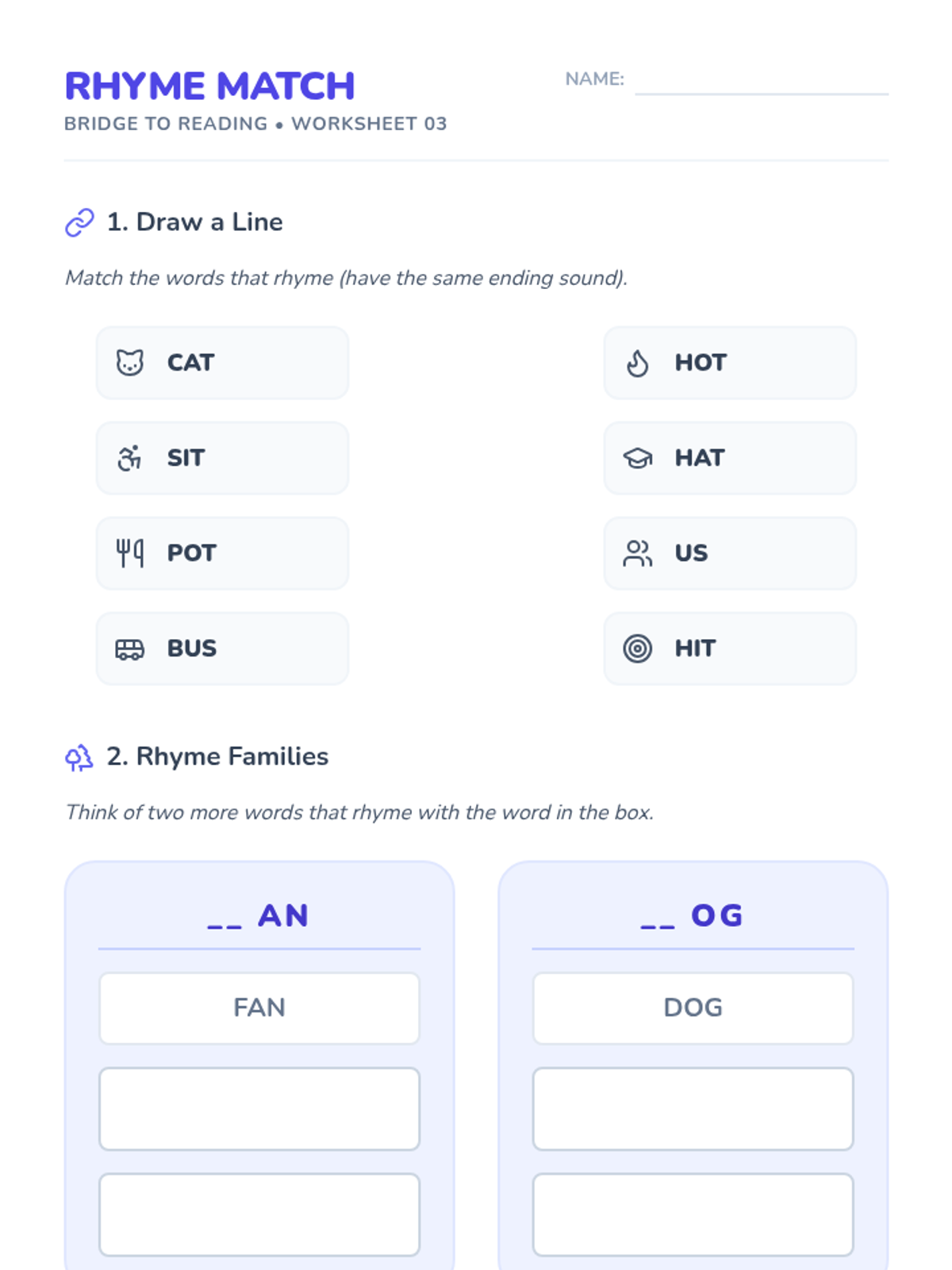
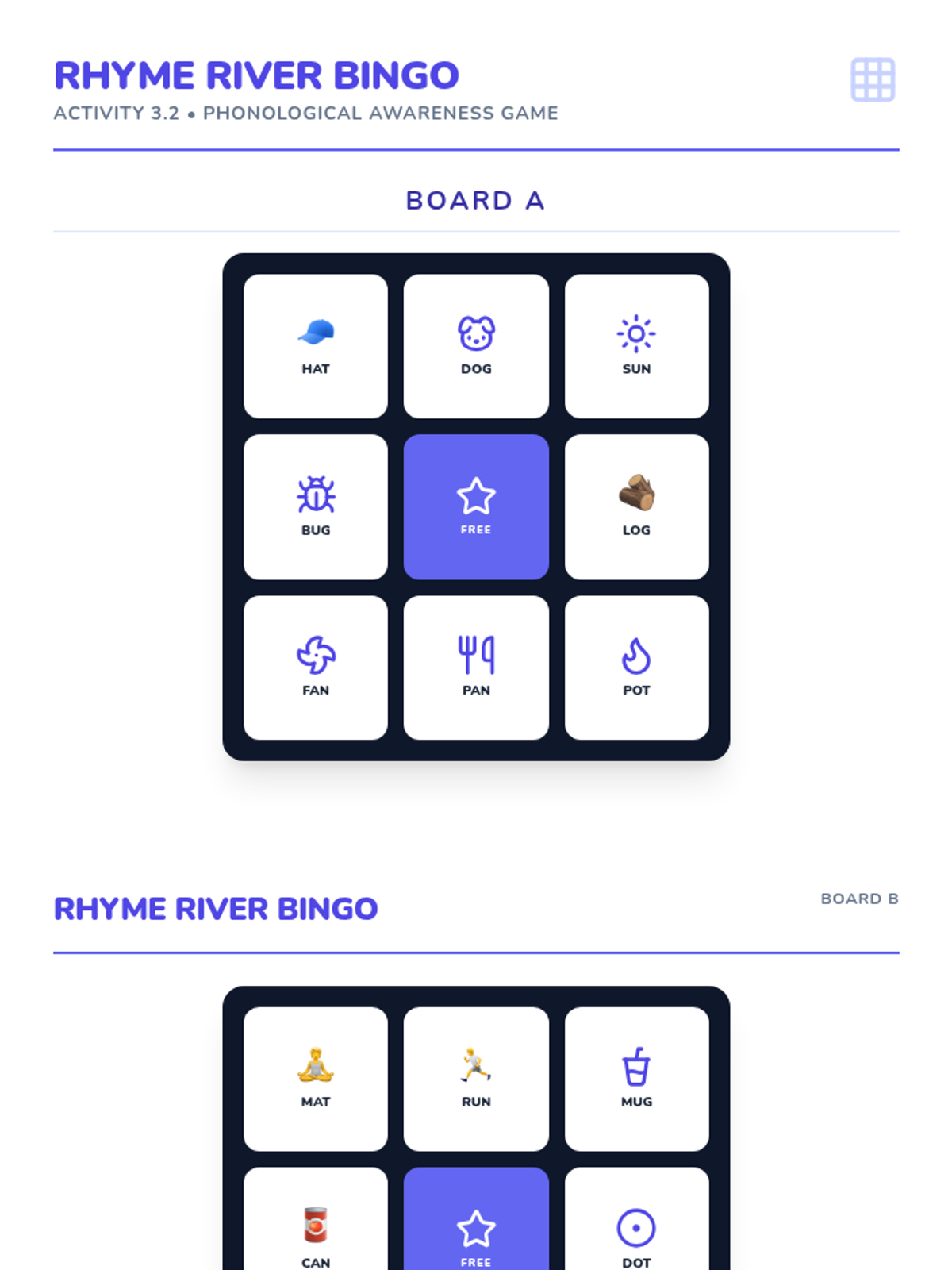
Explores phonological awareness through rhyming and word families, strengthening the connection between spelling patterns and sounds. Days 11-15 of the 30-day plan.
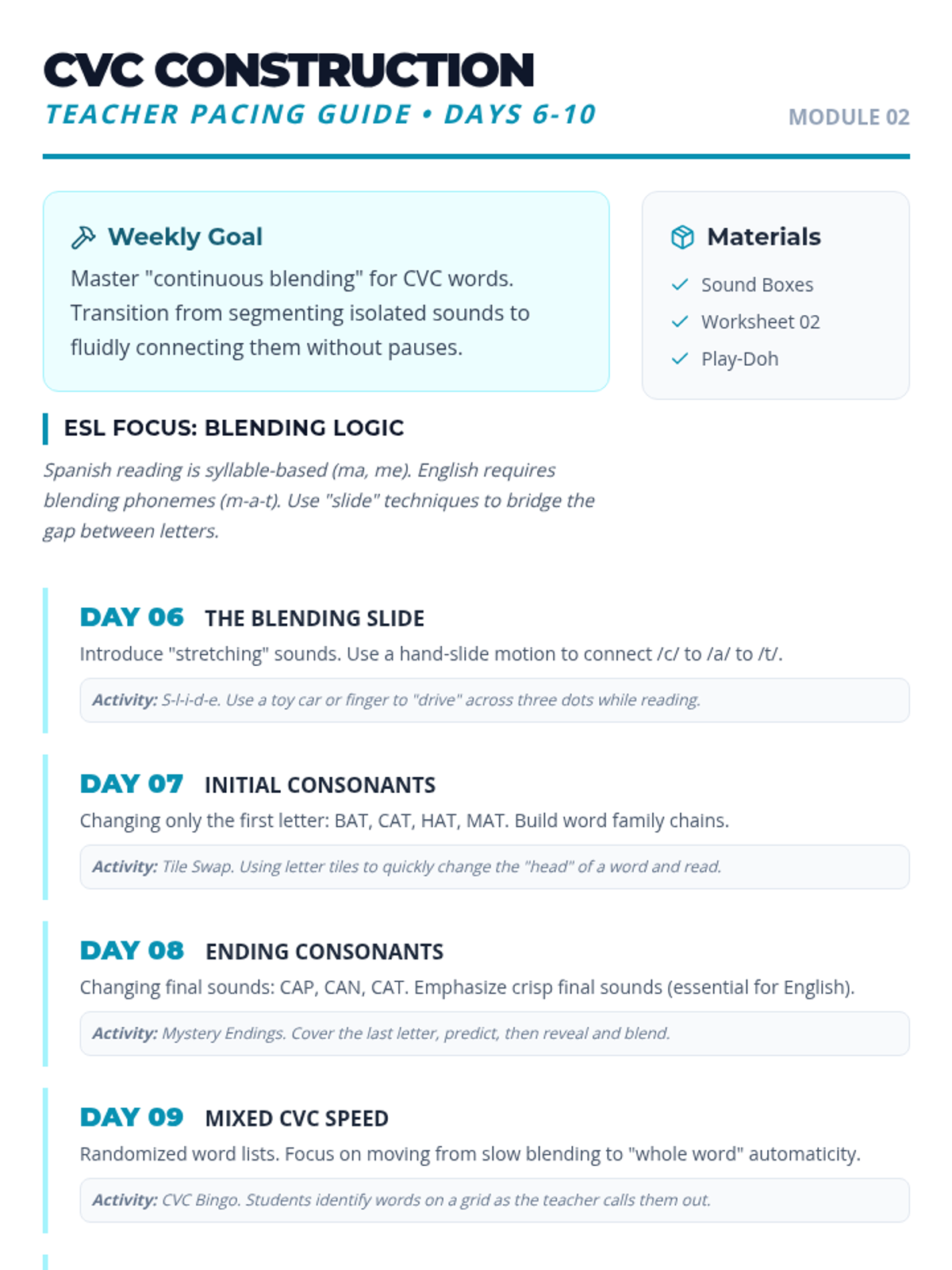
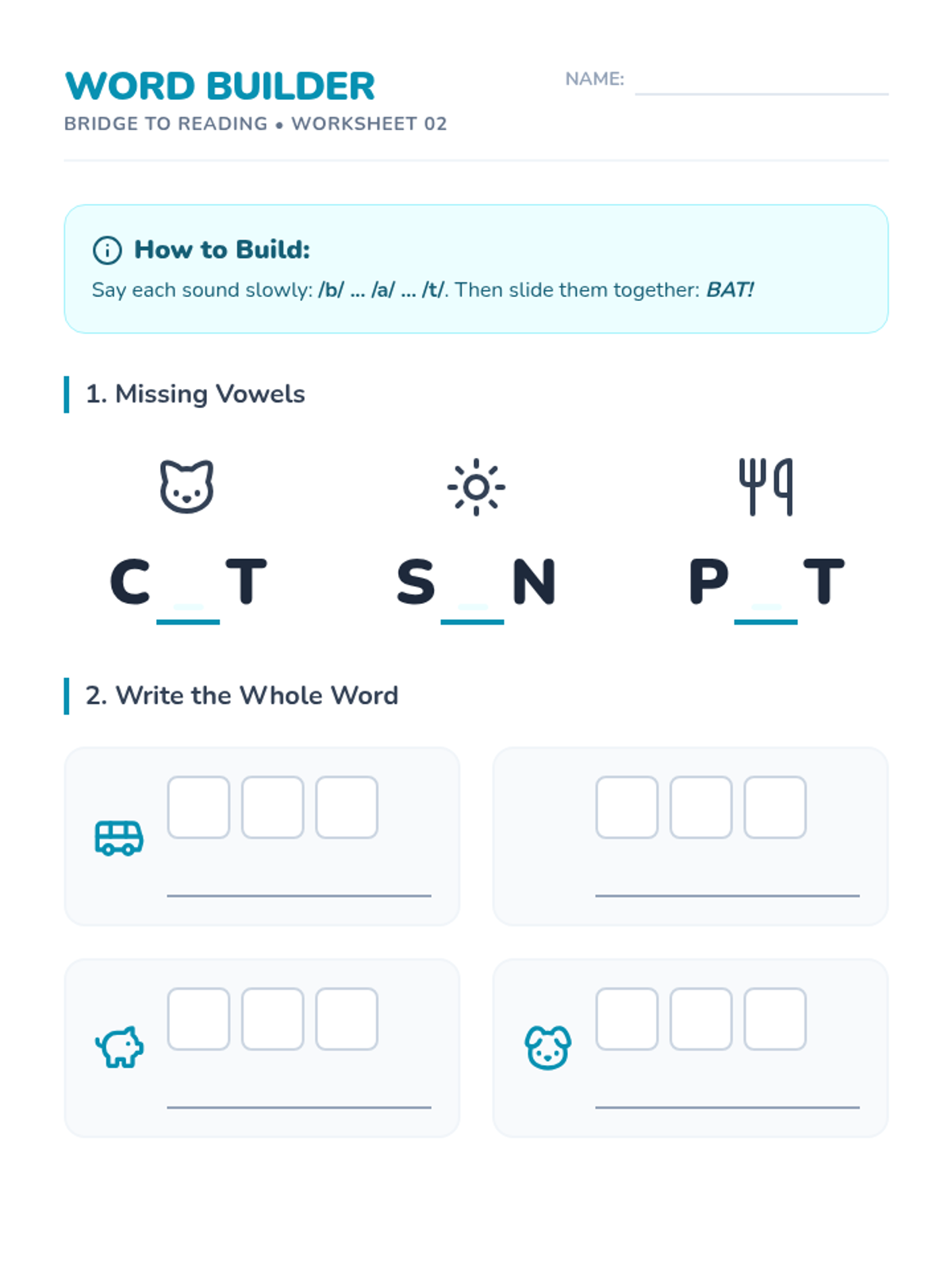
Introduces Consonant-Vowel-Consonant (CVC) blending and word families, transitioning students from isolated sounds to fluid reading. Days 6-10 of the 30-day plan.
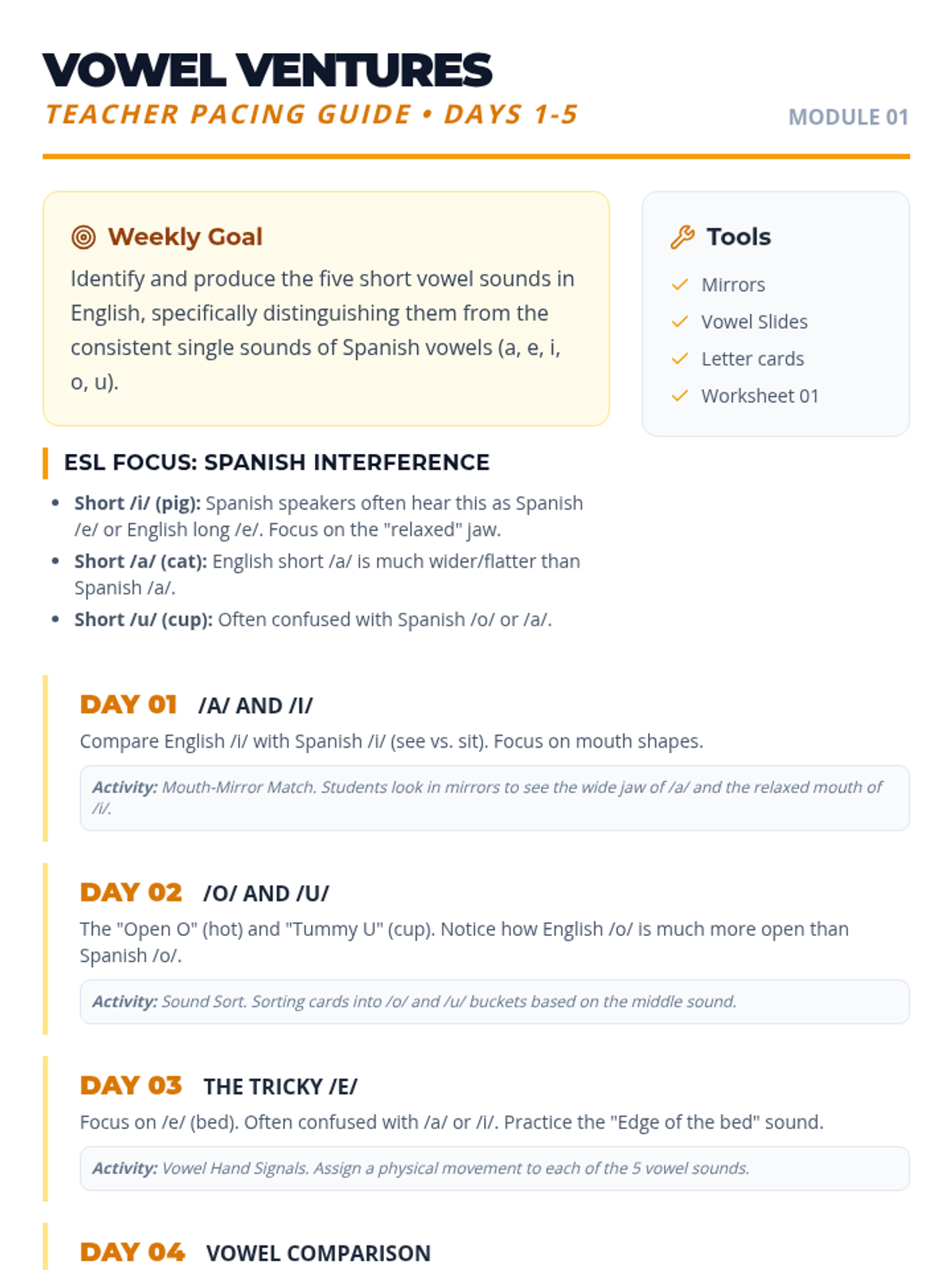
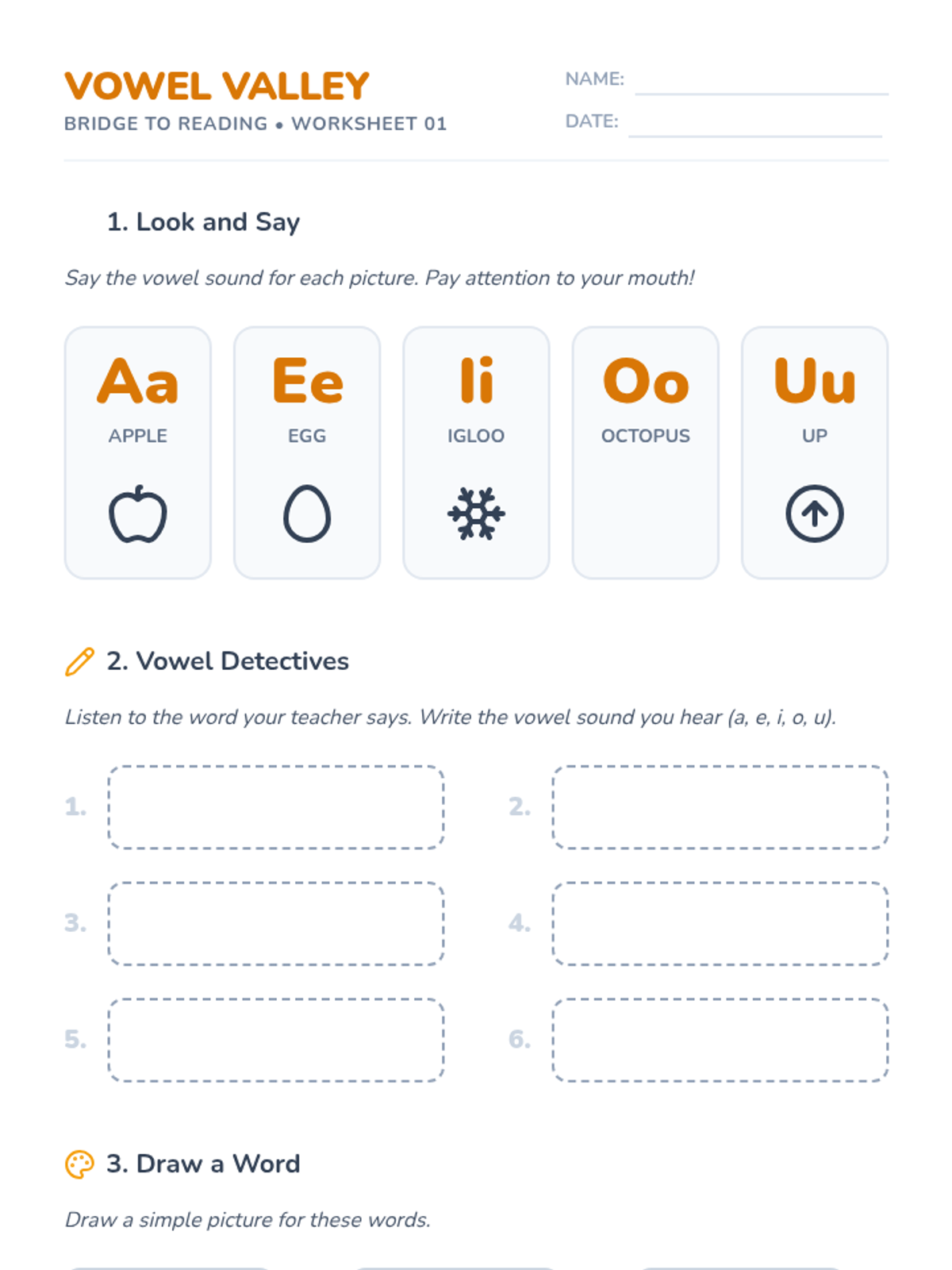
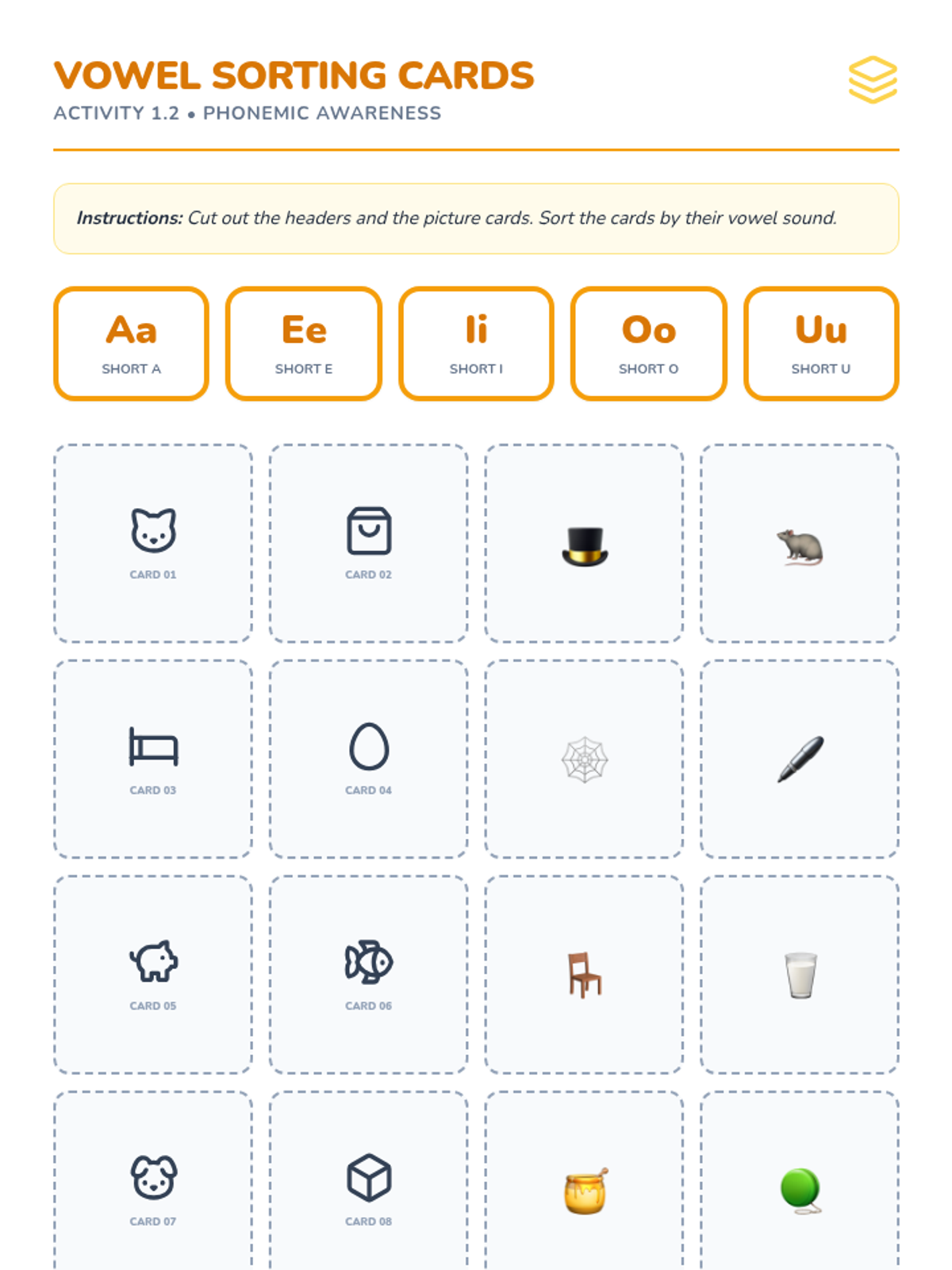
Focuses on the five short vowel sounds, contrasting them with Spanish vowel sounds to help students distinguish English phonemes. Days 1-5 of the 30-day plan.
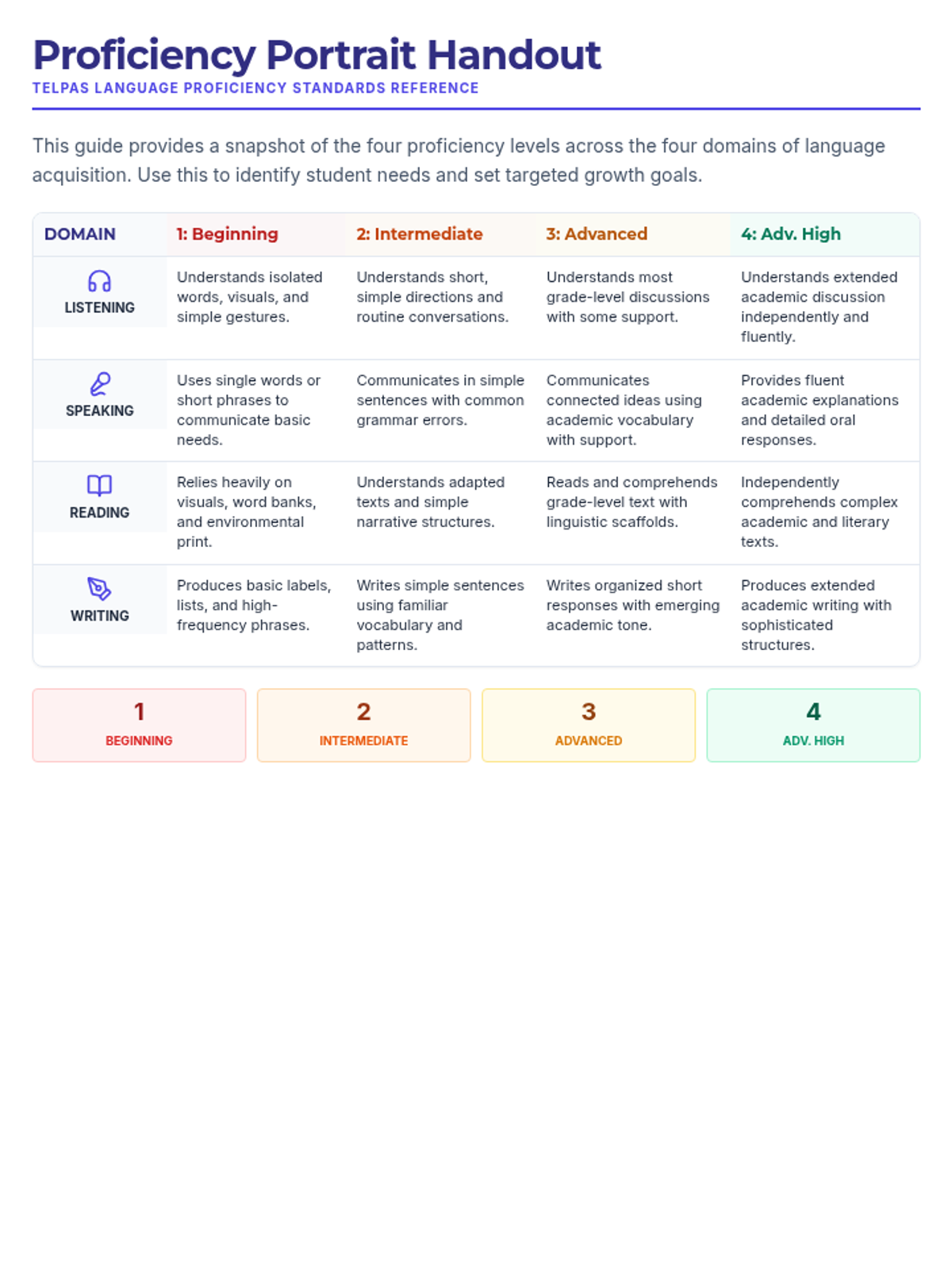
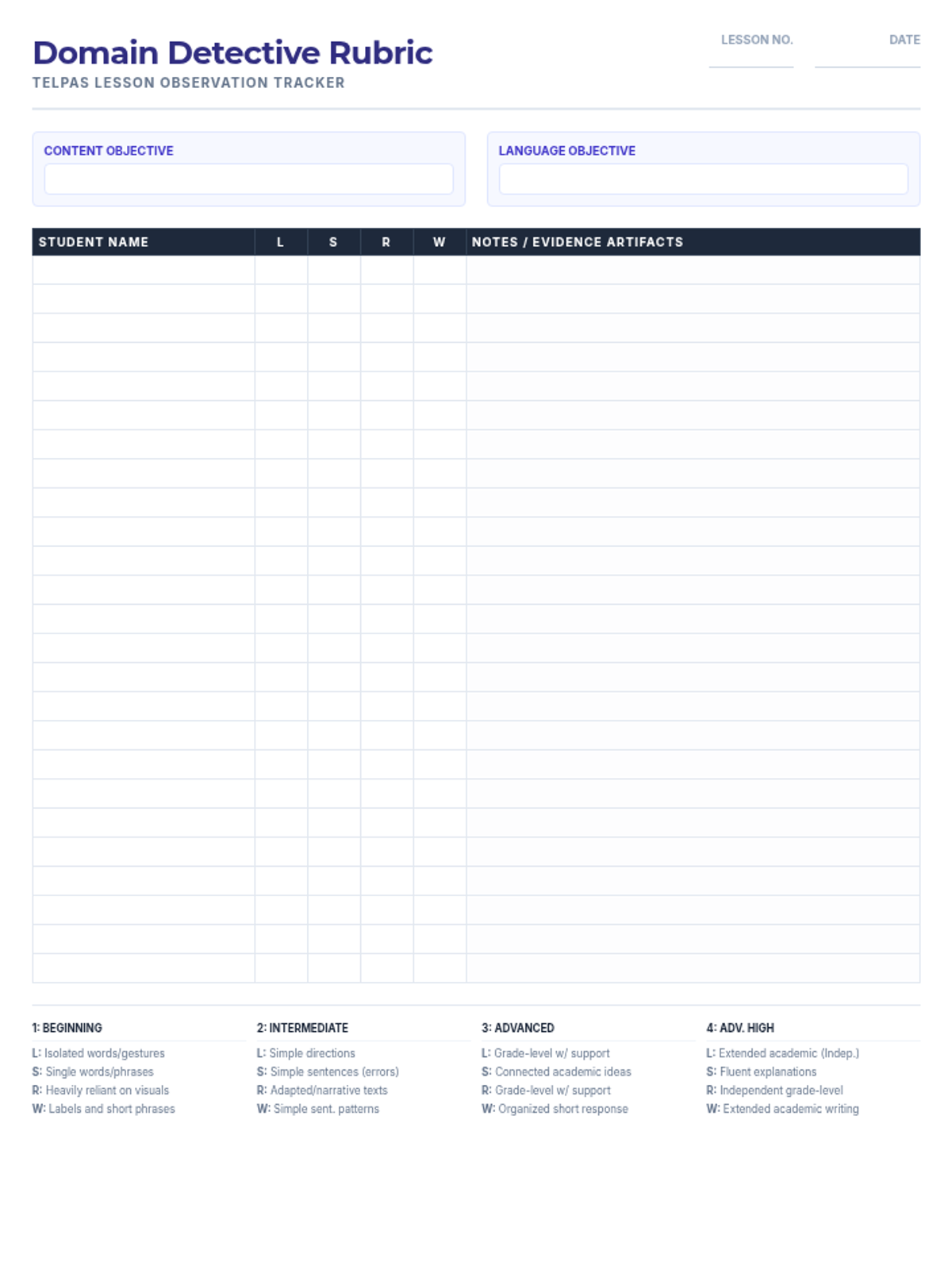
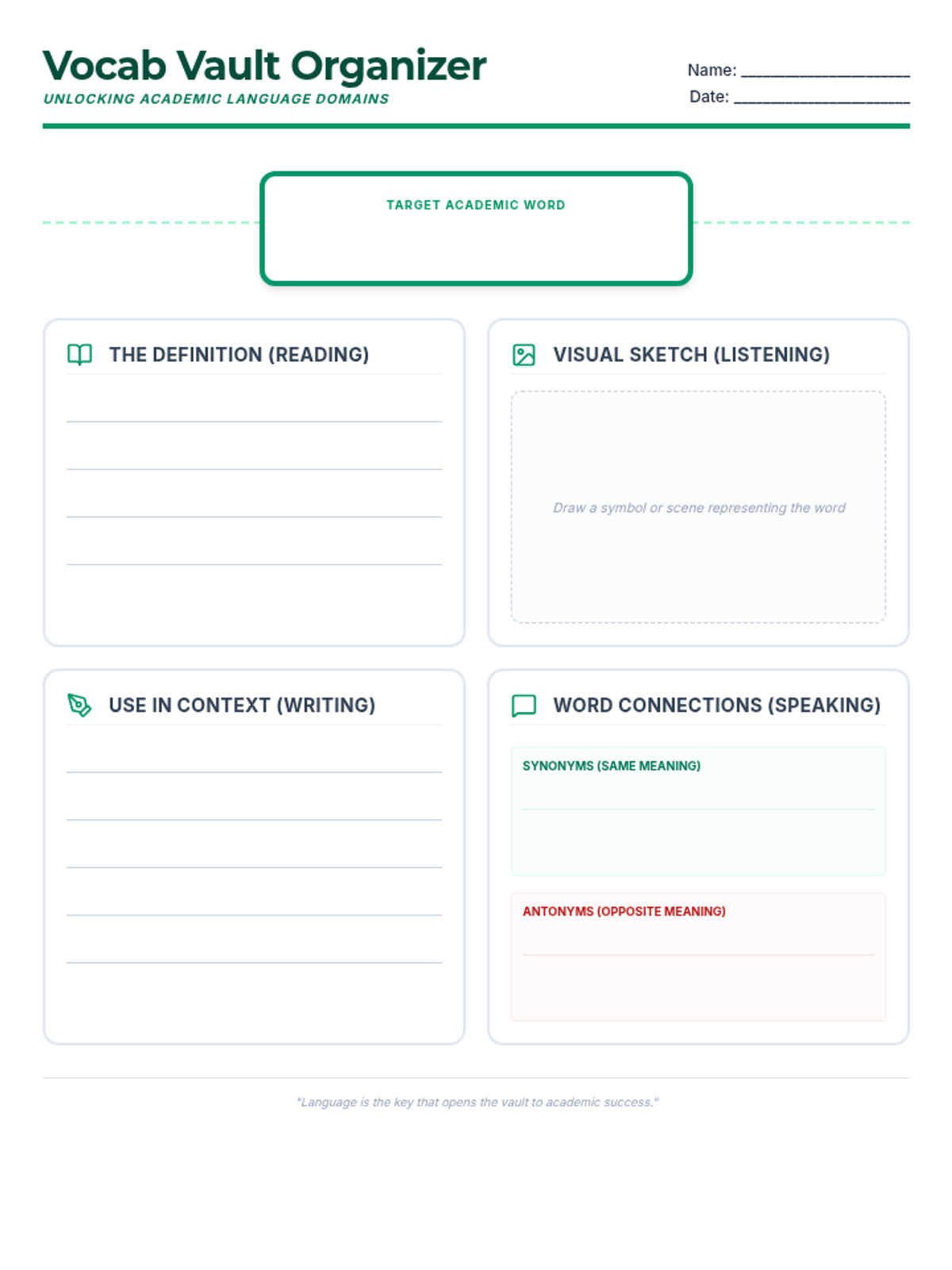
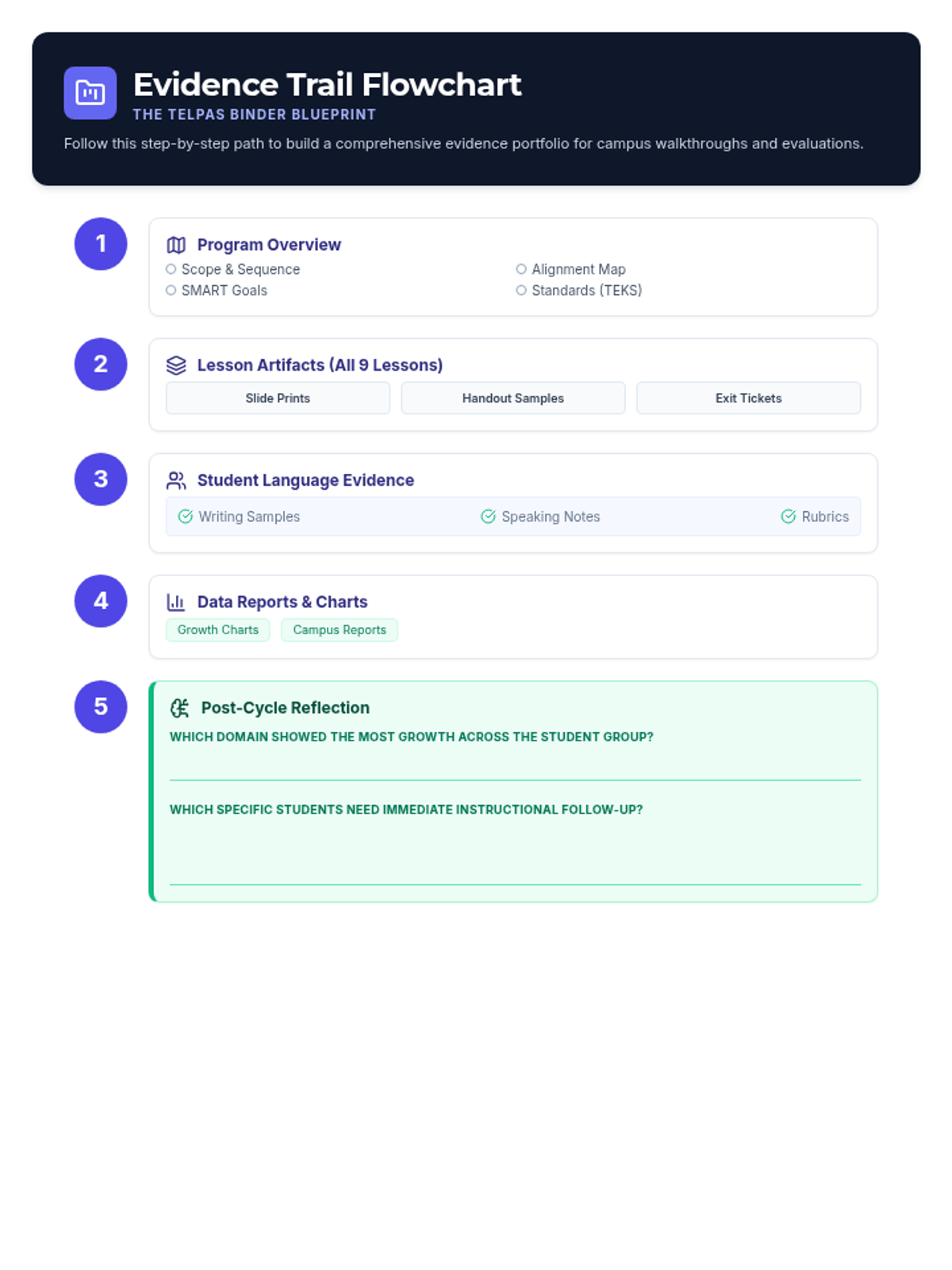
A comprehensive toolkit for teachers to track, document, and support student English language proficiency growth using TELPAS criteria across all four domains.
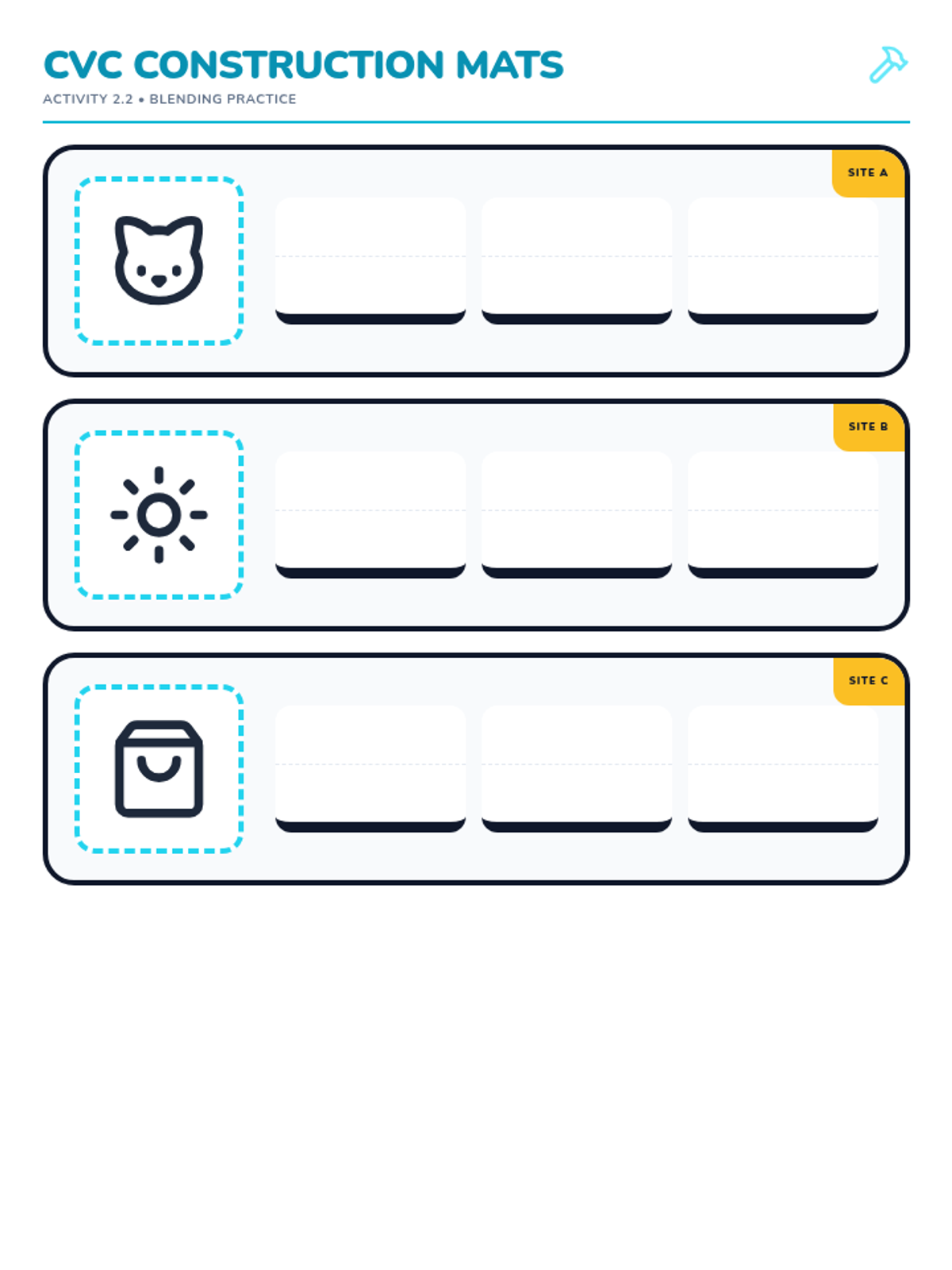
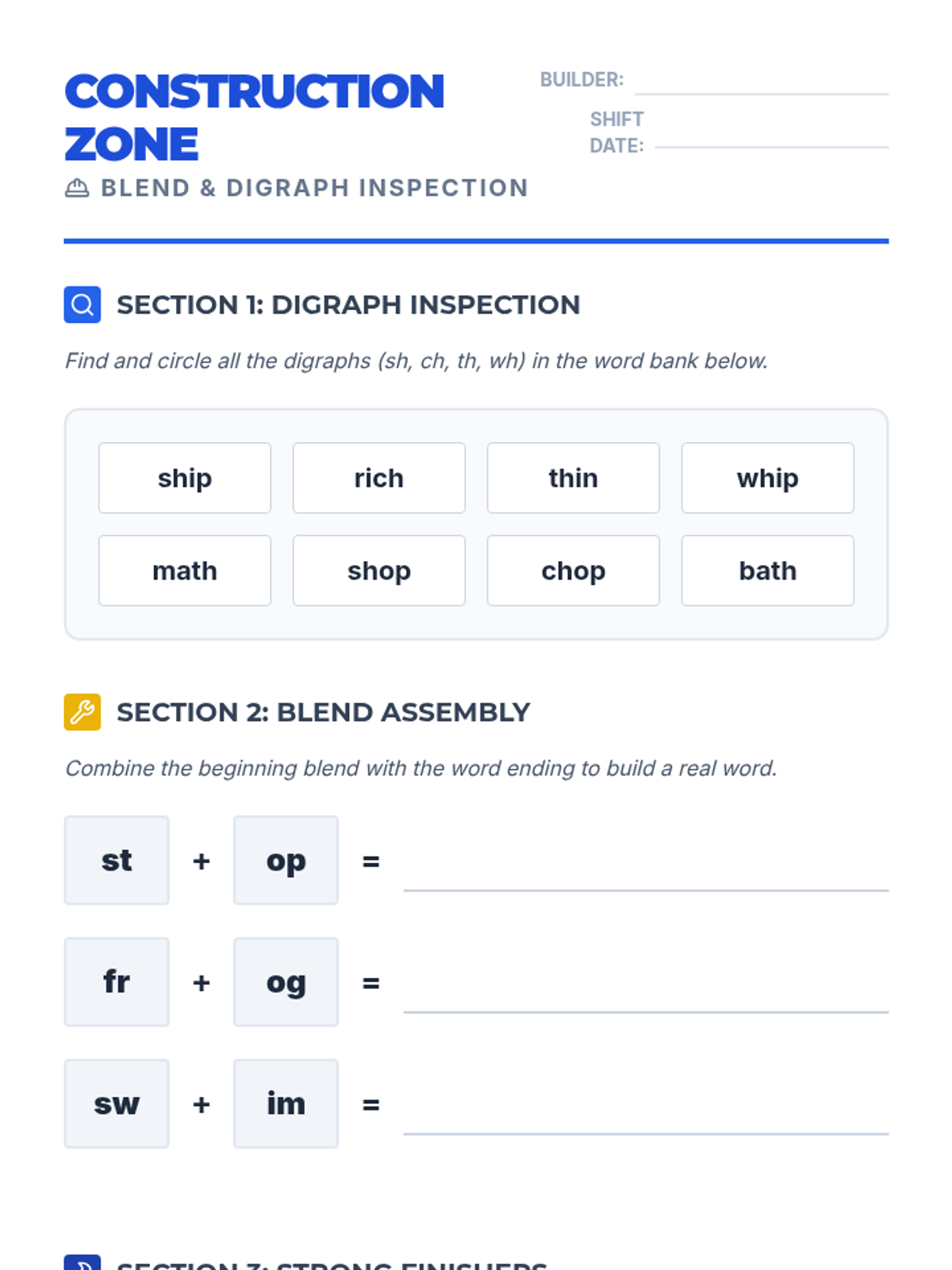
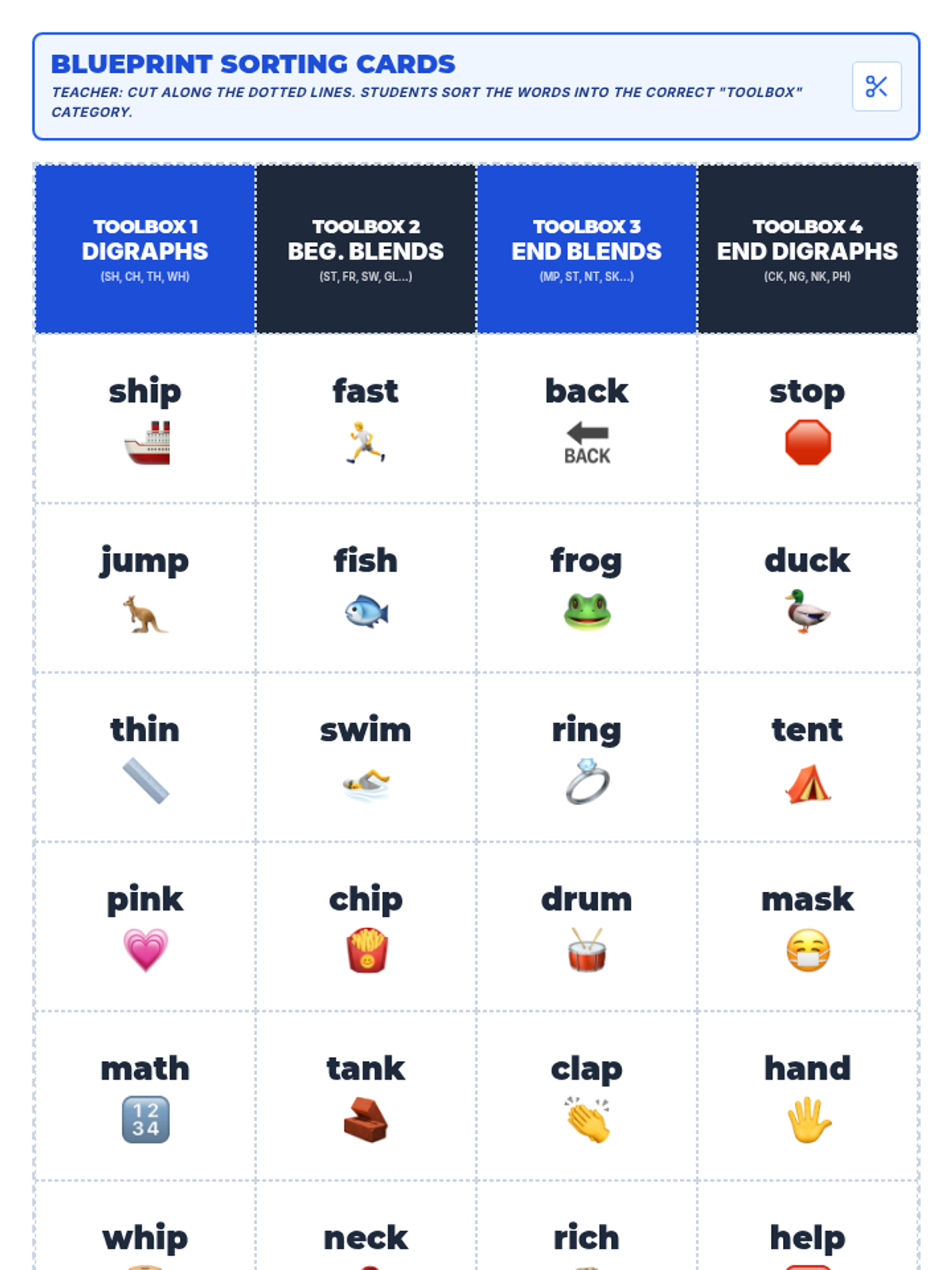
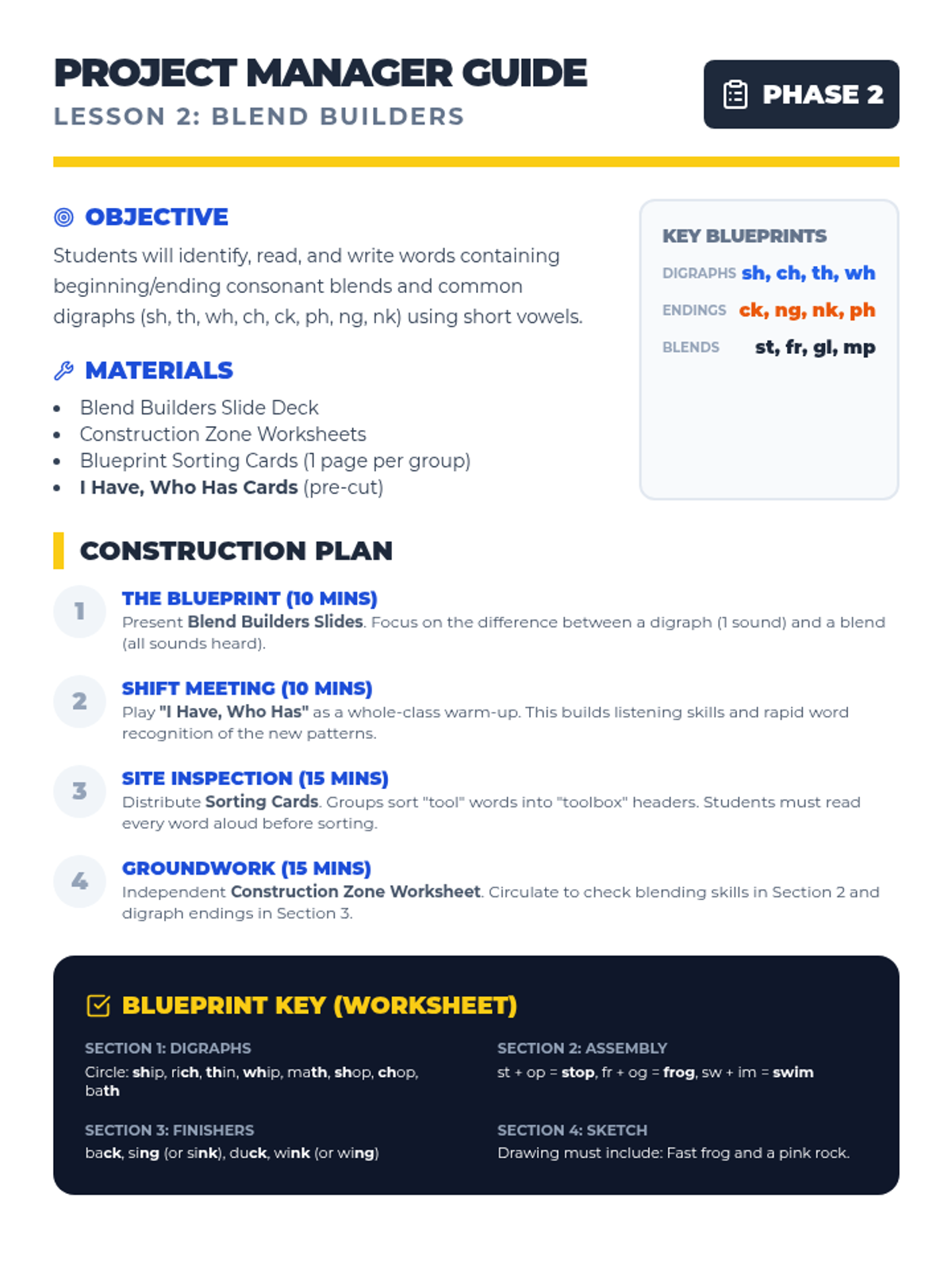
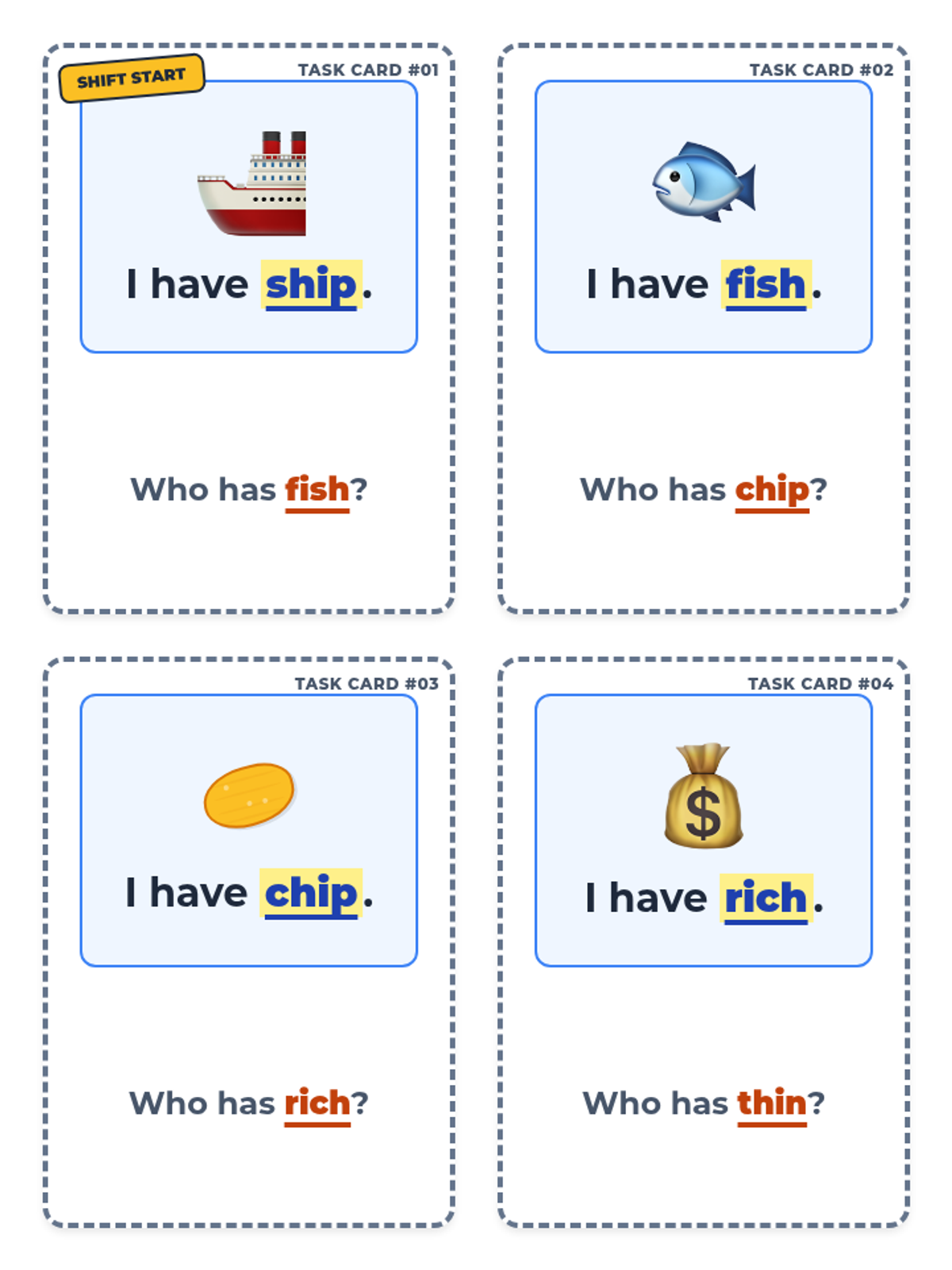
A focused lesson on beginning and ending consonant blends and common digraphs (sh, th, wh, ch, ck, ph, ng, nk) using short vowel words. Students "construct" words in a workshop-themed environment.
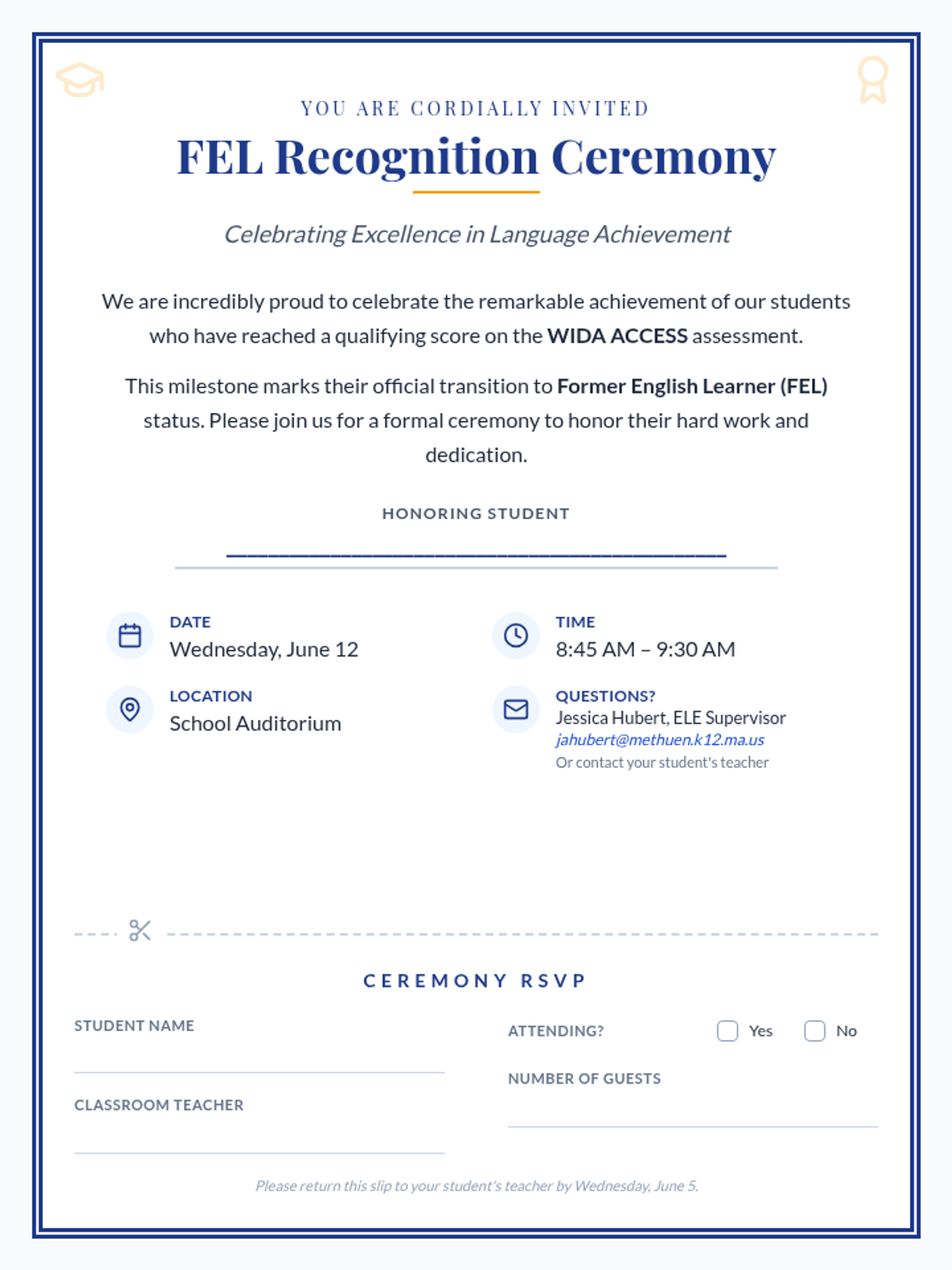
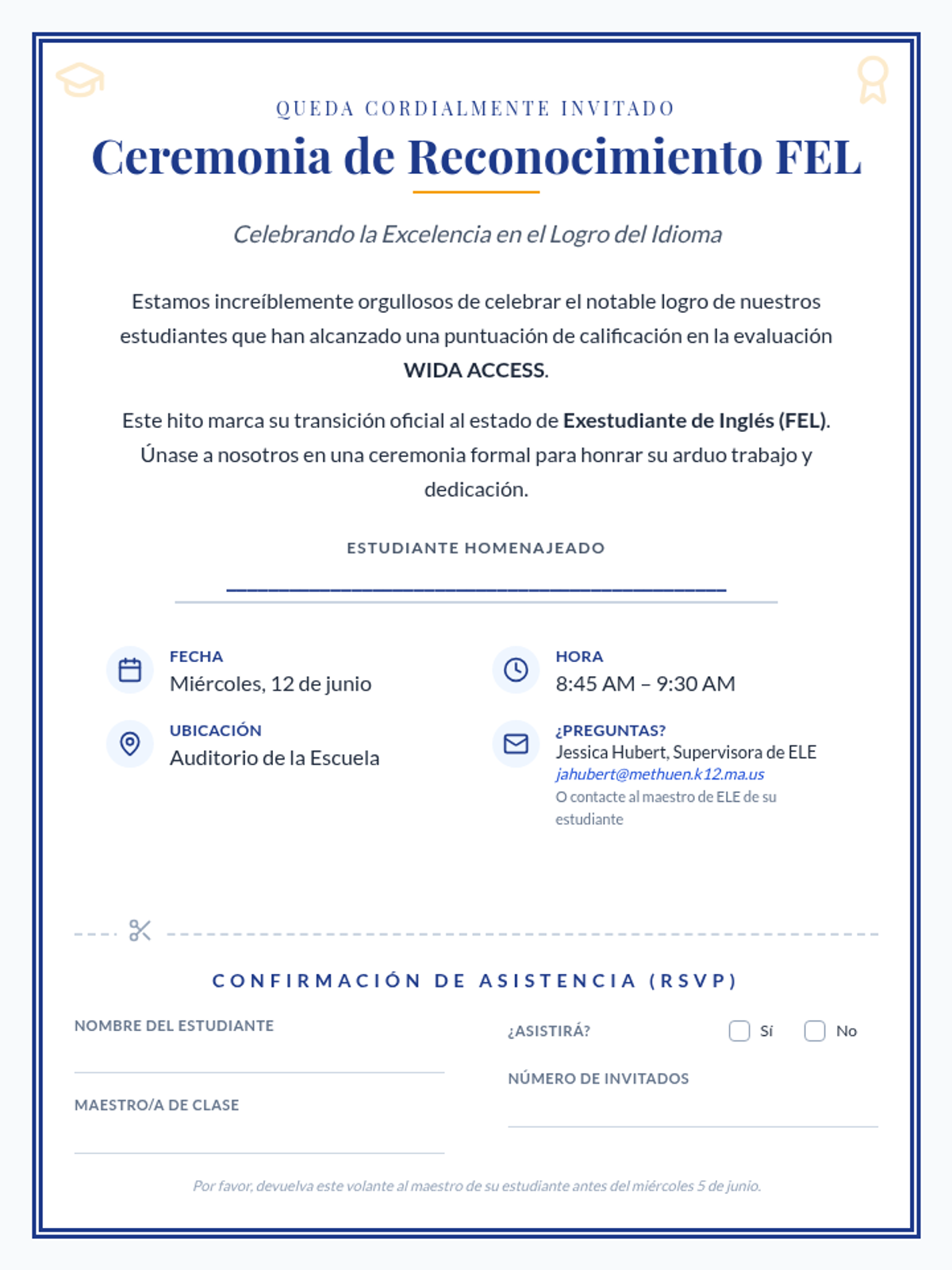
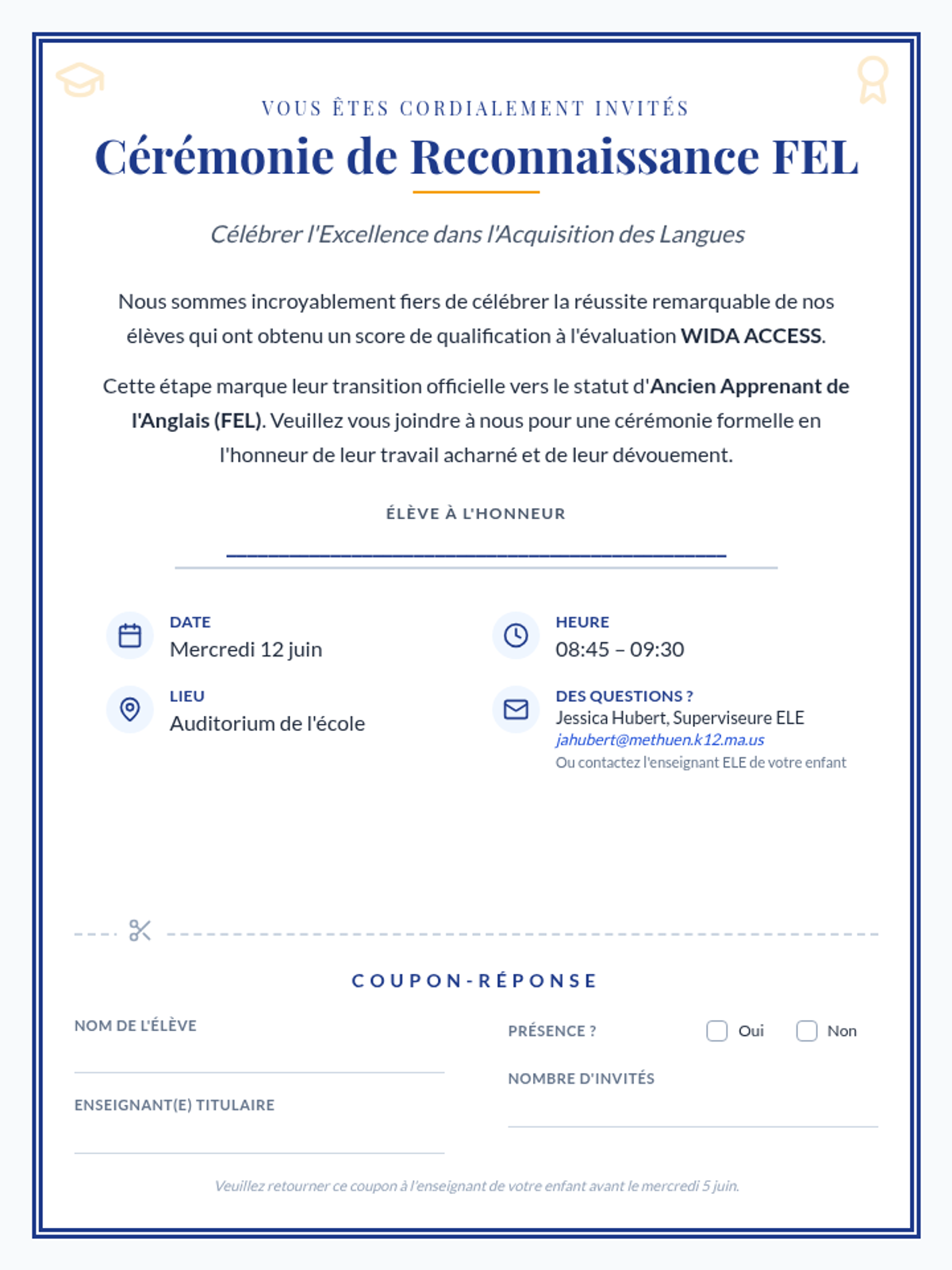
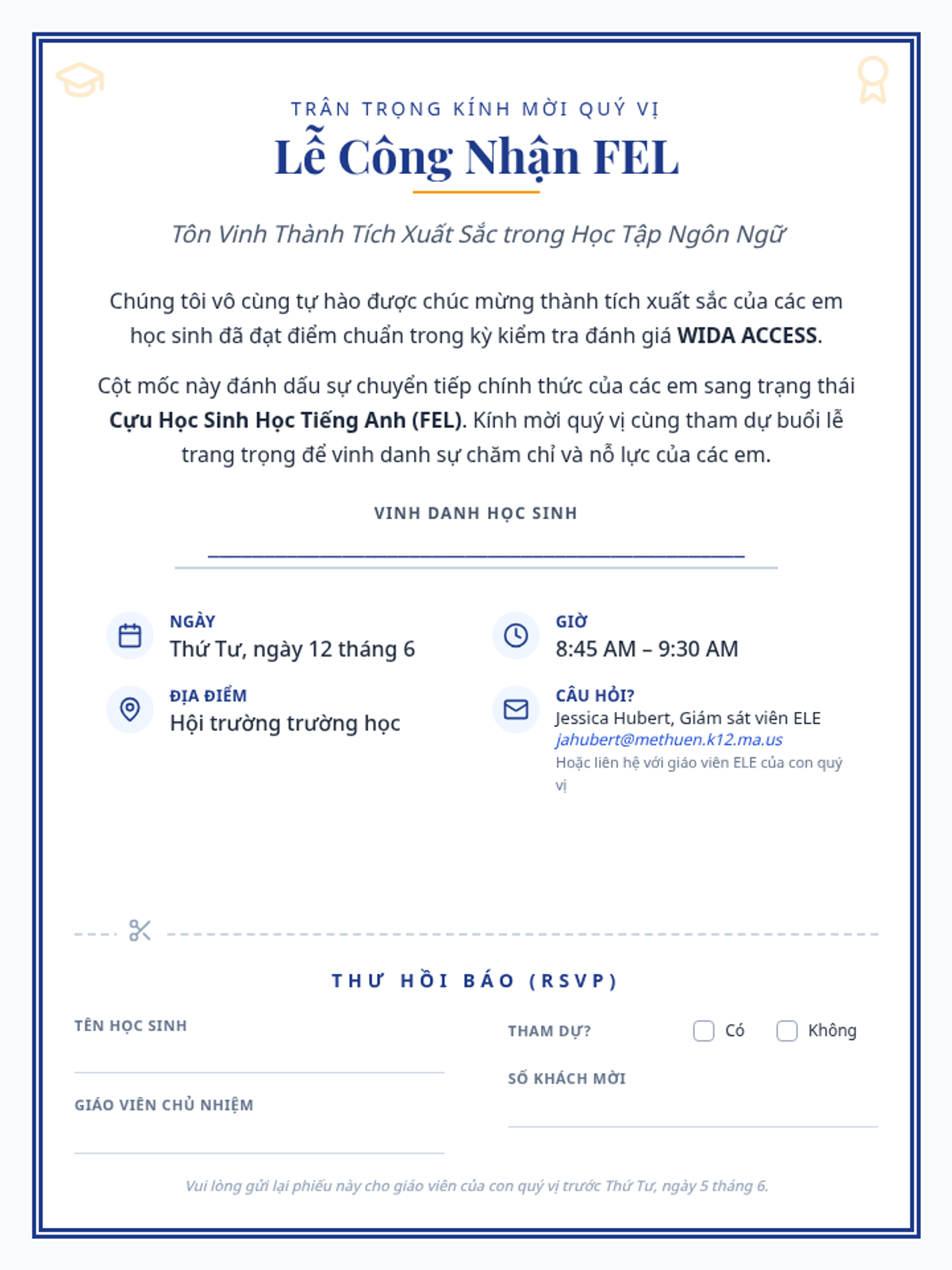
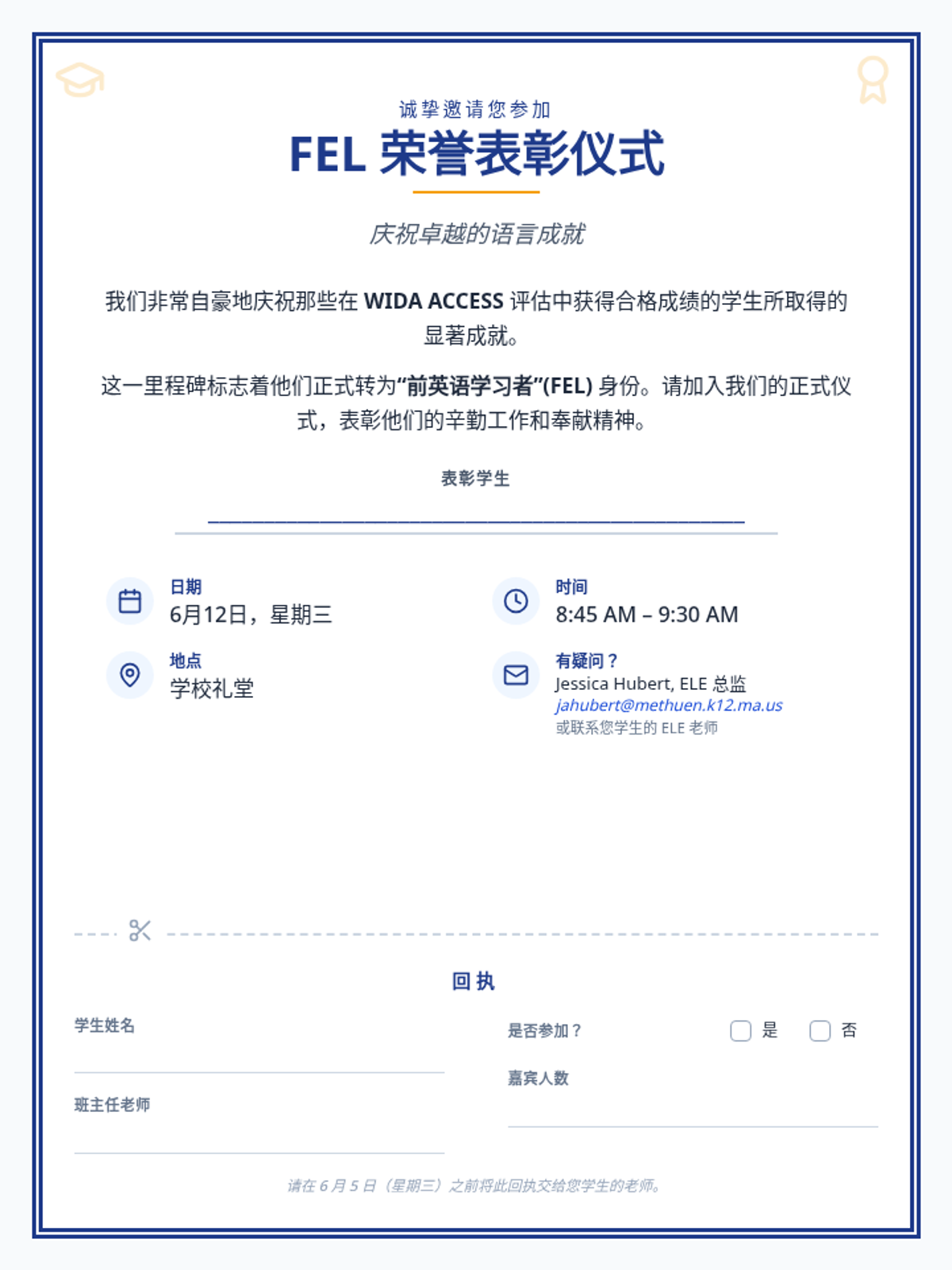
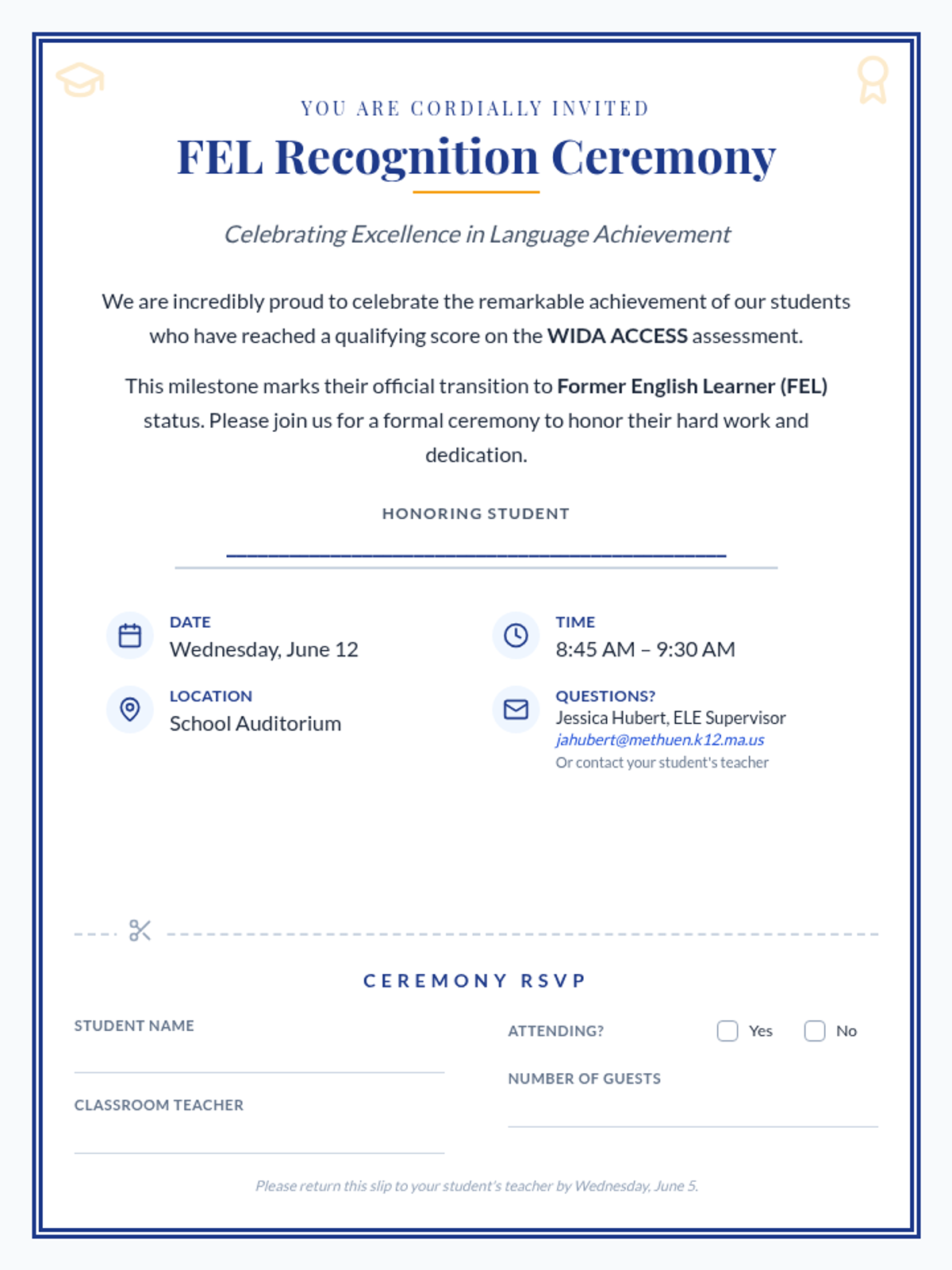
A collection of formal invitation flyers for the FEL Recognition Ceremony, provided in multiple languages to ensure all families can celebrate their student's transition from English Language Education services.
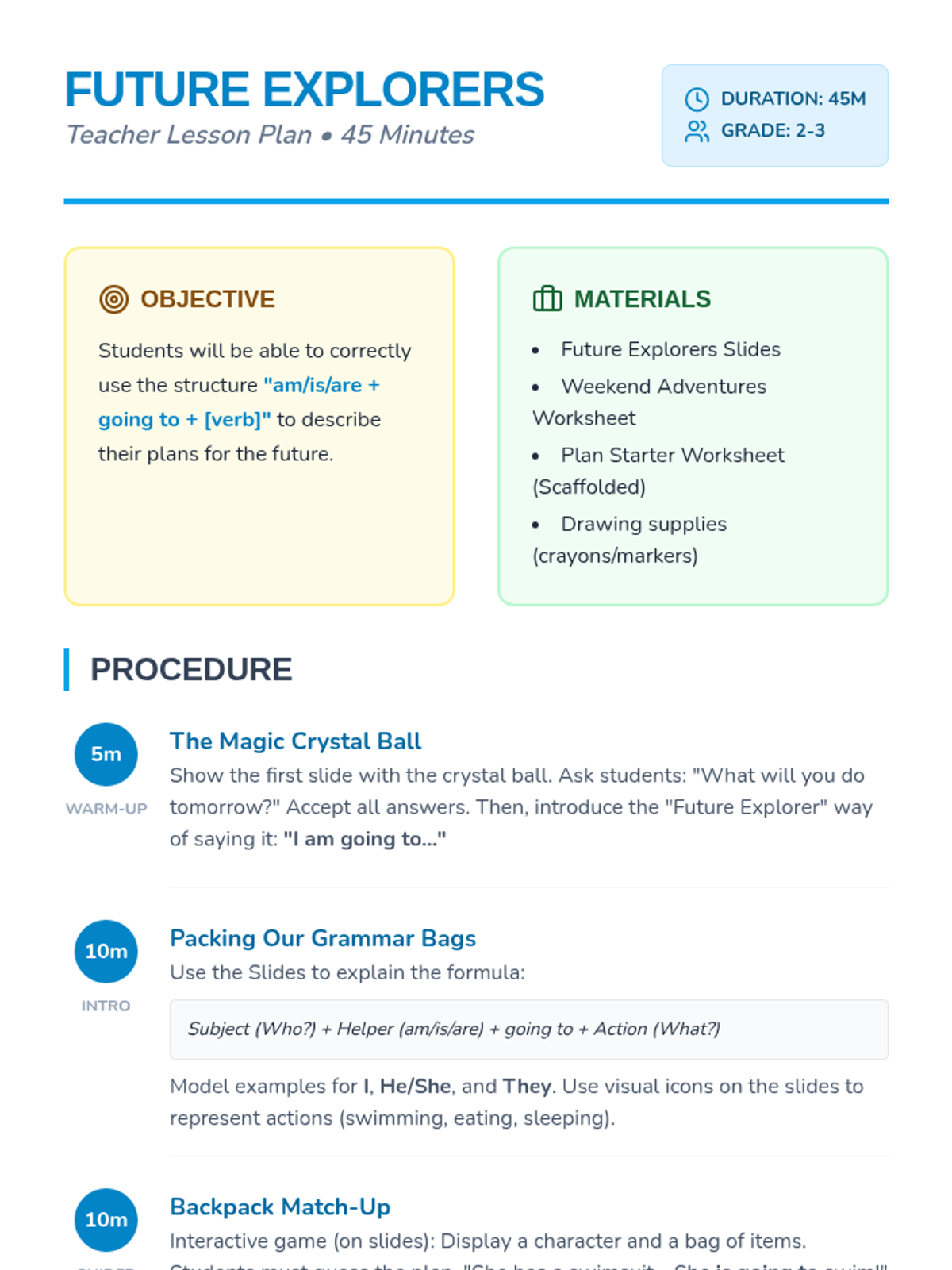
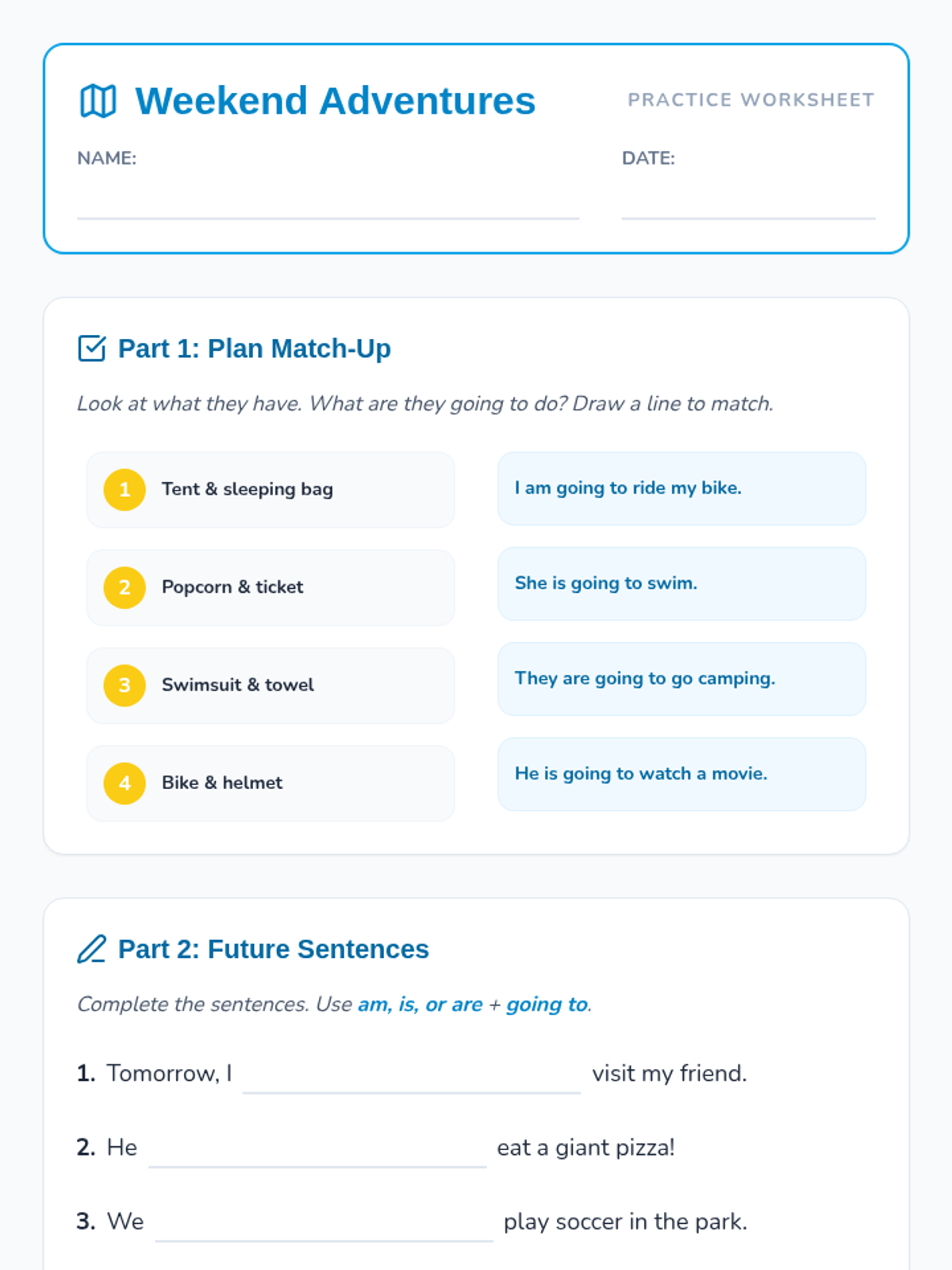
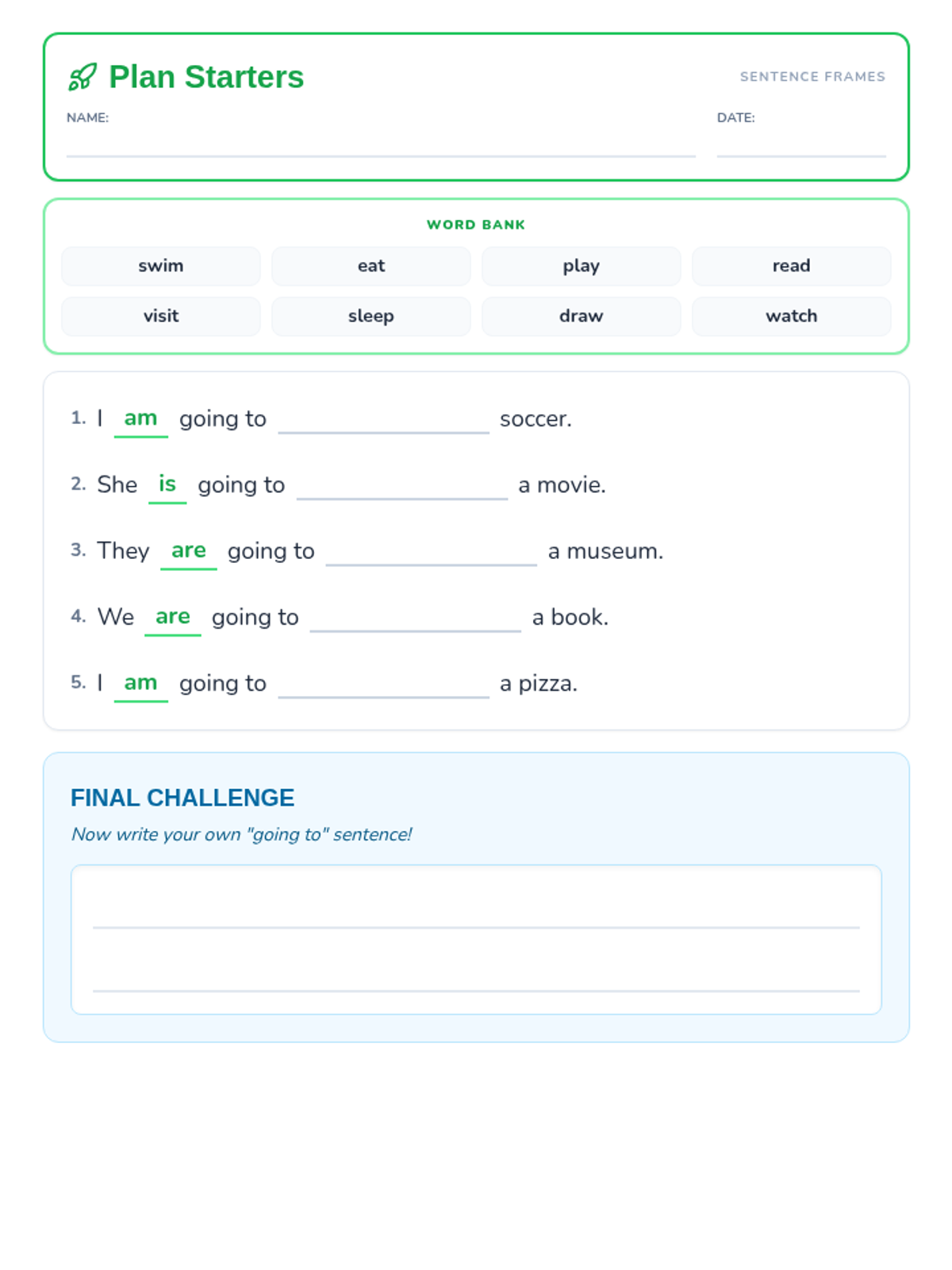
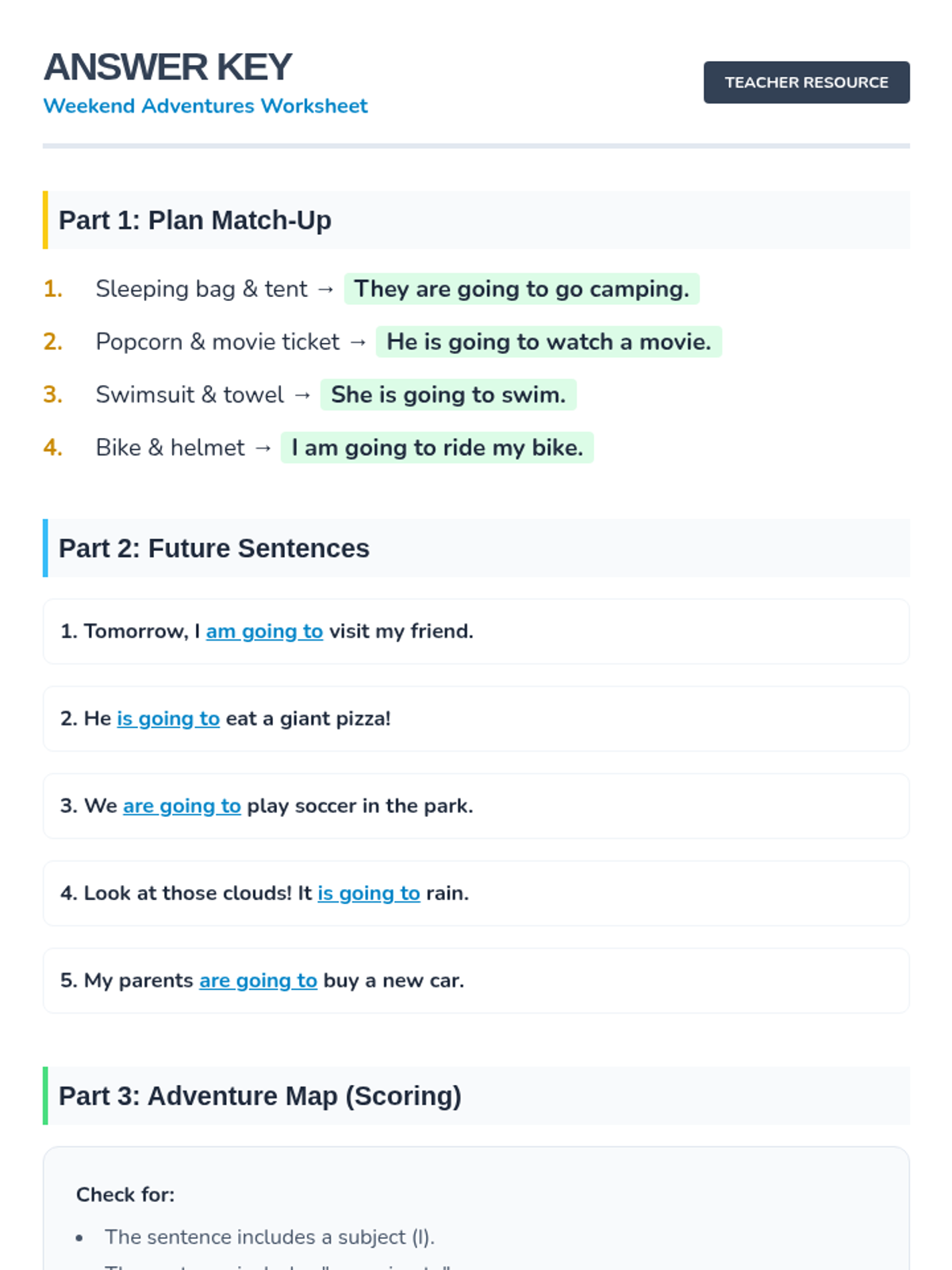
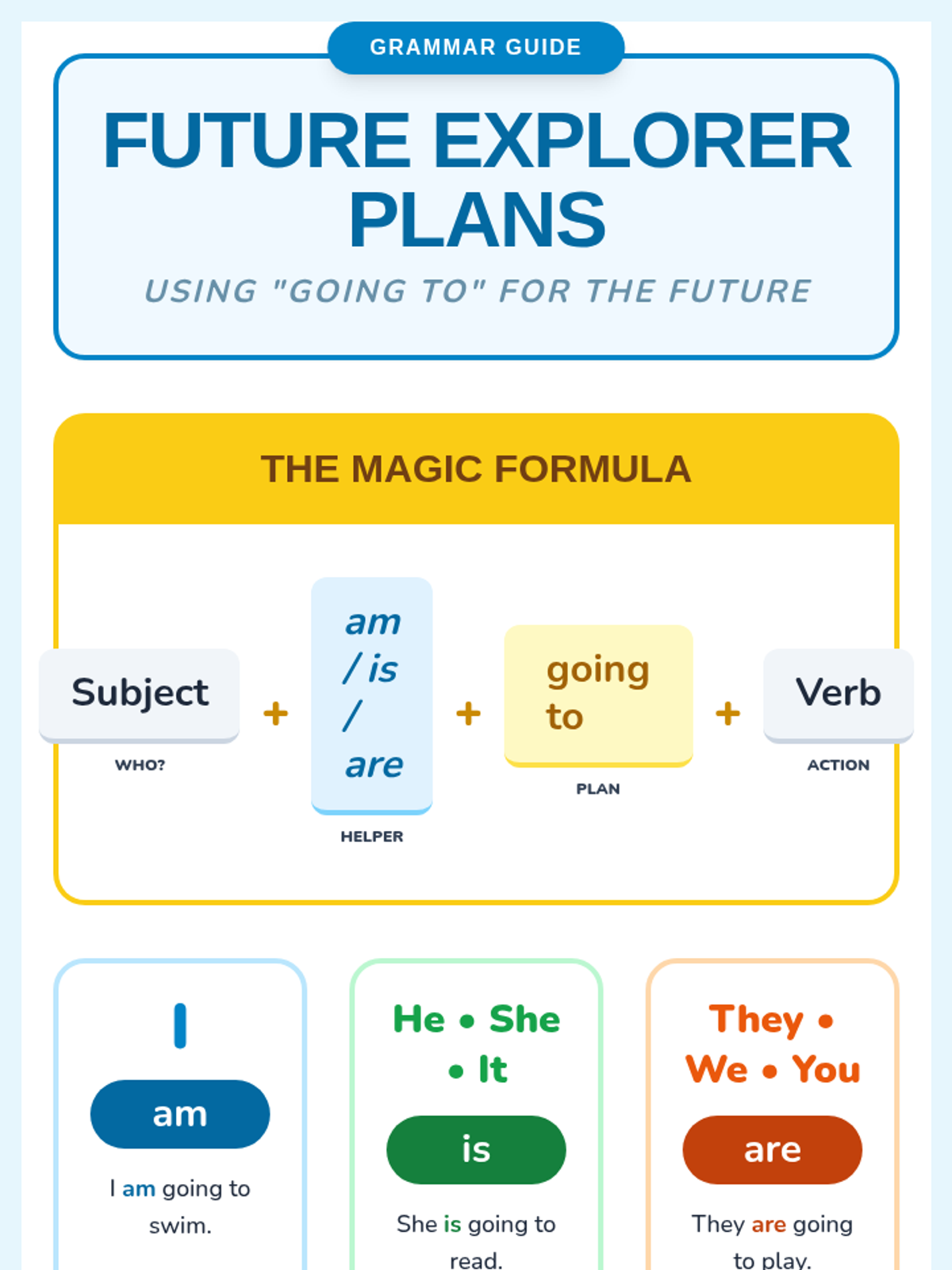
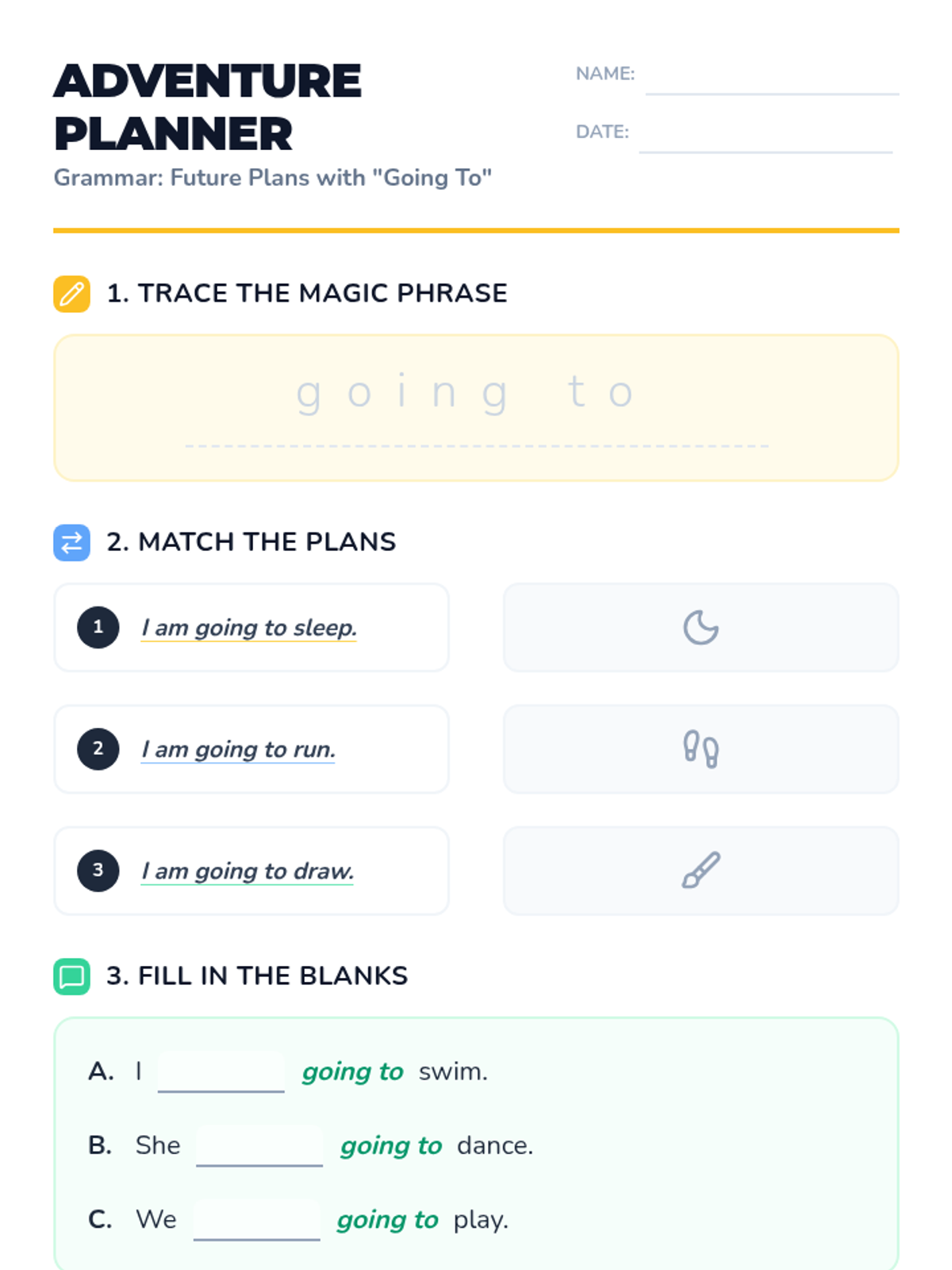
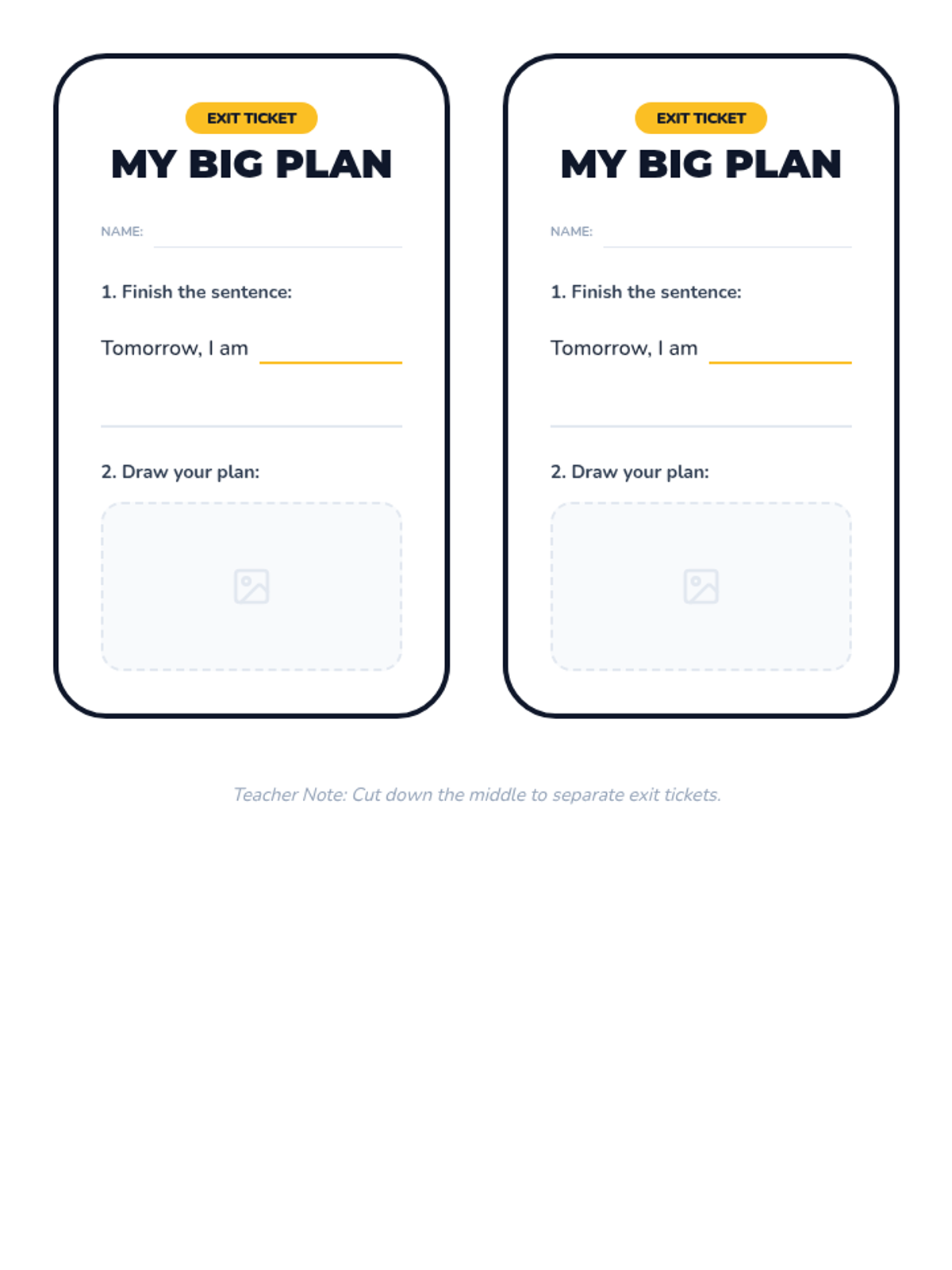
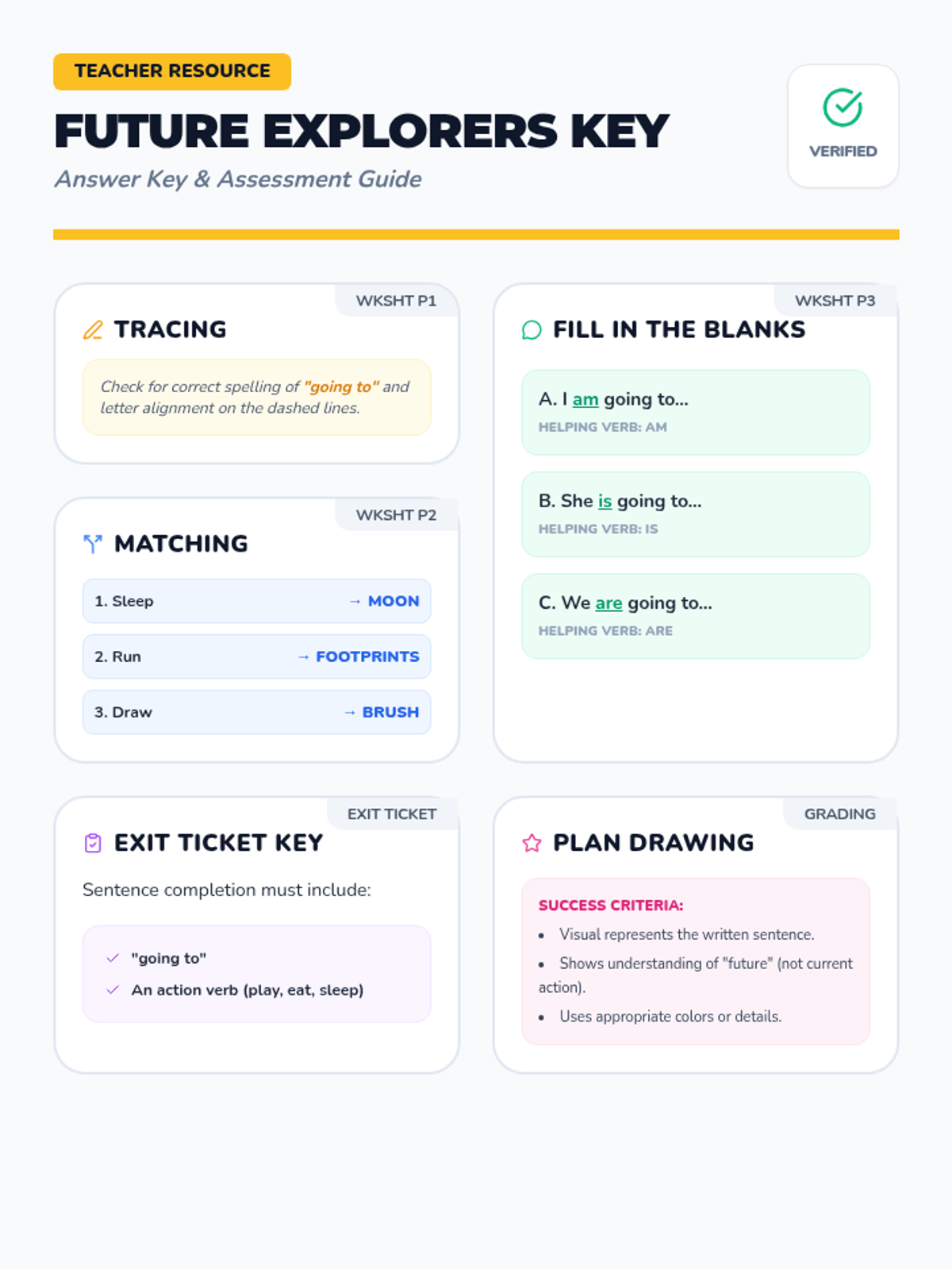
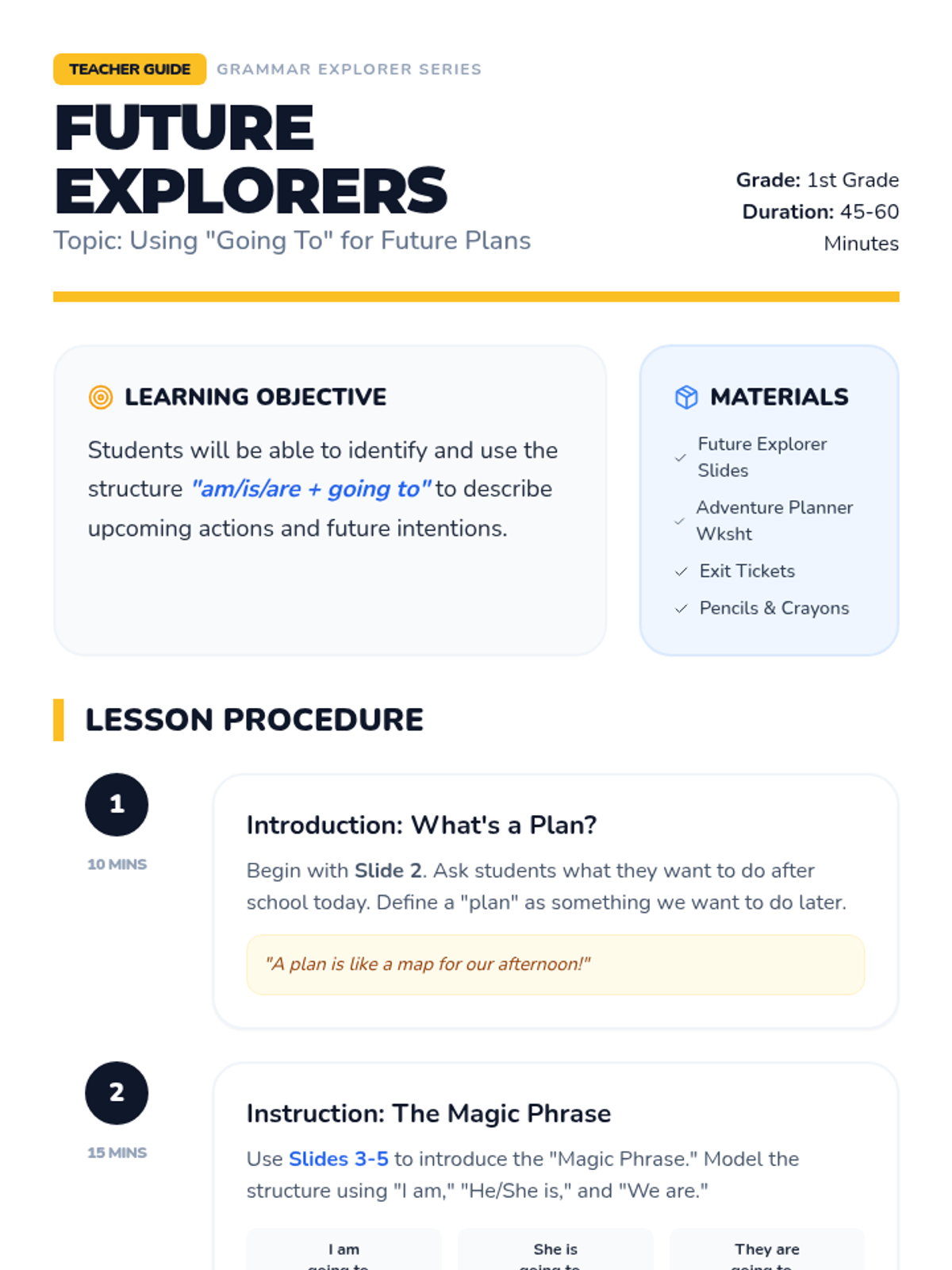
A comprehensive 45-minute lesson for 2nd and 3rd graders to master the use of 'going to' for expressing future plans through adventure-themed activities.
A foundational grammar lesson for young learners focusing on the structure 'am/is/are + going to' to describe upcoming plans and intentions through visual storytelling and guided practice.
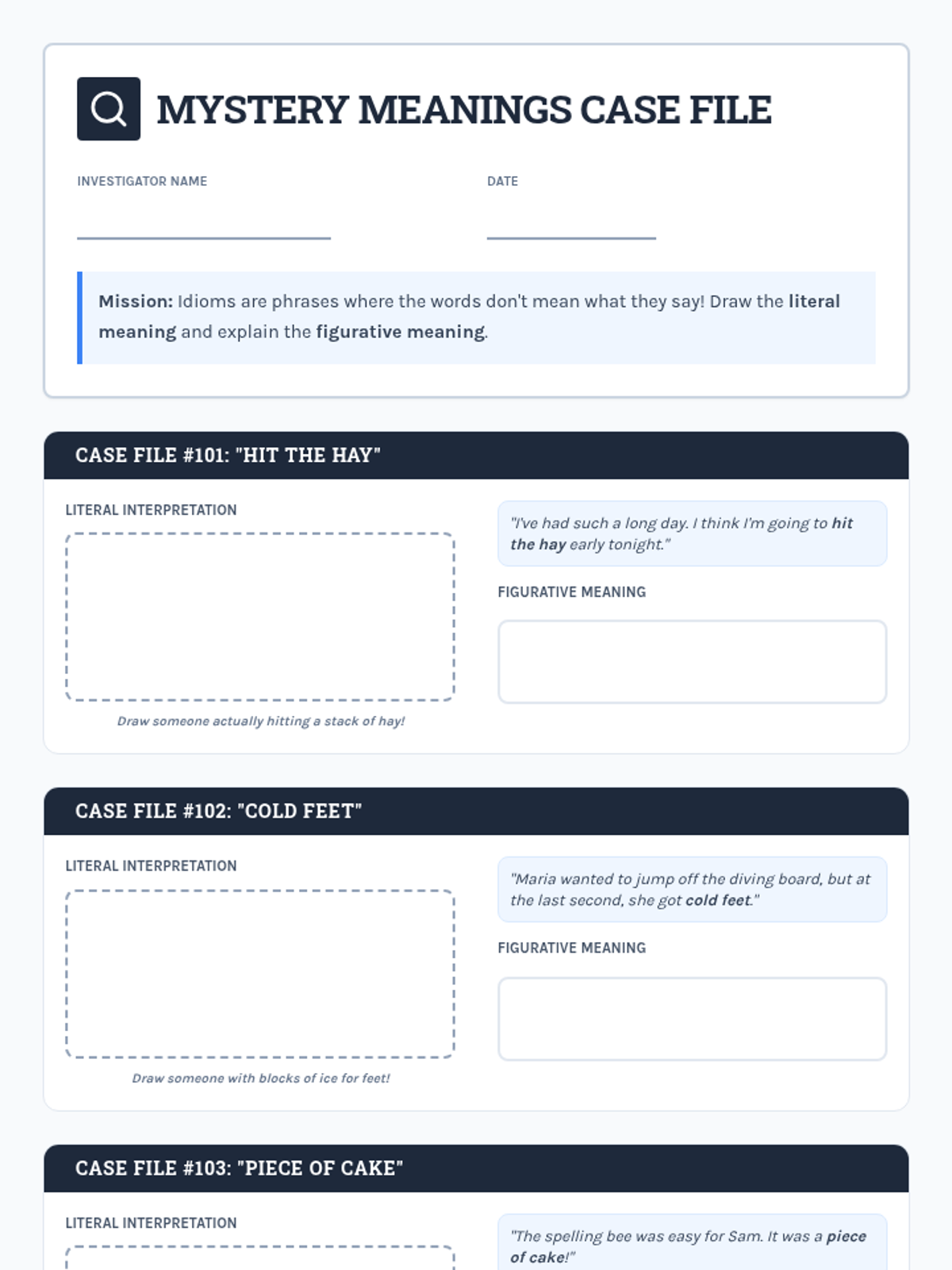
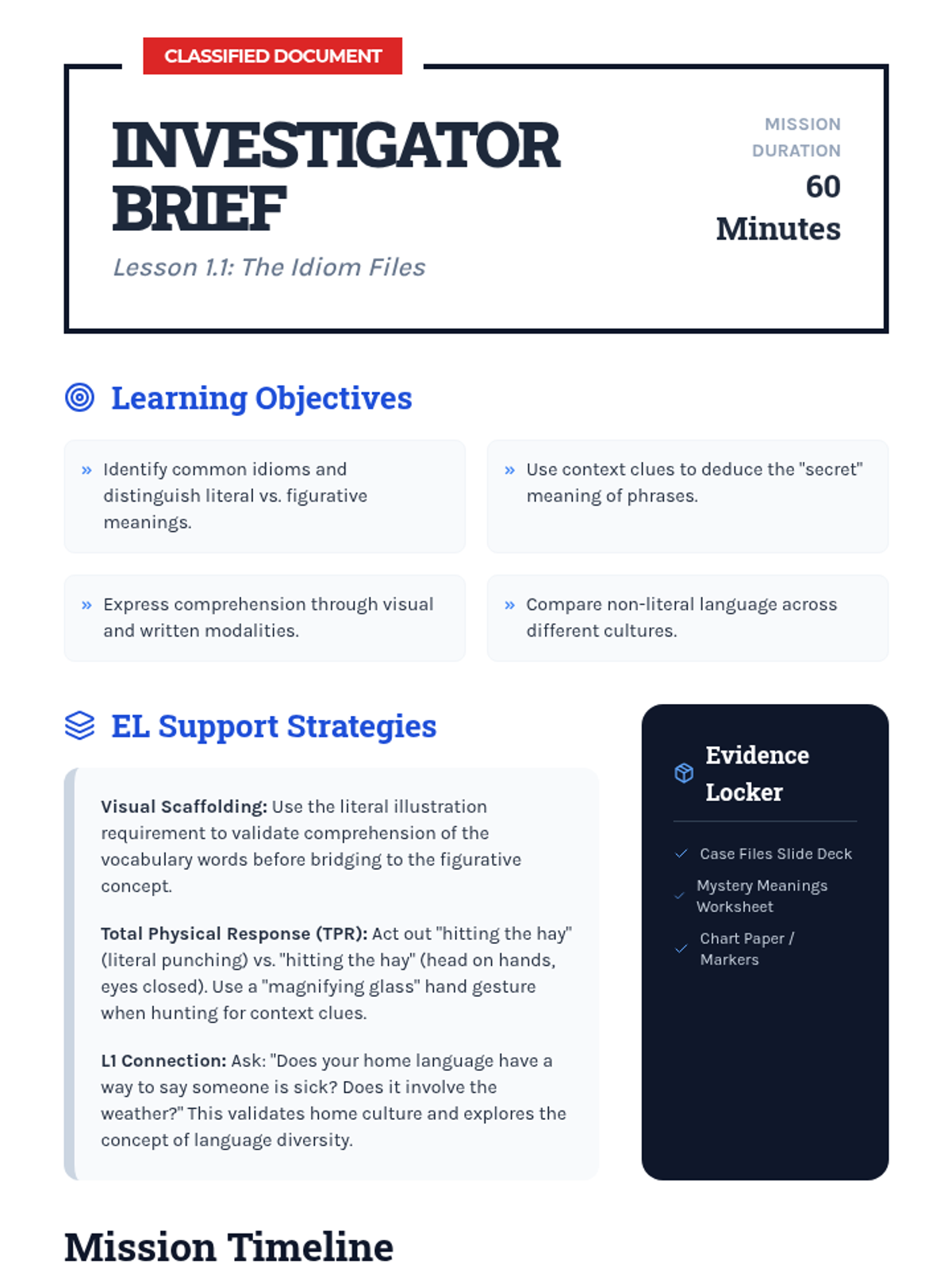
Students become language detectives to decode common English idioms, comparing literal illustrations with figurative meanings to build deep comprehension of non-literal language.
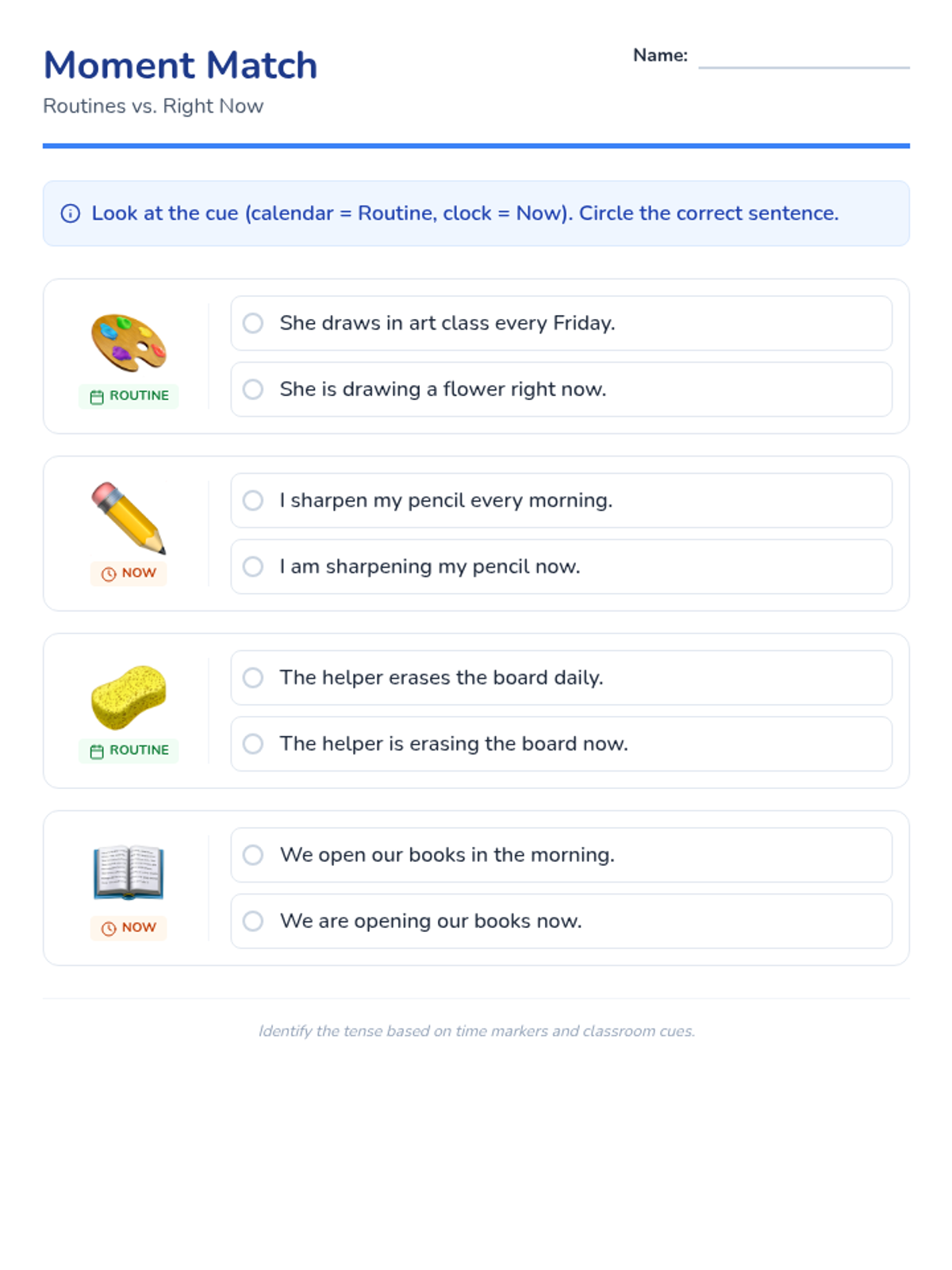
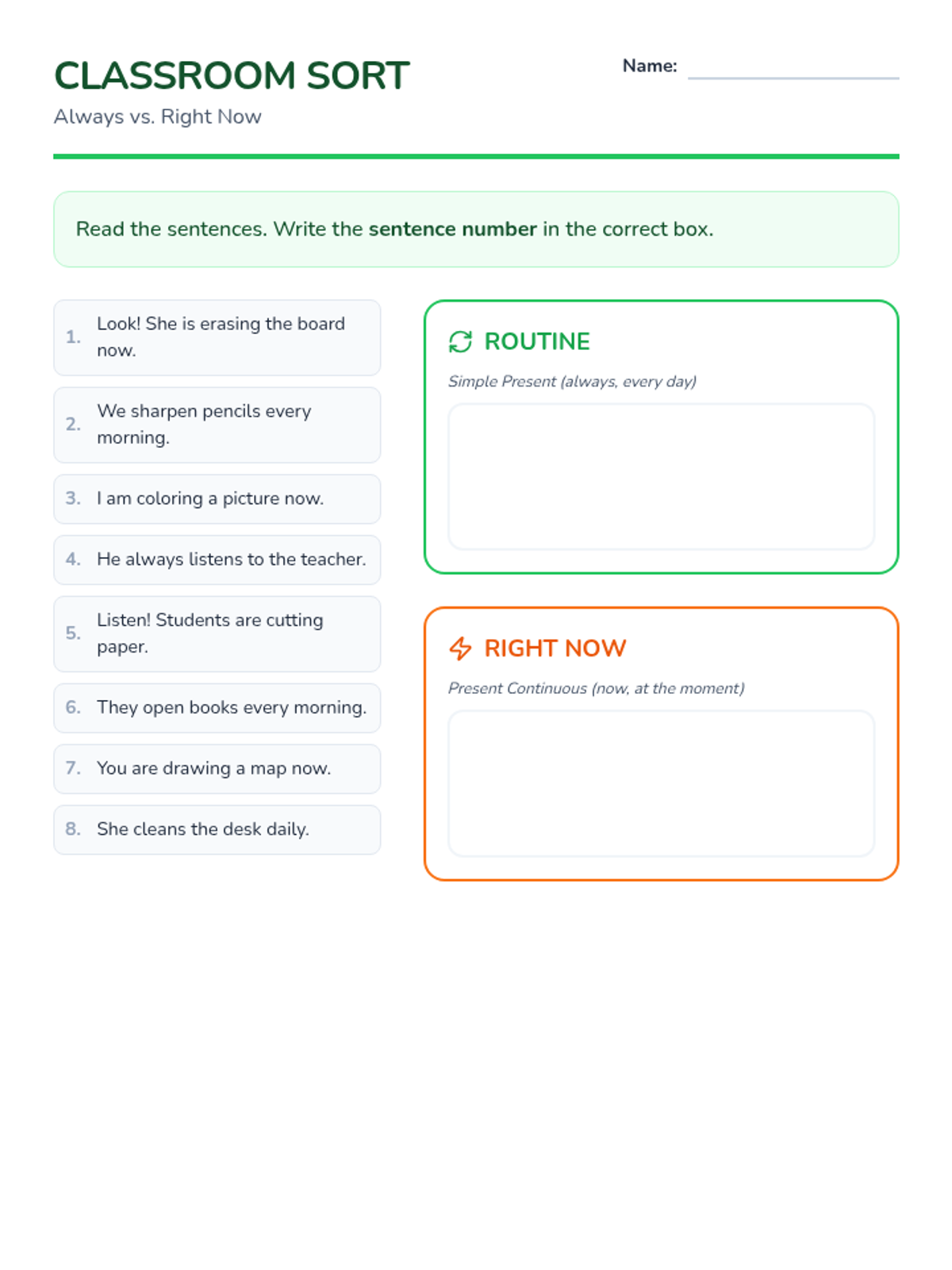
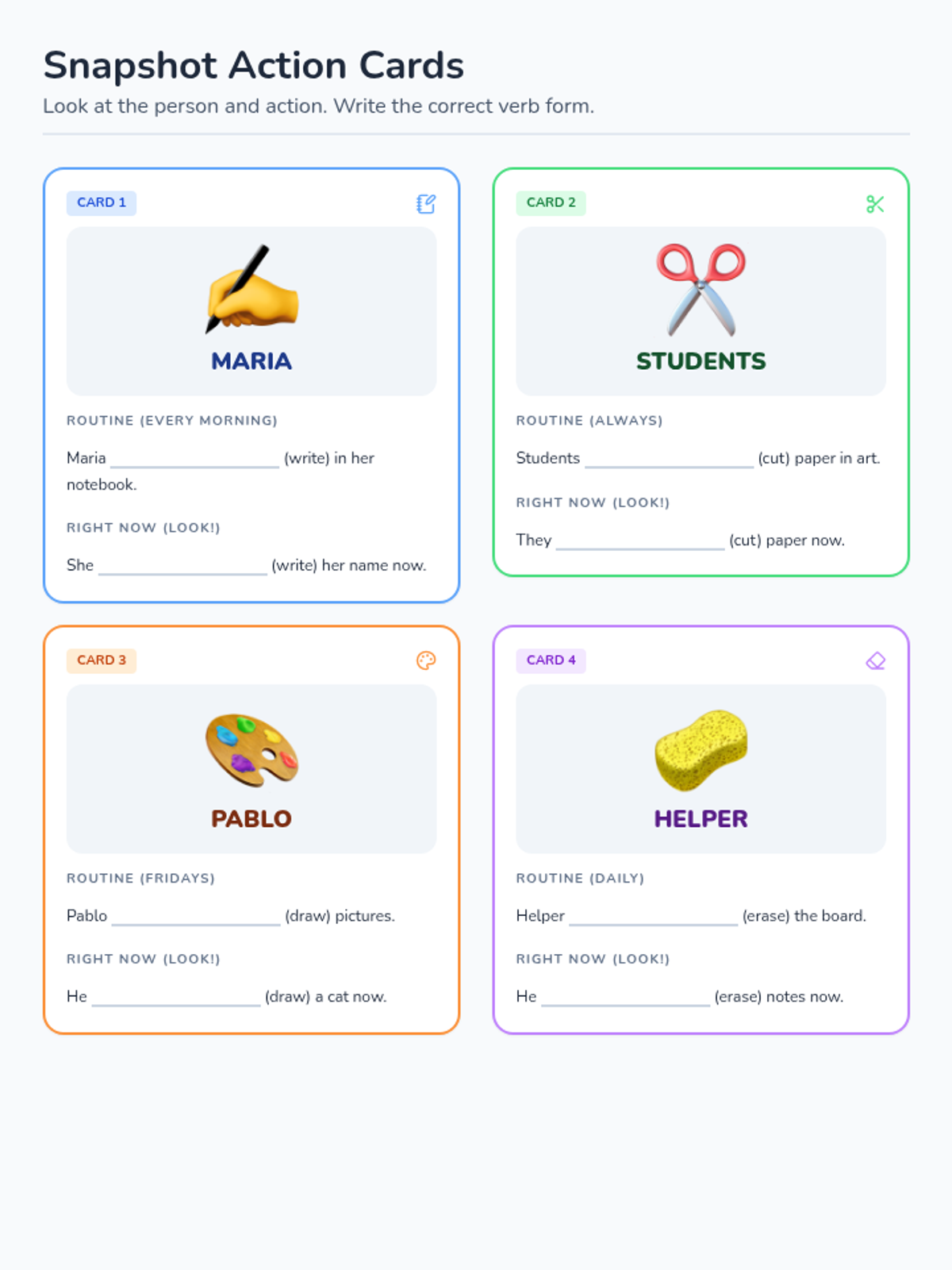
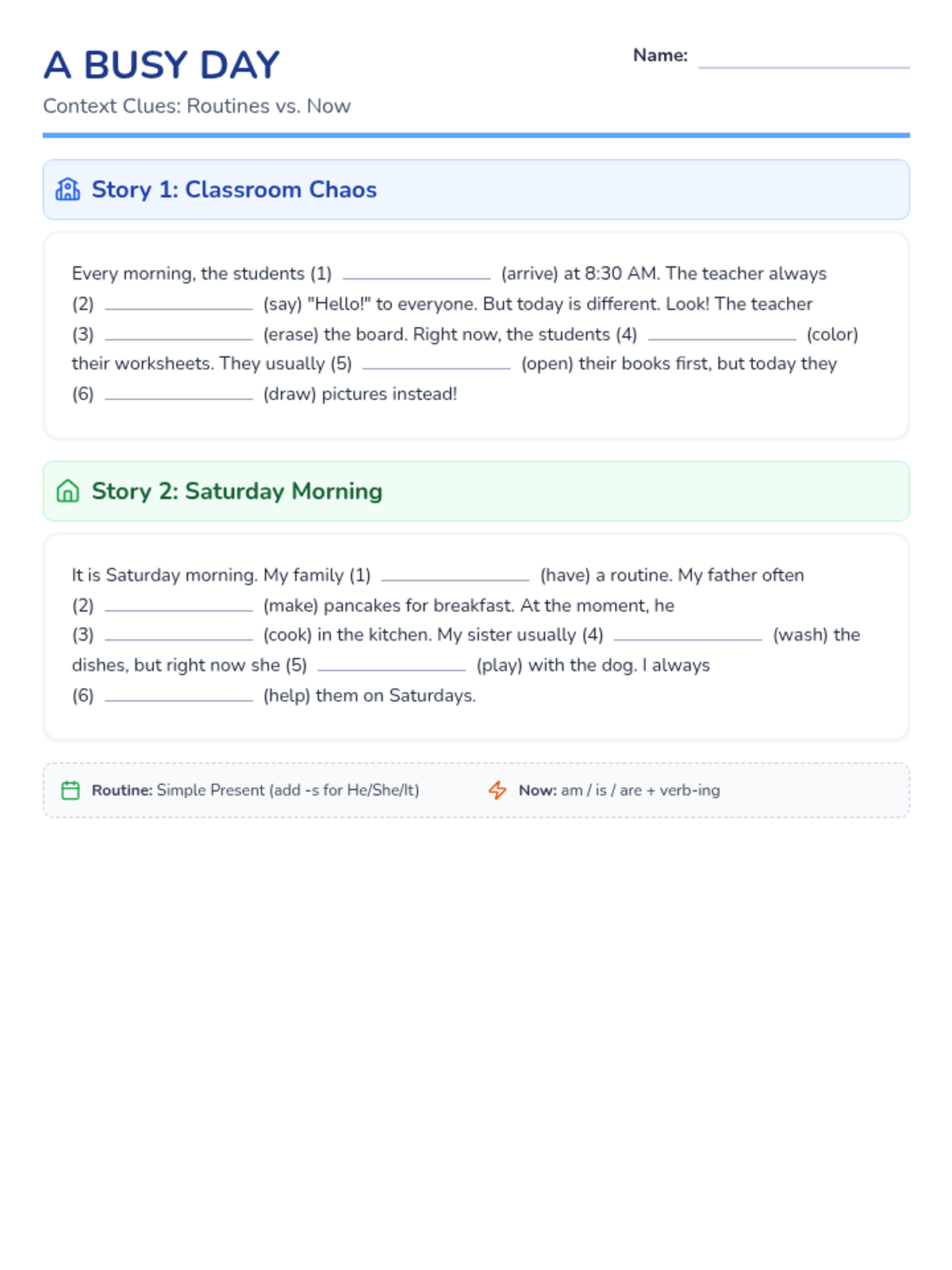
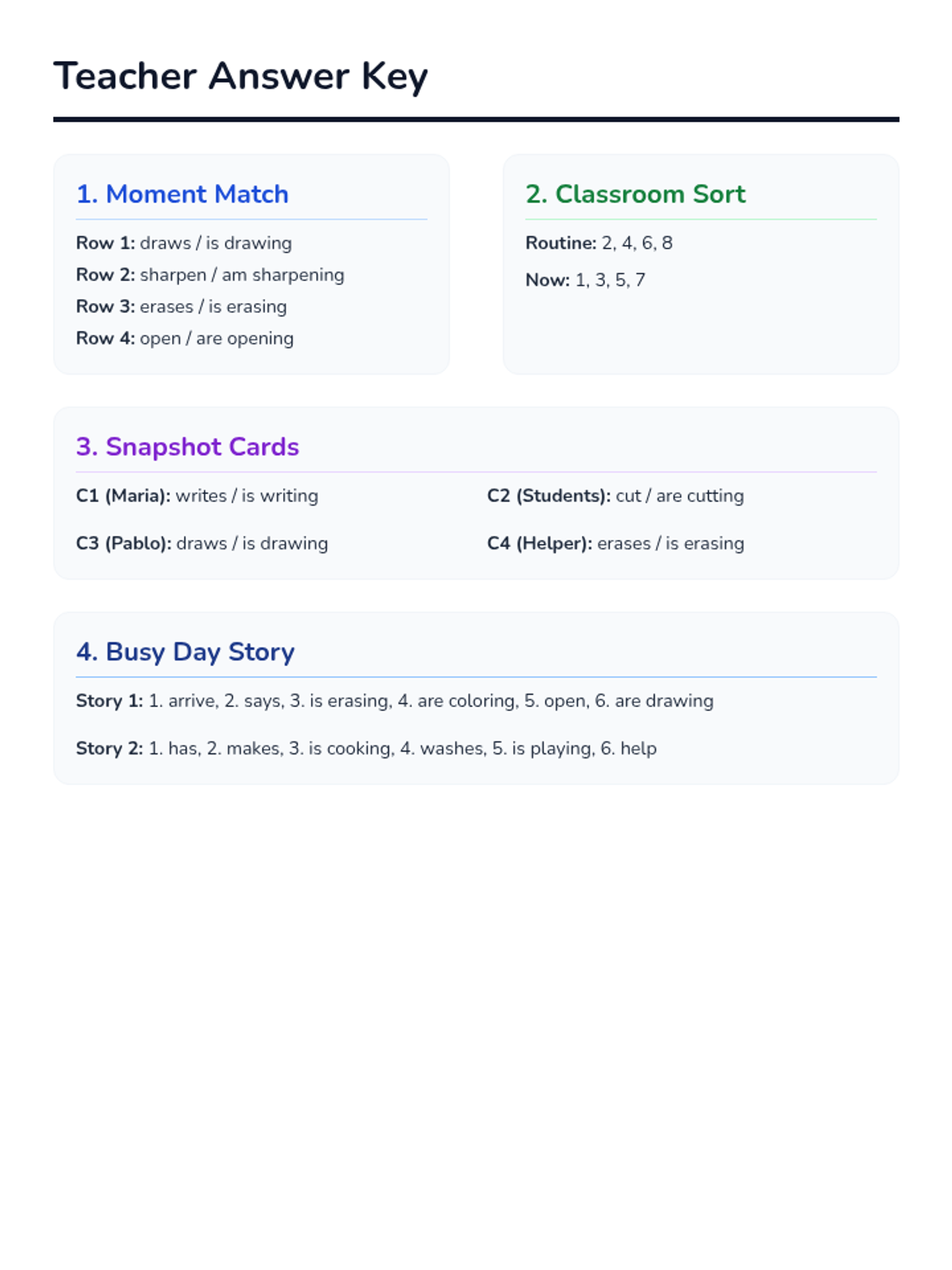
A beginner-friendly introduction to the differences between Simple Present and Present Continuous, focusing on routines and immediate actions.