The capstone lesson where students apply their knowledge of cellular transport to solve a forensic mystery. They analyze the physiological consequences of extreme fluid imbalance (hyponatremia vs. dehydration) at the cellular and systemic levels.
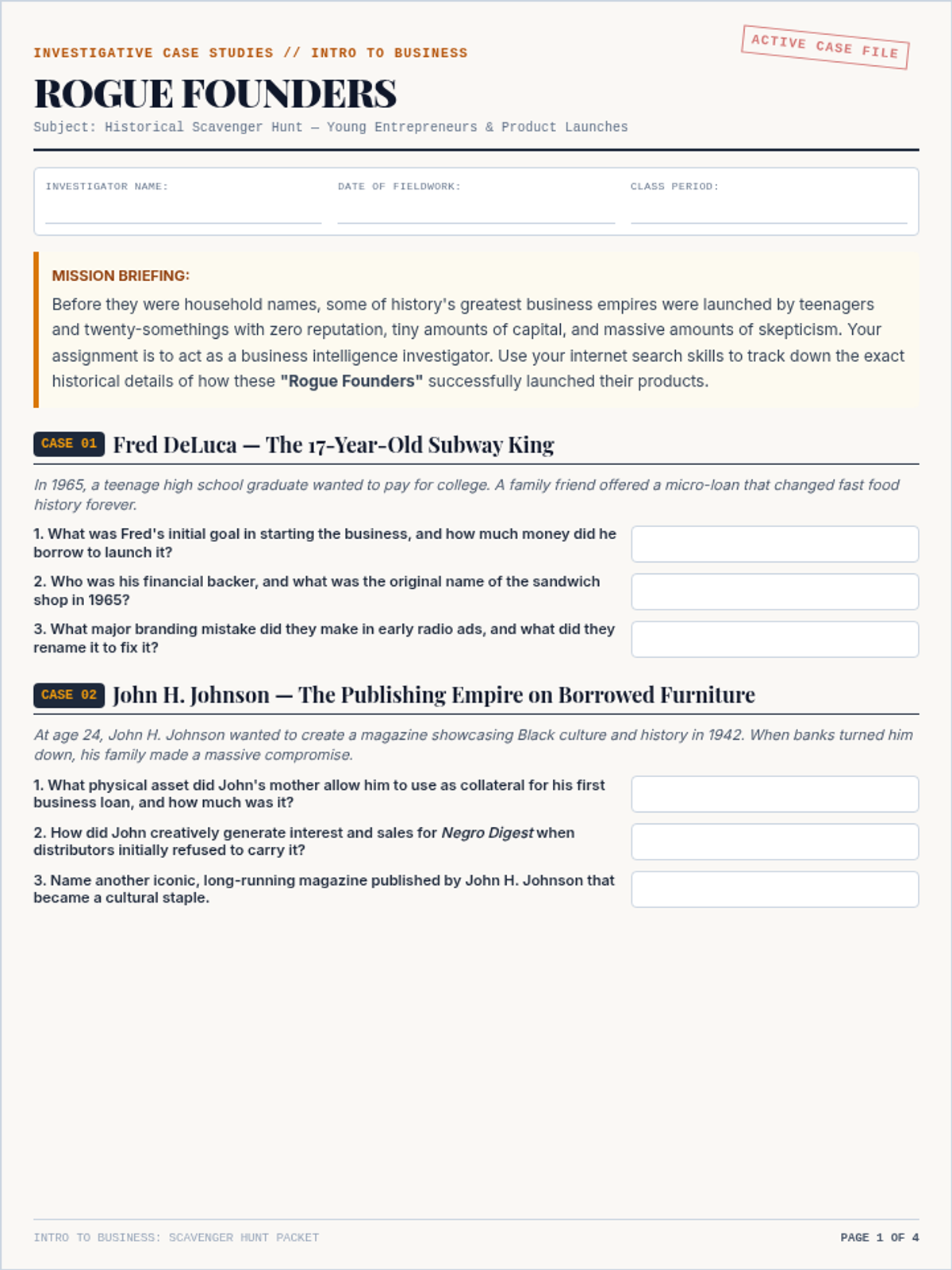
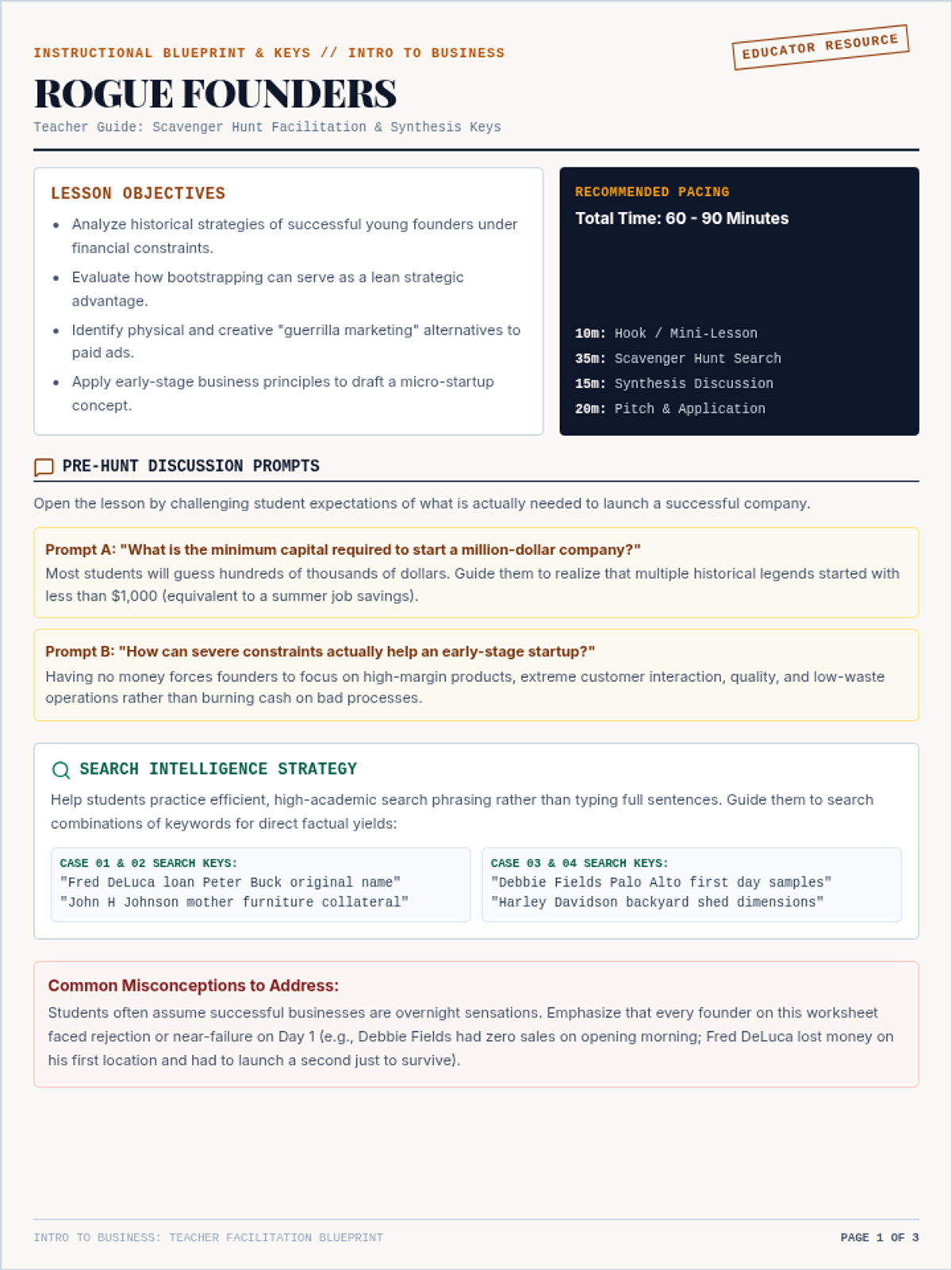
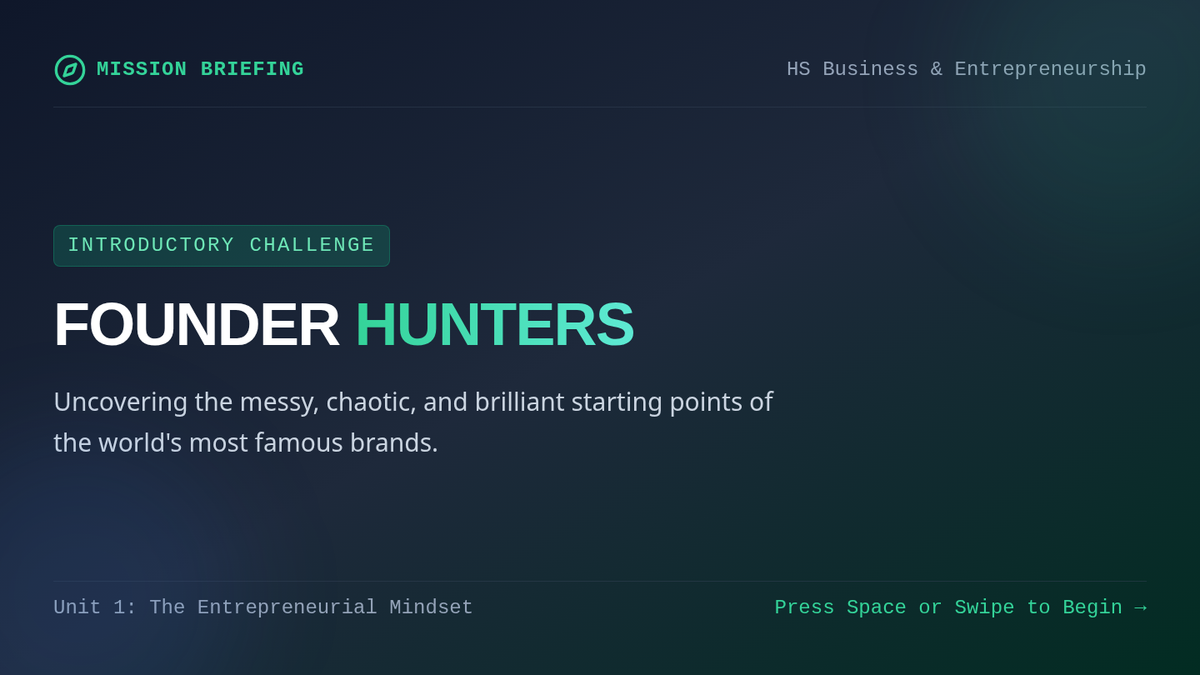
A high school introduction to business lesson exploring the journeys of historical young entrepreneurs who defied the odds. Students conduct an internet scavenger hunt to investigate their startup strategies, financial hurdles, and marketing breakthroughs.
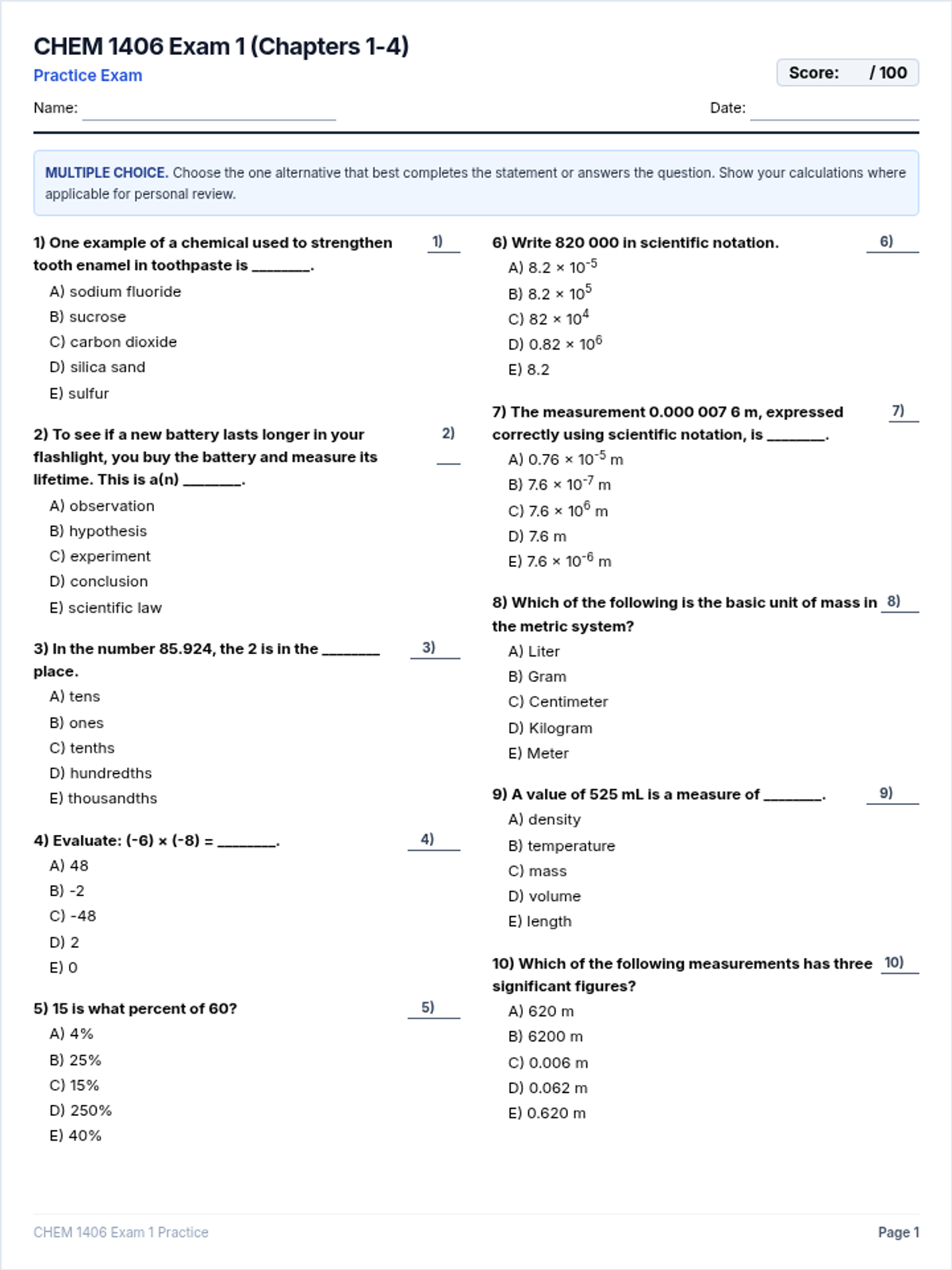
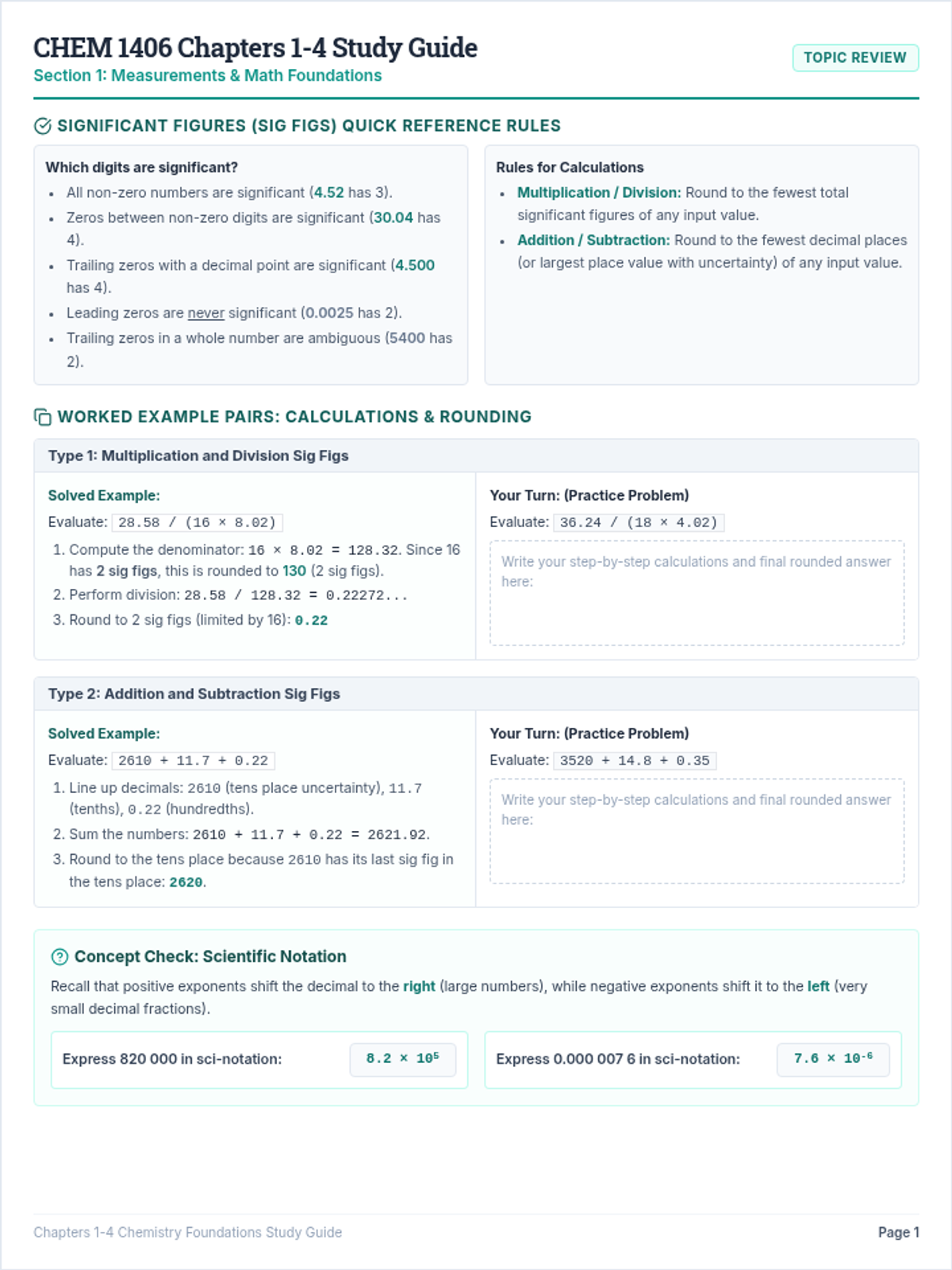
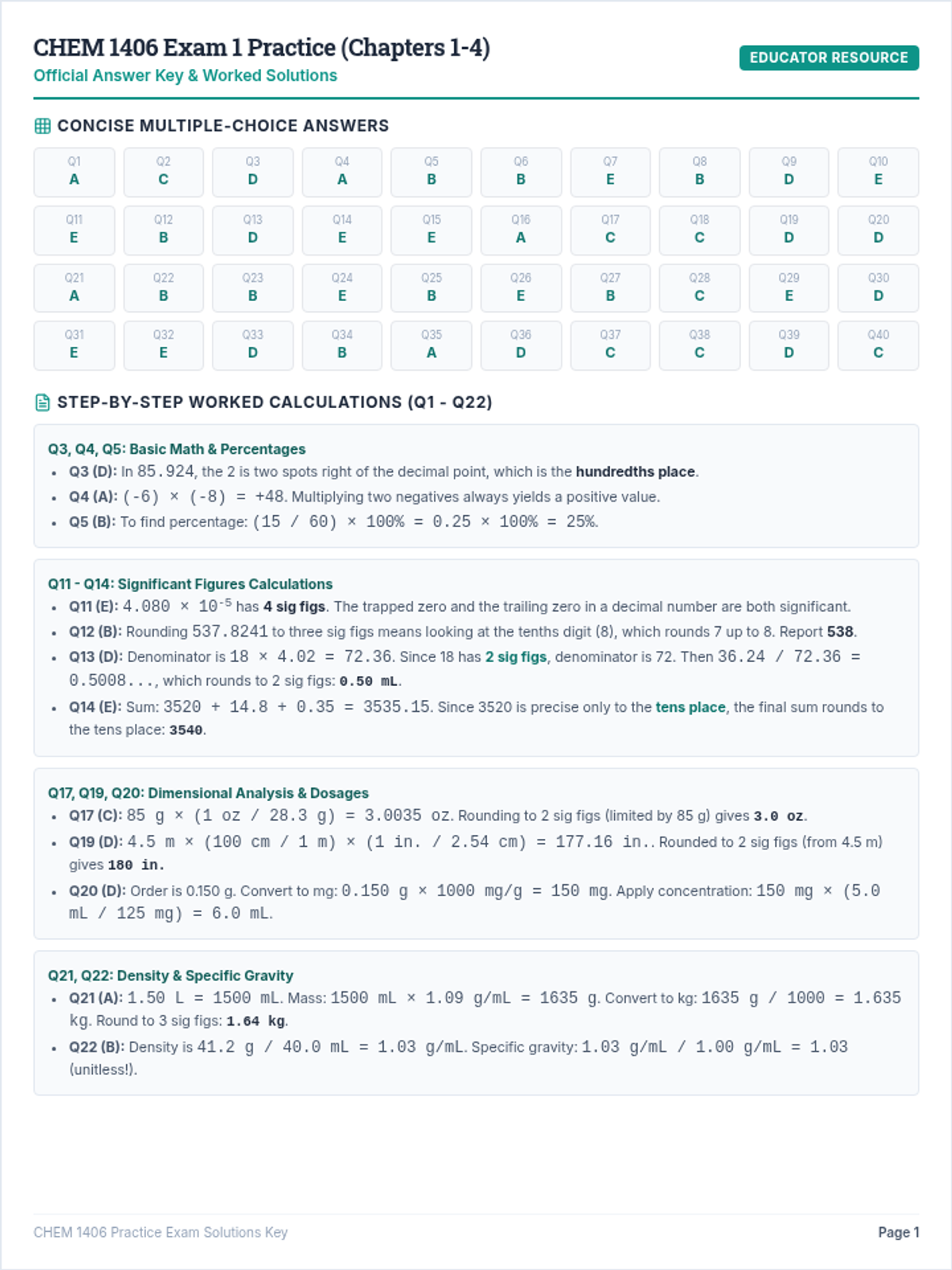
Comprehensive preparation unit covering chemistry fundamentals from Chapters 1 to 4, including scientific measurements, matter, energy, and atomic structure. Contains a parallel practice exam, a detailed study guide, and an answer key with worked solutions.
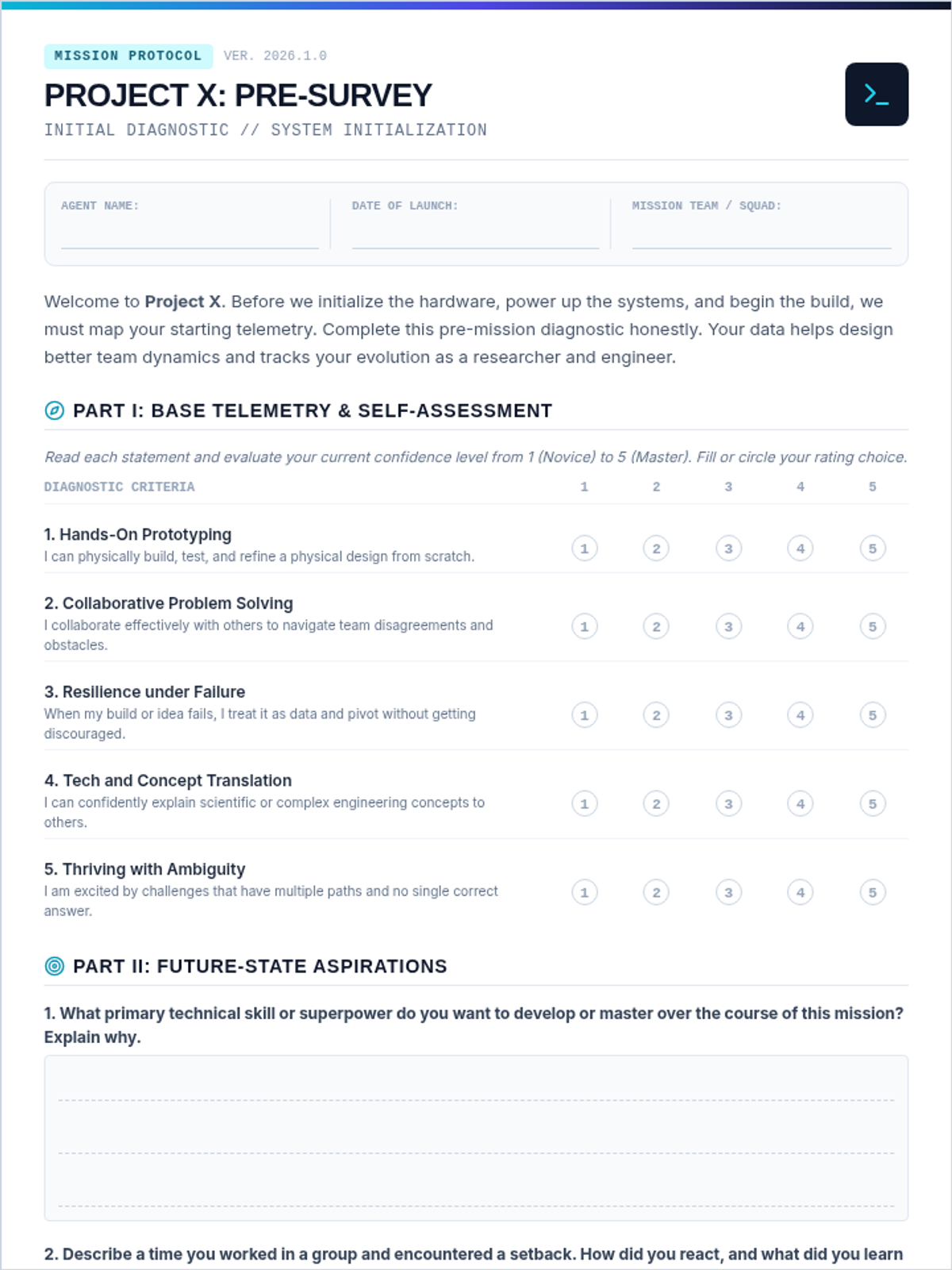
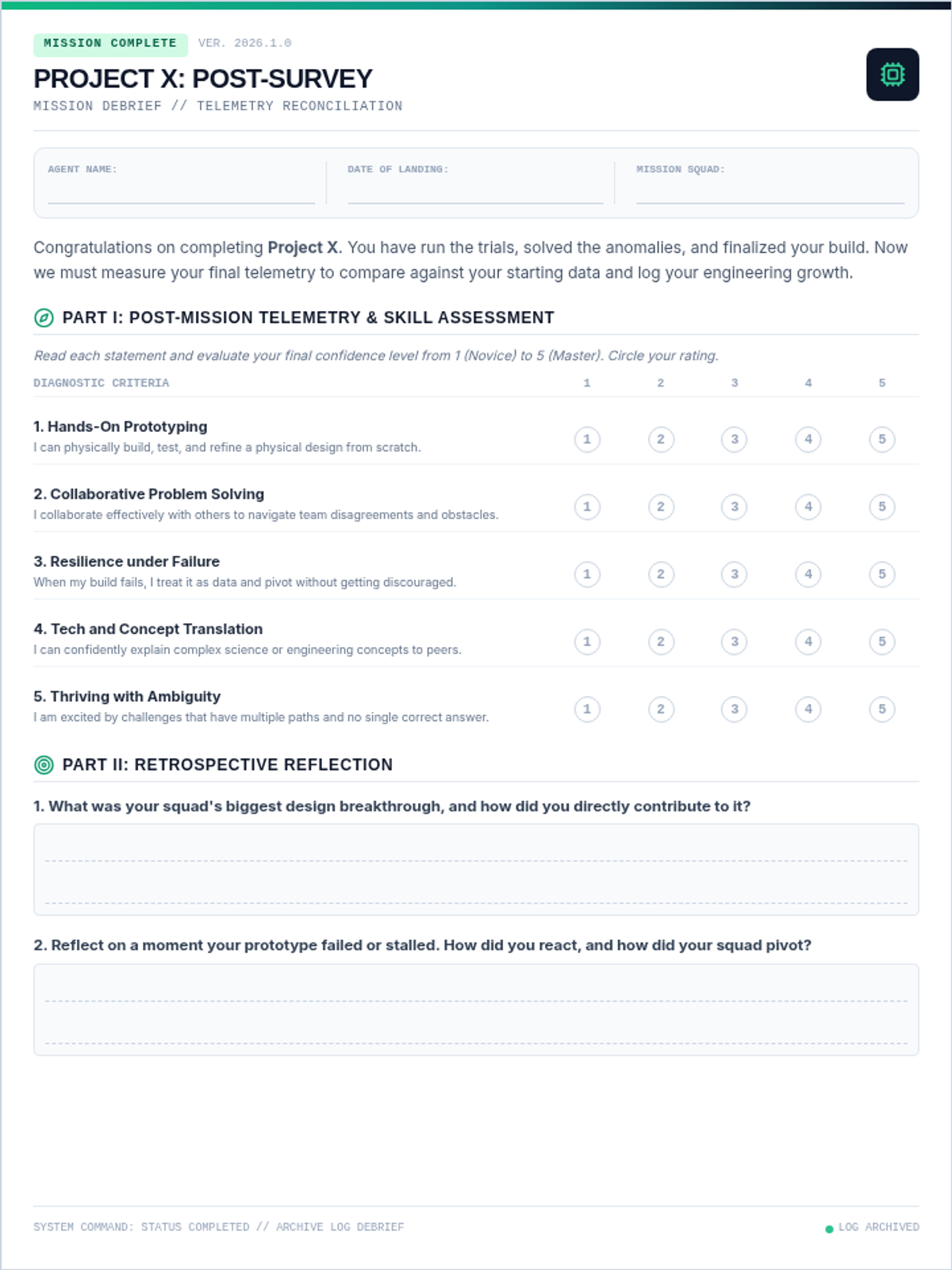
A student-centered engineering and design initiative where students engage in hands-on science and technology challenges. This lesson contains the pre- and post-surveys to measure students' growth in confidence, teamwork, and technical skills.
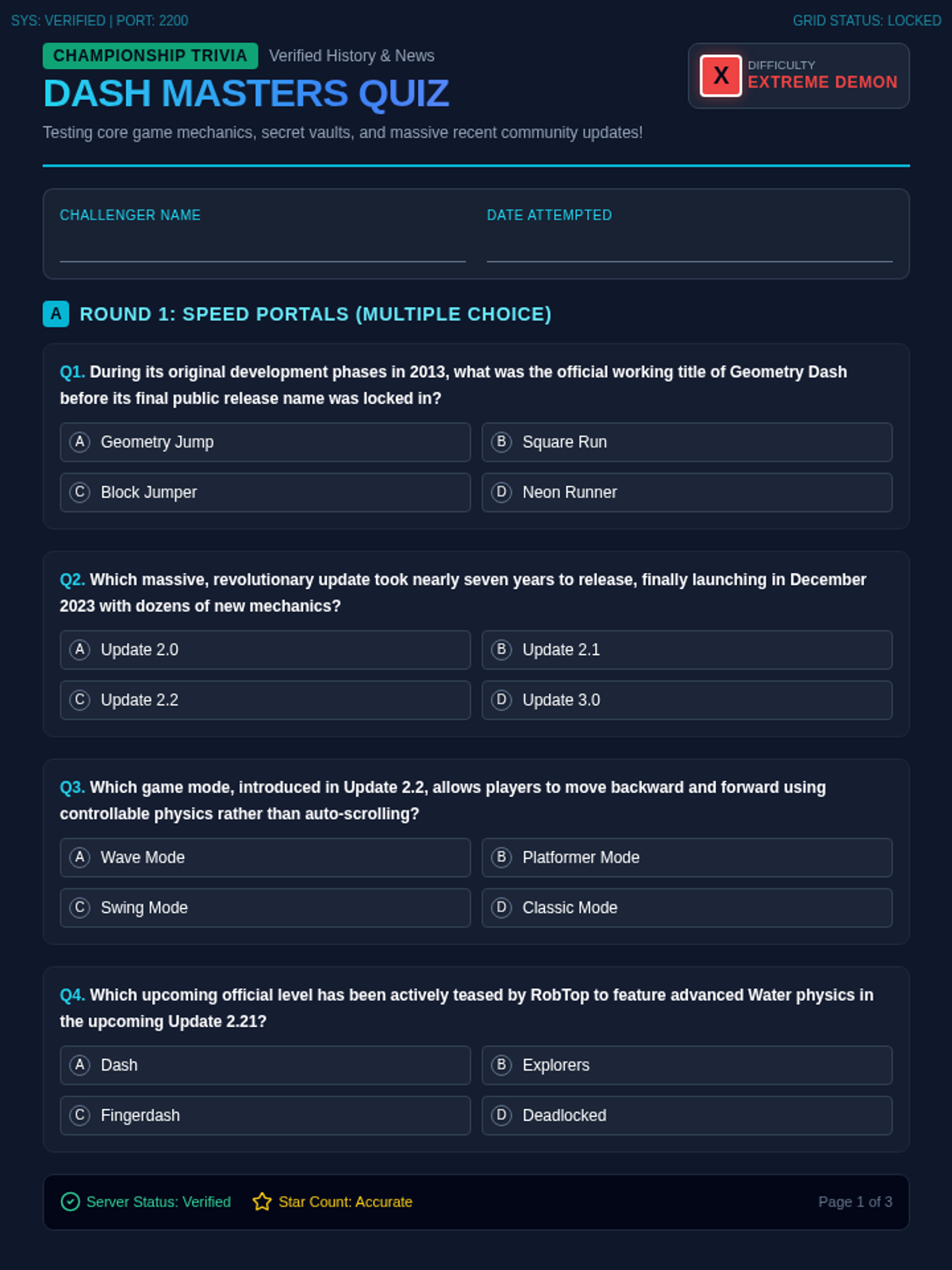
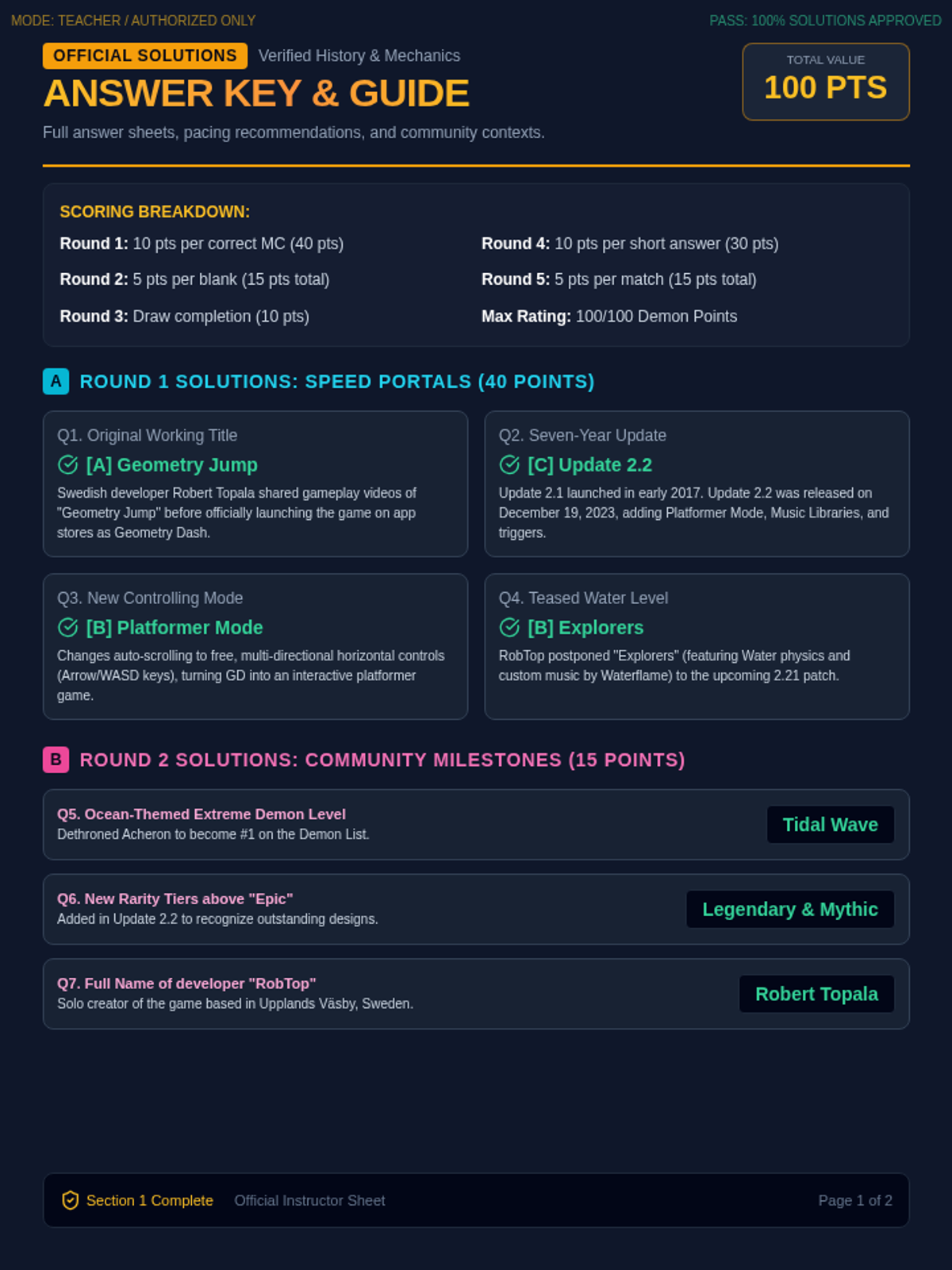
A fun-filled, competitive trivia challenge centered around the history, mechanics, and recent community updates of the sensation Geometry Dash. Perfect for gaming clubs, brain breaks, or student-led activities.
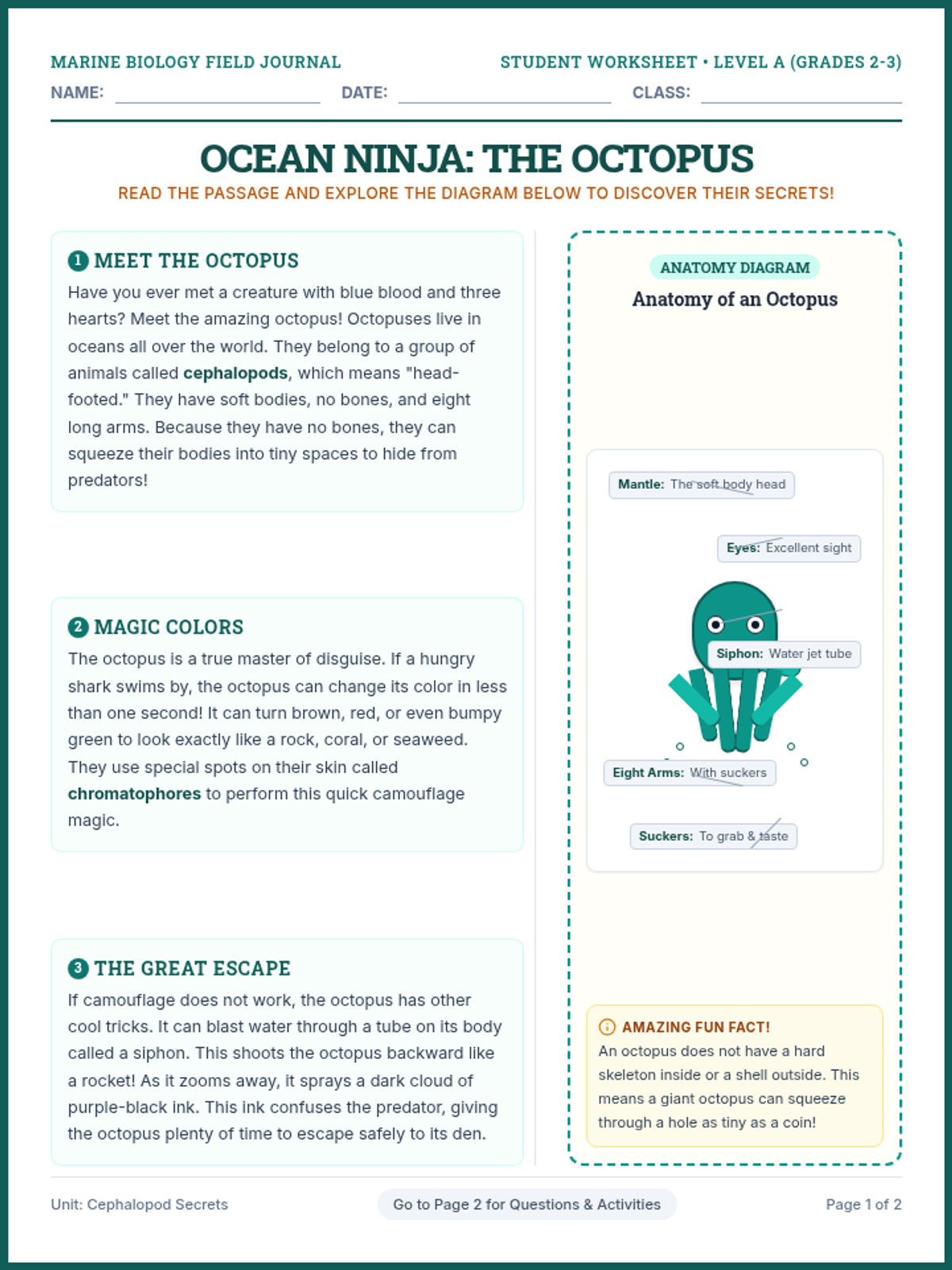
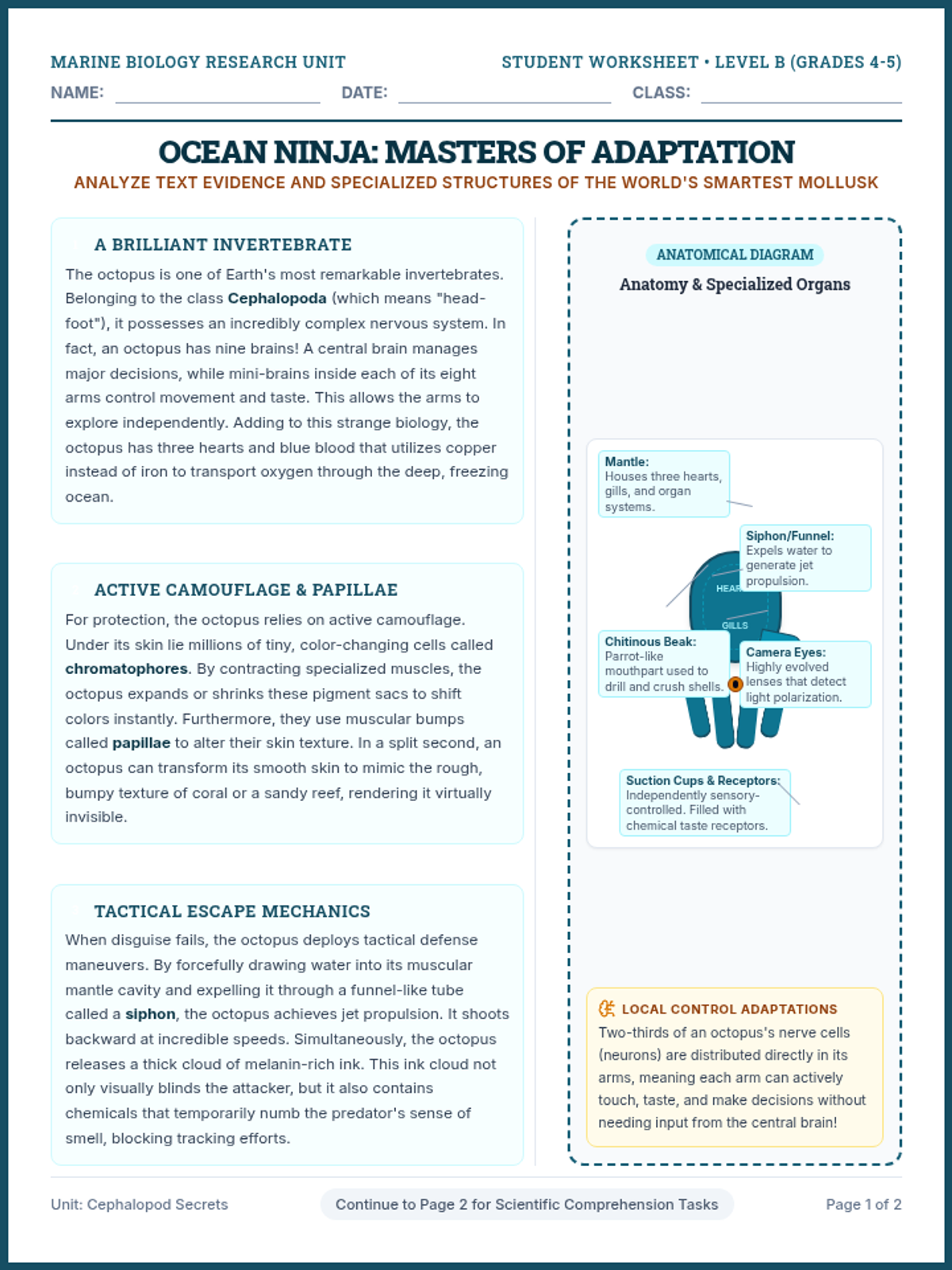
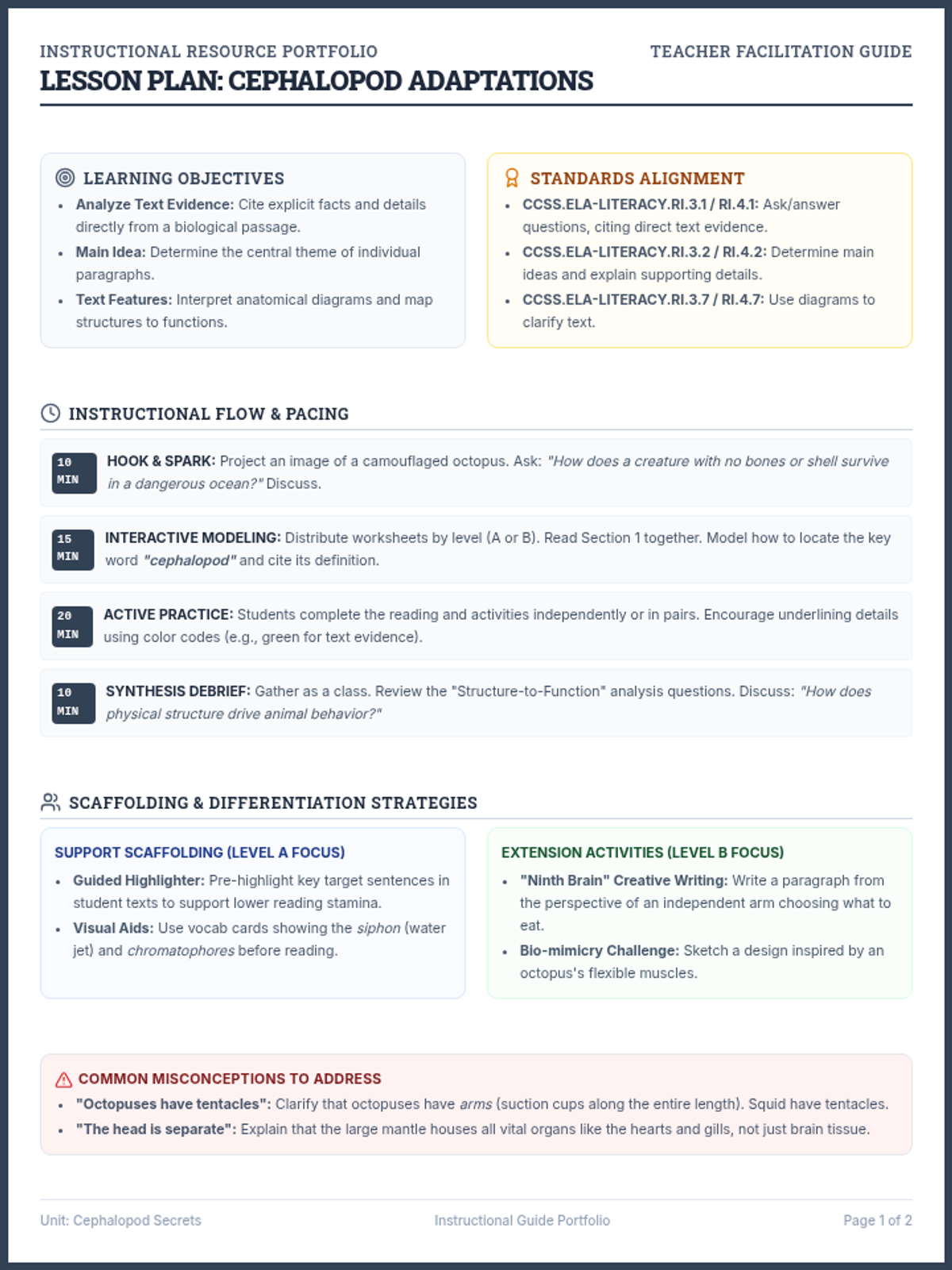
A differentiated reading comprehension unit focusing on the fascinating adaptations, anatomy, and intelligence of octopuses. Students read level-adjusted passages, analyze text-feature diagrams, and practice finding direct text evidence and summarizing main ideas.
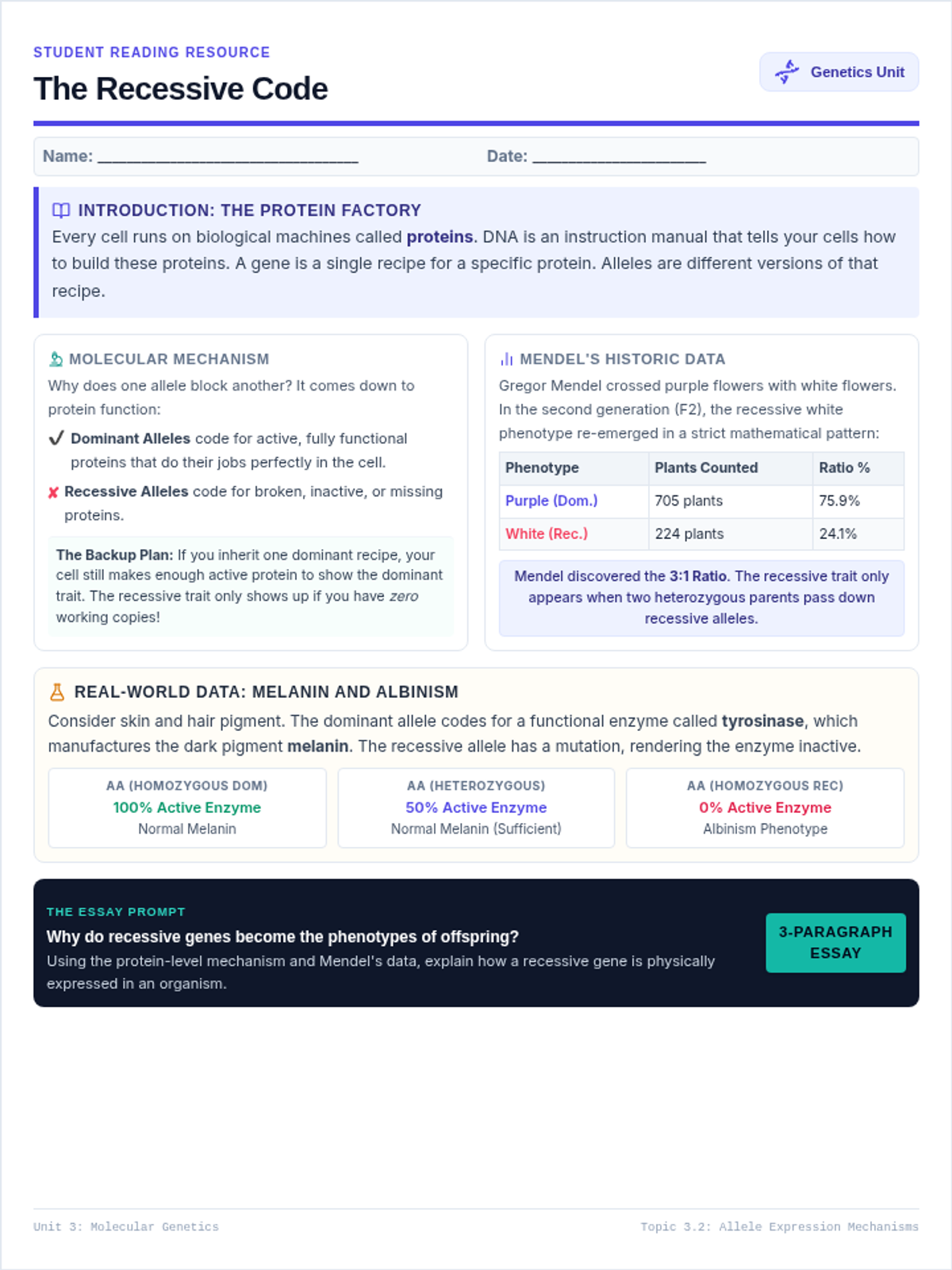
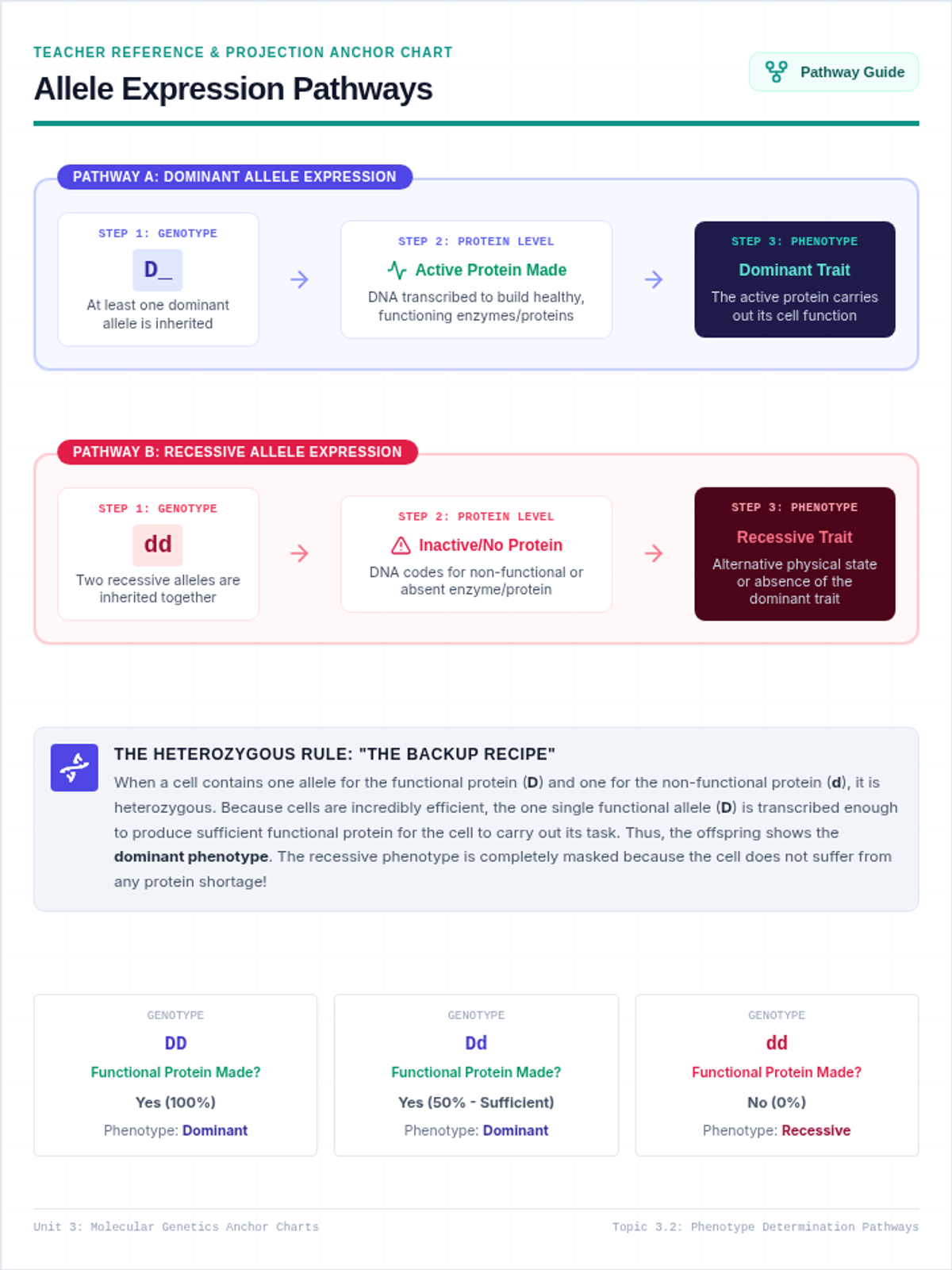
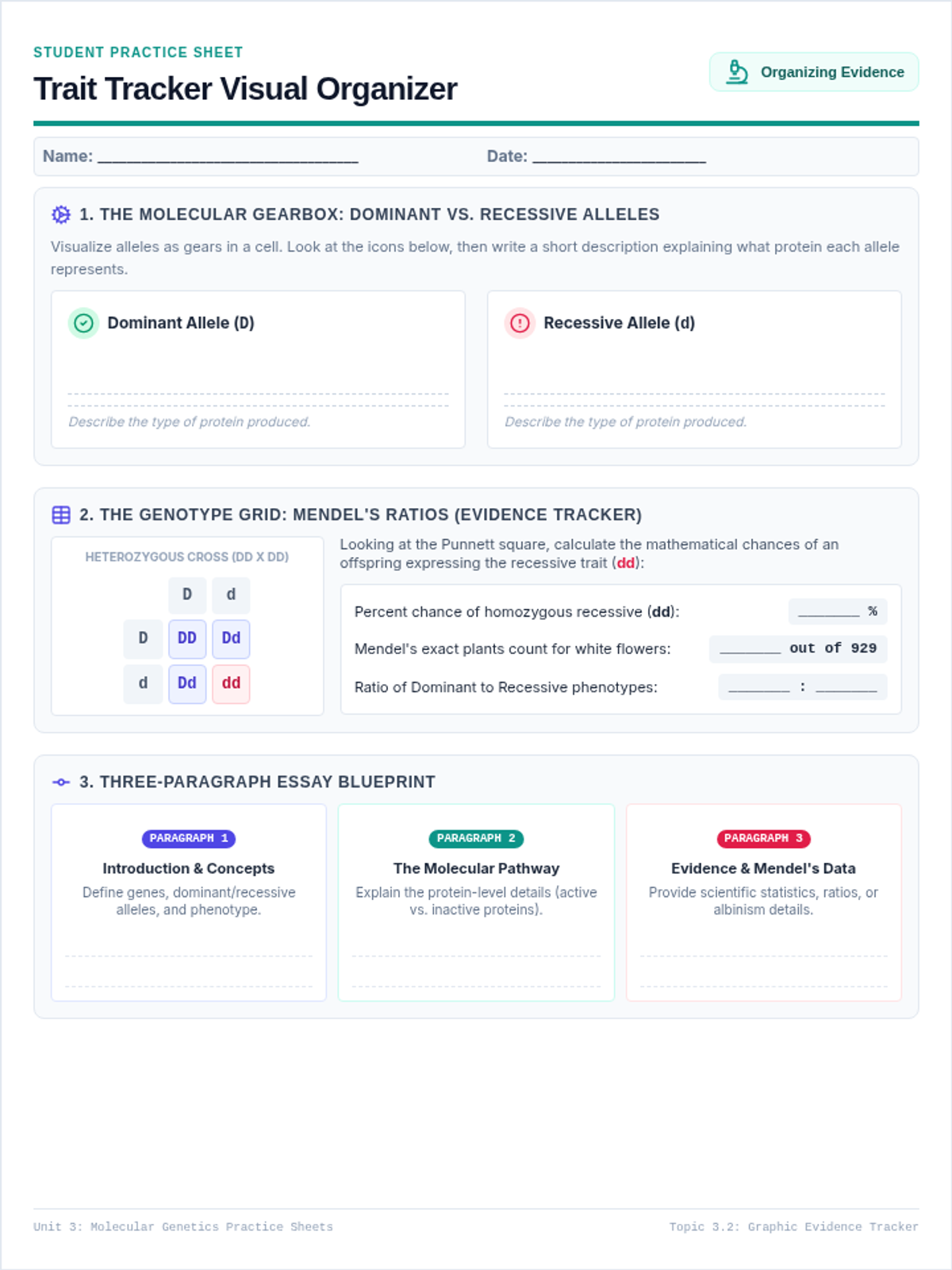
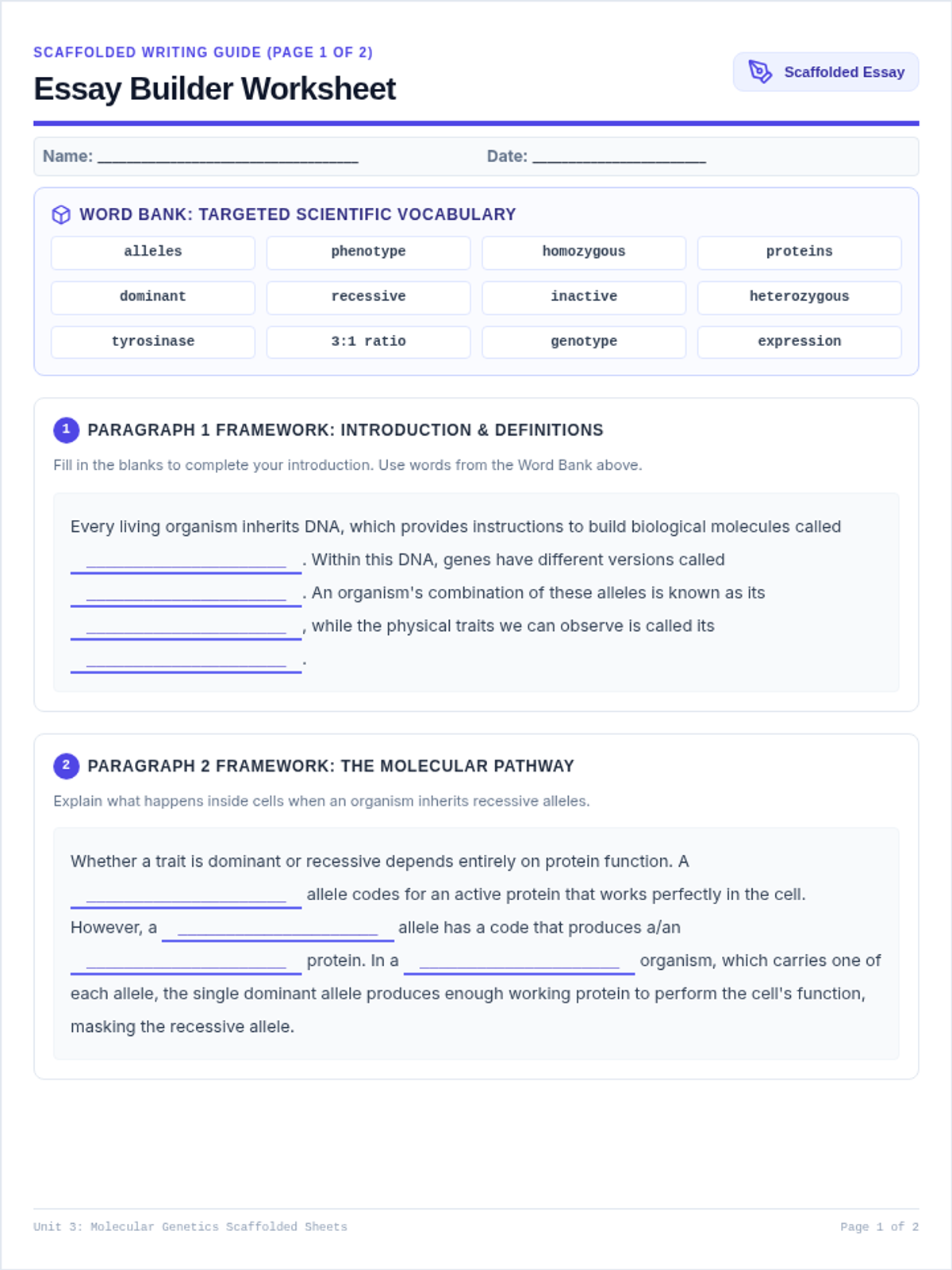
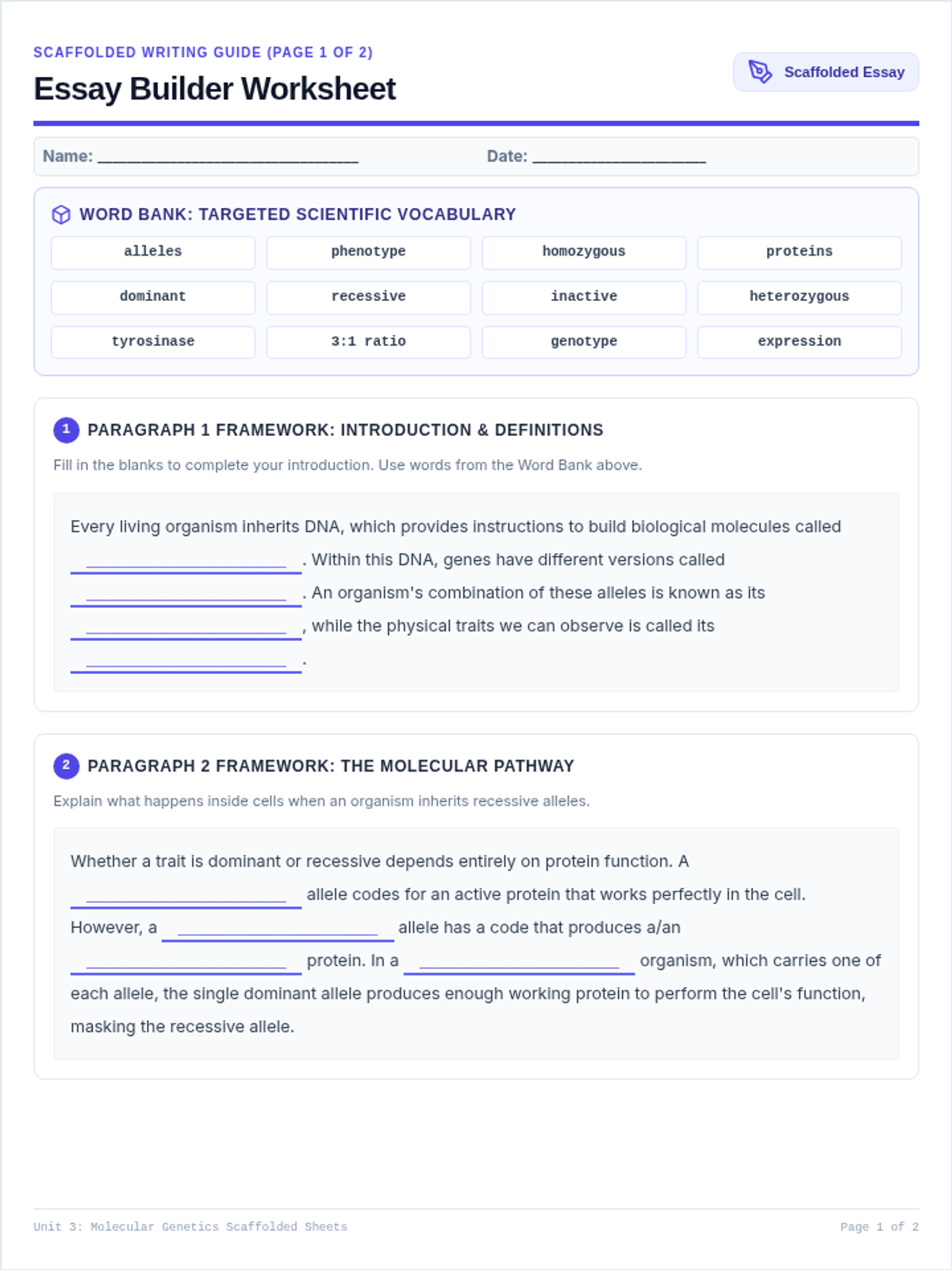
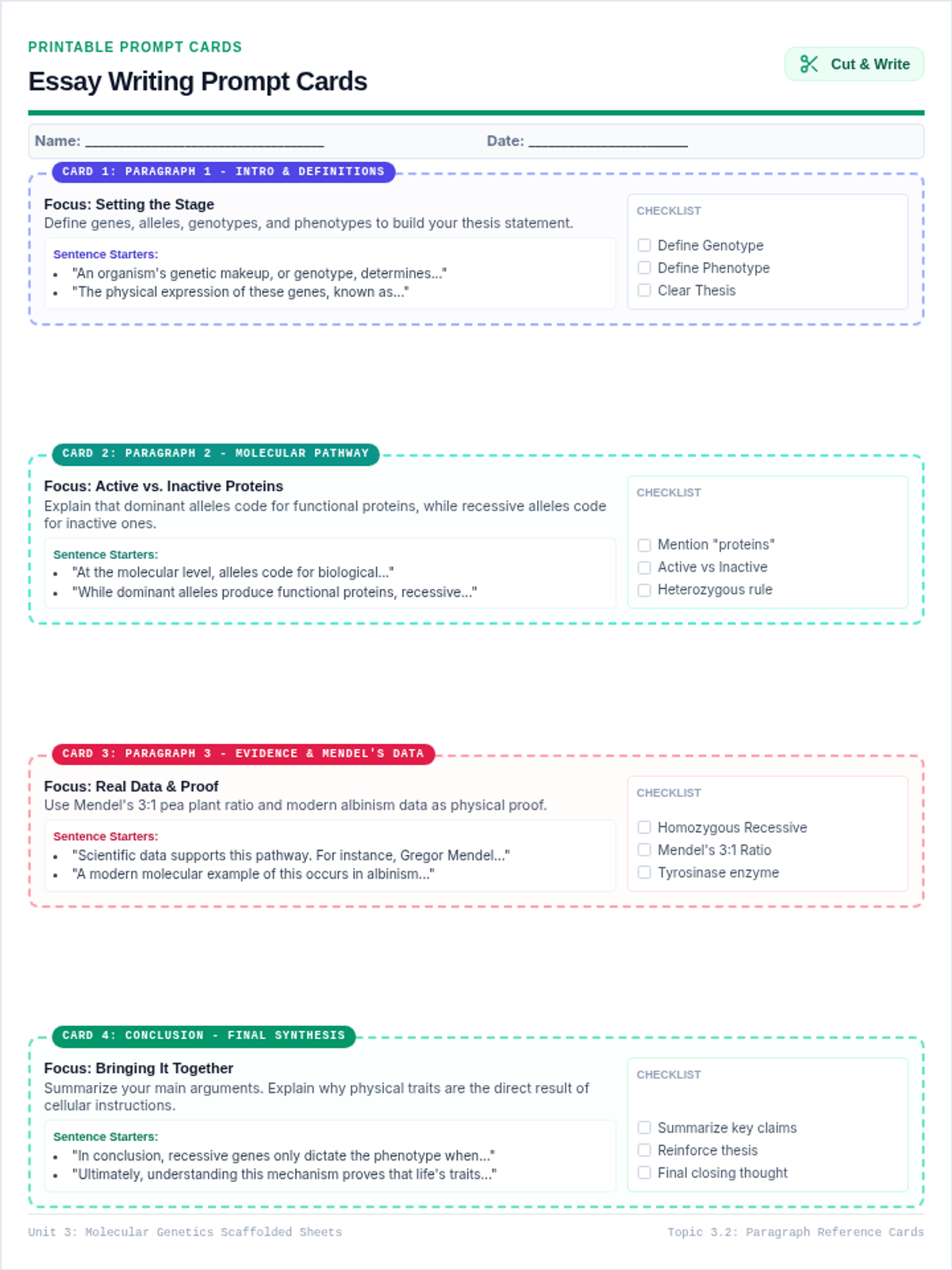
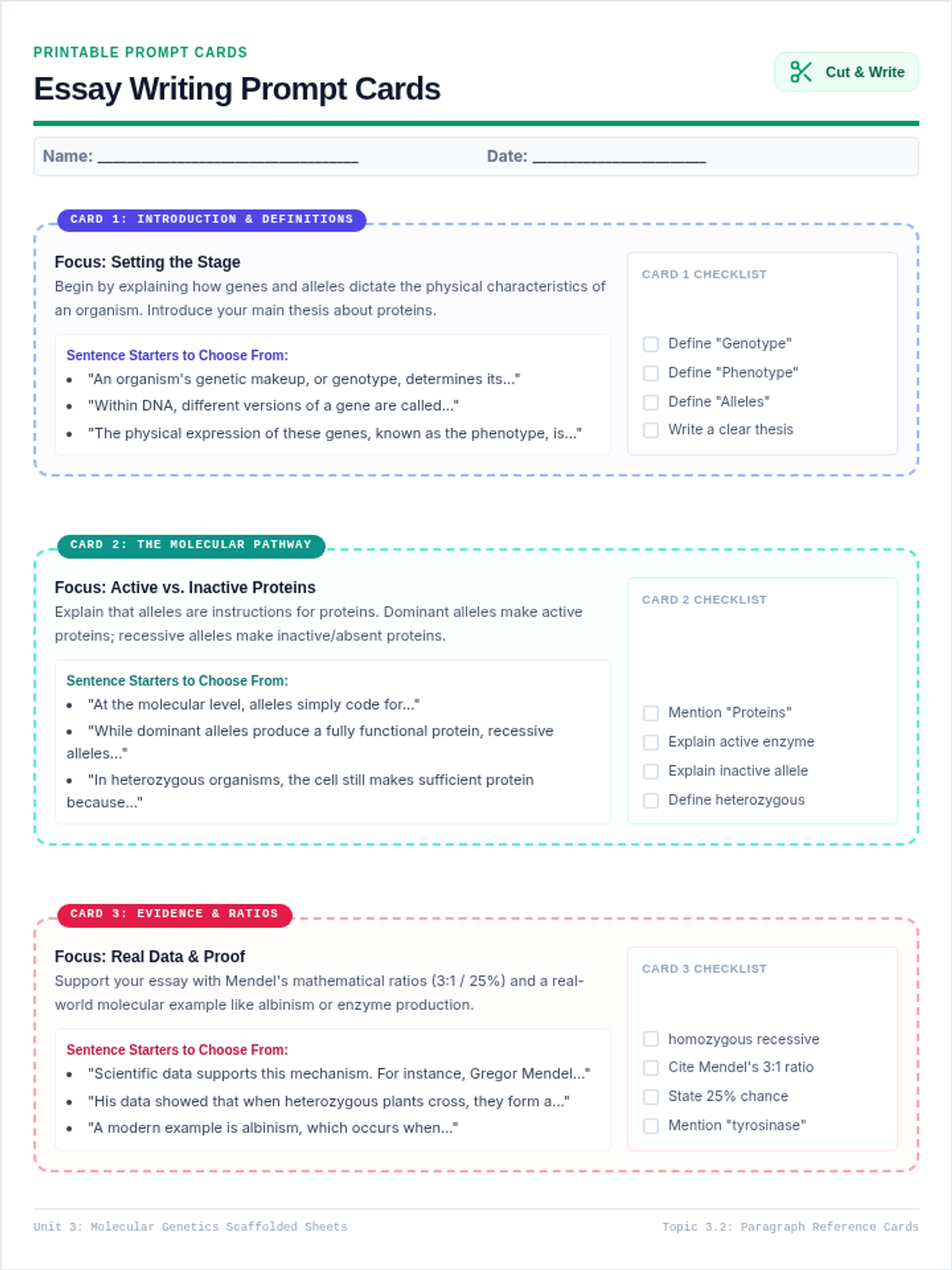
A comprehensive genetics lesson scaffolding the science of recessive gene expression. Students analyze molecular pathways, Mendel's data, and complete a structured three-paragraph essay using visual guides and sentence starters.
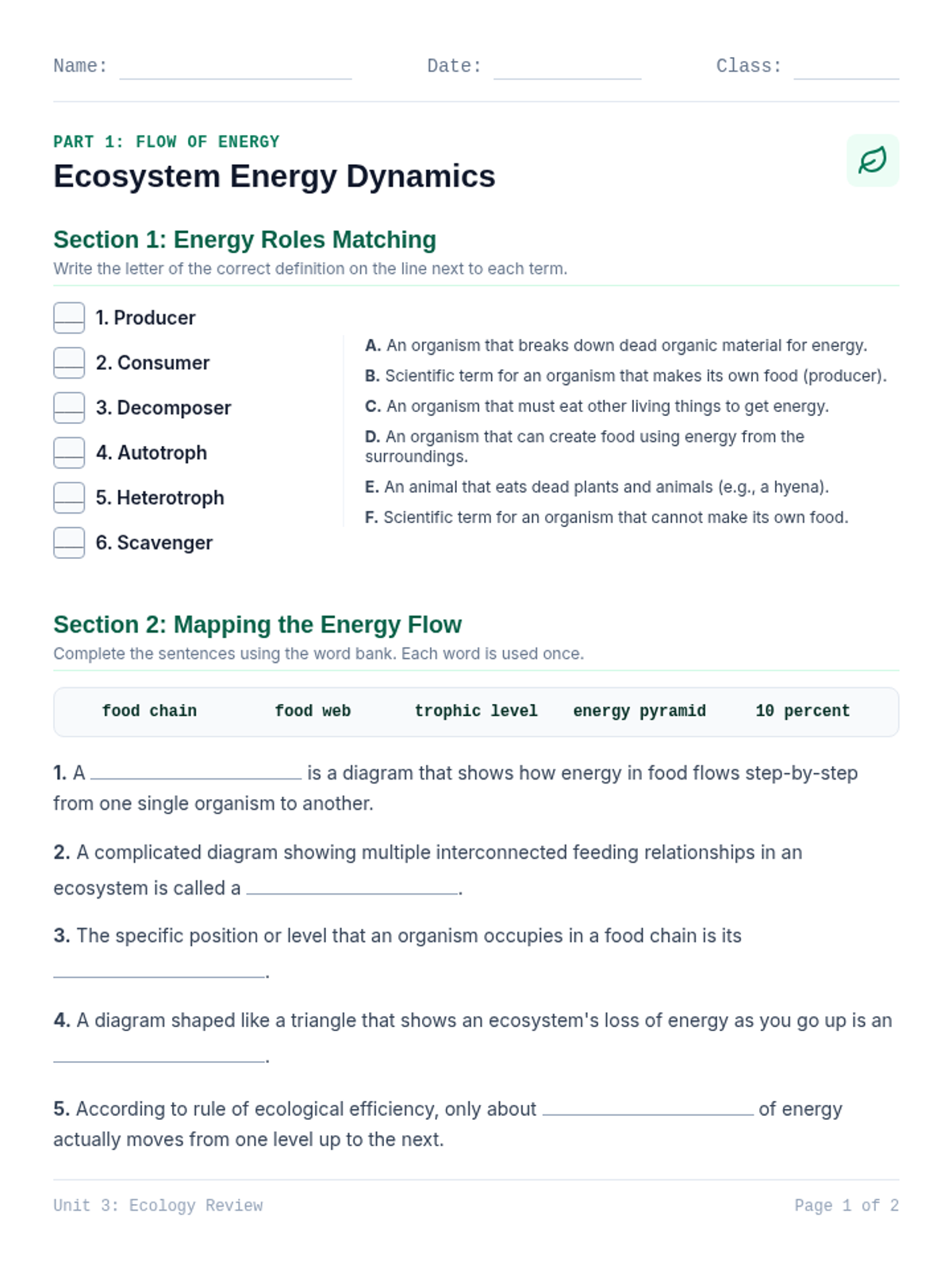
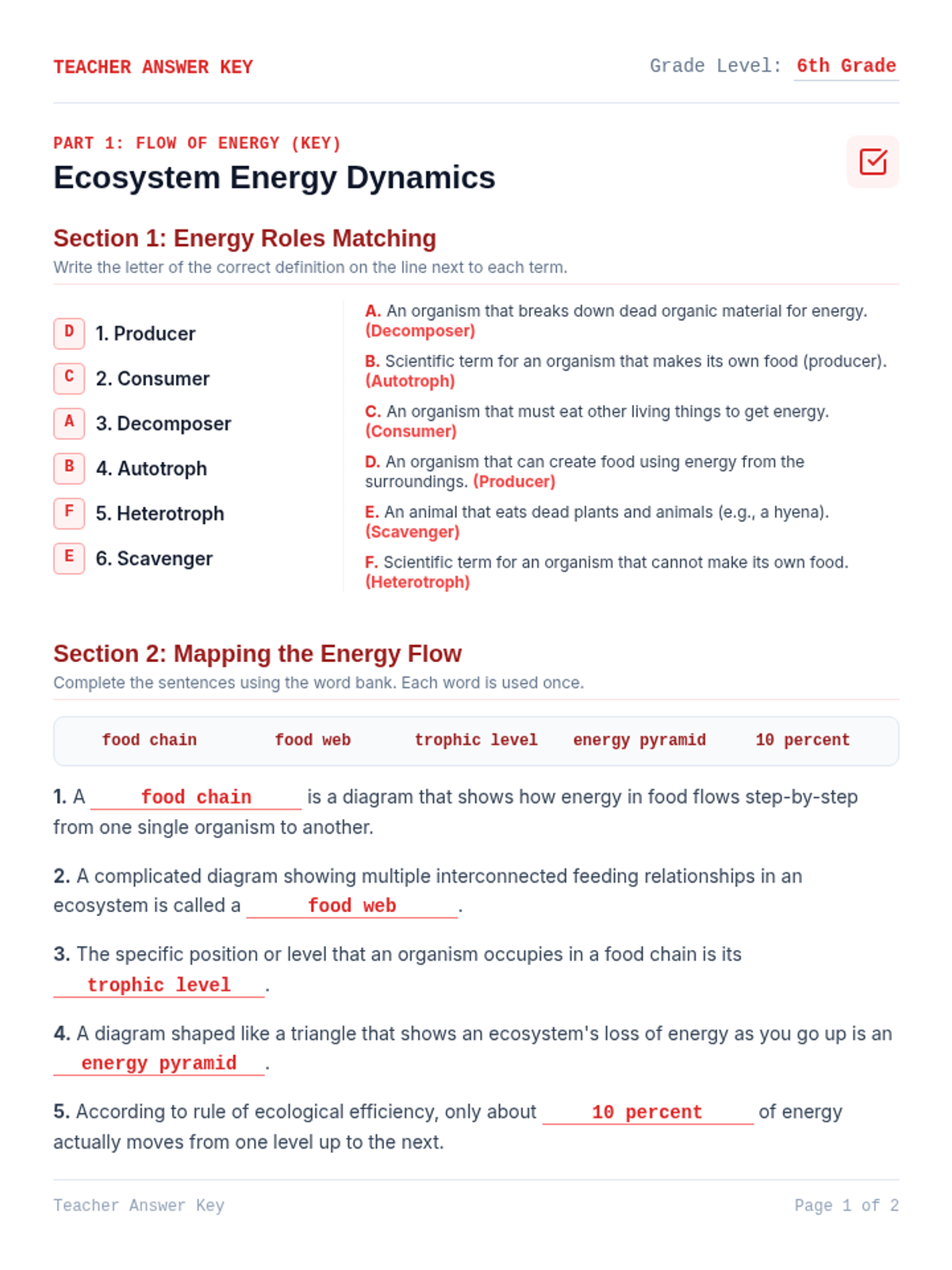
A lesson covering energy flow dynamics (producers, consumers, decomposers, food chains, webs, pyramids) and symbiotic relationships (mutualism, commensalism, parasitism, competition, predator-prey) for sixth-grade students.
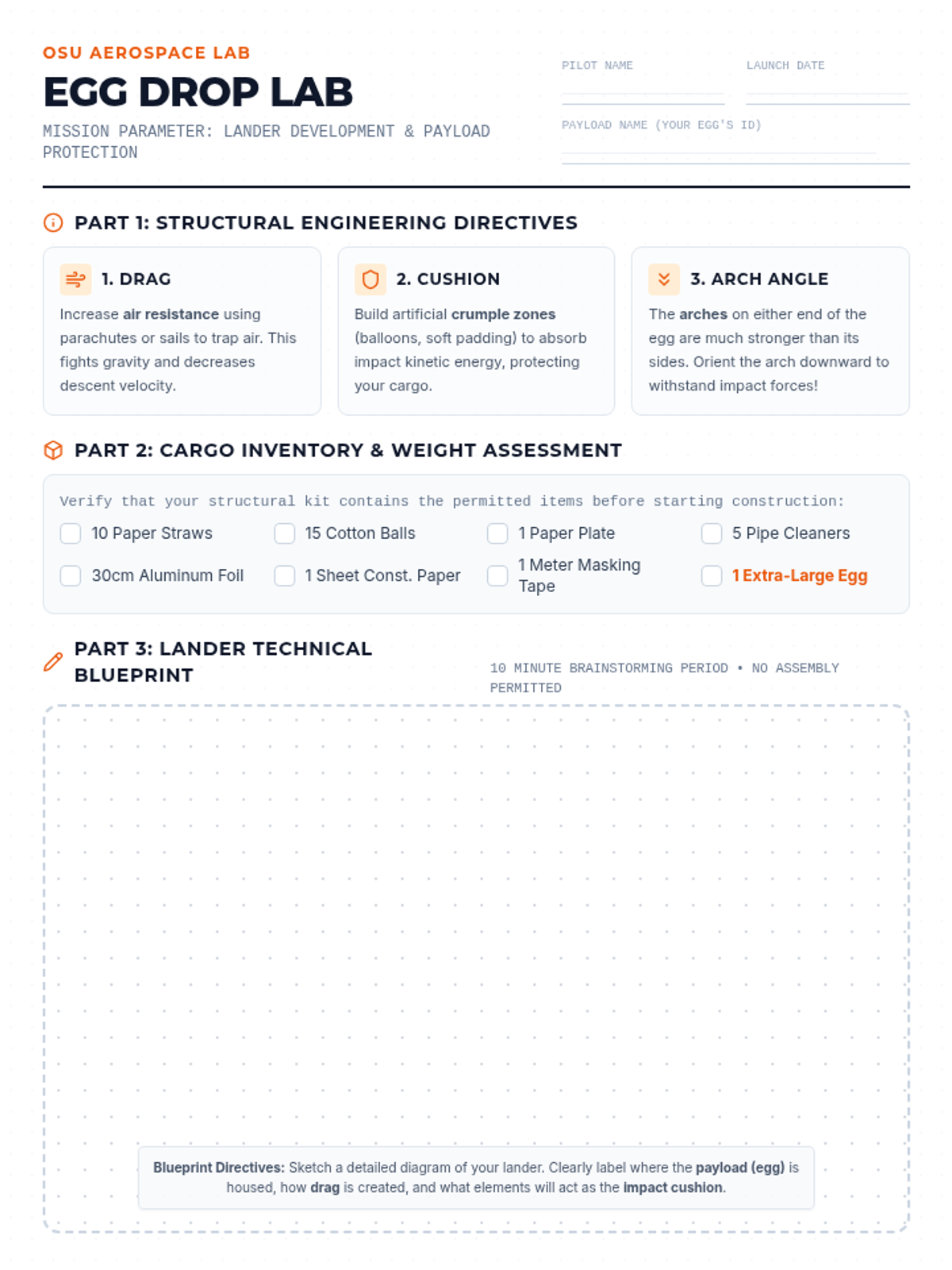
An engaging, hands-on physics and engineering lesson where students design, build, and test protective landing craft for fragile payloads (eggs), exploring forces, deceleration, and structural integrity.
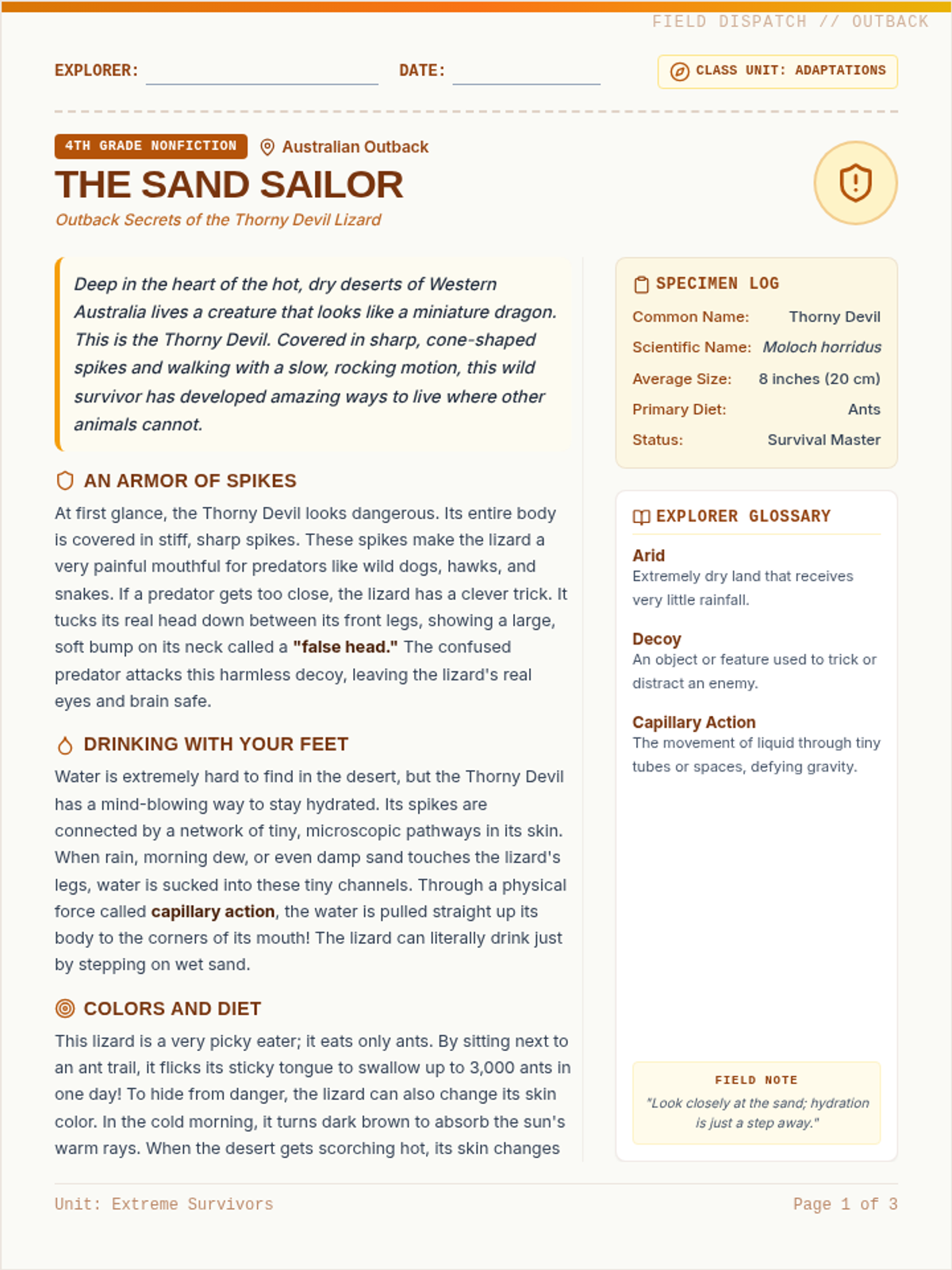
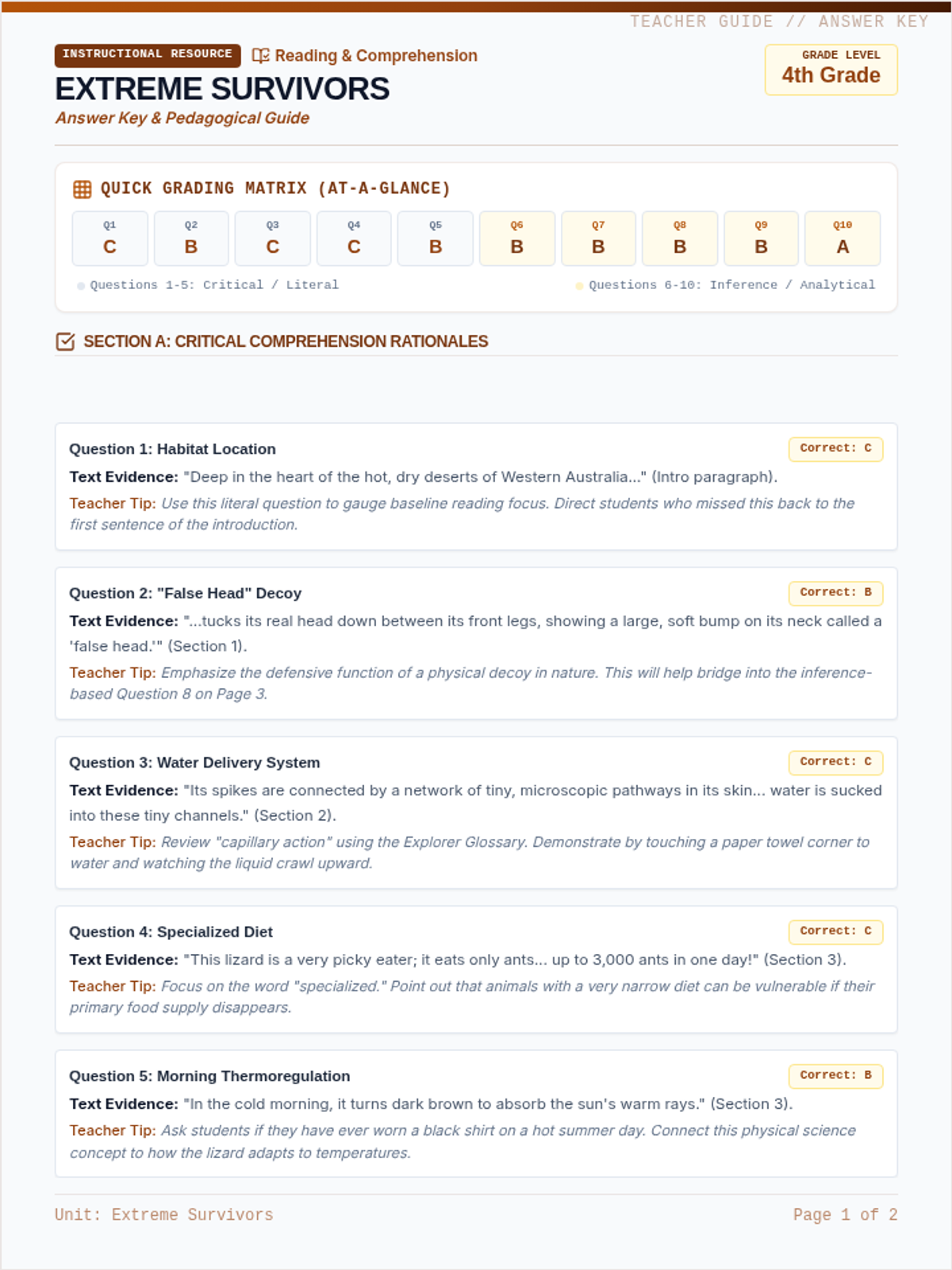
An on-grade level reading and comprehension unit focusing on how extreme desert animals, specifically the Thorny Devil, utilize highly specialized physical and behavioral adaptations to survive in the arid Australian Outback.
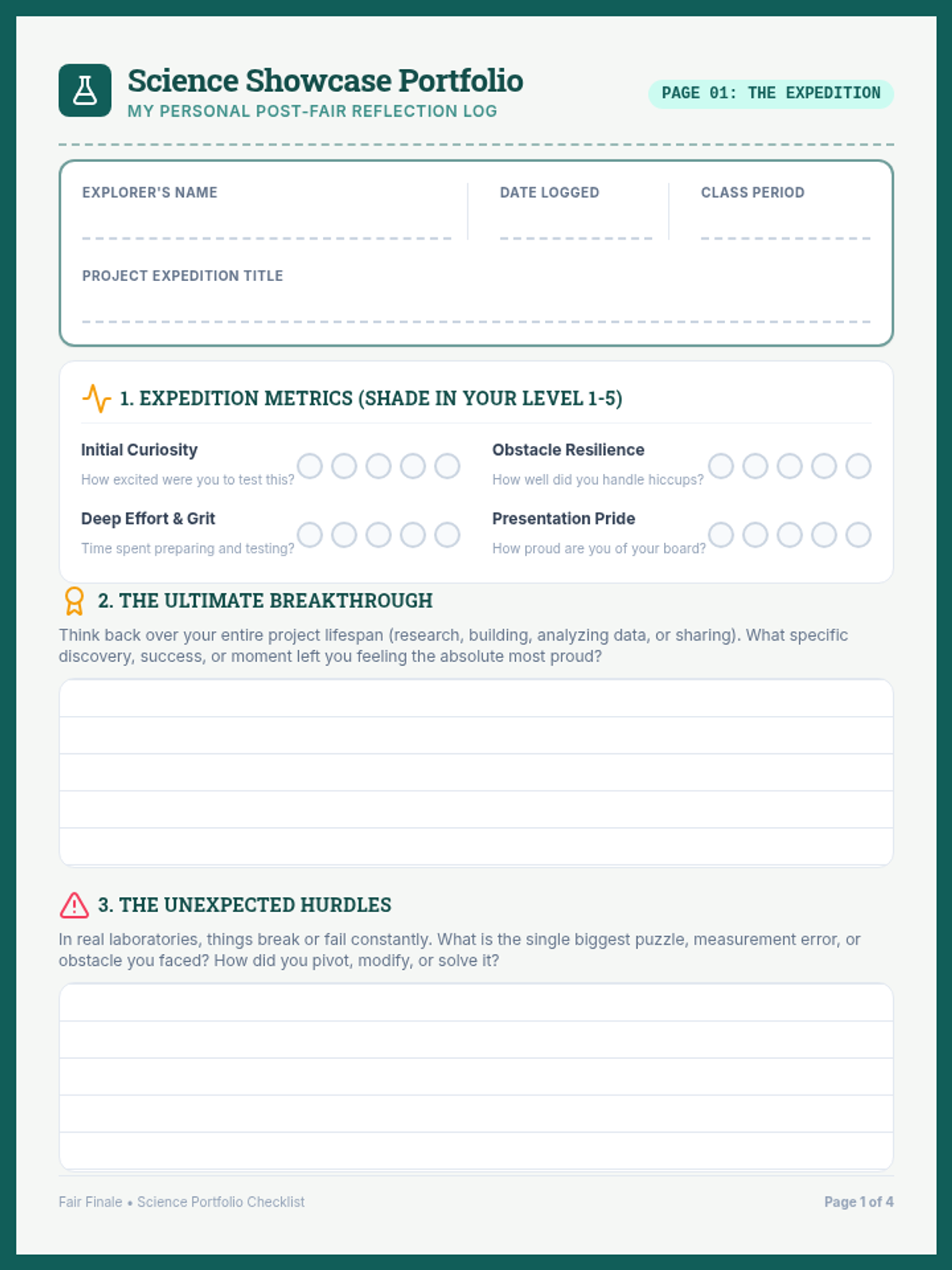
A reflection-focused lesson designed to guide students through evaluating their own science fair projects, reviewing their peers' work, and outlining future experimental improvements.
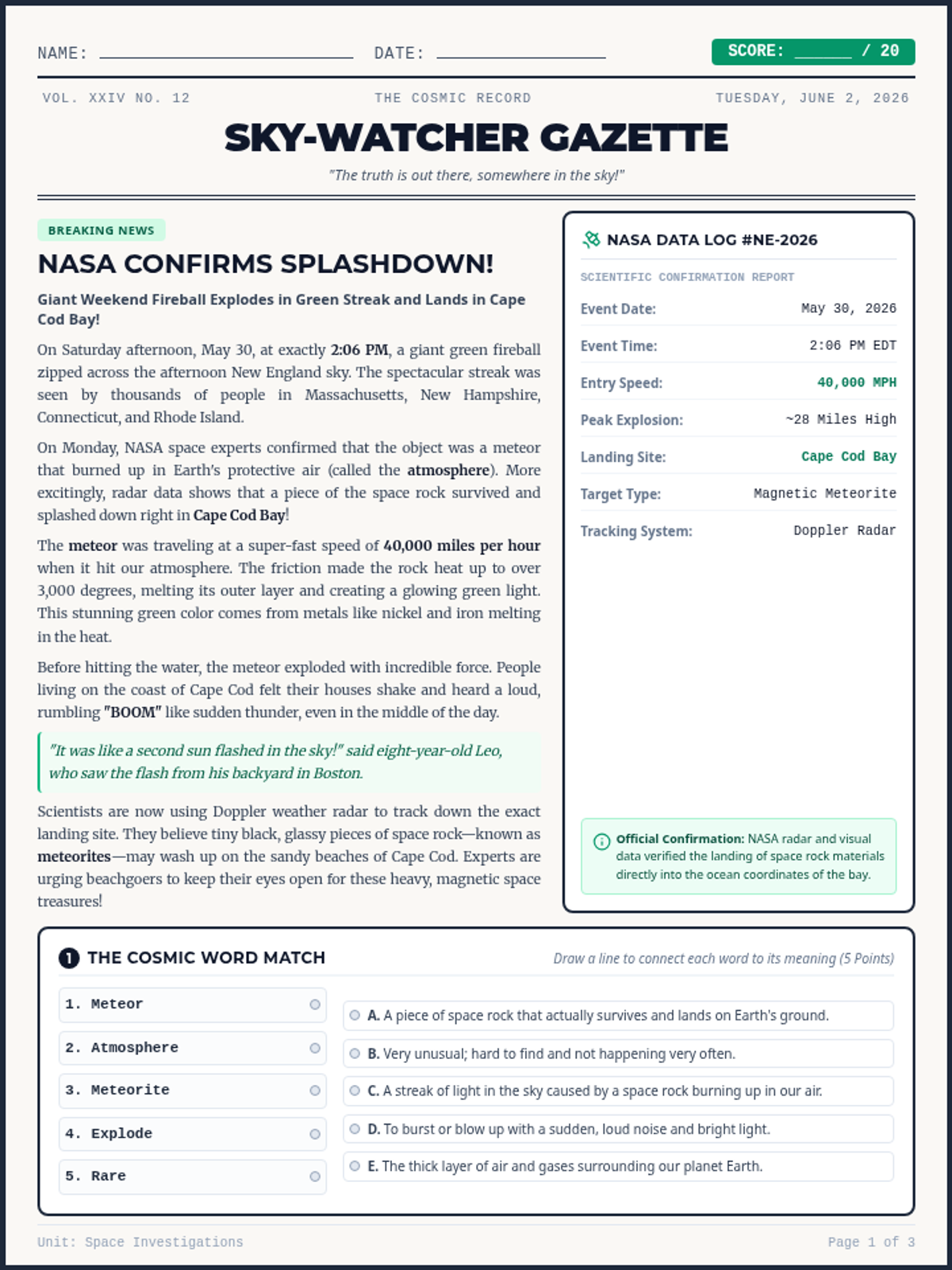
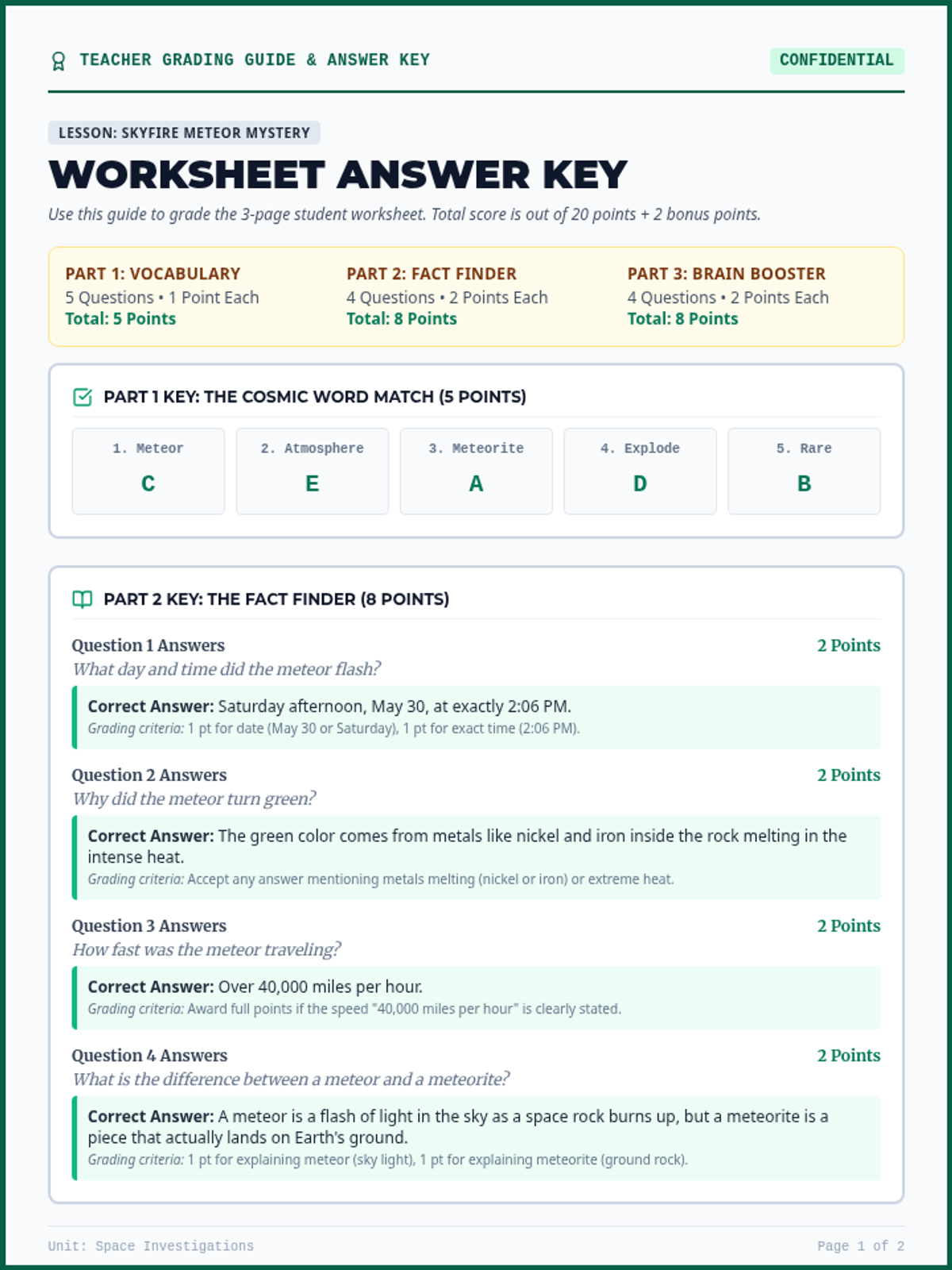
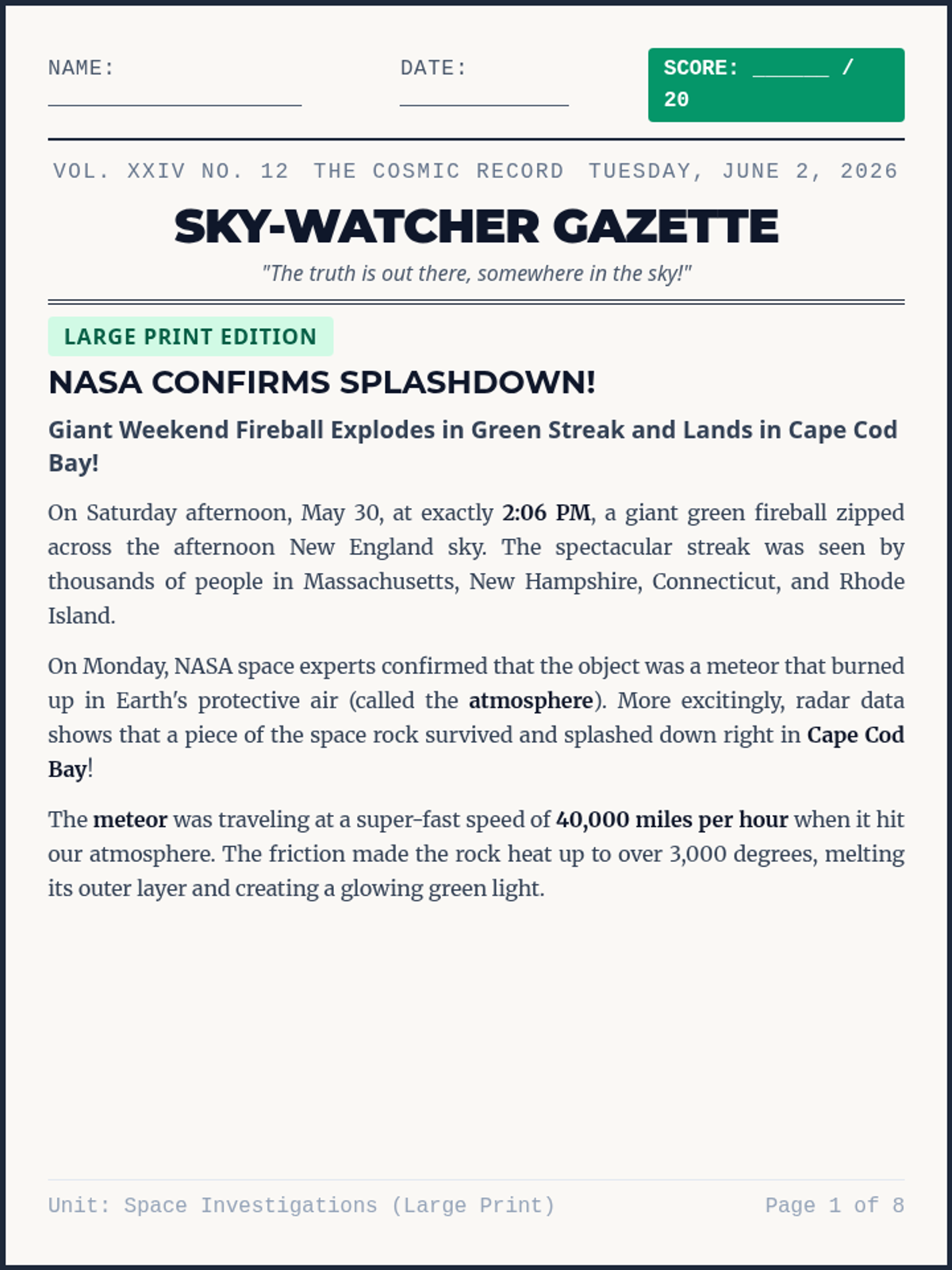
A reading comprehension lesson for 2nd and 3rd-grade students based on the spectacular meteor explosion over New England. Features engaging news-style reading, vocabulary challenges, comprehension questions, and a creative activity.
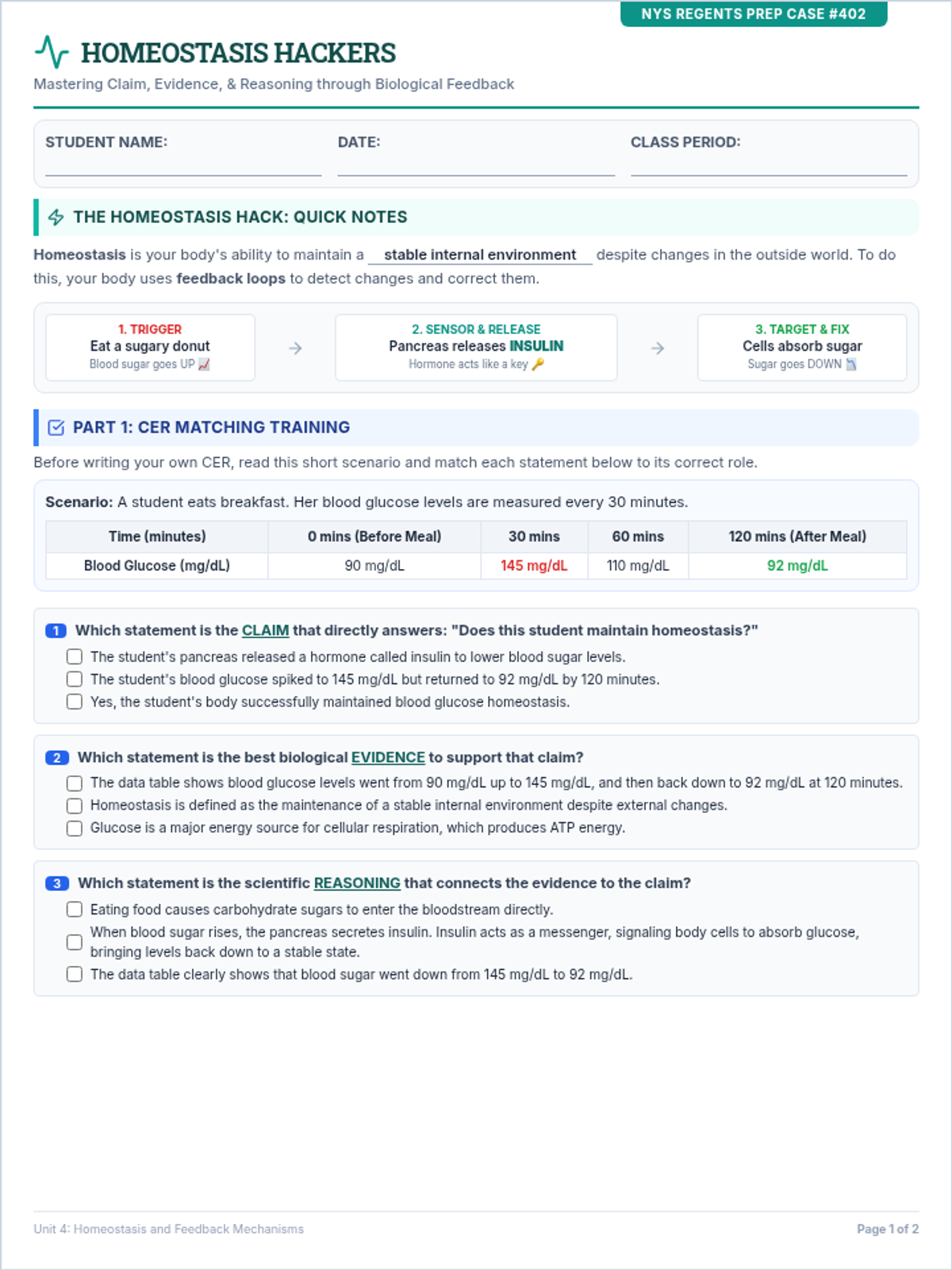
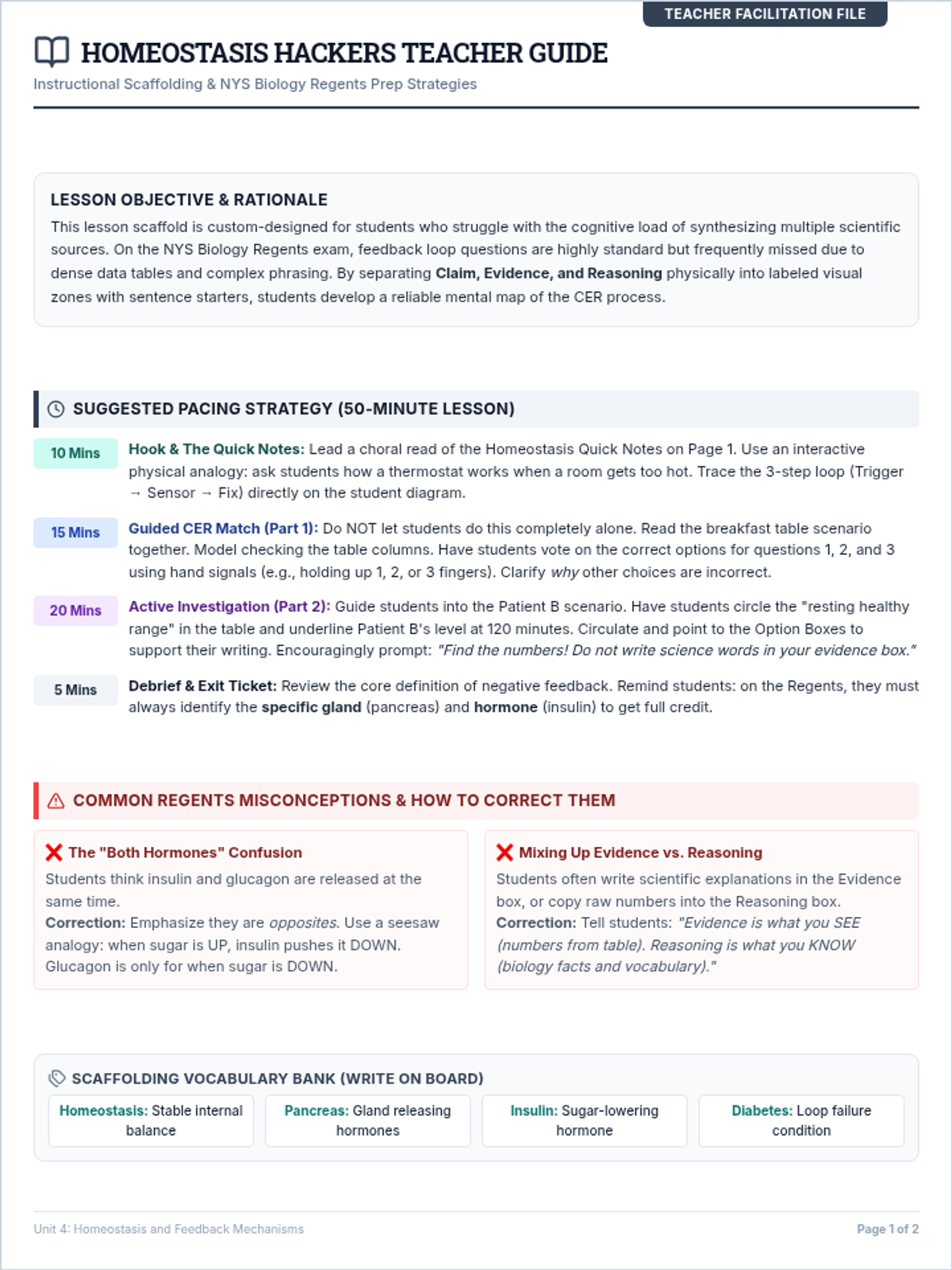
A comprehensive NYS Biology Regents preparation lesson focused on mastering the Claim-Evidence-Reasoning (CER) framework through the lens of Homeostasis and Feedback Mechanisms (specifically blood glucose regulation). Designed with heavy scaffolding, visual organizers, and multiple-choice matching for struggling learners.
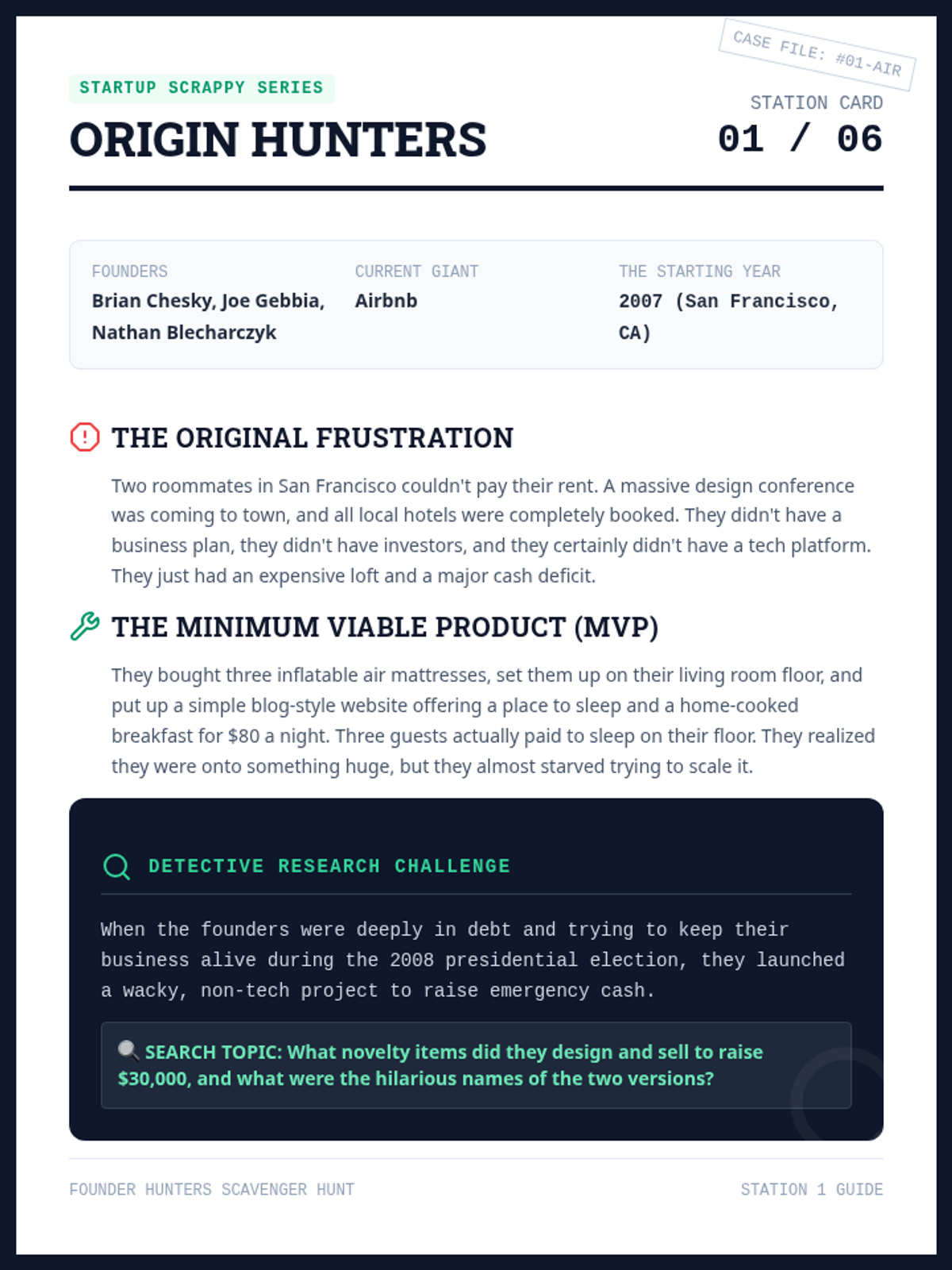
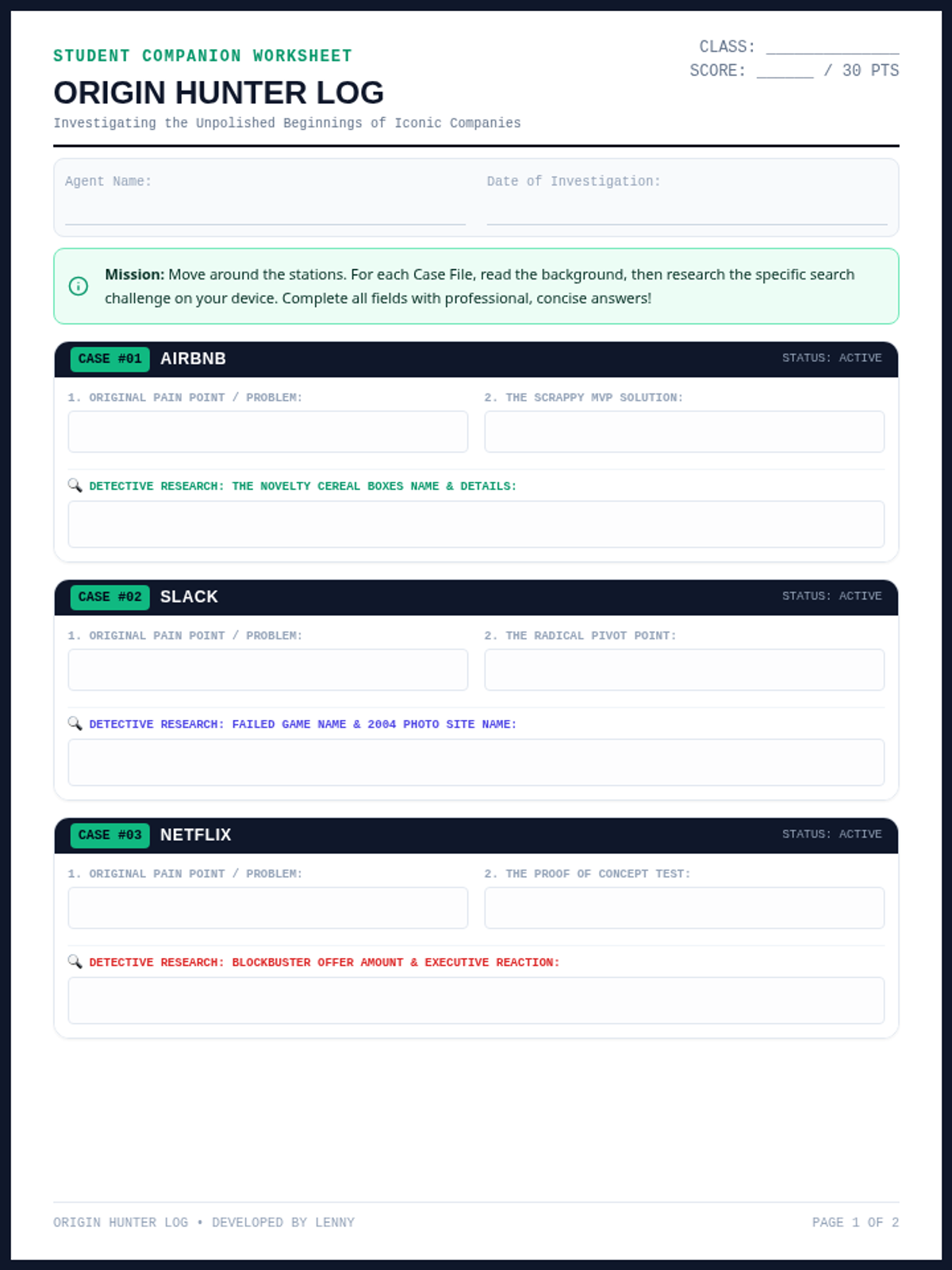
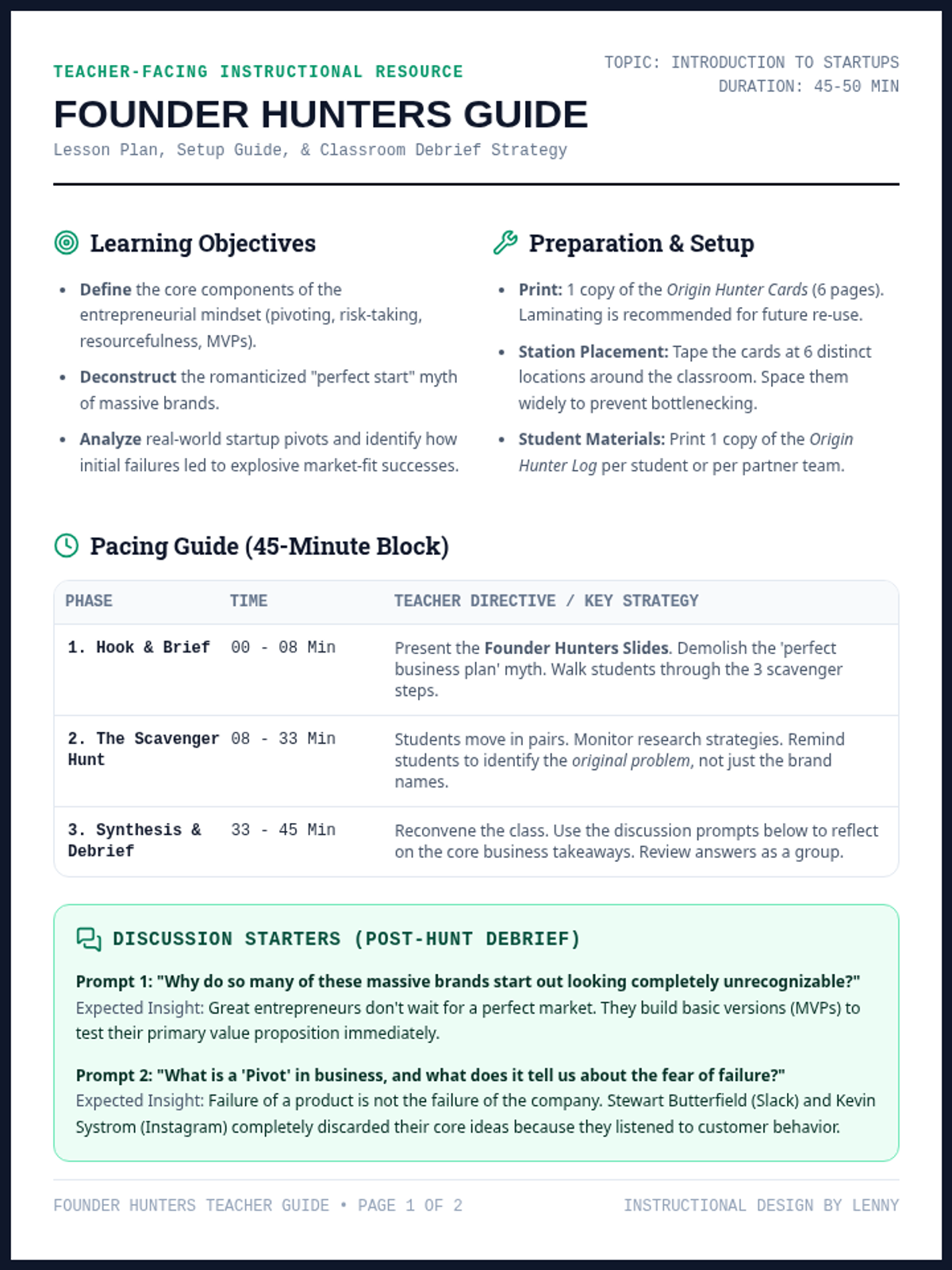
A high-energy, collaborative introductory lesson on entrepreneurship where students become 'Origin Hunters,' investigating the real-world, messy, and inspiring starting points of famous household brands.
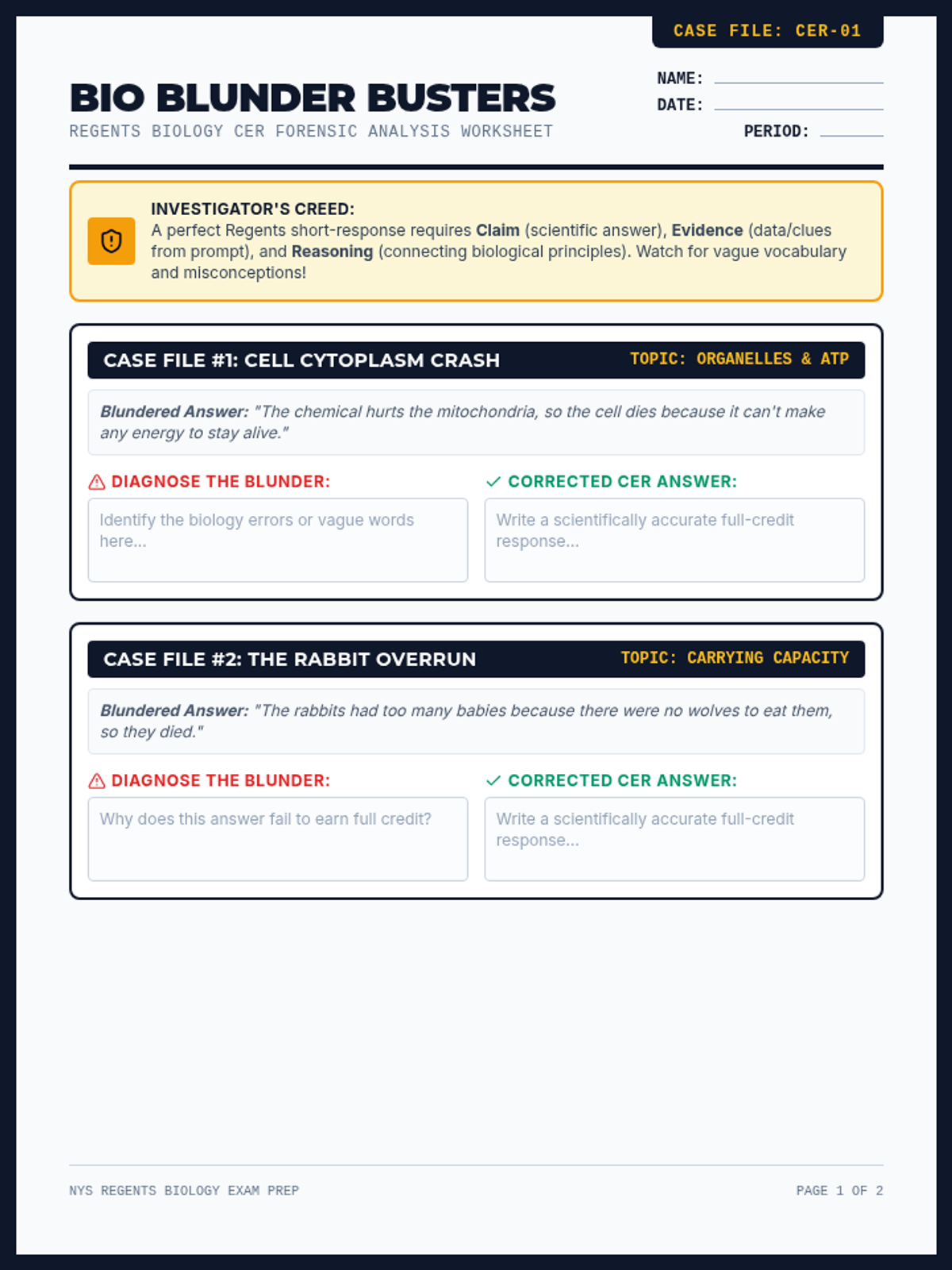
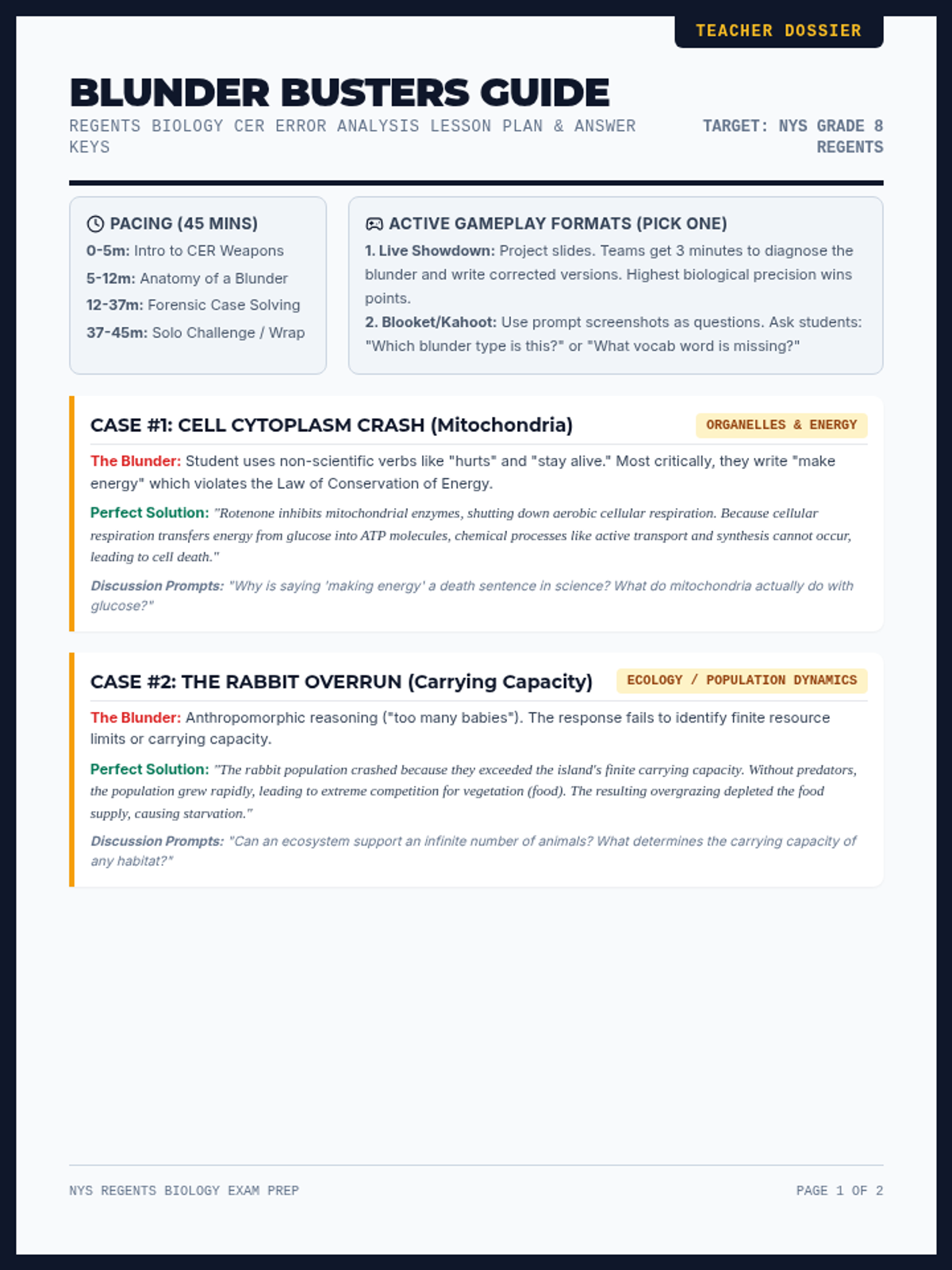
A highly engaging Regents Biology lesson focused on Claim-Evidence-Reasoning (CER) error analysis. Students act as science detectives to identify, analyze, and correct common exam blunders across major biology topics like ecology, cell division, and human impact.
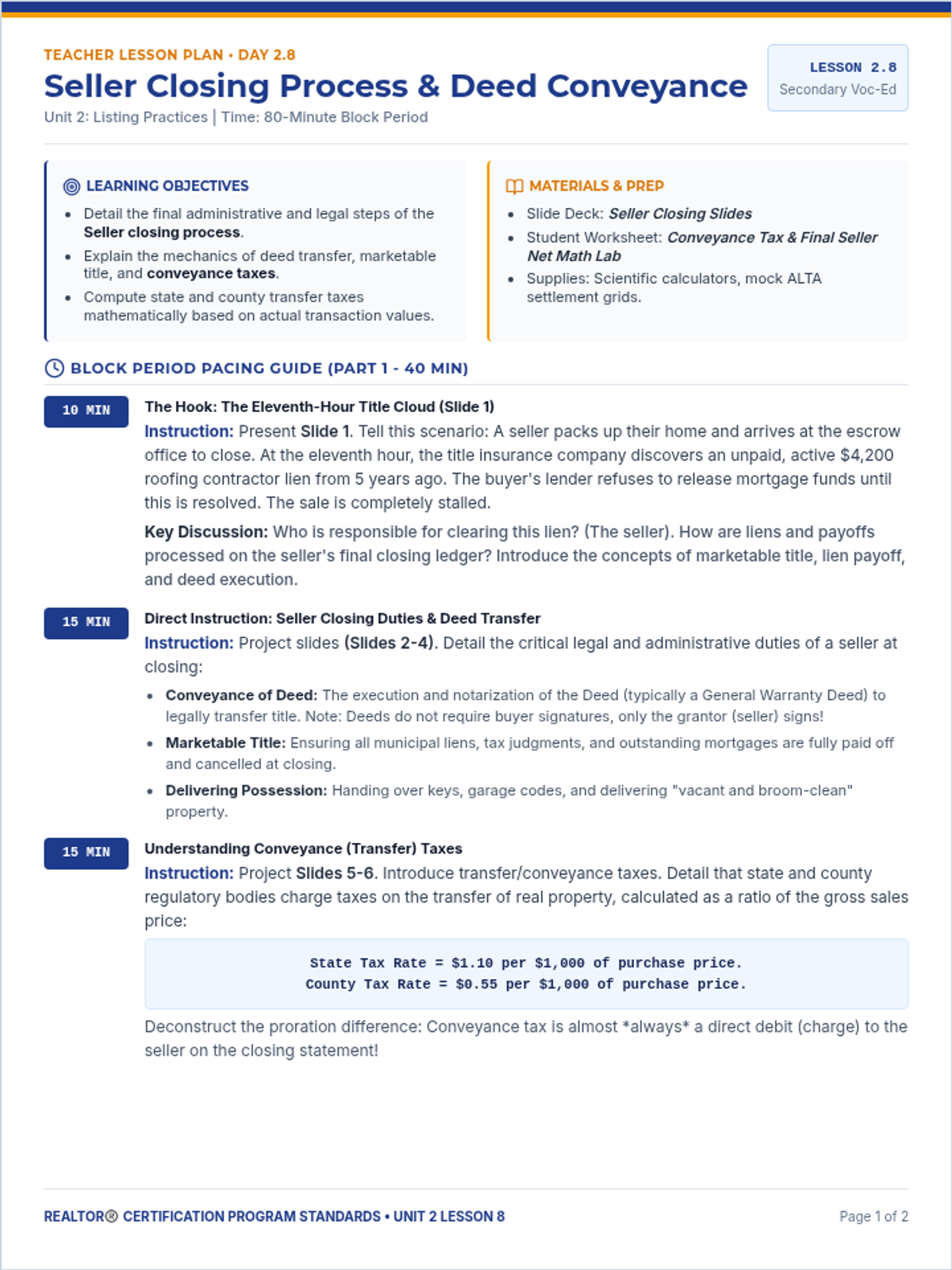
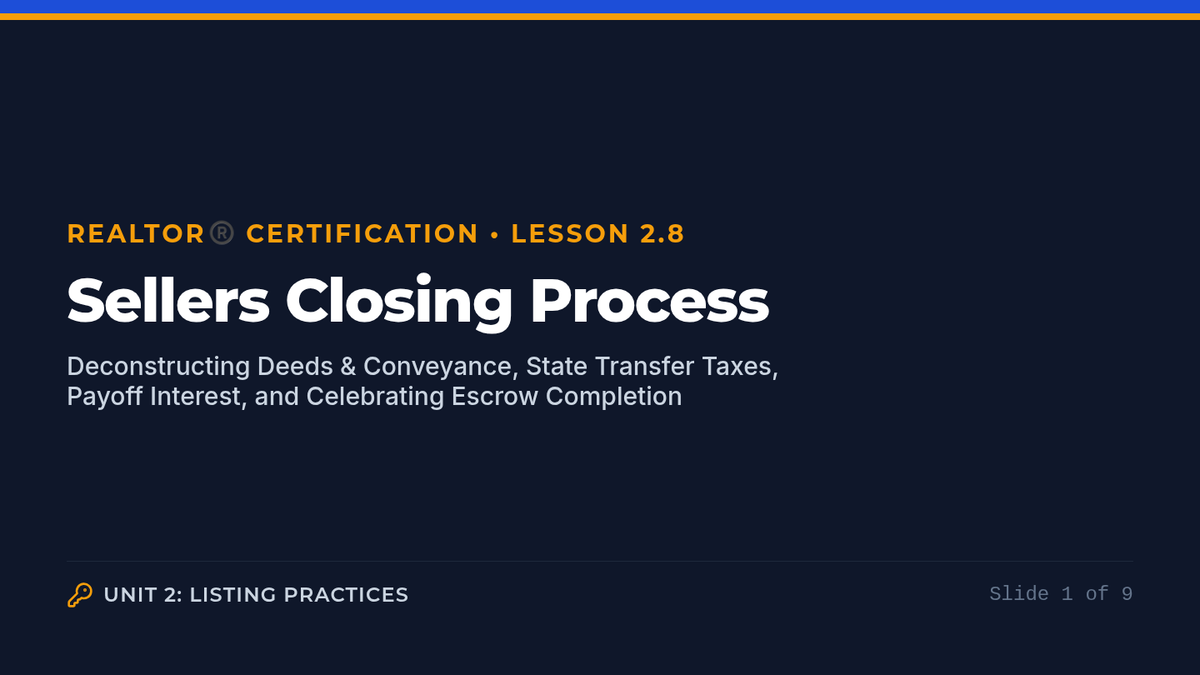
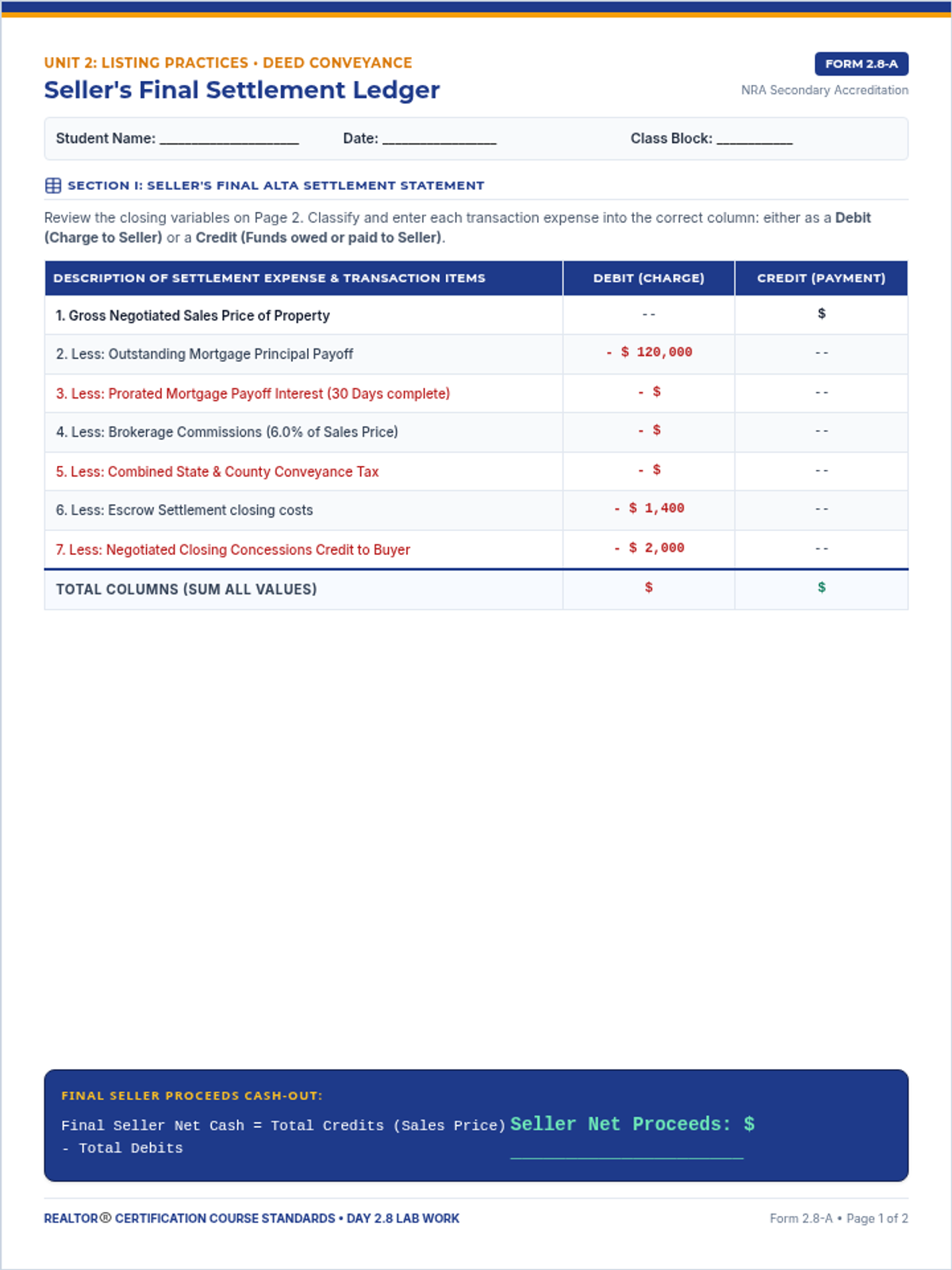
Materials for Day 2.8 of listing practices, focused on the seller's final closing steps, executing deed transfers and conveyances, paying off mortgage balances, and reviewing for the final licensing certification.
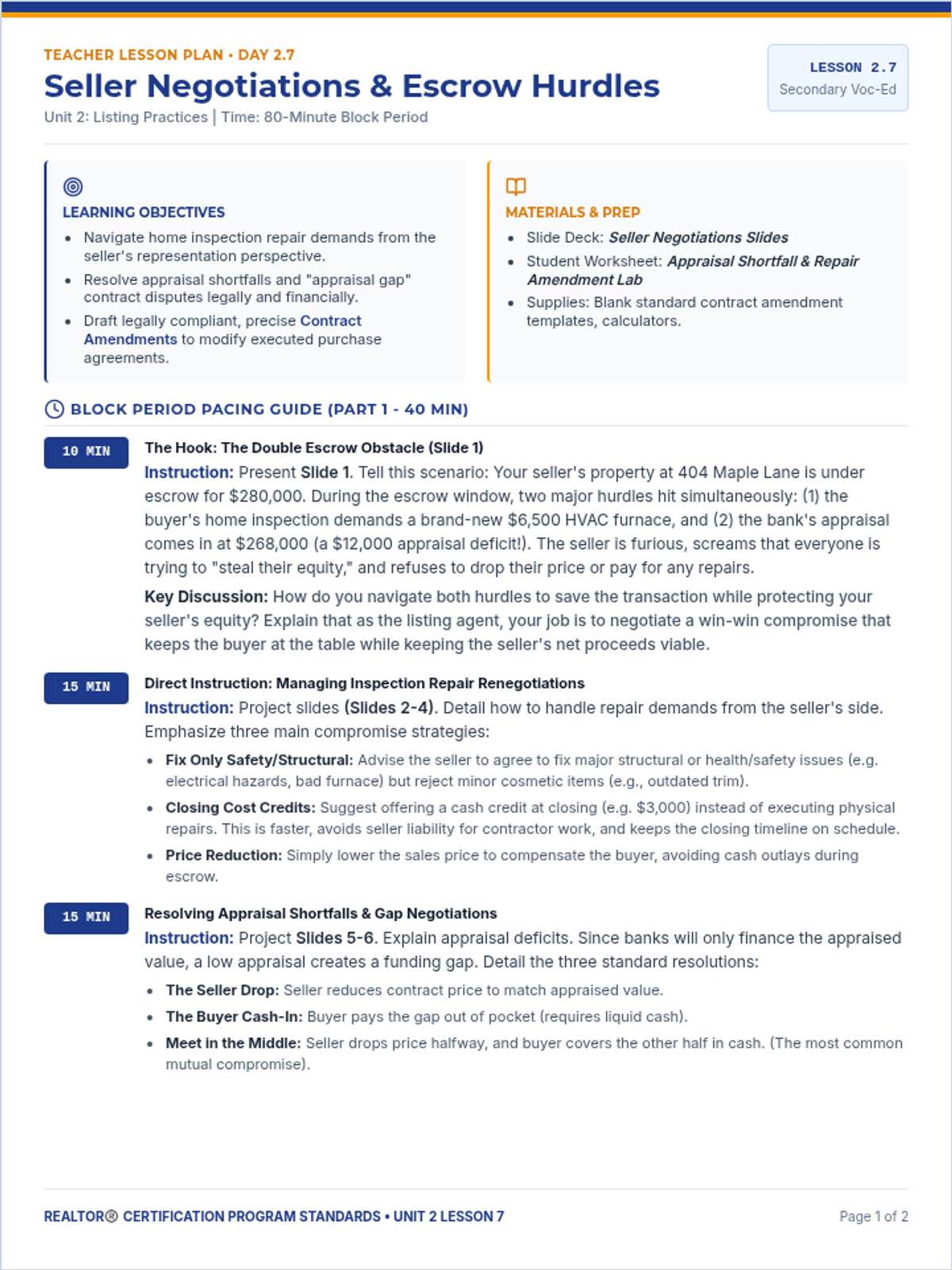
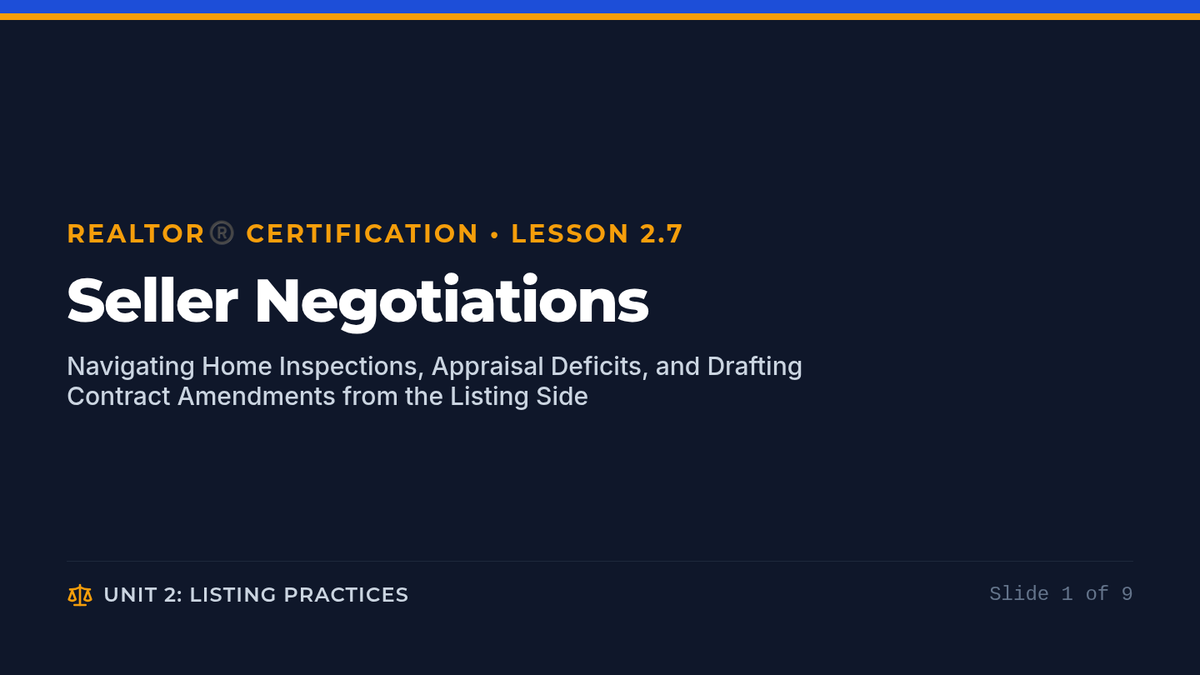
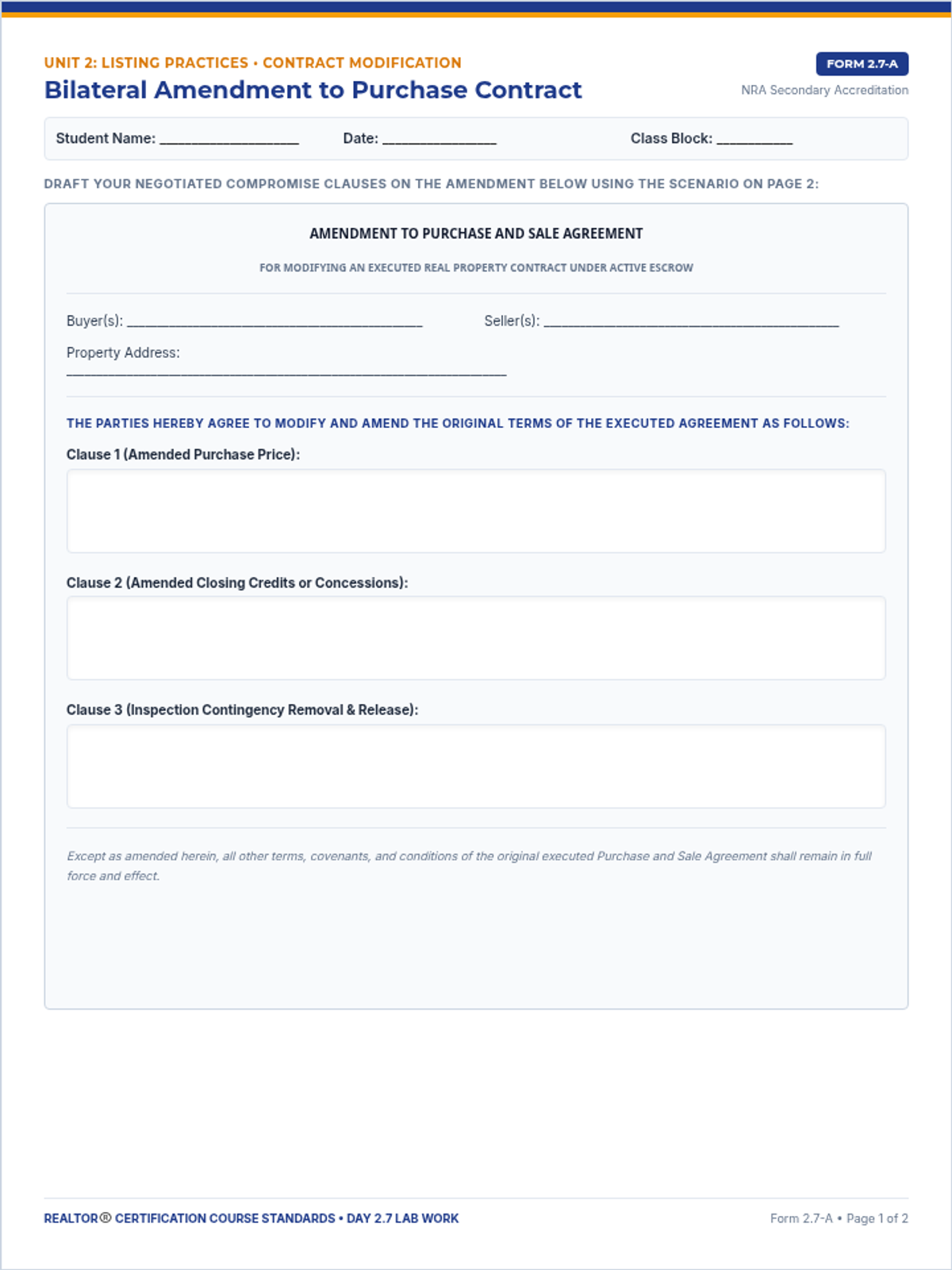
Materials for Day 2.7 of listing practices, focused on navigating inspection repair demands and appraisal shortfalls from the listing side, managing seller objections, and drafting contract amendments.
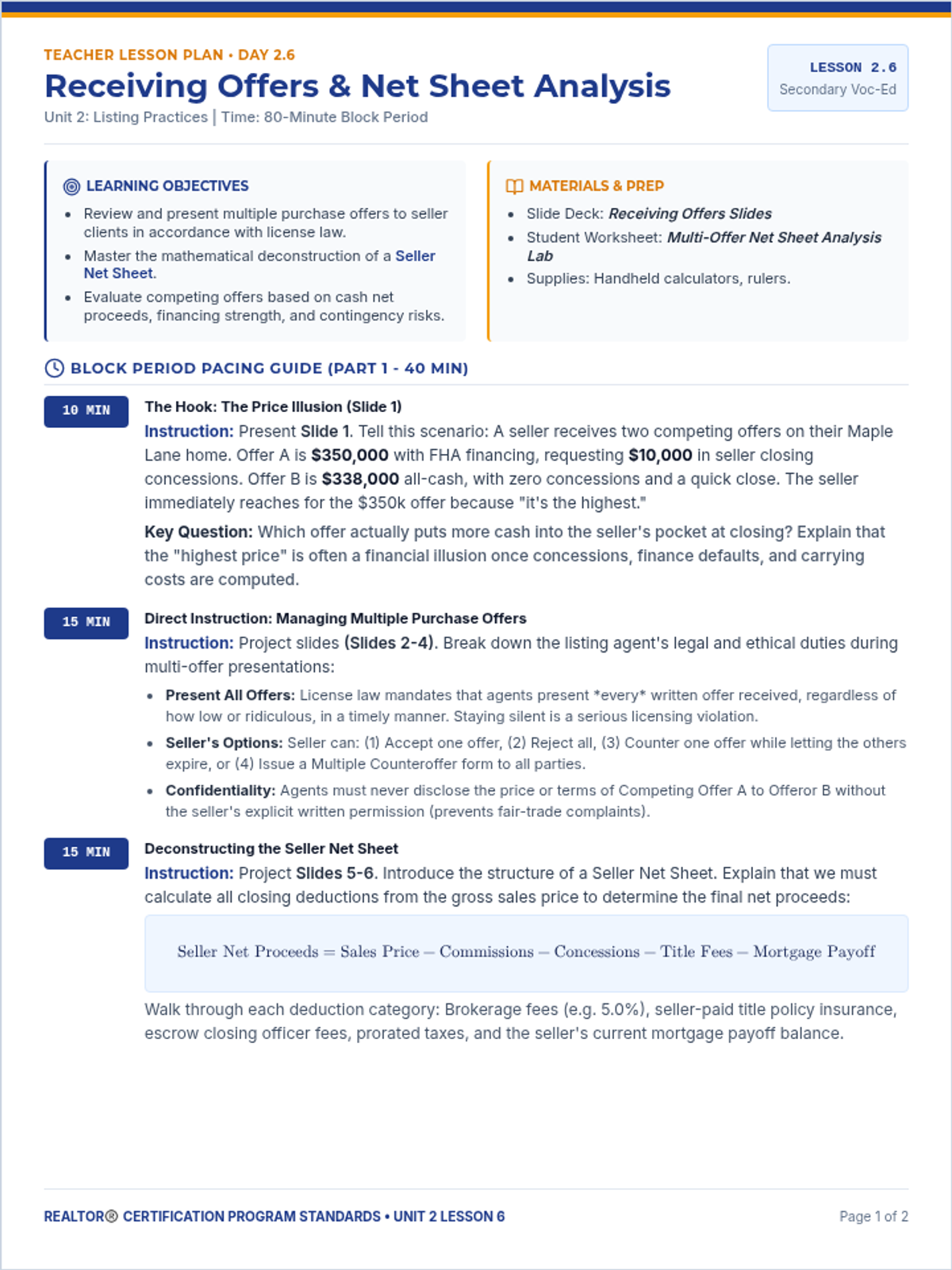
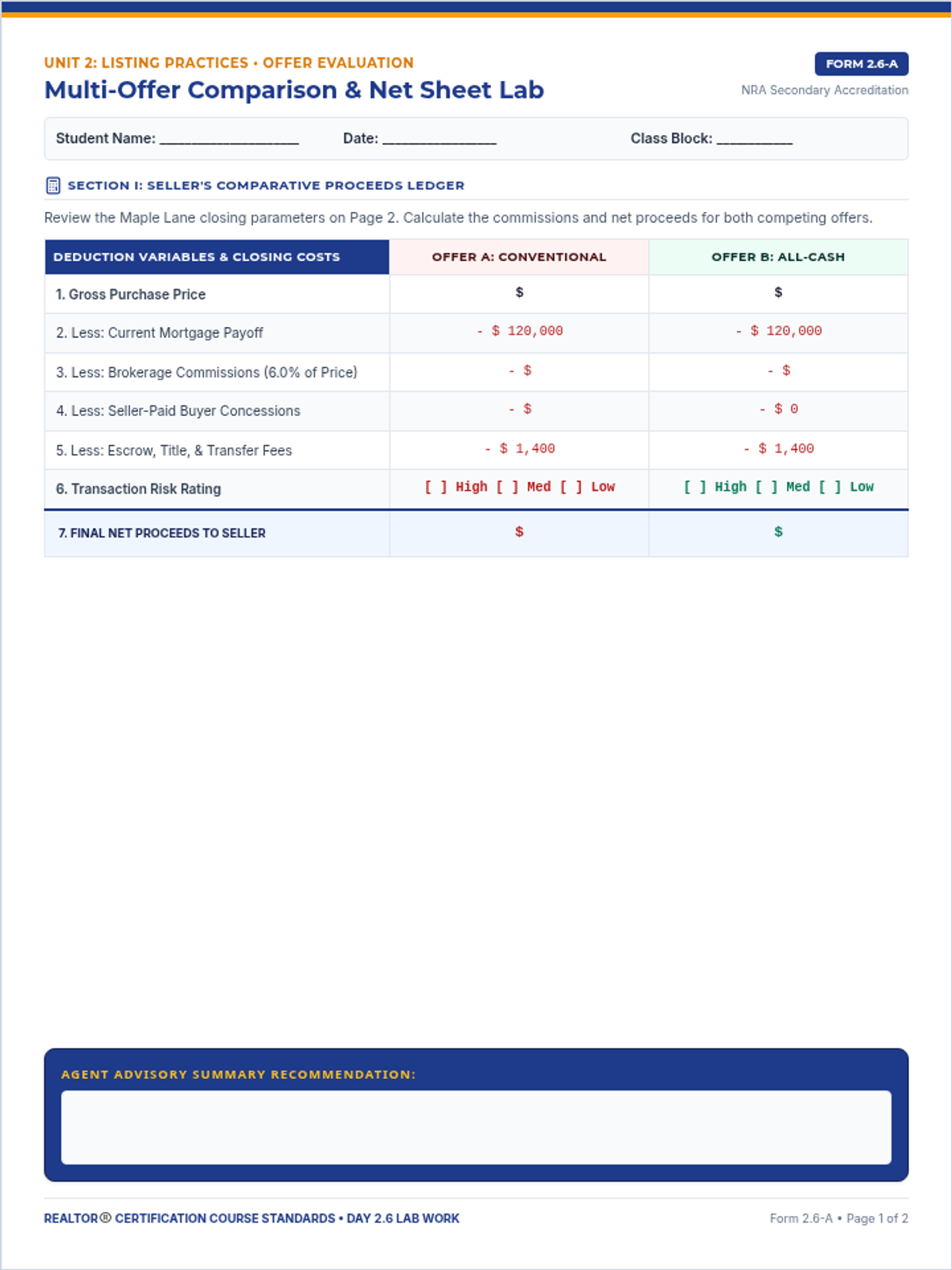
Materials for Day 2.6 of listing practices, focused on analyzing multiple purchase offers, completing seller net sheets, and managing competitive bidding wars.
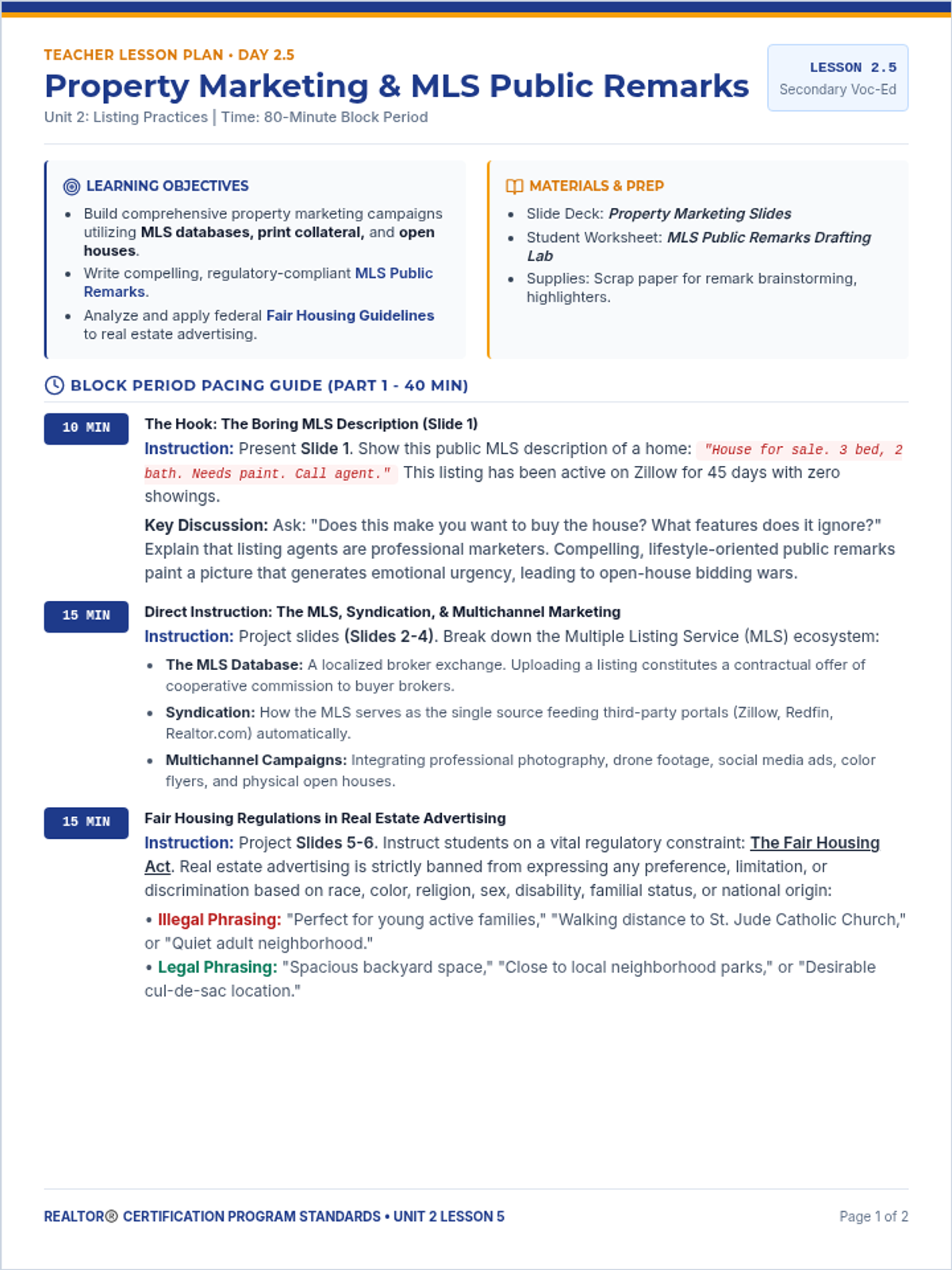
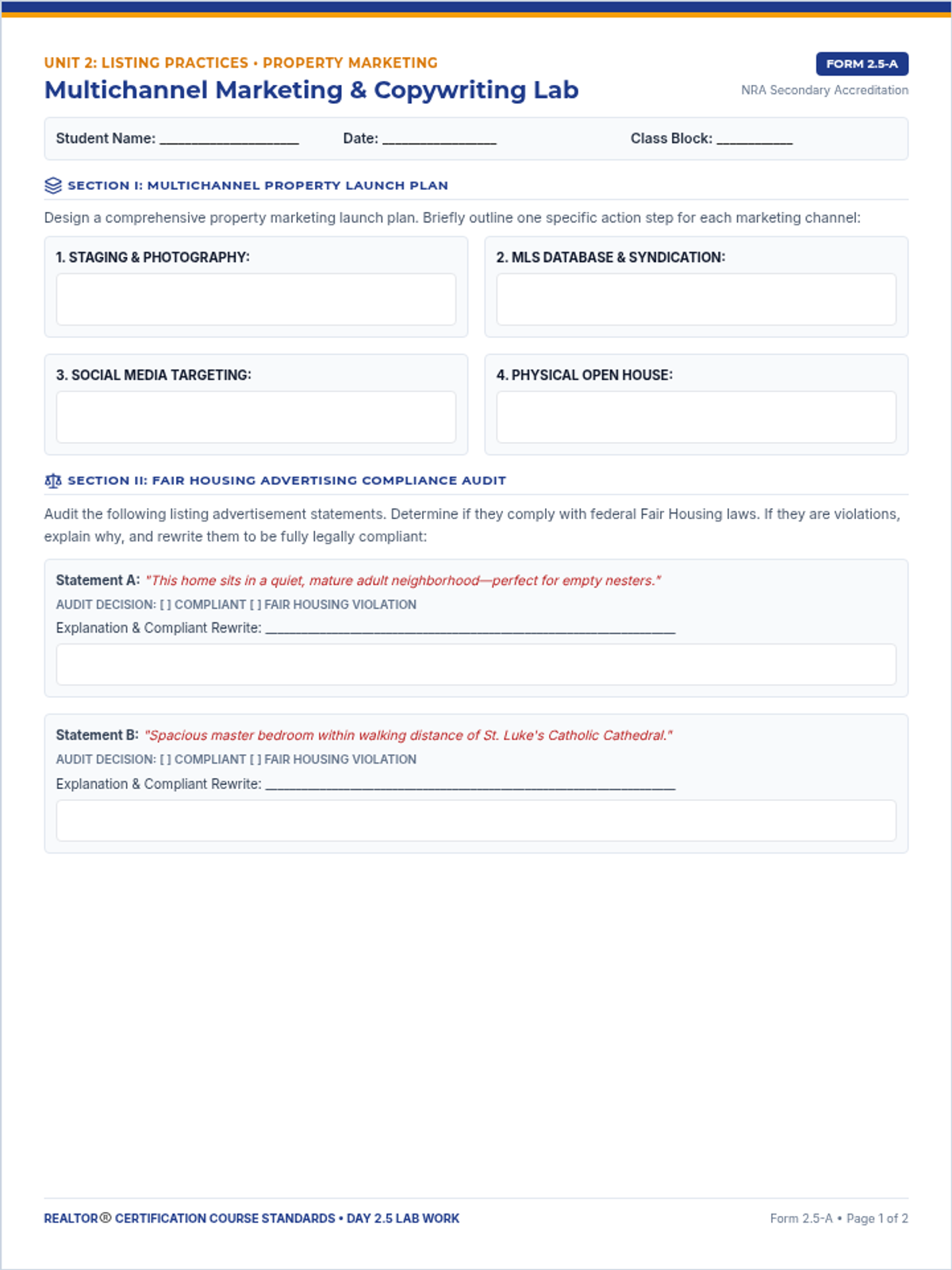
Materials for Day 2.5 of listing practices, focused on building comprehensive property marketing campaigns, navigating the MLS database, syndication, open houses, and writing compelling MLS public remarks.
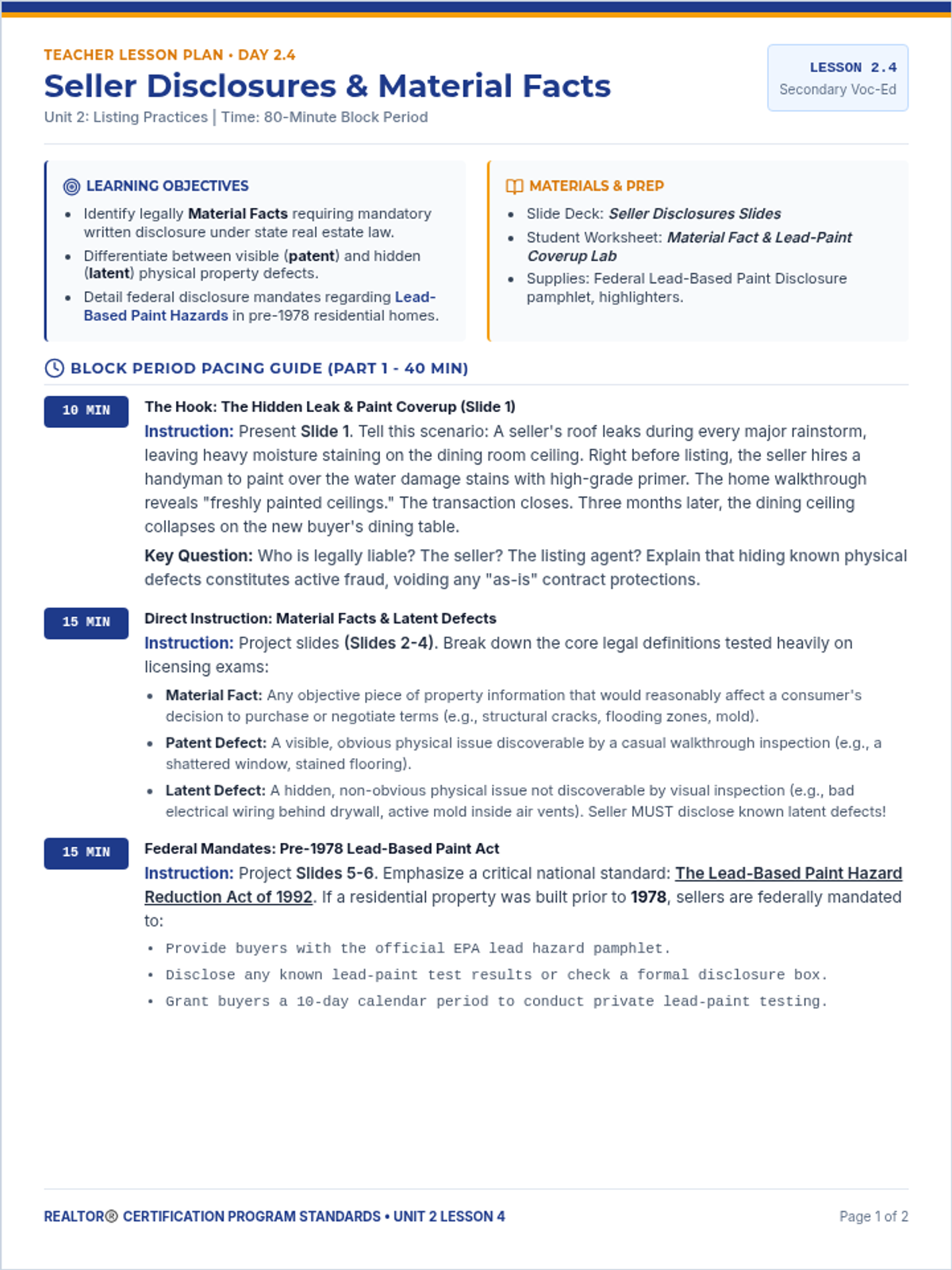
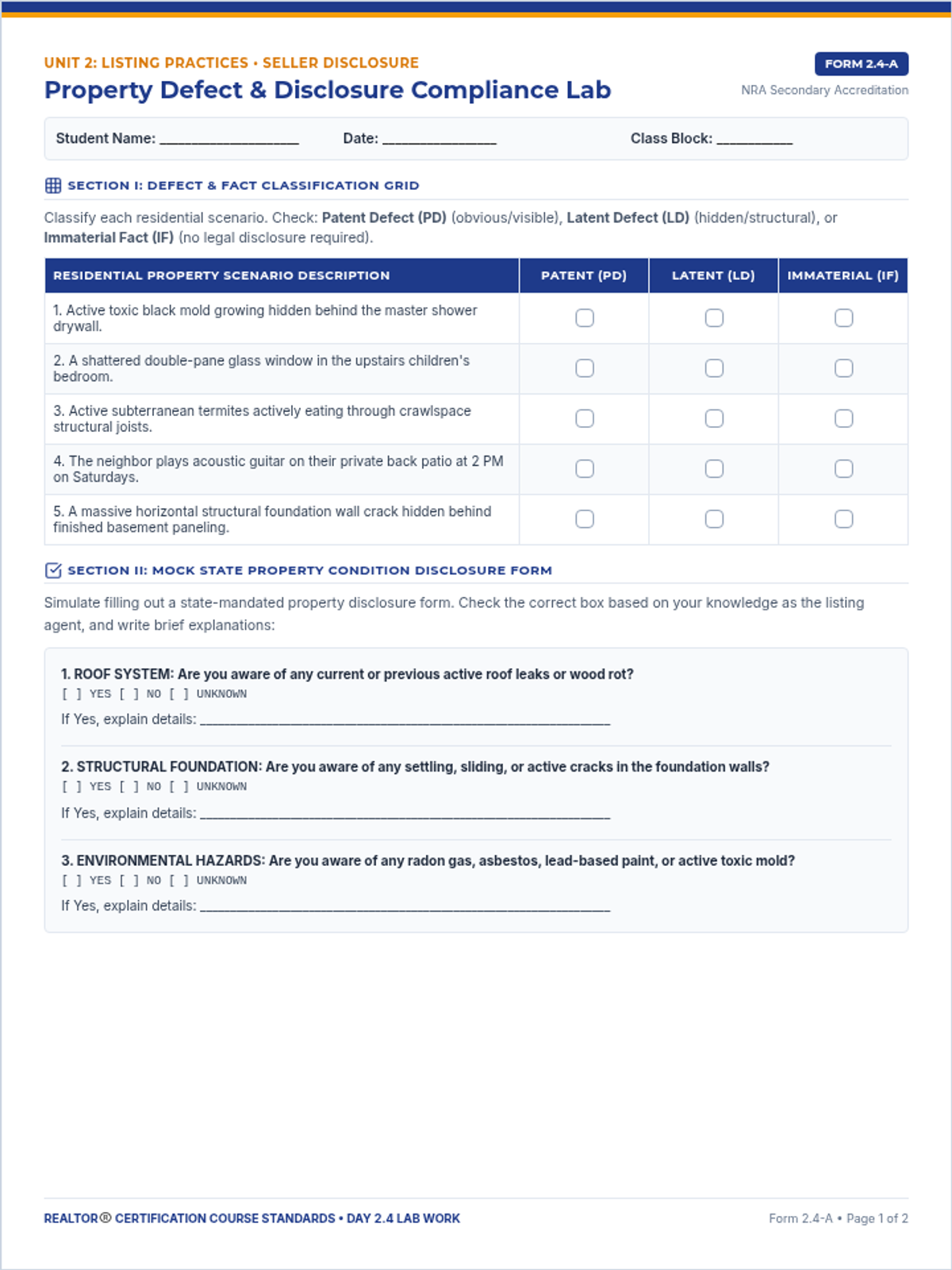
Materials for Day 2.4 of listing practices, focused on identifying legally material facts requiring written disclosure, avoiding misrepresentation, and analyzing structural and hazardous defects.
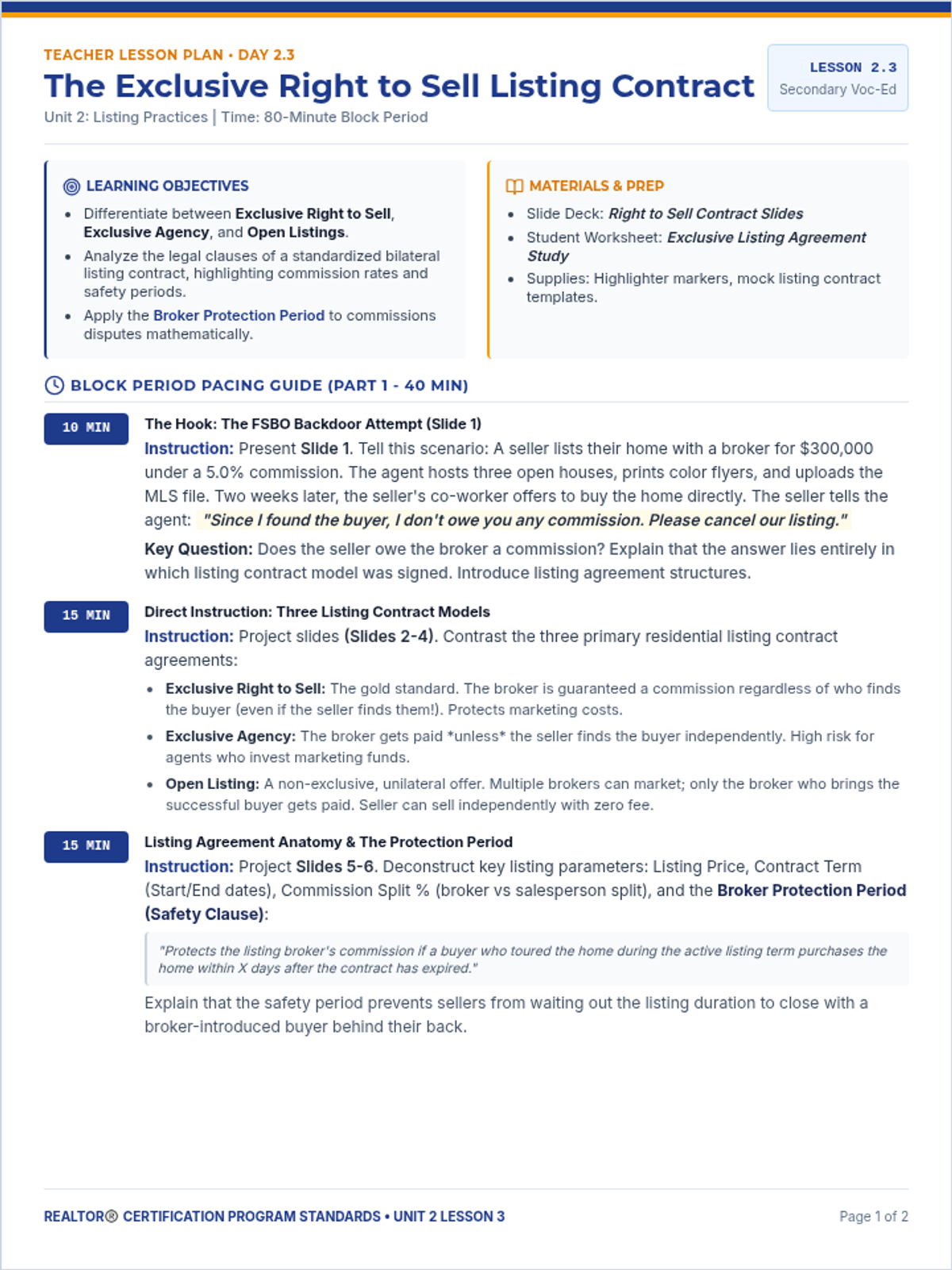
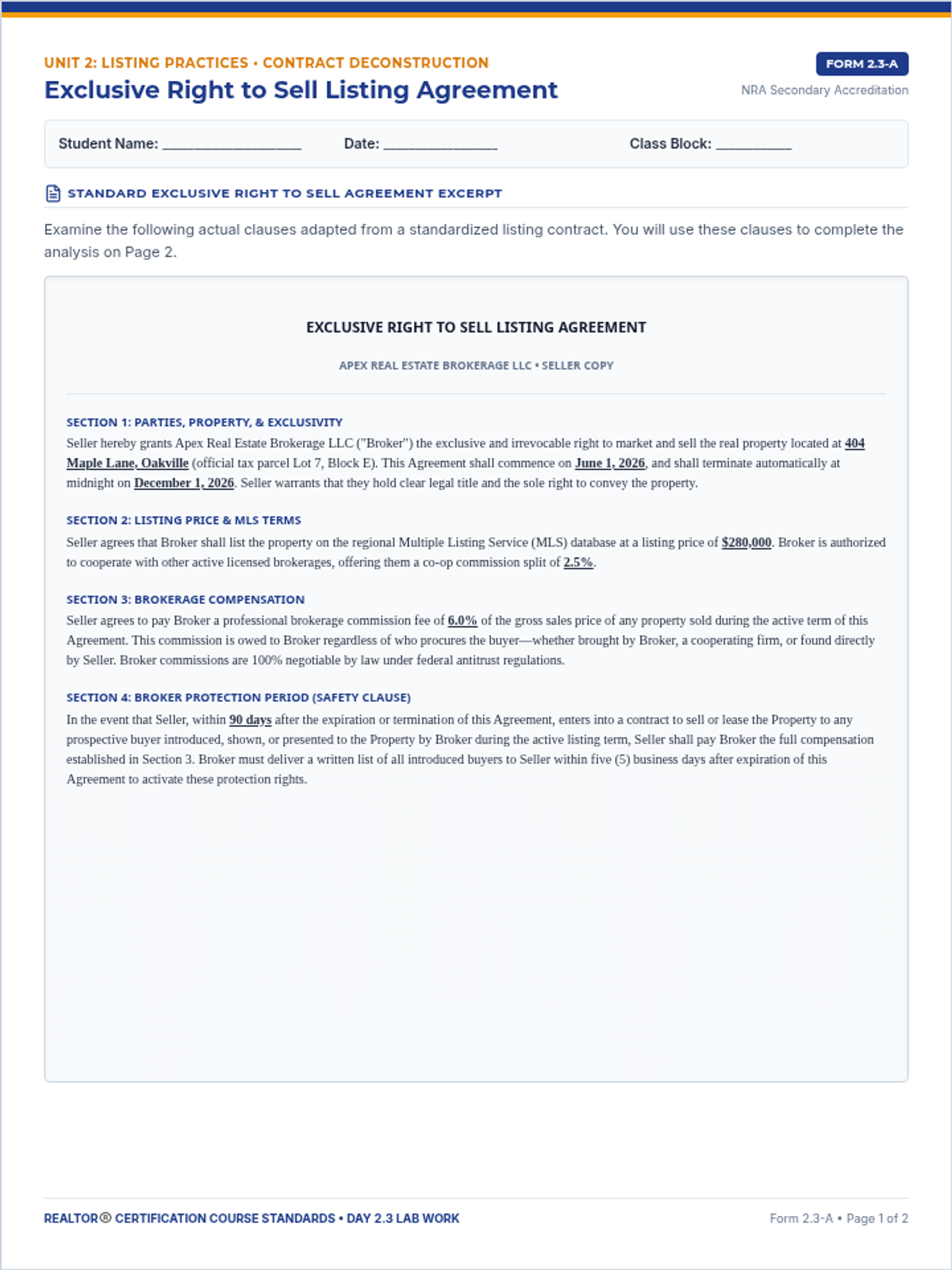
Materials for Day 2.3 of listing practices, focused on analyzing and completing the standard Exclusive Right to Sell Listing Agreement, listing commissions, and safety clauses.
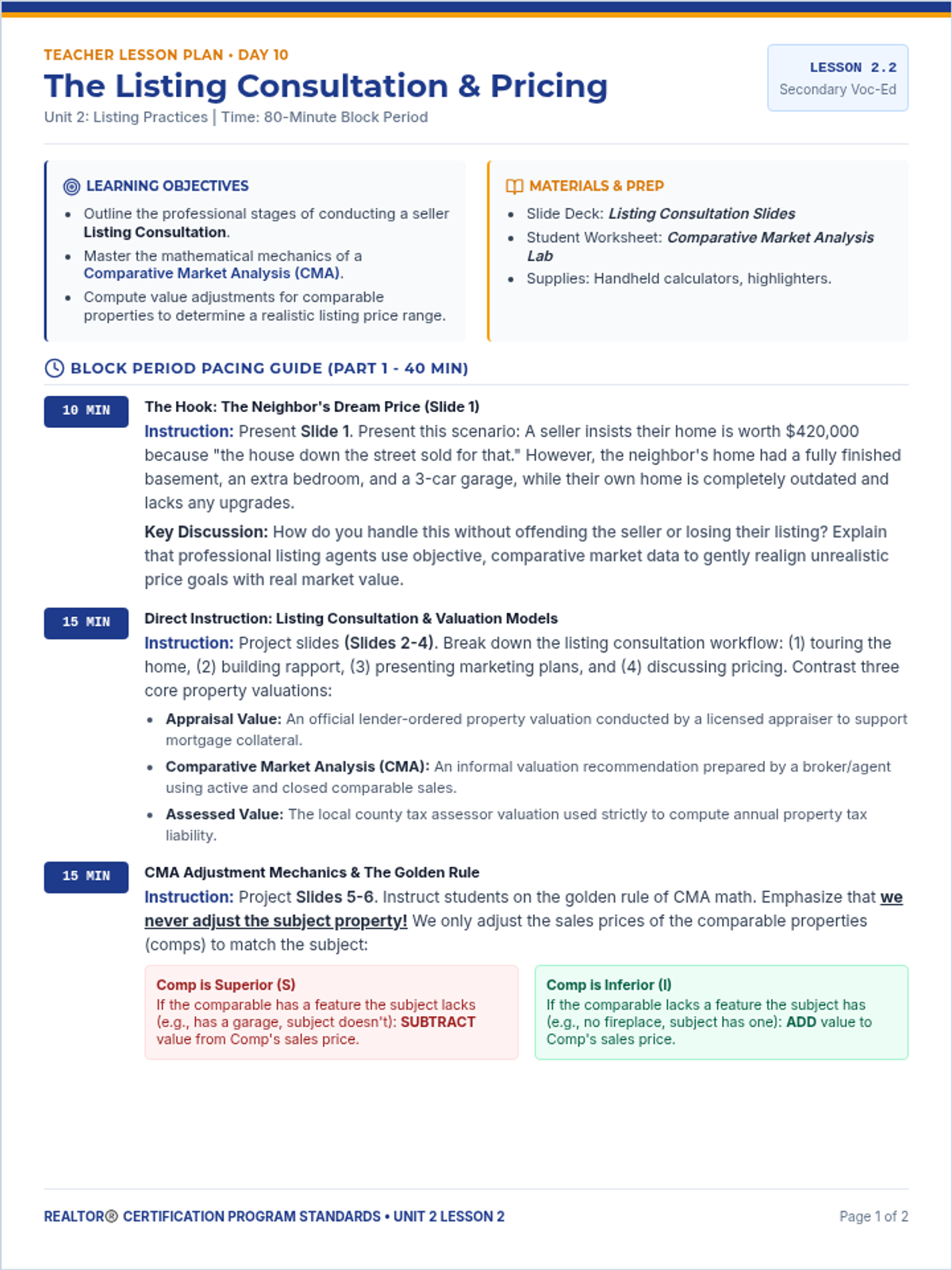
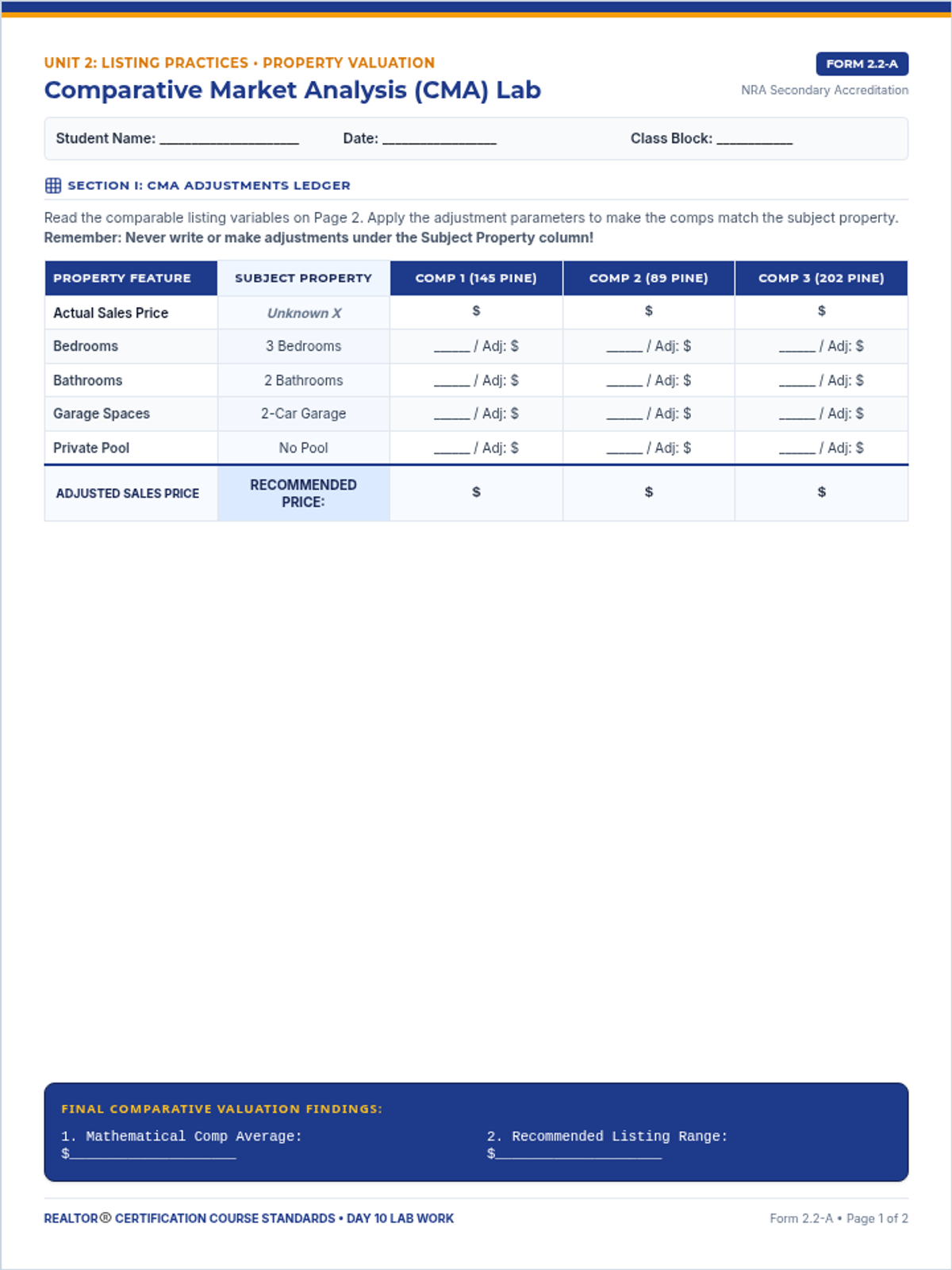
Instructional resources and student practice worksheets for Day 10, focusing on the professional listing consultation, pricing strategies, and conducting a Comparative Market Analysis (CMA).
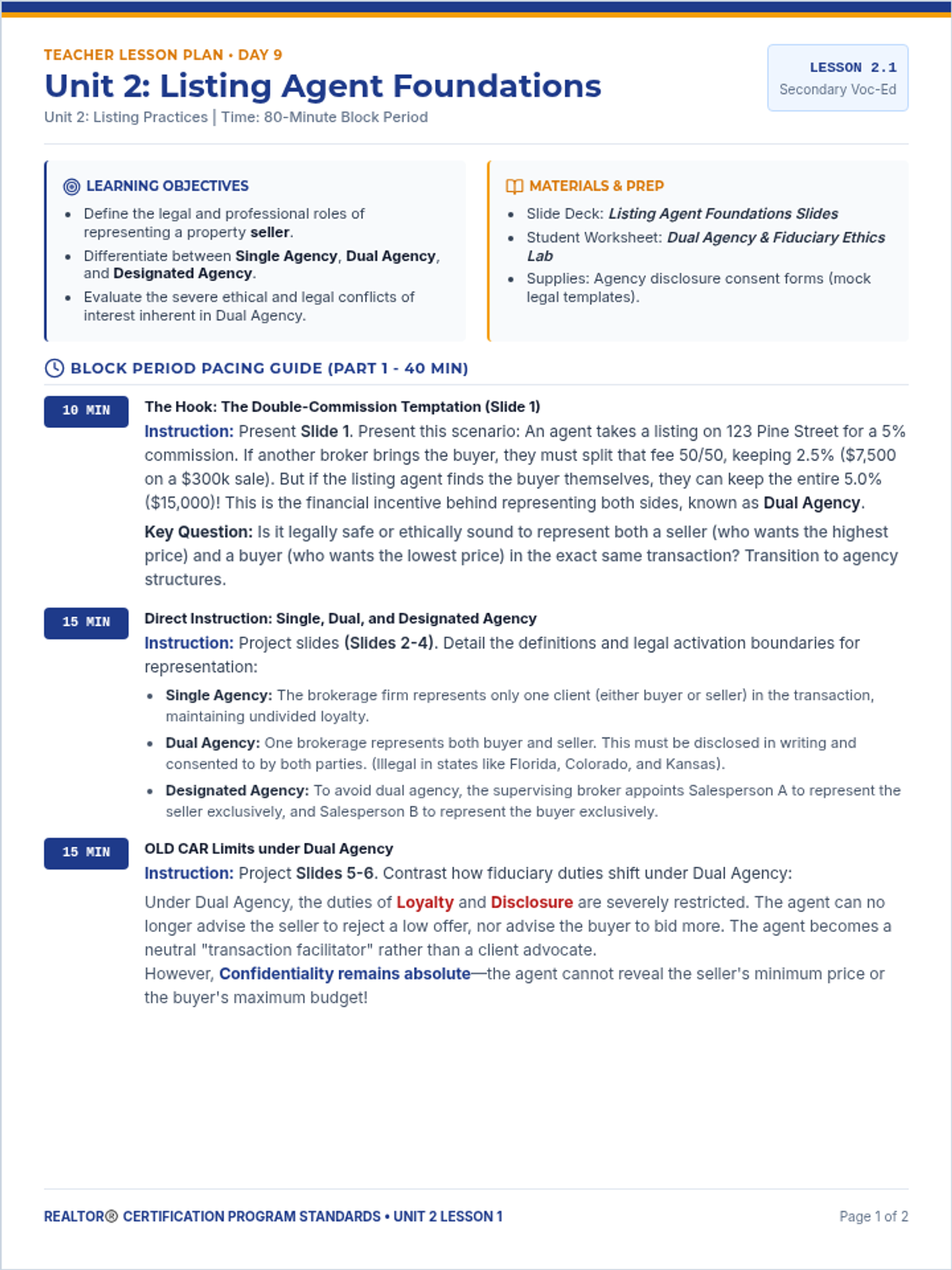
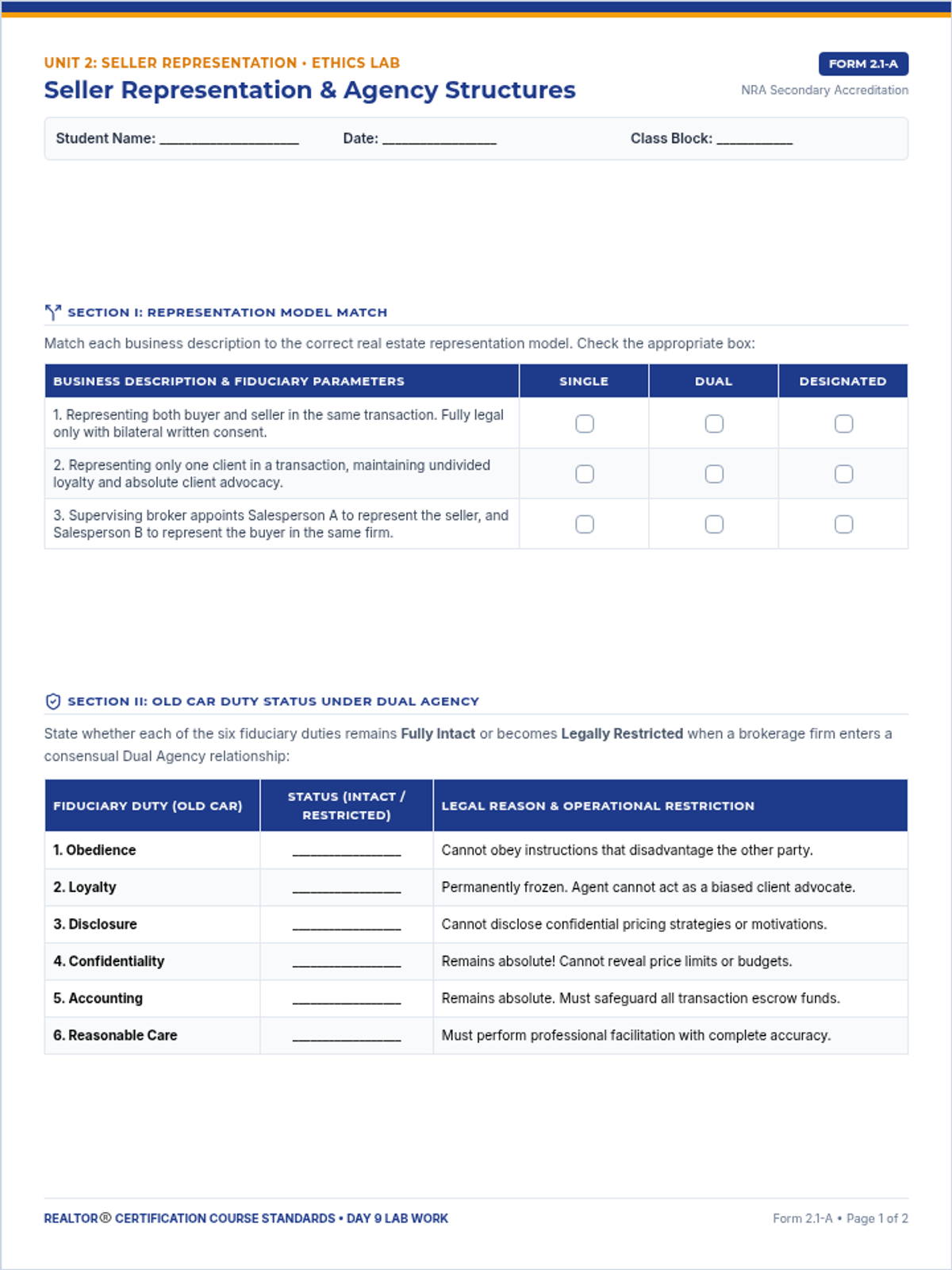
Materials for Day 9 of the Realtor course (Unit 2 Lesson 1), focusing on seller representation, single vs. dual agency, and navigating ethical boundaries in listing practices.
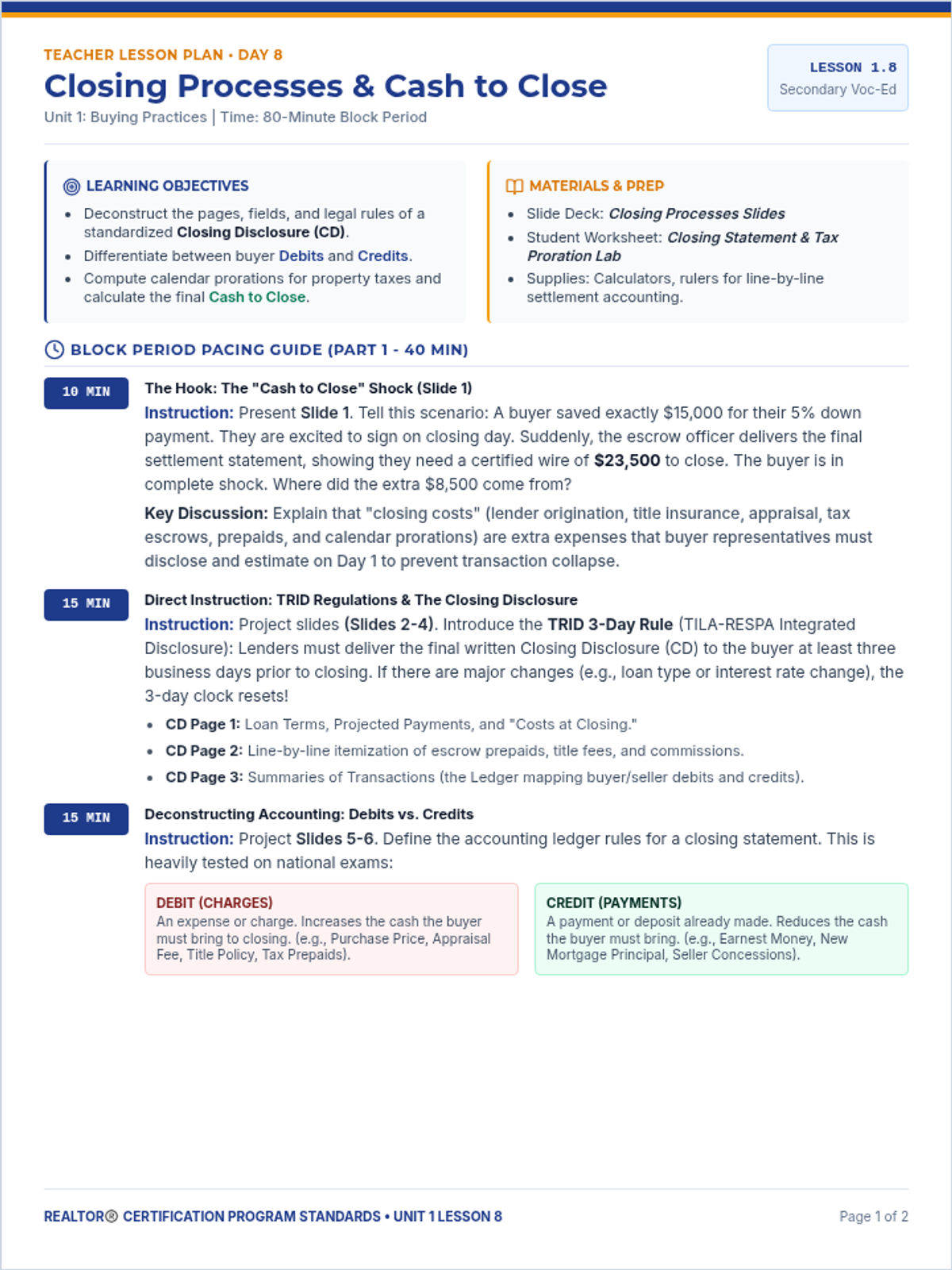
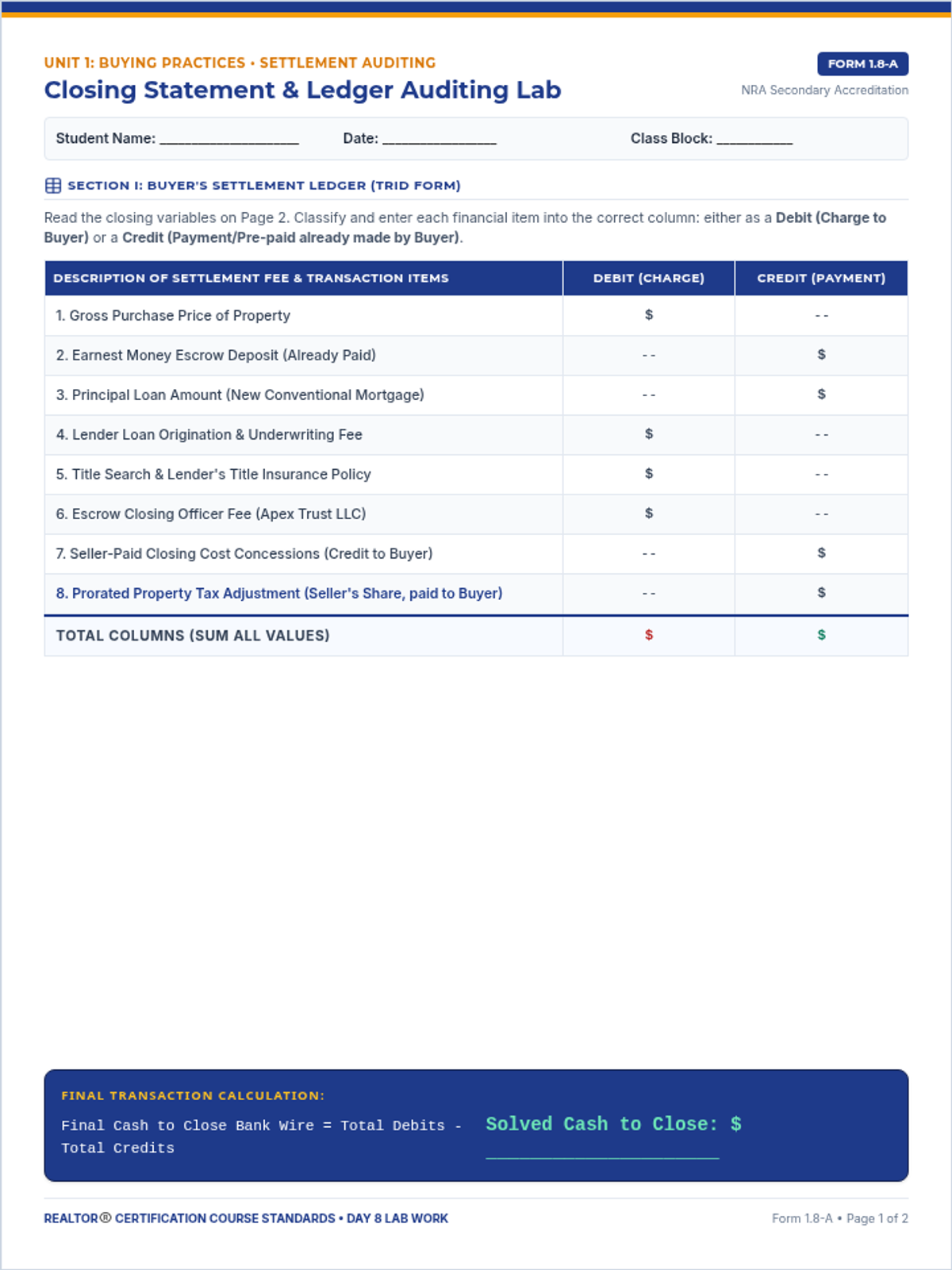
Materials for Day 8 of buying practices, focused on analyzing and auditing the Closing Disclosure (CD), calculating debits, credits, and property tax prorations, and completing the transaction.
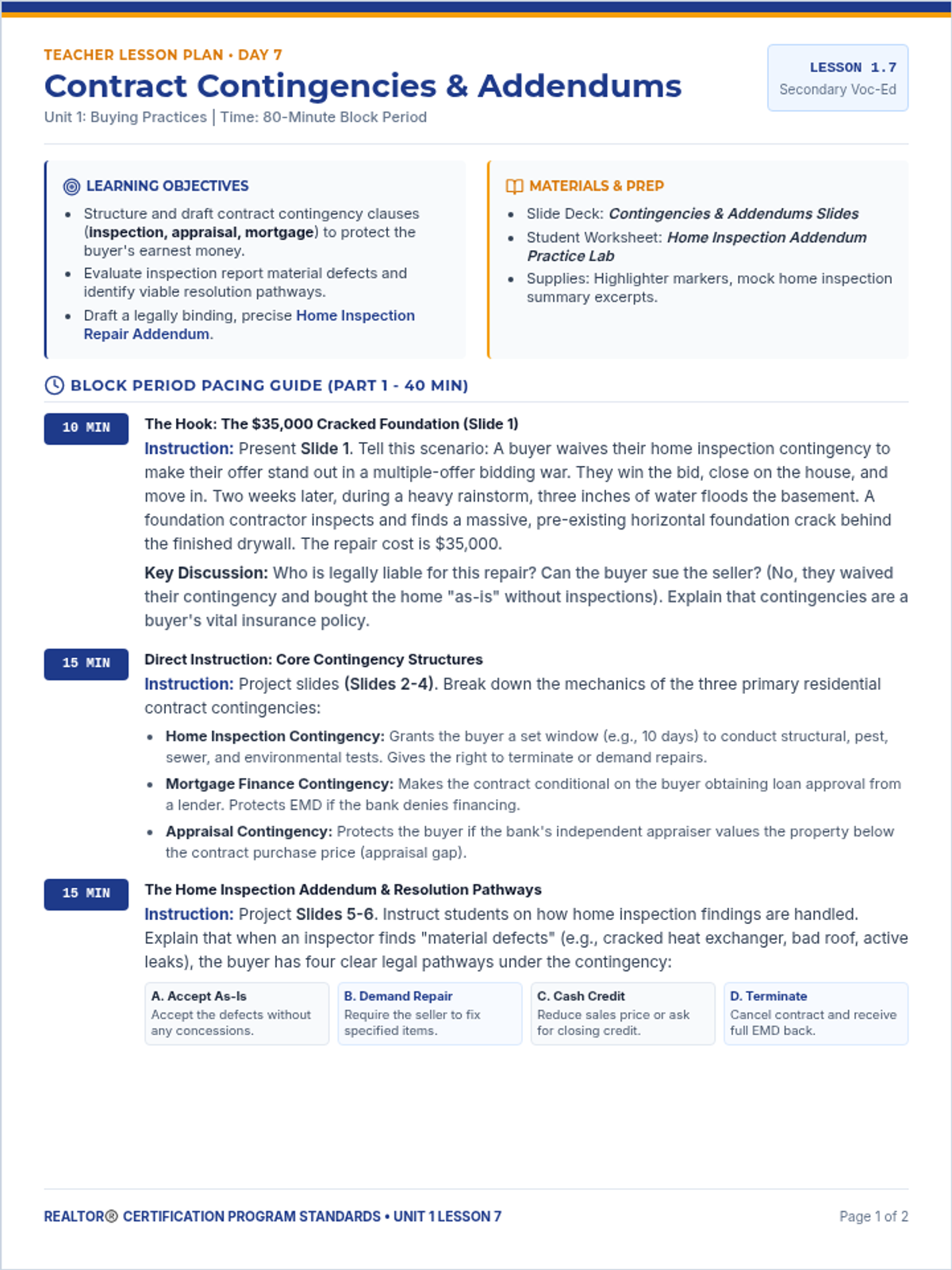
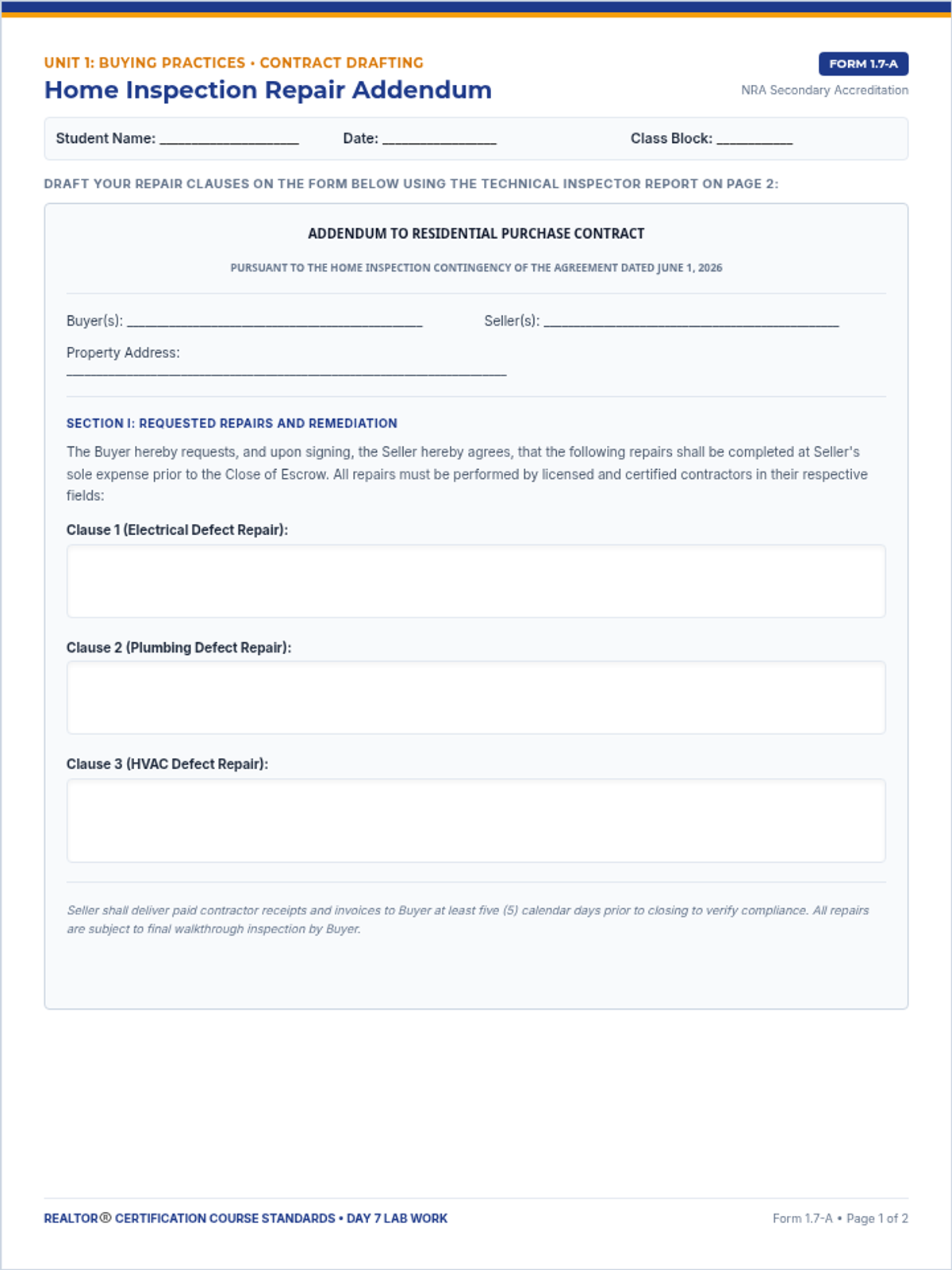
Materials for Day 7 of buying practices, focused on structuring and drafting contract contingency clauses (inspection, appraisal, mortgage) and writing custom home inspection addendums to protect the buyer.
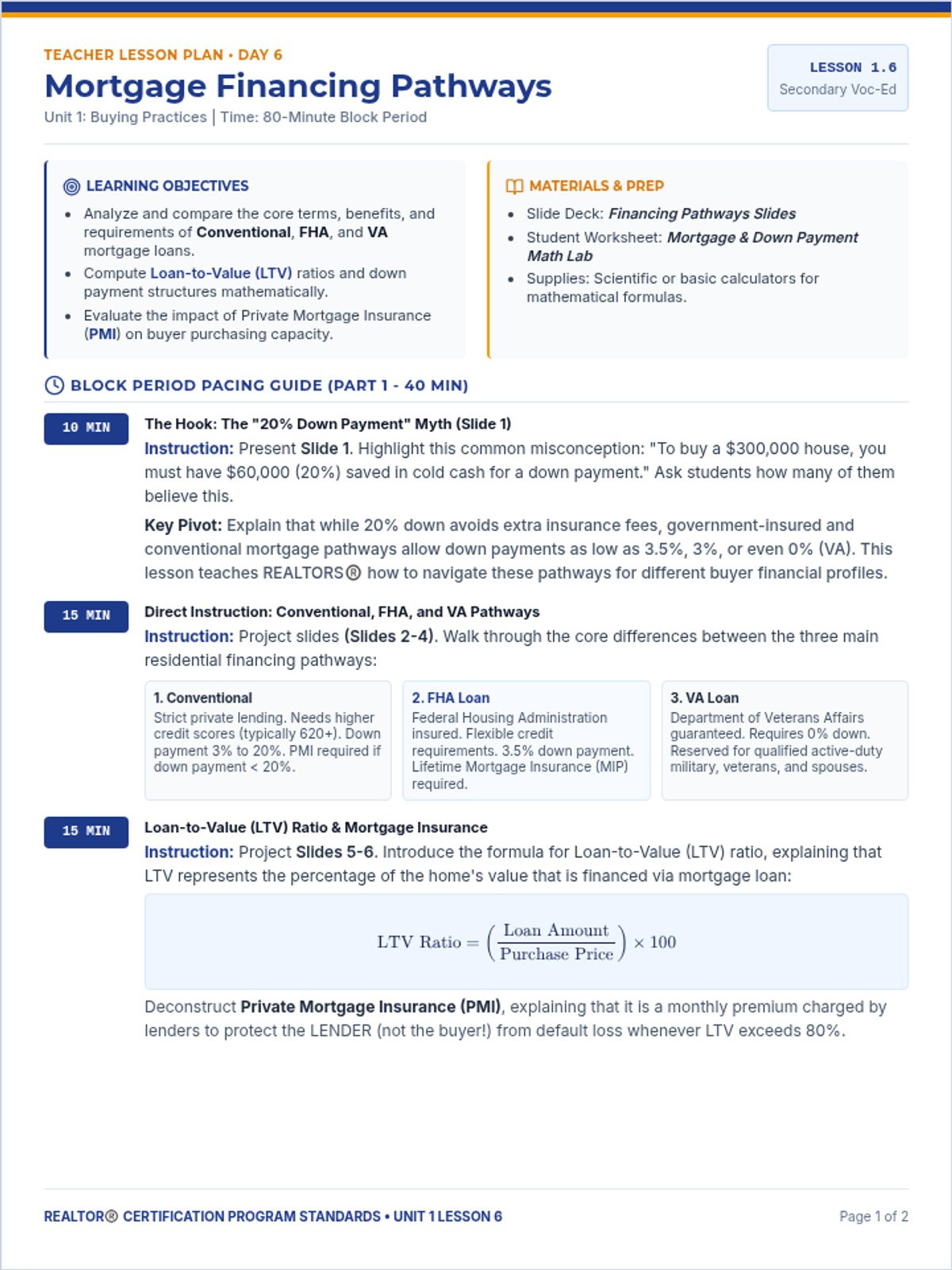
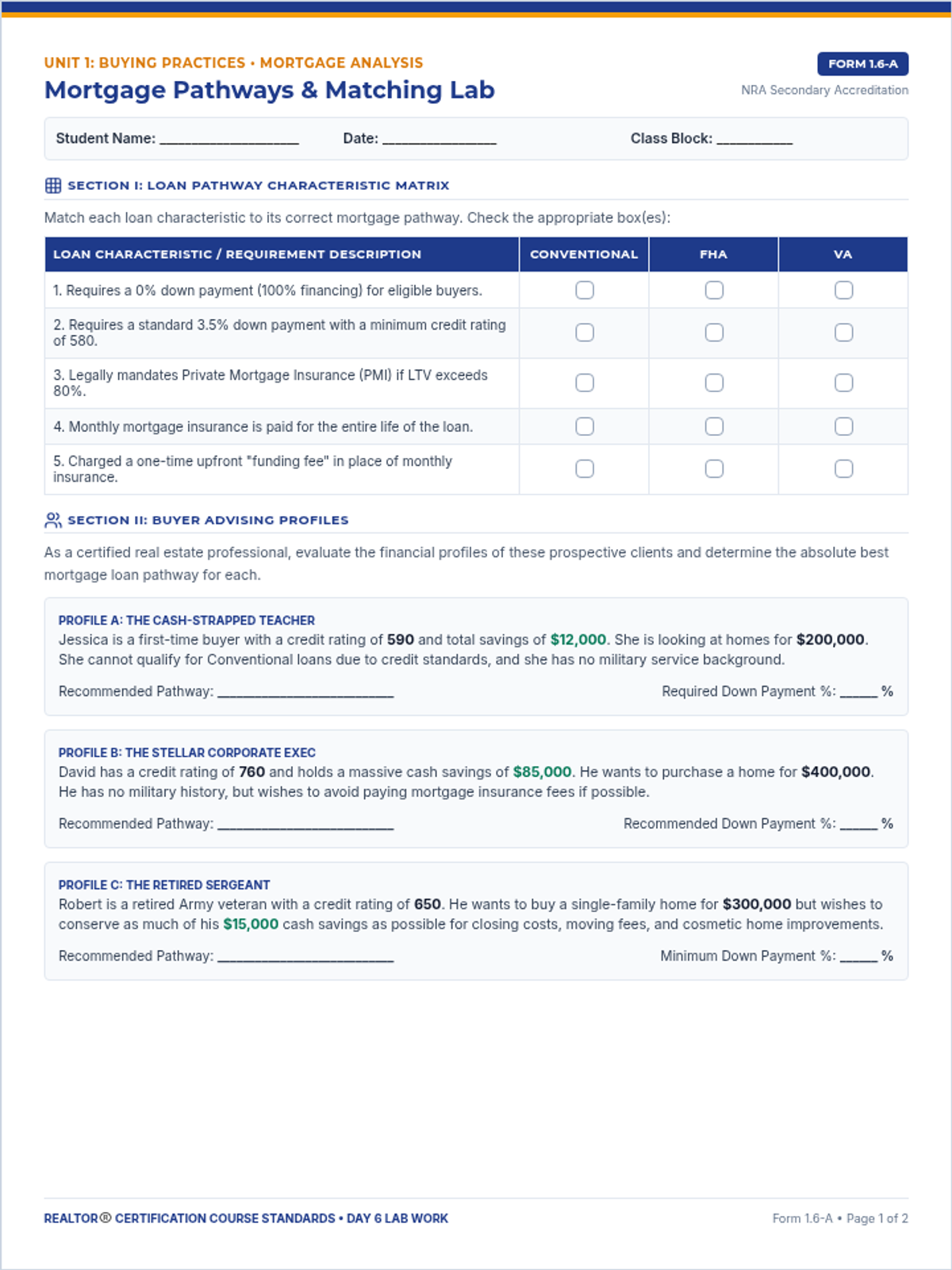
Materials for Day 6 of buying practices, focused on analyzing and comparing Conventional, FHA, and VA mortgage loans and computing down payments and Loan-to-Value (LTV) ratios.
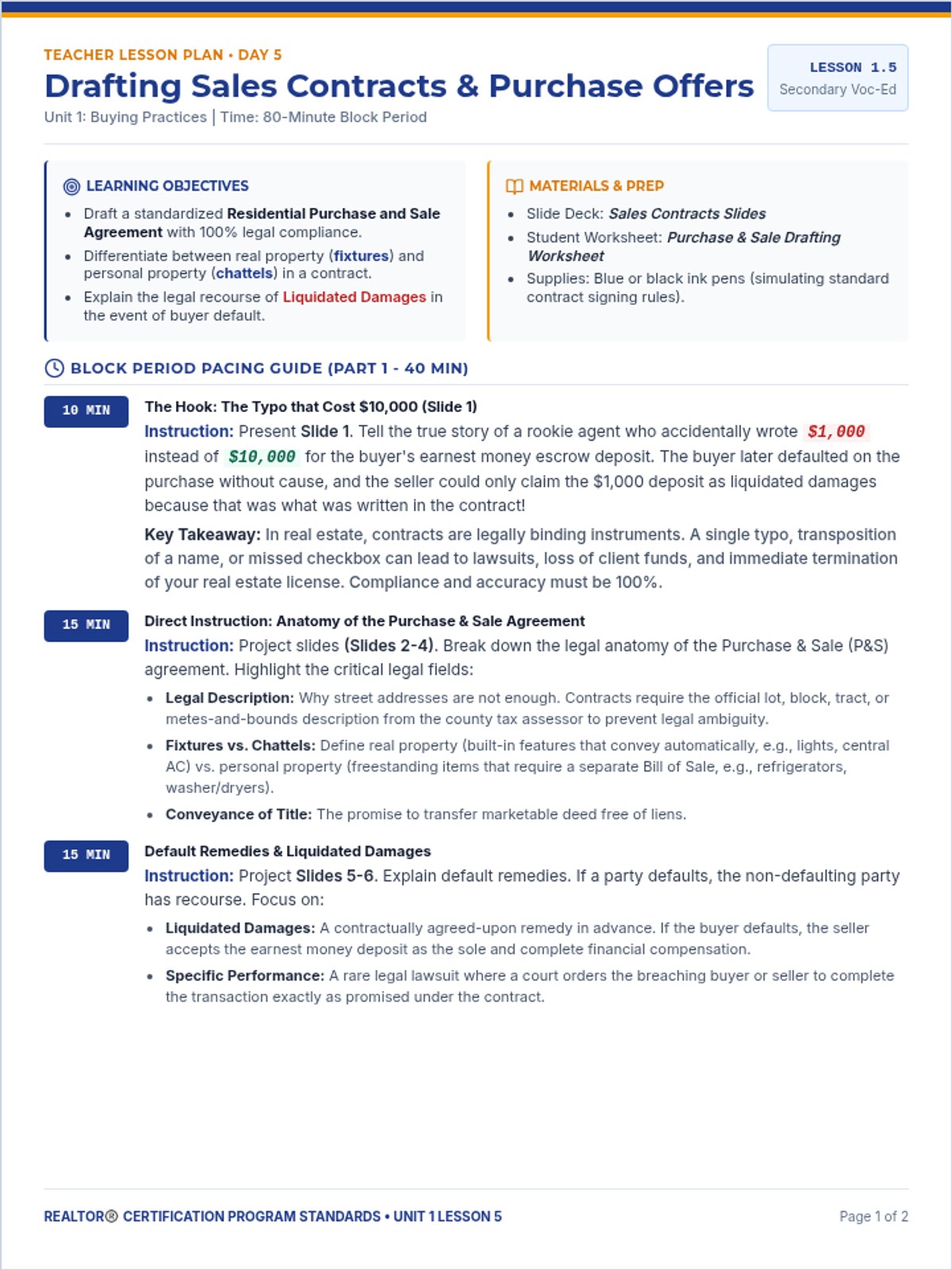
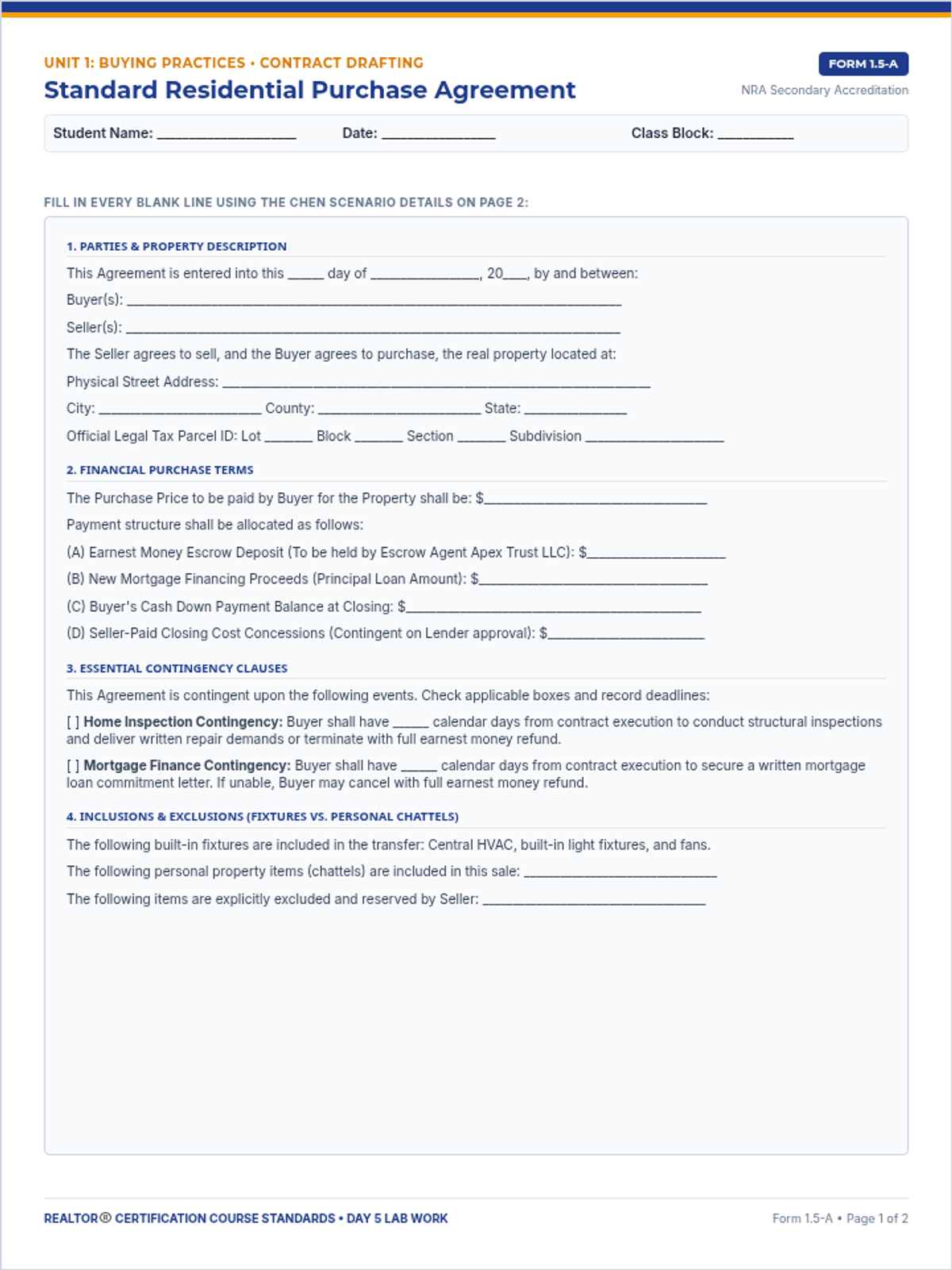
Materials for Day 5 of buying practices, focused on the legal deconstruction and hands-on completion of the standard Residential Purchase and Sale Agreement.
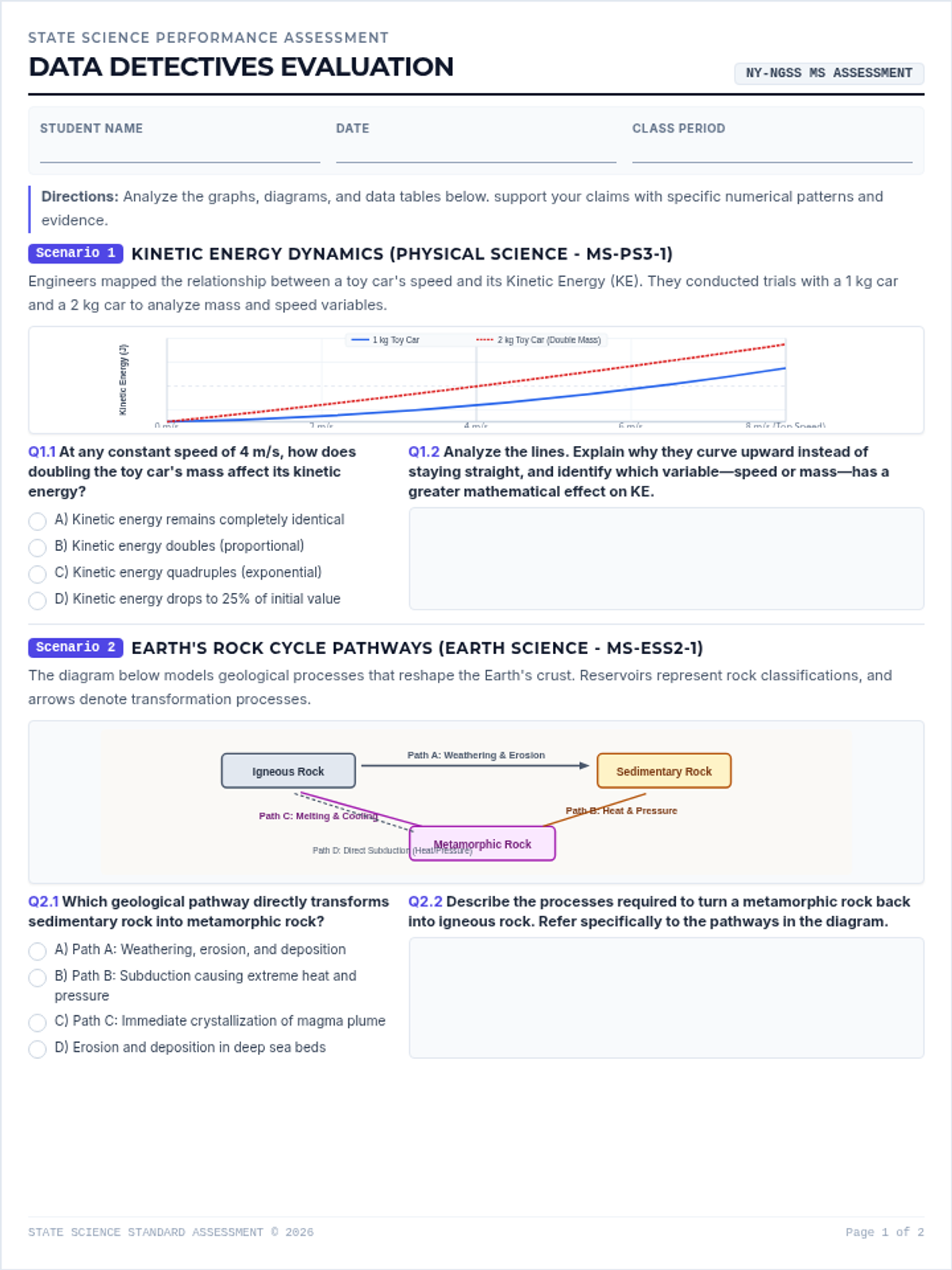
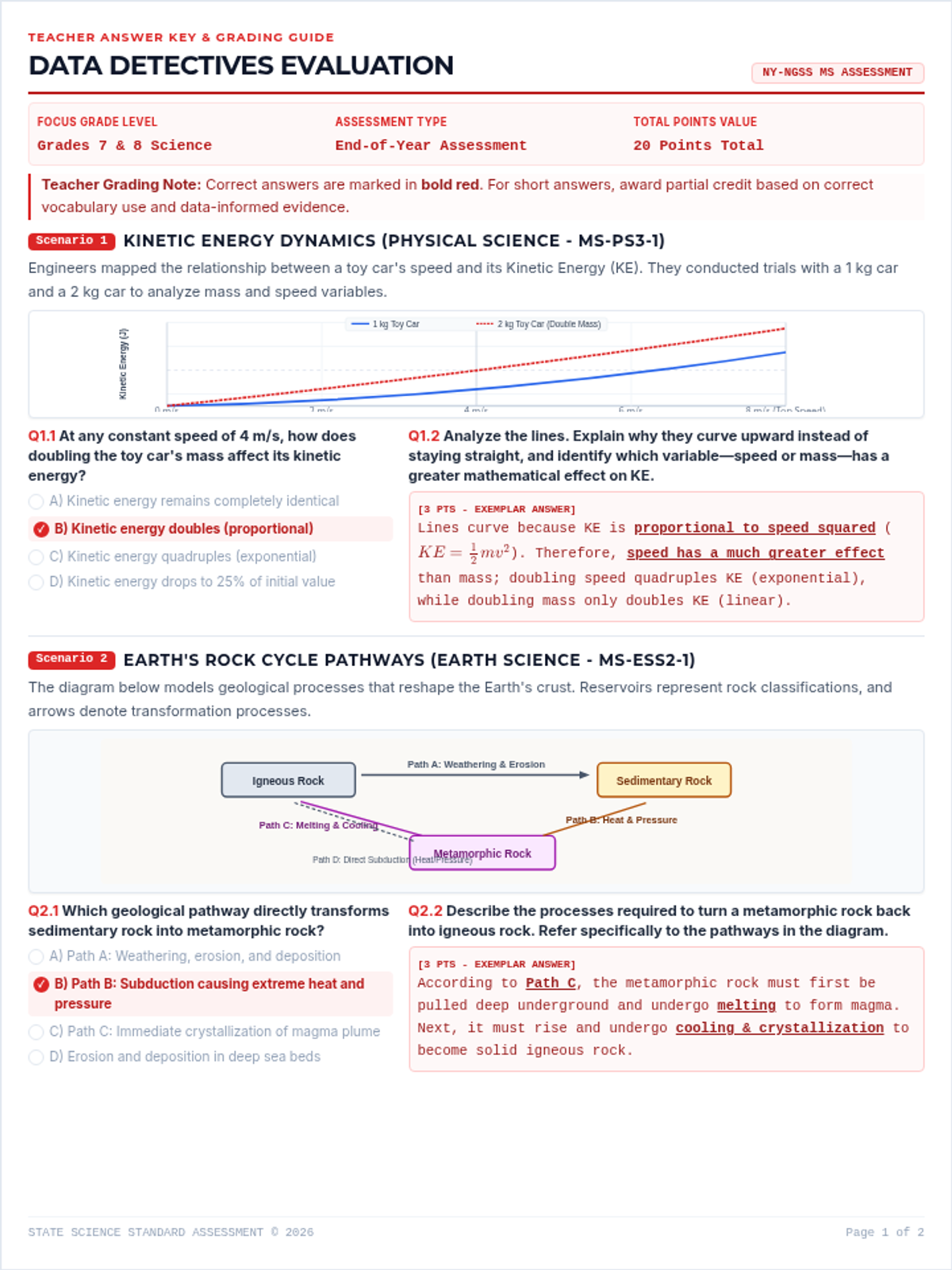
An end-of-year middle school science assessment focused on analyzing complex data sets, graphs, and diagrams across Life, Physical, and Earth science contexts, aligned with NY NGSS standards. Includes a student printable test and a matching teacher answer key.
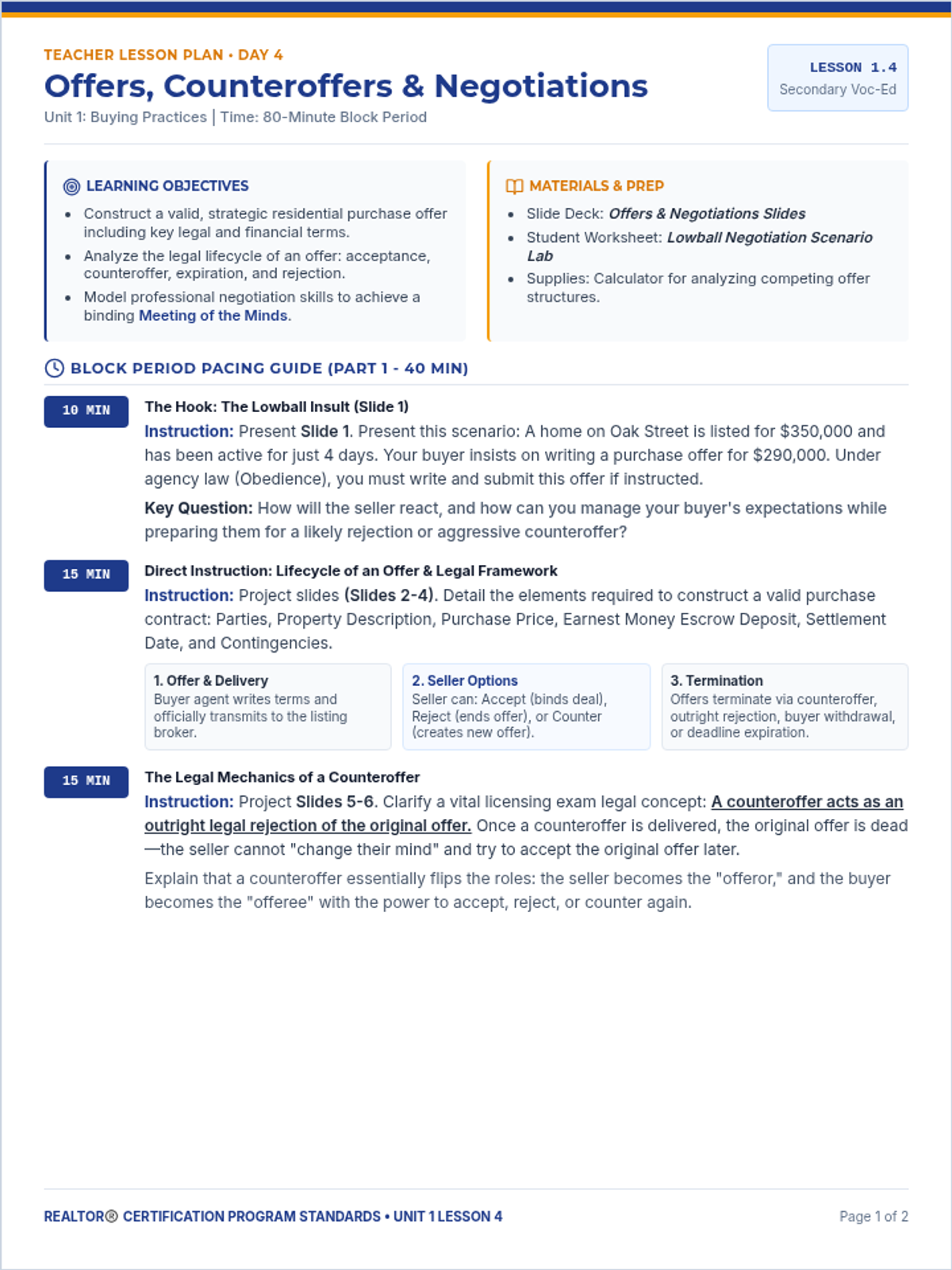
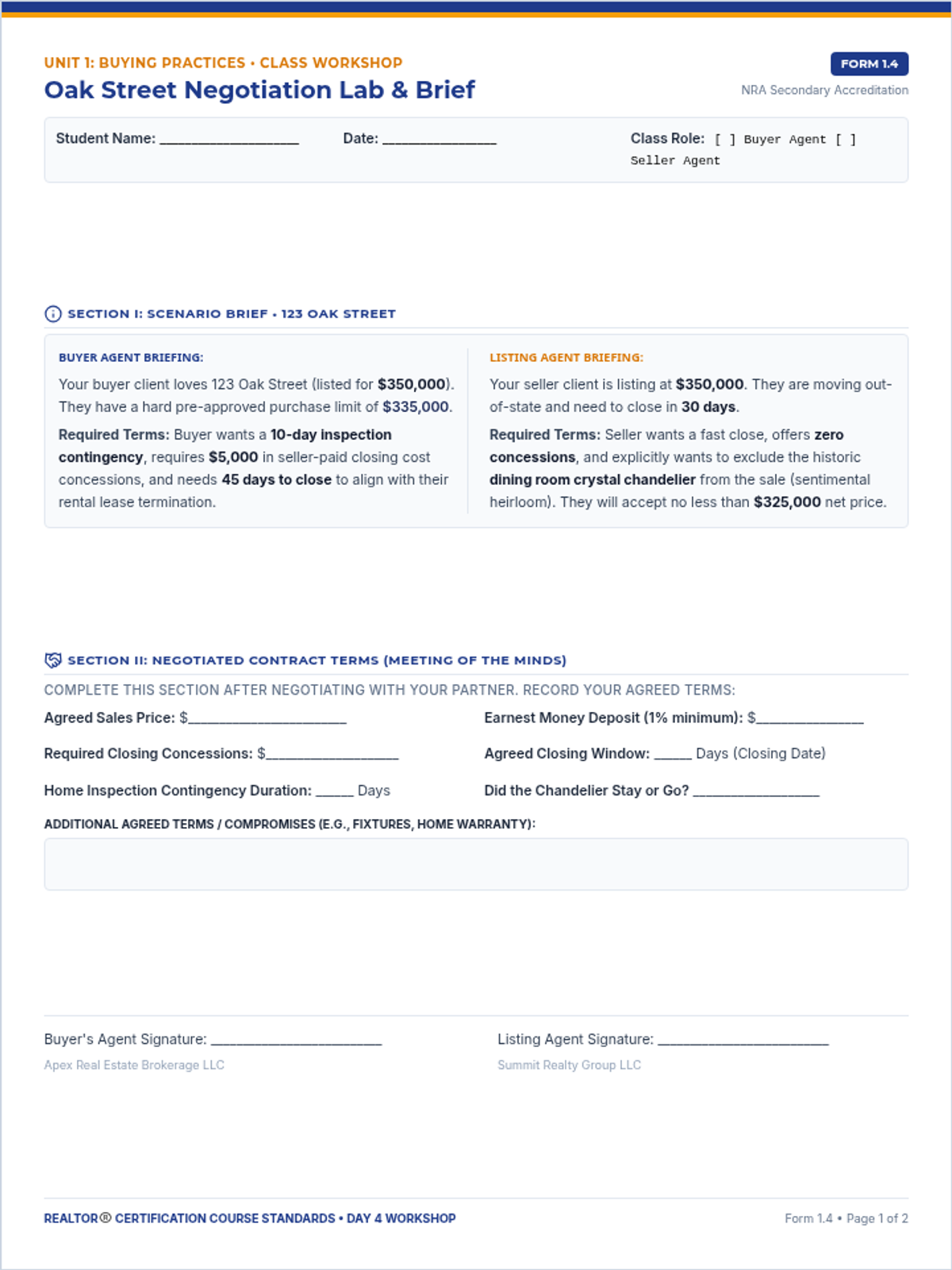
Materials for Day 4 of buying practices, focused on developing strategic residential purchase offers, creating persuasive counteroffers, and simulating seller negotiations.
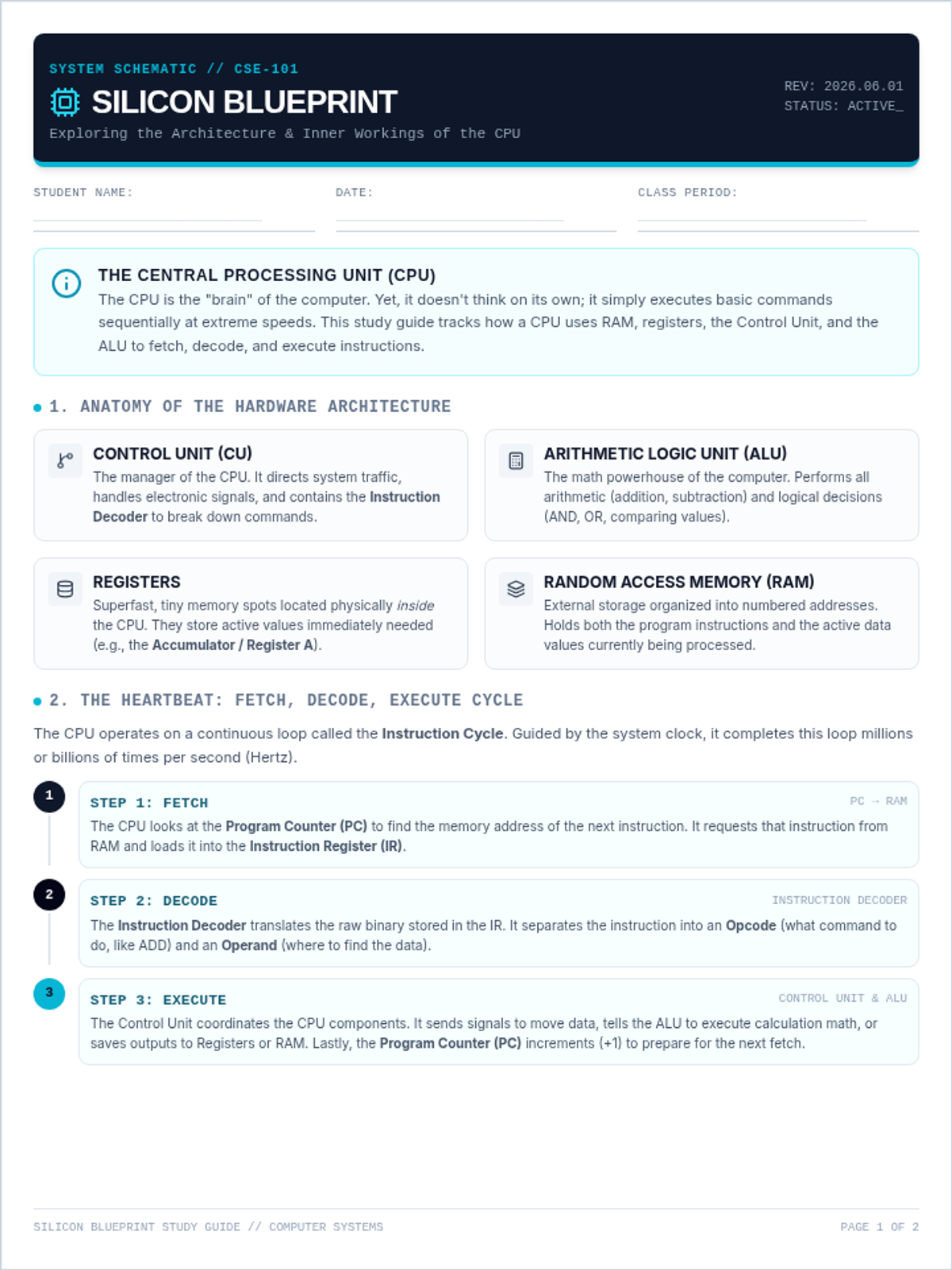
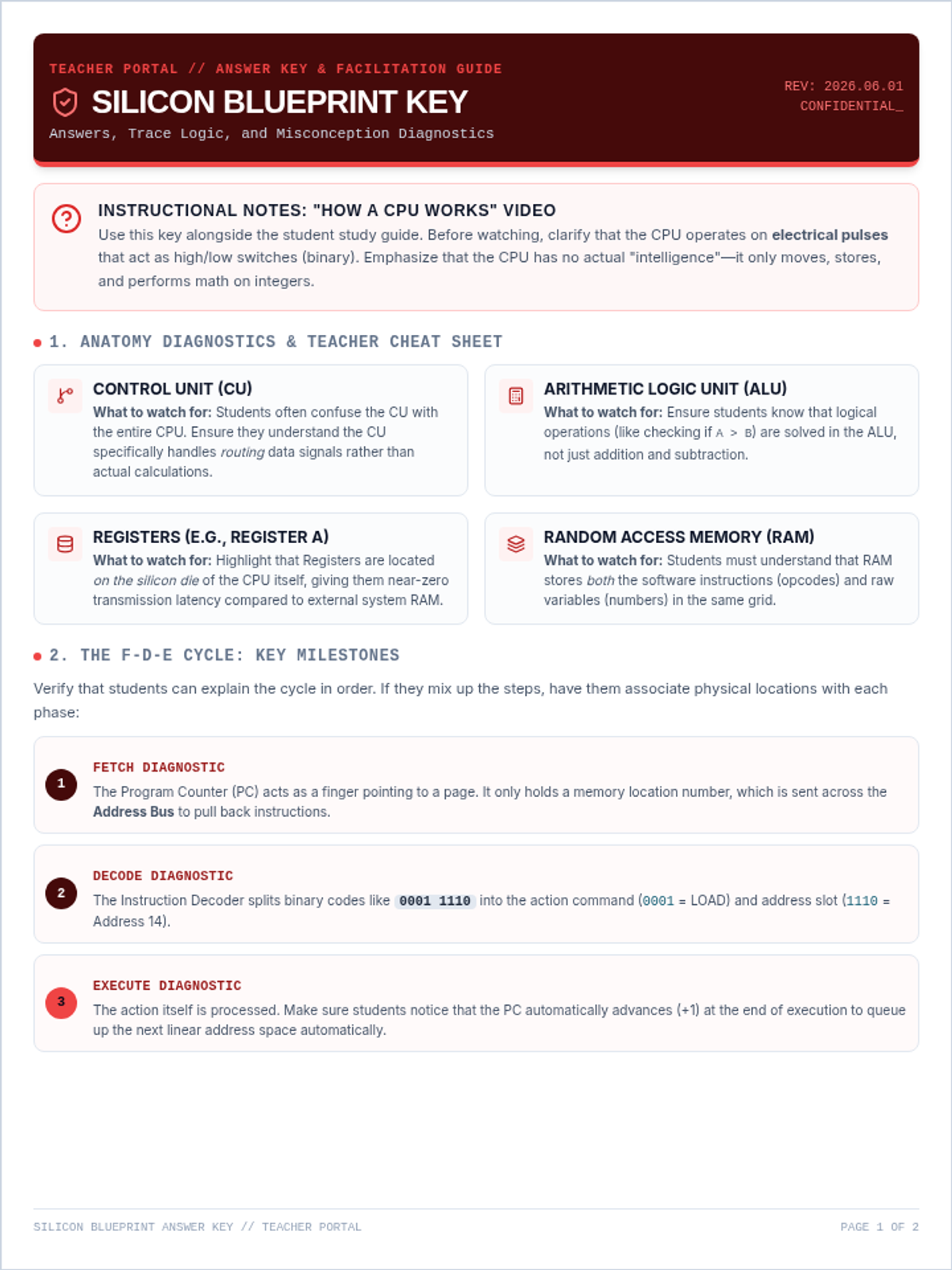
A comprehensive introduction to computer architecture, focusing on the CPU, internal registers, RAM, and the Fetch-Decode-Execute instruction cycle. Features a student-facing schematic study guide and a detailed teacher answer key with program trace steps.