Students build simple structures using straws and connectors to test which shapes hold the most weight. They discover why acute angles (in triangles/trusses) are preferred in bridges over rectangles.
A cumulative review lesson where students apply their knowledge of inverse operations to solve mixed one-step equations involving addition, subtraction, multiplication, and division.
Expanding algebraic thinking to multiplication and division. Students will learn how to 'undo' multiplication by splitting into equal groups (division) and 'undo' division through multiplication, maintaining the balance of the scale.
A foundational introduction to basic algebra using the balance scale analogy, specifically designed for students working at a 3rd-grade level. Students will learn about variables and the concept of inverse operations to 'undo' addition and subtraction.
Teaches students to identify fractions within a group of discrete objects (sets), rather than a single continuous whole.
Explores fractions that represent more than one whole, using visual models and decomposition to understand values like 6/4 and 8/6.
Focuses on identifying parts of a whole, understanding numerators and denominators, and modeling fractions by dividing shapes into equal parts.
An introductory lesson on identifying and combining like terms to solve multi-step equations, designed for upper elementary students using visual models and guided practice.
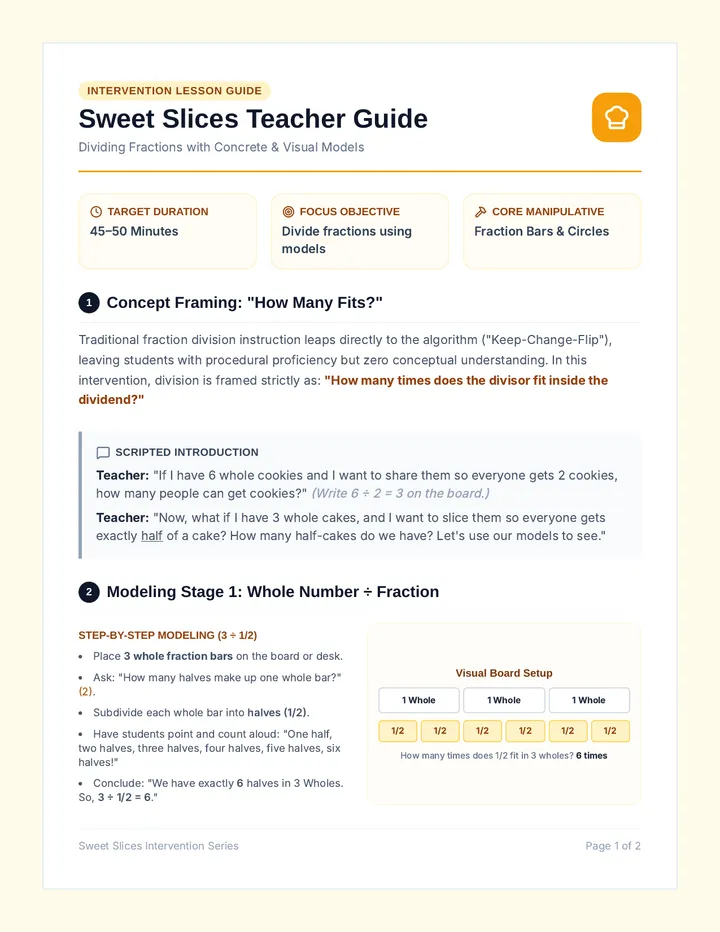
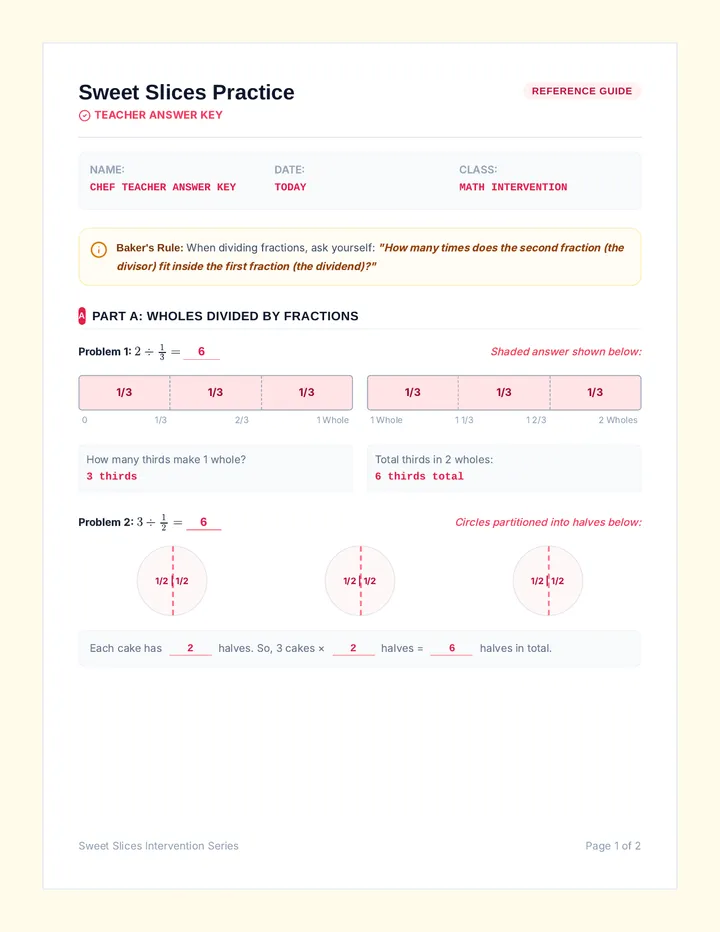
Students learn to generate equivalent fractions by multiplying the numerator and denominator by the same number, using bakery-themed visual models like cake pans and bread loaves to bridge the gap between concrete and abstract math.
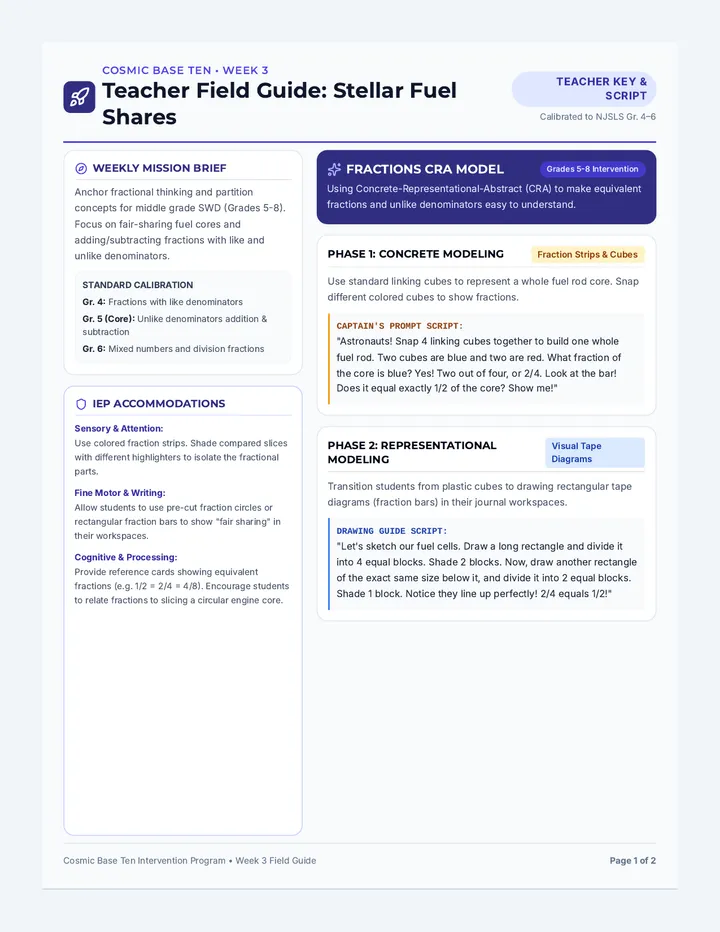
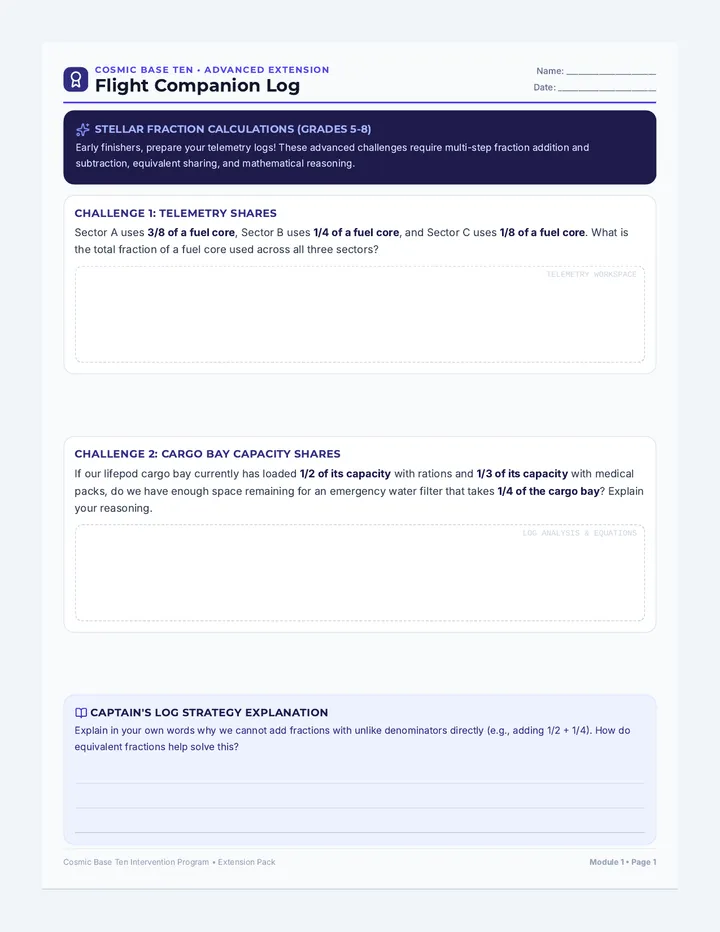
A Tier 2 intervention lesson for 5th grade students focused on conceptually understanding equivalent fractions and renaming them to add fractions with unlike denominators. Students will explore the 'Identity Property of 1' through visual models to see why multiplying the numerator and denominator by the same number creates an equivalent fraction.
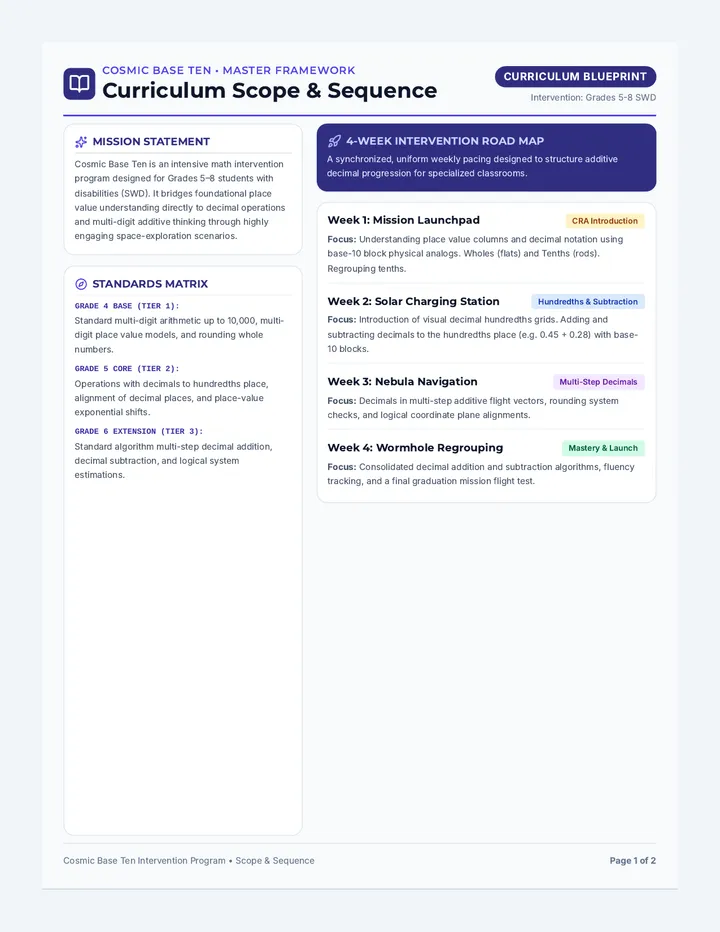
A lesson focused on place value through expanded form and rounding techniques using number lines as visual aids. Students practice with four- and five-digit numbers to master precision in estimation.
Final summative assessment to measure mastery of all four decimal operations and place value concepts.
Instruction on dividing decimals by whole numbers and decimals using fair-sharing models and cost analysis.
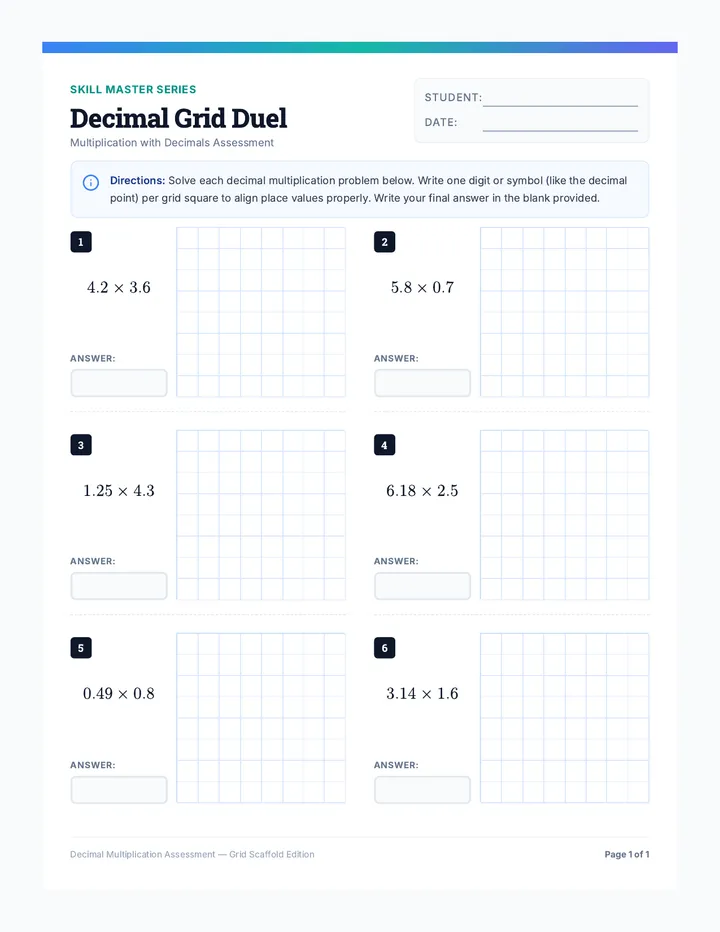
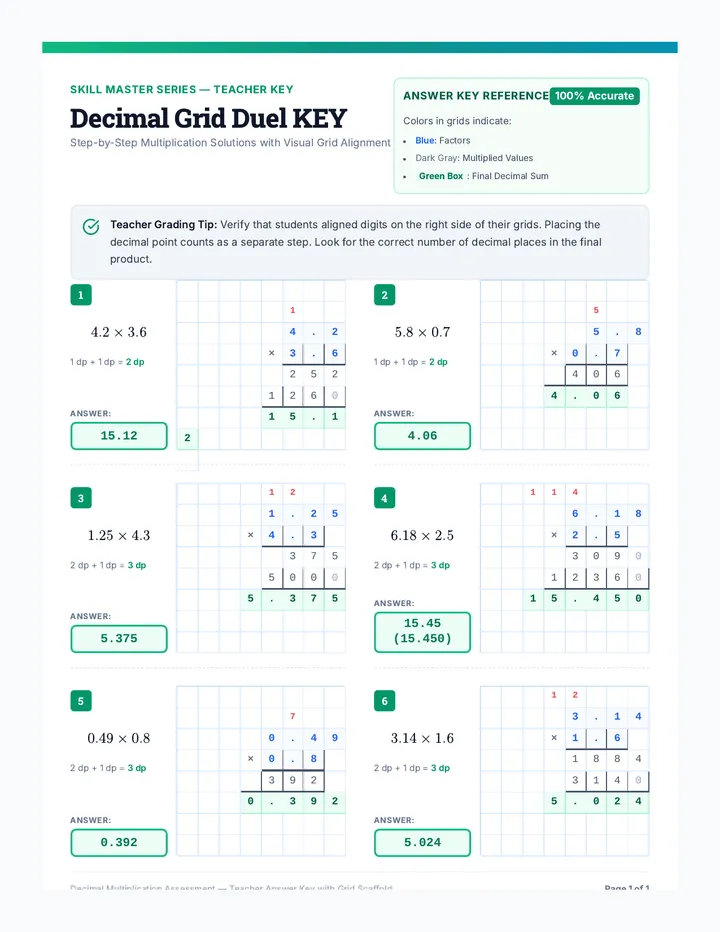
Instruction on multiplying decimals using area models and place value shifts, focusing on scaling and measurement.
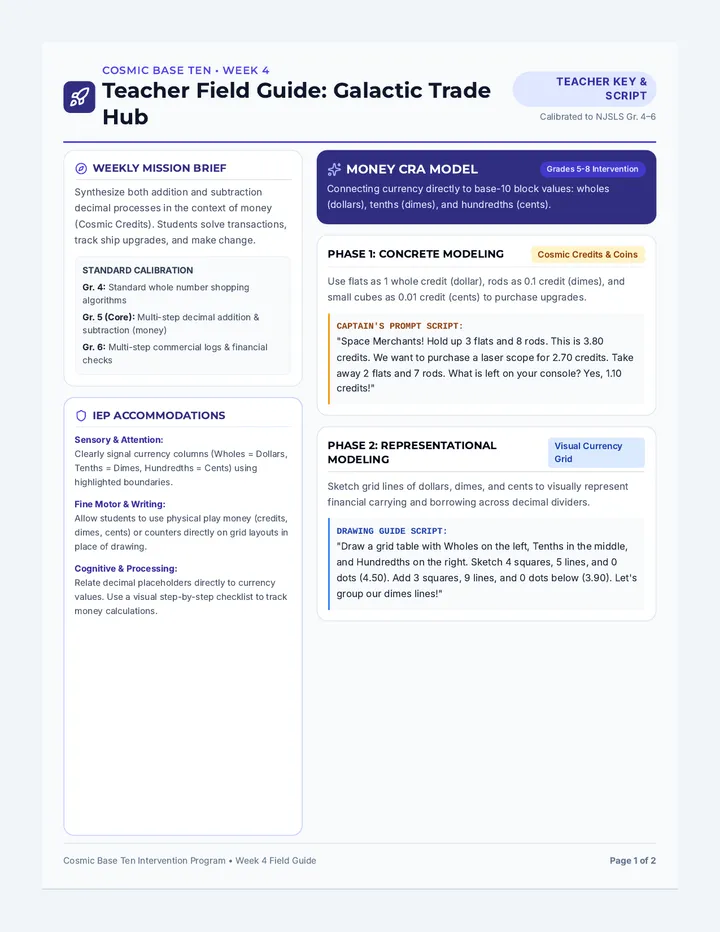
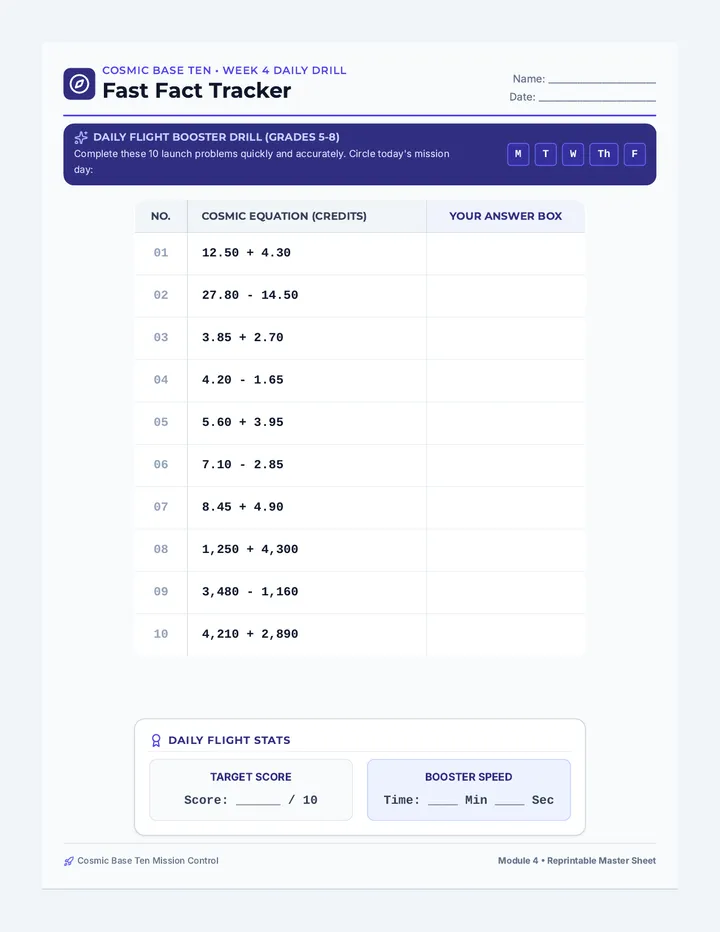
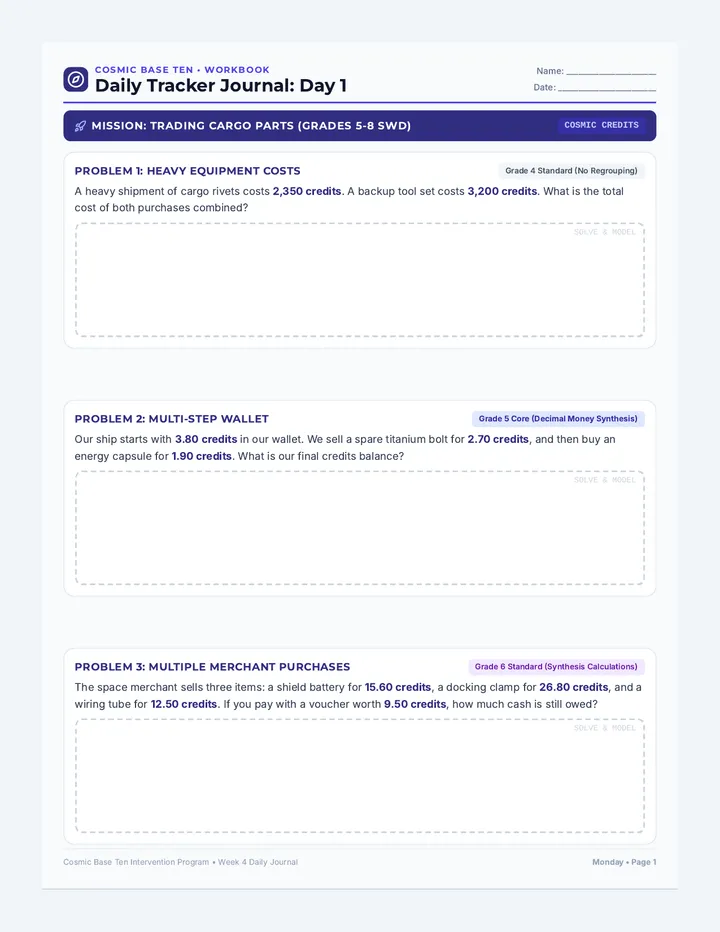
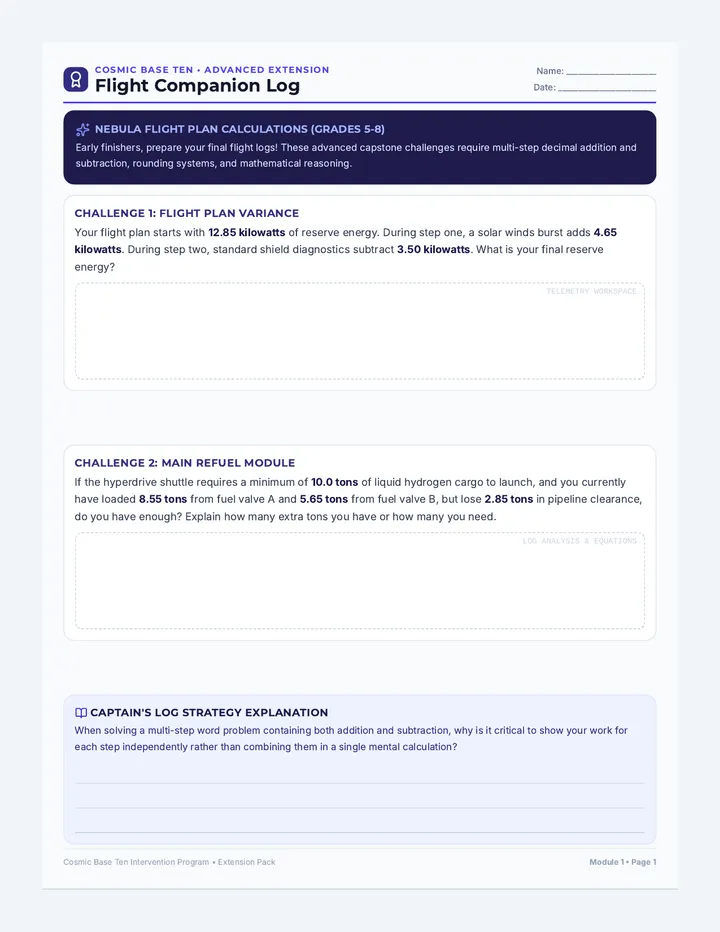
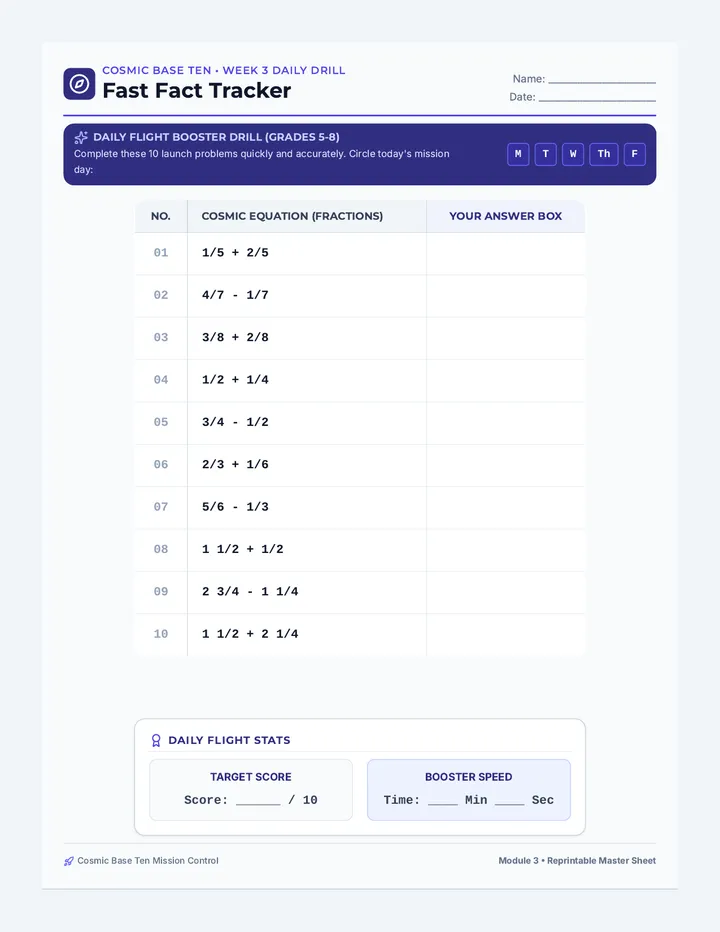
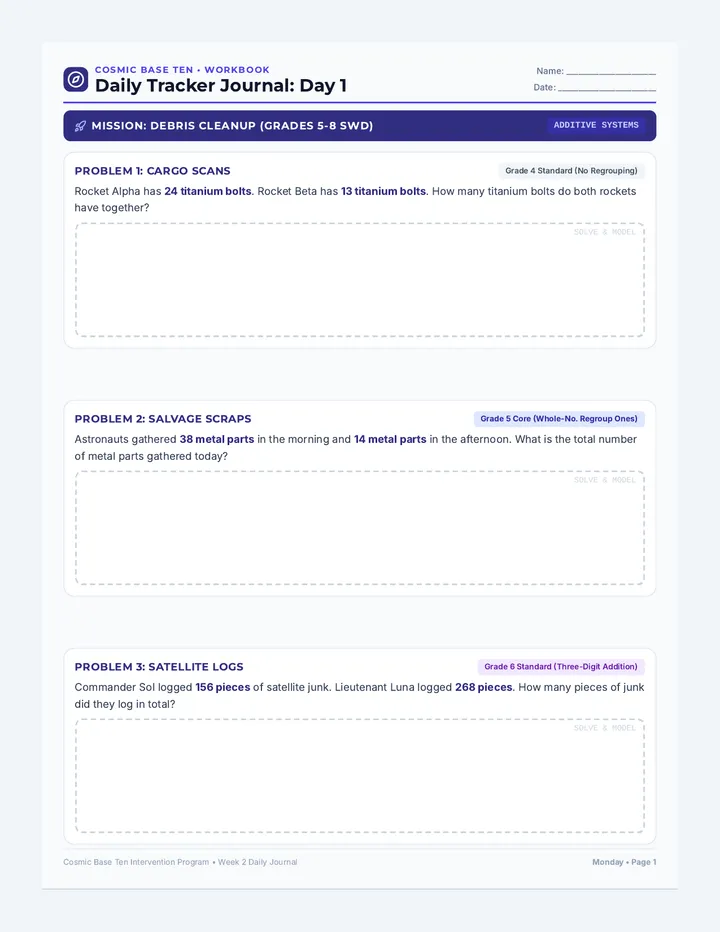
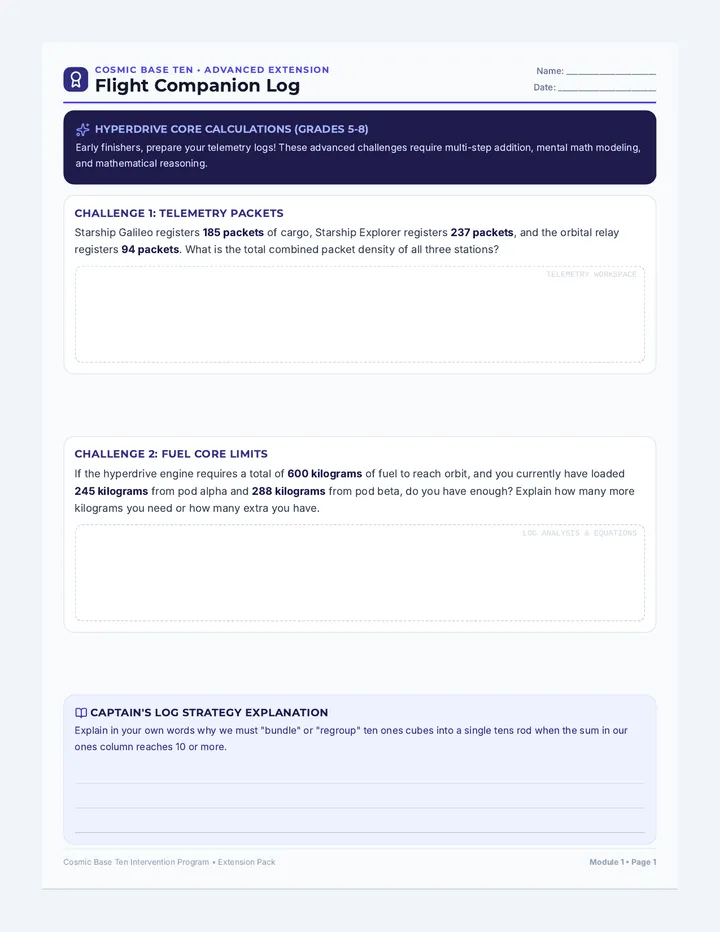
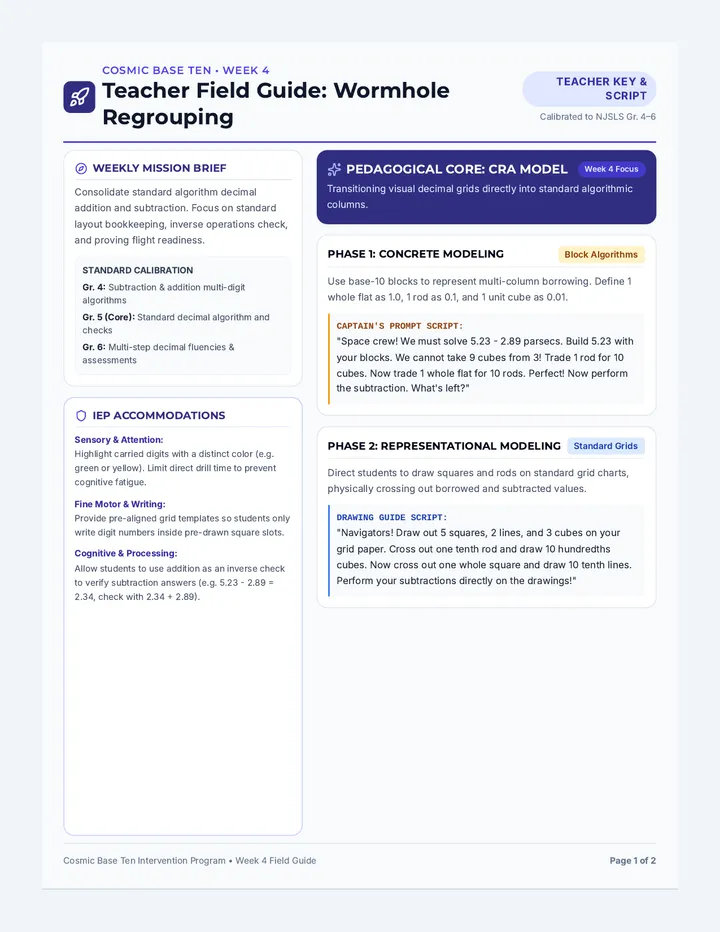
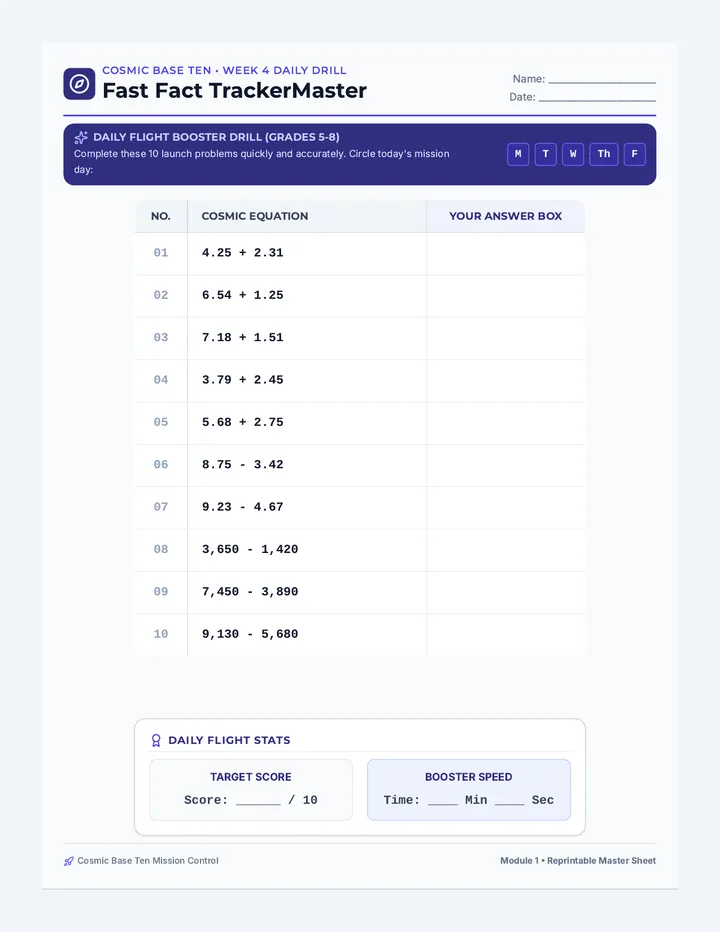
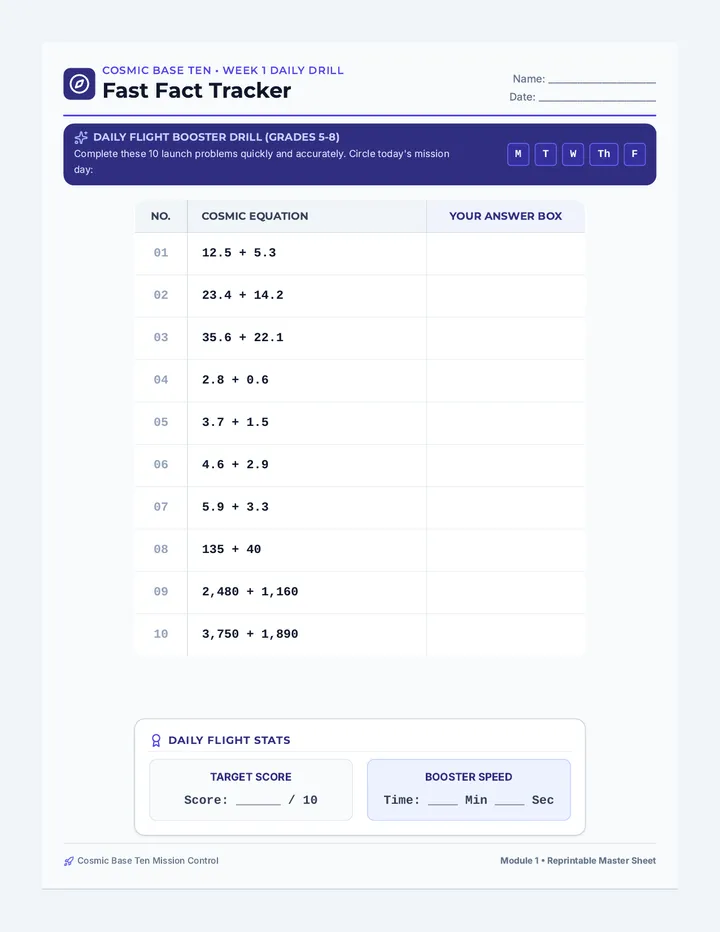
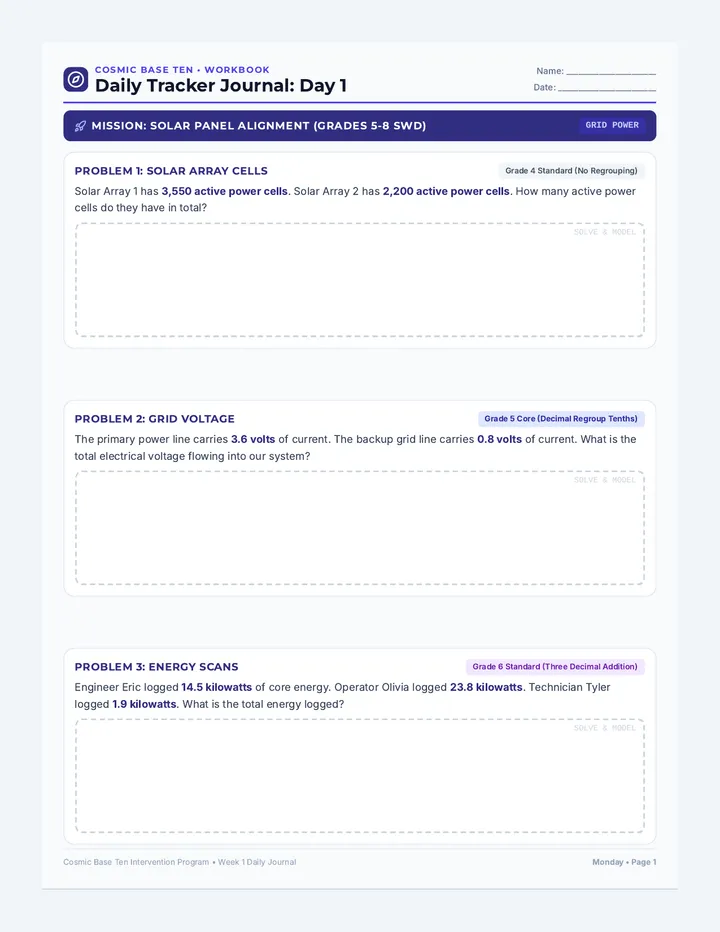
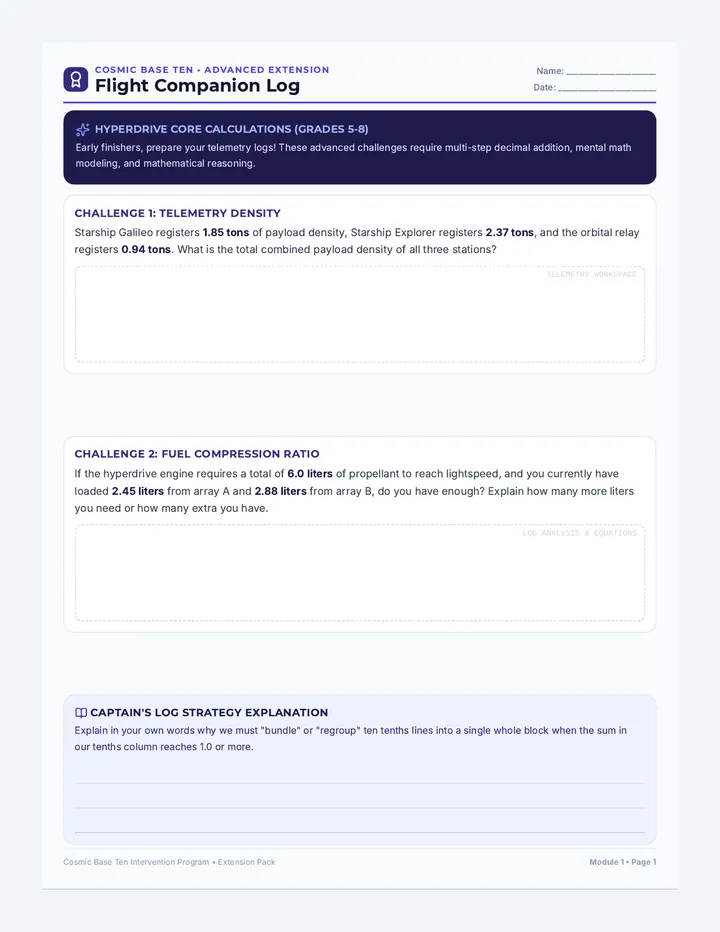
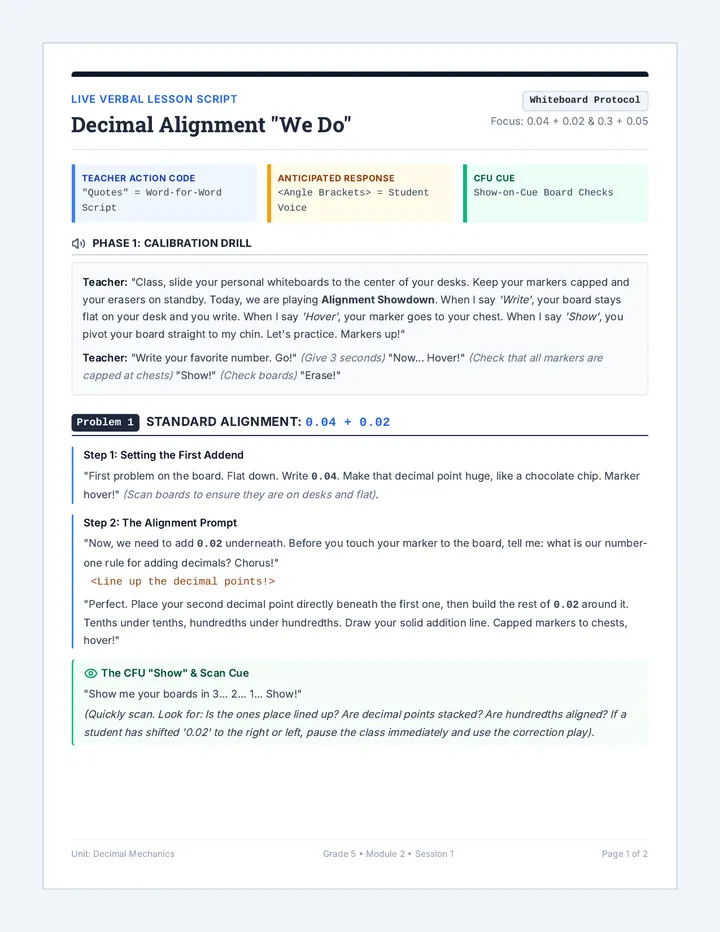
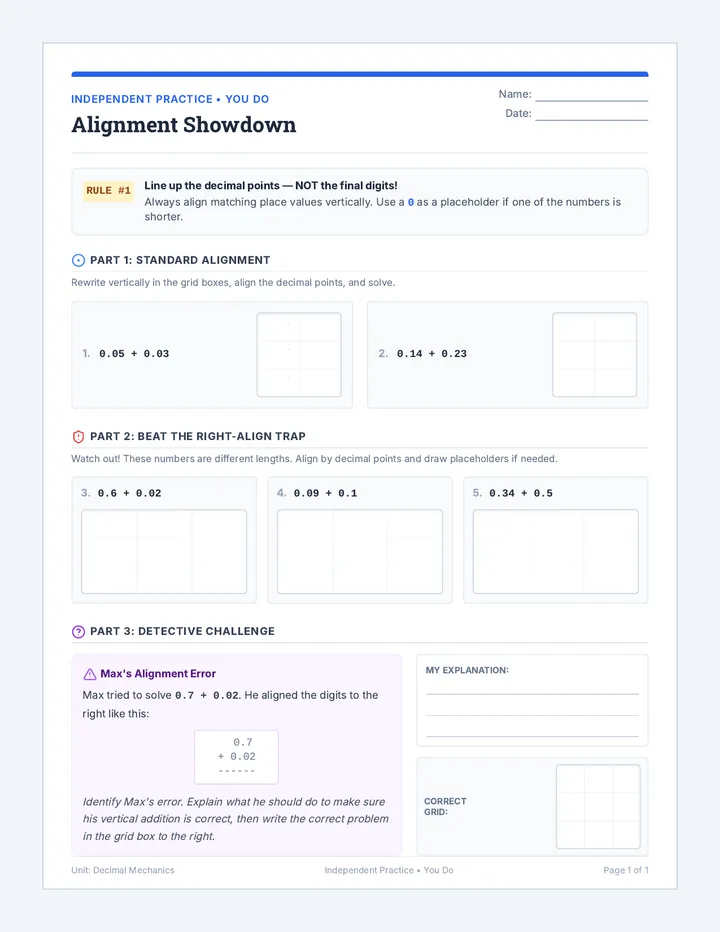
Instruction and practice on adding and subtracting decimals using place value alignment, estimation, and money contexts.
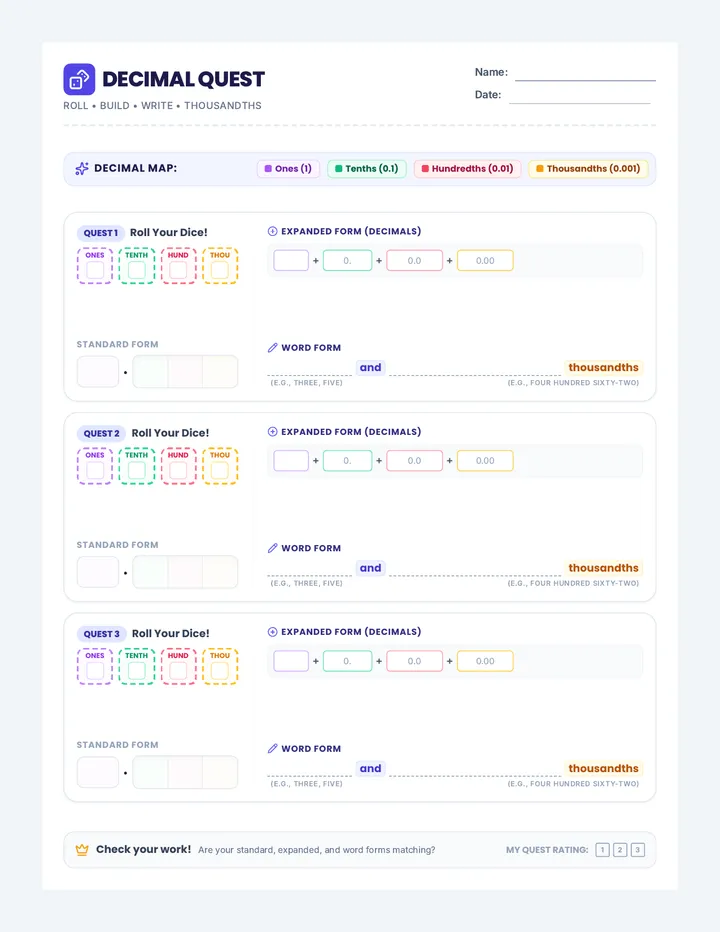
Initial diagnostic and foundational review of place value relationships from tens to hundredths to prepare for operations.
Final assessment of all unit skills to measure growth and mastery of standard 5.NF.A.1.
Application of fraction operations to real-world word problems, focusing on identifying operations and interpreting results.
Expanding skills to include adding and subtracting mixed numbers, including strategies for regrouping and simplifying.
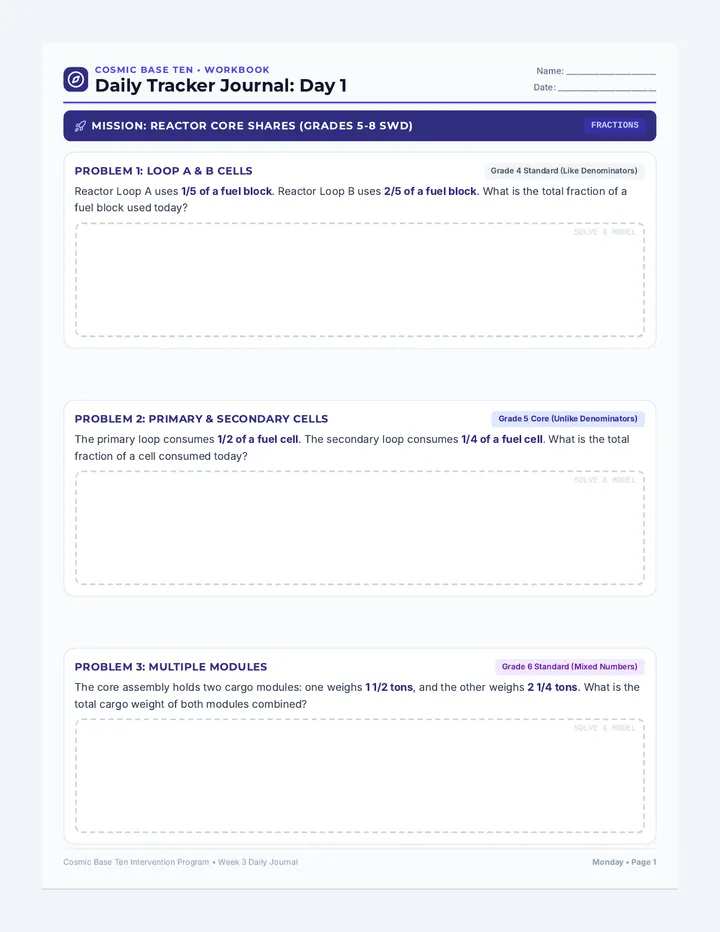
Guided practice applying common denominators to solve addition and subtraction problems with unlike denominators.
Instruction on finding the least common multiple (LCM) and creating equivalent fractions to find common denominators.
Introduction to adding and subtracting fractions using visual area models and number lines to build conceptual understanding of unlike denominators.
Assessment of prerequisite skills including equivalent fractions and common multiples to identify specific gaps in student understanding.
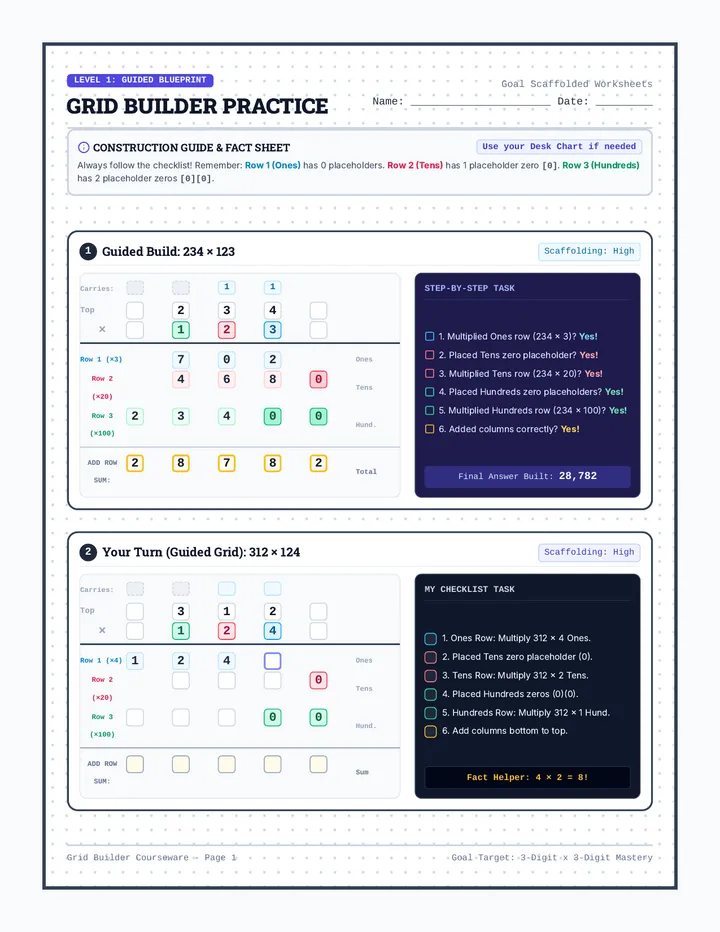
A 25-minute focused lesson on multiplying 3-digit by 2-digit numbers using the standard algorithm, featuring visual breakdowns and structured practice.
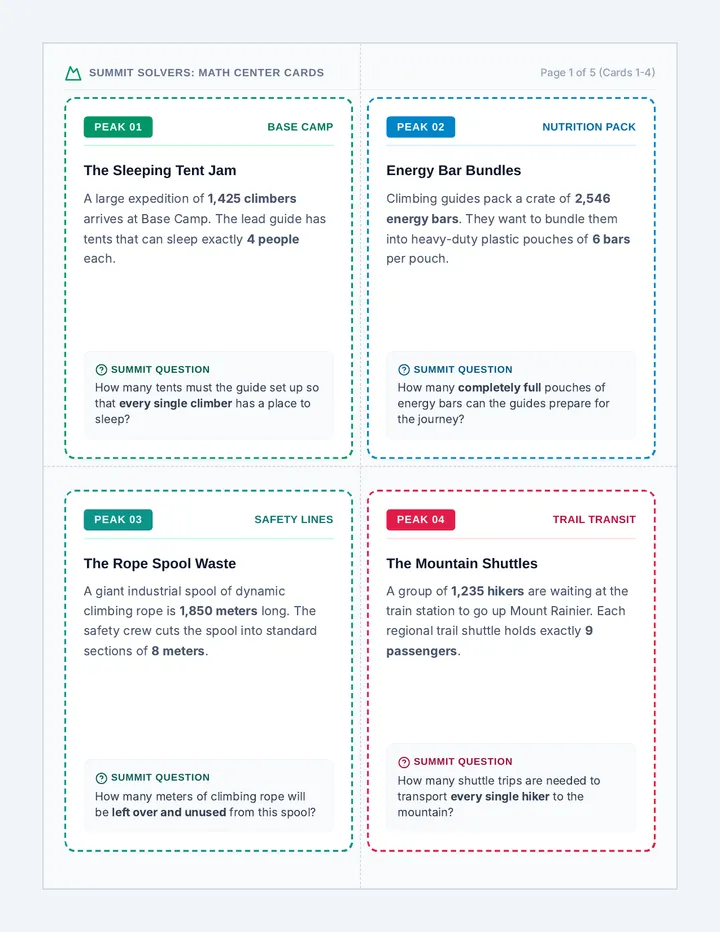
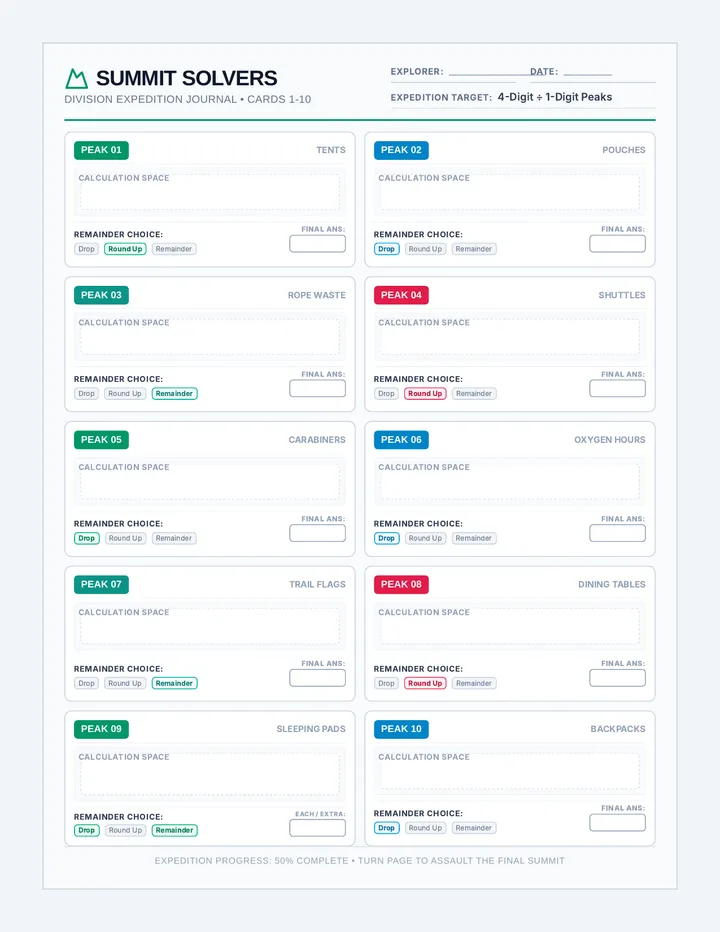
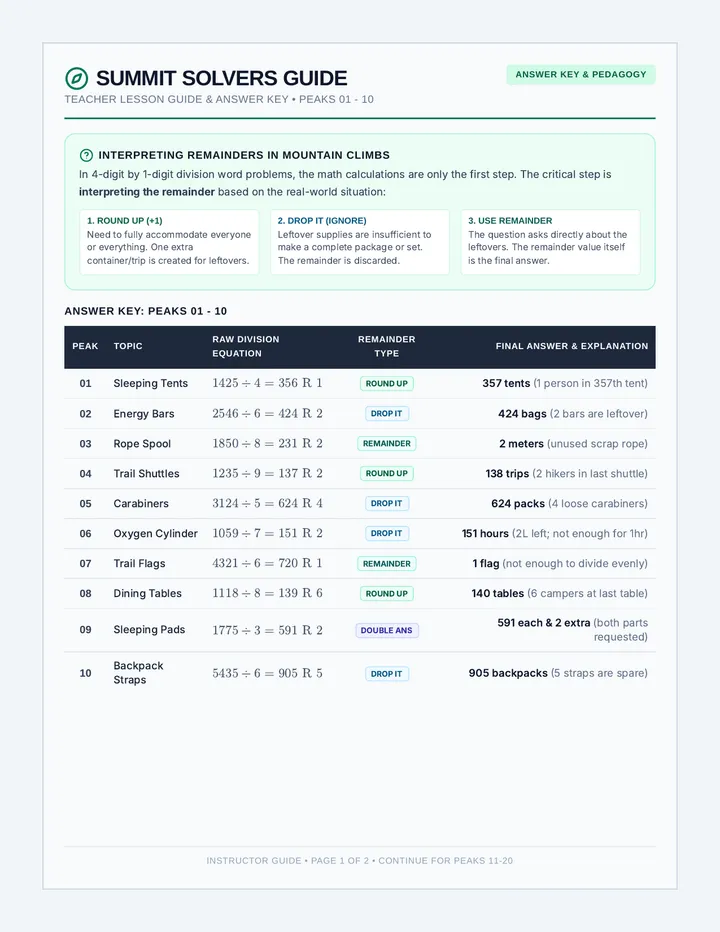
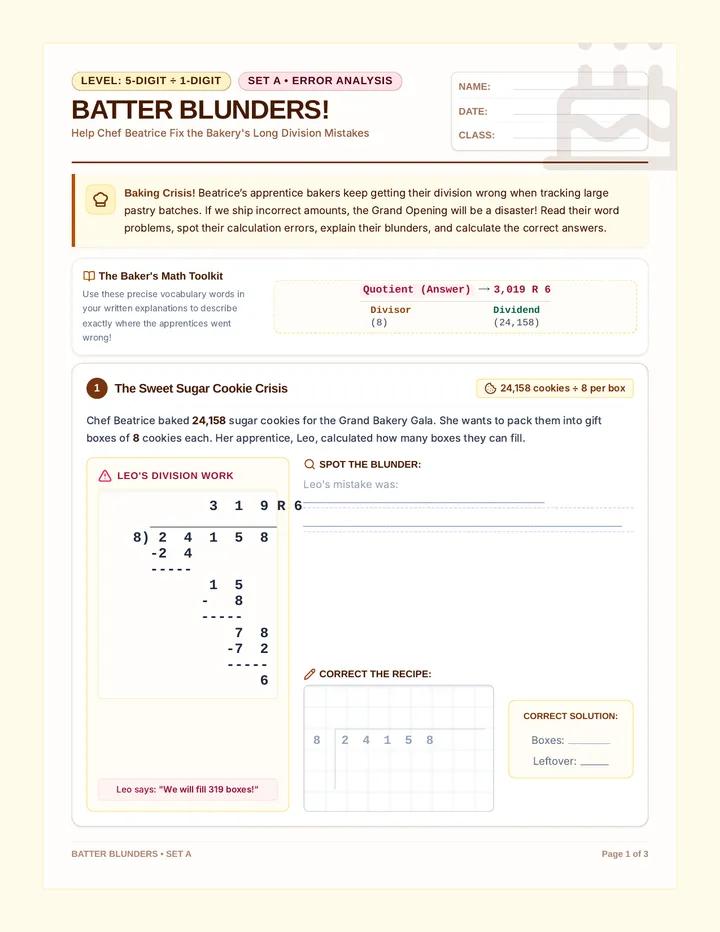
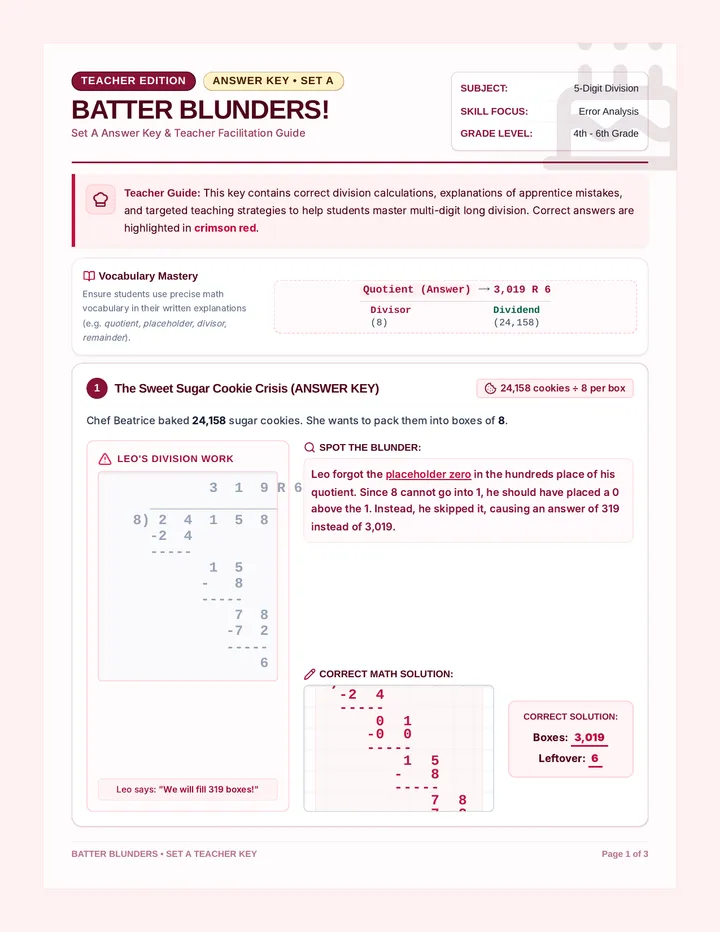
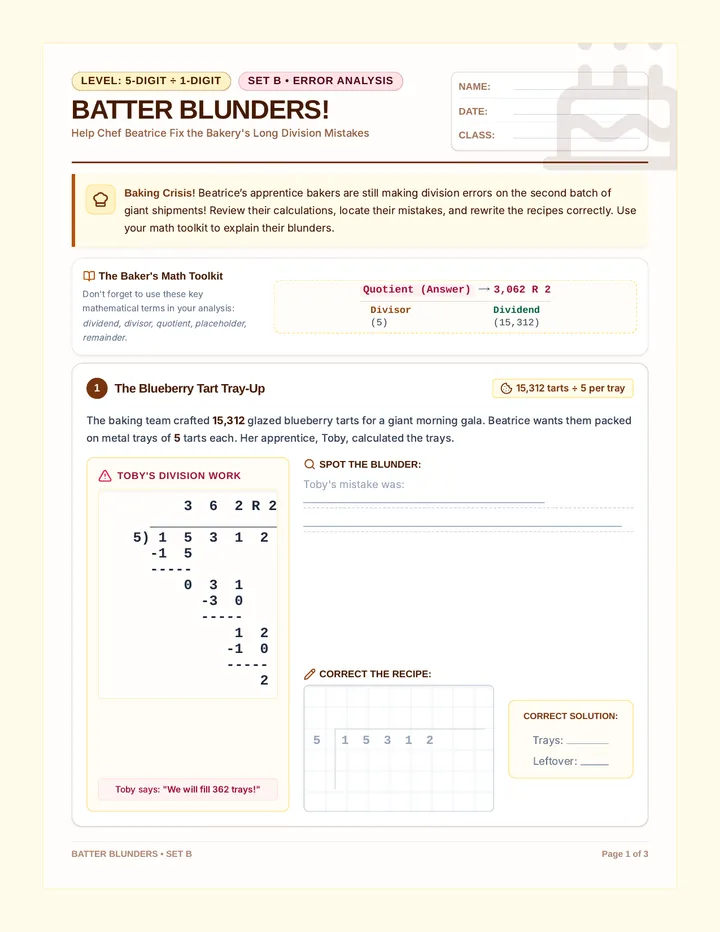
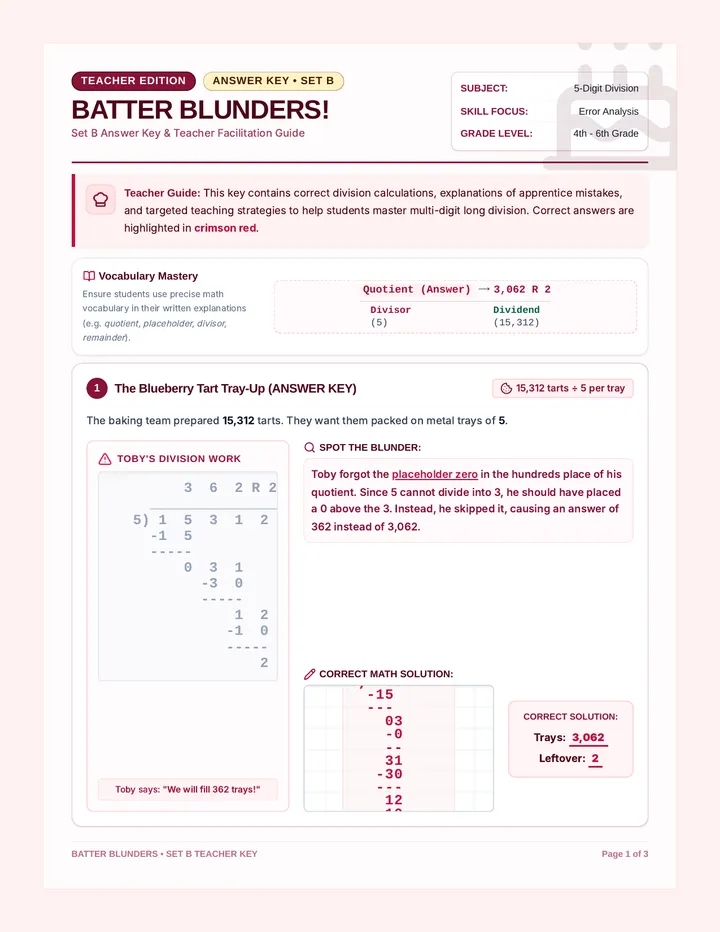
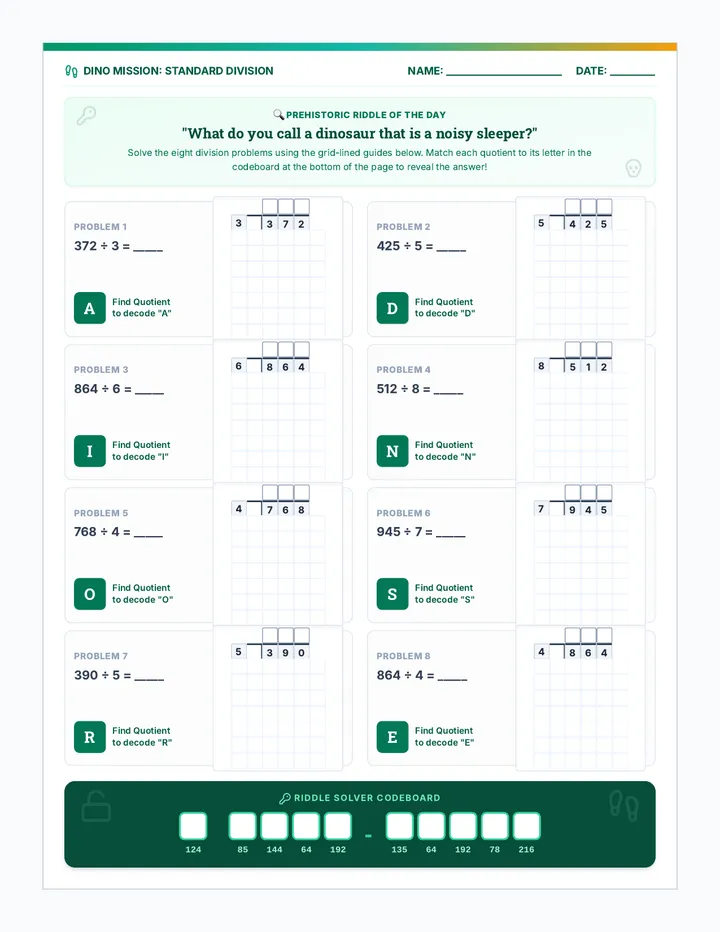
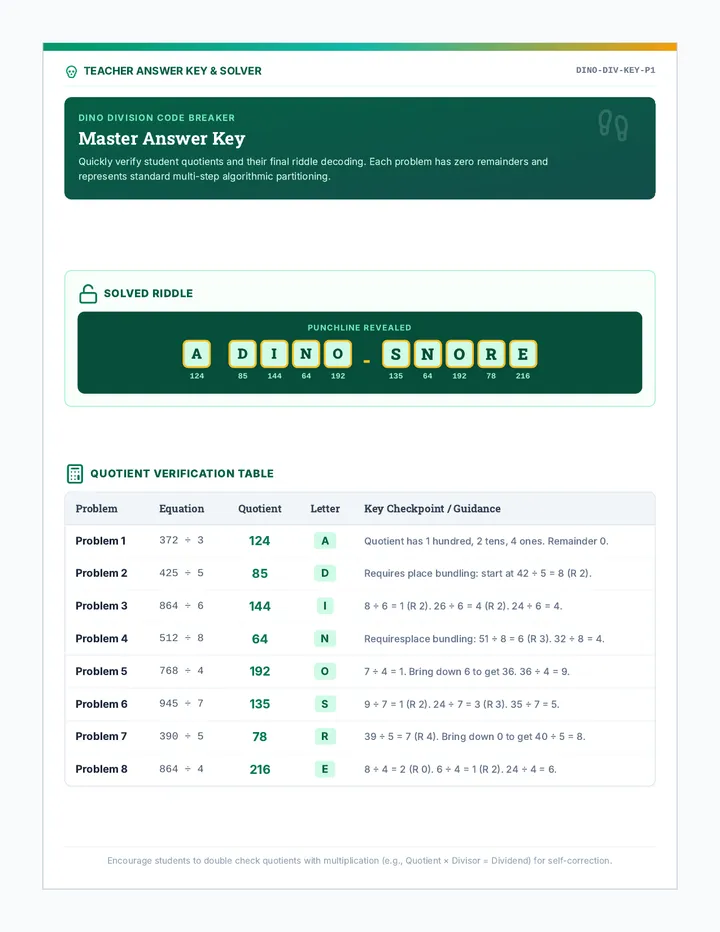
A 30-minute mastery session on long division, covering the step-by-step process for problems with and without remainders through guided practice and independent challenges.
A comprehensive review of fraction operations, including equivalence, simplification, and adding/subtracting fractions and mixed numbers with unlike denominators.
A visual exploration of number patterns and input-output tables using an architectural design theme. Students learn to identify rules and extend sequences through scaffolded building floor plans.
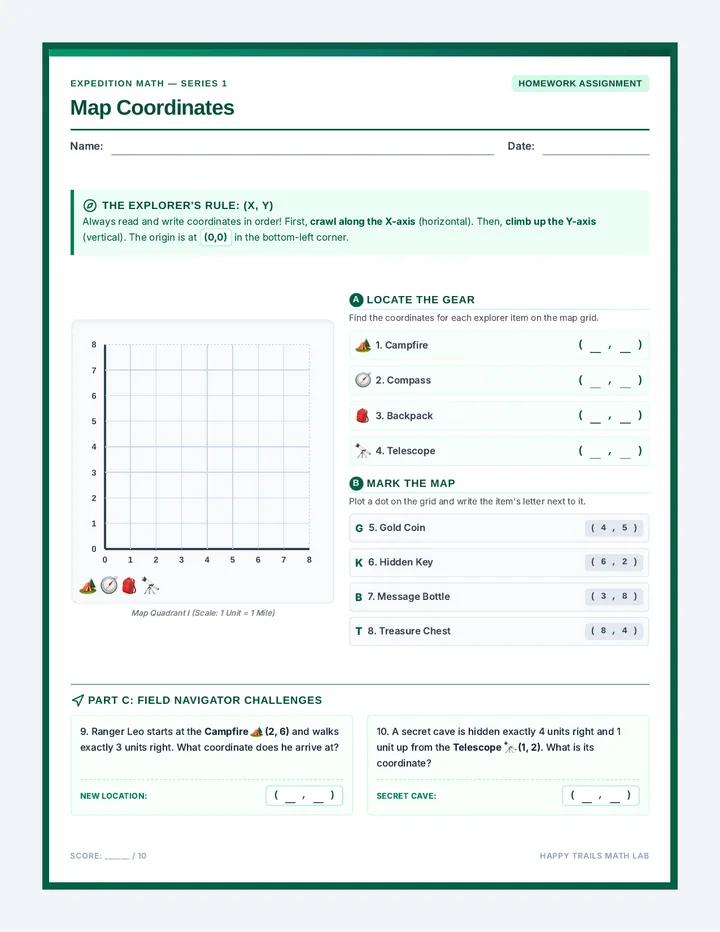
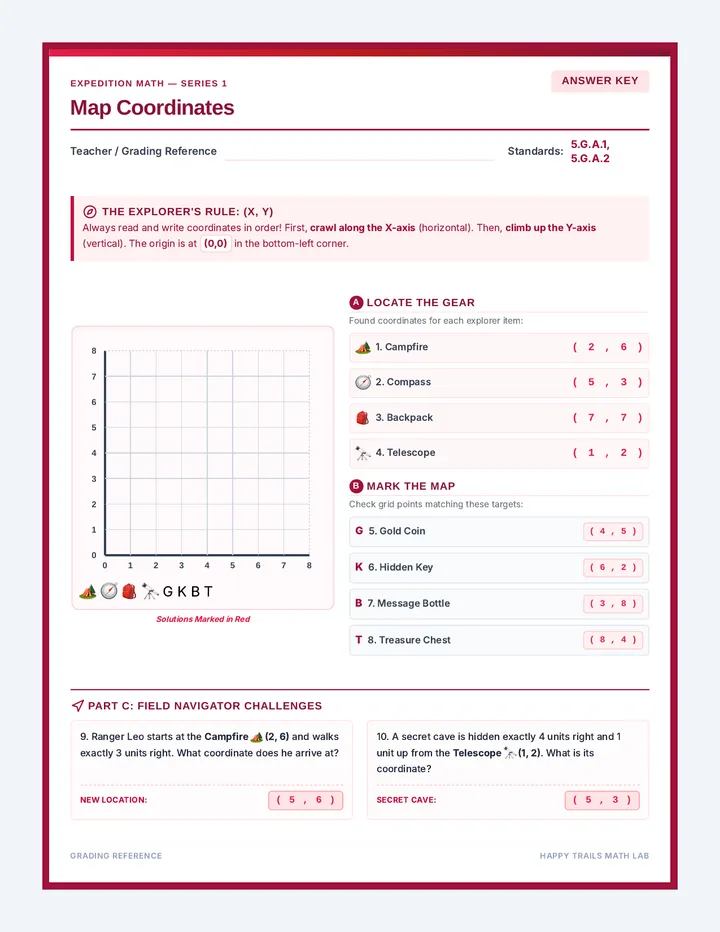
A visual introduction to the coordinate plane (Quadrant I) focusing on plotting points and identifying coordinates through a city mapping theme. Designed for special education students with heavy scaffolding and spatial mnemonics.
A foundational lesson on solving one-step equations using the four basic operations, designed specifically for special education students with heavy visual scaffolding and a blueprint construction theme.
Teacher overview and answer keys for the Level 1 Valentine's Day math packet.
Students will solve one-step addition and subtraction word problems within 20 with a Valentine's Day theme.
Students will practice reading and drawing analog clocks to the nearest hour and half-hour with a high school schedule theme.
Students will measure Valentine-themed objects to the nearest whole inch and compare lengths using terms like longer and shorter.
Students will sort candy heart colors, create simple tally charts, and build basic bar graphs with a 1:1 scale.
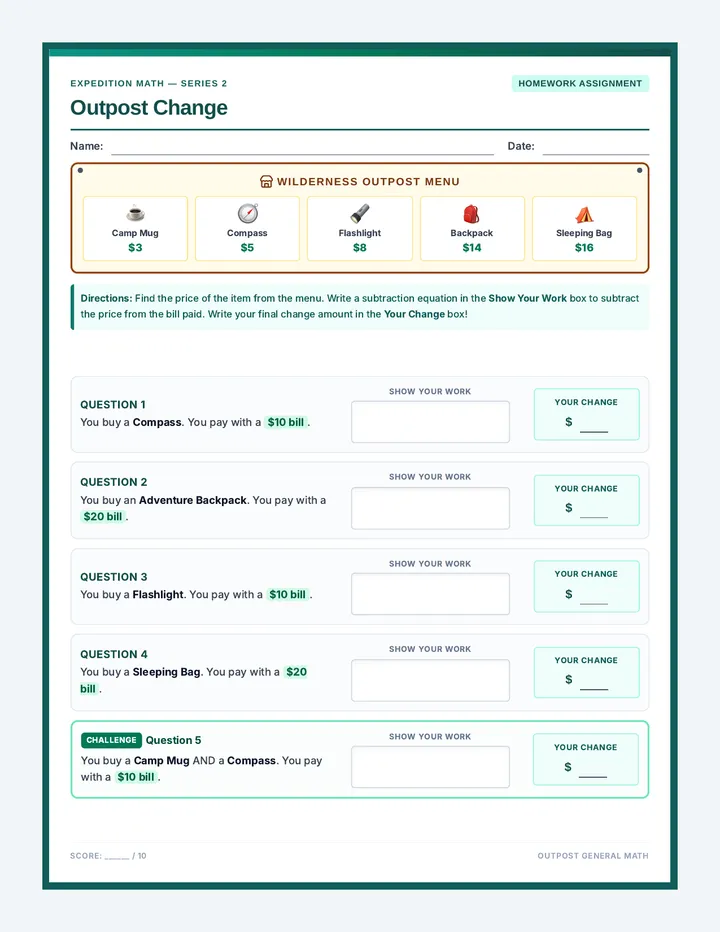
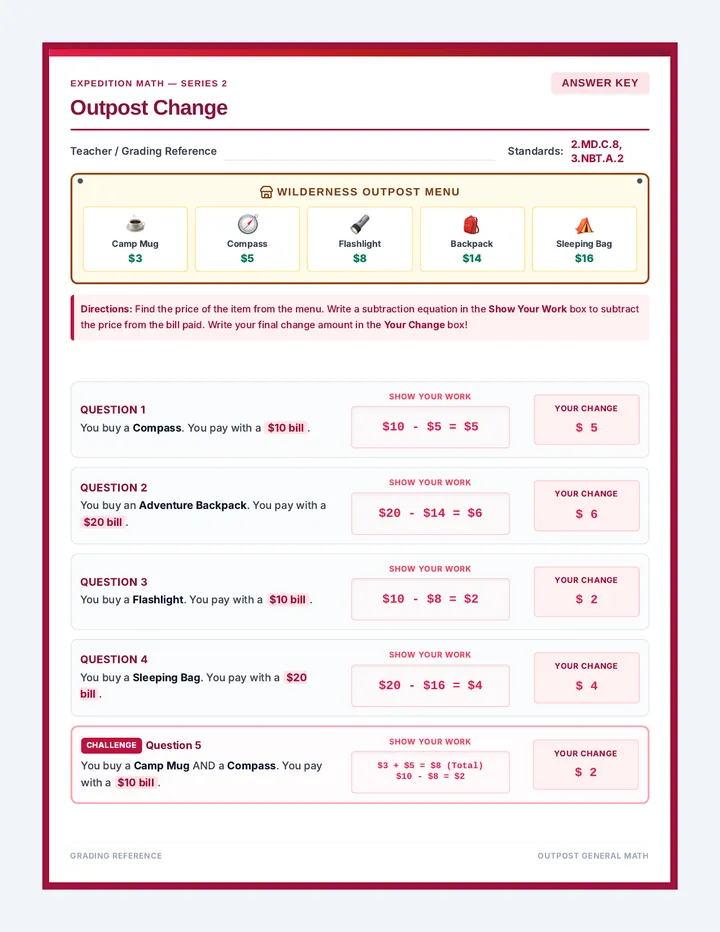
Students will practice identifying single coins, calculating costs with whole numbers, and buying items from a Level 1 sweet shop menu.
Teacher overview and answer keys for the Quest Valentine's Day math packet.