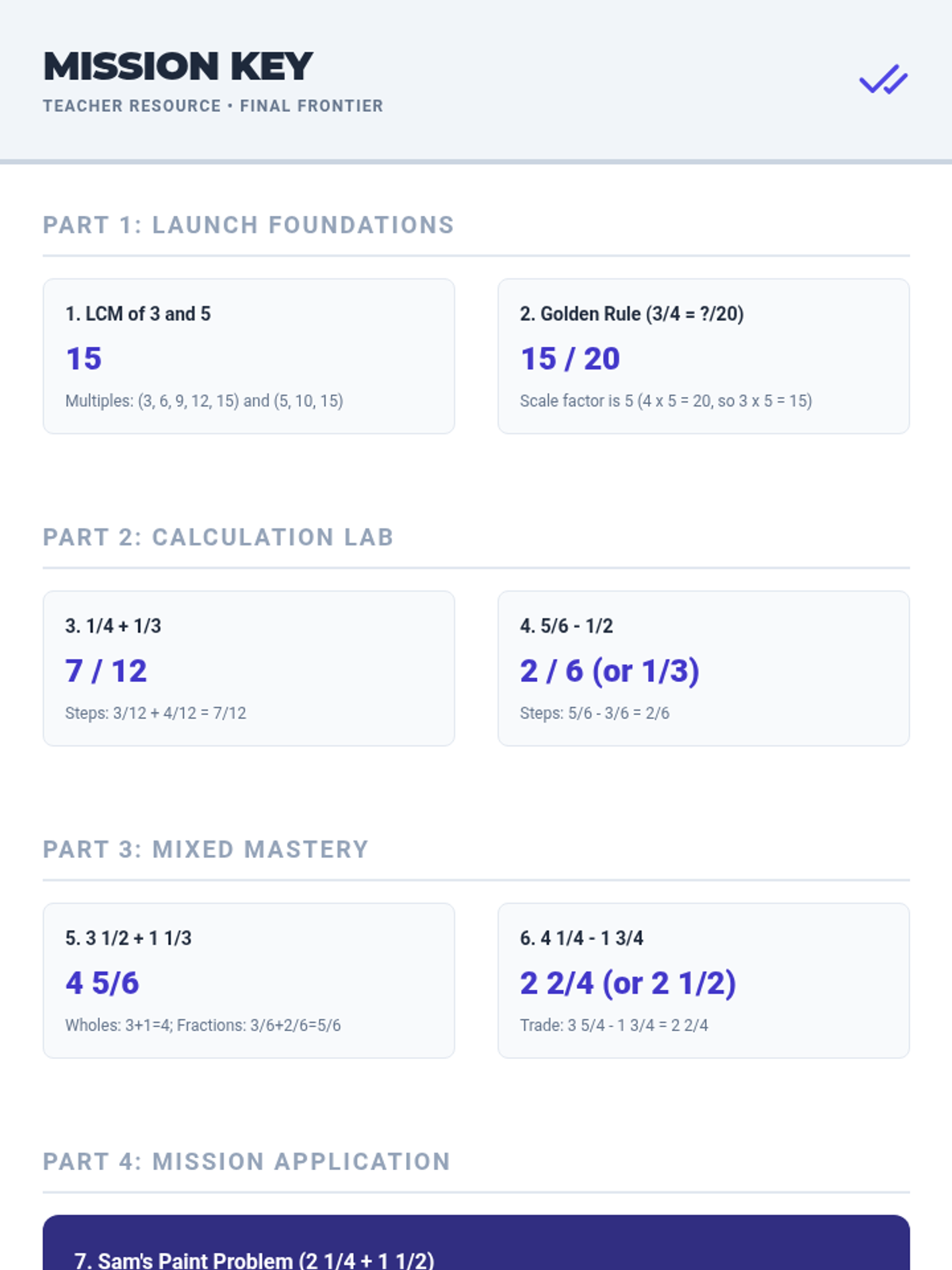
A comprehensive review of fraction operations, including equivalence, simplification, and adding/subtracting fractions and mixed numbers with unlike denominators.
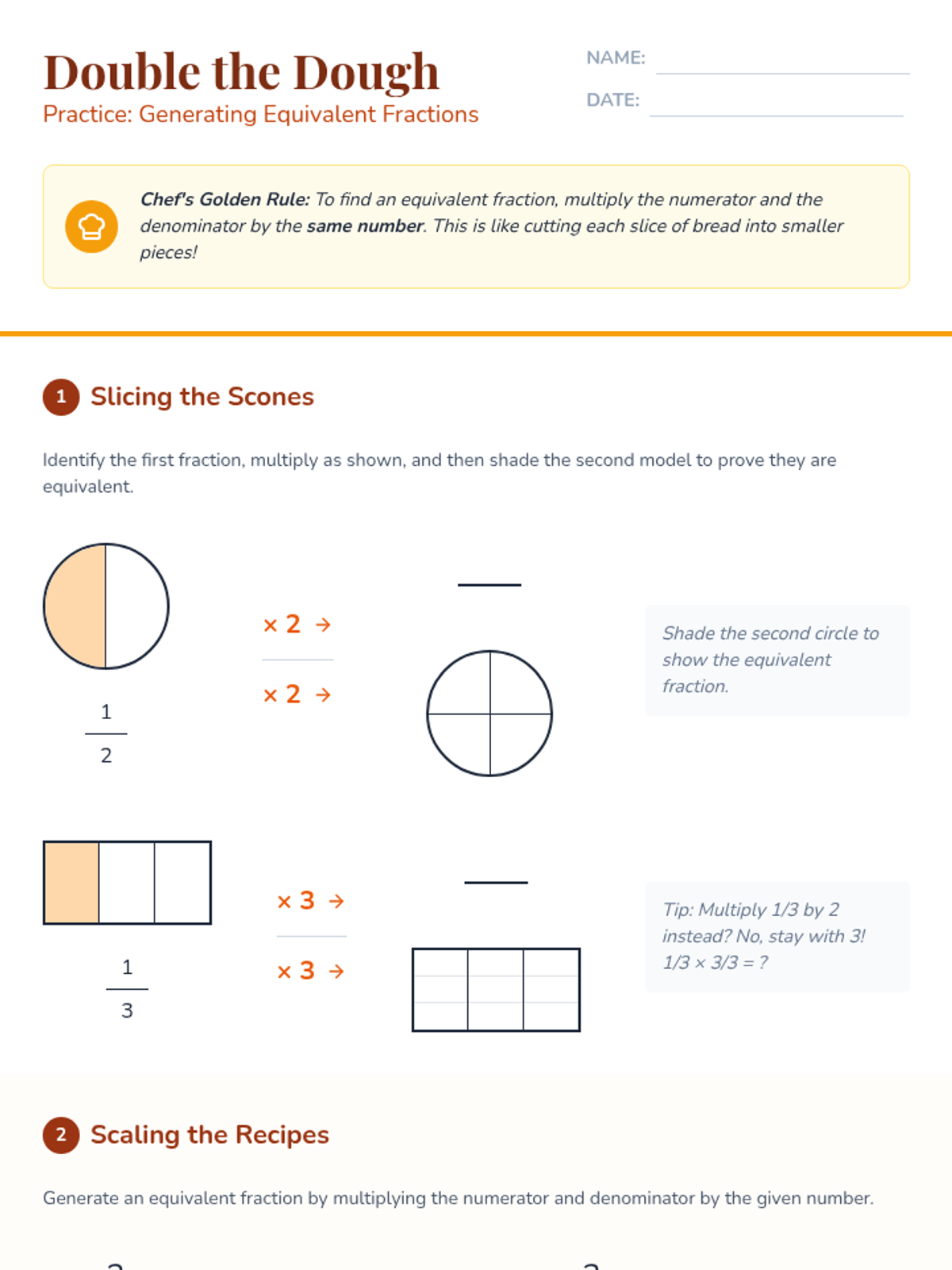
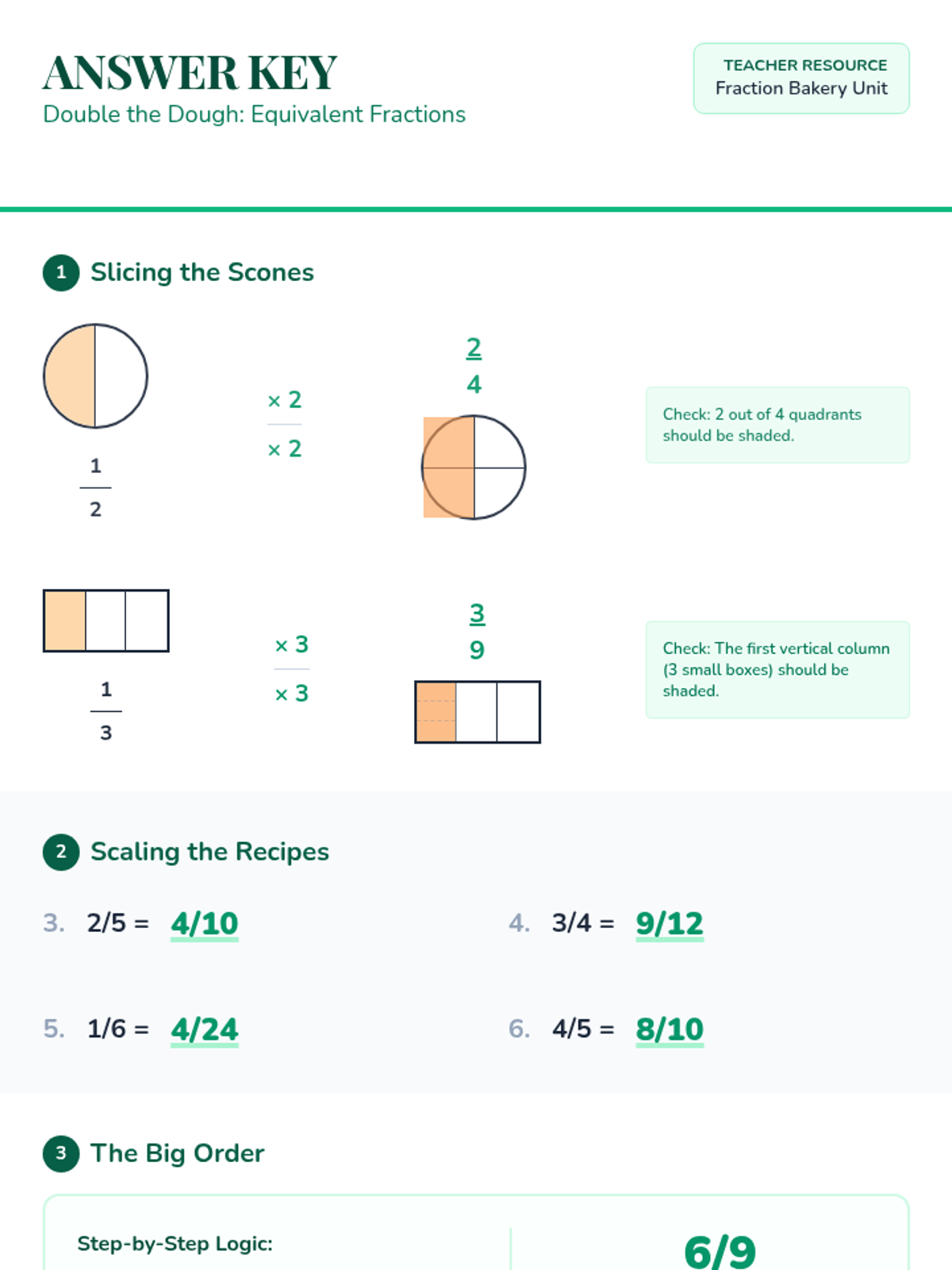
Students learn to generate equivalent fractions by multiplying the numerator and denominator by the same number, using bakery-themed visual models like cake pans and bread loaves to bridge the gap between concrete and abstract math.
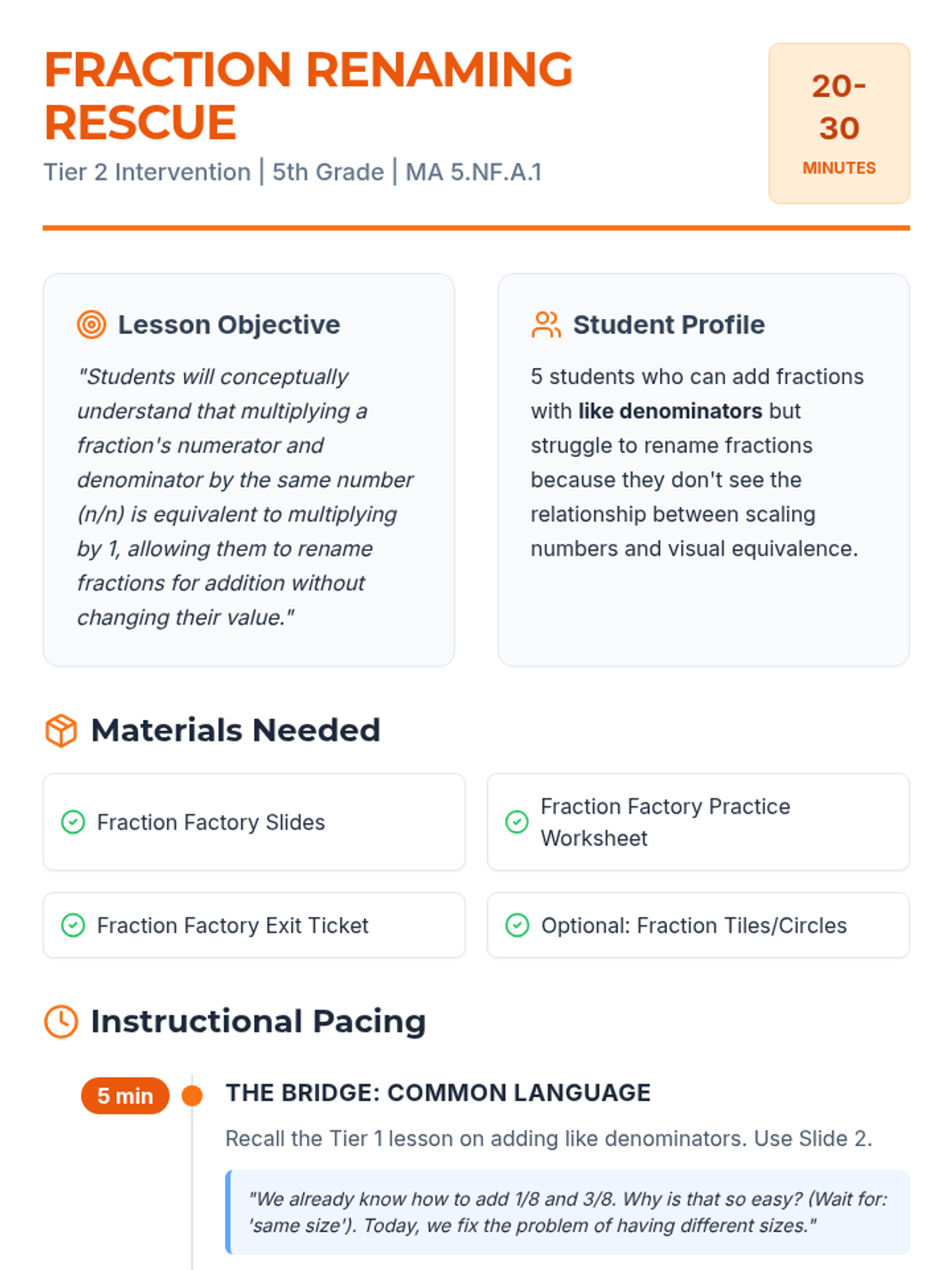
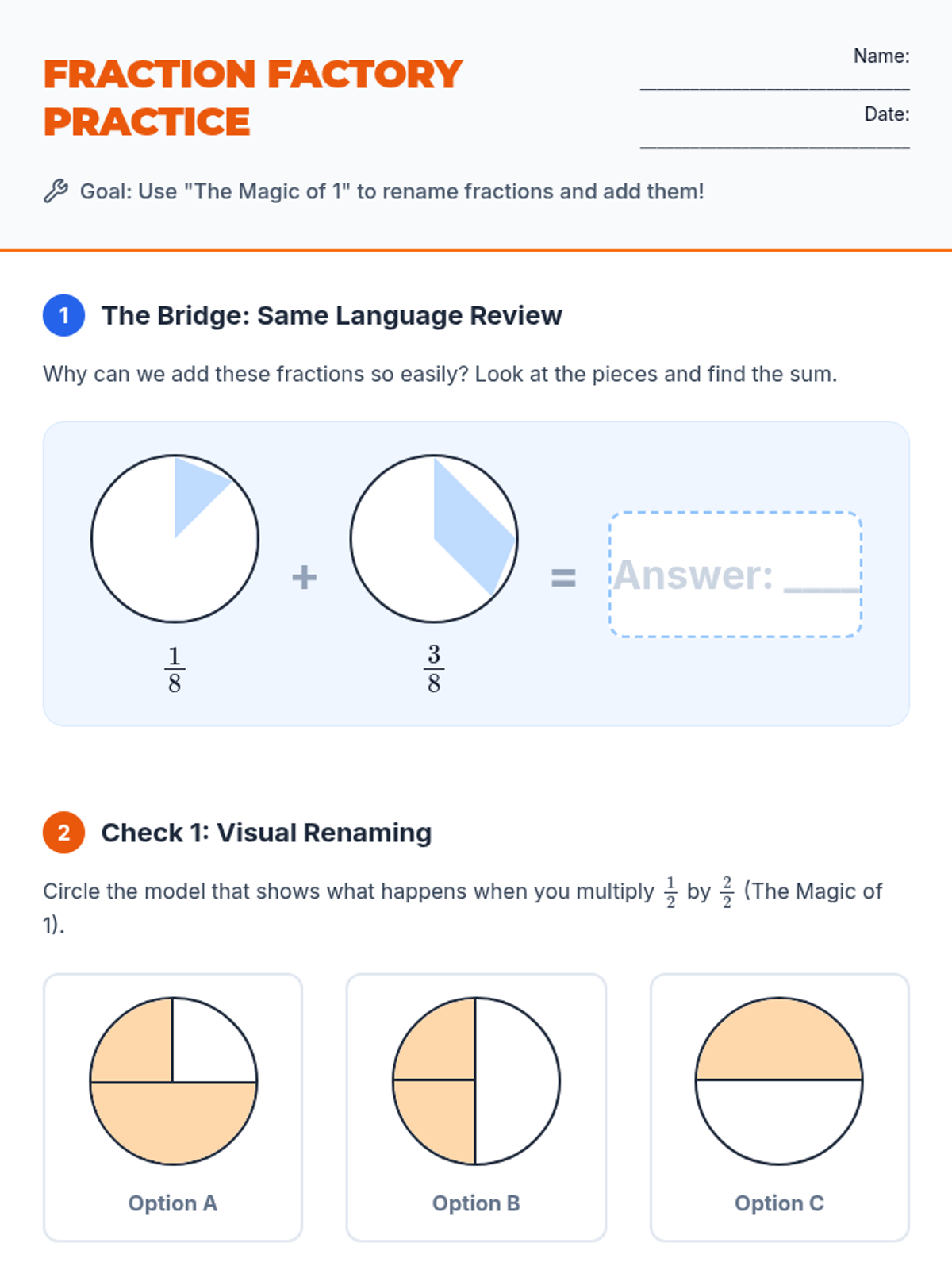
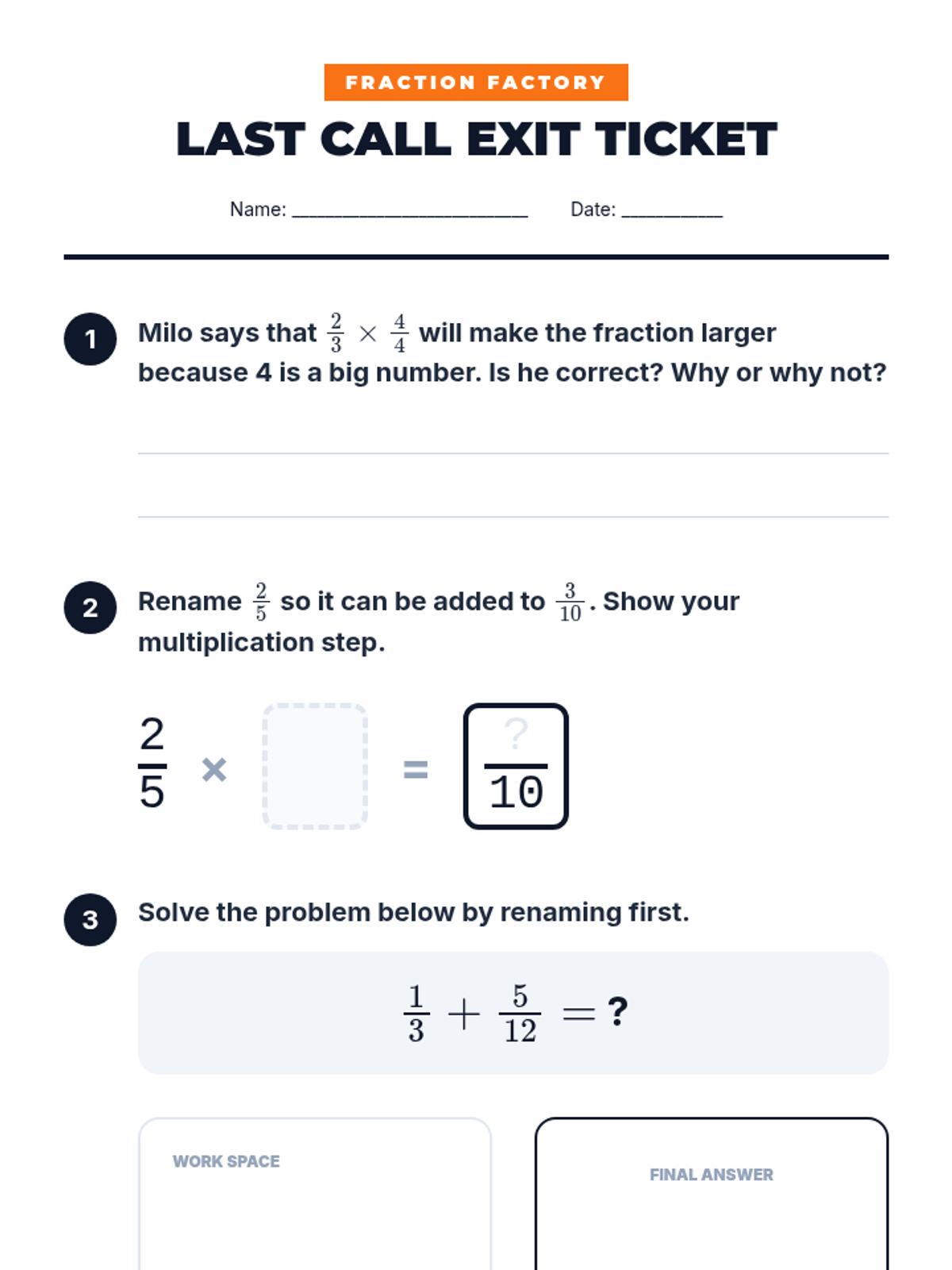
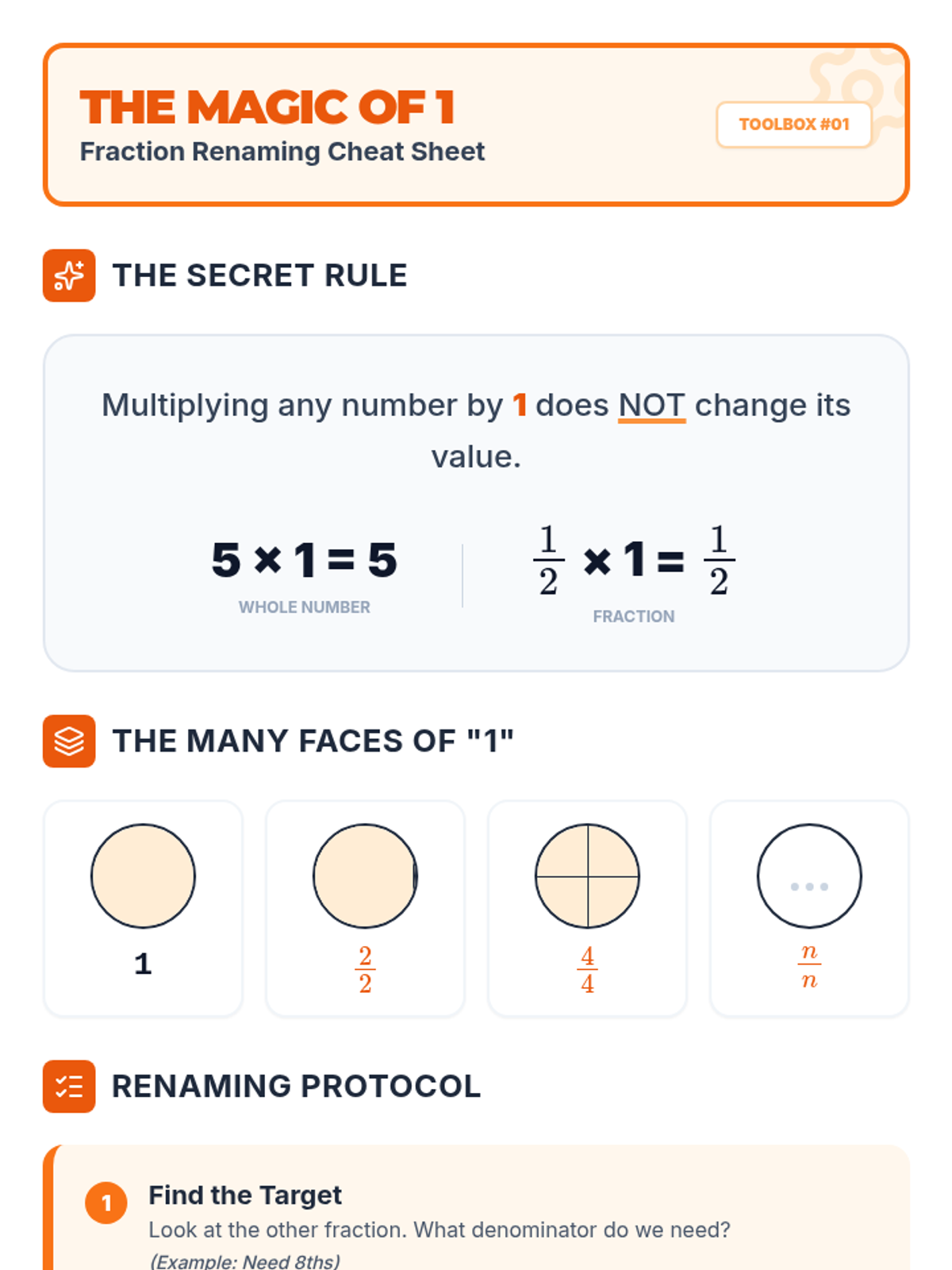
A Tier 2 intervention lesson for 5th grade students focused on conceptually understanding equivalent fractions and renaming them to add fractions with unlike denominators. Students will explore the 'Identity Property of 1' through visual models to see why multiplying the numerator and denominator by the same number creates an equivalent fraction.

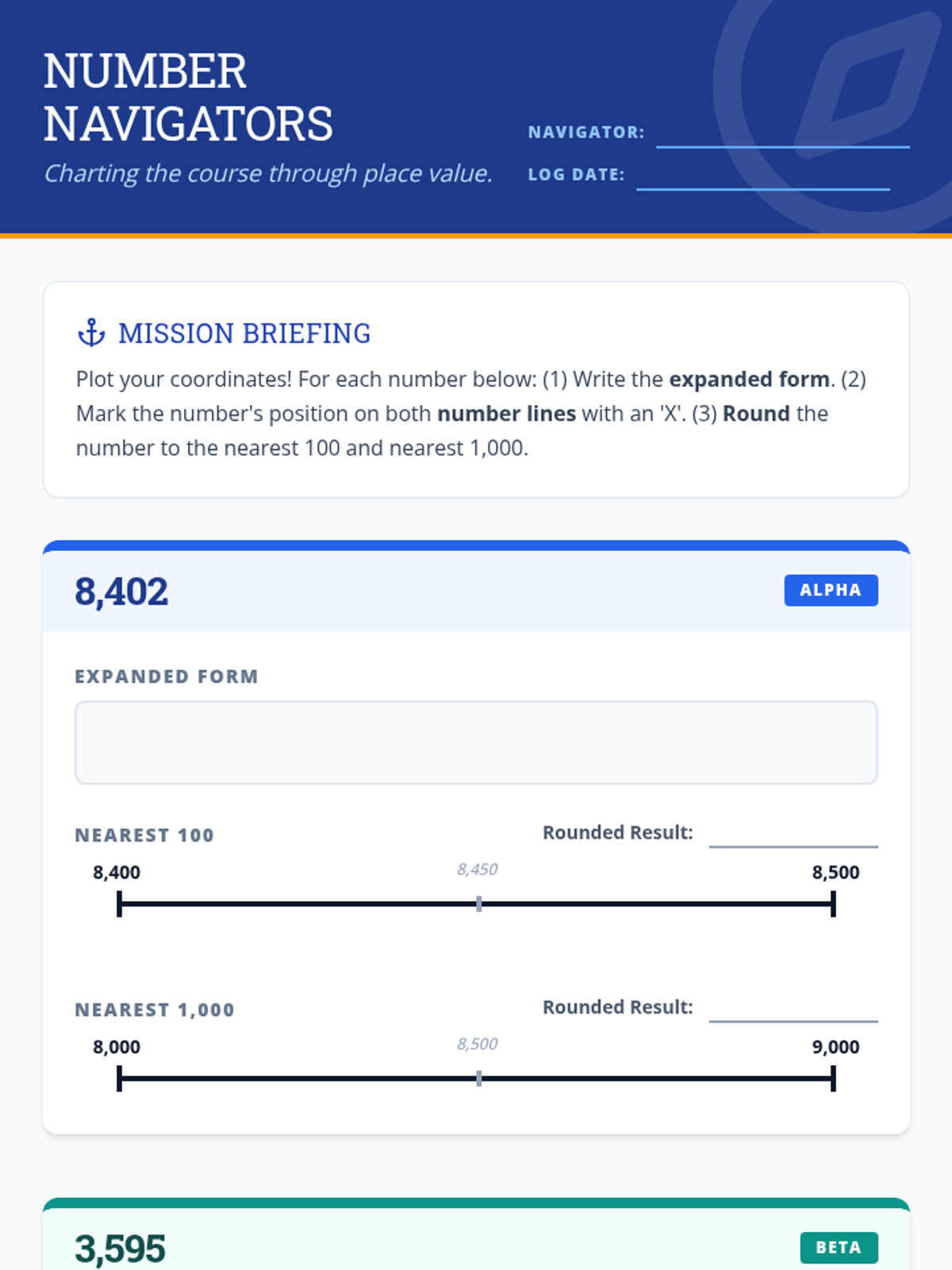
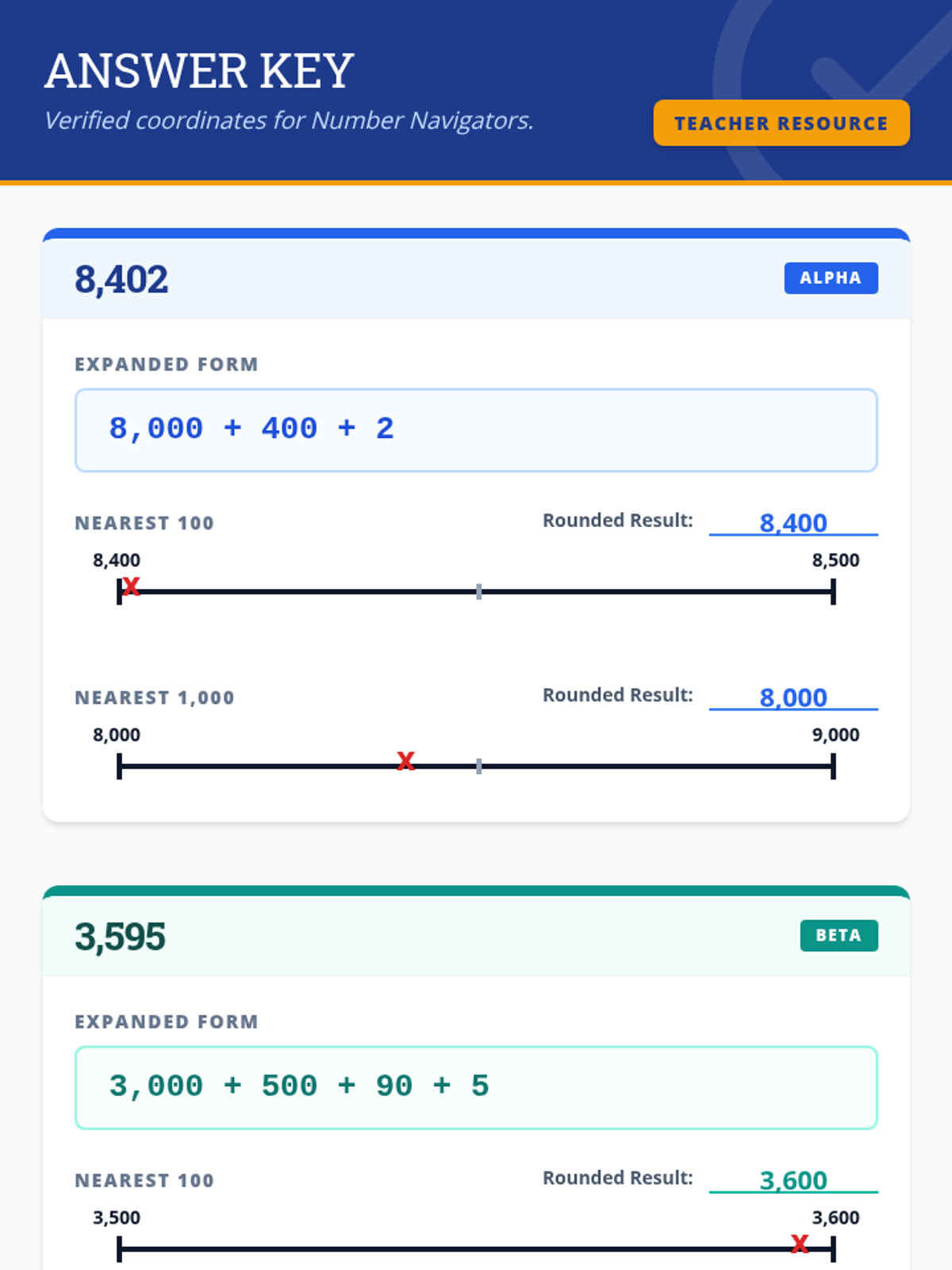
A lesson focused on place value through expanded form and rounding techniques using number lines as visual aids. Students practice with four- and five-digit numbers to master precision in estimation.
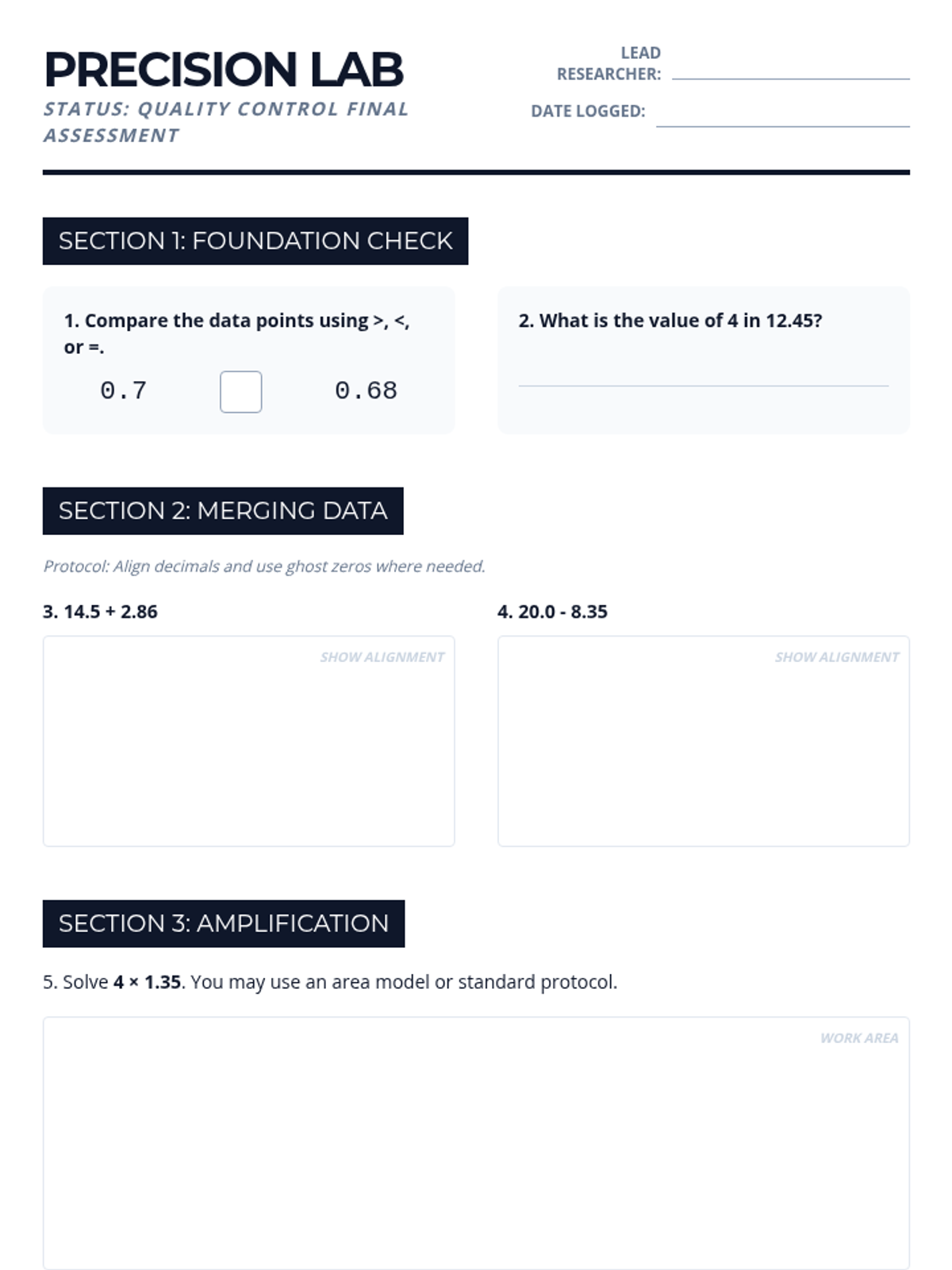
Final summative assessment to measure mastery of all four decimal operations and place value concepts.
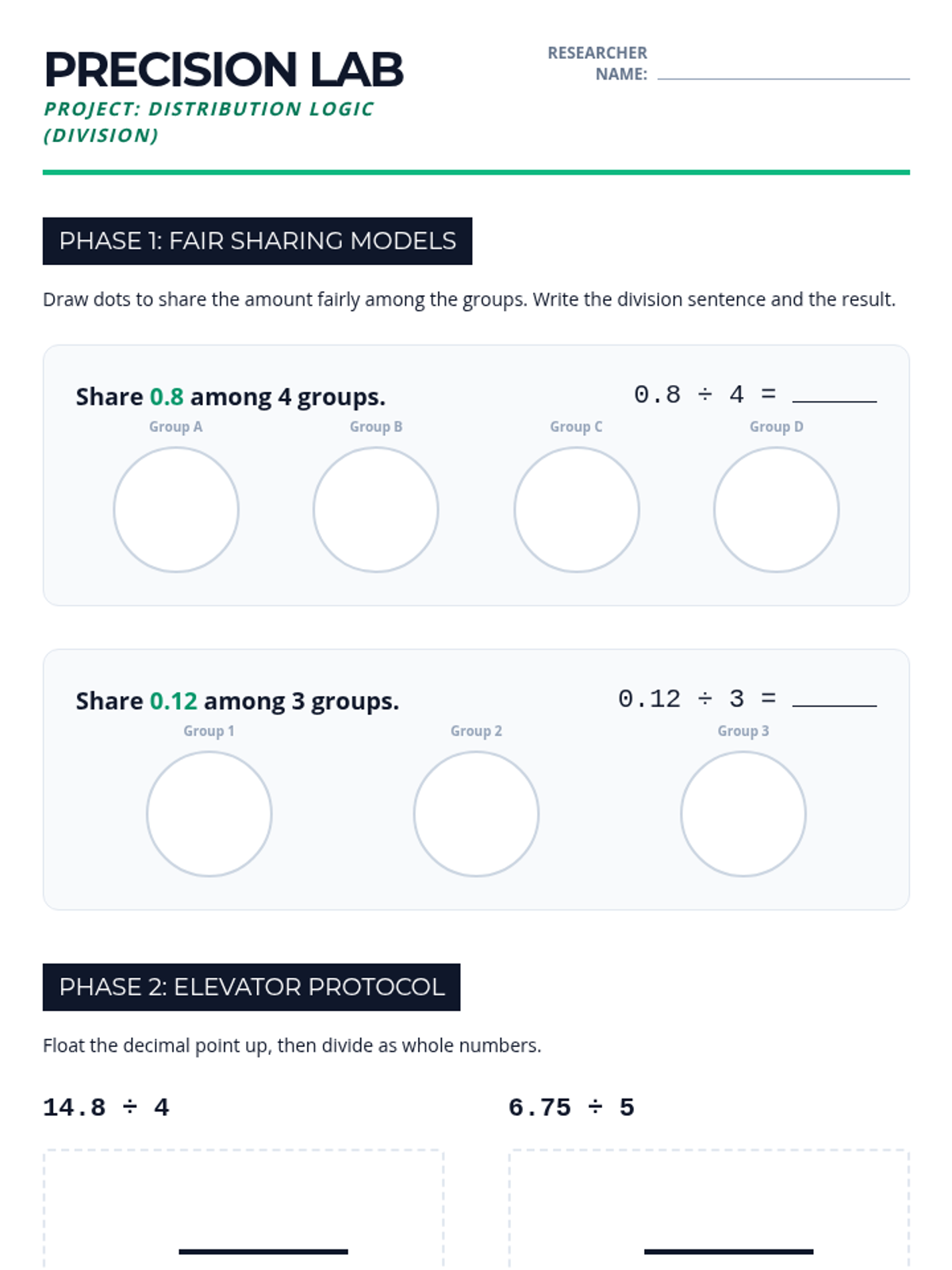
Instruction on dividing decimals by whole numbers and decimals using fair-sharing models and cost analysis.
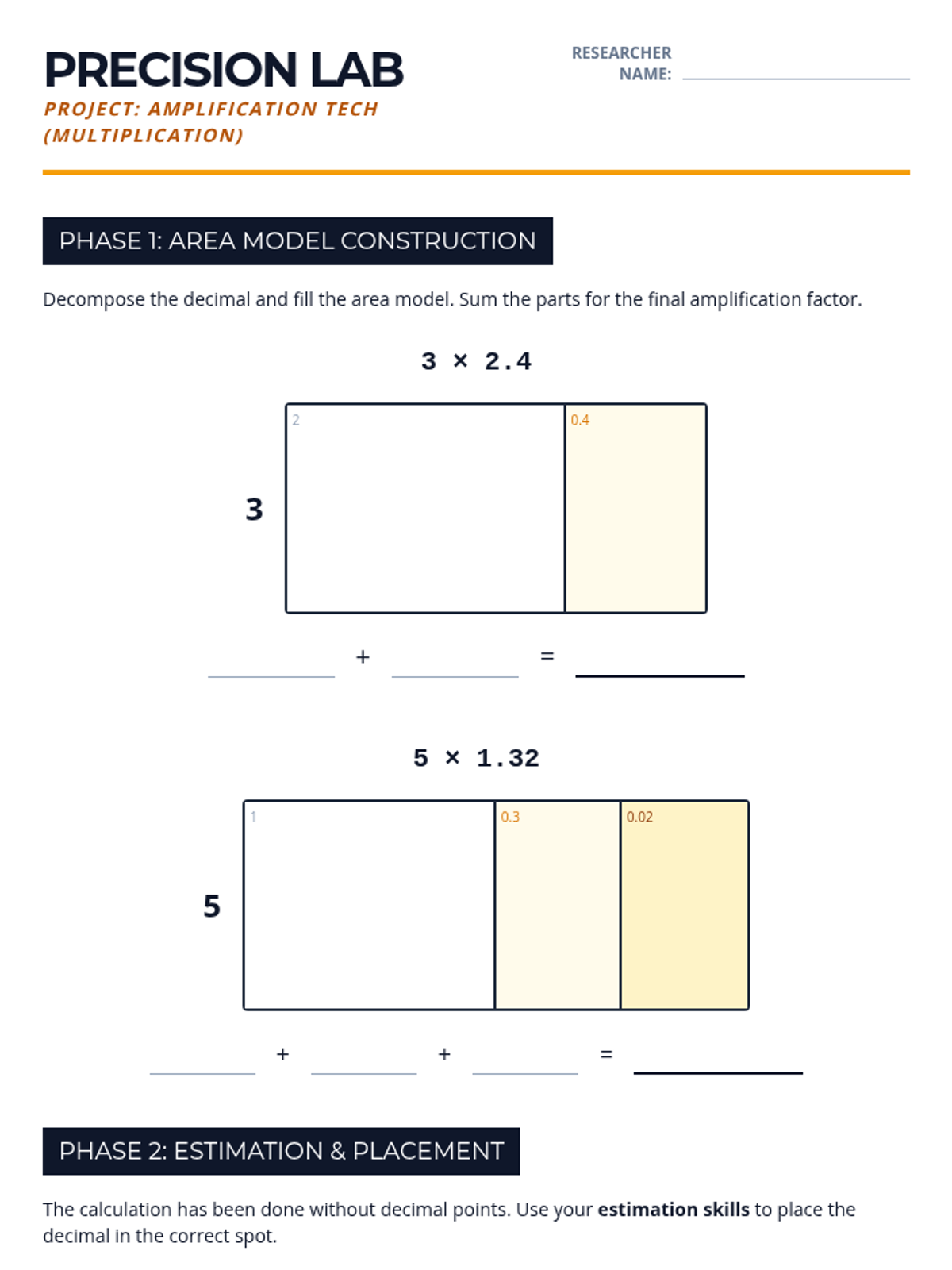
Instruction on multiplying decimals using area models and place value shifts, focusing on scaling and measurement.
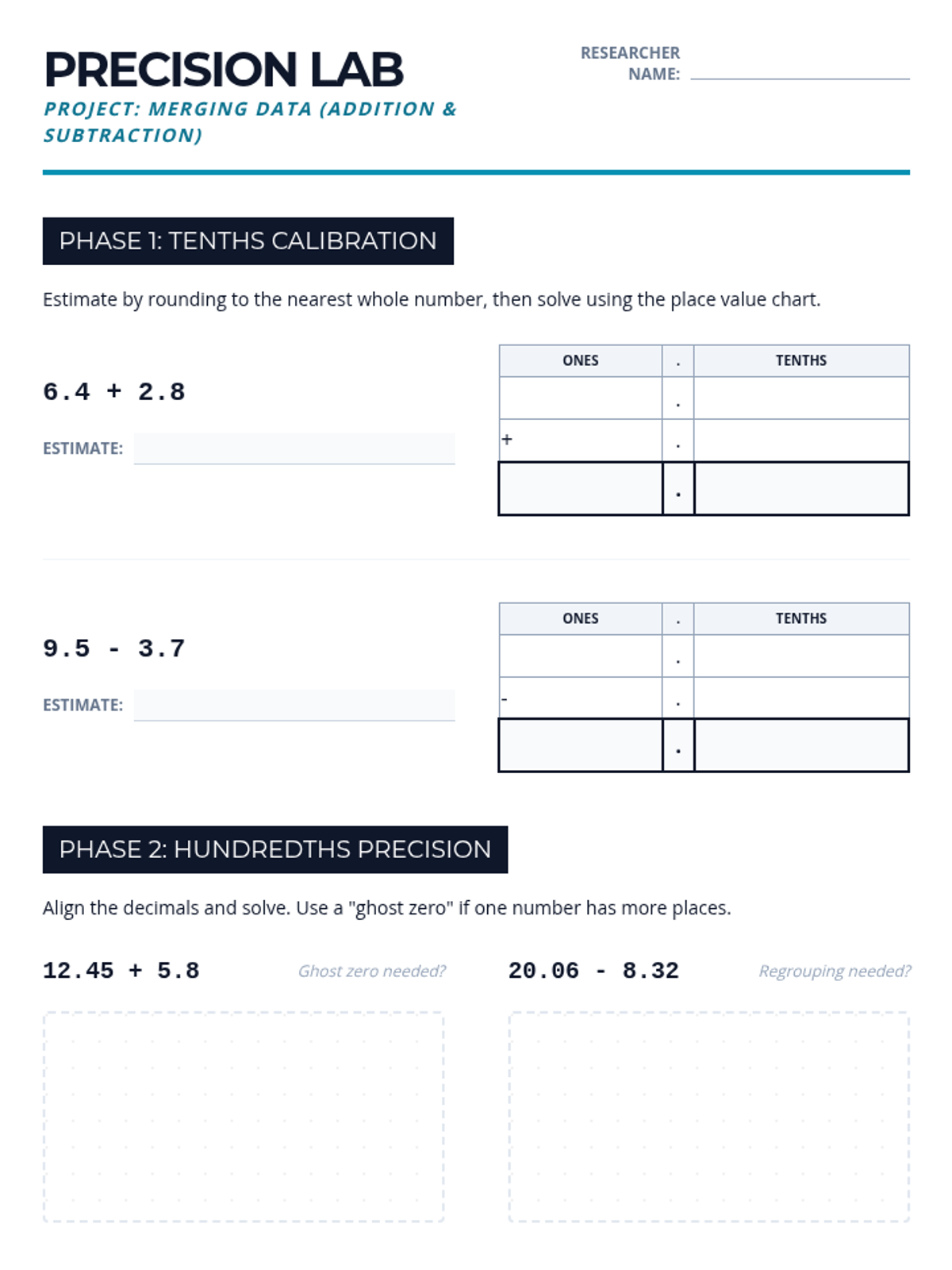
Instruction and practice on adding and subtracting decimals using place value alignment, estimation, and money contexts.
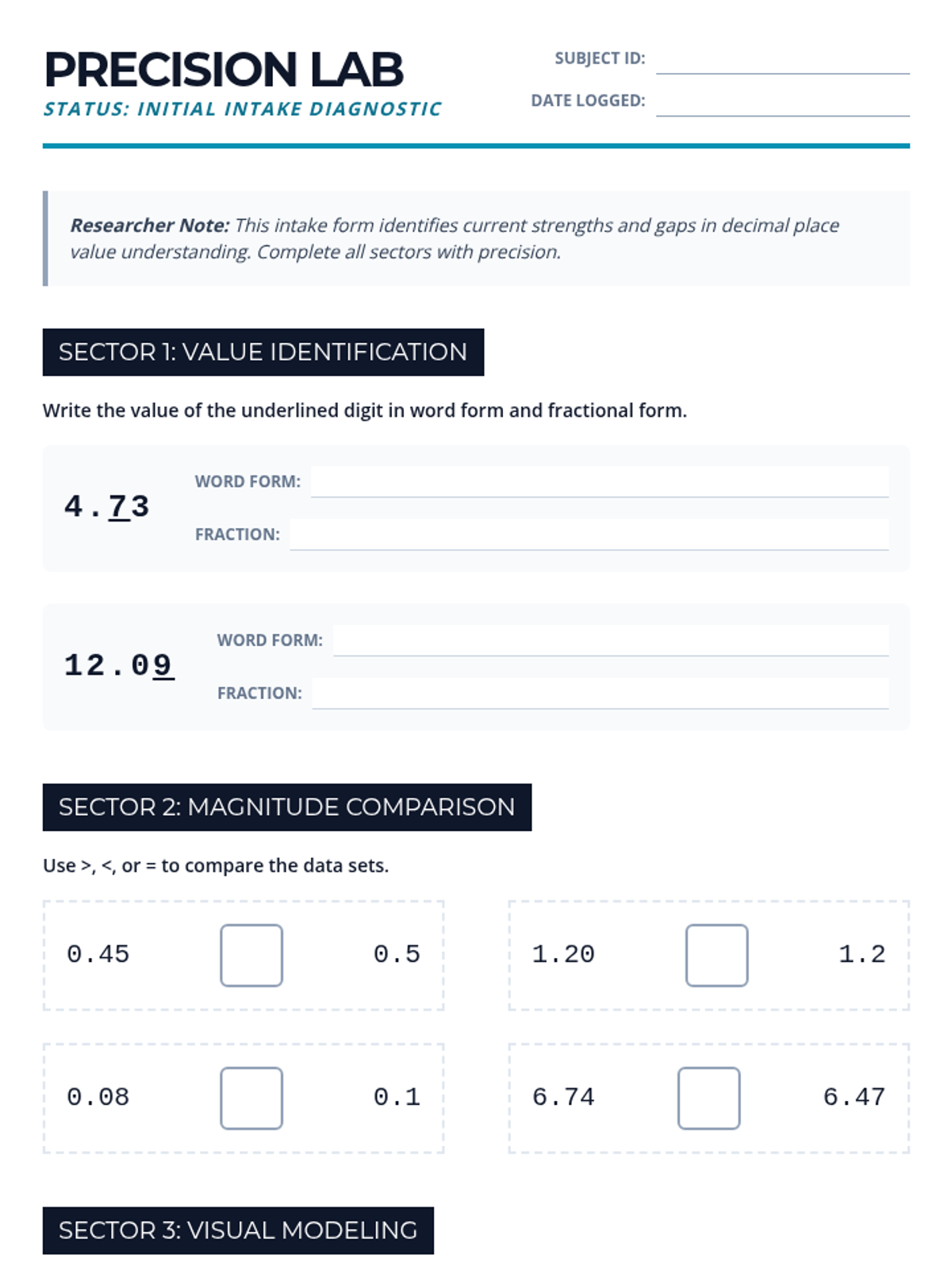
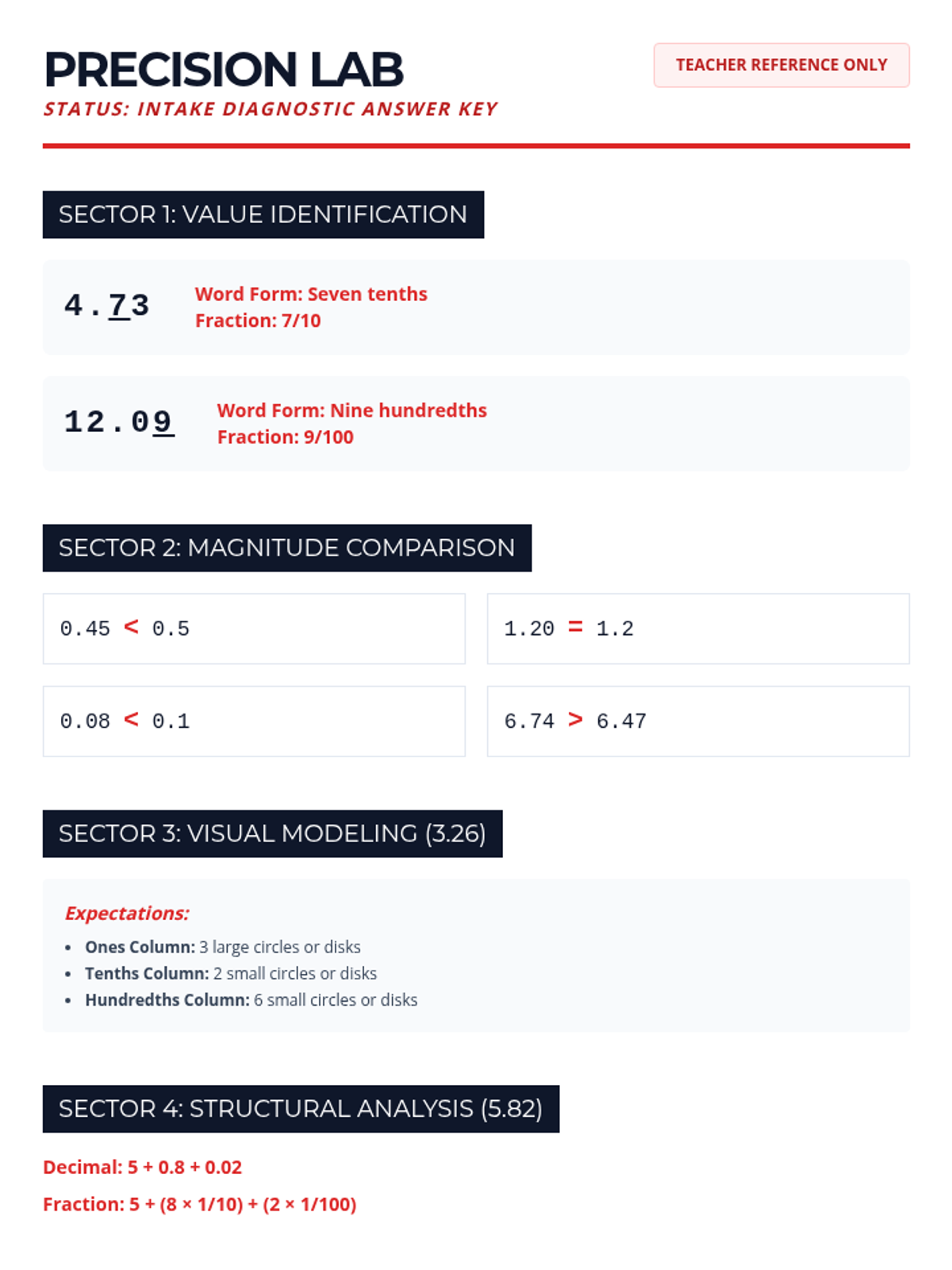
Initial diagnostic and foundational review of place value relationships from tens to hundredths to prepare for operations.
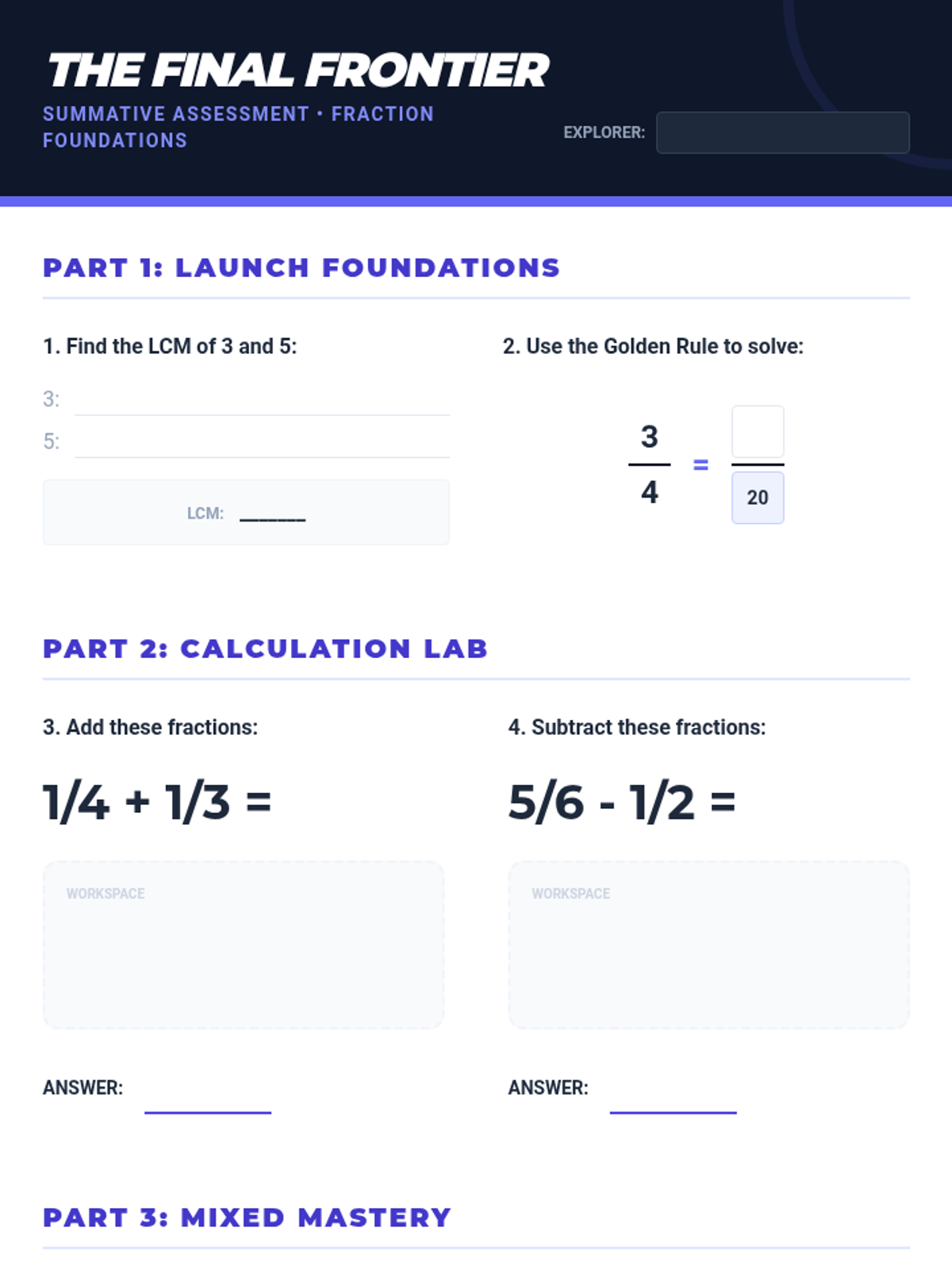
Final assessment of all unit skills to measure growth and mastery of standard 5.NF.A.1.
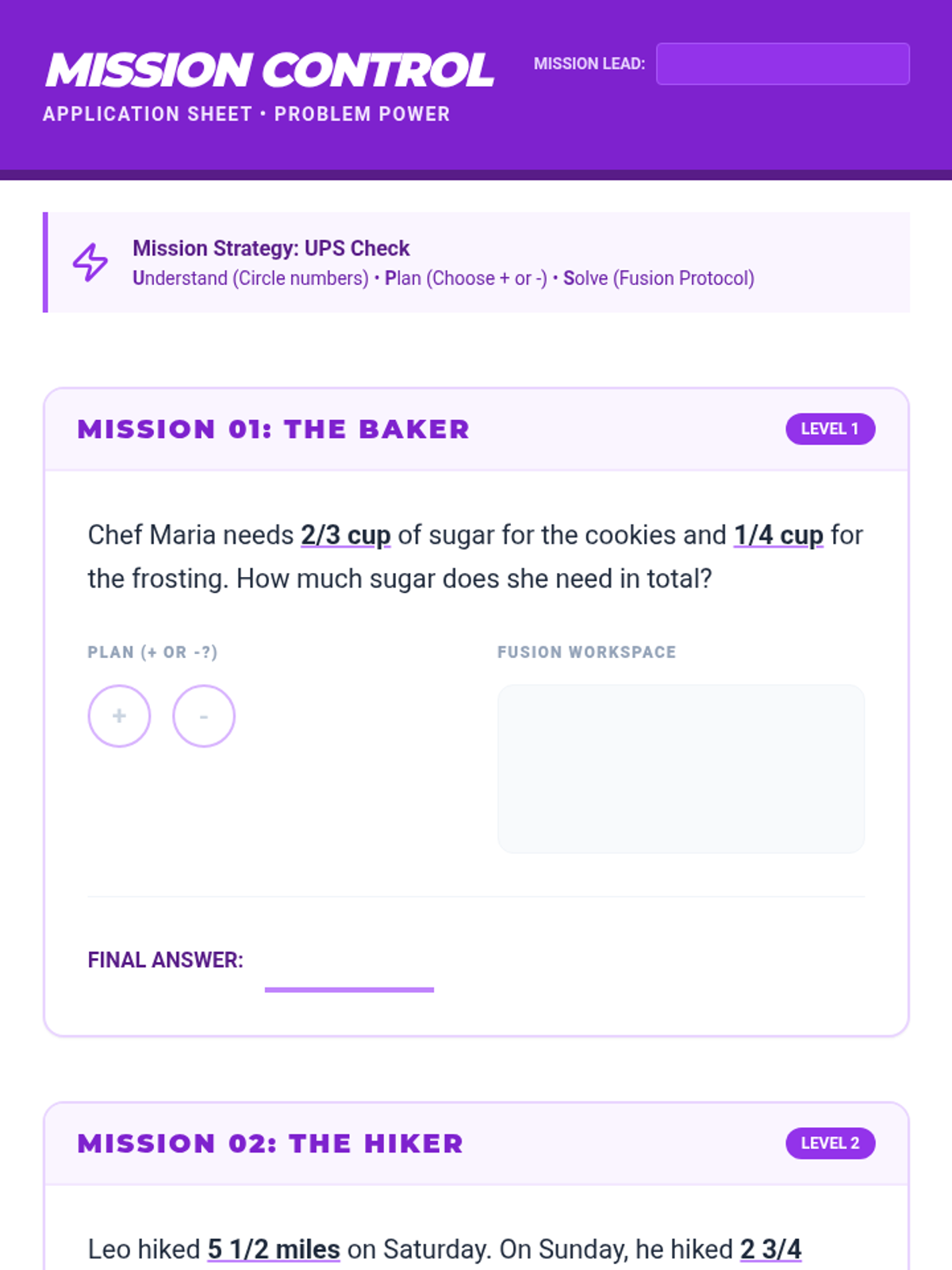
Application of fraction operations to real-world word problems, focusing on identifying operations and interpreting results.
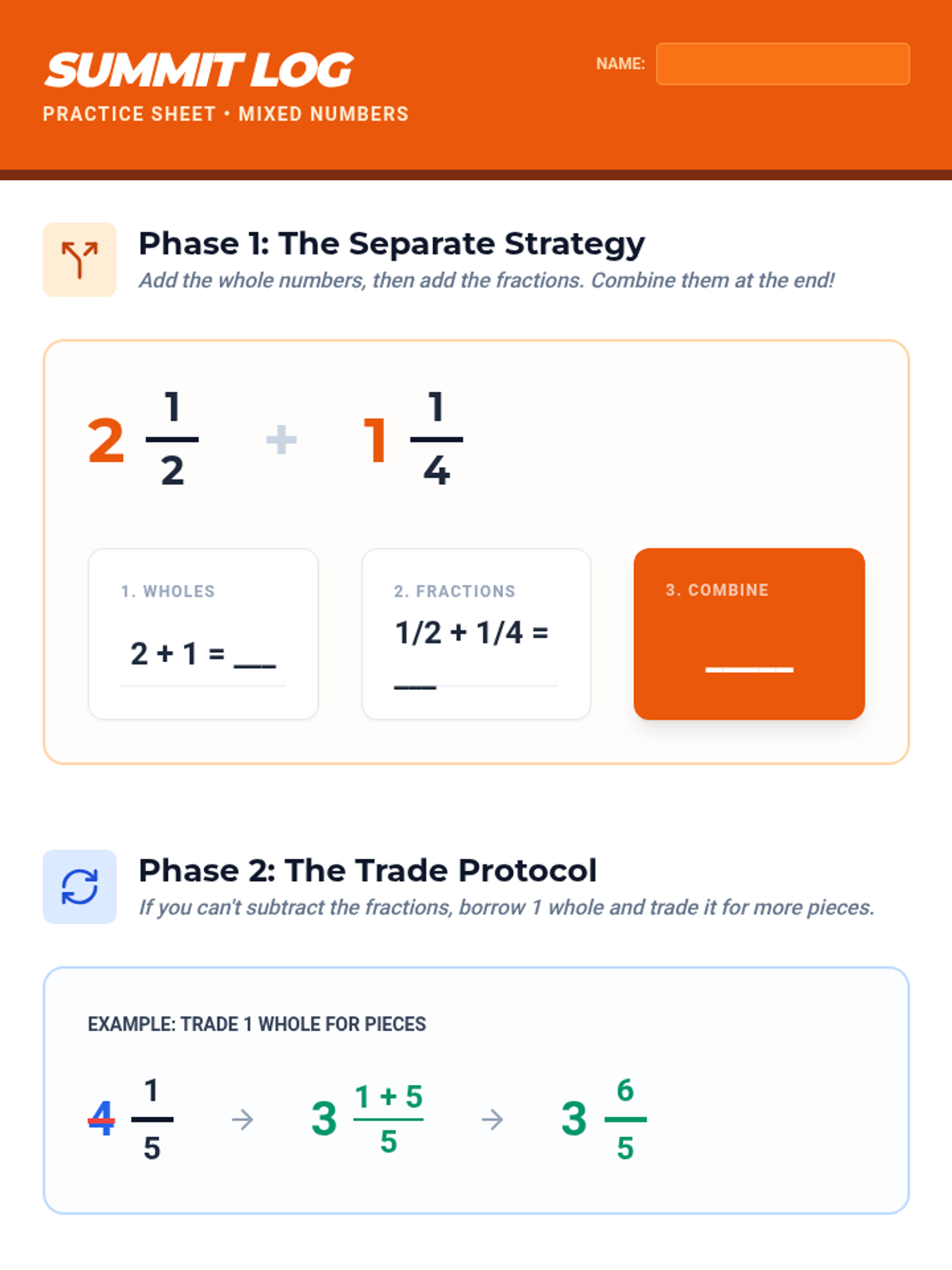
Expanding skills to include adding and subtracting mixed numbers, including strategies for regrouping and simplifying.
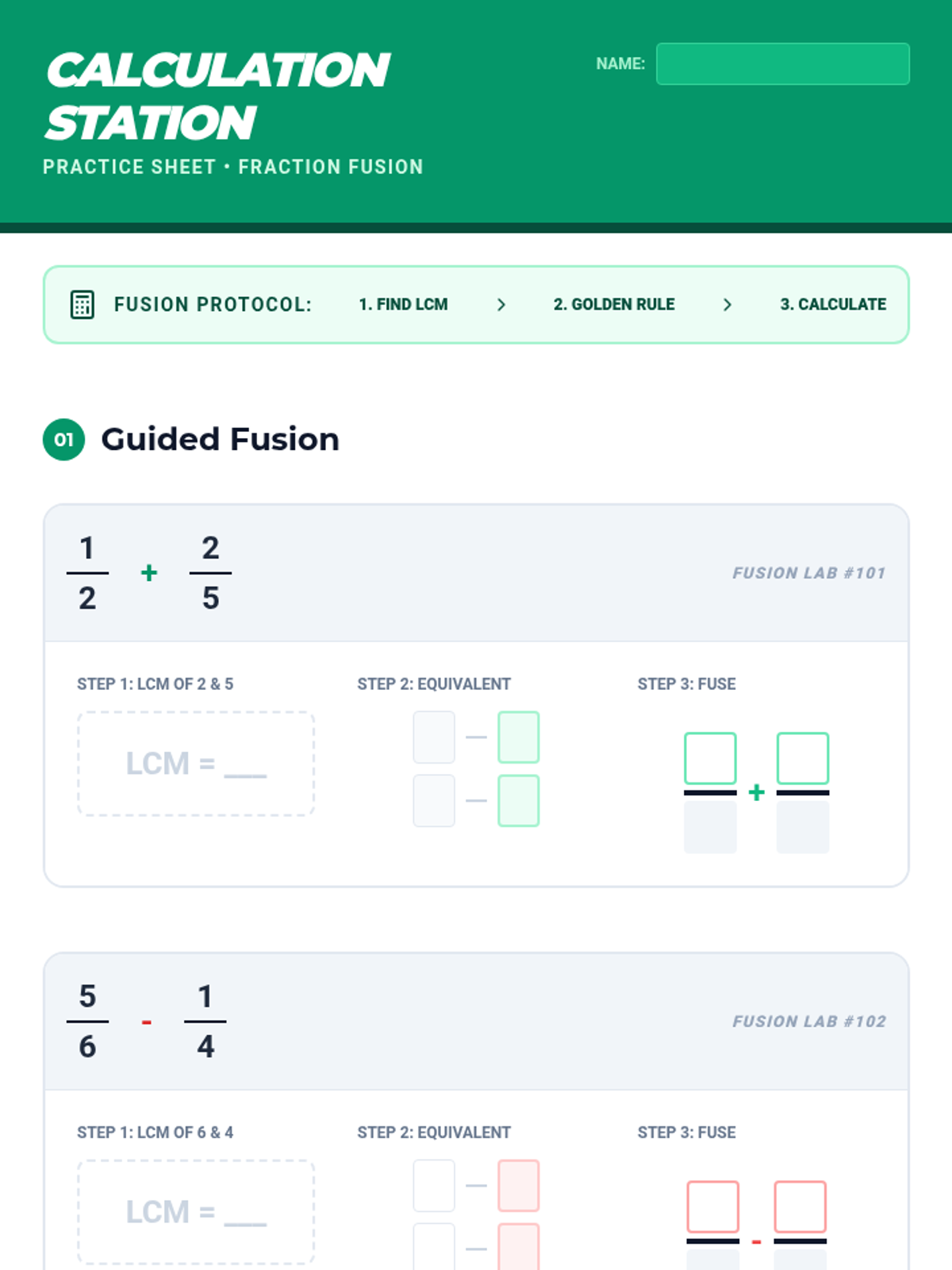
Guided practice applying common denominators to solve addition and subtraction problems with unlike denominators.
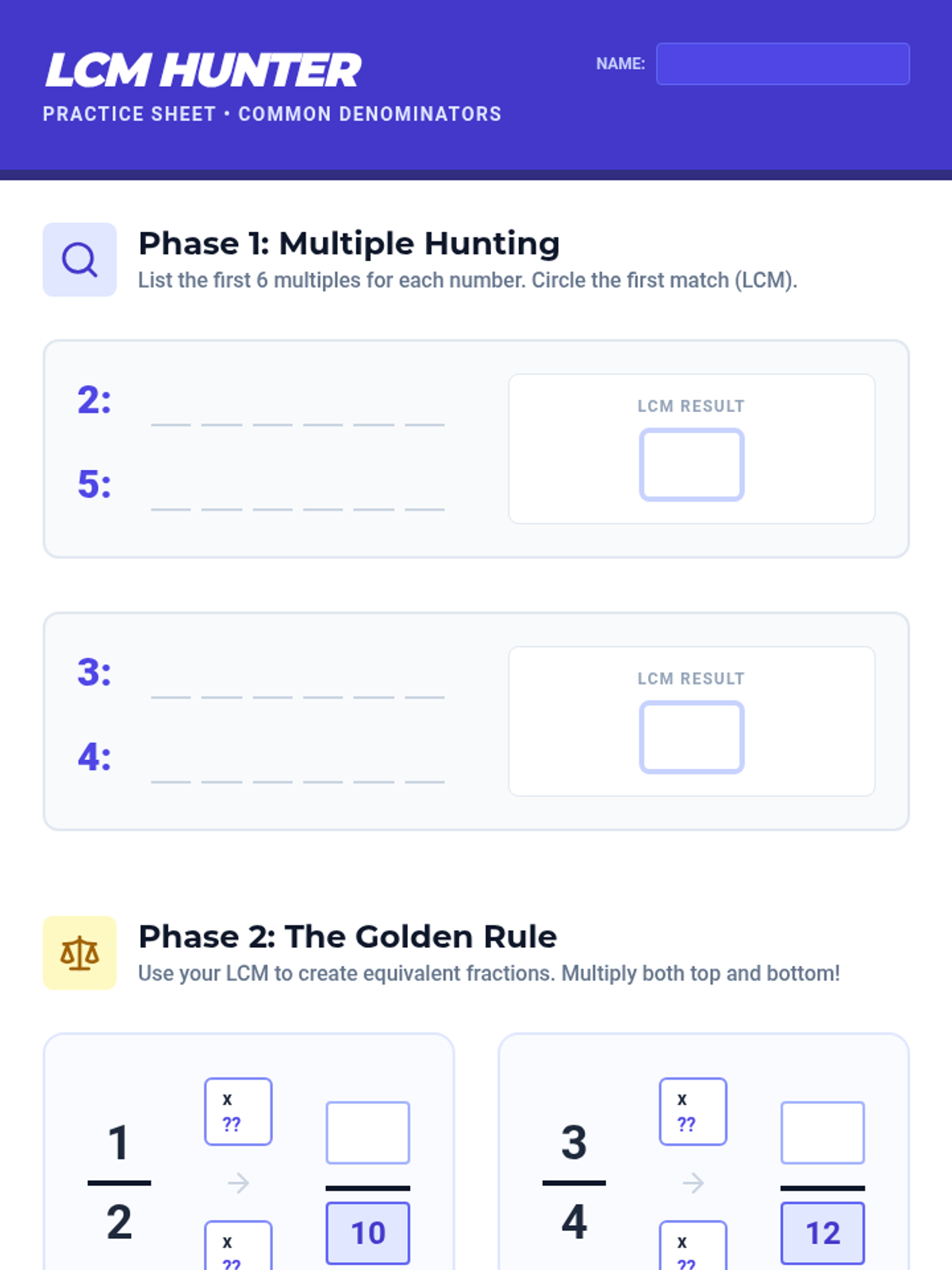
Instruction on finding the least common multiple (LCM) and creating equivalent fractions to find common denominators.