An introductory lesson on identifying and combining like terms to solve multi-step equations, designed for upper elementary students using visual models and guided practice.
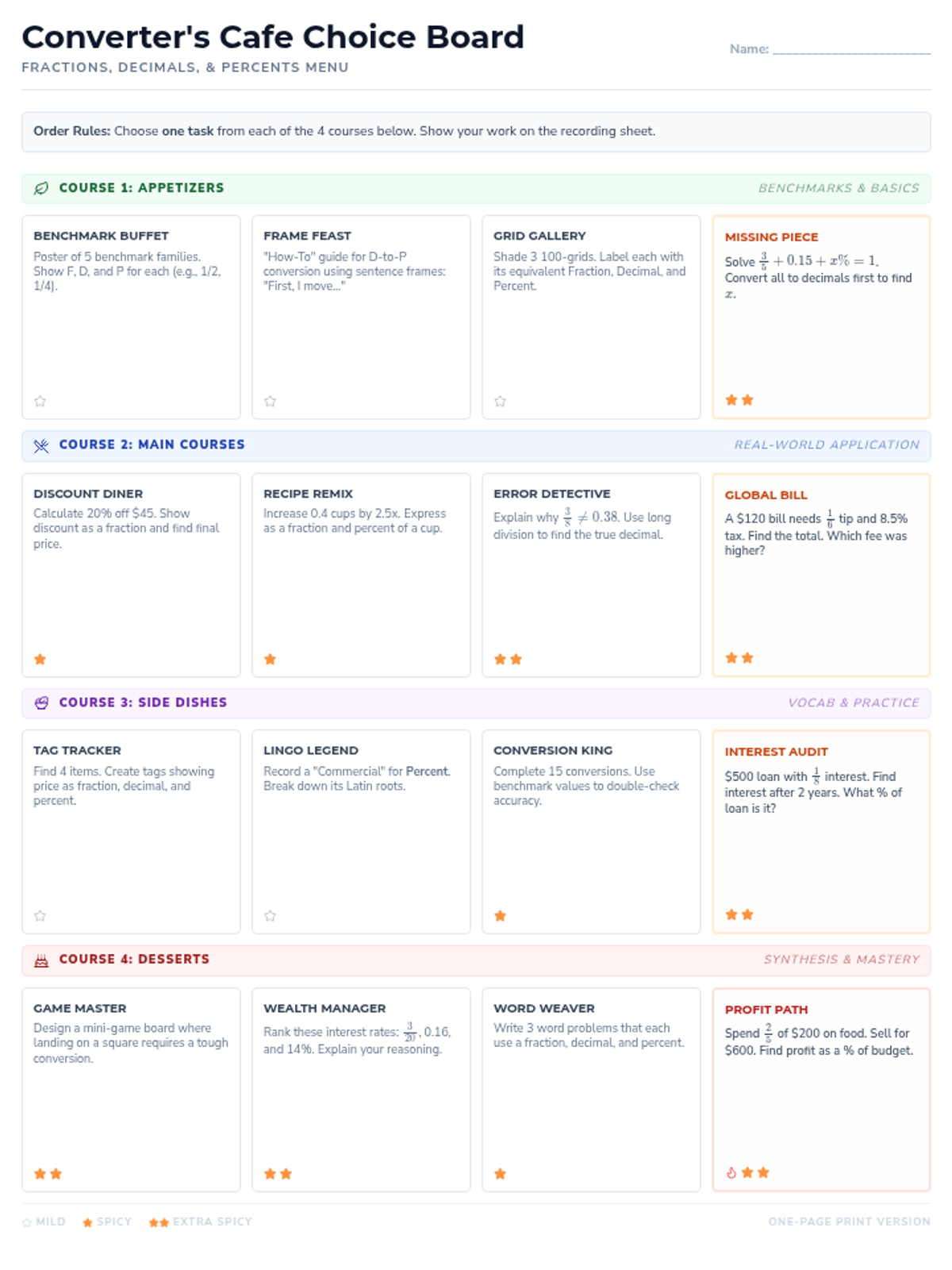
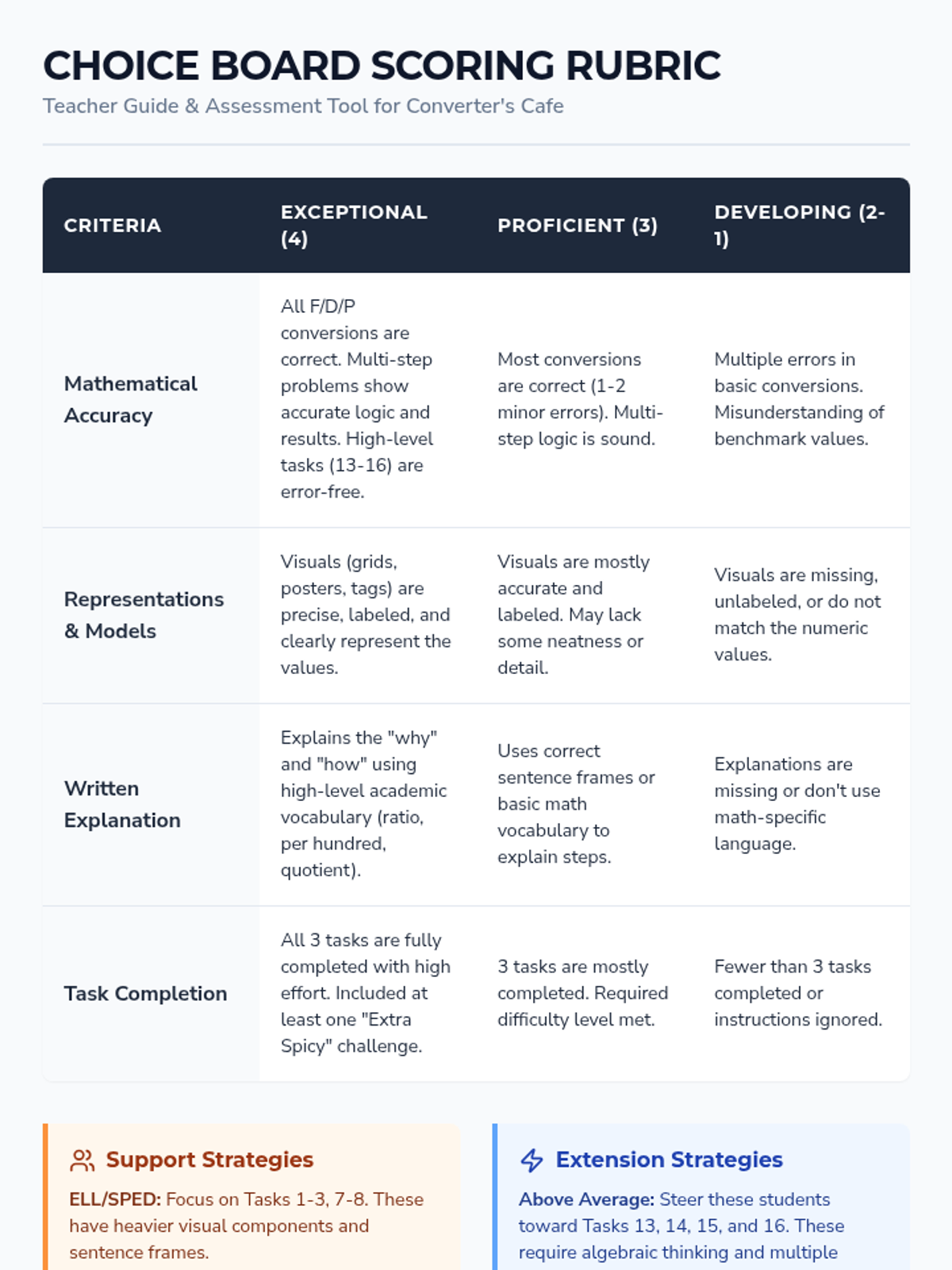
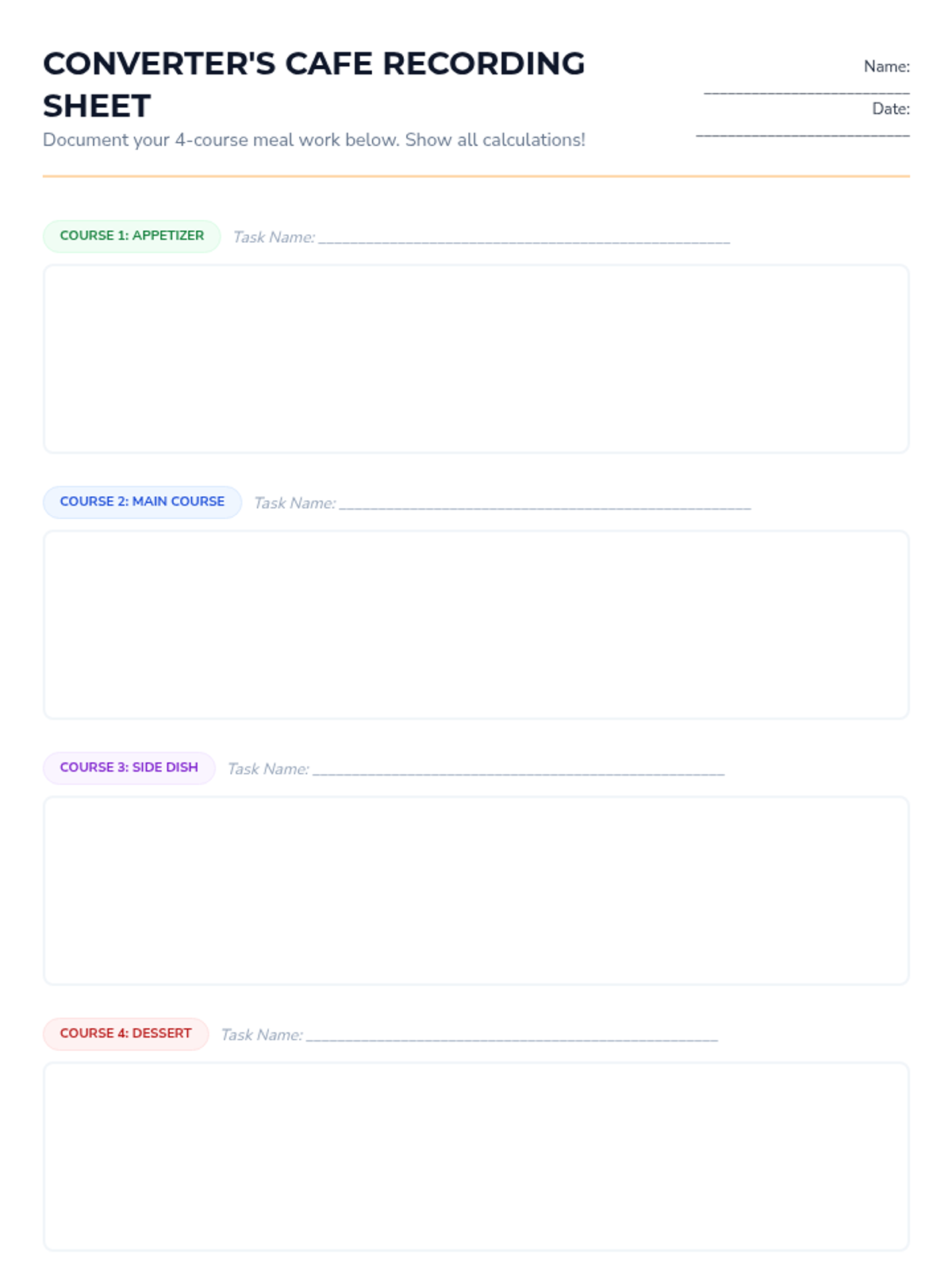
A comprehensive lesson on converting between fractions, decimals, and percents using a differentiated choice board. Students explore benchmark values and real-world applications through varied tasks tailored to different learning needs.
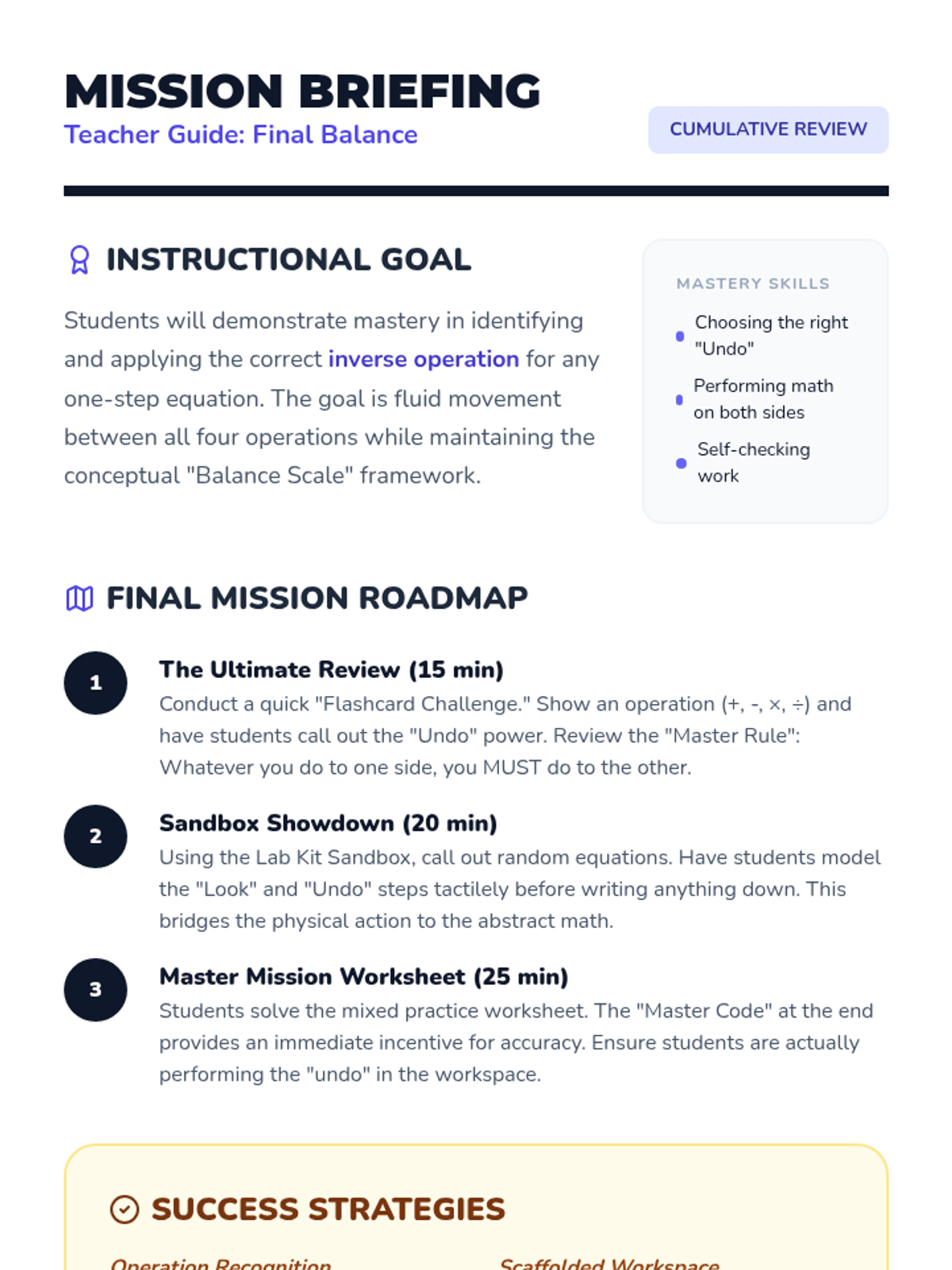
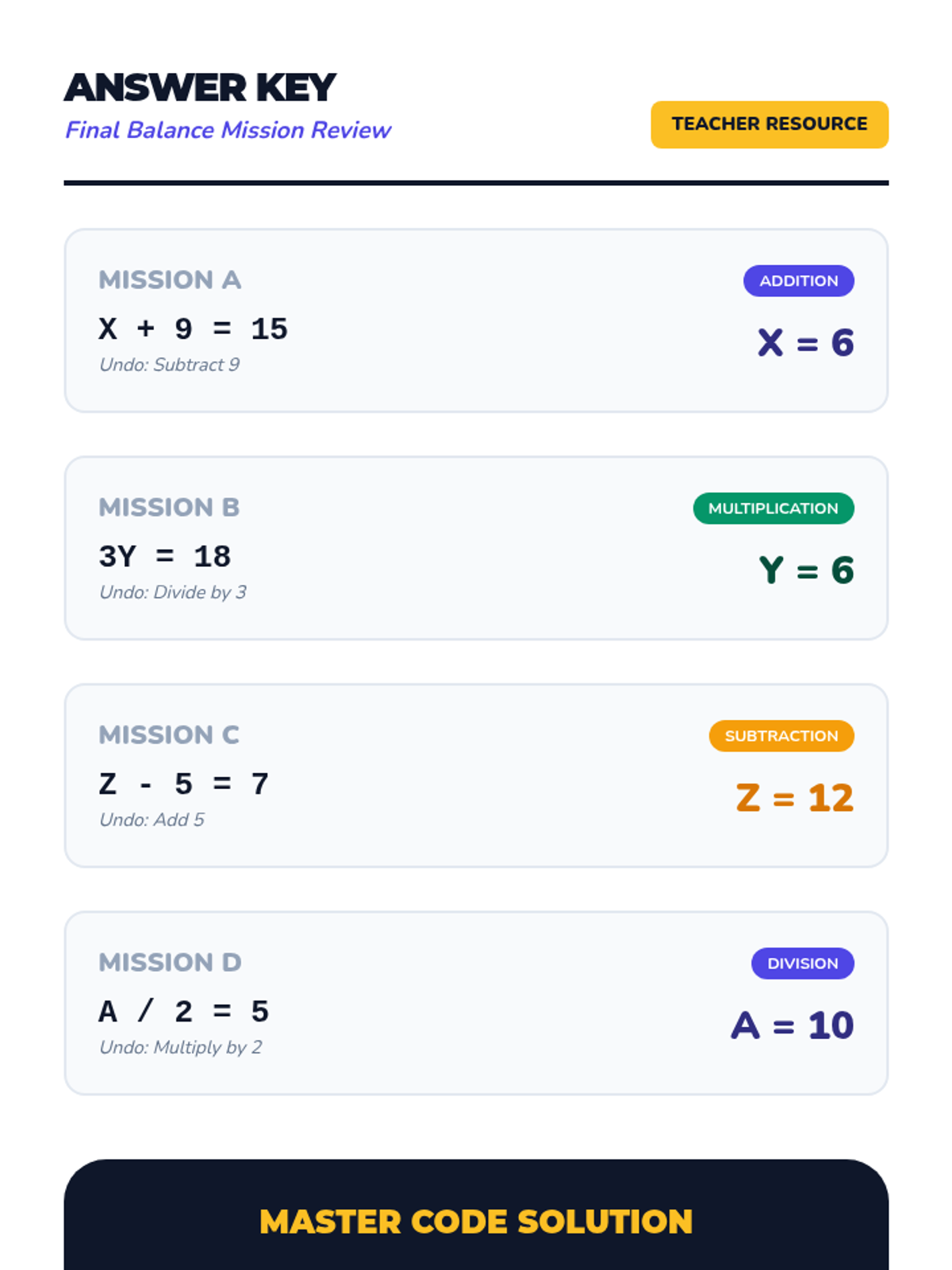
A cumulative review lesson where students apply their knowledge of inverse operations to solve mixed one-step equations involving addition, subtraction, multiplication, and division.
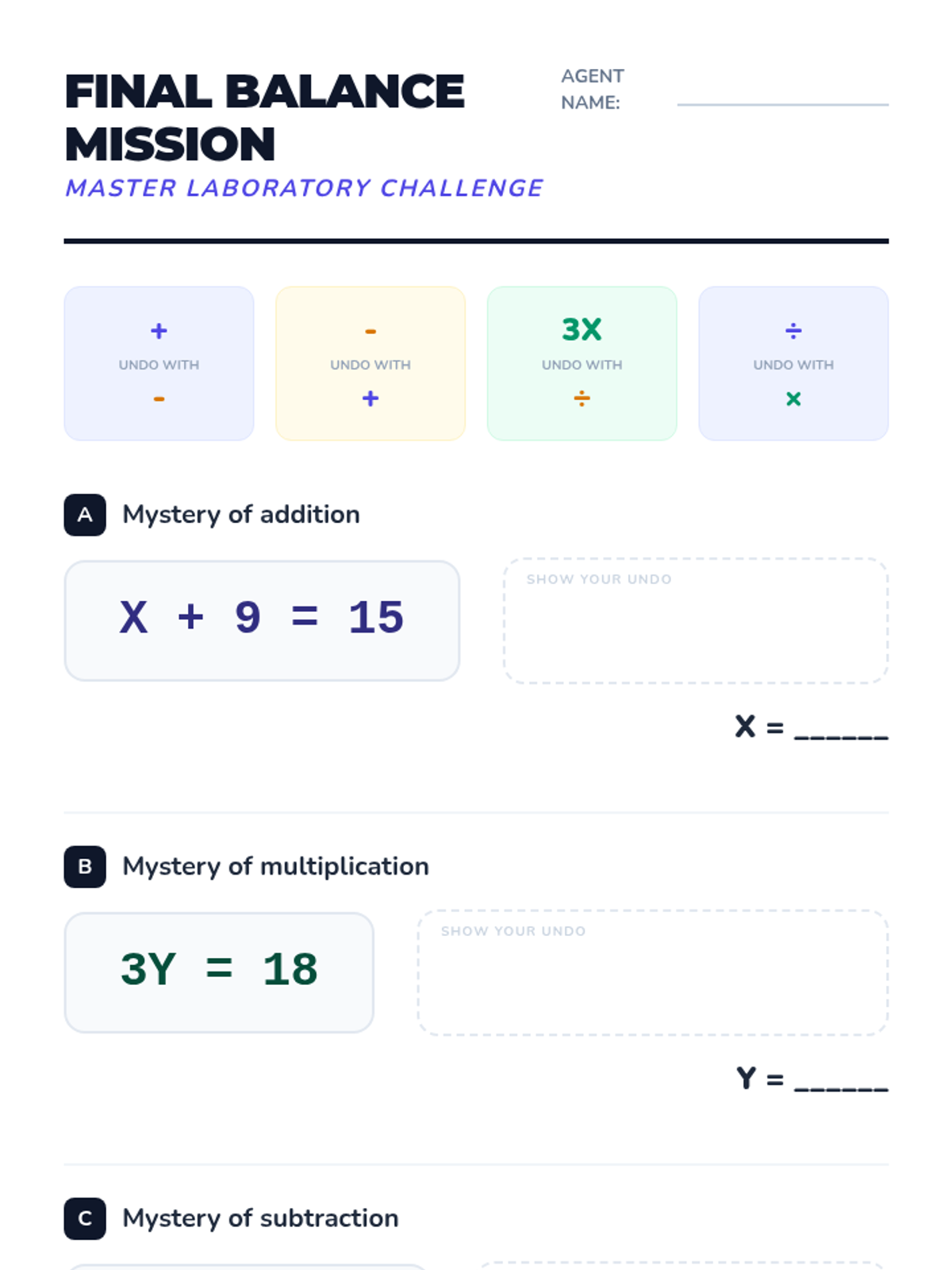
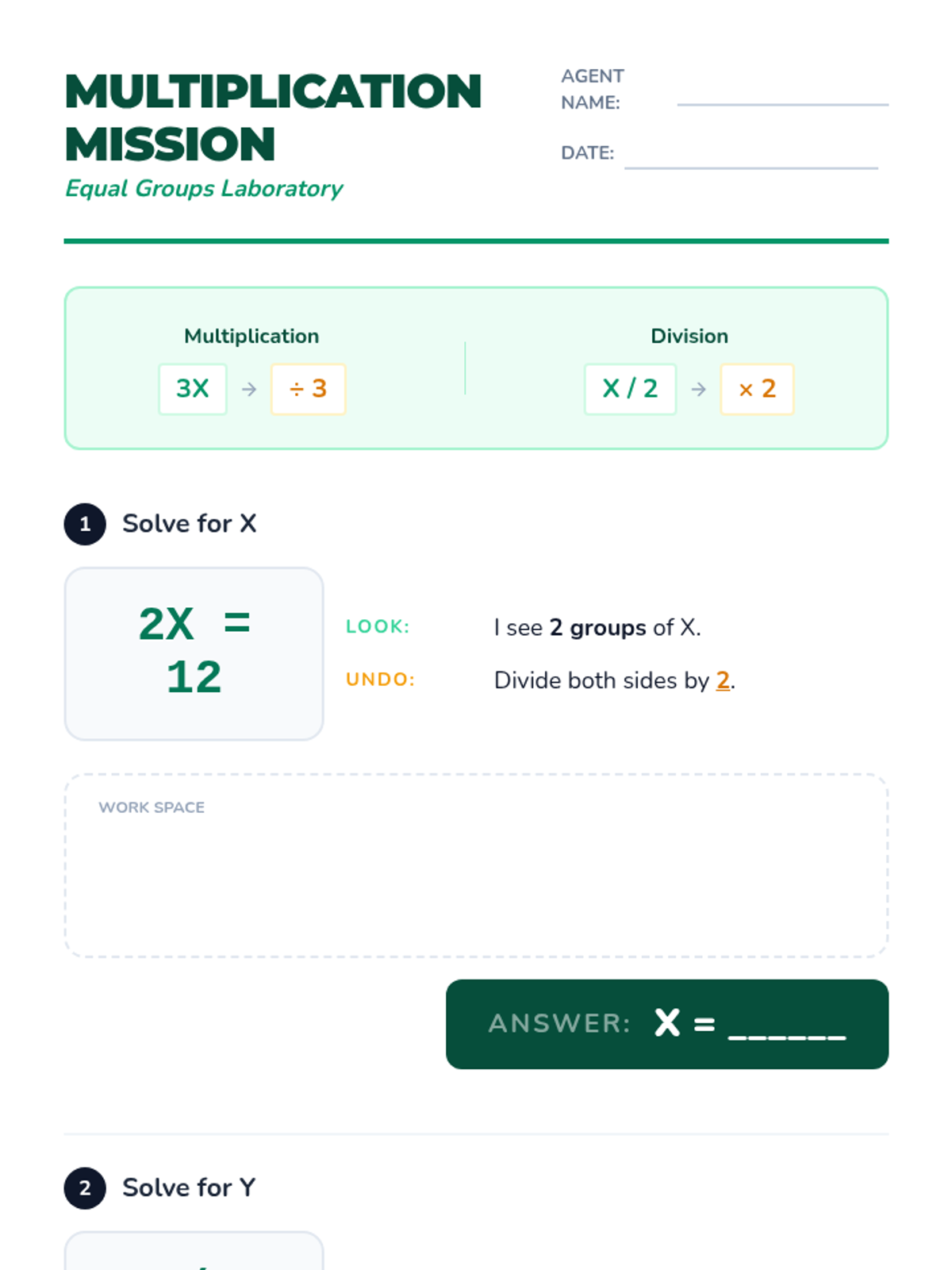
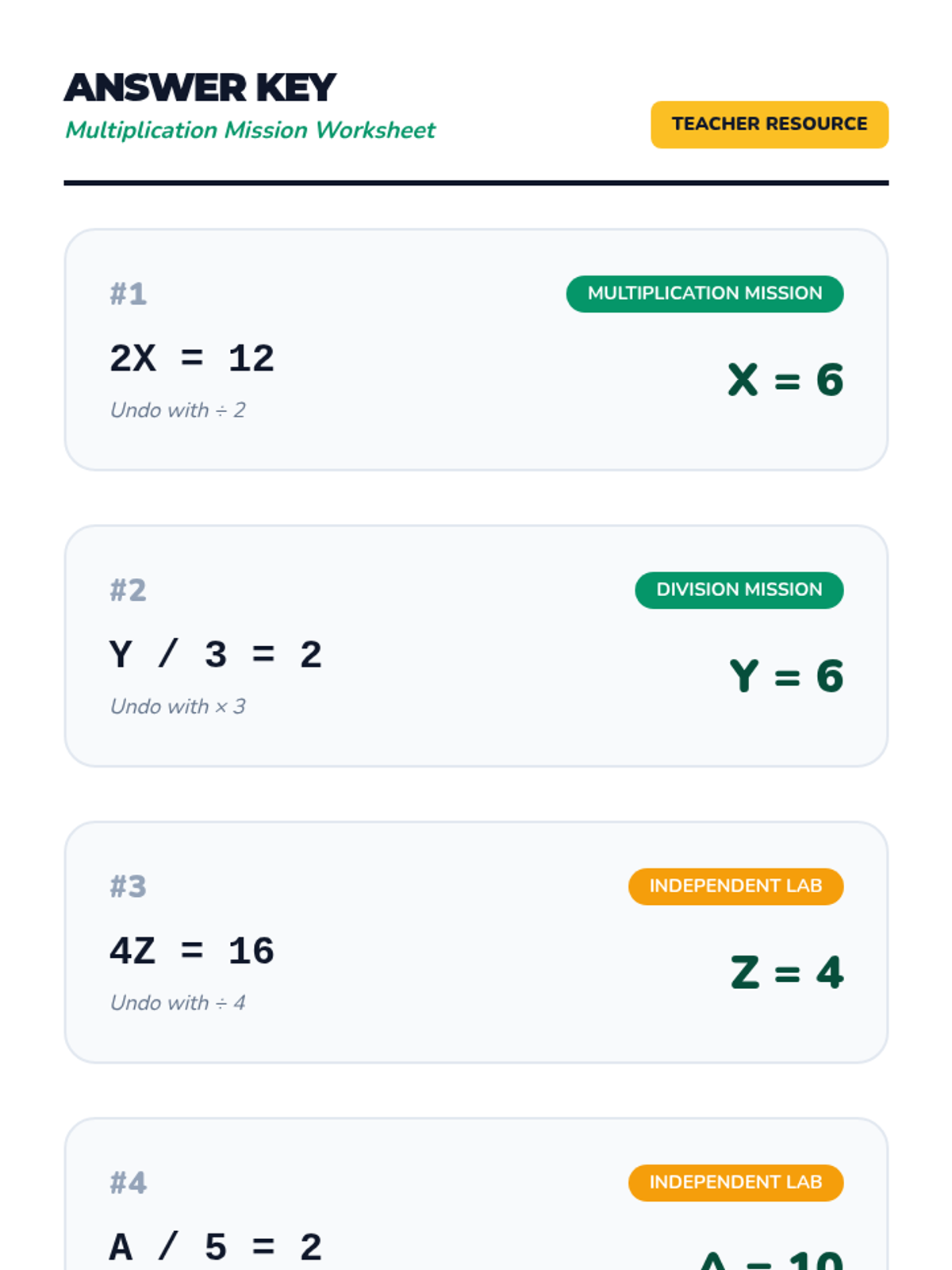
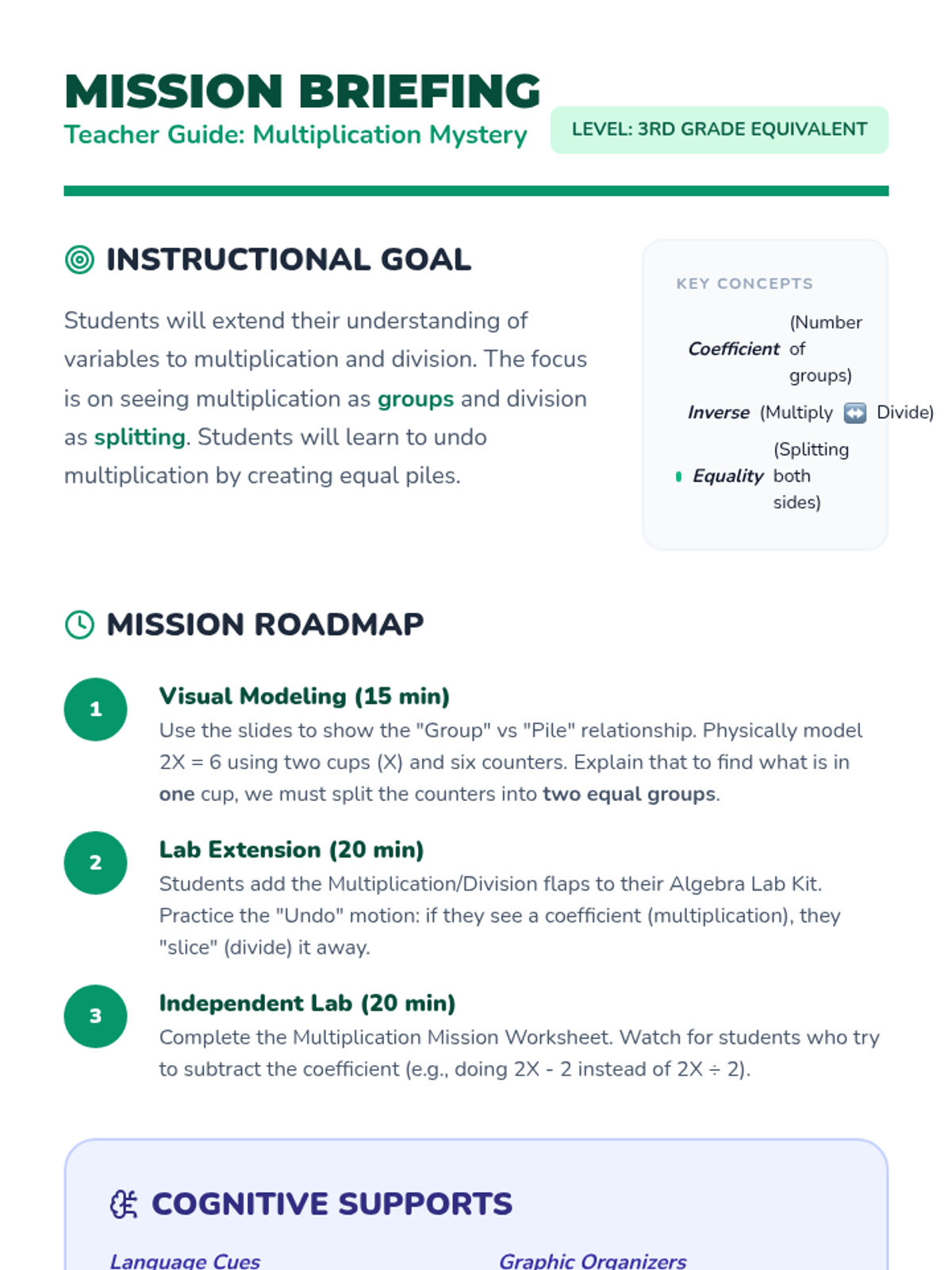
Expanding algebraic thinking to multiplication and division. Students will learn how to 'undo' multiplication by splitting into equal groups (division) and 'undo' division through multiplication, maintaining the balance of the scale.
A review and application of both strategies through a competitive classroom game.
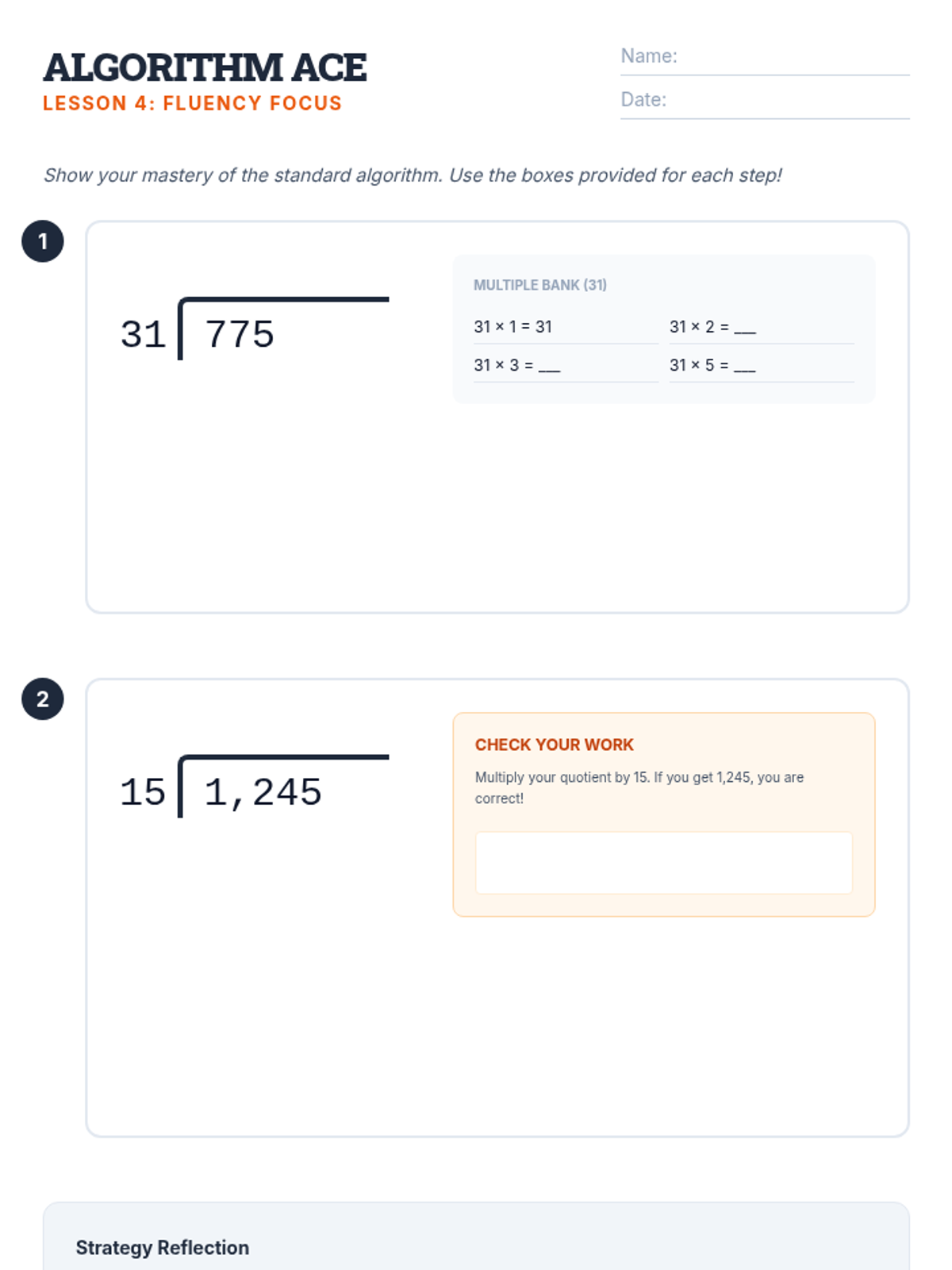
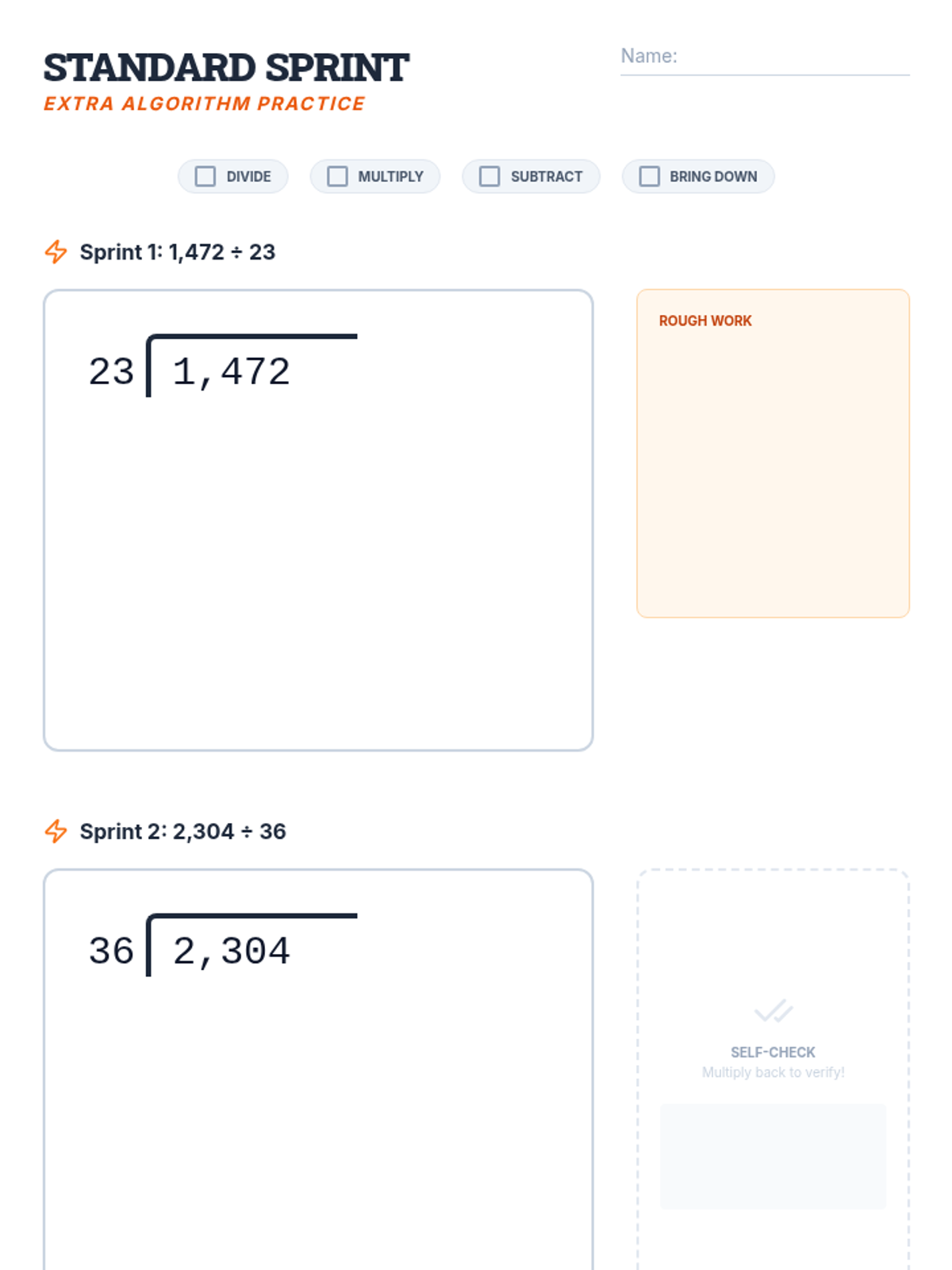
Focused practice on the standard long division algorithm to build fluency and accuracy with multi-digit divisors.
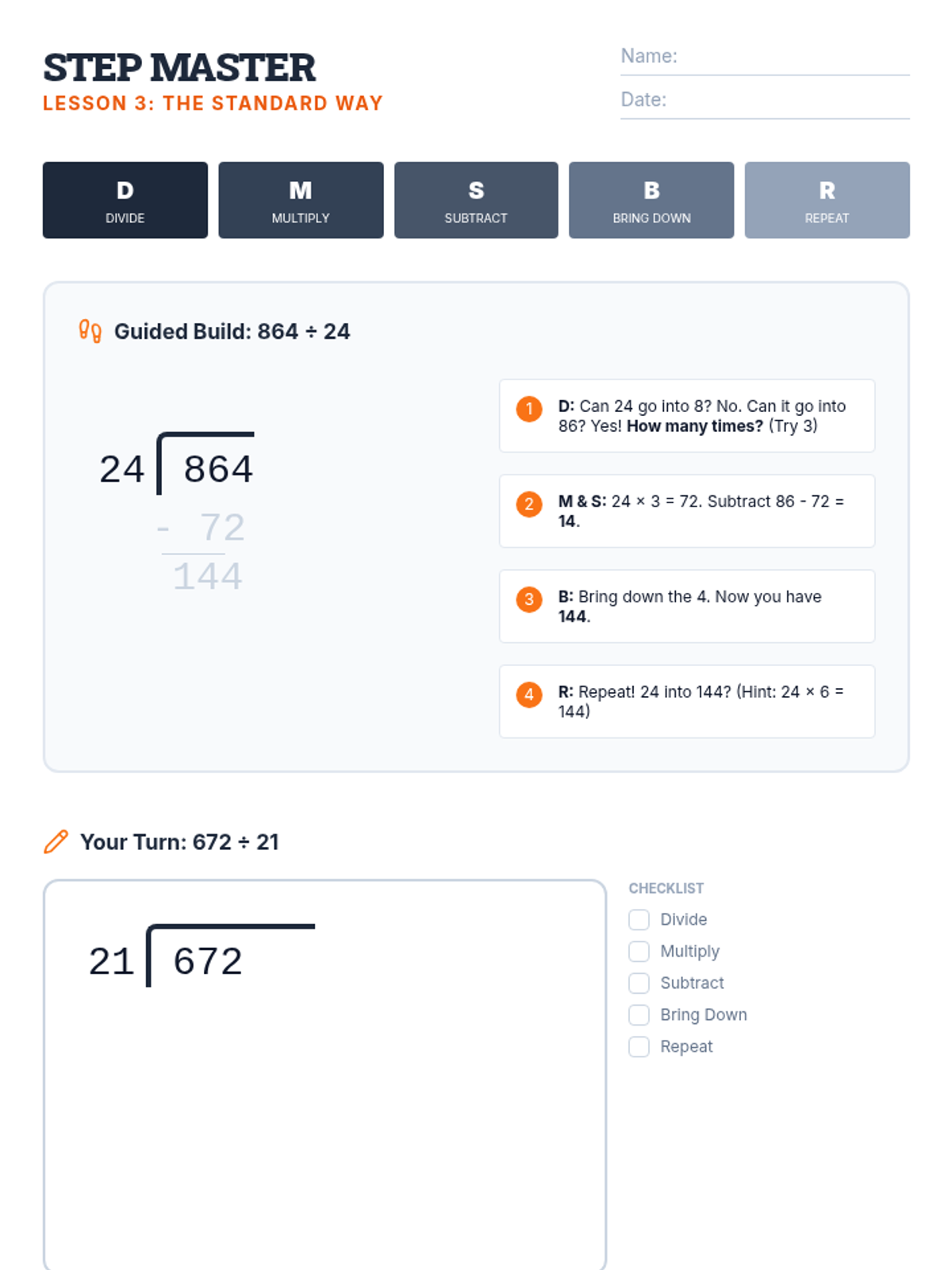
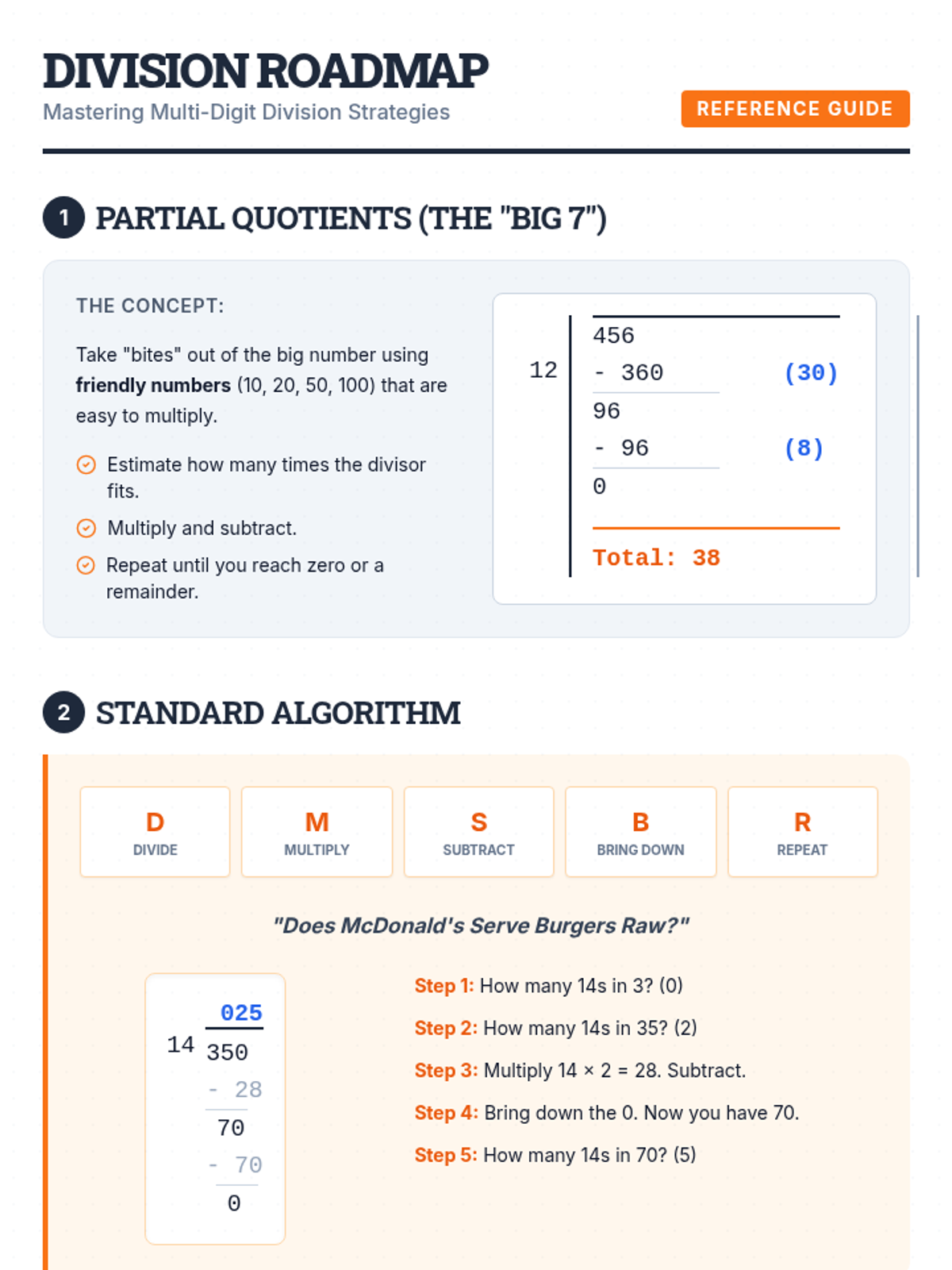
Step-by-step introduction to the standard algorithm for long division, connecting it to the partial quotients method.
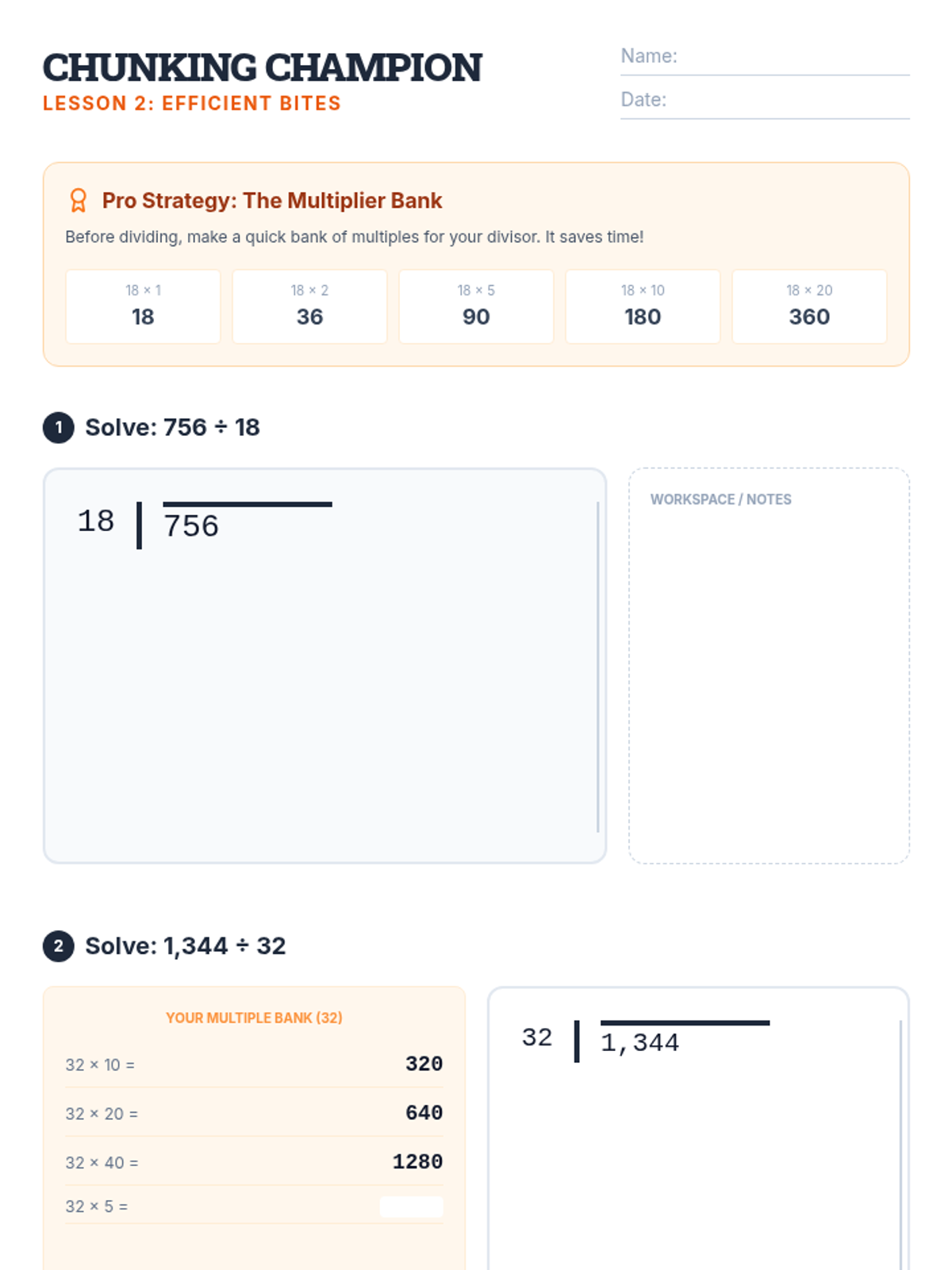
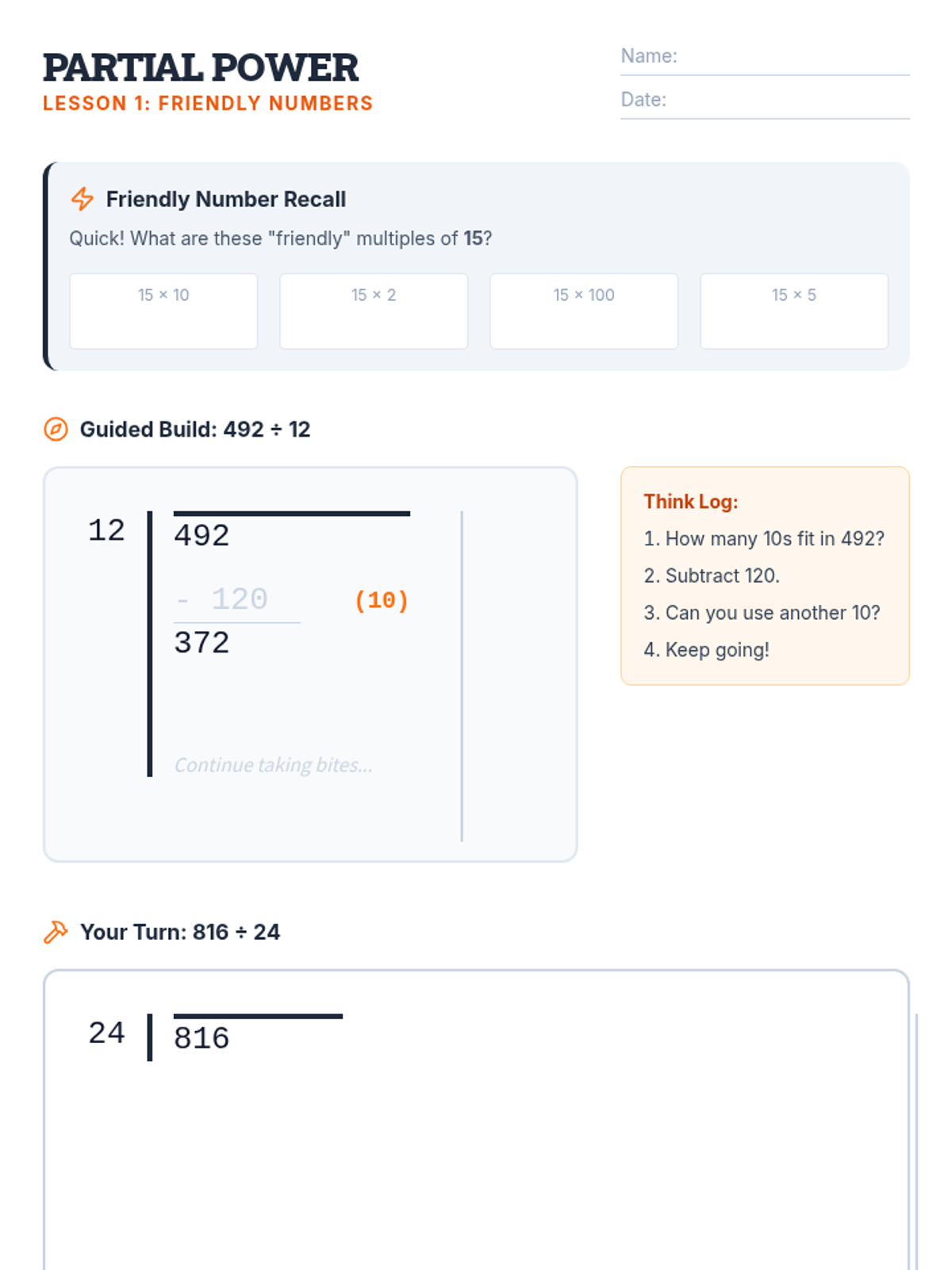
Practice with partial quotients to solve more complex multi-digit division problems, emphasizing estimation and subtraction accuracy.
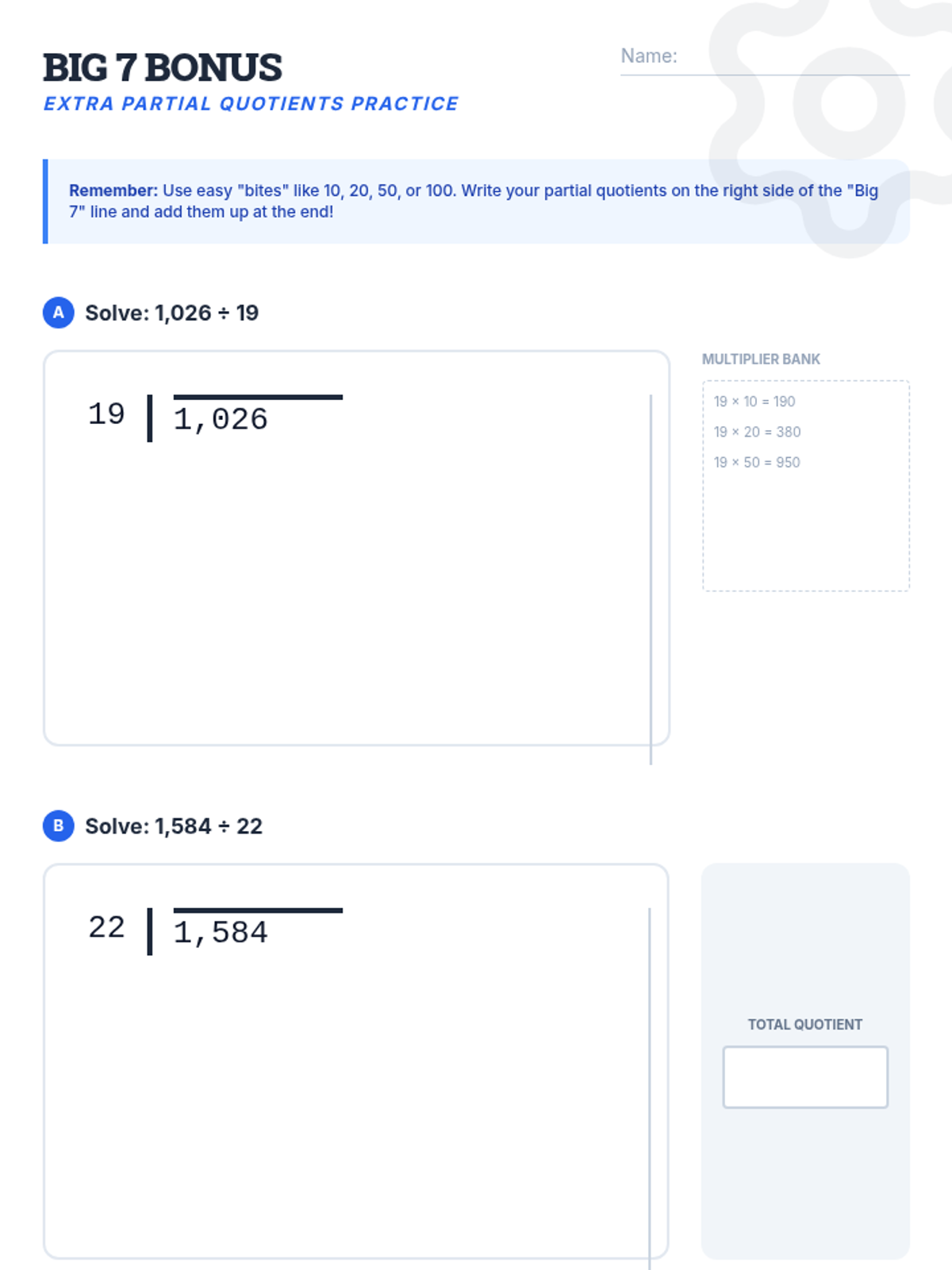
Introduction to division through partial quotients, focusing on using "friendly numbers" to build confidence with large numbers.
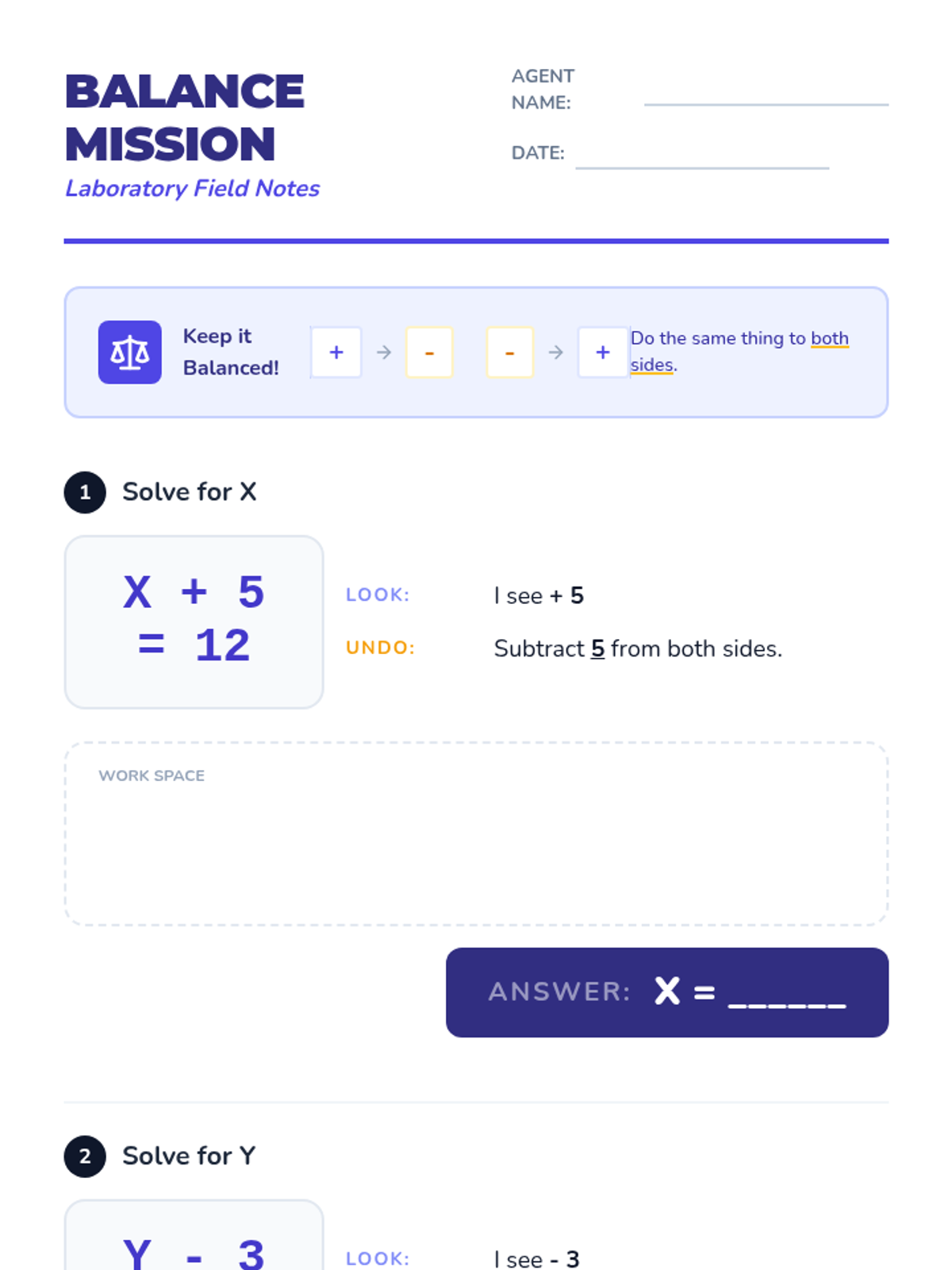
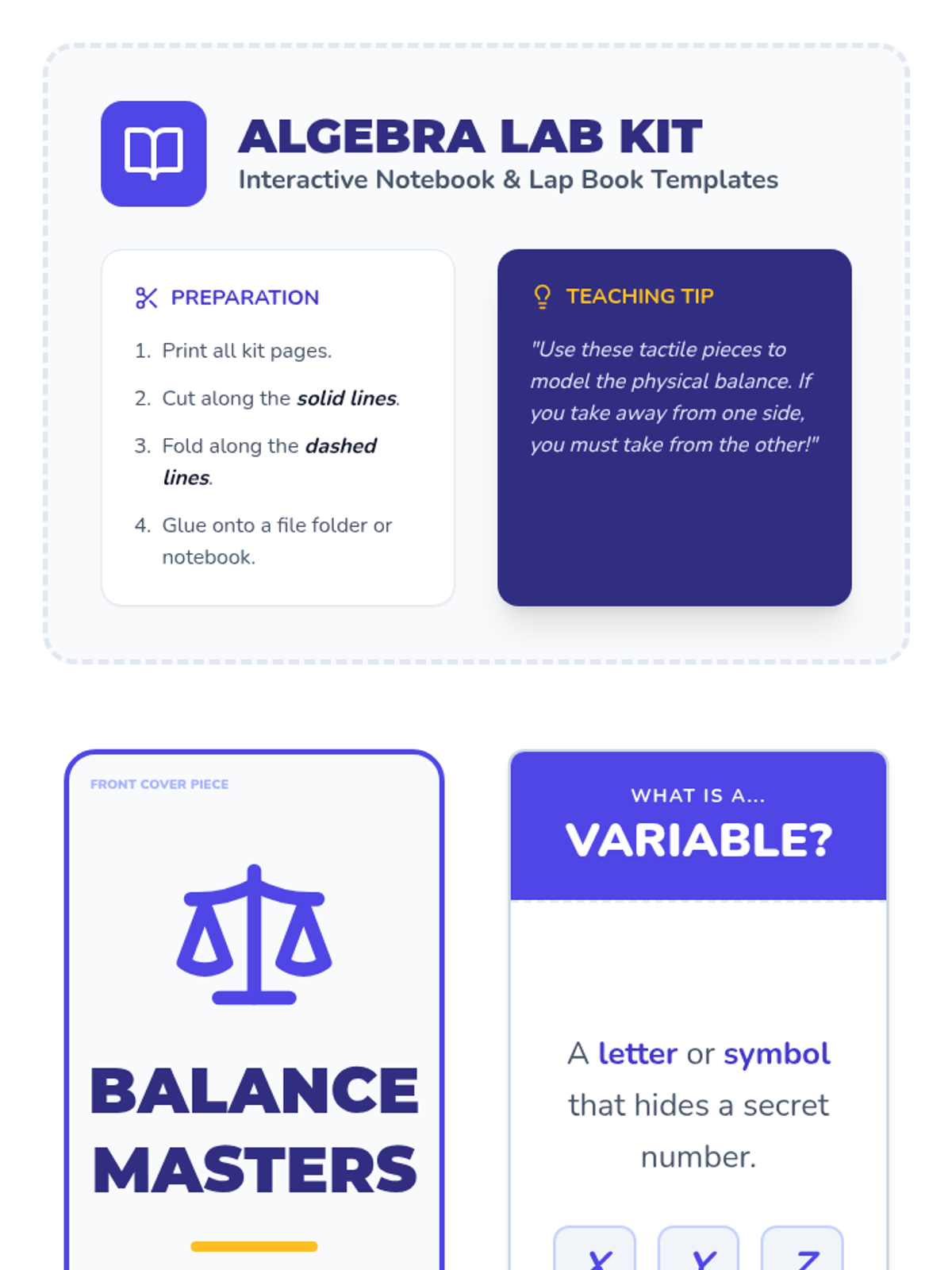
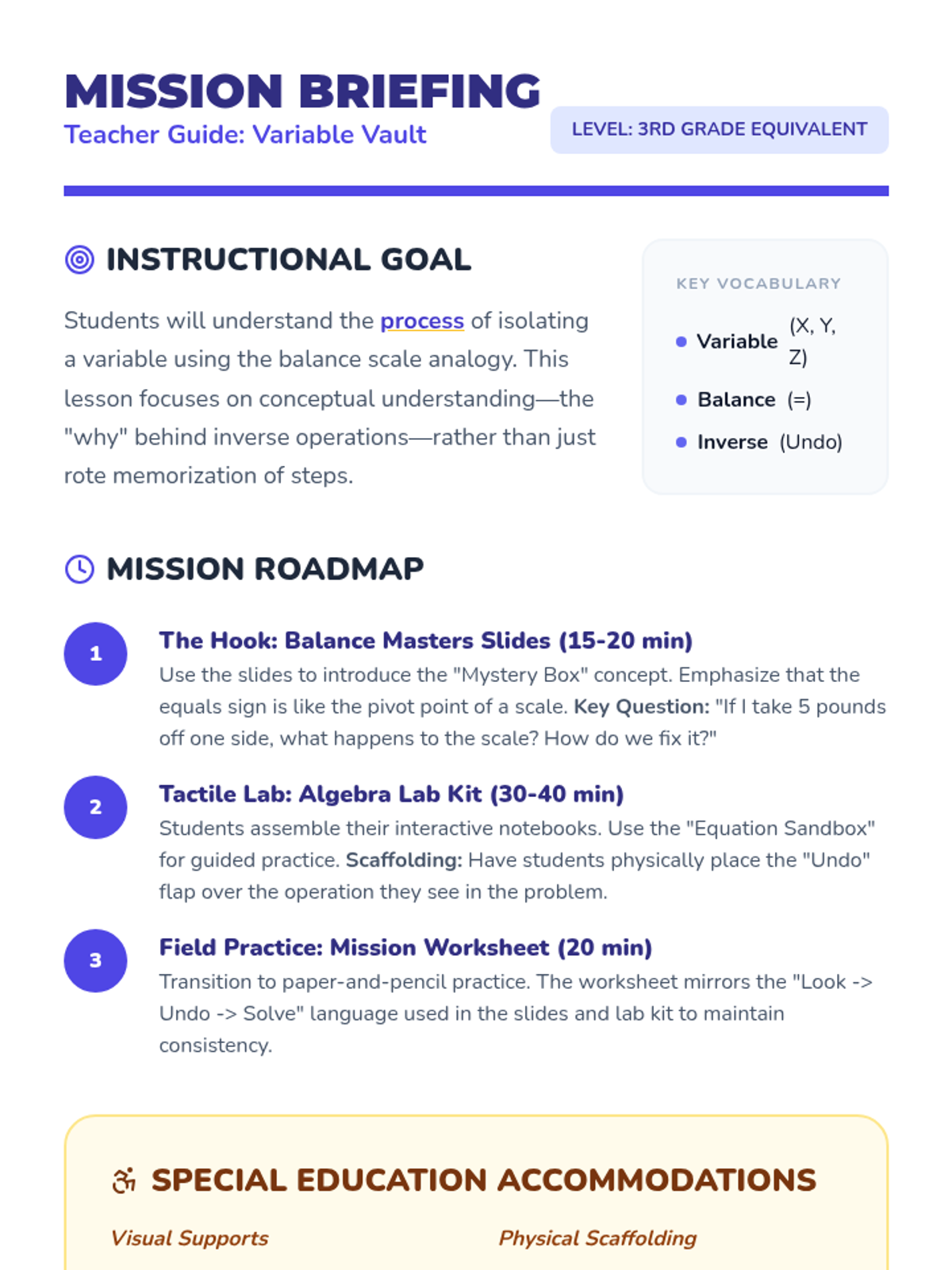
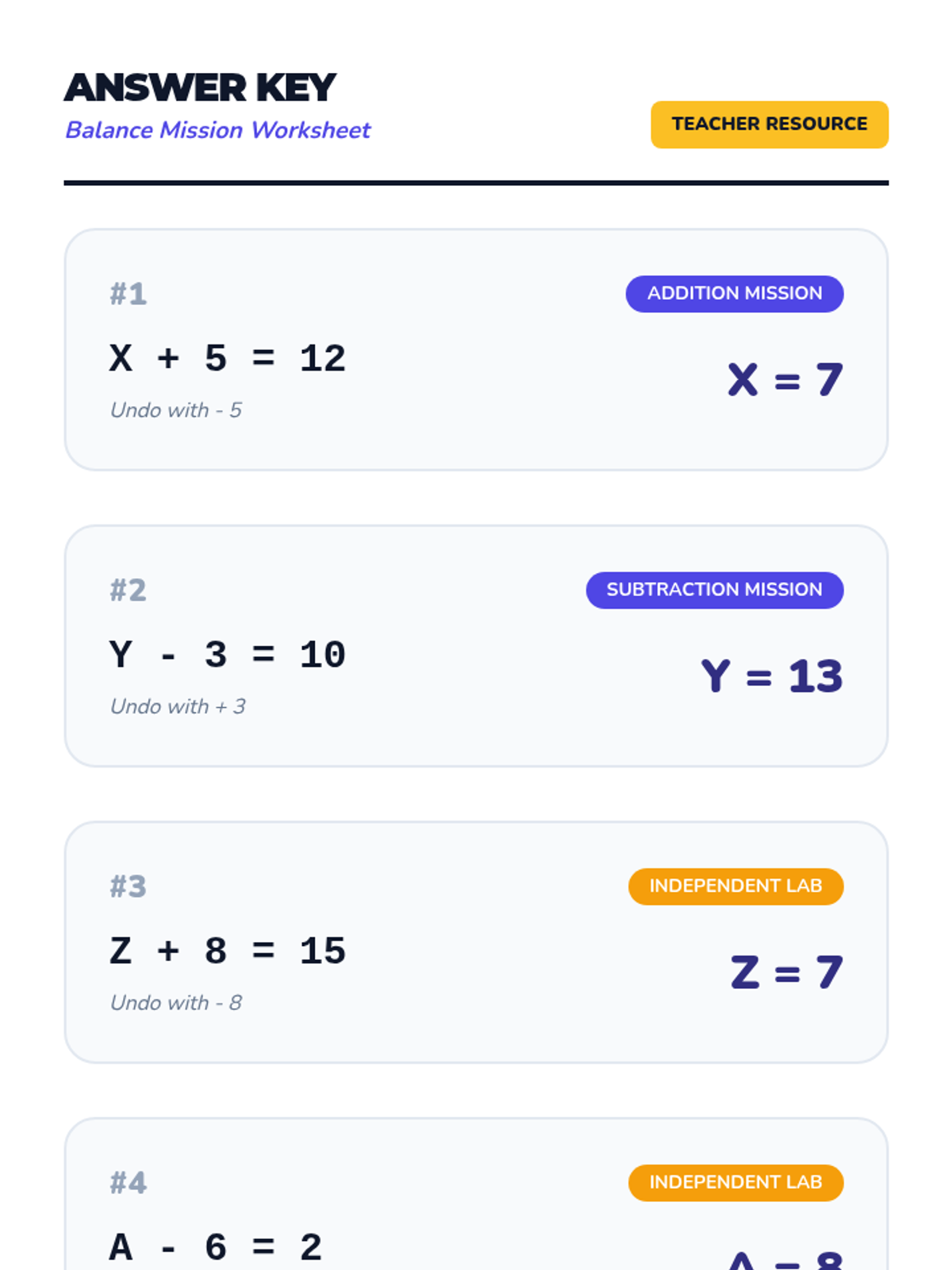
A foundational introduction to basic algebra using the balance scale analogy, specifically designed for students working at a 3rd-grade level. Students will learn about variables and the concept of inverse operations to 'undo' addition and subtraction.
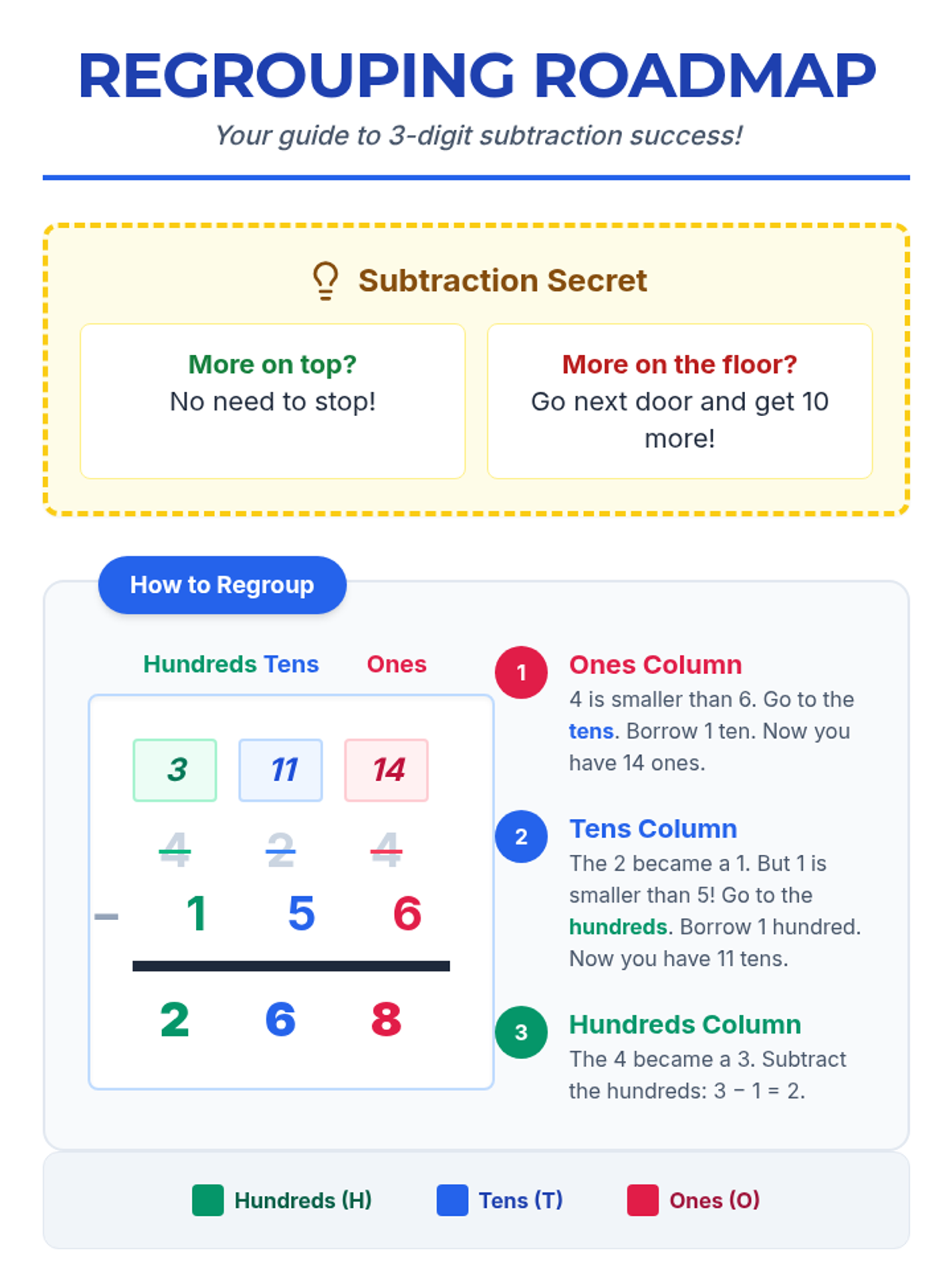
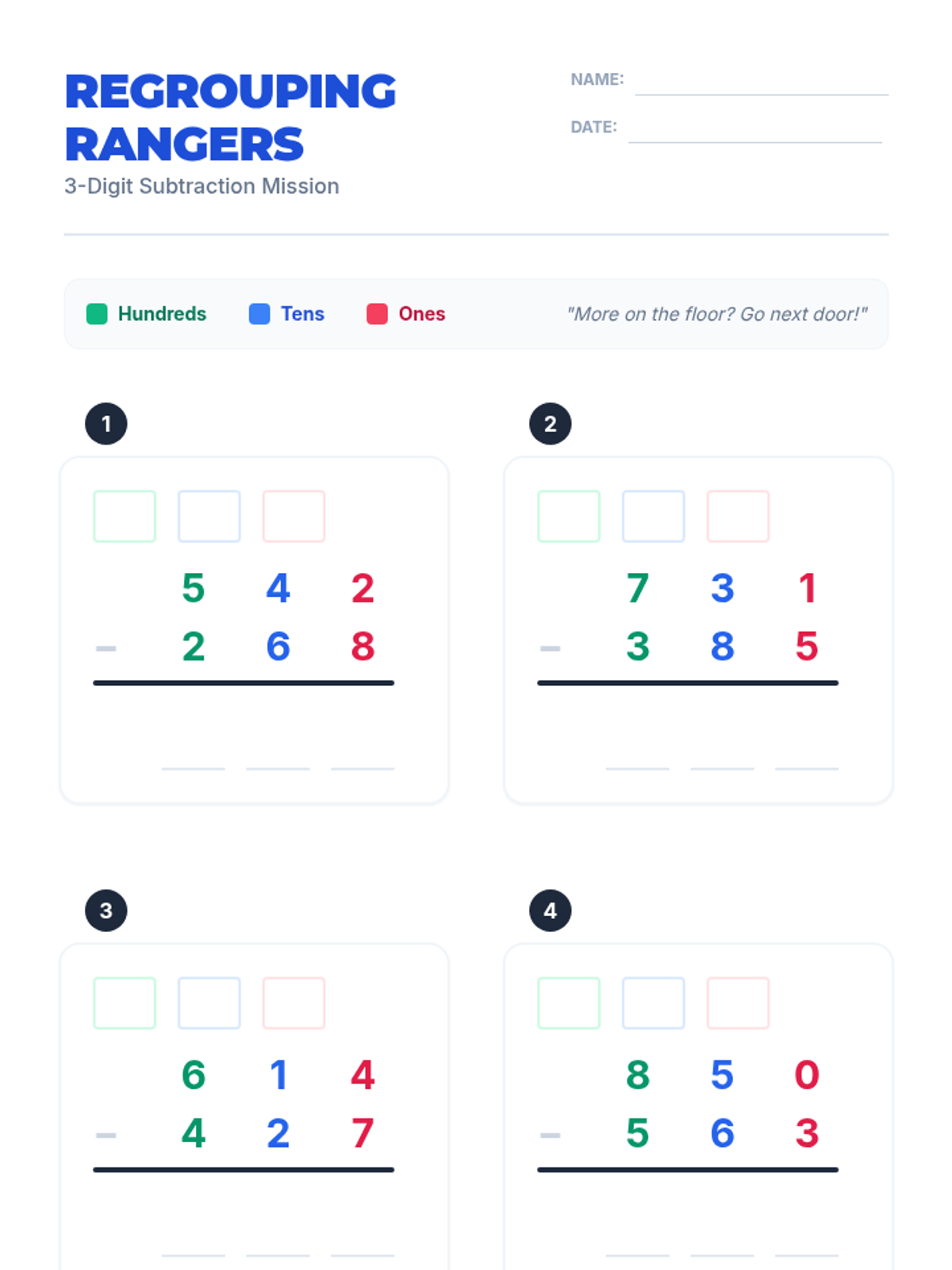
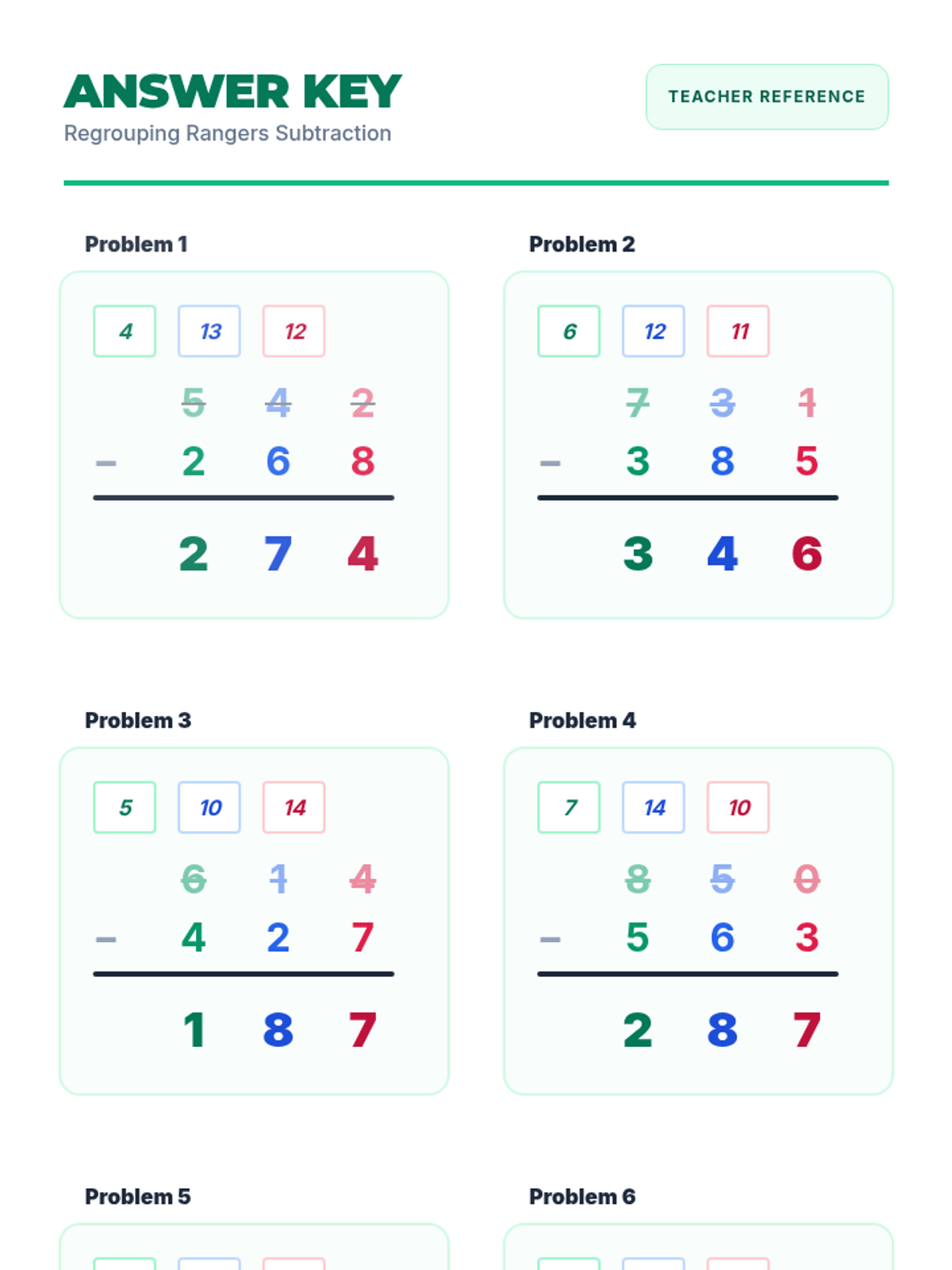
This lesson focuses on mastering three-digit subtraction with regrouping using color-coded visual supports and step-by-step procedural breakdowns. Designed with Special Education accommodations in mind, students will learn to navigate place value shifts from ones to tens and tens to hundreds.
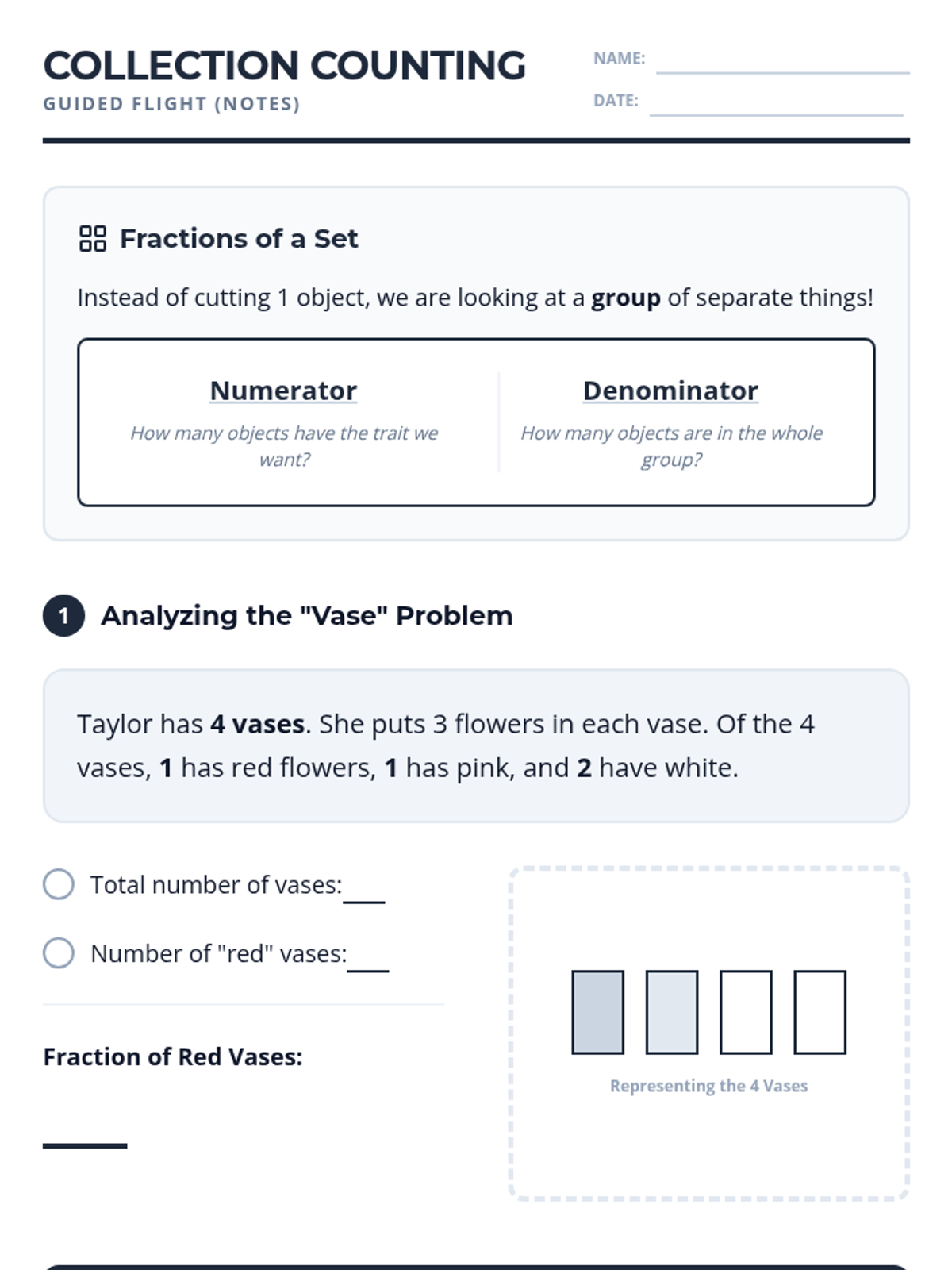
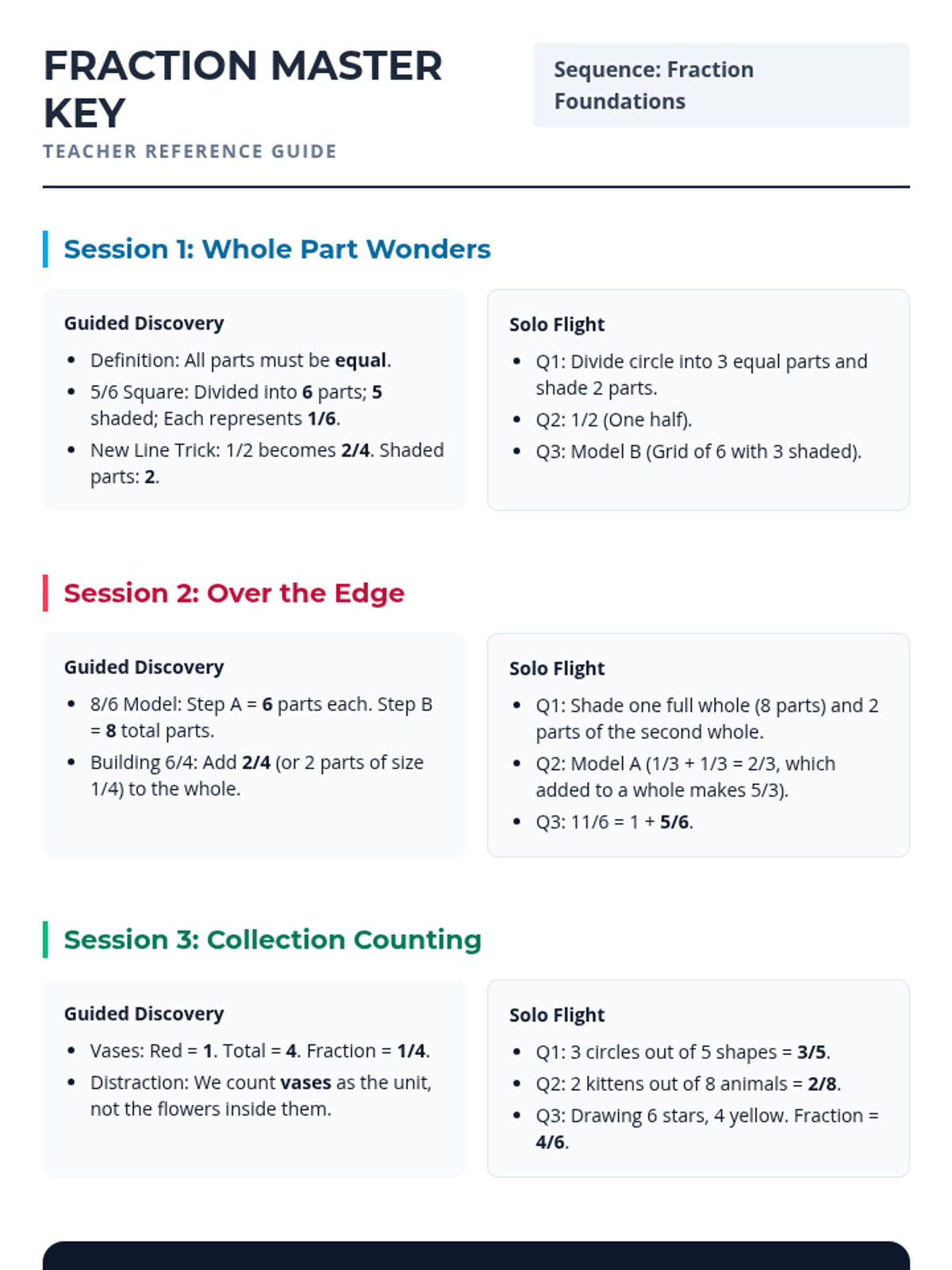
Teaches students to identify fractions within a group of discrete objects (sets), rather than a single continuous whole.
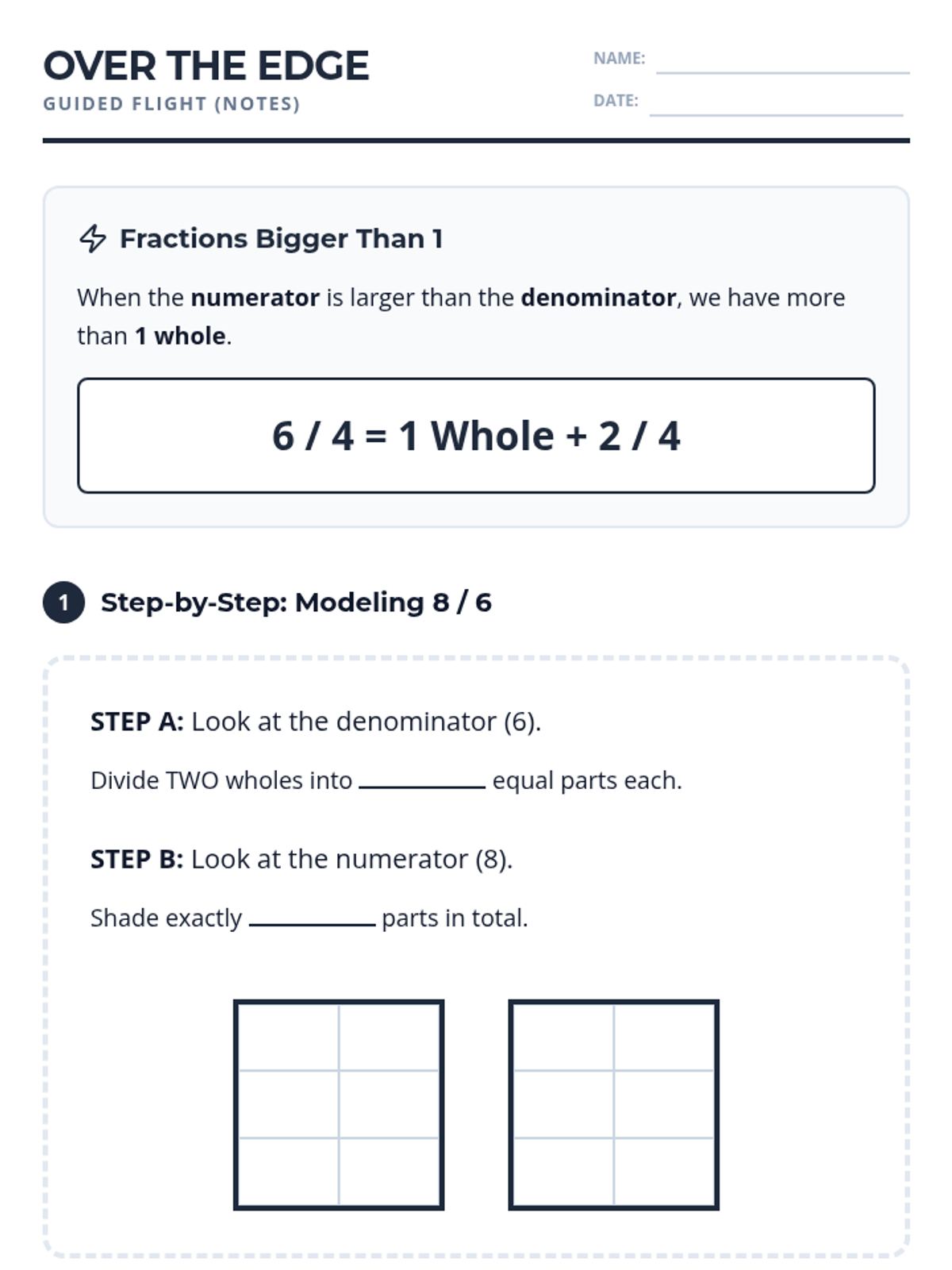
Explores fractions that represent more than one whole, using visual models and decomposition to understand values like 6/4 and 8/6.
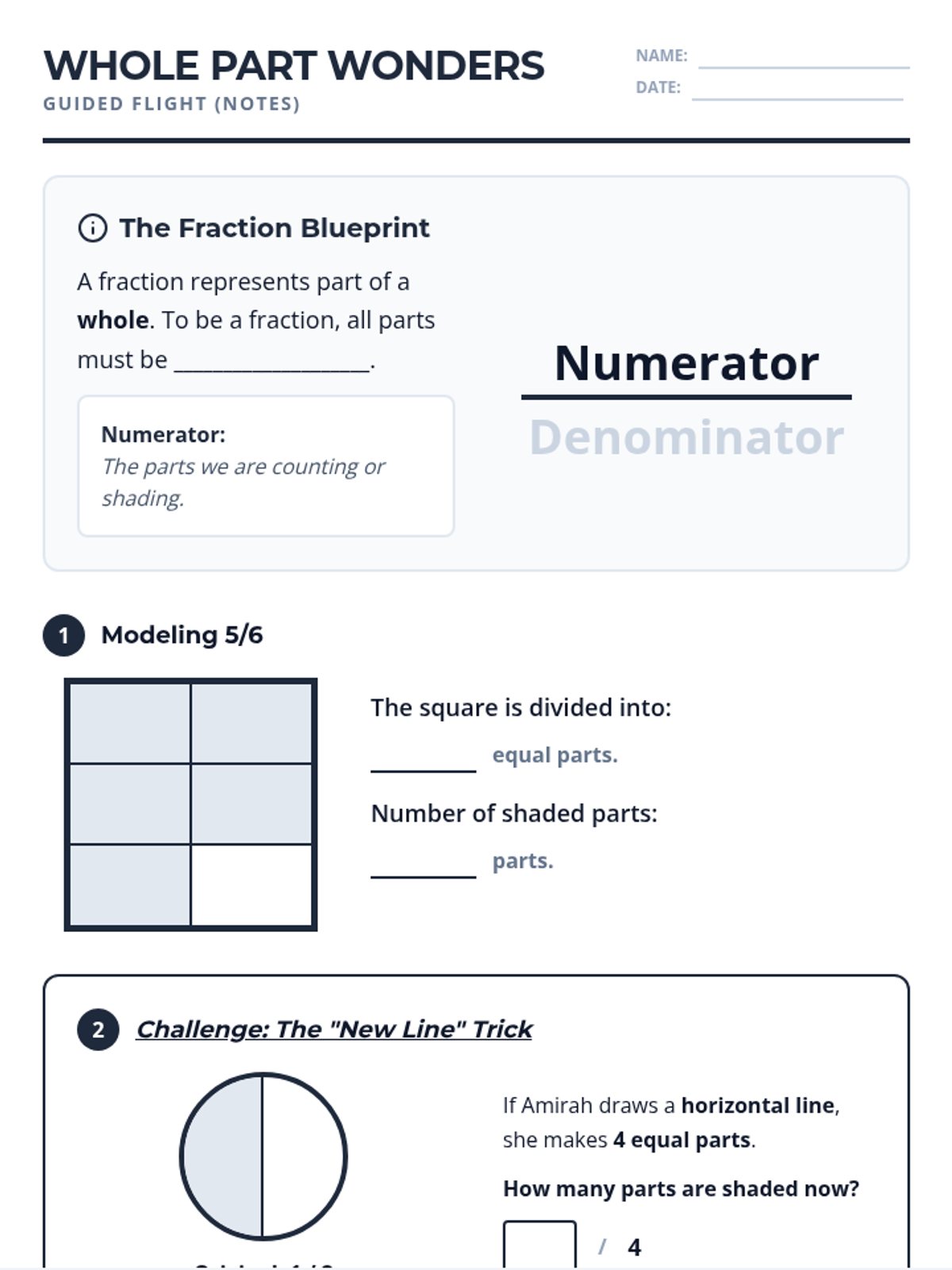
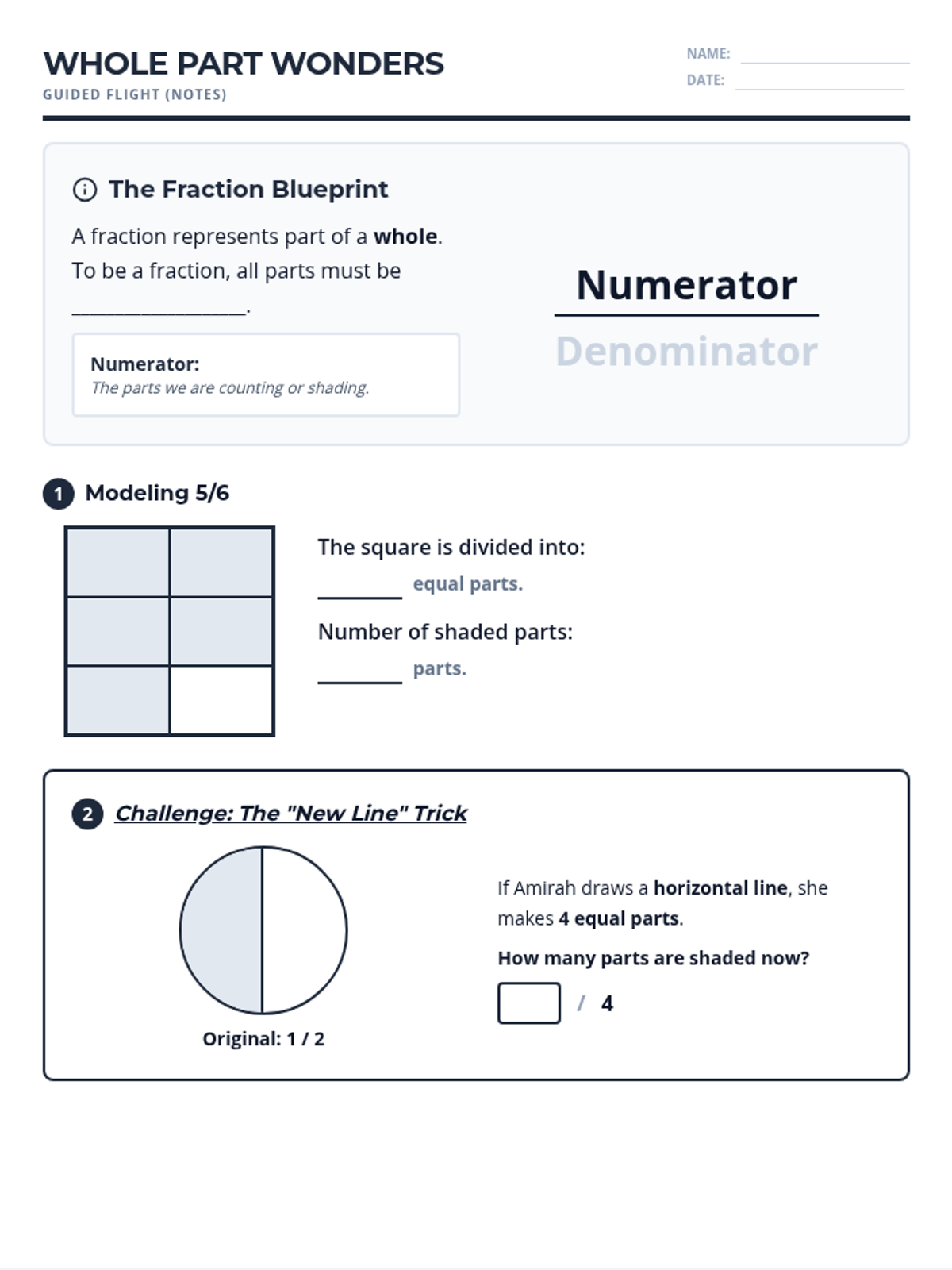
Focuses on identifying parts of a whole, understanding numerators and denominators, and modeling fractions by dividing shapes into equal parts.
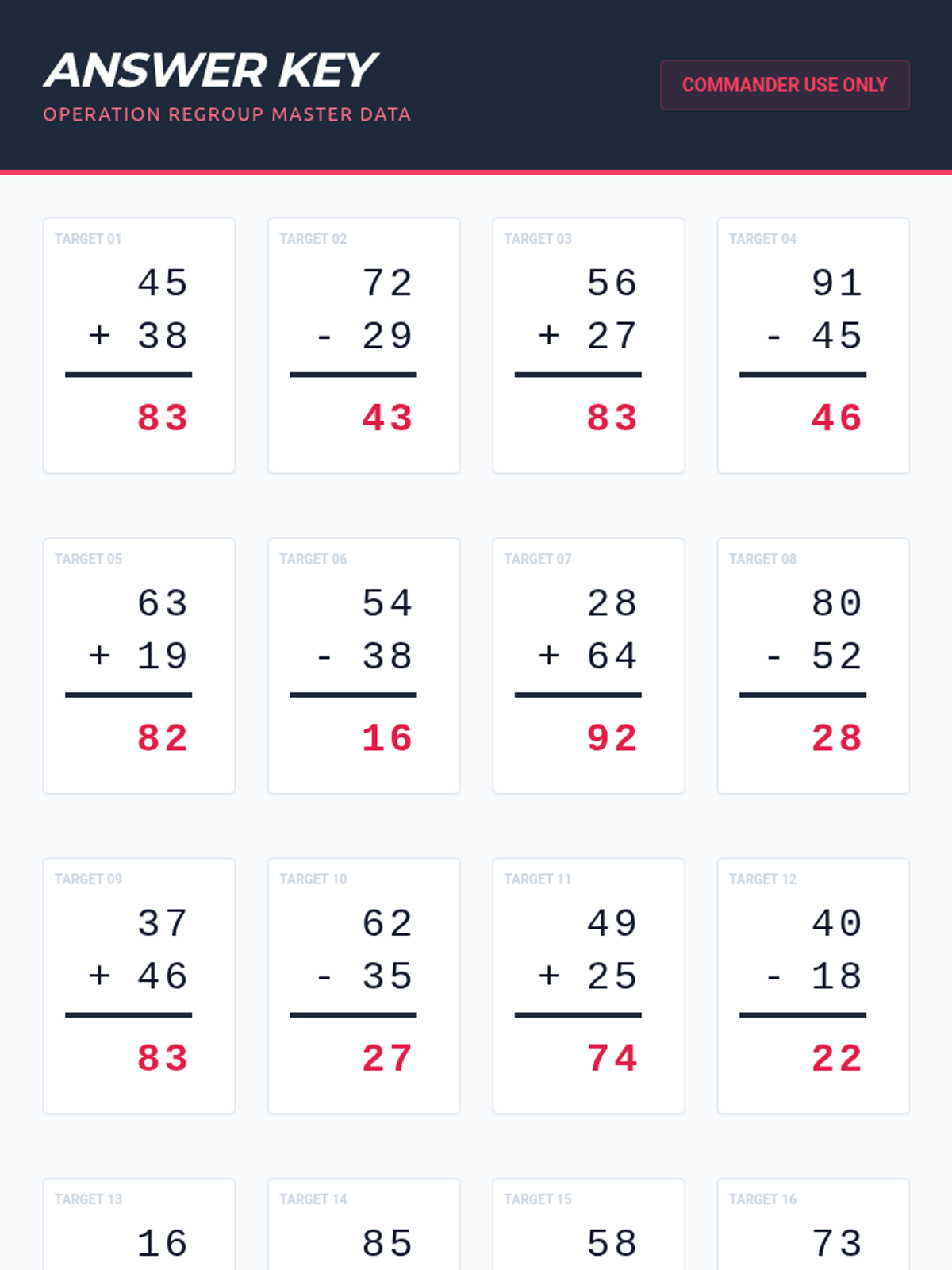
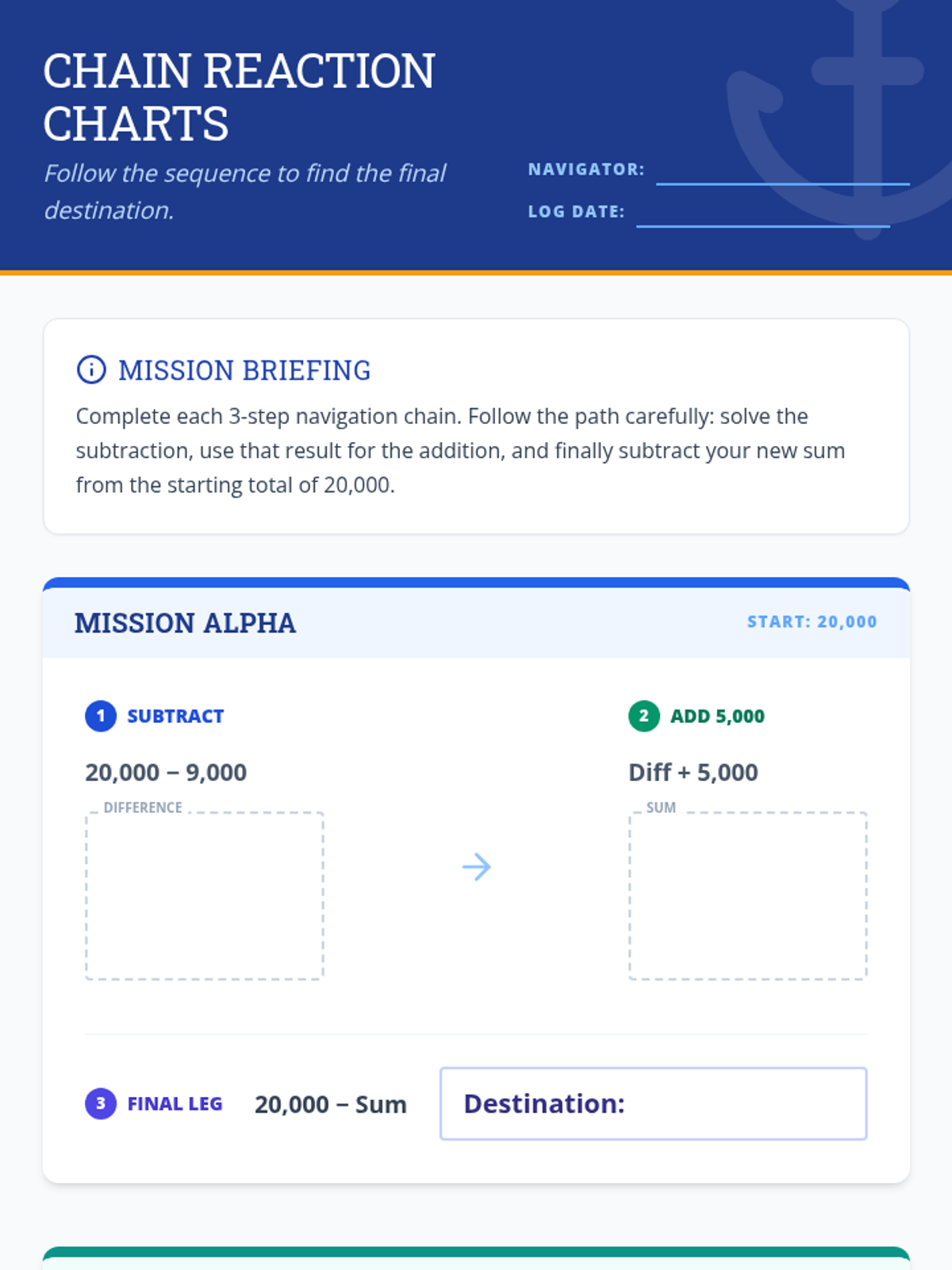
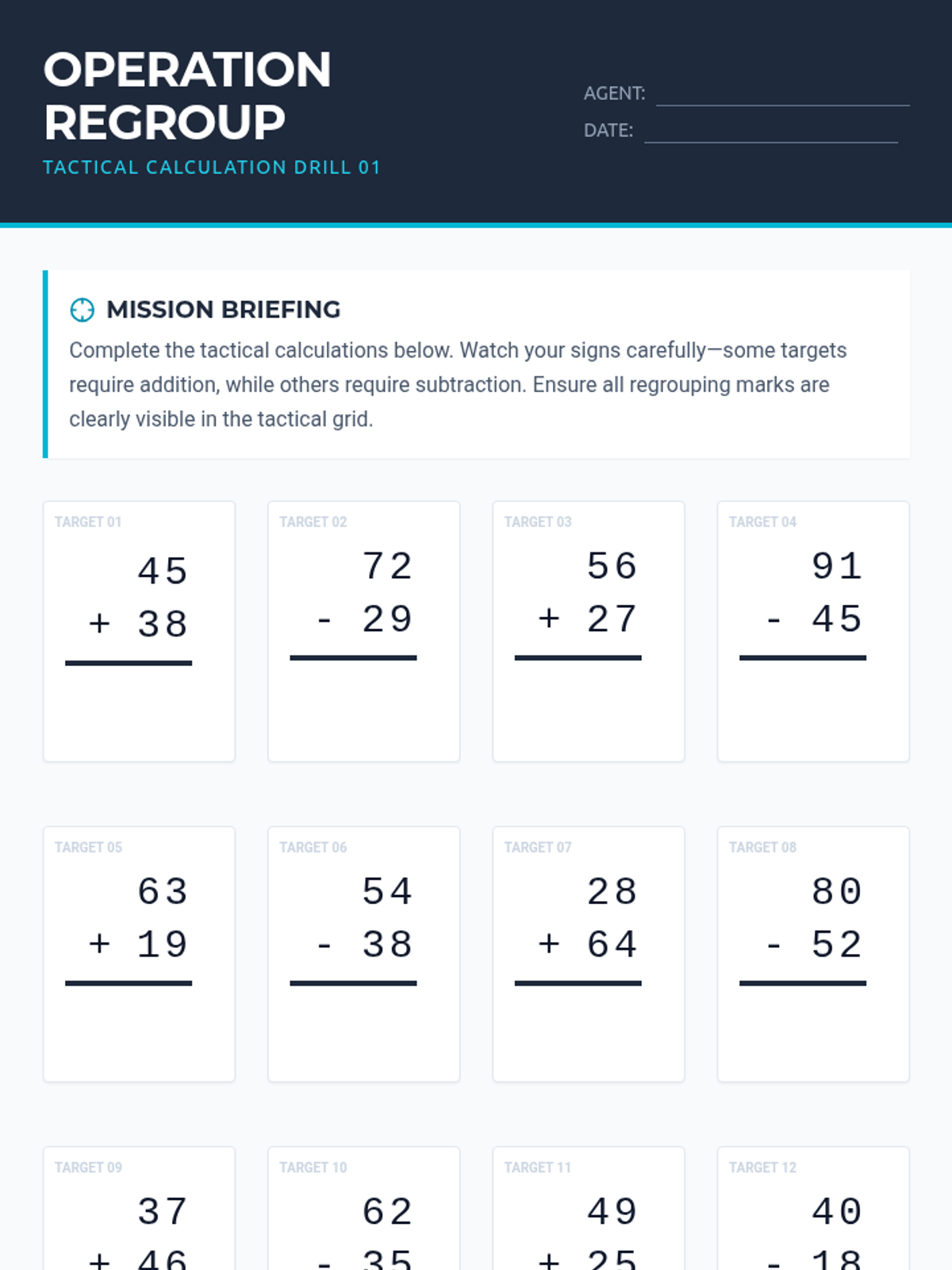
A high-energy lesson focused on mastering double-digit addition and subtraction with regrouping through a 'Tactical Mission' theme. Students practice vertical alignment and precision in their calculations.
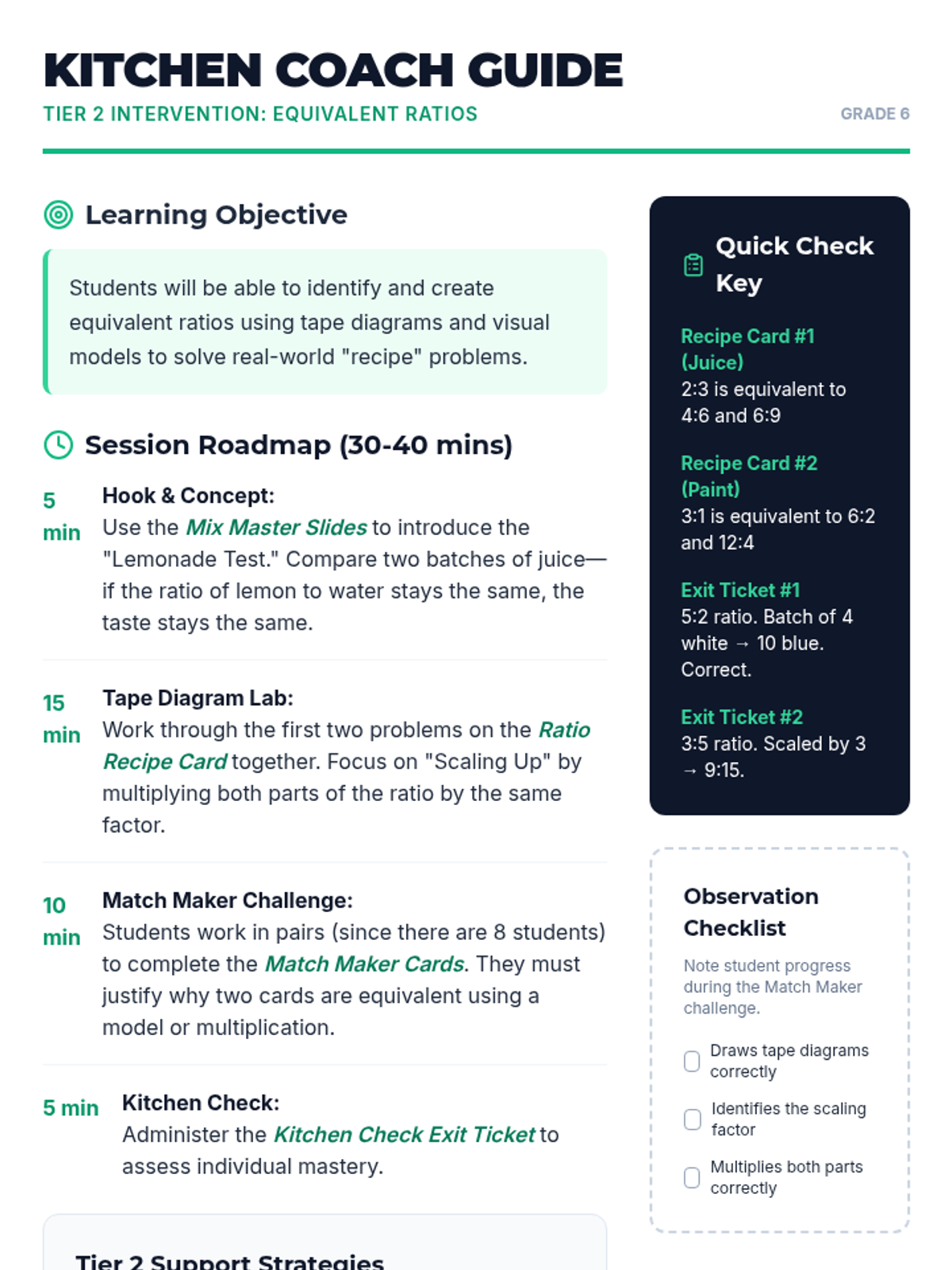
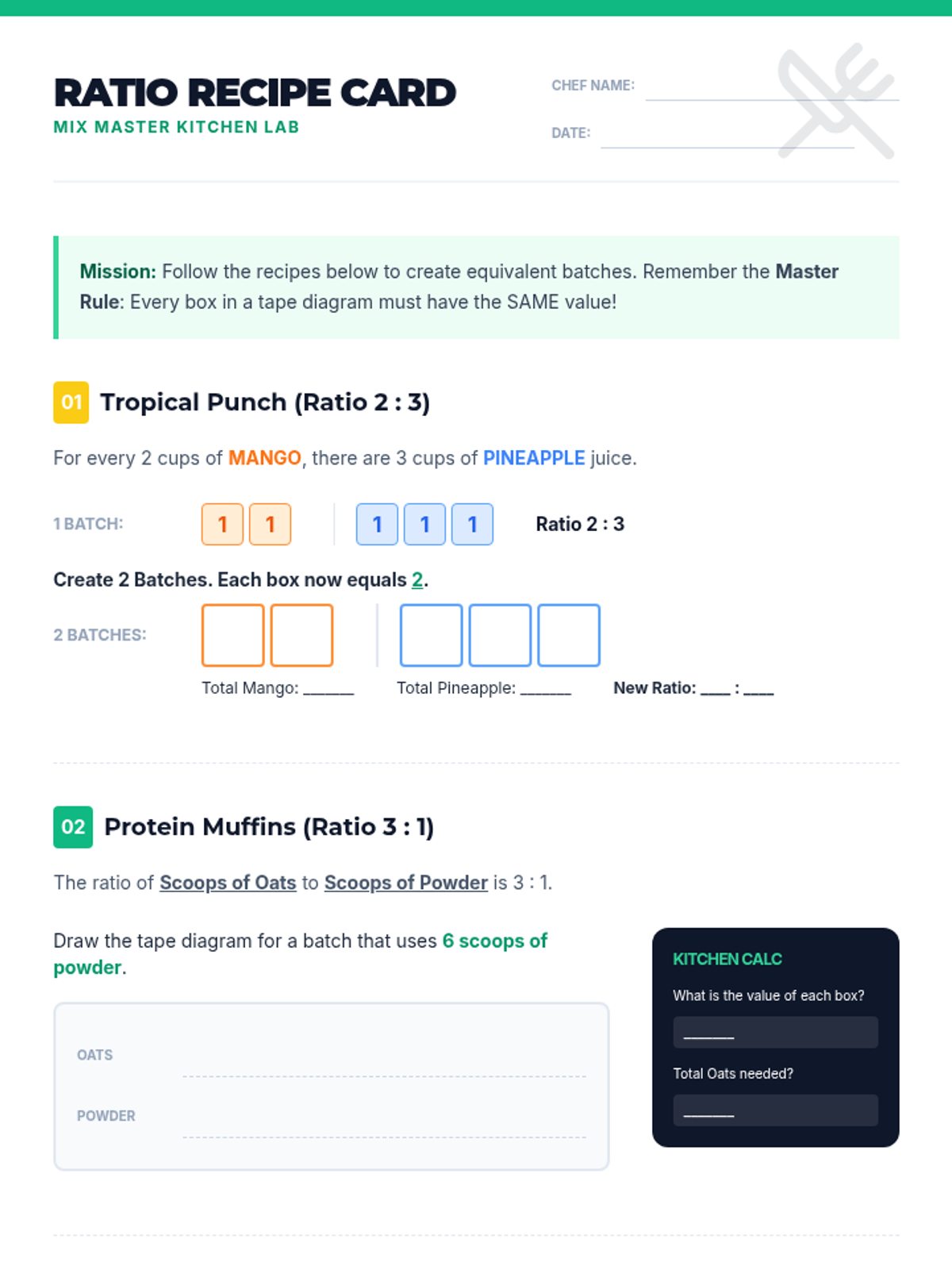
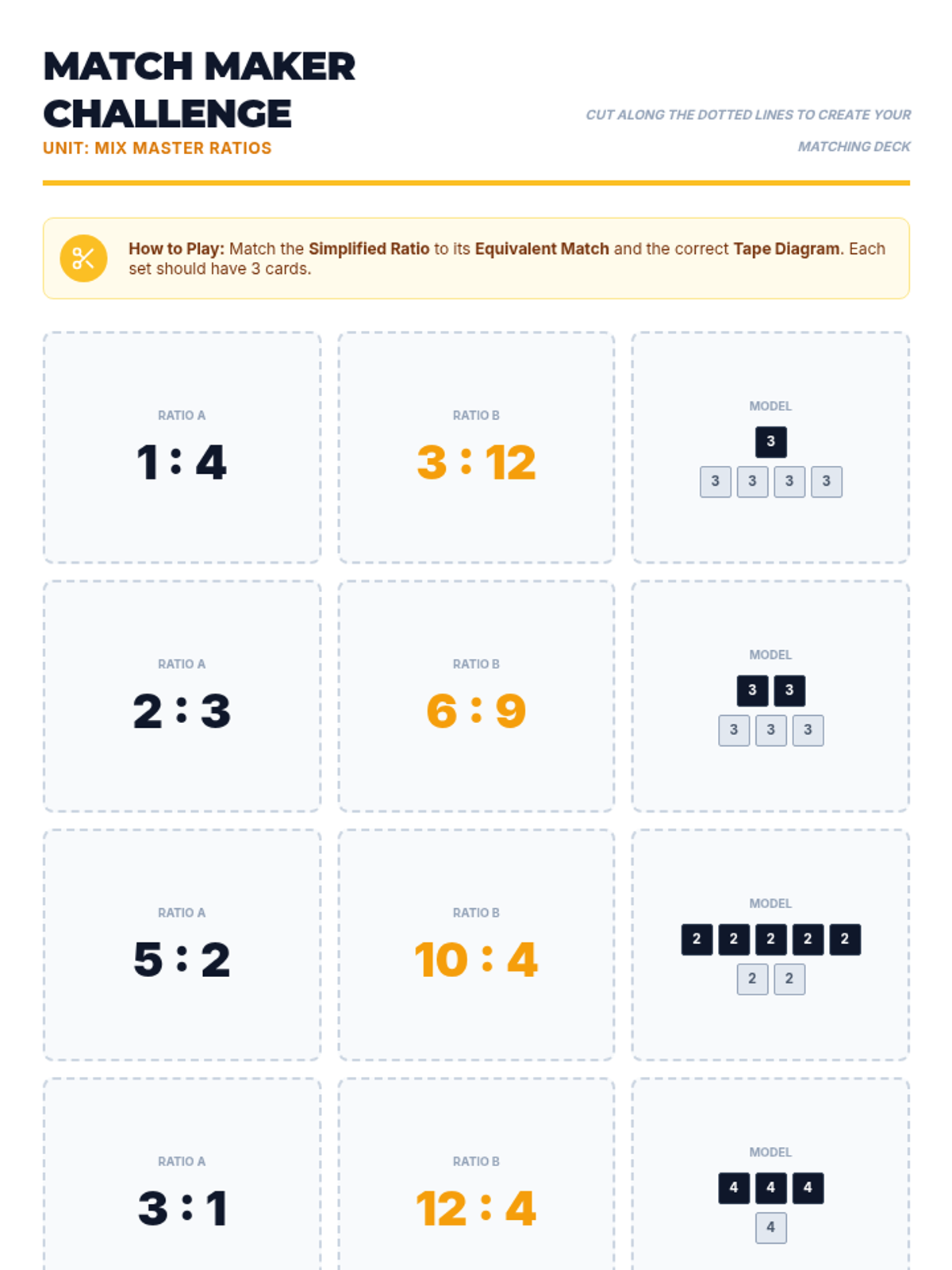
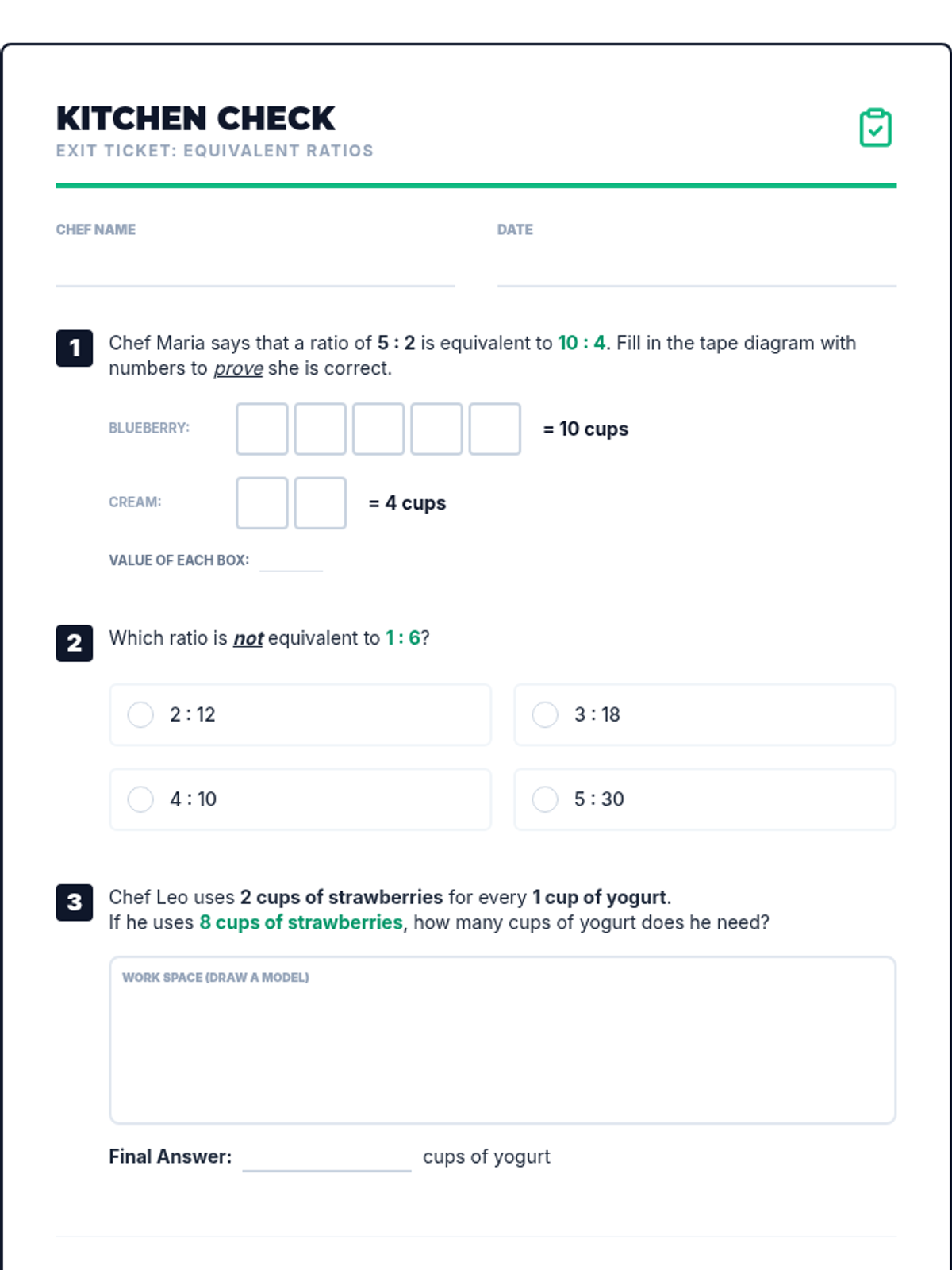
A Tier 2 intervention lesson for 6th grade focused on equivalent ratios using tape diagrams and visual models. Students practice through guided 'recipes' and matching activities to build conceptual understanding.
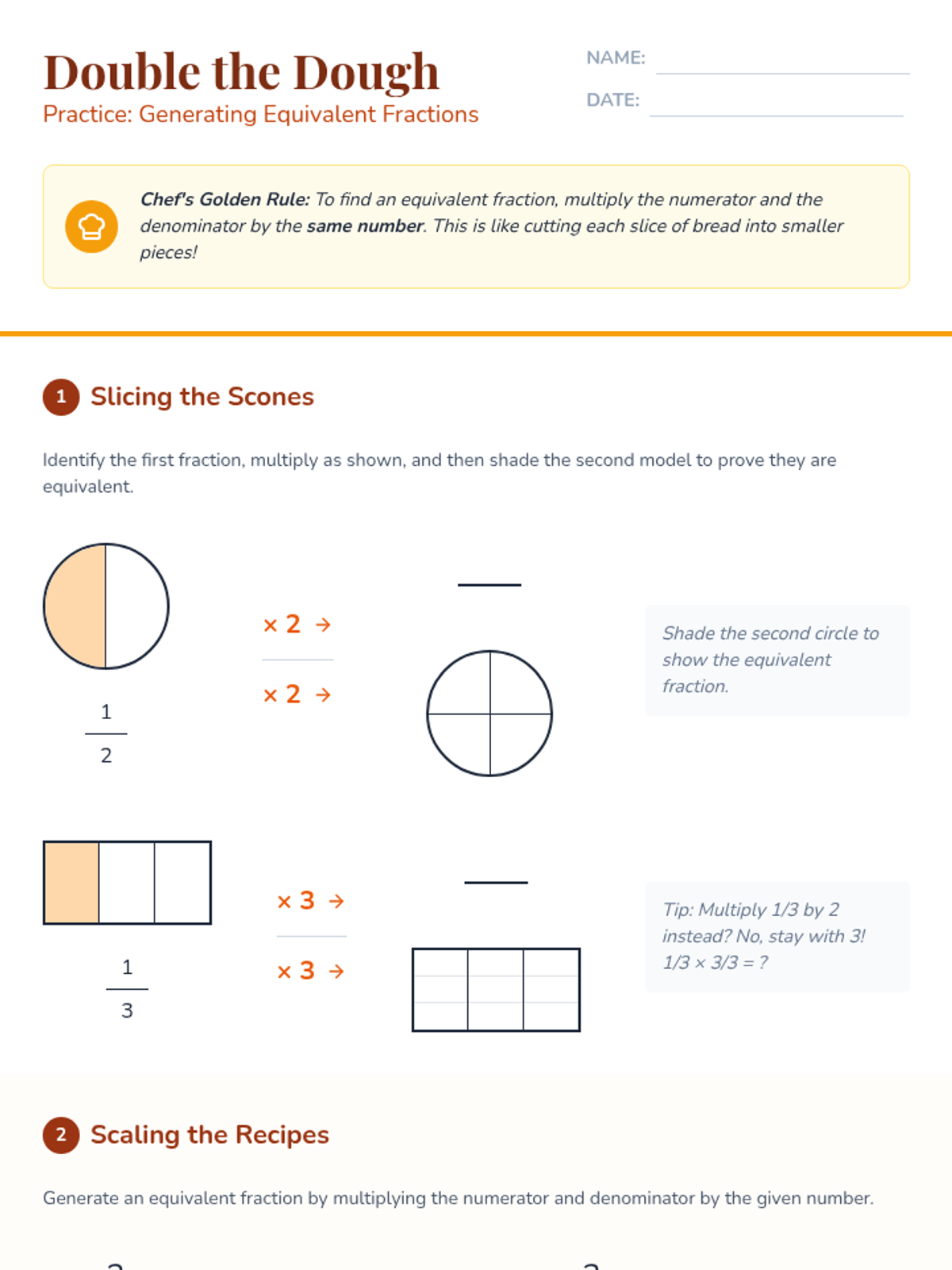
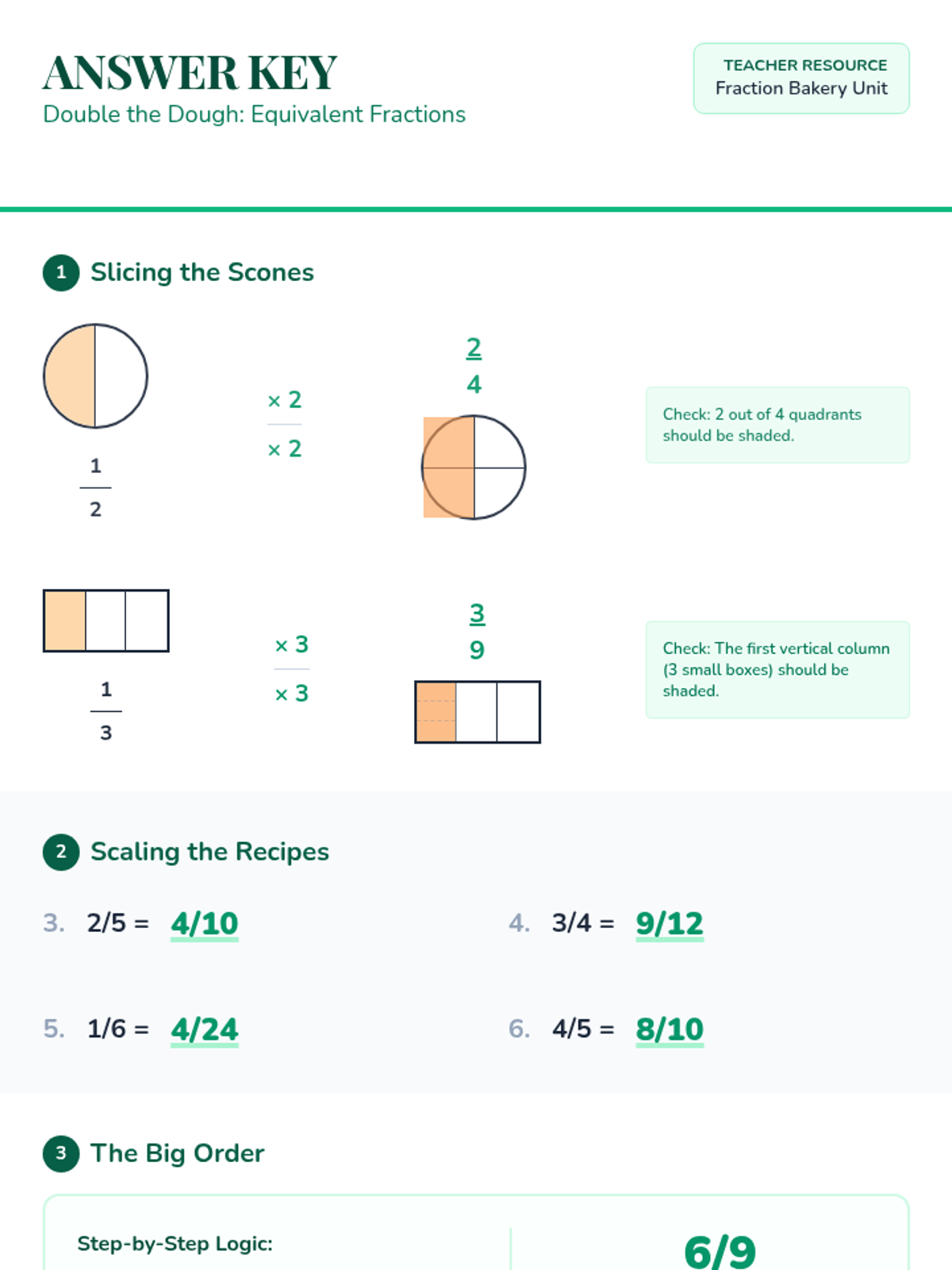
Students learn to generate equivalent fractions by multiplying the numerator and denominator by the same number, using bakery-themed visual models like cake pans and bread loaves to bridge the gap between concrete and abstract math.
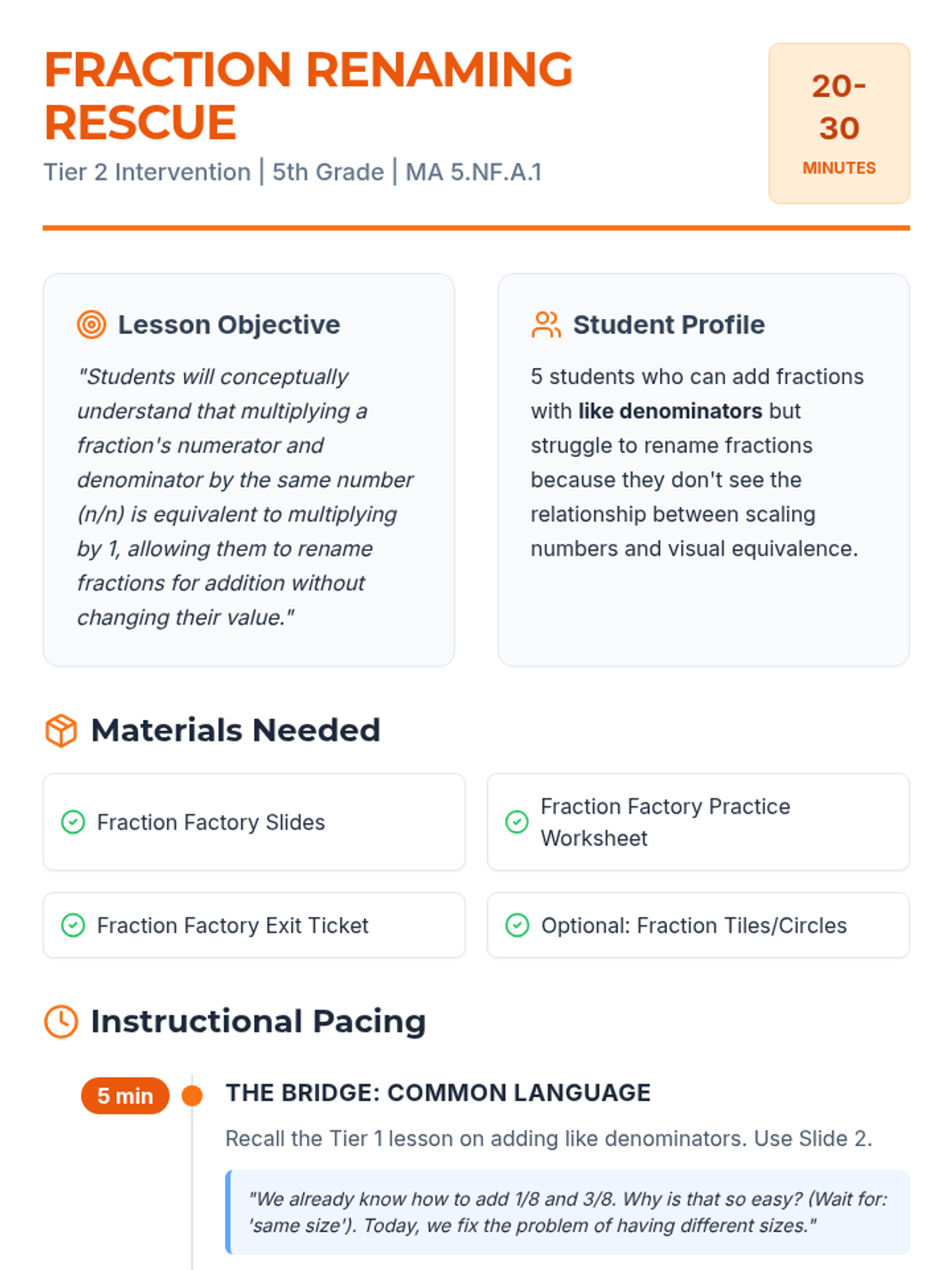
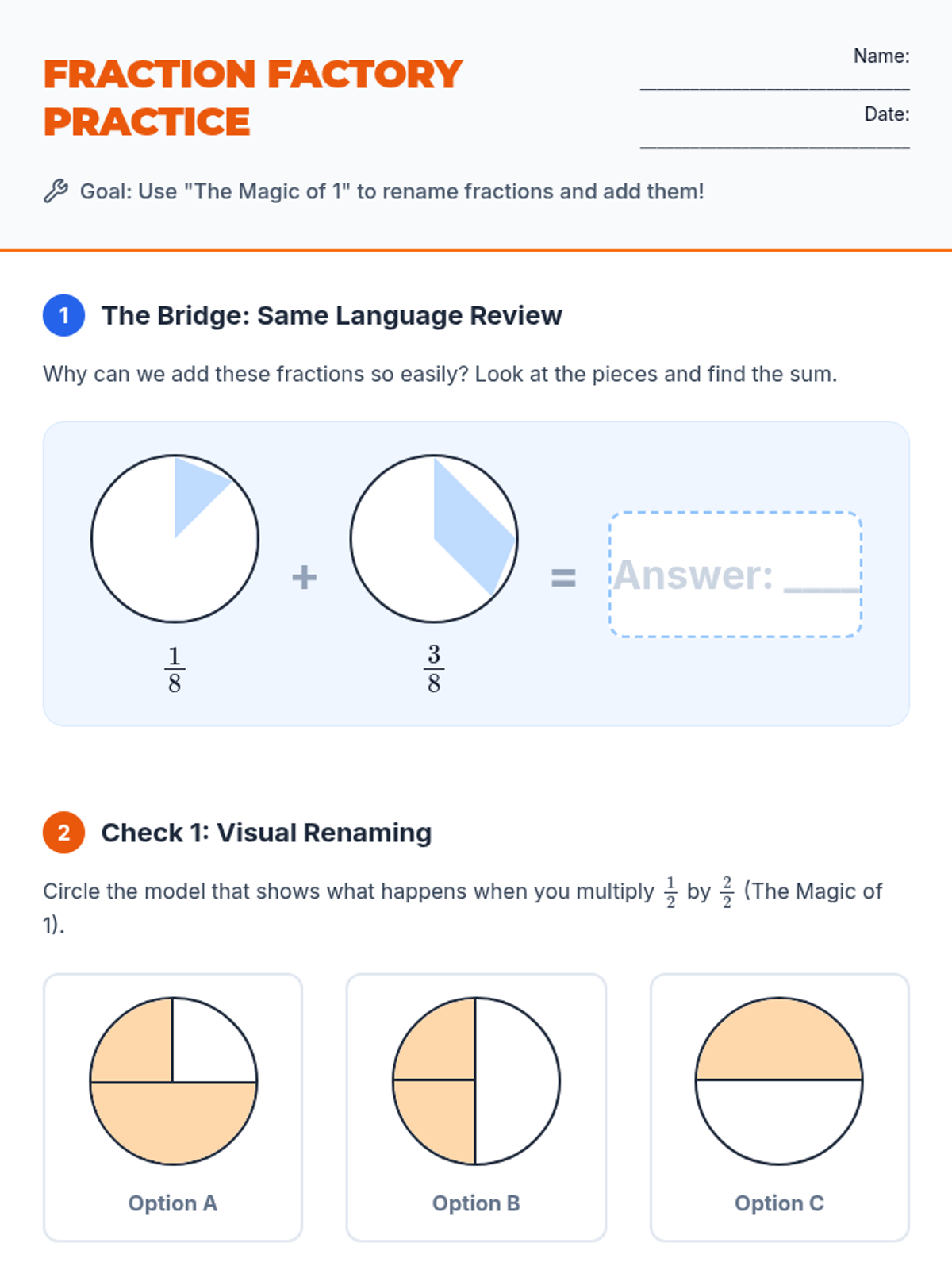
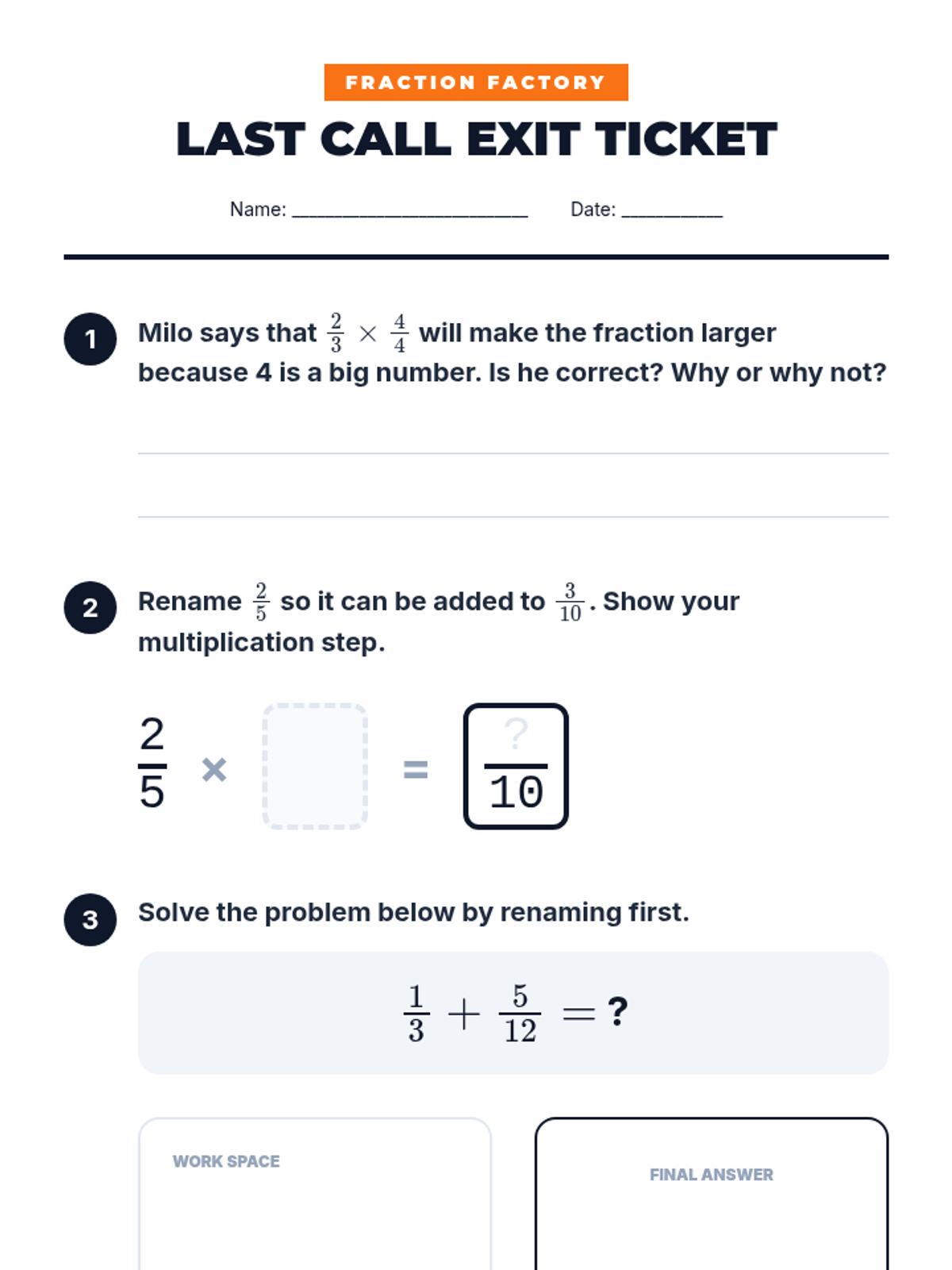
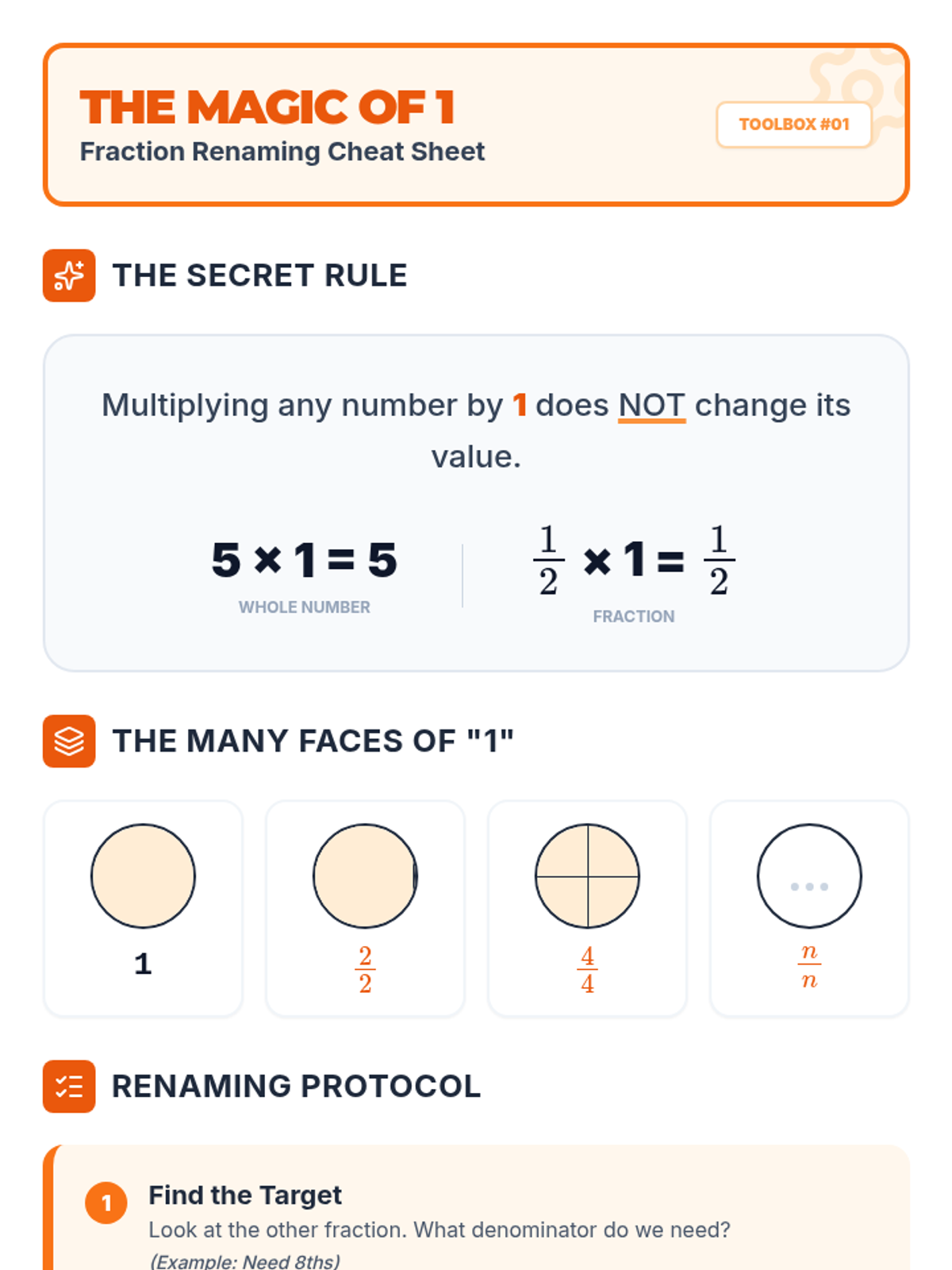
A Tier 2 intervention lesson for 5th grade students focused on conceptually understanding equivalent fractions and renaming them to add fractions with unlike denominators. Students will explore the 'Identity Property of 1' through visual models to see why multiplying the numerator and denominator by the same number creates an equivalent fraction.
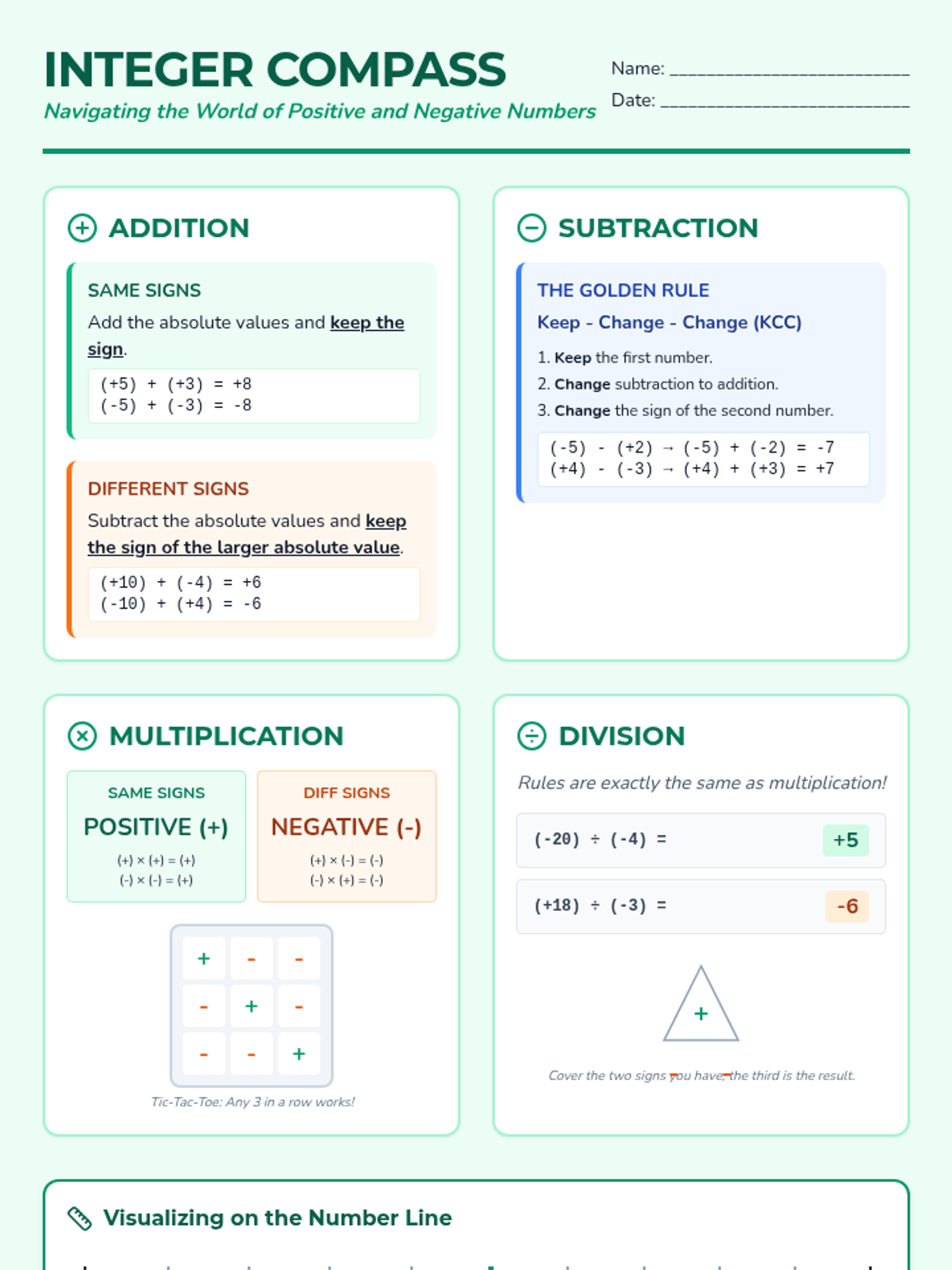
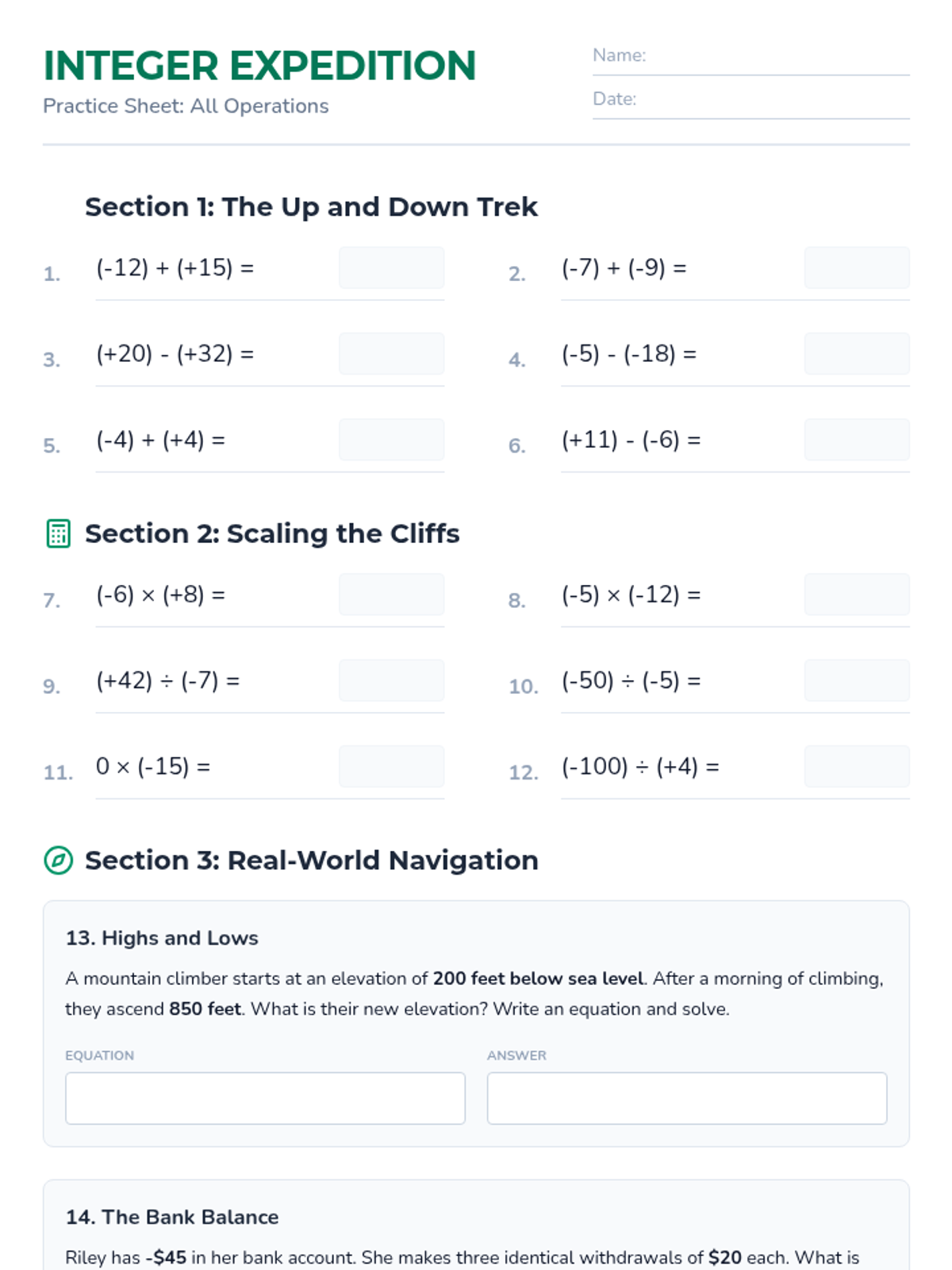
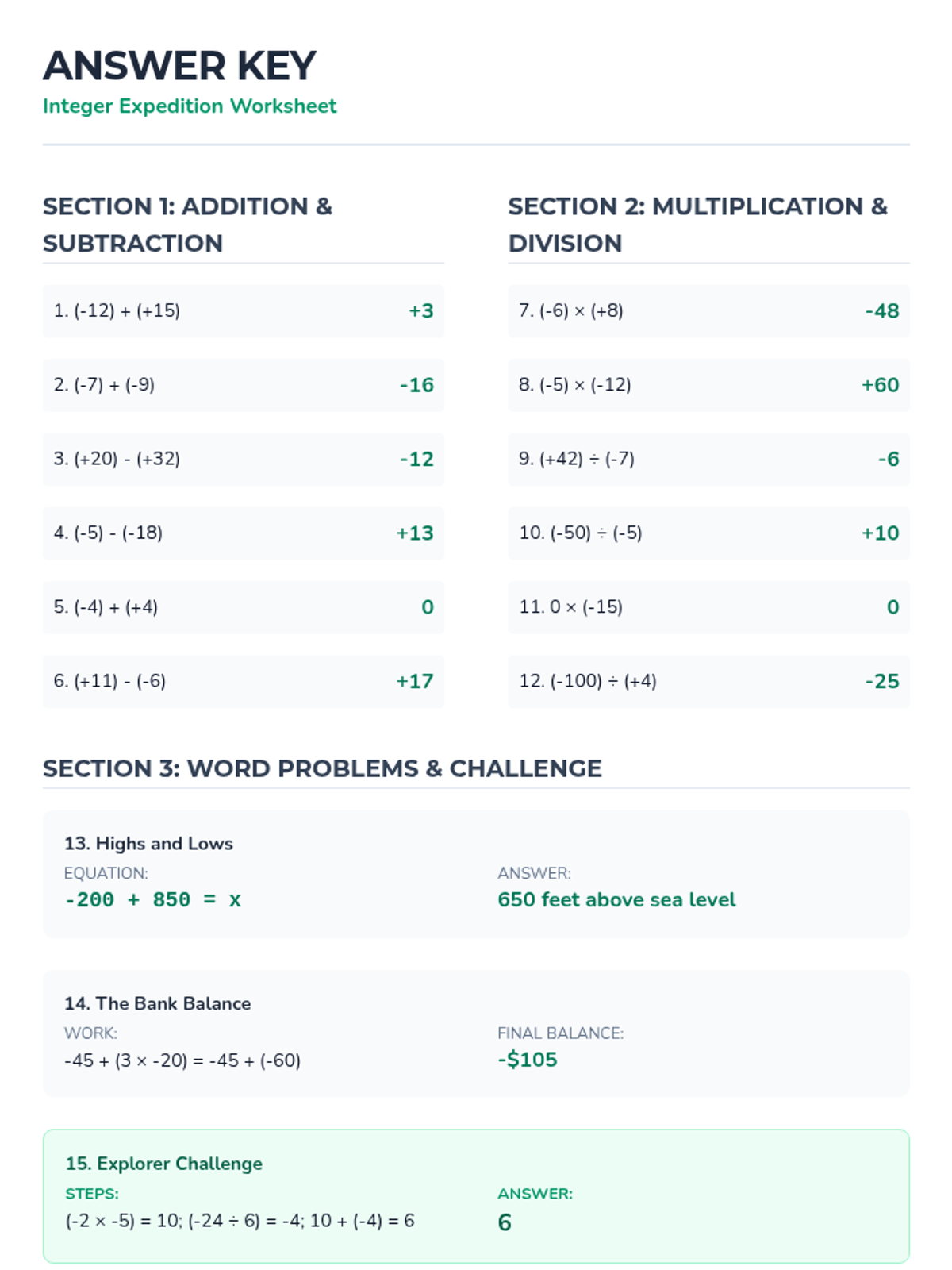
A comprehensive lesson covering addition, subtraction, multiplication, and division of integers using visual models and algorithmic rules.
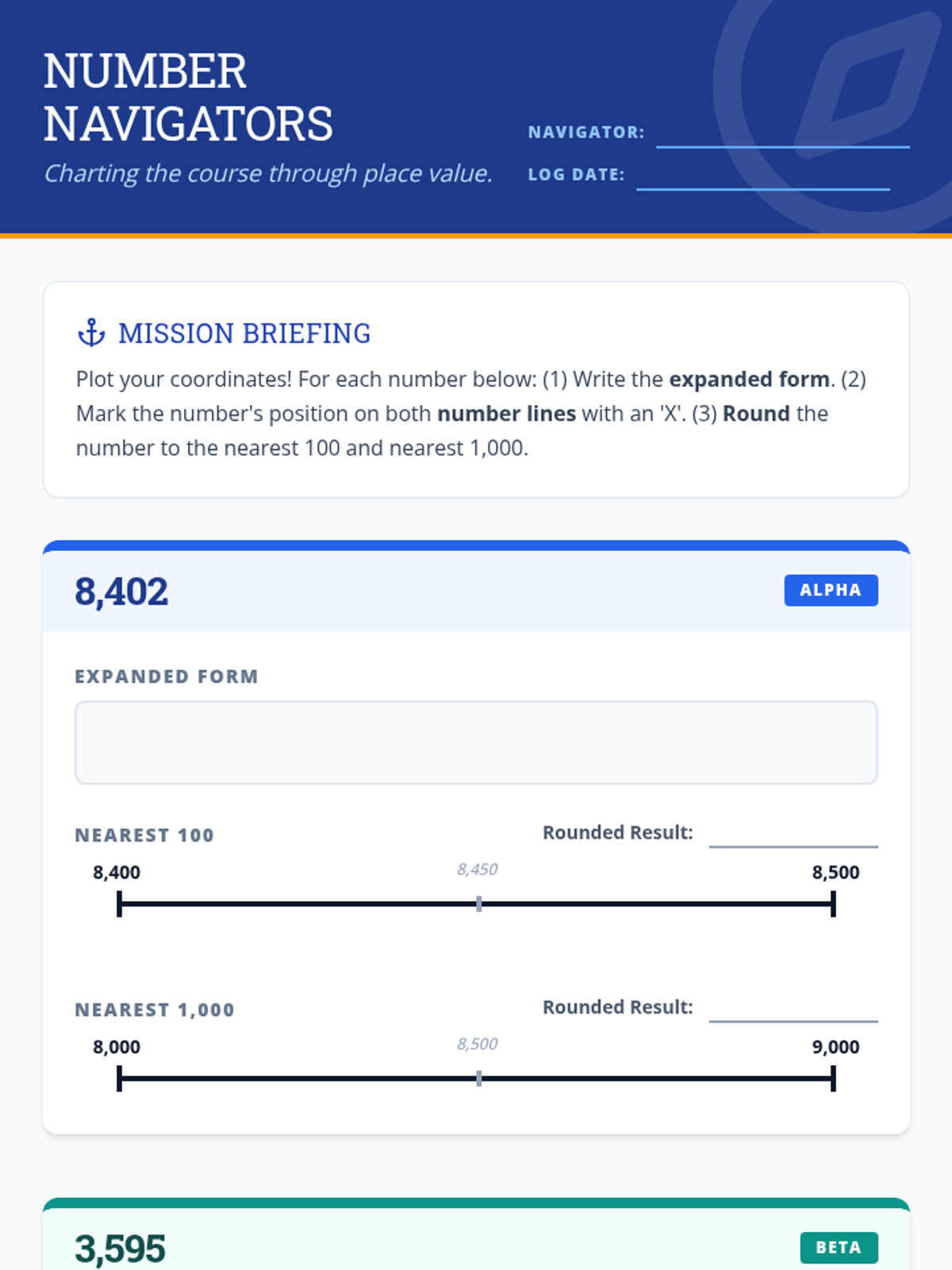
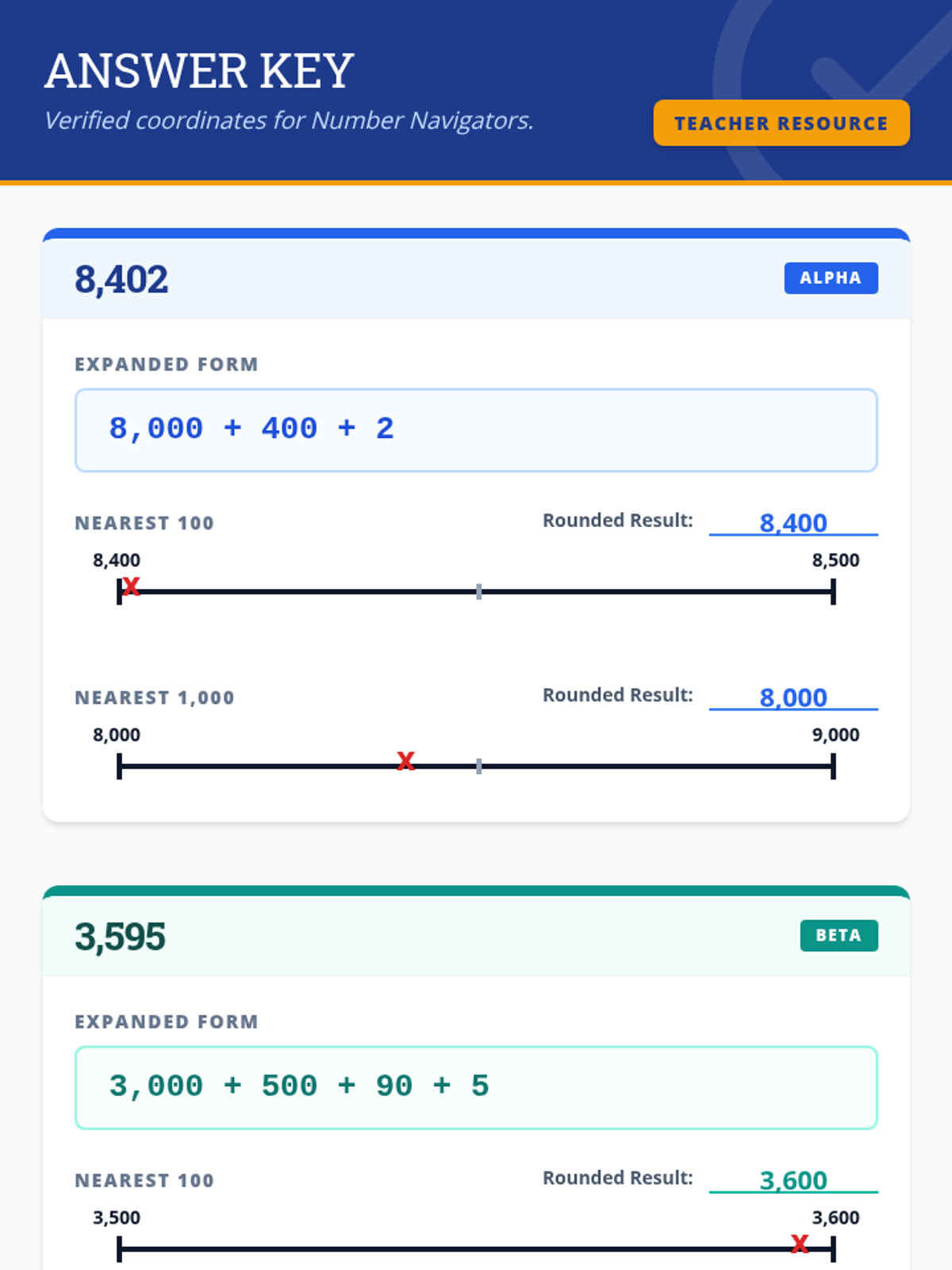
A lesson focused on place value through expanded form and rounding techniques using number lines as visual aids. Students practice with four- and five-digit numbers to master precision in estimation.
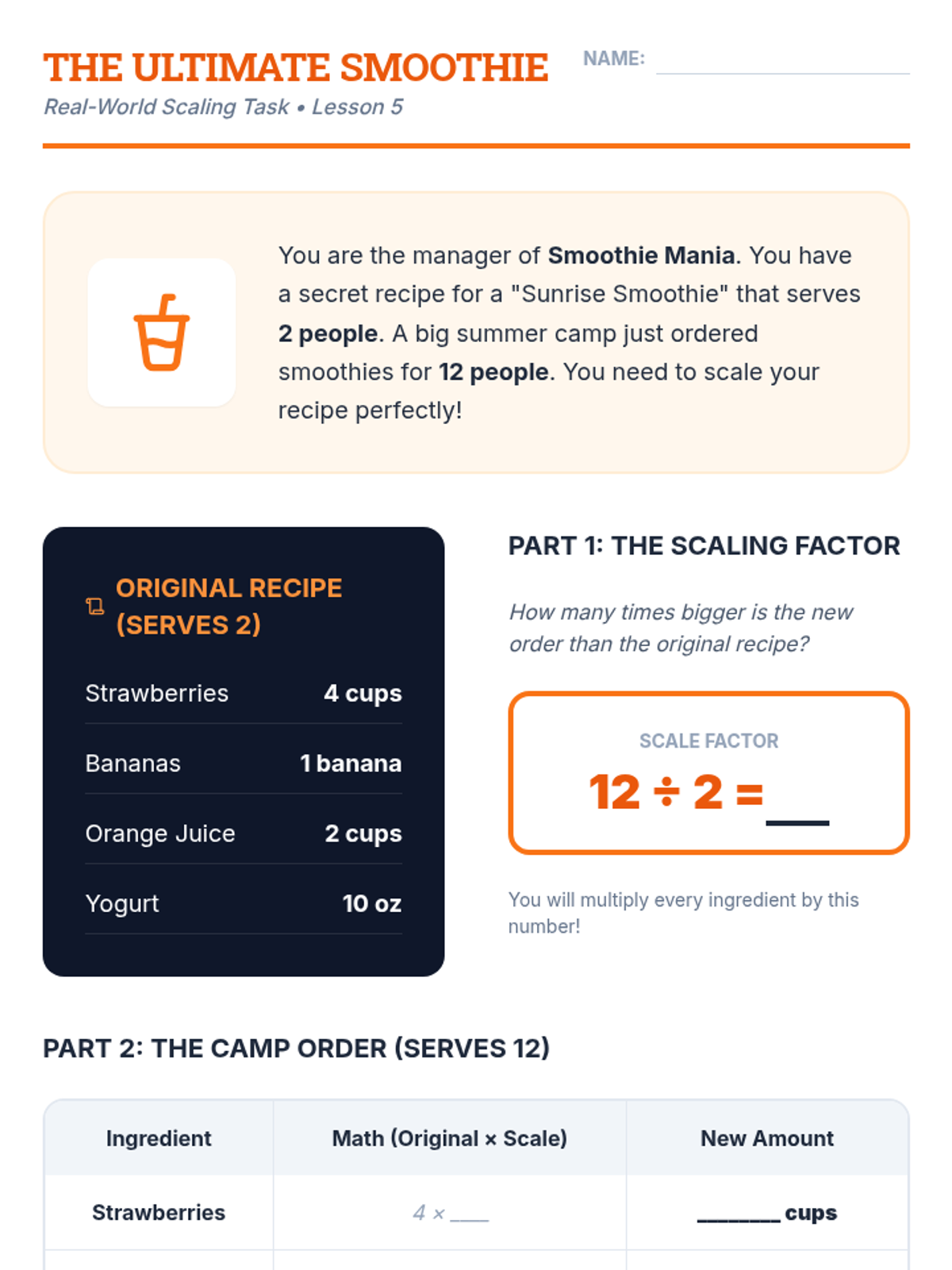
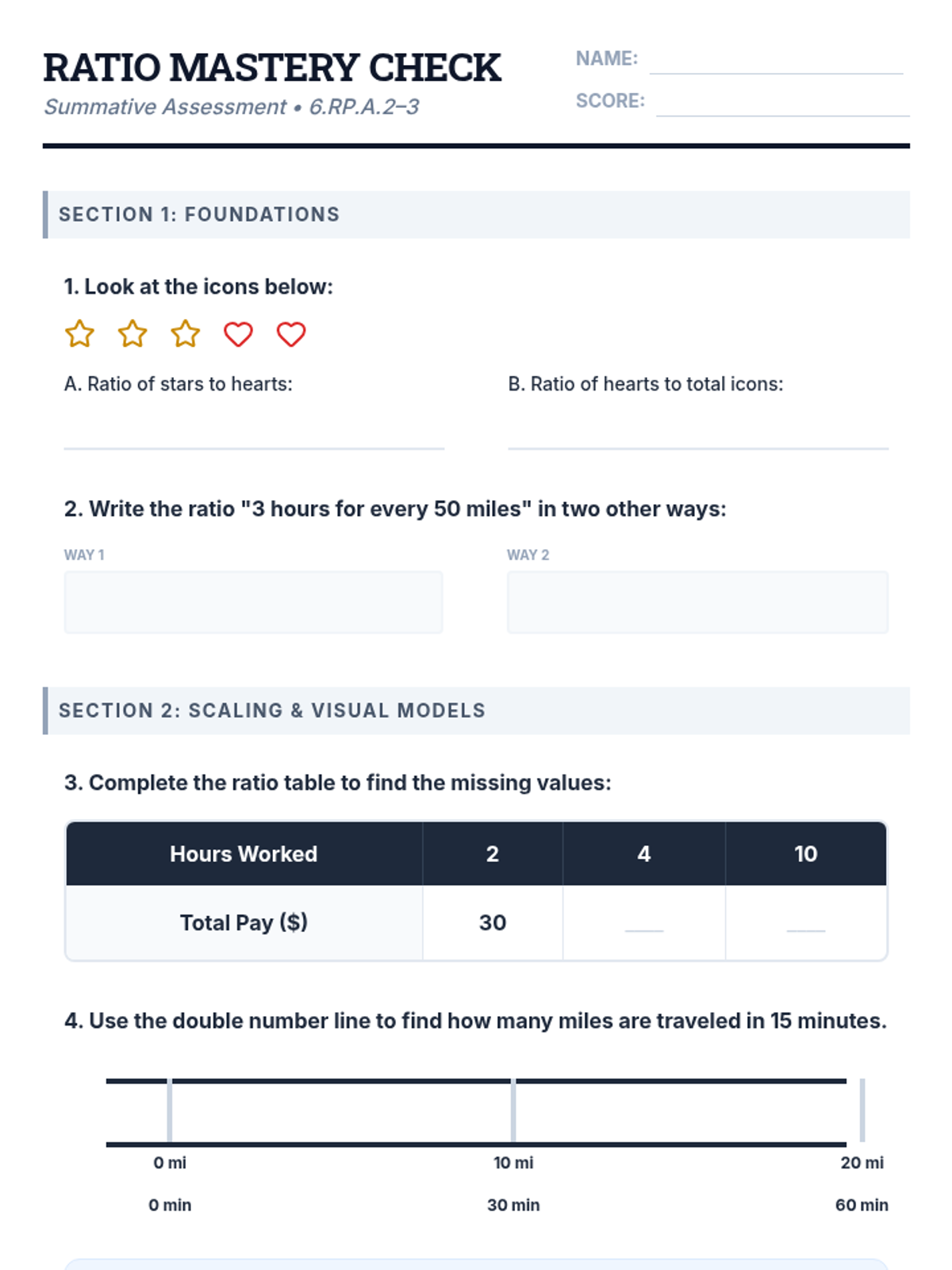
Synthesizing skills through a real-world recipe task and a final summative assessment.
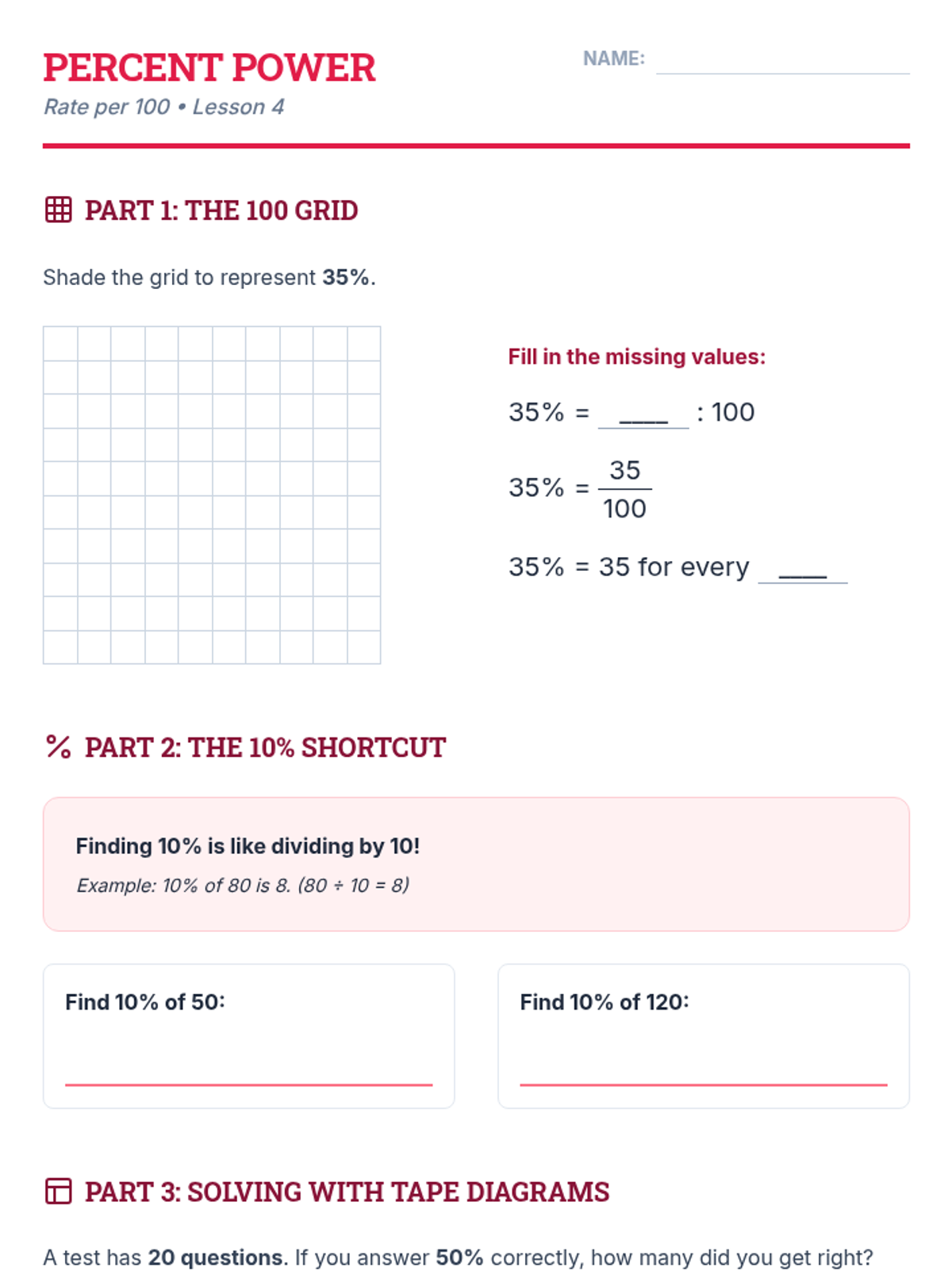
Understanding percent as a rate per 100 and using models to solve percent problems.
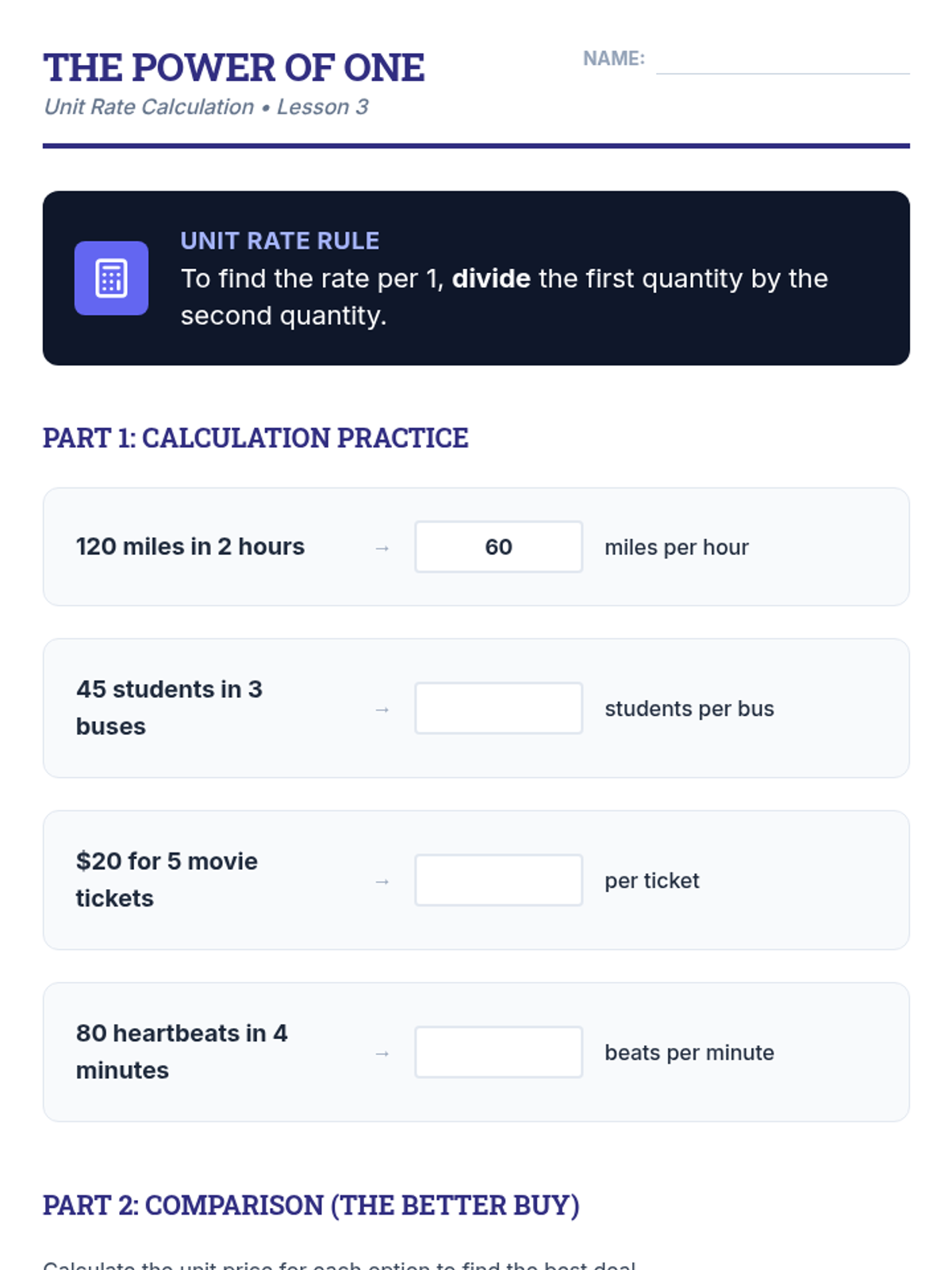
Calculating and applying unit rates in contexts like unit pricing and constant speed.
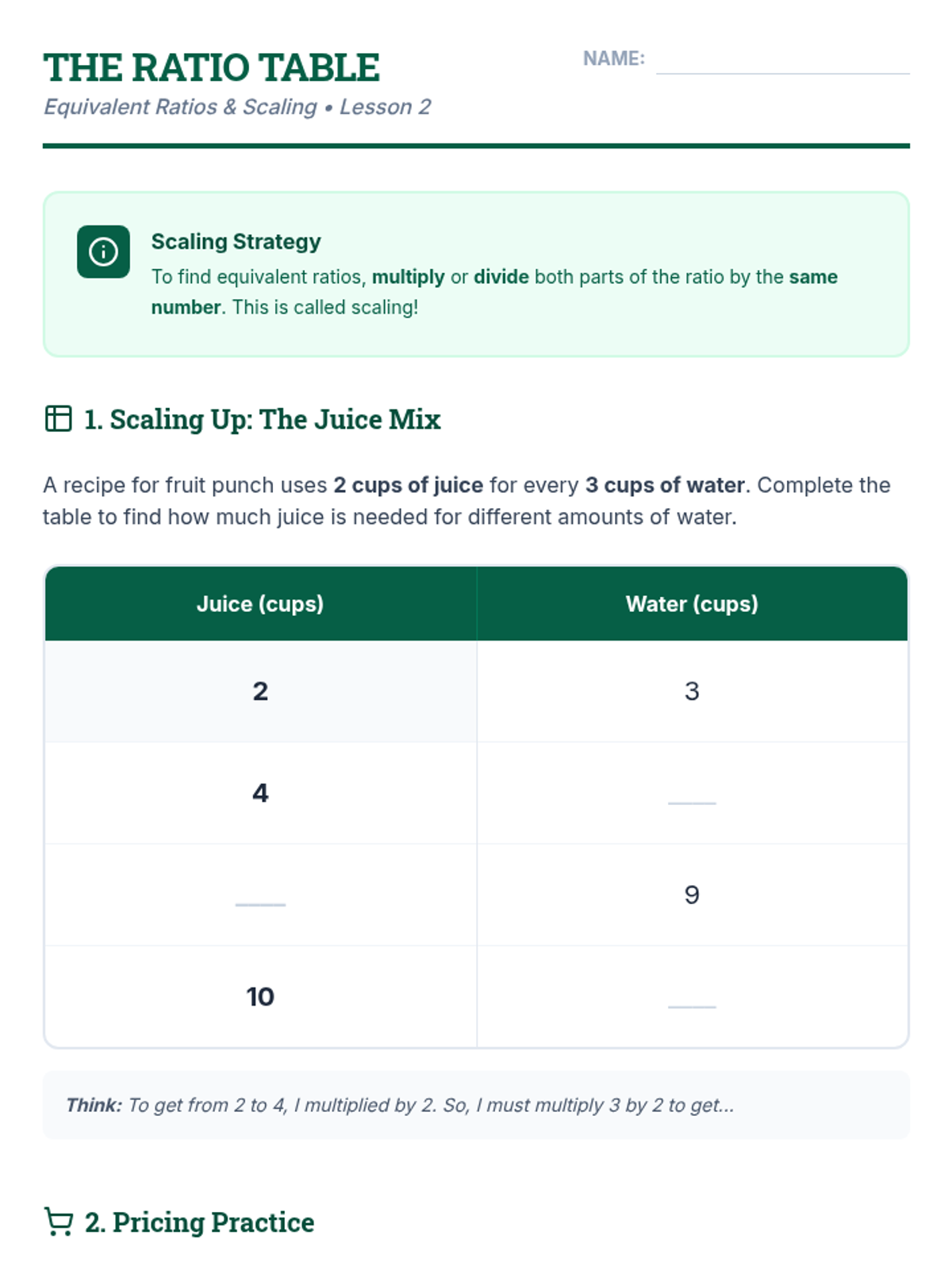
Utilizing ratio tables and double number line diagrams to visualize equivalent ratios and solve scaling problems.
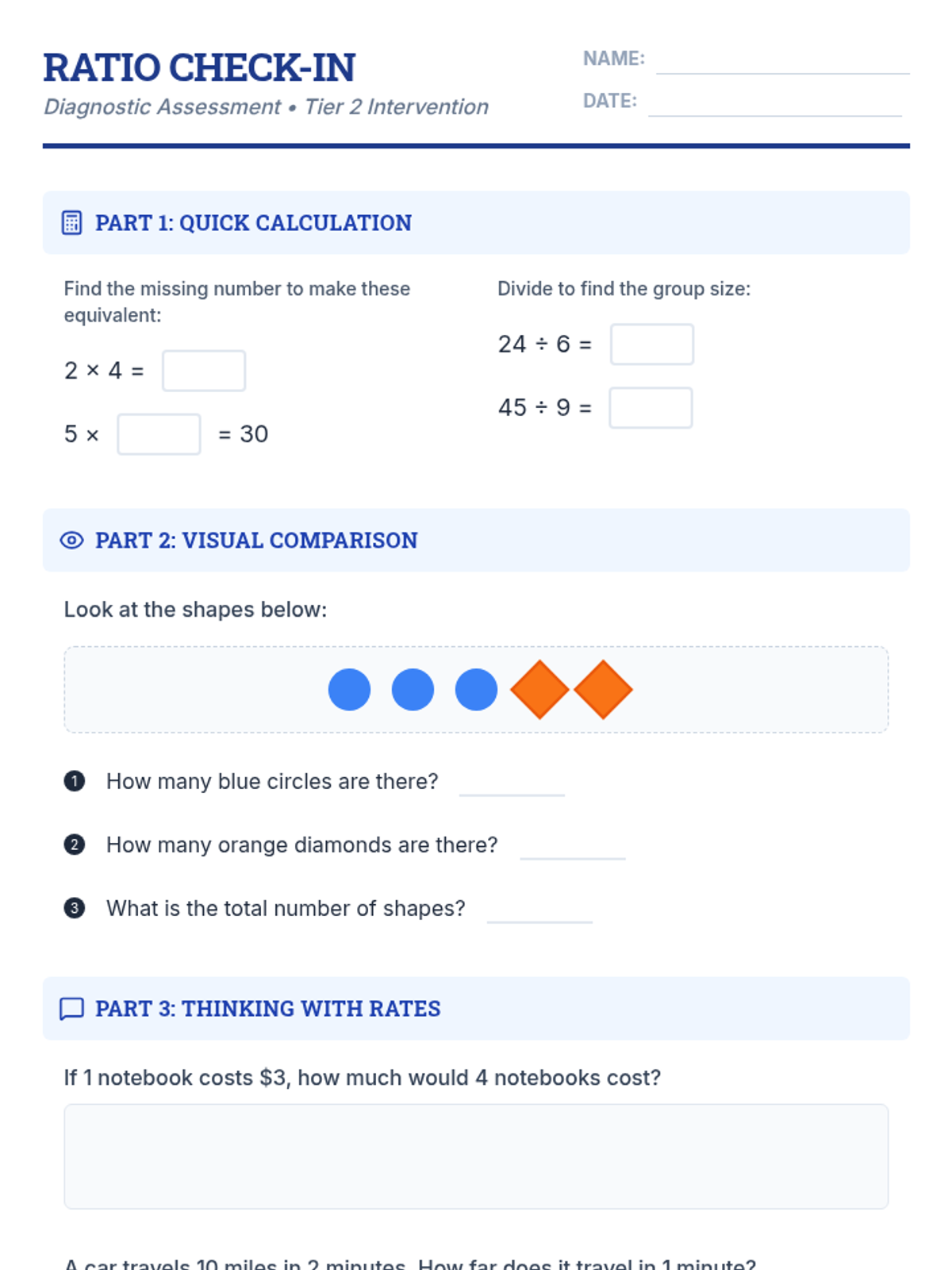
A diagnostic check followed by an introduction to ratio language, various notation forms, and identifying parts-to-parts vs. parts-to-whole relationships.
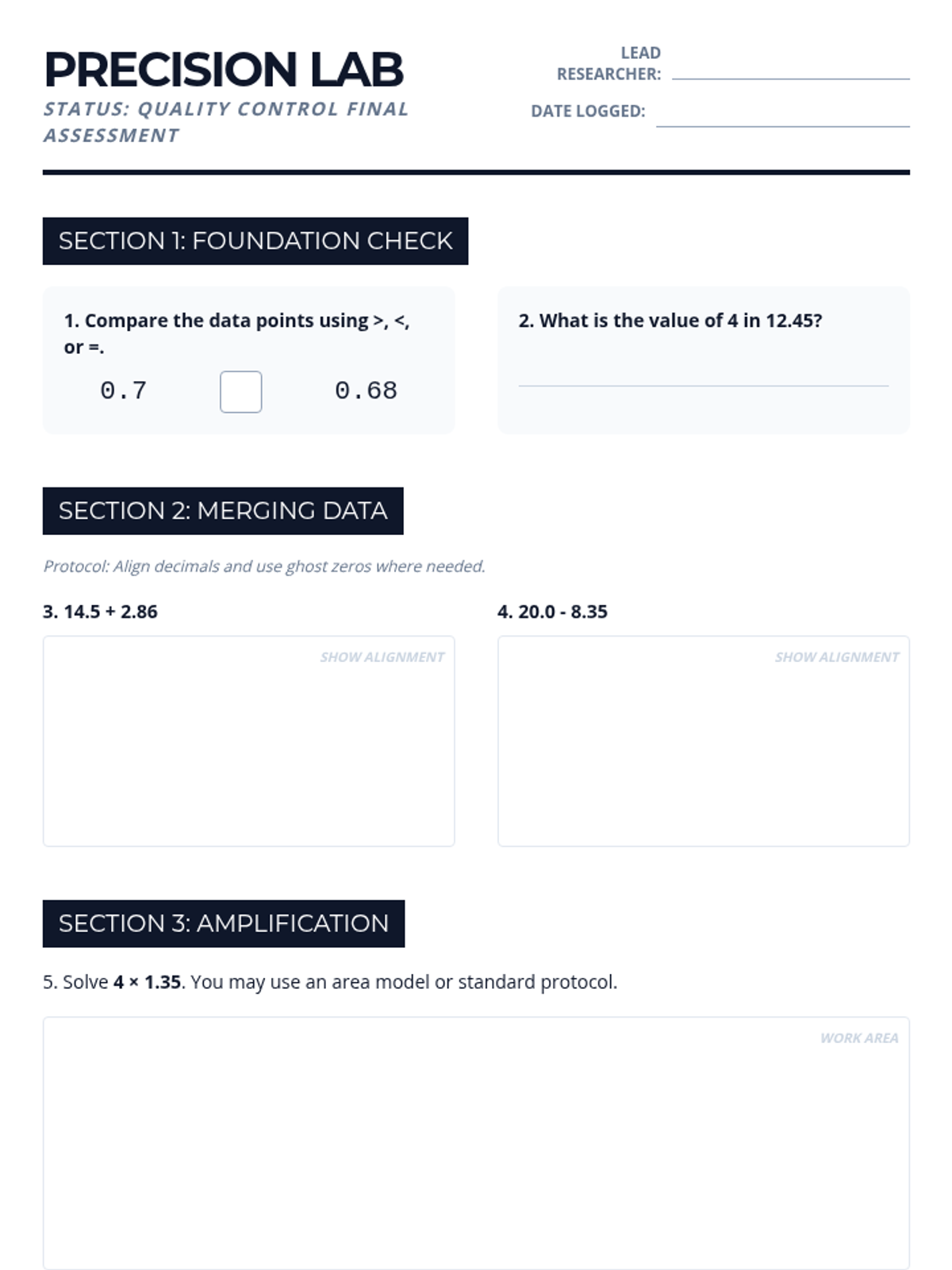
Final summative assessment to measure mastery of all four decimal operations and place value concepts.
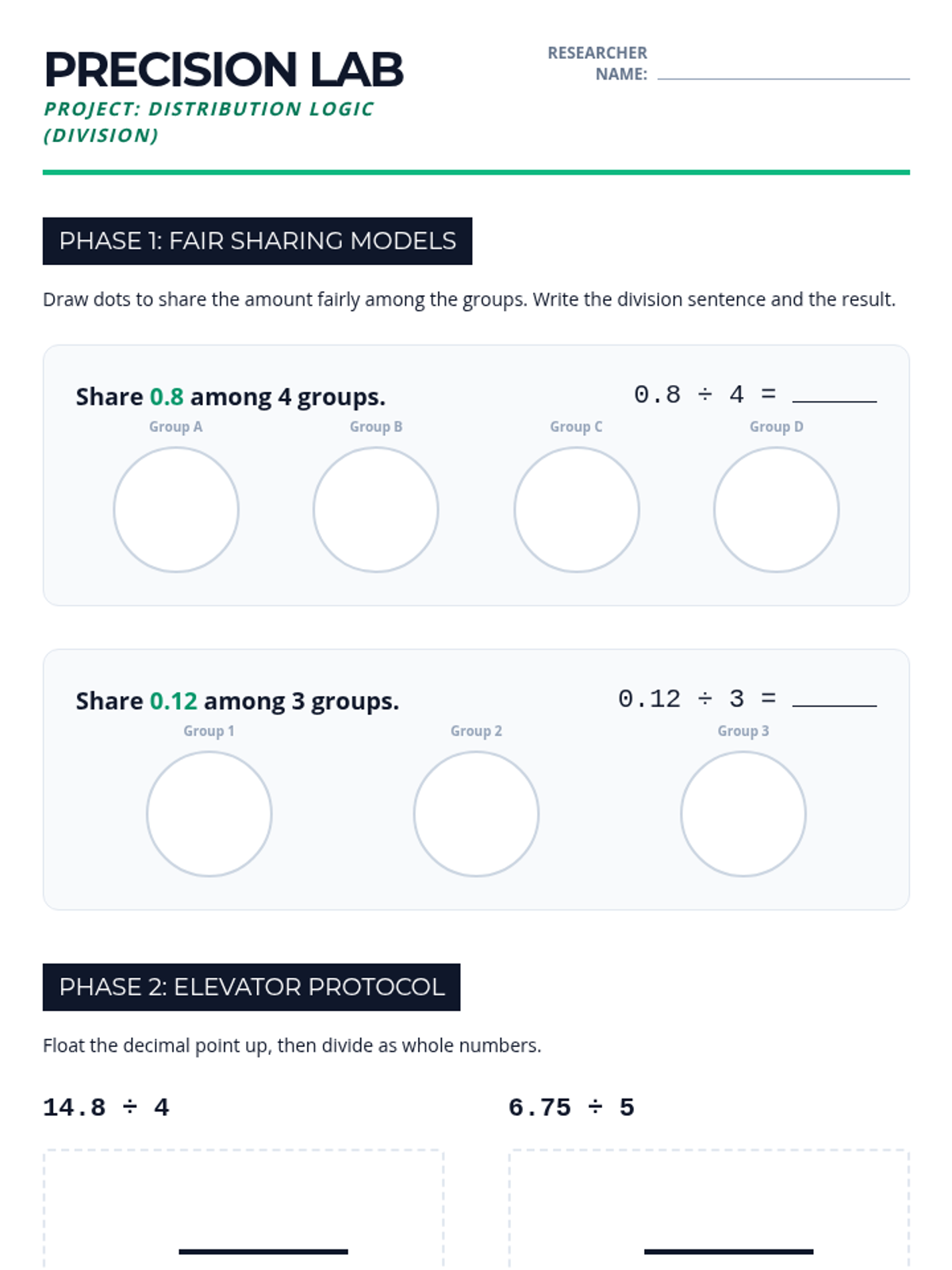
Instruction on dividing decimals by whole numbers and decimals using fair-sharing models and cost analysis.
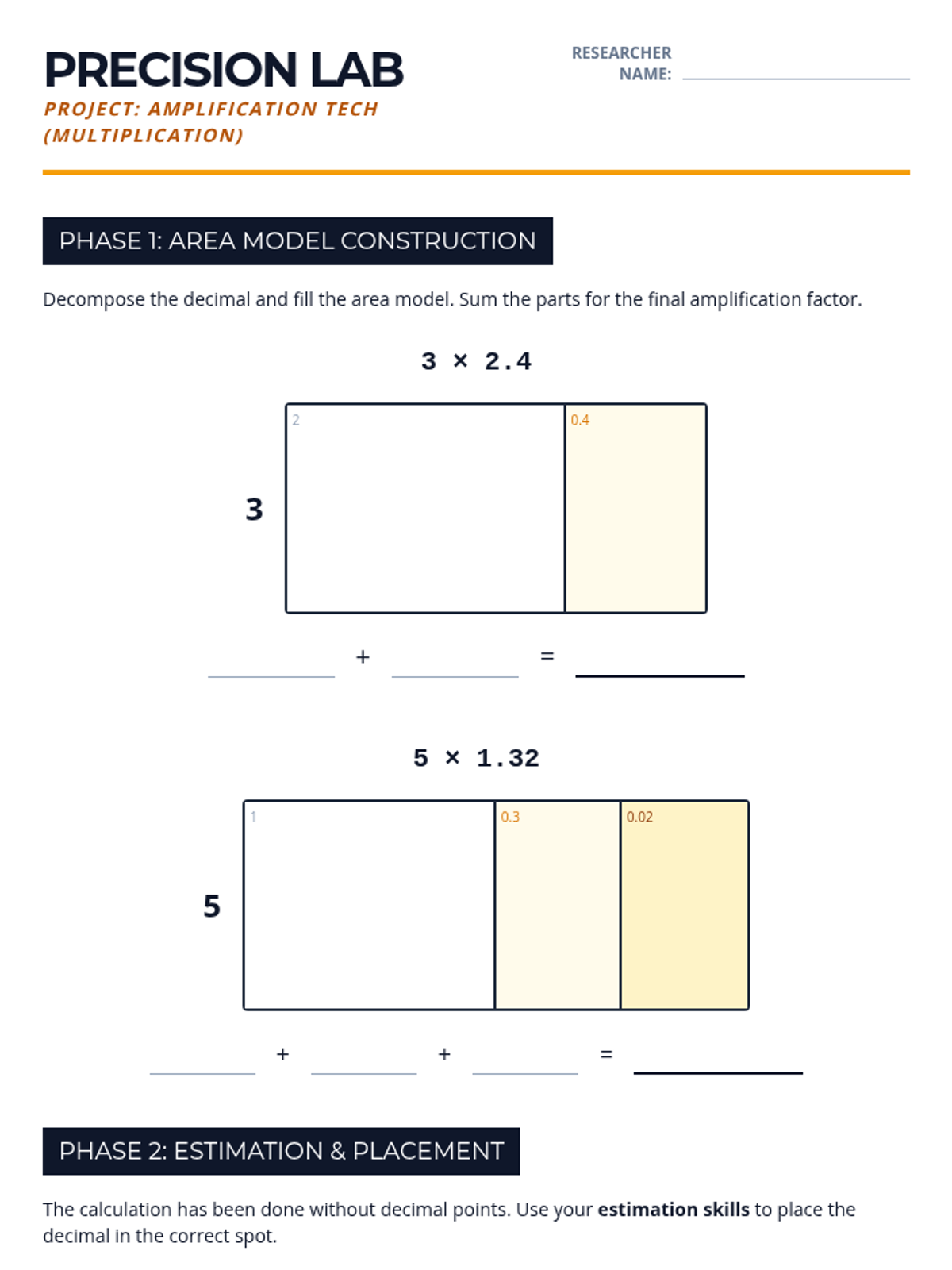
Instruction on multiplying decimals using area models and place value shifts, focusing on scaling and measurement.
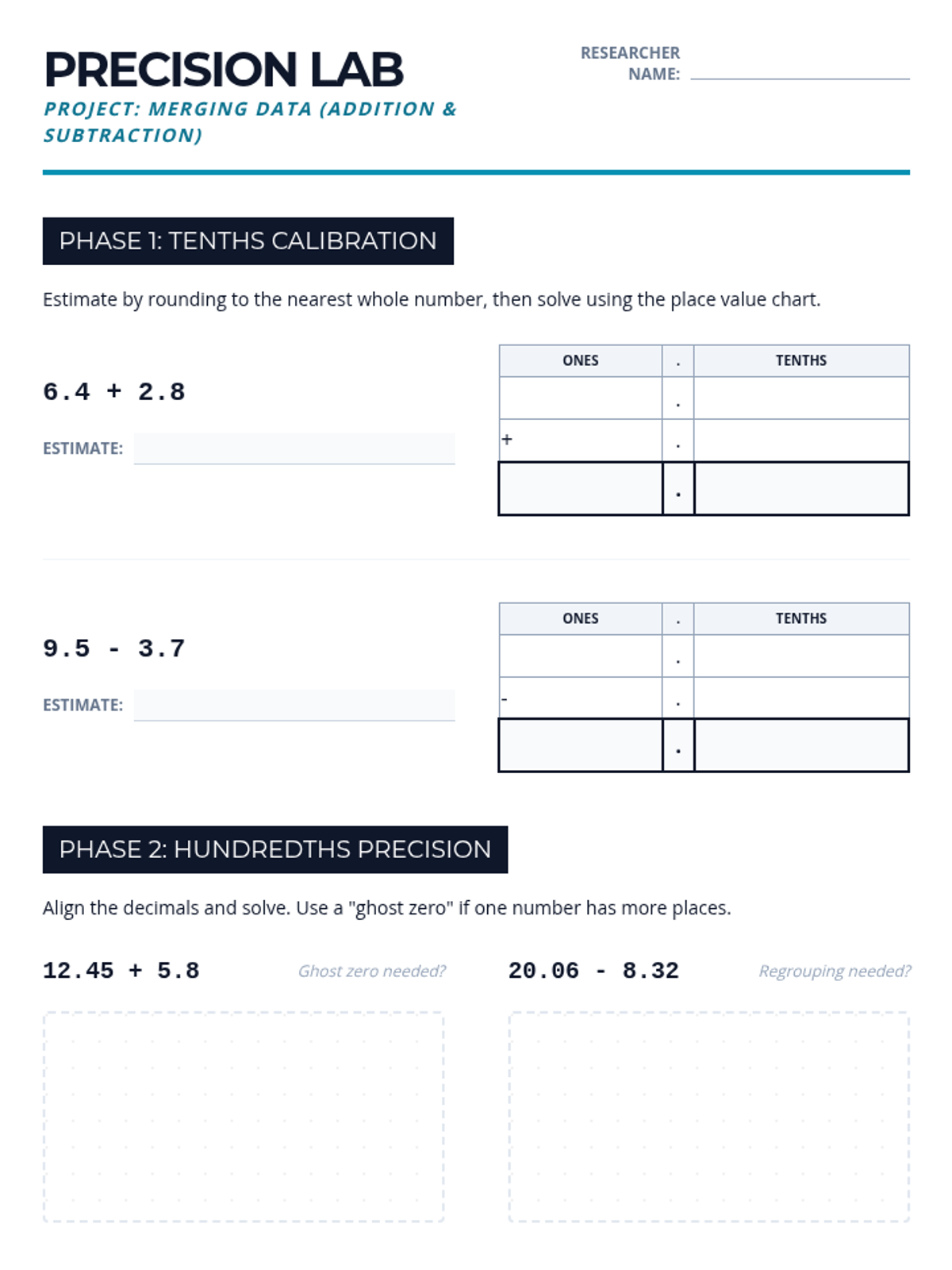
Instruction and practice on adding and subtracting decimals using place value alignment, estimation, and money contexts.
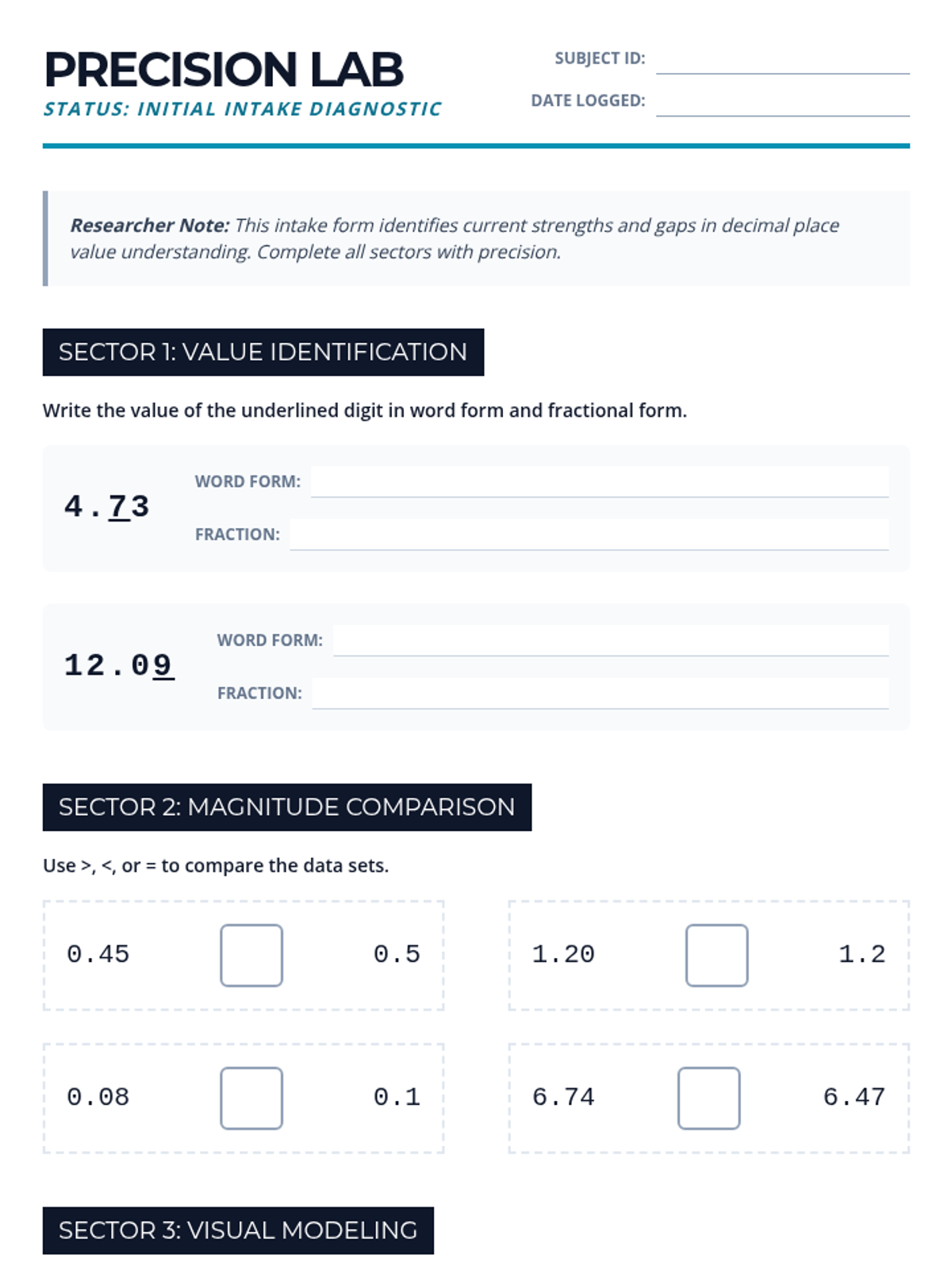
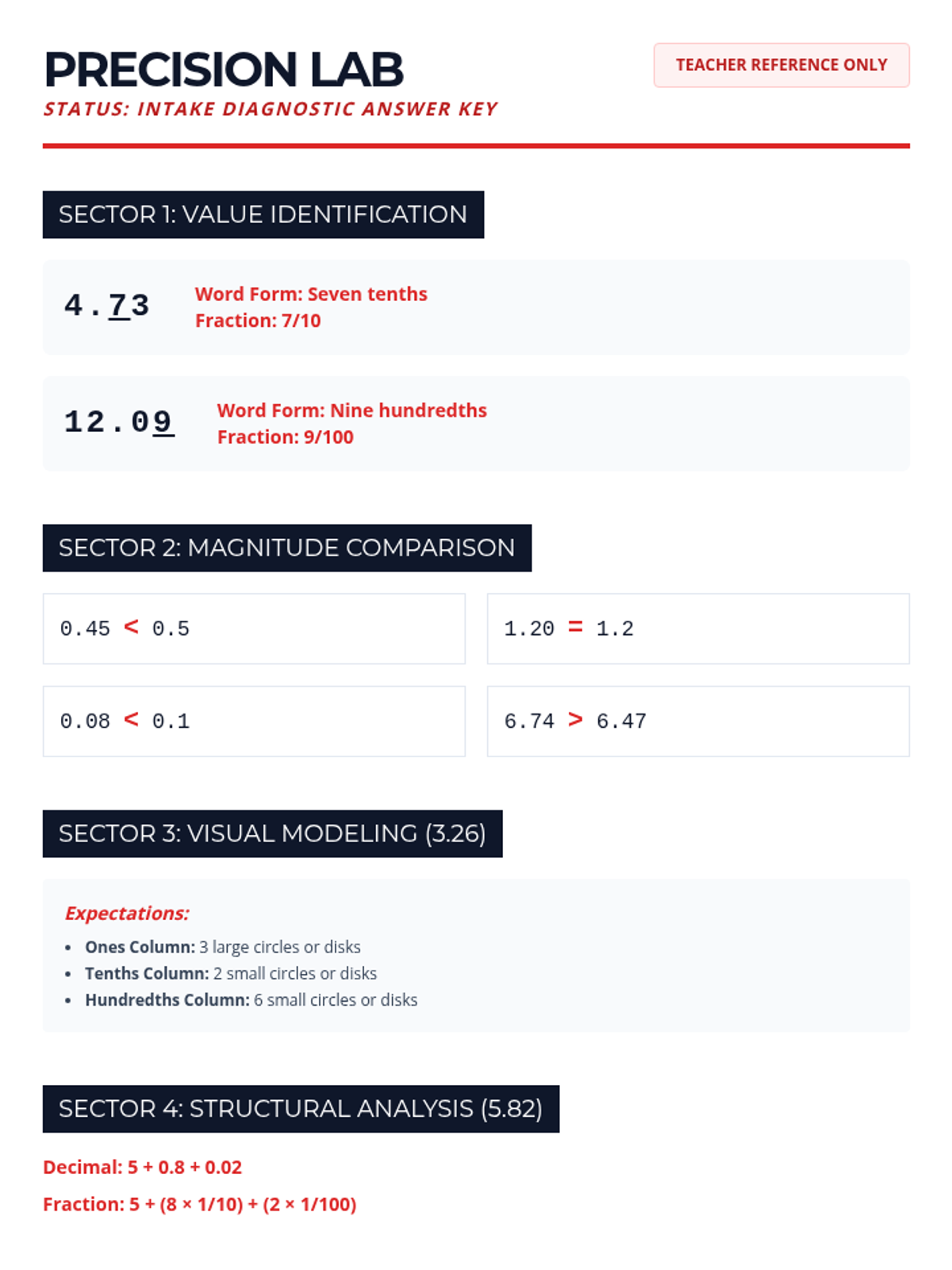
Initial diagnostic and foundational review of place value relationships from tens to hundredths to prepare for operations.
Final assessment of all unit skills to measure growth and mastery of standard 5.NF.A.1.
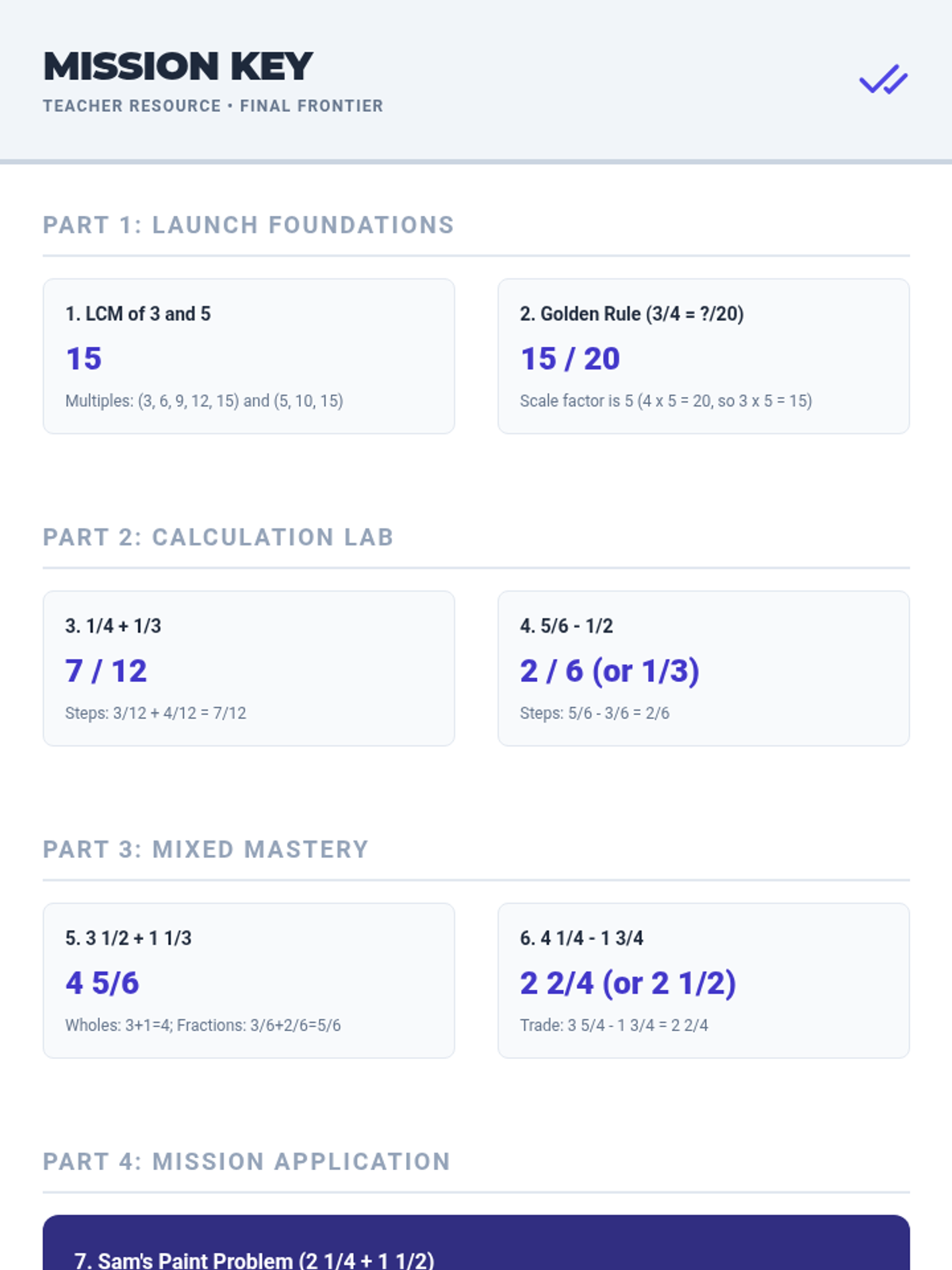
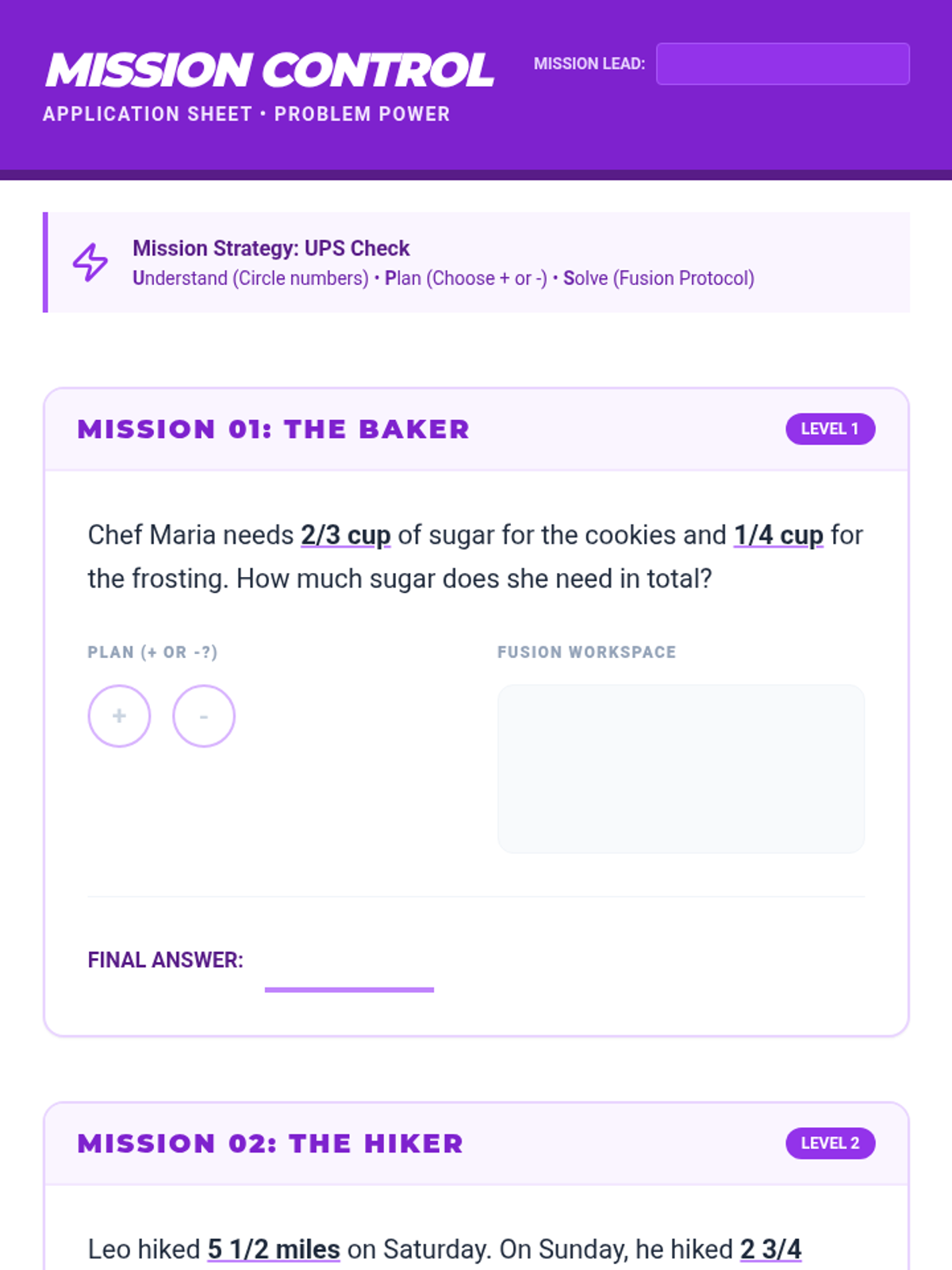
Application of fraction operations to real-world word problems, focusing on identifying operations and interpreting results.
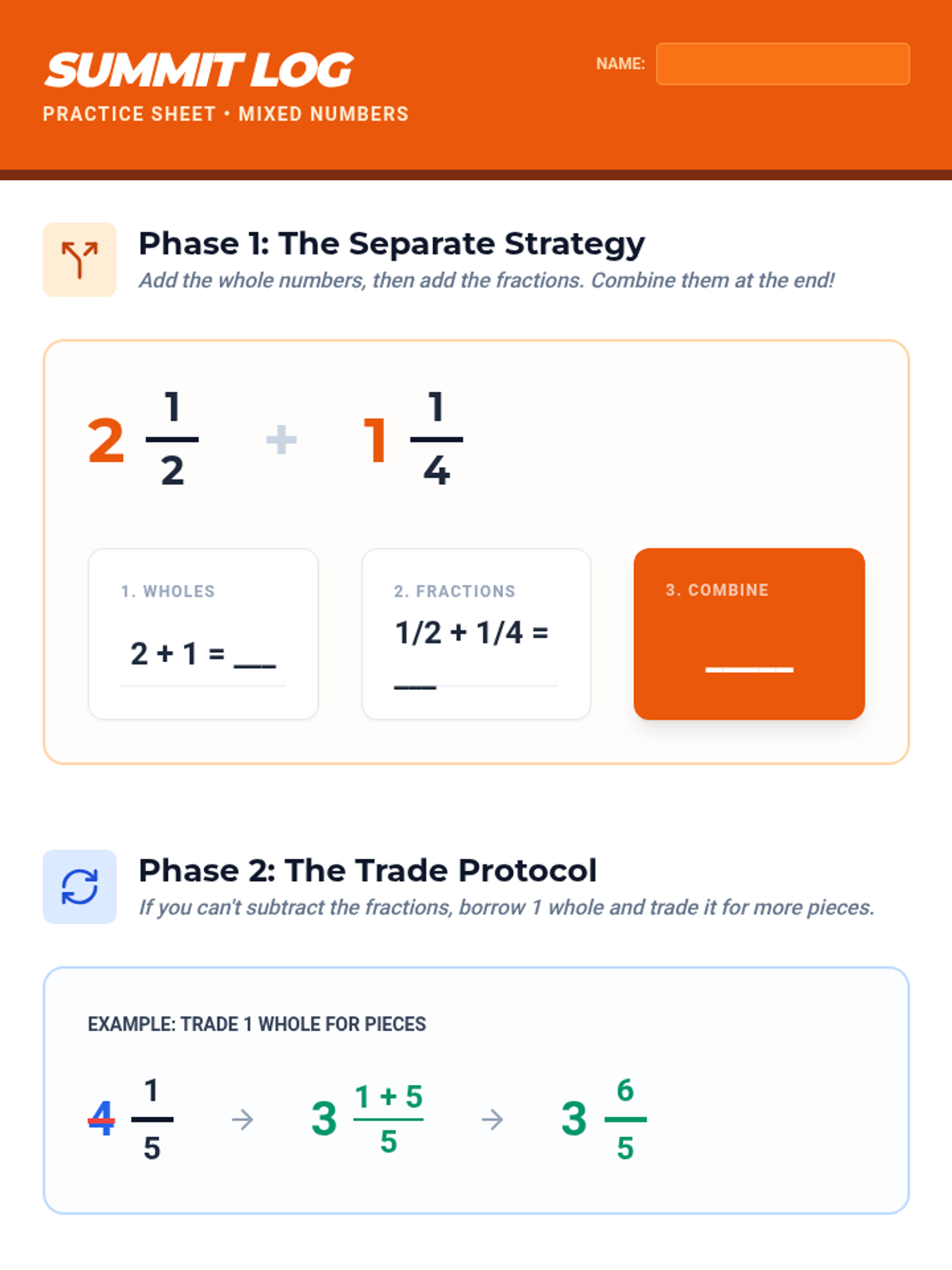
Expanding skills to include adding and subtracting mixed numbers, including strategies for regrouping and simplifying.
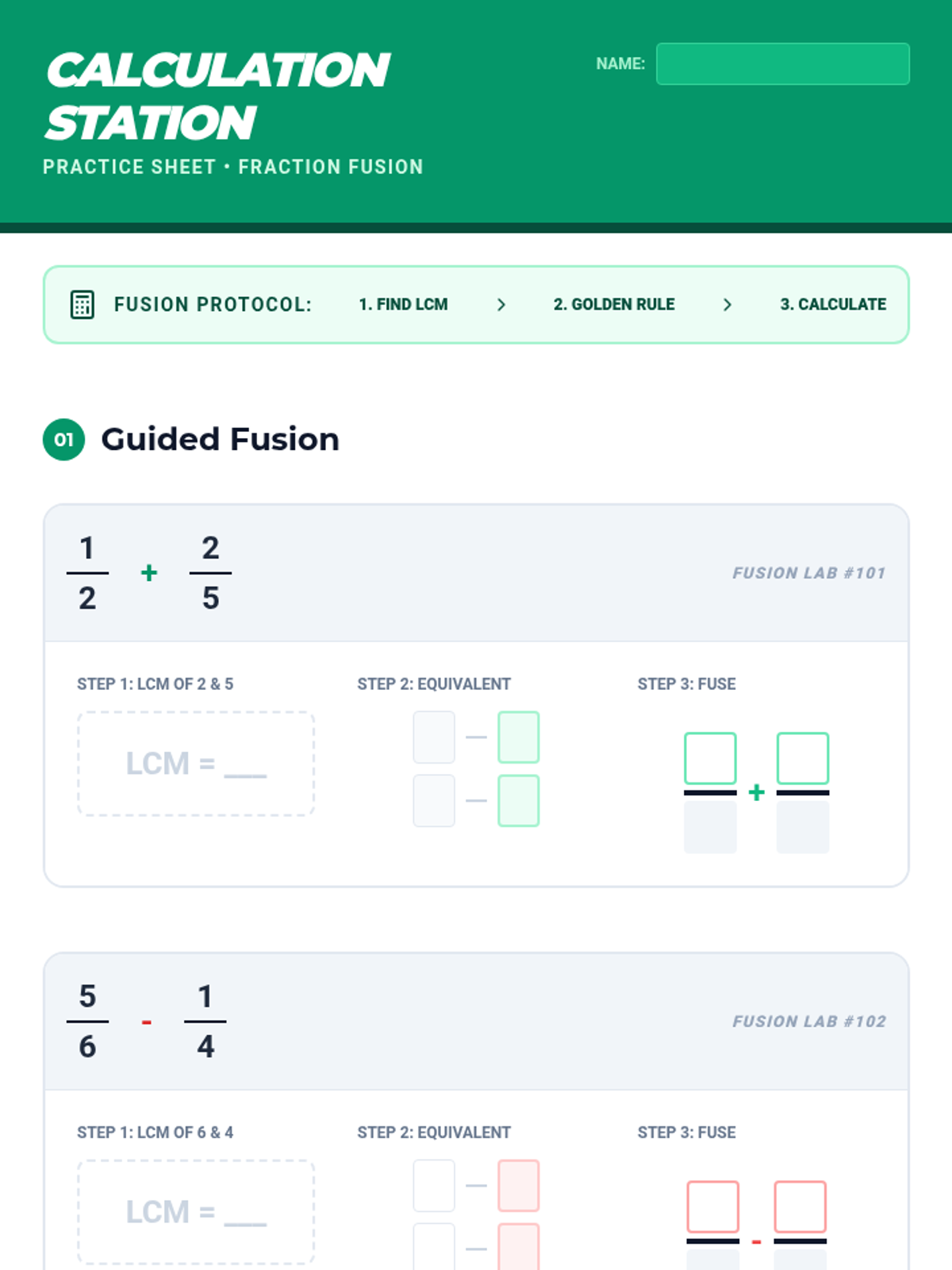
Guided practice applying common denominators to solve addition and subtraction problems with unlike denominators.
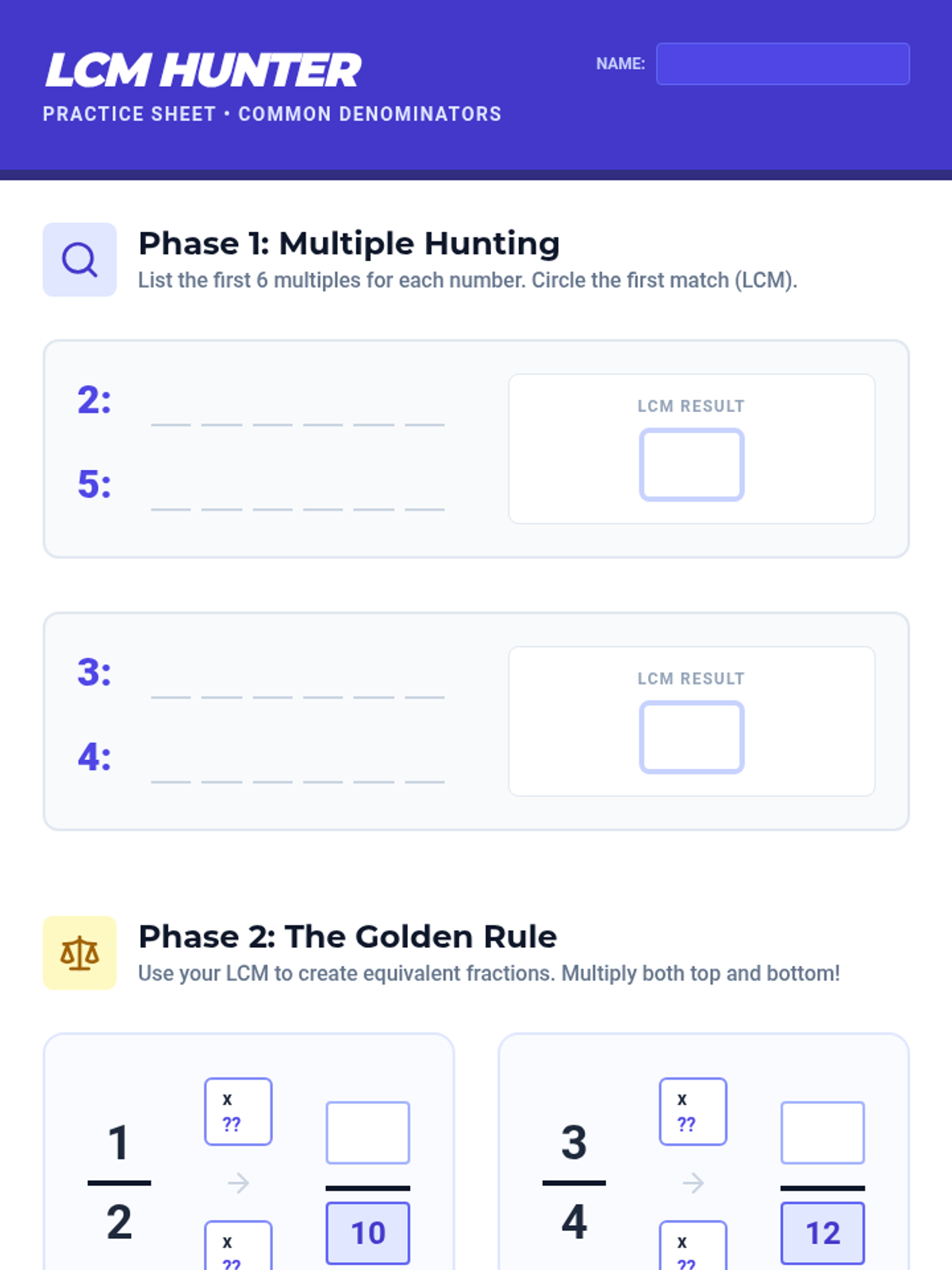
Instruction on finding the least common multiple (LCM) and creating equivalent fractions to find common denominators.
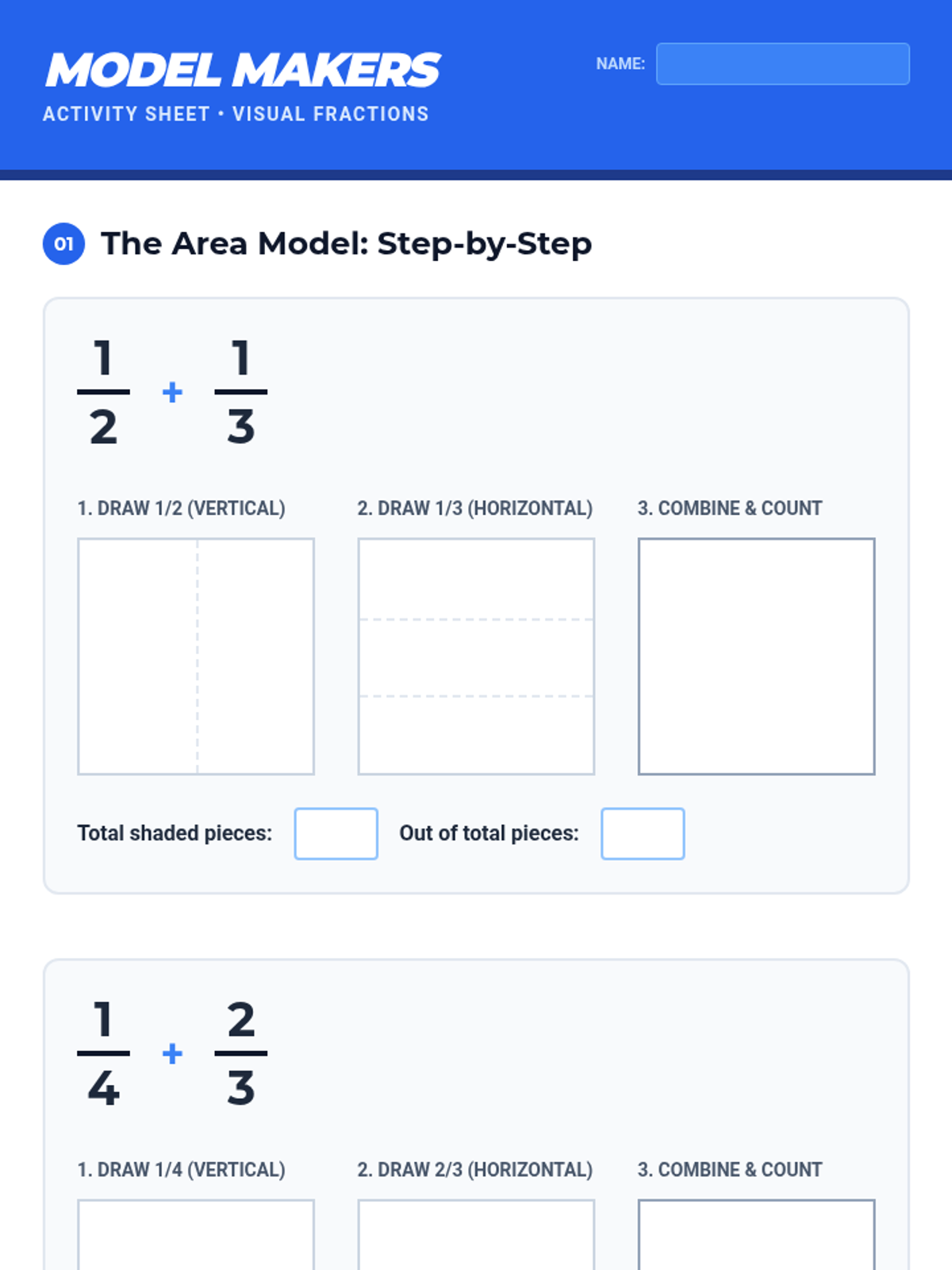
Introduction to adding and subtracting fractions using visual area models and number lines to build conceptual understanding of unlike denominators.
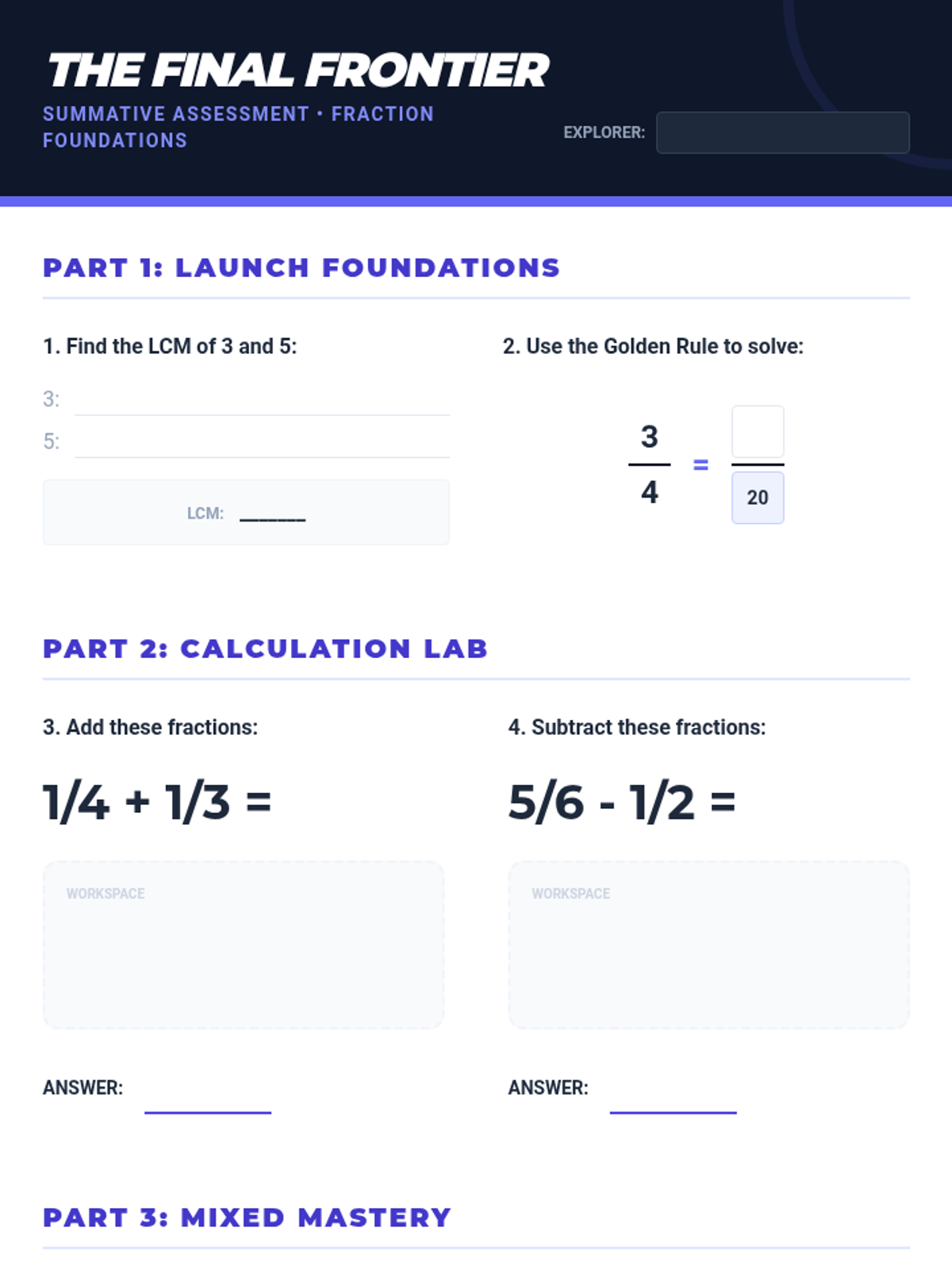
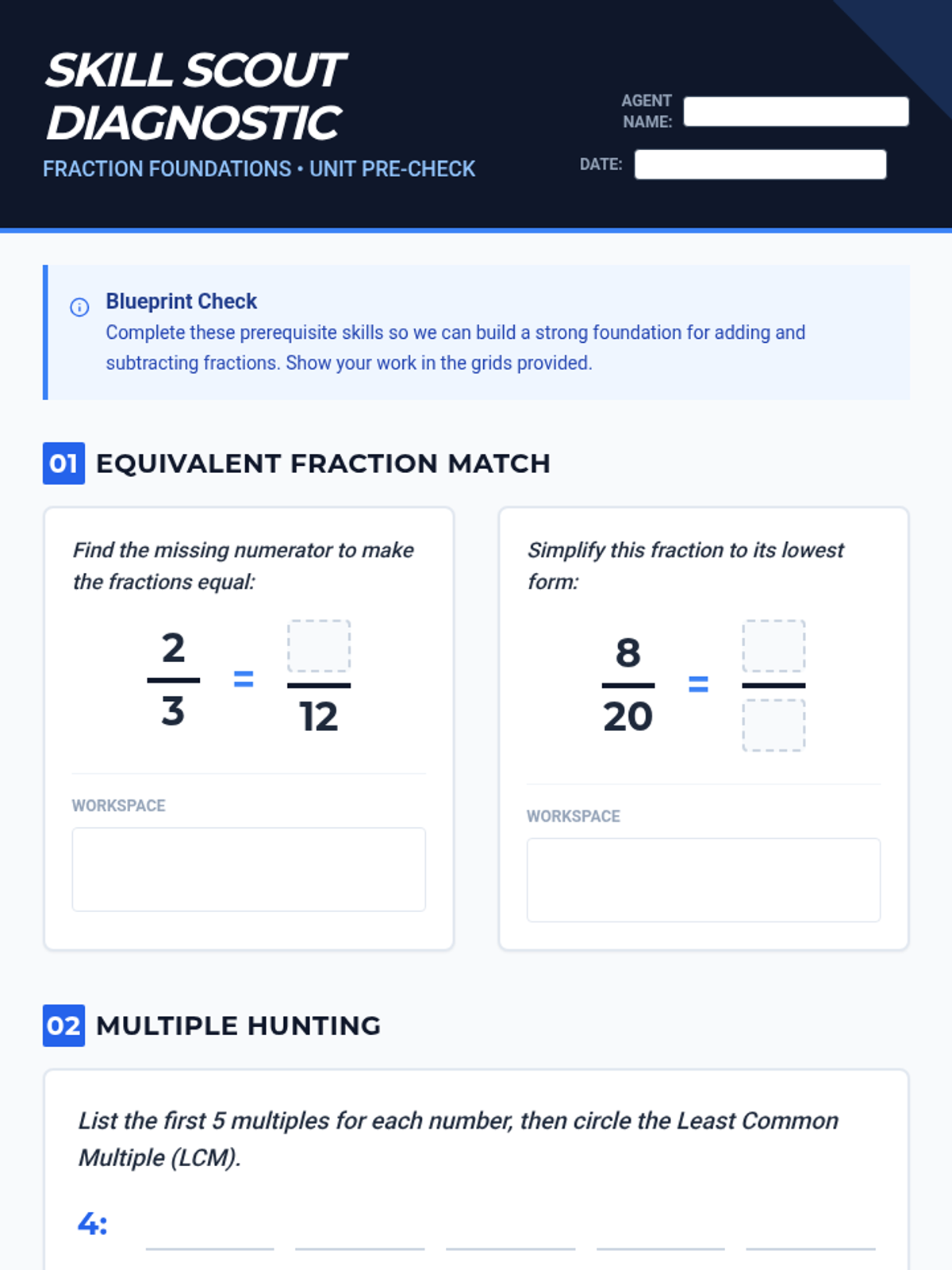
Assessment of prerequisite skills including equivalent fractions and common multiples to identify specific gaps in student understanding.
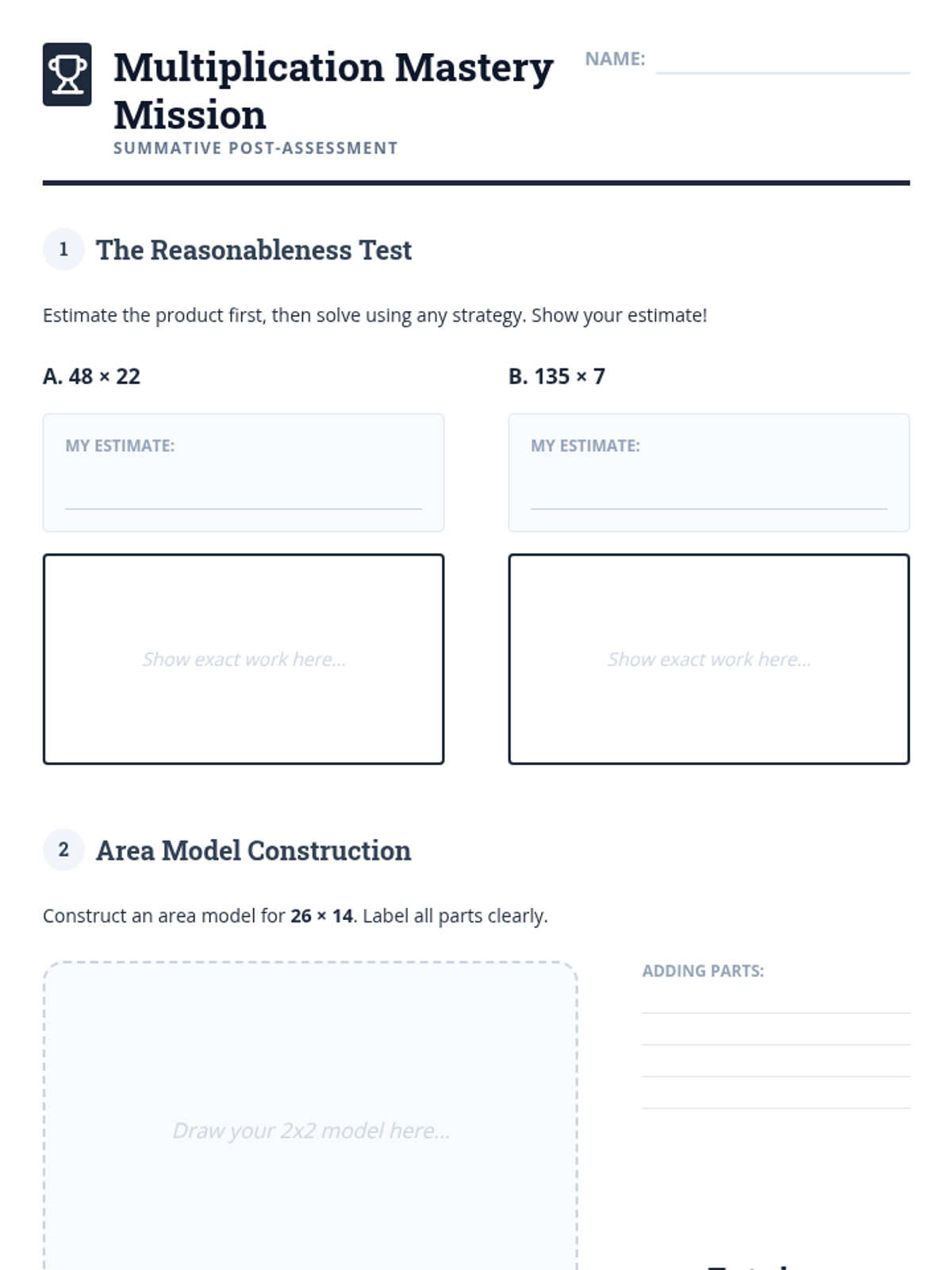
Final summative assessment to measure growth and mastery of multi-digit multiplication strategies.