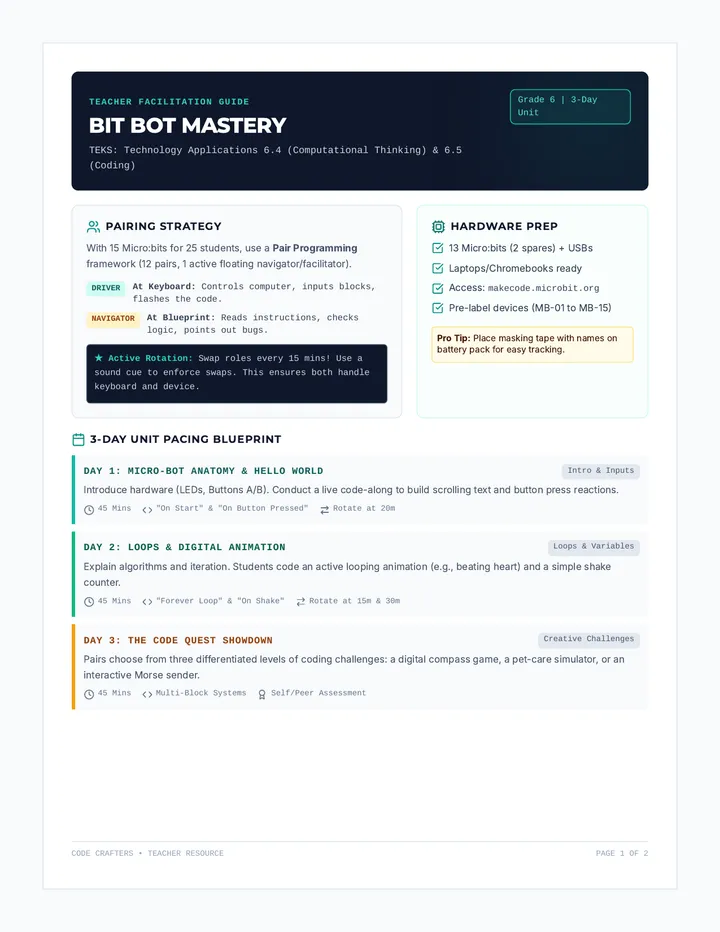
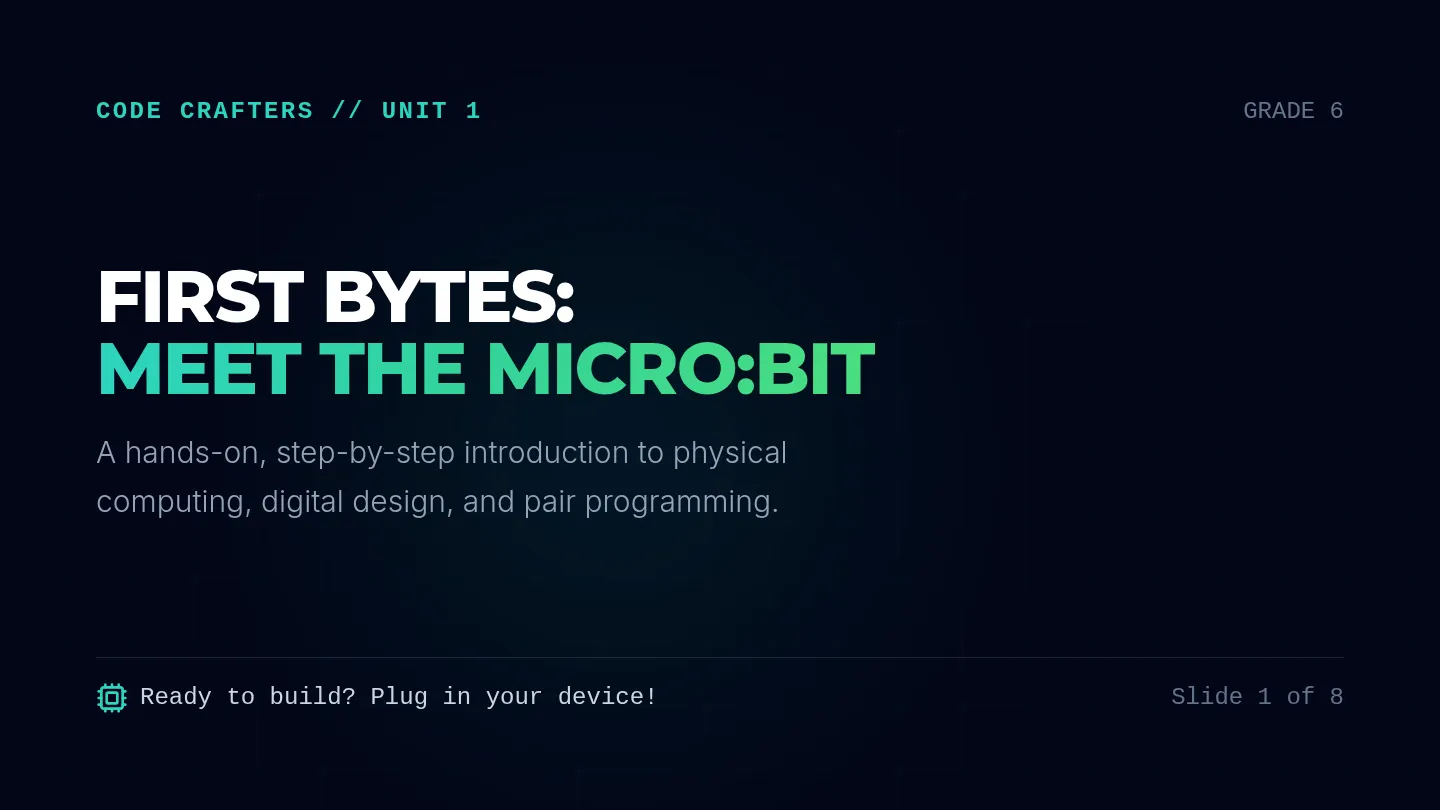
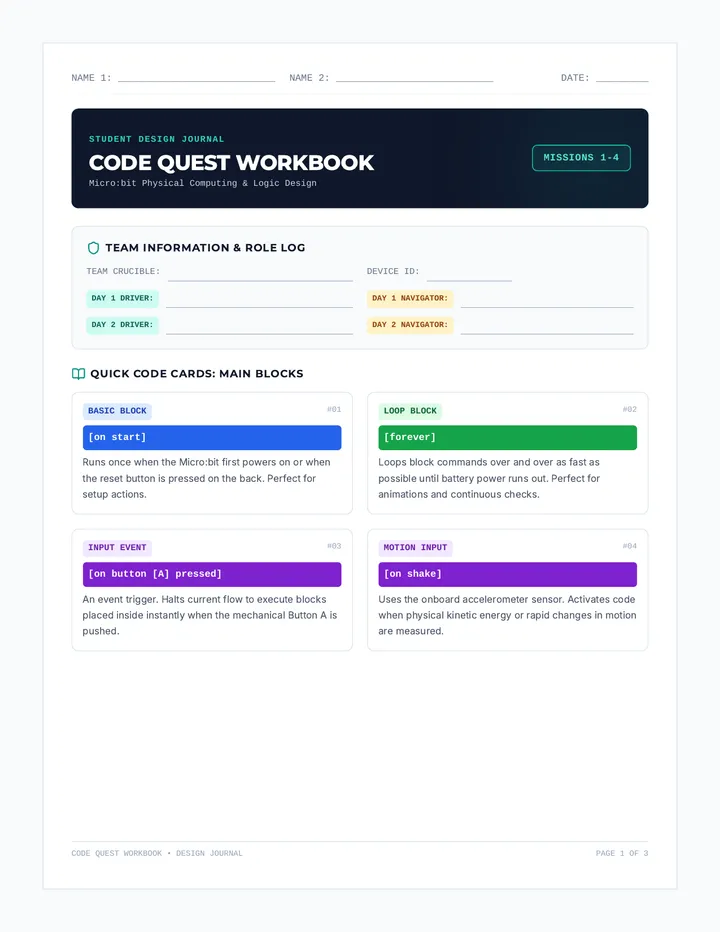
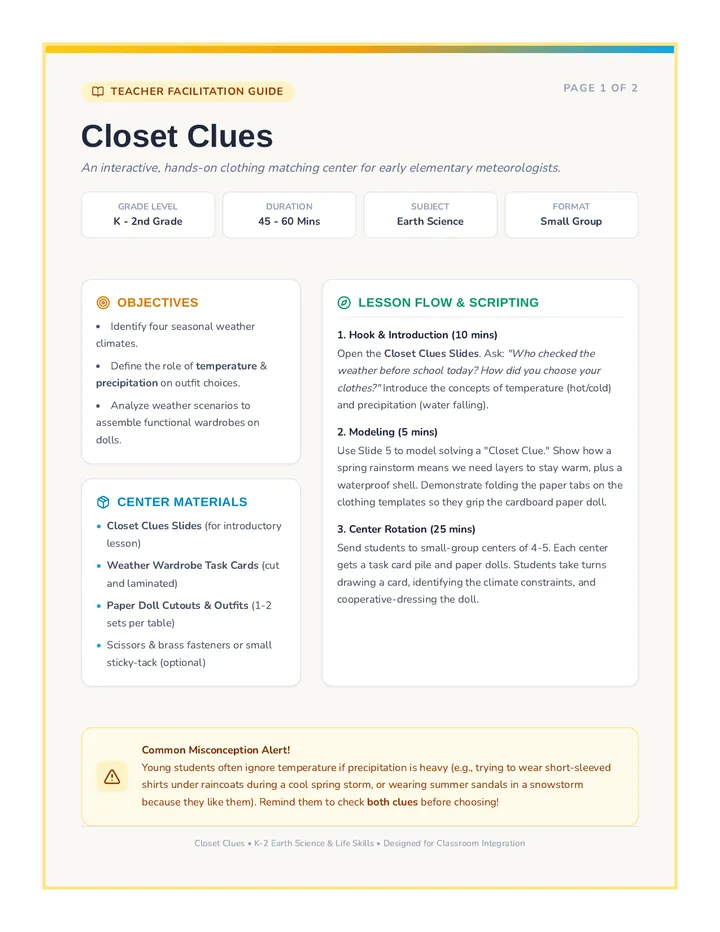
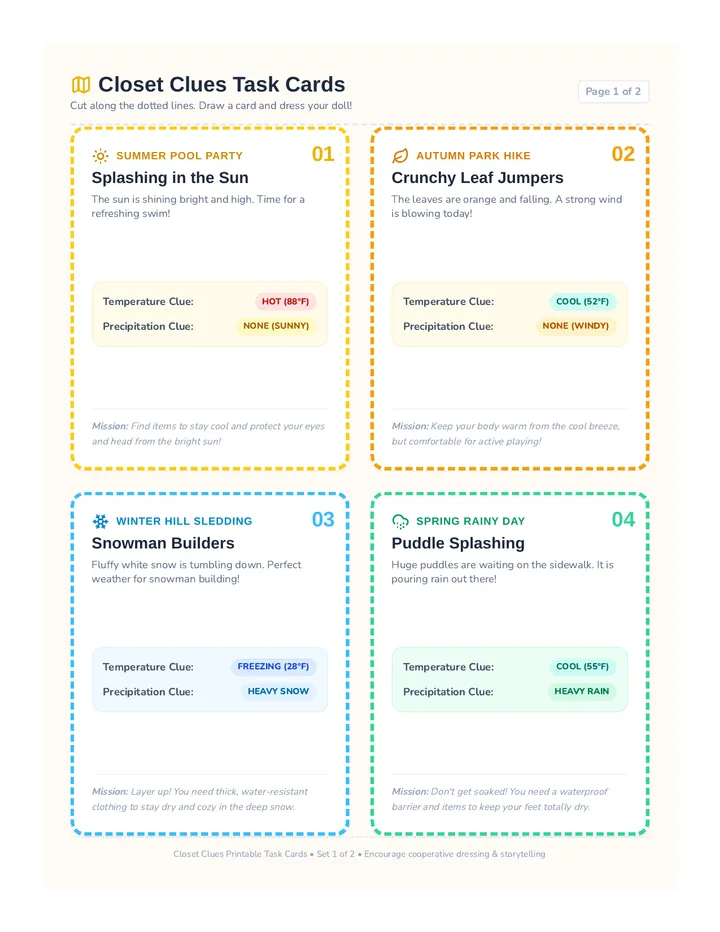
A series of creative coding challenges designed for young learners using Scratch Jr. Students will explore basic programming concepts through open-ended, imaginative projects.
Students analyze data to describe the human role in rising global temperatures. They evaluate claims about natural resource use, the carbon cycle, and the greenhouse effect using historical evidence and climate models.
A comprehensive review of mixtures and solutions for 5th grade students, focusing on solubility, concentration, and chemical vs. physical reactions through a series of independent lab challenges.
An introductory lesson for early elementary students exploring the characteristics of spring, the life cycle of plants, and the basic concept of photosynthesis.
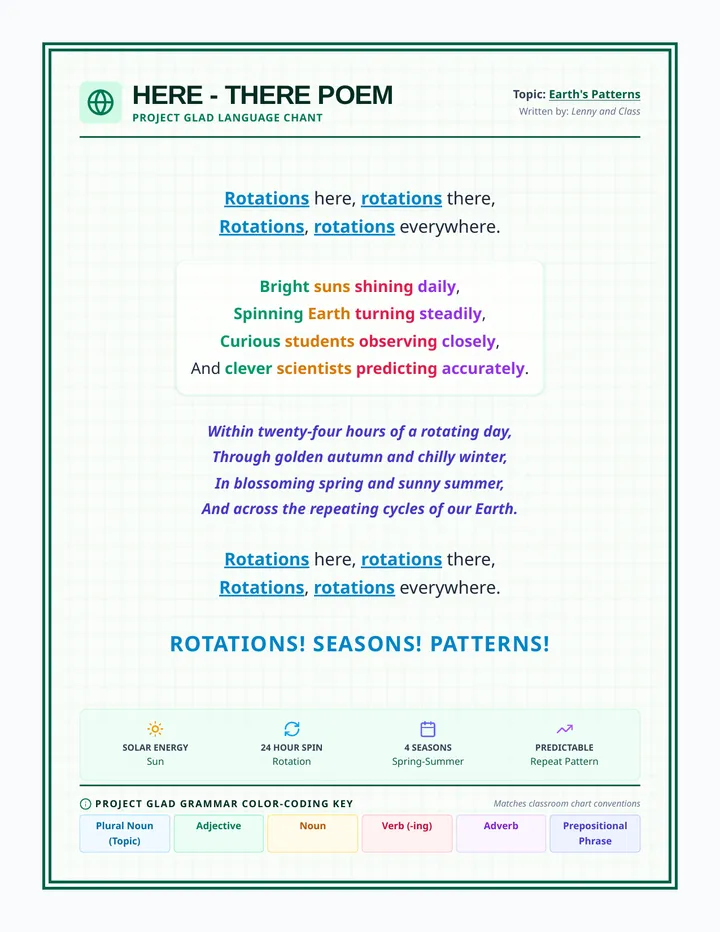
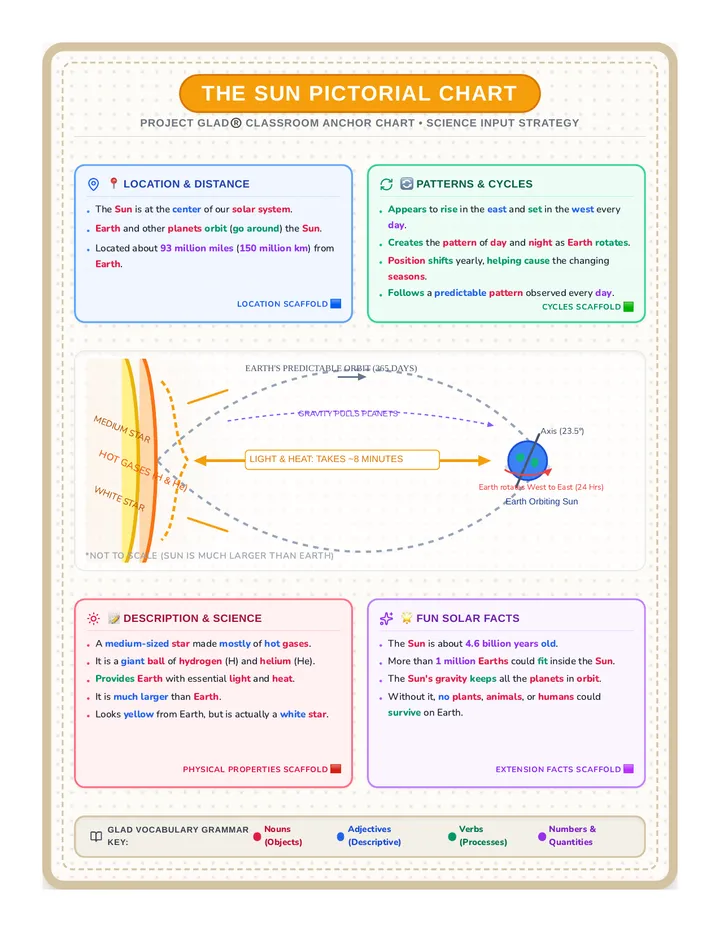
A focused lesson on the Earth's movements, covering the causes of day and night and the factors that create the four seasons, aligned with CKLA Knowledge 6.
An introductory lesson on bird anatomy where students learn to identify and label five key body parts: eye, beak, wing, feathers, and claws.
An introductory lesson on birds for first-grade students, focusing on anatomy, habitats, and common species through a visual read-along and interactive activities.
An introductory lesson on the history and mechanics of steam engines, adapted for 3rd-grade readers. Students will explore how heat creates movement and how this invention changed the world.
A phonics lesson focused on decoding 2-syllable VCV words with open and closed syllables, set against a retro-futuristic solar system theme.
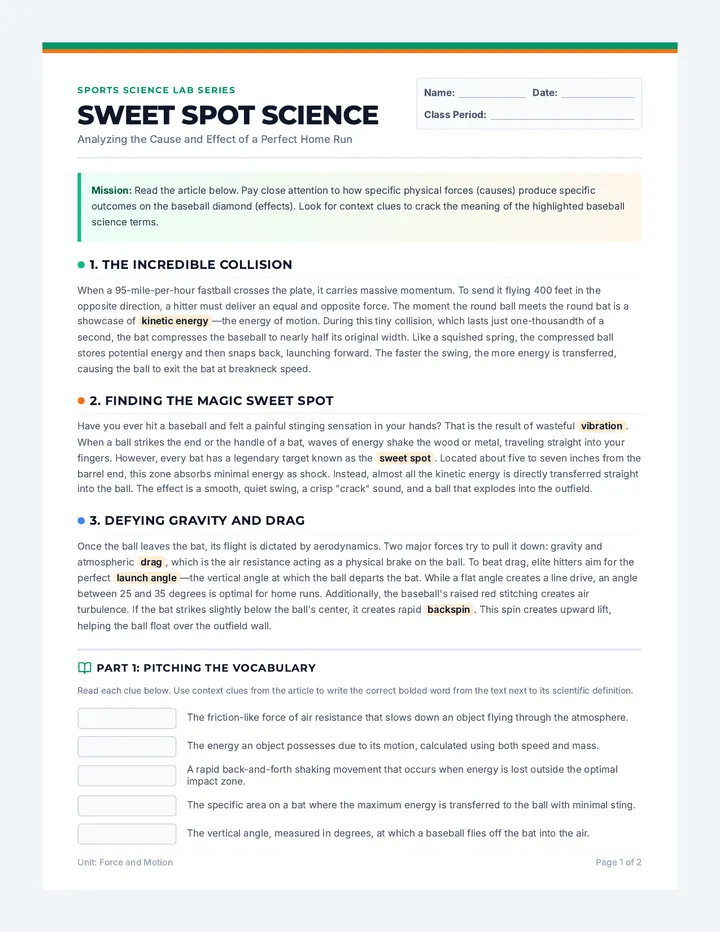
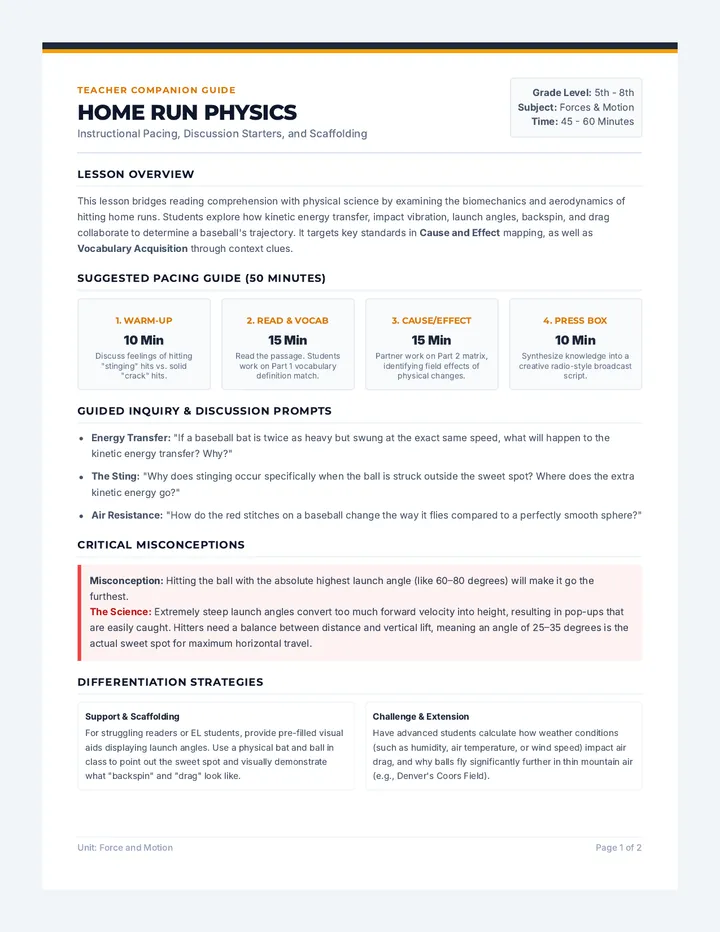
A lesson focused on the fundamental principles of motion, including key vocabulary and Newton's First Law. Students will demonstrate their understanding of forces, acceleration, and inertia.
A lab-based lesson where students determine the densities of granite and basalt to understand the differences between continental and oceanic crust.
A vocabulary-focused lesson introducing students to the concepts of environmental stewardship and nonrenewable resources. Students will learn to define and use these terms through interactive slides and oral practice.
This lesson introduces 3rd-grade students to thermal energy, molecules, and heat transfer using visual diagrams. Students will explore how energy moves between objects and how the speed of molecules relates to temperature.
In this lesson, students explore the different parts of a plant, the specific needs for plant growth, and various types of plants. They will use visual cards to identify and categorize these elements in a hands-on sorting activity.
Un test de connaissances rapide de 10 minutes sur la cinématique (MRU, MRUV, coordonnées polaires) pour le niveau L1, comprenant l'énoncé et son corrigé détaillé.
A dedicated hub for educators featuring a K-12 curriculum scope, professional development guides, and quick-reference AI cheat sheets.
High school students analyze the impact of generative AI on careers and society, mastering advanced prompt engineering and debating complex ethical dilemmas.
Middle schoolers dive into the mechanics of neural networks and the ethical implications of AI in daily life, focusing on digital citizenship and algorithmic fairness.
Middle elementary students investigate how training data shapes AI behavior, identifying bias in simple systems and experimenting with basic prompt engineering.
Students in grades 1-2 explore how machines learn to recognize patterns and assist humans, introducing basic classification and the idea of helpful technology.
Introduces Kindergarteners to the concept of AI as a 'thinking' tool that follows instructions and learns from examples, focusing on the difference between robots and AI.
A comprehensive Biology lesson covering the cell cycle, DNA replication, protein synthesis, and Mendelian/non-Mendelian genetics, specifically designed for STAAR EOC preparation. Students explore the flow of genetic information and the patterns of inheritance through model-based reasoning and problem-solving.
A comprehensive EOC prep lesson covering evolution, natural selection, taxonomy, and ecological systems through a case-study lens. Students analyze evidence of common ancestry and model energy flow and nutrient cycling in ecosystems.
A comprehensive Grade 8 Science lesson focused on Newton's Laws, balanced and unbalanced forces, and energy transformations, specifically designed for STAAR preparation. This lesson uses a 5E instructional model and includes inquiry-based labs and STAAR-aligned assessment questions.
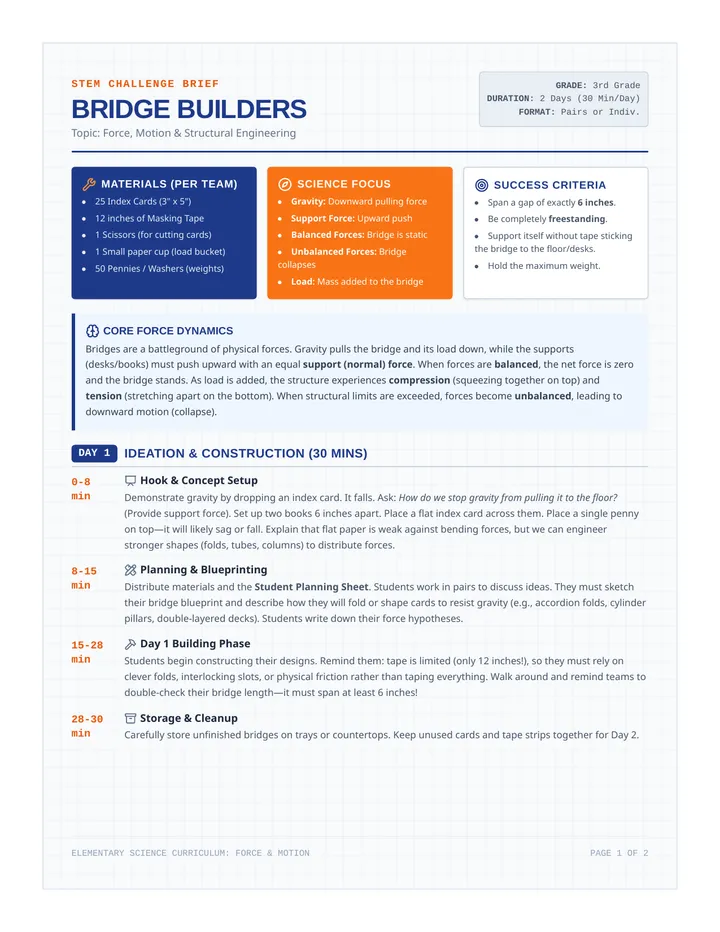
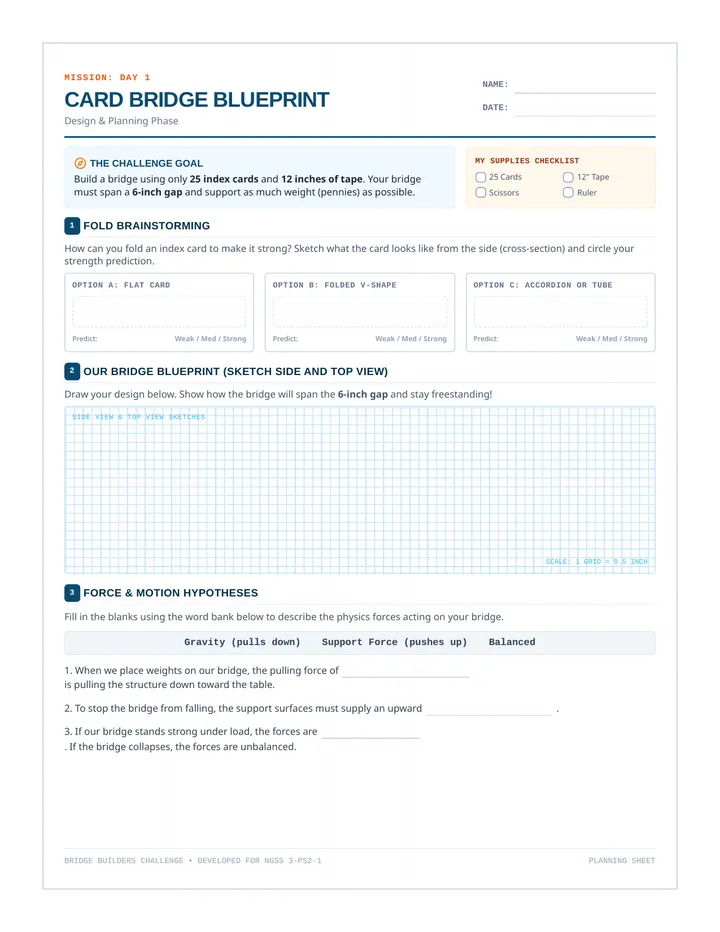
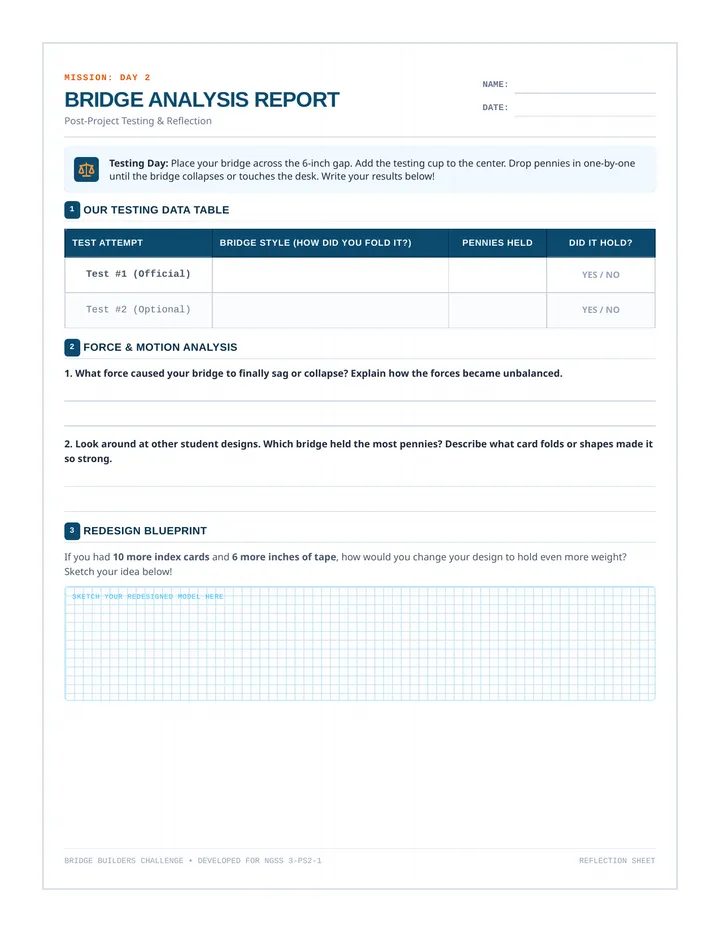
A comprehensive Grade 5 Science lesson focusing on the physics of motion, force, and energy. Students investigate balanced and unbalanced forces, friction, gravity, and simple machines through hands-on inquiry and real-world applications.
A comprehensive 5th grade science lesson on the properties and changes of matter, featuring hands-on stations, mixtures and solutions investigations, and STAAR-aligned assessment. Students explore physical properties, separation techniques, and state changes using the CER framework.
A comprehensive Grade 8 Science lesson covering atoms, the periodic table, and chemical reactions, aligned with TEKS 8.5A-E. Features model-based instruction using Johnstone's triangle to prepare students for STAAR success.
A hands-on laboratory experience where students use microscopes to observe and document biological and physical specimens at varying magnifications.
Reviewing the three types of heat transfer through interactive slides and a graphic organizer to connect concepts to everyday life.
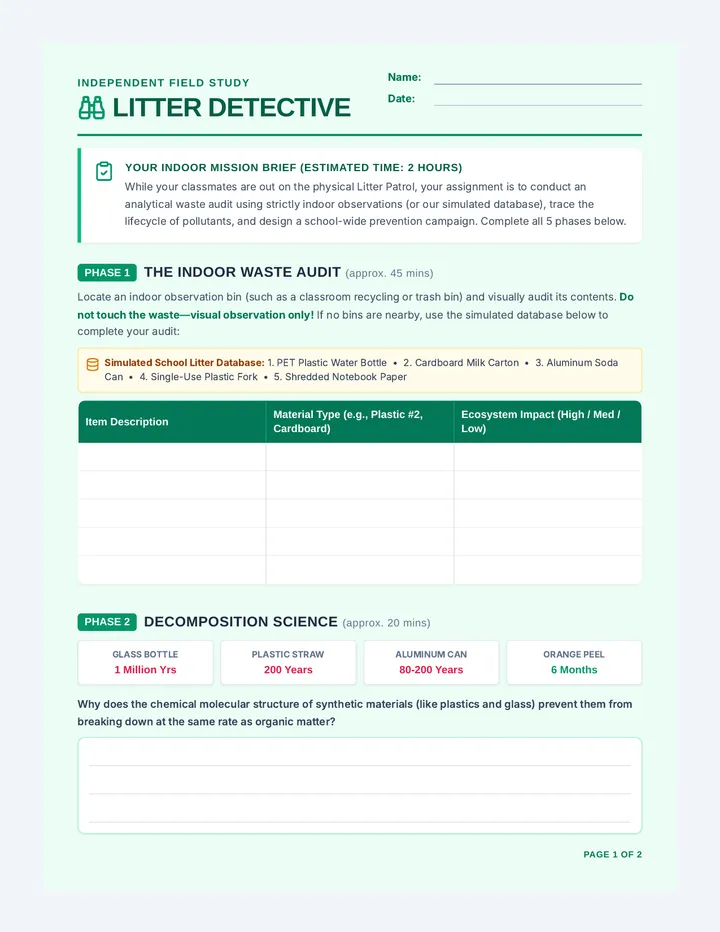
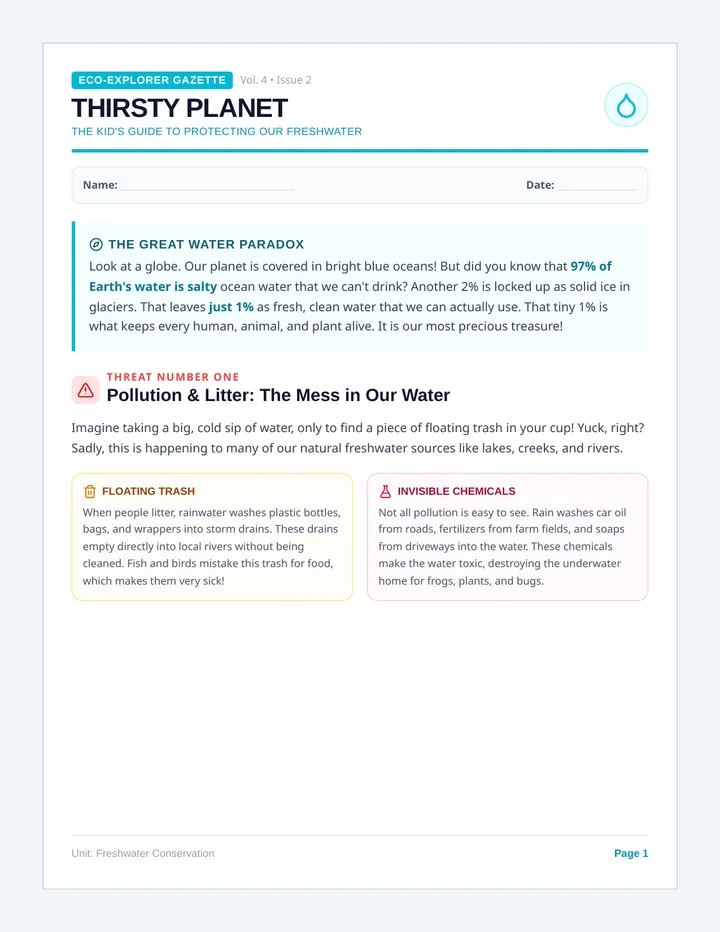
A deep dive into marine environments and the impact of plastic pollution, featuring cause-and-effect analysis and collaborative problem-solving for 7th grade ELD students.
A comprehensive ELD lesson for 7th graders focusing on the ecological and social importance of urban forests, featuring tiered supports for mixed proficiency levels.
A comprehensive lesson exploring how light and sound function as signals in our community, how they are produced through vibrations and sources, and the unique properties of shadows and volume.
A redesigned training experience for Shopify POS focused on scenario-based learning and performance-centric instruction.
A 30-minute introductory lesson for 1st graders exploring how the brain acts as the body's "control center," managing both voluntary actions and automatic functions.
A 30-minute introductory lesson for kindergarteners about the brain, focusing on its role in thinking and processing the five senses. includes a presentation, teacher guide, and a wearable brain hat craft.
An introductory lesson on evolution for 9th-grade special education students, focusing on Charles Darwin's journey, the HMS Beagle, and the core principles of natural selection and adaptation.
Students explore the plant life cycle through hands-on seed sorting and sensory observations, connecting biological processes to the arrival of spring.