Exploration of holiday symbols like the shamrock and the rainbow, featuring a logic-based scavenger hunt activity.
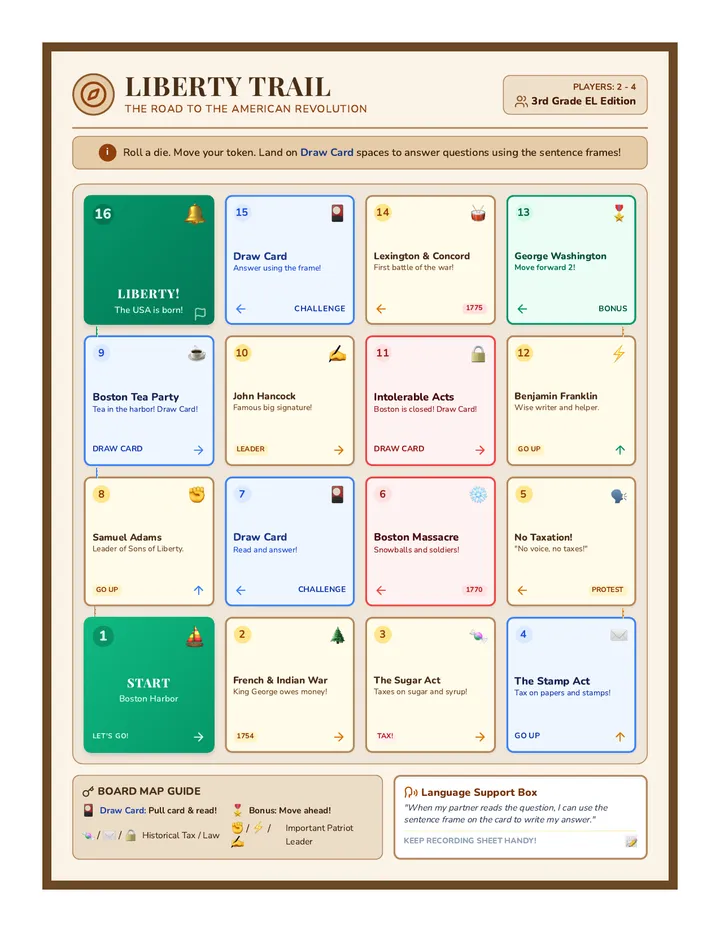
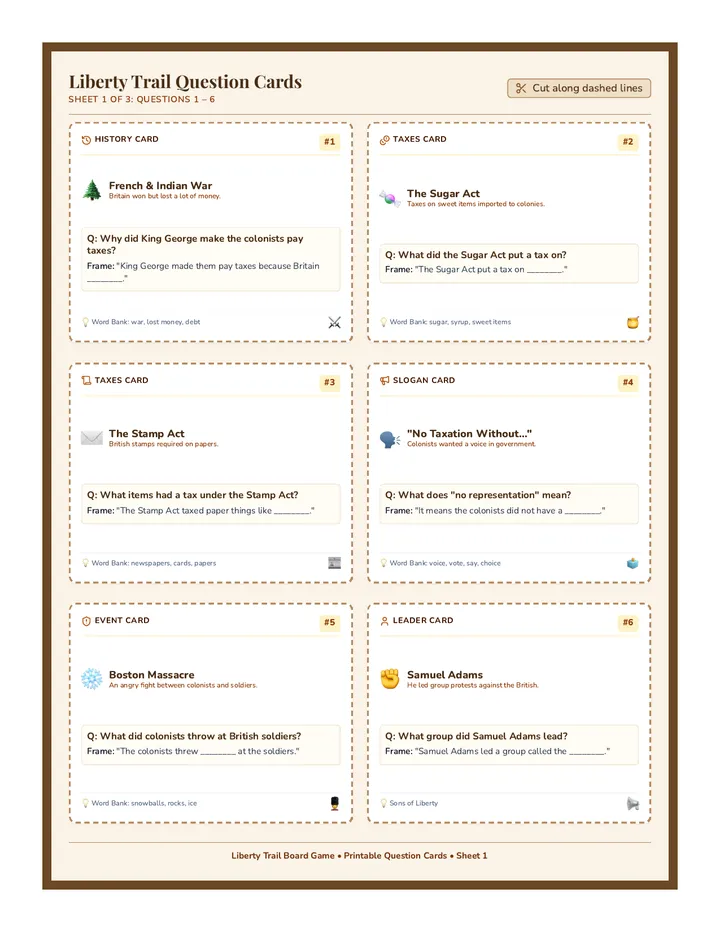
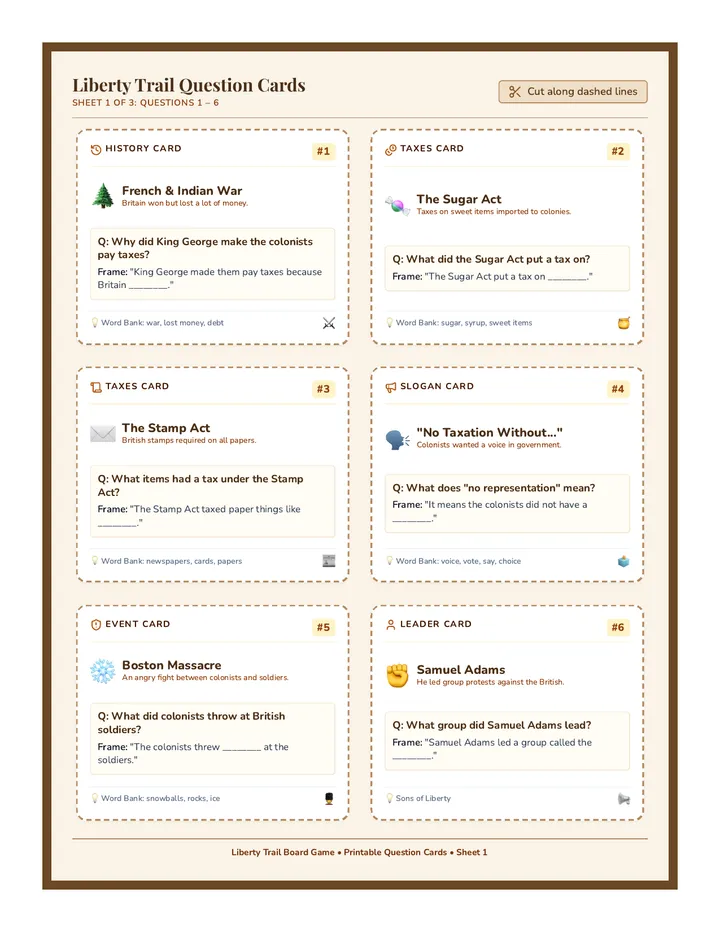
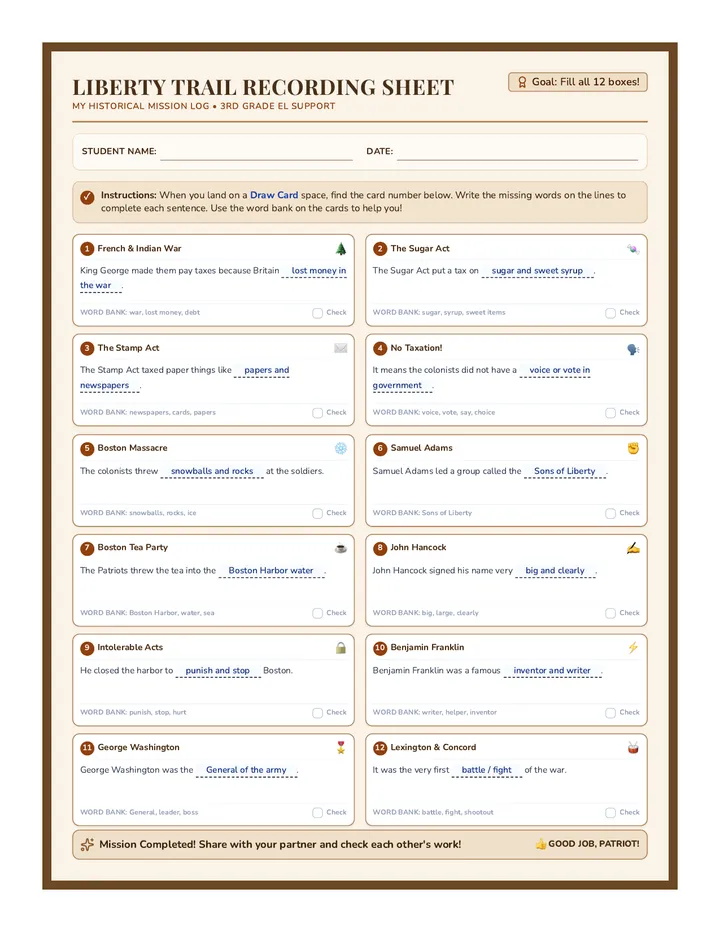
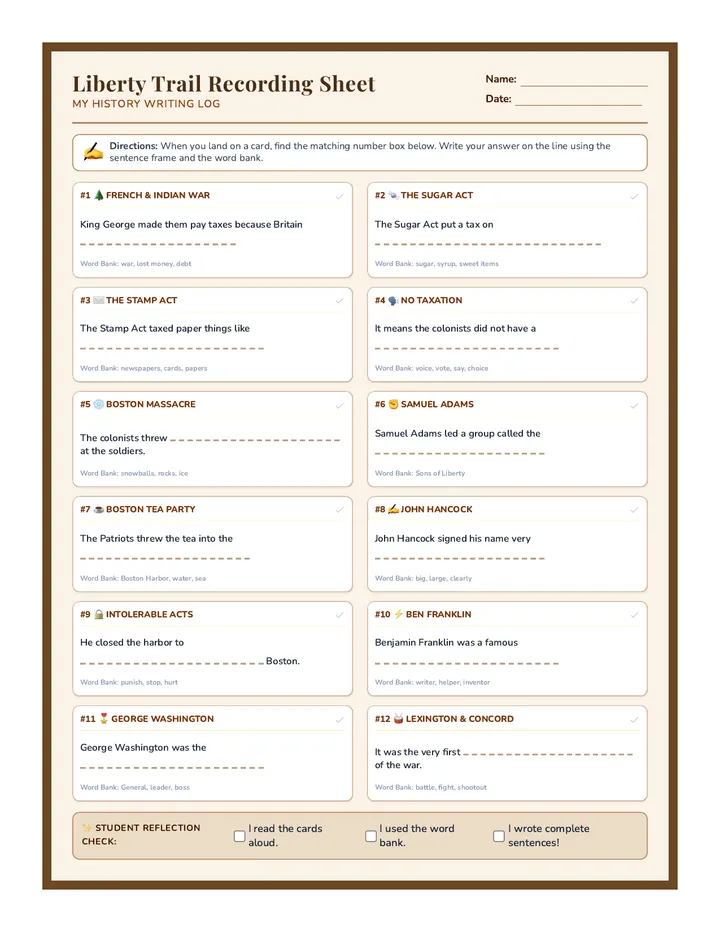
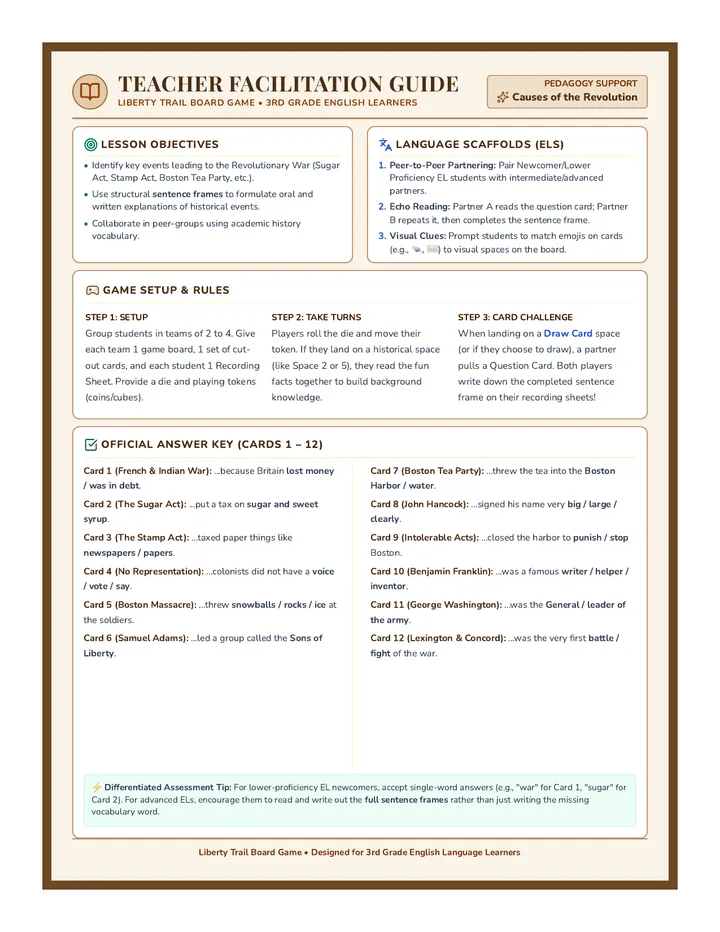
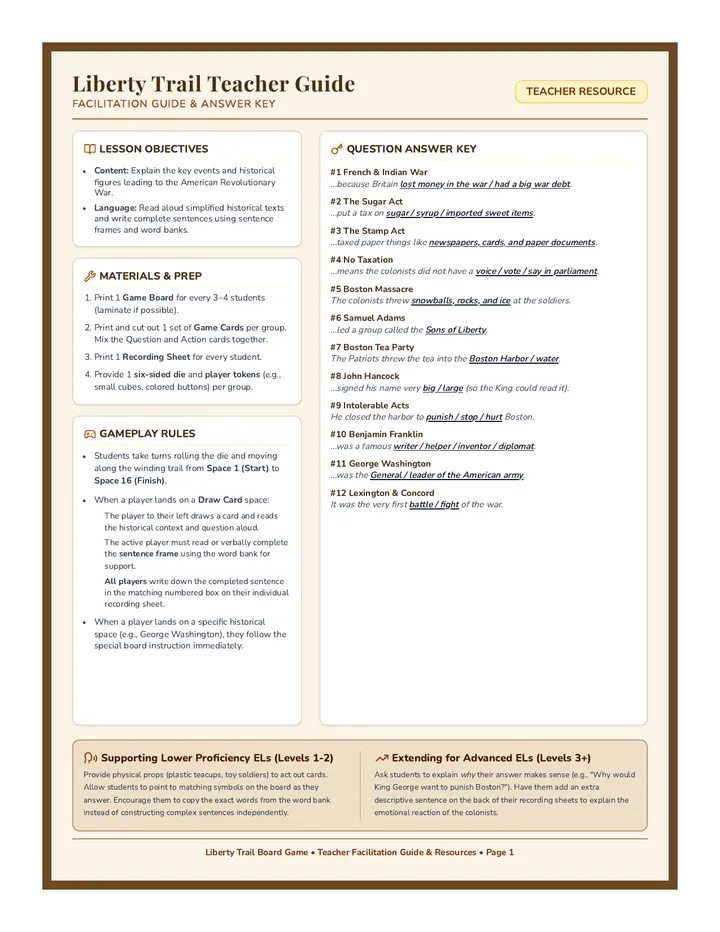
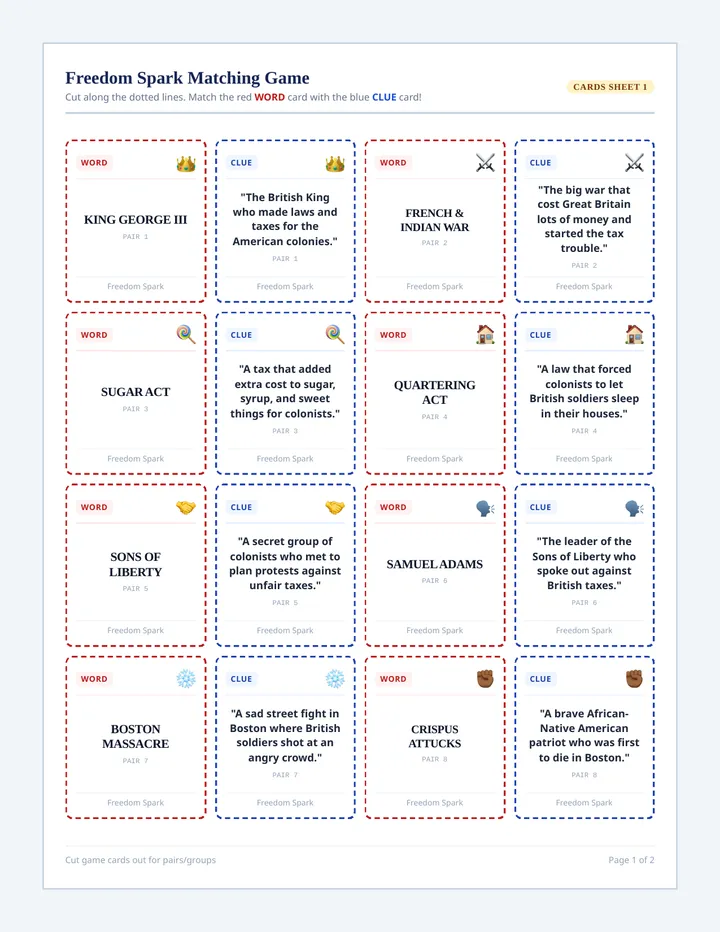
A complete educational board game package designed for 3rd-grade English Language learners (ELs) studying the causes of the American Revolutionary War. Features simplified text, visual supports, and sentence frames to assist language production.
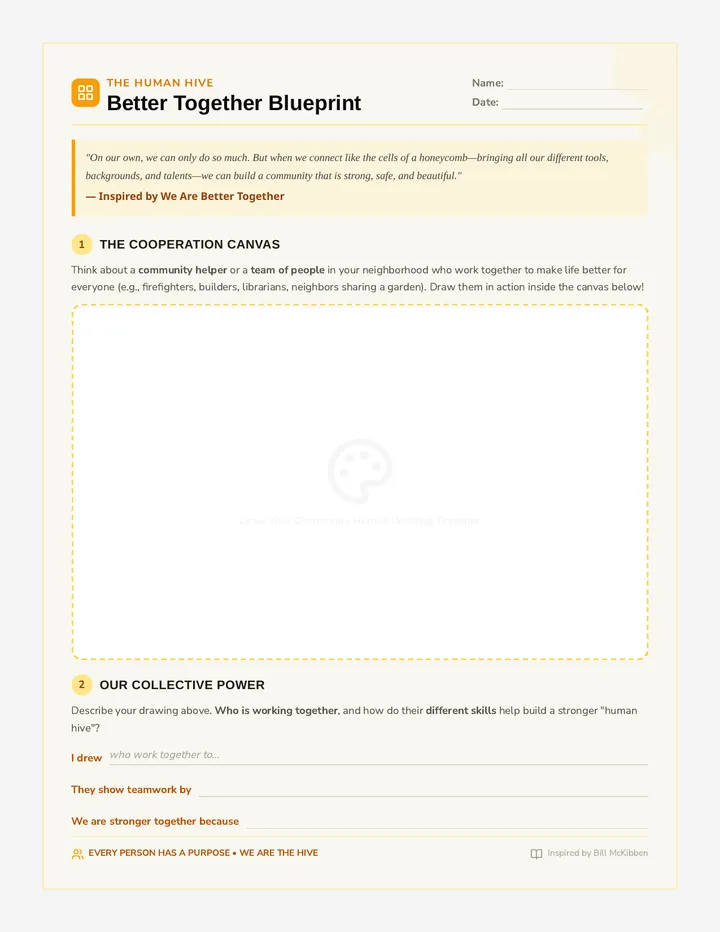
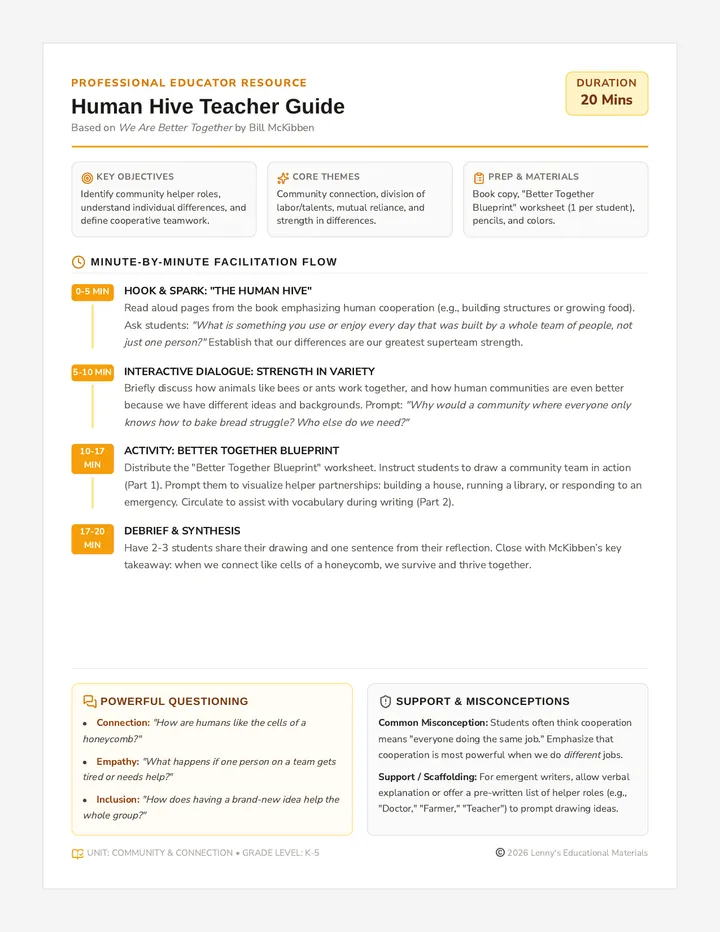
A 20-minute introductory lesson exploring community, cooperation, and human connection inspired by Bill McKibben's 'We Are Better Together'. Students examine how our unique differences and teamwork allow us to build a better, stronger community, culminating in a creative sketch and reflection activity.
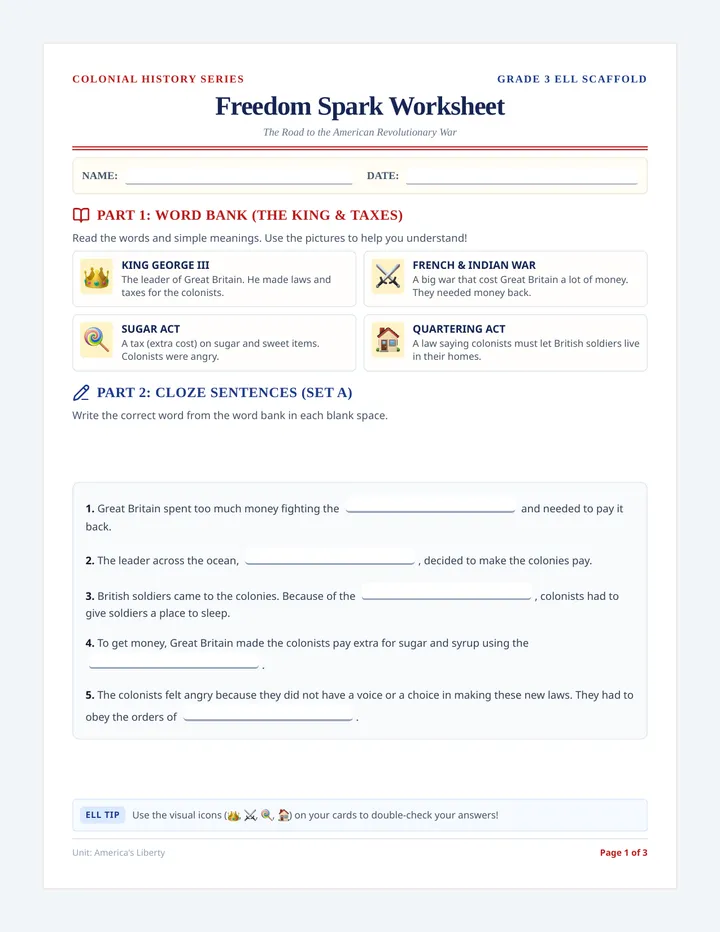
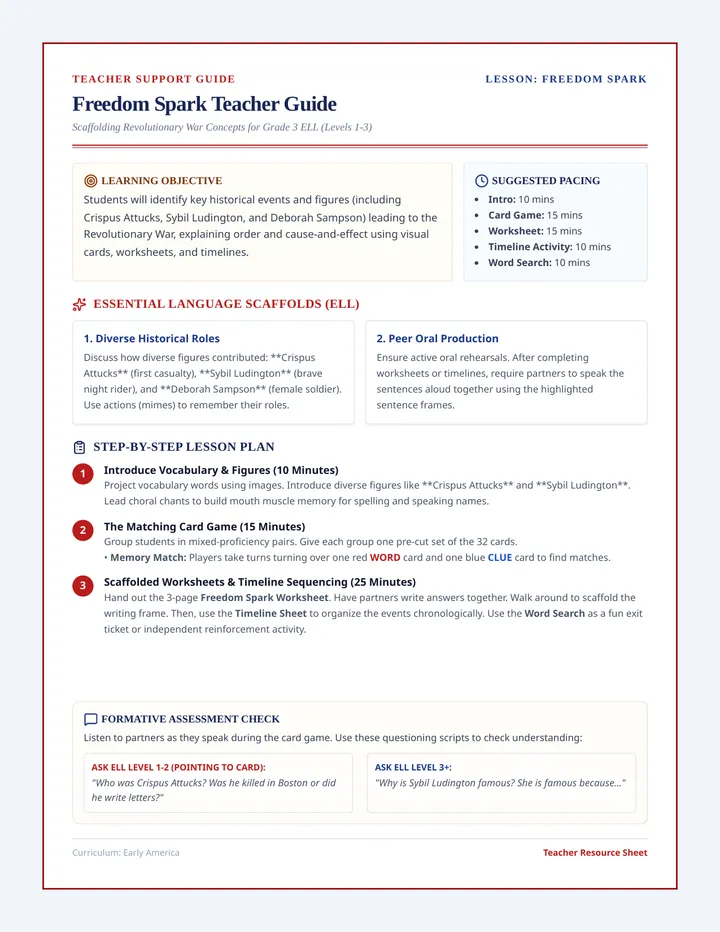
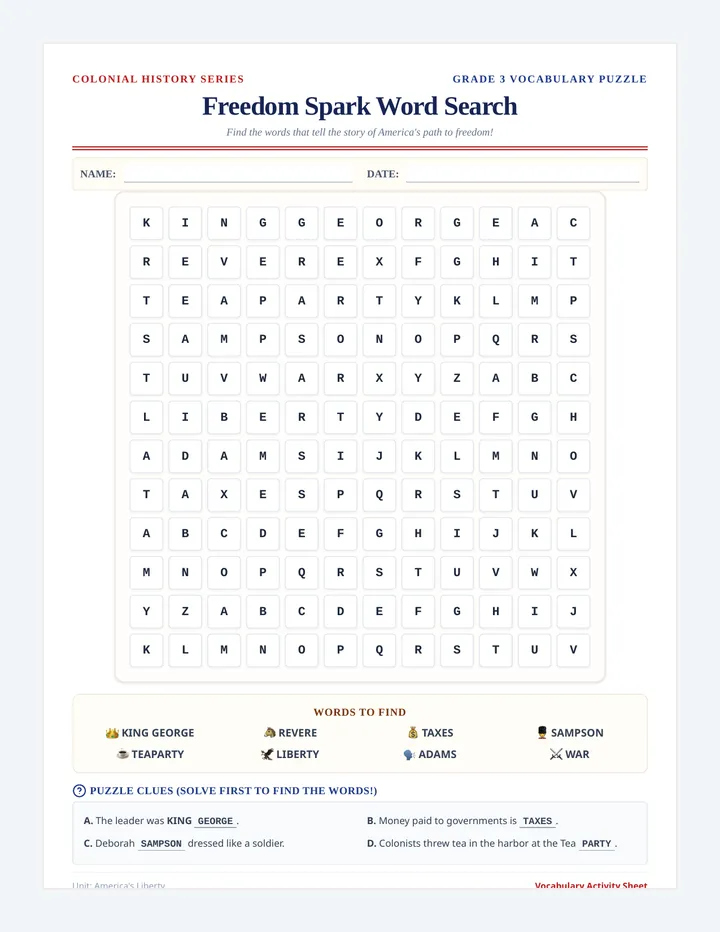
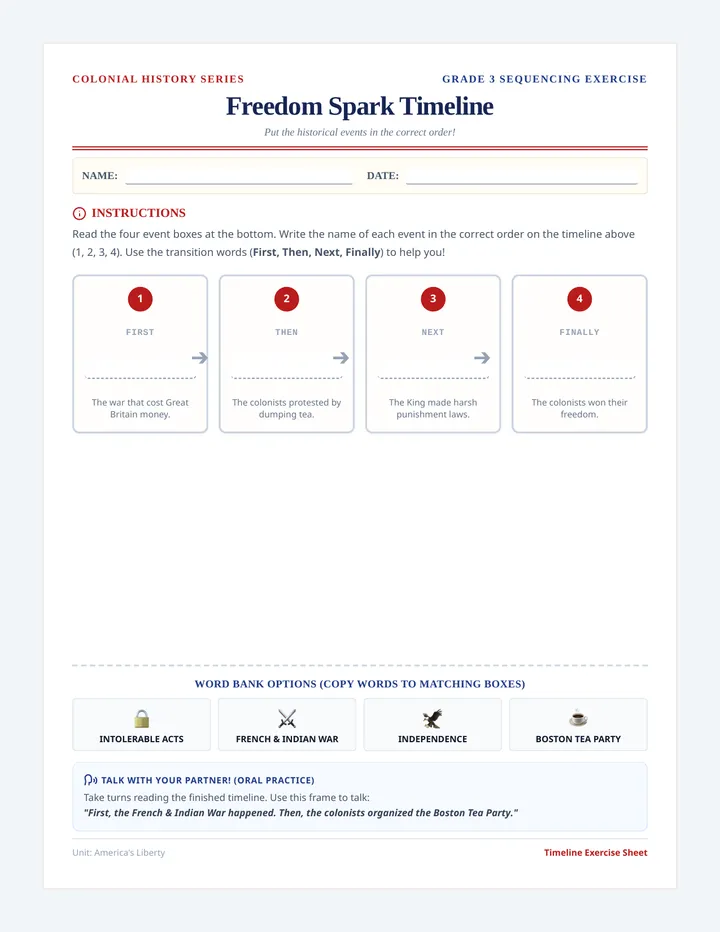
An introductory history lesson on the key events leading to the American Revolutionary War, designed specifically for third-grade English Language Learners (ELL). It includes a visual vocabulary cloze worksheet, interactive matching cards for learning events, and a comprehensive facilitation guide for teachers.
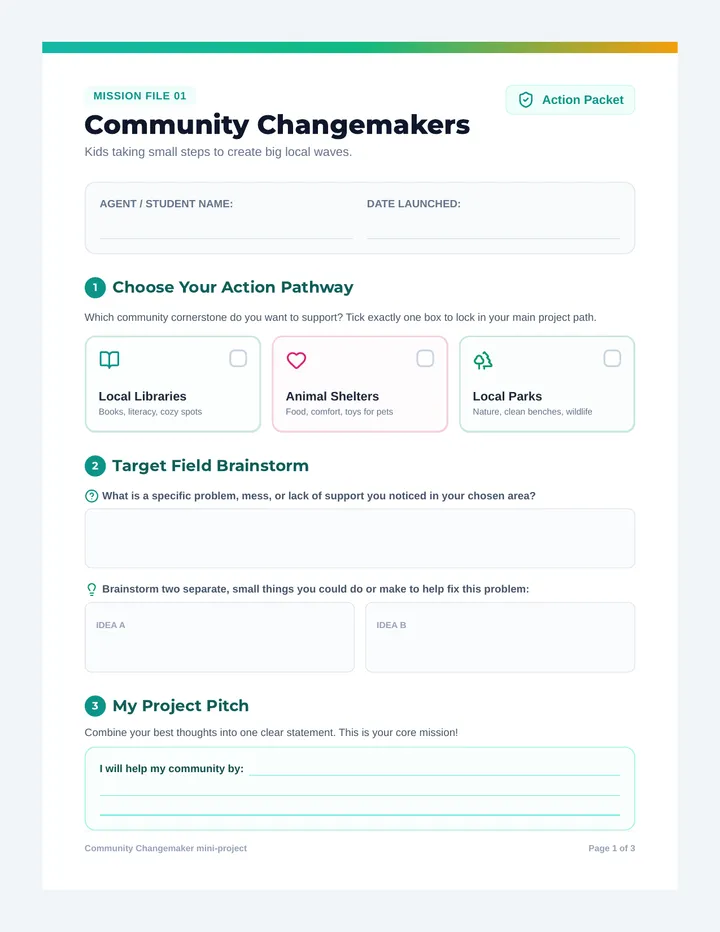
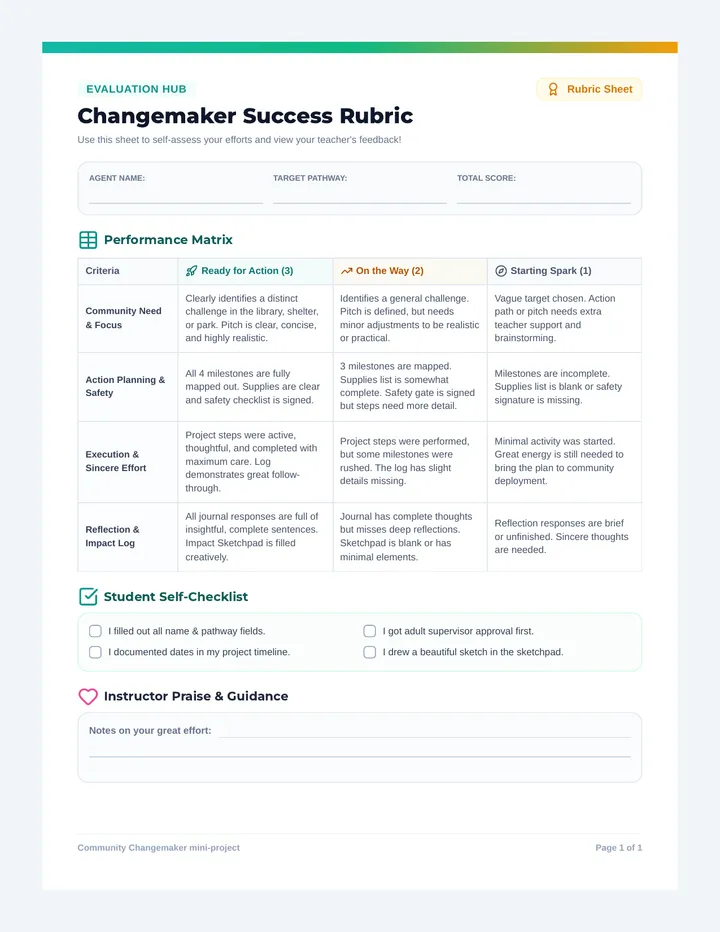
A mini-project curriculum designed to empower young students to become local community changemakers. It guides them through brainstorming, planning, and executing simple, impactful action projects for local libraries, animal shelters, or parks.
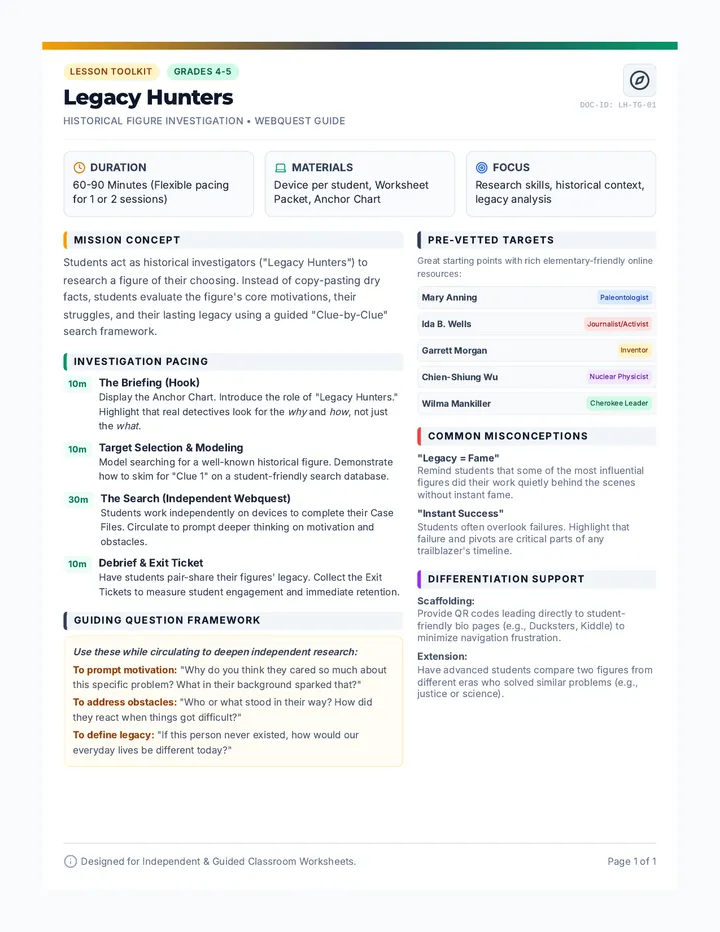
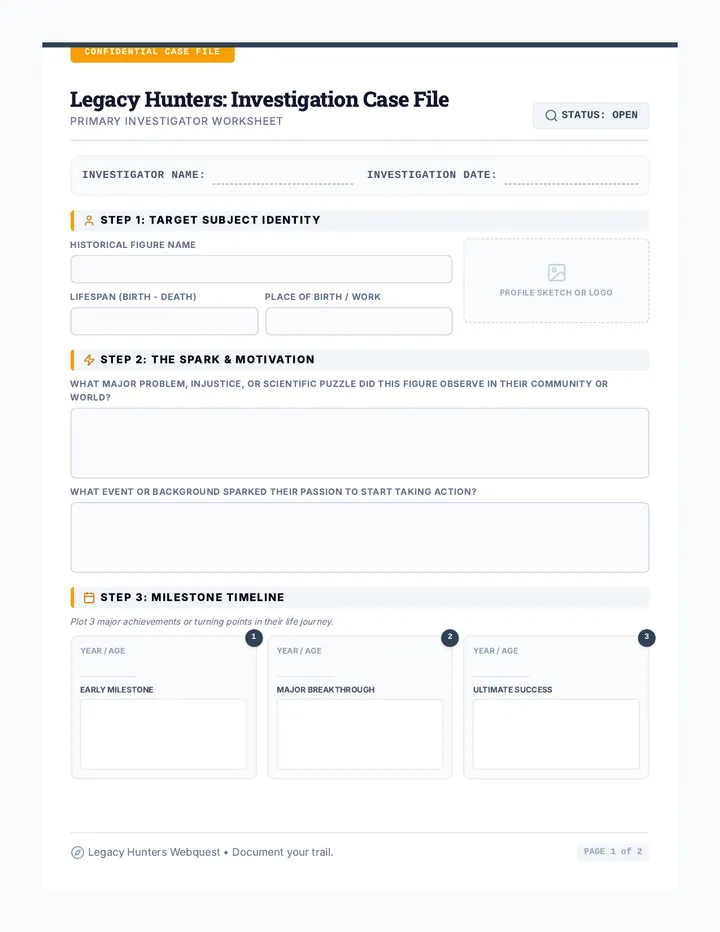
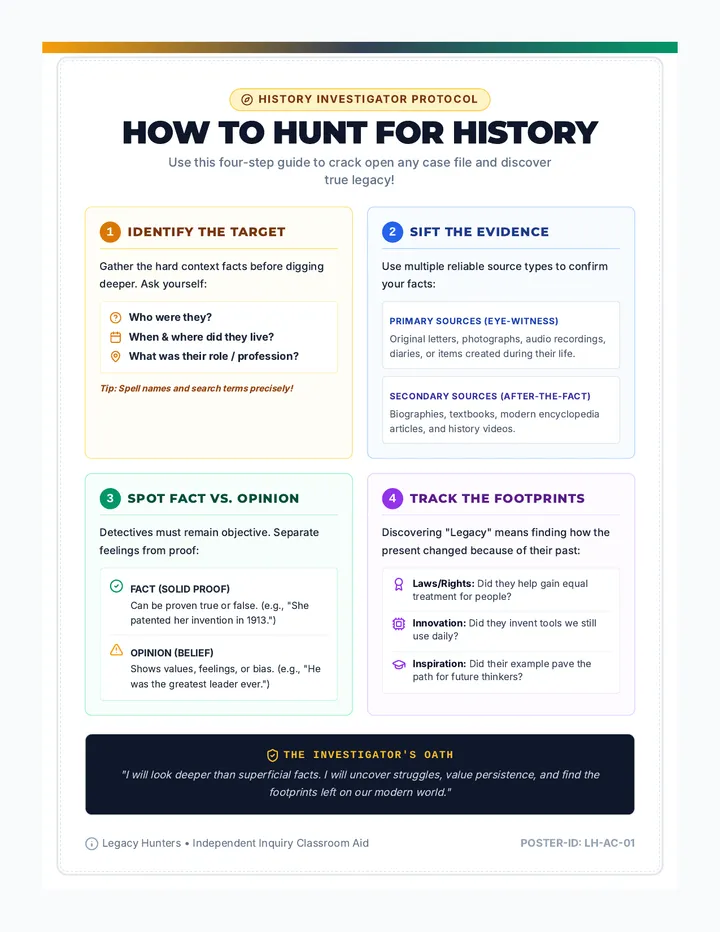
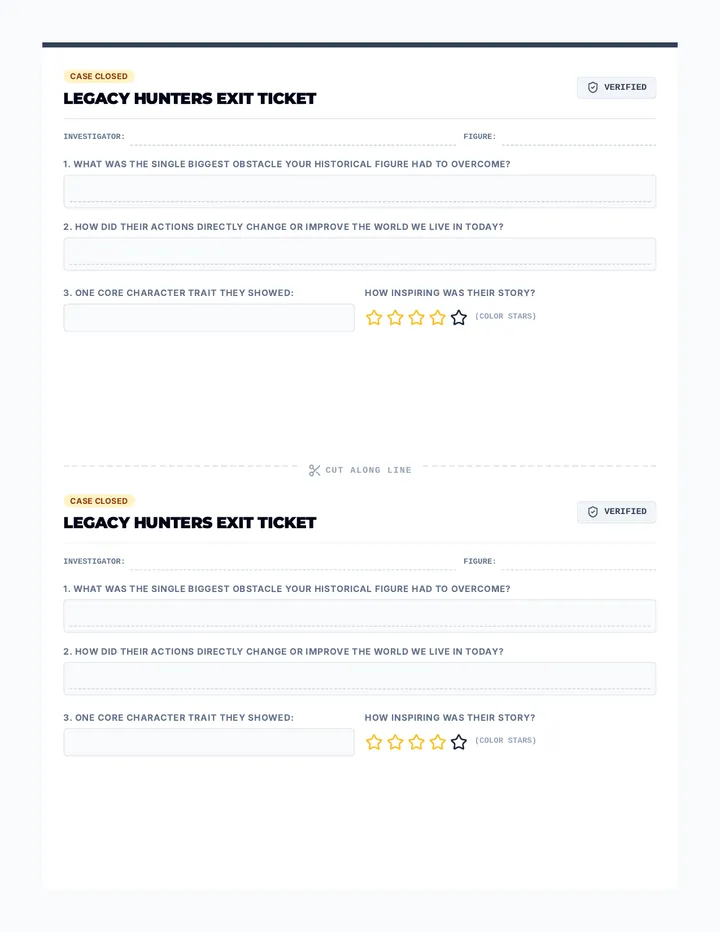
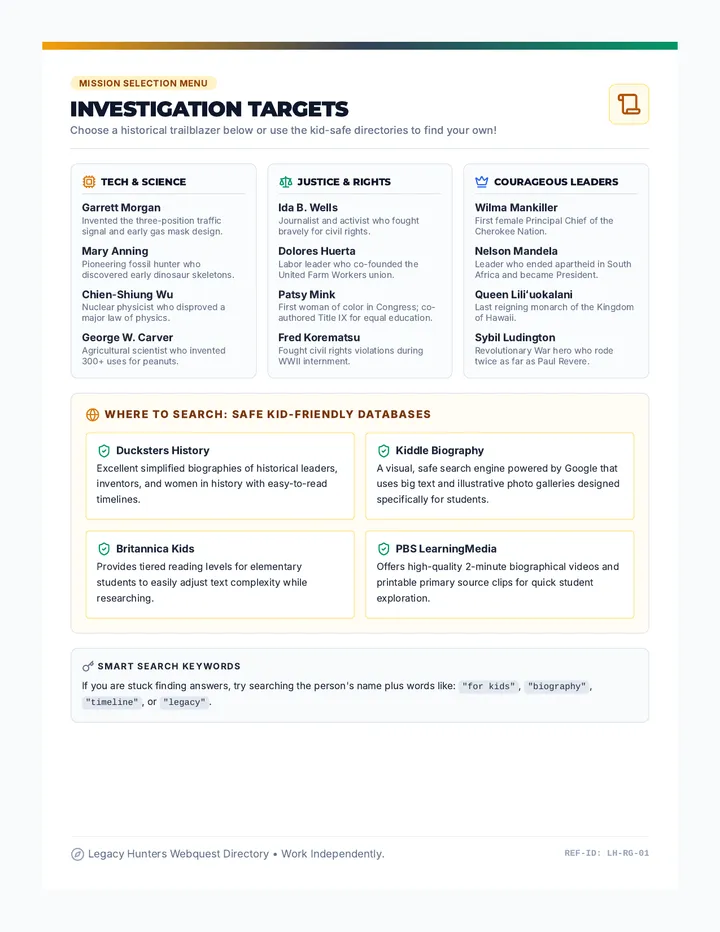
A complete history webquest lesson bundle designed for late elementary students to independently research diverse historical figures. Students act as research detectives to discover the lives, struggles, and lasting legacies of inventors, activists, and leaders.
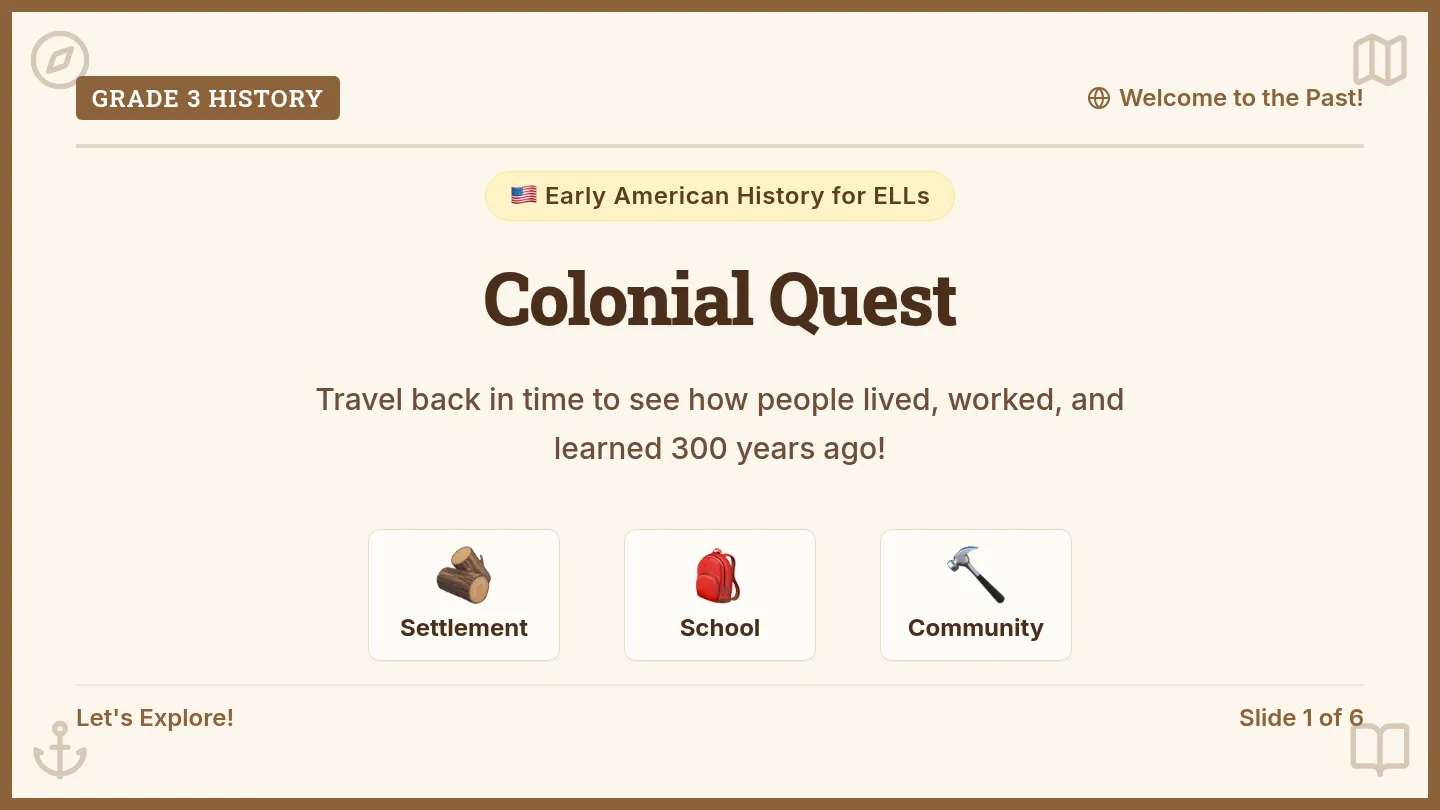
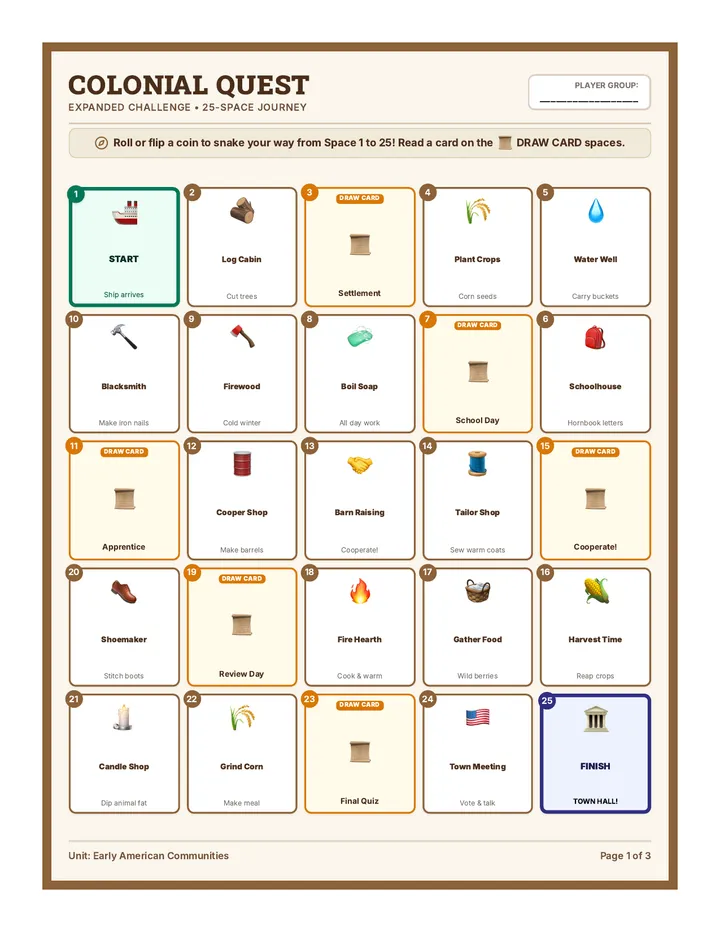
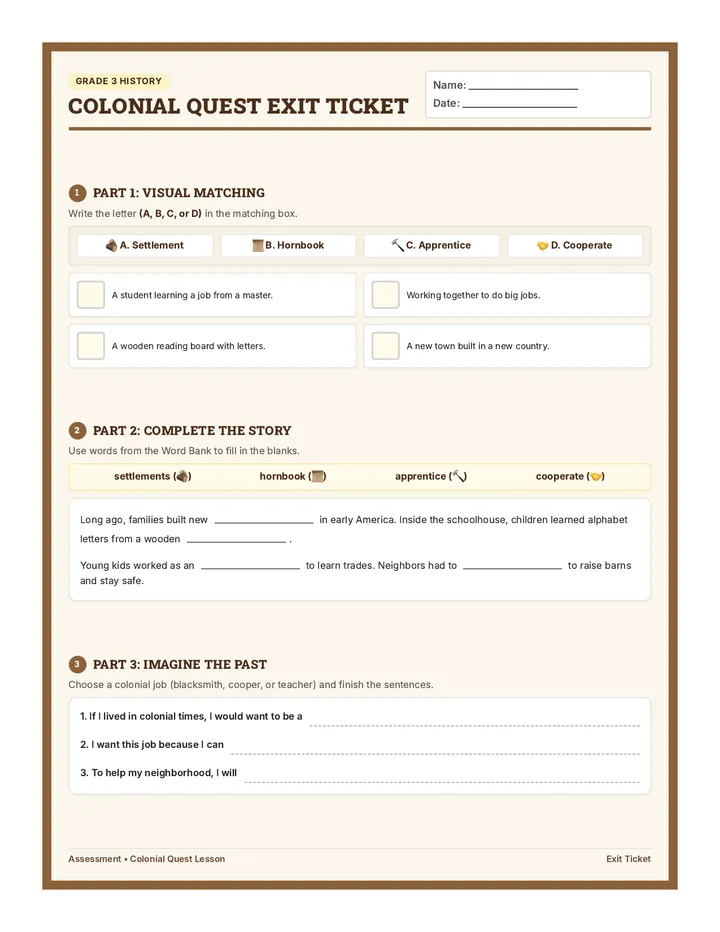
A game-based, ELL-friendly lesson exploring colonial American life including settlements, schools, and community work. Includes a visual vocabulary slide deck, a printable board game, and a scaffolded graphic exit ticket.
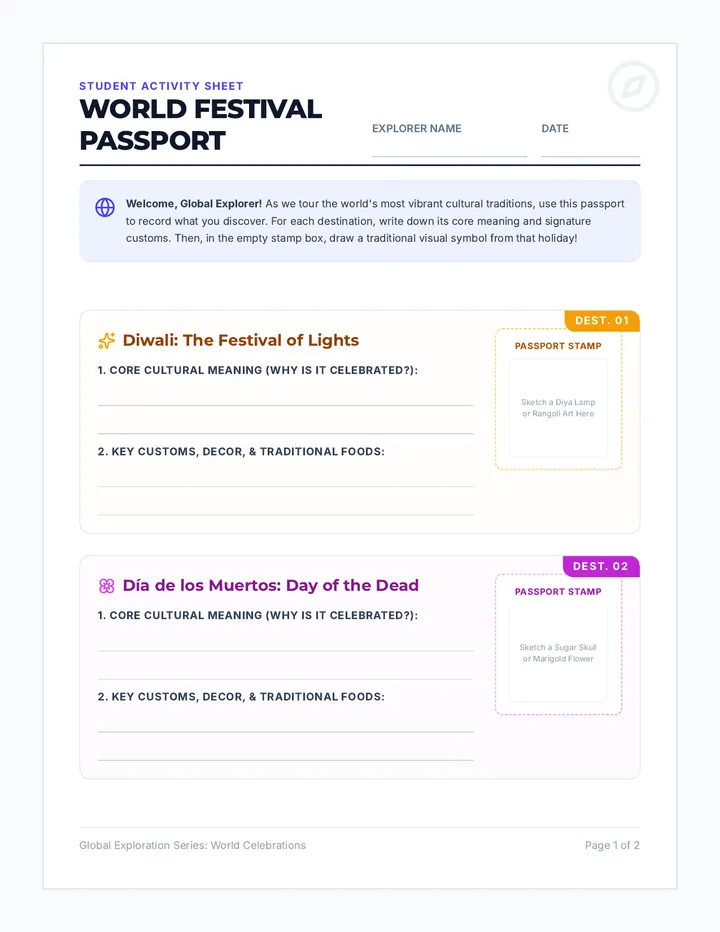
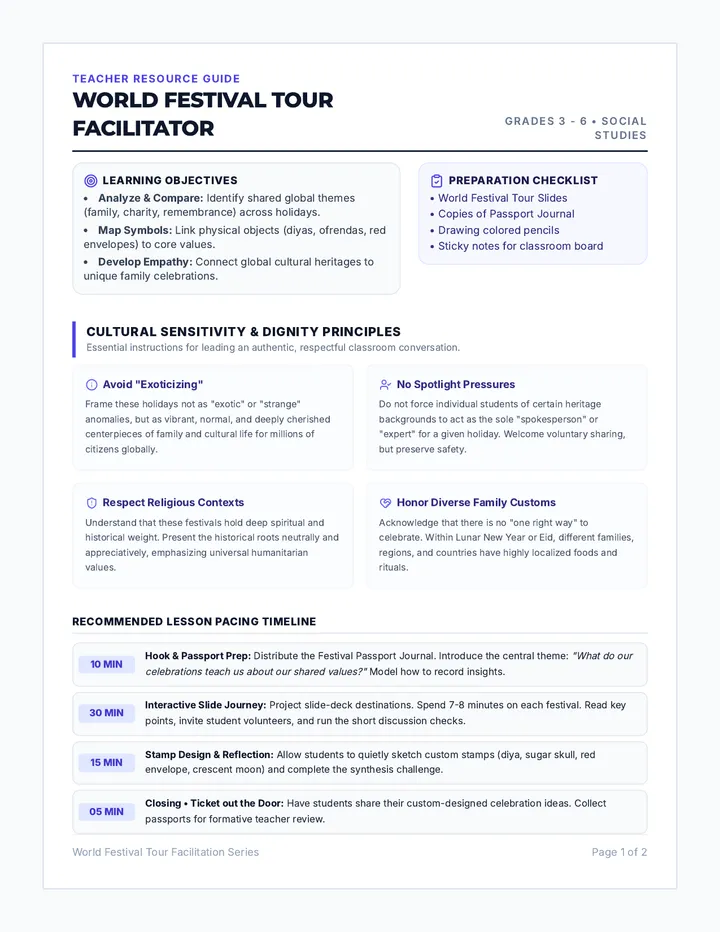
An engaging, multicultural lesson introducing students to four rich global celebrations: Diwali, Día de los Muertos, Lunar New Year, and Eid al-Fitr. The lesson explores cultural significance, seasonal customs, symbols, and values, supporting global citizenship and empathy.
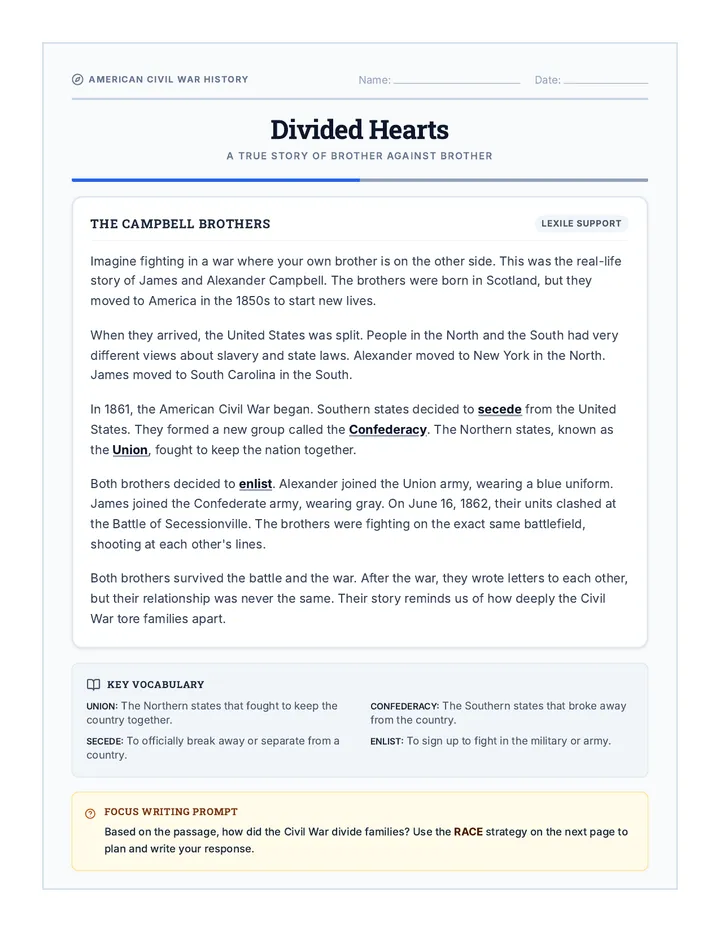
A lesson focused on the division of families during the American Civil War. It includes a simplified reading passage detailing the true story of the Campbell brothers and a structured RACE (Restate, Answer, Cite, Explain) response graphic organizer with student writing lines.
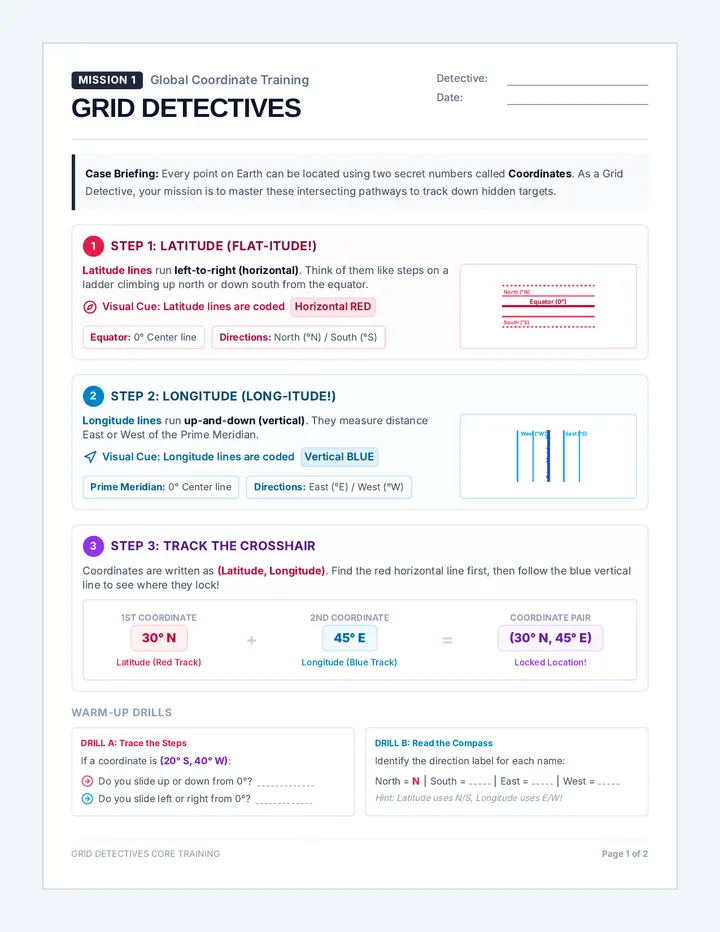
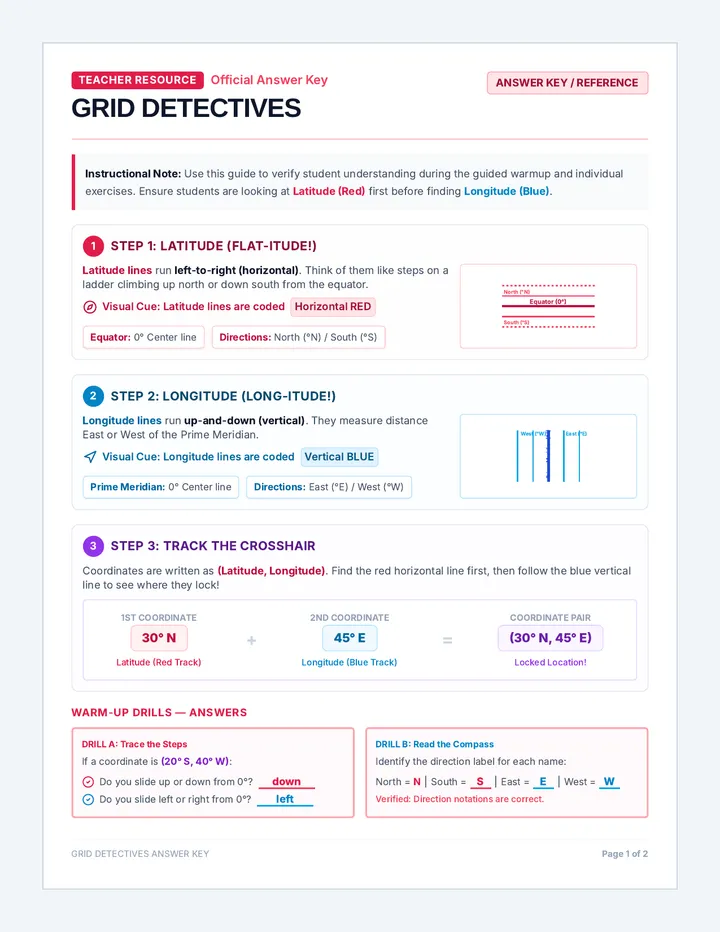
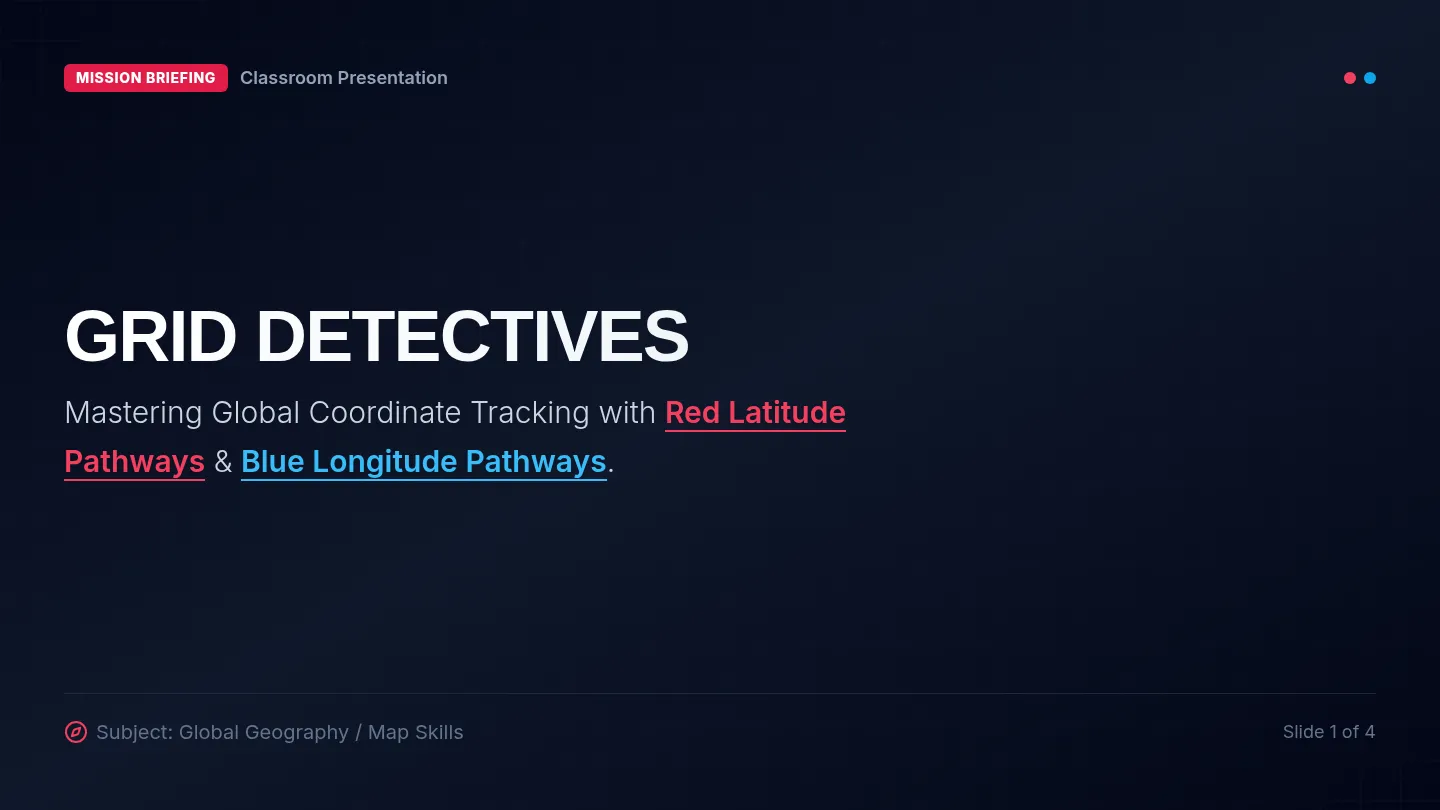
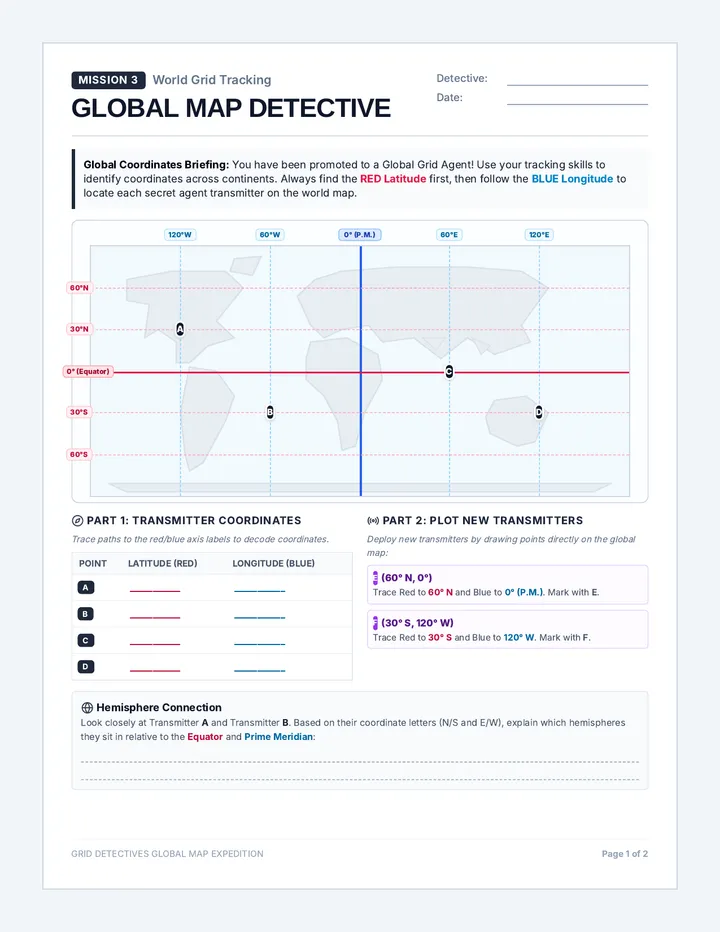
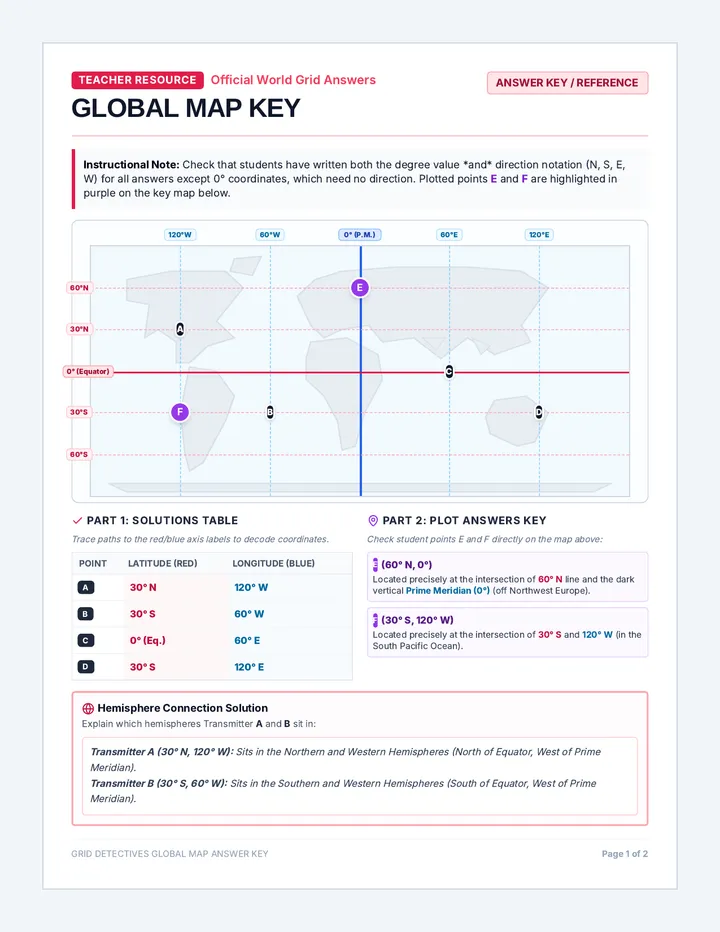
A guided lesson on latitude and longitude using structured, color-coded pathways. Students master horizontal latitude (red) and vertical longitude (blue) through step-by-step visual scaffolds and targeted practice.
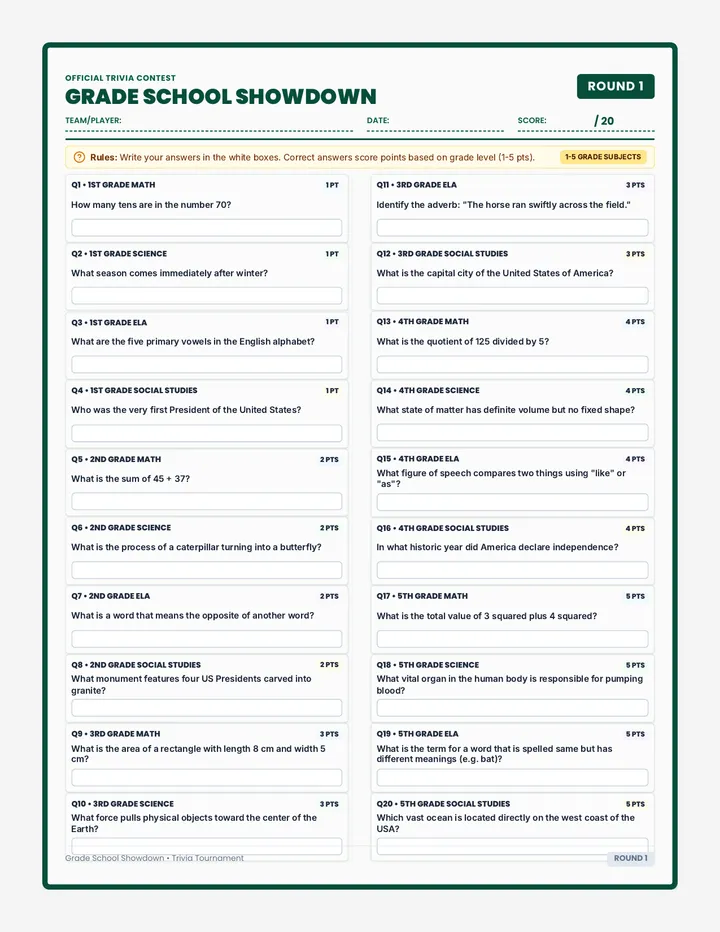
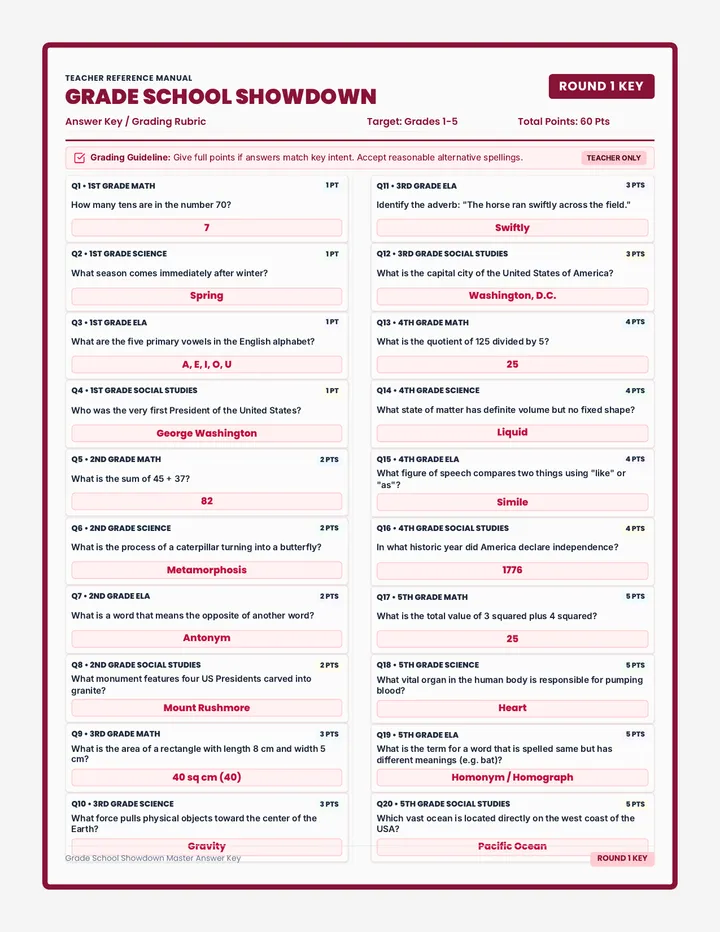
An engaging academic trivia game based on "Are You Smarter Than a 5th Grader?". Includes five comprehensive rounds of questions across five grade levels, complete with an interactive presentation, a print-ready student booklet, and a teacher's answer guide.
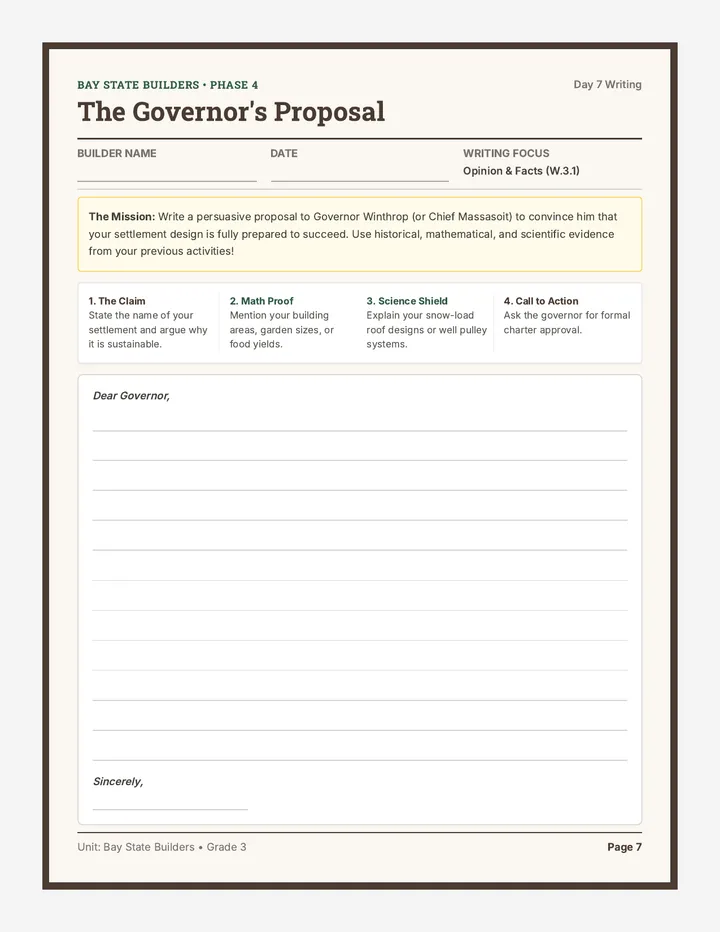
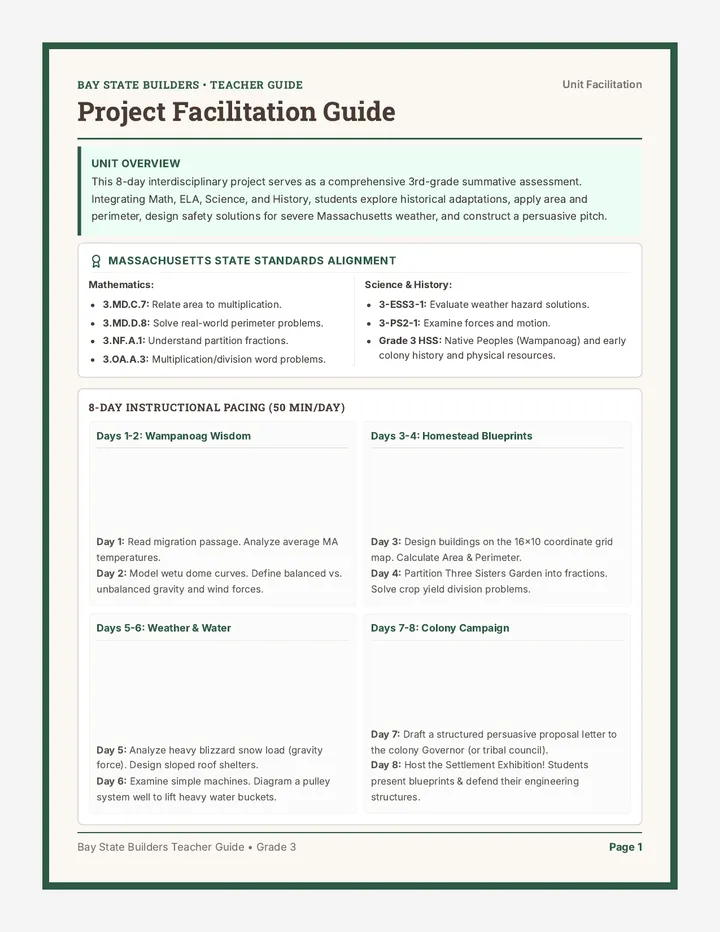
Days 7-8 of the project. Students write a persuasive proposal advocating for their settlement design and present their final 3D or 2D blueprints to the town council during a project expo.
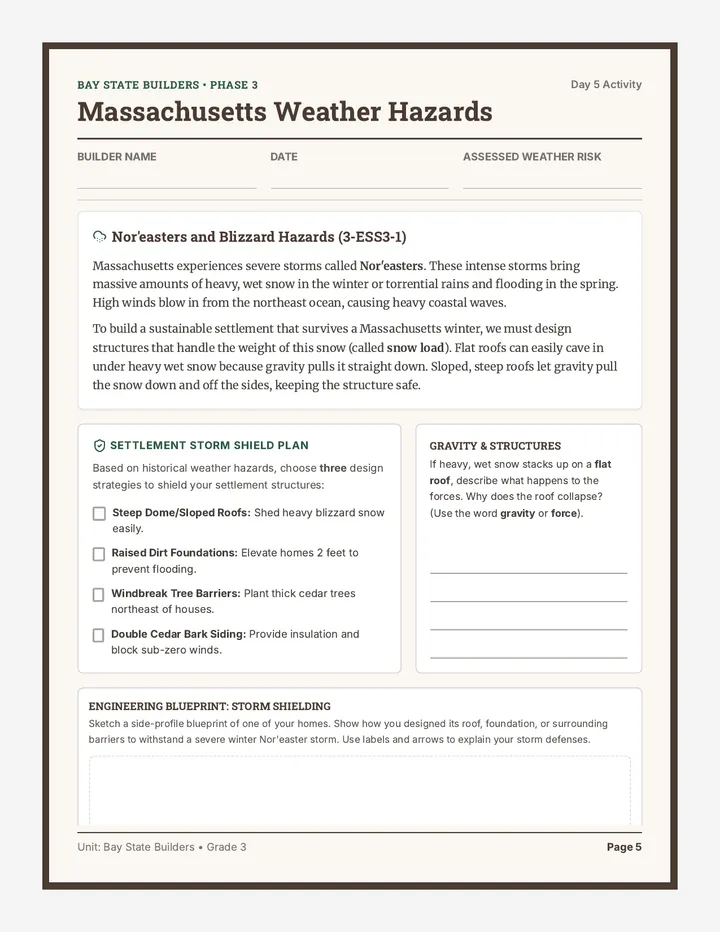
Days 5-6 of the project. Students explore Massachusetts weather patterns, analyze risks like blizzards or storms, and design functional systems (wells, irrigation, structural reinforcement) utilizing forces and simple machines.
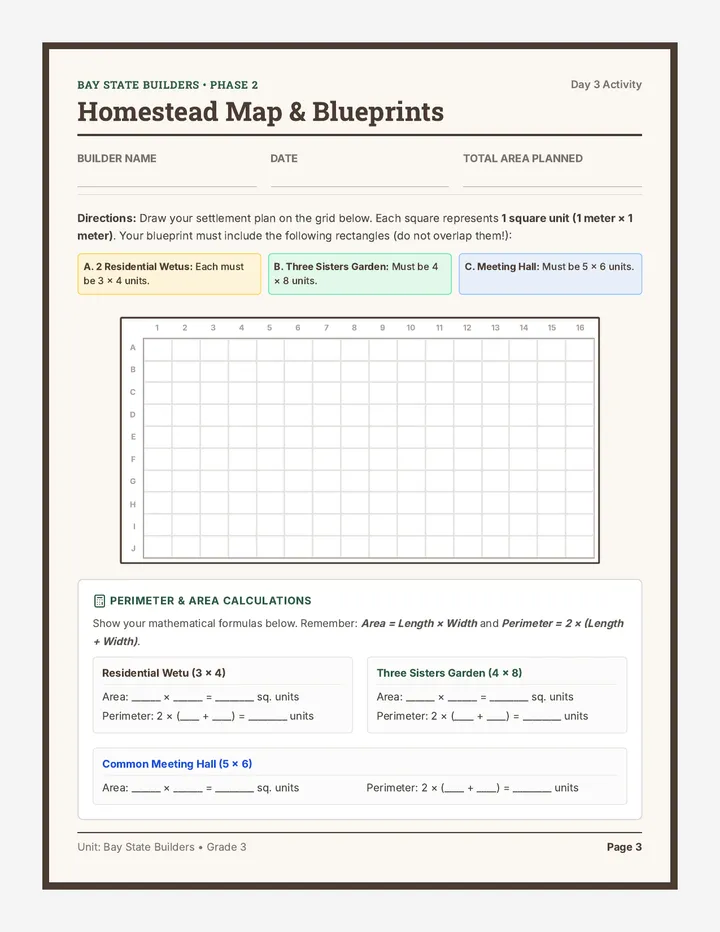
Days 3-4 of the project. Students design their settlement layout, calculating area and perimeter of buildings and fields on a grid map, and partitioning a Three Sisters garden into fractional sections.
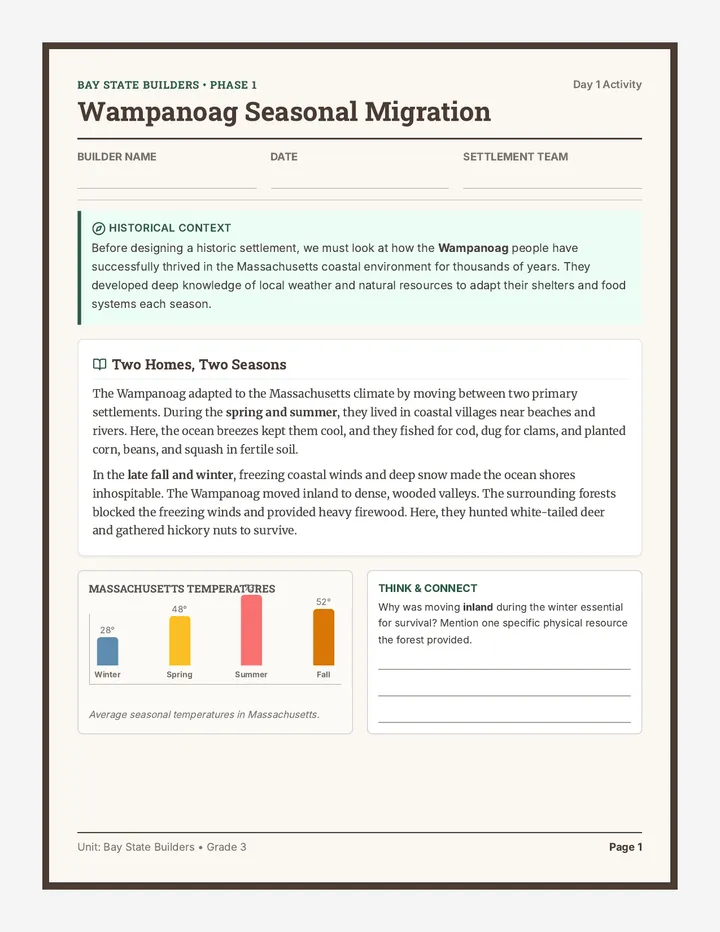
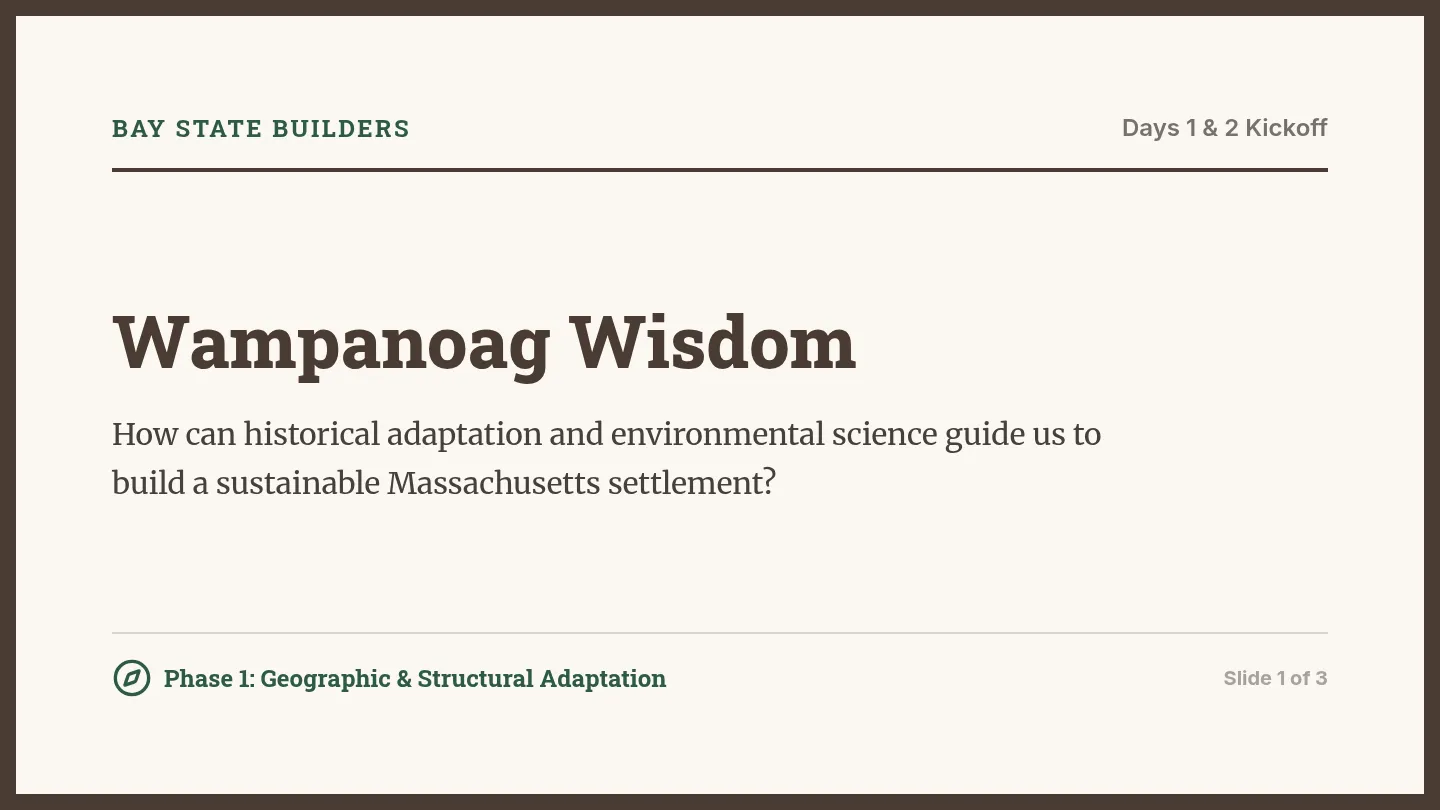
Days 1-2 of the project. Students study Massachusetts geography, climate, and how the Wampanoag people adapted to local ecosystems, focusing on shelter construction (forces and motion) and seasonal migrations.
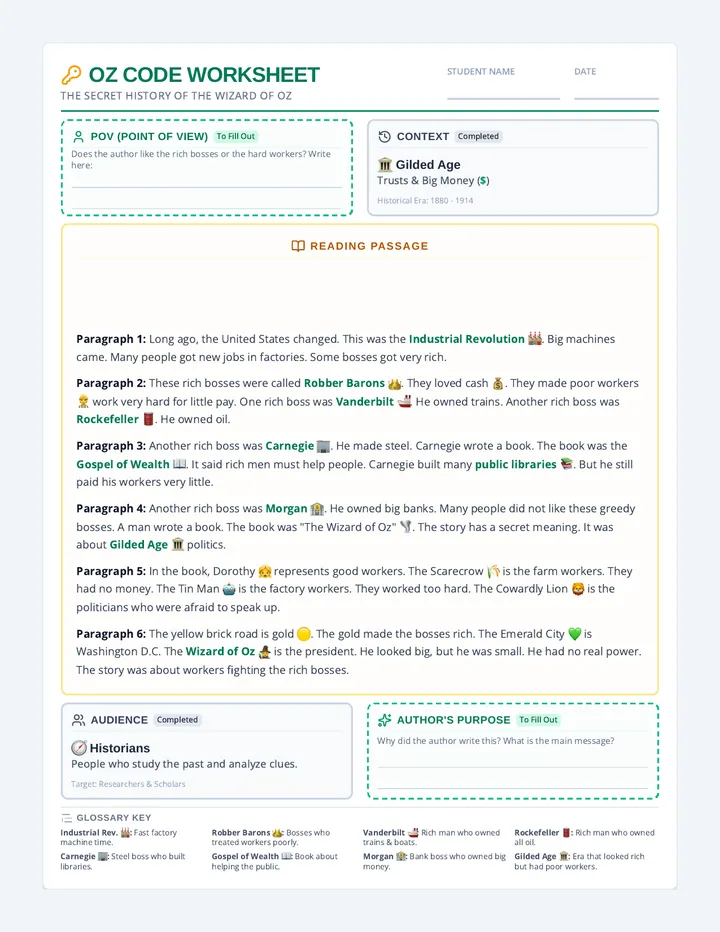
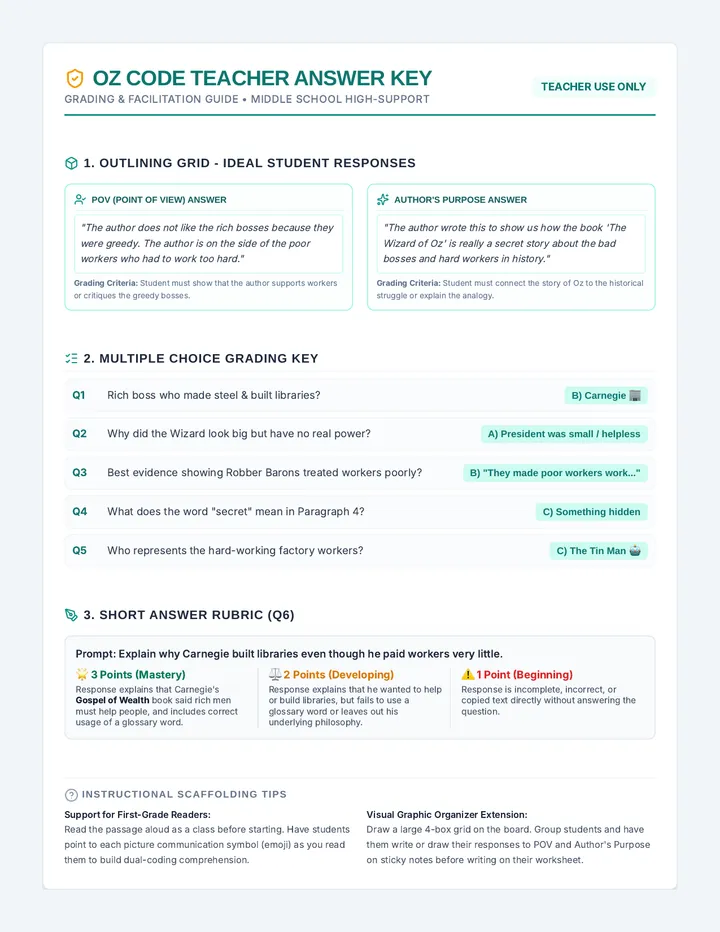
A lesson on the Gilded Age, the Industrial Revolution, robber barons, and their symbolic representation in L. Frank Baum's 'The Wizard of Oz'. Designed with high-support scaffolding for middle schoolers reading at a first-grade level.
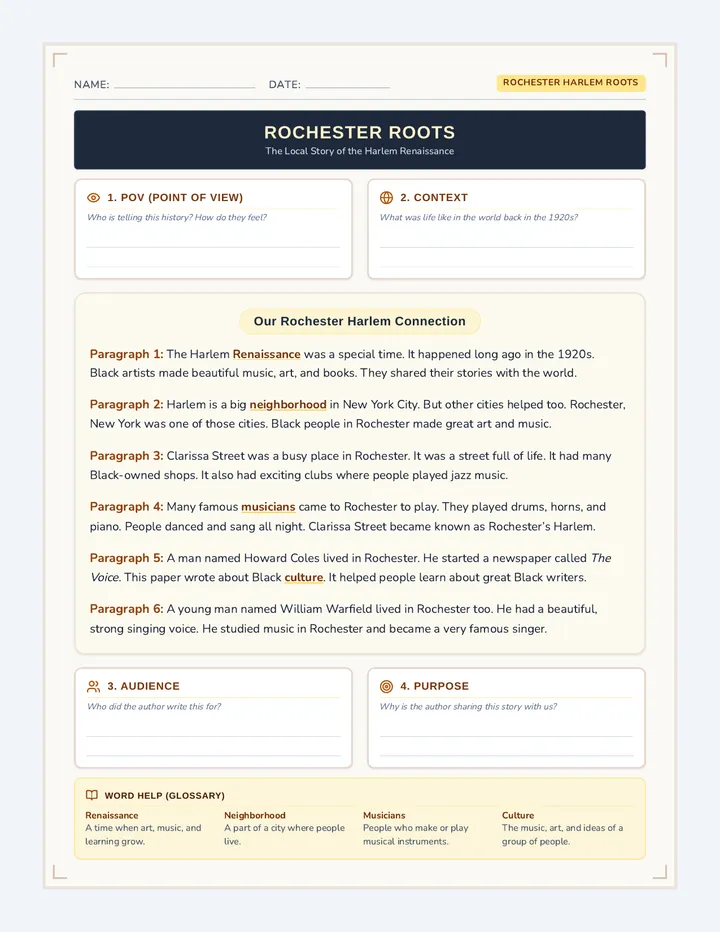
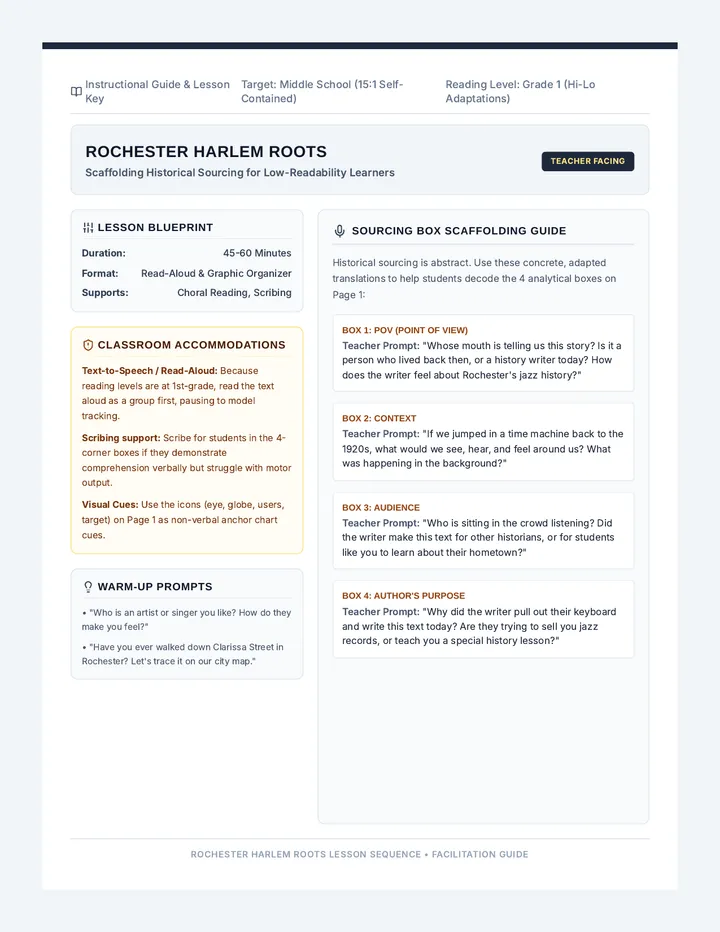
A specialized history and reading comprehension lesson focused on Rochester's local contributions to the Harlem Renaissance, designed with low-readability, high-interest content for middle schoolers reading at a first-grade level.
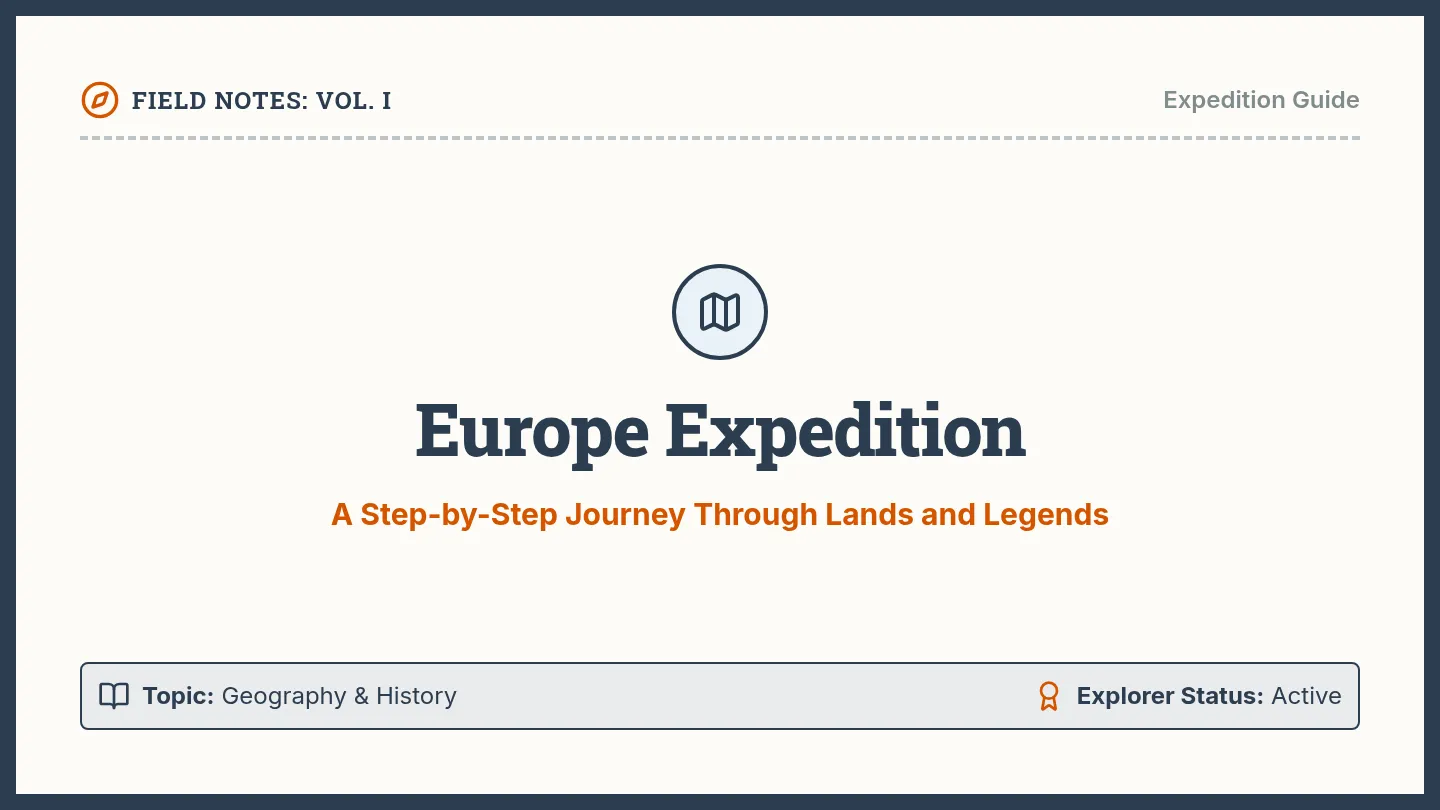
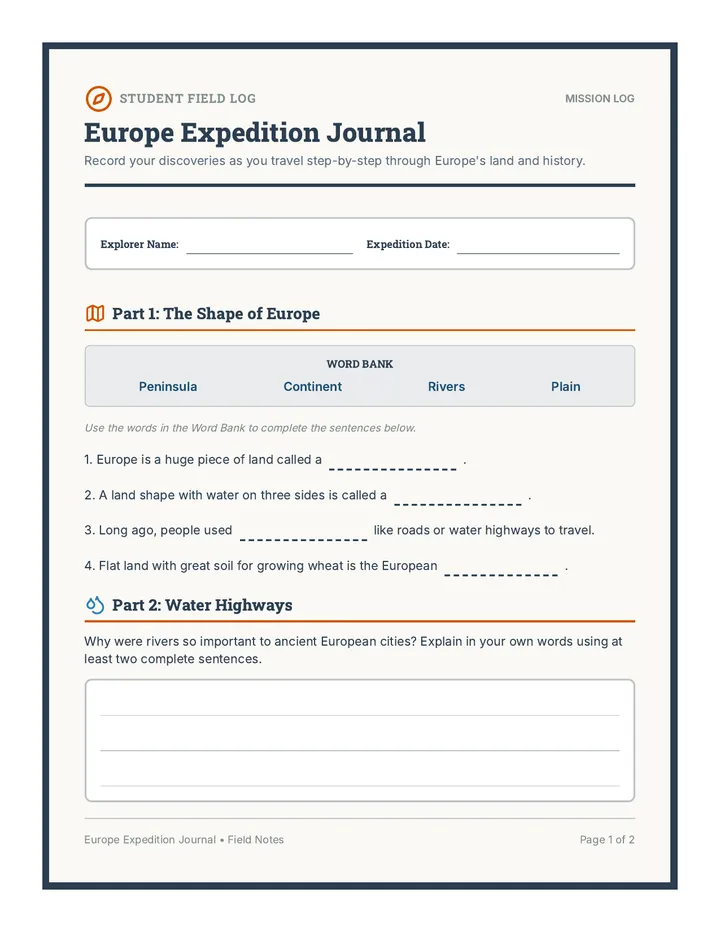
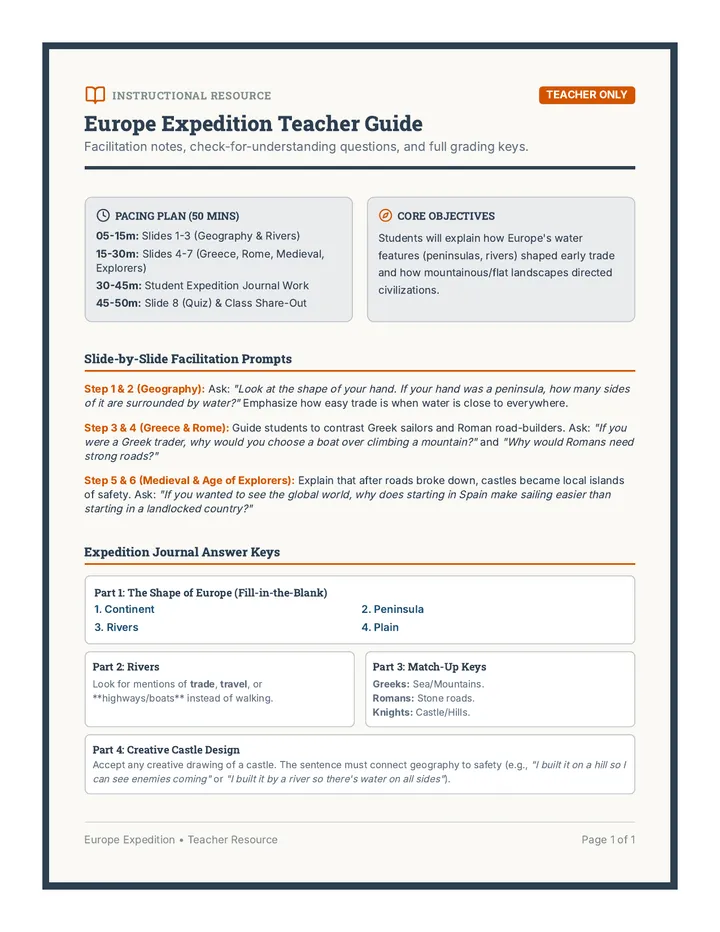
A step-by-step journey through Europe's unique geography and history, written at an accessible 600-700 Lexile level. Students explore how the physical landscape shaped historical civilizations from Ancient Greece to modern Europe.
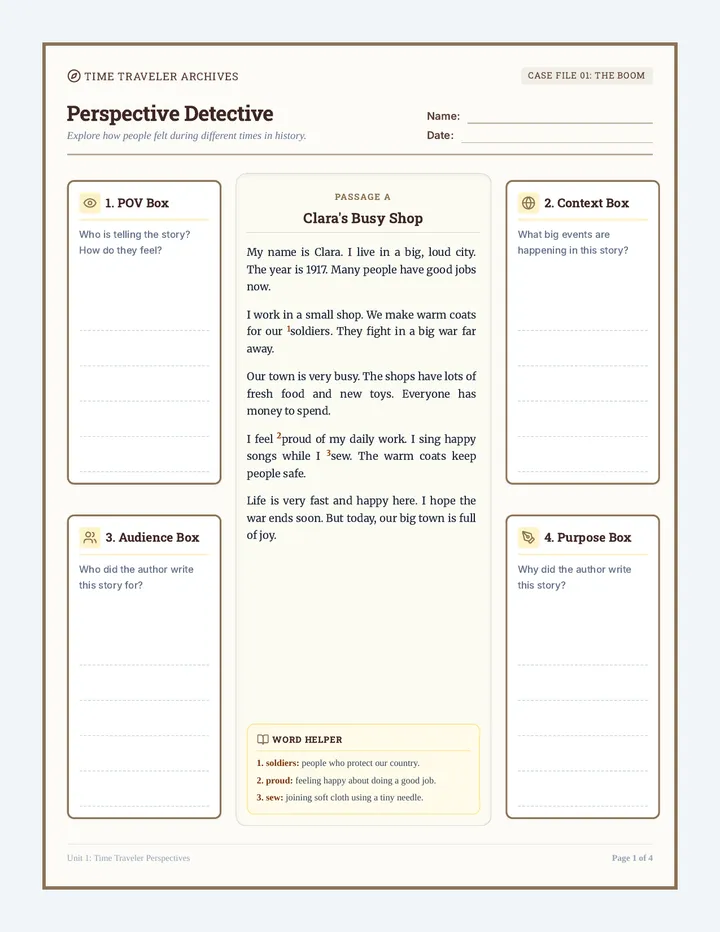
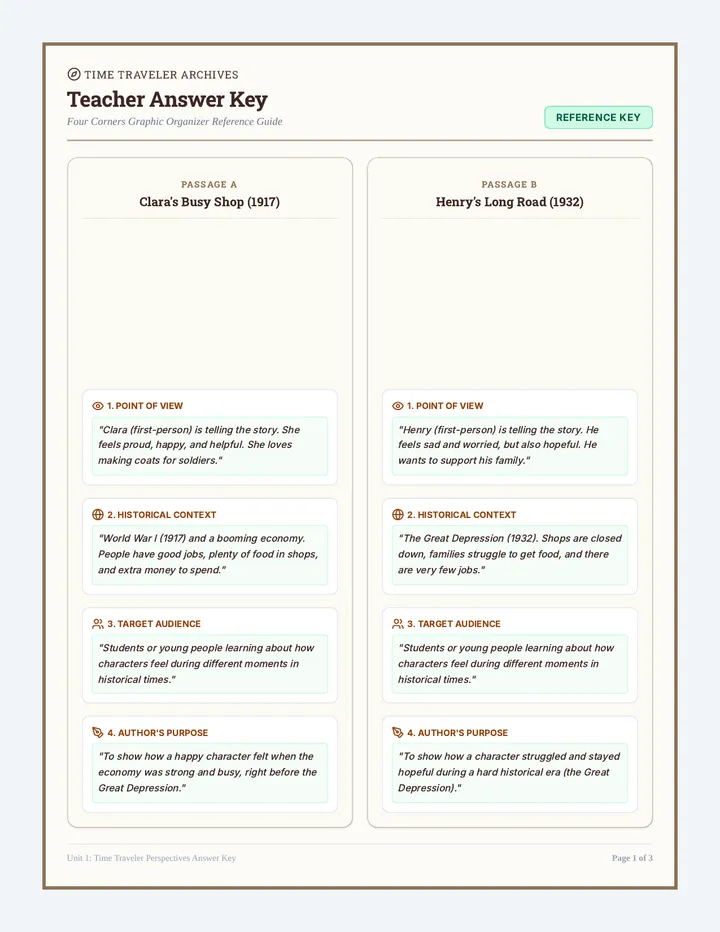
An independent reading unit focusing on perspective and point of view during two contrasting historical eras: World War I and the Great Depression. Students analyze character emotions and historical contexts using a 'four corners' layout.
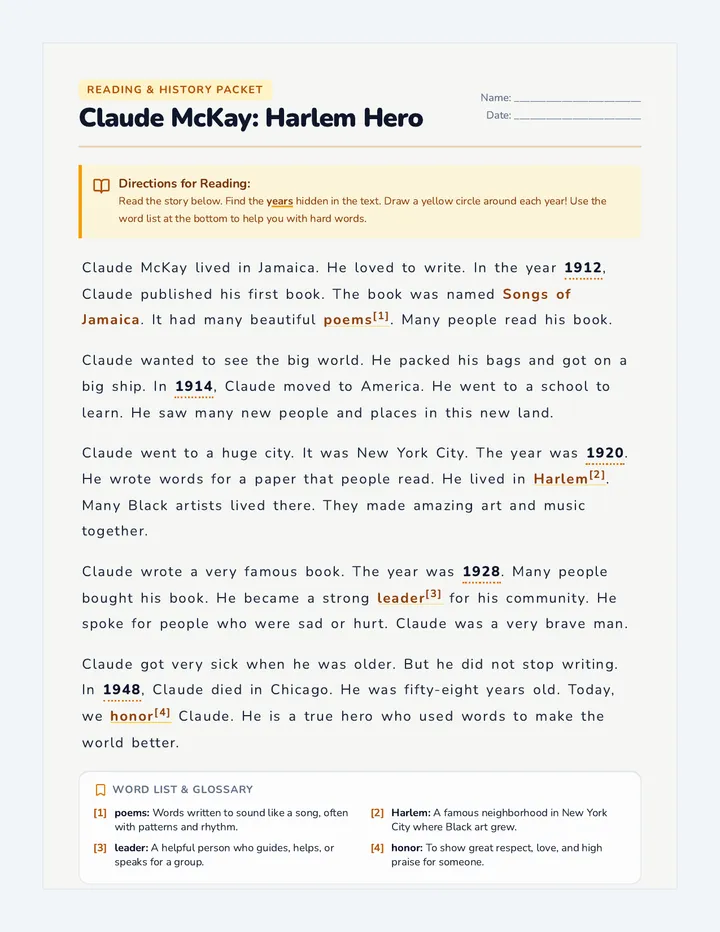
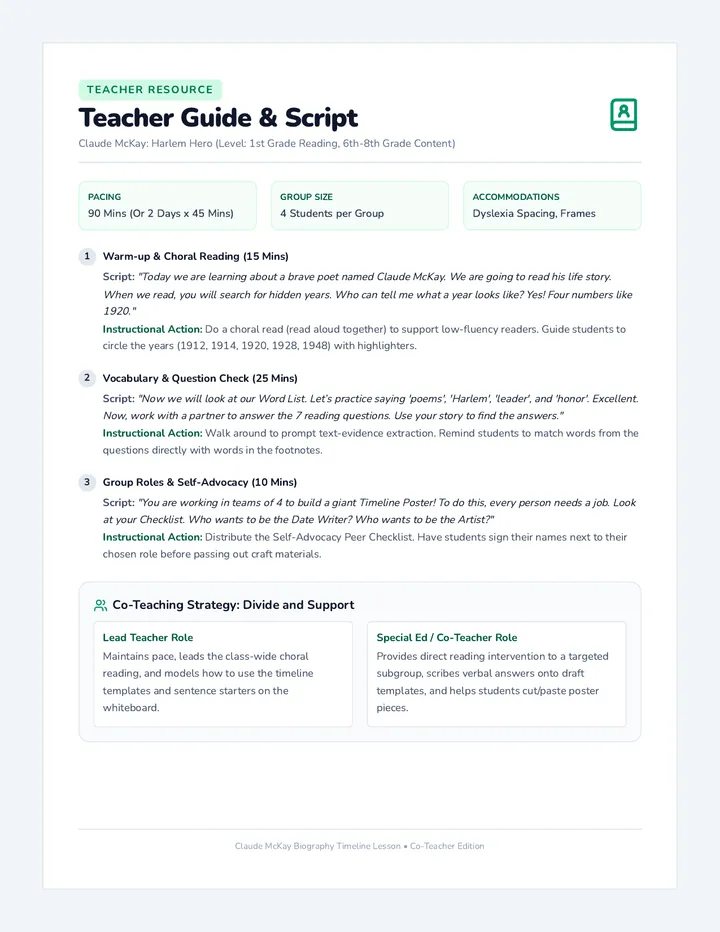
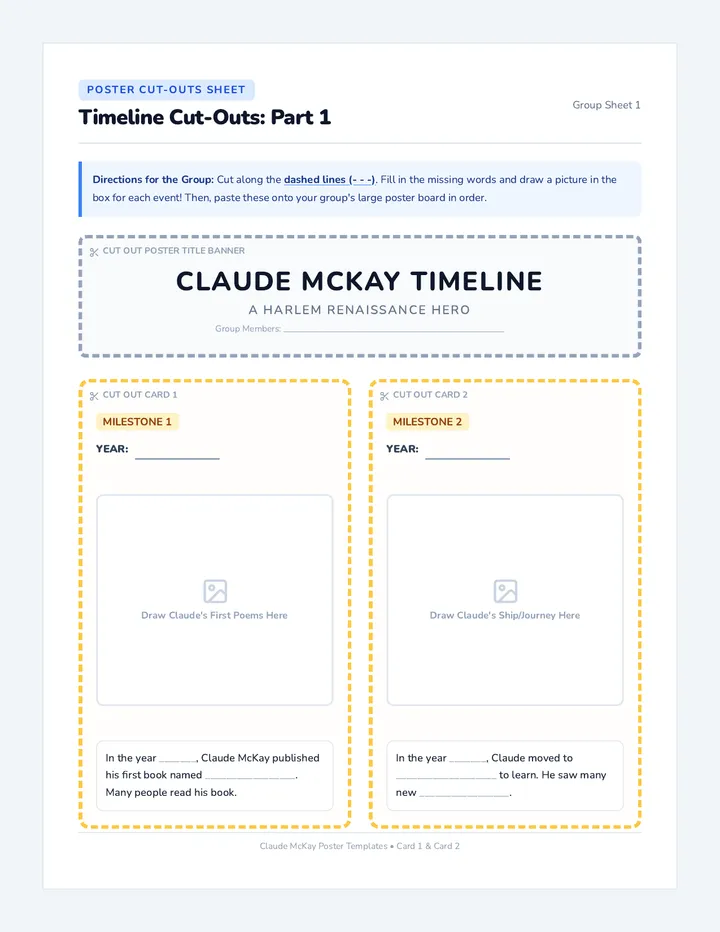
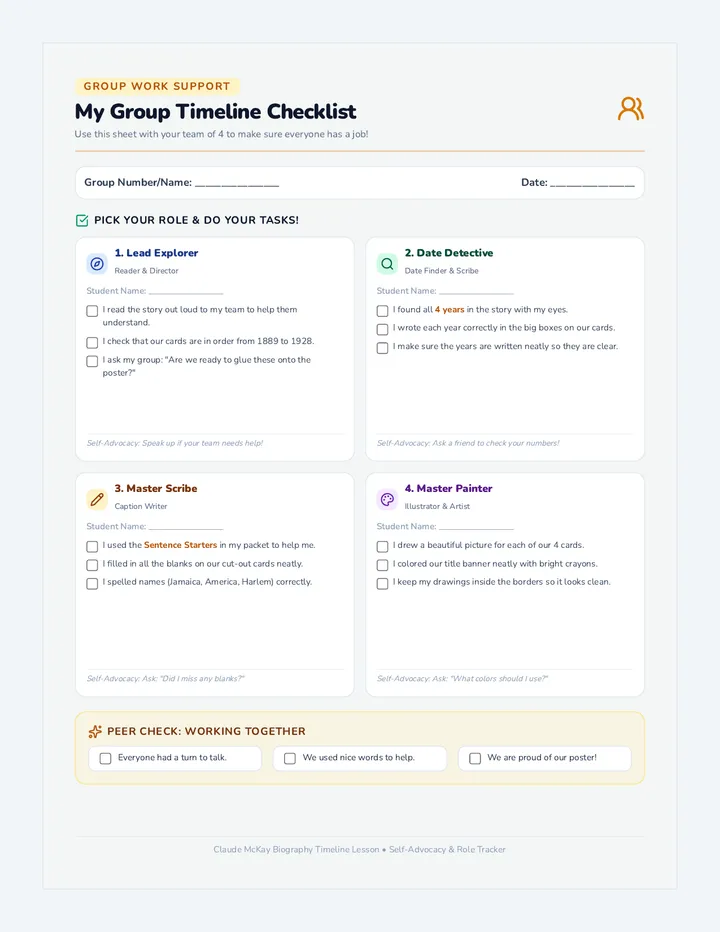
A highly scaffolded middle school lesson on Harlem Renaissance poet Claude McKay, adapted for a first-grade reading level. Includes a text analysis, footnote glossary, comprehension questions, a group timeline poster project, and support tools for co-teachers.