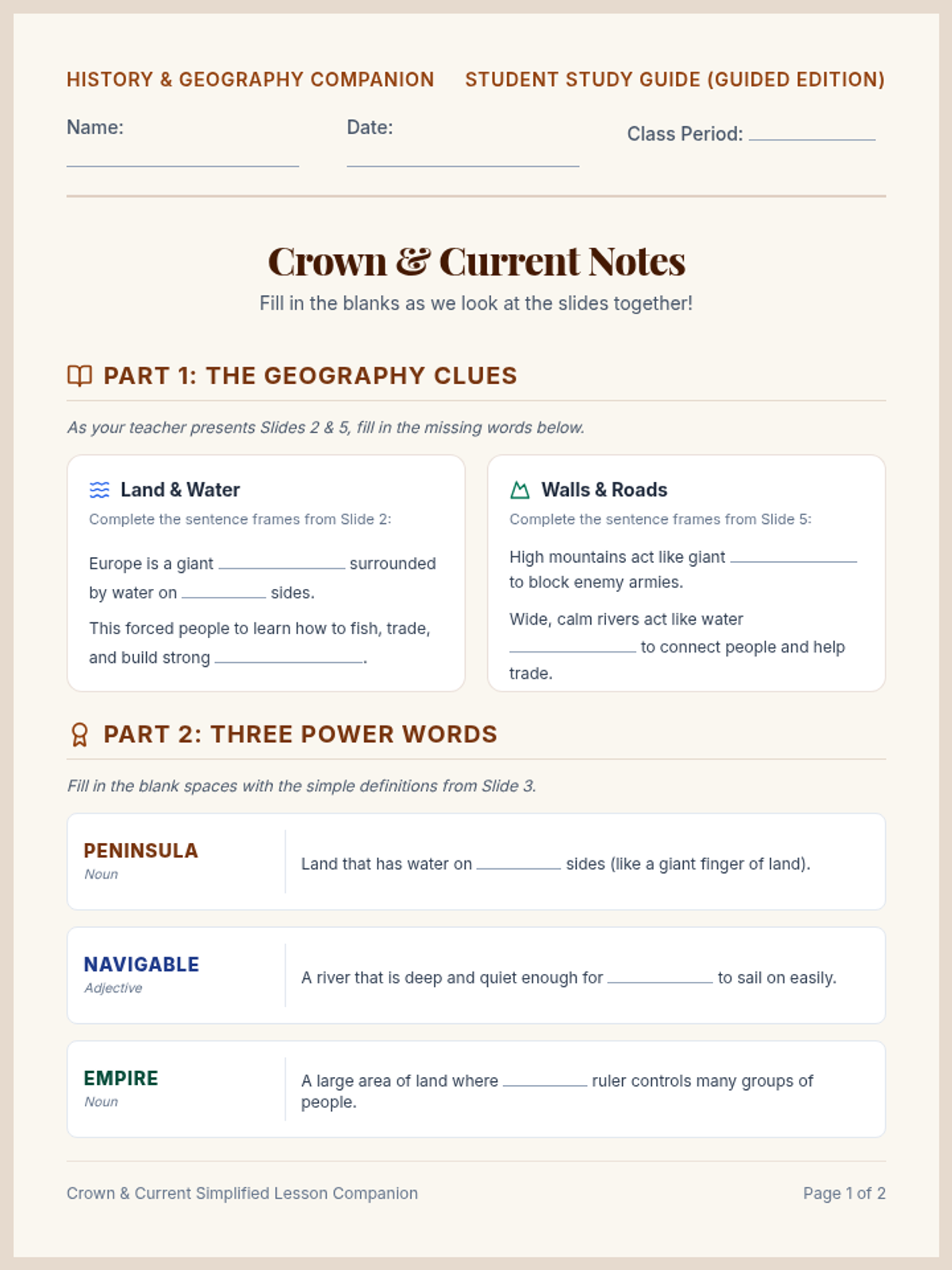
A step-by-step journey through Europe's unique geography and history, written at an accessible 600-700 Lexile level. Students explore how the physical landscape shaped historical civilizations from Ancient Greece to modern Europe.
A lesson exploring the intersection of Europe's unique physical geography and its dramatic history, focusing on how barriers and natural highways shaped civilizations.
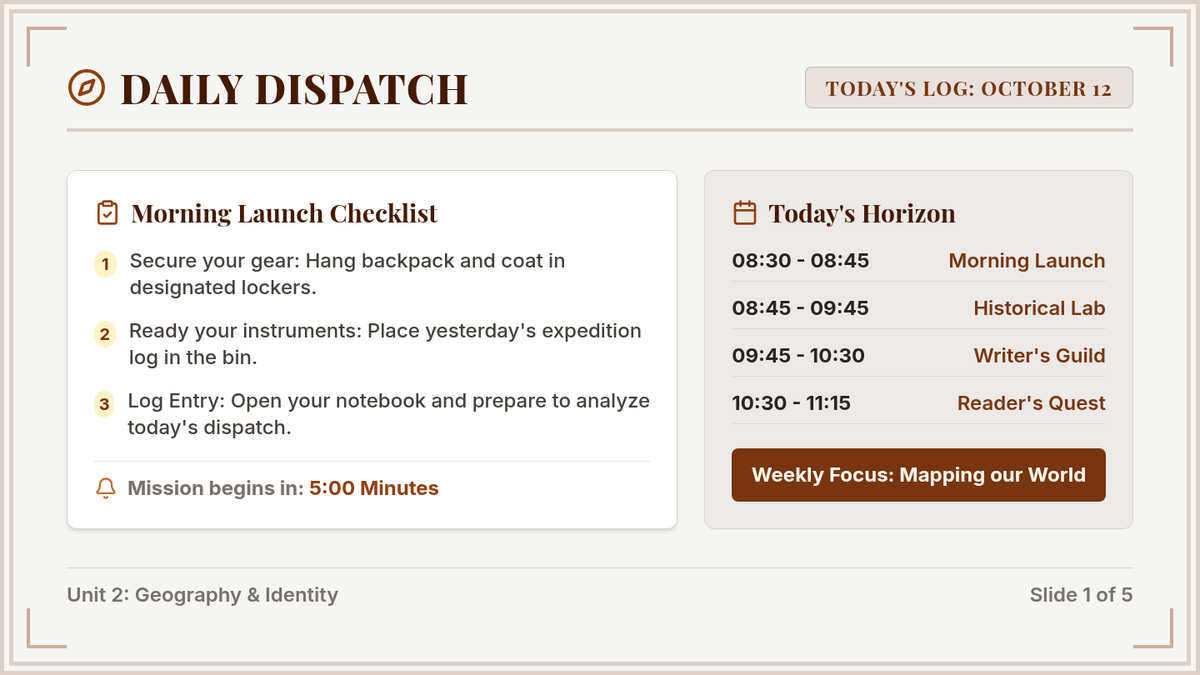
A cohesive morning routine framework designed to engage students immediately upon entering the classroom. This lesson integrates daily administrative templates with historical quote analysis, map literacy, and current events discussions to prime students' minds for social studies learning.
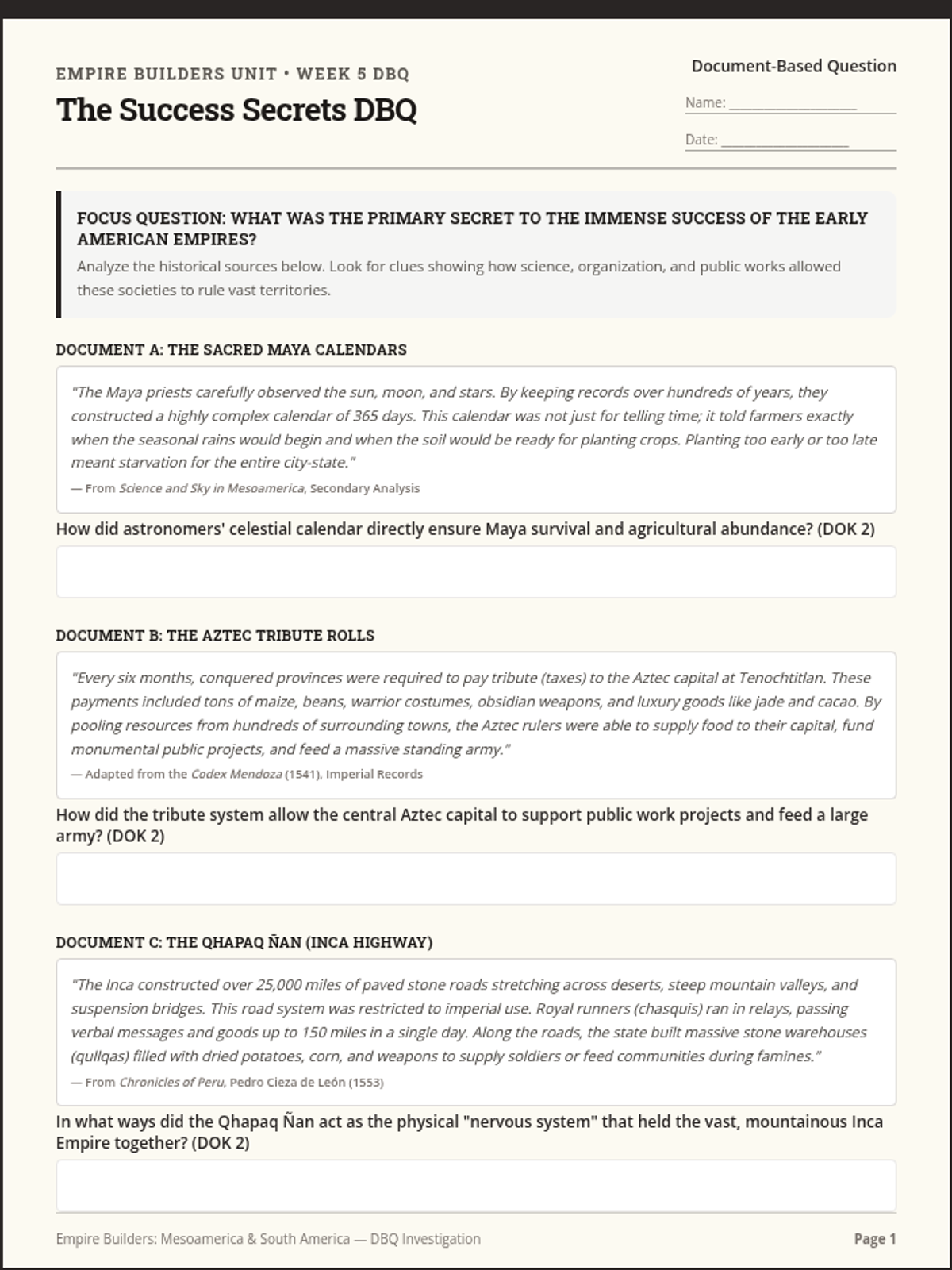
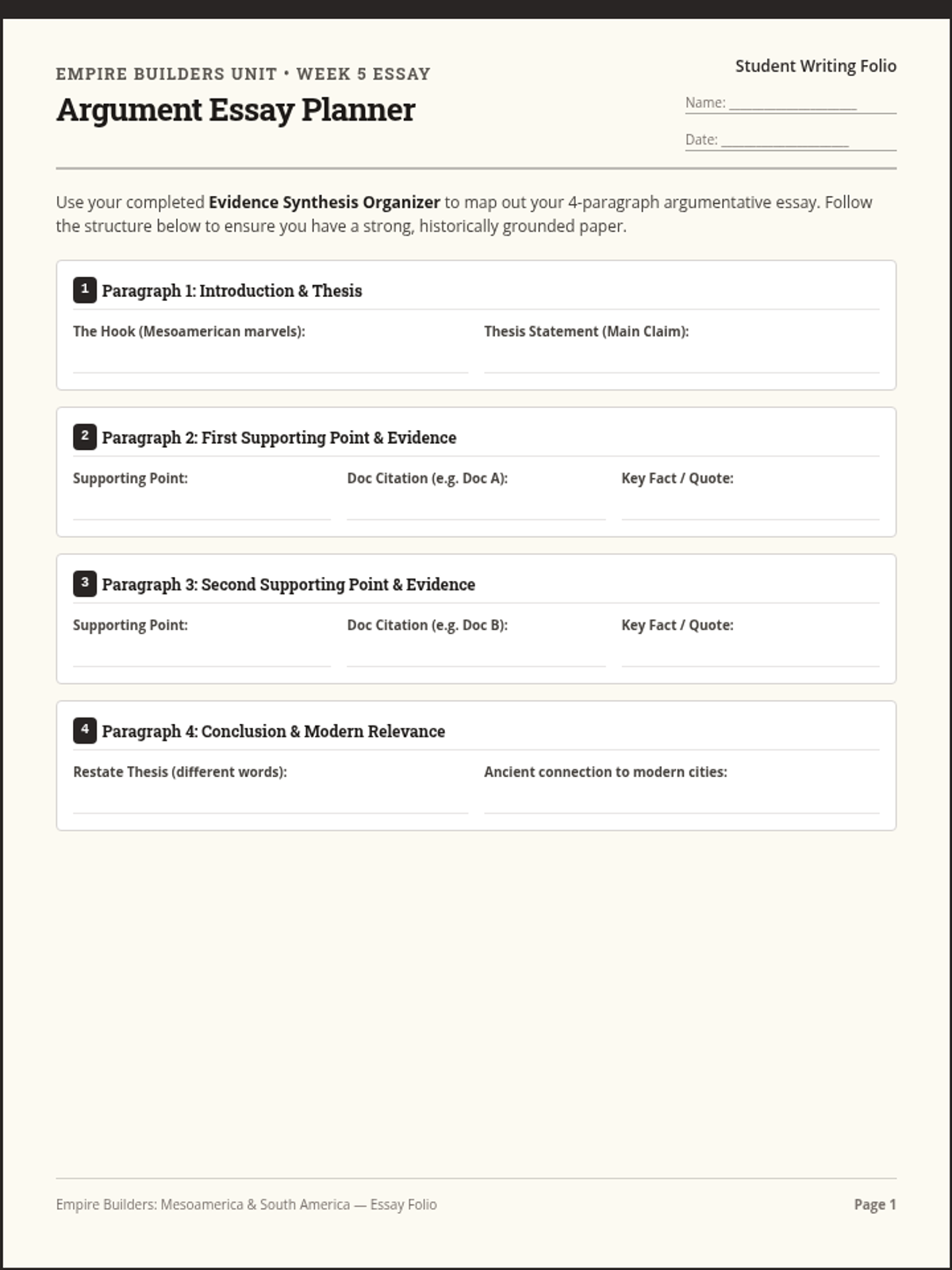
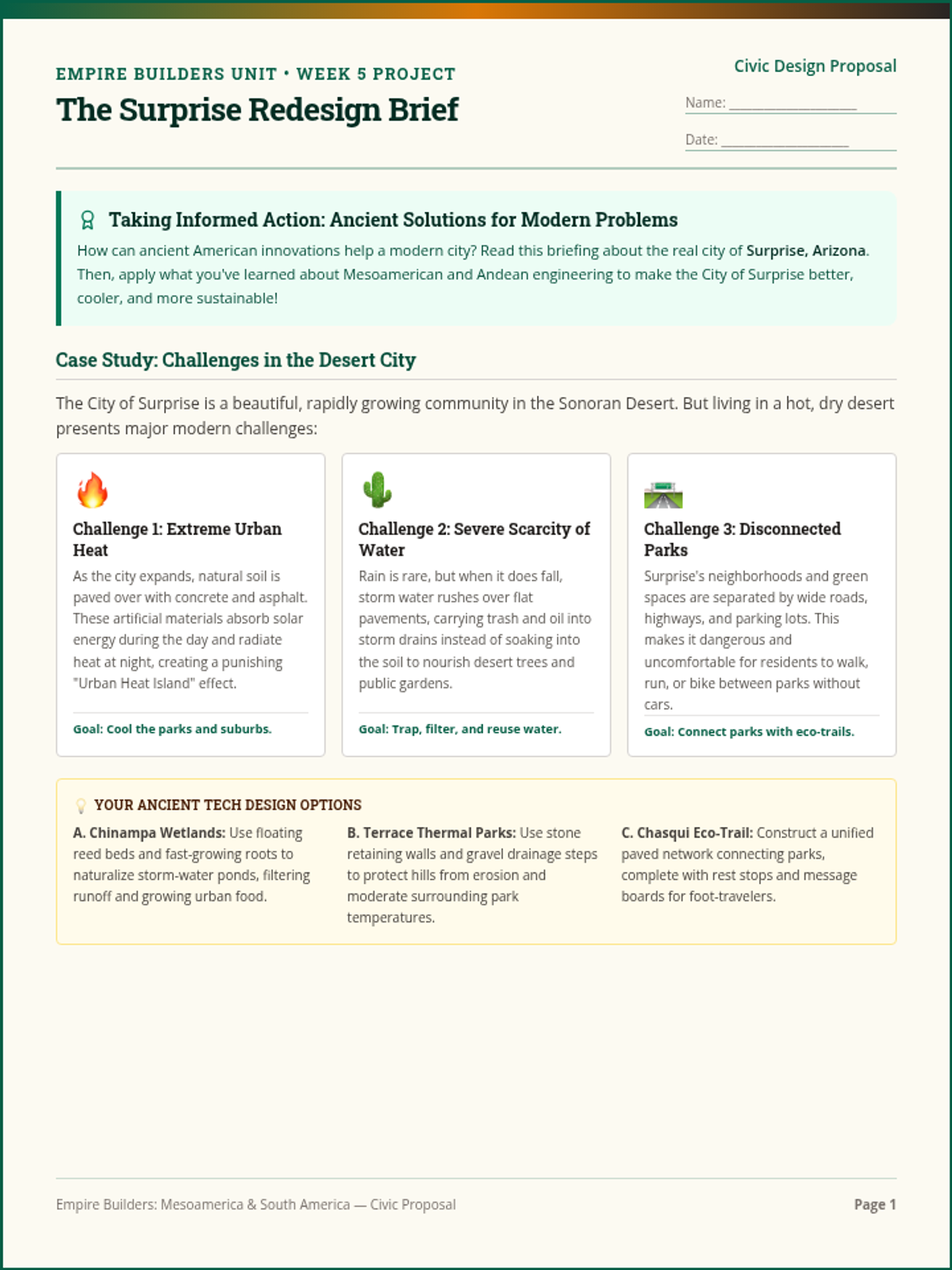
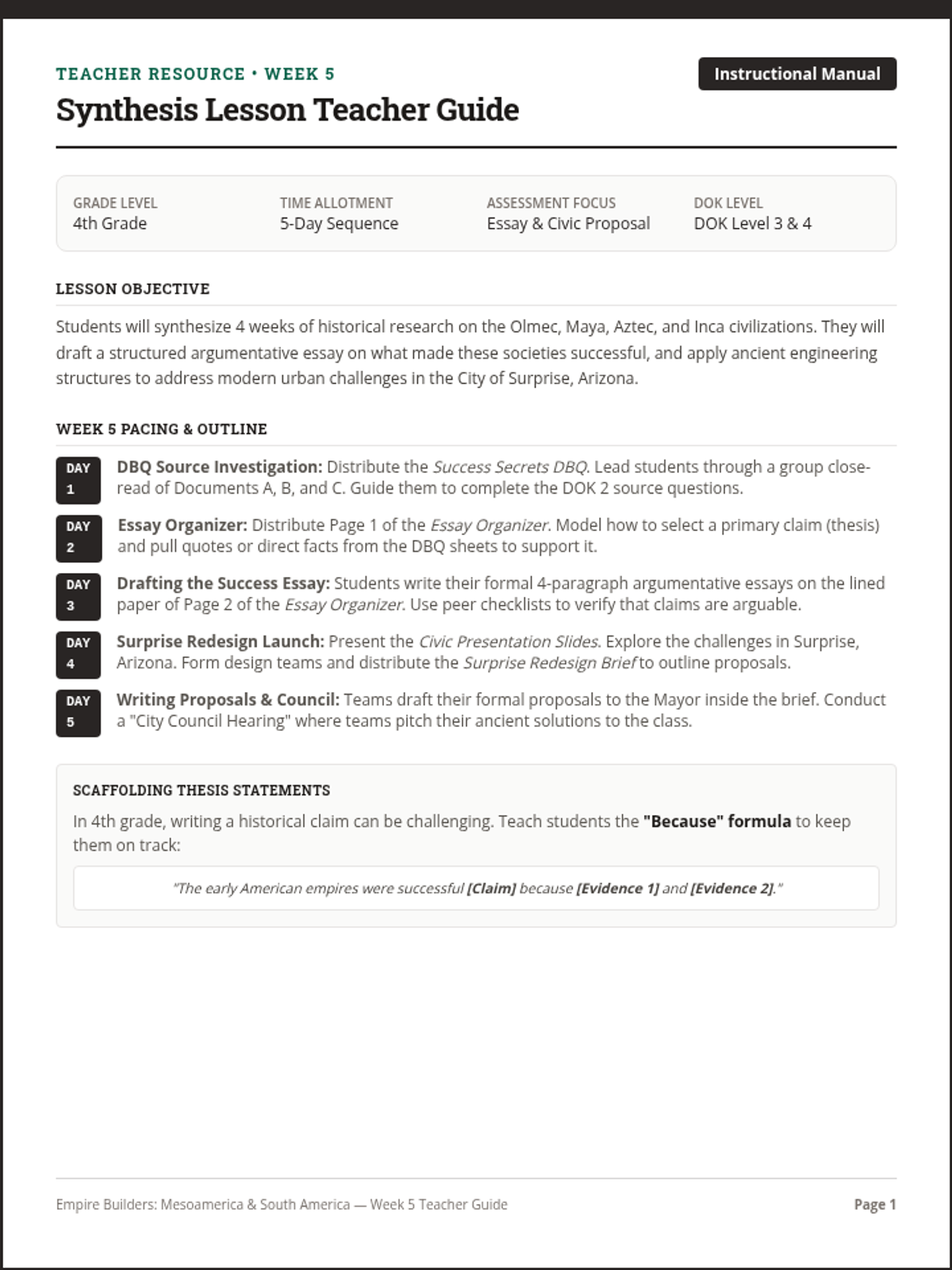
Students synthesize their knowledge across all four civilizations, completing a DBQ, writing an argumentative essay on success, and formulating a civic project for Surprise, AZ.
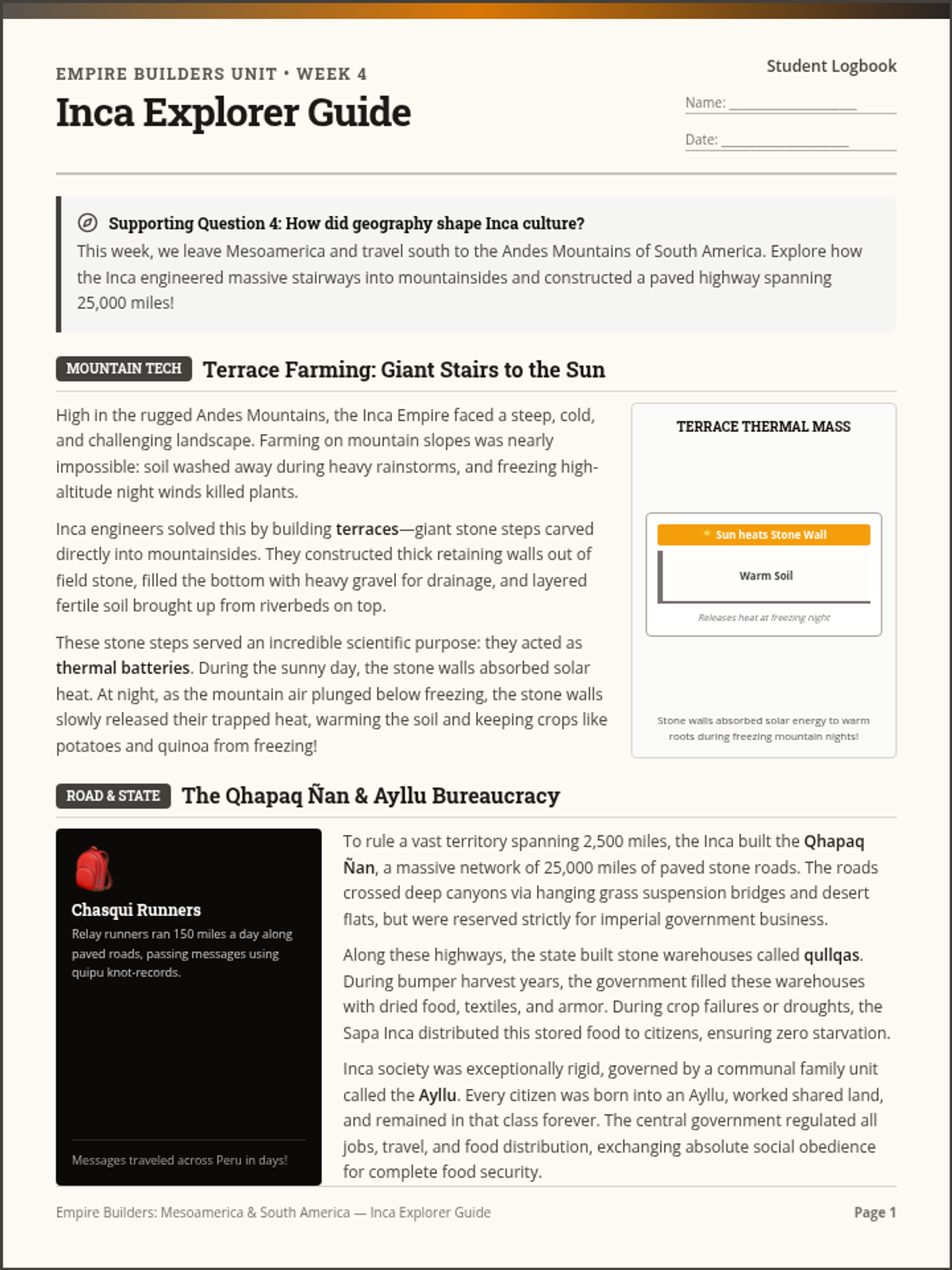
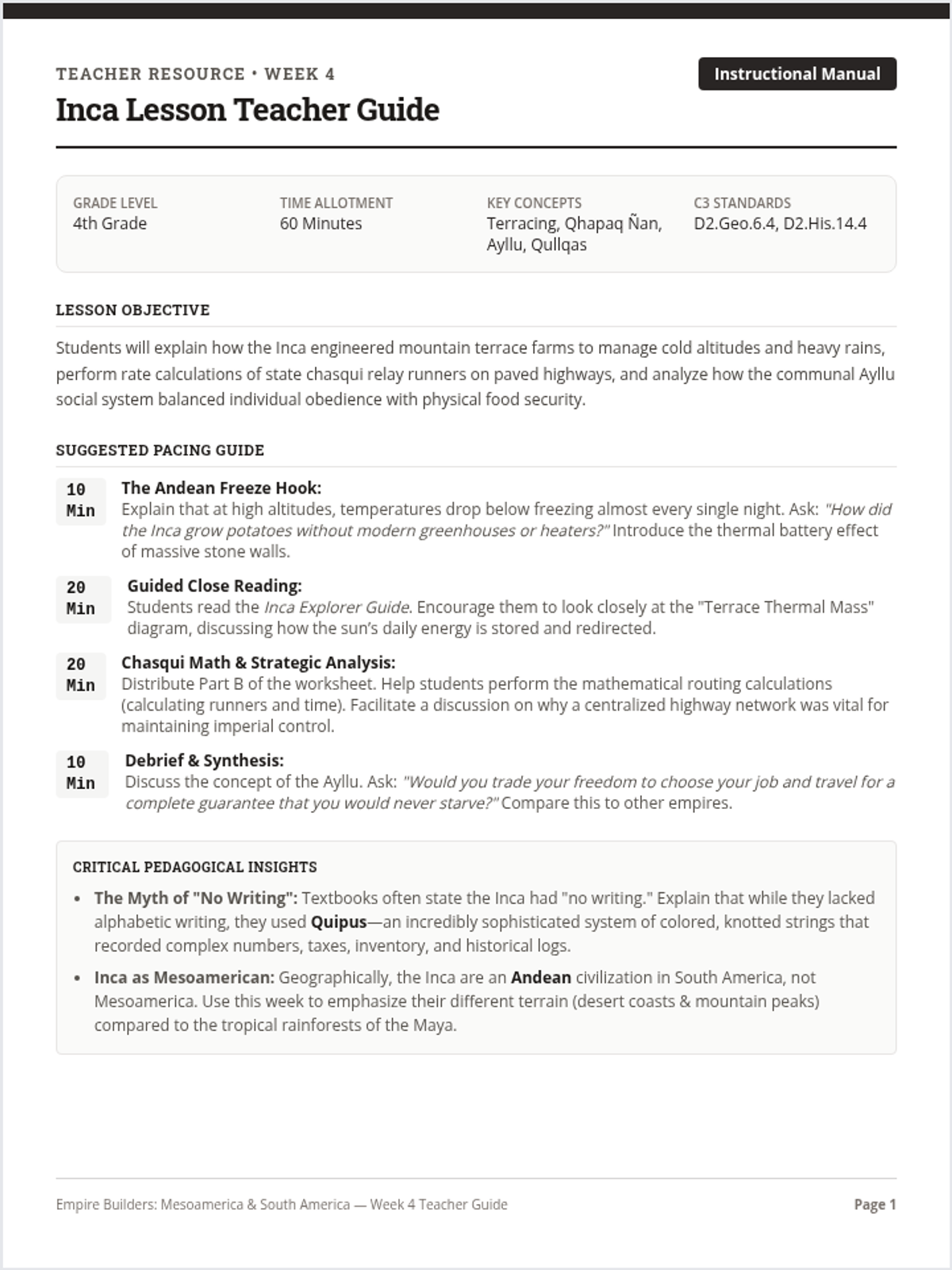
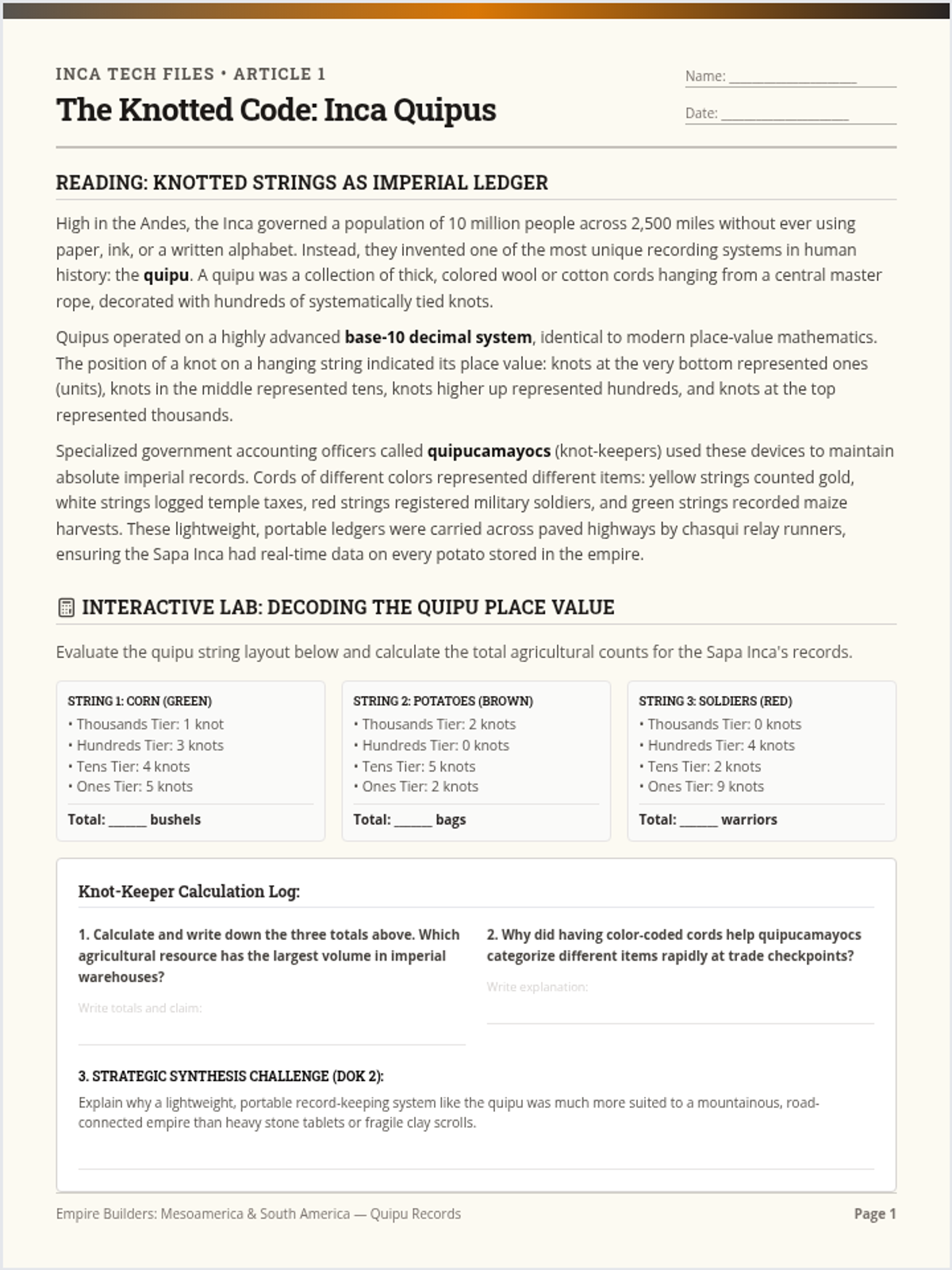
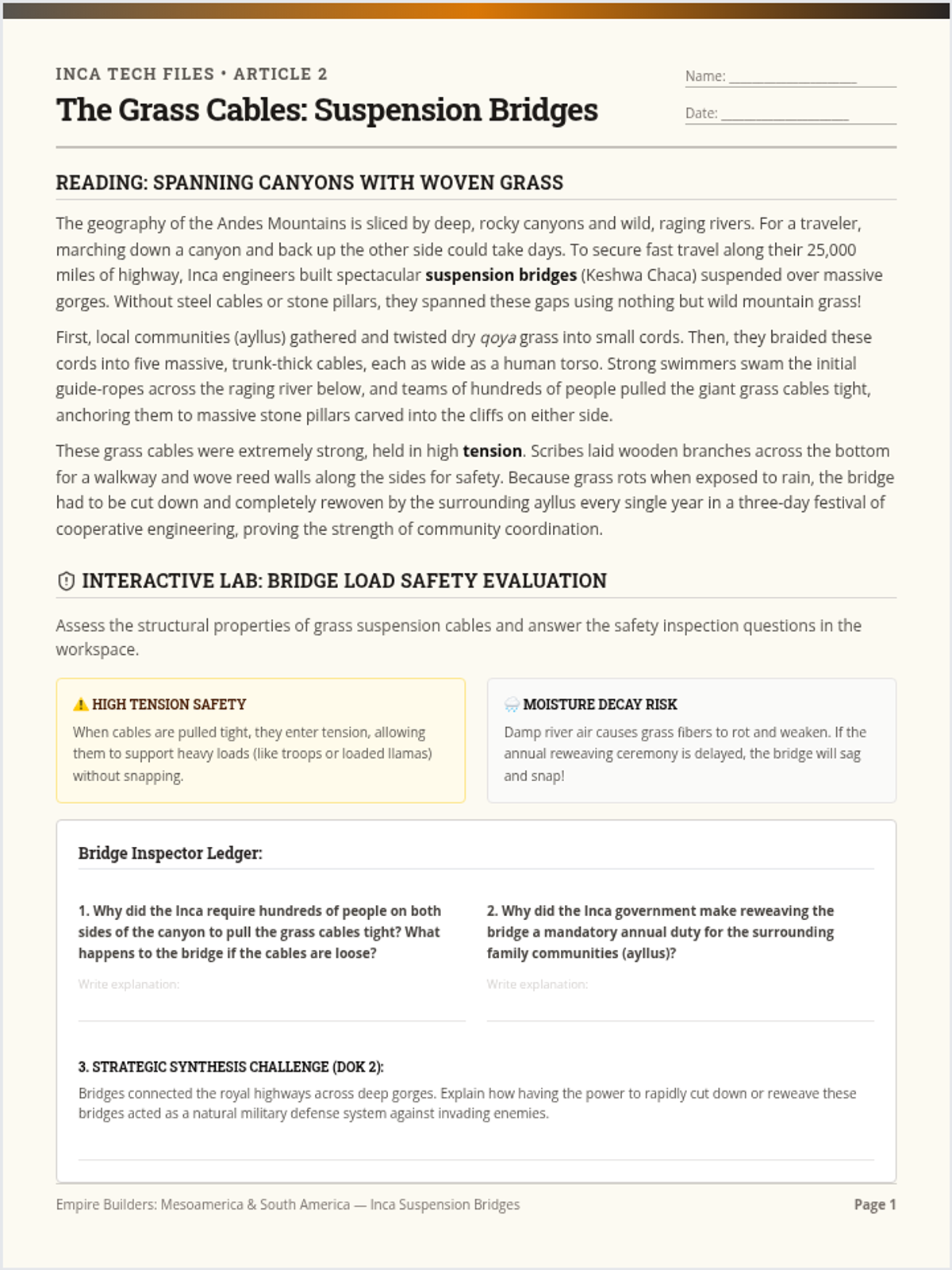
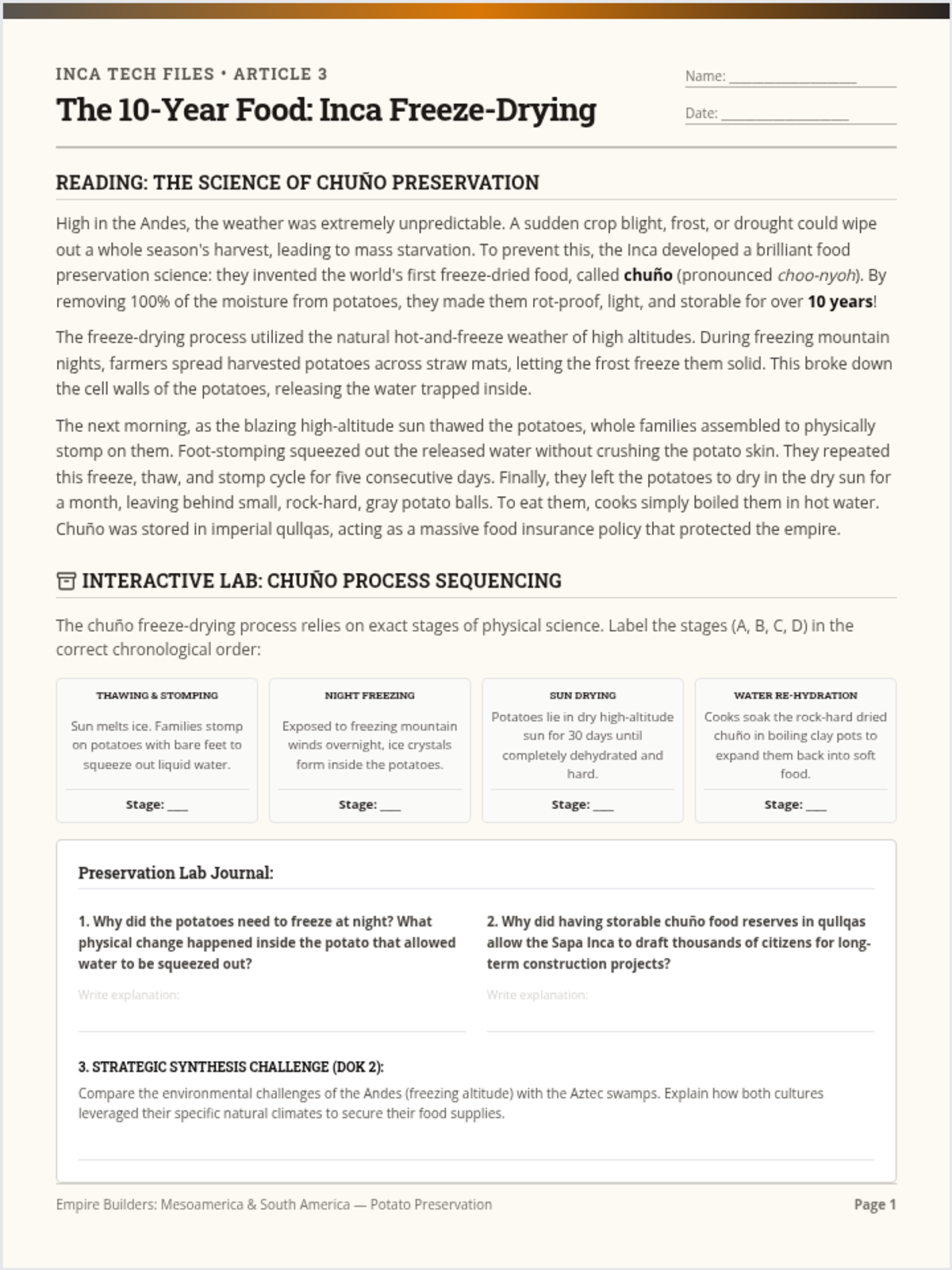
Students explore the Inca civilization, studying their steep mountain terracing, Qhapaq Ñan roads, and rigid Ayllu community hierarchy.
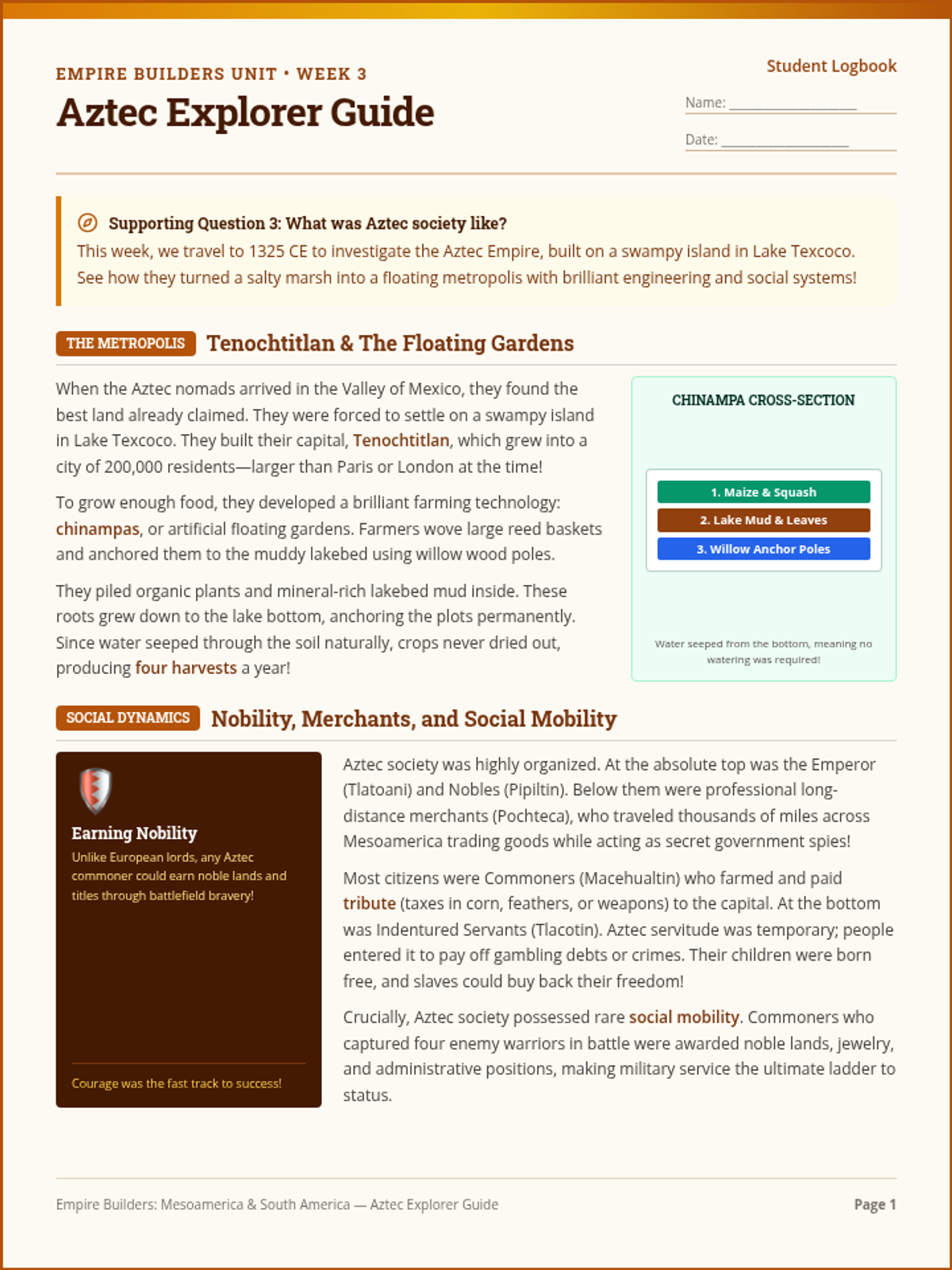
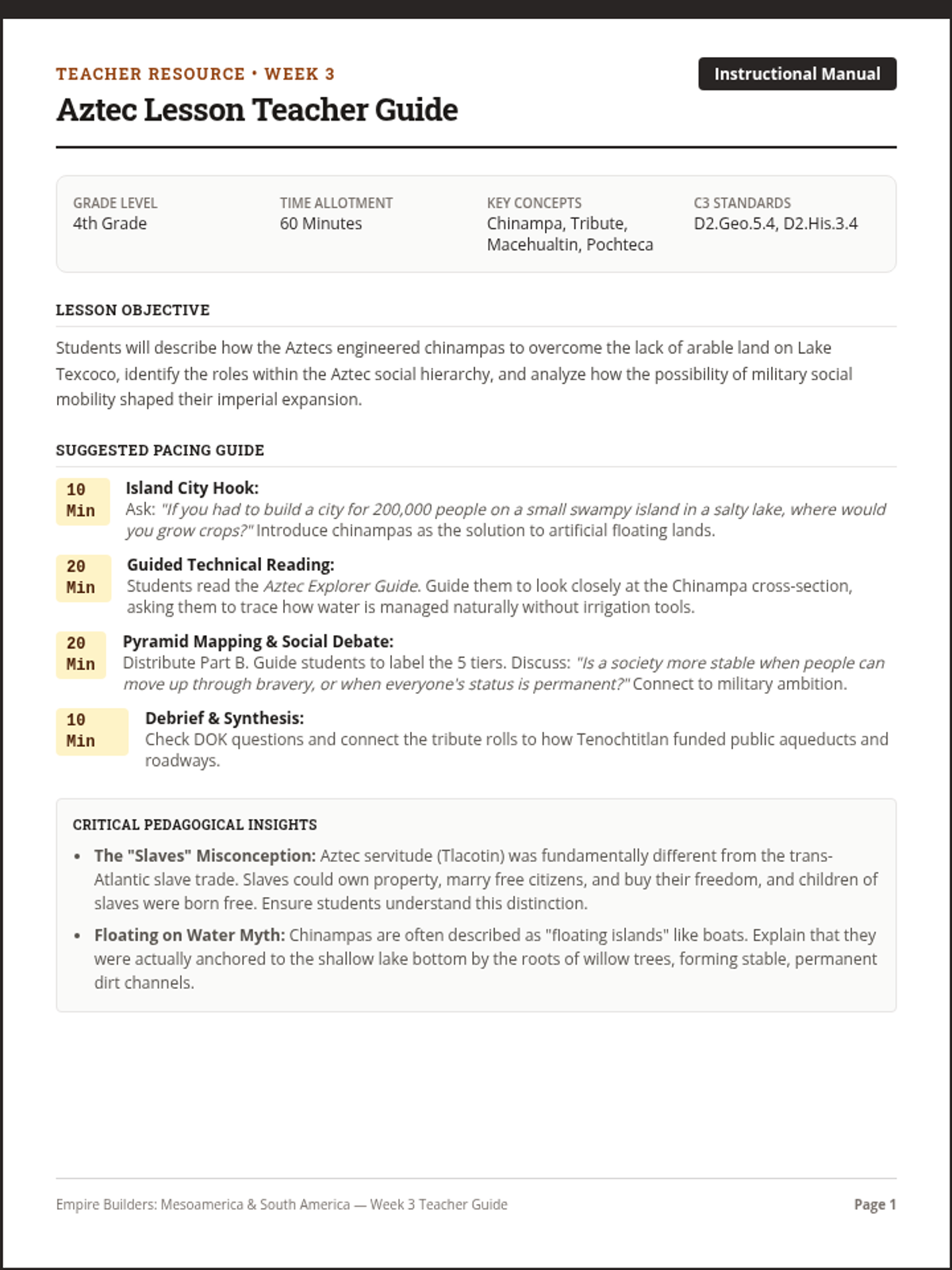
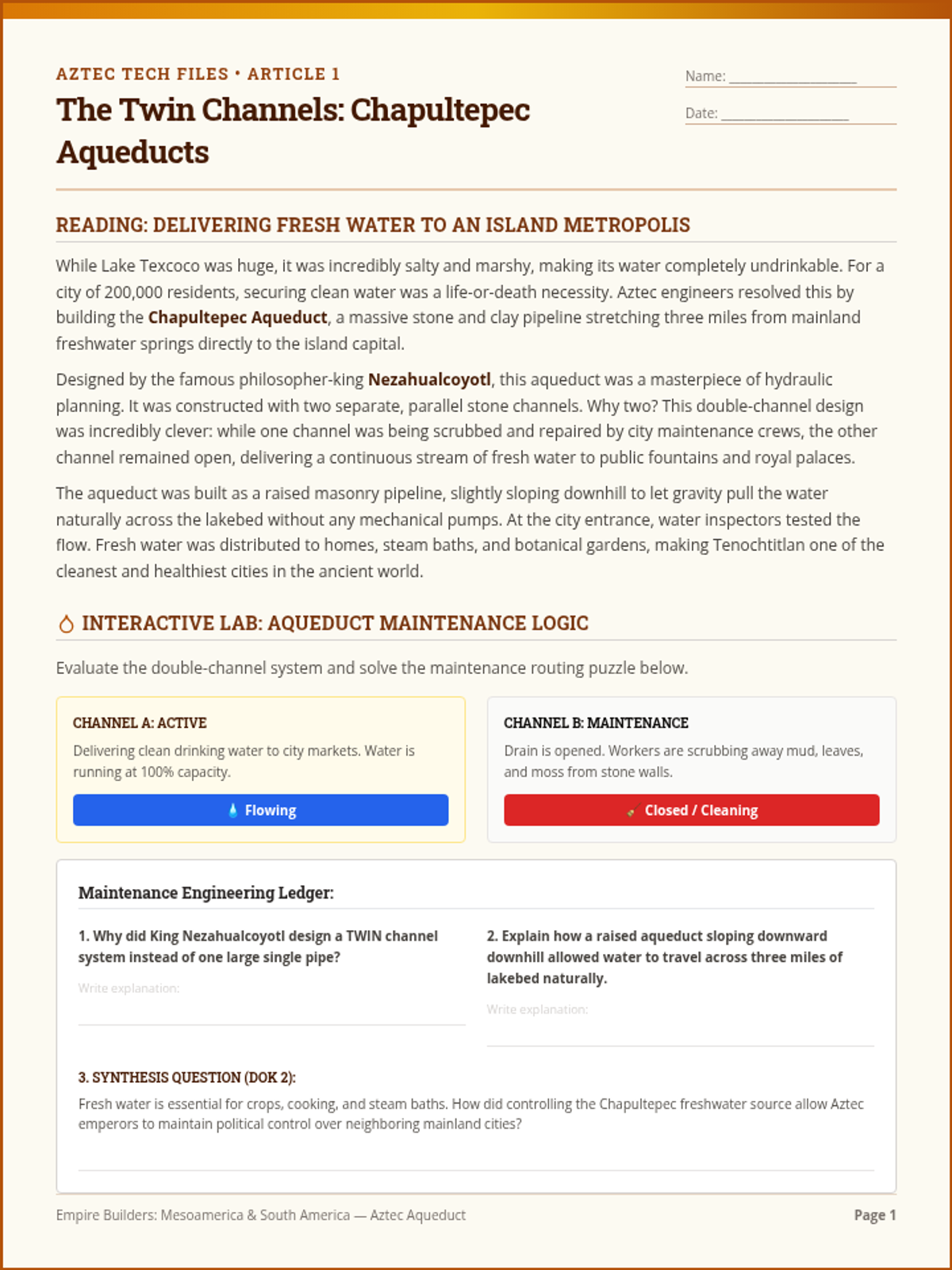
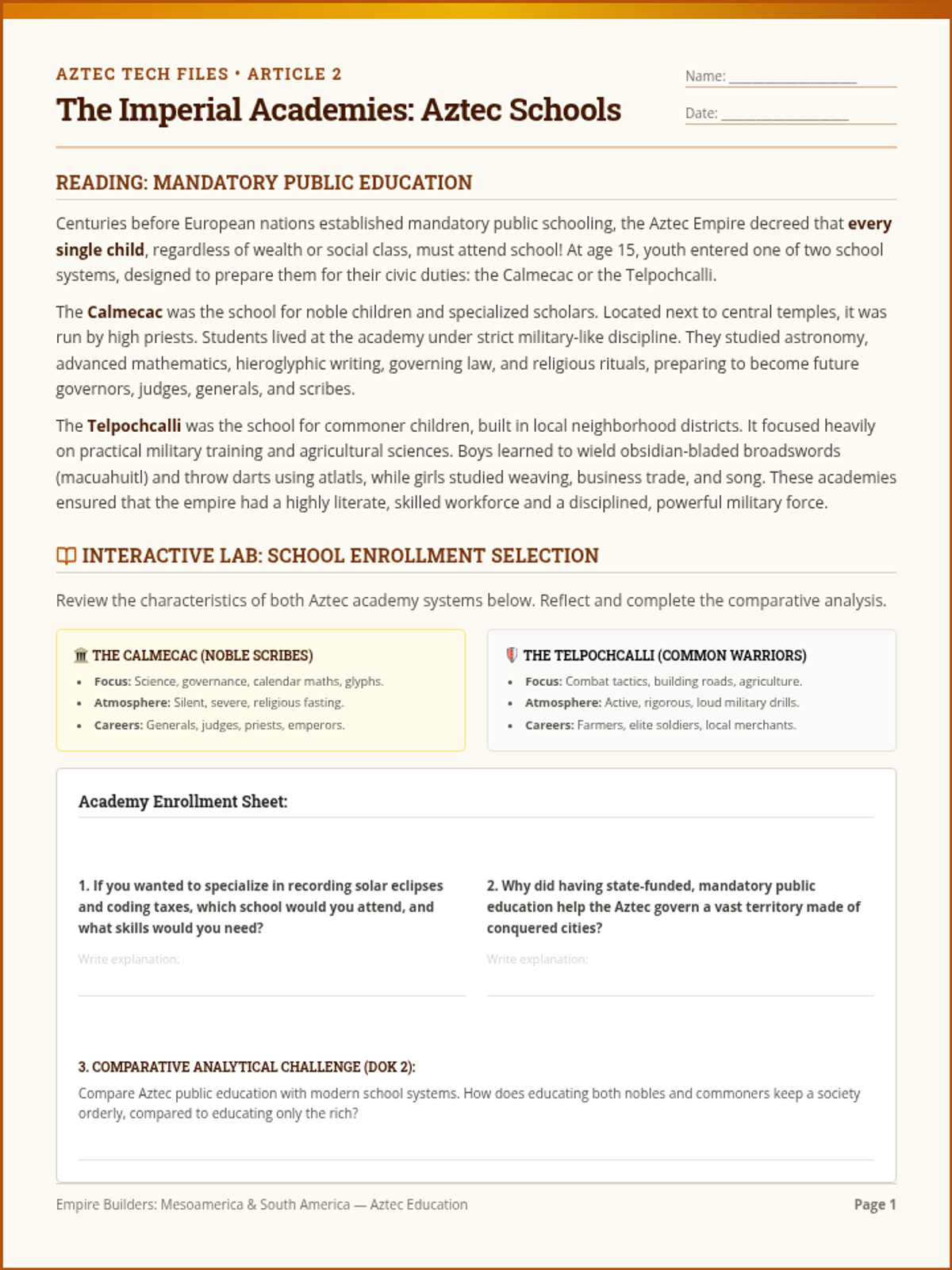
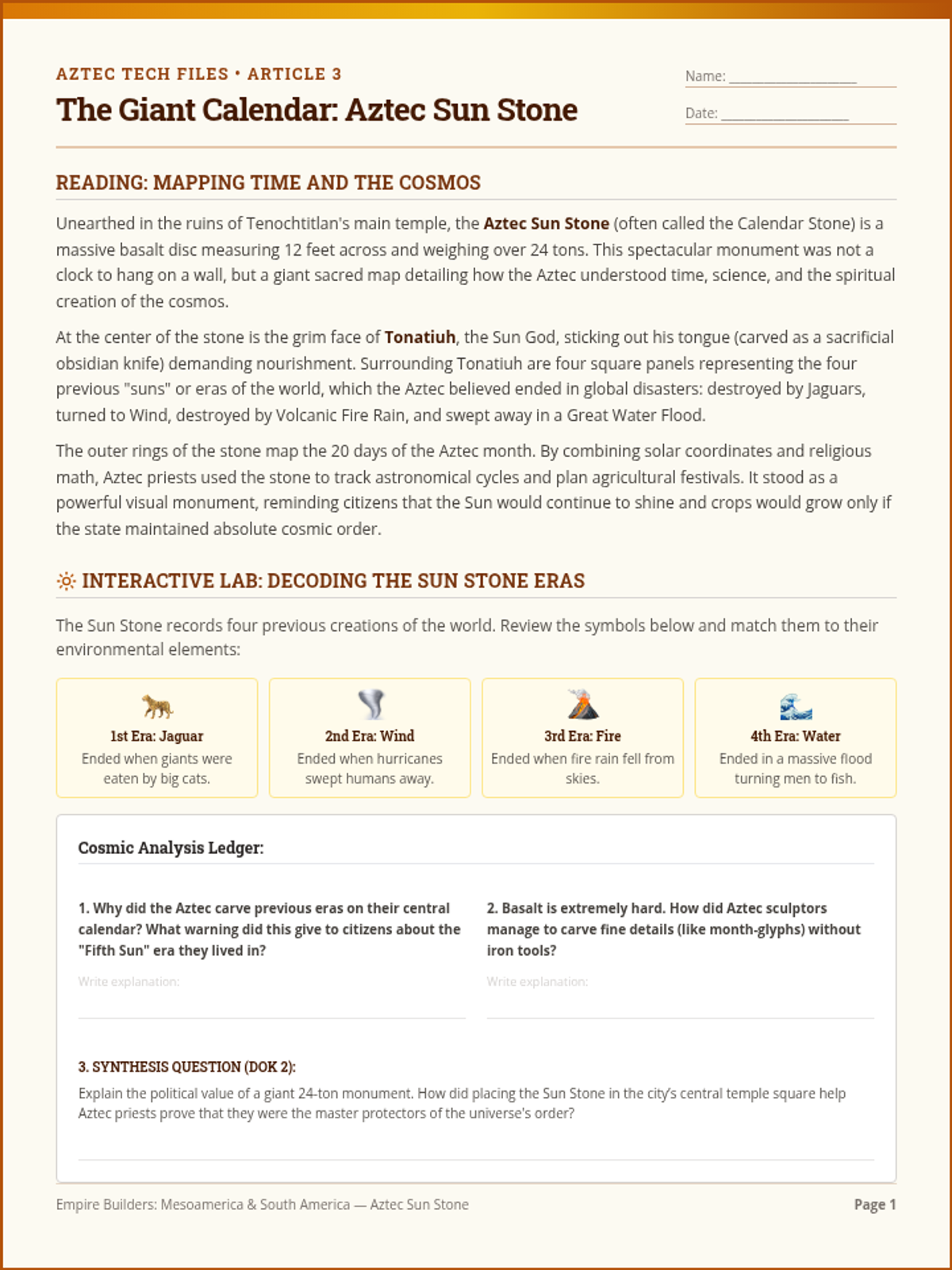
Students explore the Aztec civilization, studying their lake-basin city of Tenochtitlan, chinampa agriculture, and military social mobility.
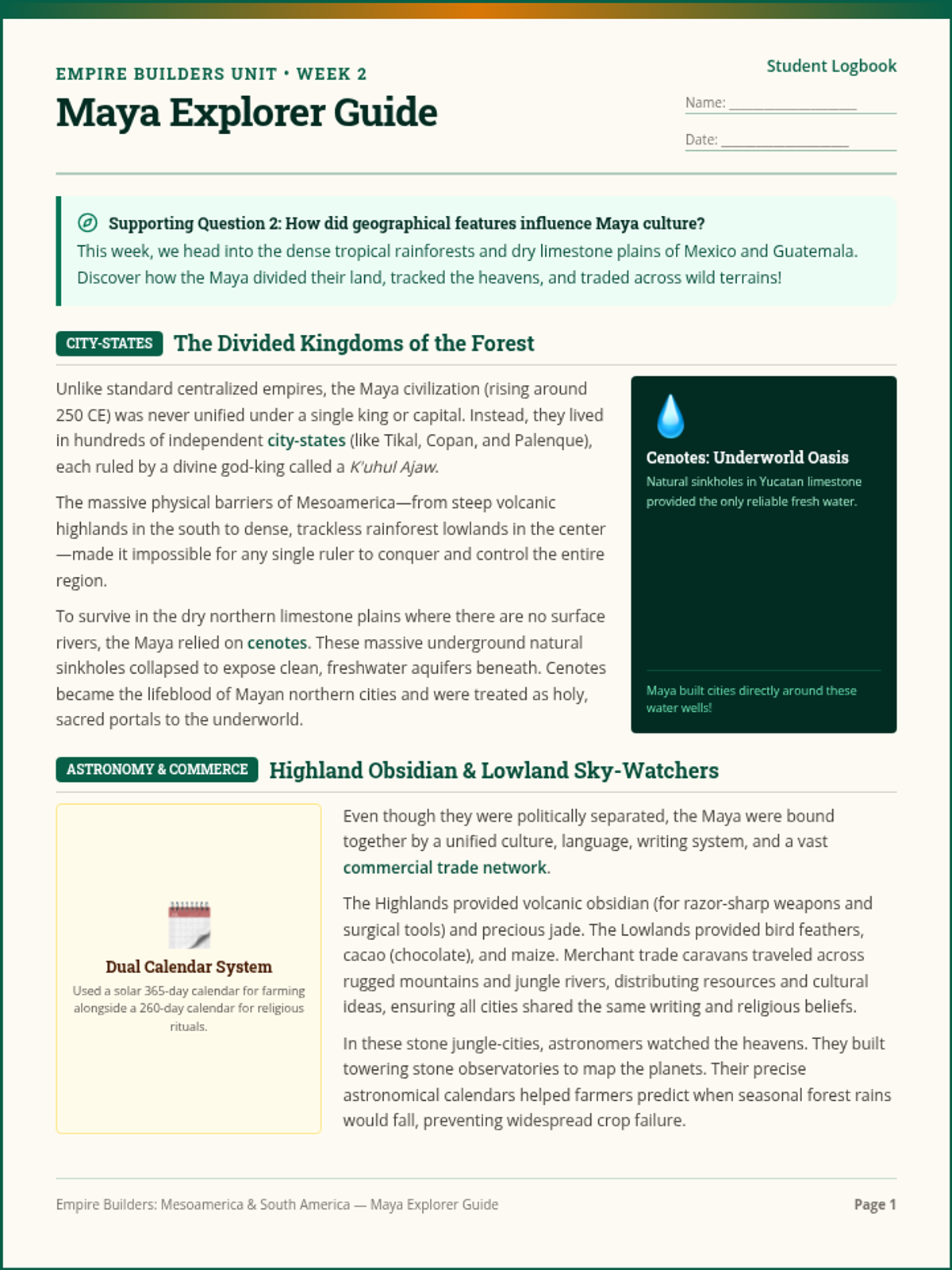
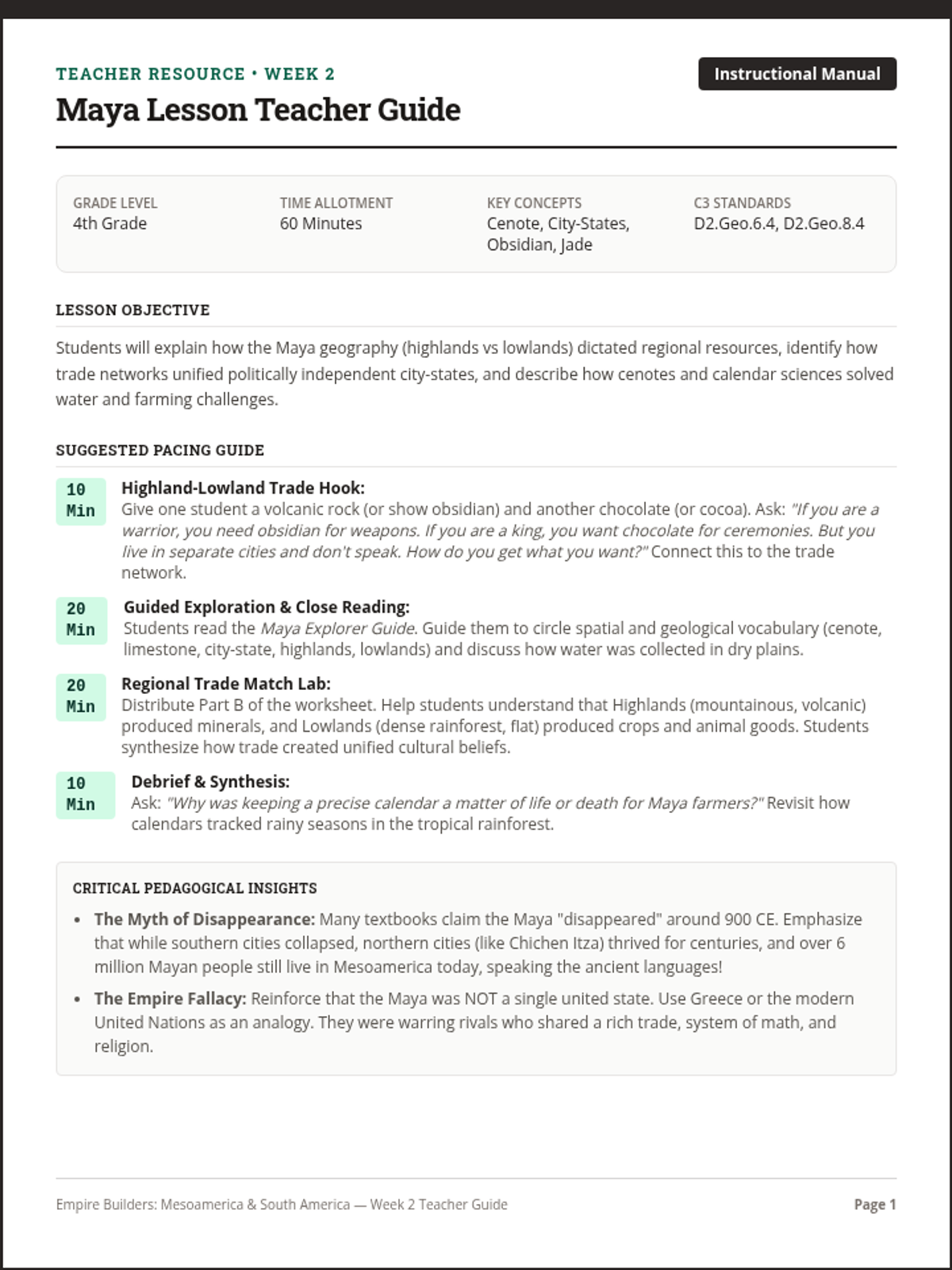
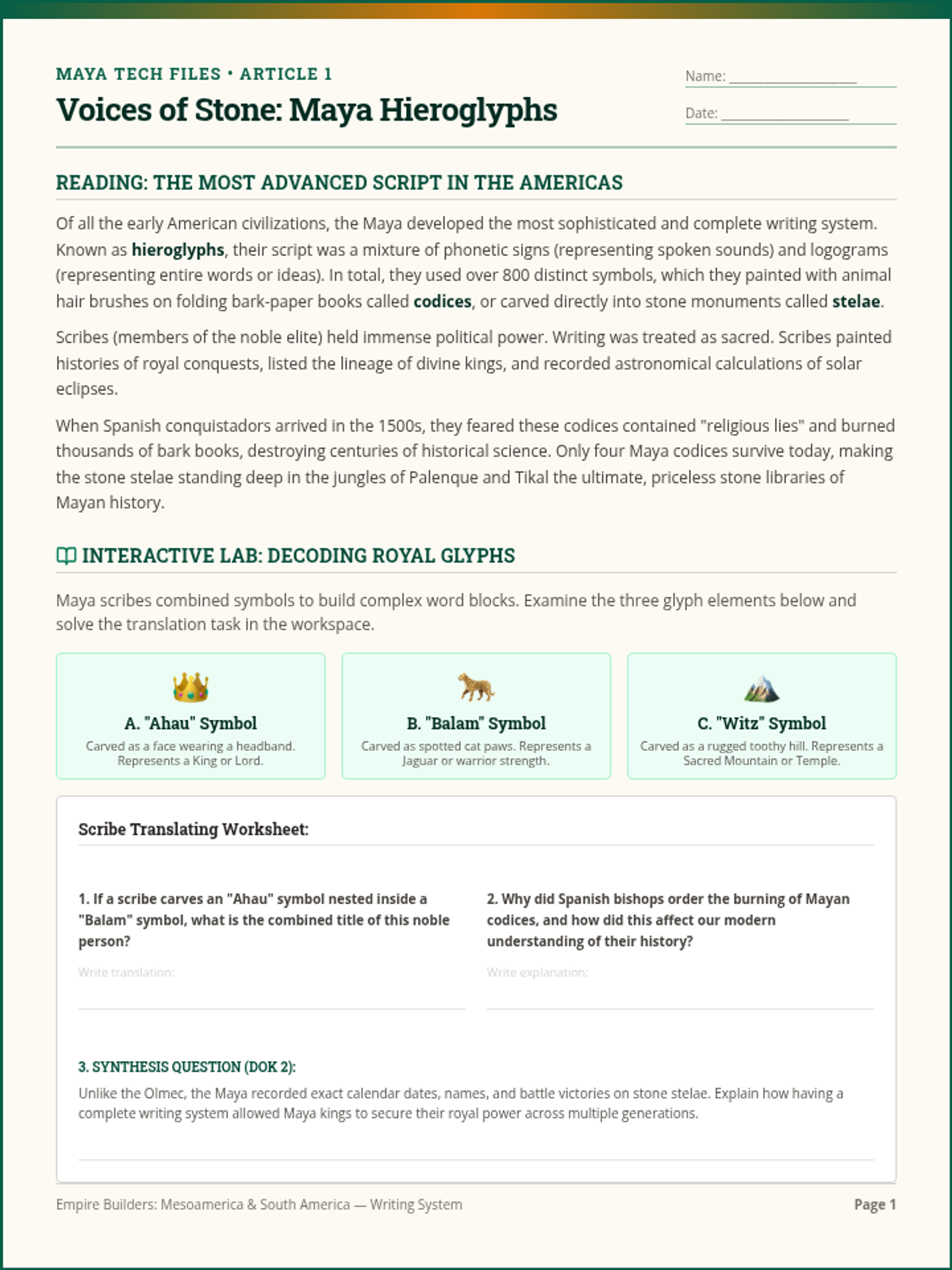
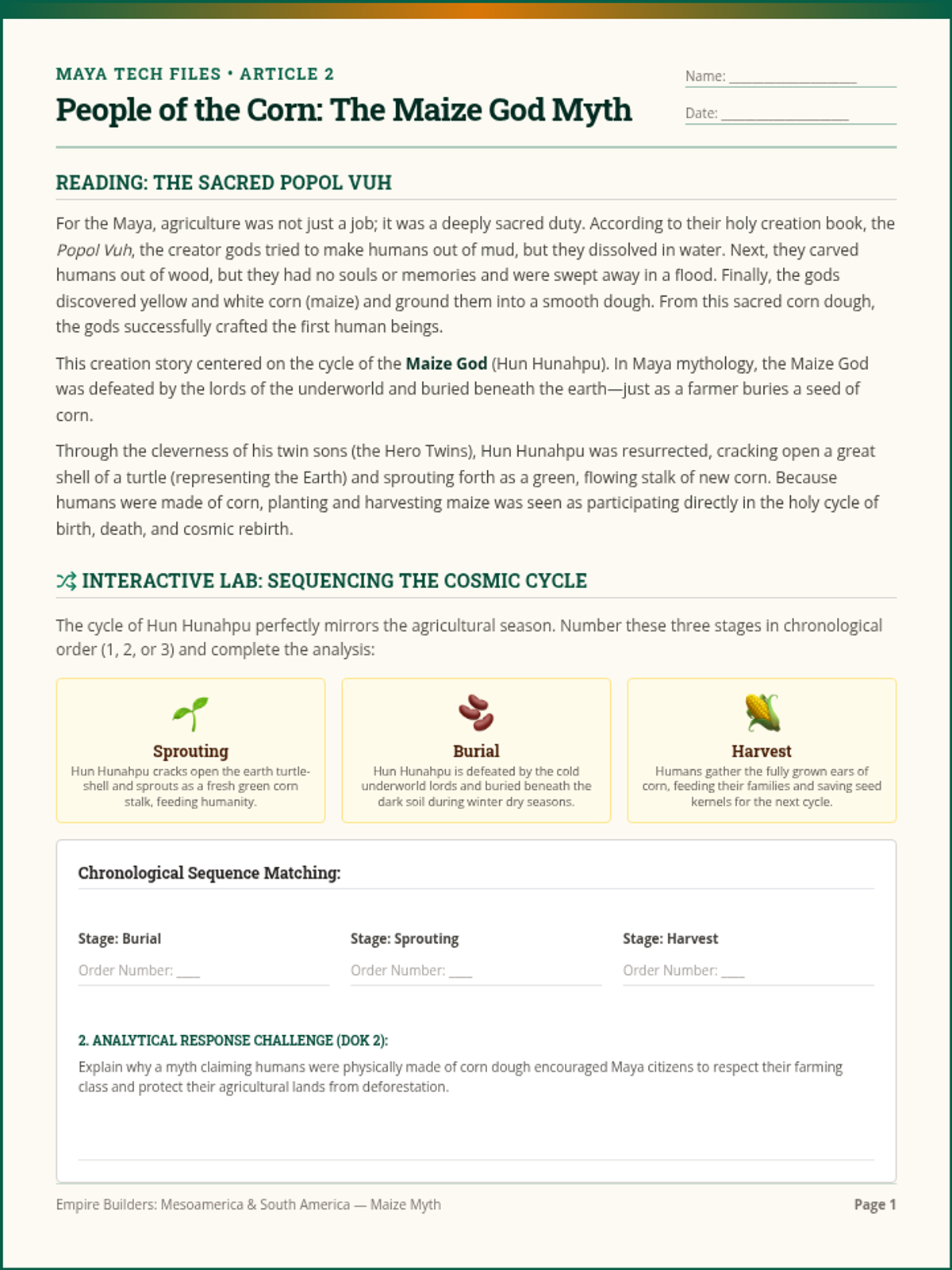
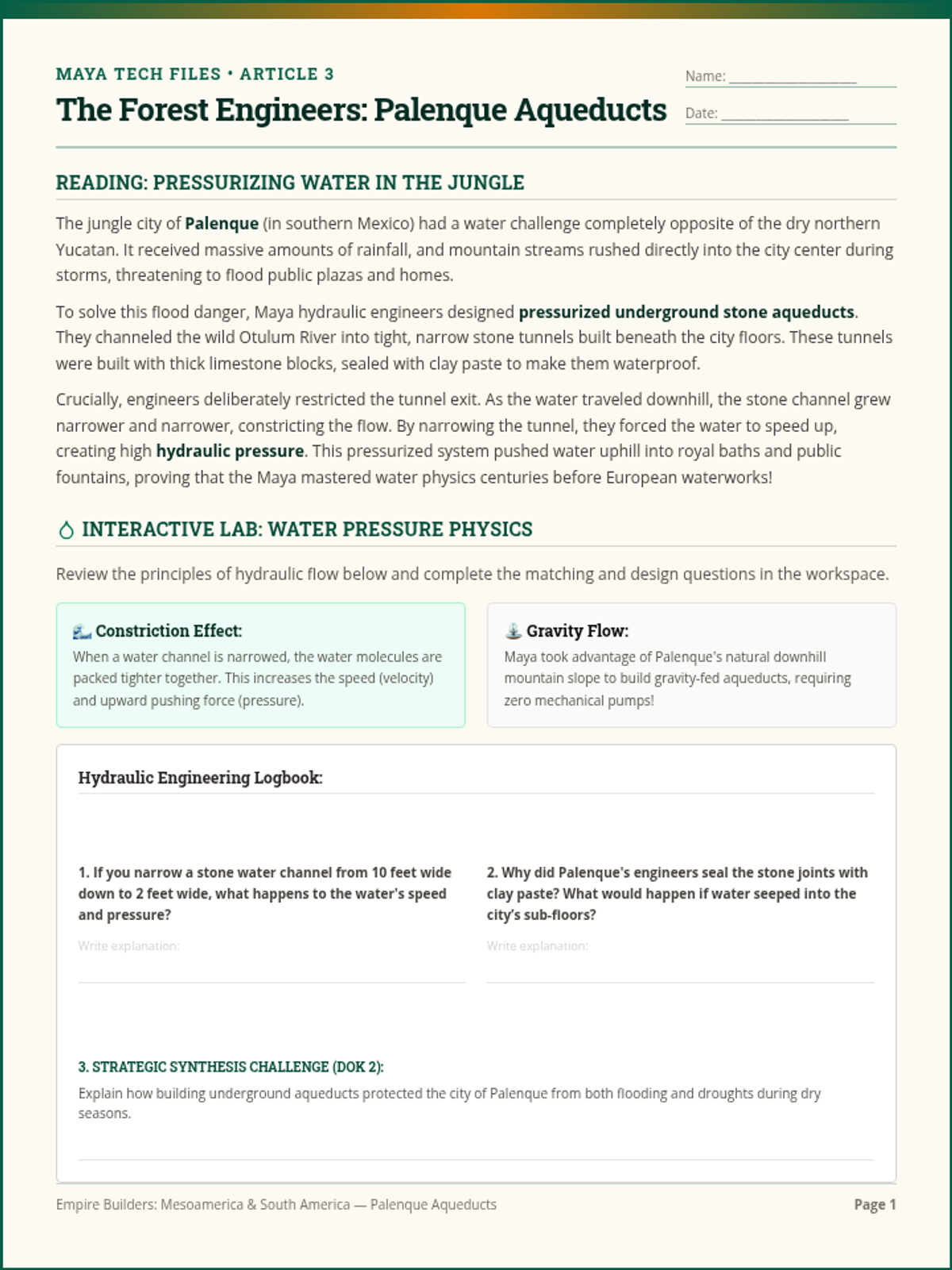
Students explore the Maya civilization, studying their rainforest terrain, calendar systems, and independent city-state hierarchy.
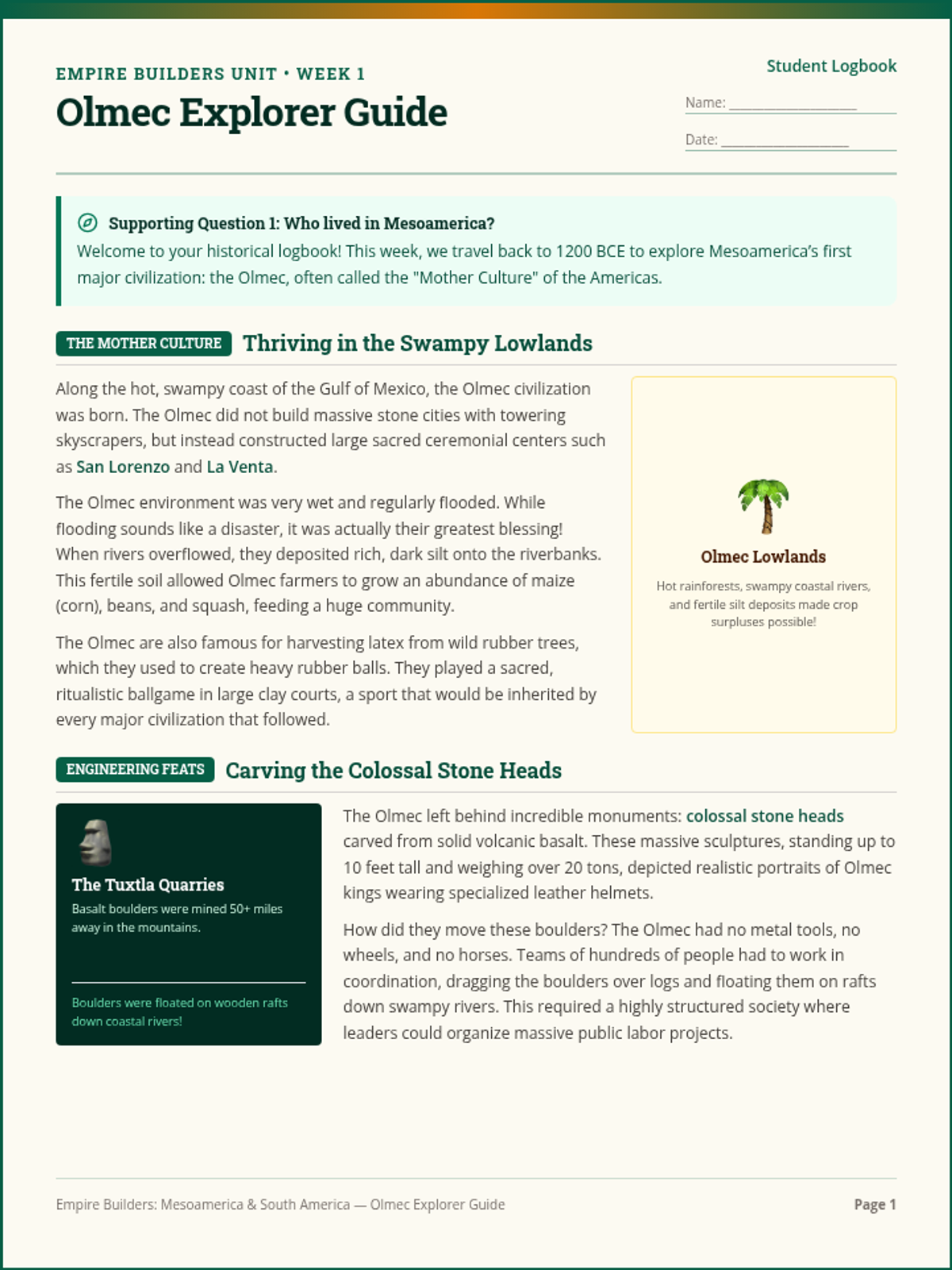
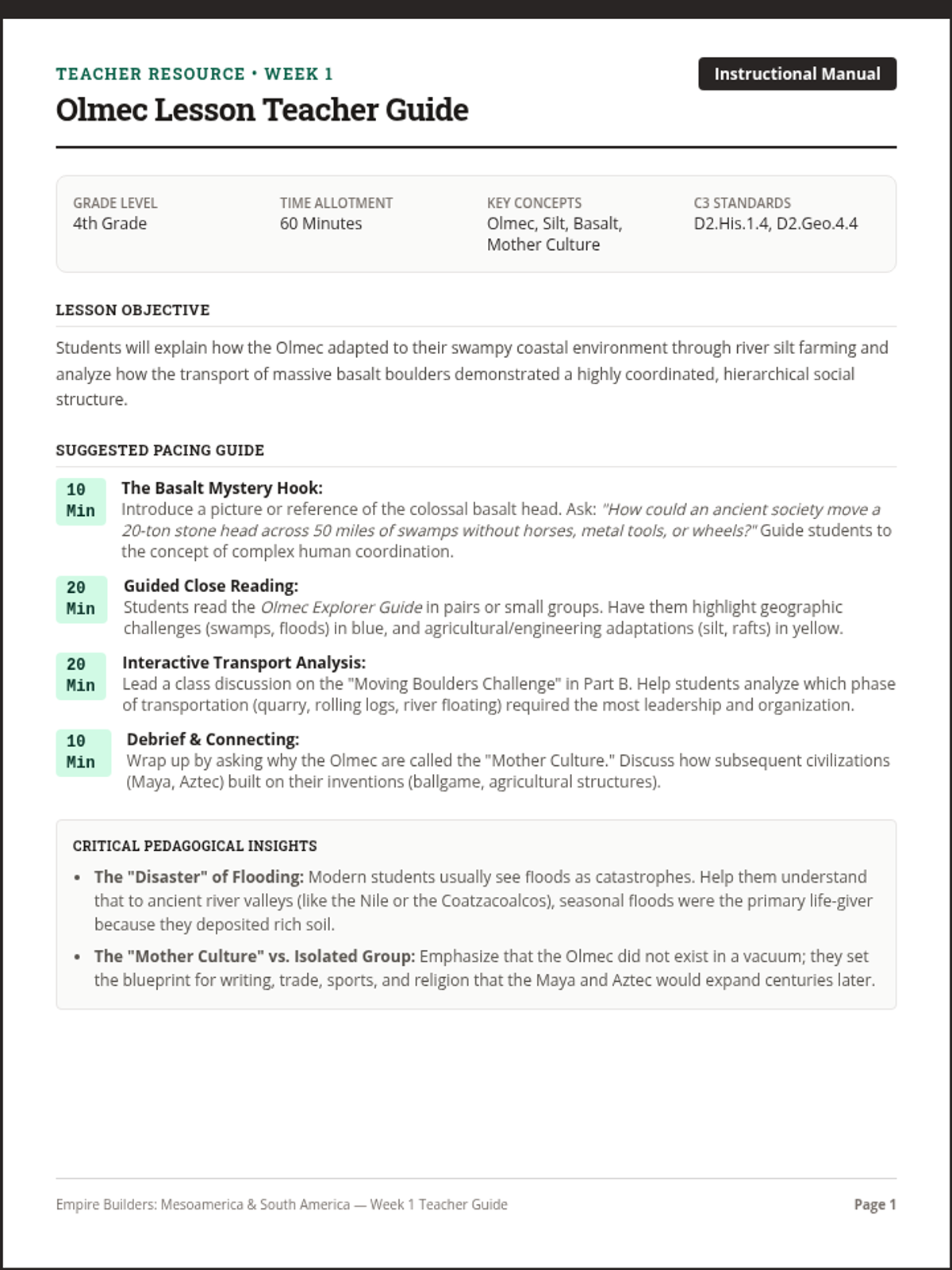
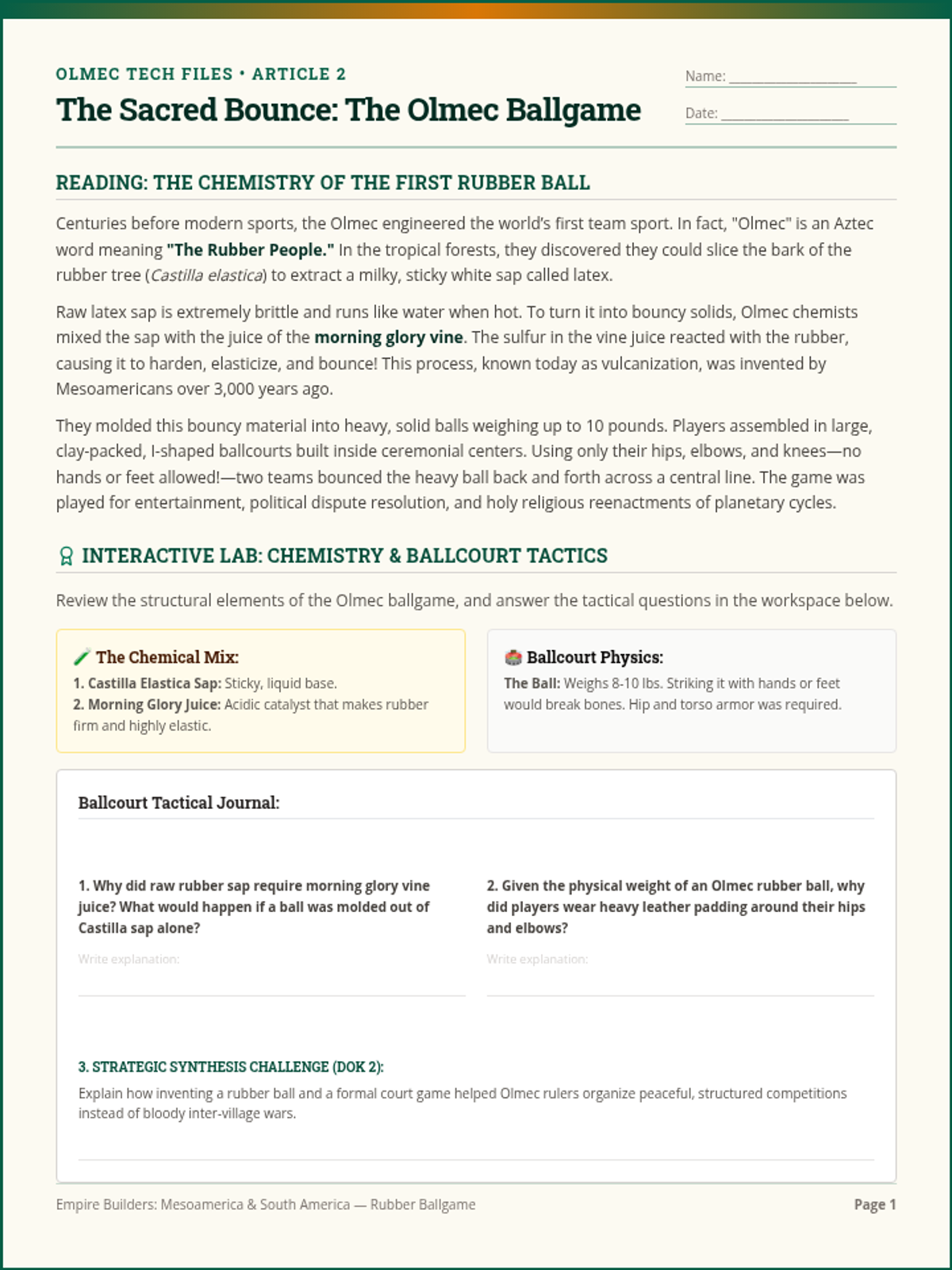
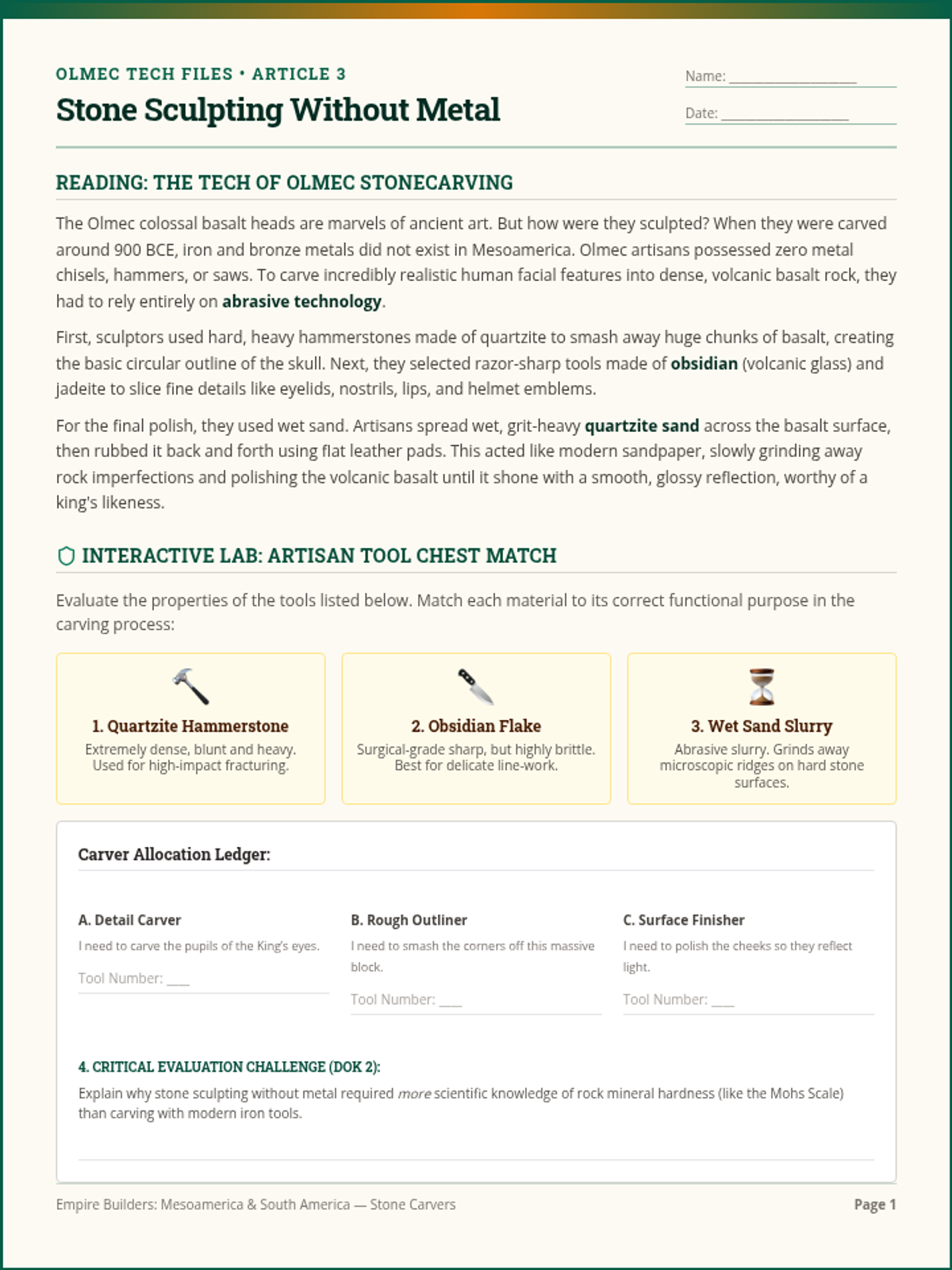
Students explore the Olmec civilization, investigating their swampy geography, monumental stone heads, and social structure.
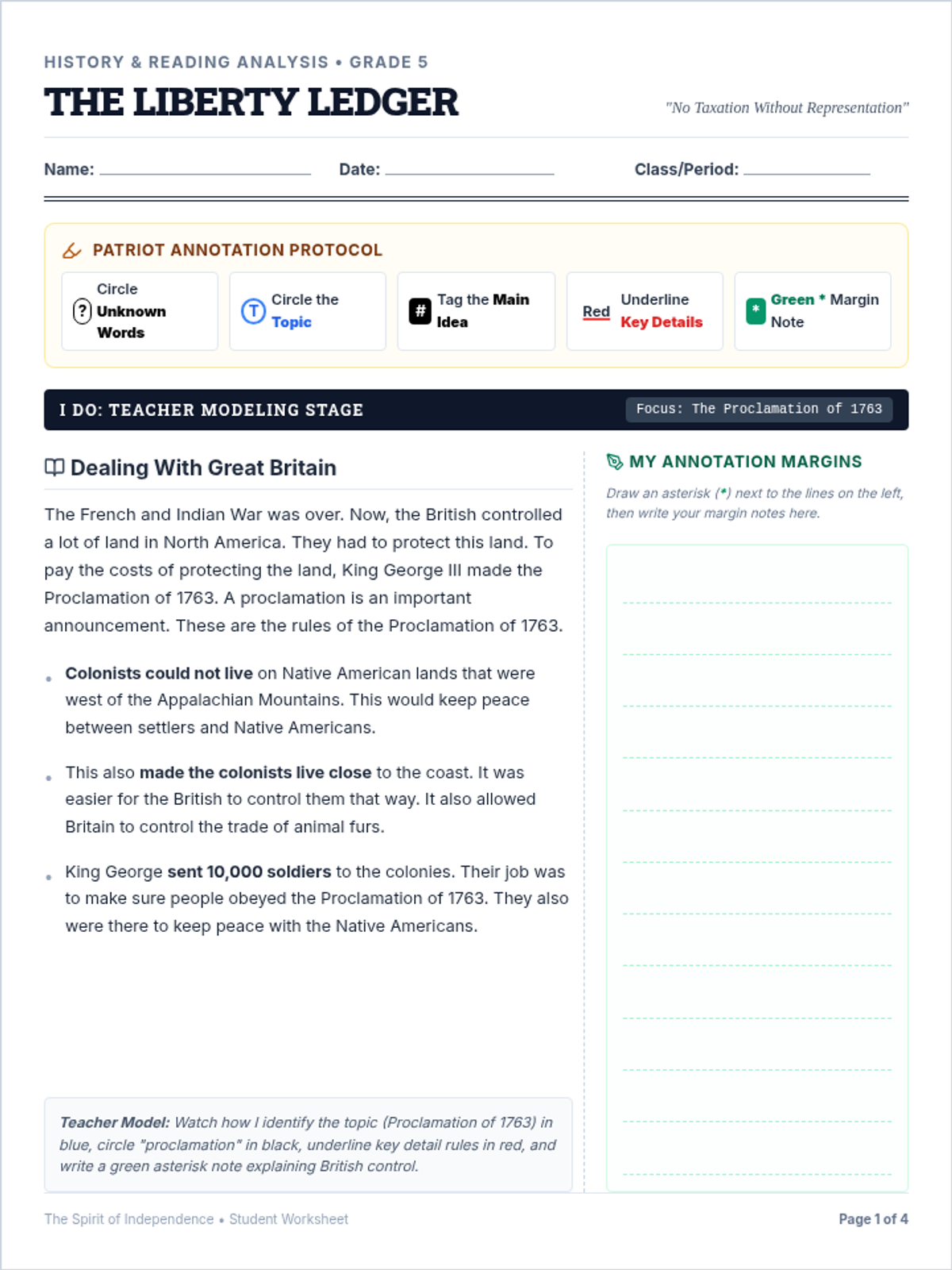
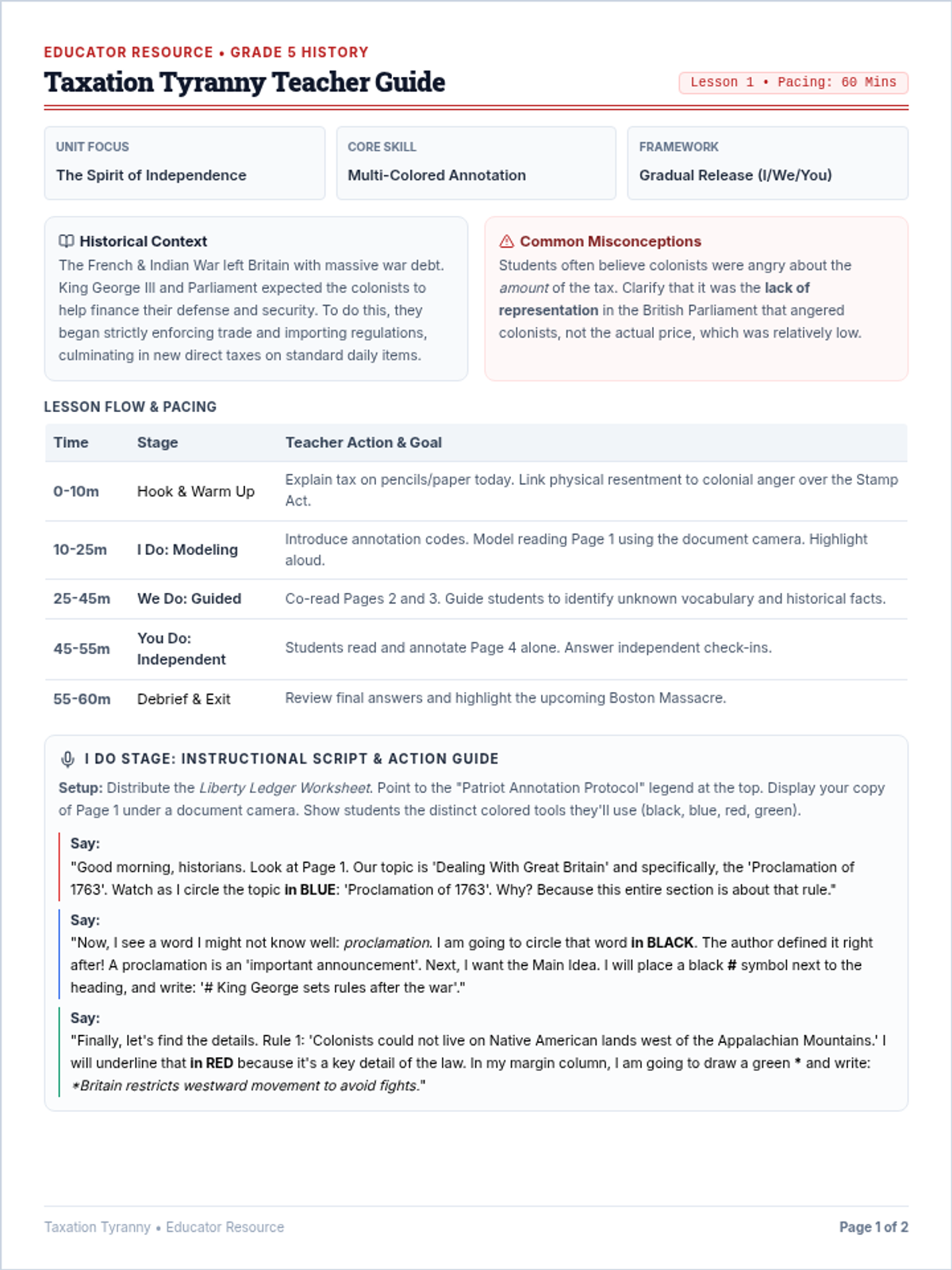
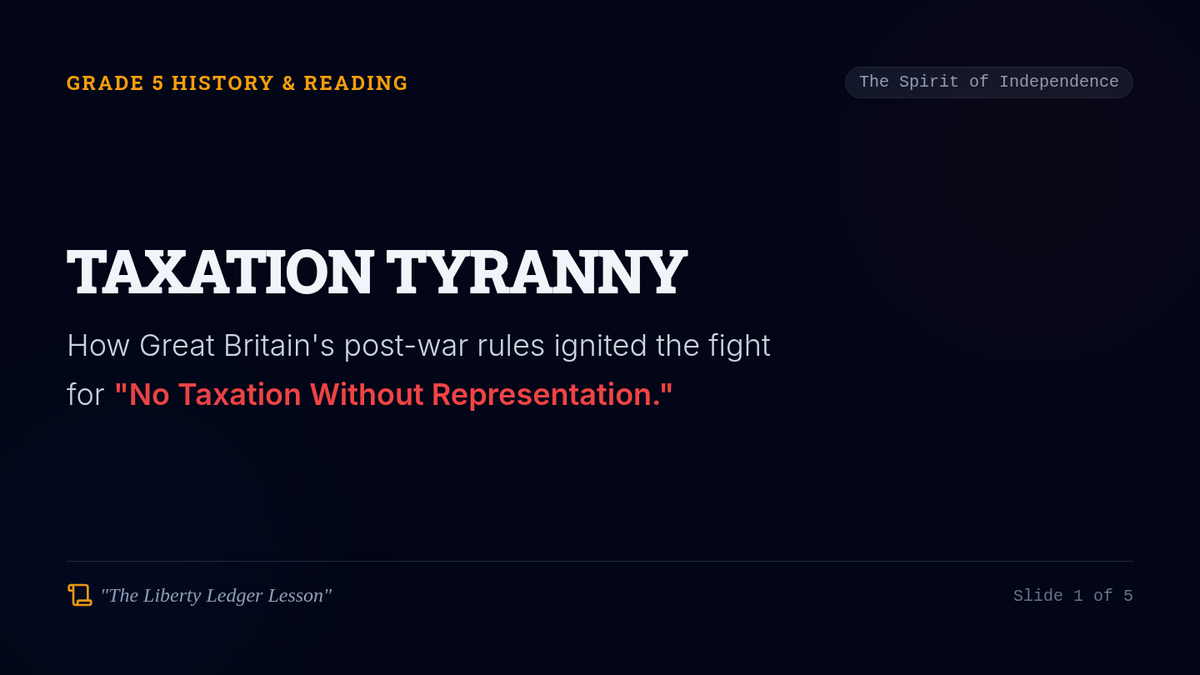
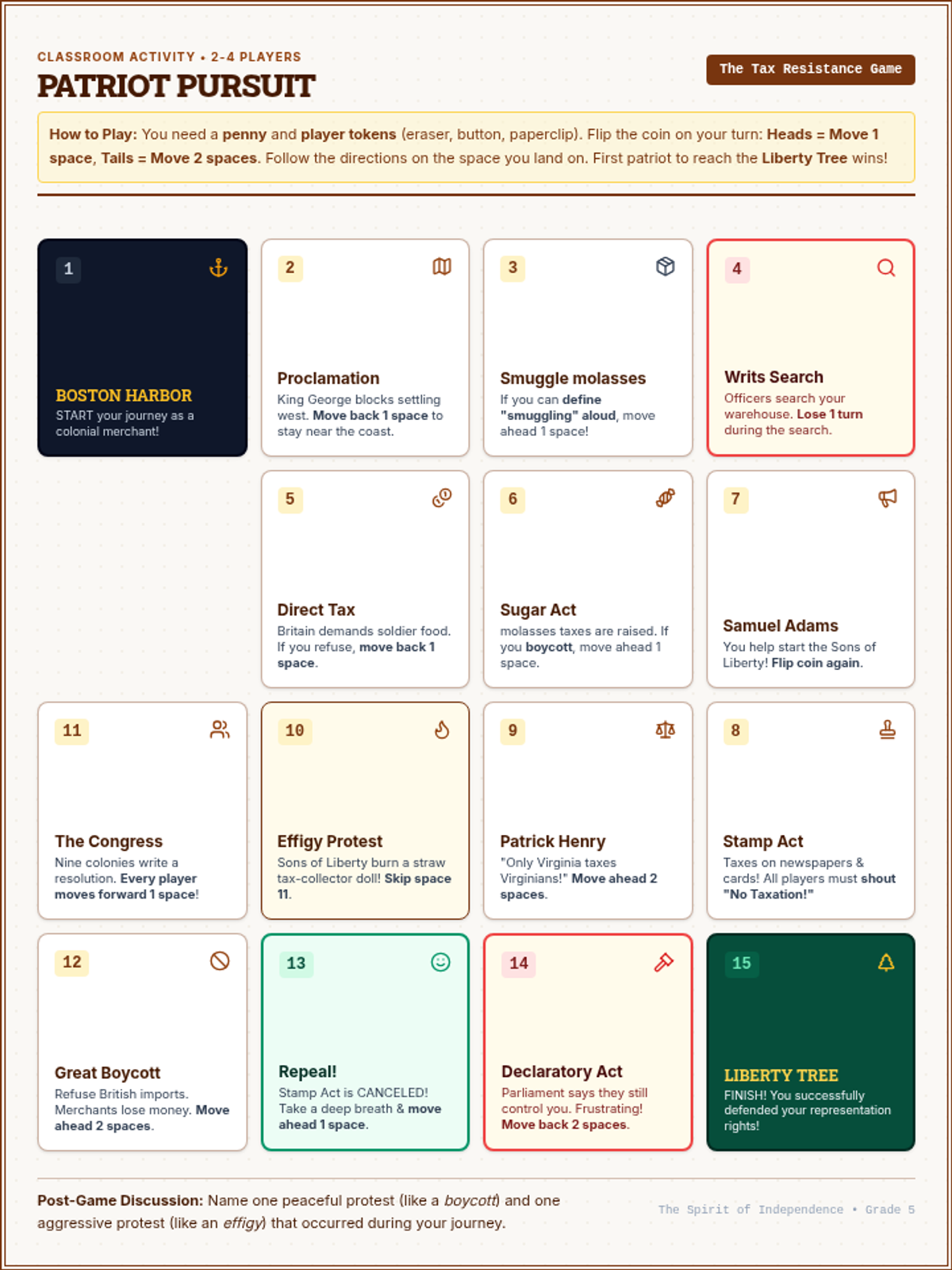
A fifth-grade history and reading lesson focusing on Great Britain's post-French and Indian War policies, introducing the concept of 'No Taxation Without Representation' through a structured Gradual Release of Responsibility (I Do, We Do, You Do) framework. Students use a precise multi-colored annotation strategy to analyze the historical text.
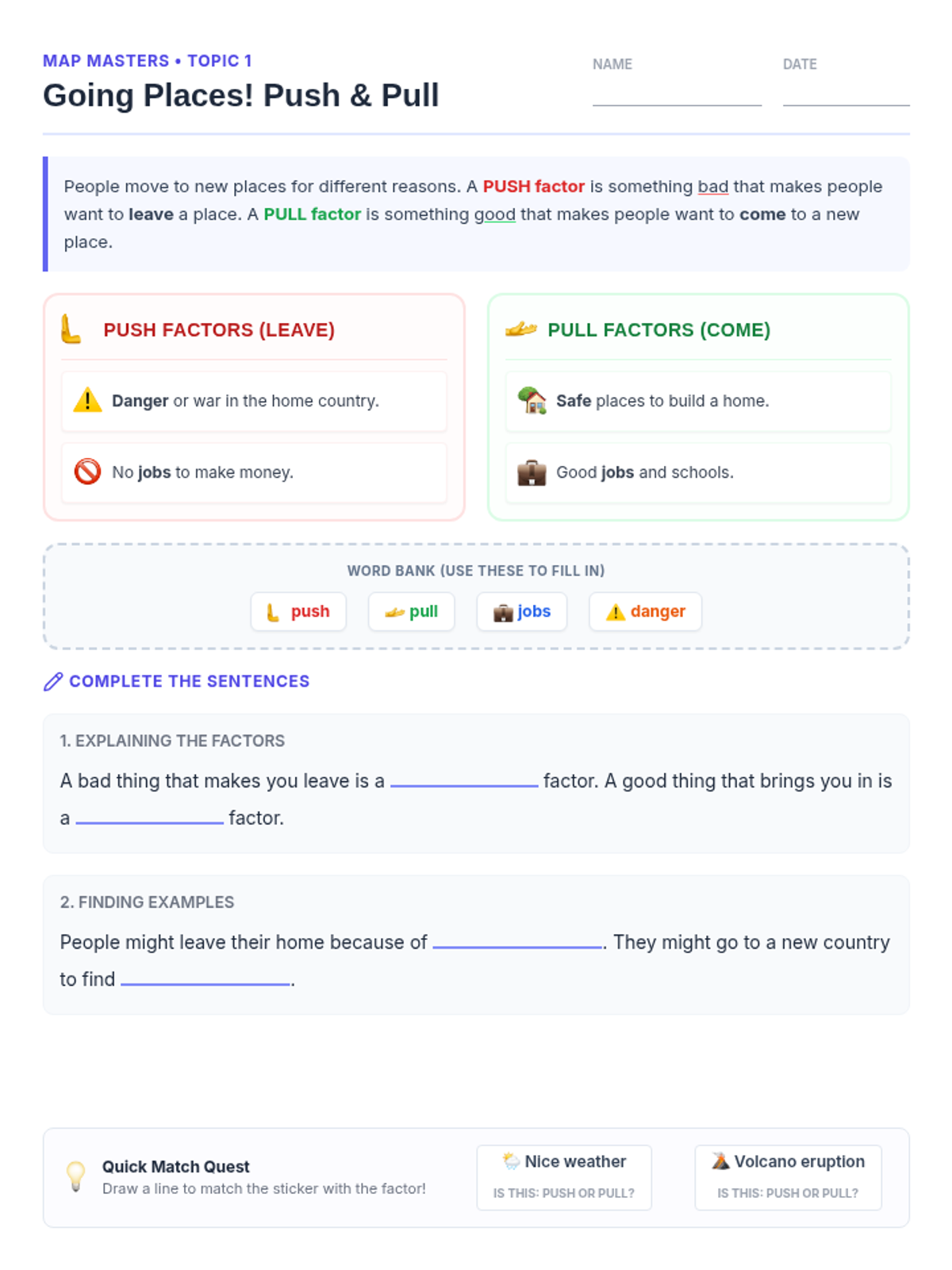
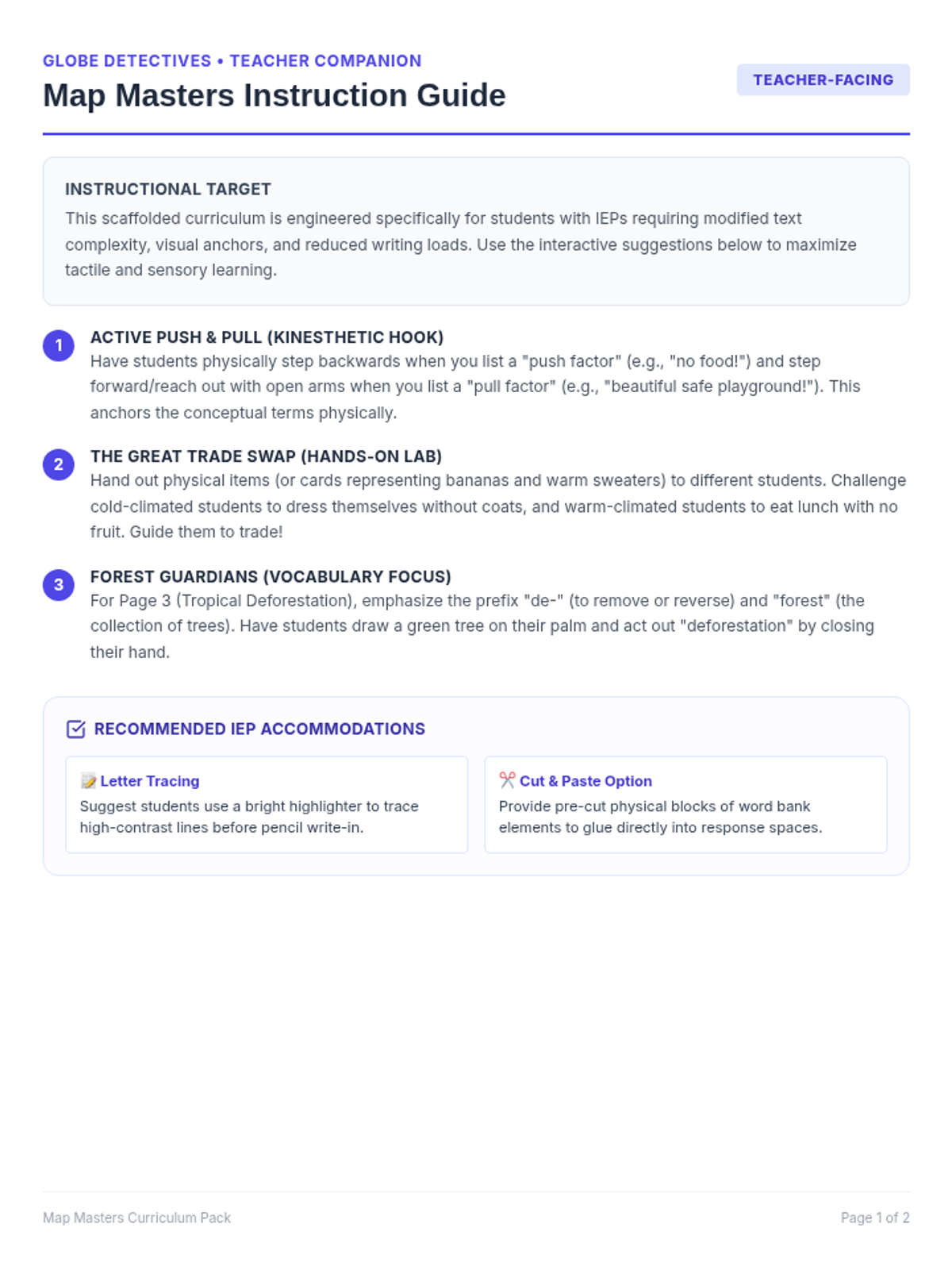
A scaffolded geography lesson exploring push and pull migration factors, global trade, and tropical deforestation with extensive visual supports and sentence frames designed for IEP accessibility.
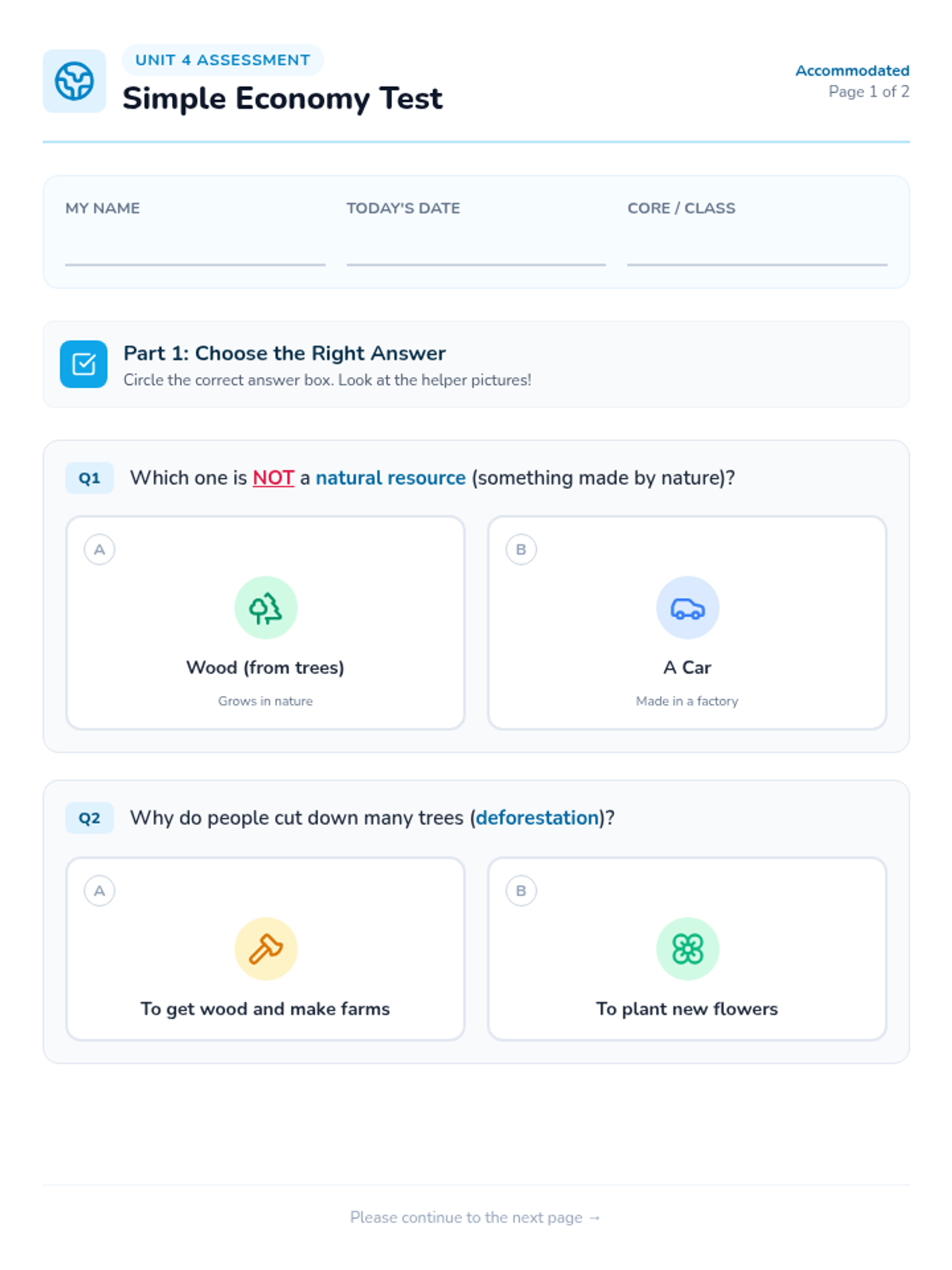
A modified, highly accessible economics assessment package tailored for students with IEP accommodations. Features simplified reading level, reduced multiple-choice options, bolded key terms, clear visual icons, and an intuitive match-by-letter format instead of complex grids.
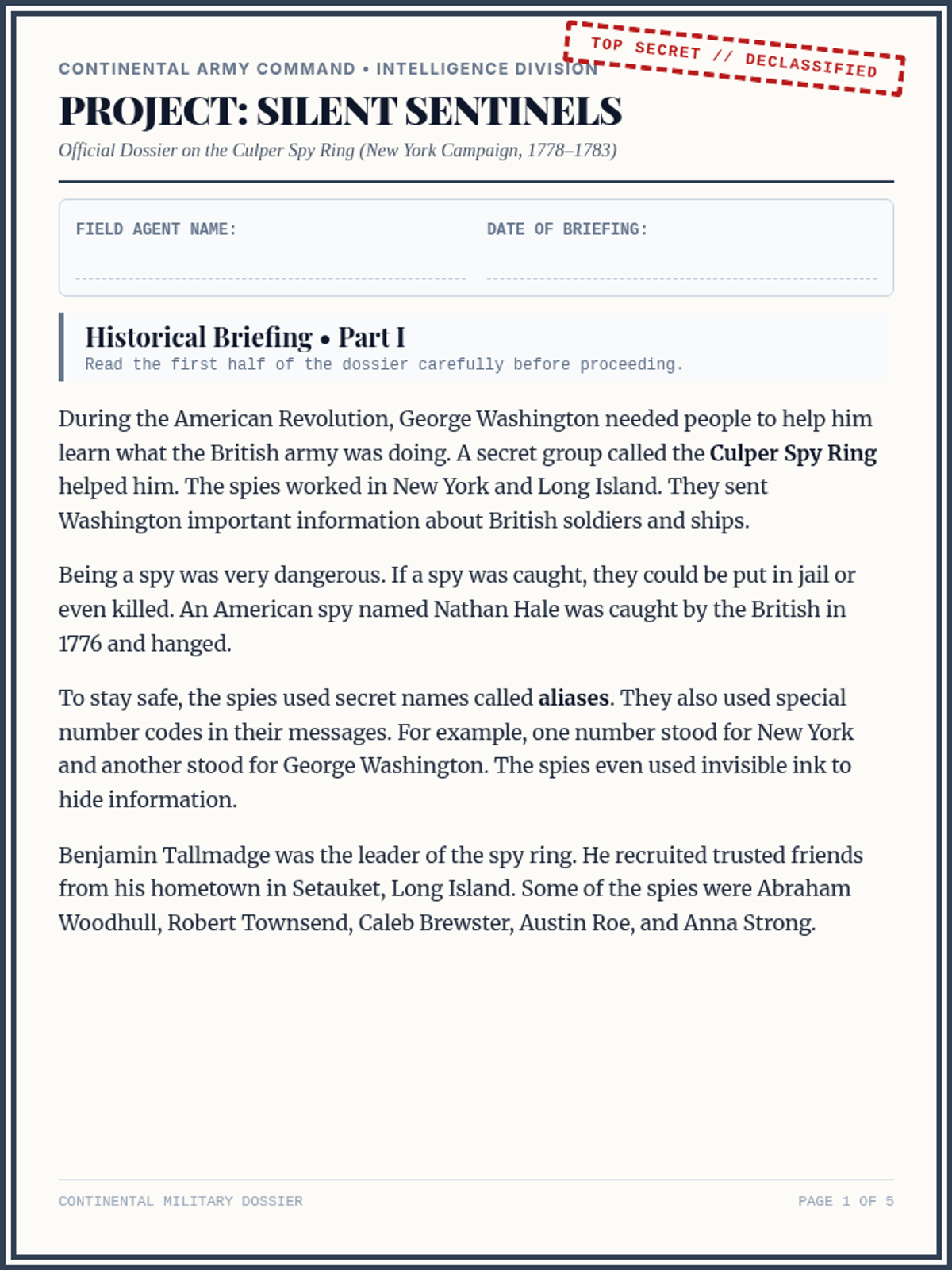
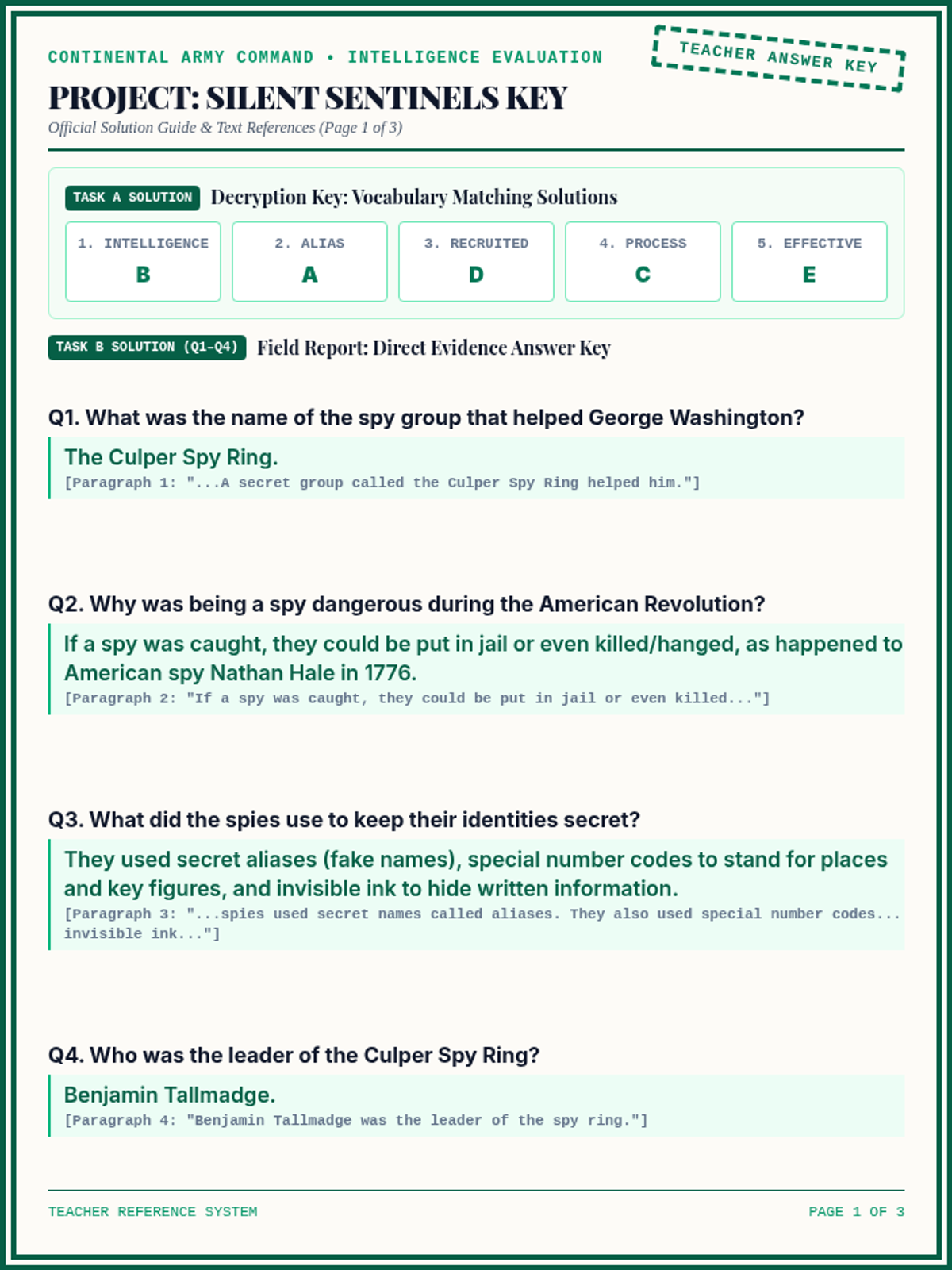
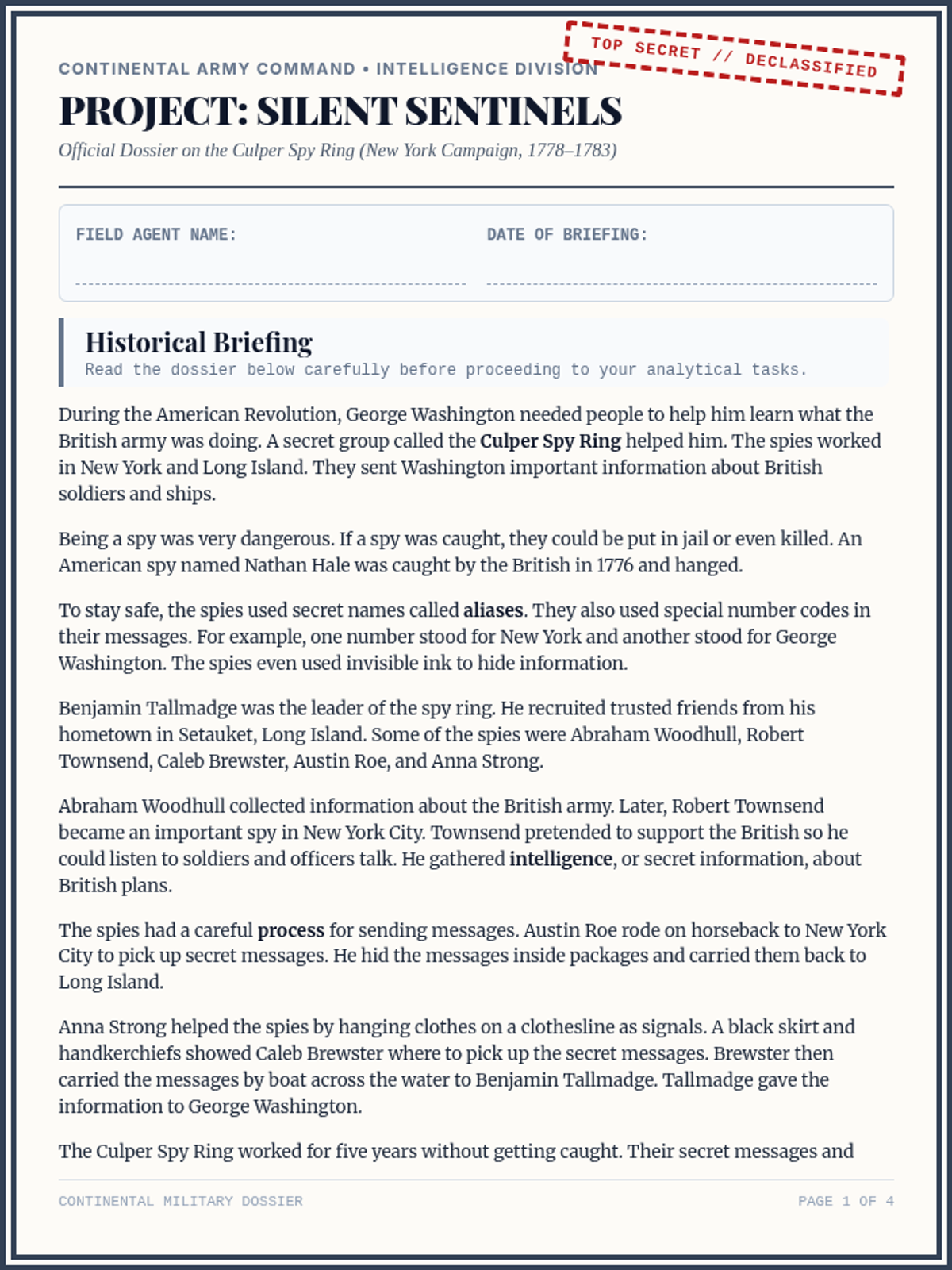
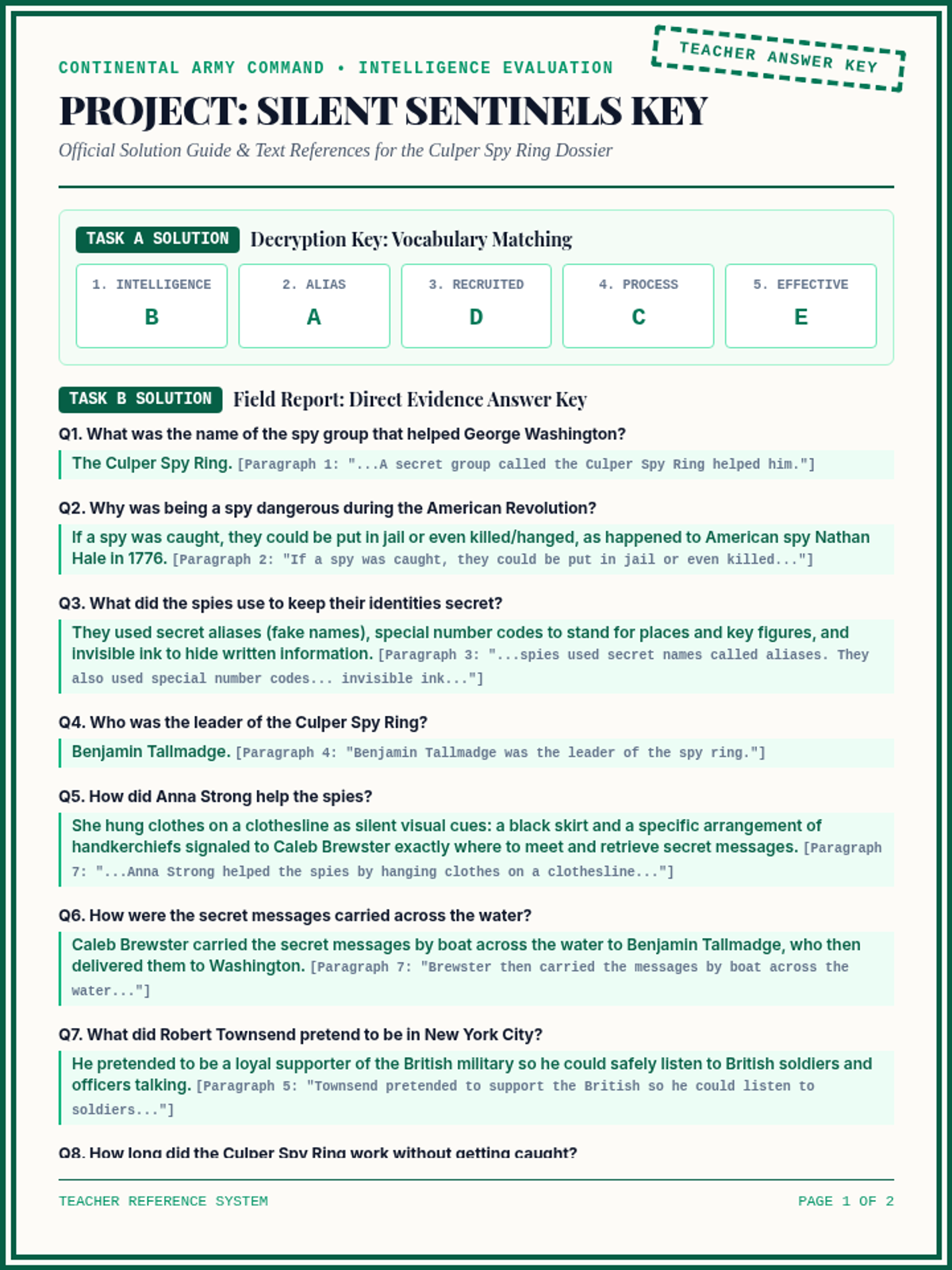
A comprehensive lesson on the Culper Spy Ring during the American Revolution. Students read about the historical secret agent network, master key espionage vocabulary, and analyze literal and inferential comprehension questions in a structured, multi-page intelligence file format.
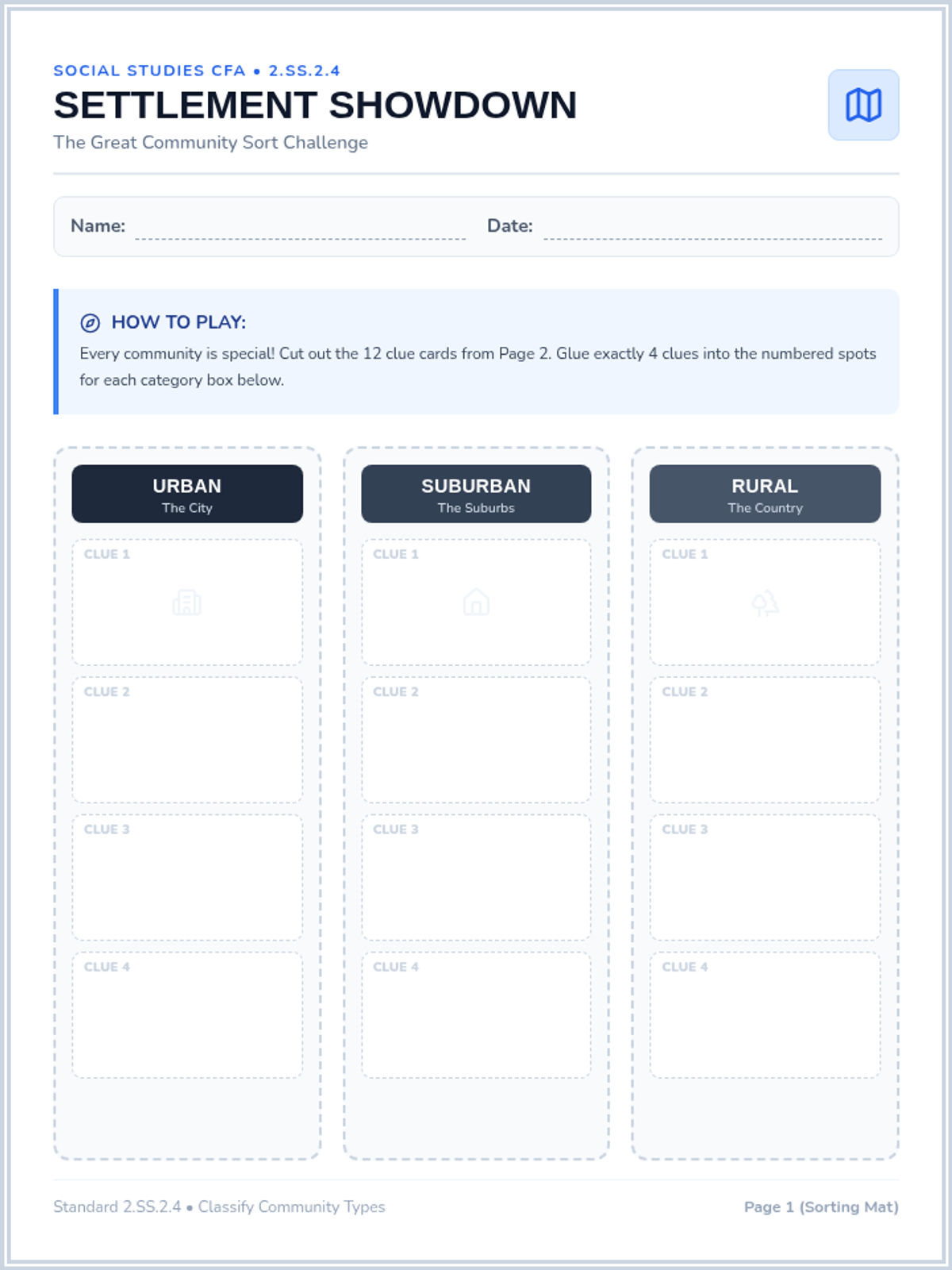
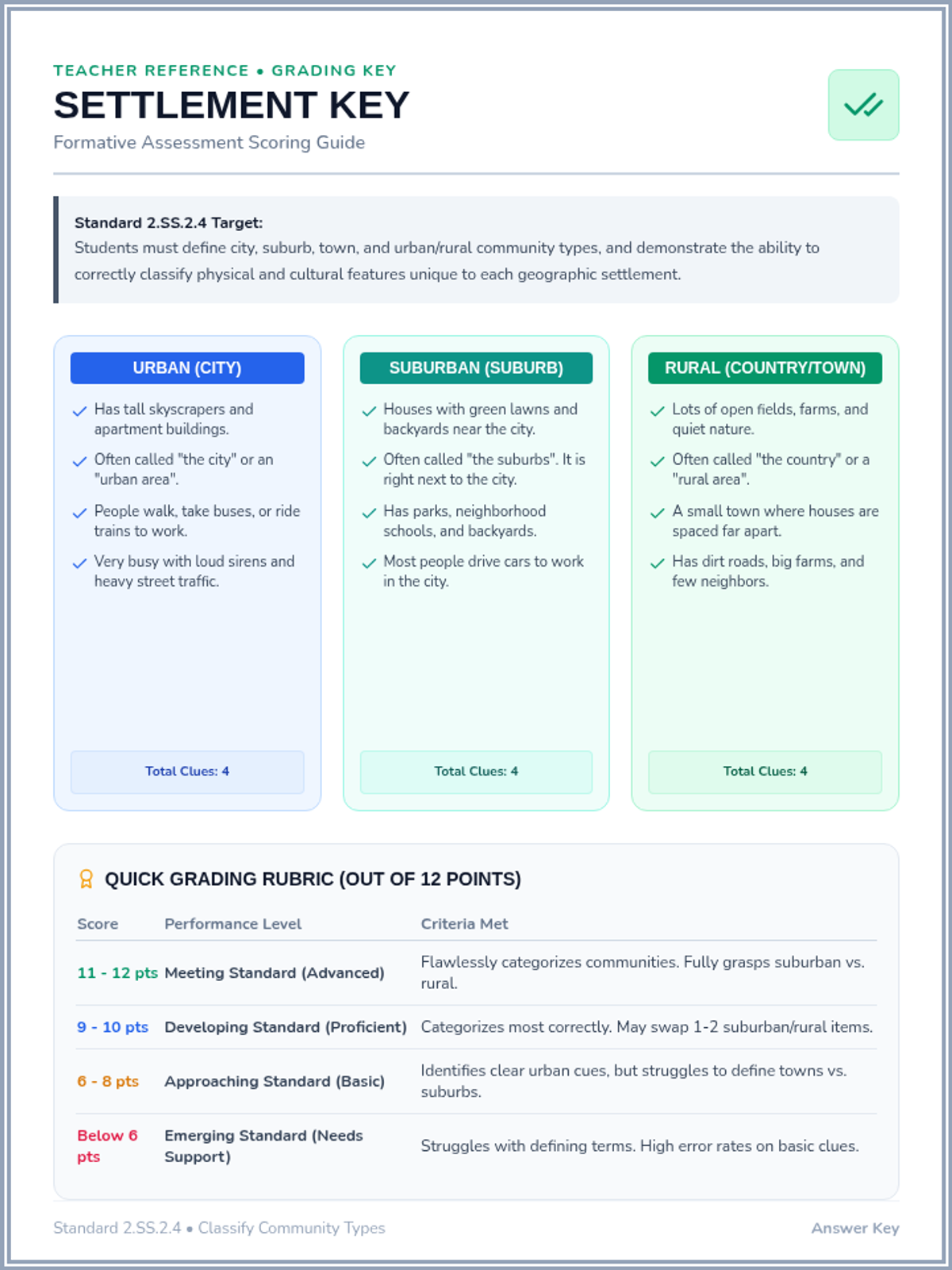
A formative assessment lesson focusing on classifying and defining urban, suburban, and rural communities (city, suburb, town). Includes a hands-on paper sorting board and cut-out clue cards, along with a comprehensive teacher answer key.
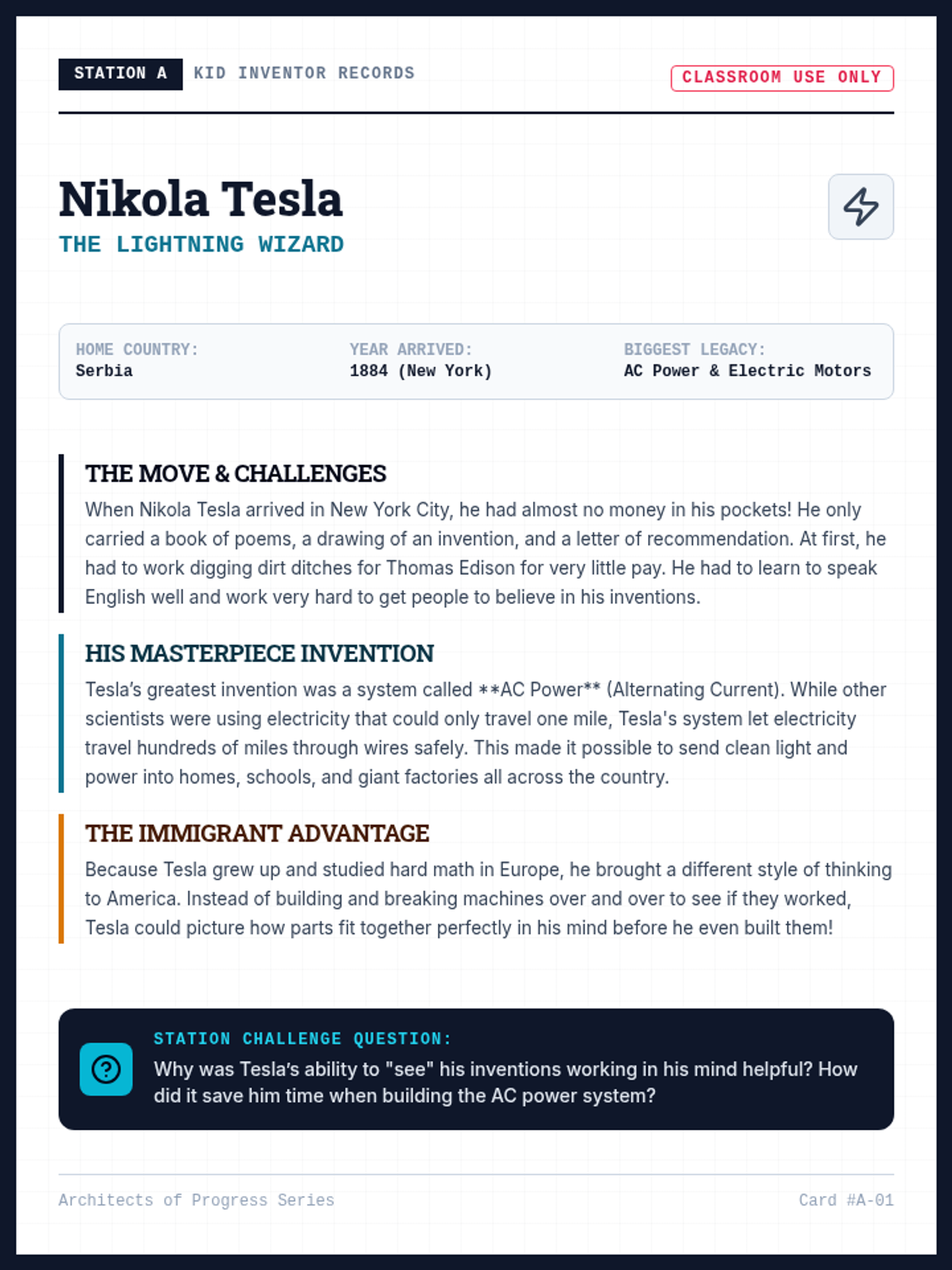
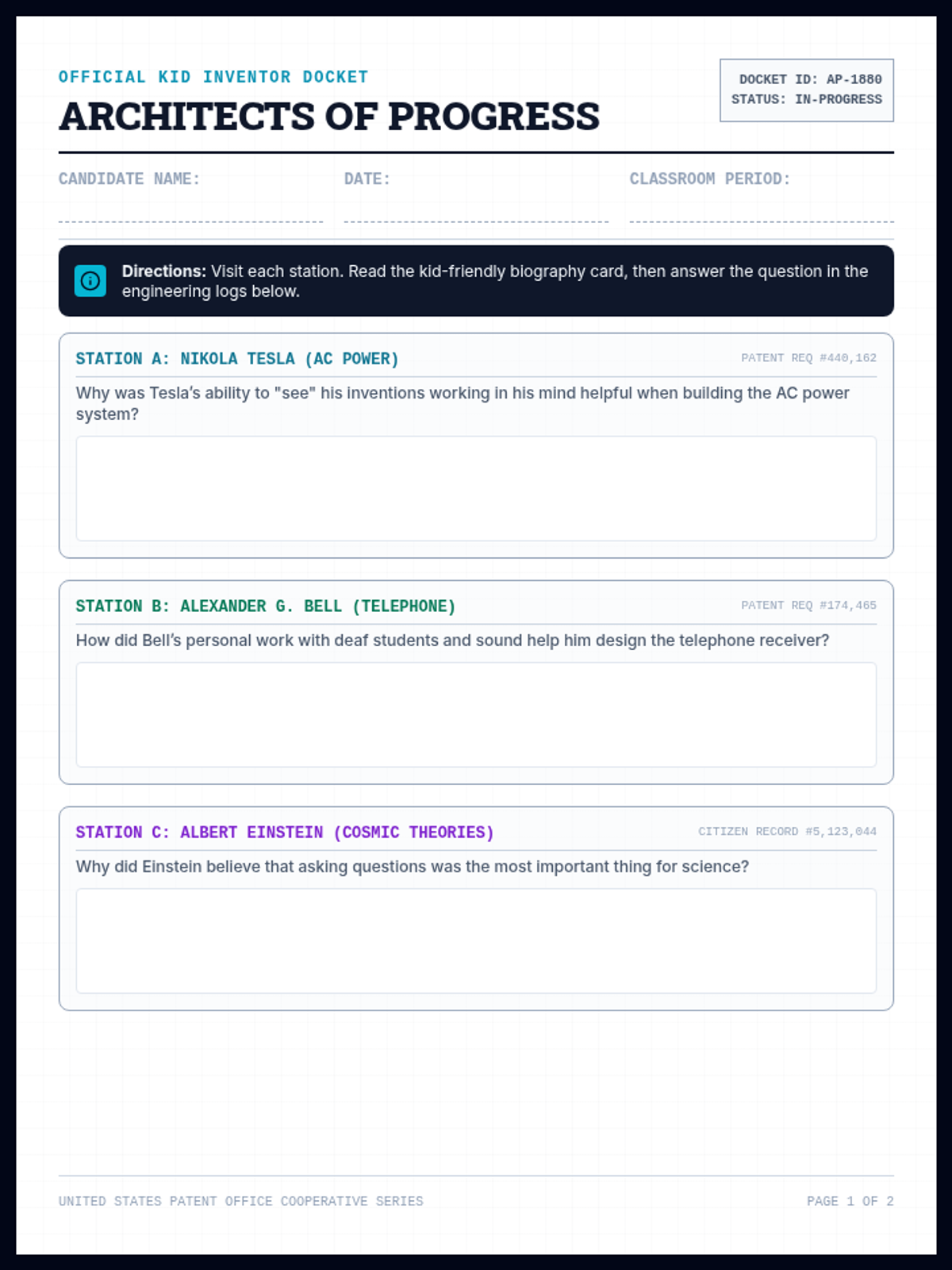
An exploration of extraordinary immigrants who shaped the modern United States through groundbreaking inventions, scientific discoveries, and iconic architectural feats. Students analyze the lives of Nikola Tesla, Alexander Graham Bell, Albert Einstein, John Roebling, and Alexandre Eiffel, examining how their diverse backgrounds fueled American innovation.
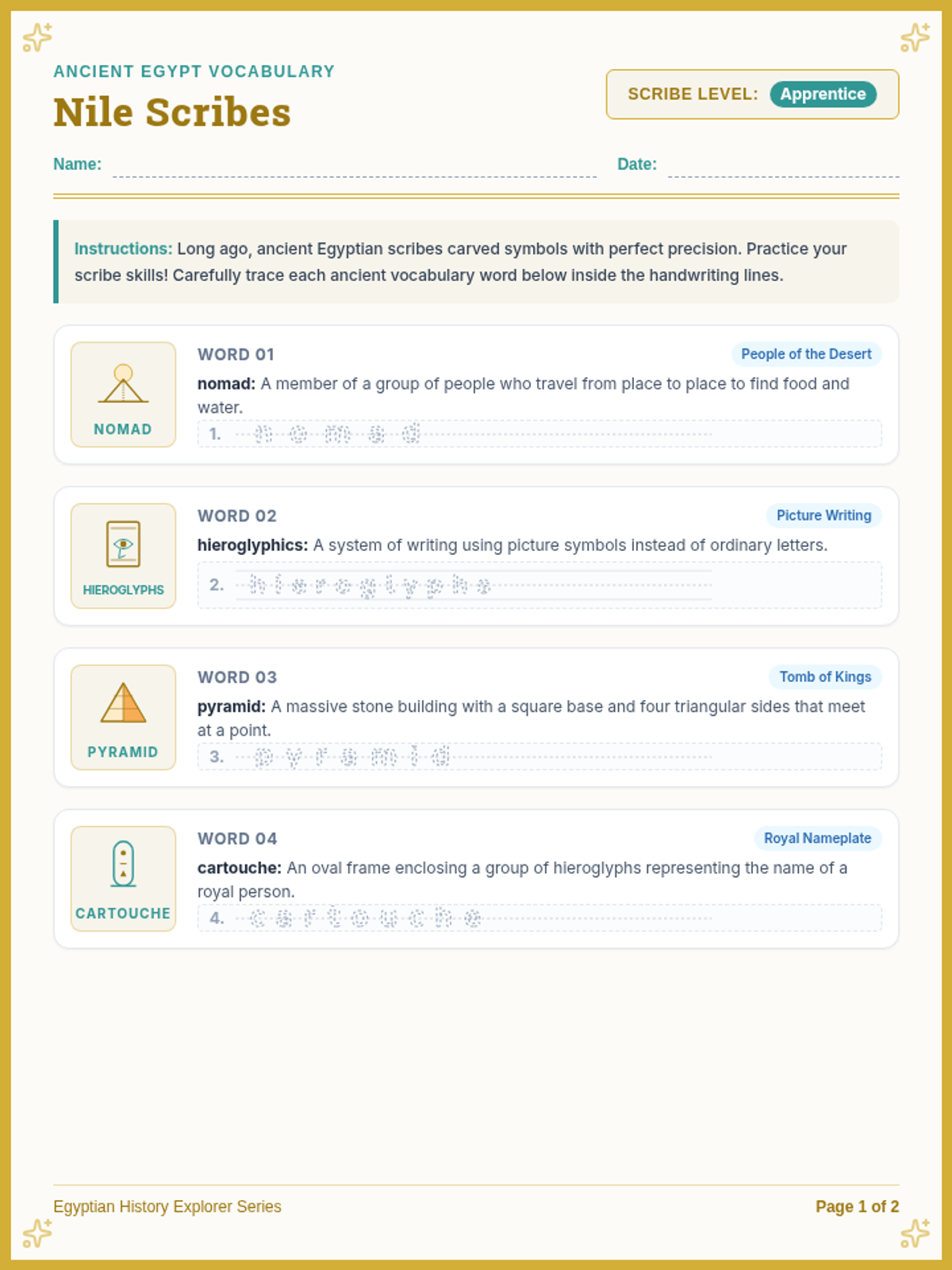
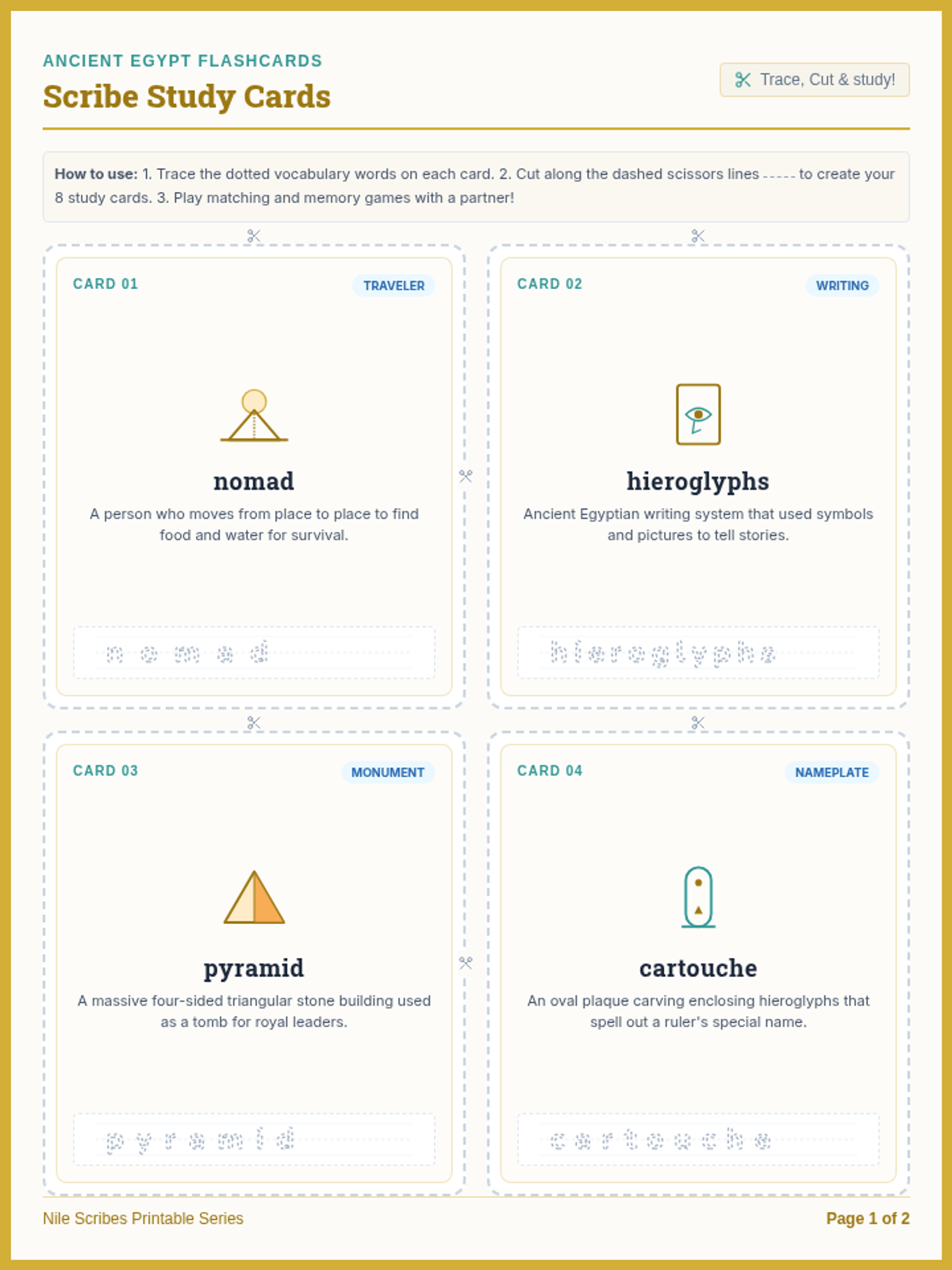
An introductory early-literacy vocabulary lesson about Ancient Egypt. Students learn key terms through tactile hands-on tracing worksheets, vocabulary matching games, and printable trace-and-cut flashcards.
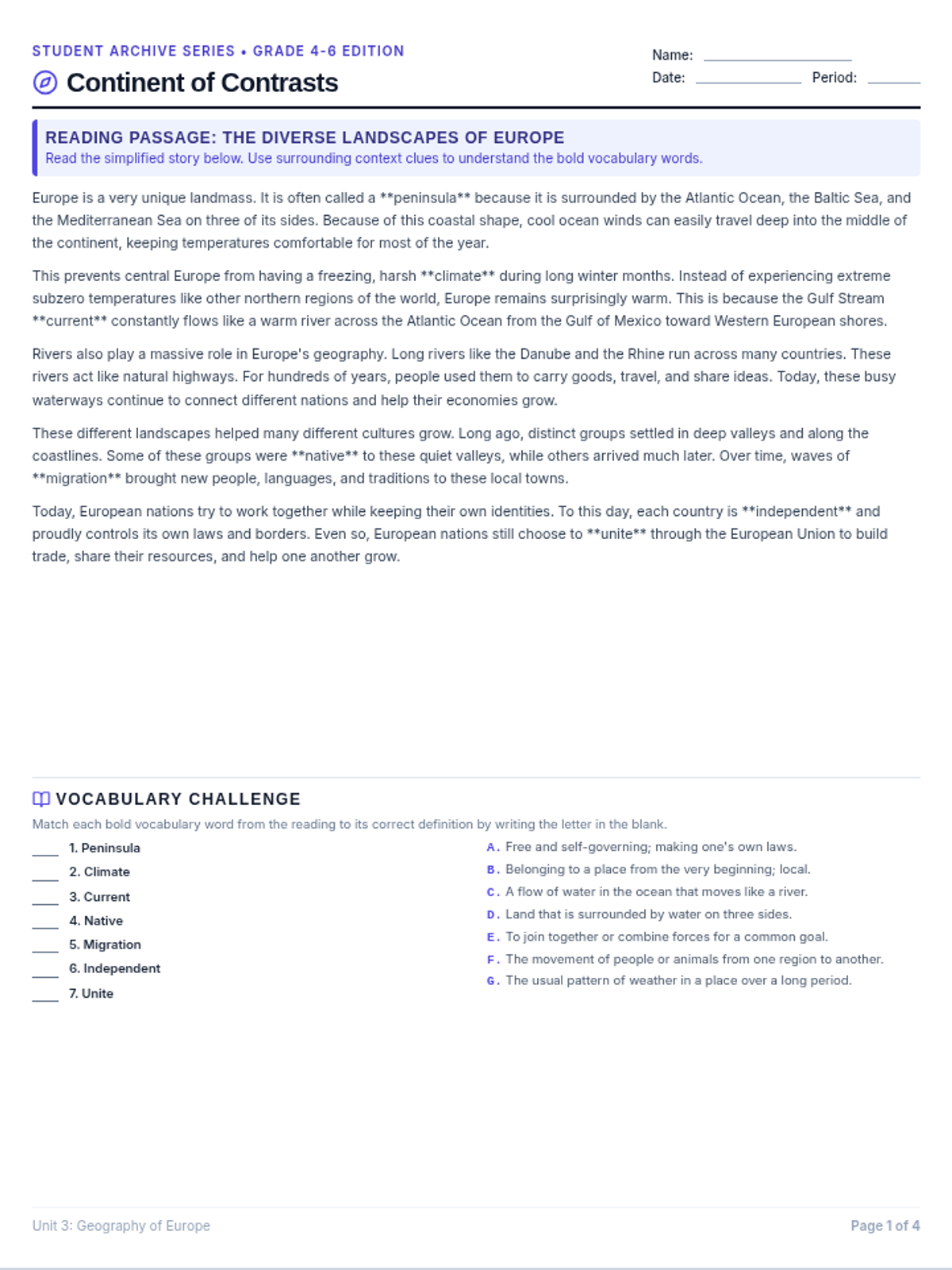
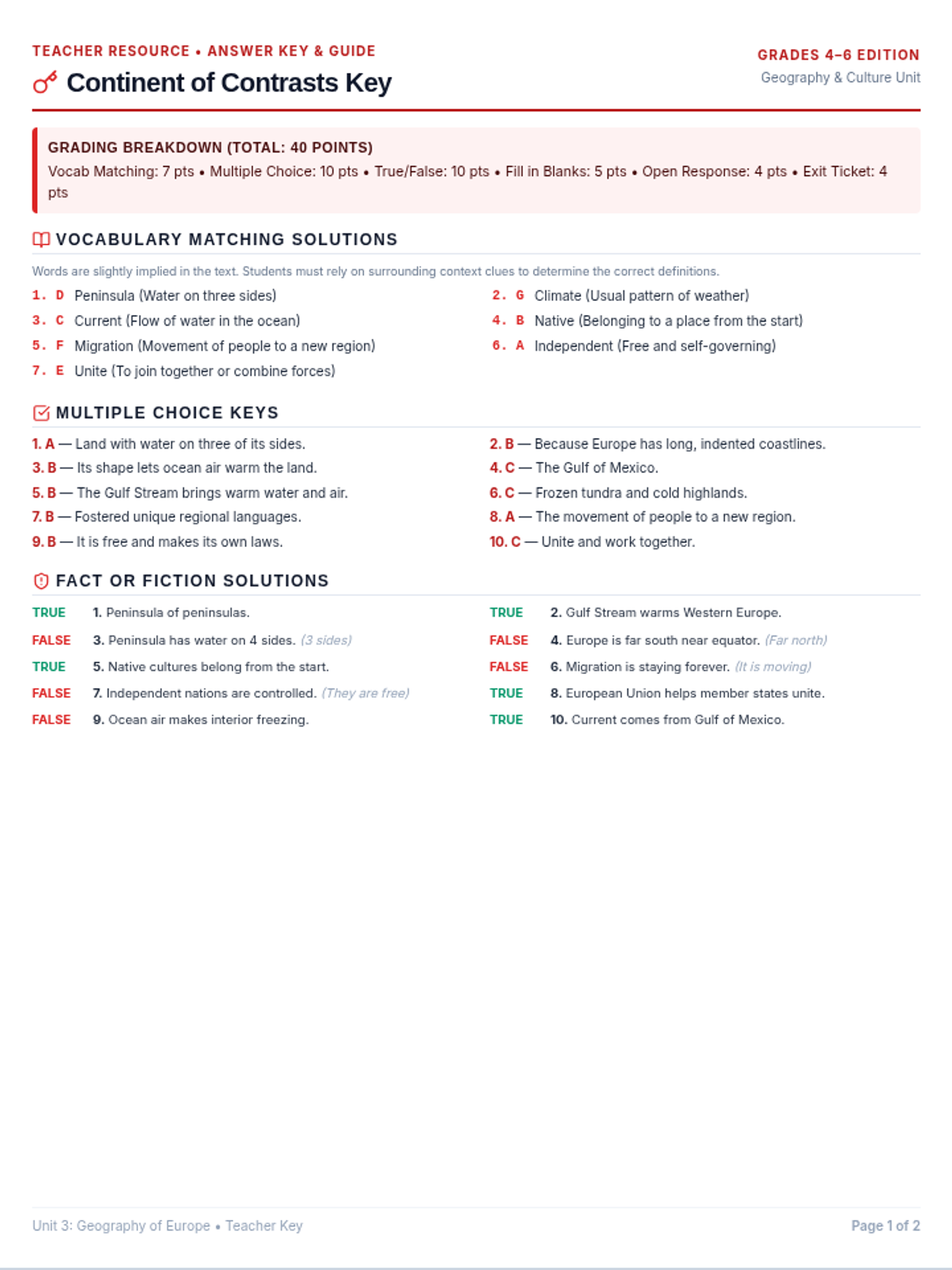
A comprehensive lesson exploring the geography, culture, and integration of Europe, utilizing a reading passage, extensive comprehension activities, and an analytical exit ticket.
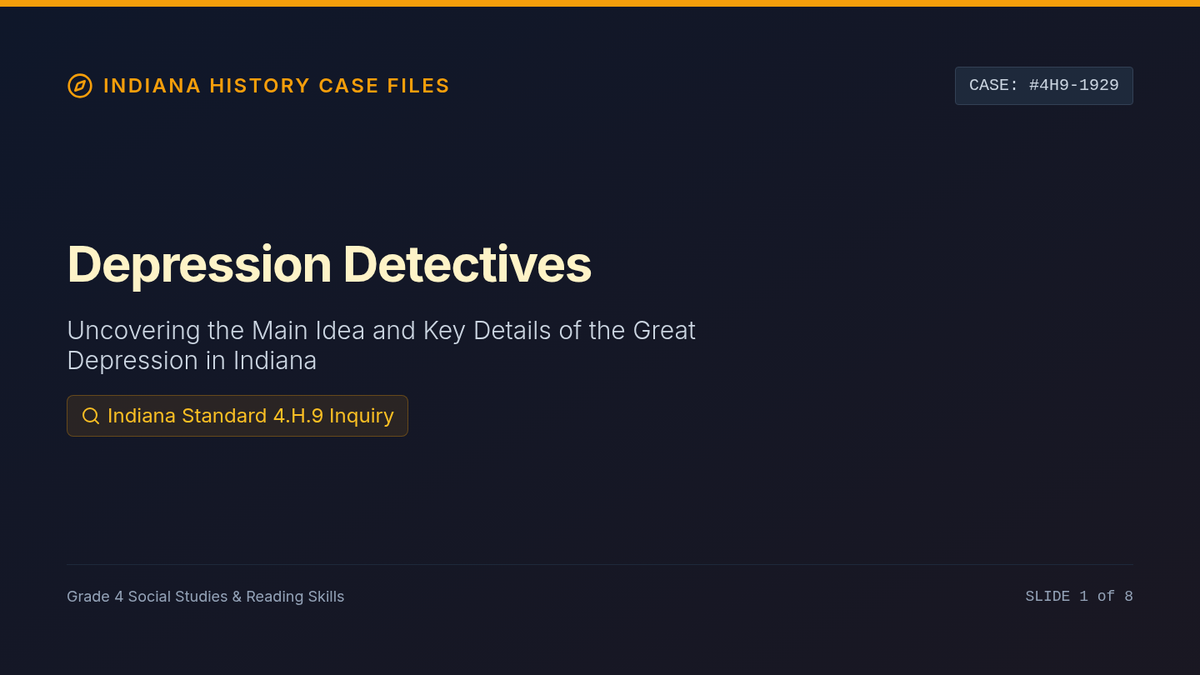
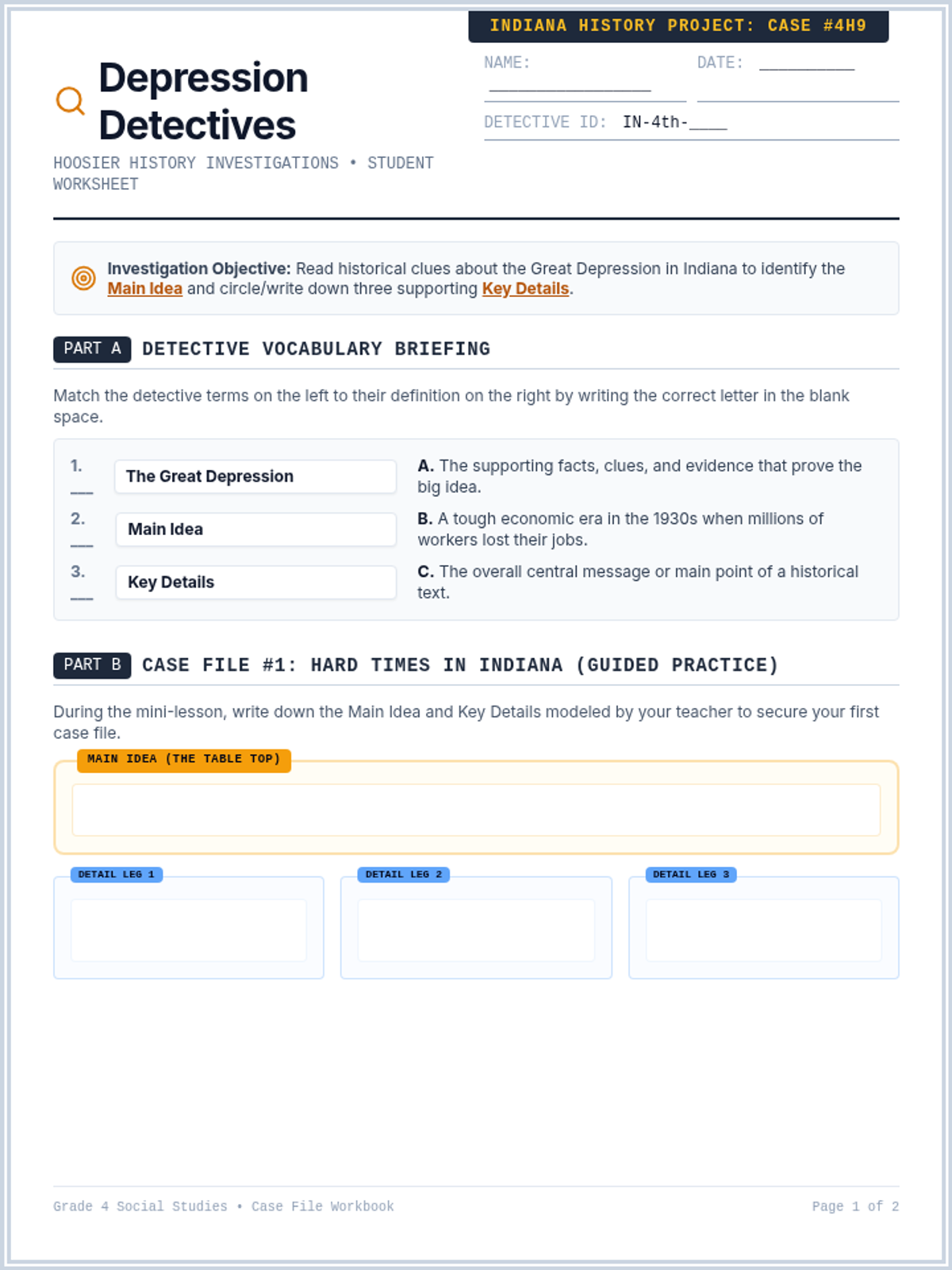
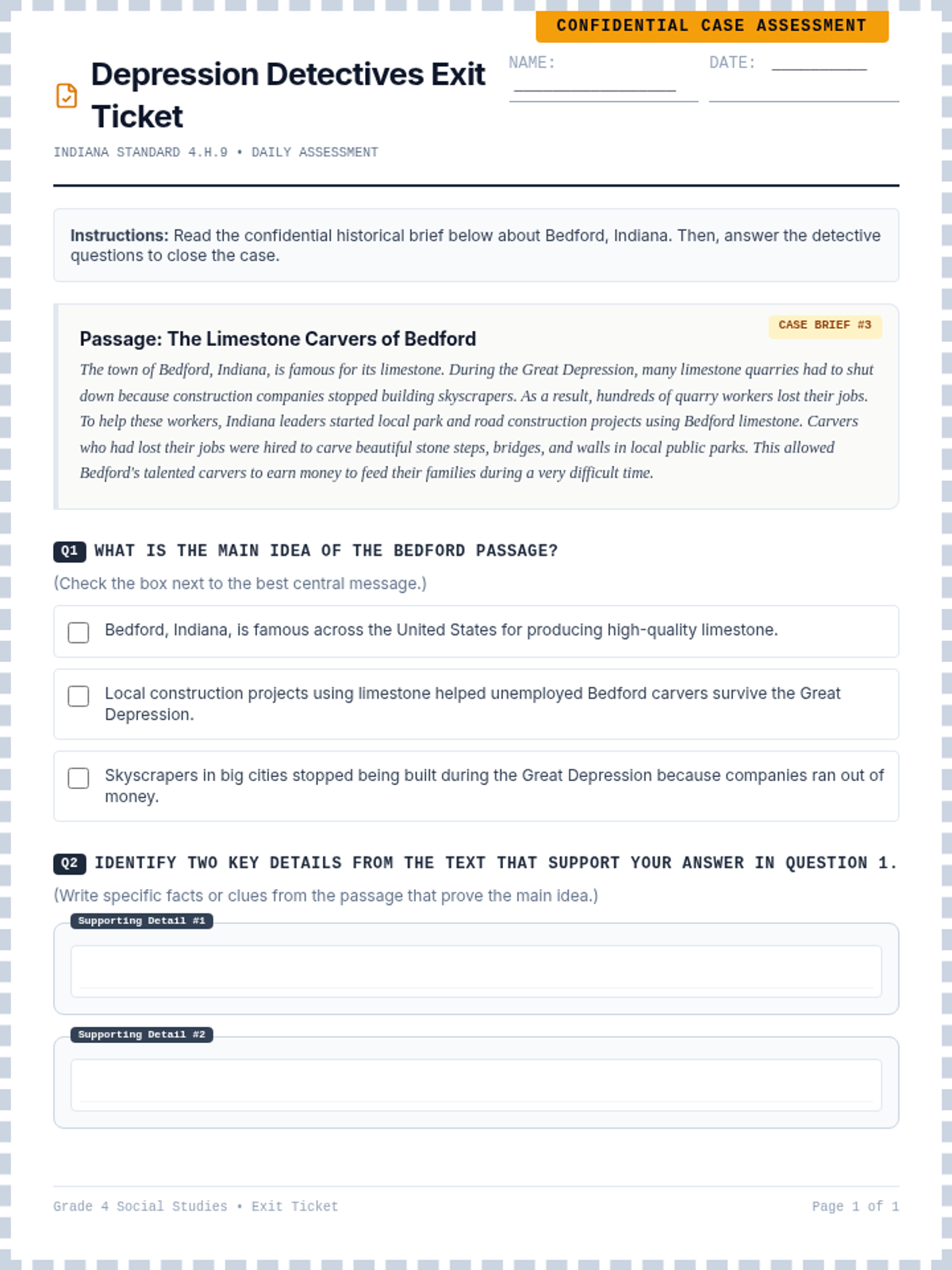
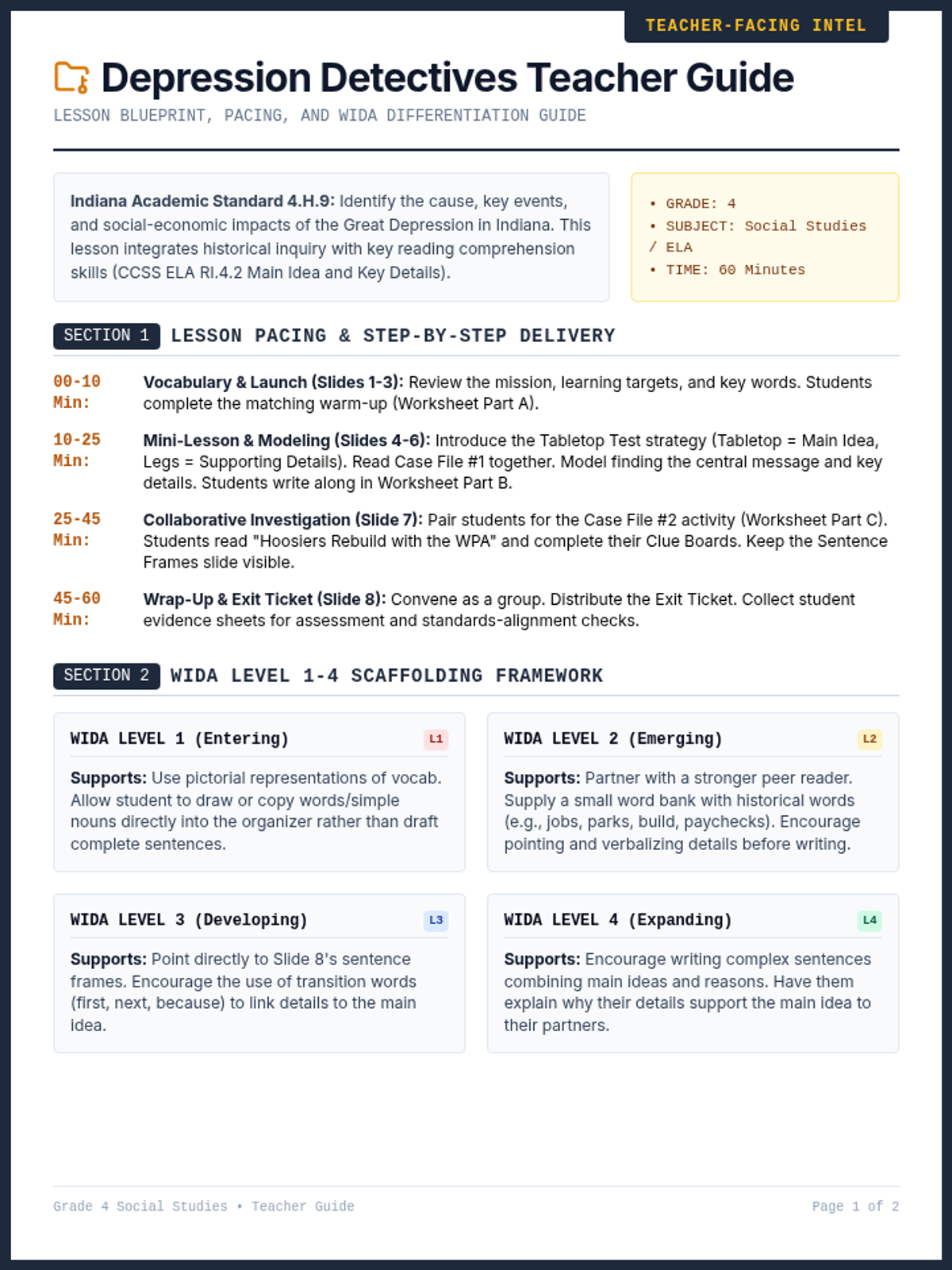
A 4th-grade social studies lesson focusing on Indiana Academic Standard 4.H.9 (the Great Depression). Students act as historical detectives to identify the main idea and key details in primary-source-inspired texts about Indiana during the Great Depression, supported by WIDA-aligned scaffolding.
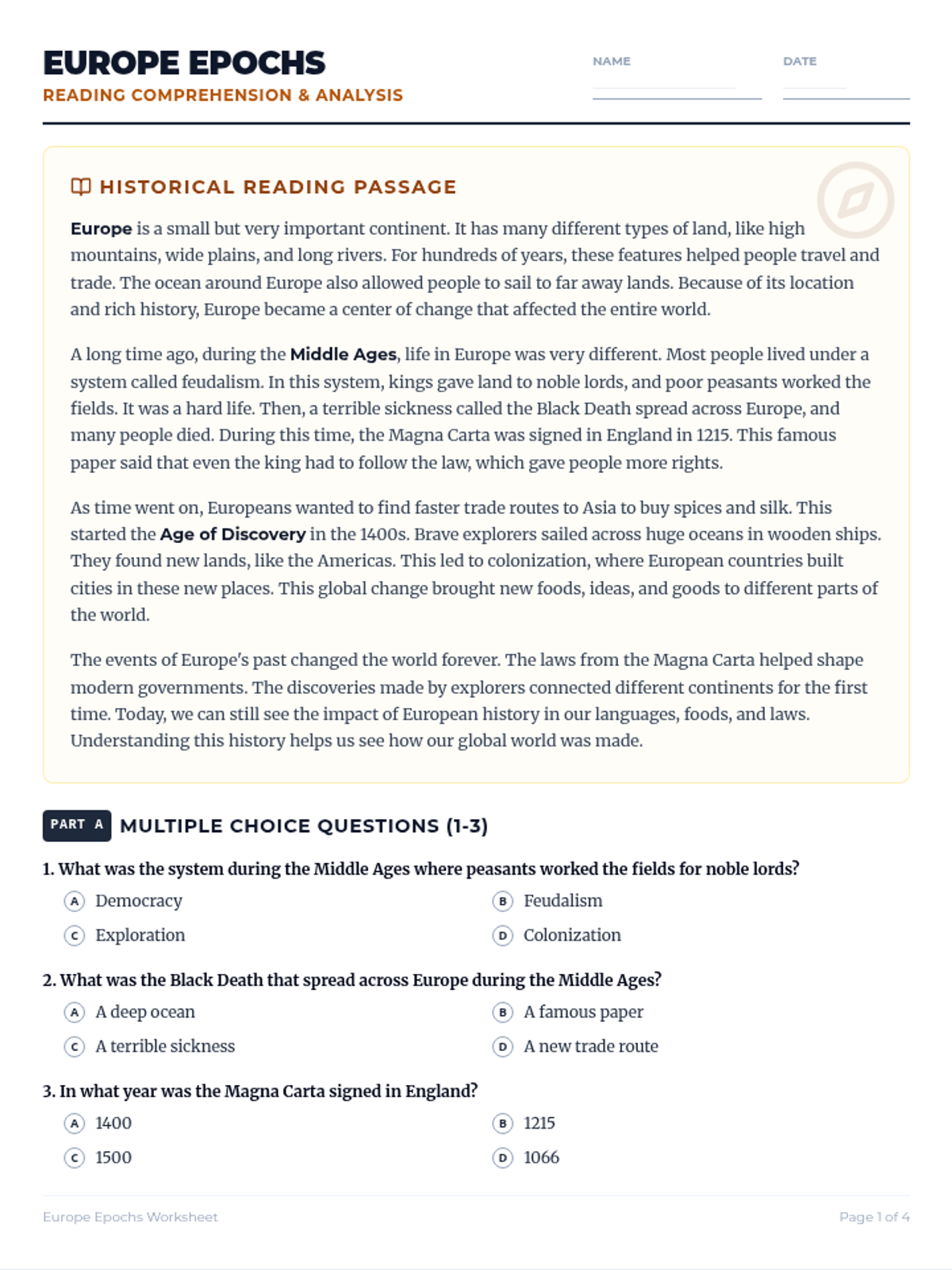
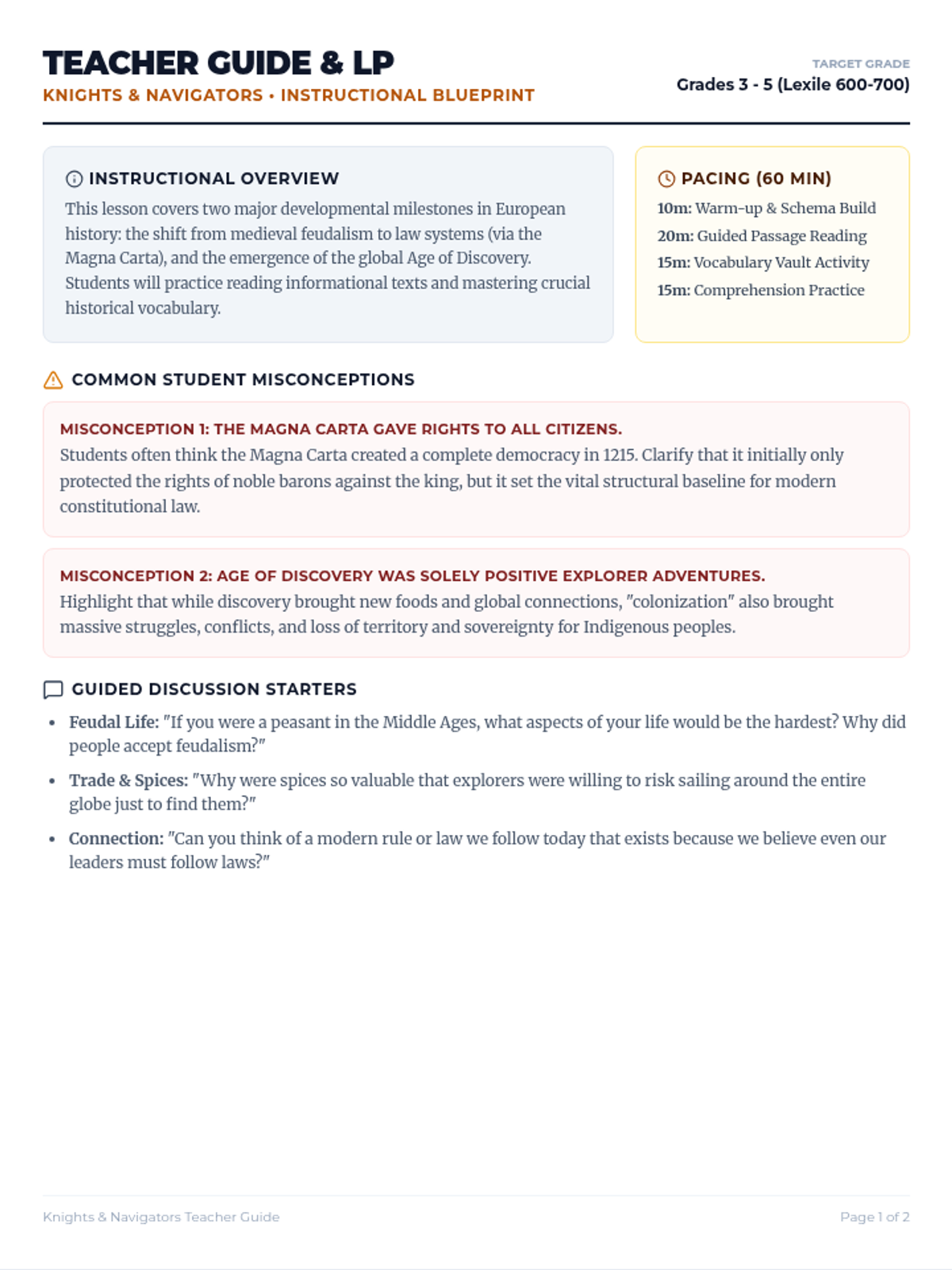
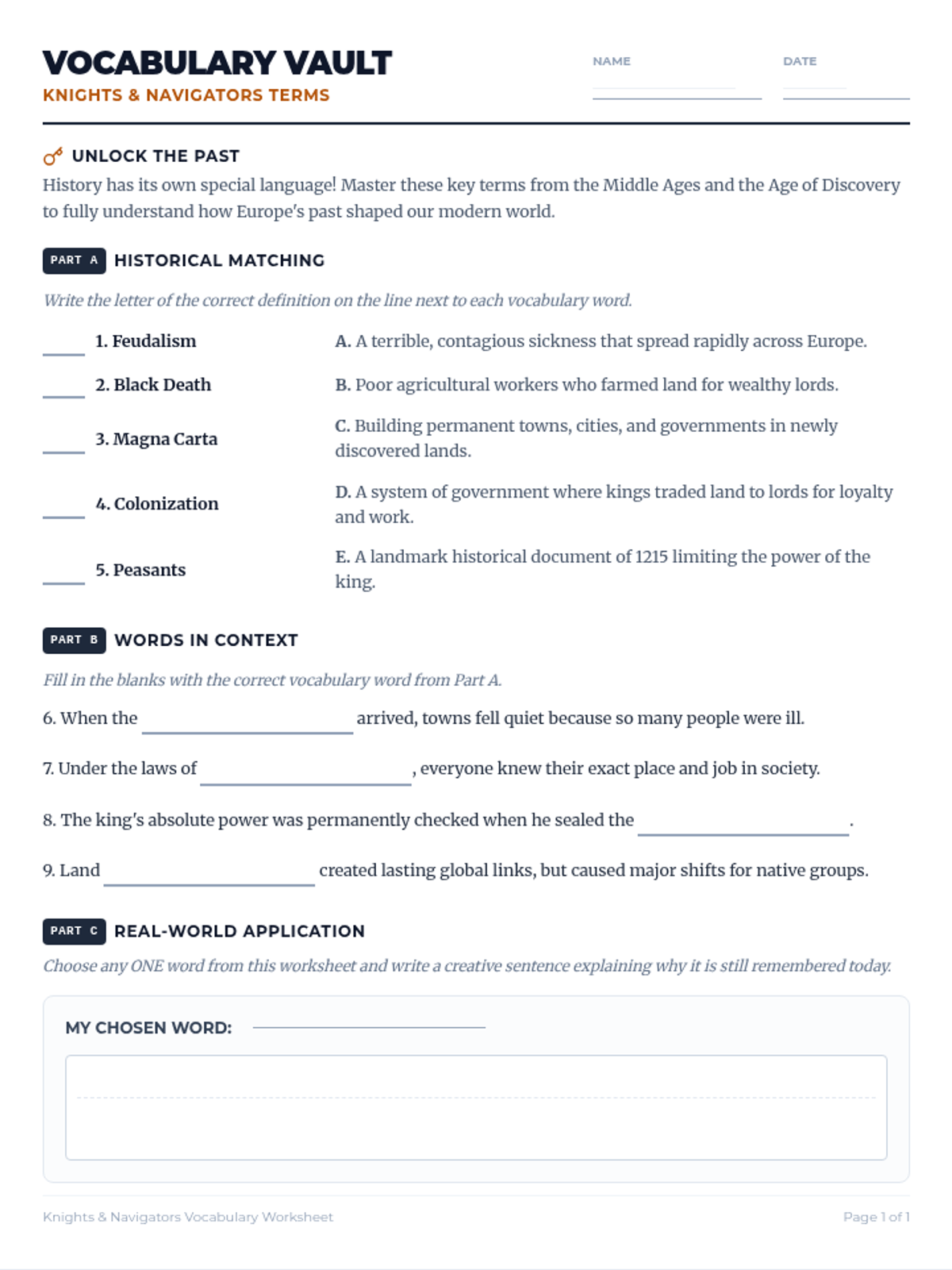
A fun and engaging history lesson exploring Europe during the Middle Ages and the Age of Discovery. Students read about key historical shifts, complete robust comprehension checks, and master vocabulary.