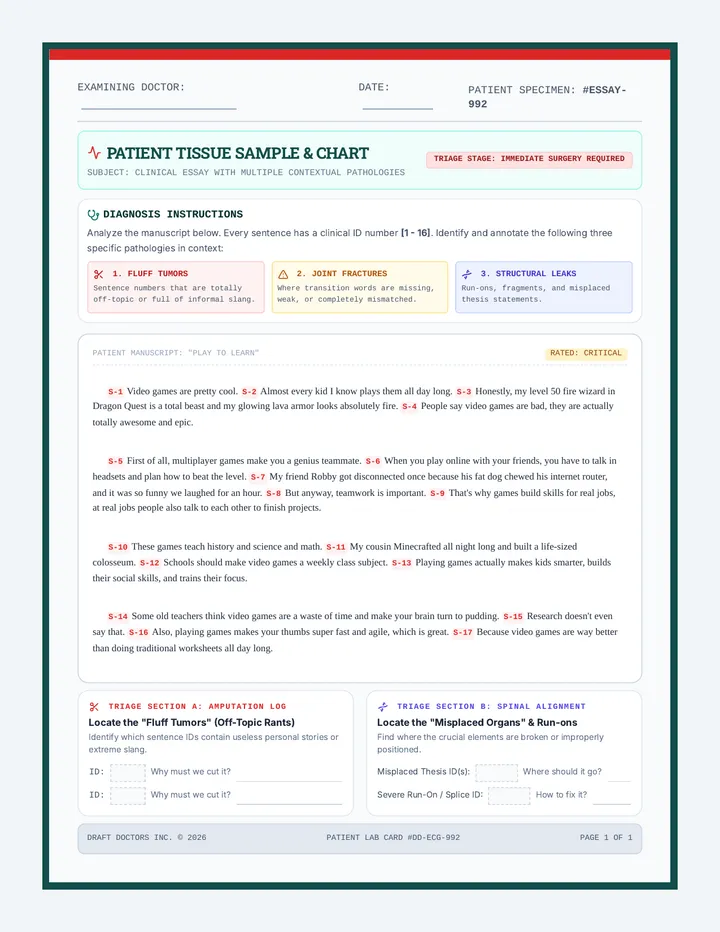
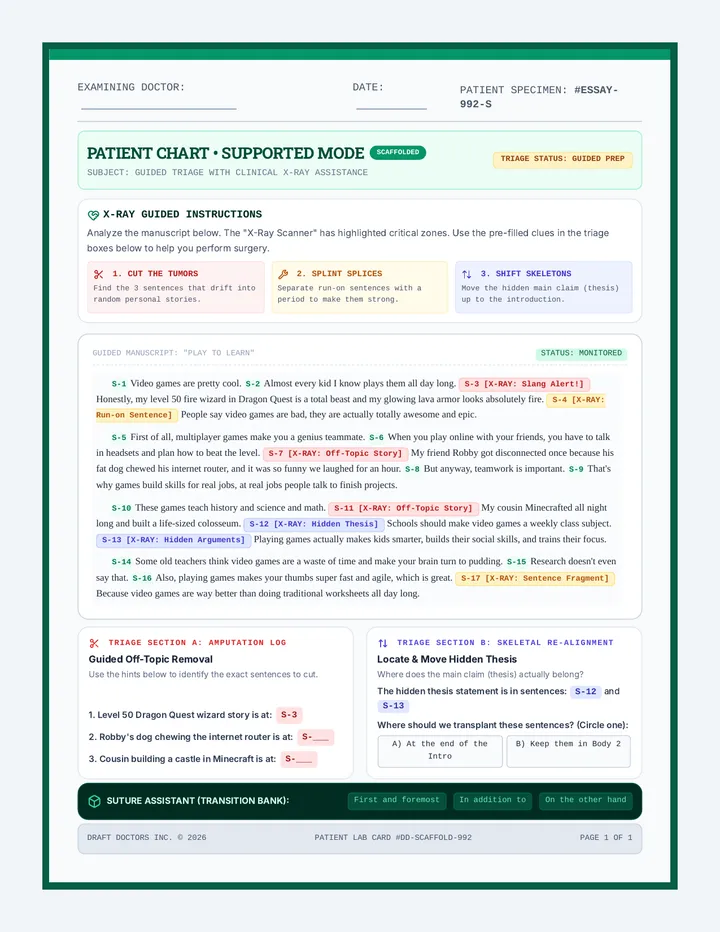
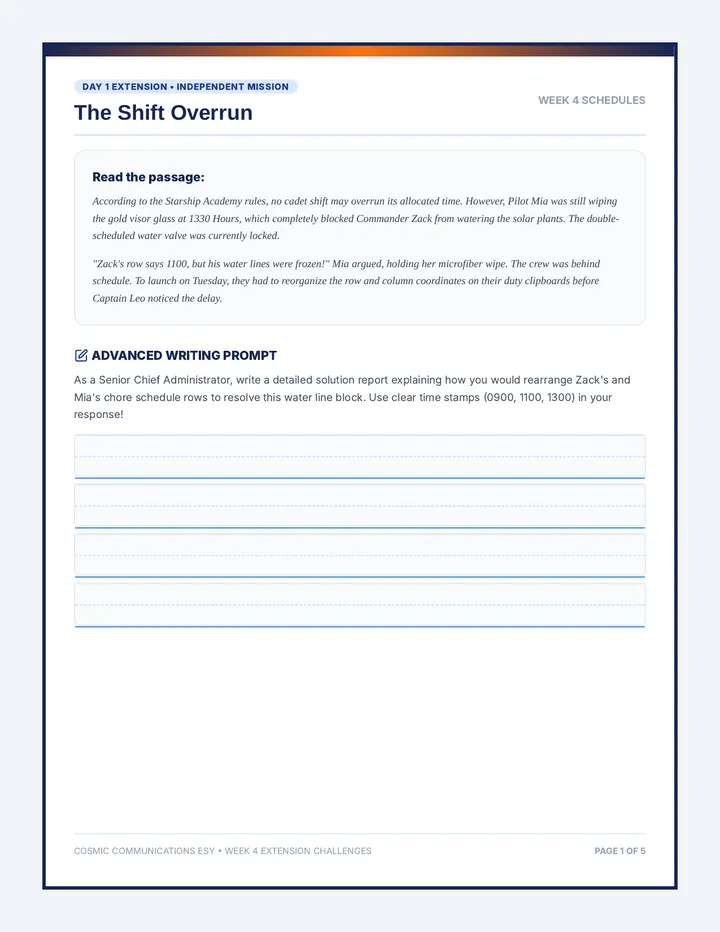
A 40-minute targeted session for 6th-grade students to master essential punctuation marks, improving writing clarity through guided practice and independent assessment.
A lesson focusing on the transition of the Watson family from Flint to Birmingham, analyzing setting development and character shifts in chapters 12 and 13.
A deep dive into Chapter 10 of 'The Watsons Go to Birmingham – 1963', focusing on how the Appalachian setting and the shroud of night symbolize the growing racial tensions as the family heads South.
A lesson focusing on the cultural shift of the 1920s through the lens of flapper culture, designed with highly accessible text for middle school students reading at a 1st-grade level. Students will analyze diction to identify positive and negative connotations.
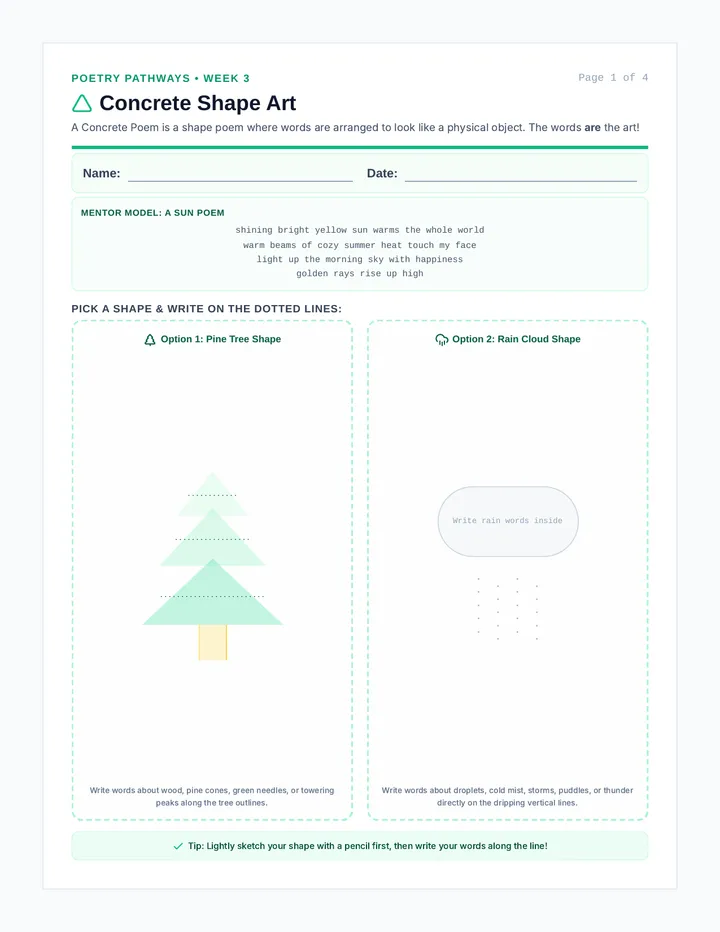
A mini-lesson for a 6th-grade resource room ELA class focusing on Auggie's character traits and his development throughout the first month of school in the novel 'Wonder'. This lesson uses a space-exploration theme and provides high levels of scaffolding.
A mini-lesson for 6th grade resource room students focusing on the theme of kindness and character perspective in the novel Wonder, specifically centered around Mr. Browne's first precept and the transition into middle school.
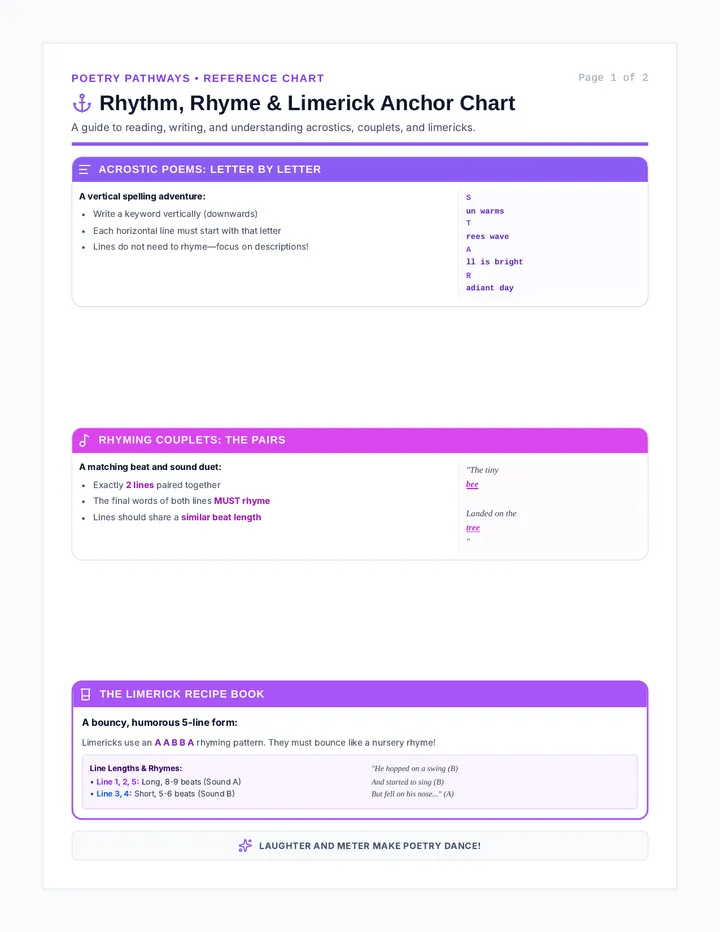
A collection of reflective and creative activities for Memorial Day, including a poppy craft writing activity, a gratitude letter template, and acrostic poems to honor fallen heroes.
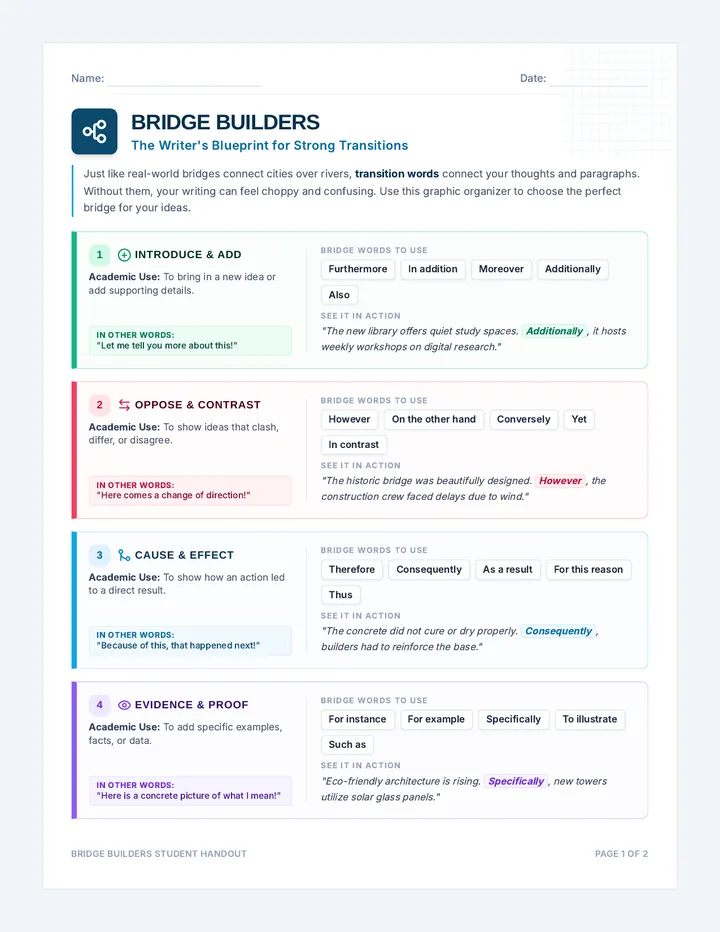
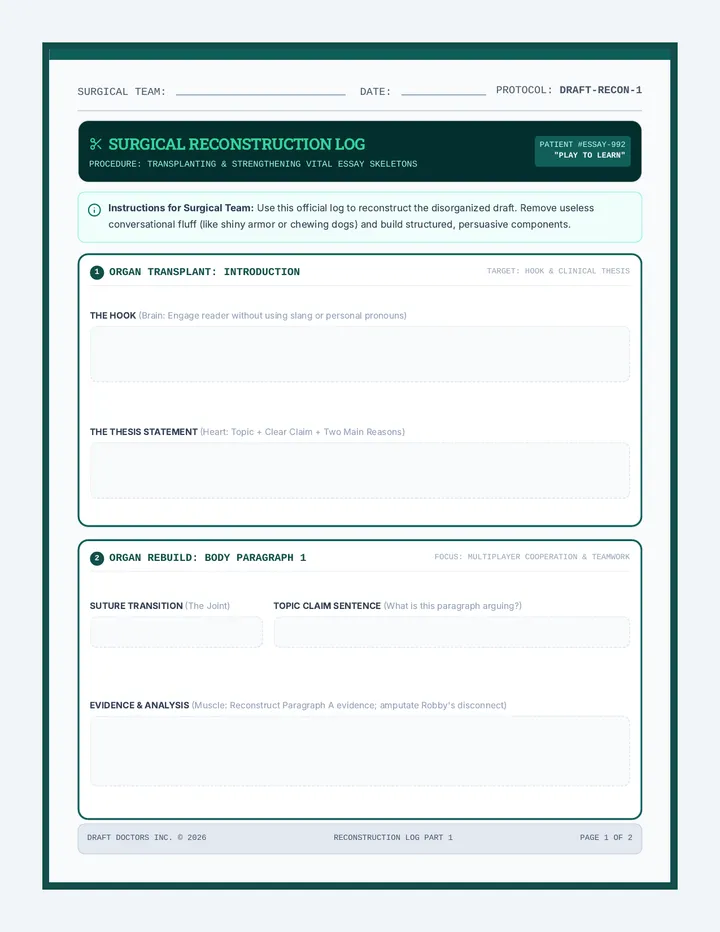
A lesson on identifying and using common transition words to create cohesion in writing. Students will categorize transitions by purpose (Addition, Contrast, Cause/Effect, Time) and use them to link ideas.
A comprehensive lesson on identifying and using main verbs and primary auxiliary verbs (be, do, have) in sentences. Includes a structured lesson plan, a practice handout, and a detailed answer key with monitoring tools.
A lesson exploring the encounter between Odysseus and Polyphemus, focusing on character traits and cleverness through differentiated readings and assessments.
A lesson focusing on identifying and analyzing the five stages of plot structure using the novel Al Capone Does My Shirts as a primary example. Students explore the arc of Moose Flanagan's journey on Alcatraz.
A collection of versatile graphic organizers designed to help students analyze fiction and nonfiction picture books. Each organizer focuses on a specific reading skill, providing a structured framework for student response.
A focused practice session for 6th-grade students to sharpen their listening comprehension skills using SBAC-aligned question stems and an engaging mystery about underwater sounds.
In this lesson, students will enhance simple social scenario sentences by applying descriptive adjectives, expressive adverbs, and coordinating conjunctions (FANBOYS) to create more engaging and complex narrative structures.
A deep dive into the classic Greek myth of Theseus and the Minotaur, focusing on characterization, plot structure, and the complex nature of heroism.
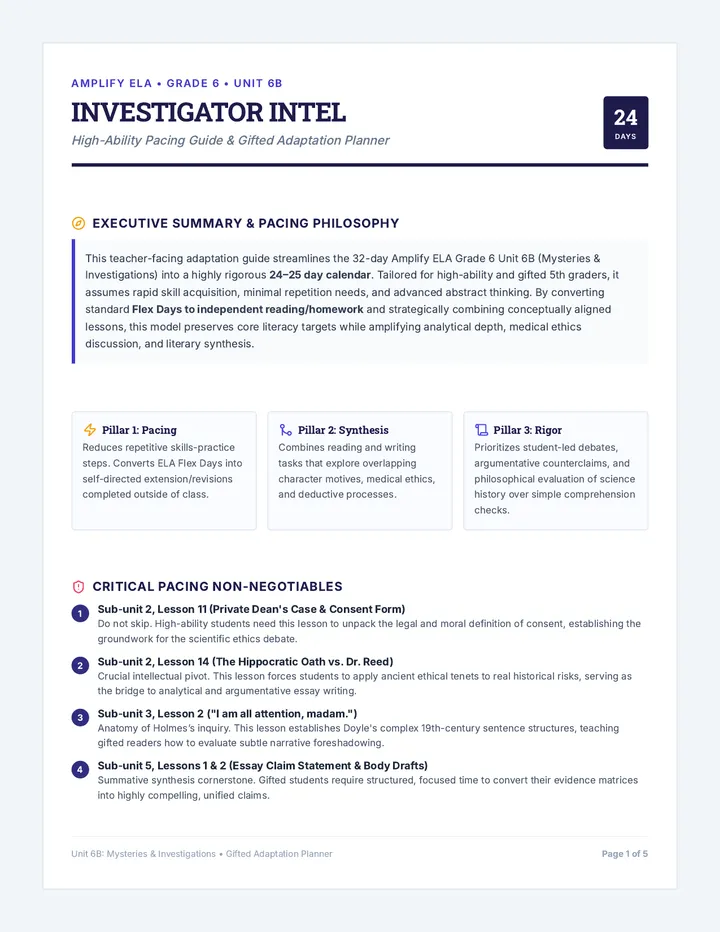
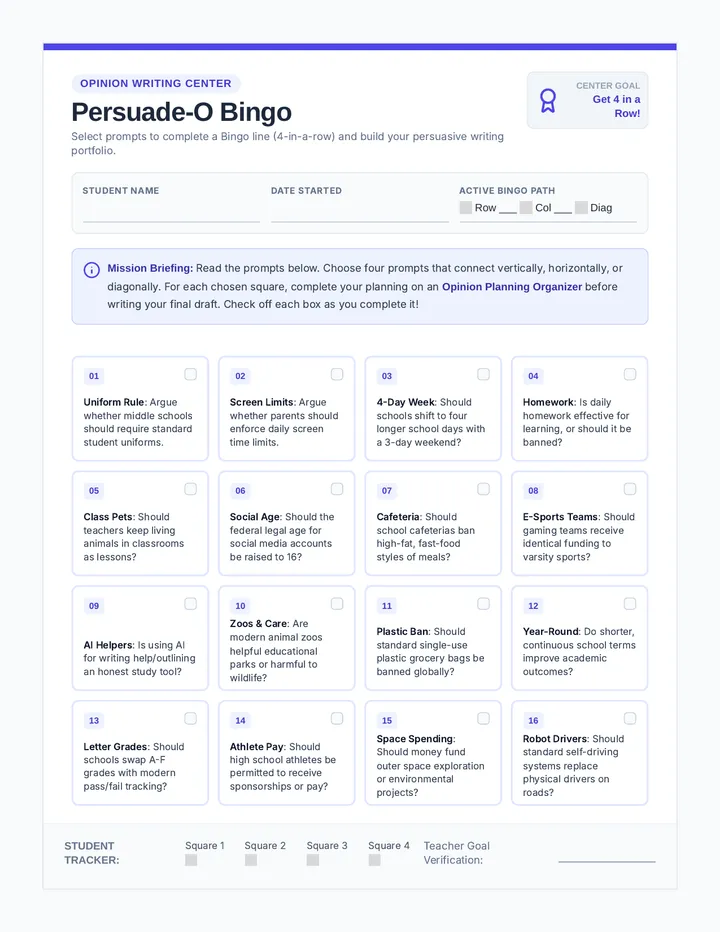
Refining the persuasive piece through peer review and assessment using the secret agent field manual rubric.
Drafting the final mission report (persuasive essay) using the evidence and structure gathered in previous sessions.
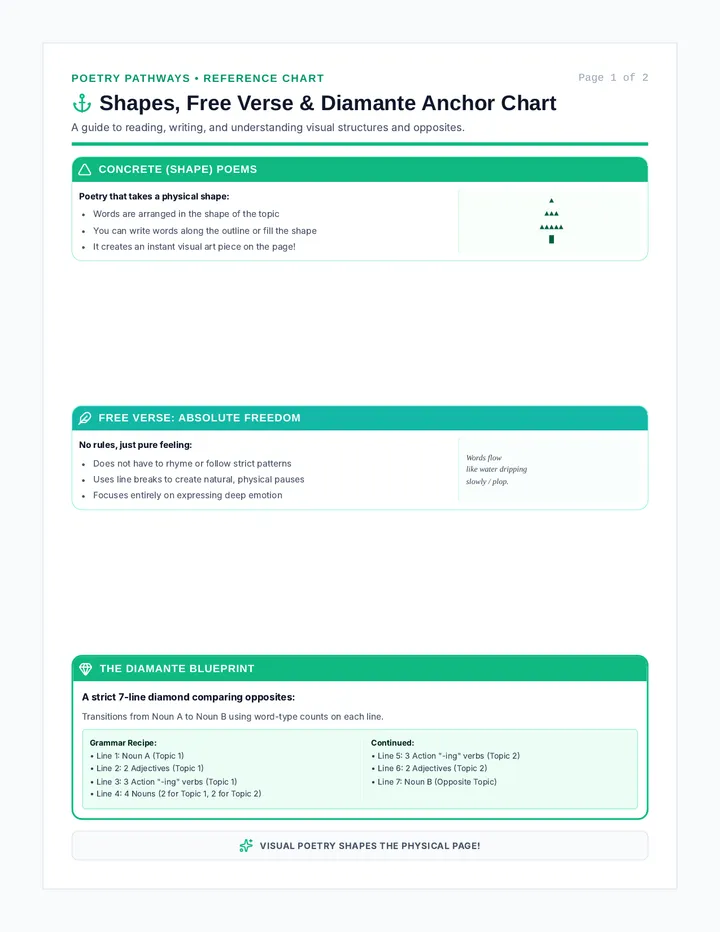
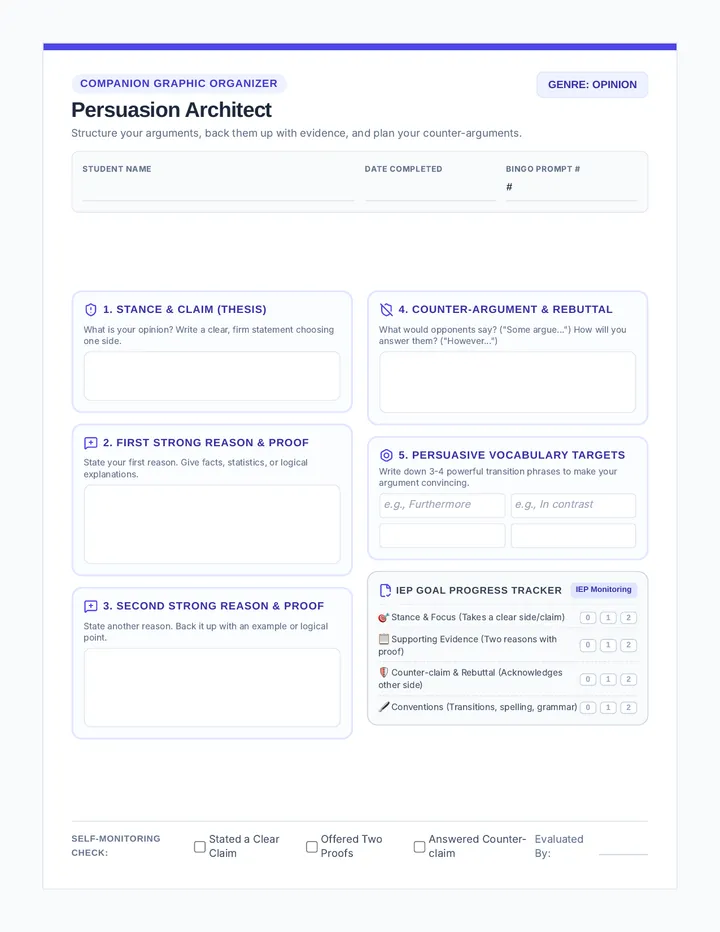
Students use a master blueprint graphic organizer to structure their persuasive arguments and address counter-intelligence (counter-arguments).
Students gather 'intelligence' by identifying facts and evidence to support their claims about school uniforms or cell phones.
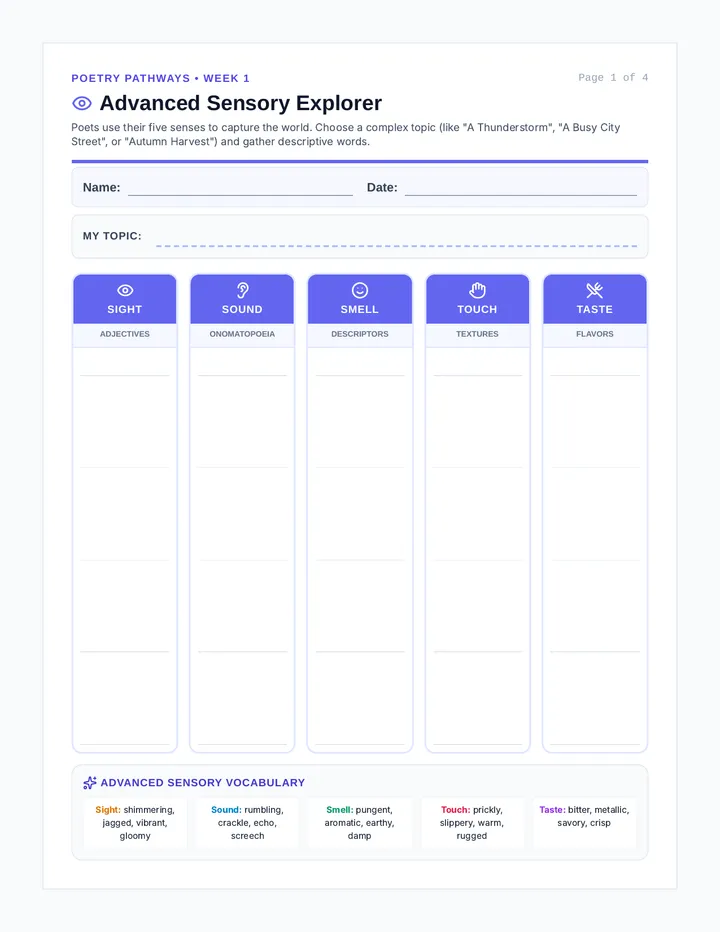
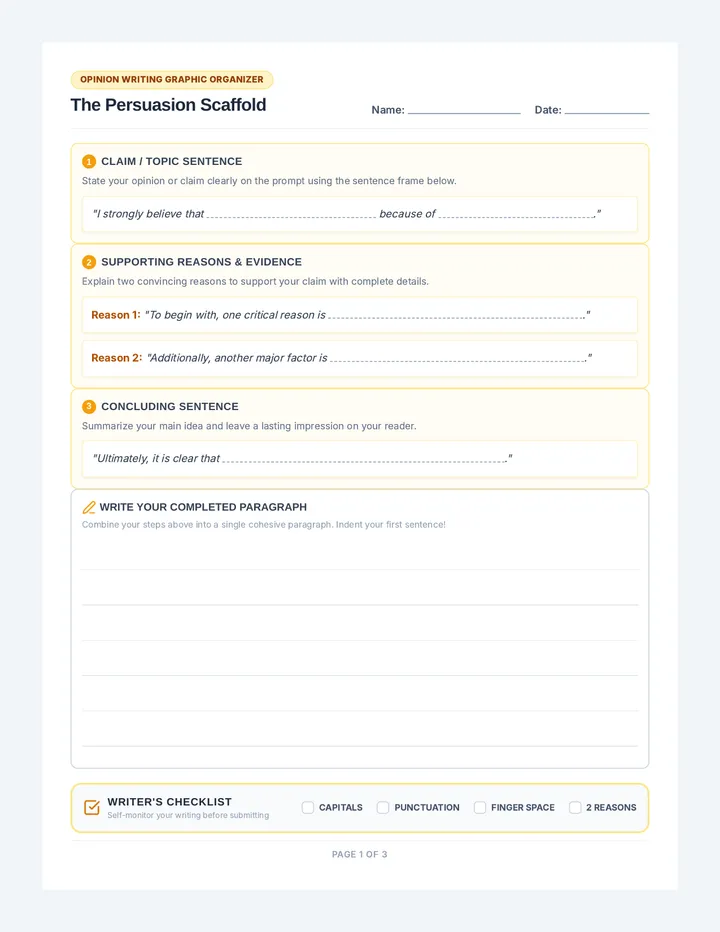
Introduction to persuasive writing techniques, identifying claims, and crafting hooks using the Opinion Ops secret agent theme.
A comprehensive poetry analysis lesson focusing on the TP-CASTT method and figurative language, featuring a gamified 'Quiz Bee' and deep analysis of 'The Road Not Taken'.
A reading lesson focused on identifying archetypes and universal themes in world mythology through the lens of 'Myth Hunters'. Students will learn to spot recurring character patterns and the underlying messages in ancient stories.
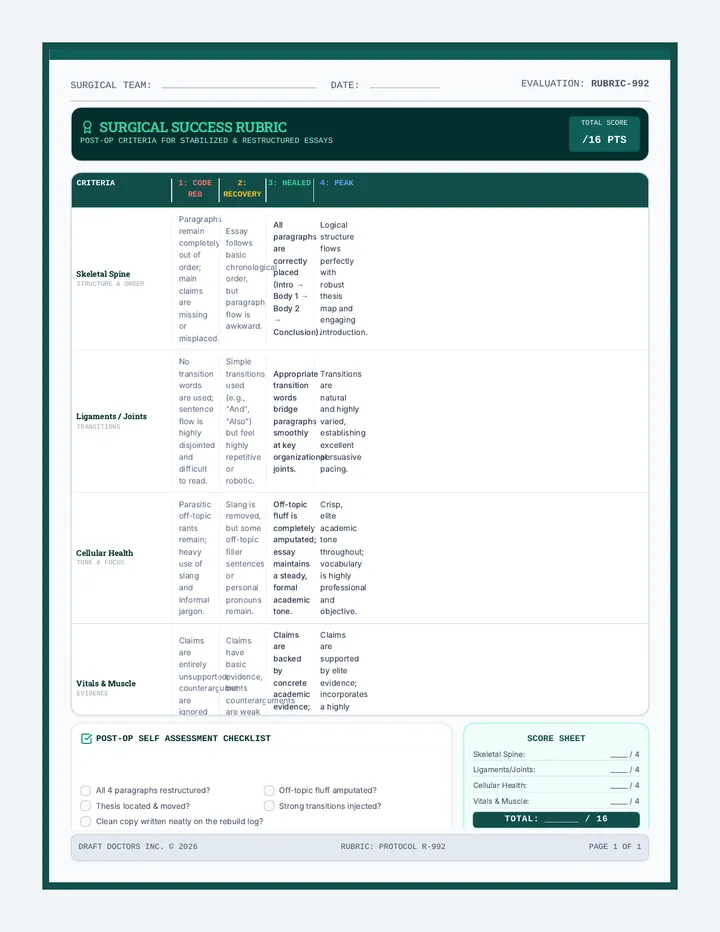
A focused lesson providing tools for evaluating and refining argumentative writing, specifically targeting claim clarity, evidence quality, and logical reasoning.
An in-depth exploration of diverse mammals, focusing on informational text features, main ideas, and vocabulary acquisition through a comprehensive field guide and activity set.
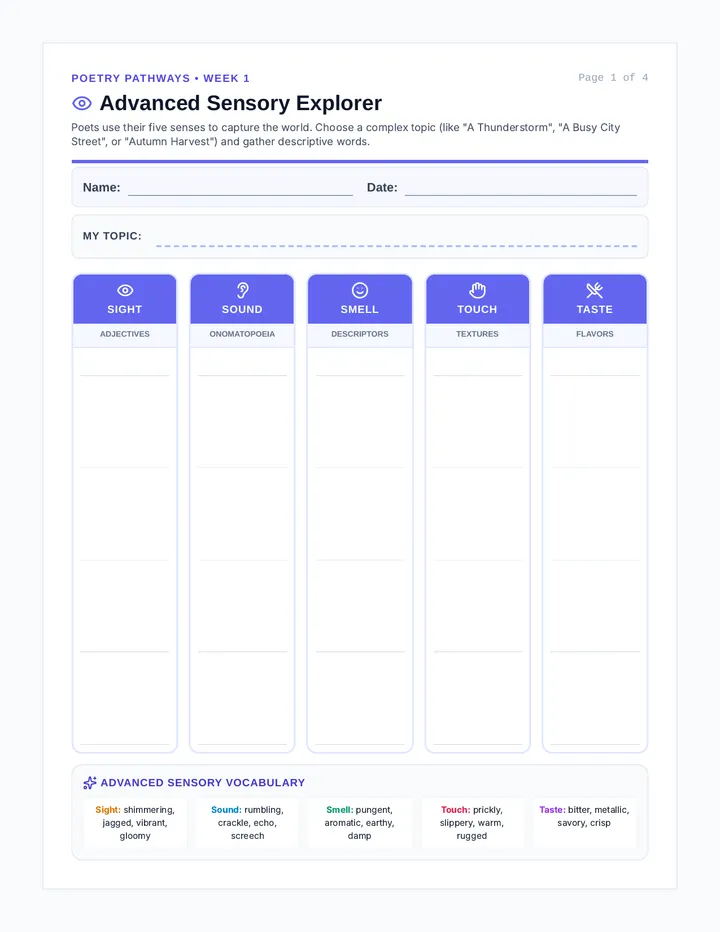
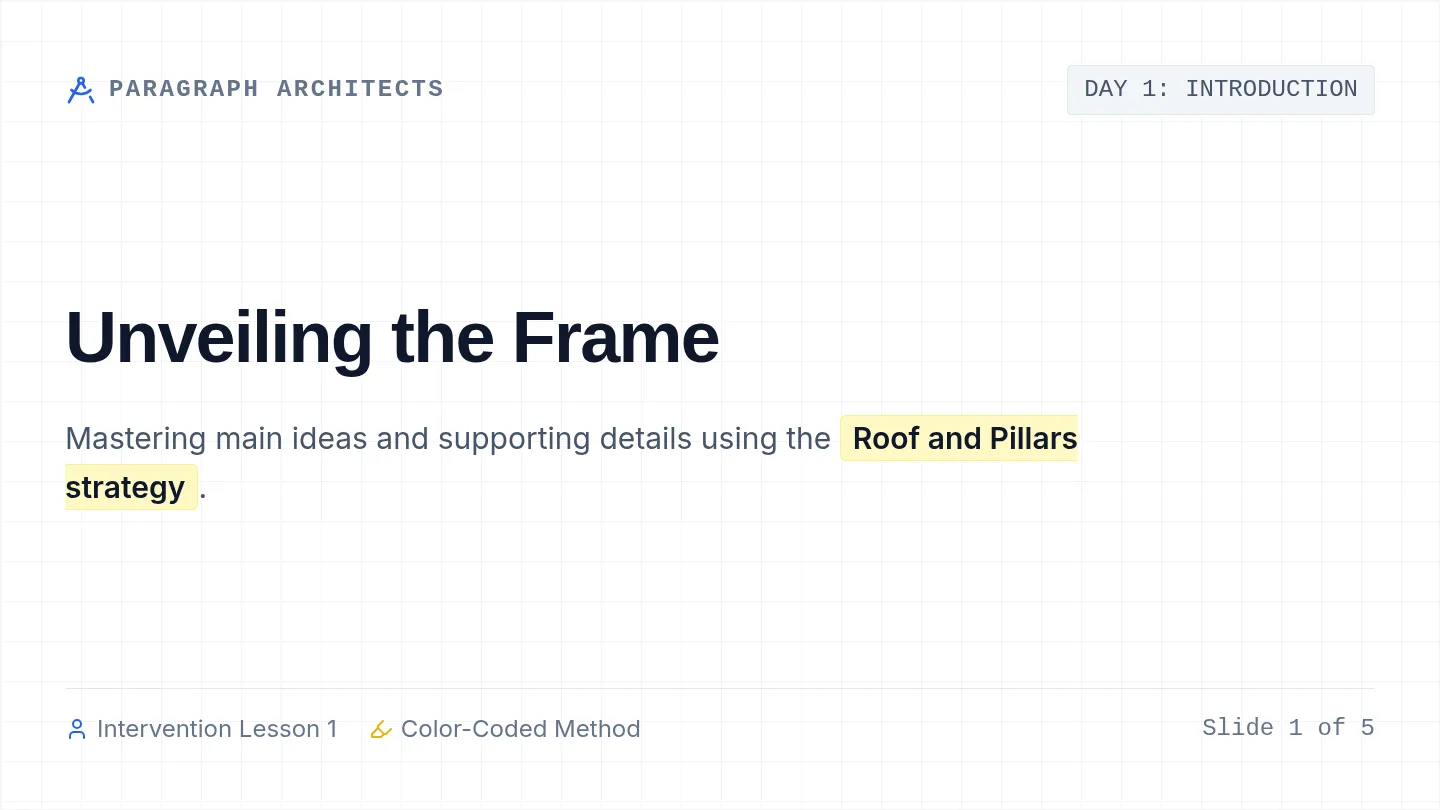
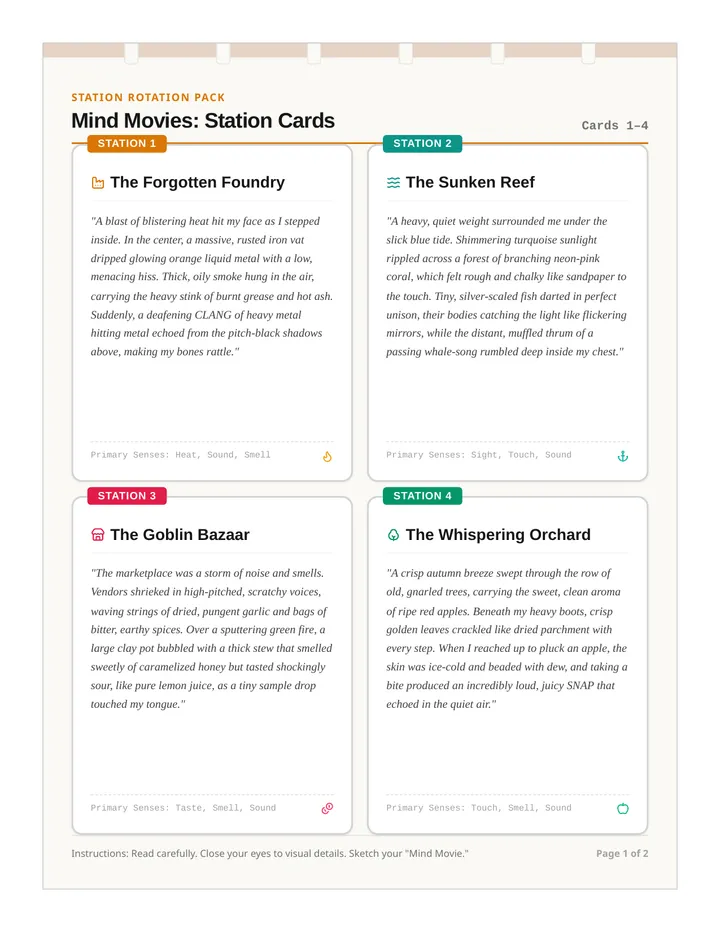
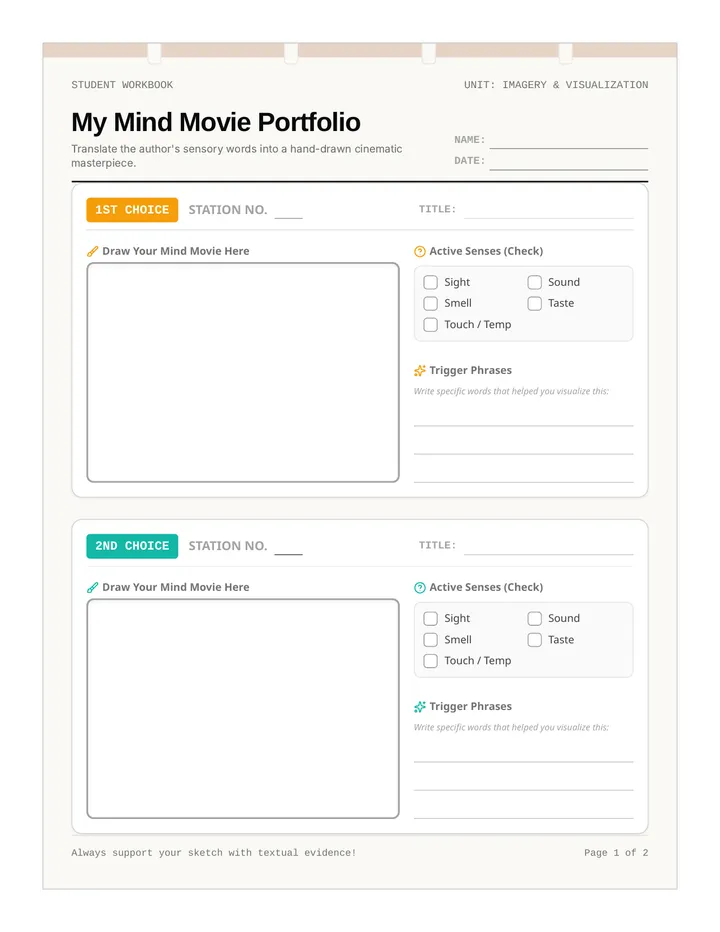
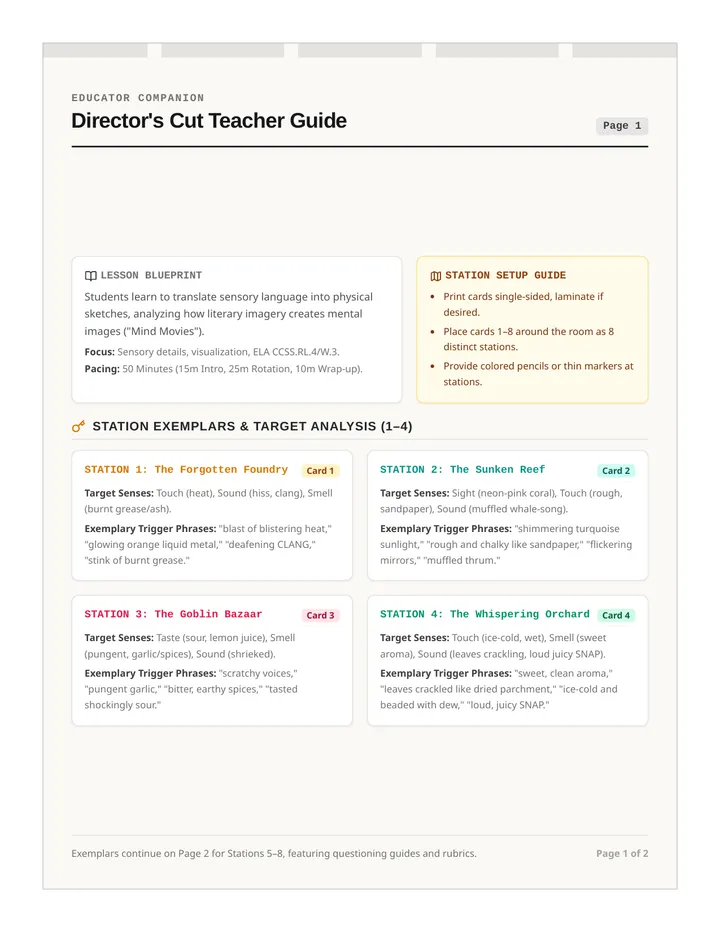
A lesson focused on transforming basic sentences into vivid, descriptive narratives using sensory imagery and varied sentence structures. Students build on their 5W foundation to 'sculpt' their writing into professional-quality prose.
An introductory exploration of essential financial concepts. Students learn and apply key terms like assets, liabilities, interest, and inflation to build a foundation for personal financial management.
A deep dive into figurative language through the lens of a dystopian narrative. Students analyze a two-page passage to identify and categorize various literary devices used to build a bleak, immersive world.
A lesson focusing on using inference-based context clues to determine the meaning of unfamiliar words in short stories. Includes differentiated materials for various reading levels.
A comprehensive lesson designed to teach middle schoolers the art of constructive peer feedback using the 'Specific, Helpful, and Kind' framework to improve final projects.
A reading comprehension practice session focused on the passage 'Picturing Our Planet', specifically targeting the understanding of how visual aids support textual information.
A lesson focused on breaking down complex arguments into three core components: Claim, Evidence, and Reasoning, using a detective-themed investigation framework.
An assessment unit for the first six chapters of Esperanza Rising, focusing on the transition from a life of privilege in Mexico to the flight toward California.
A comprehensive exploration of the plot and themes of Esperanza Rising, focusing on chapter-by-chapter summaries with bilingual support to deepen comprehension of Esperanza's journey from wealth to hard-won resilience.
A intensive reteach lesson for standard RI.6.3, focusing on how authors introduce, illustrate, and elaborate on key elements in a text using Civil Rights, Social Media, and Scientific Innovation topics.
A deep dive into the six major types of writing: Creative, Expository, Narrative, Argumentative, Persuasive, and Poetry. Students learn the structures, purposes, and unique elements of each style, including rhetorical appeals and the CEW framework.
A deep dive into the myth of Theseus and the Minotaur, exploring the duality of heroism and what it truly means to be extraordinary. Students analyze Theseus's brave actions alongside his moral failings to develop a nuanced understanding of character.
A lesson focused on identifying and constructing argumentative claims supported by strong evidence, using an engaging armory theme.
A lesson where students become 'Lexicon Detectives' to uncover the meaning of challenging words using specific context clue strategies like synonyms, antonyms, and logic.
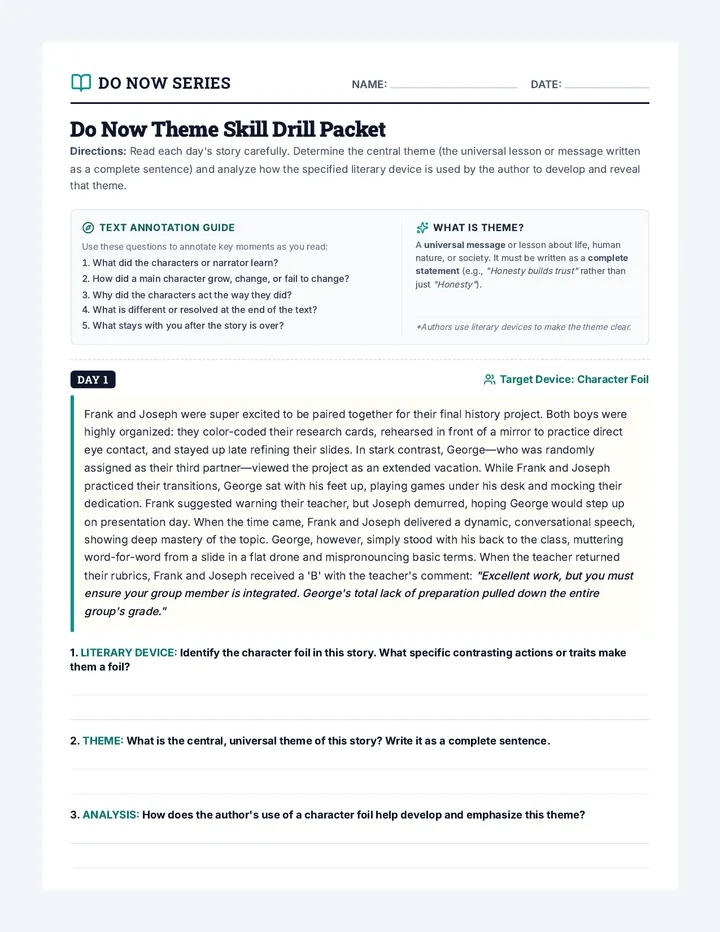
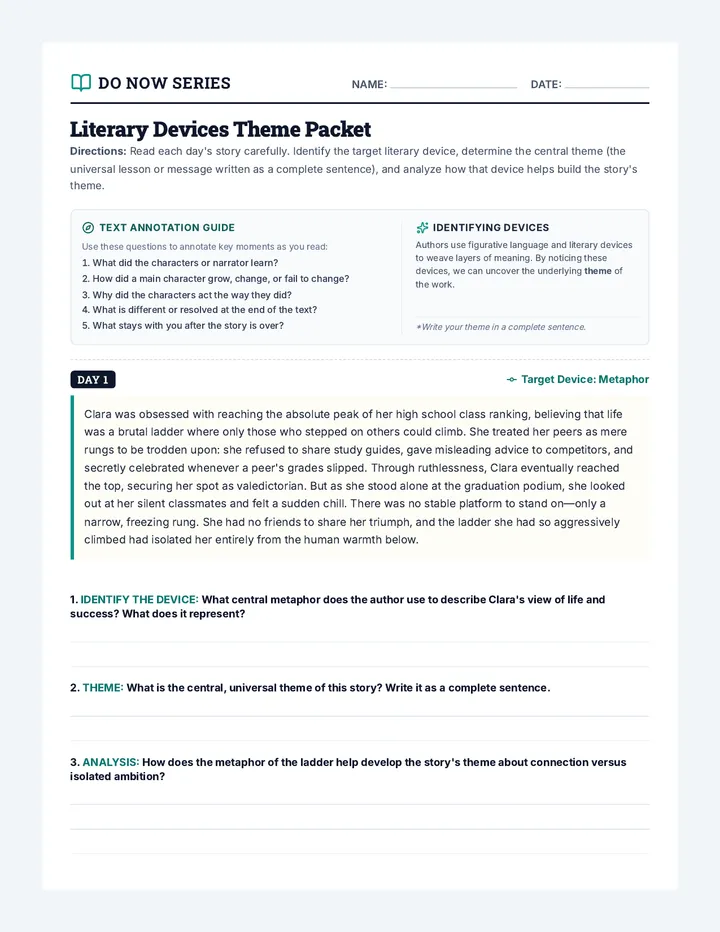
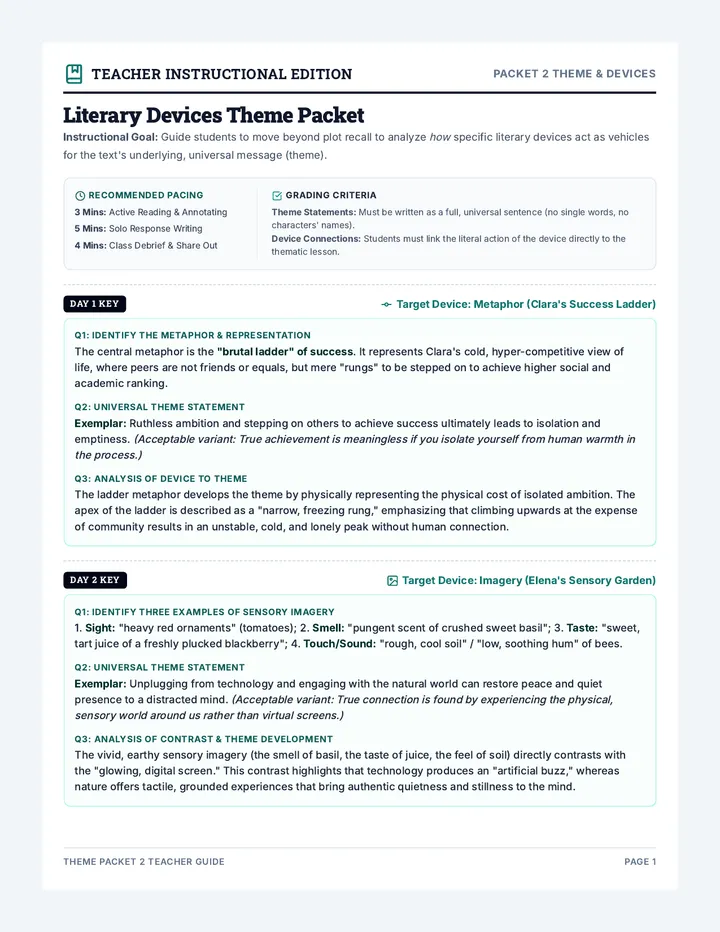
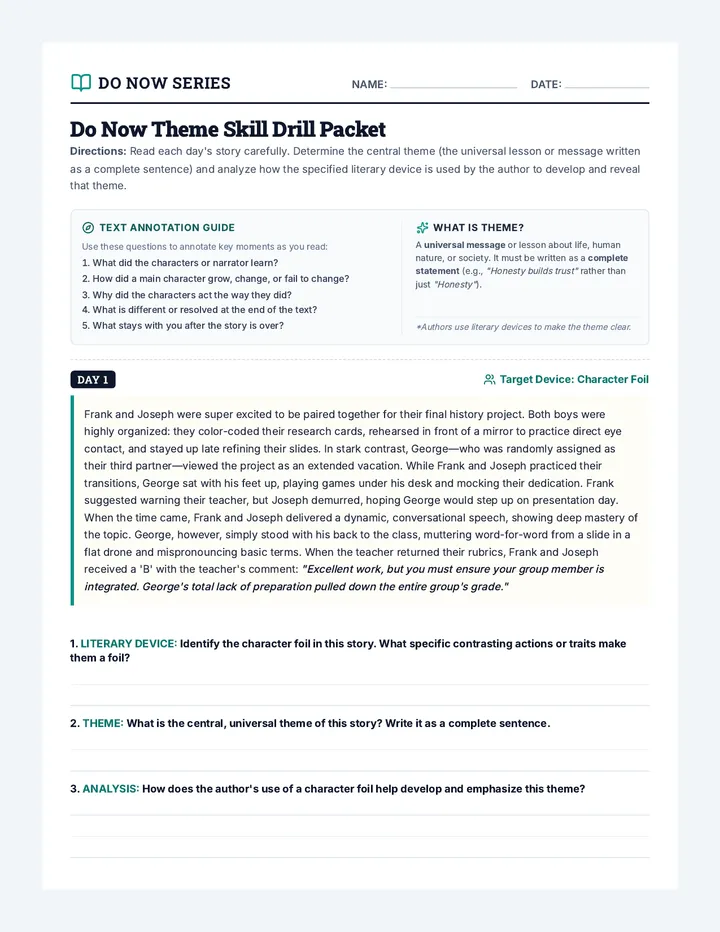
A lesson focused on uncovering deeper meanings in fiction through inference and theme identification using a 'detective' aesthetic.
Preparing students for the NYS Grade 6 ELA extended response by breaking down the comparison of two texts into manageable drafting stages.
A comprehensive ELA lesson focused on the digestive system, targeting context clues, cause and effect, and main idea through EOG-style informational texts. Students will analyze complex physiological processes while practicing critical reading strategies.