A deep dive into the six major types of writing: Creative, Expository, Narrative, Argumentative, Persuasive, and Poetry. Students learn the structures, purposes, and unique elements of each style, including rhetorical appeals and the CEW framework.
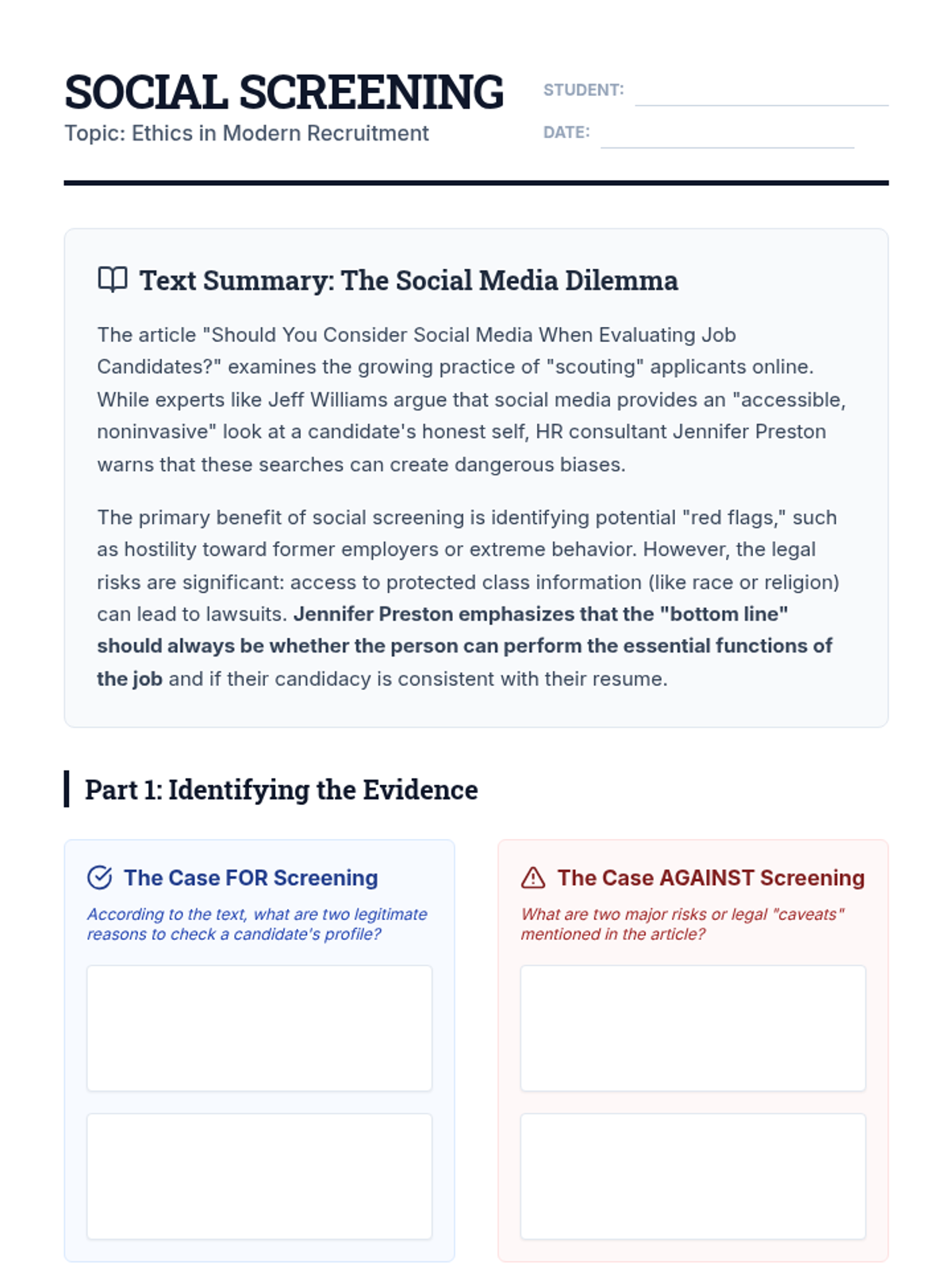
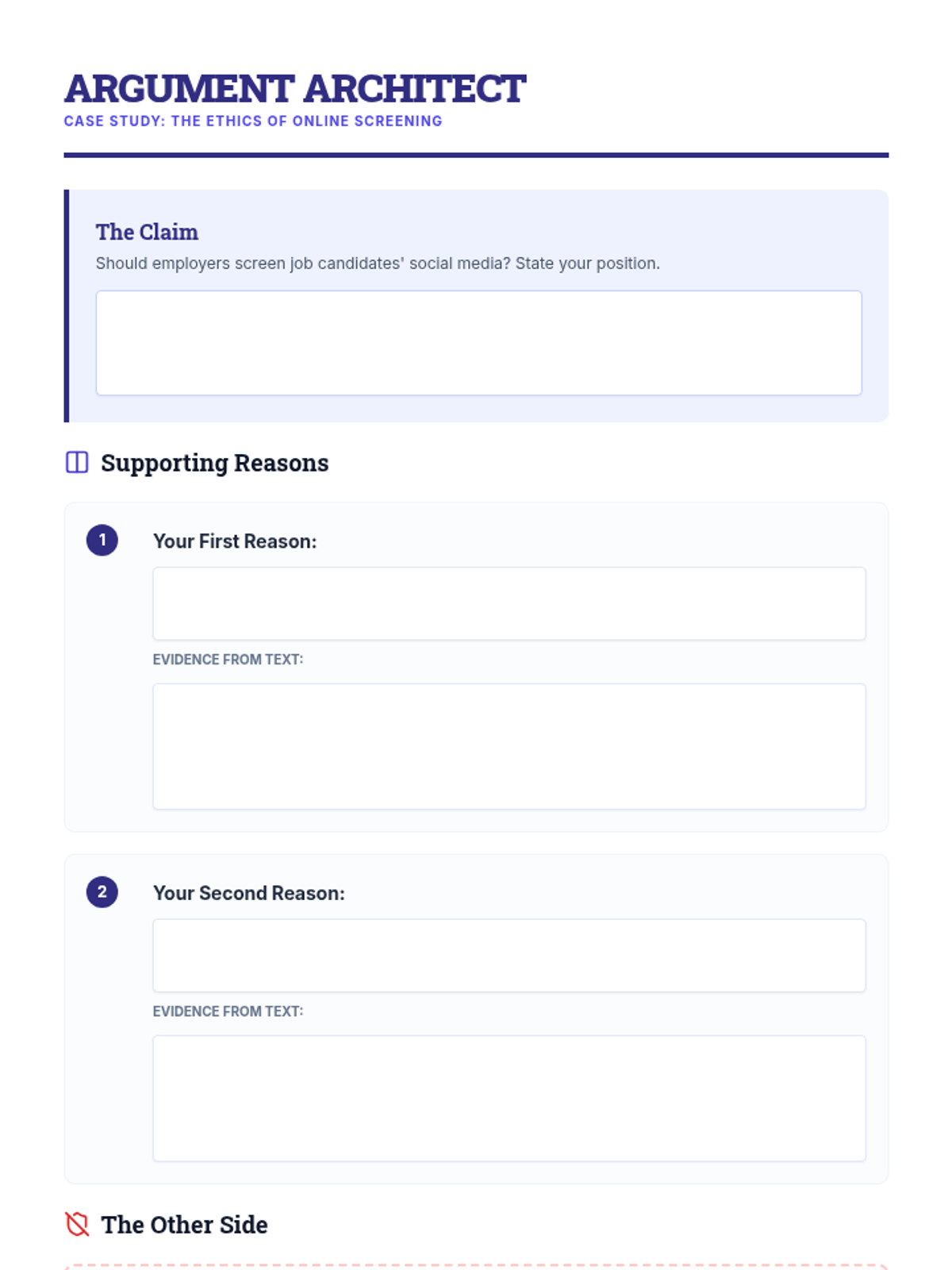
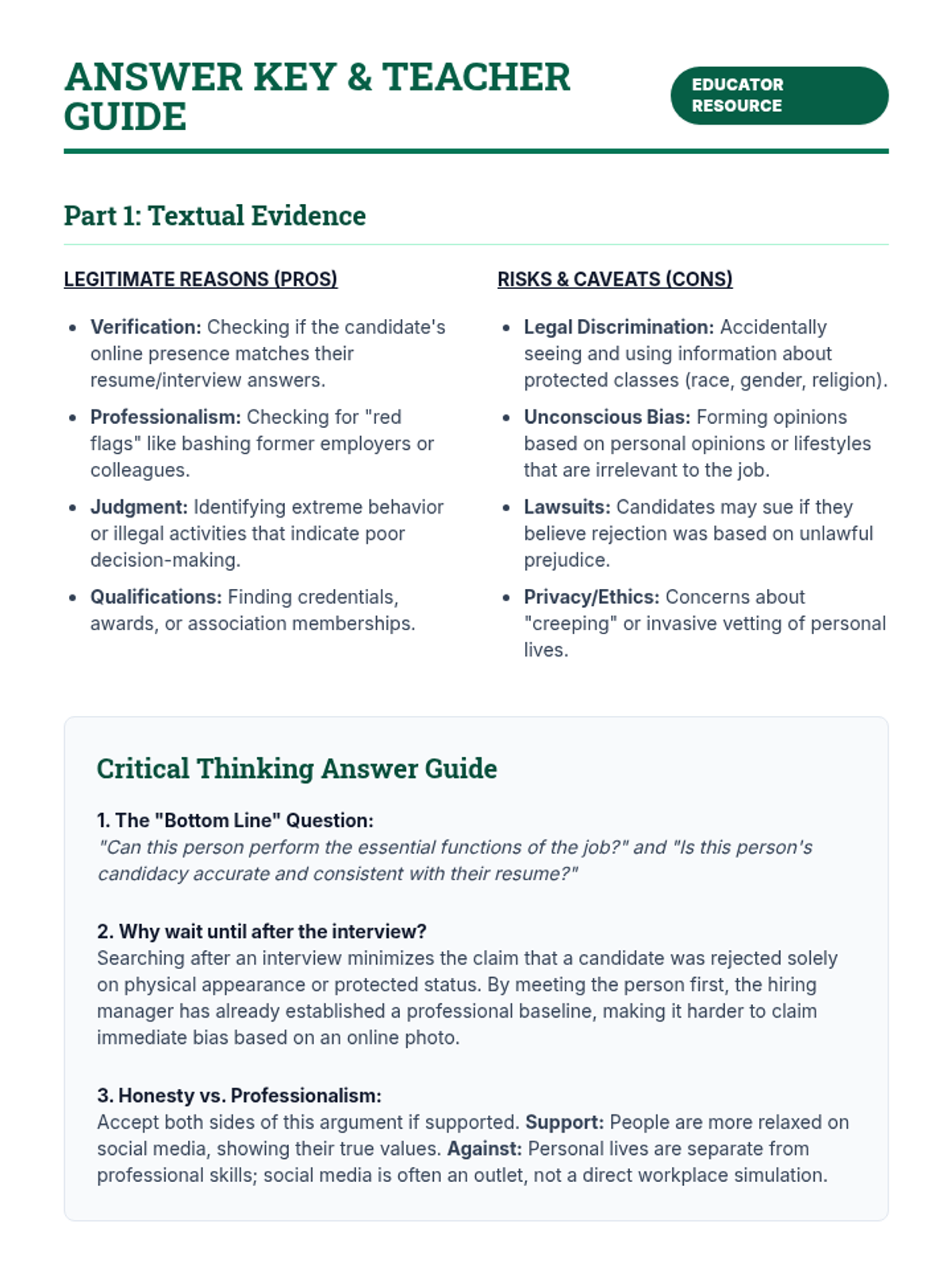
This lesson explores the ethical and legal implications of using social media in hiring decisions. Students will analyze a professional text, summarize its key points, and develop a structured argument regarding whether employers should screen candidates' online presence.
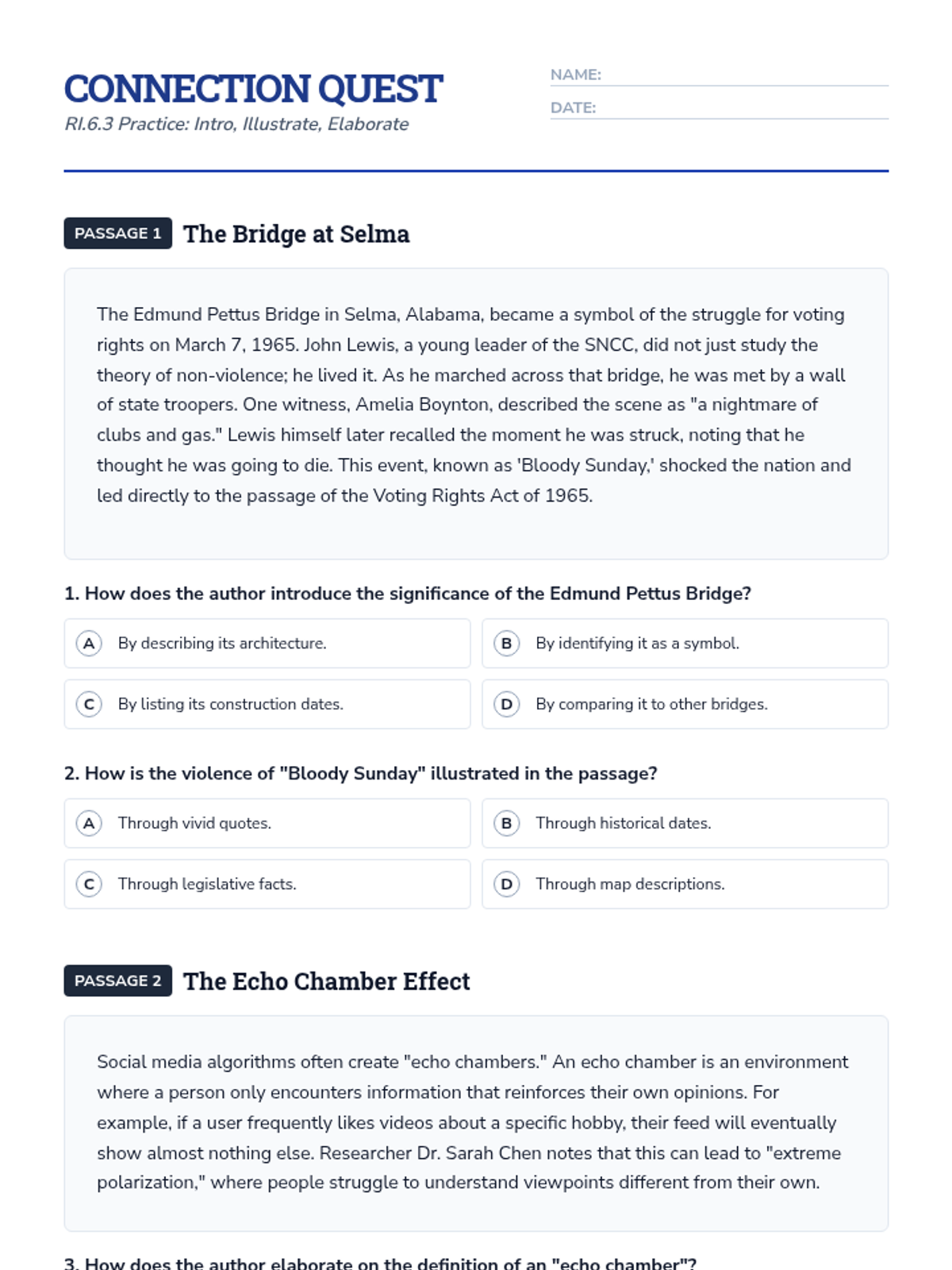
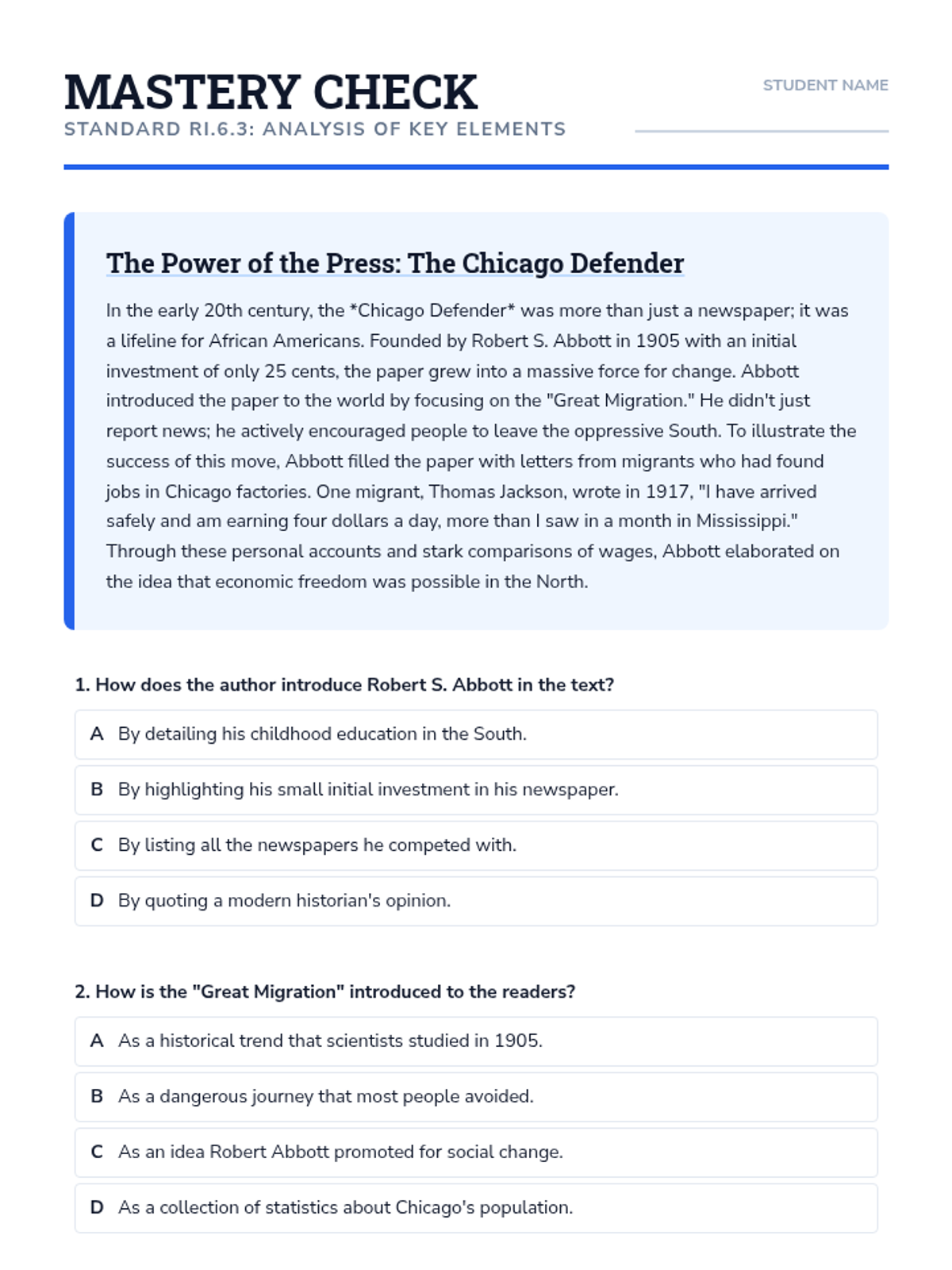
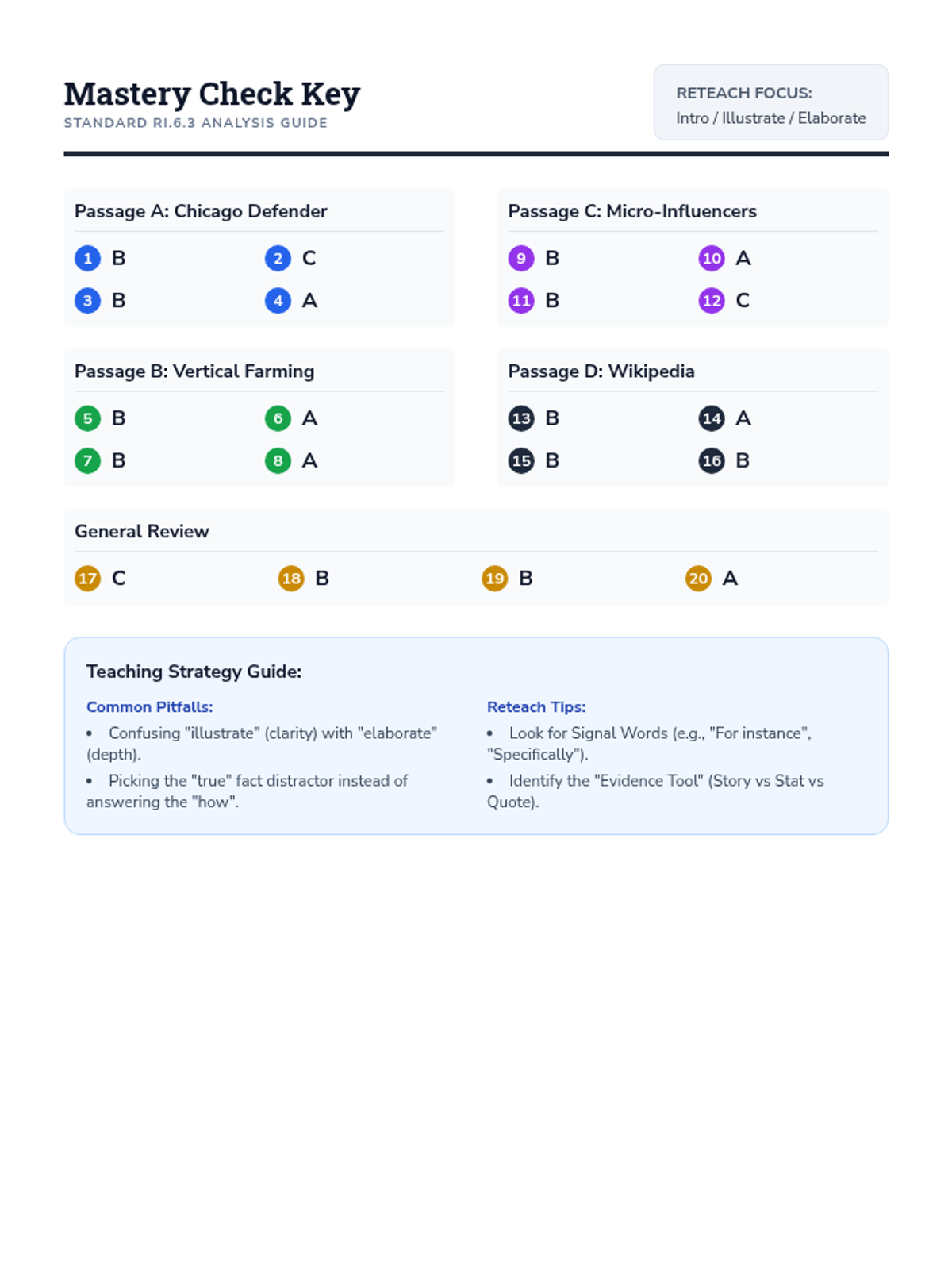
A intensive reteach lesson for standard RI.6.3, focusing on how authors introduce, illustrate, and elaborate on key elements in a text using Civil Rights, Social Media, and Scientific Innovation topics.
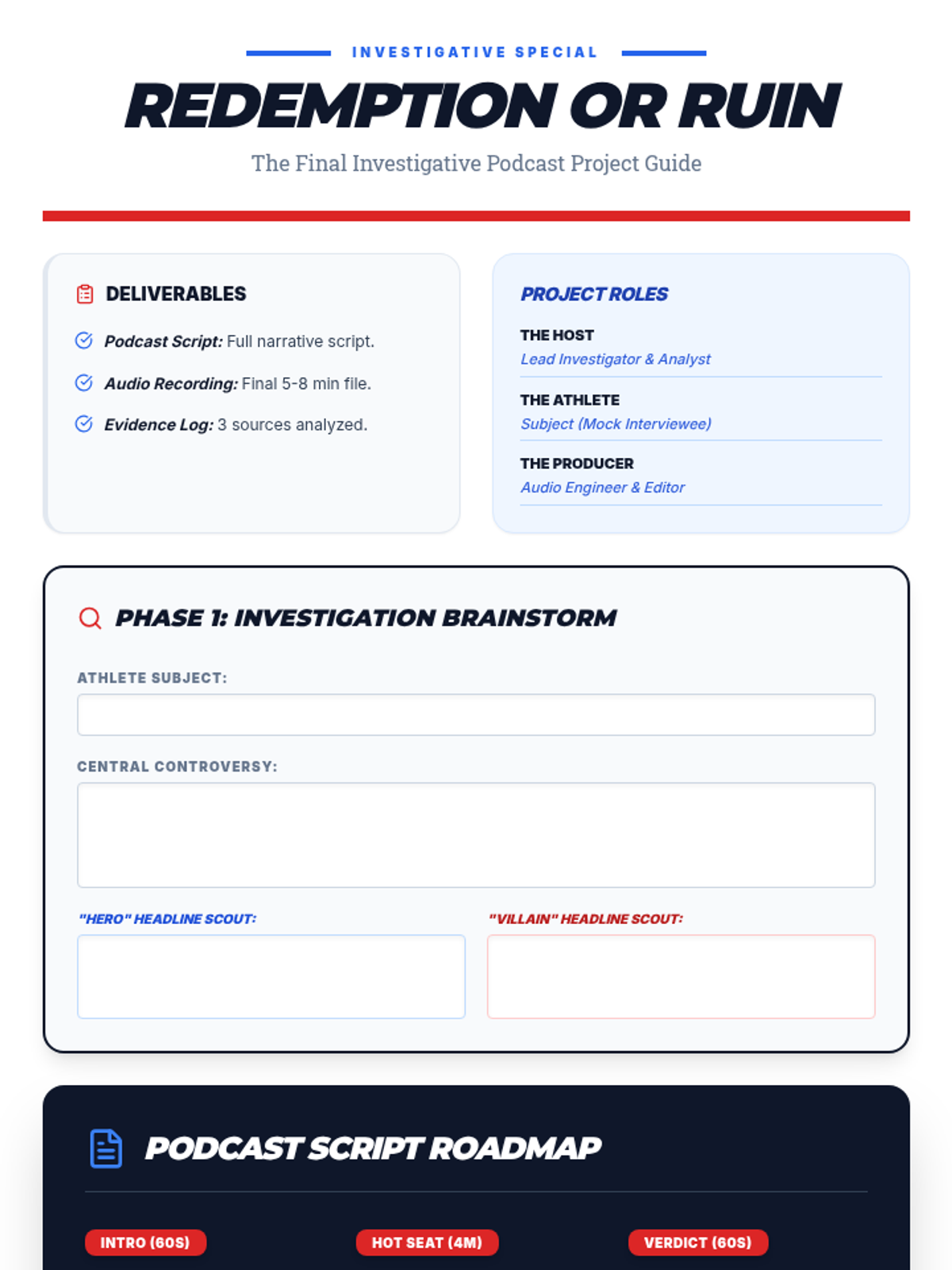
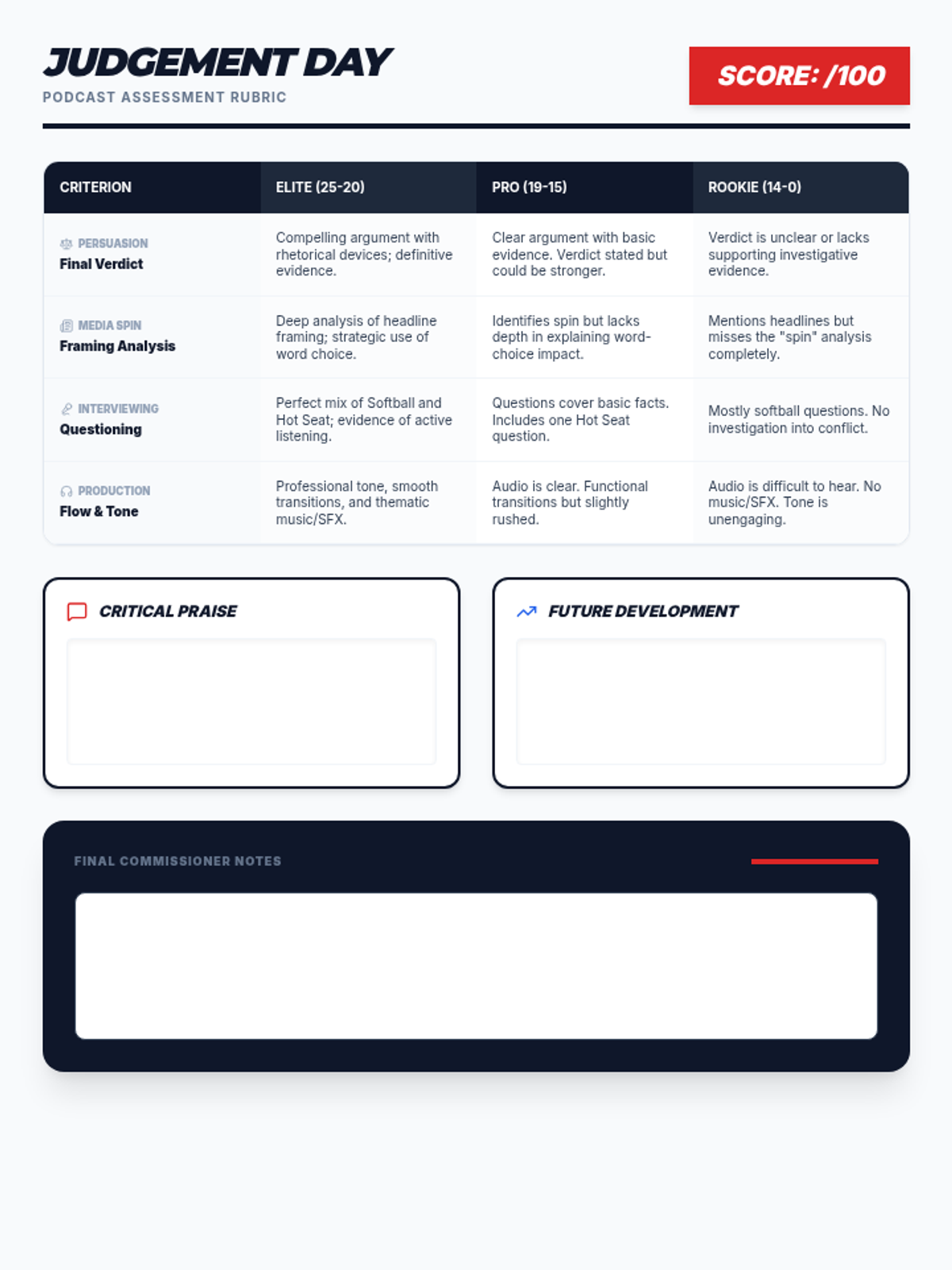
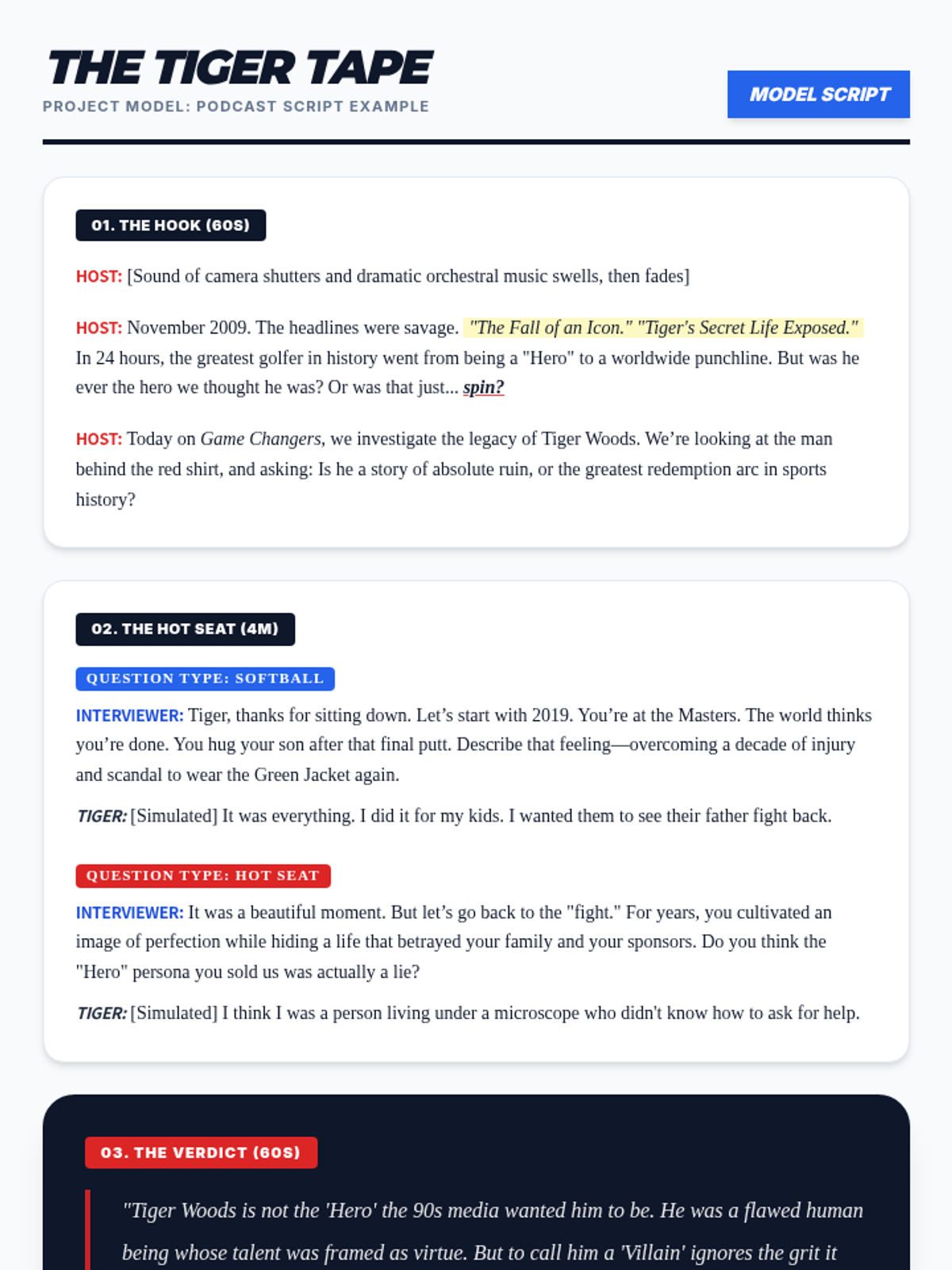
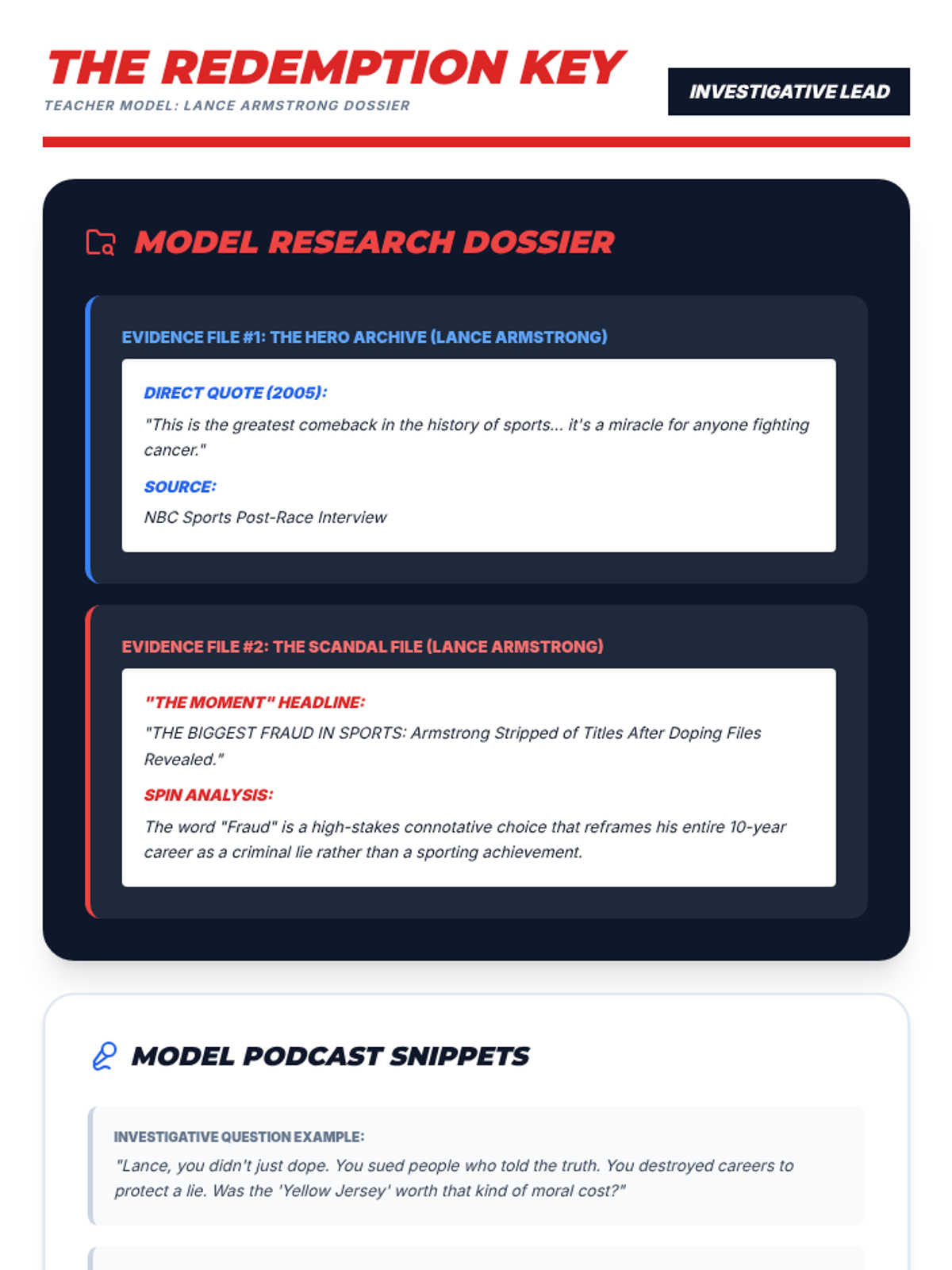
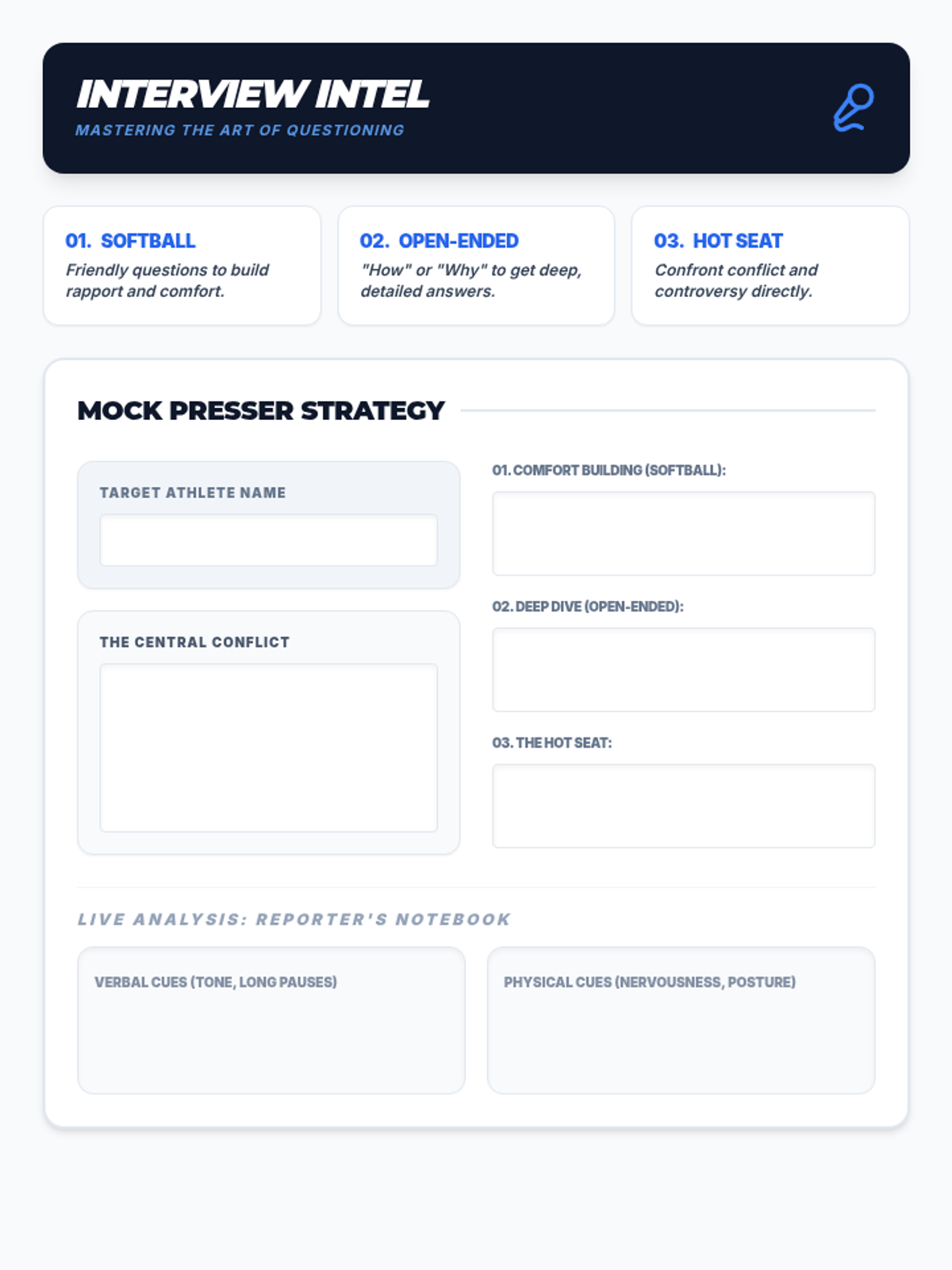
The culminating project where students research a controversial sports figure and produce a persuasive investigative podcast script and recording.
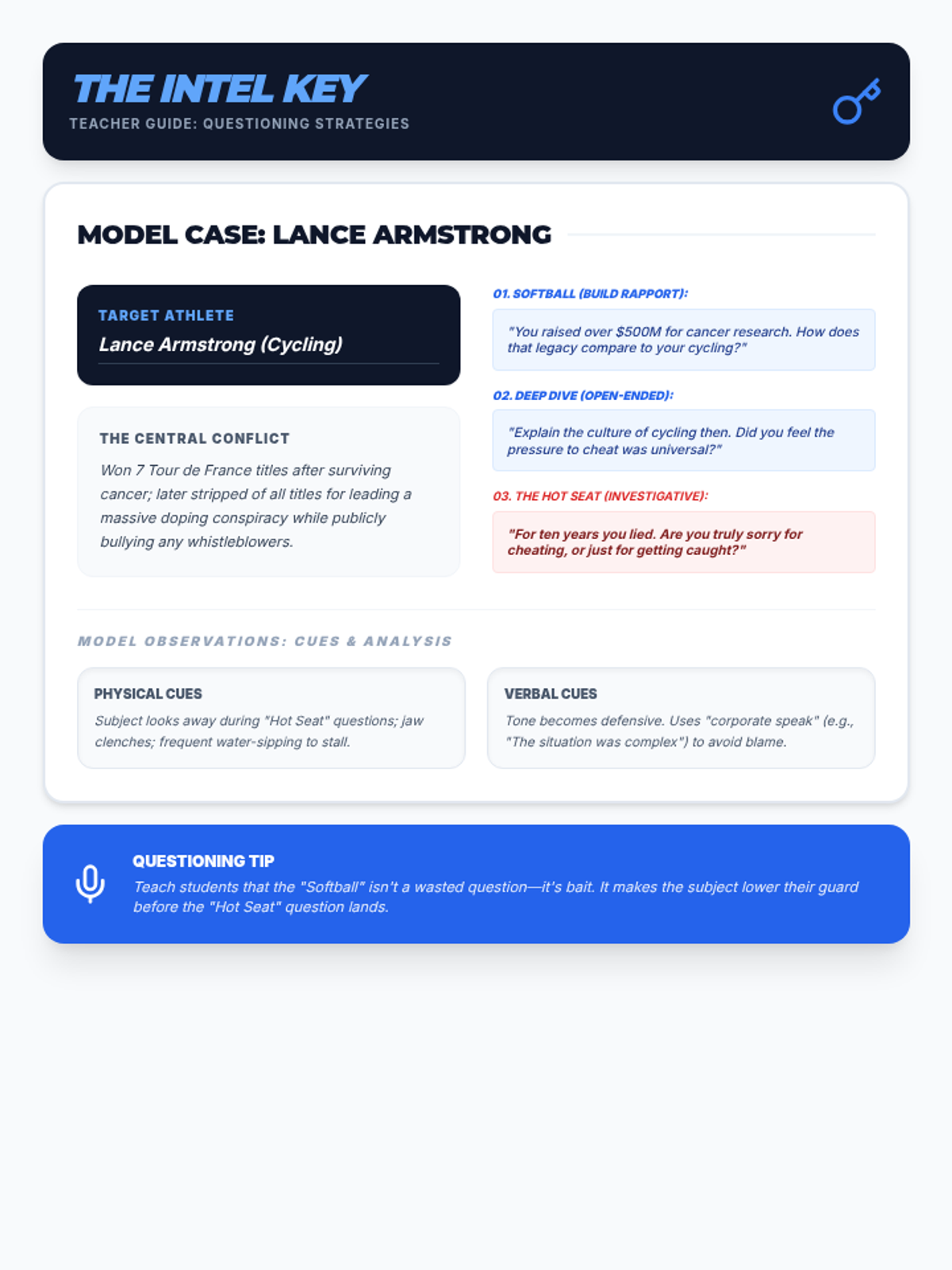
Students master the art of the interview, learning to craft hard-hitting questions and analyze verbal cues to uncover the 'truth' behind the athlete's persona.
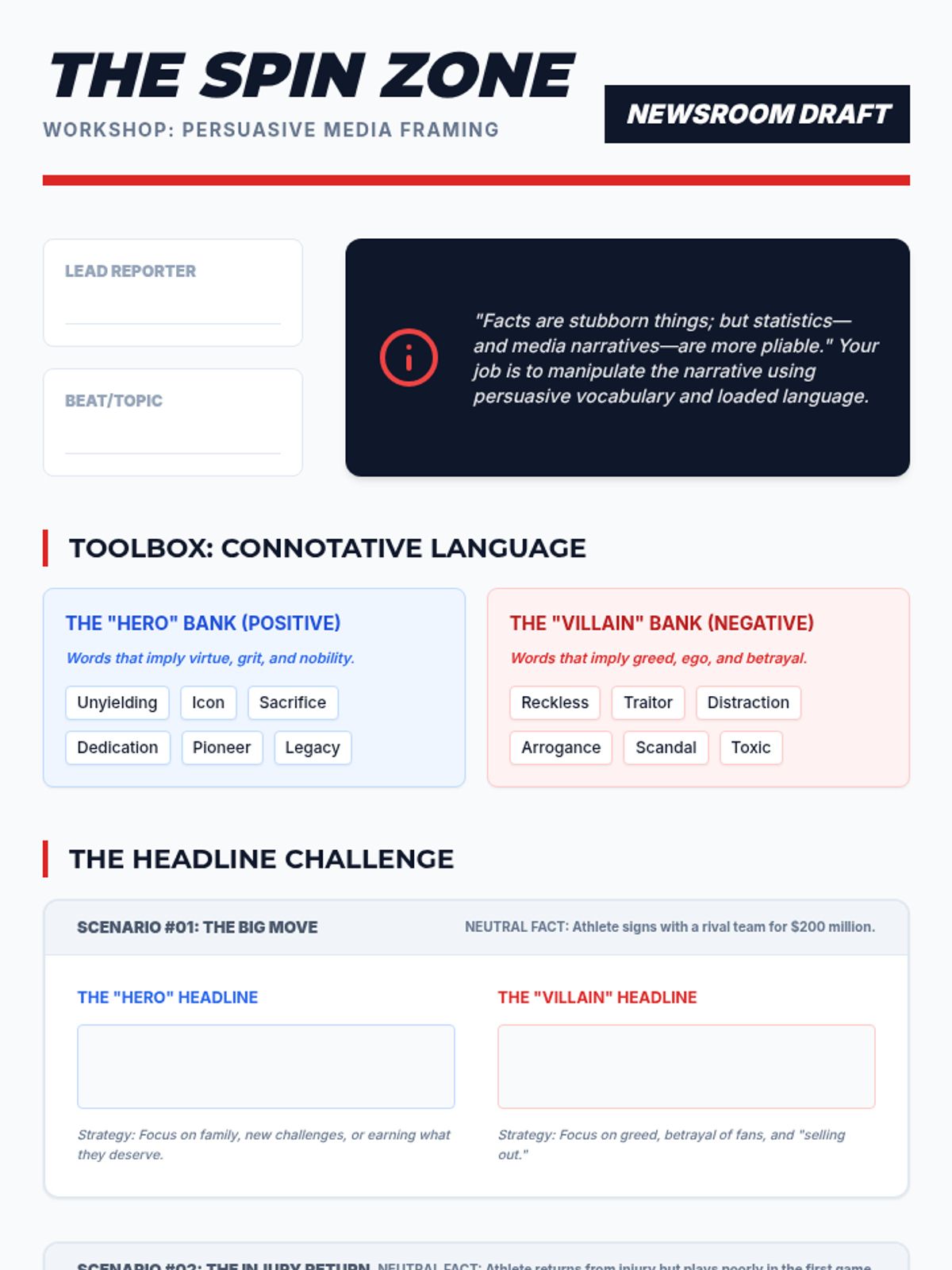
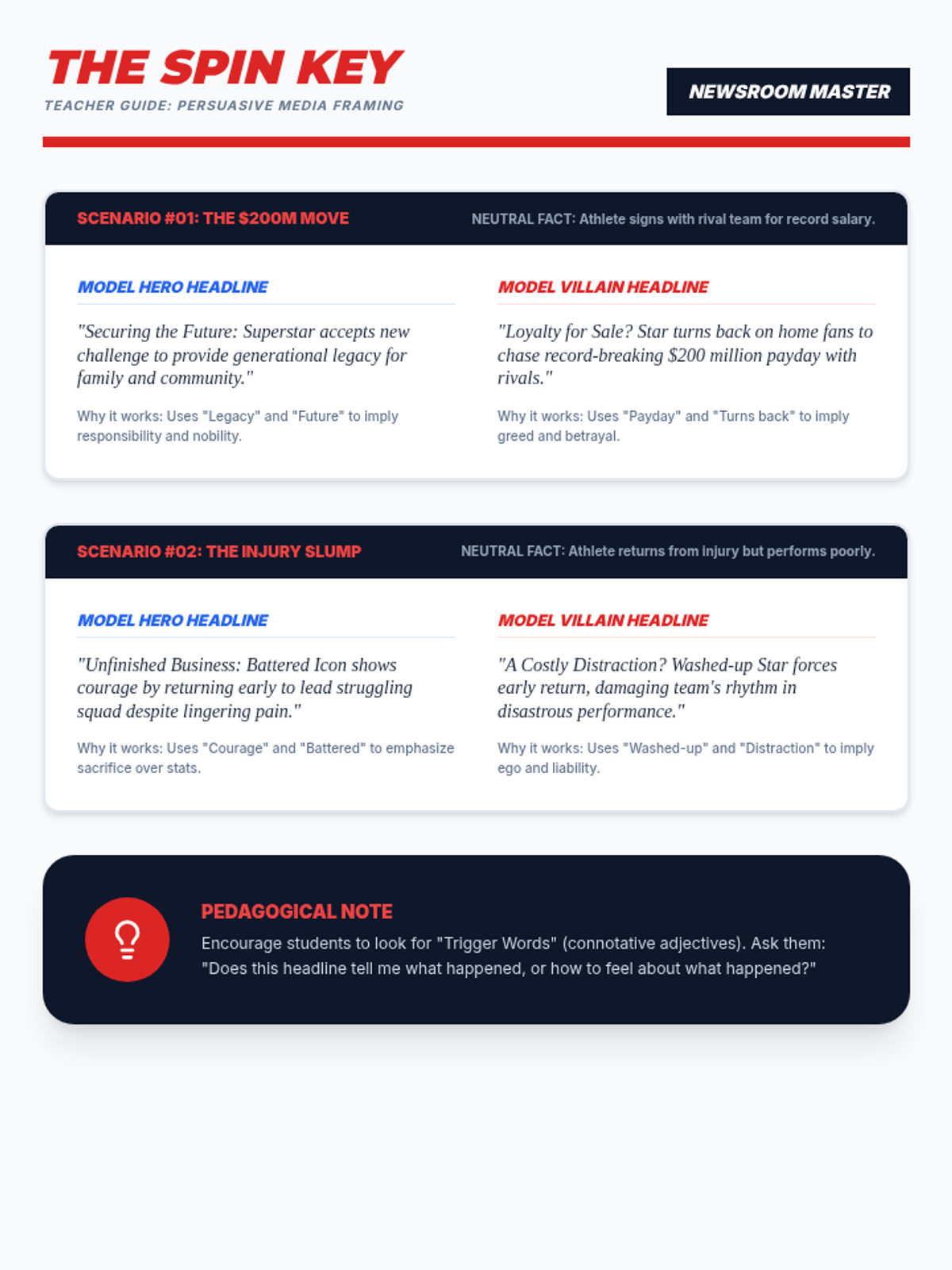
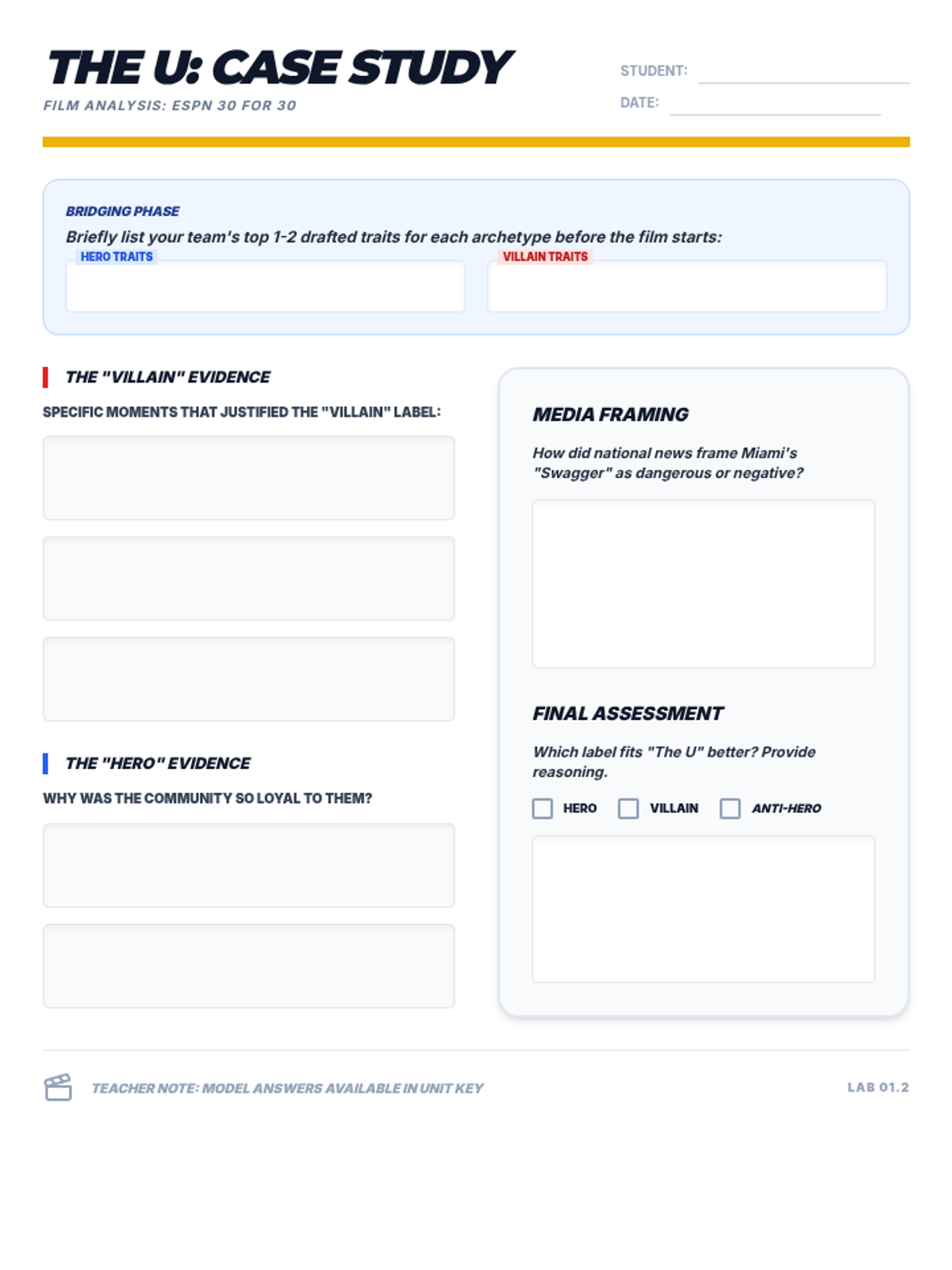
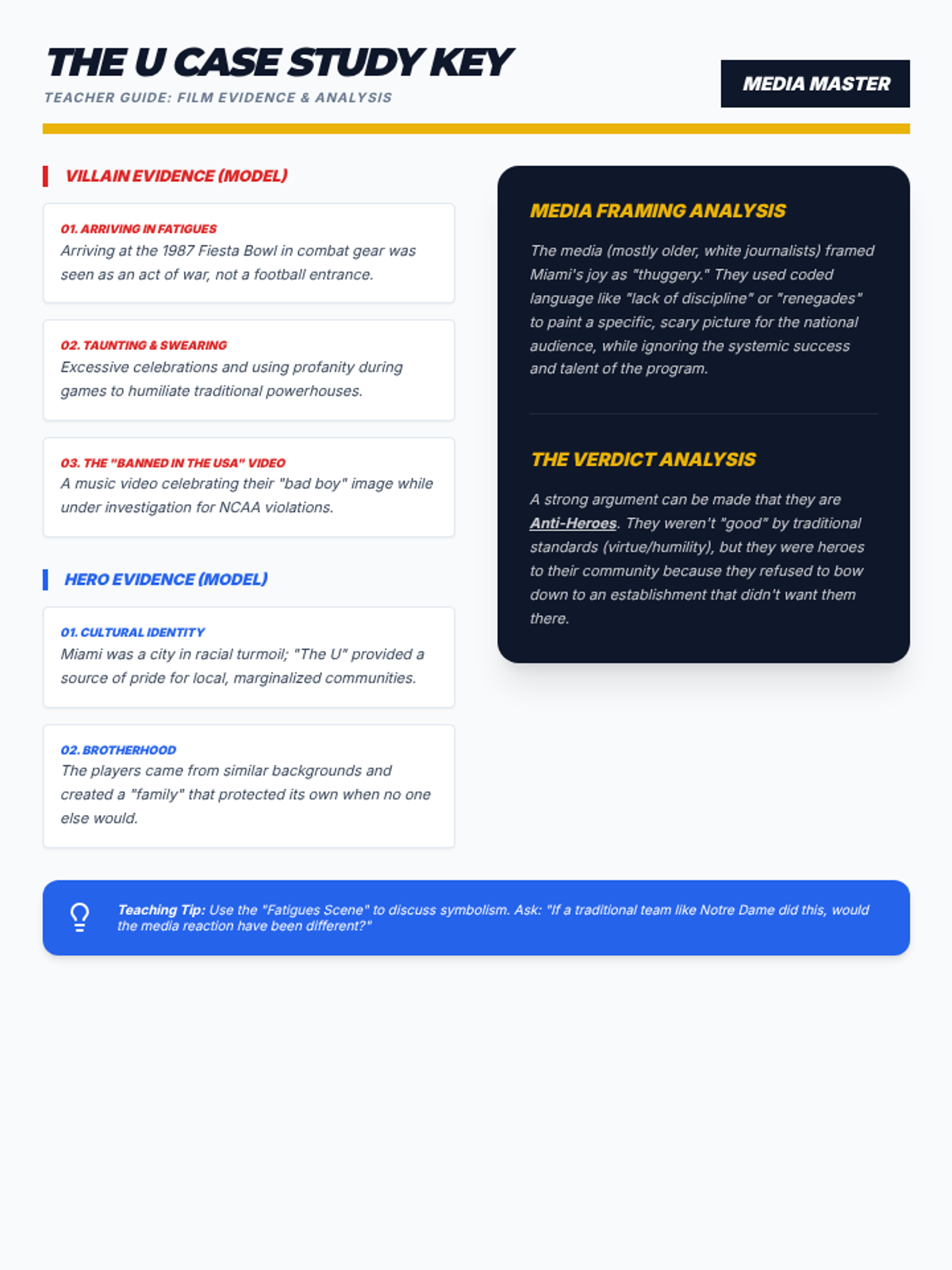
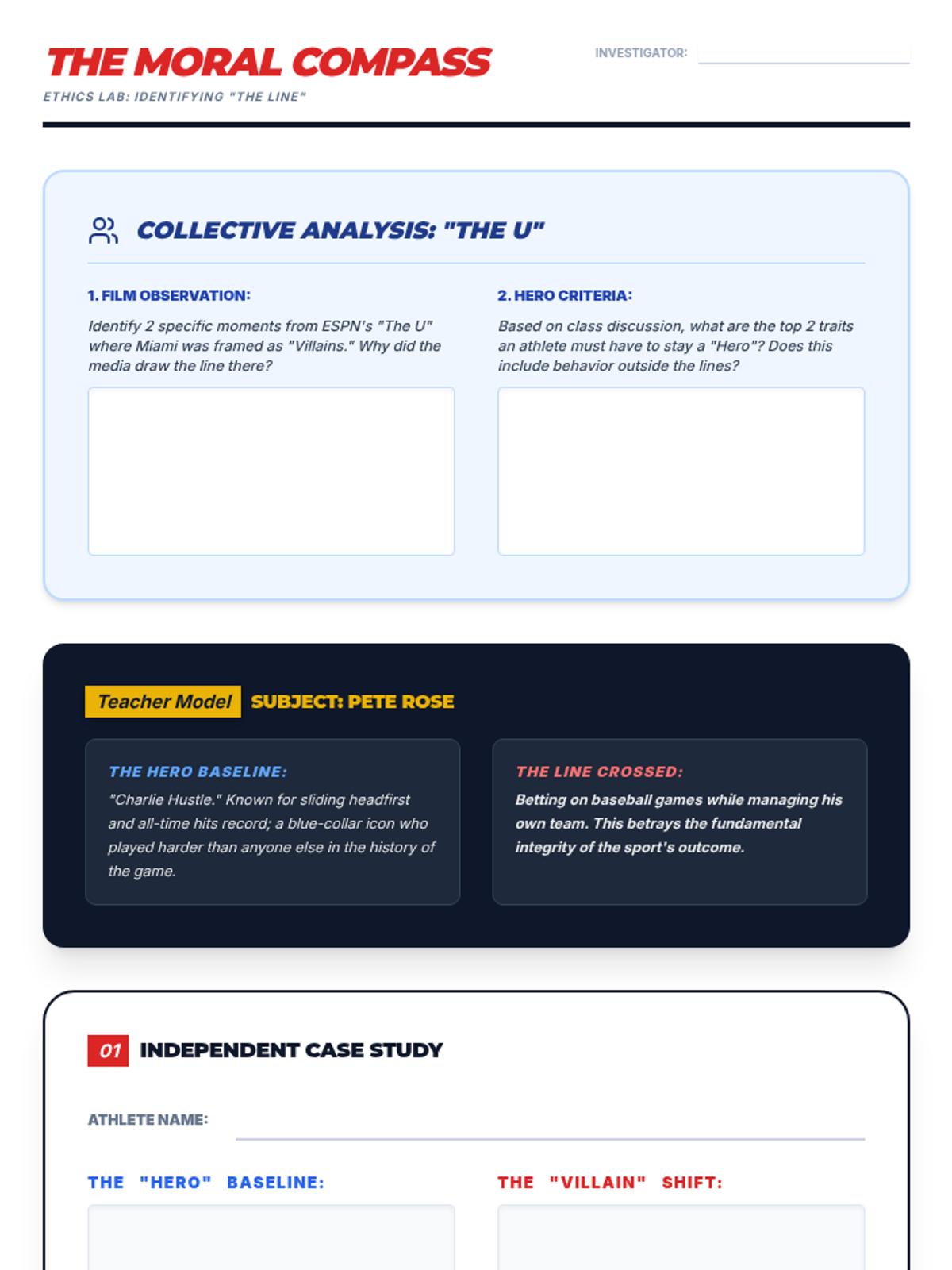
An exploration of how media framing, headlines, and persuasive language can transform an athlete's public image from hero to villain and back again.
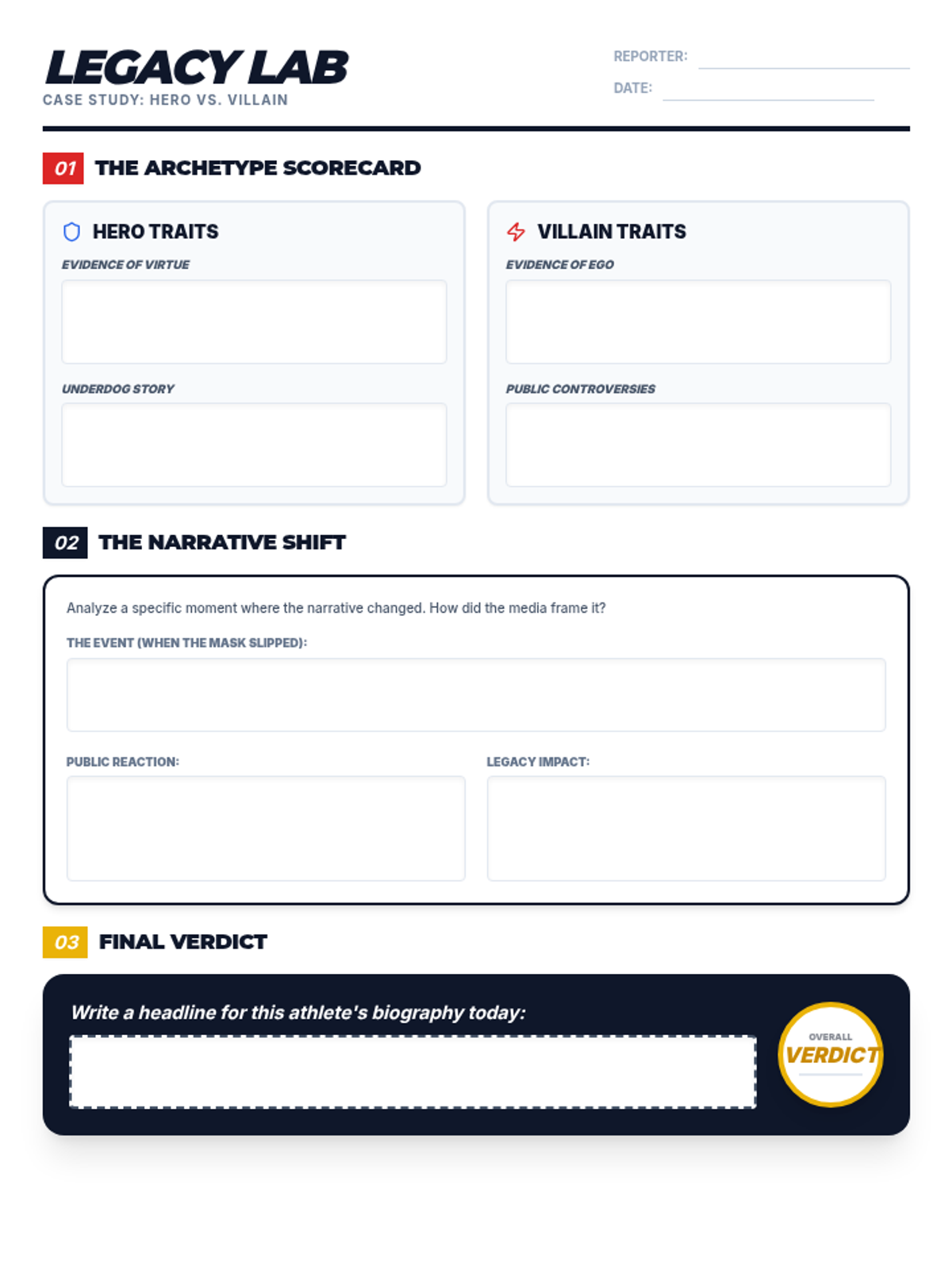
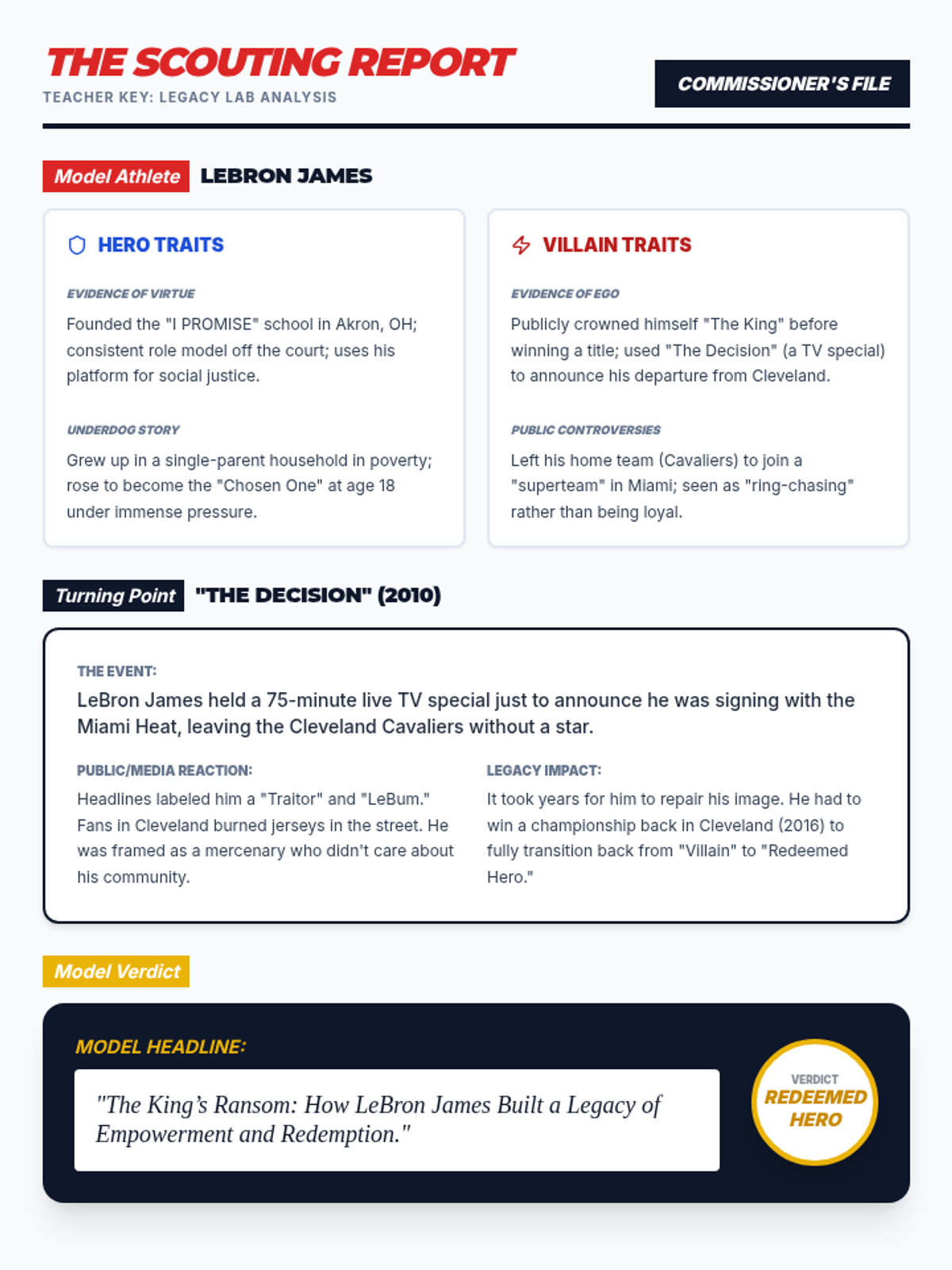
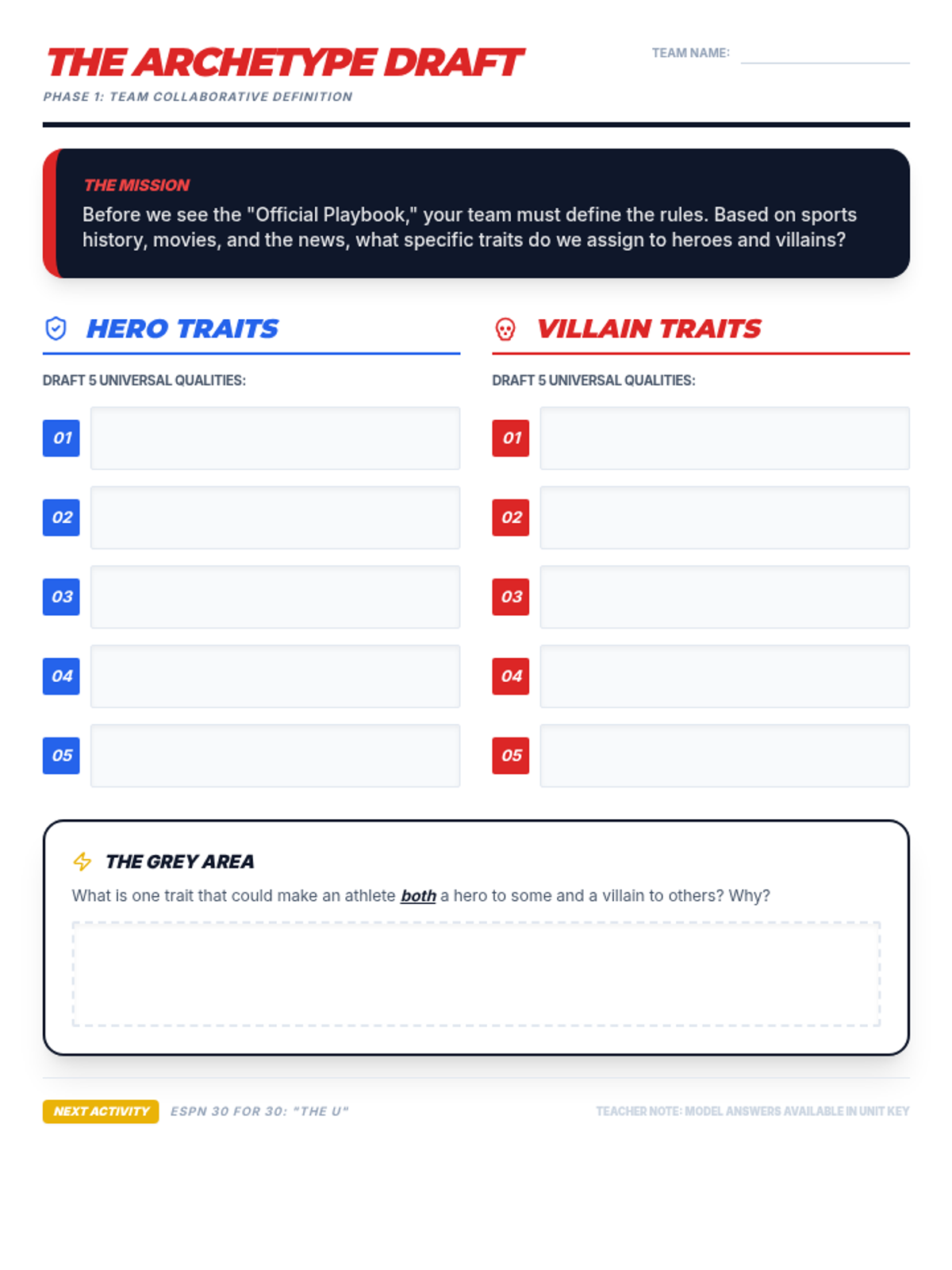
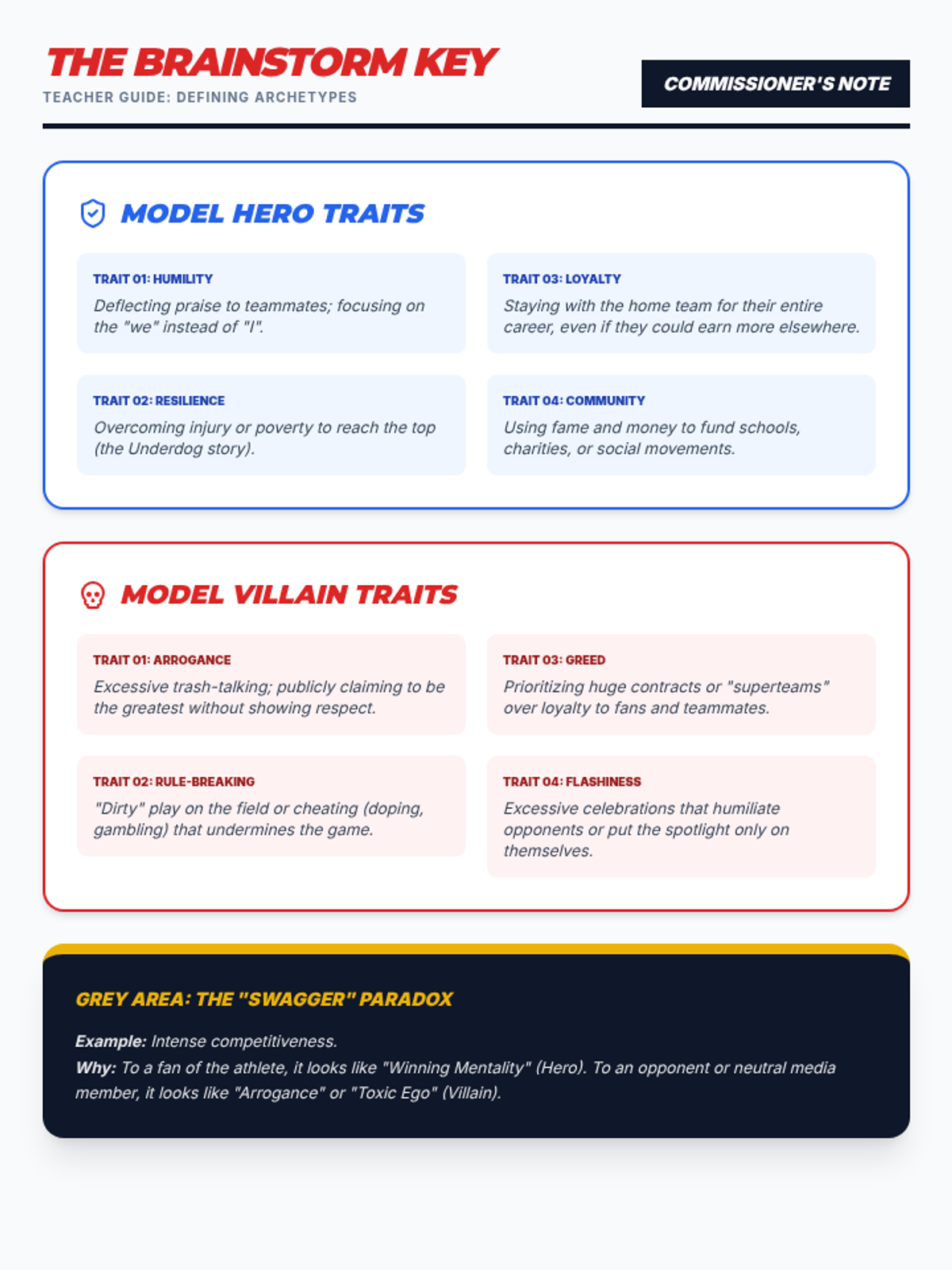
Students define the traits of sports heroes and villains, exploring how narrative archetypes are applied to real-world athletes to create compelling stories.
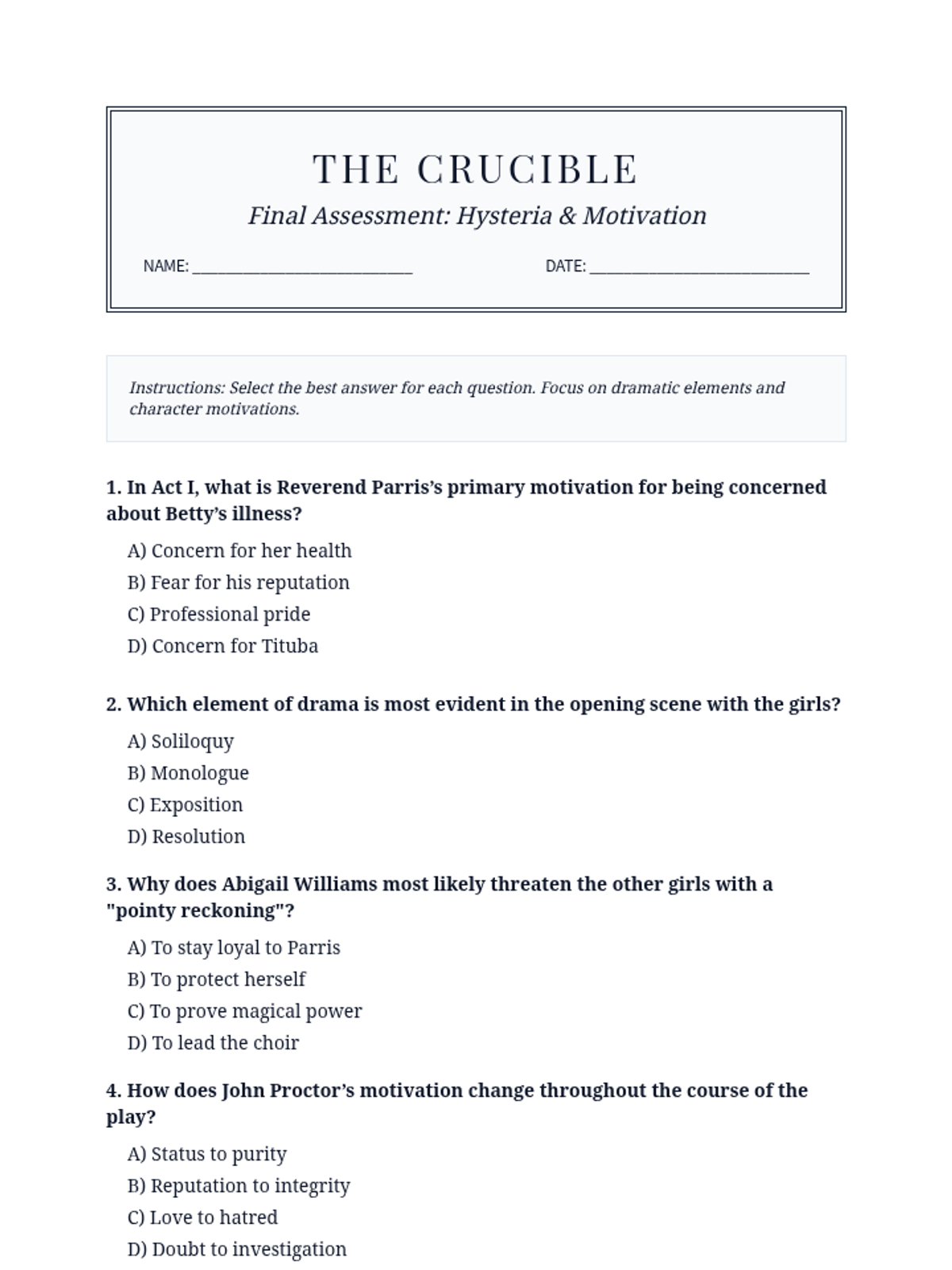
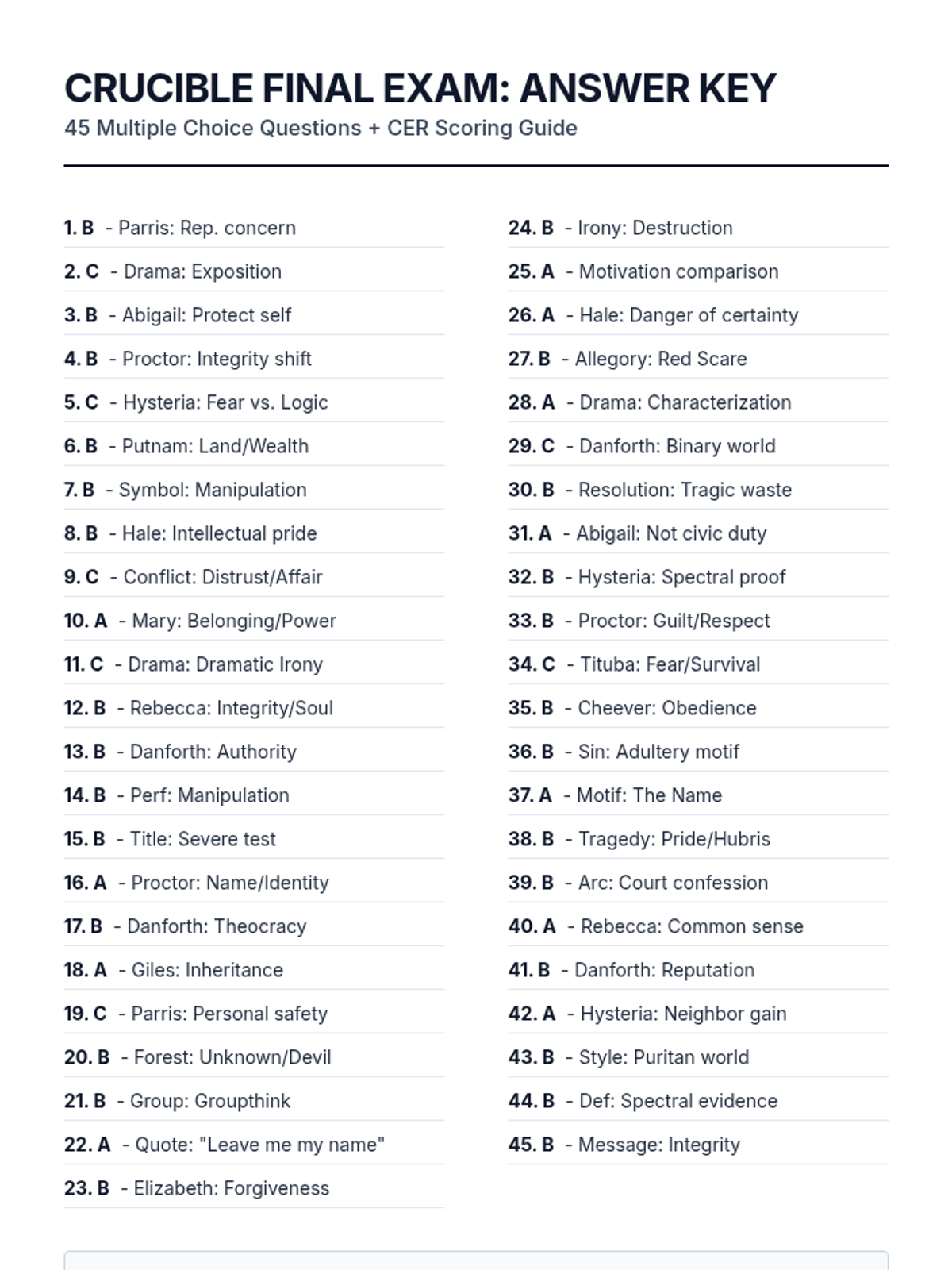
A comprehensive end-of-unit assessment for Arthur Miller's 'The Crucible', focusing on character motivation, the mechanics of hysteria, and elements of drama. This lesson includes a 45-question multiple-choice exam and a CER-based short answer response.
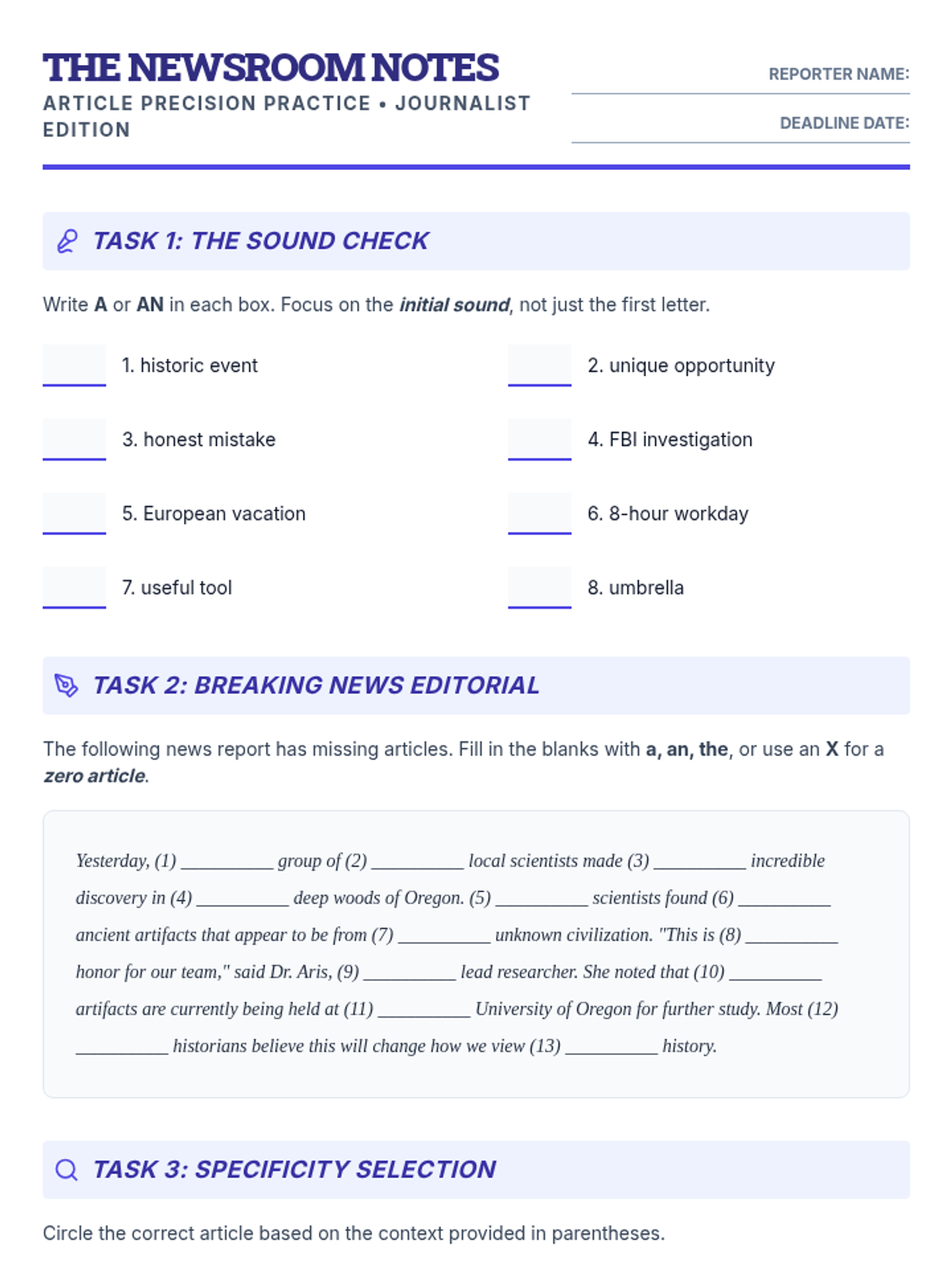
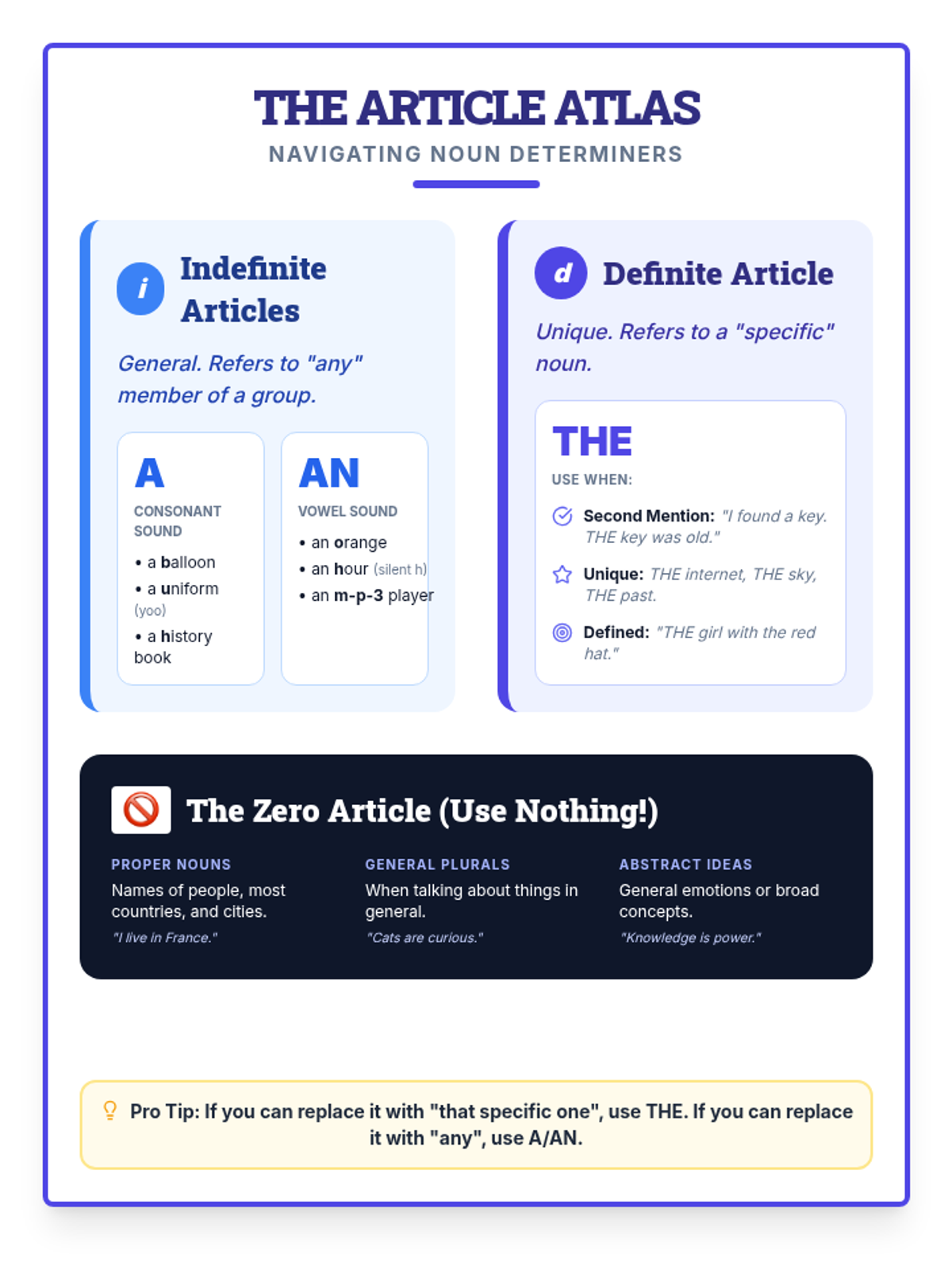
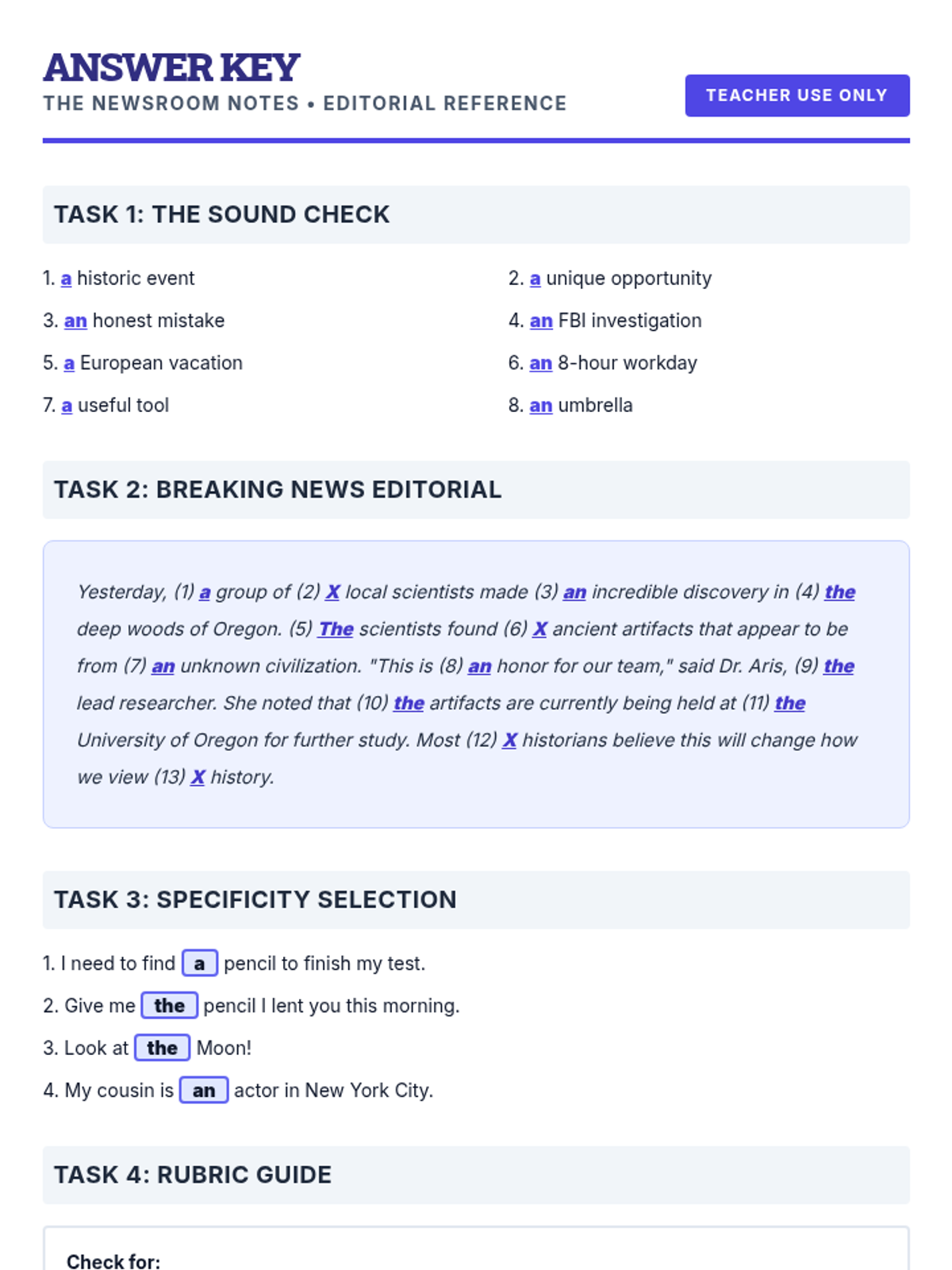
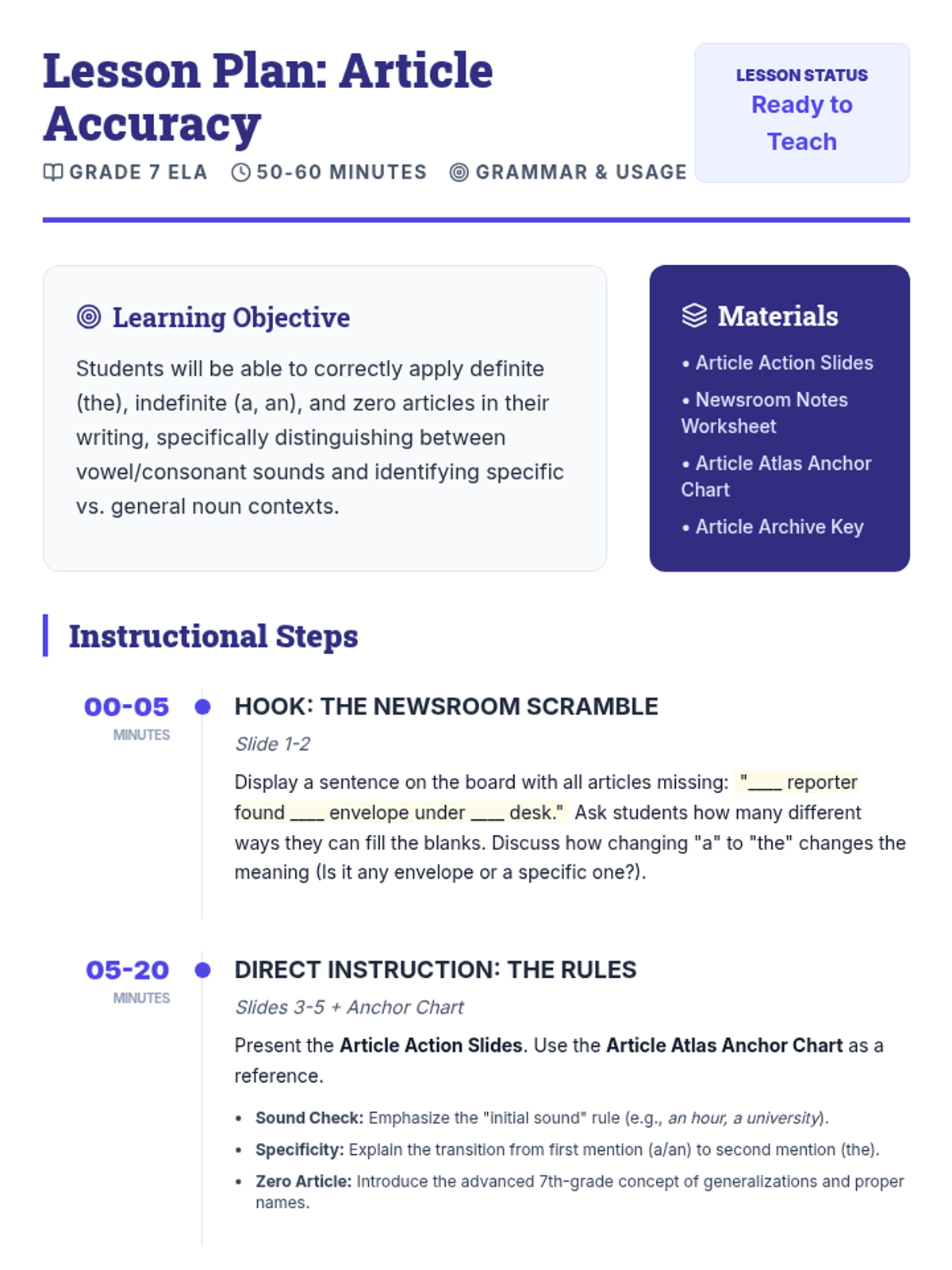
A comprehensive lesson on using definite and indefinite articles correctly, tailored for 7th-grade students with a focus on sound-based rules, specificity, and zero article usage.
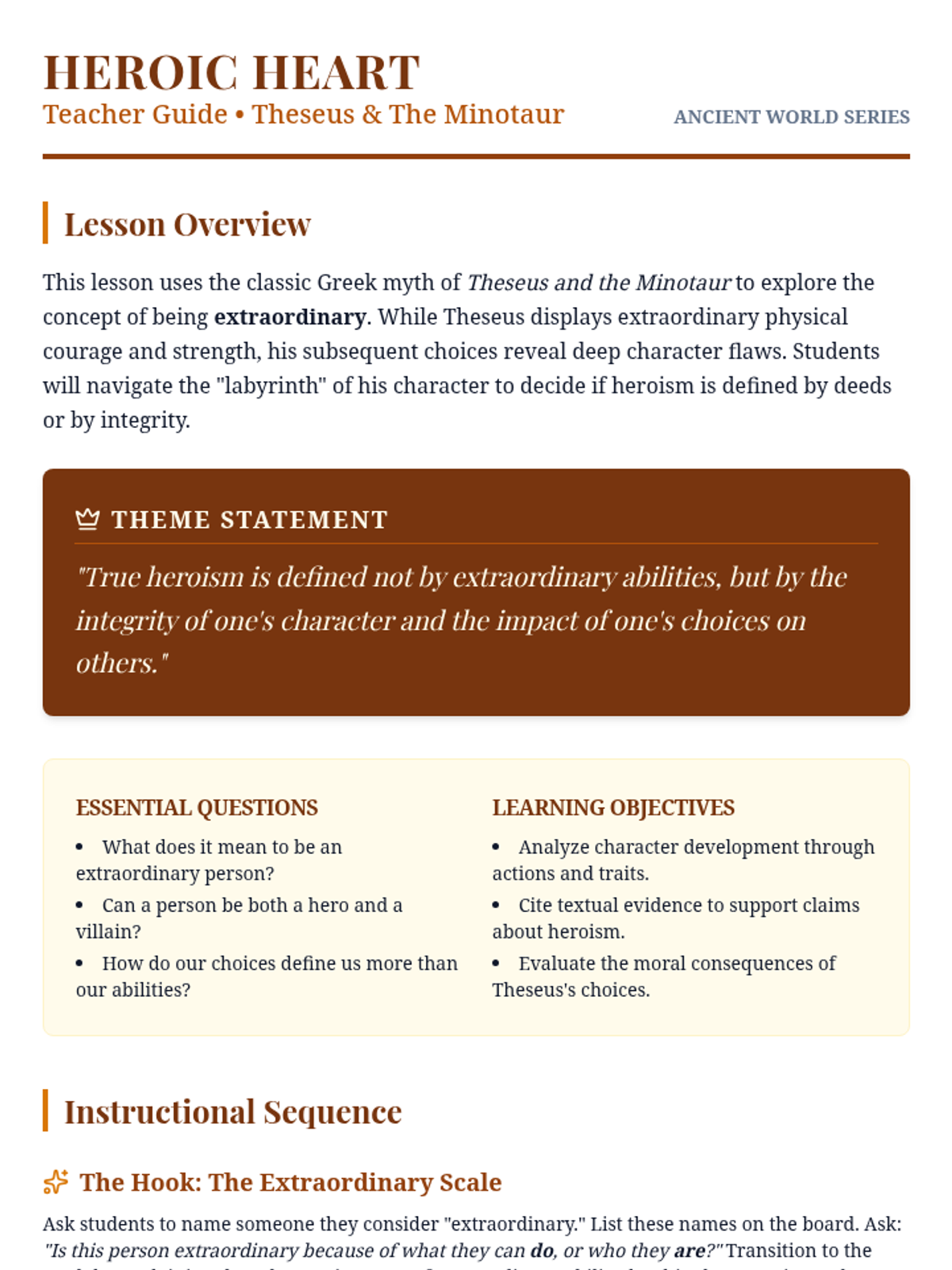
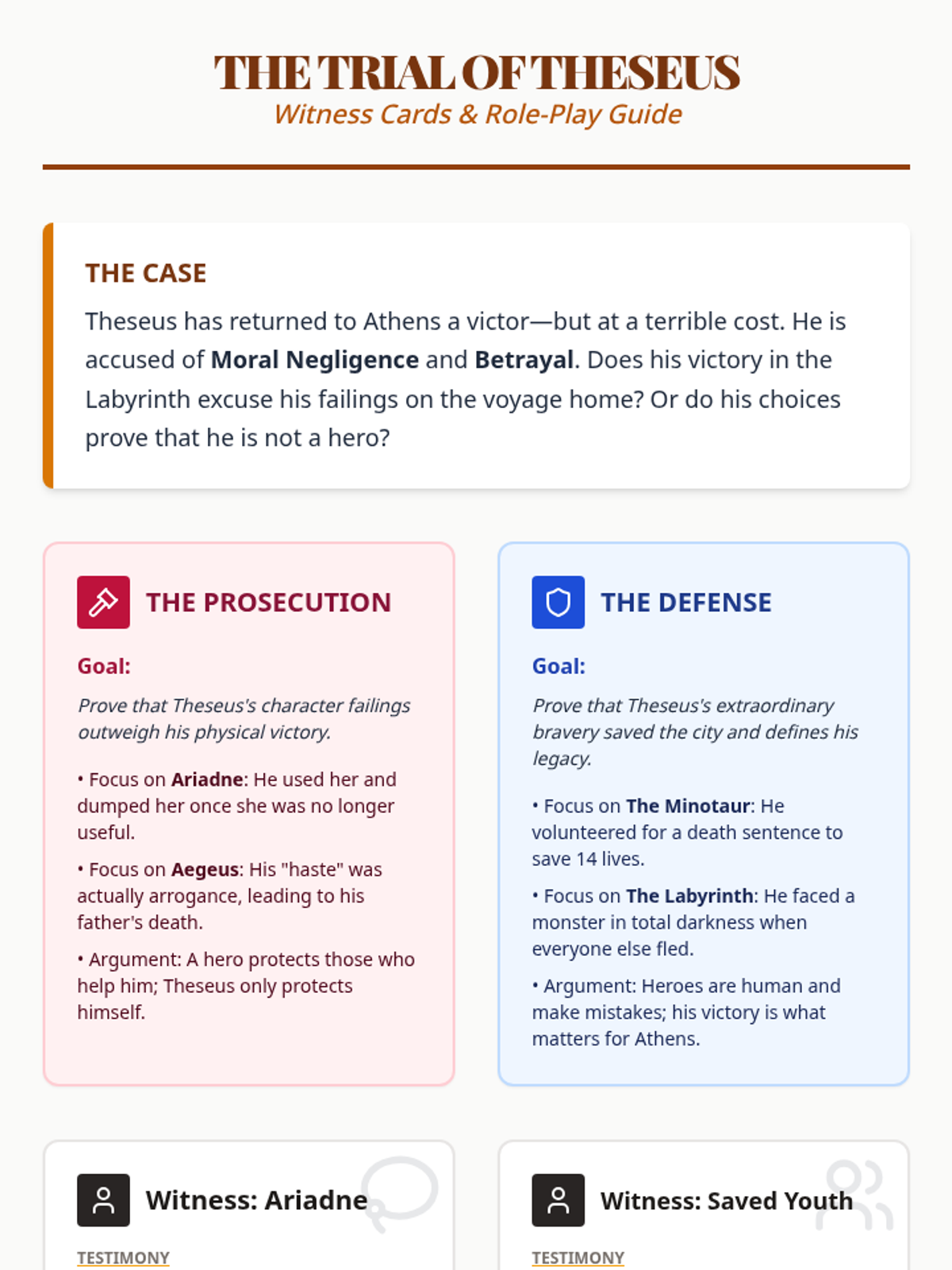
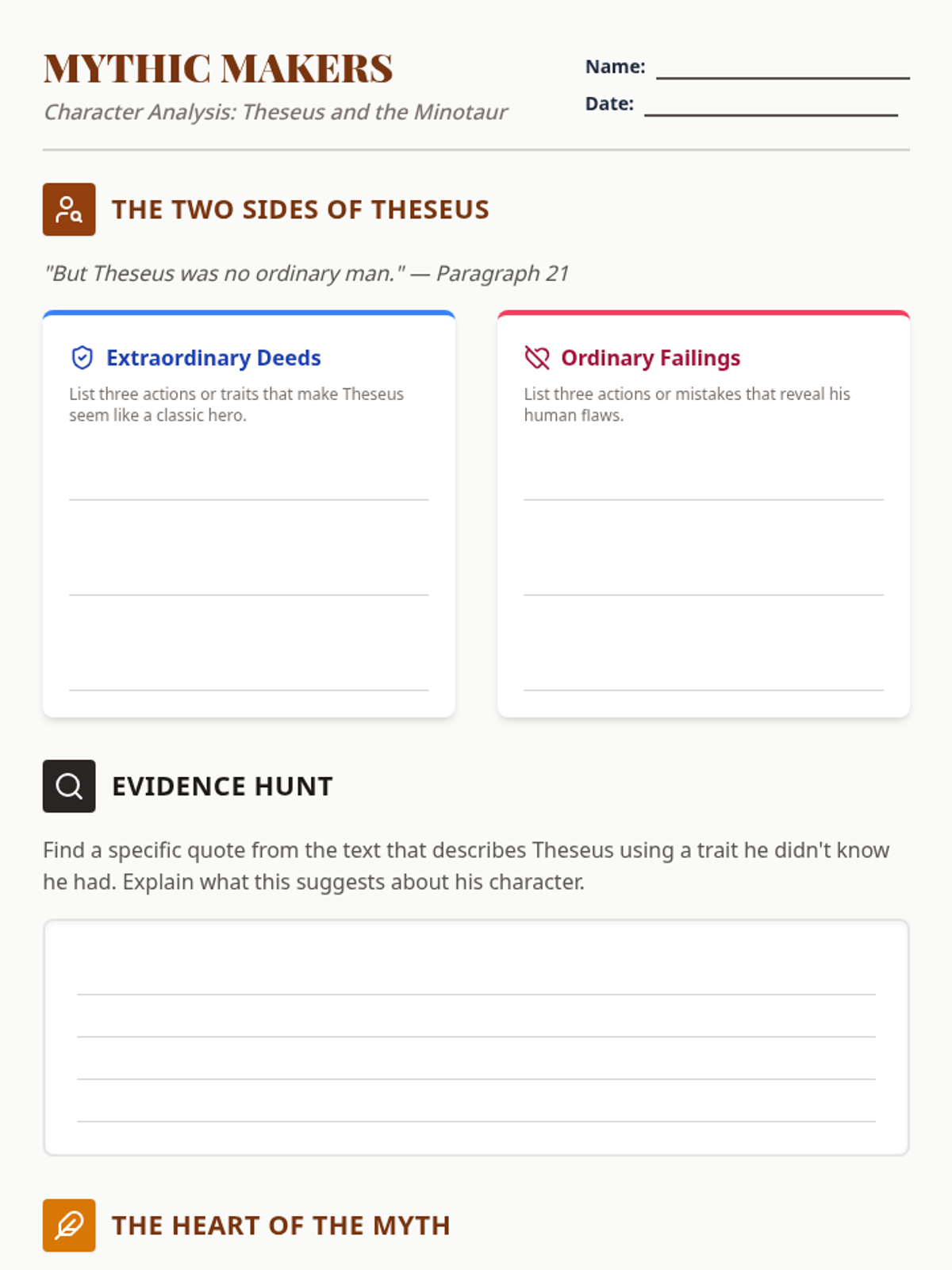
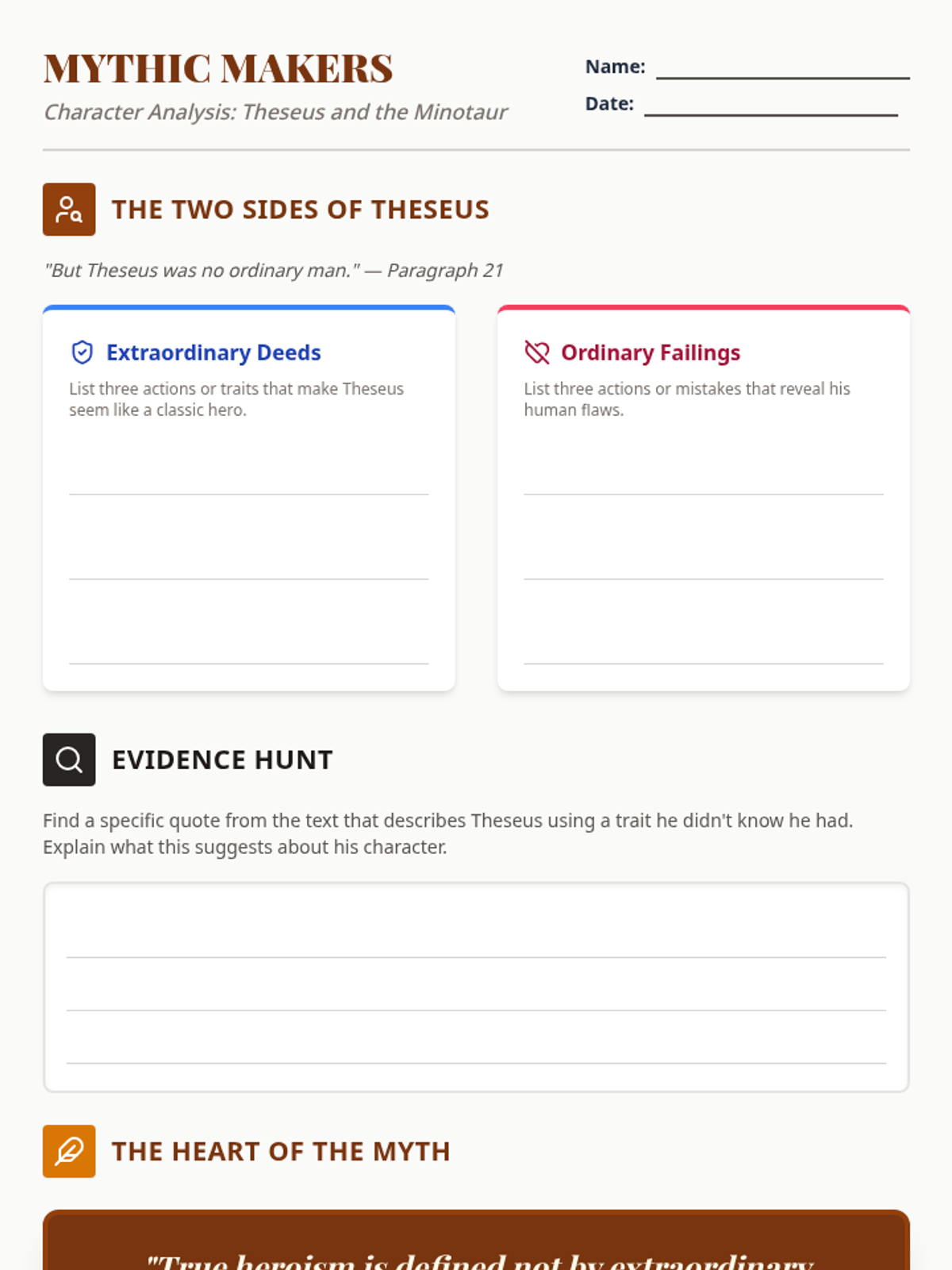
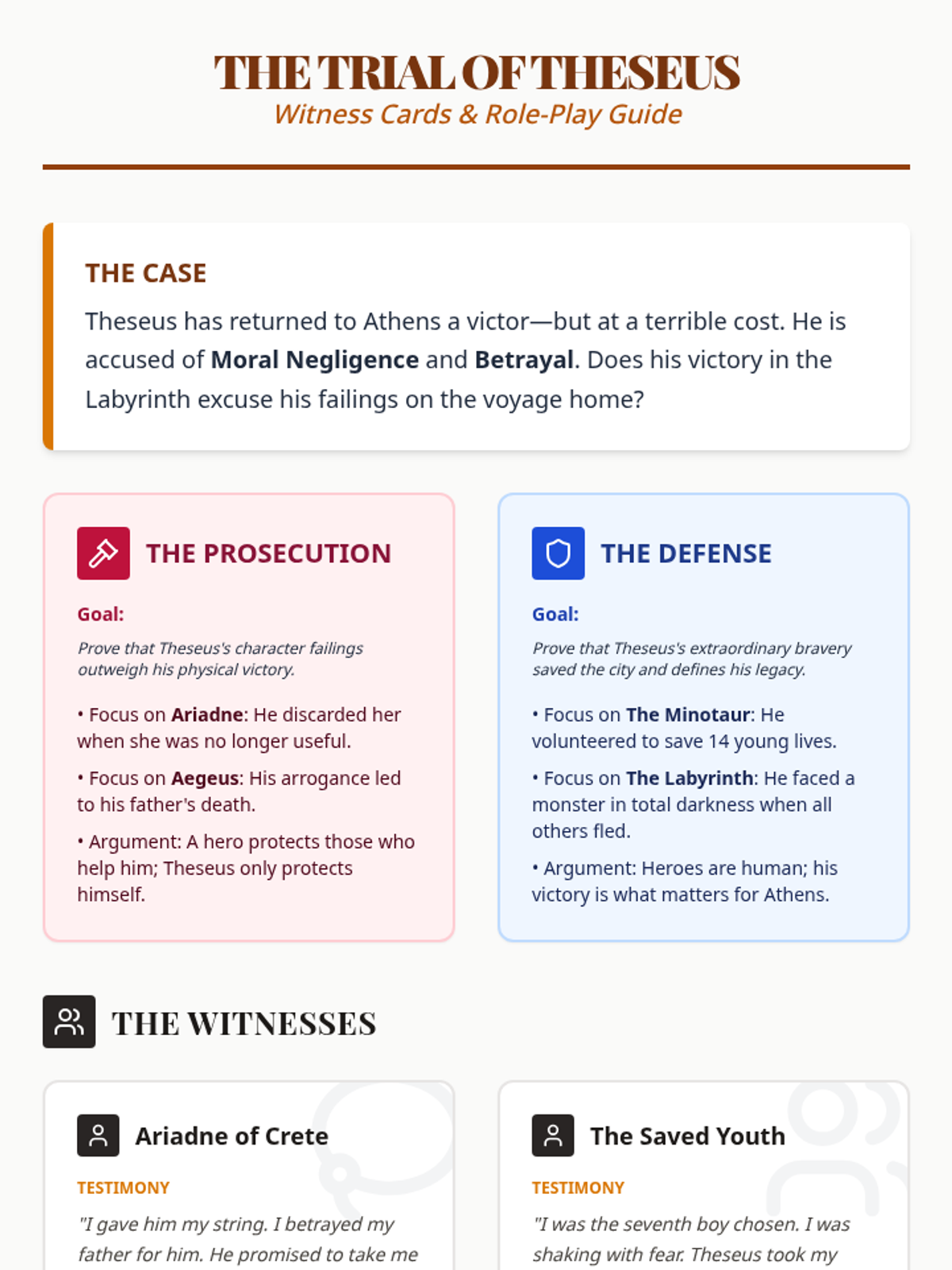
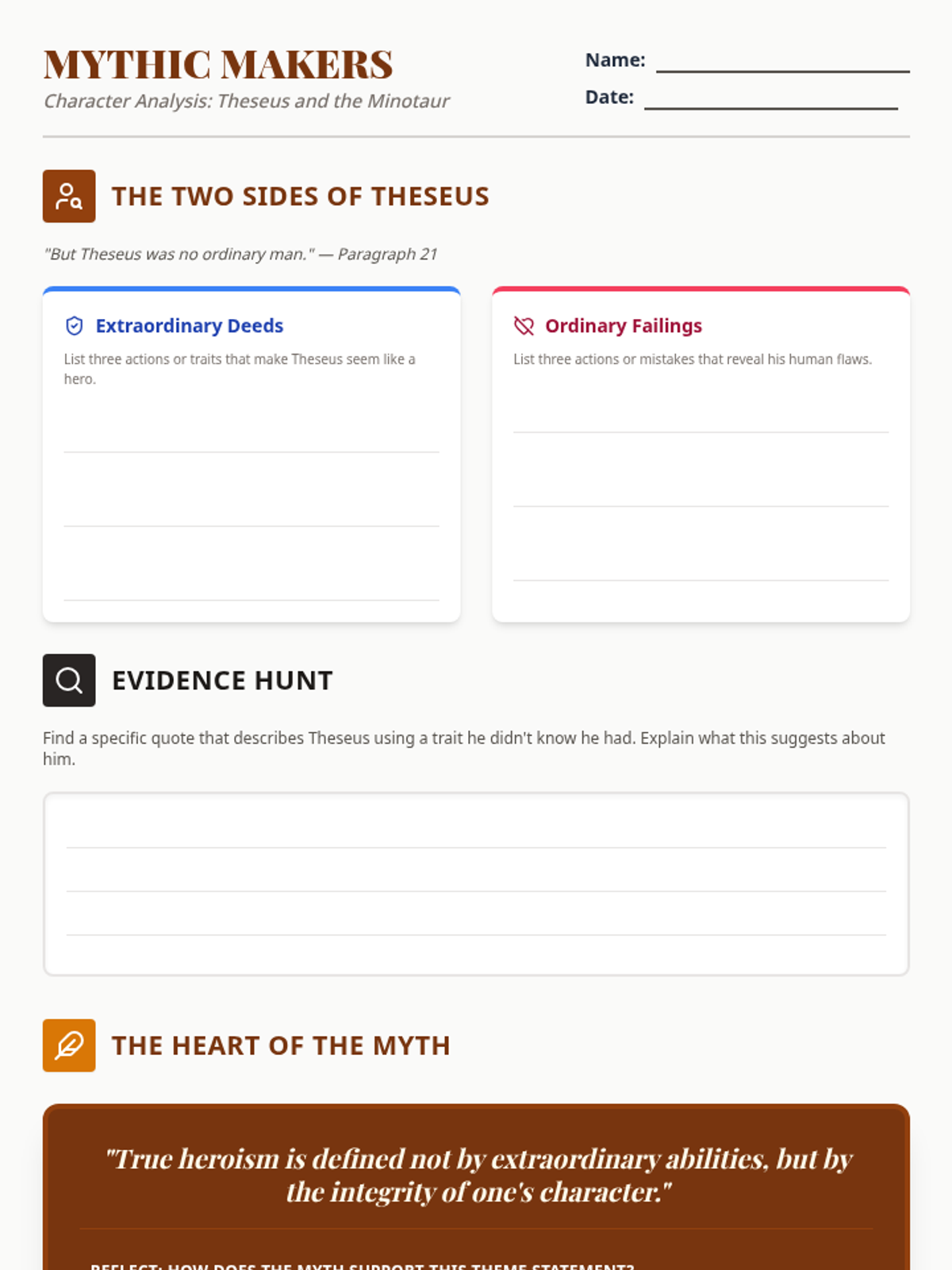
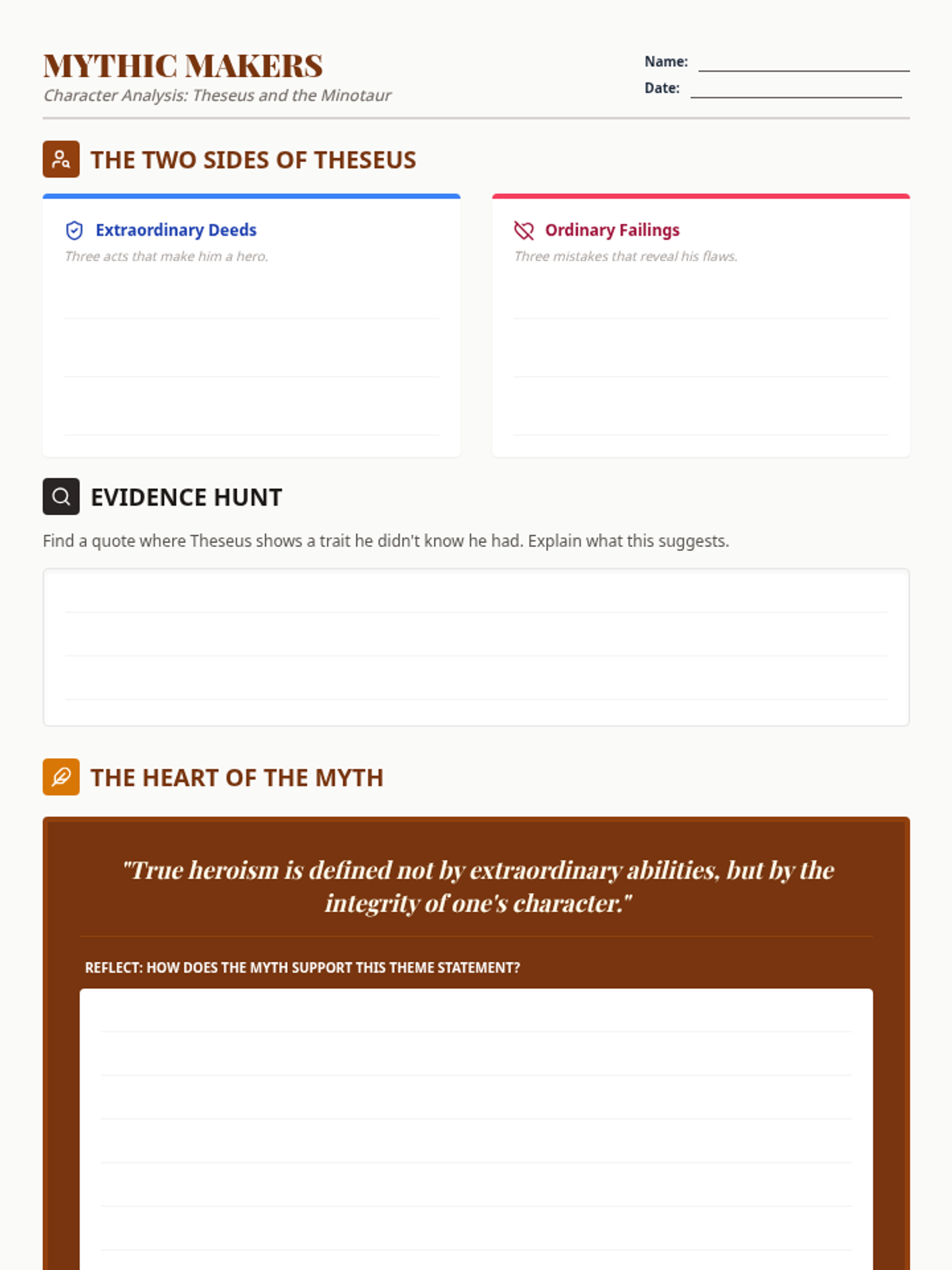
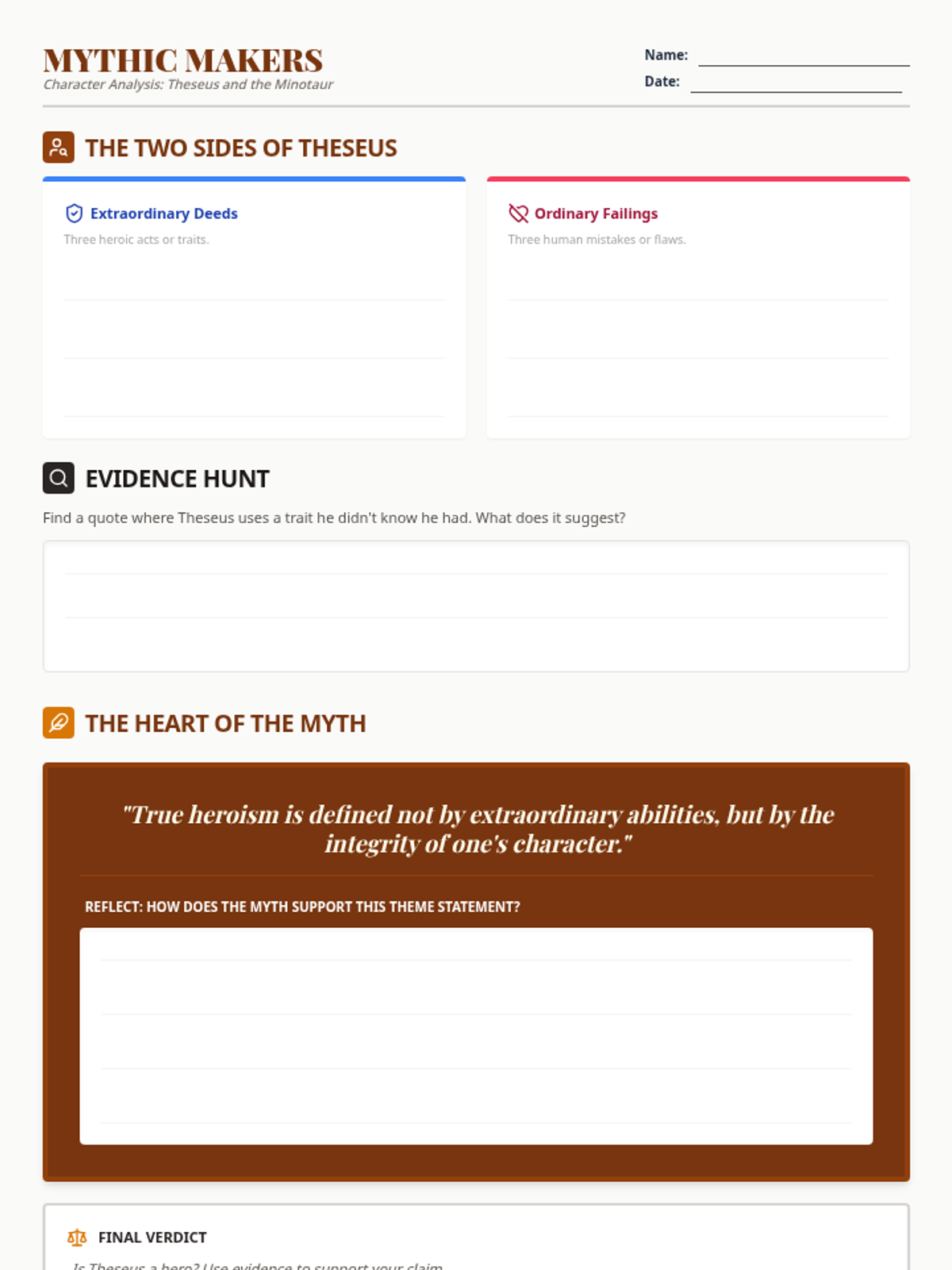
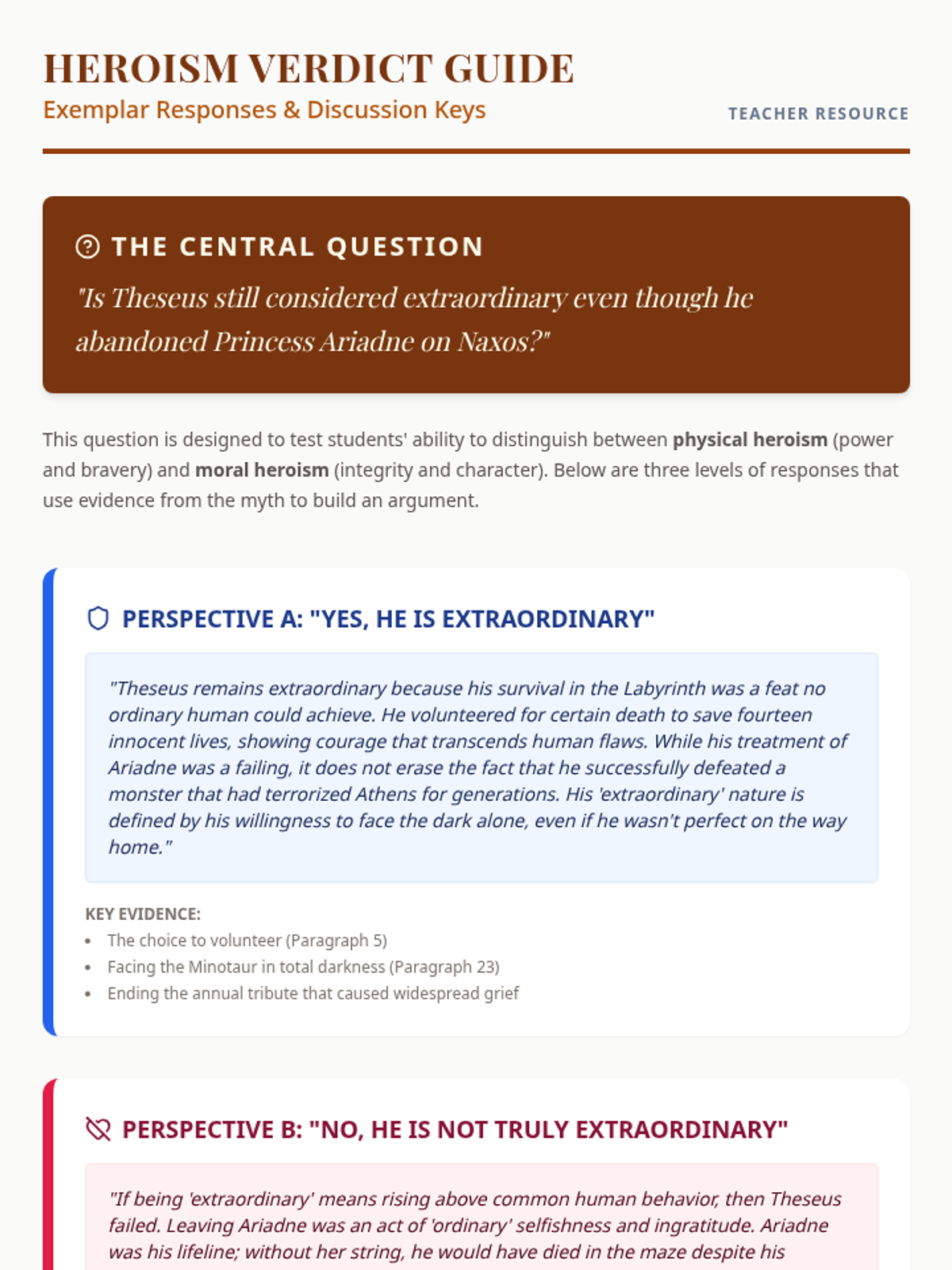
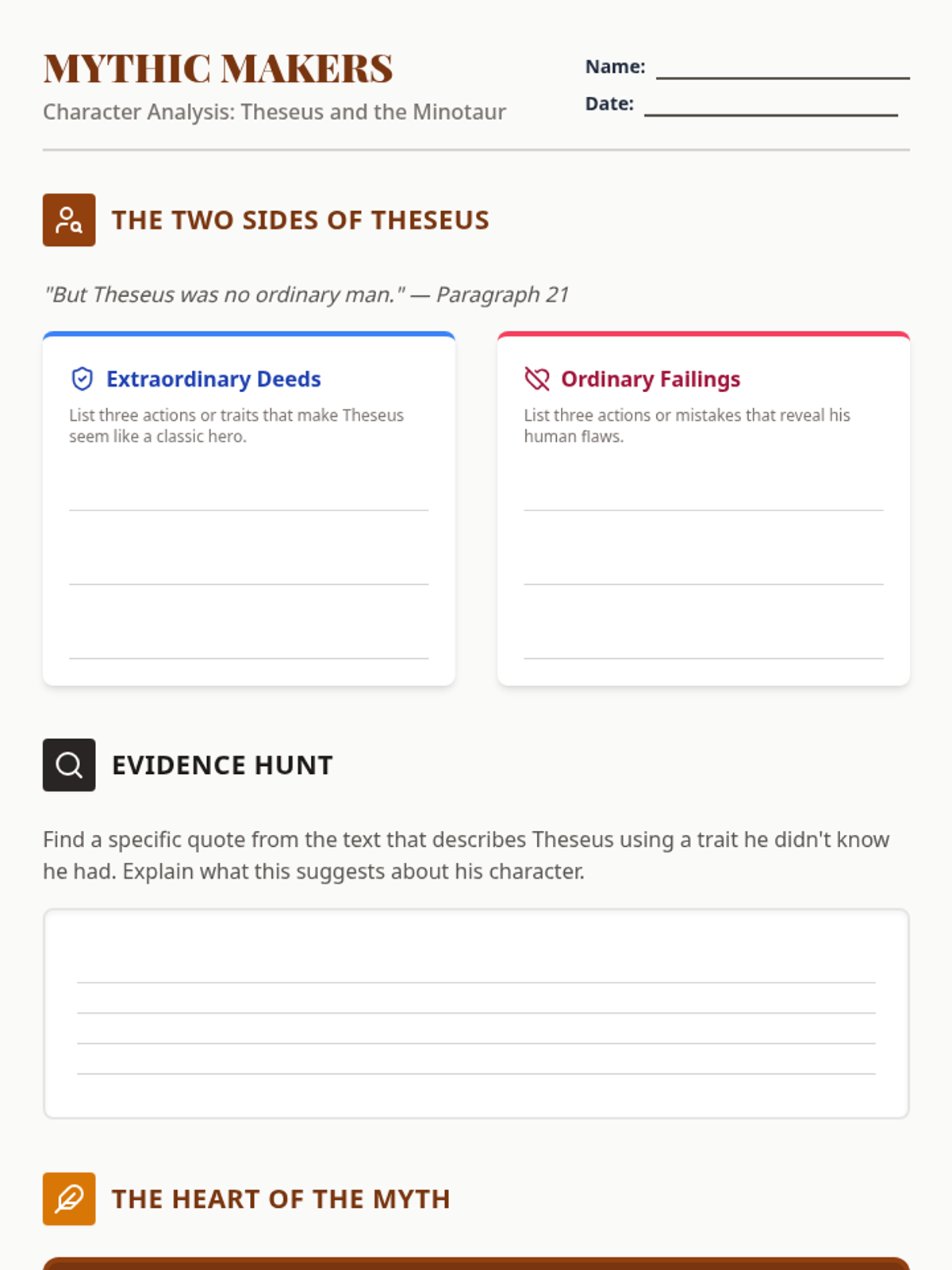
A deep dive into the myth of Theseus and the Minotaur, exploring the duality of heroism and what it truly means to be extraordinary. Students analyze Theseus's brave actions alongside his moral failings to develop a nuanced understanding of character.