Students will explore the concept of specialization in industry, learning how workers become experts in specific tasks and why this helps businesses succeed.
A look at the modern-day Southwest, including its major cities, diverse population, and current economic drivers like tourism, energy, and aerospace.
A hands-on lesson comparing the historic ways of life of the Southwest's original inhabitants with the modern lives of people living in the region today.
An exploration of the Apache and Comanche tribes, their nomadic lifestyles, warrior traditions, and their adaptation to the horse culture on the plains.
A study of the Pueblo and Navajo tribes, focusing on their unique cultures, traditional homes (pueblos and hogans), and artistic traditions like weaving and pottery.
An introduction to the geography and climate of the four Southwestern states: Arizona, New Mexico, Texas, and Oklahoma. Students will learn about deserts, mountains, and plains.
A culminating review and hands-on project day where students synthesize their learning about the Southeast.
Examine the vibrant modern-day traditions, music, food, and culture of the Southeastern US.
Learn about the heritage and resilience of the Creek (Muscogee) and Seminole tribes.
Discover the history and culture of the Powhatan Chiefdom and the Cherokee Nation.
Explore the geography, climate, and states of the Southeast region using map skills and weather analysis.
A collection of coloring pages featuring influential women from history and modern times, designed to inspire students through art and reflection.
Braving the cold to study the ice-covered continent of Antarctica and the penguins that live there.
Hop over to the island continent to learn about its unique animals and the vast Great Barrier Reef.
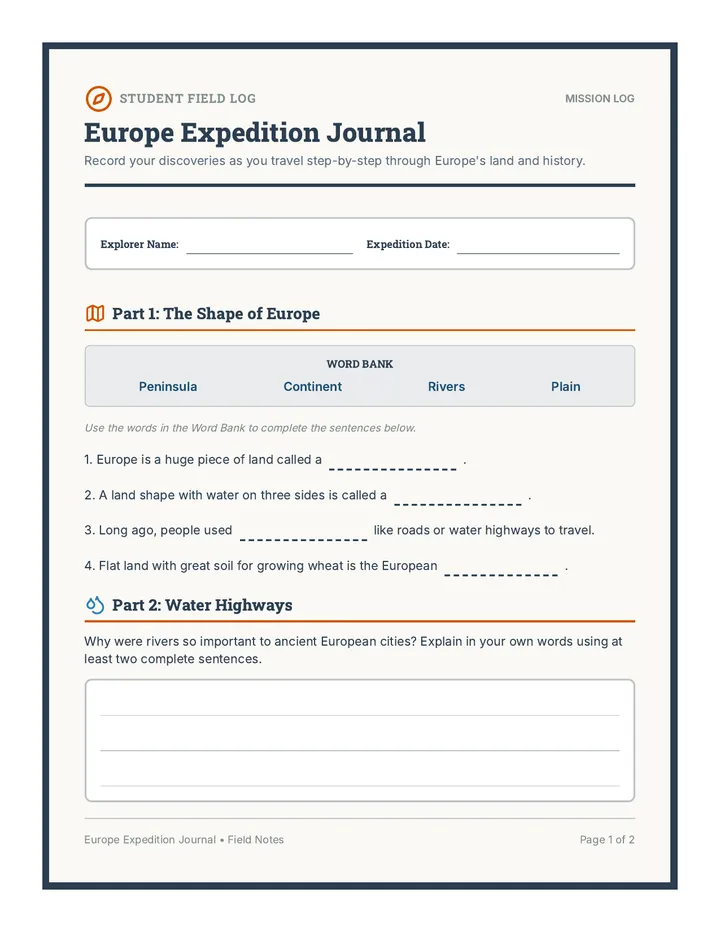
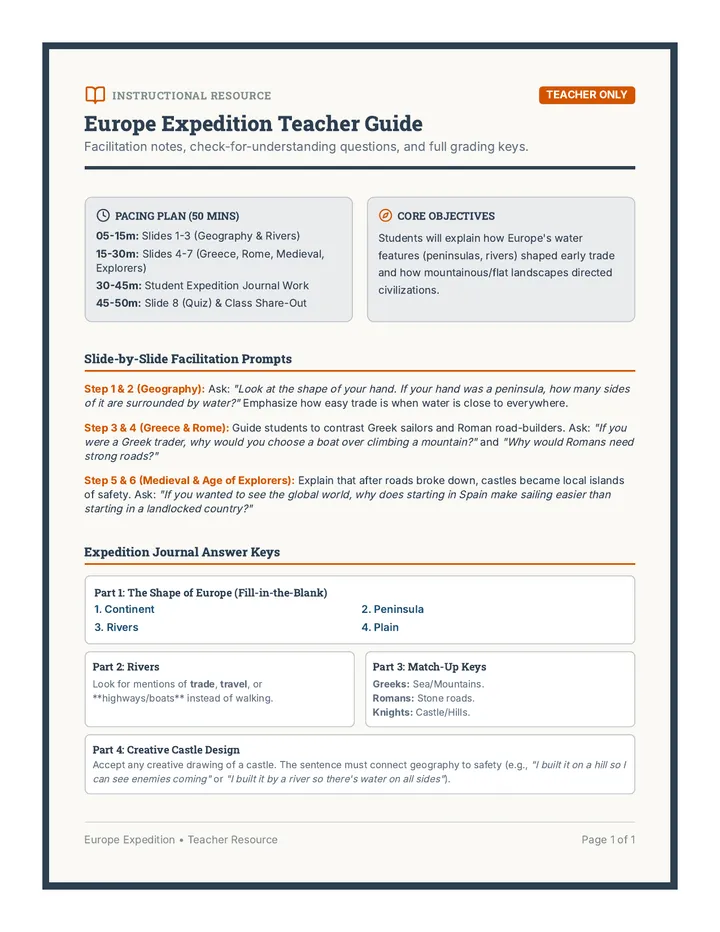
Explore the history, famous landmarks, and diverse countries that make up the continent of Europe.
Learn about the world's largest and most populous continent, from its massive mountains to its ancient history.
Journey through the savannas, deserts, and incredible wildlife of the African continent.
A deep dive into the continent of North America, exploring its geography, major countries, and unique landmarks through reading and comprehension.
Discover the lush rainforests, towering mountains, and vibrant cultures of South America.
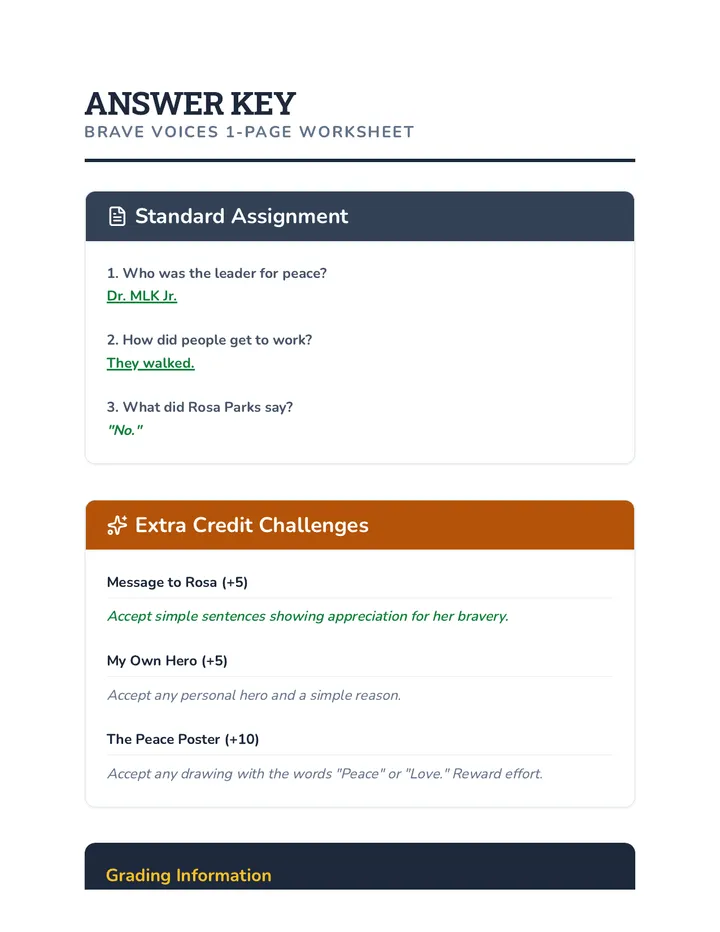
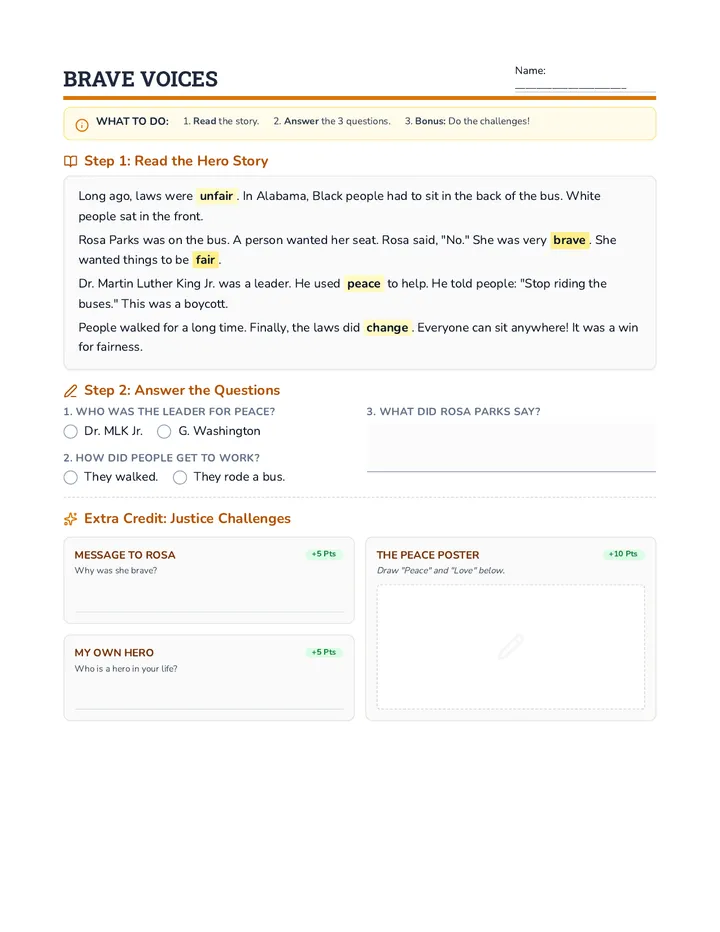
An introductory lesson for grades 2-4 exploring the history of segregation in the United States, focusing on fairness, civil rights, and the brave individuals who fought for equality.
An entirely unplugged introduction to logic and algorithms. Students explore step-by-step traditions and secret codes using physical patterns and movement games.
Celebrating cultural heritage through physical artifacts and oral histories. Students learn to analyze primary sources and explore informational text features like Table of Contents and Glossaries.
Reflecting on a year of learning, reviewing library organization (Dewey Decimal), and preparing for summer reading adventures.
Honoring Women's History Month by exploring female inventors and engineers, featuring hands-on 'She-gineering' challenges.
Celebrating Black History Month through the lens of Afrofuturism, blending history with visionary STEM challenges and science fiction.
Focusing on biographies and the legacy of Dr. Martin Luther King Jr., while practicing research and note-taking skills.
A focus on informational texts and non-fiction research skills, centered around Native American Heritage Month and the concept of 'Giving Thanks.'
Exploring the mystery and suspense genres through 'Spooky Stories' and engineering 'Maker Monsters' in the STEM lab.
Welcome back to the library! This unit focuses on library orientation, procedures, the 'Heart of the School' concept, and establishing a collaborative Maker Mindset.
A week-long exploration of poetry and nature, focusing on sensory language and observational skills in the library and media center. Includes differentiated worksheets and slides.
An intensive, highly scaffolded lesson on the Bill of Rights for students requiring Tier 3 support, featuring simplified language, heavy visual prompts, and step-by-step guidance.
A targeted lesson on the Bill of Rights for students requiring Tier 2 support, focusing on academic vocabulary and structured planning for a poster project.
A comprehensive introduction to basic economic concepts for 2nd-grade students, focusing on vocabulary related to trading, resources, and the marketplace.
A festive collection of St. Patrick's Day activities focusing on vocabulary and Irish folklore.
A 50-minute lesson exploring the connection between Jazz music, Black expressionism, and the Harlem Renaissance through music comparison and artist biopics. Students will analyze the differences between Black and White artists of the era to understand music as an act of defiance and cultural identity.
A lesson exploring Harriet Tubman's 1850 escape and the significance of the Mason-Dixon Line as a geographical and legal boundary in the pre-Civil War United States.
A series of visual retelling supports and comprehension tools for Harriet Tubman's early life, covering her childhood responsibilities and her mother's story of their family's origins.
A series of visual retelling supports and comprehension tools focused on the story of young Minty (Harriet Tubman) watching over a baby. This lesson uses visual prompts to help students sequence events and understand character emotions and setting.